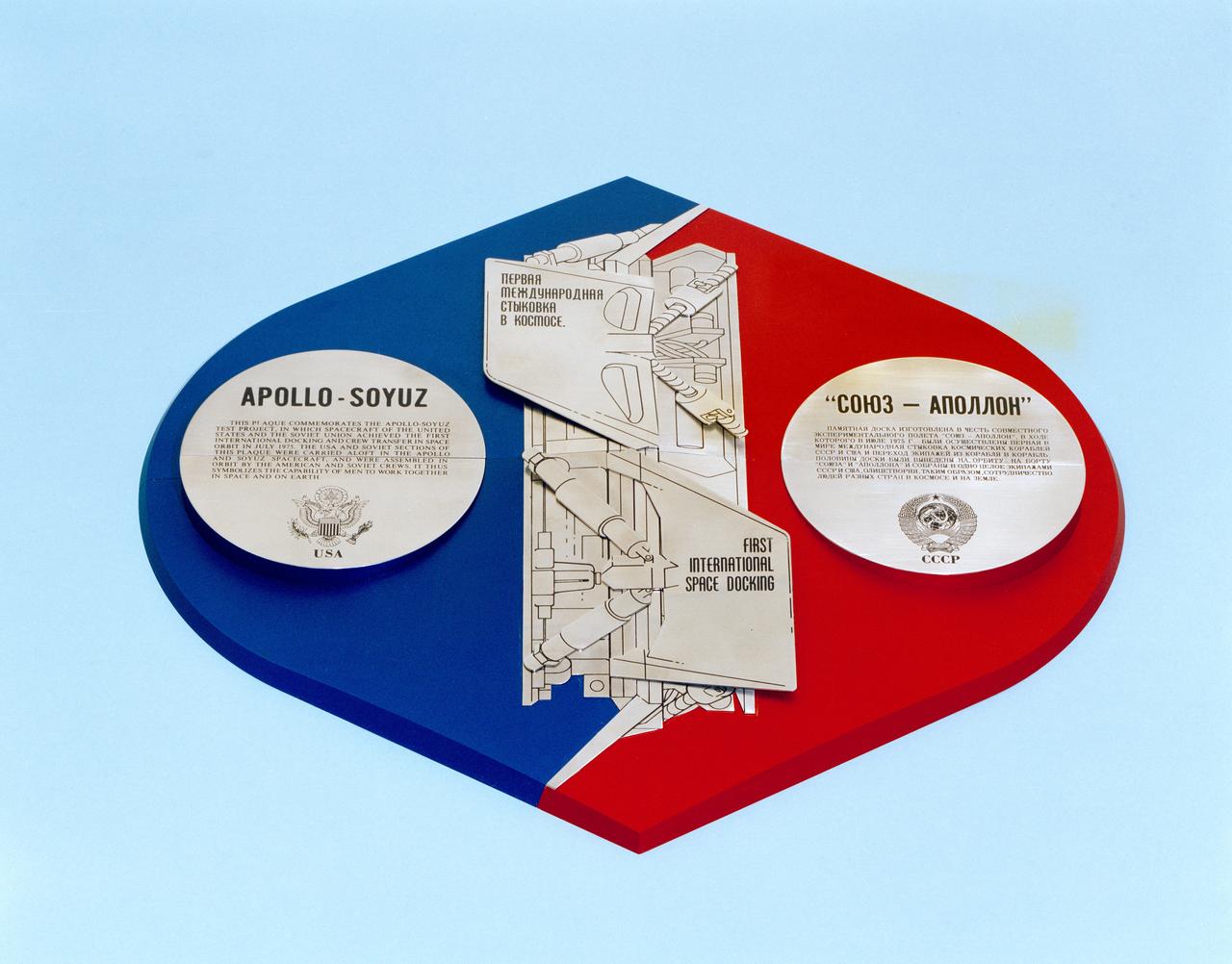
S75-26927 (July 1975) --- A close-up view of the Commemorative Plaque for the Apollo-Soyuz Test Project. Two plaques divided into four quarters each will be flown on the ASTP mission. A four-part plaque is completely assembled here. The American ASTP crew will carry the four U.S. quarter pieces aboard Apollo; and the Soviet ASTP crew will carry the four USSR quarter sections aboard Soyuz. The eight quarter pieces will be joined together to form two complete commemorative plaques after the two spacecraft rendezvous and dock in Earth orbit. One complete plaque then will be returned to Earth by the astronauts; and the other complete plaque will be brought back by the cosmonauts. The plaque is written in both English and Russian.
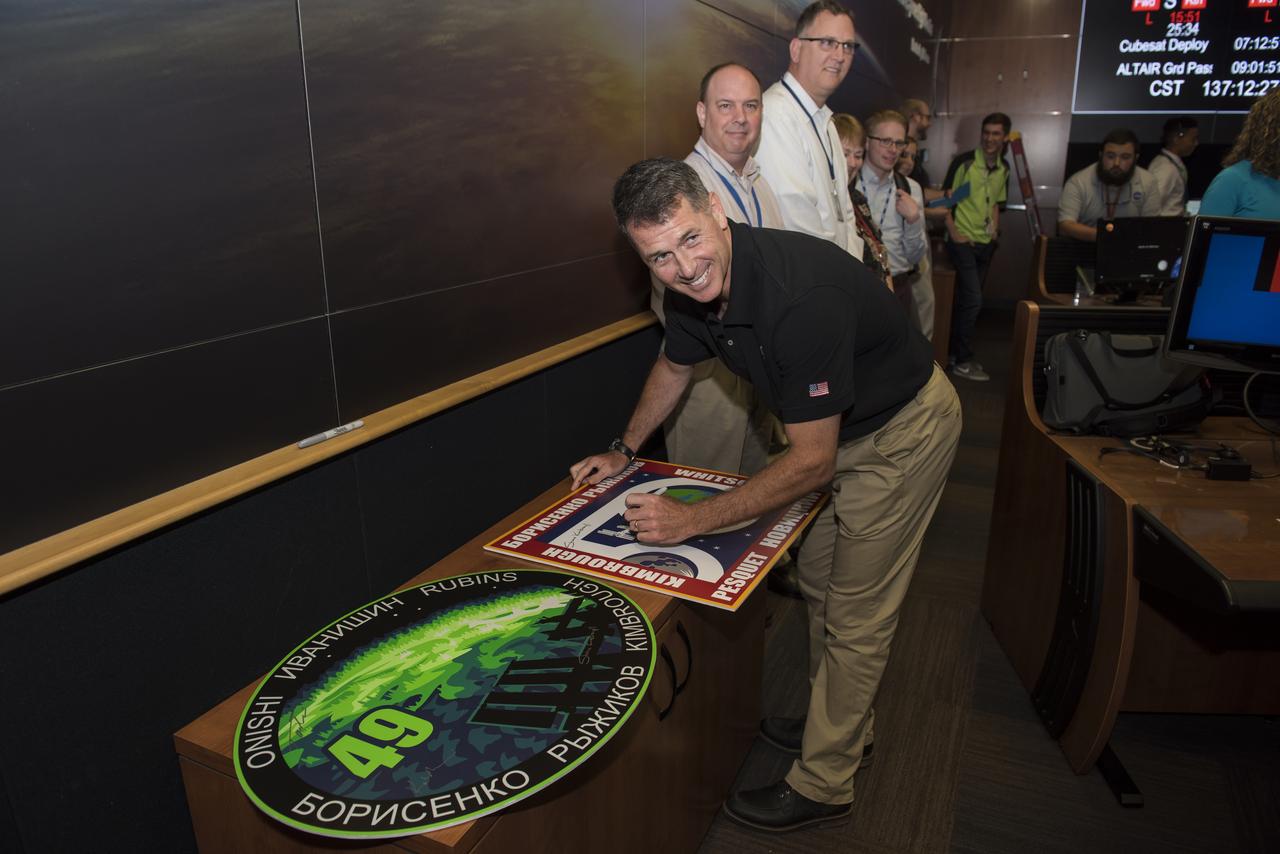
Astronaut Shane Kimbrough visits Marshall for plaque ceremony.
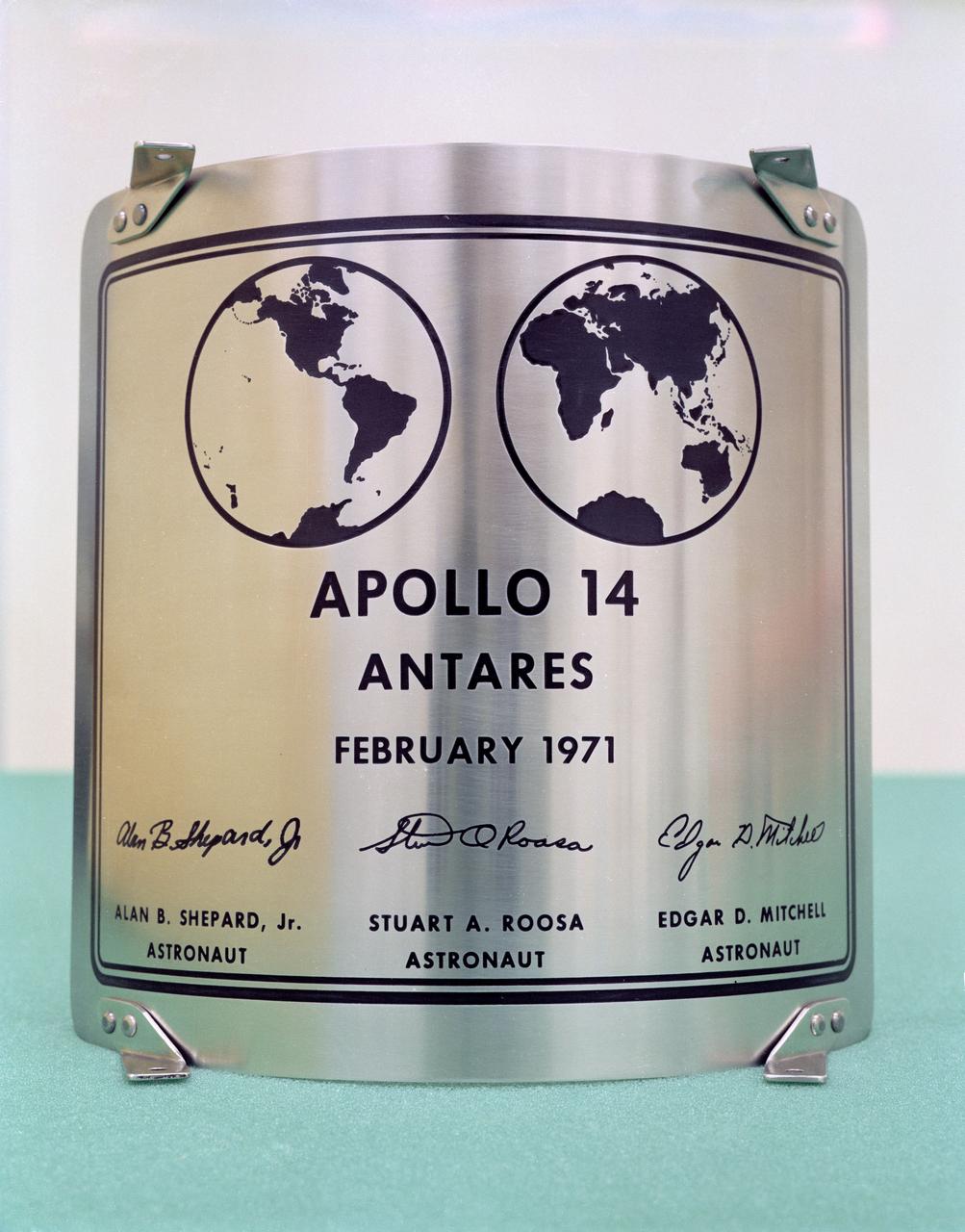
S71-16637 (January 1971) --- A close-up view of the plaque which the Apollo 14 astronauts will leave behind on the moon during their lunar landing mission. Astronauts Alan B. Shepard Jr., commander, and Edgar D. Mitchell, lunar module pilot, will descend to the lunar surface in the Lunar Module (LM) "Antares". Astronaut Stuart A. Roosa, command module pilot, will remain with the Command and Service Modules (CSM) in lunar orbit. The seven by nine inch stainless steel plaque will be attached to the ladder on the landing gear strut on the LM's descent stage. Commemorative plaques were also left on the moon by the Apollo 11 and Apollo 12 astronauts.
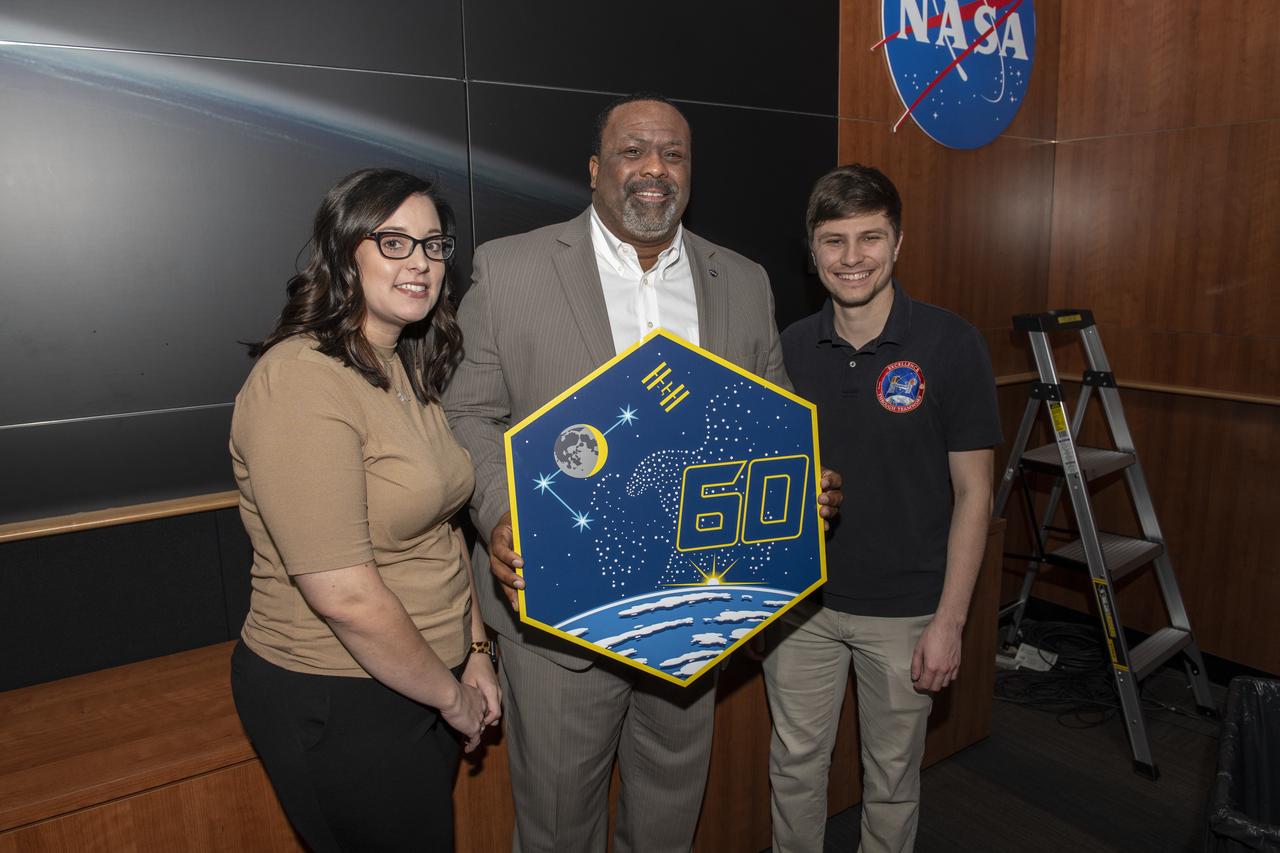
Increment 60 plaque hanging in the Payload Operations Operation Integration (POC) facility. Dwight Mosby holding the Increment 60 plaque along with Kira Thomas and Christian Bonner who hung the plaque.
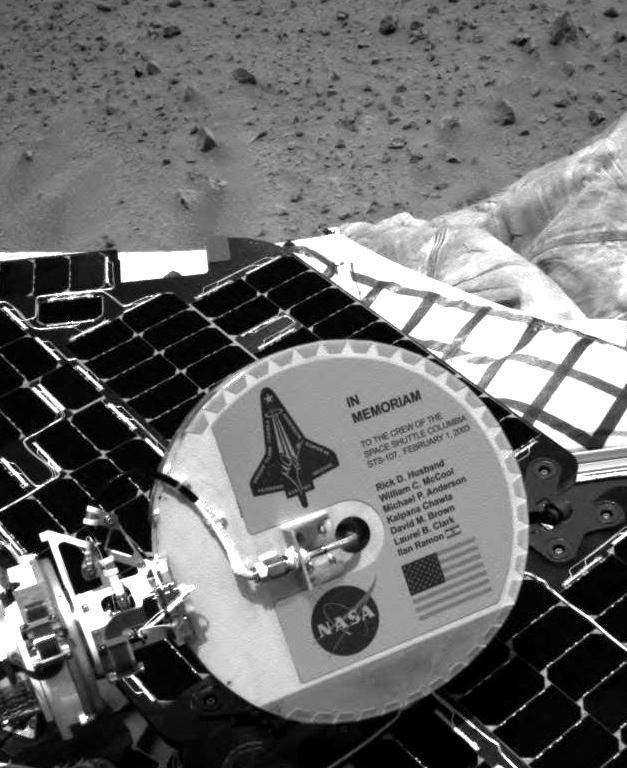
Plaque on Spirit Honors Columbia Astronauts
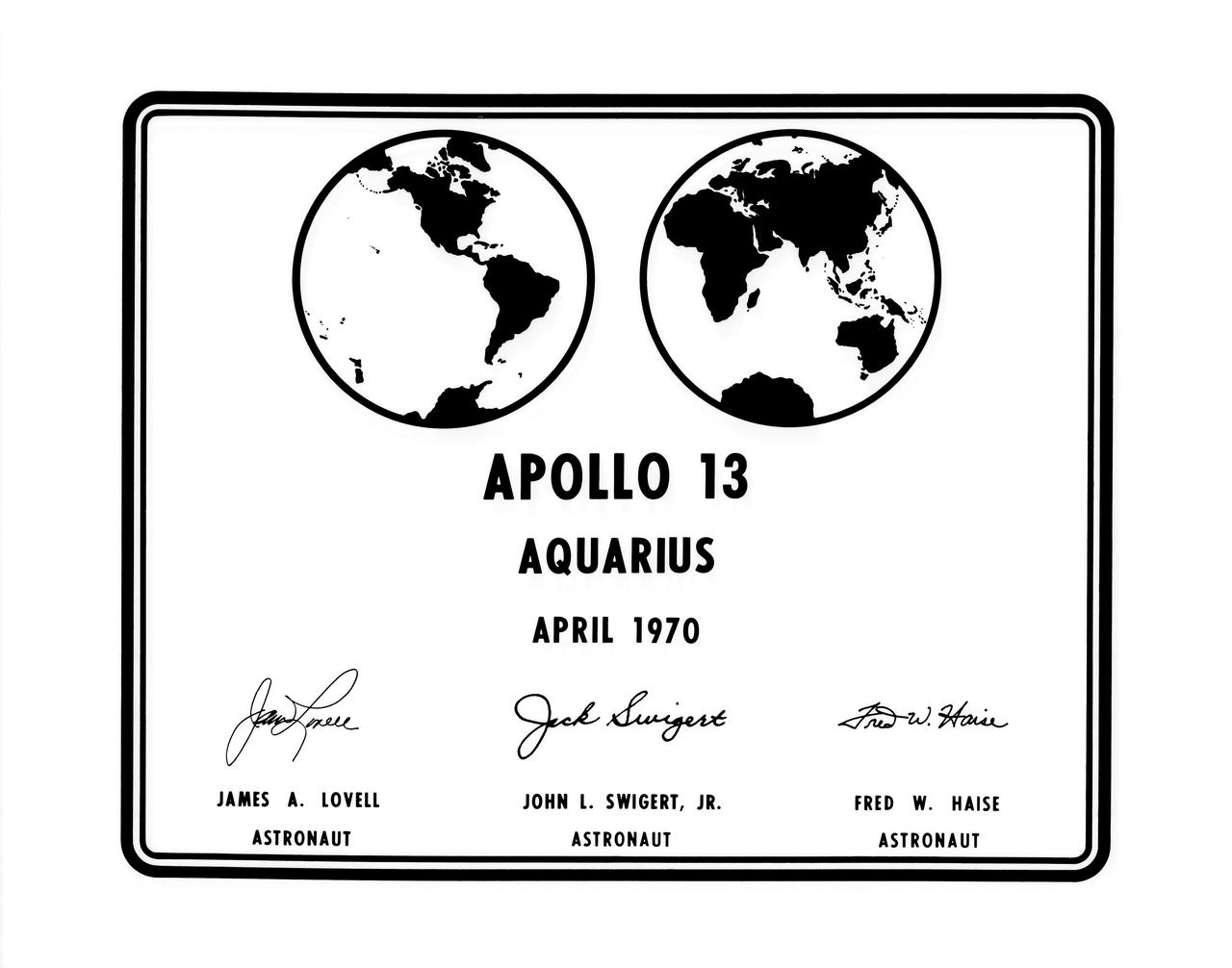
S70-34685 (April 1970) --- A photographic replica of the plaque which the Apollo 13 astronauts will leave behind on the moon during their lunar landing mission. Astronauts James A. Lovell Jr., commander; and Fred W. Haise Jr., lunar module pilot, will descend to the lunar surface in the Lunar Module (LM) "Aquarius". Astronaut John L. Swigert Jr., command module pilot, will remain with the Command and Service Modules (CSM) in lunar orbit. The plaque will be attached to the ladder of the landing gear strut on the LM?s descent stage. Commemorative plaques were also left on the moon by the Apollo 11 and Apollo 12 astronauts.
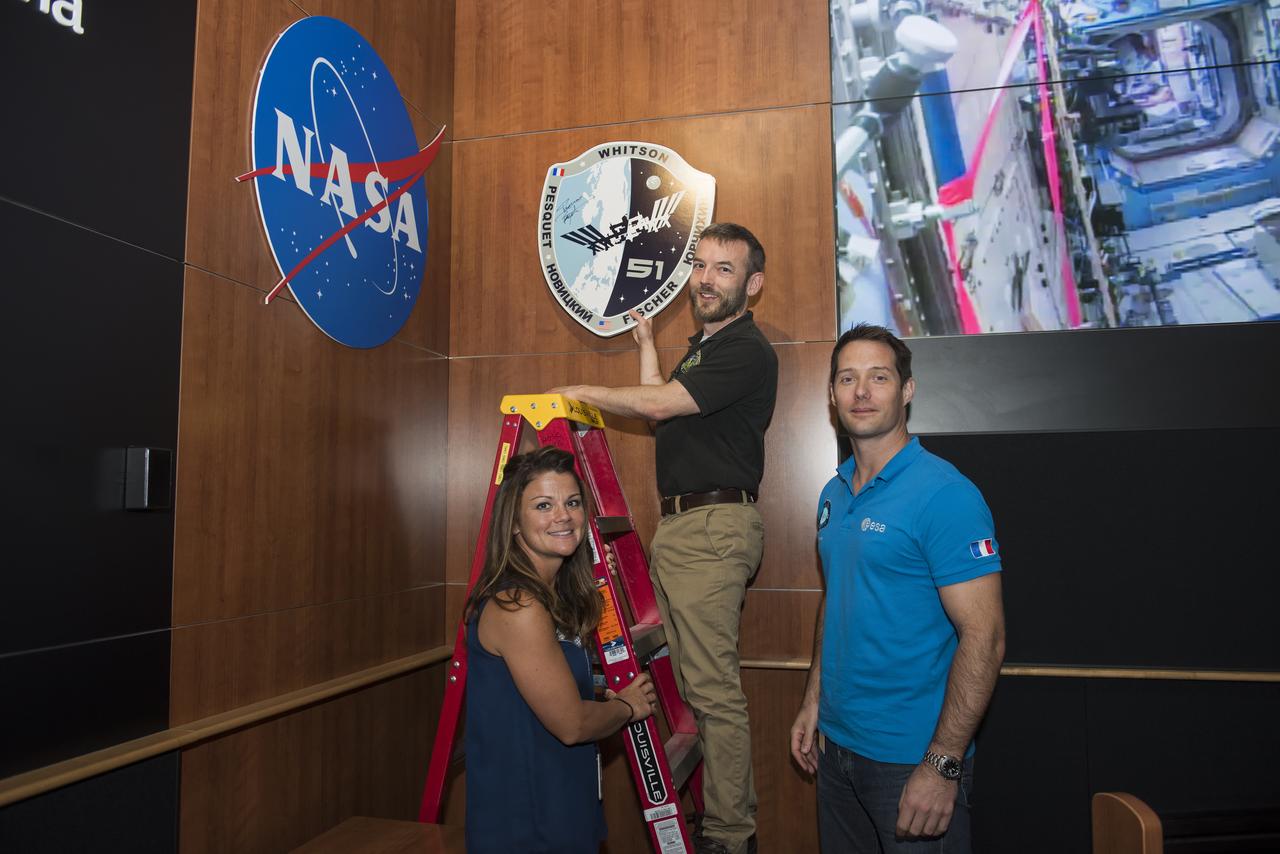
Space Station expedition 50/51 crew member Thomas Pesquet hangs a commemorative plaque in the Payload Operation Integration Center at NASA's Marshall Space Flight Center.
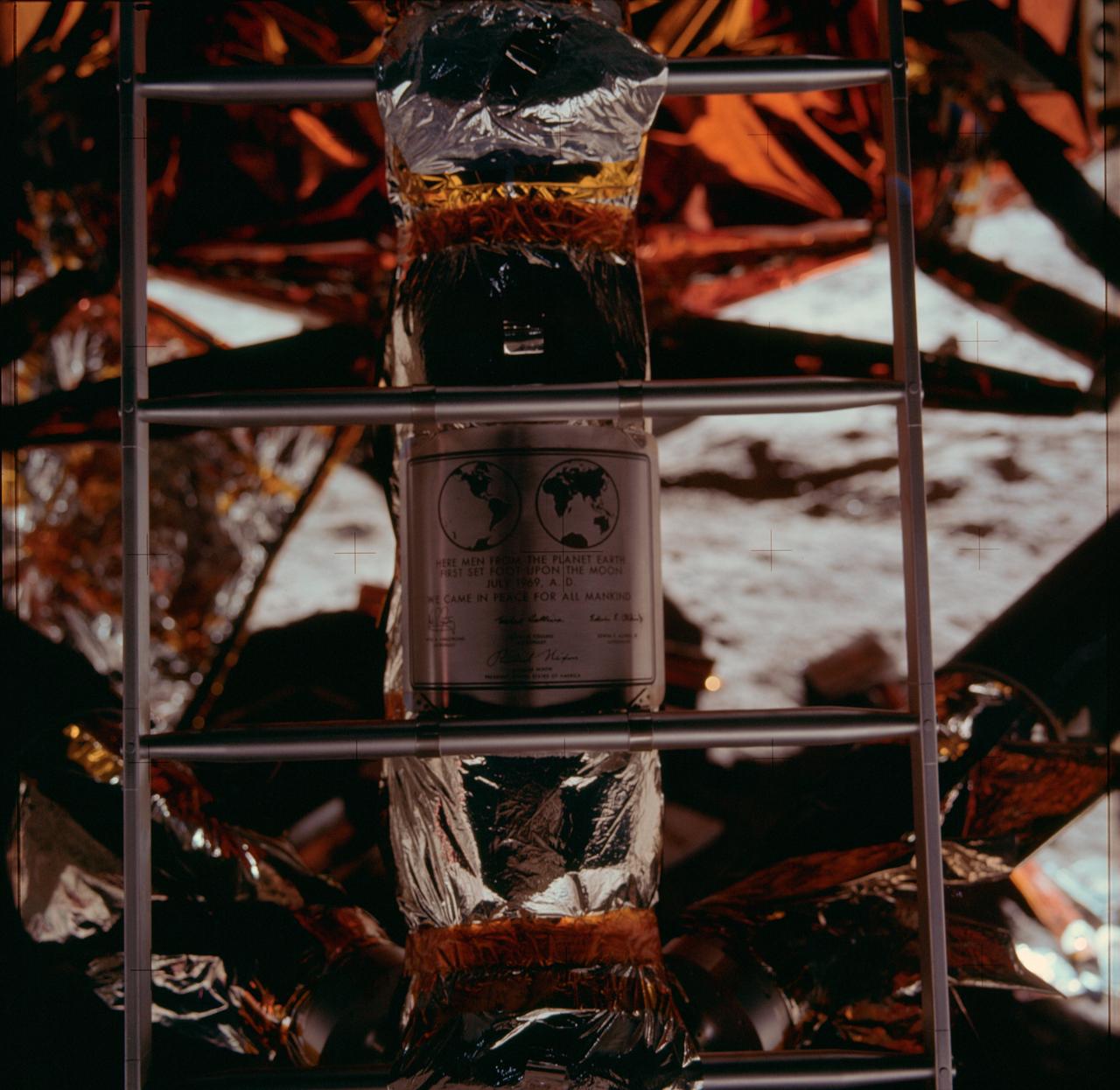
AS11-40-5899 (20 July 1969) --- Close-up view of the plaque which the Apollo 11 astronauts left on the moon in commemoration of the historic lunar landing mission. The plaque was attached to the ladder on the landing gear strut on the descent stage of the Apollo 11 Lunar Module (LM). The plaque was covered with a thin sheet of stainless steel during flight. Astronaut Michael Collins, command module pilot, remained with the Command and Service Modules (CSM) in lunar orbit while astronauts Neil A. Armstrong, commander, and Edwin E. Aldrin Jr., lunar module pilot, explored the moon.

AST-05-263 (17-18 July 1975) --- The Apollo-Soyuz Test Project (ASTP) Commemorative Plaque is assembled in the Soviet Soyuz Orbital Module during the joint U.S.-USSR Apollo-Soyuz Test Project docking mission in Earth orbit. The plaque is written both in English and Russian.
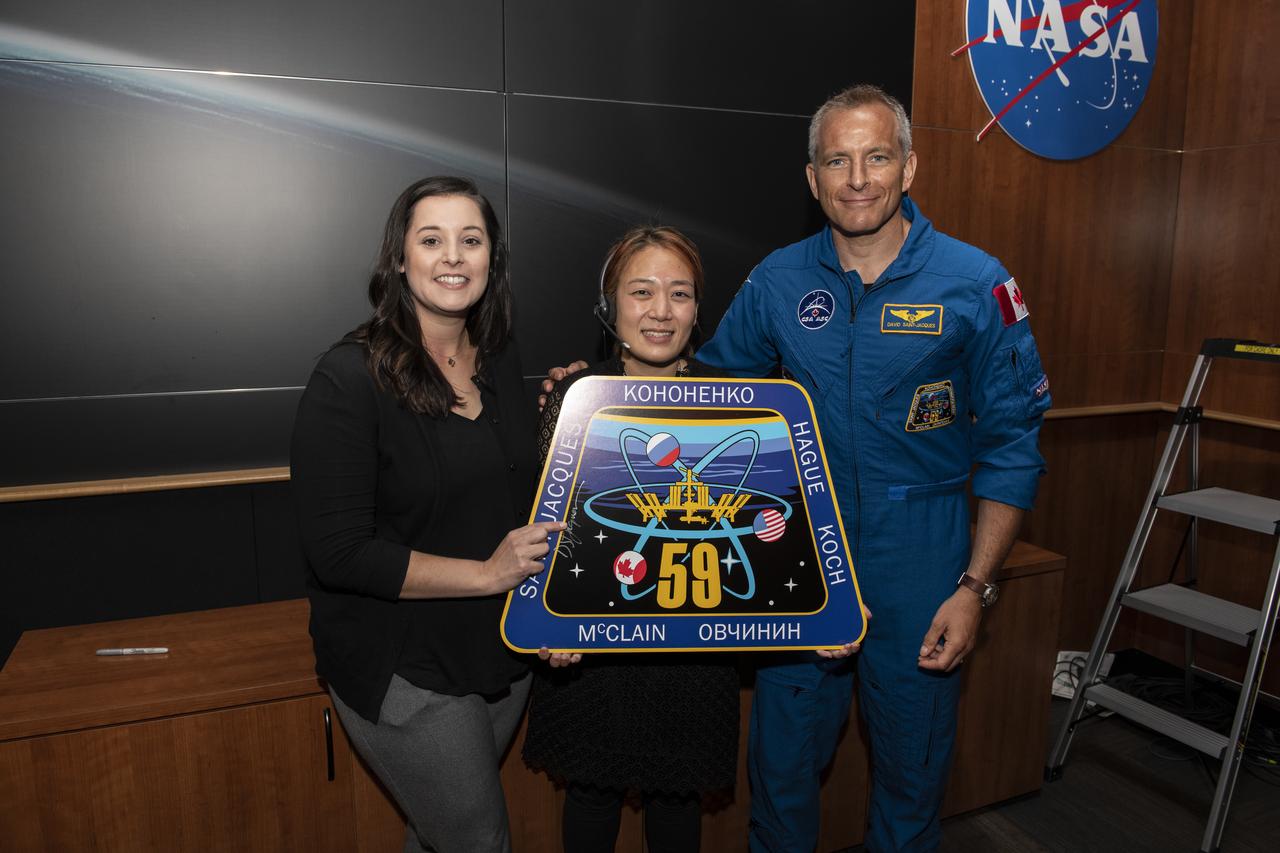
Expedition 59 Astronaut David Saint-Jaques visits Marshall Space Flight Center's Payload Operations Integration Center where Operations Controller Halley Chang hangs the Expedition 59 plaque with the help of Timeline Change Officer Kira Thomas along with David Saint-Jaques.
Expedition 59 Astronaut David Saint-Jaques visits Marshall Space Flight Center's Payload Operations Integration Center where Operations Controller Halley Chang hangs the Expedition 59 plaque with the help of Timeline Change Officer Kira Thomas along with David Saint-Jaques.
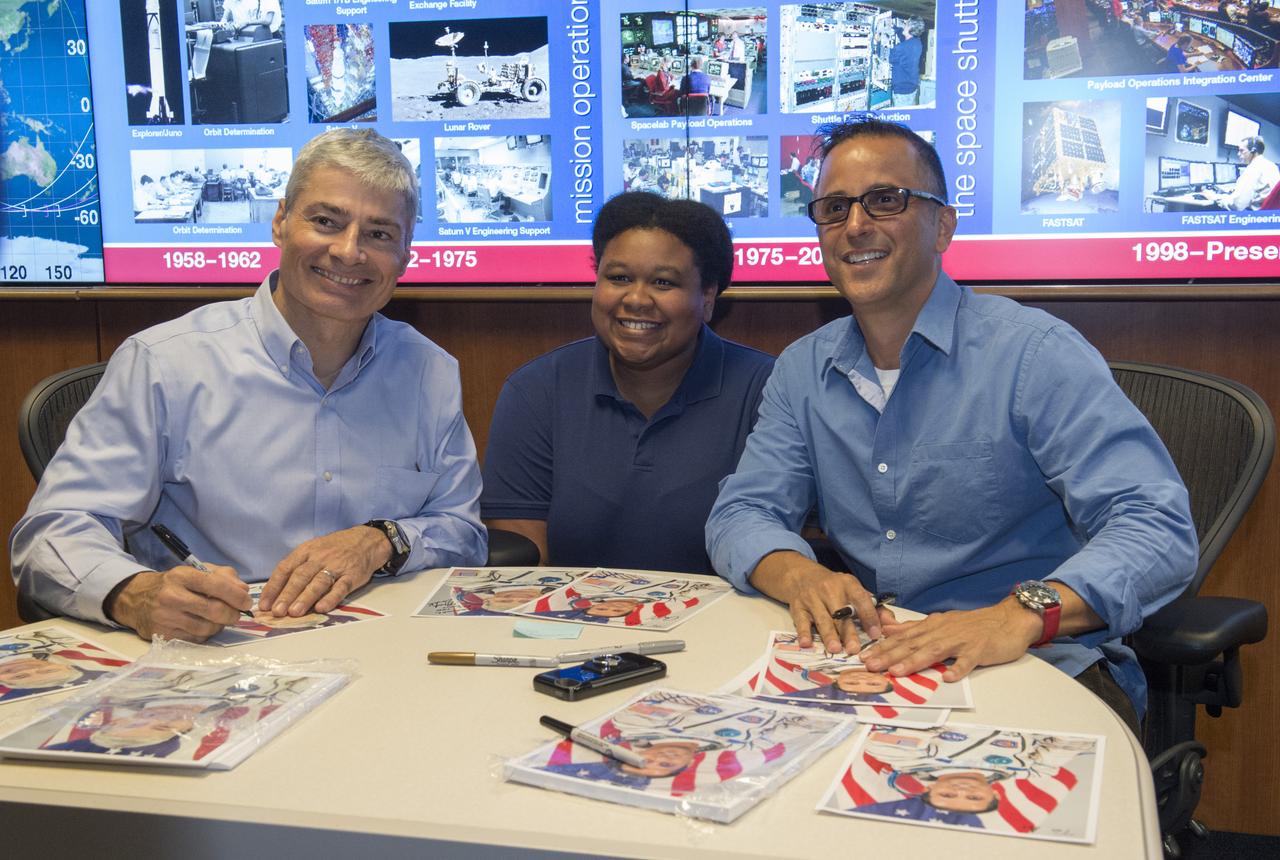
NASA astronauts Joe Acaba and Mark Vande Hei Acaba visited Marshall April 11 for their honorary Expedition 54 plaque hanging ceremony and to provide valuable feedback of their on-orbit science investigations with the Payload Operations and Integration Center team. Astronauts Mark Vande Hei (L) and Astronaut Joe Acaba sign autographs for Kassandra Stephens
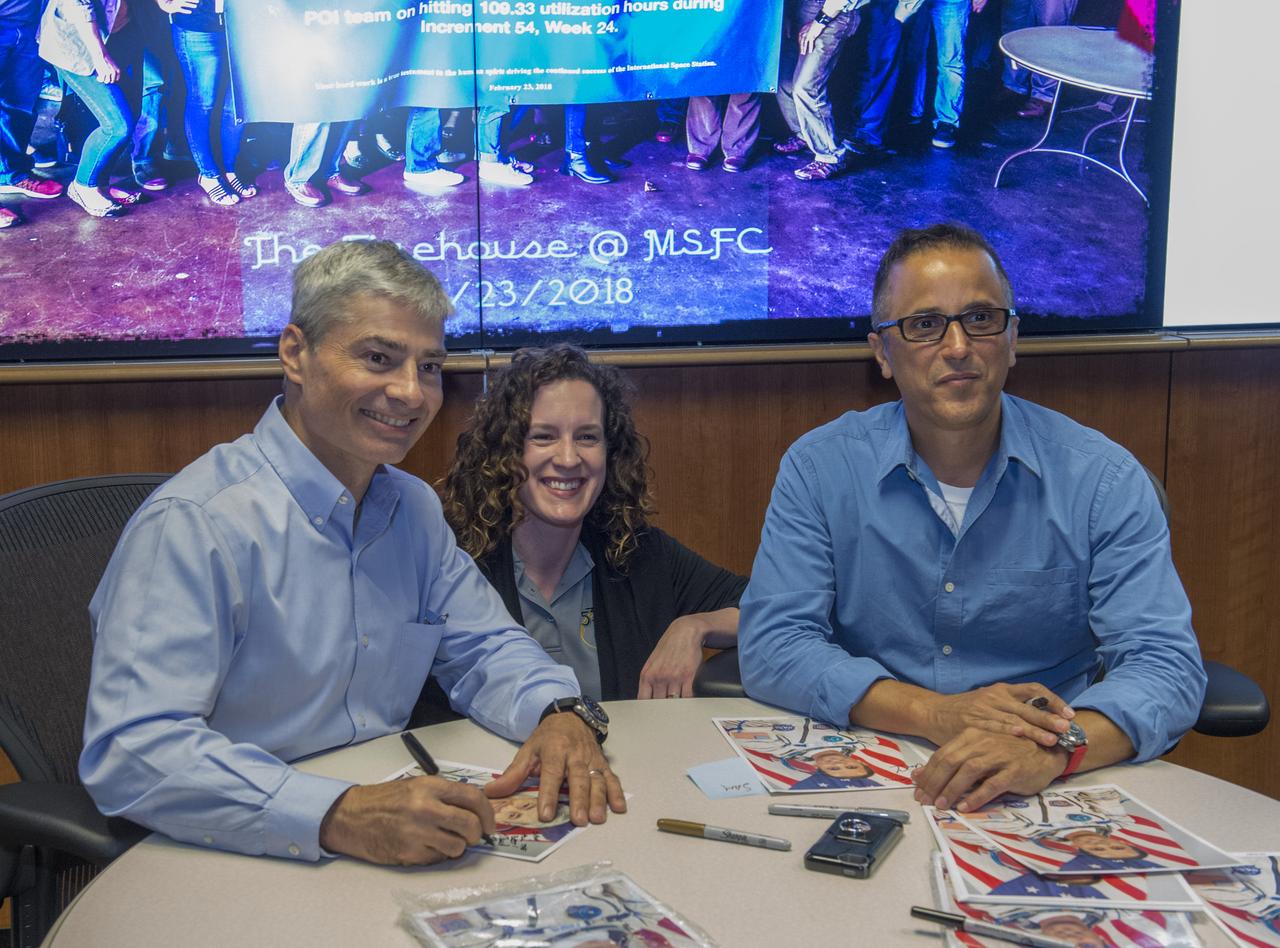
NASA astronauts Joe Acaba and Mark Vande Hei Acaba visited Marshall April 11 for their honorary Expedition 54 plaque hanging ceremony and to provide valuable feedback of their on-orbit science investigations with the Payload Operations and Integration Center team. Astronauts Mark Vande Hei (L) and Astronaut Joe Acaba sign autographs for Samantha Gurley.
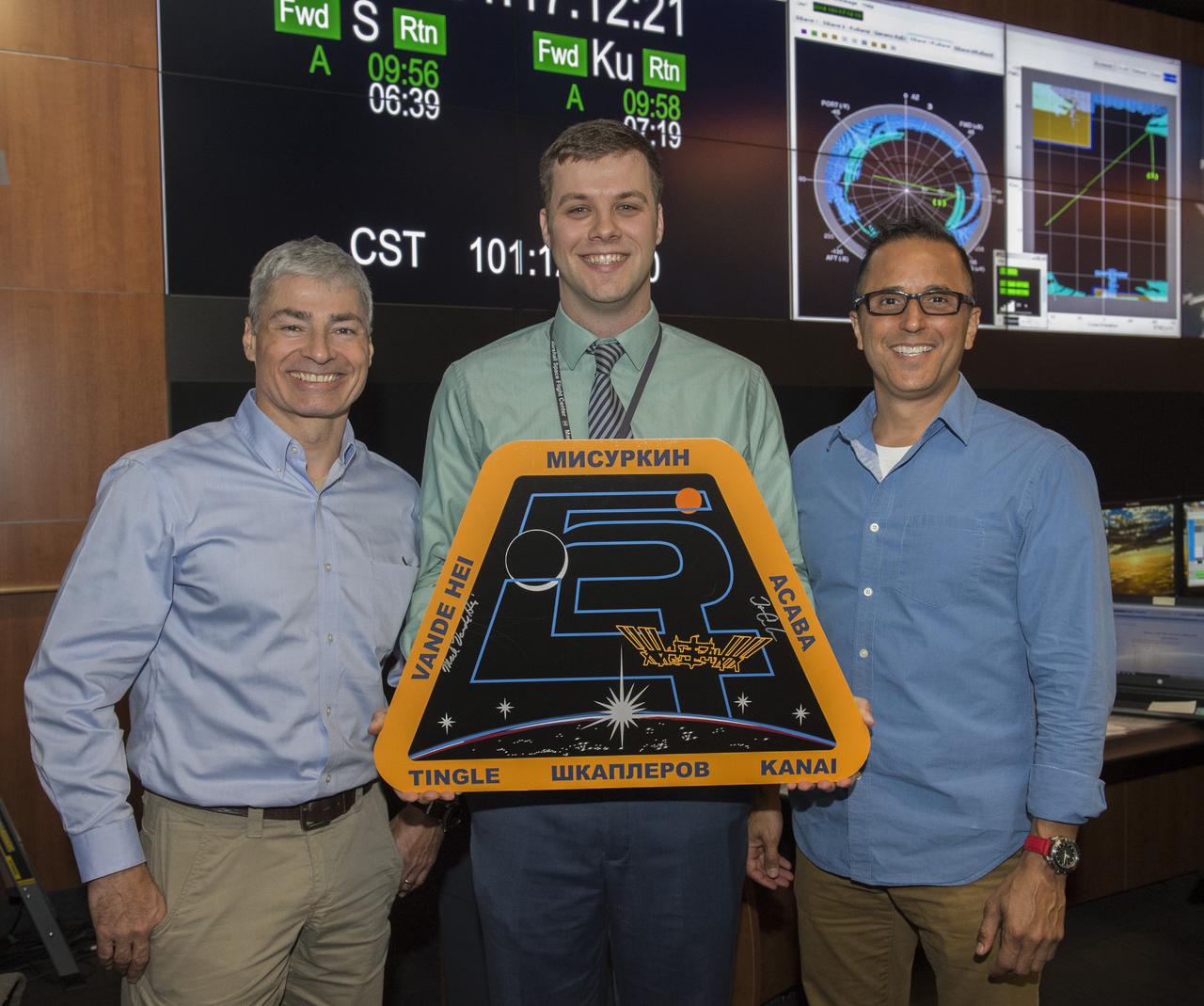
NASA astronauts Joe Acaba and Mark Vande Hei Acaba visited Marshall April 11 for their honorary Expedition 54 plaque hanging ceremony and to provide valuable feedback of their on-orbit science investigations with the Payload Operations and Integration Center team. Chris Buckley is awarded privilege of hanging Mission 54 placque, shown here with Astronaut Mark Vande Hei (L) and Astronaut Joe Acaba
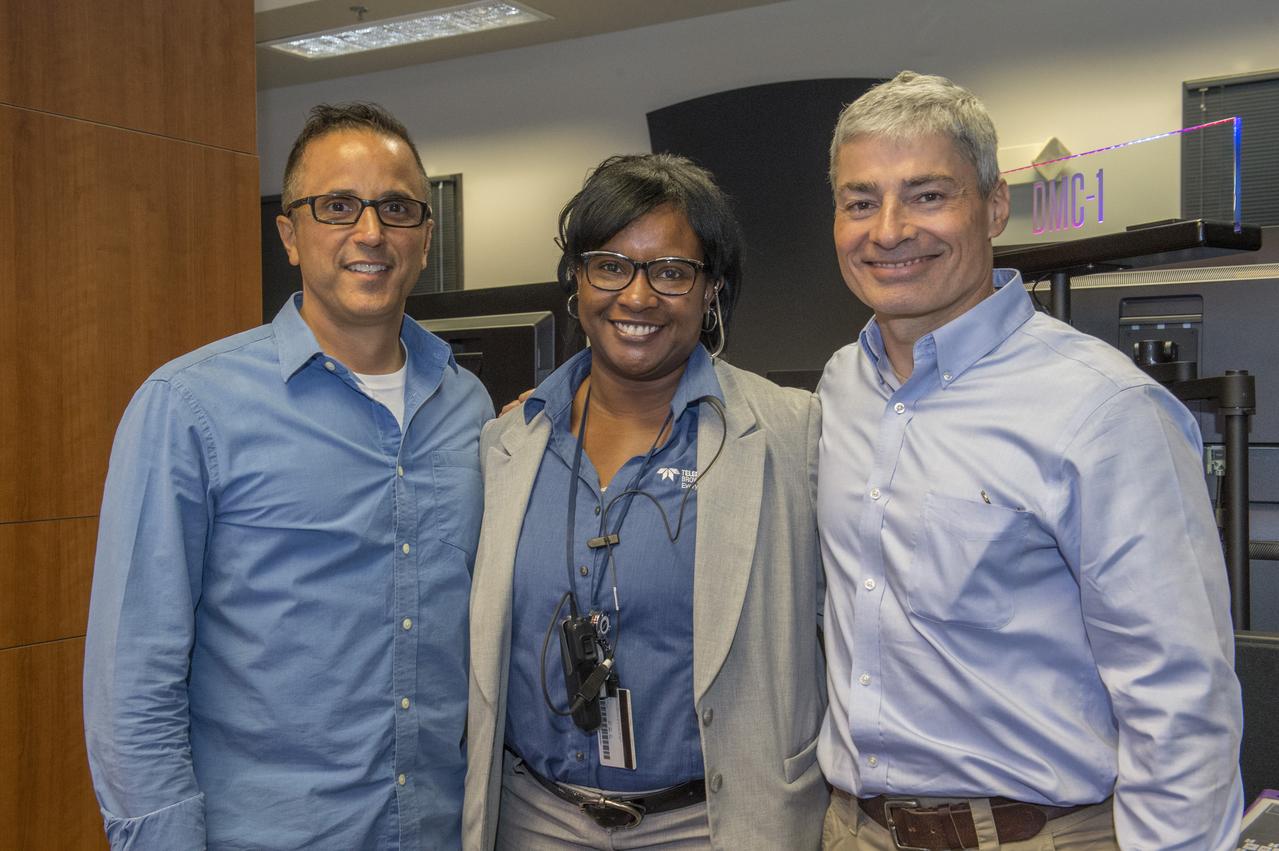
NASA astronauts Joe Acaba and Mark Vande Hei Acaba visited Marshall April 11 for their honorary Expedition 54 plaque hanging ceremony and to provide valuable feedback of their on-orbit science investigations with the Payload Operations and Integration Center team. Payload Operations Director Phillipia Simmons with Astronauts Joe Acaba (L) and Mark Vande Hei

NASA astronauts Joe Acaba and Mark Vande Hei Acaba visited Marshall April 11 for their honorary Expedition 54 plaque hanging ceremony and to provide valuable feedback of their on-orbit science investigations with the Payload Operations and Integration Center team. Astronauts Mark Vande Hei (L) and Astronaut Joe Acaba sign autographs for Lori Meggs.
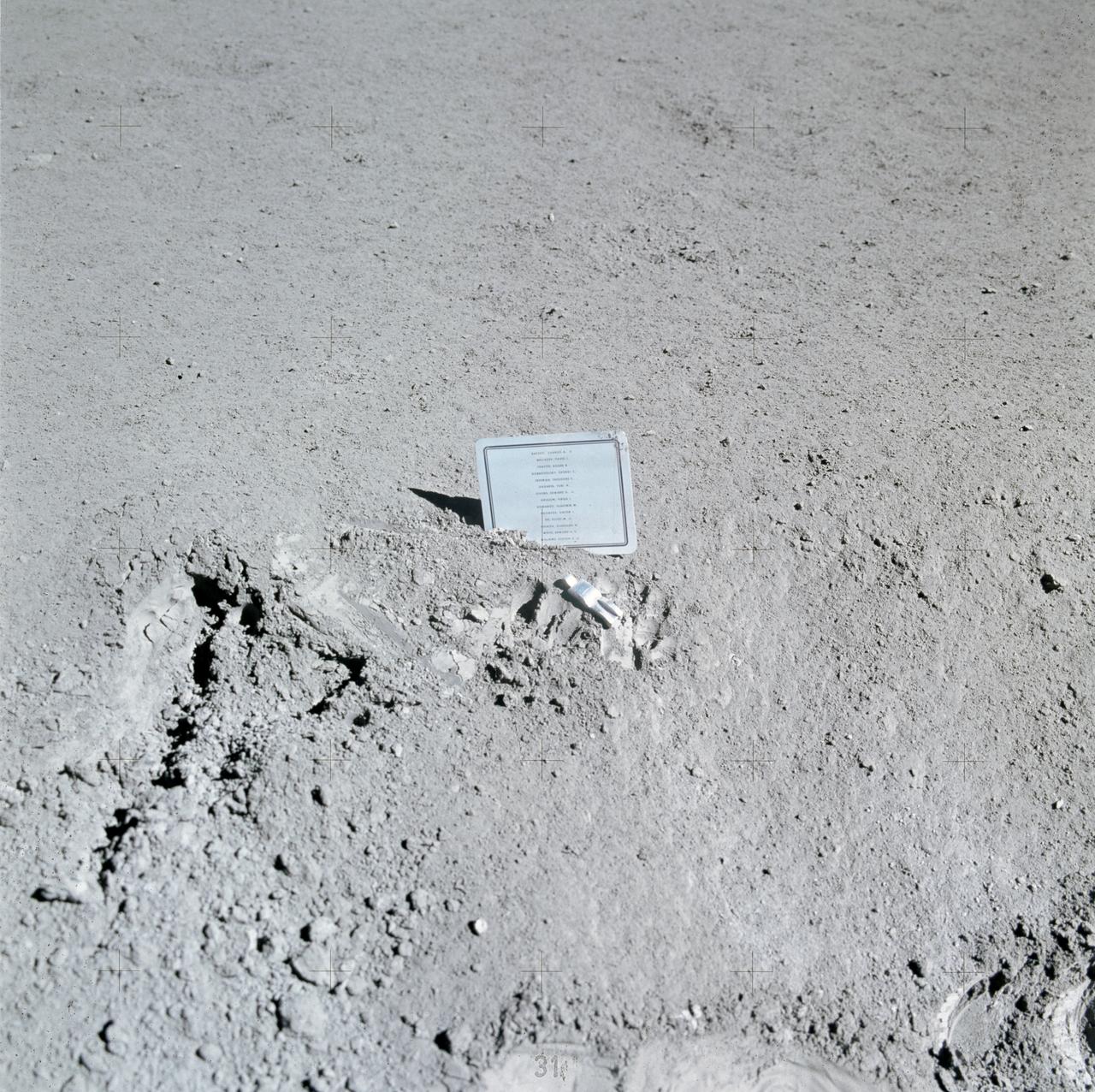
AS15-88-11894 (31 July-2 Aug. 1971) --- A close-up view of a commemorative plaque left on the moon at the Hadley-Apennine landing site in memory of 14 NASA astronauts and USSR cosmonauts, now deceased. Their names are inscribed in alphabetical order on the plaque. The plaque was stuck in the lunar soil by astronauts David R. Scott, commander, and James B. Irwin, lunar module pilot, during their Apollo 15 lunar surface extravehicular activity (EVA). The names on the plaque are Charles A. Bassett II, Pavel I. Belyayev, Roger B. Chaffee, Georgi Dobrovolsky, Theodore C. Freeman, Yuri A. Gagarin, Edward G. Givens Jr., Virgil I. Grissom, Vladimir Komarov, Viktor Patsayev, Elliot M. See Jr., Vladislav Volkov, Edward H. White II, and Clifton C. Williams Jr. The tiny, man-like object represents the figure of a fallen astronaut/cosmonaut. While astronauts Scott and Irwin descended in the Lunar Module (LM) "Falcon" to explore the Hadley-Apennine area of the moon, astronaut Alfred M. Worden, command module pilot, remained with the Command and Service Modules (CSM) in lunar orbit.
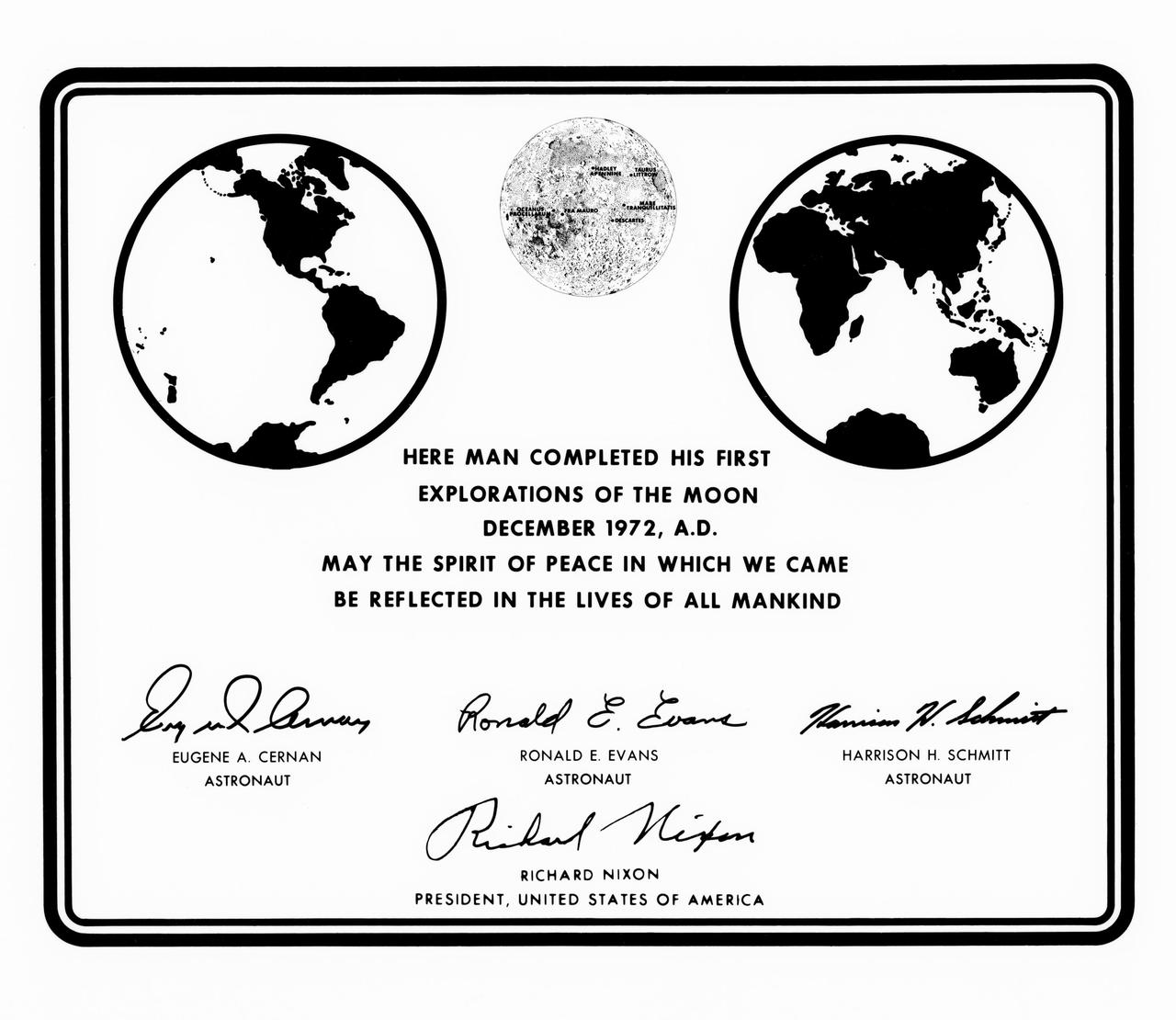
S72-55169 (14 Dec. 1972) --- A photographic replica of the plaque which the Apollo 17 astronauts left behind at the Taurus-Littrow landing site. Apollo 17 is the final lunar landing mission in NASA's Apollo program. The commemorative plaque was unveiled at the close of the third extravehicular activity (EVA). The plaque is made of stainless steel measuring nine by seven and five-eighths inches, and one-sixteenth inch thick. It is attached to the ladder on the landing gear strut on the descent stage of Apollo 17 Lunar Module (LM) "Challenger".
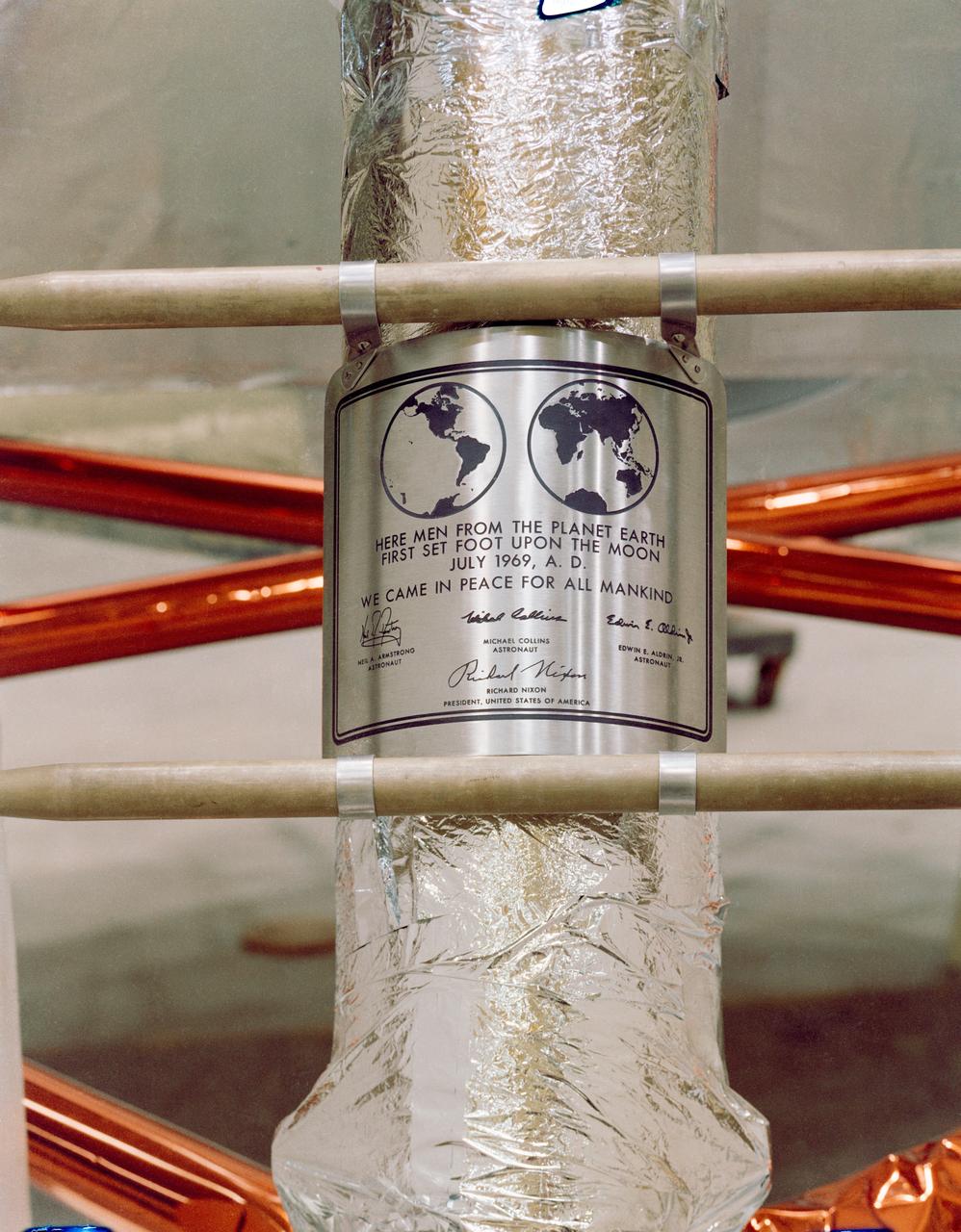
S69-38749 (July 1969) --- Close-up view of the plaque which the Apollo 11 astronauts will leave behind on the moon in commemoration of the historic event. The plaque is made of stainless steel measuring nine by seven and five-eighths inches, and one-sixteenth inch thick. The plaque will be attached to the ladder on the landing gear strut on the descent stage of the Apollo 11 Lunar Module (LM). Covering the plaque during flight will be a thin sheet of stainless steel which will be removed on the lunar surface.
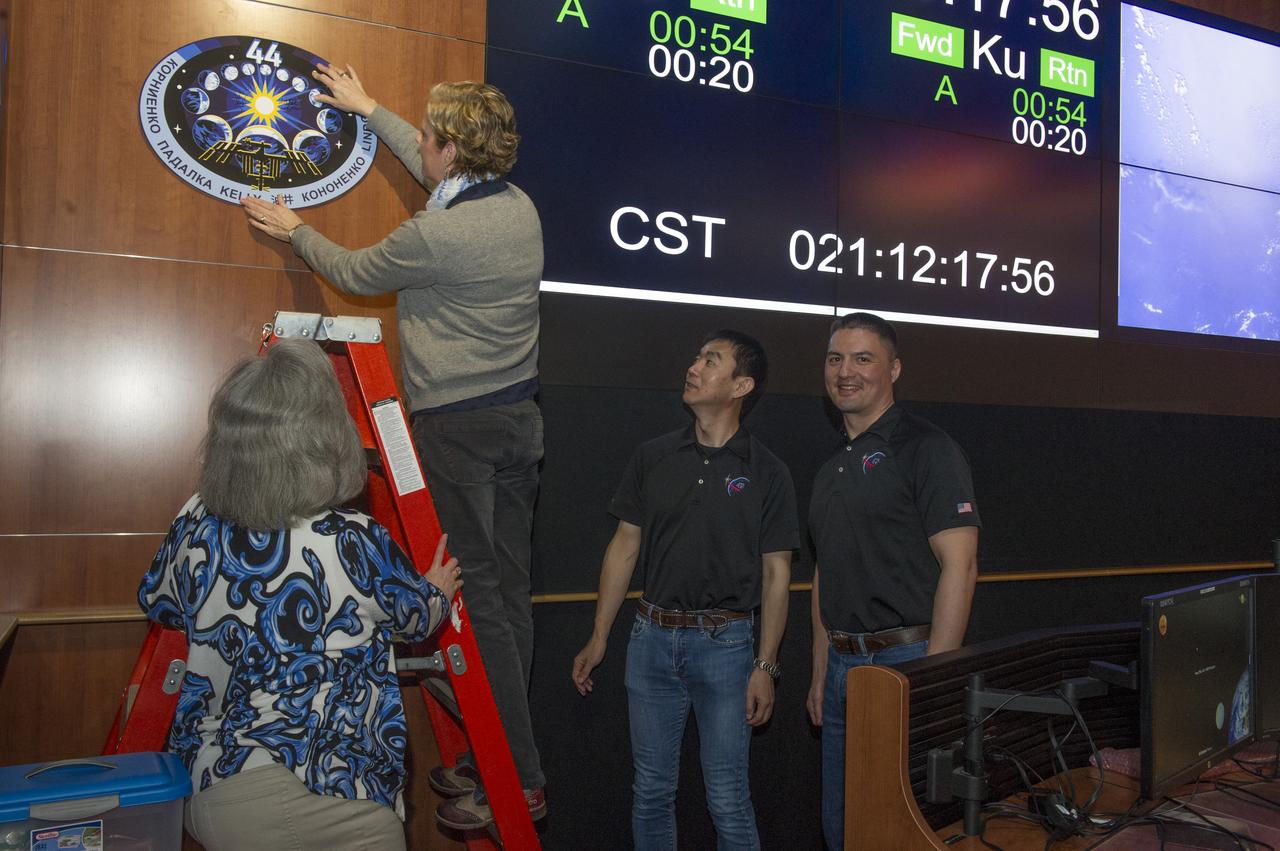
LISA PRENDERGAST HANGS INCREMENT 44 PLAQUE, BECKY GRIMALDI, ASTRONAUTS KIMIYA YUI, AND KJELL LINDGREN ALSO PICTURED
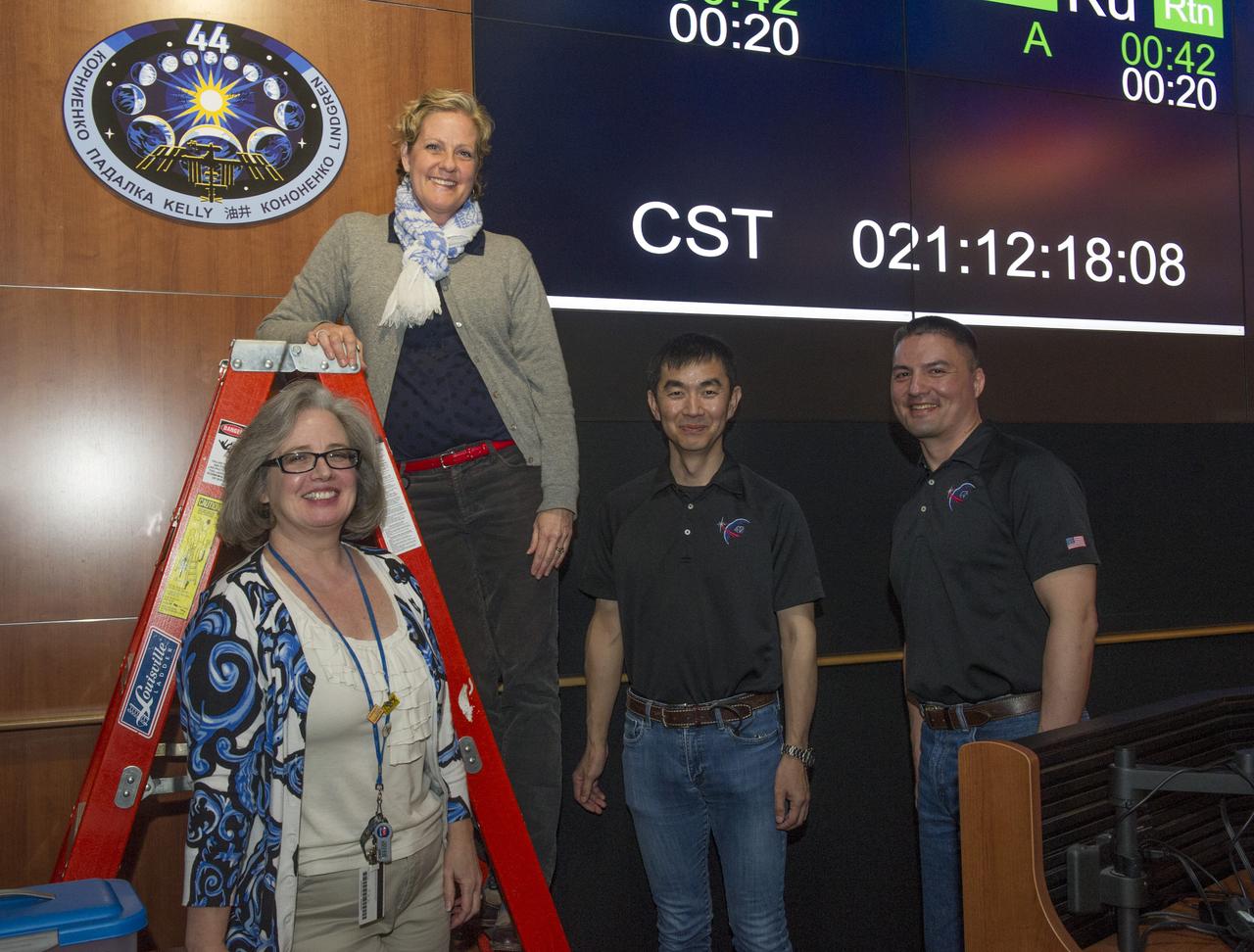
LISA PRENDERGAST HANGS INCREMENT 44 PLAQUE, BECKY GRIMALDI, ASTRONAUTS KIMIYA YUI, AND KJELL LINDGREN ALSO PICTURED
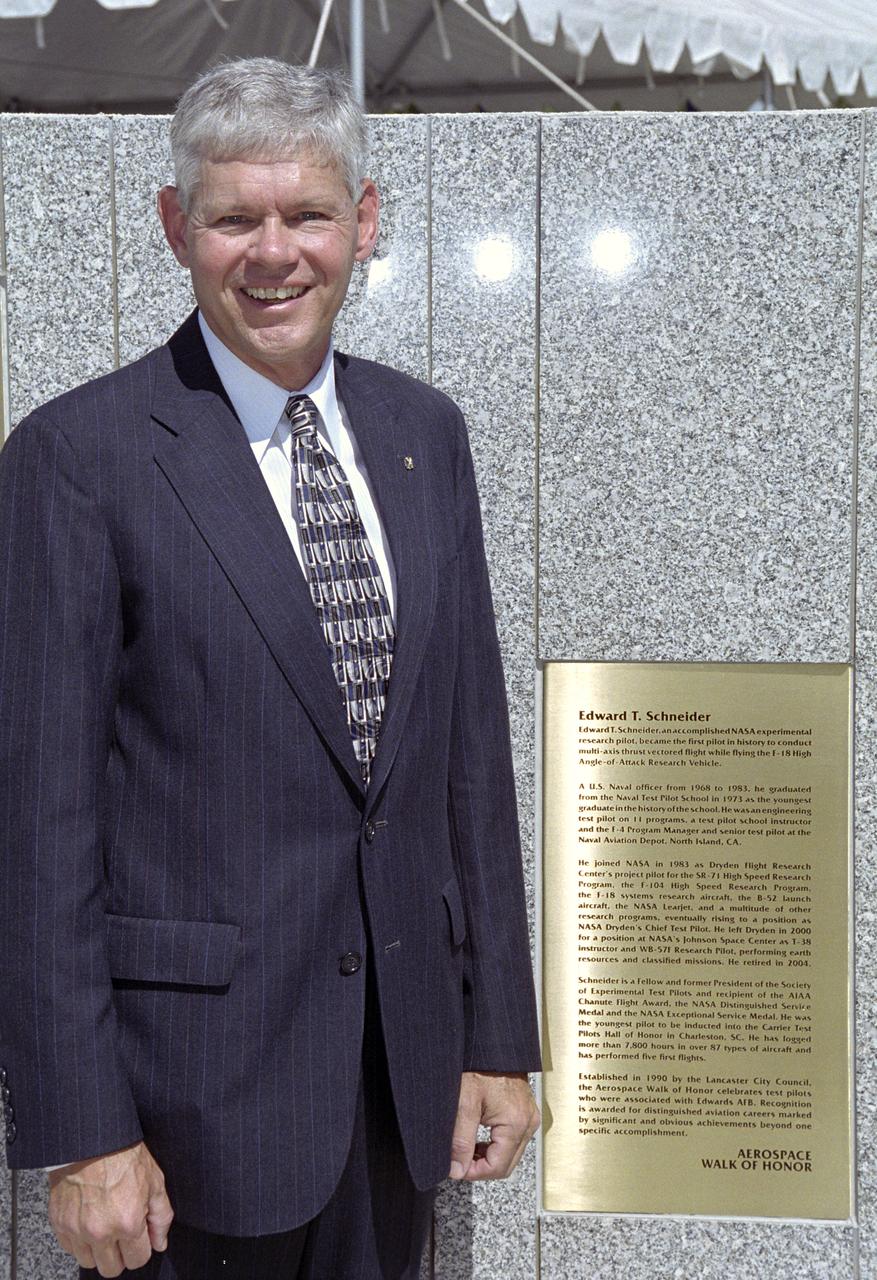
Former NASA research pilot Eddie Schneider was on hand when a brass plaque summarizing his career was unveiled during the 2005 Aerospace Walk of Honor ceremonies in Lancaster, California.
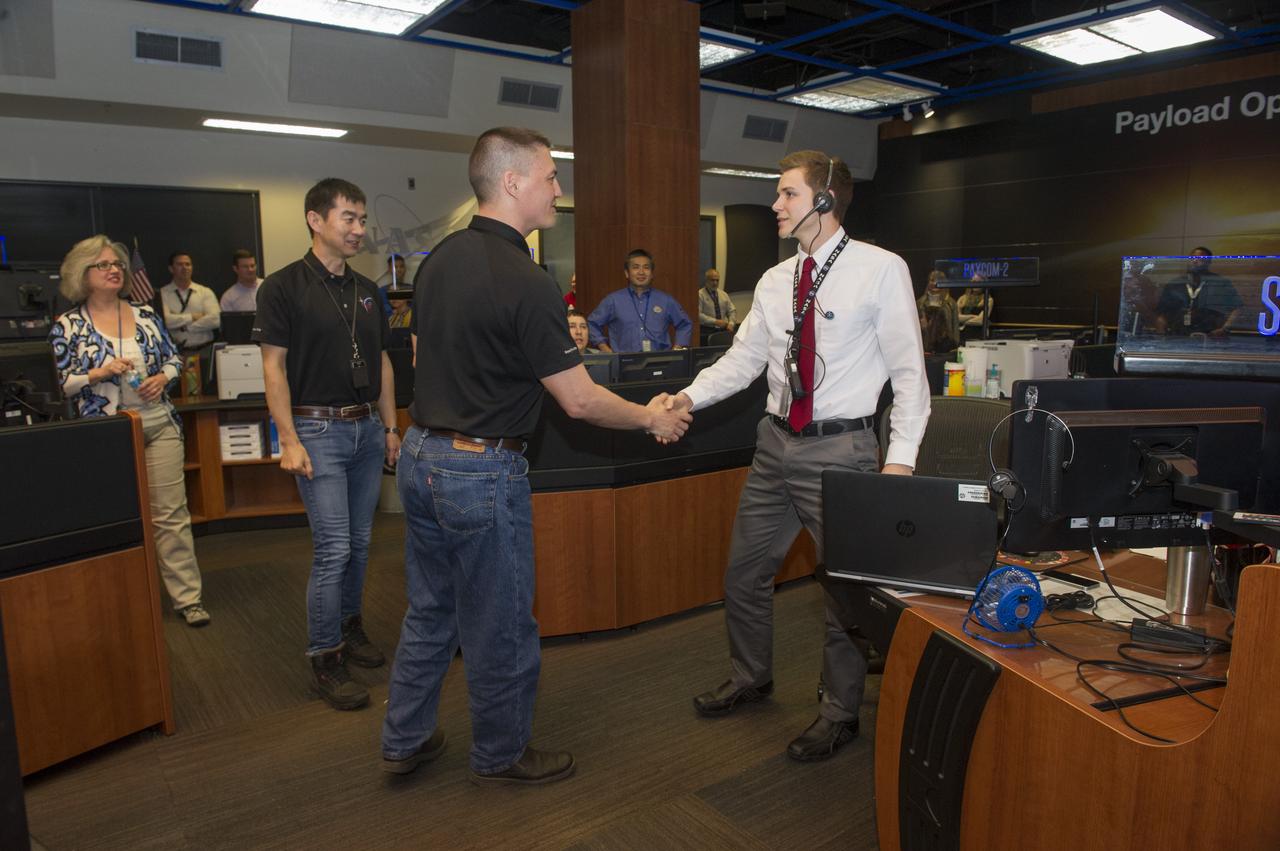
ASTRONAUT KJELL LINDGREN SHAKES HANDS WITH BRETT BOULDIN
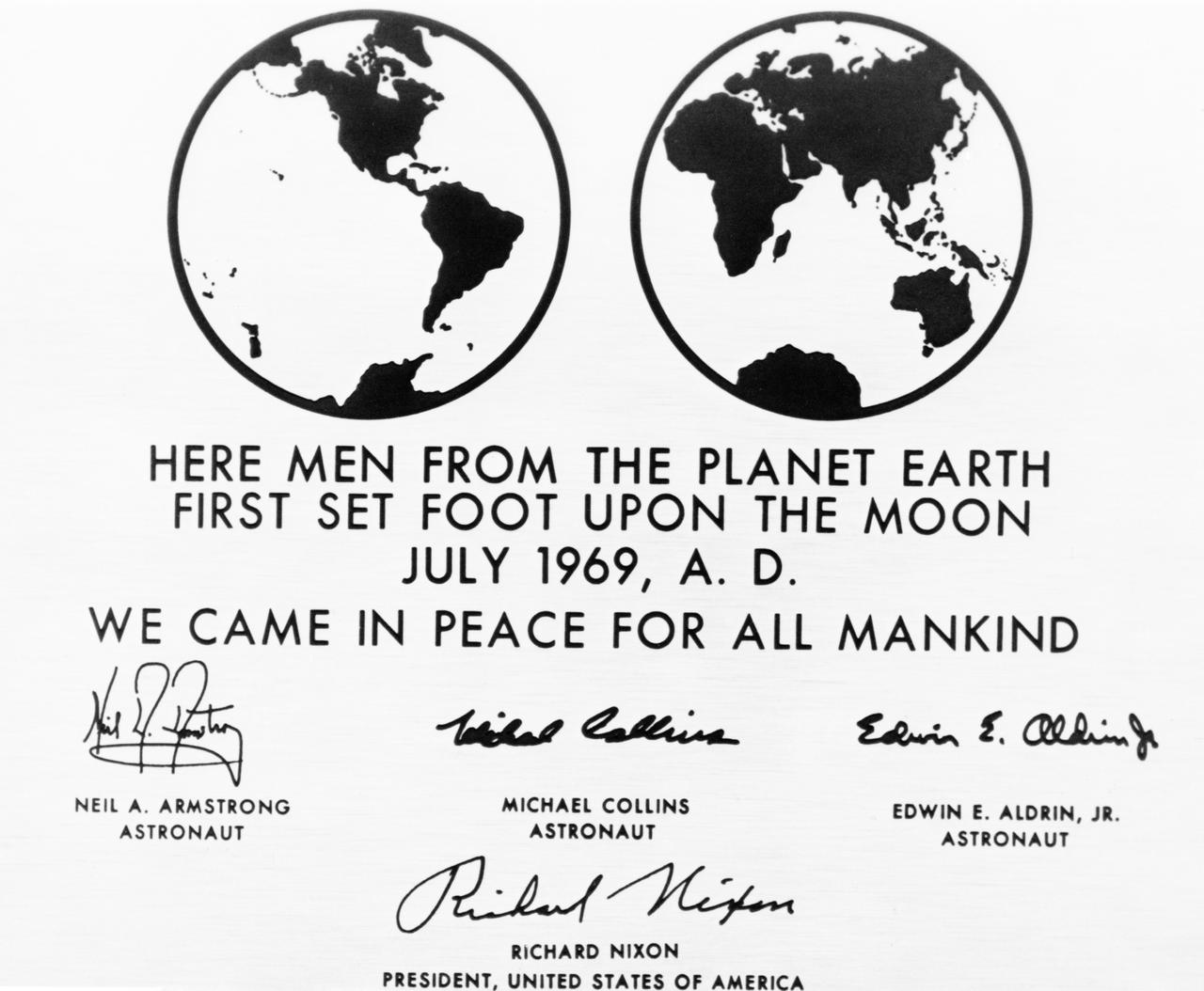
S69-39334 (July 1969) --- This is a replica of the plaque which the Apollo 11 astronauts will leave behind on the moon in commemoration of the historic event. The plaque is made of stainless steel, measuring nine by seven and five-eighths inches, and one-sixteenth inch thick. The plaque will be attached to the ladder on the landing gear strut on the descent stage of the Apollo 11 Lunar Module (LM). Covering the plaque during the flight will be a thin sheet of stainless steel which will be removed on the lunar surface.
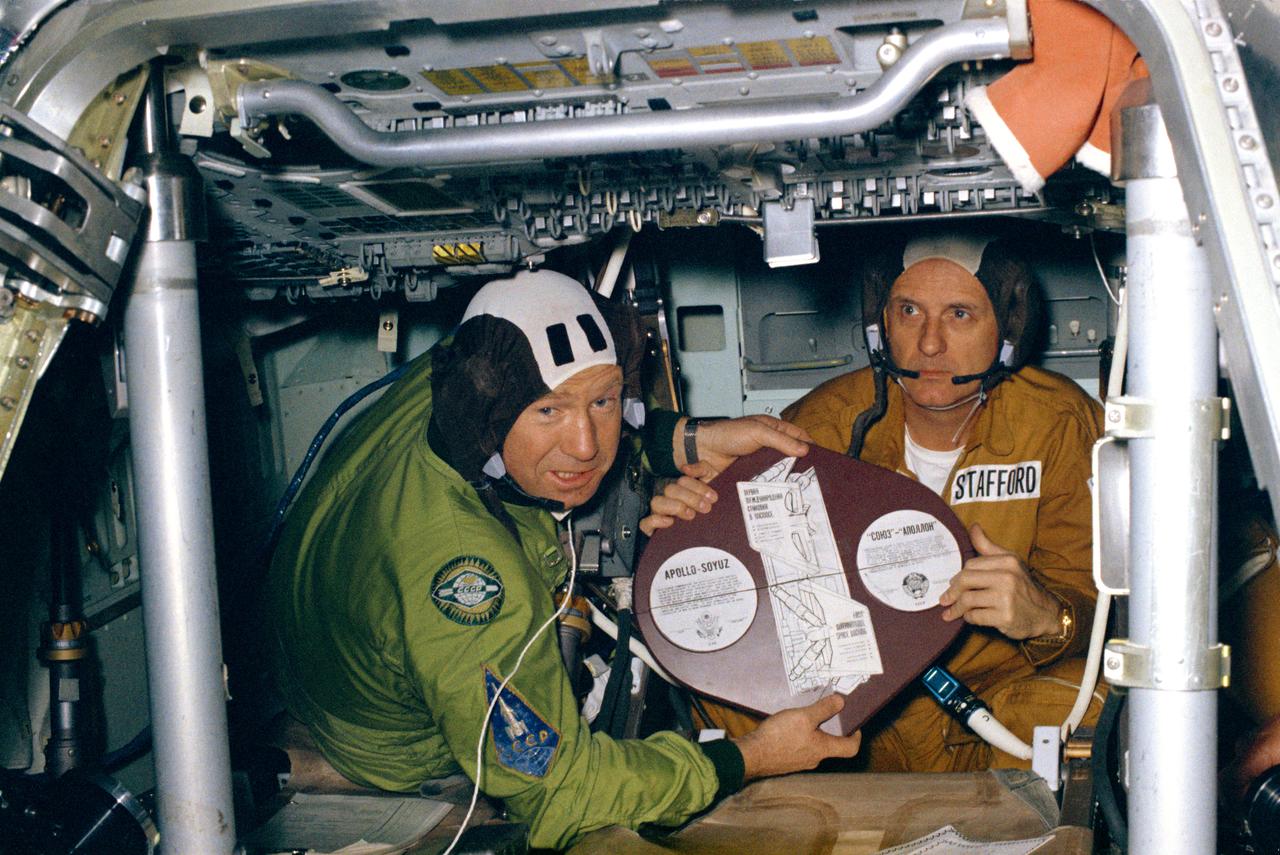
S75-25823 (February 1975) --- Cosmonaut Aleksei A. Leonov (left) and astronaut Thomas P. Stafford display the Apollo Soyuz Test Project (ASTP) commemorative plaque. The two commanders, of their respective crews, are in the Apollo Command Module (CM) trainer at Building 35 at NASA's Johnson Space Center (JSC). Two plaques divided into four quarters each will be flown on the ASTP mission. The American ASTP Apollo crew will carry the four United States quarter pieces aboard Apollo; and the Soviet ASTP Soyuz 19 crew will carry the four USSR quarter sections aboard Soyuz. The eight quarter pieces will be joined together to form two complete commemorative plaques after the two spacecraft rendezvous and dock in Earth orbit. One complete plaque then will be returned to Earth by the astronauts; and the other complete plaque will be brought back by the cosmonauts. The plaque is written in both English and Russian. The Apollo crew will consist of astronauts Thomas P. Stafford, commander; Donald K. "Deke" Slayton, docking module pilot; Vance D. Brand, command module pilot. The Soyuz 19 crew will consist of cosmonauts Aleksei A. Leonov, command pilot; and Valeri N. Kubasov, flight engineer.
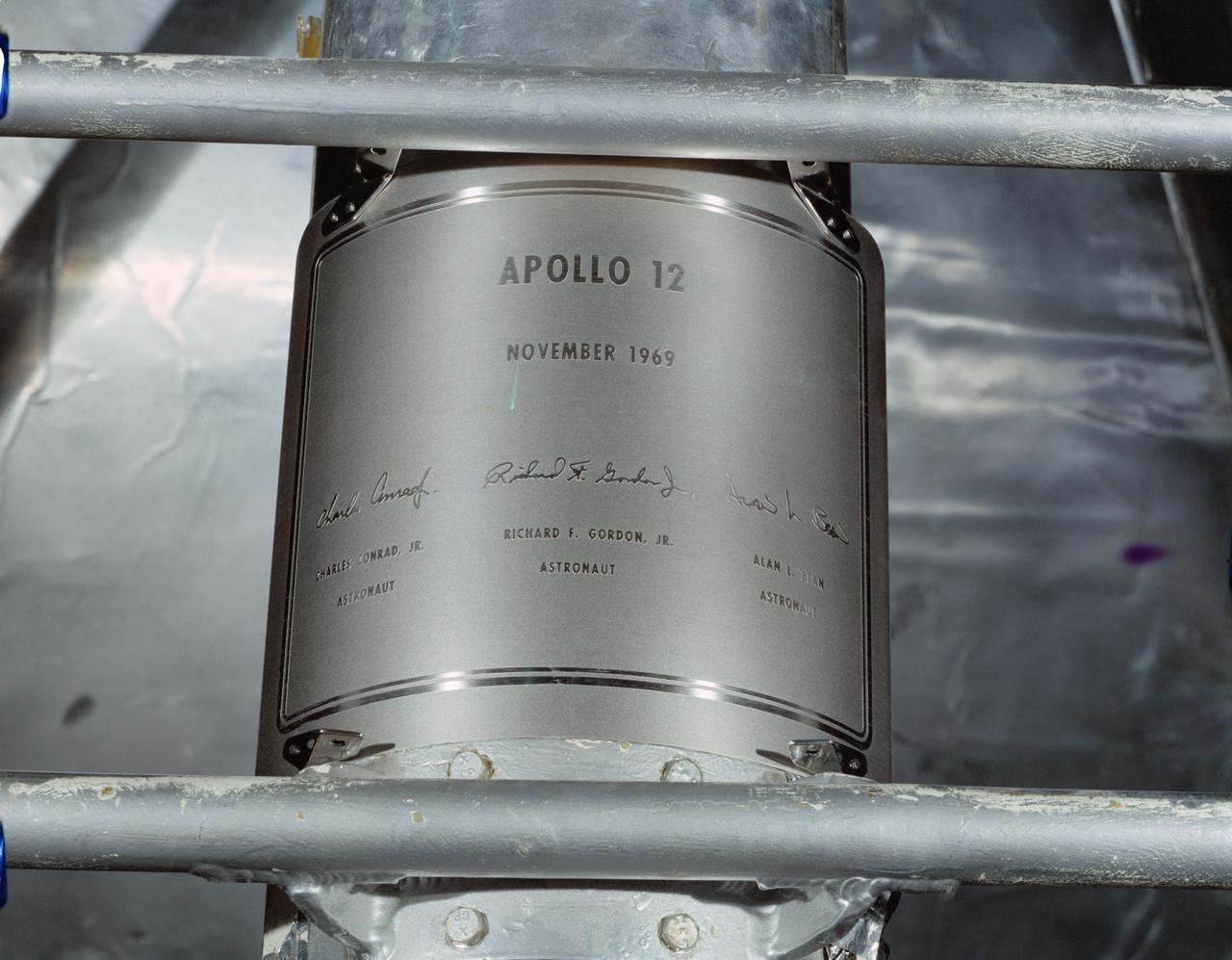
S69-53326 (November 1969) --- Close-up view of a replica of the plaque which the Apollo 12 astronauts will leave on the moon in commemoration of their flight. The plaque will be attached to the ladder on the landing gear strut on the descent stage of the Apollo 12 Lunar Module (LM). Apollo 12 will be the United States' second lunar landing mission.
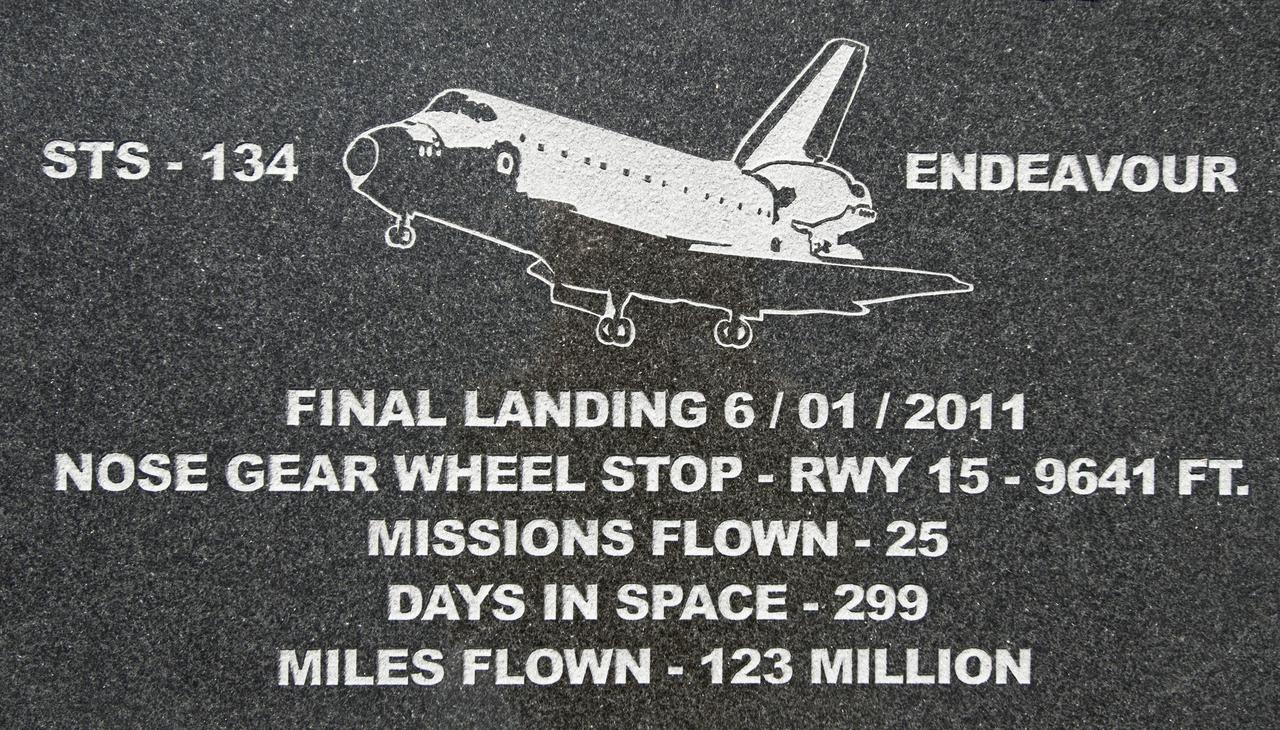
CAPE CANAVERAL, Fla. – At Kennedy Space Center's Shuttle Landing Facility, a granite plaque marks the spot where space shuttle Endeavour's nose gear came to a stop at the conclusion of STS-134, the final flight of the Space Shuttle Program. Permanent reminders indicate where on the runway the orbiters Discovery, Endeavour and Atlantis stopped rolling as each finished its last mission in 2011. In addition to the granite markers, which are installed alongside the runway, there are etchings in the grooved concrete along the runway's centerline to mark each wheelstop. The etchings and markers were created and installed by local artist Chad Stout of C Spray Glass Blasting in Cocoa, Fla. Photo credit: NASA/Tim Jacobs
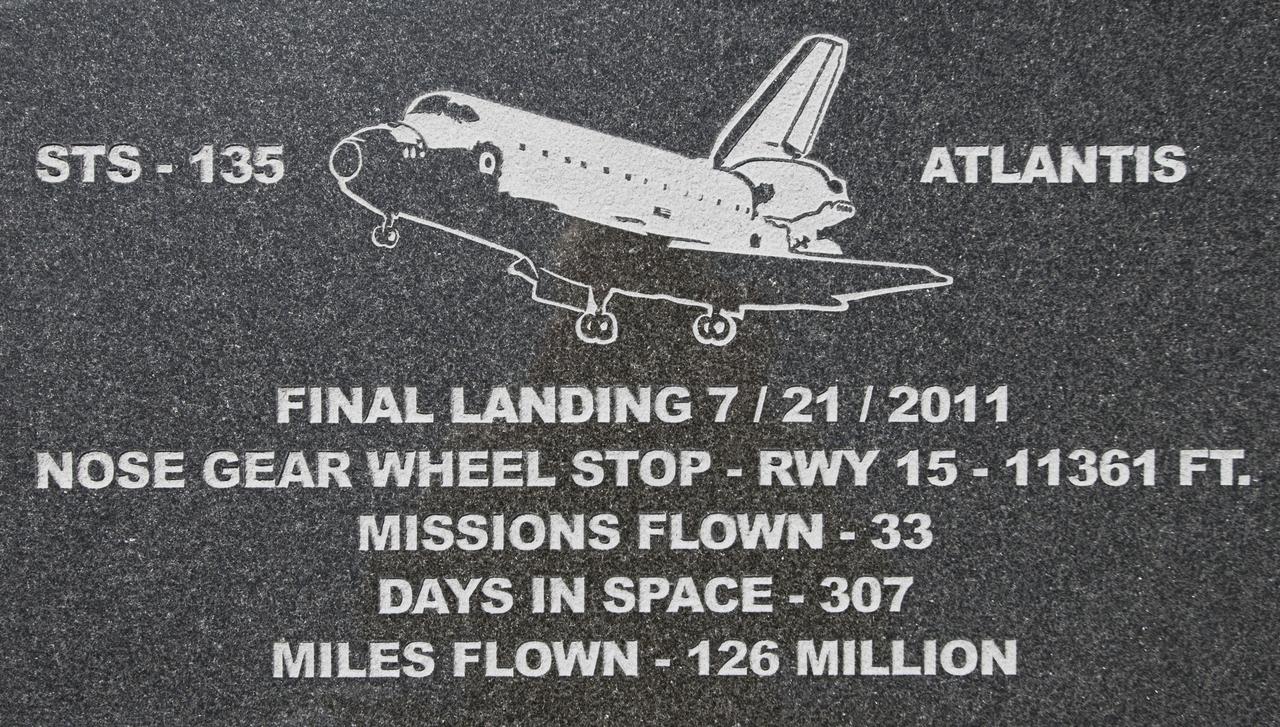
CAPE CANAVERAL, Fla. – At Kennedy Space Center's Shuttle Landing Facility, a granite plaque marks the spot where space shuttle Atlantis' nose gear came to a stop at the conclusion of STS-135, the final flight of the Space Shuttle Program. Permanent reminders indicate where on the runway the orbiters Discovery, Endeavour and Atlantis stopped rolling as each finished its last mission in 2011. In addition to the granite markers, which are installed alongside the runway, there are etchings in the grooved concrete along the runway's centerline to mark each wheelstop. The etchings and markers were created and installed by local artist Chad Stout of C Spray Glass Blasting in Cocoa, Fla. Photo credit: NASA/Tim Jacobs
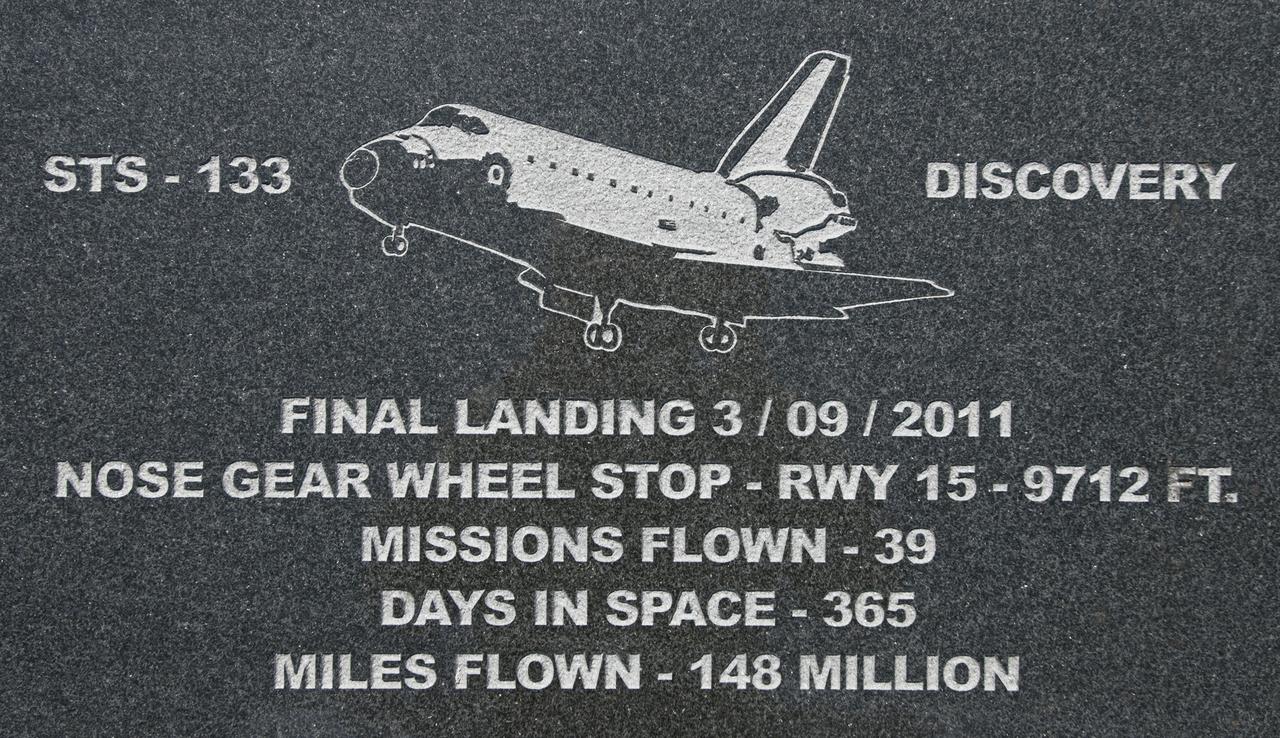
CAPE CANAVERAL, Fla. – At Kennedy Space Center's Shuttle Landing Facility, a granite plaque marks the spot where space shuttle Discovery's nose gear came to a stop at the conclusion of STS-133, the final flight of the Space Shuttle Program. Permanent reminders indicate where on the runway the orbiters Discovery, Endeavour and Atlantis stopped rolling as each finished its last mission in 2011. In addition to the granite markers, which are installed alongside the runway, there are etchings in the grooved concrete along the runway's centerline to mark each wheelstop. The etchings and markers were created and installed by local artist Chad Stout of C Spray Glass Blasting in Cocoa, Fla. Photo credit: NASA/Tim Jacobs
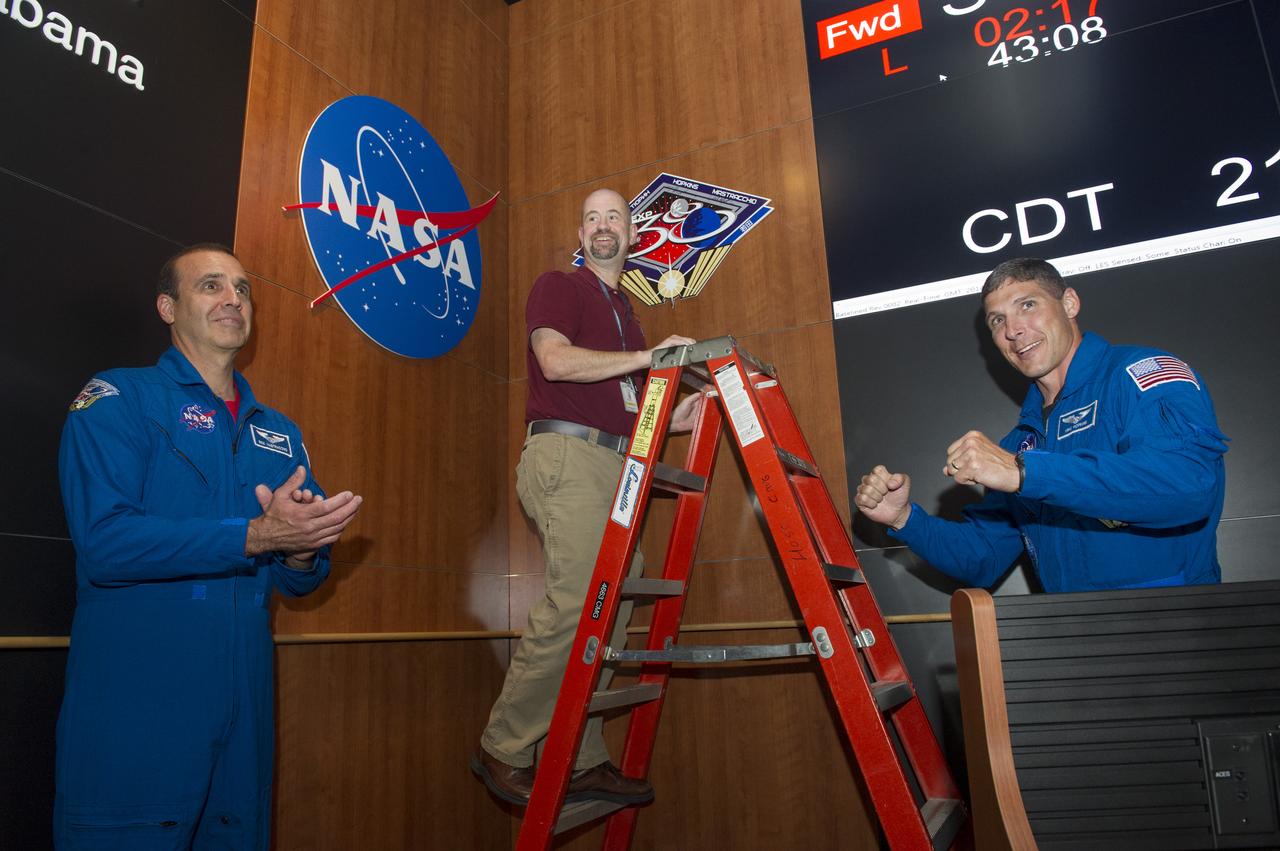
NASA ASTRONAUTS RICHARD MASTRACCHIO, LEFT, AND MICHAEL HOPKINS FLANK ED LITKENHOUS, A PAYLOAD ACTIVITY REQUIREMENTS COORDINATOR IN THE PAYLOAD OPERATIONS AND INTEGRATION CENTER (POIC), AS HE HANGS THE ASTRONAUTS' MISSION PLAQUE ON THE WALL OF THE POIC IN THE MARSHALL CENTER'S BUILDING 4663. THE PLAQUE JOINED THE LOGOS FROM PREVIOUS MISSIONS HANGING AROUND THE ROOM, RECOGNIZING THE COLLABORATION BETWEEN THE ORBITING ASTRONAUTS AND THE HUNTSVILLE-BASED TEAM
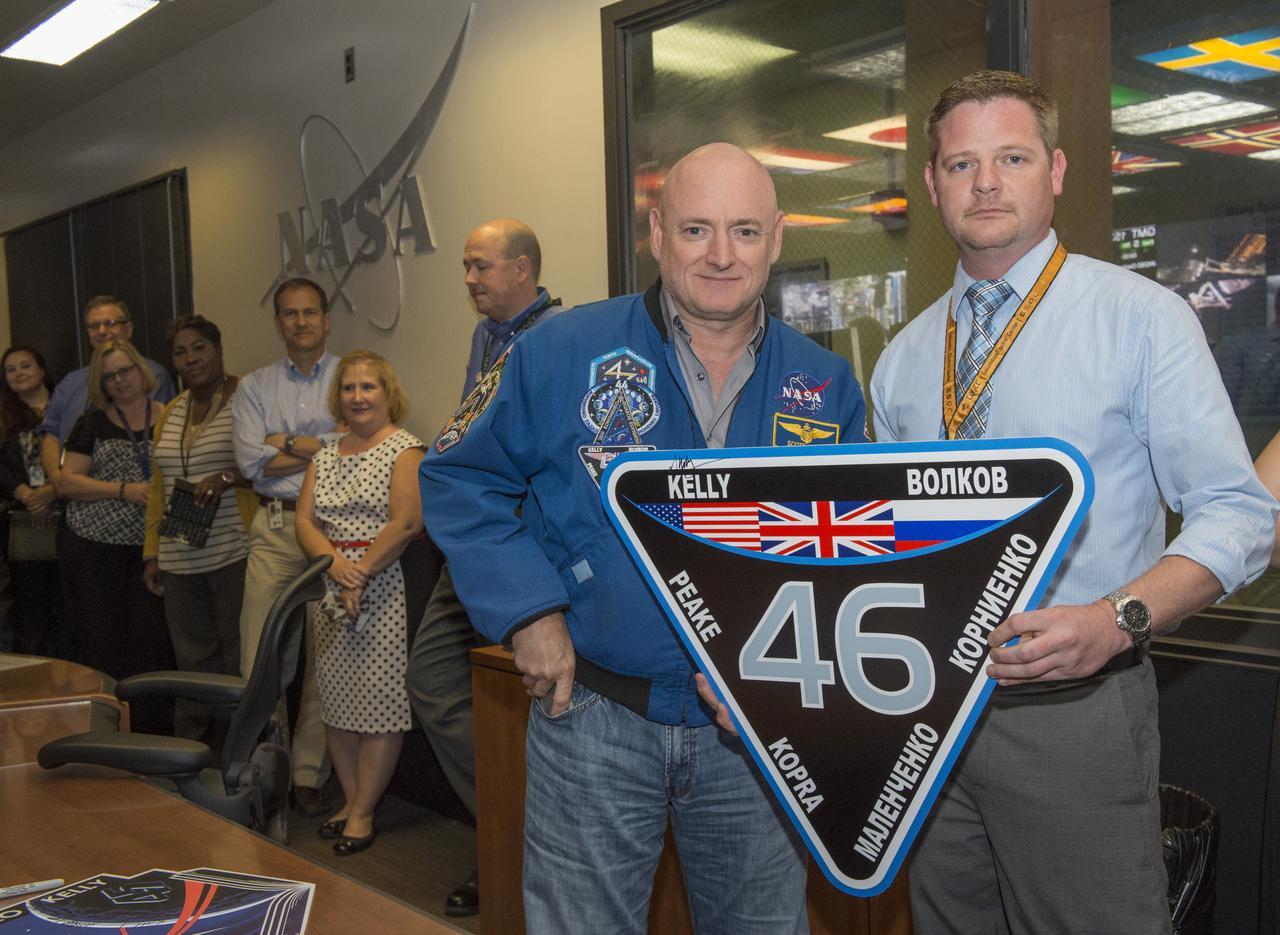
RETIRED NASA ASTRONAUT SCOTT KELLY, LEFT, AND PAYLOAD PLANNING MANAGER TONY PITTMAN PAUSE FOR A PHOTO BEFORE HANGING THE MISSION PATCH FOR EXPEDITION 46 ON THE WALL OF THE PAYLOAD OPERATIONS INTEGRATION CENTER
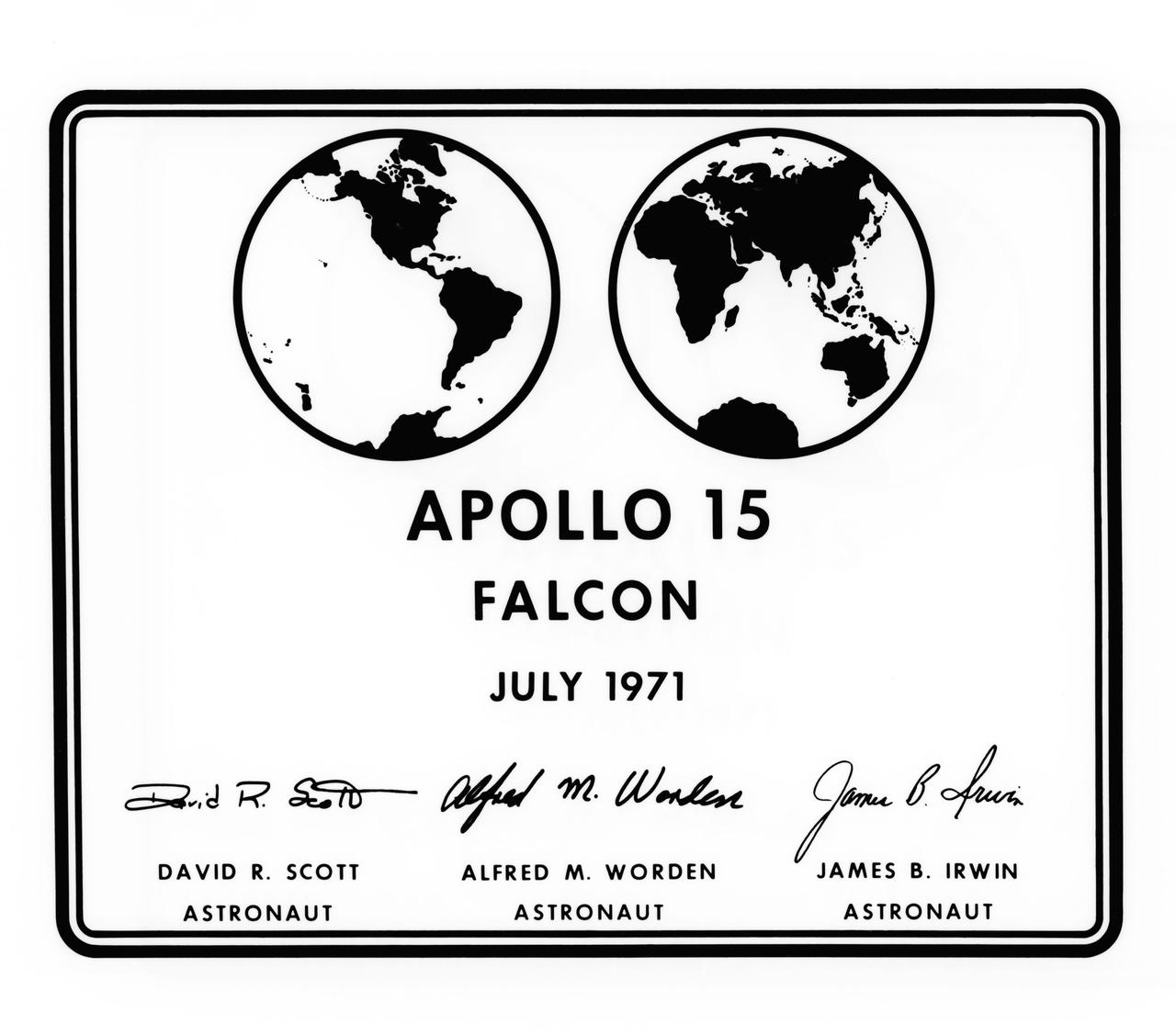
S71-39357 (July 1971) --- A photographic replica of the plaque which the Apollo 15 astronauts will leave behind on the moon during their lunar landing mission. Astronauts David R. Scott, commander; and James B. Irwin, lunar module pilot; will descend to the lunar surface in the Lunar Module (LM) "Falcon". Astronaut Alfred M. Worden, command module pilot, will remain with the Command and Service Modules (CSM) in lunar orbit. The seven by nine inch stainless steel plaque will be attached to the ladder on the landing gear strut on the LM's descent stage. Commemorative plaques were also left on the moon by the Apollo 11, Apollo 12 and Apollo 14 astronauts.
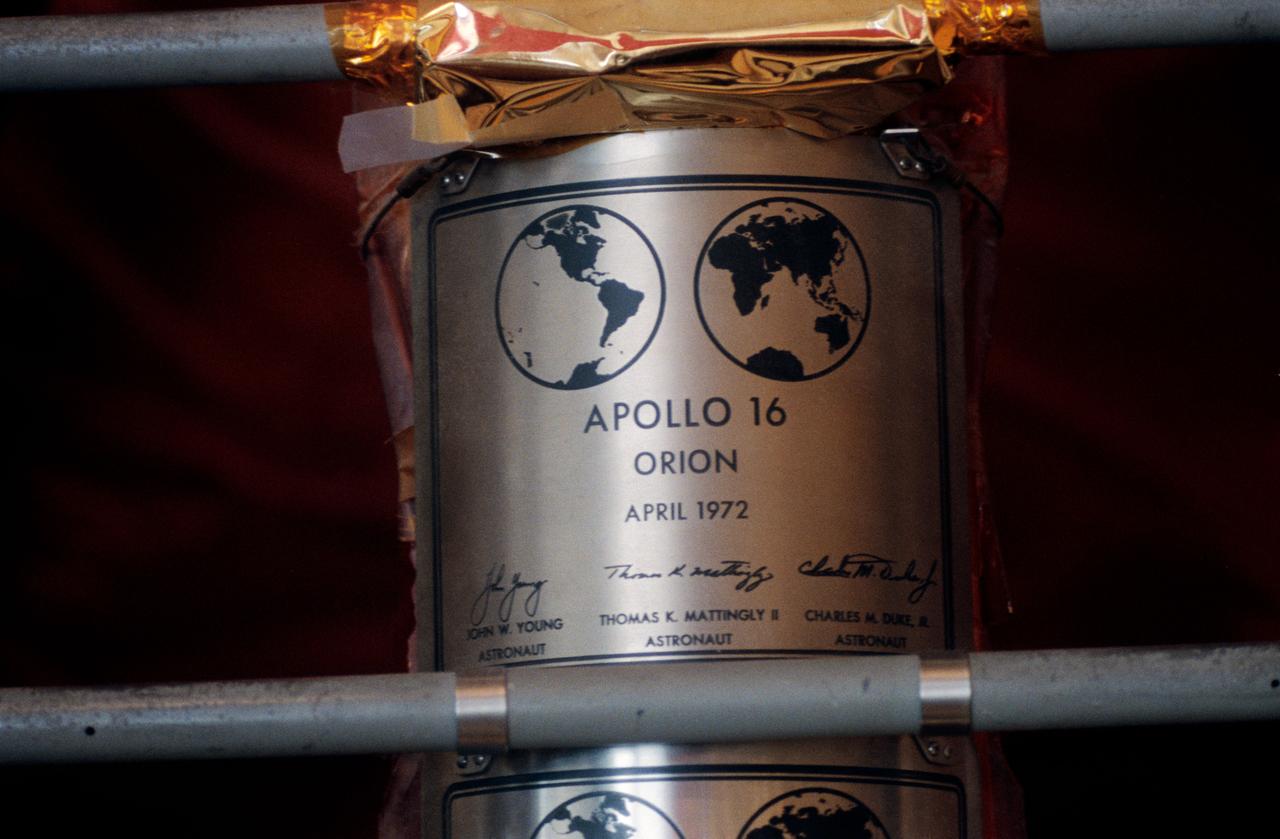
S89-36956 (16 June 1989) --- A replica of the plaque left on the moon by the Apollo 16 crew.
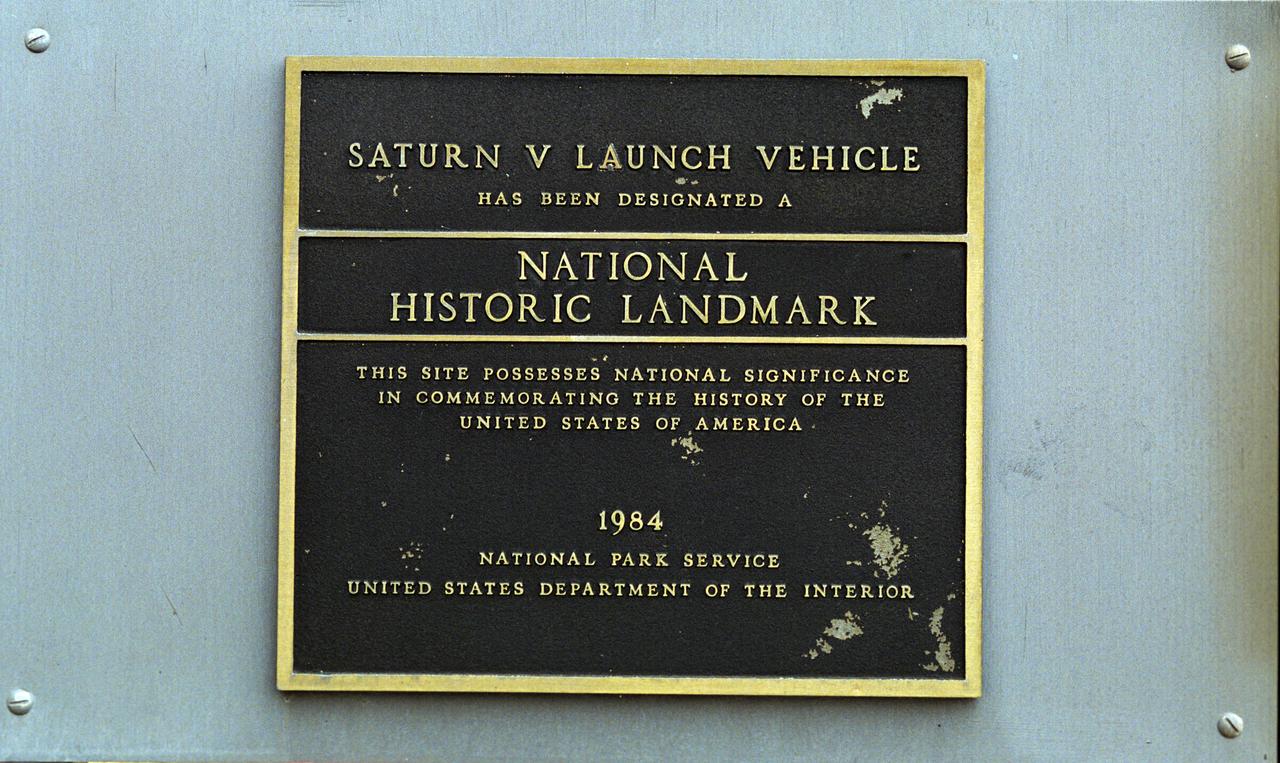
This plaque, displayed on the grounds of Marshall Space Flight Center in Huntsville, Alabama, commemorates the Saturn V Launch Vehicle as a National Historic Landmark. The site was designated as such in 1984 by the National Park Service of the United States Department of the Interior.
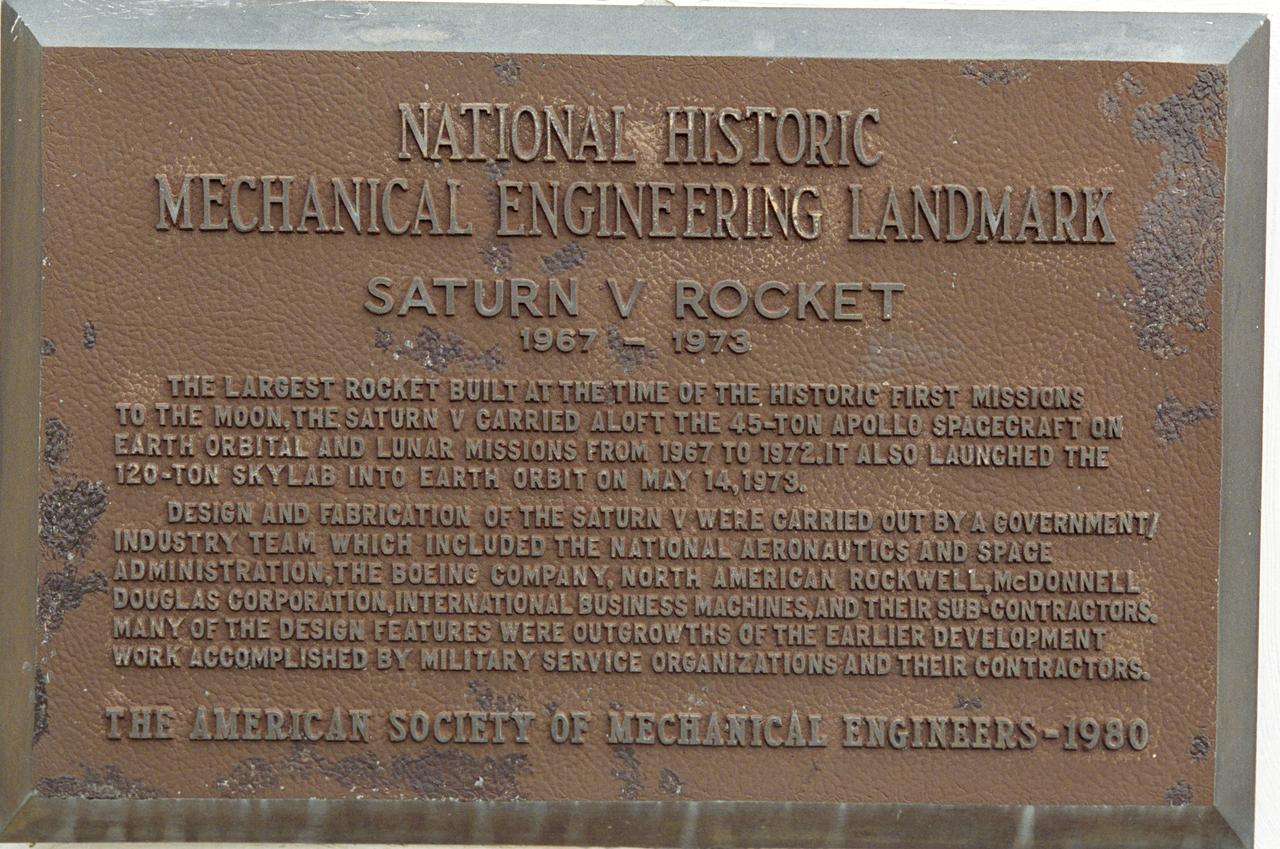
This plaque, located on the grounds of Marshall Space Flight Center in Huntsville, Alabama,commemorates the designation of the Saturn V Rocket as a National Historic Mechanical Engineering Landmark by the American Society of Mechanical Engineers in 1980.
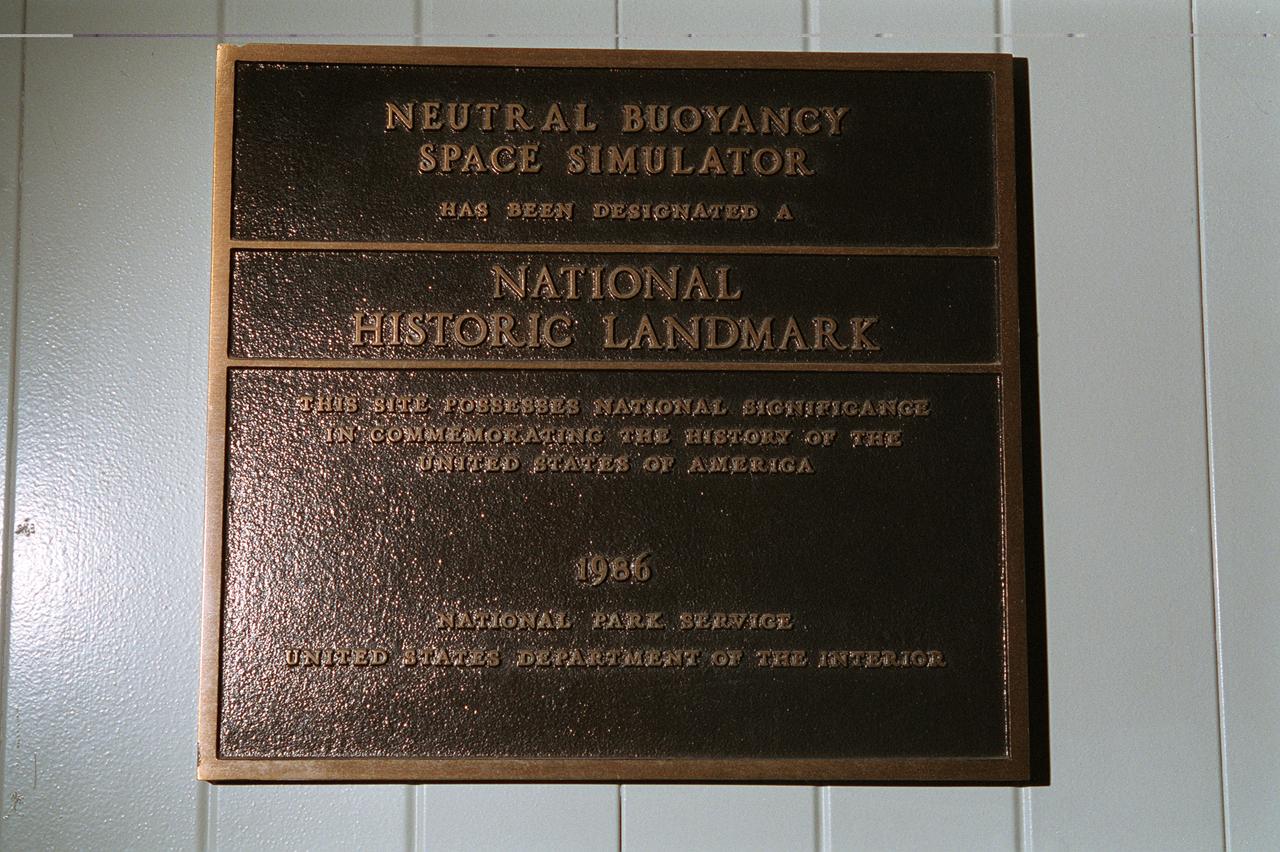
This plaque, displayed on the grounds of Marshall Space Flight Center in Huntsville, Alabama commemorates the Neutral Buoyancy Space Simulator as a National Historic Landmark. The site was designated as such in 1986 by the National Park Service of the United States Department of the Interior.
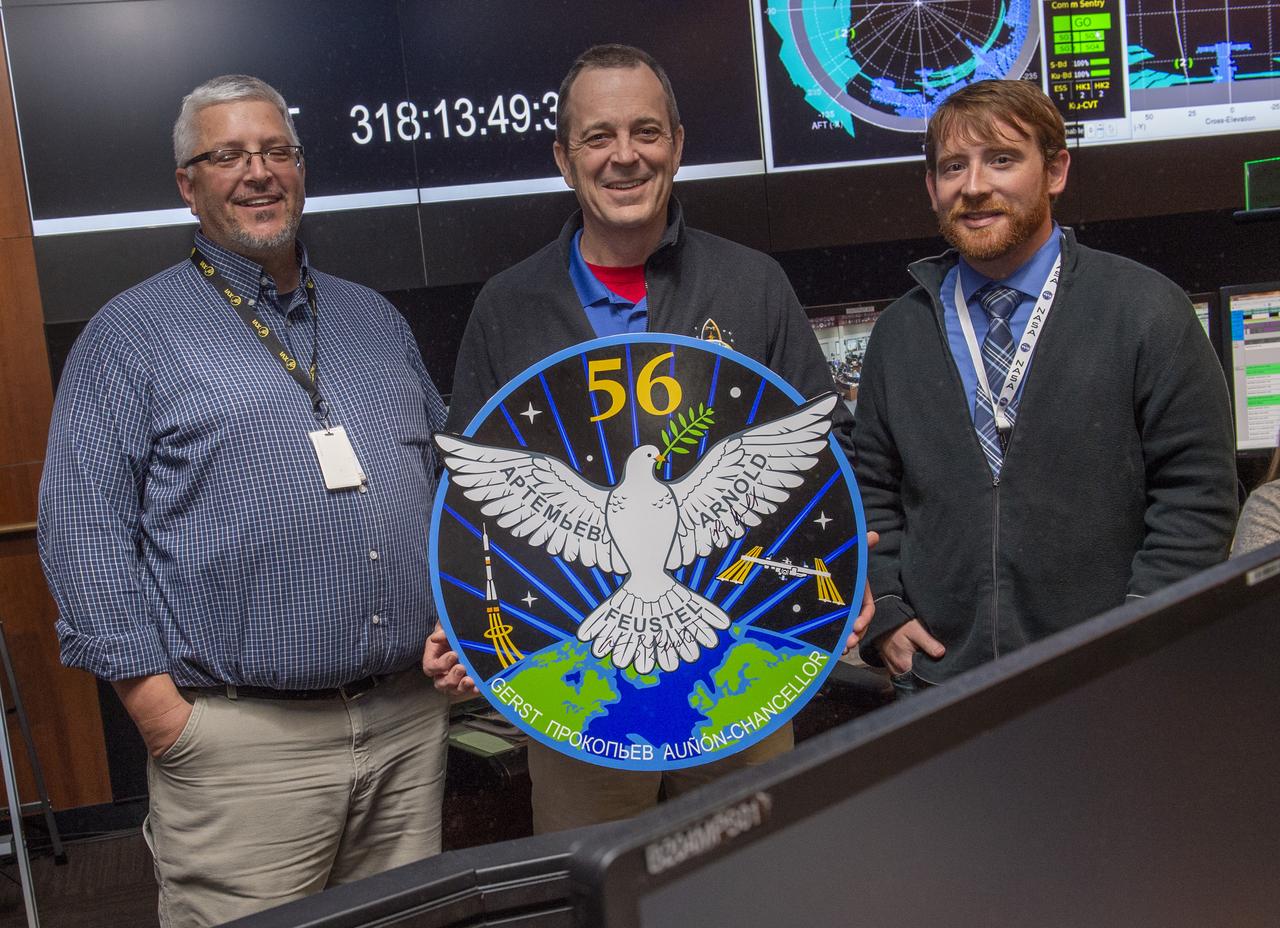
CHUCK JACKSON, ASTRONAUT ARNOLD, JOHN NIX POSE WITH EXPEDITION 56 PLAQUE
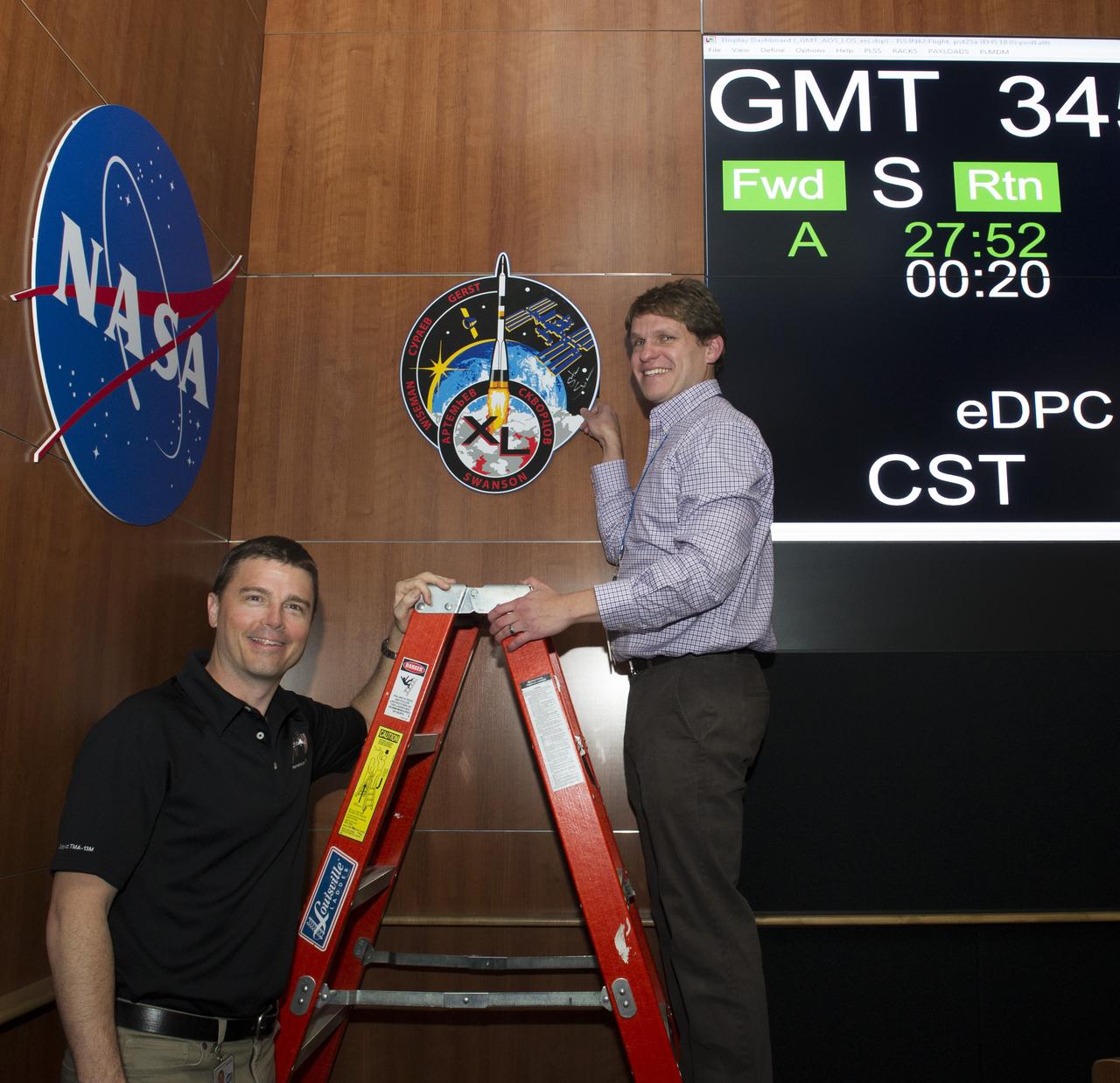
RYAN MILLER, RIGHT, LEAD PAYLOAD PLANNING MANAGER FOR EXPEDITION 39/40 WITH THE PAYLOAD OPERATIONS INTEGRATION CENTER AT THE MARSHALL SPACE FLIGHT CENTER, HELPS NASA ASTRONAUT REID WISEMAN PREPARE TO AUTOGRAPH THE INTERNATIONAL SPACE STATION EXPEDITION 40 MISSION PLAQUE HANGING IN THE POIC. WISEMAN VISITED THE MARSHALL CENTER DEC. 11 FOR A MEETING WITH THE MARSHALL-BASED PAYLOAD OPERATIONS TEAM HE WORKED WITH DURING HIS SIX MONTHS ON THE ORBITING LABORATORY, DISCUSSING THE FINER POINTS OF THE INVESTIGATIONS PERFORMED ON THE SPACE STATION FROM JUNE THROUGH NOVEMBER 2014.
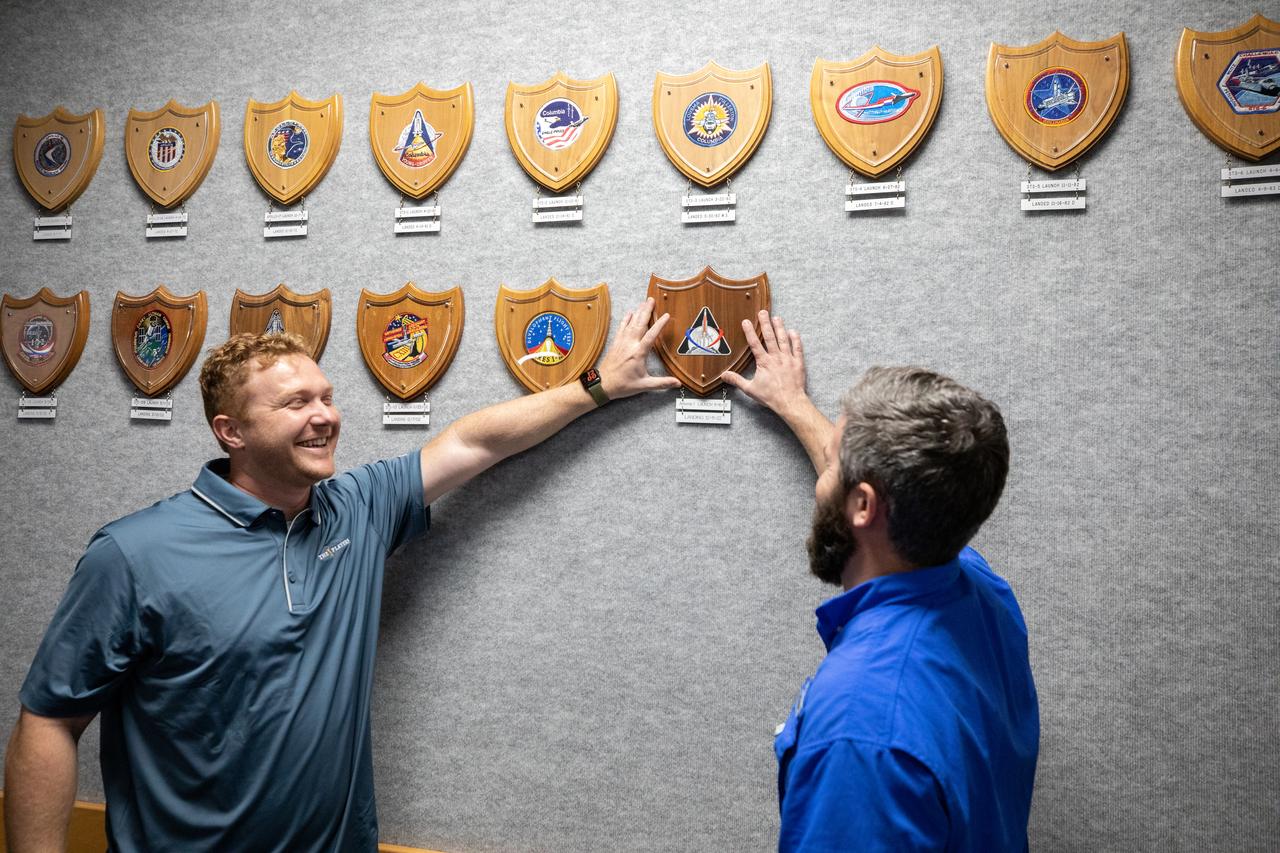
The Artemis plaque is attached to the wall in Firing Room 1 of the Launch Control Center at NASA’s Kennedy Space Center in Florida during a ceremony on March 24, 2023. Hanging the plaque on the wall are Elliot Payne (left) and Devin Aikman (right), members of the Arms and Umbilicals engineering team. The first in a series of increasingly complex missions, Artemis I launched successfully from Kennedy’s Launch Pad 39B at 1:47 a.m. EST on Nov. 16, 2022.
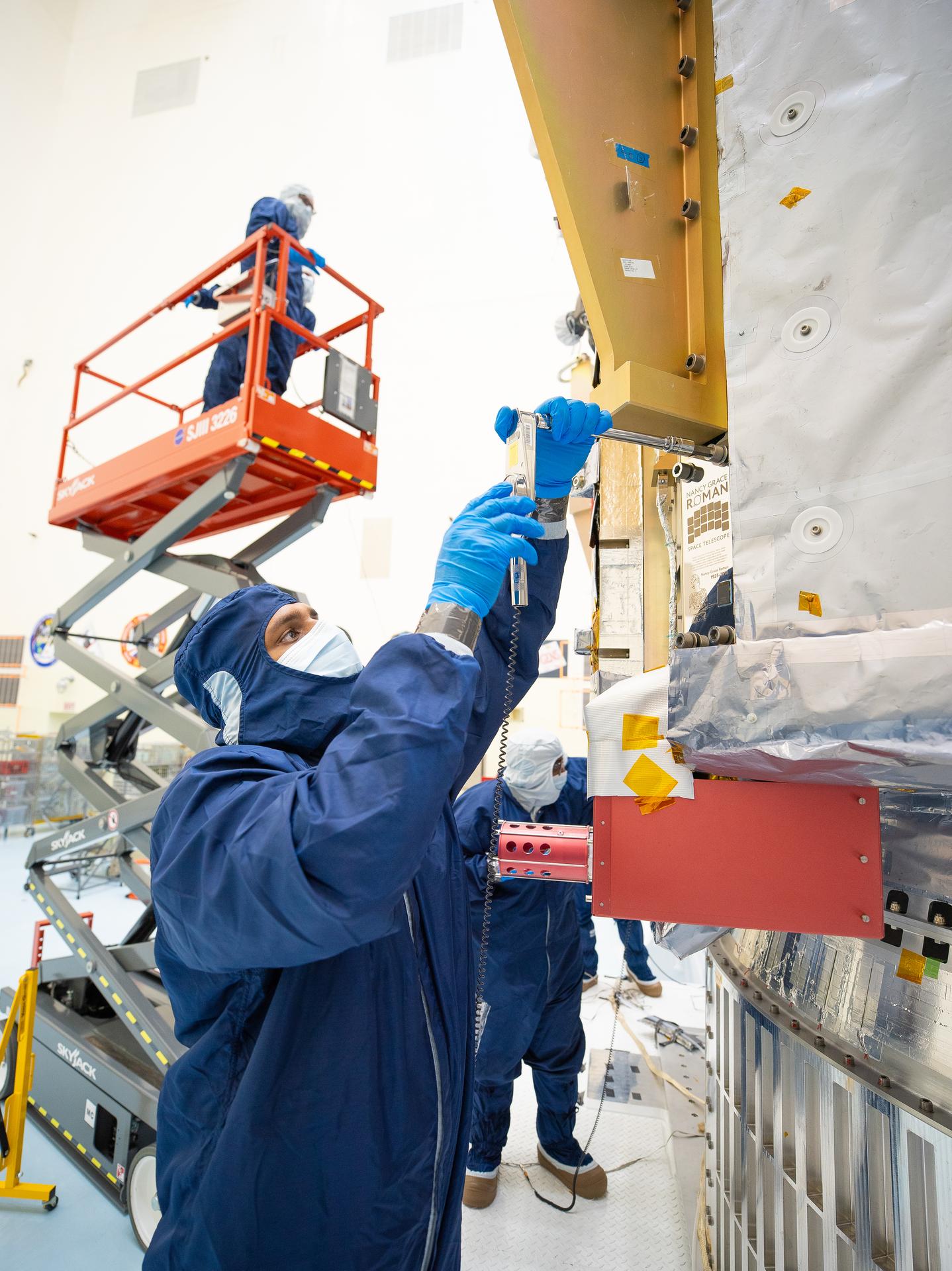
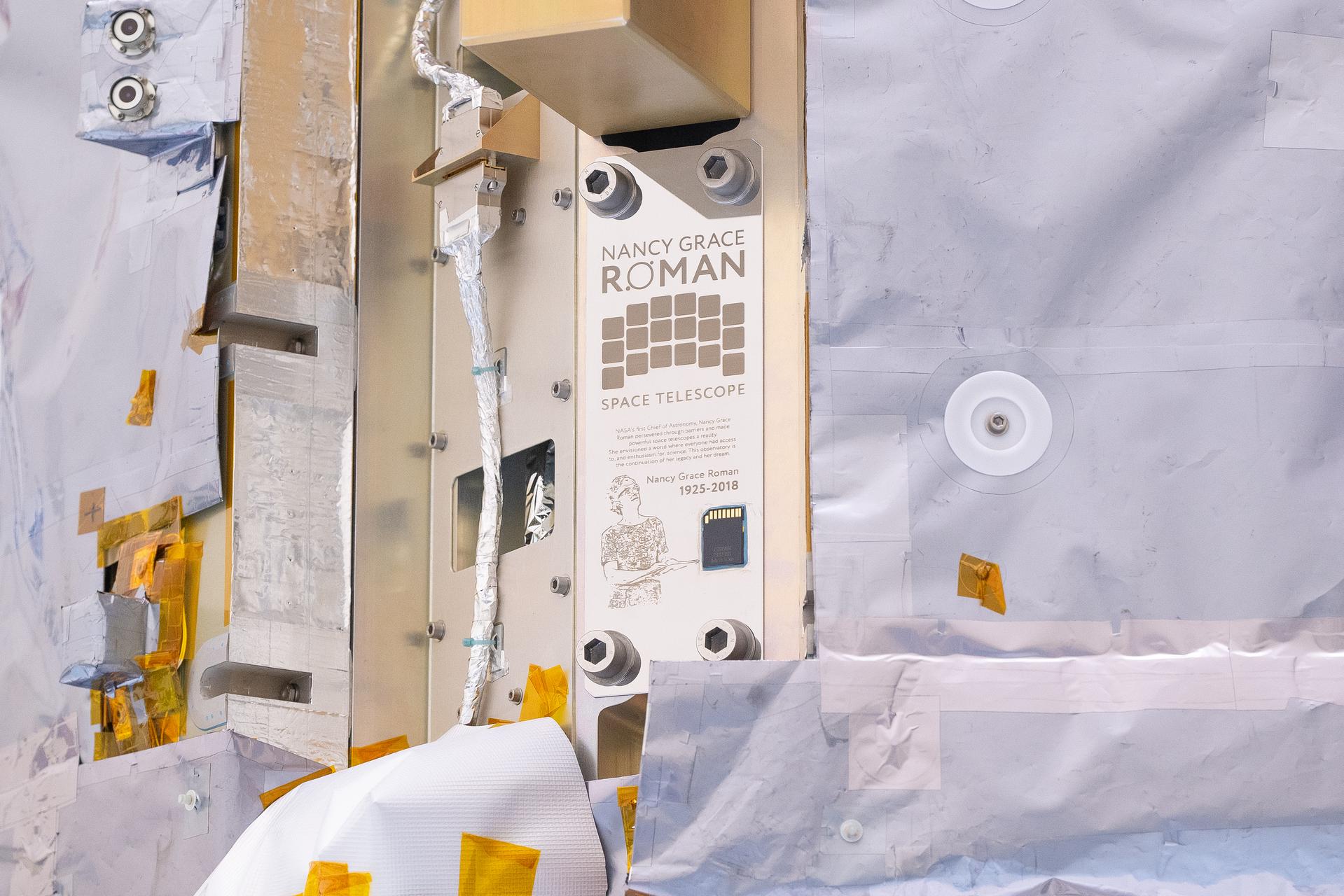
Technicians inside the Payload Hazardous Servicing Facility at NASA’s Kennedy Space Center in Florida install a commemorative plaque on the Nancy Grace Roman Space Telescope on Monday, July 27, 2026. In addition to honoring the legacy of Dr. Nancy Grace Roman, NASA’s first chief astronomer and one of the architects of the agency’s modern science program, the plaque features a memory card containing a total of 1,350,144 names submitted by people from across the globe, including astronauts from NASA’s Artemis II and Artemis III missions. The Roman observatory will travel to the Sun-Earth Lagrange point 2, or L2, about one million miles from Earth, where the Sun’s and Earth’s gravity balance out, to complete a statistical census of planetary systems in our galaxy and settle essential questions in the areas of dark energy, exoplanets, and infrared astrophysics.
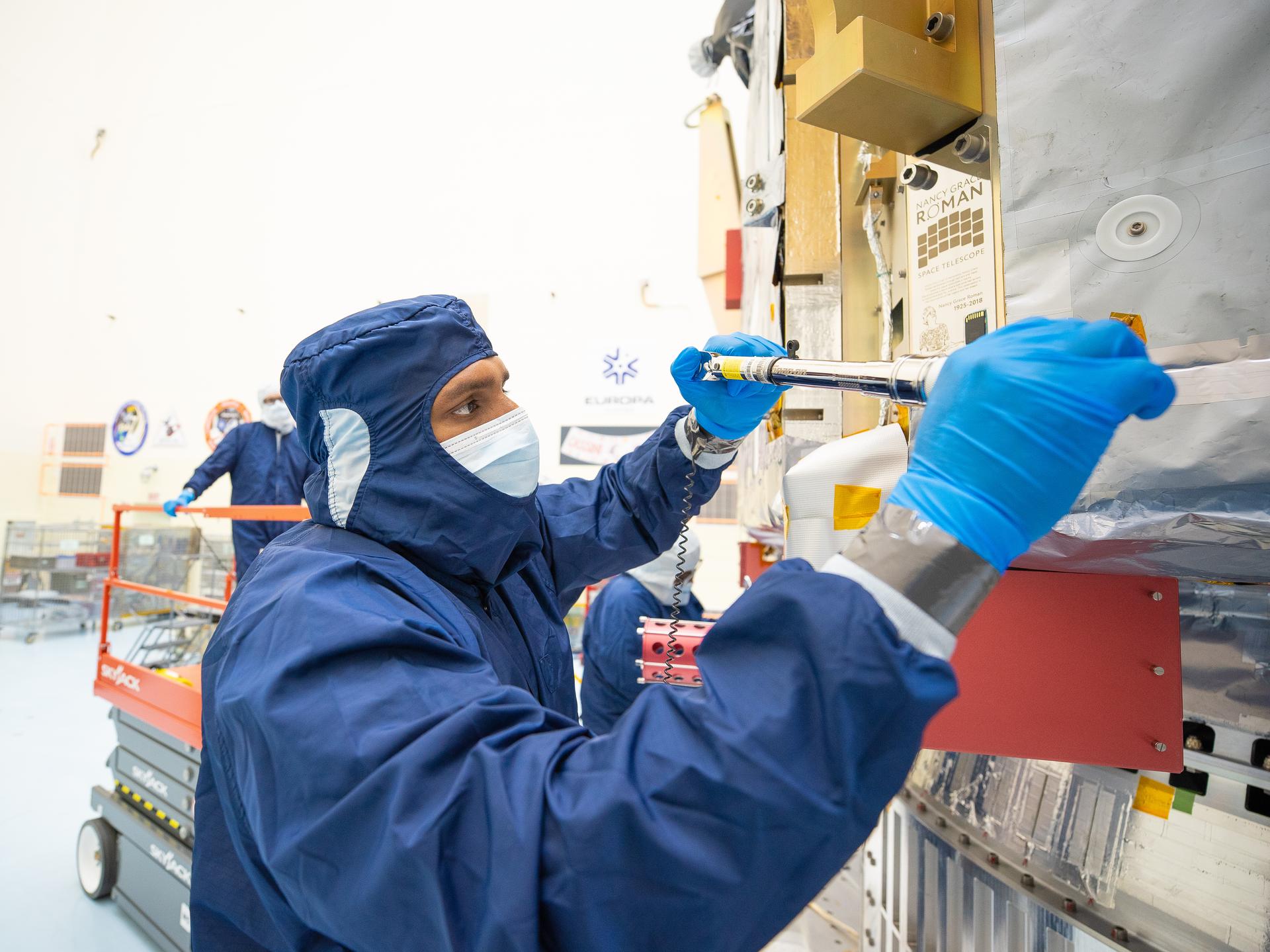
Technicians inside the Payload Hazardous Servicing Facility at NASA’s Kennedy Space Center in Florida install a commemorative plaque on the Nancy Grace Roman Space Telescope on Monday, July 27, 2026. In addition to honoring the legacy of Dr. Nancy Grace Roman, NASA’s first chief astronomer and one of the architects of the agency’s modern science program, the plaque features a memory card containing a total of 1,350,144 names submitted by people from across the globe, including astronauts from NASA’s Artemis II and Artemis III missions. The Roman observatory will travel to the Sun-Earth Lagrange point 2, or L2, about one million miles from Earth, where the Sun’s and Earth’s gravity balance out, to complete a statistical census of planetary systems in our galaxy and settle essential questions in the areas of dark energy, exoplanets, and infrared astrophysics.
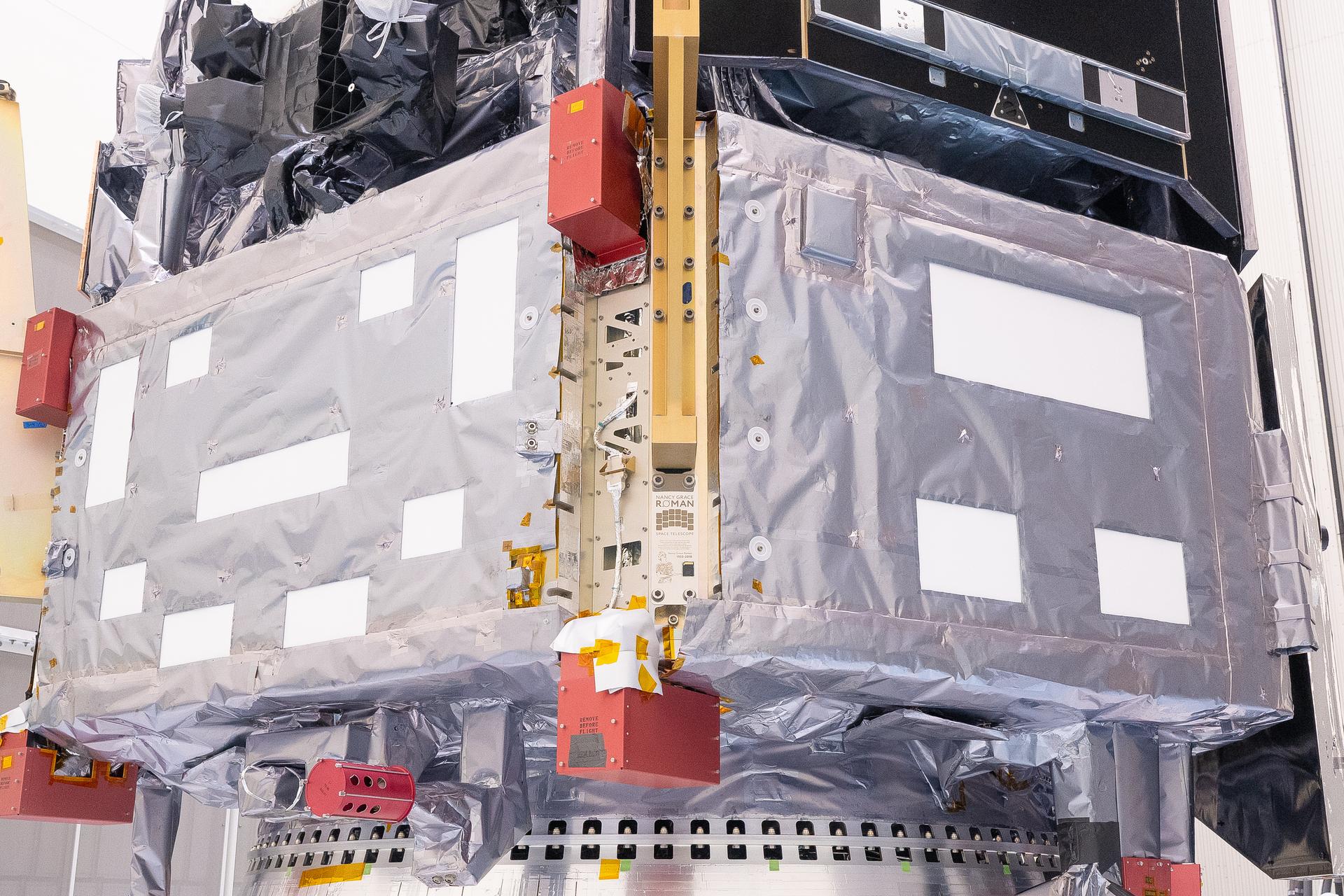
Technicians inside the Payload Hazardous Servicing Facility at NASA’s Kennedy Space Center complete installation of a commemorative plaque on the agency’s Nancy Grace Roman Space Telescope, as photographed on Tuesday, July 28, 2026. In addition to honoring the legacy of Dr. Nancy Grace Roman, NASA’s first chief astronomer and one of the architects of the agency’s modern science program, the plaque features a memory card containing a total of 1,350,144 names submitted by people from across the globe, including astronauts from NASA’s Artemis II and Artemis III missions. The Roman observatory will travel to the Sun-Earth Lagrange point 2, or L2, about one million miles from Earth, where the Sun’s and Earth’s gravity balance out, to complete a statistical census of planetary systems in our galaxy and settle essential questions in the areas of dark energy, exoplanets, and infrared astrophysics.
Technicians inside the Payload Hazardous Servicing Facility at NASA’s Kennedy Space Center complete installation of a commemorative plaque on the agency’s Nancy Grace Roman Space Telescope, as photographed on Tuesday, July 28, 2026. In addition to honoring the legacy of Dr. Nancy Grace Roman, NASA’s first chief astronomer and one of the architects of the agency’s modern science program, the plaque features a memory card containing a total of 1,350,144 names submitted by people from across the globe, including astronauts from NASA’s Artemis II and Artemis III missions. The Roman observatory will travel to the Sun-Earth Lagrange point 2, or L2, about one million miles from Earth, where the Sun’s and Earth’s gravity balance out, to complete a statistical census of planetary systems in our galaxy and settle essential questions in the areas of dark energy, exoplanets, and infrared astrophysics.
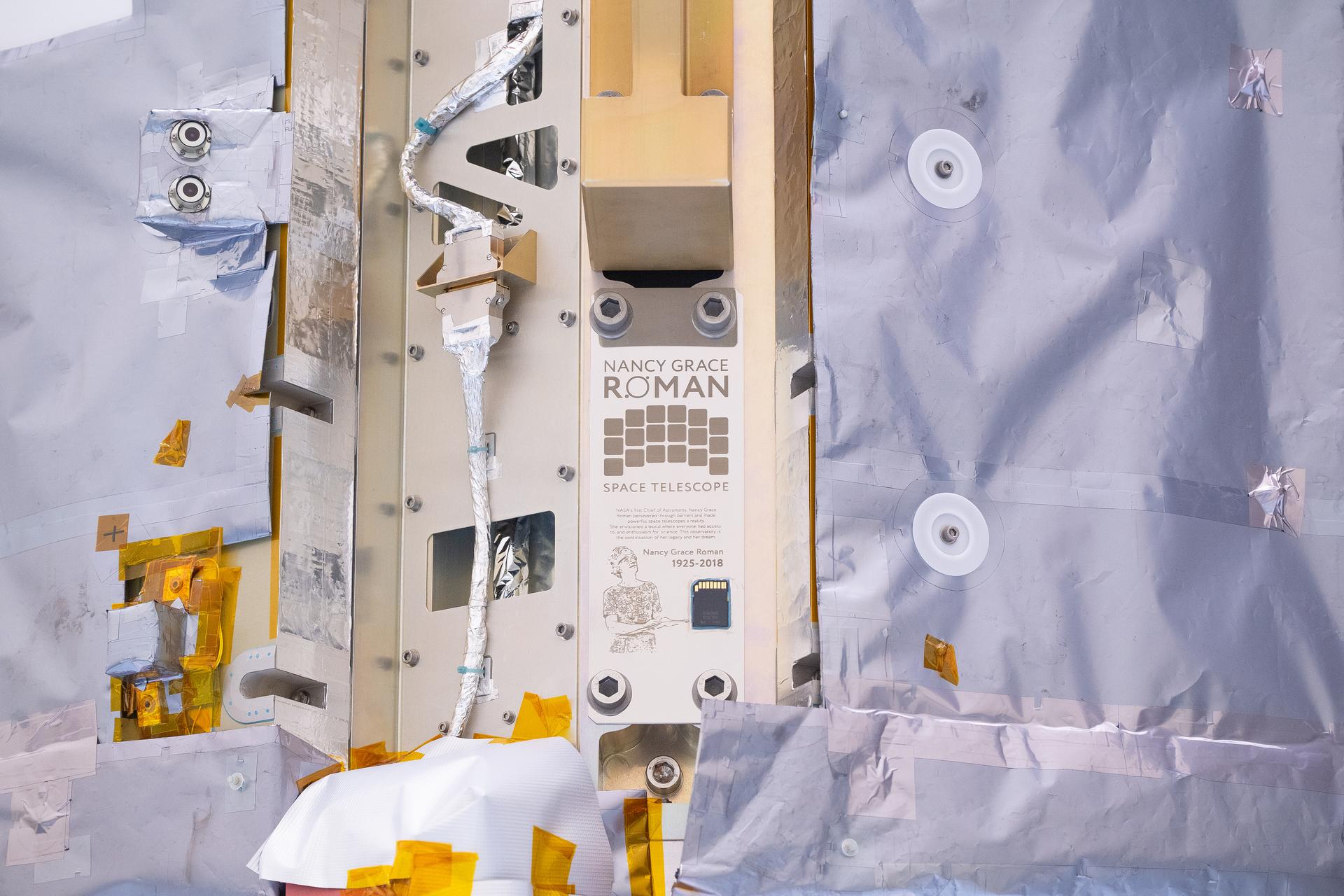
Technicians inside the Payload Hazardous Servicing Facility at NASA’s Kennedy Space Center complete installation of a commemorative plaque on the agency’s Nancy Grace Roman Space Telescope, as photographed on Tuesday, July 28, 2026. In addition to honoring the legacy of Dr. Nancy Grace Roman, NASA’s first chief astronomer and one of the architects of the agency’s modern science program, the plaque features a memory card containing a total of 1,350,144 names submitted by people from across the globe, including astronauts from NASA’s Artemis II and Artemis III missions. The Roman observatory will travel to the Sun-Earth Lagrange point 2, or L2, about one million miles from Earth, where the Sun’s and Earth’s gravity balance out, to complete a statistical census of planetary systems in our galaxy and settle essential questions in the areas of dark energy, exoplanets, and infrared astrophysics.

Artemis Launch Director Charlie Blackwell-Thompson, at left, holds the Artemis I plaque inside the lobby of the Launch Control Center at NASA’s Kennedy Space Center in Florida on March 24, 2023. Joining her from left are Shawn Quinn, manager, Exploration Ground Systems; and Kelvin Manning, Kennedy deputy director. Following tradition from the Apollo and Space Shuttle Programs, the plaque will be added to the wall behind them. The first in a series of increasingly complex missions, Artemis I launched successfully from Kennedy’s Launch Pad 39B at 1:47 a.m. EST on Nov. 16, 2022.
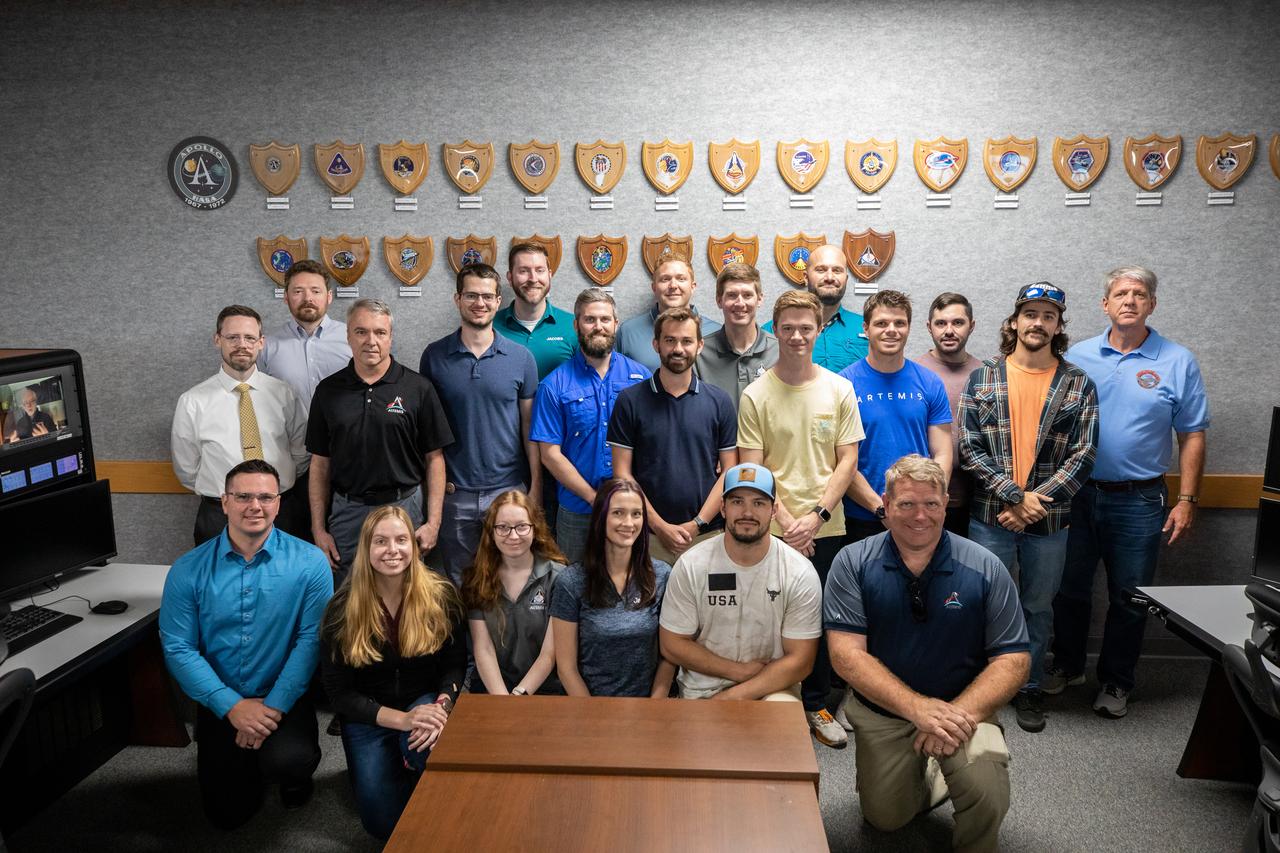
The Arms and Umbilicals (AUS) engineering team gather for a photograph during the Artemis launch director awards and plaque ceremony inside Firing Room 1 of the Launch Control Center at NASA’s Kennedy Space Center in Florida on March 24, 2023. Following tradition from the Apollo and Space Shuttle Programs, the AUS teams hung the Artemis I mission plaque to the wall behind them. The first in a series of increasingly complex missions, Artemis I launched successfully from Kennedy’s Launch Pad 39B at 1:47 a.m. EST on Nov. 16, 2022.
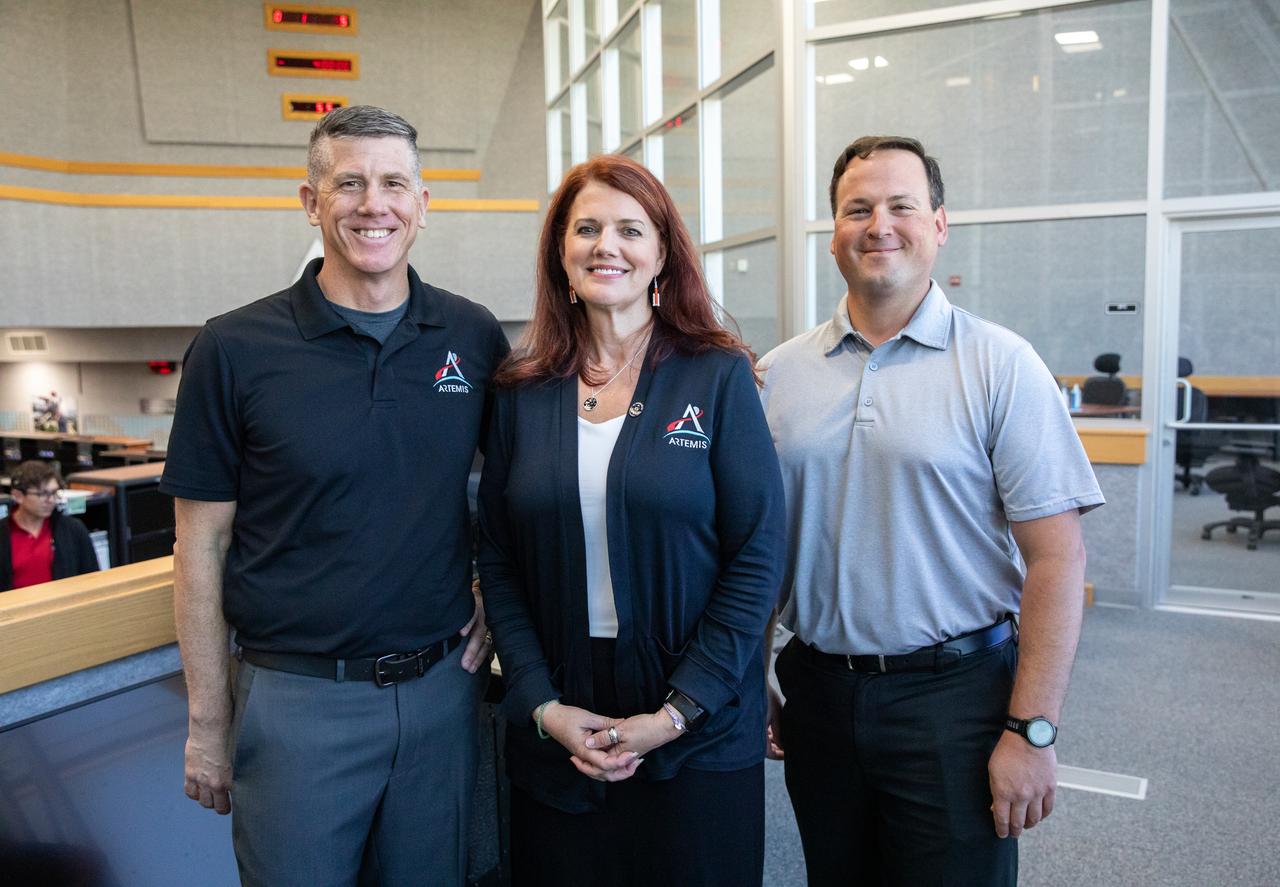
Artemis Launch Director Charlie Blackwell-Thompson, center, is inside Firing Room 1 of the Launch Control Center at NASA’s Kennedy Space Center in Florida during the inaugural Artemis I launch director awards and plaque ceremony on March 24, 2023. At left is Jeremy Graeber, Artemis assistant launch director. At right is Wes Mosedale, technical assistant to the launch director. Following tradition from the Apollo and Space Shuttle Programs, the Artemis I plaque was added to the wall in Firing Room 1 by Blackwell-Thompson. The first in a series of increasingly complex missions, Artemis I launched successfully from Kennedy’s Launch Pad 39B at 1:47 a.m. EST on Nov. 16, 2022.
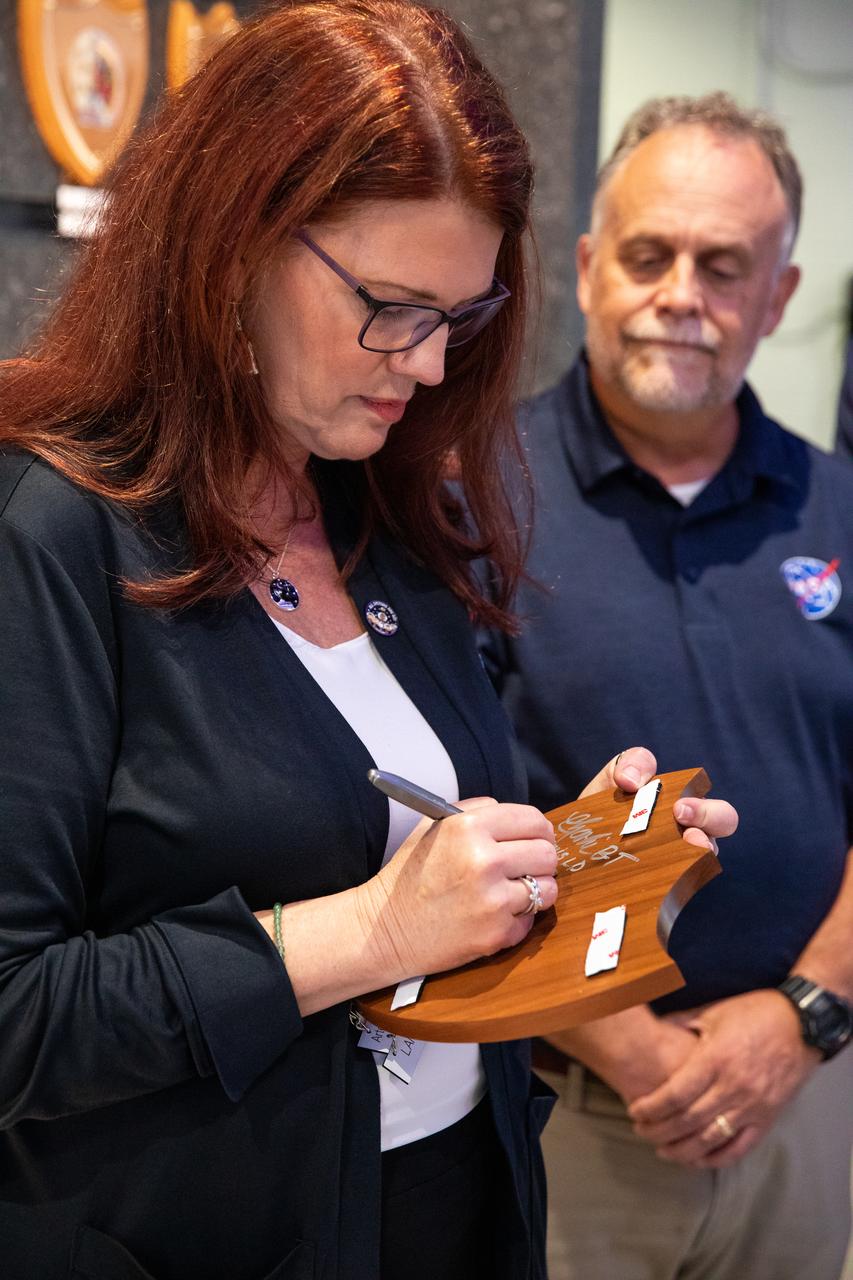
Artemis Launch Director Charlie Blackwell-Thompson, at left, signs the back of the Artemis I plaque inside the lobby of the Launch Control Center at NASA’s Kennedy Space Center in Florida on March 24, 2023. Joining her is Shawn Quinn, manager, Exploration Ground Systems. Following tradition from the Apollo and Space Shuttle Programs, the plaque will be added to the wall behind them. The first in a series of increasingly complex missions, Artemis I launched successfully from Kennedy’s Launch Pad 39B at 1:47 a.m. EST on Nov. 16, 2022.

On June 4, 1974, 5 years after the successful Apollo 11 lunar landing mission, commander Neil Armstrong (right) presented a plaque to U.S. President Richard Milhous Nixon (left) on behalf of all people who had taken part in the space program. In making the presentation, Armstrong said “Mr. President, you have proclaimed this week to be United States Space week in conjunction with the fifth anniversary of our first successful landing on the Moon. It is my privilege to represent my colleagues, the crewmen of projects Mercury, Gemini, Apollo, and Skylab, and the men and women of NASA, and the hundreds of thousands of Americans from across the land who contributed so mightily to the success of our efforts in space in presenting this plaque which bears the names of each individual who has had the privilege of representing this country” in a space flight. The presentation was made at the California white house in San Clemente.
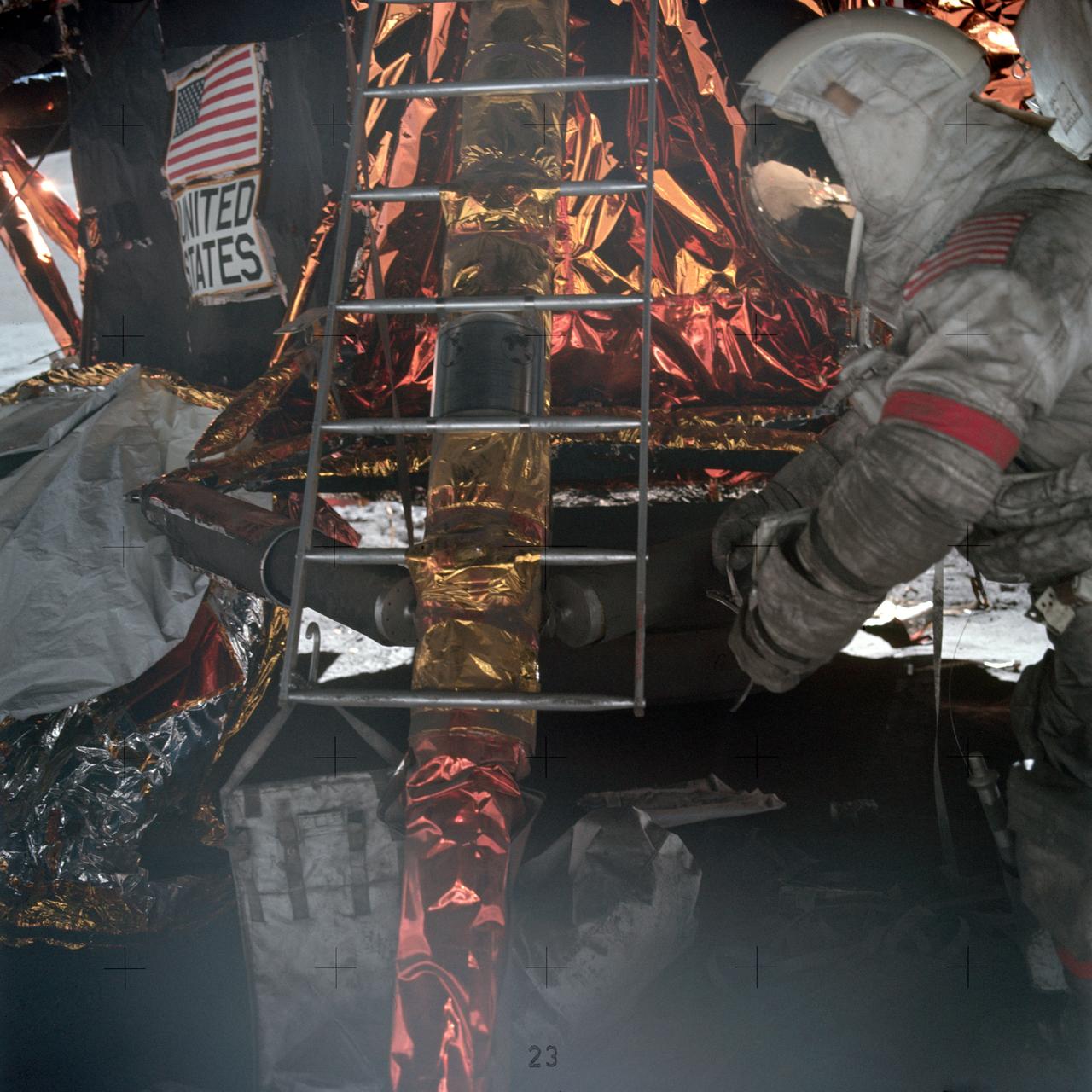
Astronaut Eugene A. Cernan, Apollo 17 commander, prepares to mount ladder to lunar module ascent stage. Note the plaque attached to the ladder which will be left with the descent stage when the mission lifts off from the lunar surface.
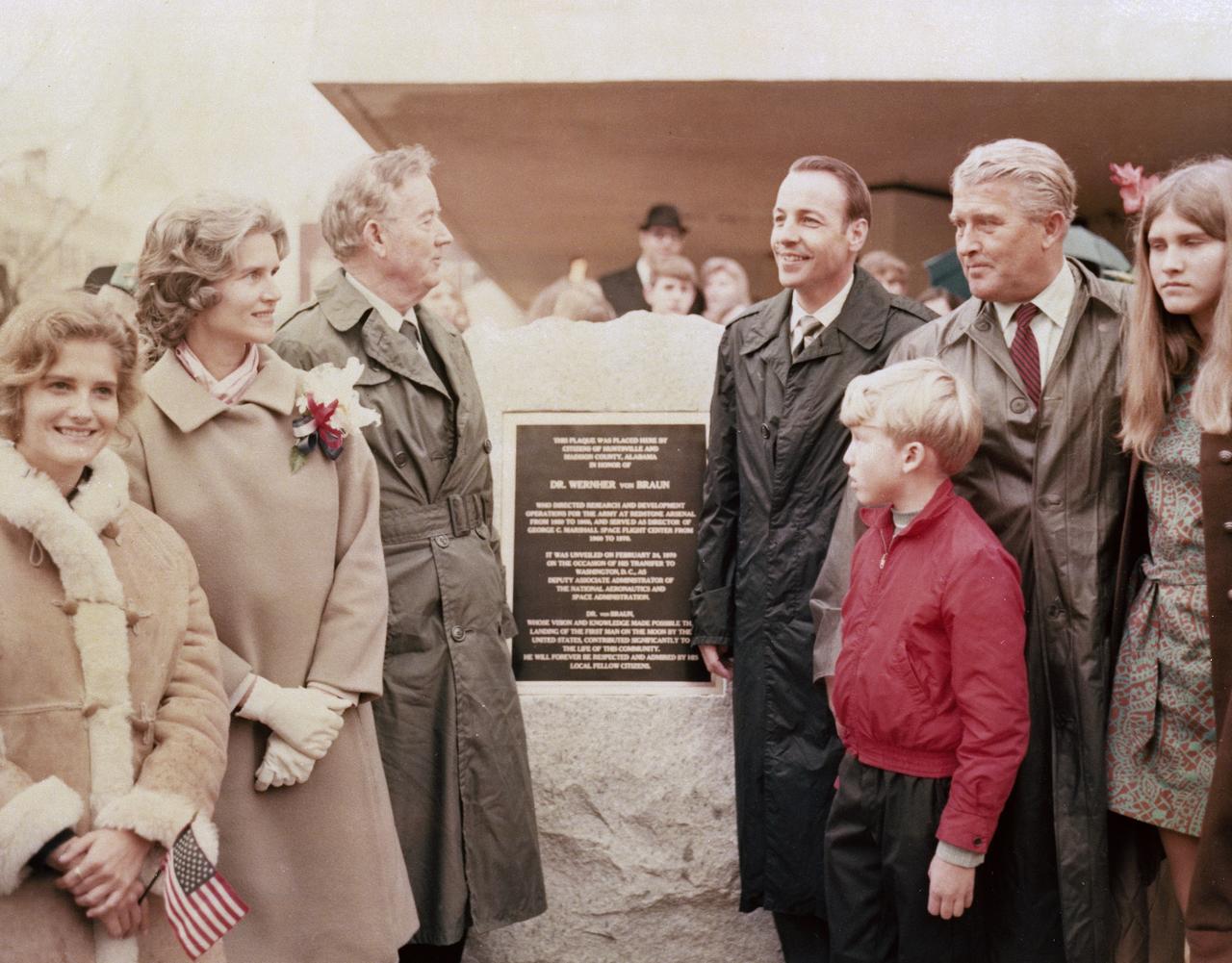
In February 1970, MSFC Director Dr. von Braun was named NASA Deputy Associate Administrator for Plarning and transferred to the Agency's Headquarters in Washington D.C. Prior to his departure, Huntsvillians, along with state local dignitaries, honored his years of service to the Army and NASA with a series of events. One included unveiling a plaque in von Braun's honor. Pictured with Dr. von Braun are (left to right), his daughter Iris, wife Maria, U.S. Senator John Sparkman and Alabama Governor Albert Brewer, Dr. von Braun, son Peter, and daughter Margrit.
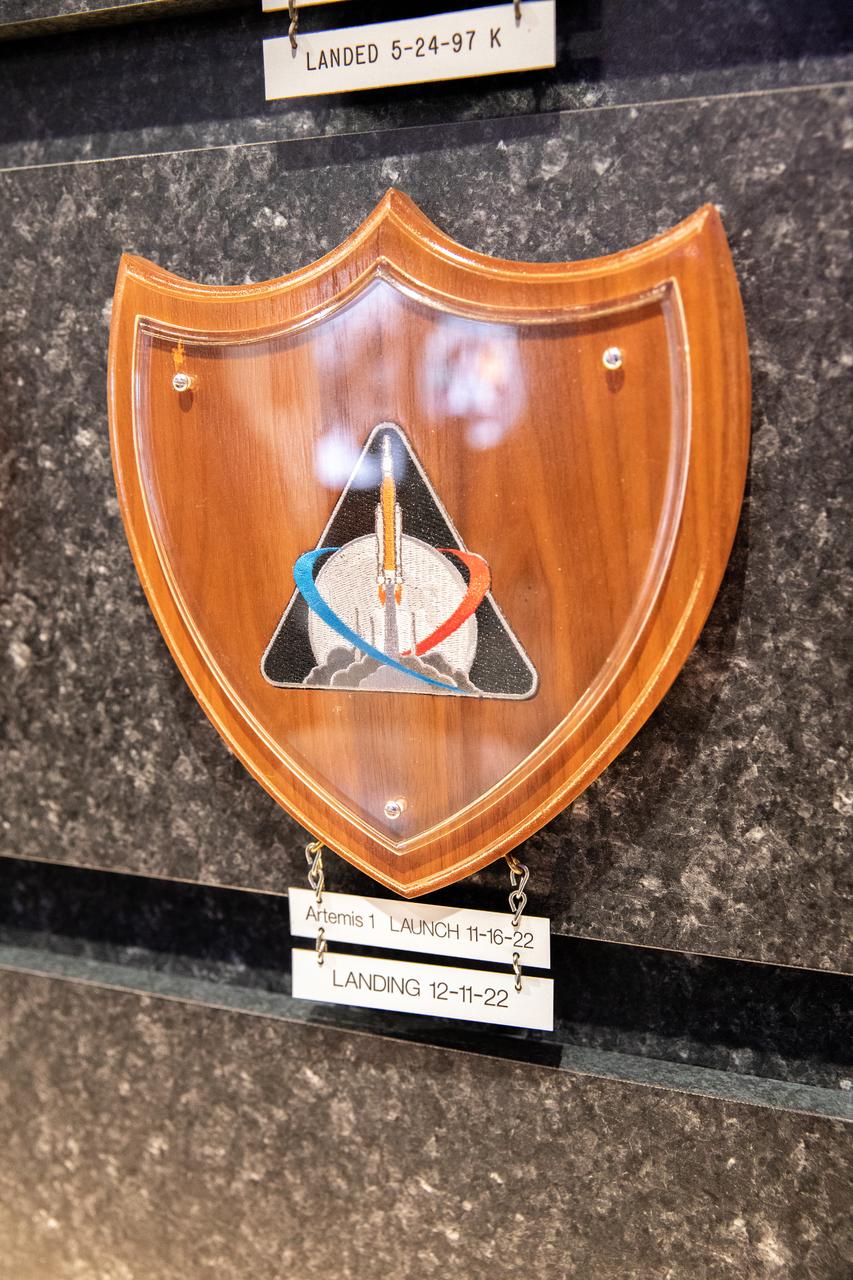
The Artemis I plaque is attached to the wall inside the lobby of the Launch Control Center at NASA’s Kennedy Space Center in Florida during a ceremony on March 24, 2023. The first in a series of increasingly complex missions, Artemis I launched successfully from Kennedy’s Launch Pad 39B at 1:47 a.m. EST on Nov. 16, 2022.
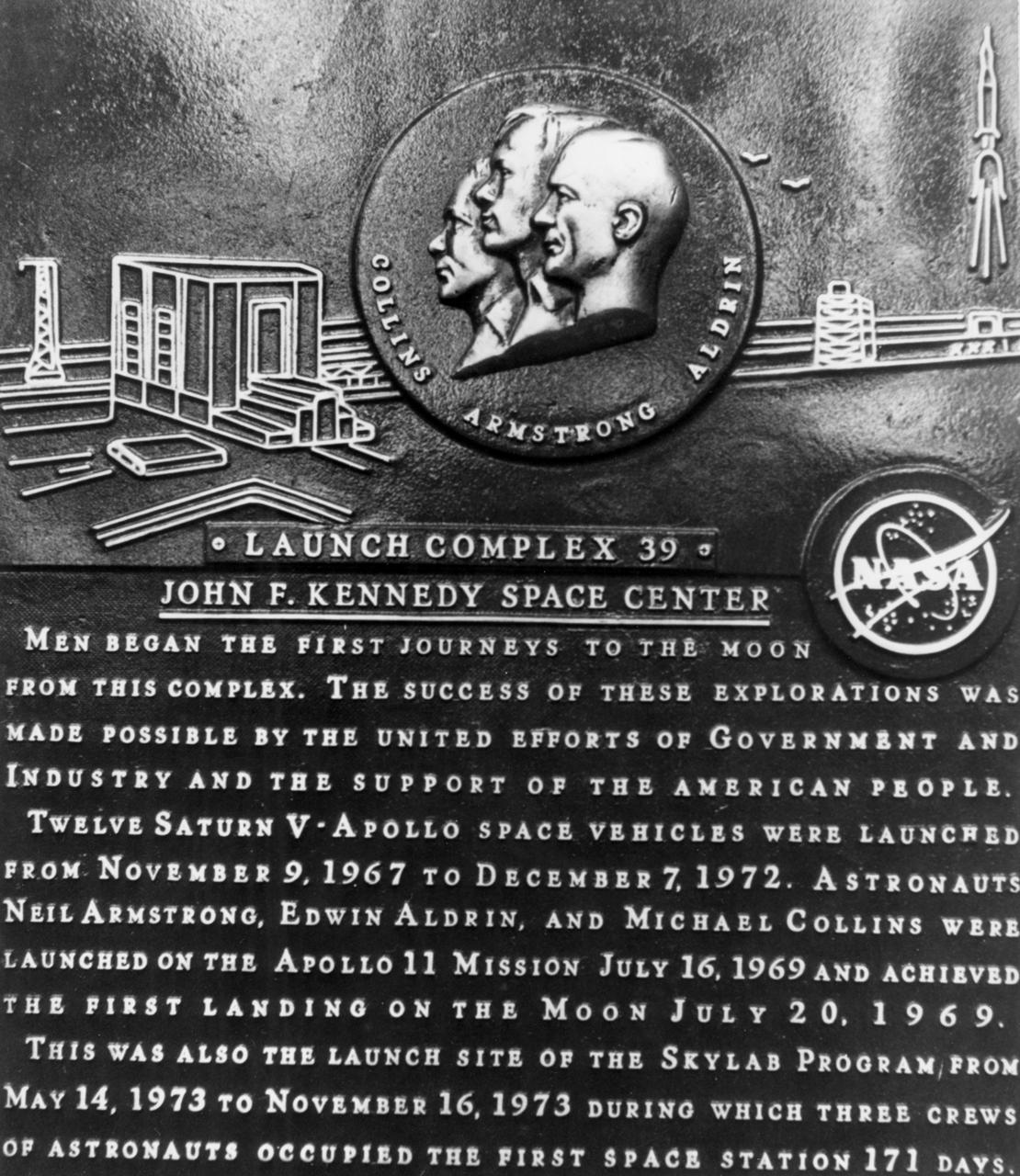
On July 3, 1974 NASA commemorated the 5th anniversary of the Apollo 11, first lunar landing mission, at the Kennedy Space Center (KSC). Launch Pad 39, from which astronauts Neil Armstrong, Edwin Aldrin, and Michael Collins first embarked on their historic journey to the Moon, was dedicated as a national landmark. Apollo 11 was launched at 9:32 am on July 16, 1969 and made the first successful lunar landing July 20th. During the 45 minute ceremony, the three Apollo 11 astronauts unveiled this plaque which was placed at the launch site. Other participating dignitaries included Dr. James Fletcher and Dr. George H. Low, NASA Administrator and Deputy Administrator respectively; Florida Governor Rubin Askew; Senator frank E. Moss; Congressman Olin E. Teague, and Kurt Debus, KSC Director. Apollo 11 launched from the Kennedy Space Center, Florida via a Saturn V launch which was developed by the Marshall Space Flight Center (MSFC) under the direction of Dr. Wernher von Braun.
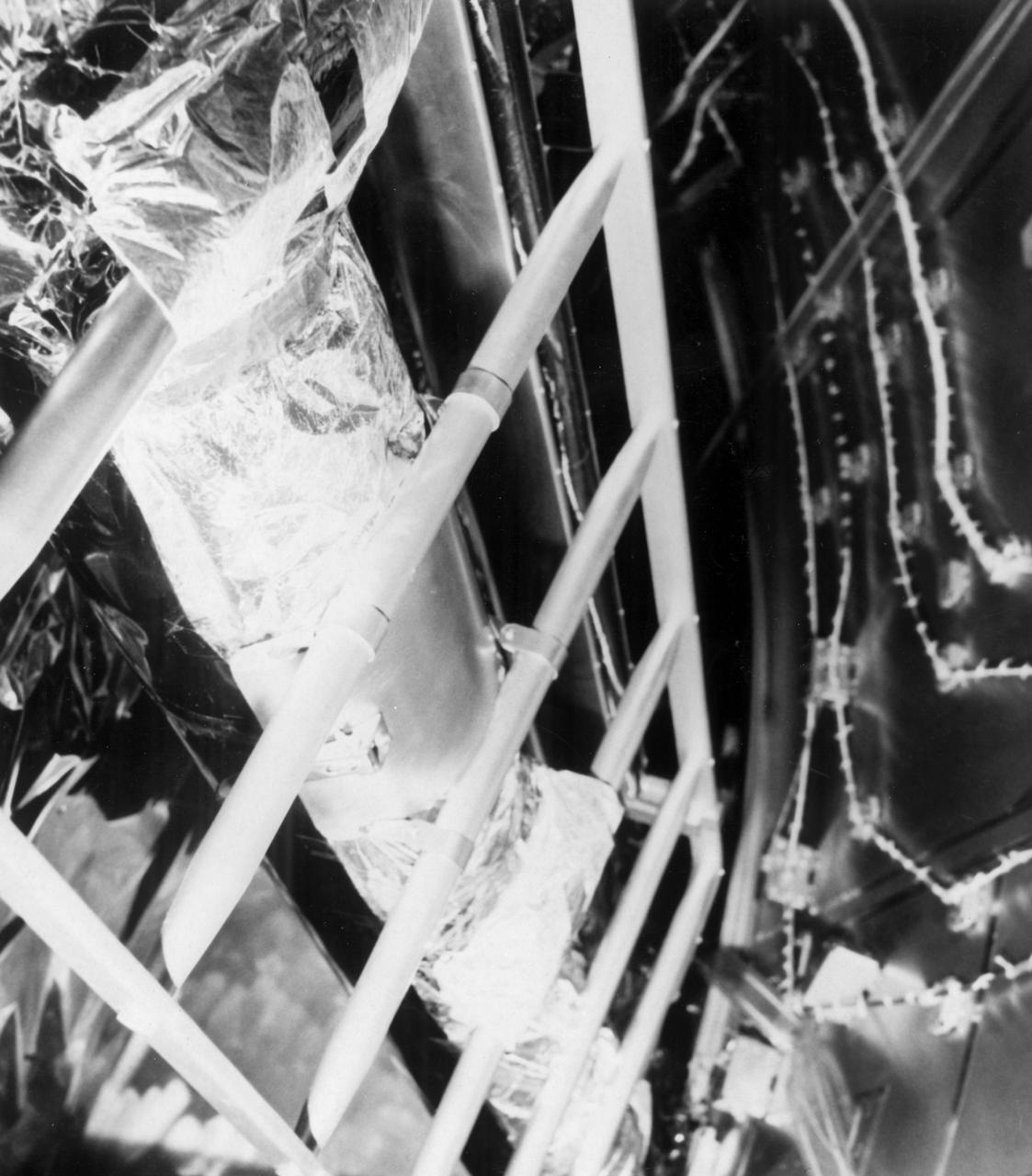
Millions of people on Earth watched via television as a message for all mankind was delivered to the Mare Tranquilitatis (Sea of Tranquility) region of the Moon during the historic Apollo 11 mission, where it still remains today. A commemorative plaque was attached to the leg of the Lunar Module (LM), Eagle, engraved with the following words: “Here men from the planet Earth first set foot upon the Moon July, 1969 A.D. We came in peace for all of mankind.” It bears the signatures of the Apollo 11 astronauts Neil A. Armstrong, commander; Michael Collins, Command Module (CM) pilot; and Edwin E. Aldrin, Jr., Lunar Module (LM) pilot along with the signature of the U.S. President Richard M. Nixon. The plaque, as shown here, covered with protective steel for the launch and journey to the moon, was uncovered by crew members after landing. The Apollo 11 mission launched from the Kennedy Space Center (KSC) in Florida via the Marshall Space Flight Center (MSFC) developed Saturn V launch vehicle on July 16, 1969 and safely returned to Earth on July 24, 1969. The CM, “Columbia”, piloted by Collins, remained in a parking orbit around the Moon while the LM, “Eagle’’, carrying astronauts Armstrong and Aldrin, landed on the Moon. On July 20, 1969, Armstrong was the first human to ever stand on the lunar surface, followed by Aldrin. During 2½ hours of surface exploration, the crew collected 47 pounds of lunar surface material for analysis back on Earth. With the success of Apollo 11, the national objective to land men on the Moon and return them safely to Earth had been accomplished.
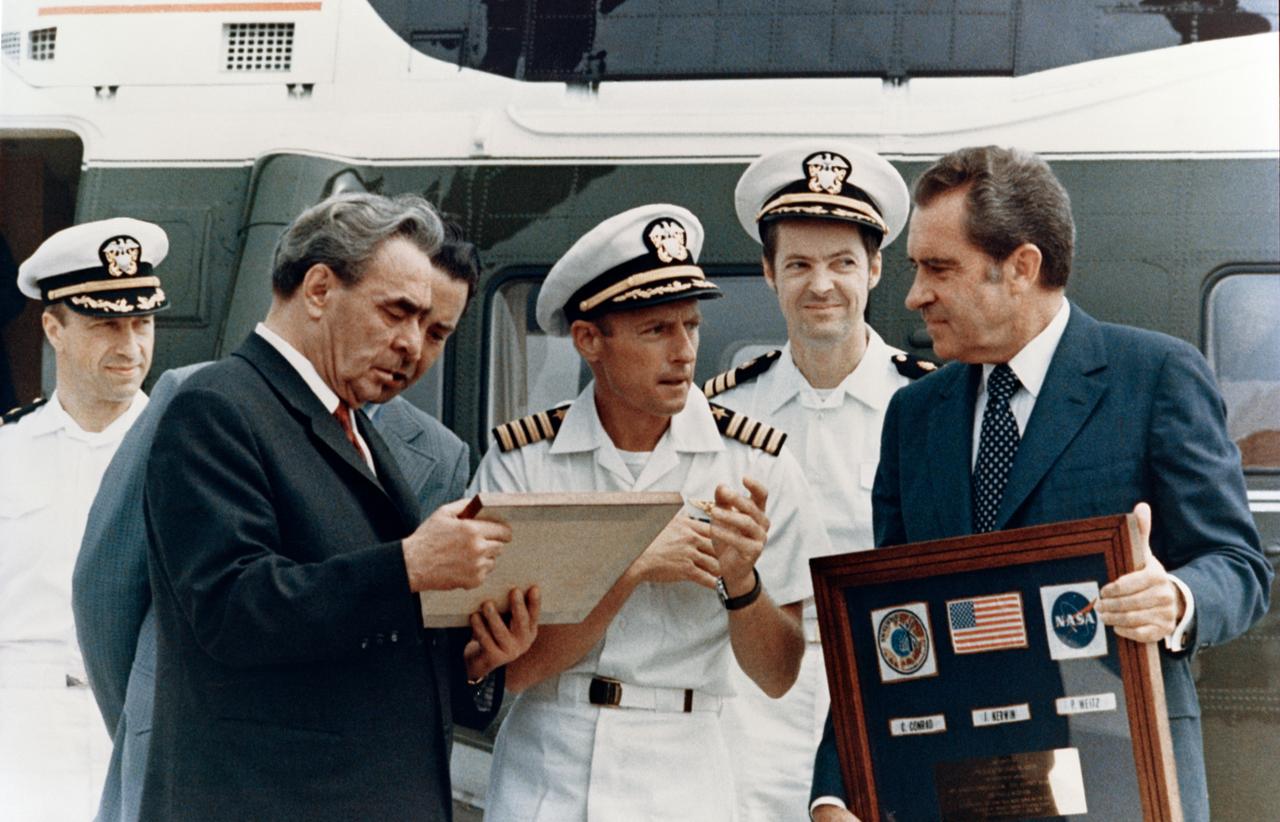
S73-30889 (June 1973) --- Leonid I. Breznev, General Secretary of the Communist Party, Union of Soviet Socialist Republics, and President Richard M. Nixon, during ceremonies at the Western White House in San Clemente, California, examine plaques presented by Skylab astronauts Charles Conrad Jr., center; Joseph P. Kerwin, second from right; and Paul J. Weitz, left. Photo credit: NASA
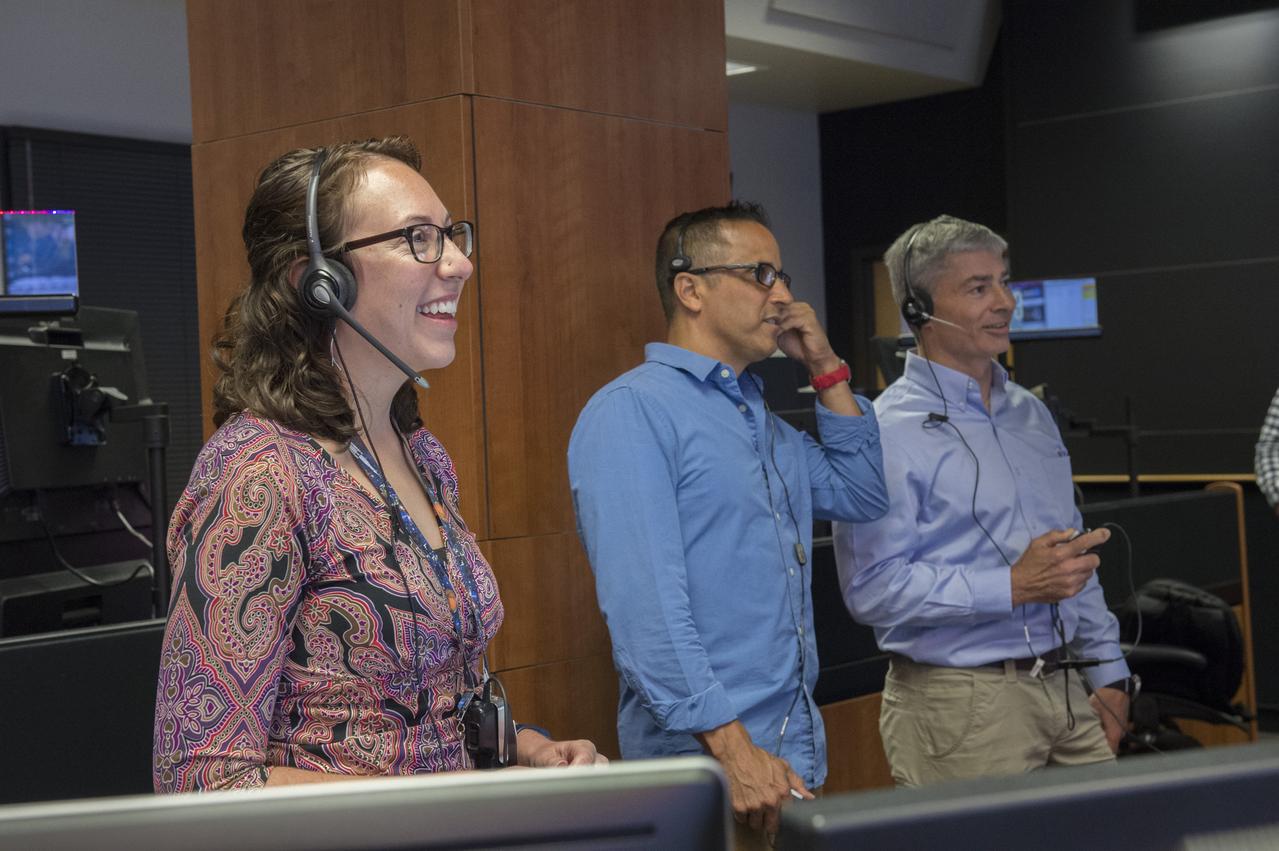
Stephanie Shelton, a payload communications manager at NASA's Marshall Space Flight Center, joins NASA astronauts Joe Acaba and Mark Vande Hei for a call to the onboard crew of the International Space Station. Vande Hei and Acaba visited Marshall April 11 for their honorary Expedition 54 plaque hanging ceremony and to provide valuable feedback of their on-orbit science investigations with the Payload Operations and Integration Center team..
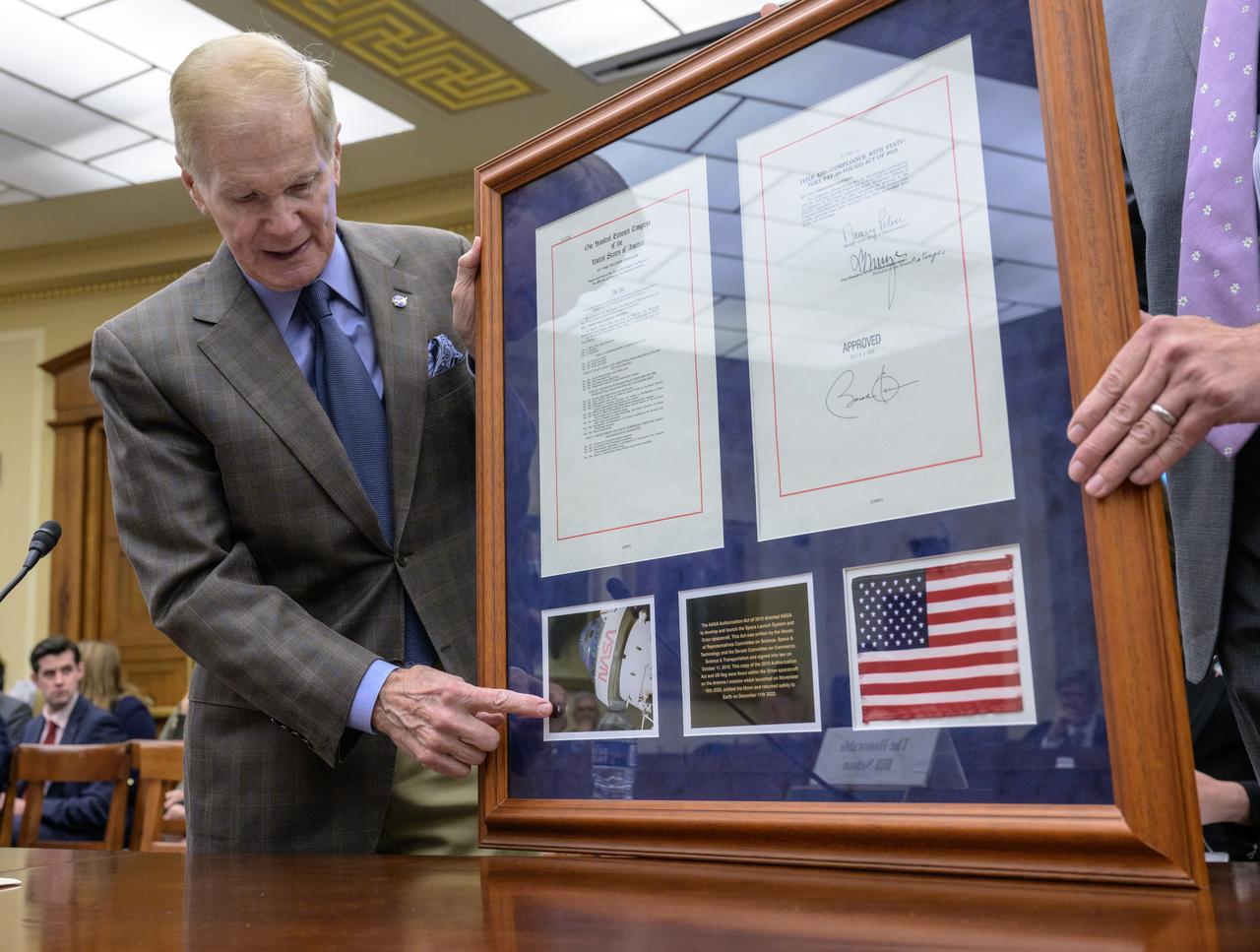
NASA Administrator Bill Nelson presents to the House Science, Space and Technology Committee, a plaque containing a copy of the NASA authorization Act of 2010 and a US flag that were flown within the Orion Spacecraft on the Artemis I mission and orbited the Moon, during a hearing on “An Overview of the Fiscal Year 2024 Proposed Budget Request for NASA,” Thursday, April 27, 2023 at the Rayburn House Office Building in Washington. Photo Credit: (NASA/Bill Ingalls)
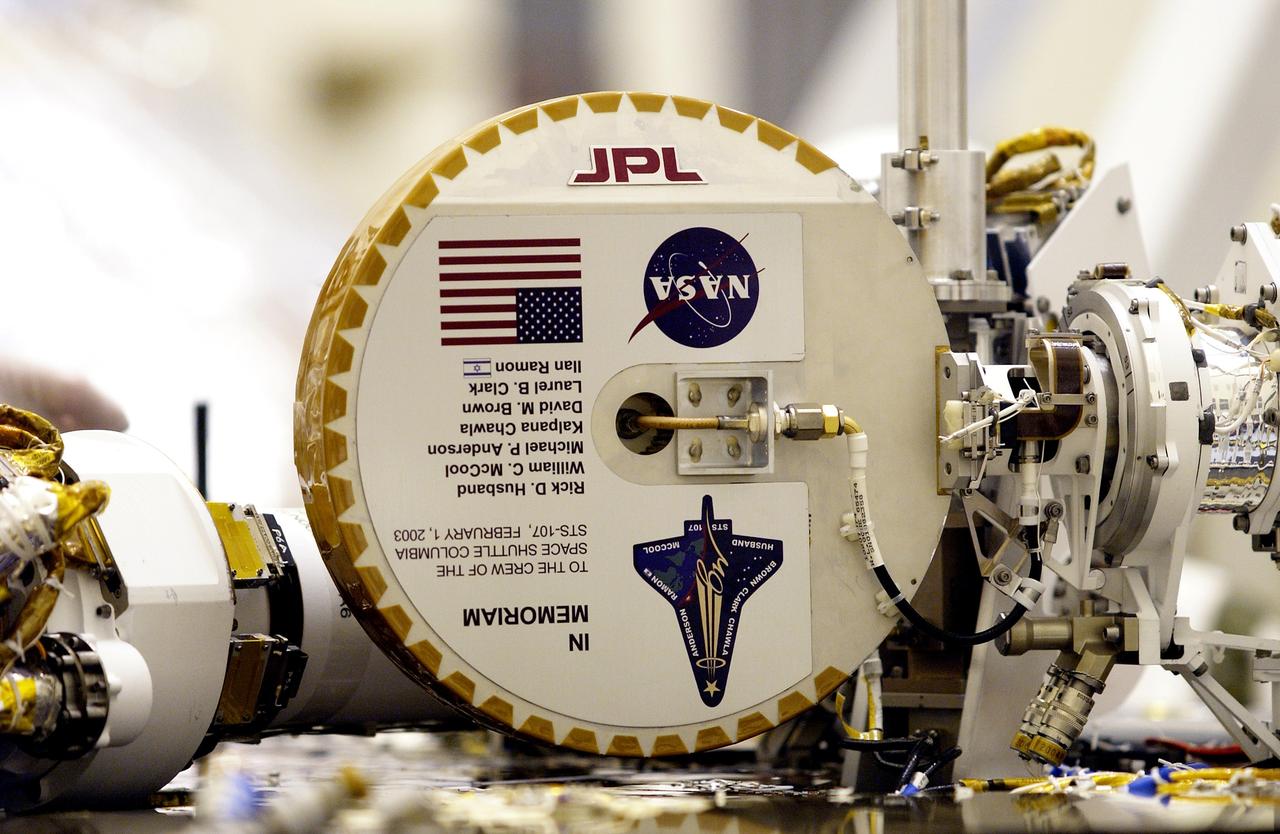
KENNEDY SPACE CENTER, FLA. -- This plaque commemorating the STS-107 Space Shuttle Columbia crew now looks over the Mars landscape after the successful landing and deployment of the Mars Exploration Rover “Spirit” Jan. 4 onto the red planet. The plaque, mounted on the high-gain antenna, is shown while the rover underwent final checkout March 28, 2003, in the Payload Hazardous Servicing Facility at KSC.
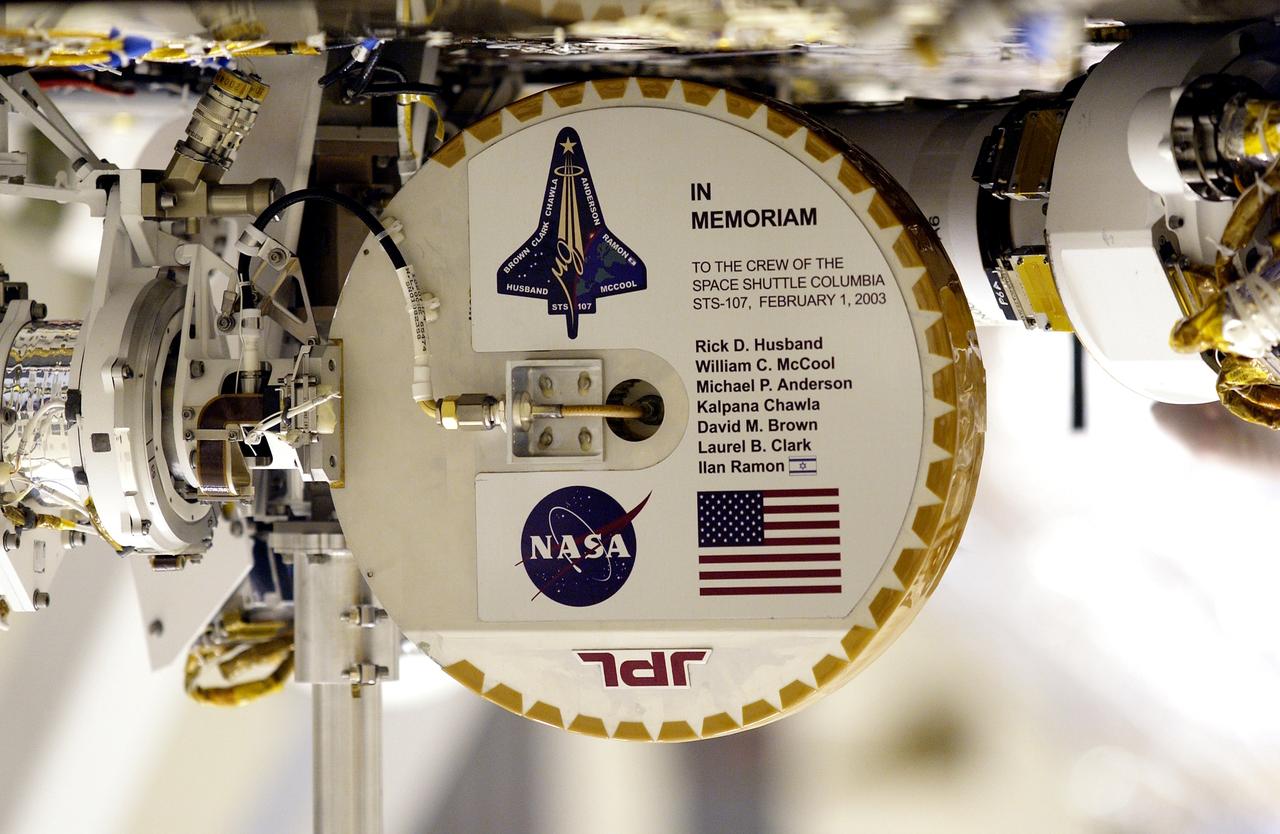
KENNEDY SPACE CENTER, FLA. --Shown upside down to read the names, this plaque commemorating the STS-107 Space Shuttle Columbia crew now looks over the Mars landscape after the successful landing and deployment of the Mars Exploration Rover “Spirit” Jan. 4 onto the red planet. The plaque, mounted on the high-gain antenna, is shown while the rover underwent final checkout March 28, 2003, in the Payload Hazardous Servicing Facility at KSC.
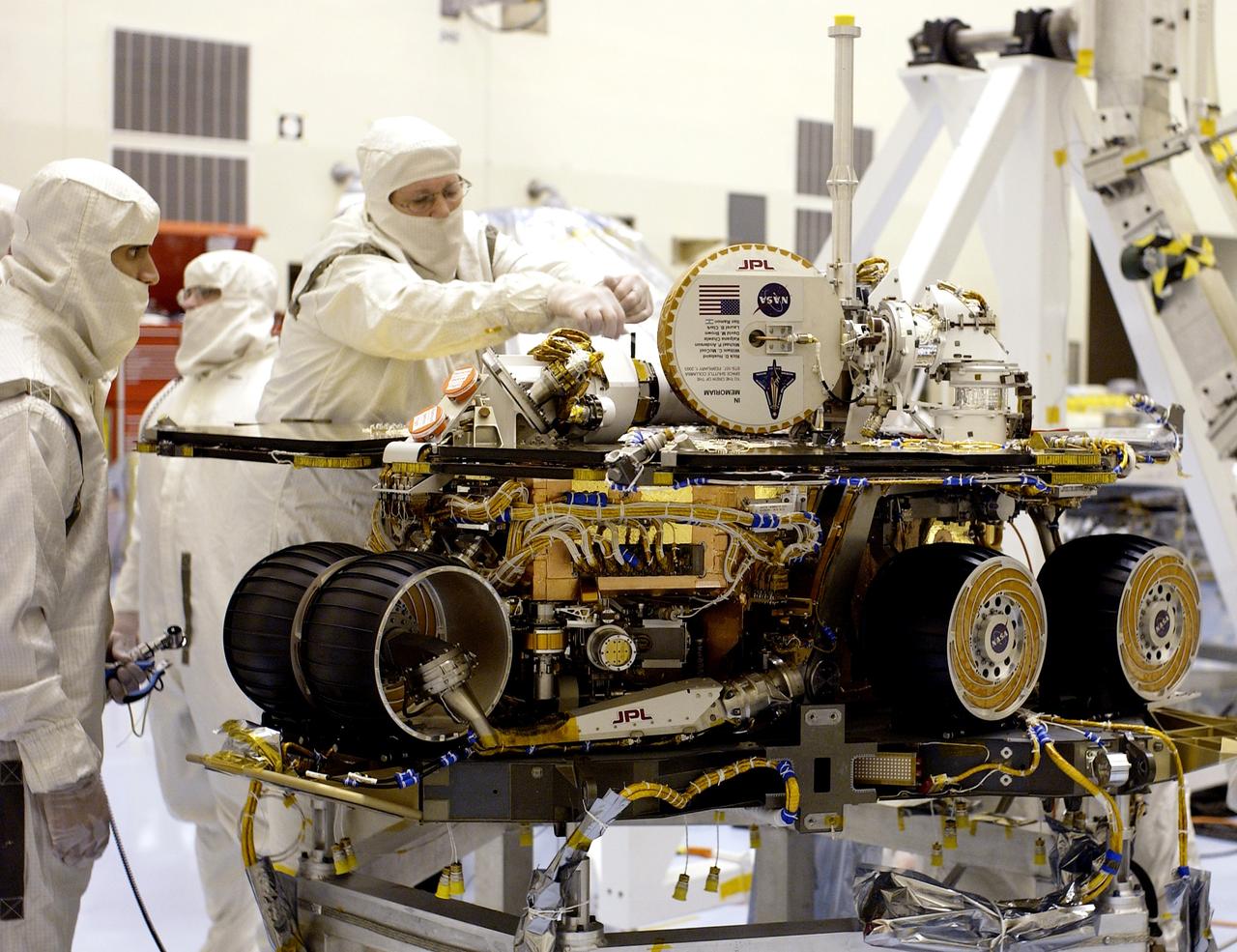
KENNEDY SPACE CENTER, FLA. -- This plaque commemorating the STS-107 Space Shuttle Columbia crew now looks over the Mars landscape after the successful landing and deployment of the Mars Exploration Rover “Spirit” Jan. 4 onto the red planet. The plaque, mounted on the high-gain antenna, is shown while the rover underwent final checkout March 28, 2003, in the Payload Hazardous Servicing Facility at KSC.
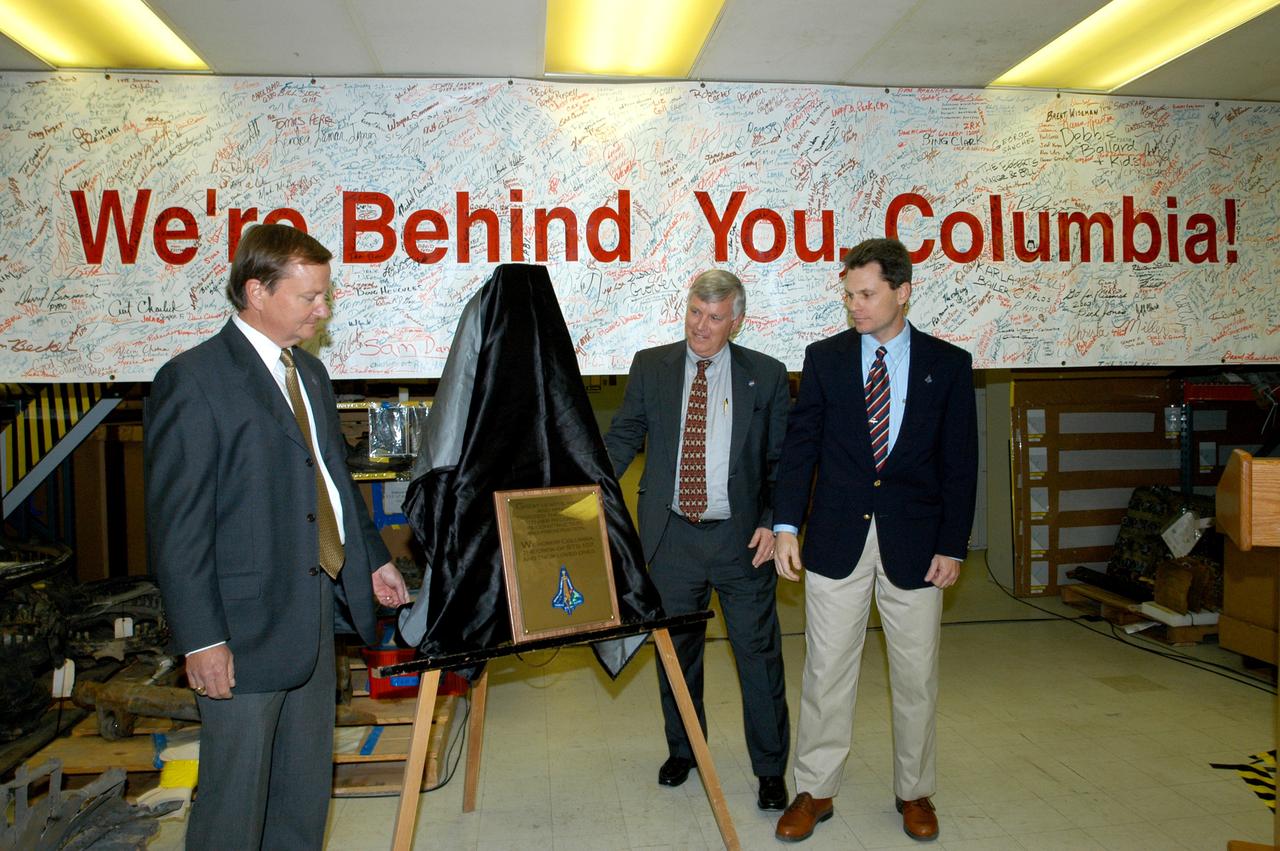
KENNEDY SPACE CENTER, FLA. - In the Vehicle Assembly Building, Shuttle Launch Director Mike Leinbach, Center Director Jim Kennedy and NASA Vehicle Manager Scott Thurston unveil a plaque honoring “Columbia, the crew of STS-107, and their loved ones.” The site is the “Columbia room,” a permanent repository of the debris collected in the aftermath of the tragic accident Feb. 1, 2003, that claimed the orbiter and lives of the seven-member crew. The dedication of the plaque was made in front of the 40-member preservation team.
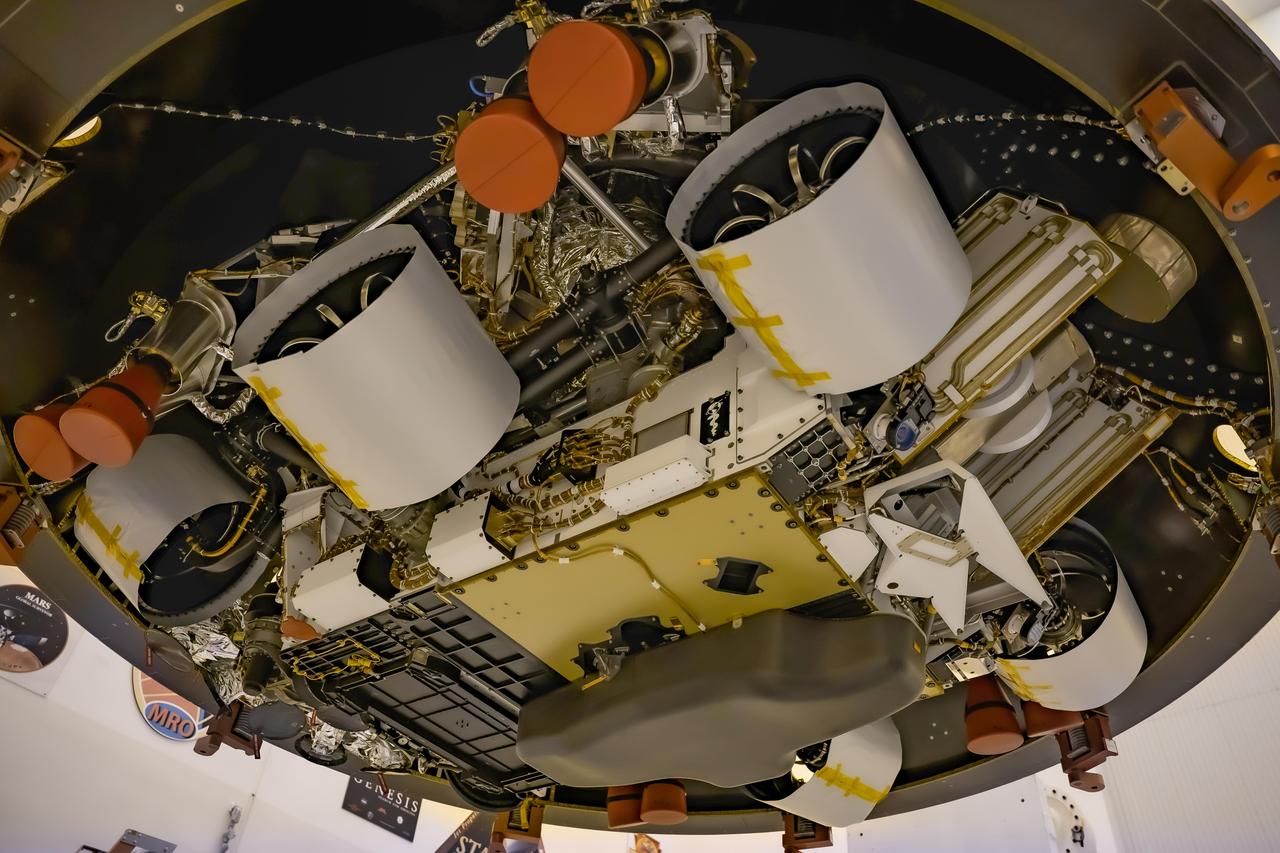
Seen from below, NASA's Mars 2020 Perseverance rover is in position in the aeroshell that will protect the rover on its way to the Red Planet. To the right of the middle wheel is the plaque that commemorates the impact of the COVID-19 pandemic and pays tribute to the perseverance of healthcare workers around the world. Featuring a snake-entwined rod to symbolize healing and medicine, the plaque was attached to the rover in May 2020 at Kennedy Space Center in Florida. https://photojournal.jpl.nasa.gov/catalog/PIA23924
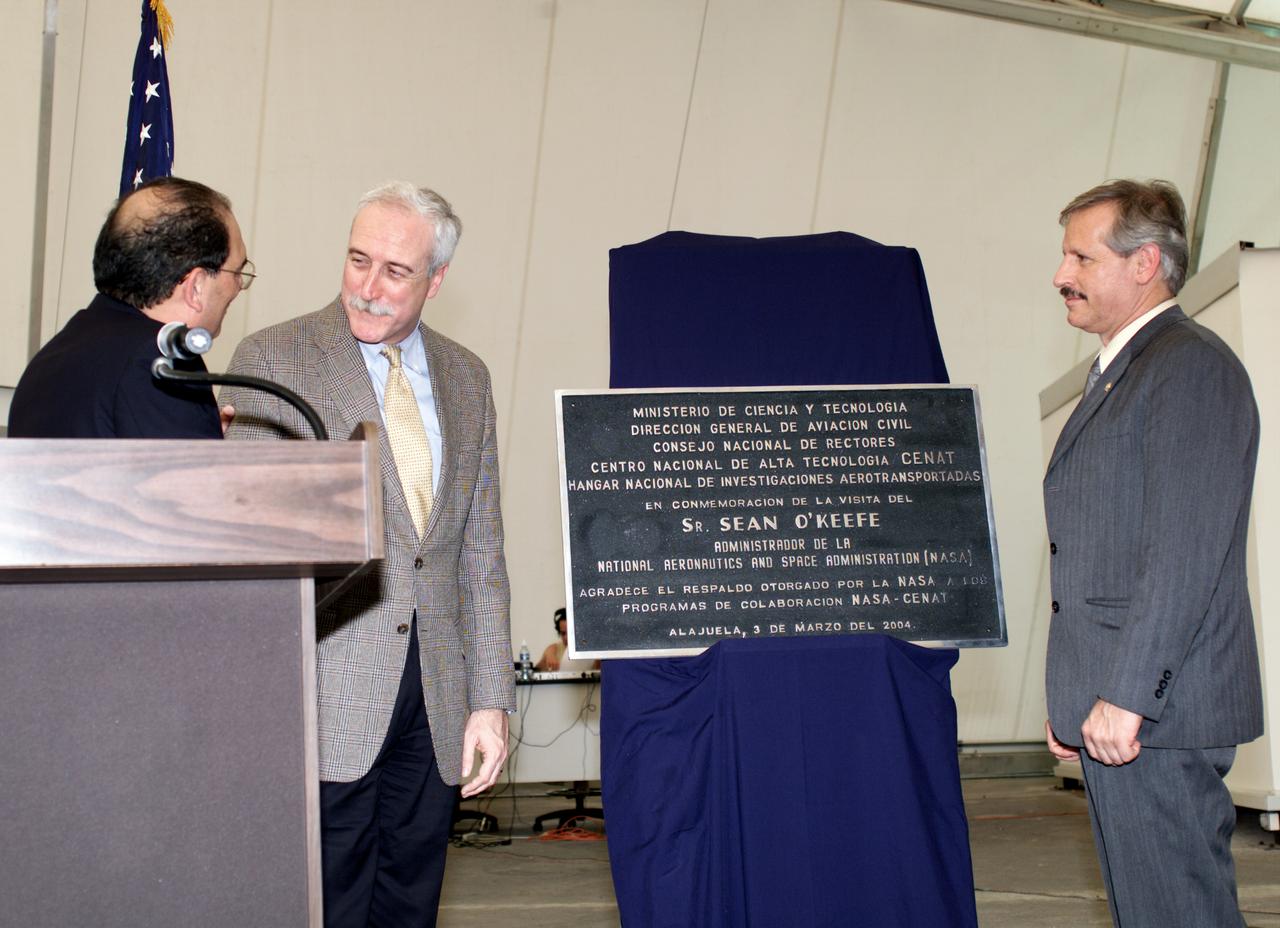
AirSAR 2004 Mesoamerica plaque unveiling by NASA Administrator Sean O'Keefe and Fernando Gutierrez, Costa Rican Minister of Science and Technology(MICIT). AirSAR 2004 Mesoamerica is a three-week expedition by an international team of scientists that will use an all-weather imaging tool, called the Airborne Synthetic Aperture Radar (AirSAR), in a mission ranging from the tropical rain forests of Central America to frigid Antarctica.
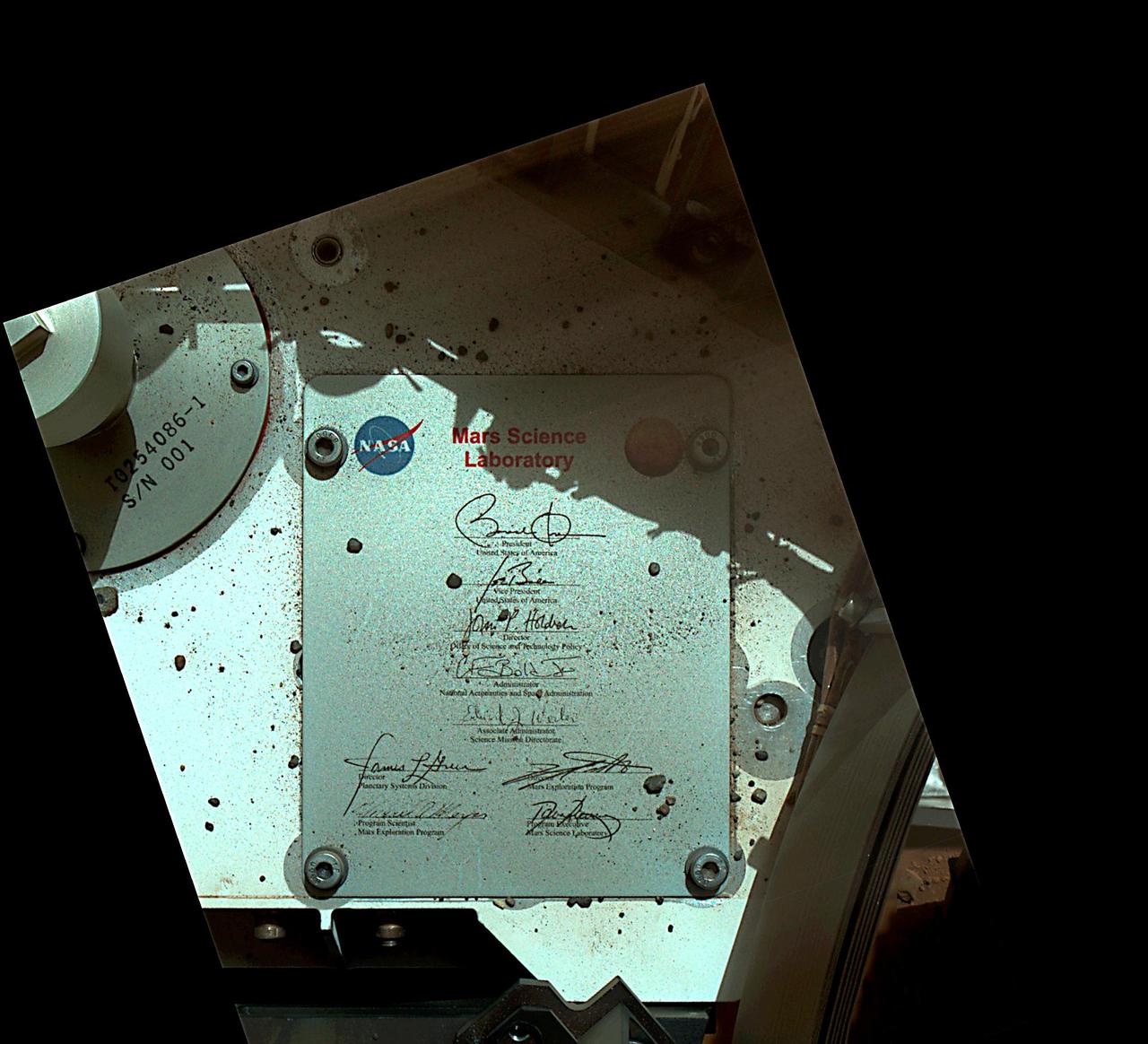
This view of Curiosity deck shows a plaque bearing several signatures of US officials, including that of President Obama and Vice President Biden. The image was taken by the rover Mars Hand Lens Imager MAHLI.
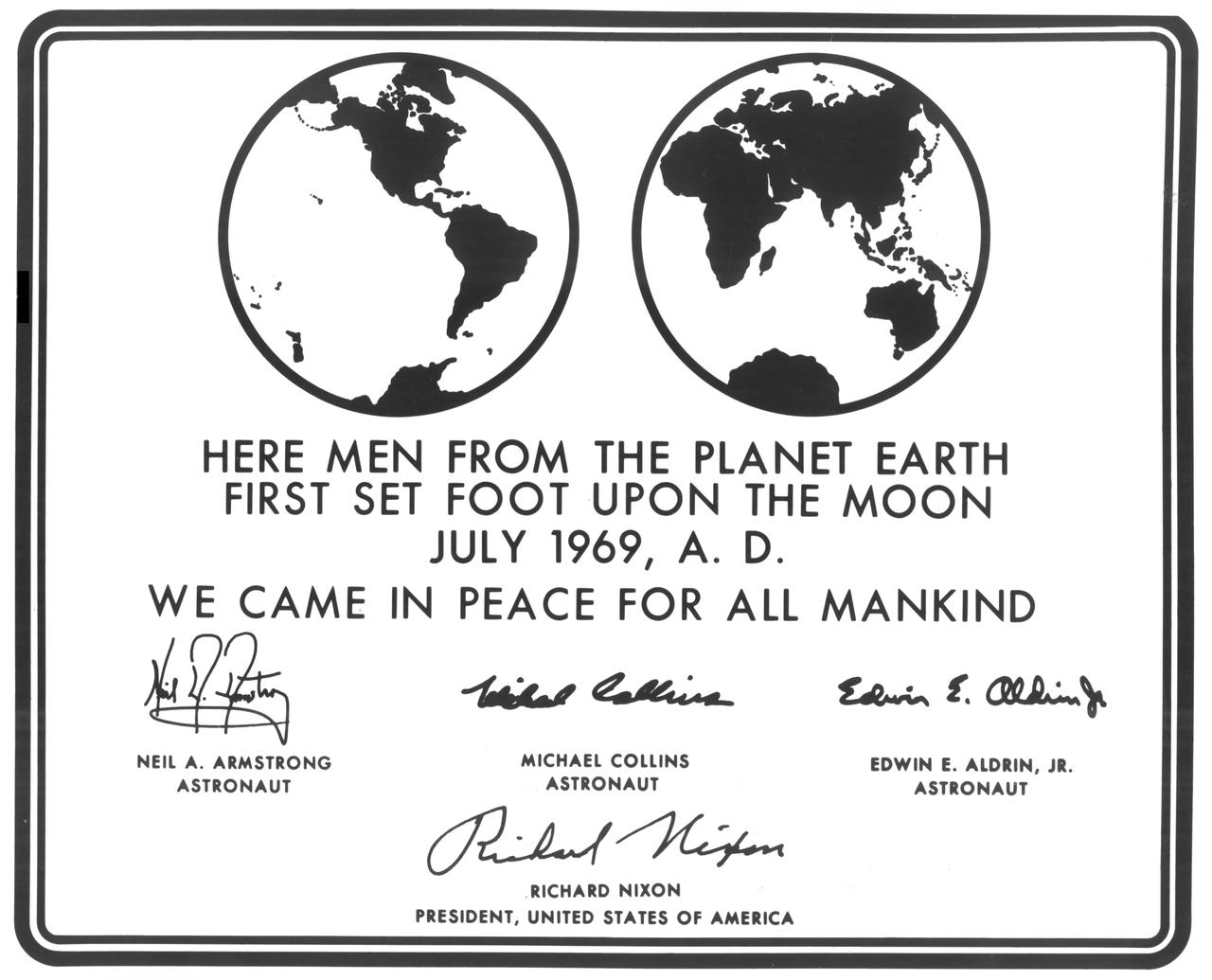
Millions of people on Earth watched via television as a message for all mankind was delivered to the Mare Tranquilitatis (Sea of Tranquility) region of the Moon during the historic Apollo 11 mission, where it still remains today. This photograph is a reproduction of the commemorative plaque that was attached to the leg of the Lunar Module (LM), Eagle, engraved with the following words: “Here men from the planet Earth first set foot upon the Moon July, 1969 A.D. We came in peace for all of mankind.” It bears the signatures of the Apollo 11 astronauts Neil A. Armstrong, commander; Michael Collins, Command Module (CM) pilot; and Edwin E. Aldrin, Jr., Lunar Module (LM) pilot along with the signature of the U.S. President Richard M. Nixon. The Apollo 11 mission launched from the Kennedy Space Center (KSC) in Florida via the Marshall Space Flight Center (MSFC) developed Saturn V launch vehicle on July 16, 1969 and safely returned to Earth on July 24, 1969. The CM, “Columbia”, piloted by Collins, remained in a parking orbit around the Moon while the LM, “Eagle’’, carrying astronauts Armstrong and Aldrin, landed on the Moon. On July 20, 1969, Armstrong was the first human to ever stand on the lunar surface, followed by Aldrin. During 2½ hours of surface exploration, the crew collected 47 pounds of lunar surface material for analysis back on Earth. With the success of Apollo 11, the national objective to land men on the Moon and return them safely to Earth had been accomplished.
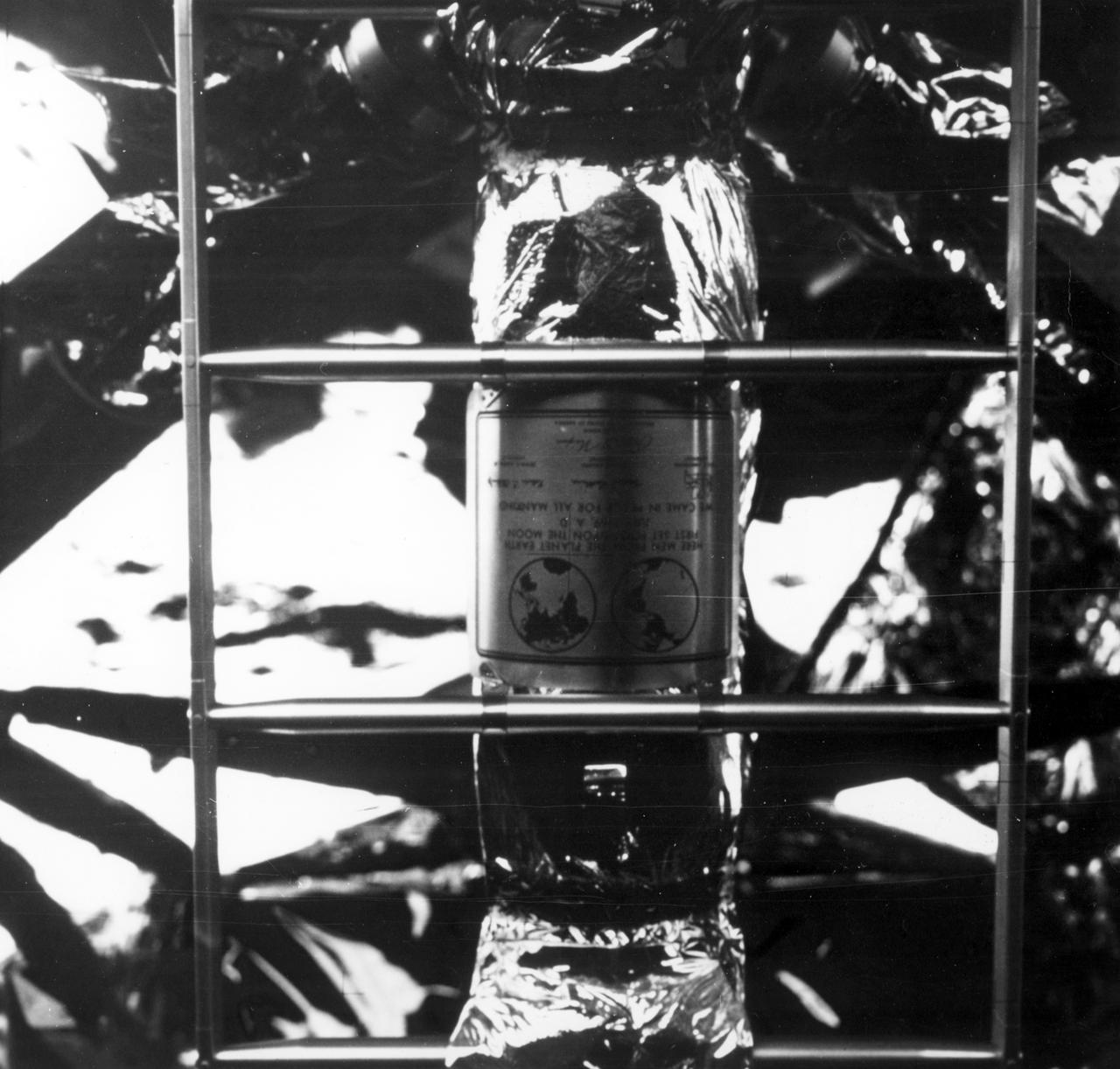
Millions of people on Earth watched via television as a message for all mankind was delivered to the Mare Tranquilitatis (Sea of Tranquility) region of the Moon during the historic Apollo 11 mission, where it still remains today. This commemorative plaque, attached to the leg of the Lunar Module (LM), Eagle, is engraved with the following words: “Here men from the planet Earth first set foot upon the Moon July, 1969 A.D. We came in peace for all of mankind.” It bears the signatures of the Apollo 11 astronauts Neil A. Armstrong, commander; Michael Collins, Command Module (CM) pilot; and Edwin E. Aldrin, Jr., Lunar Module (LM) pilot along with the signature of the U.S. President Richard M. Nixon. The Apollo 11 mission launched from the Kennedy Space Center (KSC) in Florida via the Marshall Space Flight Center (MSFC) developed Saturn V launch vehicle on July 16, 1969 and safely returned to Earth on July 24, 1969. The CM, “Columbia”, piloted by Collins, remained in a parking orbit around the Moon while the LM, “Eagle’’, carrying astronauts Armstrong and Aldrin, landed on the Moon. On July 20, 1969, Armstrong was the first human to ever stand on the lunar surface, followed by Aldrin. During 2½ hours of surface exploration, the crew collected 47 pounds of lunar surface material for analysis back on Earth. With the success of Apollo 11, the national objective to land men on the Moon and return them safely to Earth had been accomplished.
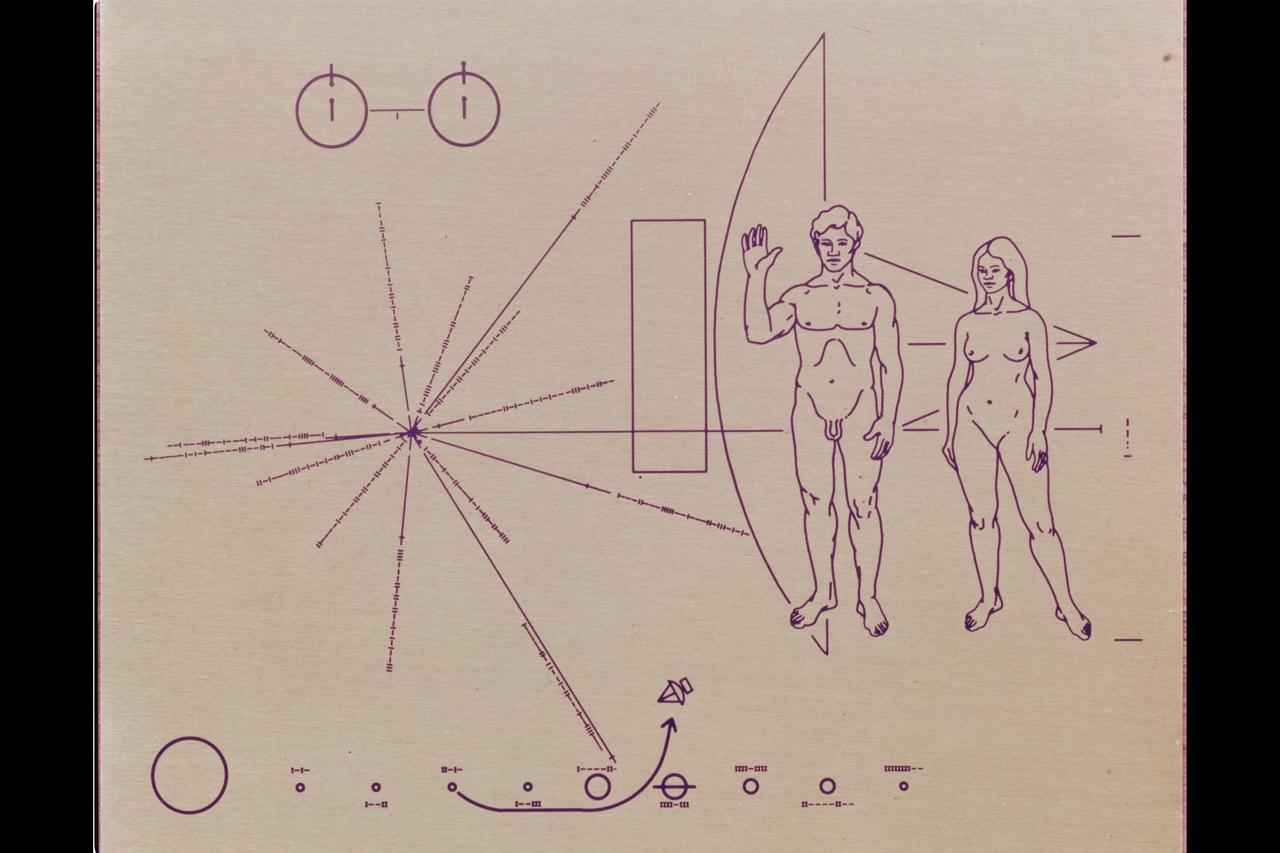
Pioneer F/G Plaque: Pioneer 10 the first spacecraft to leave our solar system carries a message to other worlds. The plaque was designed by Drs. Carl Sagan and Frank Drake, the artwork was prepared by Linda Salzman Sagan.
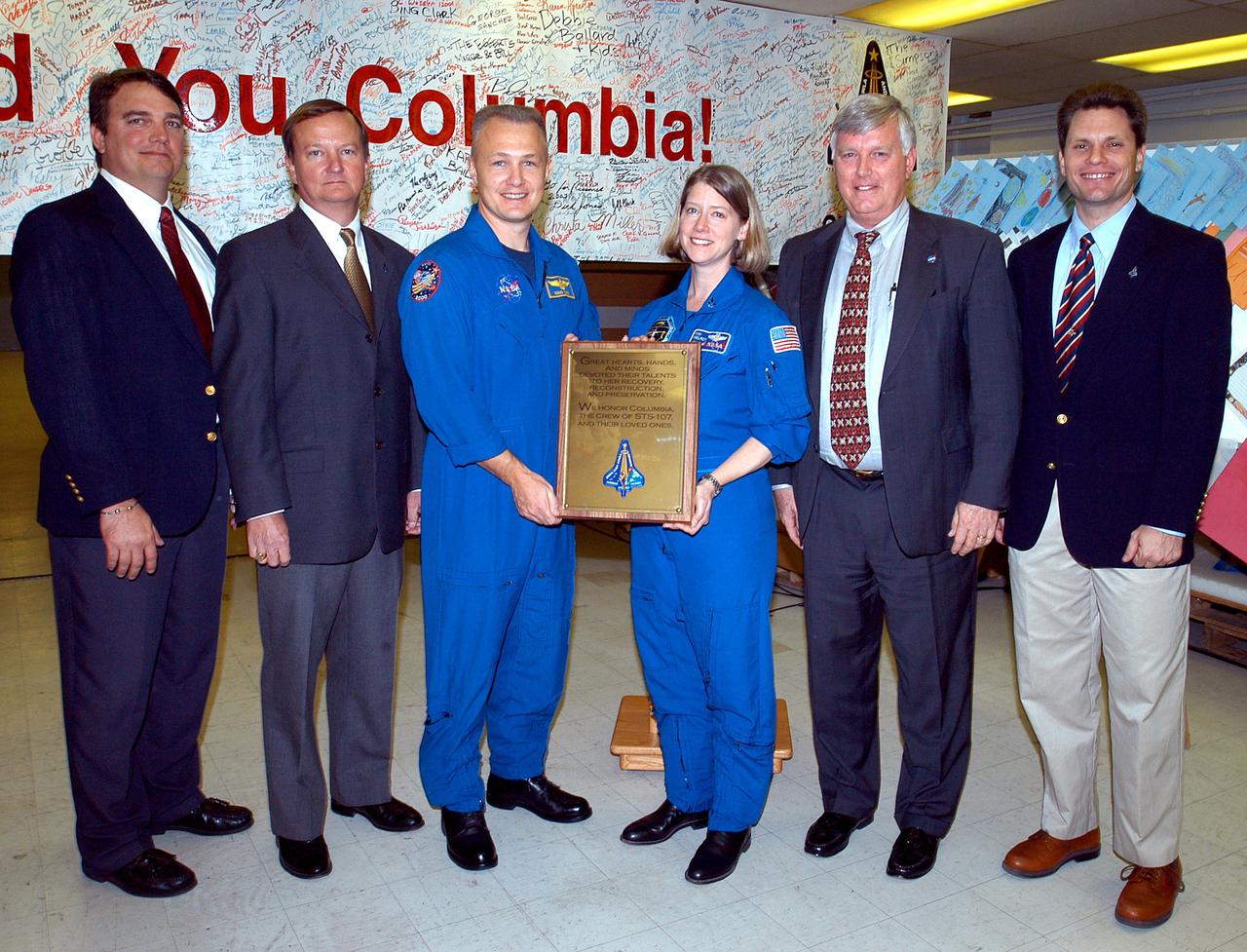
KENNEDY SPACE CENTER, FLA. - Posing with the plaque dedicated to Columbia Jan. 29, 2004, are (left to right) United Space Alliance project leader for Columbia reconstruction Jim Comer, Shuttle Launch Director Mike Leinbach, astronauts Douglas Hurley and Pam Melroy, Center Director Jim Kennedy and NASA Vehicle Manager Scott Thurston. The dedication of the plaque was made in front of the 40-member preservation team in the “Columbia room,” a permanent repository in the Vehicle Assembly Building of the debris collected in the aftermath of the tragic accident Feb. 1, 2003, that claimed the orbiter and lives of the seven-member crew.
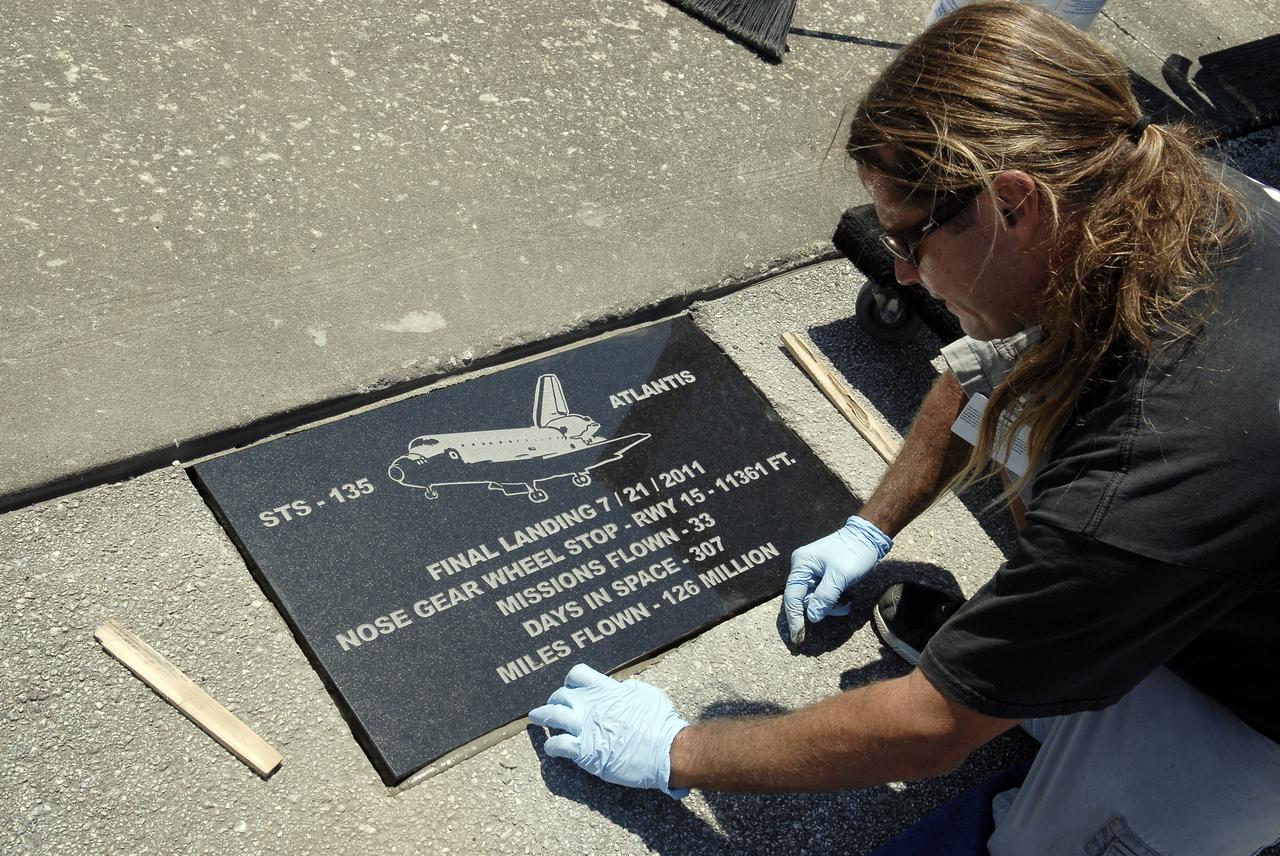
T&R - Wheel Stop Dedication Plaques
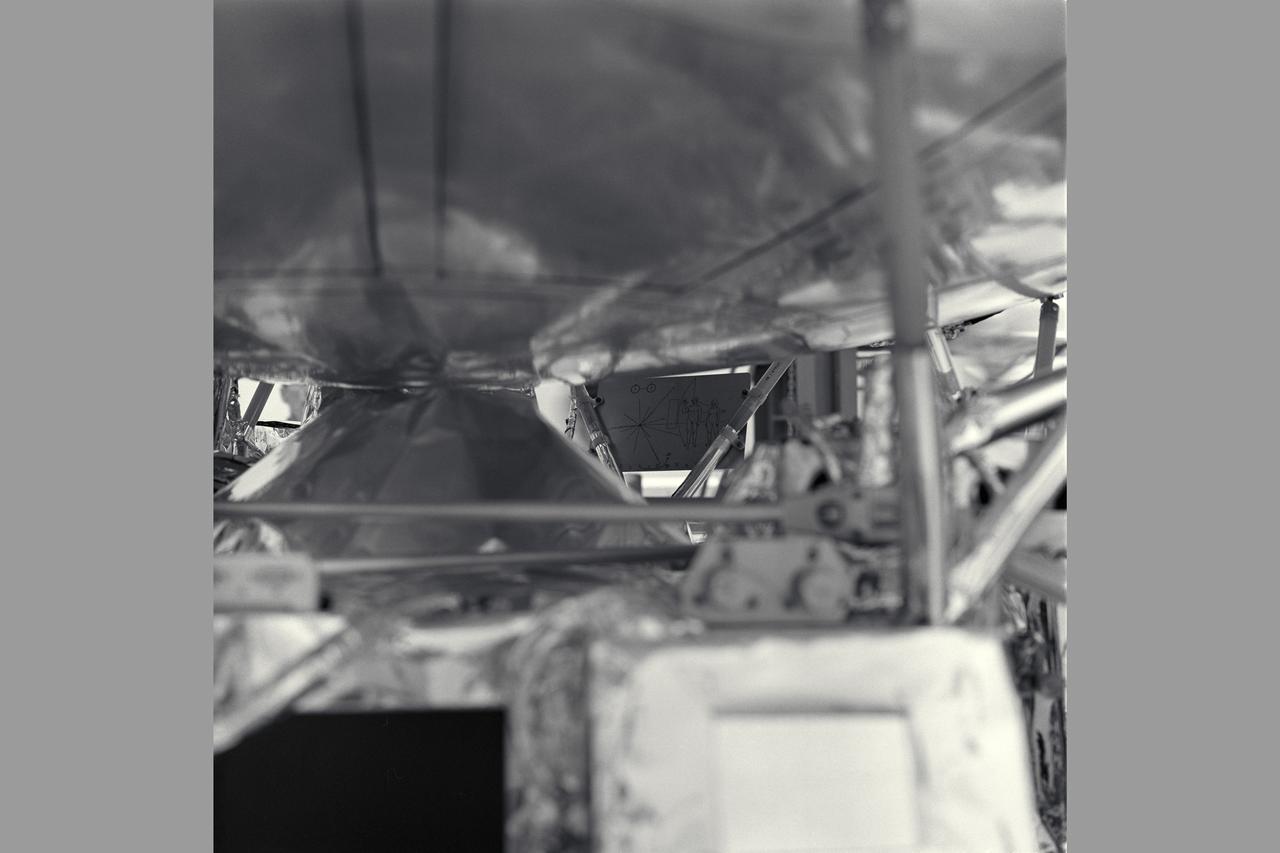
Pioneer-10 interstellar plaque positioned on spacecraft
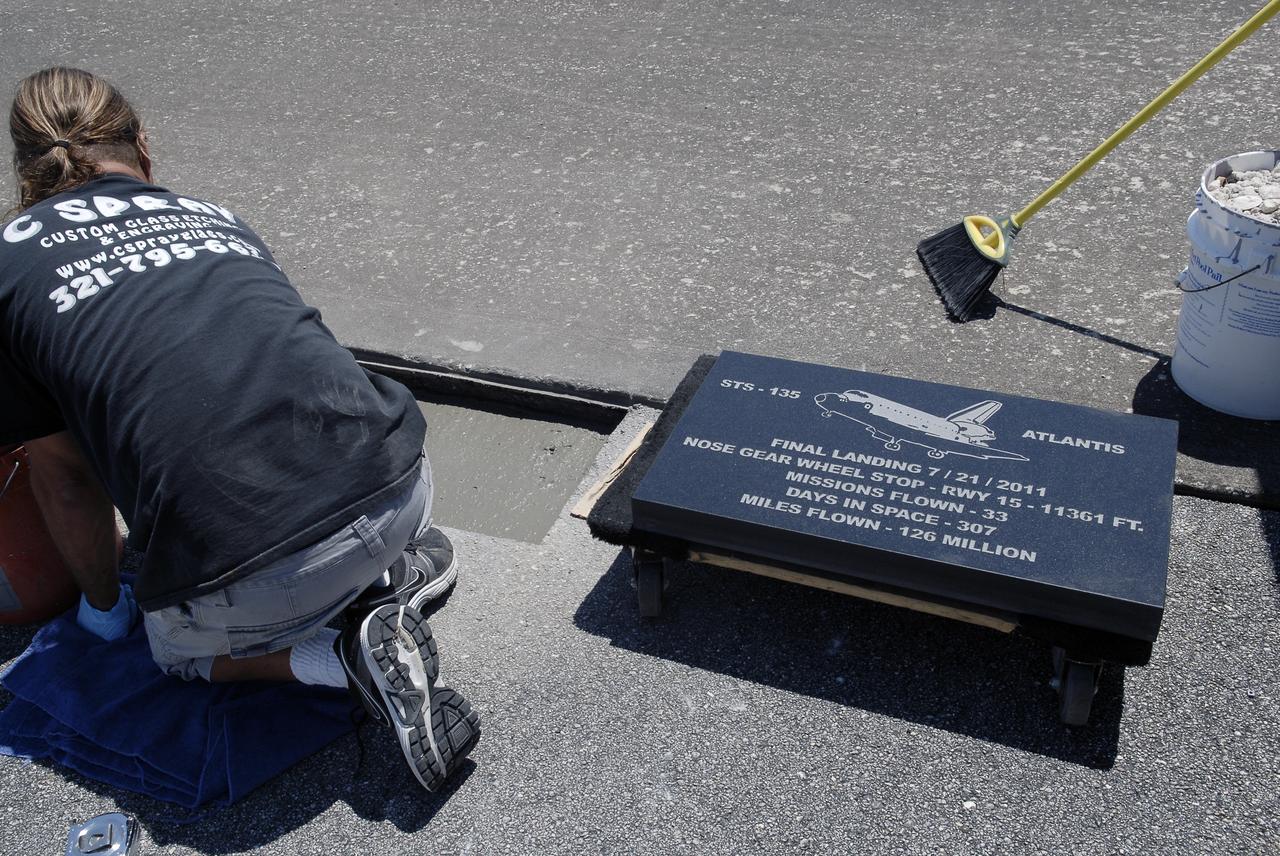
T&R - Wheel Stop Dedication Plaques
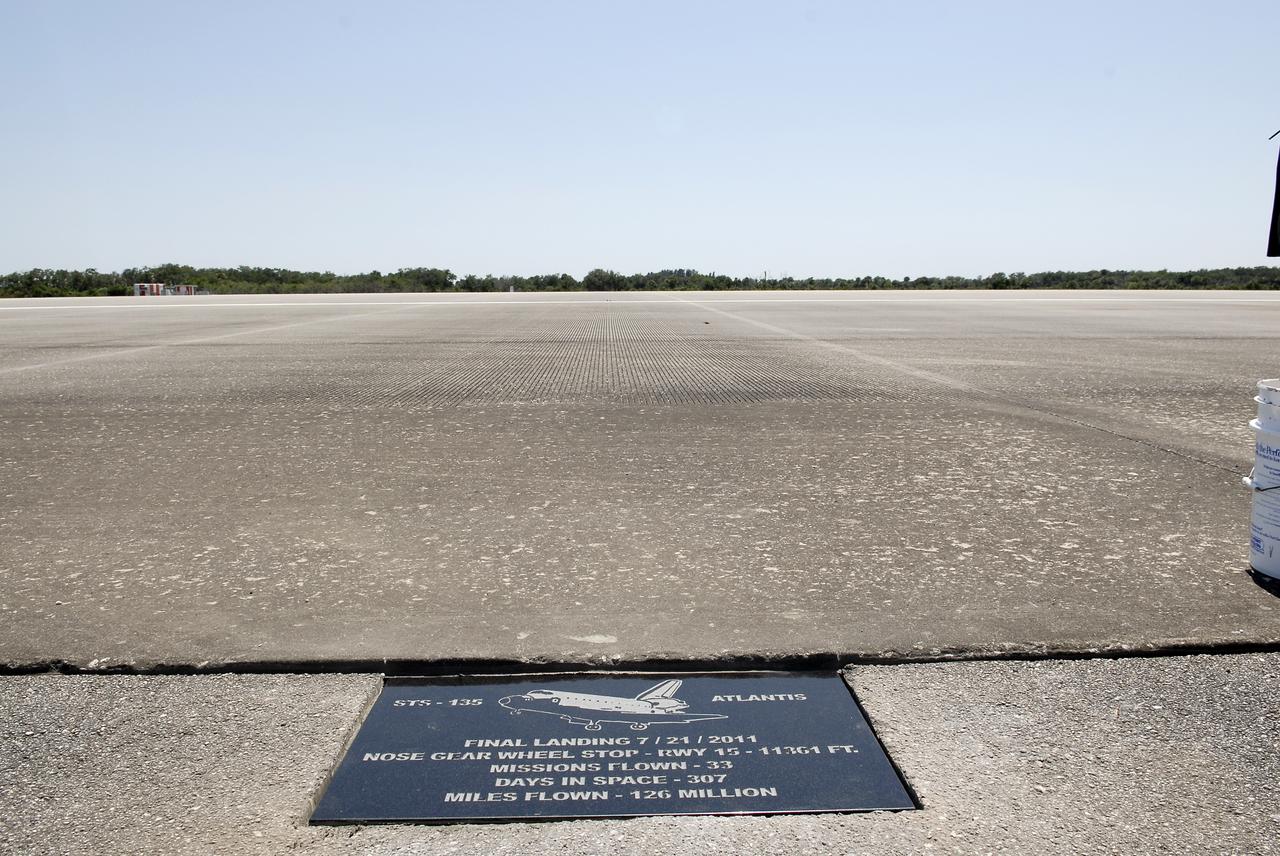
T&R - Wheel Stop Dedication Plaques

T&R - Wheel Stop Dedication Plaques
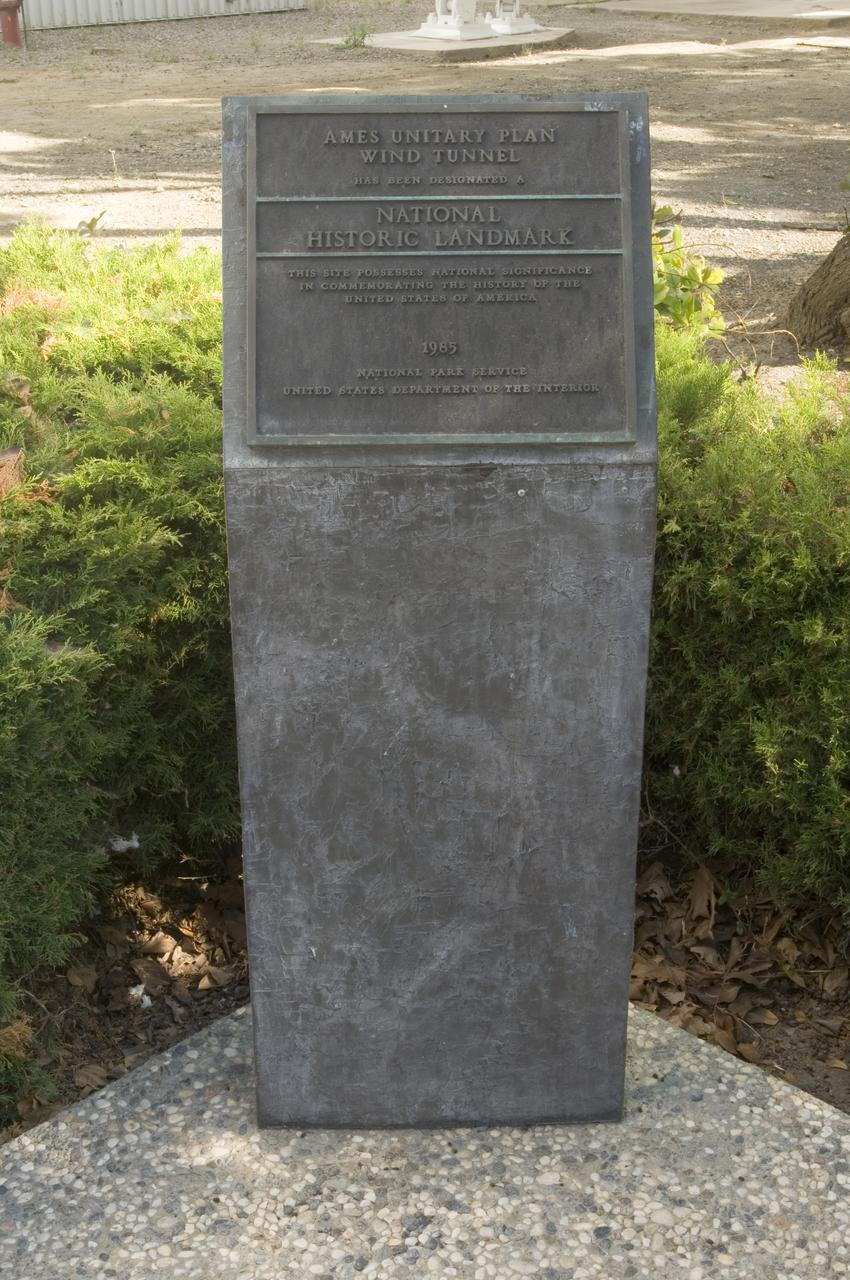
Ames and Moffett Field (MFA) historical sites and memorials Unitary Plan Wind Tunned plaza; display and historical site plaques with the NASA logo on the Wind Tunnel valve as a backdrop. Plaque depicts that Ames Unitary Plan Wind Tunnel has been designated a National Historic Landmark by the National Park Service, United States Department of the Interior 1985 The plaque reads; This site possesses national significance in commemorating the history of the United States of America. That ceremony took place on September 12, 1990
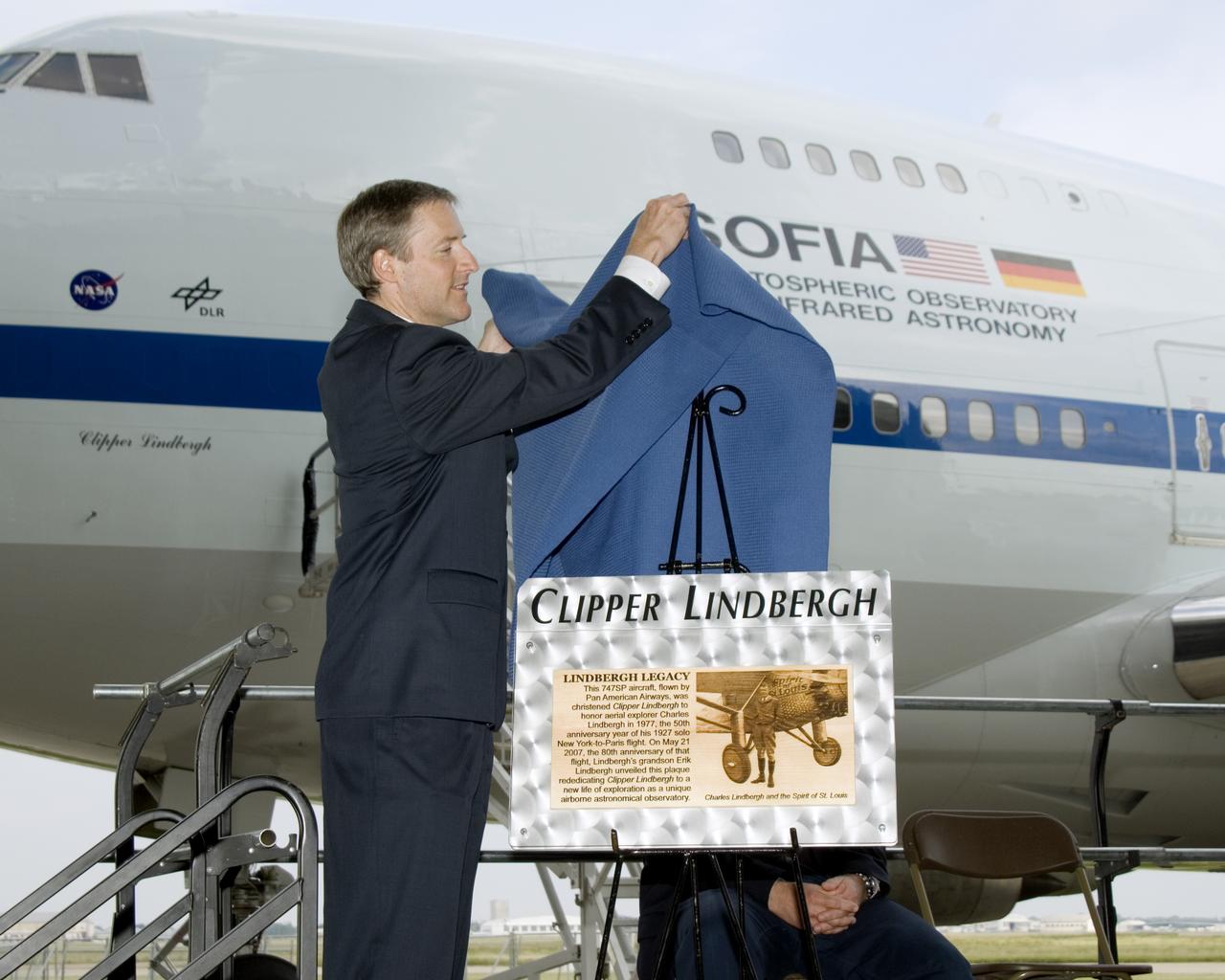
Erik Lindbergh, grandson of aviator Charles Lindbergh, unveiled a plaque commemorating his grandfather on the 80th anniversary of Charles Lindbergh's transatlantic flight. The event was a dedication of the 747 Clipper Lindbergh, a NASA airborne infrared observatory that is beginning test flights in preparation for conducting world-class airborne astronomy. The project is known as the Stratospheric Observatory for Infrared Astronomy, or SOFIA.
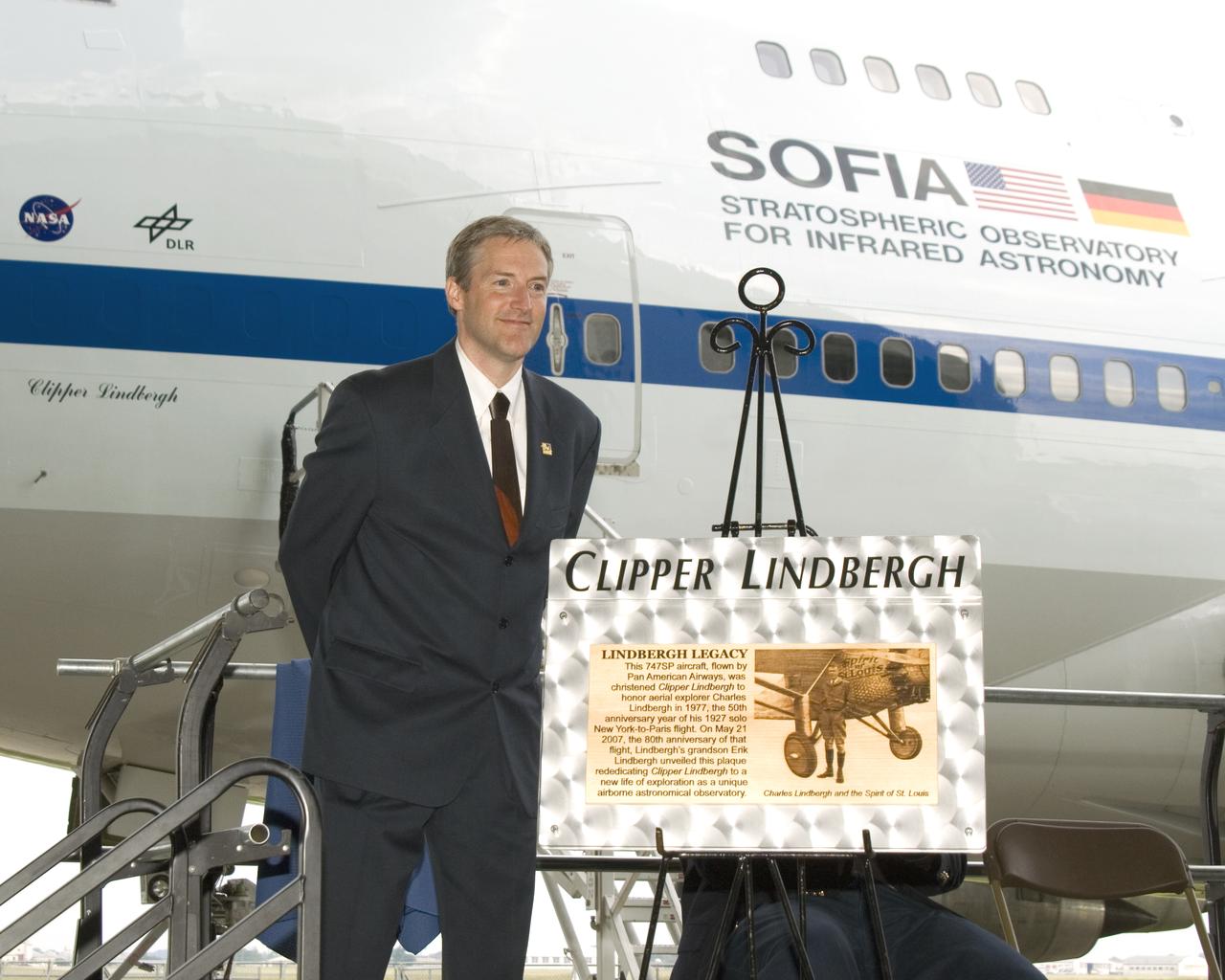
Erik Lindbergh, grandson of aviator Charles Lindbergh, unveiled a plaque commemorating his grandfather on the 80th anniversary of Charles Lindbergh's transatlantic flight. The event was a dedication of the 747 Clipper Lindbergh, a NASA airborne infrared observatory that is beginning test flights in preparation for conducting world-class airborne astronomy. The project is known as the Stratospheric Observatory for Infrared Astronomy, or SOFIA.
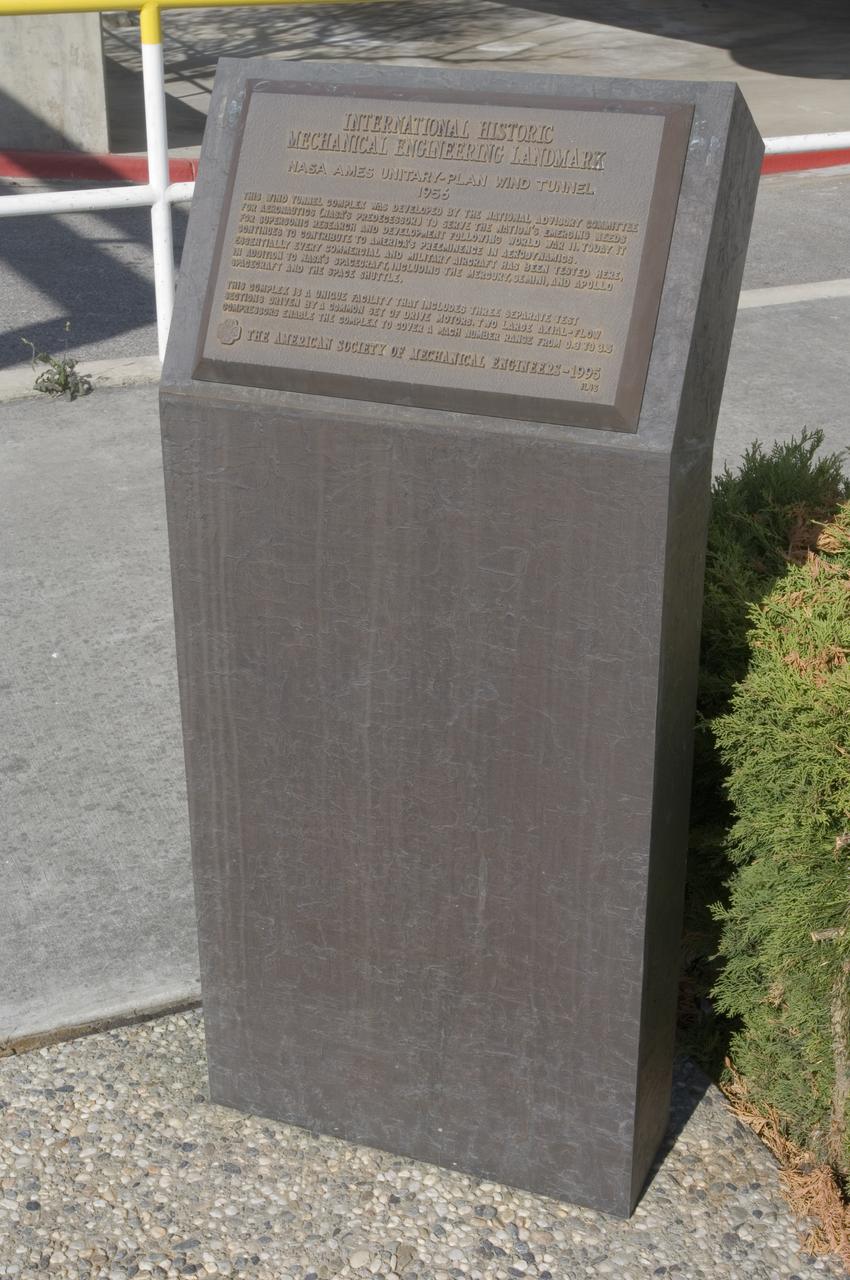
Ames and Moffett Field (MFA) historical sites and memorials Unitary Plan Wind Tunned plaza; display and historical site plaques with the NASA logo on the Wind Tunnel valve as a backdrop. shown is the Unitary International Historic Mechanical Engineering Landmark Dedication plaque (American Society of Mechanical Engineers) May 5, 1995
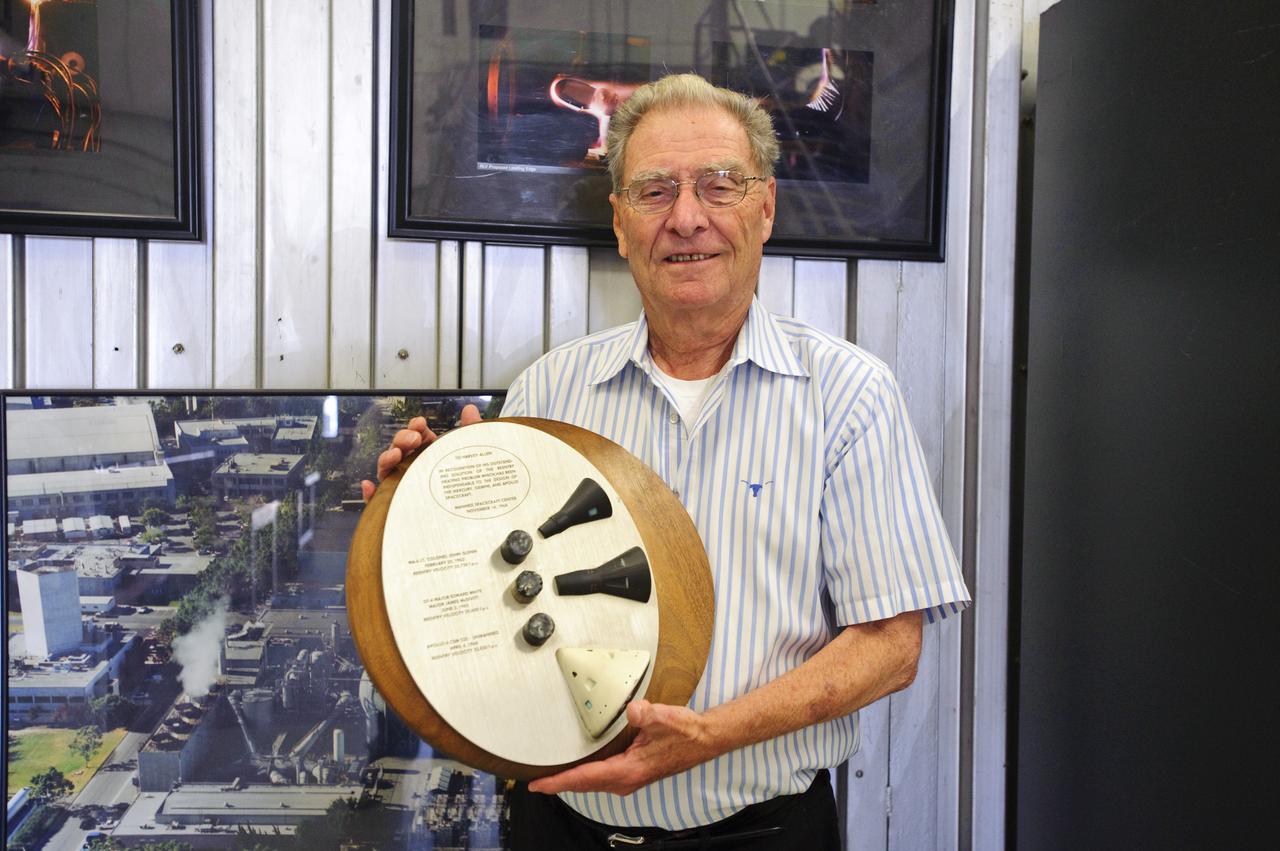
John W. 'Jack Boyd holds a plaque presented to Harvey Allen in recognition of his outstanding solution of the reentry heating problem which has been indispensable to the design of the Mercury, Gemini, and Apollo spacecraft (Manned Spacecraft Center, November 14, 1968) Plaque contains samples of tested materials and models of spacecraft.
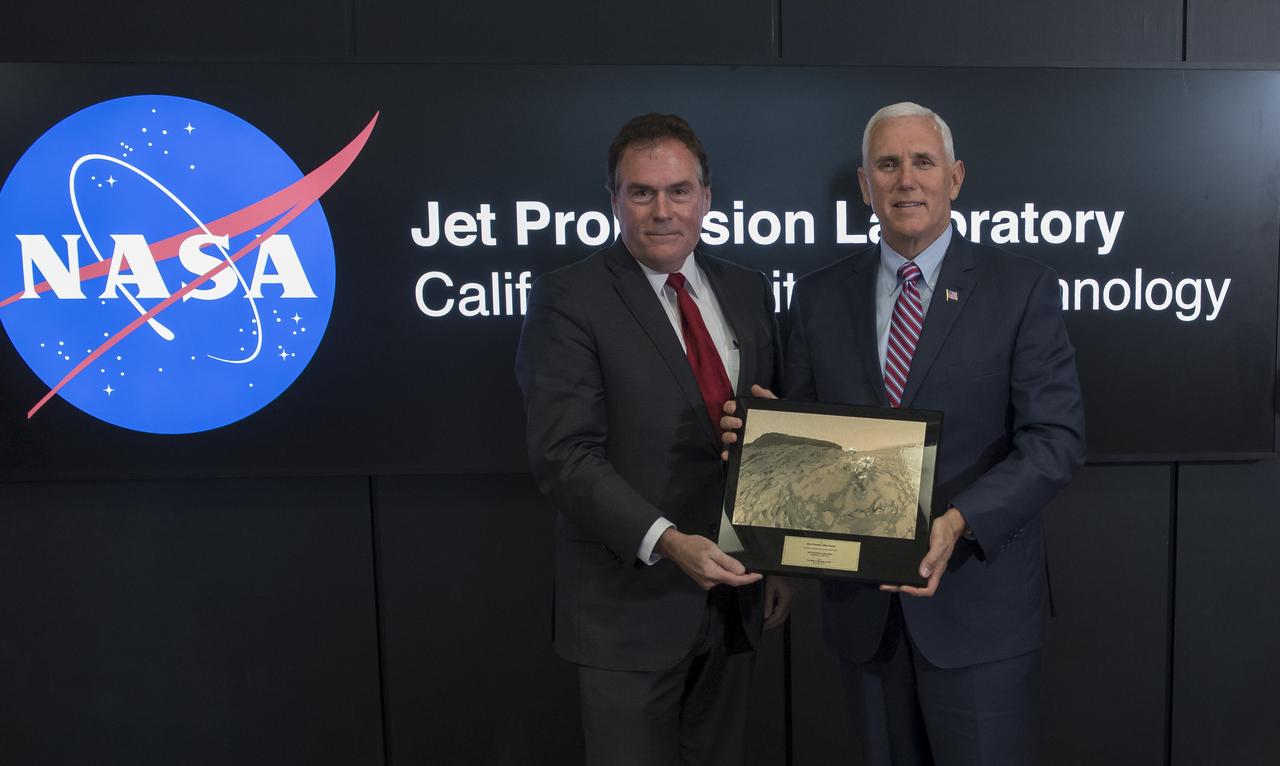
U.S. Vice President Mike Pence, right, is presented a plaque by JPL Director Michael Watkins during a tour of NASA's Jet Propulsion Laboratory, Saturday, April 28, 2018 in Pasadena, California. The plaque presents a view of the Mars Science Laboratory rover Curiosity on the surface of Mars. Photo Credit: (NASA/Bill Ingalls)
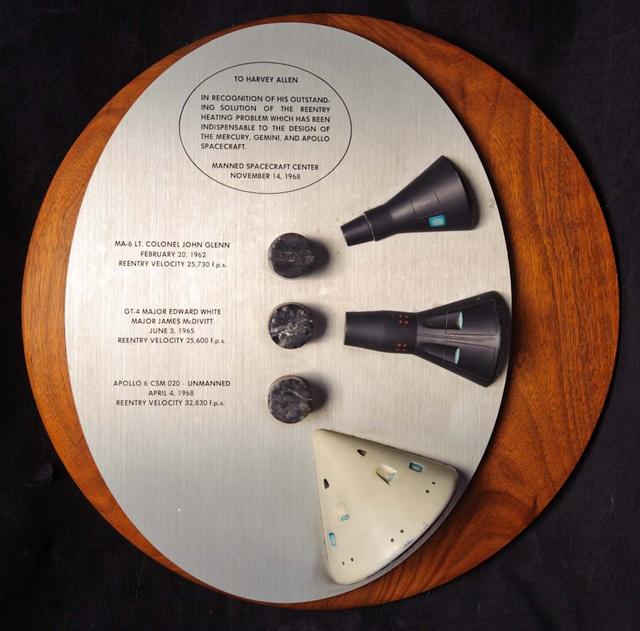
A plaque presented to Harvey Allen in recognition of his outstanding solution of the reentry heating problem which has been indispensable to the design of the Mercury, Gemini, and Apollo spacecraft (Manned Spacecraft Center, November 14, 1968) Plaque contains samples of tested materials and models of spacecraft.
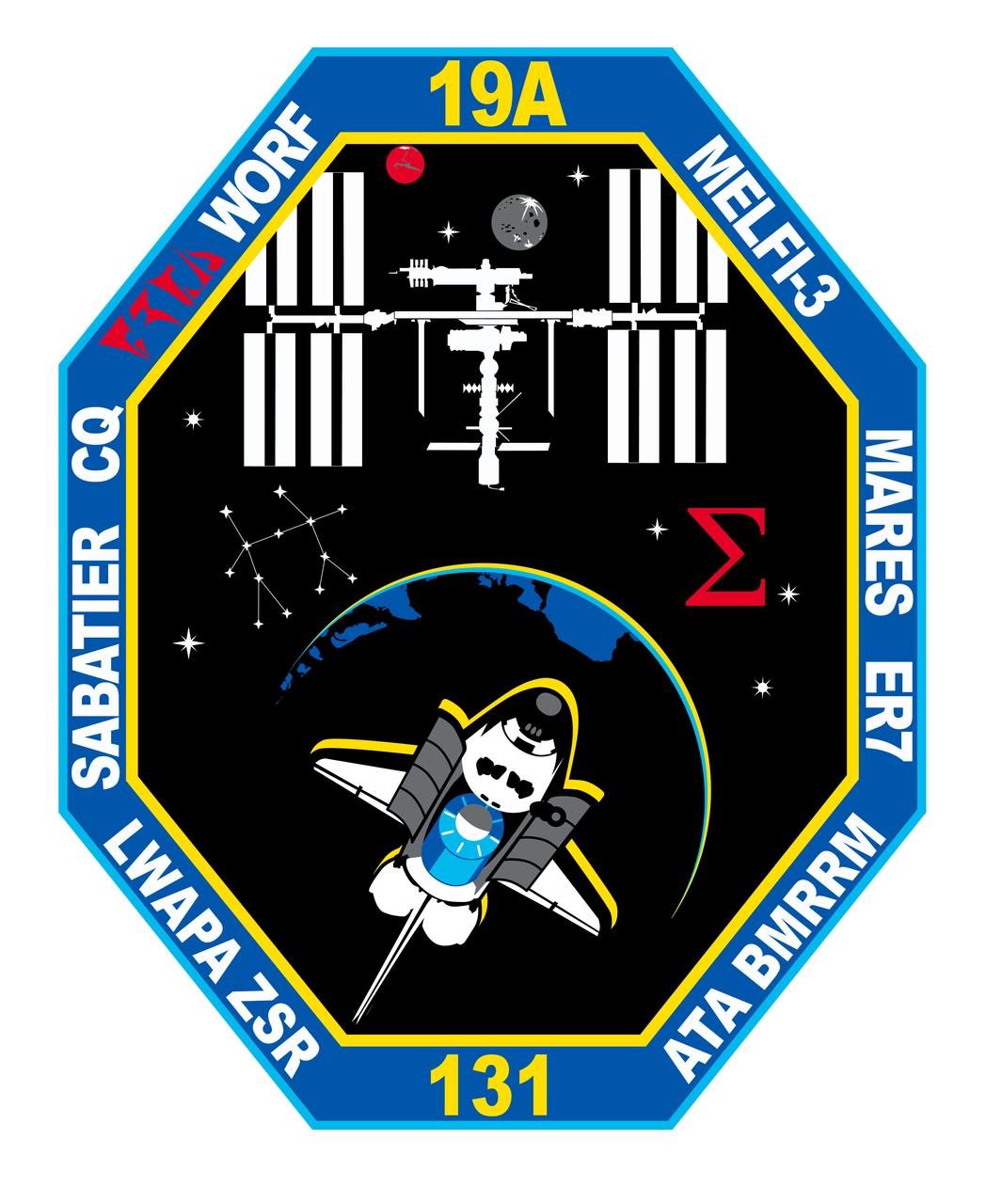
View of ISS 19A Plaques including crew names and representations of shuttle and ISS.
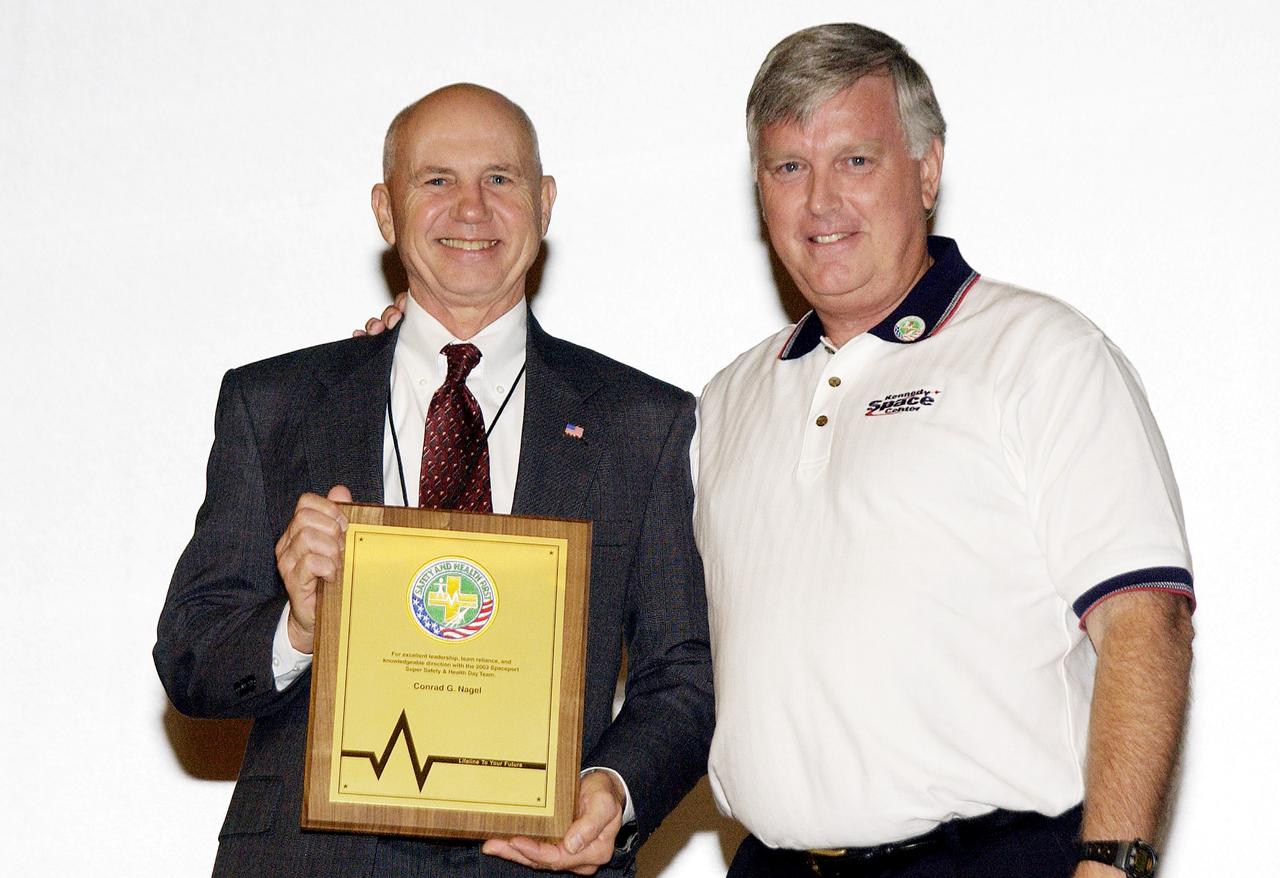
KENNEDY SPACE CENTER, FLA. - Center Director Jim Kennedy (right) presents a plaque to Conrad Nagel who organized the Spaceport Super Safety and Health Day at KSC, an annual event dedicated to reinforcing safe and healthful behaviors in the workforce. Nagel is chief of the Shuttle Project Office, Shuttle Processing.
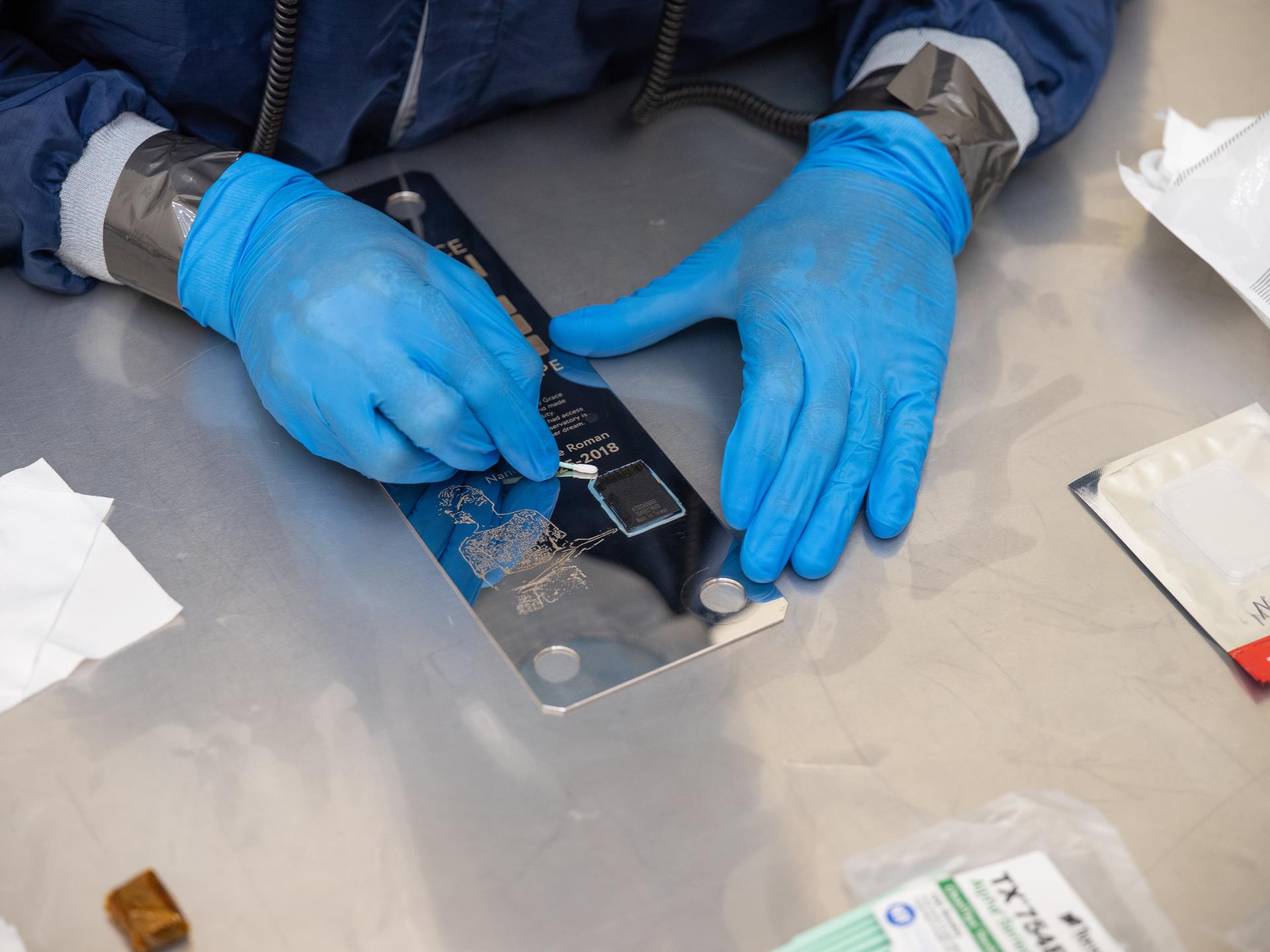
A technician inside the Payload Hazardous Servicing Facility at NASA’s Kennedy Space Center in Florida installs a memory card containing a total of 1,350,144 names as part of a commemorative plaque on the Nancy Grace Roman Space Telescope on Friday, July 17, 2026. The names, submitted by people from across the globe, including astronauts from NASA’s Artemis II and Artemis III missions, will travel with the Roman observatory to the Sun-Earth Lagrange point 2, or L2, about one million miles from Earth, where the Sun’s and Earth’s gravity balance out. Roman is named after Dr. Nancy Grace Roman, NASA’s first chief astronomer and one of the architects of the agency’s modern science program.
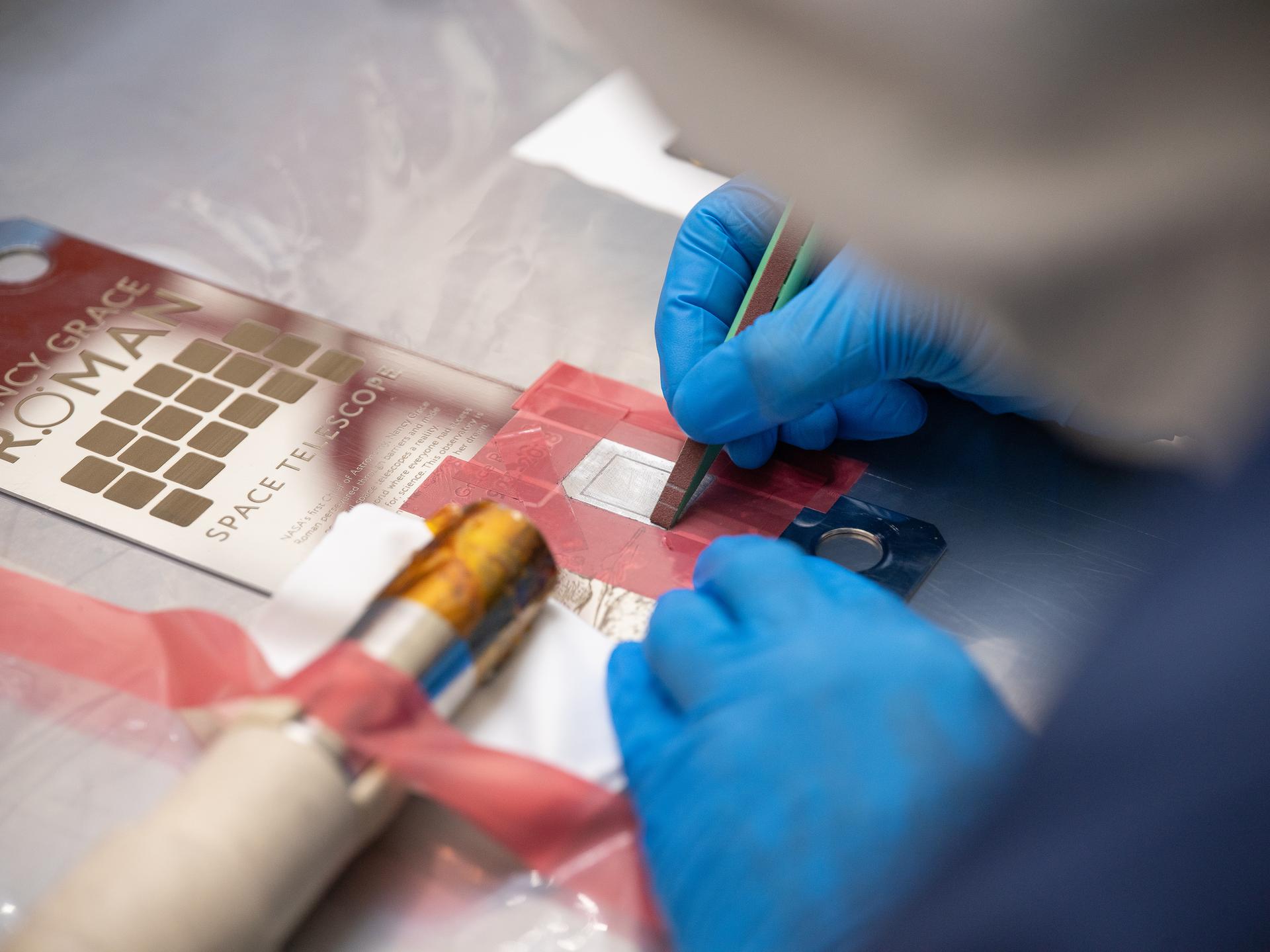
A technician inside the Payload Hazardous Servicing Facility at NASA’s Kennedy Space Center in Florida installs a memory card containing a total of 1,350,144 names as part of a commemorative plaque on the Nancy Grace Roman Space Telescope on Friday, July 17, 2026. The names, submitted by people from across the globe, including astronauts from NASA’s Artemis II and Artemis III missions, will travel with the Roman observatory to the Sun-Earth Lagrange point 2, or L2, about one million miles from Earth, where the Sun’s and Earth’s gravity balance out. Roman is named after Dr. Nancy Grace Roman, NASA’s first chief astronomer and one of the architects of the agency’s modern science program.
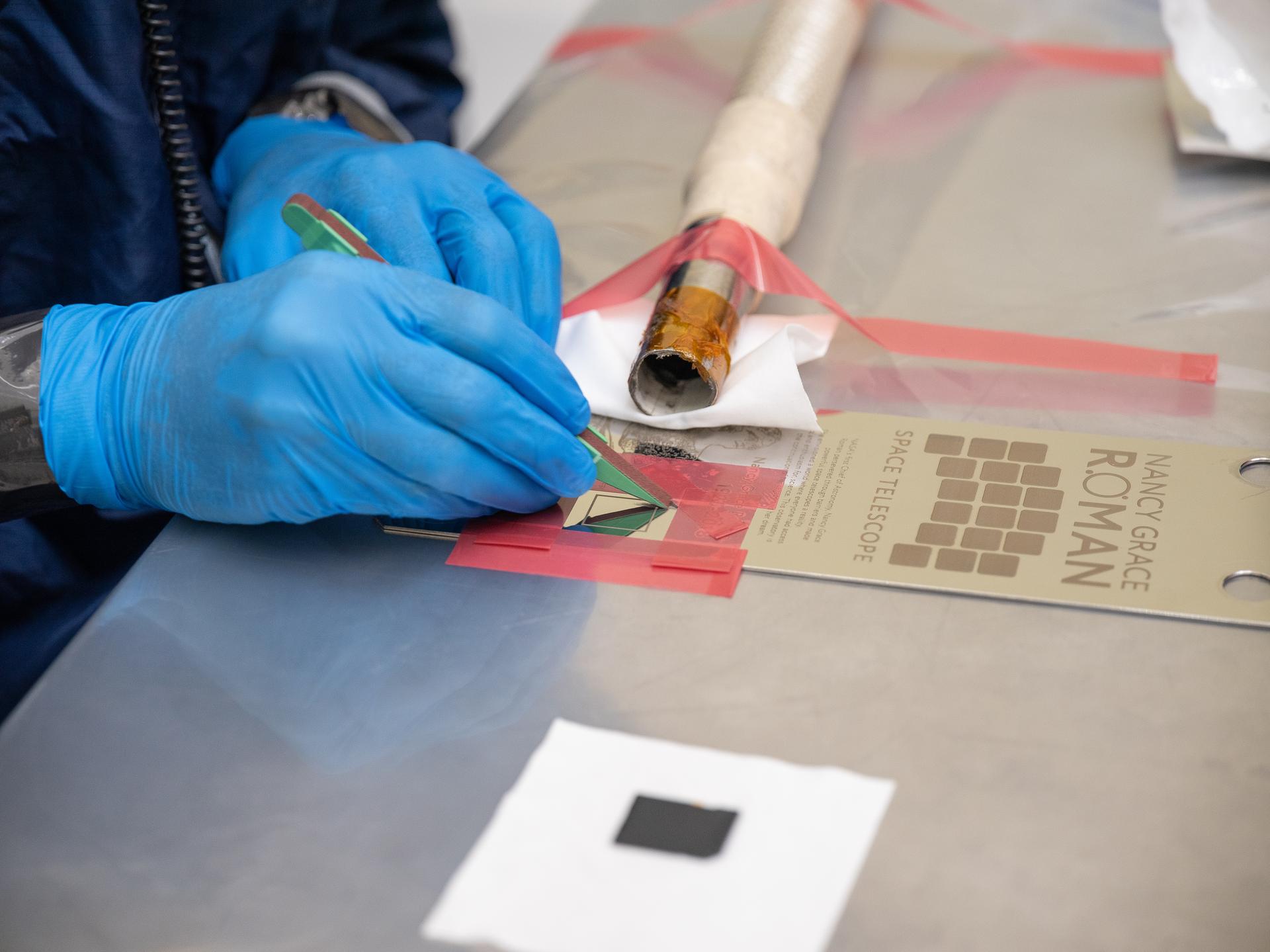
A technician inside the Payload Hazardous Servicing Facility at NASA’s Kennedy Space Center in Florida installs a memory card containing a total of 1,350,144 names as part of a commemorative plaque on the Nancy Grace Roman Space Telescope on Friday, July 17, 2026. The names, submitted by people from across the globe, including astronauts from NASA’s Artemis II and Artemis III missions, will travel with the Roman observatory to the Sun-Earth Lagrange point 2, or L2, about one million miles from Earth, where the Sun’s and Earth’s gravity balance out. Roman is named after Dr. Nancy Grace Roman, NASA’s first chief astronomer and one of the architects of the agency’s modern science program.
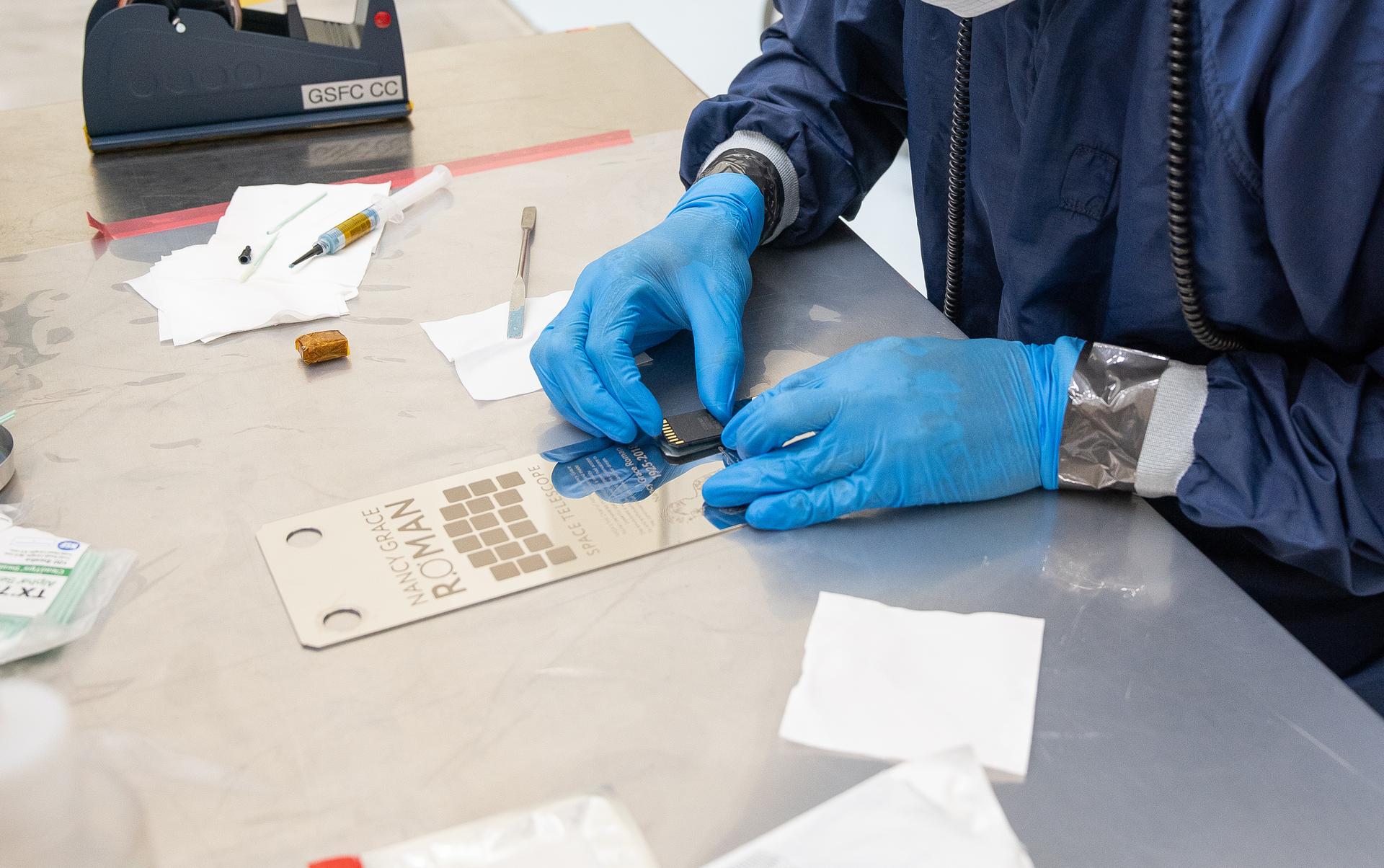
A technician inside the Payload Hazardous Servicing Facility at NASA’s Kennedy Space Center in Florida installs a memory card containing a total of 1,350,144 names as part of a commemorative plaque on the Nancy Grace Roman Space Telescope on Friday, July 17, 2026. The names, submitted by people from across the globe, including astronauts from NASA’s Artemis II and Artemis III missions, will travel with the Roman observatory to the Sun-Earth Lagrange point 2, or L2, about one million miles from Earth, where the Sun’s and Earth’s gravity balance out. Roman is named after Dr. Nancy Grace Roman, NASA’s first chief astronomer and one of the architects of the agency’s modern science program.
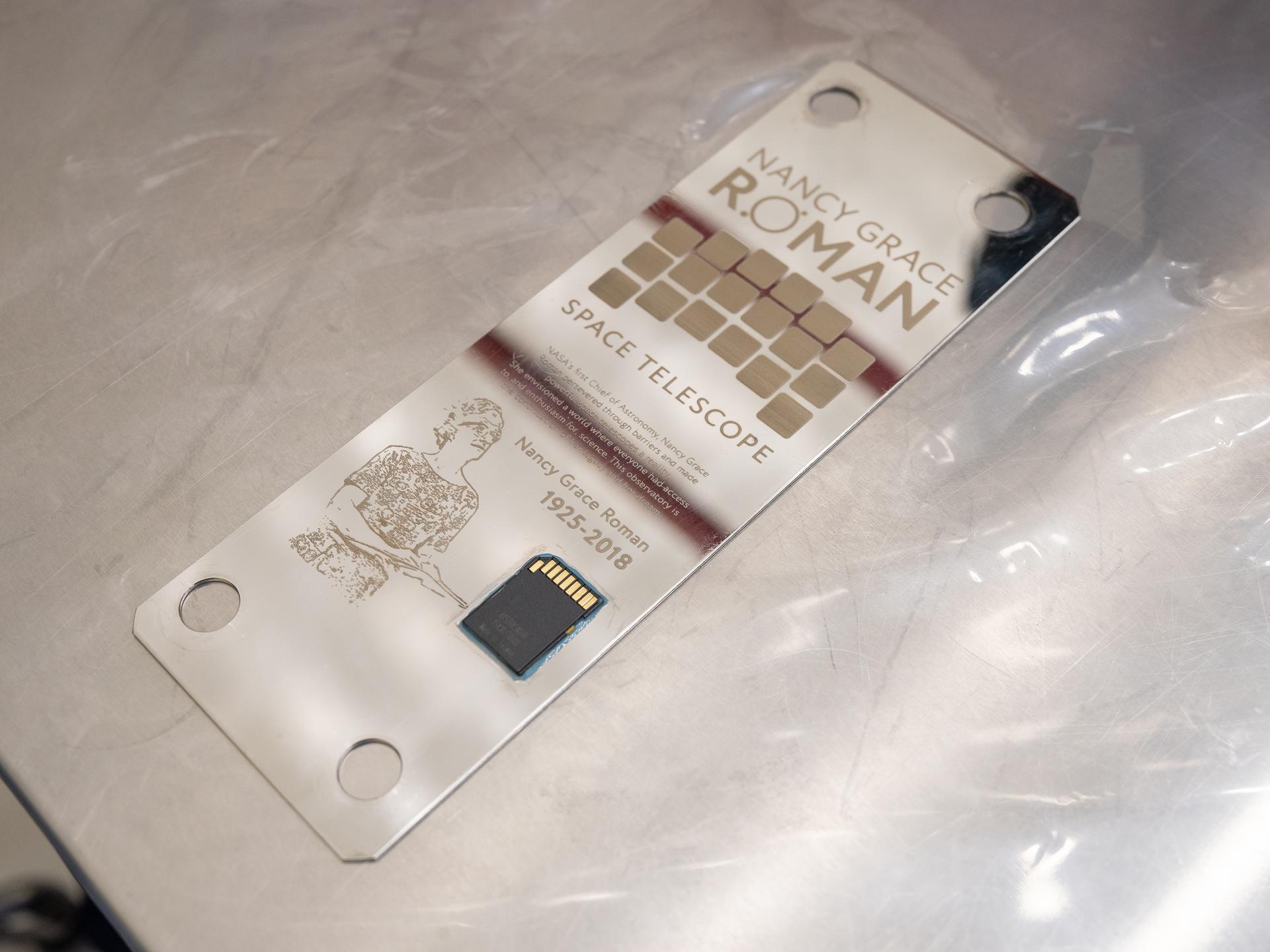
A technician inside the Payload Hazardous Servicing Facility at NASA’s Kennedy Space Center in Florida installs a memory card containing a total of 1,350,144 names as part of a commemorative plaque on the Nancy Grace Roman Space Telescope on Friday, July 17, 2026. The names, submitted by people from across the globe, including astronauts from NASA’s Artemis II and Artemis III missions, will travel with the Roman observatory to the Sun-Earth Lagrange point 2, or L2, about one million miles from Earth, where the Sun’s and Earth’s gravity balance out. Roman is named after Dr. Nancy Grace Roman, NASA’s first chief astronomer and one of the architects of the agency’s modern science program.
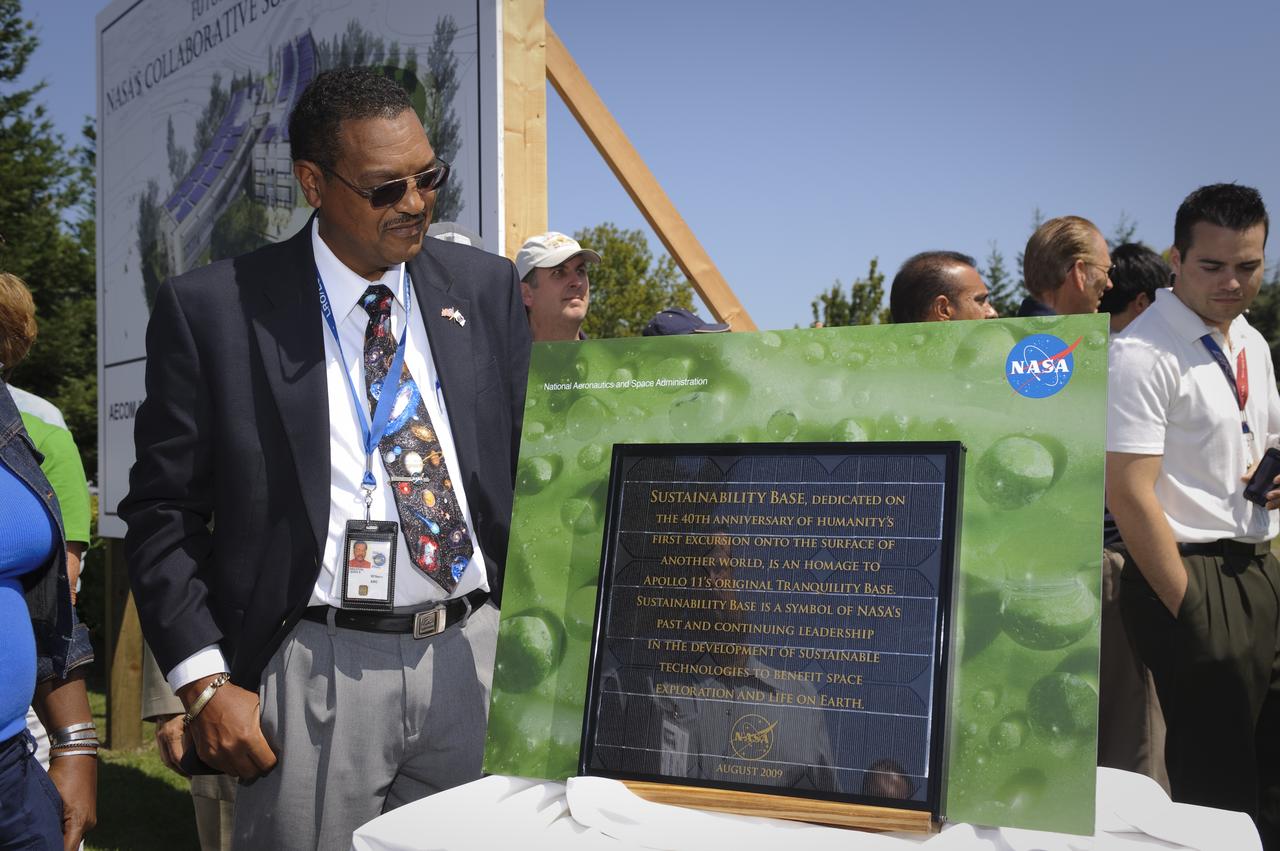
Sustainability Base Ground Breaking ceremony Lewis Braxton III, Deputy Director Ames Research Center with dedication plaque

PIONEER F (PIONEER-10) SPACECRAFT AT CAPE KENNEDY BEING READIED FOR MISSION (SHOWS THE POSITION OF THE PIONEER INTERSTALLER PLAQUE)
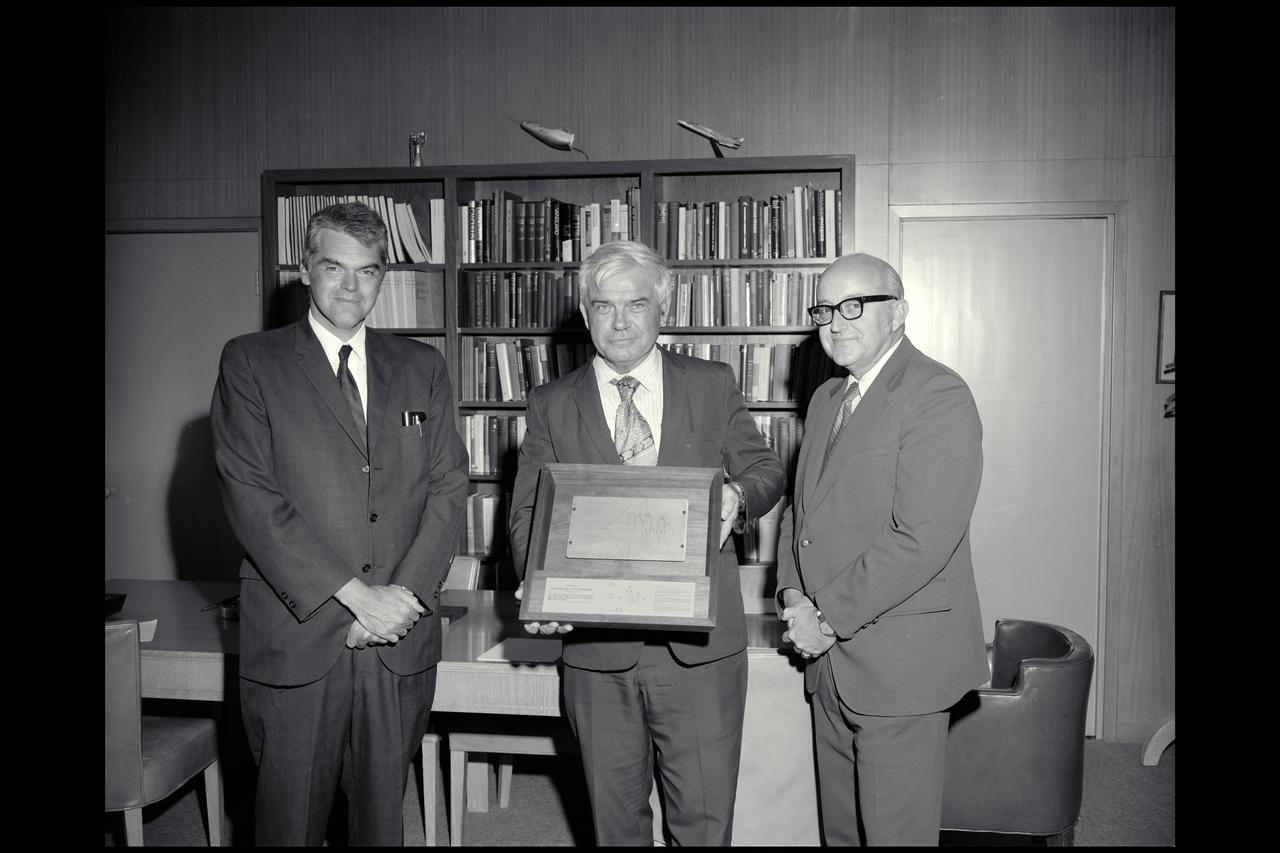
Charles 'Charlile' Hall, Hans Mark and Clarence 'Sy' Syvertson holding Pioneer 10 Plaque
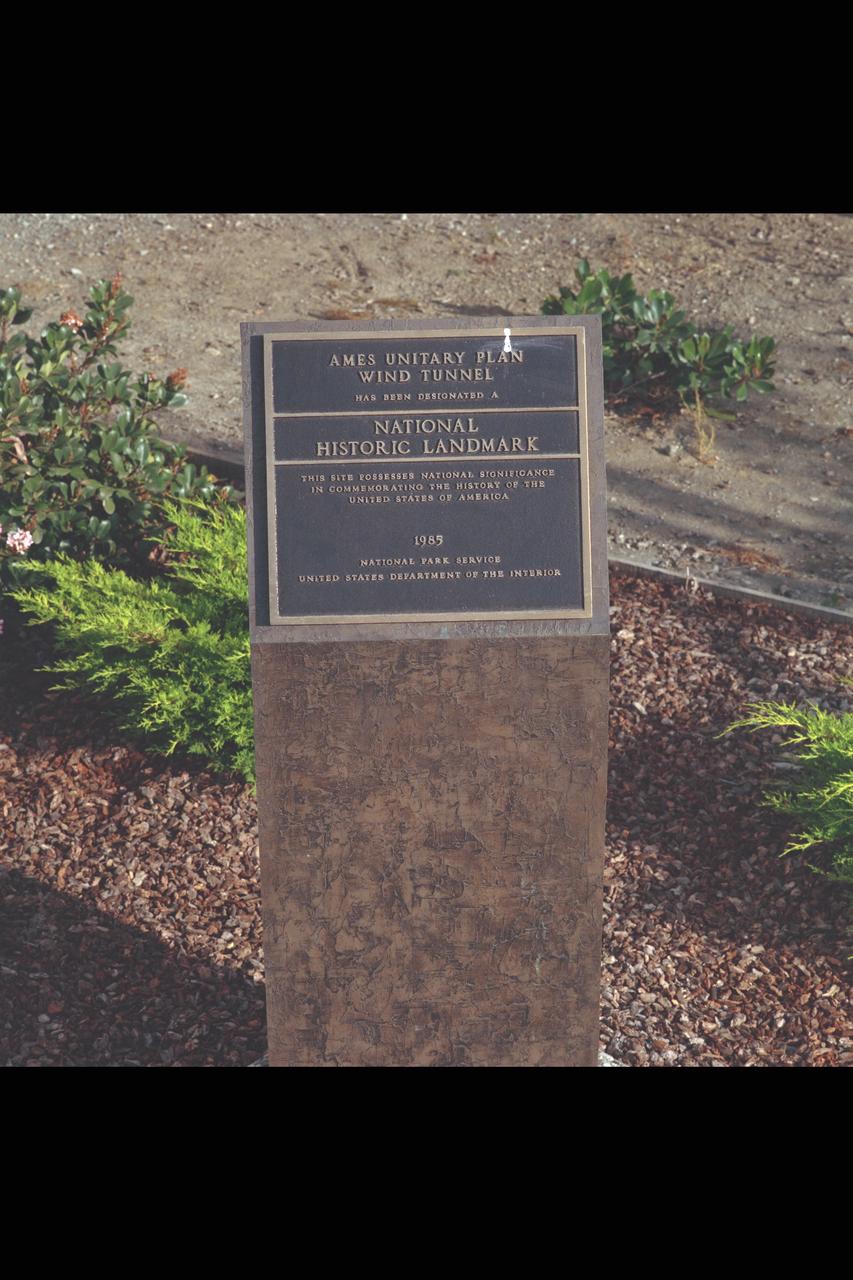
Unitary wind tunnels historical land mark site plaque (types of Aricraft Tested) (NASA Seal on tunnel)
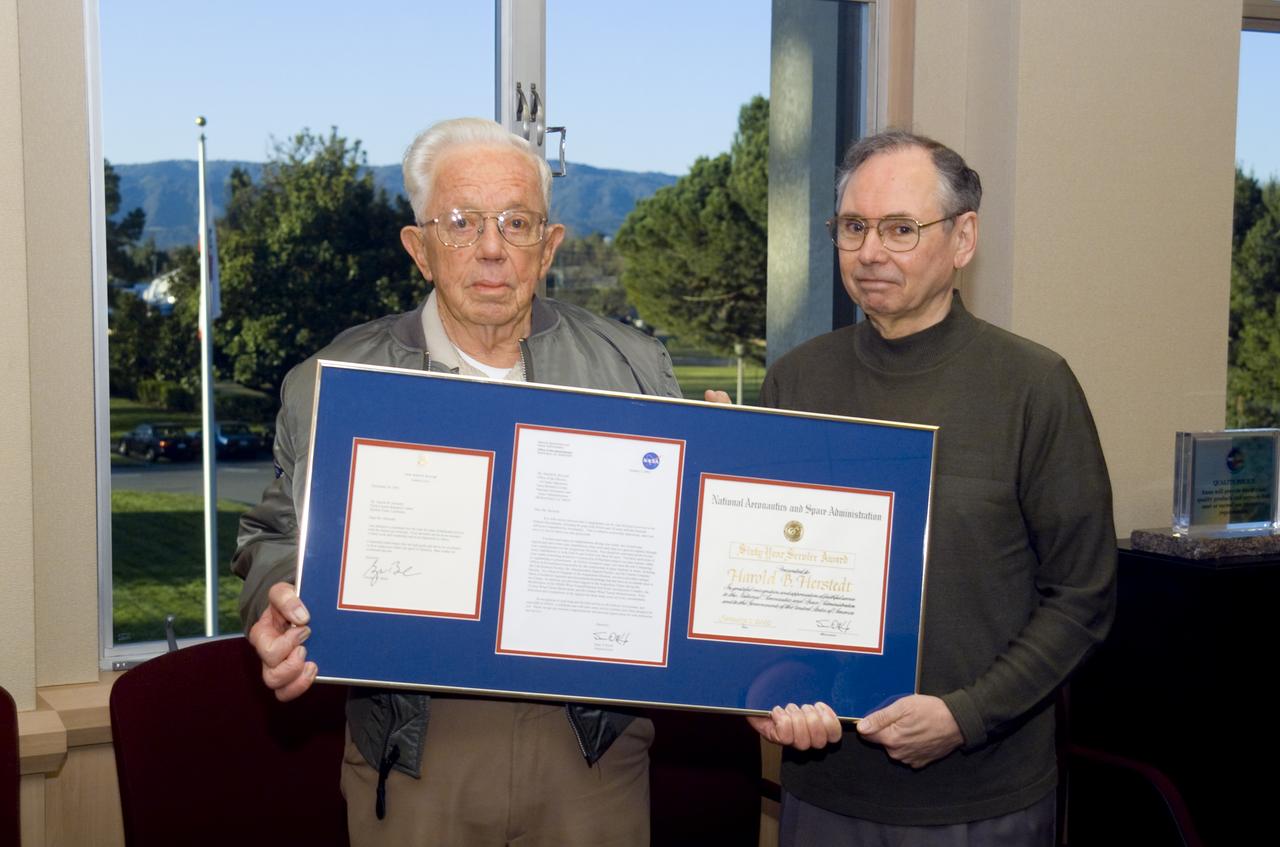
Length of Service Award (LOS) Harold Herstedt with 60 years of service. Award plaque presented by Dr McDonald

NASA ASTRONAUT CHRIS CASSIDY, ,SIGNS A PLAQUE TO BE MOUNTED IN THE PAYLOAD OPERATIONS INTEGRATION CENTER AT THE MARSHALL SPACE FLIGHT CENTER.
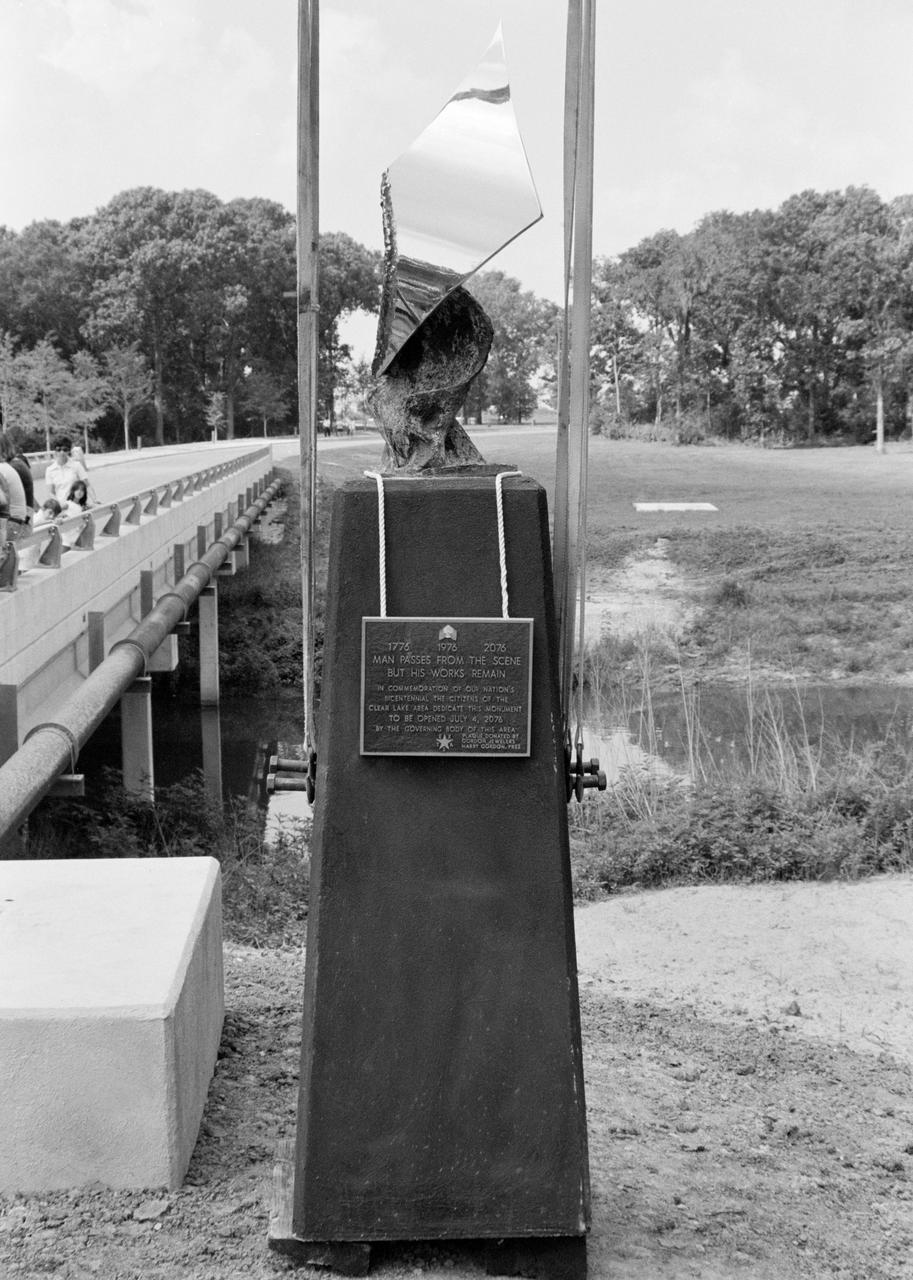
View taken during dedication of University of Houston, Clear Lake campus.Image is of plaque commemorating the bicentennial put in place by the citizens of the Clear Lake area.
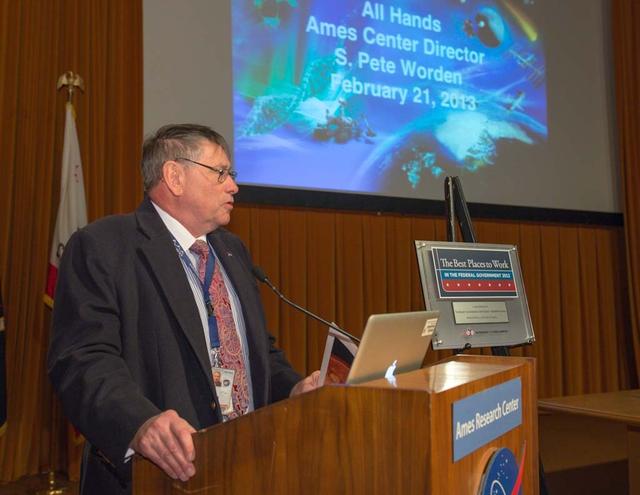
Ames Center Director S. Pete Worden unveils 'Best Places to Work' plaque in Federal Government 2012 at all-hands meeting
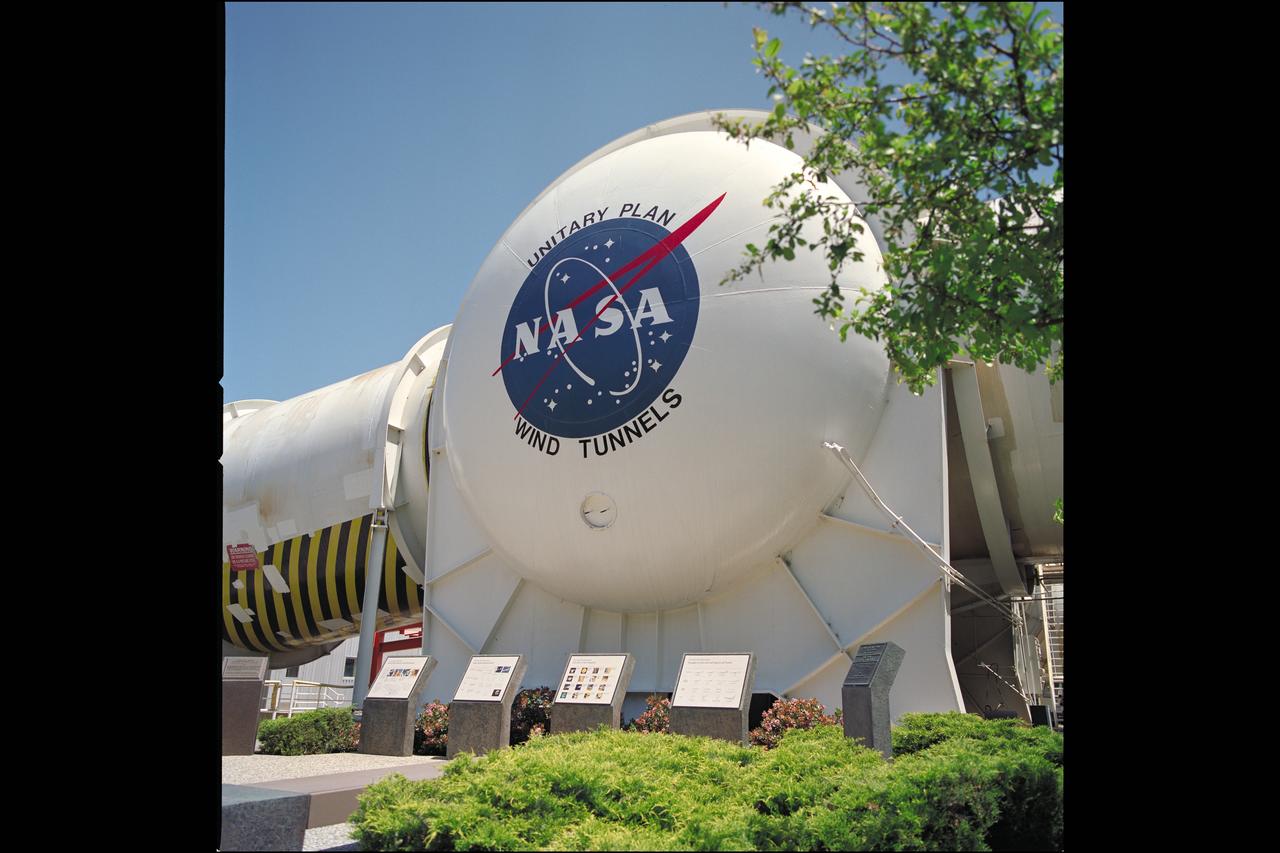
N-227 Unitary Plan Wind Tunnel with NASA 'Meatball' insignia over looking the National Historical Landmark sites' commemorative plaques
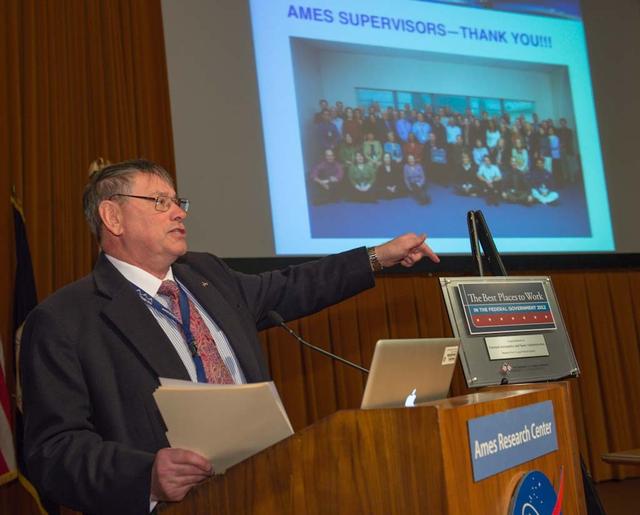
Ames Center Director S. Pete Worden unveils 'Best Places to Work' plaque in Federal Government 2012 at all-hands meeting
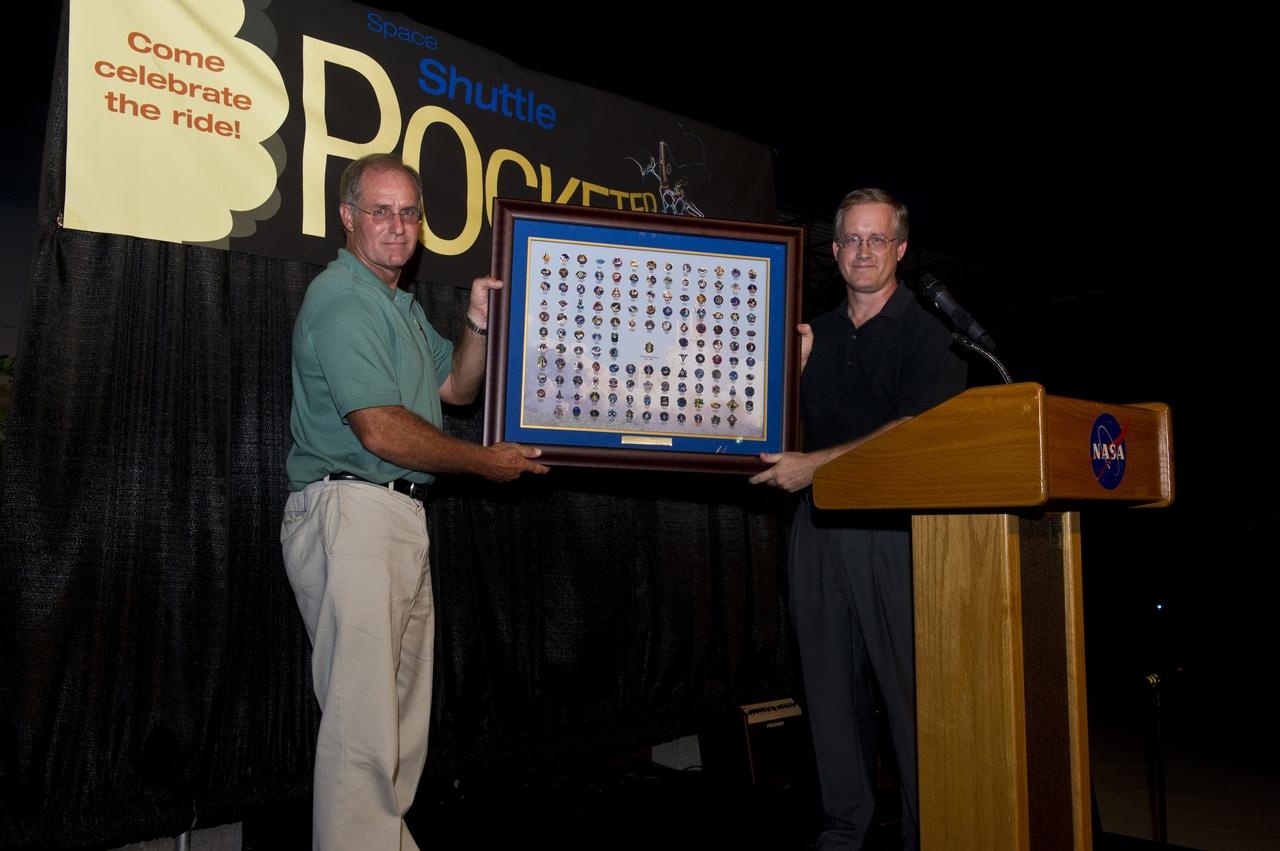
MARSHALL SHUTTLE PROPULSION OFFICE MANAGER STEVE CASH PRESENTS A MISSION PIN PLAQUE TO JOHN SHANNON, MANAGER OF THE SPACE SHUTTLE PROGRAM.
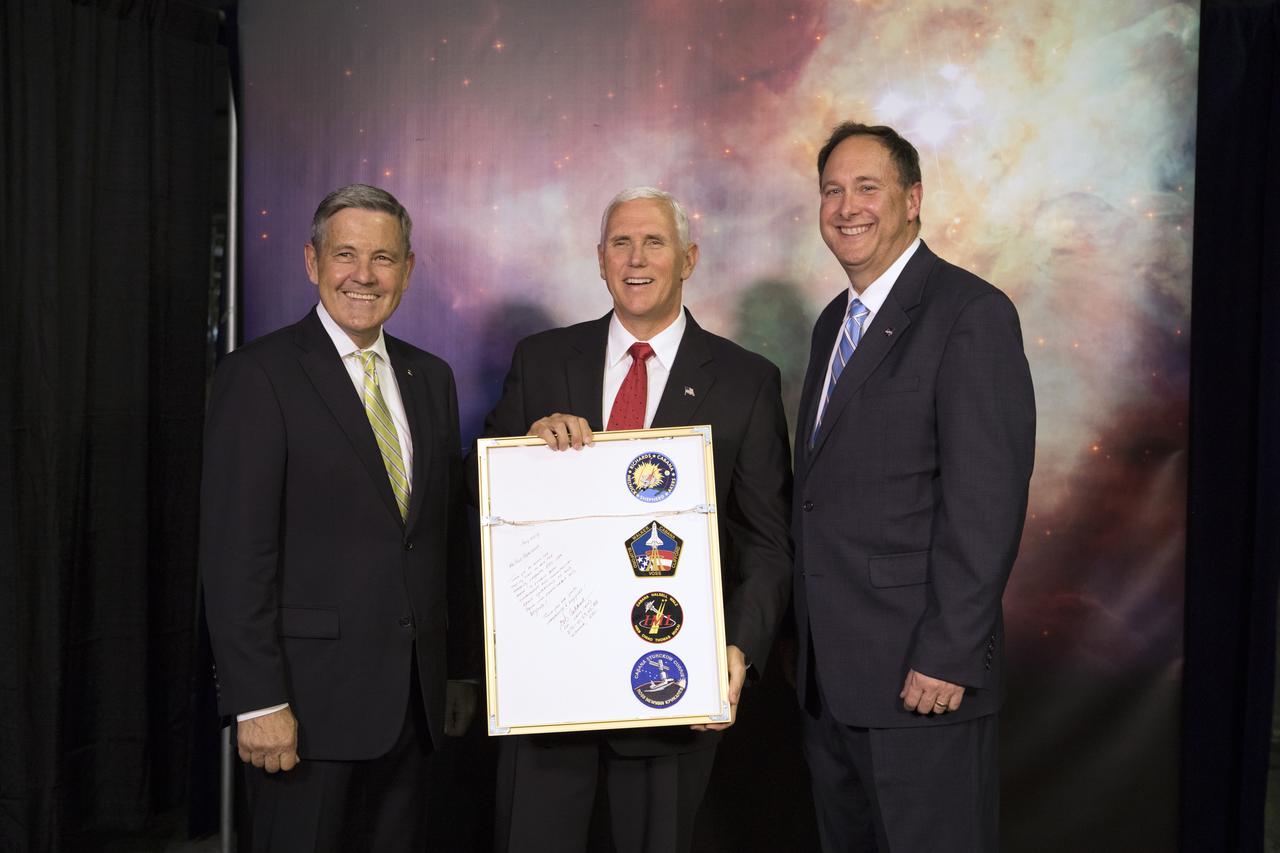
Kennedy Space Center Bob Cabana, left, and NASA's Acting Administrator Robert Lightfoot, right present Vice President Mike Pence with a framed plaque. On the back of the plaque are patches from each of Cabana's four space shuttle mission, STS-88, STS-53, STS-65, STS-41, and an inscription thanking the Vice President for his support of NASA. During his visit to Kennedy, the Vice President spoke inside the iconic Vehicle Assembly Building, where he thanked employees for advancing American leadership in space.
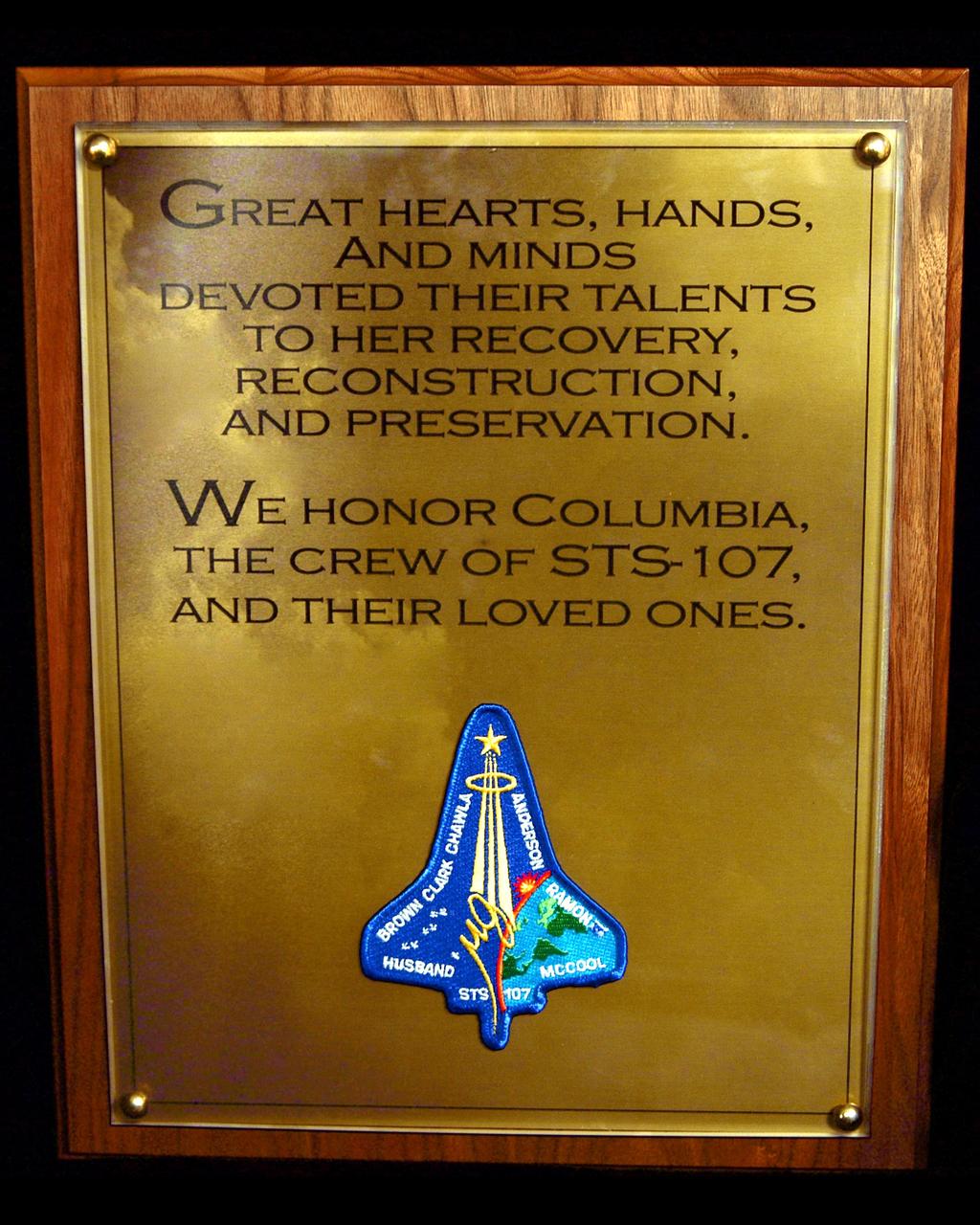
KENNEDY SPACE CENTER, FLA. - This closeup shows the words of the plaque unveiled Jan. 29, 2004, that was dedicated in memory of the orbiter Columbia and her seven-member crew who were lost in the tragic accident Feb. 1, 2003, as they returned to Earth from mission STS-107. The dedication of the plaque was made in front of the 40-member preservation team in the “Columbia room,” a permanent repository in the Vehicle Assembly Building of the debris collected in the aftermath of the accident.