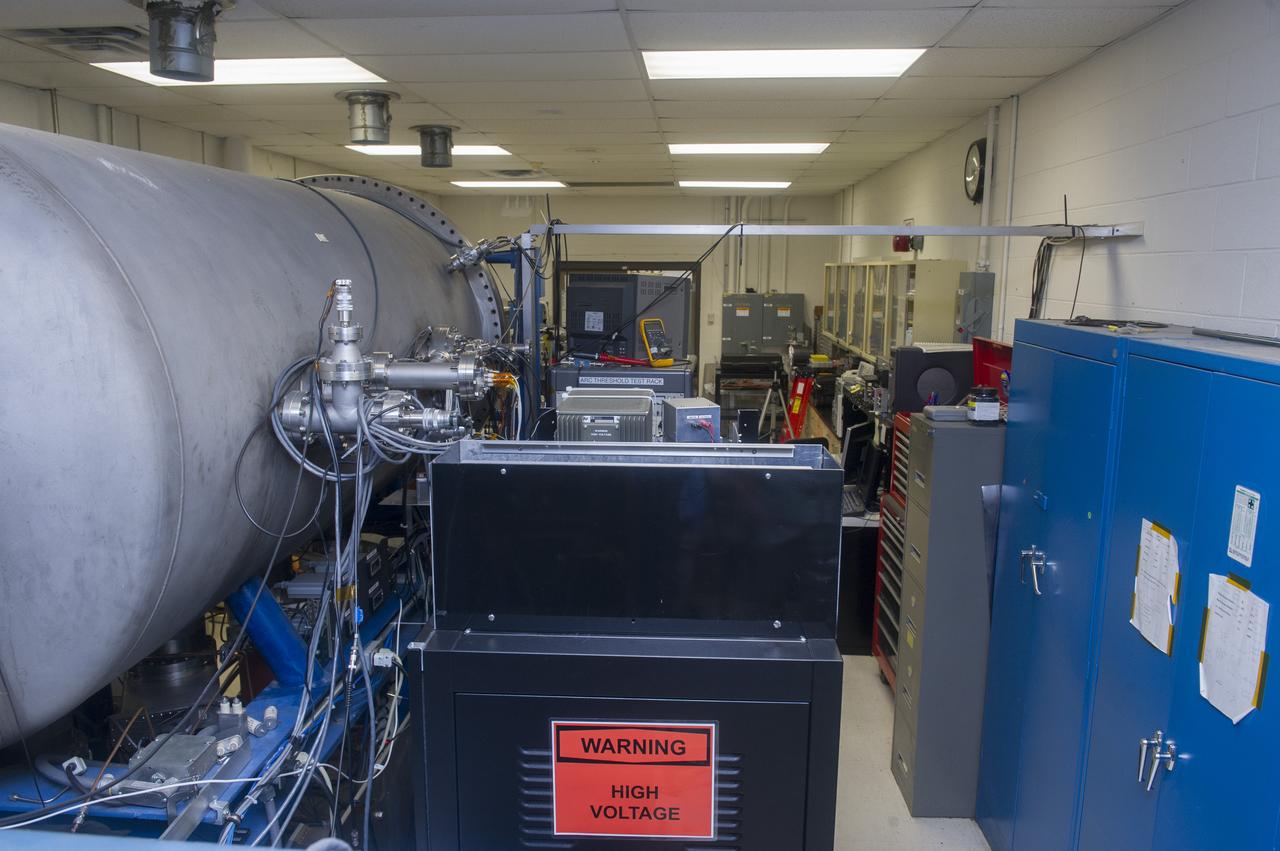
BLDG. 4605 PLASMA ENVIRONMENT TEST LABORATORY. VACUUM CHAMBER FROM REAR
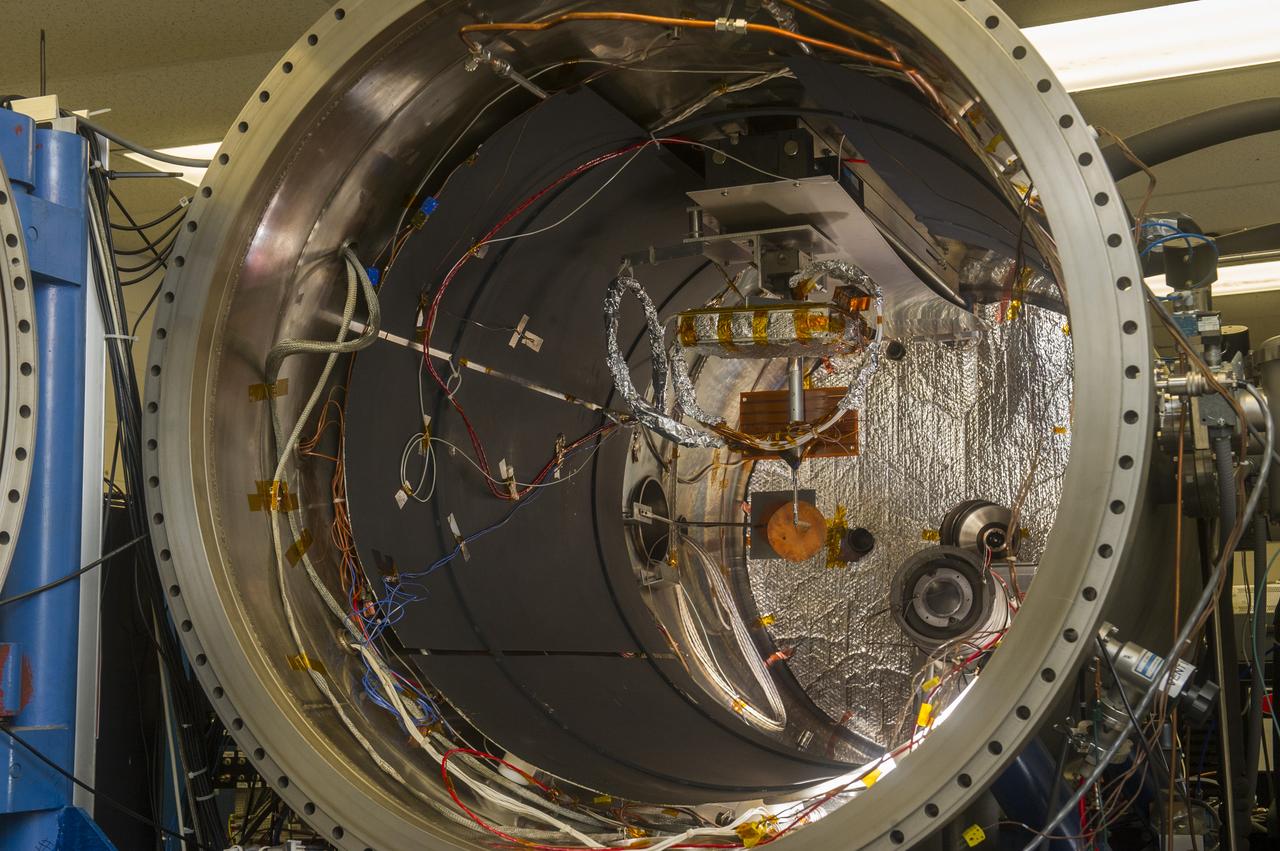
BLDG. 4605 PLASMA ENVIRONMENT TEST LABORATORY. VACUUM CHAMBER OPEN WITH SAMPLE SETUP
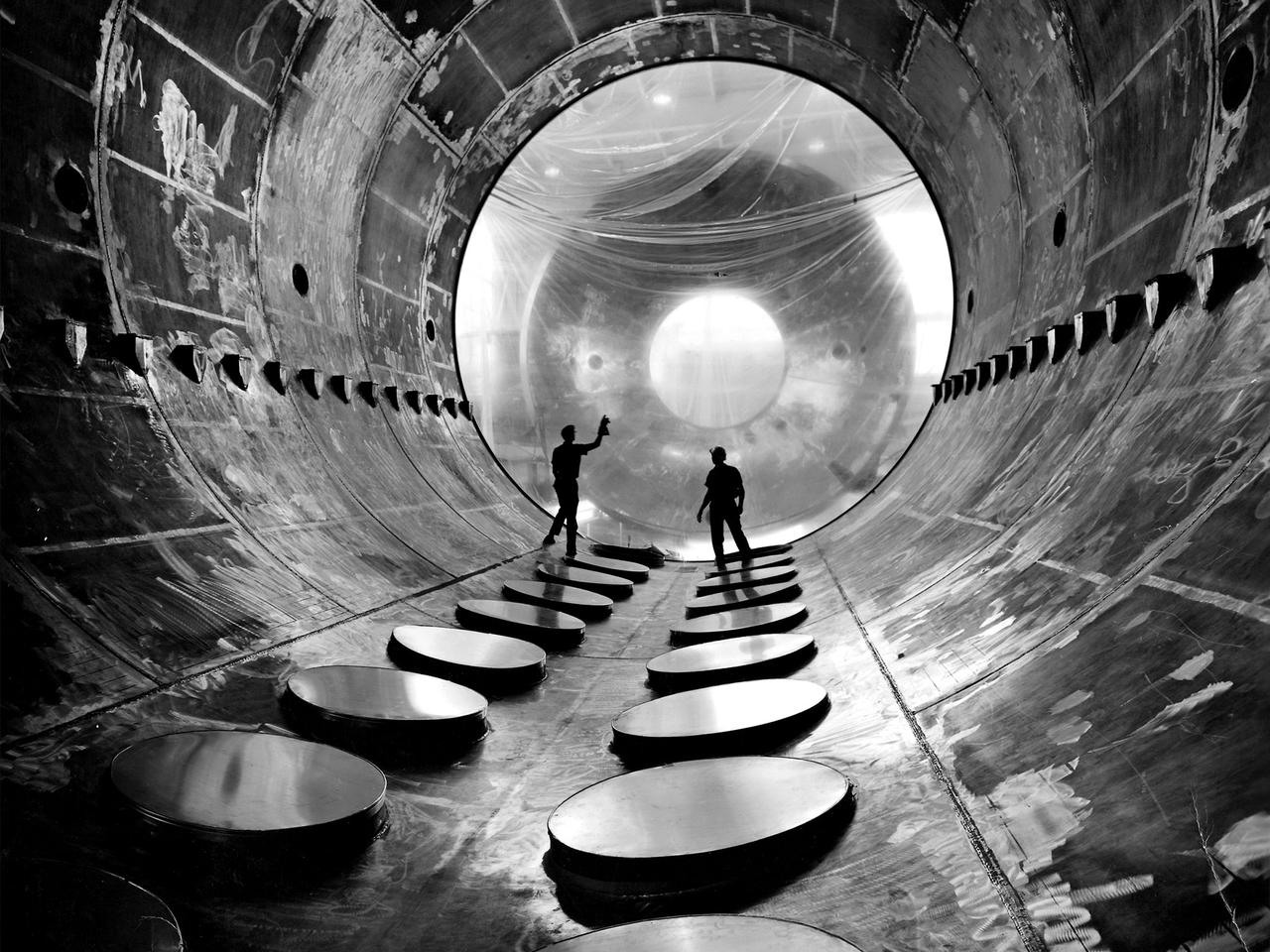
Interior of the 20-foot diameter vacuum tank at the NASA Lewis Research Center’s Electric Propulsion Laboratory. Lewis researchers had been studying different electric rocket propulsion methods since the mid-1950s. Harold Kaufman created the first successful ion engine, the electron bombardment ion engine, in the early 1960s. These engines used electric power to create and accelerate small particles of propellant material to high exhaust velocities. Electric engines have a very small thrust, but can operate for long periods of time. The ion engines are often clustered together to provide higher levels of thrust. The Electric Propulsion Laboratory, which began operation in 1961, contained two large vacuum tanks capable of simulating a space environment. The tanks were designed especially for testing ion and plasma thrusters and spacecraft. The larger 25-foot diameter tank included a 10-foot diameter test compartment to test electric thrusters with condensable propellants. The portals along the chamber floor lead to the massive exhauster equipment that pumped out the air to simulate the low pressures found in space.

New staff member Paul Margosian inspects a cluster of ion engines in the Electric Propulsion Laboratory’s 25-foot diameter vacuum tank at the National Aeronautics and Space Administration (NASA) Lewis Research Center. Lewis researchers had been studying different methods of electric rocket propulsion since the mid-1950s. Harold Kaufman created the first successful engine, the electron bombardment ion engine, in the early 1960s. These engines used electric power to create and accelerate small particles of propellant material to high exhaust velocities. Electric engines have a very small thrust, and but can operate for long periods of time. The ion engines are often clustered together to provide higher levels of thrust. The Electric Propulsion Laboratory contained two large vacuum tanks capable of simulating the space environment. The tanks were designed especially for testing ion and plasma thrusters and spacecraft. The larger 25-foot diameter tank was intended for testing electric thrusters with condensable propellants. The tank’s test compartment, seen here, was 10 feet in diameter. Margosian joined Lewis in late 1962 during a major NASA hiring phase. The Agency reorganized in 1961 and began expanding its ranks through a massive recruiting effort. Lewis personnel increased from approximately 2,700 in 1961 to over 4,800 in 1966. Margosian, who worked with Bill Kerslake in the Electromagnetic Propulsion Division’s Propulsion Systems Section, wrote eight technical reports on mercury and electron bombardment thrusters, thermoelectrostatic generators, and a high voltage insulator.