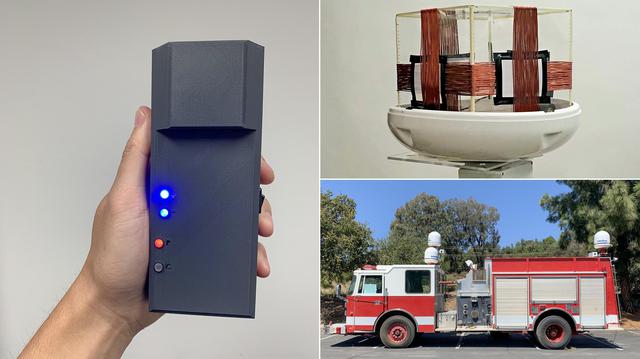
To help locate and track firefighters inside buildings, where other positioning technologies fail, NASA's Jet Propulsion Laboratory and the Department of Homeland Security Science and Technology Directorate (S&T) are developing POINTER. Short for Precision Outdoor and Indoor Navigation and Tracking for Emergency Responders, the system began taking shape in 2014 and is being matured for use by fire departments nationwide. The POINTER system is composed of three parts: a receiver, transmitter, and base station. The receiver (left) has been shrunk from the size of a backpack to the size of a large smartphone, and further development will miniaturize it so it can be easily clipped to a belt buckle. The transmitter (top right) is a system of coils that generate the magnetoquasistatic fields, which — unlike the radio waves used by GPS and radio-frequency identification — are able to pass through construction materials to interact with the receiver, enabling fire crews to track the location and orientation of firefighters. To test the system, transmitters have been attached to an out-of-service firetruck (lower right). Through 2021, POINTER will undergo field tests and a commercial version of POINTER will be made available to fire departments in 2022. https://photojournal.jpl.nasa.gov/catalog/PIA24562
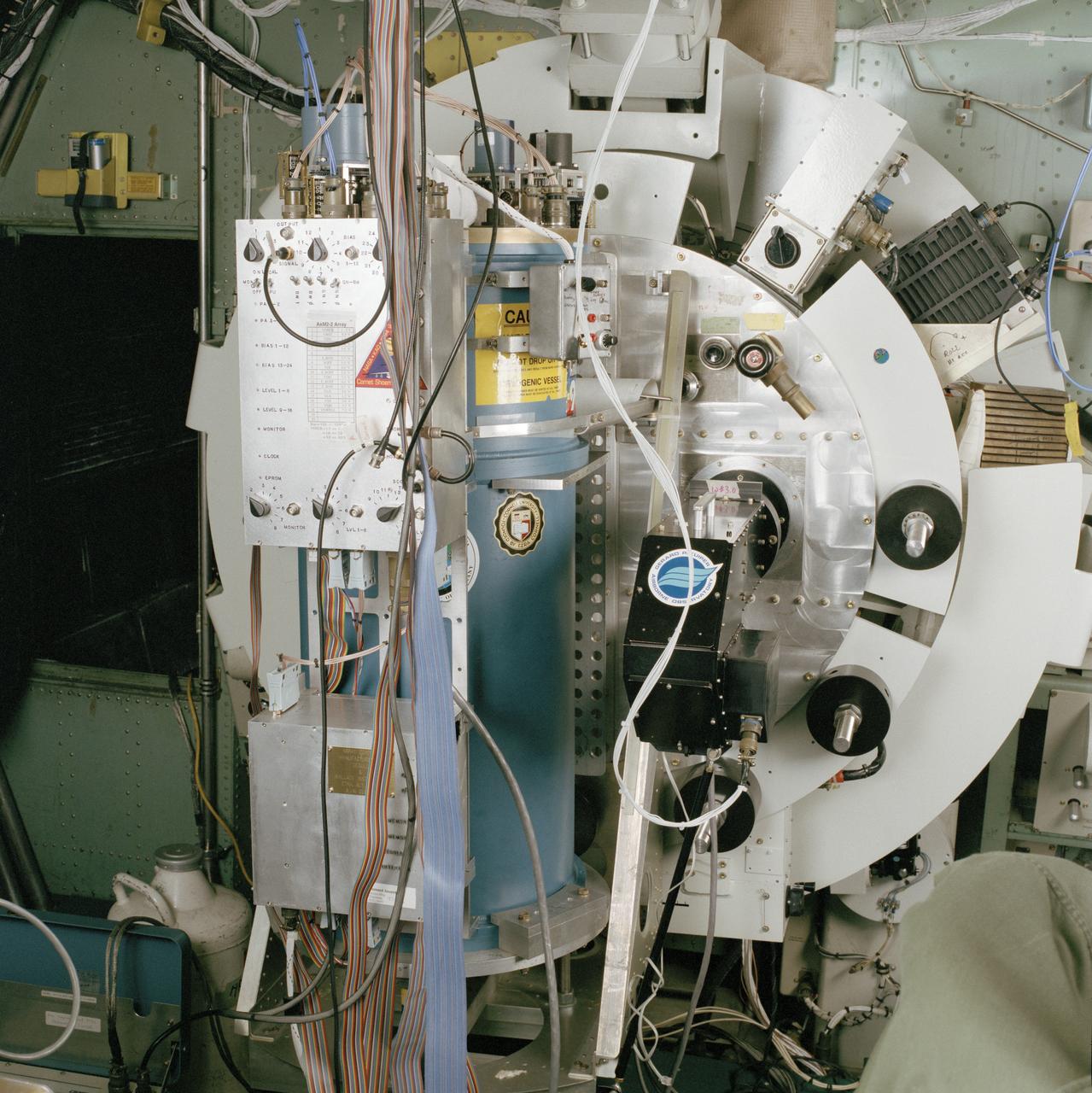
SOFIA Blind Pointer Experiment: Airborne testbed onboard C-141 KAO
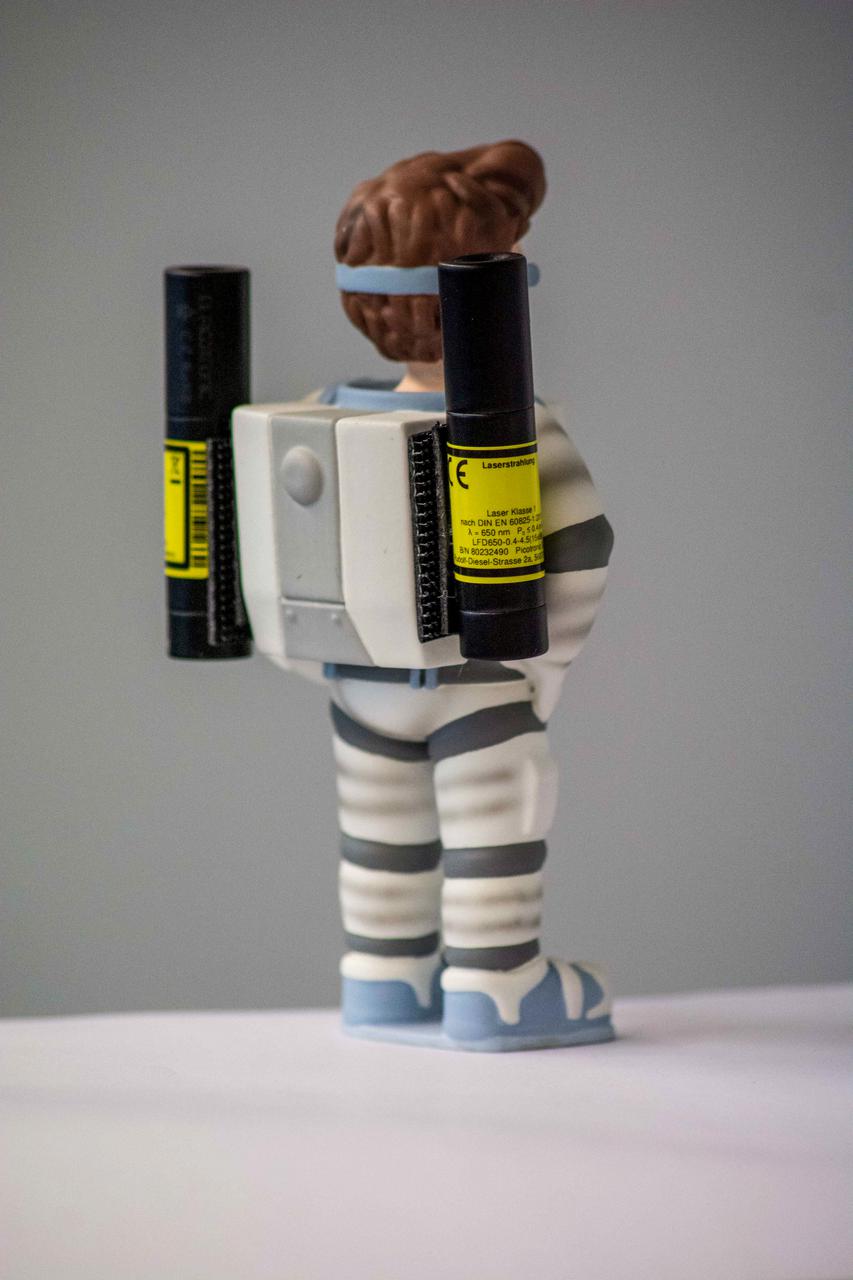
jsc2021e037887 (3/5/2021) --- A preflight photo of the Little Major Tom figure with two laser-pointers as the third object to be observed rotating around its intermediate axis for the Dzhanibekov Demonstrations investigation. Image courtesy of DLR.
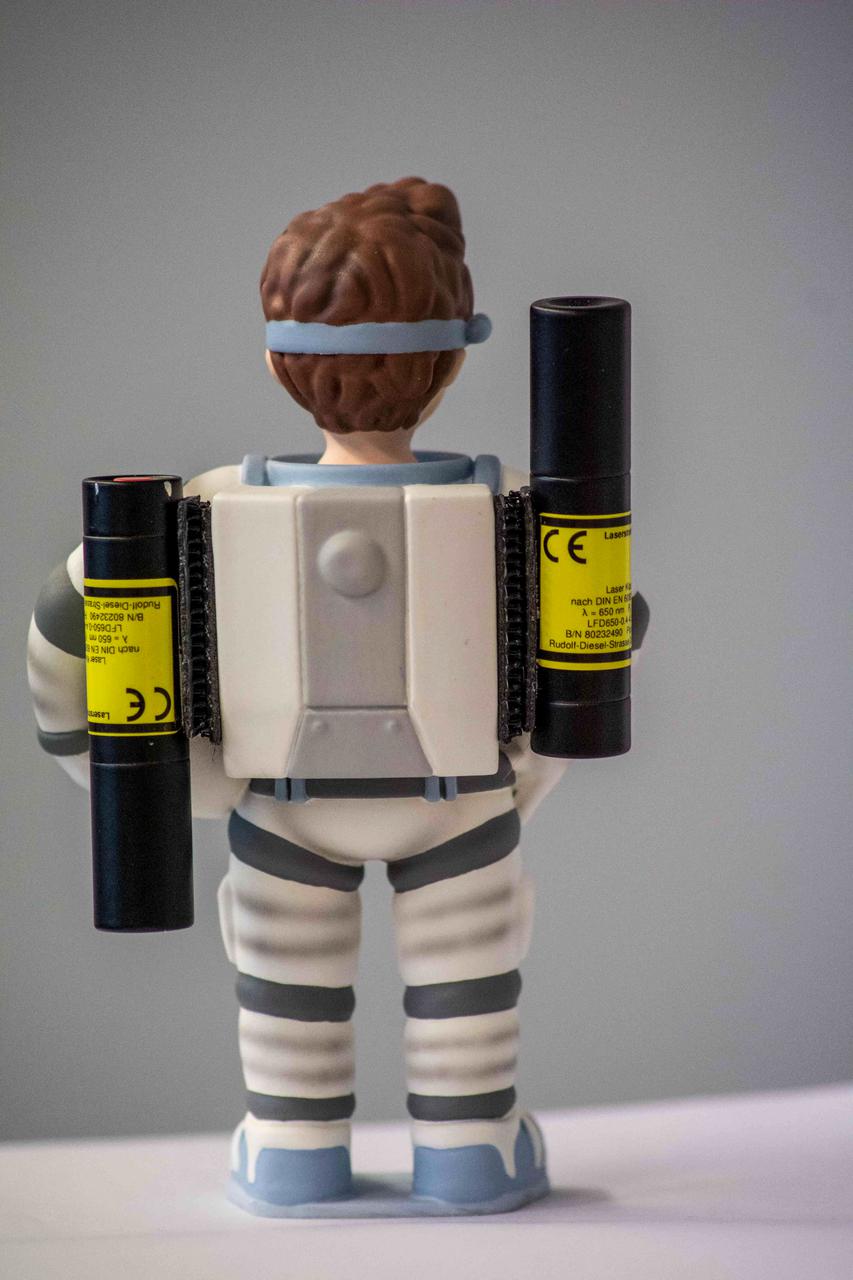
jsc2021e037886 (3/5/2021) --- A preflight photo of the Little Major Tom figure with two laser-pointers as the third object to be observed rotating around its intermediate axis for the Dzhanibekov Demonstrations investigation. Image courtesy of DLR.
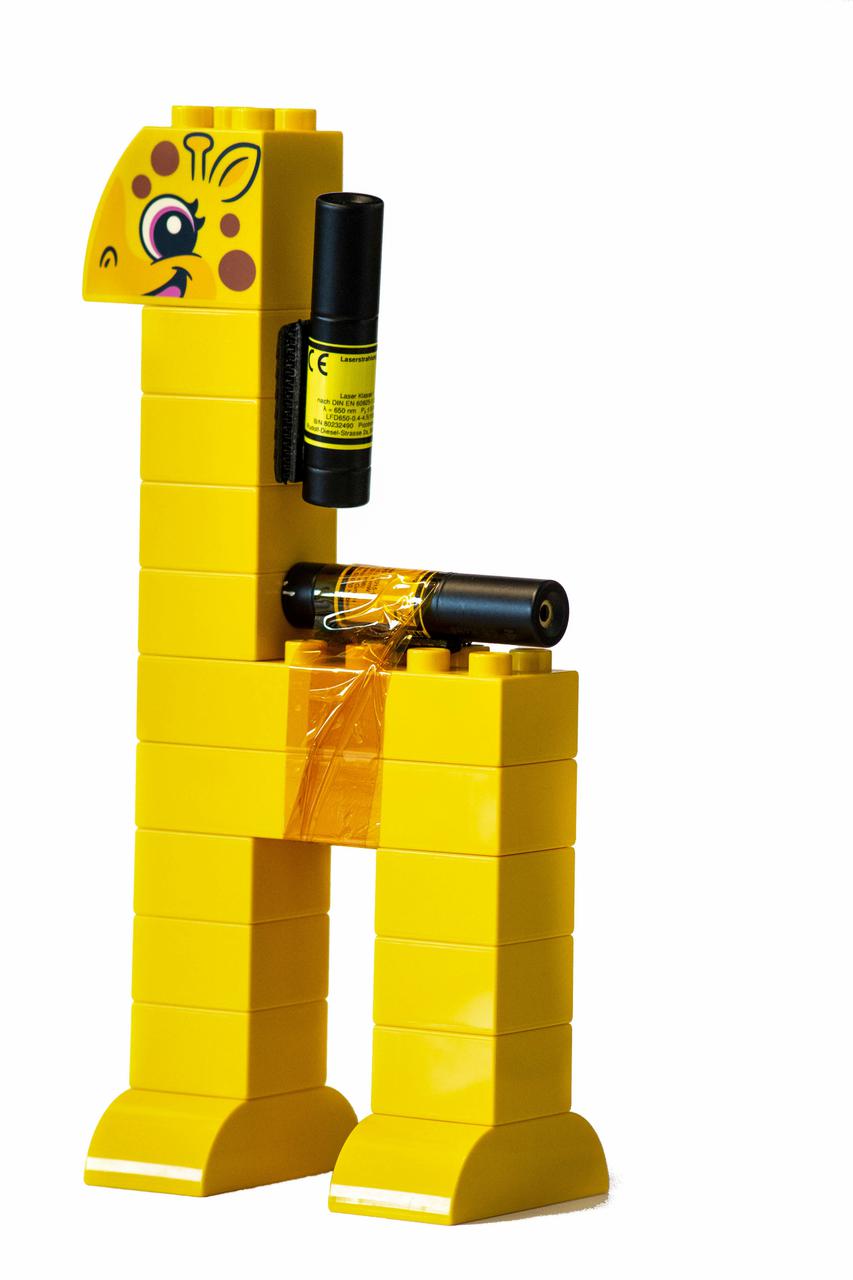
jsc2021e037884 (4/19/2021) --- A preflight photo of the Lego Duplo giraffe with two laser-pointers as the second object to be observed rotating around its intermediate axis for the Dzhanibekov Demonstrations investigation. Image courtesy of DLR.
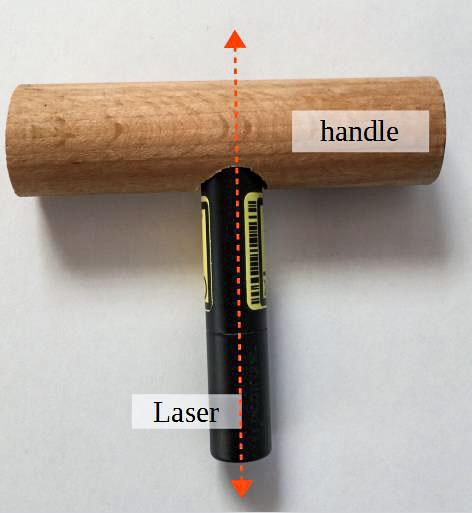
jsc2021e037886 (8/242021) --- A preflight photo of the First object to be observed rotating around its intermediate axis, made from a laser-pointer and a wooden handle for the Dzhanibekov Demonstrations investigation. Image courtesy of DLR.
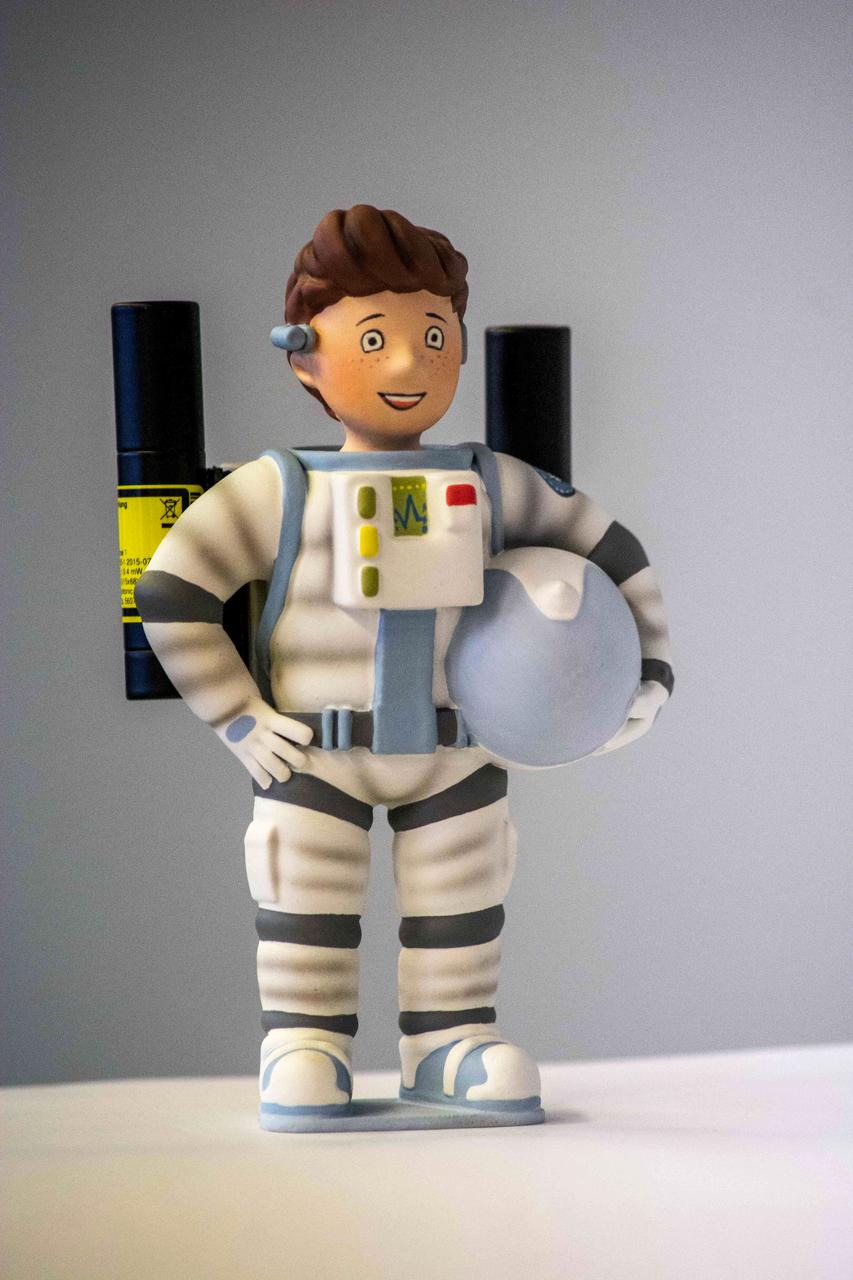
jsc2021e037888 (3/5/2021) --- A preflight photo of the Little Major Tom figure with two laser-pointers as the third object to be observed rotating around its intermediate axis for the Dzhanibekov Demonstrations investigation. Image courtesy of DLR.
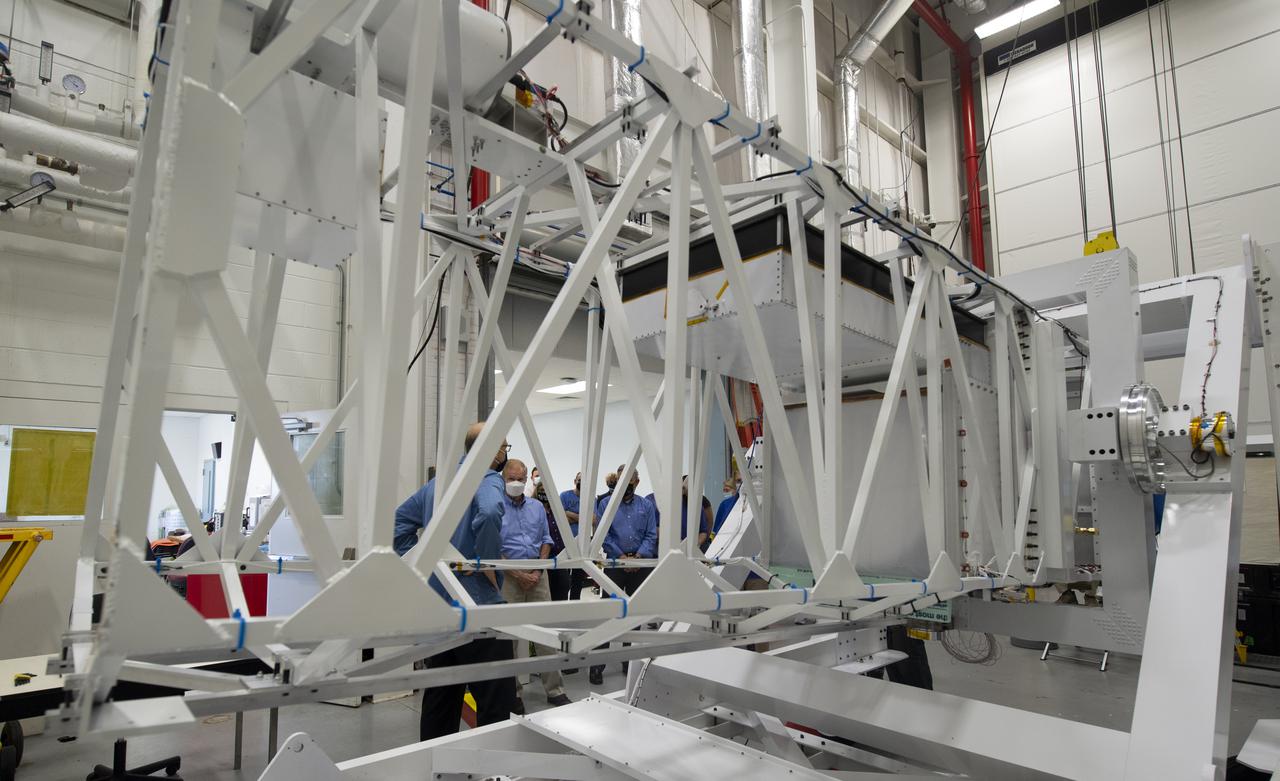
NASA Administrator Bill Nelson is seen through the structure of the Wallops Arc Second Pointer balloon payload being assembled in the Small Satellites, Balloon Research and Development Lab, Tuesday, Aug. 10, 2021, at NASA’s Wallops Flight Facility in Virginia. Photo Credit: (NASA/Joel Kowsky)
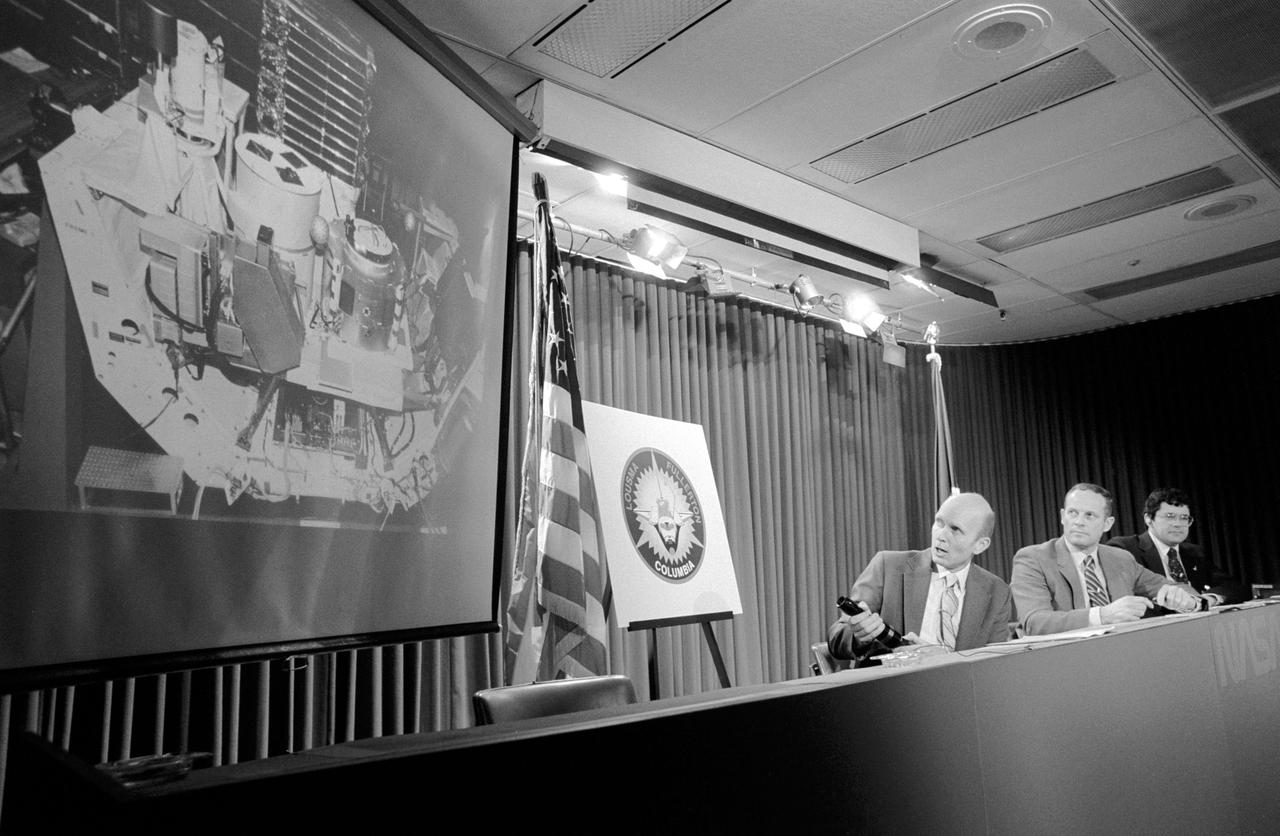
S82-25905 (21 Jan. 1982) --- Astronaut C. Gordon Fullerton uses an electronic pointer to localize an area on a projected visual of the OSS payload package to be carried in the cargo bay of the Columbia on STS-3. Fullerton is pilot for the flight and Jack R. Lousma, center, is mission commander. The two were holding one of a series of pre-STS-3 press briefings. They were introduced by Dr. John Lawrence, far right, a public information specialist for JSC?s Office of Public Affairs. Photo credit: NASA
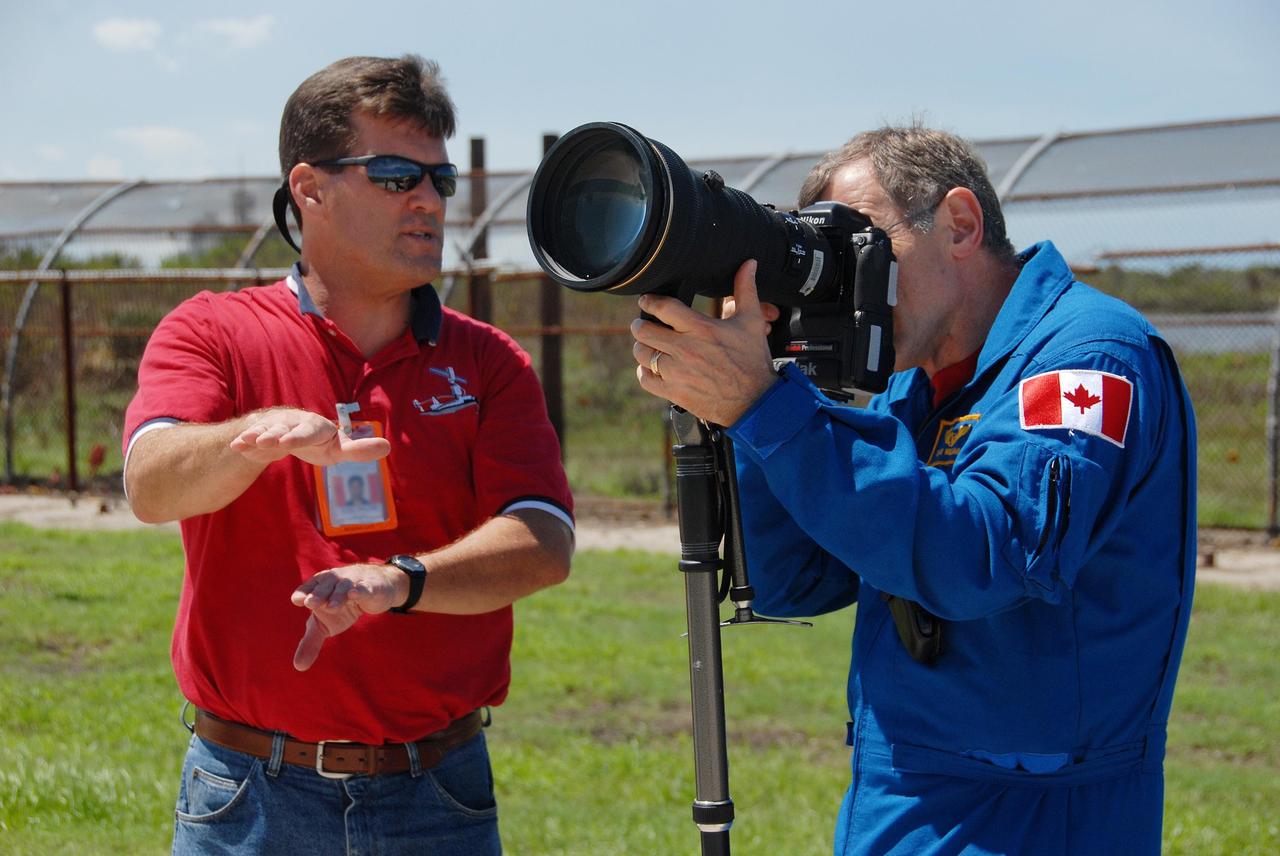
KENNEDY SPACE CENTER, Fla. -- Near Launch Pad 39A, STS-118 Mission Specialist Dave Williams gets pointers from a Johnson Space Center crew photo trainer on using the camera and telephoto lens to photograph the external tank/solid rocket booster stack on Space Shuttle Endeavour. Williams and other mission specialists will take photos of the tank after separation from Endeavour after launch. The STS-118 crew is at Kennedy to take part in Terminal Countdown Demonstration Test activities, including M-113 training, payload familiarization, emergency egress training at the pad and a simulated launch countdown. The payload aboard Space Shuttle Endeavour includes the S5 truss, a SPACEHAB module and external stowage platform 3. The STS-118 mission is the 22nd flight to the International Space Station and is targeted for launch on Aug. 7. NASA/George Shelton

Edwards, Calif. – ED-0155-03 - NASA Administrator Charlie Bolden flies the Sierra Nevada Corporation, or SNC, Dream Chaser simulator at the agency's Dryden Flight Research Center. Marlin Pickett, a simulation engineer at Dryden, left, and Steve Lindsey, SNC's director of flight operations and former space shuttle astronaut, give Bolden pointers for landing the simulated vehicle. SNC is on track to perform development work on its Dream Chaser flight test vehicle in collaboration with NASA's Commercial Crew Program, or CCP, at Dryden in the coming months. SNC is one of three companies working with CCP during the agency's Commercial Crew Integrated Capability, or CCiCap, initiative, which is intended to lead to the availability of commercial human spaceflight services for government and commercial customers. To learn more about CCP and its industry partners, visit www.nasa.gov_commercialcrew. Image credit: NASA_Tom Tschida