A Small Pond

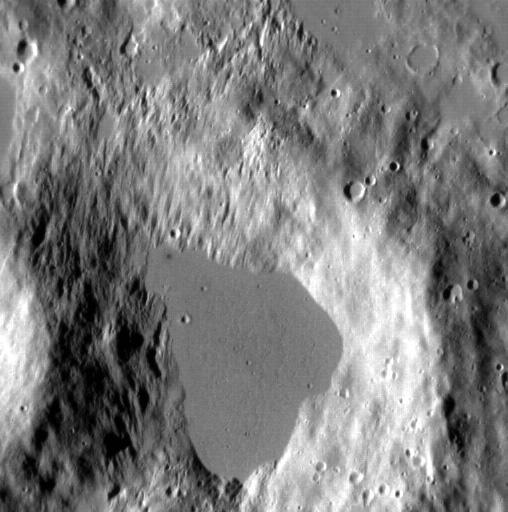
Mounds in a Melt Pond
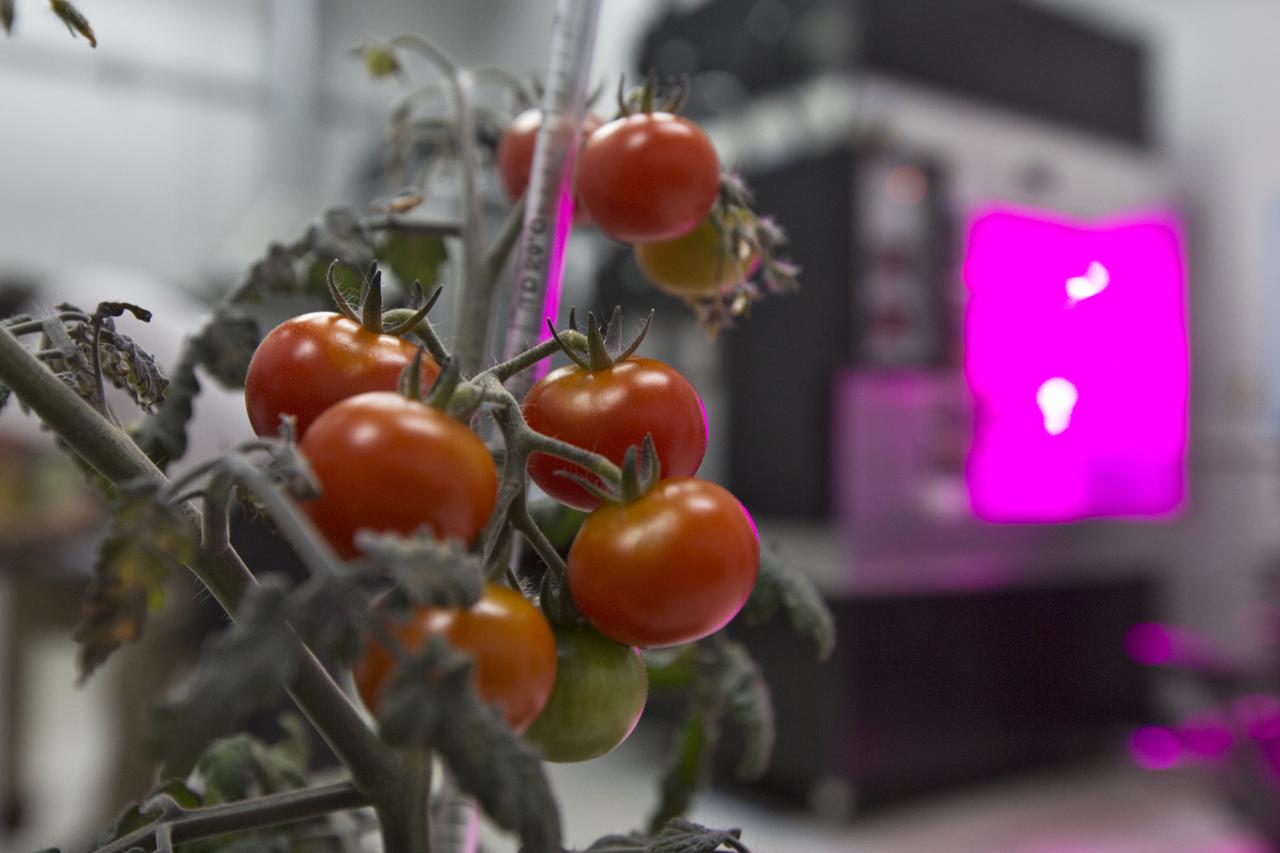
Tomato plants are growing inside a laboratory at the Space Station Processing Facility at NASA’s Kennedy Space Center in Florida. The plant growth is being tested in the Veggie Passive Orbital Nutrient Delivery System (PONDS). Veggie PONDS is a direct follow-on to the Veg-01 and Veg-03 hardware and plant growth validation tests. The primary goal of this newly developed plant growing system, Veggie PONDS, is to demonstrate uniform plant growth. PONDS units have features that are designed to mitigate microgravity effects on water distribution, increase oxygen exchange and provide sufficient room for root zone growth. PONDS is planned for use during Veg-04 and Veg-05 on the International Space Station after the Veggie PONDS Validation flights on SpaceX-14 and OA-9.
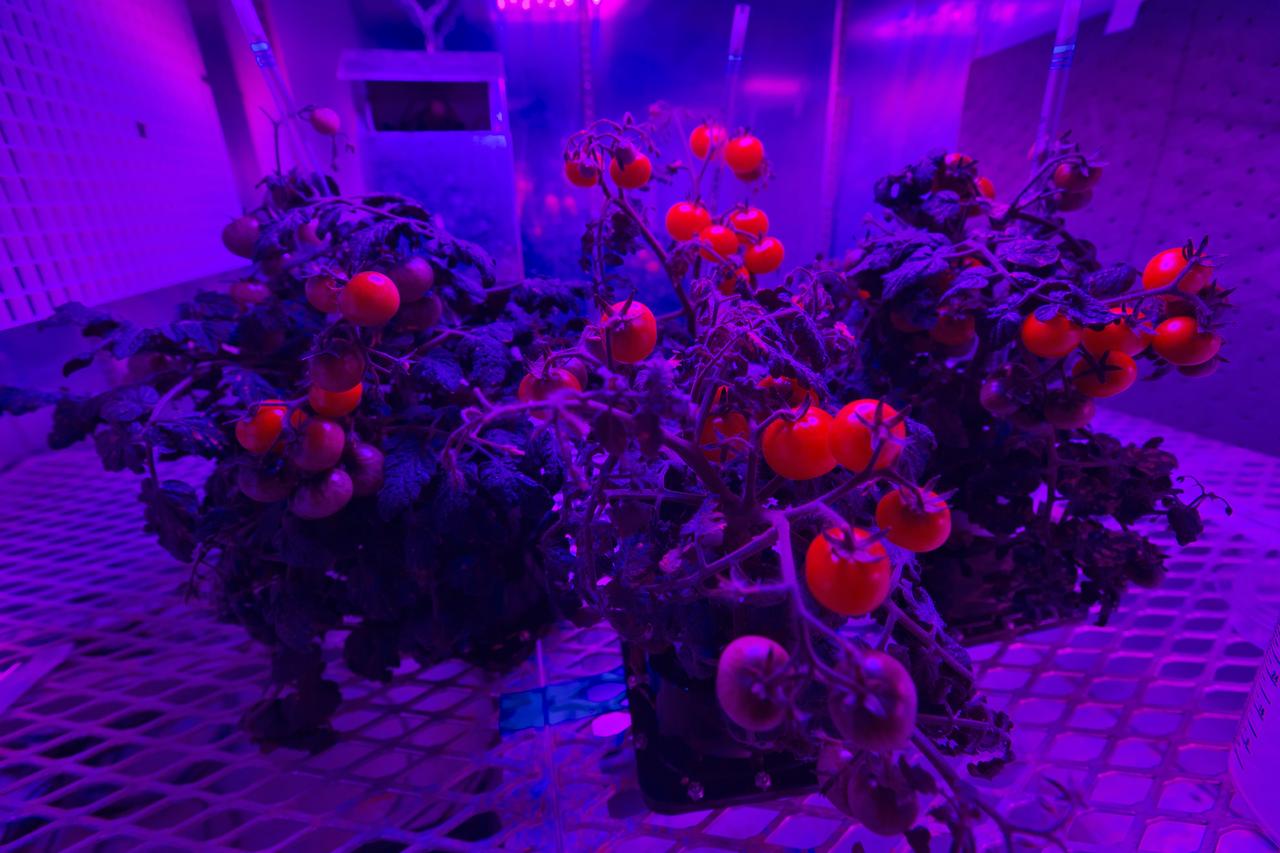
Tomato plants are growing under red and blue LED lights in a growth chamber inside a laboratory at the Space Station Processing Facility at NASA’s Kennedy Space Center in Florida. The plant growth is being tested in the Veggie Passive Orbital Nutrient Delivery System (PONDS). Veggie PONDS is a direct follow-on to the Veg-01 and Veg-03 hardware and plant growth validation tests. The primary goal of this newly developed plant growing system, Veggie PONDS, is to demonstrate uniform plant growth. PONDS units have features that are designed to mitigate microgravity effects on water distribution, increase oxygen exchange and provide sufficient room for root zone growth. PONDS is planned for use during Veg-04 and Veg-05 on the International Space Station after the Veggie PONDS Validation flights on SpaceX-14 and OA-9.
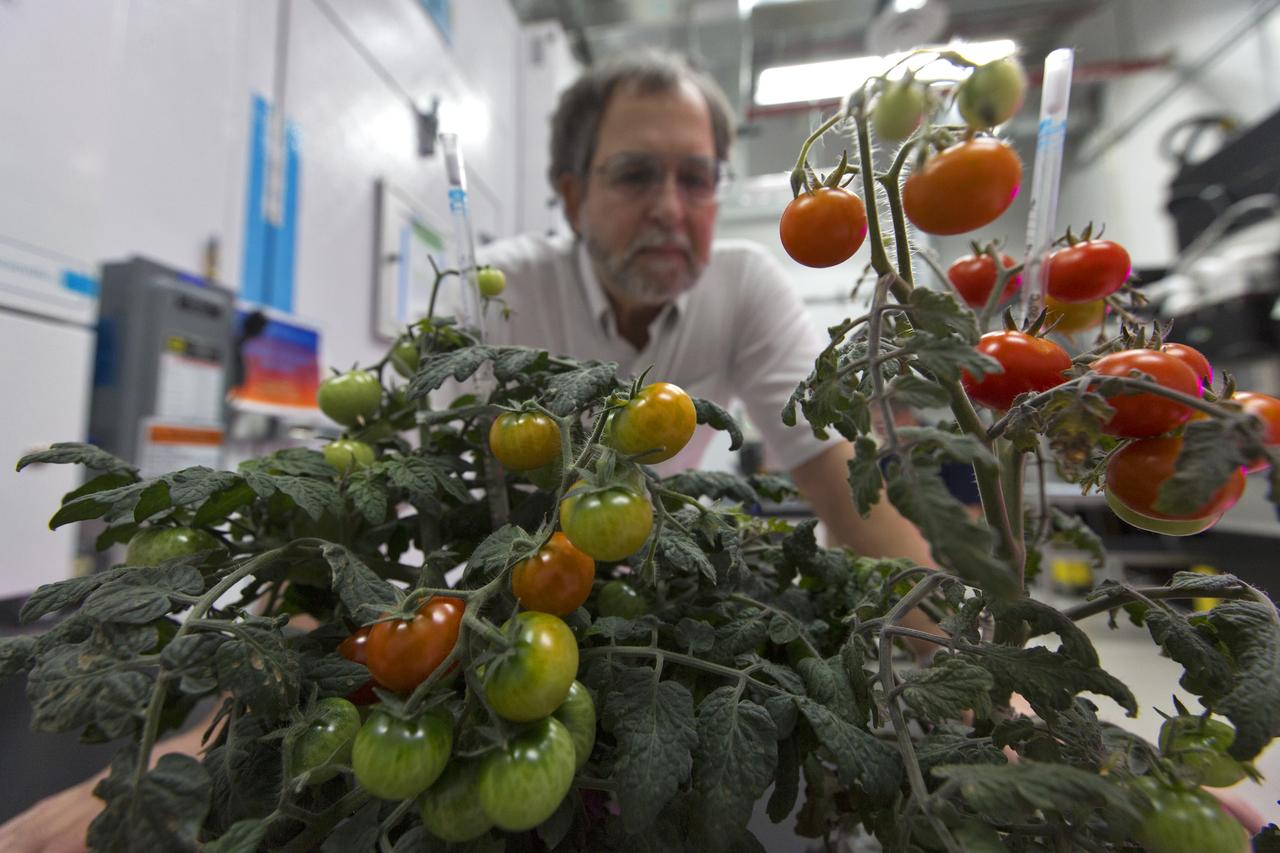
Howard Levine, Ph.D., a research scientist at NASA's Kennedy Space Center in Florida, reviews the growth of several tomato plants in a laboratory in the Space Station Processing Facility. The tomato plants are growing in the Veggie Passive Orbital Nutrient Delivery System (PONDS). Veggie PONDS is a direct follow-on to the Veg-01 and Veg-03 hardware and plant growth validation tests. The primary goal of this newly developed plant growing system, Veggie PONDS, is to demonstrate uniform plant growth. PONDS units have features that are designed to mitigate microgravity effects on water distribution, increase oxygen exchange and provide sufficient room for root zone growth. PONDS is planned for use during Veg-04 and Veg-05 on the International Space Station after the Veggie PONDS Validation flights on SpaceX-14 and OA-9.
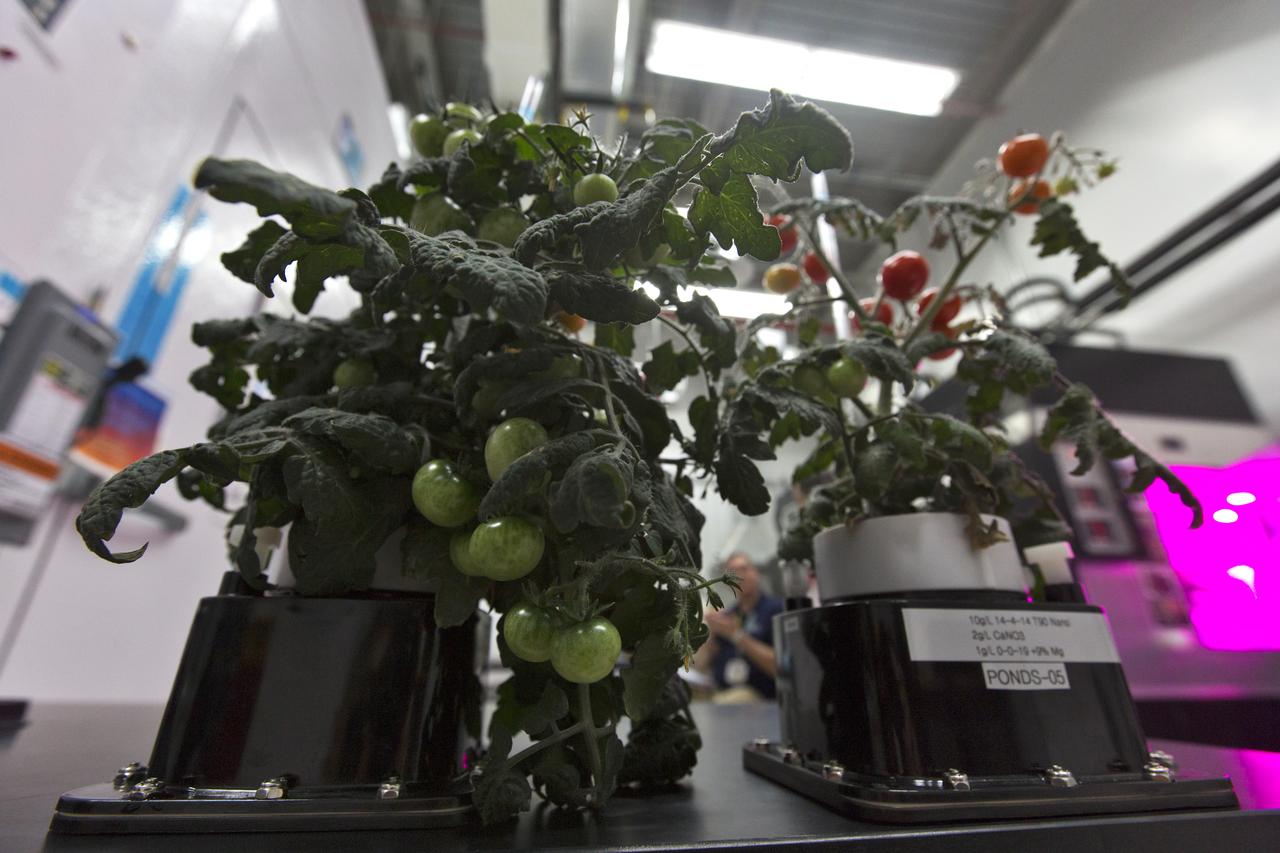
Tomato plants are growing inside a laboratory at the Space Station Processing Facility at NASA’s Kennedy Space Center in Florida. The plant growth is being tested in the Veggie Passive Orbital Nutrient Delivery System (PONDS). Veggie PONDS is a direct follow-on to the Veg-01 and Veg-03 hardware and plant growth validation tests. The primary goal of this newly developed plant growing system, Veggie PONDS, is to demonstrate uniform plant growth. PONDS units have features that are designed to mitigate microgravity effects on water distribution, increase oxygen exchange and provide sufficient room for root zone growth. PONDS is planned for use during Veg-04 and Veg-05 on the International Space Station after the Veggie PONDS Validation flights on SpaceX-14 and OA-9.
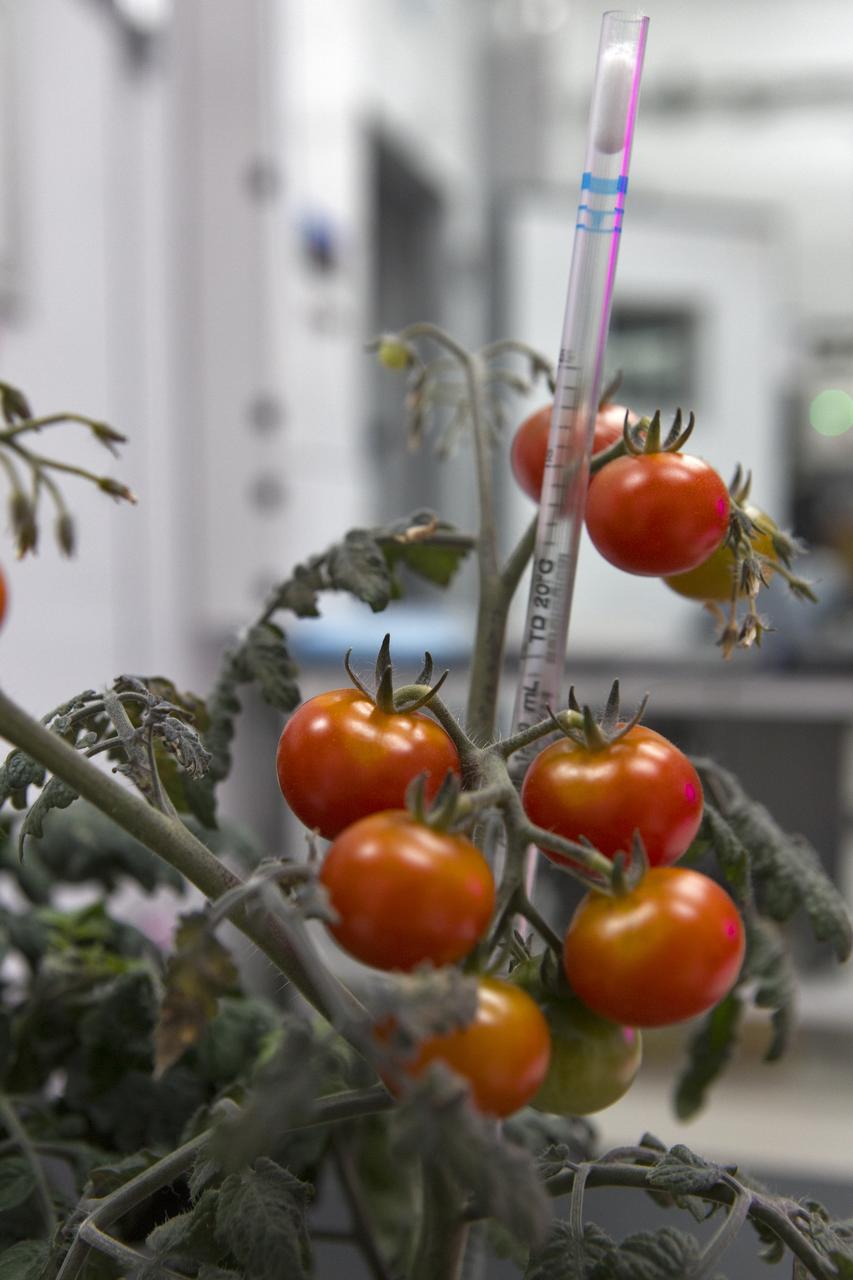
Tomato plants are growing inside a laboratory at the Space Station Processing Facility at NASA’s Kennedy Space Center in Florida. The plant growth is being tested in the Veggie Passive Orbital Nutrient Delivery System (PONDS). Veggie PONDS is a direct follow-on to the Veg-01 and Veg-03 hardware and plant growth validation tests. The primary goal of this newly developed plant growing system, Veggie PONDS, is to demonstrate uniform plant growth. PONDS units have features that are designed to mitigate microgravity effects on water distribution, increase oxygen exchange and provide sufficient room for root zone growth. PONDS is planned for use during Veg-04 and Veg-05 on the International Space Station after the Veggie PONDS Validation flights on SpaceX-14 and OA-9.
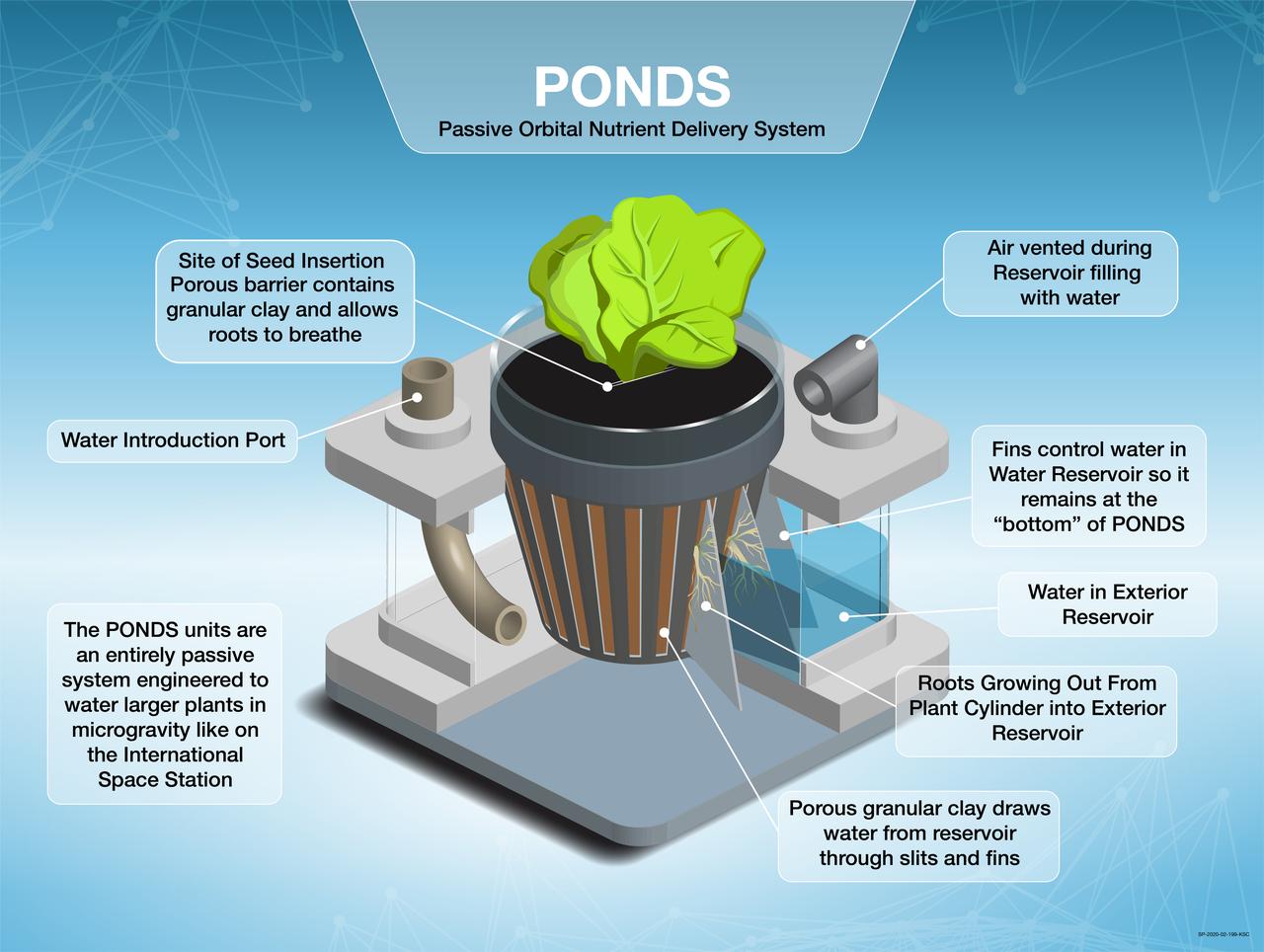
Infographic illustrating the Passive Orbital Nutrient Delivery System (PONDS) plant growth unit. The PONDS units are an entirely passive system – meaning no electricity, no pumps and no moving parts – and the basic concept involves using a free-standing reservoir of water that plants can draw from when needed, cutting down on time astronauts would spend watering plants during the growth interval.
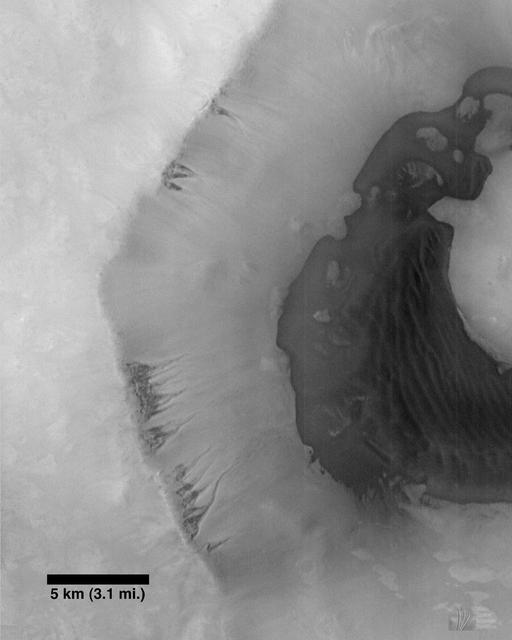
Seepage and Ponding within a Southern Hemisphere Crater
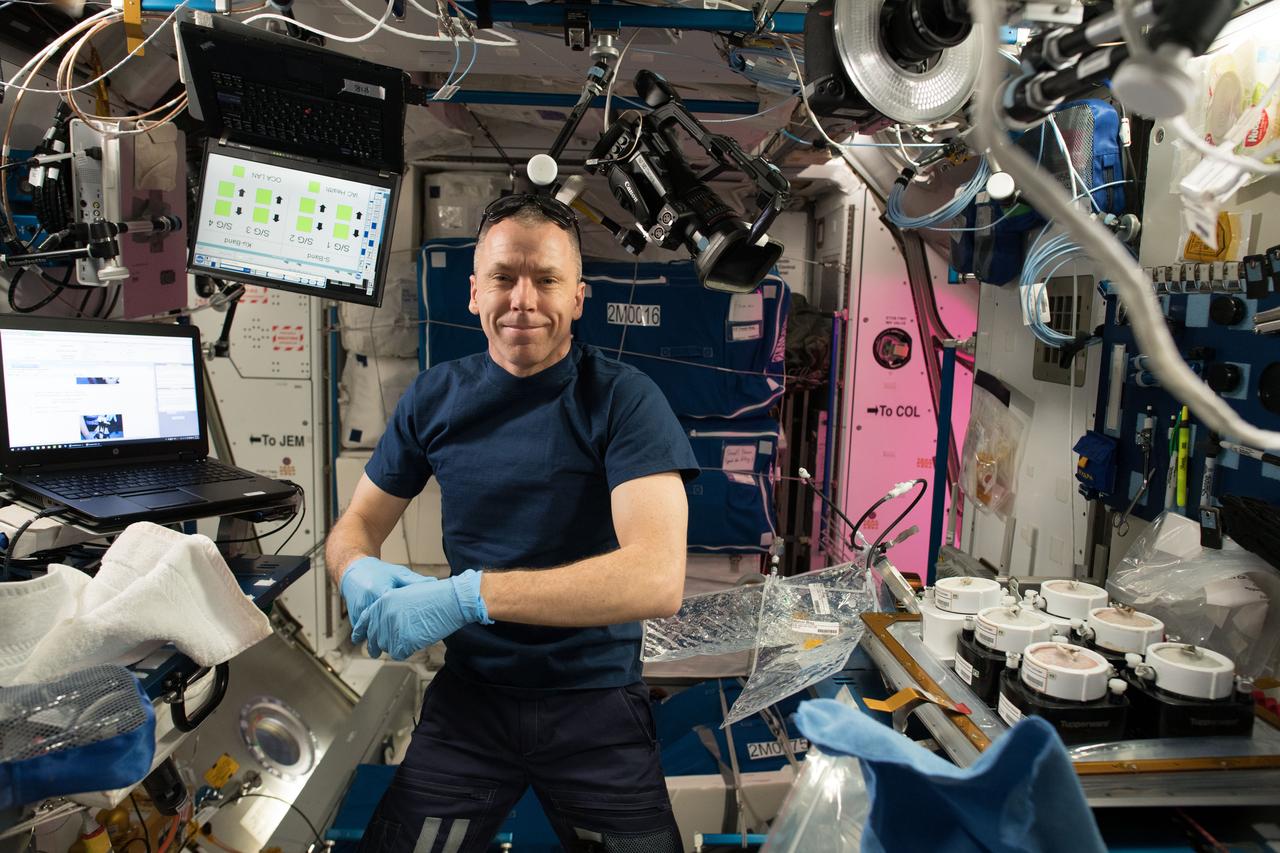
iss055e070862 (5/14/2018) --- NASA Astronaut Drew Feustel is photographed performing Veggie Passive Orbital Nutrient Delivery System (PONDS) operations - including cleaning the Veggie Ponds hardware and Veggie facility (location COL1A1_B1/D1) and then setting up for Drying Out - in the Columbus module. The primary goal of the Veggie PONDS hardware validation test is to demonstrate plant growth in a newly developed plant growing system, PONDS.
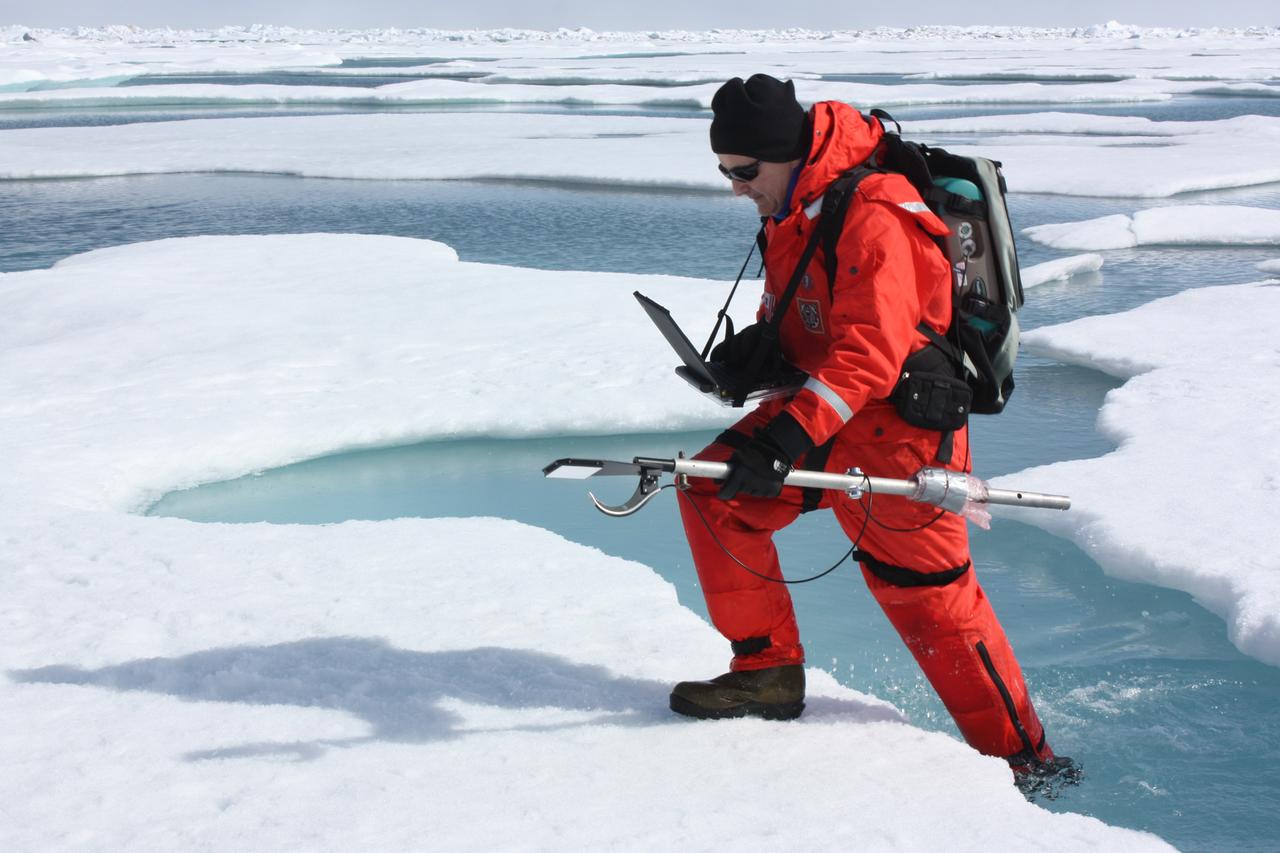
On July 10, 2011, Don Perovich, of Cold Regions Research and Engineering Laboratory, maneuvered through melt ponds collecting optical data along the way to get a sense of the amount of sunlight reflected from sea ice and melt ponds in the Chukchi Sea. The ICESCAPE mission, or "Impacts of Climate on Ecosystems and Chemistry of the Arctic Pacific Environment," is a NASA shipborne investigation to study how changing conditions in the Arctic affect the ocean's chemistry and ecosystems. The bulk of the research took place in the Beaufort and Chukchi seas in summer 2010 and 2011. Credit: NASA/Kathryn Hansen <b><a href="http://www.nasa.gov/audience/formedia/features/MP_Photo_Guidelines.html" rel="nofollow">NASA image use policy.</a></b> <b><a href="http://www.nasa.gov/centers/goddard/home/index.html" rel="nofollow">NASA Goddard Space Flight Center</a></b> enables NASA’s mission through four scientific endeavors: Earth Science, Heliophysics, Solar System Exploration, and Astrophysics. Goddard plays a leading role in NASA’s accomplishments by contributing compelling scientific knowledge to advance the Agency’s mission. <b>Follow us on <a href="http://twitter.com/NASA_GoddardPix" rel="nofollow">Twitter</a></b> <b>Like us on <a href="http://www.facebook.com/pages/Greenbelt-MD/NASA-Goddard/395013845897?ref=tsd" rel="nofollow">Facebook</a></b> <b>Find us on <a href="http://instagrid.me/nasagoddard/?vm=grid" rel="nofollow">Instagram</a></b>
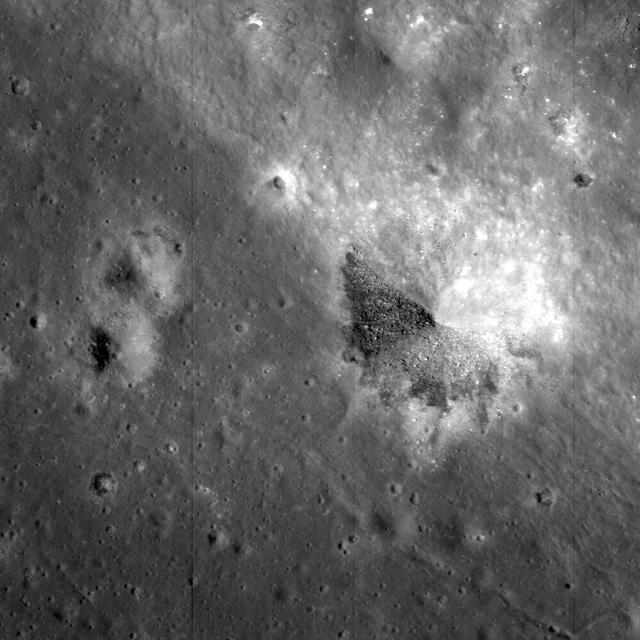
NASA Lunar Reconnaissance Orbiter looks near the northeast edge of the unusually large melt pond adjacent to the lunar far side crater King.
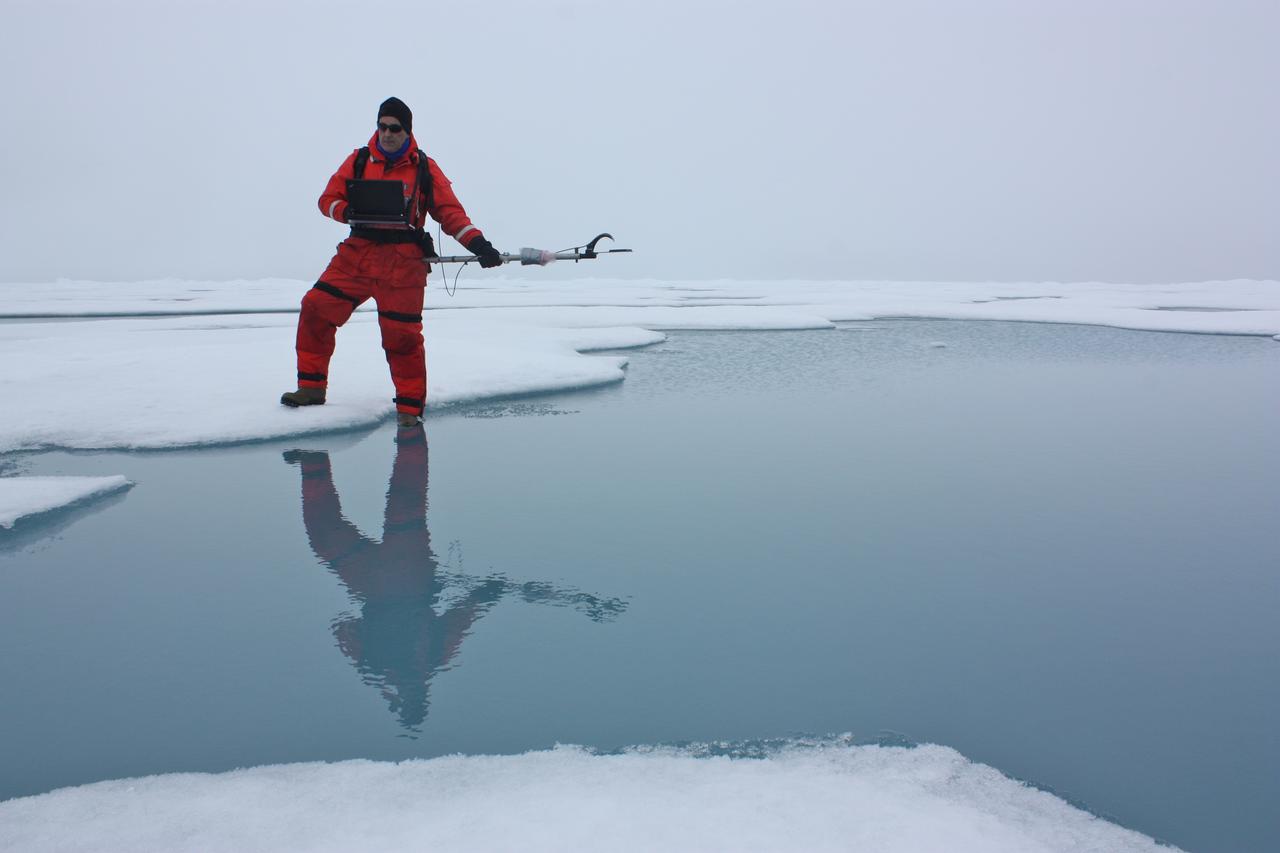
On July 6, 2011, Don Perovich, of Cold Regions Research and Engineering Laboratory, used a spectroradiometer to measure the amount of sunlight reflected from the surface of ice and melt ponds in the Chukchi Sea. The ICESCAPE mission, or "Impacts of Climate on Ecosystems and Chemistry of the Arctic Pacific Environment," is a NASA shipborne investigation to study how changing conditions in the Arctic affect the ocean's chemistry and ecosystems. The bulk of the research took place in the Beaufort and Chukchi seas in summer 2010 and 2011. Credit: NASA/Kathryn Hansen <b><a href="http://www.nasa.gov/audience/formedia/features/MP_Photo_Guidelines.html" rel="nofollow">NASA image use policy.</a></b> <b><a href="http://www.nasa.gov/centers/goddard/home/index.html" rel="nofollow">NASA Goddard Space Flight Center</a></b> enables NASA’s mission through four scientific endeavors: Earth Science, Heliophysics, Solar System Exploration, and Astrophysics. Goddard plays a leading role in NASA’s accomplishments by contributing compelling scientific knowledge to advance the Agency’s mission. <b>Follow us on <a href="http://twitter.com/NASA_GoddardPix" rel="nofollow">Twitter</a></b> <b>Like us on <a href="http://www.facebook.com/pages/Greenbelt-MD/NASA-Goddard/395013845897?ref=tsd" rel="nofollow">Facebook</a></b> <b>Find us on <a href="http://instagrid.me/nasagoddard/?vm=grid" rel="nofollow">Instagram</a></b>
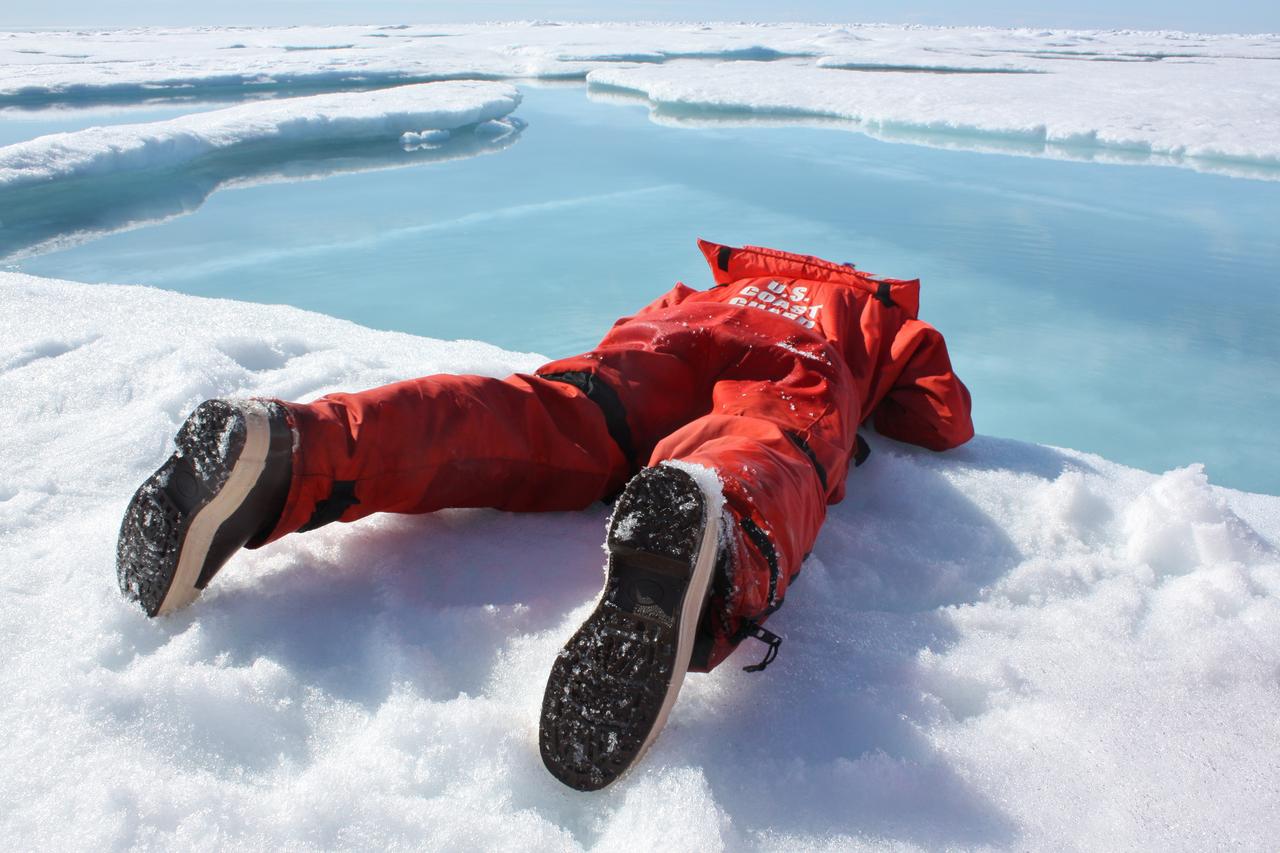
On July 19, 2011, Zachary Brown of Stanford University sipped freshwater from a melt pond on sea ice in the Arctic ocean. The ICESCAPE mission, or "Impacts of Climate on Ecosystems and Chemistry of the Arctic Pacific Environment," is a NASA shipborne investigation to study how changing conditions in the Arctic affect the ocean's chemistry and ecosystems. The bulk of the research took place in the Beaufort and Chukchi seas in summer 2010 and 2011. Credit: NASA/Kathryn Hansen <b><a href="http://www.nasa.gov/audience/formedia/features/MP_Photo_Guidelines.html" rel="nofollow">NASA image use policy.</a></b> <b><a href="http://www.nasa.gov/centers/goddard/home/index.html" rel="nofollow">NASA Goddard Space Flight Center</a></b> enables NASA’s mission through four scientific endeavors: Earth Science, Heliophysics, Solar System Exploration, and Astrophysics. Goddard plays a leading role in NASA’s accomplishments by contributing compelling scientific knowledge to advance the Agency’s mission. <b>Follow us on <a href="http://twitter.com/NASA_GoddardPix" rel="nofollow">Twitter</a></b> <b>Like us on <a href="http://www.facebook.com/pages/Greenbelt-MD/NASA-Goddard/395013845897?ref=tsd" rel="nofollow">Facebook</a></b> <b>Find us on <a href="http://instagrid.me/nasagoddard/?vm=grid" rel="nofollow">Instagram</a></b>
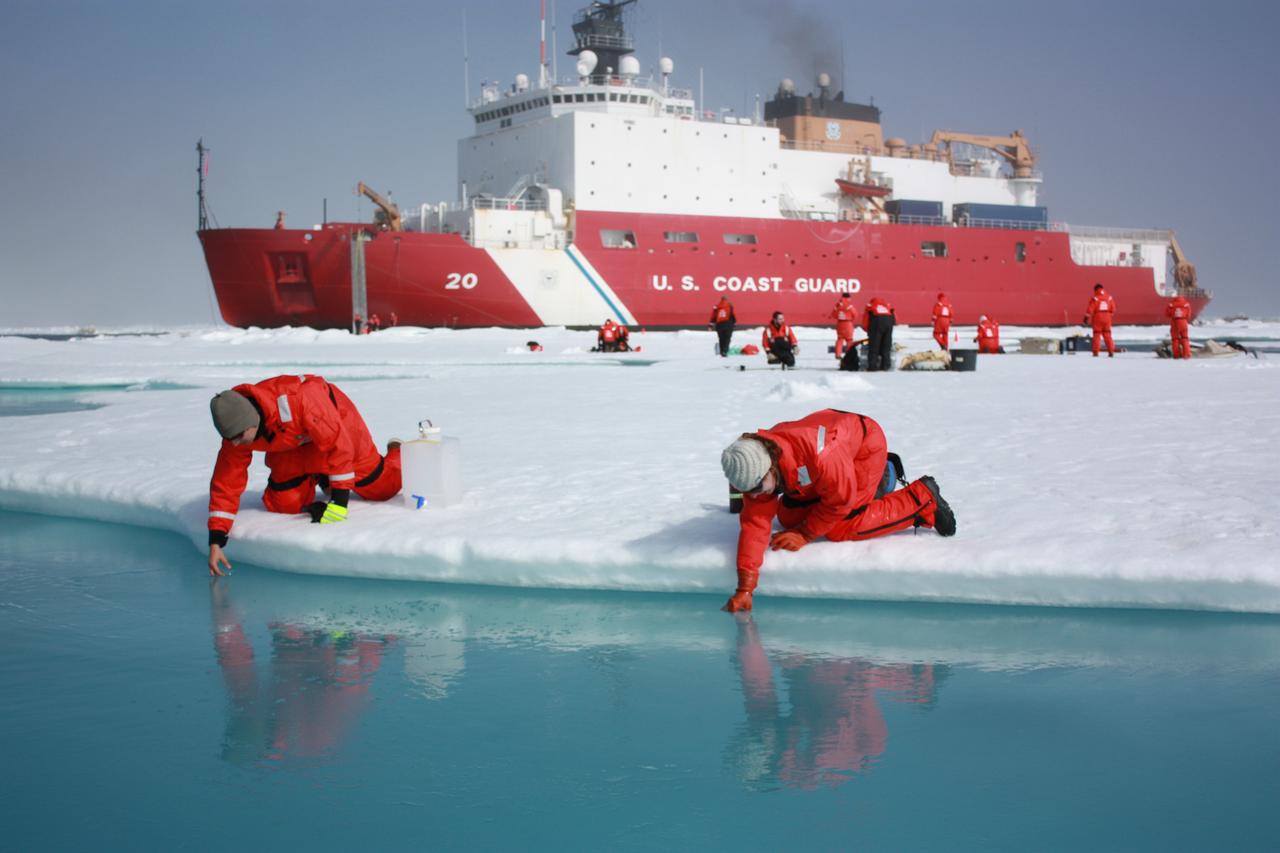
On July 10, 2011, Jens Ehn of Scripps Institution of Oceanography (left), and Christie Wood of Clark University (right), scooped water from melt ponds on sea ice in the Chukchi Sea. The water was later analyzed from the Healy's onboard science lab. The ICESCAPE mission, or "Impacts of Climate on Ecosystems and Chemistry of the Arctic Pacific Environment," is a NASA shipborne investigation to study how changing conditions in the Arctic affect the ocean's chemistry and ecosystems. The bulk of the research took place in the Beaufort and Chukchi seas in summer 2010 and 2011. Credit: NASA/Kathryn Hansen <b><a href="http://www.nasa.gov/audience/formedia/features/MP_Photo_Guidelines.html" rel="nofollow">NASA image use policy.</a></b> <b><a href="http://www.nasa.gov/centers/goddard/home/index.html" rel="nofollow">NASA Goddard Space Flight Center</a></b> enables NASA’s mission through four scientific endeavors: Earth Science, Heliophysics, Solar System Exploration, and Astrophysics. Goddard plays a leading role in NASA’s accomplishments by contributing compelling scientific knowledge to advance the Agency’s mission. <b>Follow us on <a href="http://twitter.com/NASA_GoddardPix" rel="nofollow">Twitter</a></b> <b>Like us on <a href="http://www.facebook.com/pages/Greenbelt-MD/NASA-Goddard/395013845897?ref=tsd" rel="nofollow">Facebook</a></b> <b>Find us on <a href="http://instagrid.me/nasagoddard/?vm=grid" rel="nofollow">Instagram</a></b>
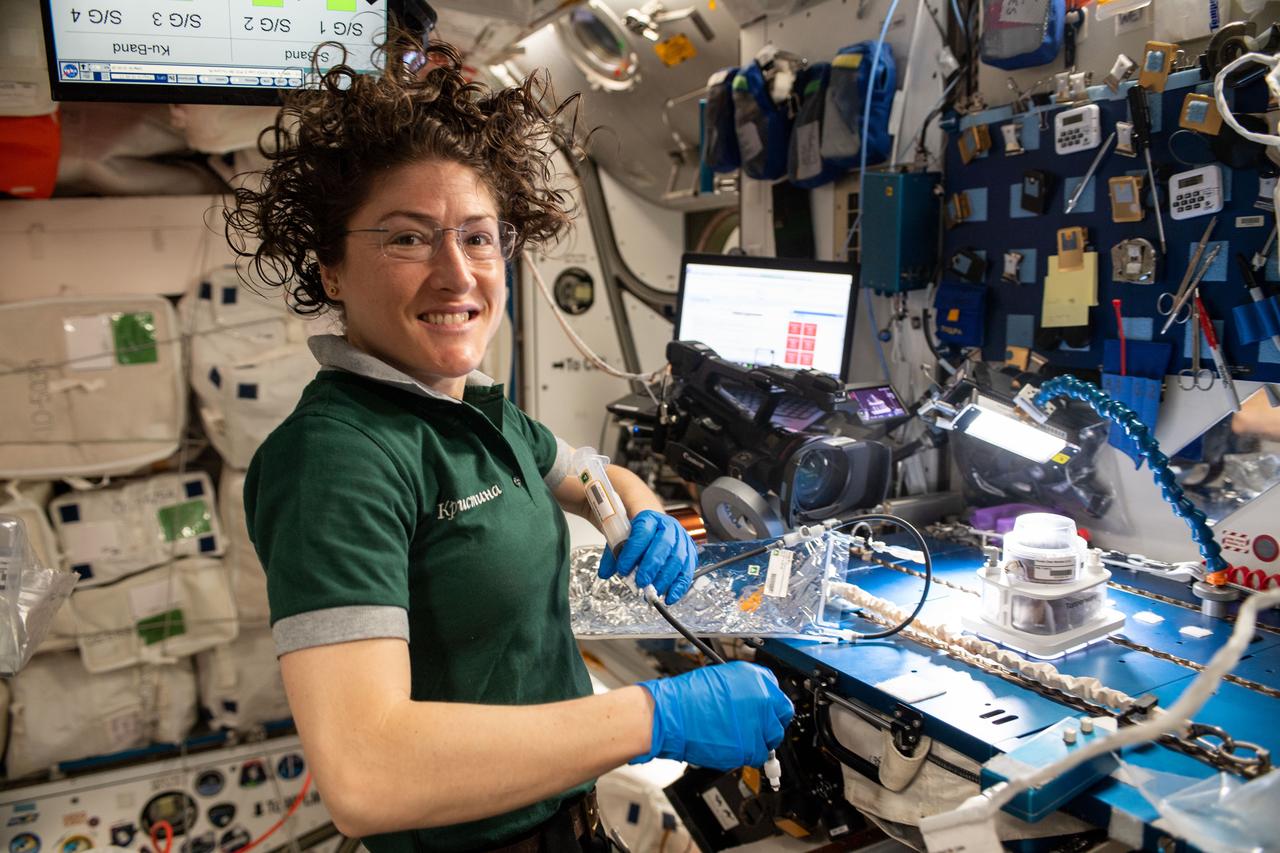
iss059e035668 (April 25, 2019) --- NASA astronaut Christina Koch works on space botany research using the Veggie PONDS gear to cultivate and harvest lettuce and mizuna greens for consumption on the International Space Station and analysis on Earth.
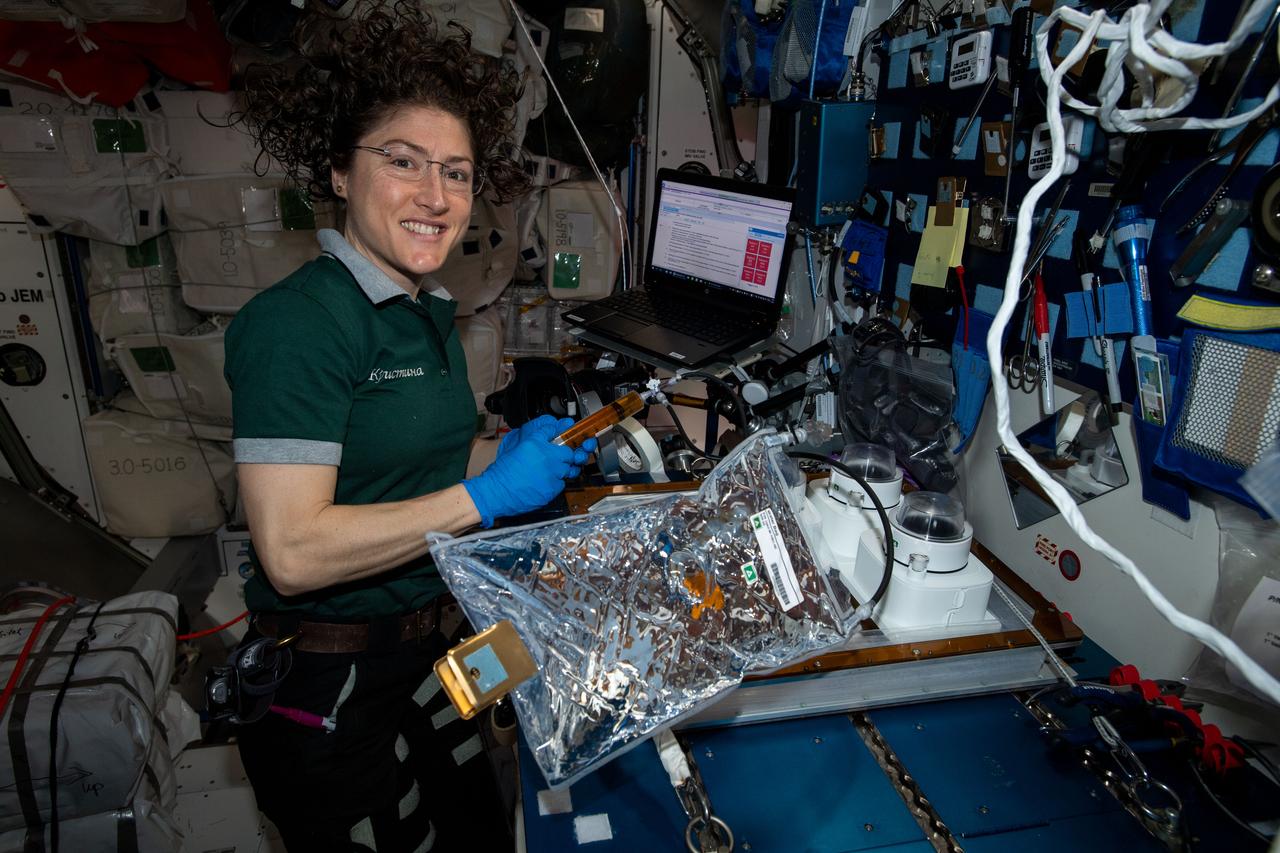
iss059e035465 (April 25, 2019) --- NASA astronaut Christina Koch works on space botany using the Veggie PONDS research gear to cultivate and harvest lettuce and mizuna greens for consumption on the International Space Station and analysis on Earth.
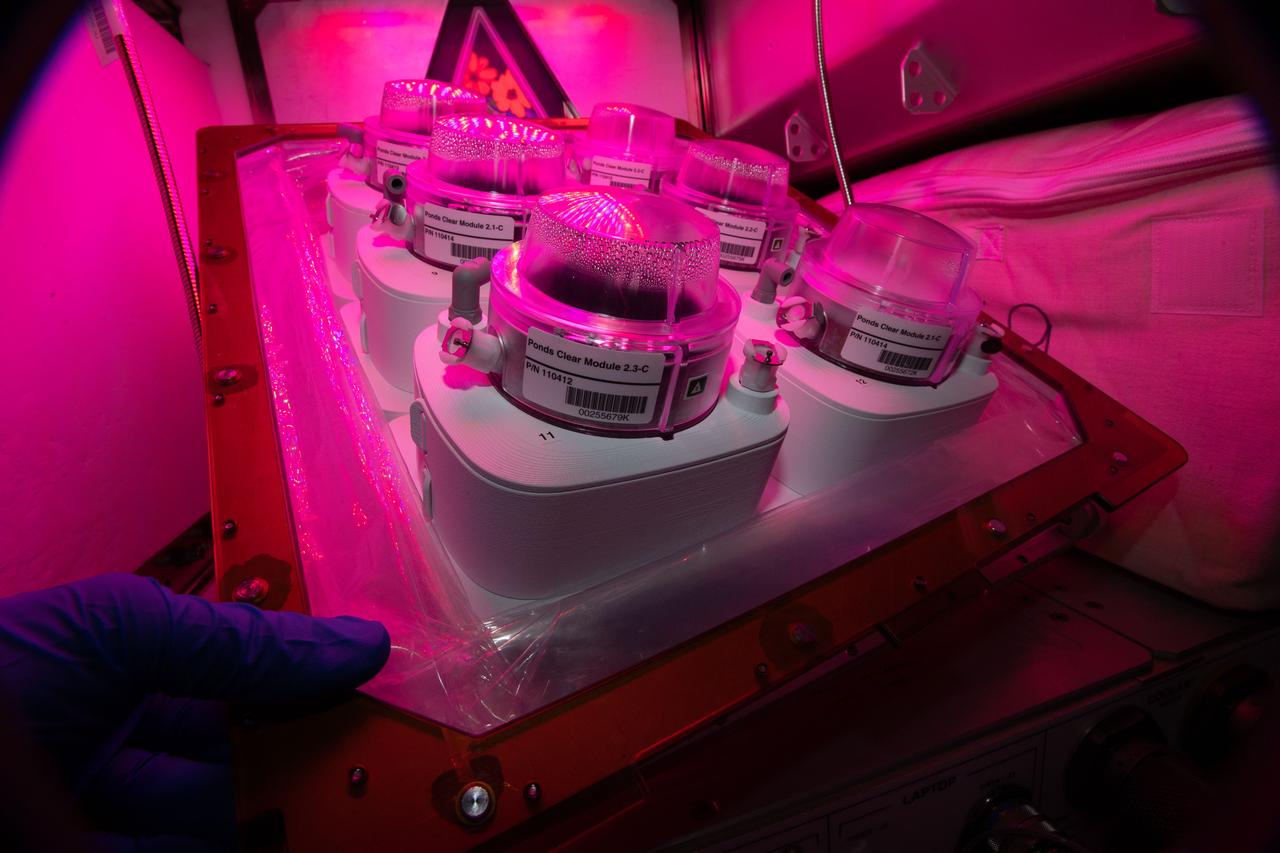
iss059e035838 (4/28/2019) --- Documentation taken during removal of Germination Cap from each Veggie Ponds Module while module is in Veggie Bellows. Veggie PONDS uses a newly developed passive nutrient delivery system and the Veggie plant growth facility aboard the International Space Station (ISS) to cultivate lettuce and mizuna greens which are to be harvested on-orbit, and consumed, with samples returned to Earth for analysis.
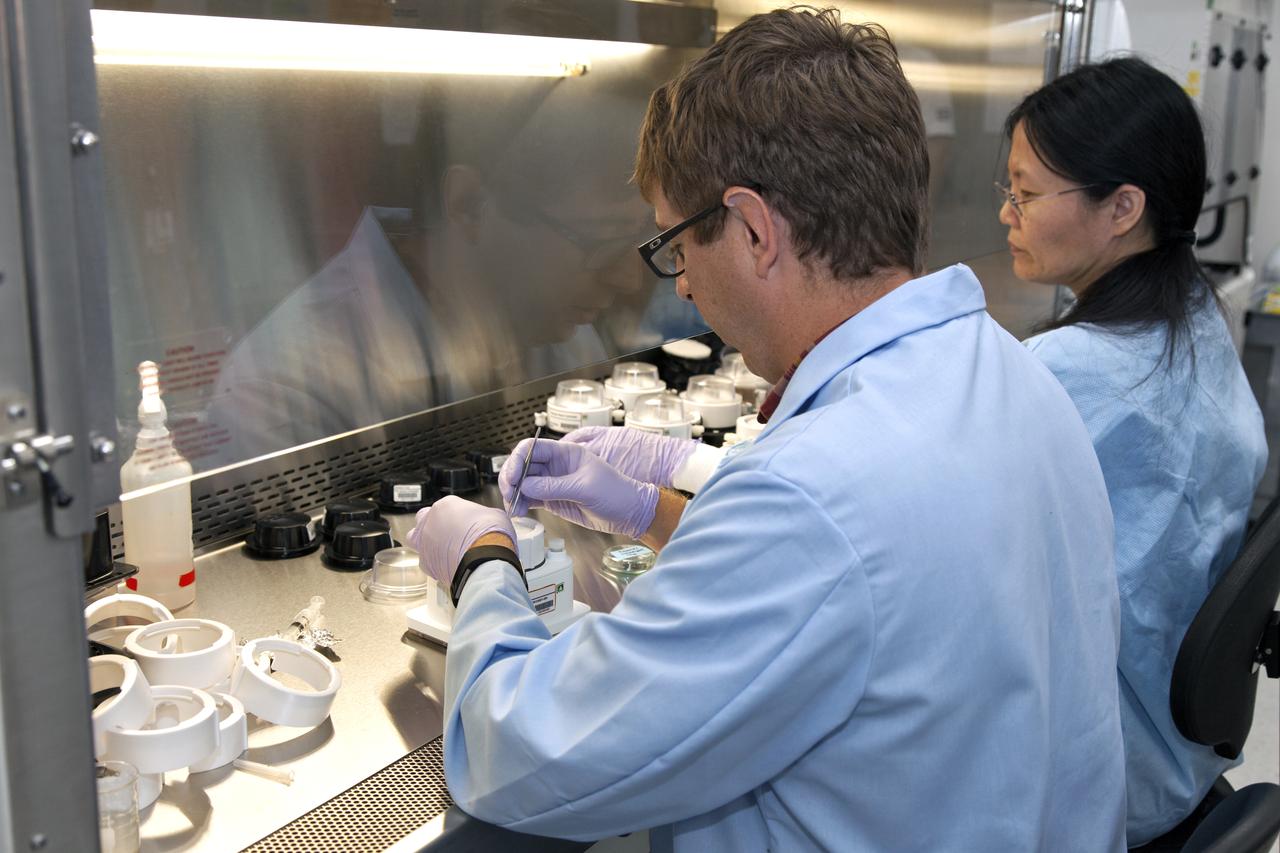
From left, Matthew Romeyn and Dr. Ye Zhang, project scientists, place seeds in Veggie Passive Orbital Nutrient Delivery System (PONDS) units inside a laboratory at the Space Station Processing Facility at NASA’s Kennedy Space Center in Florida. Veggie PONDS is a direct follow-on to the Veg-01 and Veg-03 hardware and plant growth validation tests. The primary goal of this newly developed plant growing system, Veggie PONDS, is to demonstrate uniform plant growth. PONDS units have features that are designed to mitigate microgravity effects on water distribution, increase oxygen exchange and provide sufficient room for root zone growth. PONDS is planned for use during Veg-04 and Veg-05 on the International Space Station after the Veggie PONDS Validation flights on SpaceX-14 and OA-9.
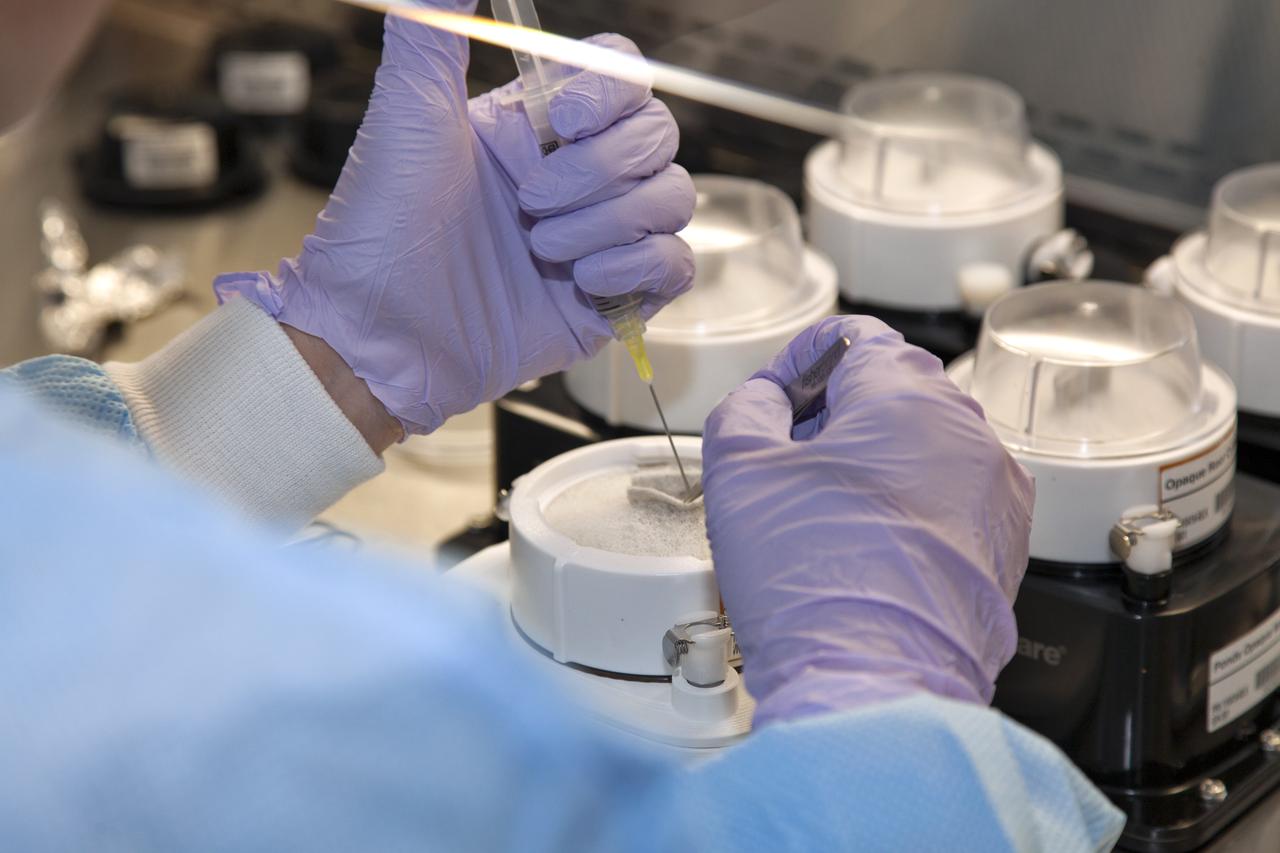
Seeds are being planted in Veggie Passive Orbital Nutrient Delivery System (PONDS) units inside a laboratory at the Space Station Processing Facility at NASA’s Kennedy Space Center in Florida. Veggie PONDS is a direct follow-on to the Veg-01 and Veg-03 hardware and plant growth validation tests. The primary goal of this newly developed plant growing system, Veggie PONDS, is to demonstrate uniform plant growth. PONDS units have features that are designed to mitigate microgravity effects on water distribution, increase oxygen exchange and provide sufficient room for root zone growth. PONDS is planned for use during Veg-04 and Veg-05 on the International Space Station after the Veggie PONDS Validation flights on SpaceX-14 and OA-9.
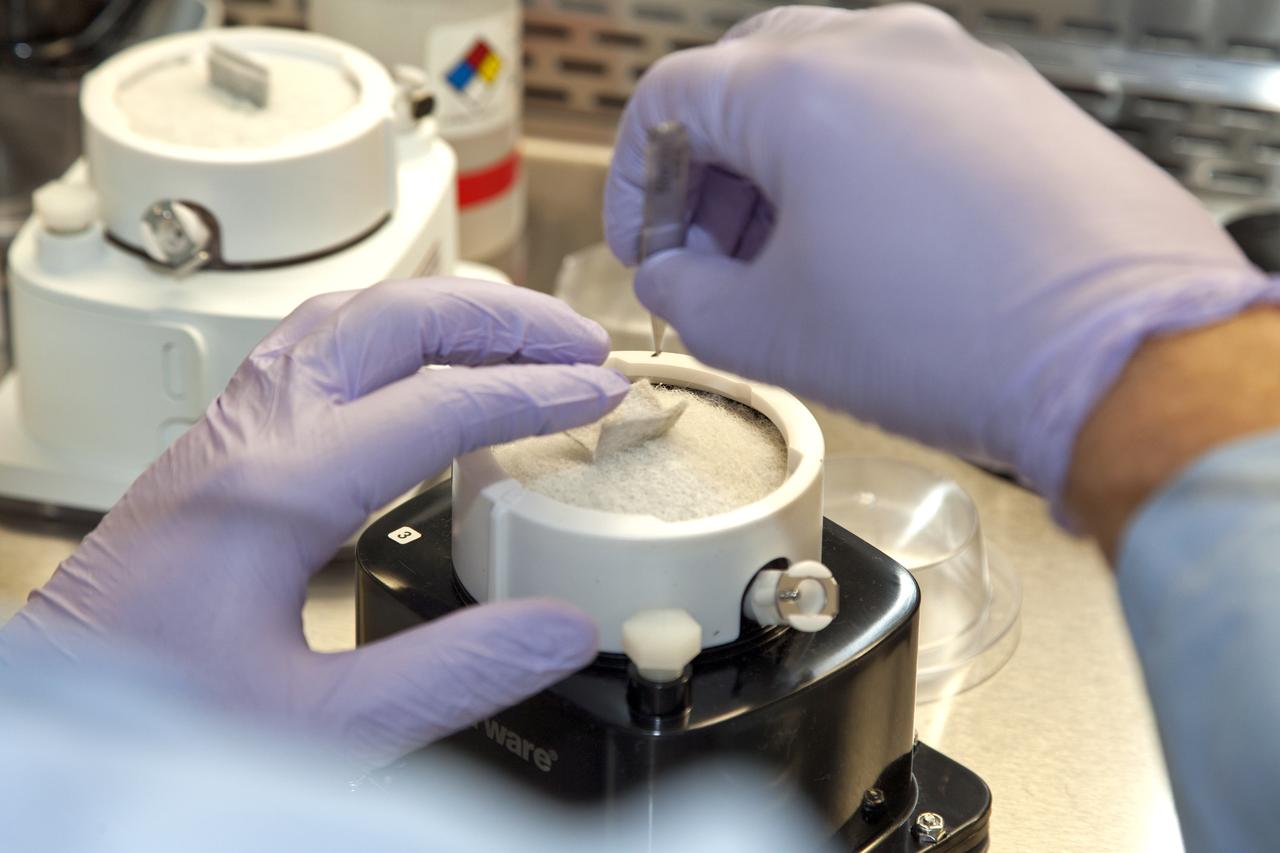
Seeds are being planted in Veggie Passive Orbital Nutrient Delivery System (PONDS) units inside a laboratory at the Space Station Processing Facility at NASA’s Kennedy Space Center in Florida. Veggie PONDS is a direct follow-on to the Veg-01 and Veg-03 hardware and plant growth validation tests. The primary goal of this newly developed plant growing system, Veggie PONDS, is to demonstrate uniform plant growth. PONDS units have features that are designed to mitigate microgravity effects on water distribution, increase oxygen exchange and provide sufficient room for root zone growth. PONDS is planned for use during Veg-04 and Veg-05 on the International Space Station after the Veggie PONDS Validation flights on SpaceX-14 and OA-9.
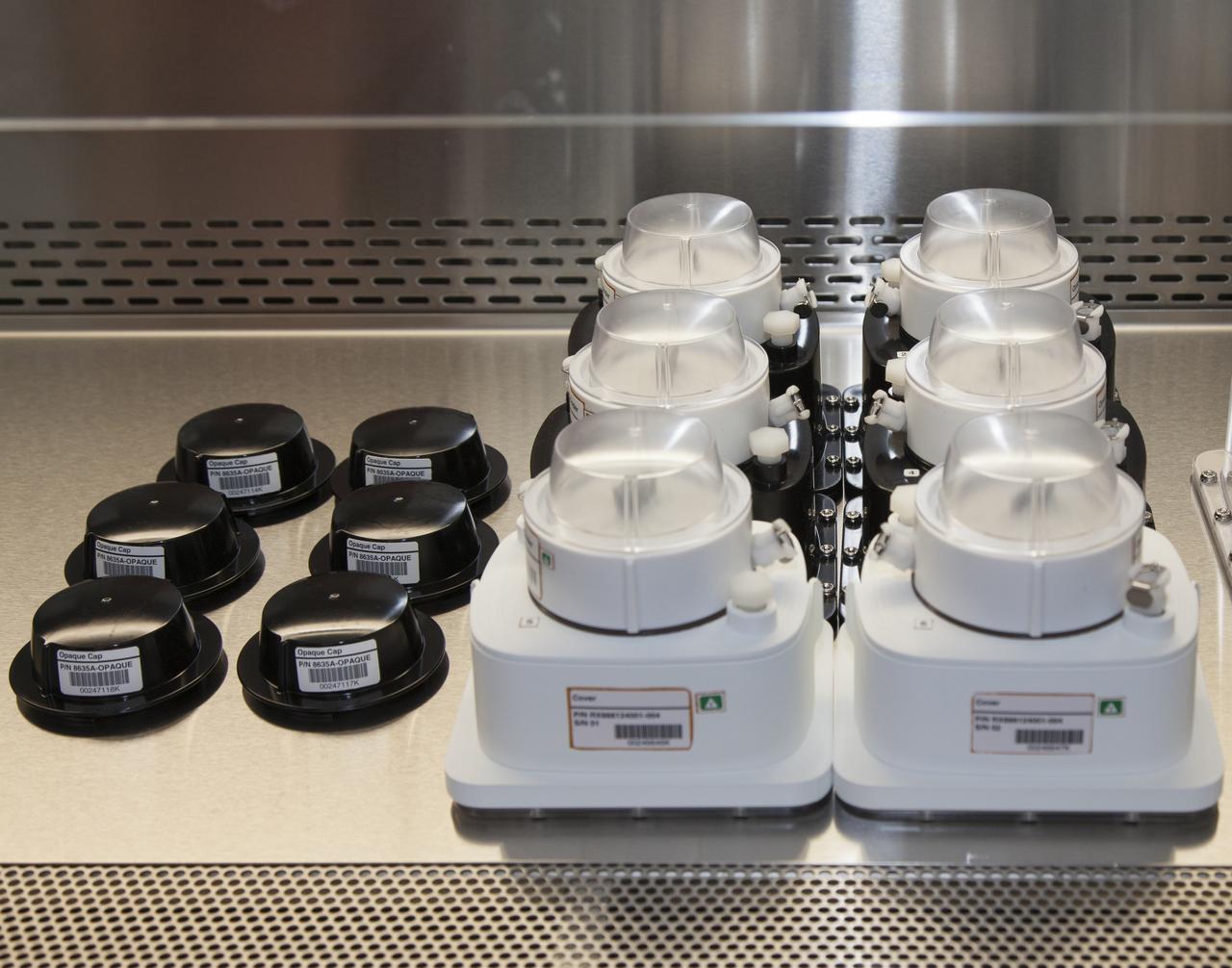
Veggie Passive Orbital Nutrient Delivery System (PONDS) units are being prepared for seed planting inside a laboratory at the Space Station Processing Facility at NASA's Kennedy Space Center in Florida. Veggie PONDS is a direct follow-on to the Veg-01 and Veg-03 hardware and plant growth validation tests. The primary goal of this newly developed plant growing system, Veggie PONDS, is to demonstrate uniform plant growth. PONDS units have features that are designed to mitigate microgravity effects on water distribution, increase oxygen exchange and provide sufficient room for root zone growth. PONDS is planned for use during Veg-04 and Veg-05 on the International Space Station after the Veggie PONDS Validation flights on SpaceX-14 and OA-9.
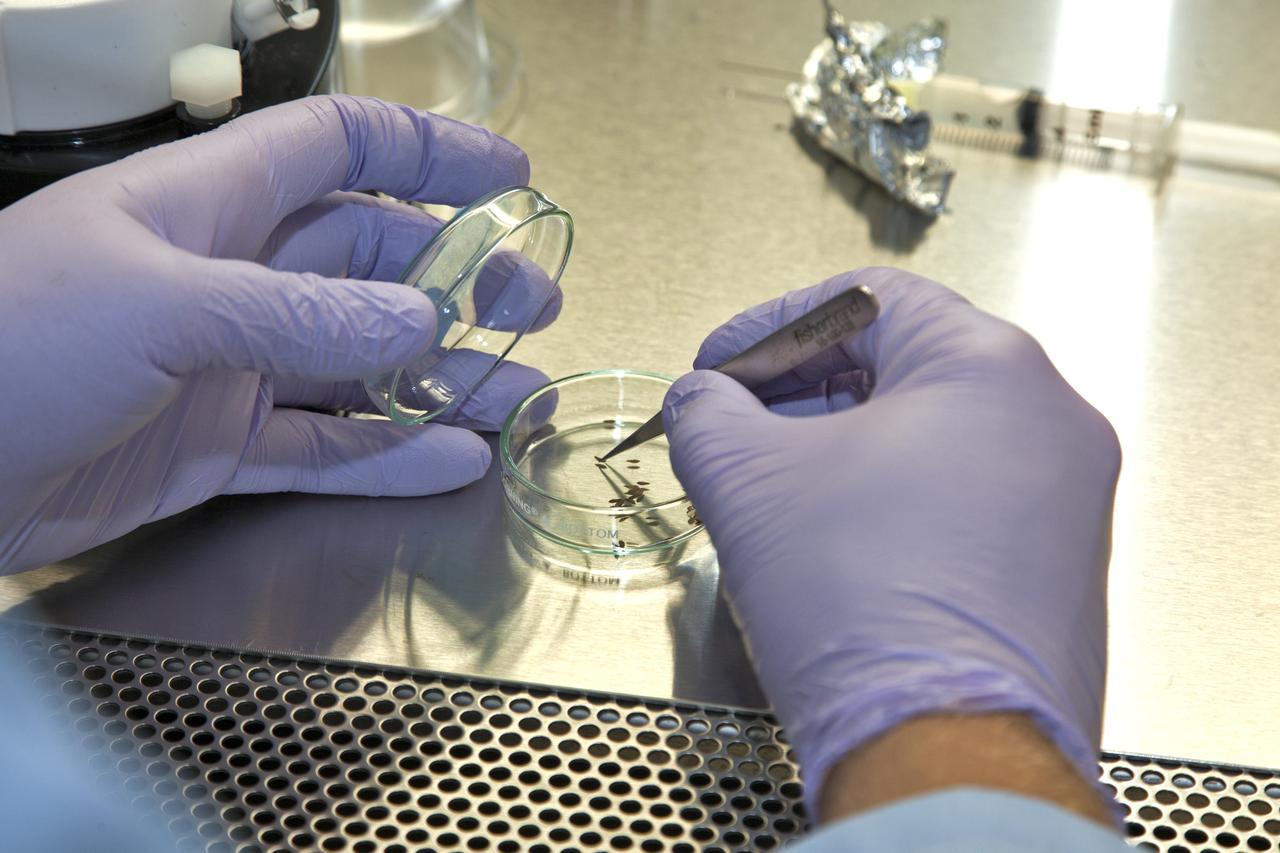
Seeds are being planted in Veggie Passive Orbital Nutrient Delivery System (PONDS) units inside a laboratory at the Space Station Processing Facility at NASA’s Kennedy Space Center in Florida. Veggie PONDS is a direct follow-on to the Veg-01 and Veg-03 hardware and plant growth validation tests. The primary goal of this newly developed plant growing system, Veggie PONDS, is to demonstrate uniform plant growth. PONDS units have features that are designed to mitigate microgravity effects on water distribution, increase oxygen exchange and provide sufficient room for root zone growth. PONDS is planned for use during Veg-04 and Veg-05 on the International Space Station after the Veggie PONDS Validation flights on SpaceX-14 and OA-9.
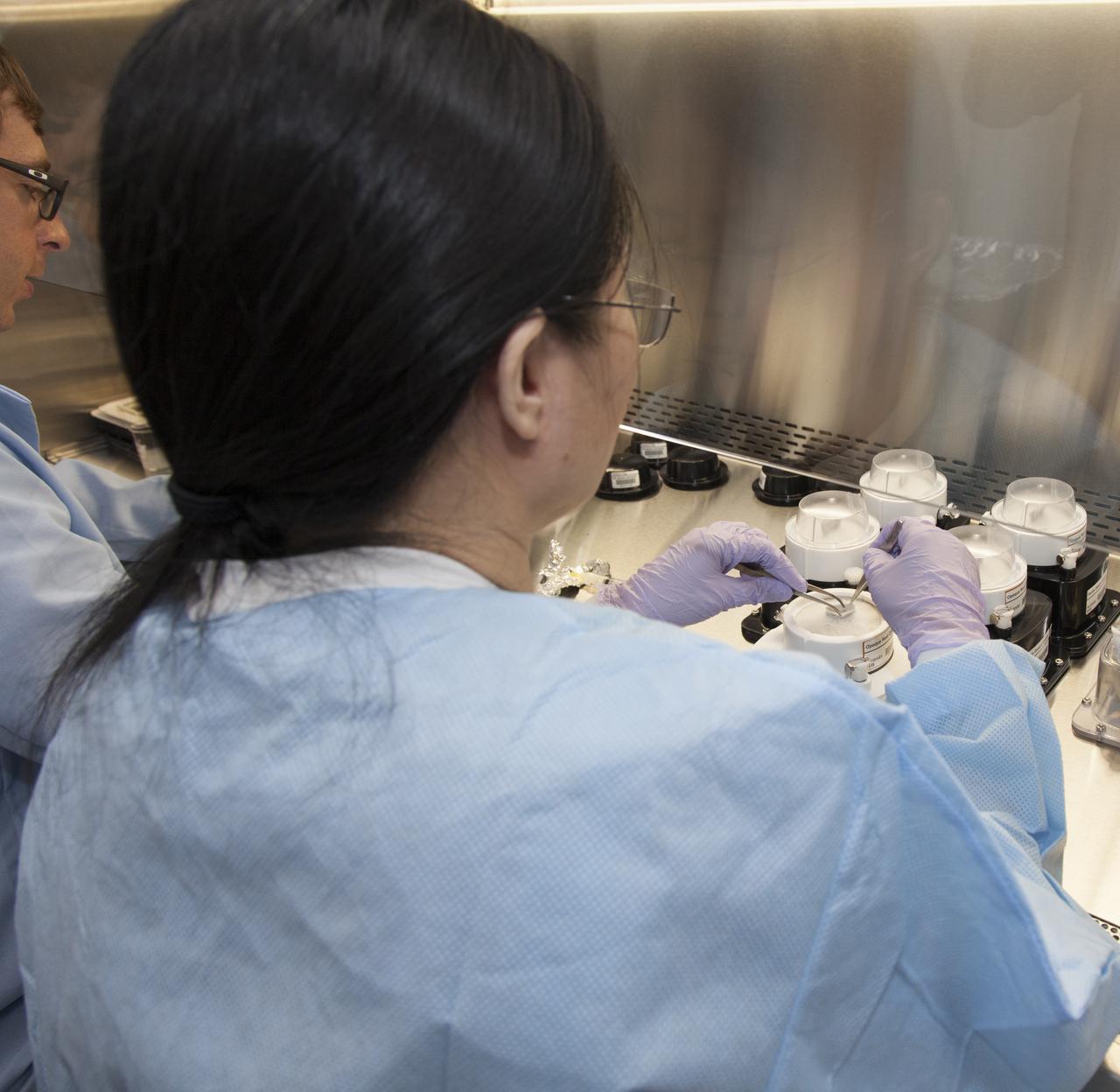
Dr. Ye Zhang, a project scientists, places seeds in Veggie Passive Orbital Nutrient Delivery System (PONDS) units inside a laboratory at the Space Station Processing Facility at NASA's Kennedy Space Center in Florida. Veggie PONDS is a direct follow-on to the Veg-01 and Veg-03 hardware and plant growth validation tests. The primary goal of this newly developed plant growing system, Veggie PONDS, is to demonstrate uniform plant growth. PONDS units have features that are designed to mitigate microgravity effects on water distribution, increase oxygen exchange and provide sufficient room for root zone growth. PONDS is planned for use during Veg-04 and Veg-05 on the International Space Station after the Veggie PONDS Validation flights on SpaceX-14 and OA-9.
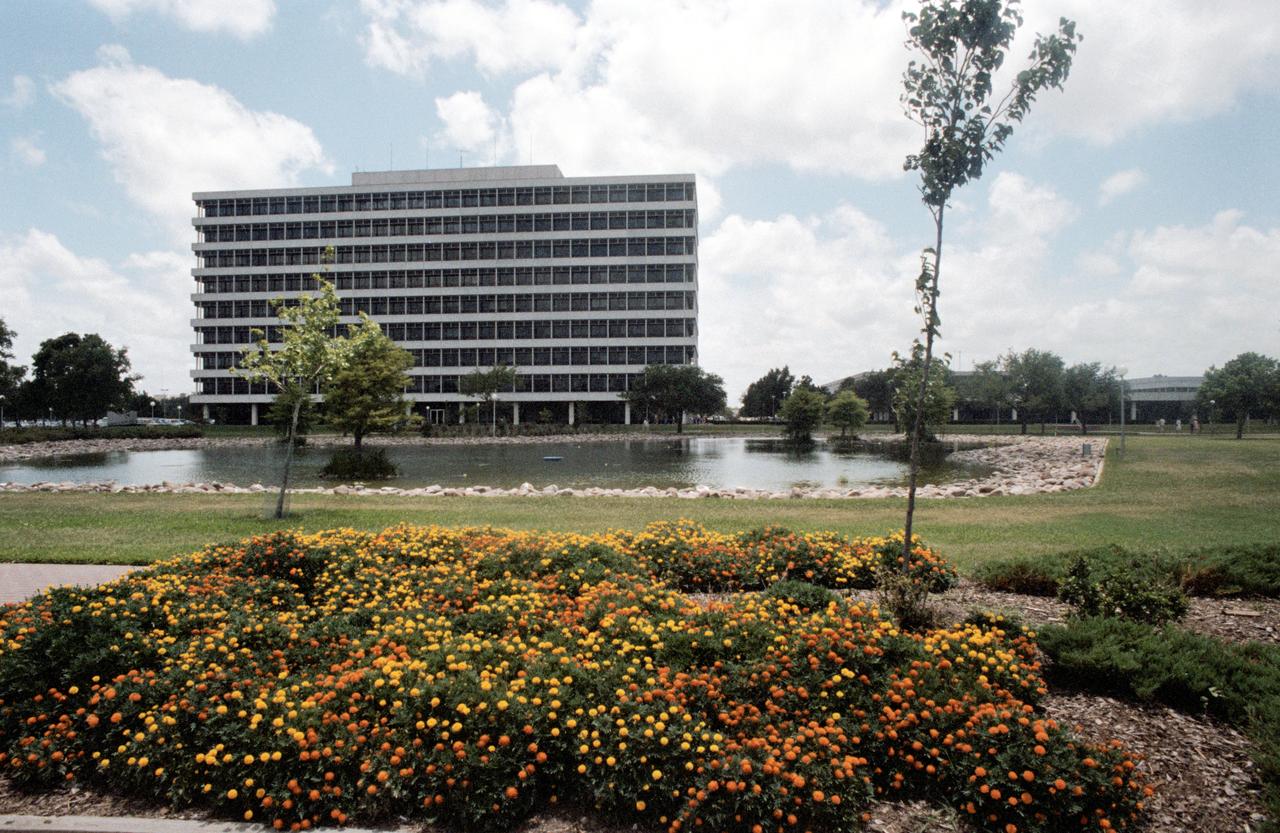
View of Johnson Space Center Administrative Building 1 taken from across the fish pond.
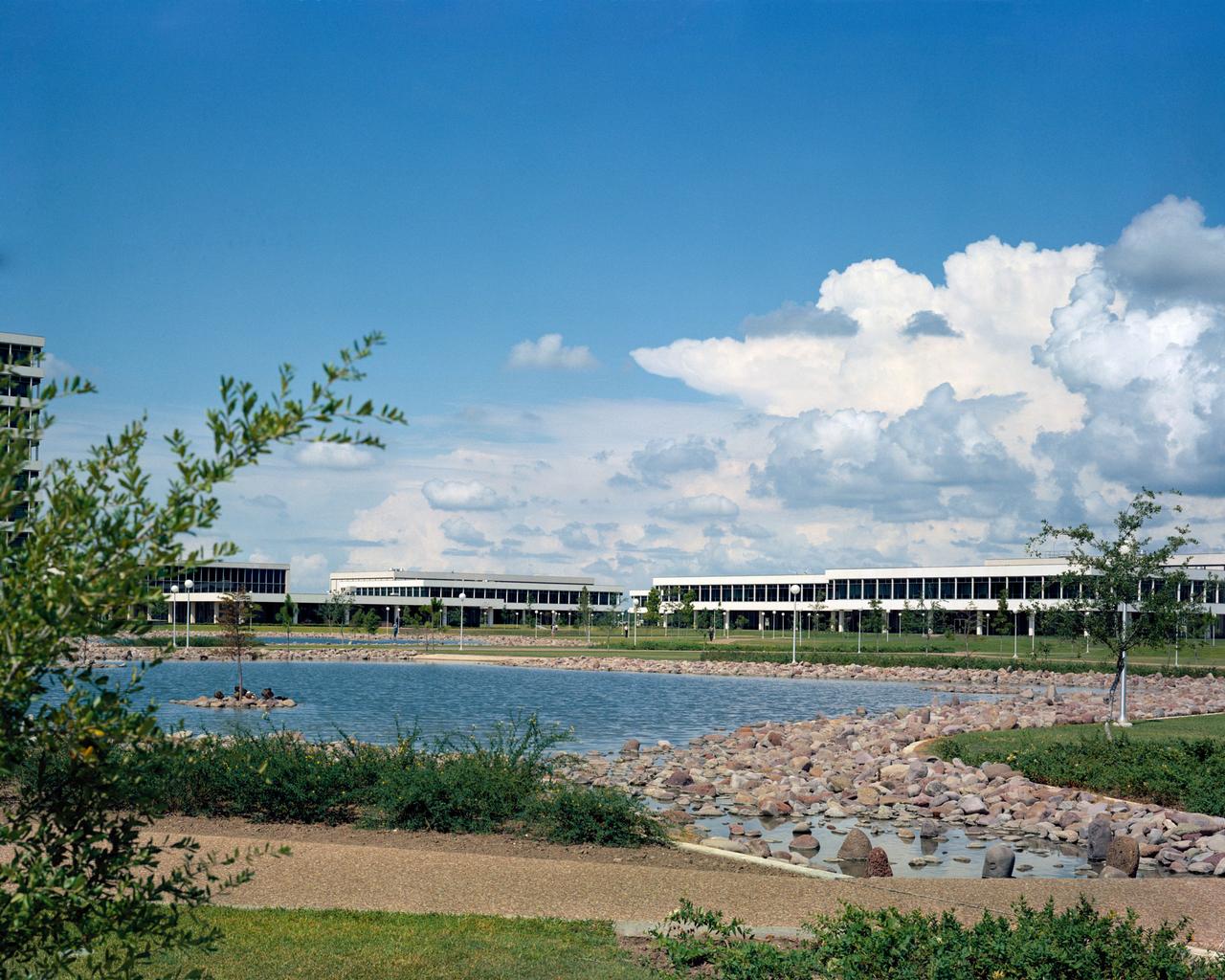
S65-41769 (1965) --- View of facilities at the Manned Spacecraft Center, Houston, Texas. Photo is taken from across the fish pond. NOTE: The Manned Spacecraft Center was named Lyndon B. Johnson Space Center in memory of the late President following his death.
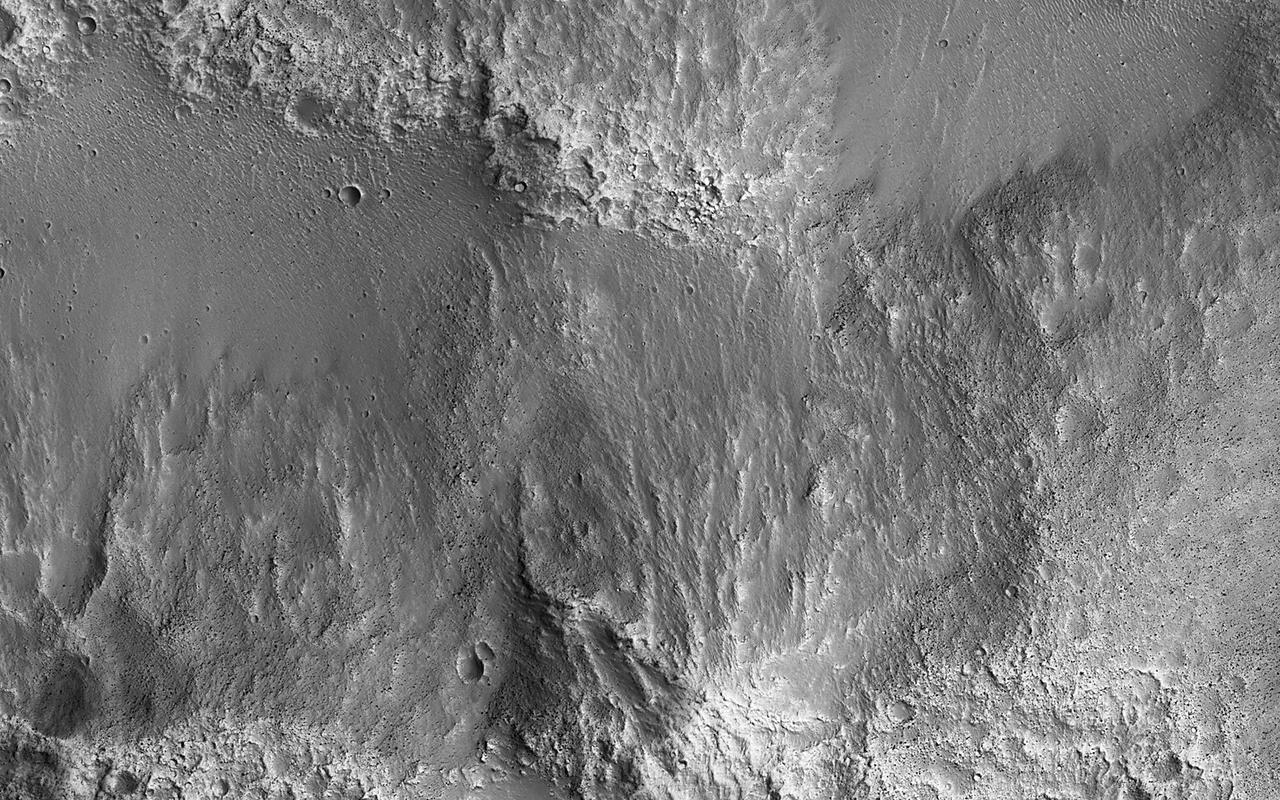
This survey of the canyon floor of Tithonium Chasma in Valles Marineris reveals terrain of two distinct ages. The slopes and hilltops here are made up of rough rocky outcrop that was sculpted by impact craters of all sizes. In contrast, the valley floors are filled with light toned, smooth materials with far fewer large craters. At HiRISE resolution, we can see that the "smooth" materials are in fact littered with boulders and small impact craters, so they cannot have been emplaced very recently. However, the absence of larger craters tells us that the smooth materials are much younger than the ancient rocky outcrops of the canyon floor. The smooth materials appear to be sediments that were deposited possibly by the wind, long after the canyon was formed. The sediments filled in the low lying spots in the canyon floor, leaving a landscape that resembles lakes and ponds but is made up of dust and sand instead of water. https://photojournal.jpl.nasa.gov/catalog/PIA26328
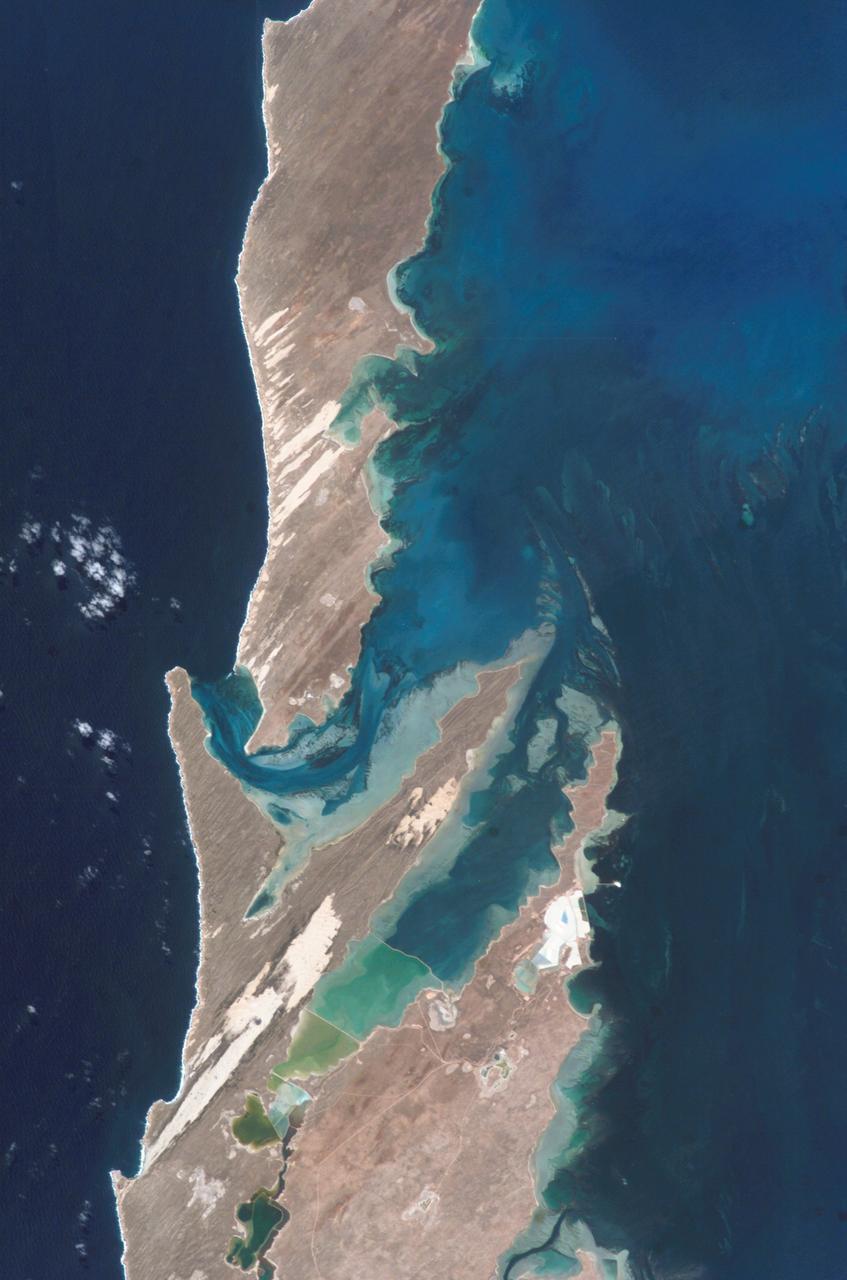
ISS010-E-06681 (12 November 2004) --- Shark Bay, Australia is featured in this image photographed by an Expedition 10 crewmember on the International Space Station (ISS). This image shows large solar salt works developed in Useless Loop and Useless Inlet, Shark Bay, Western Australia. The salt (sodium chloride) is produced when ponds are repeatedly flooded with seawater, which is progressively concentrated by evaporation. This particular salt farm opened in 1967 and expanded operations in the 1990s. Today, this salt farm comprises over 50 ponds, the newest pond in the outermost pond in Useless Inlet, which provides the first evaporation cycle to increase the salinity of the water prior to entering the next pond. Complex chemical and biological adjustments occur in the system each time the configuration of ponds is changed.
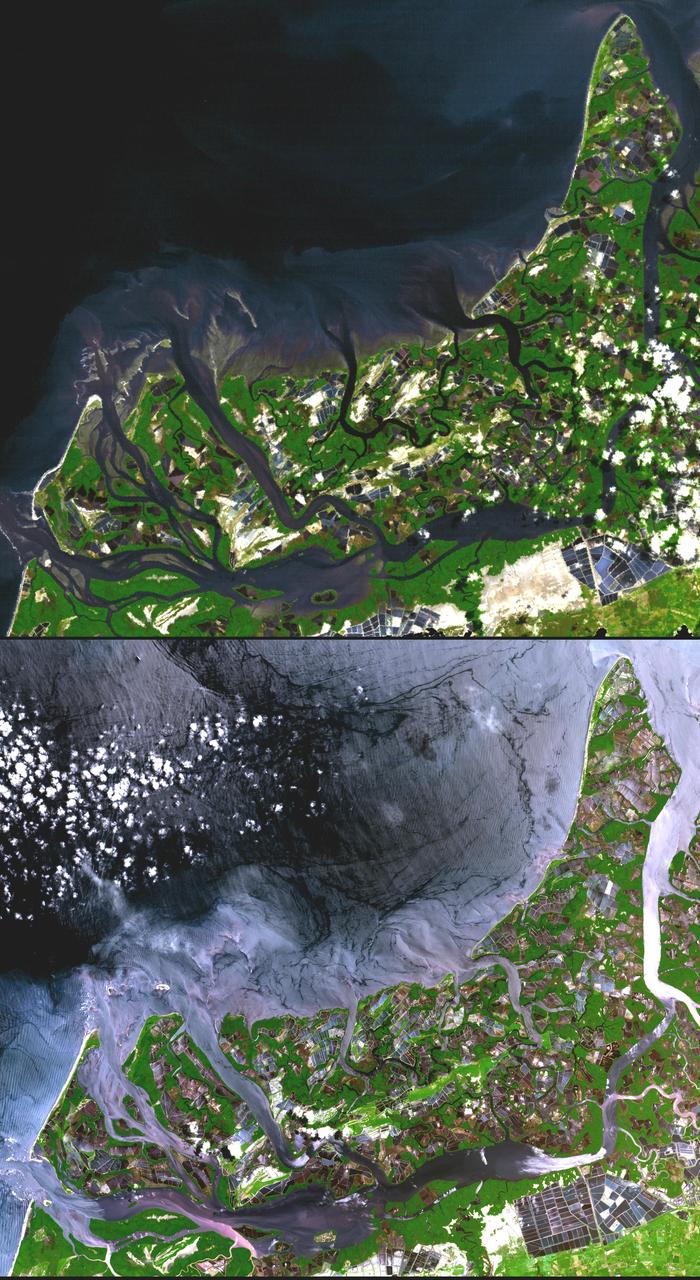
In many parts of the world, wetlands are being converted to shrimp ponds in order to farm these crustaceans for food and sale. One example is on the west coast of Ecuador, south of Guayaquil. This image was acquired by NASA Terra spacecraft.
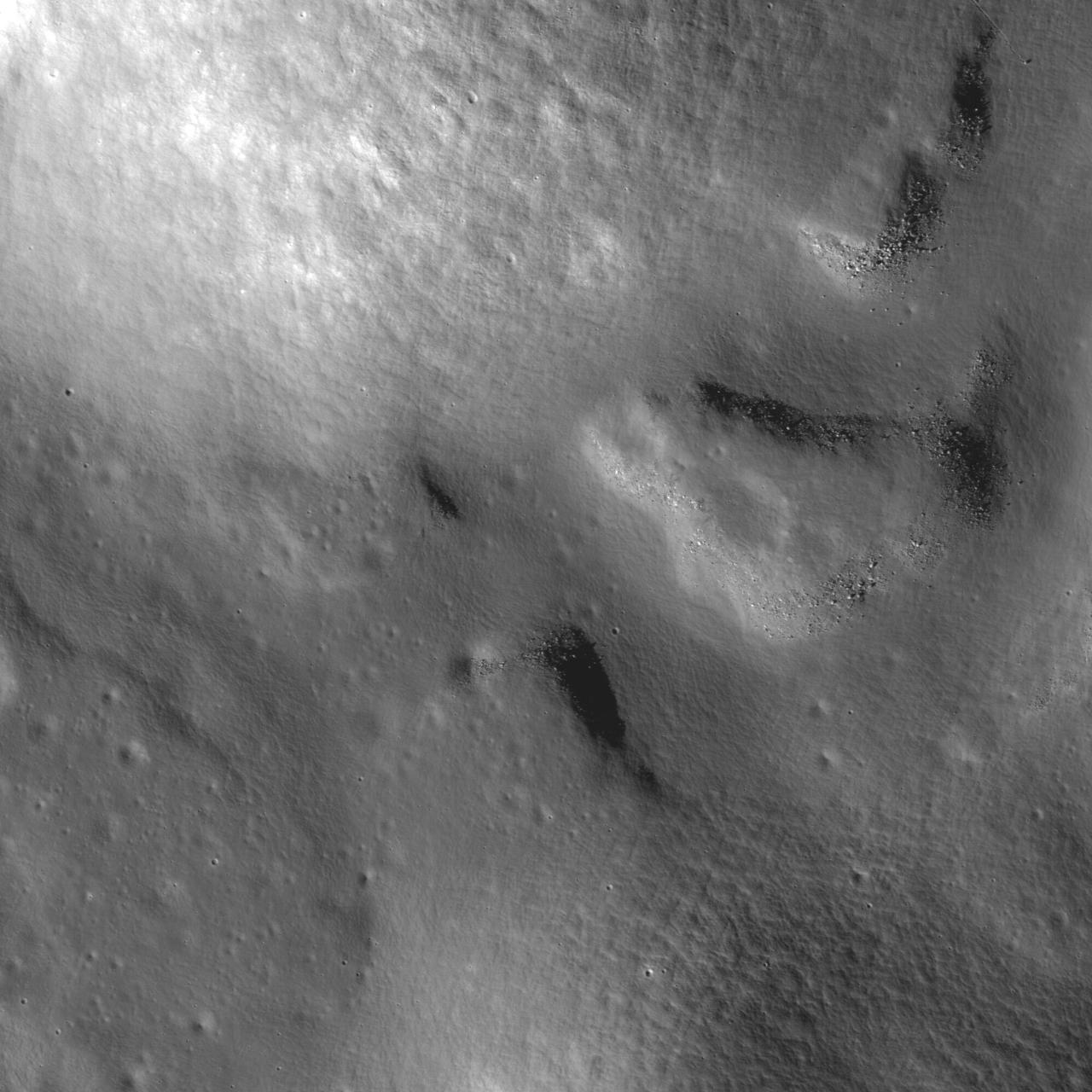
A bottleneck at the start of the lunar sinuous rille within Vallis Alpes formed several morphologic features including a lava pond, a breached dam, and an island in the rille in this image captured by NASA Lunar Reconnaissance Orbiter.
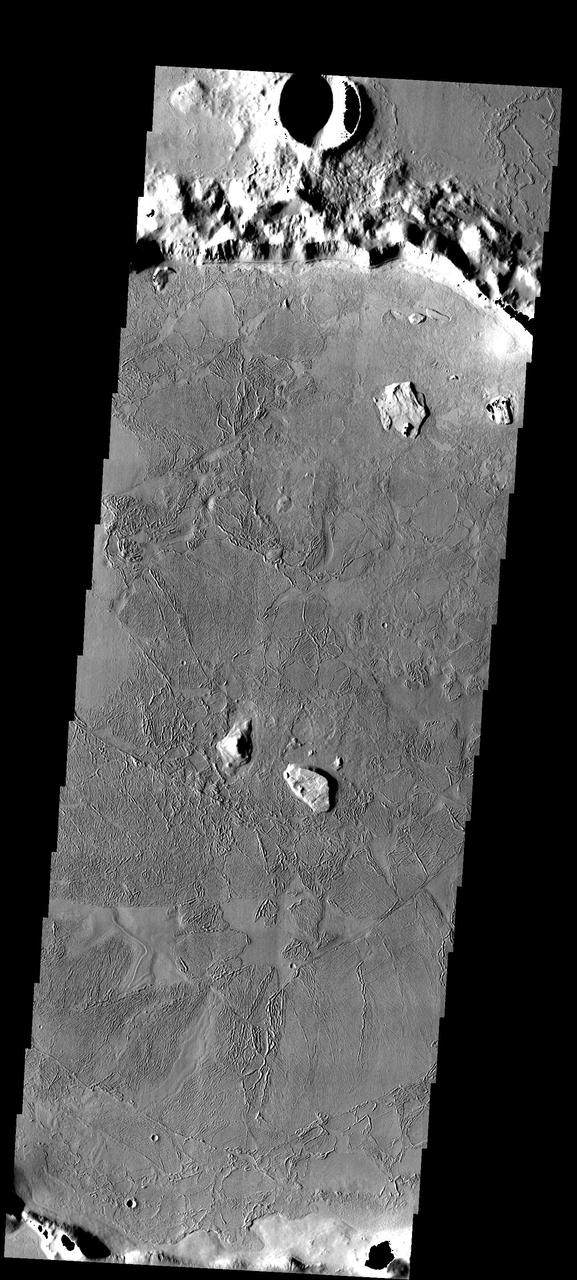
This image from NASA Mars Odyssey spacecraft shows a flooded crater in Amazonis Planitia. This crater has been either flooded with mud and or lava. The fluid then ponded up, dried and formed the surface textures we see today.
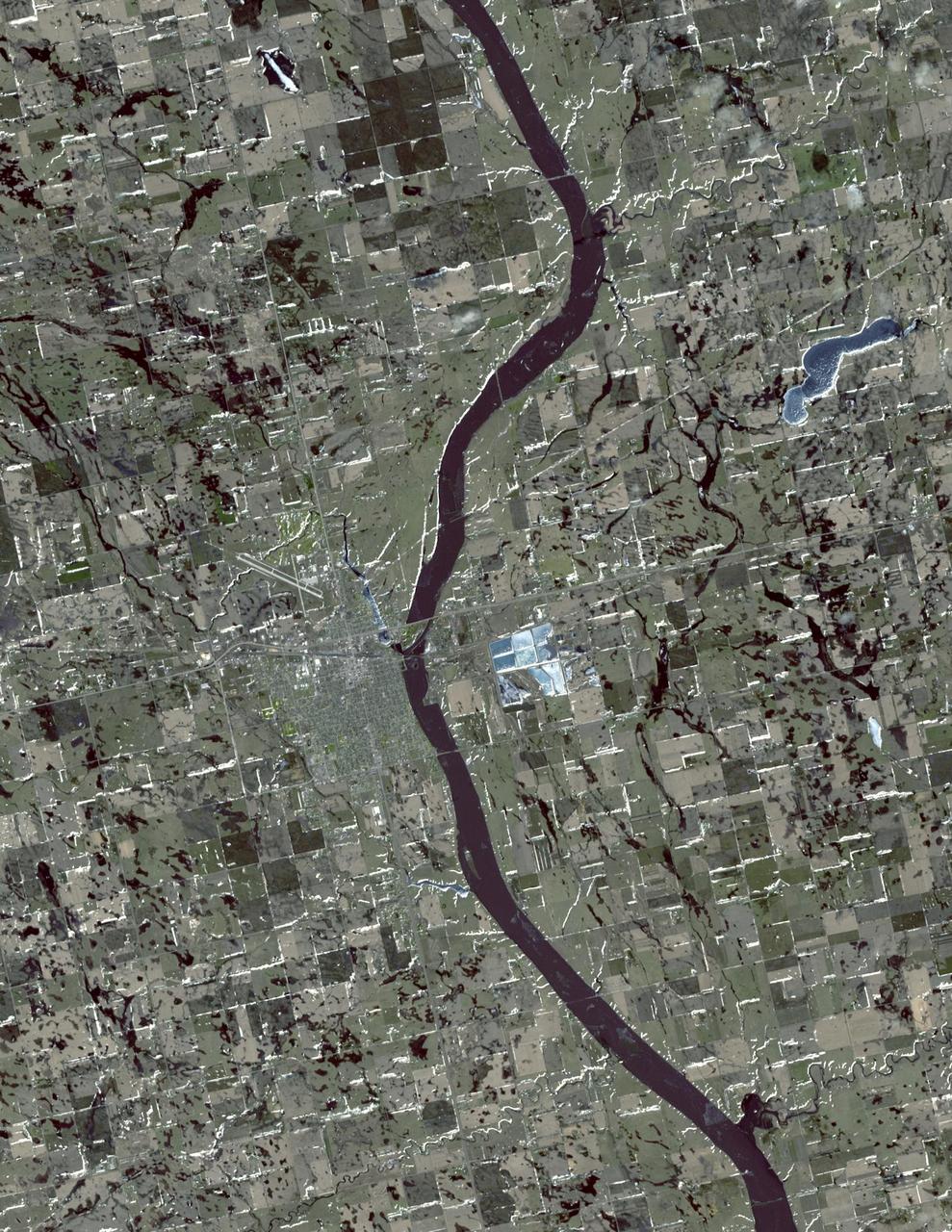
In this simulated natural color image of Huron, South Dakota, captured by NASA Terra spacecraft on March 20, 2010, frozen lakes and ponds appear blue, bare fields are tan, and fields with minor vegetation are gray-green.
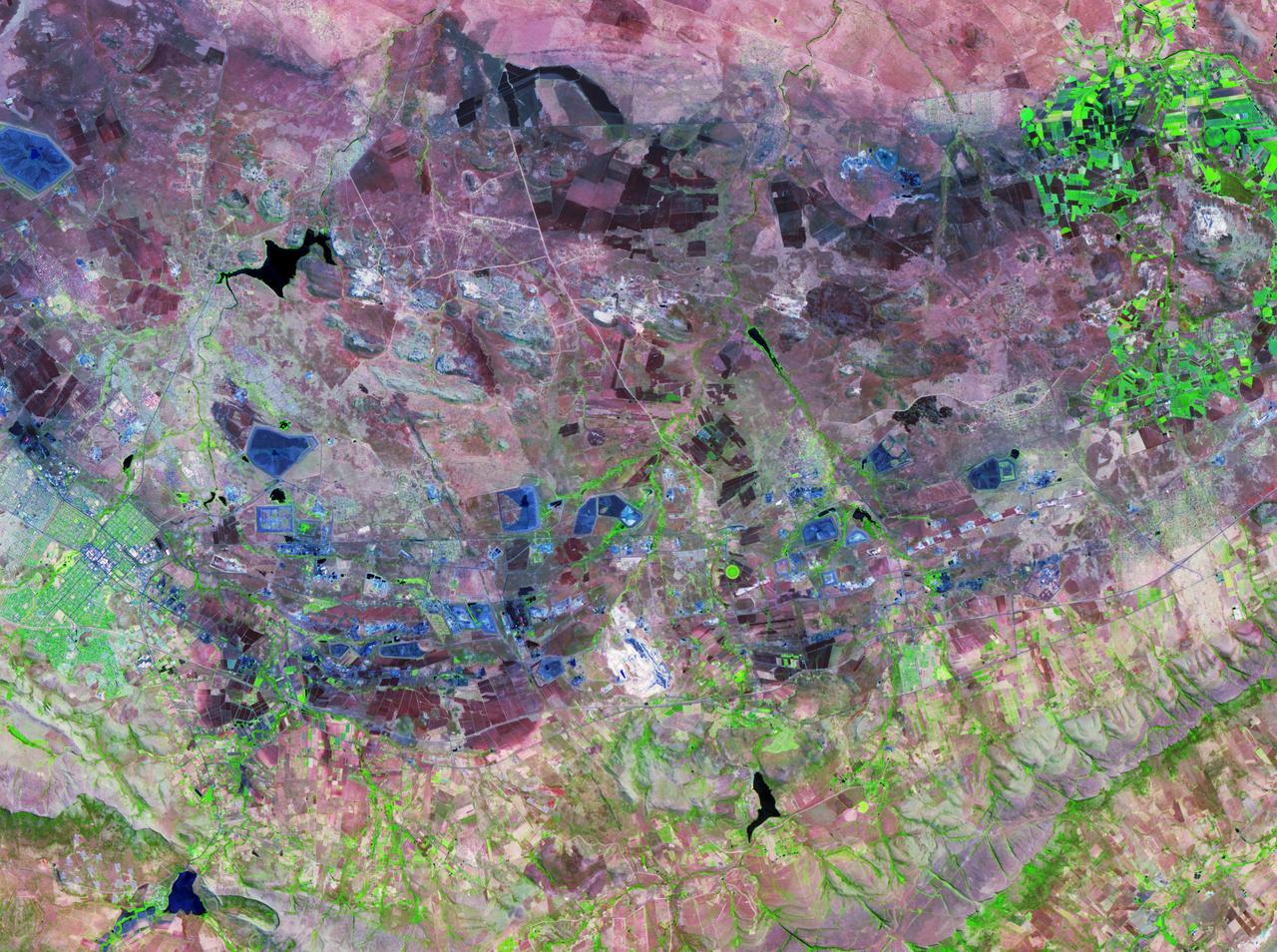
The Bushveld Igneous Complex BIC is a large layered igneous intrusion within the earth crust, exposed at the edge of the Transvaal Basin in South Africa. Numerous mines, tailings piles, and leach ponds are shown in blue.
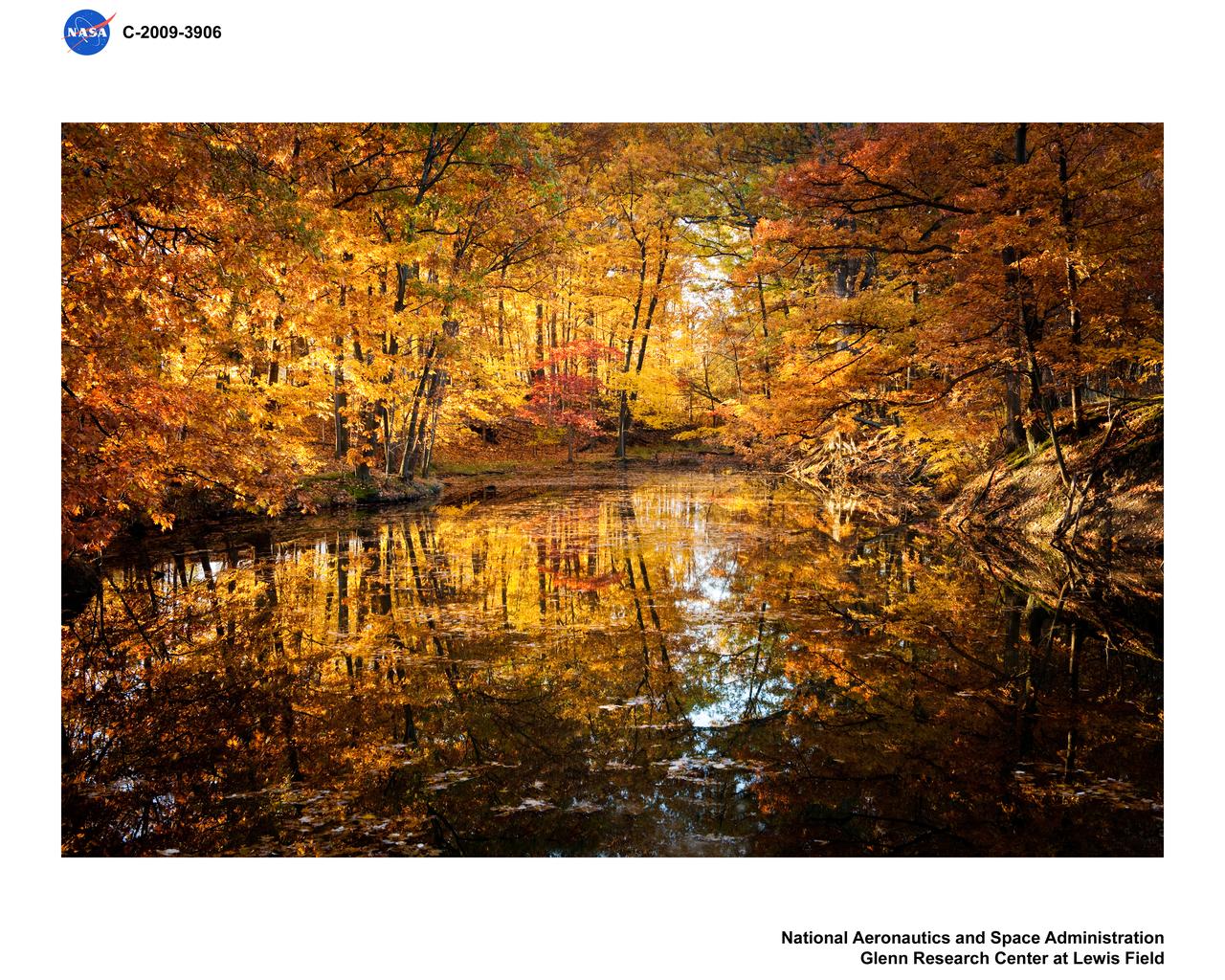
Guerin Pond in the Fall
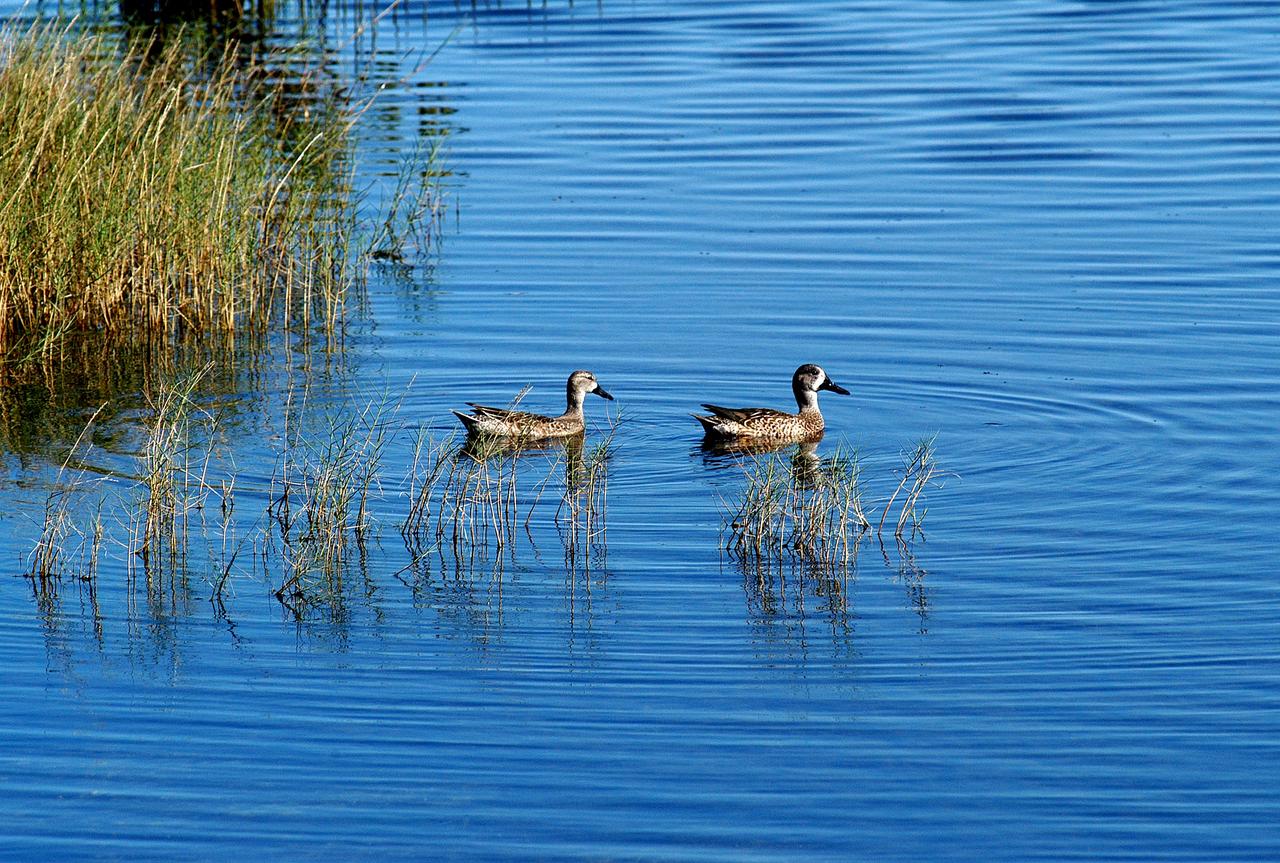
KENNEDY SPACE CENTER, FLA. - Two blue-winged teals swim in a pond near KSC. The species prefers marshes and shallow ponds and lakes for nesting and range from Canada to North Carolina, the Gulf Coast and Southern California, as well as Florida. KSC shares a boundary with the National Merritt Island Wildlife Refuge, which provides wintering areas for 23 species of migratory waterfowl, as well as a year-round home for great blue herons, great egrets, wood storks, cormorants, brown pelicans and other species of marsh and shore birds.

iss059e038845 (5/2/2019) --- Canadian Space Agency (CSA) astronaut David Saint-Jacques is photographed performing a reservoir fill on the Veggie Ponds facility in the Columbus module of the International Space Station (ISS). The primary goal of the Veggie PONDS hardware validation test is to demonstrate plant growth in a newly developed plant growing system, Passive Orbital Nutrient Delivery System (PONDS).
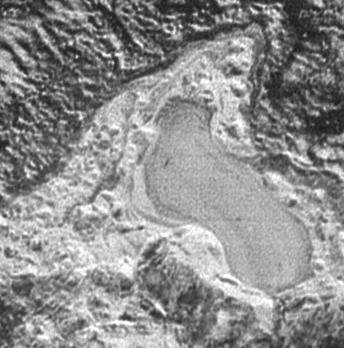
NASA New Horizons spacecraft captured this feature which appears to be a frozen, former lake of liquid nitrogen, located in a mountain range just north of Pluto informally named Sputnik Planum.
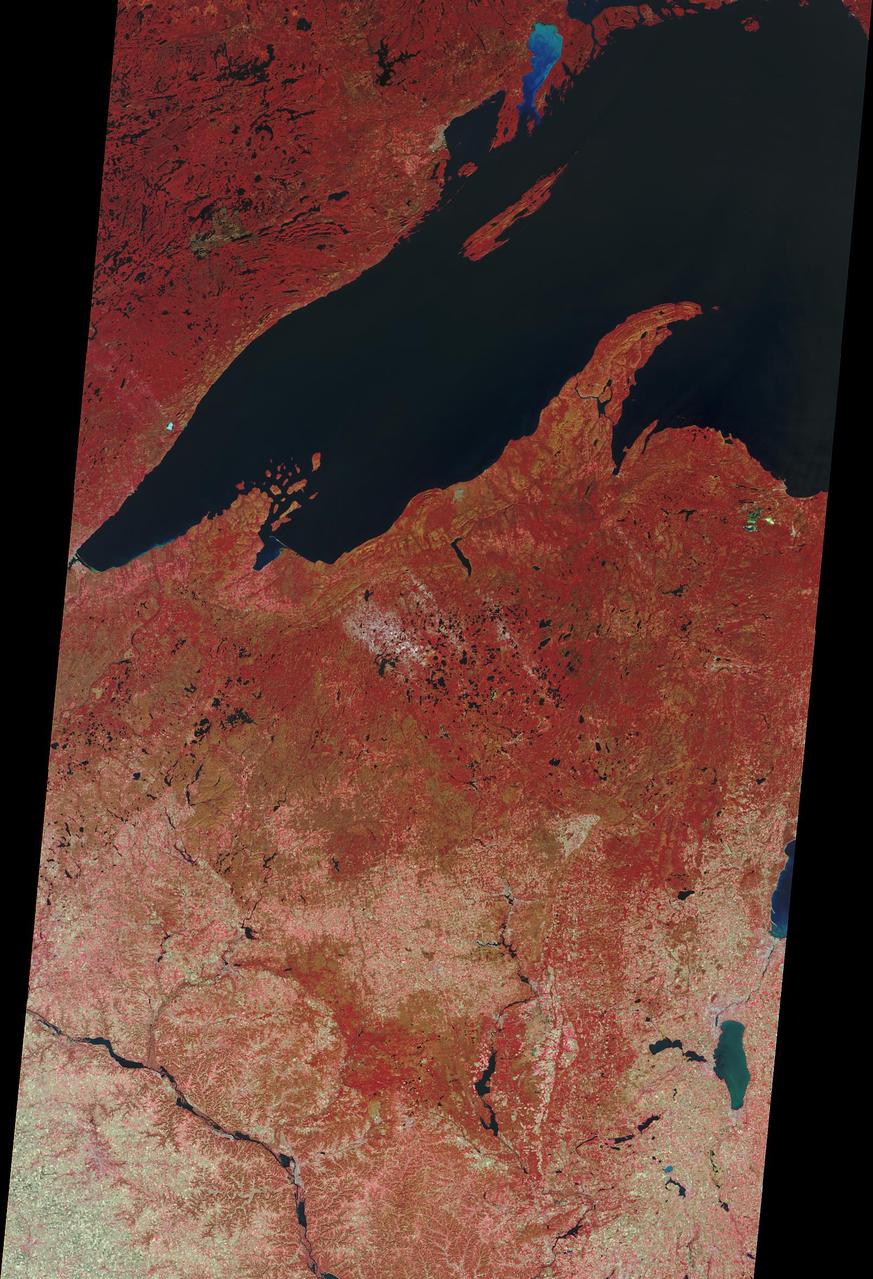
NASA Terra satellite presents this false color view of portions of Wisconsin and Michigan, including Devil Lake, Druid Lake, Ghost Lake, Spider Lake, and Witches Lake in Wisconsin; and Bat Lake, Corpse Pond and Witch Lake in Michigan.
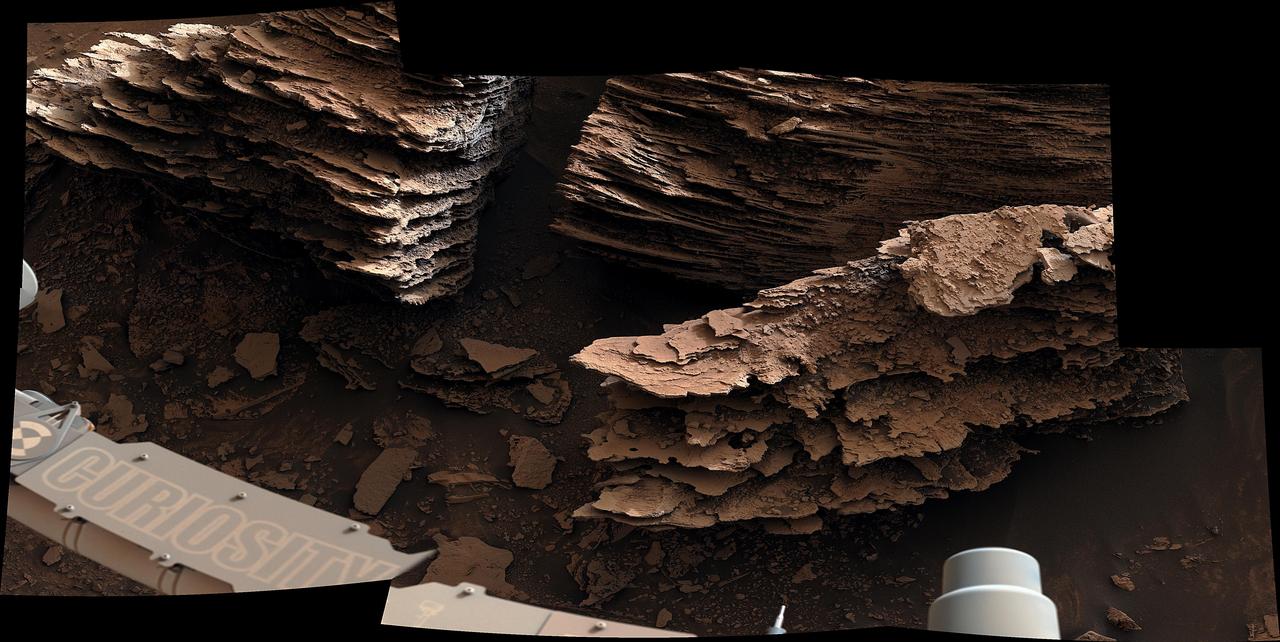
NASA's Curiosity Mars rover captured this view of layered, flaky rocks believed to have formed in an ancient streambed or small pond. The six images that make up this mosaic were captured using Curiosity's Mast Camera, or Mastcam, on June 2, 2022, the 3,492nd Martian day, or sol, of the mission. https://photojournal.jpl.nasa.gov/catalog/PIA25368
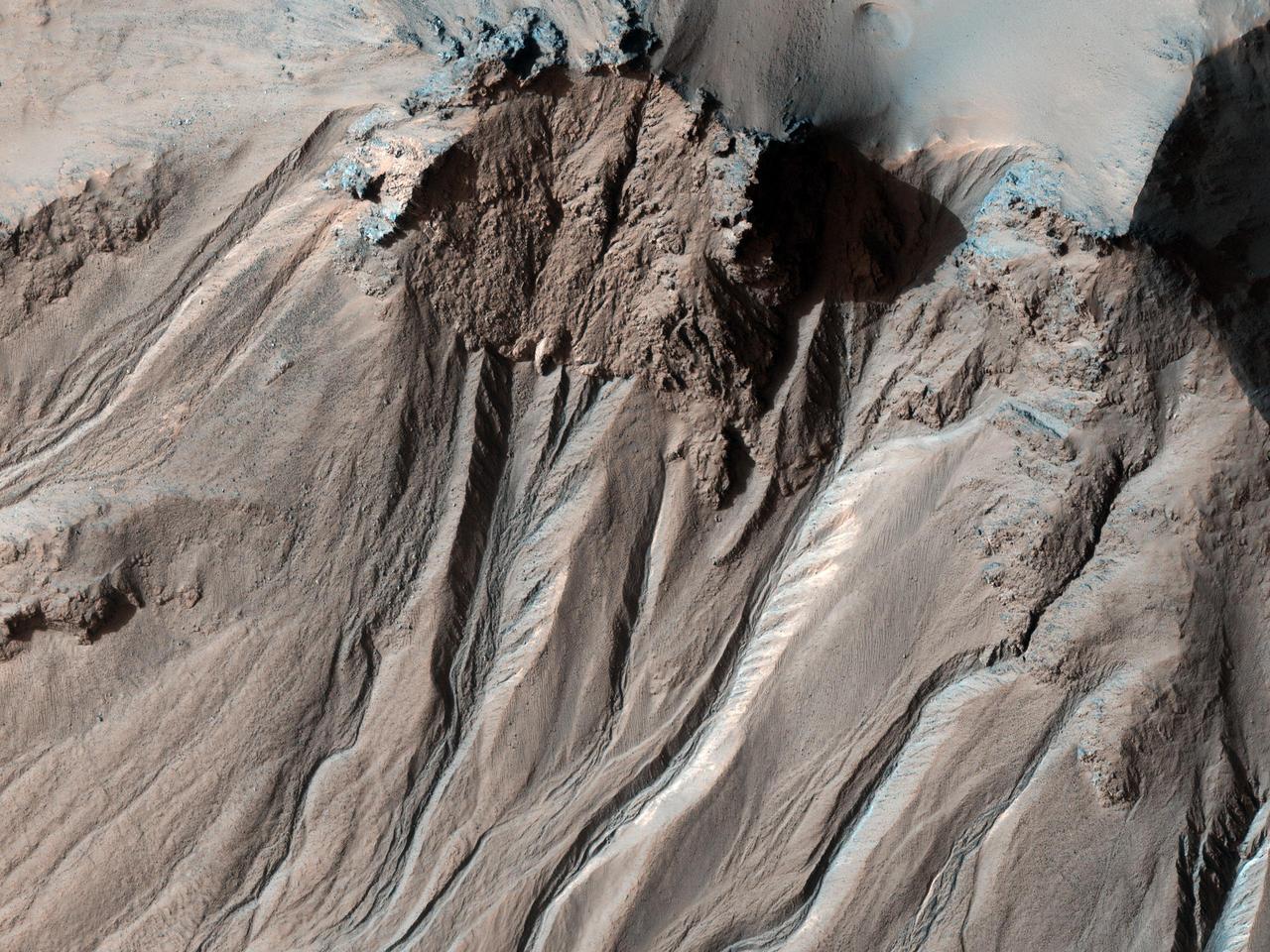
This image from NASA Mars Reconnaissance Orbiter shows the southern latitude Hale Crater, a rather large, pristine elliptical crater possessing sharp features, impact melt bodies ponded throughout the structure and few overprinting impact craters.

KENNEDY SPACE CENTER, FLA. -- The Merritt Island National Wildlife Refuge, which shares a boundary with the Kennedy Space Center, is winter home to hundreds of waterfowl such as these coots and pintail ducks. The smaller coot inhabits open ponds and marshes, wintering in saltwater bays and inlets. They range from southern Canada to northern South America. The pintail can be found in marshes, prairie ponds and tundra, and salt marshes in winter. They range from Alaska and Greenland south to Central America and the West Indies
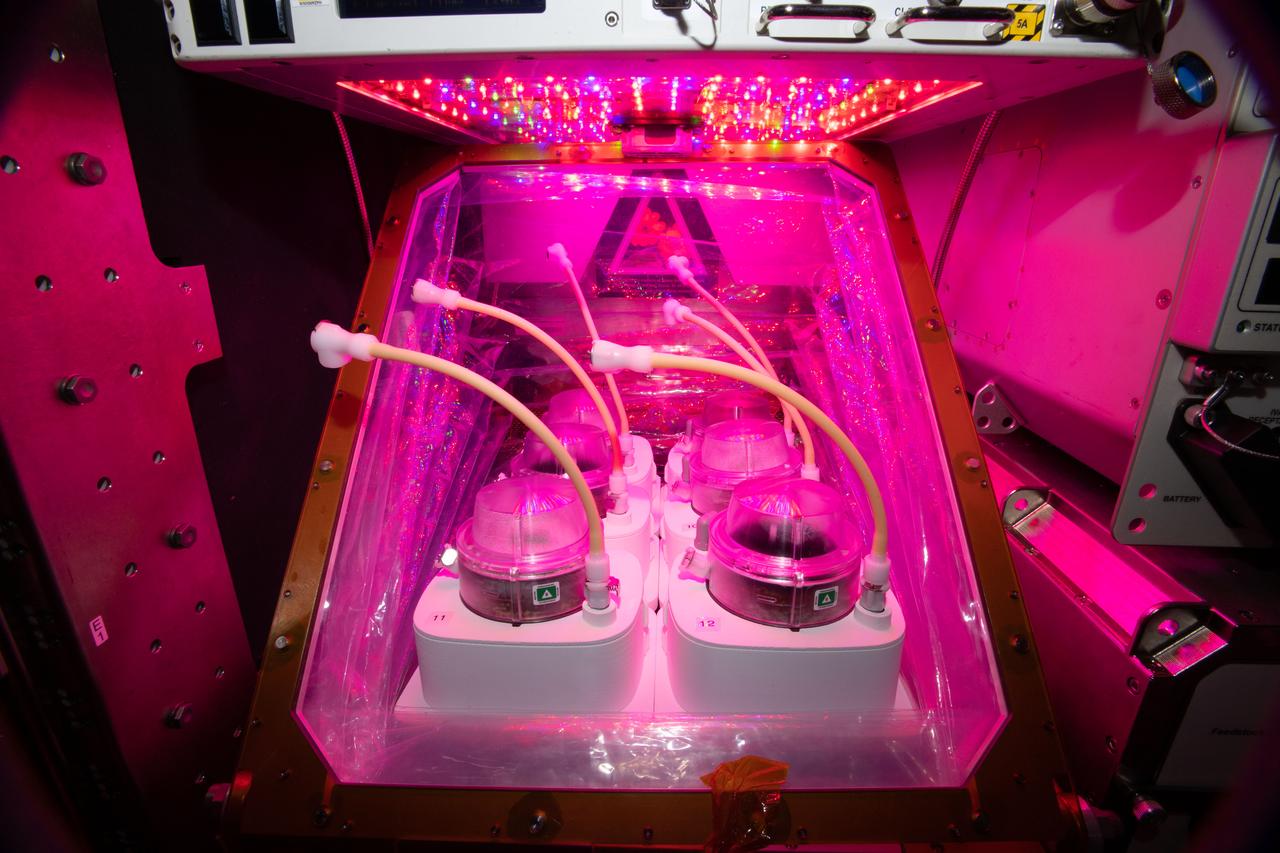
iss062e112685 (3/25/2020) --- Documentation of the Veggie Ponds Modules while module is in Veggie Bellows. Veggie PONDS uses a newly developed passive nutrient delivery system and the Veggie plant growth facility aboard the International Space Station (ISS) to cultivate lettuce and mizuna greens which are to be harvested on-orbit, and consumed, with samples returned to Earth for analysis.
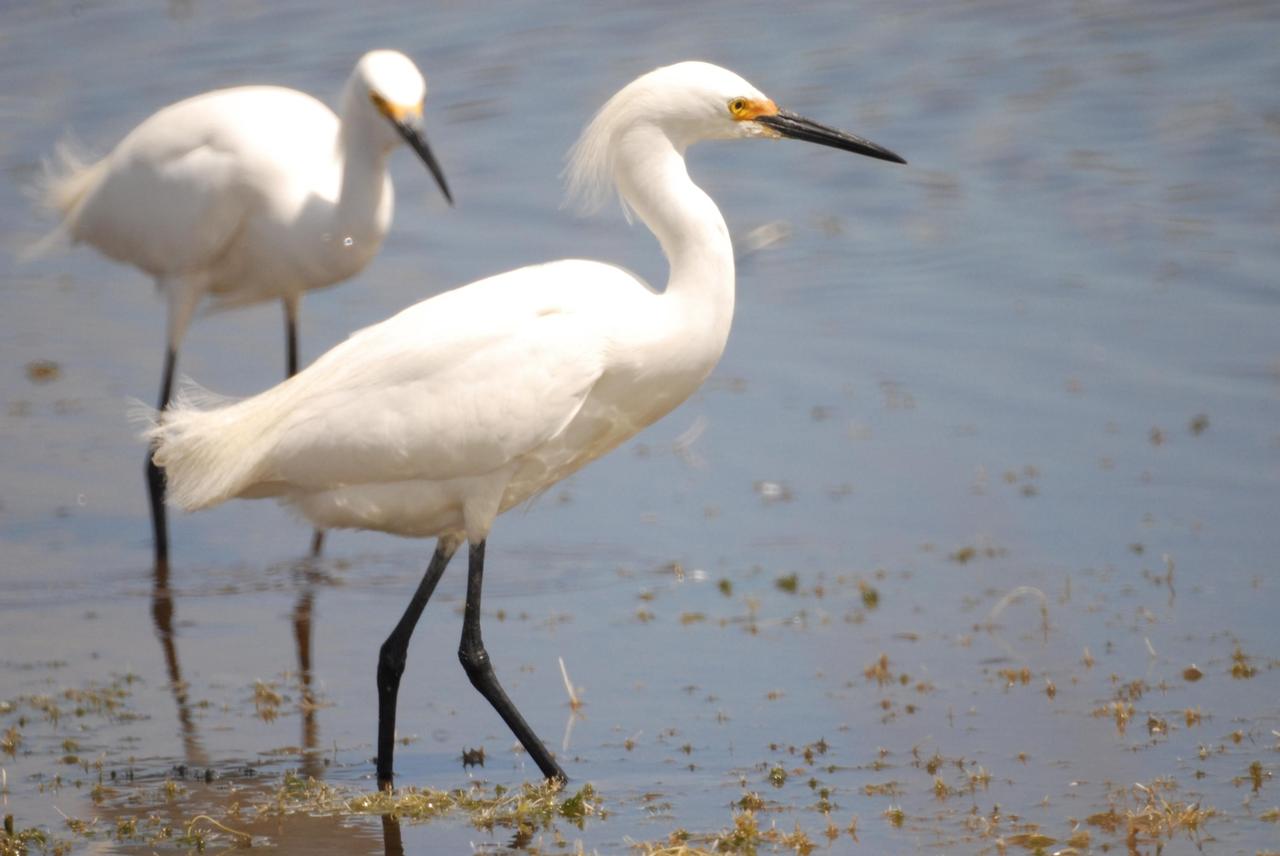
KENNEDY SPACE CENTER, FLA. -- Snowy egrets wade through a pond for their food. The pond is near Kennedy Space Center. This species inhabits salt marshes, ponds, rice field and shallow coastal bays along the coast from Maine to southern South America. They are also found in northern California, Texas and Oklahoma. KSC shares a boundary with the Merritt Island National Wildlife Refuge, which surrounds it. The refuge is a habitat for more than 310 species of birds, 25 mammals, 117 fishes and 65 amphibians and reptiles. In addition, the refuge supports 19 endangered or threatened wildlife species on Federal or State lists, more than any other single refuge in the U.S. Photo credit: NASA/Ken Thornsley
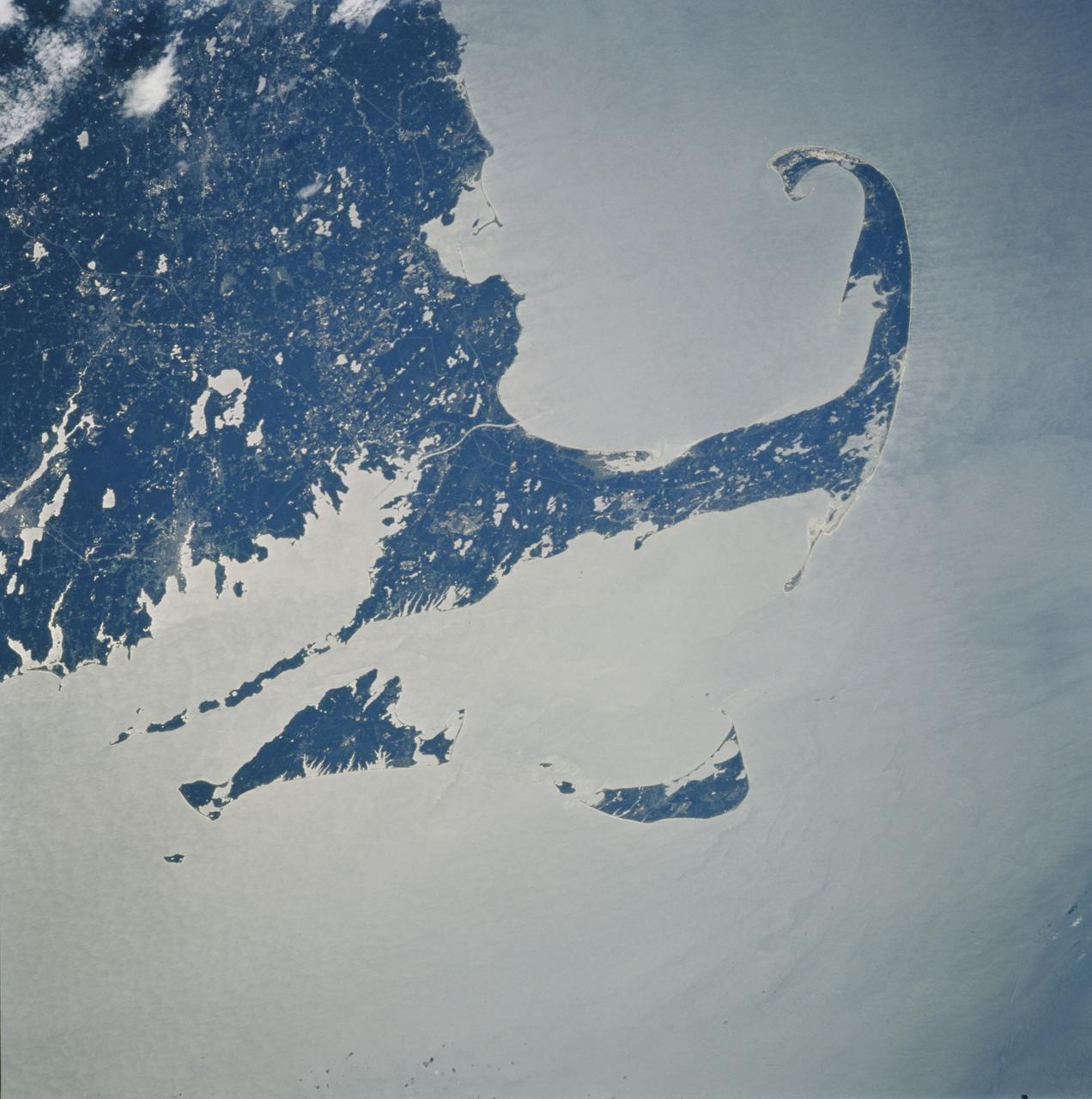
STS106-710-060 (8-20 September 2000) --- One of the STS-106 crew members on board the Space Shuttle Atlantis used a handheld 70mm camera to photograph this image of Cape Cod and parts of Massachusetts. Partial sun glint highlights the coastline and brings out subtle details in the waters around Massachusetts. The maximum advance of an ice sheet 23,000 years ago is marked by the unique shape of Cape Cod and by the islands of Nantucket and Martha's Vineyard. Rocks and debris left at the edges of the ice fronts made parts of the landscape slightly higher and more resistant to erosion. Glacial retreat and sea level rise covered the lower ground and gave us the more modern coastline that we are familiar with. The city of New Bedford can be located near the coast and just below the circular lakes of Long Pond, Great Quiittacas Pond, and Assawompset Pond.
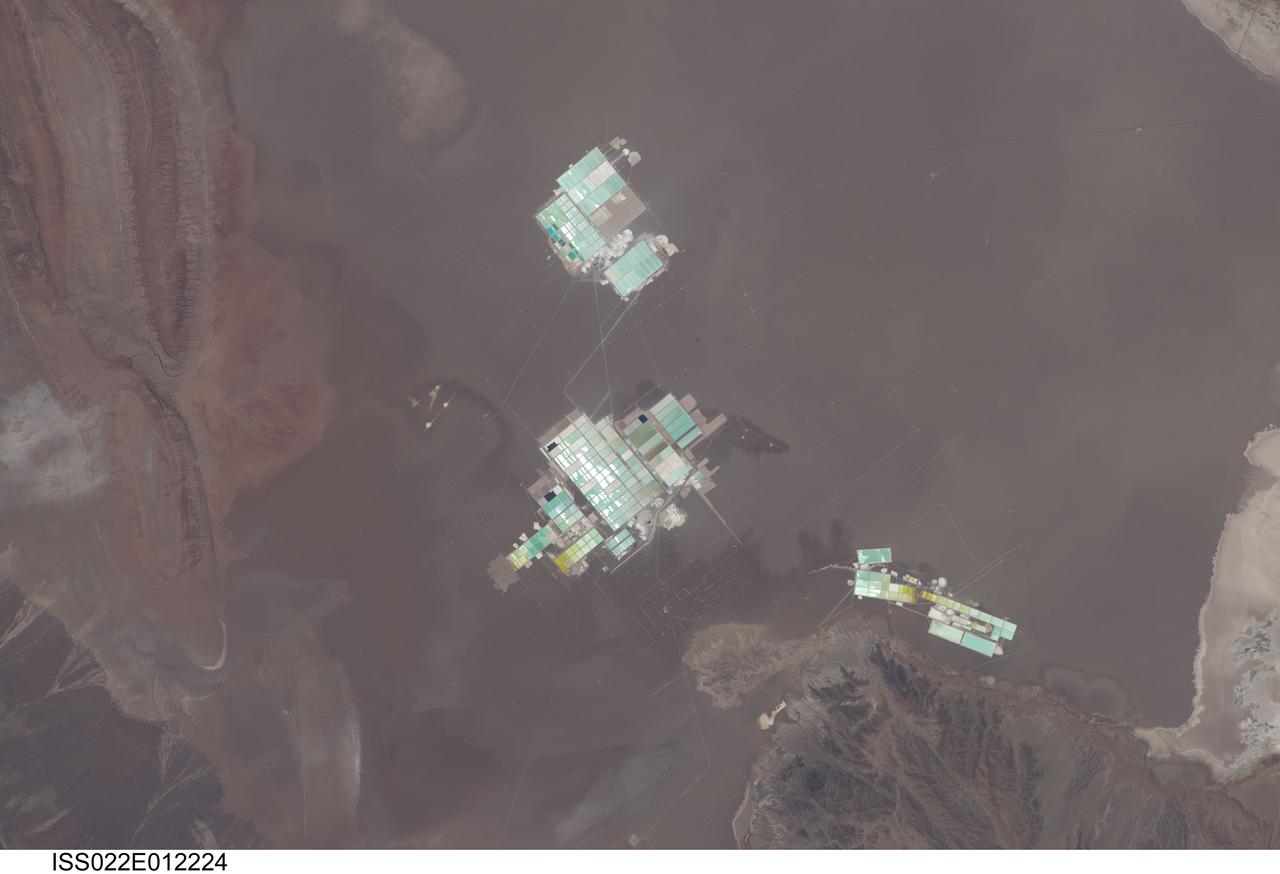
ISS022-E-012224 (15 Dec. 2009) --- Evaporation ponds in the Salar de Atacama, Chile are featured in this image photographed by an Expedition 22 crew member on the International Space Station. The Salar (salt flat) de Atacama in Chile is an enclosed basin with no drainage outlets. While the grey-brown surface of the Salar is flat and desiccated, mineral-rich brines - water with a high percentage of dissolved salts - are located below the surface. The subsurface brines of the Salar de Atacama are particularly rich in lithium salts. Lithium is an essential component of advanced batteries and medicines, among many other uses. The brines are pumped to the surface through a network of wells and into large shallow evaporation ponds ? three such evaporation pond facilities are visible in the center of the image. Color variations in the ponds are due to varying amounts of salts relative to water. The dry and windy climate enhances evaporation of the water, leaving concentrated salts behind for extraction of the lithium. The Salar de Atacama is located in the southern half of the Atacama Desert ? with no historical or current records of rainfall in some parts of this desert, it is considered to be one of the driest places on Earth. This photograph illustrates the central portion of the Salar de Atacama. It is bounded by brown to grey-brown folded and faulted strata of the Cordillera de la Sal to the northwest (upper left) and darker bedrock of the Cordon de Lila to the south (lower right).
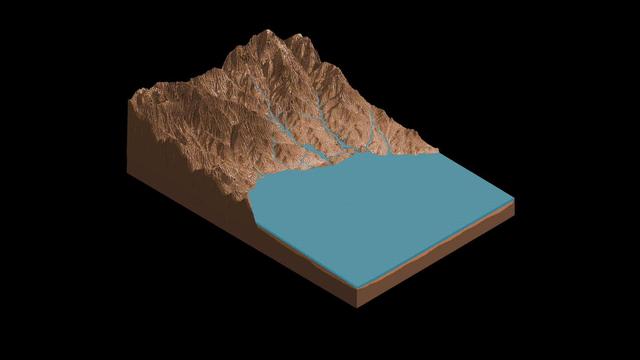
This animation demonstrates how streams may have flowed from Mount Sharp to the floor of Gale Crater, where salty ponds may have been left behind as the region dried out over time. Rocks enriched with mineral salts discovered by NASA's Curiosity at a location on Mount Sharp called "Sutton Island" suggest that water vanished slowly, rather than all at once, possibly returning to the area in a persistent cycle of drying and overflow. This discovery serves as a watermark for when the Martian climate was gradually getting drier. Animation available at https://photojournal.jpl.nasa.gov/catalog/PIA23375
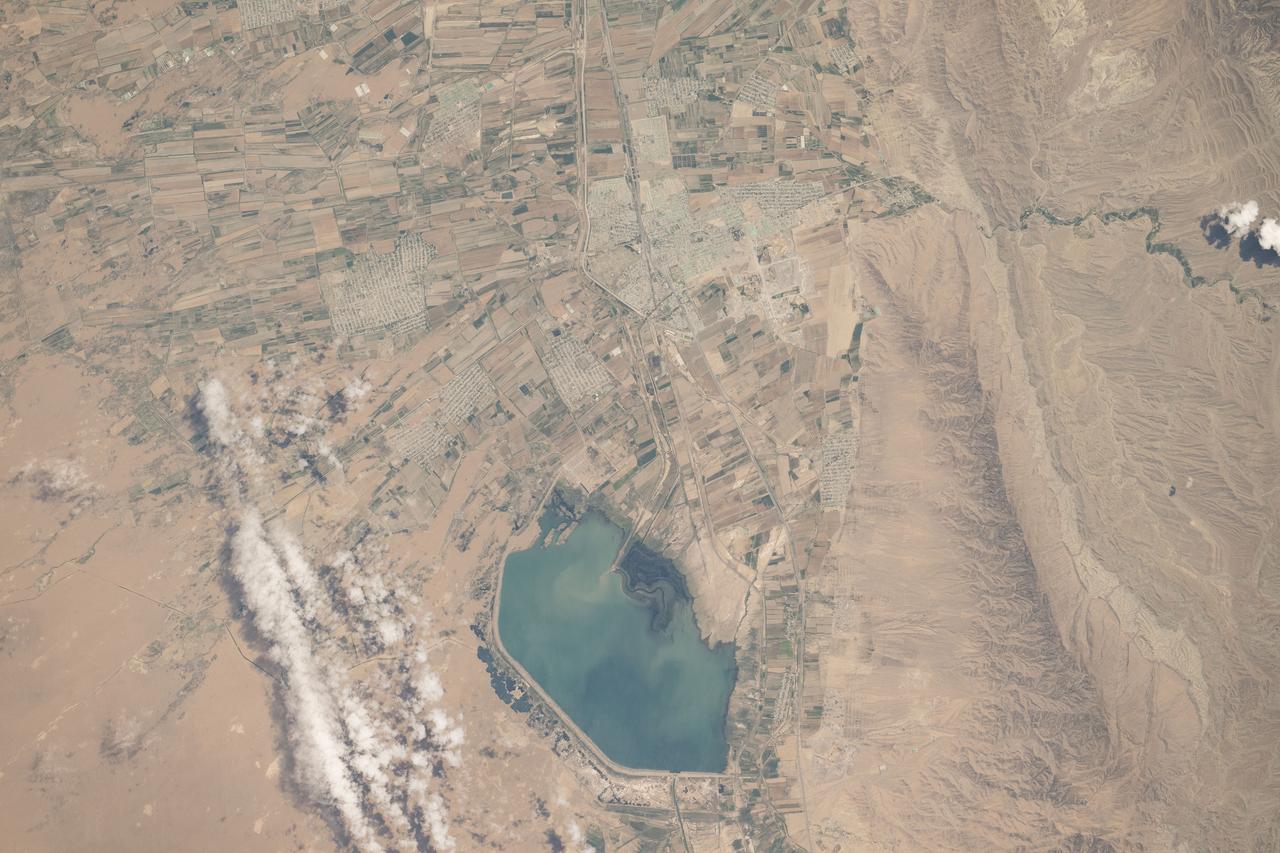
iss071e312274 (June 20, 2024) --- The Gökdepe köli fishing pond in the Ahal Region of Turkmenistan is pictured from the International Space Station as it orbited 265 miles above Central Asia.
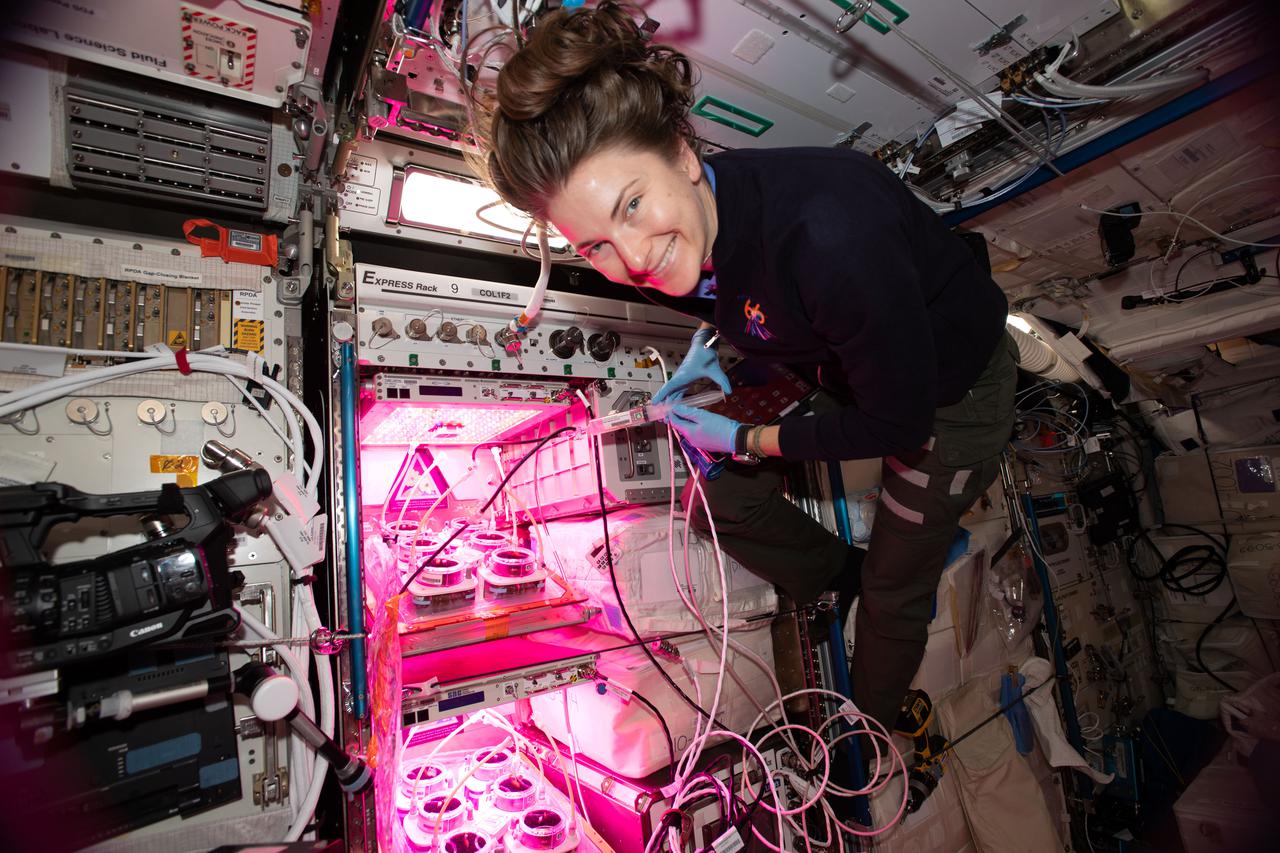
iss066e136343 (Feb. 5, 2022) --- NASA astronaut and Expedition 66 Flight Engineer Kayla Barron works with the Veggie PONDS space agriculture experiment that explores how to grow fresh food during long-term spaceflight missions.
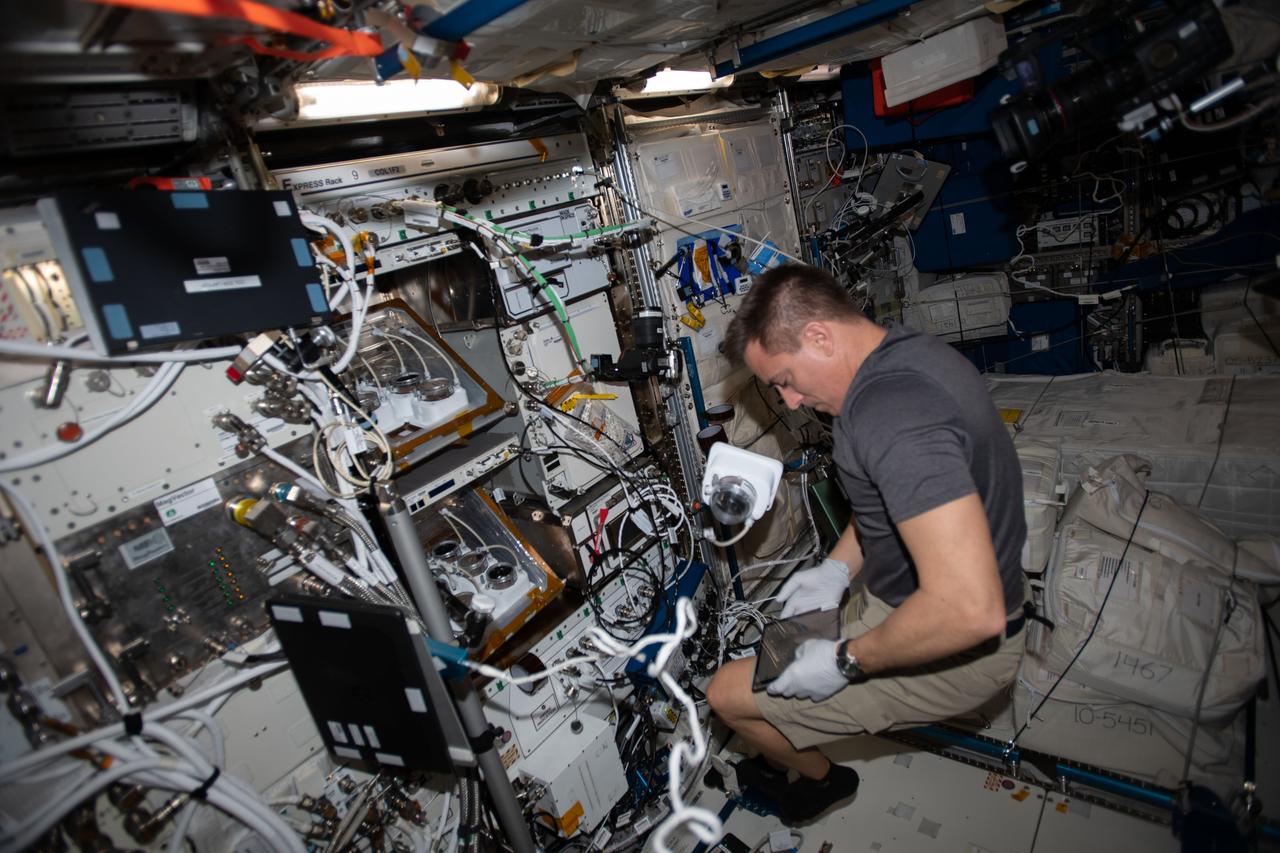
iss063e001867 (April 22, 2020) --- NASA astronaut and Expedition 63 Commander Chris Cassidy works inside the Columbus Laboratory module servicing the Veggie PONDS botany research hardware.
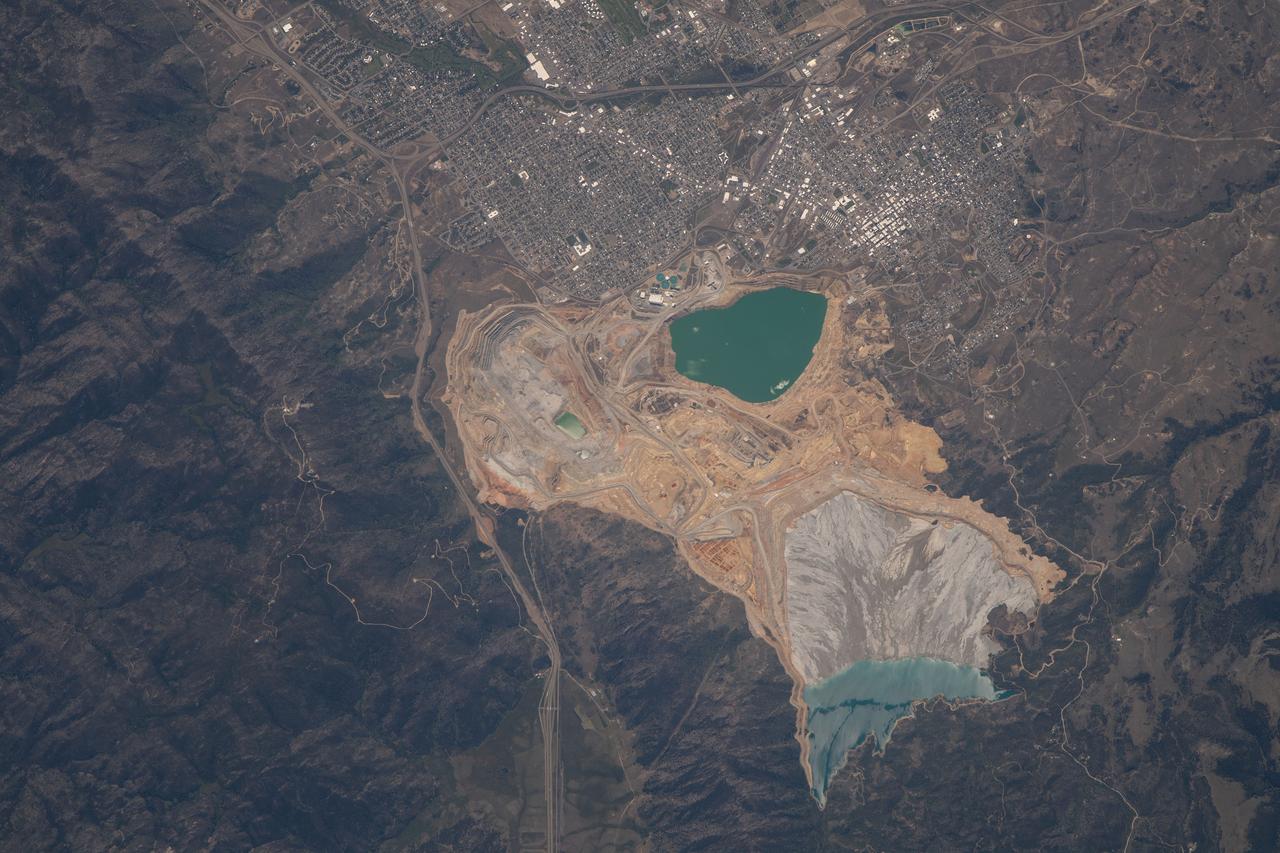
iss069e060850 (Aug. 15, 2023) --- The city of Butte, Montana, next to the Berkeley Pit and Yankee Doodle Tailings Pond, is pictured from the International Space Station as it orbited 265 miles above the Big Sky Country state.
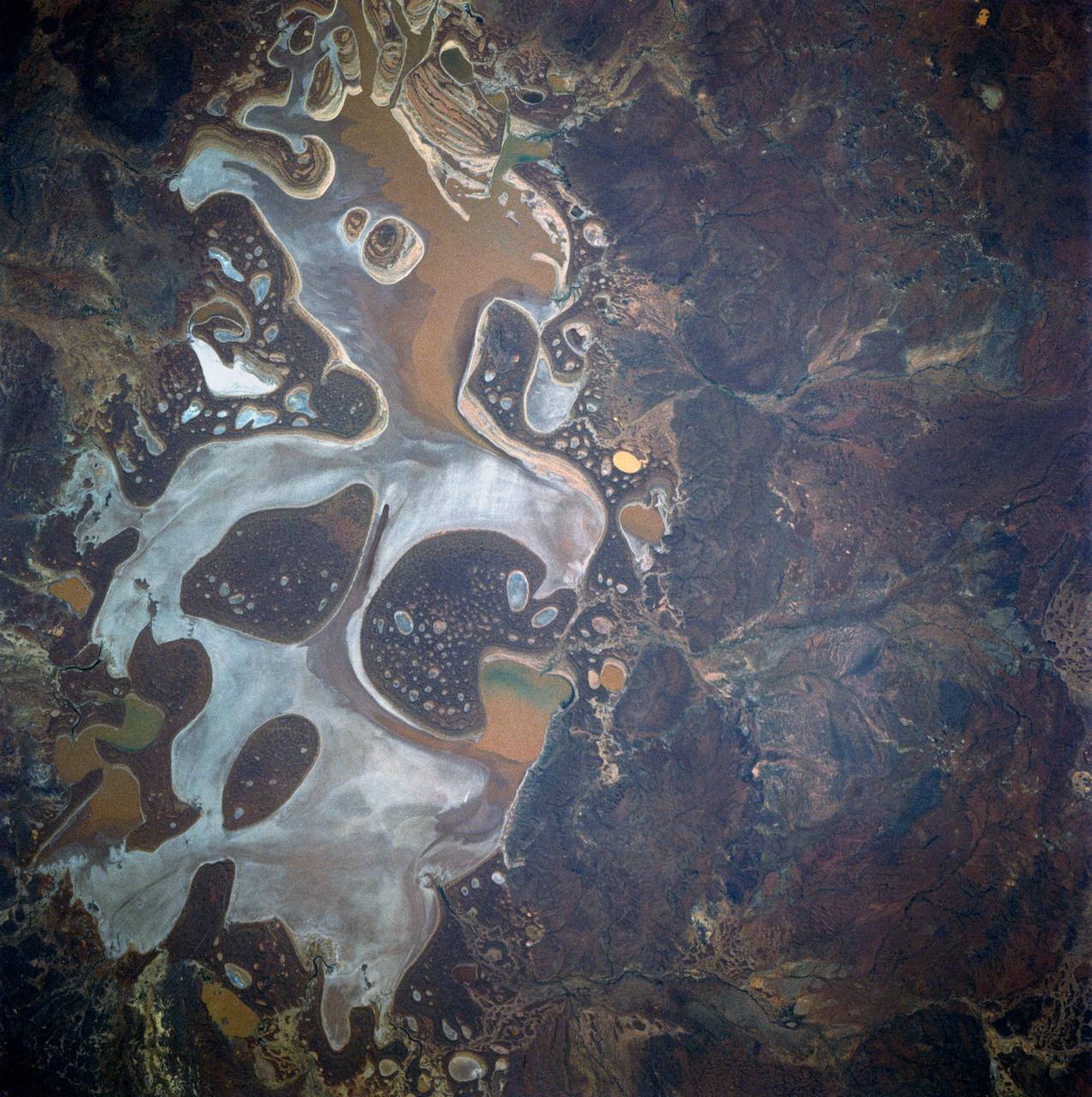
41D-42-045 (30 Aug-5 Sept 1984) --- Lake Carnegie in western Australia, 600 miles northeast of Perth. This is an island basin dotted with numerous salt lakes, ponds, flats, benches, and dunes.
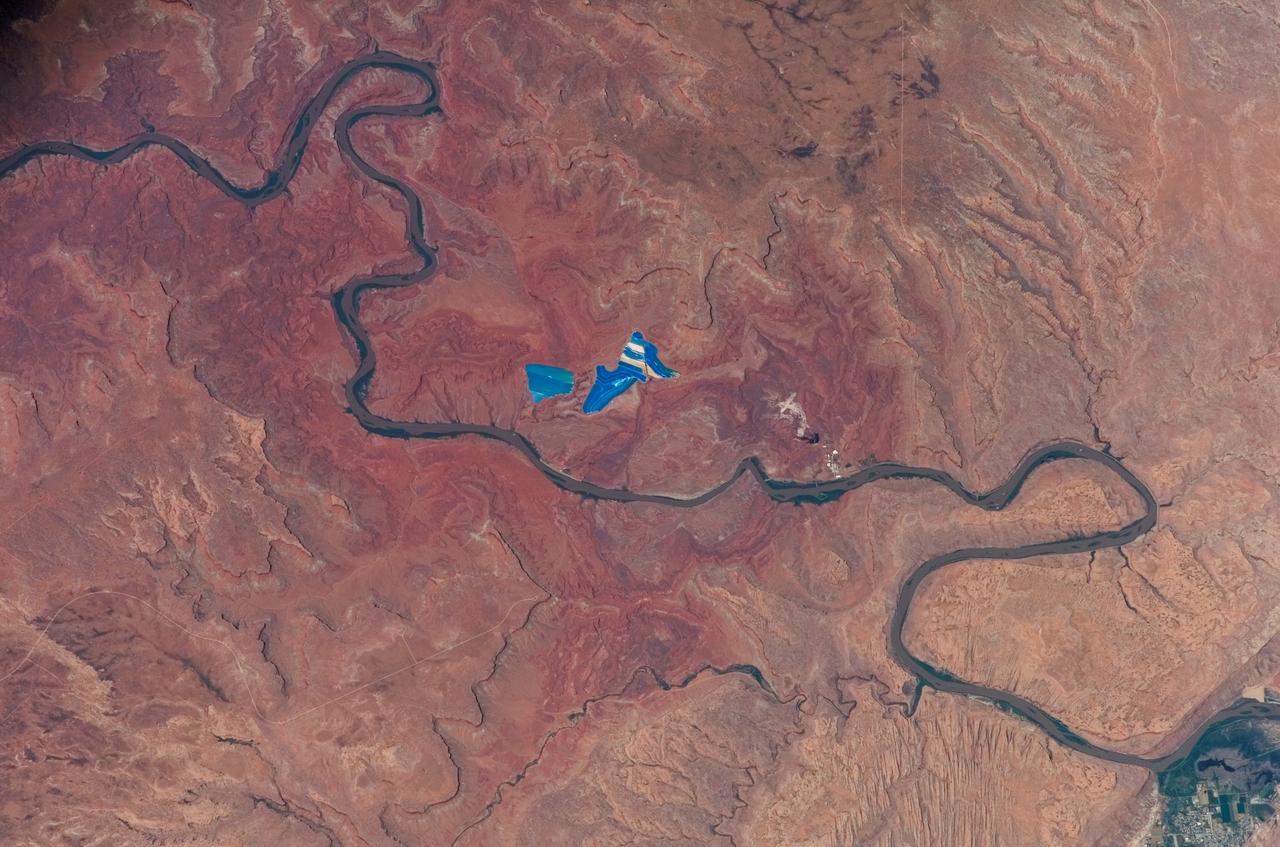
ISS015-E-08879 (18 May 2007) --- An evaporation pond near the Colorado River in Utah is featured in this image photographed by an Expedition 15 crewmember on the International Space Station.
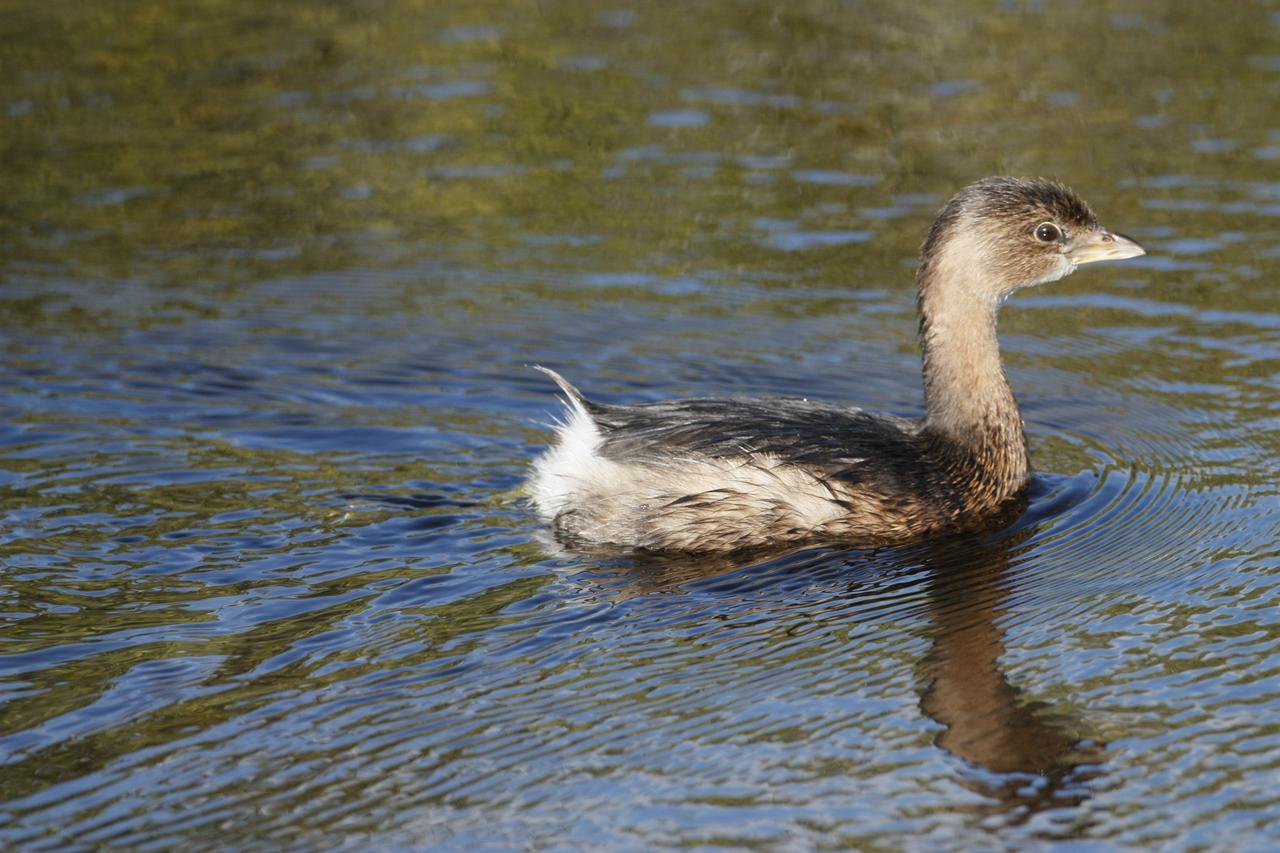
CAPE CANAVERAL, Fla. – Near NASA's Kennedy Space Center in Florida, a pied-billed Grebe swims on a pond in the Merritt island National Wildlife Refuge. The normal black band on its bill is lacking in winter. The most common grebe in eastern North America, the pied-billed Grebe inhabits marshes and ponds, eating small fish, crustaceans, especially crayfish, and aquatic insects. The center shares a boundary with the refuge that includes salt-water estuaries, brackish marshes, hardwood hammocks and pine flatwoods. The diverse landscape provides habitat for more than 310 species of birds, 25 mammals, 117 fishes and 65 amphibians and reptiles. Photo credit: NASA/Jim Grossmann
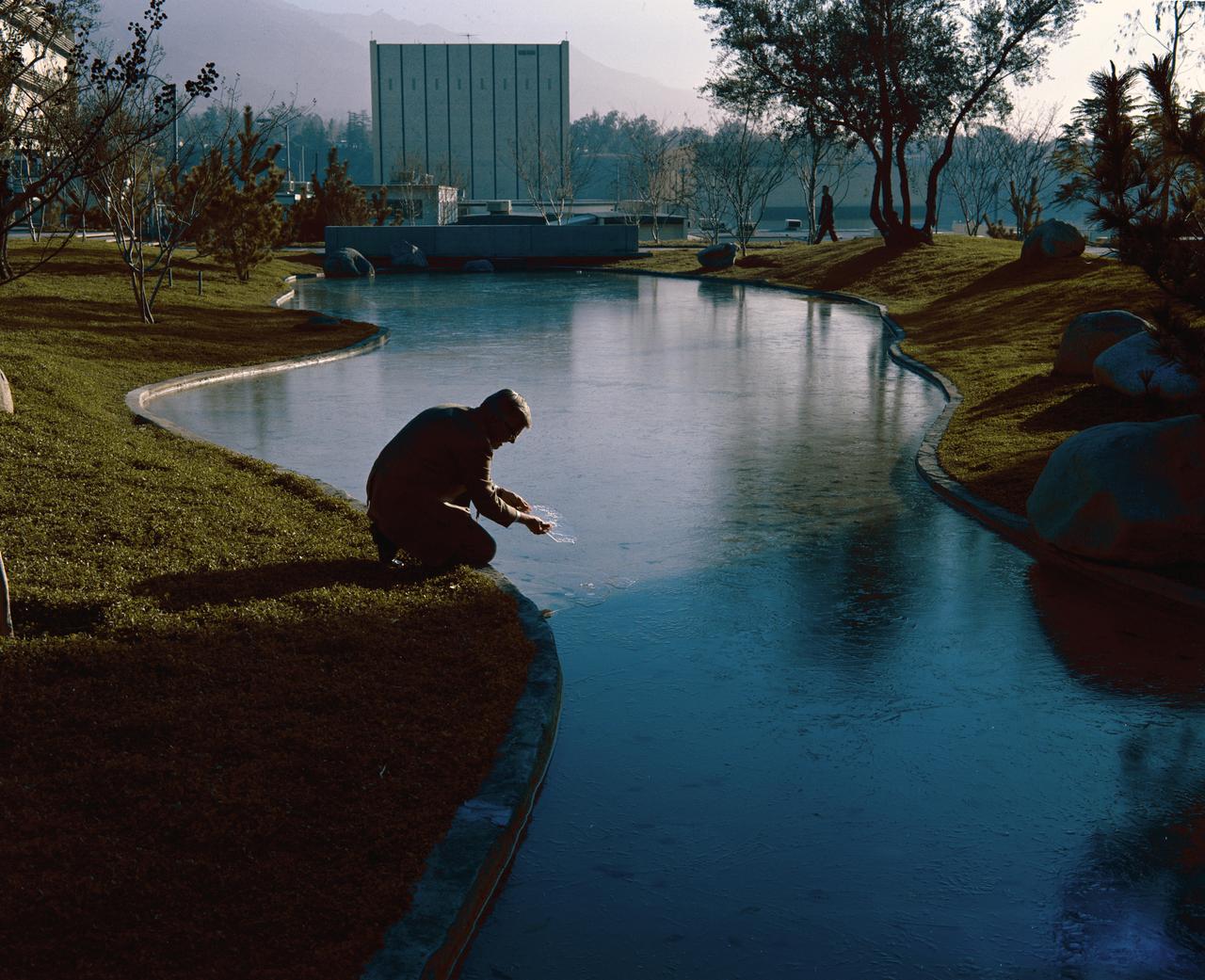
This archival image was released as part of a gallery comparing JPL's past and present, commemorating the 80th anniversary of NASA's Jet Propulsion Laboratory on Oct. 31, 2016. This photograph from 1971 shows the open-air gathering area at NASA's Jet Propulsion Laboratory known as "The Mall." It looks east towards the Applied Mechanics building (the blocky white building now numbered 157). The person in the foreground is Robert Steinbacher, the project scientist for the Mariner 9 mission to Mars. The concrete bridge crossing the ponds remains, even though the ponds have been removed. Many trees and another building, the Central Engineering Building (301), block the view to Building 157 now. http://photojournal.jpl.nasa.gov/catalog/PIA21125
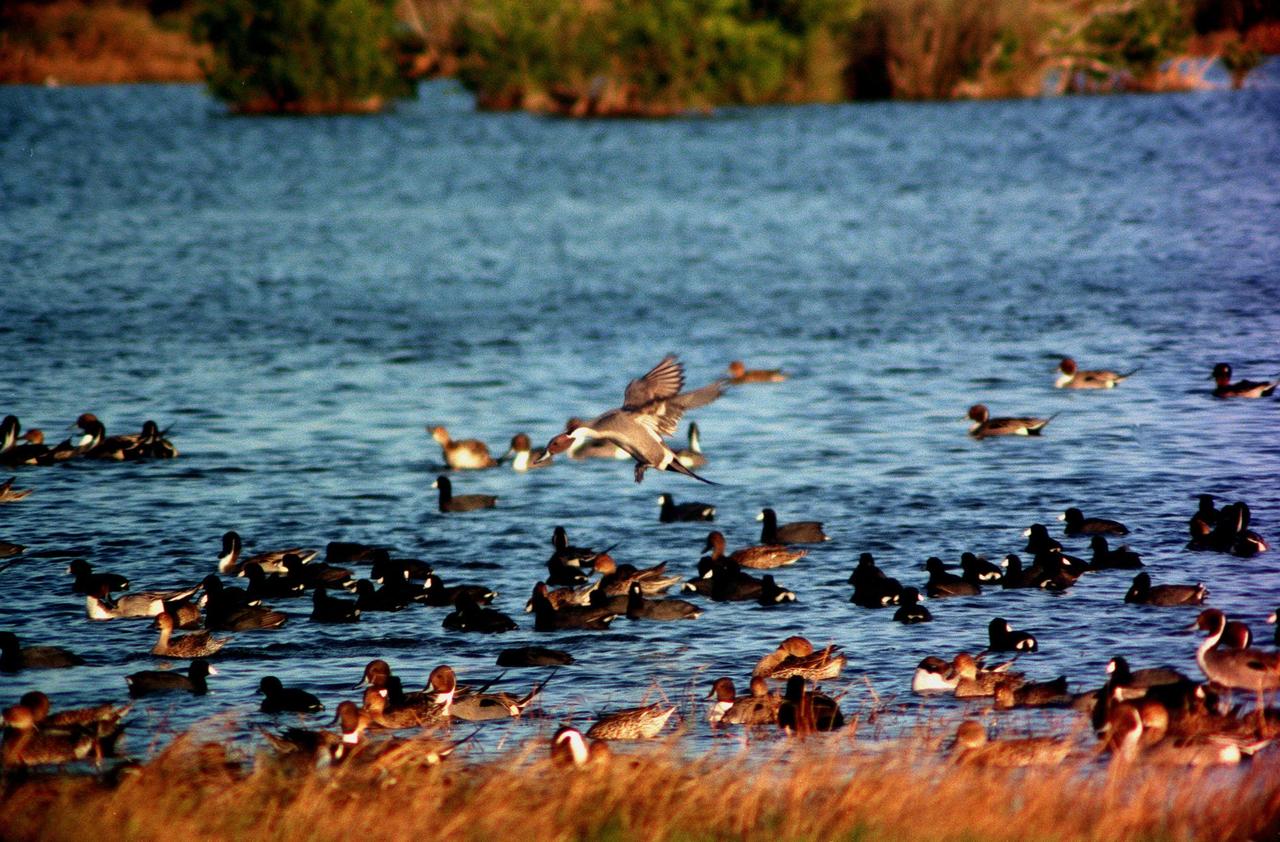
KENNEDY SPACE CENTER, FLA. -- A pintail duck is poised for landing, joining other ducks and coots on the waters of the Merritt Island National Wildlife Refuge at Kennedy Space Center. The refuge is winter home to hundreds of waterfowl such as these coots and pintail ducks. The smaller coot inhabits open ponds and marshes, wintering in saltwater bays and inlets. They range from southern Canada to northern South America. The pintail can be found in marshes, prairie ponds and tundra, and salt marshes in winter. They range from Alaska and Greenland south to Central America and the West Indies
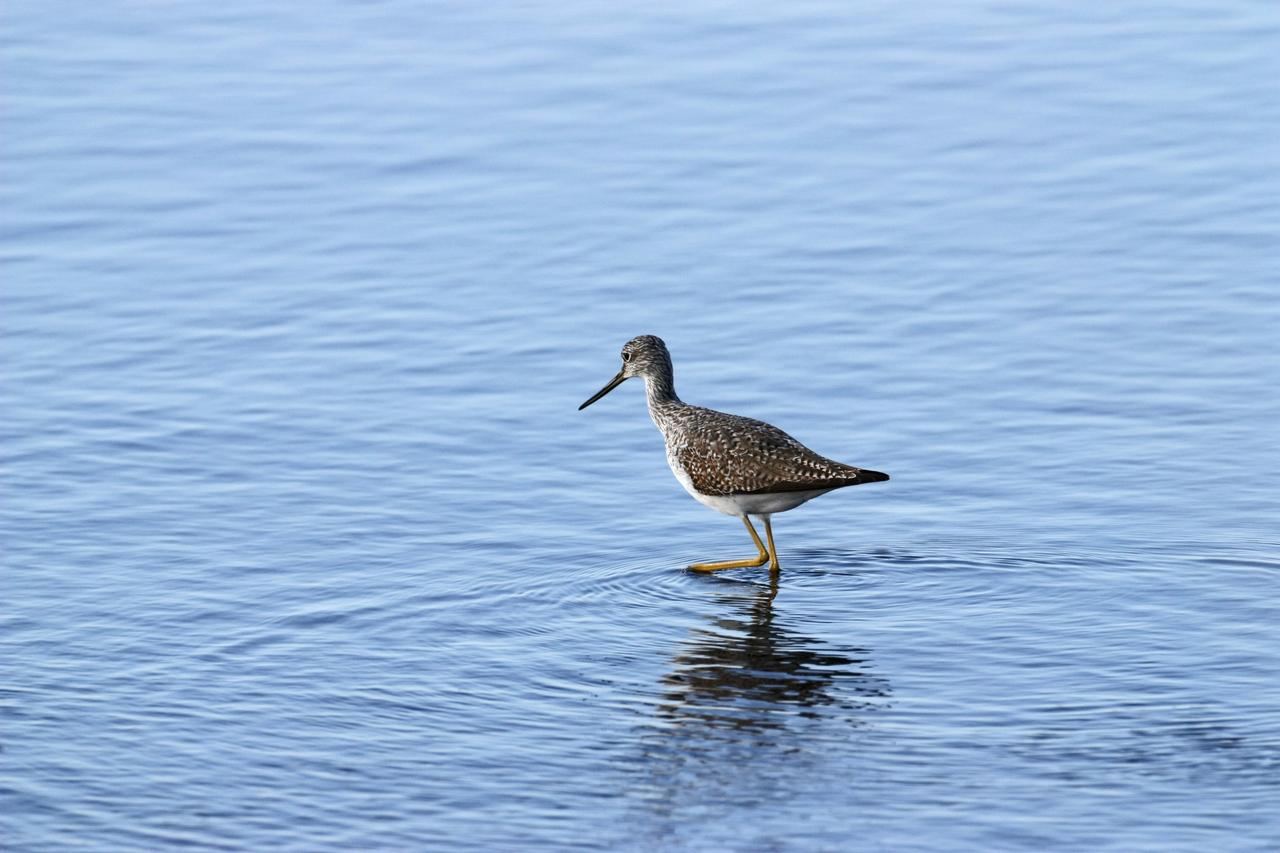
CAPE CANAVERAL, Fla. – A yellowleg sandpiper wades in the shallow water of a pond in the Merritt island National Wildlife Refuge, which borders NASA's Kennedy Space Center in Florida. They range through Alaska and Canada, wintering from the southern U.S. to southern South America. They inhabit marshy ponds, lake and river shores and mud flats. The center shares a boundary with the refuge that includes salt-water estuaries, brackish marshes, hardwood hammocks and pine flatwoods. The diverse landscape provides habitat for more than 310 species of birds, 25 mammals, 117 fishes and 65 amphibians and reptiles. Photo credit: NASA/Jim Grossmann
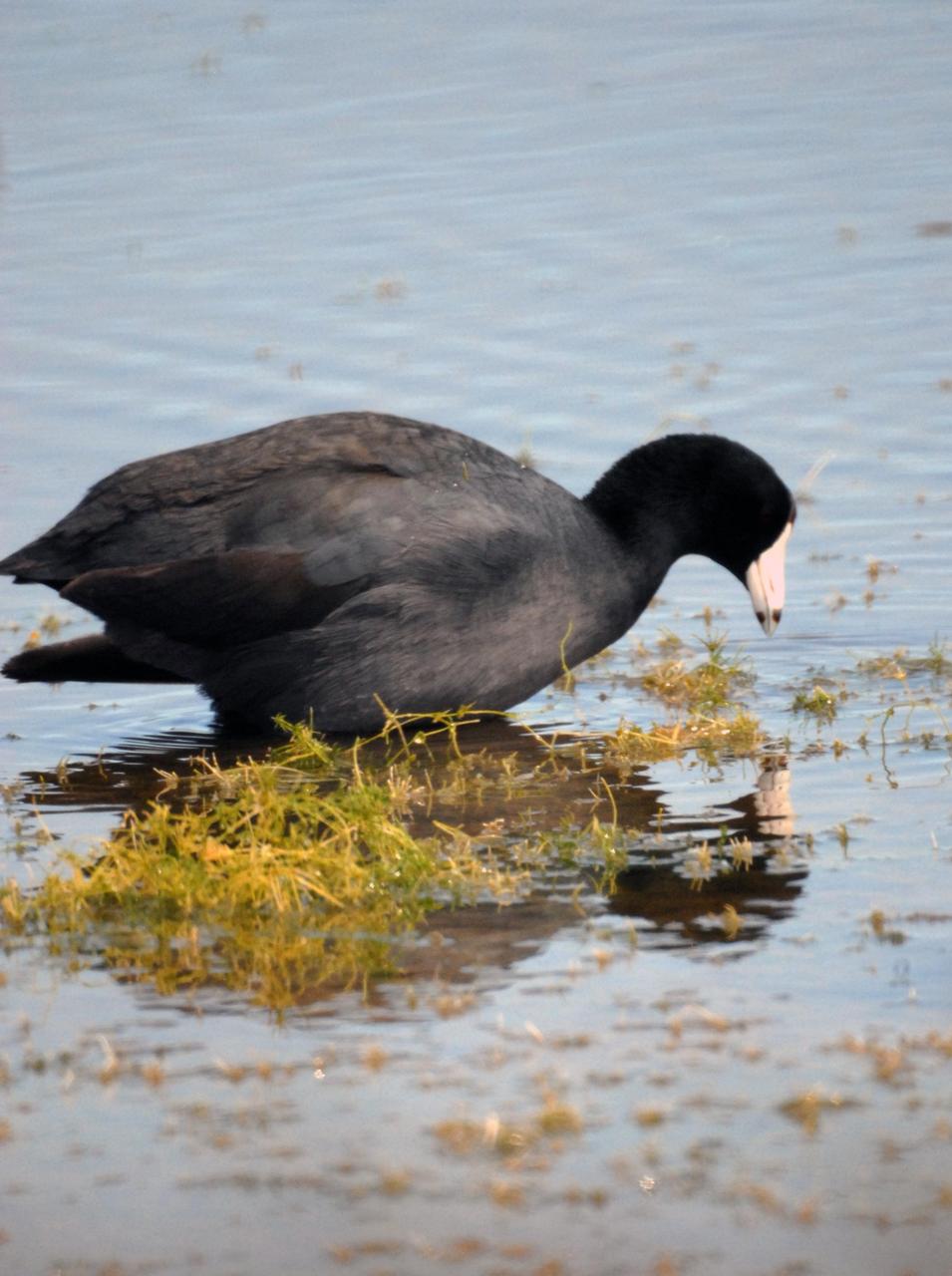
KENNEDY SPACE CENTER, FLA. -- An American coot sees its reflection in this pond near Kennedy Space Center. Abundant around KSC in the winter, coots inhabit open ponds and marshes, and in winter, also saltwater bays and inlets. They range from southern Canada to northern South America. KSC shares a boundary with the Merritt Island National Wildlife Refuge, which surrounds it. The refuge is a habitat for more than 310 species of birds, 25 mammals, 117 fishes and 65 amphibians and reptiles. In addition, the refuge supports 19 endangered or threatened wildlife species on Federal or State lists, more than any other single refuge in the U.S. Photo credit: NASA/Ken Thornsley
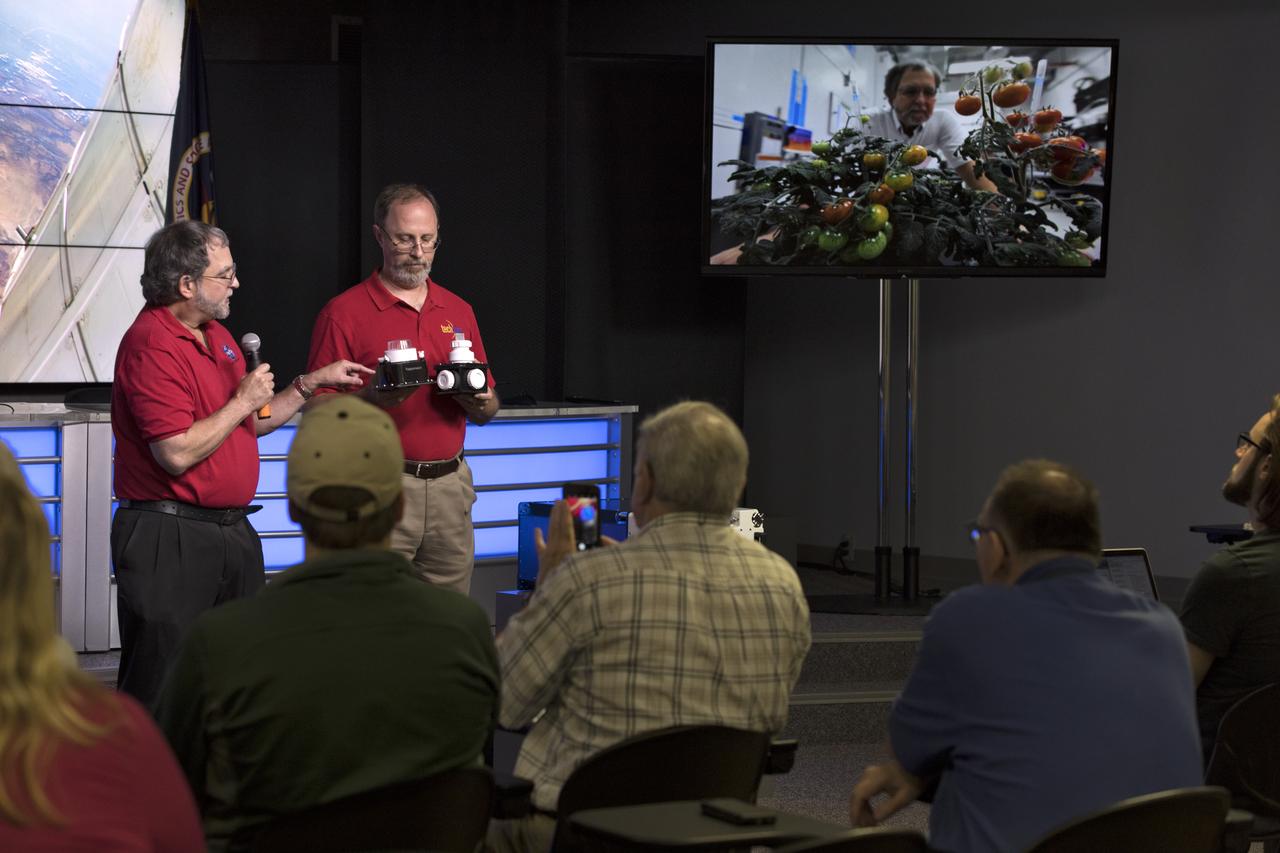
Howard Levine, at left, chief scientist in the Utilization and Life Sciences Office at NASA's Kennedy Space Center, and Dave Reid, a project manager with Techshot, discuss continuing research on growing food in space, as the Veggie Passive Orbital Nutrient Delivery System (PONDS) experiment tests a new way to deliver nutrients to plants. PONDS is one of the experiments that will be aboard a Dragon spacecraft scheduled for liftoff from Cape Canaveral Air Force Station's Space Launch Complex 40 at 4:30 p.m. EST, on April 2, 2018. The SpaceX Falcon 9 rocket will launch the company's 14th Commercial Resupply Services mission to the space station.
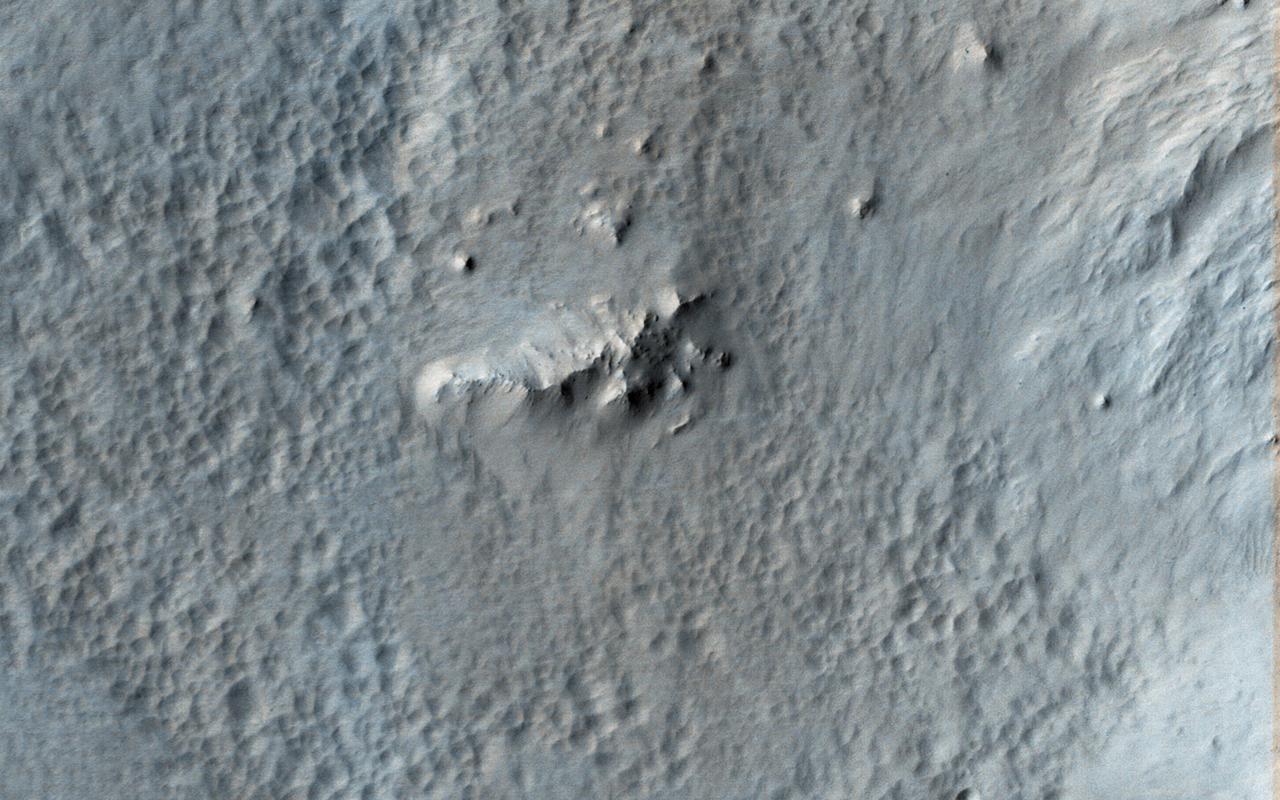
Tooting Crater is one of the youngest craters on Mars that is larger than 20-kilometers in diameter. Relatively low areas inside and outside the crater are covered by a distinctive pitted and ponded material. The pits are not impact craters, as they lack ejecta and are very closely spaced. There is one small impact crater near the lower right corner of our picture, which is much more circular than the pits and has a raised rim and ejecta. One interpretation is that this pitted and ponded material was hot impact ejecta from Tooting, and loss of volatiles from this material or underlying materials created the pits as it cooled. https://photojournal.jpl.nasa.gov/catalog/PIA23848
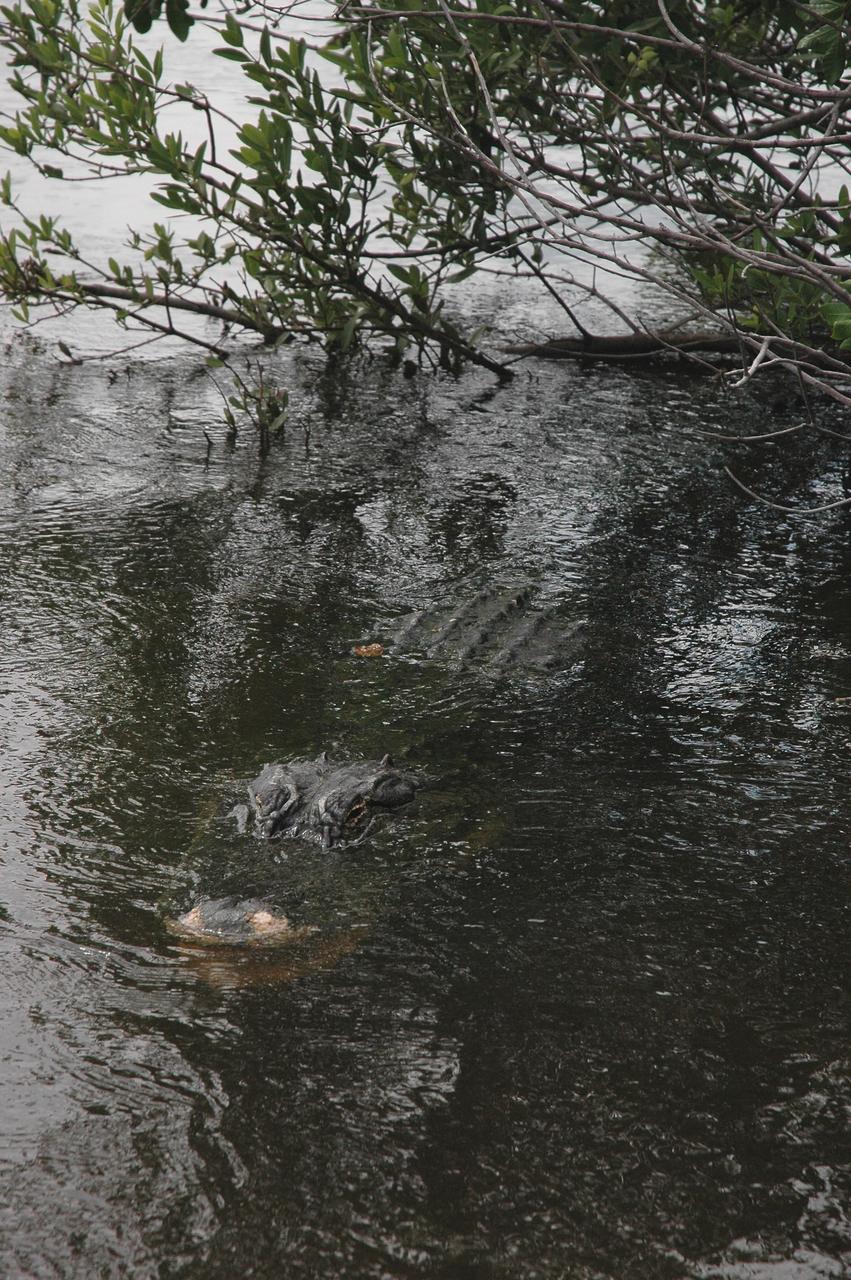
KENNEDY SPACE CENTER, FLA. - In a pond near the Launch Pad 39 area at NASA’s Kennedy Space Center, an alligator hides in the shadows under overhanging branches. Nearly 5,000 alligators can be found in canals, ponds and waterways throughout the Center and the surrounding Merritt Island National Wildlife Refuge. American alligators feed and rest in the water, and lay their eggs in dens they dig into the banks. The young alligators spend their first several weeks in these dens. The Wildlife Refuge encompasses 92,000 acres that are a habitat for more than 331 species of birds, 31 mammals, 117 fishes, and 65 amphibians and reptiles.
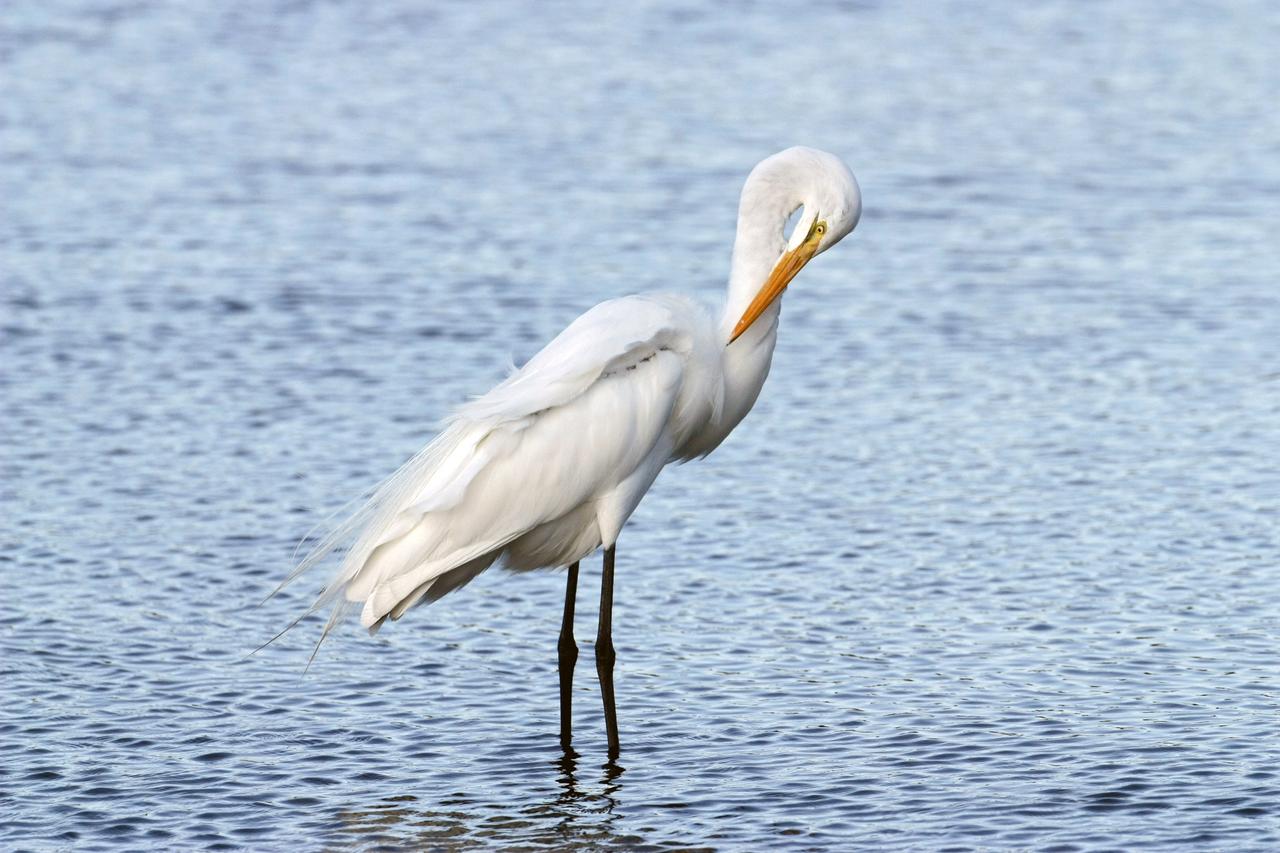
CAPE CANAVERAL, Fla. – A great egret preens its feathers while standing in the shallow water of a pond in the Merritt island National Wildlife Refuge, which borders NASA's Kennedy Space Center in Florida. The breed feeds alone, stalking fish, frogs, snakes and crayfish in shallow water. They inhabit freshwater and salt marshes, marshy ponds and tidal flats. The center shares a boundary with the refuge that includes salt-water estuaries, brackish marshes, hardwood hammocks and pine flatwoods. The diverse landscape provides habitat for more than 310 species of birds, 25 mammals, 117 fishes and 65 amphibians and reptiles. Photo credit: NASA/Jim Grossmann
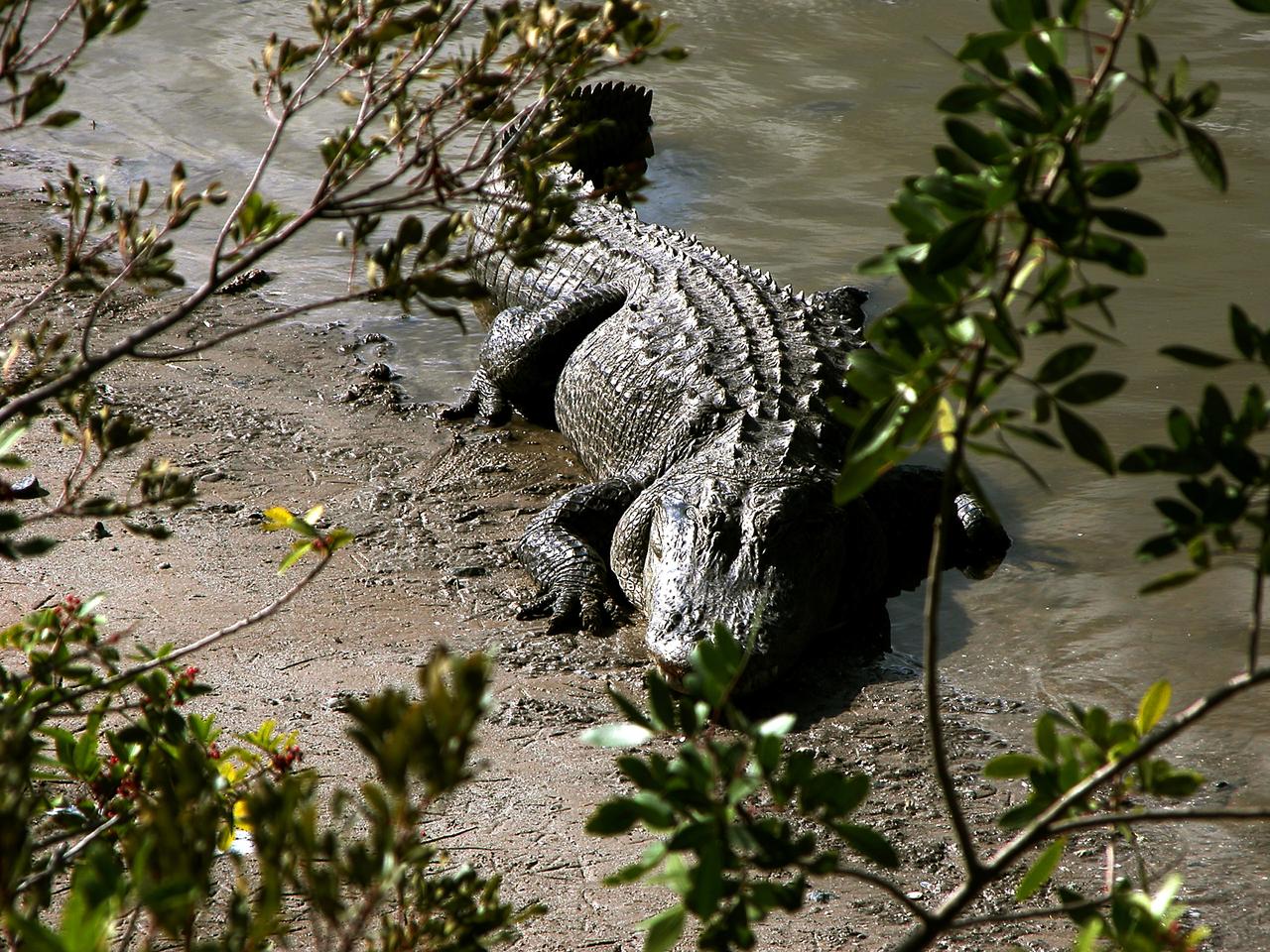
KENNEDY SPACE CENTER, FLA. -- An alligator is spotted sunning on the muddy bank of a canal in KSC. Nearly 5,000 alligators can be found in canals, ponds, and waterways throughout the Center and the surrounding Merritt Island National Wildlife Refuge. American alligators feed and rest in the water, and lay their eggs in dens they dig into the banks. The young alligators spend their first several weeks in these dens. The Wildlife Refuge encompasses 92,000 acres that are a habitat for more than 331 species of birds, 31 mammals, 117 fishes, and 65 amphibians and reptiles.
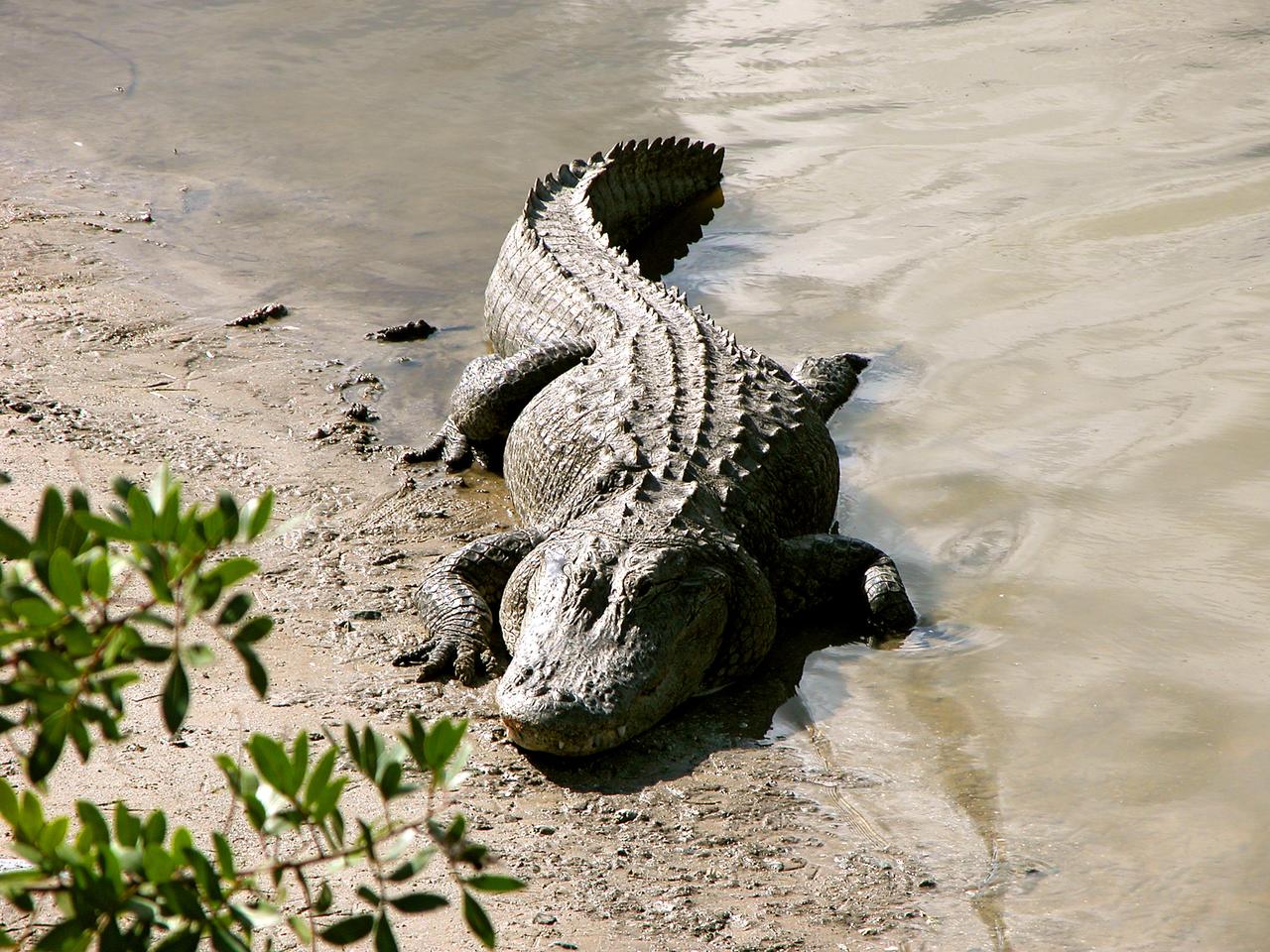
KENNEDY SPACE CENTER, FLA. -- An alligator is spotted sunning on the muddy bank of a canal in KSC. Nearly 5,000 alligators can be found in canals, ponds, and waterways throughout the Center and the surrounding Merritt Island National Wildlife Refuge. American alligators feed and rest in the water, and lay their eggs in dens they dig into the banks. The young alligators spend their first several weeks in these dens. The Wildlife Refuge encompasses 92,000 acres that are a habitat for more than 331 species of birds, 31 mammals, 117 fishes, and 65 amphibians and reptiles.
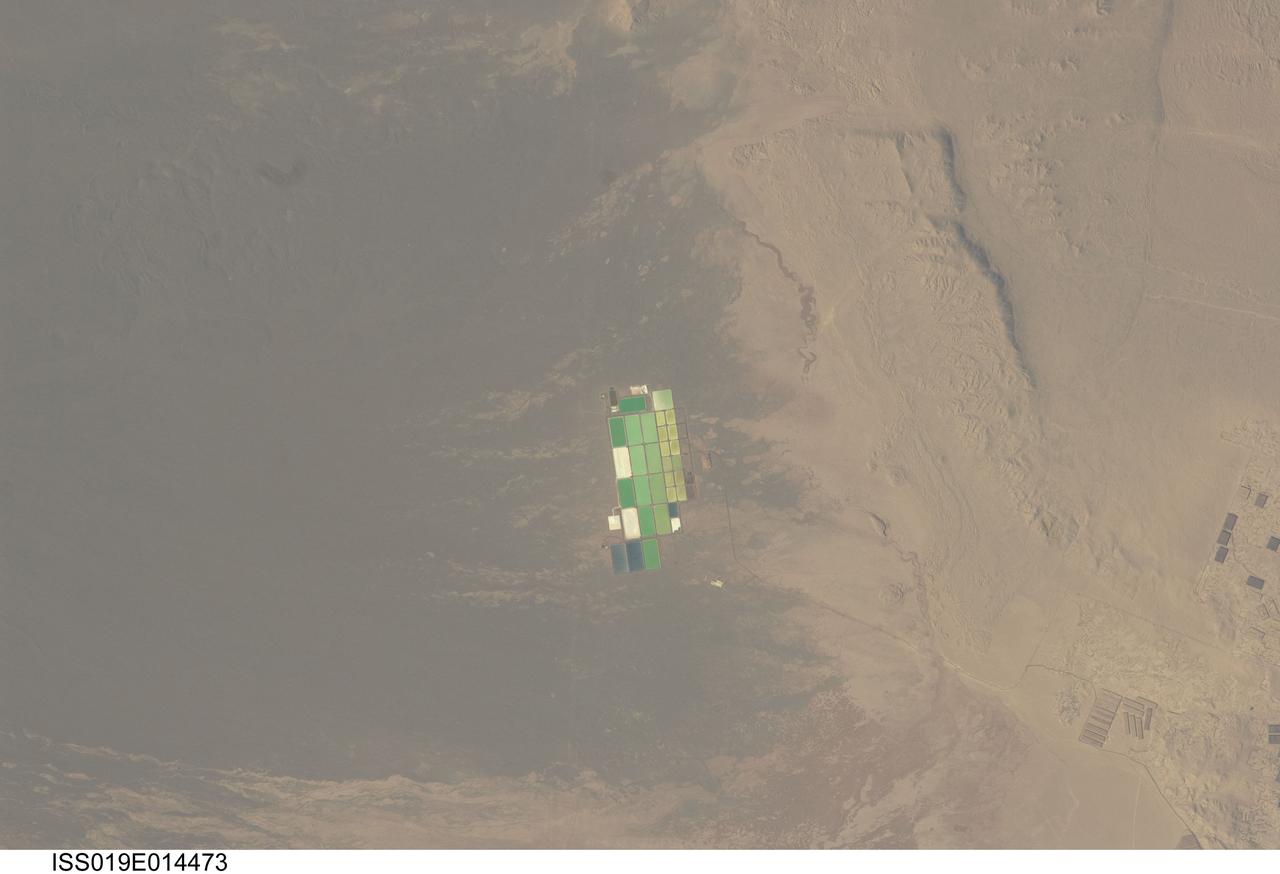
ISS019-E-014473 (5 May 2009) --- Salt ponds in Nueva Victoria, northern Chile are featured in this image photographed by an Expedition 19 crew member on the International Space Station. This view shows a long alluvial fan, sloping from east to west (left to right) in northern Chile with solar evaporation (or salt) ponds, some brightly colored, near the foot of the fan. The alluvial fan sediments are brown and contrast sharply with tan sediments of the Pampa del Tamarugal, the great hyper arid inner valley of Chile?s northern Atacama Desert. Nitrates and many other minerals are mined in this region. A few extraction pits and ore dumps are visible at bottom right, but most of the shallow diggings (0.5?5 meters deep) of a mine extracting caliche deposits ? a hard, cemented layer in the soil formed by downward movement and redeposition of sodium salts ? lie just outside the picture. Iodine is one of the products from mining; it is first extracted by a process known as heap leaching. Waste liquids from the iodine plants are dried in the tan and brightly colored evaporation ponds to crystallize nitrate salts for collection. Fertilizer production for higher-value crops is the main use for the recovered nitrates, but there are many other uses including the manufacture of pharmaceuticals, explosives, glass, ceramics, water treatment and metallurgical processes.
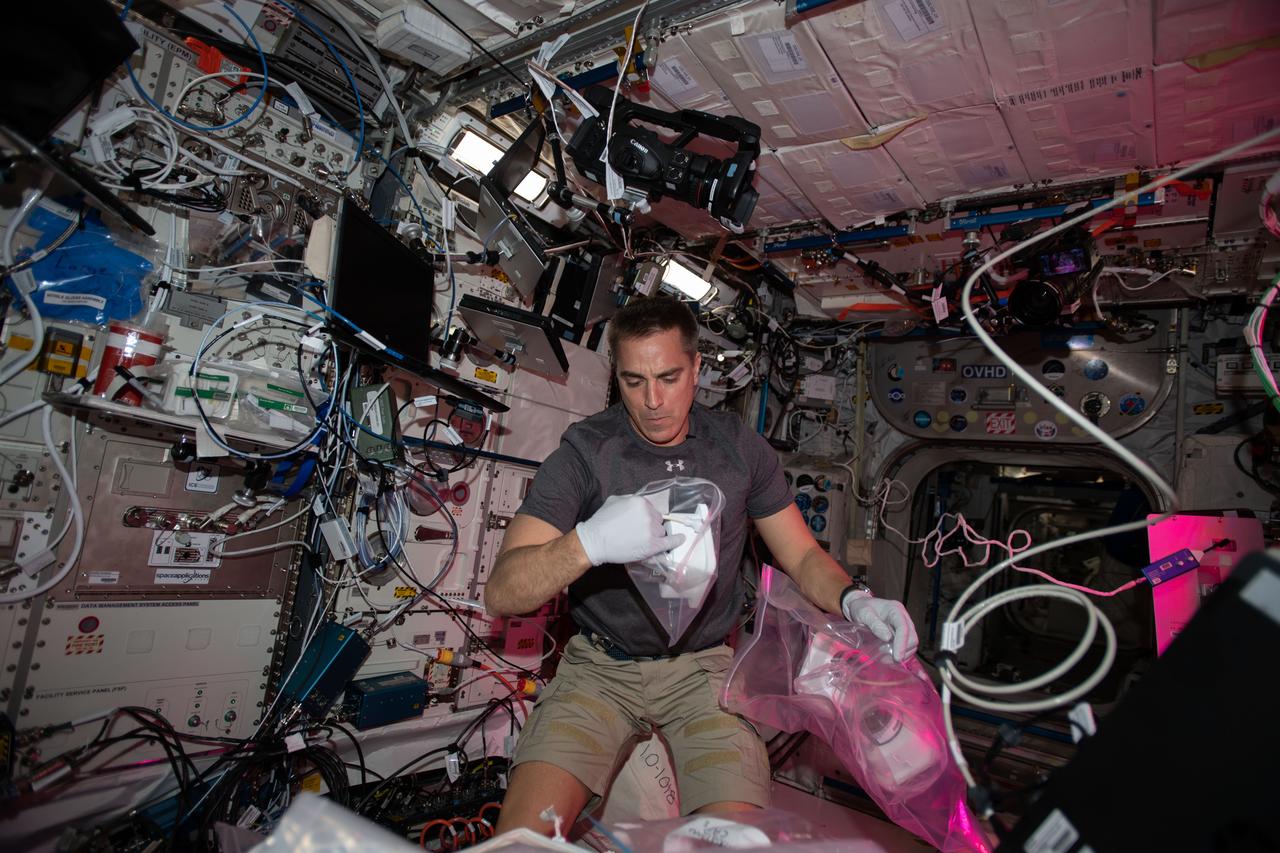
iss063e001883 (April 22, 2020) --- NASA astronaut and Expedition 63 Commander Chris Cassidy services botany research hardware inside the European Space Agency's Columbus laboratory module. The Veggie PONDS research facility in Columbus supports the growing and harvesting of lettuce and mizuna greens to demonstrate reliable vegetable growth during spaceflight.

iss063e001873 (April 22, 2020) --- NASA astronaut and Expedition 63 Commander Chris Cassidy services botany research hardware inside the European Space Agency's Columbus laboratory module. The Veggie PONDS research facility in Columbus supports the growing and harvesting of lettuce and mizuna greens to demonstrate reliable vegetable growth during spaceflight.
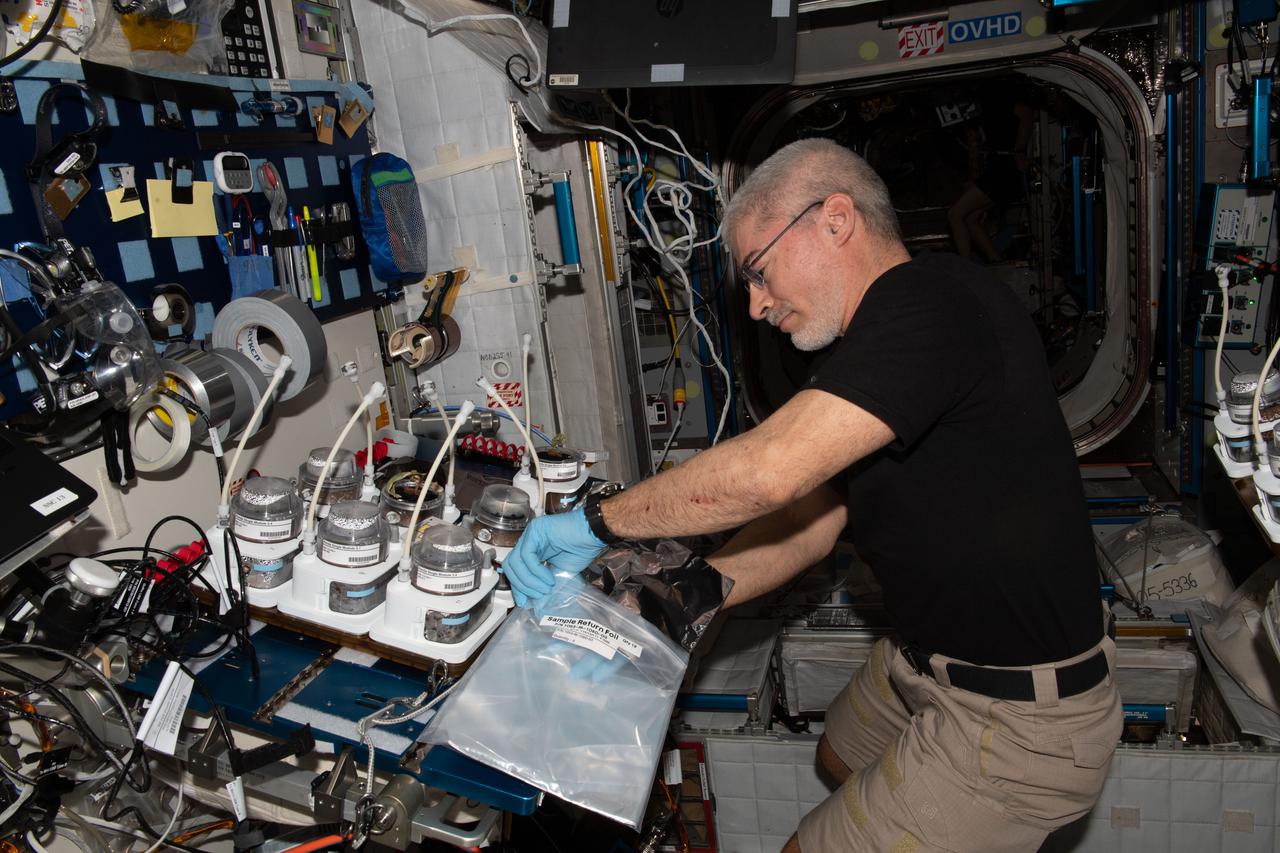
iss066e147338 (Feb. 21, 2022) --- NASA astronaut and Expedition 66 Flight Engineer Mark Vande Hei harvests plants growing for the Veggie PONDS experiment and collects samples for later analysis. The space agriculture study explores growing crops in space to sustain crews on missions beyond low-Earth orbit.
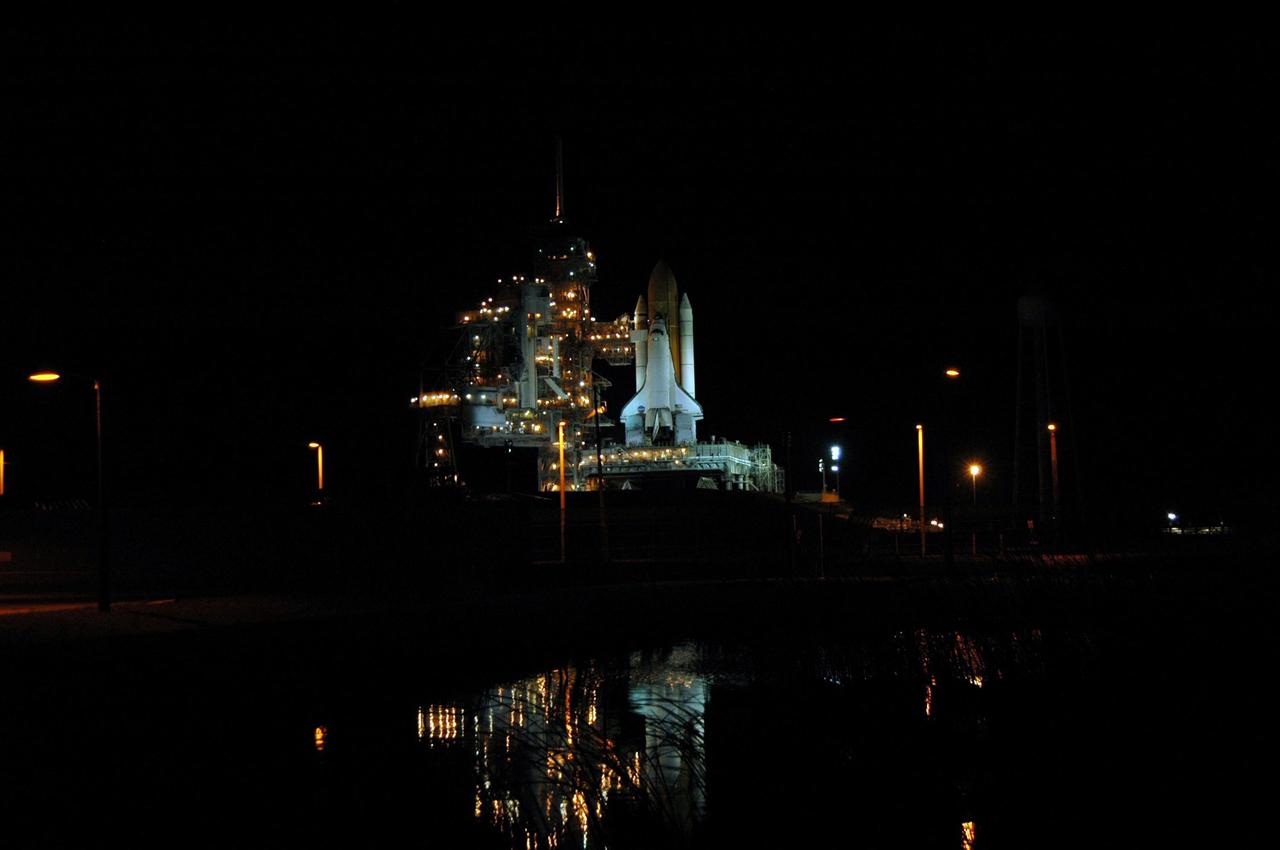
KENNEDY SPACE CENTER, FLA. - Viewed from across the pond next to Launch Pad 39B, Space Shuttle Discovery is spotlighted under dark skies after the scrub of the launch attempt on mission STS-121. The launch was scrubbed due to weather concerns and postponed 24 hours. Photo credit: NASA/Ken Thornsley
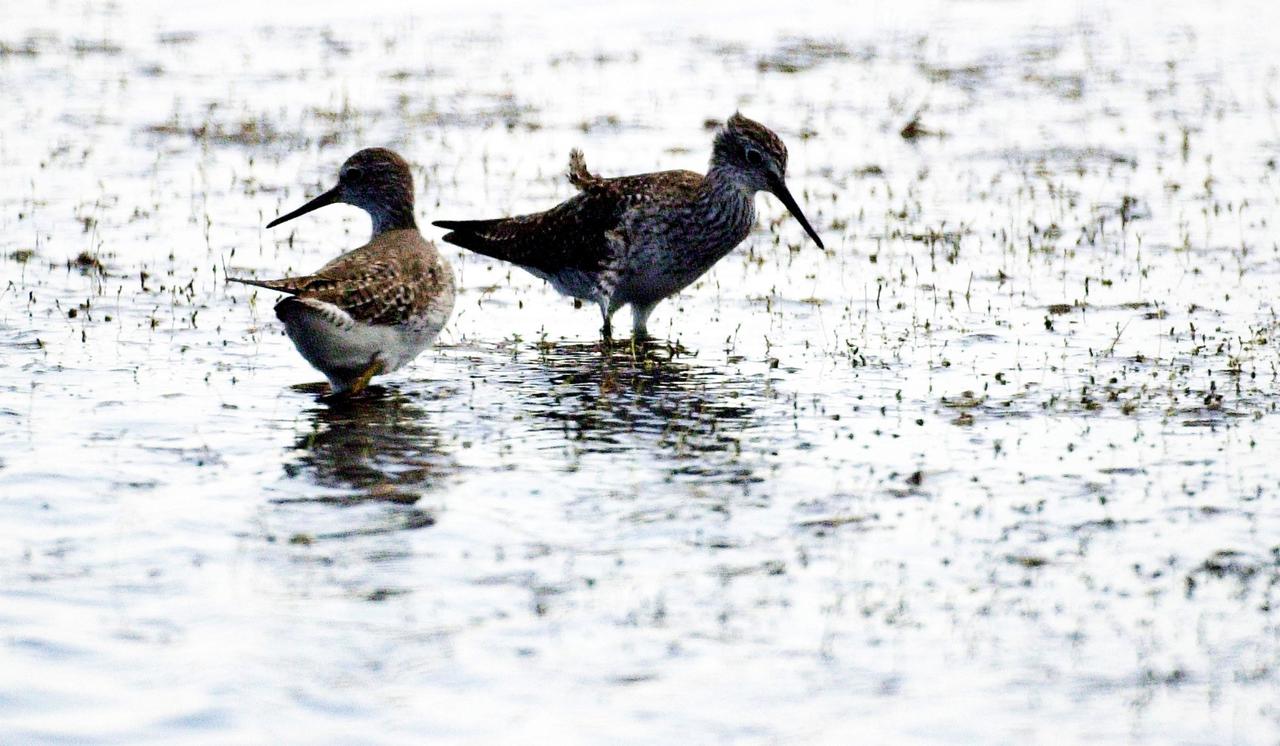
KENNEDY SPACE CENTER, FLA. -- A pair of Lesser Yellowlegs search a lake near Kennedy Space Center for food. The species inhabits marshy ponds, lake and river shores, and mud flats. They range from Alaska and Canada, wintering in the southern United States and South America.

S65-10461 (23 March 1965) --- Overall view of the Gemini-Titan 3 on Launch Pad 19, with erector lowered. The GT-3 liftoff was at 9:24 a.m. (EST) March 23, 1965. Photograph was taken from across a pond.
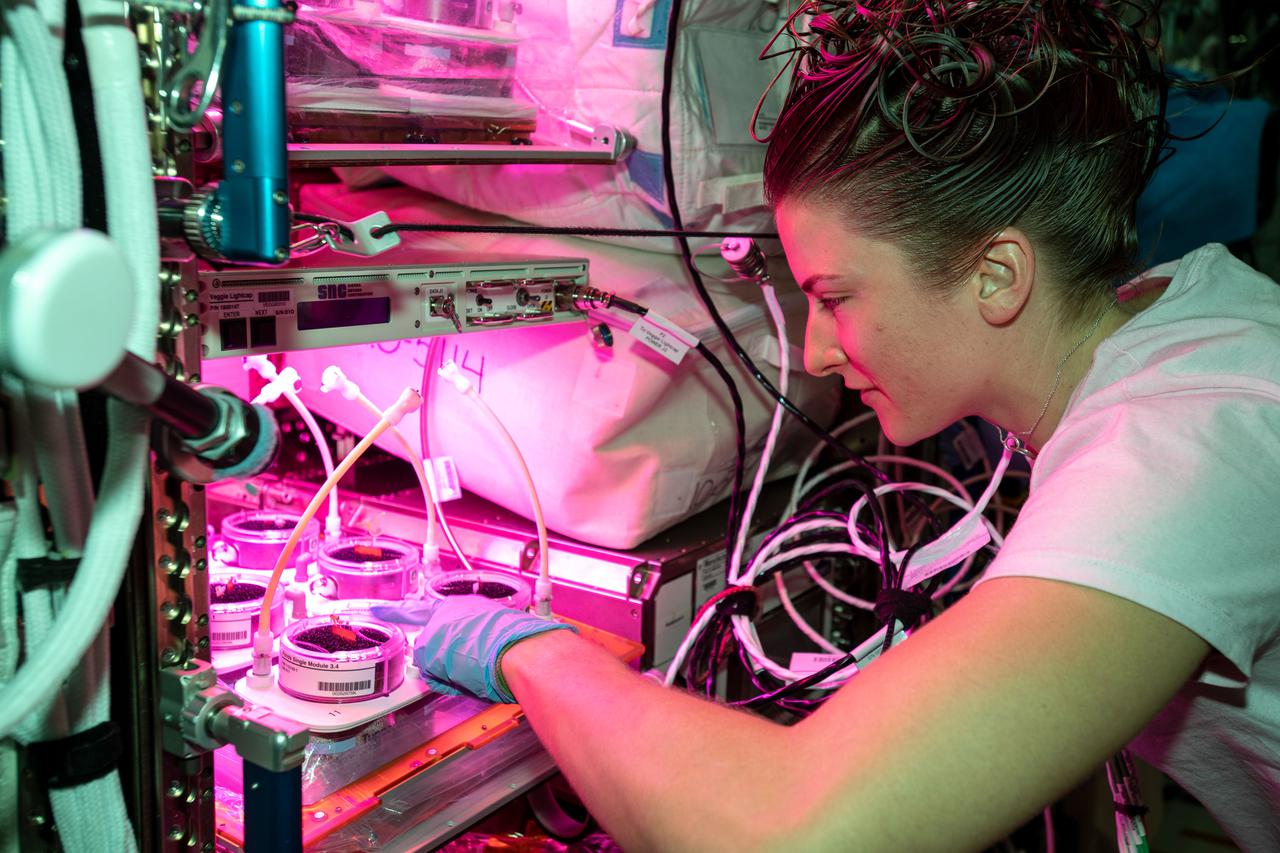
iss066e133016 (Feb. 1, 2022) --- NASA astronaut and Expedition 66 Flight Engineer Kayla Barron checks out plants growing inside the Veggie botany research facility for the Veggie PONDS experiment. The investigation tests ways to grow crops in space to supporting long-term crewed missions to the Moon, Mars and beyond.

CAPE CANAVERAL, Fla. – Near NASA's Kennedy Space Center in Florida, on a pond in the Merritt island National Wildlife Refuge, a male hooded Merganser duck swims with a female (right) who is stretching her wings. The Merganser's habitat includes wooded ponds, lakes and rivers. They are most often seen along rivers and estuaries during the fall and winter. They feed chiefly on small fish, which they pursue in long, rapid, underwater dives, and also frogs and aquatic insects. The center shares a boundary with the refuge that includes salt-water estuaries, brackish marshes, hardwood hammocks and pine flatwoods. The diverse landscape provides habitat for more than 310 species of birds, 25 mammals, 117 fishes and 65 amphibians and reptiles. Photo credit: NASA/Jim Grossmann
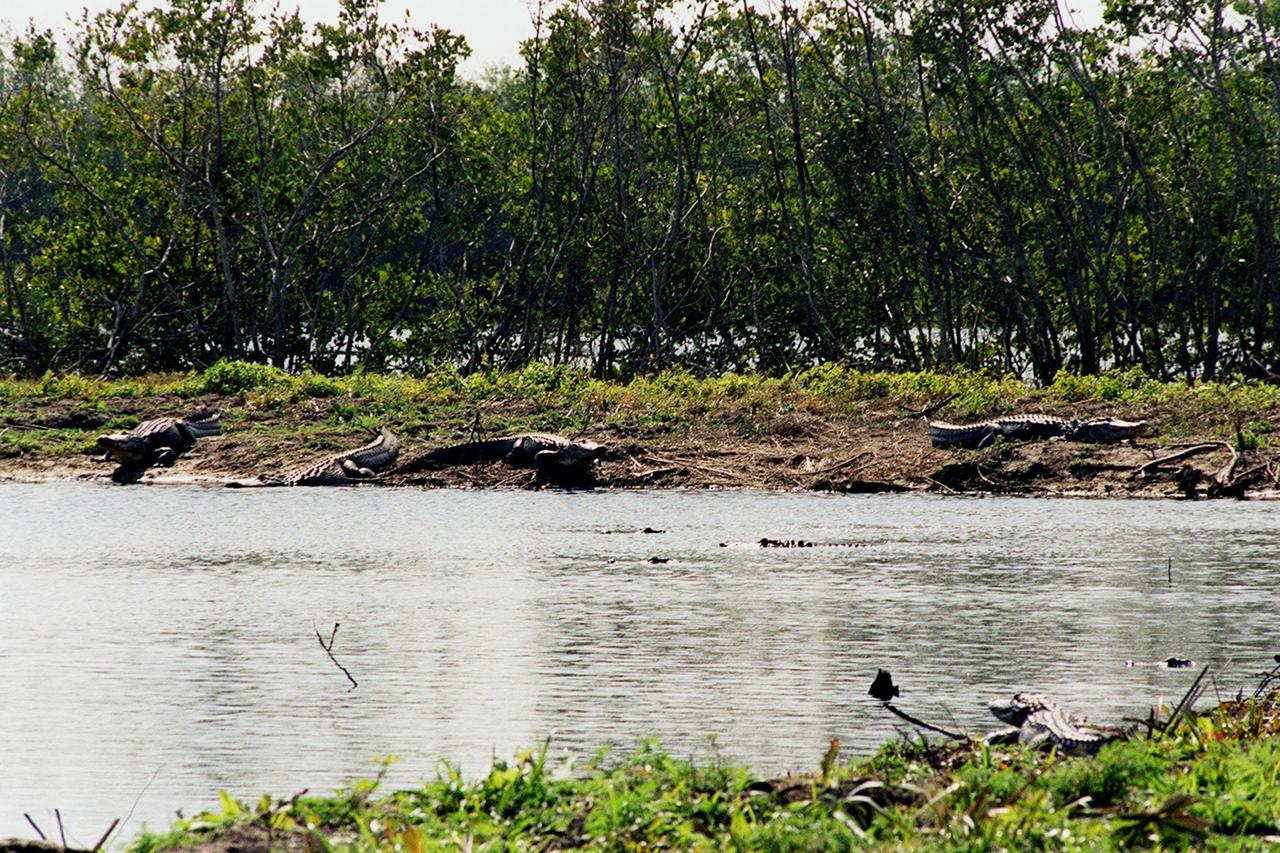
KENNEDY SPACE CENTER, FLA. -- This pond near Schwartz Rd. at Kennedy Space Center is host to a least the nine alligators shown on the banks and in the water. Nearly 5,000 alligators can be found in canals, ponds, and waterways throughout the Center and the Merritt Island National Wildlife Refuge, which shares a boundary with the Center. American alligators feed and rest in the water, and lay their eggs in dens they dig into the banks. The young alligators spend their first several weeks in these dens. The Wildlife Refuge encompasses 92,000 acres that are a habitat for more than 331 species of birds, 31 mammals, 117 fishes, and 65 amphibians and reptiles. The marshes and open water of the refuge provide wintering areas for 23 species of migratory waterfowl, as well as a year-round home for great blue herons, great egrets, wood storks, cormorants, brown pelicans and other species of marsh and shore birds, as well as a variety of insects
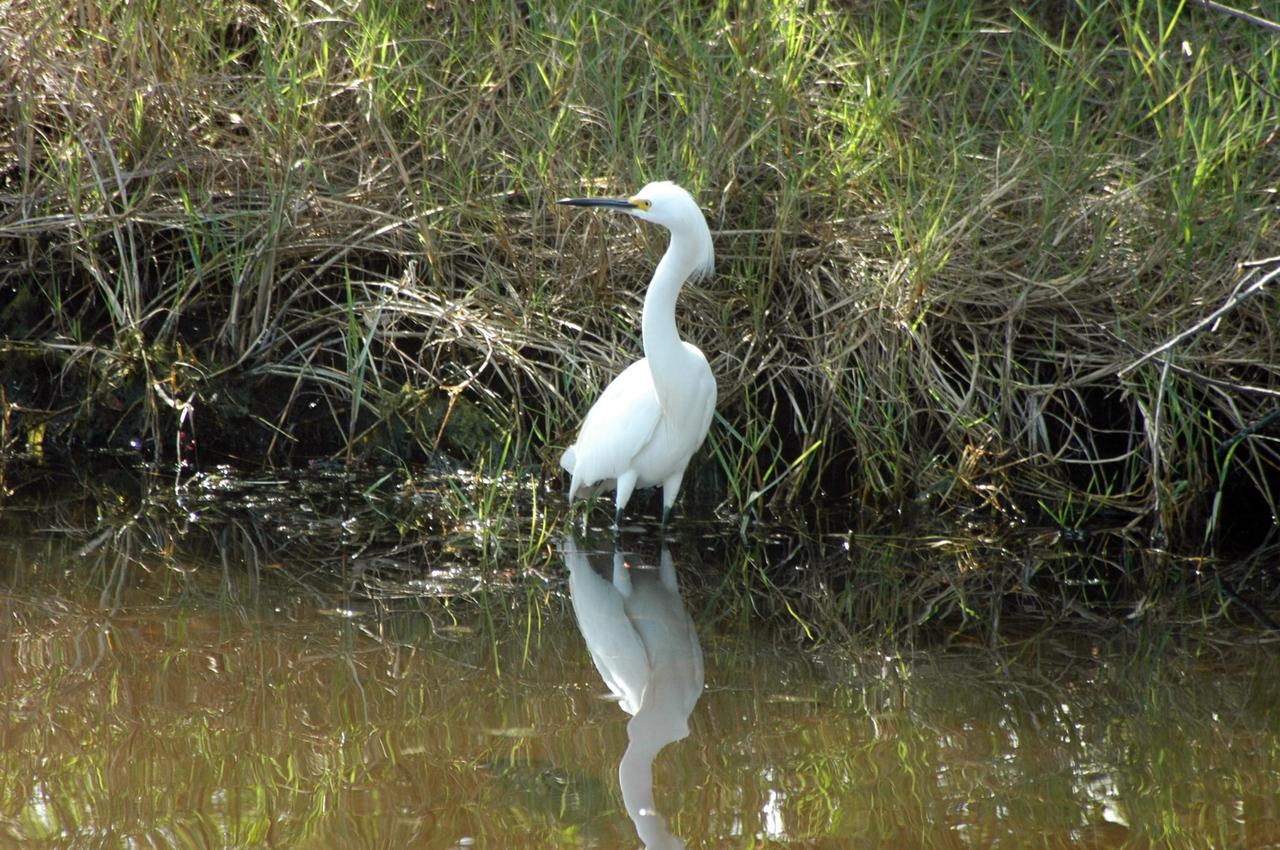
KENNEDY SPACE CENTER, FLA. -- A snowy egret is on the lookout for food in a pond on NASA's Kennedy Space Center. A type of heron, the snowy egret inhabits salt marshes, ponds, rice fields and shallow coastal bays ranging from Maine to southern South America on the east coast. It can also be found in California and Oklahoma to the Gulf of Mexico. KSC shares a boundary with the Merritt Island Wildlife Nature Refuge. The refuge is a habitat for more than 310 species of birds, 25 mammals, 117 fishes and 65 amphibians and reptiles. In addition, the Refuge supports 19 endangered or threatened wildlife species on Federal or State lists, more than any other single refuge in the U.S. Photo credit: NASA/Ken Thornsley
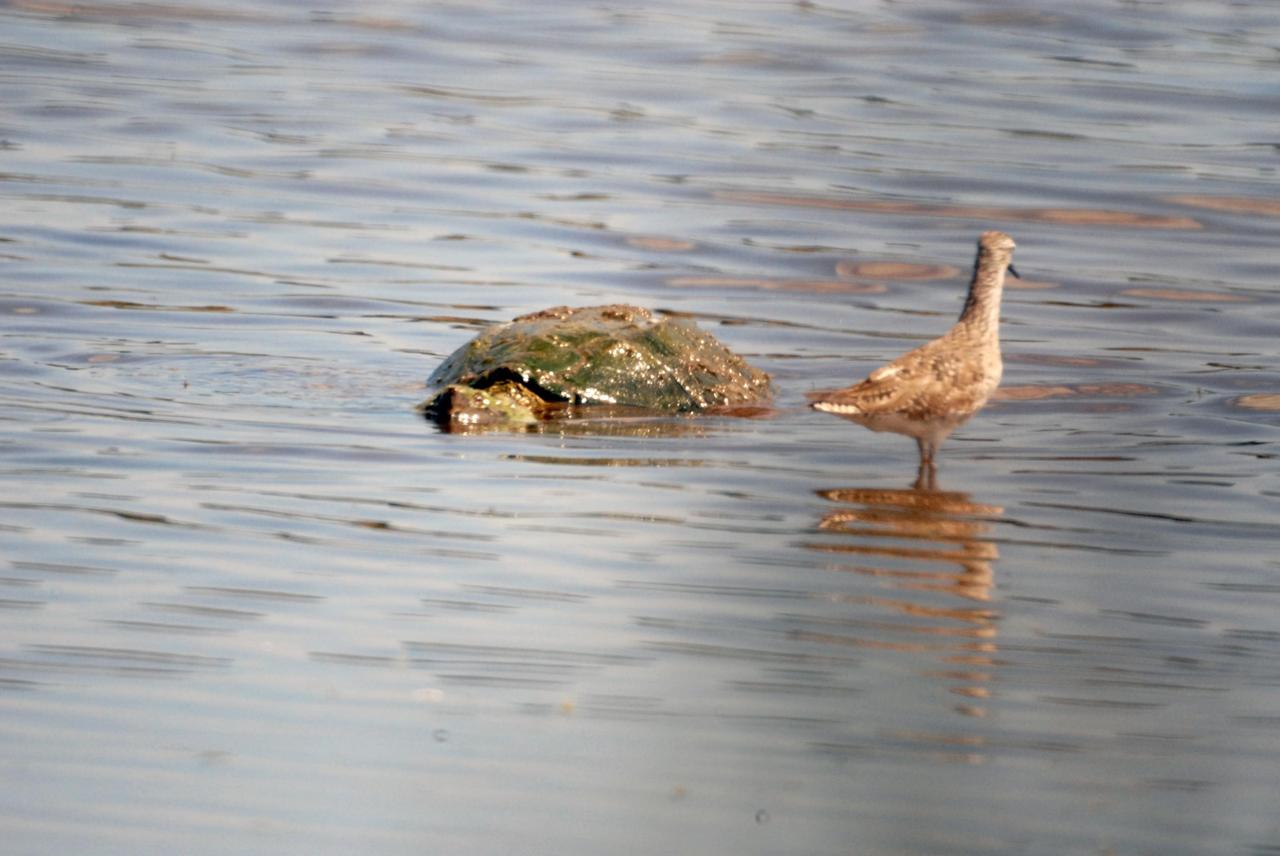
KENNEDY SPACE CENTER, FLA. -- A turtle cruises past a lesser yellowleg in a pond near Kennedy Space Center. The yellowleg is a smaller edition of the greater yellowleg, with a shorter bill. The species inhabits marshy ponds, lake and river shores, mud flats and, in the breeding season, boreal bogs. They range throughout Alaska and Canada, wintering from the southern United States throughout South America. KSC shares a boundary with the Merritt Island National Wildlife Refuge, which surrounds it. The refuge is a habitat for more than 310 species of birds, 25 mammals, 117 fishes and 65 amphibians and reptiles. In addition, the refuge supports 19 endangered or threatened wildlife species on Federal or State lists, more than any other single refuge in the U.S. Photo credit: NASA/Ken Thornsley
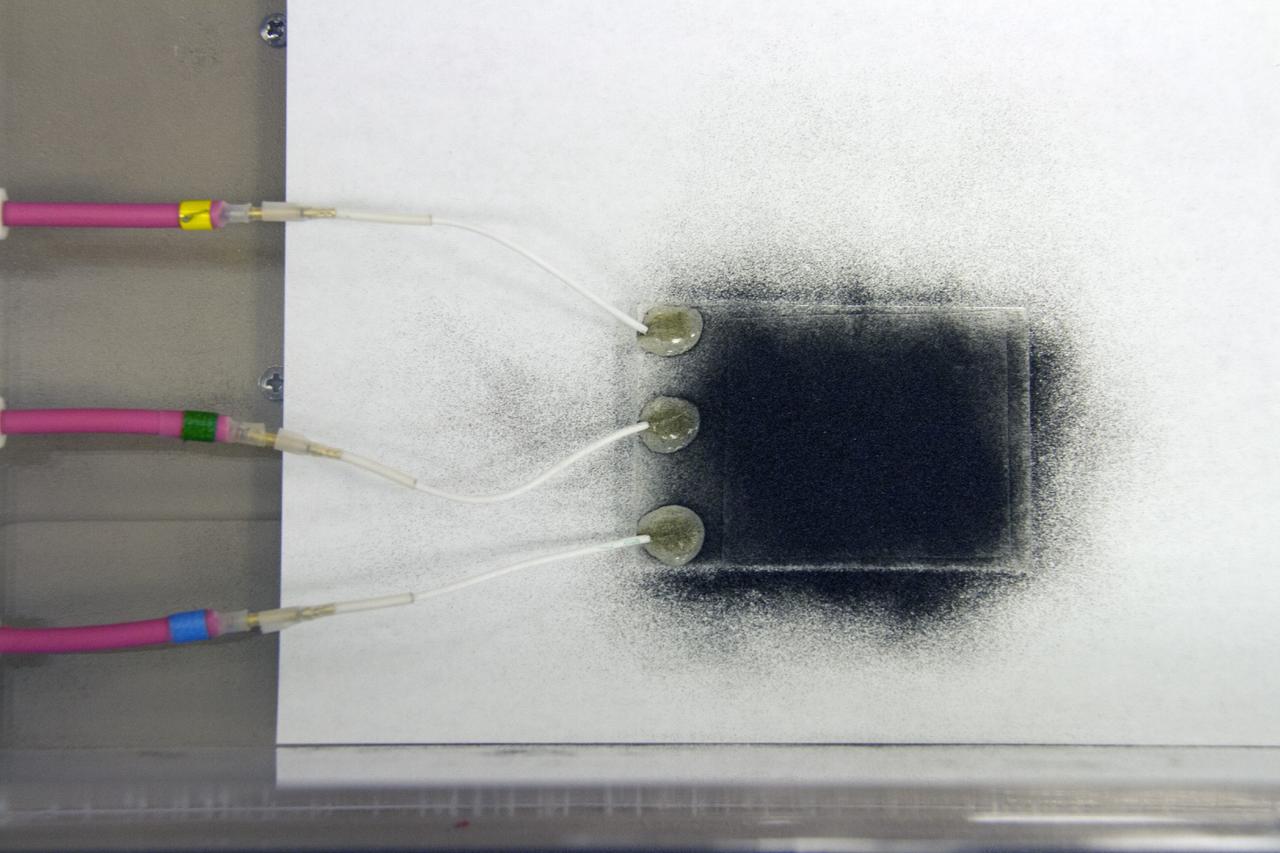
CAPE CANAVERAL, Fla. -- Dust particles are readied for an experiment for the Electrodynamic Dust Shield for Dust Mitigation project in the Electrostatics and Surface Physics Laboratory in the SwampWorks at NASA's Kennedy Space Center in Florida. The fabricated material is designed to mimic the dust on the lunar surface. The technology works by creating an electric field that propagates out like the ripples on a pond. This could prevent dust accumulation on spacesuits, thermal radiators, solar panels, optical instruments and view ports for future lunar and Mars exploration activities. CAPE CANAVERAL, Fla. -- Preparations are underway to conduct a dust particle experiment for the Electrodynamic Dust Shield for Dust Mitigation project in the Electrostatics and Surface Physics Laboratory in the SwampWorks at NASA's Kennedy Space Center in Florida. The technology works by creating an electric field that propagates out like the ripples on a pond. This could prevent dust accumulation on spacesuits, thermal radiators, solar panels, optical instruments and view ports for future lunar and Mars exploration activities.
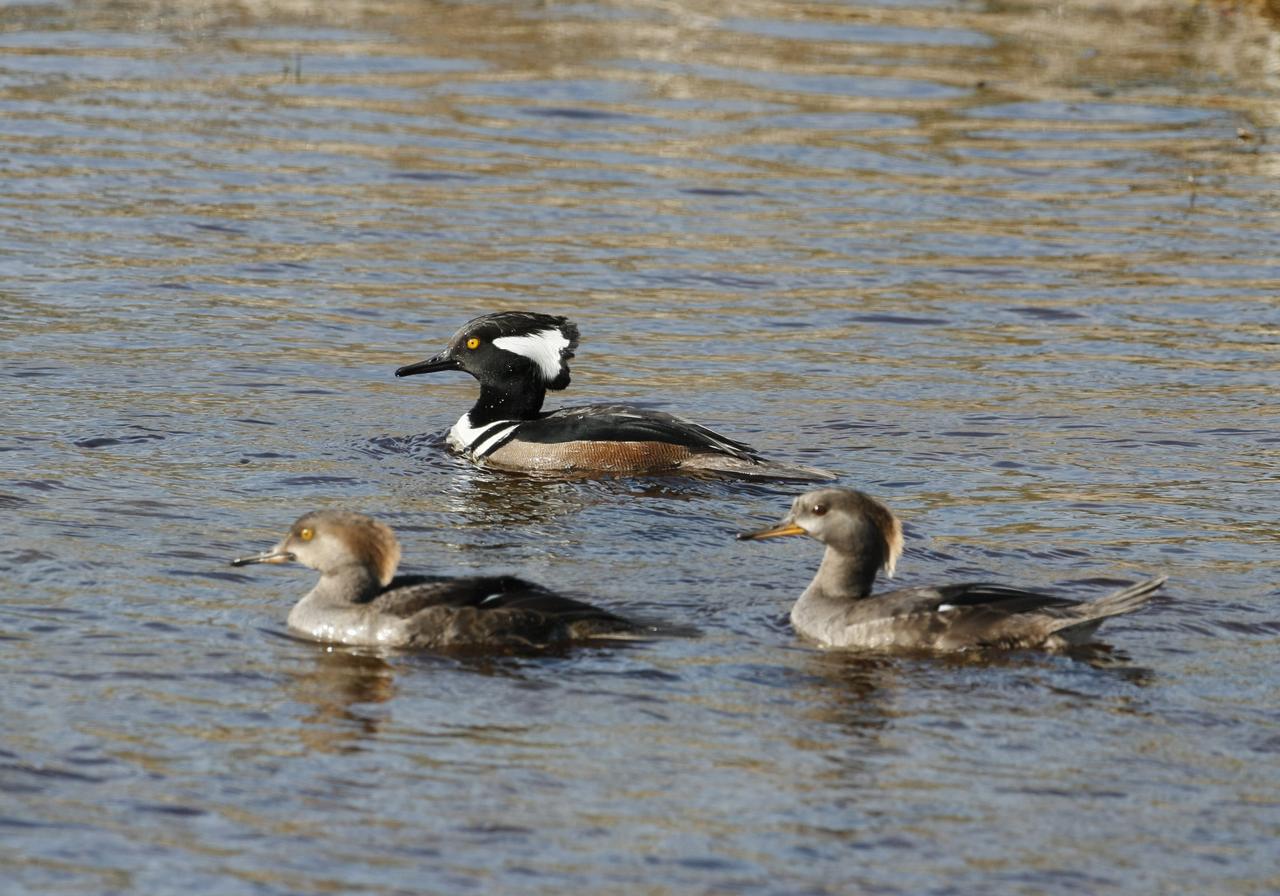
CAPE CANAVERAL, Fla. – Near NASA's Kennedy Space Center in Florida, on a pond in the Merritt island National Wildlife Refuge, a male hooded Merganser duck swims with two females. Their habitat includes wooded ponds, lakes and rivers. They are most often seen along rivers and estuaries during the fall and winter. They feed chiefly on small fish, which they pursue in long, rapid, underwater dives, and also frogs and aquatic insects. The center shares a boundary with the refuge that includes salt-water estuaries, brackish marshes, hardwood hammocks and pine flatwoods. The diverse landscape provides habitat for more than 310 species of birds, 25 mammals, 117 fishes and 65 amphibians and reptiles. Photo credit: NASA/Jim Grossmann
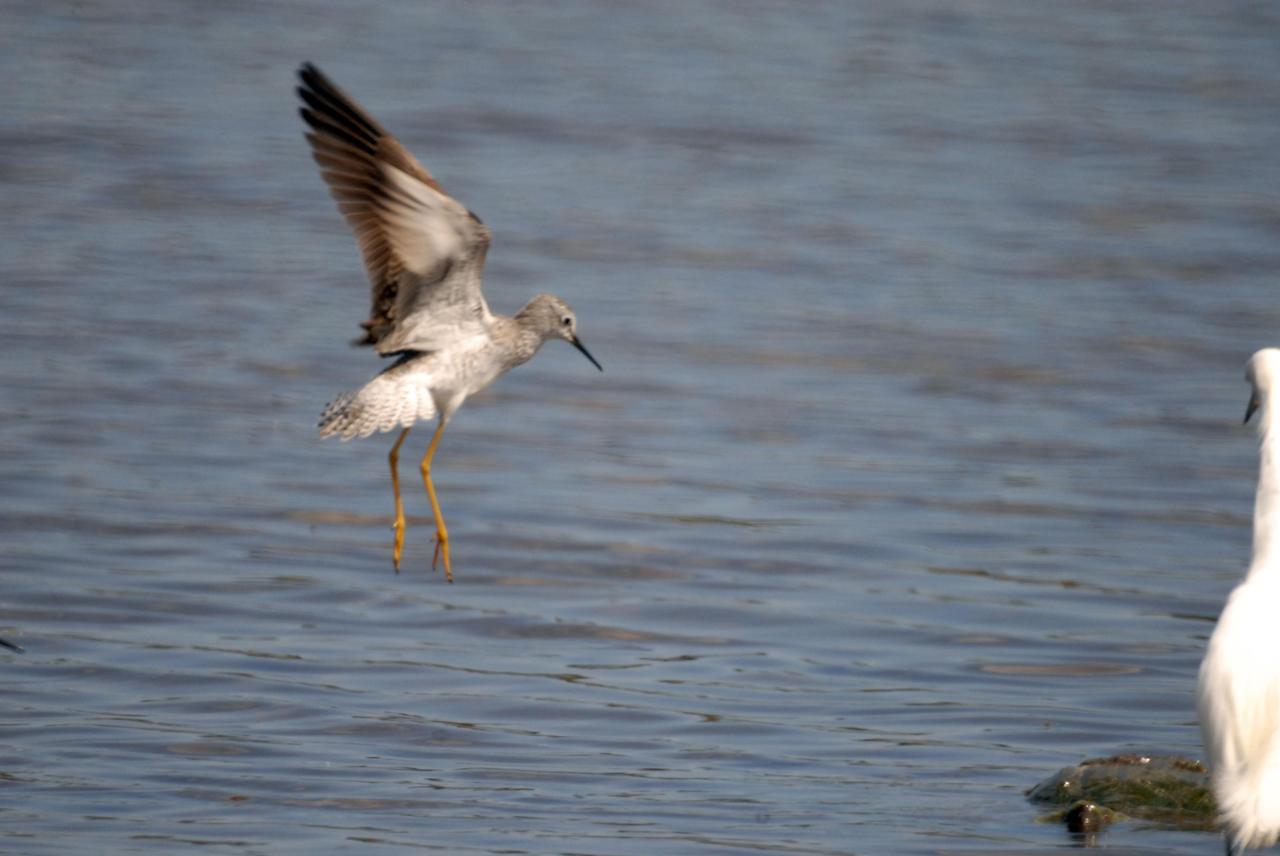
KENNEDY SPACE CENTER, FLA. -- A lesser yellowleg slows for landing in a pond near Kennedy Space Center. The yellowleg is a smaller edition of the greater yellowleg, with a shorter bill. The species inhabits marshy ponds, lake and river shores, mud flats and, in the breeding season, boreal bogs. They range throughout Alaska and Canada, wintering from the southern United States throughout South America. KSC shares a boundary with the Merritt Island National Wildlife Refuge, which surrounds it. The refuge is a habitat for more than 310 species of birds, 25 mammals, 117 fishes and 65 amphibians and reptiles. In addition, the refuge supports 19 endangered or threatened wildlife species on Federal or State lists, more than any other single refuge in the U.S. Photo credit: NASA/Ken Thornsley
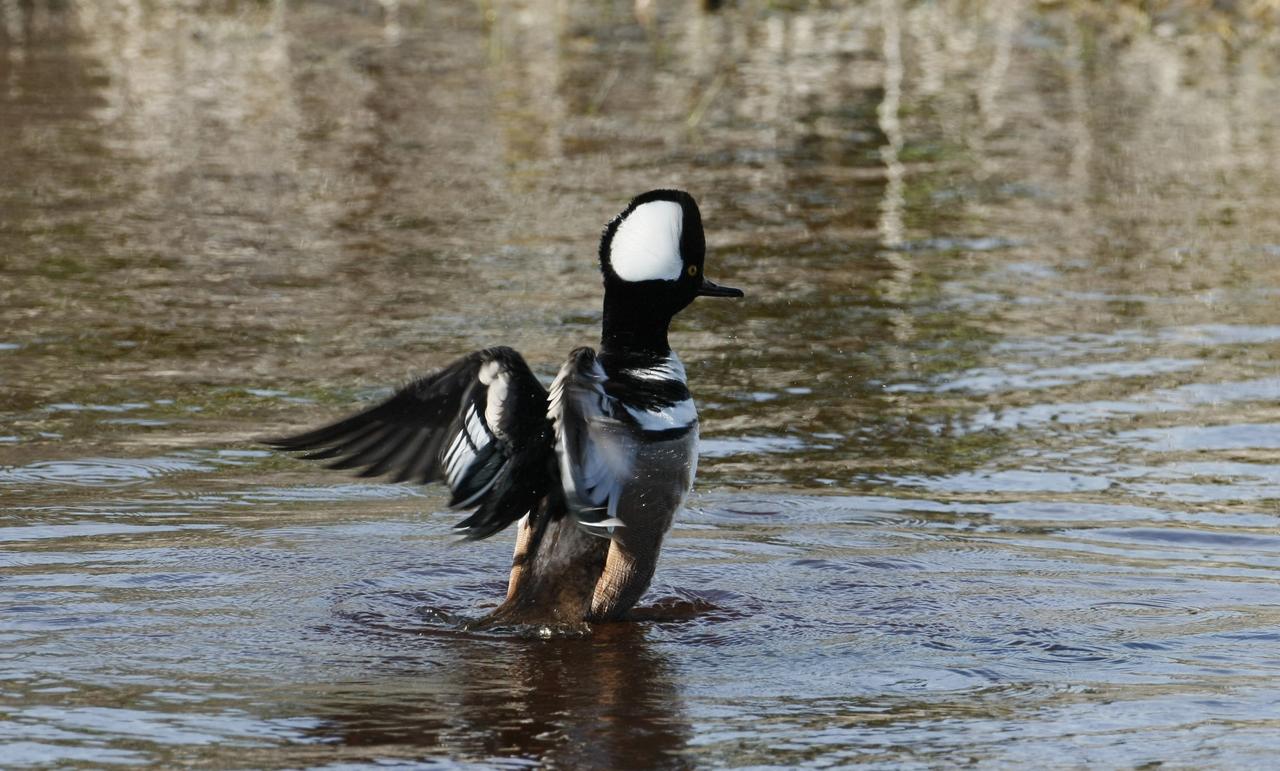
CAPE CANAVERAL, Fla. – Near NASA's Kennedy Space Center in Florida, on a pond in the Merritt island National Wildlife Refuge, a male hooded Merganser duck stretches its wings. The Merganser's habitat includes wooded ponds, lakes and rivers. They are most often seen along rivers and estuaries during the fall and winter. They feed chiefly on small fish, which they pursue in long, rapid, underwater dives, and also frogs and aquatic insects. The center shares a boundary with the refuge that includes salt-water estuaries, brackish marshes, hardwood hammocks and pine flatwoods. The diverse landscape provides habitat for more than 310 species of birds, 25 mammals, 117 fishes and 65 amphibians and reptiles. Photo credit: NASA/Jim Grossmann
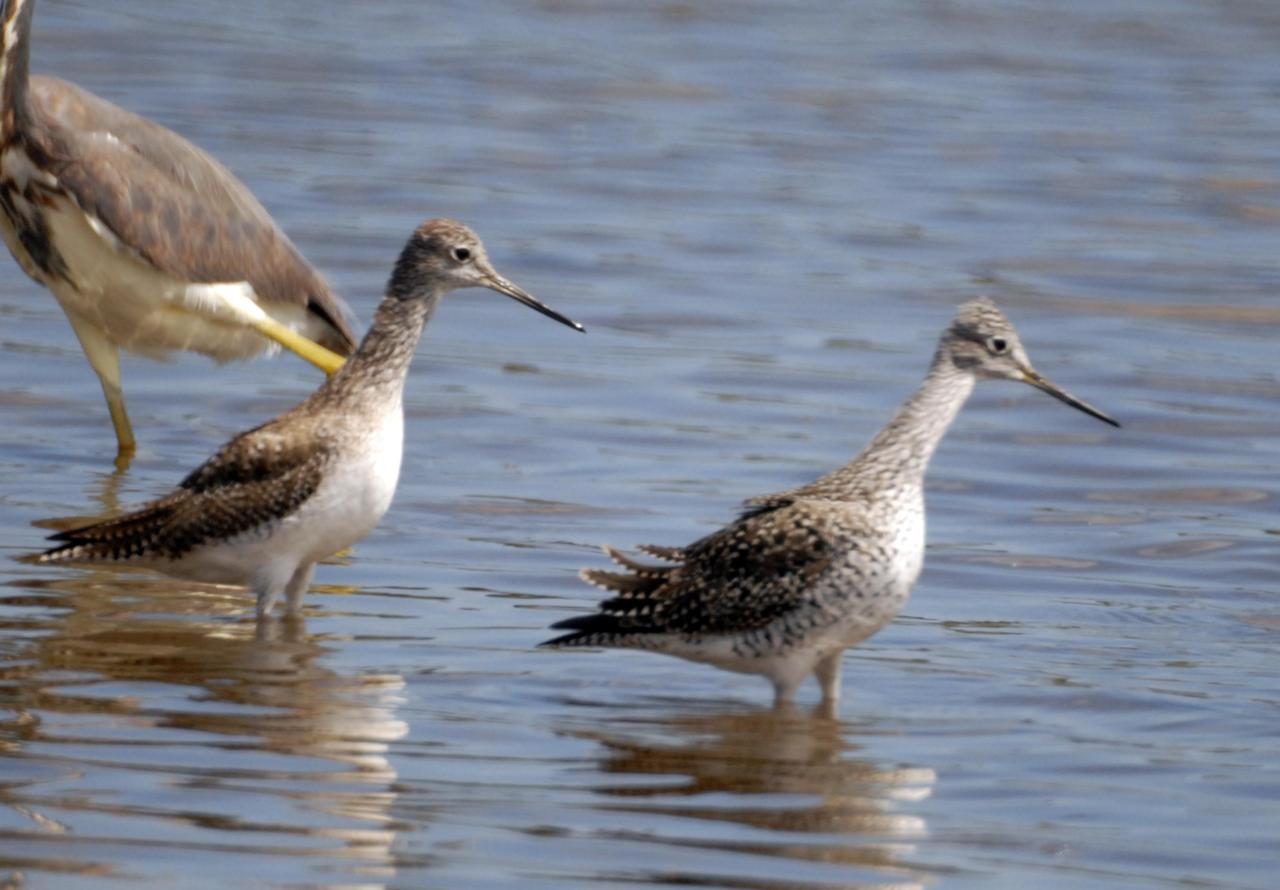
KENNEDY SPACE CENTER, FLA. -- Lesser yellowlegs wade through a pond near Kennedy Space Center. The yellowleg is a smaller edition of the greater yellowleg, with a shorter bill. The species inhabits marshy ponds, lake and river shores, mud flats and, in the breeding season, boreal bogs. They range throughout Alaska and Canada, wintering from the southern United States throughout South America. KSC shares a boundary with the Merritt Island National Wildlife Refuge, which surrounds it. The refuge is a habitat for more than 310 species of birds, 25 mammals, 117 fishes and 65 amphibians and reptiles. In addition, the refuge supports 19 endangered or threatened wildlife species on Federal or State lists, more than any other single refuge in the U.S. Photo credit: NASA/Ken Thornsley
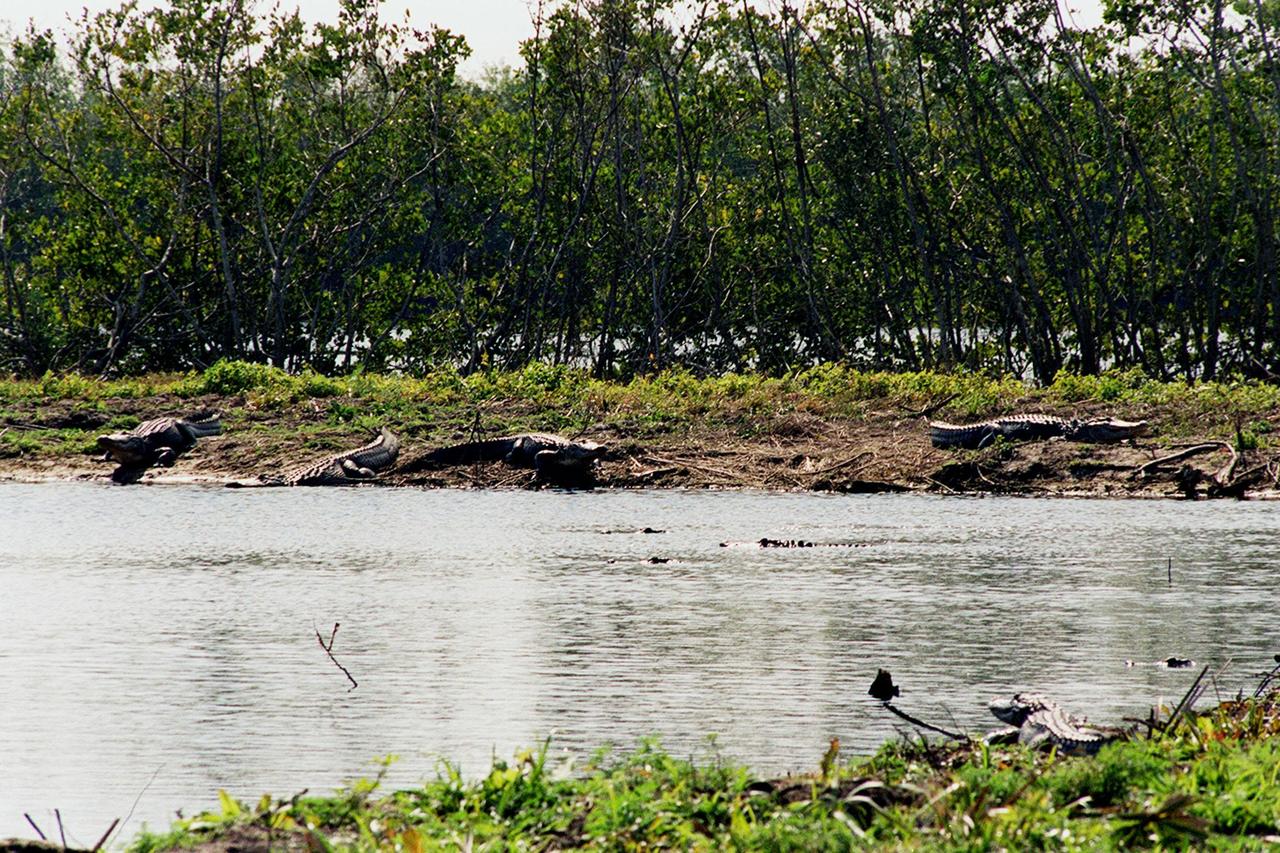
KENNEDY SPACE CENTER, FLA. -- This pond near Schwartz Rd. at Kennedy Space Center is host to a least the nine alligators shown on the banks and in the water. Nearly 5,000 alligators can be found in canals, ponds, and waterways throughout the Center and the Merritt Island National Wildlife Refuge, which shares a boundary with the Center. American alligators feed and rest in the water, and lay their eggs in dens they dig into the banks. The young alligators spend their first several weeks in these dens. The Wildlife Refuge encompasses 92,000 acres that are a habitat for more than 331 species of birds, 31 mammals, 117 fishes, and 65 amphibians and reptiles. The marshes and open water of the refuge provide wintering areas for 23 species of migratory waterfowl, as well as a year-round home for great blue herons, great egrets, wood storks, cormorants, brown pelicans and other species of marsh and shore birds, as well as a variety of insects
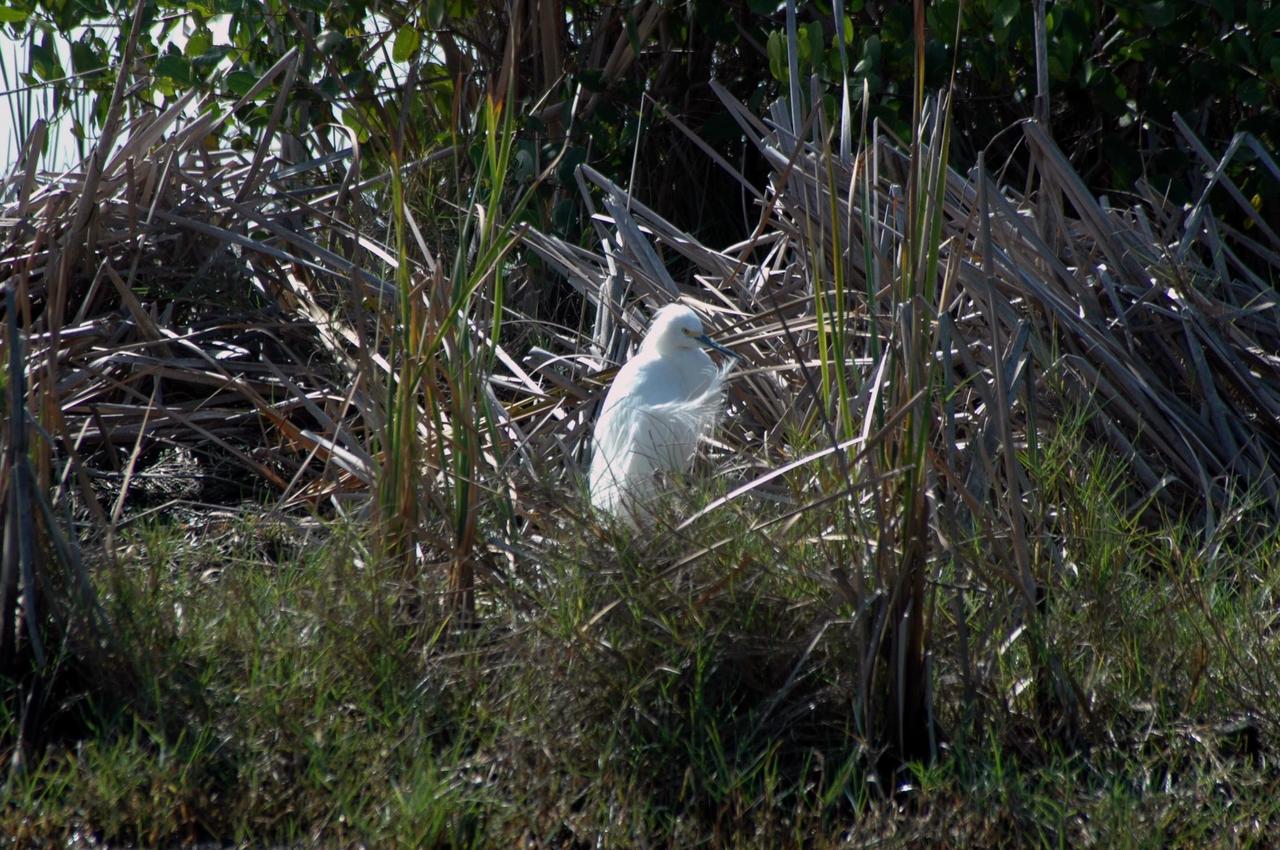
KENNEDY SPACE CENTER, FLA. -- A snowy egret is spotted in the midst of reeds near a pond on NASA's Kennedy Space Center. A type of heron, the snowy egret inhabits salt marshes, ponds, rice fields and shallow coastal bays ranging from Maine to southern South America on the east coast. It can also be found in California and Oklahoma to the Gulf of Mexico. KSC shares a boundary with the Merritt Island Wildlife Nature Refuge. The refuge is a habitat for more than 310 species of birds, 25 mammals, 117 fishes and 65 amphibians and reptiles. In addition, the Refuge supports 19 endangered or threatened wildlife species on Federal or State lists, more than any other single refuge in the U.S. Photo credit: NASA/Ken Thornsley
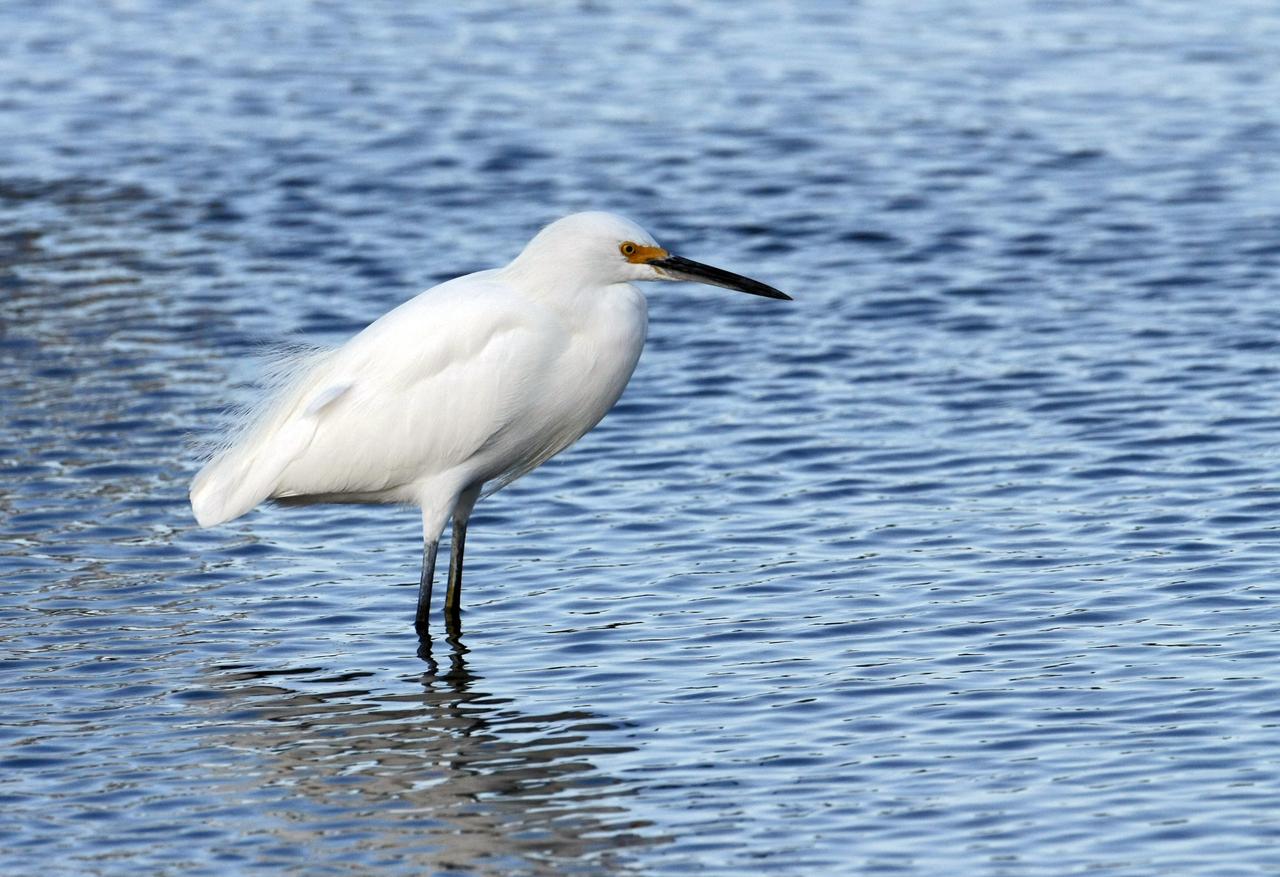
CAPE CANAVERAL, Fla. – A snowy egret stands in the shallow water of a pond in the Merritt island National Wildlife Refuge, which borders NASA's Kennedy Space Center in Florida. A type of heron, the snowy egret inhabits salt marshes, ponds, rice fields and shallow coastal bays ranging from Maine to southern South America on the east coast. It can also be found in California and Oklahoma to the Gulf of Mexico. The center shares a boundary with the refuge that includes salt-water estuaries, brackish marshes, hardwood hammocks and pine flatwoods. The diverse landscape provides habitat for more than 310 species of birds, 25 mammals, 117 fishes and 65 amphibians and reptiles. Photo credit: NASA/Jim Grossmann
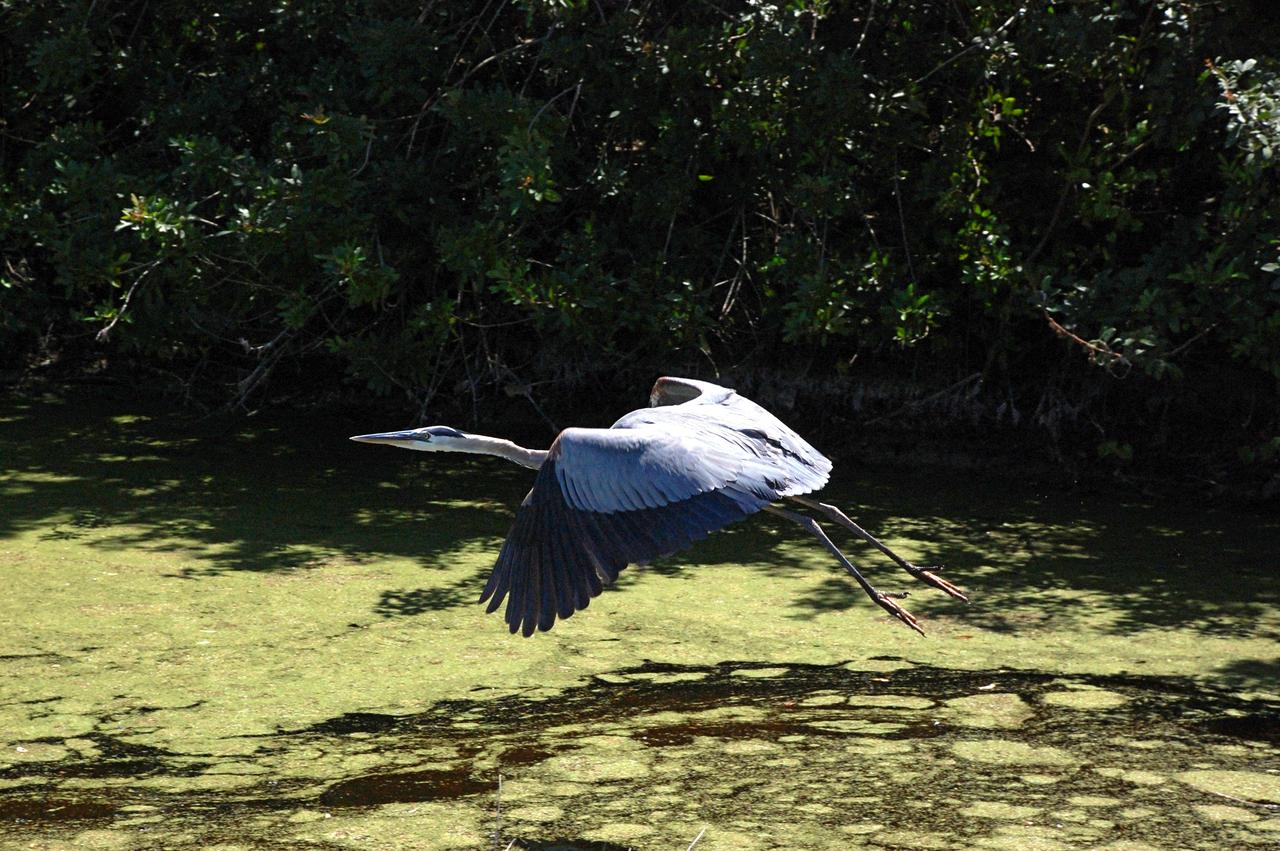
CAPE CANAVERAL, Fla. – A Great Blue Heron majestically takes to the air as it leaves the shallow water behind the NASA News Center at NASA's Kennedy Space Center in Florida. A frequent sight around Kennedy, this large heron inhabits lakes, ponds, rivers and marshes in a range from Alaska south to Mexico and the West Indies. It is frequently found standing at the edge of a pond or pool, watching for fish or frogs, its principal food. Kennedy shares a boundary with the Merritt Island National Wildlife Refuge that includes salt-water estuaries, brackish marshes, hardwood hammocks and pine flatwoods. The diverse landscape provides habitat for more than 310 species of birds, 25 mammals, 117 fishes and 65 amphibians and reptiles. Photo credit: NASA/Ben Smegelsky
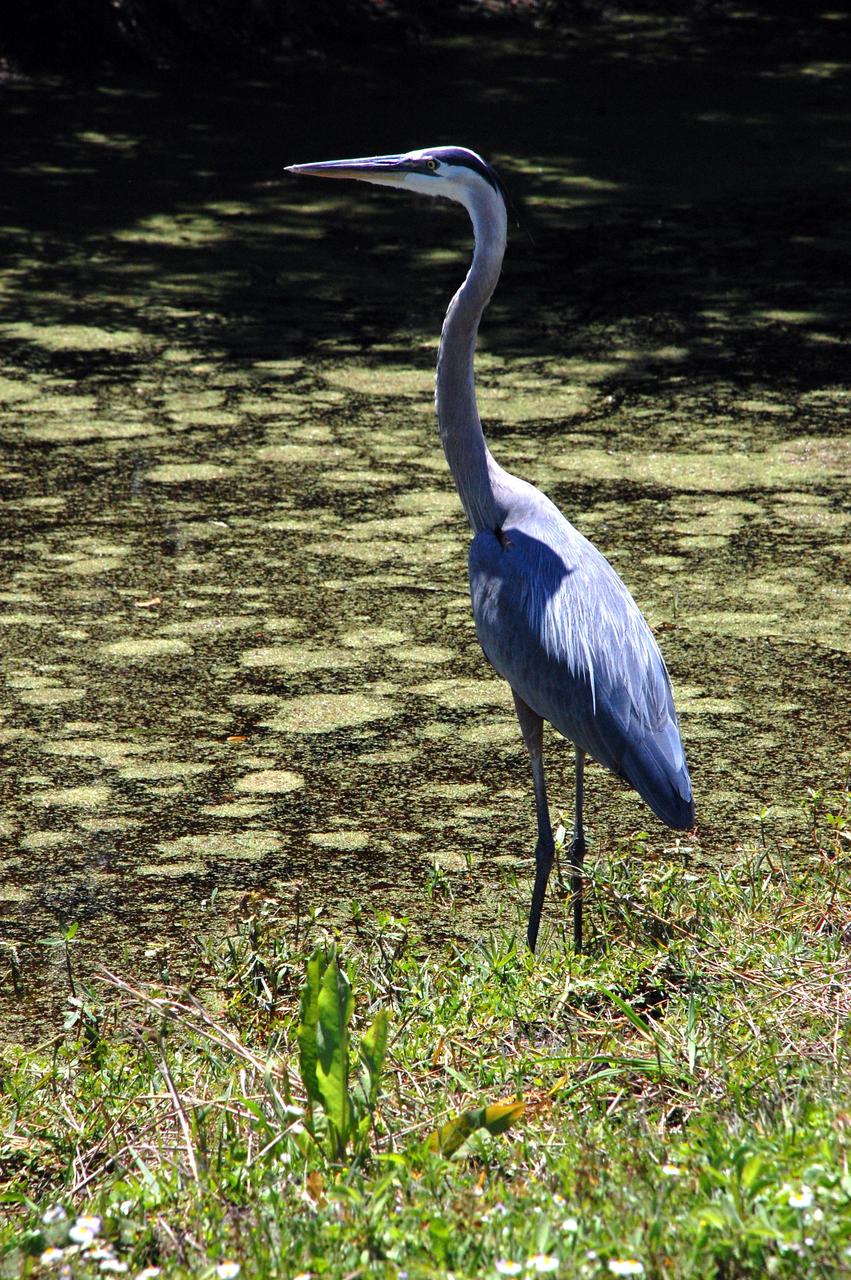
CAPE CANAVERAL, Fla. – A tall Great Blue Heron warily eyes its surroundings while standing in the shallow water behind the NASA News Center at NASA's Kennedy Space Center in Florida. A frequent sight around Kennedy, this large heron inhabits lakes, ponds, rivers and marshes in a range from Alaska south to Mexico and the West Indies. It is frequently found standing at the edge of a pond or pool, watching for fish or frogs, its principal food. Kennedy shares a boundary with the Merritt Island National Wildlife Refuge that includes salt-water estuaries, brackish marshes, hardwood hammocks and pine flatwoods. The diverse landscape provides habitat for more than 310 species of birds, 25 mammals, 117 fishes and 65 amphibians and reptiles. Photo credit: NASA/Ben Smegelsky
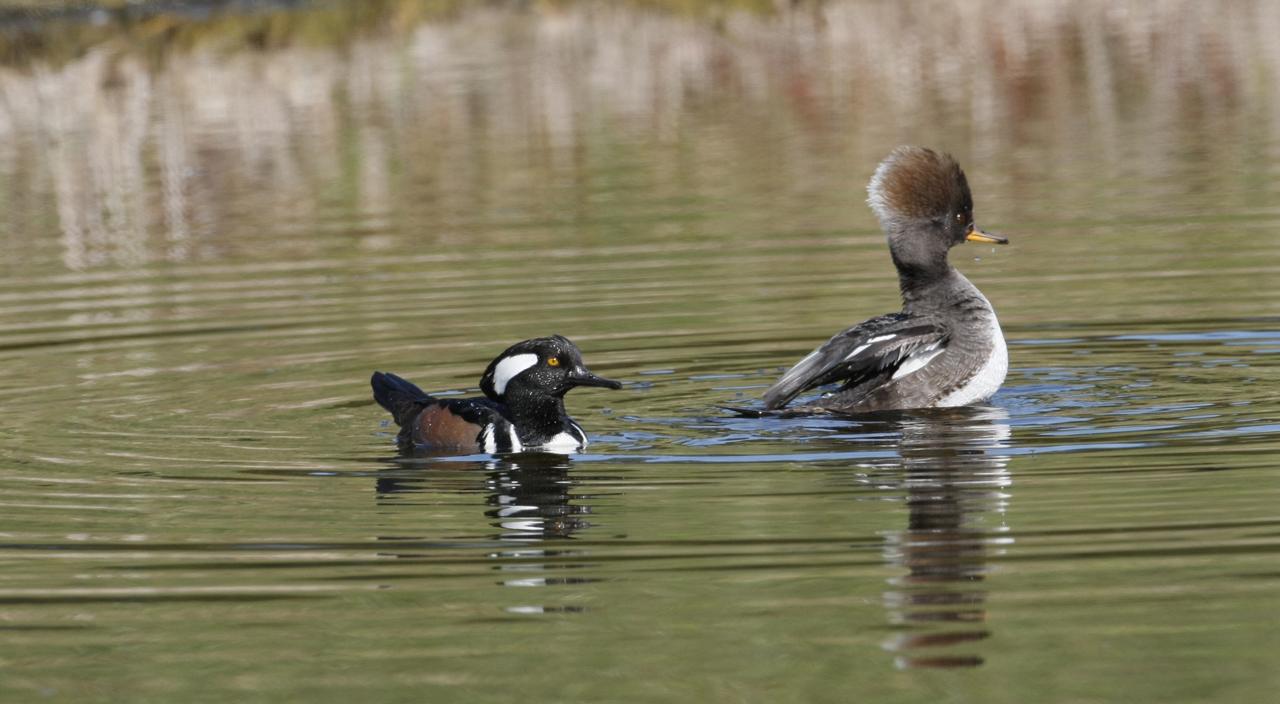
CAPE CANAVERAL, Fla. – Near NASA's Kennedy Space Center in Florida, on a pond in the Merritt island National Wildlife Refuge, a male hooded Merganser duck swims with a female. The Merganser's habitat includes wooded ponds, lakes and rivers. They are most often seen along rivers and estuaries during the fall and winter. They feed chiefly on small fish, which they pursue in long, rapid, underwater dives, and also frogs and aquatic insects. The center shares a boundary with the refuge that includes salt-water estuaries, brackish marshes, hardwood hammocks and pine flatwoods. The diverse landscape provides habitat for more than 310 species of birds, 25 mammals, 117 fishes and 65 amphibians and reptiles. Photo credit: NASA/Jim Grossmann
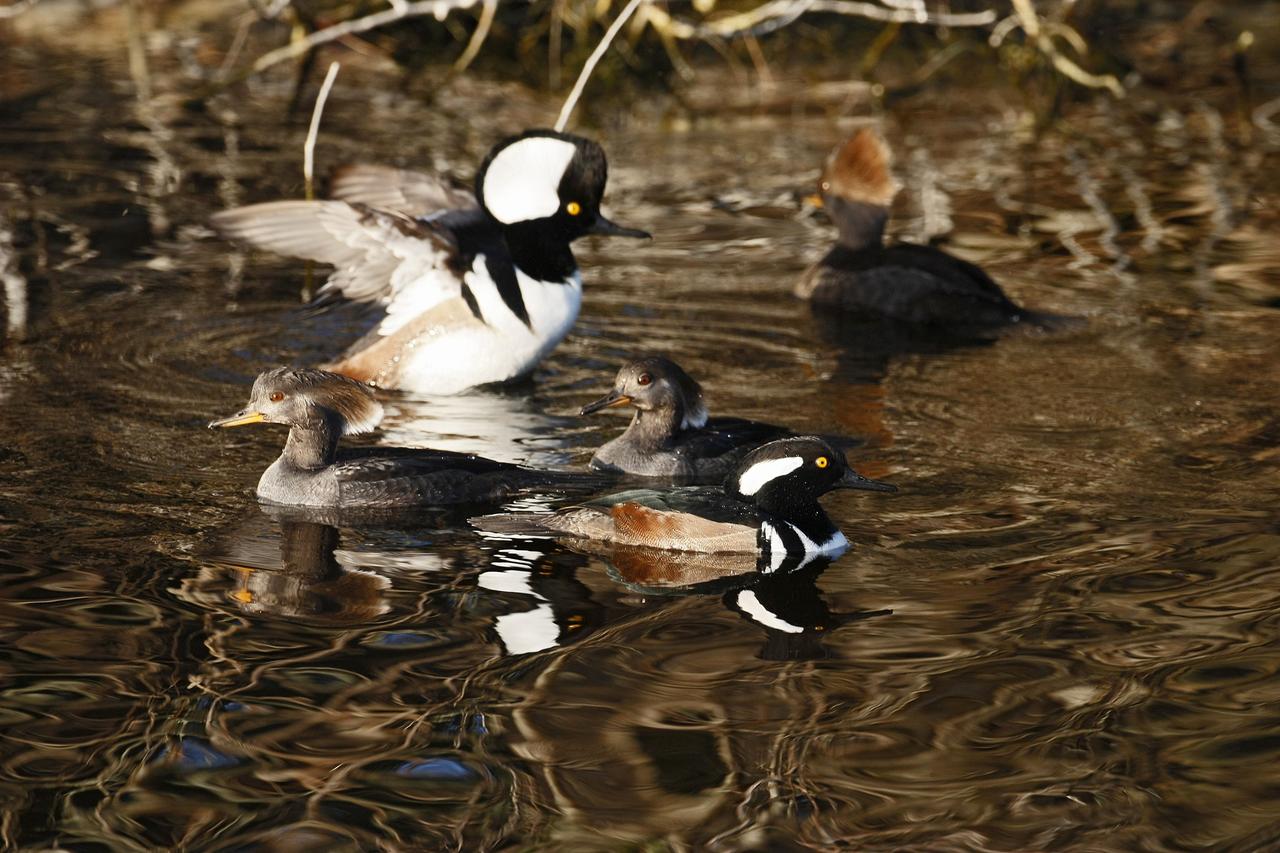
CAPE CANAVERAL, Fla. – Hooded Merganser ducks swim on a pond in the Merritt island National Wildlife Refuge, which borders NASA's Kennedy Space Center in Florida. Their habitat includes wooded ponds, lakes and rivers. They are most often seen along rivers and estuaries during the fall and winter. They feed chiefly on small fish, which they pursue in long, rapid, underwater dives, and also frogs and aquatic insects. The center shares a boundary with the refuge that includes salt-water estuaries, brackish marshes, hardwood hammocks and pine flatwoods. The diverse landscape provides habitat for more than 310 species of birds, 25 mammals, 117 fishes and 65 amphibians and reptiles. Photo credit: NASA/Jim Grossmann
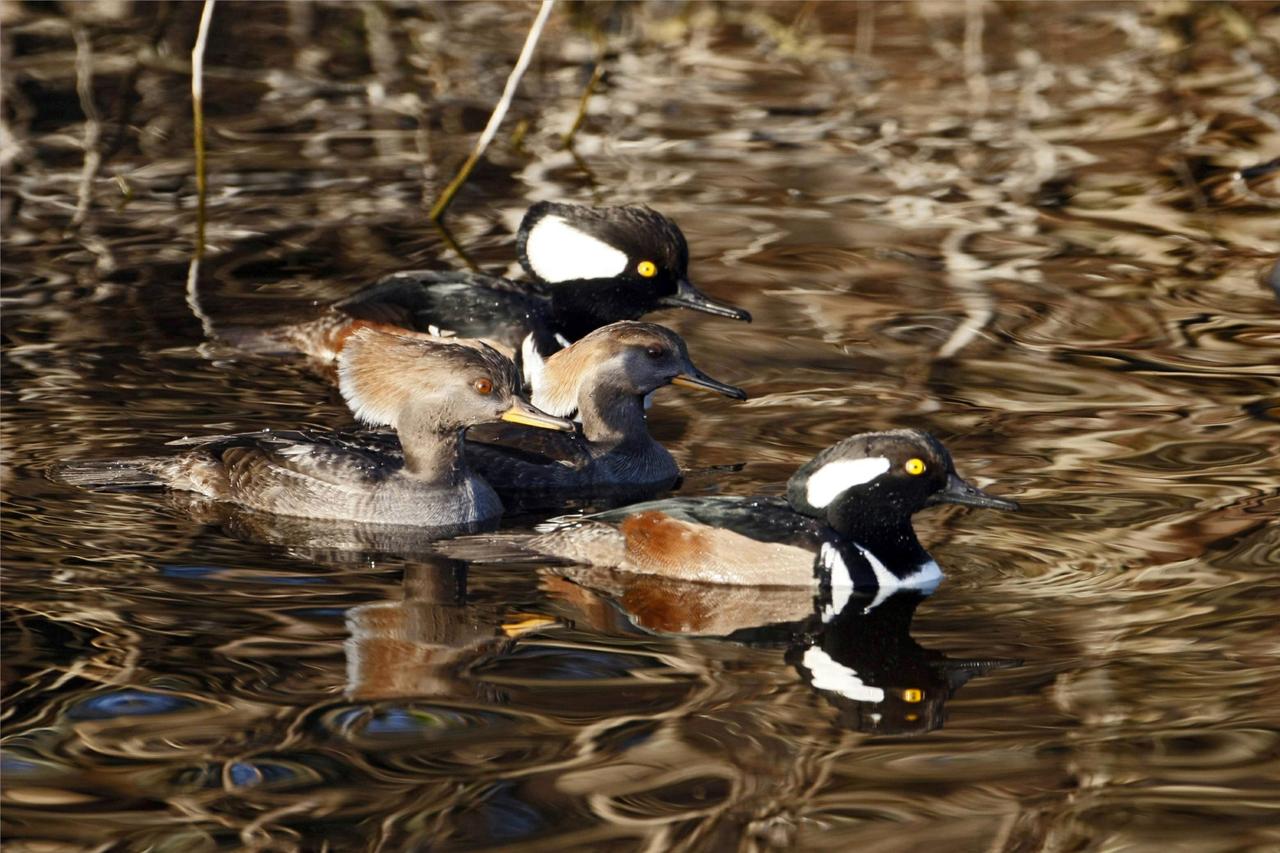
CAPE CANAVERAL, Fla. – Hooded Merganser ducks swim on a pond in the Merritt island National Wildlife Refuge, which borders NASA's Kennedy Space Center in Florida. Their habitat includes wooded ponds, lakes and rivers. They are most often seen along rivers and estuaries during the fall and winter. They feed chiefly on small fish, which they pursue in long, rapid, underwater dives, and also frogs and aquatic insects. The center shares a boundary with the refuge that includes salt-water estuaries, brackish marshes, hardwood hammocks and pine flatwoods. The diverse landscape provides habitat for more than 310 species of birds, 25 mammals, 117 fishes and 65 amphibians and reptiles. Photo credit: NASA/Jim Grossmann

CAPE CANAVERAL, Fla. – Near NASA's Kennedy Space Center in Florida, a male Northern pintail duck swims on a pond in the Merritt island National Wildlife Refuge. Pintails inhabit marshes, prairie ponds and tundra. Widely distributed across the U.S. and Canada, the breed winters south to Central America and the West Indies. It feeds largely on seeds of aquatic plants but may also take small aquatic animals. The center shares a boundary with the refuge that includes salt-water estuaries, brackish marshes, hardwood hammocks and pine flatwoods. The diverse landscape provides habitat for more than 310 species of birds, 25 mammals, 117 fishes and 65 amphibians and reptiles. Photo credit: NASA/Jim Grossmann
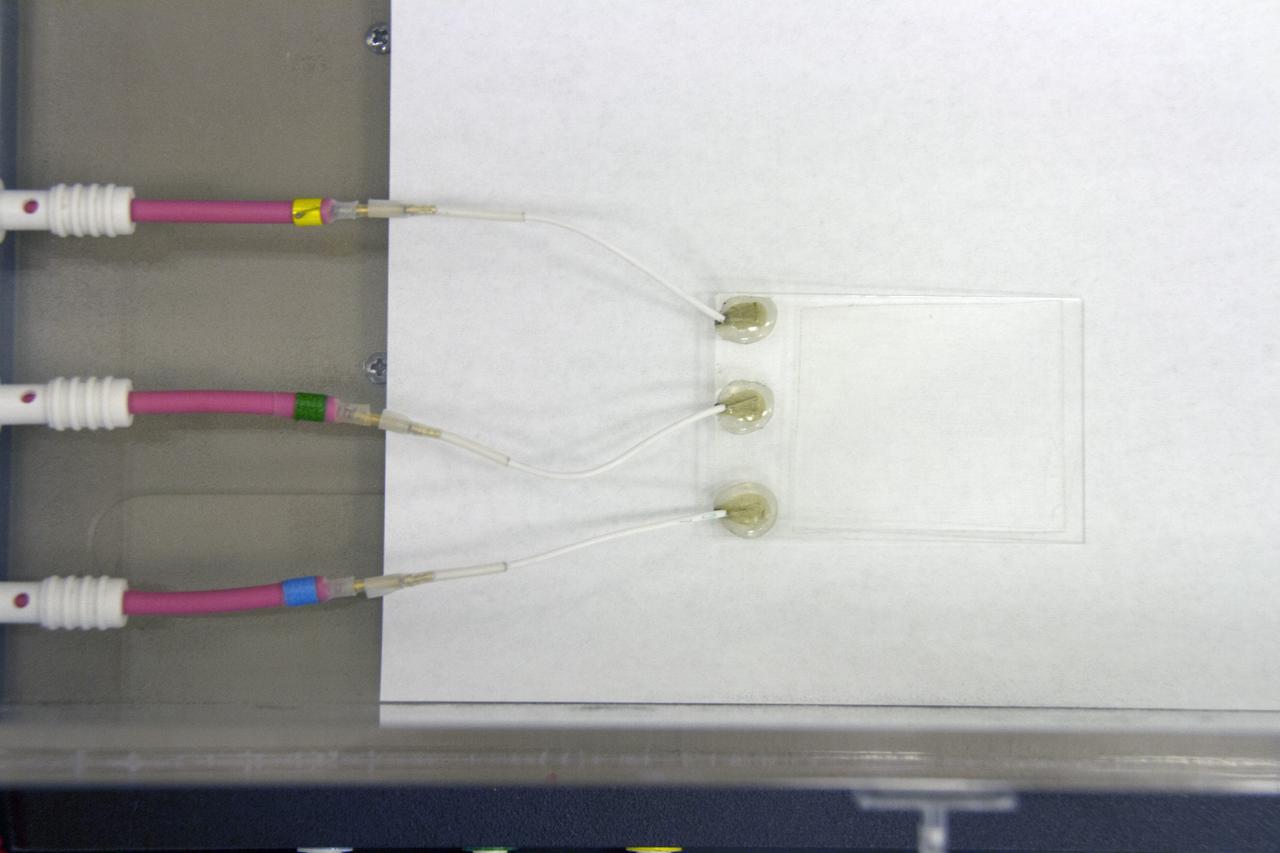
CAPE CANAVERAL, Fla. -- Preparations are underway to conduct a dust particle experiment for the Electrodynamic Dust Shield for Dust Mitigation project in the Electrostatics and Surface Physics Laboratory in the SwampWorks at NASA's Kennedy Space Center in Florida. The technology works by creating an electric field that propagates out like the ripples on a pond. This could prevent dust accumulation on spacesuits, thermal radiators, solar panels, optical instruments and view ports for future lunar and Mars exploration activities. CAPE CANAVERAL, Fla. -- Preparations are underway to conduct a dust particle experiment for the Electrodynamic Dust Shield for Dust Mitigation project in the Electrostatics and Surface Physics Laboratory in the SwampWorks at NASA's Kennedy Space Center in Florida. The technology works by creating an electric field that propagates out like the ripples on a pond. This could prevent dust accumulation on spacesuits, thermal radiators, solar panels, optical instruments and view ports for future lunar and Mars exploration activities.
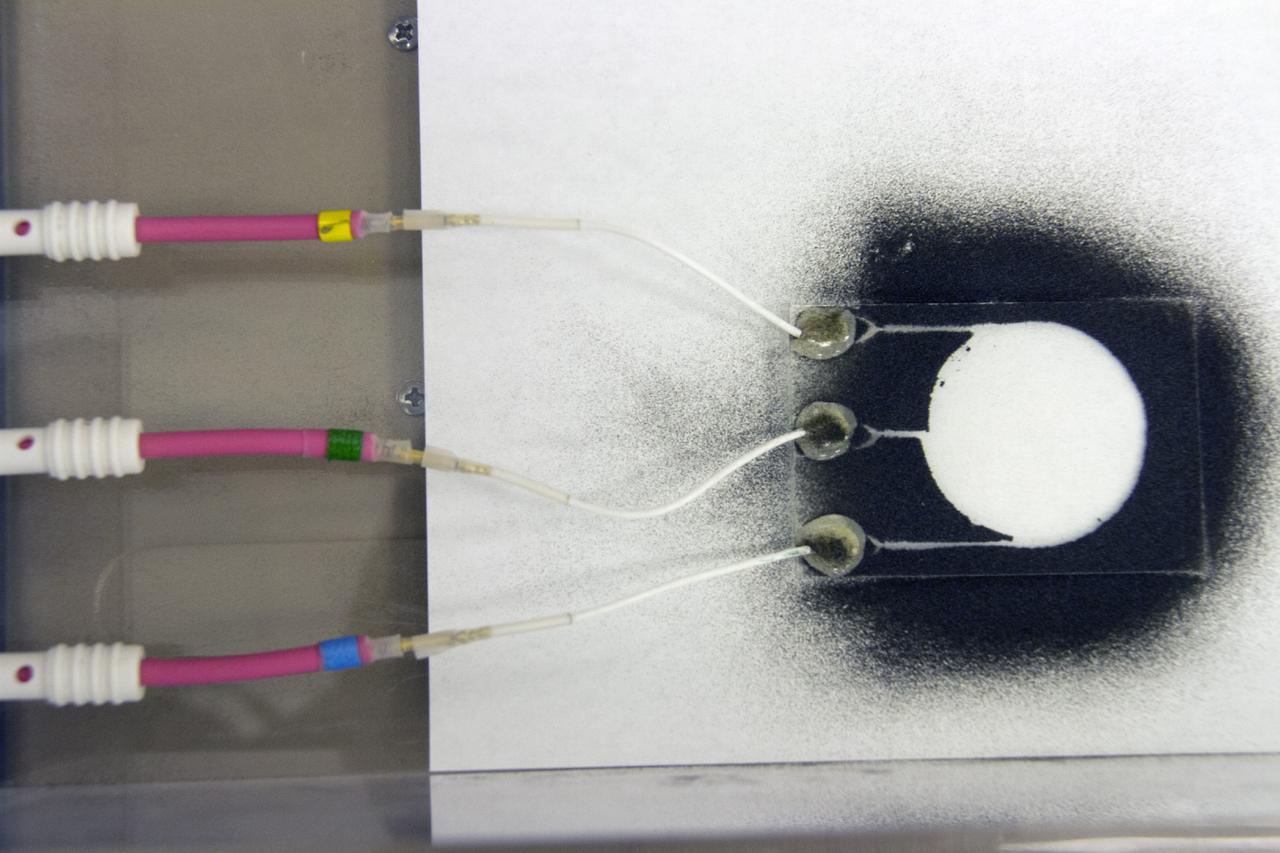
CAPE CANAVERAL, Fla. -- Dust particles scatter during an experiment for the Electrodynamic Dust Shield for Dust Mitigation project in the Electrostatics and Surface Physics Laboratory in the SwampWorks at NASA's Kennedy Space Center in Florida. The fabricated material is designed to mimic the dust on the lunar surface. The technology works by creating an electric field that propagates out like the ripples on a pond. This could prevent dust accumulation on spacesuits, thermal radiators, solar panels, optical instruments and view ports for future lunar and Mars exploration activities. CAPE CANAVERAL, Fla. -- Preparations are underway to conduct a dust particle experiment for the Electrodynamic Dust Shield for Dust Mitigation project in the Electrostatics and Surface Physics Laboratory in the SwampWorks at NASA's Kennedy Space Center in Florida. The technology works by creating an electric field that propagates out like the ripples on a pond. This could prevent dust accumulation on spacesuits, thermal radiators, solar panels, optical instruments and view ports for future lunar and Mars exploration activities.
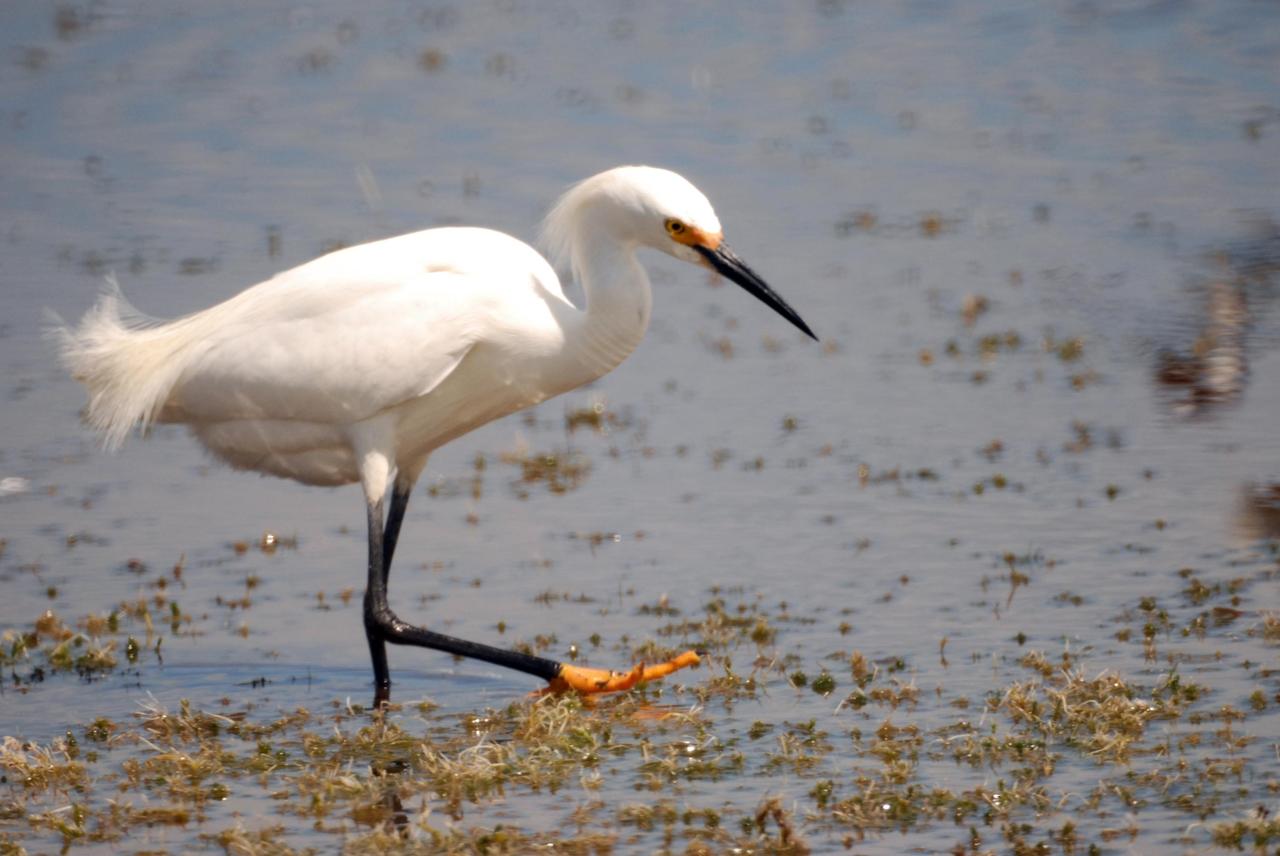
KENNEDY SPACE CENTER, FLA. -- A snowy egret marches through a pond near Kennedy Space Center, looking for food. The snowy egret can be identified by its slender black bill, black legs and yellow feet. This species inhabits salt marshes, ponds, rice field and shallow coastal bays along the coast from Maine to southern South America. They are also found in northern California, Texas and Oklahoma. KSC shares a boundary with the Merritt Island National Wildlife Refuge, which surrounds it. The refuge is a habitat for more than 310 species of birds, 25 mammals, 117 fishes and 65 amphibians and reptiles. In addition, the refuge supports 19 endangered or threatened wildlife species on Federal or State lists, more than any other single refuge in the U.S. Photo credit: NASA/Ken Thornsley
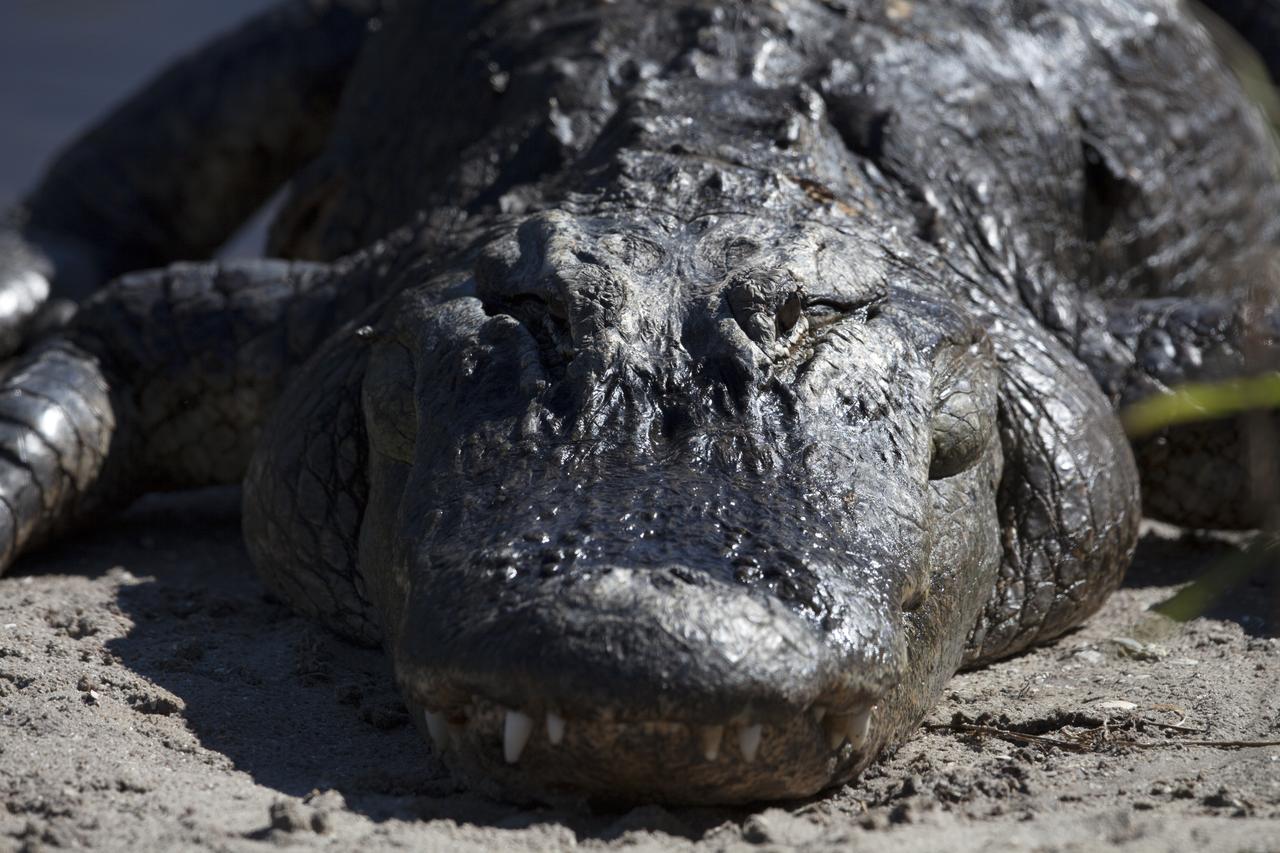
An adult alligator suns himself along the shoreline of a waterway at NASA's Kennedy Space Center in Florida. The center shares a border with the Merritt Island National Wildlife Refuge. More than 330 native and migratory bird species, 25 mammals, 117 fishes and 65 amphibians and reptiles call Kennedy and the wildlife refuge home.
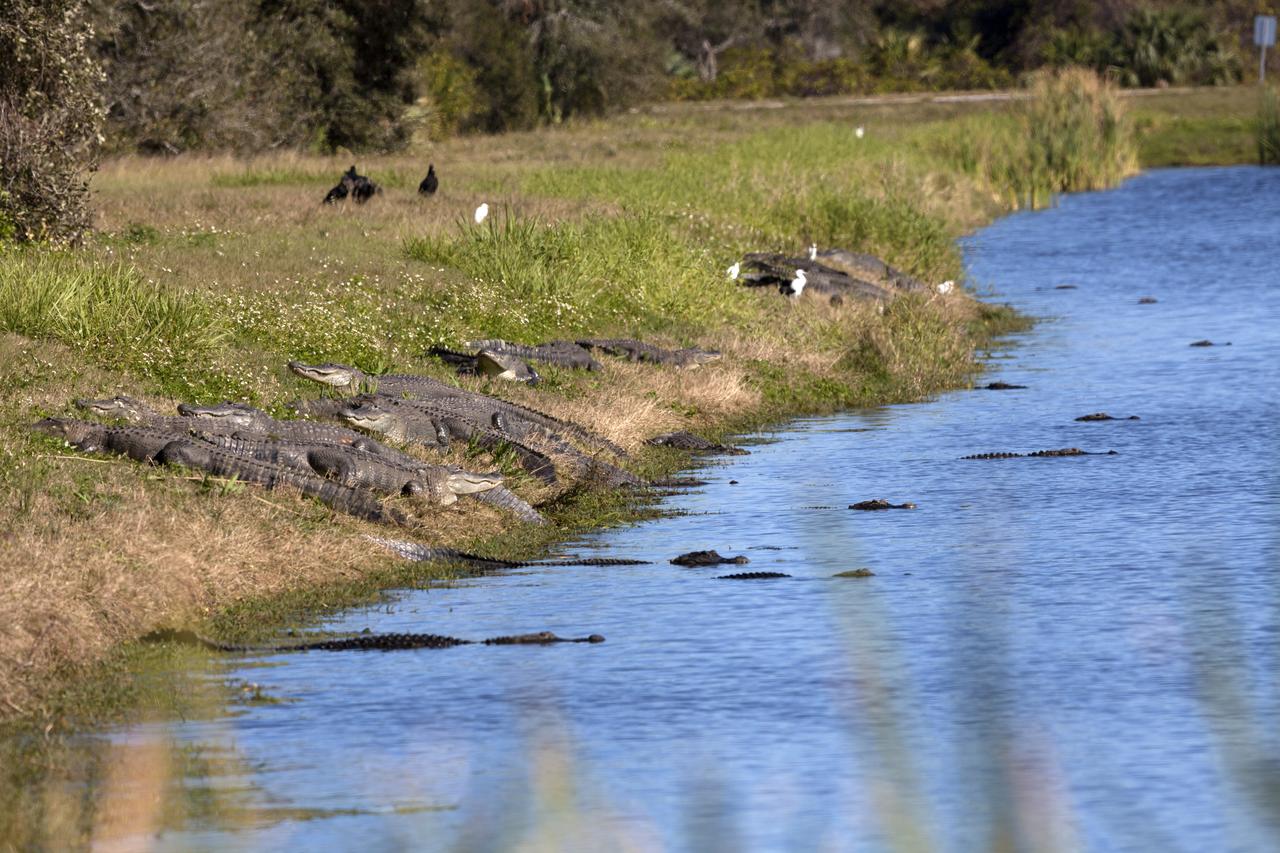
Alligators sun themselves along the shoreline of waterway at NASA's Kennedy Space Center in Florida. The center shares a border with the Merritt Island National Wildlife Refuge. More than 330 native and migratory bird species, 25 mammals, 117 fishes and 65 amphibians and reptiles call Kennedy and the wildlife refuge home.
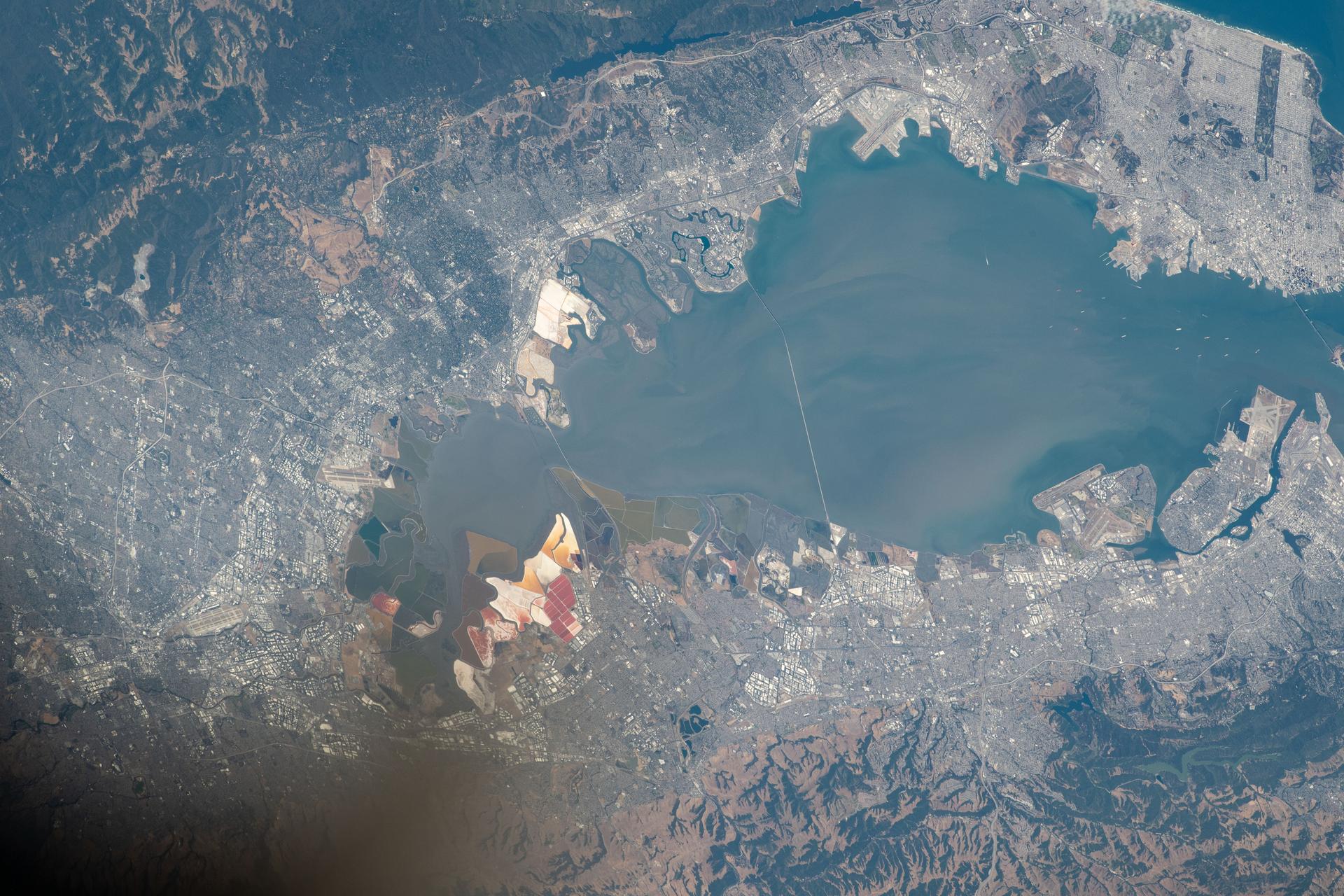
iss067e102153 (June 1, 2026) --- The San Francisco Bay Area in California is pictured from the International Space Station as it orbited 263 miles above the Pacific Ocean off the coast of the Golden State. At lower left, bright orange?red salt evaporation ponds contrast with San Francisco Bay and the urban area that includes Silicon Valley, which has a metropolitan population of about 9.14?million. At upper right, San Francisco International Airport, which handled over 54?million passengers in 2025, sits along the bay’s shoreline. Credit: NASA/Kjell Lindgren
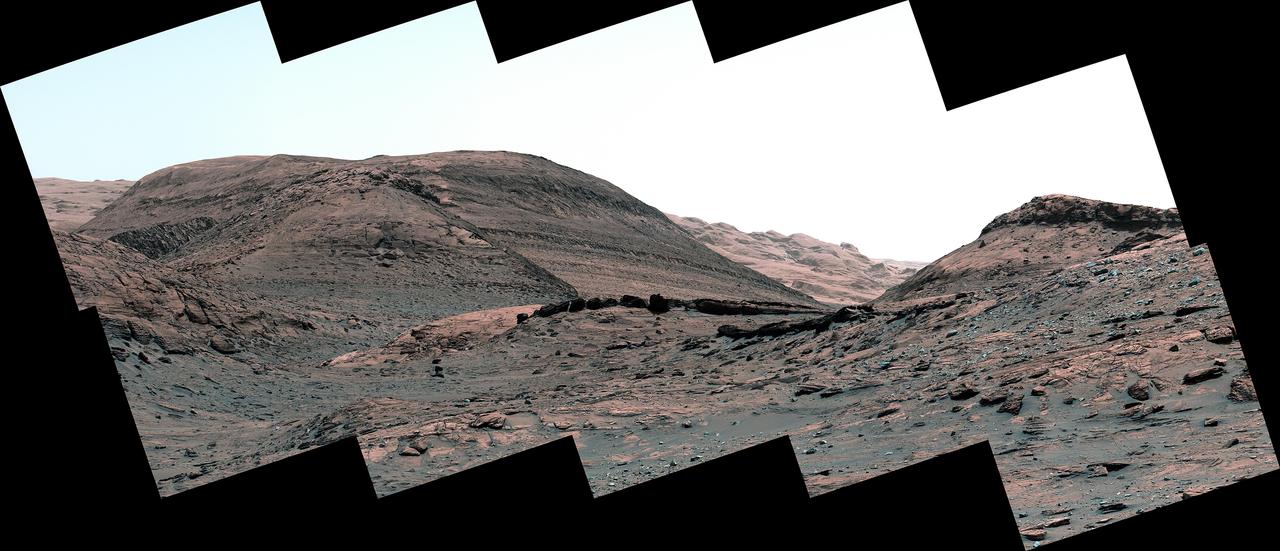
NASA's Curiosity Mars rover captured this view of a sulfate-bearing region ahead of its current location. Dark boulders near the center of the panorama are thought to have formed from sand deposited in ancient streams or ponds. Scattered gray rocks covering the hillside on the right are all that remain of a sandstone capping unit that once covered this area. This panorama is made up of 10 individual images that were captured by Curiosity's Mast Camera, or Mastcam, on May 2, 2022, the 3,462nd Martian day, or sol, of the mission. The images were stitched together after they were sent back to Earth. Behind the dark boulders – in the middle of the image – is a mountain that makes up part of the sulfate-bearing region; layers within this region can be seen as stripes across the mountainside. These layers represent an excellent record of how Mars' water and climate changed over time. https://photojournal.jpl.nasa.gov/catalog/PIA25367
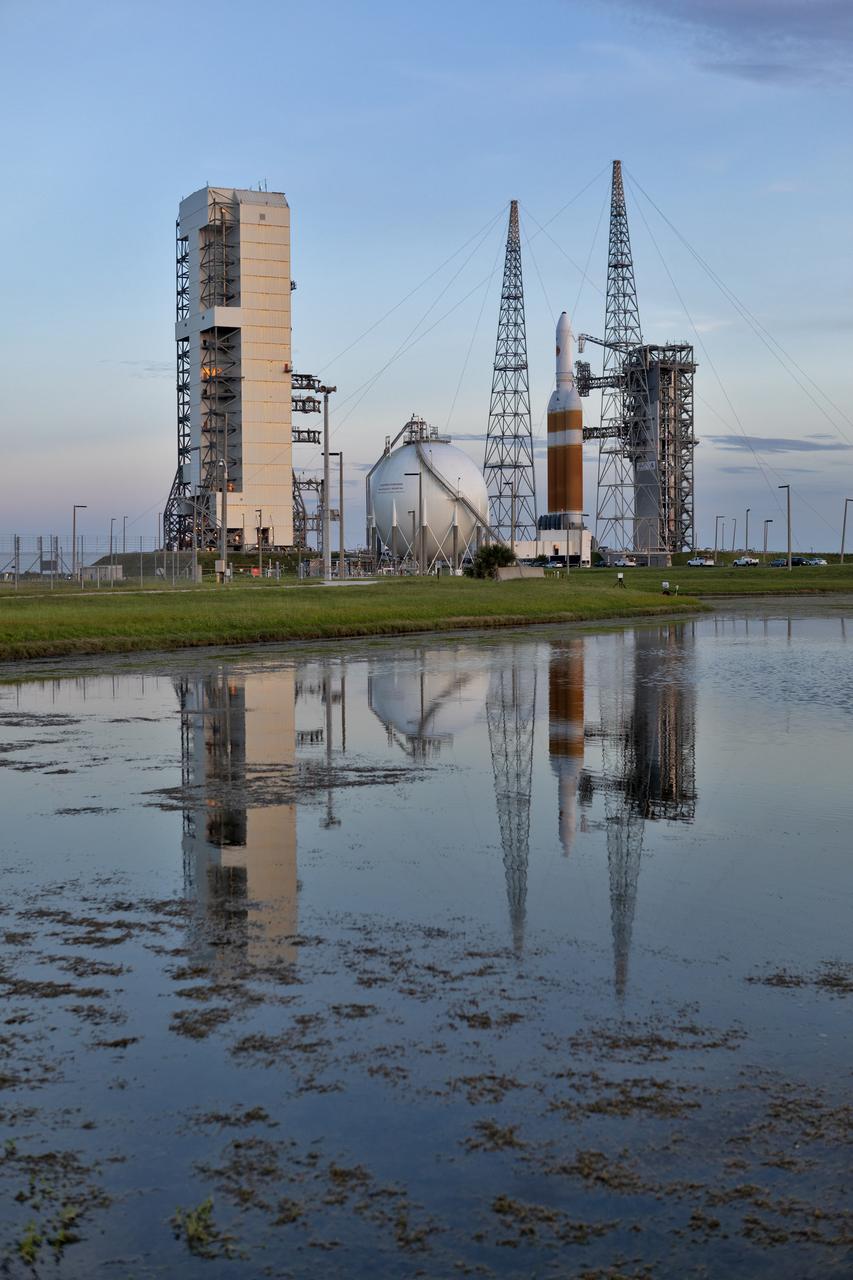
On Friday, Aug. 10, 2018, at Cape Canaveral Air Force Station in Florida, the United Launch Alliance Delta IV Heavy rocket that will boost NASA's Parker Solar Probe is reflected in a nearby pond during rollback of the Mobile Service Tower gantry at Space Launch Complex 37. Parker Solar Probe will perform the closest-ever observations of a star when it travels through the Sun's atmosphere, called the corona. The probe will rely on measurements and imaging to revolutionize our understanding of the corona and the Sun-Earth connection.
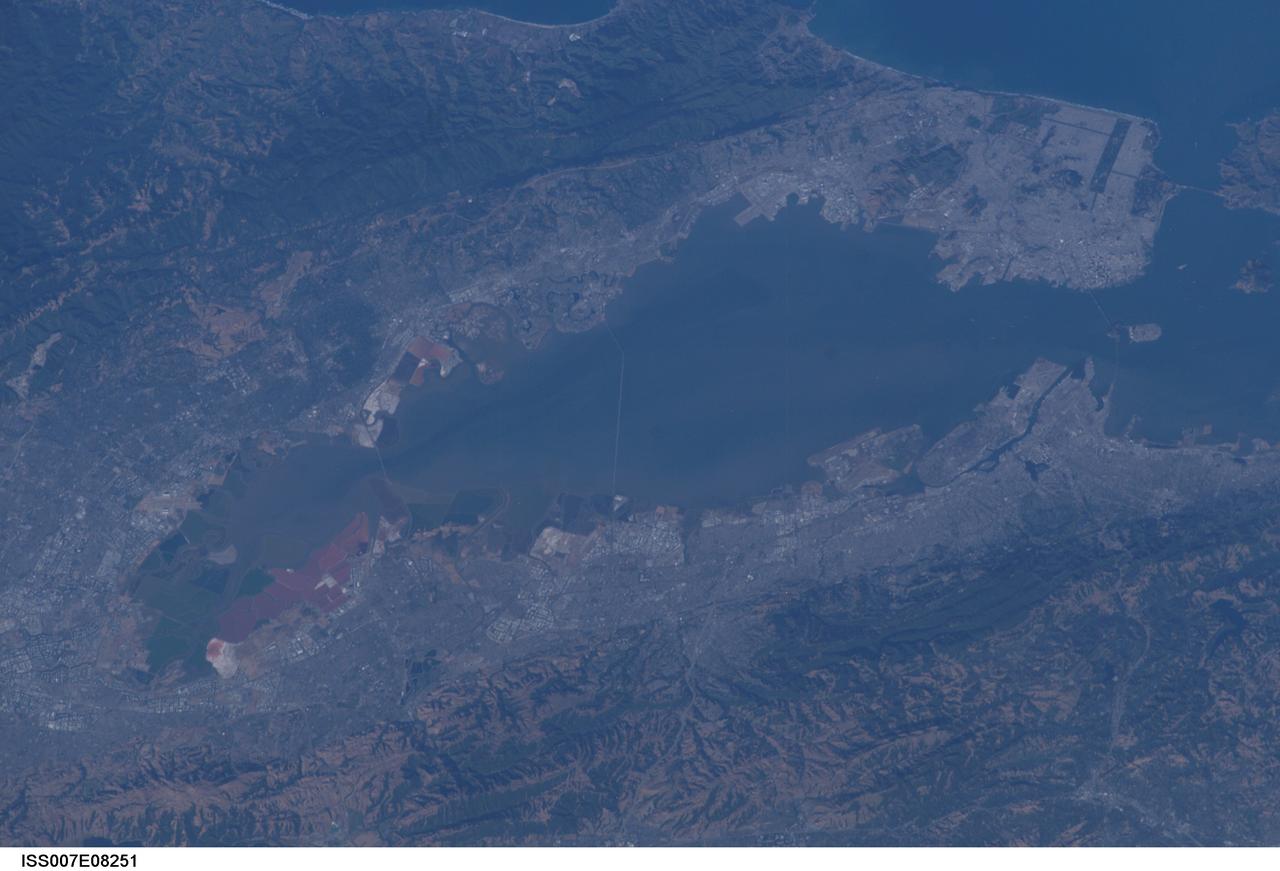
ISS007-E-08251 (25 June 2003) --- This photo featuring the San Francisco Bay area in California was photographed from the International Space Station (ISS) by astronaut Edward T. Lu, Expedition 7 NASA ISS science officer and flight engineer. The San Francisco Bay Bridge, Alcatraz Island, Golden Gate Bridge, and Golden Gate Park are visible at upper right. Stanford University and red salt ponds on the bay near Fremont at lower left.
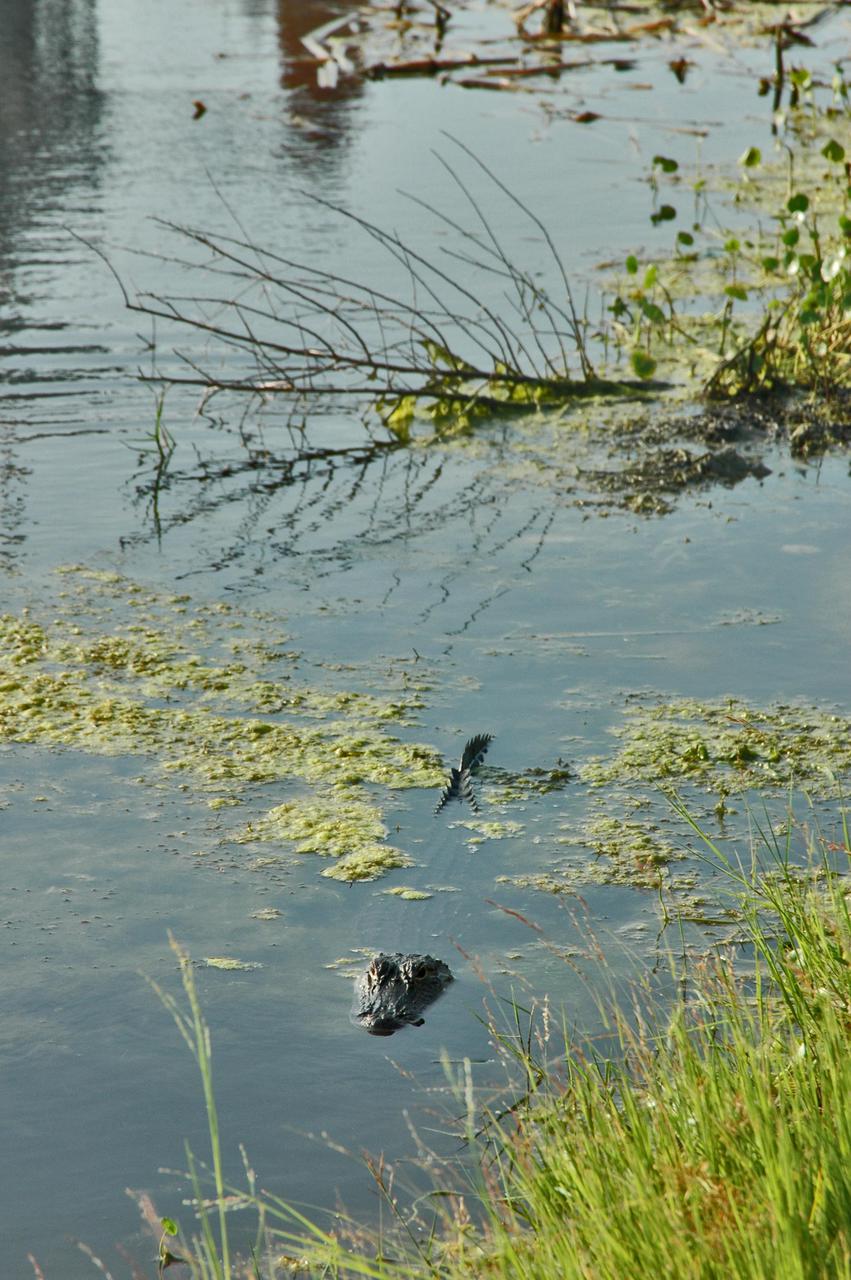
KENNEDY SPACE CENTER, FLA. - In a pond near Launch Pad 39B, an alligator lurks near the tall grass. Nearby is Space Shuttle Discovery, in full launch configuration after rollback of the Rotating Service Structure (RSS). Rollback of the RSS is a major preflight milestone, typically occurring during the T-11-hour hold on L-1 (the day before launch). Discovery is scheduled to lift off on the historic Return to Flight mission STS-114 at 10:39 a.m. EDT July 26 with a crew of seven.
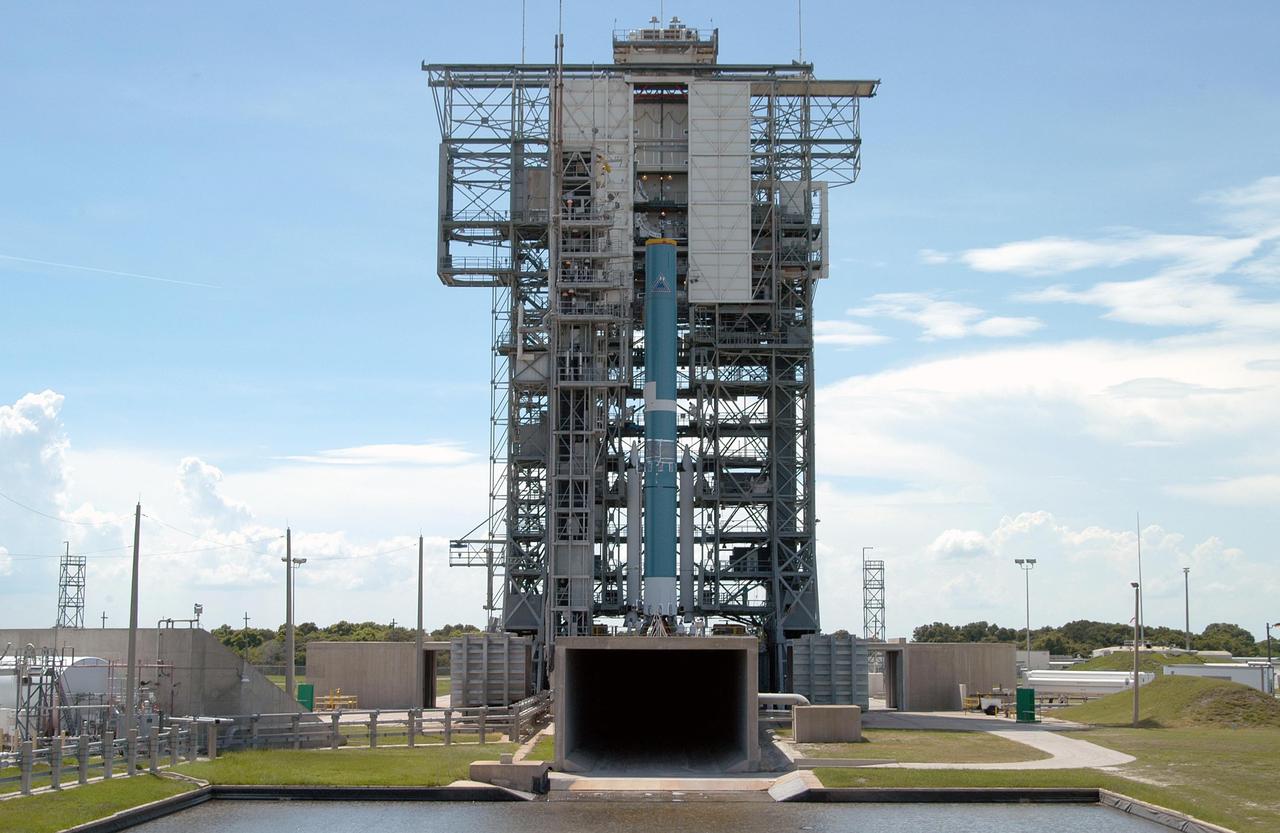
KENNEDY SPACE CENTER, FLA. - On Pad 17-B, Cape Canaveral Air Force Station, the mobile service tower delivers the first three Solid Rocket Boosters (SRBs) to the Boeing Delta II Heavy rocket for mating. In the foreground is the cooling water pond. The Delta II is the launch vehicle for the Aug. 2 launch of the MESSENGER spacecraft to the planet Mercury. The spacecraft is expected to reach orbit around Mercury in March 2011. MESSENGER was built for NASA by the Johns Hopkins University Applied Physics Laboratory in Laurel, Md.