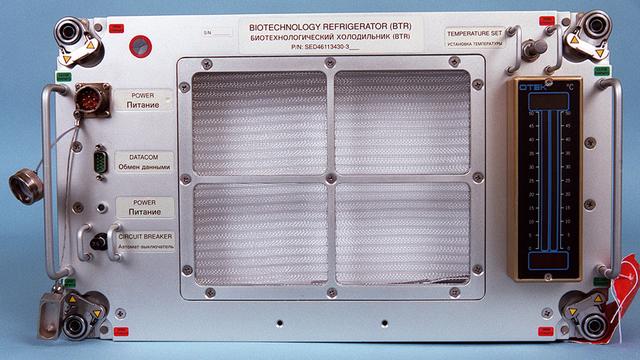
Biotechnology Refrigerator (BTR) holds fixed tissue culture bags at 4 degrees C to preserve them for return to Earth and postflight analysis. The cultures are used in research with the NASA Bioreactor cell science program. The work is sponsored by NASA's Office of Biological and Physical Research. The bioreactor is managed by the Biotechnology Cell Science Program at NASA's Johnson Space Center (JSC).
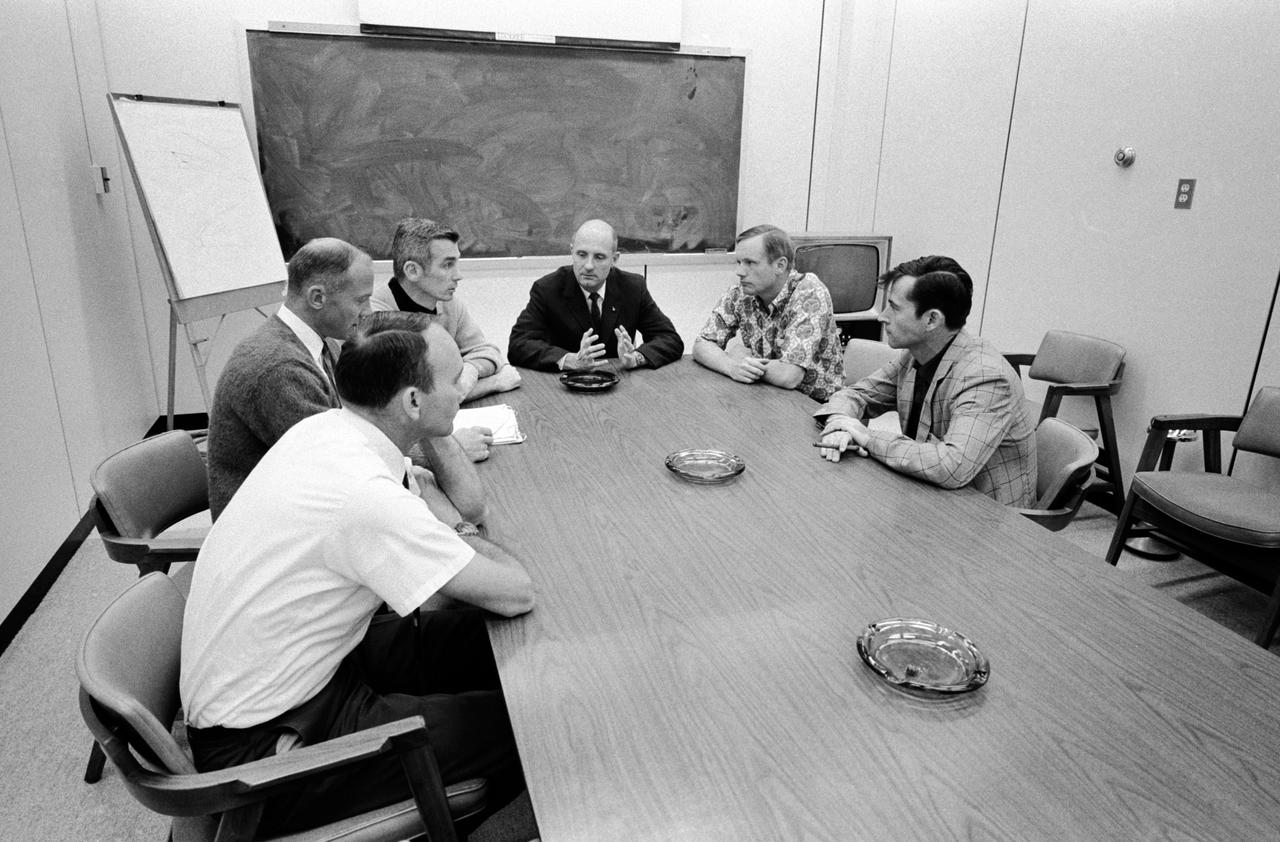
S69-35504 (June 1969) --- The prime crews of the Apollo 10 lunar orbit mission and the Apollo 11 lunar landing mission are photographed during an Apollo 10 postflight de-briefing session. Clockwise, from left foreground, are astronauts Michael Collins, Apollo 11 command module pilot; Edwin E. Aldrin Jr., Apollo 11 lunar module pilot; Eugene A. Cernan, Apollo 10 lunar module pilot; Thomas P. Stafford, Apollo 10 commander; Neil A. Armstrong, Apollo 11 commander; and John W. Young, Apollo 10 command module pilot.
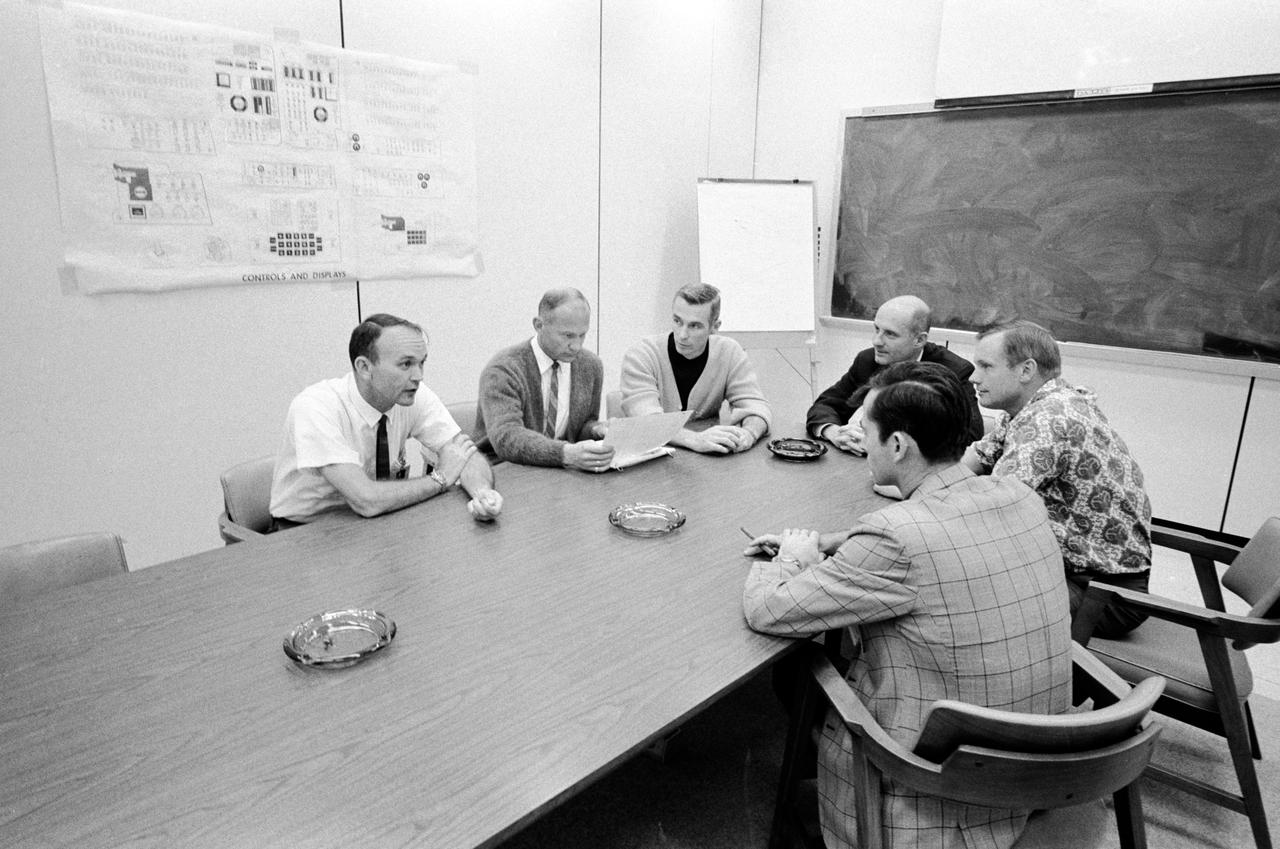
S69-35507 (June 1969) --- The prime crews of the Apollo 10 lunar orbit mission and the Apollo 11 lunar landing mission are photographed during an Apollo 10 postflight de-briefing session. Clockwise, from left, are astronauts Michael Collins, Apollo 11 command module pilot; Edwin E. Aldrin Jr., Apollo 11 lunar module pilot; Eugene A. Cernan, Apollo 10 lunar module pilot; Thomas P. Stafford, Apollo 10 commander; Neil A. Armstrong, Apollo 11 commander; and John W. Young, Apollo 10 command module pilot.
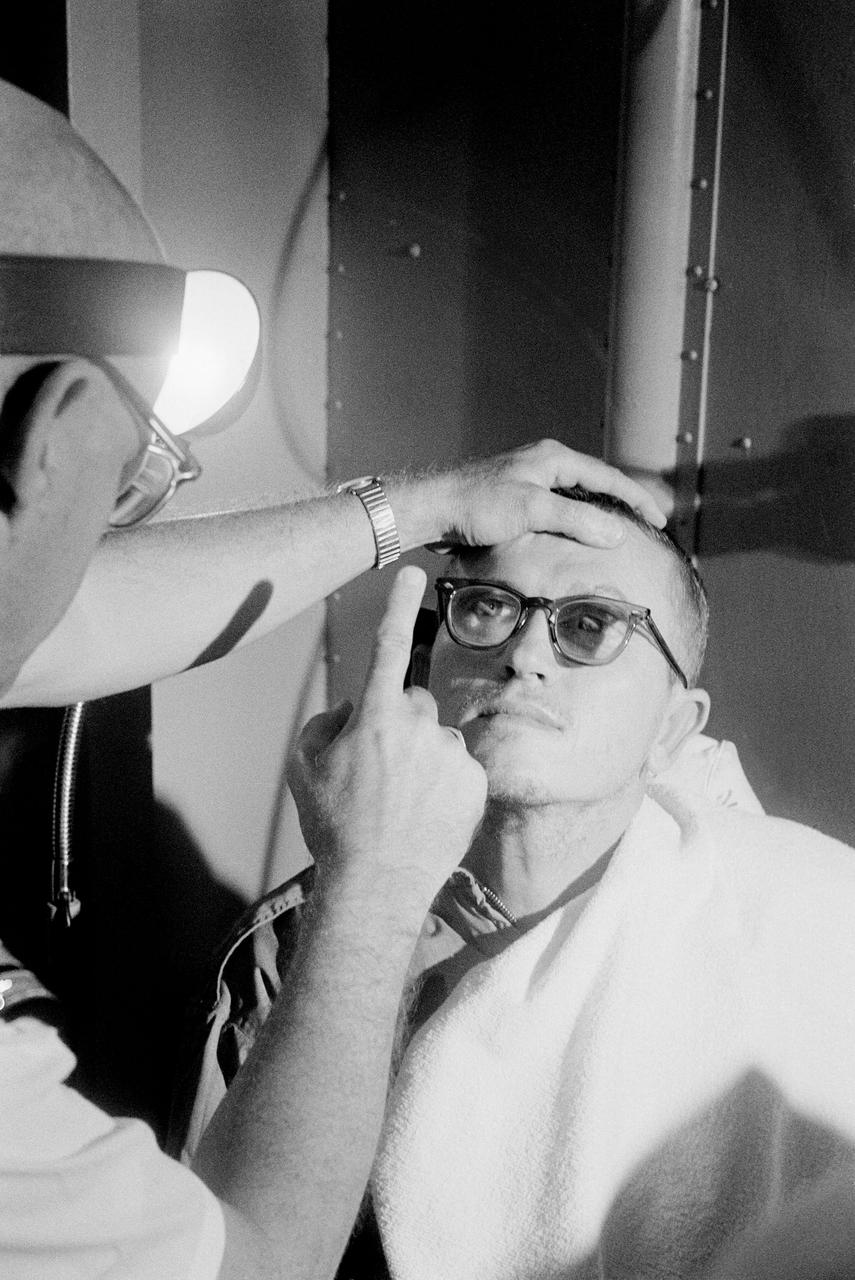
S66-17442 (19 Jan. 1966) --- Astronaut Frank Borman, command pilot for the Gemini-7 mission, has his vision checked during a postflight medical exam. Photo credit: NASA
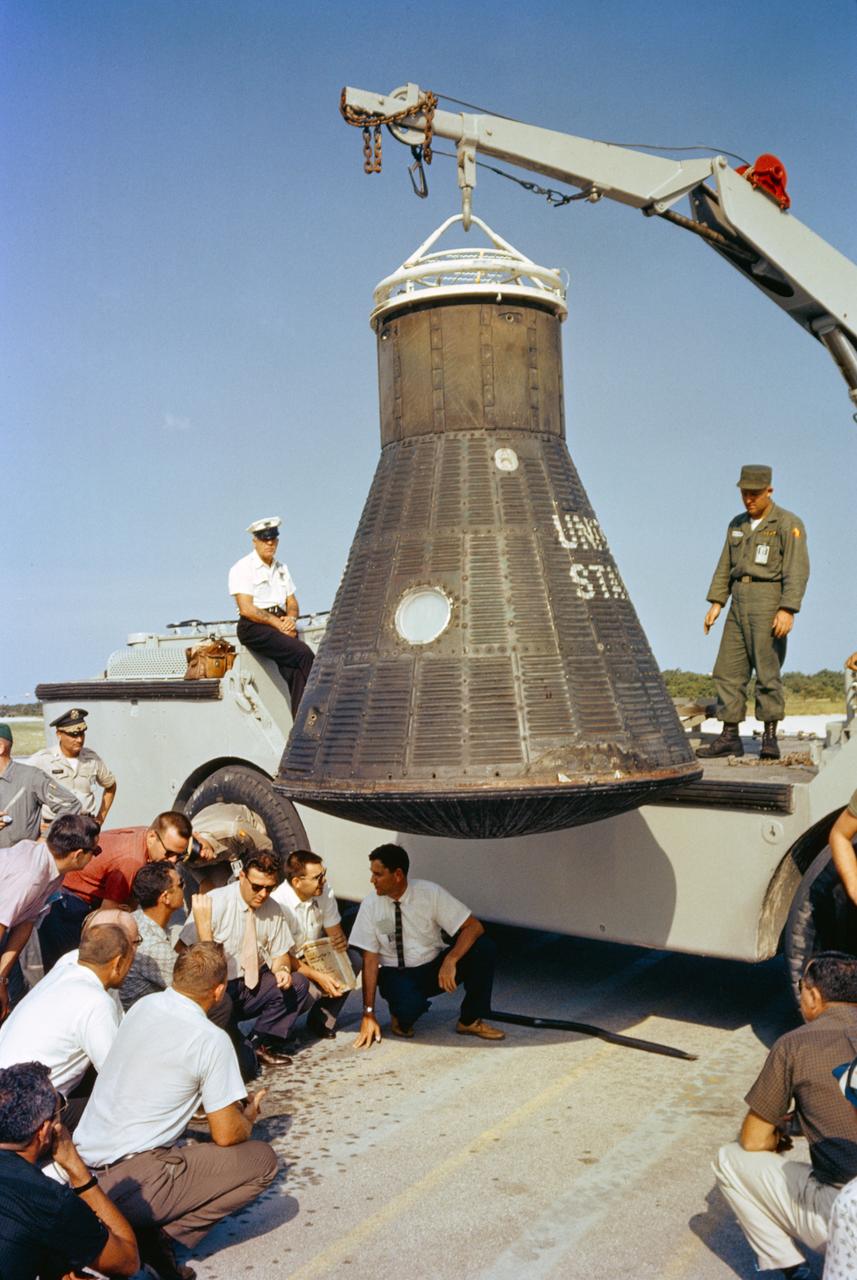
S64-14861 (1962) --- Department of Defense (DOD) recovery personnel and spacecraft technicians from NASA and McDonnell Aircraft Corp., inspect astronaut John Glenn's Mercury spacecraft, Friendship 7, following its return to Cape Canaveral after recovery in the Atlantic Ocean. Photo credit: NASA
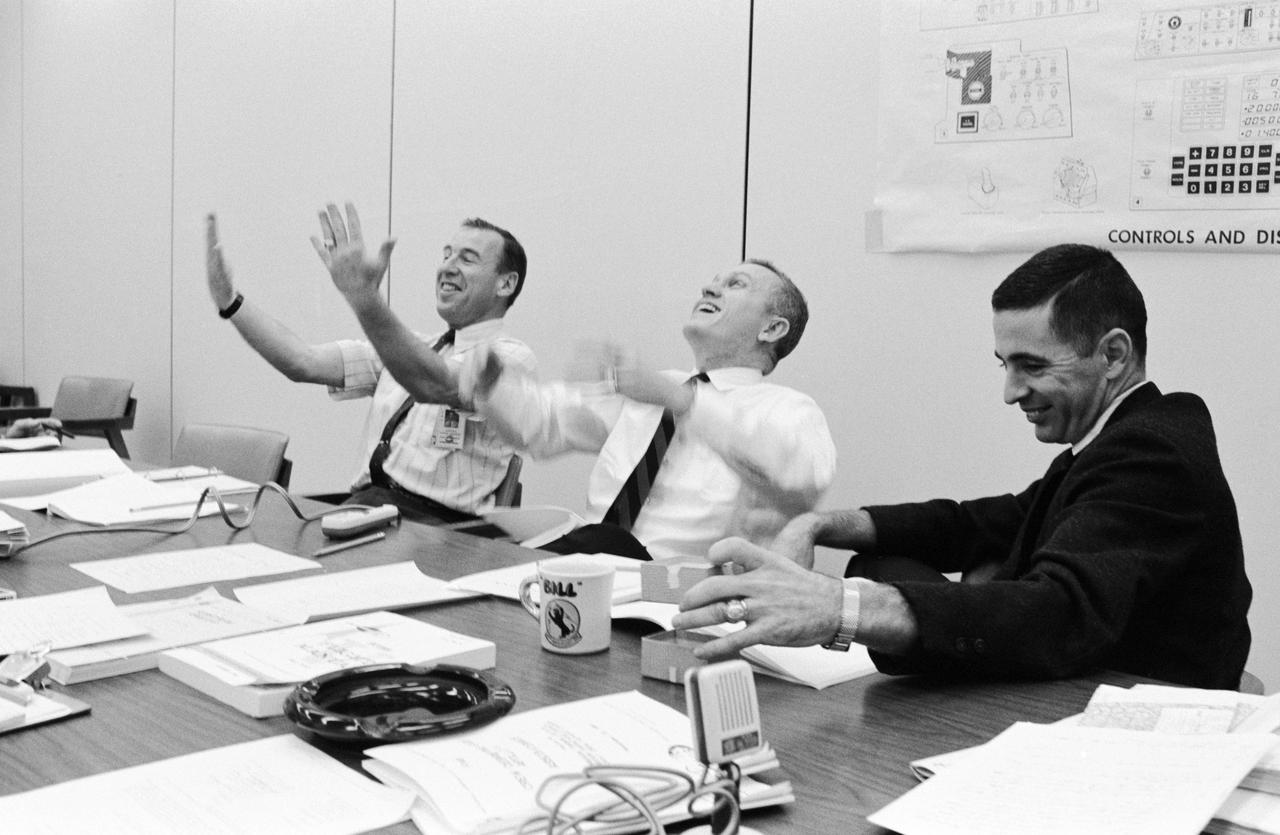
S68-56530 (30 Dec. 1968) --- The crew of the historic Apollo 8 lunar orbit mission participates in a technical de-briefing session in Building 4. Left to right, are astronauts James A. Lovell Jr., command module pilot; Frank Borman, commander; and William A. Anders, lunar module pilot.
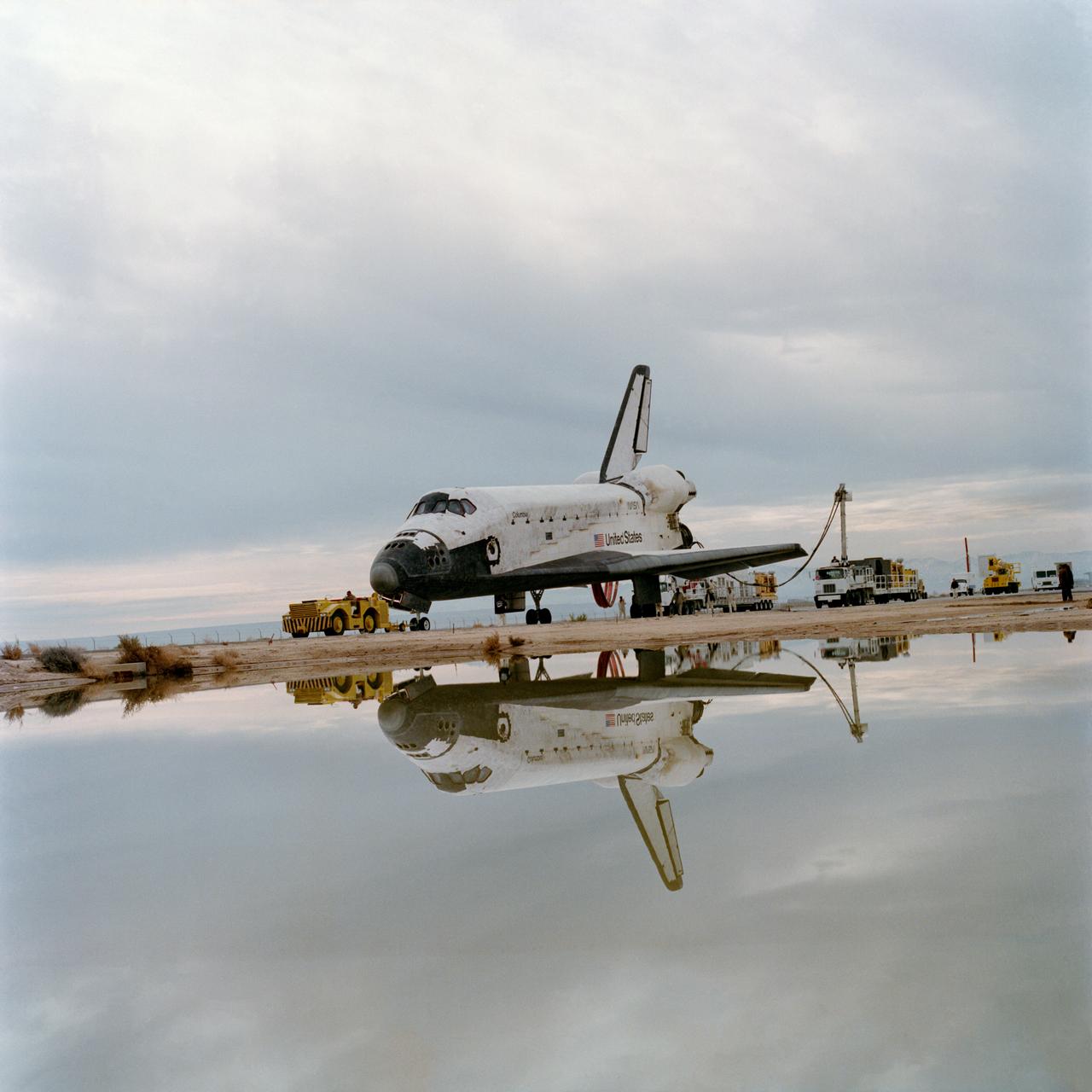
S82-39888 (16 Nov. 1982) --- Post-landing processing of the space shuttle Columbia is seen in double in this rare scene at the Dryden Flight Research Facility (DFRF) in southern California. Uncommon rainwater has given a mirror effect to the normally dry lakebed. Columbia, with its first four-member crew aboard, touched down earlier today to complete a successful five-day, two-hour mission. The runway used was Number 22 at Edwards Air Force Base. Photo credit: NASA
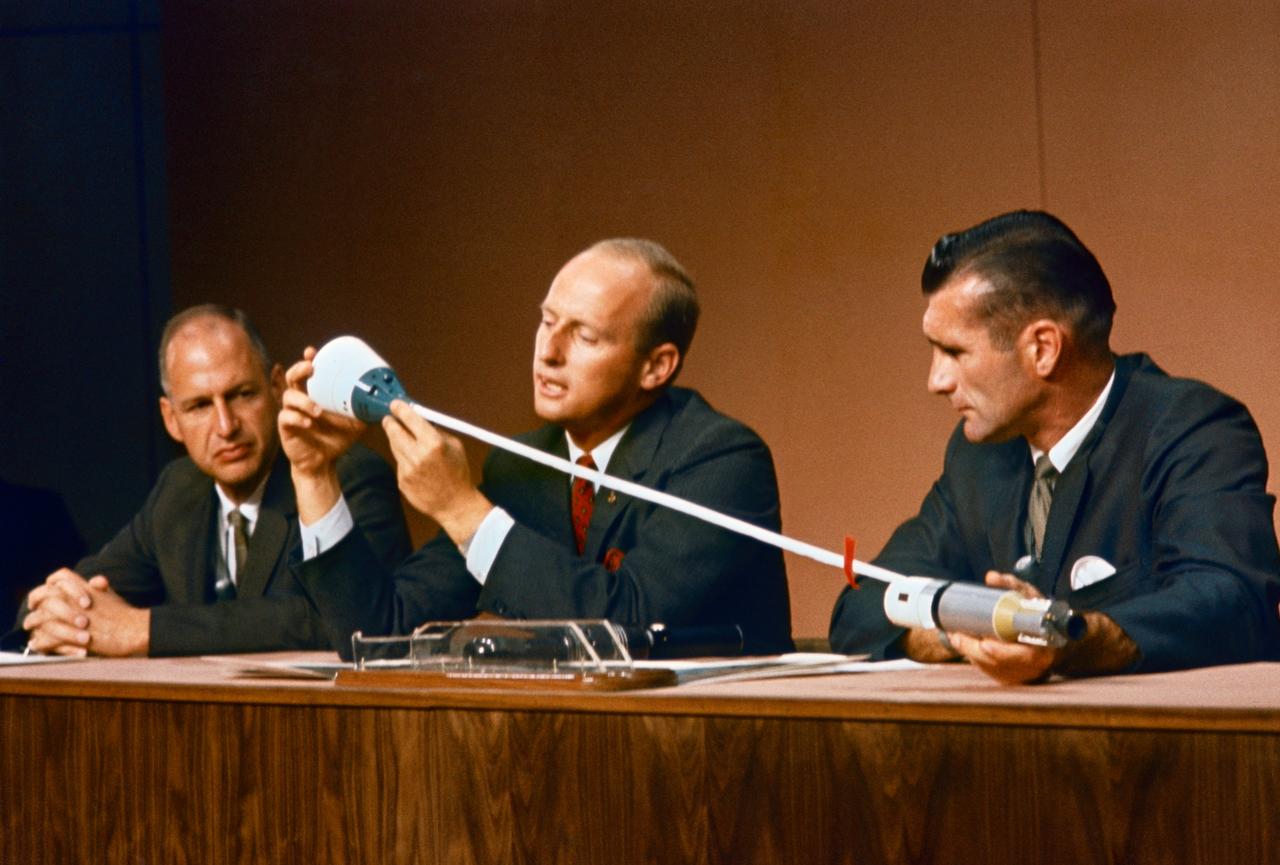
S66-45635 (26 Sept. 1966) --- Astronaut Charles Conrad Jr. (center), Gemini-11 prime crew command pilot, discusses the Gemini-11/Agena tether before a gathering of news media representatives in the MSC Building 1 auditorium. Holding an Agena model at right is astronaut Richard F. Gordon Jr., Gemini-11 pilot. Looking on at left is George M. Low, MSC Deputy Director. Photo credit: NASA
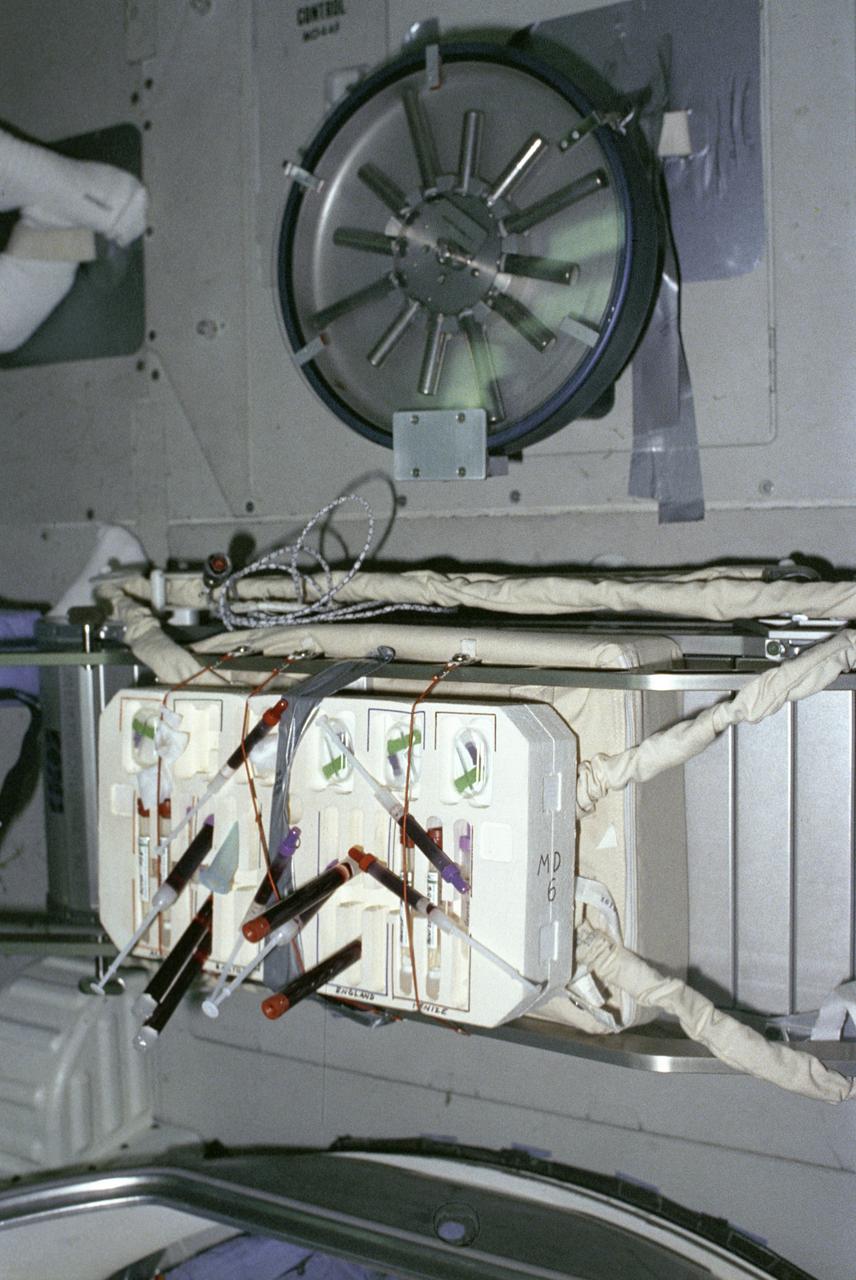
While instruments on the pallets in the payload bay observed the universe, biological experiments were performed in the middeck of the Shuttle Orbiter Challenger. Studying life processes in a microgravity environment can shed new light on the functioning of biological systems on Earth. These investigations can also help us understand how living organisms react to prolonged weightlessness. One such experiment was the vitamin D metabolites and bone demineralization experiment. This investigation measured the vitamin d metabolite levels of crew members to gain information on the cause of bone demineralization and mineral imbalance that occur during prolonged spaceflight as well as on Earth. Research into the biochemical nature of vitamin D has shown that the D-metabolites play a major role in regulating the body's calcium and phosphorus levels. One major function of the most biologically active vitamin D metabolite is to regulate the amount of calcium absorbed from the diet and taken out of bones. This investigation had two phases. The first was the developmental phase, which included extensive testing before flight, and the second, or final phase, involved the postflight analysis of the crew's blood samples. This photograph shows a blood draw test kit and centrifuge used for the experiment aboard the Spacelab-2. Marshall Space Flight Center had management responsibilities of all Spacelab missions.
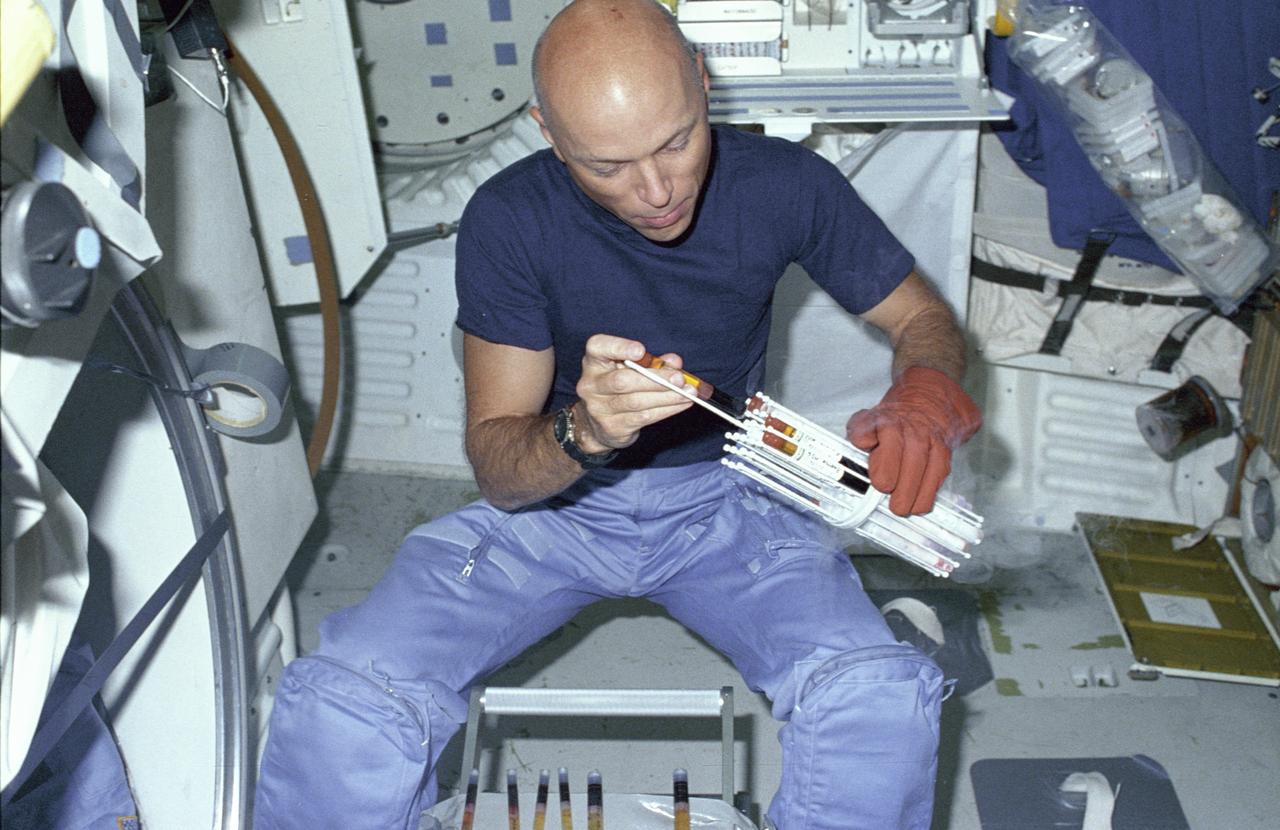
While instruments on the pallets in the payload bay observed the universe, biological experiments were performed in the middeck of the Shuttle Orbiter Challenger. Studying life processes in a microgravity environment can shed new light on the functioning of biological systems on Earth. These investigations can also help us understand how living organisms react to prolonged weightlessness. One such experiment was the vitamin D metabolites and bone demineralization experiment. This investigation measured the vitamin D metabolite levels of crew members to gain information on the cause of bone demineralization and mineral imbalance that occur during prolonged spaceflight as well as on Earth. Research into the biochemical nature of vitamin D has shown that the D-metabolites play a major role in regulating the body's calcium and phosphorus levels. One major function of the most biologically active vitamin D metabolite is to regulate the amount of calcium absorbed from the diet and taken out of bones. This investigation had two phases. The first was the developmental phase, which included extensive testing before flight, and the second, or final phase, involved the postflight analysis of the crew's blood samples. This photograph shows astronaut Story Musgrave in the middeck of the Shuttle Orbiter Challenger, attending to the blood samples he collected from crew members for the experiment.
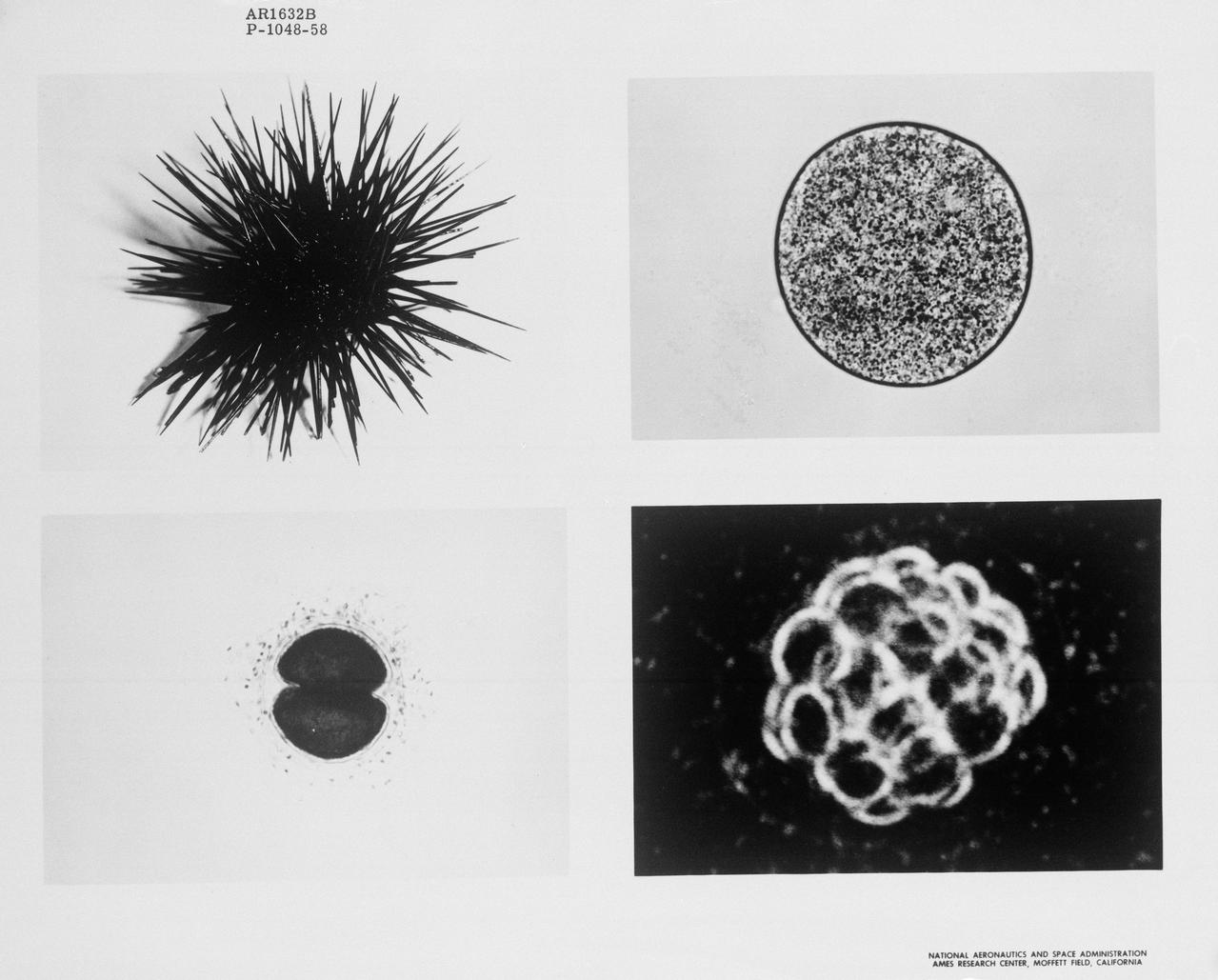
S65-18762 (March 1965) --- Effects of the weightless environment on cell division, the basic growth process for living tissue, will be studied during the Gemini-Titan 3 flight scheduled for March 23, 1965. A spiny black sea urchin (upper left) is stimulated by mild electric shock or potassium chloride. As a result it sheds many thousands of eggs. When fertilized, these eggs become actively dividing cells very similar in basic processes to cells of other animals, including humans. These pictures show stages of cell division. At upper right is a single cell; at lower right cell divisions have produced many cells. Cell photos are magnified about 700 times, and all cells shown are too small to be seen by the naked eye. (Photos at upper right and lower left are of sea urchin eggs. Group of cells at lower right are from a sand dollar, which like the sea urchin, is an Echinoderm. Its eggs are virtually identical and are used interchangeably with those of the sea urchin in NASA Ames Center weightlessness experiments.) The Gemini experiment will involve cell division like that shown here. This will take place during several hours of weightlessness aboard the Gemini spacecraft. The experiment will be flown back to laboratories at Cape Kennedy after spacecraft recovery. It has been designed so that any abnormal cell division found by postflight analysis should suggest that the weightless environment has effects on individual cells. This might mean hazards for prolonged periods of manned spaceflight.