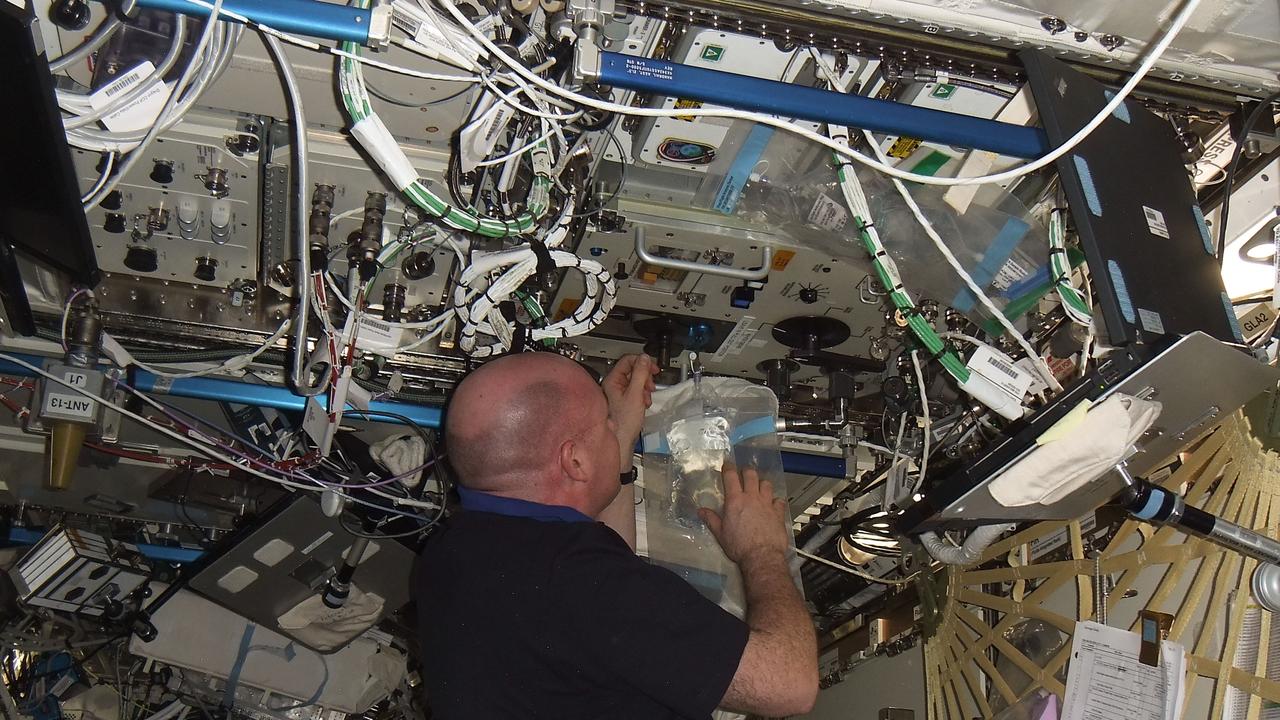
ISS031-E-157783 (15 May 2012) --- European Space Agency astronaut Andre Kuipers, Expedition 31 flight engineer, collects a water sample from the Potable Water Dispenser (PWD) in the Destiny laboratory of the International Space Station.
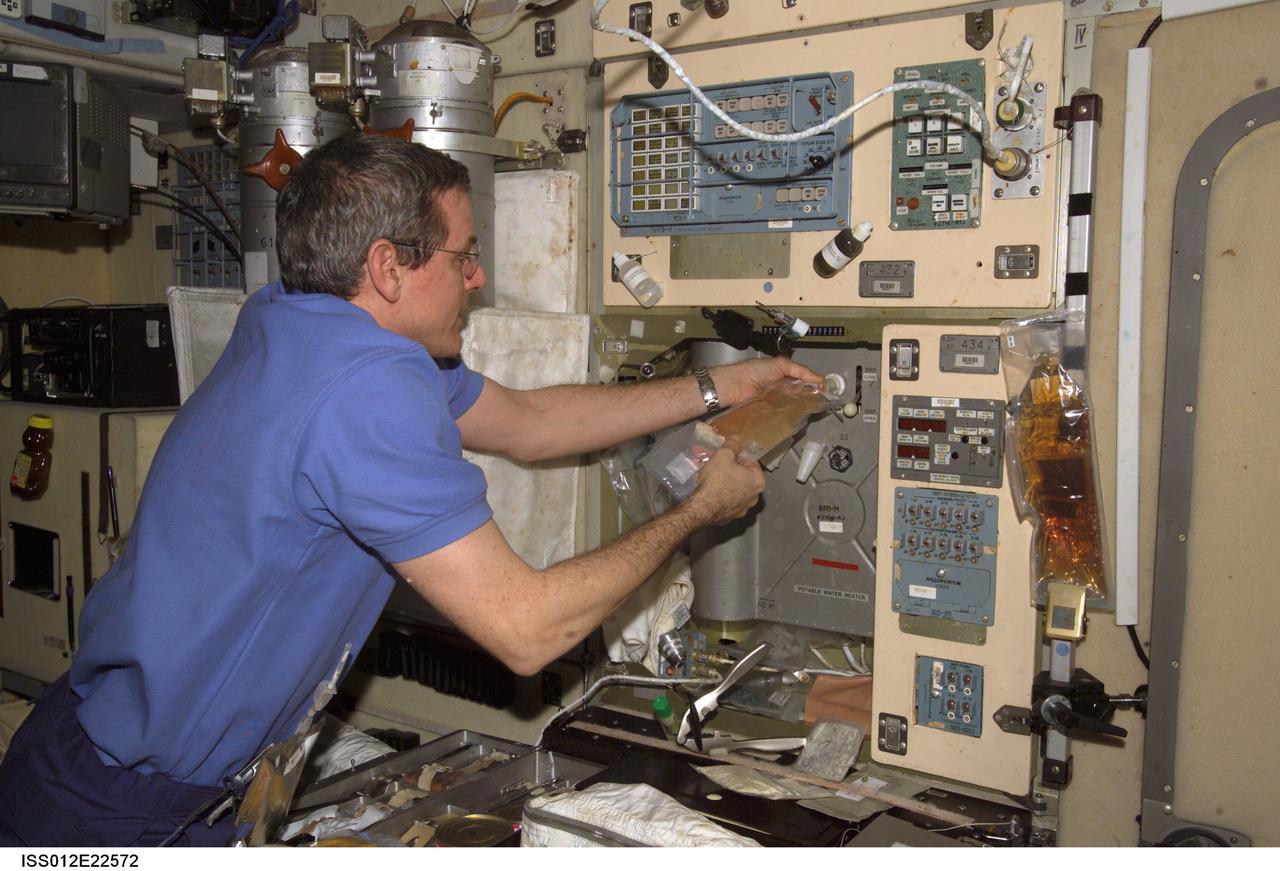
ISS012-E-22572 (21 March 2006) --- Astronaut William S. (Bill) McArthur, Expedition 12 commander and NASA space station science officer, adds potable water to a soft beverage container at the galley in Zvezda Service Module of the International Space Station.
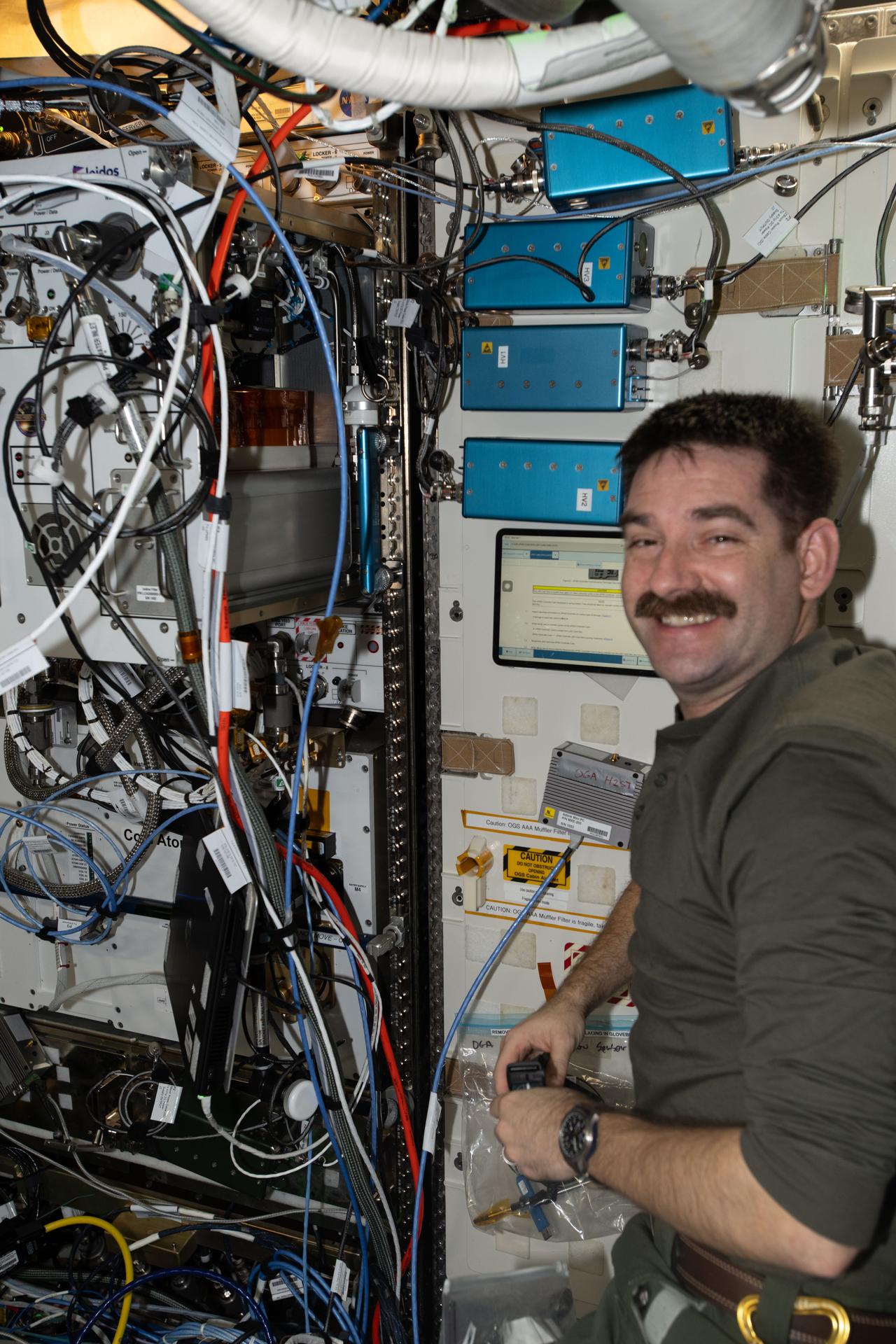
iss074e0430982 (April 1, 2026) --- NASA astronaut and Expedition 74 flight engineer Jack Hathaway poses for a portrait inside the International Space Station’s Destiny laboratory module. Hathaway was checking the operation of the Exploration Potable Water Dispenser, a technology demonstration designed to advance water‑sanitization methods, reduce microbial growth, and dispense hot water into crew food and drink bags. Credit: NASA/Jack Hathaway
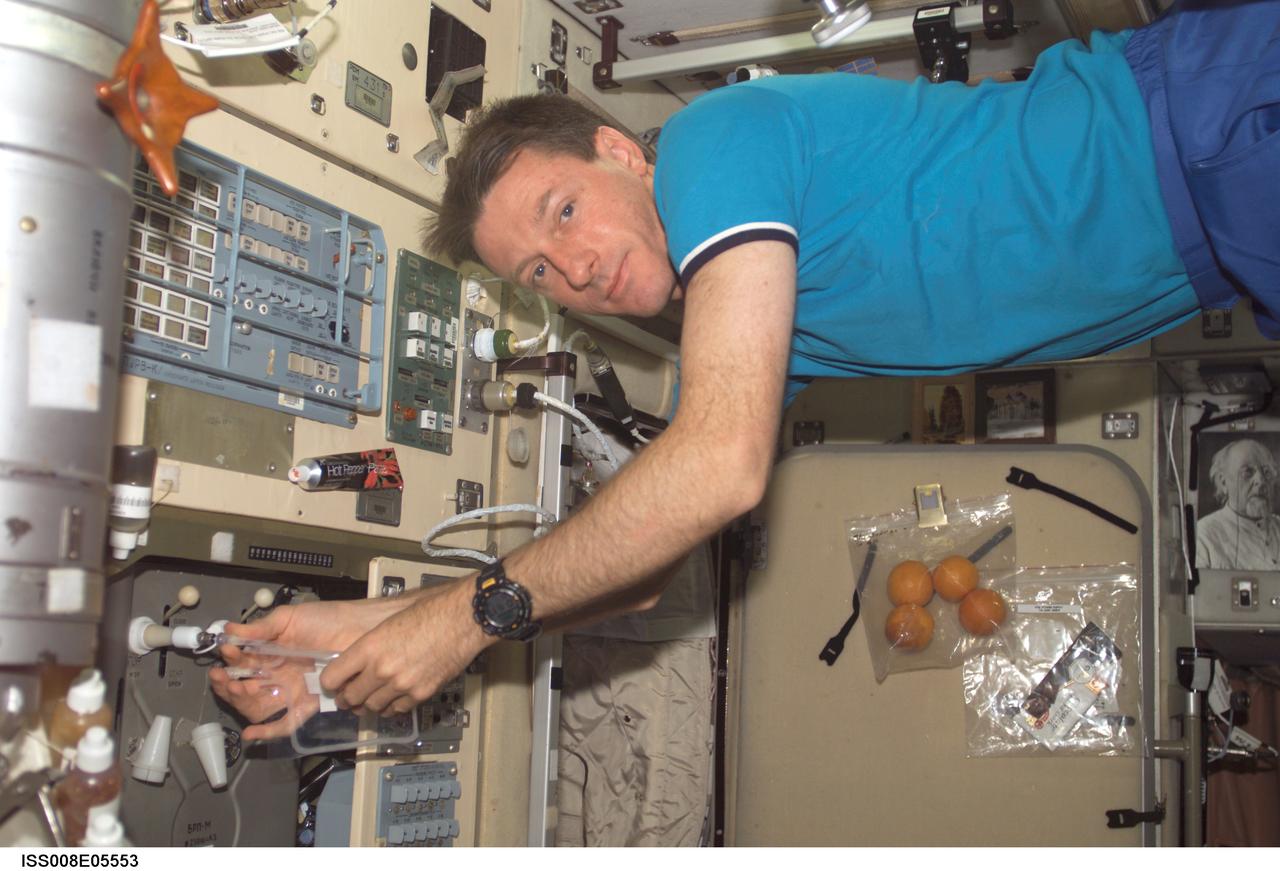
ISS008-E-05553 (7 November 2003) --- Astronaut C. Michael Foale, Expedition 8 mission commander and NASA ISS science officer, floats in front of the galley in the Zvezda Service Module on the International Space Station (ISS) as he fills a Crew Healthcare System (CheCSS) Water Microbiology (WMK) in-flight analysis bag from the potable warter dispenser.
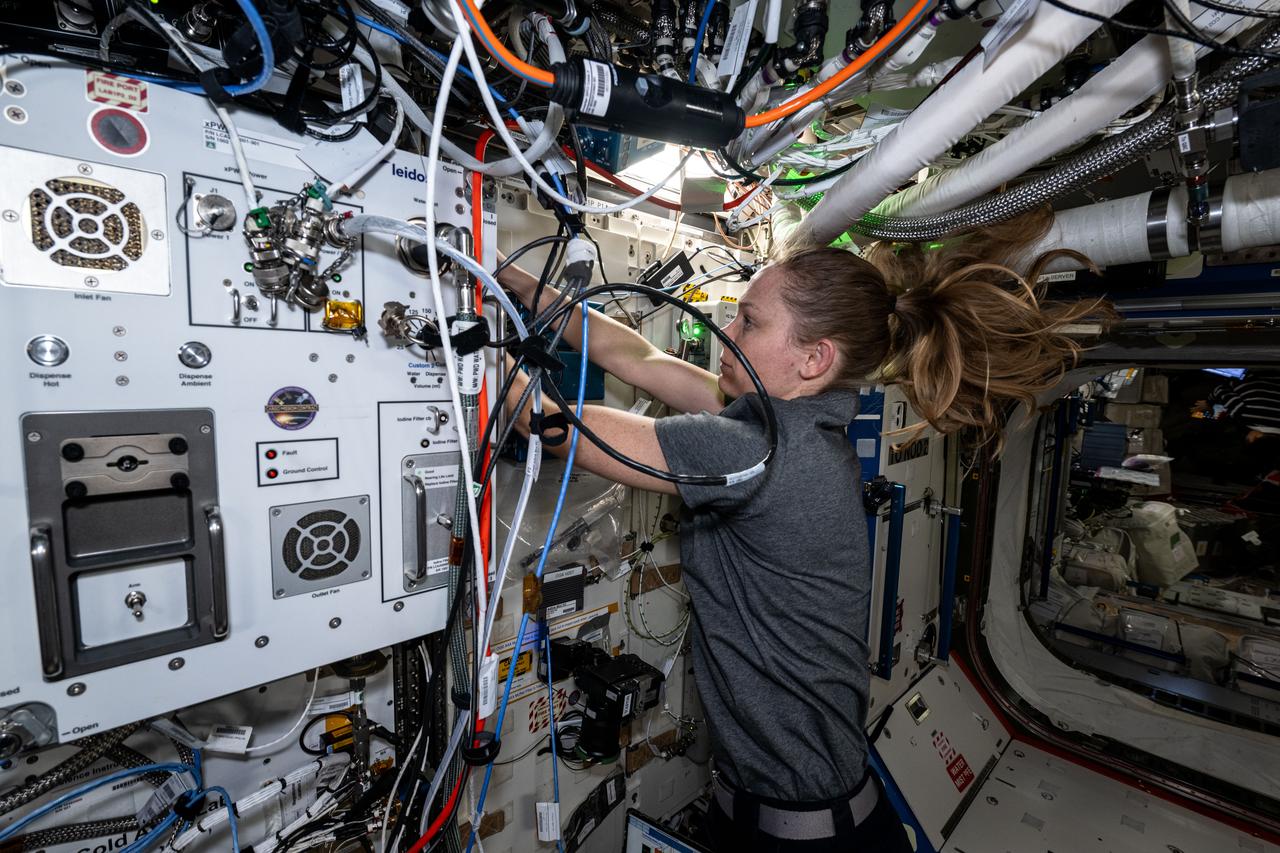
iss073e0071548 (May 16, 2025) --- NASA astronaut and Expedition 73 Flight Engineer Nichole Ayers verifies the functionality and replaces hardware on the Exploration Potable Water Dispenser (xPWD). The xPWD is located in the International Space Station's Destiny laboratory module and is demonstrating advanced water sanitization methods, microbial growth reduction, and a heater to dispense hot water for use aboard the orbital outpost and future spacecraft.
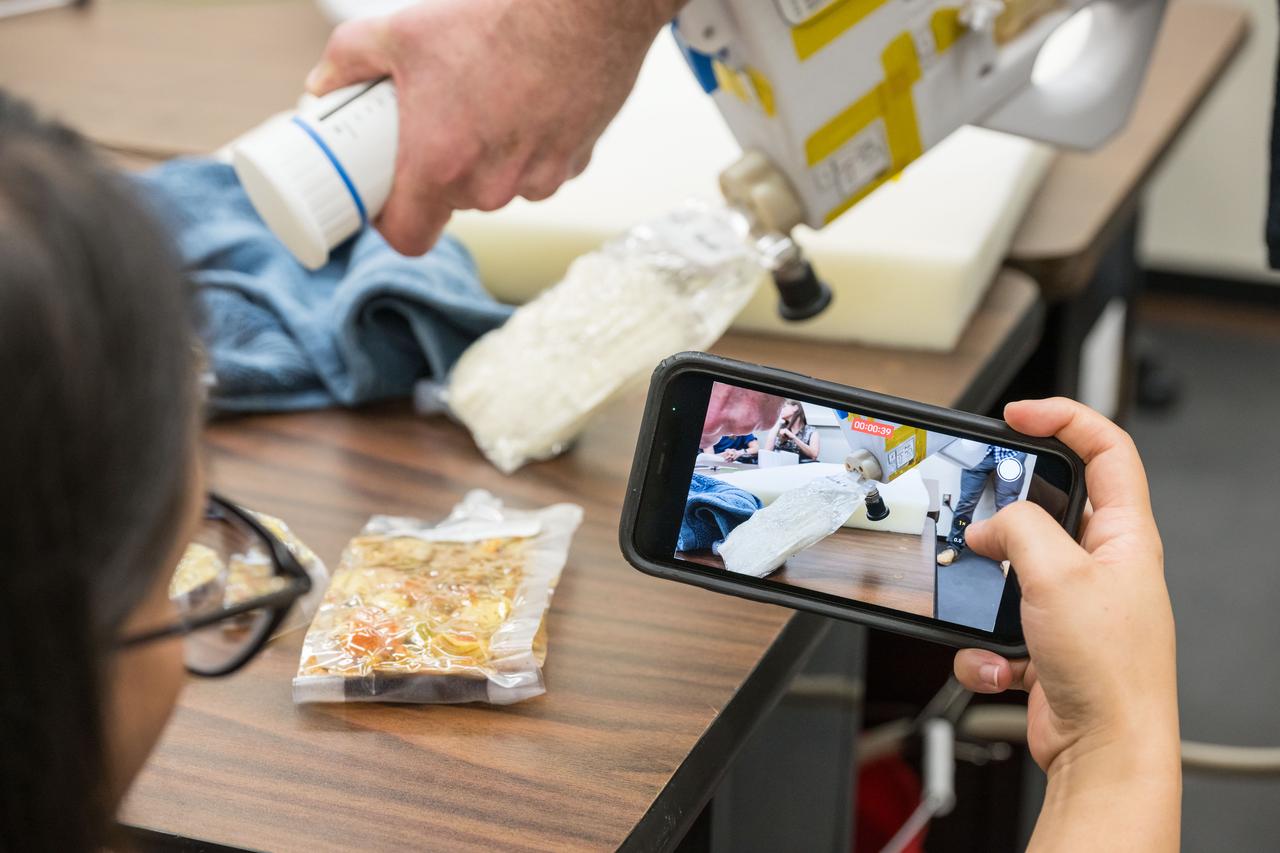
jsc2024e040743 -- A NASA food scientist captures video of the Mini Potable Water Dispenser during testing at Johnson Space Center. Photo Credit: NASA/David DeHoyos
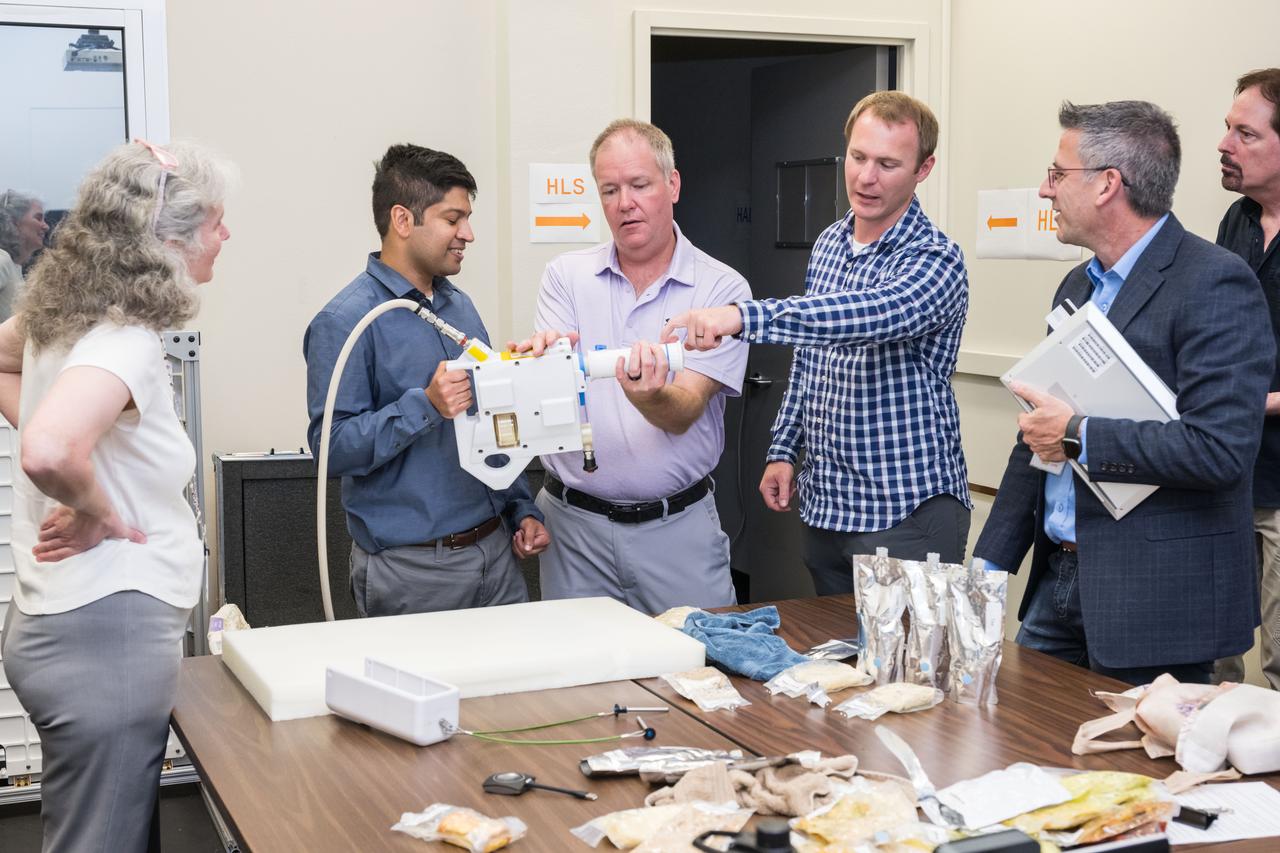
jsc2024e040779 -- Project manager Shaun Glasgow (middle) demonstrates the Mini Potable Water Dispenser during a testing session at NASA's Johnson Space Center. Photo Credit: NASA/David DeHoyos
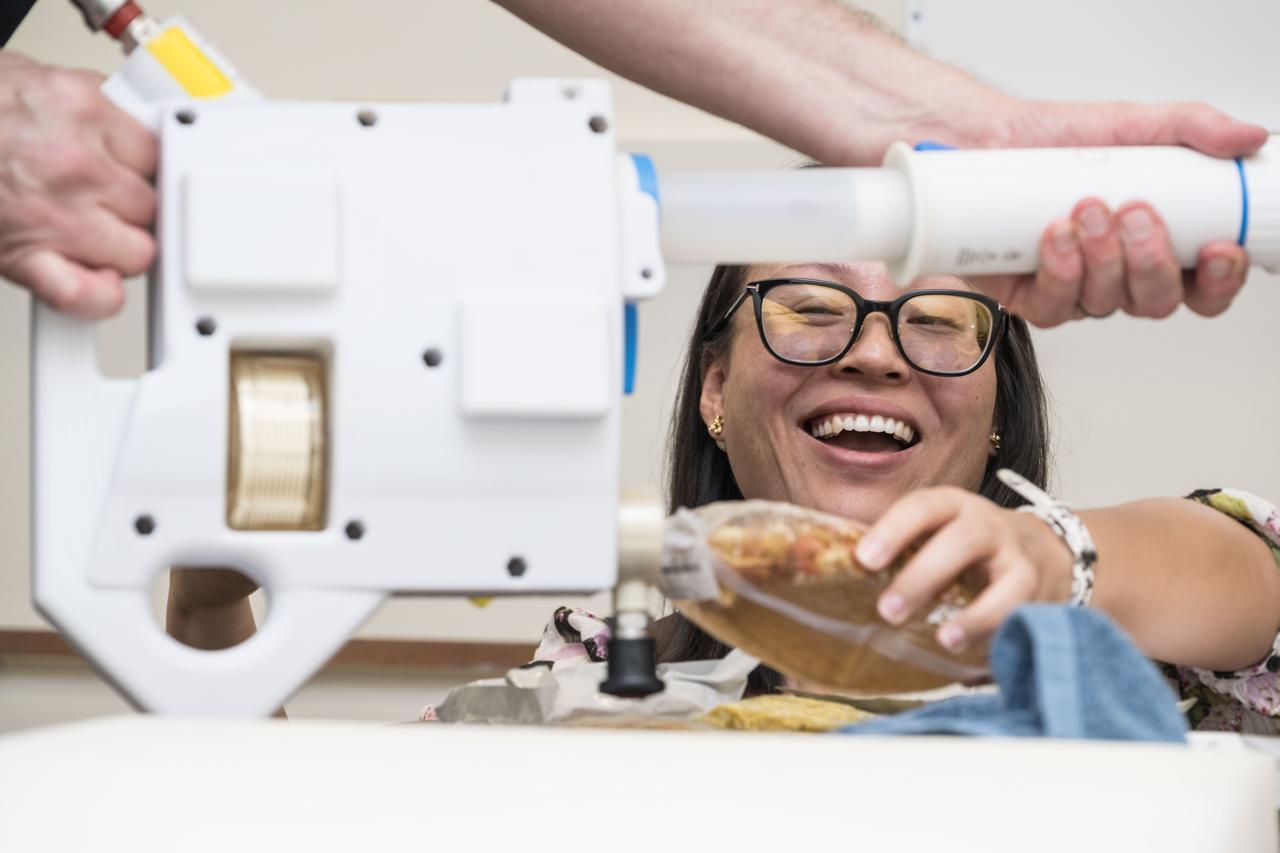
jsc2024e040737 -- NASA food scientists rehydrate a food pouch during a test of the Mini Potable Water Dispenser at Johnson Space Center on June 6, 2024. Photo Credit: NASA/David DeHoyos
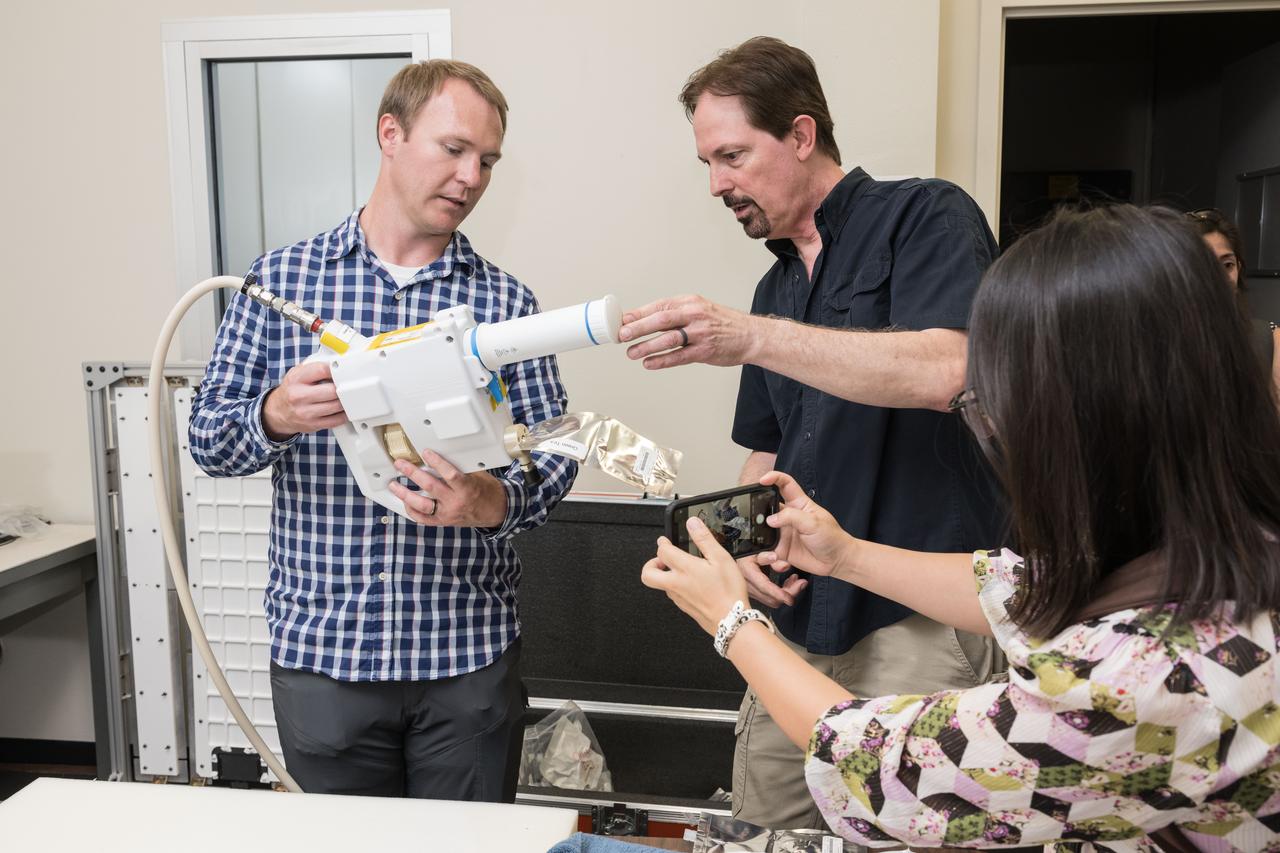
jsc2024e040728 -- Matt Rowell, an engineer from the Marshall Space Flight Center demonstrates the Mini Potable Water Dispenser to NASA food scientists during a testing session. Photo Credit: NASA/David DeHoyos
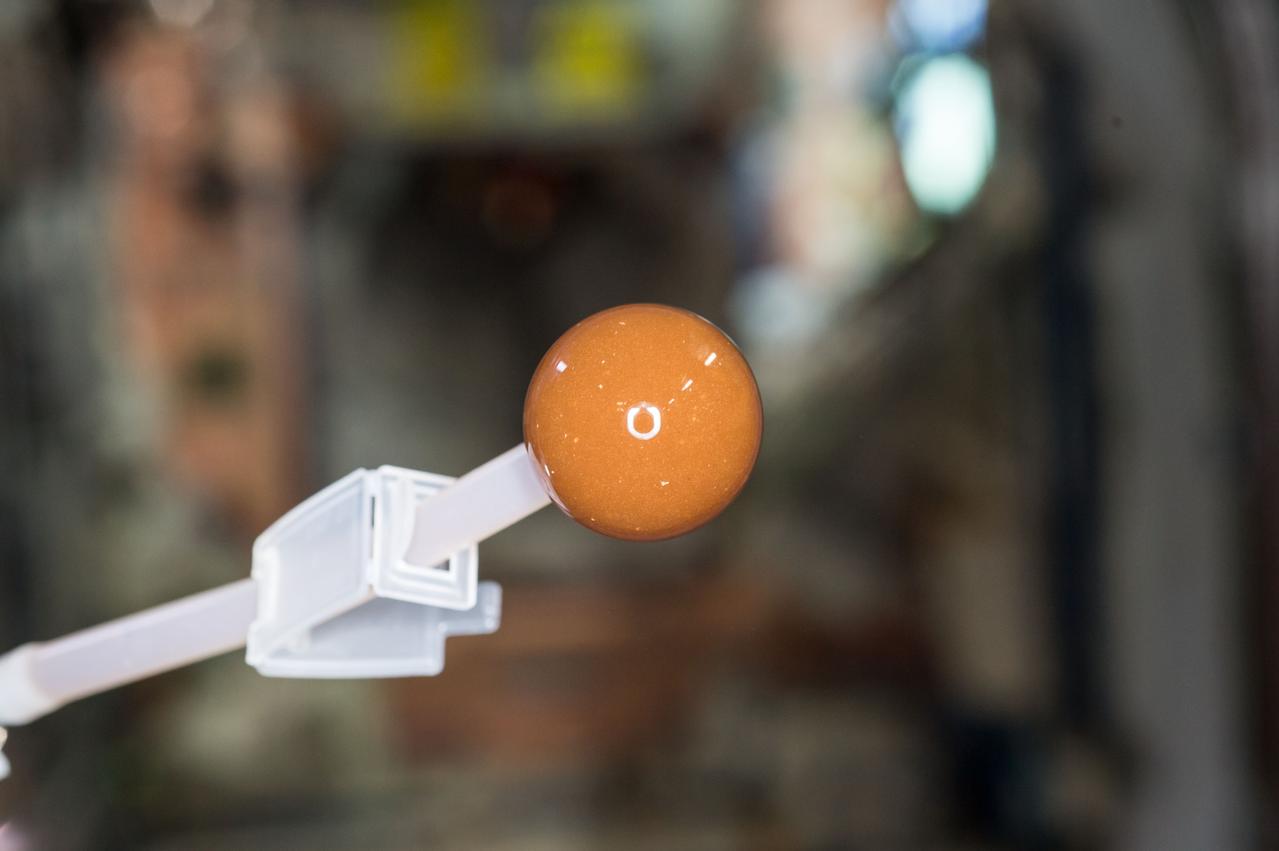
ISS043E128431 (04/22/2015) --- The International Space Station employs one of the most complex water recycling systems ever designed, reclaiming waste water from astronauts and the environment and turning it into potable water. NASA astronaut Scott Kelly tweeted out this image of part of the innovative device with this remark: " Recycle Good to the last drop! Making pee potable and turning it into coffee on @space station. #NoPlaceLikeHome"
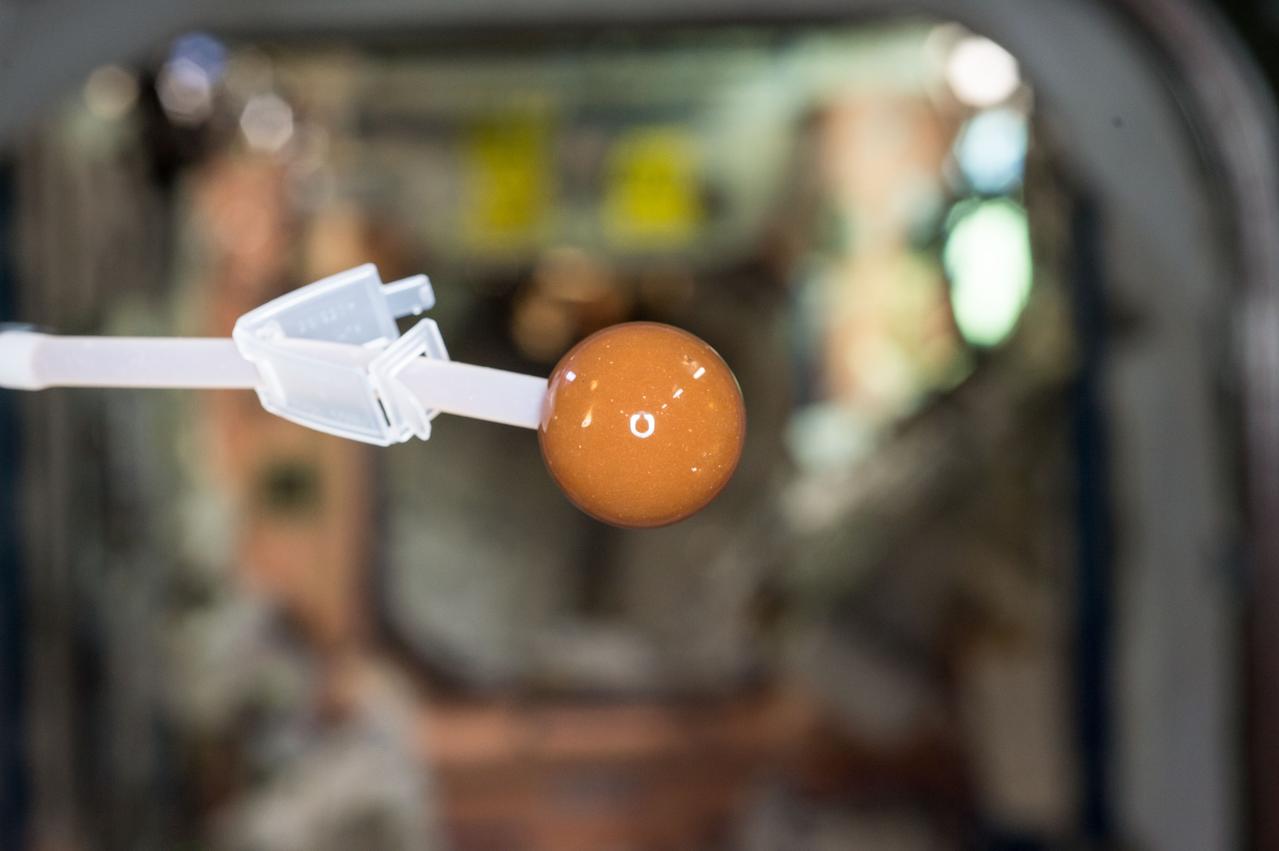
ISS043E128431 (04/22/2015) --- The International Space Station employs one of the most complex water recycling systems ever designed, reclaiming waste water from astronauts and the environment and turning it into potable water. NASA astronaut Scott Kelly tweeted out this image of part of the innovative device with this remark: " Recycle Good to the last drop! Making pee potable and turning it into coffee on @space station. #NoPlaceLikeHome"
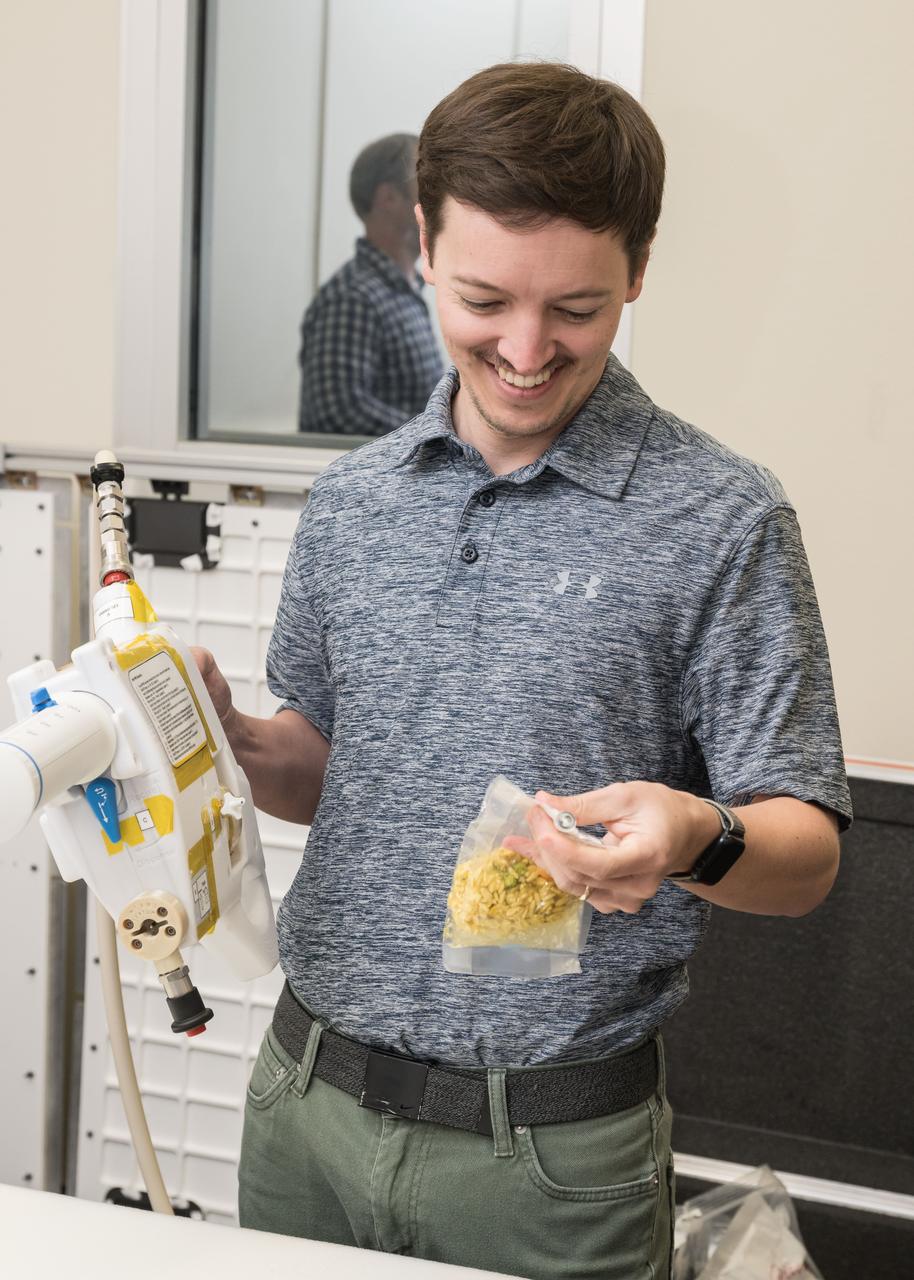
jsc2024e040722 -- Brett Montoya, a lead space architect in the Center for Design and Space Architecture at Johnson Space Center, rehydrates a package of food using the Mini Potable Water Dispenser during a protype testing session at Johnson's Space Center. Photo Credit: NASA/David DeHoyos
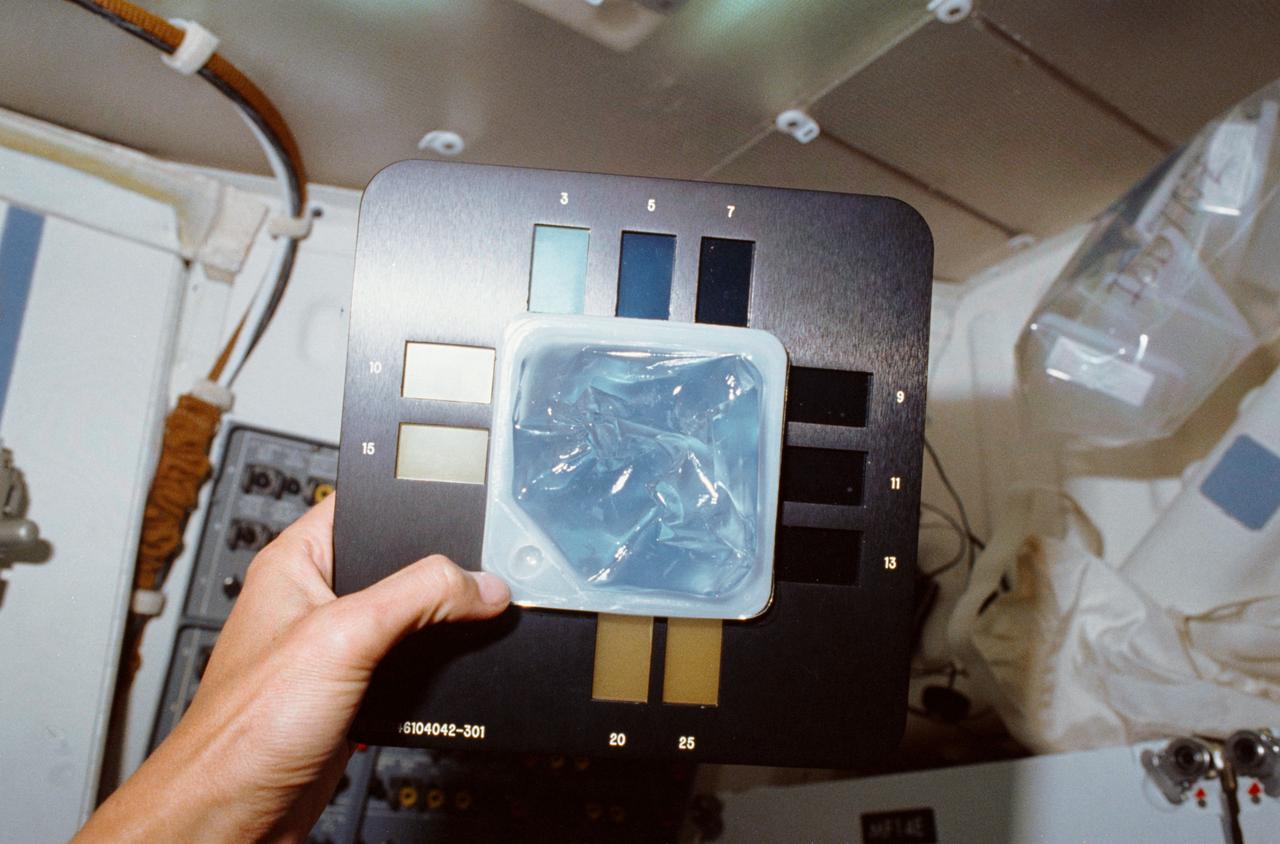
STS034-10-014 (18-23 Oct. 1989) --- An onboard 35mm camera provides a closeup view of an STS-34 beverage container doubling as an experiment module for a test involving iodine concentration in onboard water. The examination called for the adding of starch to a specimen of Atlantis' fuel-cell produced water. The liquid was then compared against the color chart for determining the degree of iodine content. The experiment was designed by Terry H. Slezak of JSC's Photographic Technology and Television Division.
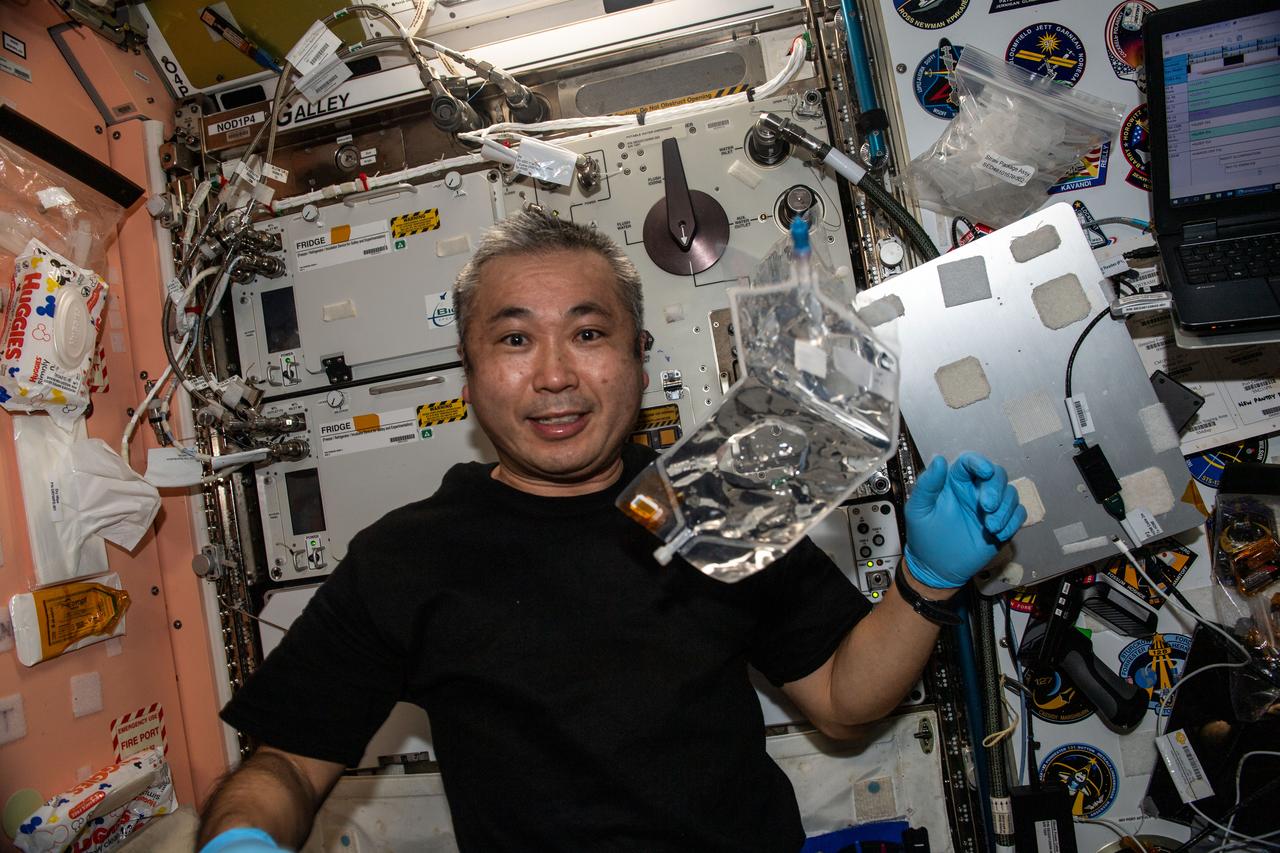
iss068e038130 (Jan. 6, 2023) --- Expedition 68 Flight Engineer Koichi Wakata of the Japan Aerospace Exploration Agency (JAXA) collects water samples from the International Space Station's potable water dispenser for analysis back on Earth.
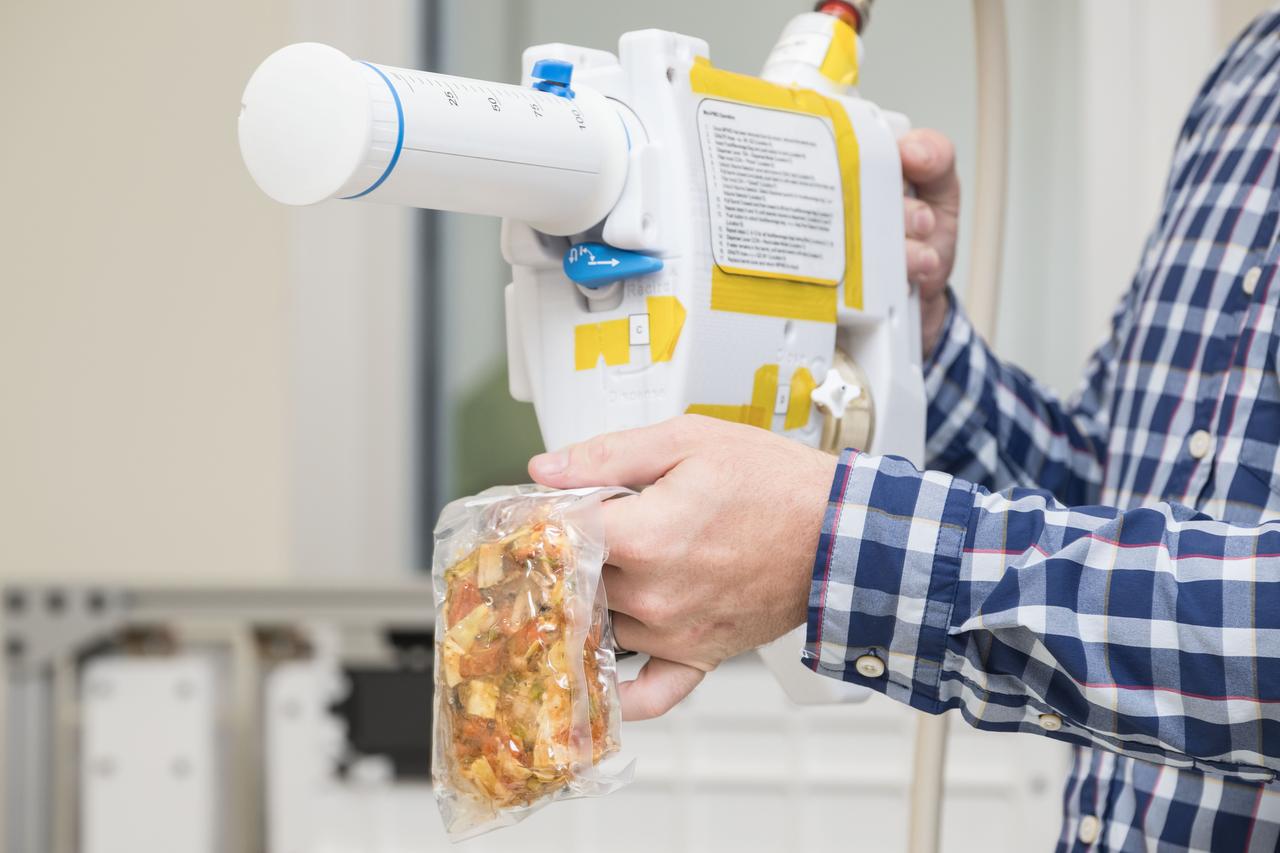
jsc2024e040708 -- An engineer demonstrates the use of the Mini Potable Water Dispenser by rehydrating a food pouch during a testing session at Johnson Space Center on June 6, 2024. This compact, lightweight dispenser is designed to help astronauts prepare meals in deep space. Photo Credit: NASA/David DeHoyos
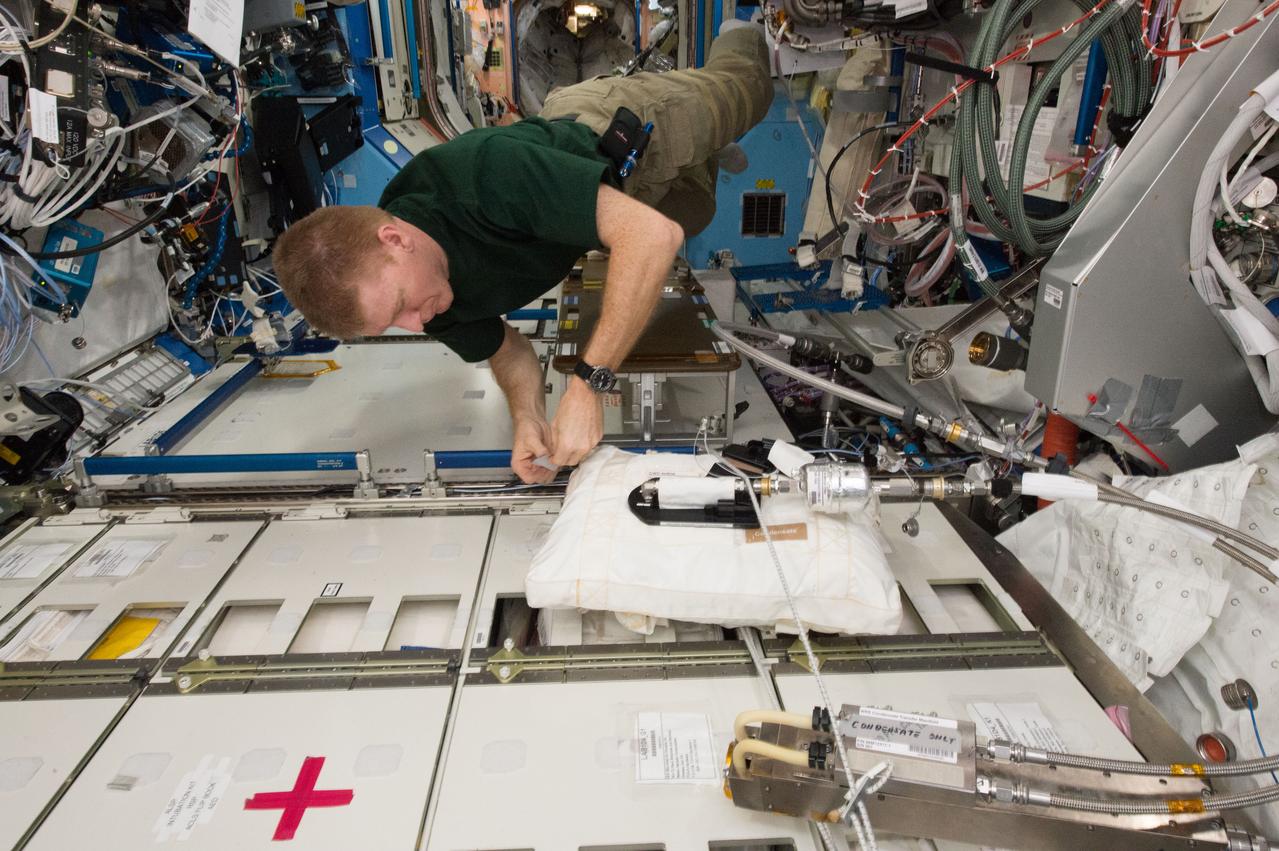
ISS047e013845 (03/22/2016) --- ESA (European Space Agency) astronaut Tim Peake works on the Water Processor Assembly (WPA) aboard the International Space Station. The WPA is is responsible for treating waste water aboard the station for recycling back into potable water.
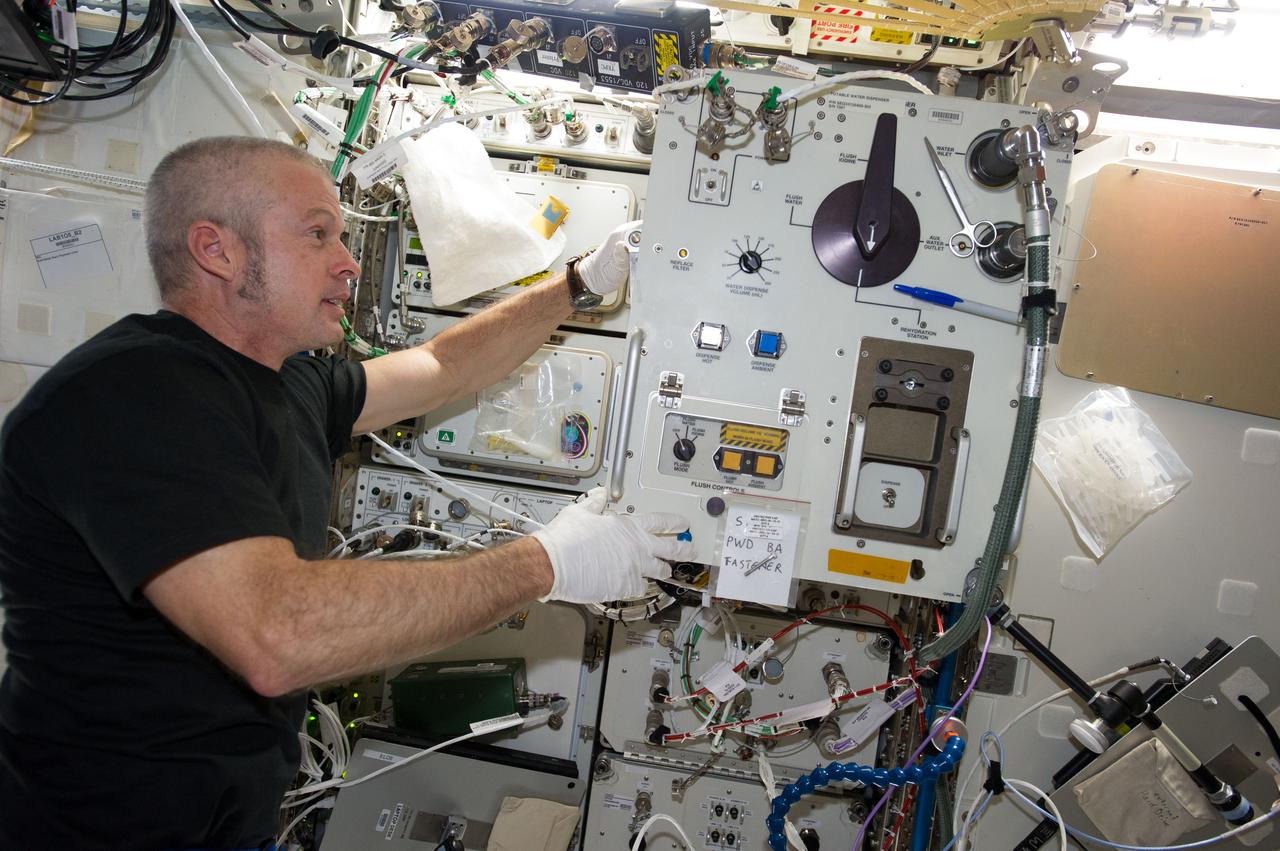
ISS040-E-064628 (15 July 2014) --- NASA astronaut Steve Swanson, Expedition 40 commander, replaces filters in the Potable Water Dispenser (PWD) in the Destiny laboratory of the International Space Station.
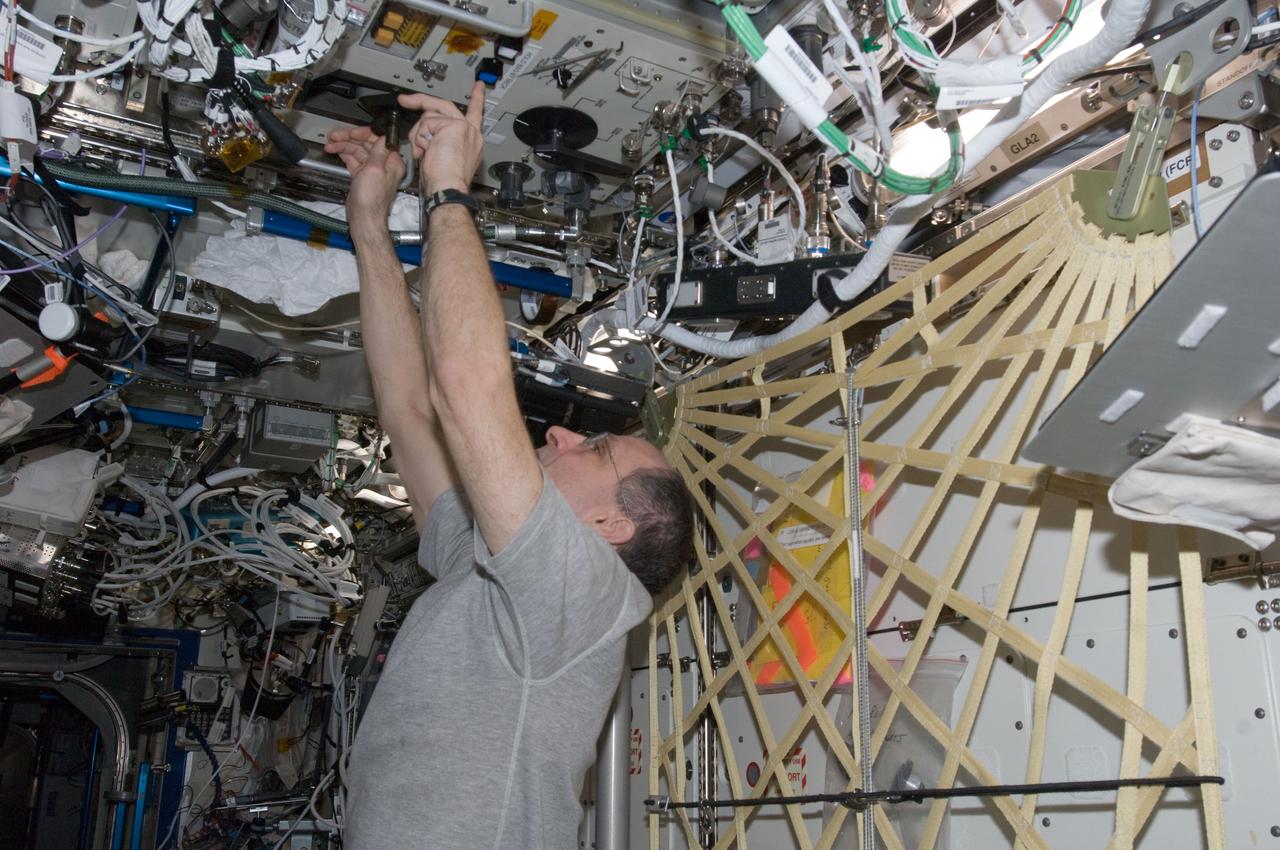
ISS030-E-074042 (12 Feb. 2012) --- NASA astronaut Don Pettit, Expedition 30 flight engineer, performs in-flight maintenance on the Potable Water Dispenser (PWD) in the Destiny laboratory of the International Space Station.
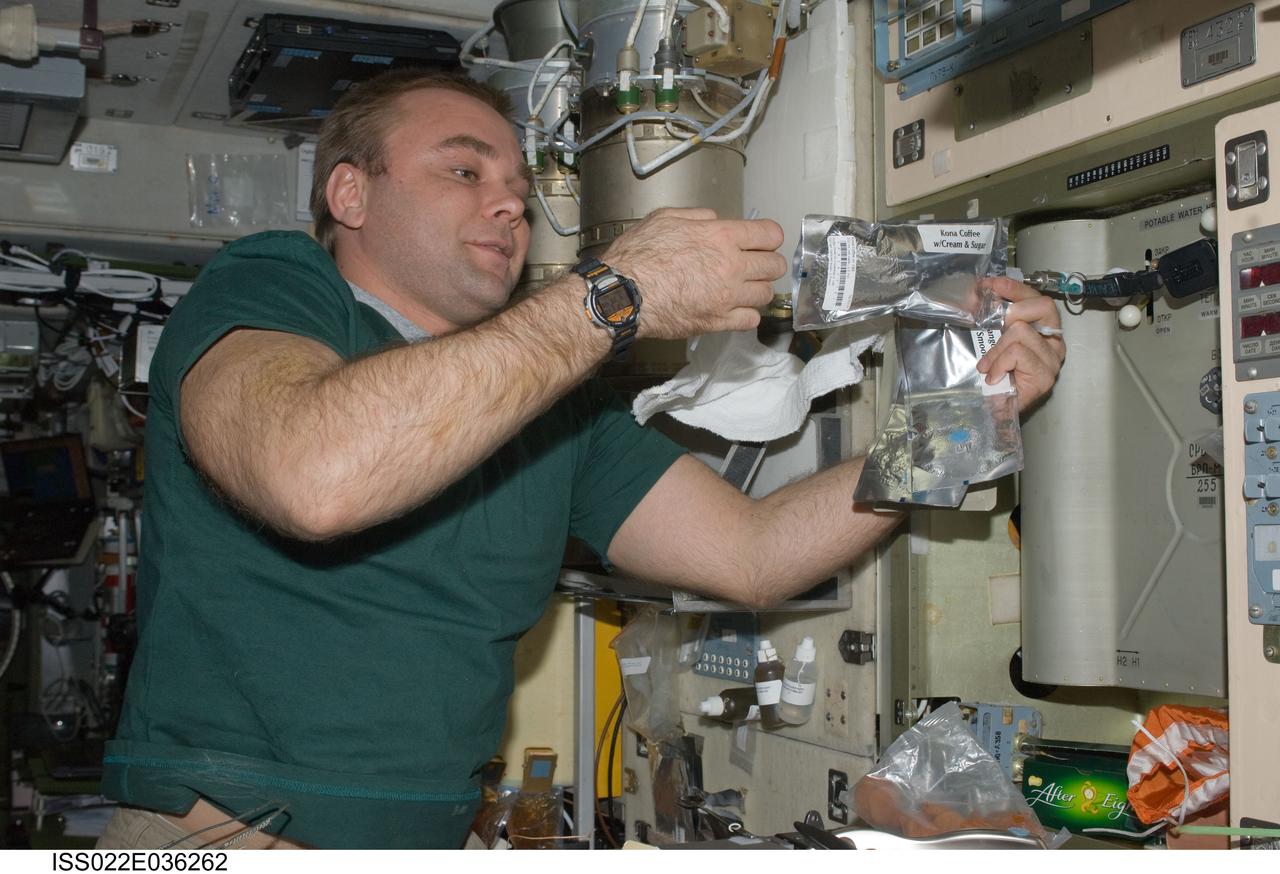
ISS022-E-036262 (21 Jan. 2010) --- Russian cosmonaut Maxim Suraev, Expedition 22 flight engineer, adds potable water to a soft beverage container at the galley in the Zvezda Service Module of the International Space Station.
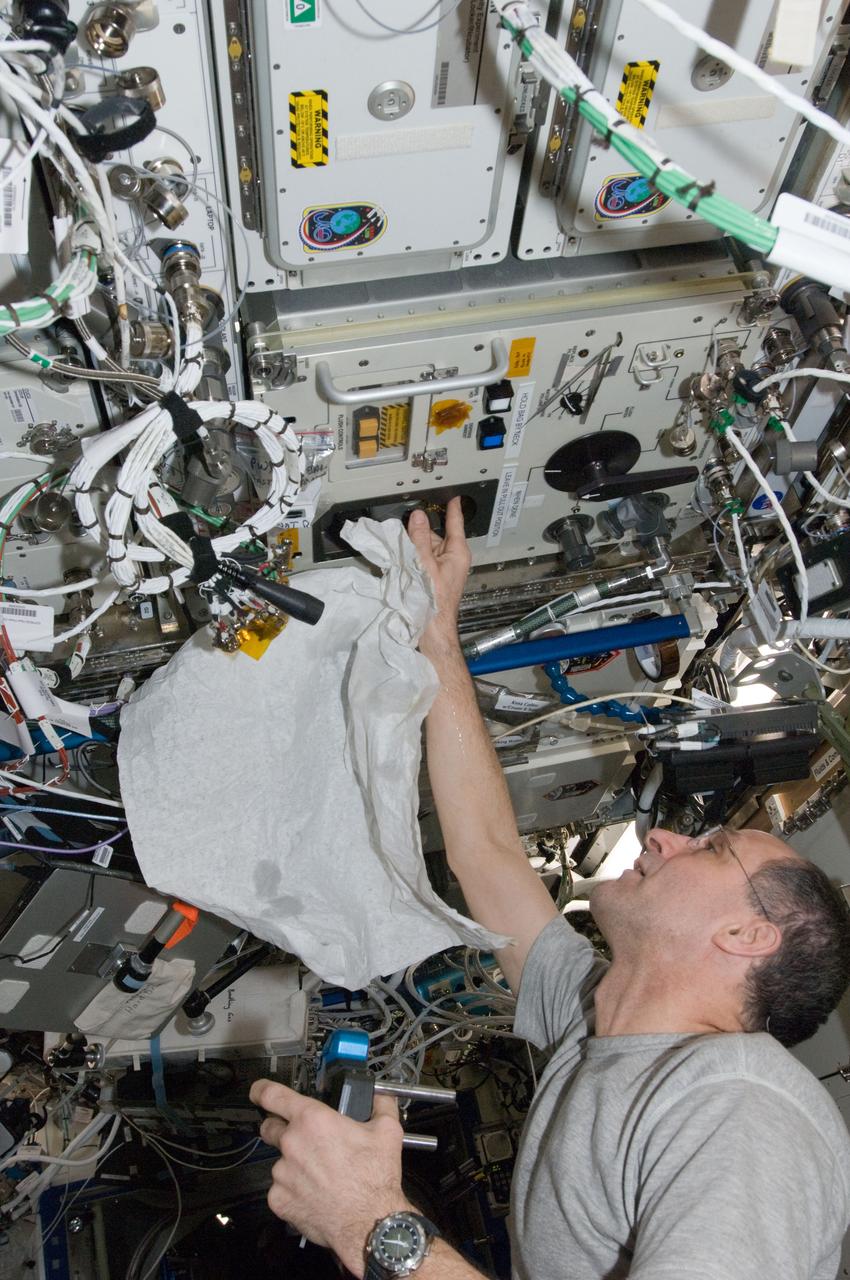
ISS030-E-074046 (12 Feb. 2012) --- NASA astronaut Don Pettit, Expedition 30 flight engineer, performs in-flight maintenance on the Potable Water Dispenser (PWD) in the Destiny laboratory of the International Space Station.
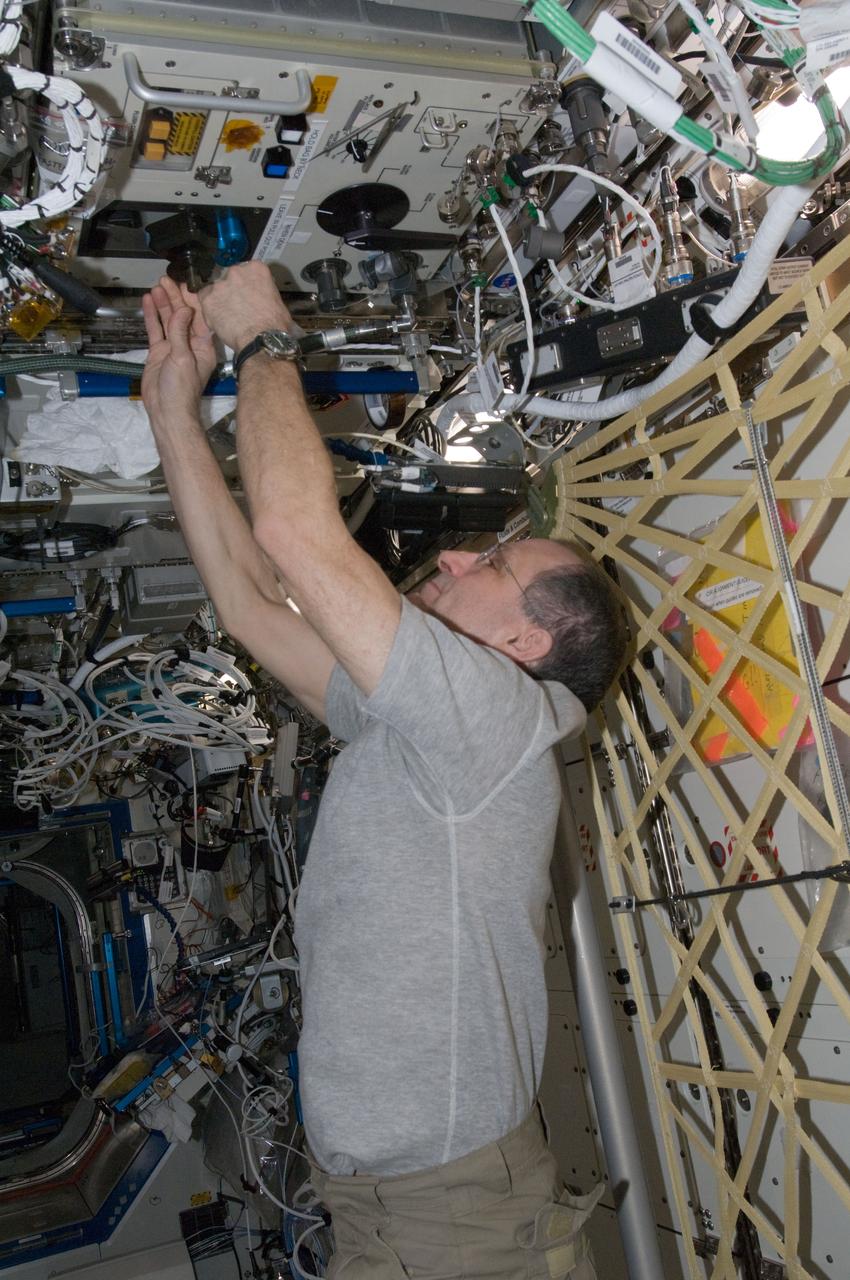
ISS030-E-074044 (12 Feb. 2012) --- NASA astronaut Don Pettit, Expedition 30 flight engineer, performs in-flight maintenance on the Potable Water Dispenser (PWD) in the Destiny laboratory of the International Space Station.
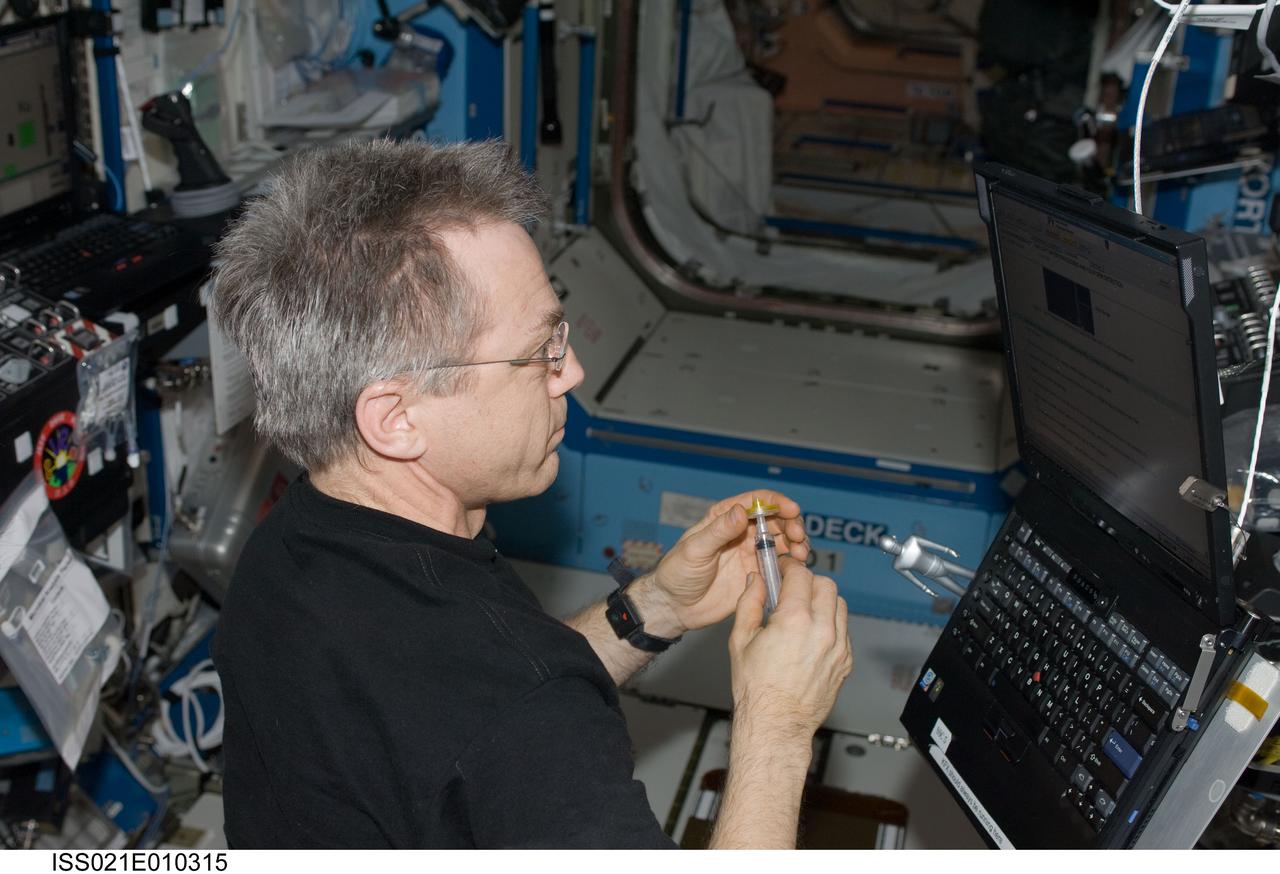
ISS021-E-010315 (20 Oct. 2009) --- Canadian Space Agency astronaut Robert Thirsk, Expedition 21 flight engineer, performs a Potable Water Dispenser (PWD) analysis in the Destiny laboratory of the International Space Station.
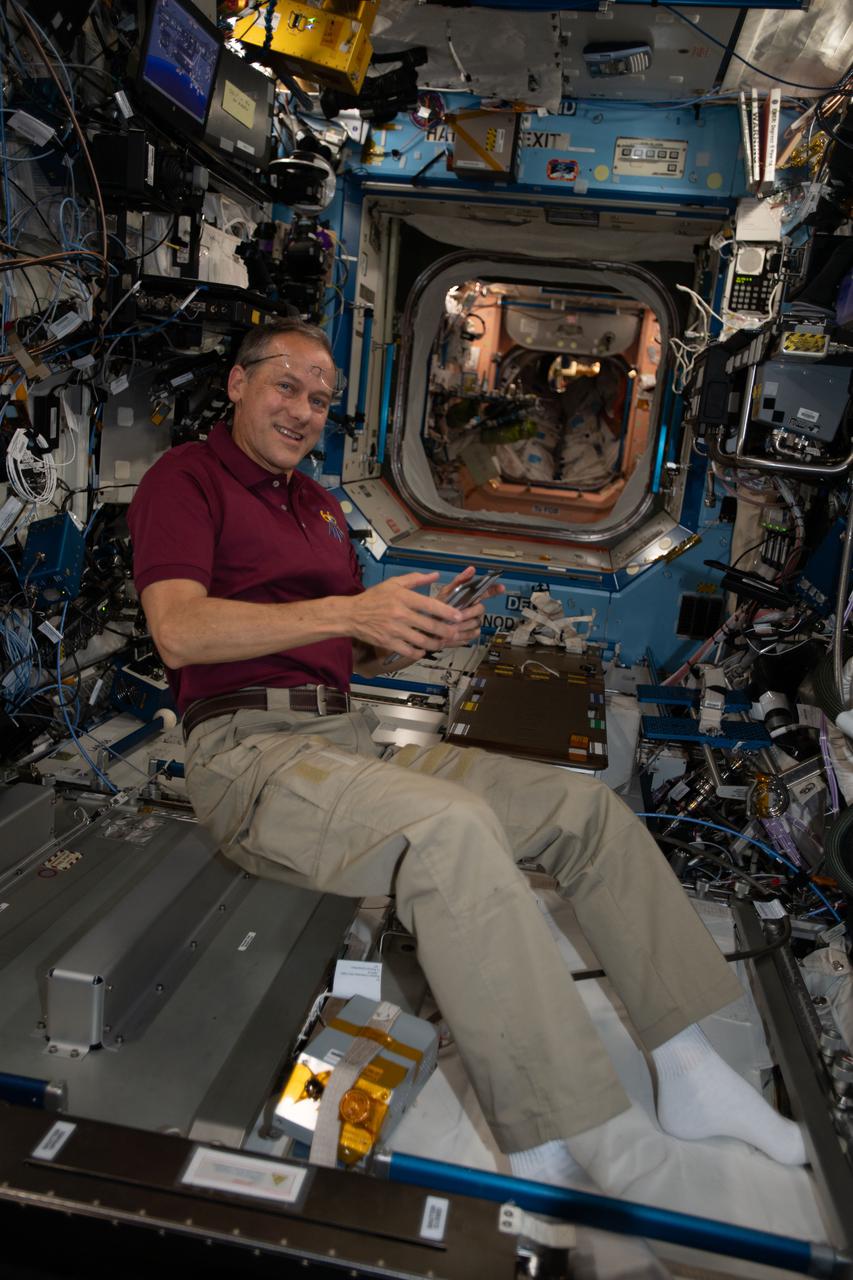
iss066e079009 (Nov. 22, 2021) --- NASA astronaut and Expedition 66 Flight Engineer Thomas Marshburn collects potable water samples from inside the International Space Station's U.S. Destiny laboratory module for later analysis.
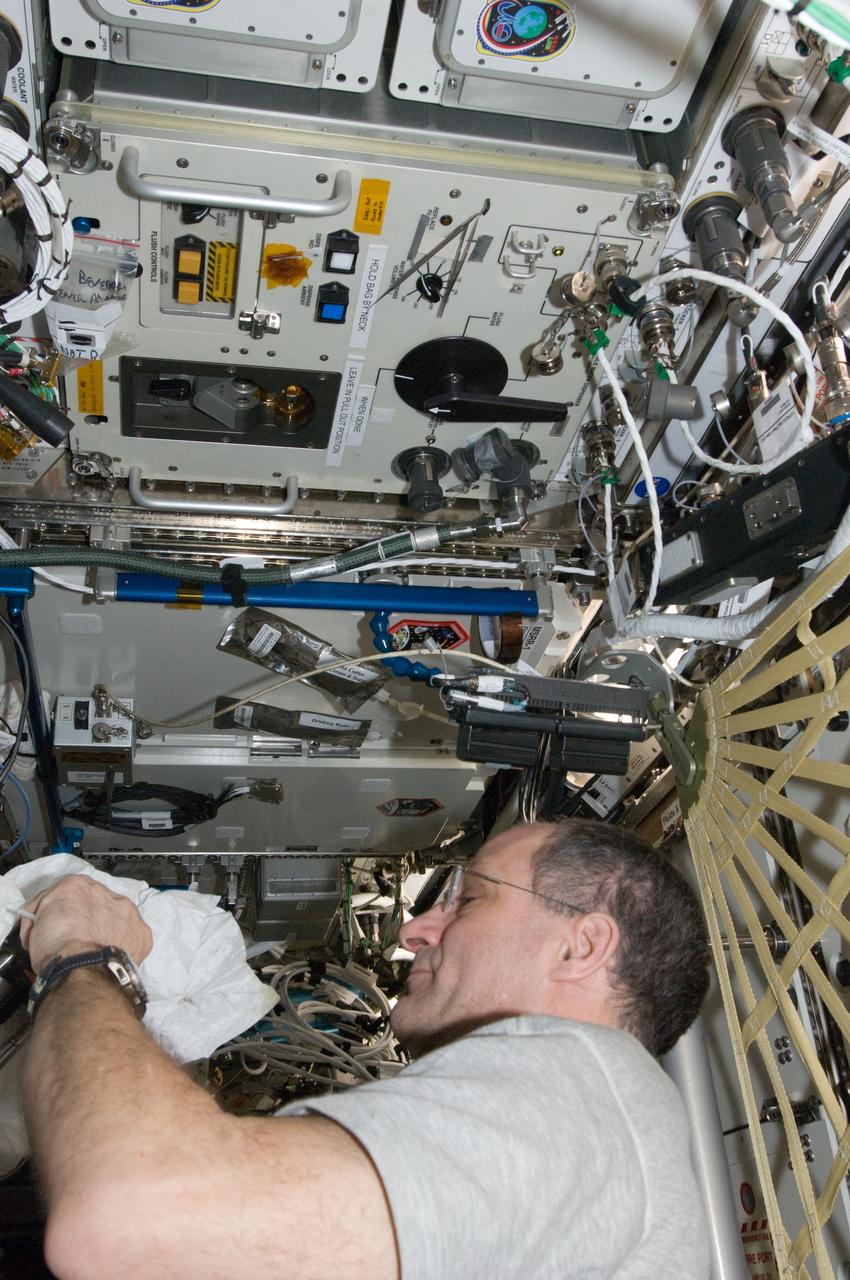
ISS030-E-074045 (12 Feb. 2012) --- NASA astronaut Don Pettit, Expedition 30 flight engineer, performs in-flight maintenance on the Potable Water Dispenser (PWD) in the Destiny laboratory of the International Space Station.
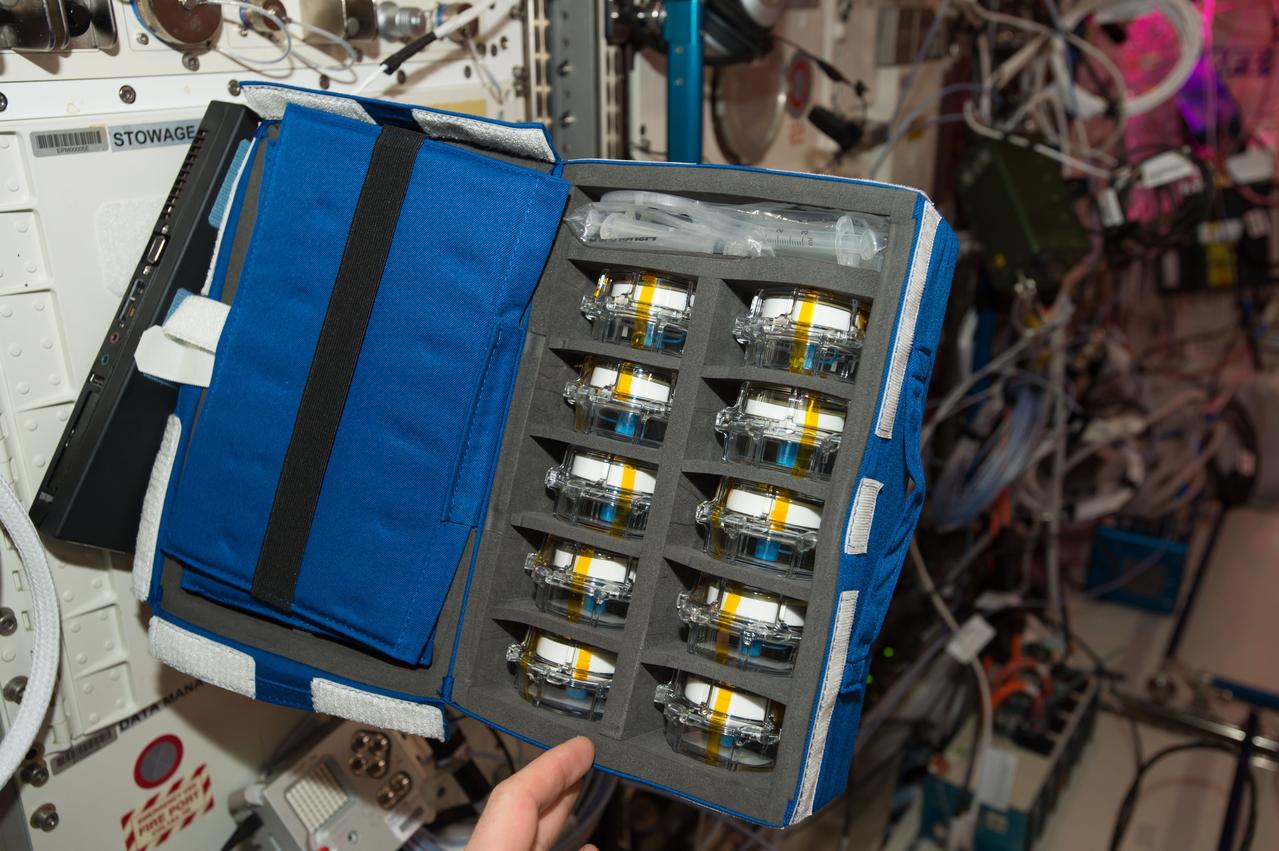
iss050e011332 (11/22/2016) --- A view of the Aquapad Sampling kit in a blue cargo transfer bag (CTB). Aquapad aims to improve the speed and efficiency of water potability tests onboard the ISS, by using a device that consists of a simple absorbent cotton, which is injected with 1 milliliter of water, and a tablet computer application,
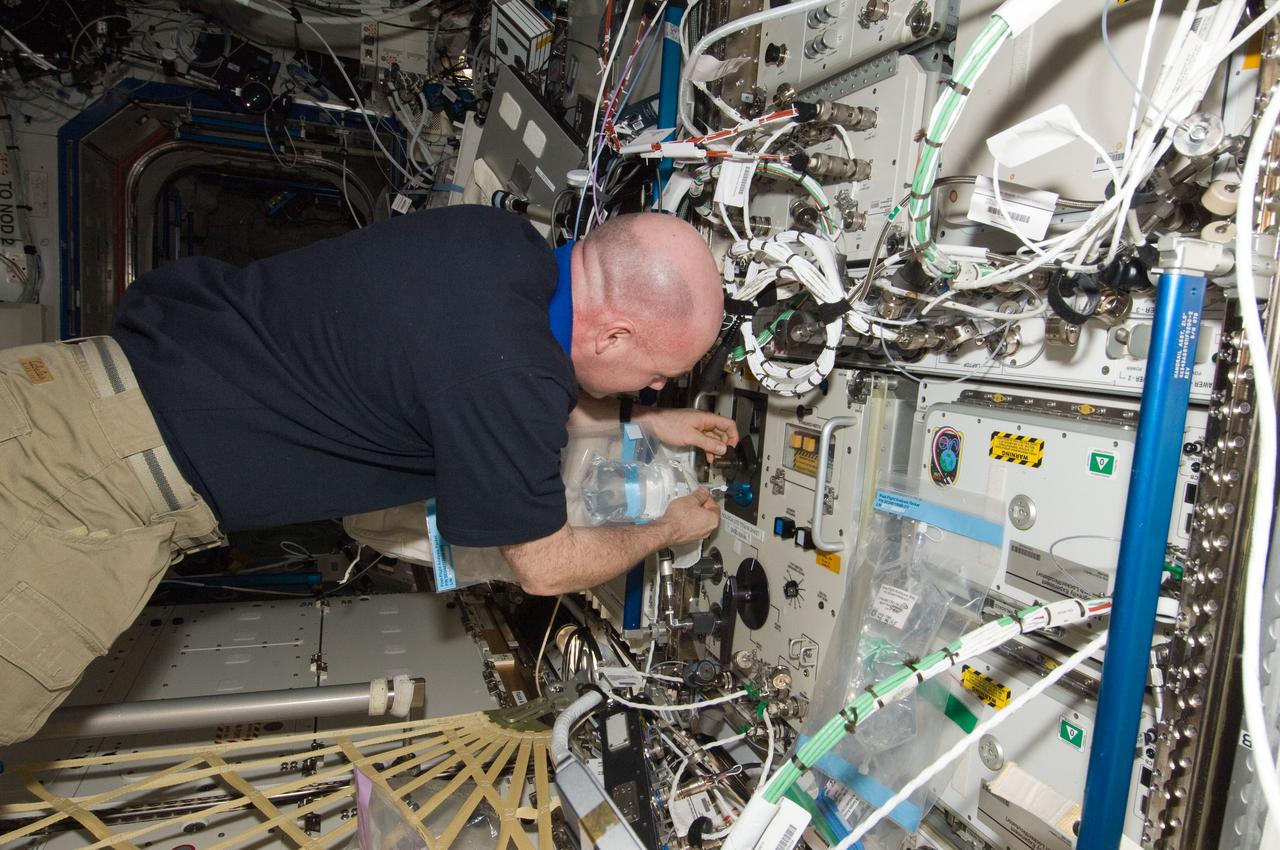
ISS031-E-079015 (15 May 2012) --- European Space Agency astronaut Andre Kuipers, Expedition 31 flight engineer, collects a sample from the Water Recovery System (WRS) in the Destiny laboratory of the International Space Station.
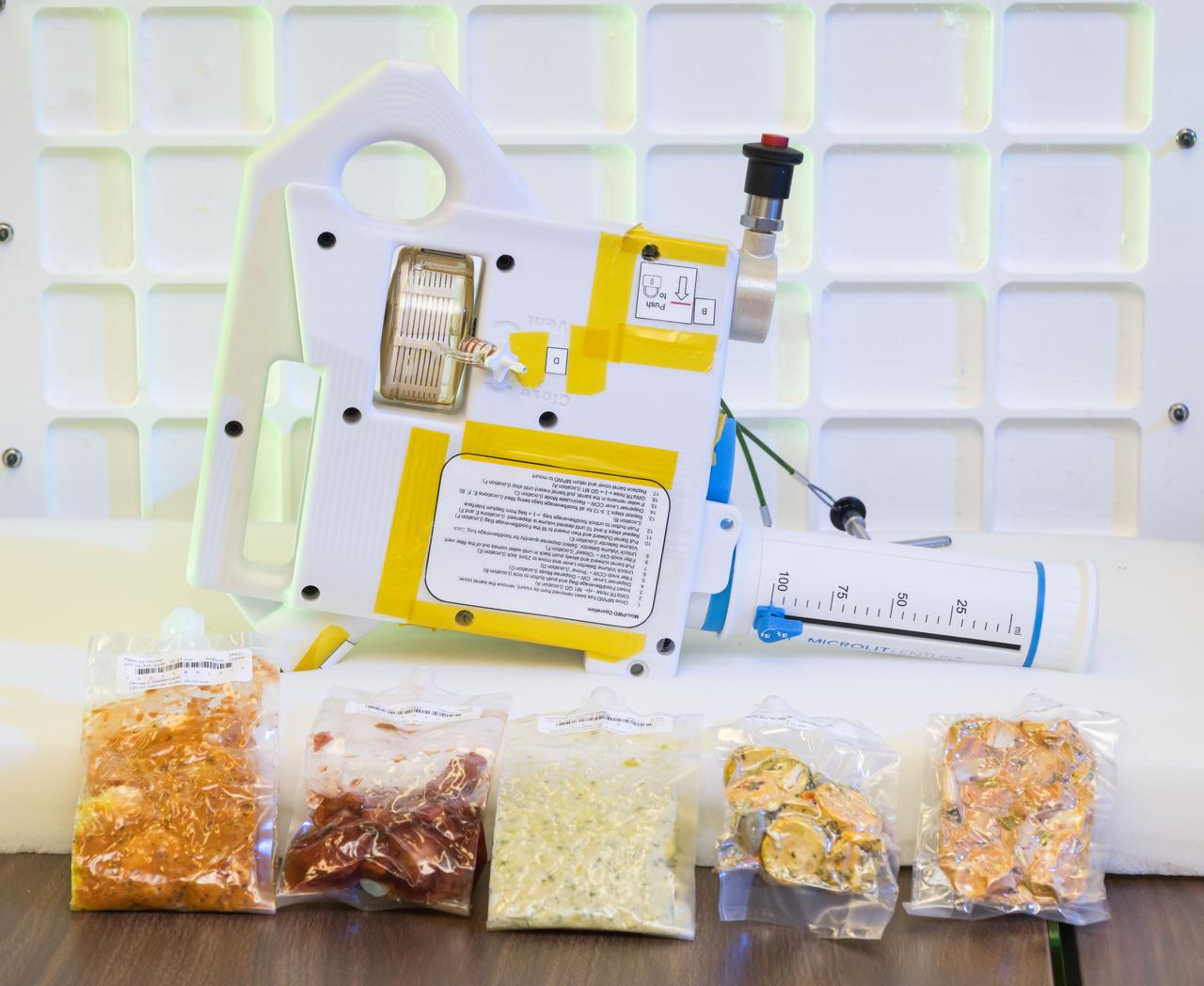
jsc2024e040685 -- A prototype of the Mini Potable Water Dispenser, currently in development at NASA’s Marshall Space Flight Center, is displayed alongside various food pouches during a demonstration at NASA’s Johnson Space Center. Photo Credit: NASA/David DeHoyos
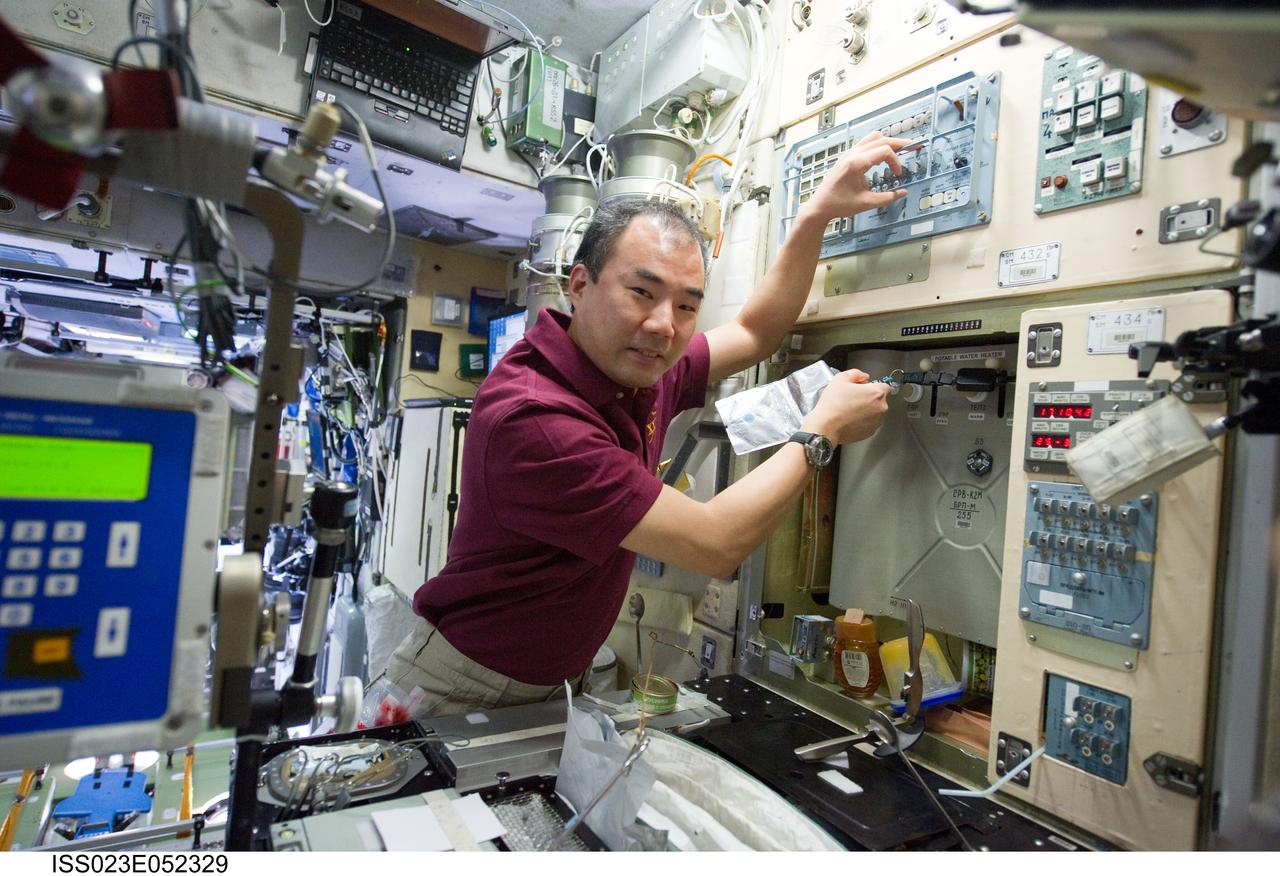
ISS023-E-052329 (26 May 2010) --- Japan Aerospace Exploration Agency (JAXA) astronaut Soichi Noguchi, Expedition 23 flight engineer, adds potable water to a soft beverage container at the galley in the Zvezda Service Module of the International Space Station.
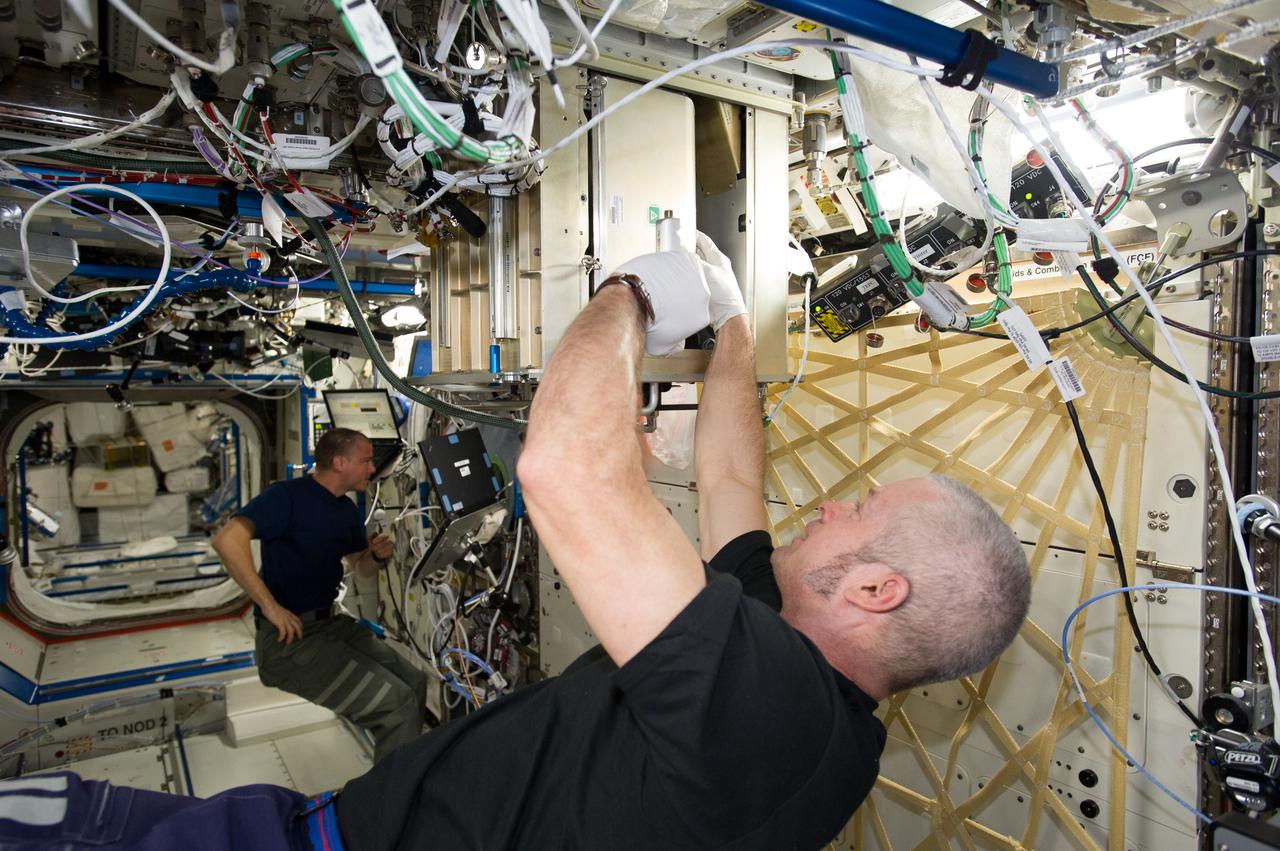
ISS040-E-064624 (15 July 2014) --- NASA astronaut Steve Swanson, Expedition 40 commander, replaces filters in the Potable Water Dispenser (PWD) in the Destiny laboratory of the International Space Station. NASA astronaut Reid Wiseman, flight engineer, works in the background.
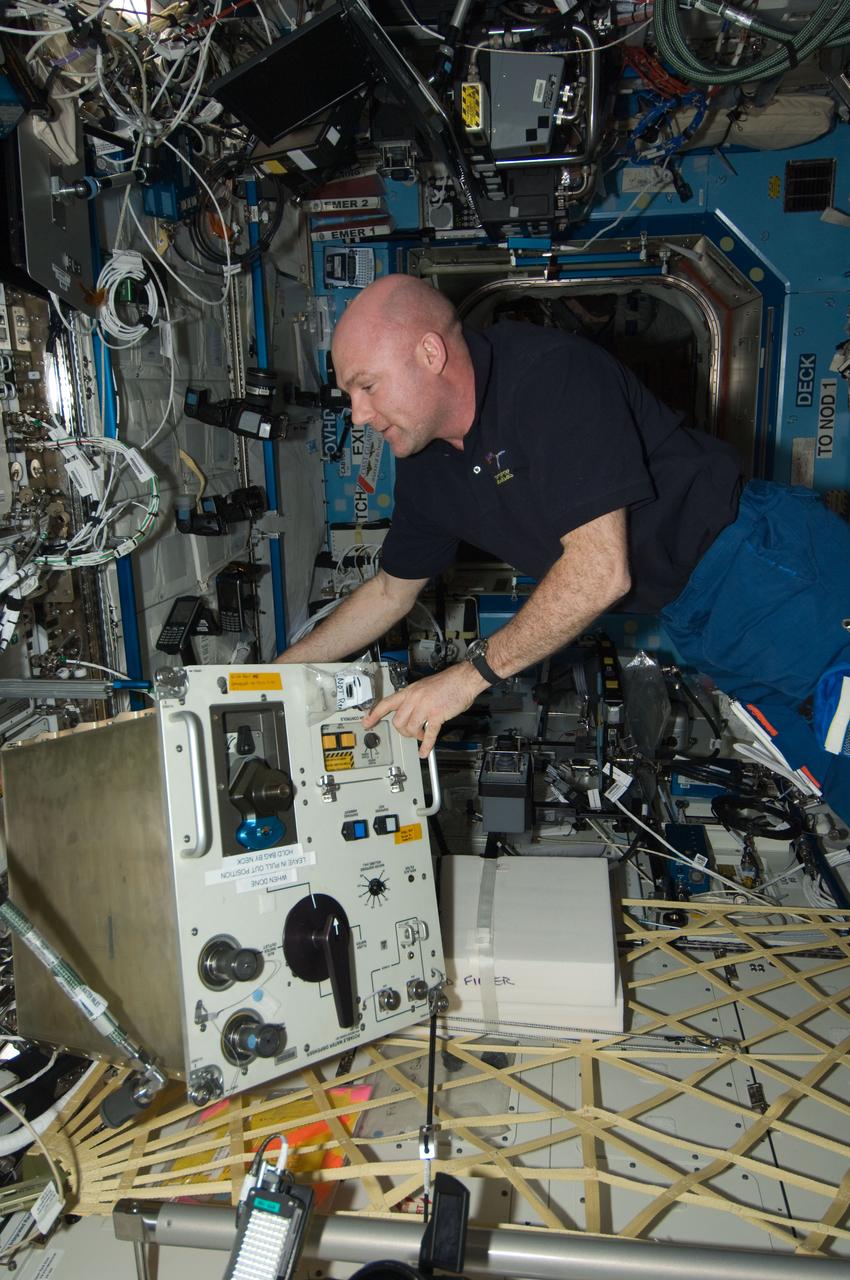
ISS030-E-117471 (2 Feb. 2012) --- European Space Agency astronaut Andre Kuipers, Expedition 30 flight engineer, performs scheduled in-flight maintenance on the Potable Water Dispenser (PWD) in the Destiny laboratory of the International Space Station.
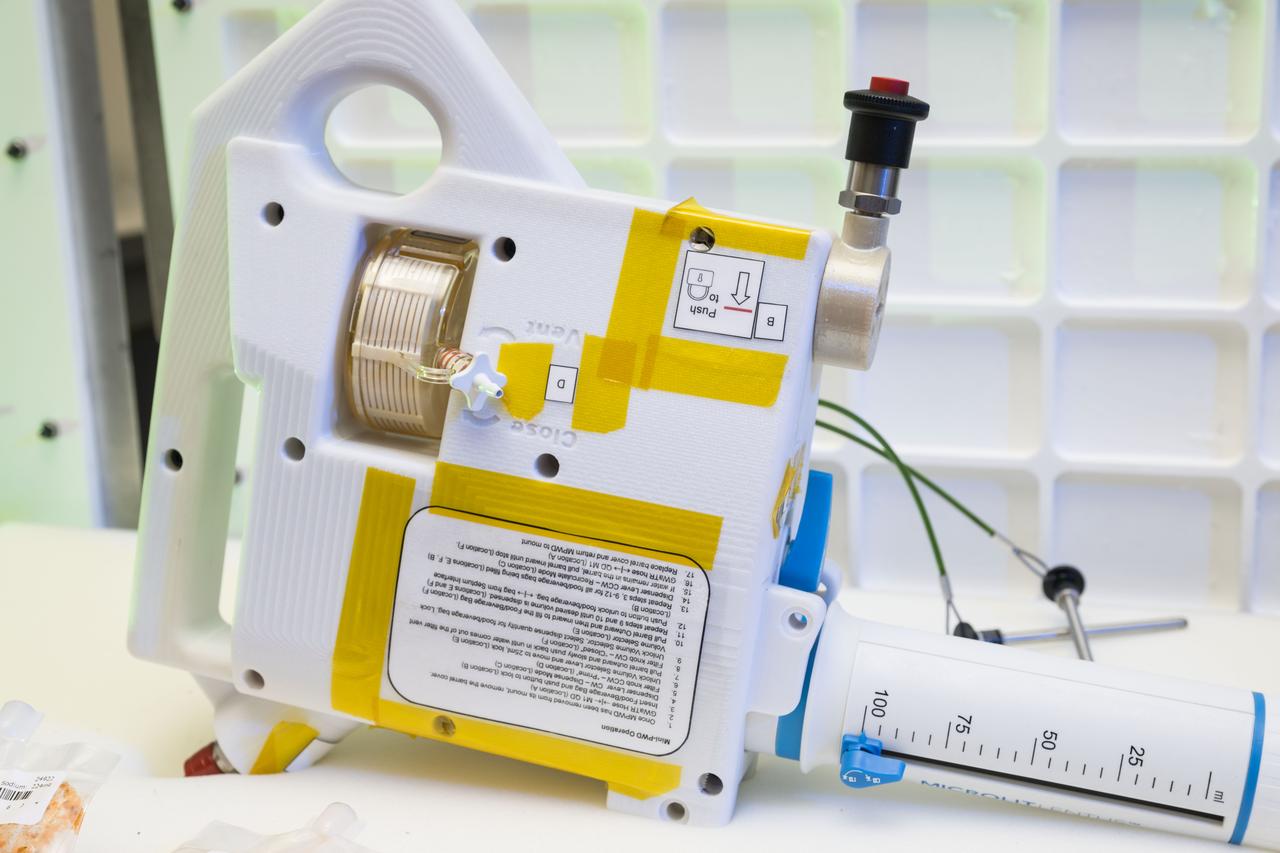
jsc2024e040691 -- A prototype of the Mini Potable Water Dispenser, currently in development at NASA’s Marshall Space Flight Center, is displayed alongside various food pouches during a demonstration at NASA’s Johnson Space Center. Photo Credit: NASA/David DeHoyos
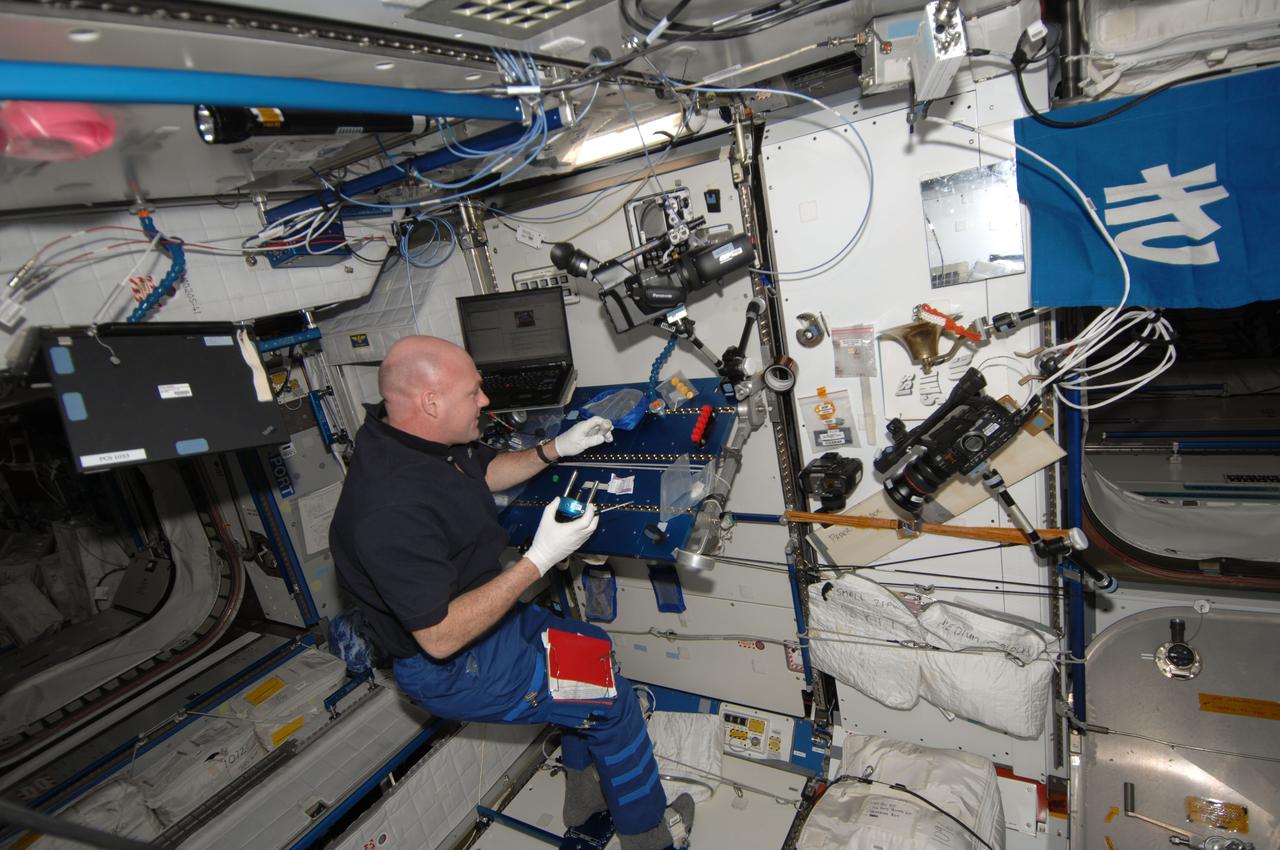
ISS030-E-156300 (23 Jan. 2012) --- European Space Agency astronaut Andre Kuipers, Expedition 30 flight engineer, lubricates and cleans the beverage adapter on the Potable Water Dispenser (PWD) in the Harmony node of the International Space Station.
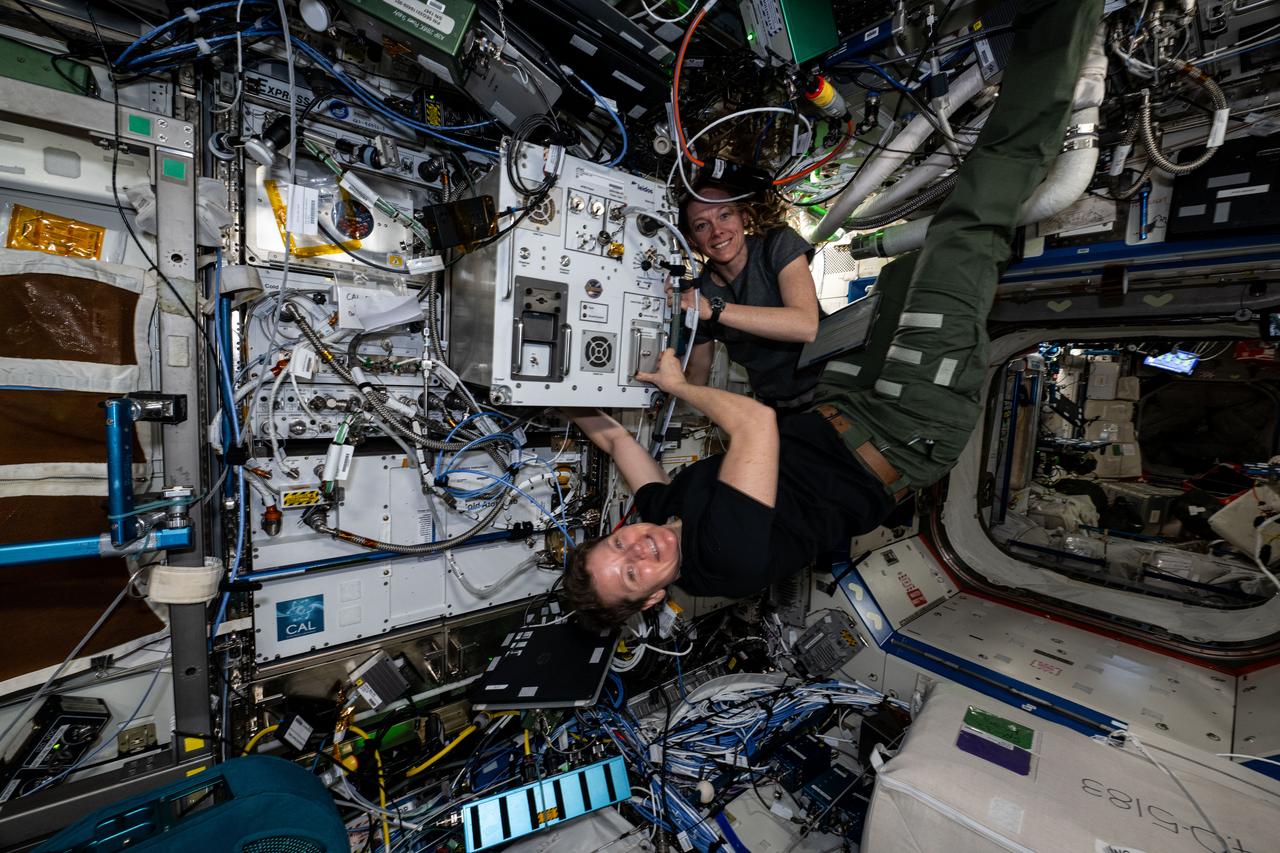
iss073e0071535 (May 16, 2025) --- (From top) Expedition 73 Flight Engineers Nichole Ayers and Anne McClain, both NASA astronauts, pose for a portrait while verifying the functionality and replacing hardware on the Exploration Potable Water Dispenser (xPWD). The xPWD is located in the International Space Station's Destiny laboratory module and is demonstrating advanced water sanitization methods, microbial growth reduction, and a heater to dispense hot water for use aboard the orbital outpost and future spacecraft.
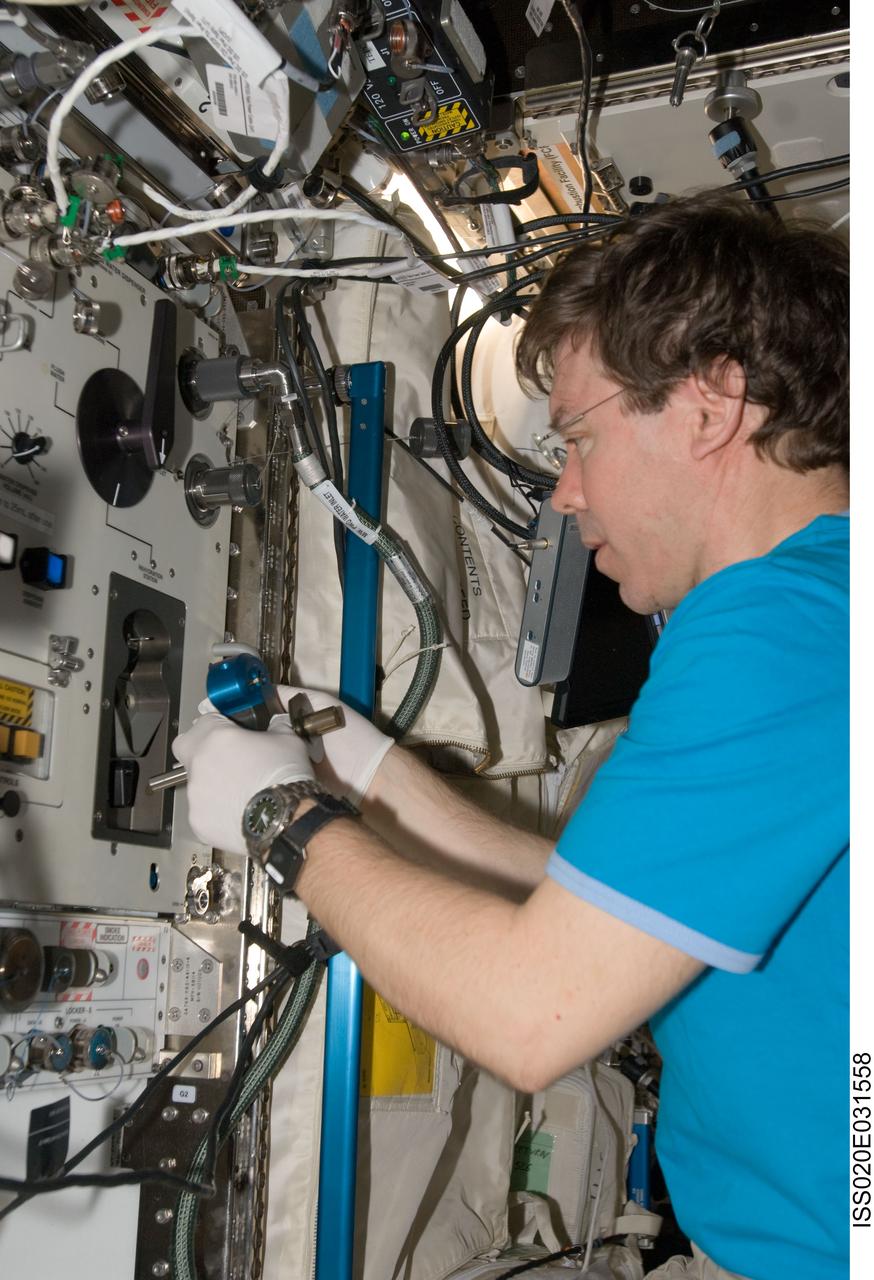
ISS020-E-031558 (18 Aug. 2009) --- NASA astronaut Michael Barratt, Expedition 20 flight engineer, conducts a Surface, Water and Air Biocharacterization (SWAB) water sampling from the Potable Water Dispenser (PWD) in the Destiny laboratory of the International Space Station. SWAB uses advanced molecular techniques to comprehensively evaluate microbes onboard the space station, including pathogens (organisms that may cause disease). This study will allow an assessment of the risk of microbes to the crew and the spacecraft.

ISS022-E-094374 (15 March 2010) --- NASA astronaut Jeffrey Williams, Expedition 22 commander, conducts a Surface, Water and Air Biocharacterization (SWAB) water sampling from the Potable Water Dispenser (PWD) in the Destiny laboratory of the International Space Station. SWAB uses advanced molecular techniques to comprehensively evaluate microbes onboard the space station, including pathogens (organisms that may cause disease). This study will allow an assessment of the risk of microbes to the crew and the spacecraft.
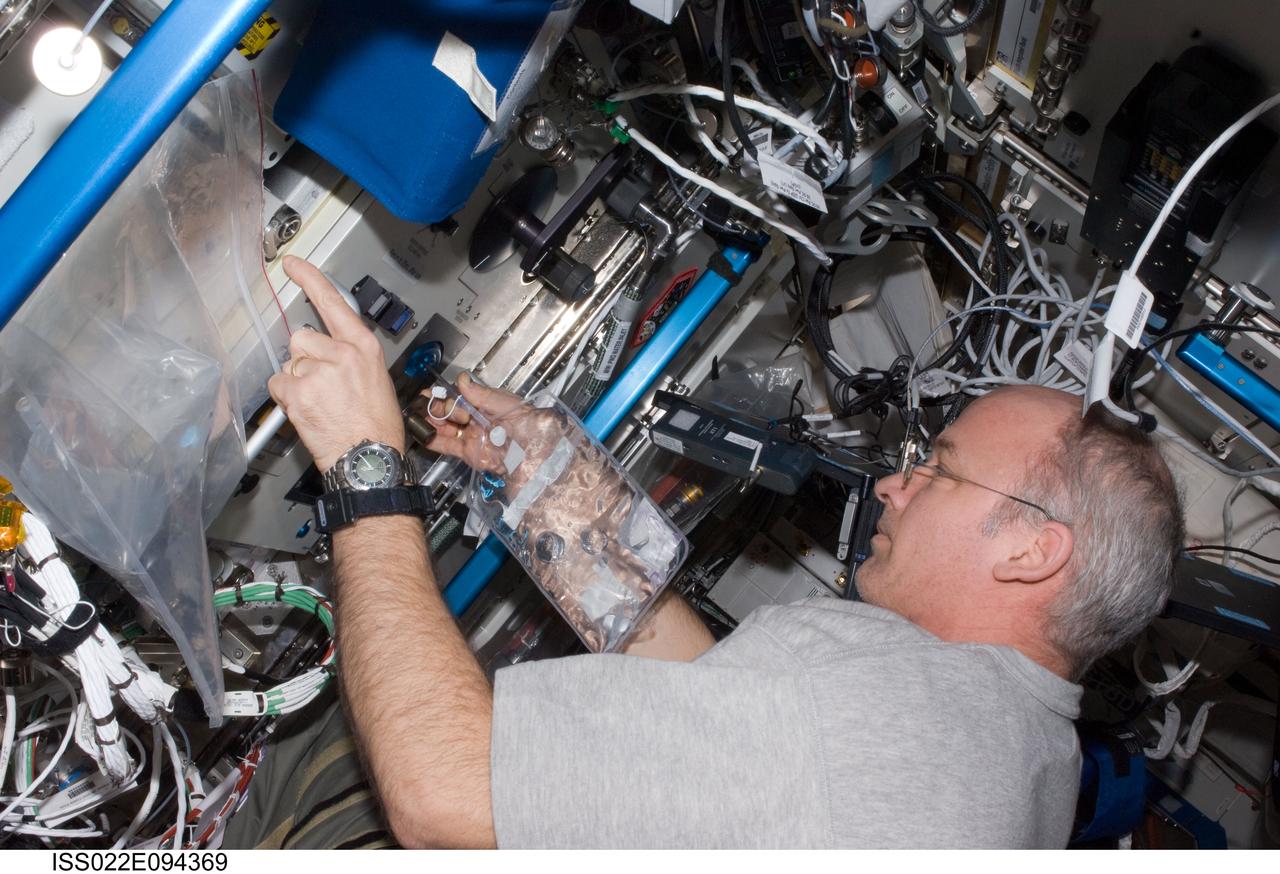
ISS022-E-094369 (15 March 2010) --- NASA astronaut Jeffrey Williams, Expedition 22 commander, conducts a Surface, Water and Air Biocharacterization (SWAB) water sampling from the Potable Water Dispenser (PWD) in the Destiny laboratory of the International Space Station. SWAB uses advanced molecular techniques to comprehensively evaluate microbes onboard the space station, including pathogens (organisms that may cause disease). This study will allow an assessment of the risk of microbes to the crew and the spacecraft.

iss070e005393 (12/182023) --- NASA astronaut Jasmin Moghbeli is shown performing steps to extract and amplify DNA from a water sample for later sequencing. The EHS BioMole Facility demonstrates technology for monitoring the microbial environment onboard a spacecraft. As part of a Crew Health Care System (CHeCS), this technology could support missions such as Gateway and Mars transit that do not have the capability to return samples to Earth for analysis. The investigation evaluates the ability of the EHS BioMole Facility to accurately analyze potable water samples on the space station.
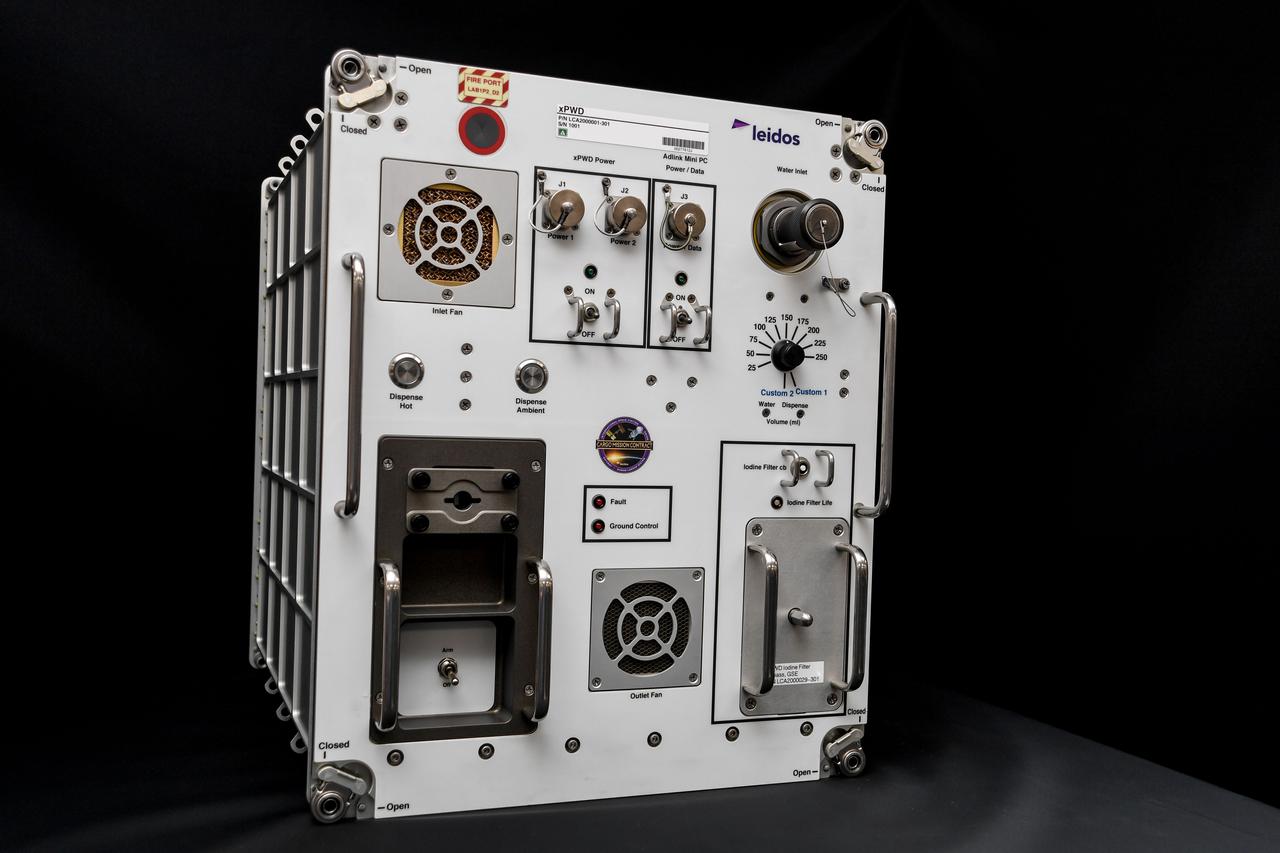
jsc2023e013692 (Feb. 9, 2023) --- A preflight image of the Exploration Potable Water Dispenser (Exploration PWD). Exploration PWD is a device that dispenses ambient and hot water into crew food and drink bags. The Exploration PWD is an improvement to the International Space Station (ISS) legacy PWD. Successful demonstration of this technology could lead to its adoption for future exploration missions and continued use for the space station crew.
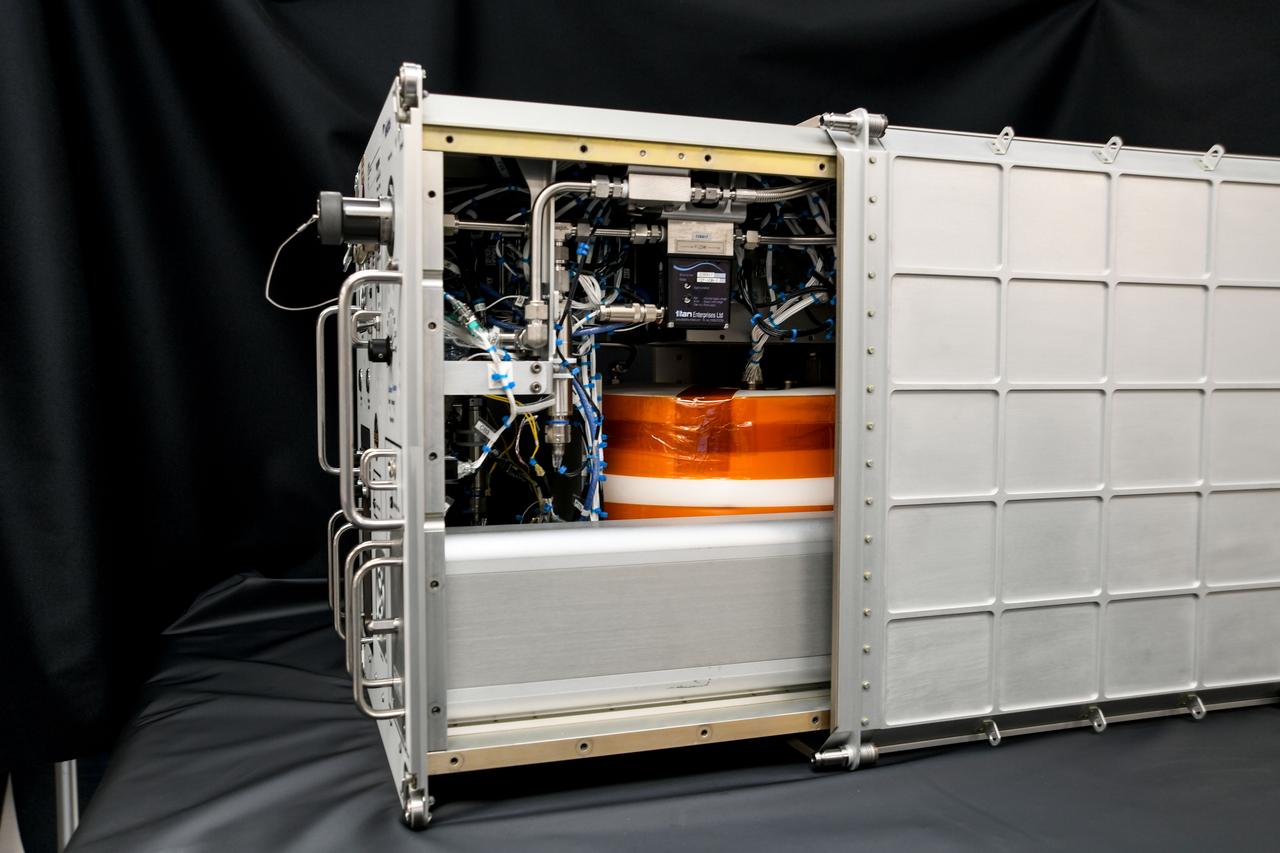
jsc2023e013698 (Feb. 9, 2023) --- A preflight image showing the inside of the Exploration Potable Water Dispenser (Exploration PWD) with a partial panel removed. Exploration PWD is a device that dispenses ambient and hot water into crew food and drink bags. The Exploration PWD is an improvement to the International Space Station (ISS) legacy PWD. Successful demonstration of this technology could lead to its adoption for future exploration missions and continued use for the space station crew.
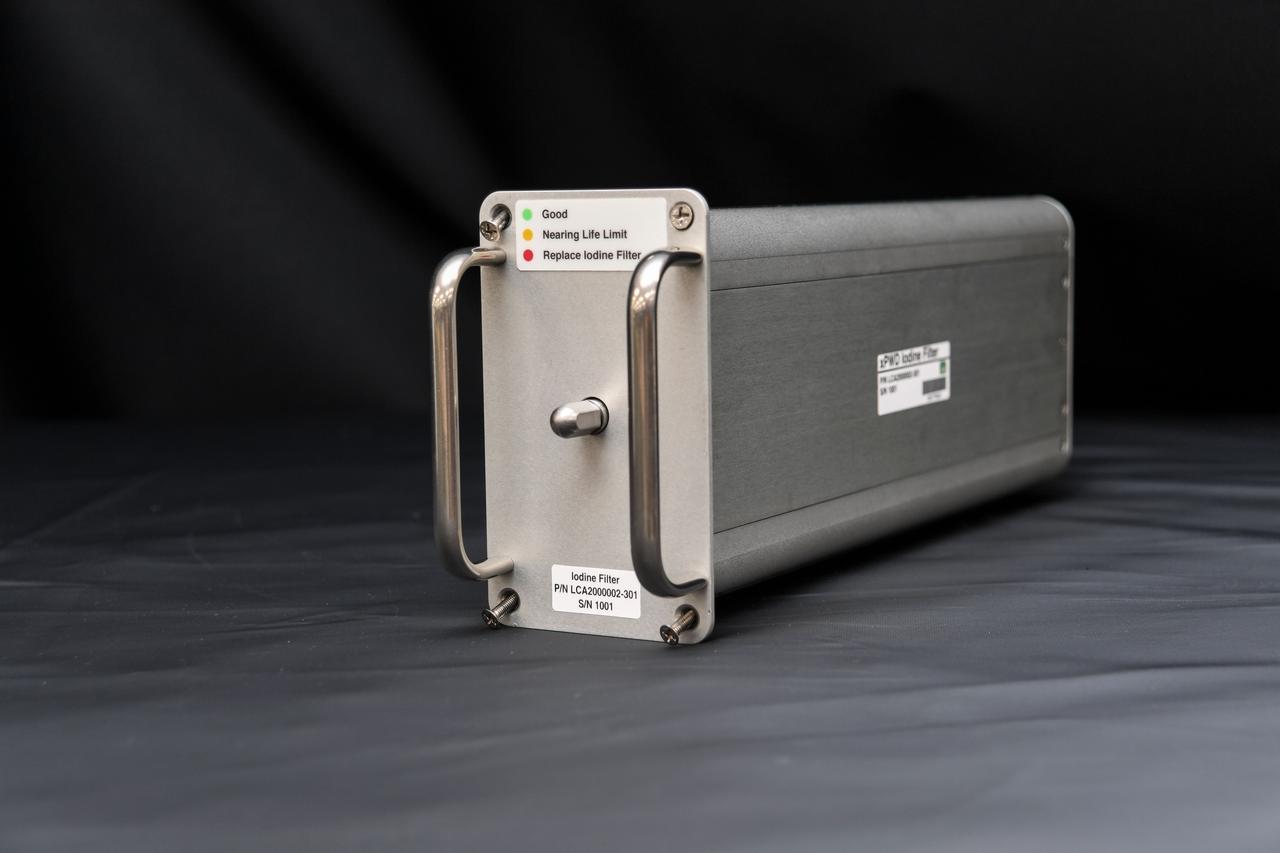
jsc2023e008494 (Feb. 10, 2023) --- A preflight image of the Exploration Potable Water Dispenser (Exploration PWD) iodine filter. Exploration PWD is a device that dispenses ambient and hot water into crew food and drink bags. The Exploration PWD is an improvement to the International Space Station (ISS) legacy PWD. Successful demonstration of this technology could lead to its adoption for future exploration missions and continued use for the space station crew.
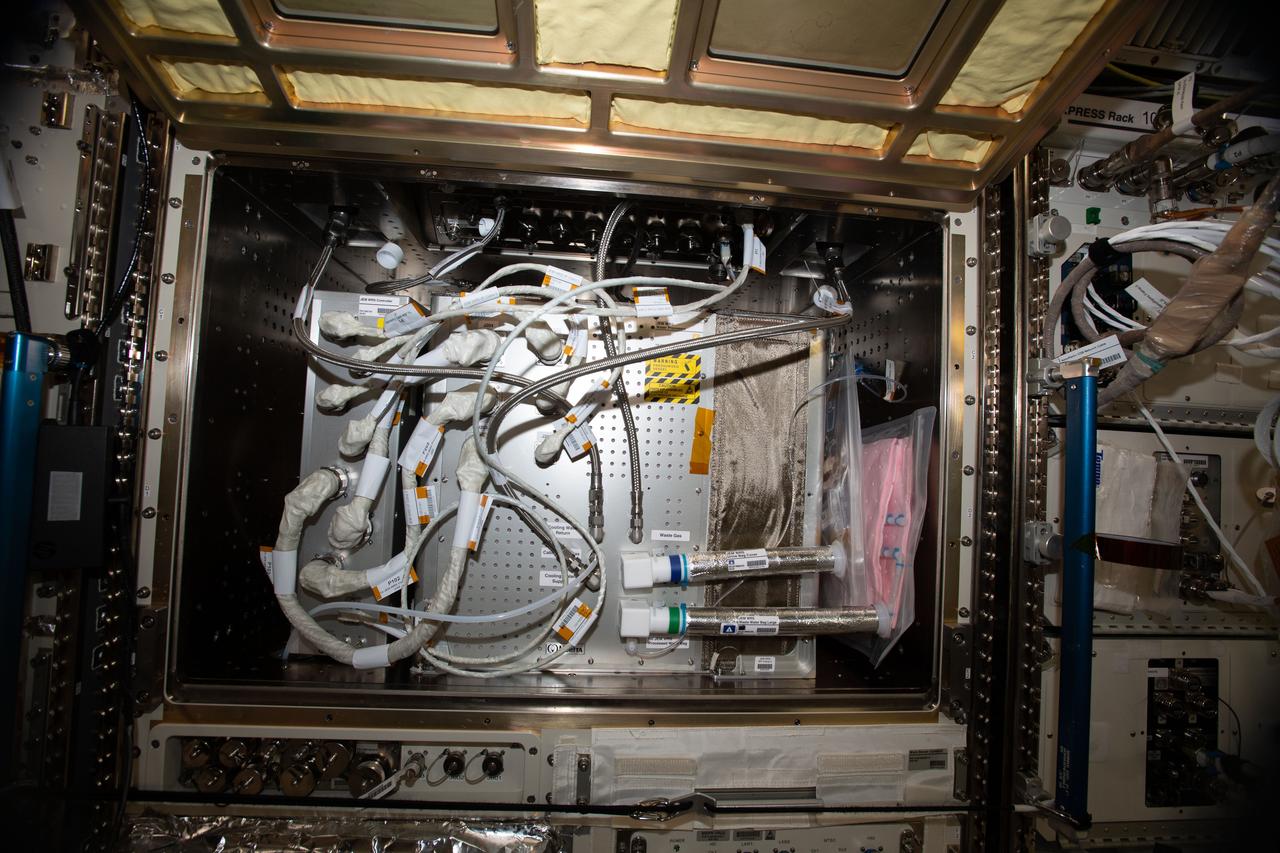
iss061e050296 (11/19/2019) --- A view of the JEM Water Recovery system (JWRS) installed the the Multi-Purpose Small Payload Rack located the the Kibo module aboard the International Space Station (ISS). The JWRS contributes to the development of future Life Support Systems to provide basic needs for astronauts on the space station and exploration missions beyond Earth. The technology in the JWRS has potential applications to improve access to potable water in remote and undeveloped locations on Earth.

iss069e088358 (9/14/2023) --- Japan Aerospace Exploration Agency (JAXA) astronaut Satoshi Furukawa is seen processing samples from the JEM Water Recovery System (JWRS) in the KIBO module aboard the International Space Station (ISS). The JWRS demonstrates that potable water can be generated from urine. In the past, urine and wastewater were collected and stored, or vented overboard. However, for long-term space missions, water supply could become a limiting factor. Demonstrating the function of this water recovery system on orbit contributes to updating the Environmental Control and Life Support System (ECLSS) to support astronauts on the space station and future exploration missions.
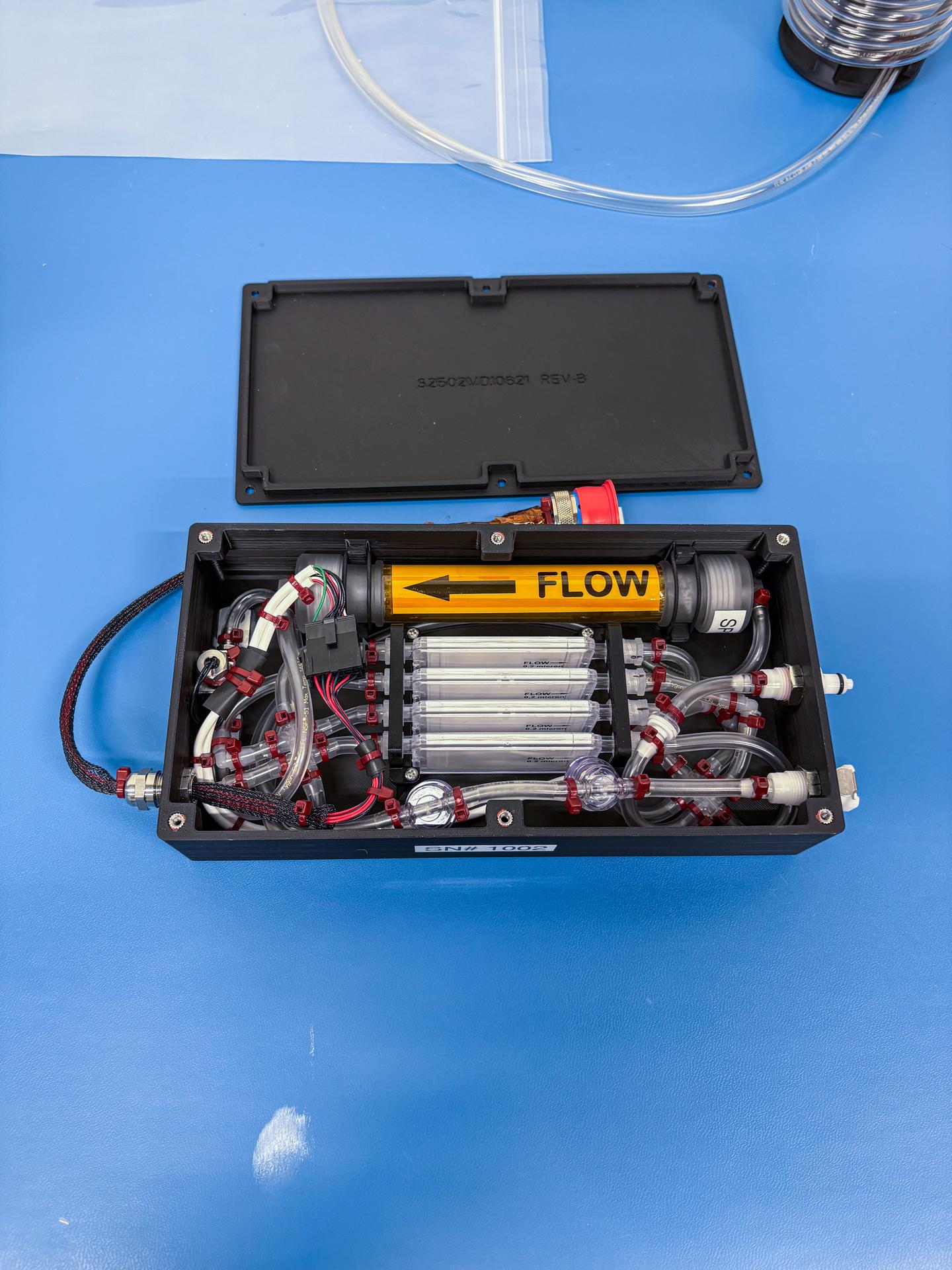
jsc2026e004238 (February 02, 2026) -- A preflight image of the miniaturized sterilization system as part of IVGEN mini. This investigation aims to verify operations to make medical-grade saline solution using potable water aboard the International Space Station. On future exploration missions, this system could give crew members the ability to generate intravenous fluids on demand. Credit: NASA.
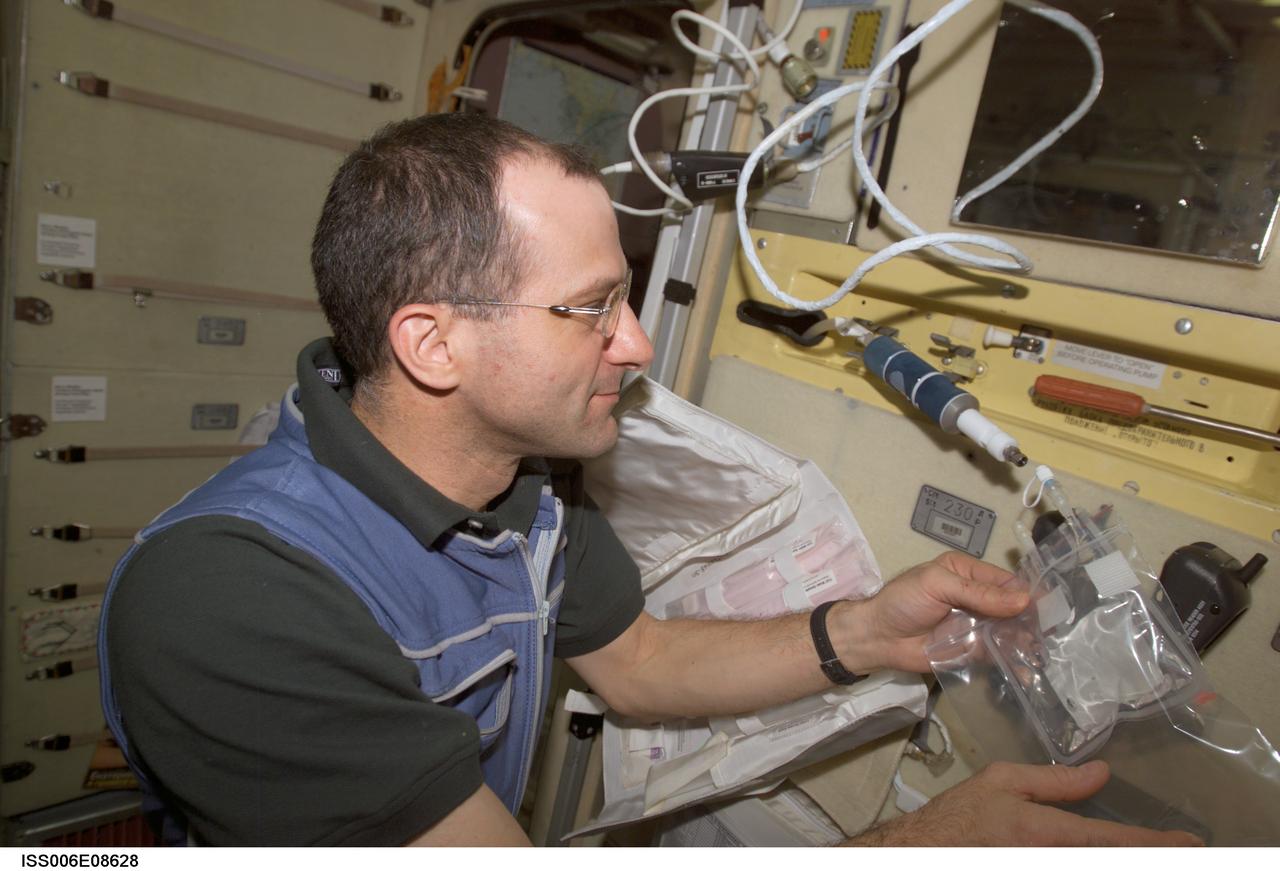
ISS006-E-08628 (18 December 2002) --- Astronaut Donald R. Pettit, Expedition Six NASA ISS science officer, is pictured in the Zvezda Service Module on the International Space Station (ISS) during the scheduled Week 3 potable water sampling and on-orbit chemical/microbial analysis of the SM environment control and life support system.
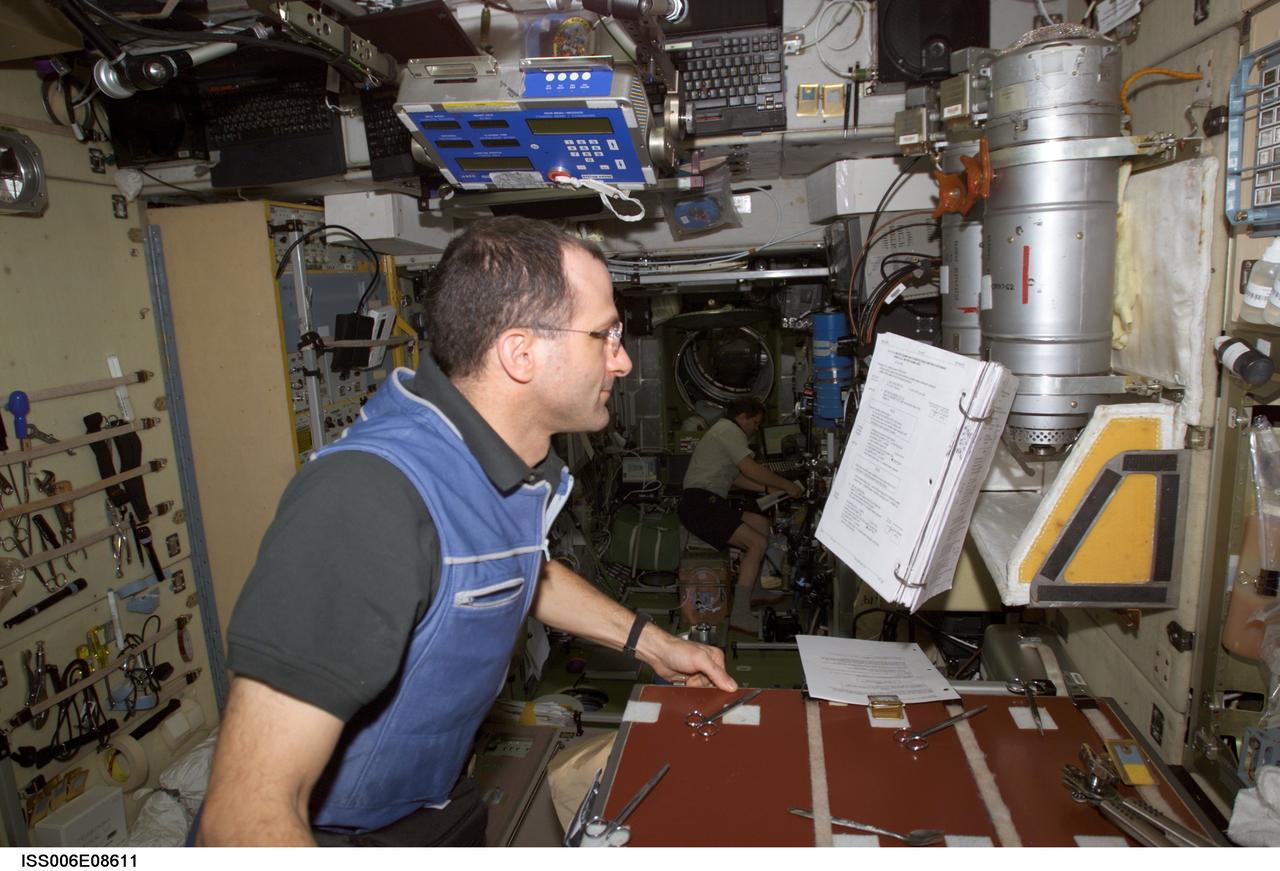
ISS006-E-08611 (18 December 2002) --- Astronaut Donald R. Pettit, Expedition Six NASA ISS science officer, looks over a procedures checklist in the Zvezda Service Module (SM) on the International Space Station (ISS). Pettit went on to complete the scheduled Week 3 potable water sampling and on-orbit chemical/microbial analysis of the SM environment control and life support system.
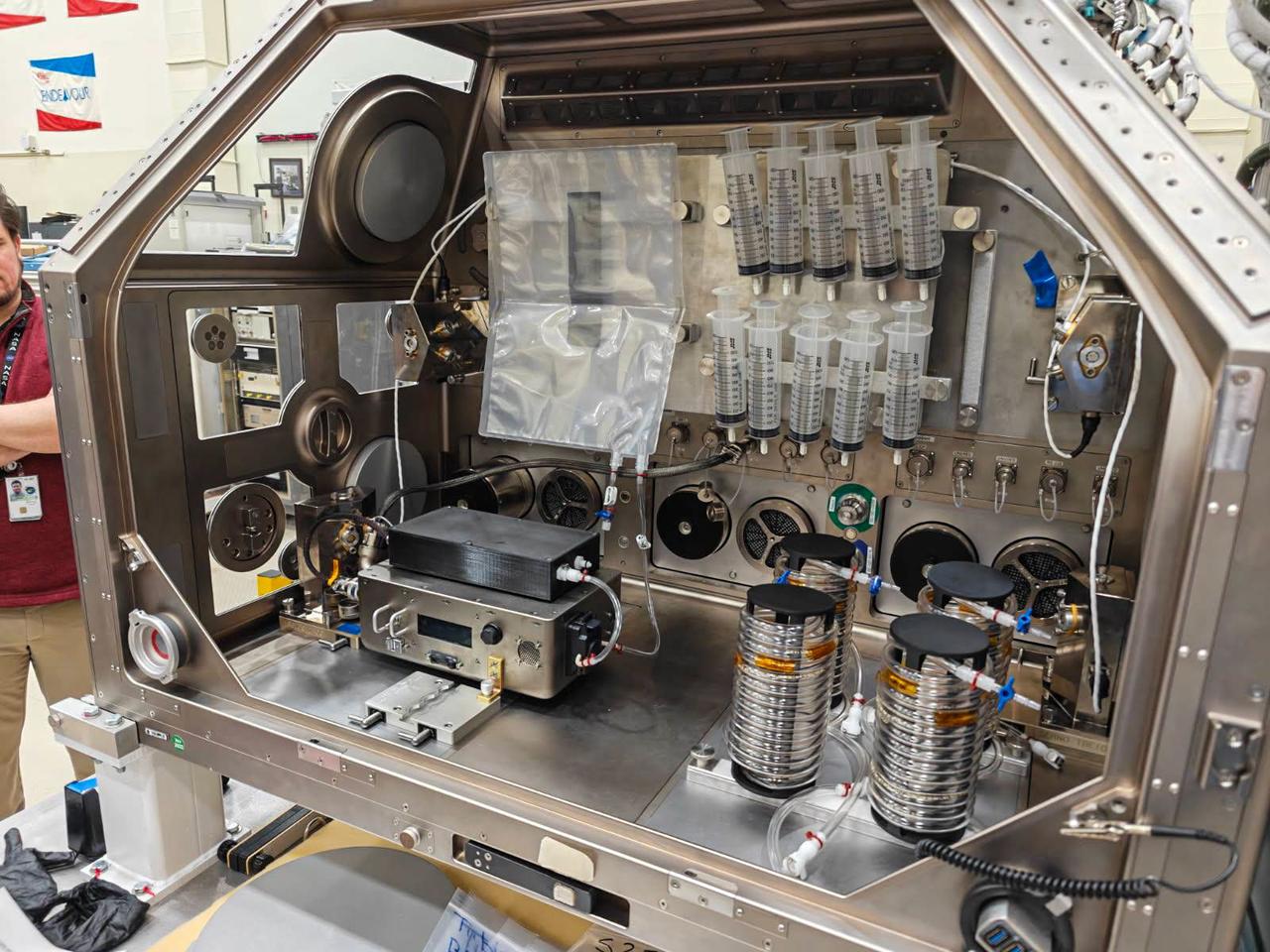
NASA Image: JSC2026E004232 - Intravenous Fluid Generation – Mini (IVGEN Mini) hardware inside the Life Sciences Glovebox (LSG) ground facility at Marshall Space Flight Center (MSFC). IVGEN Mini aims to verify operations for a miniaturized system and its ability to make medical-grade saline solution using potable water aboard the International Space Station. On future exploration missions, this system could give crew members the ability to generate intravenous fluids on demand. Credit: NASA.
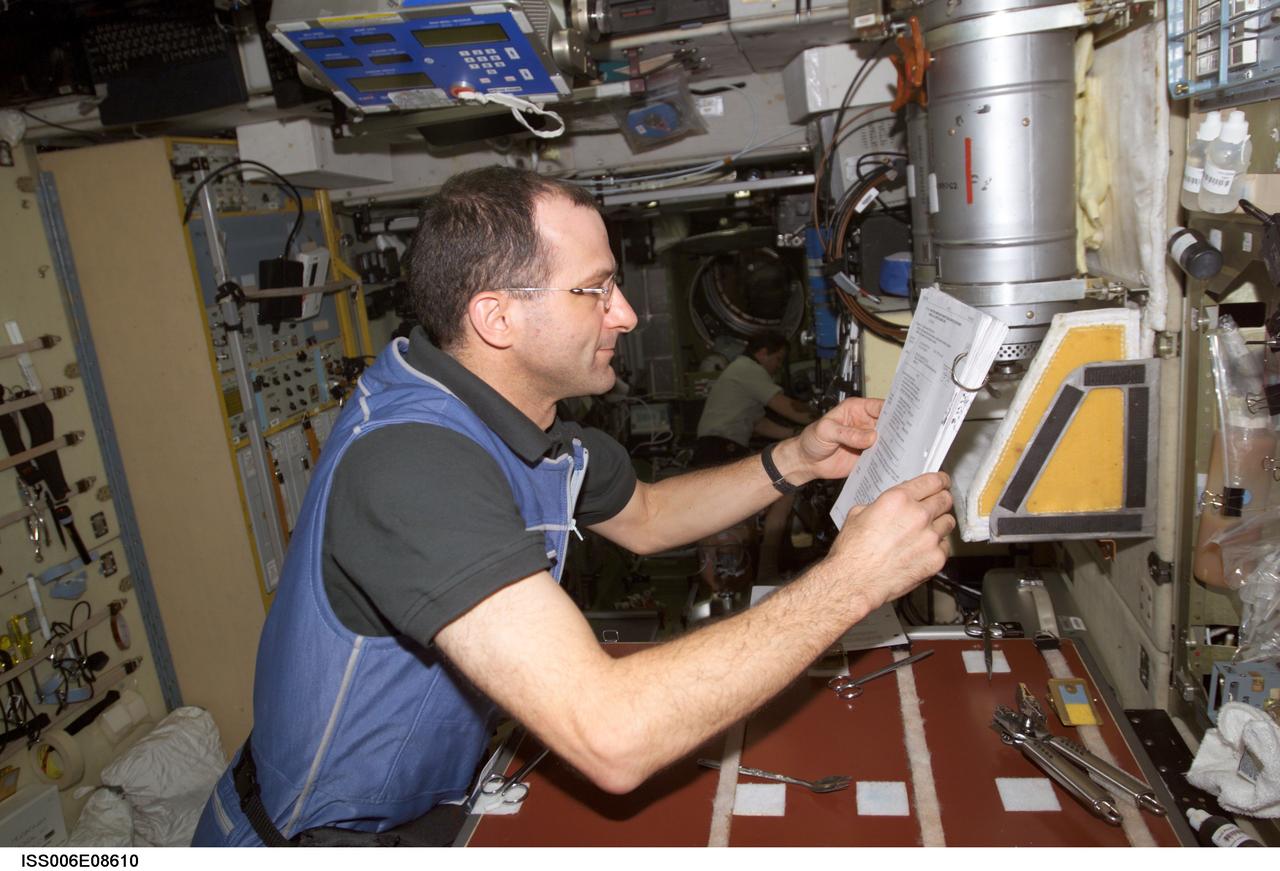
ISS006-E-08610 (18 December 2002) --- Astronaut Donald R. Pettit, Expedition Six NASA ISS science officer, looks over a procedures checklist in the Zvezda Service Module (SM) on the International Space Station (ISS). Pettit went on to complete the scheduled Week 3 potable water sampling and on-orbit chemical/microbial analysis of the SM environment control and life support system.
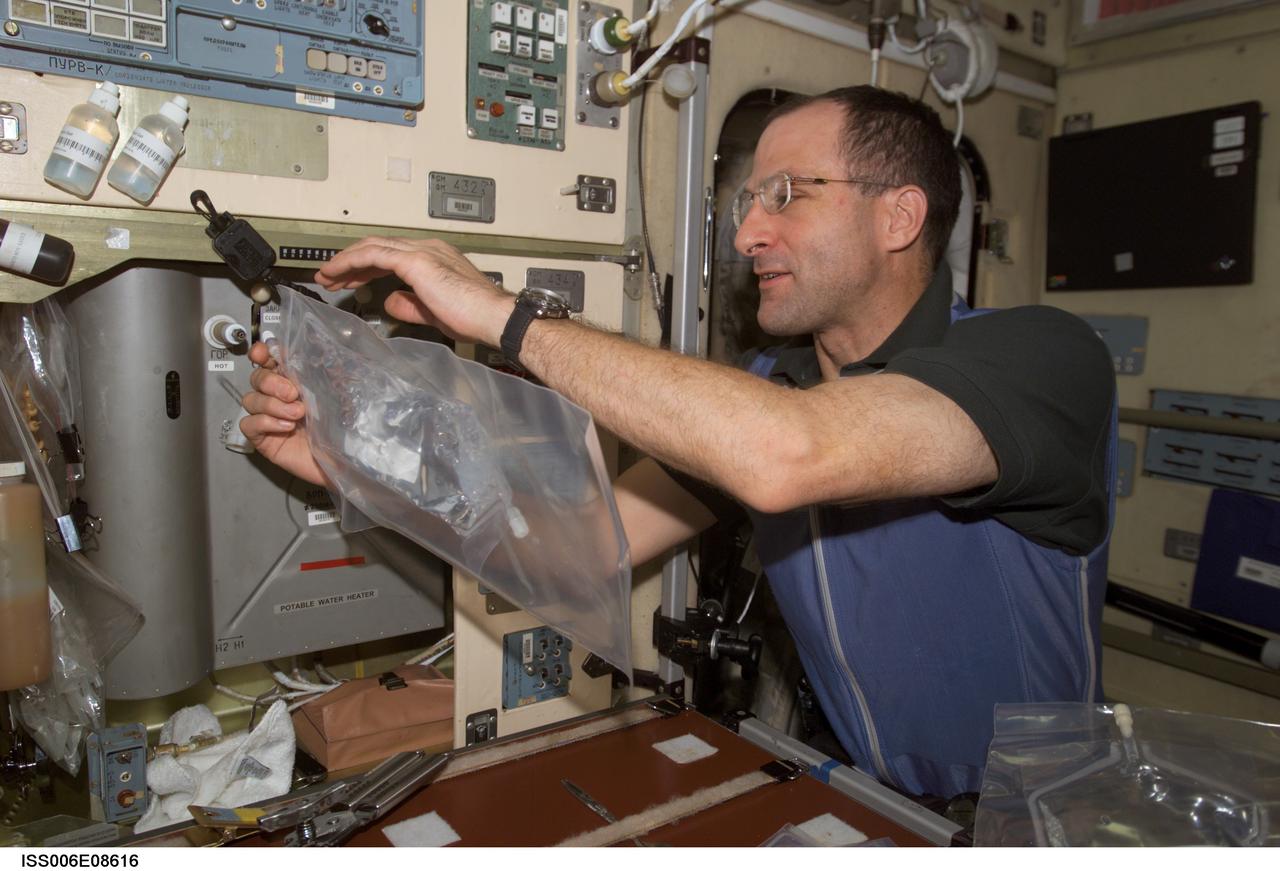
ISS006-E-08616 (18 December 2002) --- Astronaut Donald R. Pettit, Expedition Six NASA ISS science officer, is pictured in the Zvezda Service Module on the International Space Station (ISS) during the scheduled Week 3 potable water sampling and on-orbit chemical/microbial analysis of the SM environment control and life support system.
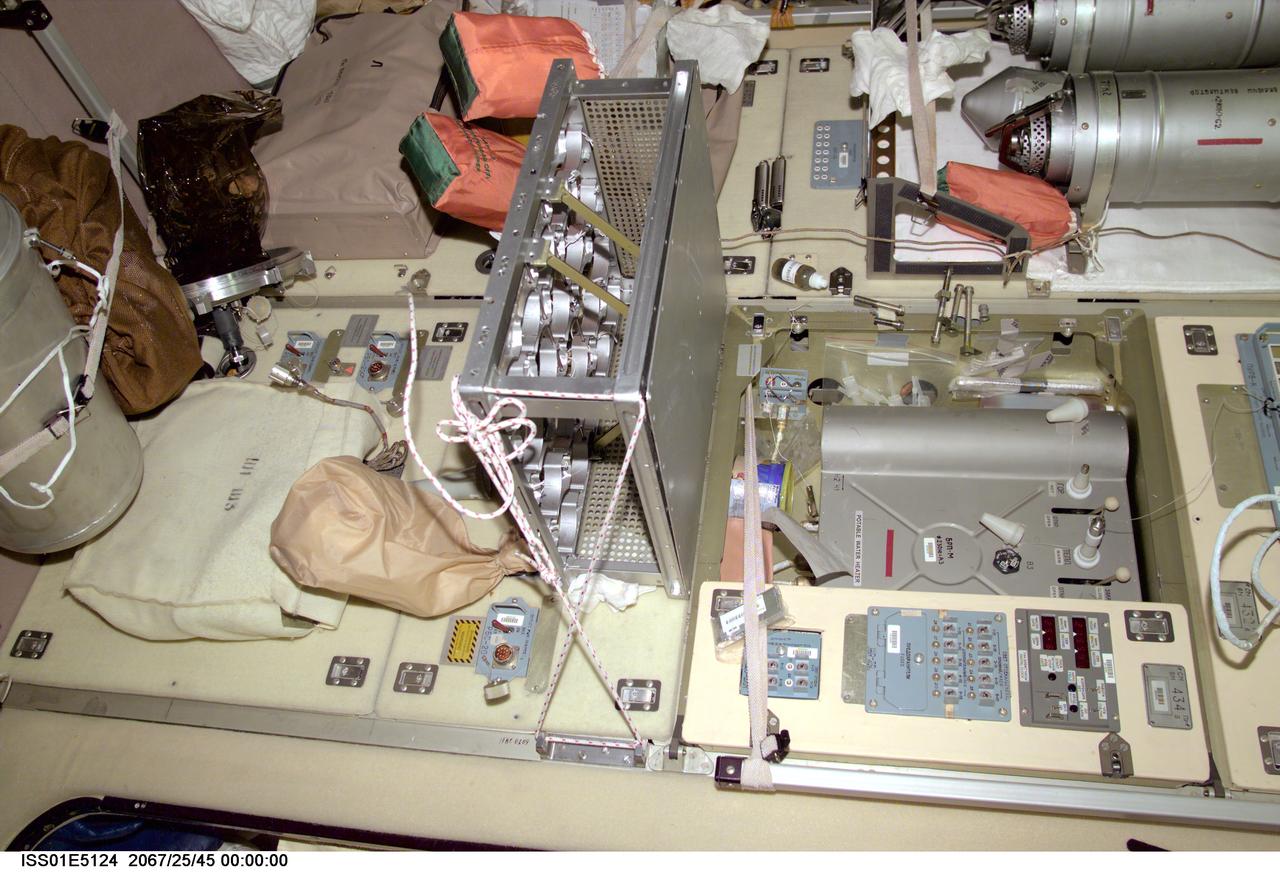
ISS01-E-5124 (December 2000) --- A medium closeup view, photographed with a digital still camera, shows part of the galley area on the International Space Station's Zvezda Service Module. The picture should be viewed vertically with potable water heater (right side of this frame before suggested 90-degree rotation) and distribution unit in the top half.
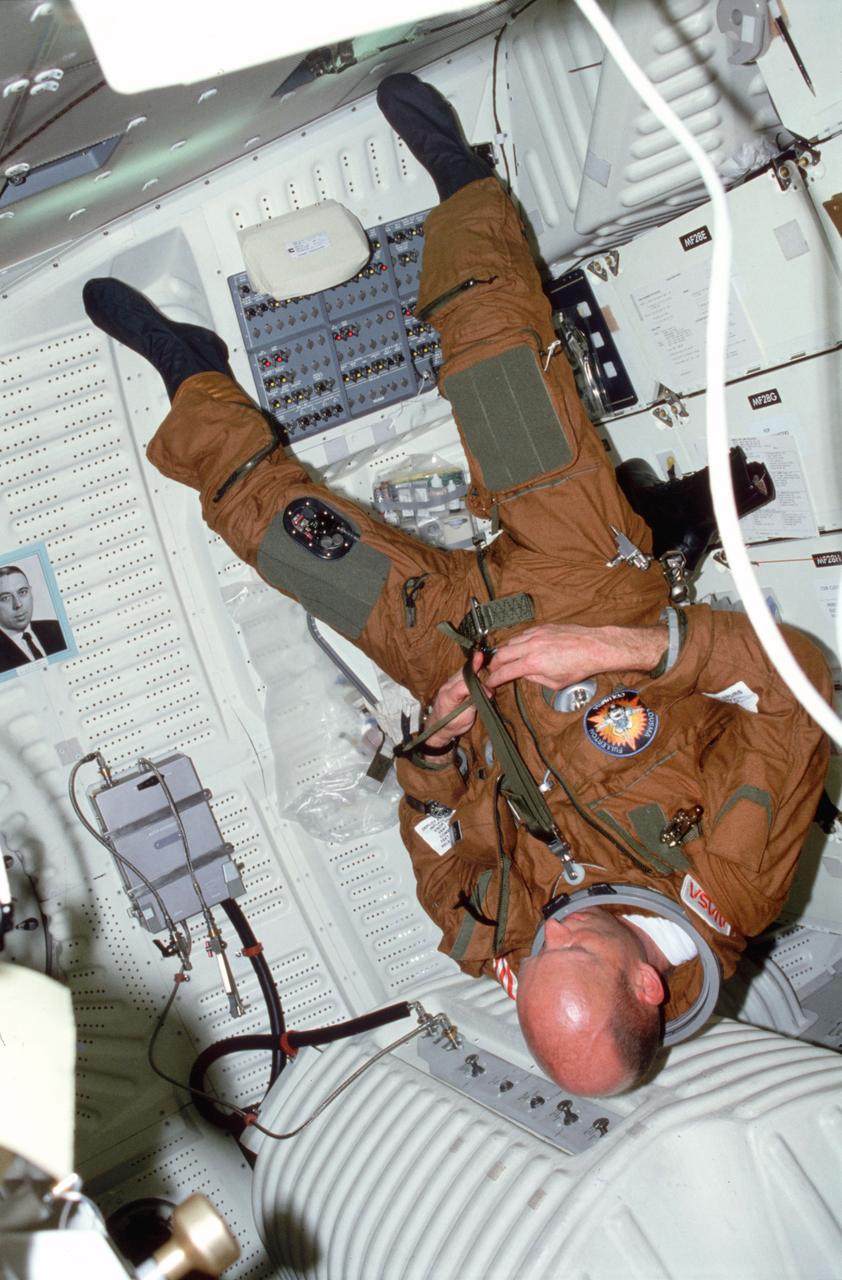
STS003-23-165 (22-30 March 1982) --- Astronaut Gordon Fullerton, STS-3 pilot, dons ejection escape suit (EES) (high altitude pressure garment) life preserver unit (LPU) on forward port side of middeck above potable water tank. Fullerton also adjusts lapbelt fitting and helmet holddown strap. Photo credit: NASA

iss074e0540893 (April 28, 2026) --- ESA (European Space Agency) astronaut and Expedition 74 flight engineer Sophie Adenot works inside the Kibo laboratory module's Life Science Glovebox. Adenot was exploring ways to use the International Space Station’s potable water to produce medical grade intravenous fluids, or saline solutions, to treat medical conditions in space. The Intravenous Fluid Generation – Mini technology demonstration seeks to reduce a crew’s dependence on cargo missions and avoid expiration of medical supplies on a spacecraft. Credit: ESA/Sophie Adenot
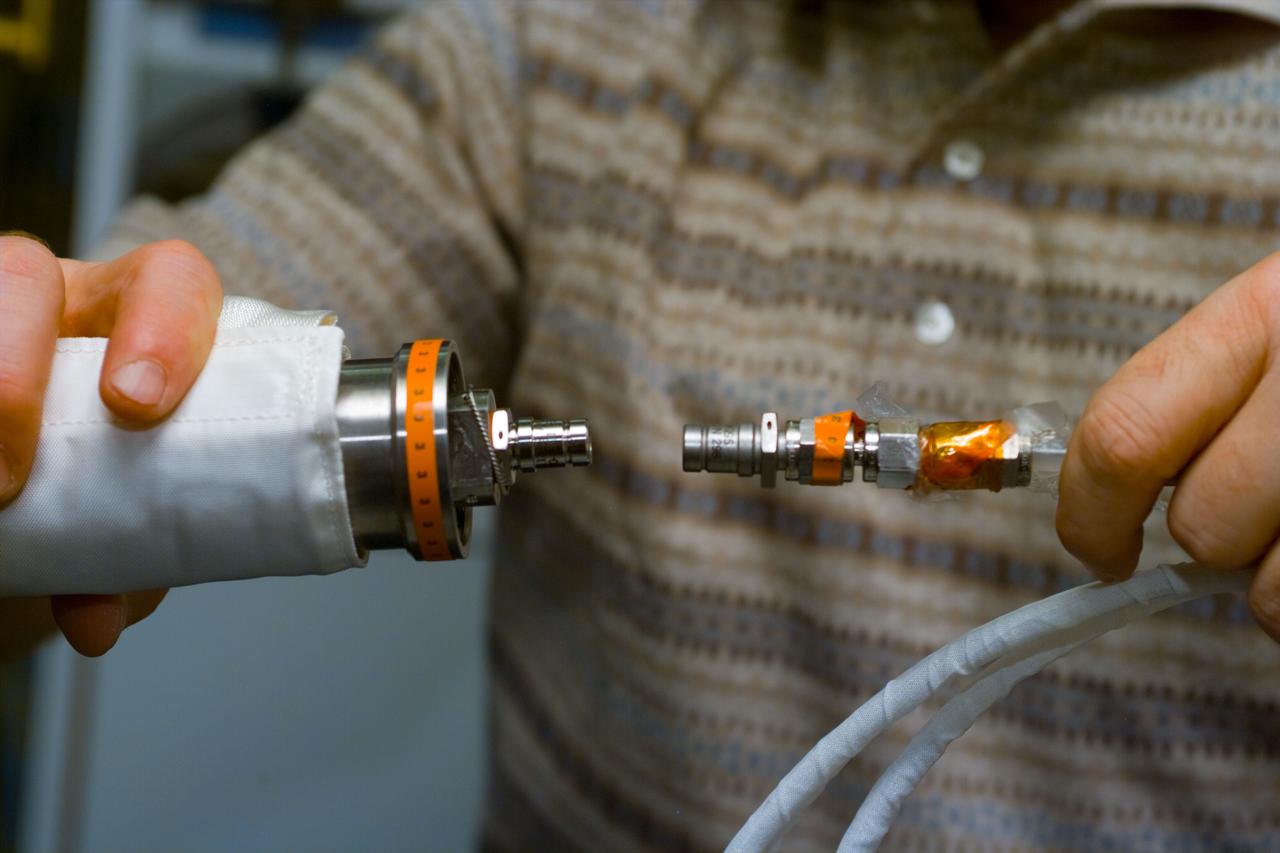
S88-E-5001 (12-04-98) --- Astronaut Jerry L. Ross, mission specialist, discovered incompatible connections involved in one of the STS-88 detailed test objectives (DTO), this one having to do with the crew's drinking water. The proper female counterpart for the connection was later found. DTO 691 is an in-cabin experiment dealing with a low-iodine residual system. Newly developed technology replacing the Galley Iodine Removal System (GIRA) is expected to reduce the concentration of iodine in the Shuttle's potable water system. The photo was taken with an electronic still camera (ESC) at 14:09:17 GMT, Dec. 4.
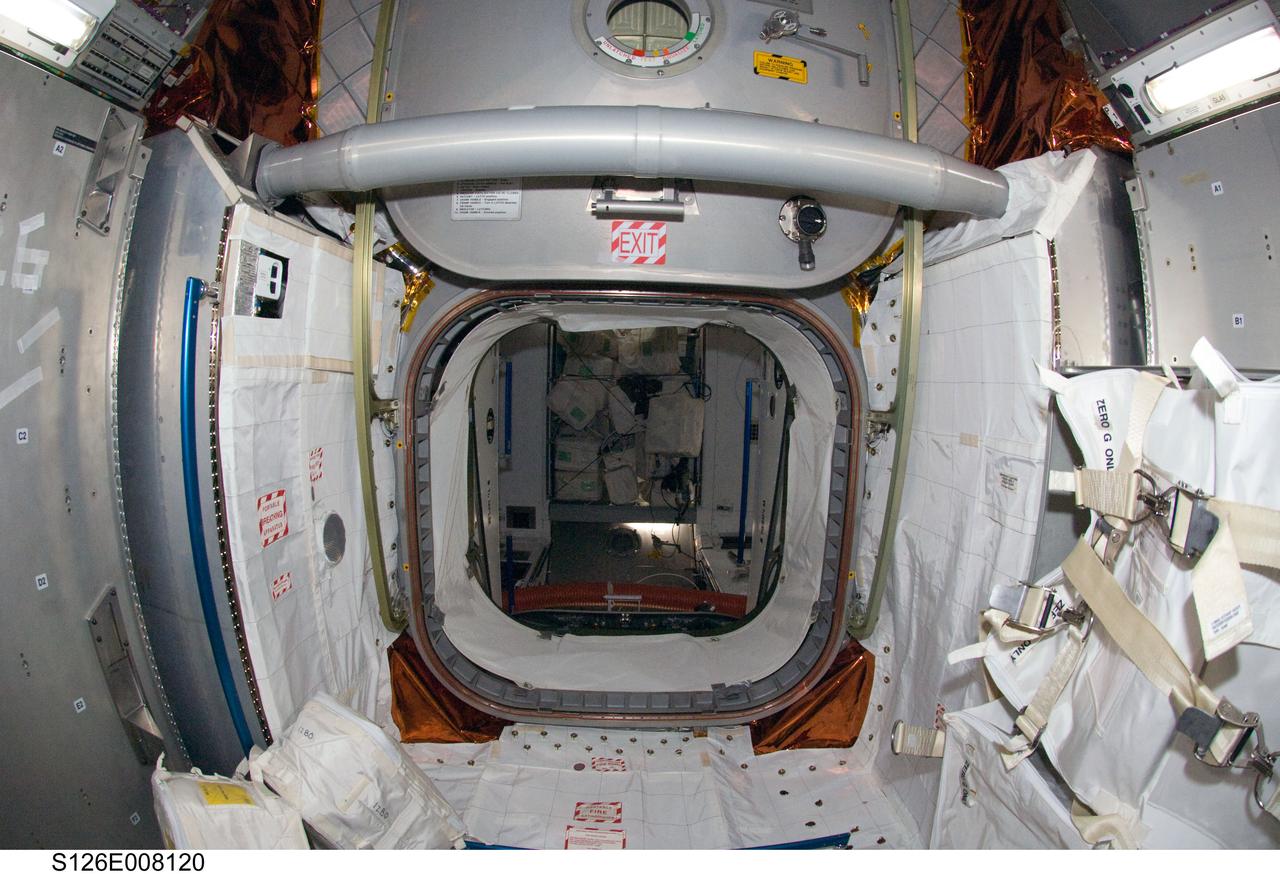
S126-E-008120 (18 Nov. 2008) --- Interior view of the Leonardo Multi-Purpose Logistics Module attached to the Earth-facing port of the International Space Station's Harmony node. Leonardo was moved from Space Shuttle Endeavour's cargo bay and linked to the station on Nov. 17, carrying two water recovery systems racks for recycling urine into potable water, a second toilet system, new gallery components, two new food warmers, a food refrigerator, an experiment freezer, combustion science experiment rack, two separate sleeping quarters and a resistance exercise device (aRED) that allows station crewmembers to perform a variety of exercises.
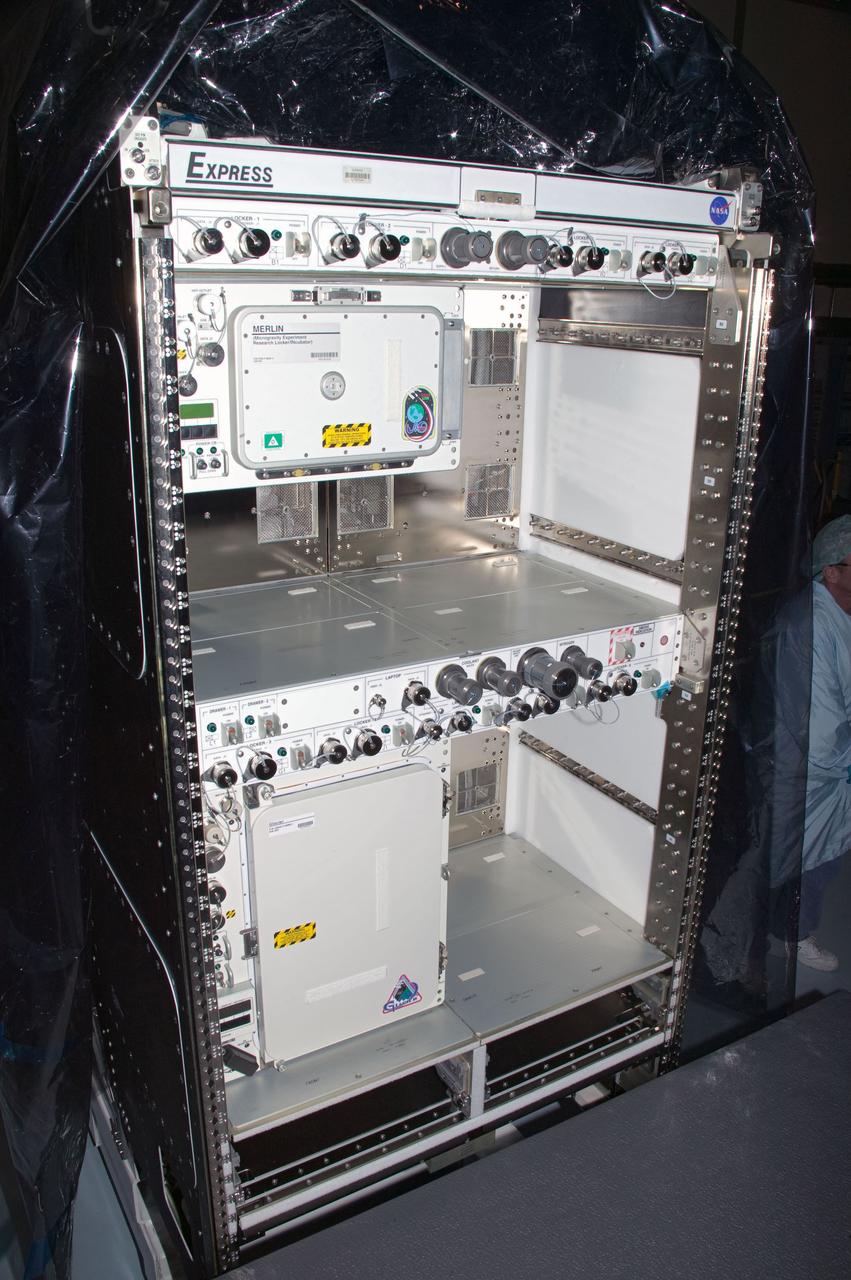
CAPE CANAVERAL, Fla. – This photo shows the crew galley that will be delivered to the International Space Station aboard space shuttle Endeavour on the STS-126 mission. It is designed to make use of the top half of EXPRESS Rack 6 for power, cooling and water. It will consist of one potable water dispenser, one food warmer, and one MERLIN refrigerator. Once on orbit, the galley will be transferred to the U.S. Lab. Endeavour and its crew of seven are scheduled to lift off at 7:55 p.m. Nov. 14 for the 15-day STS-126 mission. Photo credit: NASA
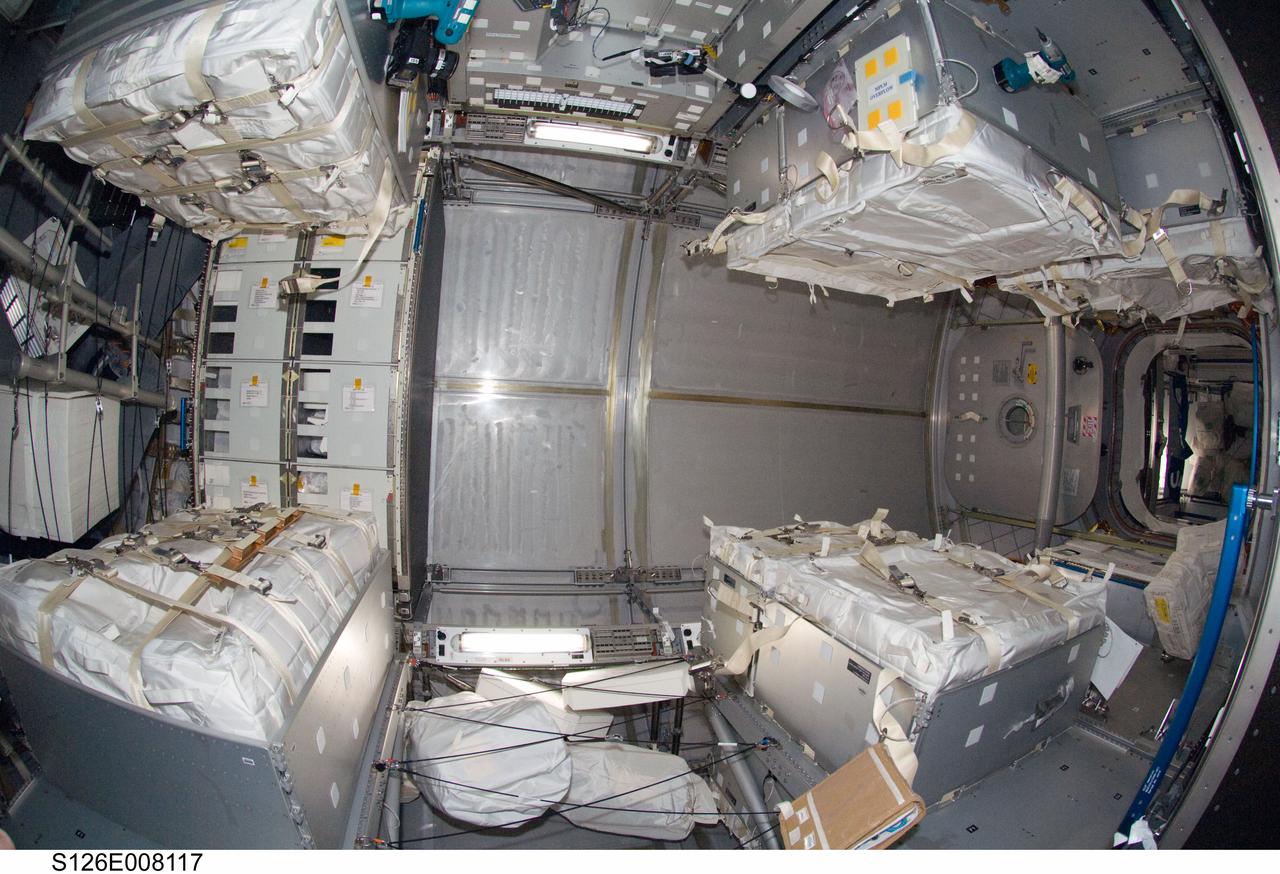
S126-E-008117 (18 Nov. 2008) --- Interior view of the Leonardo Multi-Purpose Logistics Module attached to the Earth-facing port of the International Space Station's Harmony node. Leonardo was moved from Space Shuttle Endeavour's cargo bay and linked to the station on Nov. 17, carrying two water recovery systems racks for recycling urine into potable water, a second toilet system, new gallery components, two new food warmers, a food refrigerator, an experiment freezer, combustion science experiment rack, two separate sleeping quarters and a resistance exercise device (aRED) that allows station crewmembers to perform a variety of exercises.
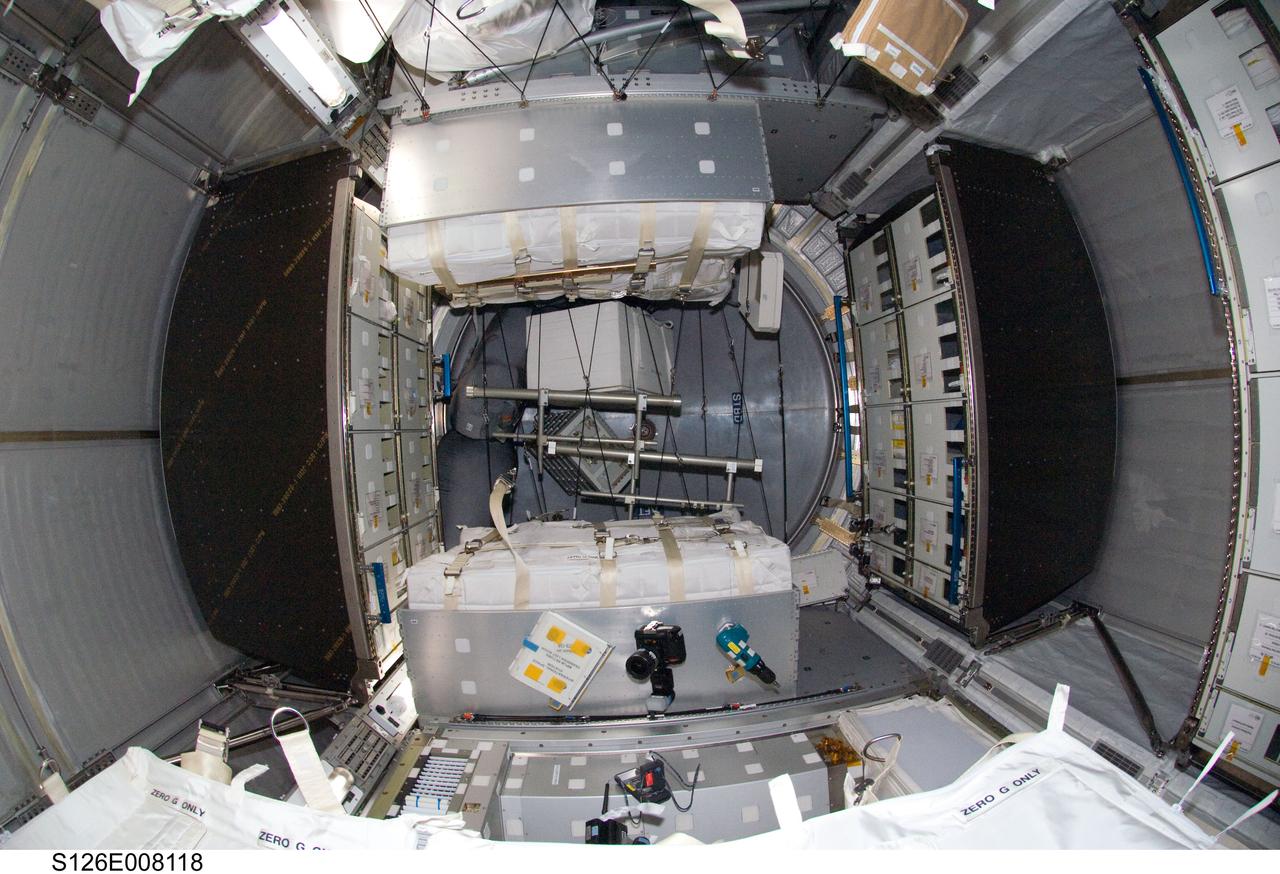
S126-E-008118 (18 Nov. 2008) --- Interior view of the Leonardo Multi-Purpose Logistics Module attached to the Earth-facing port of the International Space Station's Harmony node. Leonardo was moved from Space Shuttle Endeavour's cargo bay and linked to the station on Nov. 17, carrying two water recovery systems racks for recycling urine into potable water, a second toilet system, new gallery components, two new food warmers, a food refrigerator, an experiment freezer, combustion science experiment rack, two separate sleeping quarters and a resistance exercise device (aRED) that allows station crewmembers to perform a variety of exercises.
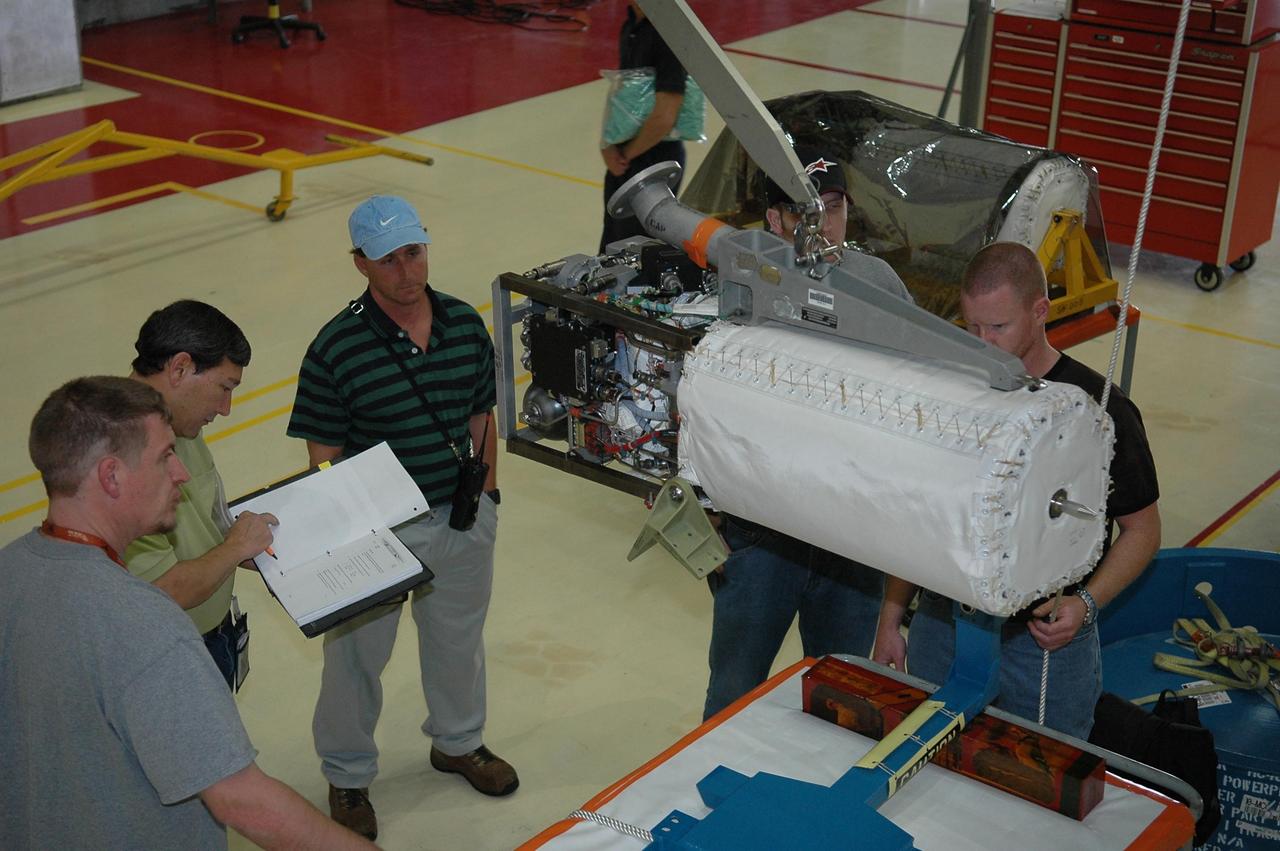
KENNEDY SPACE CENTER, FLA. - In NASA Kennedy Space Center’s Orbiter Processing Facility bay 3, a fuel cell removed from the orbiter Discovery is lowered toward a work stand. Fuel cells are located under the forward portion of the payload bay. They make power for the orbiter by mixing hydrogen and oxygen to produce electricity. Fuel cells also create potable water that is pumped into storage tanks for the crew to use in orbit. Discovery is the designated orbiter for the second return-to-flight mission, STS-121, scheduled for launch in May. Photo credit: NASA/Kim Shiflett

KENNEDY SPACE CENTER, FLA. - In NASA Kennedy Space Center’s Orbiter Processing Facility bay 3, a fuel cell removed from the orbiter Discovery is lowered toward the floor. Fuel cells are located under the forward portion of the payload bay. They make power for the orbiter by mixing hydrogen and oxygen to produce electricity. Fuel cells also create potable water that is pumped into storage tanks for the crew to use in orbit. Discovery is the designated orbiter for the second return-to-flight mission, STS-121, scheduled for launch in May. Photo credit: NASA/Kim Shiflett
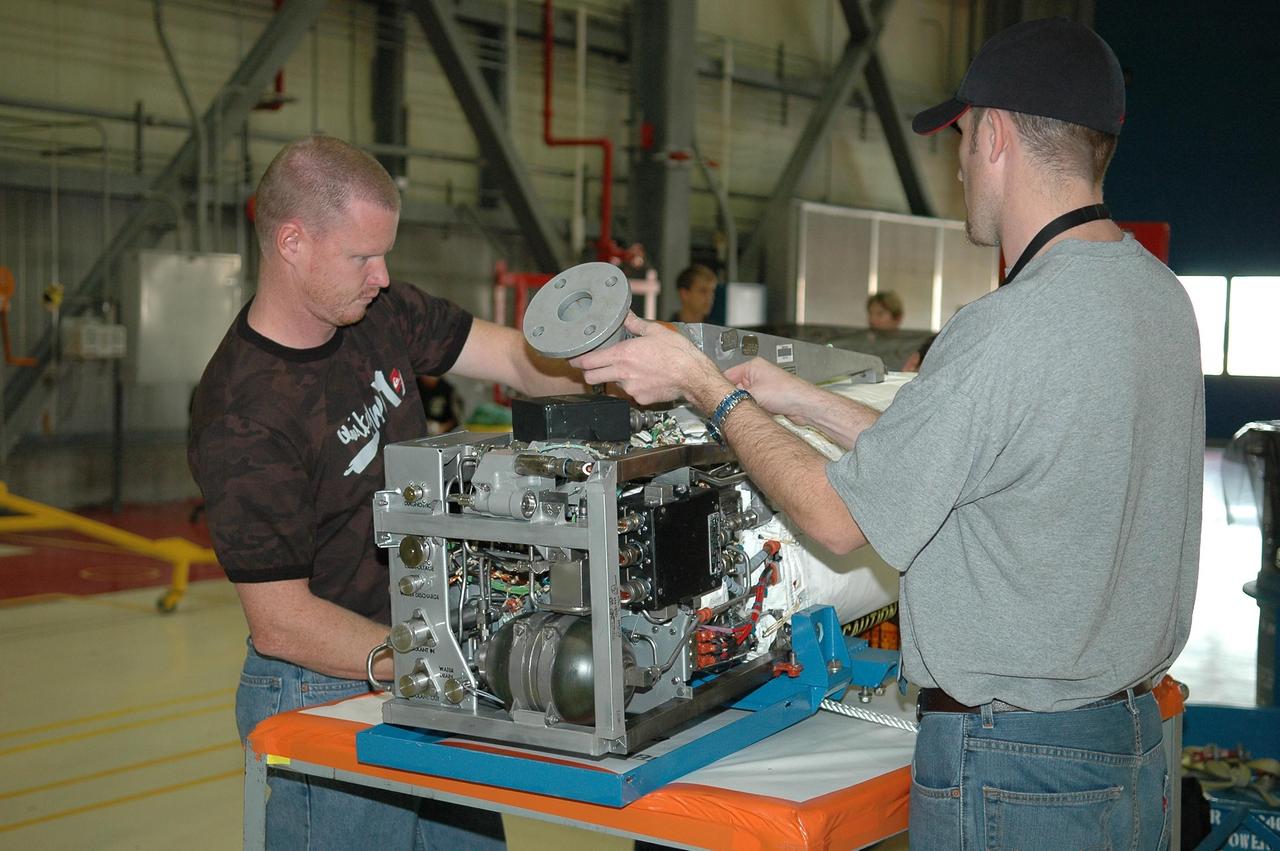
KENNEDY SPACE CENTER, FLA. - In NASA Kennedy Space Center’s Orbiter Processing Facility bay 3, technicians begin dismantling the fuel cell removed from the orbiter Discovery. Fuel cells are located under the forward portion of the payload bay. They make power for the orbiter by mixing hydrogen and oxygen to produce electricity. Fuel cells also create potable water that is pumped into storage tanks for the crew to use in orbit. Discovery is the designated orbiter for the second return-to-flight mission, STS-121, scheduled for launch in May. Photo credit: NASA/Kim Shiflett
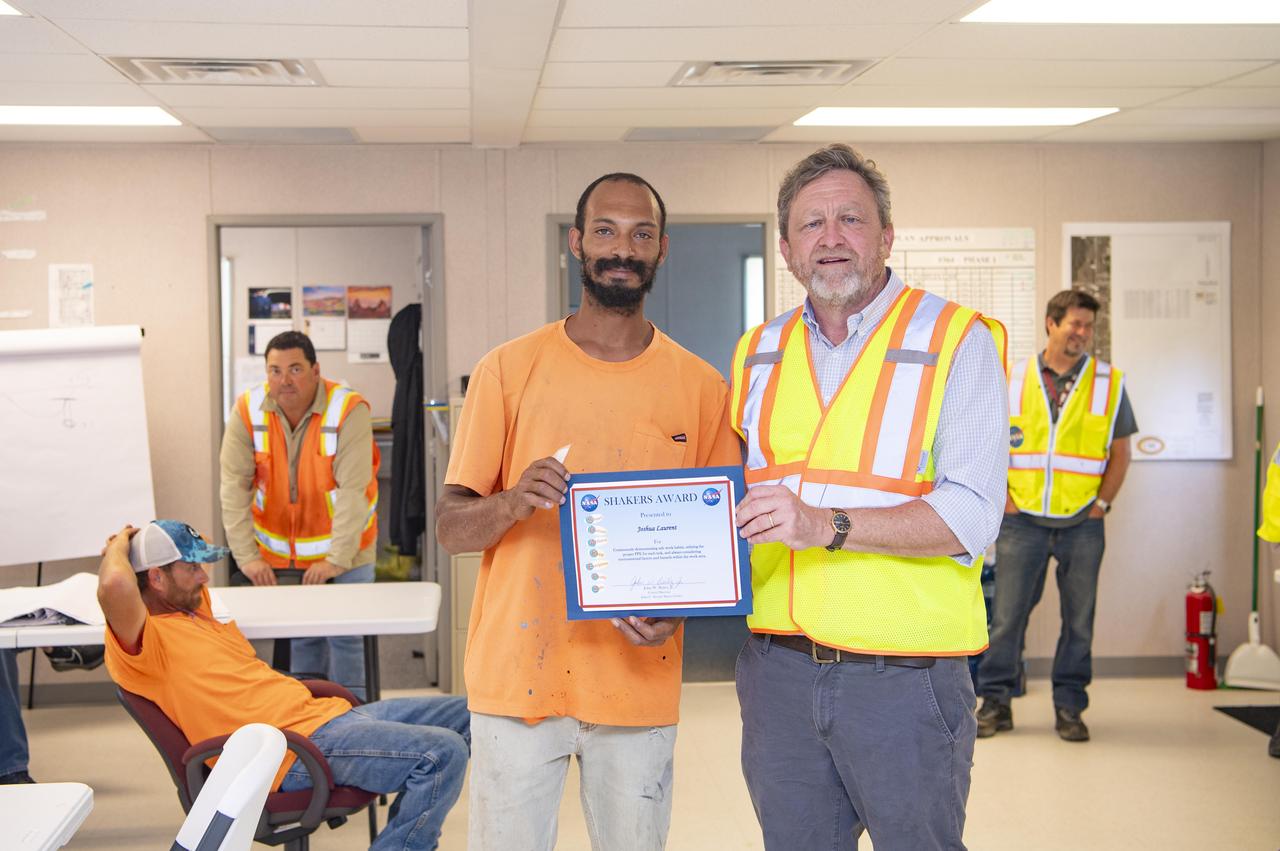
Joshua Laurent, an employee with Civil Works Contracting, is presented a NASA SHAKERS (Smart Human Actions Keep Everyone Really Safe) Award from NASA Stennis Associate Director Rodney McKellip on May 8. Laurent, left, received the award for continuously demonstrating safe work habits, utilizing the proper personal protective equipment for each task, and always considering environmental factors and hazards within the work area while working on the NASA Stennis potable water system. NASA’s constant attention to safety, one of the agency’s five core values, is the cornerstone for mission success.
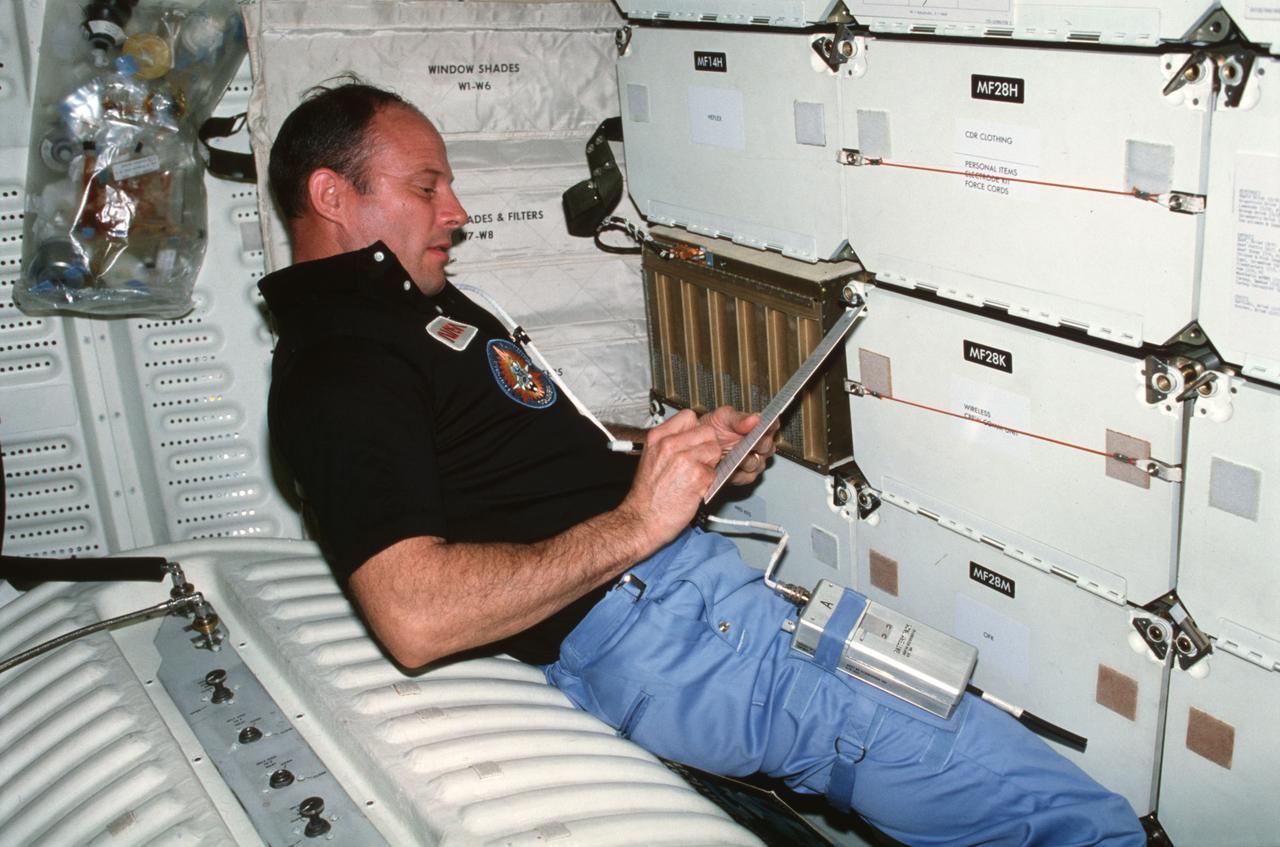
STS003-22-122 (30 March 1982) --- STS-3 Commander Lousma, wearing communications kit assembly (ASSY) mini-headset (HDST), records Plant Growth Unit (PGU) data for the Influence of Weightlessness on Plant Lignification Experiment at forward middeck locker MF14K. The experiment is designed to demonstrate the effect of weightlessness on the quantity and rate of lignin formation in different plant species during early stages of development. Port side bulkhead with window shade and filter kit appears behind Lousma and potable water tank below him. Trash bag also appears in view. Photo credit: NASA
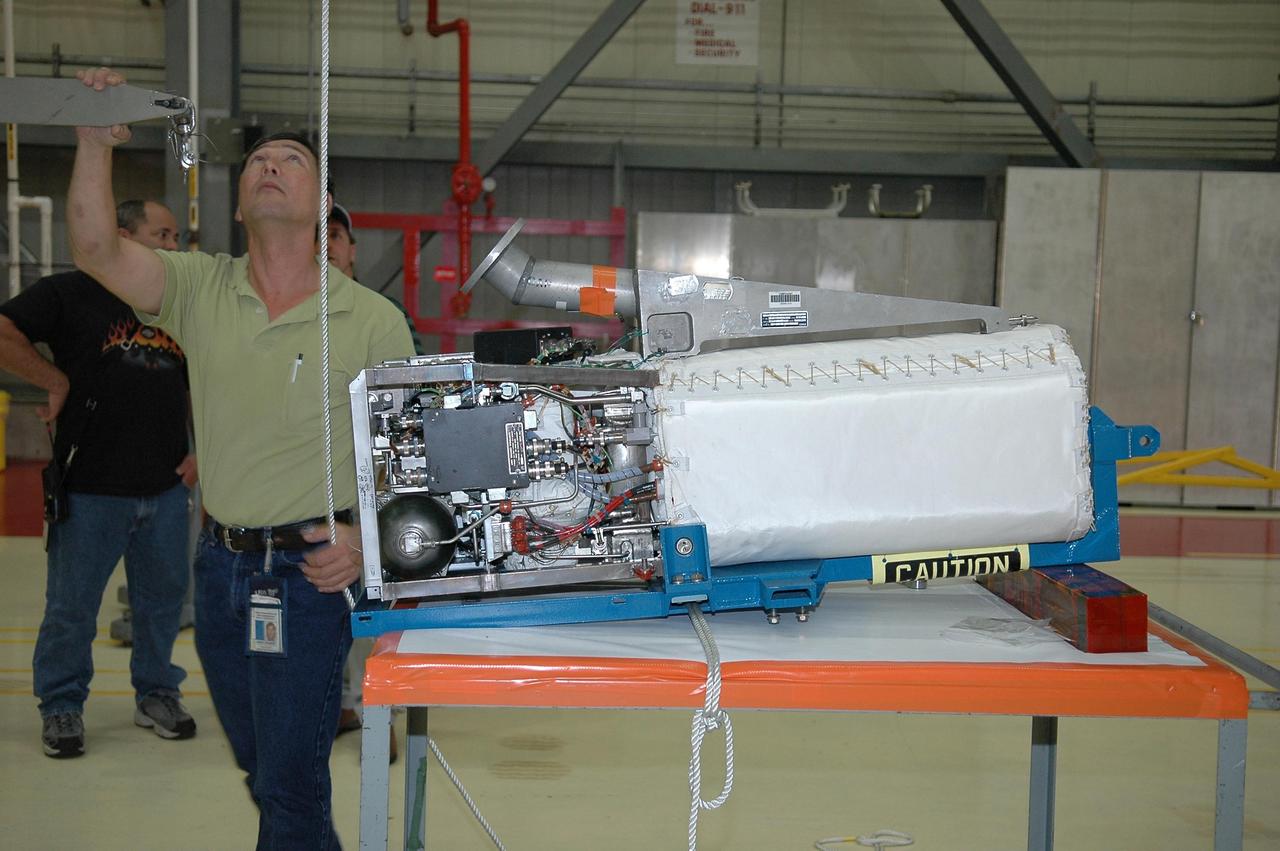
KENNEDY SPACE CENTER, FLA. - In NASA Kennedy Space Center’s Orbiter Processing Facility bay 3, the fuel cell removed from the orbiter Discovery is lowered onto a bracket on the work stand. Fuel cells are located under the forward portion of the payload bay. They make power for the orbiter by mixing hydrogen and oxygen to produce electricity. Fuel cells also create potable water that is pumped into storage tanks for the crew to use in orbit. Discovery is the designated orbiter for the second return-to-flight mission, STS-121, scheduled for launch in May. Photo credit: NASA/Kim Shiflett
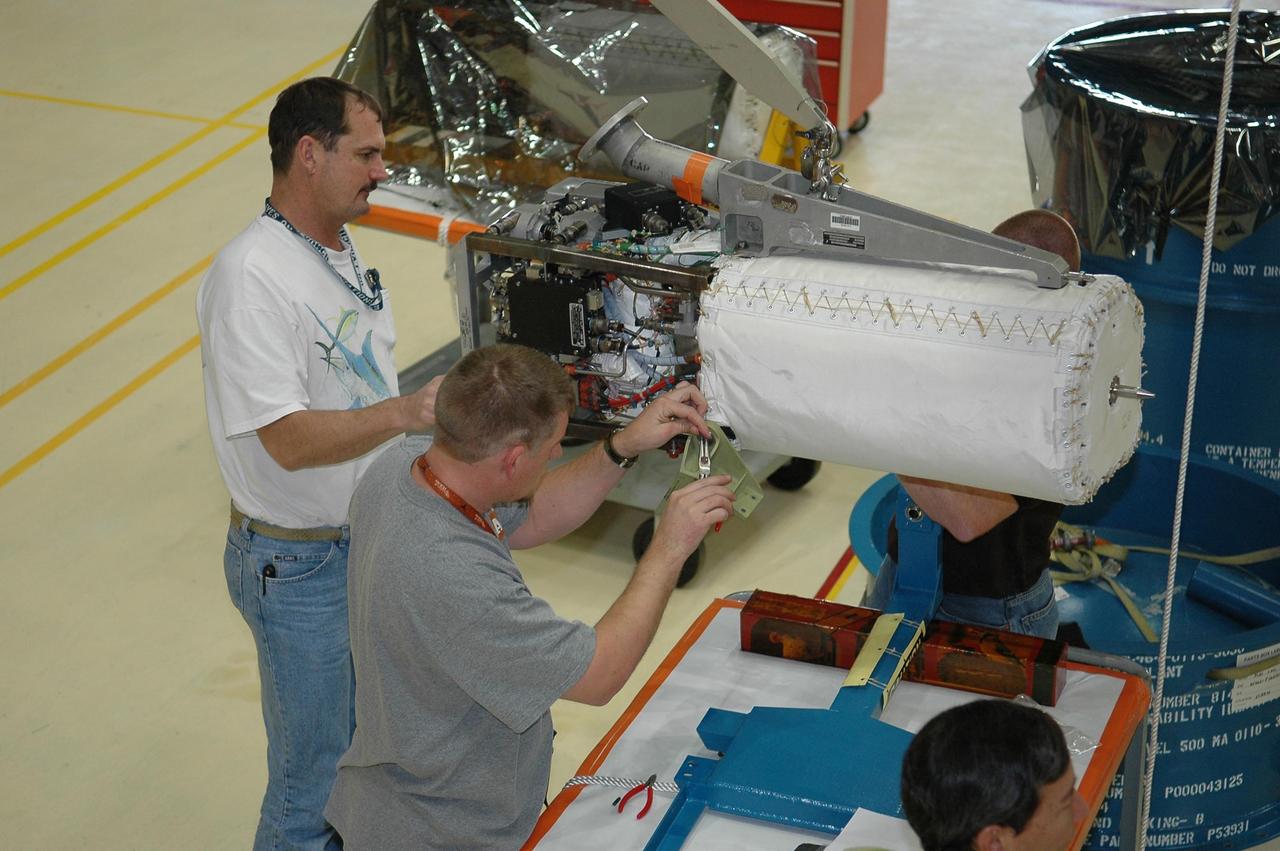
KENNEDY SPACE CENTER, FLA. - In NASA Kennedy Space Center’s Orbiter Processing Facility bay 3, technicians begin removing a piece of hardware from the side of a fuel cell removed from the orbiter Discovery. Fuel cells are located under the forward portion of the payload bay. They make power for the orbiter by mixing hydrogen and oxygen to produce electricity. Fuel cells also create potable water that is pumped into storage tanks for the crew to use in orbit. Discovery is the designated orbiter for the second return-to-flight mission, STS-121, scheduled for launch in May. Photo credit: NASA/Kim Shiflett

KENNEDY SPACE CENTER, FLA. - In NASA Kennedy Space Center’s Orbiter Processing Facility bay 3, technicians remove a piece of hardware from the side of a fuel cell removed from the orbiter Discovery. Fuel cells are located under the forward portion of the payload bay. They make power for the orbiter by mixing hydrogen and oxygen to produce electricity. Fuel cells also create potable water that is pumped into storage tanks for the crew to use in orbit. Discovery is the designated orbiter for the second return-to-flight mission, STS-121, scheduled for launch in May. Photo credit: NASA/Kim Shiflett

iss074e0540294 (April 28, 2026) --- ESA (European Space Agency) astronaut and Expedition 74 flight engineer Sophie Adenot activates the Kibo laboratory module's Life Science Glovebox for the Intravenous Fluid Generation – Mini (IVGEN Mini) technology demonstration. Adenot was exploring ways to use the International Space Station’s potable water to produce medical grade intravenous fluids, or saline solutions, to treat medical conditions in space. IVGEN Mini seeks to reduce a crew’s dependence on cargo missions and avoid expiration of medical supplies on a spacecraft. Credit: ESA/Sophie Adenot

iss074e0521507 (April 27, 2026) --- An over-the-shoulder view of ESA (European Space Agency) astronaut and Expedition 74 flight engineer Sophie Adenot working inside the Kibo laboratory module's Life Science Glovebox on the Intravenous Fluid Generation – Mini (IVGen Mini) technology demonstration. Adenot was exploring ways to use the International Space Station’s potable water to produce medical-grade intra-venous fluids, or saline solutions, to treat medical conditions in space. IVGen Mini seeks to re-duce a crew’s dependence on cargo missions and avoid expiration of medical supplies on a spacecraft. Credit: NASA/Jessica Meir

iss074e0521504 (April 27, 2026) --- A top-down view of ESA (European Space Agency) astronaut and Expedition 74 flight engineer Sophie Adenot, who works inside the Kibo laboratory module's Life Science Glovebox on the Intravenous Fluid Generation – Mini (IVGen Mini) technology demonstration. Adenot was exploring ways to use the International Space Station’s potable water to produce medical-grade intravenous fluids, or saline solutions, to treat medical conditions in space. IVGen Mini seeks to reduce a crew’s dependence on cargo missions and avoid expiration of medical supplies on a spacecraft. Credit: NASA/Jessica Meir
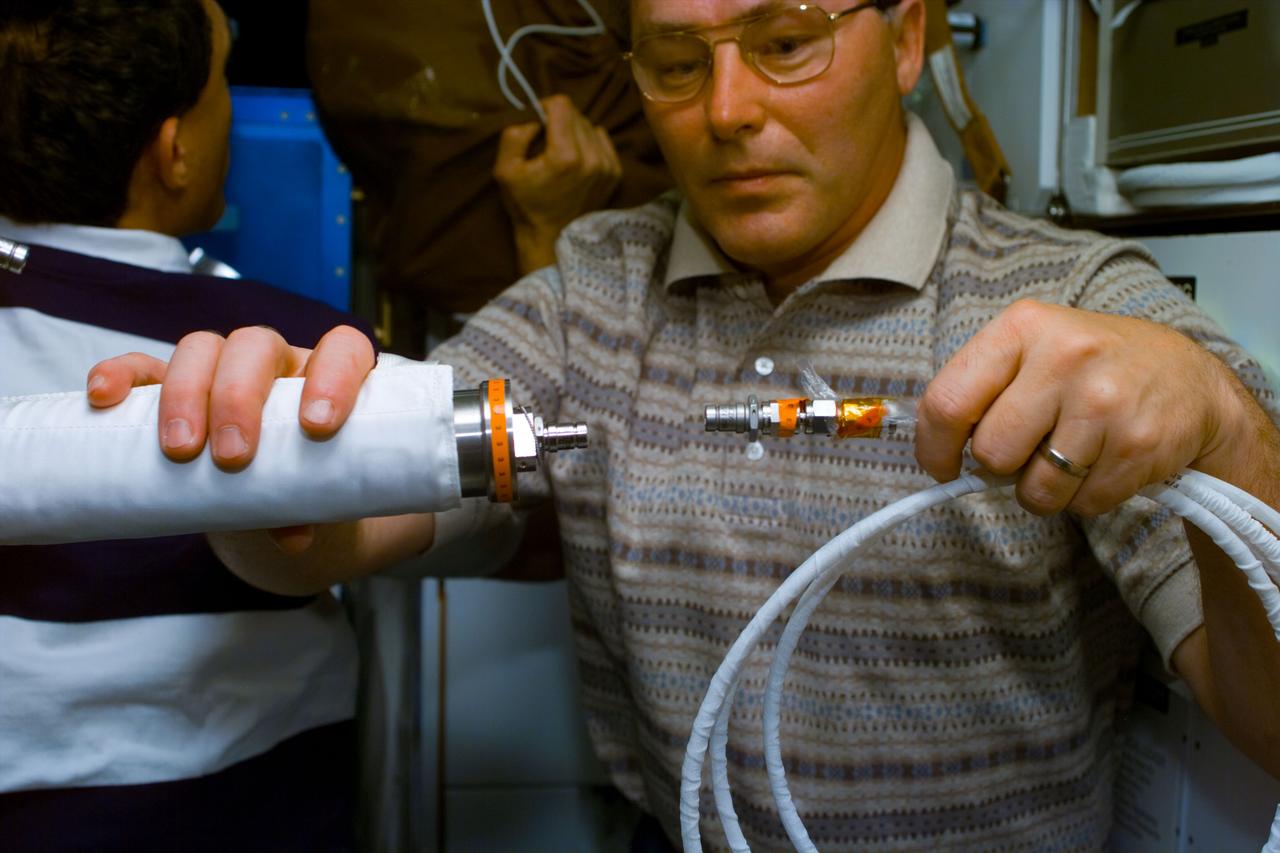
S88-E-5002 (12-04-98) --- Astronaut Jerry L. Ross, mission specialist, holds up two incompatible connections involved in one of the STS-88 detailed test objectives (DTO), this one having to do with the crew's drinking water. The proper counterpart was later located and the connection was successfully accomplished. Astronaut James H. Newman, mission specialist, is at left background. DTO 691 is an in cabin experiment dealing with a low-iodine residual system. Newly developed technology replacing the Galley Iodine Removal System (GIRA) is expected to reduce the concentration of iodine in the Shuttle's potable water system. The photo was taken with an electronic still camera (ESC) at 14:09:40 GMT, Dec. 4.
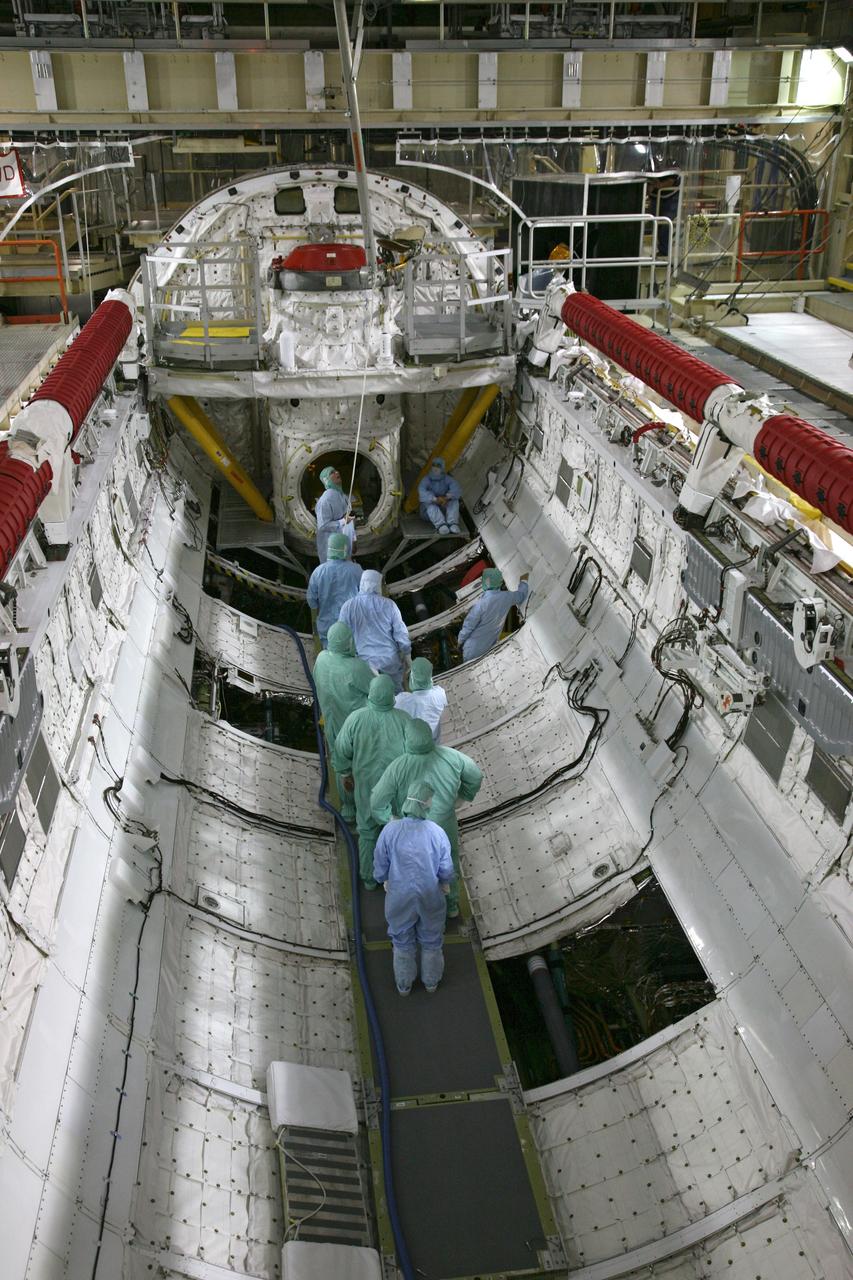
CAPE CANAVERAL, Fla. - In Orbiter Processing Facility Bay 3 at NASA's Kennedy Space Center in Florida, United Space Alliance workers lower a "fish pole" lifting fixture toward space shuttle Discovery's payload bay. The fixture will be used to remove the gaseous nitrogen pressure tank during processing for the shuttle's STS-131 mission to the International Space Station. The tanks are used for atmosphere conditioning and for moving potable water in the crew module. The seven-member STS-131 crew will deliver a Multi-Purpose Logistics Module filled with science racks to be transferred to laboratories on the station. Three spacewalks will include work to attach a spare ammonia tank assembly to the station's exterior and return a European experiment from outside the station's Columbus module. This will be the 33rd shuttle mission to the station. Launch is targeted for March 18, 2010. Photo credit: NASA/Troy Cryder
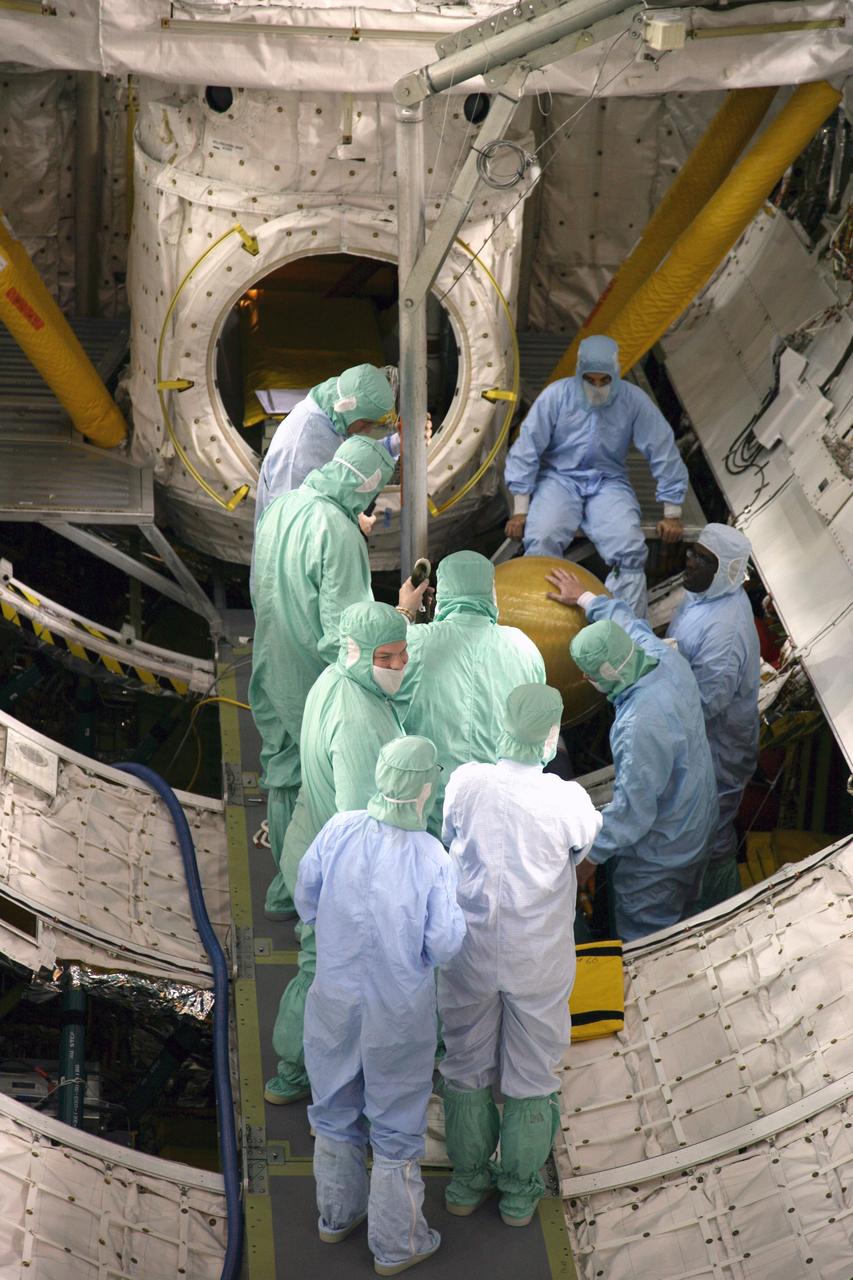
CAPE CANAVERAL, Fla. - In Orbiter Processing Facility Bay 3 at NASA's Kennedy Space Center in Florida, United Space Alliance workers attach a "fish pole" lifting fixture to the gaseous nitrogen tank in space shuttle Discovery's payload bay. The tank is being removed during processing for the shuttle's STS-131 mission to the International Space Station. The tanks are used for atmosphere conditioning and for moving potable water in the crew module. The seven-member STS-131 crew will deliver a Multi-Purpose Logistics Module filled with science racks to be transferred to laboratories on the station. Three spacewalks will include work to attach a spare ammonia tank assembly to the station's exterior and return a European experiment from outside the station's Columbus module. This will be the 33rd shuttle mission to the station. Launch is targeted for March 18, 2010. Photo credit: NASA/Troy Cryder

CAPE CANAVERAL, Fla. - In Orbiter Processing Facility Bay 3 at NASA's Kennedy Space Center in Florida, the gaseous nitrogen tank in space shuttle Discovery's payload bay is attached to a "fish pole" lifting fixture and ready to be hoisted out of the bay. The tank is being removed during processing for the shuttle's STS-131 mission to the International Space Station. The tanks are used for atmosphere conditioning and for moving potable water in the crew module. The seven-member STS-131 crew will deliver a Multi-Purpose Logistics Module filled with science racks to be transferred to laboratories on the station. Three spacewalks will include work to attach a spare ammonia tank assembly to the station's exterior and return a European experiment from outside the station's Columbus module. This will be the 33rd shuttle mission to the station. Launch is targeted for March 18, 2010. Photo credit: NASA/Troy Cryder
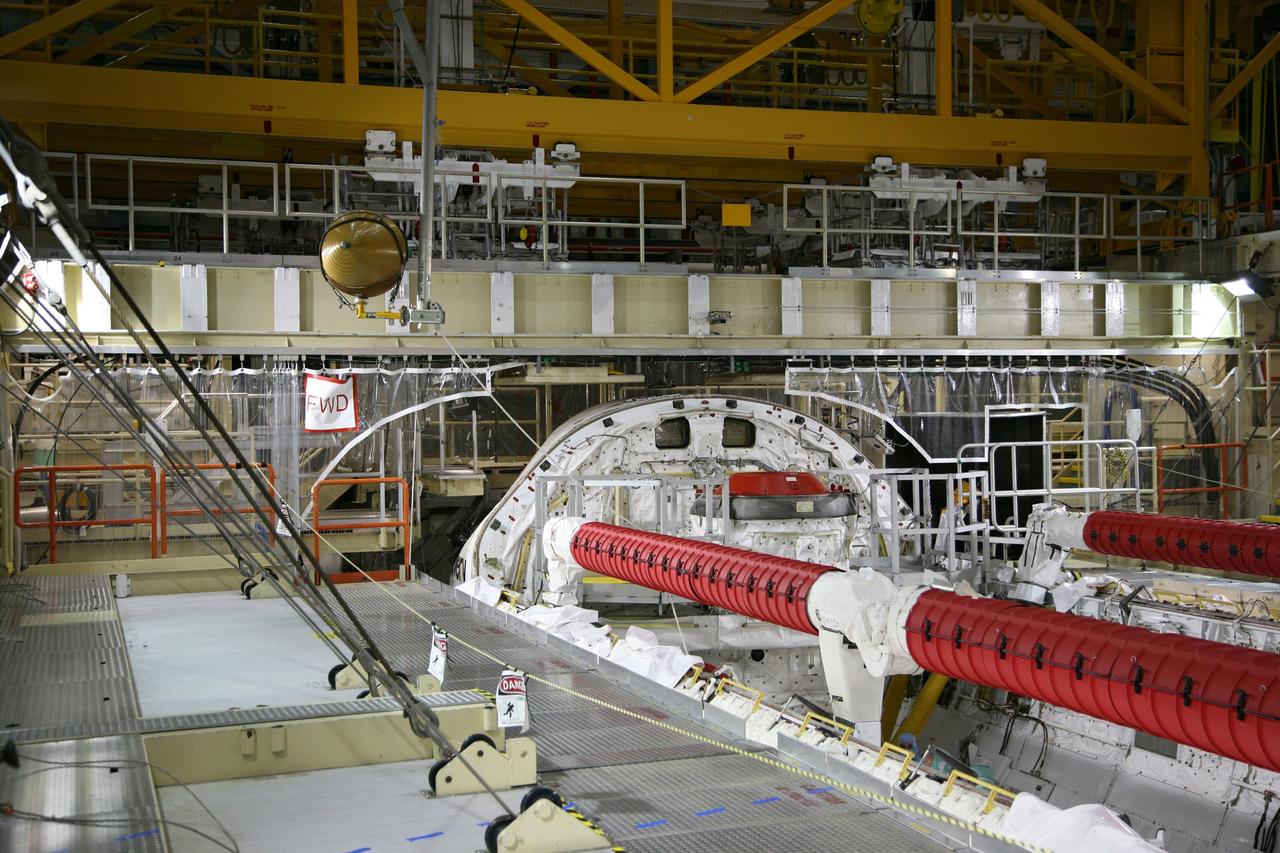
CAPE CANAVERAL, Fla. - In Orbiter Processing Facility Bay 3 at NASA's Kennedy Space Center in Florida, a crane lifts the gaseous nitrogen tank from space shuttle Discovery's payload bay with the aid of a "fish pole" lifting fixture. The tank is being removed during processing for the shuttle's STS-131 mission to the International Space Station. The tanks are used for atmosphere conditioning and for moving potable water in the crew module. The seven-member STS-131 crew will deliver a Multi-Purpose Logistics Module filled with science racks to be transferred to laboratories on the station. Three spacewalks will include work to attach a spare ammonia tank assembly to the station's exterior and return a European experiment from outside the station's Columbus module. This will be the 33rd shuttle mission to the station. Launch is targeted for March 18, 2010. Photo credit: NASA/Troy Cryder

CAPE CANAVERAL, Fla. – This photo shows the waste and hygiene compartment that will be delivered to the International Space Station aboard space shuttle Endeavour on the STS-126 mission. The Russian-built toilet system provides the crew with a second facility on the station, located in the Destiny lab. The unit separately channels liquid and solid waste. While the solid waste goes to a holding tank, a new pair of processing units that Endeavour also will deliver on this mission are set to begin a unique recycling program -- turning crew members’ urine into potable water. Space shuttle Endeavour and its crew of seven are scheduled to lift off at 7:55 p.m. Nov. 14 for the 15-day STS-126 mission. Photo credit: NASA
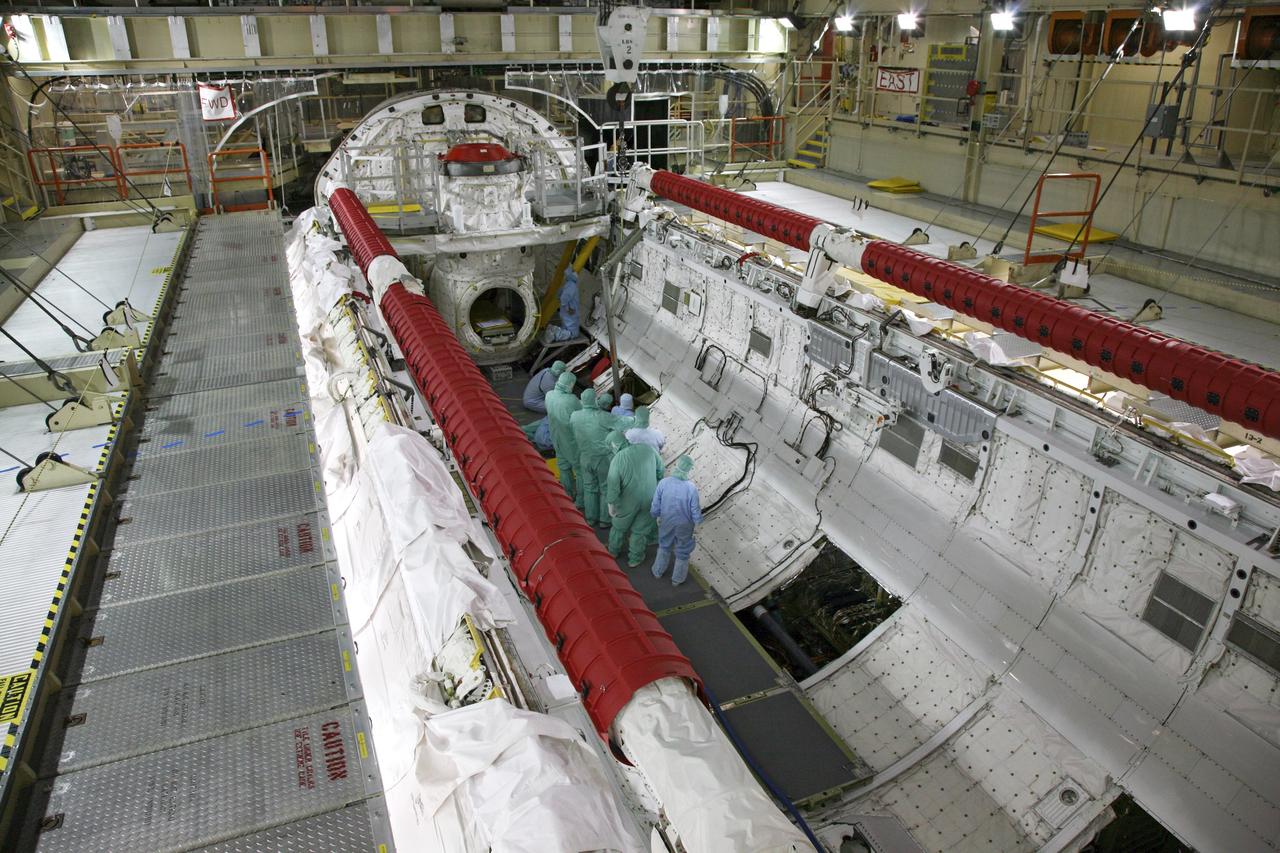
CAPE CANAVERAL, Fla. - In Orbiter Processing Facility Bay 3 at NASA's Kennedy Space Center in Florida, United Space Alliance workers guide a "fish pole" lifting fixture being lowered by crane toward space shuttle Discovery's payload bay. The fixture will be used to remove the gaseous nitrogen tank during processing for the shuttle's STS-131 mission to the International Space Station. The tanks are used for atmosphere conditioning and for moving potable water in the crew module. The seven-member STS-131 crew will deliver a Multi-Purpose Logistics Module filled with science racks to be transferred to laboratories on the station. Three spacewalks will include work to attach a spare ammonia tank assembly to the station's exterior and return a European experiment from outside the station's Columbus module. This will be the 33rd shuttle mission to the station. Launch is targeted for March 18, 2010. Photo credit: NASA/Troy Cryder
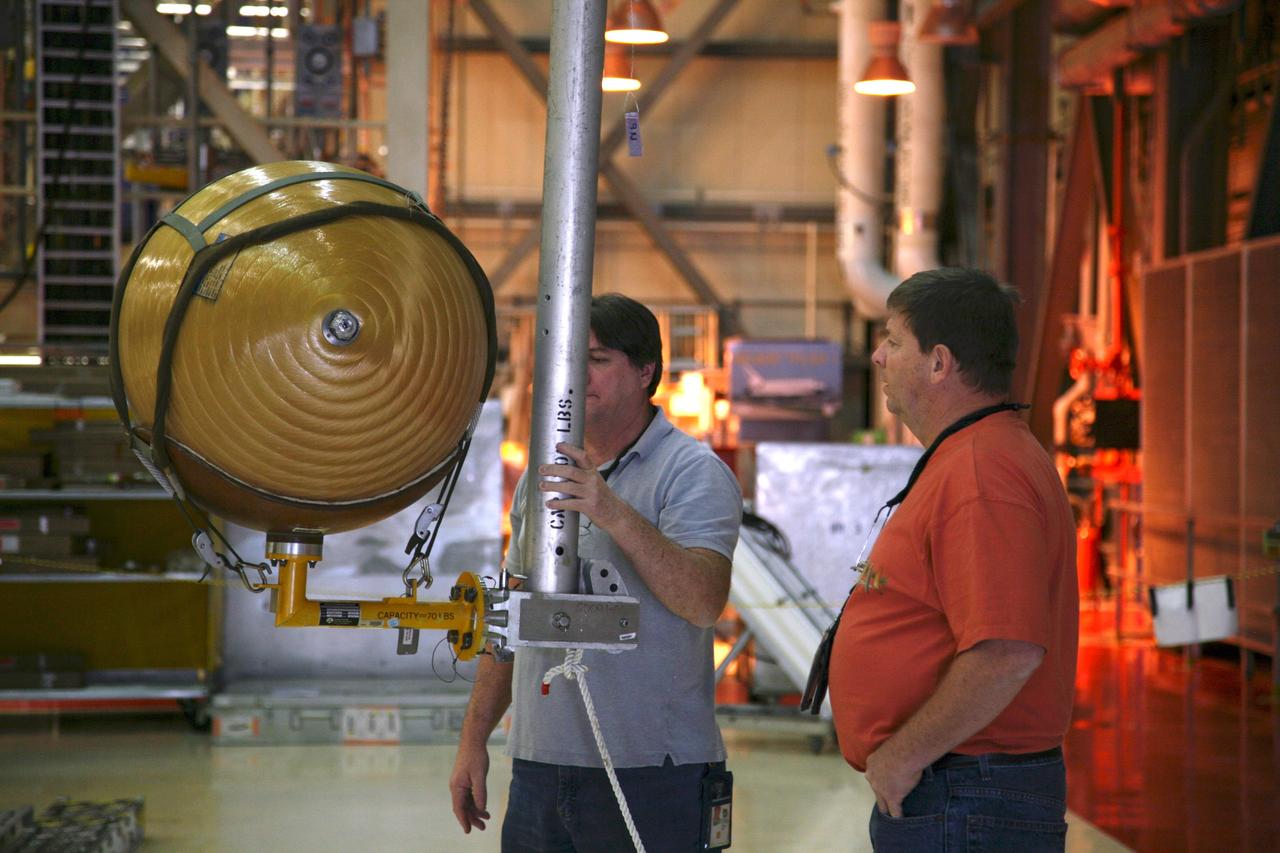
CAPE CANAVERAL, Fla. - In Orbiter Processing Facility Bay 3 at NASA's Kennedy Space Center in Florida, the gaseous nitrogen tank has been removed from space shuttle Discovery's payload bay during processing for the shuttle's STS-131 mission to the International Space Station. The tanks are used for atmosphere conditioning and for moving potable water in the crew module. The seven-member STS-131 crew will deliver a Multi-Purpose Logistics Module filled with science racks to be transferred to laboratories on the station. Three spacewalks will include work to attach a spare ammonia tank assembly to the station's exterior and return a European experiment from outside the station's Columbus module. This will be the 33rd shuttle mission to the station. Launch is targeted for March 18, 2010. Photo credit: NASA/Troy Cryder