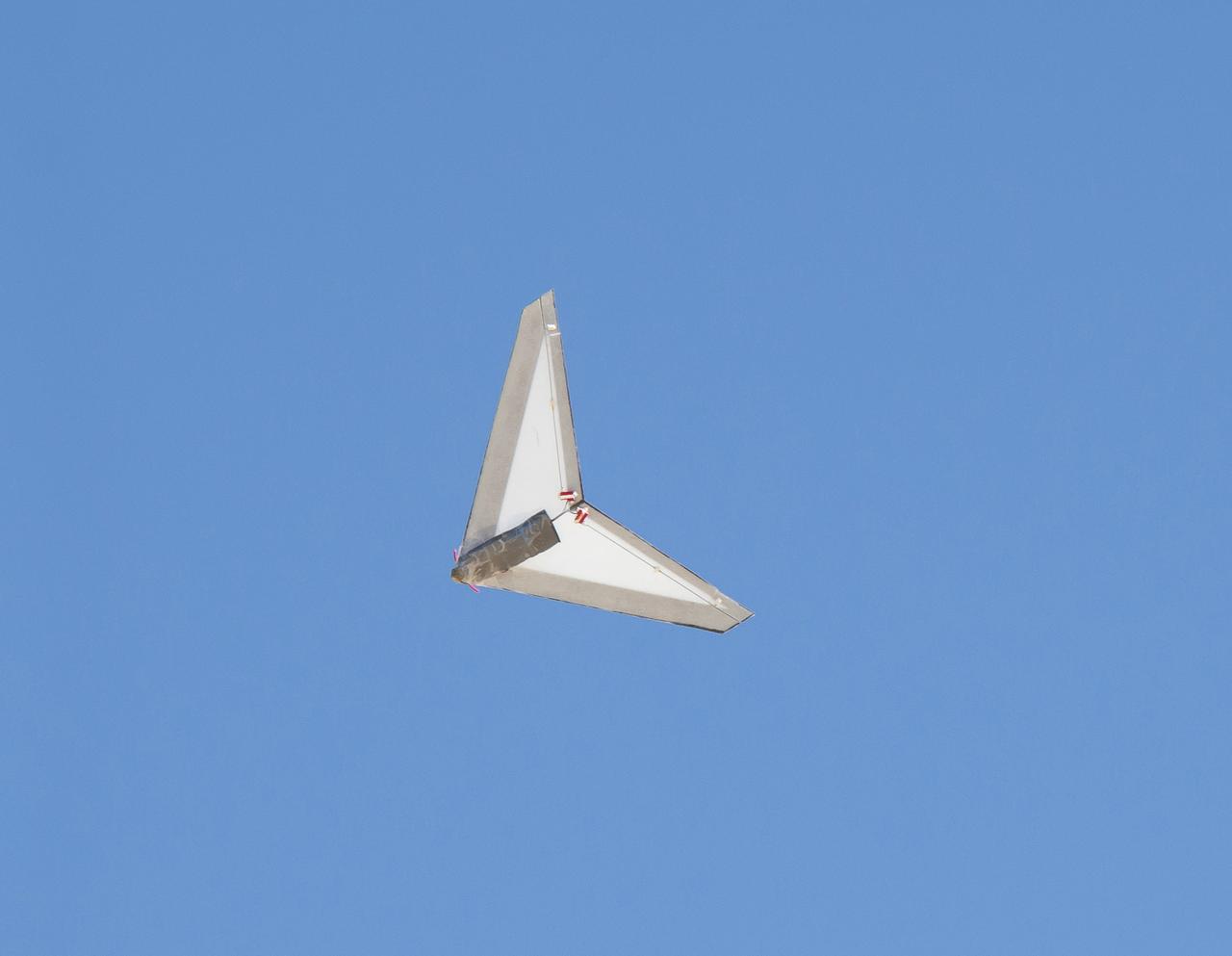
The Prandtl-M completes a successful research flight.
Potential Mars Airplane Resumes Flight
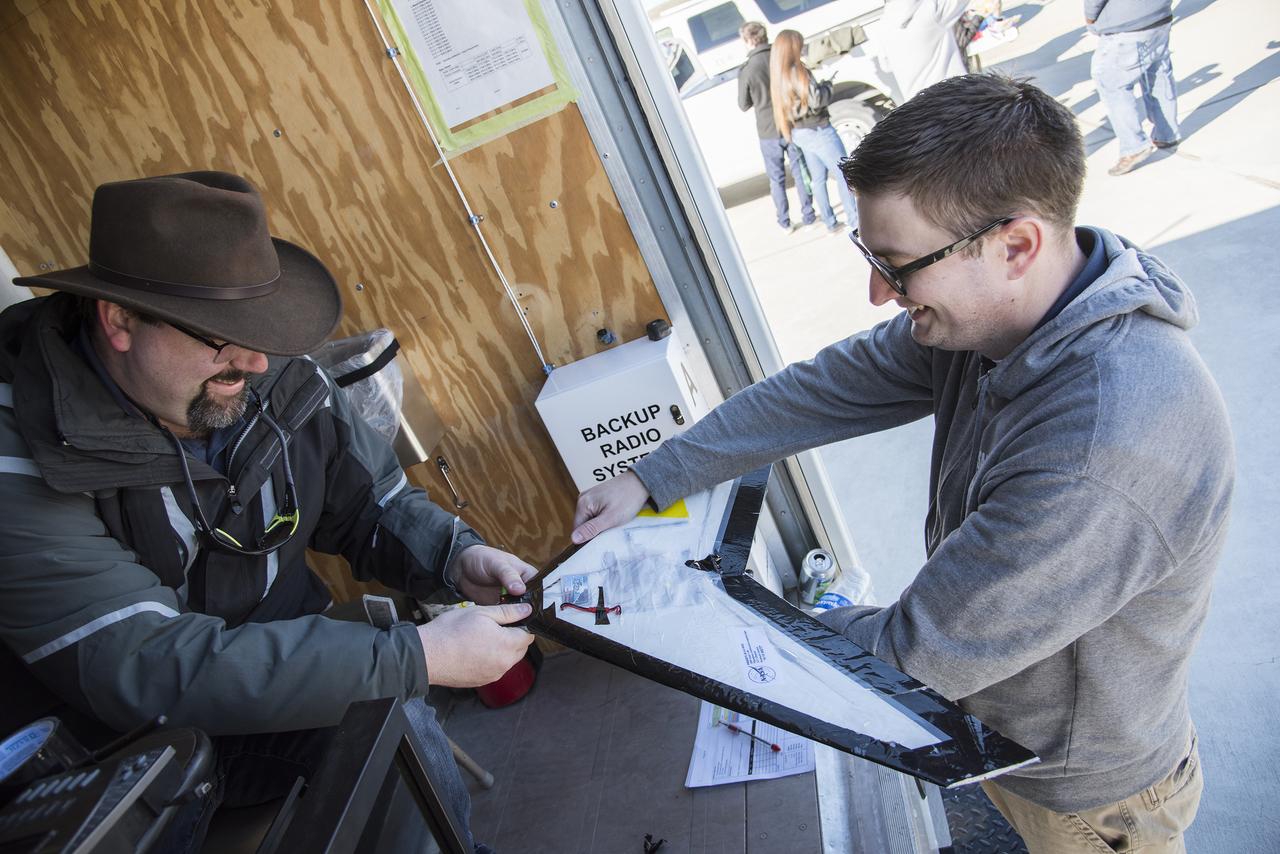
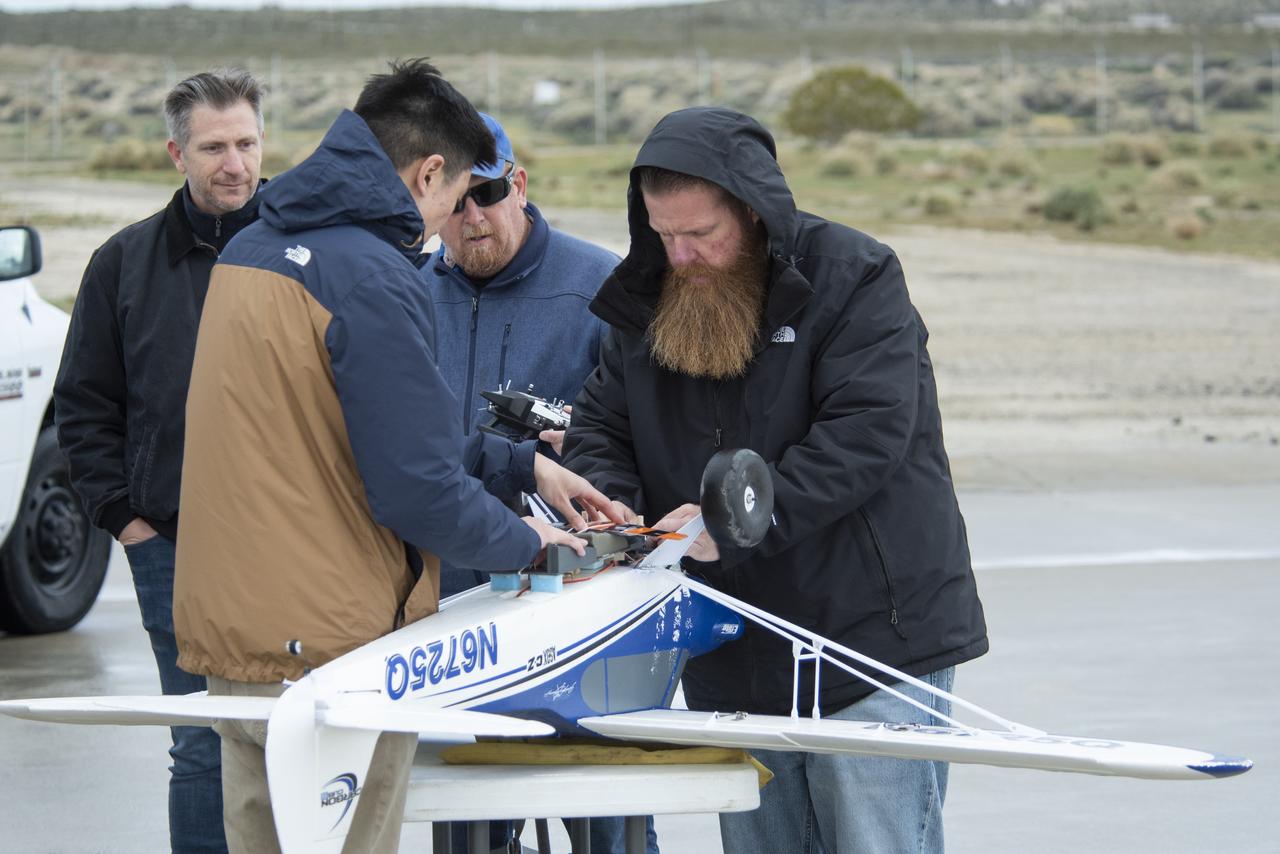
Dave Berger, right, and John Bodylski prepare the Prandtl-M for a test flight.
Potential Mars Airplane Resumes Flight
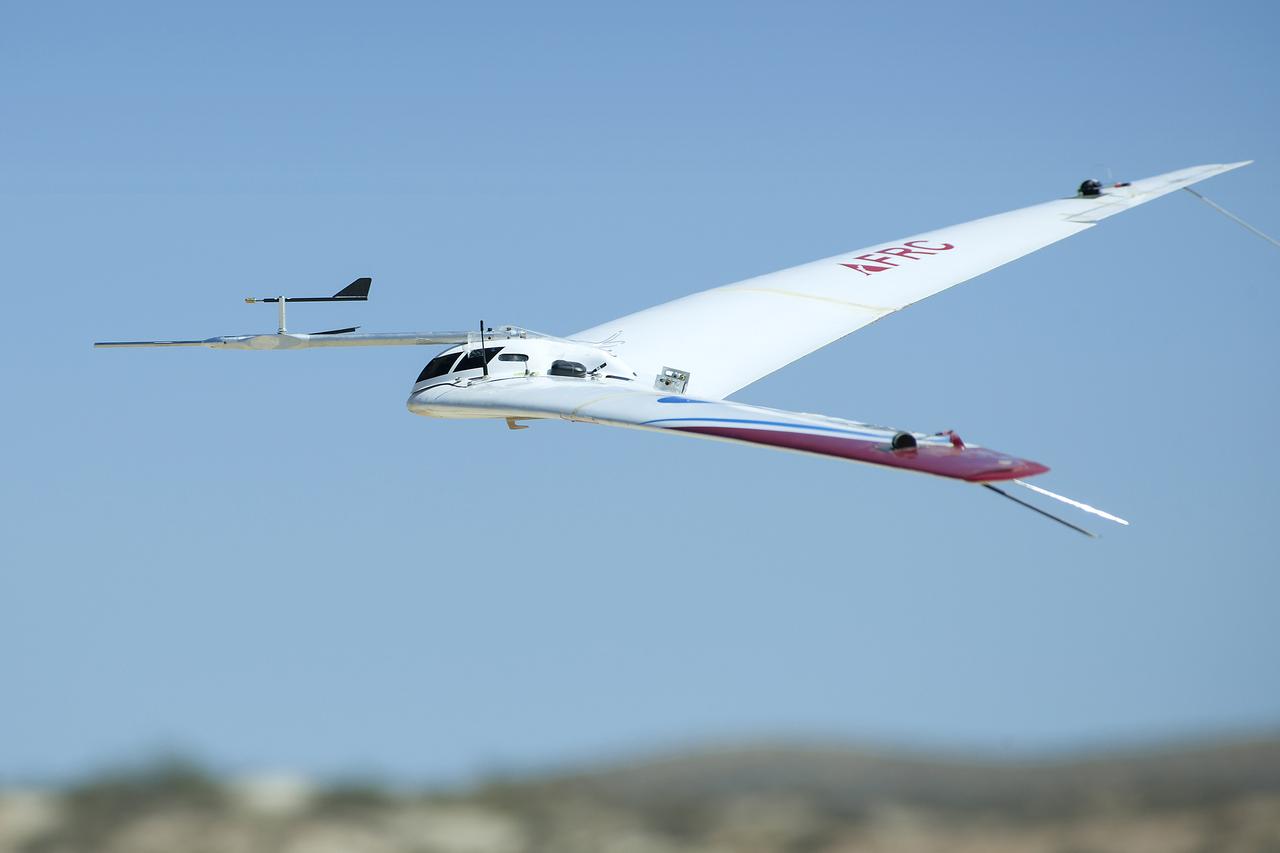
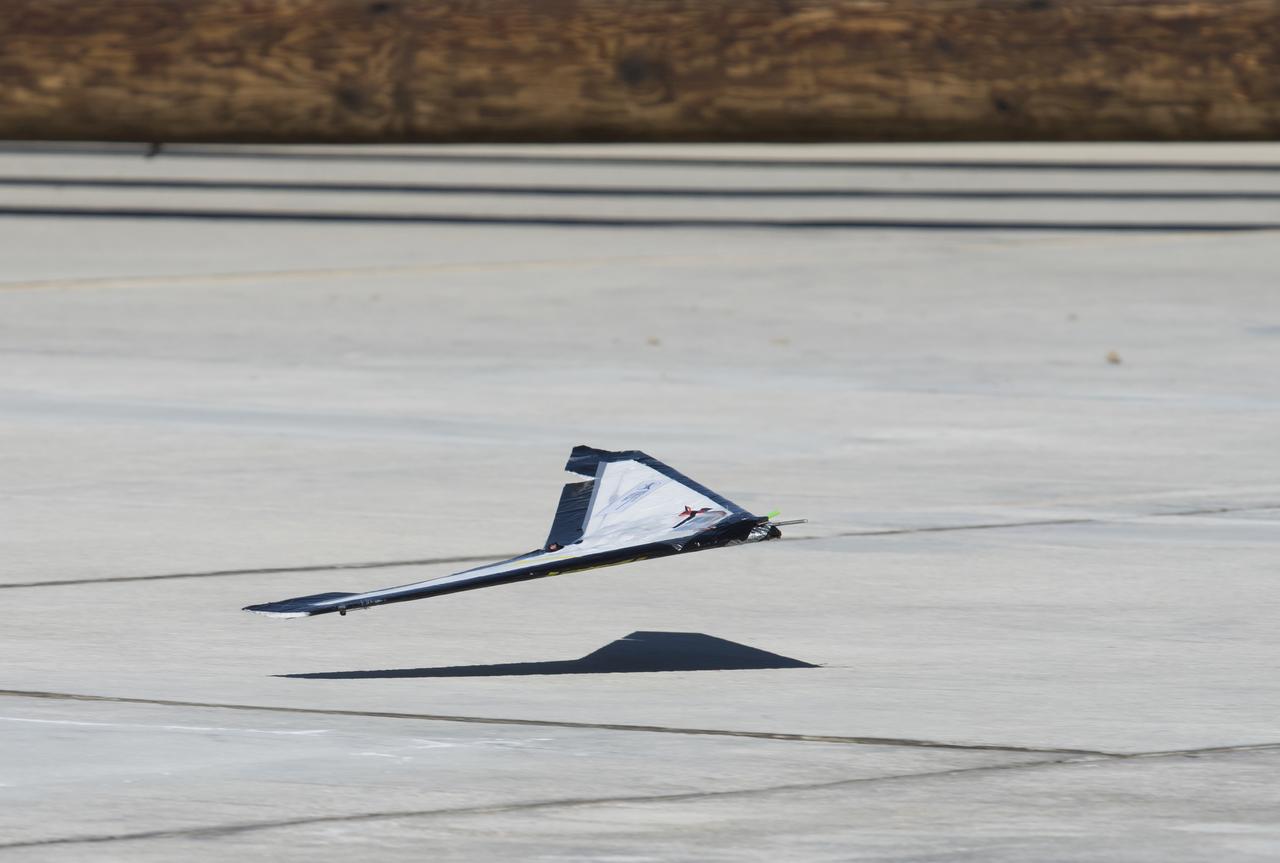
The proposed Prandtl-m is based on the Prandtl-d seen coming in for a landing during a flight test in June. The aerodynamics offer a solution that could lead to the first aircraft on Mars.
Could This Become the First Mars Airplane?
Test flights of the Prandtl-M have resumed. The airframe also is the basis for another aircraft that will collect weather data.
Potential Mars Airplane Resumes Flight
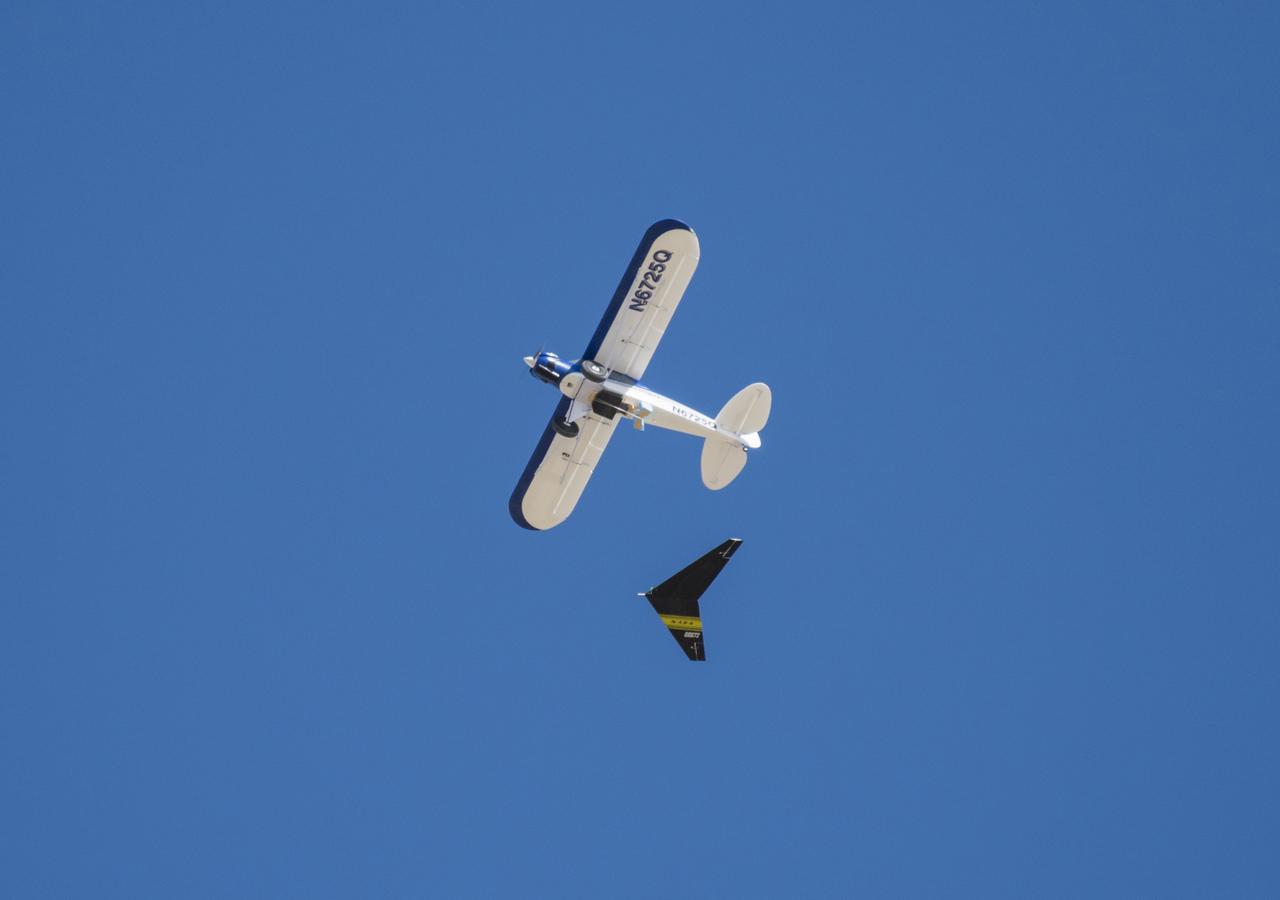
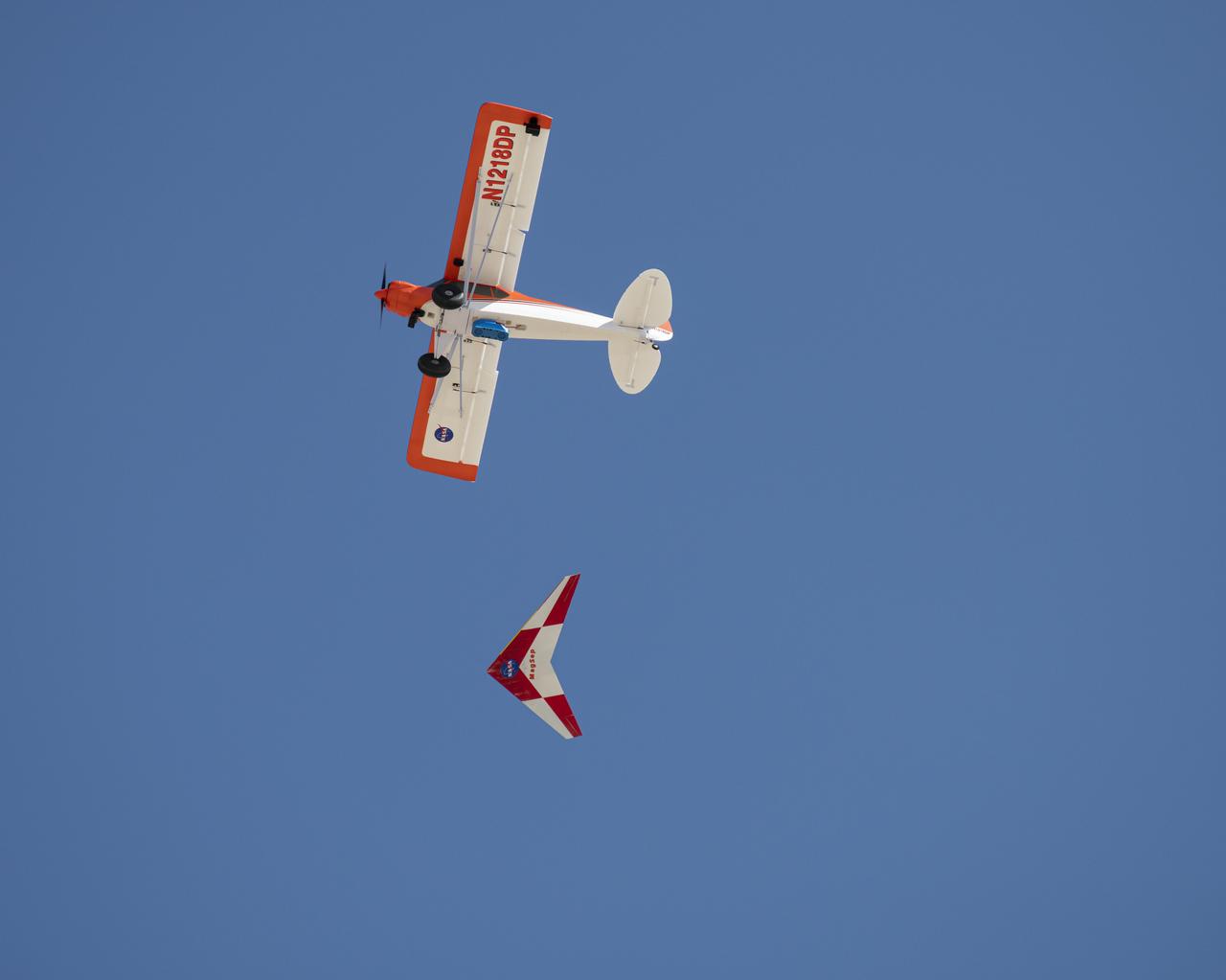
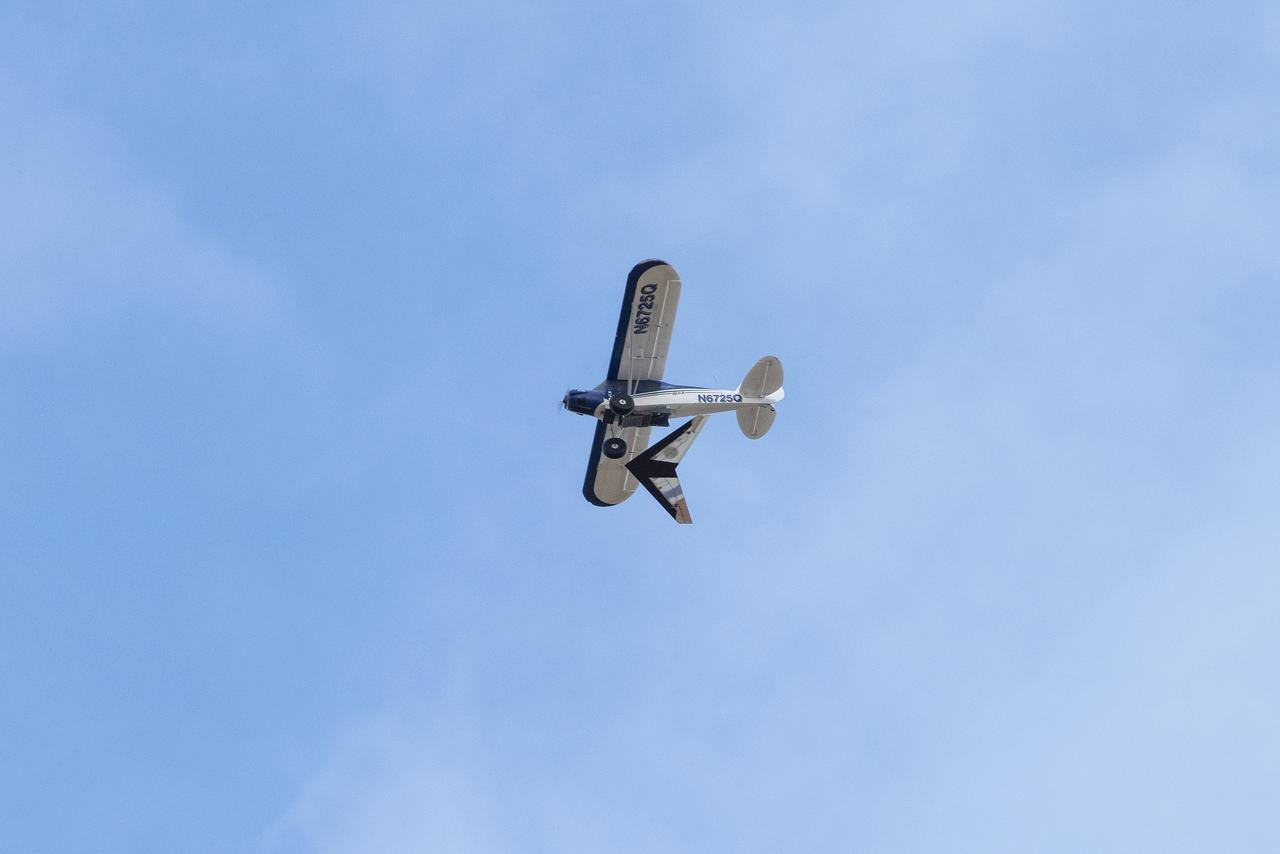
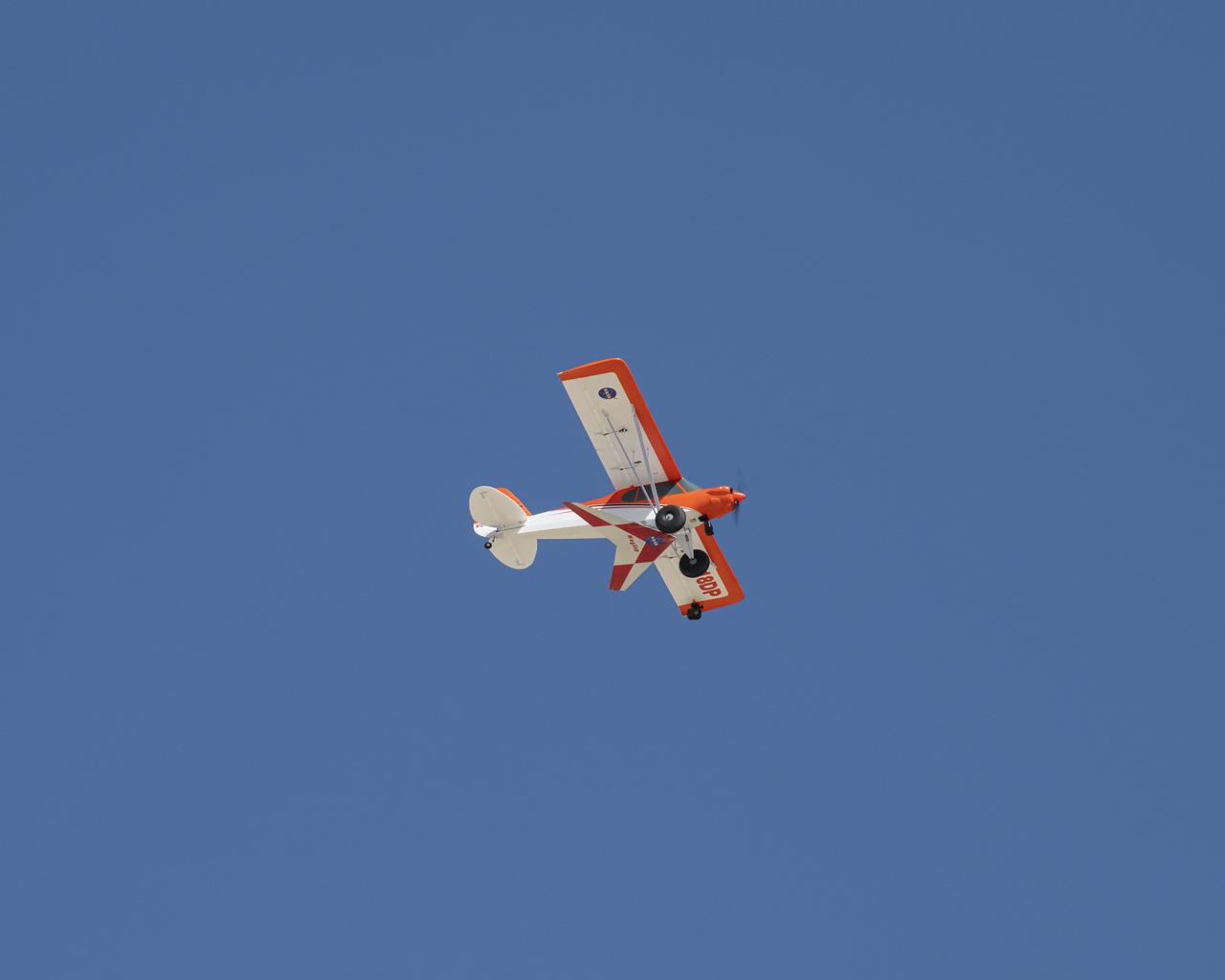
A Prandtl-M aerodynamic model flies following an air launch from a remotely piloted Carbon Cub.
Potential Mars Airplane Resumes Flight
The Preliminary Research Aerodynamic Design to Land on Mars, or Prandtl-M, flies during a test flight. A new proposal based on the aircraft recently won an agencywide technology grant.
Subscale Glider Could Assist in Weather Studies, Prediction
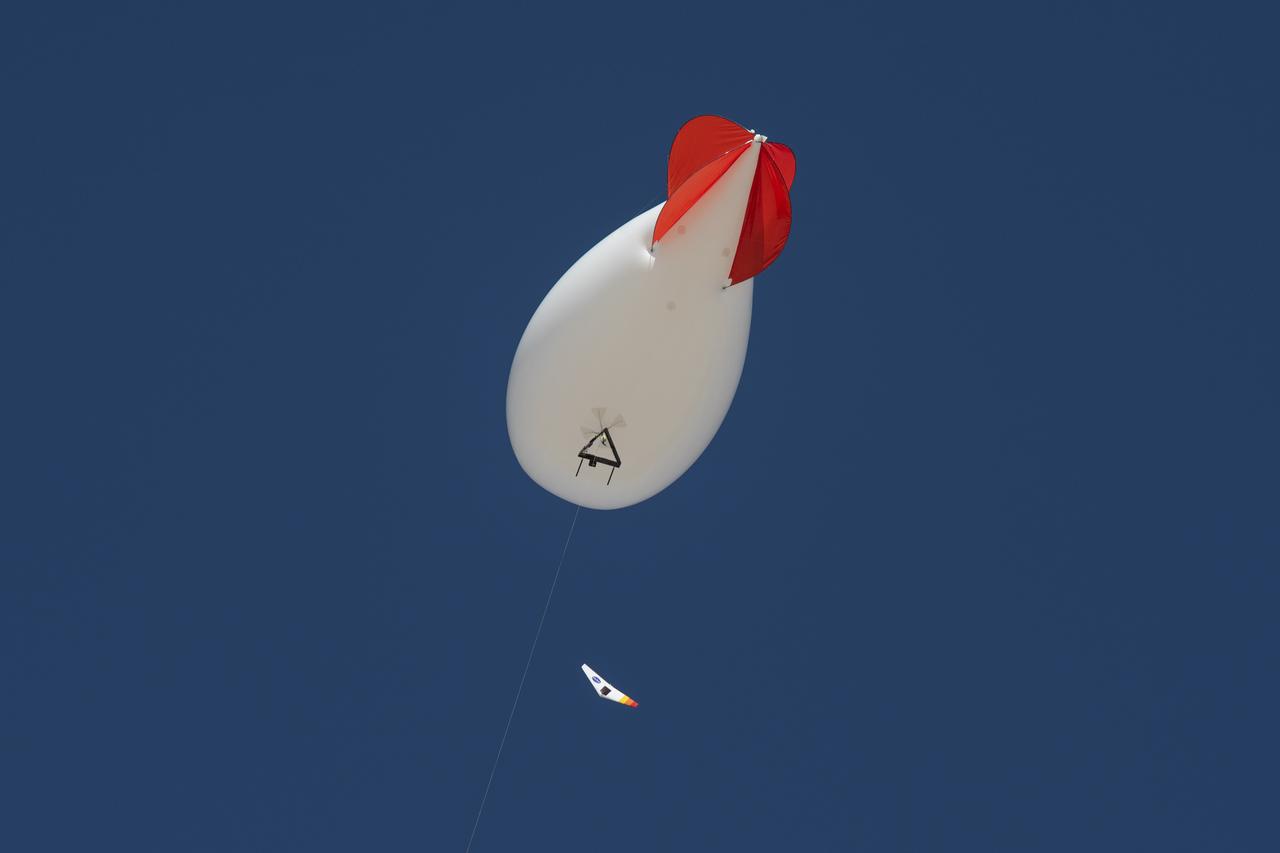
The first of three Prandtl-M prototype aircraft was air launched Aug. 16, 2019, from an Aerostat blimp at NASA’s Armstrong Flight Research Center in California. Three different prototypes of varying size, two still in development, eventually will be air launched from a weather balloon at 100,000 feet to simulate the atmosphere on Mars. The validated Prandtl-M could give scientists options to fly sensors in the Martian atmosphere to collect weather and landing site information for future human exploration of Mars.
Latest Mars Aircraft Prototype Flies
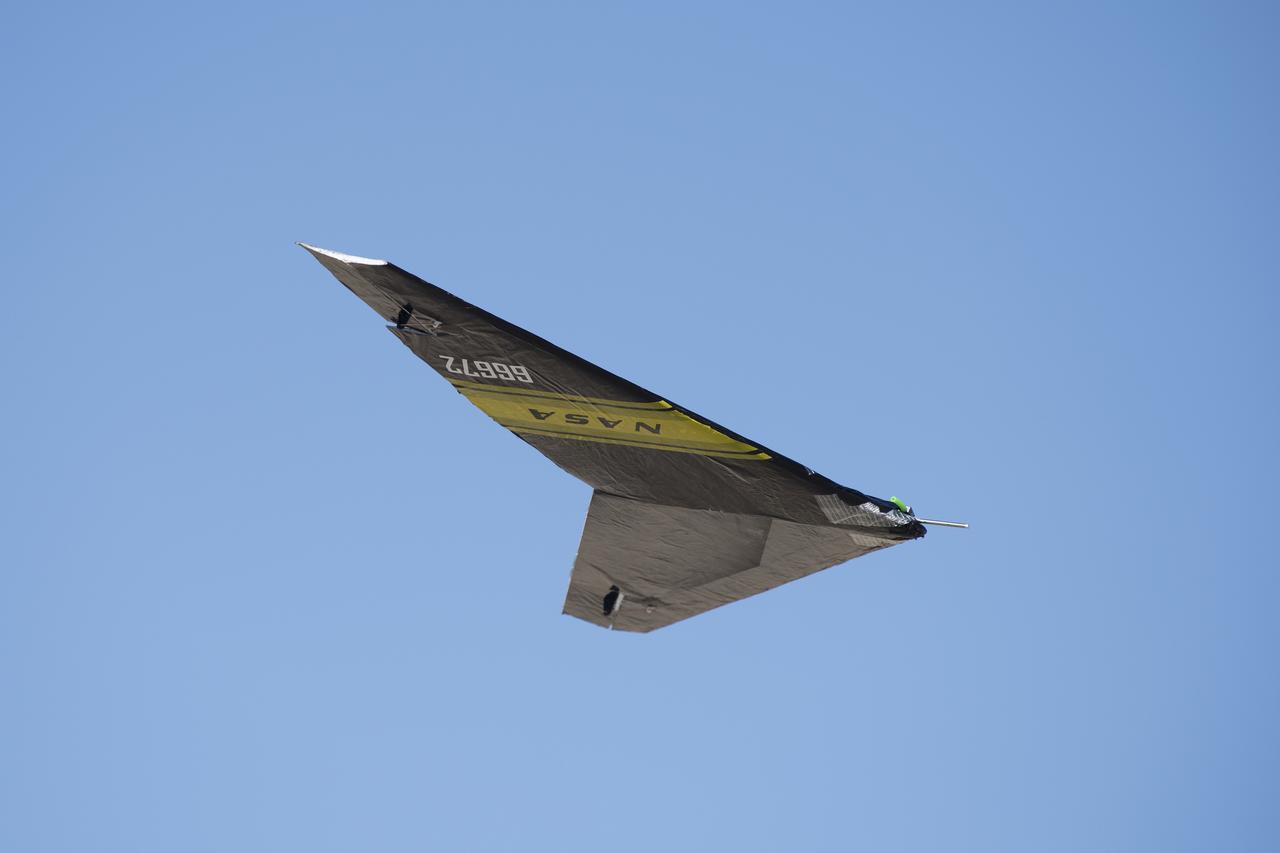
The Preliminary Research Aerodynamic Design to Land on Mars, or Prandtl-M, glider flies after a magnetic release mechanism on the Carbon-Z Cub was activated to air launch the aircraft. A team from NASA's Armstrong Flight Research Center in Edwards, California, conducted the successful research flight.
Magnetic Release Mechanism Succeeds in Flight
A Prandtl-M prototype is air launched from the Carbon Cub aircraft March 13, 2020, at NASA’s Armstrong Flight Research Center in California. The aircraft is the second of three prototypes of varying sizes to provide scientists with options to fly sensors in the Martian atmosphere to collect weather and landing site information for future human exploration of Mars.
Latest Mars Aircraft Prototype Flies
A team from NASA's Armstrong Flight Research Center in Edwards, California, prepares a Carbon-Z Cub to air launch the Preliminary Research Aerodynamic Design to Land on Mars, or Prandtl-M, glider from a magnetic release mechanism on the cub.
Magnetic Release Mechanism Succeeds in Flight
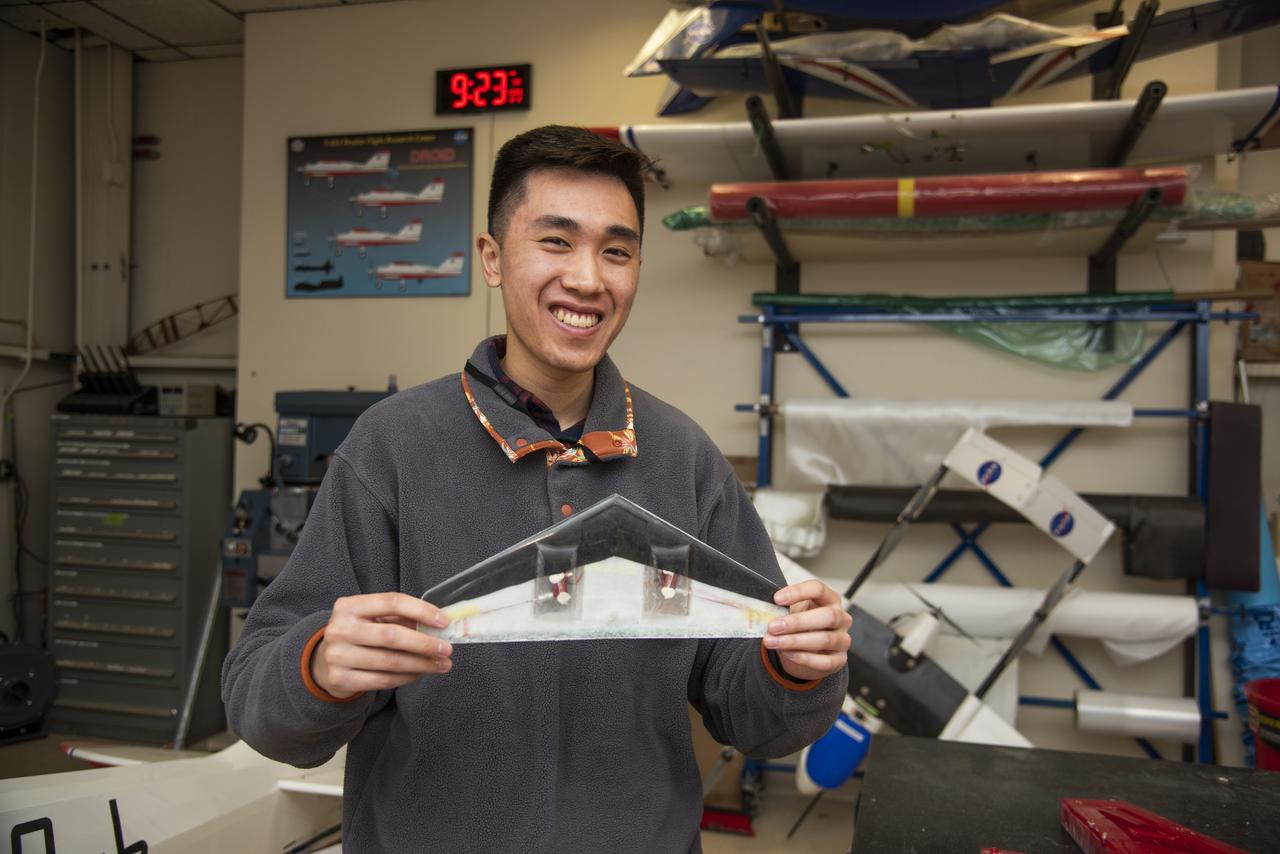
Nathan Sam shows the Prandtl-M aircraft he helped fabricate at NASA’s Armstrong Flight Research Center in California. The aircraft is the second of three prototypes of varying sizes to provide scientists with options to fly sensors in the Martian atmosphere to collect weather and landing site information for future human exploration of Mars.
Sam Maximizes Mars Airplane Internship
From left Eric Becker watches as Nathan Sam, Robert 'Red' Jensen and Justin Hall attach a Prandtl-M aircraft onto the Carbon Cub aircraft that air launched it at NASA's Armstrong Flight Research Center in California. The aircraft is the second of three prototypes of varying sizes to provide scientists with options to fly sensors in the Martian atmosphere to collect weather and landing site information for future human exploration of Mars.
Latest Mars Aircraft Prototype Flies
Nathan Sam and Robert “Red” Jensen lay material into a Prandtl-M aircraft mold at NASA’s Armstrong Flight Research Center in California. The aircraft is the second of three prototypes of varying sizes to provide scientists with options to fly sensors in the Martian atmosphere to collect weather and landing site information for future human exploration of Mars.
Sam Maximizes Mars Airplane Internship
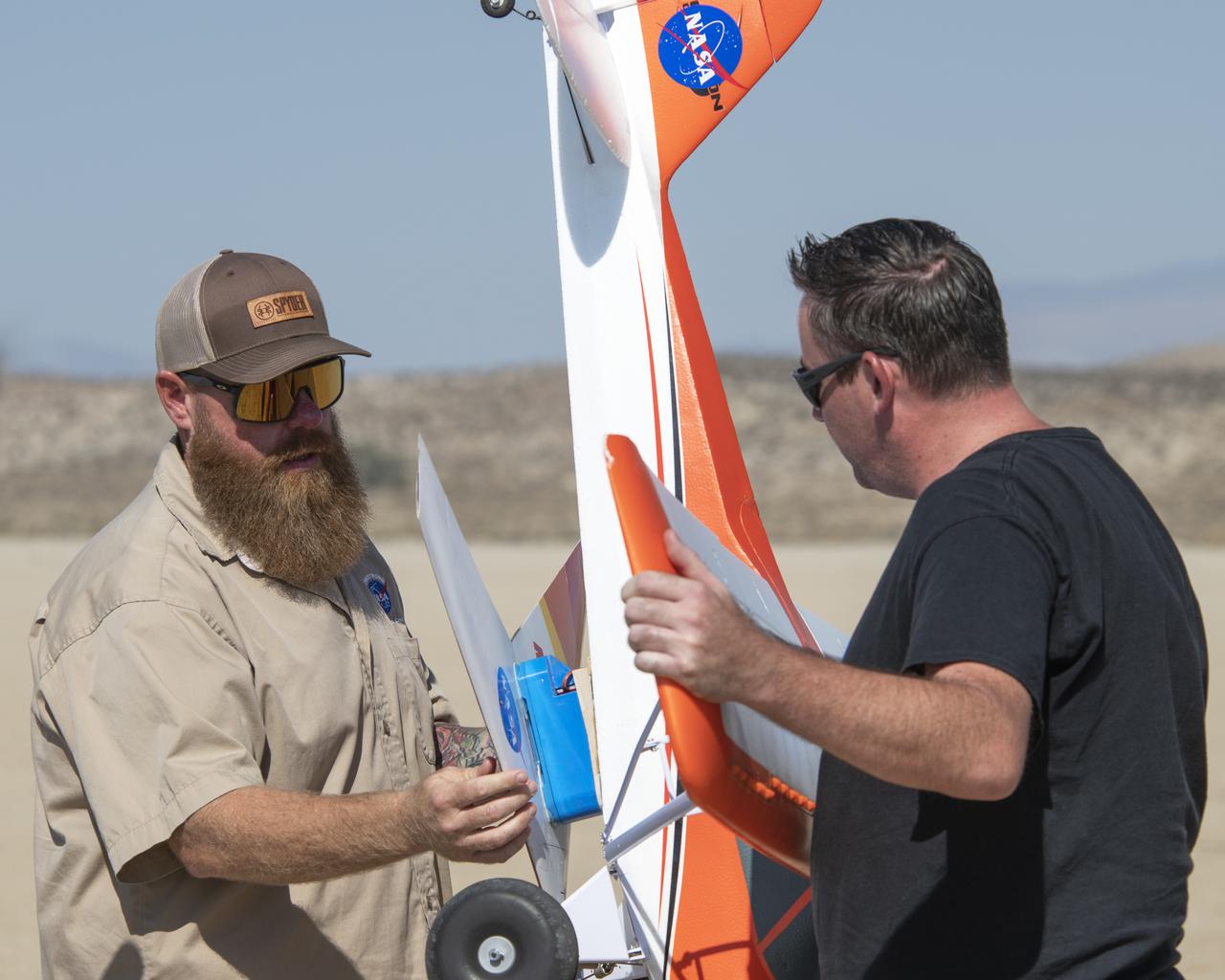
Justin Hall, left, attaches the Preliminary Research Aerodynamic Design to Land on Mars, or Prandtl-M, glider onto the Carbon-Z Cub, which Justin Link steadies. Hall and Link are part of a team from NASA's Armstrong Flight Research Center in Edwards, California, that uses an experimental magnetic release mechanism to air launch the glider.
Magnetic Release Mechanism Succeeds in Flight
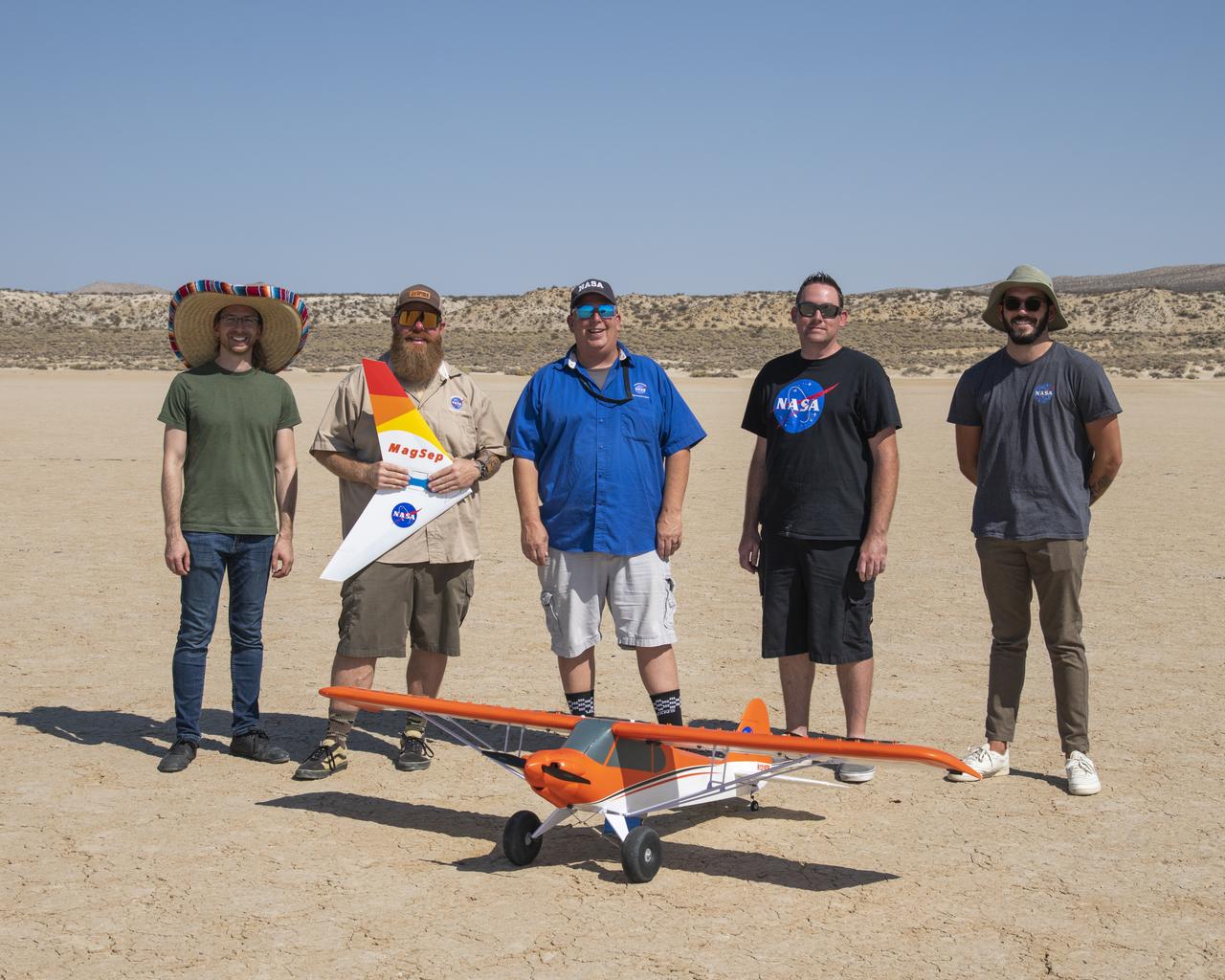
A Preliminary Research Aerodynamic Design to Land on Mars, or Prandtl-M, glider was air launched Sept. 7 using a magnetic release mechanism mounted on a Carbon-Z Cub. The team, based at NASA's Armstrong Flight Research Center in Edwards, California, includes, from left, Paul Bean, Justin Hall, Red Jensen, Justin Link, and Nathan Allaire.
Magnetic Release Mechanism Succeeds in Flight
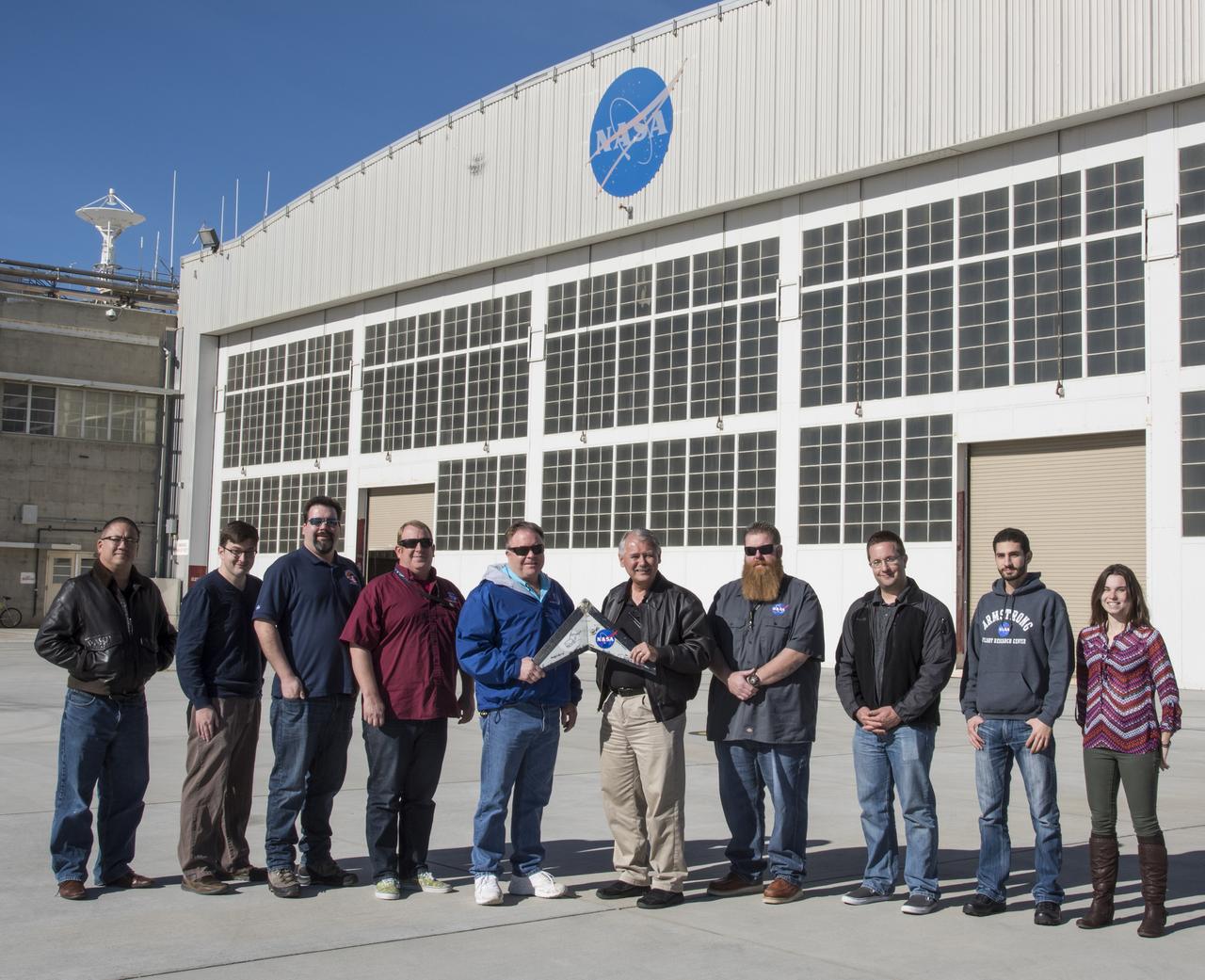
The WHAATRR team from NASA Armstrong includes, from left, Derek Abramson Dave Berger, John Bodylski, Robert “Red” Jensen, Scott Wiley, Al Bowers, Justin Hall, Luke Bard, Hussein Nasr and Samantha Ingersoll.
Subscale Glider Could Assist in Weather Studies, Prediction