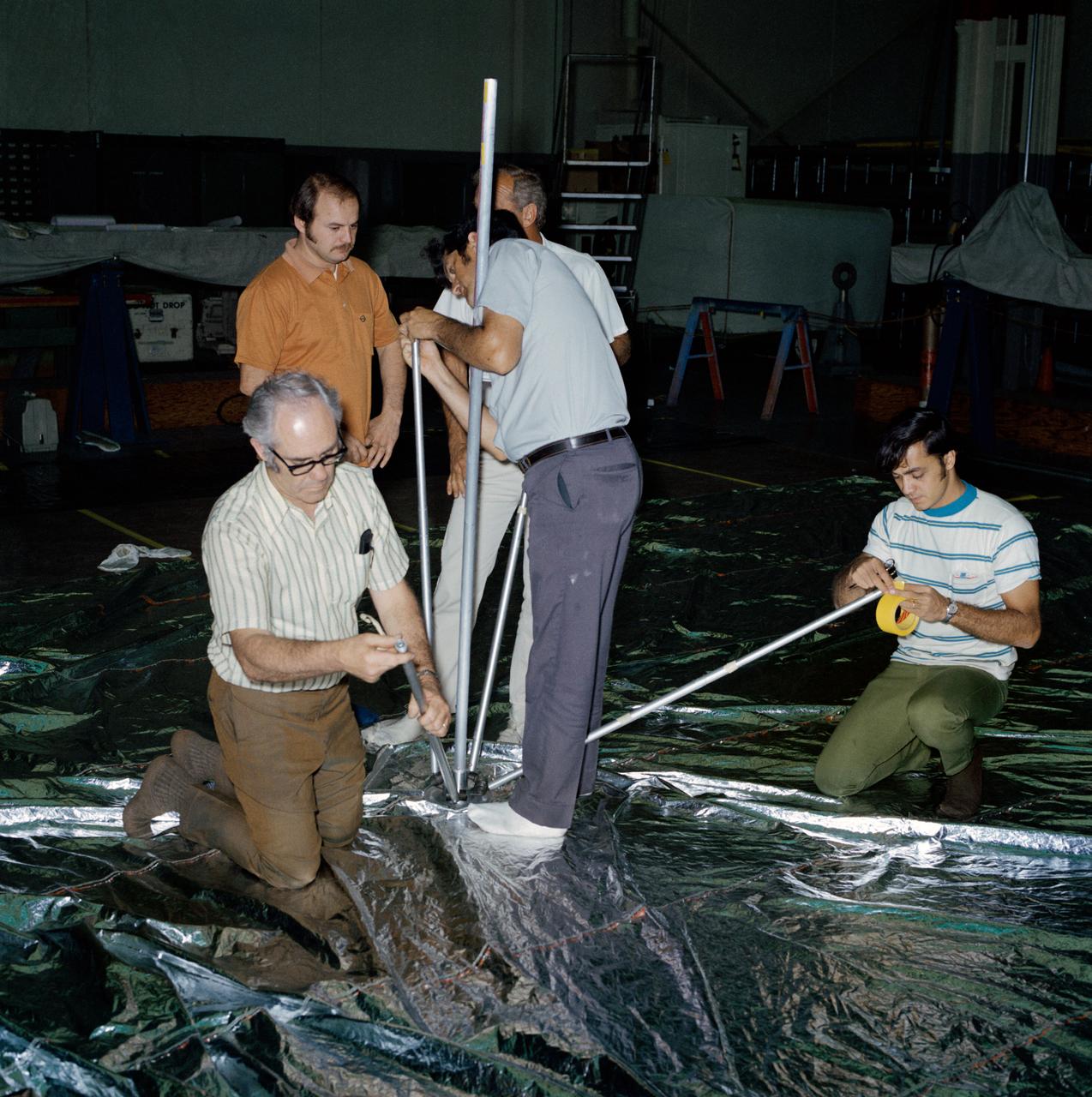
S73-26380 (23 May 1973) --- Technicians in the Technical Services shop in Building 10 work on the fabrication of the umbrella-like mechanical device called the “parasol” during Skylab 2 preflight preparations at NASA's Johnson Space Center. Here, they are attaching the telescoping extension rods to the canopy. The “parasol” is designed to fit into the TO27 experiment photometer canister. The canopy is 24 feet by 22 feet. The sunshade device will be deployed through the solar scientific airlock in the side of the OWS. The “parasol” solar shield is considered the prime possibility for use as the OWS sunshade because it will not require EVA by the Skylab 2 crewmen, because of the operational ease of using it, and because of the simplicity of the device which minimizes crew training. Photo credit: NASA
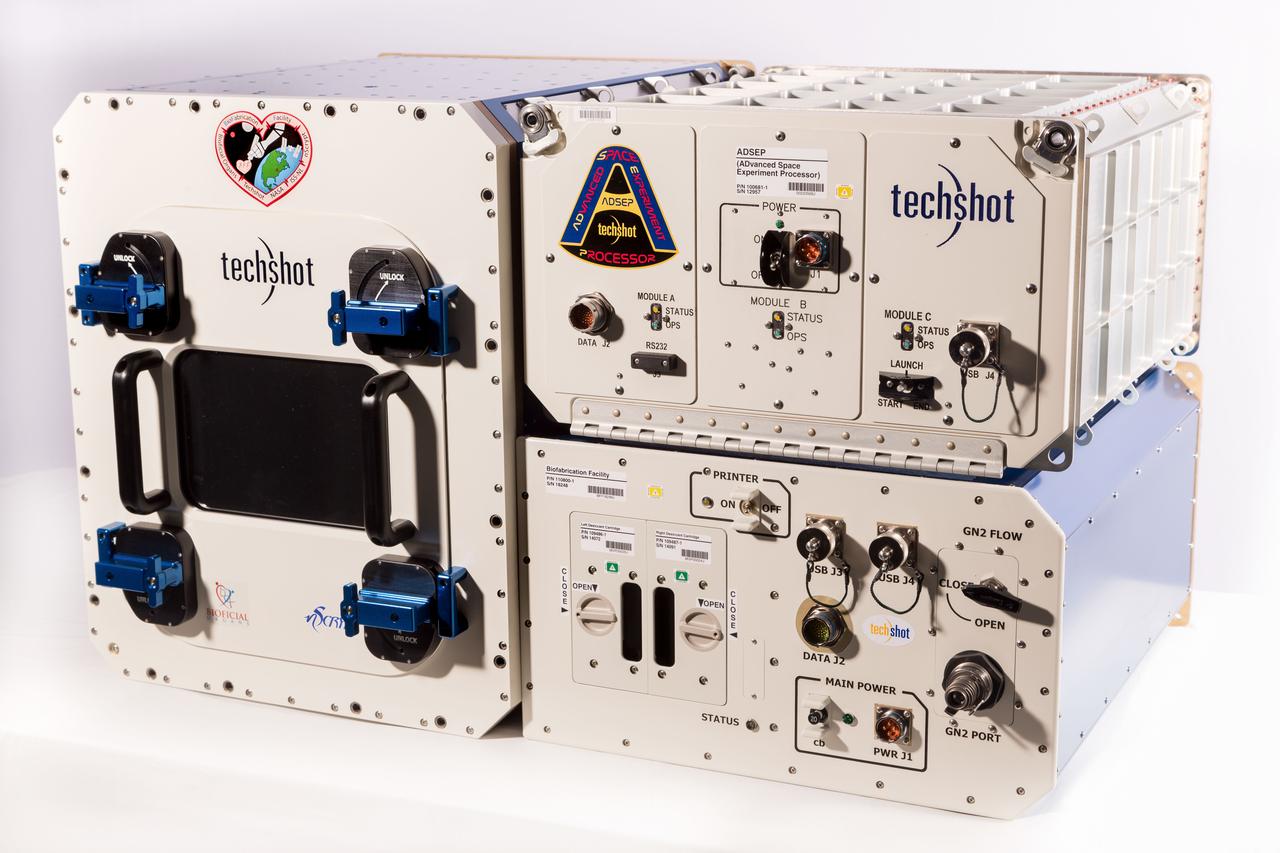
jsc2019e037579 (4/24/2019) --- Preflight image of the commercially developed and operated BioFabrication Facility (BFF) and the Advanced Space Experiment Processor (ADSEP). Together they comprise a 3D tissue bioprinting system for the International Space Station (ISS). Photo courtesy of Techshot Inc.
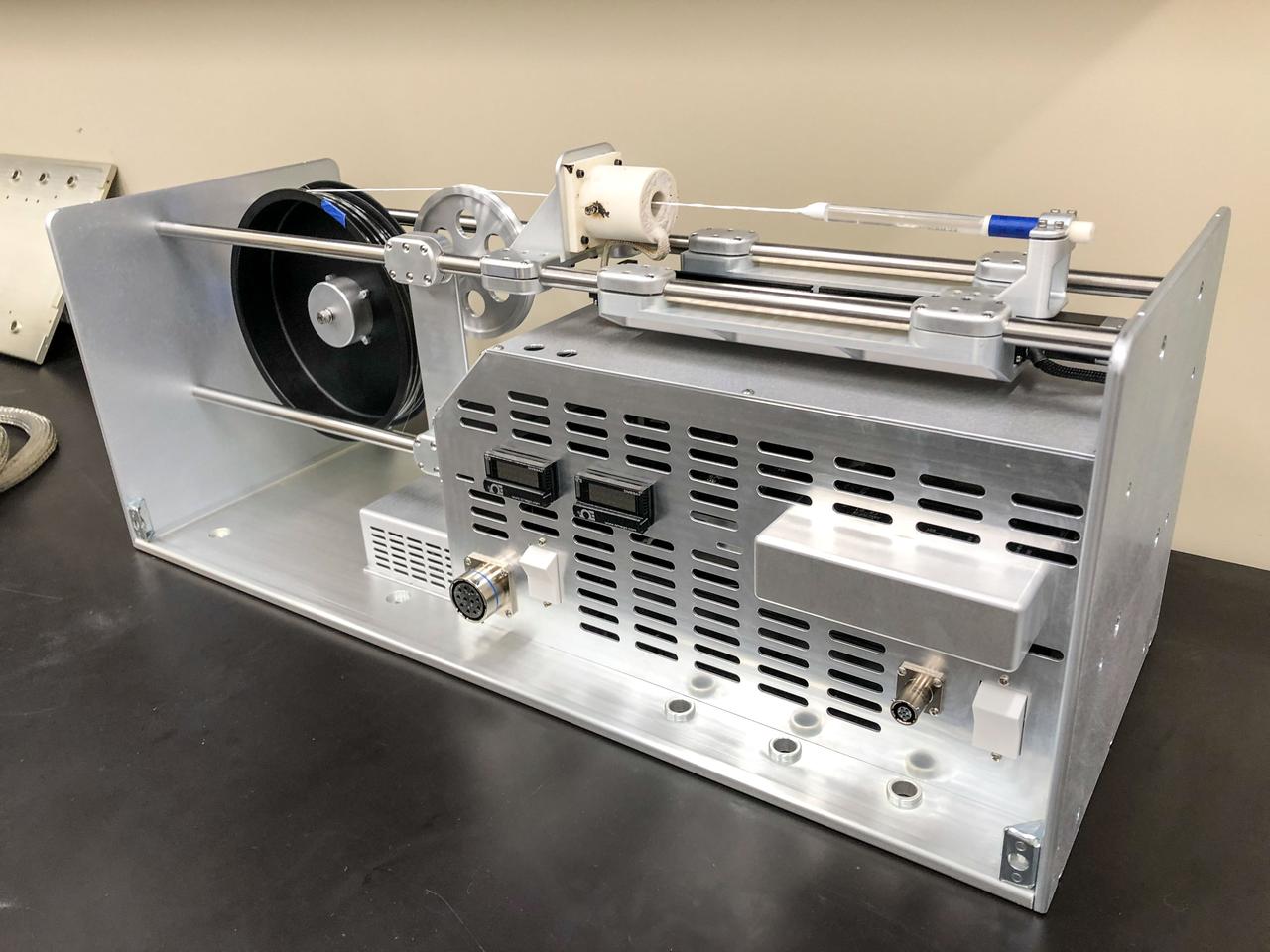
jsc2019e048247 (9/28/2018) — Preflight imagery of the Fiber Optic Production hardware. Physical Optics Corporation’s (POC’s) Fiber Optic Production investigation will create optical fibers with high commercial value aboard the International Space Station (ISS)and will operate within the Microgravity Science Glovebox (MSG).
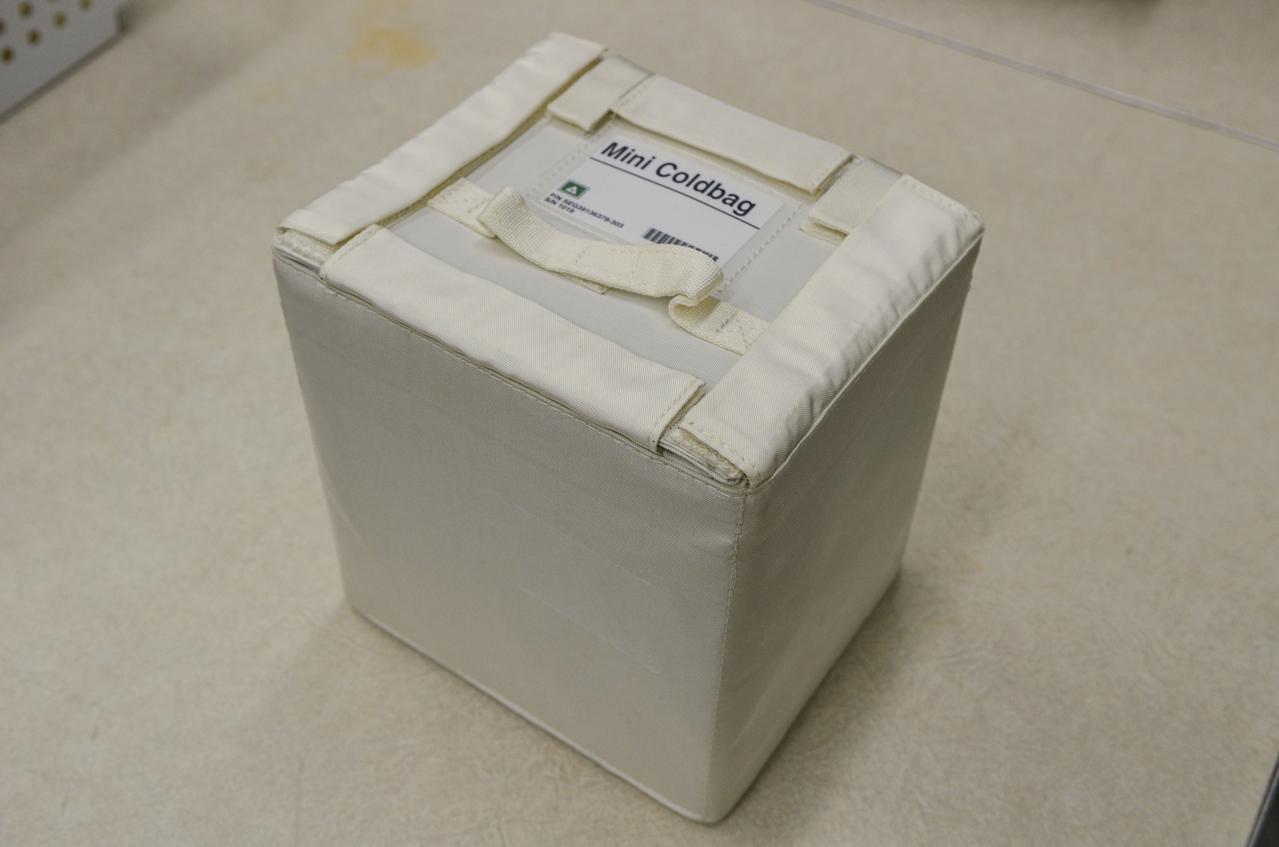
jsc2021e019955 (8/10/2015) --- A preflight photo of a Mini Coldbag. The Mini Coldbag is a temperature control resource that provides for the specific needs for scientific samples and other temperature-sensitive payload items. These options are available on the International Space Station (ISS) during launch and return operations.
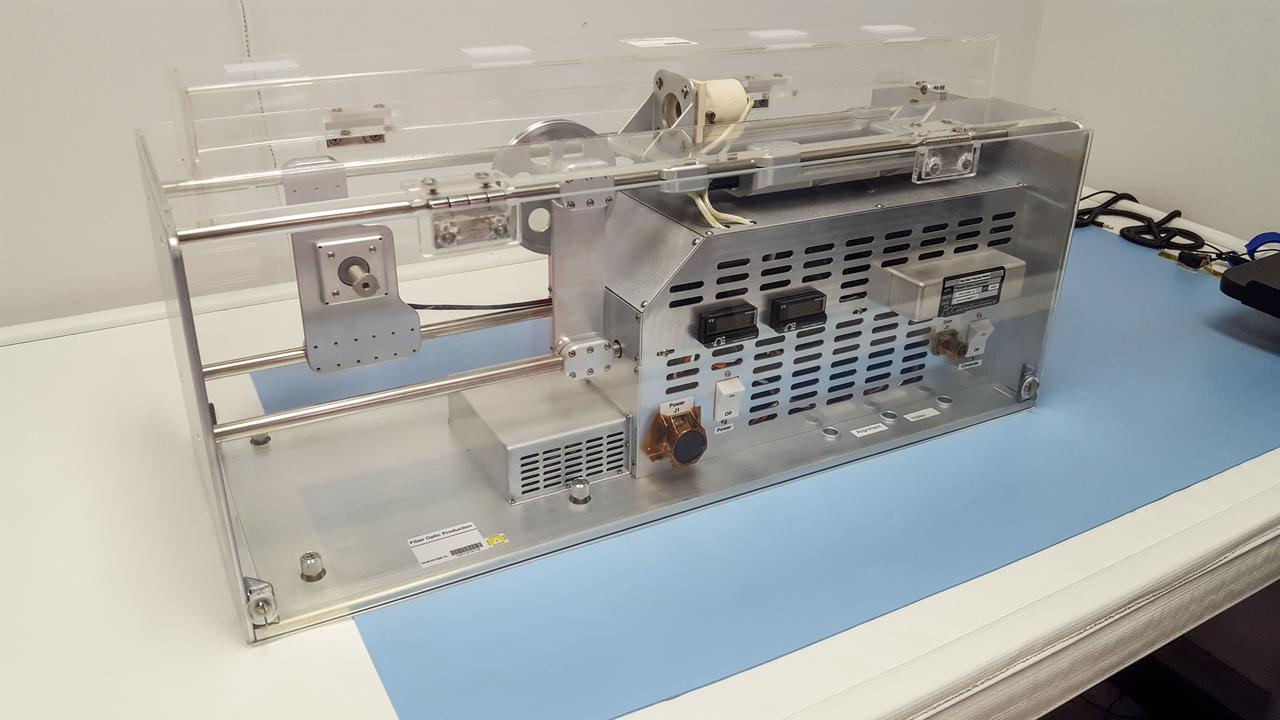
jsc2019e048245 (3/6/2019) — Preflight imagery of the Fiber Optic Production hardware. Physical Optics Corporation’s (POC’s) Fiber Optic Production investigation will create optical fibers with high commercial value aboard the International Space Station (ISS)and will operate within the Microgravity Science Glovebox (MSG).
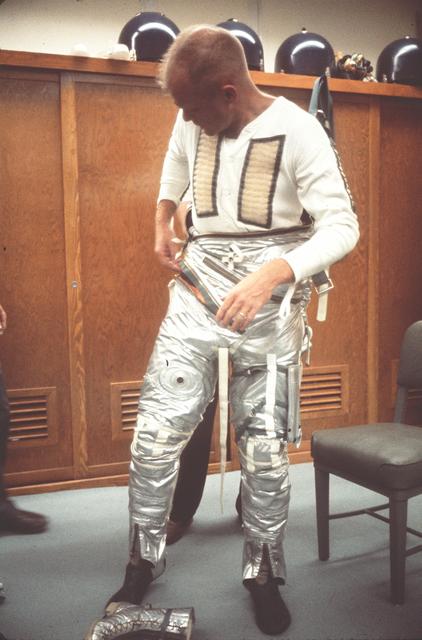
S64-14848 (20 Feb. 1962) --- Astronaut John H. Glenn Jr. dons spacesuit during preflight operations at Cape Canaveral, Feb. 20, 1962, the day he flew his Mercury-Atlas 6 spacecraft, Friendship 7, into orbital flight around Earth. Photo credit: NASA
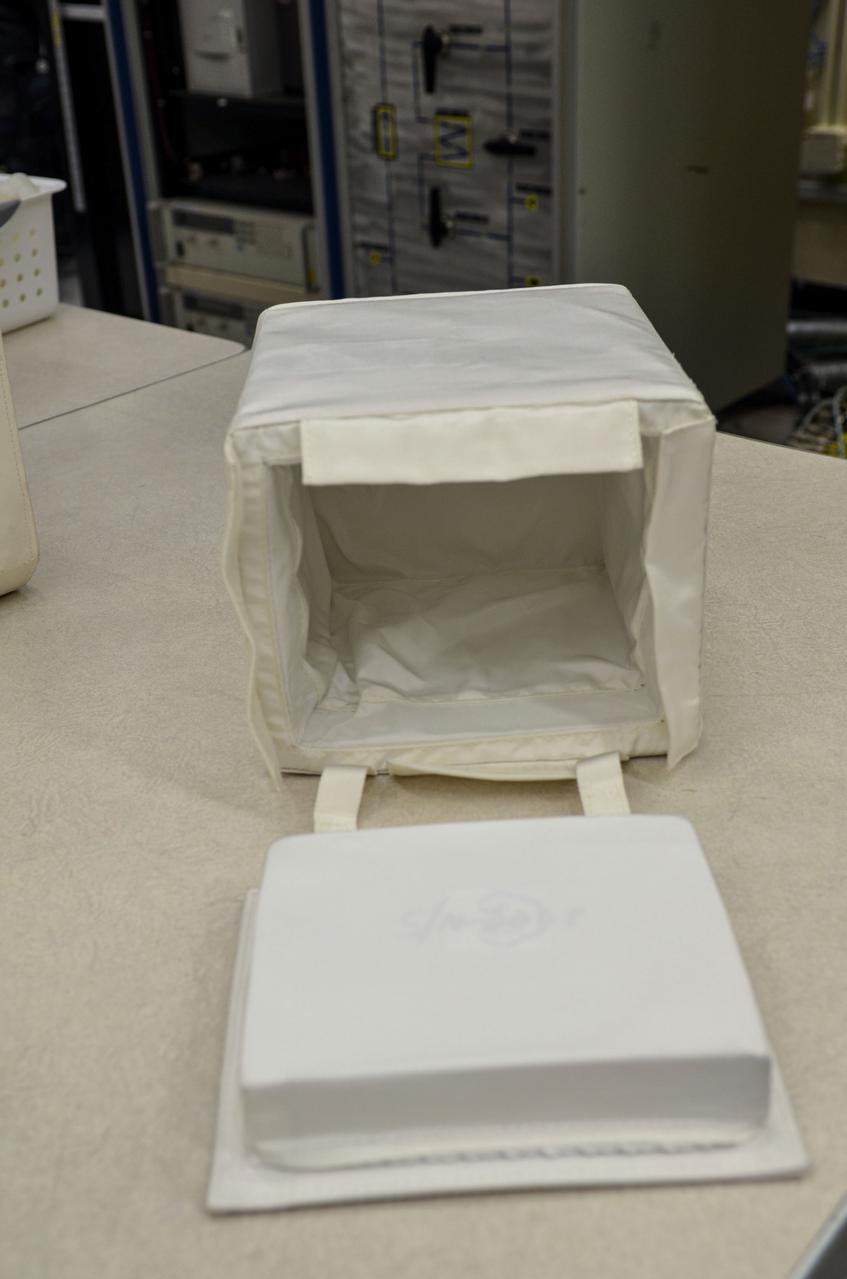
jsc2021e019956 (8/10/2015) --- A preflight photo of a Mini Coldbag with the lid open. The Mini Coldbag is a temperature control resource that provides for the specific needs for scientific samples and other temperature-sensitive payload items. These options are available on the International Space Station (ISS) during launch and return operations.
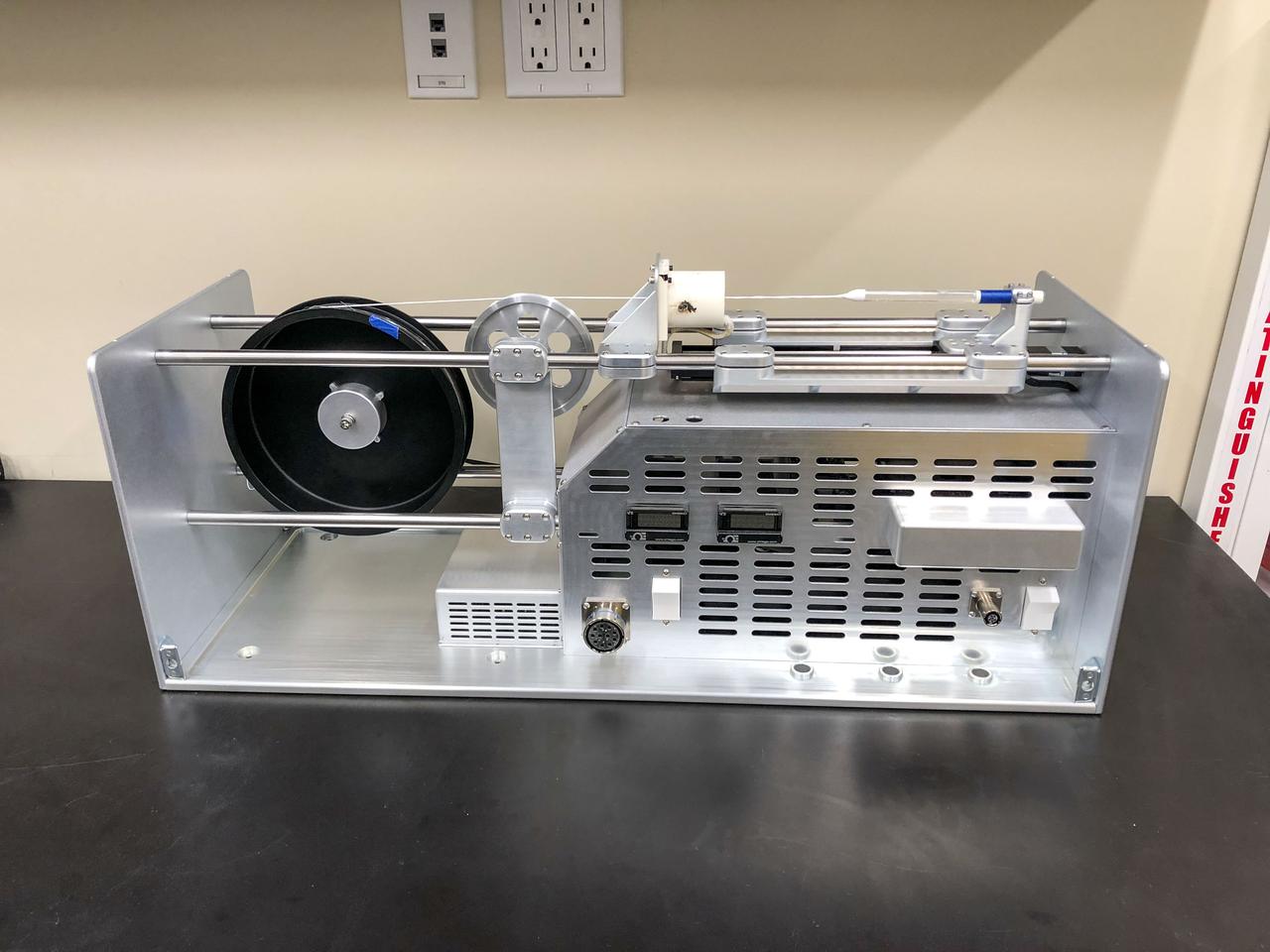
jsc2019e048246 (9/28/2018) — Preflight imagery of the Fiber Optic Production hardware. Physical Optics Corporation’s (POC’s) Fiber Optic Production investigation will create optical fibers with high commercial value aboard the International Space Station (ISS)and will operate within the Microgravity Science Glovebox (MSG).
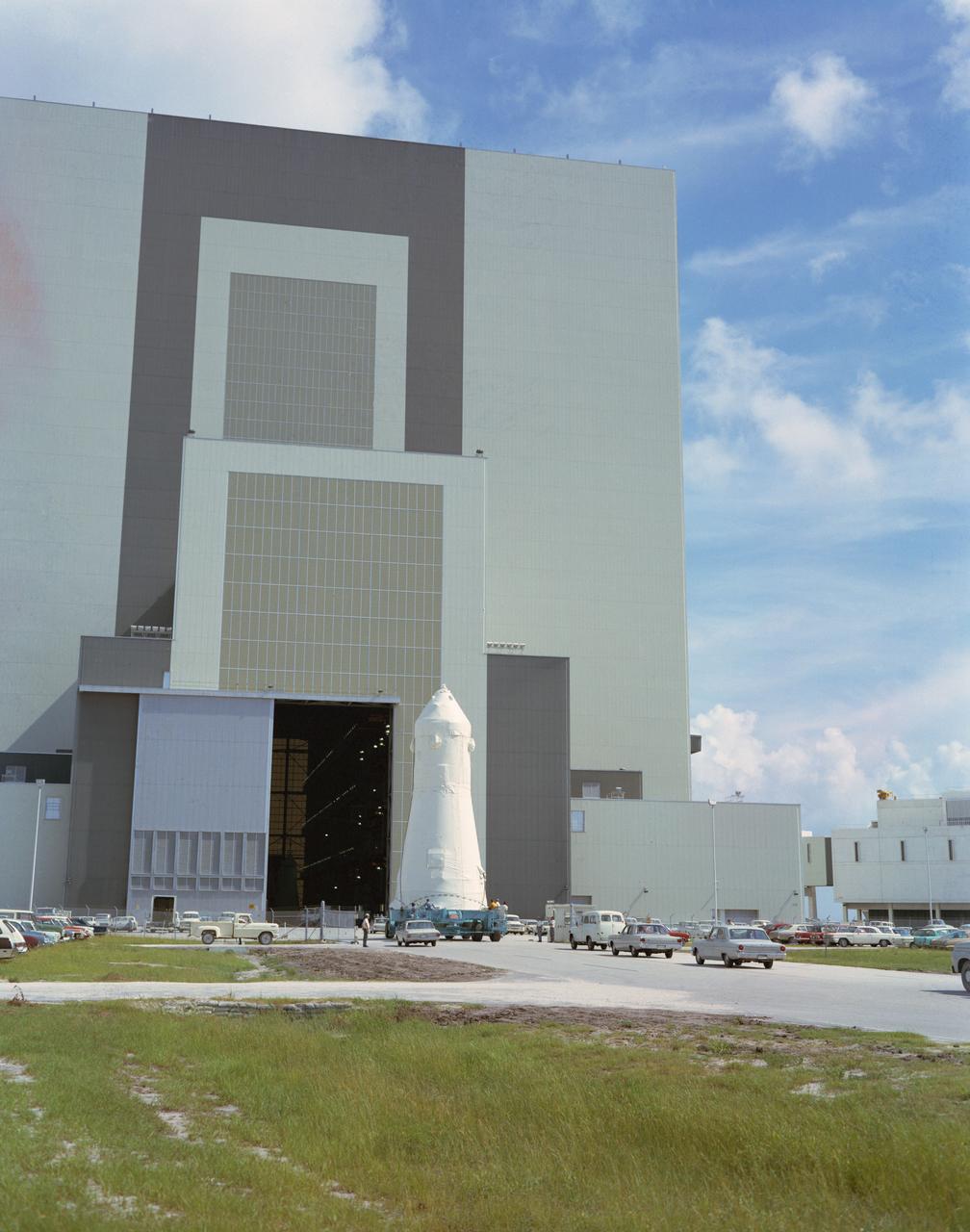
S69-39323 (1969) --- The Apollo 12 spacecraft (Command and Service Modules 108/Lunar Module 6) arrives at the Kennedy Space Center's Vehicle Assembly Building (VAB) during preflight preparations. The spacecraft had just been moved from the Manned Spacecraft Operations Building.
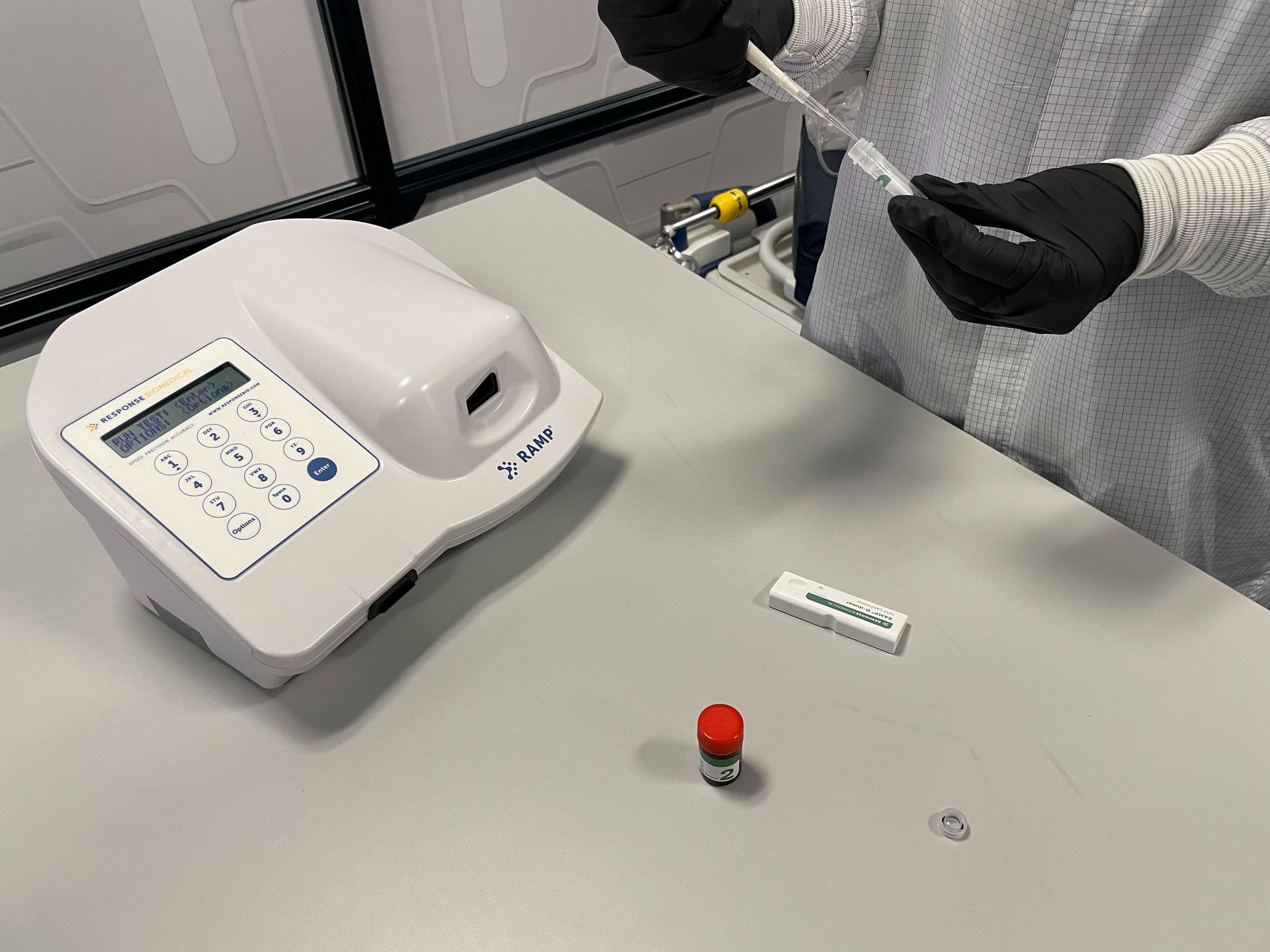
jsc2026e404779 (July 29, 2026) --- Preflight image of an operator preparing a D-dimer cartridge to insert into the Acute Care Testing in Space (ACTIS) Reader. This facility allows different blood tests in space, including measuring D-dimer, a blood marker that can indicate a possible blood clot. Credit: CSA.
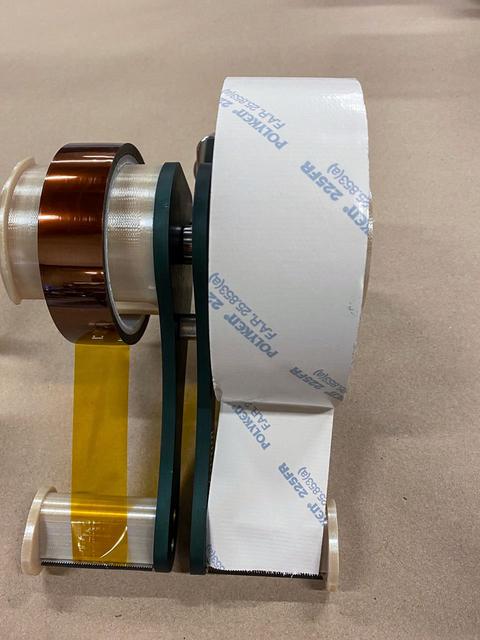
jsc2020e045054 (8/19/2020) --- Preflight bench review imagery of the High school students United with NASA to Create Hardware (HUNCH) Tape Dispenser (HUNCH Tape Dispenser). The dispenser enables one-handed operation for crew members. Crew members regularly use tape for mundane and critical tasks, but the tape must be cut with scissors, requiring two hands. The HUNCH Tape Dispenser is expected to improve efficiency of operations and scientific research on the space station.
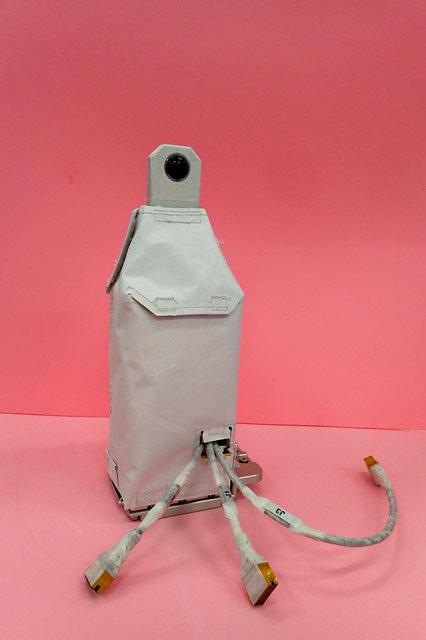
jsc2021e052199 (9/7/2021) --- A preflight view of the Space Demonstration for All Solid-state Lithium Ion Battery (Space AS-Lib) demonstration configured for exposure to the space environment. Space AS-Lib demonstrates operation of a Lithium-ion secondary battery capable of safe, stable operation under extreme temperatures and in a vacuum environment. Image Credit: ©JAXA, Hitz
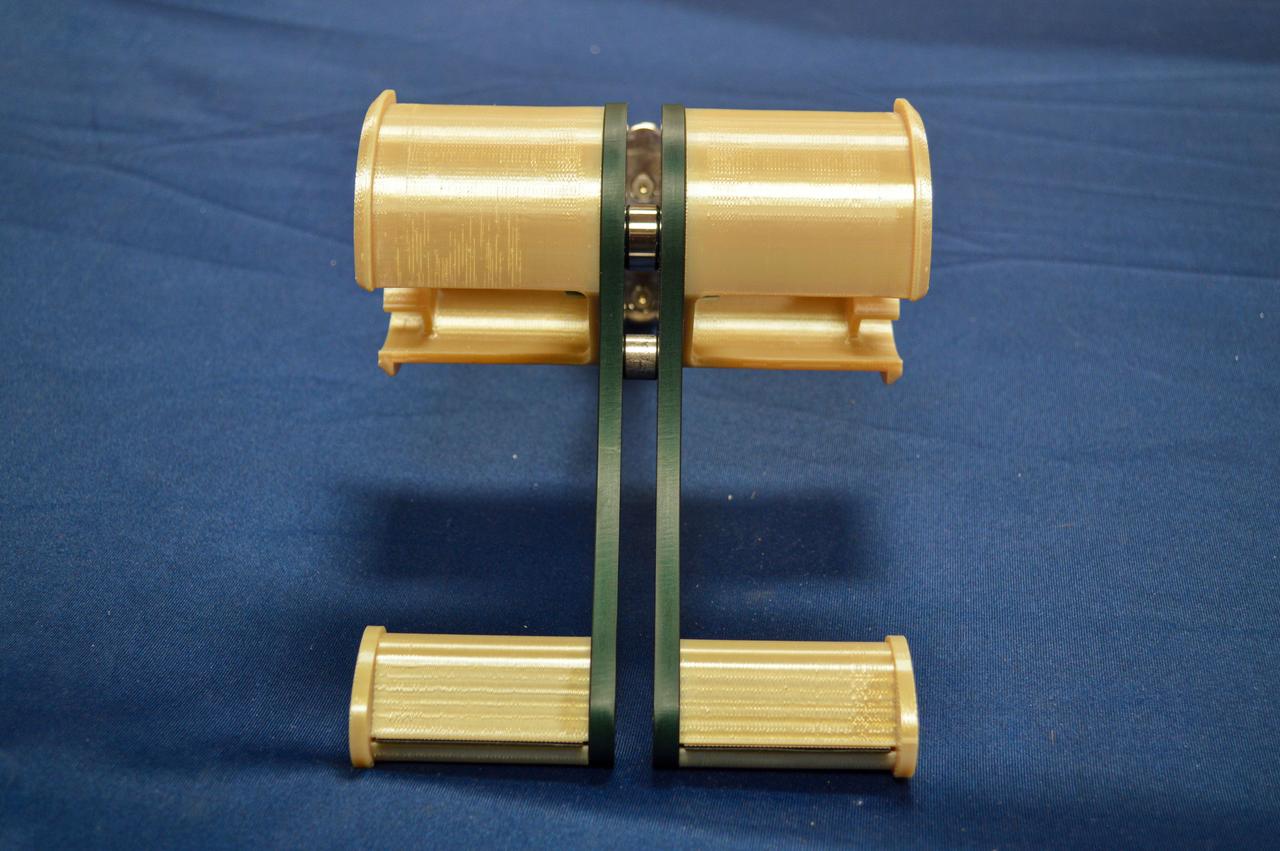
jsc2020e045049 (8/19/2020) --- Preflight bench review imagery of the High school students United with NASA to Create Hardware (HUNCH) Tape Dispenser (HUNCH Tape Dispenser). The dispenser enables one-handed operation for crew members. Crew members regularly use tape for mundane and critical tasks, but the tape must be cut with scissors, requiring two hands. The HUNCH Tape Dispenser is expected to improve efficiency of operations and scientific research on the space station.
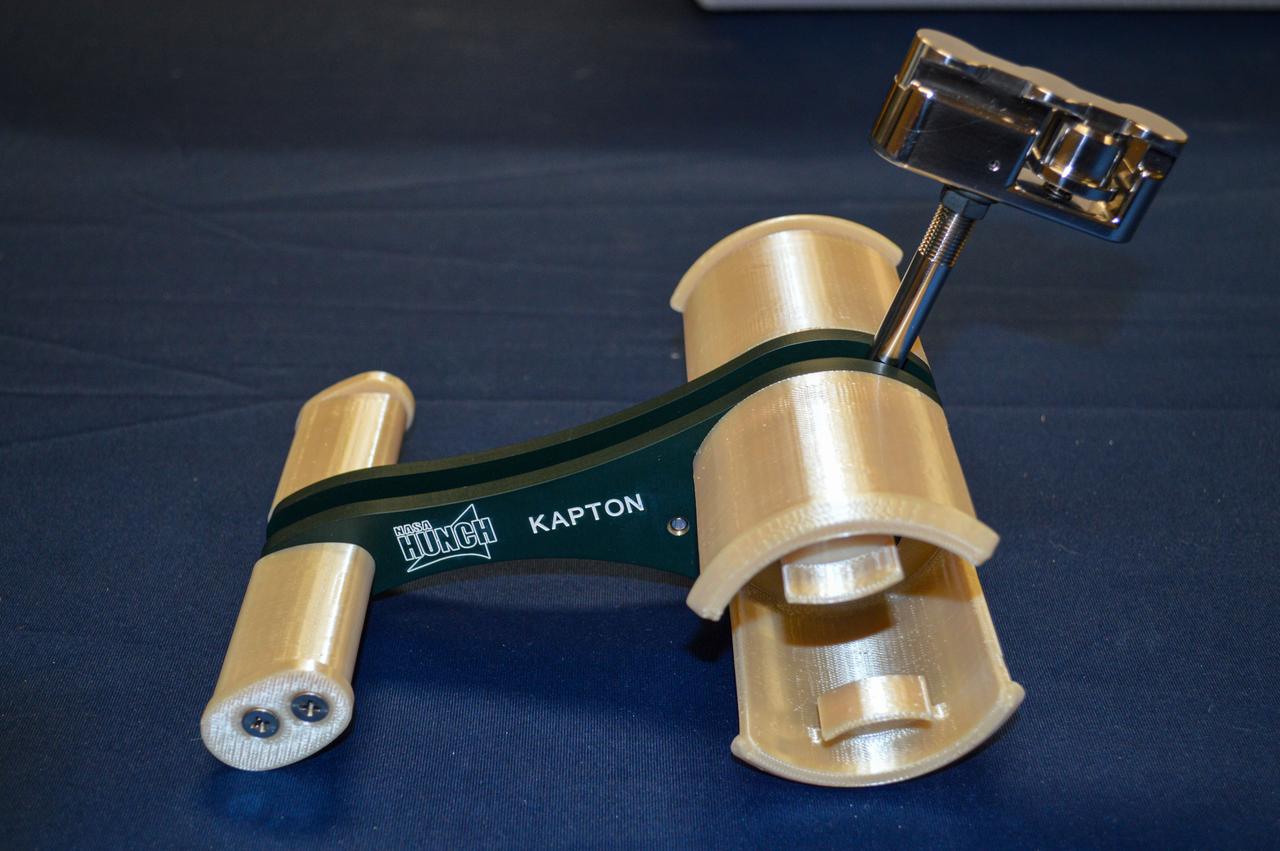
jsc2020e045036 (8/19/2020) --- Preflight bench review imagery of the High school students United with NASA to Create Hardware (HUNCH) Tape Dispenser (HUNCH Tape Dispenser). The dispenser enables one-handed operation for crew members. Crew members regularly use tape for mundane and critical tasks, but the tape must be cut with scissors, requiring two hands. The HUNCH Tape Dispenser is expected to improve efficiency of operations and scientific research on the space station.
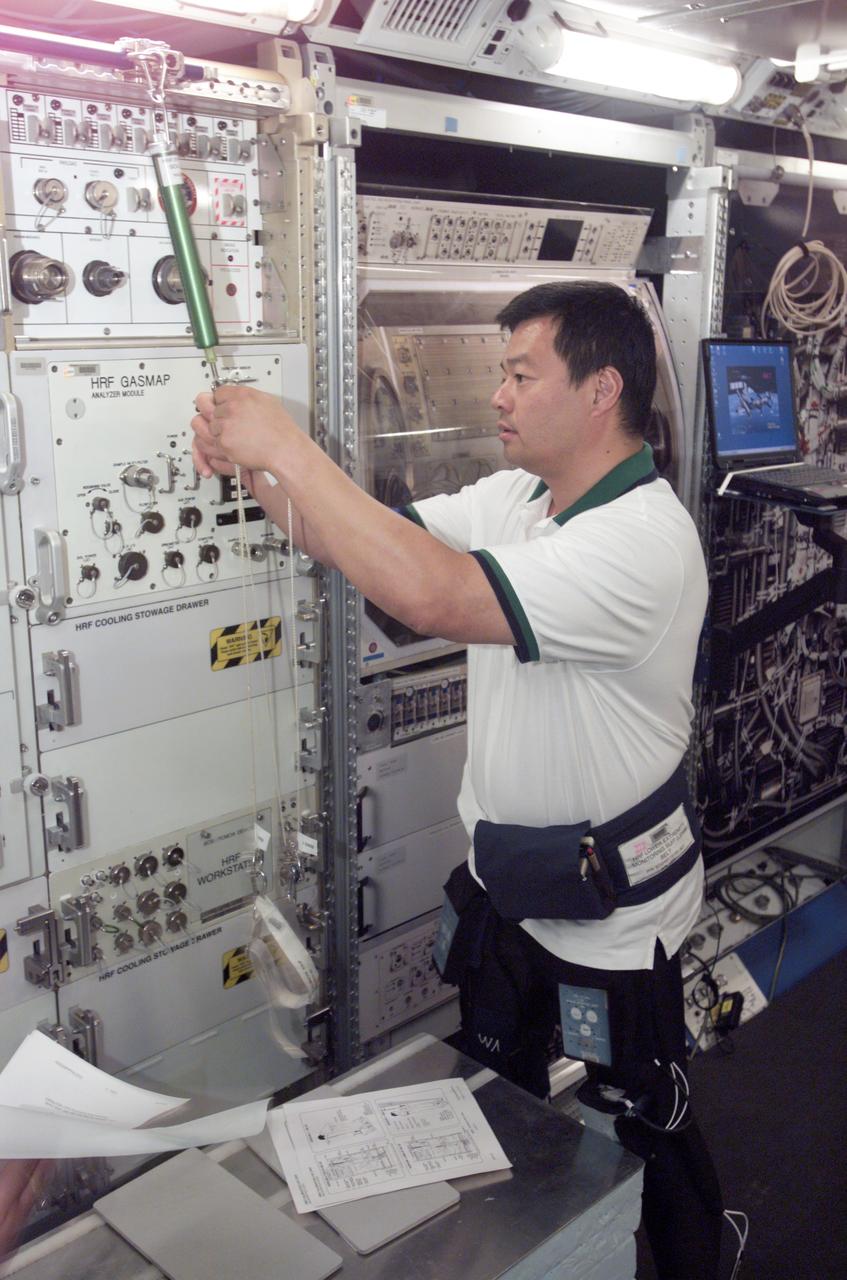
JSC2004-E-35439 (11 August 2004) --- Astronaut Leroy Chiao, Expedition 10 commander and NASA ISS science officer, participates in Foot/Ground Reaction Forces During Spaceflight (FOOT) Integrated nominal operations during Human Research Facility (HRF) training in the International Space Station (ISS) Destiny laboratory mockup/trainer at Johnson Space Center’s Space Vehicle Mockup Facility.
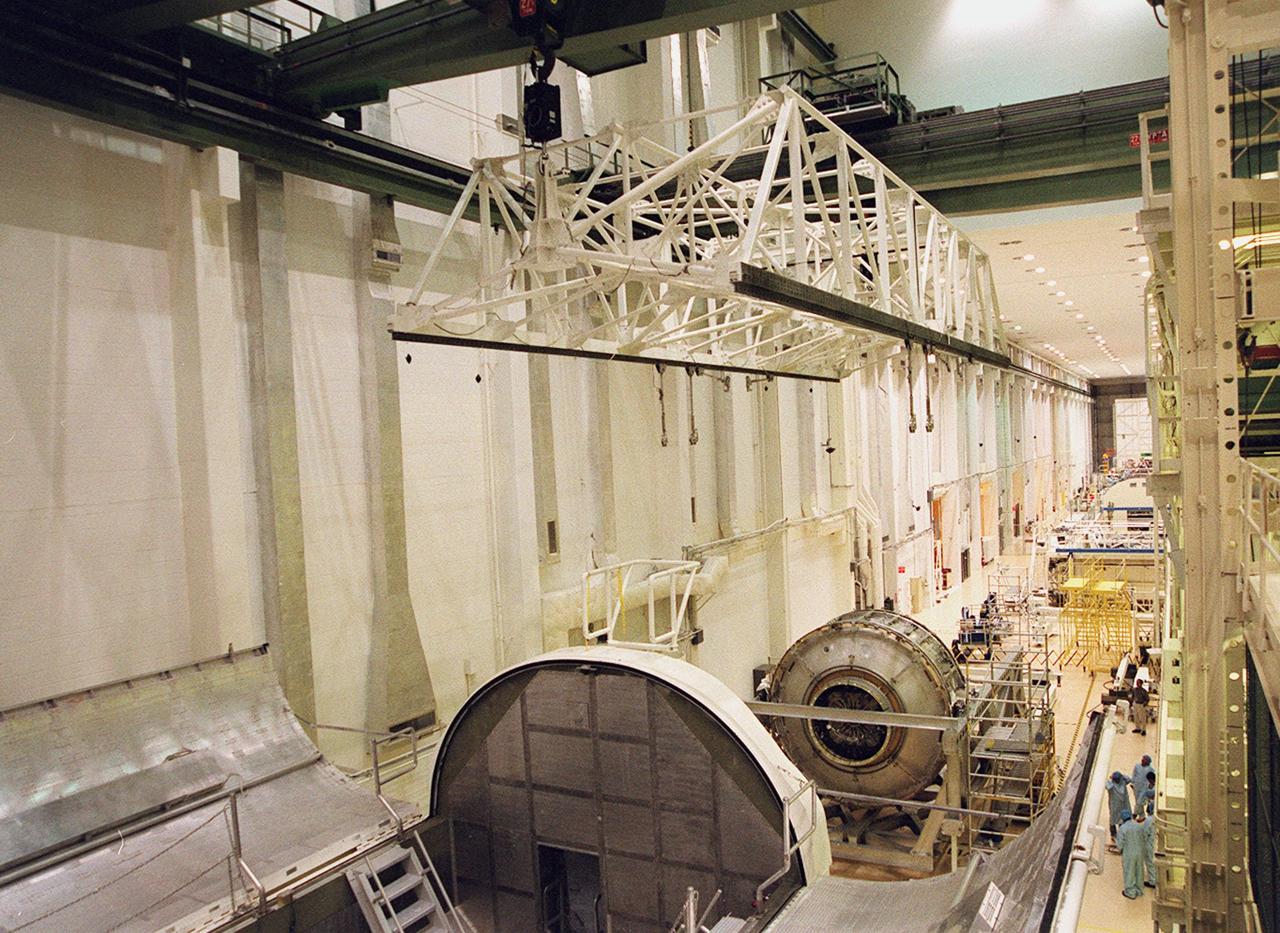
KENNEDY SPACE CENTER, FLA. -- An overhead crane in the Operations and Checkout Building hovers over the Joint Airlock Module (right) that it will lift and place in the payload canister in the foreground. The canister will transfer the module to the Space Station Processing Facility where it will continue to undergo preflight processing for the STS-104 mission scheduled for launch aboard Space Shuttle Atlantis May 17, 2001. The Joint Airlock Module is the gateway from which crew members aboard the International Space Station will enter and exit the 470-ton orbiting research facility
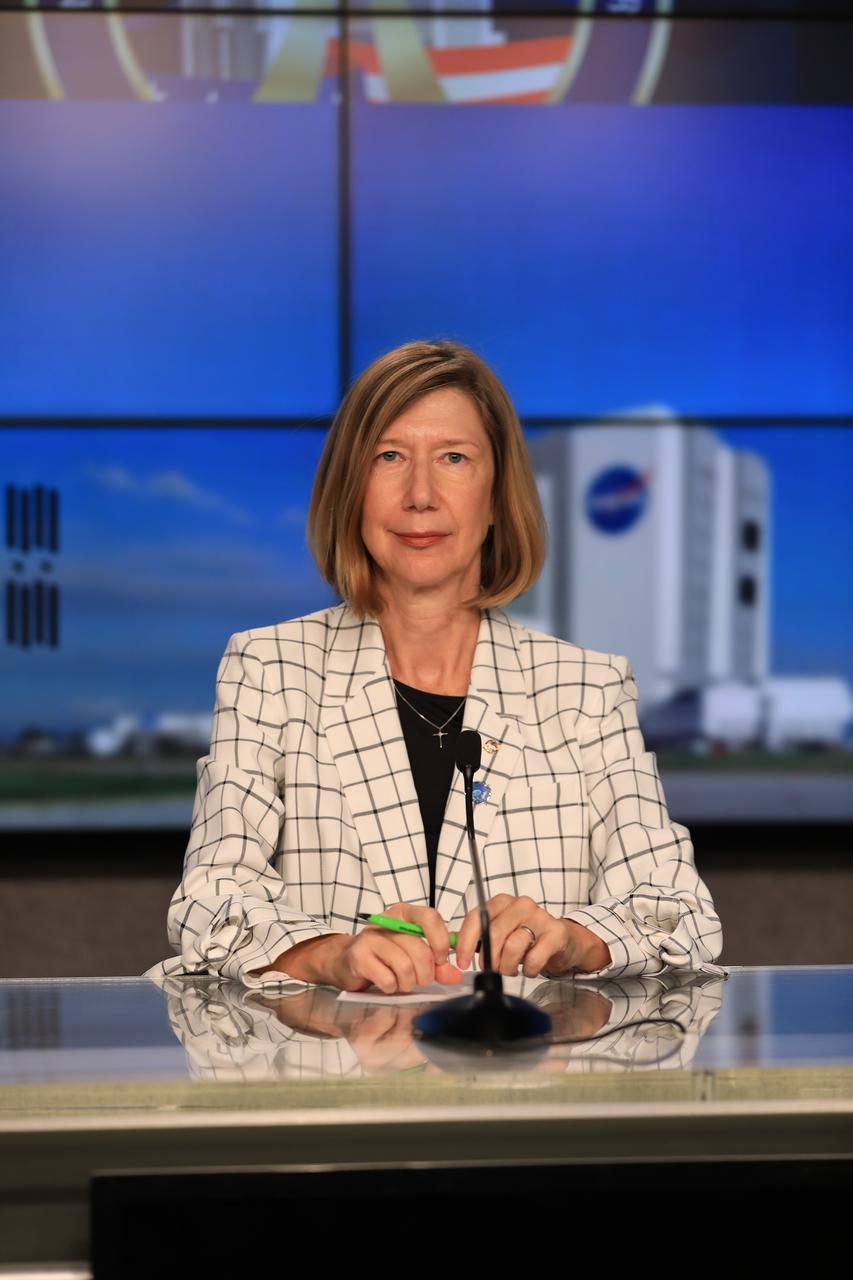
Kathy Lueders, associate administrator, Human Exploration and Operations Mission Directorate, NASA Headquarters, participates in a preflight briefing for NASA’s SpaceX Crew-1 mission on Sept. 29, 2020. NASA’s SpaceX Crew-1 mission is the first crew rotational flight of a U.S. commercial spacecraft with astronauts to the International Space Station. The Crew-1 mission will launch from Launch Complex 39A at Kennedy Space Center in Florida. Crew-1 is part of NASA's Commercial Crew Program, which has returned human spaceflight capabilities to the U.S.
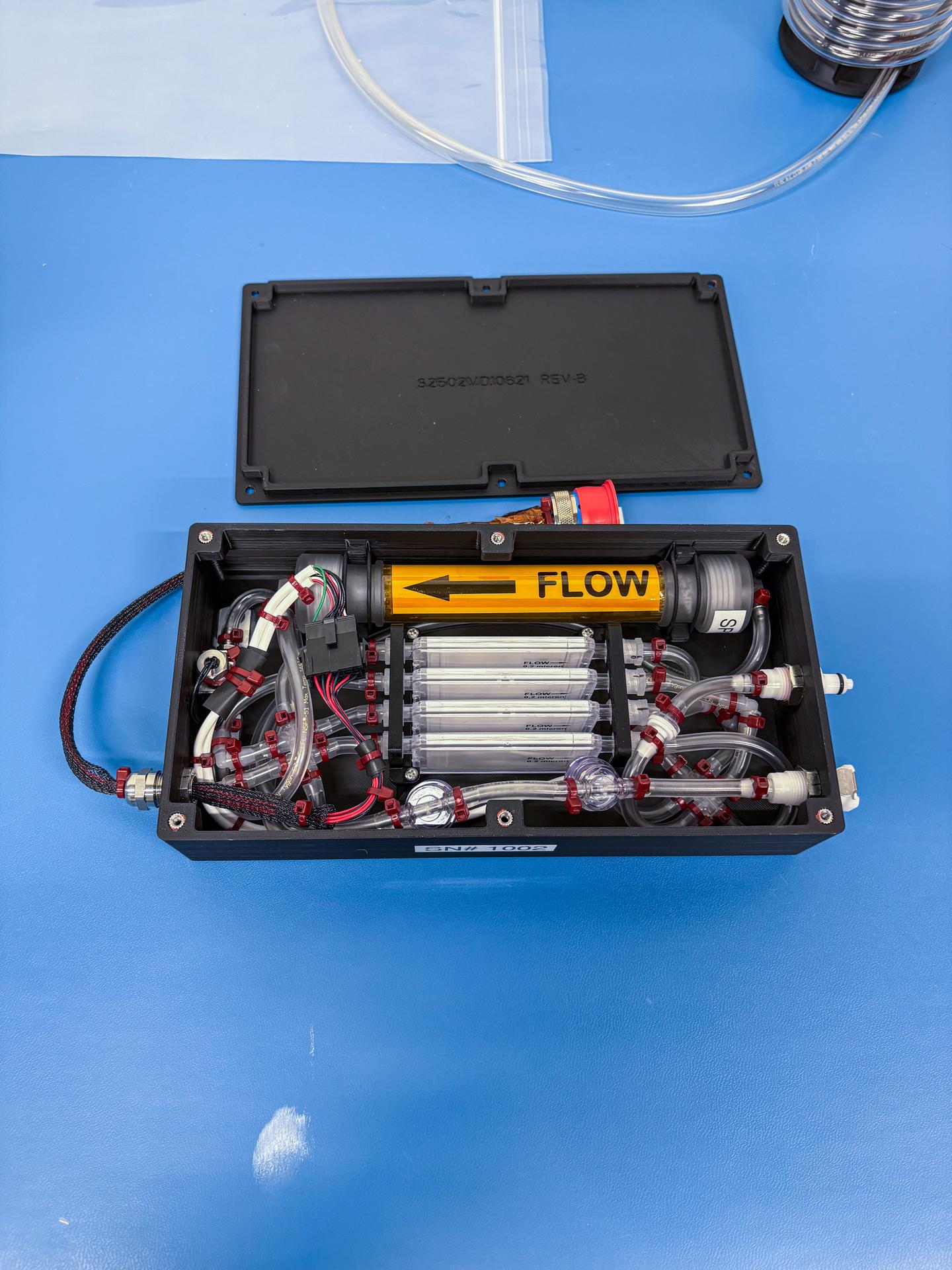
jsc2026e004238 (February 02, 2026) -- A preflight image of the miniaturized sterilization system as part of IVGEN mini. This investigation aims to verify operations to make medical-grade saline solution using potable water aboard the International Space Station. On future exploration missions, this system could give crew members the ability to generate intravenous fluids on demand. Credit: NASA.

KENNEDY SPACE CENTER, FLA. -- The payload canister, with the Joint Airlock Module inside, backs out of the Operations and Checkout Building for a short trip to the Space Station Processing Facility. There the module will undergo more preflight processing for the STS-104 mission scheduled for launch aboard Space Shuttle Atlantis May 17, 2001. The Joint Airlock Module is the gateway from which crew members aboard the International Space Station will enter and exit the 470-ton orbiting research facility
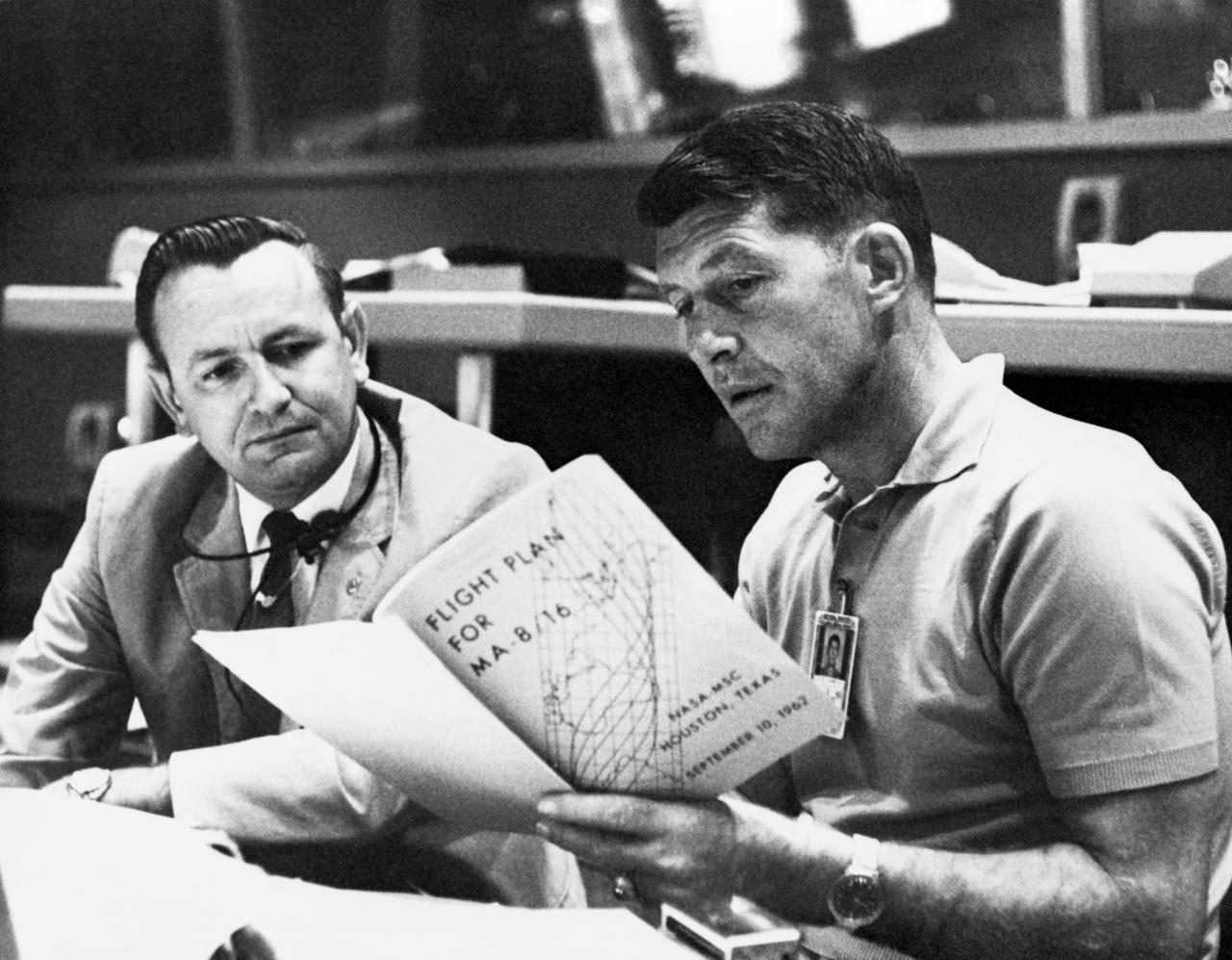
S74-33004 (19 Sept. 1962) --- Astronaut Walter M. Schirra Jr, (right), Mercury-Atlas 8 (MA-8) pilot, discusses the MA-8 flight plan with flight director Christopher C. Kraft Jr., Chief of the Flight Operations Division at the Manned Spacecraft Center, Houston, during MA-8 preflight preparations at Cape Canaveral, Florida. They are seated at a console in the Mercury Control Center. Photo credit: NASA
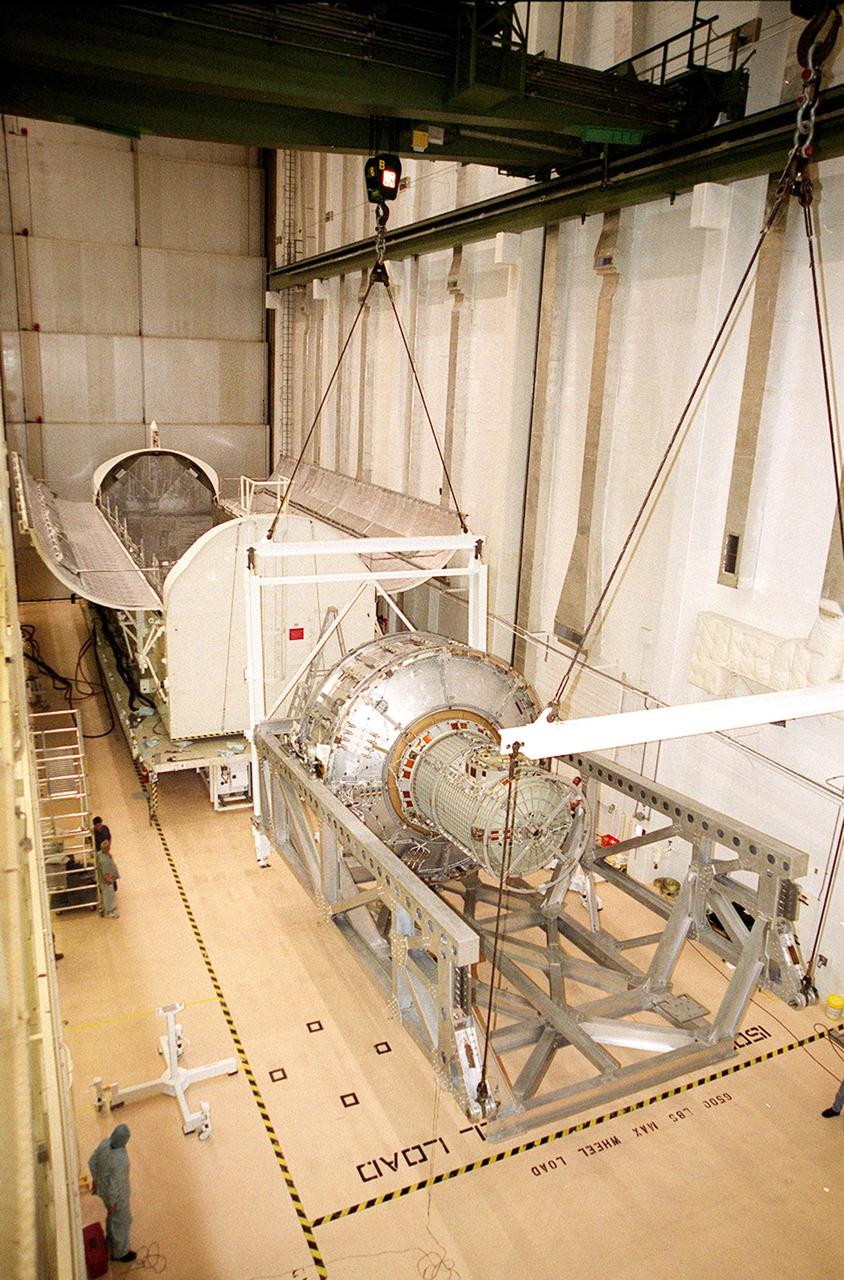
KENNEDY SPACE CENTER, FLA. -- In the Operations and Checkout Building, the Joint Airlock Module is placed in a horizontal position to be transferred to the payload canister behind it. Then it will be moved to the Space Station Processing Facility where it will continue to undergo preflight processing for the STS-104 mission scheduled for launch aboard Space Shuttle Atlantis May 17, 2001. The Joint Airlock Module is the gateway from which crew members aboard the International Space Station will enter and exit the 470-ton orbiting research facility
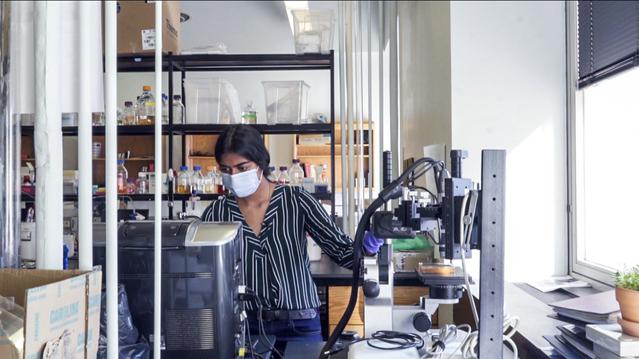
jsc2021e063280 (12/10/2021) --- Preflight imagery for the Characterizing Antibiotic Resistance in Microgravity Environments (CARMEn) experiment, part of Nanoracks Module-96. CARMEn observes how spaceflight affects the growth of a culture of two species of bacteria. SPOCS Project Co-Lead Swati Ravi is pictured operating an imaging microscope to observe P. aeruginosa and S. aureus bacterial biofilms in the Columbia University Dietrich Biological Shape and Pattern Formation Laboratory.
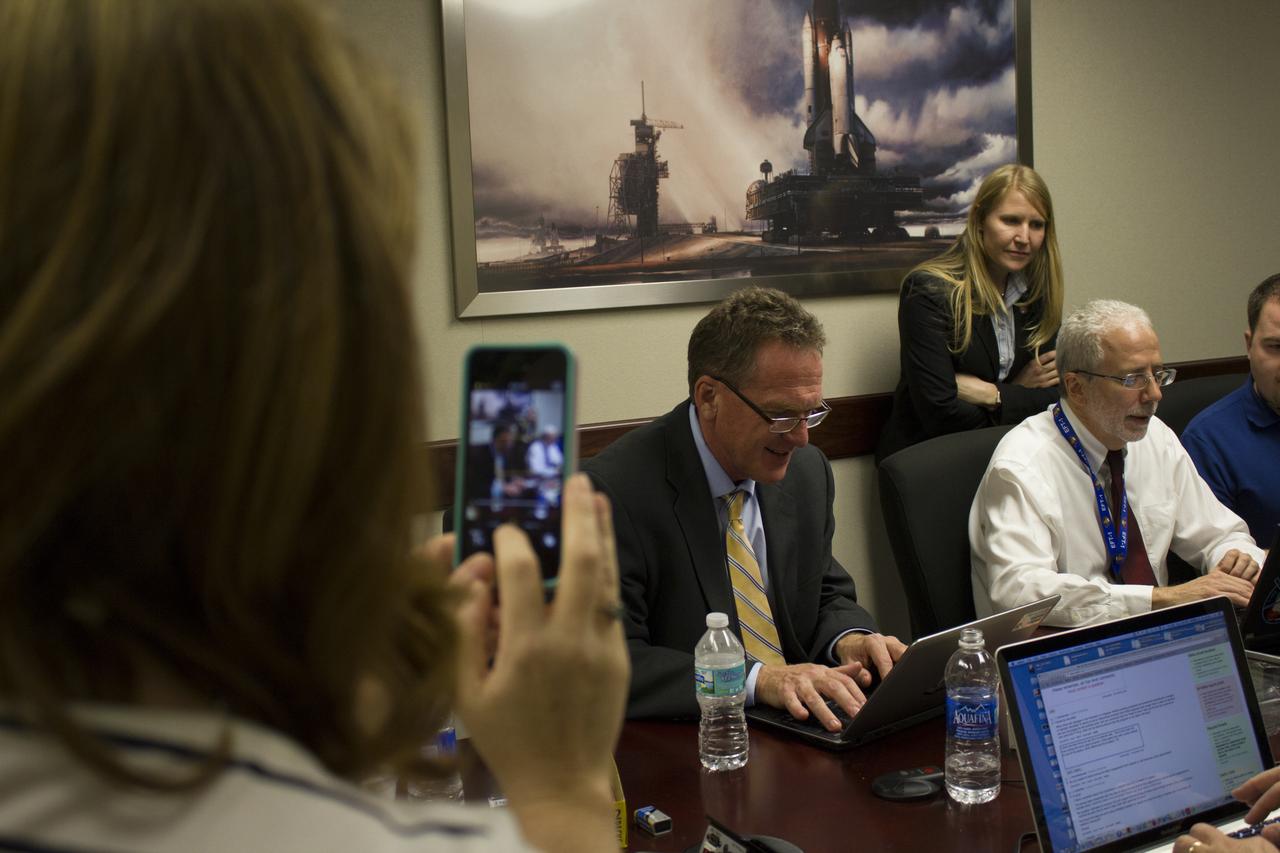
NASA managers participate in a live online Ask Me Anything, or AMA, session for reddit.com followers during Orion preflight activities at NASA Kennedy Space Center's News Center in Florida. From left, are Mike Bolger, Ground Systems Development and Operations program manager and Mark Geyer, Orion program manager. Also participating, but not shown in the photo is Todd May, Space Launch System program manager. Discussion topics include Mars and technology.
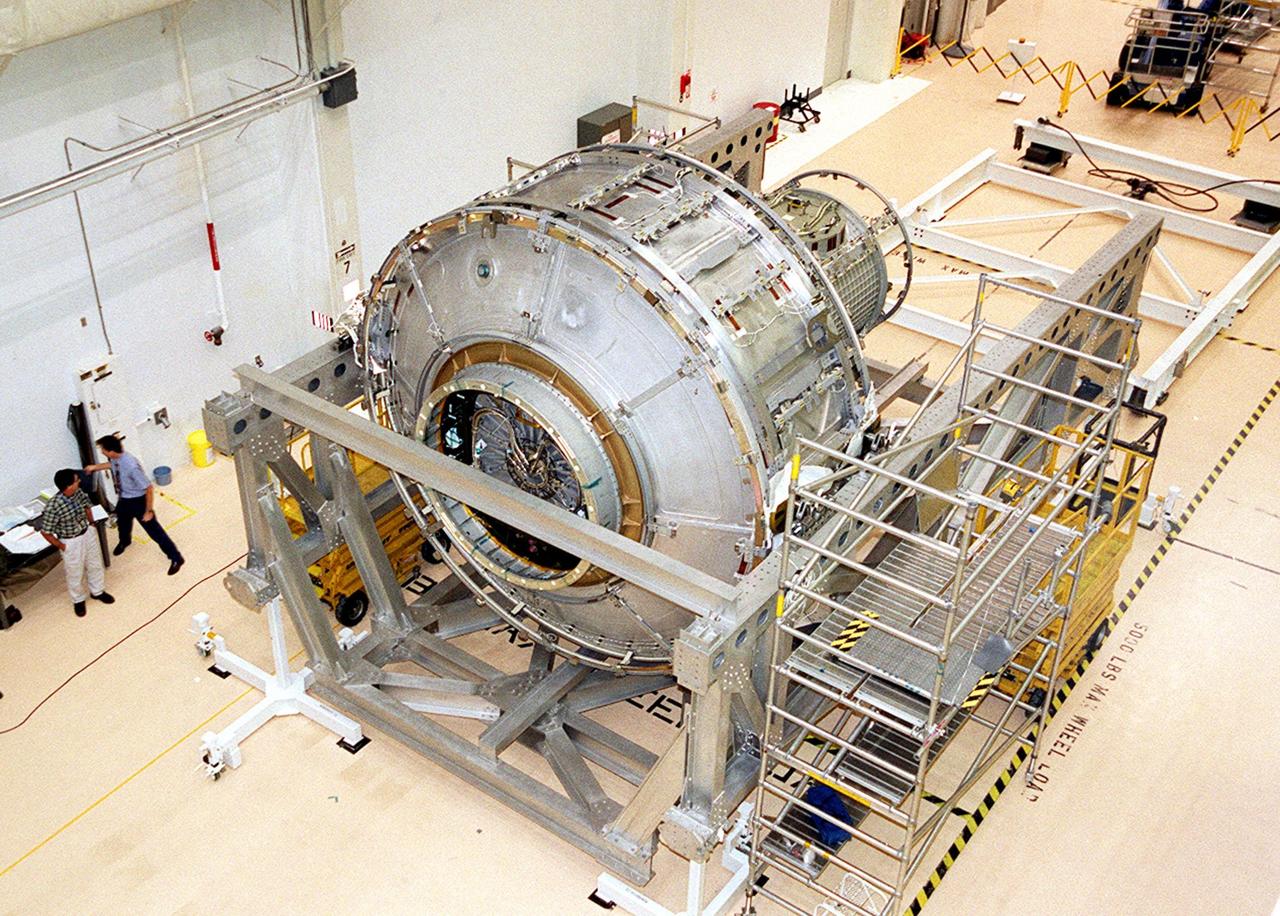
KENNEDY SPACE CENTER, FLA. -- In the Operations and Checkout Building, the Joint Airlock Module is ready to be lifted and placed in the payload canister for transfer to the Space Station Processing Facility. There it will continue to undergo preflight processing for the STS-104 mission scheduled for launch aboard Space Shuttle Atlantis May 17, 2001. The Joint Airlock Module is the gateway from which crew members aboard the International Space Station will enter and exit the 470-ton orbiting research facility
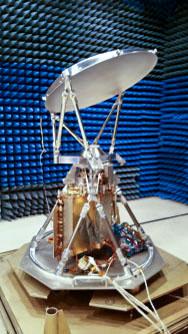
jsc2021e048037 (10/22/2021) --- A preflight view of COWVR during Antenna Range Testing. Space Test Program-Houston 8-Compact Ocean Wind Vector Radiometer (STP-H8-COWVR) demonstrates on-orbit use of a new terrestrial microwave meteorological sensor. It is designed to deliver accurate sea surface wind direction and speed data that are critical to naval surface operations and forecasting and tracking hurricanes and typhoons. Image courtesy of JPL.
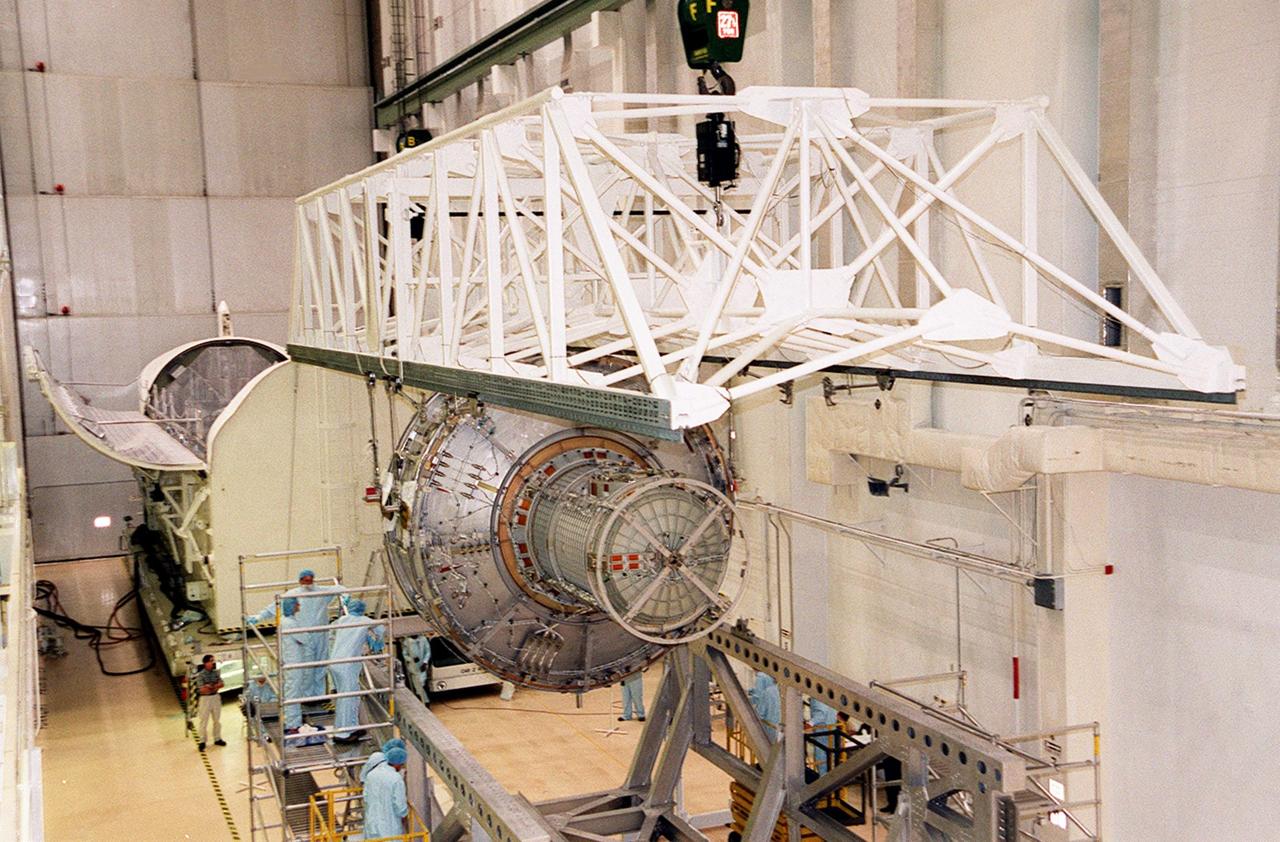
KENNEDY SPACE CENTER, FLA. -- In the Operations and Checkout Building, an overhead crane lifts the Joint Airlock Module to move and place it into the payload canister at left for transfer to the Space Station Processing Facility. There the module will undergo more preflight processing for the STS-104 mission scheduled for launch aboard Space Shuttle Atlantis May 17, 2001. The Joint Airlock Module is the gateway from which crew members aboard the International Space Station will enter and exit the 470-ton orbiting research facility
jsc2021e0480388 (10/22/2021) --- A preflight view of COWVR during TVAC Testing. Space Test Program-Houston 8-Compact Ocean Wind Vector Radiometer (STP-H8-COWVR) demonstrates on-orbit use of a new terrestrial microwave meteorological sensor. It is designed to deliver accurate sea surface wind direction and speed data that are critical to naval surface operations and forecasting and tracking hurricanes and typhoons. Image courtesy of JPL.
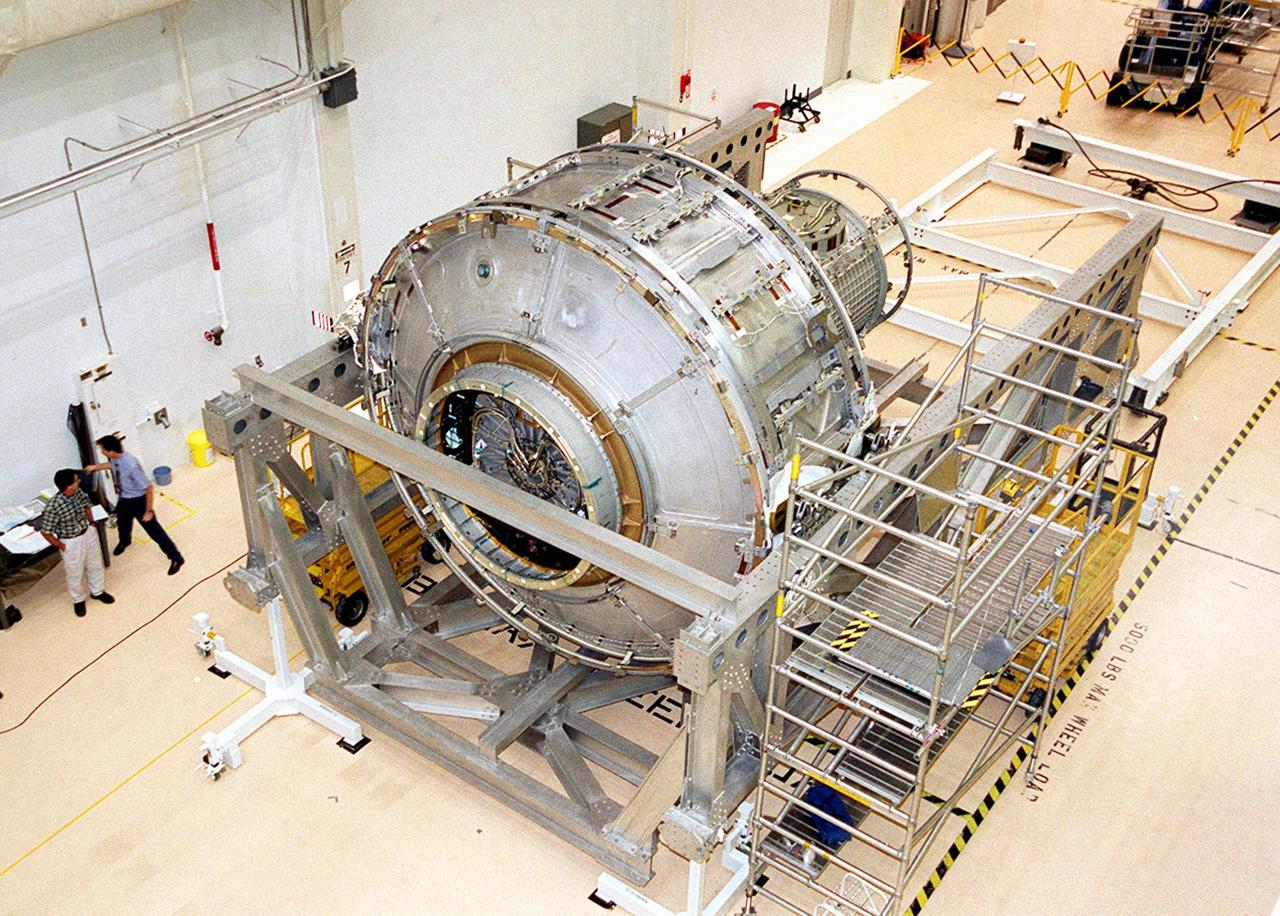
KENNEDY SPACE CENTER, FLA. -- In the Operations and Checkout Building, the Joint Airlock Module is ready to be lifted and placed in the payload canister for transfer to the Space Station Processing Facility. There it will continue to undergo preflight processing for the STS-104 mission scheduled for launch aboard Space Shuttle Atlantis May 17, 2001. The Joint Airlock Module is the gateway from which crew members aboard the International Space Station will enter and exit the 470-ton orbiting research facility

NASA managers participate in a live online Ask Me Anything, or AMA, session for reddit.com followers during Orion preflight activities at NASA Kennedy Space Center's News Center in Florida. At left, is Mike Bolger, Ground Systems Development and Operations program manager. Not shown, but also participating were Mark Geyer, Orion program manager, and Todd May, Space Launch System program manager. Discussion topics include Mars and technology.
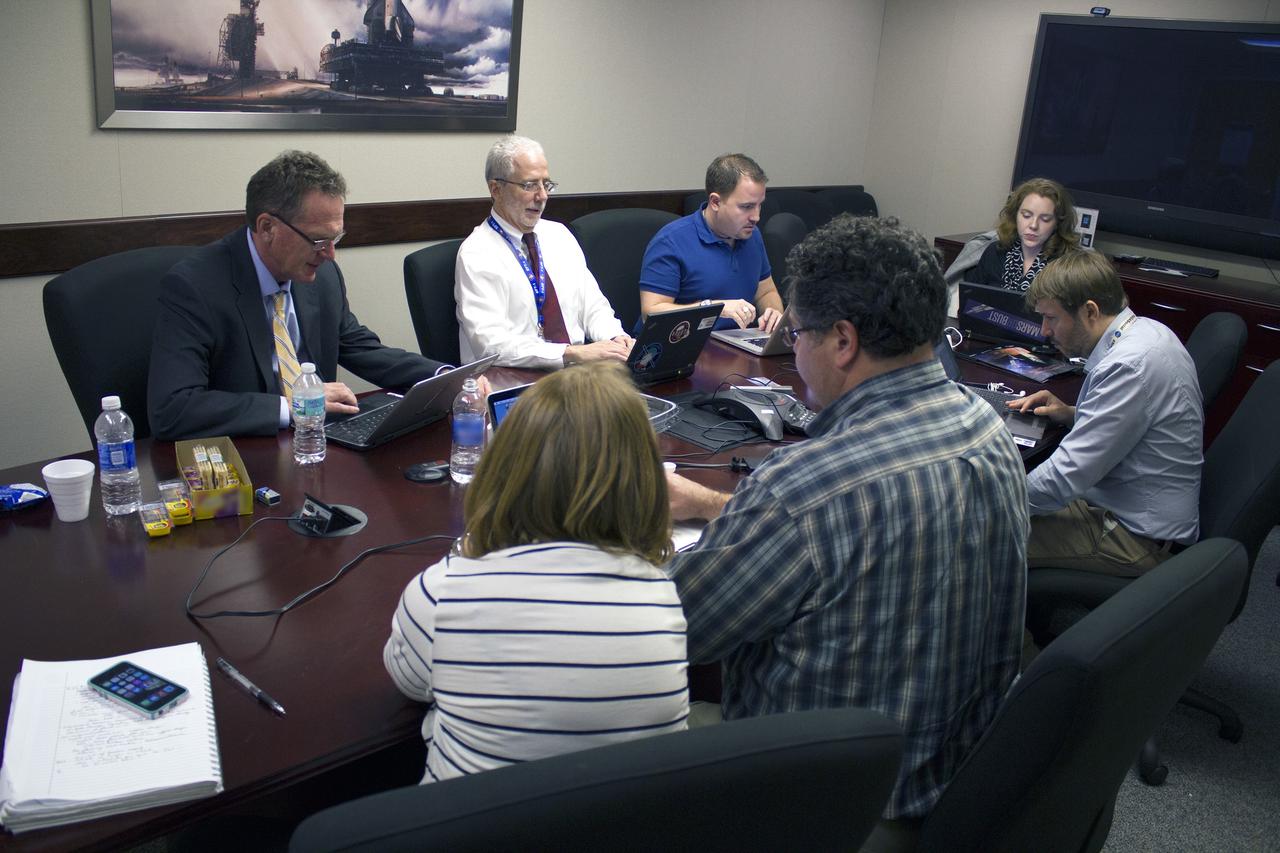
CAPE CANAVERAL, Fla. – NASA managers participate in a live online Ask Me Anything, or AMA, session for reddit.com followers during Orion preflight activities at NASA Kennedy Space Center's News Center in Florida. From left, are Mike Bolger, Ground Systems Development and Operations program manager and Mark Geyer, Orion program manager. Across from them, in the plaid shirt is Todd May, Space Launch System program manager. Discussion topics include Mars and technology. Photo credit: NASA/Frankie Martin

NASA managers participate in a live online Ask Me Anything, or AMA, session for reddit.com followers during Orion preflight activities at NASA Kennedy Space Center's News Center in Florida. Participating are Mike Bolger, Ground Systems Development and Operations program manager Mark Geyer, Orion program manager and Todd May, Space Launch System program manager. Discussion topics include Mars and technology. Monitoring the live discussion is Brandi Dean, public affairs specialist from Johnson Space Center in Houston.
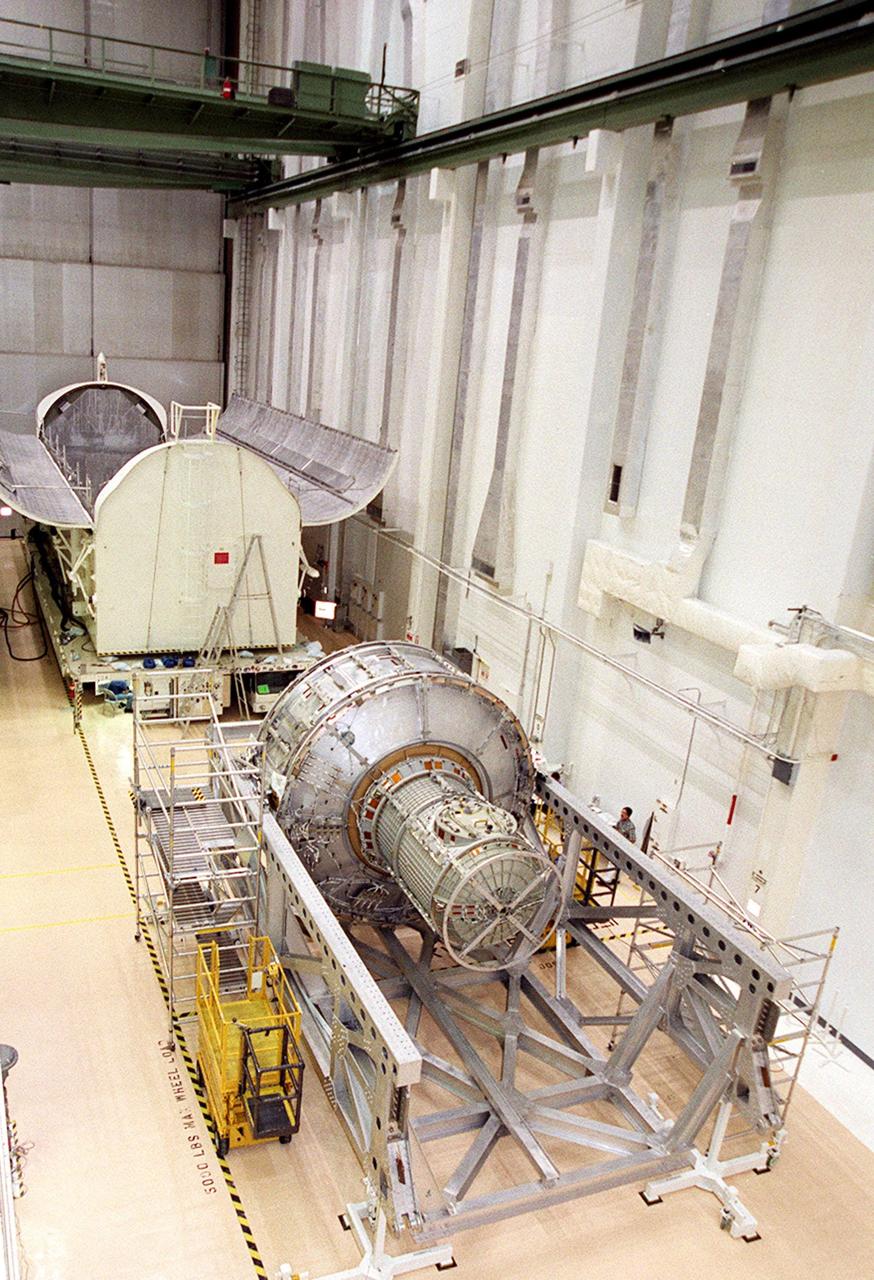
KENNEDY SPACE CENTER, FLA. -- In the Operations and Checkout Building, the Joint Airlock Module waits for transfer to the payload canister behind it after which it will be moved to the Space Station Processing Facility. There it will continue to undergo preflight processing for the STS-104 mission scheduled for launch aboard Space Shuttle Atlantis May 17, 2001. The Joint Airlock Module is the gateway from which crew members aboard the International Space Station will enter and exit the 470-ton orbiting research facility
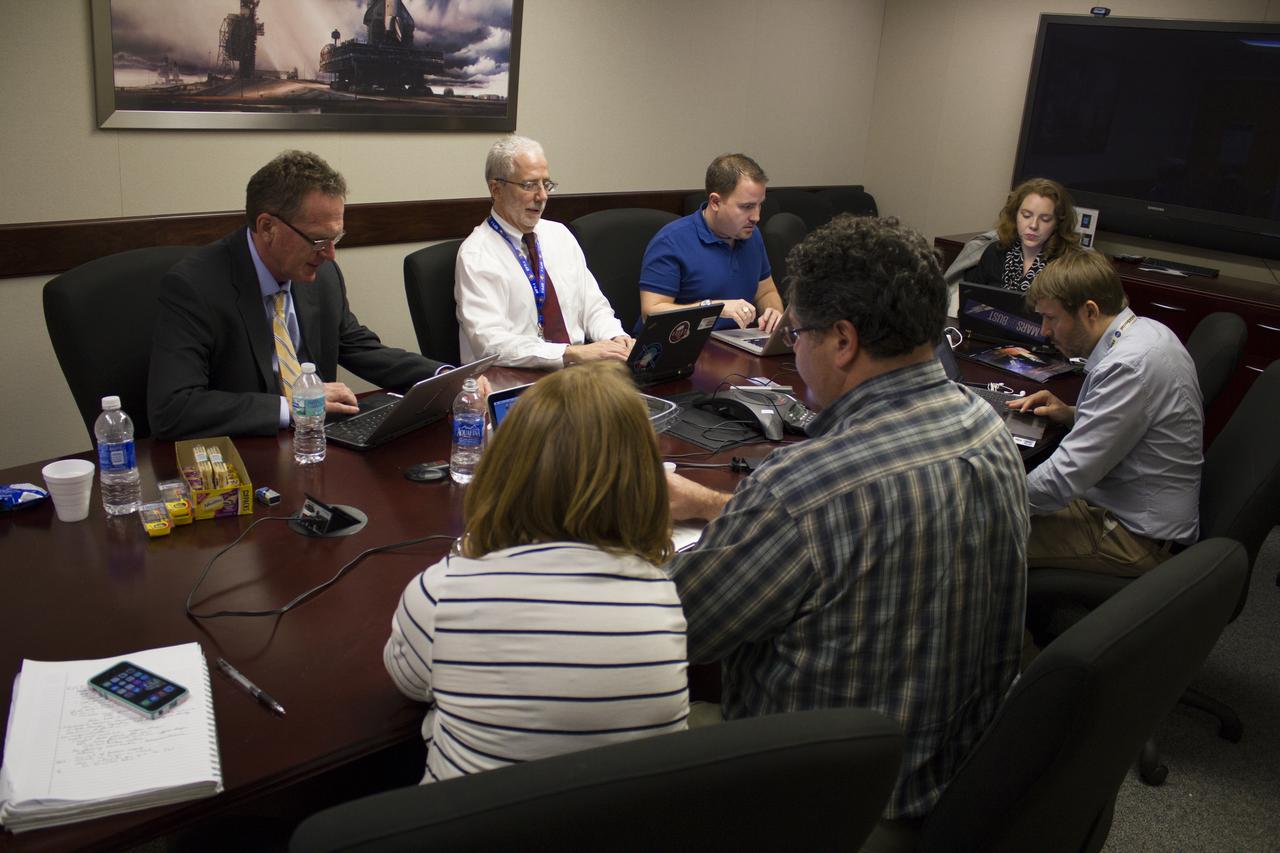
NASA managers participate in a live online Ask Me Anything, or AMA, session for reddit.com followers during Orion preflight activities at NASA Kennedy Space Center's News Center in Florida. From left, are Mike Bolger, Ground Systems Development and Operations program manager; and Mark Geyer, Orion program manager. Across from them, in the plaid shirt is Todd May, Space Launch System program manager. Discussion topics include Mars and technology.
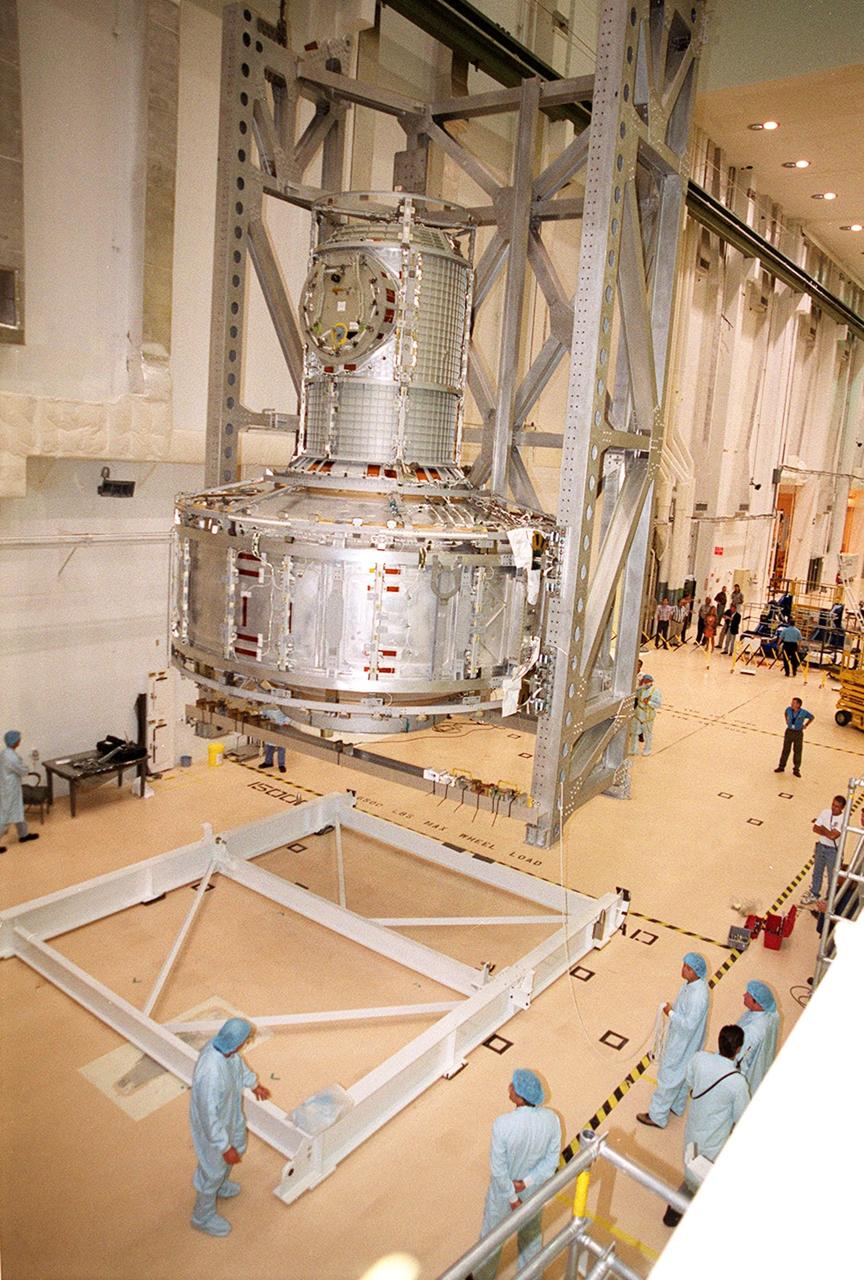
KENNEDY SPACE CENTER, FLA. -- In the Operations and Checkout Building, the Joint Airlock Module is lowered toward a stand on the floor where it will be moved to a horizontal position. Then it will be lifted into the payload canister for transfer to the Space Station Processing Facility. There it will continue to undergo preflight processing for the STS-104 mission scheduled for launch aboard Space Shuttle Atlantis May 17, 2001. The Joint Airlock Module is the gateway from which crew members aboard the International Space Station will enter and exit the 470-ton orbiting research facility
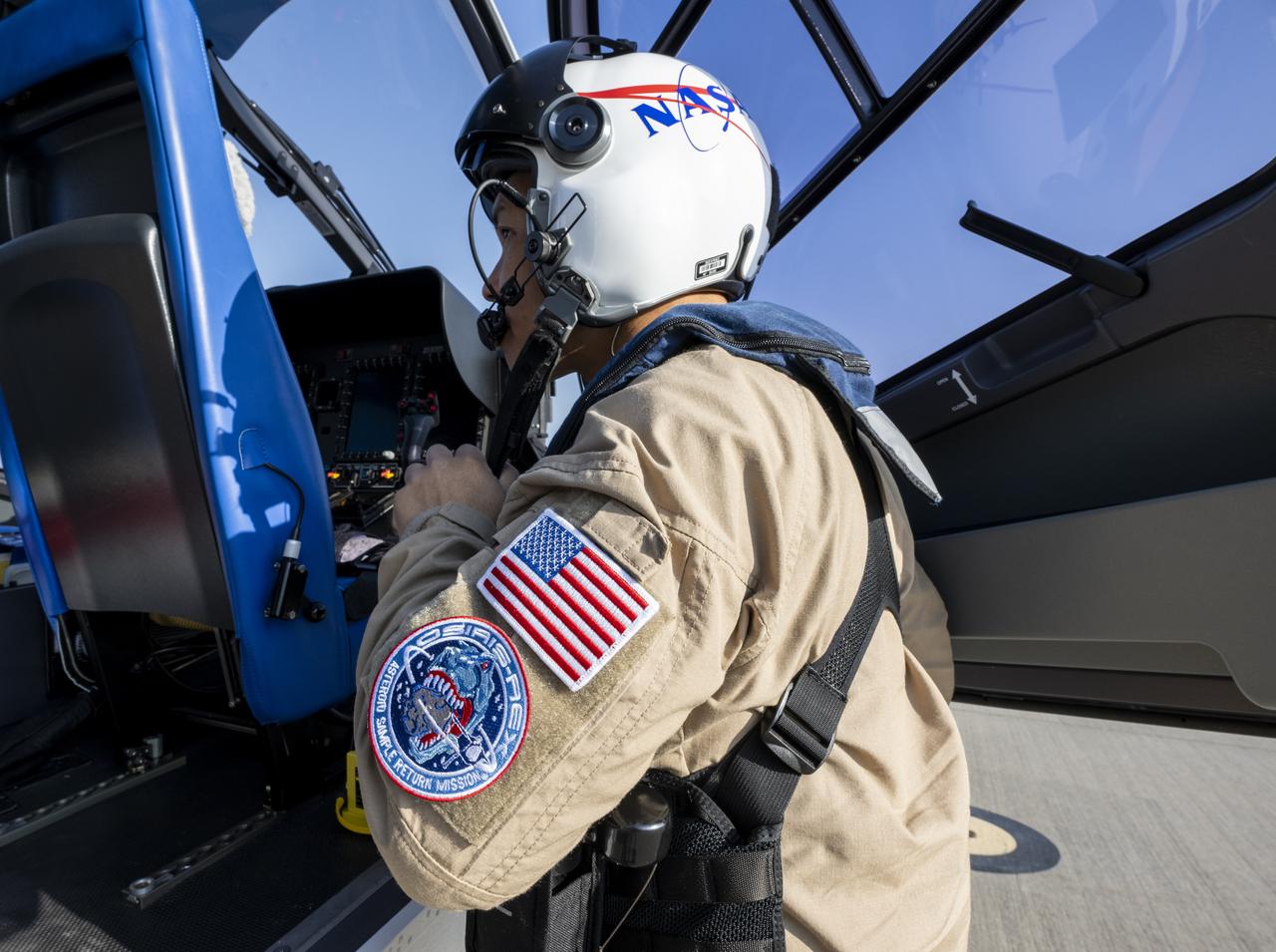
Stephen Lee, Kennedy Space Center (KSC) Flight Operations, performs preflight checks prior to a drop test in preparation for the retrieval of the sample return capsule from NASA's OSIRIS-REx mission, Wednesday, Aug. 30, 2023, at the Department of Defense's Utah Test and Training Range. The sample was collected from the asteroid Bennu in October 2020 by NASA’s OSIRIS-REx spacecraft and will return to Earth on September 24th, landing under parachute at the Utah Test and Training Range. Photo Credit: (NASA/Keegan Barber)
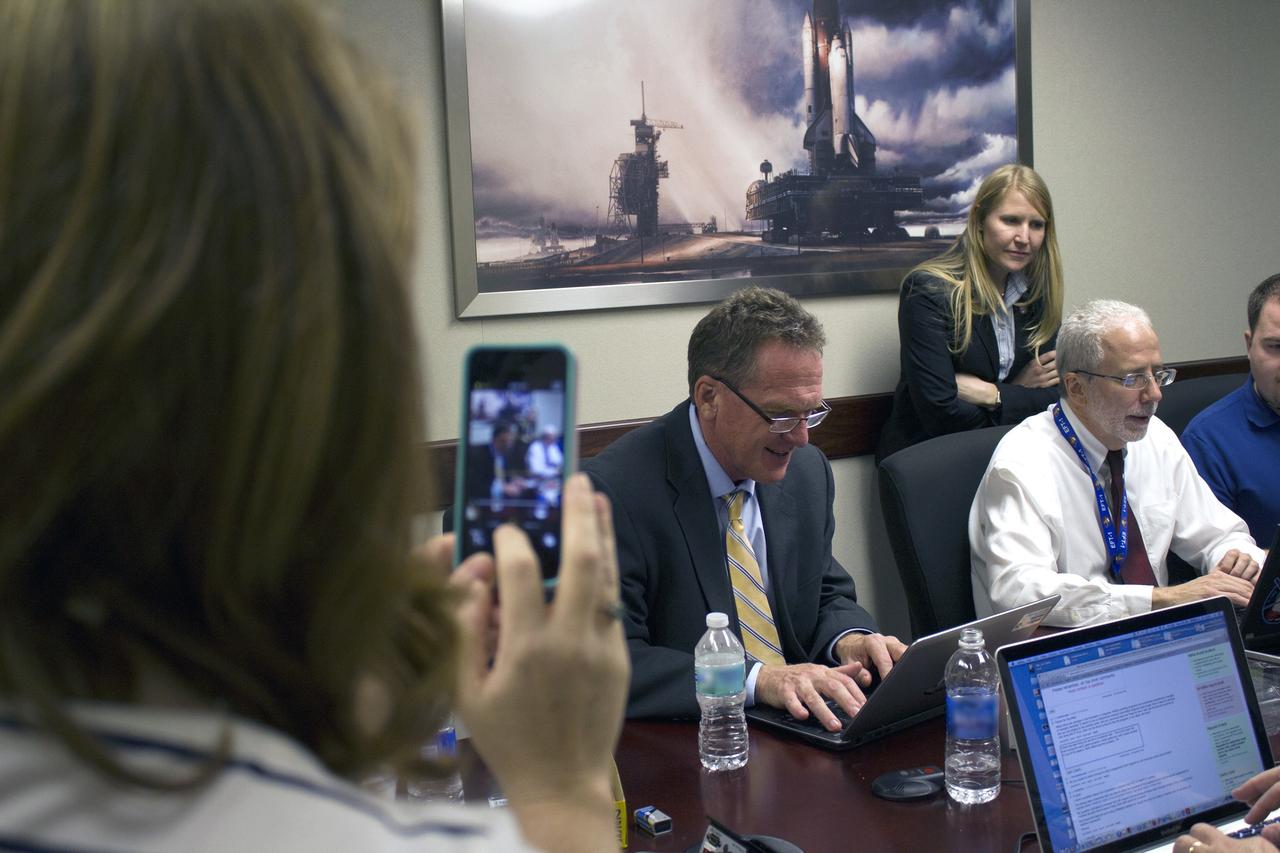
CAPE CANAVERAL, Fla. – NASA managers participate in a live online Ask Me Anything, or AMA, session for reddit.com followers during Orion preflight activities at NASA Kennedy Space Center's News Center in Florida. From left, are Mike Bolger, Ground Systems Development and Operations program manager and Mark Geyer, Orion program manager. Also participating, but not shown in the photo is Todd May, Space Launch System program manager. Discussion topics include Mars and technology. Photo credit: NASA/Frankie Martin

CAPE CANAVERAL, Fla. – NASA managers participate in a live online Ask Me Anything, or AMA, session for reddit.com followers during Orion preflight activities at NASA Kennedy Space Center's News Center in Florida. At left, is Mike Bolger, Ground Systems Development and Operations program manager. Not shown, but also participating were Mark Geyer, Orion program manager, and Todd May, Space Launch System program manager. Discussion topics include Mars and technology. Photo credit: NASA/Frankie Martin
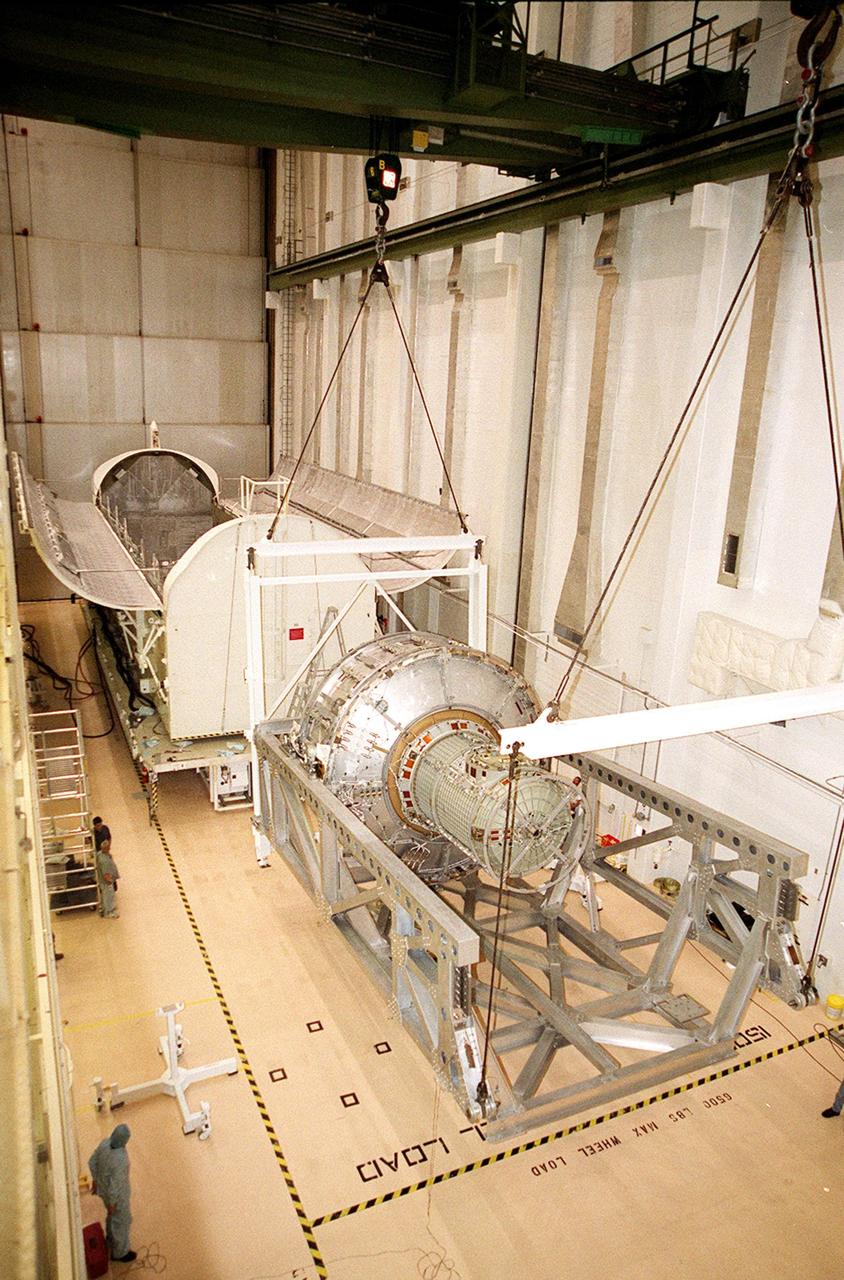
KENNEDY SPACE CENTER, FLA. -- In the Operations and Checkout Building, the Joint Airlock Module is placed in a horizontal position to be transferred to the payload canister behind it. Then it will be moved to the Space Station Processing Facility where it will continue to undergo preflight processing for the STS-104 mission scheduled for launch aboard Space Shuttle Atlantis May 17, 2001. The Joint Airlock Module is the gateway from which crew members aboard the International Space Station will enter and exit the 470-ton orbiting research facility
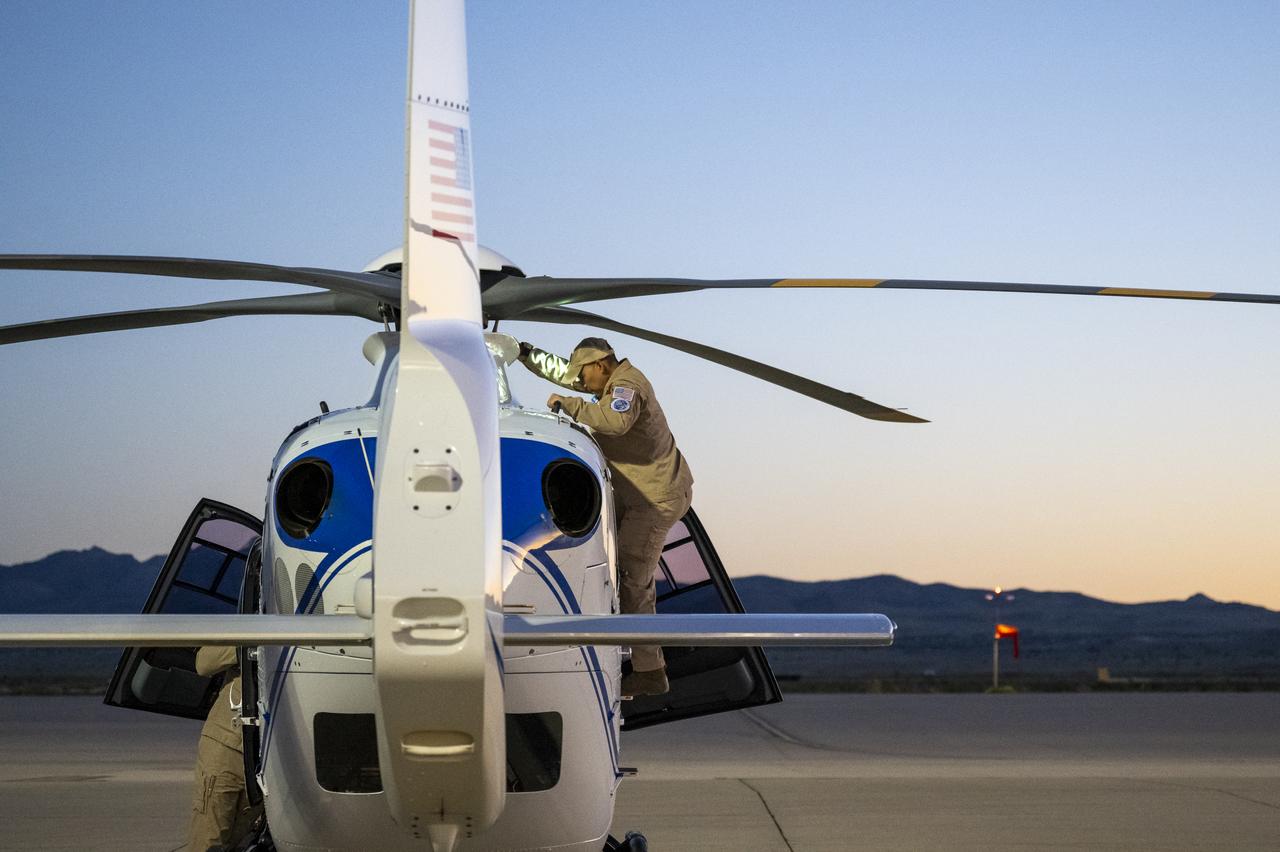
Members of the Kennedy Space Center (KSC) Flight Operations team perform preflight checks prior to field rehearsals in preparation for the retrieval of the sample return capsule from NASA's OSIRIS-REx mission, Tuesday, Aug. 29, 2023, at the Department of Defense's Utah Test and Training Range. The sample was collected from the asteroid Bennu in October 2020 by NASA’s OSIRIS-REx spacecraft and will return to Earth on September 24th, landing under parachute at the Utah Test and Training Range. Photo Credit: (NASA/Keegan Barber)
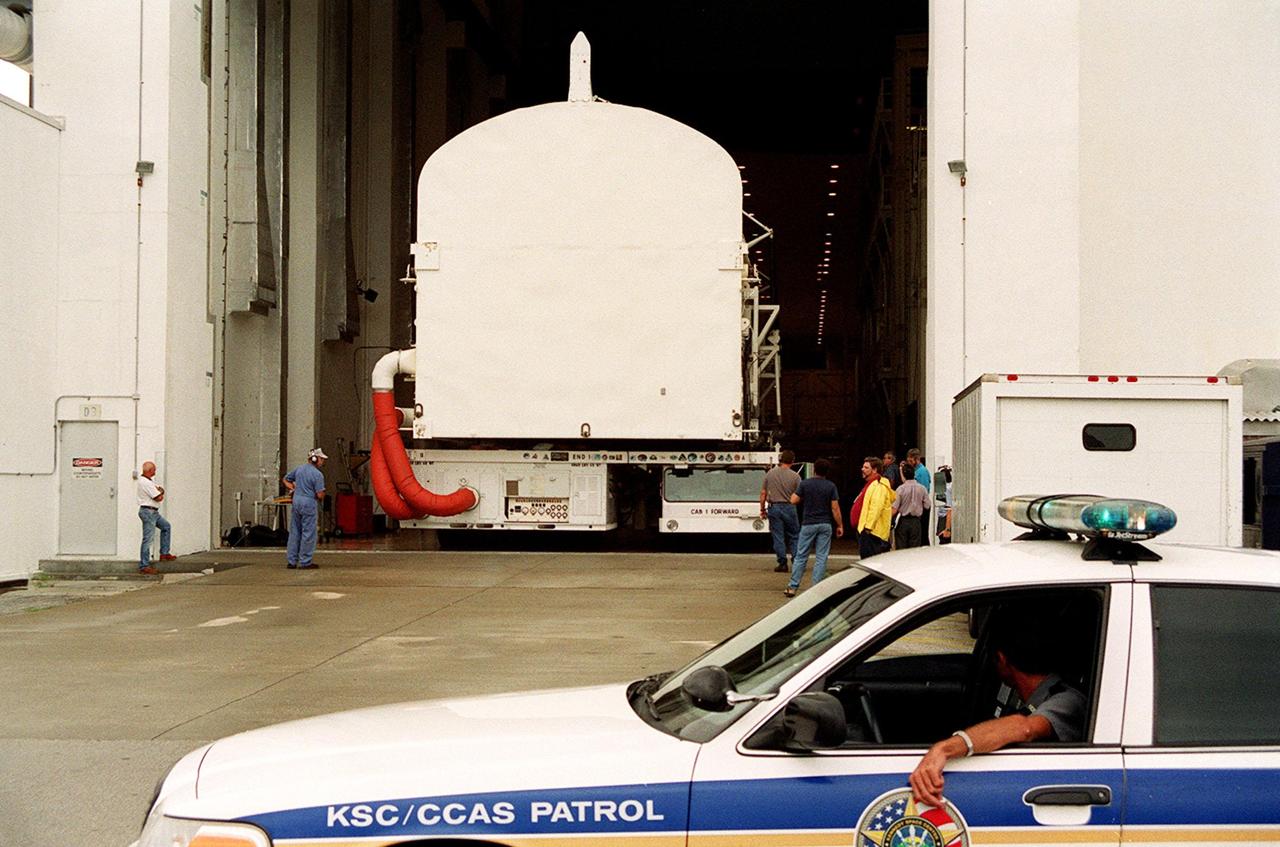
KENNEDY SPACE CENTER, FLA. -- The payload canister, with the Joint Airlock Module inside, backs out of the Operations and Checkout Building for a short trip to the Space Station Processing Facility. There the module will undergo more preflight processing for the STS-104 mission scheduled for launch aboard Space Shuttle Atlantis May 17, 2001. The Joint Airlock Module is the gateway from which crew members aboard the International Space Station will enter and exit the 470-ton orbiting research facility
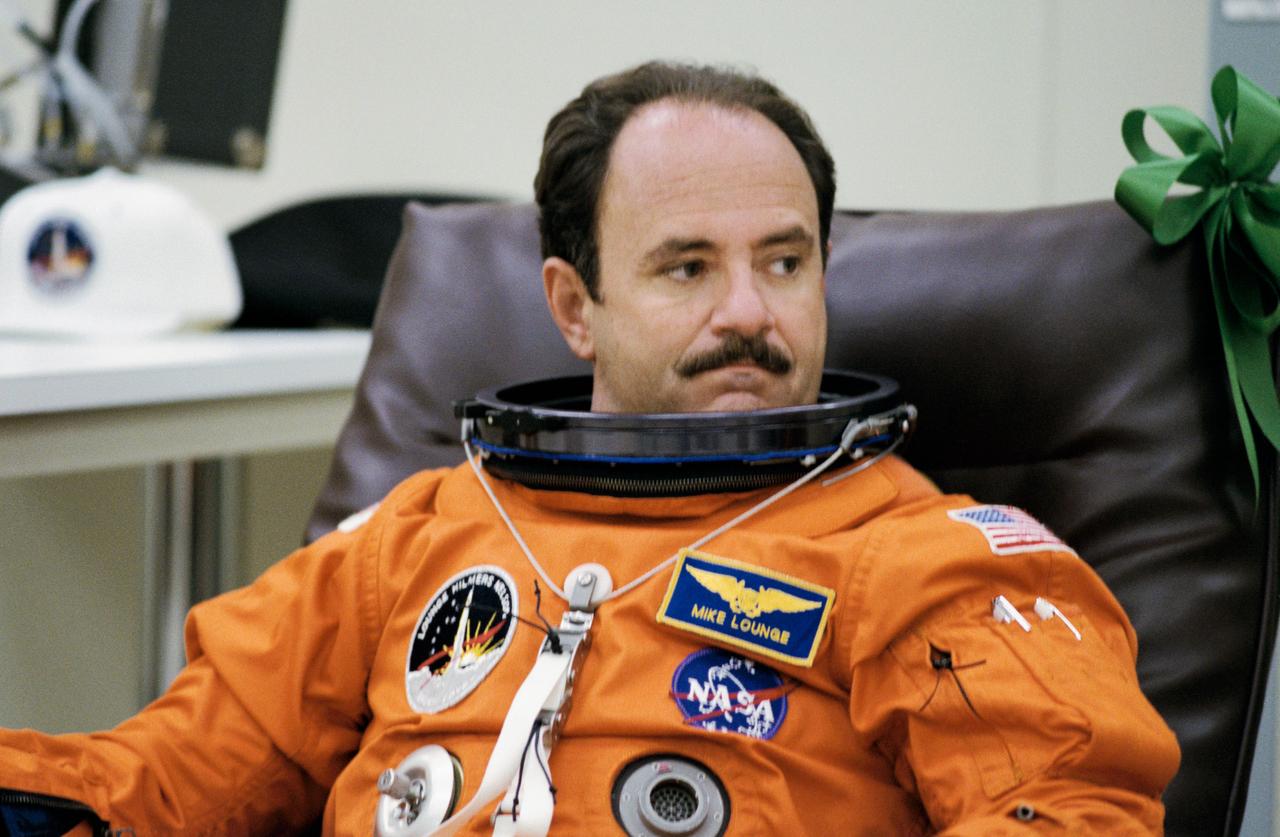
STS-26 Discovery, Orbiter Vehicle (OV) 103, Mission Specialist (MS) John M. Lounge relaxes in reclining chair after donning his orange launch and entry suit (LES) at the Kennedy Space Center (KSC) Operations and Checkout (O&C) Building. Upon completion of preflight suit tests, crewmembers will head to the launch pad.
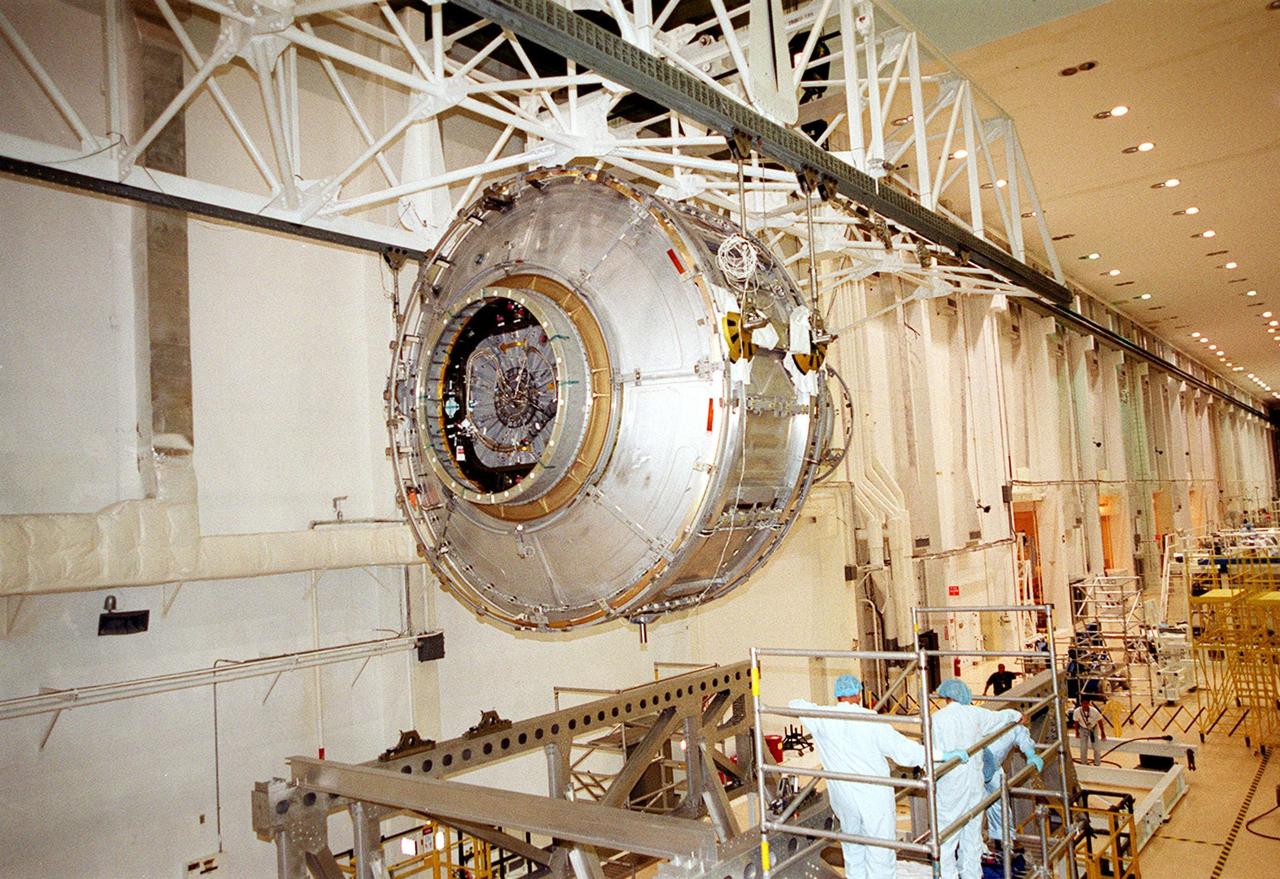
KENNEDY SPACE CENTER, FLA. -- The Joint Airlock Module is suspended by an overhead crane in the Operations and Checkout Building before being moved and placed into the payload canister for transfer to the Space Station Processing Facility. There the module will undergo more preflight processing for the STS-104 mission scheduled for launch aboard Space Shuttle Atlantis May 17, 2001. The Joint Airlock Module is the gateway from which crew members aboard the International Space Station will enter and exit the 470-ton orbiting research facility
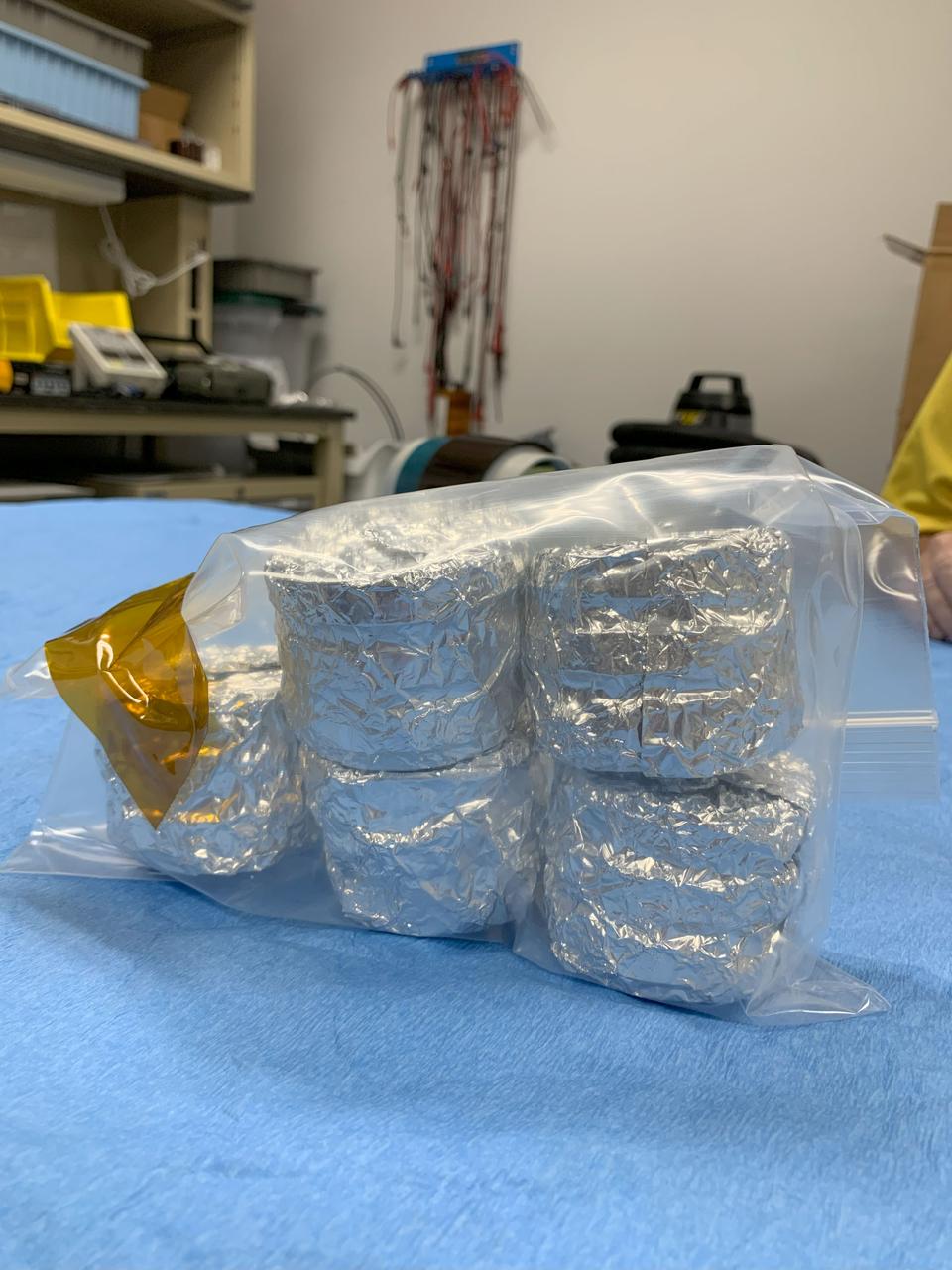
jsc2024e062114 (9/13/2024) --- The ANT1 Radiation Tolerance Experiment with Moss in Orbit on the Space Station (ARTEMOSS) payload: five of the Petri plate stacks are inserted into a flight-approved Zip lock bag and sealed with the zipper seal, a square of the flight-approved Tedlar tape is used for designation of top-bottom orientation relevant for preflight operations and launch. The ARTEMOSS investigation examines whether and how an Antarctic moss repairs damage caused by cosmic radiation and microgravity. Image courtesy of Agata Zupanska.
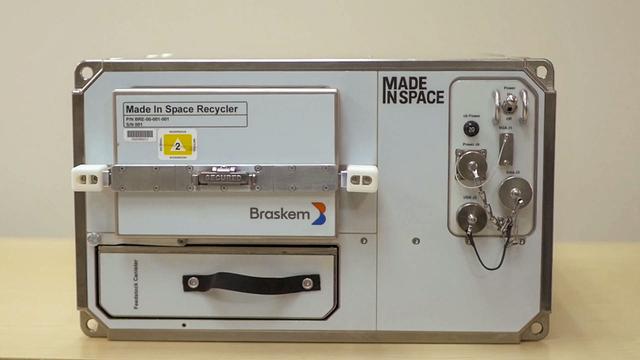
jsc2019e053733 (9/12/2019) --- Preflight imagery of the Made in Space - Recycler. The Made in Space - Recycler will utilize polymer materials to produce filament that is transferred to Manufacturing Device to perform printing operations. This experiment shows the value of closing the loop between the printer and recycling materials utilized by the printer. This has implications for space conservation and deep space missions. Image courtesy of: Made In Space, Inc.
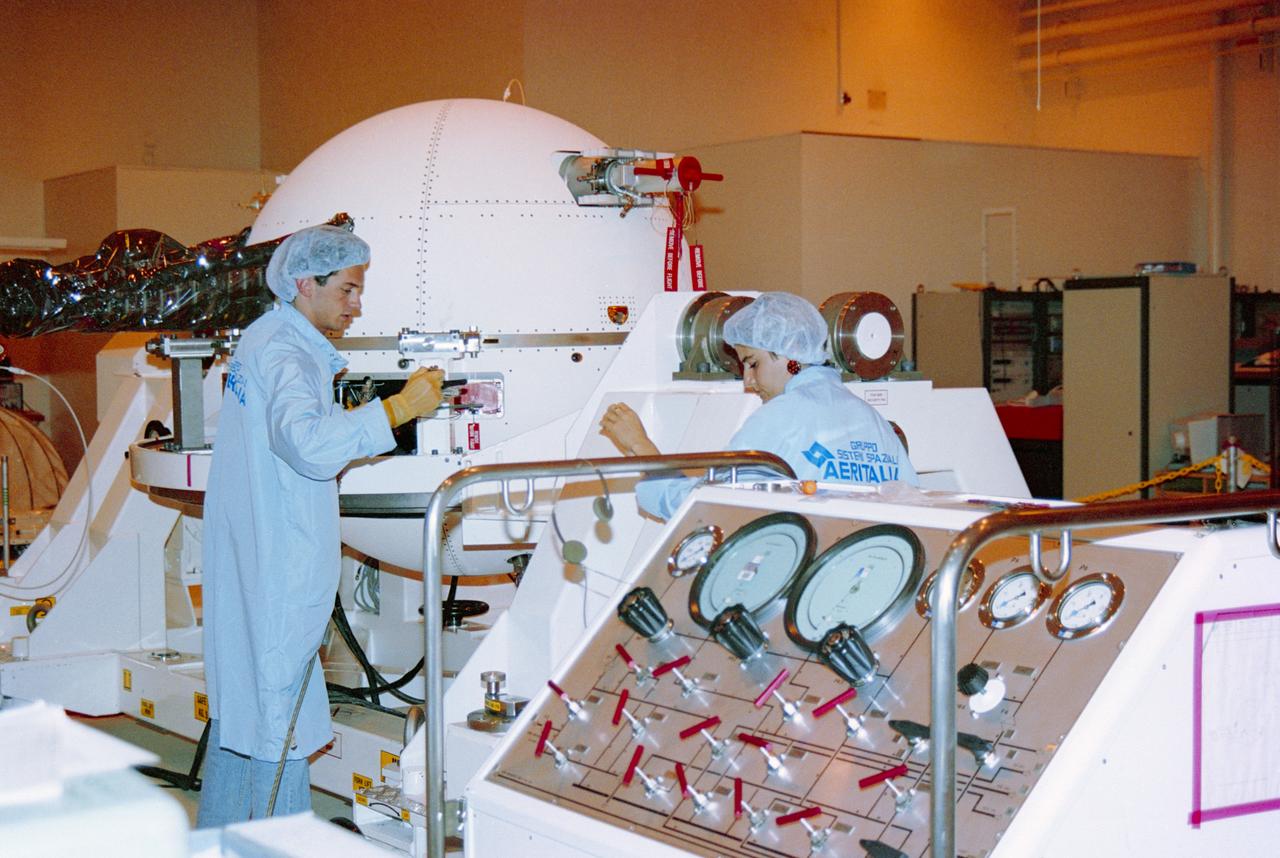
S92-41073 (31 oct 1991) --- In the Operations and Checkout Building high bay, preflight processing continues on the Tethered Satellite System (TSS) which is scheduled to fly on Space Shuttle Mission STS-46. Italian firm Aeritalia built the research satellite under contract to the Italian Space Agency (ASI). A joint endeavor between Italy and the United States, the TSS will release a satellite tethered to a reel in the orbiter cargo bay, and experiments will be conducted while the spacecraft is positioned some 12 miles above the orbiter.
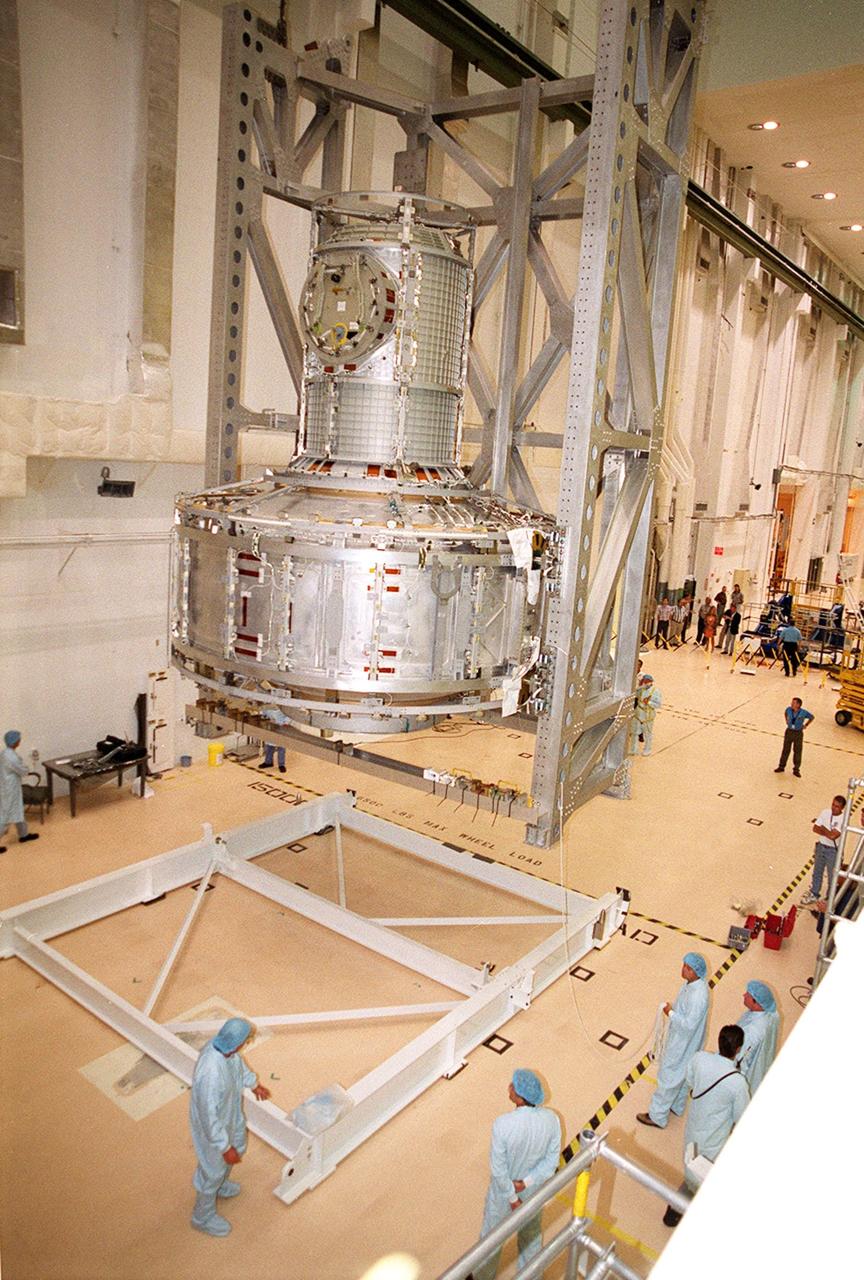
KENNEDY SPACE CENTER, FLA. -- In the Operations and Checkout Building, the Joint Airlock Module is lowered toward a stand on the floor where it will be moved to a horizontal position. Then it will be lifted into the payload canister for transfer to the Space Station Processing Facility. There it will continue to undergo preflight processing for the STS-104 mission scheduled for launch aboard Space Shuttle Atlantis May 17, 2001. The Joint Airlock Module is the gateway from which crew members aboard the International Space Station will enter and exit the 470-ton orbiting research facility
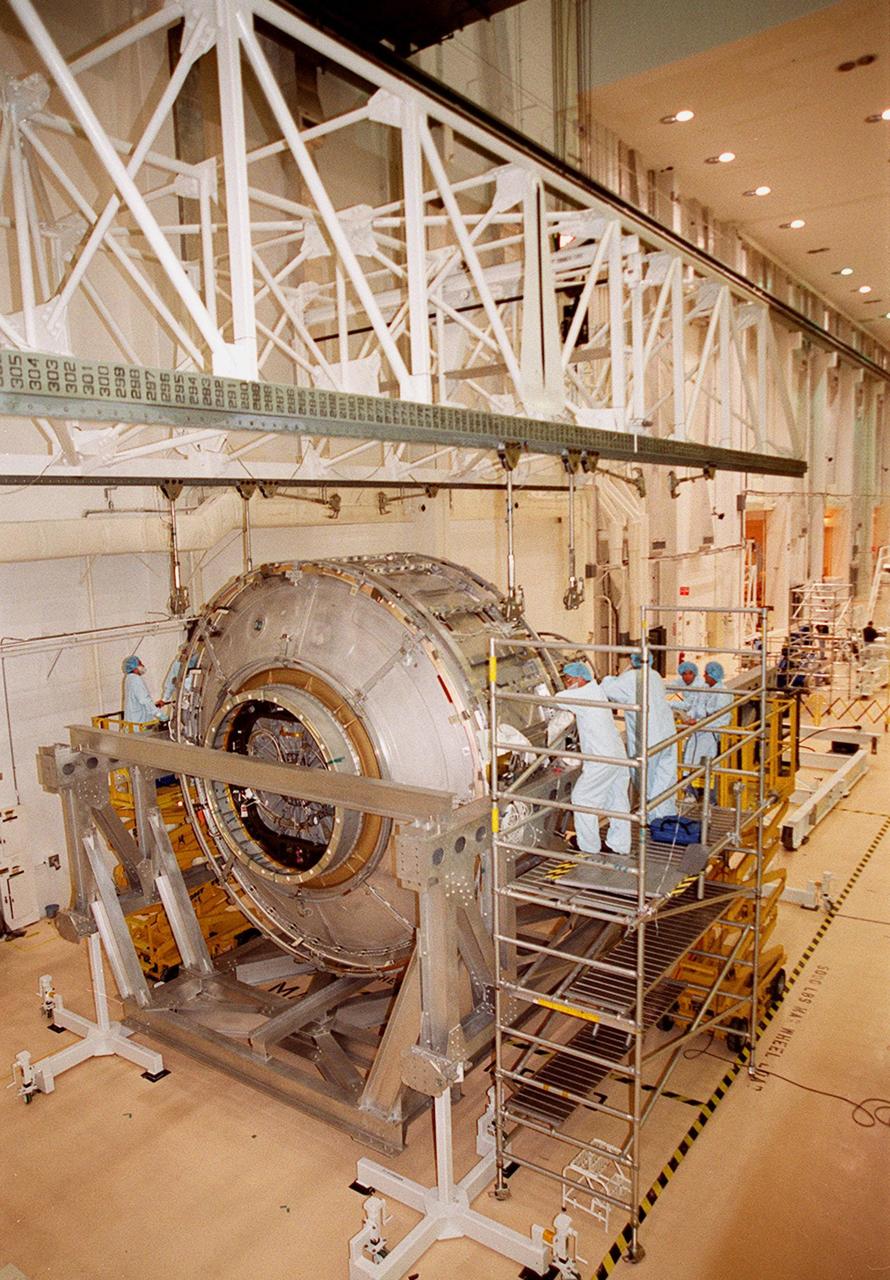
KENNEDY SPACE CENTER, FLA. -- Workers in the Operations and Checkout Building keep watch as an overhead crane is lowered toward the Joint Airlock Module that it will lift and place in the payload canister for transfer to the Space Station Processing Facility. There the module will undergo more preflight processing for the STS-104 mission scheduled for launch aboard Space Shuttle Atlantis May 17, 2001. The Joint Airlock Module is the gateway from which crew members aboard the International Space Station will enter and exit the 470-ton orbiting research facility
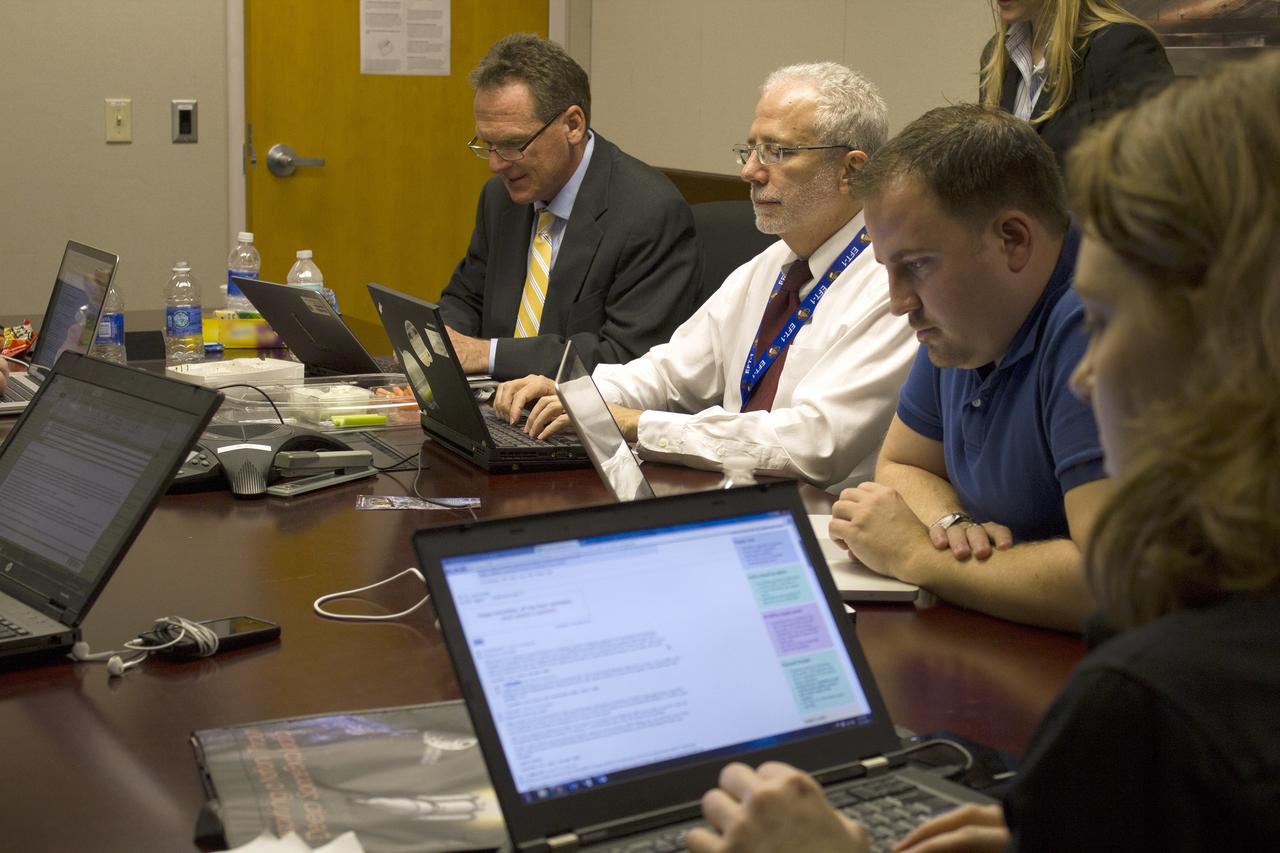
CAPE CANAVERAL, Fla. – From left, Mike Bolger, Ground Systems Development and Operations program manager and Mark Geyer, Orion program manager, participate in a live online Ask Me Anything, or AMA, session for reddit.com followers during Orion preflight activities at NASA Kennedy Space Center's News Center in Florida. Not shown, but also participating is Todd May, Space Launch System program manager. Discussion topics include Mars and technology. Photo credit: NASA/Frankie Martin
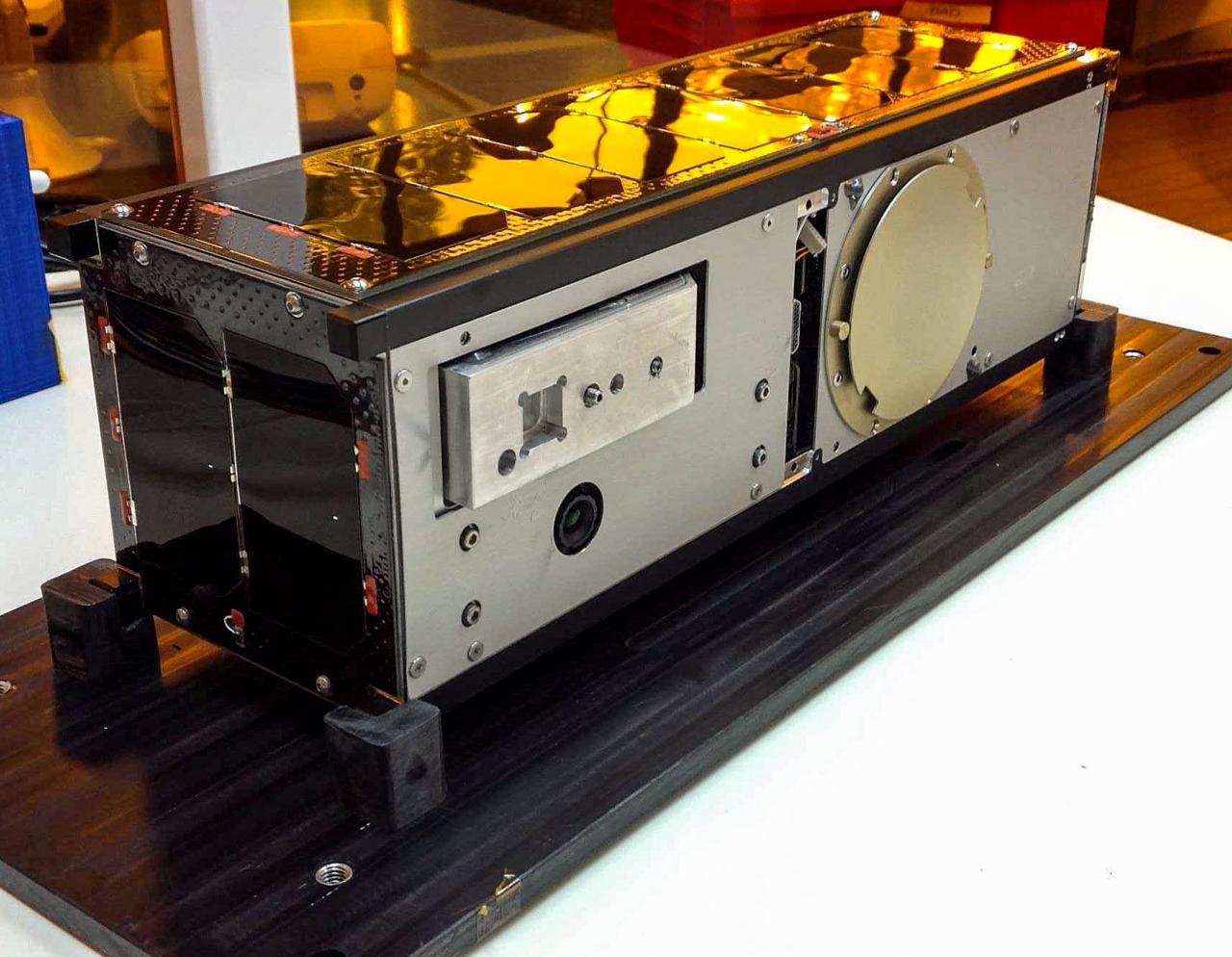
jsc2020e026629 (9/30/2019) --- Preflight imagery of the UGA-SPOC-Spectral Ocean Color Satellite before leaving the University of Georgia Small Satellite Research Laboratory for environmental testing. SPOC (Spectral Ocean Color) is a 3U CubeSat built by students at the University of Georgia. The primary mission objective is to develop and operate the first moderate resolution coastal ecosystem and ocean color CubeSat with a focus on Earth science applications.
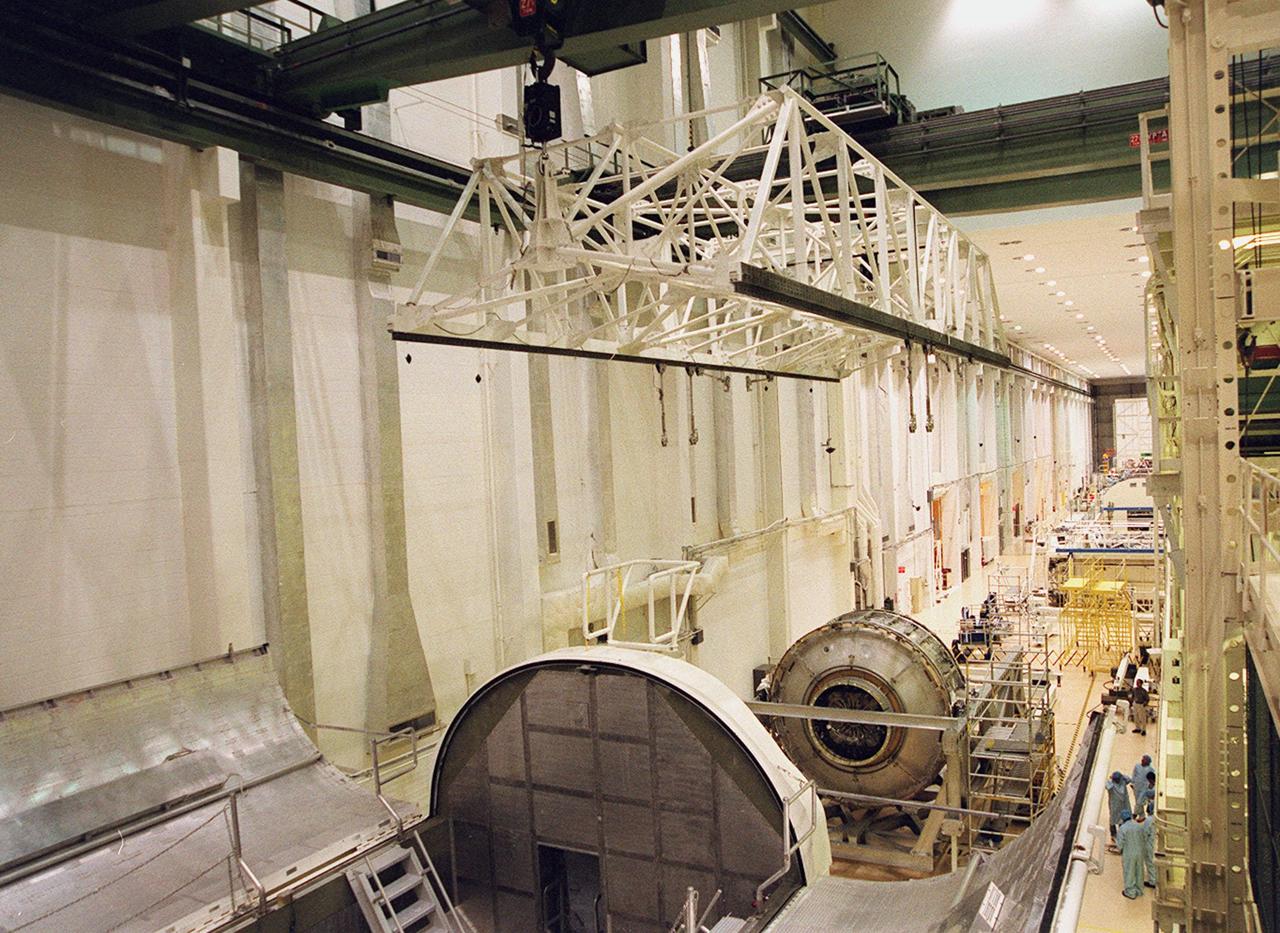
KENNEDY SPACE CENTER, FLA. -- An overhead crane in the Operations and Checkout Building hovers over the Joint Airlock Module (right) that it will lift and place in the payload canister in the foreground. The canister will transfer the module to the Space Station Processing Facility where it will continue to undergo preflight processing for the STS-104 mission scheduled for launch aboard Space Shuttle Atlantis May 17, 2001. The Joint Airlock Module is the gateway from which crew members aboard the International Space Station will enter and exit the 470-ton orbiting research facility
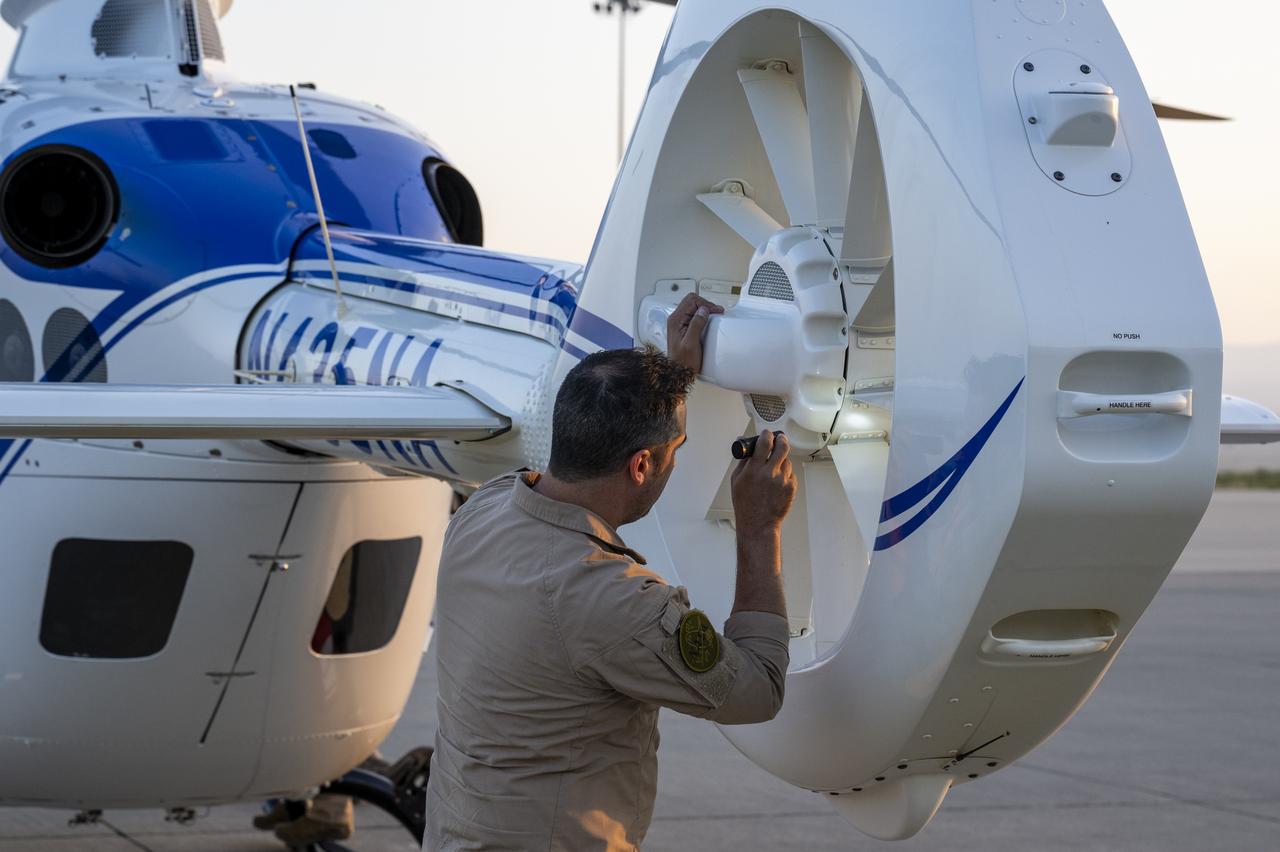
Andre Karpowich, Kennedy Space Center (KSC) Flight Operations, performs preflight checks prior to a drop test in preparation for the retrieval of the sample return capsule from NASA's OSIRIS-REx mission, Wednesday, Aug. 30, 2023, at the Department of Defense's Utah Test and Training Range. The sample was collected from the asteroid Bennu in October 2020 by NASA’s OSIRIS-REx spacecraft and will return to Earth on September 24th, landing under parachute at the Utah Test and Training Range. Photo Credit: (NASA/Keegan Barber)
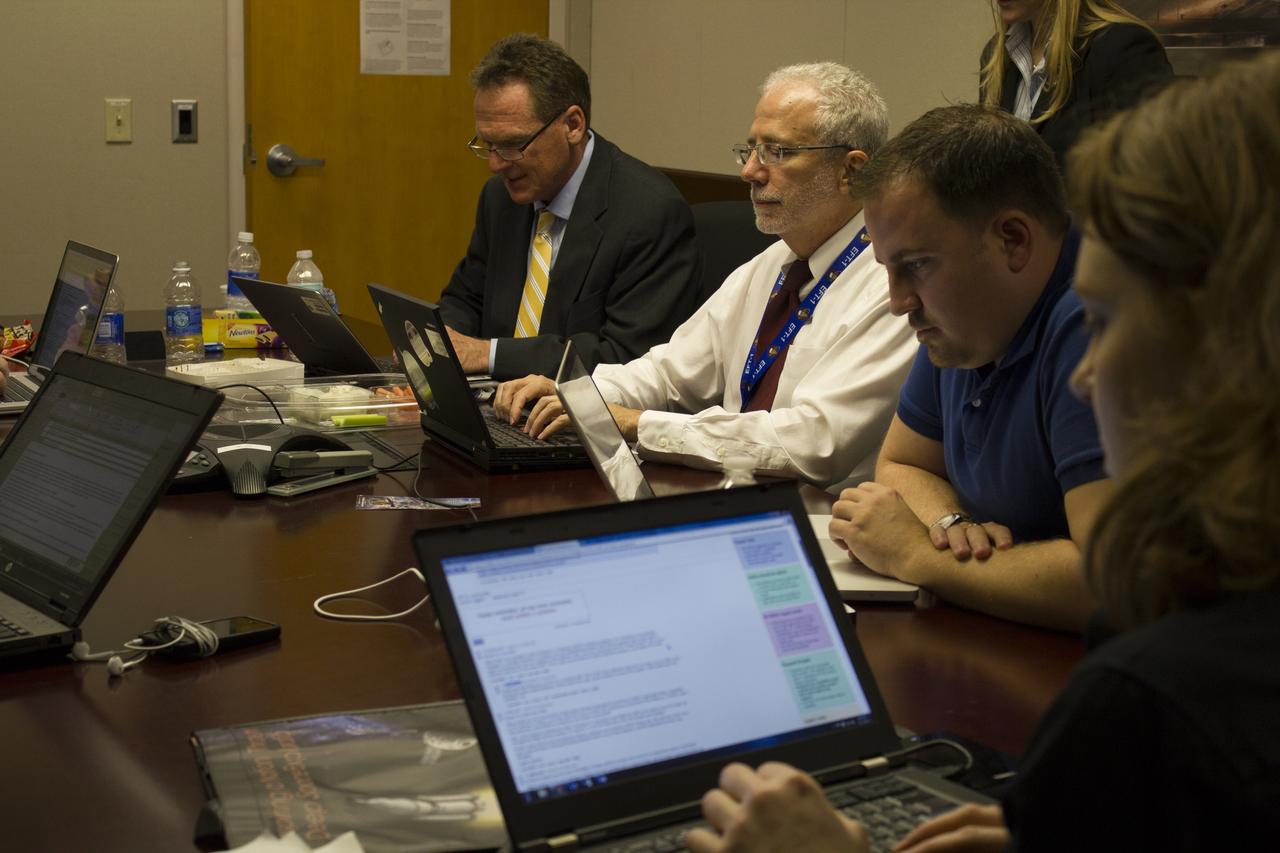
From left, Mike Bolger, Ground Systems Development and Operations program manager; and Mark Geyer, Orion program manager, participate in a live online Ask Me Anything, or AMA, session for reddit.com followers during Orion preflight activities at NASA Kennedy Space Center's News Center in Florida. Not shown is Todd May, Space Launch System program manager. Discussion topics include Mars and technology.
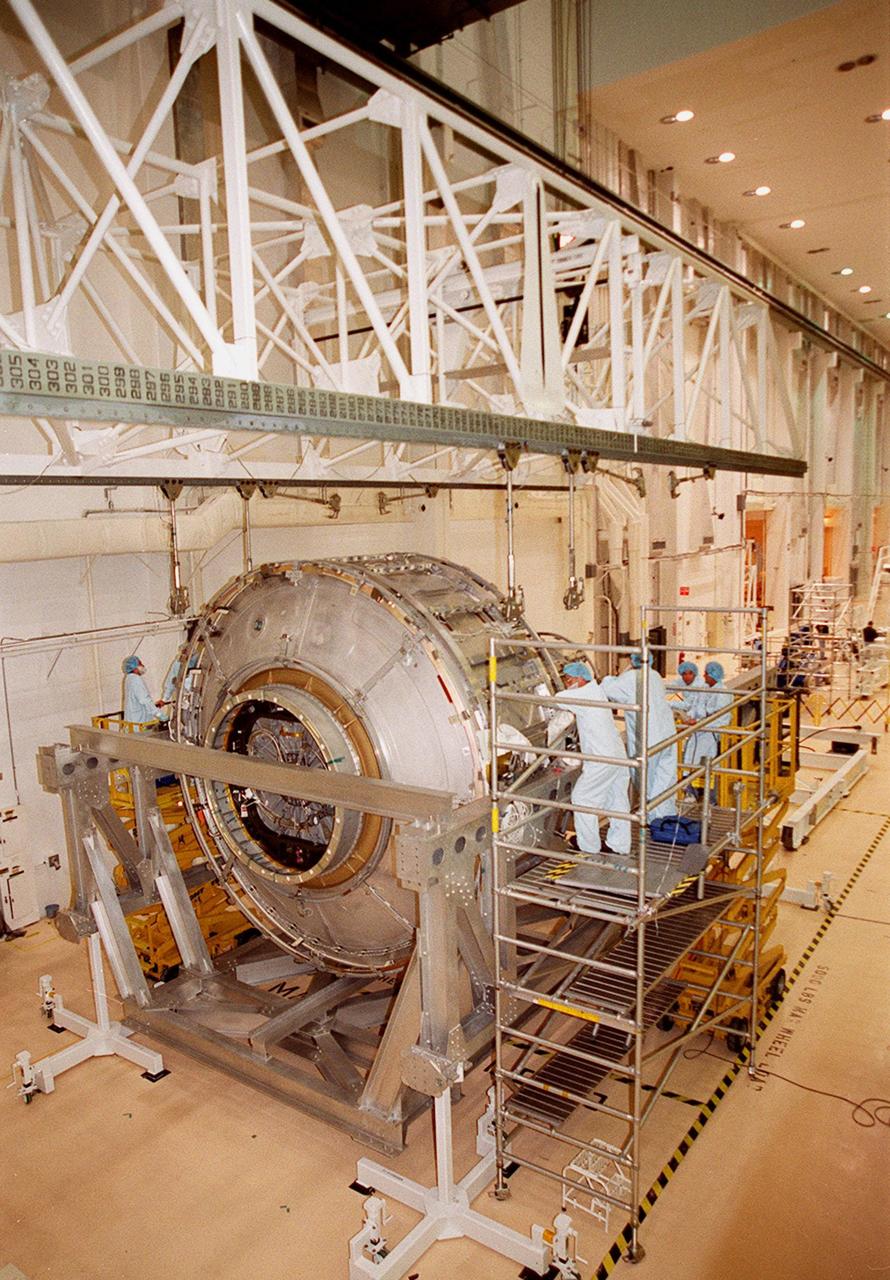
KENNEDY SPACE CENTER, FLA. -- Workers in the Operations and Checkout Building keep watch as an overhead crane is lowered toward the Joint Airlock Module that it will lift and place in the payload canister for transfer to the Space Station Processing Facility. There the module will undergo more preflight processing for the STS-104 mission scheduled for launch aboard Space Shuttle Atlantis May 17, 2001. The Joint Airlock Module is the gateway from which crew members aboard the International Space Station will enter and exit the 470-ton orbiting research facility
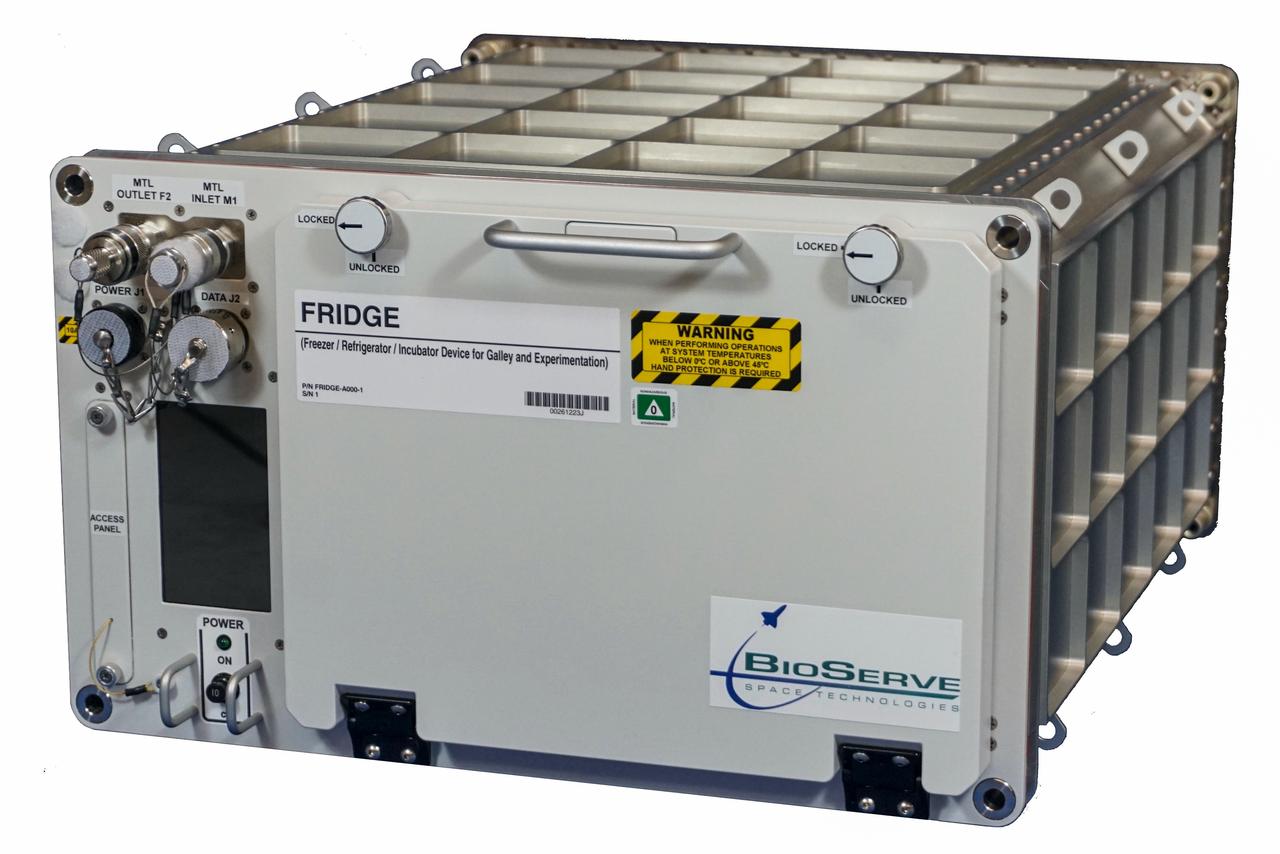
jsc2020e040949 (2/21/2020) --- A preflight view of Freezer / Refrigerator / Incubator Device for Galley and Experimentation (FRIDGE). The Galley Refrigerator-Freezer, or Freezer/Refrigerator/Incubator Device for Galley and Experimentation (FRIDGE) is a locker-sized unit that provides active temperature control with a range from -20.0°C to +48.0°C. It can accommodate storage of both crew galley items and scientific research samples and can be fully operated and maintained from the ground.
jsc2021e048036 (10/22/2021) --- A preflight view of COWVR during EMC Testing. Space Test Program-Houston 8-Compact Ocean Wind Vector Radiometer (STP-H8-COWVR) demonstrates on-orbit use of a new terrestrial microwave meteorological sensor. It is designed to deliver accurate sea surface wind direction and speed data that are critical to naval surface operations and forecasting and tracking hurricanes and typhoons. Image courtesy of JPL.
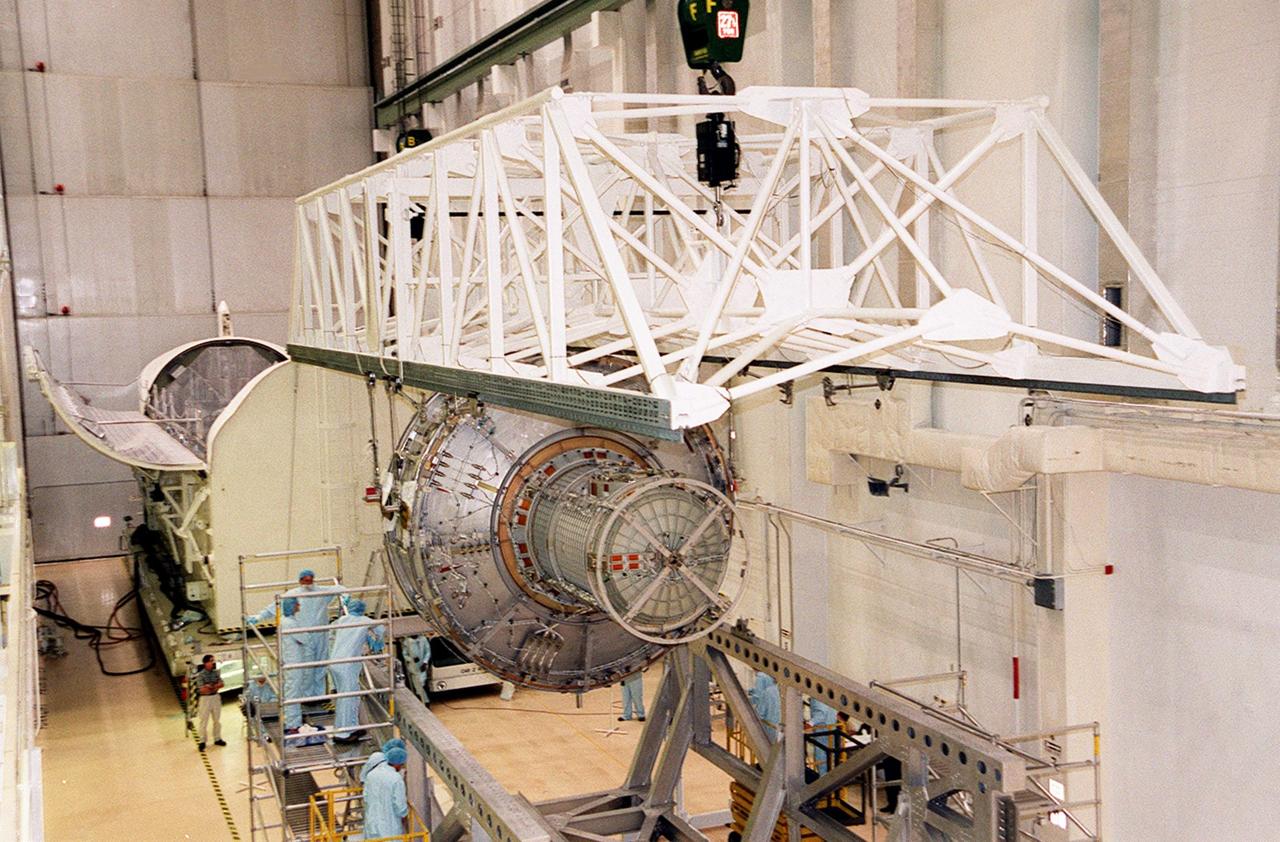
KENNEDY SPACE CENTER, FLA. -- In the Operations and Checkout Building, an overhead crane lifts the Joint Airlock Module to move and place it into the payload canister at left for transfer to the Space Station Processing Facility. There the module will undergo more preflight processing for the STS-104 mission scheduled for launch aboard Space Shuttle Atlantis May 17, 2001. The Joint Airlock Module is the gateway from which crew members aboard the International Space Station will enter and exit the 470-ton orbiting research facility
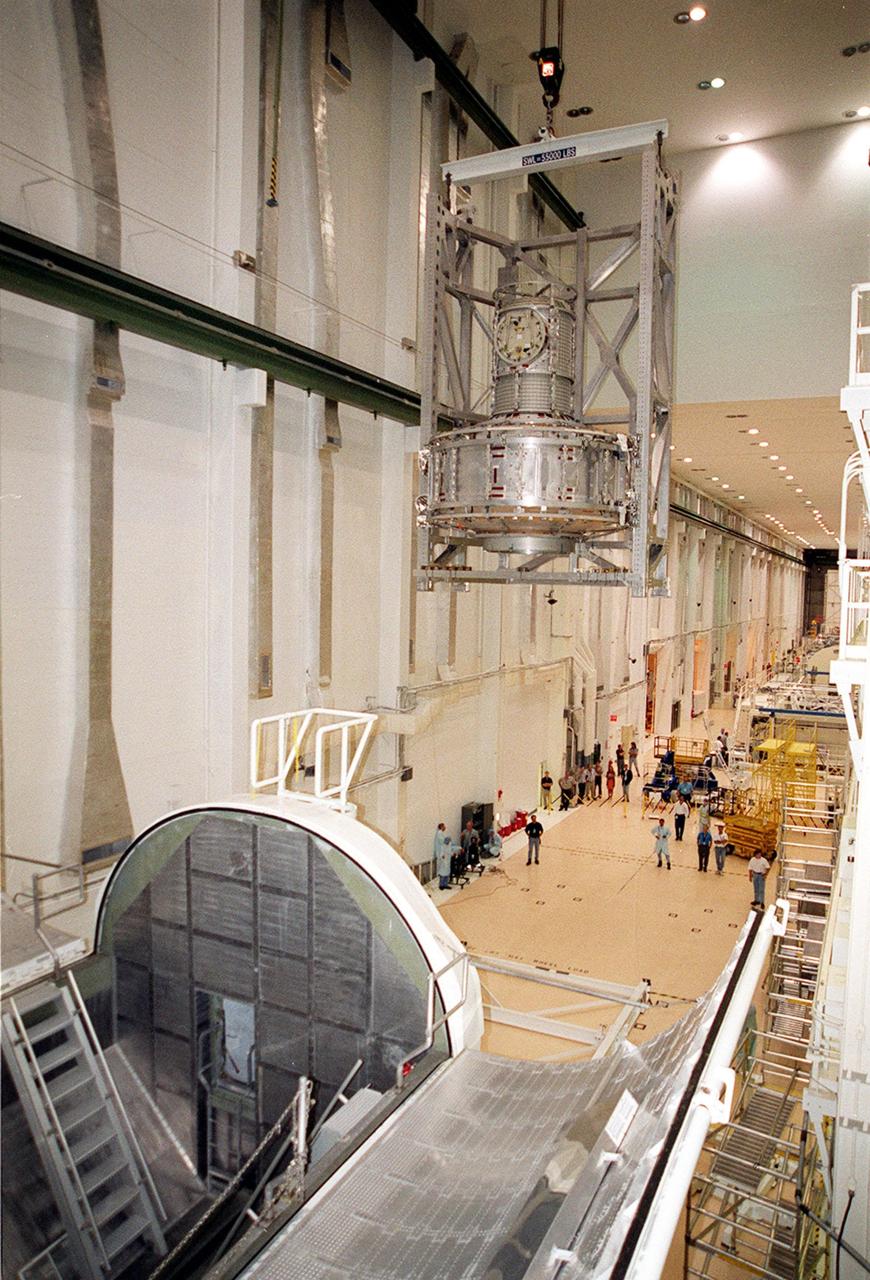
KENNEDY SPACE CENTER, FLA. -- In the Operations and Checkout Building, the Joint Airlock Module is carried across the Operations and Checkout Building toward a stand on the floor. The module will be moved to a horizontal position and placed in the payload canister at left. Then it will be taken to the Space Station Processing Facility where it will continue to undergo preflight processing for the STS-104 mission scheduled for launch aboard Space Shuttle Atlantis May 17, 2001. The Joint Airlock Module is the gateway from which crew members aboard the International Space Station will enter and exit the 470-ton orbiting research facility
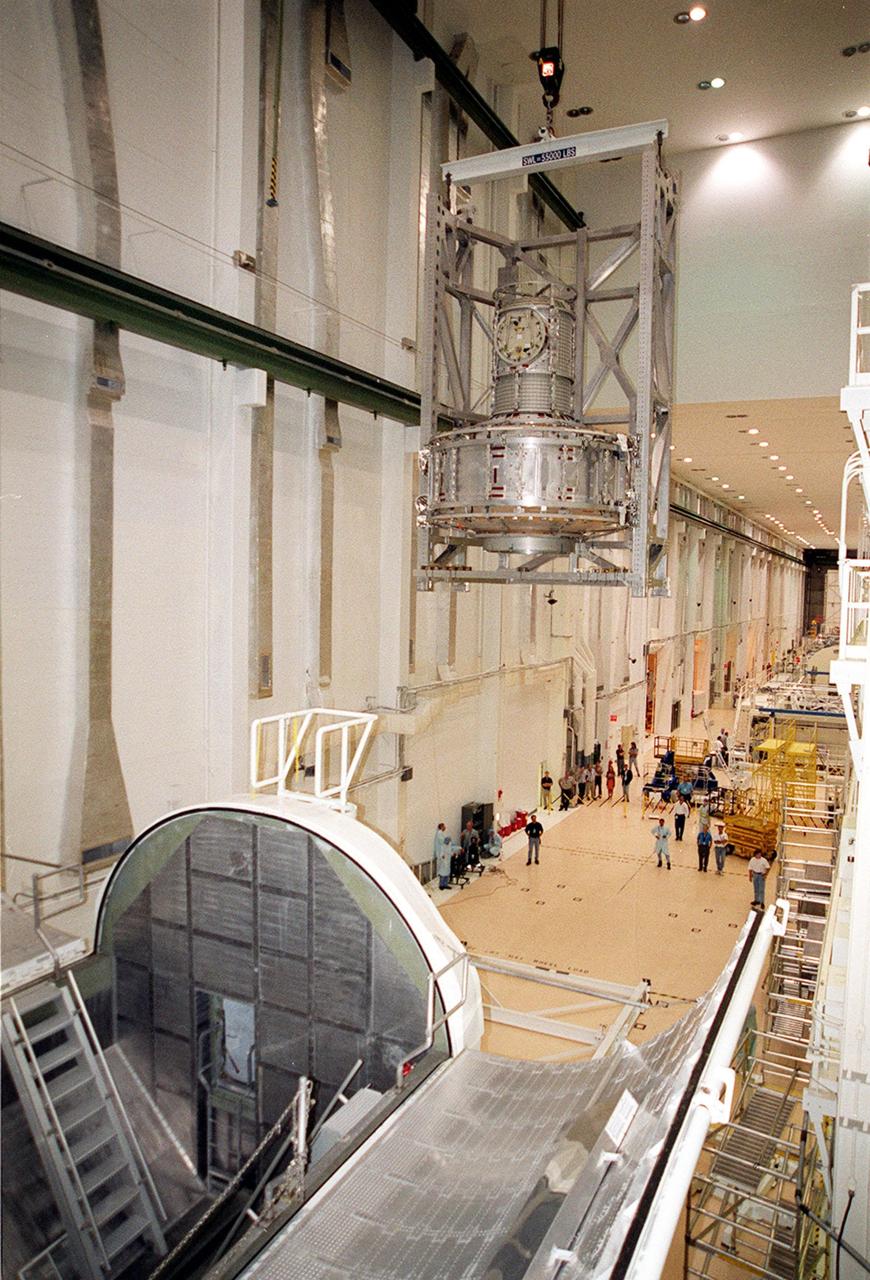
KENNEDY SPACE CENTER, FLA. -- In the Operations and Checkout Building, the Joint Airlock Module is carried across the Operations and Checkout Building toward a stand on the floor. The module will be moved to a horizontal position and placed in the payload canister at left. Then it will be taken to the Space Station Processing Facility where it will continue to undergo preflight processing for the STS-104 mission scheduled for launch aboard Space Shuttle Atlantis May 17, 2001. The Joint Airlock Module is the gateway from which crew members aboard the International Space Station will enter and exit the 470-ton orbiting research facility
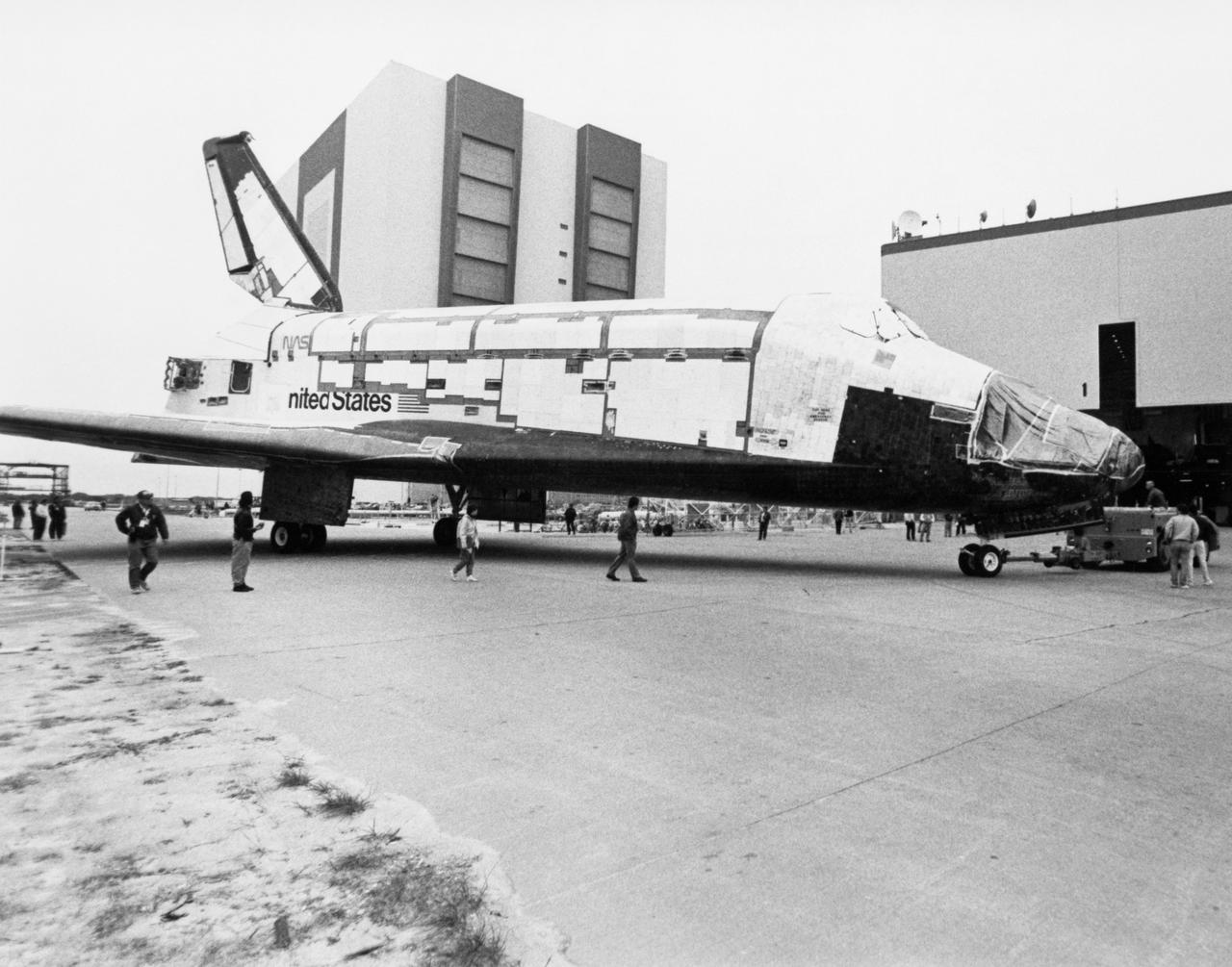
S89-28090 (24 Jan 1989) --- The orbiter Columbia, slated for mission STS-28 is rolled over from the Orbiter Maintenance and Refurbishment Facility to the Orbiter Processing Facility bay 1 to begin processing for its mission in July 1989. The Department of Defense dedicted mission will be commanded by astronaut Brewster Shaw.
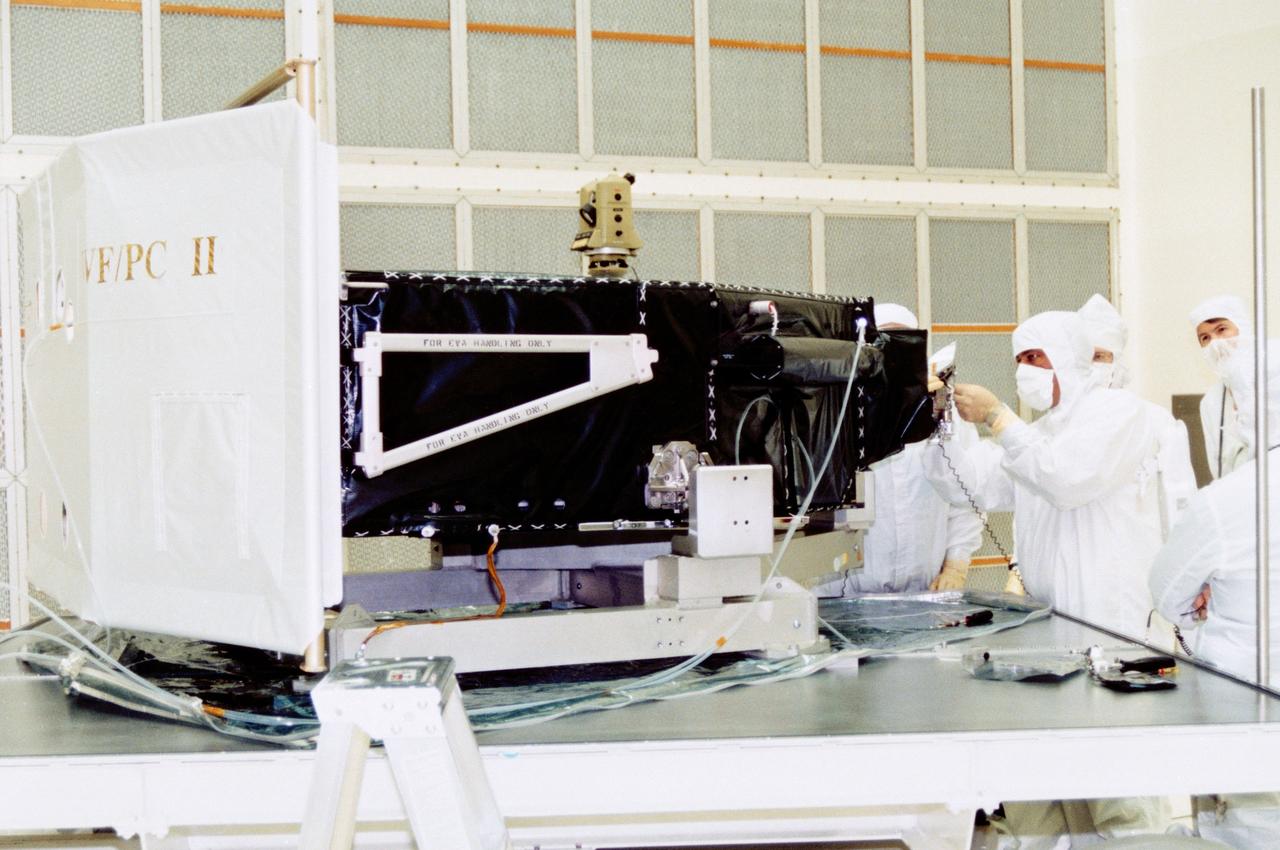
Workers in bldg AE, Cape Canaveral Air Force Station, install a mirror on the Wide Field/Planetary Camera II as part of the preparations for launch later this year on the first servicing mission of the Hubble Space Telescope (HST).

At the Kennedy Space Center's (KSC's) Spacecraft and Assembly Encapsulation Facility 2 (SAEF-2), the planetary spacecraft checkout facility, clean-suited technicians work on the Galileo spacecraft prior to moving it to the Vehicle Processing Facility (VPF) for mating with the inertial upper stage (IUS). Galileo is scheduled for launch aboard Atlantis, Orbiter Vehicle (OV) 104, on Space Shuttle Mission STS-34 in October 1989. It will be sent to the planet Jupiter, a journey which will taken more than six years to complete. In December 1995 as the two and one half ton spacecraft orbits Jupiter with its ten scientific instruments, a probe will be released to parachute into the Jovian atmosphere. NASA's Jet Propulsion Laboratory (JPL) manages the Galileo project. View provided by KSC.
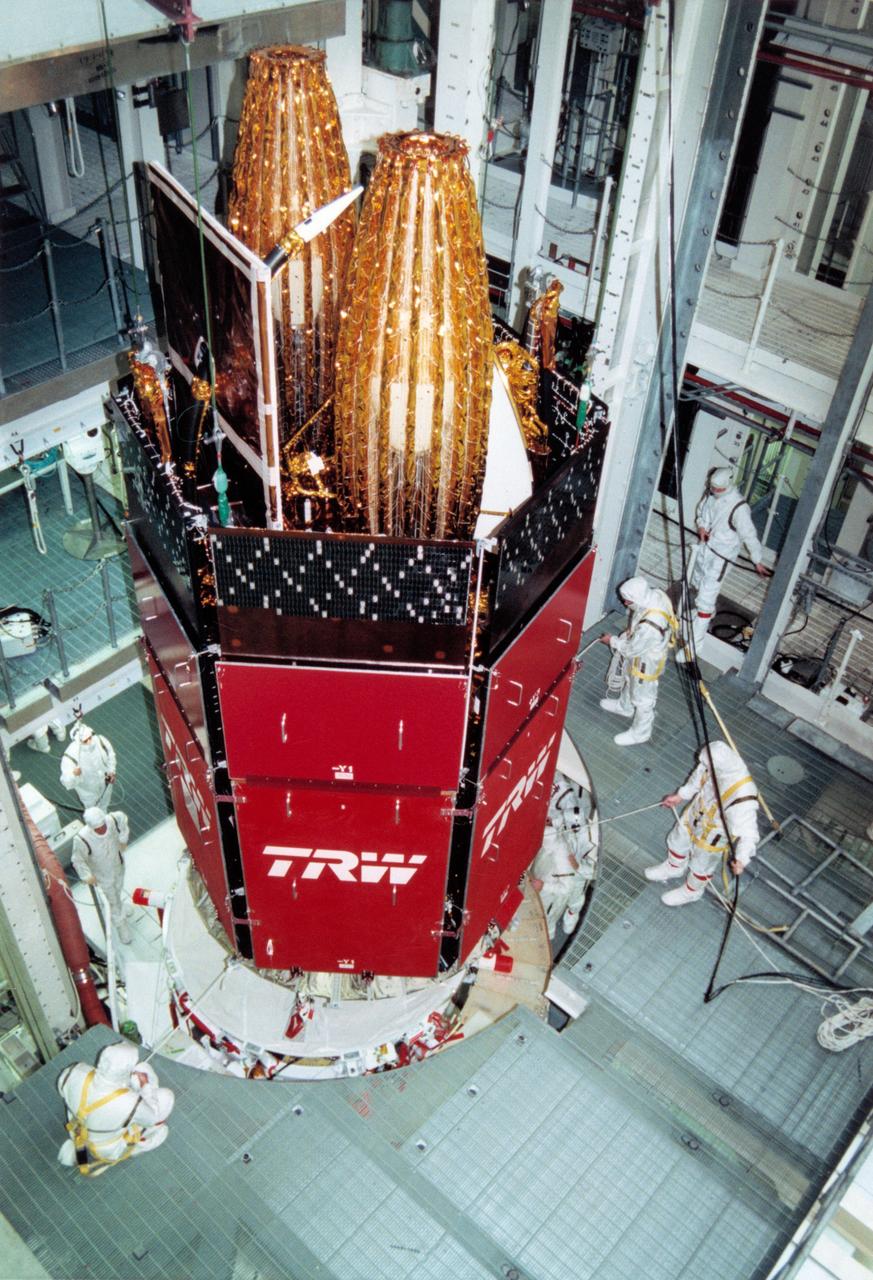
S95-08962 (12 APRIL 1995) --- Members of the Kennedy Space Center (KSC) Payload Processing Team hoist the Tracking and Data Relay Satellite (TDRS-G) into a work stand in the Vertical Processing Facility (VPF) for mating with its Inertial Upper Stage (IUS). After testing and final checkout, TDRS-G and the IUS will be transported to Launch Pad 39B and installed into the Space Shuttle Discovery's payload bay for launch on the STS-70 mission, scheduled for launch June 8, 1995.

S72-46699 (19 Jan. 1972) --- Prime crew members of the scheduled second Skylab mission are introduced to the media during a press conference in January 1972 at the Manned Spacecraft Center (MSC). From left to right are astronauts Jack R. Lousma, pilot; Owen K. Garriott, science pilot, and Alan L. Bean, commander. Photo credit: NASA
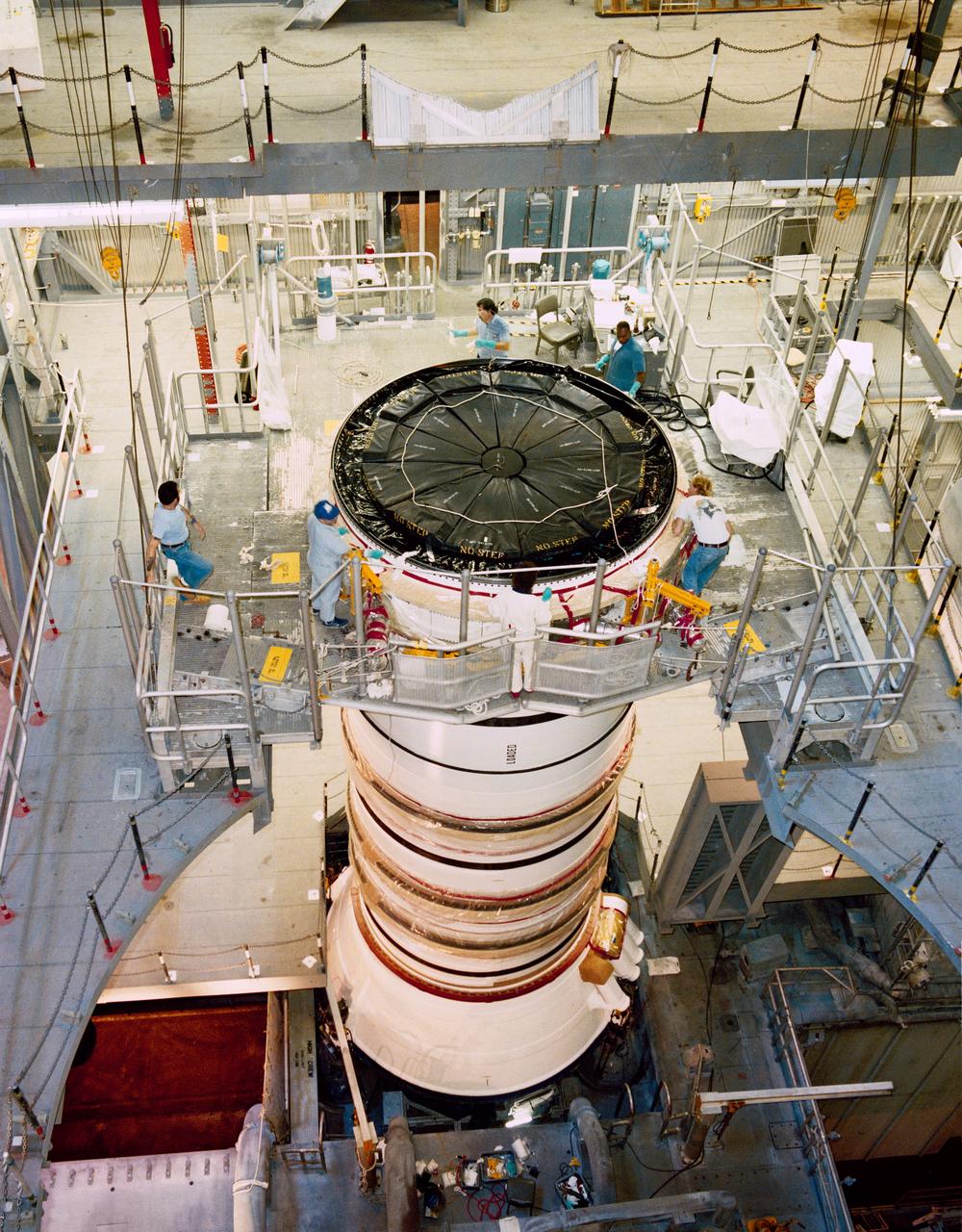
STS-29 Discovery, Orbiter Vehicle (OV) 103, solid rocket booster (SRB) right aft segment is being prepared for stacking in the Kennedy Space Center (KSC) Vehicle Assembly Building (VAB). Technicians examine and work with SRB seal from scaffolding platform. The twin sets of boosters provide 80 percent of the space shuttle launch thrust. Each SRB is made up of four "loaded" or fueled segments. The SRBs operate in parallel with the space shuttle main engines (SSMEs) for the first two minutes of flight providing additional thrust needed to escape the gravitational pull of the Earth. At an altitude of approximately 24 nautical miles, the SRBs separate, descend on parachutes, and land in the Atlantic Ocean where they are recovered and reused on future flights. View provided by KSC with alternate number KSC-88PC-1323.
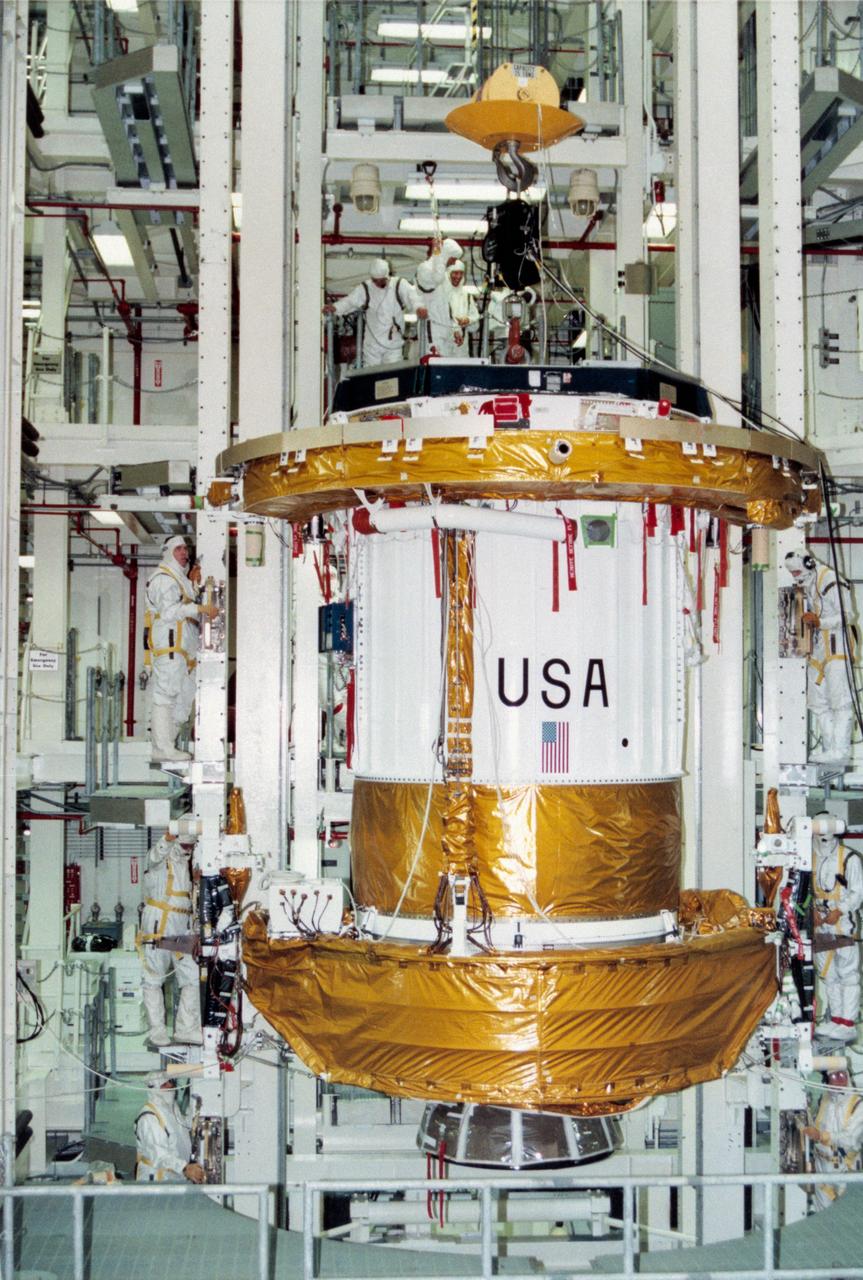
S95-08961 (4 APRIL 1995) --- Workers in the Vertical Processing Facility (VPF) oversee and control the lowering of the Inertial Upper Stage (IUS) booster into a work stand for preflight processing. The IUS will be attached to the Tracking and Data Relay Satellite (TDRS-G), which will be deployed by the Space Shuttle Discovery on the STS-70 mission. The IUS is scheduled to be mated to the TDRS satellite later in April. Liftoff of STS-70 is slated for no earlier than June 8, 1995.
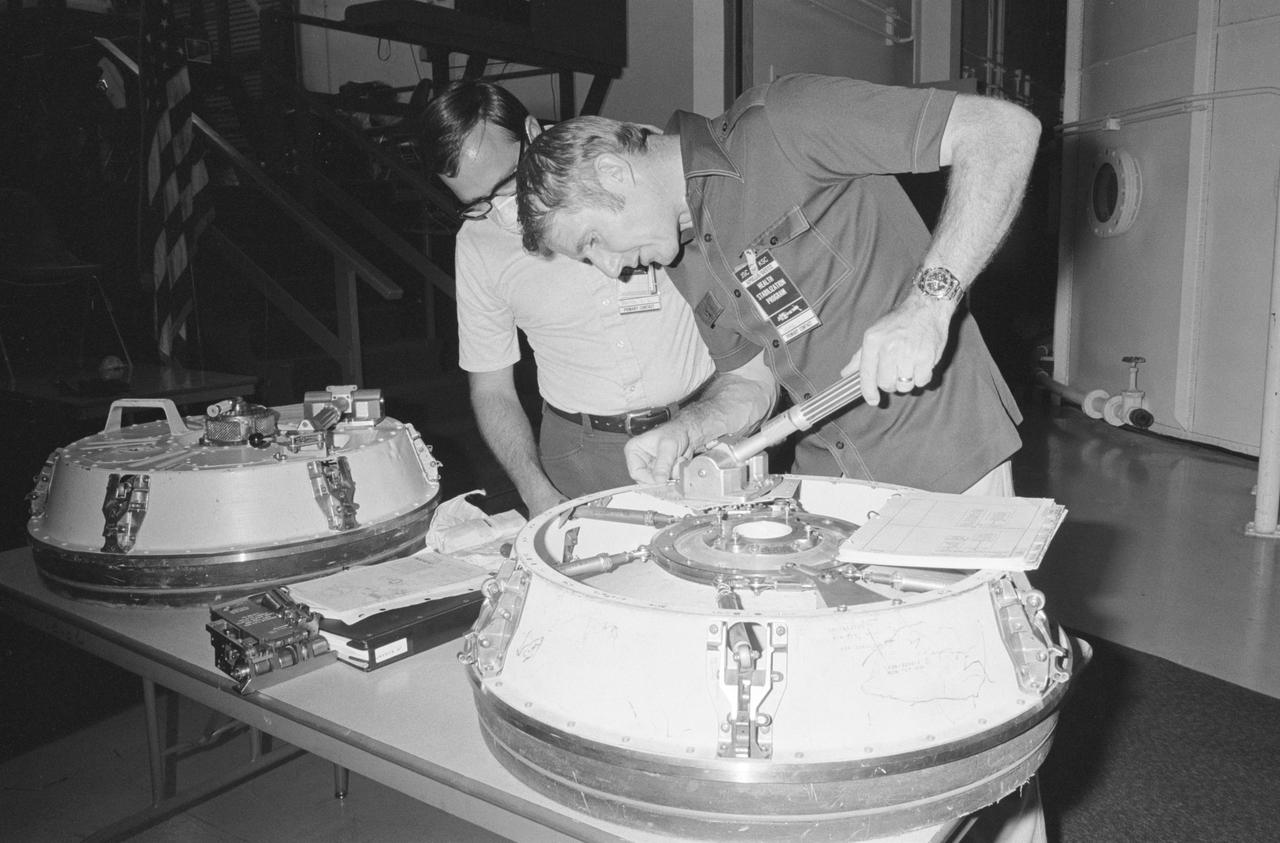
S75-28485 (12 July 1975) --- Astronaut Vance D. Brand, command module pilot of the American ASTP prime crew, practices operating a Docking Module hatch during Apollo-Soyuz Test Project preflight training at NASA's Johnson Space Center. The Docking Module is designed to link the Apollo and Soyuz spacecraft during their docking mission in Earth orbit. Gary L. Doerre of JSC?s Crew Training and Procedures Division is working with Brand. Doerre is wearing a face mask to help prevent possible exposure to Brand of disease prior to the ASTP launch.

jsc2021e019401 (1/19/2021) --- A preflight macro shot of SIGMA-7 interface for Pilote experiment, In order to test the ergonomics of a multisensory interface for controlling robotic arms and spacecraft, it is necessary to perform the trials in microgravity. Performing the test on Earth would lead to a design of a work station using terrestrial ergonomic principles that do not correspond to conditions experienced on a spacecraft in orbit. The Pilote investigation tests the effectiveness of novel control schemes for the remote operation of robotic arms and space vehicles, using virtual reality and a new class of user-machine interfaces based on haptics. Image courtesy of CNES/DE PRADA Thierry.
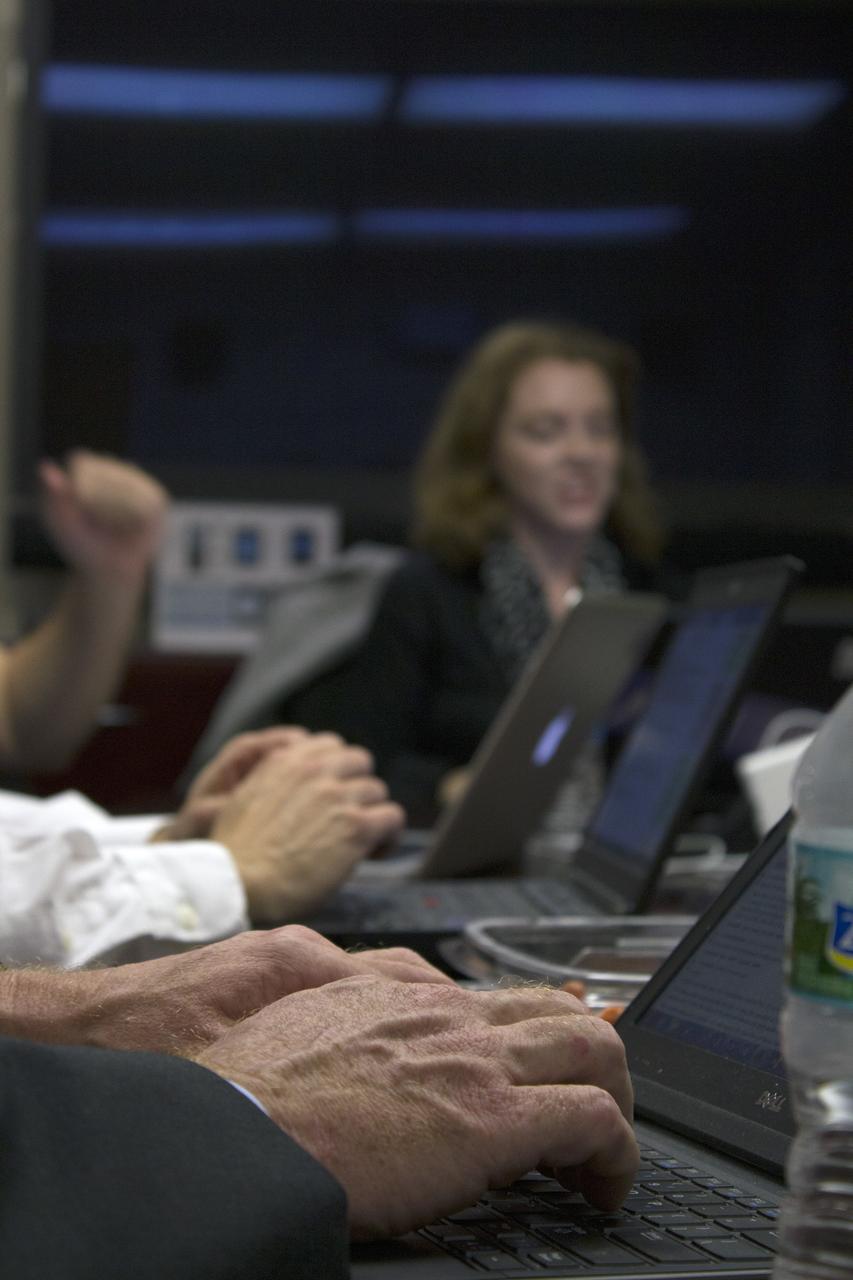
CAPE CANAVERAL, Fla. – NASA managers participate in a live online Ask Me Anything, or AMA, session for reddit.com followers during Orion preflight activities at NASA Kennedy Space Center's News Center in Florida. Participating are Mike Bolger, Ground Systems Development and Operations program manager Mark Geyer, Orion program manager and Todd May, Space Launch System program manager. Discussion topics include Mars and technology. Monitoring the live discussion is Brandi Dean, public affairs specialist from Johnson Space Center in Houston. Photo credit: NASA/Frankie Martin
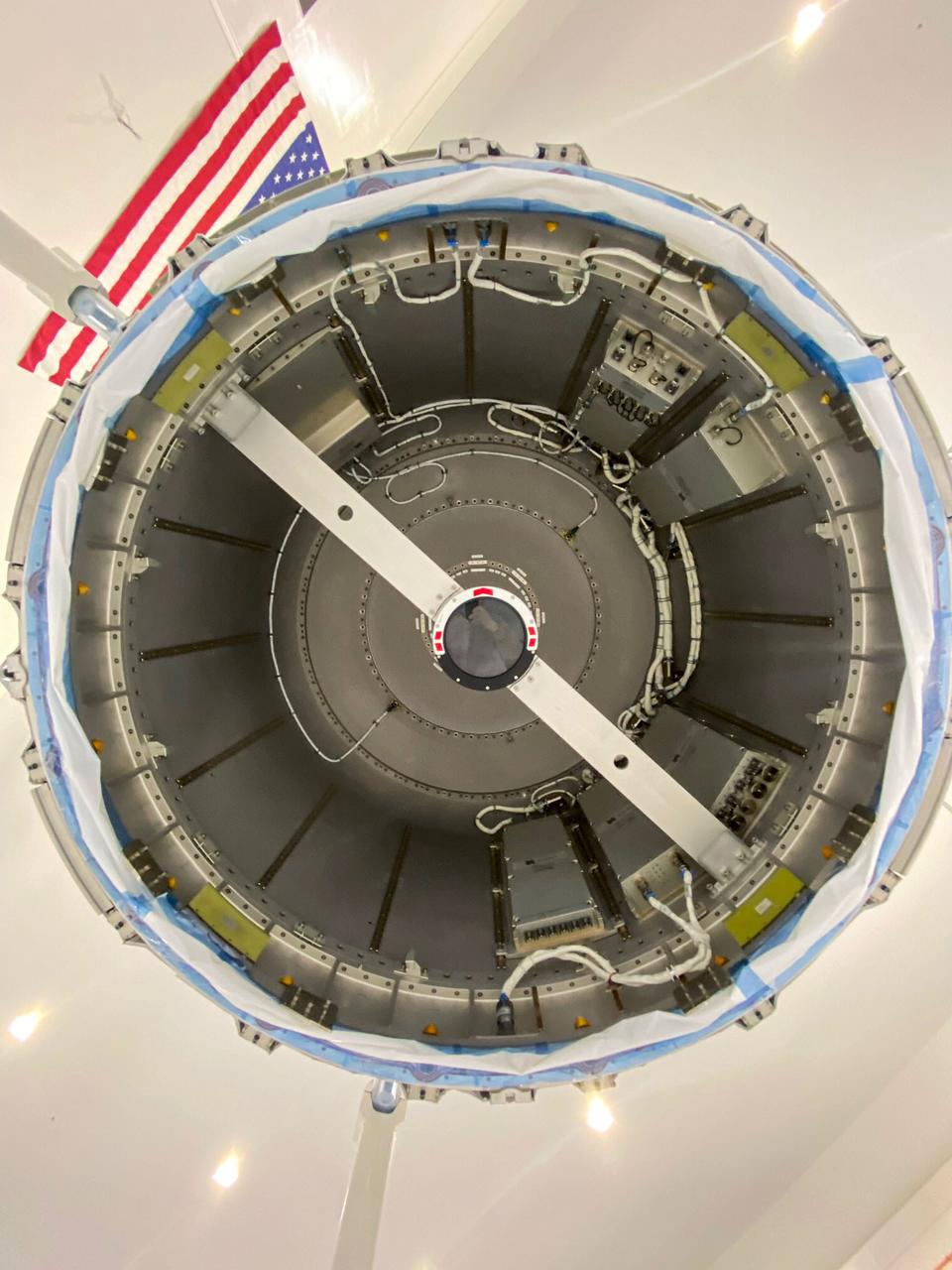
jsc2020e044492 (10/6/2020) —- A preflight view of the Nanoracks Airlock. The Nanoracks Bishop Airlock (Nanoracks Airlock) is the first-ever commercially owned and operated airlock on the International Space Station. It provides a variety of capabilities including jettisoning of payloads such as Cubesats, deployment of external payloads, support for small exterior payloads and locker-sized internal payloads, recovery of external on-orbit replaceable units (ORUs), and the ability to move hardware outside in support of extravehicular activities (EVAs). It is approximately five times larger than the Japanense Experiment Module (JEM) Airlock so it can accommodate more and larger payloads. The Airlock’s capabilities support many different types of scientific investigations.
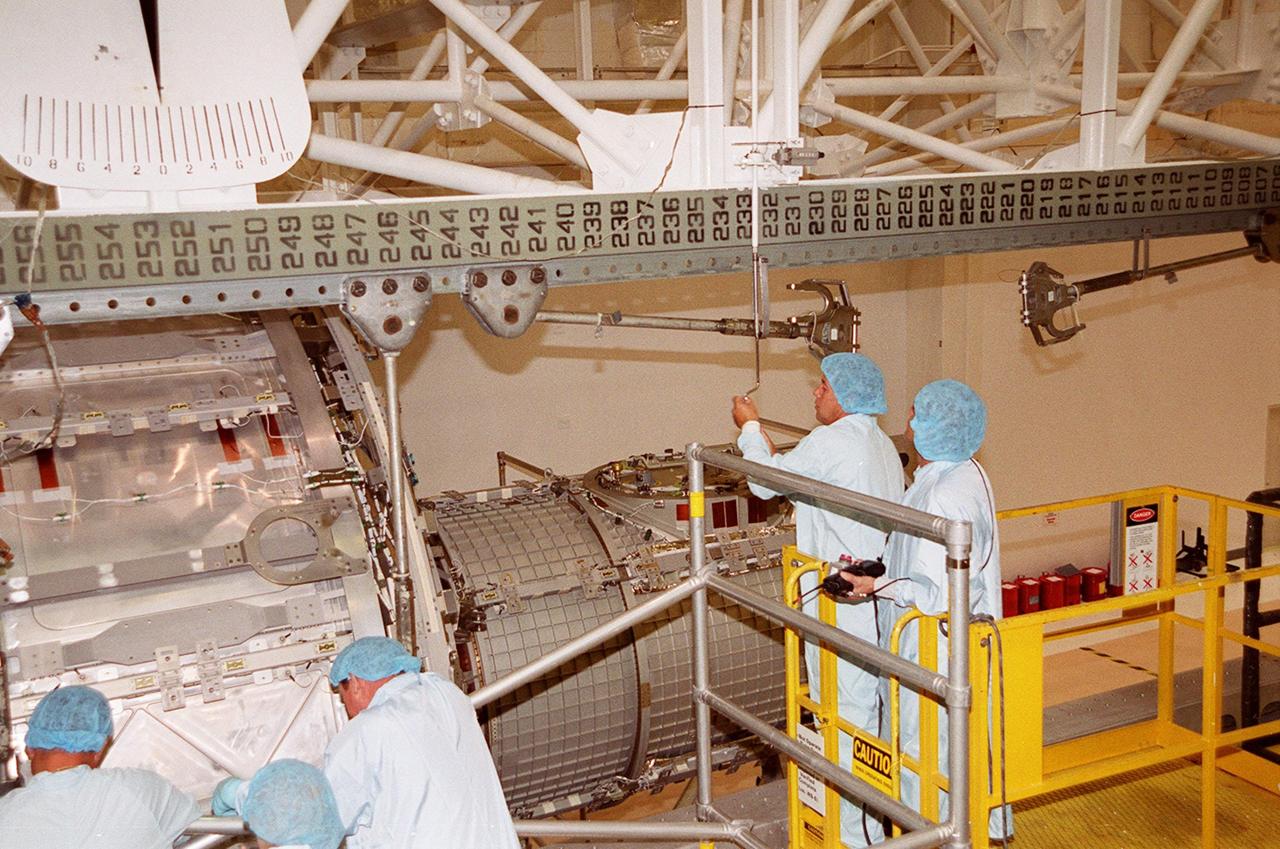
KENNEDY SPACE CENTER, FLA. -- A worker in the Operations and Checkout Building attaches the overhead crane to the Joint Airlock Module while another worker controls movement of the crane. The module will be lifted and placed in the payload canister for transfer to the Space Station Processing Facility. There the module will undergo more preflight processing for the STS-104 mission scheduled for launch aboard Space Shuttle Atlantis May 17, 2001. The Joint Airlock Module is the gateway from which crew members aboard the International Space Station will enter and exit the 470-ton orbiting research facility
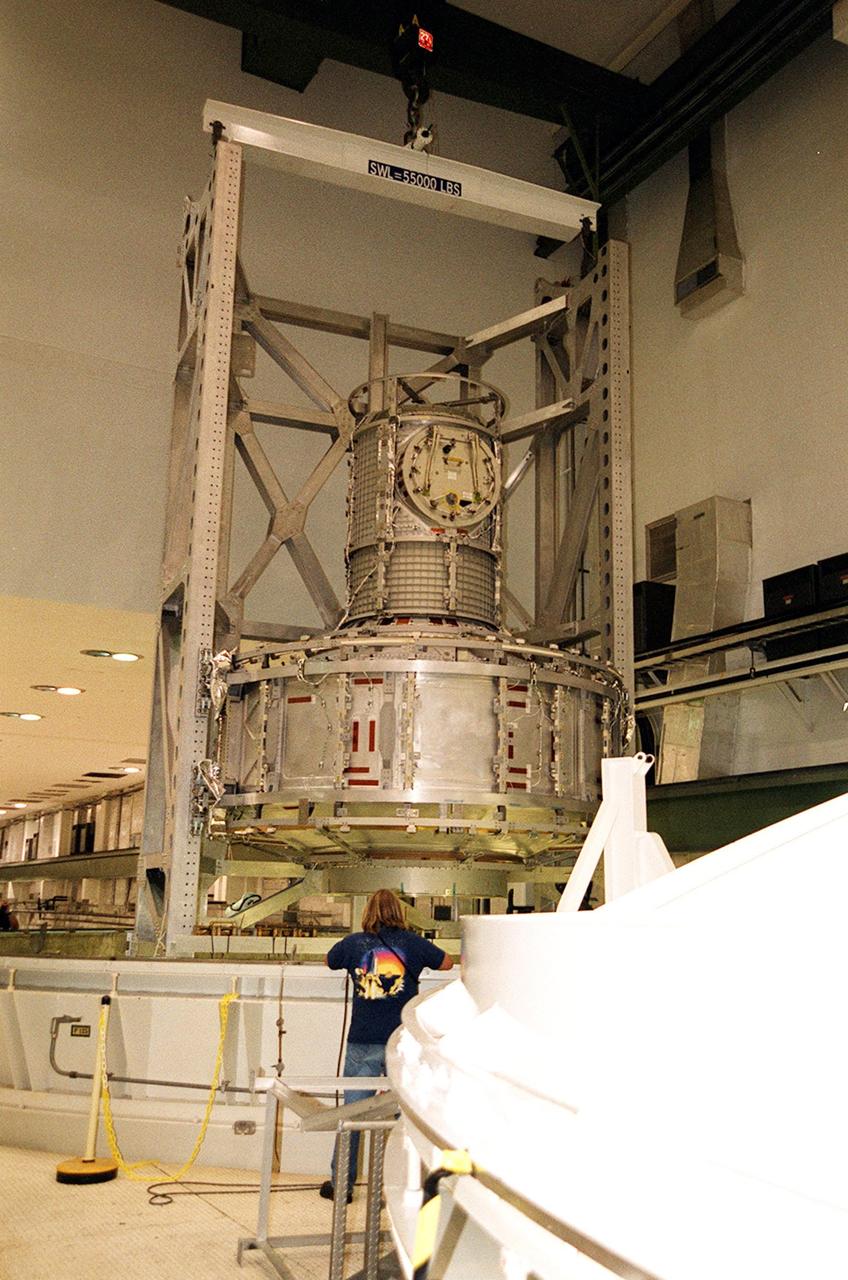
KENNEDY SPACE CENTER, FLA. -- In the Operations and Checkout Building, the Joint Airlock Module is suspended in air after being removed from the vacuum chamber where it was tested for leaks. The module was in a vacuum environment equivalent to 210,000 feet or 40 miles in altitude. It will be placed in a payload canister and taken to the Space Station Processing Facility. There it will continue to undergo preflight processing for the STS-104 mission scheduled for launch aboard Space Shuttle Atlantis May 17, 2001. The Joint Airlock Module is the gateway from which crew members aboard the International Space Station will enter and exit the 470-ton orbiting research facility
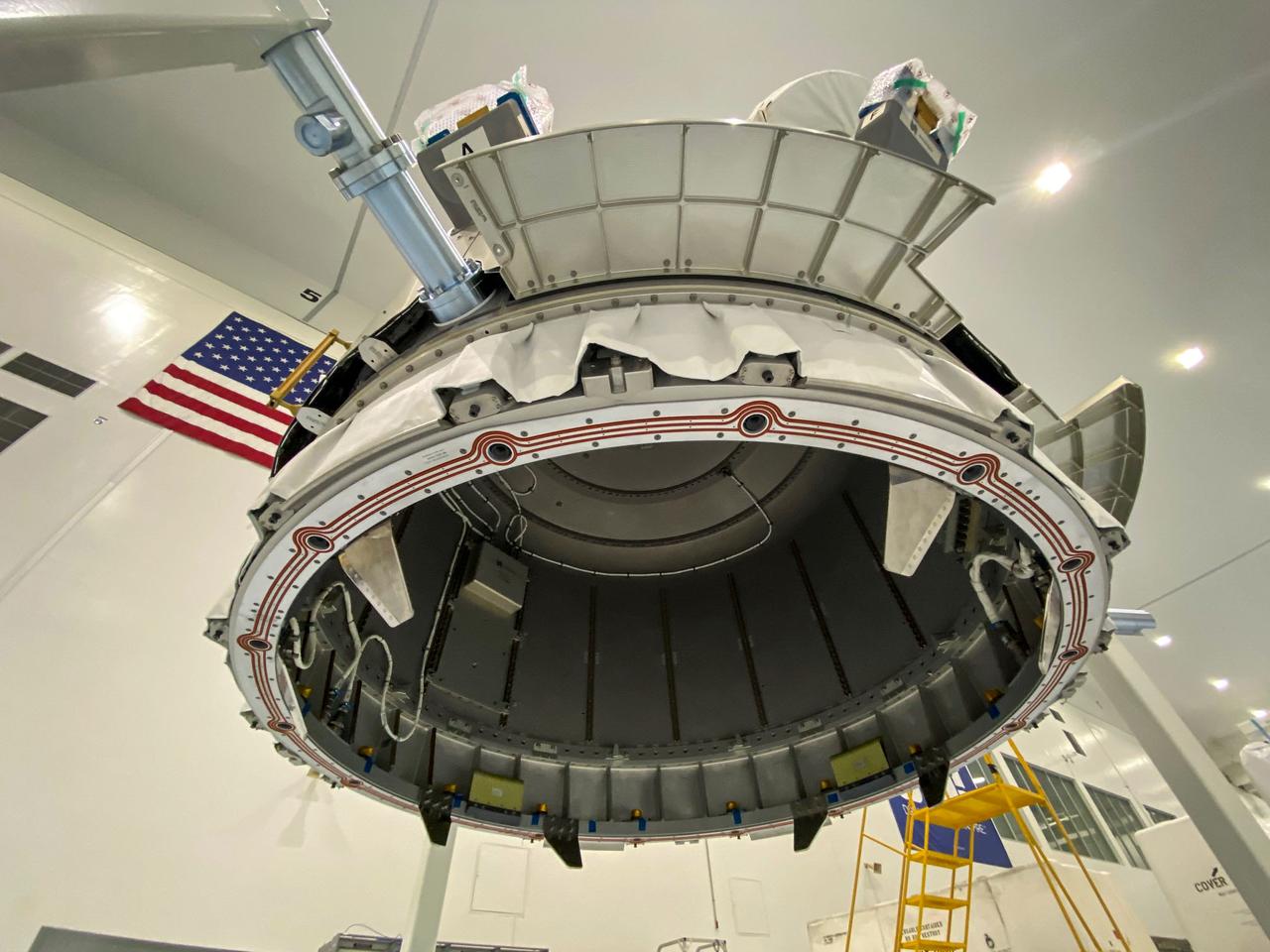
jsc2020e044494 (10/1/2020) --- A preflight view of the Nanoracks Airlock. The Nanoracks Bishop Airlock (Nanoracks Airlock) is the first-ever commercially owned and operated airlock on the International Space Station. It provides a variety of capabilities including jettisoning of payloads such as Cubesats, deployment of external payloads, support for small exterior payloads and locker-sized internal payloads, recovery of external on-orbit replaceable units (ORUs), and the ability to move hardware outside in support of extravehicular activities (EVAs). It is approximately five times larger than the Japanense Experiment Module (JEM) Airlock so it can accommodate more and larger payloads. The Airlock’s capabilities support many different types of scientific investigations.
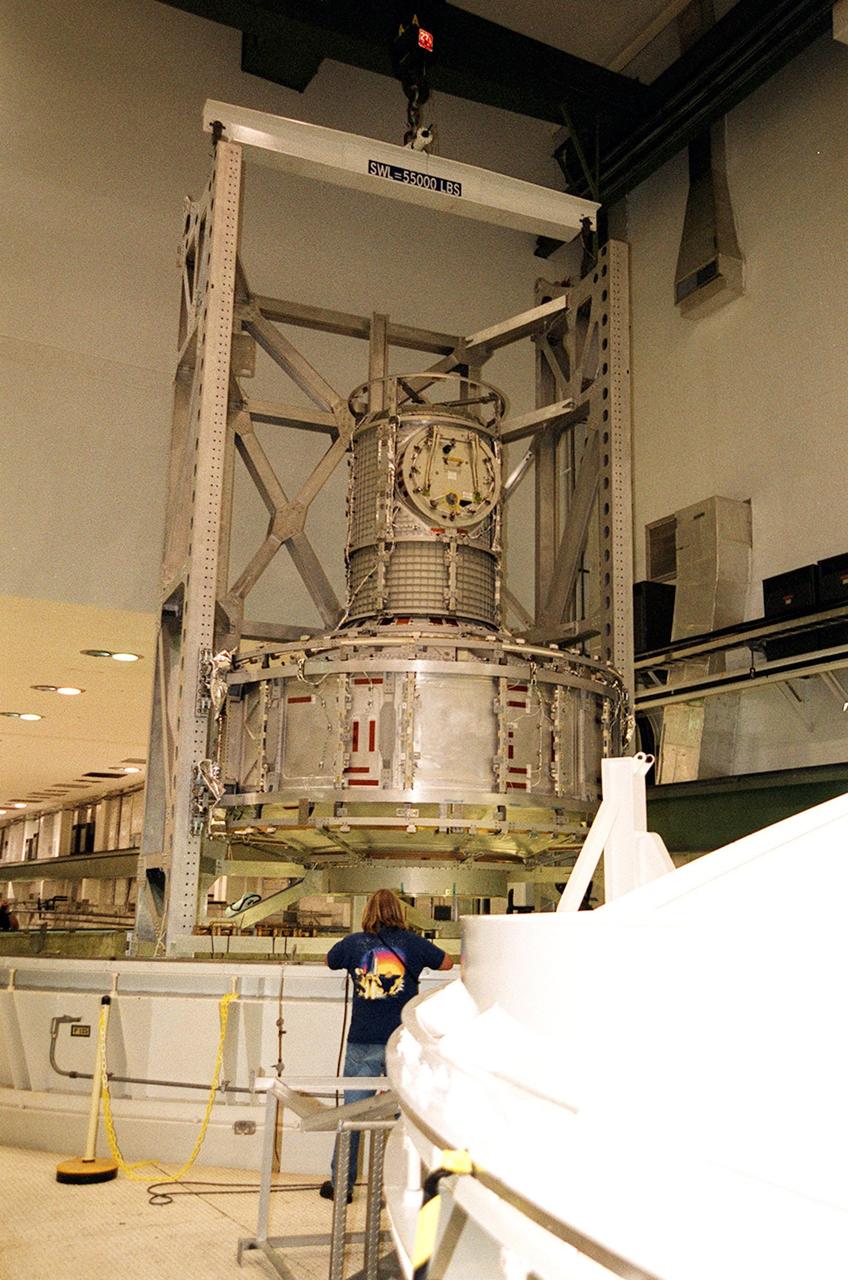
KENNEDY SPACE CENTER, FLA. -- In the Operations and Checkout Building, the Joint Airlock Module is suspended in air after being removed from the vacuum chamber where it was tested for leaks. The module was in a vacuum environment equivalent to 210,000 feet or 40 miles in altitude. It will be placed in a payload canister and taken to the Space Station Processing Facility. There it will continue to undergo preflight processing for the STS-104 mission scheduled for launch aboard Space Shuttle Atlantis May 17, 2001. The Joint Airlock Module is the gateway from which crew members aboard the International Space Station will enter and exit the 470-ton orbiting research facility
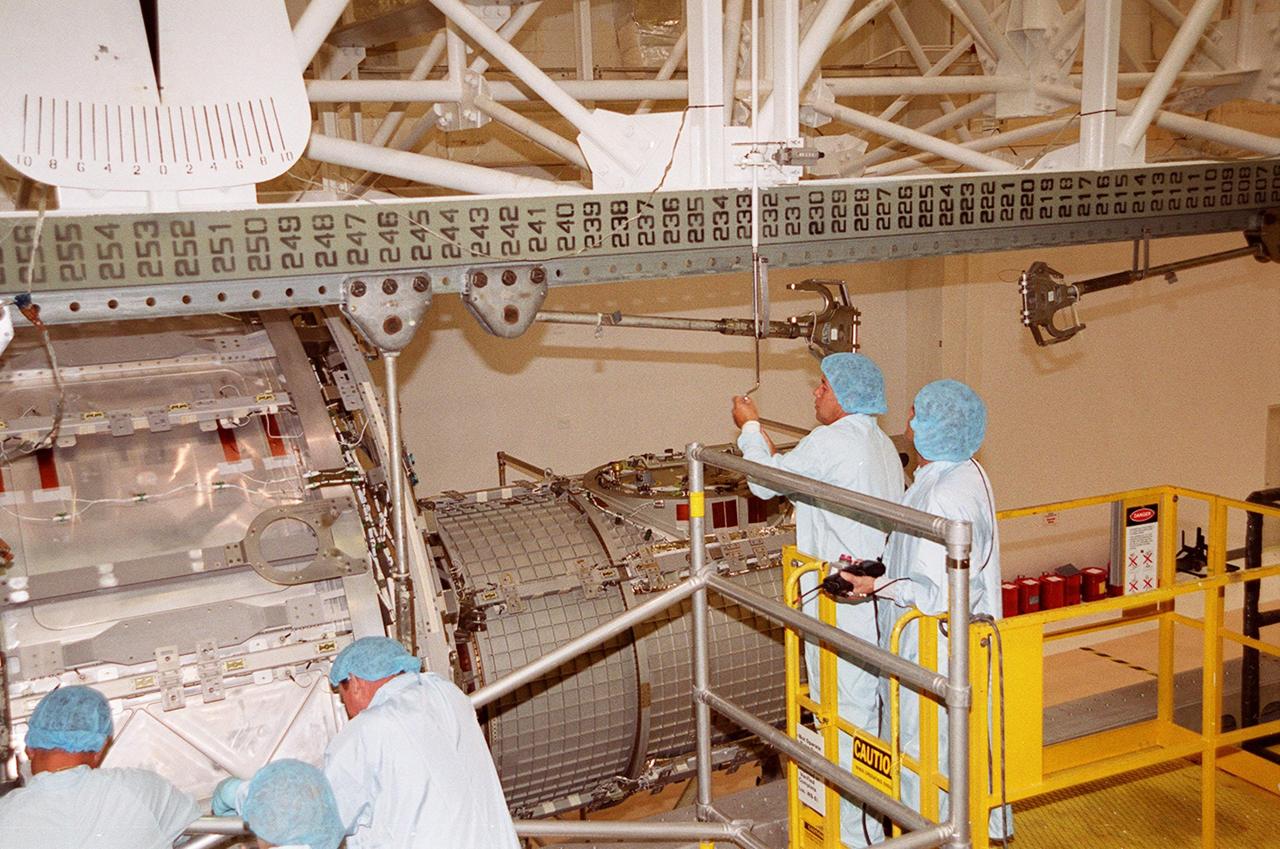
KENNEDY SPACE CENTER, FLA. -- A worker in the Operations and Checkout Building attaches the overhead crane to the Joint Airlock Module while another worker controls movement of the crane. The module will be lifted and placed in the payload canister for transfer to the Space Station Processing Facility. There the module will undergo more preflight processing for the STS-104 mission scheduled for launch aboard Space Shuttle Atlantis May 17, 2001. The Joint Airlock Module is the gateway from which crew members aboard the International Space Station will enter and exit the 470-ton orbiting research facility
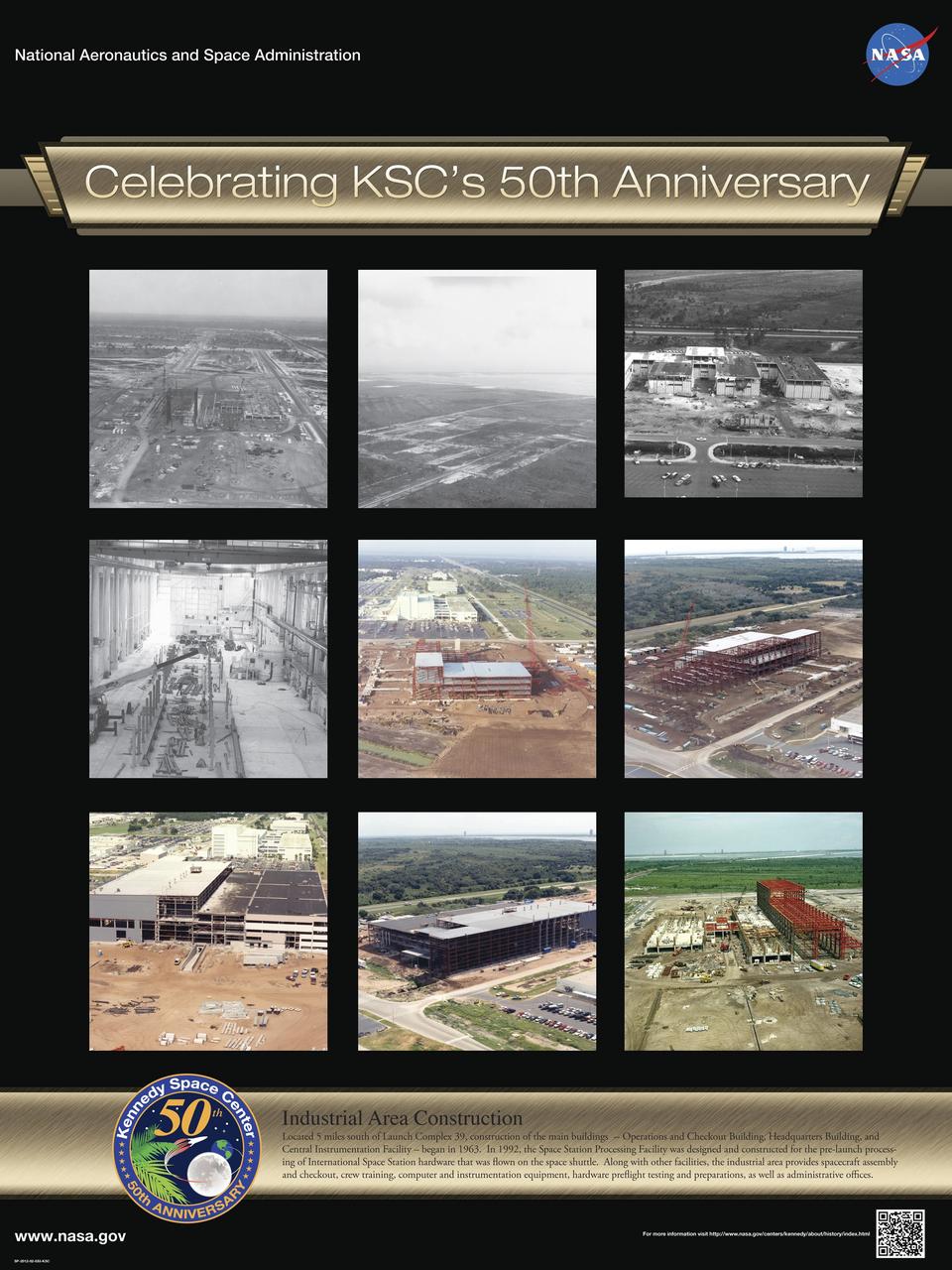
Industrial Area Construction: Located 5 miles south of Launch Complex 39, construction of the main buildings -- Operations and Checkout Building, Headquarters Building, and Central Instrumentation Facility – began in 1963. In 1992, the Space Station Processing Facility was designed and constructed for the pre-launch processing of International Space Station hardware that was flown on the space shuttle. Along with other facilities, the industrial area provides spacecraft assembly and checkout, crew training, computer and instrumentation equipment, hardware preflight testing and preparations, as well as administrative offices. Poster designed by Kennedy Space Center Graphics Department/Greg Lee. Credit: NASA
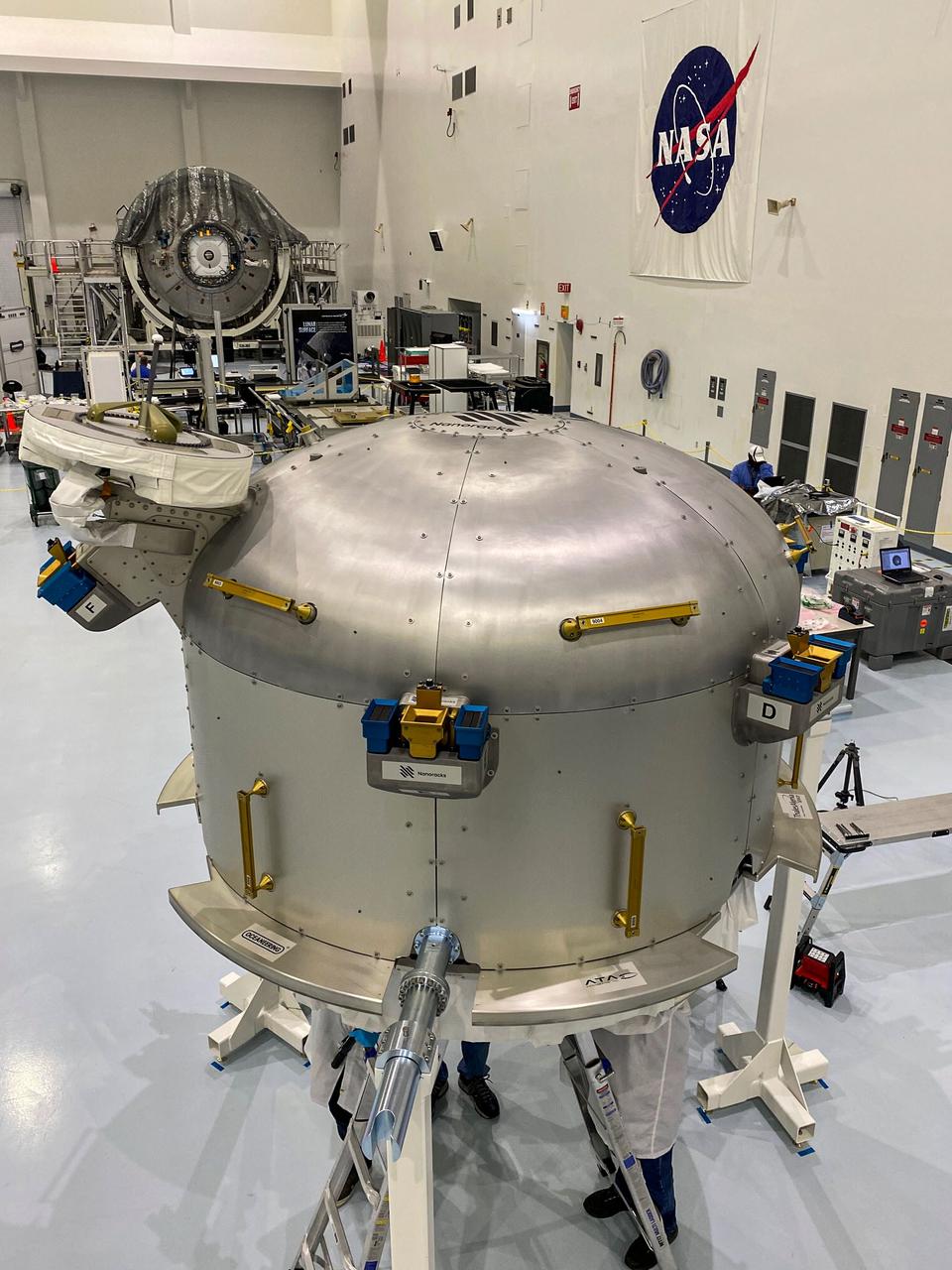
jsc2020e044491 (10/5/2020) —- A preflight view of the Nanoracks Airlock. The Nanoracks Bishop Airlock (Nanoracks Airlock) is the first-ever commercially owned and operated airlock on the International Space Station. It provides a variety of capabilities including jettisoning of payloads such as Cubesats, deployment of external payloads, support for small exterior payloads and locker-sized internal payloads, recovery of external on-orbit replaceable units (ORUs), and the ability to move hardware outside in support of extravehicular activities (EVAs). It is approximately five times larger than the Japanense Experiment Module (JEM) Airlock so it can accommodate more and larger payloads. The Airlock’s capabilities support many different types of scientific investigations.

S65-48759 (21 Aug. 1965) --- View of astronaut Charles Conrad Jr. through the window as he sits in the Gemini-5 spacecraft during preflight activities.
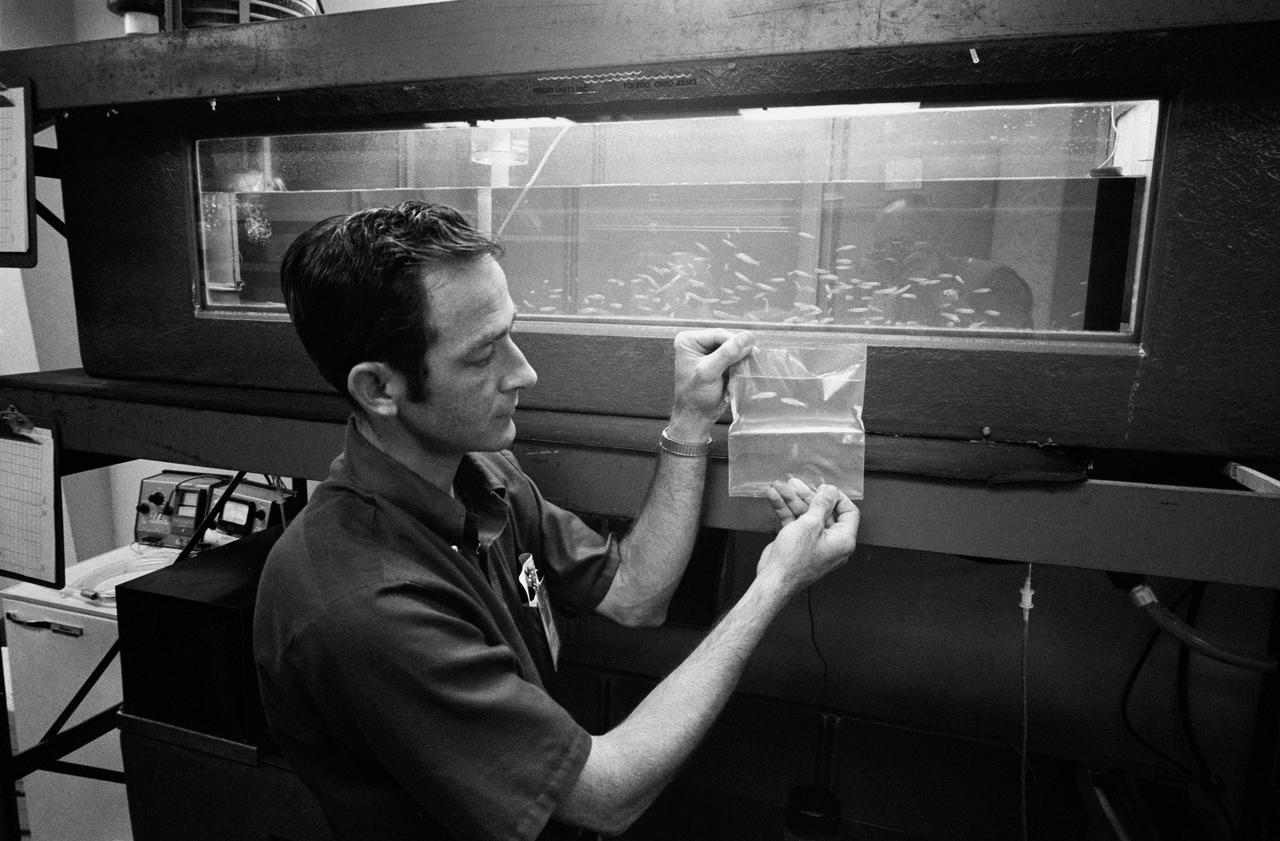
S73-30856 (29 June 1973) --- John Boyd observes a bag with two ?brackish water? minnows known as ?Mummichog Minnows? which will be onboard Skylab 3 with astronauts Alan L. Bean, Owen K. Garriott and Jack R. Lousma. The fish were added to the flight at the request of scientist-astronaut Dr. Owen K. Garriott, science pilot. Fifty eggs from the minnows will also be included in the bag. The objective of this experiment is to show what disorientation the fish will experience when exposed to weightlessness. Many fish have vestibular apparatus quite similar to man. Even though they live in an environment usually considered to resemble weightlessness, they do perceive a gravity vector. An aquarium of the minnows, caught off the coast of Beaufort, North Carolina, is in the background. Photo credit: NASA
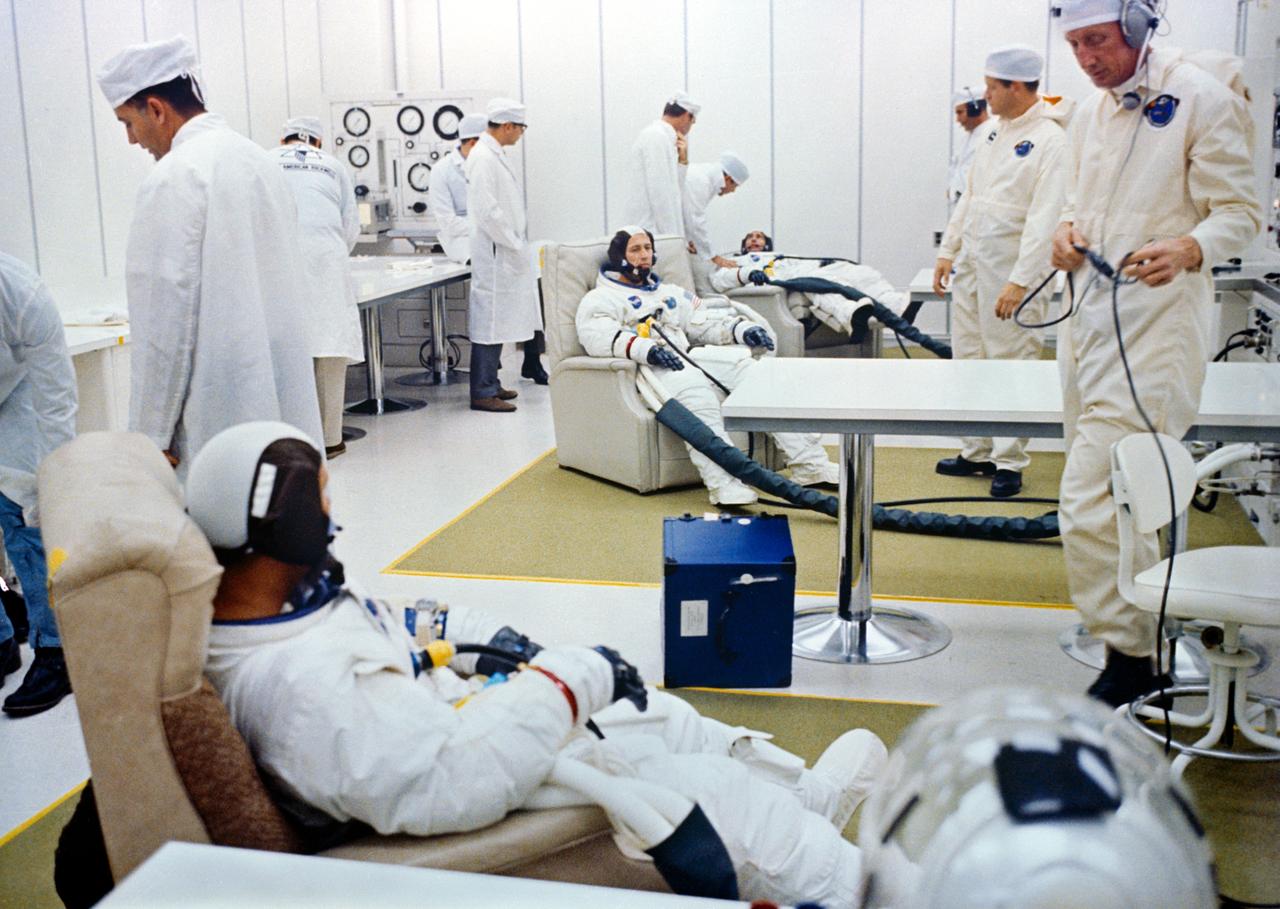
The Apollo 7 prime crew goes through suiting up operations in the Kennedy Space Center's Manned Spacecraft Operations Building during the Apollo 7 prelaunch countdown. From front to rear, are Astronauts Walter M. Schirra Jr., commander; Donn F. Eisele, command module pilot; and Walter Cunningham, lunar module pilot.

Astronaut Richard F. Gordon Jr., Apollo 12 command module pilot, suits up in the Kennedy Space Center's Manned Spacecraft Operations Building during the Apollo 12 prelaunch countdown.
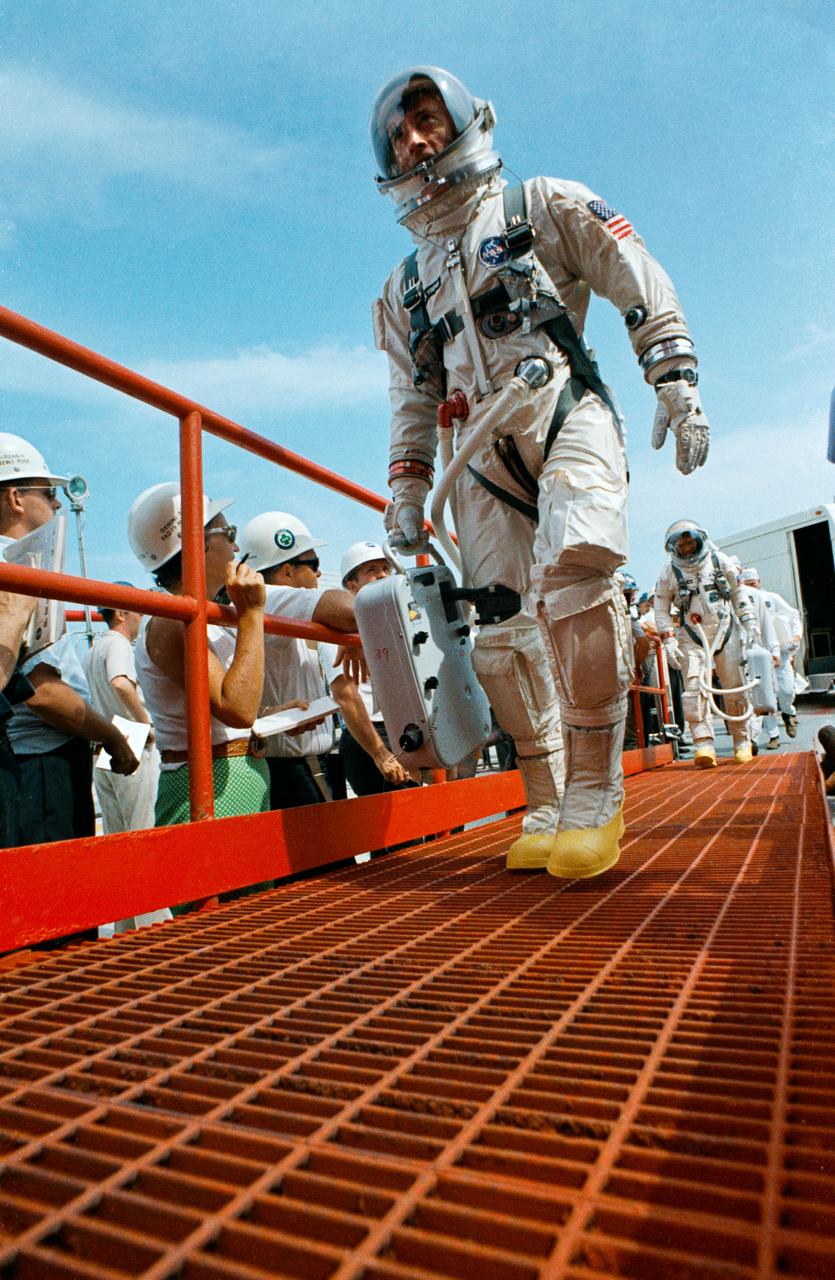
S66-42754 (18 July 1966) --- Astronauts John W. Young (leading), command pilot, and Michael Collins, pilot, walk up the ramp at Pad 19 after arriving from the Launch Complex 16 suiting trailer during the prelaunch countdown. Moments later they entered the elevator which took them to the white room and the waiting Gemini-10 spacecraft. Liftoff was at 5:20 p.m. (EST), July 18, 1966. Photo credit: NASA
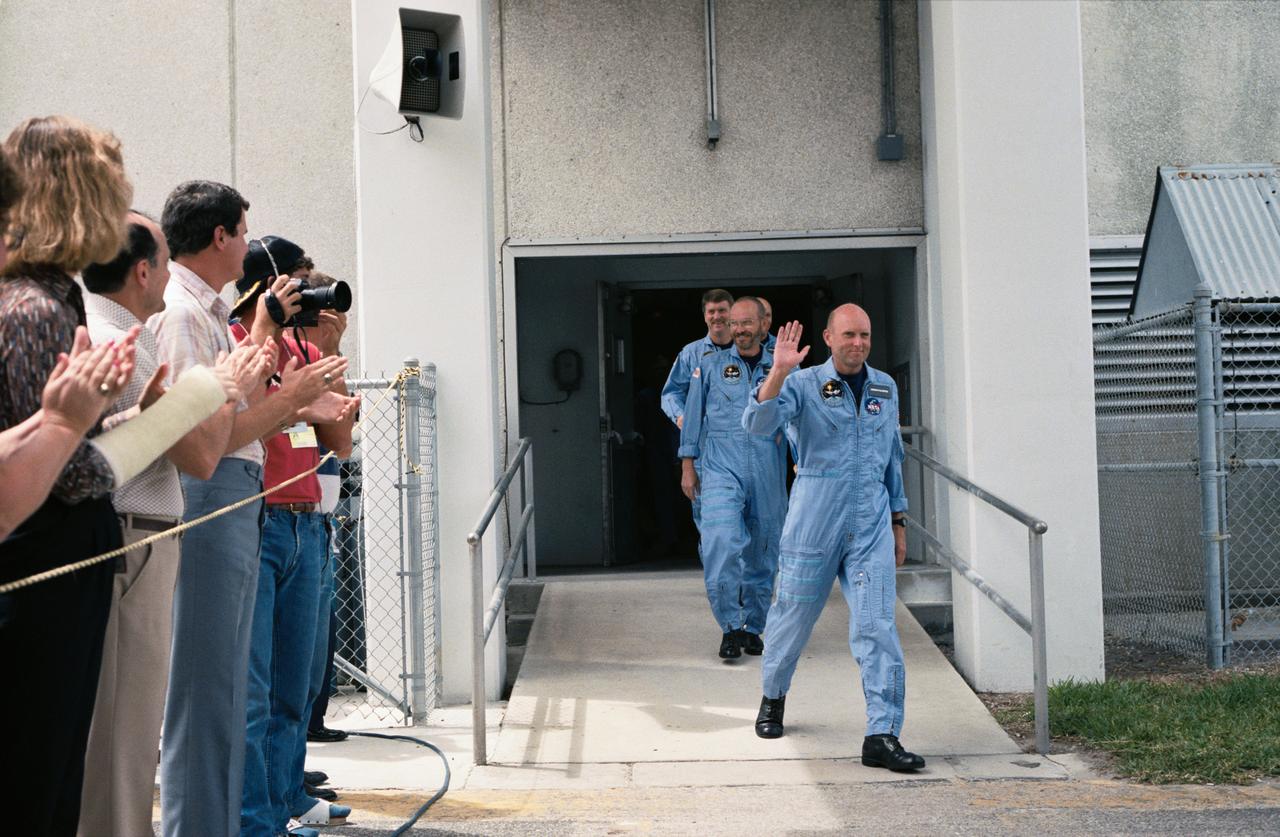
STS 51-F crewmembers depart the Kennedy Space Center's operations and checkout building on their way to the launch pad for the launch of the Discovery. Leading the way are Gordon Fullerton, commander; Loren Acton, payload specialist, and Anthony England, mission specialist. The other crewmembers are not visible in this frame.

51D-9091 (S23-9091) (12 April 1985) --- The Space Shuttle mission 51-D crewmembers depart the Kennedy Space Center's operations and checkout building on their way to the launch pad for an early morning launch of Discovery. Leading the seven are Karol J. Bobko (center of frame), commander; and Donald E. Williams (right), pilot. Following are Rhea Seddon, Jeffrey A. Hoffman, S. David Griggs--all mission specialists--Charles D. Walker and U.S. Sen. E. J. (Jake) Garn (partly obscured behind Walker), both payload specialists. Partly visible in the doorway are Astronaut John W. Young and George W.S. Abbey, director of flight crew operations.

51D-9089 (S23-9089) (12 April 1985) --- The Space Shuttle mission 51-D crewmembers gather to eat breakfast prior to leaving for the launch pad to climb aboard Discovery for liftoff. From left to right Rhea Seddon, Donald E. Williams, Charles D. Walker, Karol J. Bobko, Jeffrey A. Hoffman, S. David Griggs and U.S. Sen. E.J. (Jake) Garn discuss phases of the upcoming flight. Desert for the yet-to-be served breakfast is the pictured decorate 51-D cake.
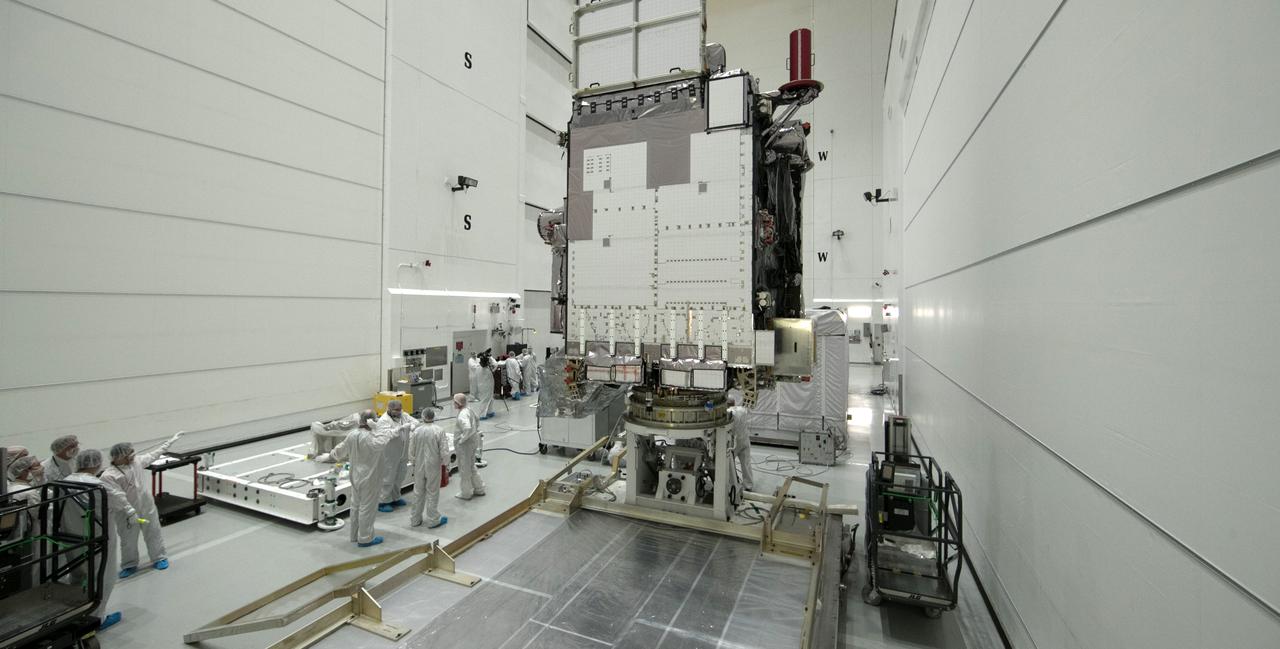
At Astrotech Space Operations in Titusville, Florida, technicians and engineers prepare to begin preflight processing of NOAA's Geostationary Operation Environmental Satellite-S (GOES-S) after removal from its shipping container. GOES-S is the second in a series of four advanced geostationary weather satellites. The GOES-R series - consisting of the GOES-R, GOES-S, GOES-T and GOES-U spacecraft - will significantly improve the detection and observation of environmental phenomena that directly affect public safety, protection of property and the nation's economic health and prosperity. GOES-S is slated to launch March 1, 2018 aboard a United Launch Alliance Atlas V rocket from Cape Canaveral Air Force Station in Florida.
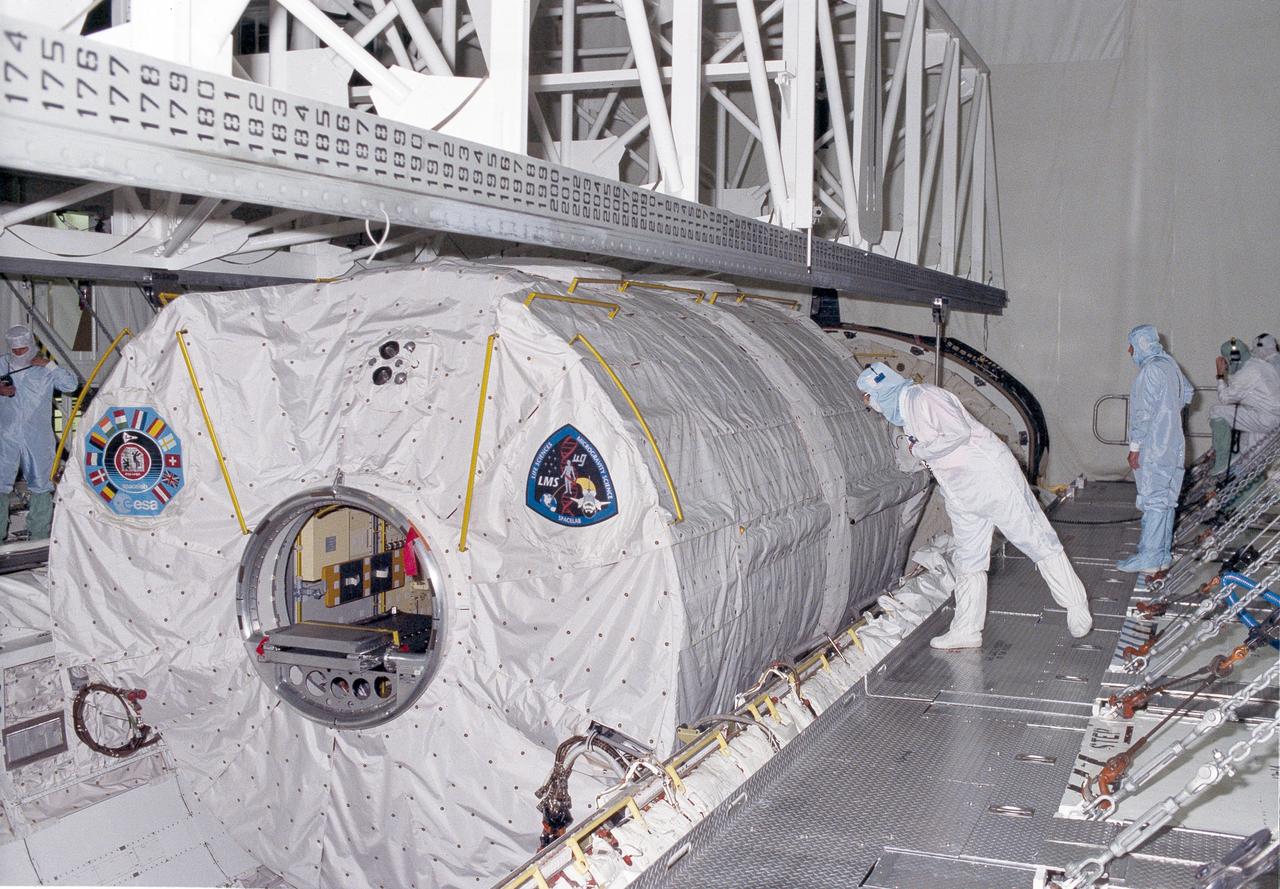
Launched on June 20, 1996, the STS-78 mission’s primary payload was the Life and Microgravity Spacelab (LMS), which was managed by the Marshall Space Flight Center (MSFC). During the 17 day space flight, the crew conducted a diverse slate of experiments divided into a mix of life science and microgravity investigations. In a manner very similar to future International Space Station operations, LMS researchers from the United States and their European counterparts shared resources such as crew time and equipment. Five space agencies (NASA/USA, European Space Agency/Europe (ESA), French Space Agency/France, Canadian Space Agency /Canada, and Italian Space Agency/Italy) along with research scientists from 10 countries worked together on the design, development and construction of the LMS. This photo shows the LMS spacelab being installed in the payload bay of the orbiter Columbia during preflight preparations.
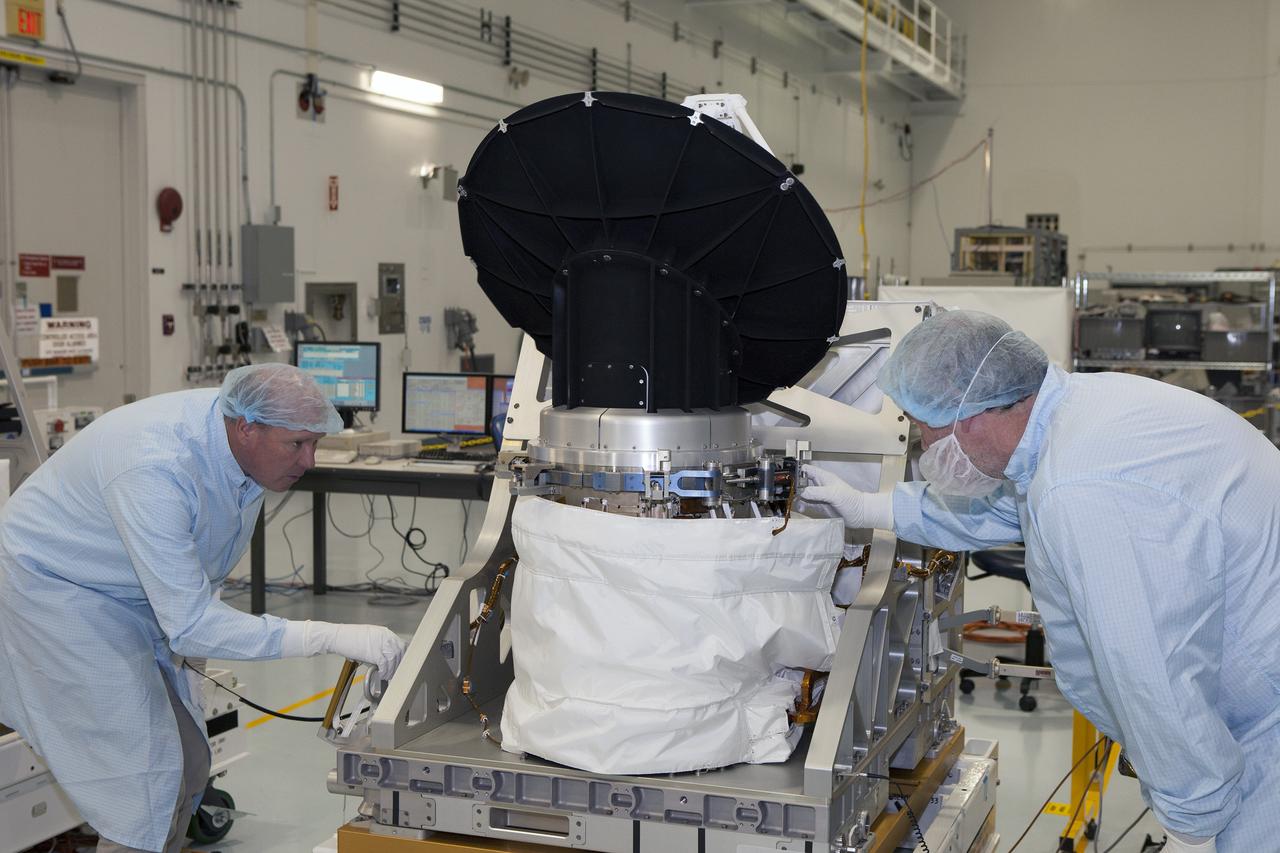
CAPE CANAVERAL, Fla. – The rotating radar antenna on NASA's International Space Station-RapidScat undergoes preflight testing in the Space Station Processing Facility at NASA's Kennedy Space Center in Florida by visiting personnel from NASA's Jet Propulsion Laboratory in California. From left are RapidScat project manager John Wirth and JPL flight technician Kieran McKay. Built at JPL, the radar scatterometer is the first scientific Earth-observing instrument designed to operate from the exterior of the space station. It will measure Earth's ocean surface wind speed and direction, providing data to be used in weather and marine forecasting. ISS-RapidScat will be delivered to the station on the SpaceX-4 commercial cargo resupply flight targeted for August 2014. For more information, visit http://www.jpl.nasa.gov/missions/iss-rapidscat. Photo credit: NASA/Daniel Casper
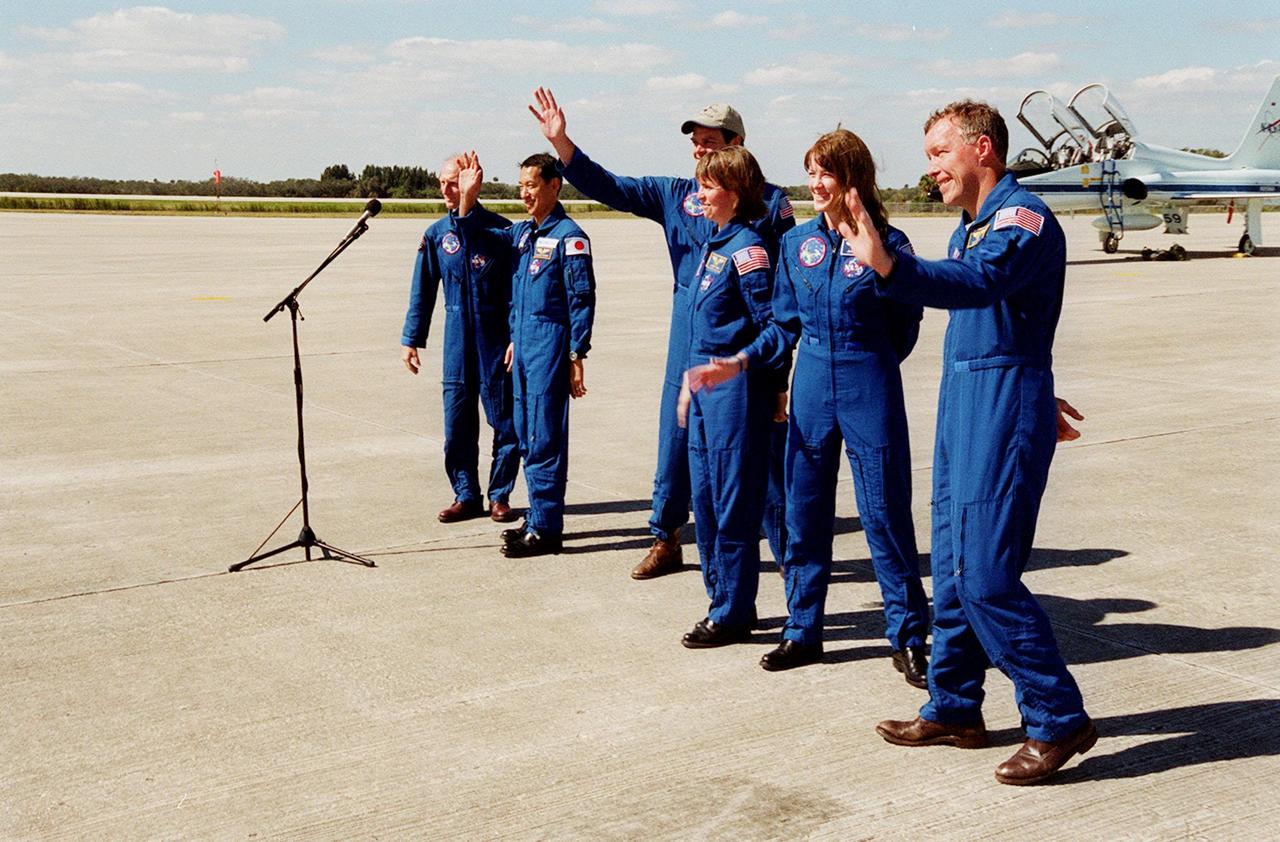
After addressing the media at the Shuttle Landing Facility, the STS-99 crew wave goodbye as they leave for crew quarters in the Operations and Checkout Building. The crew is ready to prepare for the second launch attempt of Endeavour Feb. 11 at 12:30 p.m. EST from Launch Pad 39A. The earlier launch scheduled for Jan. 31 was scrubbed due to poor weather and a faulty Enhanced Master Events Controller in the orbiter's aft compartment. Over the next few days, the crew will review mission procedures, conduct test flights in the Shuttle Training Aircraft and undergo routine preflight medical exams. STS-99 is the Shuttle Radar Topography Mission, which will produce unrivaled 3-D images of the Earth's surface. The result of the Shuttle Radar Topography Mission could be close to 1 trillion measurements of the Earth's topography. Landing is expected at KSC on Feb. 22 at 4:36 p.m. EST
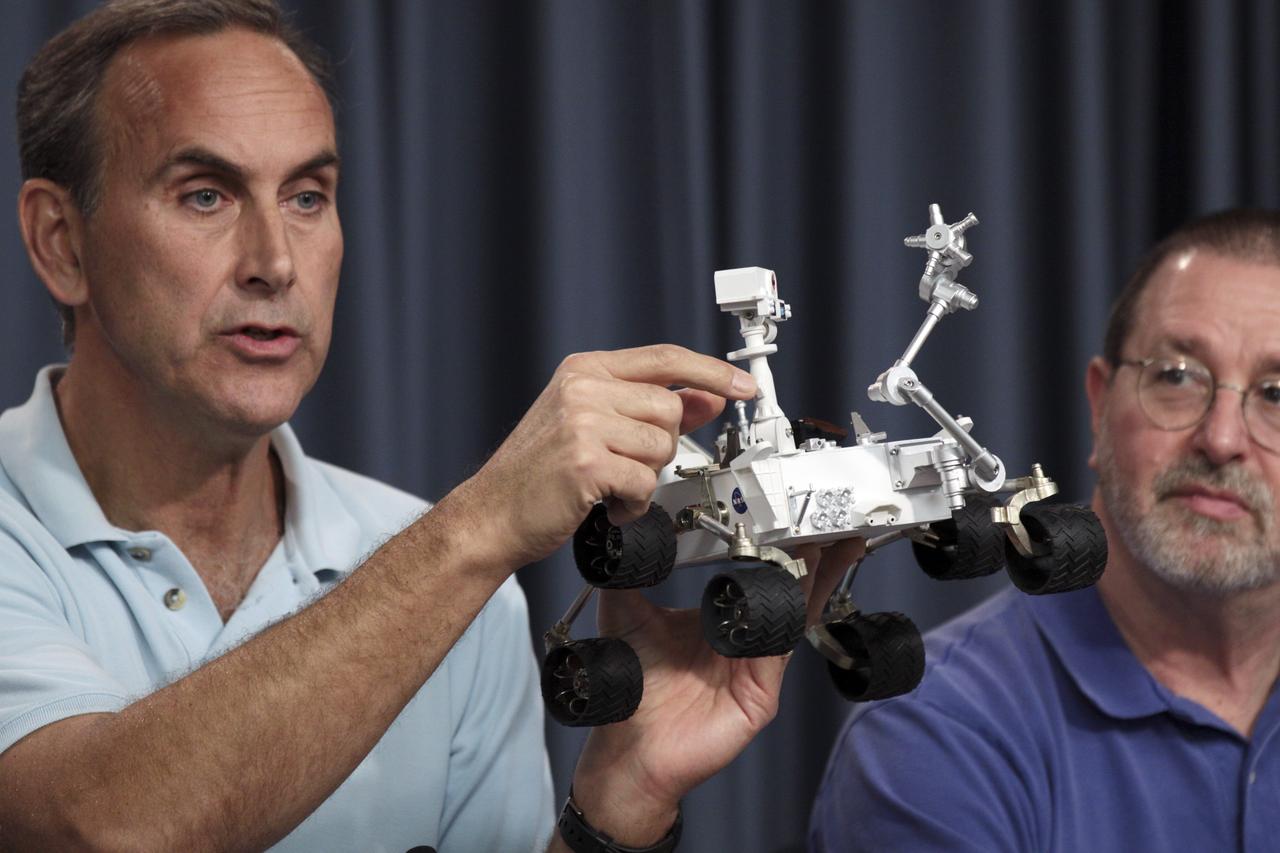
CAPE CANAVERAL, Fla. – John Grotzinger, project scientist for Mars Science Laboratory (MSL) at the California Institute of Technology in Pasadena, Calif., demonstrates the operation of MSL's rover, Curiosity, during a science briefing at NASA's Kennedy Space Center in Florida, part of preflight activities for the MSL mission. Michael Malin, principal investigator for the Mast Camera and Mars Descent Imager investigations on Curiosity from Malin Space Science Systems, looks on at right. MSL’s components include a car-sized rover, Curiosity, which has 10 science instruments designed to search for signs of life, including methane, and help determine if the gas is from a biological or geological source. Launch of MSL aboard a United Launch Alliance Atlas V rocket is scheduled for Nov. 26 from Space Launch Complex 41 on Cape Canaveral Air Force Station in Florida. For more information, visit http://www.nasa.gov/msl. Photo credit: NASA/Kim Shiflett
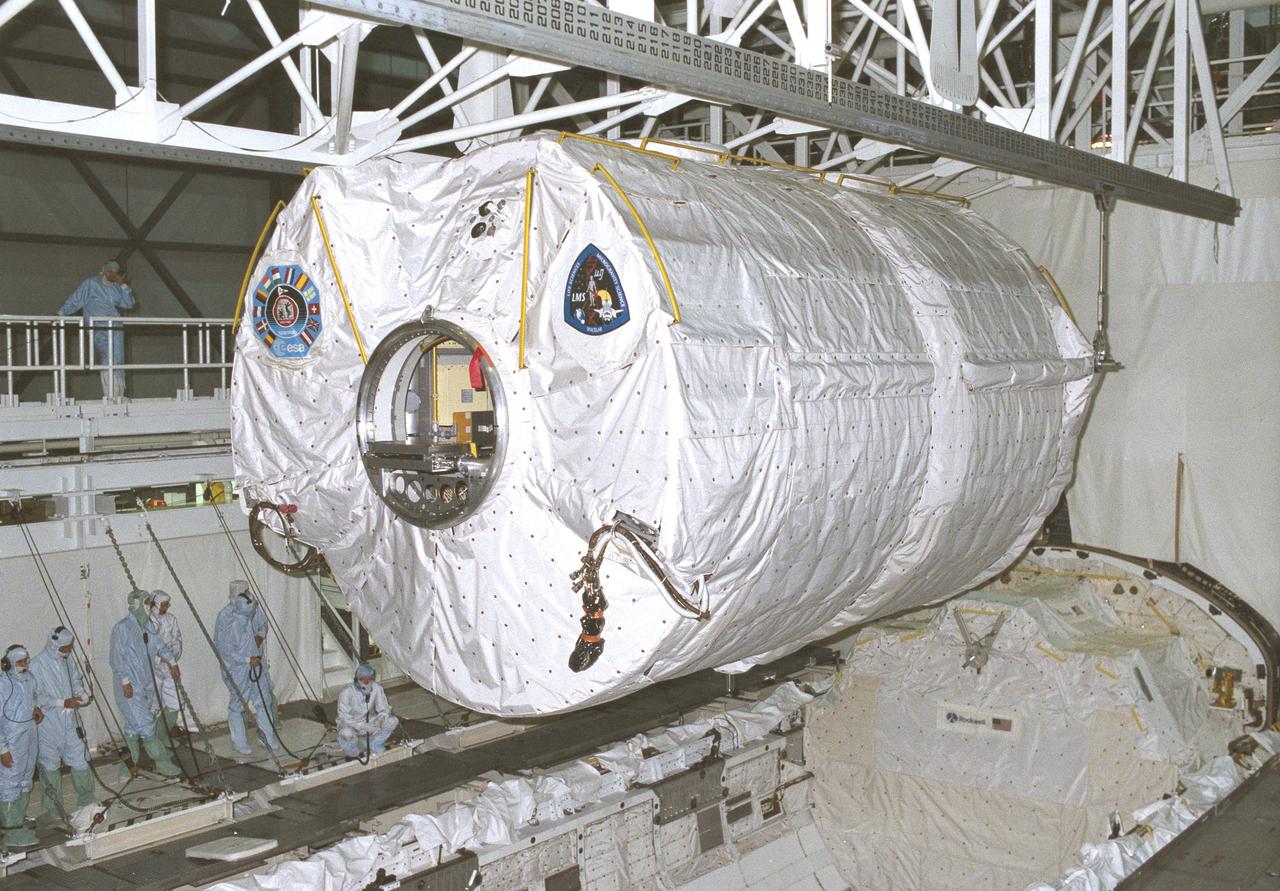
Launched on June 20, 1996, the STS-78 mission’s primary payload was the Life and Microgravity Spacelab (LMS), which was managed by the Marshall Space Flight Center (MSFC). During the 17 day space flight, the crew conducted a diverse slate of experiments divided into a mix of life science and microgravity investigations. In a manner very similar to future International Space Station operations, LMS researchers from the United States and their European counterparts shared resources such as crew time and equipment. Five space agencies (NASA/USA, European Space Agency/Europe (ESA), French Space Agency/France, Canadian Space Agency /Canada, and Italian Space Agency/Italy) along with research scientists from 10 countries worked together on the design, development and construction of the LMS. This photo shows the LMS being installed in the payload bay of the orbiter Columbia during preflight preparations.
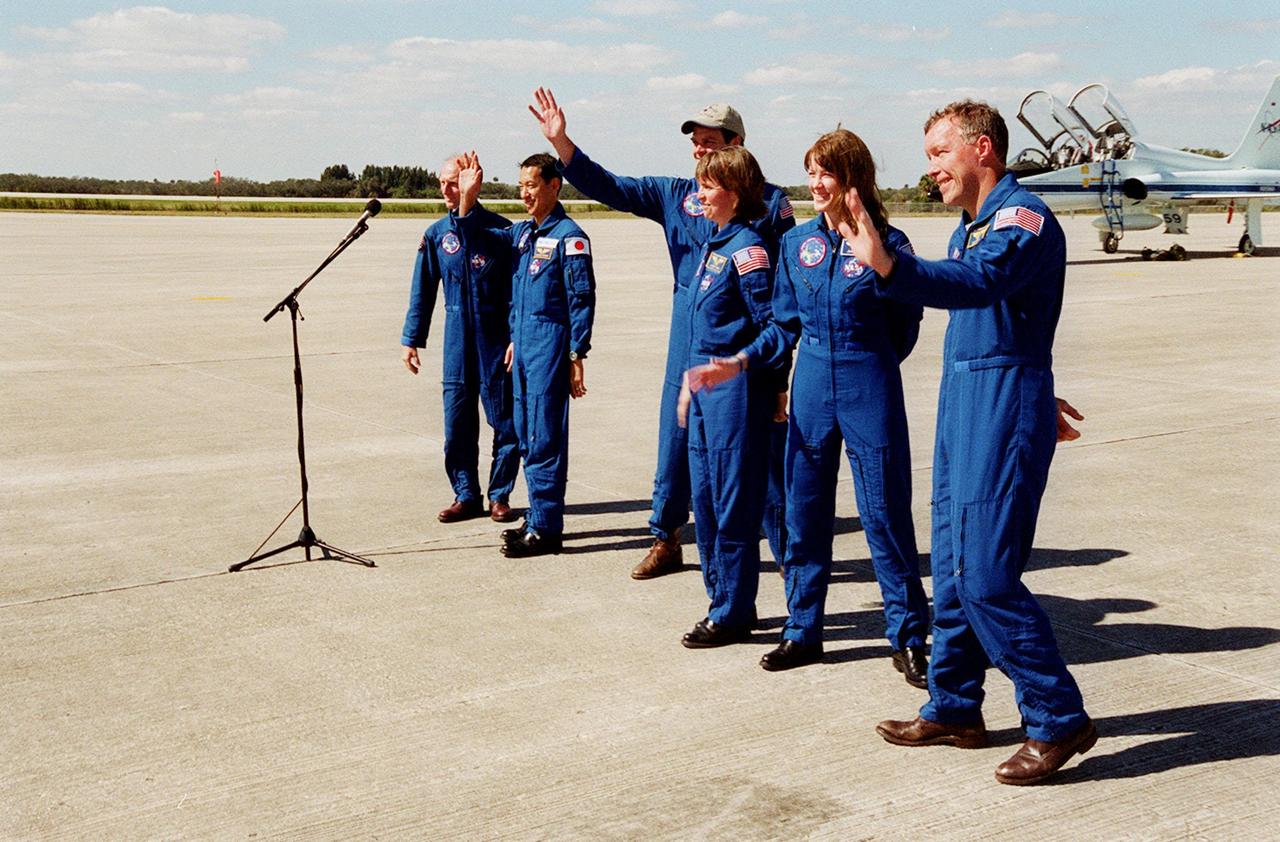
After addressing the media at the Shuttle Landing Facility, the STS-99 crew wave goodbye as they leave for crew quarters in the Operations and Checkout Building. The crew is ready to prepare for the second launch attempt of Endeavour Feb. 11 at 12:30 p.m. EST from Launch Pad 39A. The earlier launch scheduled for Jan. 31 was scrubbed due to poor weather and a faulty Enhanced Master Events Controller in the orbiter's aft compartment. Over the next few days, the crew will review mission procedures, conduct test flights in the Shuttle Training Aircraft and undergo routine preflight medical exams. STS-99 is the Shuttle Radar Topography Mission, which will produce unrivaled 3-D images of the Earth's surface. The result of the Shuttle Radar Topography Mission could be close to 1 trillion measurements of the Earth's topography. Landing is expected at KSC on Feb. 22 at 4:36 p.m. EST
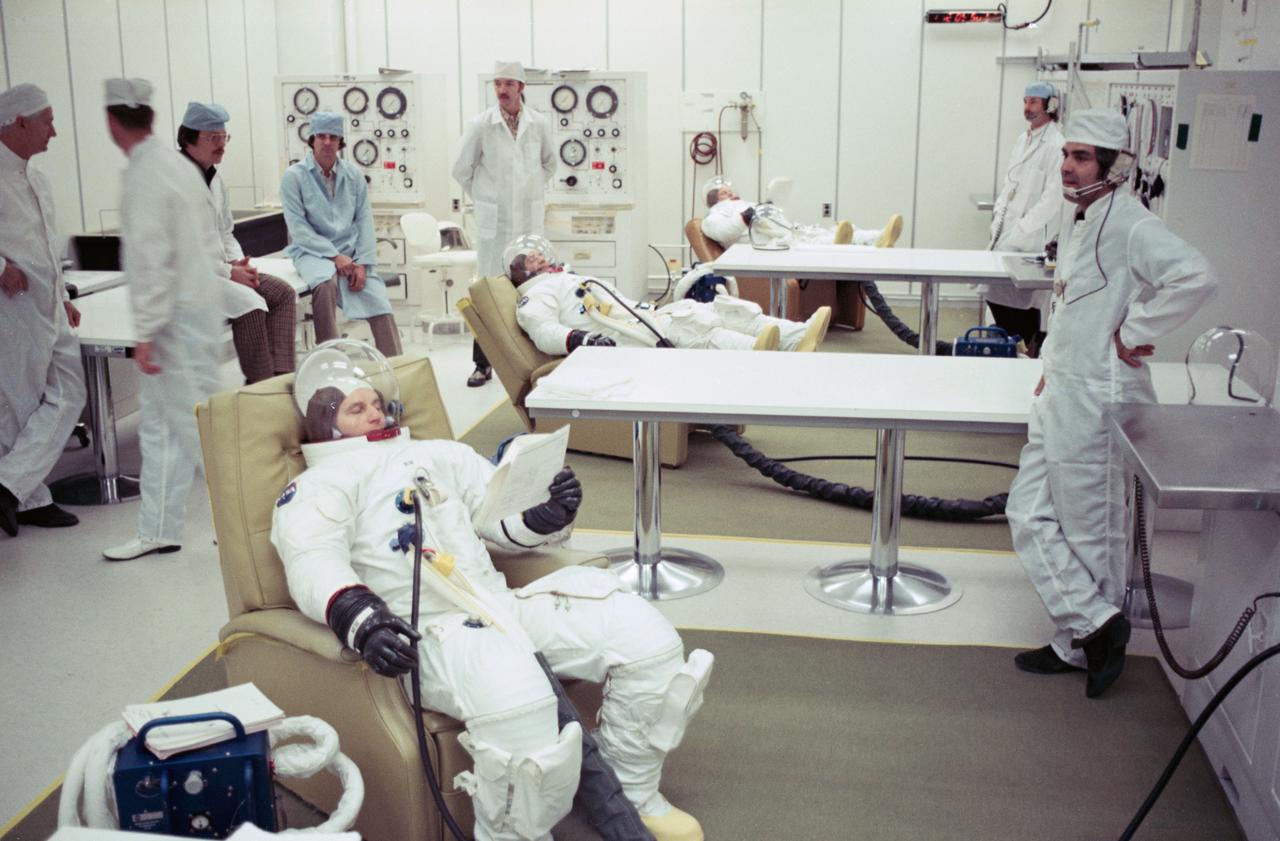
S75-21063 (January 1975) --- The three members of the American ASTP backup crew are suited up for the testing of the Apollo spacecraft at the Kennedy Space Center. They are (from foreground) astronauts Alan L. Bean, commander; Ronald E. Evans, command module pilot; and Jack R. Lousma, docking module pilot. Later, they entered the Apollo Command Module in an altitude chamber for tests of spacecraft systems. The testing was in preparation for the joint U.S.?USSR Apollo-Soyuz Test Project docking mission in Earth orbit scheduled for July 1975.
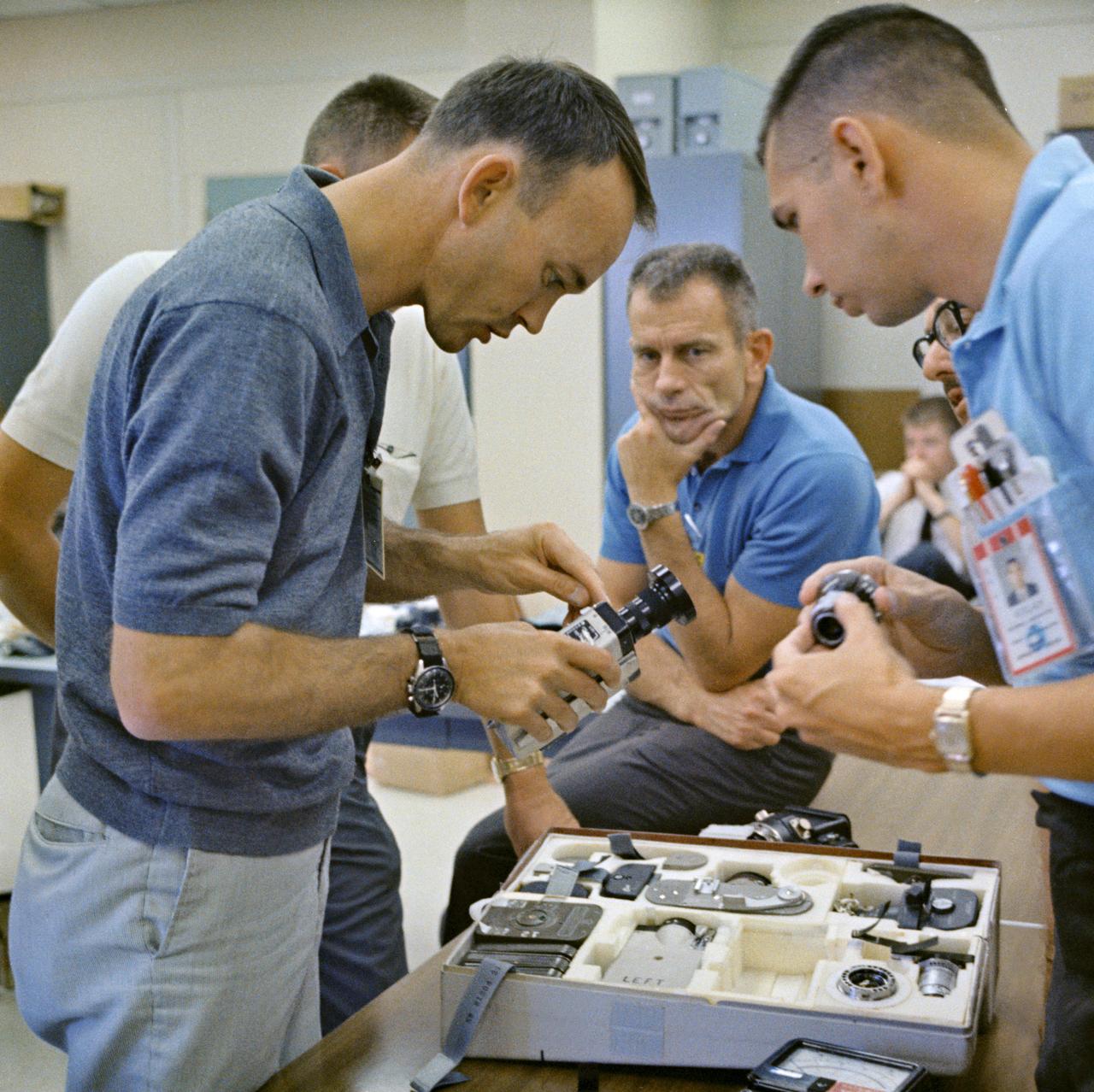
S66-42763 (18 July 1966) --- Astronaut Michael Collins (left), Gemini-10 prime crew pilot, inspects a camera during prelaunch activity at Cape Kennedy, Florida. In center background is Dr. Donald K. Slayton, Manned Spacecraft Center (MSC) Director of Flight Crew Operations. Photo credit: NASA
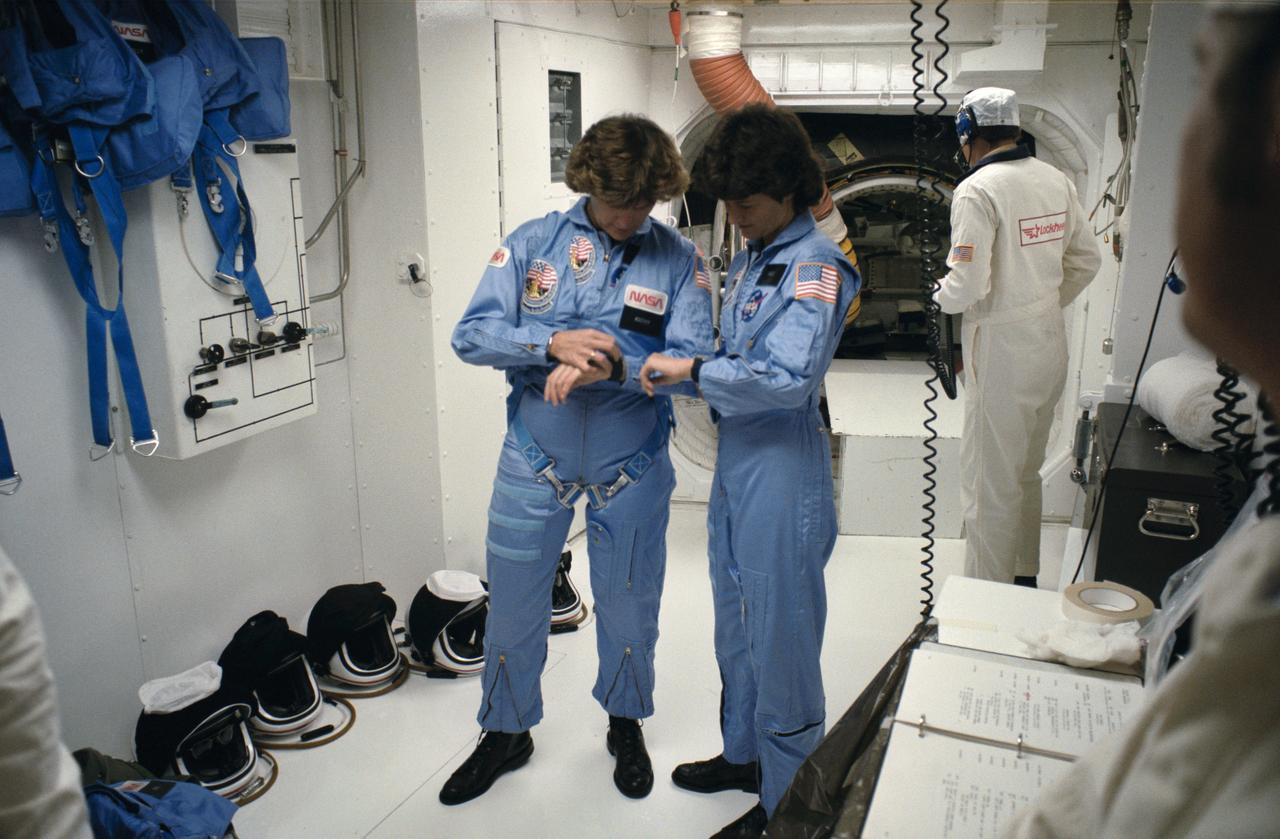
41G-90082 / S17-90082 (5 Oct 1984) --- Astronauts Sally K. Ride (right) and Kathryn D. Sullivan, two of three mission specialists, synchronize their watches prior to ingressing the Space Shuttle Challenger on the launch pad at Kennedy Space Center (KSC). They are in the White Room leading to the entry hatch of the vertically configured spacecraft.
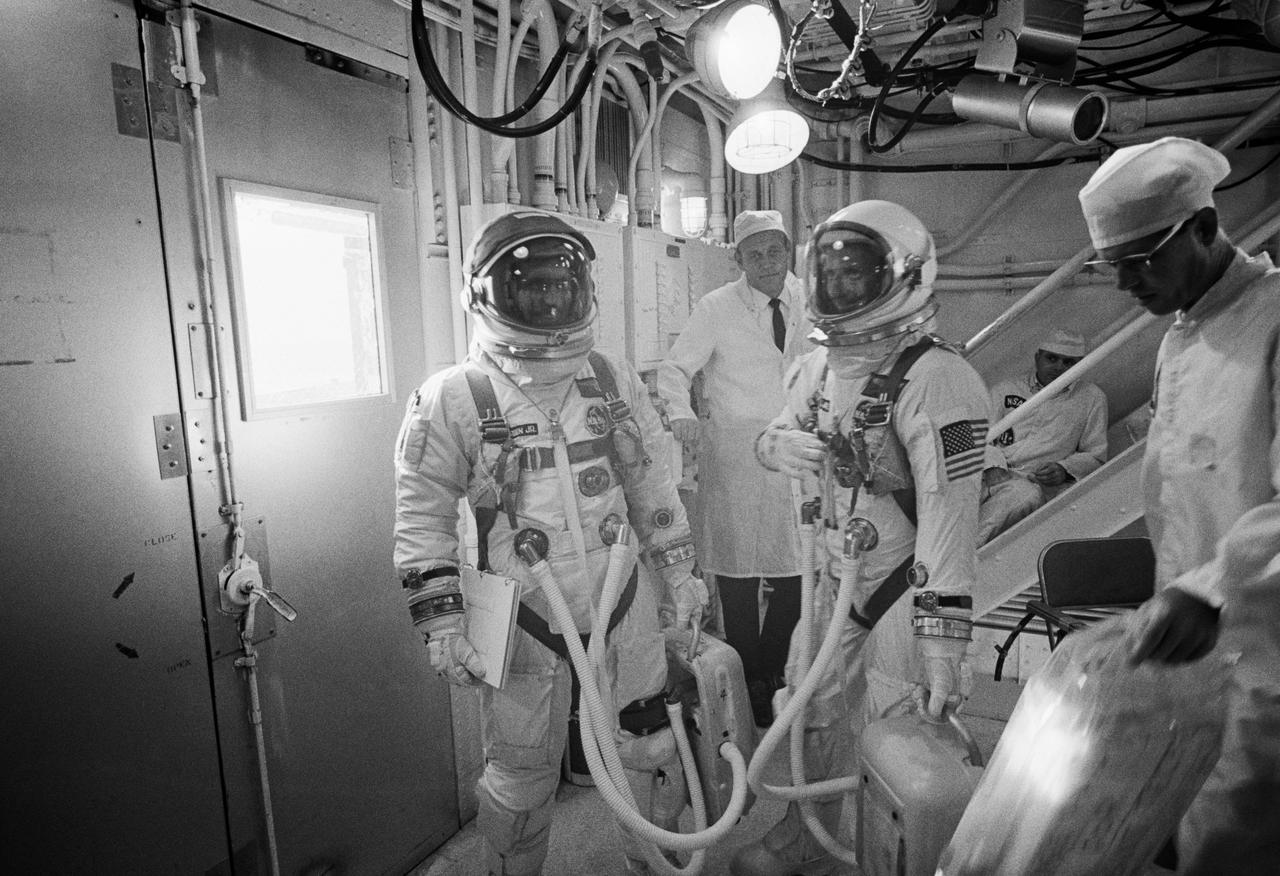
S66-57967 (10 Sept. 1966) --- Gemini-11 prime crew, astronauts Charles Conrad Jr. (right), command pilot, and Richard F. Gordon Jr. (left), pilot, prepare to enter the Gemini-11 spacecraft in the White Room atop Pad 19. Photo credit: NASA
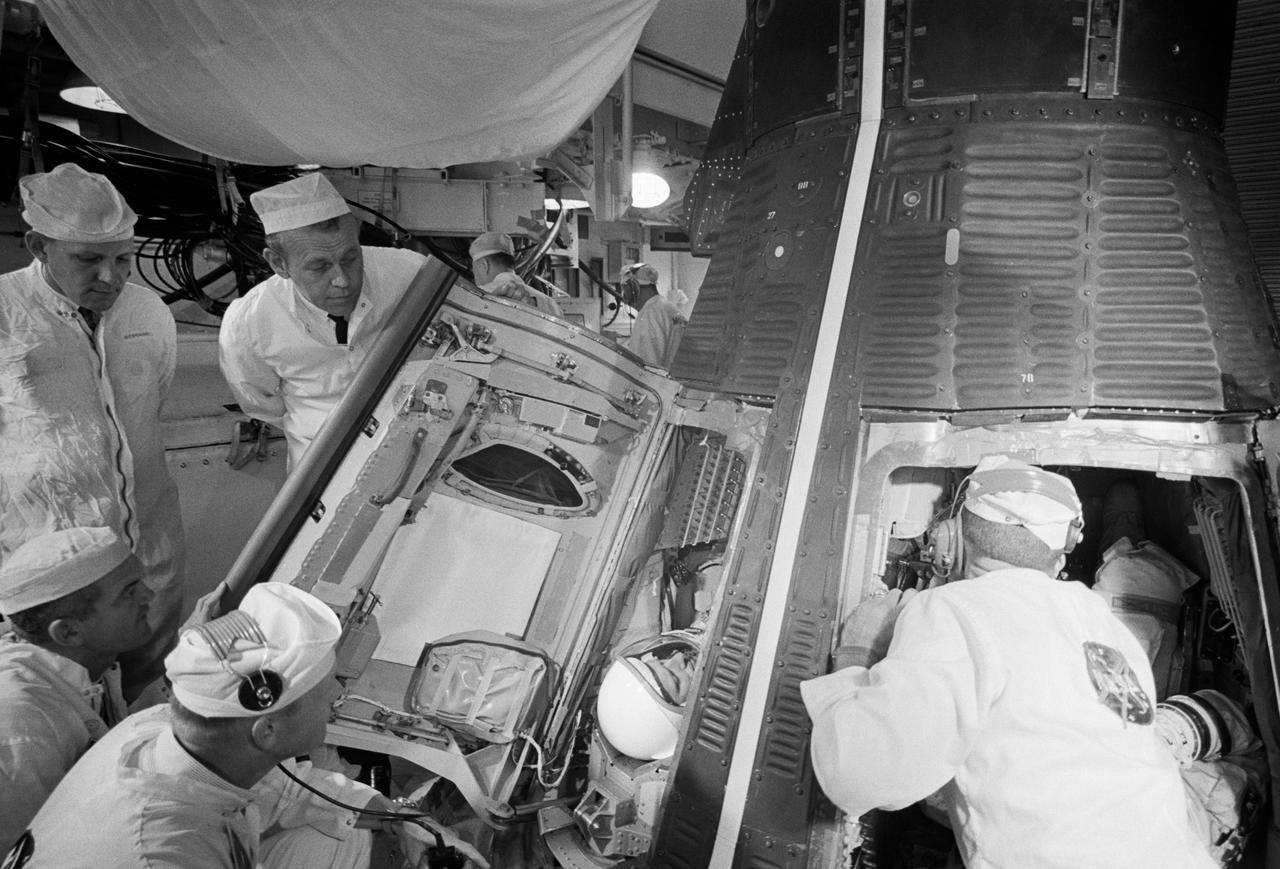
S66-56177 (10 Sept. 1966) --- Technicians in the White Room atop Pad 19 prepare to close hatches on the Gemini-11 spacecraft during prelaunch countdown. Inside the spacecraft are astronauts Charles Conrad Jr., command pilot, and Richard F. Gordon Jr., pilot. Photo credit: NASA
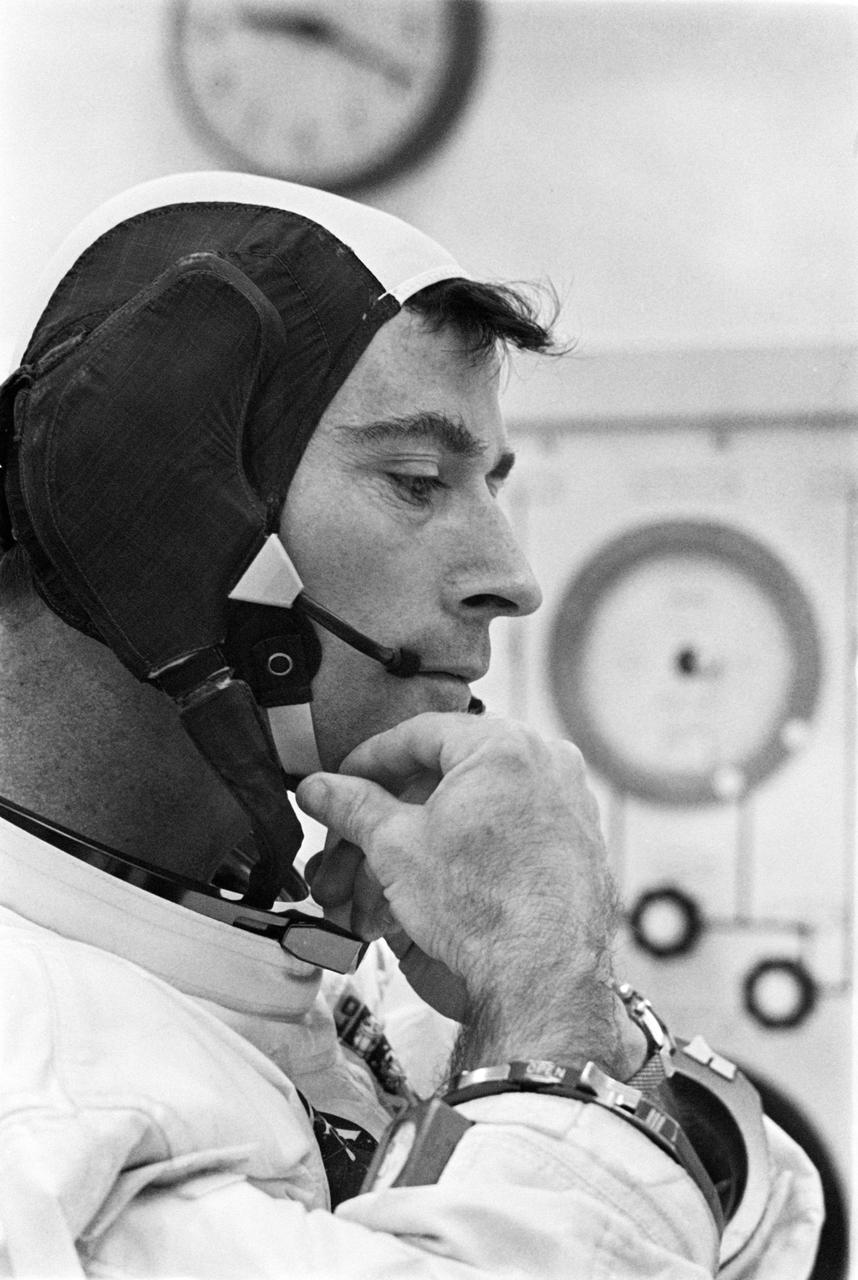
S69-34485 (18 May 1969) --- Astronaut John W. Young, Apollo 10 command module pilot, adjusts strap on his communications cap during suiting up operations for the lunar orbit mission. Minutes later astronauts Young; Thomas P. Stafford, commander; and Eugene A. Cernan, lunar module pilot, rode a transfer van from the Kennedy Space Center's Manned Spacecraft Operations Building over to Pad B, Launch Complex 39, where their spacecraft awaited them. Liftoff was at 12:49 p.m. (EDT), May 18, 1969.
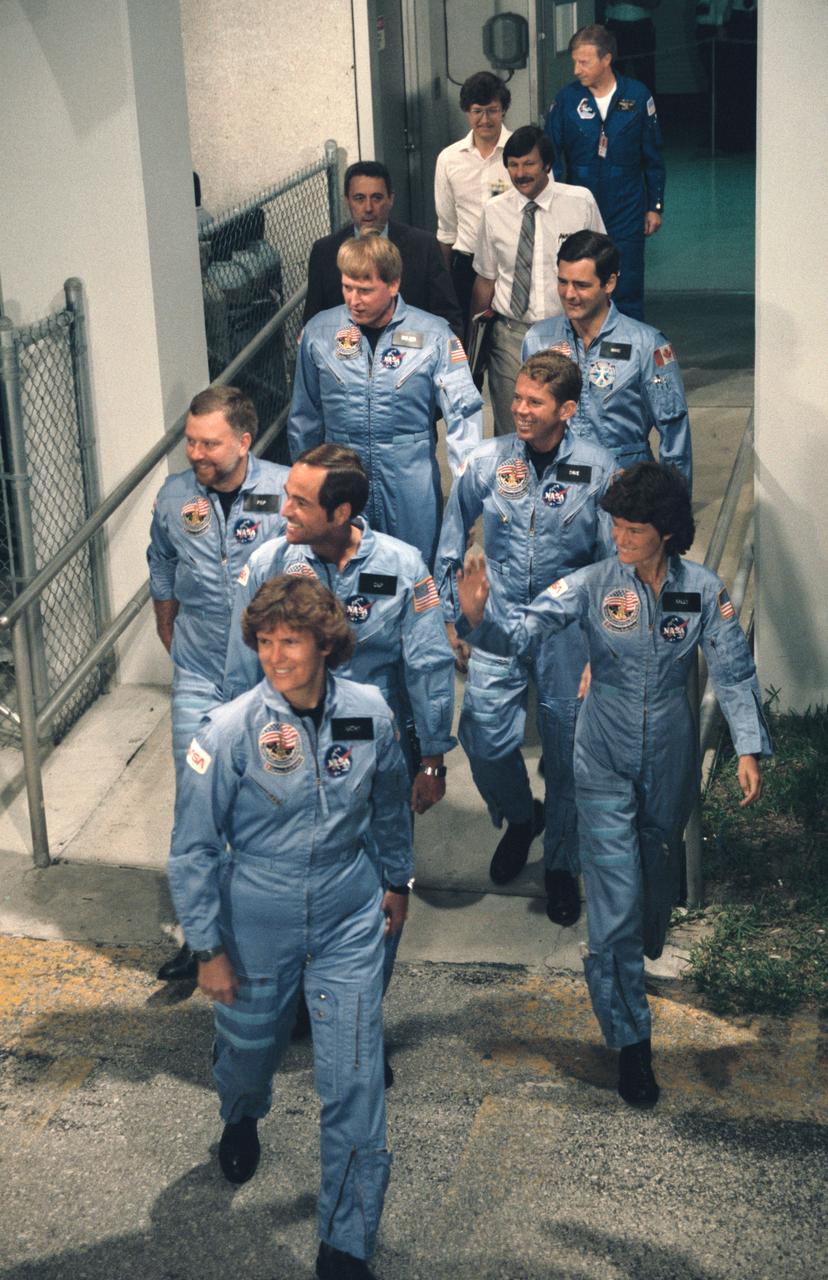
41G-90081 / S17-90081 (5 Oct 1984) --- The seven member crew leaves the Operations and Checkout Building (OCB) to take a van ride to the launch pad. Leading the way is Kathryn D. Sullivan followed in file by Robert L. Crippen, Paul D. Scully-Power and Jon A. McBride. On the right side are Sally K. Ride, David C. Leestma and Marc Garneau. Trailing the crew are George W. S. Abbey, Richard Nygren, Paul Bulver, and Paul J. Weitz.
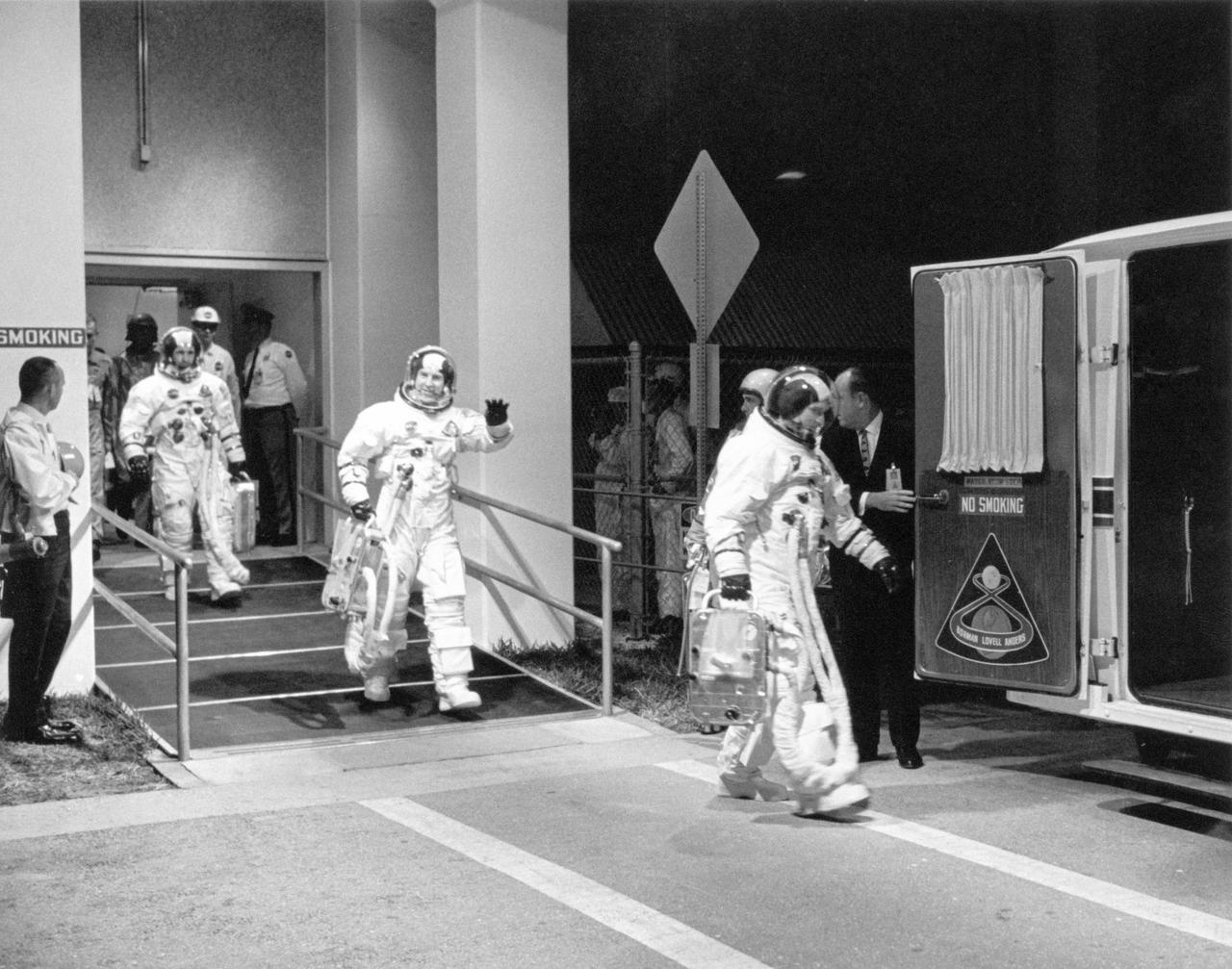
S68-55997 (21 Dec. 1968) --- Apollo 8 Command Module Pilot James Lovell waves to well-wishers during the pre-dawn departure to Launch Pad 39 for the six-day lunar orbital Apollo/Saturn V mission. Astronaut Lovell is accompanied by Commander Frank Borman, right, and Lunar Module Pilot William Anders, left.
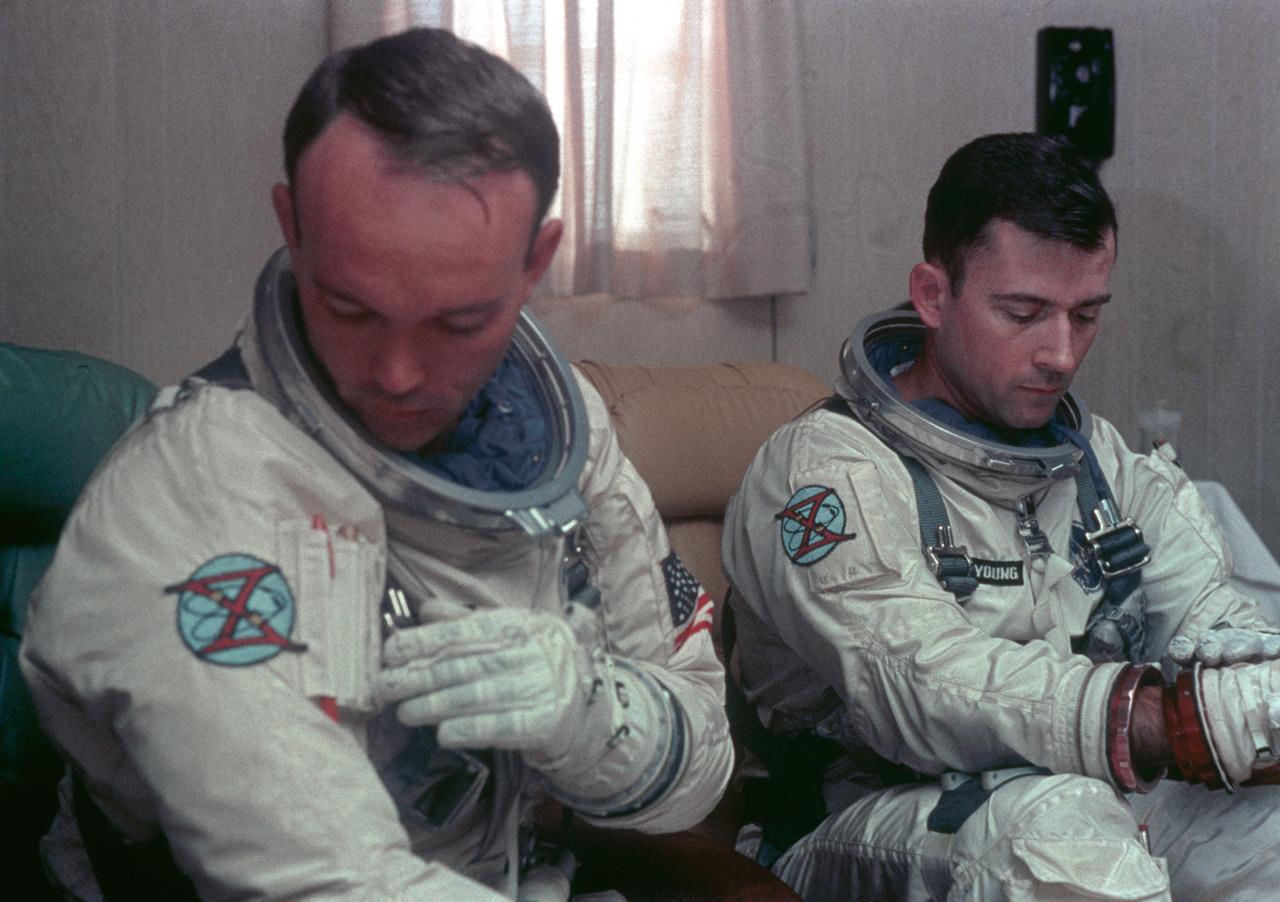
S66-42424 (18 July 1966) --- Astronauts John W. Young (right), command pilot, and Michael Collins (left), pilot, prime crew for the Gemini-10 spaceflight, undergo suiting up operations in the Launch Complex 16 suiting trailer. Photo credit: NASA