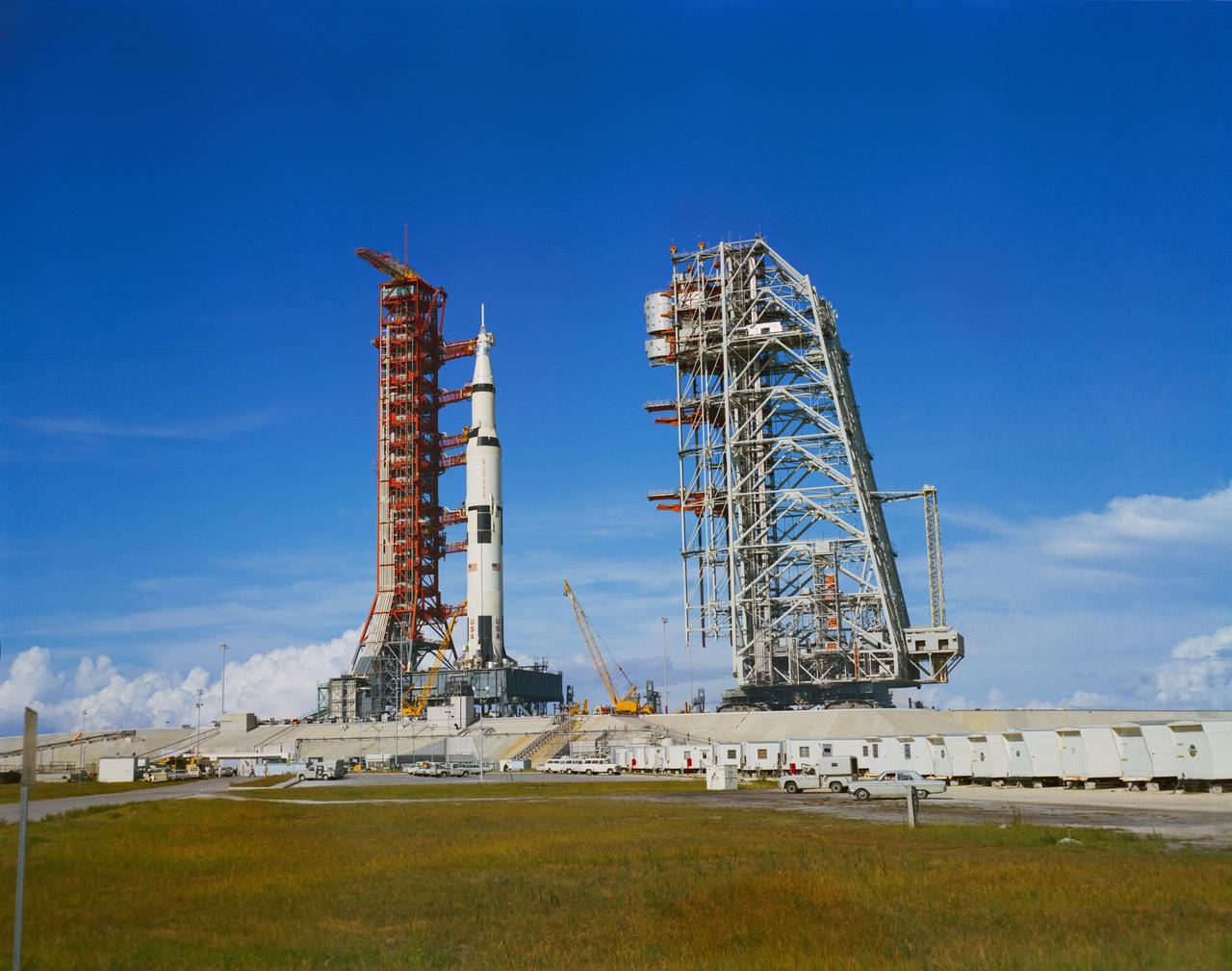
Apollo XI Launch Vehicle AS-506 and Spacecraft 107, Launch Pad 39A for CDDT (Countdown Demonstration Test), includes MSS (Mobile Service Structure) pullback, KSC. 1. APOLLO XI - PRELAUNCH KENNEDY SPACE CENTER, FL
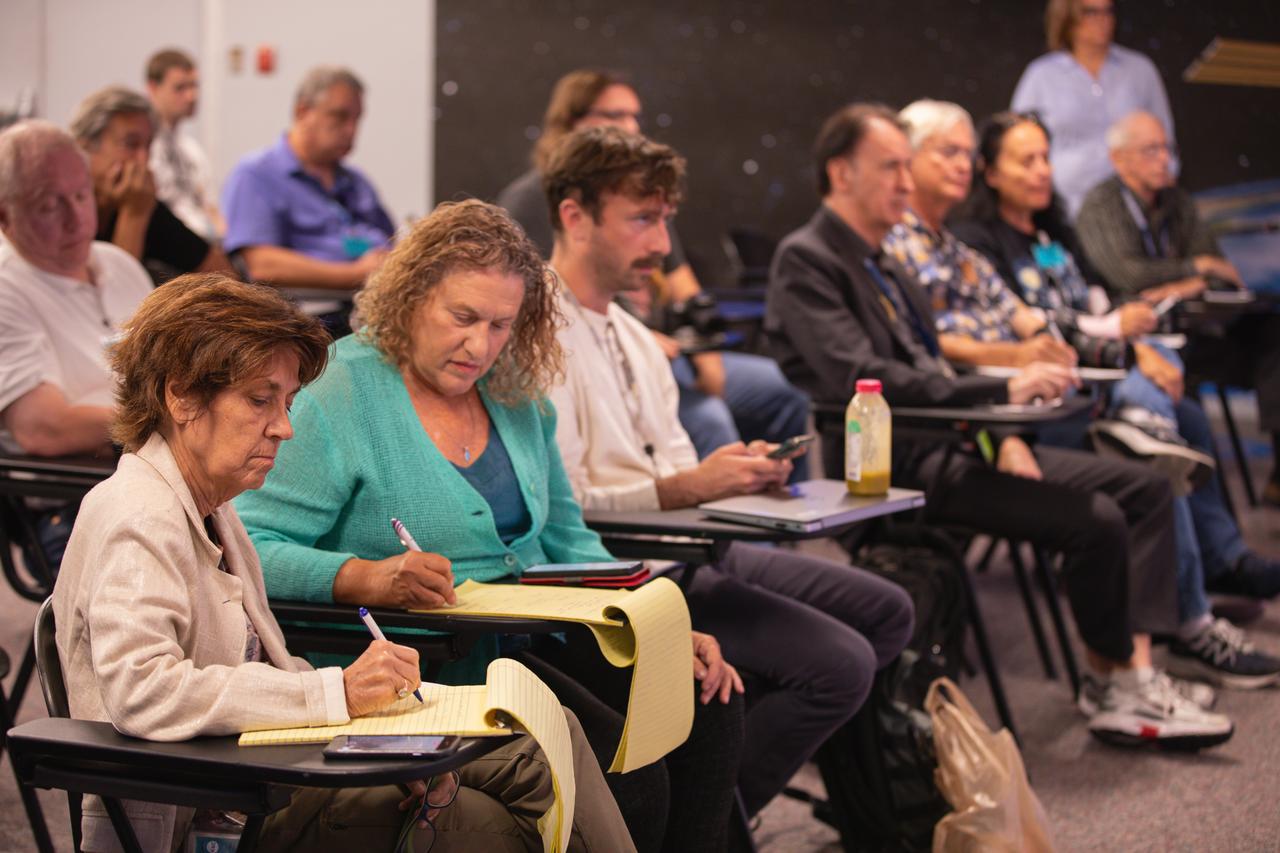
Members of the media attend a prelaunch briefing for NASA’s Boeing Crew Flight Test at the agency’s Kennedy Space Center in Florida, Friday, May 31, 2024. As part of the agency’s Commercial Crew Program, NASA astronauts Butch Wilmore and Suni Williams are the first to launch aboard Boeing’s Starliner spacecraft atop a ULA Atlas V rocket from Space Launch Complex-41 at Cape Canaveral Space Force Station in Florida. Liftoff is scheduled for 12:25 p.m. ET on Saturday, June 1.

Laura Aguiar hosts NASA’s prelaunch technology show for Space Test Program-2 (STP-2) at Kennedy Space Center on June 23, 2019. STP-2 is managed by the U.S. Air Force Space and Missile Systems Center.

Laura Aguiar hosts NASA’s prelaunch technology show for Space Test Program-2 (STP-2) at Kennedy Space Center on June 23, 2019. STP-2 is managed by the U.S. Air Force Space and Missile Systems Center.
Mark Nappi, vice president and program manager, Boeing Commercial Crew Program, participates in a prelaunch briefing for NASA’s Boeing Crew Flight Test at the agency’s Kennedy Space Center in Florida, Friday, May 31, 2024. As part of the agency’s Commercial Crew Program, NASA astronauts Butch Wilmore and Suni Williams are the first to launch aboard Boeing’s Starliner spacecraft atop a United Launch Alliance Atlas V rocket from Space Launch Complex-41 at Cape Canaveral Space Force Station in Florida. Liftoff is scheduled for 12:25 p.m. ET on Saturday, June 1.
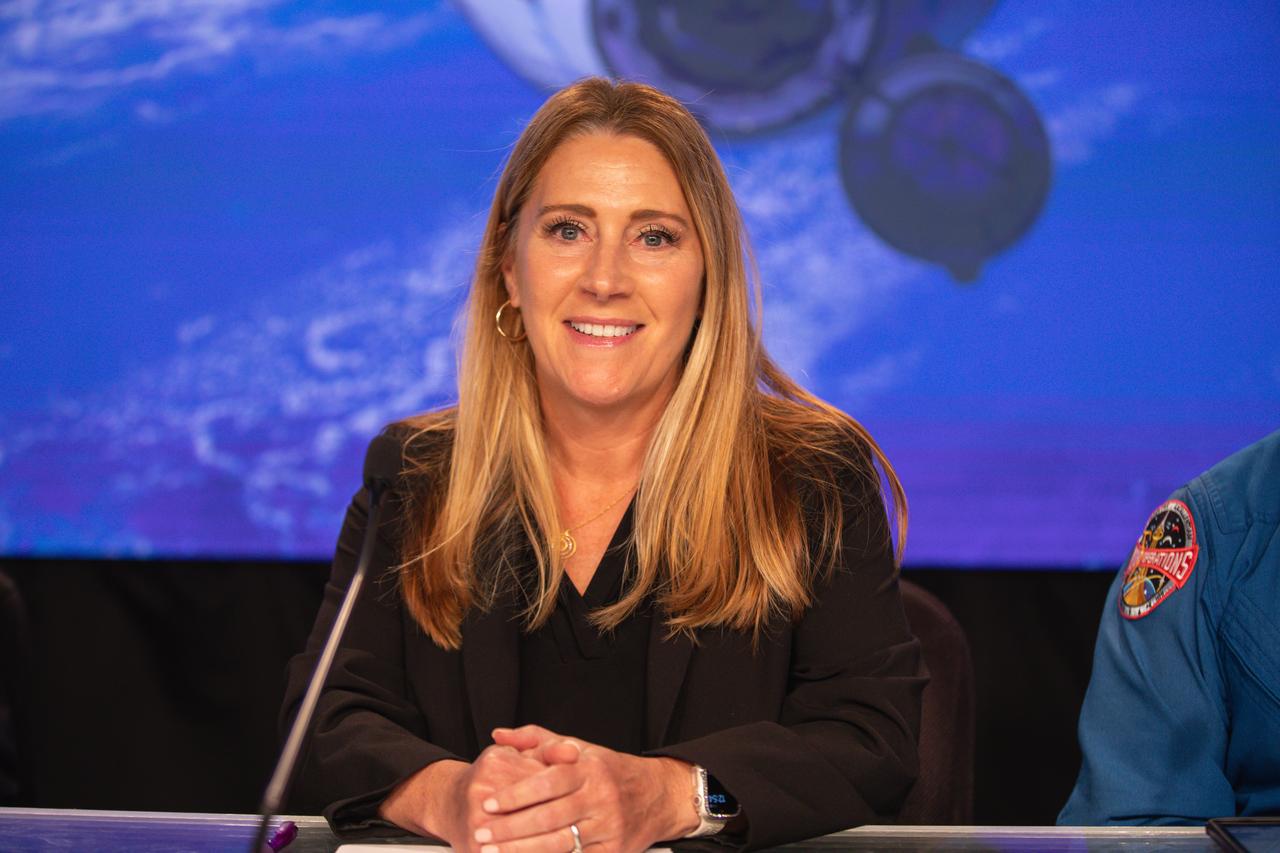
Dana Weigel, manager, NASA’s International Space Station Program, participates in a prelaunch briefing for NASA’s Boeing Crew Flight Test at the agency’s Kennedy Space Center in Florida, Friday, May 31, 2024. As part of the agency’s Commercial Crew Program, NASA astronauts Butch Wilmore and Suni Williams are the first to launch aboard Boeing’s Starliner spacecraft atop a United Launch Alliance Atlas V rocket from Space Launch Complex-41 at Cape Canaveral Space Force Station in Florida. Liftoff is scheduled for 12:25 p.m. ET on Saturday, June 1.
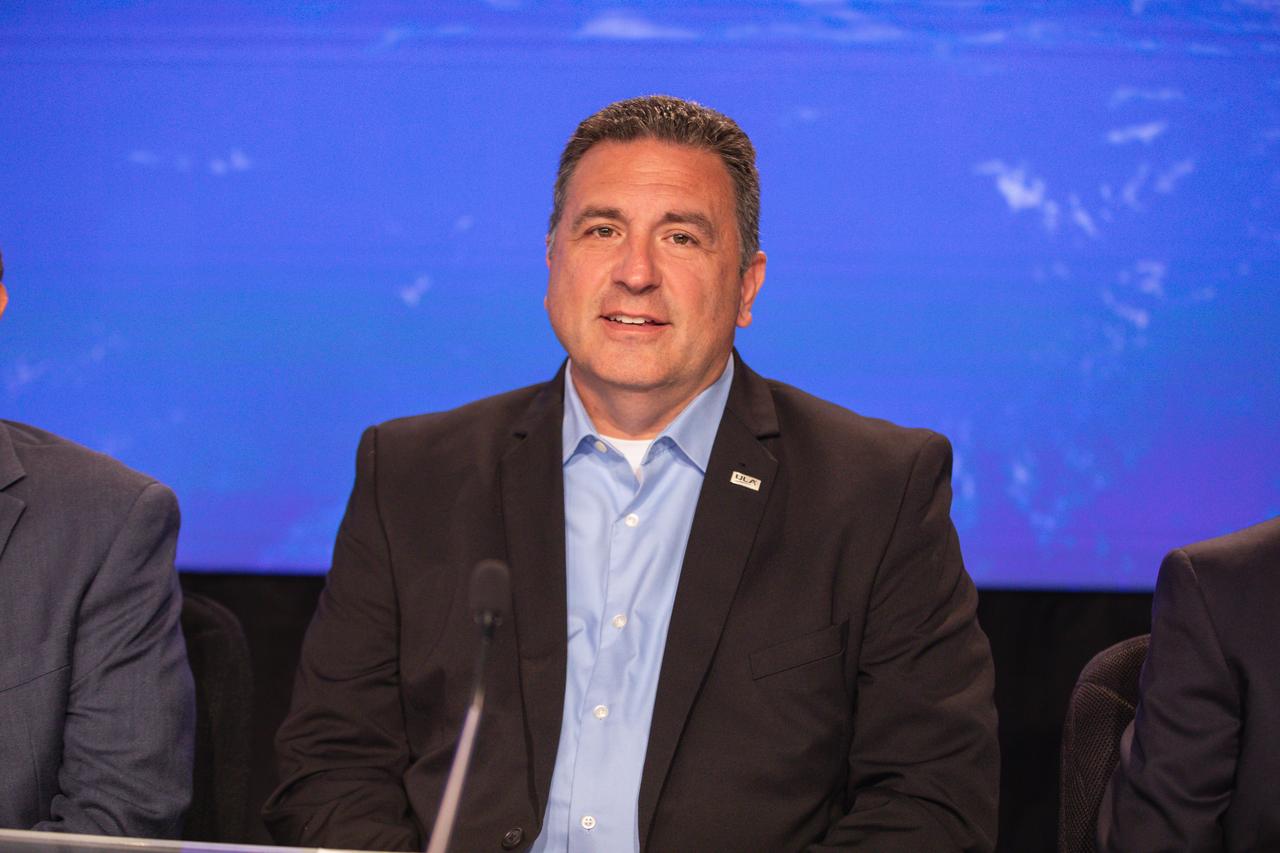
Gary Wentz, vice president, Government and Commercial Programs, United Launch Alliance, participates in a prelaunch briefing for NASA’s Boeing Crew Flight Test at the agency’s Kennedy Space Center in Florida Friday, May 31, 2024. As part of the agency’s Commercial Crew Program, NASA astronauts Butch Wilmore and Suni Williams are the first to launch aboard Boeing’s Starliner spacecraft atop a United Launch Alliance Atlas V rocket from Space Launch Complex-41 at Cape Canaveral Space Force Station in Florida. Liftoff is scheduled for 12:25 p.m. ET on Saturday, June 1.
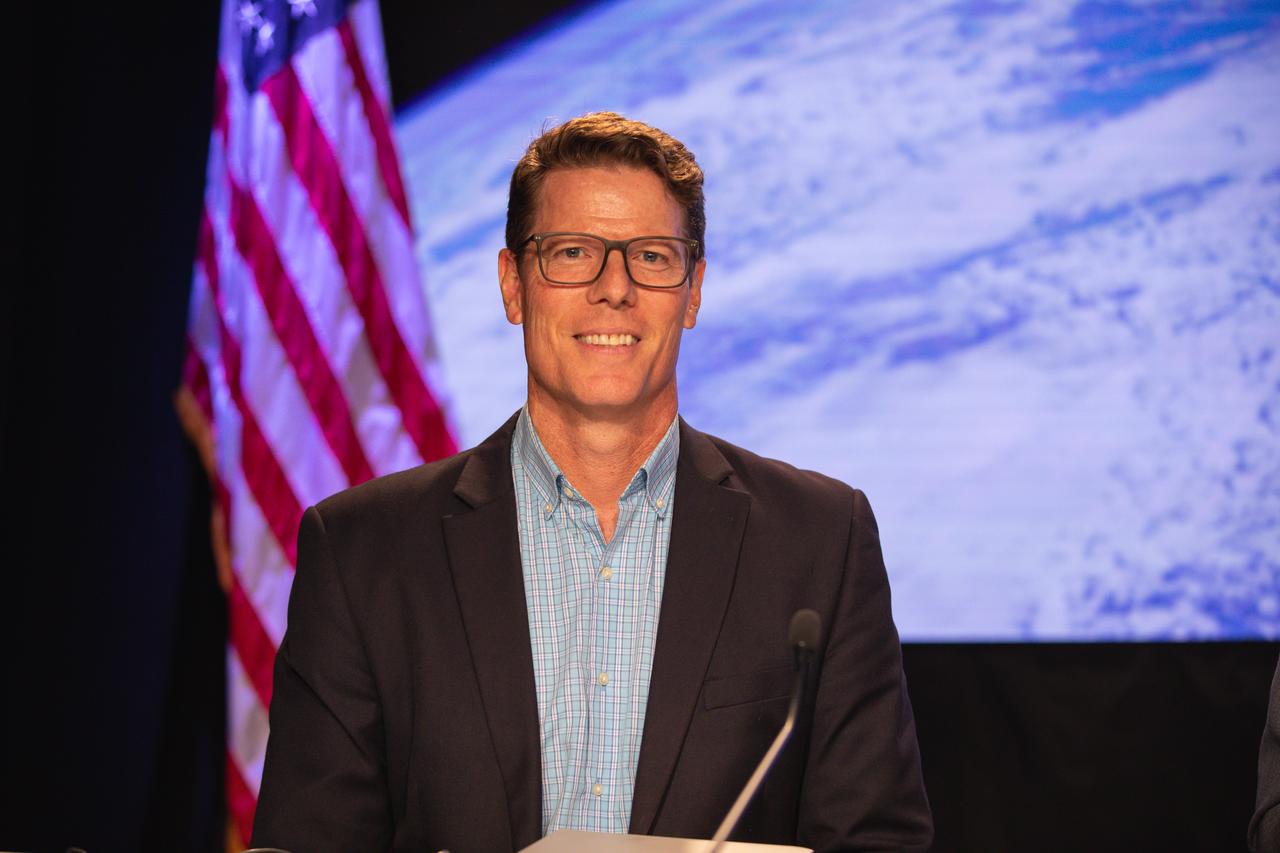
Derrol Nail, NASA Communications, participates in a prelaunch briefing for NASA’s Boeing Crew Flight Test at the agency’s Kennedy Space Center in Florida Friday, May 31, 2024. As part of the agency’s Commercial Crew Program, NASA astronauts Butch Wilmore and Suni Williams are the first to launch aboard Boeing’s Starliner spacecraft atop a United Launch Alliance Atlas V rocket from Space Launch Complex-41 at Cape Canaveral Space Force Station in Florida. Liftoff is scheduled for 12:25 p.m. ET on Saturday, June 1.
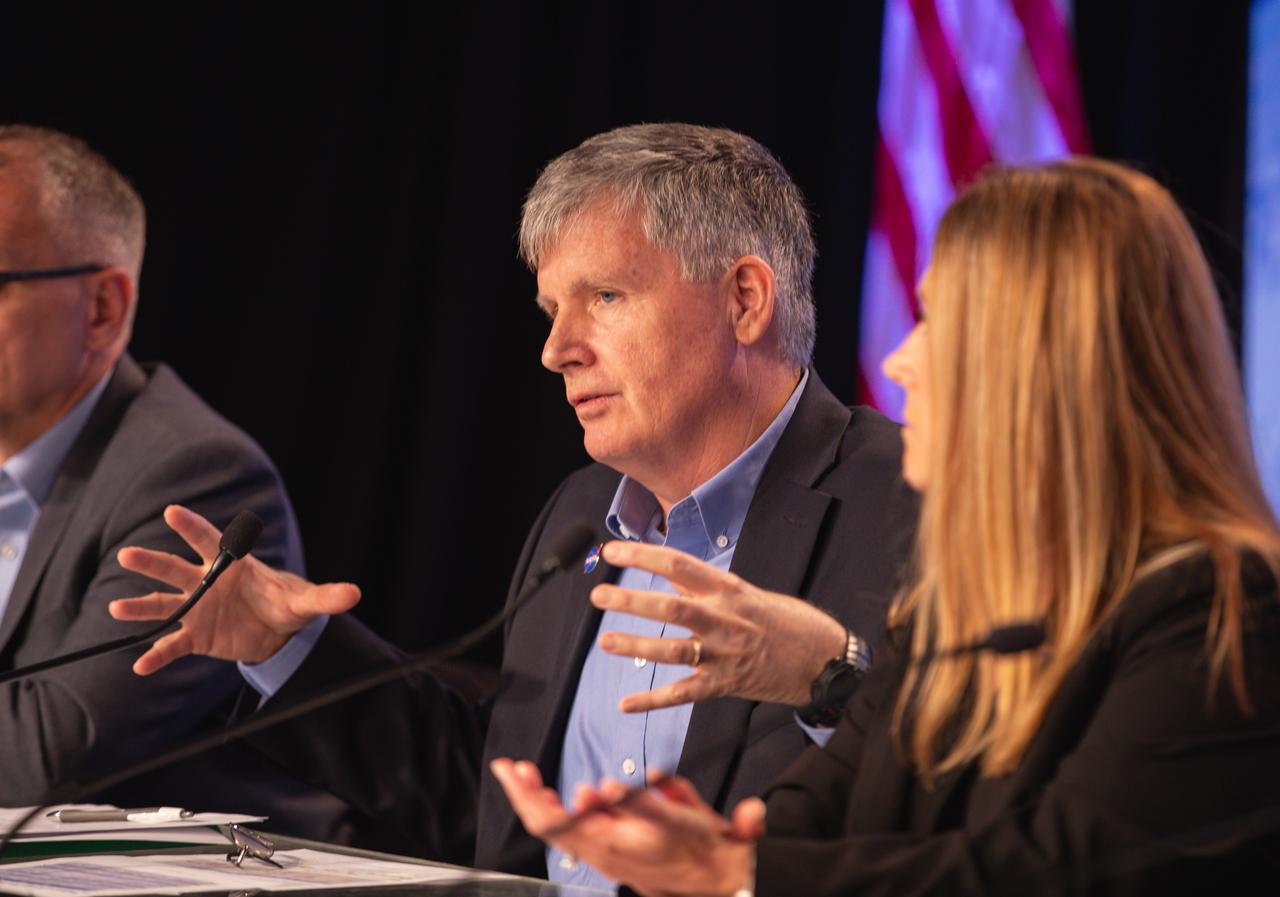
From left to right Jim Free, NASA associate administrator; Steve Stich, manager, NASA’s Commercial Crew Program; and Dana Weigel, manager, NASA’s International Space Station Program participate in a prelaunch briefing for NASA’s Boeing Crew Flight Test at the agency’s Kennedy Space Center in Florida, Friday, May 31, 2024. As part of the agency’s Commercial Crew Program, NASA astronauts Butch Wilmore and Suni Williams are the first to launch aboard Boeing’s Starliner spacecraft atop a ULA Atlas V rocket from Space Launch Complex-41 at Cape Canaveral Space Force Station in Florida. Liftoff is scheduled for 12:25 p.m. ET on Saturday, June 1.
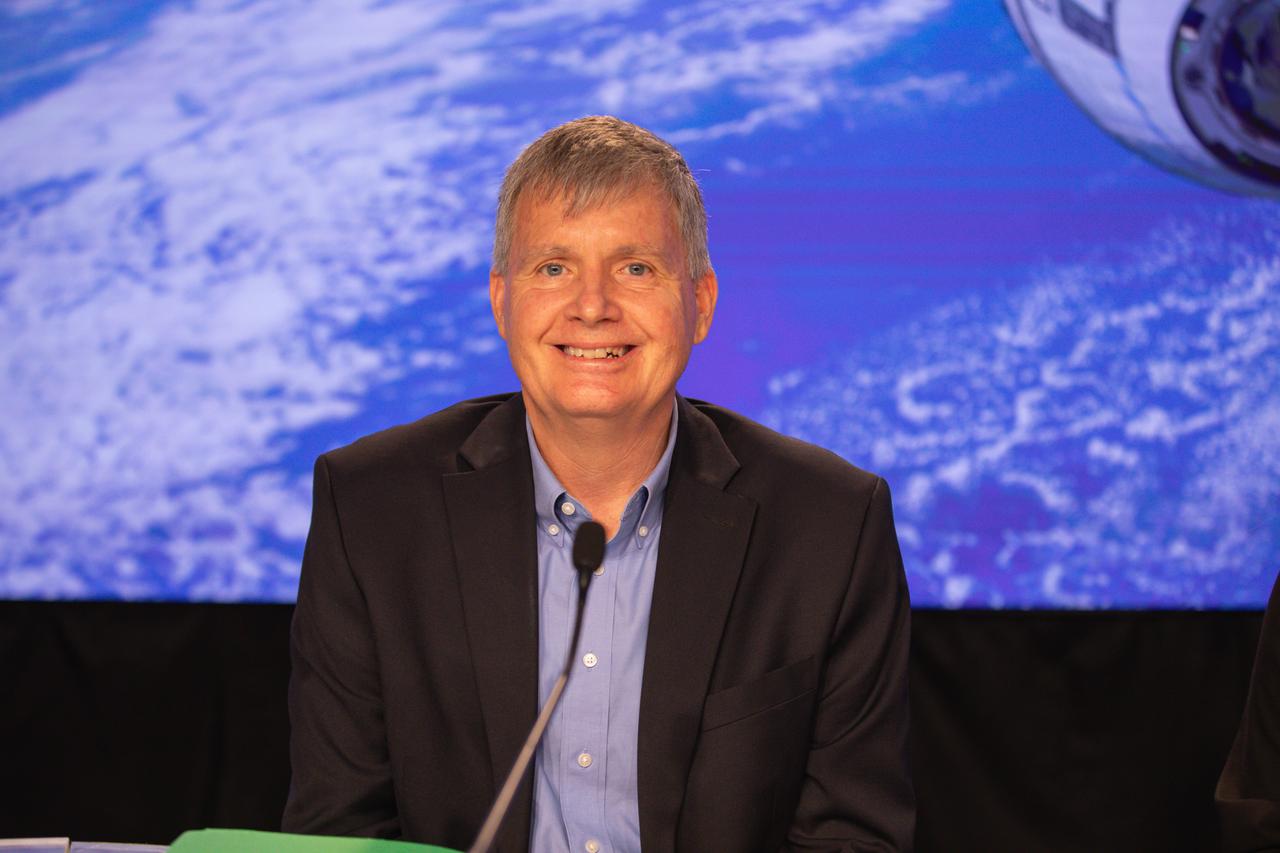
Steve Stich, manager, NASA’s Commercial Crew Program, participates in a prelaunch briefing for NASA’s Boeing Crew Flight Test at the agency’s Kennedy Space Center in Florida, Friday, May 31, 2024. As part of the agency’s Commercial Crew Program, NASA astronauts Butch Wilmore and Suni Williams are the first to launch aboard Boeing’s Starliner spacecraft atop a United Launch Alliance Atlas V rocket from Space Launch Complex-41 at Cape Canaveral Space Force Station in Florida. Liftoff is scheduled for 12:25 p.m. ET on Saturday, June 1.
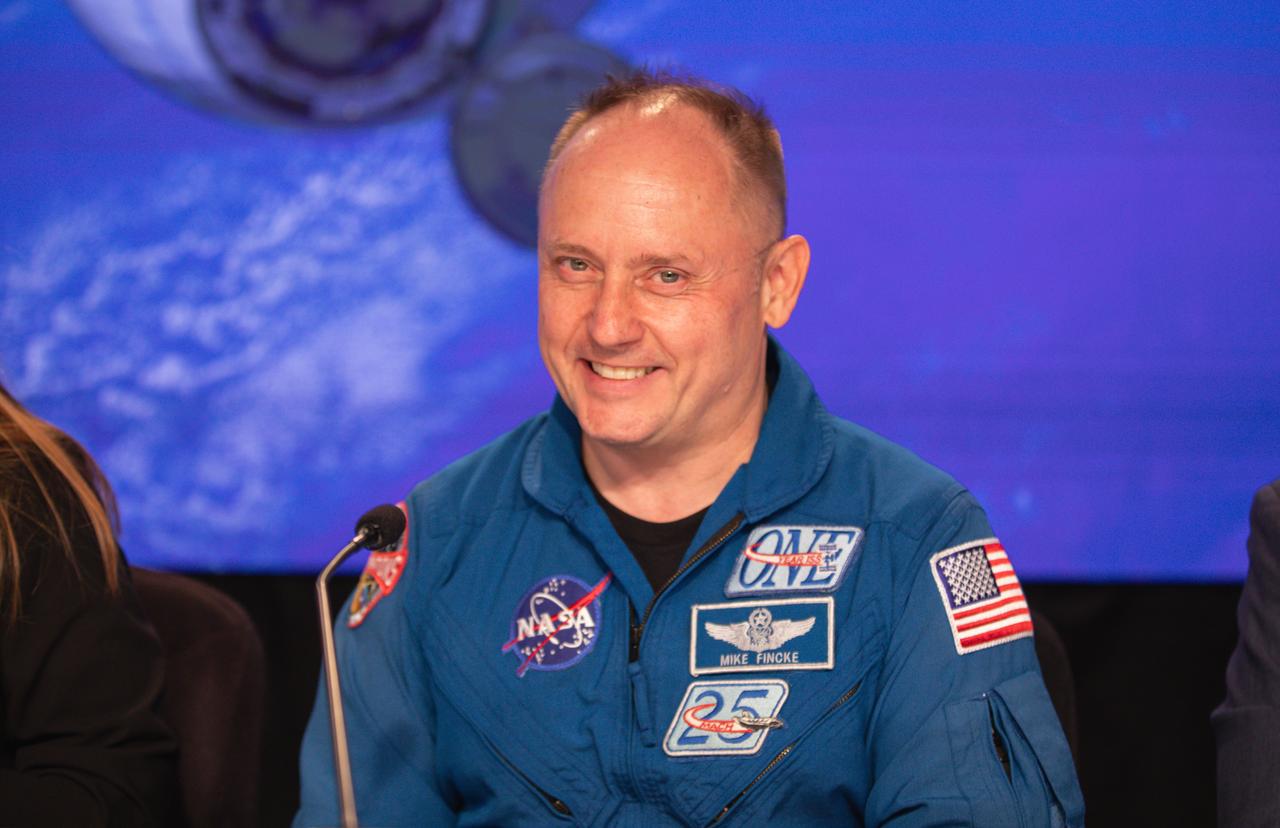
Mike Fincke, NASA astronaut, participates in a prelaunch briefing for NASA’s Boeing Crew Flight Test at the agency’s Kennedy Space Center in Florida, Friday, May 31, 2024. As part of the agency’s Commercial Crew Program, NASA astronauts Butch Wilmore and Suni Williams are the first to launch aboard Boeing’s Starliner spacecraft atop a United Launch Alliance Atlas V rocket from Space Launch Complex-41 at Cape Canaveral Space Force Station in Florida. Liftoff is scheduled for 12:25 p.m. ET on Saturday, June 1.
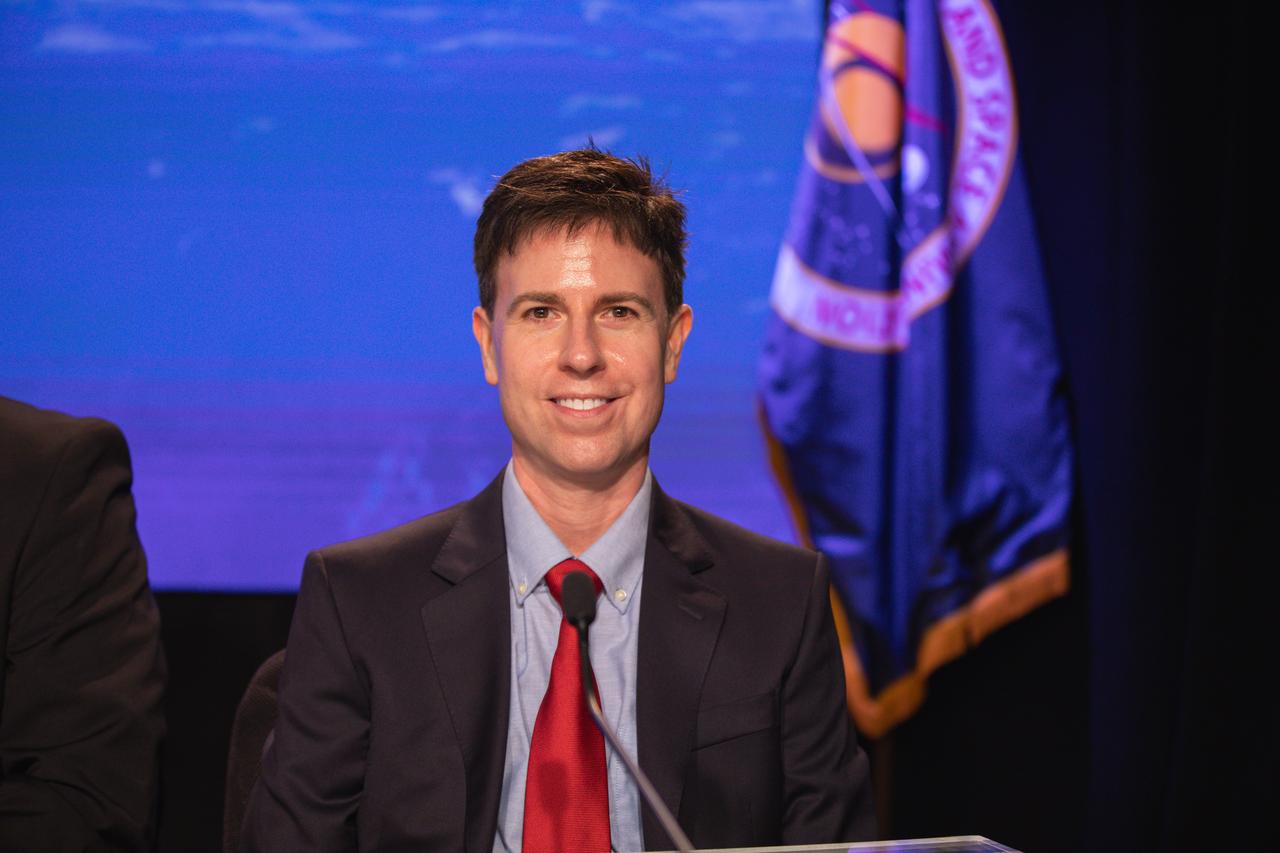
Mark Burger, launch weather officer, U.S. Space Force, 45th Weather Squadron, participates in a prelaunch briefing for NASA’s Boeing Crew Flight Test at the agency’s Kennedy Space Center in Florida, Friday, May 31, 2024. As part of the agency’s Commercial Crew Program, NASA astronauts Butch Wilmore and Suni Williams are the first to launch aboard Boeing’s Starliner spacecraft atop a United Launch Alliance Atlas V rocket from Space Launch Complex-41 at Cape Canaveral Space Force Station in Florida. Liftoff is scheduled for 12:25 p.m. ET on Saturday, June 1.
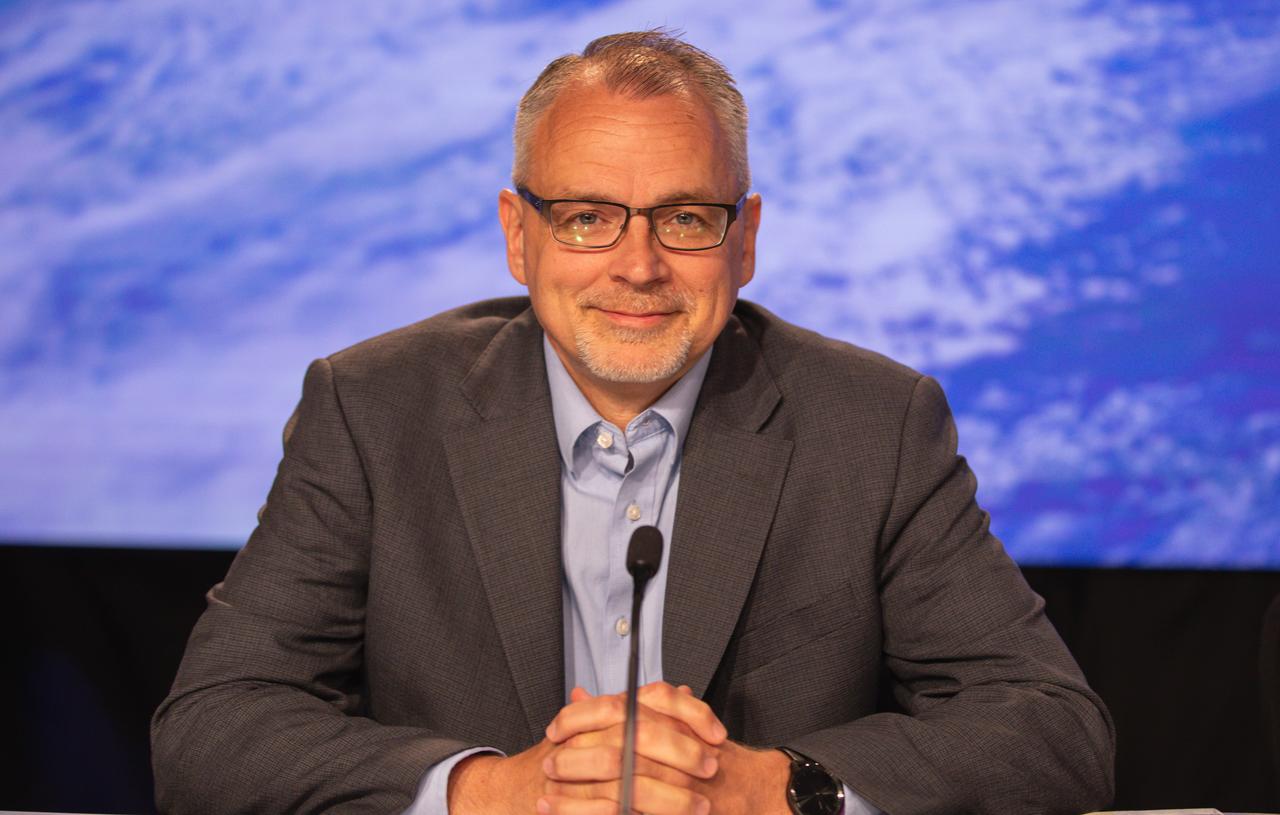
Jim Free, NASA associate administrator, participates in a prelaunch briefing for NASA’s Boeing Crew Flight Test at the agency’s Kennedy Space Center in Florida Friday, May 31, 2024. As part of the agency’s Commercial Crew Program, NASA astronauts Butch Wilmore and Suni Williams are the first to launch aboard Boeing’s Starliner spacecraft atop a United Launch Alliance Atlas V rocket from Space Launch Complex-41 at Cape Canaveral Space Force Station in Florida. Liftoff is scheduled for 12:25 p.m. ET on Saturday, June 1.

Tawnya Laughinghouse, NASA’s Technology Demonstration Missions program manager, talks about the NASA payloads hitching a ride on the Space Test Program-2 (STP-2) mission during a prelaunch technology TV broadcast at Kennedy Space Center in Florida on June 23, 2019. STP-2 is managed by the U.S. Air Force Space and Missile Systems Center.
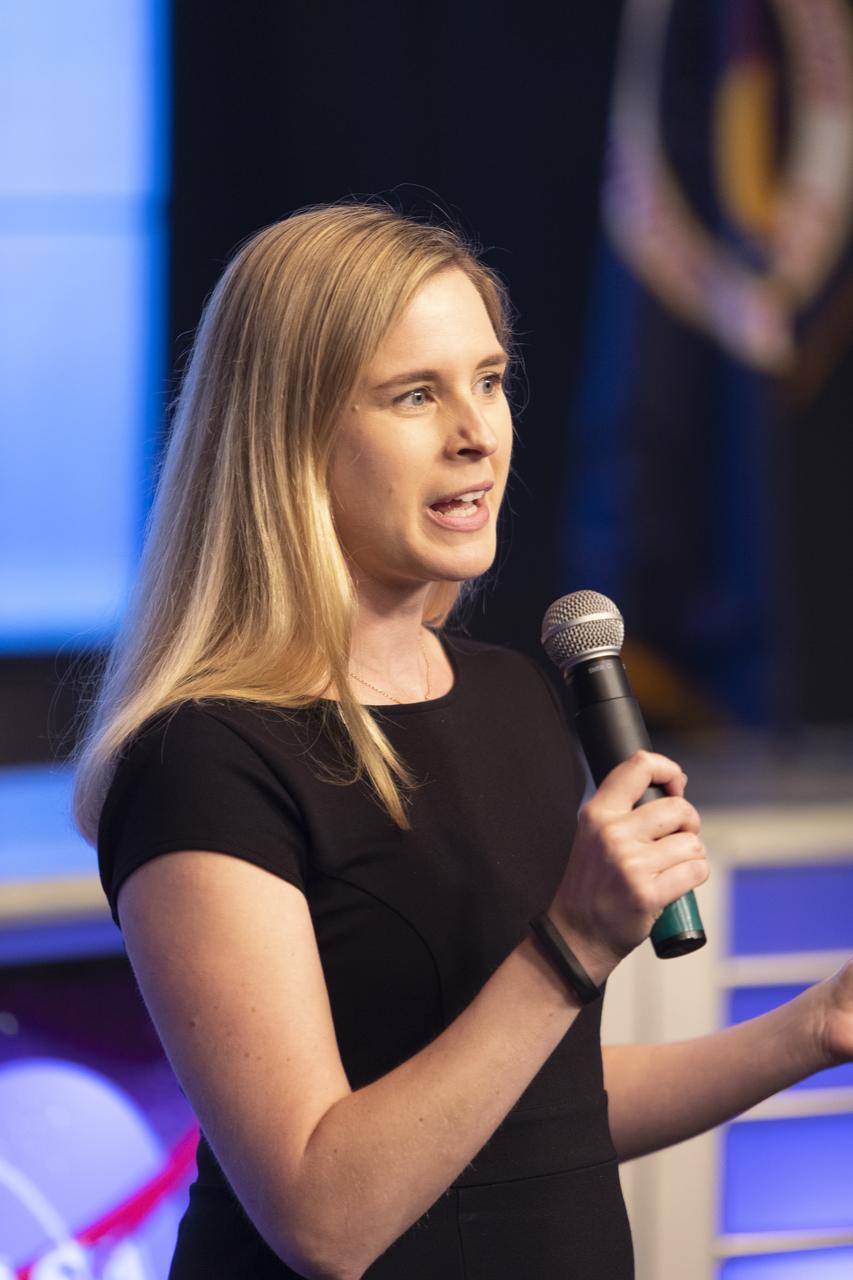
Jill Seubert, deputy principal investigator, from NASA’s Jet Propulsion Laboratory in Pasadena, California, explains the payload during a NASA prelaunch technology TV broadcast for the Space Test Program-2 (STP-2) mission at the agency’s Kennedy Space Center in Florida on June 23, 2019. The new space clock could improve how we navigate on the Moon, to Mars and beyond. The space clock is one of four NASA payloads scheduled to launch on a SpaceX Falcon Heavy rocket from Launch Complex 39A beginning at 11:30 p.m. EDT on June 24, 2019. STP-2 is managed by the U.S. Air Force Space and Missile Systems Center.
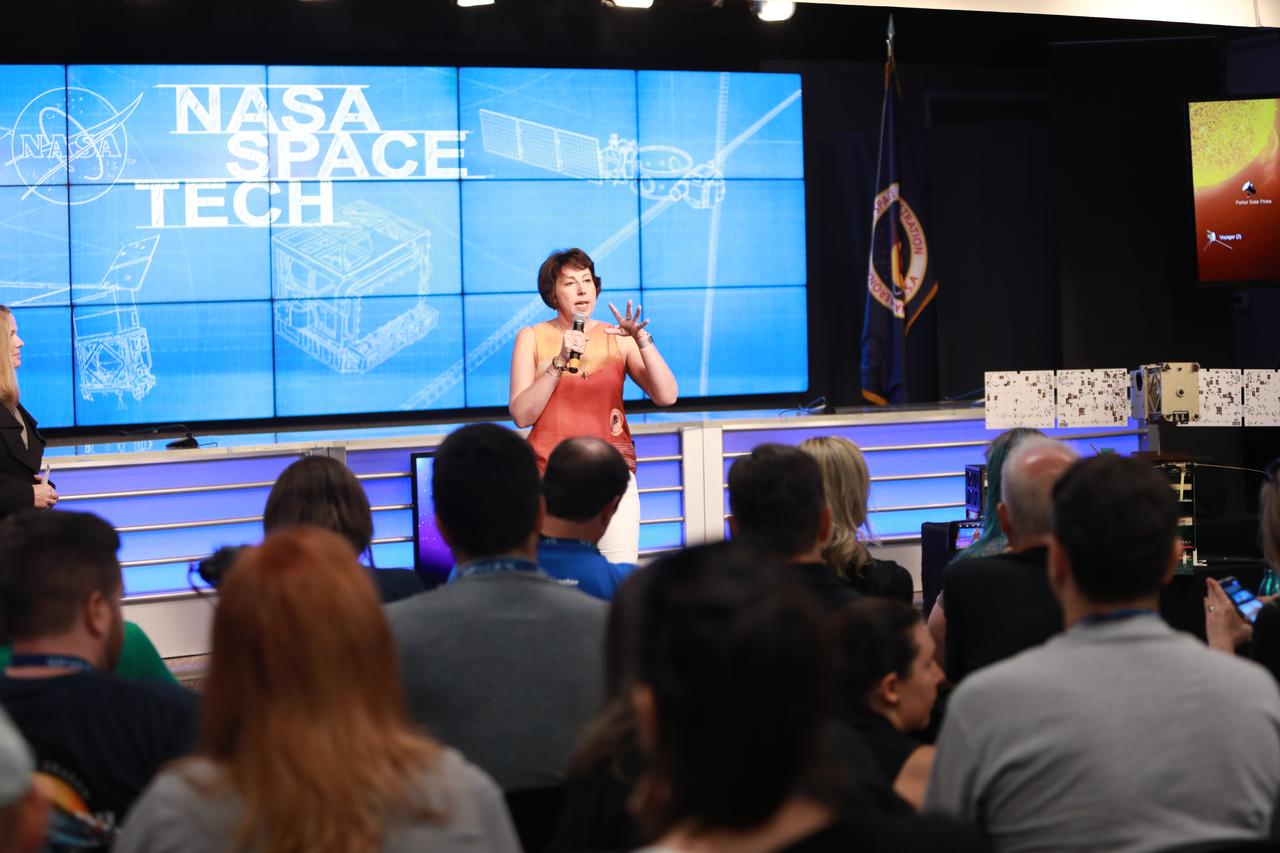
Nicky Fox, director of NASA’s Heliophysics Division, discusses the Space Environment Testbeds payload during a NASA prelaunch technology TV broadcast for the Space Test Program-2 (STP-2) at NASA’s Kennedy Space Center in Florida on June 23, 2019. The payload’s four experiments will reveal the ways local space weather affects spacecraft hardware. It is one of four NASA payloads scheduled to launch on a SpaceX Falcon Heavy rocket from Launch Complex 39A beginning at 11:30 p.m. EDT on June 24, 2019. STP-2 is managed by the U.S. Air Force Space and Missile Systems Center.
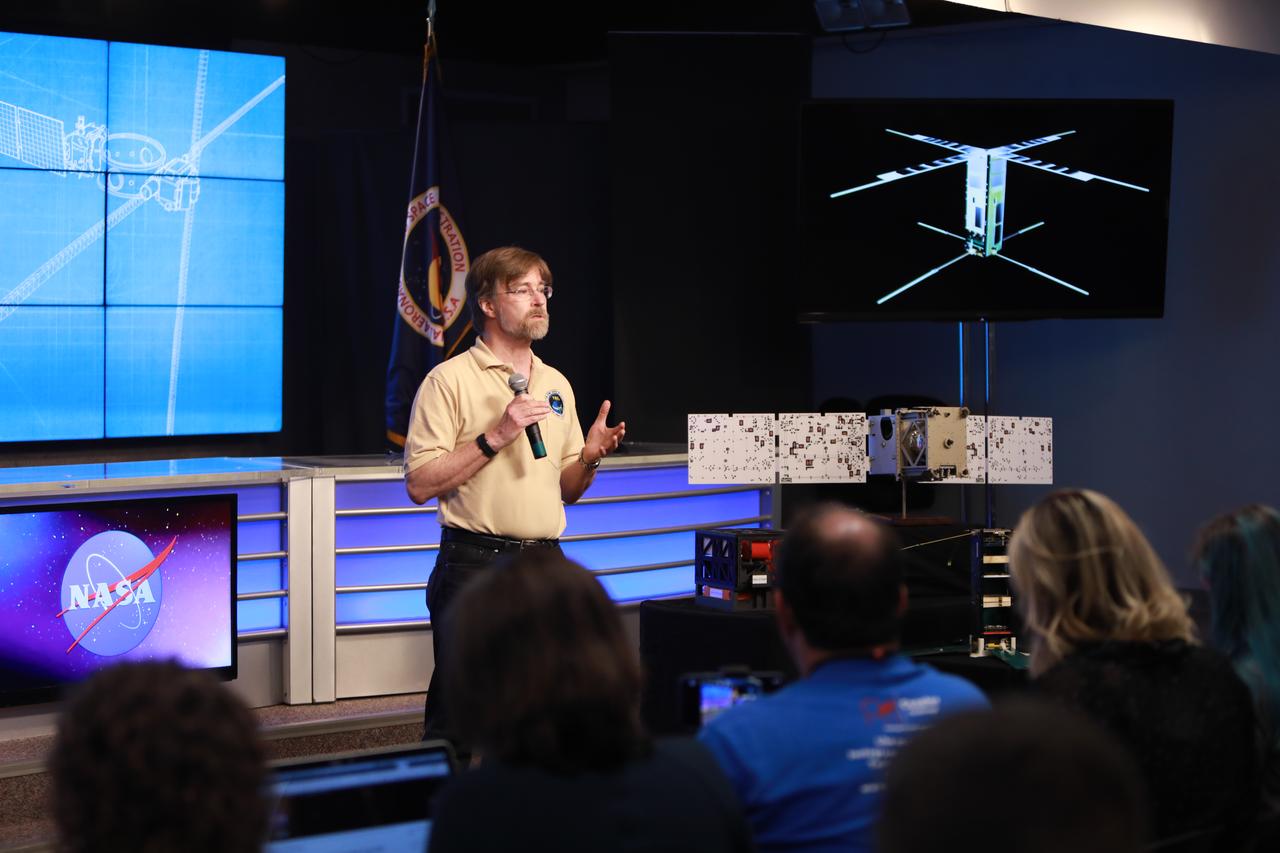
Rick Doe, payload program manager at SRI International, discusses the Enhanced Tandem Beacon Experiment during a NASA prelaunch technology TV show for the Space Test Program-2 (STP-2) mission at NASA’s Kennedy Space Center in Florida on June 23, 2019. The experiment’s two CubeSats will work with six other satellites to study irregularities in Earth’s upper atmosphere that interfere with GPS and communications signals. It is one of NASA payloads scheduled to launch on a SpaceX Falcon Heavy rocket from Launch Complex 39A beginning at 11:30 p.m. EDT on June 24, 2019. STP-2 is managed by the U.S. Air Force Space and Missile Systems Center.

Jill Seubert, deputy principal investigator, from NASA’s Jet Propulsion Laboratory in Pasadena, California, explains the payload during a NASA prelaunch technology TV broadcast for the Space Test Program-2 (STP-2) mission at the agency’s Kennedy Space Center in Florida on June 23, 2019. The new space clock could improve how we navigate on the Moon, to Mars and beyond. The space clock is one of four NASA payloads scheduled to launch on a SpaceX Falcon Heavy rocket from Launch Complex 39A beginning at 11:30 p.m. EDT on June 24, 2019. STP-2 is managed by the U.S. Air Force Space and Missile Systems Center.
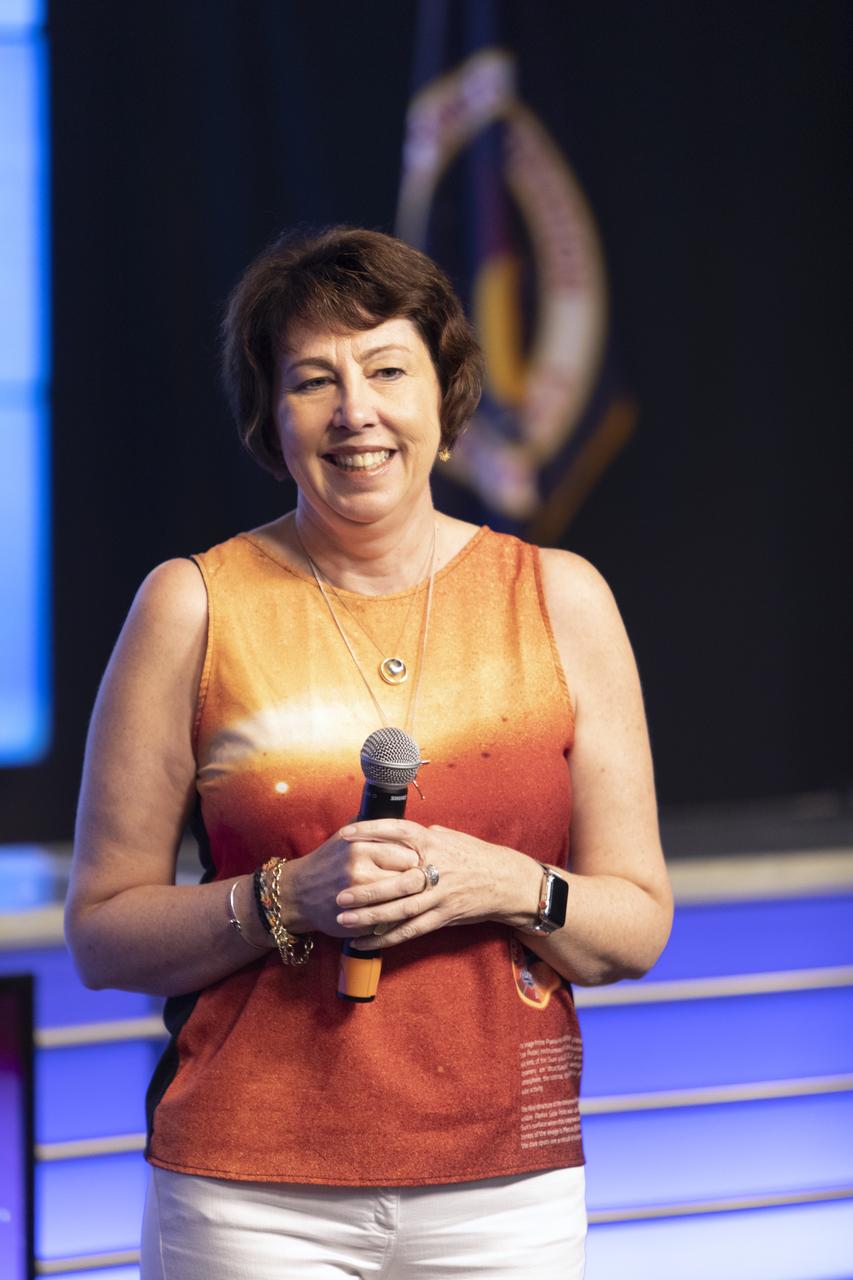
Nicky Fox, director of NASA’s Heliophysics Division, discusses the Space Environment Testbeds payload during a NASA prelaunch technology TV broadcast for the Space Test Program-2 (STP-2) at NASA’s Kennedy Space Center in Florida on June 23, 2019. The payload’s four experiments will reveal the ways local space weather affects spacecraft hardware. It is one of four NASA payloads scheduled to launch on a SpaceX Falcon Heavy rocket from Launch Complex 39A beginning at 11:30 p.m. EDT on June 24, 2019. STP-2 is managed by the U.S. Air Force Space and Missile Systems Center.
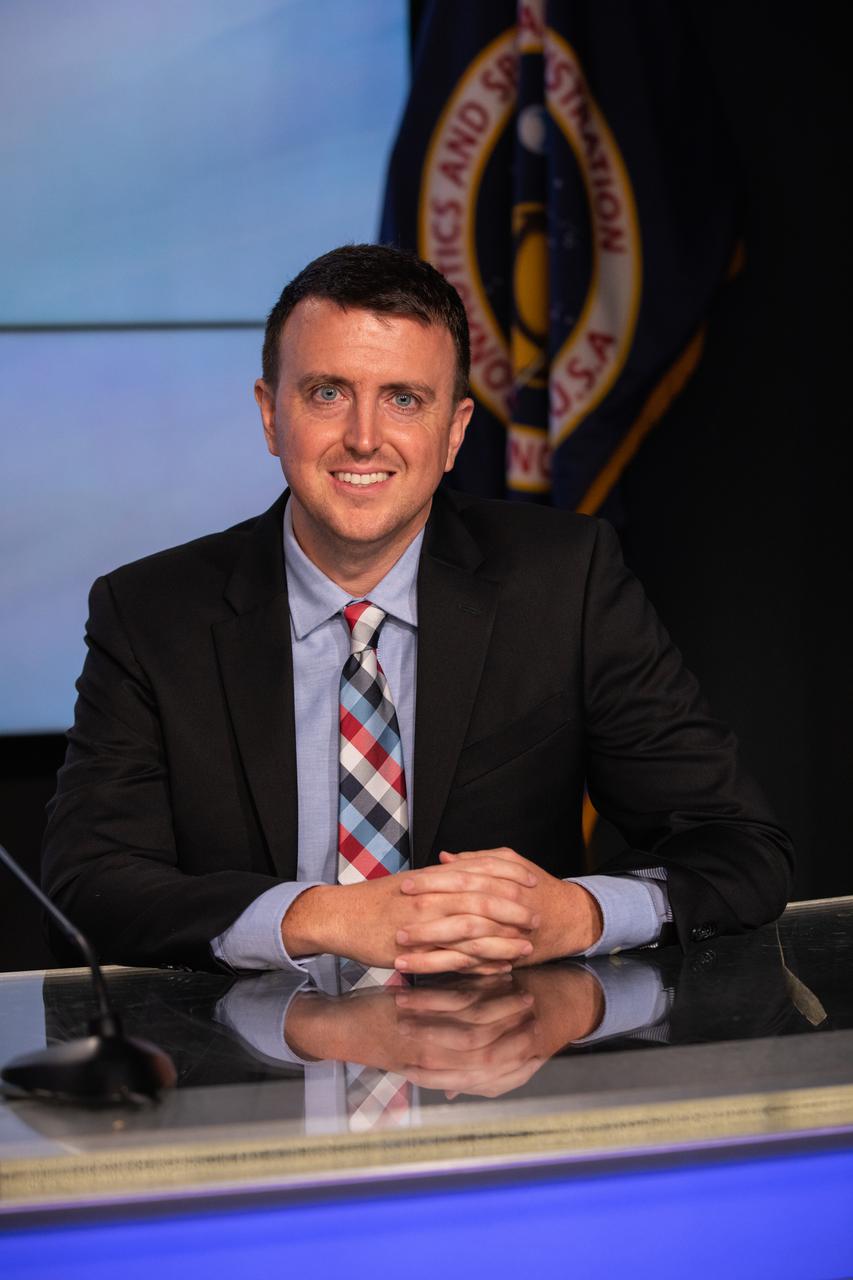
Will Ulrich, launch weather officer, U.S. Space Force, 45th Weather Squadron, participates in a prelaunch briefing for Boeing’s Orbital Flight Test-2 (OFT-2) at the agency’s Kennedy Space Center in Florida, July 27, 2021. Boeing’s CST-100 Starliner spacecraft will launch atop a United Launch Alliance Atlas V rocket from Space Launch Complex-41 at Cape Canaveral Space Force Station. The uncrewed OFT-2 will be the Starliner’s second flight NASA’s Commercial Crew Program.
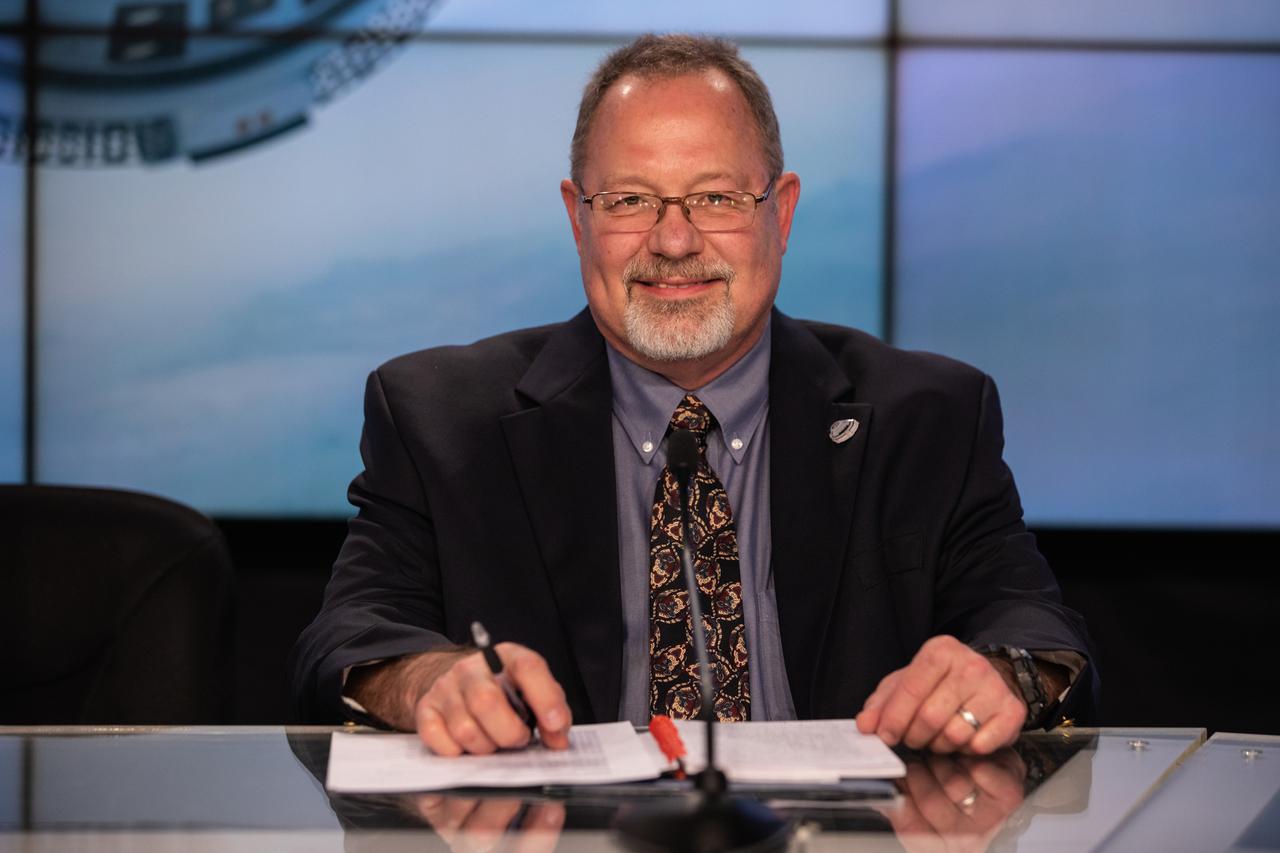
John Vollmer, vice president and program manager, Boeing Commercial Crew Program, participates in a prelaunch briefing for Boeing’s Orbital Flight Test-2 (OFT-2) at the agency’s Kennedy Space Center in Florida, July 27, 2021. Boeing’s CST-100 Starliner spacecraft will launch atop a United Launch Alliance Atlas V rocket from Space Launch Complex-41 at Cape Canaveral Space Force Station. The uncrewed OFT-2 will be the Starliner’s second flight for NASA’s Commercial Crew Program.
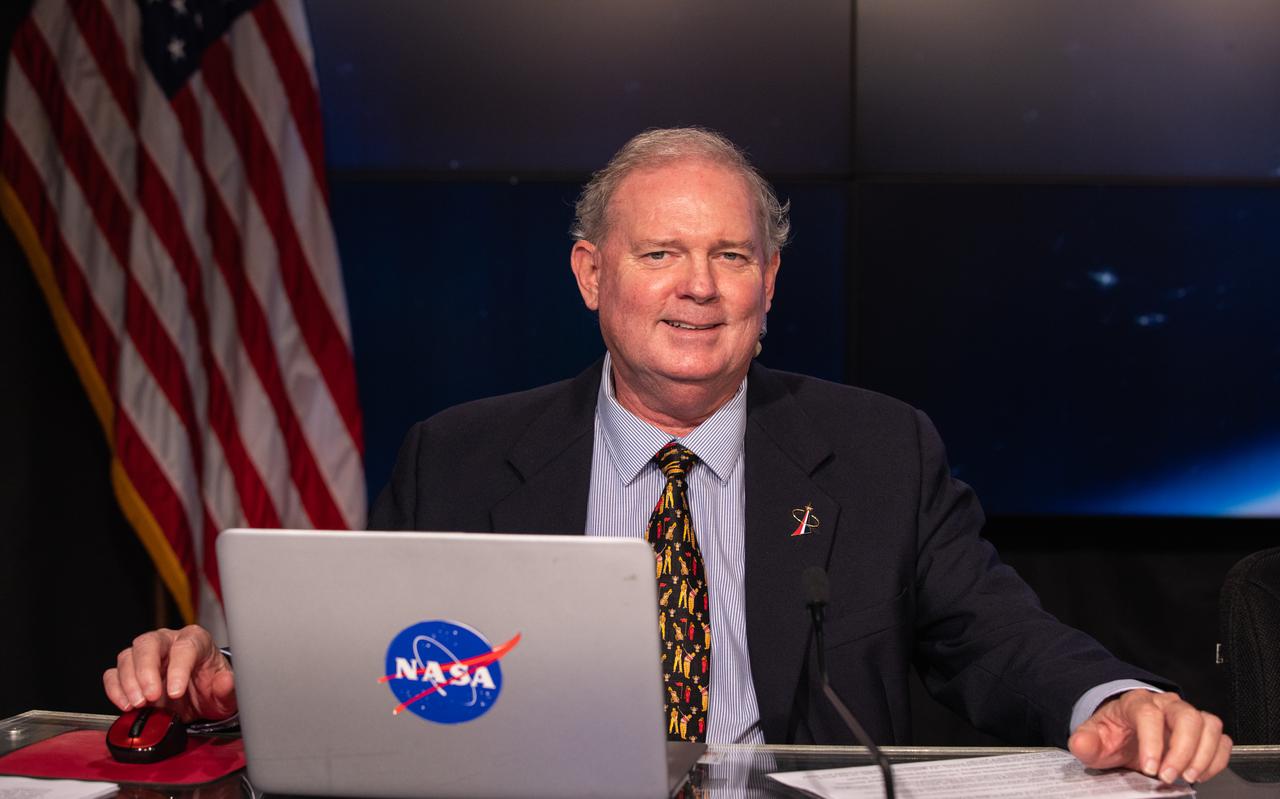
Kyle Herring, NASA Communications, participates in a prelaunch briefing for Boeing’s Orbital Flight Test-2 (OFT-2) at the agency’s Kennedy Space Center in Florida, July 27, 2021. Boeing’s CST-100 Starliner spacecraft will launch atop a United Launch Alliance Atlas V rocket from Space Launch Complex-41 at Cape Canaveral Space Force Station. The uncrewed OFT-2 will be the Starliner’s second flight NASA’s Commercial Crew Program.
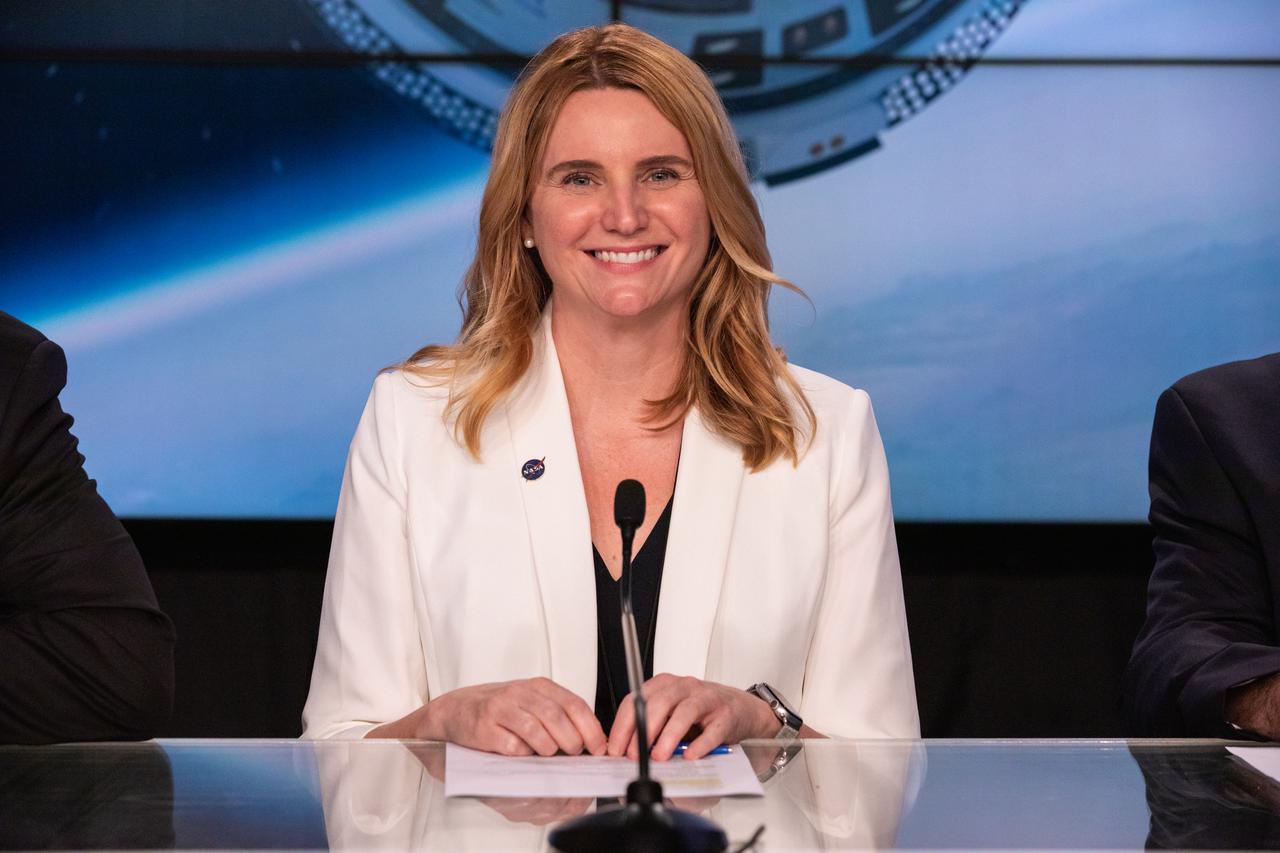
Jennifer Buchli, deputy chief scientist, NASA’s International Space Station Program, participates in a prelaunch briefing for Boeing’s Orbital Flight Test-2 (OFT-2) at the agency’s Kennedy Space Center in Florida, July 27, 2021. Boeing’s CST-100 Starliner spacecraft will launch atop a United Launch Alliance Atlas V rocket from Space Launch Complex-41 at Cape Canaveral Space Force Station. The uncrewed OFT-2 will be the Starliner’s second flight for NASA’s Commercial Crew Program.
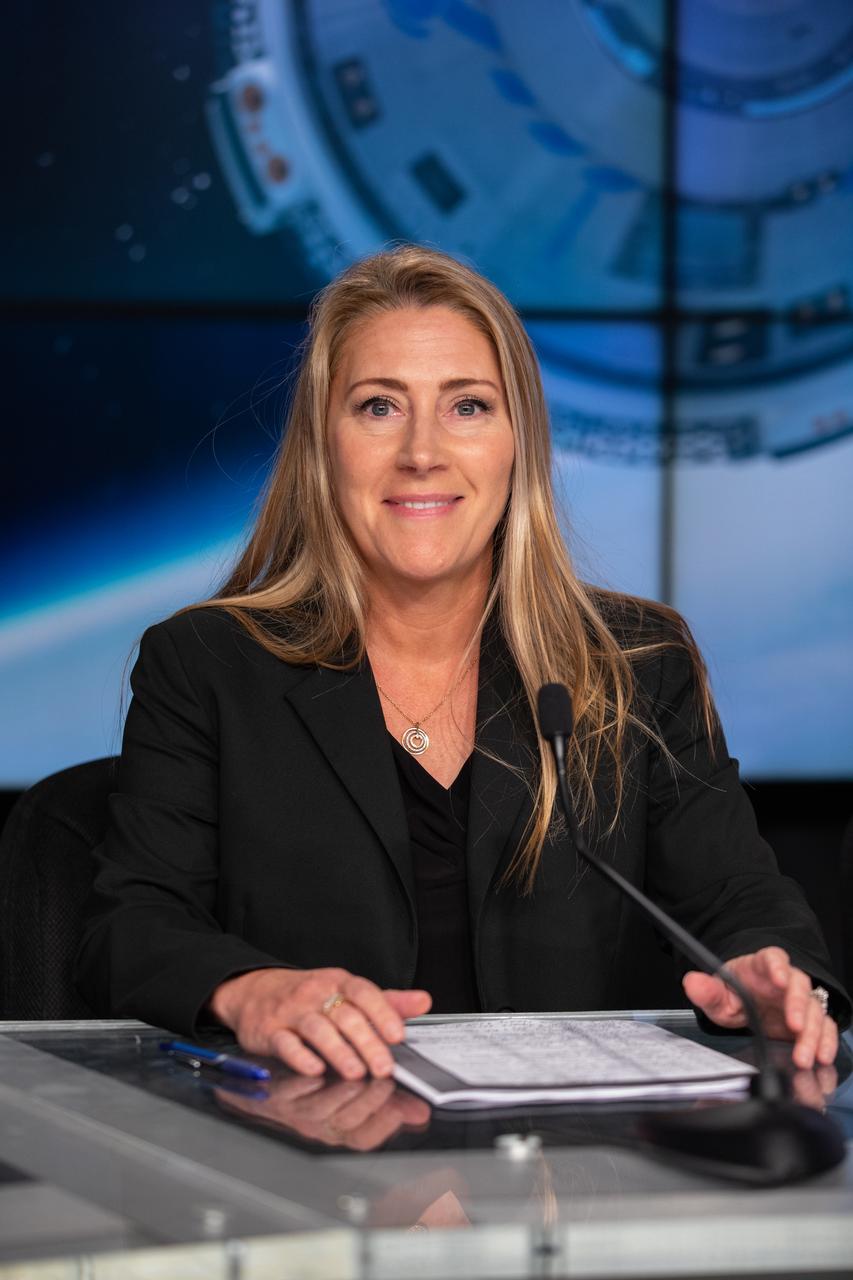
Dana Weigel, deputy manager, International Space Station Program, participates in a prelaunch briefing for NASA’s uncrewed Boeing Orbital Flight Test (OFT-2) at the agency’s Kennedy Space Center in Florida, May 17, 2022. Boeing’s CST-100 Starliner is targeted to launch at 6:54 p.m. EDT on Thursday, May 19, on a United Launch Alliance Atlas V rocket from Space Launch Complex-41 at Cape Canaveral Space Force Station in Florida to rendezvous and dock with the International Space Station.
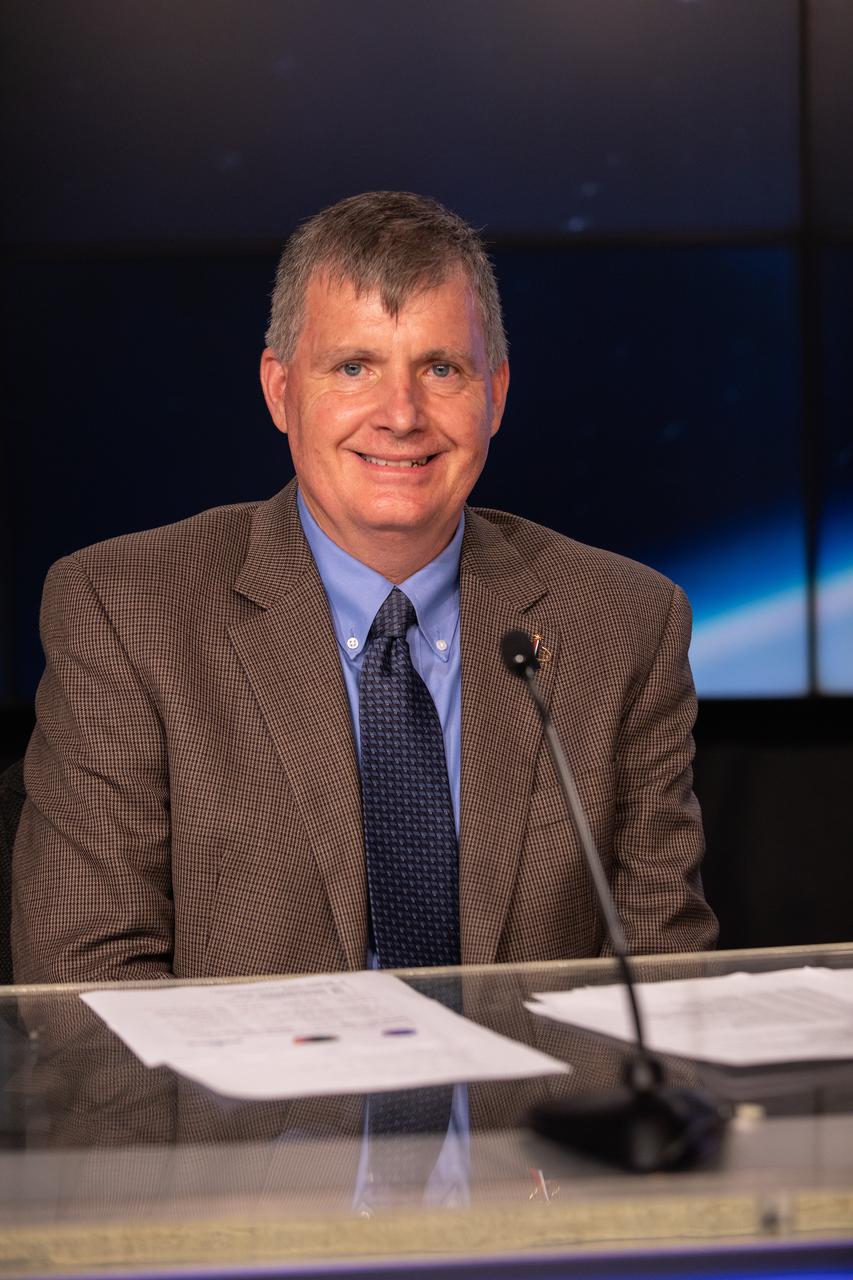
Steve Stich, manager, NASA’s Commercial Crew Program, participates in a prelaunch briefing for Boeing’s Orbital Flight Test-2 (OFT-2) at the agency’s Kennedy Space Center in Florida, July 27, 2021. Boeing’s CST-100 Starliner spacecraft will launch atop a United Launch Alliance Atlas V rocket from Space Launch Complex-41 at Cape Canaveral Space Force Station. The uncrewed OFT-2 will be the Starliner’s second flight for NASA’s Commercial Crew Program.
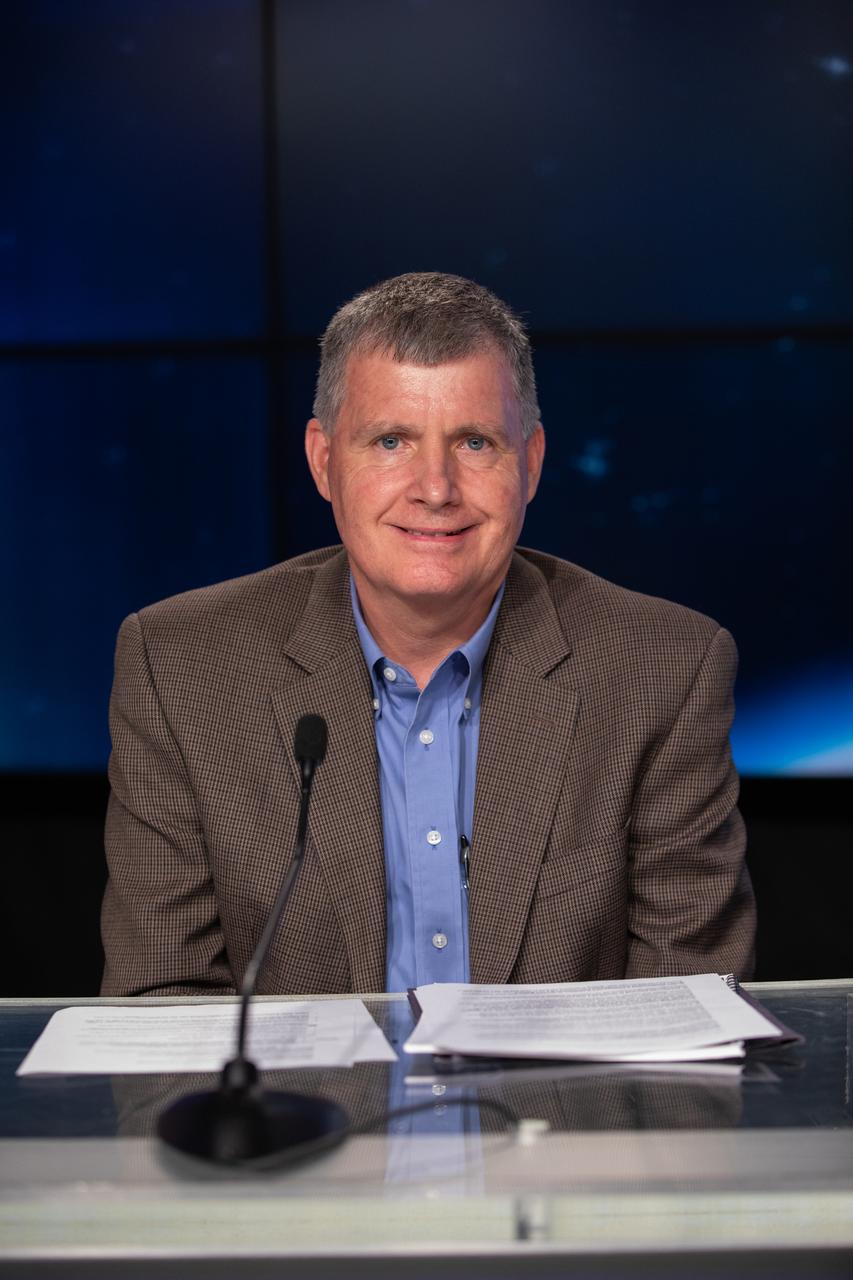
Steve Stich, manager, NASA’s Commercial Crew Program, participates in a prelaunch briefing for NASA’s uncrewed Boeing Orbital Flight Test (OFT-2) at the agency’s Kennedy Space Center in Florida, May 17, 2022. Boeing’s CST-100 Starliner is targeted to launch at 6:54 p.m. EDT on Thursday, May 19, on a United Launch Alliance Atlas V rocket from Space Launch Complex-41 at Cape Canaveral Space Force Station in Florida to rendezvous and dock with the International Space Station.
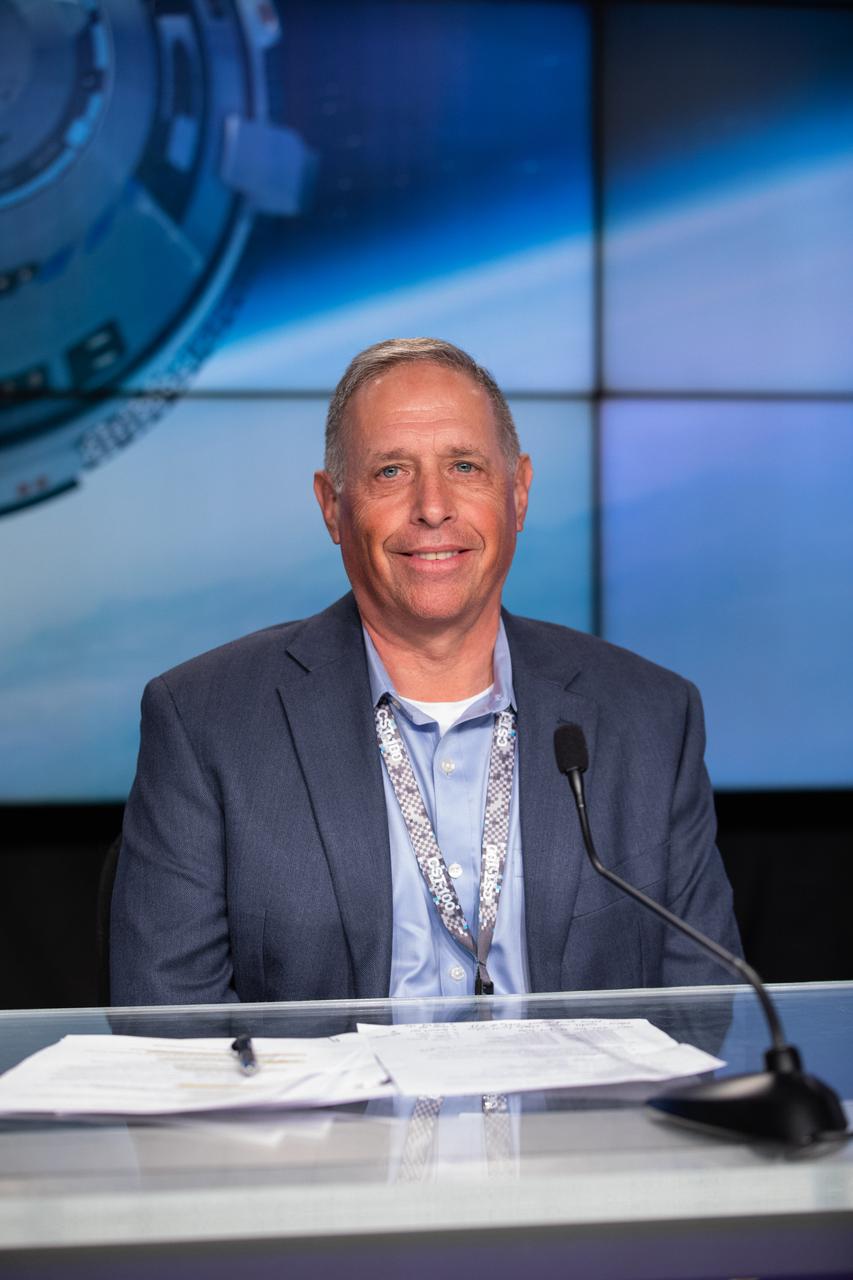
Mark Nappi, vice president and program manager, Boeing Commercial Crew Program, participates in a prelaunch briefing for NASA’s uncrewed Boeing Orbital Flight Test (OFT-2) at the agency’s Kennedy Space Center in Florida, May 17, 2022. Boeing’s CST-100 Starliner is targeted to launch at 6:54 p.m. EDT on Thursday, May 19, on a United Launch Alliance Atlas V rocket from Space Launch Complex-41 at Cape Canaveral Space Force Station in Florida to rendezvous and dock with the International Space Station.
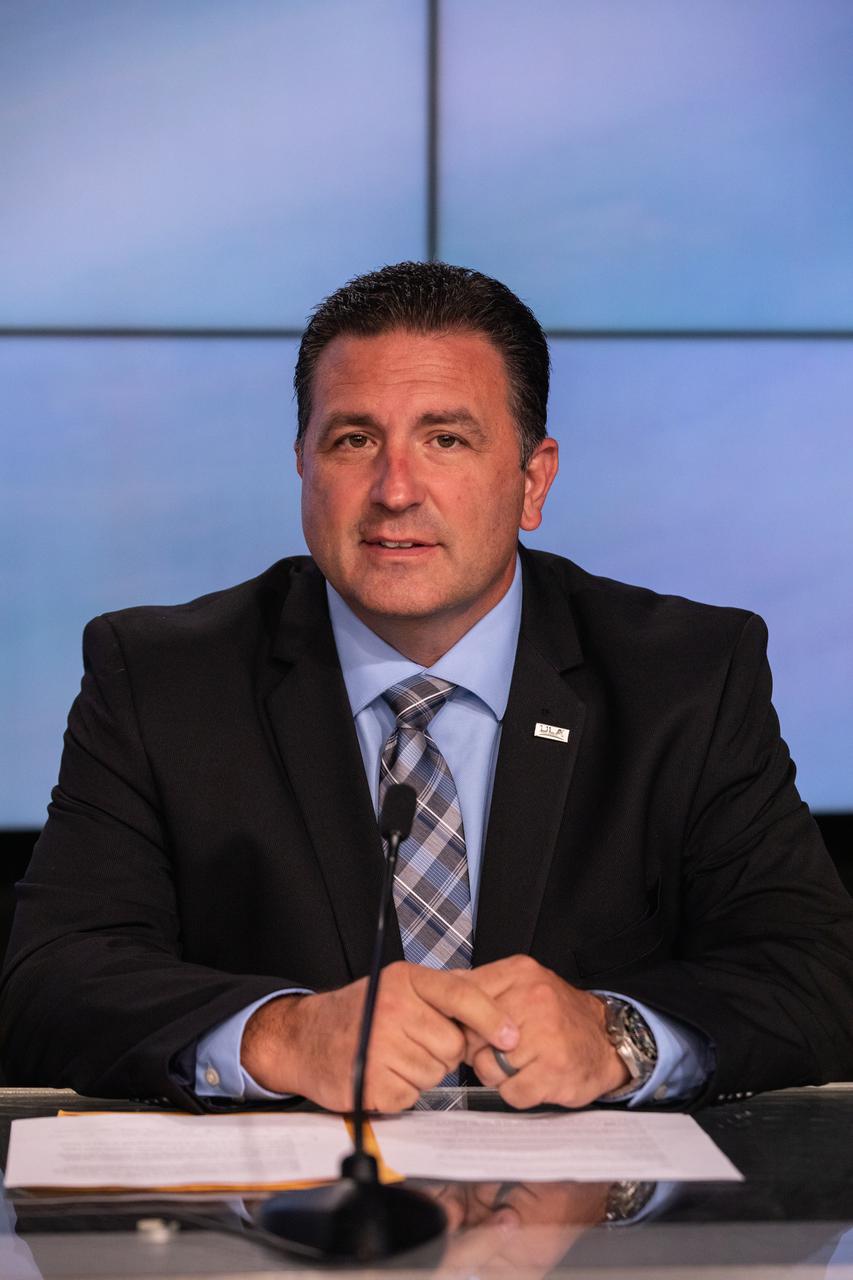
Gary Wentz, vice president, Government and Commercial Programs, United Launch Alliance (ULA), participates in a prelaunch briefing for Boeing’s Orbital Flight Test-2 (OFT-2) at the agency’s Kennedy Space Center in Florida, July 27, 2021. Boeing’s CST-100 Starliner spacecraft will launch atop a ULA Atlas V rocket from Space Launch Complex-41 at Cape Canaveral Space Force Station on a mission to dock with the space station. The uncrewed OFT-2 will be the Starliner’s second flight for NASA’s Commercial Crew Program.
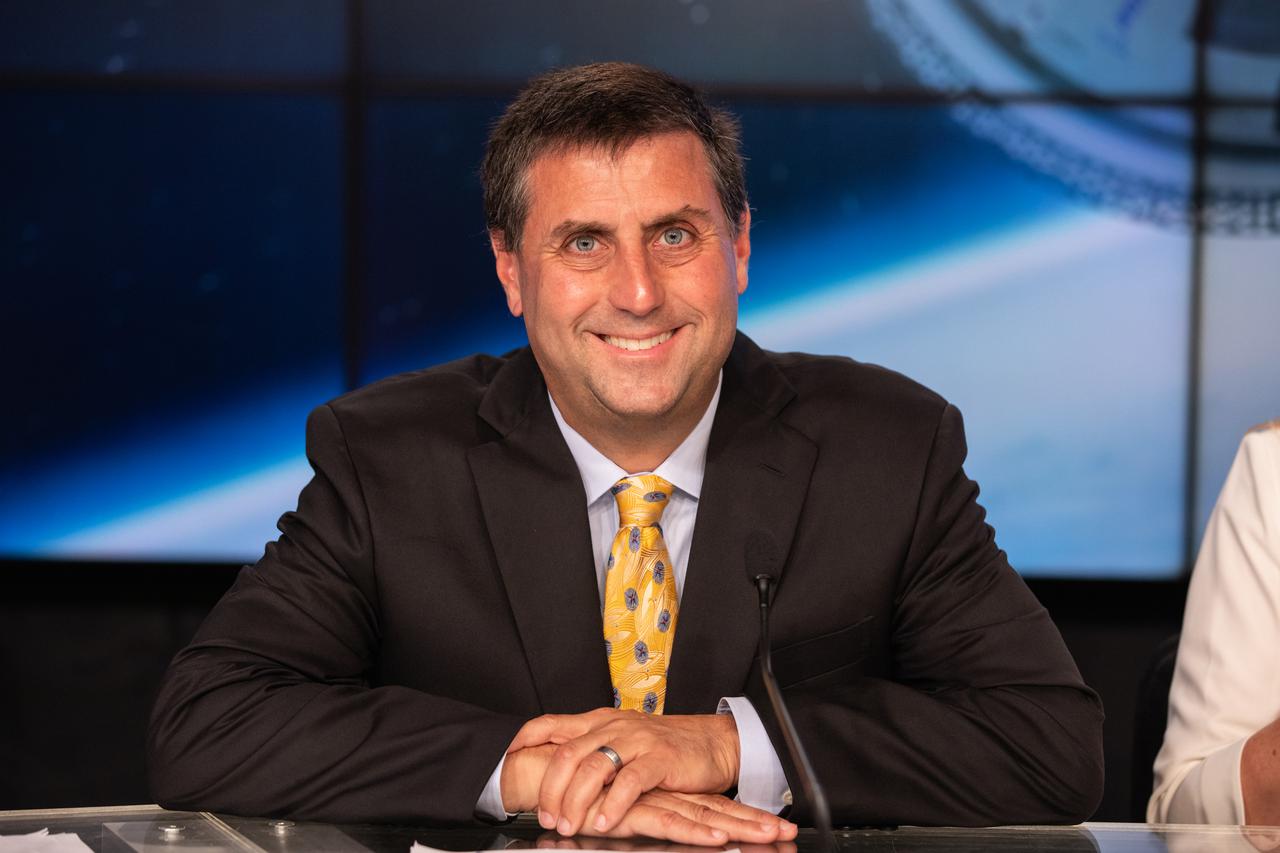
Joel Montalbano, manager, NASA’s International Space Station Program, participates in a prelaunch briefing for Boeing’s Orbital Flight Test-2 (OFT-2) at the agency’s Kennedy Space Center in Florida, July 27, 2021. Boeing’s CST-100 Starliner spacecraft will launch atop a United Launch Alliance Atlas V rocket from Space Launch Complex-41 at Cape Canaveral Space Force Station. The uncrewed OFT-2 will be the Starliner’s second flight for NASA’s Commercial Crew Program.

Megan Cruz, NASA Communications, participates in a prelaunch briefing for NASA’s uncrewed Boeing Orbital Flight Test (OFT-2) at the agency’s Kennedy Space Center in Florida, May 17, 2022. Boeing’s CST-100 Starliner is targeted to launch at 6:54 p.m. EDT on Thursday, May 19, on a United Launch Alliance Atlas V rocket from Space Launch Complex-41 at Cape Canaveral Space Force Station in Florida to rendezvous and dock with the International Space Station.
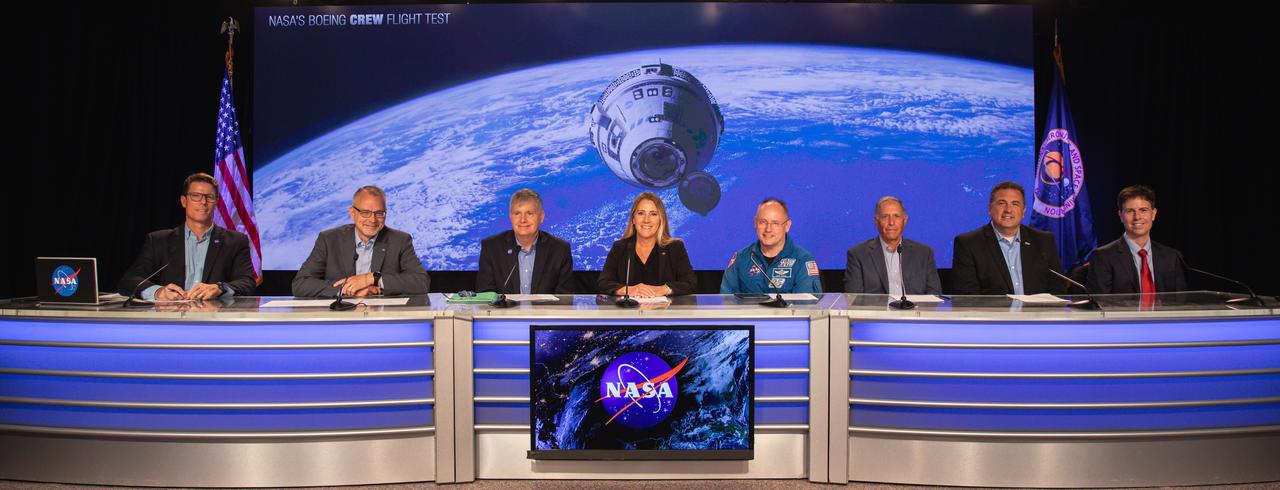
Officials from NASA, Boeing, ULA (United Launch Alliance), and the U.S. Space Force 45th Weather Squadron participate in a prelaunch briefing for NASA’s Boeing Crew Flight Test at the agency’s Kennedy Space Center in Florida, Friday, May 31, 2024. From left to right at the dais are Derrol Nail, NASA Communications; Jim Free, NASA associate administrator; Steve Stich, manager, NASA’s Commercial Crew Program; Dana Weigel, manager, NASA’s International Space Station Program; Mike Fincke, NASA astronaut; Mark Nappi, vice president and program manager, Boeing Commercial Crew Program; Gary Wentz, vice president, Government and Commercial Programs, ULA; Mark Burger, launch weather officer, U.S. Space Force, 45th Weather Squadron. As part of the agency’s Commercial Crew Program, NASA astronauts Butch Wilmore and Suni Williams are the first to launch aboard Boeing’s Starliner spacecraft atop a ULA Atlas V rocket from Space Launch Complex-41 at Cape Canaveral Space Force Station in Florida. Liftoff is scheduled for 12:25 p.m. ET on Saturday, June 1.
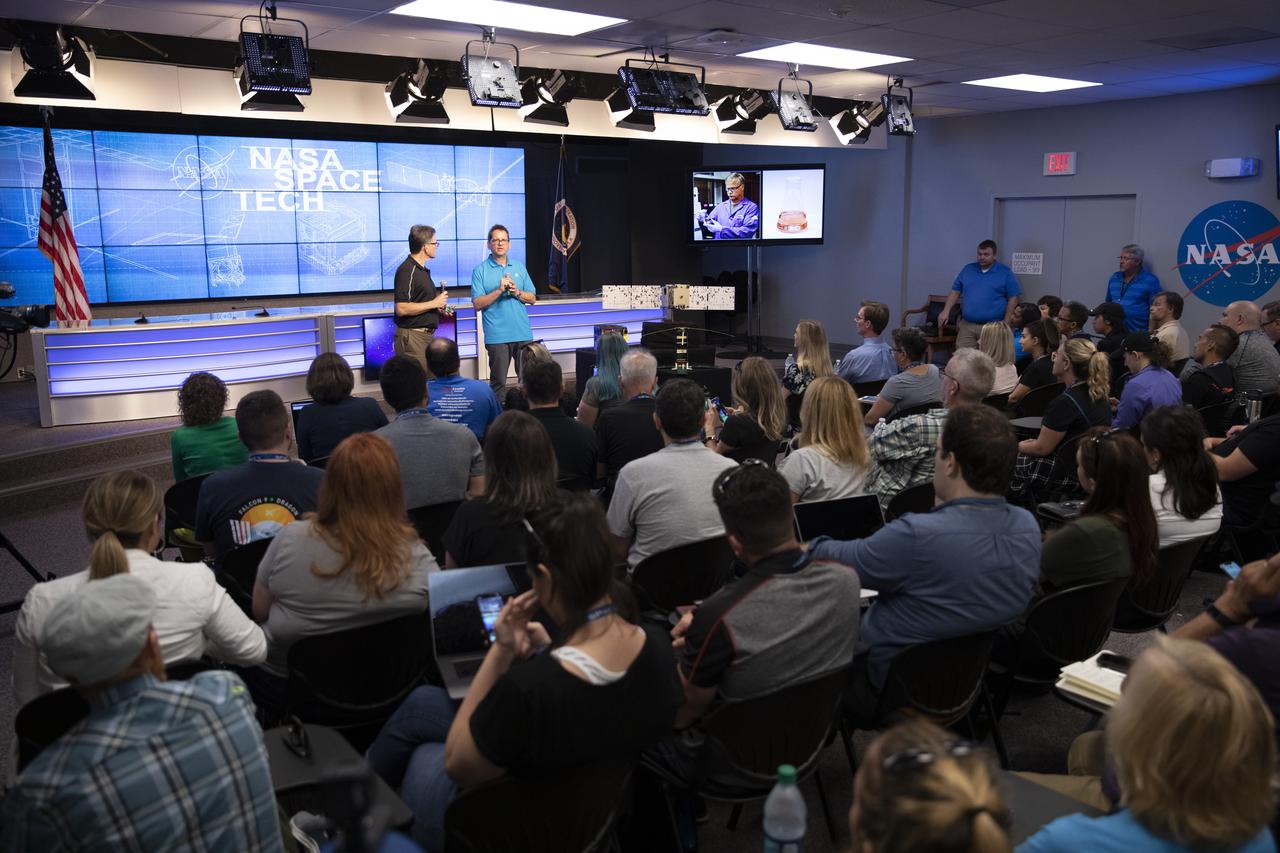
Chris McLean, (right) principal investigator for NASA’s Green Propellant Infusion Mission at Ball Aerospace, and Joe Cassady, (left), executive director of space at Aeroject Rocketdyne, explain the payload during a NASA prelaunch technology TV broadcast for the Space Test Program-2 (STP-2) mission at NASA’s Kennedy Space Center in Florida on June 23, 2019. The payload will help demonstrate this low toxicity, increased performance propellant and related systems so it can become a viable solution for future satellites. It is one of four NASA payloads scheduled to launch on a SpaceX Falcon Heavy rocket from Launch Complex 39A beginning at 11:30 p.m. EDT on June 24, 2019. STP-2 is managed by the U.S. Air Force Space and Missile Systems Center.
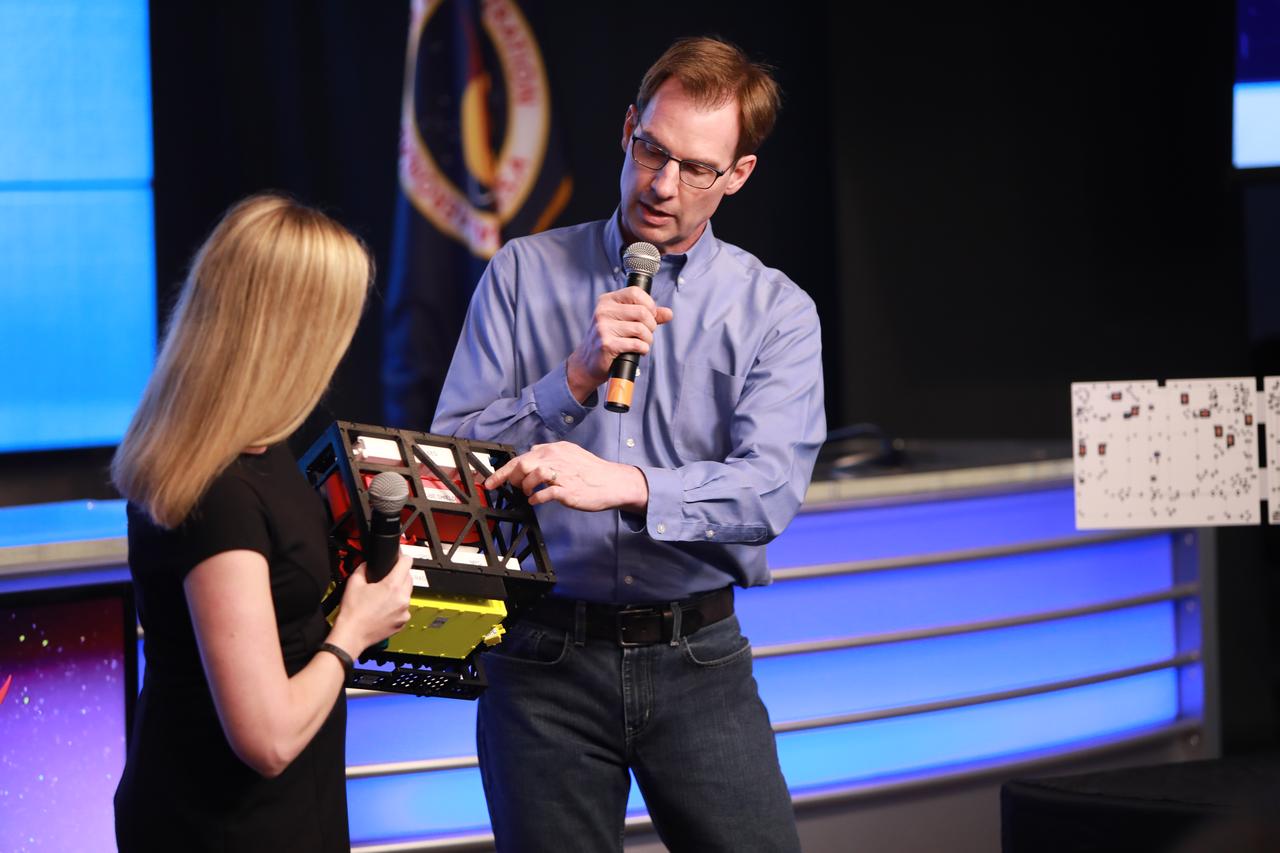
Todd Ely (right), principal investigator for NASA’s Deep Space Atomic Clock, and Deputy Principal Investigator Jill Seubert (left), both from NASA’s Jet Propulsion Laboratory in Pasadena, California, explain the payload during a NASA prelaunch technology TV broadcast for the Space Test Program-2 (STP-2) mission at the agency’s Kennedy Space Center in Florida on June 23, 2019. The new space clock could improve how we navigate on the Moon, to Mars and beyond. The space clock is one of four NASA payloads scheduled to launch on a SpaceX Falcon Heavy rocket from Launch Complex 39A beginning at 11:30 p.m. EDT on June 24, 2019. STP-2 is managed by the U.S. Air Force Space and Missile Systems Center.
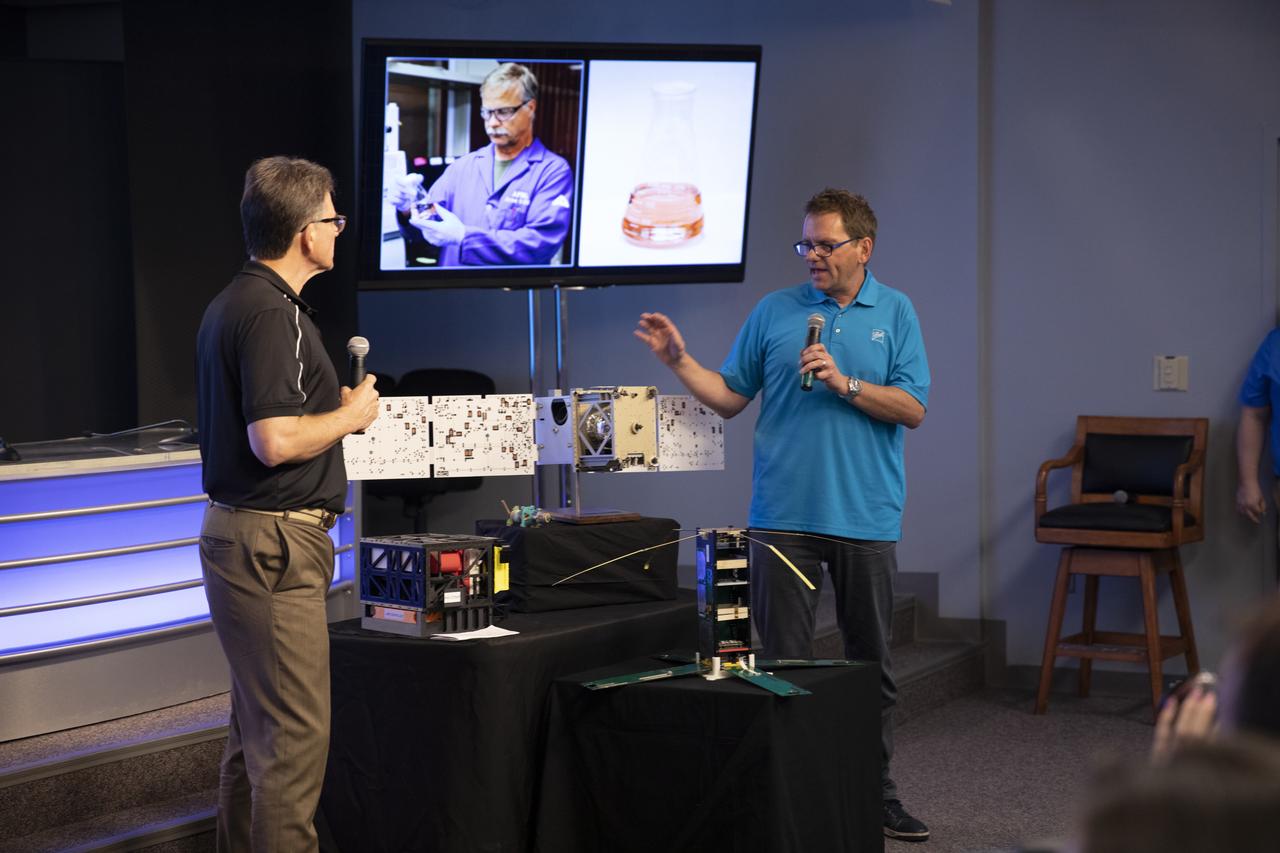
Chris McLean, (right) principal investigator for NASA’s Green Propellant Infusion Mission at Ball Aerospace, and Joe Cassady, (left), executive director of space at Aeroject Rocketdyne, explain the payload during a NASA prelaunch technology TV broadcast for the Space Test Program-2 (STP-2) mission at NASA’s Kennedy Space Center in Florida on June 23, 2019. The payload will help demonstrate this low toxicity, increased performance propellant and related systems so it can become a viable solution for future satellites. It is one of four NASA payloads scheduled to launch on a SpaceX Falcon Heavy rocket from Launch Complex 39A beginning at 11:30 p.m. EDT on June 24, 2019. STP-2 is managed by the U.S. Air Force Space and Missile Systems Center.
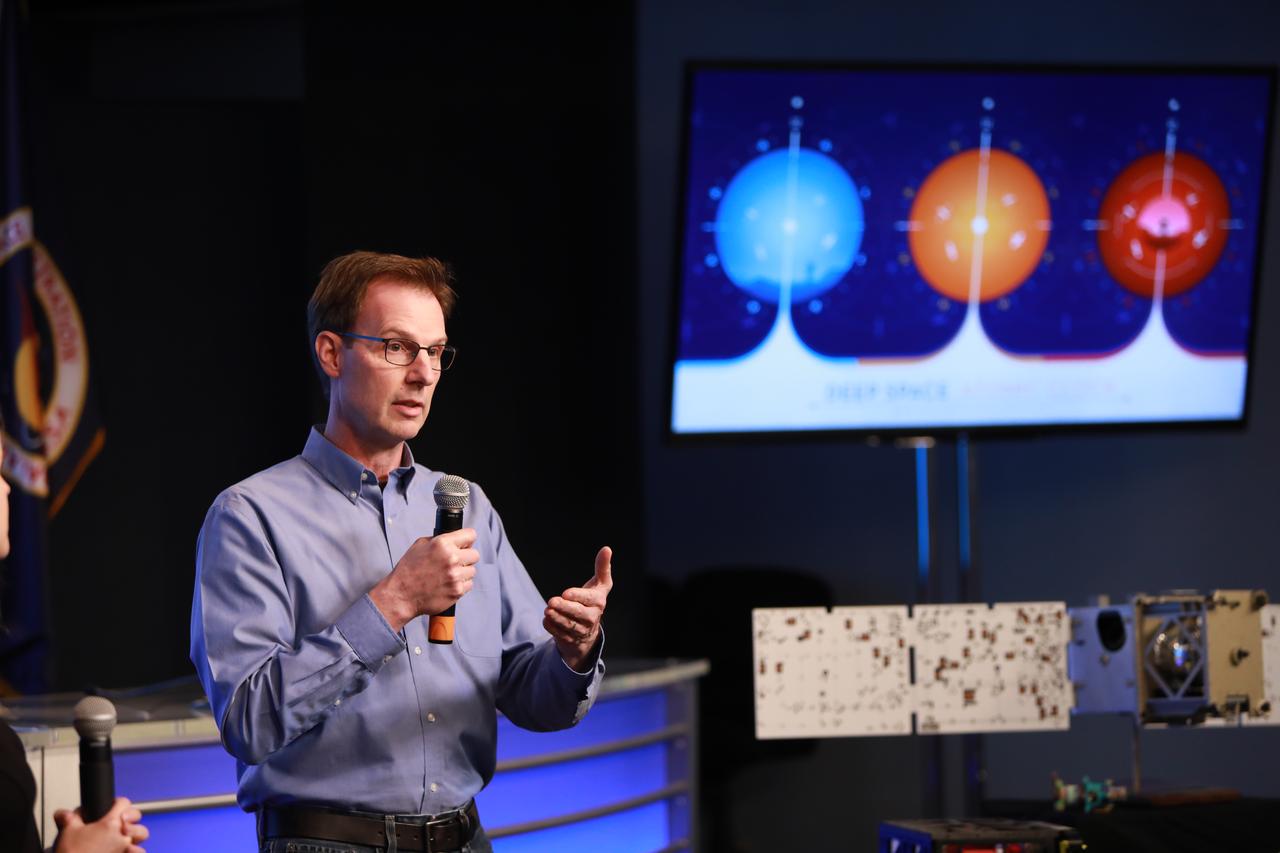
Todd Ely, principal investigator for NASA’s Deep Space Atomic Clock, from NASA’s Jet Propulsion Laboratory in Pasadena, California, explains the payload during a NASA prelaunch technology TV broadcast for the Space Test Program-2 (STP-2) mission at the agency’s Kennedy Space Center in Florida on June 23, 2019. The new space clock could improve how we navigate on the Moon, to Mars and beyond. The space clock is one of four NASA payloads scheduled to launch on a SpaceX Falcon Heavy rocket from Launch Complex 39A beginning at 11:30 p.m. EDT on June 24, 2019. STP-2 is managed by the U.S. Air Force Space and Missile Systems Center.

Joe Cassady, executive director of space at Aeroject Rocketdyne, explains NASA’s Green Propellant Infusion Mission during a NASA prelaunch technology TV broadcast for the Space Test Program-2 (STP-2) mission at NASA’s Kennedy Space Center in Florida on June 23, 2019. The payload will help demonstrate this low toxicity, increased performance propellant and related systems so it can become a viable solution for future satellites. It is one of four NASA payloads scheduled to launch on a SpaceX Falcon Heavy rocket from Launch Complex 39A beginning at 11:30 p.m. EDT on June 24, 2019. STP-2 is managed by the U.S. Air Force Space and Missile Systems Center.
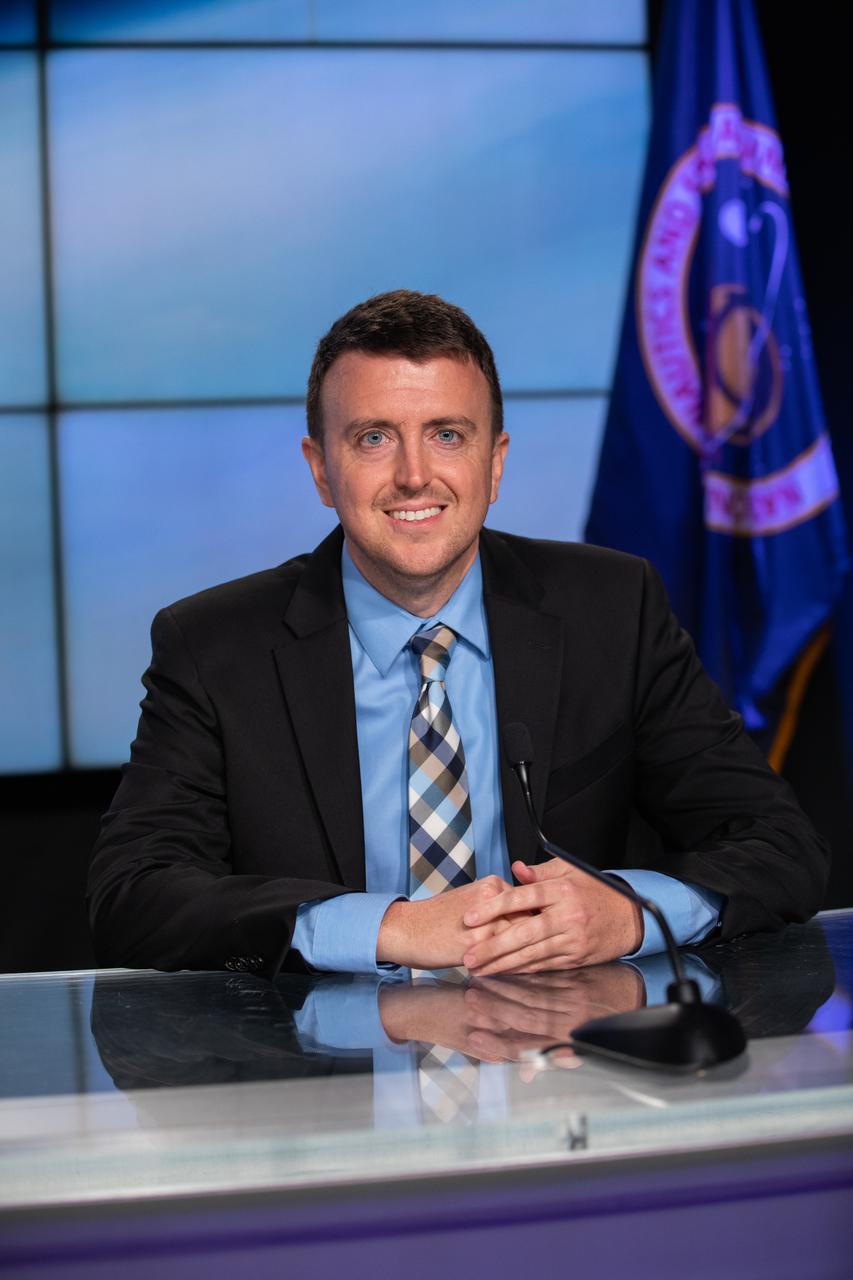
Will Ulrich, launch weather officer, U.S. Space Force, 45th Weather Squadron, Space Launch Delta 45, participates in a prelaunch briefing for NASA’s uncrewed Boeing Orbital Flight Test (OFT-2) at the agency’s Kennedy Space Center in Florida, May 17, 2022. Boeing’s CST-100 Starliner is targeted to launch at 6:54 p.m. EDT on Thursday, May 19, on a United Launch Alliance Atlas V rocket from Space Launch Complex-41 at Cape Canaveral Space Force Station in Florida to rendezvous and dock with the International Space Station.
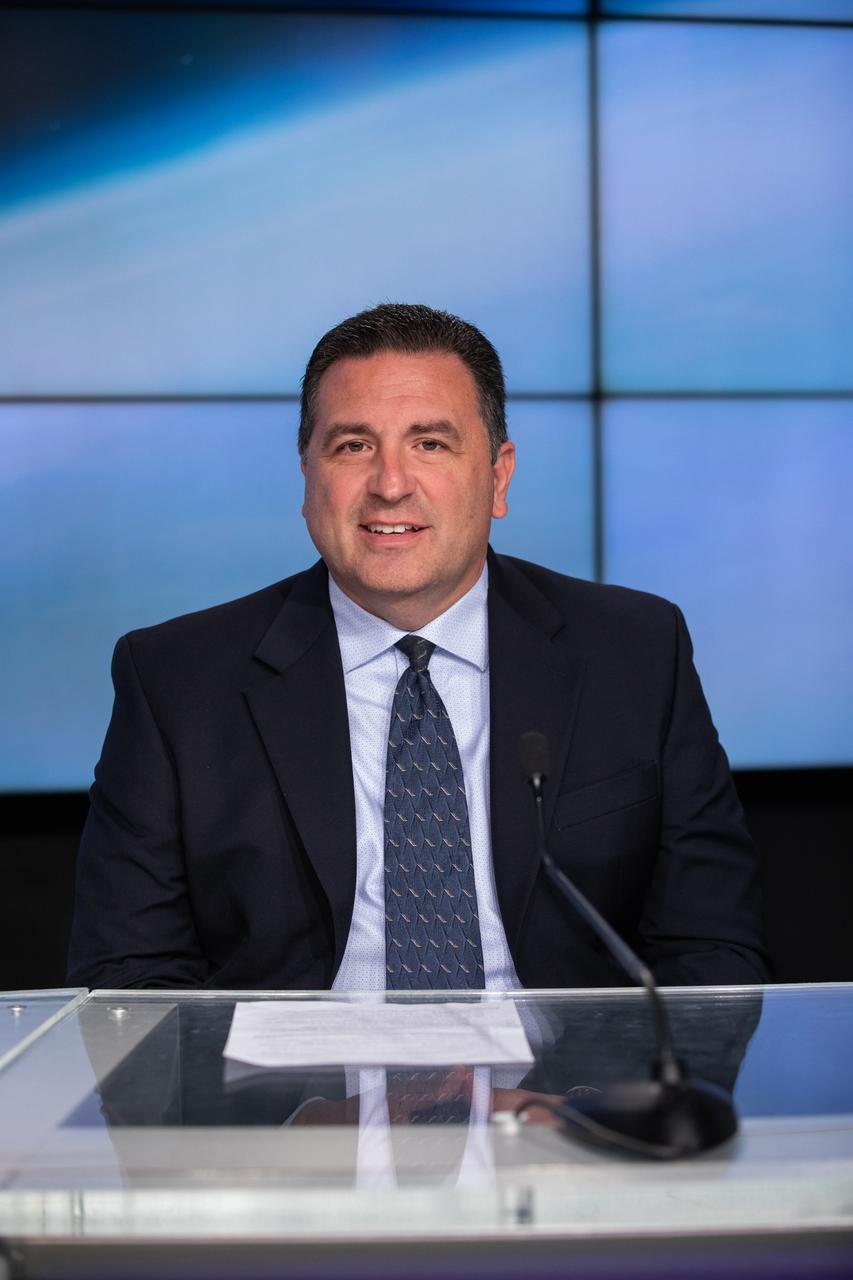
Gary Wentz, vice president, Government and Commercial Programs, United Launch Alliance, launch weather officer, U.S. Space Force, 45th Weather Squadron, Space Launch Delta 45, participates in a prelaunch briefing for NASA’s uncrewed Boeing Orbital Flight Test (OFT-2) at the agency’s Kennedy Space Center in Florida, May 17, 2022. Boeing’s CST-100 Starliner is targeted to launch at 6:54 p.m. EDT on Thursday, May 19, on a United Launch Alliance Atlas V rocket from Space Launch Complex-41 at Cape Canaveral Space Force Station in Florida to rendezvous and dock with the International Space Station.
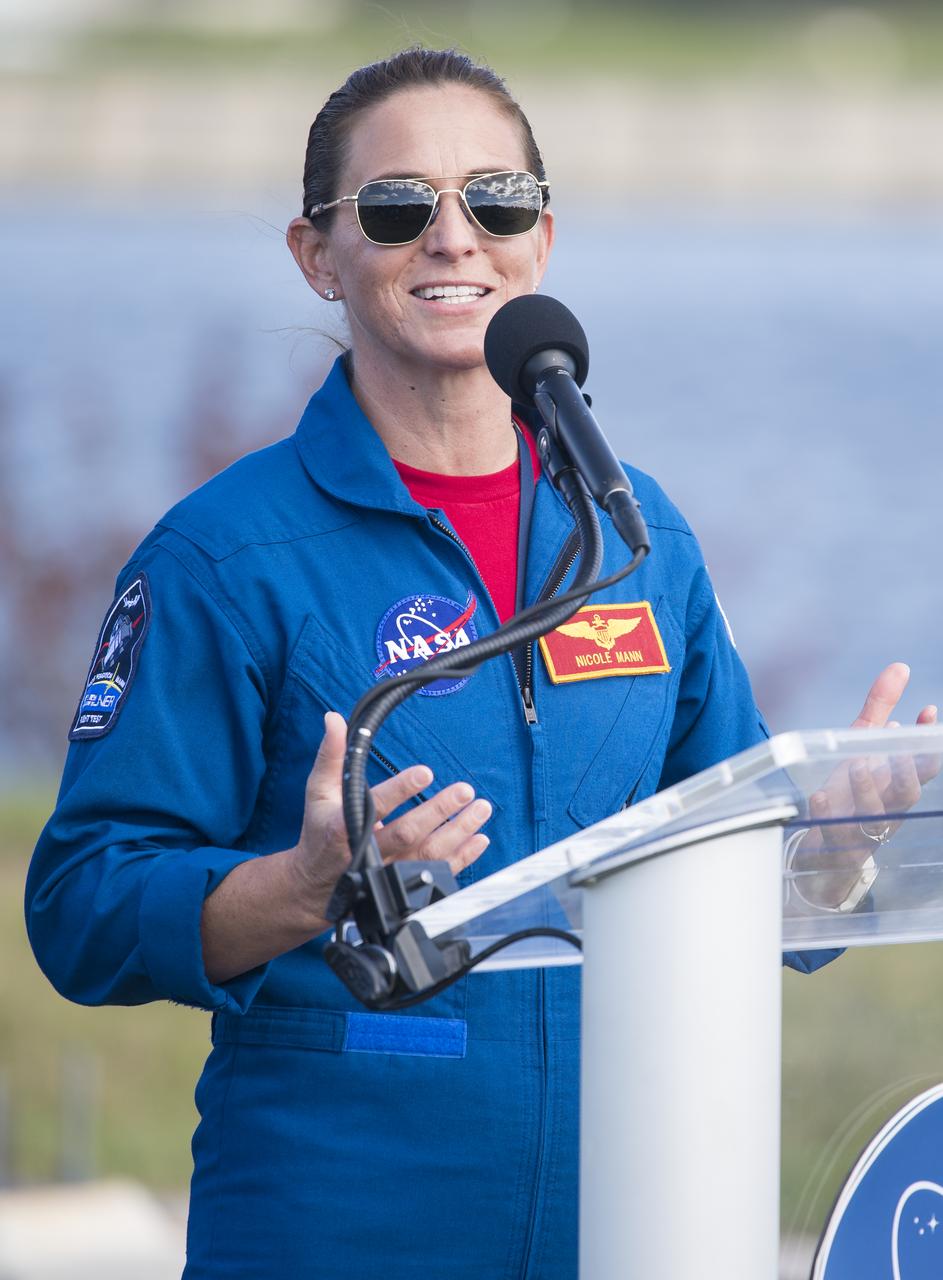
NASA astronaut Nicole Mann answers a question during a press conference ahead of the Boeing Orbital Flight Test mission, Thursday, Dec. 19, 2019, at Cape NASA’s Kennedy Space Center in Florida. Mann, NASA astronaut Michale Fincke, and Boeing astronaut Chris Ferguson are assigned to fly Boeing’s Crew Flight TestThe uncrewed Orbital Flight Test will be Starliner’s maiden mission to the International Space Station for NASA's Commercial Crew Program. The mission, currently targeted for a 6:36 a.m. EST launch on Dec. 20, will serve as an end-to-end test of the system's capabilities. Photo Credit: (NASA/Joel Kowsky)
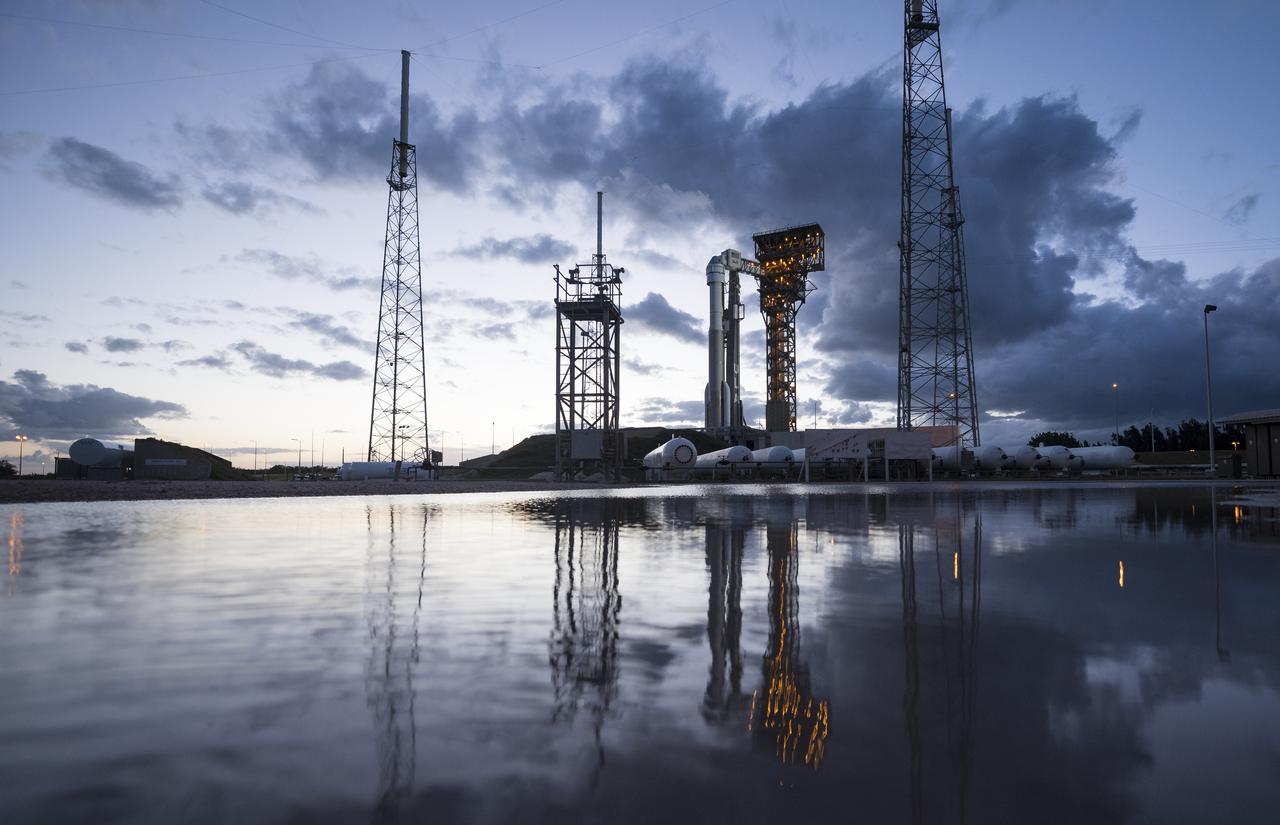
A United Launch Alliance Atlas V rocket with Boeing’s CST-100 Starliner spacecraft onboard is seen on the launch pad at Space Launch Complex 41 ahead of the Orbital Flight Test mission, Thursday, Dec. 19, 2019, at Cape Canaveral Air Force Station in Florida. The uncrewed Orbital Flight Test will be Starliner’s maiden mission to the International Space Station for NASA's Commercial Crew Program. The mission, currently targeted for a 6:36 a.m. EST launch on Dec. 20, will serve as an end-to-end test of the system's capabilities. Photo Credit: (NASA/Joel Kowsky)
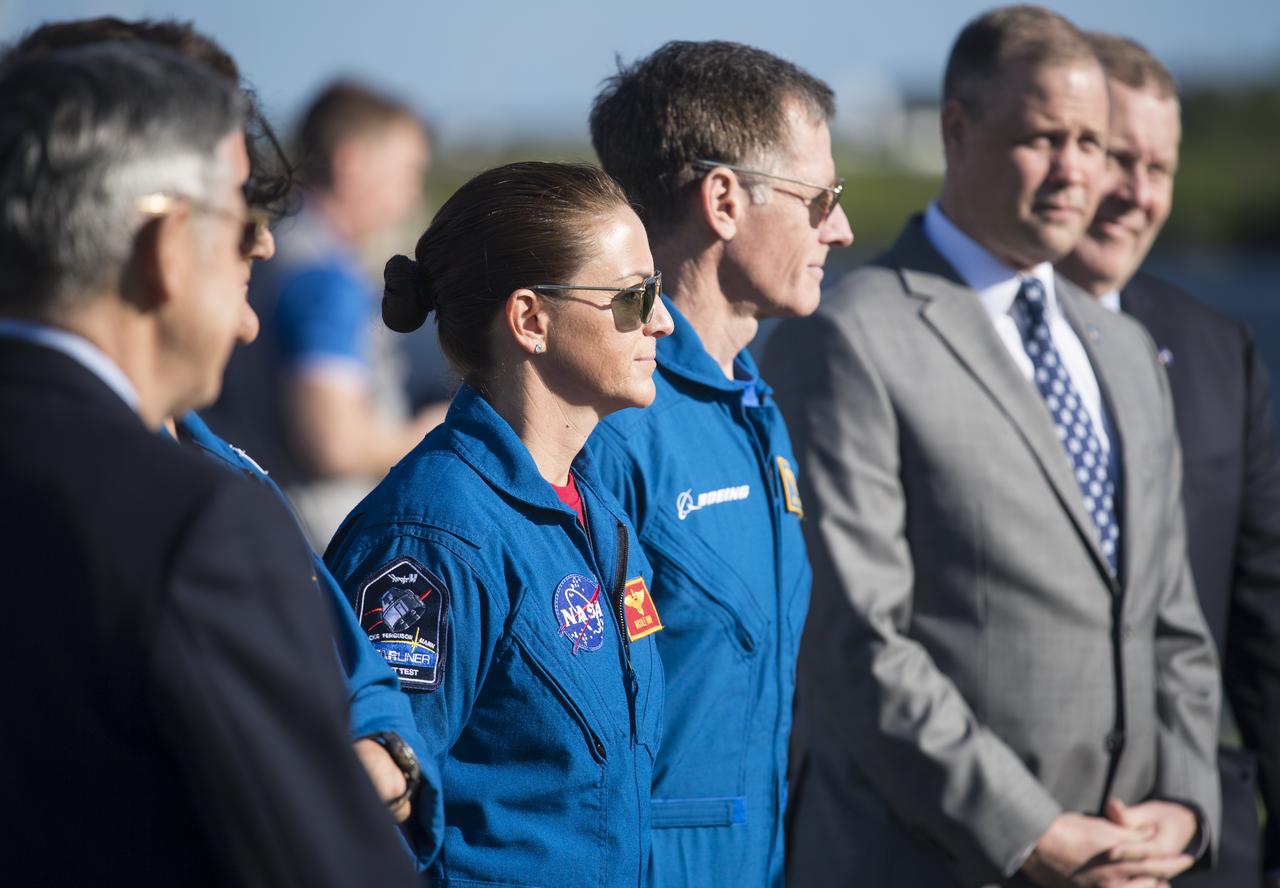
NASA astronaut Nicole Mann and Boeing astronaut Chris Ferguson are seen during a press conference ahead of the Boeing Orbital Flight Test mission, Thursday, Dec. 19, 2019, at NASA’s Kennedy Space Center in Florida. Mann, Ferguson, and NASA astronaut Michale Fincke are assigned to fly Boeing’s Crew Flight Test. The uncrewed Orbital Flight Test will be Starliner’s maiden mission to the International Space Station for NASA's Commercial Crew Program. The mission, currently targeted for a 6:36 a.m. EST launch on Dec. 20, will serve as an end-to-end test of the system's capabilities. Photo Credit: (NASA/Joel Kowsky)
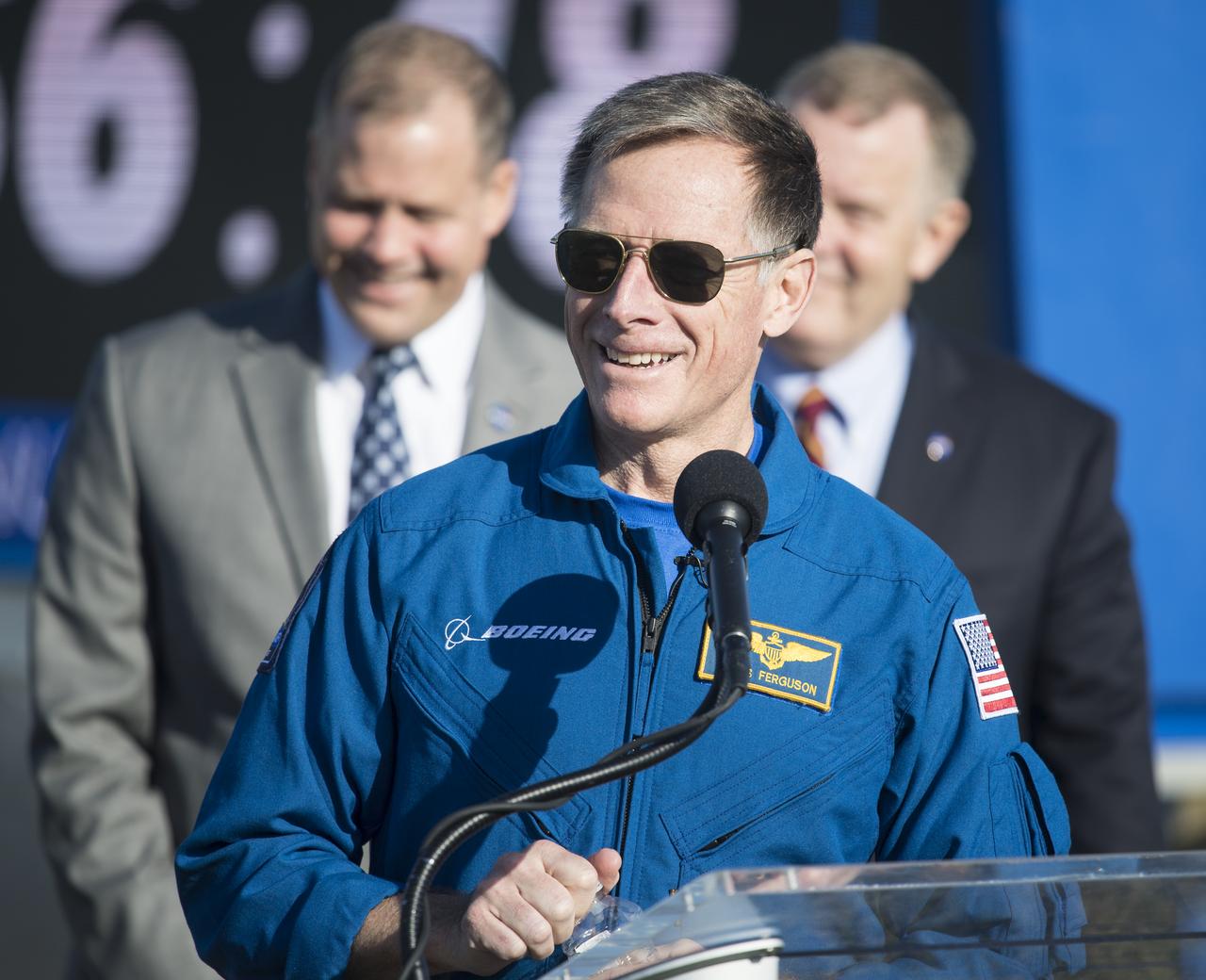
Boeing astronaut Chris Ferguson is seen during a press conference ahead of the Boeing Orbital Flight Test mission, Thursday, Dec. 19, 2019, at NASA’s Kennedy Space Center in Florida. Ferguson and NASA astronauts Nicole Mann and Michael Fincke are assigned to fly on Boeing’s Crew Flight Test. The uncrewed Orbital Flight Test will be Starliner’s maiden mission to the International Space Station for NASA's Commercial Crew Program. The mission, currently targeted for a 6:36 a.m. EST launch on Dec. 20, will serve as an end-to-end test of the system's capabilities. Photo Credit: (NASA/Joel Kowsky)
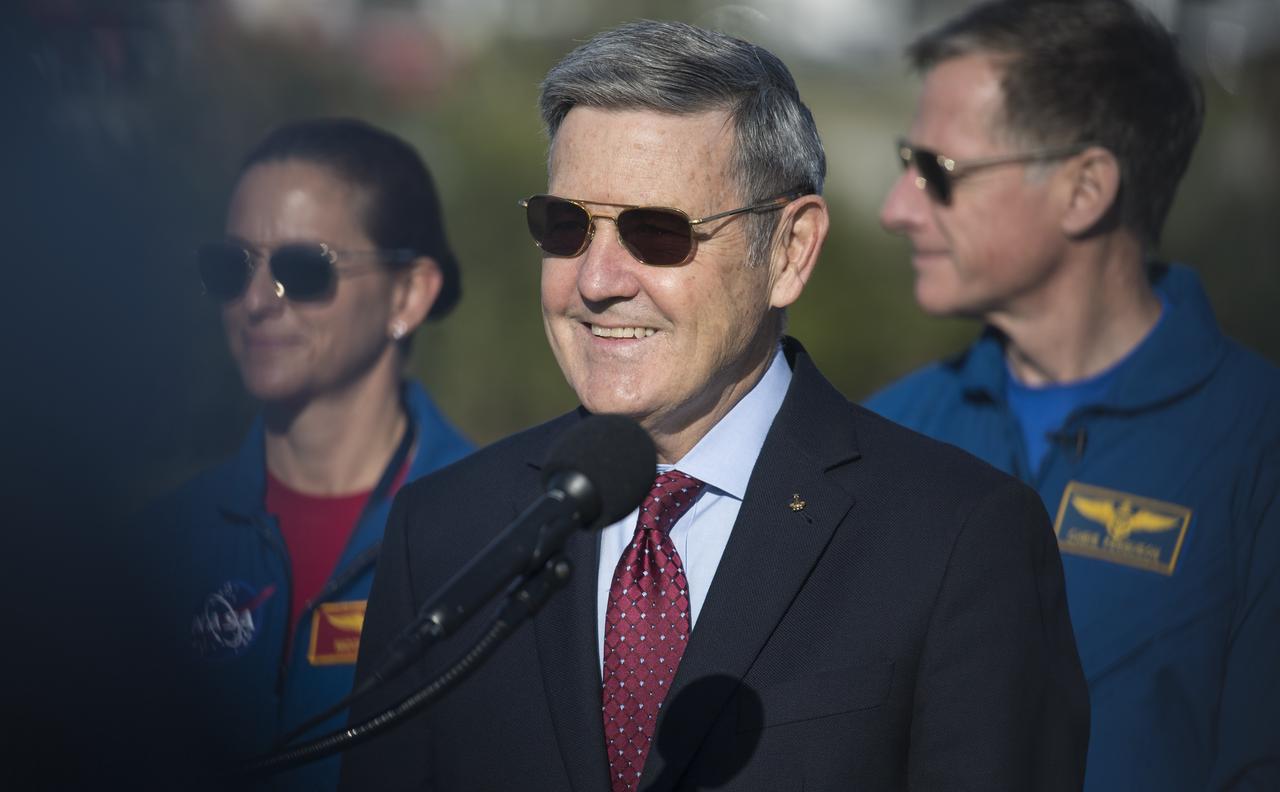
Kennedy Space Center Director Bob Cabana delivers opening remarks at a press conference ahead of the Boeing Orbital Flight Test mission, Thursday, Dec. 19, 2019, at NASA’s Kennedy Space Center in Florida. The uncrewed Orbital Flight Test will be Starliner’s maiden mission to the International Space Station for NASA's Commercial Crew Program. The mission, currently targeted for a 6:36 a.m. EST launch on Dec. 20, will serve as an end-to-end test of the system's capabilities. Photo Credit: (NASA/Joel Kowsky)
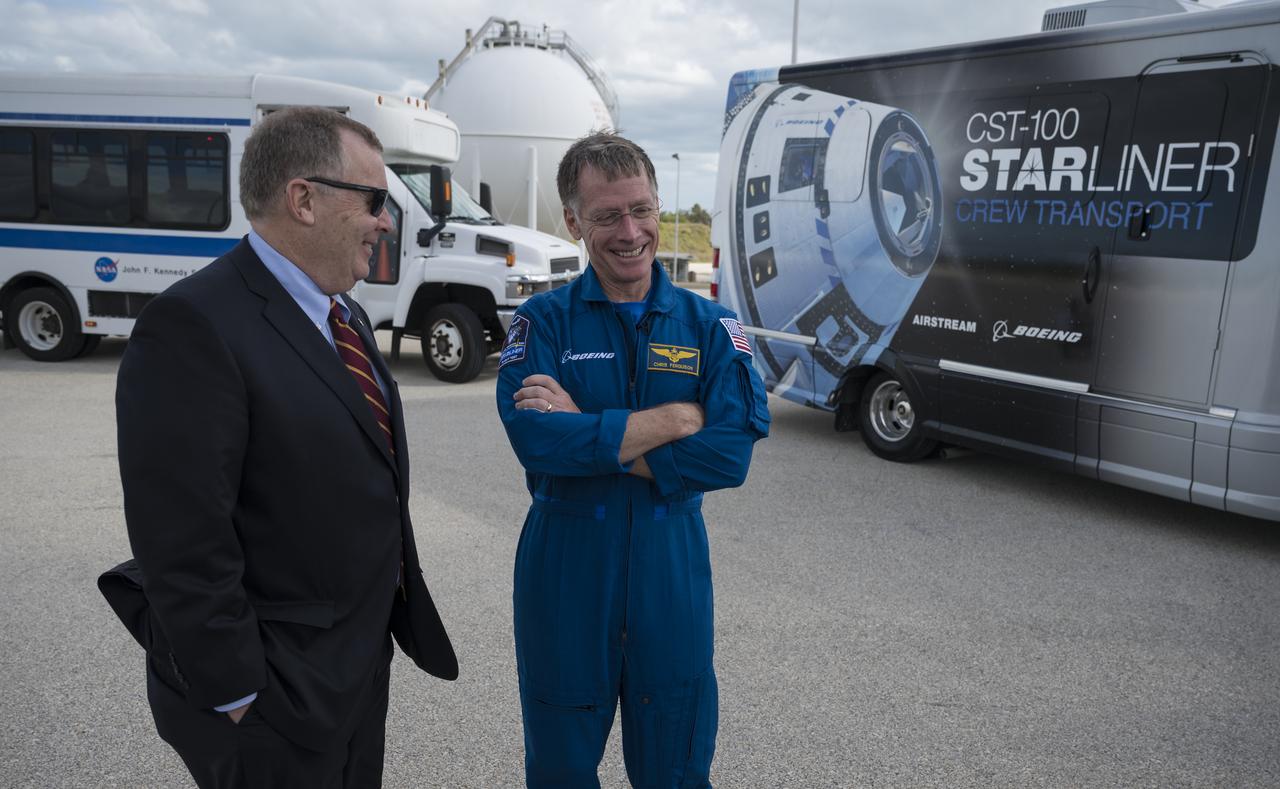
NASA Deputy Administrator Jim Morhard speaks with Boeing astronaut Chris Ferguson at Space Launch Complex 41 ahead of Boeing’s Orbital Flight Test mission, Thursday, Dec. 19, 2019, at Cape Canaveral Air Force Station in Florida. The uncrewed Orbital Flight Test will be Starliner’s maiden mission to the International Space Station for NASA's Commercial Crew Program. The mission, currently targeted for a 6:36 a.m. EST launch on Dec. 20, will serve as an end-to-end test of the system's capabilities. Photo Credit: (NASA/Joel Kowsky)
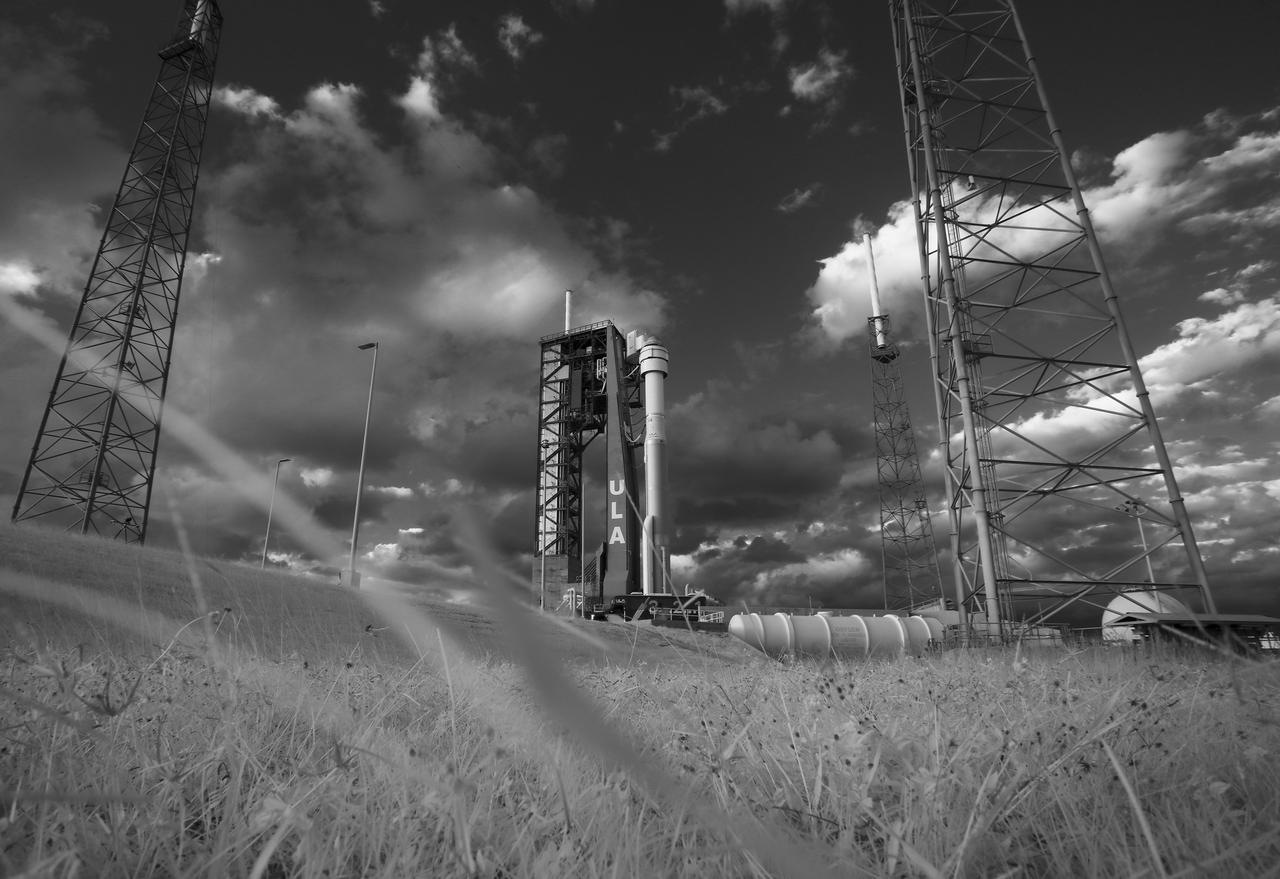
In this black and white infrared image, a United Launch Alliance Atlas V rocket with Boeing’s CST-100 Starliner spacecraft onboard is seen on the launch pad at Space Launch Complex 41 ahead of the Orbital Flight Test mission, Thursday, Dec. 19, 2019, at Cape Canaveral Air Force Station in Florida. After a successful launch at 6:36 a.m. EST on Dec. 20, Boeing’s CST-100 Starliner is in an unplanned, but stable orbit. The team is assessing what test objectives can be achieved before the spacecraft’s return to land in White Sands, New Mexico. Photo Credit: (NASA/Joel Kowsky)
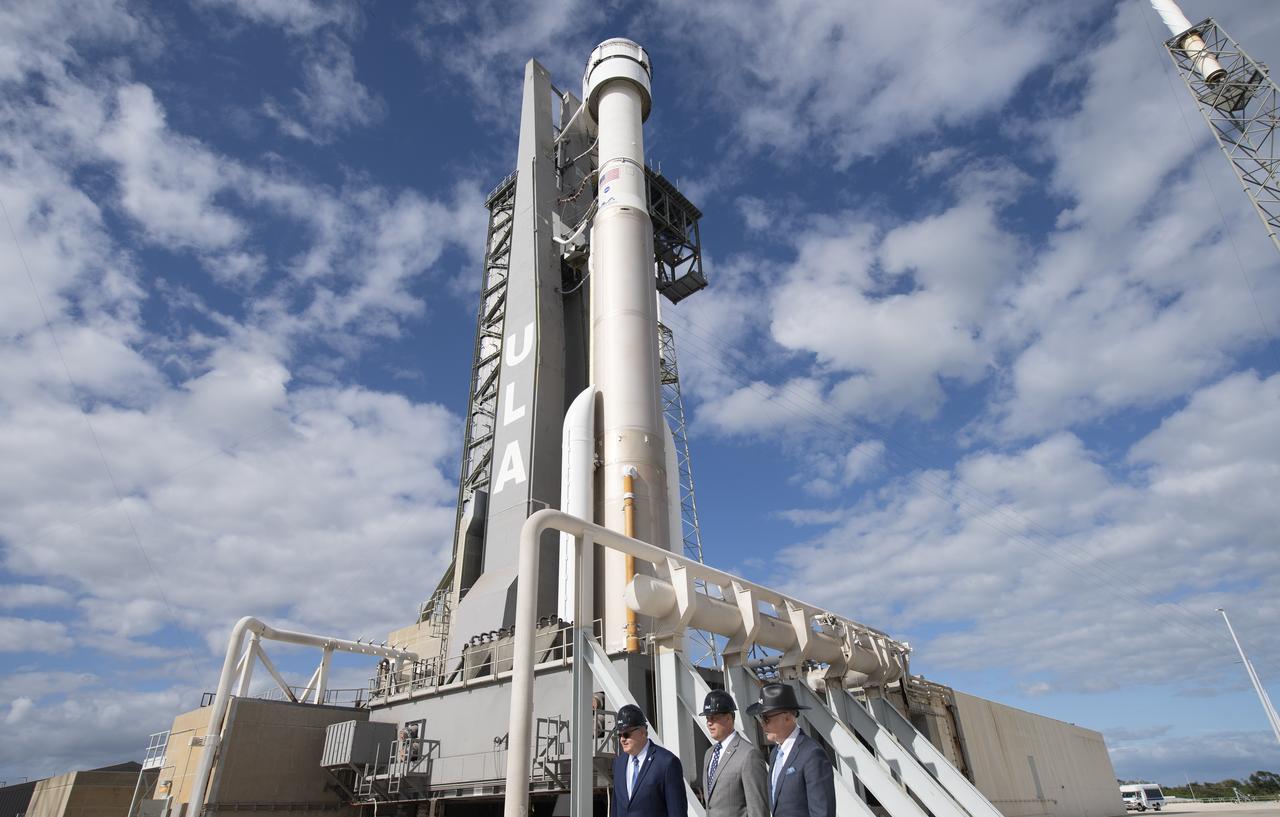
Jim Chilton, senior vice president for Boeing Space and Launch, left, NASA Administrator Jim Bridenstine, and Tory Bruno, president and CEO of United Launch Alliance are seen walking past a United Launch Alliance Atlas V rocket with Boeing’s CST-100 Starliner spacecraft onboard on the launch pad at Space Launch Complex 41 ahead of the Orbital Flight Test mission, Thursday, Dec. 19, 2019, at Cape Canaveral Air Force Station in Florida. The uncrewed Orbital Flight Test will be Starliner’s maiden mission to the International Space Station for NASA's Commercial Crew Program. The mission, currently targeted for a 6:36 a.m. EST launch on Dec. 20, will serve as an end-to-end test of the system's capabilities. Photo Credit: (NASA/Joel Kowsky)
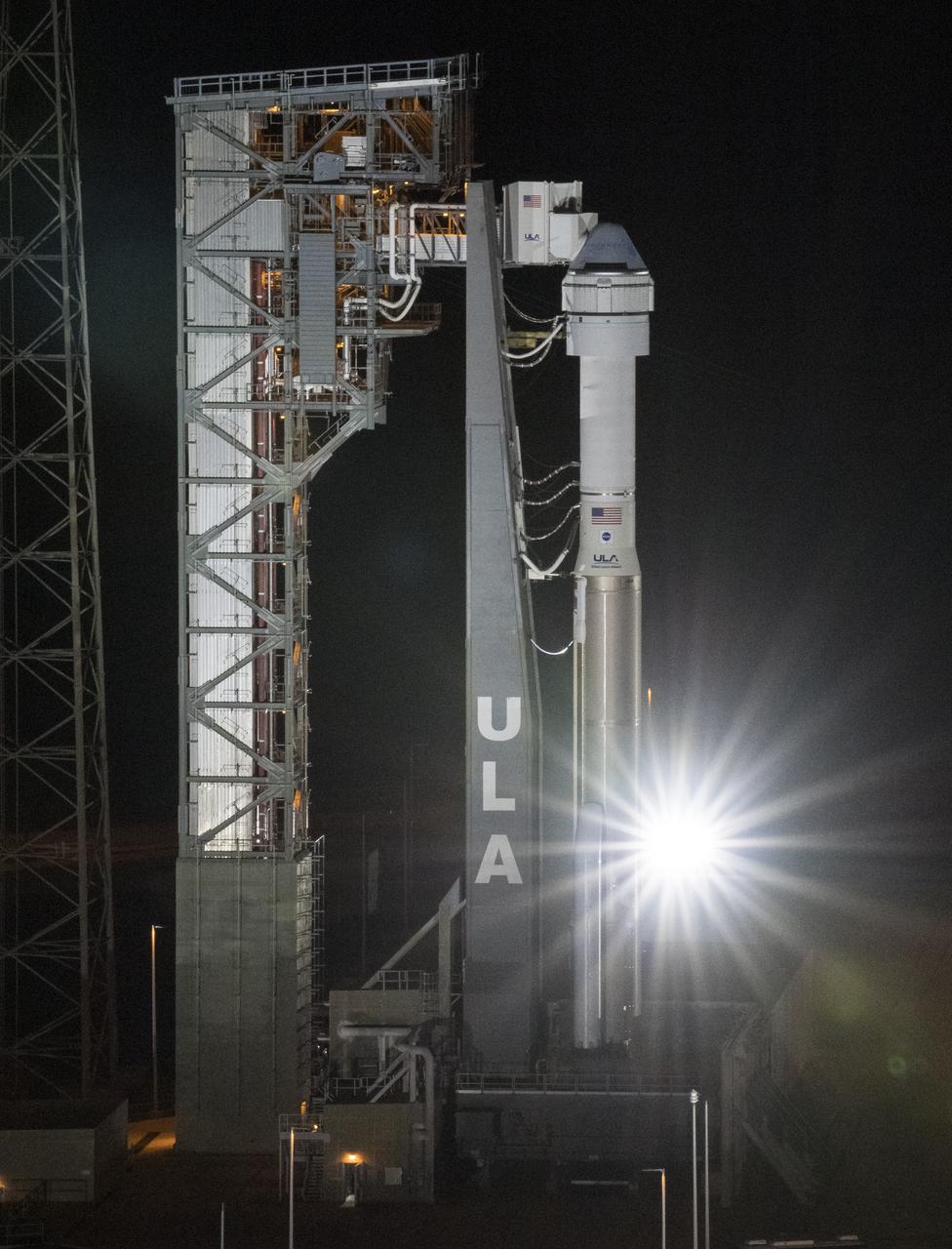
A United Launch Alliance Atlas V rocket with Boeing’s CST-100 Starliner spacecraft onboard is seen on the launch pad at Space Launch Complex 41 ahead of the Orbital Flight Test mission, Thursday, Dec. 19, 2019, at Cape Canaveral Air Force Station in Florida. The uncrewed Orbital Flight Test will be Starliner’s maiden mission to the International Space Station for NASA's Commercial Crew Program. The mission, currently targeted for a 6:36 a.m. EST launch on Dec. 20, will serve as an end-to-end test of the system's capabilities. Photo Credit: (NASA/Joel Kowsky)
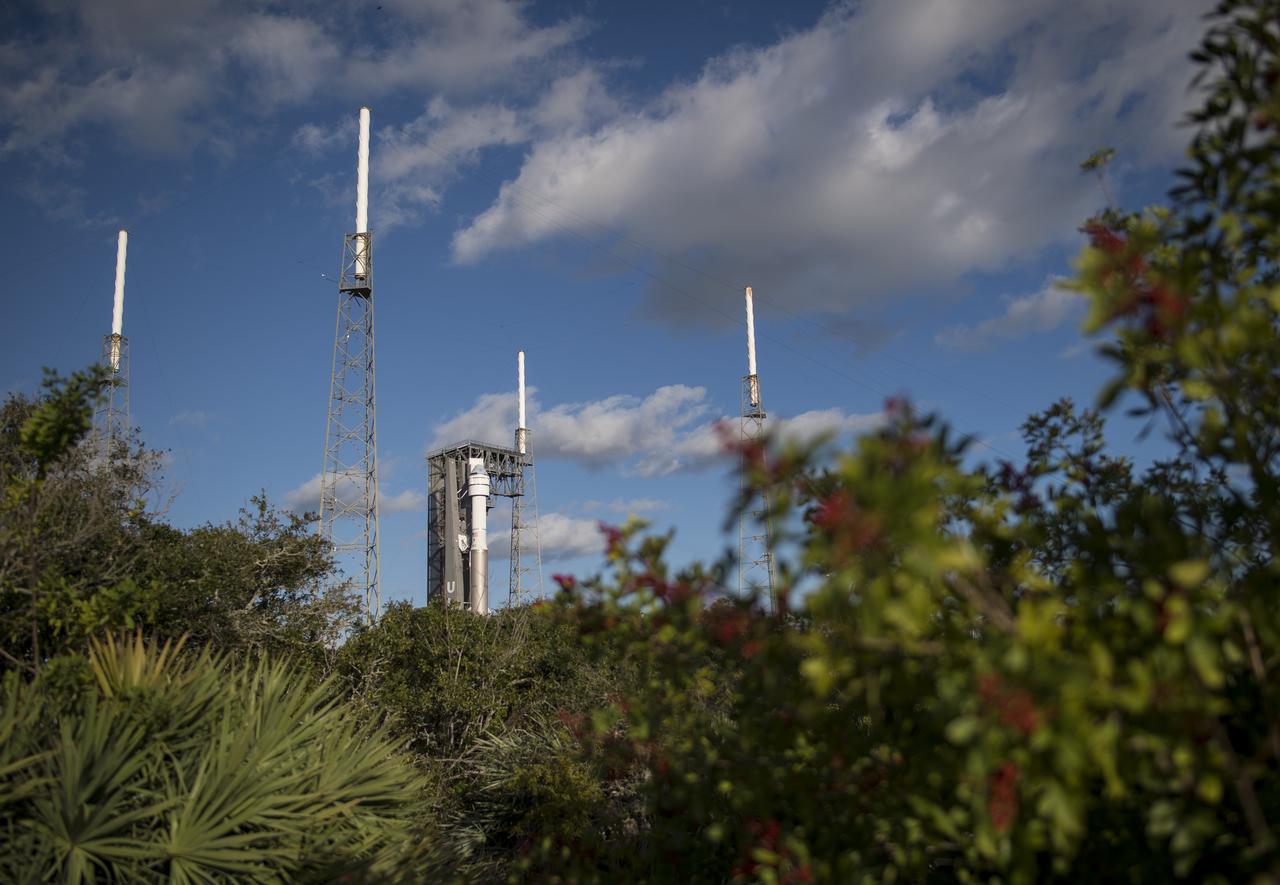
A United Launch Alliance Atlas V rocket with Boeing’s CST-100 Starliner spacecraft onboard is seen on the launch pad at Space Launch Complex 41 ahead of the Orbital Flight Test mission, Thursday, Dec. 19, 2019, at Cape Canaveral Air Force Station in Florida. The uncrewed Orbital Flight Test will be Starliner’s maiden mission to the International Space Station for NASA's Commercial Crew Program. The mission, currently targeted for a 6:26 a.m. EST launch on Dec. 20, will serve as an end-to-end test of the system's capabilities. Photo Credit: (NASA/Joel Kowsky)
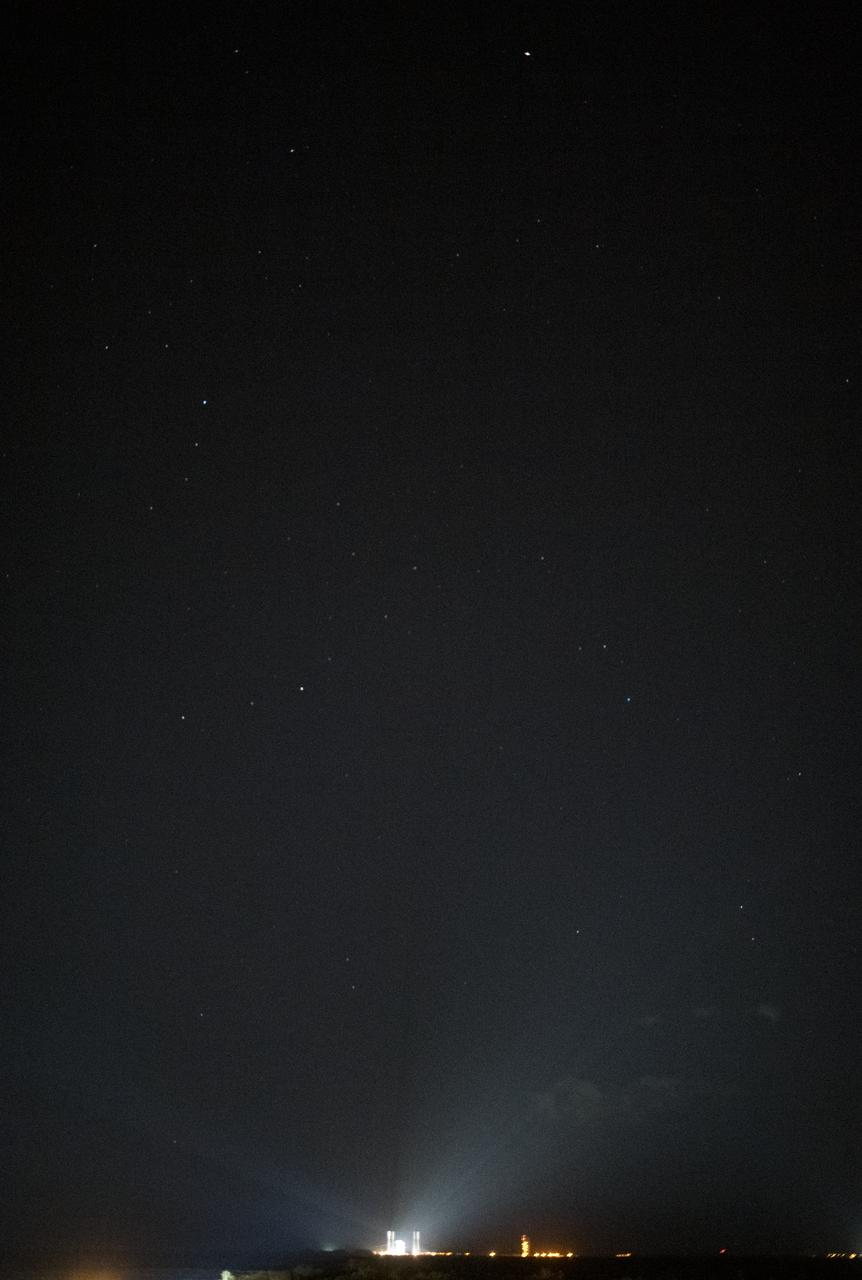
Space Launch Complex 41 is seen illuminated by spotlights ahead of the Boeing Starliner Orbital Flight Test mission, Friday, Dec. 20, 2019, at Cape Canaveral Air Force Station in Florida. The uncrewed Orbital Flight Test will be Starliner’s maiden mission to the International Space Station for NASA's Commercial Crew Program. The mission, currently targeted for a 6:36 a.m. EST launch onboard a United Launch Alliance Atlas V rocket on Dec. 20, will serve as an end-to-end test of the system's capabilities. Photo Credit: (NASA/Joel Kowsky)
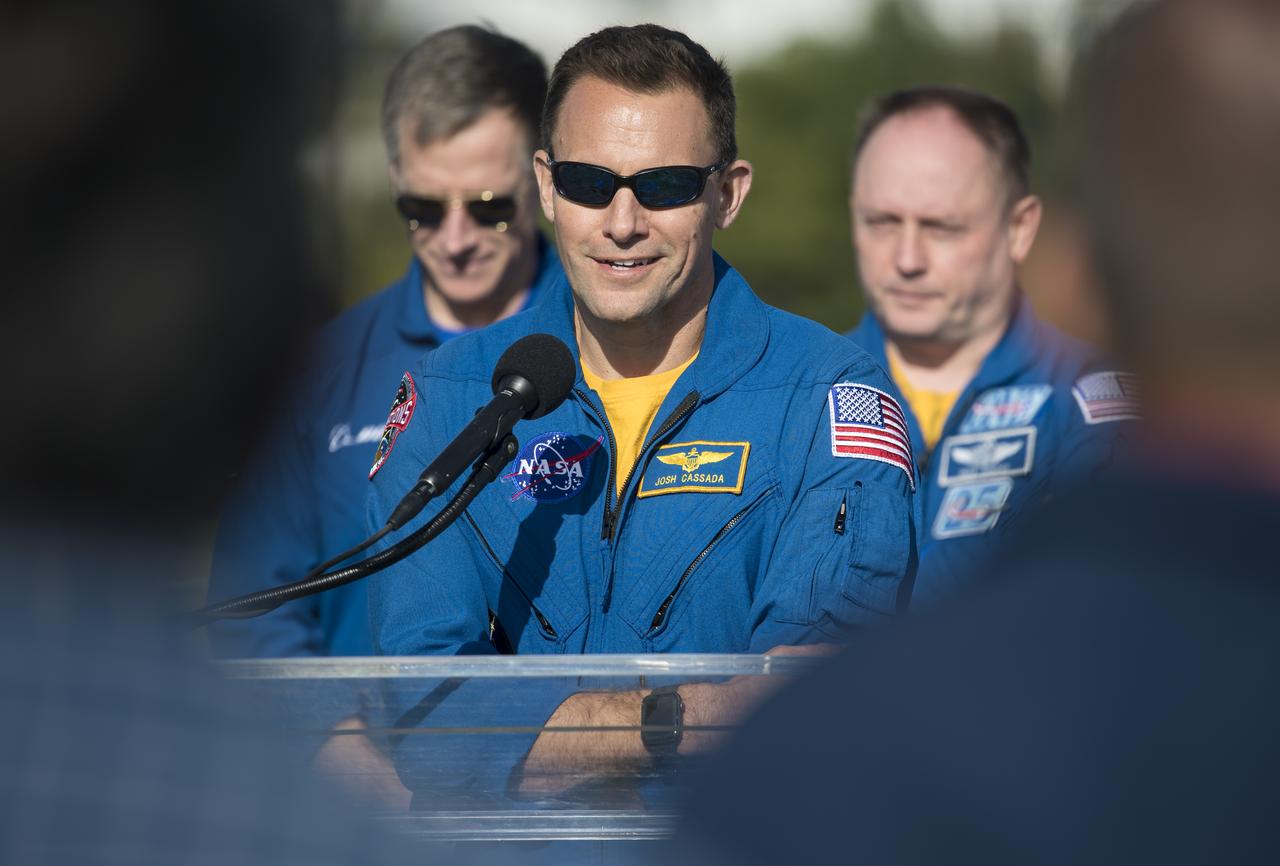
NASA astronaut Josh Cassada answers a question during a press conference ahead of the Boeing Orbital Flight Test mission, Thursday, Dec. 19, 2019, at NASA’s Kennedy Space Center in Florida. Cassada and NASA astronaut Suni Williams are assigned to the first operational flight of Boeing’s Starliner. The uncrewed Orbital Flight Test will be Starliner’s maiden mission to the International Space Station for NASA's Commercial Crew Program. The mission, currently targeted for a 6:36 a.m. EST launch on Dec. 20, will serve as an end-to-end test of the system's capabilities. Photo Credit: (NASA/Joel Kowsky)
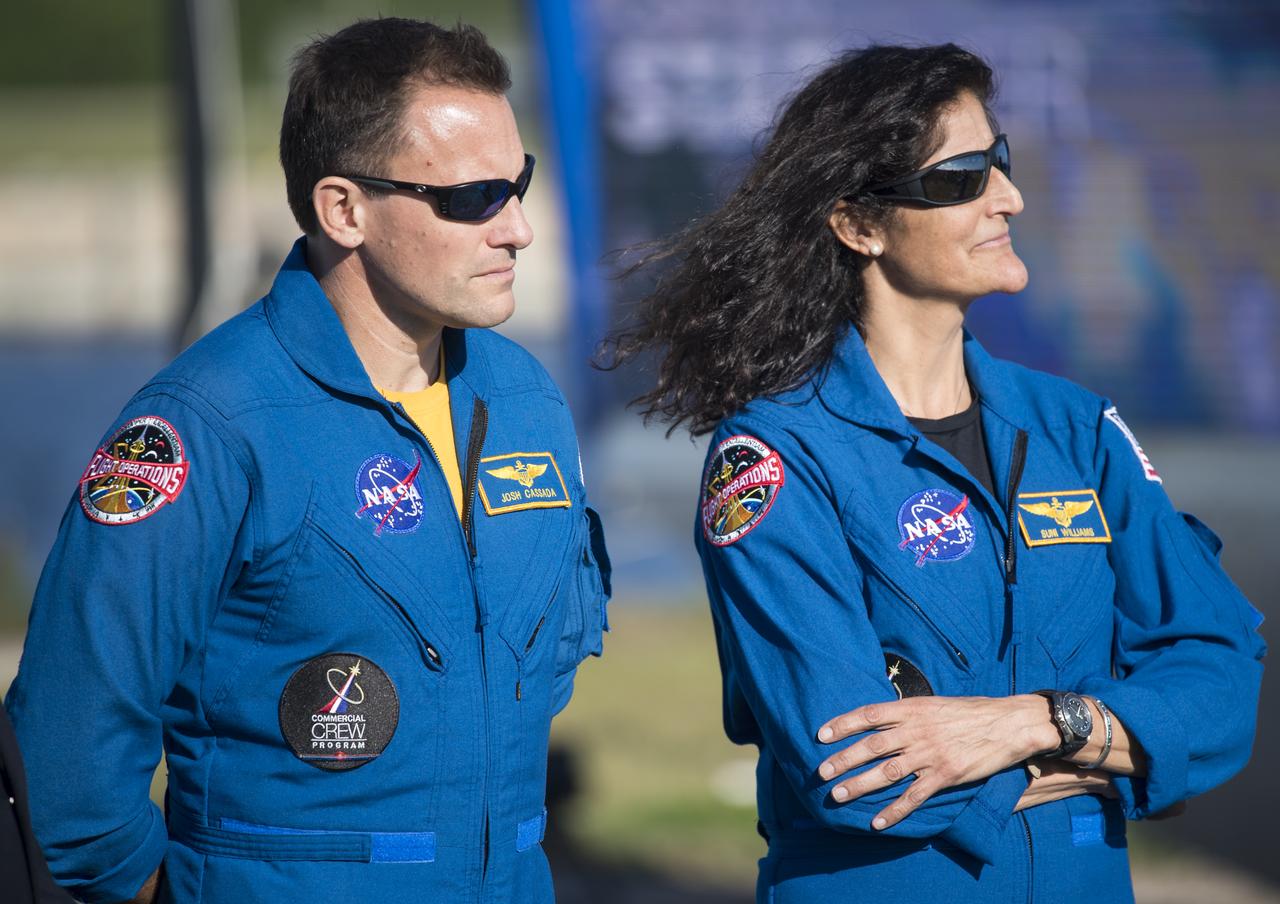
NASA astronauts Josh Cassada and Suni Williams, who are assigned to fly on the first operational flight of Boeing’s Starliner, are seen during a press conference ahead of the Boeing Orbital Flight Test mission, Thursday, Dec. 19, 2019, at NASA’s Kennedy Space Center in Florida. The uncrewed Orbital Flight Test will be Starliner’s maiden mission to the International Space Station for NASA's Commercial Crew Program. The mission, currently targeted for a 6:36 a.m. EST launch on Dec. 20, will serve as an end-to-end test of the system's capabilities. Photo Credit: (NASA/Joel Kowsky)
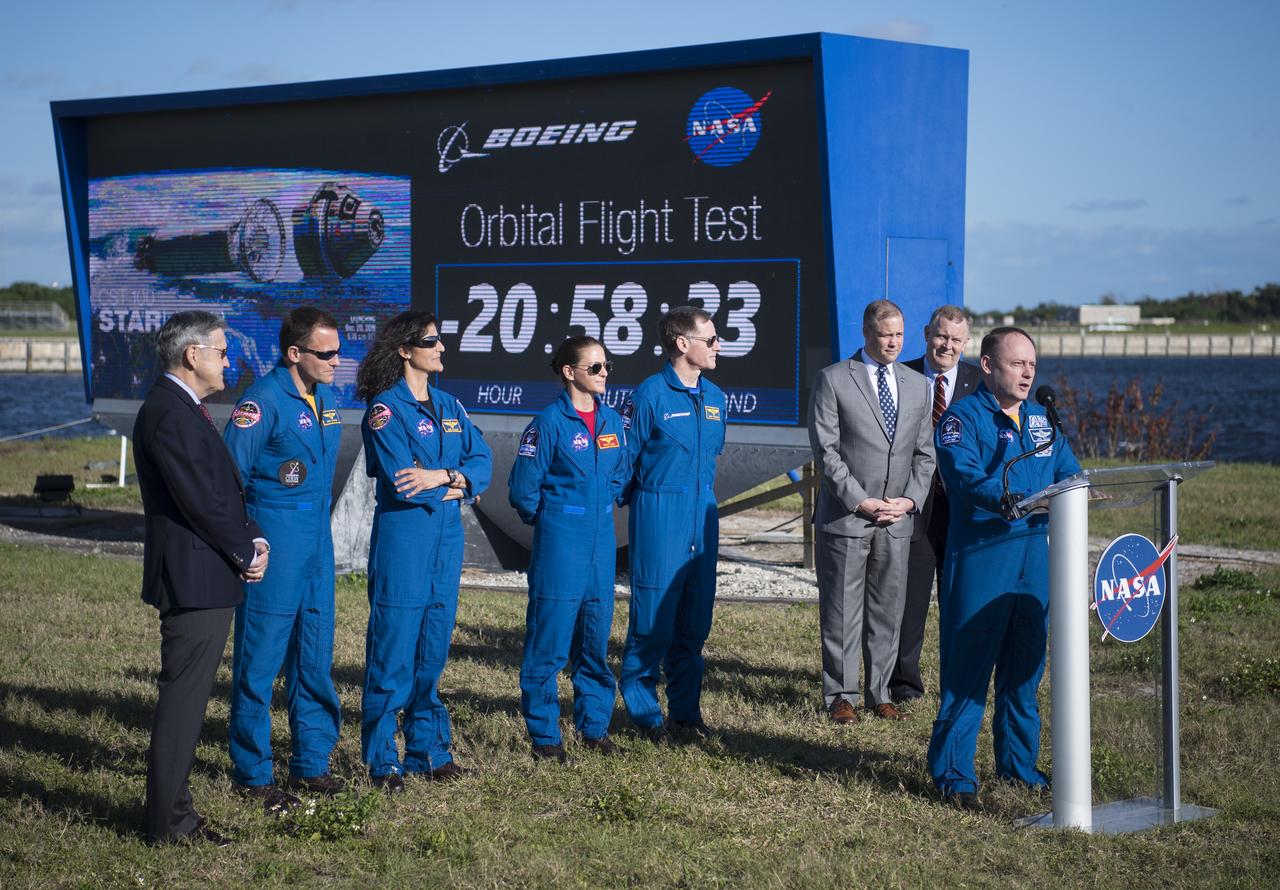
NASA Administrator Jim Bridenstine, NASA Deputy Administrator Jim Morhard, Kennedy Space Center Director Bob Cabana, and NASA Astronauts Josh Cassada and Suni Williams, who are assigned to Boeing’s first operation flight of Starliner, and NASA astronauts Nicole Mann, Michael Fincke, and Boeing astronaut Chris Ferguson, who are assigned to Boeing’s Crew Flight Test, are seen during a press conference ahead of the Boeing Orbital Flight Test mission, Thursday, Dec. 19, 2019, at NASA’s Kennedy Space Center in Florida. The uncrewed Orbital Flight Test will be Starliner’s maiden mission to the International Space Station for NASA's Commercial Crew Program. The mission, currently targeted for a 6:36 a.m. EST launch on Dec. 20, will serve as an end-to-end test of the system's capabilities. Photo Credit: (NASA/Joel Kowsky)
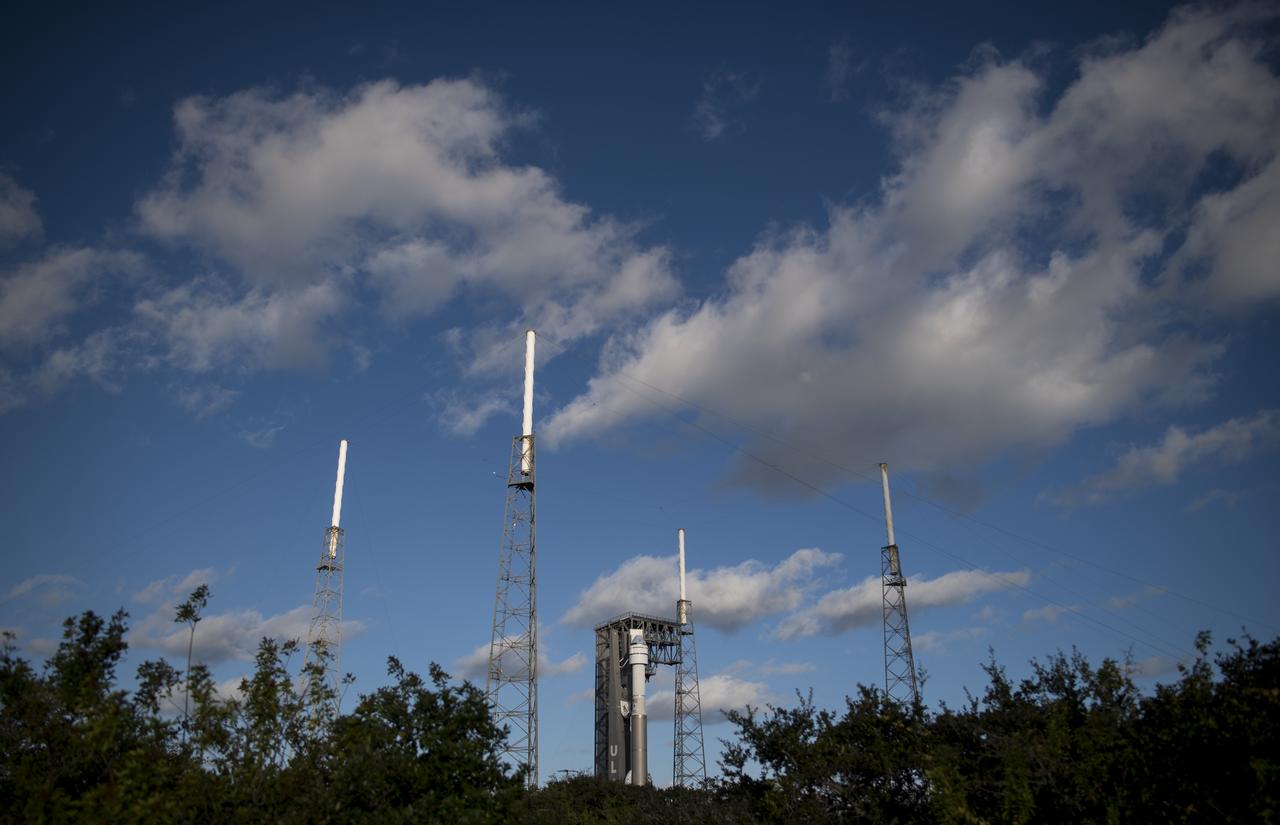
A United Launch Alliance Atlas V rocket with Boeing’s CST-100 Starliner spacecraft onboard is seen on the launch pad at Space Launch Complex 41 ahead of the Orbital Flight Test mission, Thursday, Dec. 19, 2019, at Cape Canaveral Air Force Station in Florida. The uncrewed Orbital Flight Test will be Starliner’s maiden mission to the International Space Station for NASA's Commercial Crew Program. The mission, currently targeted for a 6:26 a.m. EST launch on Dec. 20, will serve as an end-to-end test of the system's capabilities. Photo Credit: (NASA/Joel Kowsky)
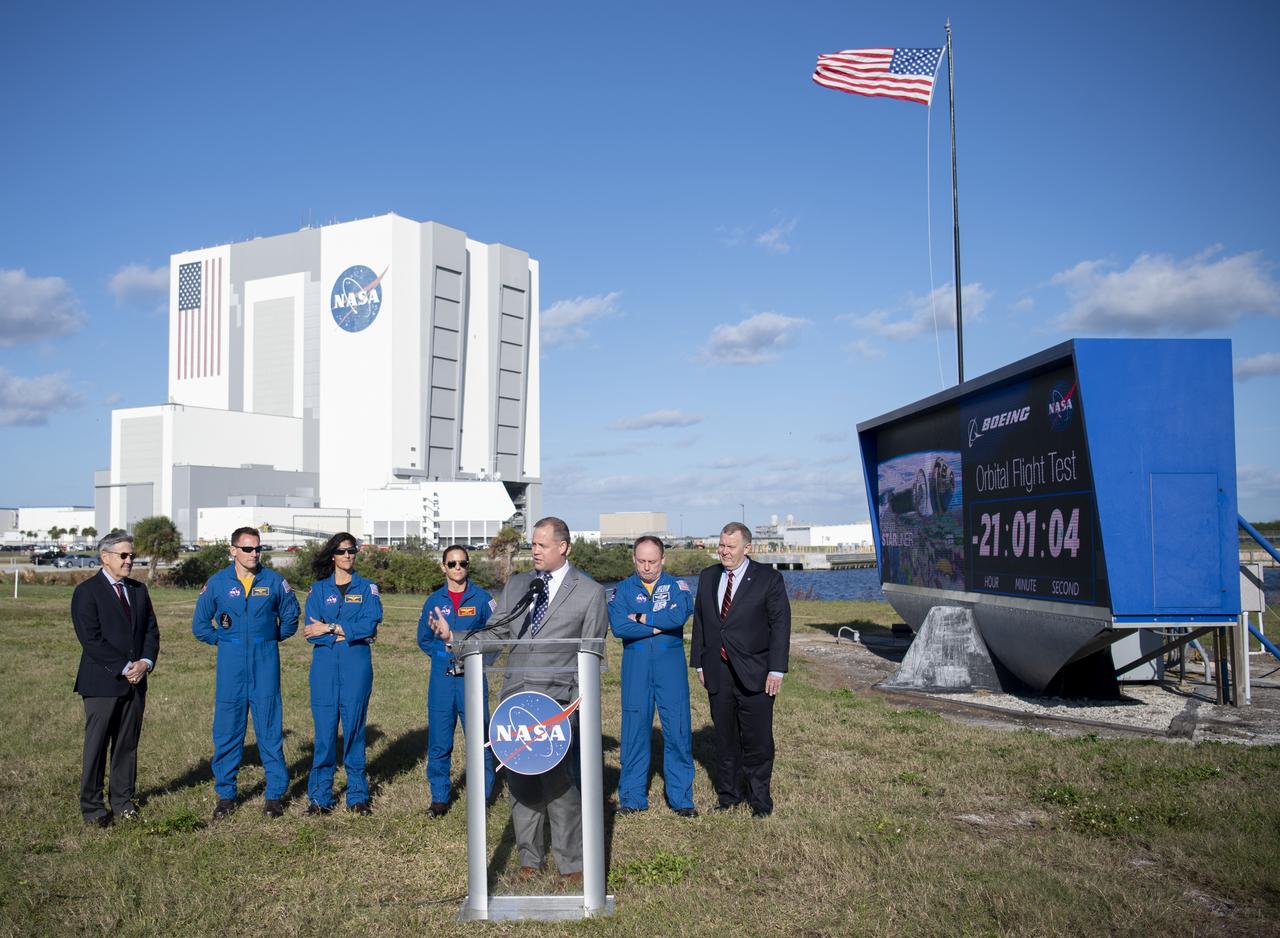
NASA Administrator Jim Bridenstine, NASA Deputy Administrator Jim Morhard, Kennedy Space Center Director Bob Cabana, and NASA Astronauts Josh Cassada and Suni Williams, who are assigned to Boeing’s first operation flight of Starliner, and NASA astronauts Nicole Mann, Michael Fincke, and Boeing astronaut Chris Ferguson, who are assigned to Boeing’s Crew Flight Test, are seen during a press conference ahead of the Boeing Orbital Flight Test mission, Thursday, Dec. 19, 2019, at NASA’s Kennedy Space Center in Florida. The uncrewed Orbital Flight Test will be Starliner’s maiden mission to the International Space Station for NASA's Commercial Crew Program. The mission, currently targeted for a 6:36 a.m. EST launch on Dec. 20, will serve as an end-to-end test of the system's capabilities. Photo Credit: (NASA/Joel Kowsky)
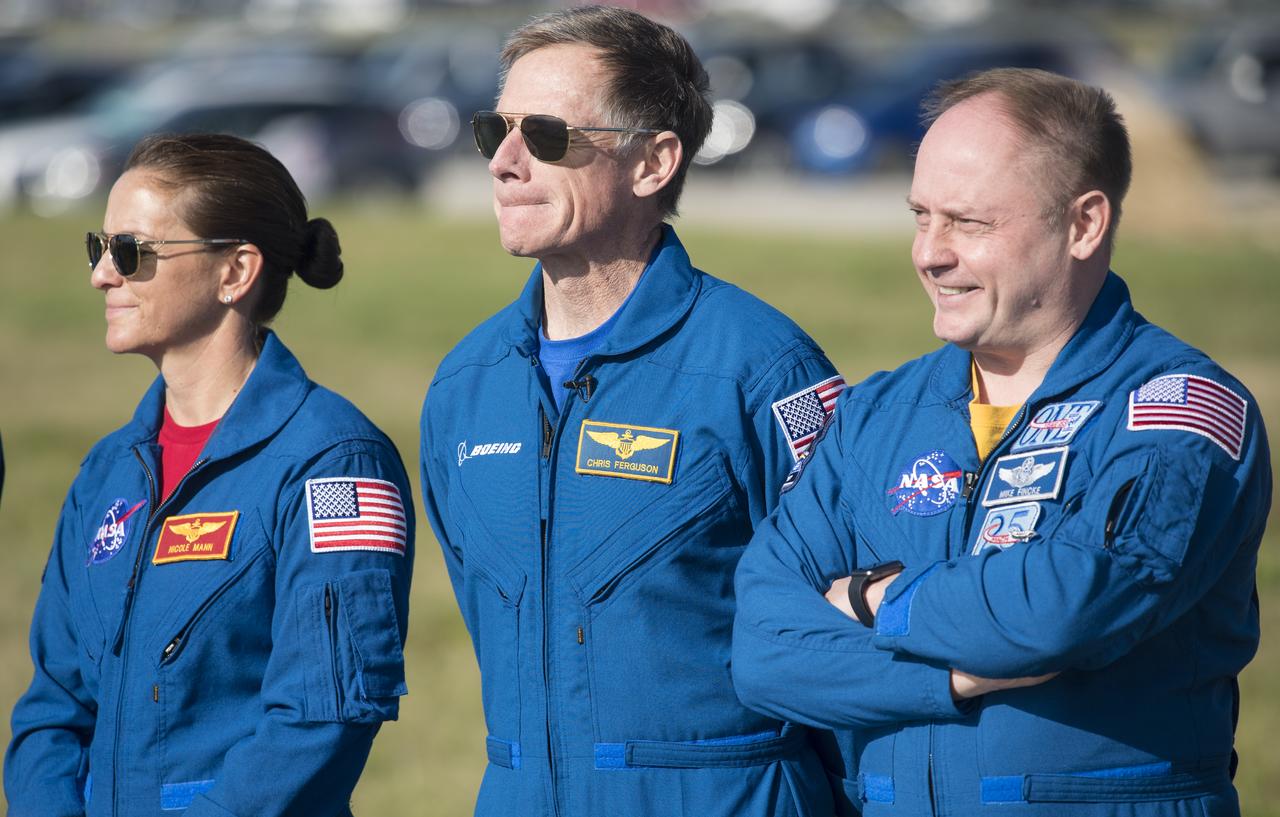
NASA astronauts Nicole Mann, left, and Michael Fincke, right, and Boeing astronaut Chris Ferguson, center, who are assigned to fly on Boeing’s Crew Flight Test, are seen during a press conference ahead of the Boeing Orbital Flight Test mission, Thursday, Dec. 19, 2019 at NASA’s Kennedy Space Center in Florida. The uncrewed Orbital Flight Test will be Starliner’s maiden mission to the International Space Station for NASA's Commercial Crew Program. The mission, currently targeted for a 6:36 a.m. EST launch on Dec. 20, will serve as an end-to-end test of the system's capabilities. Photo Credit: (NASA/Joel Kowsky)
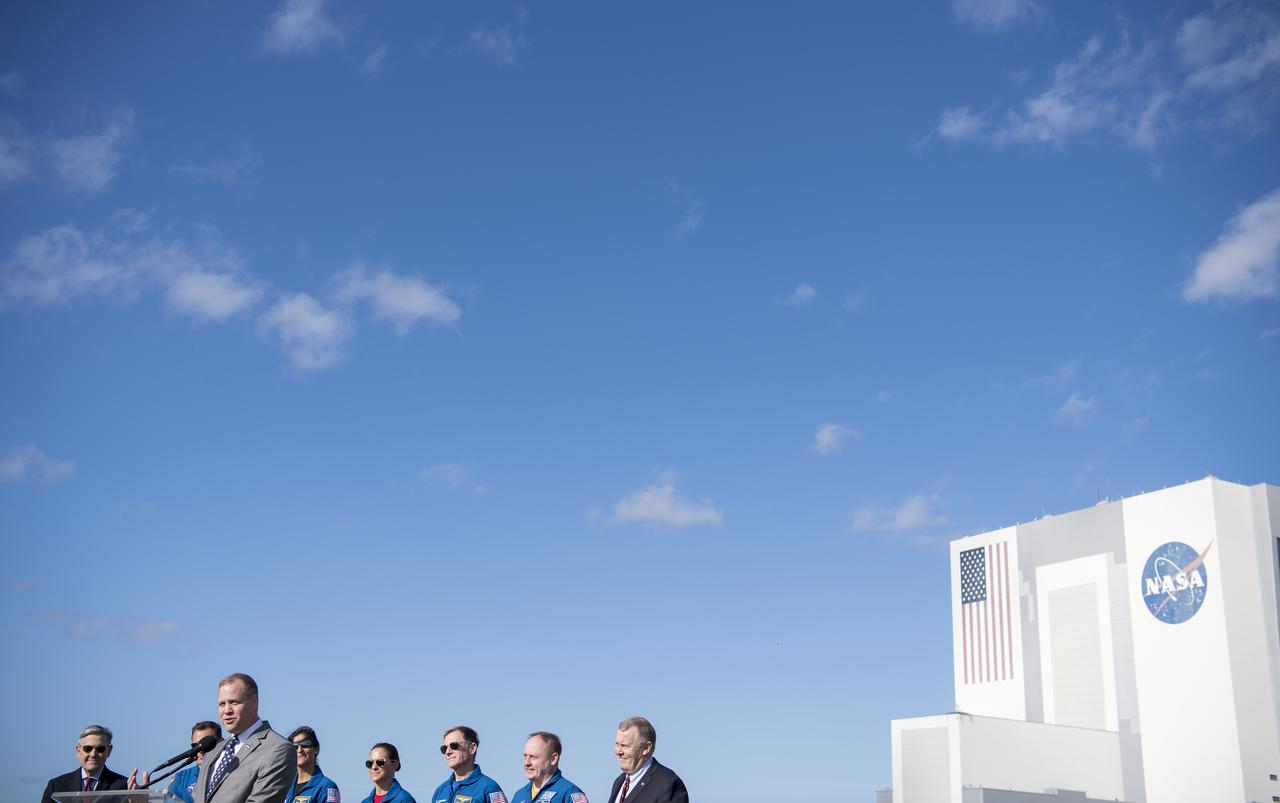
NASA Administrator Jim Bridenstine, NASA Deputy Administrator Jim Morhard, Kennedy Space Center Director Bob Cabana, and NASA Astronauts Josh Cassada and Suni Williams, who are assigned to Boeing’s first operation flight of Starliner, and NASA astronauts Nicole Mann, Michael Fincke, and Boeing astronaut Chris Ferguson, who are assigned to Boeing’s Crew Flight Test, are seen during a press conference ahead of the Boeing Orbital Flight Test mission, Thursday, Dec. 19, 2019 at NASA’s Kennedy Space Center in Florida. The uncrewed Orbital Flight Test will be Starliner’s maiden mission to the International Space Station for NASA's Commercial Crew Program. The mission, currently targeted for a 6:36 a.m. EST launch on Dec. 20, will serve as an end-to-end test of the system's capabilities. Photo Credit: (NASA/Joel Kowsky)
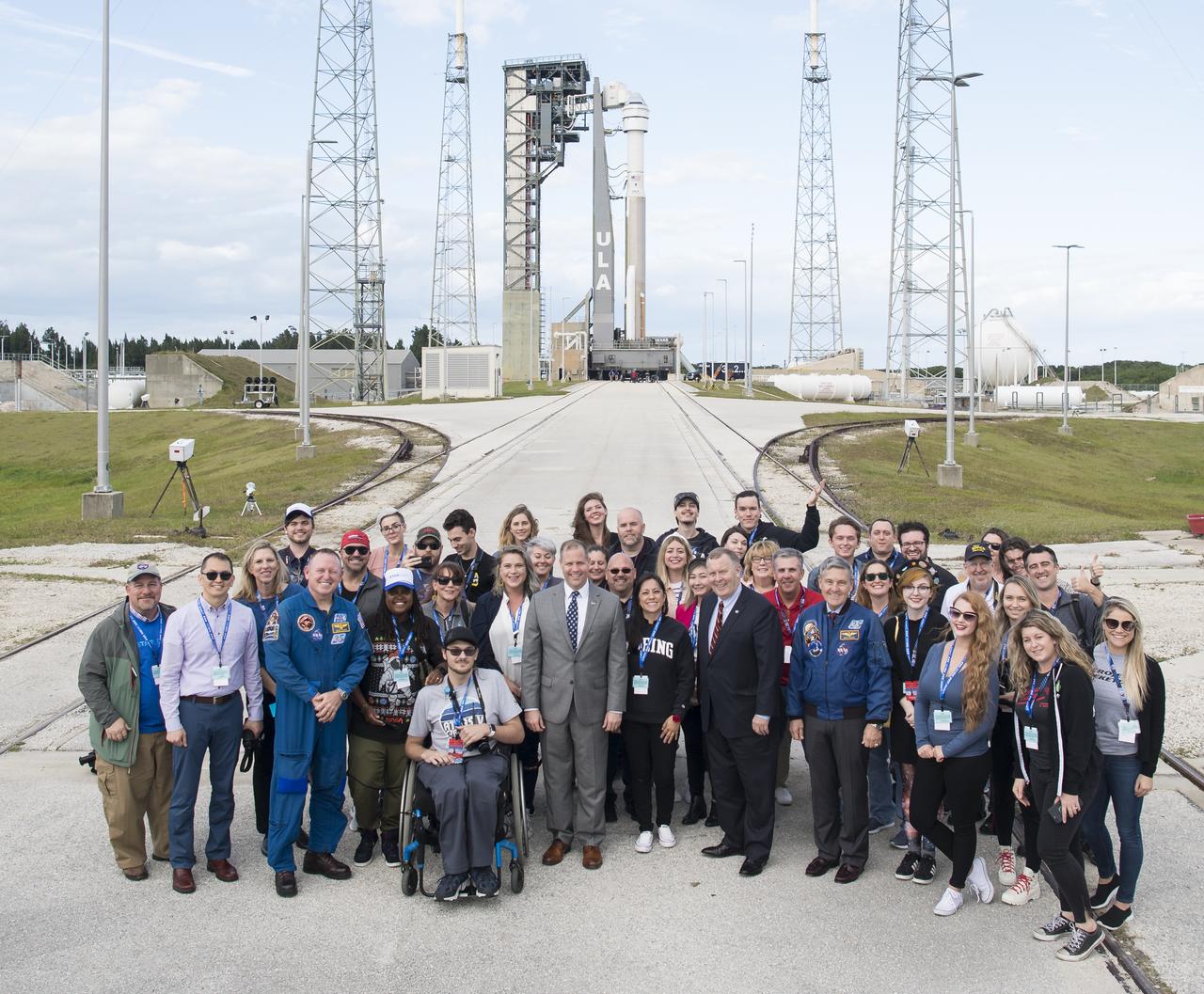
NASA Administrator Jim Bridenstine, NASA Deputy Administrator Jim Morhard, NASA astronaut Barry Wilmore, and Kennedy Space Center Director Bob Cabana, pose for a picture with NASA Social participants in front of a United Launch Alliance Atlas V rocket with Boeing’s CST-100 Starliner spacecraft onboard on the launch pad at Space Launch Complex 41 ahead of the Orbital Flight Test mission, Thursday, Dec. 19, 2019, at Cape Canaveral Air Force Station in Florida. The uncrewed Orbital Flight Test will be Starliner’s maiden mission to the International Space Station for NASA's Commercial Crew Program. The mission, currently targeted for a 6:36 a.m. EST launch on Dec. 20, will serve as an end-to-end test of the system's capabilities. Photo Credit: (NASA/Joel Kowsky)
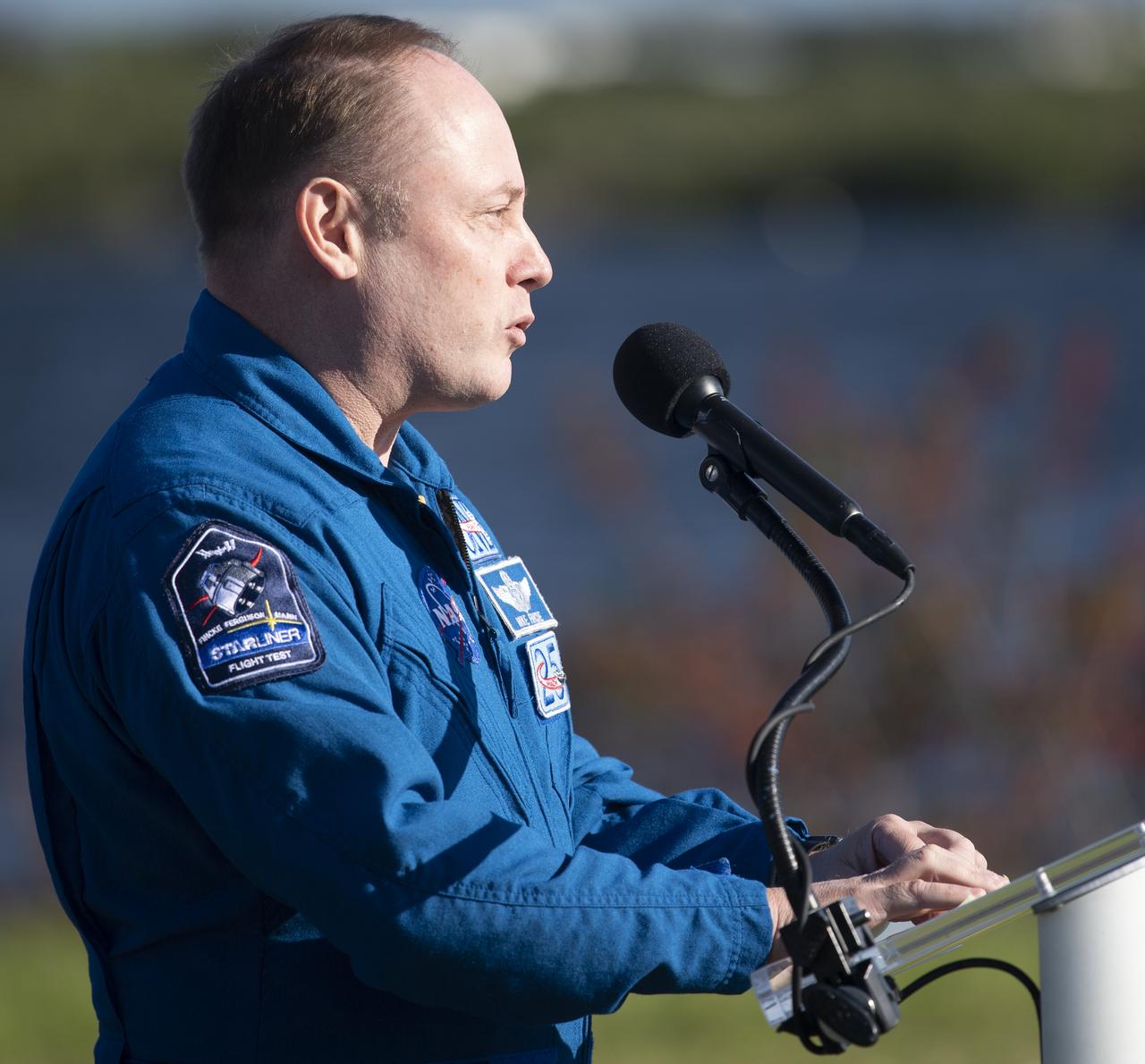
NASA astronaut Michael Fincke is seen during a press conference ahead of the Boeing Orbital Flight Test mission, Thursday, Dec. 19, 2019, at NASA’s Kennedy Space Center in Florida. Fincke, along with fellow NASA astronaut Nicole Mann and Boeing astronaut Chris Ferguson are assigned to Boeing’s Crew Flight Test. The uncrewed Orbital Flight Test will be Starliner’s maiden mission to the International Space Station for NASA's Commercial Crew Program. The mission, currently targeted for a 6:36 a.m. EST launch on Dec. 20, will serve as an end-to-end test of the system's capabilities. Photo Credit: (NASA/Joel Kowsky)
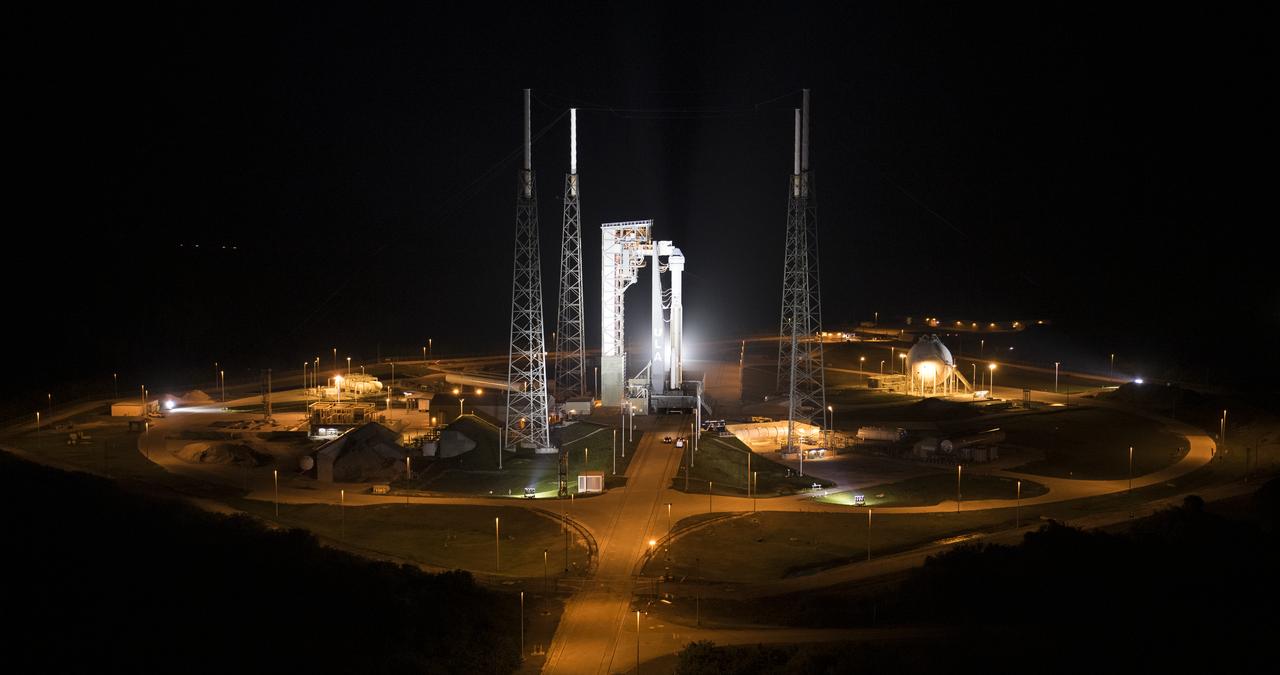
A United Launch Alliance Atlas V rocket with Boeing’s CST-100 Starliner spacecraft onboard is seen on the launch pad at Space Launch Complex 41 ahead of the Orbital Flight Test mission, Thursday, Dec. 19, 2019, at Cape Canaveral Air Force Station in Florida. The uncrewed Orbital Flight Test will be Starliner’s maiden mission to the International Space Station for NASA's Commercial Crew Program. The mission, currently targeted for a 6:36 a.m. EST launch on Dec. 20, will serve as an end-to-end test of the system's capabilities. Photo Credit: (NASA/Joel Kowsky)
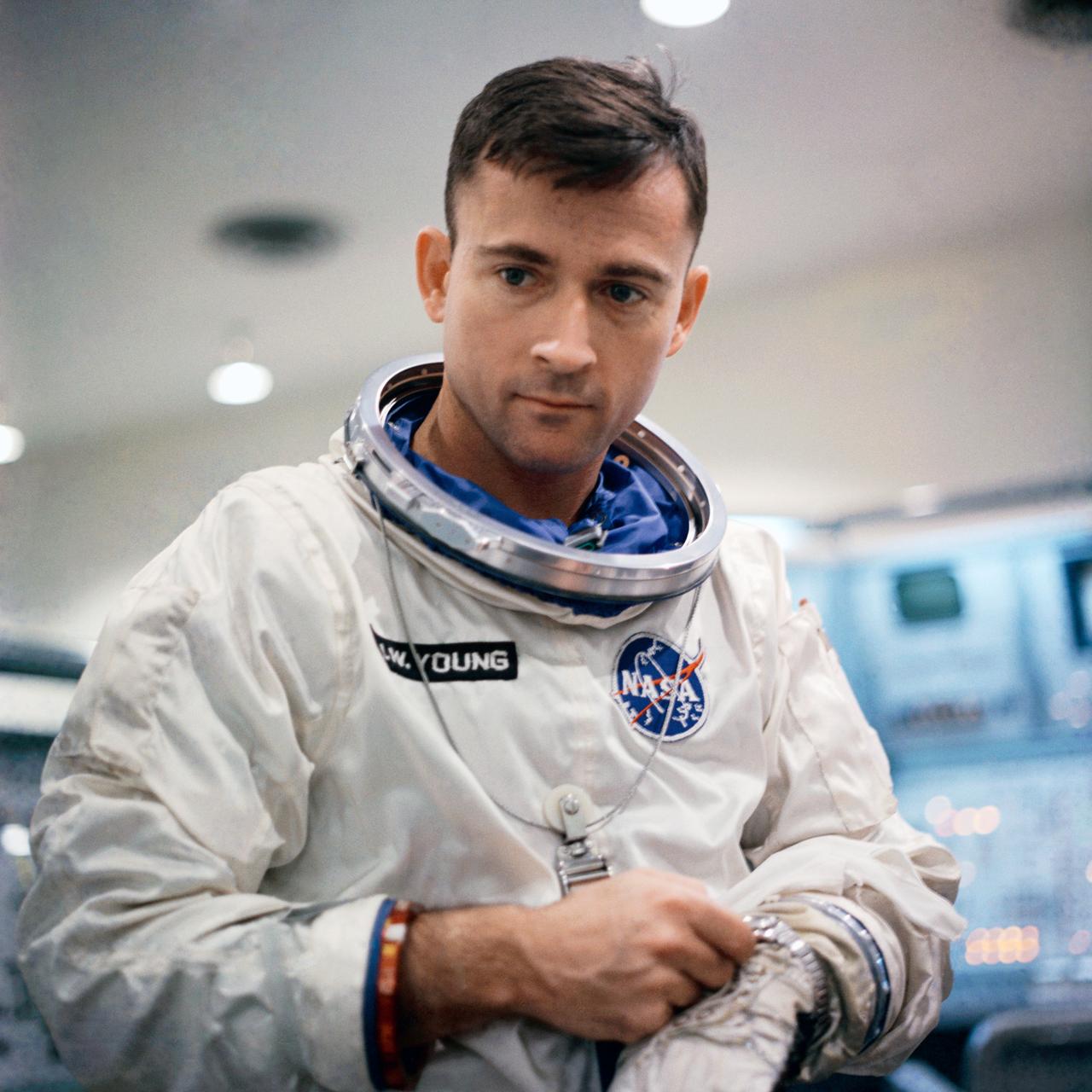
S65-22670 (8 March 1965) --- Astronaut John W. Young, the pilot of the Gemini-Titan 3 prime crew, is shown suited up for GT-3 prelaunch test exercises.
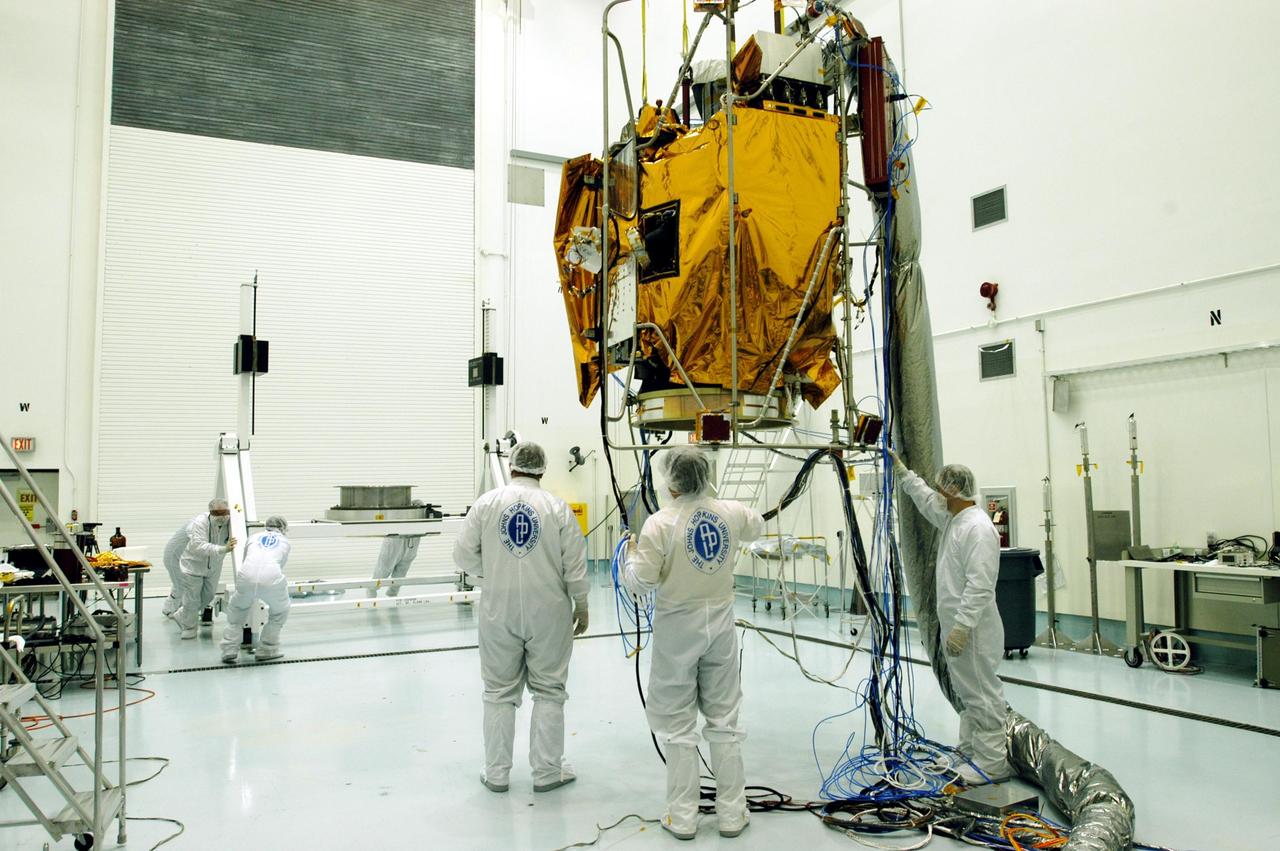
KENNEDY SPACE CENTER, FLA. -- At Astrotech Space Operations facilities near KSC, workers at left move a turnover fixture toward the Mercury Surface, Space Environment, Geochemistry and Ranging (MESSENGER) spacecraft. The turnover fixture will rotate the spacecraft for prelaunch testing. MESSENGER is undergoing prelaunch testing at the site. Launch is scheduled for May 11 from Pad 17-B, Cape Canaveral Air Force Station. The spacecraft will fly past Venus three times and Mercury twice before starting a year-long orbital study of Mercury in July 2009.
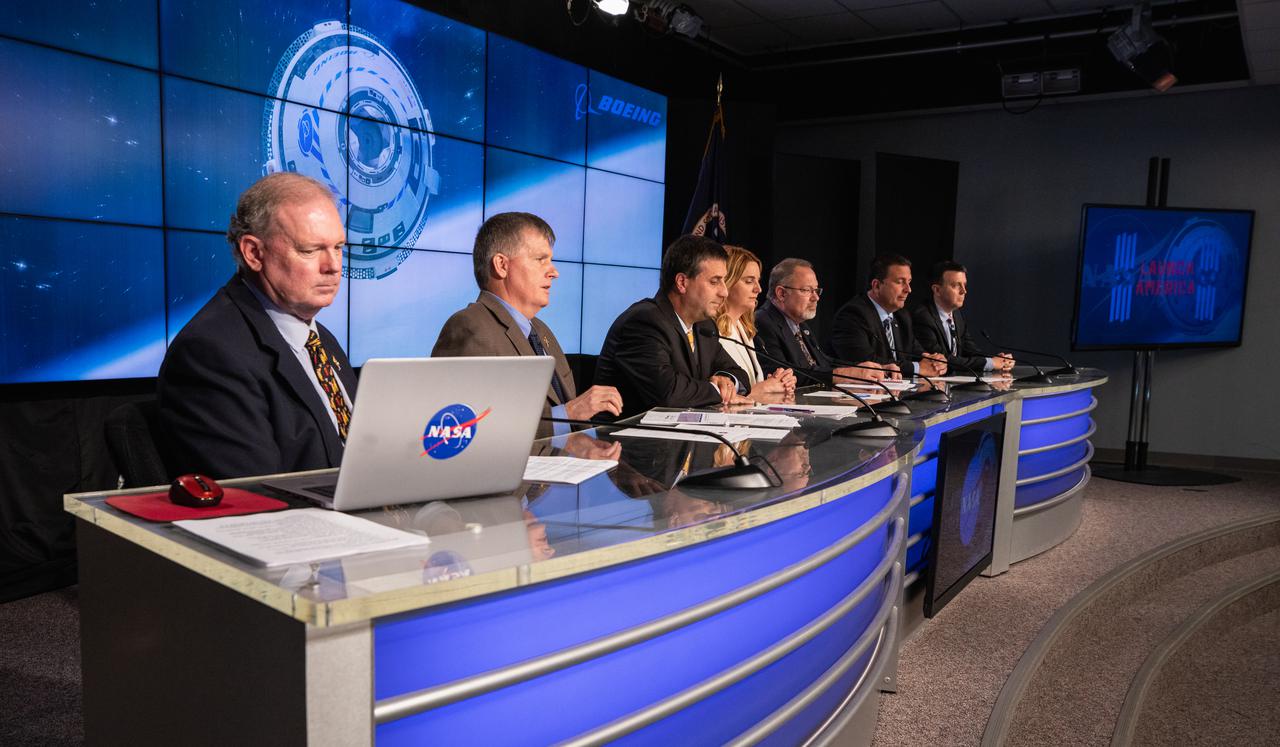
Officials from NASA, Boeing, United Launch Alliance (ULA) and the U.S. Space Force 45th Weather Squadron participate in a prelaunch briefing for Boeing’s Orbital Flight Test-2 (OFT-2) at the agency’s Kennedy Space Center in Florida, July 27, 2021. From left to right are Kyle Herring, NASA Communications; Steve Stich, manager, NASA’s Commercial Crew Program; Joel Montalbano, manager, NASA’s International Space Station Program; Jennifer Buchli, deputy chief scientist, NASA’s International Space Station Program; John Vollmer, vice president and program manager, Boeing Commercial Crew Program; Gary Wentz, vice president, Government and Commercial Programs, ULA; Will Ulrich, launch weather officer, U.S. Space Force, 45th Weather Squadron. Boeing’s CST-100 Starliner spacecraft will launch atop a ULA Atlas V rocket from Space Launch Complex-41 at Cape Canaveral Space Force Station on a mission to dock with the space station. The uncrewed OFT-2 will be the Starliner’s second flight for NASA’s Commercial Crew Program.
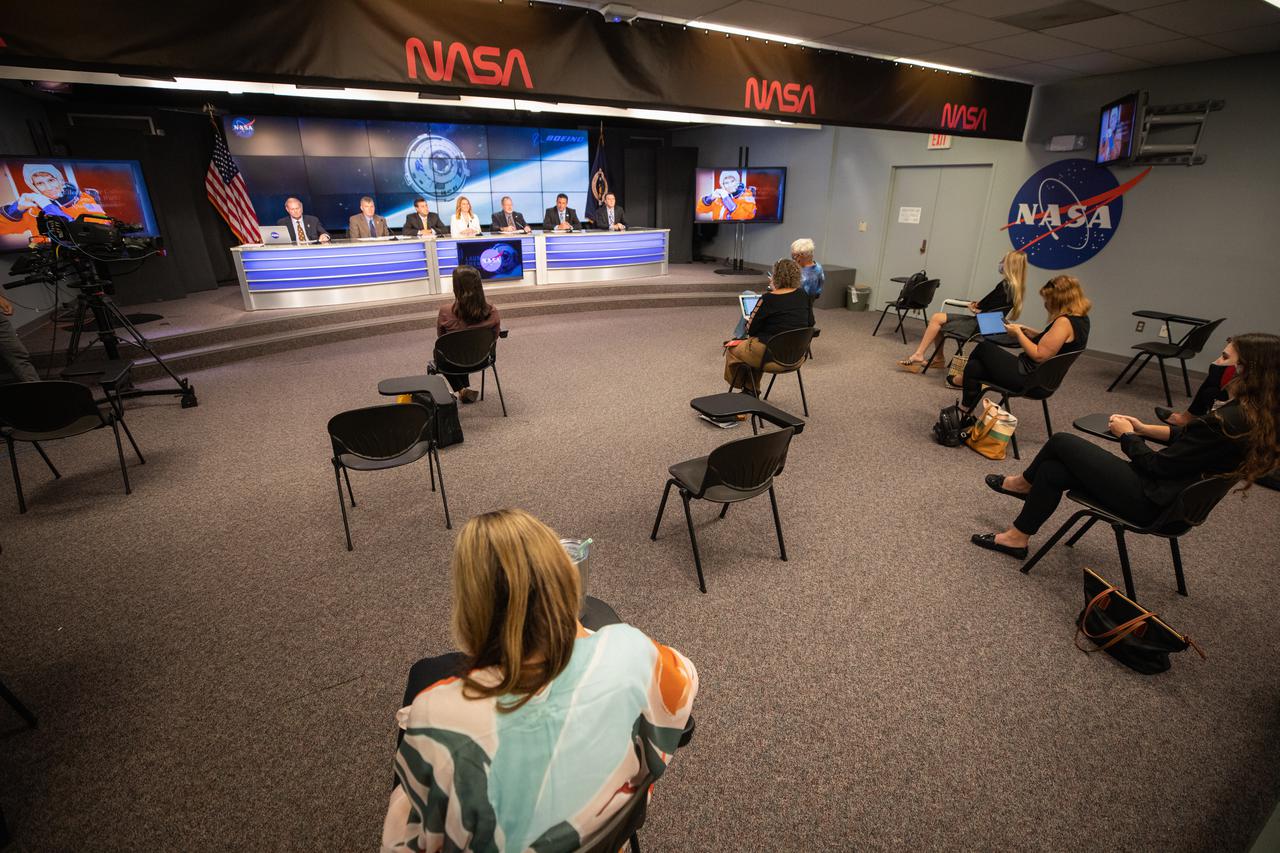
Members of the media gather in the Kennedy Space Center’s Press Site auditorium in Florida during a prelaunch news conference with NASA, Boeing, United Launch Alliance (ULA) and the U.S. Space Force 45th Weather Squadron officials, July 27, 2021, prior to the Friday, July 30, launch of NASA’s Boeing Orbital Flight Test-2 (OFT-2). . From left to right at the dais are Kyle Herring, NASA Communications; Steve Stich, manager, NASA’s Commercial Crew Program; Joel Montalbano, manager, NASA’s International Space Station Program; Jennifer Buchli, deputy chief scientist, NASA’s International Space Station Program; John Vollmer, vice president and program manager, Boeing Commercial Crew Program; Gary Wentz, vice president, Government and Commercial Programs, ULA; Will Ulrich, launch weather officer, U.S. Space Force, 45th Weather Squadron. Boeing’s CST-100 Starliner spacecraft will launch atop a ULA Atlas V rocket from Space Launch Complex-41 at Cape Canaveral Space Force Station on a mission to dock with the space station. The uncrewed OFT-2 will be the Starliner’s second flight for NASA’s Commercial Crew Program.
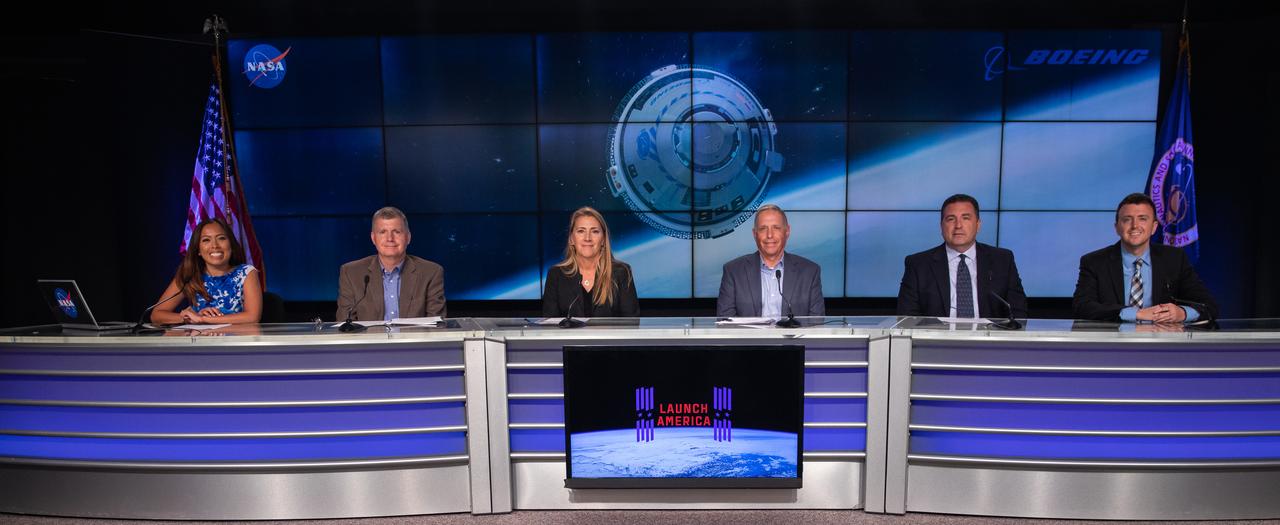
Officials from NASA, Boeing, United Launch Alliance (ULA) and the U.S. Space Force 45th Weather Squadron participate in a prelaunch briefing for NASA’s uncrewed Boeing Orbital Flight Test (OFT-2) at the agency’s Kennedy Space Center in Florida, May 17, 2022. From left to right at the dais are Megan Cruz, NASA Communications; Steve Stich, manager, NASA’s Commercial Crew Program; Dana Weigel, deputy manager, International Space Station Program; Mark Nappi, vice president and manager, Boeing Commercial Crew Program; Gary Wentz, vice president, Government and Commercial Programs, ULA; Will Ulrich, launch weather officer, U.S. Space Force, 45th Weather Squadron. Boeing’s CST-100 Starliner is targeted to launch at 6:54 p.m. EDT on Thursday, May 19, on a ULA Atlas V rocket from Space Launch Complex-41 at Cape Canaveral Space Force Station in Florida to rendezvous and dock with the space station.
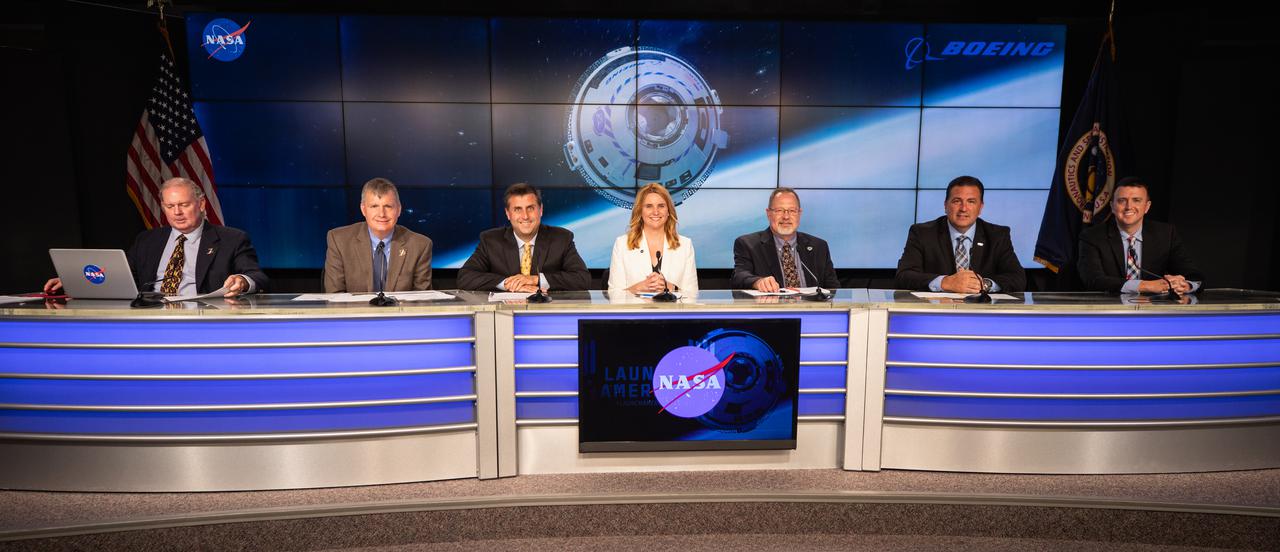
Officials from NASA, Boeing, United Launch Alliance (ULA) and the U.S. Space Force 45th Weather Squadron participate in a prelaunch briefing for Boeing’s Orbital Flight Test-2 (OFT-2) at the agency’s Kennedy Space Center in Florida, July 27, 2021. From left to right are Kyle Herring, NASA Communications; Steve Stich, manager, NASA’s Commercial Crew Program; Joel Montalbano, manager, NASA’s International Space Station Program; Jennifer Buchli, deputy chief scientist, NASA’s International Space Station Program; John Vollmer, vice president and program manager, Boeing Commercial Crew Program; Gary Wentz, vice president, Government and Commercial Programs, ULA; Will Ulrich, launch weather officer, U.S. Space Force, 45th Weather Squadron. Boeing’s CST-100 Starliner spacecraft will launch atop a ULA Atlas V rocket from Space Launch Complex-41 at Cape Canaveral Space Force Station on a mission to dock with the space station. The uncrewed OFT-2 will be the Starliner’s second flight for NASA’s Commercial Crew Program.
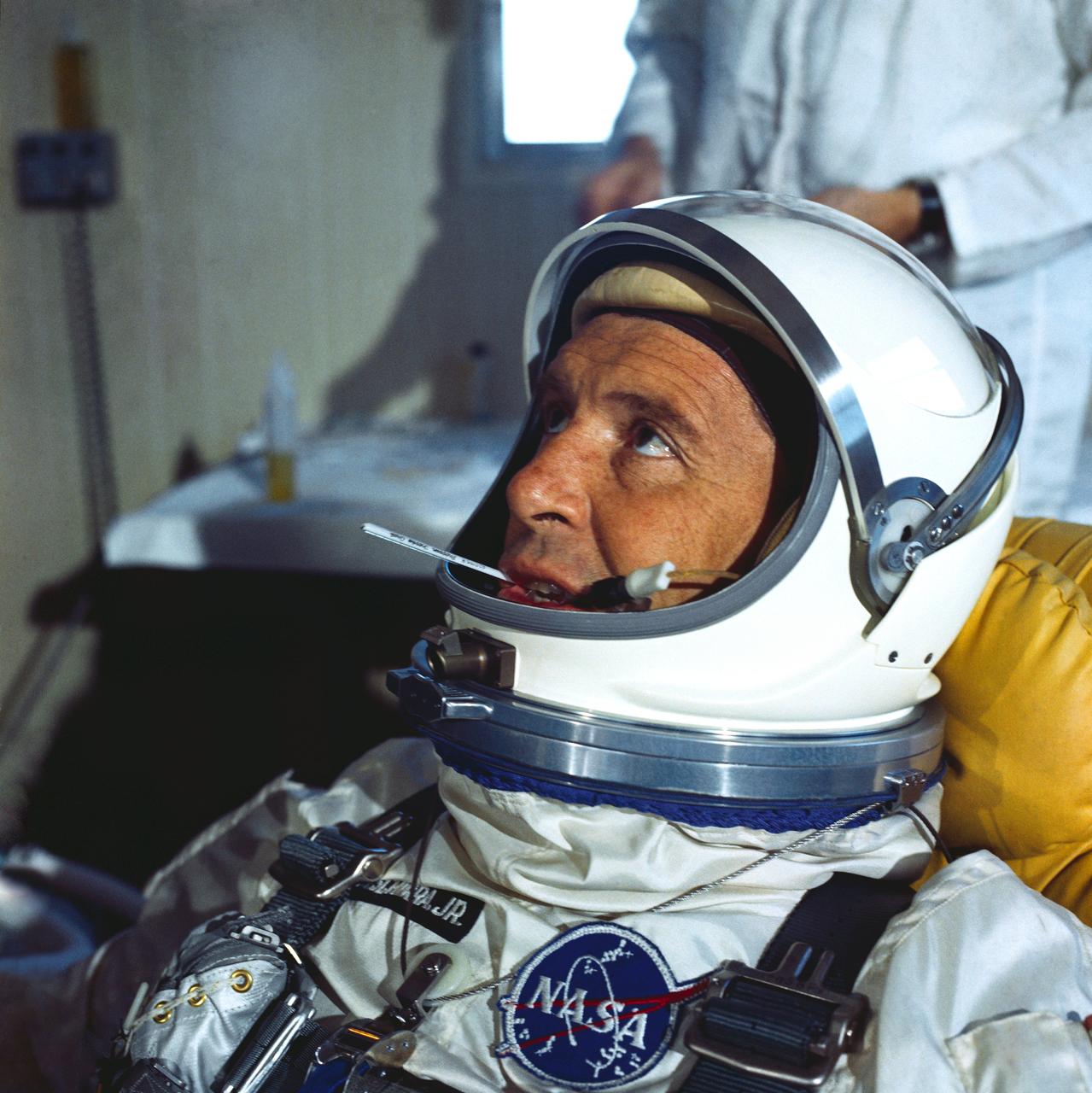
S65-22666 (8 March 1965) --- Astronaut Walter M. Schirra Jr., the command pilot of the GT-3 backup crew, is shown suited up for prelaunch tests. He is shown with his helmet visor up and a thermometer in his mouth.
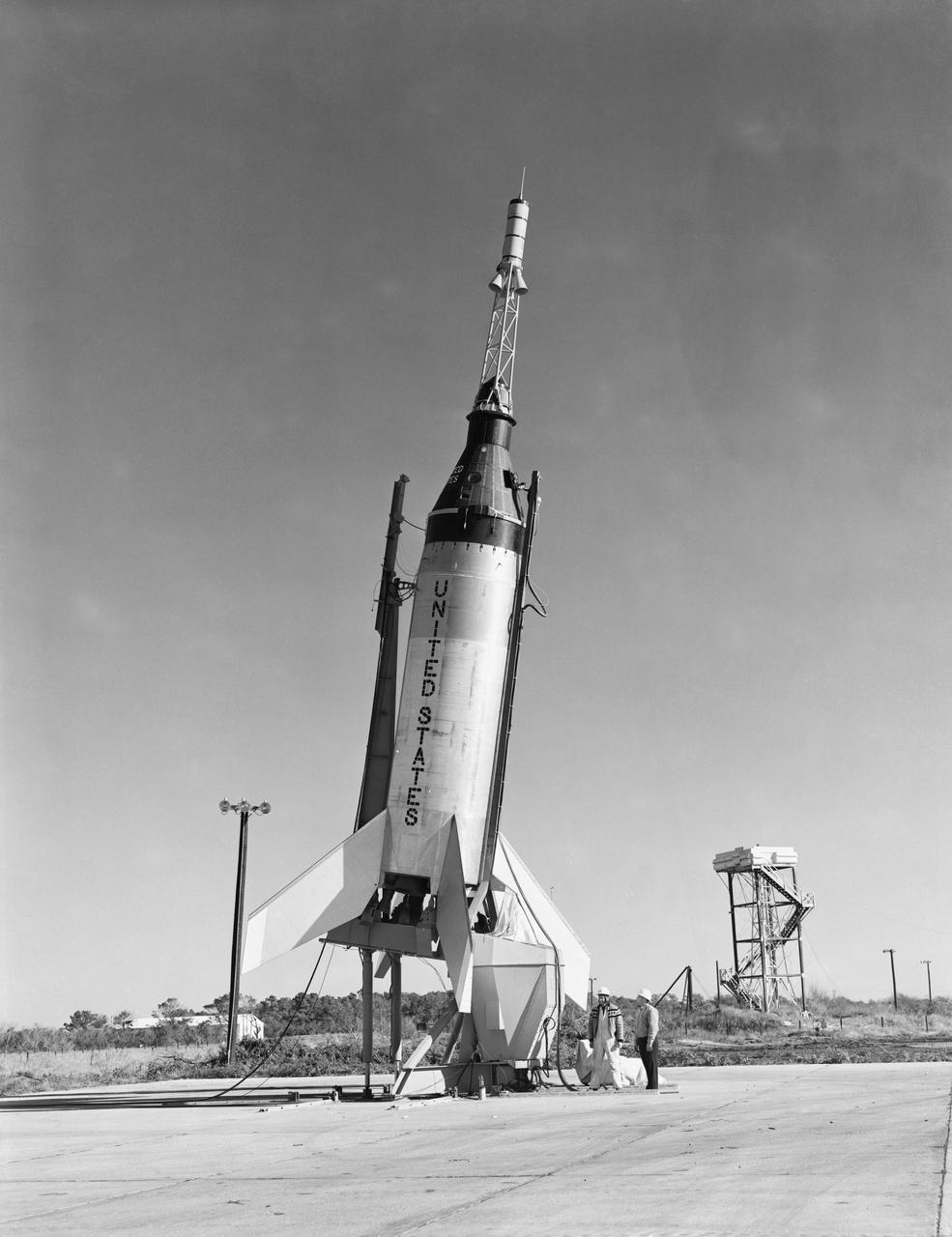
G60-02552 (8 Nov. 1960) --- Little Joe-5 prelaunch fittings shot before flight from Wallops Island. The suborbital test flight was to qualify the capsule system. The capsule did not separate from the booster. Photo credit: NASA
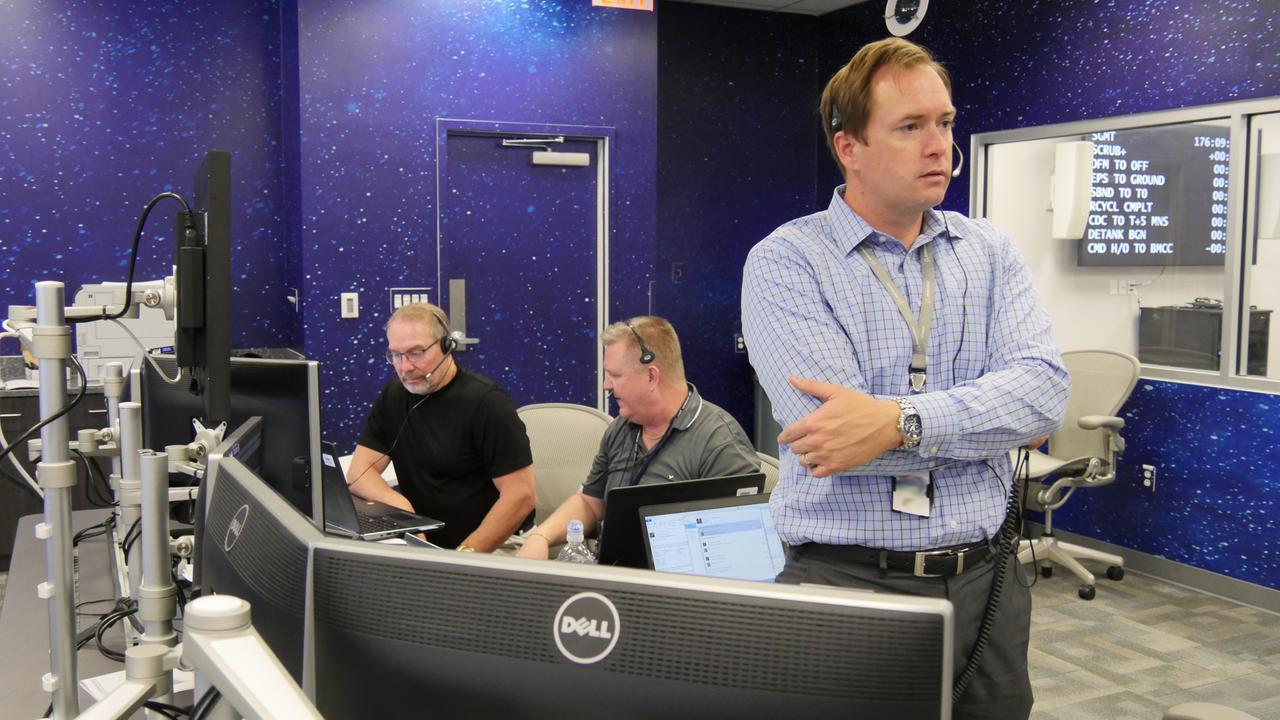
Inside the Boeing Mission Control Center at Kennedy Space Center, Fla., launch control teams for the CST-100 Starliner rehearse a fully integrated prelaunch simulation of the spacecraft’s upcoming Orbital Flight Test. Boeing Spacecraft Launch Conductor Louis Atchison speaks on console to the Mission Management Team as the countdown in the launch simulation progresses.
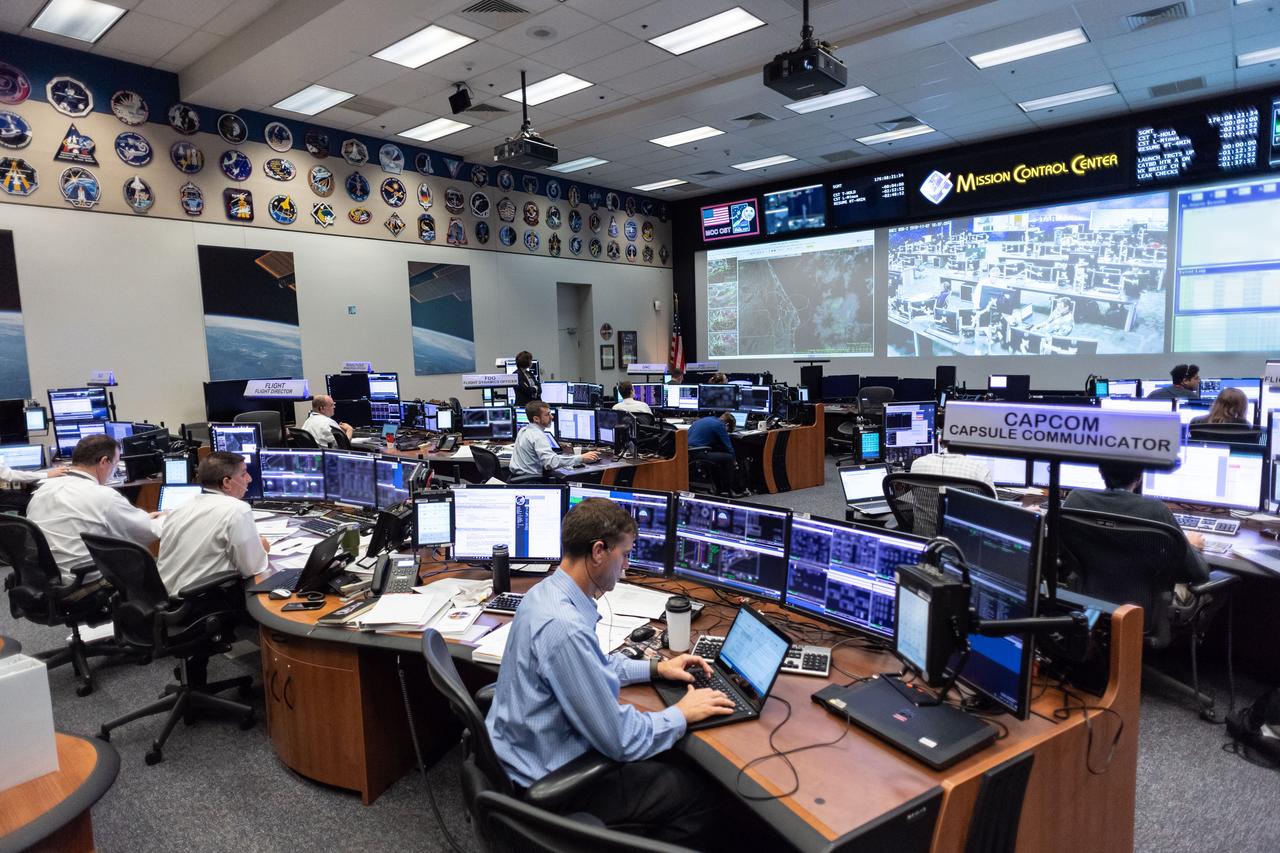
Boeing’s Flight Control Team participated in a rehearsal of prelaunch procedures for the company’s upcoming Orbital Flight Test in the White Flight Control Room in the Mission Control Center at Johnson Space Center in Houston. Boeing’s CST-100 Starliner will fly uncrewed to the International Space Station before NASA will certify the spacecraft to carry astronauts to station.

VANDENBERG AFB, CALIF. - In the spacecraft processing facility on North Vandenberg Air Force Base, the Gravity Probe B experiment sits on an assembly and test stand where it has been subject to various prelaunch testing. The Gravity Probe B will launch a payload of four gyroscopes into low-Earth polar orbit to test two extraordinary predictions of Albert Einstein’s general theory of relativity: the geodetic effect (how space and time are warped by the presence of the Earth) and frame dragging (how Earth’s rotation drags space and time around with it). Once in orbit, for 18 months each gyroscope’s spin axis will be monitored as it travels through local spacetime, observing and measuring these effects. The experiment was developed by Stanford University, Lockheed Martin and NASA’s Marshall Space Flight Center. The targeted launch date is Dec. 6, 2003.
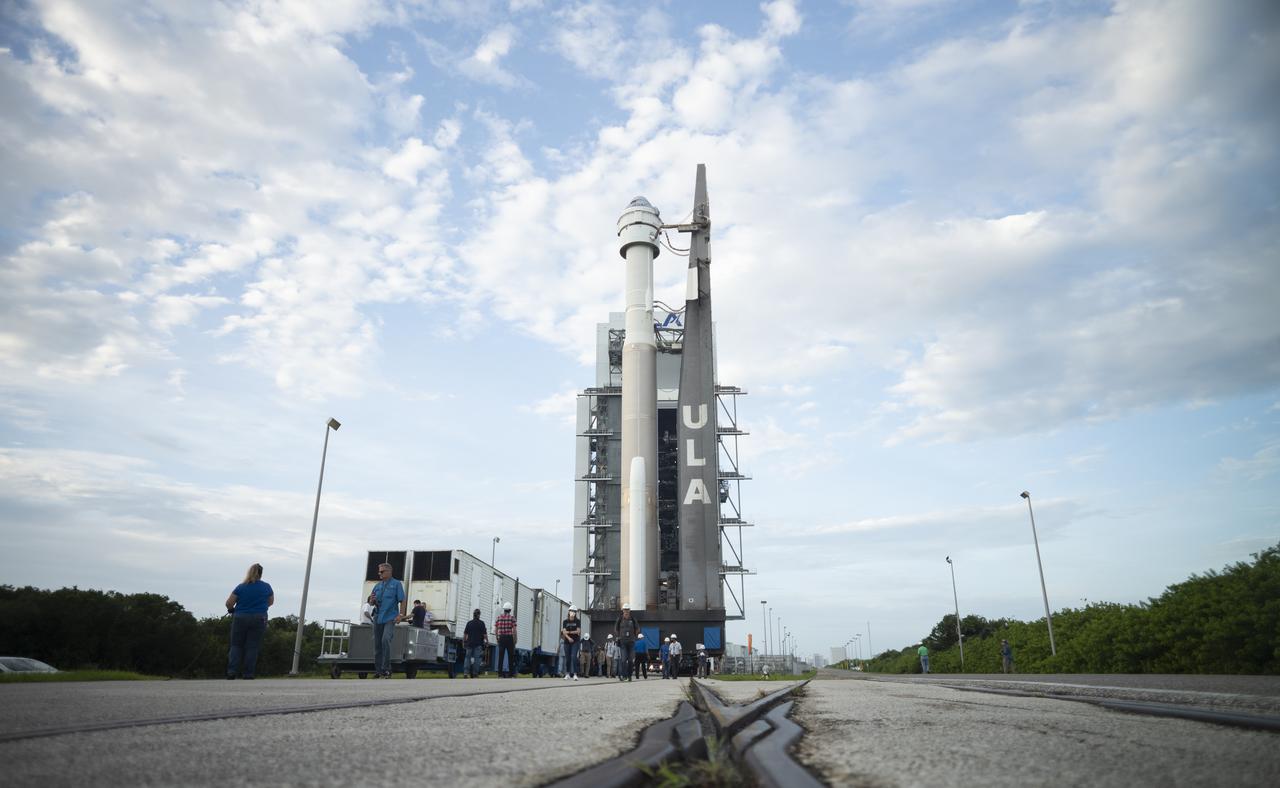
A United Launch Alliance Atlas V rocket with Boeing’s CST-100 Starliner spacecraft aboard is seen as it is rolled out of the Vertical Integration Facility to the launch pad at Space Launch Complex 41 ahead of the Orbital Flight Test-2 (OFT-2) mission, Monday, Aug. 2, 2021 at Cape Canaveral Space Force Station in Florida. Boeing’s Orbital Flight Test-2 will be Starliner’s second uncrewed flight test and will dock to the International Space Station as part of NASA's Commercial Crew Program. The mission, currently targeted for launch at 1:20 p.m. EDT Tuesday, Aug. 3, will serve as an end-to-end test of the system's capabilities. Photo Credit: (NASA/Joel Kowsky)
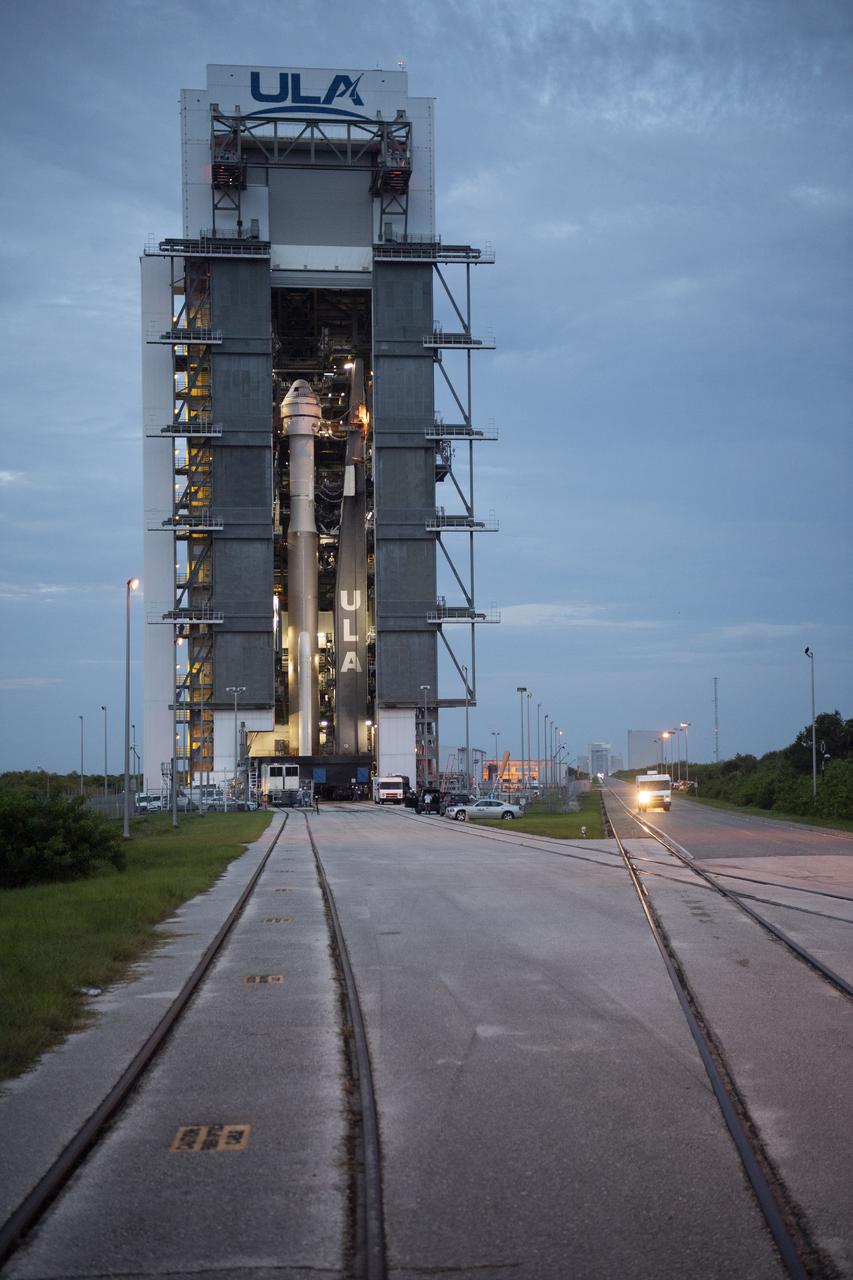
A United Launch Alliance Atlas V rocket with Boeing’s CST-100 Starliner spacecraft aboard is seen inside the Vertical Integration Facility prior to being rolled out to the launch pad at Space Launch Complex 41 ahead of the Orbital Flight Test-2 (OFT-2) mission, Monday, Aug. 2, 2021 at Cape Canaveral Space Force Station in Florida. Boeing’s Orbital Flight Test-2 will be Starliner’s second uncrewed flight test and will dock to the International Space Station as part of NASA's Commercial Crew Program. The mission, currently targeted for launch at 1:20 p.m. EDT Tuesday, Aug. 3, will serve as an end-to-end test of the system's capabilities. Photo Credit: (NASA/Joel Kowsky)
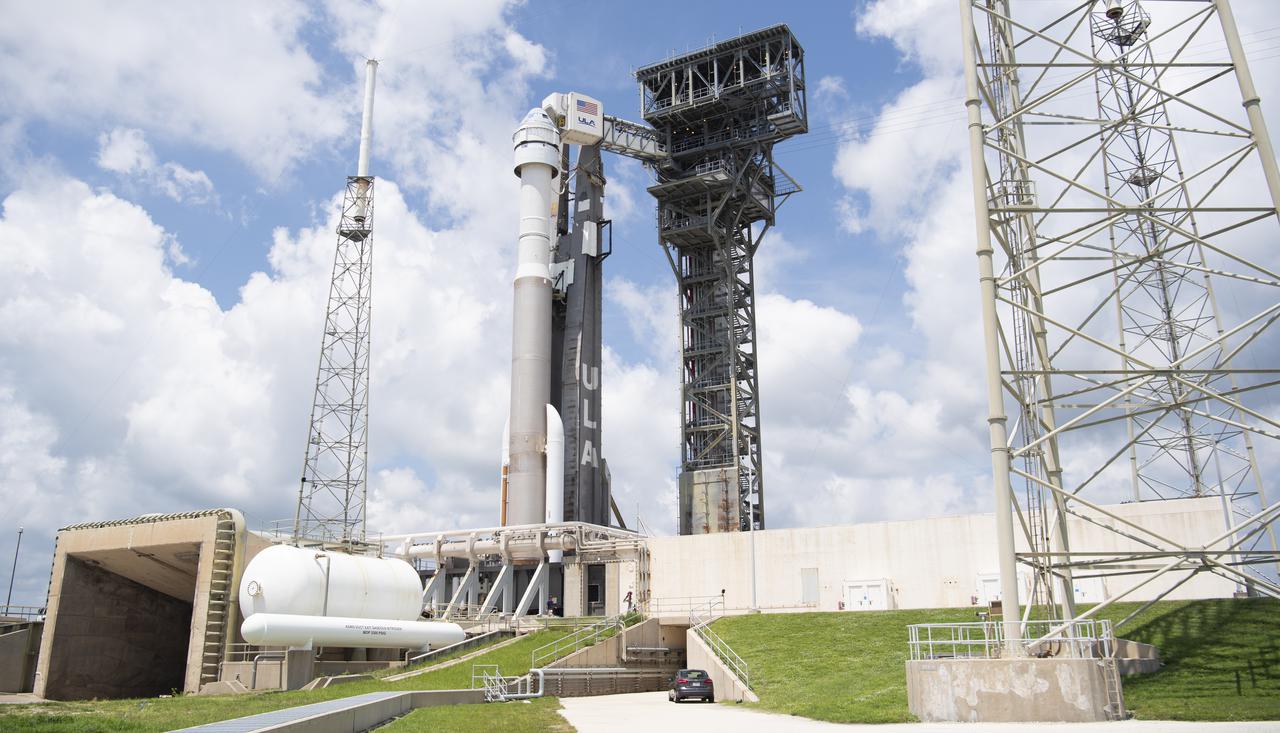
A United Launch Alliance Atlas V rocket with Boeing’s CST-100 Starliner spacecraft onboard is seen on the launch pad at Space Launch Complex 41 ahead of the Orbital Flight Test-2 (OFT-2) mission, Thursday, July 29, 2021 at Cape Canaveral Space Force Station in Florida. Boeing’s Orbital Flight Test-2 will be Starliner’s second uncrewed flight test and will dock to the International Space Station as part of NASA's Commercial Crew Program. The mission, currently targeted for launch at 2:53 p.m. EDT Friday, July 30, will serve as an end-to-end test of the system's capabilities. Photo Credit: (NASA/Joel Kowsky)

A United Launch Alliance Atlas V rocket with Boeing’s CST-100 Starliner spacecraft aboard is seen after being rolled out of the Vertical Integration Facility to the launch pad at Space Launch Complex 41 ahead of the Orbital Flight Test-2 (OFT-2) mission, Wednesday, May 18, 2022 at Cape Canaveral Space Force Station in Florida. Boeing’s Orbital Flight Test-2 will be Starliner’s second uncrewed flight test and will dock to the International Space Station as part of NASA's Commercial Crew Program. The mission, currently targeted for launch at 6:54 p.m. ET on May 19, will serve as an end-to-end test of the system's capabilities. Photo Credit: (NASA/Joel Kowsky)
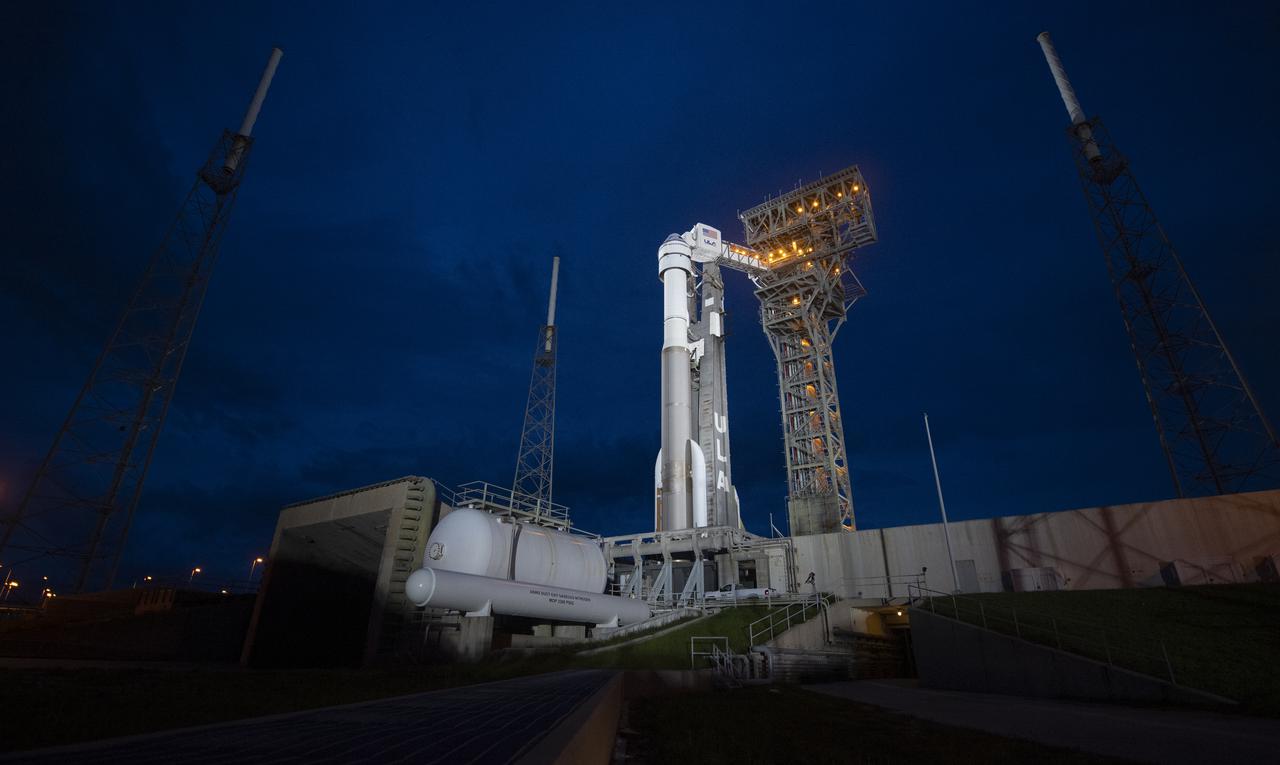
A United Launch Alliance Atlas V rocket with Boeing’s CST-100 Starliner spacecraft aboard is seen illuminated by spotlights on the launch pad at Space Launch Complex 41 ahead of the Orbital Flight Test-2 mission, Monday, Aug. 2, 2021 at Cape Canaveral Space Force Station in Florida. Boeing’s Orbital Flight Test-2 will be Starliner’s second uncrewed flight test and will dock to the International Space Station as part of NASA's Commercial Crew Program. The mission, currently targeted for launch on 1:20 p.m. EDT Tuesday, Aug. 3, will serve as an end-to-end test of the system's capabilities. Photo Credit: (NASA/Joel Kowsky)
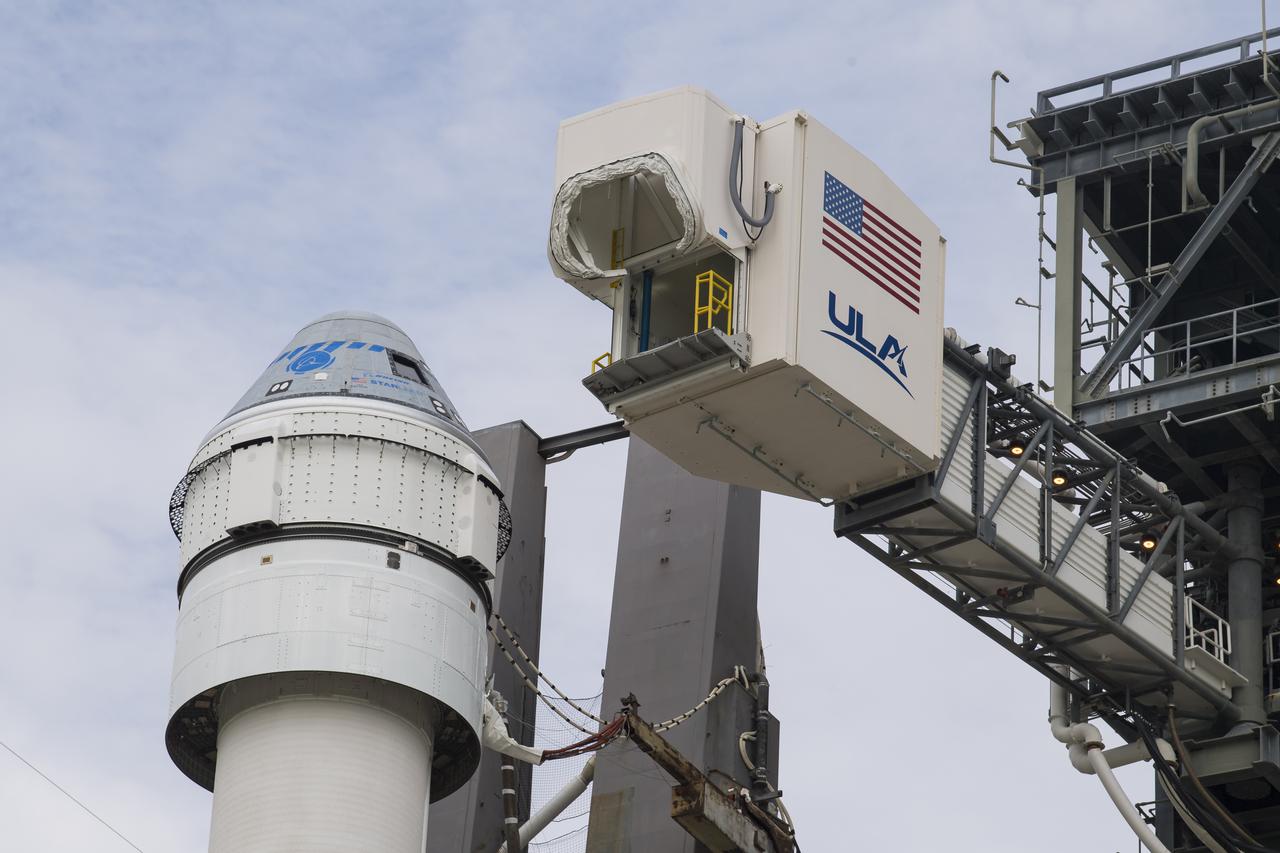
The crew access arm is seen as it swings into position for Boeing’s CST-100 Starliner spacecraft atop a United Launch Alliance Atlas V rocket at the launch pad at Space Launch Complex 41 ahead of the Orbital Flight Test-2 (OFT-2) mission, Monday, Aug. 2, 2021 at Cape Canaveral Space Force Station in Florida. Boeing’s Orbital Flight Test-2 will be Starliner’s second uncrewed flight test and will dock to the International Space Station as part of NASA's Commercial Crew Program. The mission, currently targeted for launch at 1:20 p.m. EDT Tuesday, Aug. 3, will serve as an end-to-end test of the system's capabilities. Photo Credit: (NASA/Aubrey Gemignani)
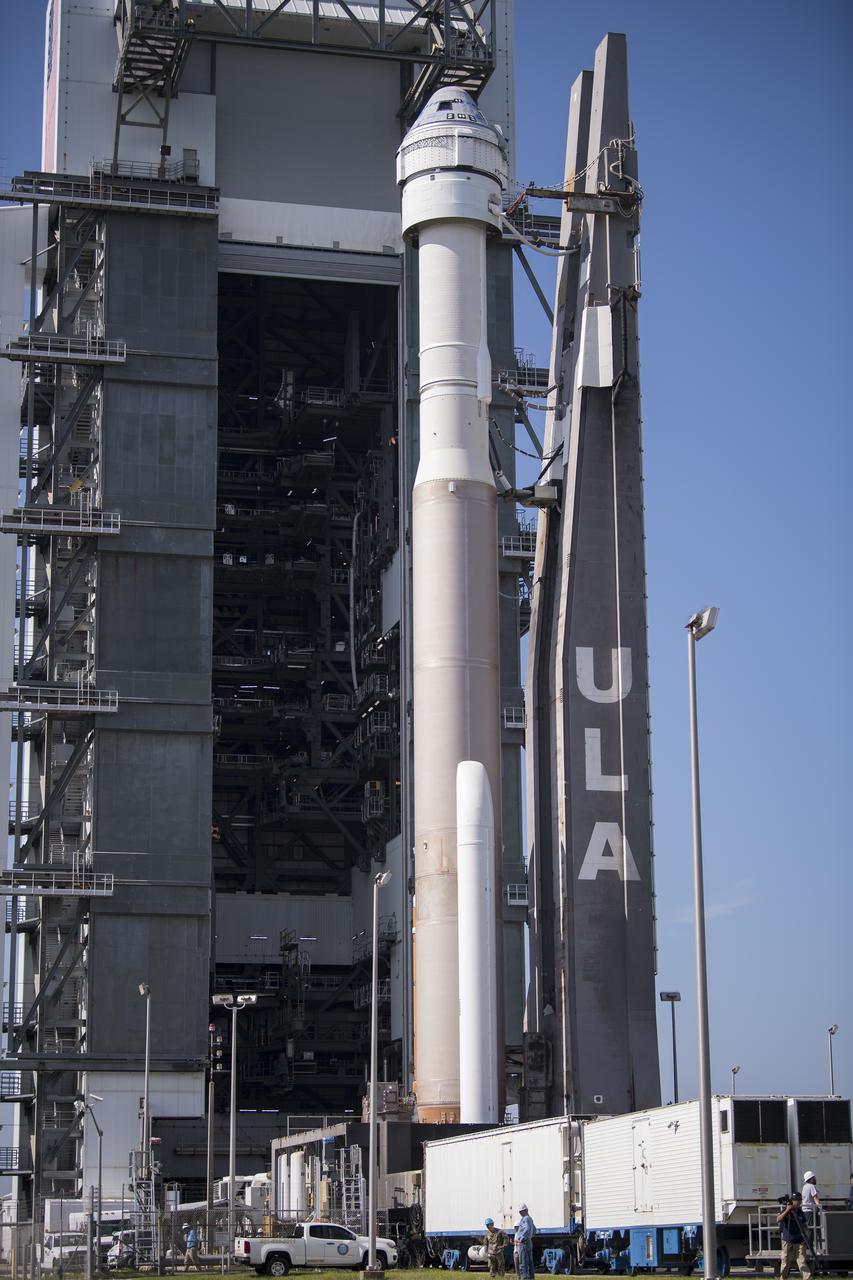
A United Launch Alliance Atlas V rocket with Boeing’s CST-100 Starliner spacecraft onboard is seen as it is rolled out of the Vertical Integration Facility to the launch pad at Space Launch Complex 41 ahead of the Orbital Flight Test-2 (OFT-2) mission, Thursday, July 29, 2021 at Cape Canaveral Space Force Station in Florida. Boeing’s Orbital Flight Test-2 will be Starliner’s second uncrewed flight test and will dock to the International Space Station as part of NASA's Commercial Crew Program. Photo Credit: (NASA/Aubrey Gemignani)
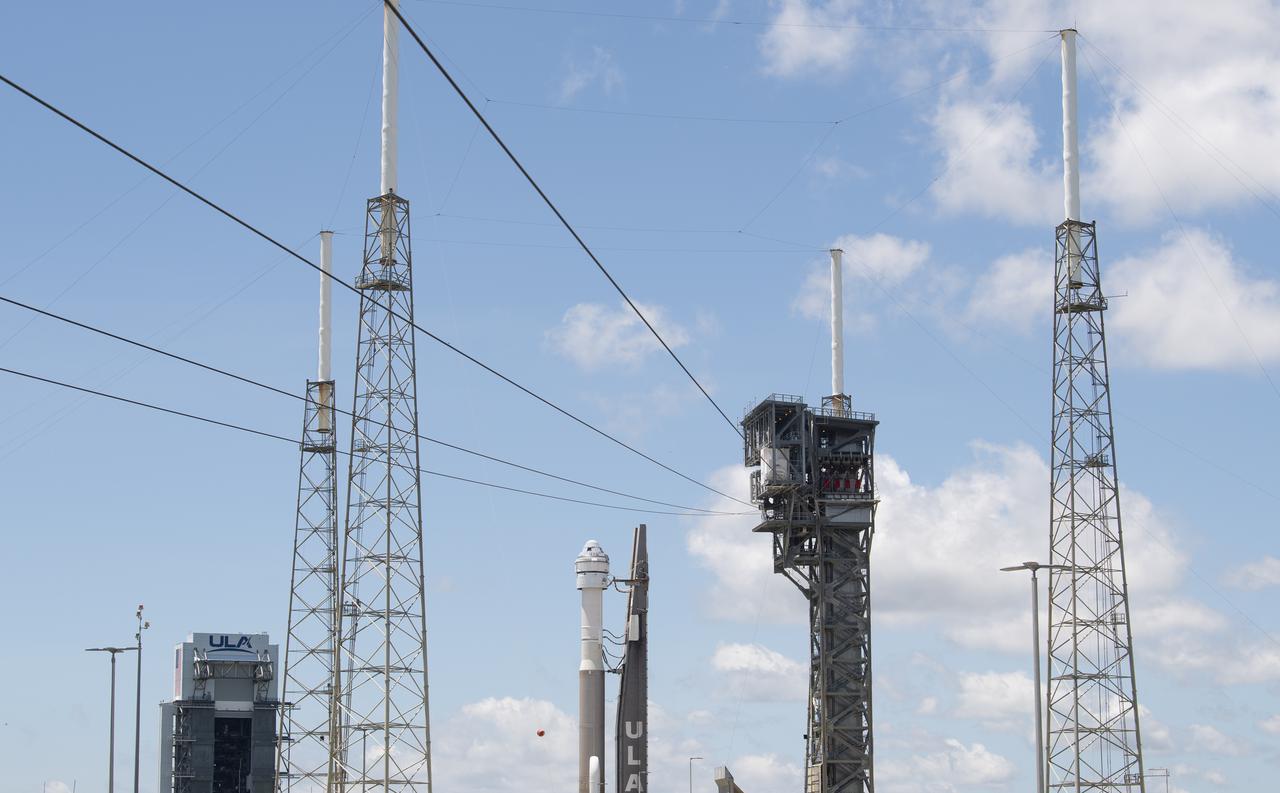
A United Launch Alliance Atlas V rocket with Boeing’s CST-100 Starliner spacecraft aboard is seen as it is rolled back to the Vertical Integration Facility from the launch pad at Space Launch Complex 41 to avoid inclement weather, Friday, July 30, 2021 at Cape Canaveral Space Force Station in Florida. Boeing’s Orbital Flight Test-2 will be Starliner’s second uncrewed flight test and will dock to the International Space Station as part of NASA's Commercial Crew Program. The earliest available launch opportunity is Tuesday, Aug. 3 at 1:20pm ET. Photo Credit: (NASA/Joel Kowsky)
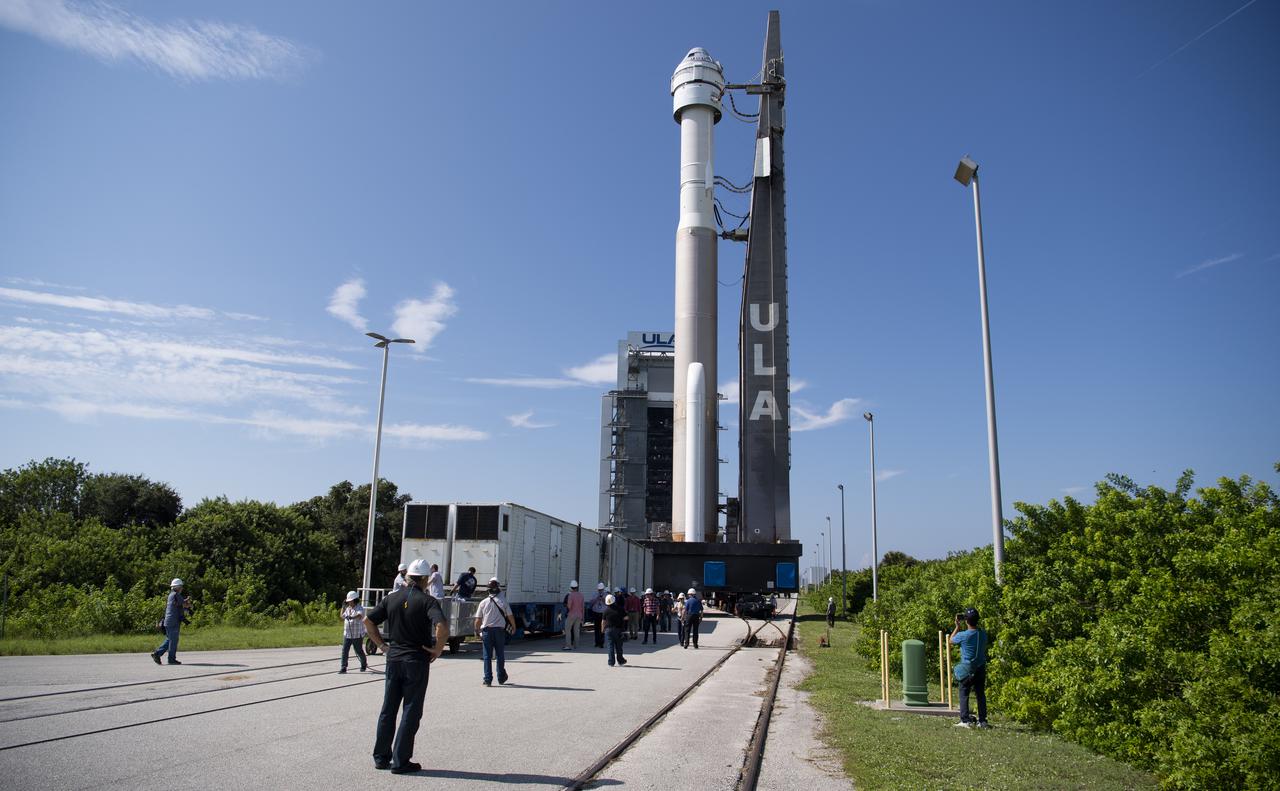
A United Launch Alliance Atlas V rocket with Boeing’s CST-100 Starliner spacecraft onboard is seen as it is rolled out of the Vertical Integration Facility to the launch pad at Space Launch Complex 41 ahead of the Orbital Flight Test-2 (OFT-2) mission, Thursday, July 29, 2021 at Cape Canaveral Space Force Station in Florida. Boeing’s Orbital Flight Test-2 will be Starliner’s second uncrewed flight test and will dock to the International Space Station as part of NASA's Commercial Crew Program. The mission, currently targeted for launch at 2:53 p.m. EDT Friday, July 30, will serve as an end-to-end test of the system's capabilities. Photo Credit: (NASA/Joel Kowsky)
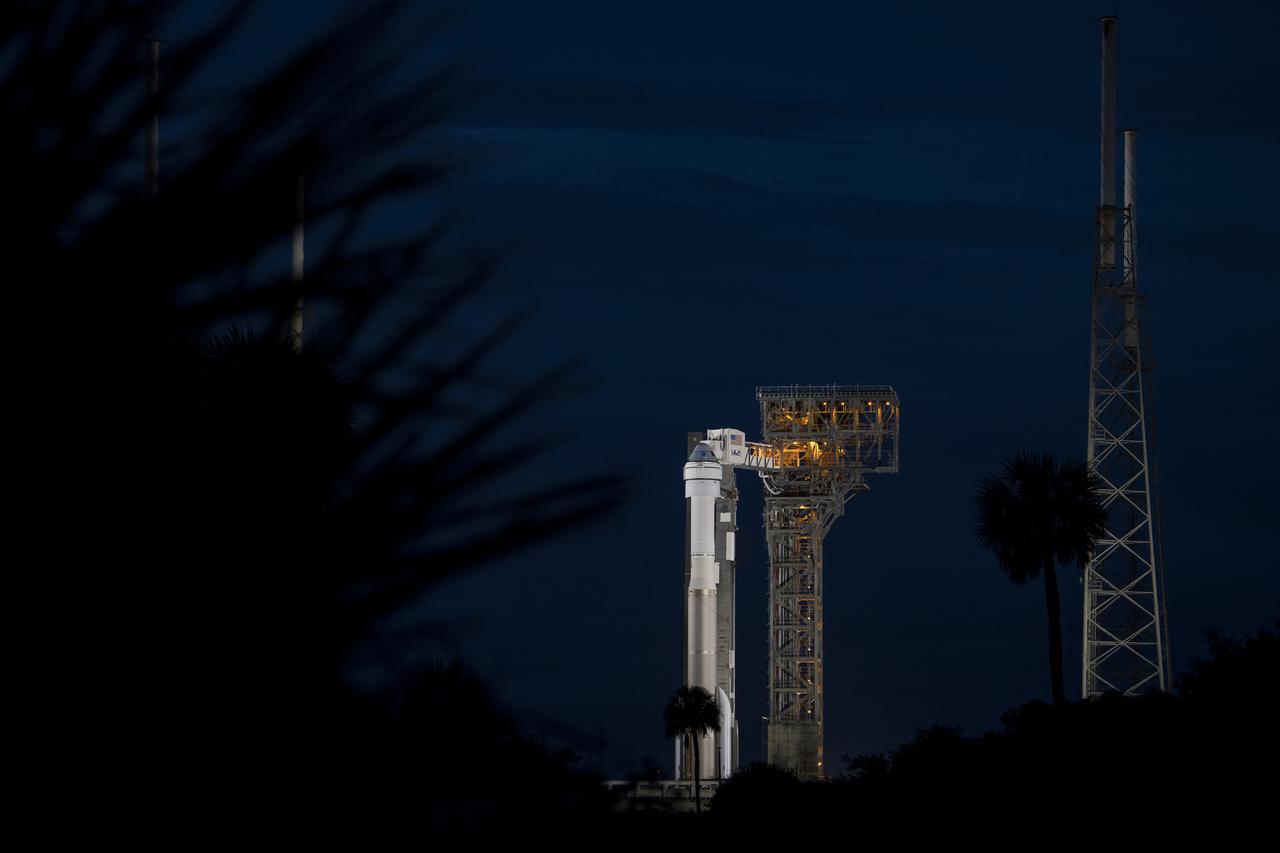
A United Launch Alliance Atlas V rocket with Boeing’s CST-100 Starliner spacecraft aboard is seen on the launch pad at Space Launch Complex 41 ahead of the Orbital Flight Test-2 mission, Monday, Aug. 2, 2021 at Cape Canaveral Space Force Station in Florida. Boeing’s Orbital Flight Test-2 will be Starliner’s second uncrewed flight test and will dock to the International Space Station as part of NASA's Commercial Crew Program. The mission, currently targeted for launch at 1:20 p.m. EDT Tuesday, Aug. 3, will serve as an end-to-end test of the system's capabilities. Photo Credit: (NASA/Aubrey Gemignani)
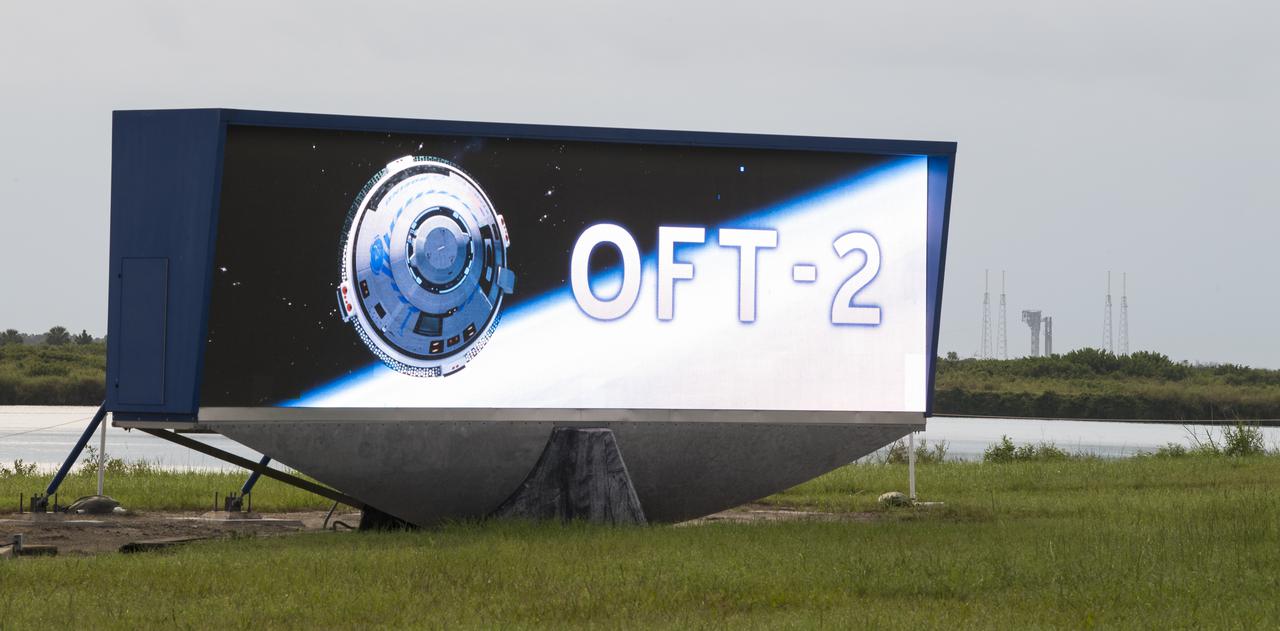
A United Launch Alliance Atlas V rocket with Boeing’s CST-100 Starliner spacecraft aboard is seen on the launch pad at Space Launch Complex 41 ahead of the Orbital Flight Test-2 mission, Tuesday, Aug. 3, 2021 at Cape Canaveral Space Force Station in Florida. Boeing’s Orbital Flight Test-2 will be Starliner’s second uncrewed flight test and will dock to the International Space Station as part of NASA's Commercial Crew Program. The mission, currently targeted for launch at 1:20 p.m. EDT, will serve as an end-to-end test of the system's capabilities. Photo Credit: (NASA/Aubrey Gemignani)
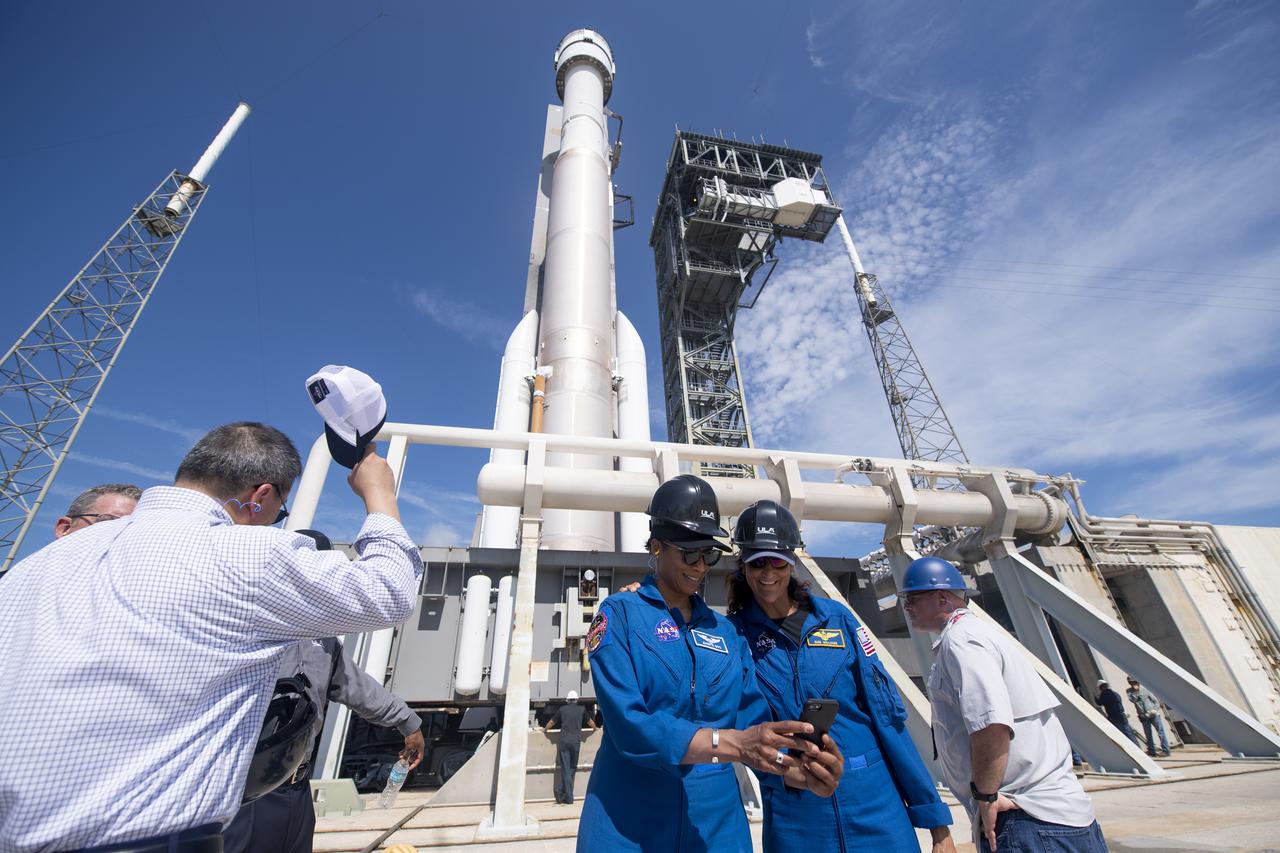
NASA astronauts Jeanette Epps, left, and Suni Williams, right, take a selfie as a United Launch Alliance Atlas V rocket with Boeing’s CST-100 Starliner spacecraft onboard is seen as it is rolled out of the Vertical Integration Facility to the launch pad at Space Launch Complex 41 ahead of the Orbital Flight Test-2 (OFT-2) mission, Thursday, July 29, 2021 at Cape Canaveral Space Force Station in Florida. Boeing’s Orbital Flight Test-2 will be Starliner’s second uncrewed flight test and will dock to the International Space Station as part of NASA's Commercial Crew Program. The mission, currently targeted for launch at 2:53 p.m. EDT Friday, July 30, will serve as an end-to-end test of the system's capabilities. Epps and Williams are assigned to fly on Starliner’s first operation mission. Photo Credit: (NASA/Joel Kowsky)
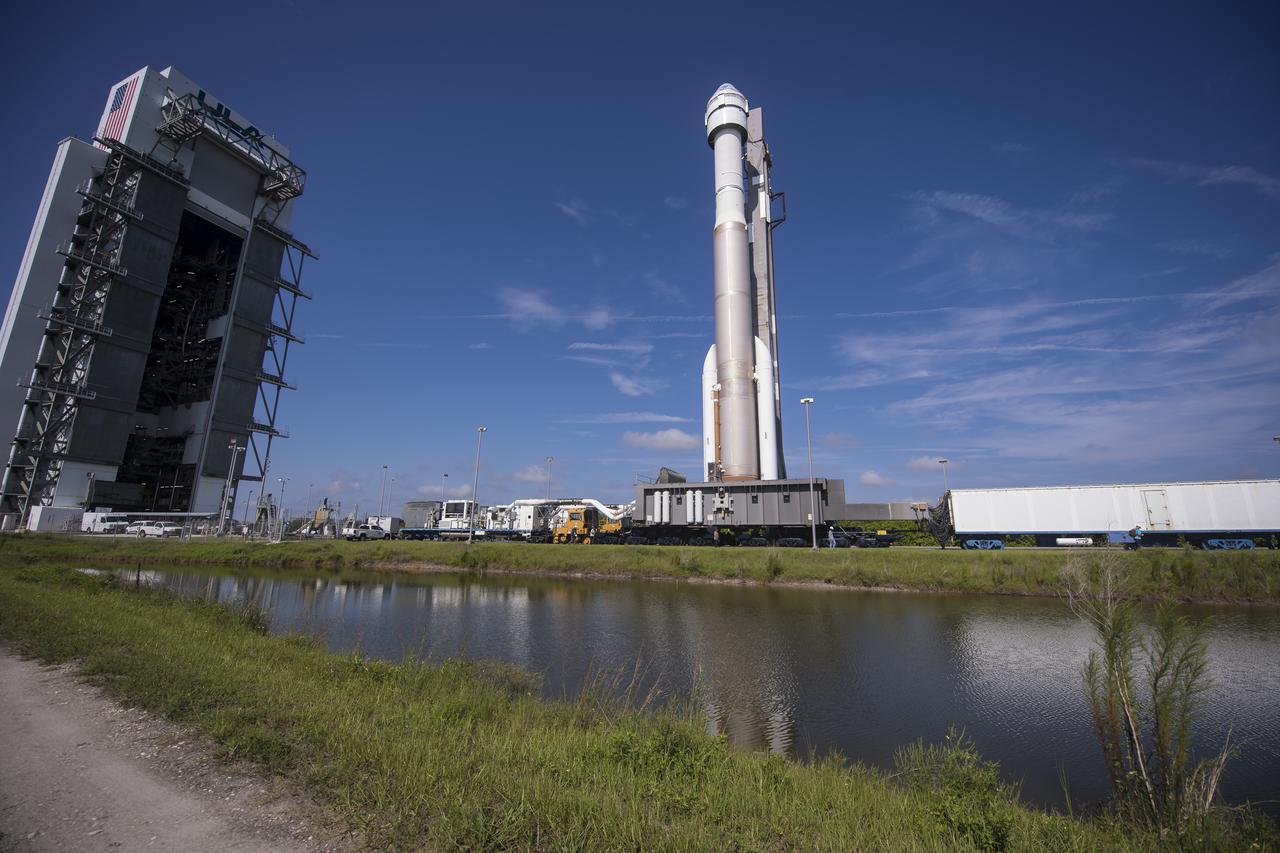
A United Launch Alliance Atlas V rocket with Boeing’s CST-100 Starliner spacecraft onboard is seen as it is rolled out of the Vertical Integration Facility to the launch pad at Space Launch Complex 41 ahead of the Orbital Flight Test-2 (OFT-2) mission, Thursday, July 29, 2021 at Cape Canaveral Space Force Station in Florida. Boeing’s Orbital Flight Test-2 will be Starliner’s second uncrewed flight test and will dock to the International Space Station as part of NASA's Commercial Crew Program. Photo Credit: (NASA/Aubrey Gemignani)
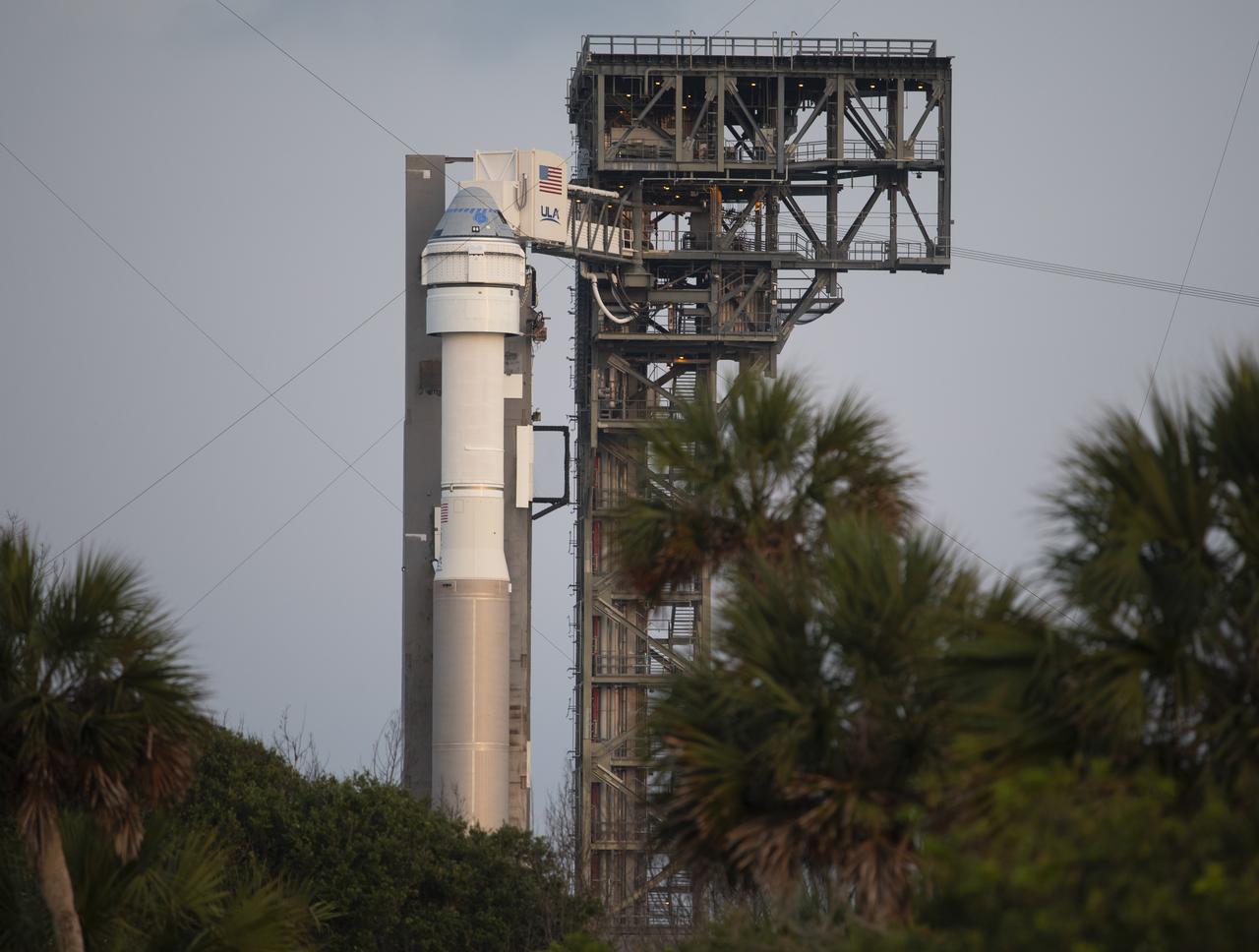
A United Launch Alliance Atlas V rocket with Boeing’s CST-100 Starliner spacecraft aboard is seen on the launch pad at Space Launch Complex 41 ahead of the Orbital Flight Test-2 mission, Thursday, May 19, 2022 at Cape Canaveral Space Force Station in Florida. Boeing’s Orbital Flight Test-2 will be Starliner’s second uncrewed flight test and will dock to the International Space Station as part of NASA's Commercial Crew Program. The mission, currently targeted for launch at 6:54 p.m. ET, will serve as an end-to-end test of the system's capabilities. Photo Credit: (NASA/Joel Kowsky)
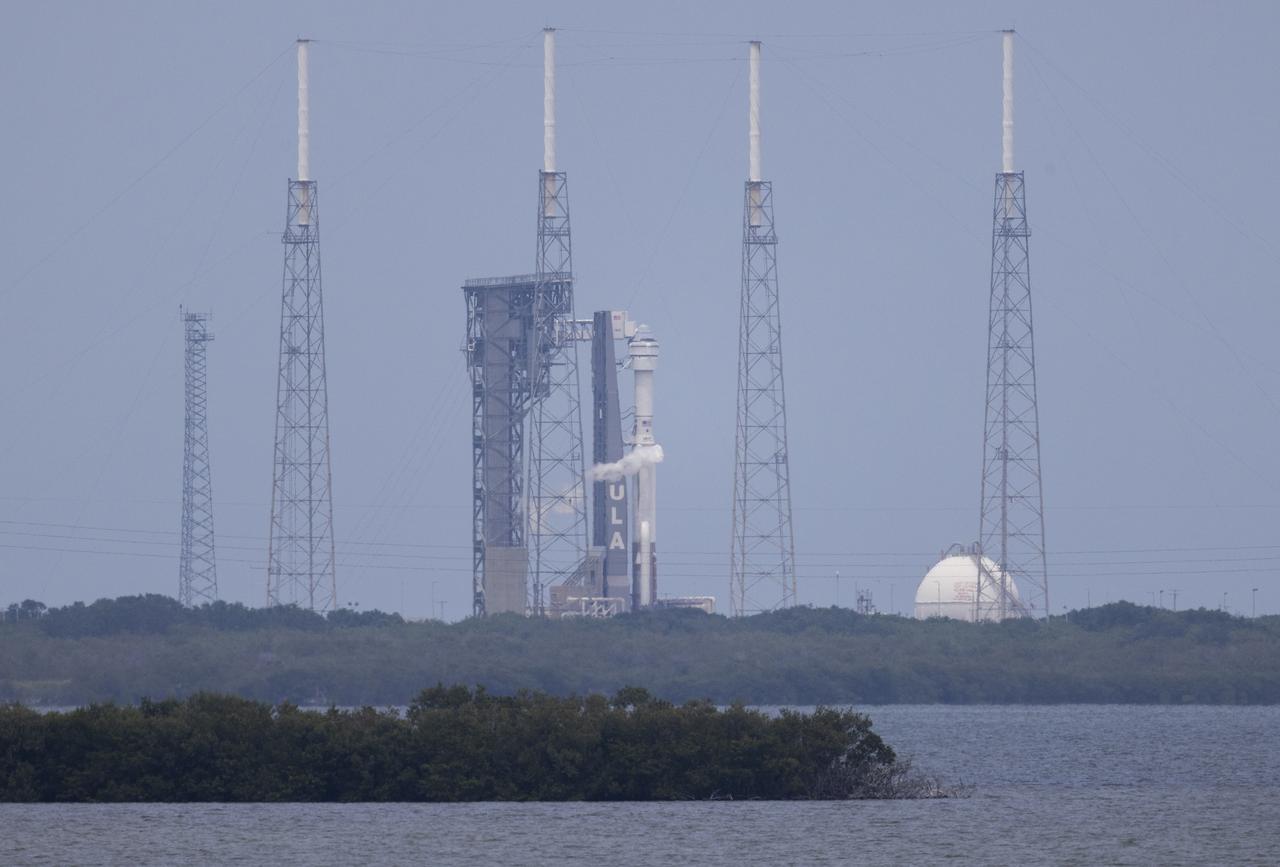
A United Launch Alliance Atlas V rocket with Boeing’s CST-100 Starliner spacecraft aboard is seen on the launch pad at Space Launch Complex 41 as the countdown progresses for the launch of the Orbital Flight Test-2 mission, Thursday, May 19, 2022 at Cape Canaveral Space Force Station in Florida. Boeing’s Orbital Flight Test-2 will be Starliner’s second uncrewed flight test and will dock to the International Space Station as part of NASA's Commercial Crew Program. The mission, currently targeted for launch at 6:54 p.m. ET, will serve as an end-to-end test of the system's capabilities. Photo Credit: (NASA/Joel Kowsky)
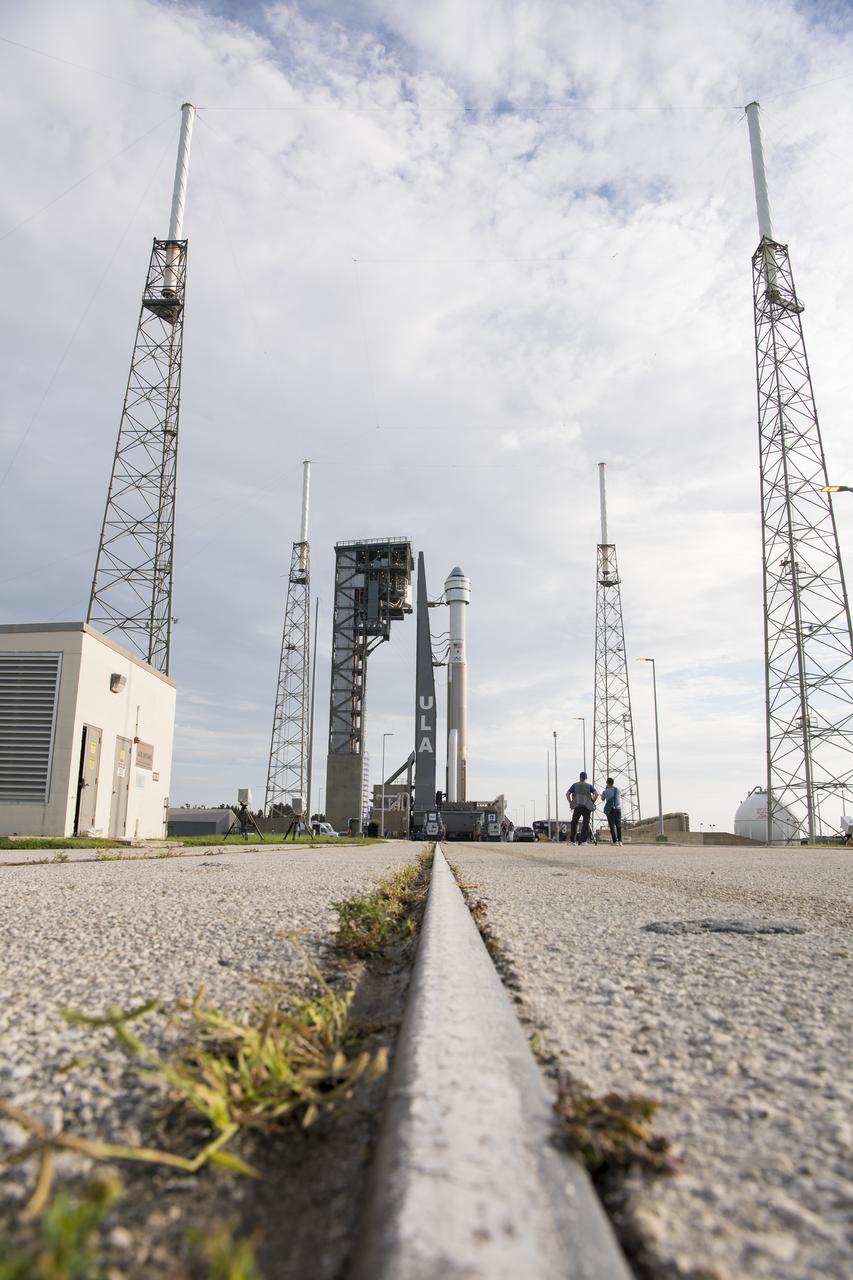
A United Launch Alliance Atlas V rocket with Boeing’s CST-100 Starliner spacecraft aboard is seen on the launch pad after it was rolled out of the Vertical Integration Facility to the launch pad at Space Launch Complex 41 ahead of the Orbital Flight Test-2 (OFT-2) mission, Monday, Aug. 2, 2021 at Cape Canaveral Space Force Station in Florida. Boeing’s Orbital Flight Test-2 will be Starliner’s second uncrewed flight test and will dock to the International Space Station as part of NASA's Commercial Crew Program. The mission, currently targeted for launch at 1:20 p.m. EDT Tuesday, Aug. 3, will serve as an end-to-end test of the system's capabilities. Photo Credit: (NASA/Aubrey Gemignani)
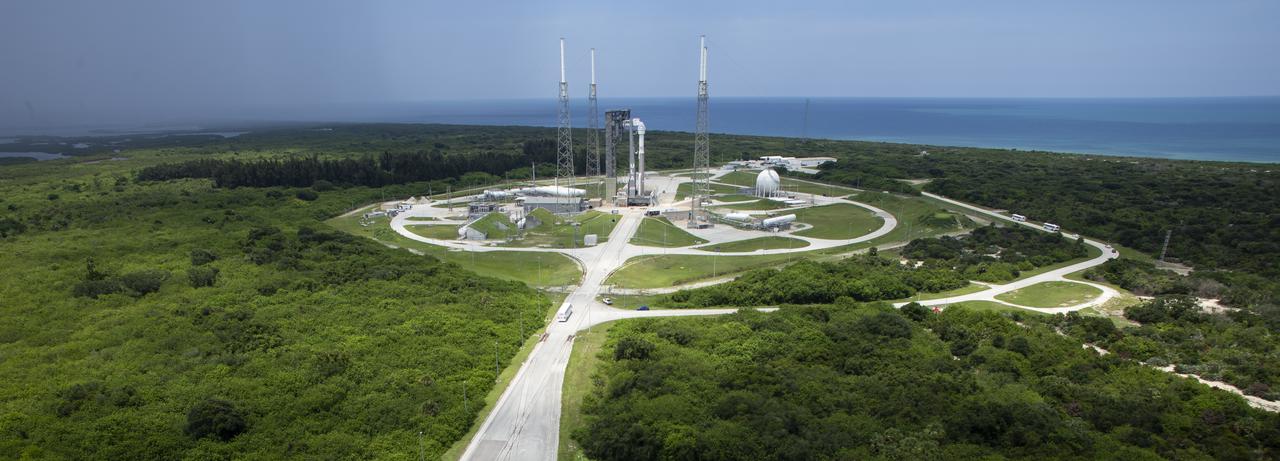
A United Launch Alliance Atlas V rocket with Boeing’s CST-100 Starliner spacecraft onboard is seen on the launch pad at Space Launch Complex 41 ahead of the Orbital Flight Test-2 (OFT-2) mission after being rolled out from the Vertical Integration Facility, Thursday, July 29, 2021 at Cape Canaveral Space Force Station in Florida. Boeing’s Orbital Flight Test-2 will be Starliner’s second uncrewed flight test and will dock to the International Space Station as part of NASA's Commercial Crew Program. The mission will serve as an end-to-end test of the system's capabilities. Photo Credit: (NASA/Joel Kowsky)
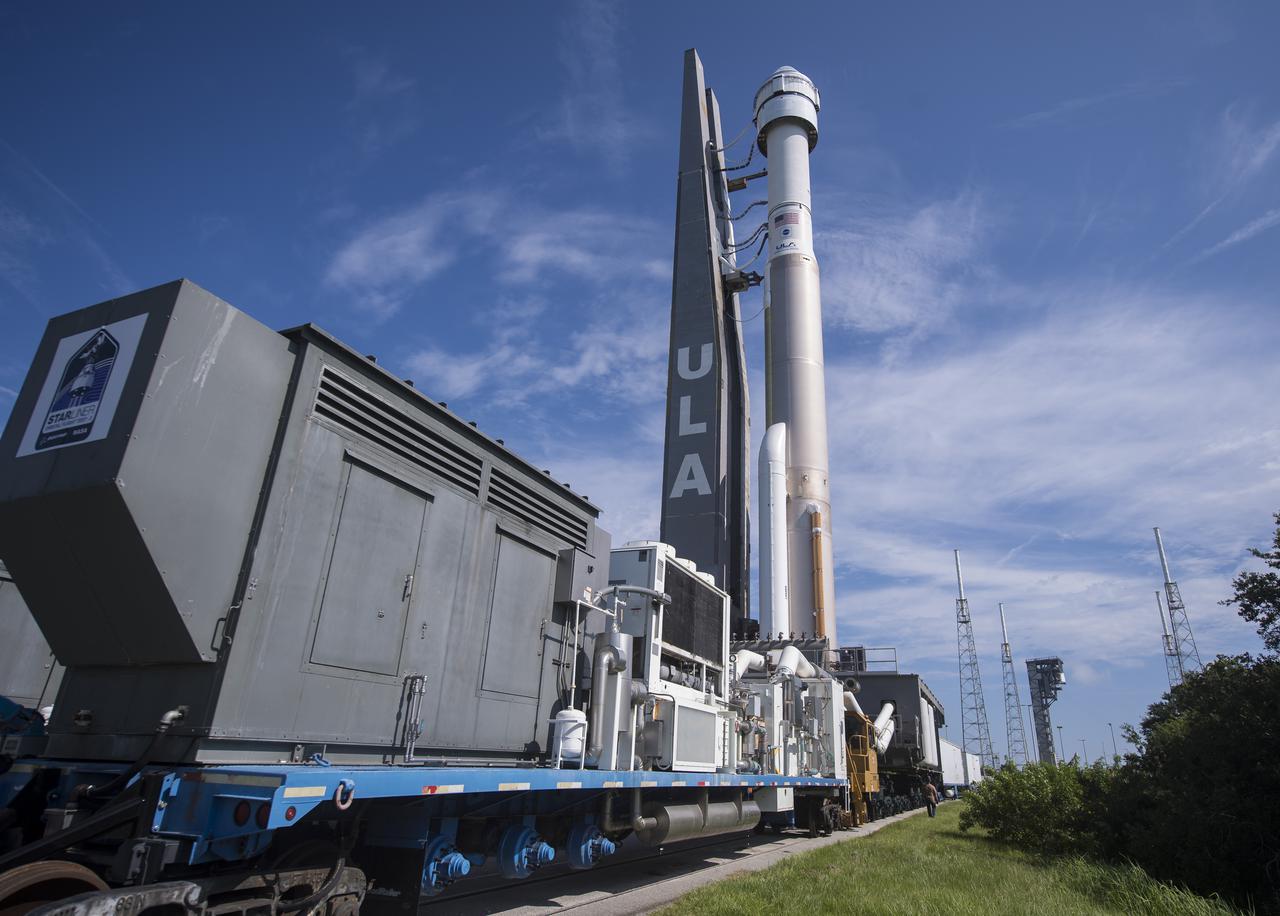
A United Launch Alliance Atlas V rocket with Boeing’s CST-100 Starliner spacecraft onboard is seen as it is rolled out of the Vertical Integration Facility to the launch pad at Space Launch Complex 41 ahead of the Orbital Flight Test-2 (OFT-2) mission, Thursday, July 29, 2021 at Cape Canaveral Space Force Station in Florida. Boeing’s Orbital Flight Test-2 will be Starliner’s second uncrewed flight test and will dock to the International Space Station as part of NASA's Commercial Crew Program. Photo Credit: (NASA/Aubrey Gemignani)

A United Launch Alliance Atlas V rocket with Boeing’s CST-100 Starliner spacecraft aboard is seen in the Vertical Integration Facility before being rolled out to the launch pad at Space Launch Complex 41 ahead of the Orbital Flight Test-2 (OFT-2) mission, Wednesday, May 18, 2022 at Cape Canaveral Space Force Station in Florida. Boeing’s Orbital Flight Test-2 will be Starliner’s second uncrewed flight test and will dock to the International Space Station as part of NASA's Commercial Crew Program. The mission, currently targeted for launch at 6:54 p.m. ET on May 19, will serve as an end-to-end test of the system's capabilities. Photo Credit: (NASA/Joel Kowsky)
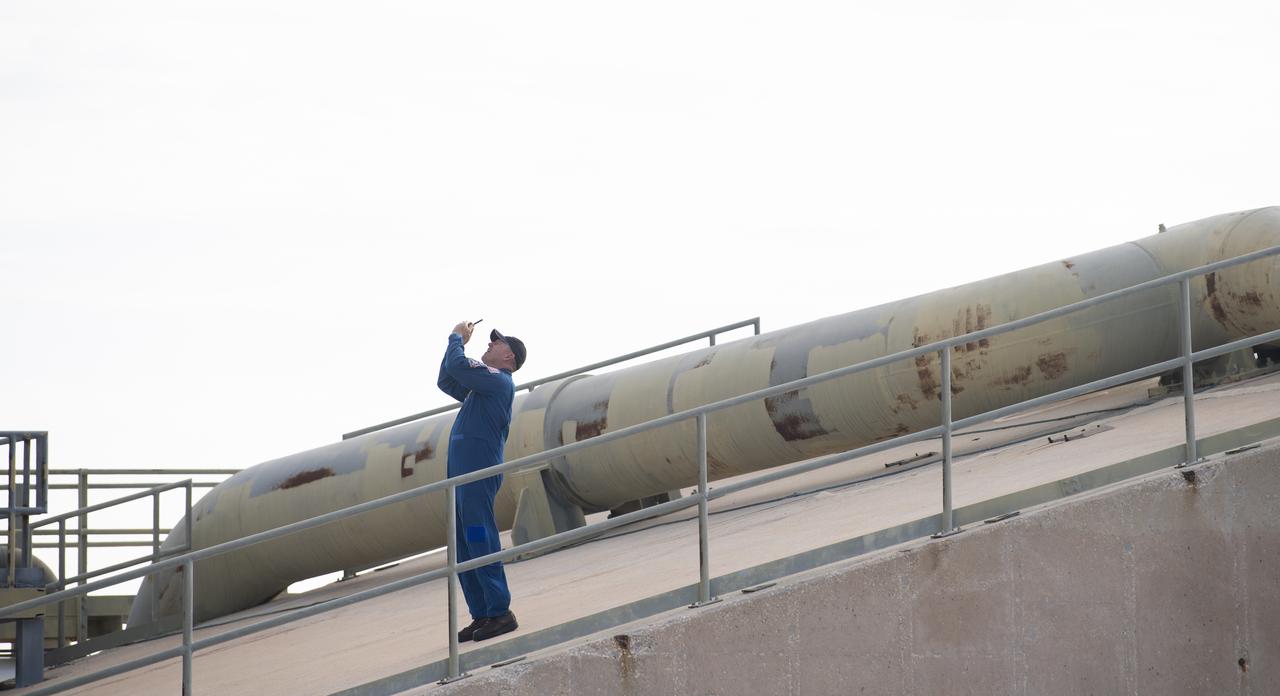
NASA astronaut Barry “Butch” Wilmore takes a picture of a United Launch Alliance Atlas V rocket with Boeing’s CST-100 Starliner spacecraft aboard after it was rolled out of the Vertical Integration Facility to the launch pad at Space Launch Complex 41 ahead of the Orbital Flight Test-2 (OFT-2) mission, Monday, Aug. 2, 2021 at Cape Canaveral Space Force Station in Florida. Boeing’s Orbital Flight Test-2 will be Starliner’s second uncrewed flight test and will dock to the International Space Station as part of NASA's Commercial Crew Program. The mission, currently targeted for launch at 1:20 p.m. EDT Tuesday, Aug. 3, will serve as an end-to-end test of the system's capabilities. Wilmore is scheduled to fly aboard Starliner’s Crewed Flight Test mission. Photo Credit: (NASA/Joel Kowsky)
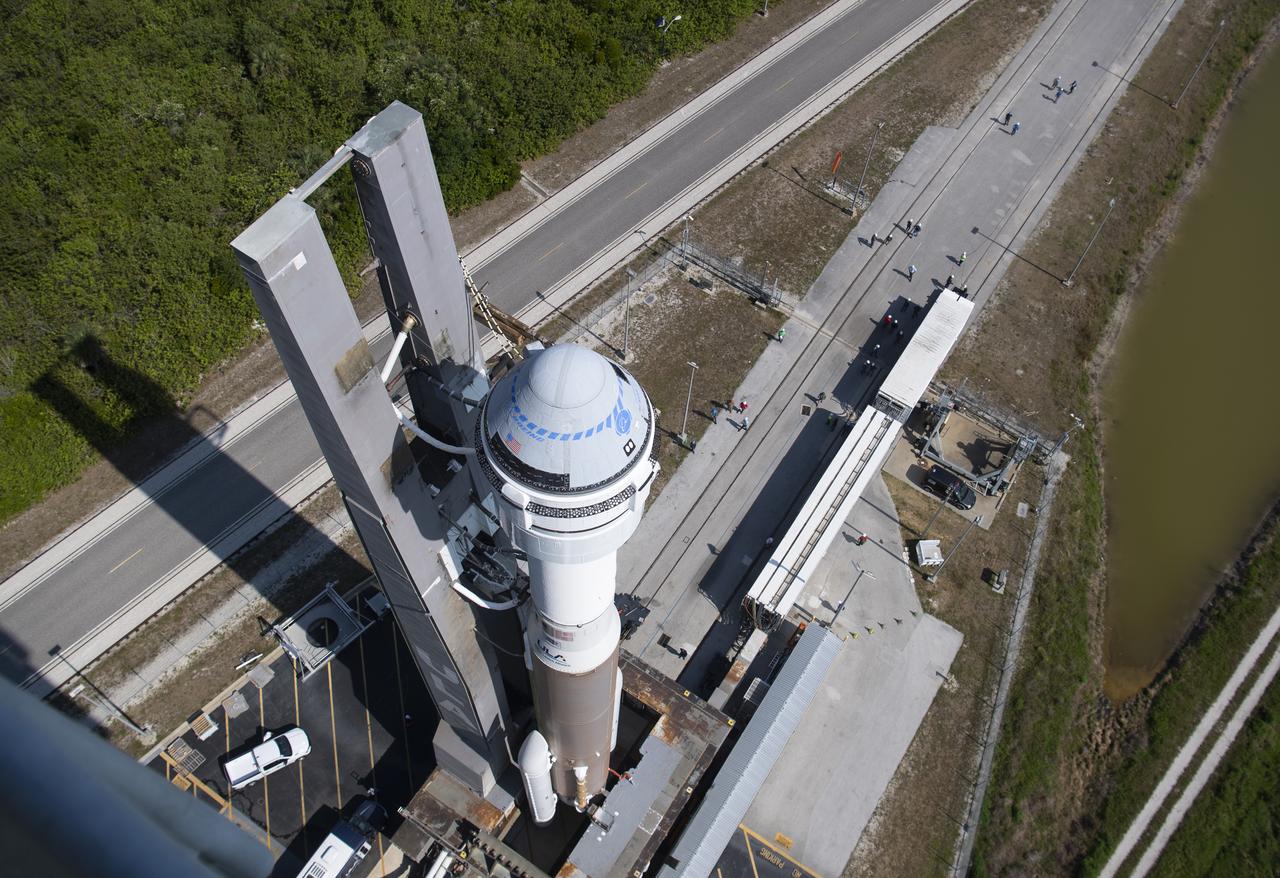
A United Launch Alliance Atlas V rocket with Boeing’s CST-100 Starliner spacecraft aboard is seen as it is rolled out of the Vertical Integration Facility to the launch pad at Space Launch Complex 41 ahead of the Orbital Flight Test-2 (OFT-2) mission, Wednesday, May 18, 2022 at Cape Canaveral Space Force Station in Florida. Boeing’s Orbital Flight Test-2 will be Starliner’s second uncrewed flight test and will dock to the International Space Station as part of NASA's Commercial Crew Program. The mission, currently targeted for launch at 6:54 p.m. ET on May 19, will serve as an end-to-end test of the system's capabilities. Photo Credit: (NASA/Joel Kowsky)
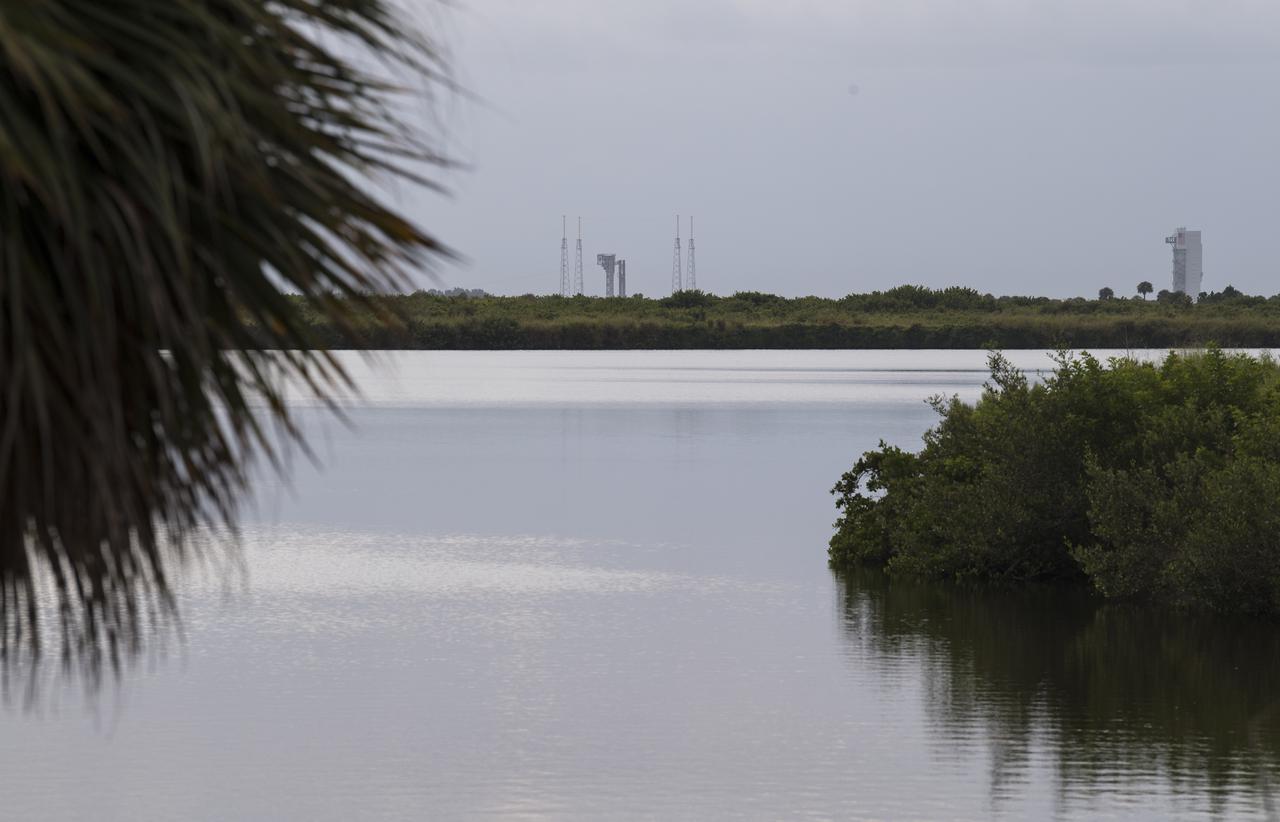
A United Launch Alliance Atlas V rocket with Boeing’s CST-100 Starliner spacecraft aboard is seen on the launch pad at Space Launch Complex 41 ahead of the Orbital Flight Test-2 mission, Tuesday, Aug. 3, 2021 at Cape Canaveral Space Force Station in Florida. Boeing’s Orbital Flight Test-2 will be Starliner’s second uncrewed flight test and will dock to the International Space Station as part of NASA's Commercial Crew Program. The mission, currently targeted for launch at 1:20 p.m. EDT, will serve as an end-to-end test of the system's capabilities. Photo Credit: (NASA/Aubrey Gemignani)
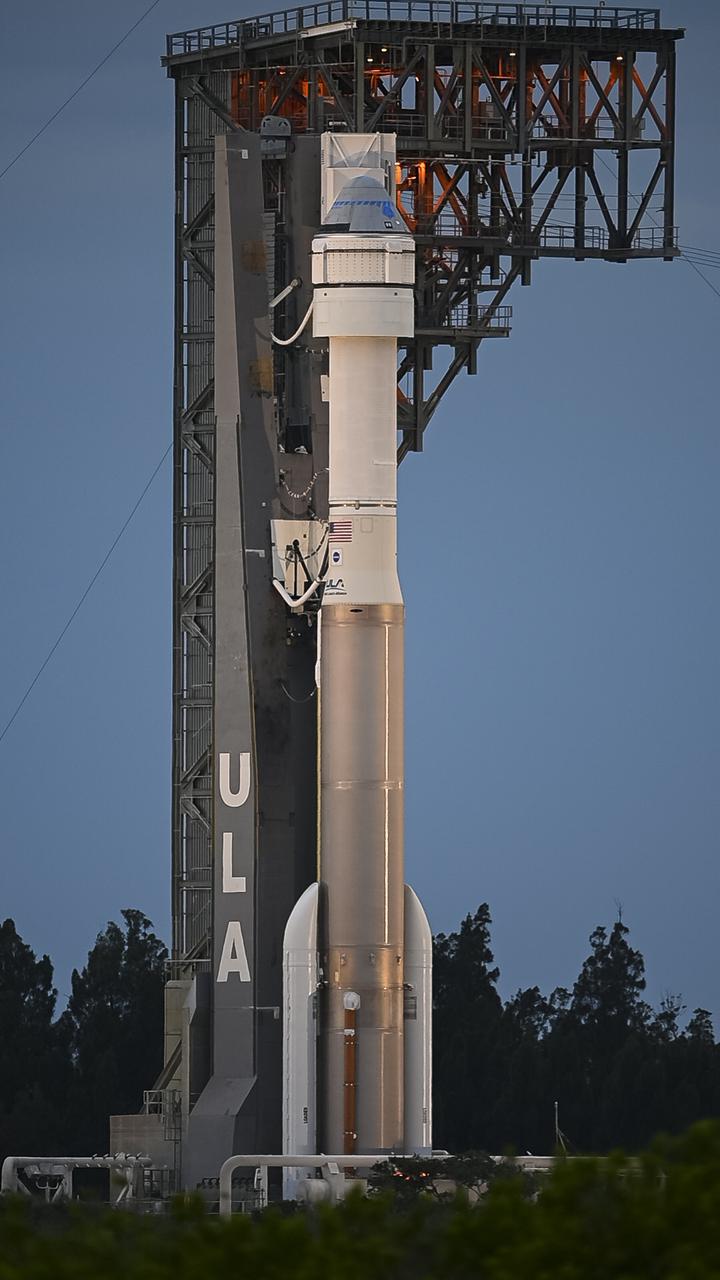
A United Launch Alliance Atlas V rocket with Boeing’s CST-100 Starliner spacecraft aboard is seen on the launch pad at Space Launch Complex 41 ahead of the Orbital Flight Test-2 mission, Monday, Aug. 2, 2021 at Cape Canaveral Space Force Station in Florida. Boeing’s Orbital Flight Test-2 will be Starliner’s second uncrewed flight test and will dock to the International Space Station as part of NASA's Commercial Crew Program. The mission, currently targeted for launch at 1:20 p.m. EDT Tuesday, Aug. 3, will serve as an end-to-end test of the system's capabilities. Photo Credit: (NASA/Aubrey Gemignani)
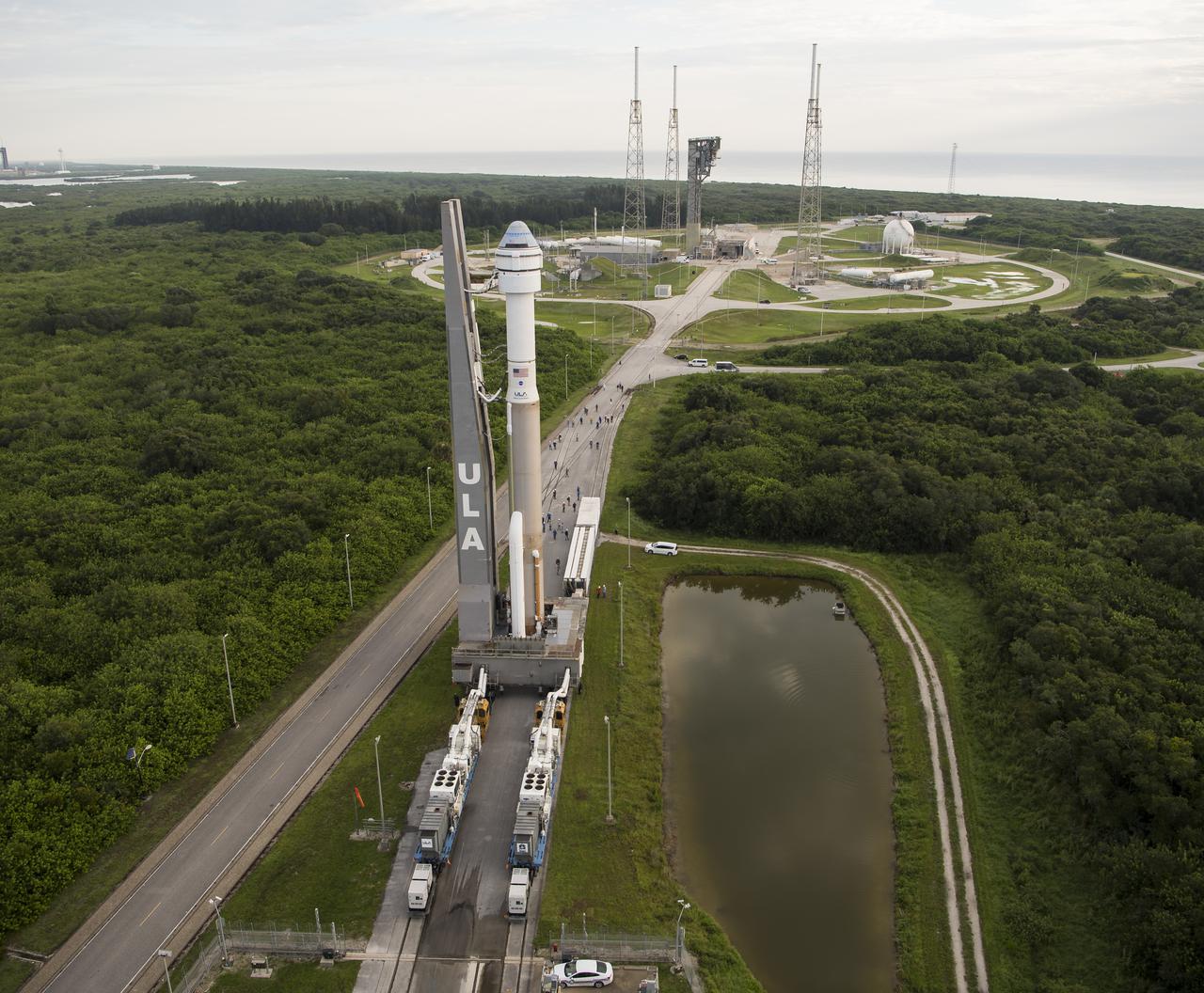
A United Launch Alliance Atlas V rocket with Boeing’s CST-100 Starliner spacecraft aboard is seen as it is rolled out of the Vertical Integration Facility to the launch pad at Space Launch Complex 41 ahead of the Orbital Flight Test-2 (OFT-2) mission, Monday, Aug. 2, 2021 at Cape Canaveral Space Force Station in Florida. Boeing’s Orbital Flight Test-2 will be Starliner’s second uncrewed flight test and will dock to the International Space Station as part of NASA's Commercial Crew Program. The mission, currently targeted for launch at 1:20 p.m. EDT Tuesday, Aug. 3, will serve as an end-to-end test of the system's capabilities. Photo Credit: (NASA/Aubrey Gemignani)
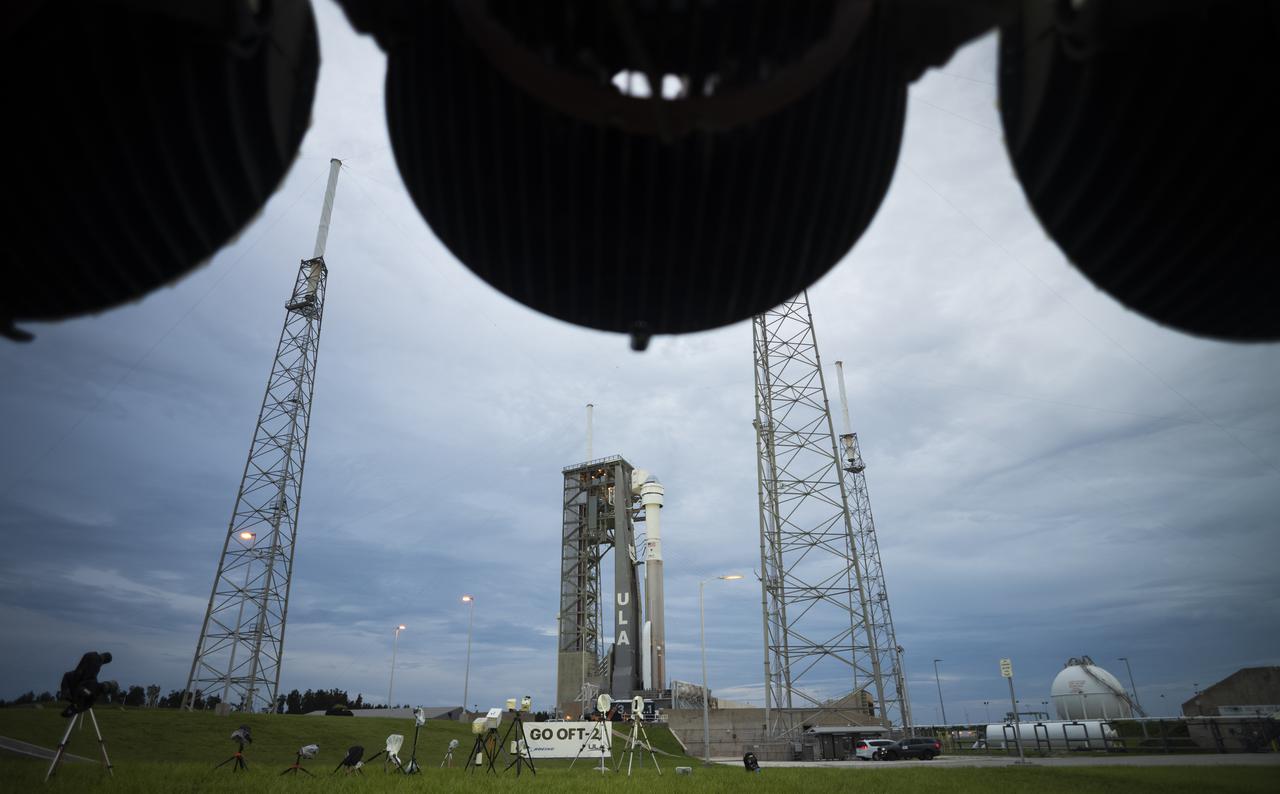
A United Launch Alliance Atlas V rocket with Boeing’s CST-100 Starliner spacecraft aboard is seen on the launch pad at Space Launch Complex 41 ahead of the Orbital Flight Test-2 mission, Monday, Aug. 2, 2021 at Cape Canaveral Space Force Station in Florida. Boeing’s Orbital Flight Test-2 will be Starliner’s second uncrewed flight test and will dock to the International Space Station as part of NASA's Commercial Crew Program. The mission, currently targeted for launch on 1:20 p.m. EDT Tuesday, Aug. 3, will serve as an end-to-end test of the system's capabilities. Photo Credit: (NASA/Joel Kowsky)
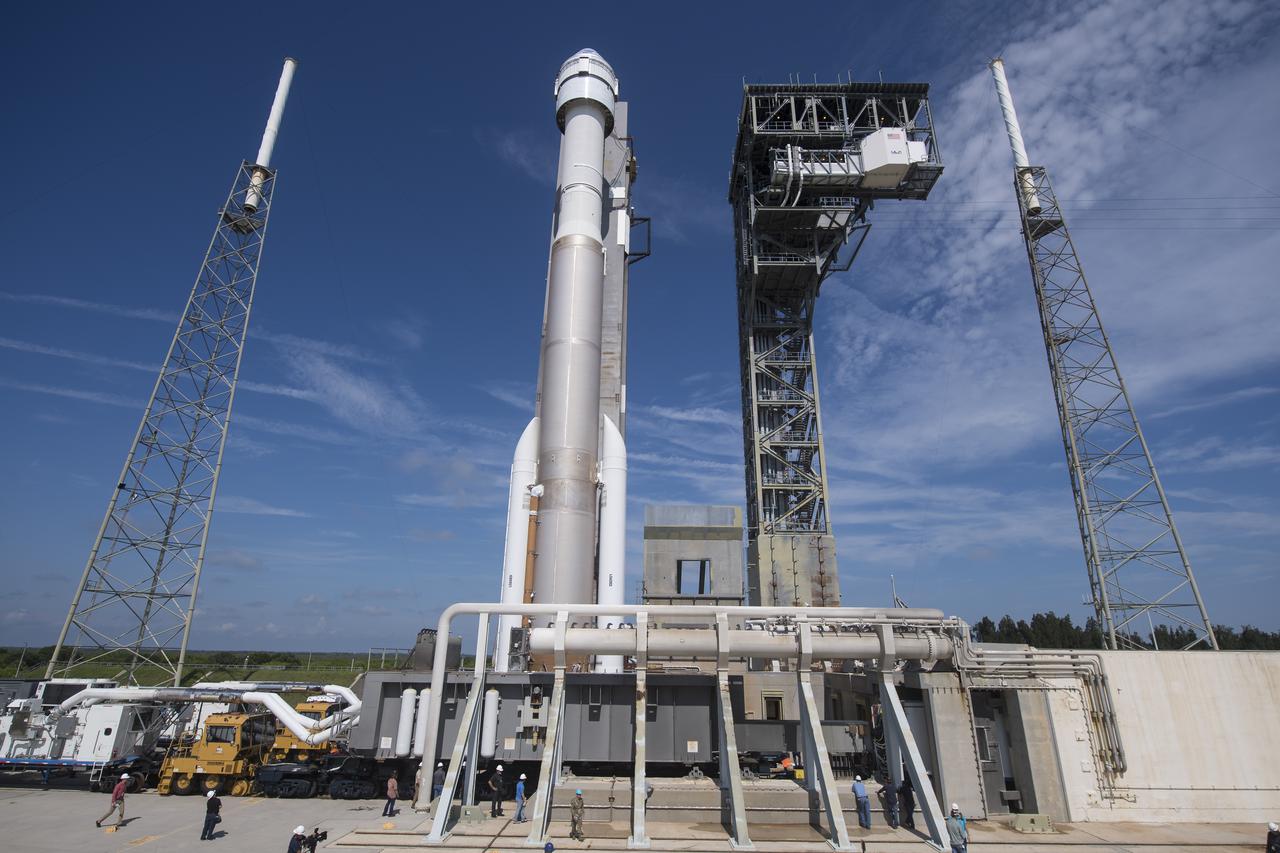
A United Launch Alliance Atlas V rocket with Boeing’s CST-100 Starliner spacecraft onboard is seen on the launch pad at Space Launch Complex 41 ahead of the Orbital Flight Test-2 (OFT-2) mission, Thursday, July 29, 2021 at Cape Canaveral Space Force Station in Florida. Boeing’s Orbital Flight Test-2 will be Starliner’s second uncrewed flight test and will dock to the International Space Station as part of NASA's Commercial Crew Program. Photo Credit: (NASA/Aubrey Gemignani)
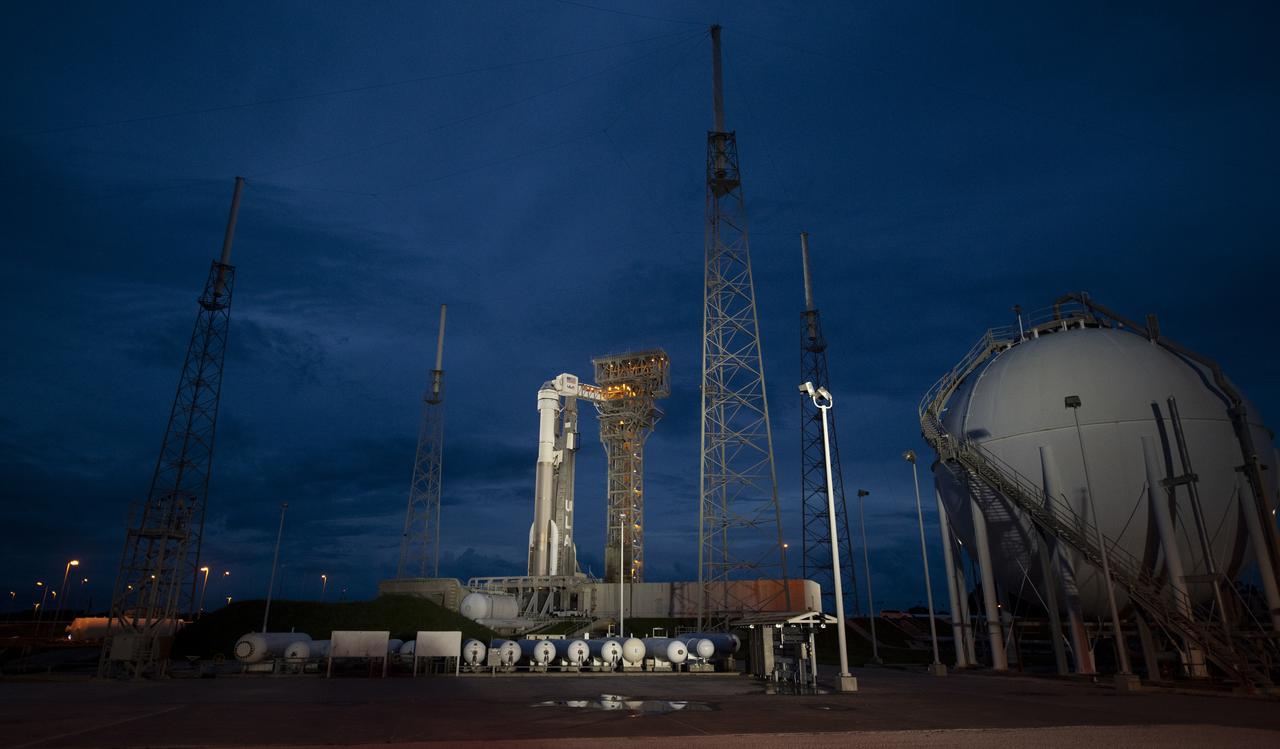
A United Launch Alliance Atlas V rocket with Boeing’s CST-100 Starliner spacecraft aboard is seen illuminated by spotlights on the launch pad at Space Launch Complex 41 ahead of the Orbital Flight Test-2 mission, Monday, Aug. 2, 2021 at Cape Canaveral Space Force Station in Florida. Boeing’s Orbital Flight Test-2 will be Starliner’s second uncrewed flight test and will dock to the International Space Station as part of NASA's Commercial Crew Program. The mission, currently targeted for launch on 1:20 p.m. EDT Tuesday, Aug. 3, will serve as an end-to-end test of the system's capabilities. Photo Credit: (NASA/Joel Kowsky)
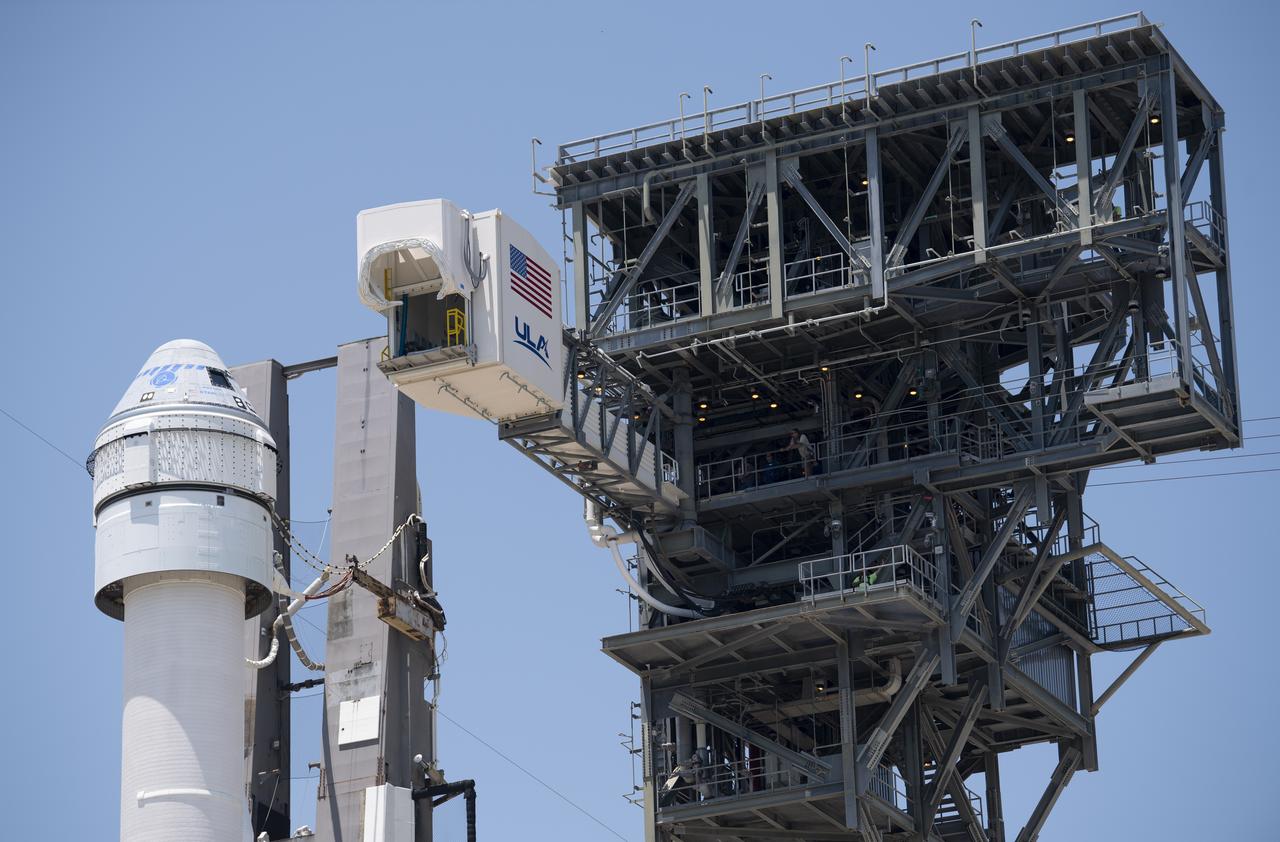
The crew access arm is seen as it swings into position for Boeing’s CST-100 Starliner spacecraft atop a United Launch Alliance Atlas V rocket at the launch pad at Space Launch Complex 41 ahead of the Orbital Flight Test-2 mission, Wednesday, May 18, 2022 at Cape Canaveral Space Force Station in Florida. Boeing’s Orbital Flight Test-2 will be Starliner’s second uncrewed flight test and will dock to the International Space Station as part of NASA's Commercial Crew Program. The mission, currently targeted for launch on 6:54 p.m. ET on May 19, will serve as an end-to-end test of the system's capabilities. Photo Credit: (NASA/Joel Kowsky)
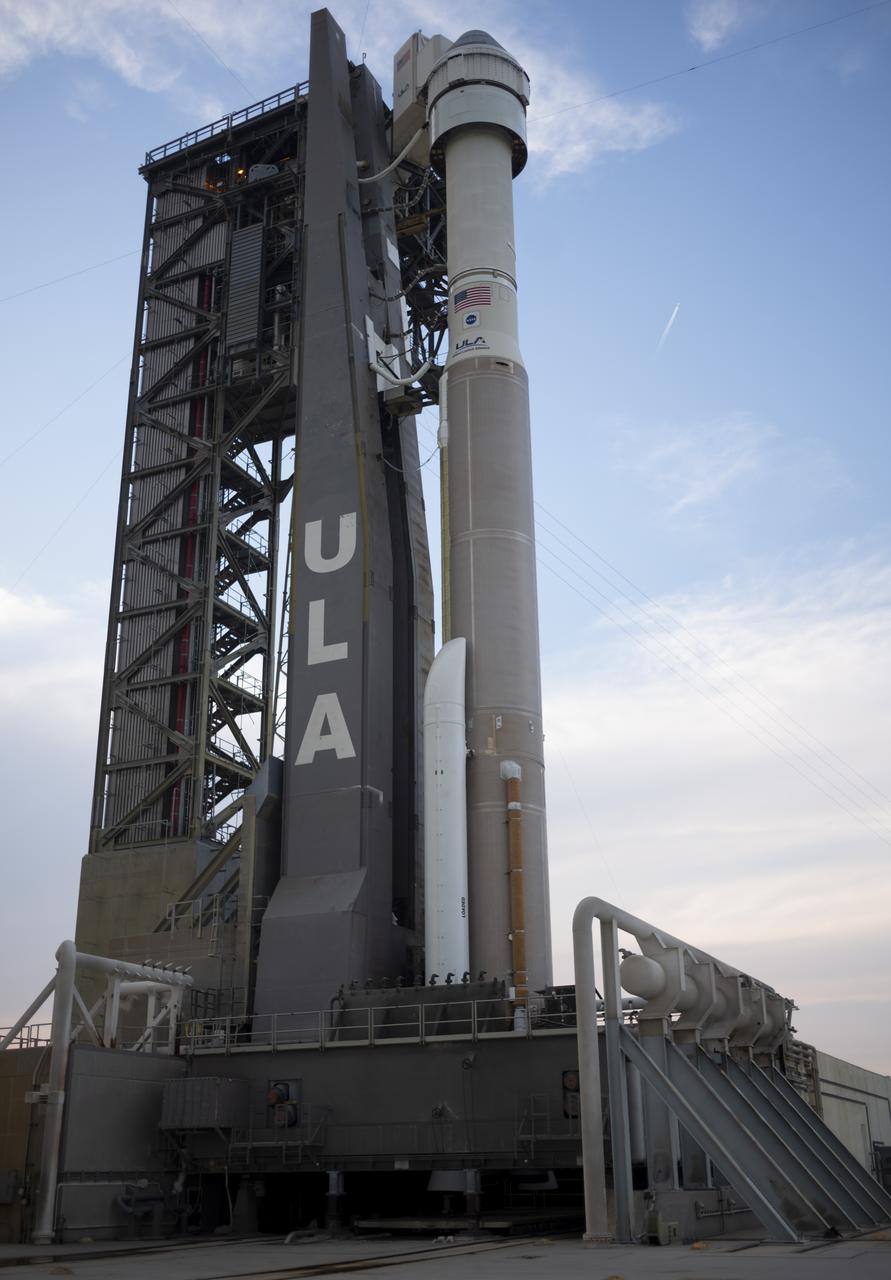
A United Launch Alliance Atlas V rocket with Boeing’s CST-100 Starliner spacecraft aboard is seen on the launch pad at Space Launch Complex 41 ahead of the Orbital Flight Test-2 mission, Wednesday, May 18, 2022 at Cape Canaveral Space Force Station in Florida. Boeing’s Orbital Flight Test-2 will be Starliner’s second uncrewed flight test and will dock to the International Space Station as part of NASA's Commercial Crew Program. The mission, currently targeted for launch on 6:54 p.m. ET on May 19, will serve as an end-to-end test of the system's capabilities. Photo Credit: (NASA/Joel Kowsky)
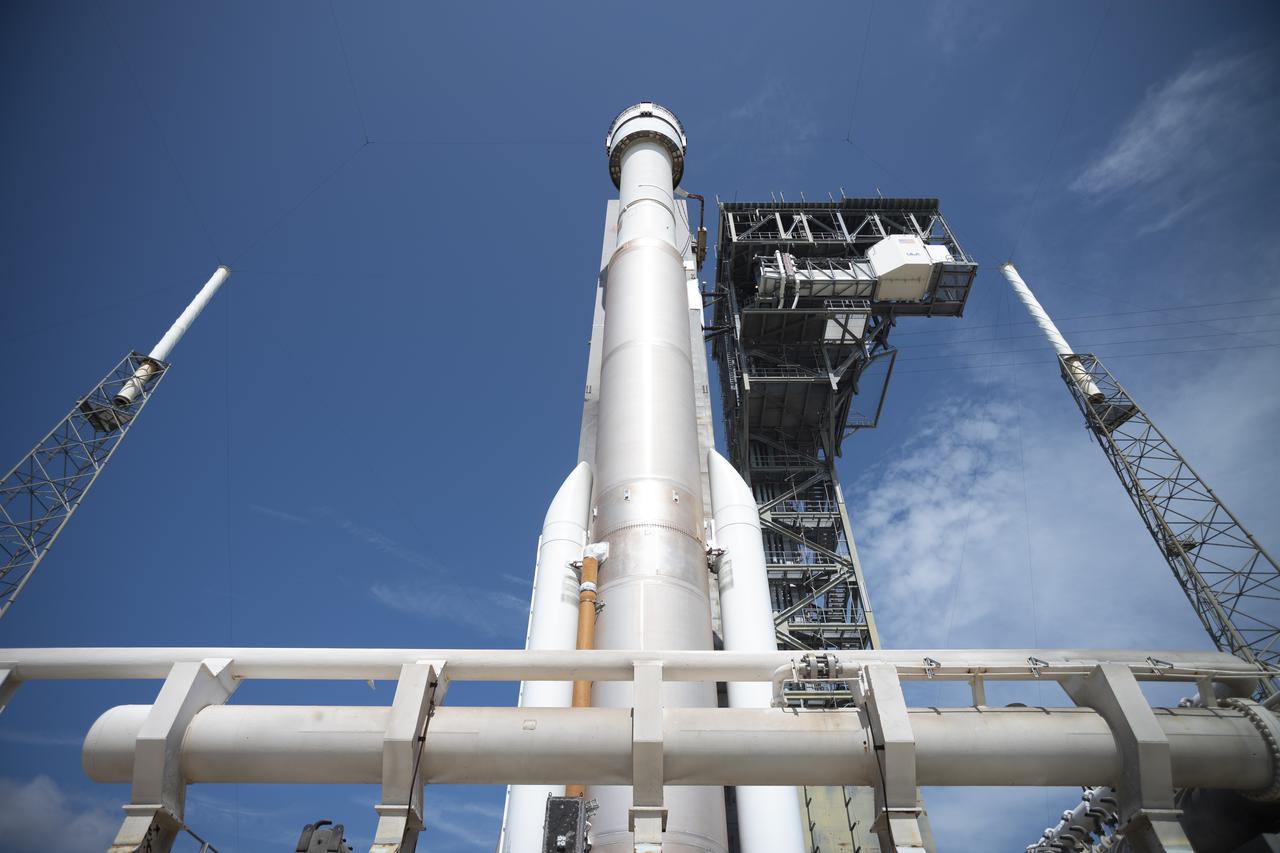
A United Launch Alliance Atlas V rocket with Boeing’s CST-100 Starliner spacecraft onboard is seen as it is rolled out of the Vertical Integration Facility to the launch pad at Space Launch Complex 41 ahead of the Orbital Flight Test-2 (OFT-2) mission, Thursday, July 29, 2021 at Cape Canaveral Space Force Station in Florida. Boeing’s Orbital Flight Test-2 will be Starliner’s second uncrewed flight test and will dock to the International Space Station as part of NASA's Commercial Crew Program. The mission, currently targeted for launch at 2:53 p.m. EDT Friday, July 30, will serve as an end-to-end test of the system's capabilities. Photo Credit: (NASA/Joel Kowsky)