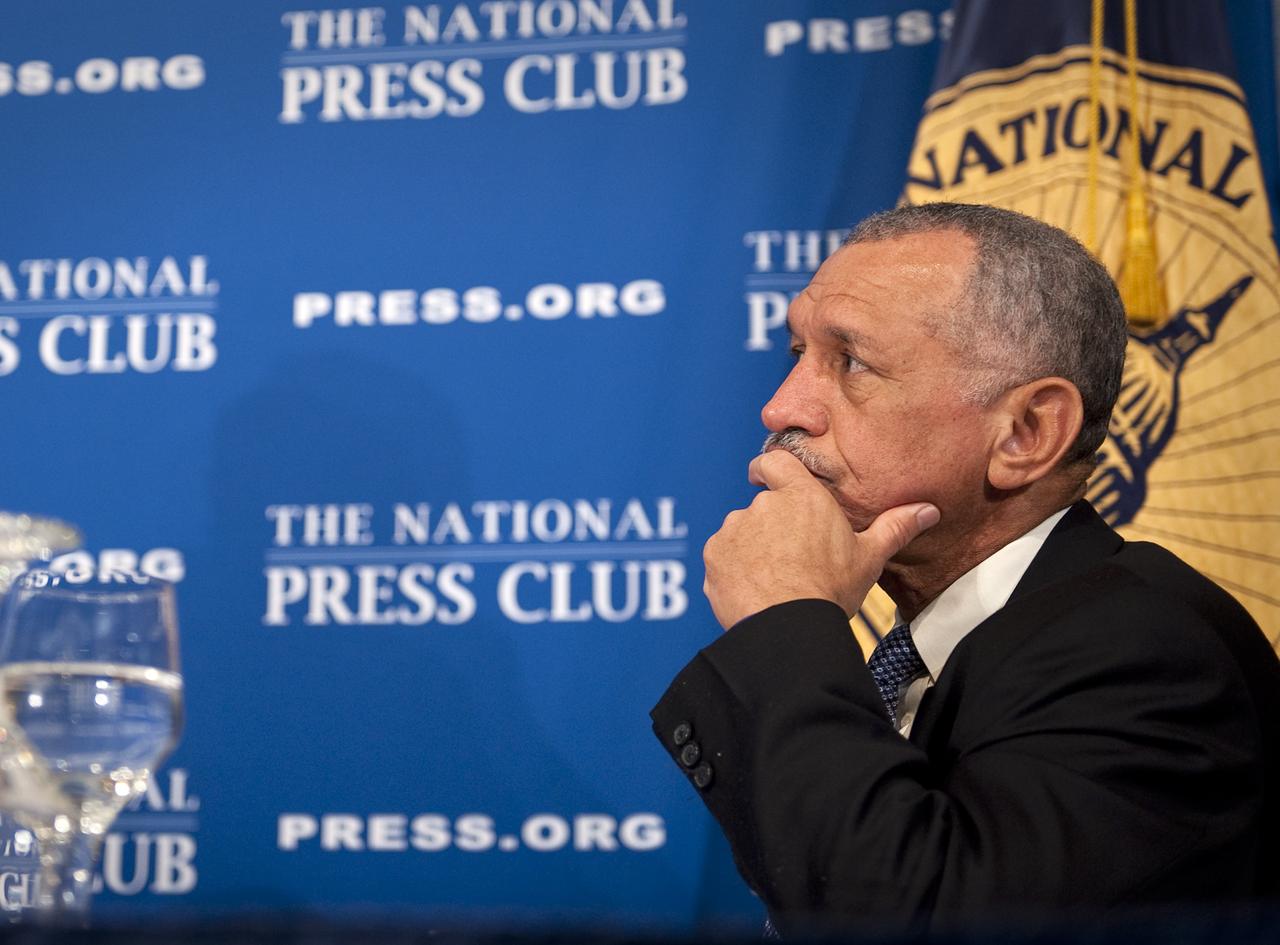
NASA Administrator Charles Bolden listens to his introduction by Assistant to the President for Science and Technology and Director of the White House Office of Science and Technology Policy Dr. John P. Holdren during a press conference, Tuesday, Feb. 2, 2010, at the National Press Club in Washington, where it was announced that NASA has awarded $50 million through funded agreements to further the commercial sector's capability to support transport of crew to and from low Earth orbit. Photo Credit: (NASA/Bill Ingalls)
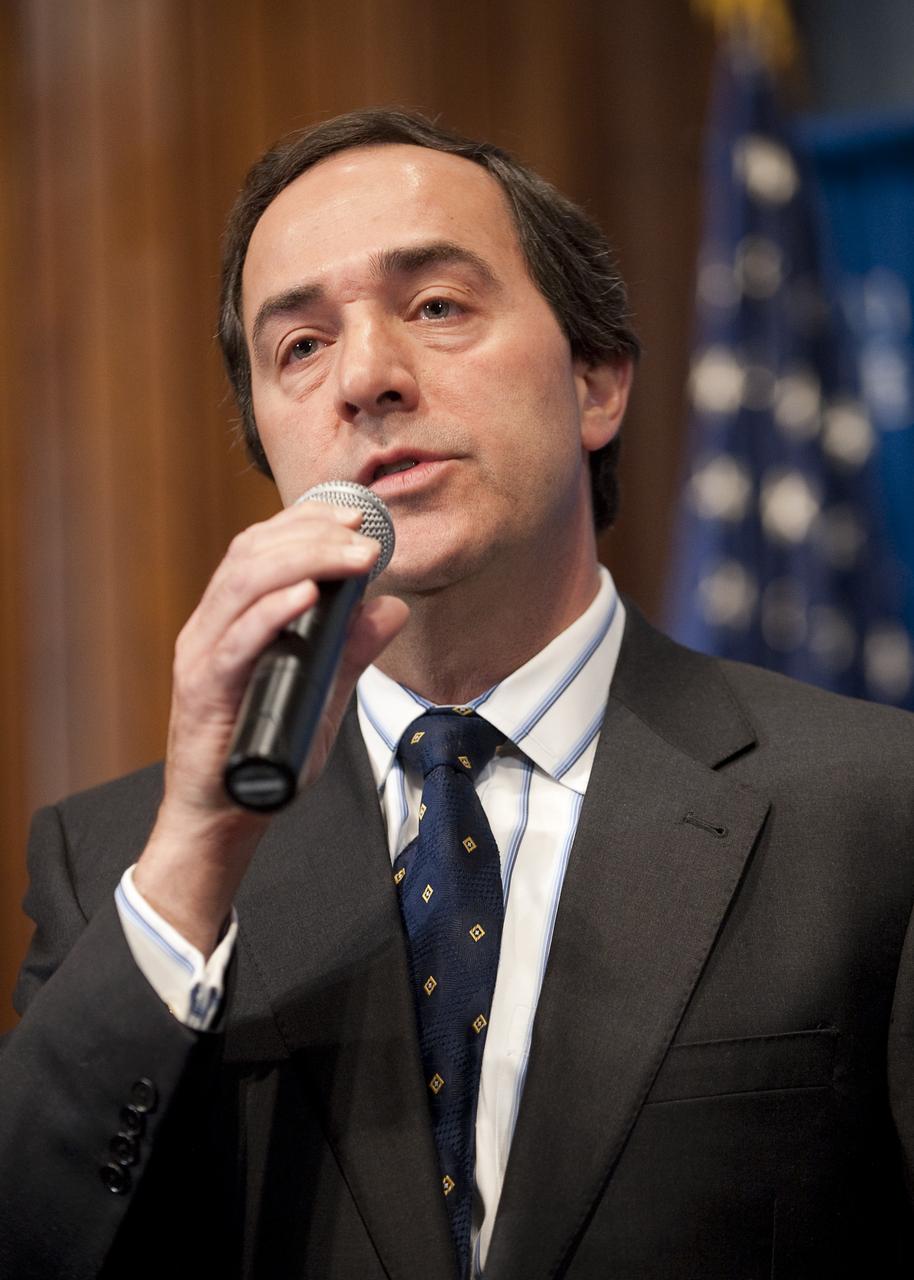
Mark Sirangelo, VP and Chair, SNC Space Systems Board, Sierra Nevada Corp. is seen during a press conference, Tuesday, Feb. 2, 2010, at the National Press Club in Washington, where it was announced that NASA has awarded $50 million through funded agreements to further the commercial sector's capability to support transport of crew to and from low Earth orbit. Photo Credit: (NASA/Bill Ingalls)
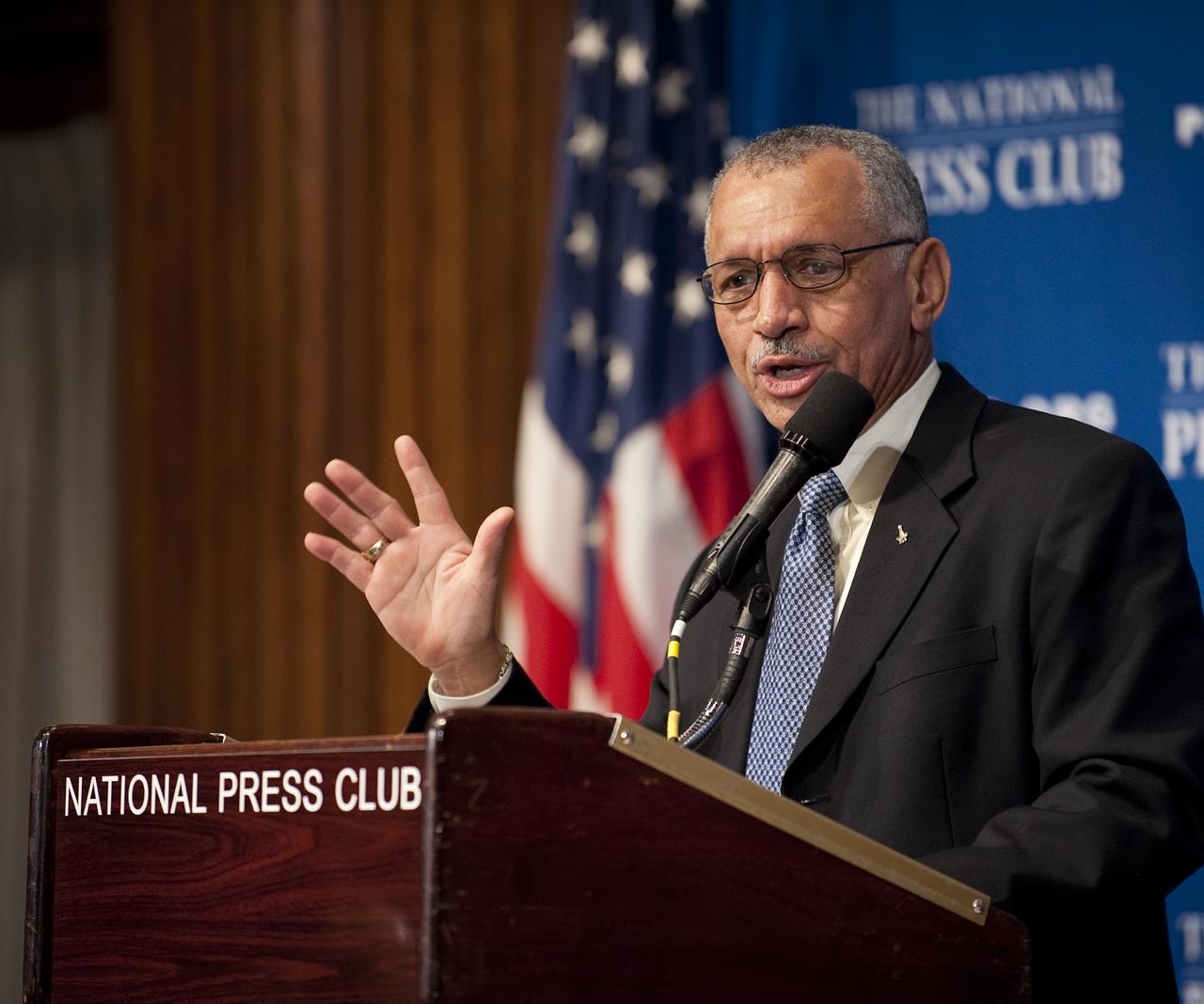
NASA Administrator Charles Bolden speaks during a press conference, Tuesday, Feb. 2, 2010, at the National Press Club in Washington, where it was announced that NASA has awarded $50 million through funded agreements to further the commercial sector's capability to support transport of crew to and from low Earth orbit. Photo Credit: (NASA/Bill Ingalls)

NASA Administrator Charles Bolden's reflection is seen in a TV monitor during a press conference, Tuesday, Feb. 2, 2010, at the National Press Club in Washington, where it was announced that NASA has awarded $50 million through funded agreements to further the commercial sector's capability to support transport of crew to and from low Earth orbit. Photo Credit: (NASA/Bill Ingalls)
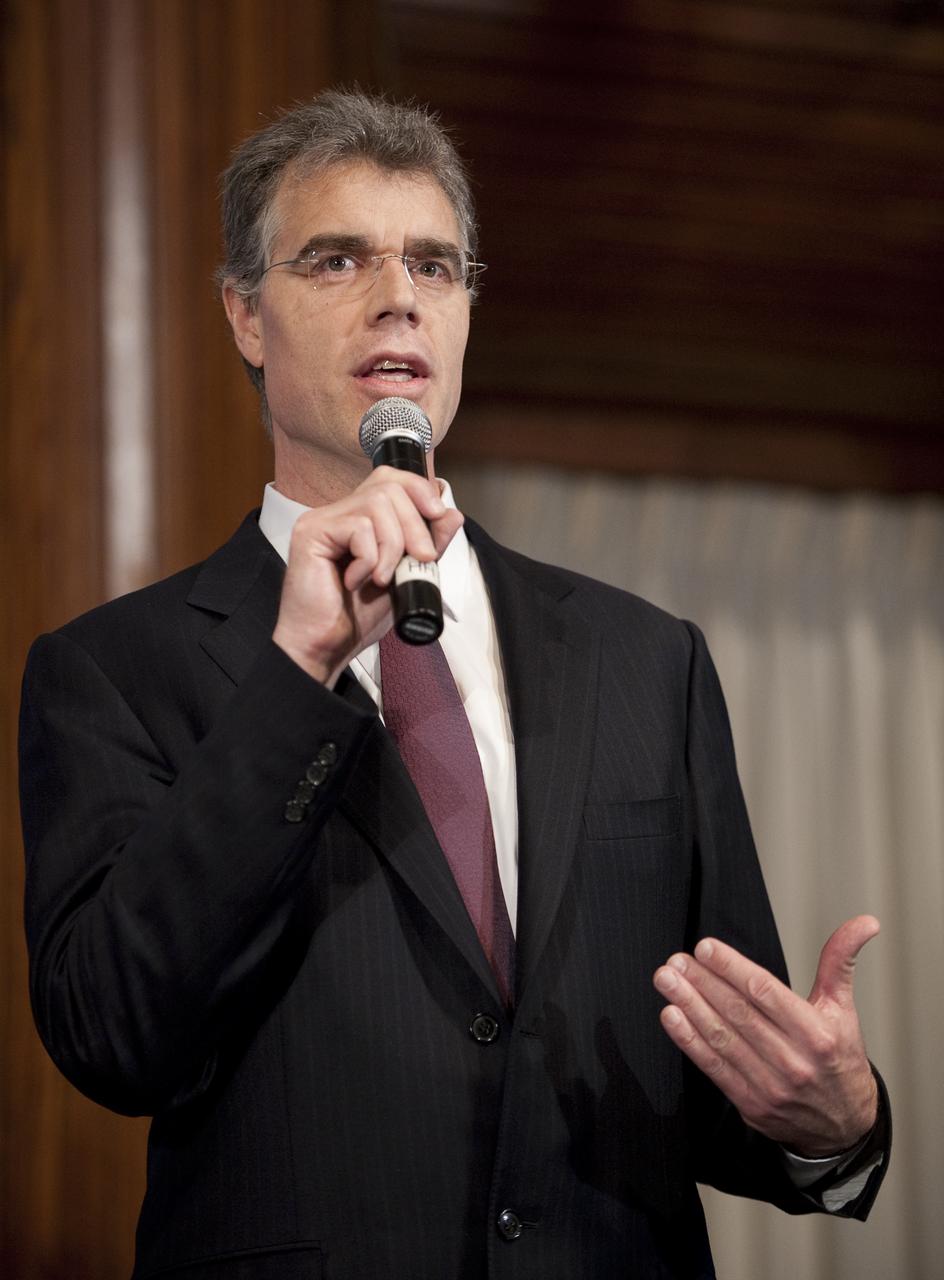
Robert Millman of Blue Origin is seen during a press conference, Tuesday, Feb. 2, 2010, at the National Press Club in Washington, where it was announced that NASA has awarded $50 million through funded agreements to further the commercial sector's capability to support transport of crew to and from low Earth orbit. Photo Credit: (NASA/Bill Ingalls)
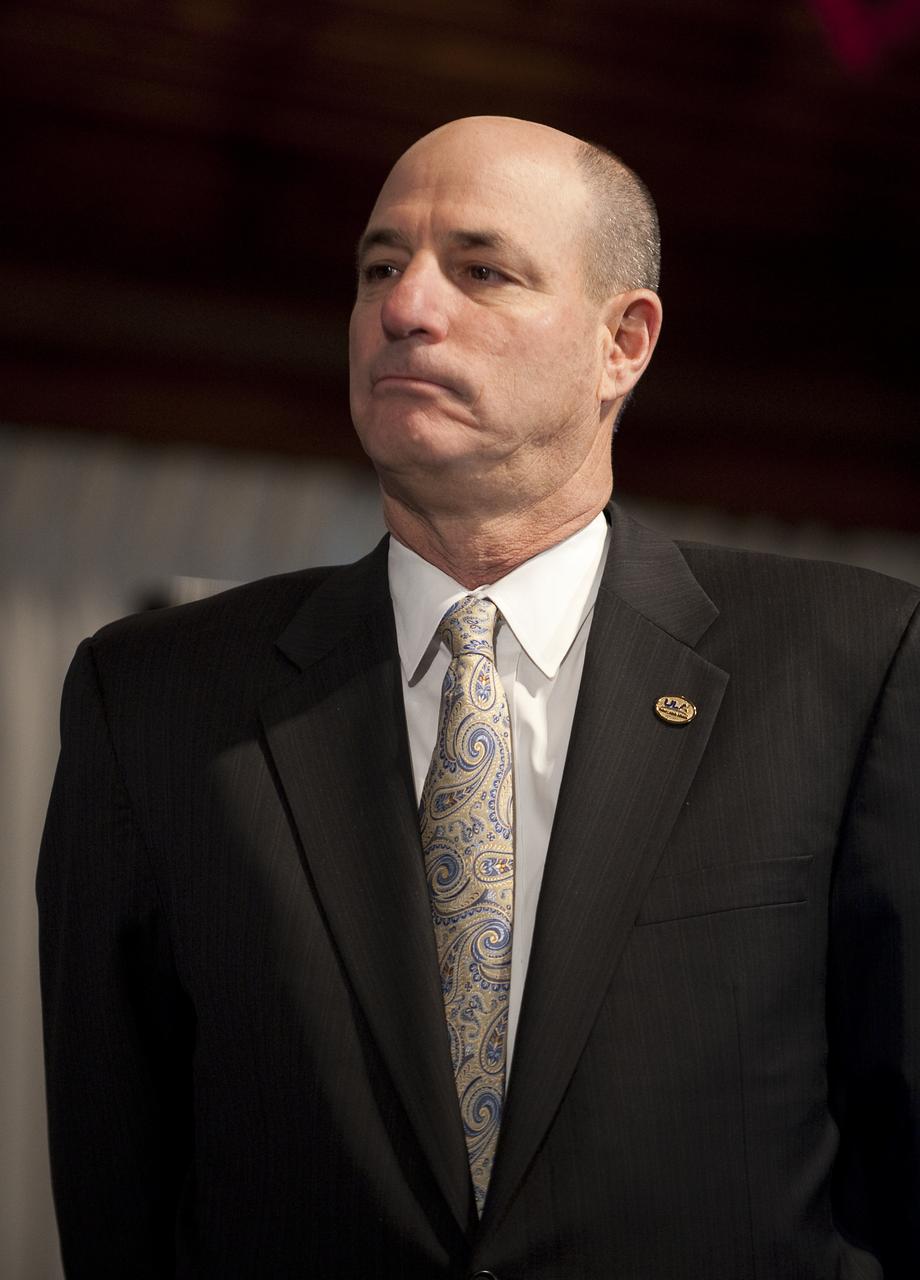
Mike Gass, President and Chief Executive, United Launch Alliance is seen during a press conference, Tuesday, Feb. 2, 2010, at the National Press Club in Washington, where it was announced that NASA has awarded $50 million through funded agreements to further the commercial sector's capability to support transport of crew to and from low Earth orbit. Photo Credit: (NASA/Bill Ingalls)
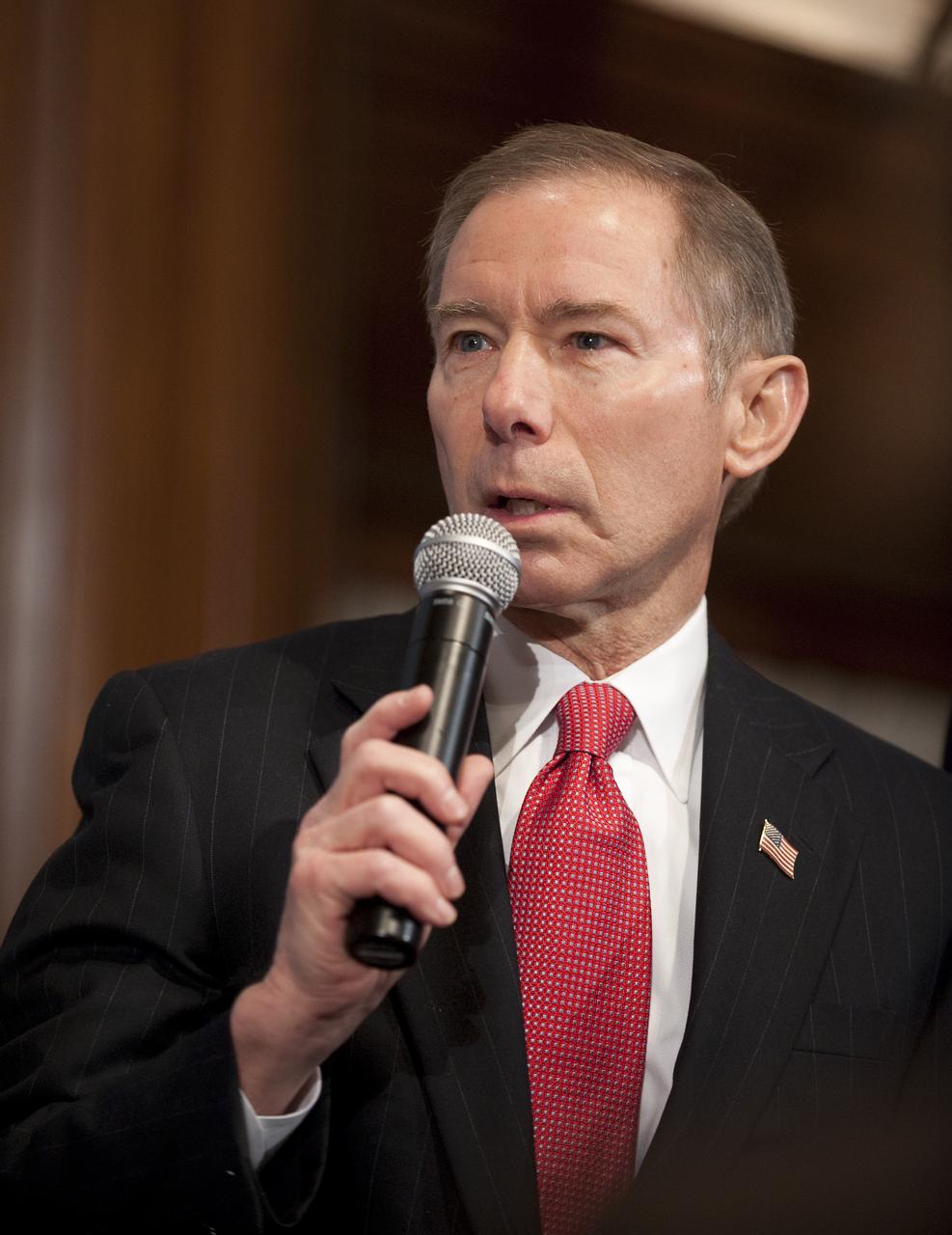
Brewster Shaw, VP and General Manager, NASA Systems, Boeing is seen during a press conference, Tuesday, Feb. 2, 2010, at the National Press Club in Washington, where it was announced that NASA has awarded $50 million through funded agreements to further the commercial sector's capability to support transport of crew to and from low Earth orbit. Photo Credit: (NASA/Bill Ingalls)
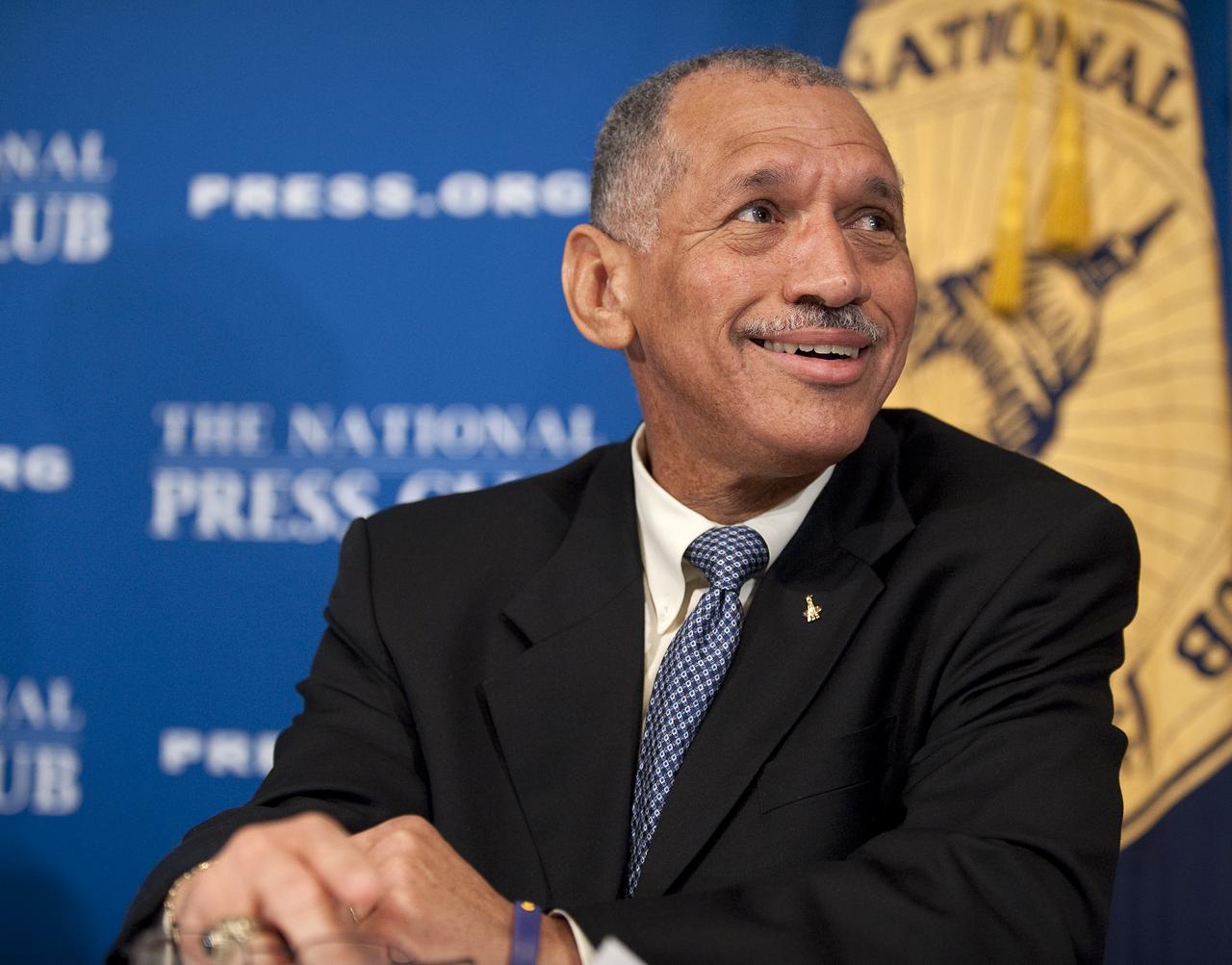
NASA Administrator Charles Bolden listens to his introduction by Assistant to the President for Science and Technology and Director of the White House Office of Science and Technology Policy Dr. John P. Holdren during a press conference, Tuesday, Feb. 2, 2010, at the National Press Club in Washington, where it was announced that NASA has awarded $50 million through funded agreements to further the commercial sector's capability to support transport of crew to and from low Earth orbit. Photo Credit: (NASA/Bill Ingalls)
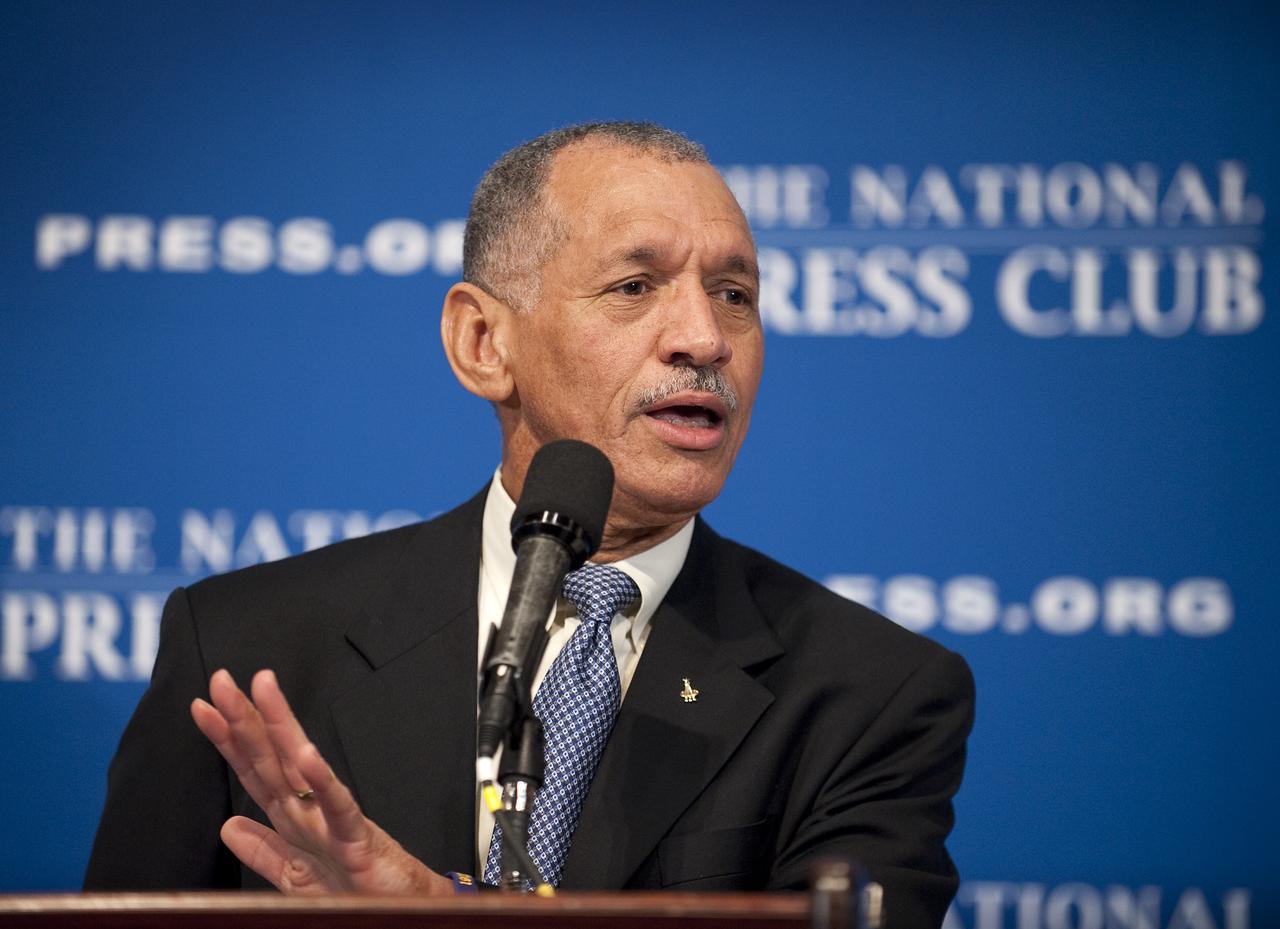
NASA Administrator Charles Bolden speaks during a press conference, Tuesday, Feb. 2, 2010, at the National Press Club in Washington, where it was announced that NASA has awarded $50 million through funded agreements to further the commercial sector's capability to support transport of crew to and from low Earth orbit. Photo Credit: (NASA/Bill Ingalls)

Jane Poynter, President and Chair, Paragon Space Development Corp. is seen during a press conference, Tuesday, Feb. 2, 2010, at the National Press Club in Washington, where it was announced that NASA has awarded $50 million through funded agreements to further the commercial sector's capability to support transport of crew to and from low Earth orbit. Photo Credit: (NASA/Bill Ingalls)
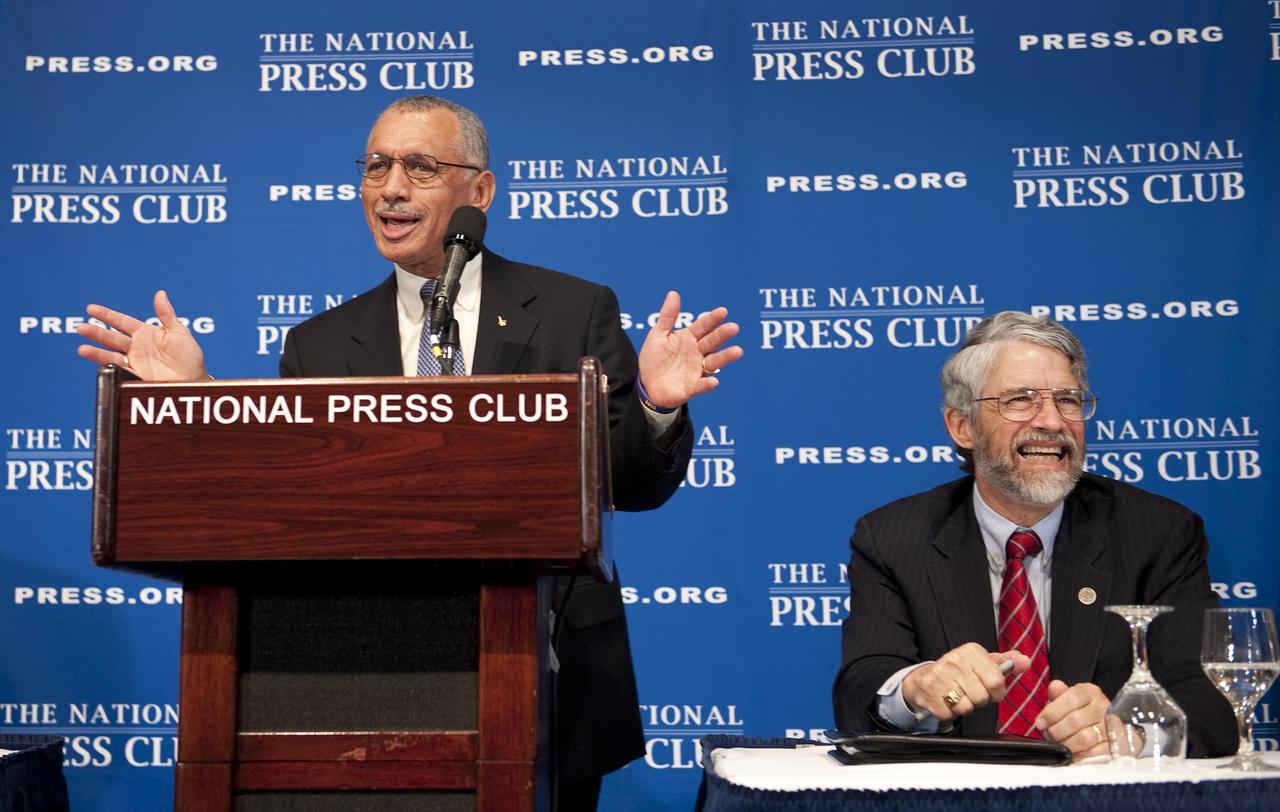
NASA Administrator Charles Bolden, left, and Assistant to the President for Science and Technology and Director of the White House Office of Science and Technology Policy Dr. John P. Holdren are seen during a press conference, Tuesday, Feb. 2, 2010, at the National Press Club in Washington, where it was announced that NASA has awarded $50 million through funded agreements to further the commercial sector's capability to support transport of crew to and from low Earth orbit. Photo Credit: (NASA/Bill Ingalls)
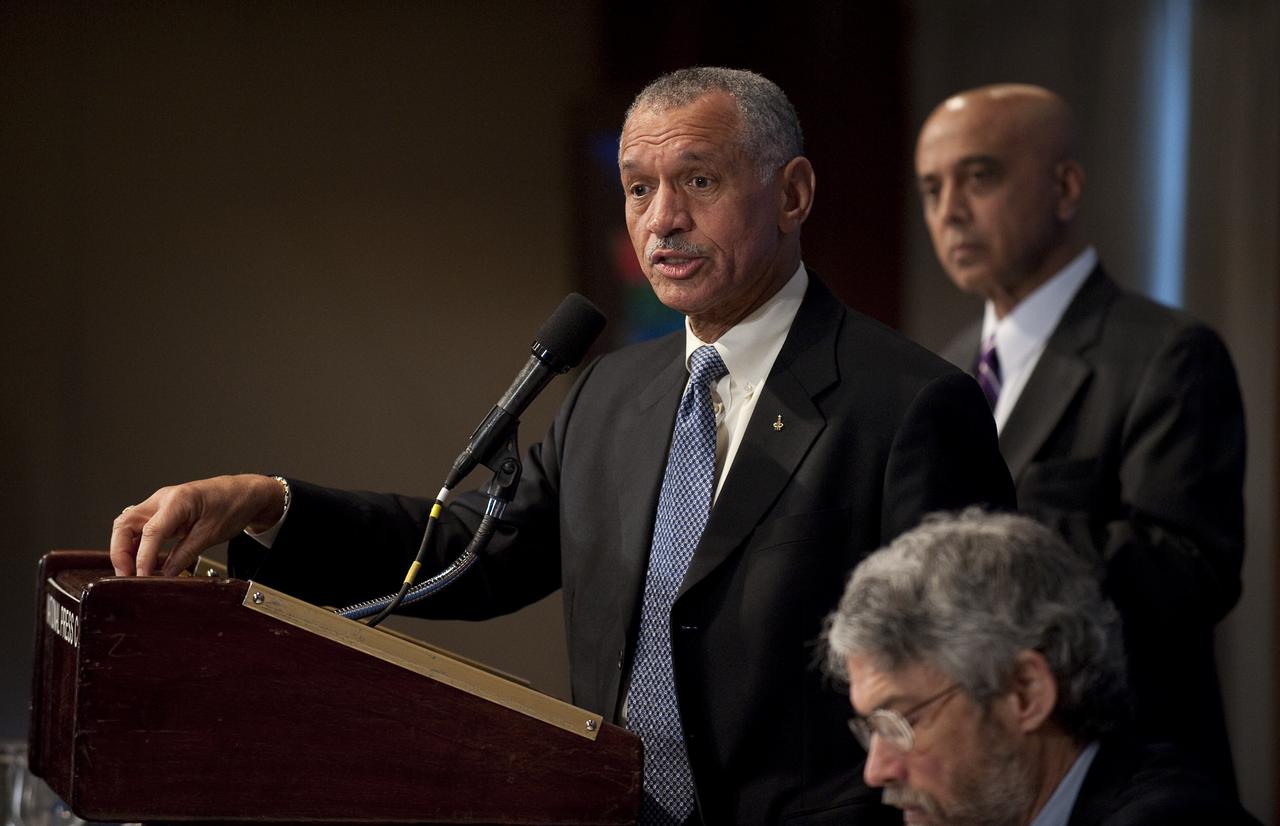
NASA Administrator Charles Bolden speaks during a press conference, Tuesday, Feb. 2, 2010, at the National Press Club in Washington, where it was announced that NASA has awarded $50 million through funded agreements to further the commercial sector's capability to support transport of crew to and from low Earth orbit. Photo Credit: (NASA/Bill Ingalls)
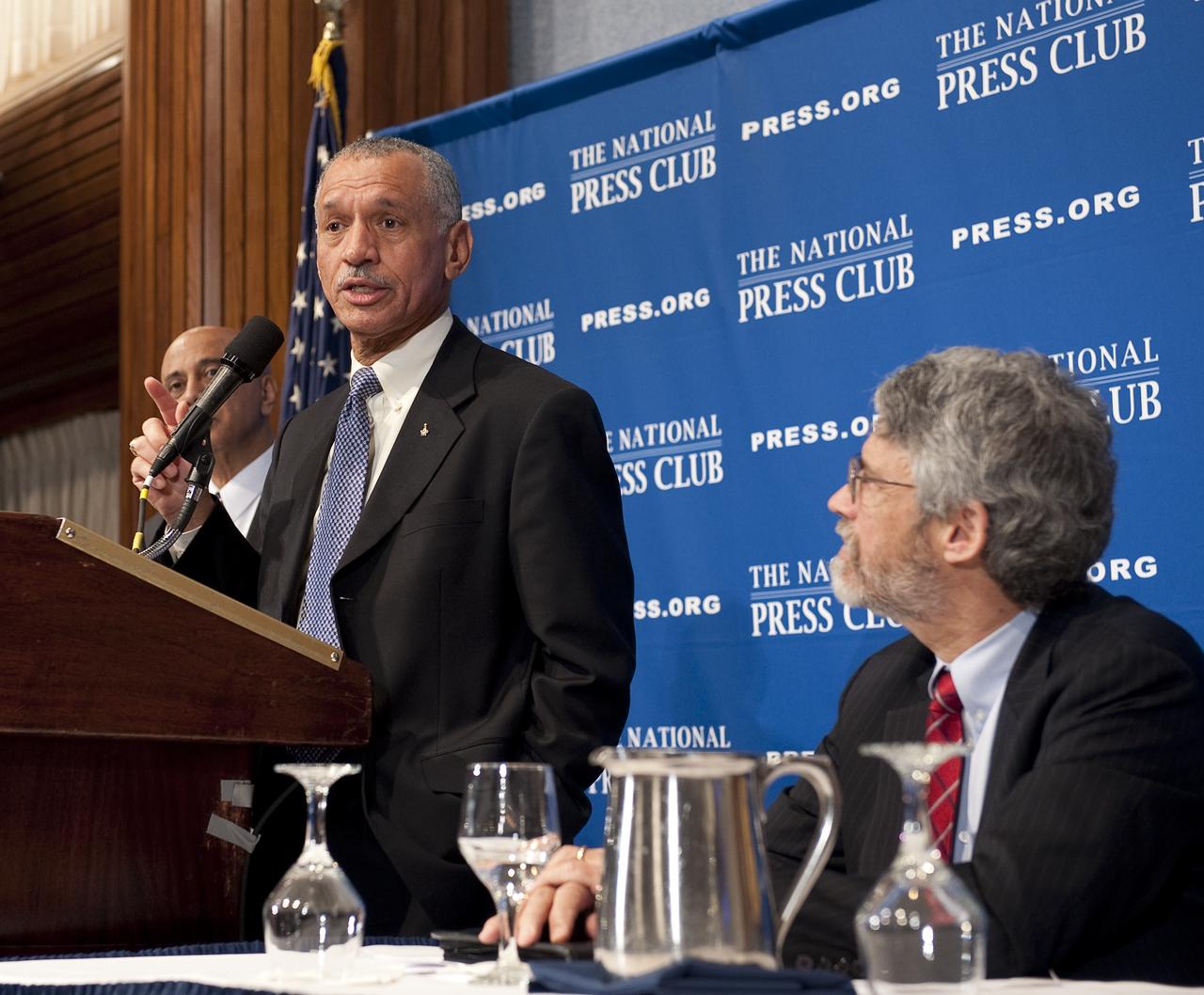
NASA Administrator Charles Bolden speaks during a press conference, Tuesday, Feb. 2, 2010, at the National Press Club in Washington, where it was announced that NASA has awarded $50 million through funded agreements to further the commercial sector's capability to support transport of crew to and from low Earth orbit. Photo Credit: (NASA/Bill Ingalls)
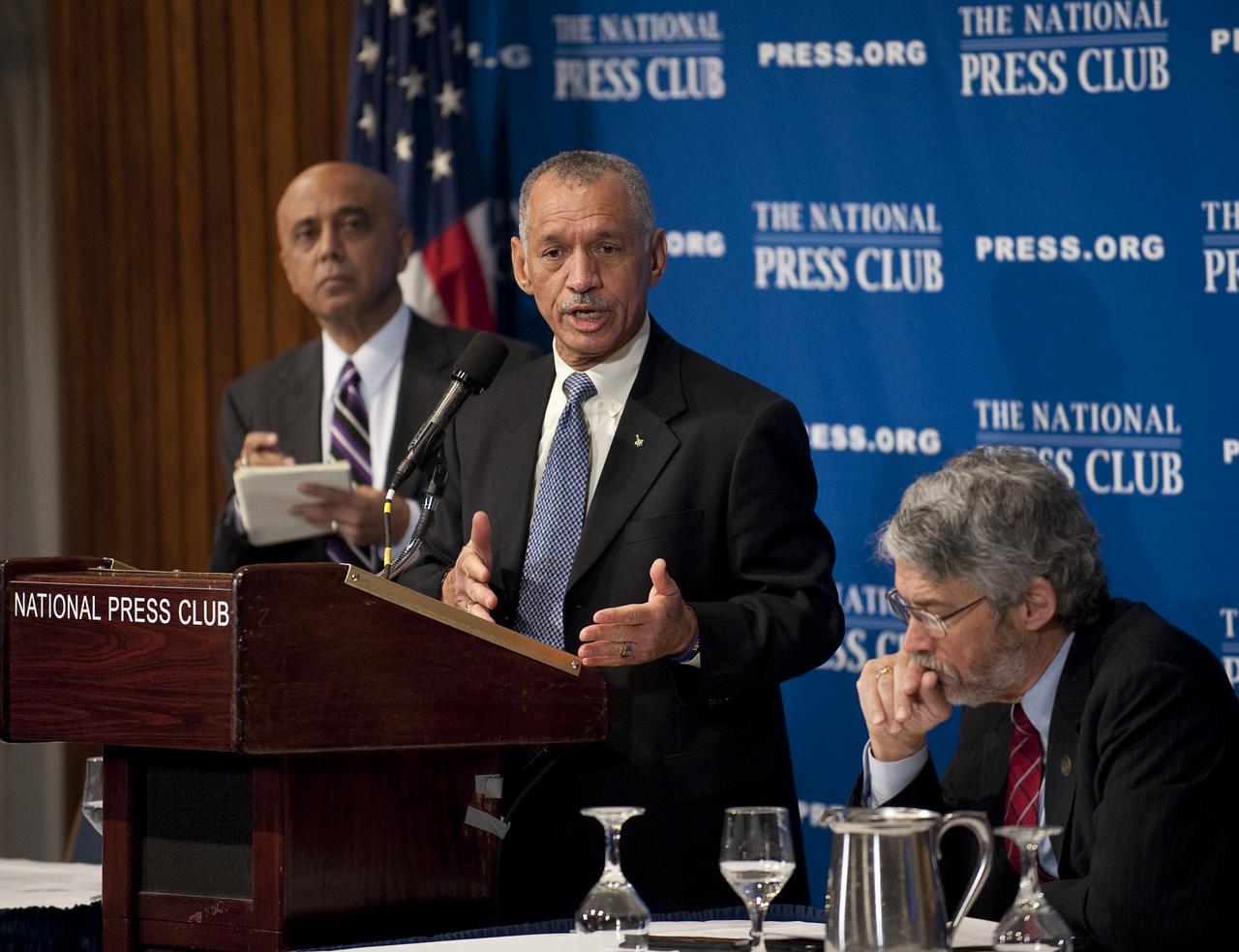
NASA Administrator Charles Bolden speaks during a press conference, Tuesday, Feb. 2, 2010, at the National Press Club in Washington, where it was announced that NASA has awarded $50 million through funded agreements to further the commercial sector's capability to support transport of crew to and from low Earth orbit. Photo Credit: (NASA/Bill Ingalls)
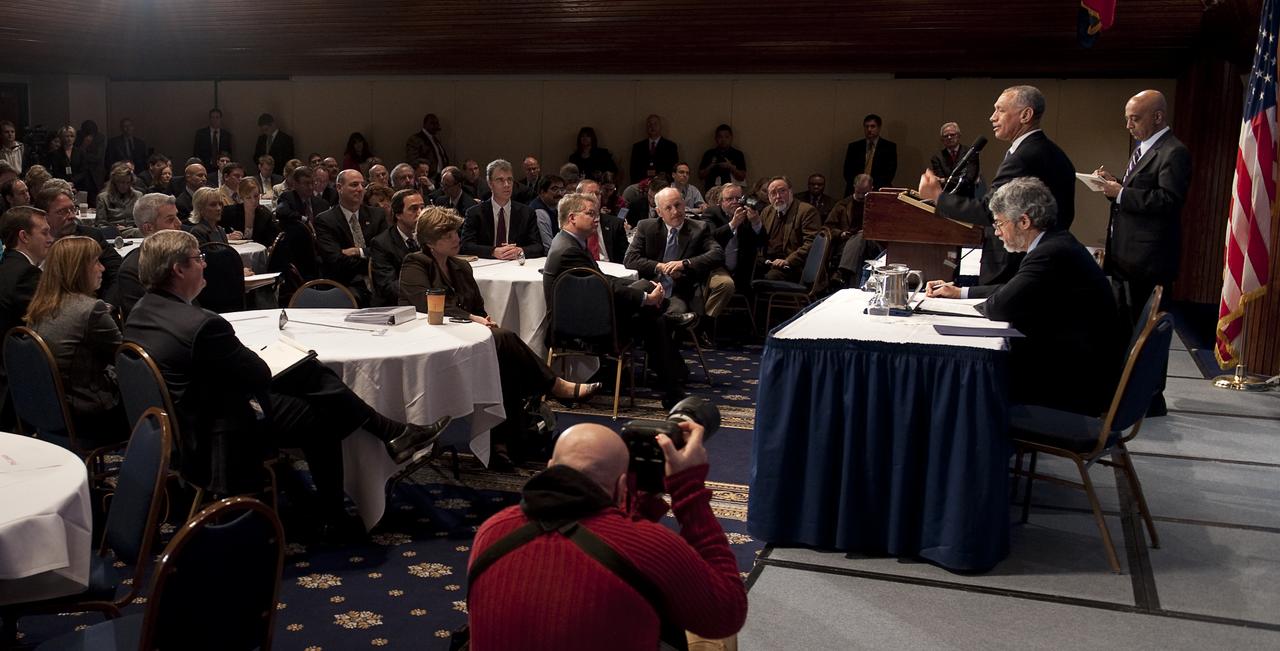
NASA Administrator Charles Bolden speaks during a press conference, Tuesday, Feb. 2, 2010, at the National Press Club in Washington, where it was announced that NASA has awarded $50 million through funded agreements to further the commercial sector's capability to support transport of crew to and from low Earth orbit. Photo Credit: (NASA/Bill Ingalls)
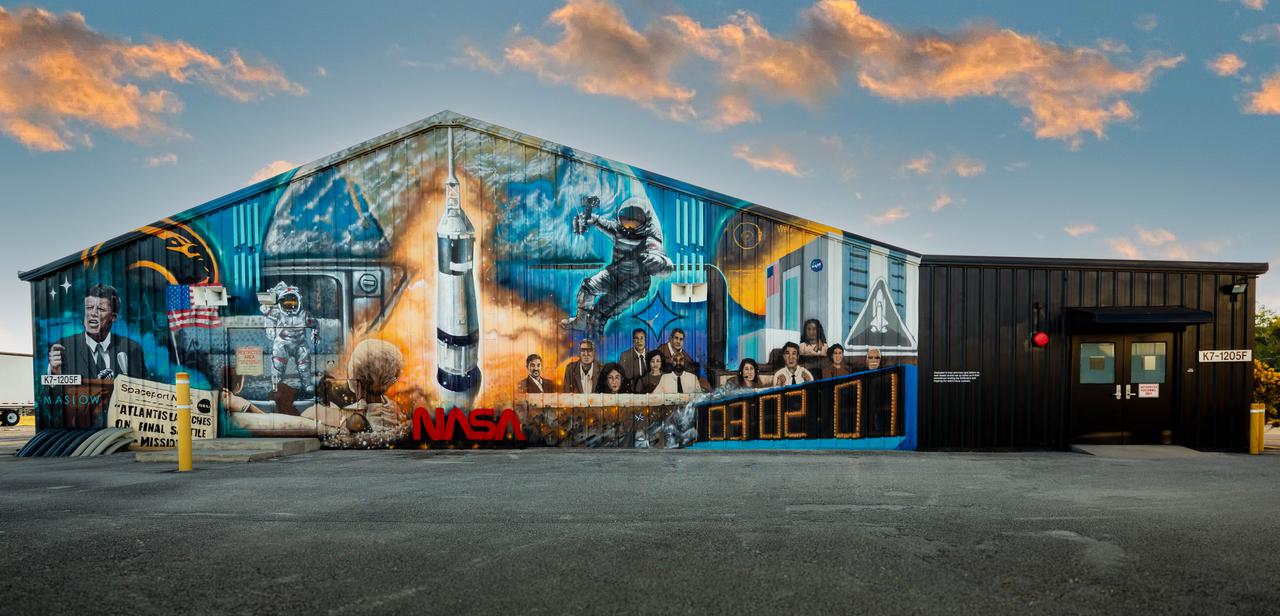
A mural painted by Florida artist Christopher Maslow adorns the northwest exterior wall of the Press Site News Facility at NASA’s Kennedy Space Center in Florida on Jan. 10, 2022. Completed by the artist over the course of several months during 2021, the largescale artwork depicts notable landmarks, missions, and milestones from the history of NASA and its world-famous spaceport. The Press Site News Facility is the hub of launch broadcasts and home to the center’s TV auditorium. Along with the nearby NASA News Center, for decades Kennedy’s Press Site has been where reporters from television, radio, print, and online media outlets have monitored countless launches, landings, and other space events in order to deliver the news to the world.
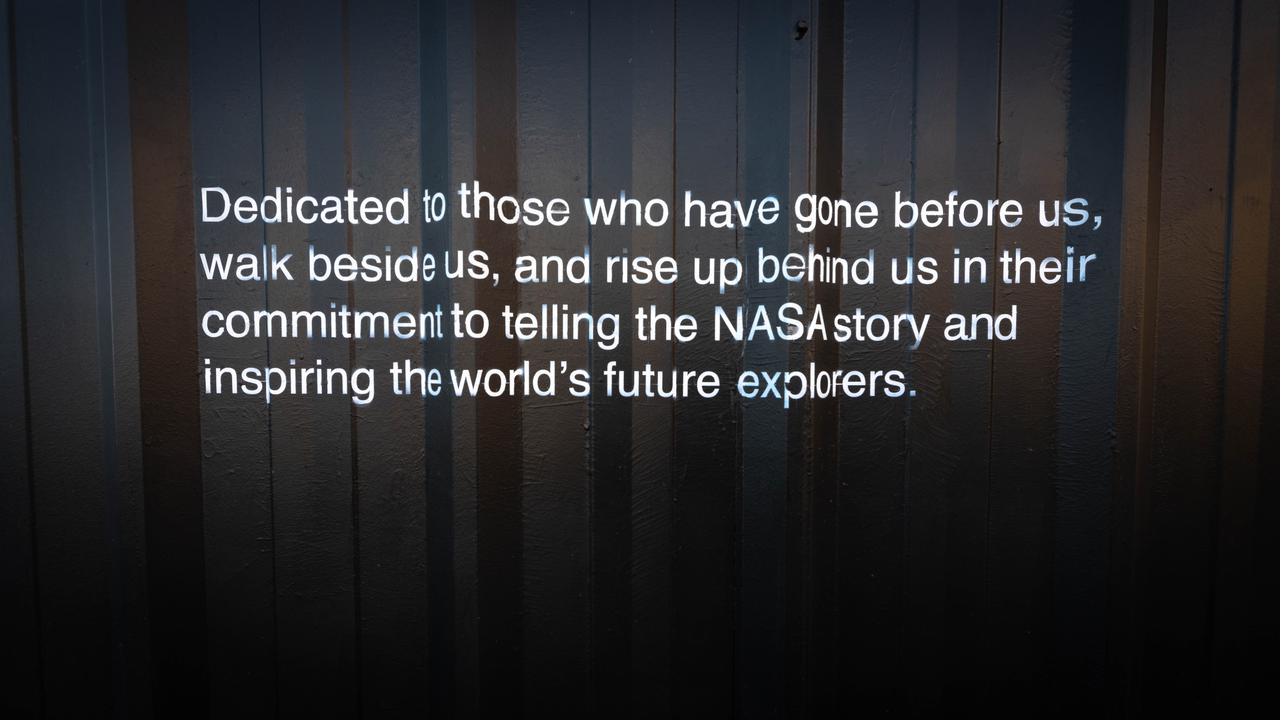
A dedication to those who tell the NASA story is part of a mural painted by Florida artist Christopher Maslow on the northwest exterior wall of the Press Site News Facility at NASA’s Kennedy Space Center in Florida, photographed on Jan. 10, 2022. Completed by the artist over the course of several months during 2021, the largescale artwork depicts notable landmarks, missions, and milestones from the history of NASA and its world-famous spaceport. The Press Site News Facility is the hub of launch broadcasts and home to the center’s TV auditorium. Along with the nearby NASA News Center, for decades Kennedy’s Press Site has been where reporters from television, radio, print, and online media outlets have monitored countless launches, landings, and other space events in order to deliver the news to the world.
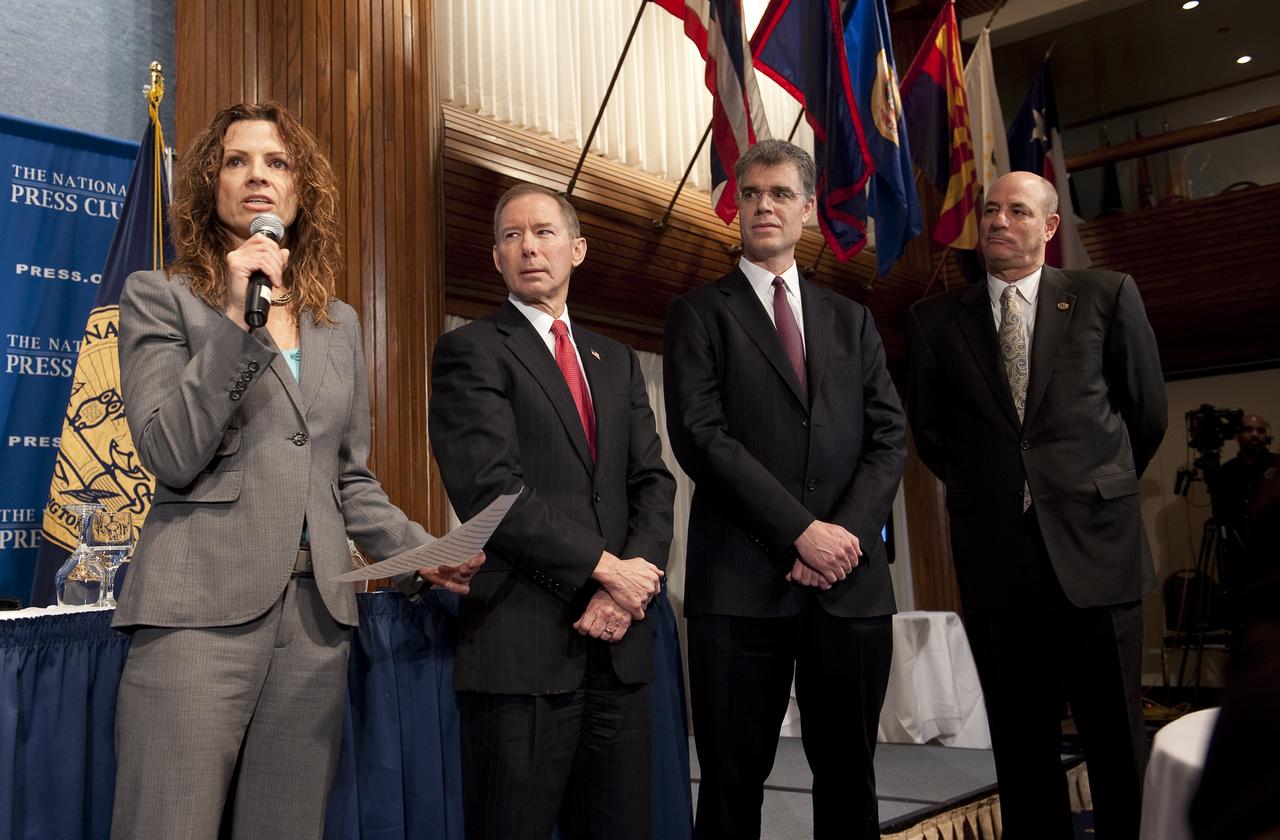
From left, Jane Poynter, President and Chair, Paragon Space Development Corp., Brewster Shaw, VP and General Manager, NASA Systems, Boeing, Robert Millman of Blue Origin and Mike Gass, President and Chief Executive, United Launch Alliance are seen during a press conference, Tuesday, Feb. 2, 2010, at the National Press Club in Washington, where it was announced that NASA has awarded $50 million through funded agreements to further the commercial sector's capability to support transport of crew to and from low Earth orbit. Photo Credit: (NASA/Bill Ingalls)
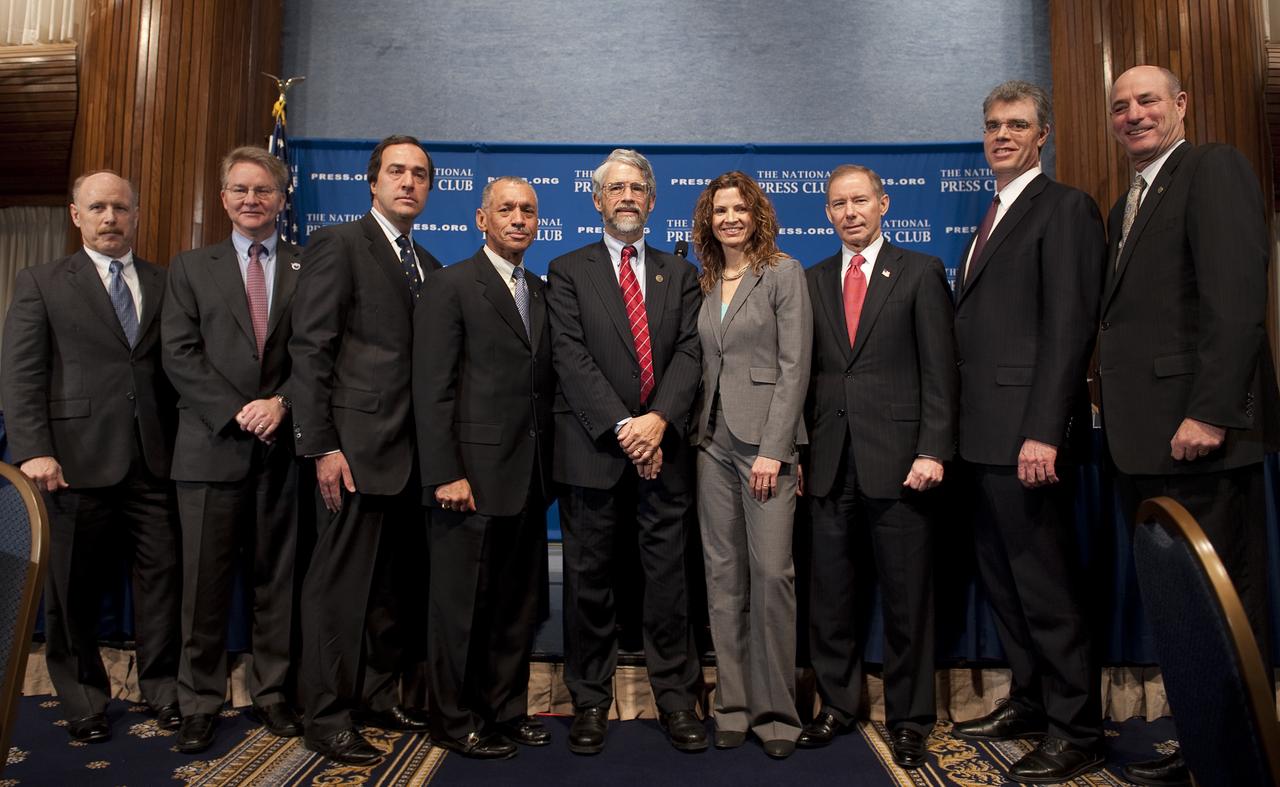
From left, Ken Bowersox, VP Astronaut Safety, SpaceX, David Thompson, CEO, Orbital Science Corporation, Mark Sirangelo, VP and Chair, SNC Space Systems Board, Sierra Nevada Corp., NASA Administrator Charles Bolden, Assistant to the President for Science and Technology and Director of the White House Office of Science and Technology Policy Dr. John P. Holdren, Jane Poynter, President and Chair, Paragon Space Development Corp., Brewster Shaw, VP and General Manager, NASA Systems, Boeing, Robert Millman of Blue Origin, and, Mike Gass, President and Chief Executive, United Launch Alliance, pose for a group photo during a press conference, Tuesday, Feb. 2, 2010, at the National Press Club in Washington, where it was announced that NASA has awarded $50 million through funded agreements to further the commercial sector's capability to support transport of crew to and from low Earth orbit. Photo Credit: (NASA/Bill Ingalls)
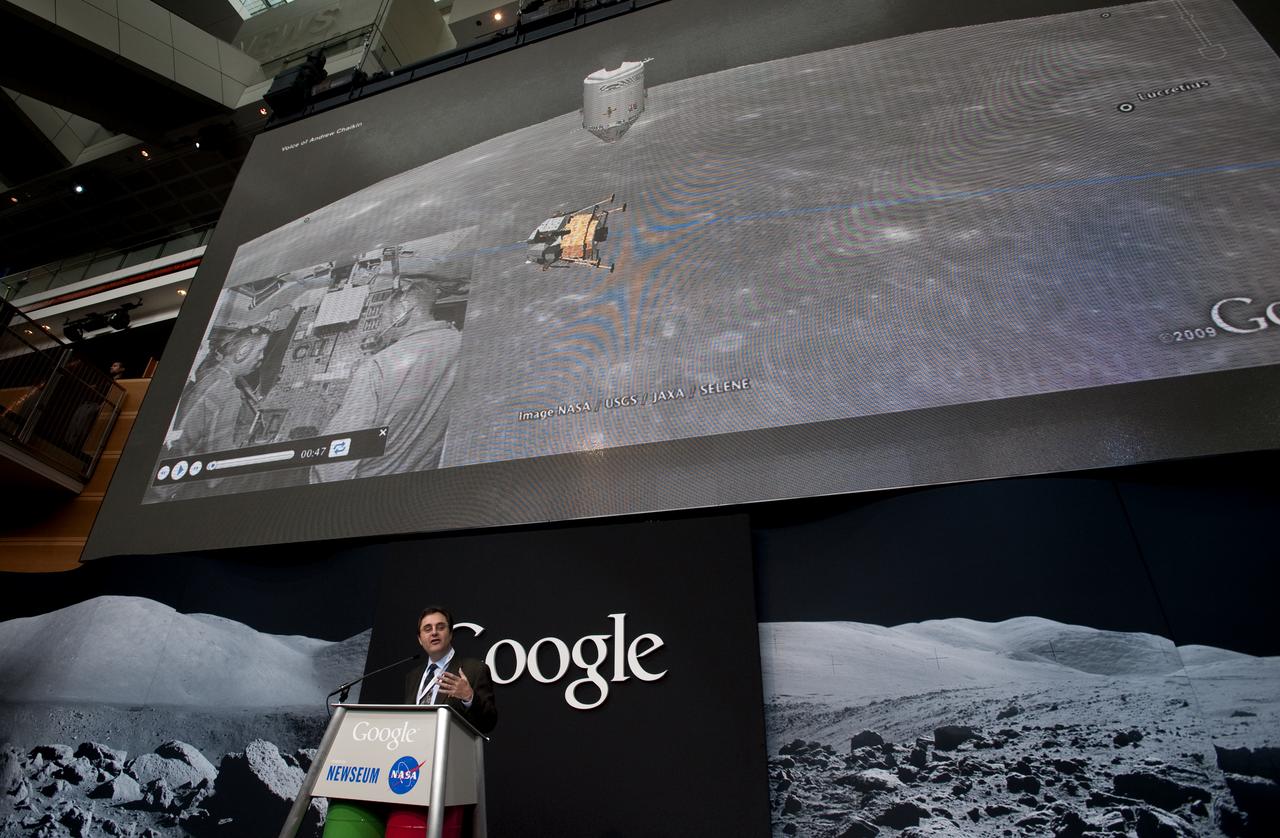
Andrew Chaikin, author of "A Man on the Moon" speaks during a press conference, Monday, July 20, 2009, announcing the launch of Moon in Google Earth, an immersive 3D atlas of the Moon, accessible within Google Earth 5.0, Monday, July 20, 2009, at the Newseum in Washington. Photo Credit: (NASA/Bill Ingalls)

Andrew Chaikin, author of "A Man on the Moon" speaks during a press conference, Monday, July 20, 2009, announcing the launch of Moon in Google Earth, an immersive 3D atlas of the Moon, accessible within Google Earth 5.0, Monday, July 20, 2009, at the Newseum in Washington. Photo Credit: (NASA/Bill Ingalls)
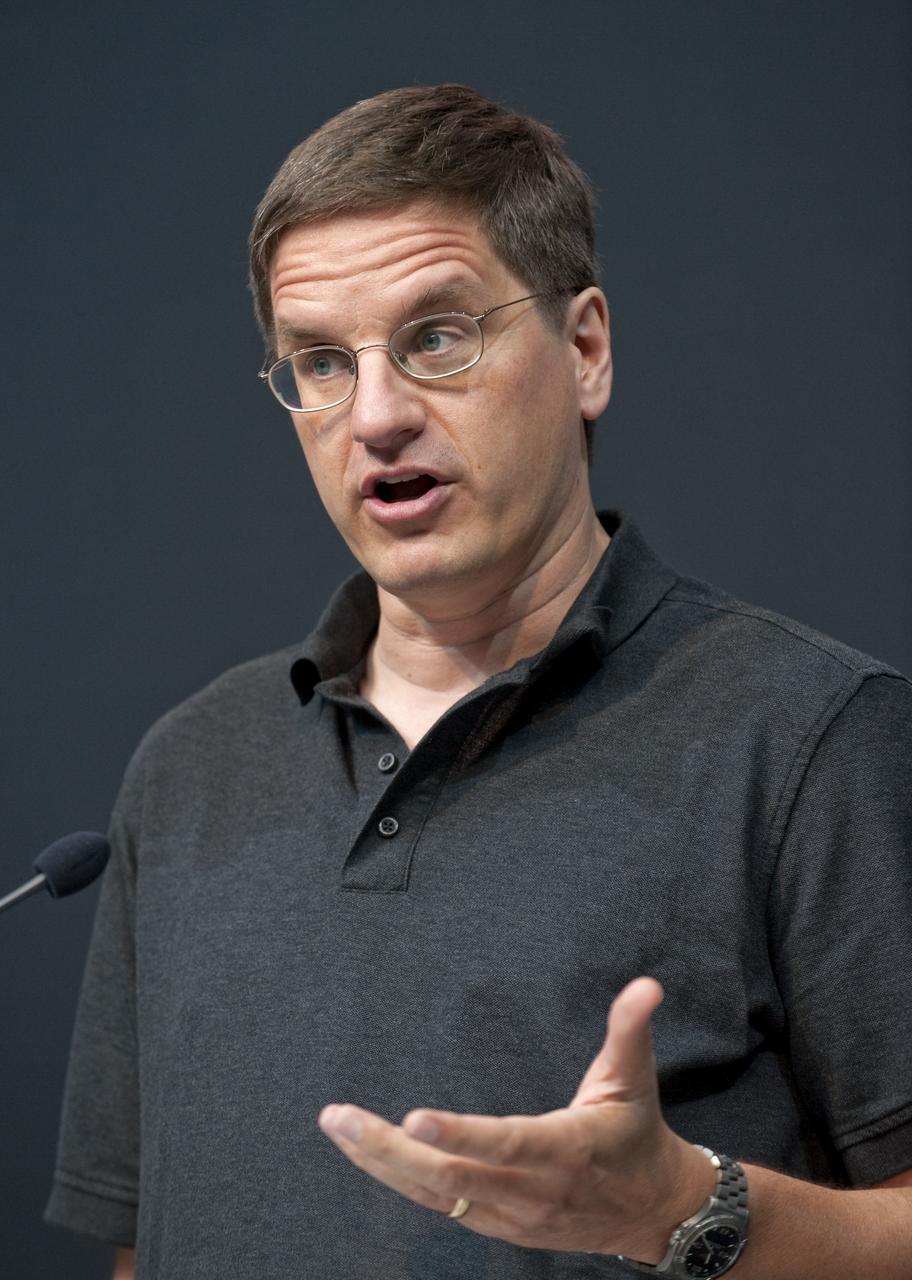
Brian McLendon, VP of Engineering, Google, Inc., speaks during a press conference, Monday, July 20, 2009, announcing the launch of Moon in Google Earth, an immersive 3D atlas of the Moon, accessible within Google Earth 5.0, Monday, July 20, 2009, at the Newseum in Washington. Photo Credit: (NASA/Bill Ingalls)
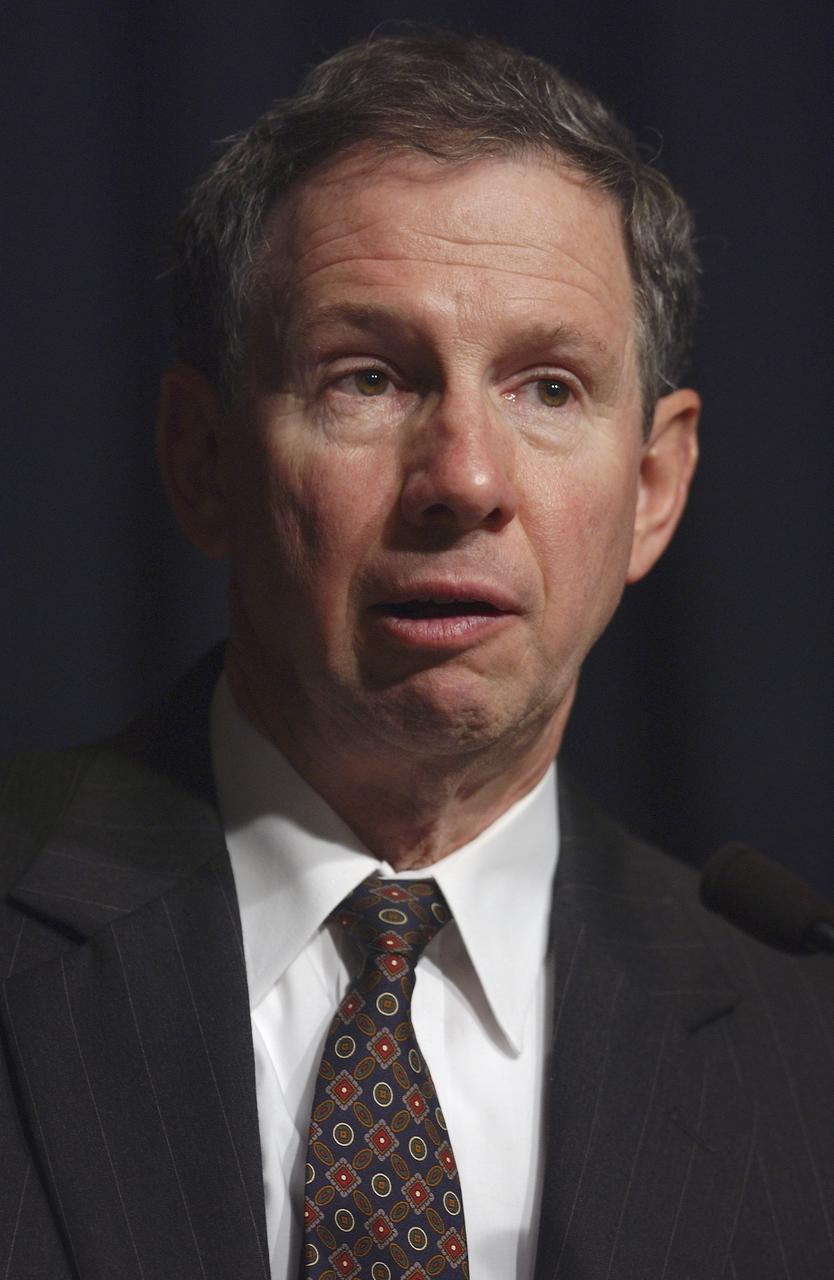
Michael Griffin addresses the media during his first press conference as NASA Administrator, Monday, April 18, 2005, at NASA Headquarters in Washington, DC. Photo Credit: (NASA/Renee Bouchard)
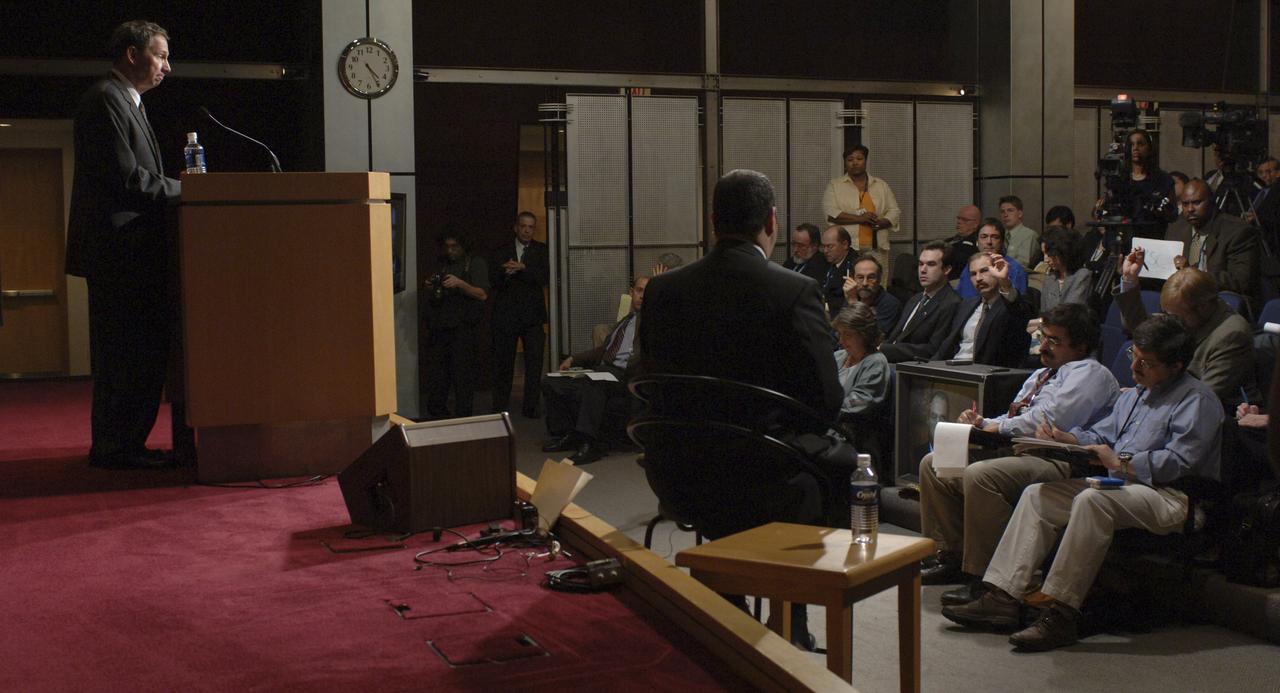
Michael Griffin addresses the media during his first press conference as NASA Administrator, Monday, April 18, 2005, at NASA Headquarters in Washington, DC. Photo Credit: (NASA/Renee Bouchard)
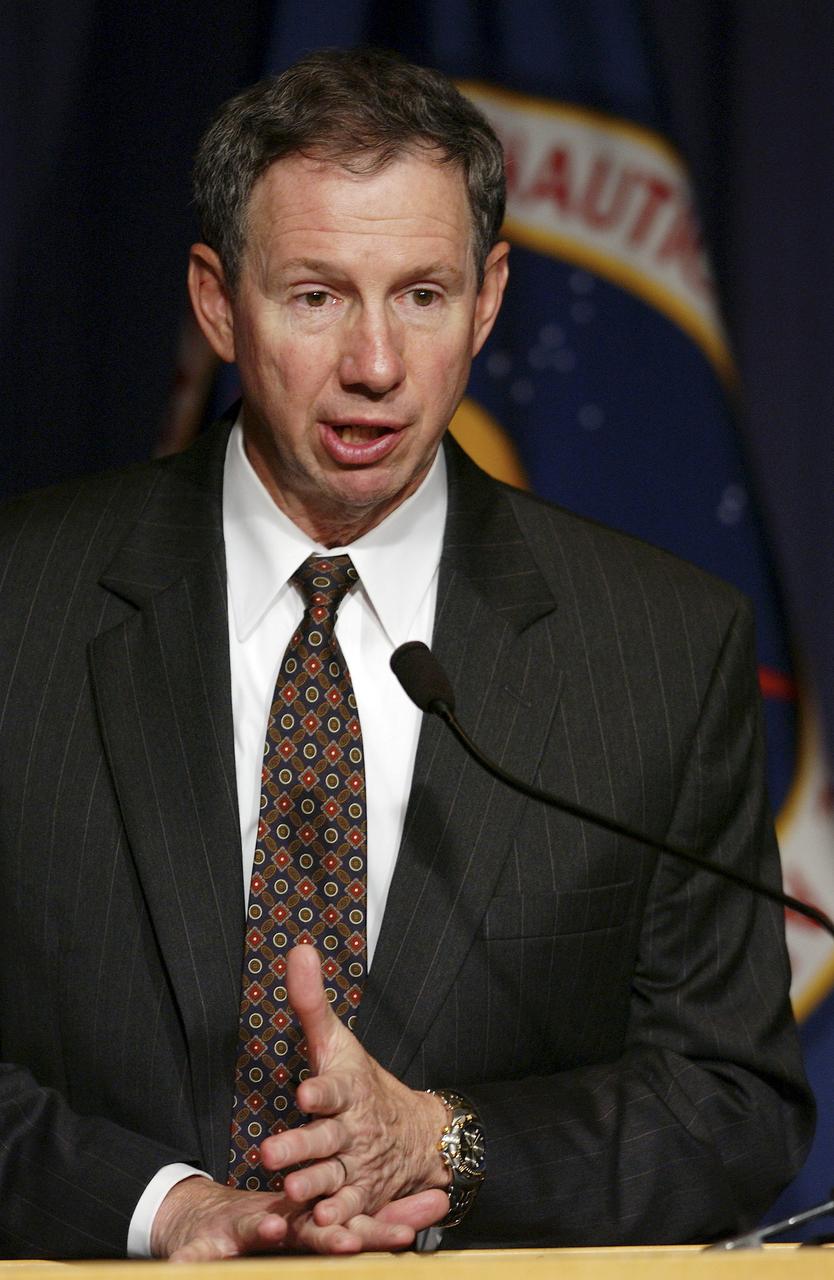
Michael Griffin addresses the media during his first press conference as NASA Administrator, Monday, April 18, 2005, at NASA Headquarters in Washington, DC. Photo Credit: (NASA/Renee Bouchard)
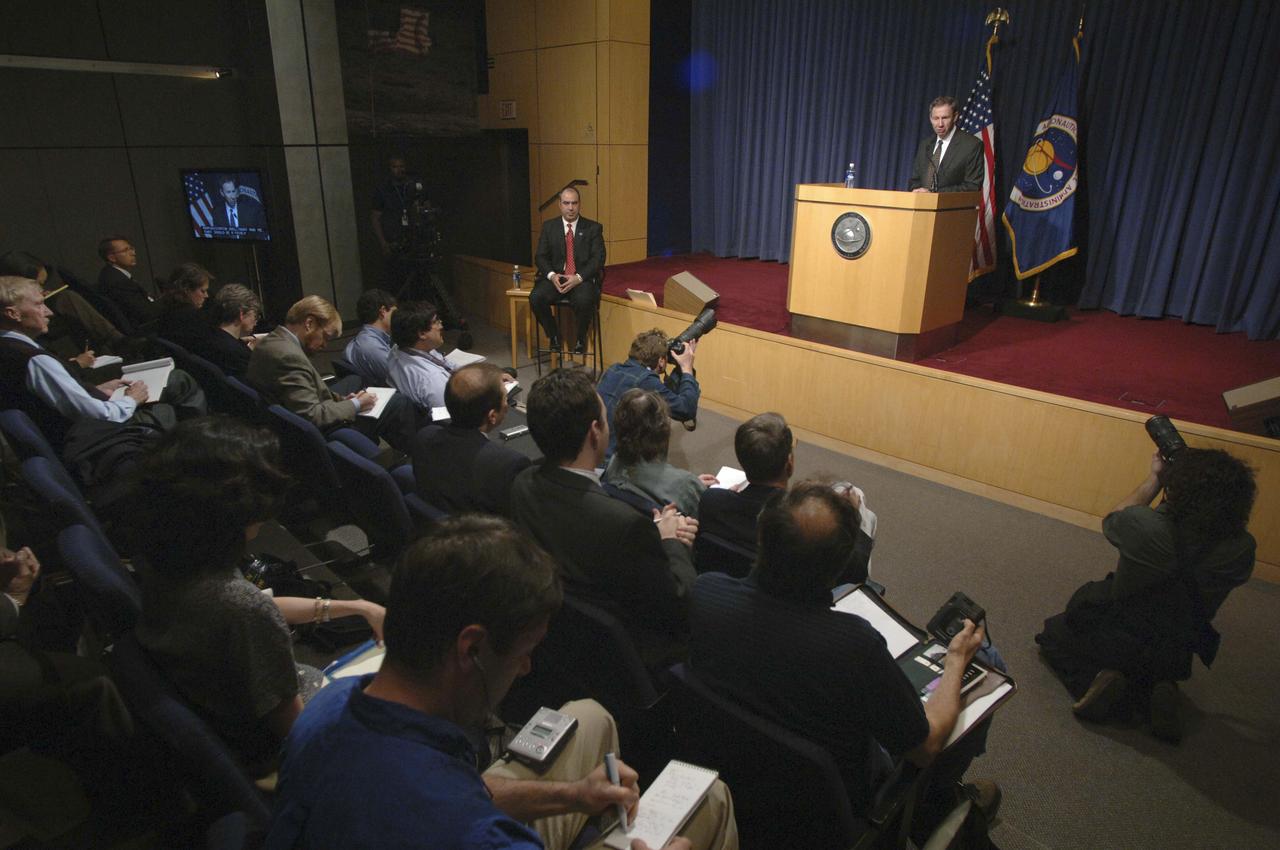
Michael Griffin addresses the media during his first press conference as NASA Administrator, Monday, April 18, 2005, at NASA Headquarters in Washington, DC. Photo Credit: (NASA/Renee Bouchard)
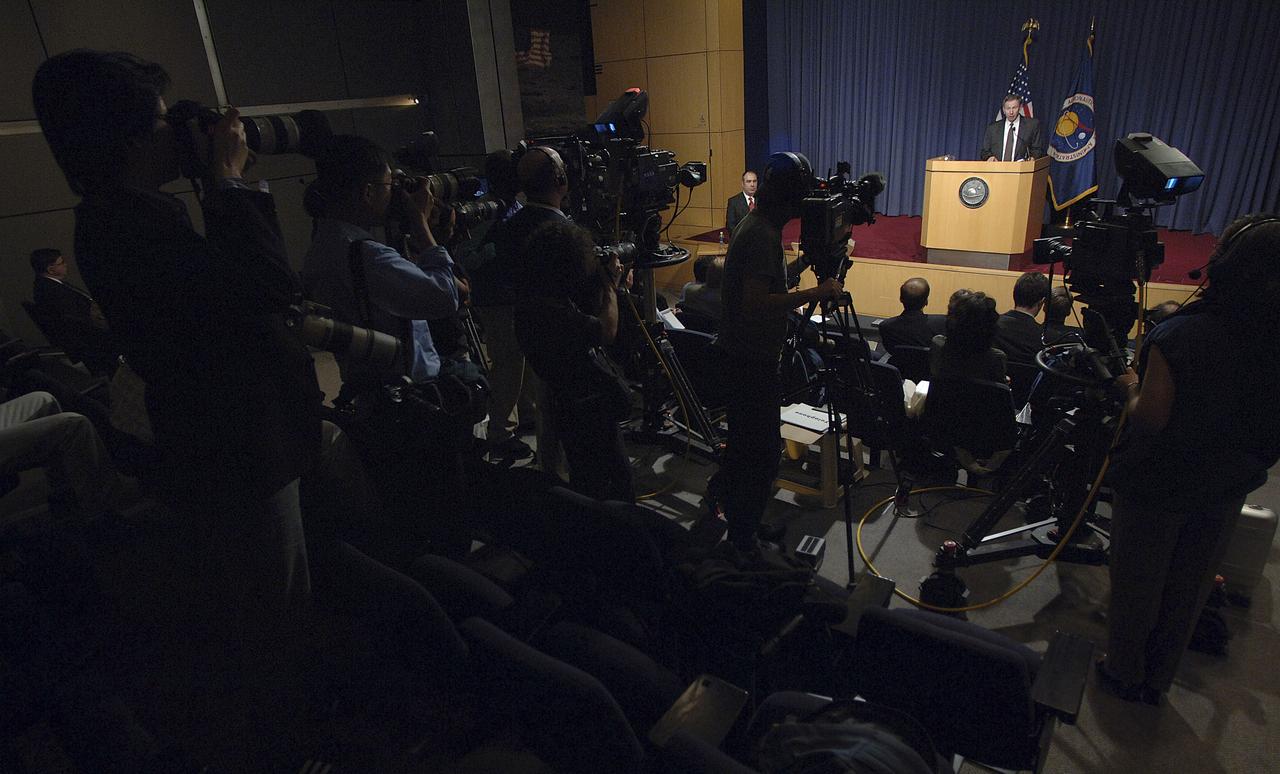
Michael Griffin addresses the media during his first press conference as NASA Administrator, Monday, April 18, 2005, at NASA Headquarters in Washington, DC. Photo Credit: (NASA/Renee Bouchard)

Michael Griffin addresses the media during his first press conference as NASA Administrator, Monday, April 18, 2005, at NASA Headquarters in Washington, DC. Photo Credit: (NASA/Renee Bouchard)
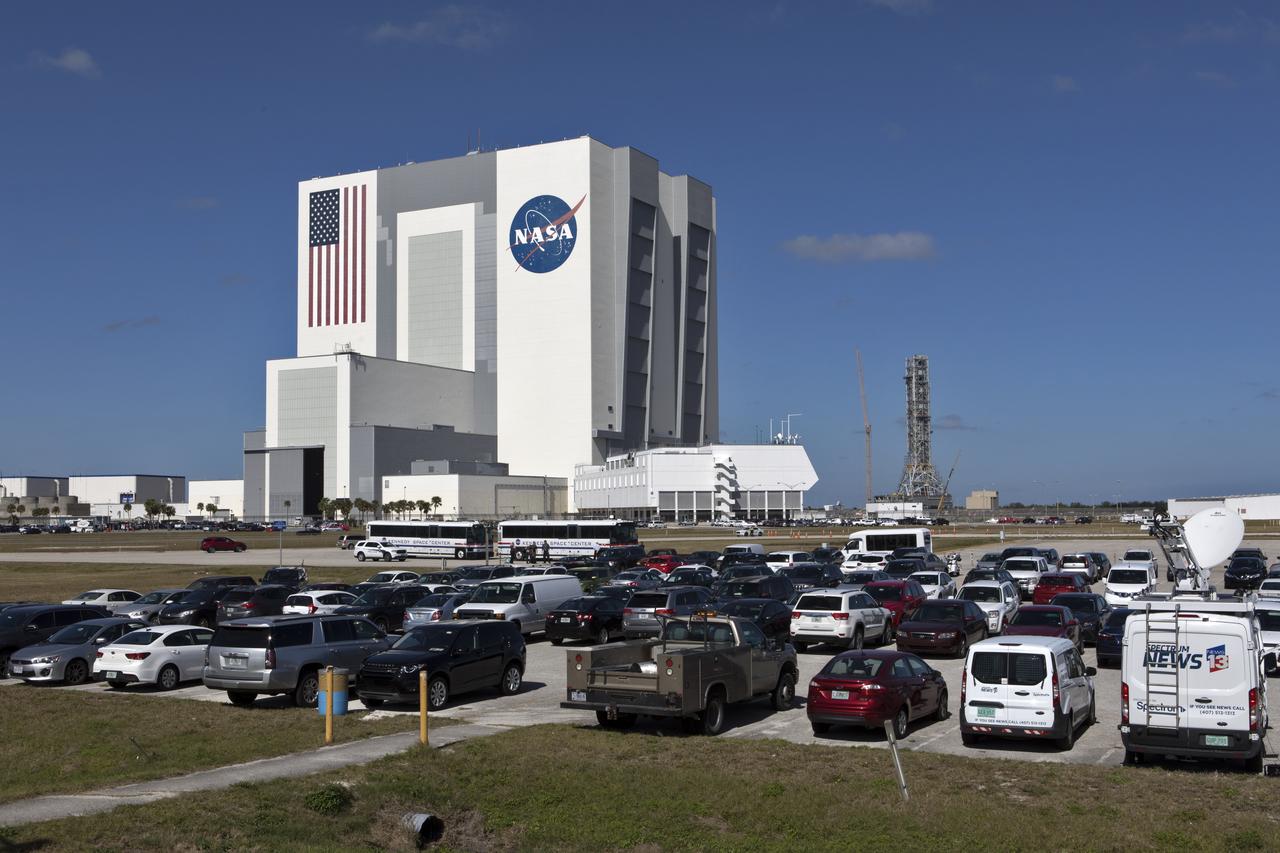
The parking area at the NASA News Center is filled with media vehicles and guest buses in anticipation of the liftoff of the SpaceX Falcon Heavy rocket from Launch Complex 39A at Kennedy Space Center in Florida. The demonstration flight will be a significant milestone for the world's premier multi-user spaceport. In 2014, NASA signed a property agreement with SpaceX for the use and operation of the center's pad 39A, where the company has launched Falcon 9 rockets and is preparing for the first Falcon Heavy. NASA also has Space Act Agreements in place with partners, such as SpaceX, to provide services needed to process and launch rockets and spacecraft.
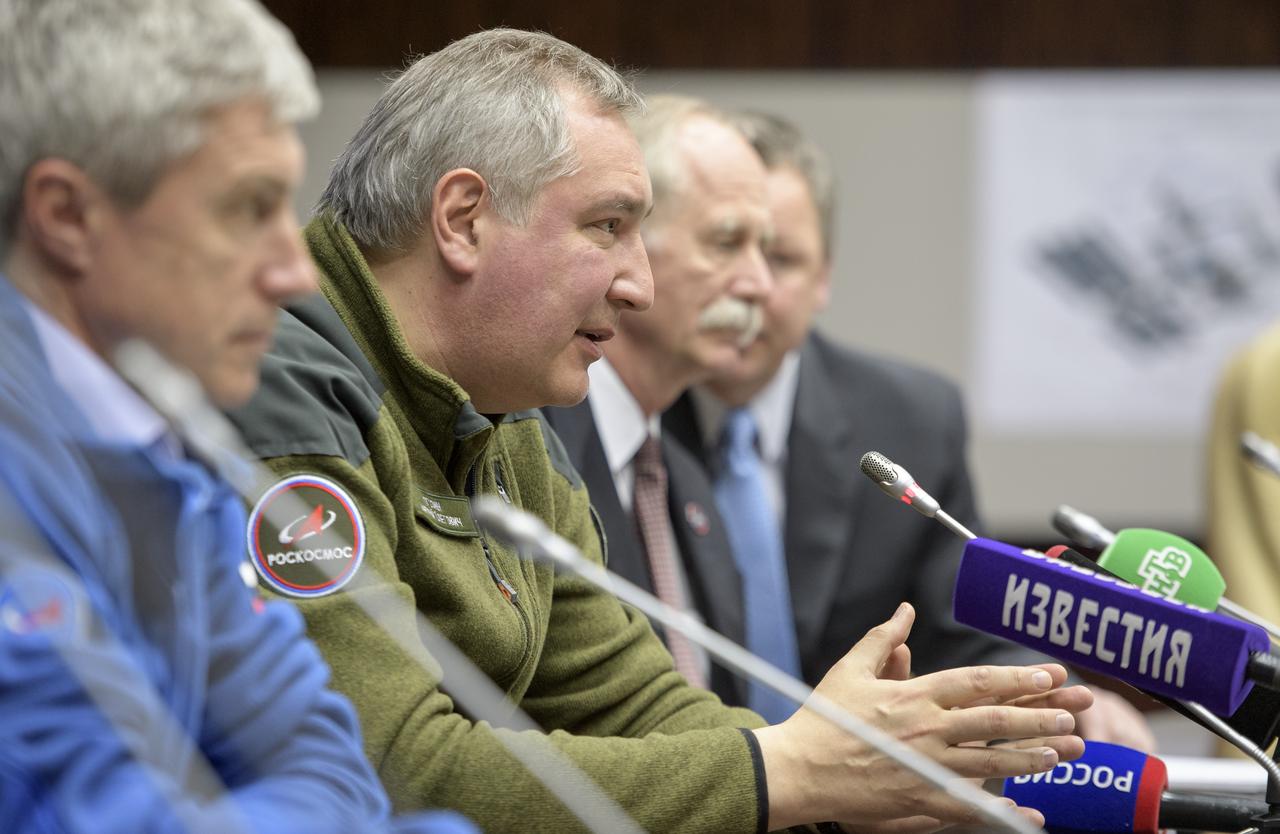
Roscosmos Director General Dmitry Rogozin answers questions during a Expedition 59 post-docking press conference, Friday, March 15, 2019 at the Baikonur Hotel in Baikonur, Kazakhstan. Photo Credit: (NASA/Bill Ingalls)
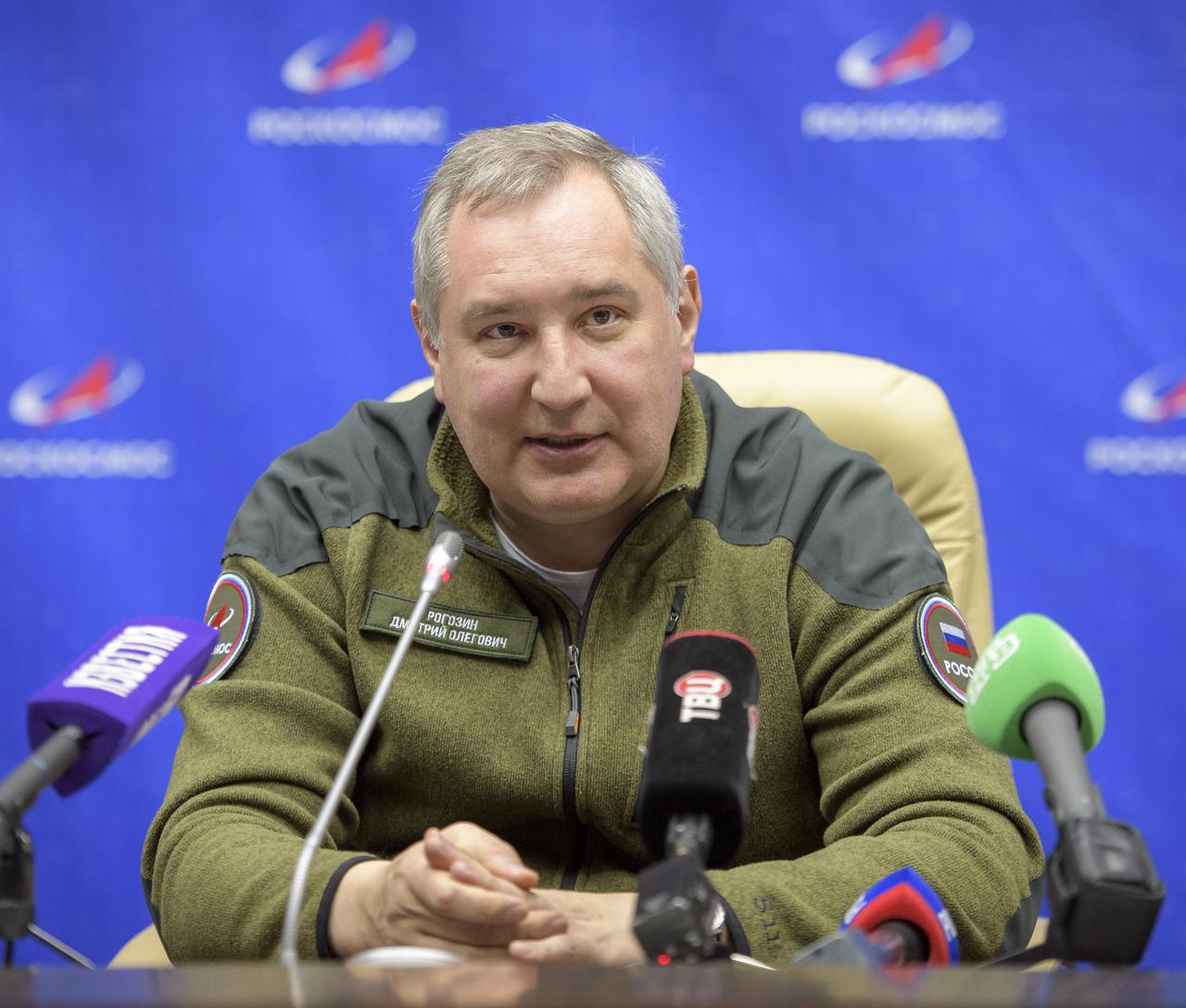
Roscosmos Director General Dmitry Rogozin answers questions during a Expedition 59 post-docking press conference, Friday, March 15, 2019 at the Baikonur Hotel in Baikonur, Kazakhstan. Photo Credit: (NASA/Bill Ingalls)
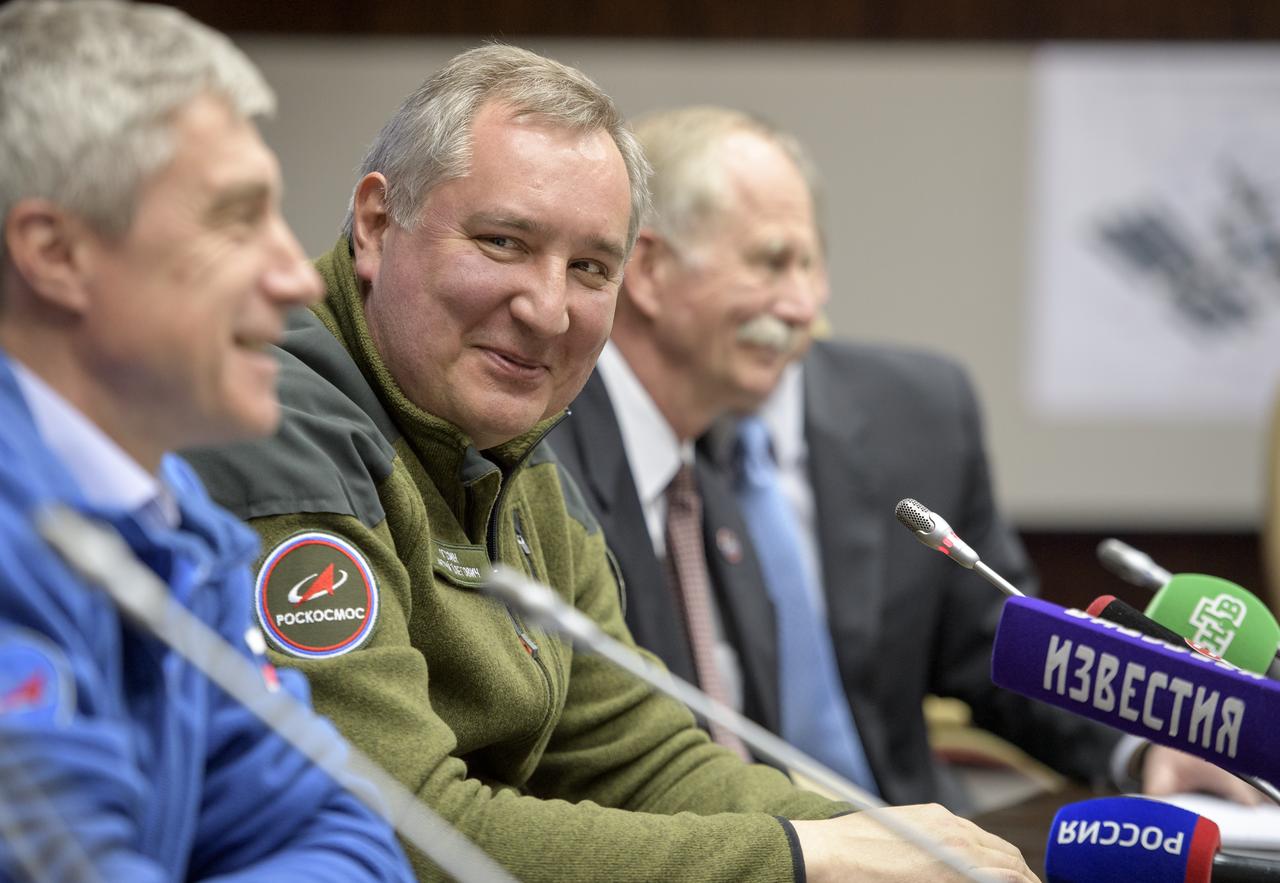
Roscosmos Director General Dmitry Rogozin answers questions during a Expedition 59 post-docking press conference, Friday, March 15, 2019 at the Baikonur Hotel in Baikonur, Kazakhstan. Photo Credit: (NASA/Bill Ingalls)
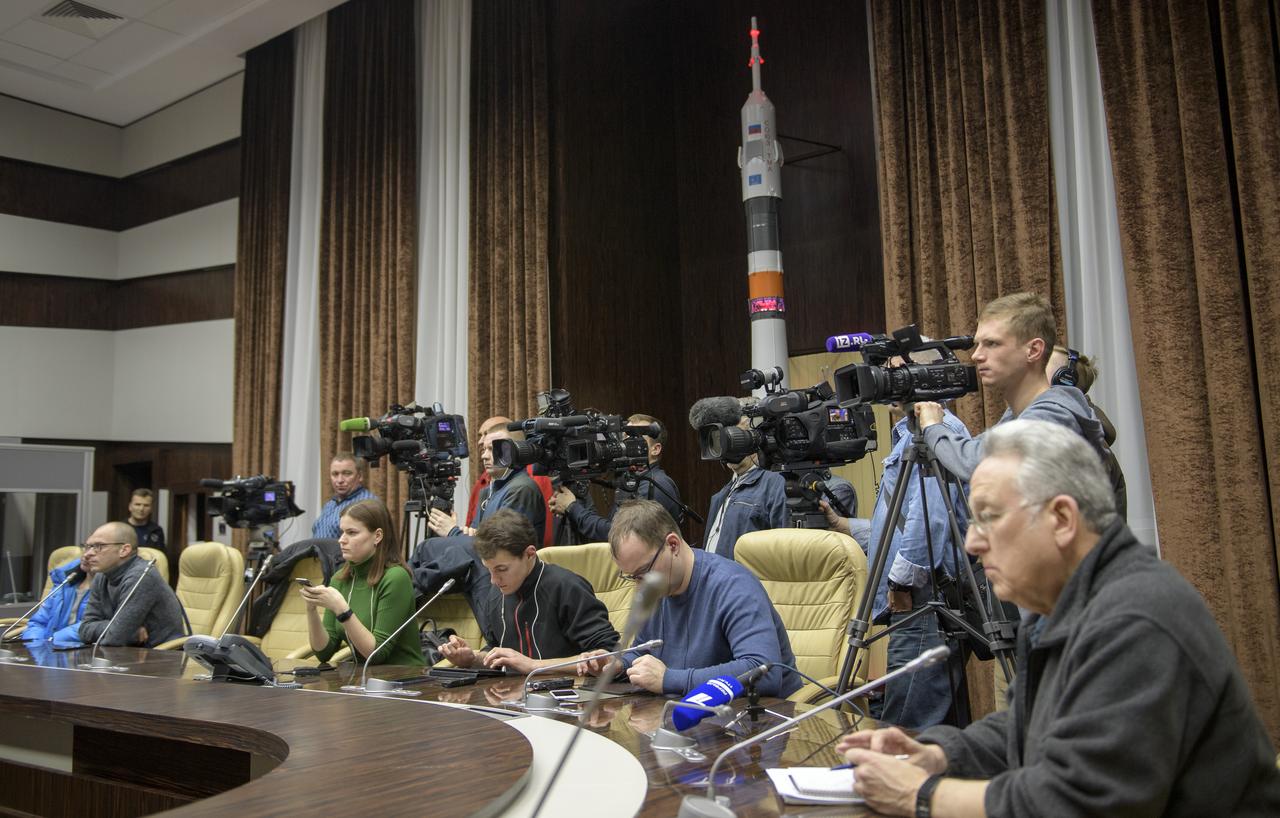
Members of the media are seen during a Expedition 59 post-docking press conference, Friday, March 15, 2019 at the Baikonur Hotel in Baikonur, Kazakhstan. Photo Credit: (NASA/Bill Ingalls)
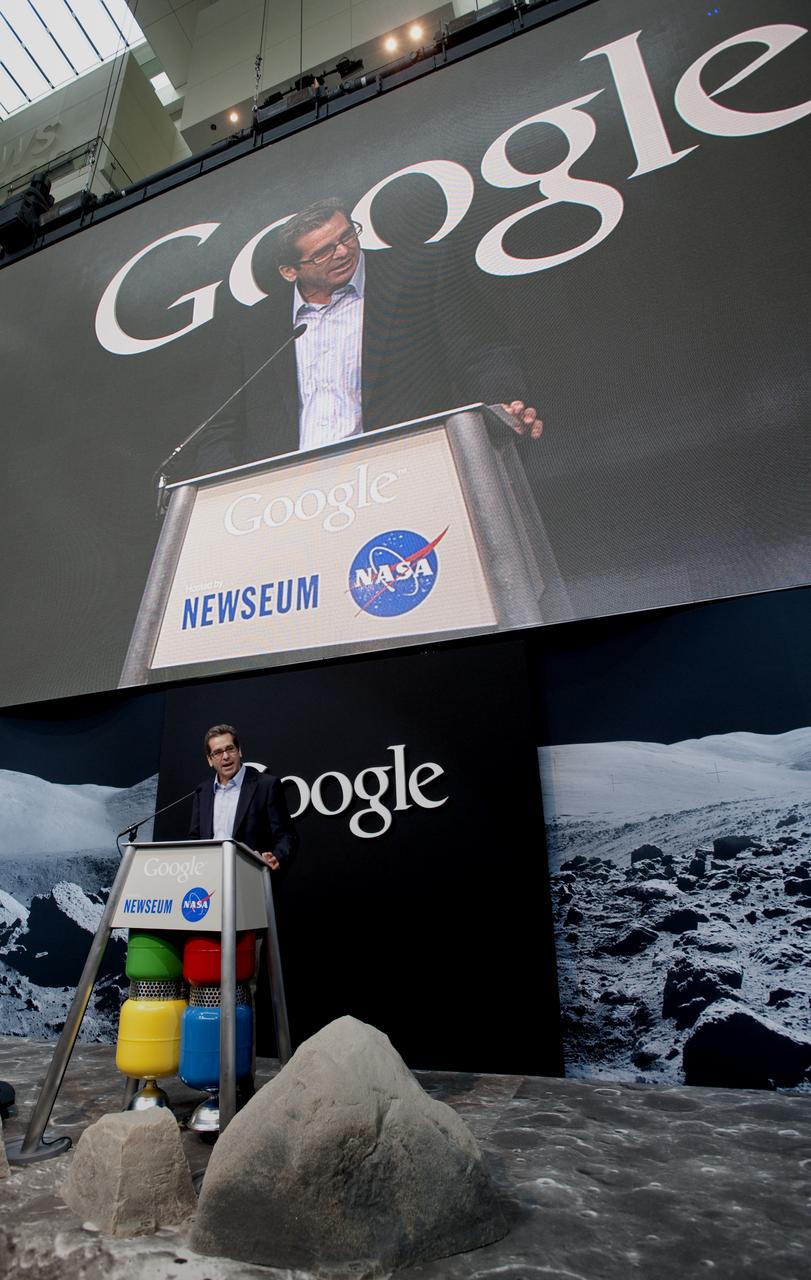
Miles O'Brien, former chief science and tech correspondent for CNN, speaks during a press conference, Monday, July 20, 2009, announcing the launch of Moon in Google Earth, an immersive 3D atlas of the Moon, accessible within Google Earth 5.0, Monday, July 20, 2009, at the Newseum in Washington. Photo Credit: (NASA/Bill Ingalls)

Steven Benner, a distinguished fellow at the Foundation for Applied Molecular Evolution, speaks during a press conference, Thursday, Dec. 2, 2010, at NASA Headquarters in Washington. NASA-funded astrobiology research has changed the fundamental knowledge about what comprises all known life on Earth. Researchers conducting tests in the harsh environment of Mono Lake in California have discovered the first known microorganism on Earth able to thrive and reproduce using the toxic chemical arsenic. Photo Credit: (NASA/Paul E. Alers)
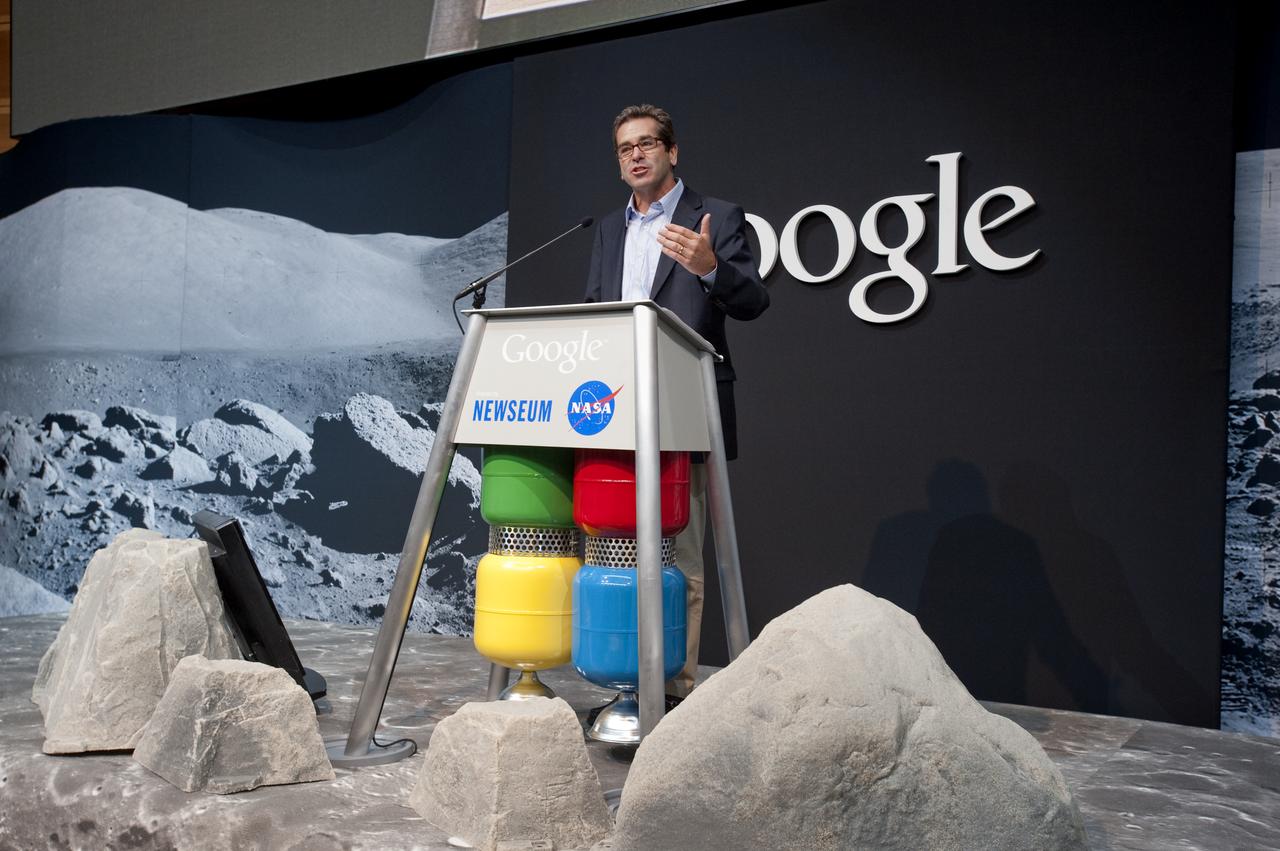
Miles O'Brien, former chief science and tech correspondent for CNN, speaks during a press conference, Monday, July 20, 2009, announcing the launch of Moon in Google Earth, an immersive 3D atlas of the Moon, accessible within Google Earth 5.0, Monday, July 20, 2009, at the Newseum in Washington. Photo Credit: (NASA/Bill Ingalls)

Pamela Conrad, an astrobiologist from Goddard Space Flight Center, speaks during a press conference, Thursday, Dec. 2, 2010, at NASA Headquarters in Washington. NASA-funded astrobiology research has changed the fundamental knowledge about what comprises all known life on Earth. Researchers conducting tests in the harsh environment of Mono Lake in California have discovered the first known microorganism on Earth able to thrive and reproduce using the toxic chemical arsenic. Photo Credit: (NASA/Paul E. Alers)

Felisa Wolfe-Simon, director, Astrobiology Program, NASA Headquarters, speaks during a press conference, Thursday, Dec. 2, 2010, at NASA Headquarters in Washington. NASA-funded astrobiology research has changed the fundamental knowledge about what comprises all known life on Earth. Researchers conducting tests in the harsh environment of Mono Lake in California have discovered the first known microorganism on Earth able to thrive and reproduce using the toxic chemical arsenic. Photo Credit: (NASA/Paul E. Alers)

Felisa Wolfe-Simon, a lead researcher and NASA astrobiology research fellow, speaks during a press conference, Thursday, Dec. 2, 2010, at NASA Headquarters in Washington. NASA-funded astrobiology research has changed the fundamental knowledge about what comprises all known life on Earth. Researchers conducting tests in the harsh environment of Mono Lake in California have discovered the first known microorganism on Earth able to thrive and reproduce using the toxic chemical arsenic. Photo Credit: (NASA/Paul E. Alers)
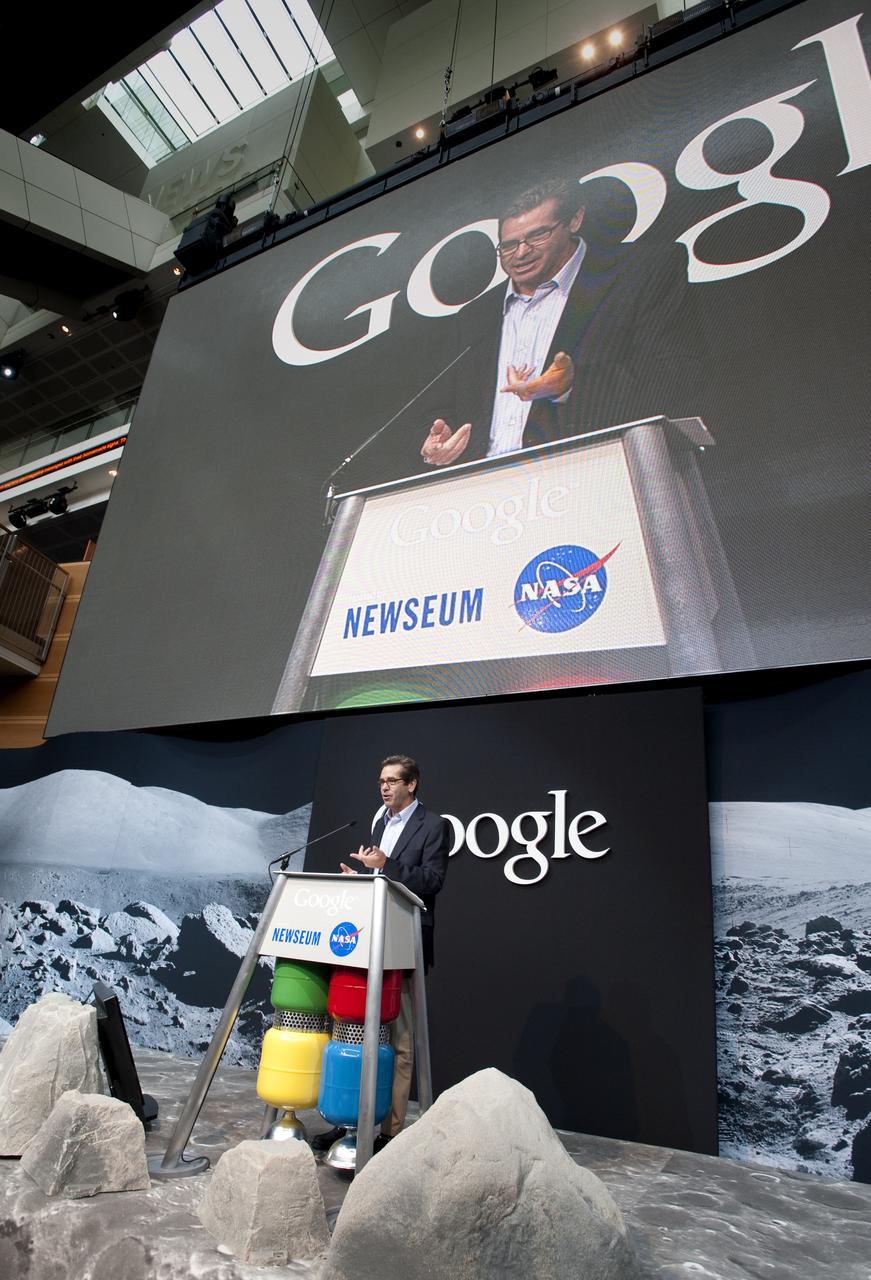
Miles O'Brien, former chief science and tech correspondent for CNN, speaks during a press conference, Monday, July 20, 2009, announcing the launch of Moon in Google Earth, an immersive 3D atlas of the Moon, accessible within Google Earth 5.0, Monday, July 20, 2009, at the Newseum in Washington. Photo Credit: (NASA/Bill Ingalls)
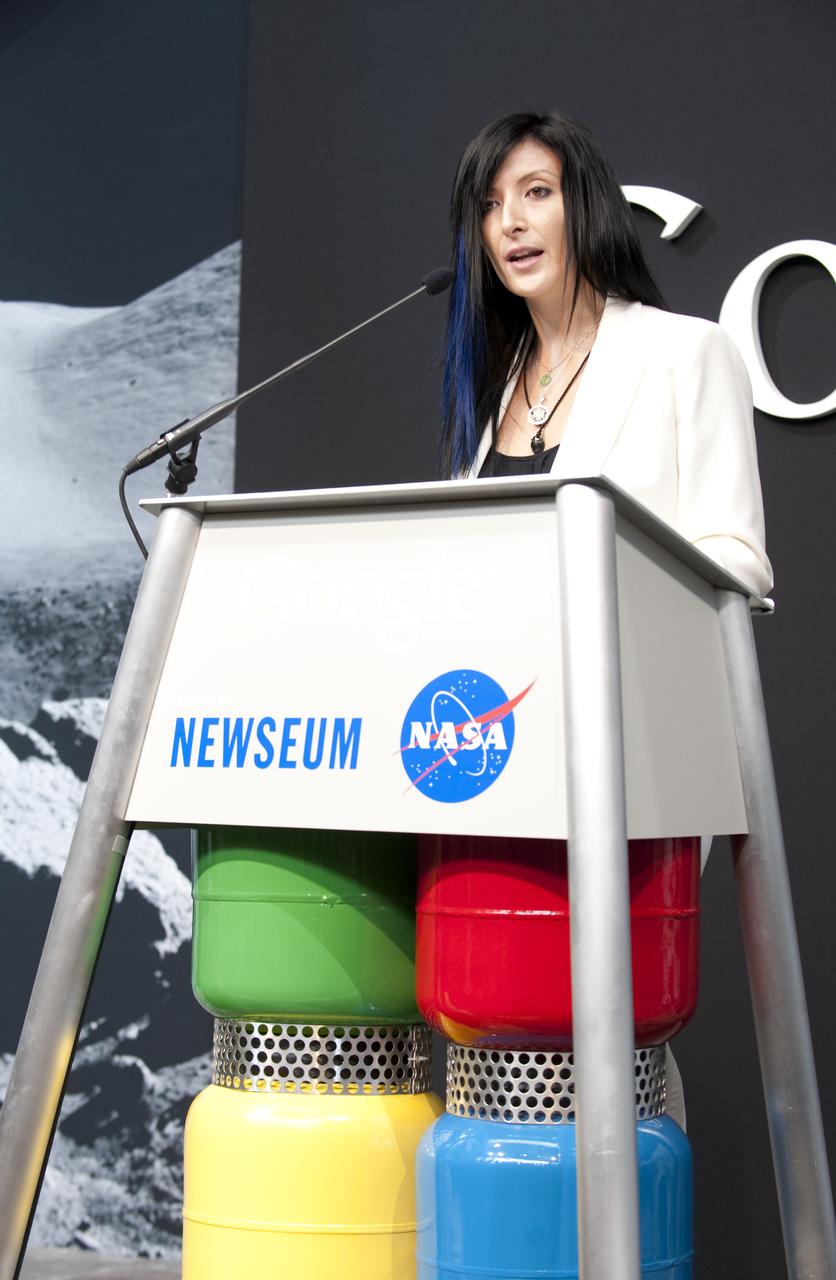
Tiffany Montague, Technical Program Manager for NASA and Google Lunar X PRIZE, Google, Inc., speaks during a press conference, Monday, July 20, 2009, announcing the launch of Moon in Google Earth, an immersive 3D atlas of the Moon, accessible within Google Earth 5.0, Monday, July 20, 2009, at the Newseum in Washington. Photo Credit: (NASA/Bill Ingalls)
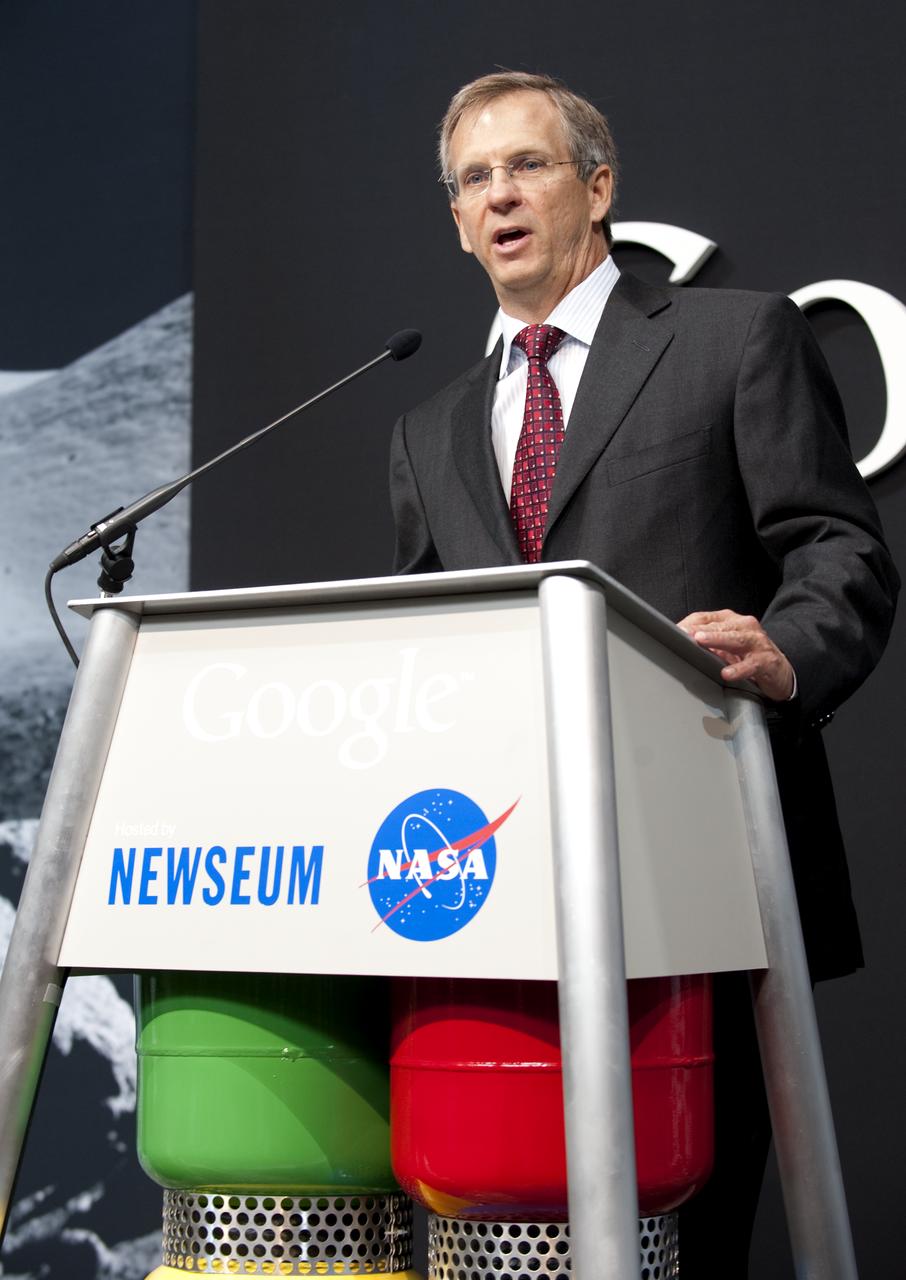
Alan Eustace, Senior VP of Engineering and Research, Google, Inc., speaks during a press conference, Monday, July 20, 2009, announcing the launch of Moon in Google Earth, an immersive 3D atlas of the Moon, accessible within Google Earth 5.0, Monday, July 20, 2009, at the Newseum in Washington. Photo Credit: (NASA/Bill Ingalls)
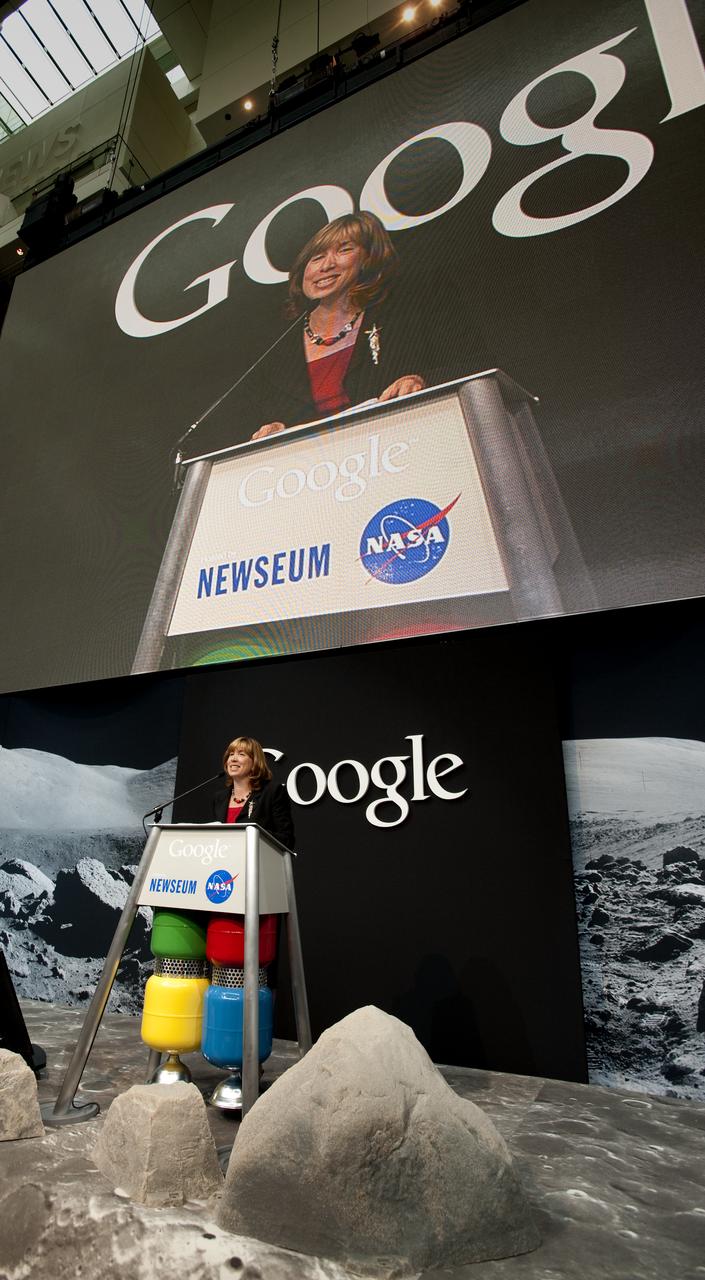
NASA Deputy Administrator Lori Garver, speaks during a press conference, Monday, July 20, 2009, announcing the launch of Moon in Google Earth, an immersive 3D atlas of the Moon, accessible within Google Earth 5.0, Monday, July 20, 2009, at the Newseum in Washington. Photo Credit: (NASA/Bill Ingalls)
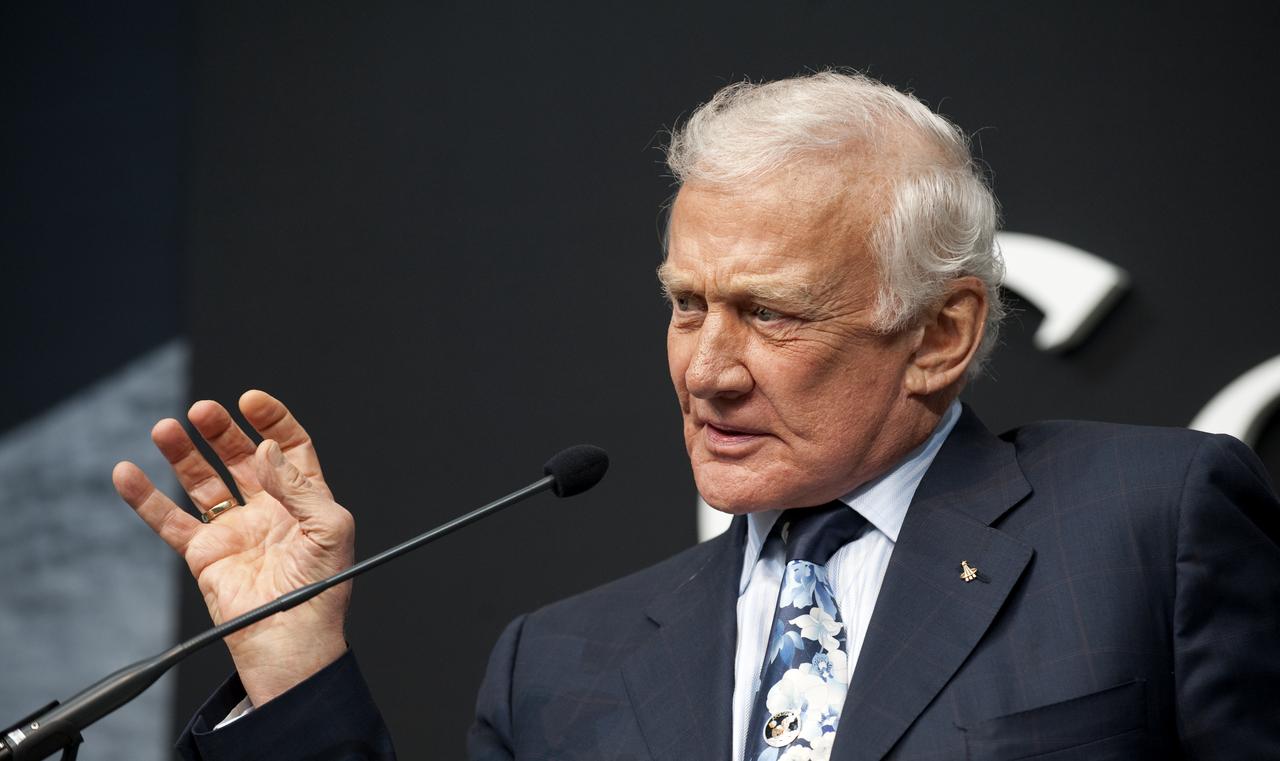
Buzz Aldrin, the second man to walk on the moon, speaks during a press conference, Monday, July 20, 2009, announcing the launch of Moon in Google Earth, an immersive 3D atlas of the Moon, accessible within Google Earth 5.0, Monday, July 20, 2009, at the Newseum in Washington. Photo Credit: (NASA/Bill Ingalls)
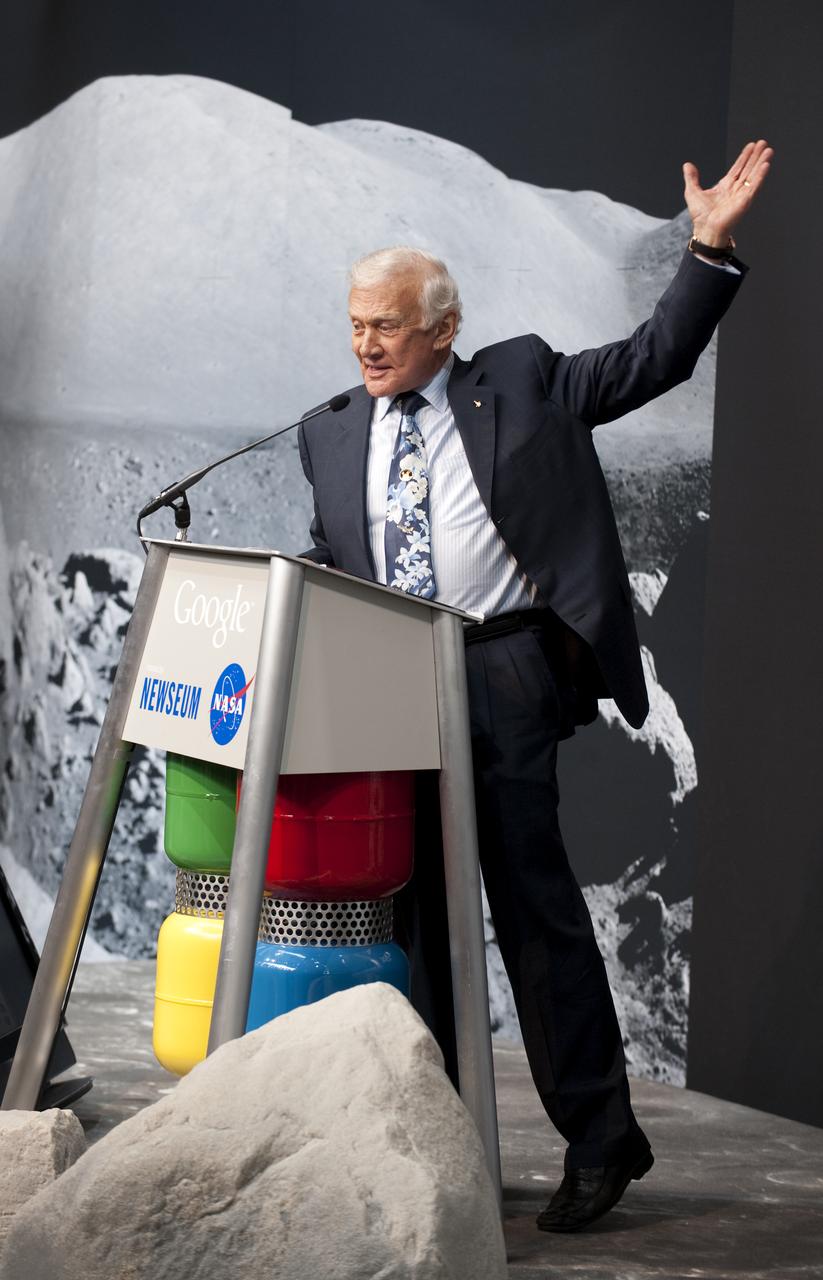
Buzz Aldrin, the second man to walk on the moon, speaks during a press conference, Monday, July 20, 2009, announcing the launch of Moon in Google Earth, an immersive 3D atlas of the Moon, accessible within Google Earth 5.0, Monday, July 20, 2009, at the Newseum in Washington. Photo Credit: (NASA/Bill Ingalls)
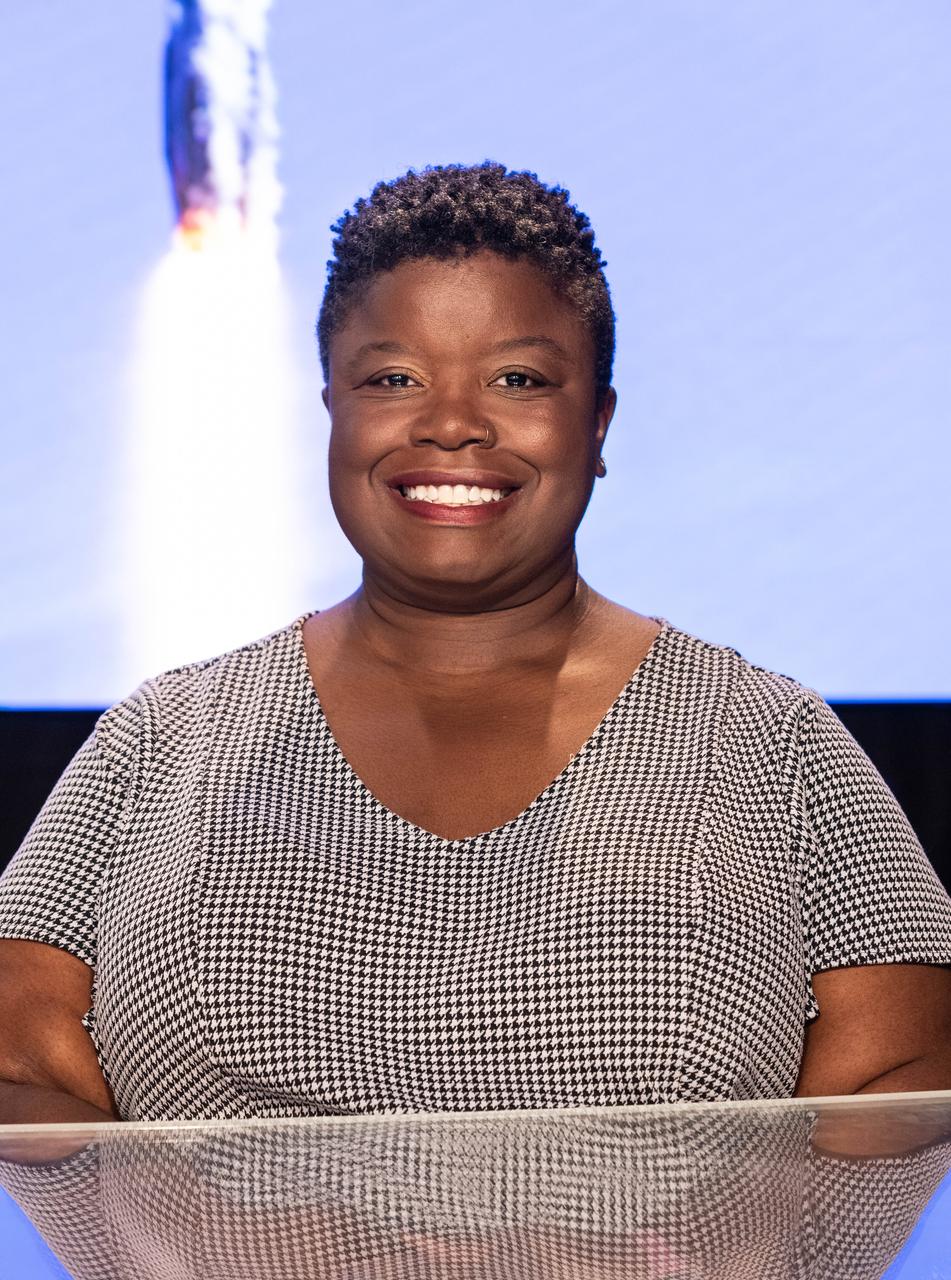
Arlena Moses, launch weather officer, 45th Weather Squadron, U.S. Space Force, participates in a prelaunch news conference on Sunday, Sept. 21, 2025, at the agency’s Kennedy Space Center in Florida for NASA's IMAP (Interstellar Mapping and Acceleration Probe) mission. NASA’s IMAP will use 10 science instruments to study and map the heliosphere, a vast magnetic bubble surrounding the Sun protecting our solar system from radiation incoming from interstellar space. This mission and its two rideshares – NASA’s exosphere-studying Carruthers Geocorona Observatory and National Oceanic and Atmospheric Administration’s (NOAA) Space Weather Follow On–Lagrange 1 (SWFO-L1) observatory – will orbit the Sun near Lagrange point 1, about one million miles from Earth. Launch is targeting 7:32 a.m. EDT, Tuesday, Sept. 23, from Launch Complex 39A at NASA Kennedy.

Derrol Nail, NASA Communications, participates in a prelaunch news conference on Sunday, Sept. 21, 2025, at the agency’s Kennedy Space Center in Florida for NASA’s IMAP (Interstellar Mapping and Acceleration Probe) mission. NASA’s IMAP will use 10 science instruments to study and map the heliosphere, a vast magnetic bubble surrounding the Sun protecting our solar system from radiation incoming from interstellar space. This mission and its two rideshares – NASA’s exosphere-studying Carruthers Geocorona Observatory and National Oceanic and Atmospheric Administration’s (NOAA) Space Weather Follow On–Lagrange 1 (SWFO-L1) observatory – will orbit the Sun near Lagrange point 1, about one million miles from Earth. Launch is targeting 7:32 a.m. EDT, Tuesday, Sept. 23, from Launch Complex 39A at NASA Kennedy.
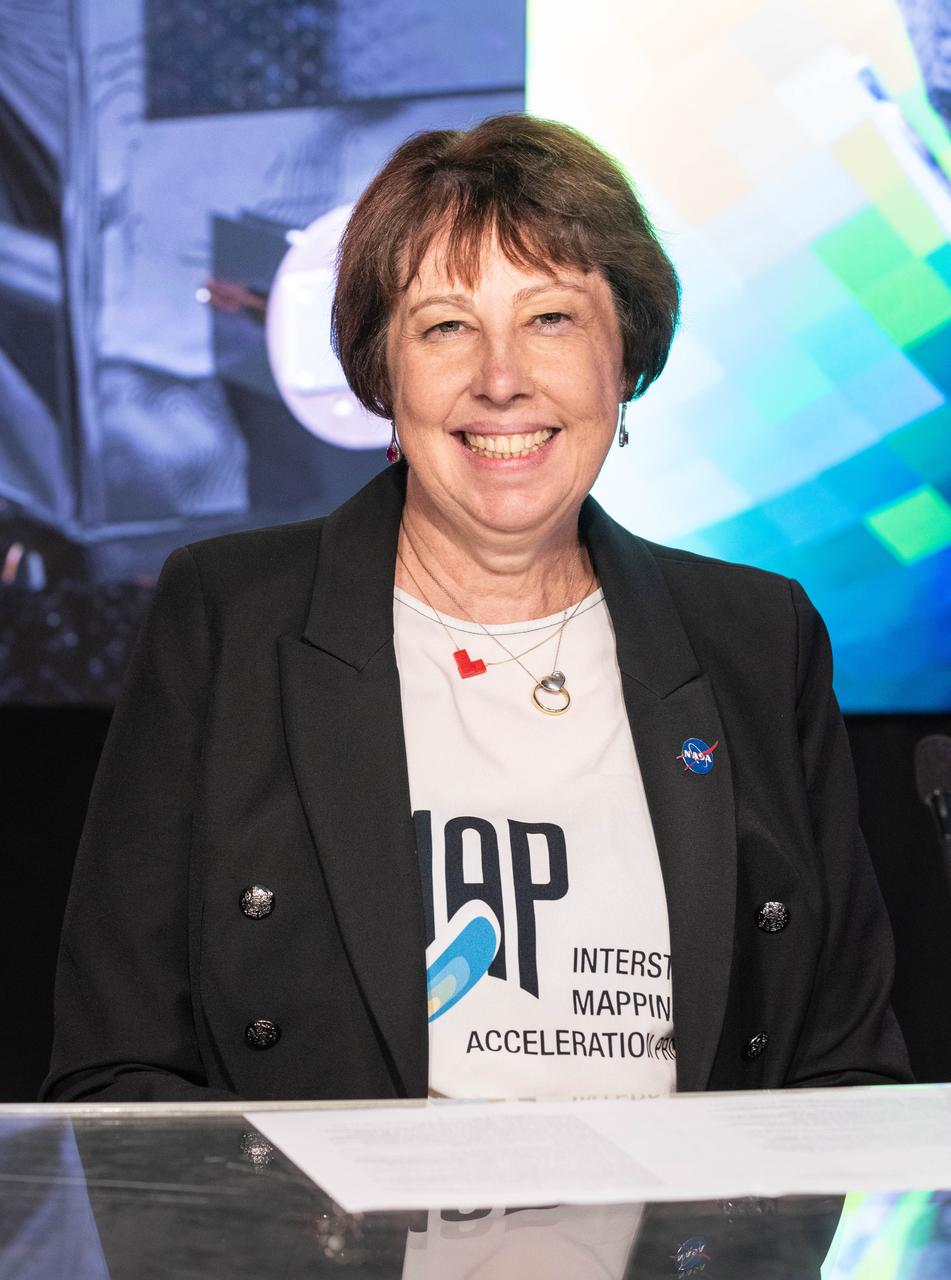
Nicky Fox, associate administrator, Science Mission Directorate, NASA Headquarters, participates in a prelaunch news conference on Sunday, Sept. 21, 2025, at the agency’s Kennedy Space Center in Florida for NASA’s IMAP (Interstellar Mapping and Acceleration Probe) mission. NASA’s IMAP will use 10 science instruments to study and map the heliosphere, a vast magnetic bubble surrounding the Sun protecting our solar system from radiation incoming from interstellar space. This mission and its two rideshares – NASA’s exosphere-studying Carruthers Geocorona Observatory and National Oceanic and Atmospheric Administration’s (NOAA) Space Weather Follow On–Lagrange 1 (SWFO-L1) observatory – will orbit the Sun near Lagrange point 1, about one million miles from Earth. Launch is targeting 7:32 a.m. EDT, Tuesday, Sept. 23, from Launch Complex 39A at NASA Kennedy.
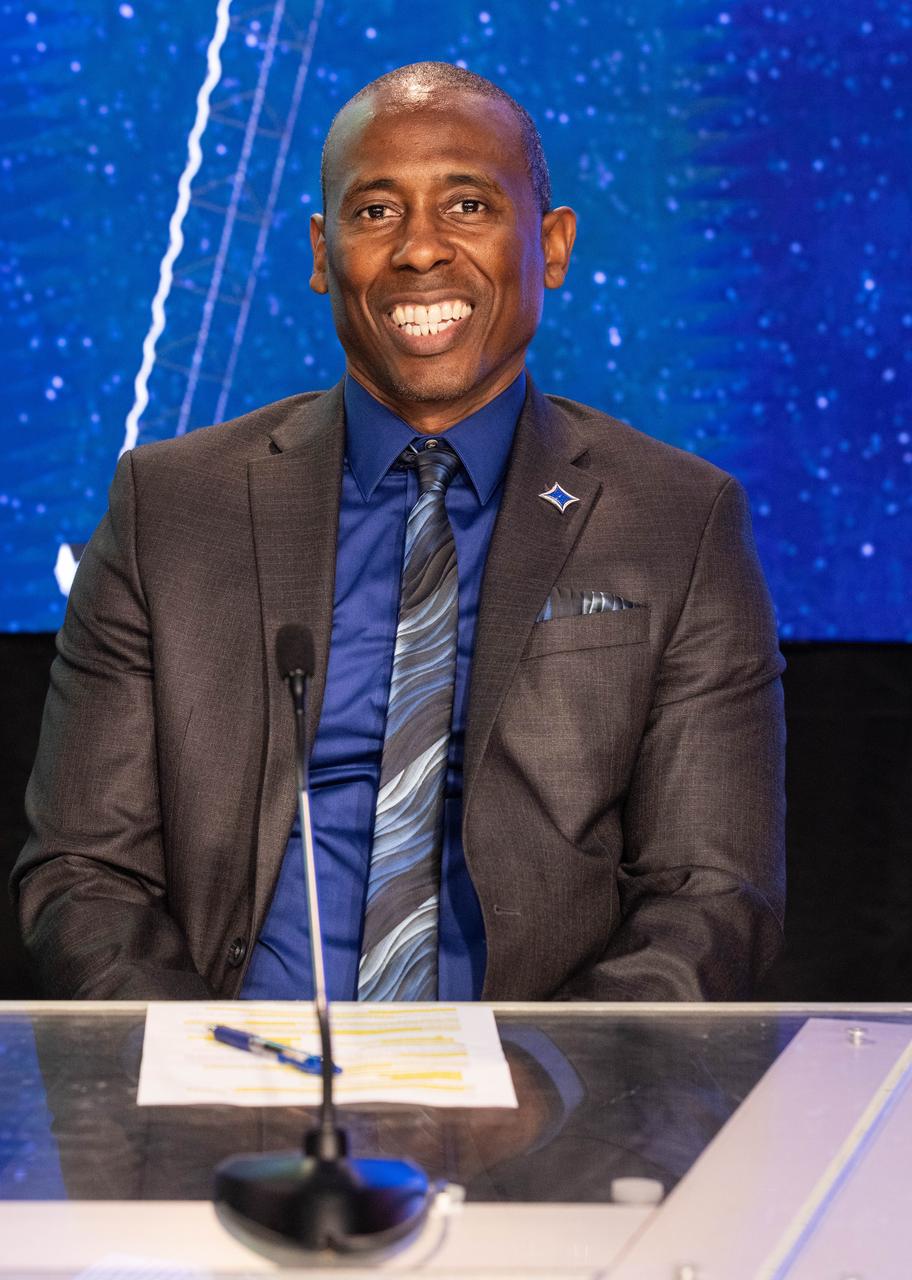
Dr. Denton Gibson, launch director, NASA’s Launch Services Program, participates in a prelaunch news conference on Sunday, Sept. 21, 2025, at the agency’s Kennedy Space Center in Florida for NASA's IMAP (Interstellar Mapping and Acceleration Probe) mission. NASA’s IMAP will use 10 science instruments to study and map the heliosphere, a vast magnetic bubble surrounding the Sun protecting our solar system from radiation incoming from interstellar space. This mission and its two rideshares – NASA’s exosphere-studying Carruthers Geocorona Observatory and National Oceanic and Atmospheric Administration’s (NOAA) Space Weather Follow On–Lagrange 1 (SWFO-L1) observatory – will orbit the Sun near Lagrange point 1, about one million miles from Earth. Launch is targeting 7:32 a.m. EDT, Tuesday, Sept. 23, from Launch Complex 39A at NASA Kennedy.
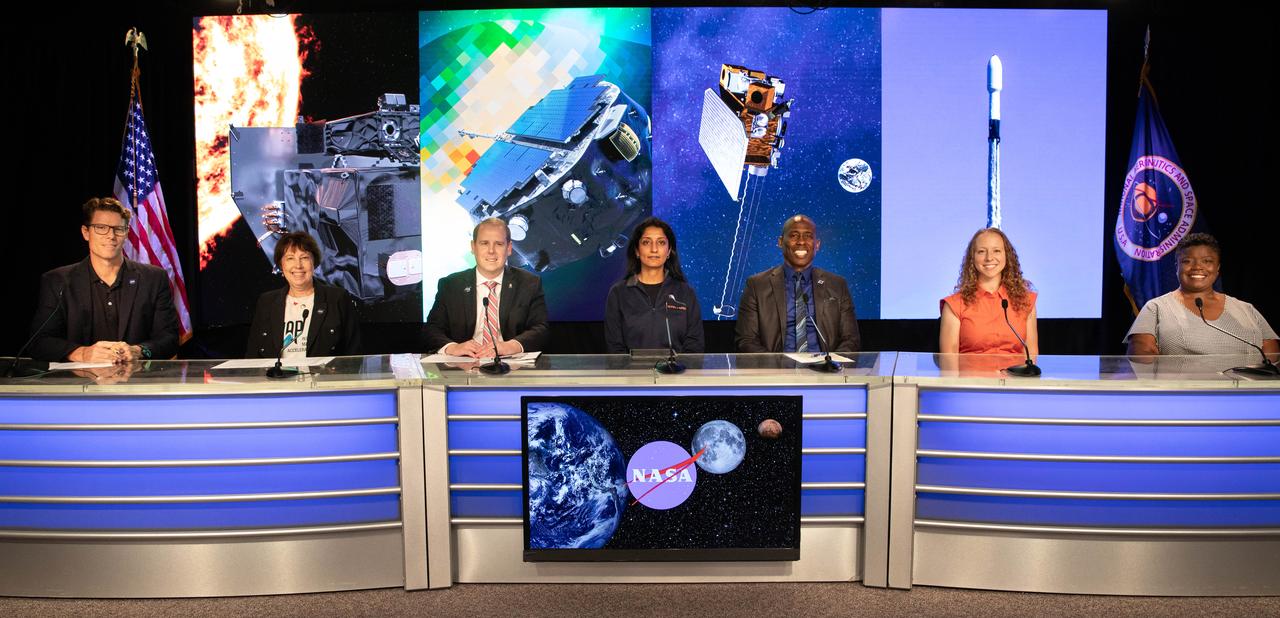
NASA, mission, and partner leaders participate in prelaunch news conference on Sunday, Sept. 21, 2025, at the agency’s Kennedy Space Center in Florida for NASA’s IMAP (Interstellar Mapping and Acceleration Probe) mission. From left are: Derrol Nail, NASA Communications; Nicky Fox, associate administrator, Science Mission Directorate, NASA Headquarters in Washington; Brad Williams, IMAP program executive, NASA Headquarters; Irene Parker, deputy assistant administrator for Systems for NOAA’s National Environmental Satellite, Data, and Information Service; Denton Gibson, launch director, NASA’s Launch Services Program, NASA Kennedy; Julianna Scheiman, director, NASA Science Missions, SpaceX; Arlena Moses, launch weather officer, 45th Weather Squadron, U.S. Space Force. The IMAP mission and its two rideshares – NASA’s exosphere-studying Carruthers Geocorona Observatory and National Oceanic and Atmospheric Administration’s (NOAA) Space Weather Follow On–Lagrange 1 (SWFO-L1) observatory – will orbit the Sun near Lagrange point 1, about one million miles from Earth, where it will scan the heliosphere, analyze the composition of charged particles, and investigate how those particles move through the solar system. Launch is targeted for 7:32 a.m. EDT, Tuesday, Sept. 23, from Launch Complex 39A at NASA Kennedy.
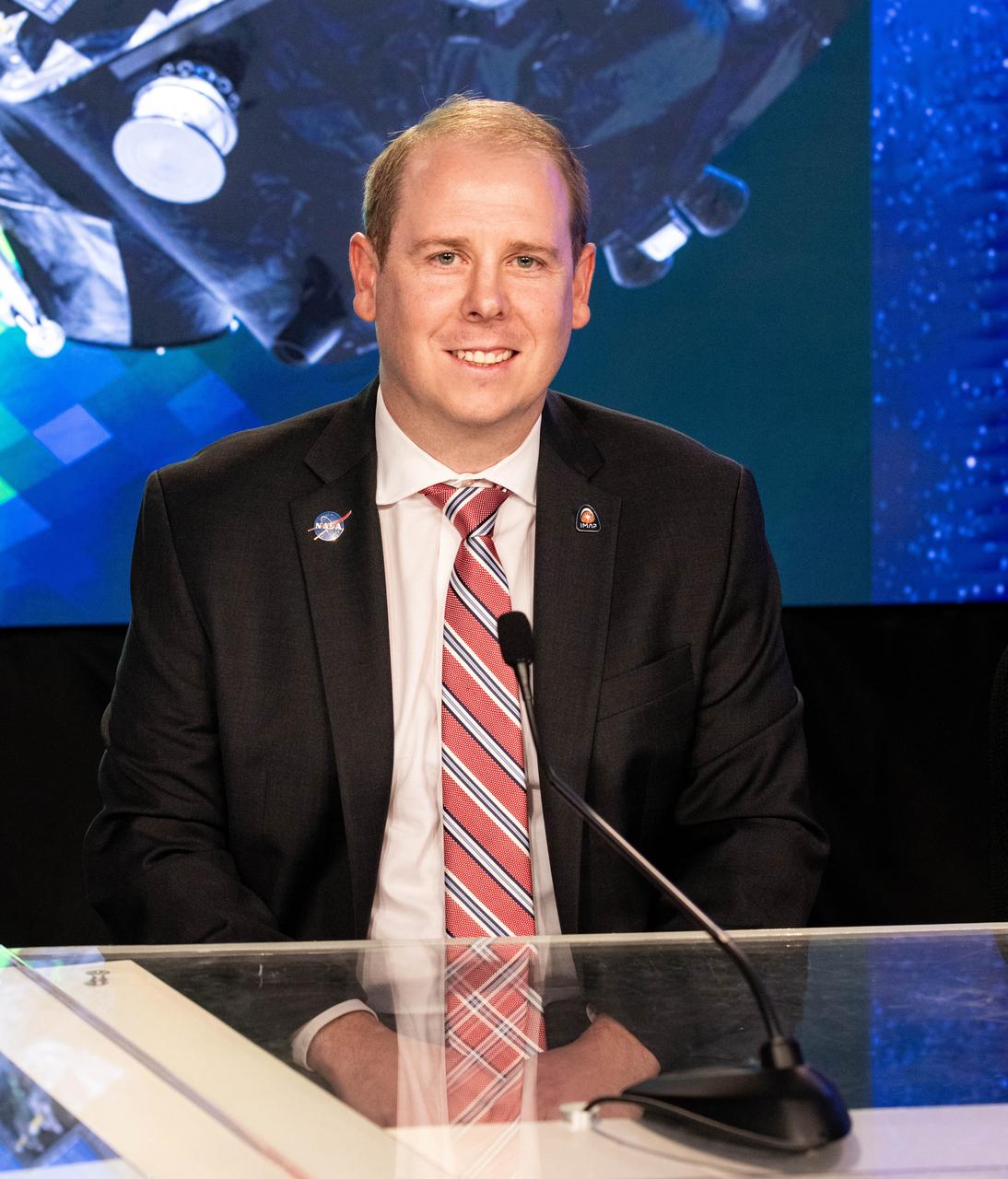
Brad Williams, IMAP (Interstellar Mapping and Acceleration Probe) program executive, NASA Headquarters, participates in a prelaunch news conference on Sunday, Sept. 21, 2025, at the agency’s Kennedy Space Center in Florida for IMAP mission. NASA’s IMAP will use 10 science instruments to study and map the heliosphere, a vast magnetic bubble surrounding the Sun protecting our solar system from radiation incoming from interstellar space. This mission and its two rideshares – NASA’s exosphere-studying Carruthers Geocorona Observatory and National Oceanic and Atmospheric Administration’s (NOAA) Space Weather Follow On–Lagrange 1 (SWFO-L1) observatory – will orbit the Sun near Lagrange point 1, about one million miles from Earth. Launch is targeting 7:32 a.m. EDT, Tuesday, Sept. 23, from Launch Complex 39A at NASA Kennedy.
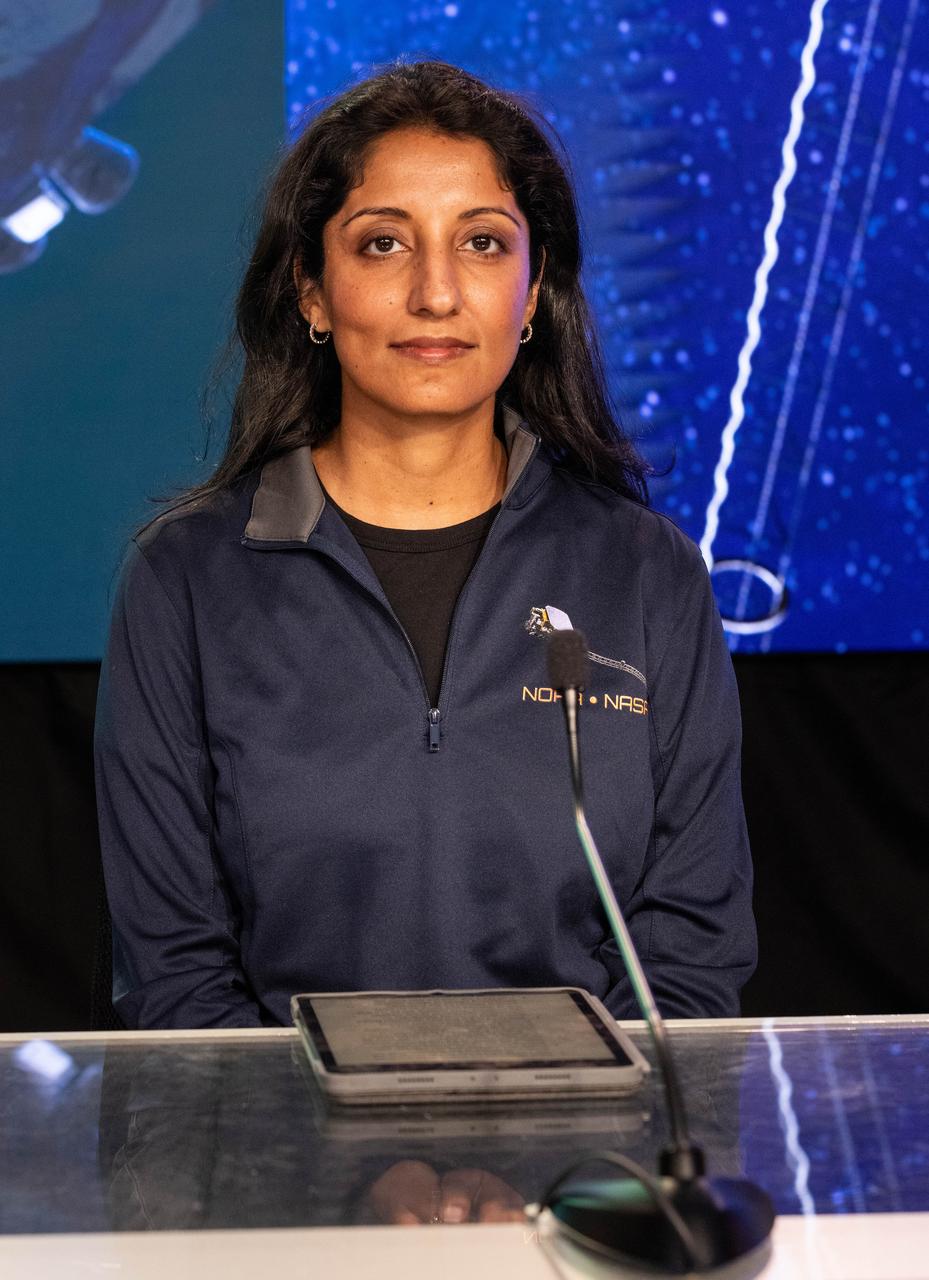
Irene Parker, deputy assistant administrator for Systems for NOAA’s National Environmental Satellite, Data, and Information Service, participates in a prelaunch news conference on Sunday, Sept. 21, 2025, at the agency’s Kennedy Space Center in Florida for NASA's IMAP (Interstellar Mapping and Acceleration Probe) mission. NASA’s IMAP will use 10 science instruments to study and map the heliosphere, a vast magnetic bubble surrounding the Sun protecting our solar system from radiation incoming from interstellar space. This mission and its two rideshares – NASA’s exosphere-studying Carruthers Geocorona Observatory and National Oceanic and Atmospheric Administration’s (NOAA) Space Weather Follow On–Lagrange 1 (SWFO-L1) observatory – will orbit the Sun near Lagrange point 1, about one million miles from Earth. Launch is targeting 7:32 a.m. EDT, Tuesday, Sept. 23, from Launch Complex 39A at NASA Kennedy.

Julianna Scheiman, director, NASA Science Missions, SpaceX, participates in a prelaunch news conference on Sunday, Sept. 21, 2025, at the agency’s Kennedy Space Center in Florida for NASA's IMAP (Interstellar Mapping and Acceleration Probe) mission. NASA’s IMAP will use 10 science instruments to study and map the heliosphere, a vast magnetic bubble surrounding the Sun protecting our solar system from radiation incoming from interstellar space. This mission and its two rideshares – NASA’s exosphere-studying Carruthers Geocorona Observatory and National Oceanic and Atmospheric Administration’s (NOAA) Space Weather Follow On–Lagrange 1 (SWFO-L1) observatory – will orbit the Sun near Lagrange point 1, about one million miles from Earth. Launch is targeting 7:32 a.m. EDT, Tuesday, Sept. 23, from Launch Complex 39A at NASA Kennedy.
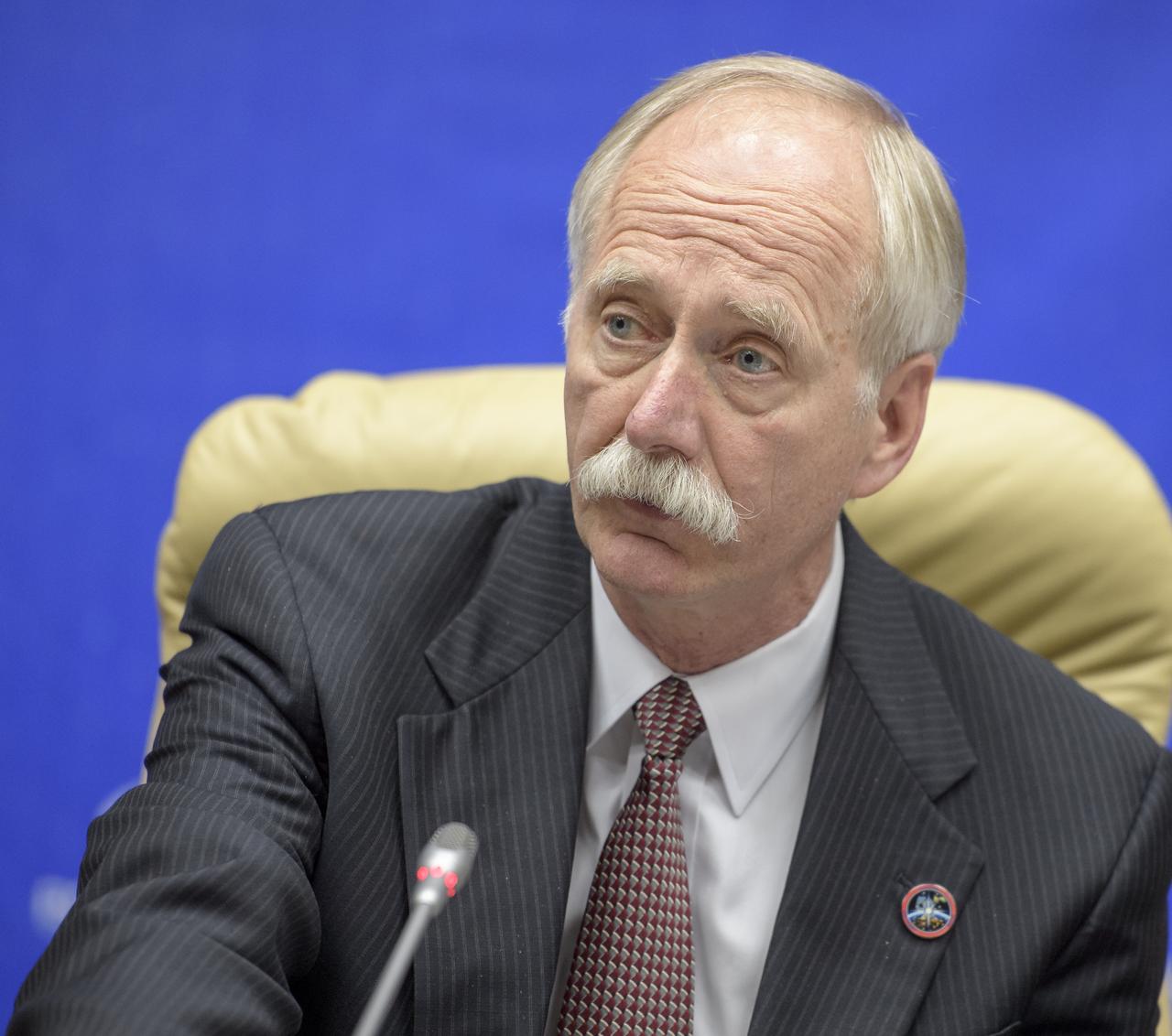
NASA Associate Administrator for the Human Exploration and Operations Directorate William Gerstenmaier answers questions during a Expedition 59 post-docking press conference, Friday, March 15, 2019 at the Baikonur Hotel in Baikonur, Kazakhstan. Photo Credit: (NASA/Bill Ingalls)
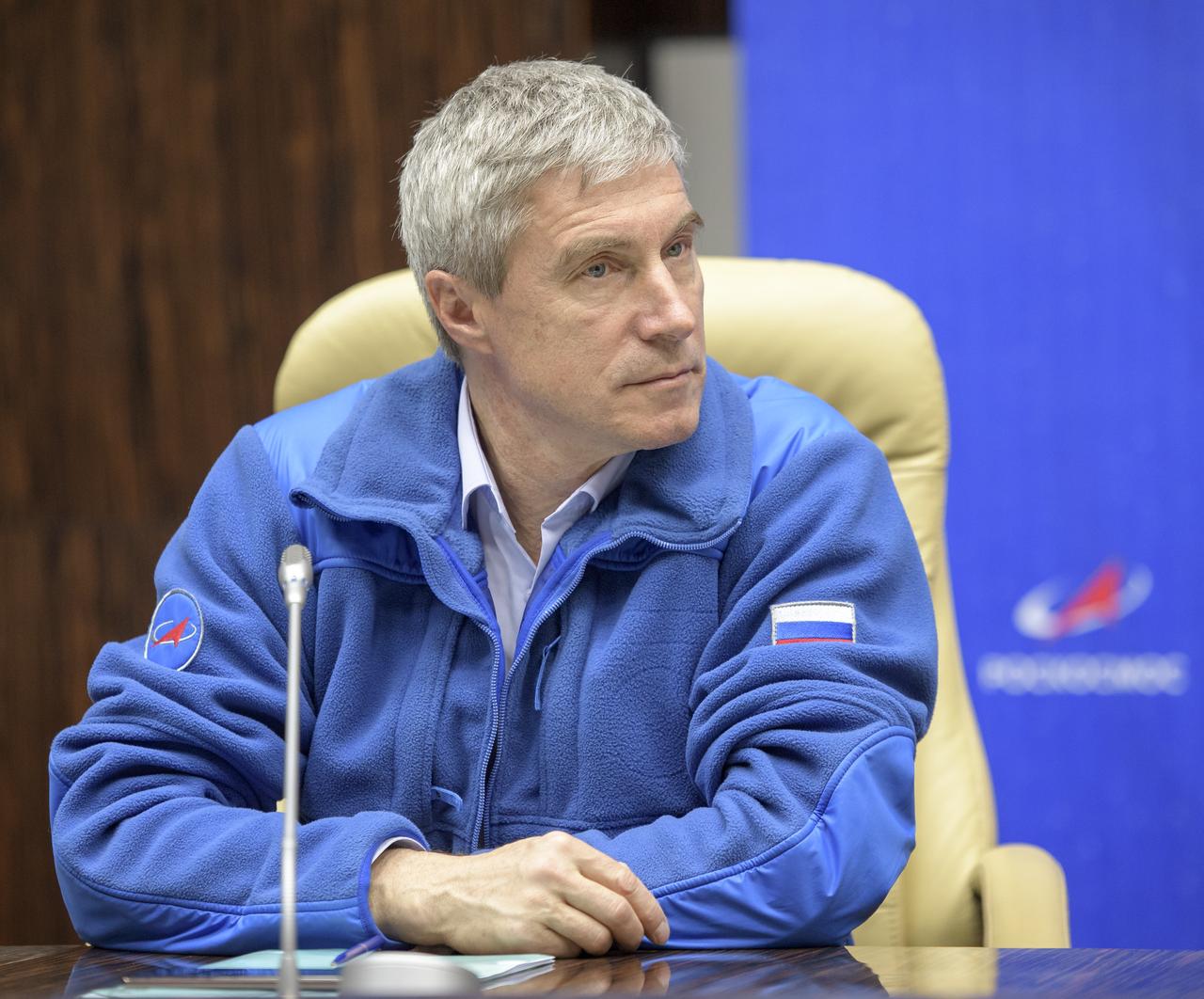
Roscosmos Director of Human Spaceflight Programs Sergei Krikalev listens to reporter's questions during a Expedition 59 post-docking press conference, Friday, March 15, 2019 at the Baikonur Hotel in Baikonur, Kazakhstan. Photo Credit: (NASA/Bill Ingalls)
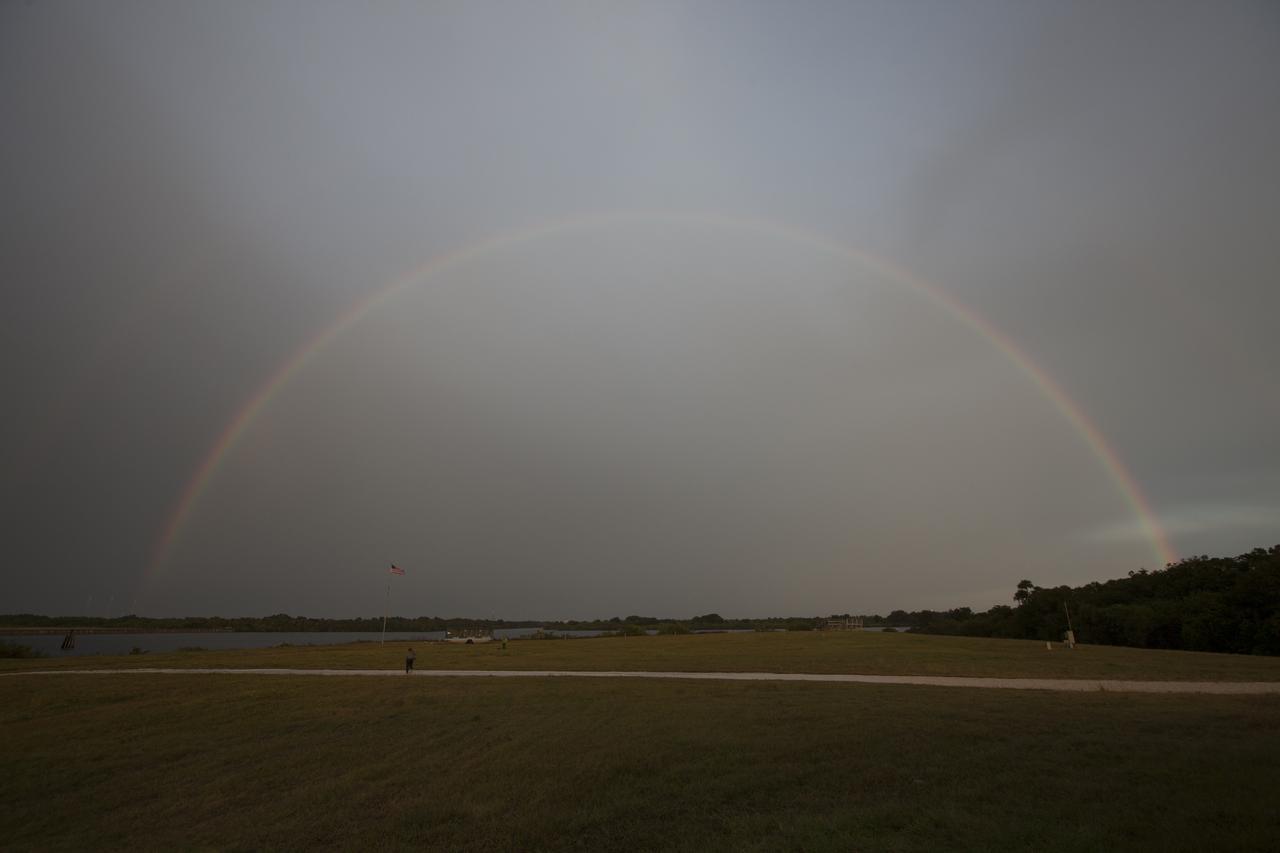
As rain showers dissipate, a rainbow appeared over the Kennedy Space Center's Press Site and turn basin. In the background is the historic countdown clock.
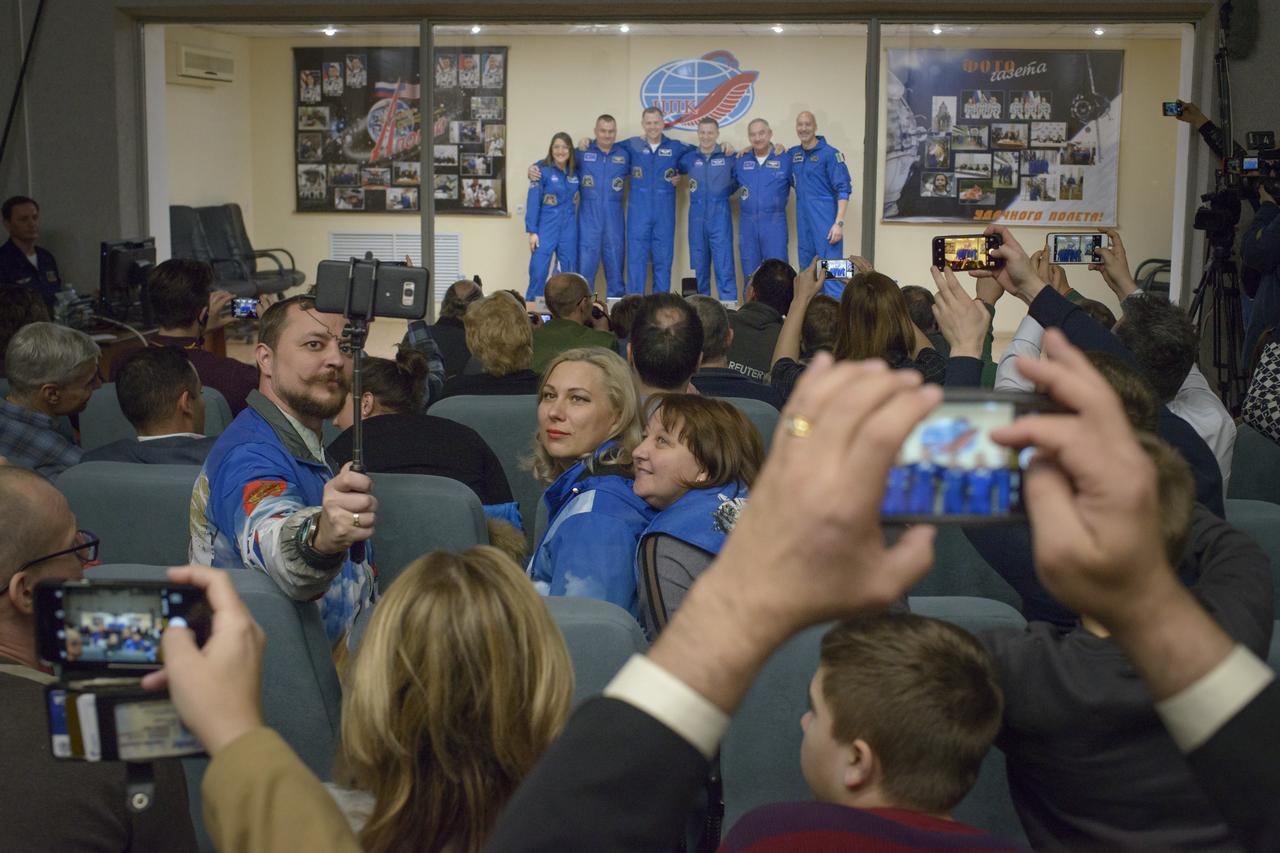
Press, family, and friends take photos as the Expedition 59 prime and backup crews pose at the conclusion of a press conference, Wednesday, March 13, 2019 at the Cosmonaut Hotel in Baikonur, Kazakhstan. Expedition 59 crewmembers Nick Hague and Christina Koch of NASA, along with Alexey Ovchinin of Roscosmos will launch March 14, U.S. time, on the Soyuz MS-12 spacecraft from the Baikonur Cosmodrome for a six-and-a-half month mission on the International Space Station. Photo Credit: (NASA/Bill Ingalls)
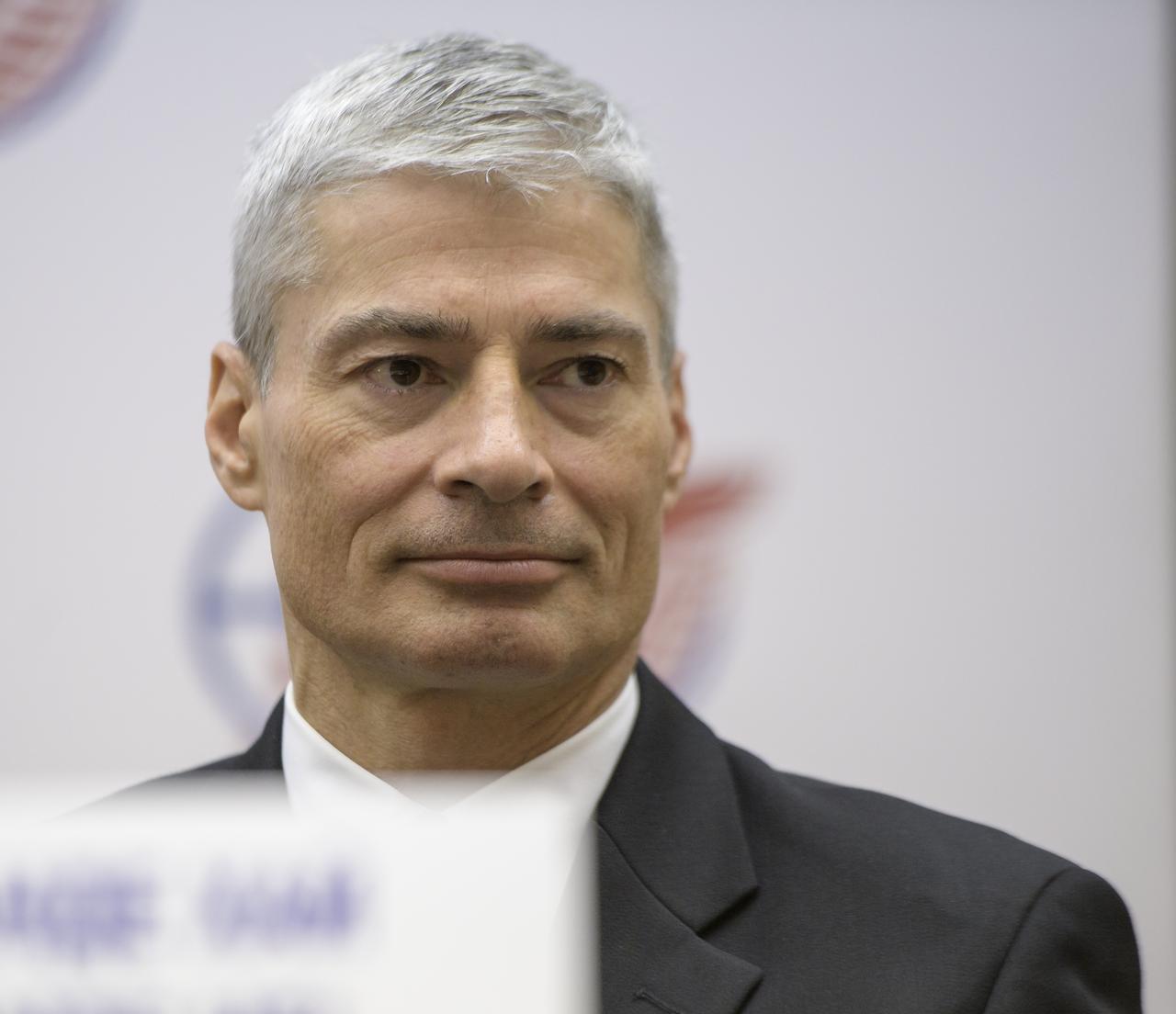
Expedition 52 backup crew member Mark Vande Hei of NASA is seen during a crew press conference at the Gagarin Cosmonaut Training Center (GCTC), Monday, July 10, 2017 in Star City, Russia. Photo Credit: (NASA/Bill Ingalls)
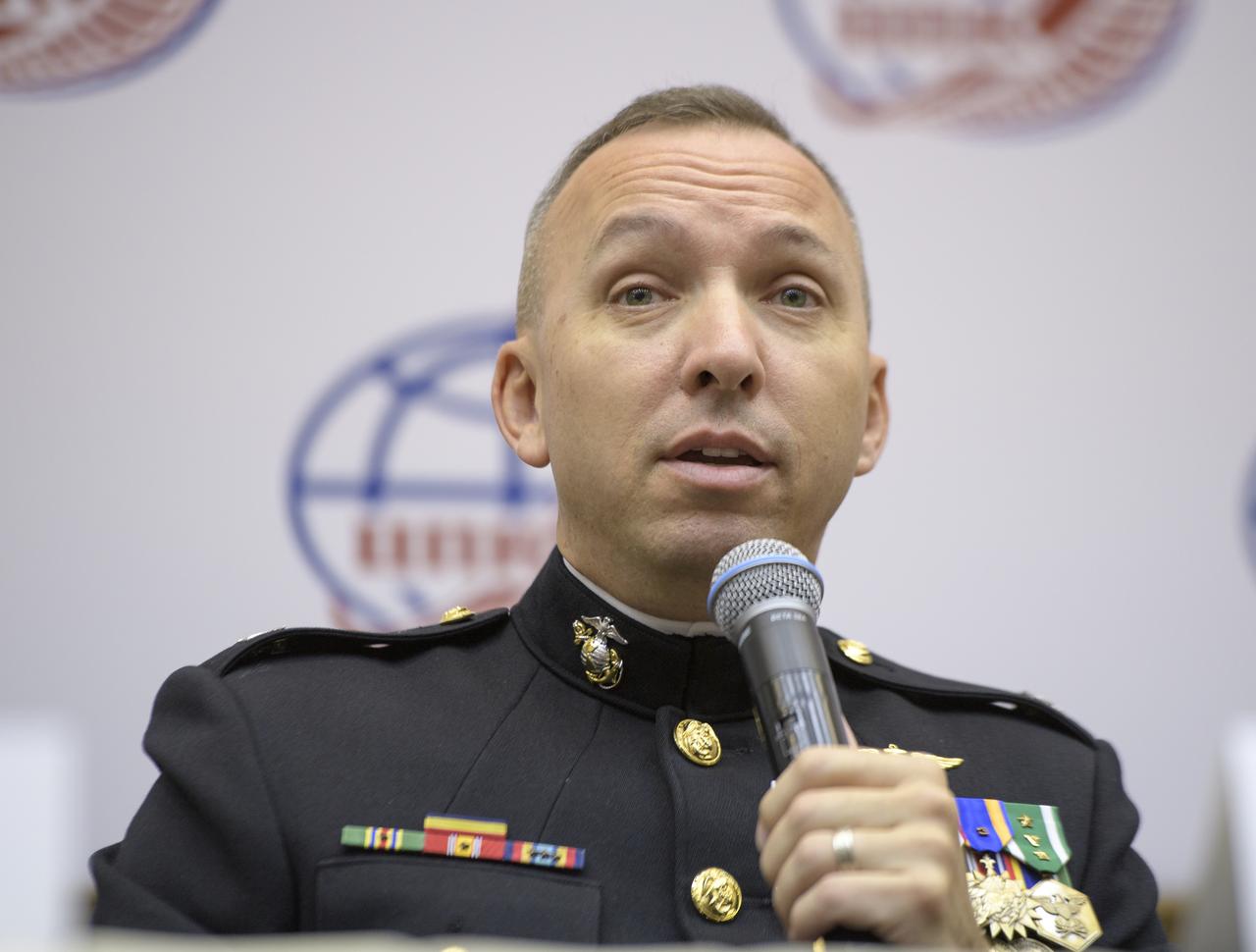
Expedition 52 flight engineer Randy Bresnik of NASA answers a reporter's question during a crew press conference at the Gagarin Cosmonaut Training Center (GCTC), Monday, July 10, 2017 in Star City, Russia. Photo Credit: (NASA/Bill Ingalls)
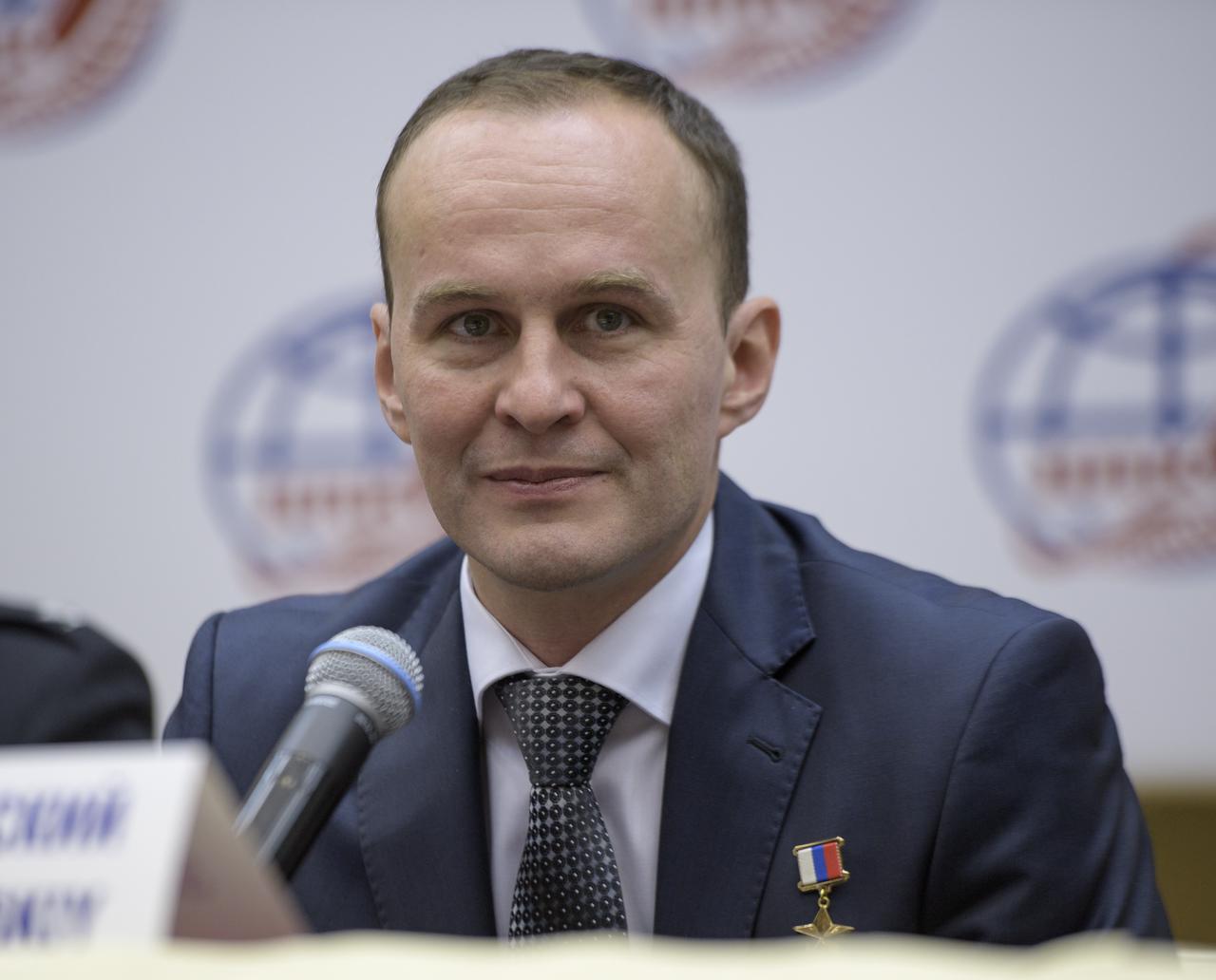
Expedition 52 flight engineer Sergey Ryazanskiy of Roscosmos is seen during a crew press conference at the Gagarin Cosmonaut Training Center (GCTC), Monday, July 10, 2017 in Star City, Russia. Photo Credit: (NASA/Bill Ingalls)
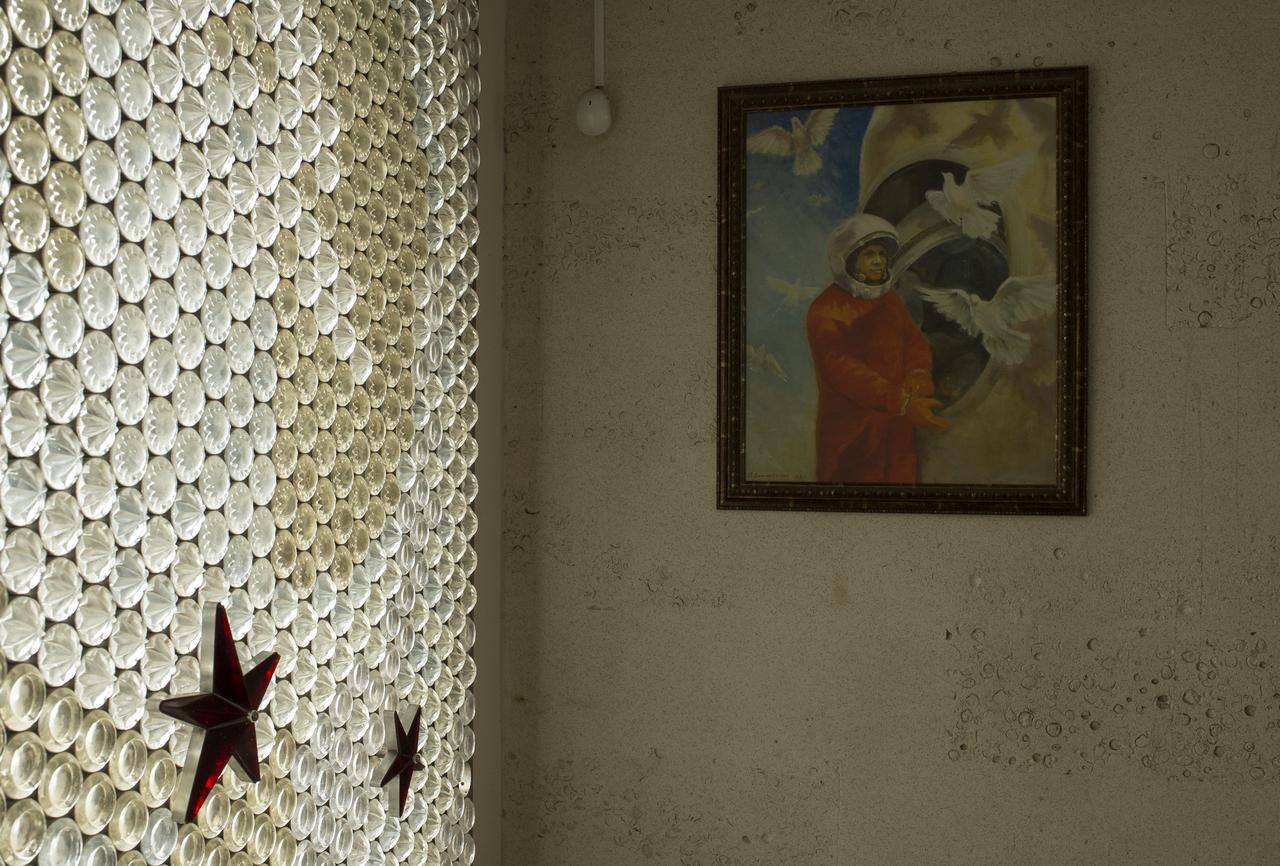
A painting of Yuri Gagarin is seen in the lobby of the building where the Expedition 52 prime and backup crews held a crew press conference on the grounds of the Gagarin Cosmonaut Training Center (GCTC), Monday, July 10, 2017 in Star City, Russia. Photo Credit: (NASA/Bill Ingalls)
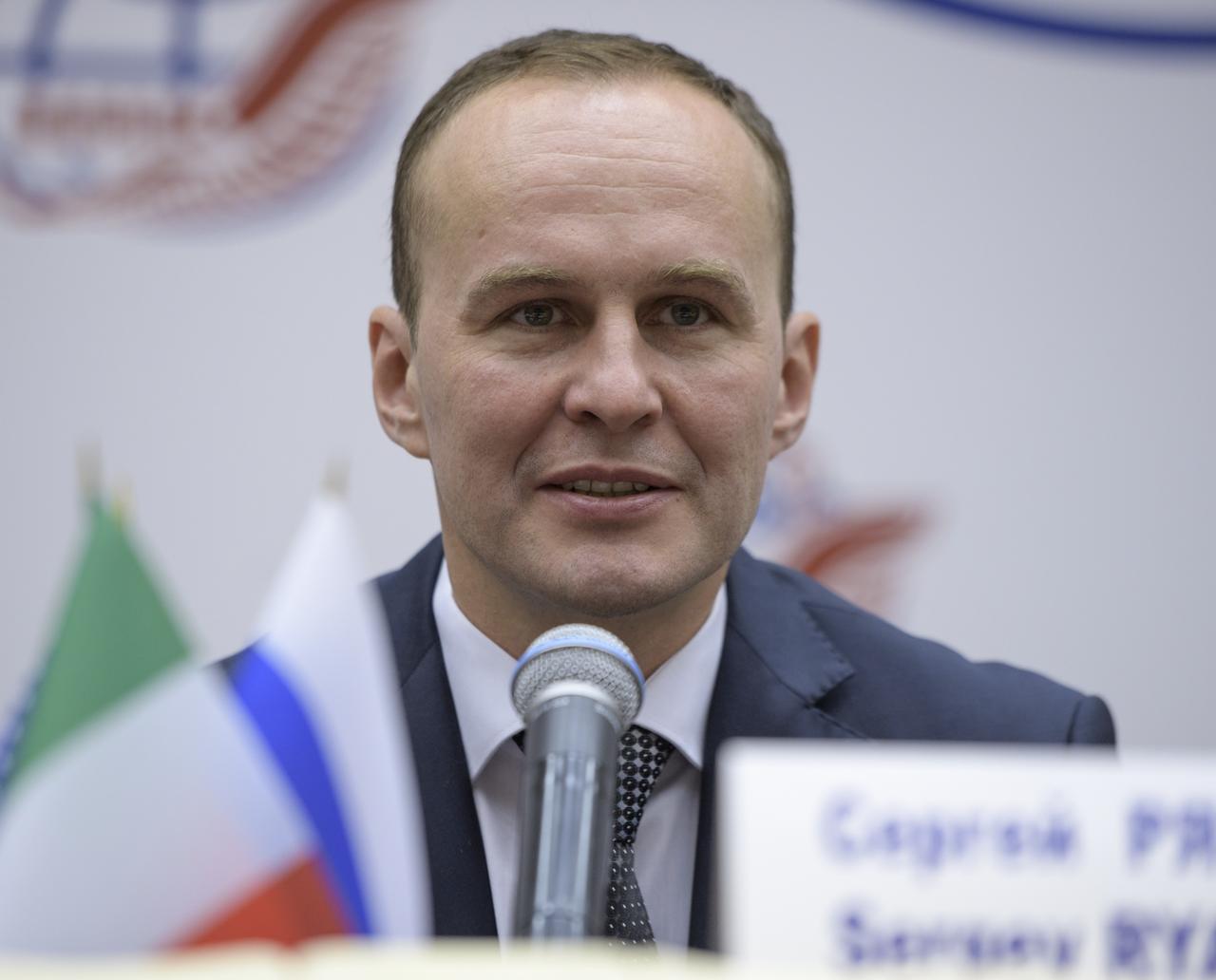
Expedition 52 flight engineer Sergey Ryazanskiy of Roscosmos answers a reporter's question during a crew press conference at the Gagarin Cosmonaut Training Center (GCTC), Monday, July 10, 2017 in Star City, Russia. Photo Credit: (NASA/Bill Ingalls)
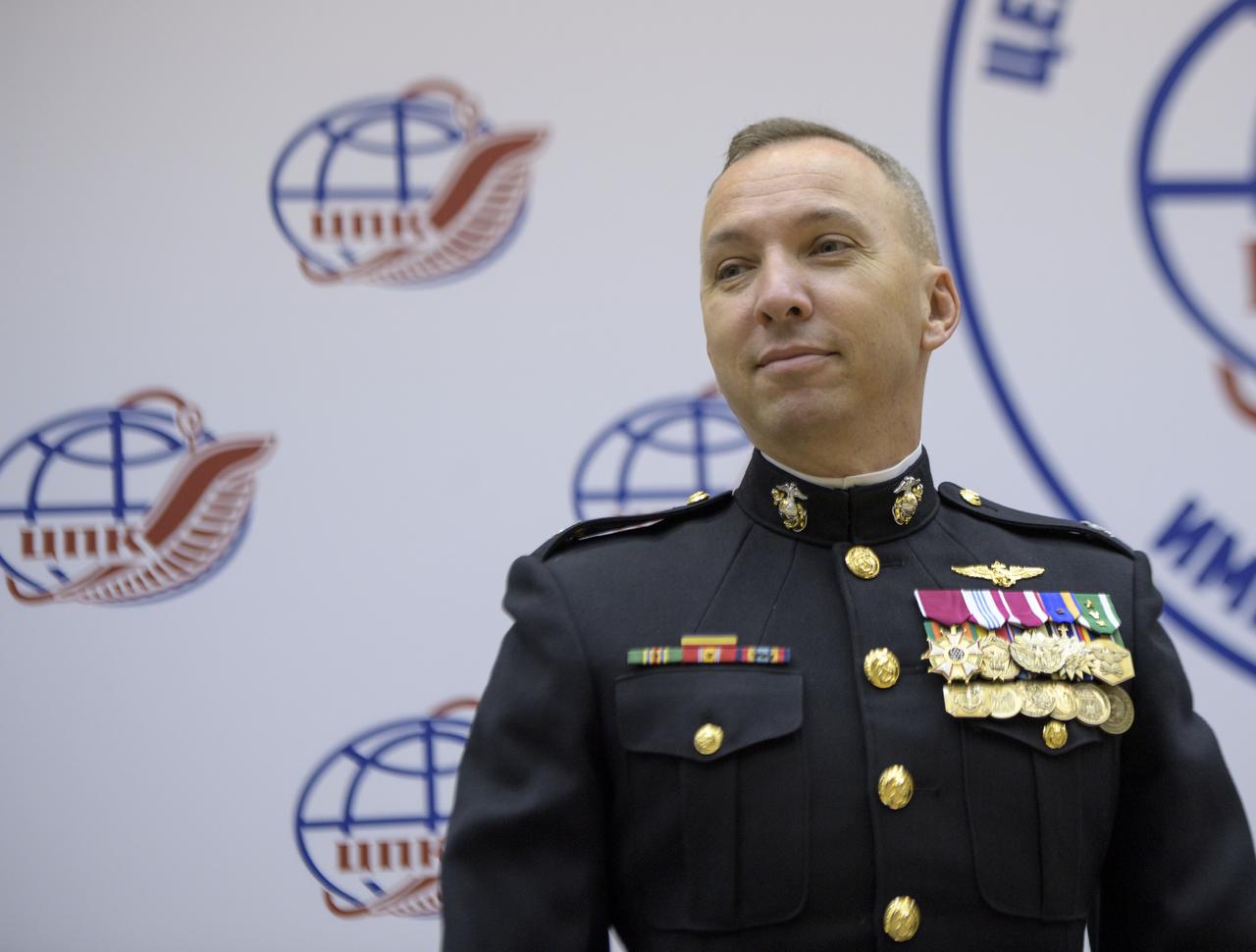
Expedition 52 flight engineer Randy Bresnik of NASA is seen during a crew press conference at the Gagarin Cosmonaut Training Center (GCTC), Monday, July 10, 2017 in Star City, Russia. Photo Credit: (NASA/Bill Ingalls)
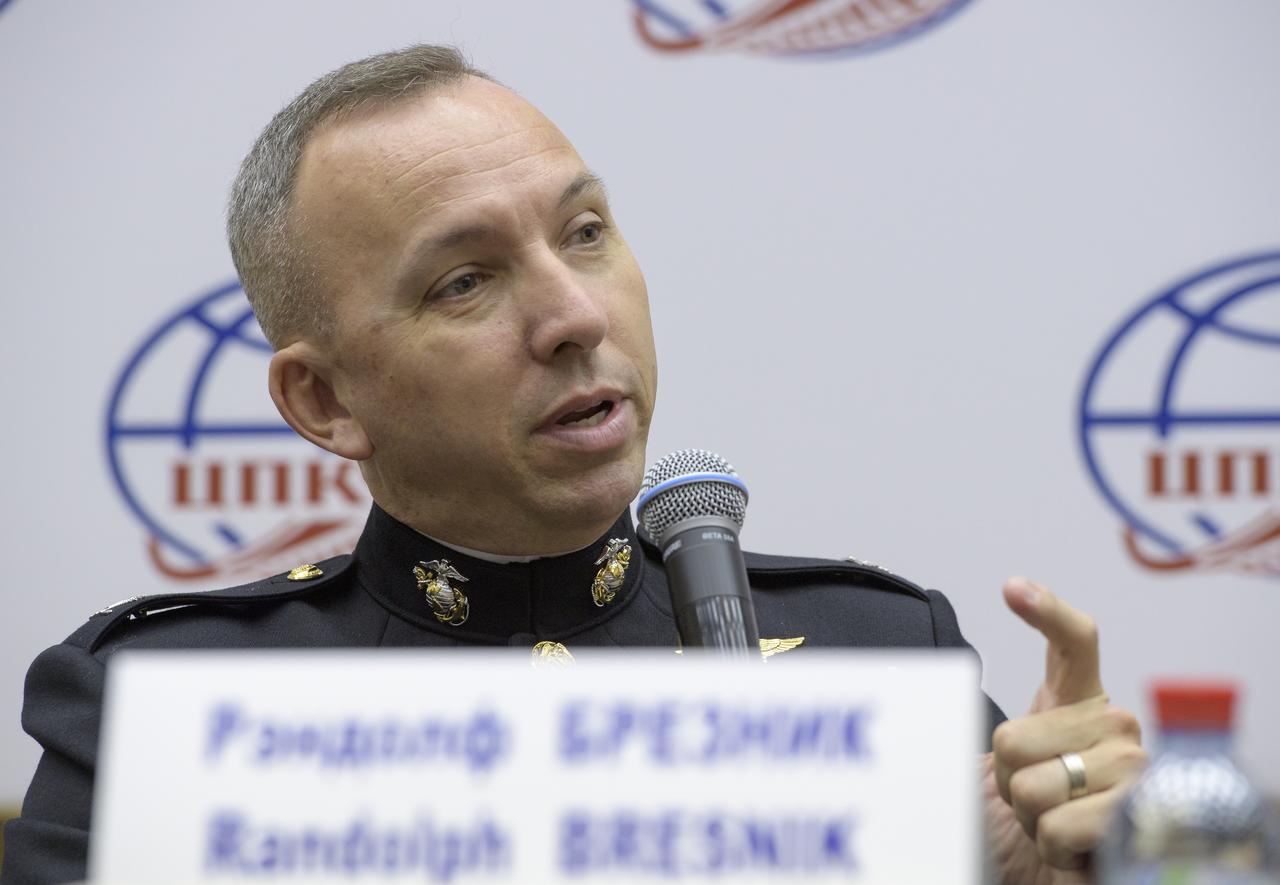
Expedition 52 flight engineer Randy Bresnik of NASA answers a reporter's question during a crew press conference at the Gagarin Cosmonaut Training Center (GCTC), Monday, July 10, 2017 in Star City, Russia. Photo Credit: (NASA/Bill Ingalls)
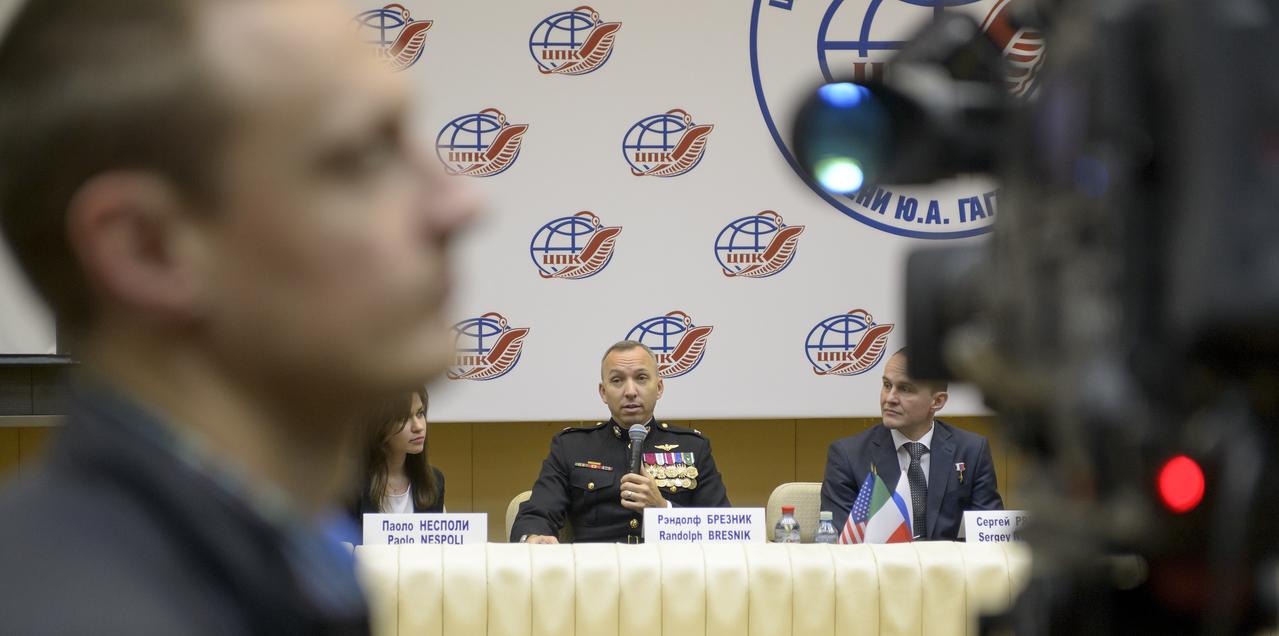
Expedition 52 flight engineer Randy Bresnik of NASA answers a reporter's question during a crew press conference at the Gagarin Cosmonaut Training Center (GCTC), Monday, July 10, 2017 in Star City, Russia. Photo Credit: (NASA/Bill Ingalls)
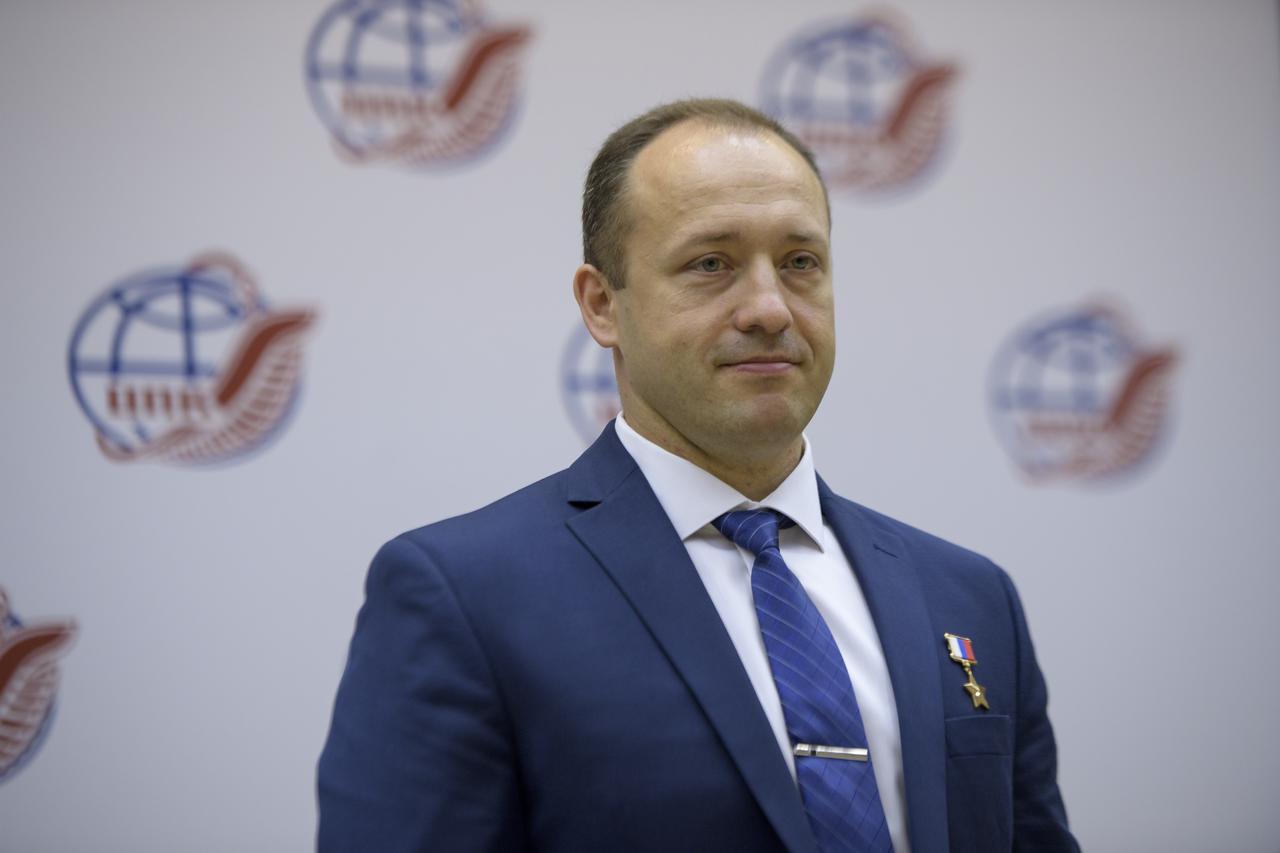
Expedition 52 backup crew member Alexander Misurkin of Roscosmos is seen during a crew press conference at the Gagarin Cosmonaut Training Center (GCTC), Monday, July 10, 2017 in Star City, Russia. Photo Credit: (NASA/Bill Ingalls)
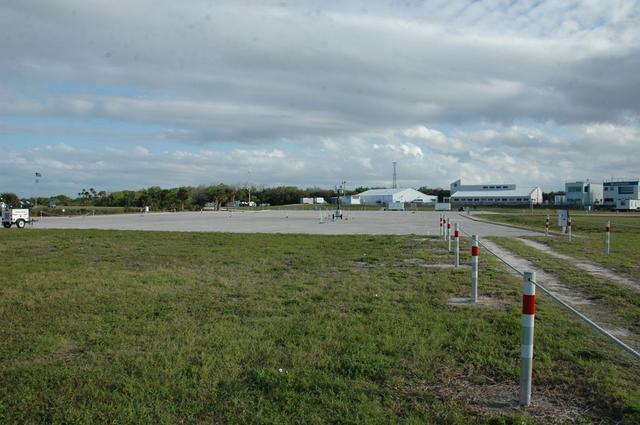
Press Site
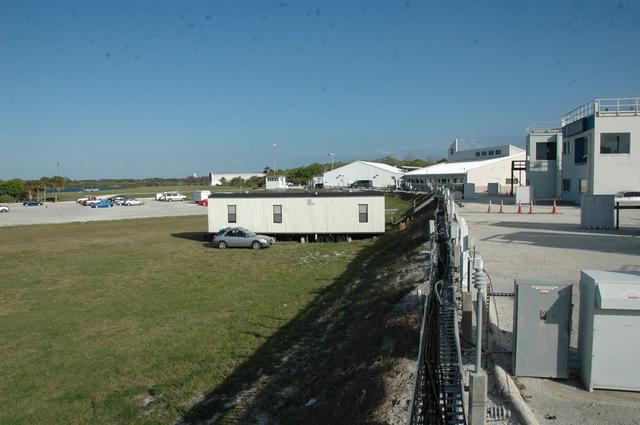
Press Site
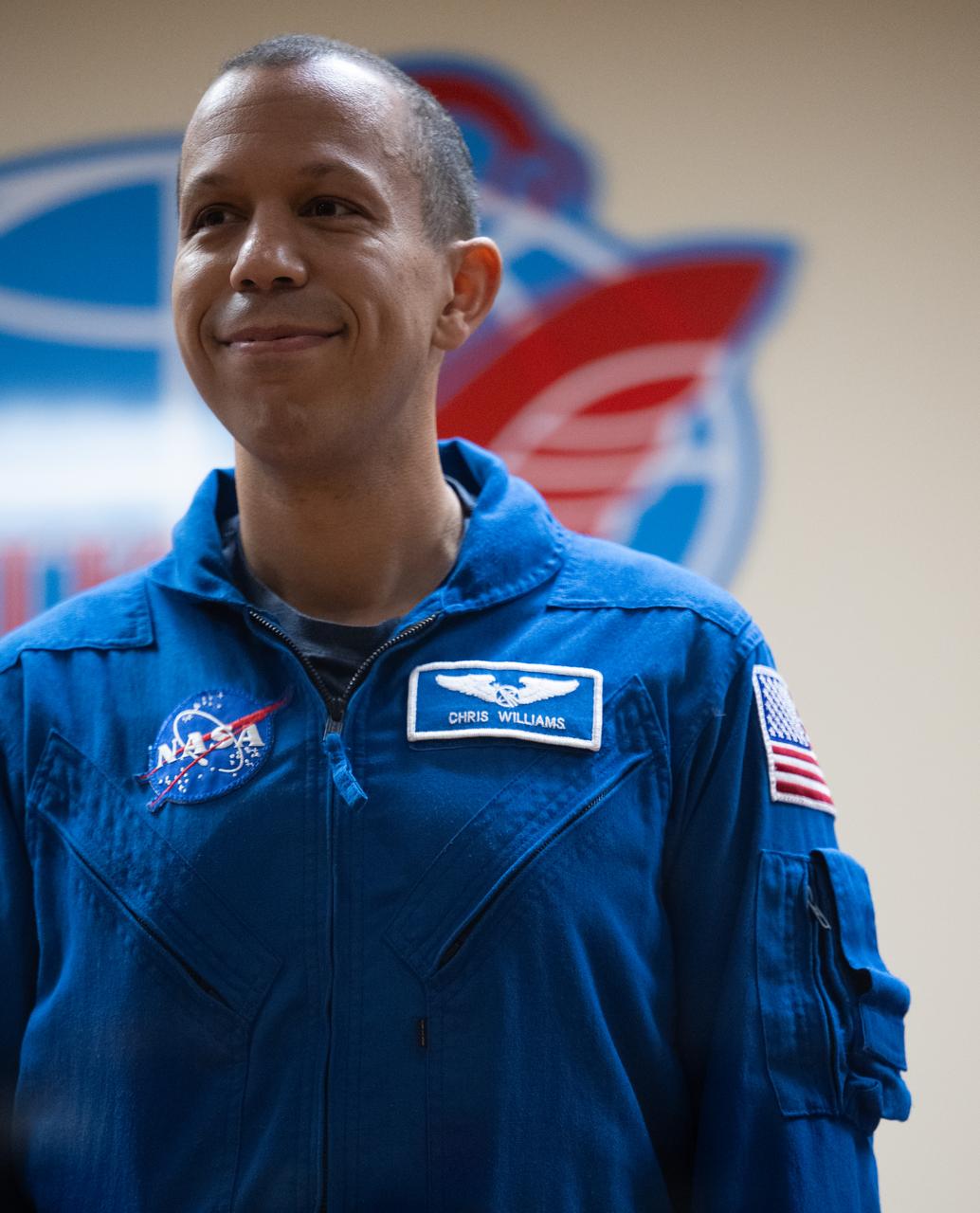
Expedition 73 backup crewmember Chris Williams of NASA seen in quarantine, behind glass, during a press conference, Monday, April 7, 2025 a the Cosmonaut Hotel in Baikonur, Kazakhstan. Expedition 73 crew members: NASA astronaut Jonny Kim, and Roscosmos cosmonauts Sergey Ryzhikov and Alexey Zubritskiy, are scheduled to launch aboard their Soyuz MS-27 spacecraft on April 8. Photo Credit: (NASA/Joel Kowsky)
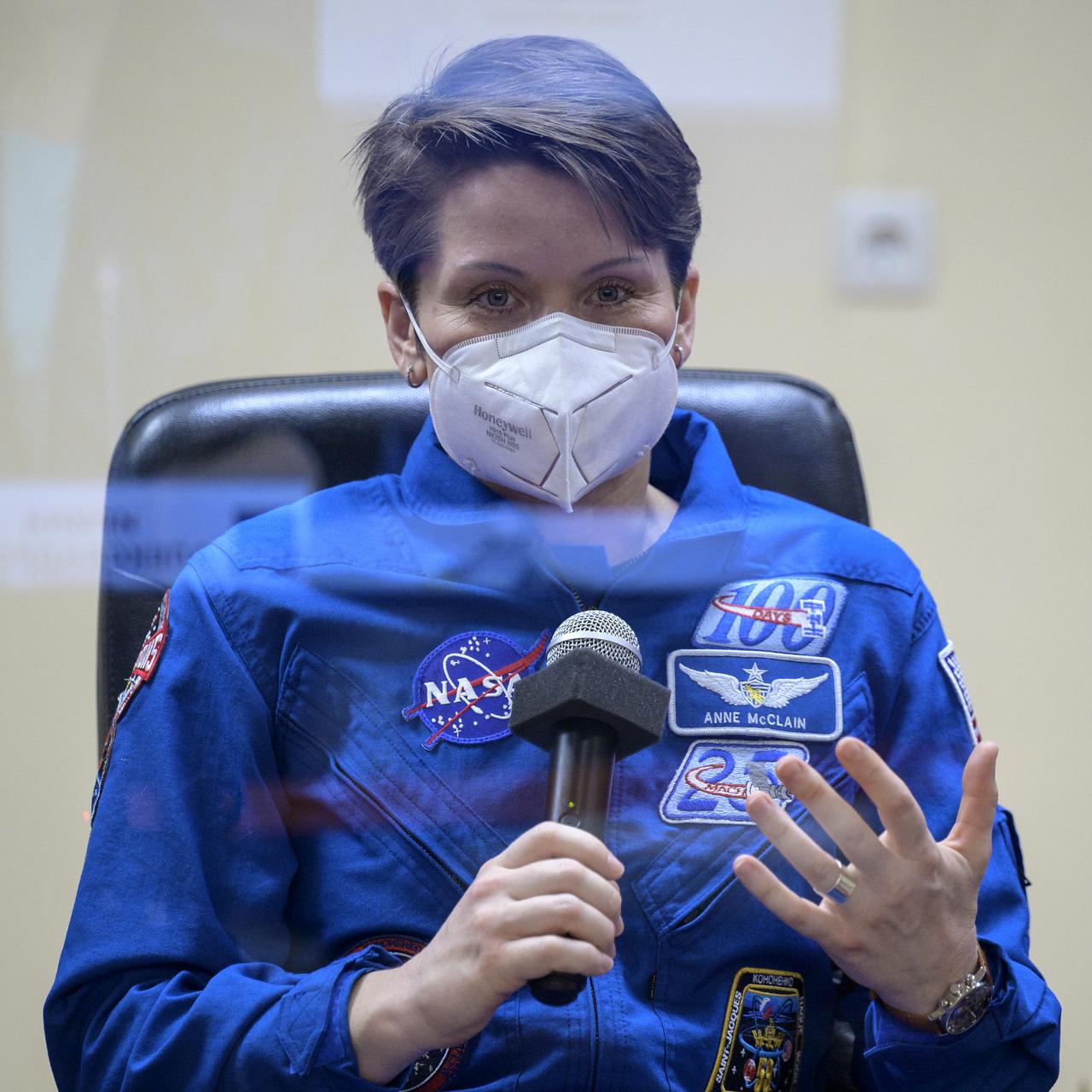
Expedition 65 backup crew member Anne McClain of NASA is seen in quarantine, behind glass, during a press conference, Thursday, April 8, 2021 a the Cosmonaut Hotel in Baikonur, Kazakhstan. Expedition 65 NASA astronaut Mark Vande Hei, Roscosmos cosmonauts Pyotr Dubrov and Oleg Novitskiy are scheduled to launch to the International Space Station aboard the Soyuz MS-18 spacecraft on April 9. Photo Credit: (NASA/Bill Ingalls)
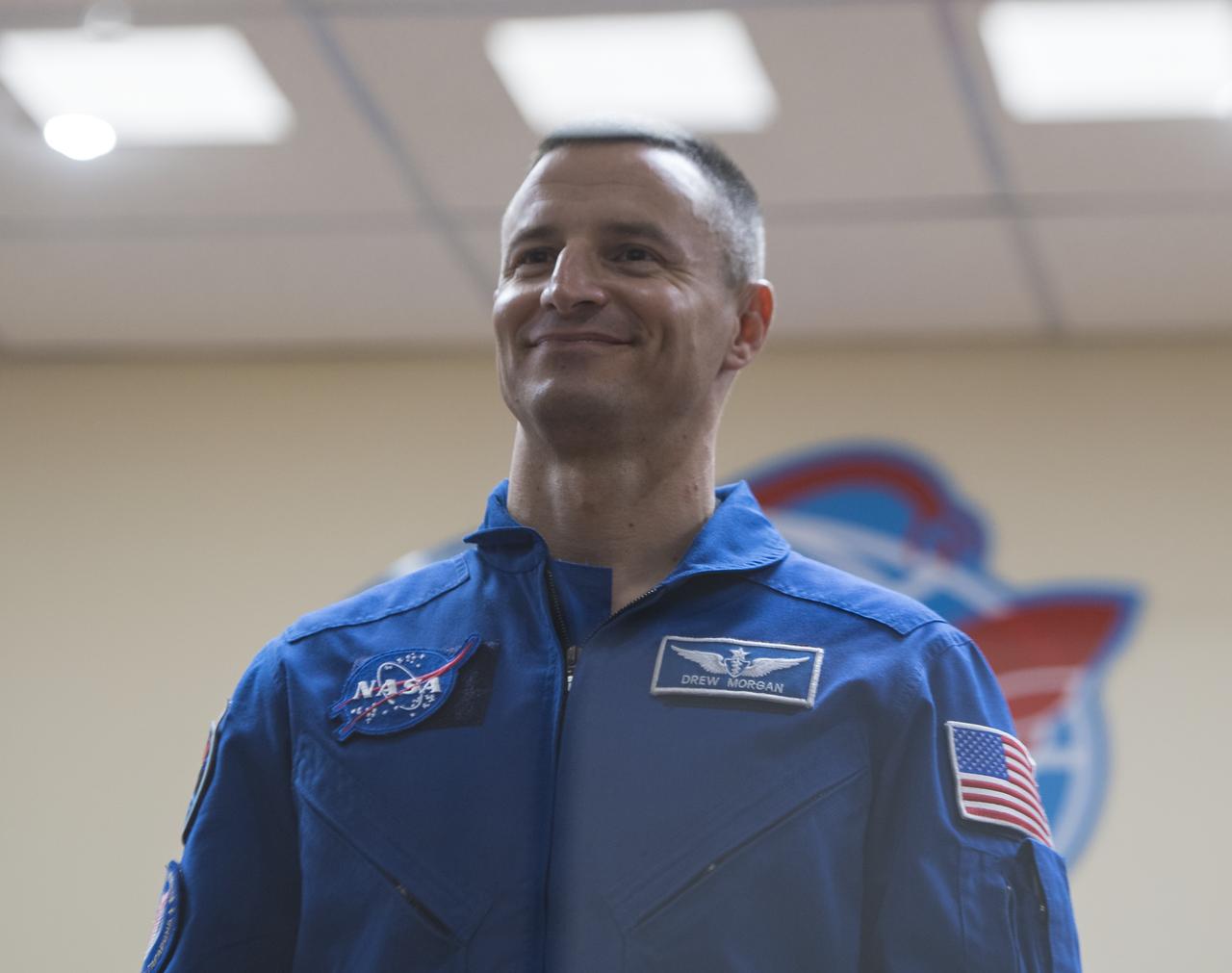
Expedition 58 backup crew member, Flight Engineer Andrew Morgan of NASA, is recognized during a press conference, Sunday, Dec. 2, 2018 at the Cosmonaut Hotel in Baikonur, Kazakhstan. Launch of the Soyuz rocket is scheduled for Dec. 3 and will carry Soyuz Commander Oleg Kononenko of Roscosmos, Flight Engineer Anne McClain of NASA, and Flight Engineer David Saint-Jacques of the Canadian Space Agency (CSA) into orbit to begin their six and a half month mission on the International Space Station. Photo Credit: (NASA/Aubrey Gemignani).
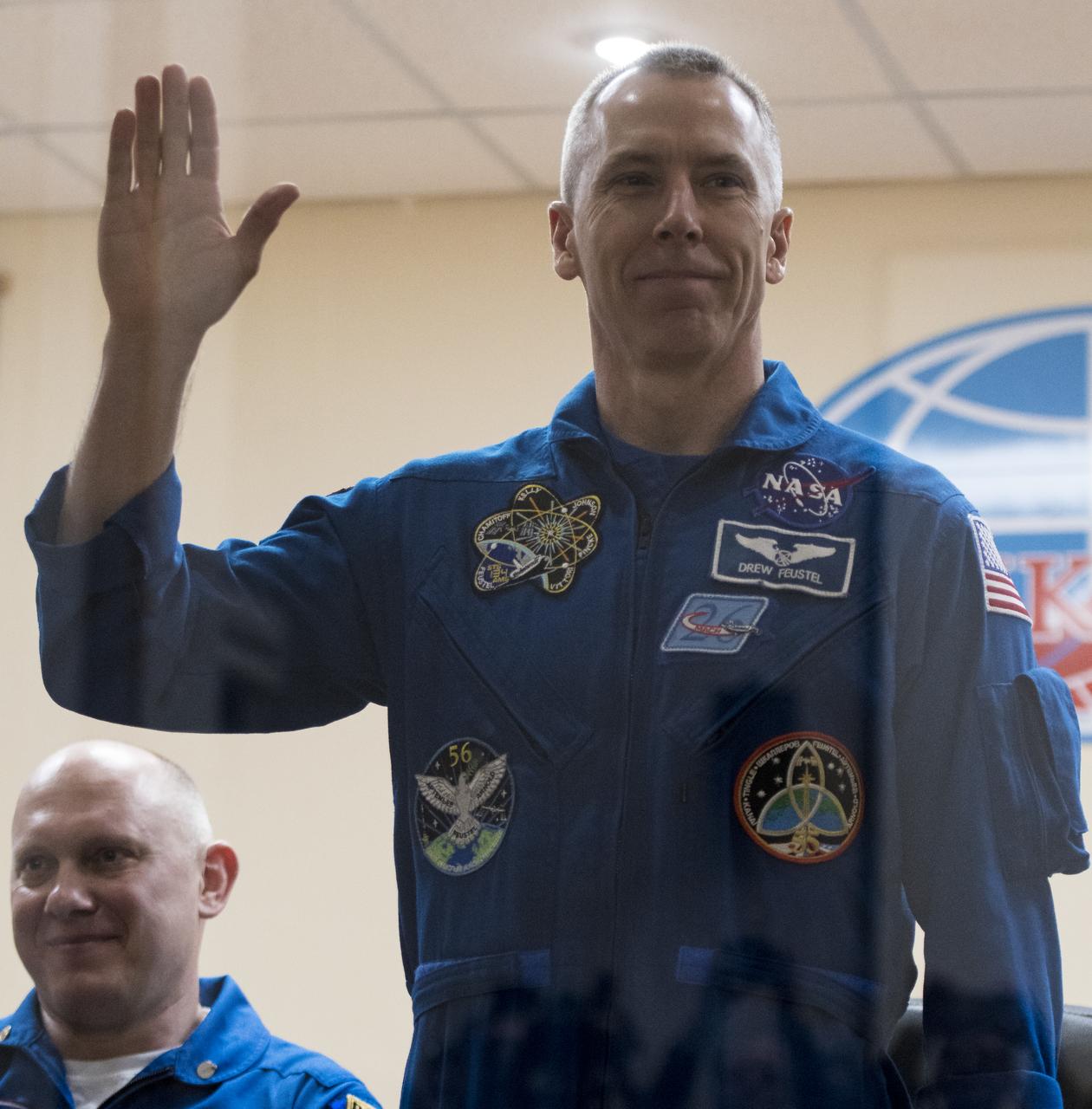
Expedition 55 flight engineer Drew Feustel is seen in quarantine, behind glass, during a press conference, Tuesday, March 20, 2018 a the Cosmonaut Hotel in Baikonur, Kazakhstan. Feustel, Soyuz Commander Oleg Artemyev of Roscosmos, and flight engineer Ricky Arnold of NASA are scheduled to launch to the International Space Station aboard the Soyuz MS-08 spacecraft on Wednesday, March, 21. Photo Credit: (NASA/Joel Kowsky)
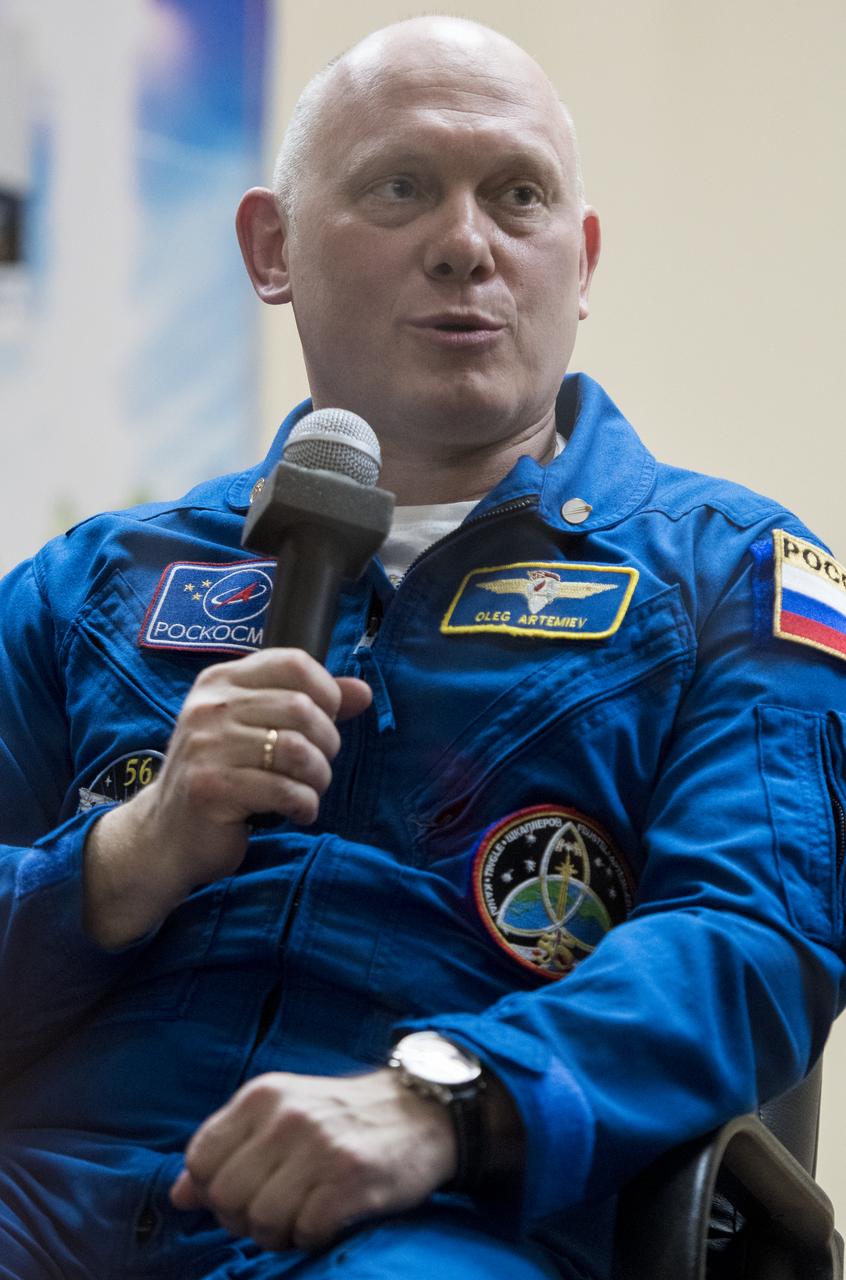
Expedition 55 Soyuz Commander Oleg Artemyev of Roscosmos answers a question during a press conference, Tuesday, March 20, 2018 a the Cosmonaut Hotel in Baikonur, Kazakhstan. Artemyev, flight engineer Ricky Arnold and flight engineer Drew Feustel of NASA are scheduled to launch to the International Space Station aboard the Soyuz MS-08 spacecraft on Wednesday, March, 21. Photo Credit: (NASA/Joel Kowsky)
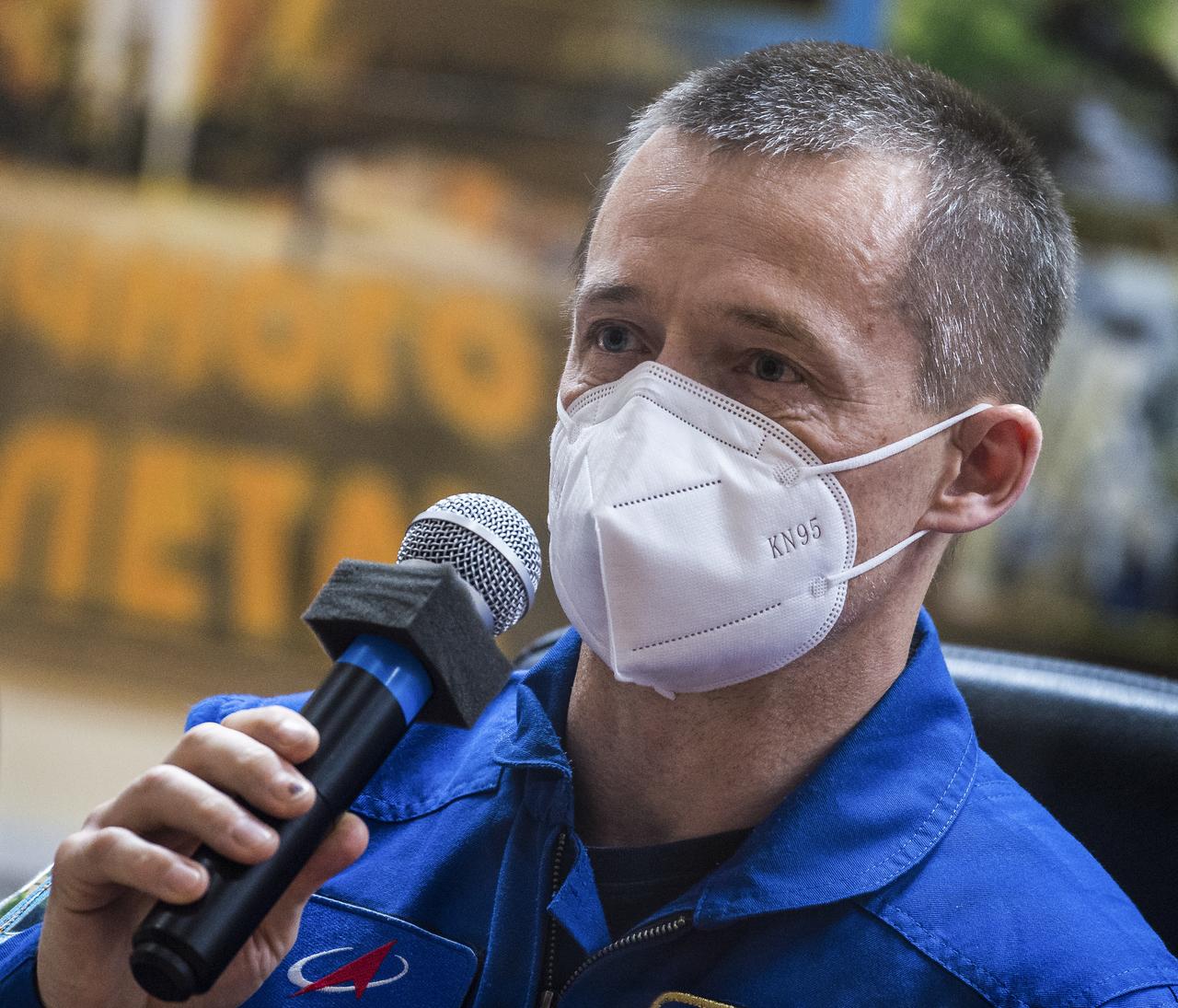
Expedition 64 Russian cosmonaut Sergey Ryzhikov of Roscosmos is seen in quarantine, behind glass, during a press conference, Tuesday, Oct. 13, 2020, at the Cosmonaut Hotel in Baikonur, Kazakhstan. Ryzhikov, fellow cosmonaut Sergey Kud-Sverchkov and NASA astronaut Kate Rubins are scheduled to launch to the International Space Station aboard the Soyuz MS-17 spacecraft on October 14. Photo Credit: (NASA/GCTC/Andrey Shelepin)
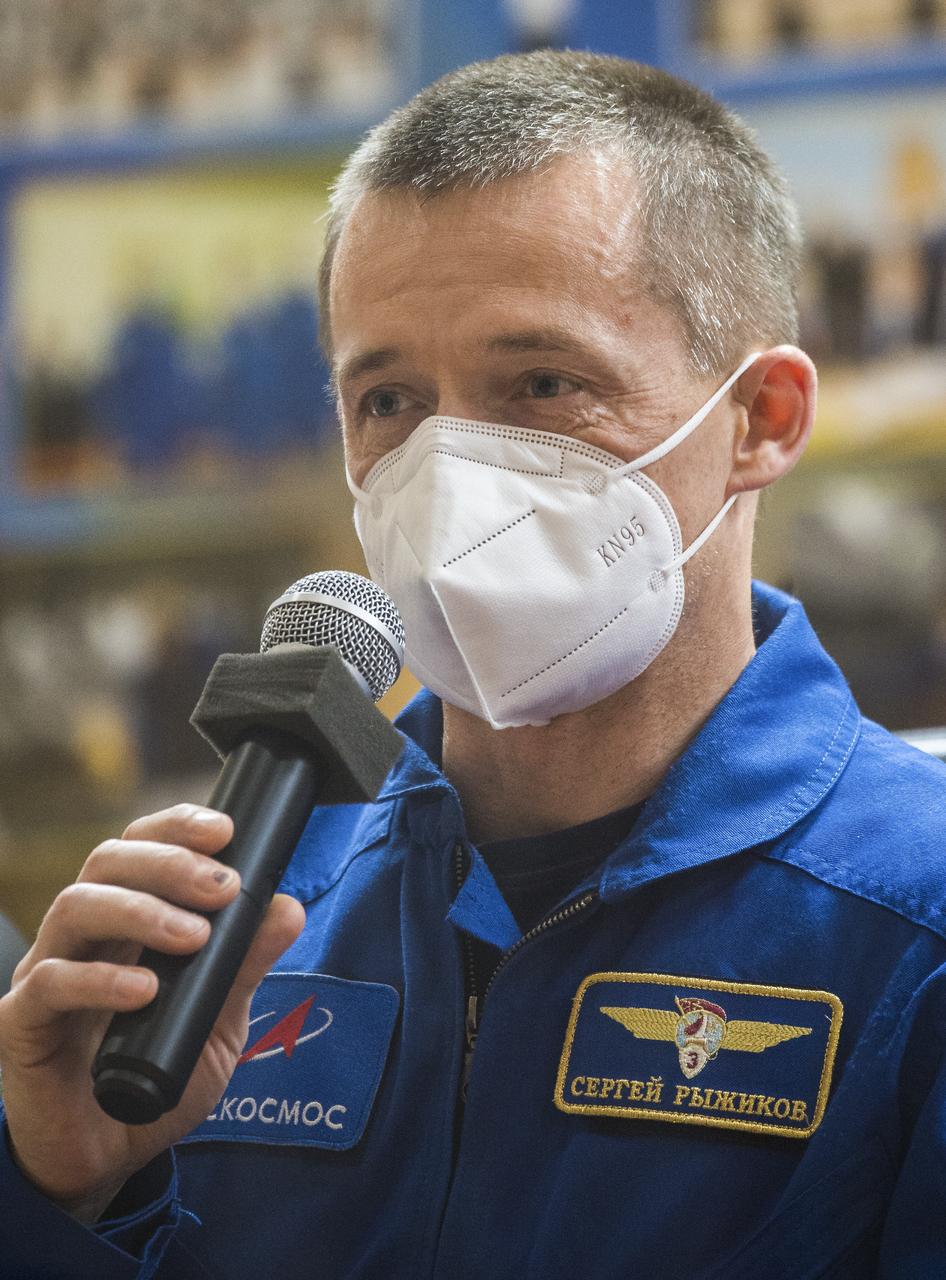
Expedition 64 Russian cosmonaut Sergey Ryzhikov of Roscosmos is seen in quarantine, behind glass, during a press conference, Tuesday, Oct. 13, 2020, at the Cosmonaut Hotel in Baikonur, Kazakhstan. Ryzhikov, fellow cosmonaut Sergey Kud-Sverchkov and NASA astronaut Kate Rubins are scheduled to launch to the International Space Station aboard the Soyuz MS-17 spacecraft on October 14. Photo Credit: (NASA/GCTC/Andrey Shelepin)
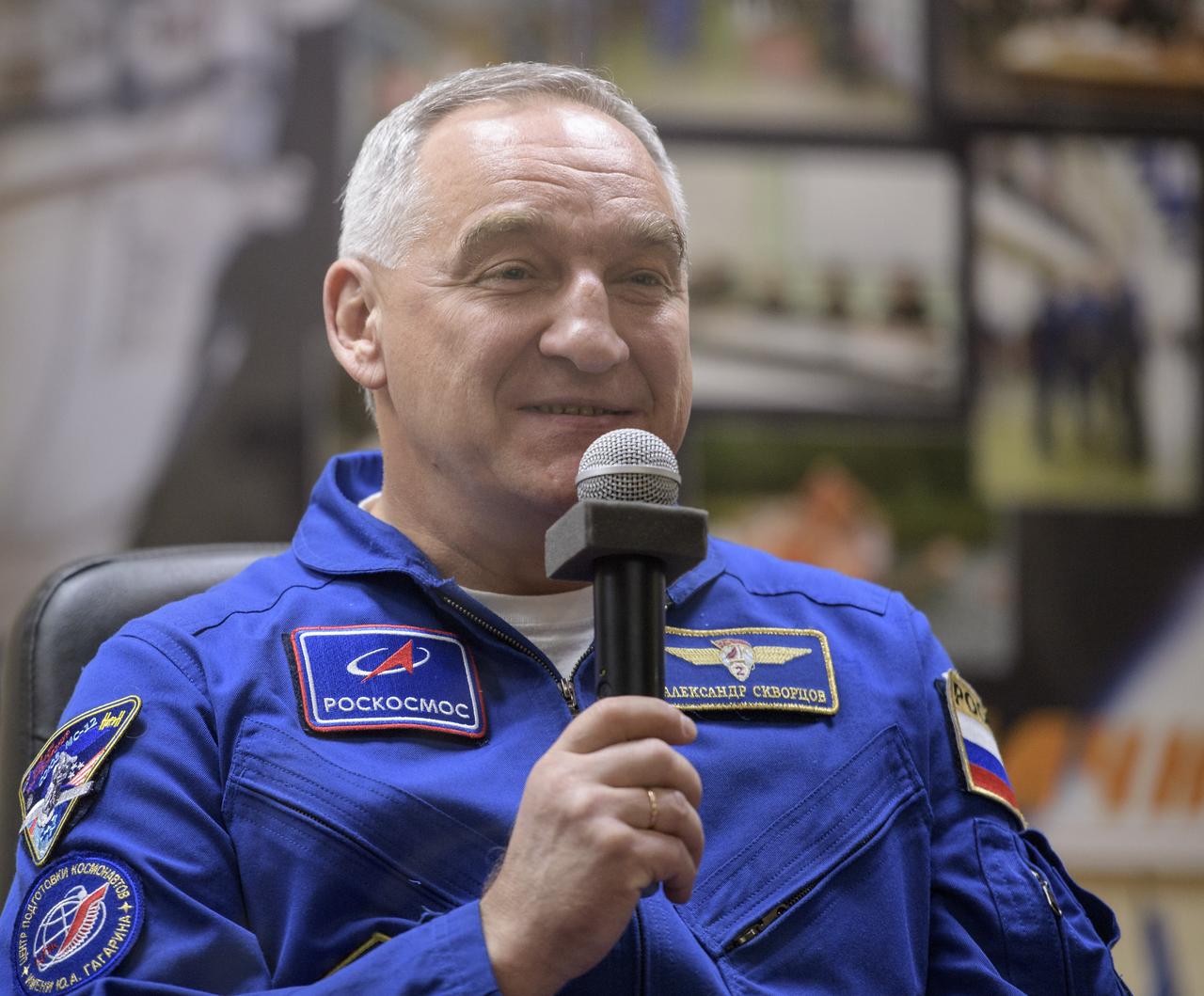
Expedition 59 backup crewmember Alexander Skvortsov of Roscosmos answers questions during a press conference, Wednesday, March 13, 2019 at the Cosmonaut Hotel in Baikonur, Kazakhstan. Expedition 59 crewmembers Nick Hague and Christina Koch of NASA, along with Alexey Ovchinin of Roscosmos will launch March 14, U.S. time, on the Soyuz MS-12 spacecraft from the Baikonur Cosmodrome for a six-and-a-half month mission on the International Space Station. Photo Credit: (NASA/Bill Ingalls)
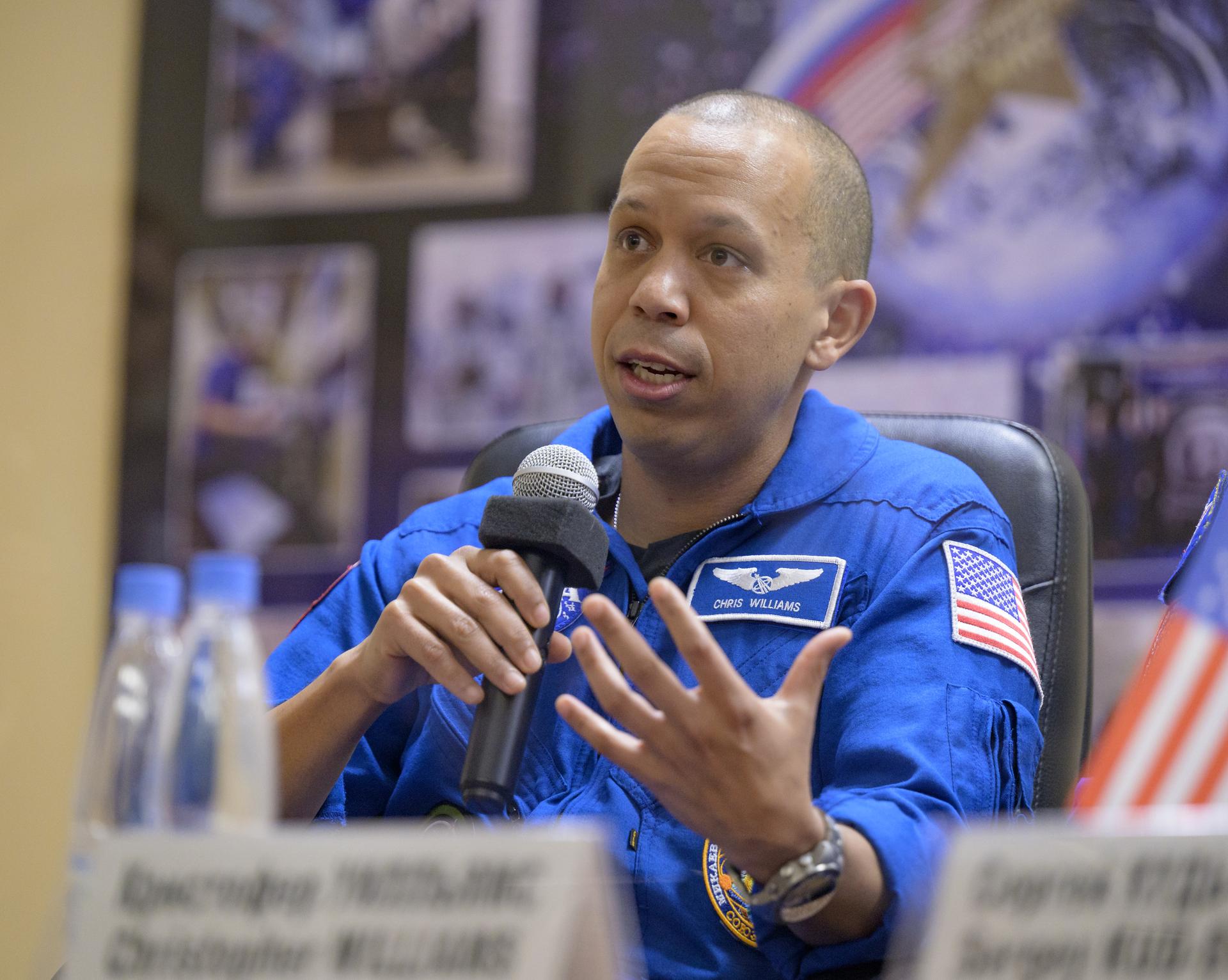
NASA astronaut Chris Williams is seen in quarantine, behind glass, during a press conference, Wednesday, Nov. 26, 2025 at the Cosmonaut Hotel in Baikonur, Kazakhstan. Expedition 74 crewmembers: Williams, Roscosmos cosmonauts Sergey Kud-Sverchkov and Sergei Mikaev, are scheduled to launch aboard their Soyuz MS-28 spacecraft on November 27. Photo Credit: (NASA/Bill Ingalls)
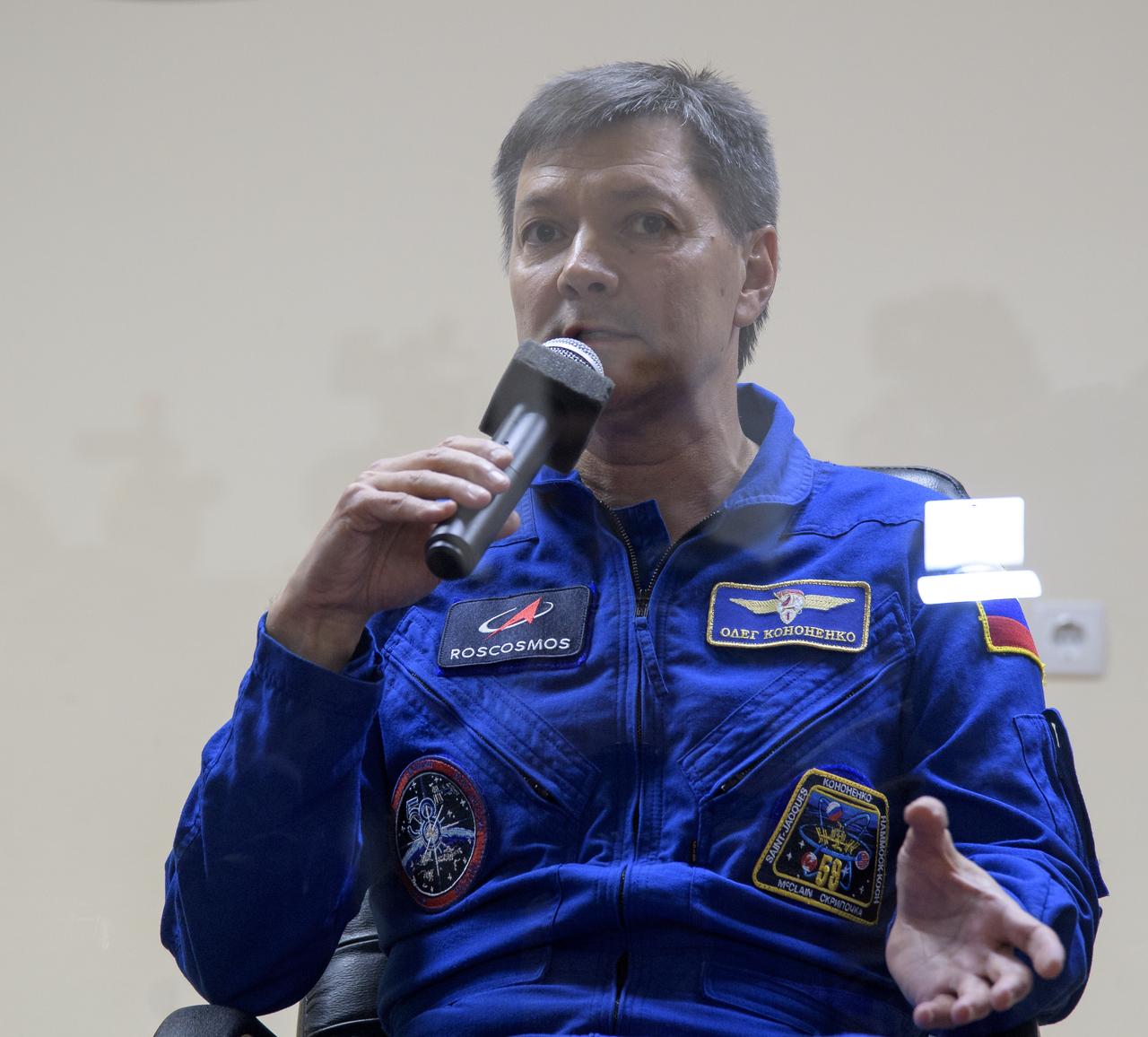
Expedition 57 backup crewmember Oleg Kononenko of Roscosmos answers questions during a press conference, Wednesday, Oct. 10, 2018 at the Cosmonaut Hotel in Baikonur, Kazakhstan. Expedition 57 Flight Engineer Nick Hague of NASA and Flight Engineer Alexey Ovchinin of Roscosmos are scheduled to launch on October 11 and will spend the next six months living and working aboard the International Space Station. Photo Credit: (NASA/Bill Ingalls)
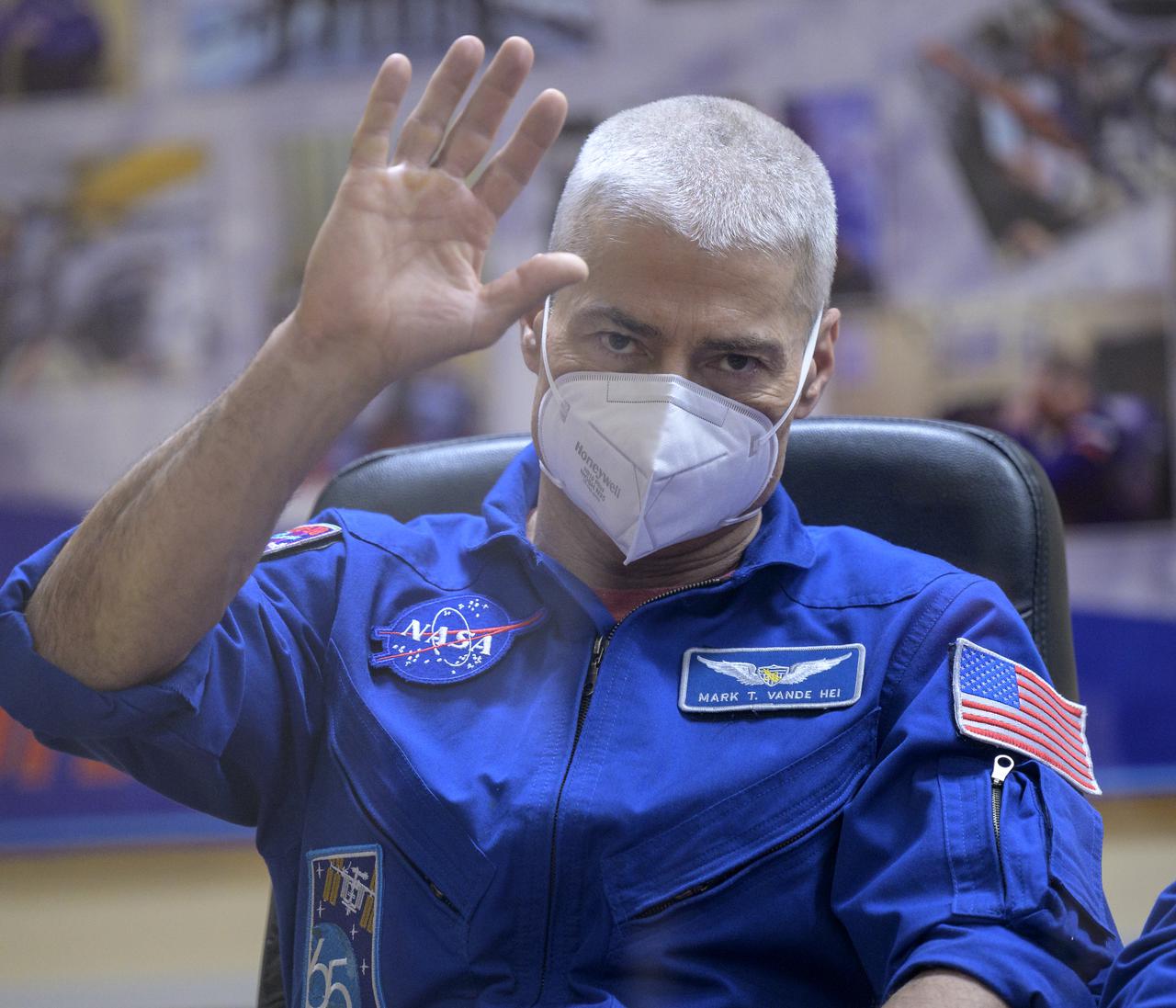
Expedition 65 NASA astronaut Mark Vande Hei is seen in quarantine, behind glass, during a press conference, Thursday, April 8, 2021 a the Cosmonaut Hotel in Baikonur, Kazakhstan. Expedition 65 Roscosmos cosmonauts Pyotr Dubrov, Oleg Novitskiy and NASA’s Vande Hei are scheduled to launch to the International Space Station aboard the Soyuz MS-18 spacecraft on April 9. Photo Credit: (NASA/Bill Ingalls)
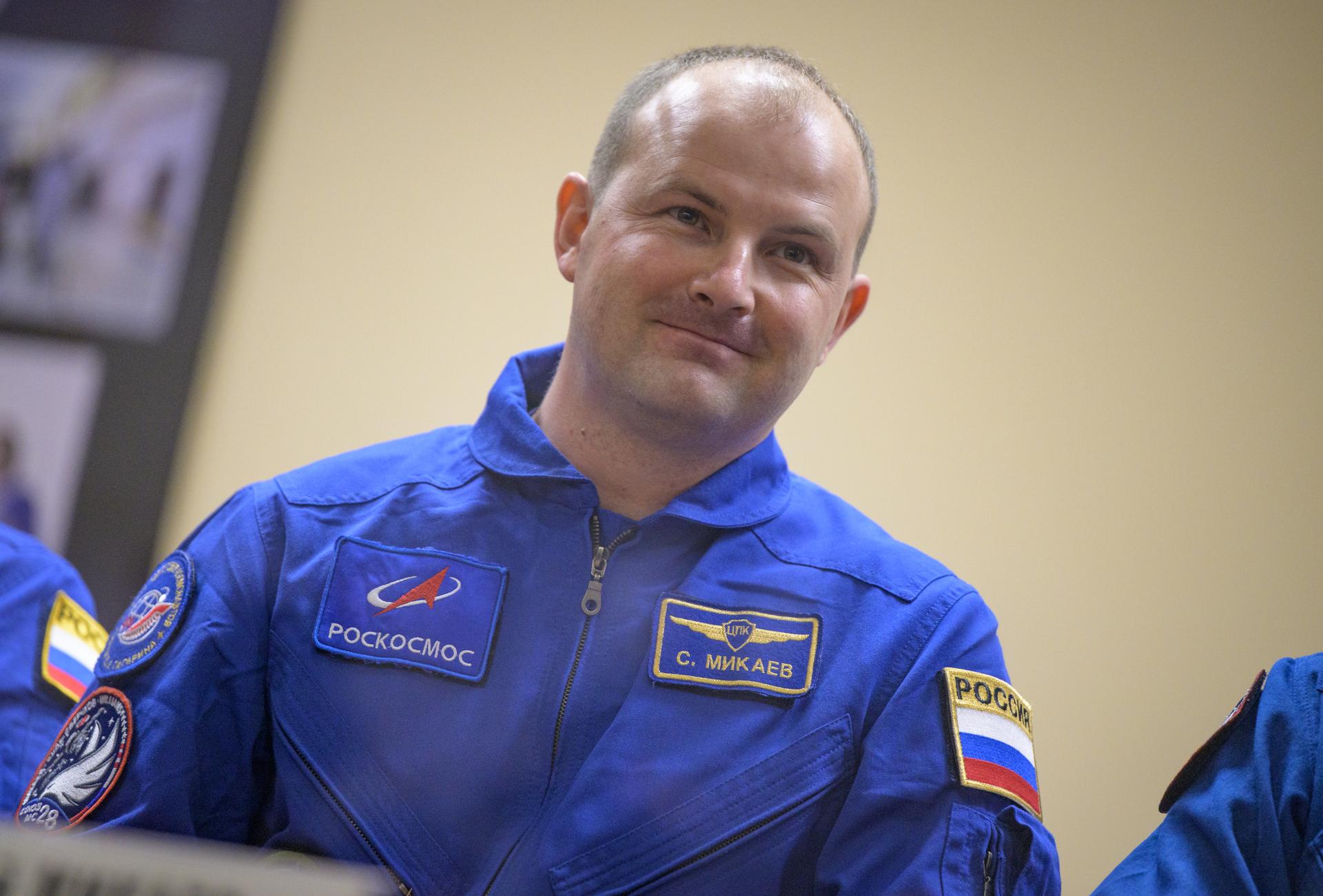
Roscosmos cosmonaut Sergei Mikaev is seen in quarantine, behind glass, during a press conference, Wednesday, Nov. 26, 2025 at the Cosmonaut Hotel in Baikonur, Kazakhstan. Expedition 74 crewmembers: NASA astronaut Chris Williams, Roscosmos cosmonauts Sergey Kud-Sverchkov and Sergei Mikaev, are scheduled to launch aboard their Soyuz MS-28 spacecraft on November 27. Photo Credit: (NASA/Bill Ingalls)
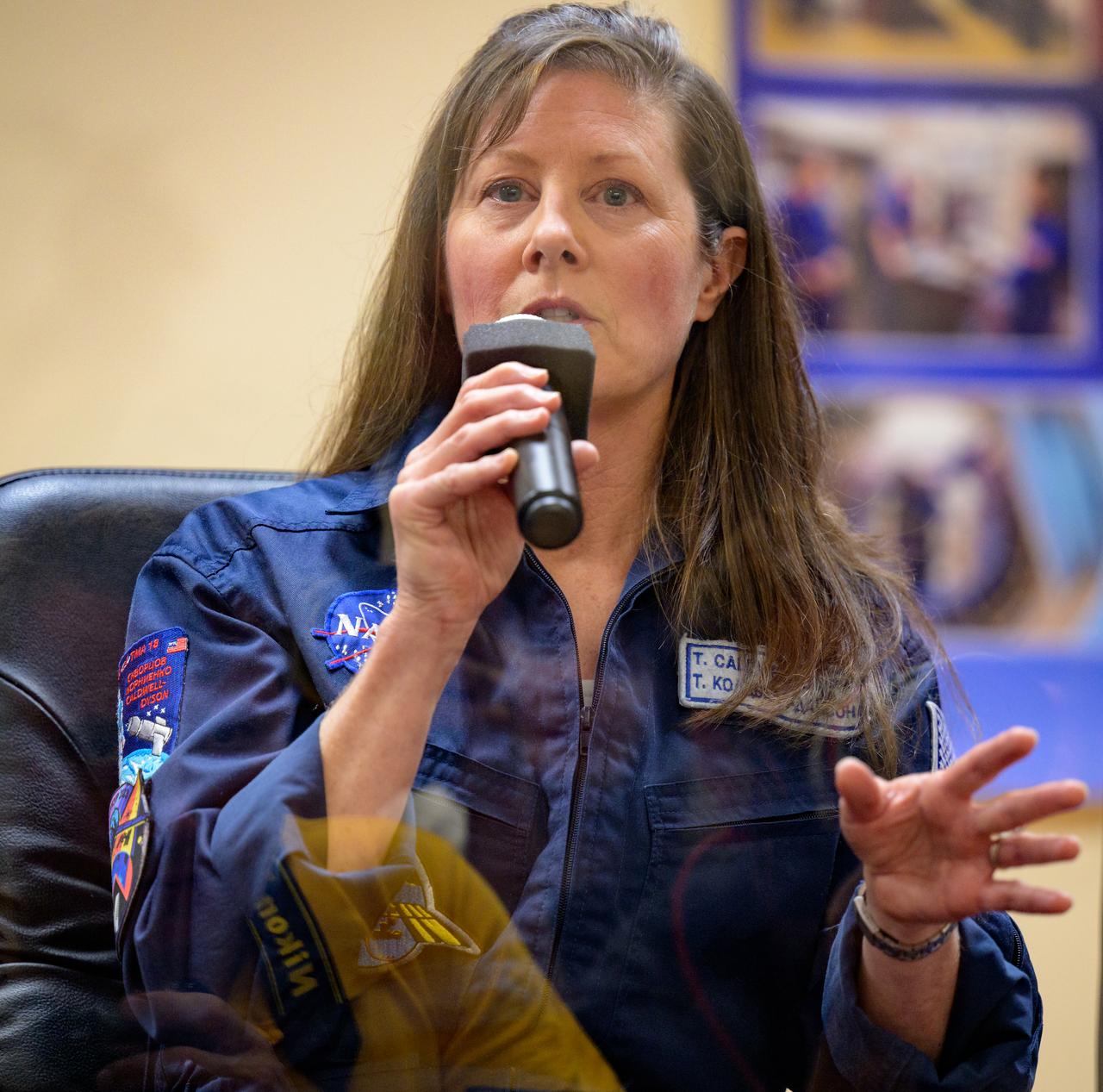
Expedition 70 backup astronaut Tracy Dyson is seen in quarantine behind glass during a press conference, Thursday, Sept. 14, 2023 at the Cosmonaut Hotel in Baikonur, Kazakhstan. Expedition 70 NASA astronaut Loral O'Hara, Roscosmos cosmonauts Oleg Kononenko, and Nikolai Chub are scheduled to launch aboard their Soyuz MS-24 spacecraft on Sept. 15. Photo Credit: (NASA/Bill Ingalls)
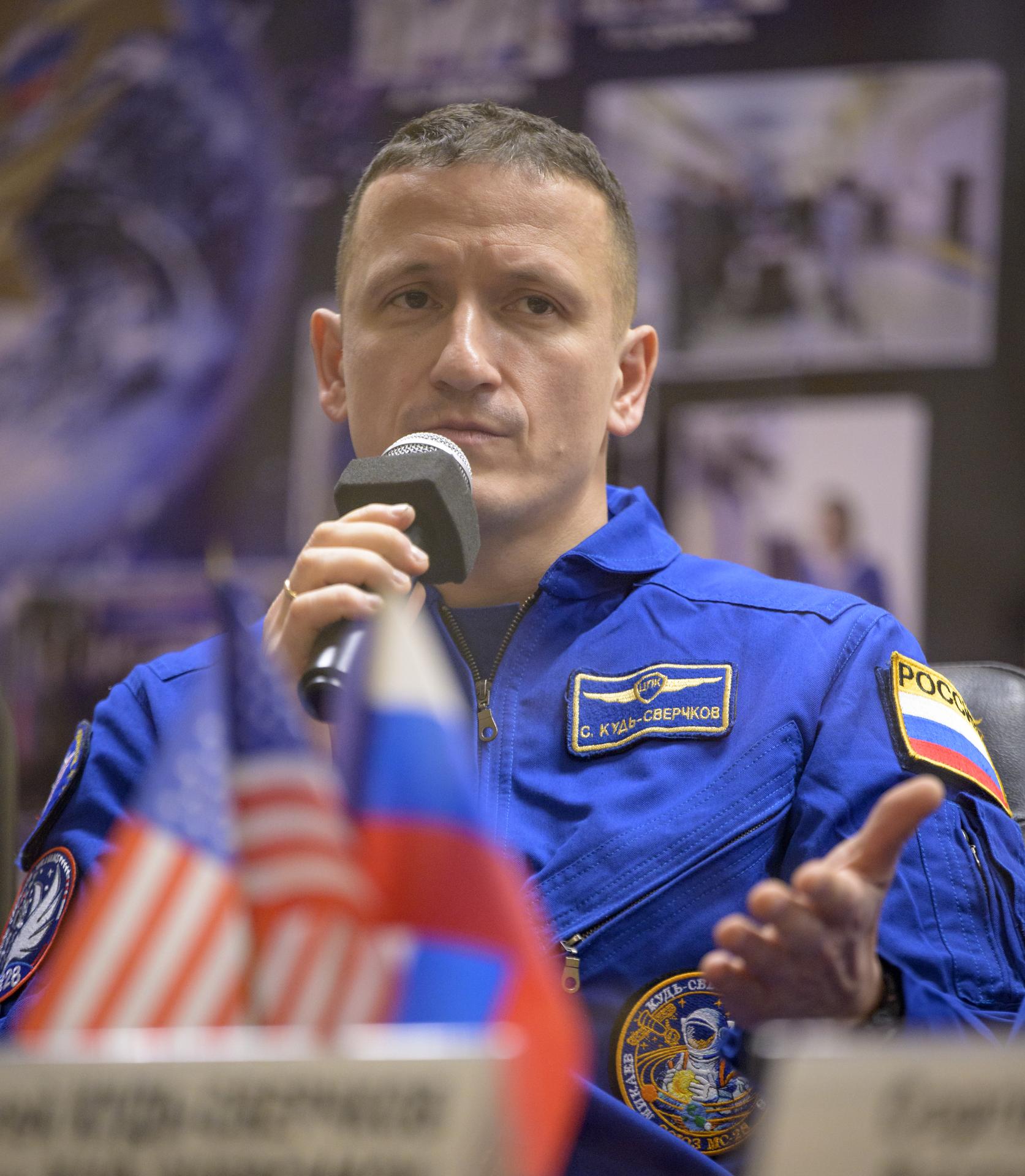
Roscosmos cosmonaut Sergey Kud-Sverchkov is seen in quarantine, behind glass, during a press conference, Wednesday, Nov. 26, 2025 at the Cosmonaut Hotel in Baikonur, Kazakhstan. Expedition 74 crewmembers: NASA astronaut Chris Williams, Roscosmos cosmonauts Sergey Kud-Sverchkov and Sergei Mikaev, are scheduled to launch aboard their Soyuz MS-28 spacecraft on November 27. Photo Credit: (NASA/Bill Ingalls)
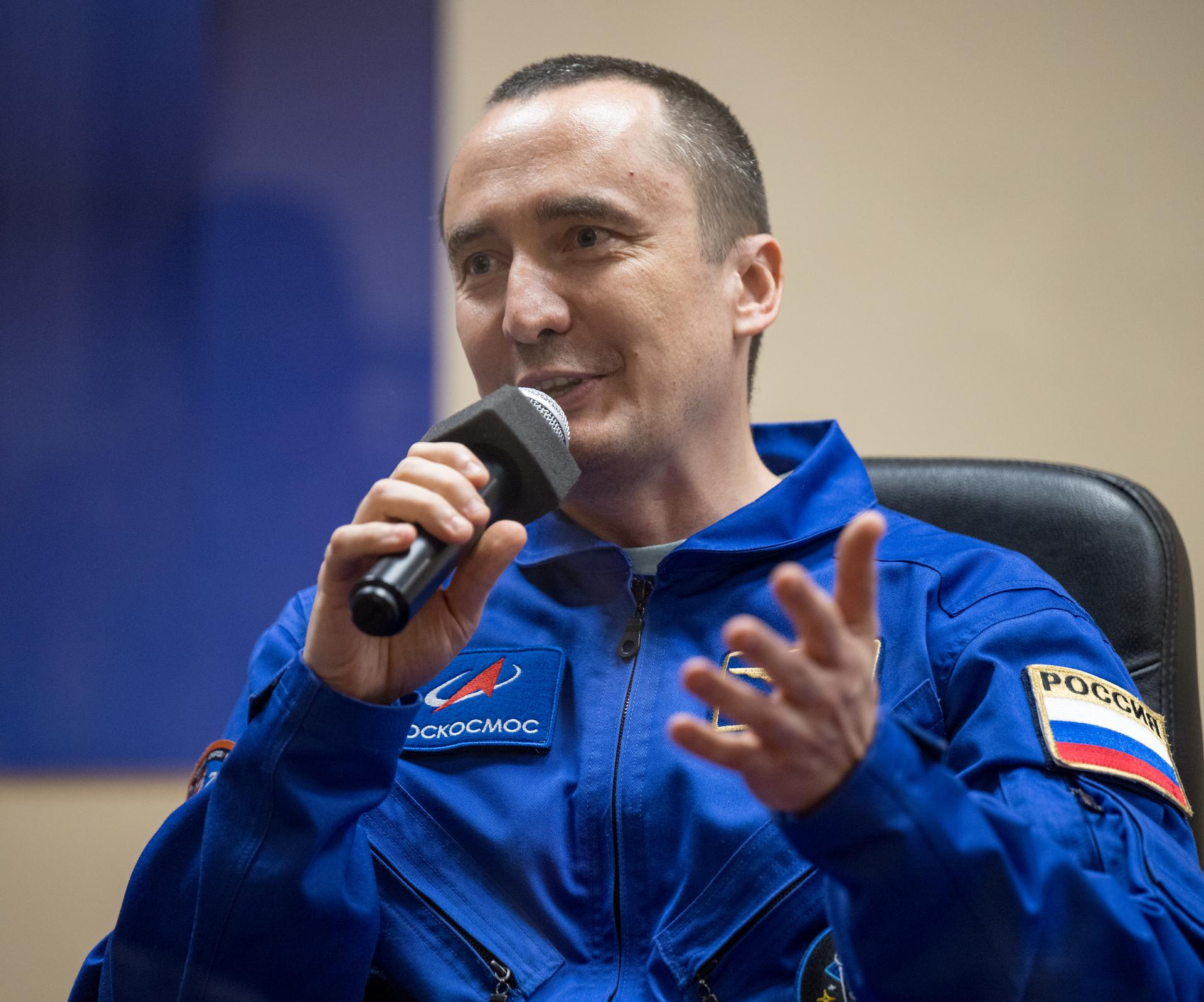
Roscosmos cosmonaut Pyotr Dubrov is seen in quarantine, behind glass, during a press conference, Monday, July 13, 2026 a the Cosmonaut Hotel in Baikonur, Kazakhstan. Expedition 75 crewmembers: NASA astronaut Anil Menon, Roscosmos cosmonauts Pyotr Dubrov and Anna Kikina are scheduled to launch aboard the Soyuz MS-29 spacecraft to the International Space Station on July 14. Photo Credit: (NASA/Bill Ingalls)
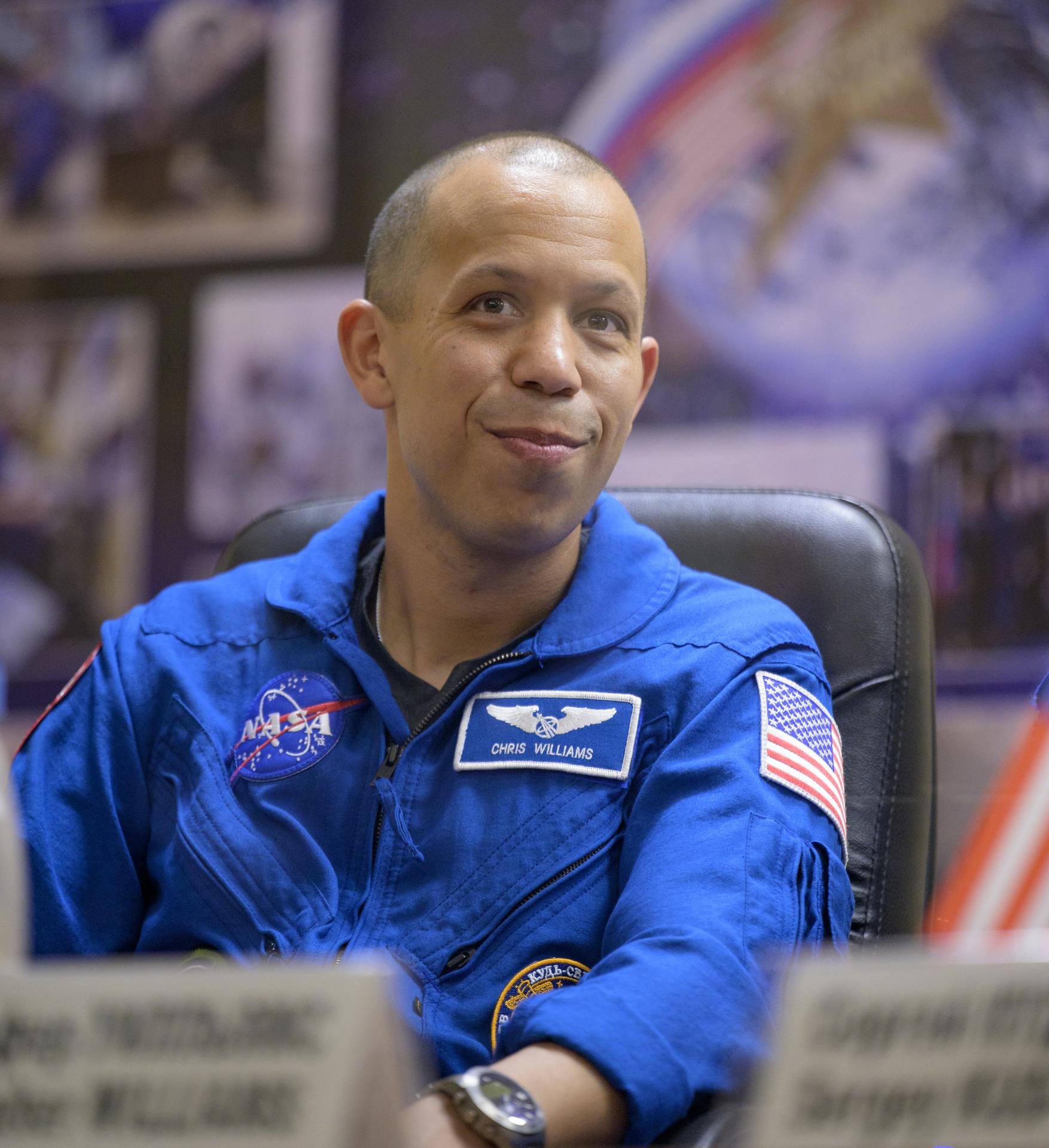
NASA astronaut Chris Williams is seen in quarantine, behind glass, during a press conference, Wednesday, Nov. 26, 2025 at the Cosmonaut Hotel in Baikonur, Kazakhstan. Expedition 74 crewmembers: Williams, Roscosmos cosmonauts Sergey Kud-Sverchkov and Sergei Mikaev, are scheduled to launch aboard their Soyuz MS-28 spacecraft on November 27. Photo Credit: (NASA/Bill Ingalls)
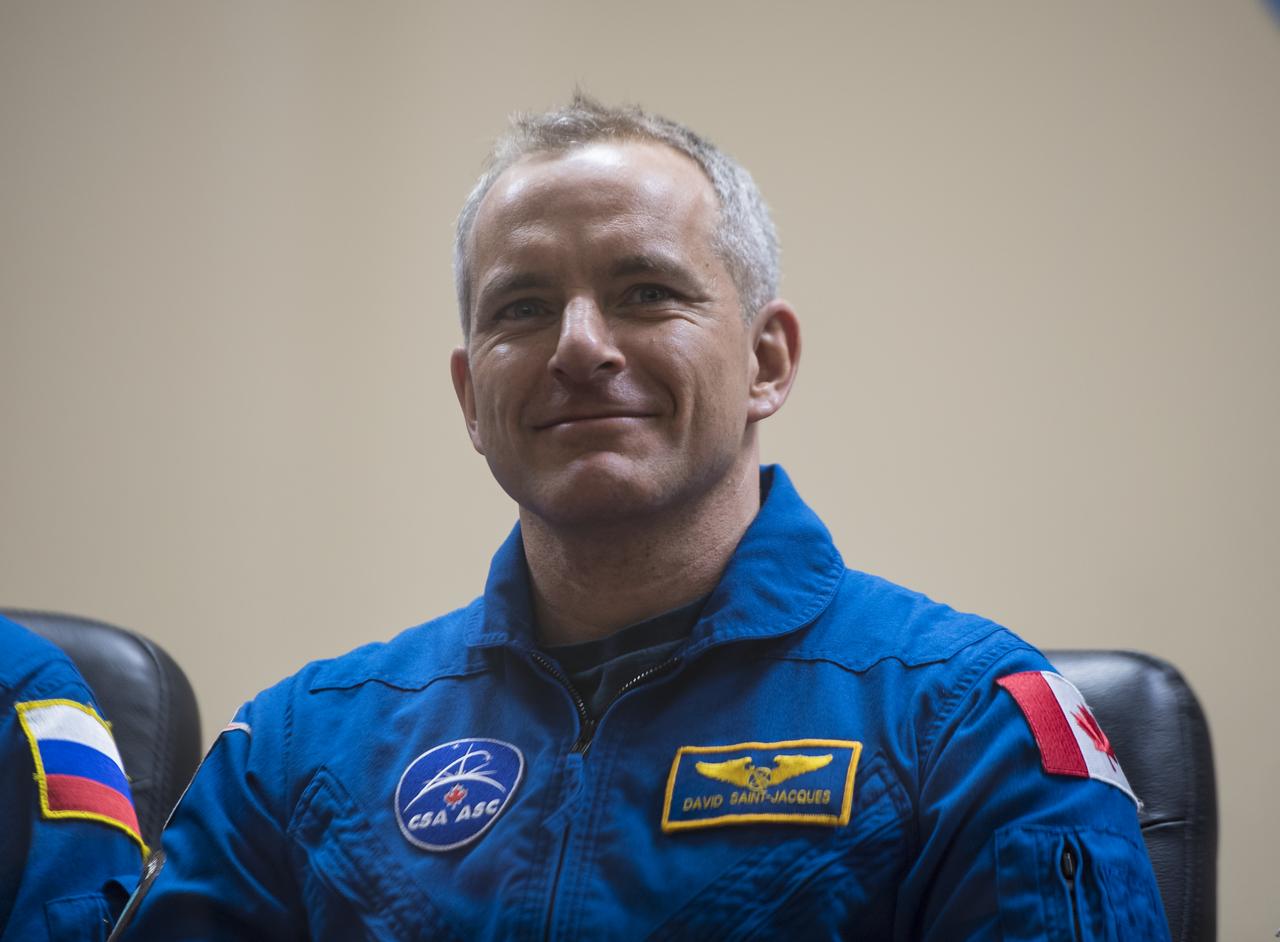
Expedition 58 Flight Engineer David Saint-Jacques of the Canadian Space Agency (CSA) is seen during a press conference, Sunday, Dec. 2, 2018 at the Cosmonaut Hotel in Baikonur, Kazakhstan. Launch of the Soyuz rocket is scheduled for Dec. 3 and will carry Saint-Jacques, Soyuz Commander Oleg Kononenko of Roscosmos, and Flight Engineer Anne McClain of NASA, into orbit to begin their six and a half month mission on the International Space Station. Photo Credit: (NASA/Aubrey Gemignani).
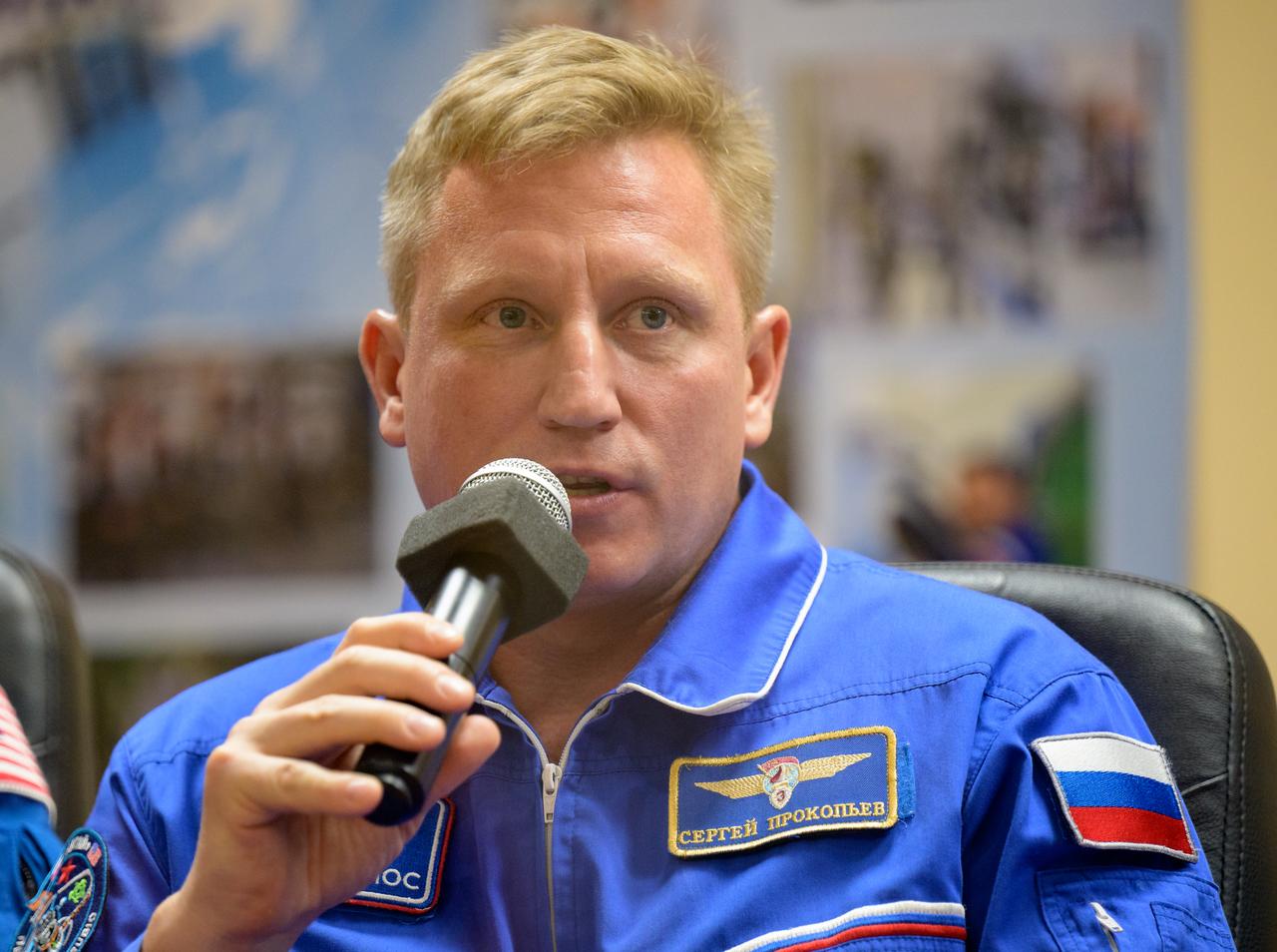
Expedition 68 cosmonaut Sergey Prokopyev of Roscosmos is seen in quarantine, behind glass, during a press conference, Tuesday, Sept. 20, 2022, at the Cosmonaut Hotel in Baikonur, Kazakhstan. Prokopyev, Frank Rubio of NASA, and Dmitri Petelin of Roscosmos are scheduled to launch to the International Space Station aboard the Soyuz MS-22 spacecraft on Sept. 21. Photo Credit: (NASA/Bill Ingalls)
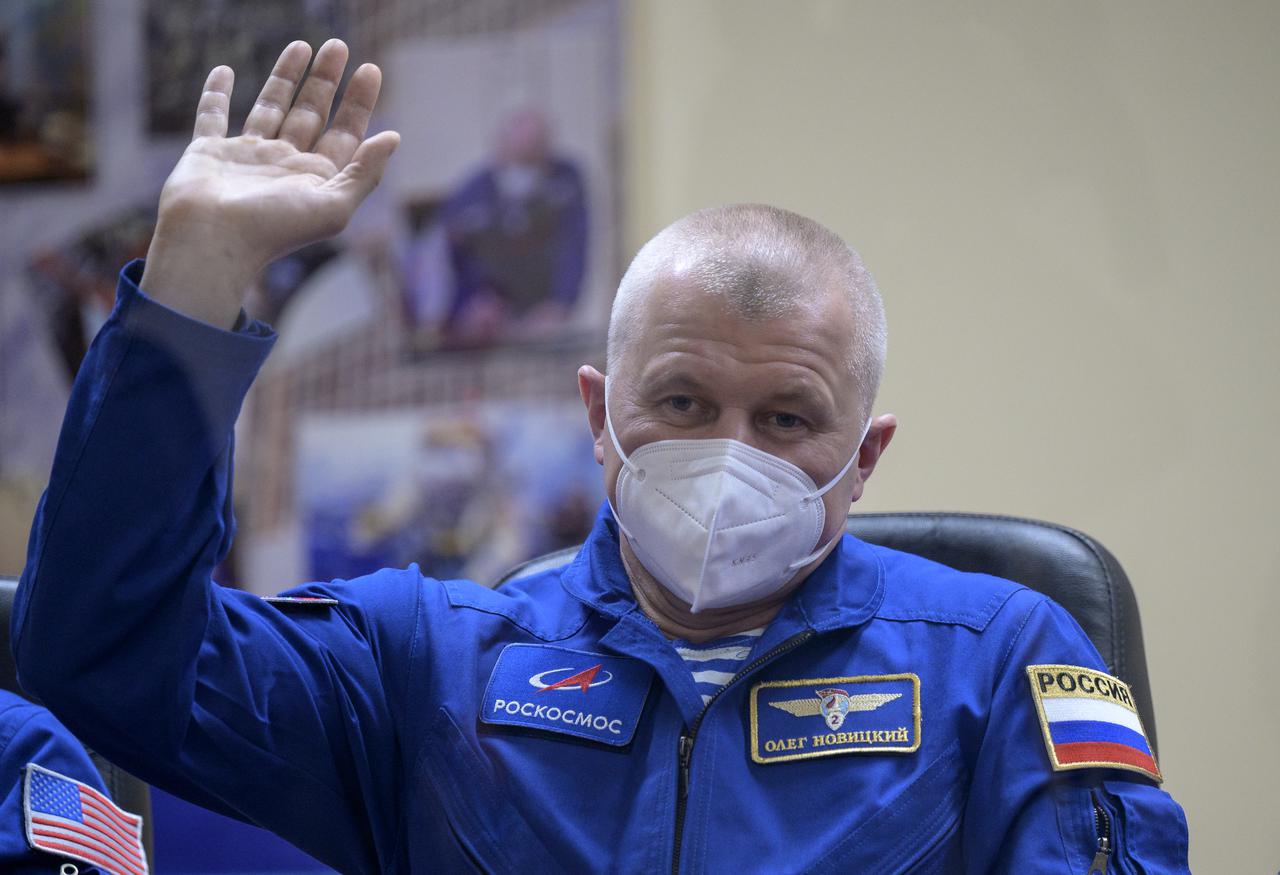
Expedition 65 Roscosmos cosmonaut Oleg Novitskiy is seen in quarantine, behind glass, during a press conference, Thursday, April 8, 2021 a the Cosmonaut Hotel in Baikonur, Kazakhstan. Expedition 65 NASA astronaut Mark Vande Hei, Roscosmos cosmonauts Pyotr Dubrov and Novitskiy are scheduled to launch to the International Space Station aboard the Soyuz MS-18 spacecraft on April 9. Photo Credit: (NASA/Bill Ingalls)
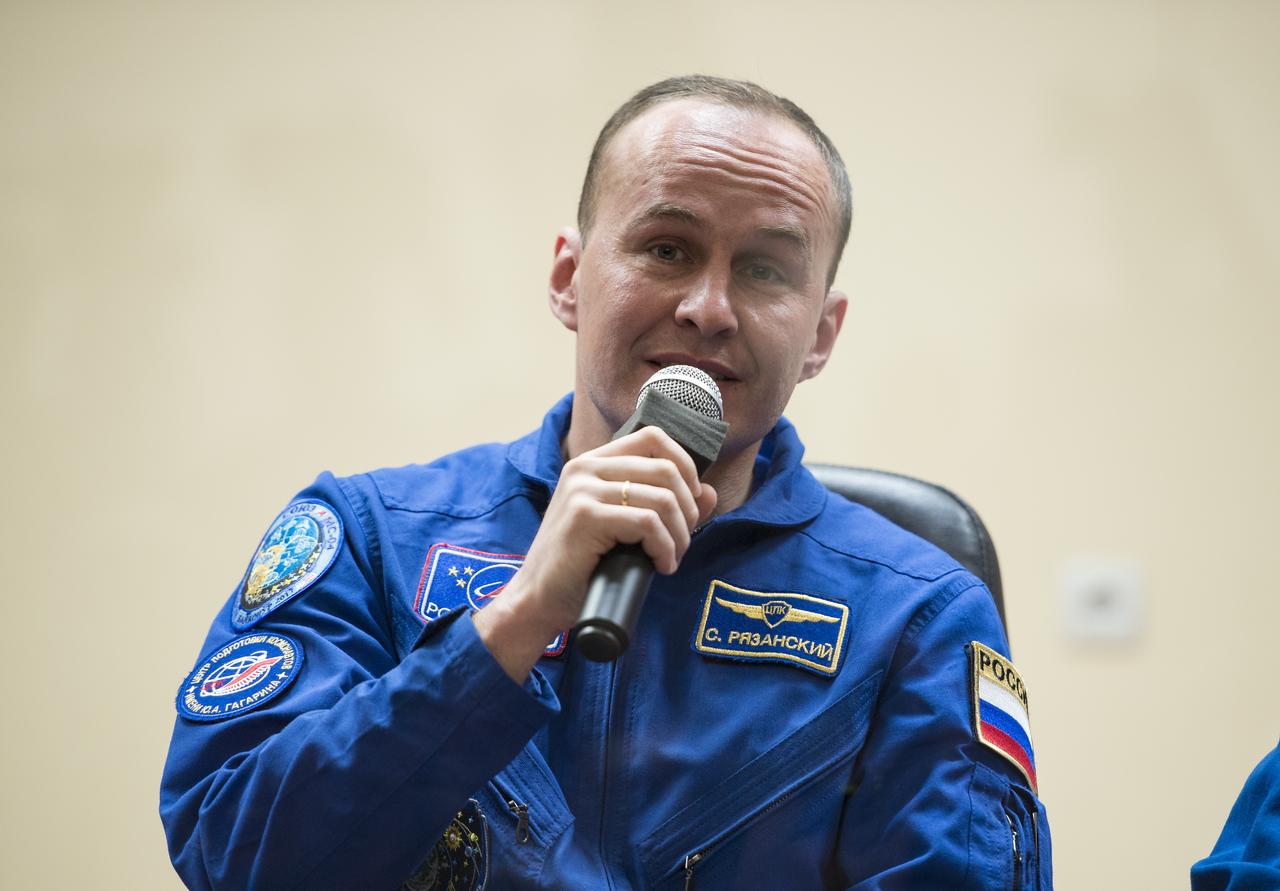
Expedition 51 backup crew member, Sergey Ryazanskiy of Roscosmos answers a question during a press conference on Wednesday, April 19, 2017 at the Cosmonaut Hotel in Baikonur, Kazakhstan. Launch of the Soyuz rocket is scheduled for April 20 and will carry Expedition 51 prime crew members Soyuz Commander Fyodor Yurchikhin of Roscosmos and Flight Engineer Jack Fischer of NASA, into orbit to begin their four and a half month mission on the International Space Station. Photo Credit: (NASA/Aubrey Gemignani)
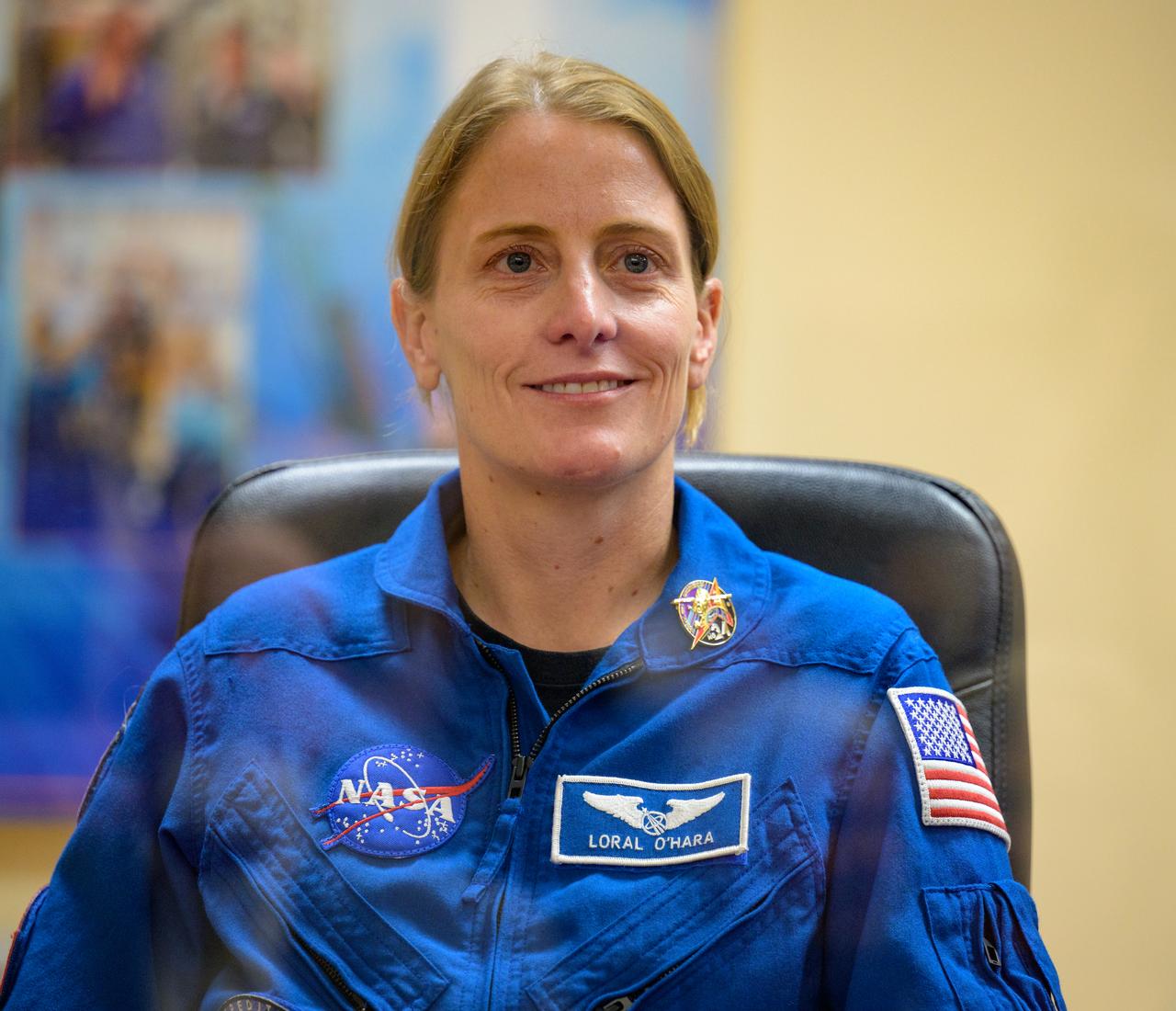
Expedition 70 astronaut Loral O'Hara is seen in quarantine behind glass during a press conference, Thursday, Sept. 14, 2023 at the Cosmonaut Hotel in Baikonur, Kazakhstan. Expedition 70 NASA astronaut Loral O'Hara, Roscosmos cosmonauts Oleg Kononenko, and Nikolai Chub are scheduled to launch aboard their Soyuz MS-24 spacecraft on Sept. 15. Photo Credit: (NASA/Bill Ingalls)
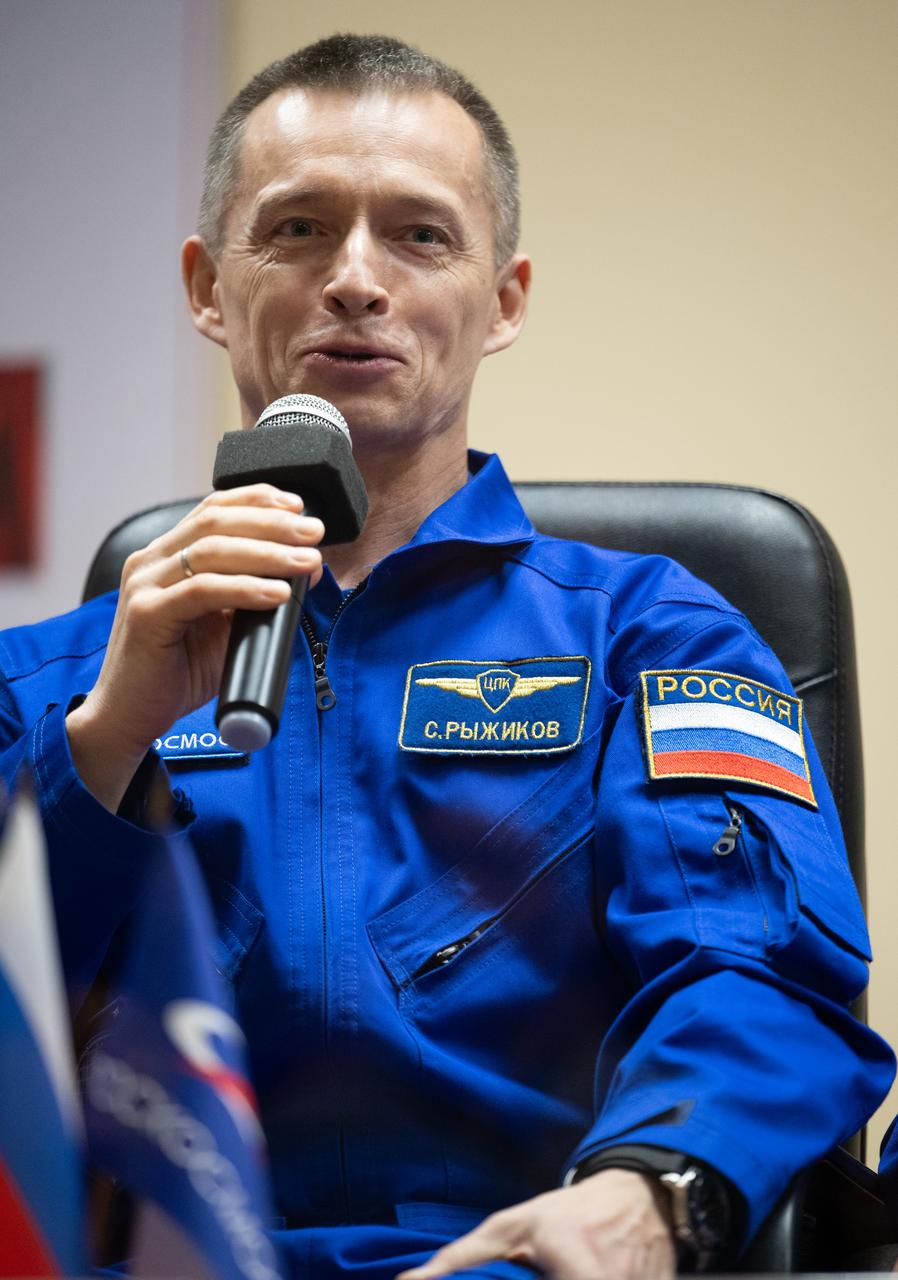
Roscosmos cosmonaut Sergey Ryzhikov is seen in quarantine, behind glass, during a press conference, Monday, April 7, 2025 a the Cosmonaut Hotel in Baikonur, Kazakhstan. Expedition 73 crew members: NASA astronaut Jonny Kim, and Roscosmos cosmonauts Sergey Ryzhikov and Alexey Zubritskiy, are scheduled to launch aboard their Soyuz MS-27 spacecraft on April 8. Photo Credit: (NASA/Joel Kowsky)
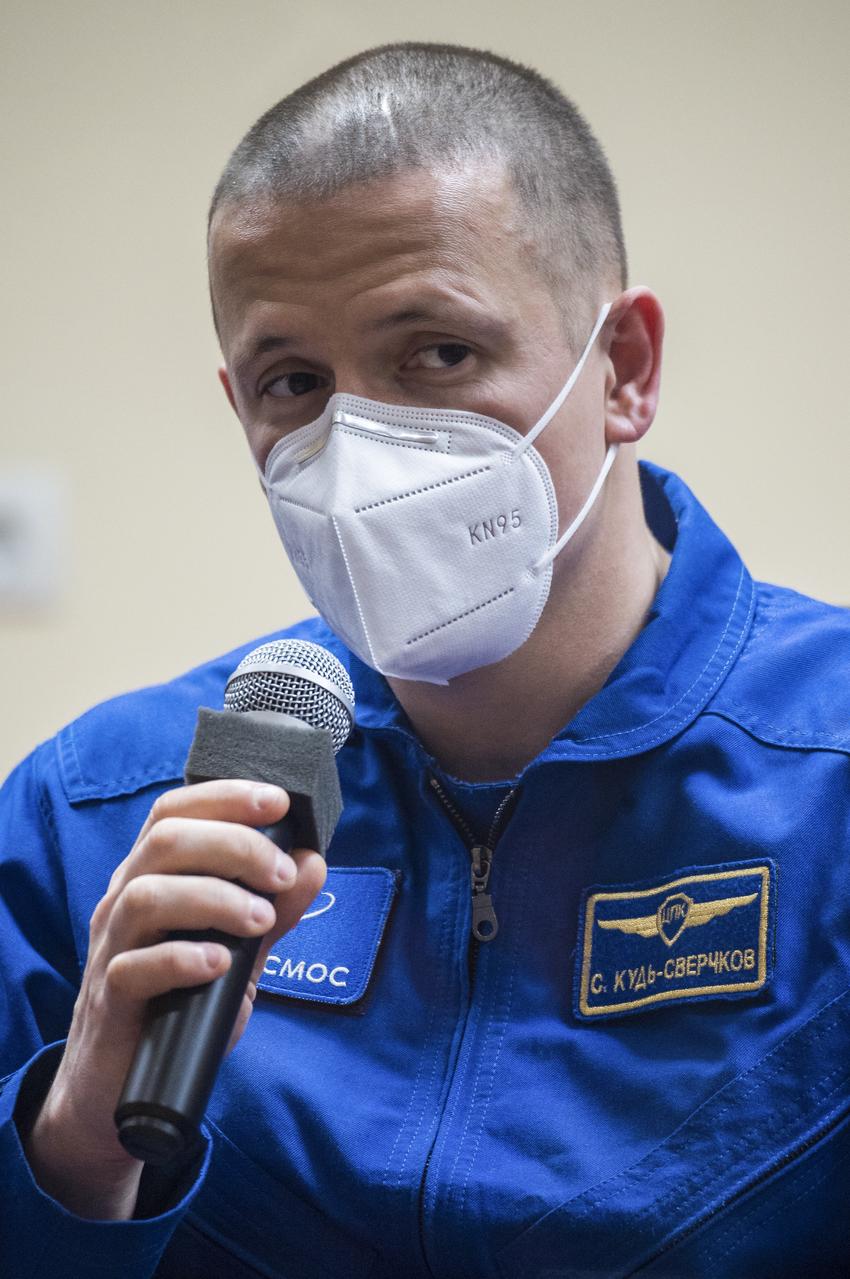
Expedition 64 Russian cosmonaut Sergey Kud-Sverchkov of Roscosmos is seen in quarantine, behind glass, during a press conference, Tuesday, Oct. 13, 2020, at the Cosmonaut Hotel in Baikonur, Kazakhstan. Kud-Sverchkov, fellow cosmonaut Sergey Ryzhikov and NASA astronaut Kate Rubins are scheduled to launch to the International Space Station aboard the Soyuz MS-17 spacecraft on October 14. Photo Credit: (NASA/GCTC/Andrey Shelepin)
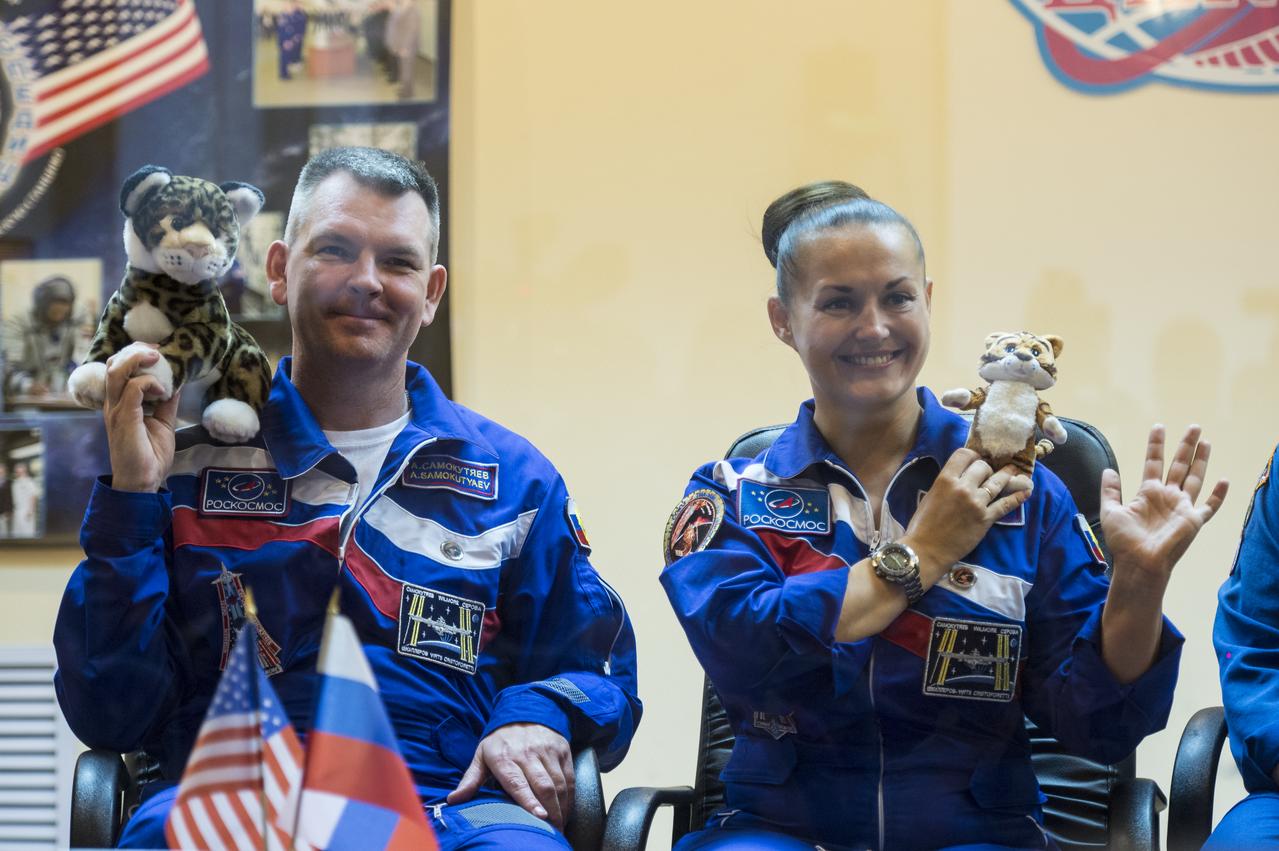
Expedition 41 Soyuz Commander Alexander Samokutyaev of the Russian Federal Space Agency (Roscosmos) and Flight Engineer Elena Serova of Roscosmos hold up tiger toys that will be carried with them to the International Space Station to commemorate International Tiger Day at a press conference held at the Cosmonaut Hotel in Baikonur, Kazakhstan on Wednesday, Sept. 24, 2014. The mission is set to launch Sept. 26 from the Baikonur Cosmodrome. Photo Credit: (NASA/Aubrey Gemignani)
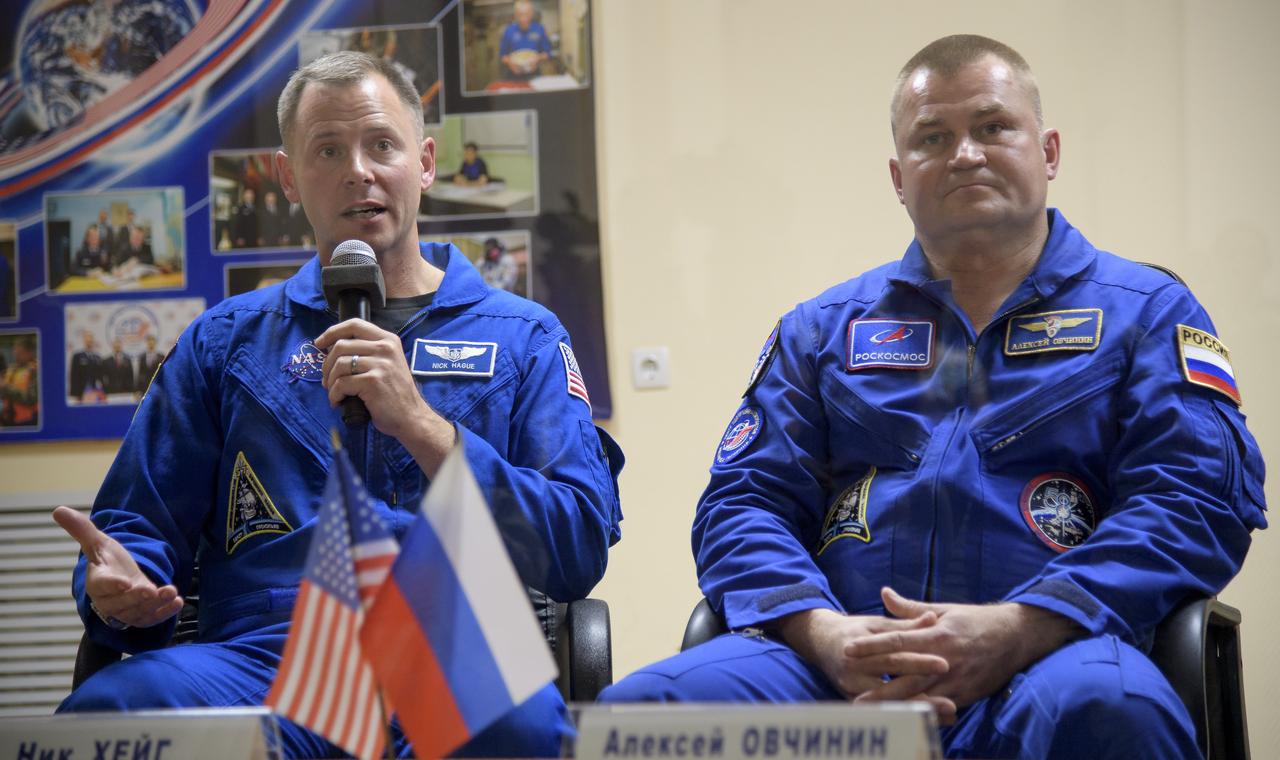
Expedition 57 prime crew members Nick Hague, left, Alexey Ovchinin are seen during a press conference, Wednesday, Oct. 10, 2018 at the Cosmonaut Hotel in Baikonur, Kazakhstan. Hague and Ovchinin are scheduled to launch on October 11 and will spend the next six months living and working aboard the International Space Station. Photo Credit: (NASA/Bill Ingalls)

Expedition 70 cosmonauts Nikolai Chub is seen in quarantine behind glass during a press conference, Thursday, Sept. 14, 2023 at the Cosmonaut Hotel in Baikonur, Kazakhstan. Expedition 70 NASA astronaut Loral O'Hara, Roscosmos cosmonauts Oleg Kononenko, and Nikolai Chub are scheduled to launch aboard their Soyuz MS-24 spacecraft on Sept. 15. Photo Credit: (NASA/Bill Ingalls)
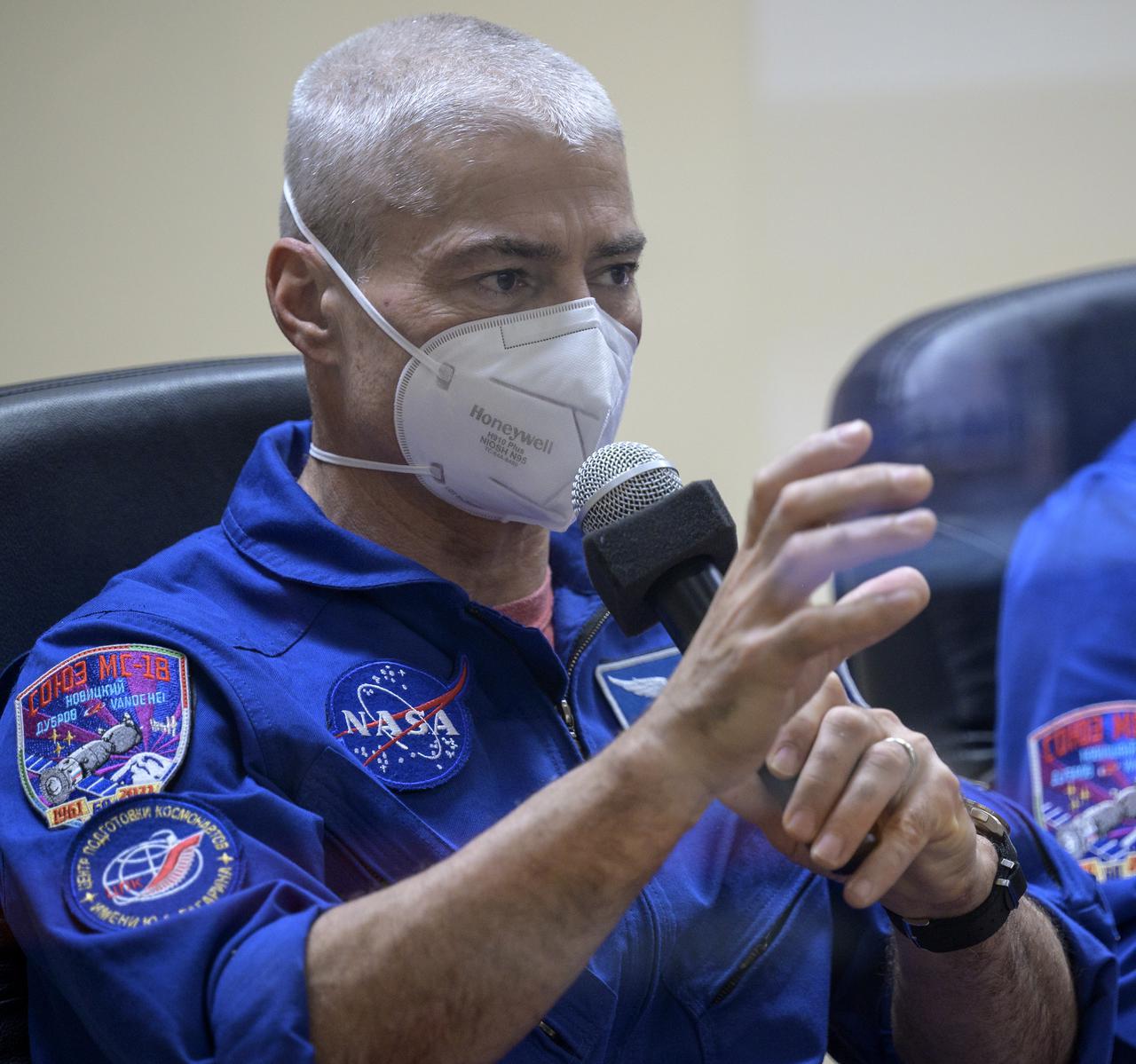
Expedition 65 NASA astronaut Mark Vande Hei, is seen in quarantine, behind glass, during a press conference, Thursday, April 8, 2021 a the Cosmonaut Hotel in Baikonur, Kazakhstan. Vande Hei and fellow Expedition 65 crewmembers Pyotr Dubrov and Oleg Novitskiy of Roscosmos are scheduled to launch to the International Space Station aboard the Soyuz MS-18 spacecraft on April 9. Photo Credit: (NASA/Bill Ingalls)
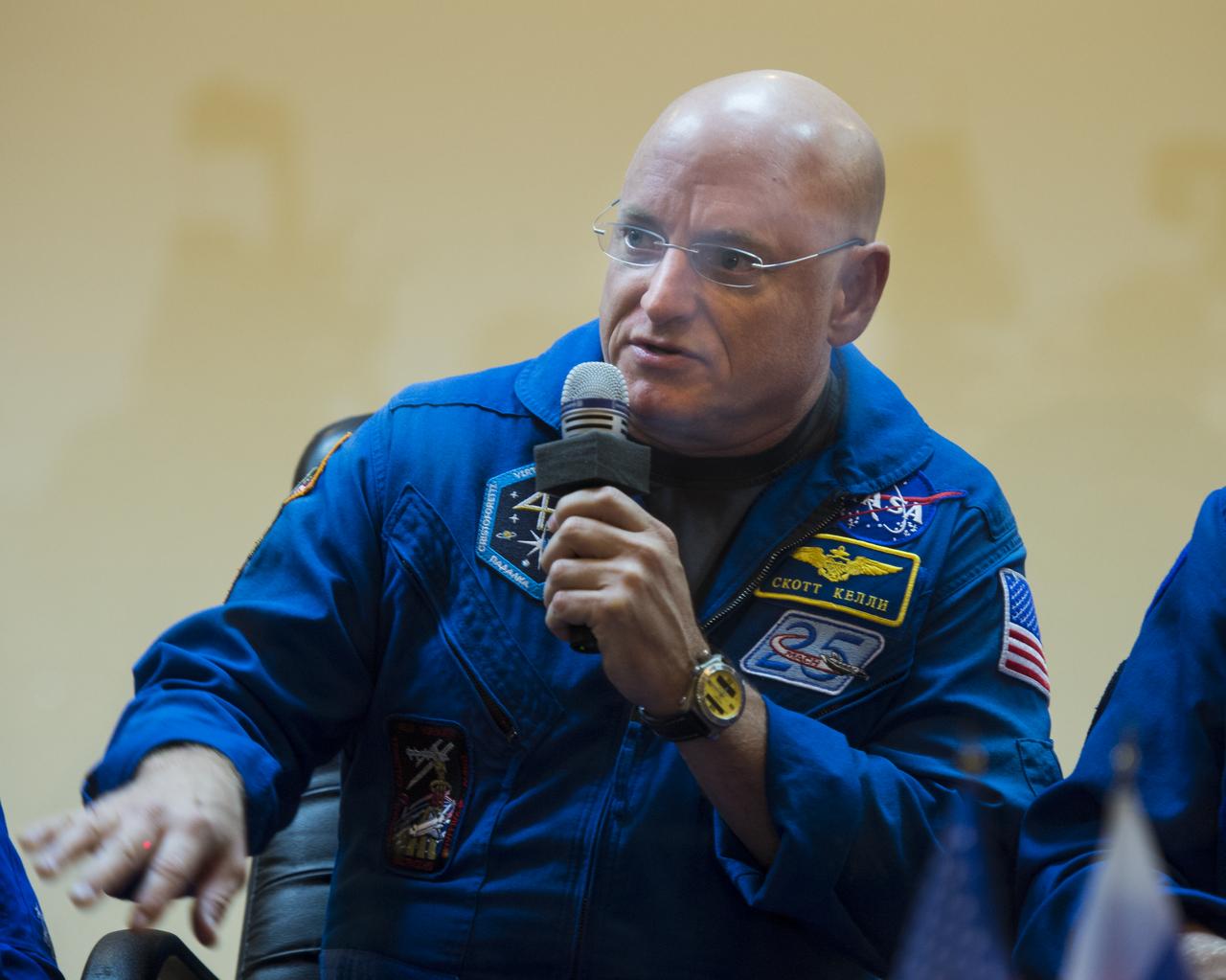
NASA Expedition 41 backup crew member Flight Engineer Scott Kelly of NASA answers a question during a press conference Wednesday, Sept. 24, 2014 at the Cosmonaut Hotel in Baikonur, Kazakhstan. Expedition 41 Flight Engineer Barry Wilmore of NASA, Soyuz Commander Alexander Samokutyaev of the Russian Federal Space Agency (Roscosmos), and Flight Engineer Elena Serova of Roscosmos are set to launch Sept. 26 from the Baikonur Cosmodrome. Photo Credit: (NASA/Aubrey Gemignani)
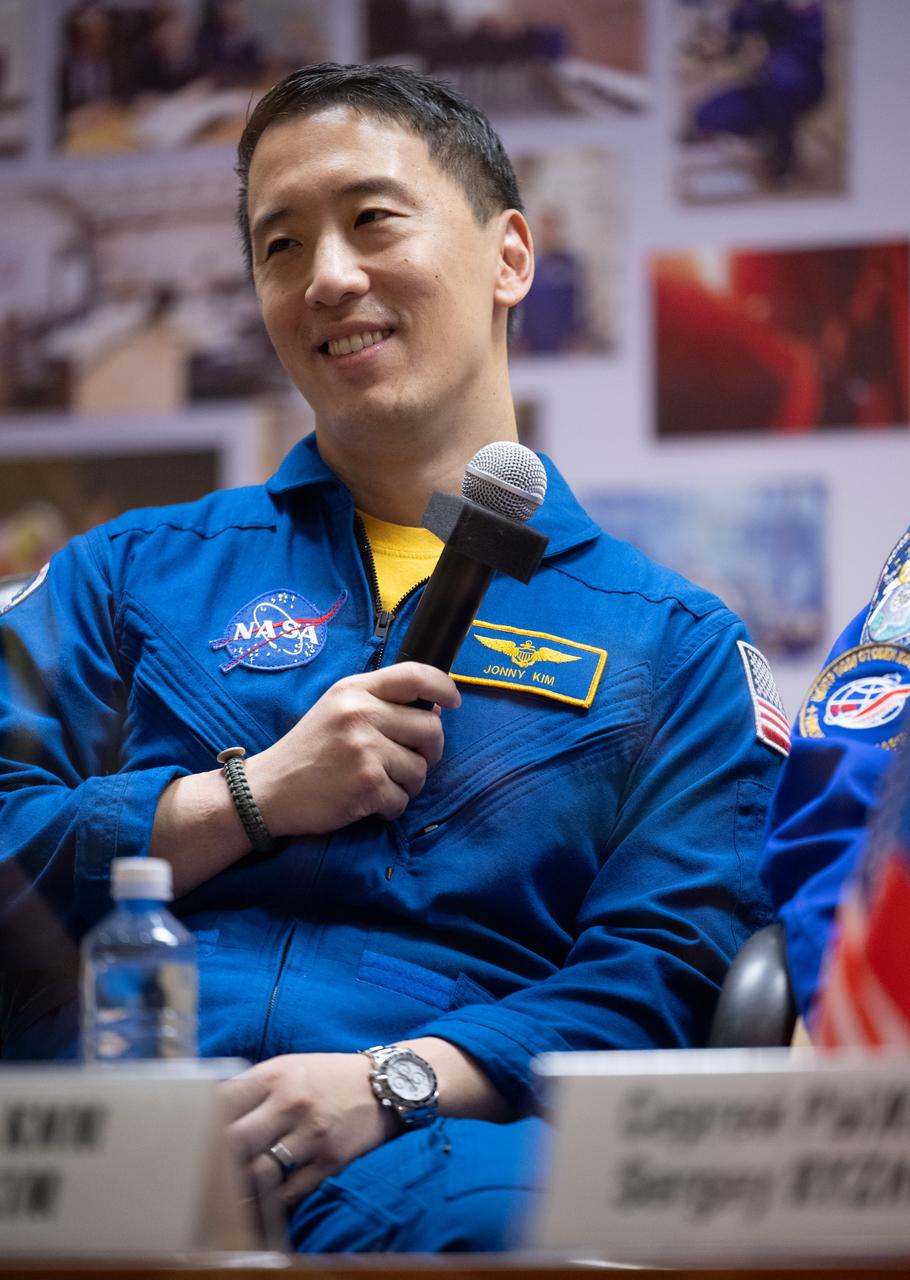
NASA astronaut Jonny Kim is seen in quarantine, behind glass, during a press conference, Monday, April 7, 2025 a the Cosmonaut Hotel in Baikonur, Kazakhstan. Expedition 73 crew members: NASA astronaut Jonny Kim, and Roscosmos cosmonauts Sergey Ryzhikov and Alexey Zubritskiy, are scheduled to launch aboard their Soyuz MS-27 spacecraft on April 8. Photo Credit: (NASA/Joel Kowsky)
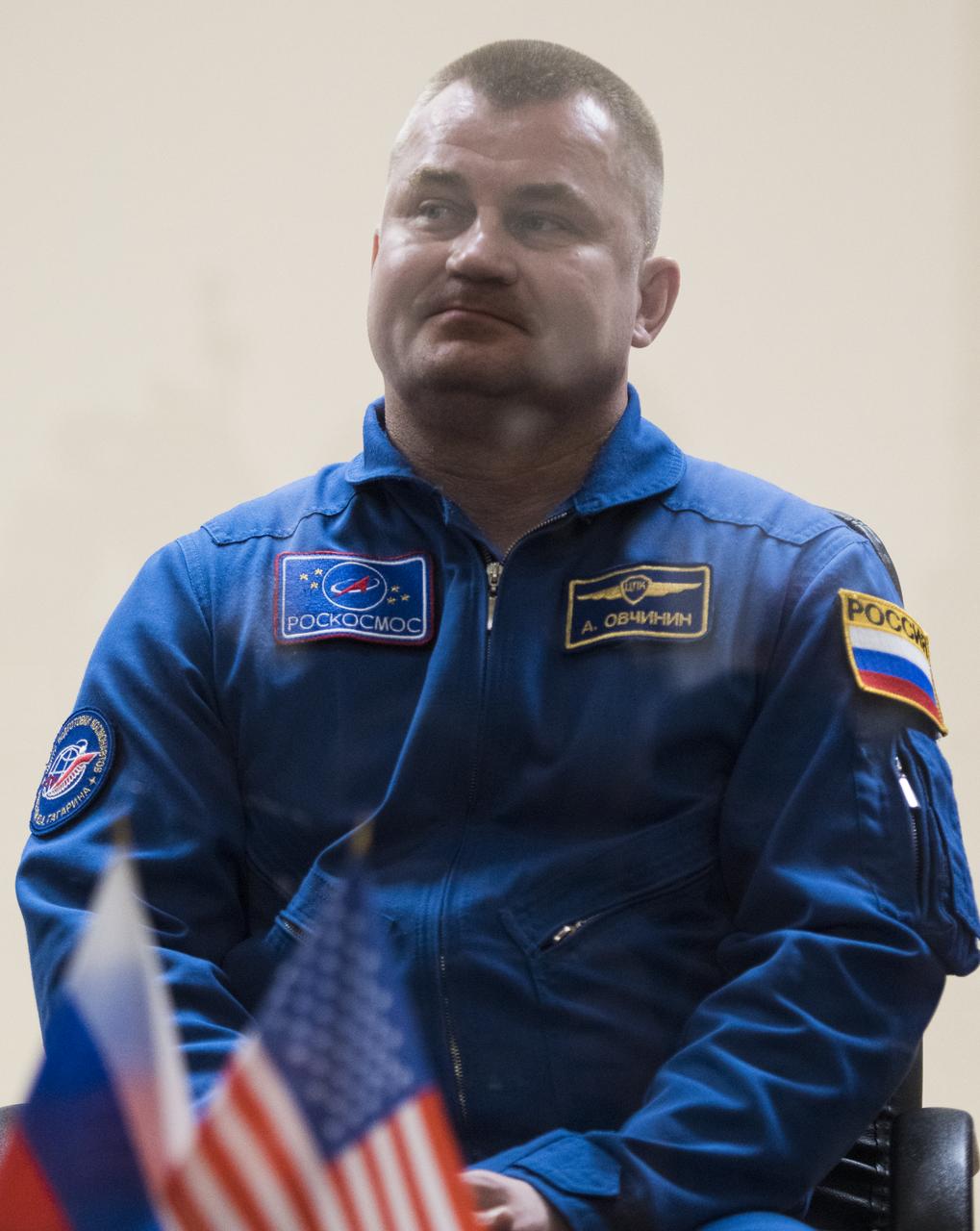
Expedition 55 backup crew member Alexey Ovchinin of Roscosmos is seen in quarantine, behind glass, during a press conference, Tuesday, March 20, 2018 a the Cosmonaut Hotel in Baikonur, Kazakhstan. Expedition 55 Soyuz Commander Oleg Artemyev of Roscosmos, flight engineer Ricky Arnold and flight engineer Drew Feustel of NASA are scheduled to launch to the International Space Station aboard the Soyuz MS-08 spacecraft on Wednesday, March, 21. Photo Credit: (NASA/Joel Kowsky)
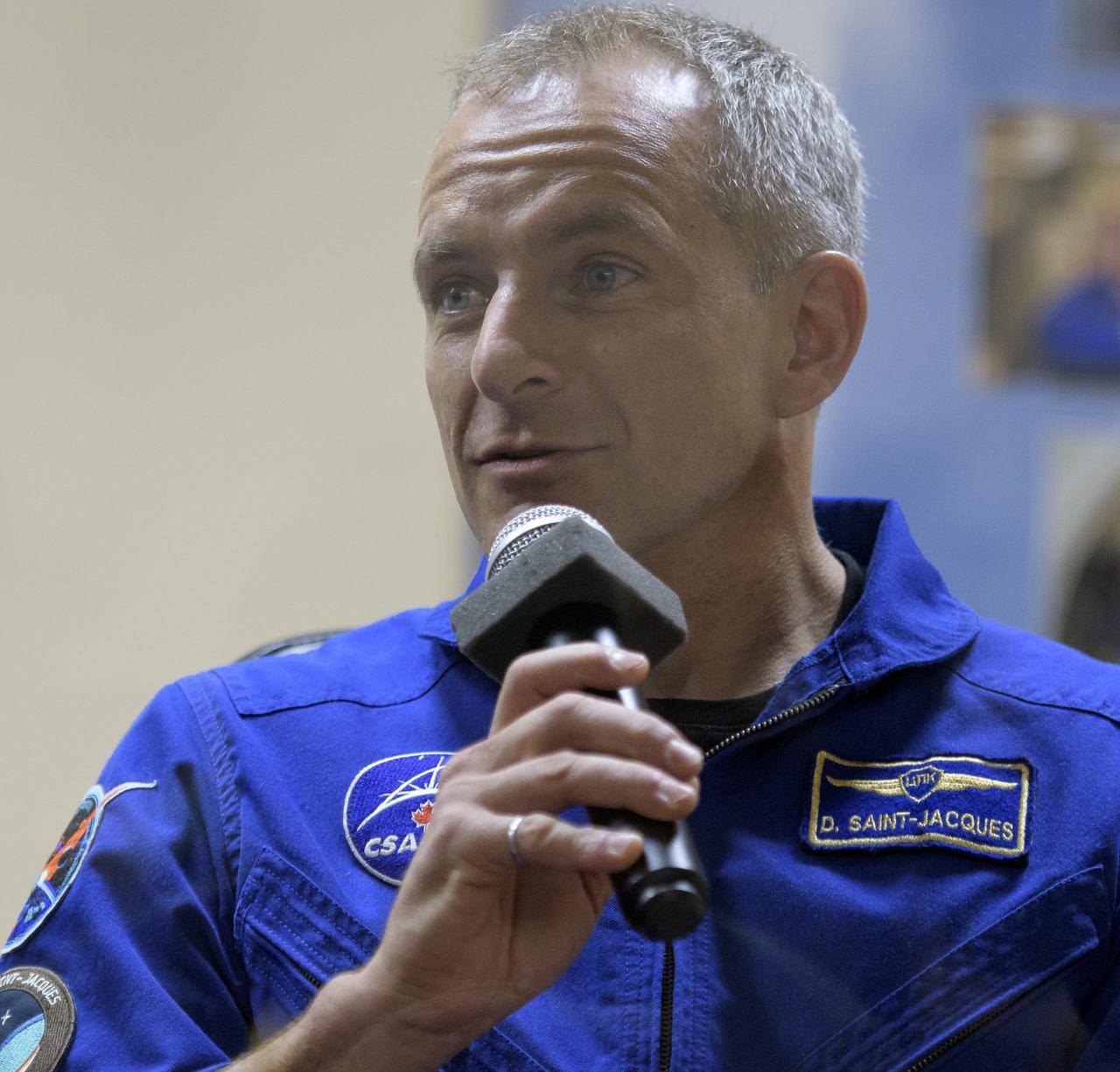
Expedition 57 backup crewmember David Saint-Jacques of the Canadian Space Agency is seen during a press conference, Wednesday, Oct. 10, 2018 at the Cosmonaut Hotel in Baikonur, Kazakhstan. Expedition 57 Flight Engineer Nick Hague of NASA and Flight Engineer Alexey Ovchinin of Roscosmos are scheduled to launch on October 11 and will spend the next six months living and working aboard the International Space Station. Photo Credit: (NASA/Bill Ingalls)
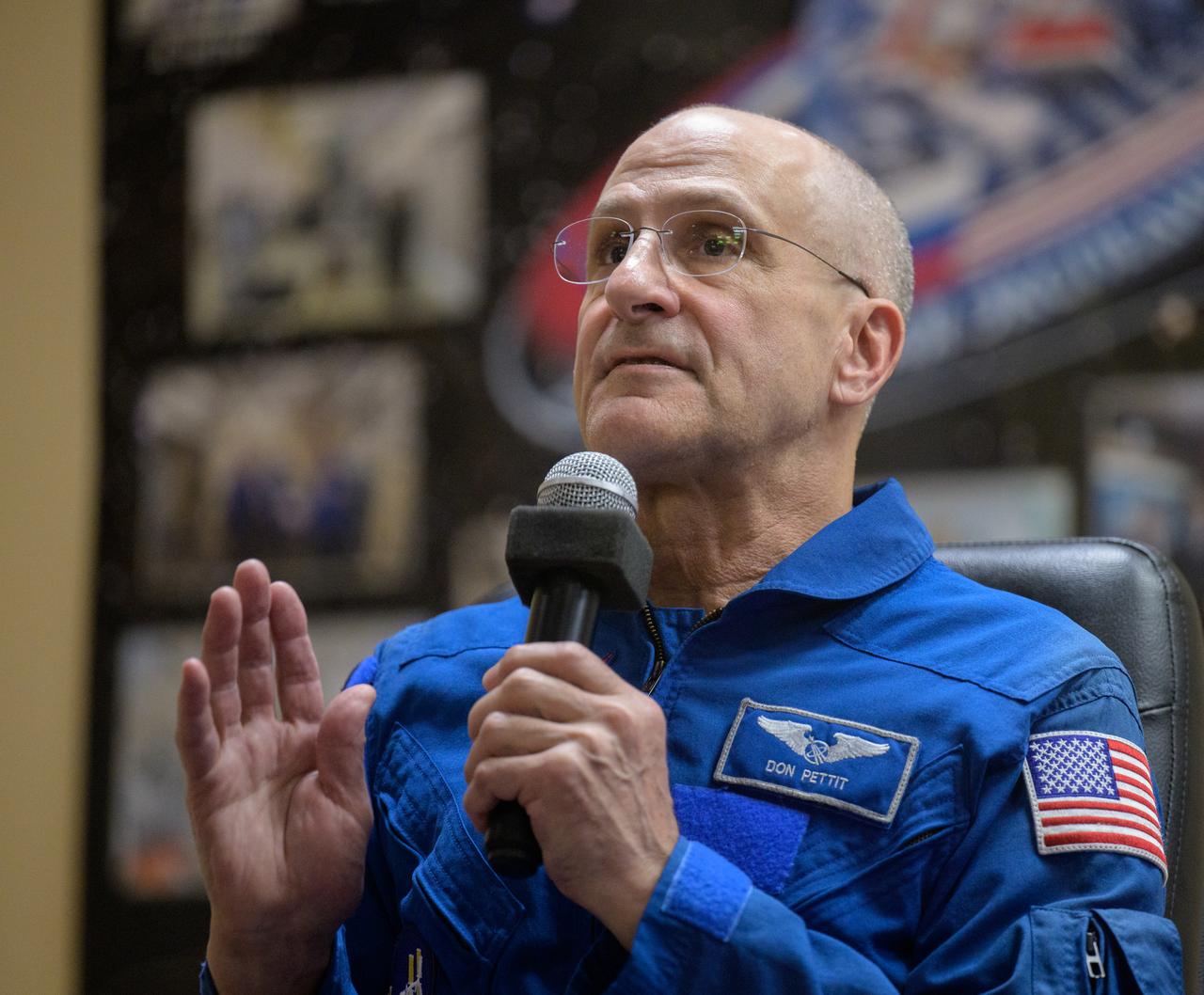
NASA astronaut Don Pettit is seen in quarantine, behind glass, during a press conference, Tuesday, Sept. 10, 2024 a the Cosmonaut Hotel in Baikonur, Kazakhstan. Expedition 72 crew members: NASA astronaut Don Pettit, Roscosmos cosmonauts Alexey Ovchinin, and Ivan Vagner, are scheduled to launch aboard their Soyuz MS-26 spacecraft on September 11. Photo Credit: (NASA/Bill Ingalls)