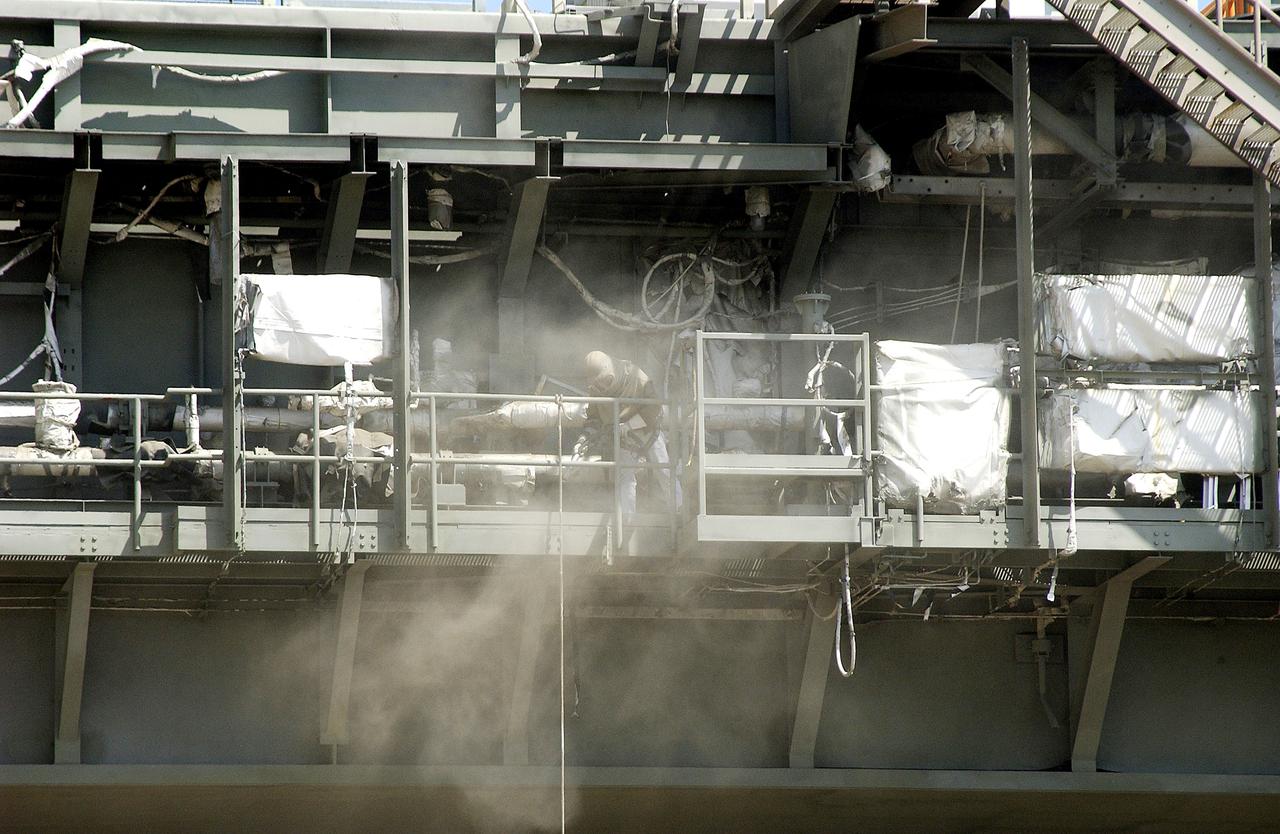
KENNEDY SPACE CENTER, FLA. - Workers, covered in protective clothing and breathing apparatus, continue sandblasting on the Mobile Launcher Platform on Launch Pad 39A to remove corrosion before repainting. Routine maintenance includes sandblasting and repainting as preventive means to minimize corrosion.
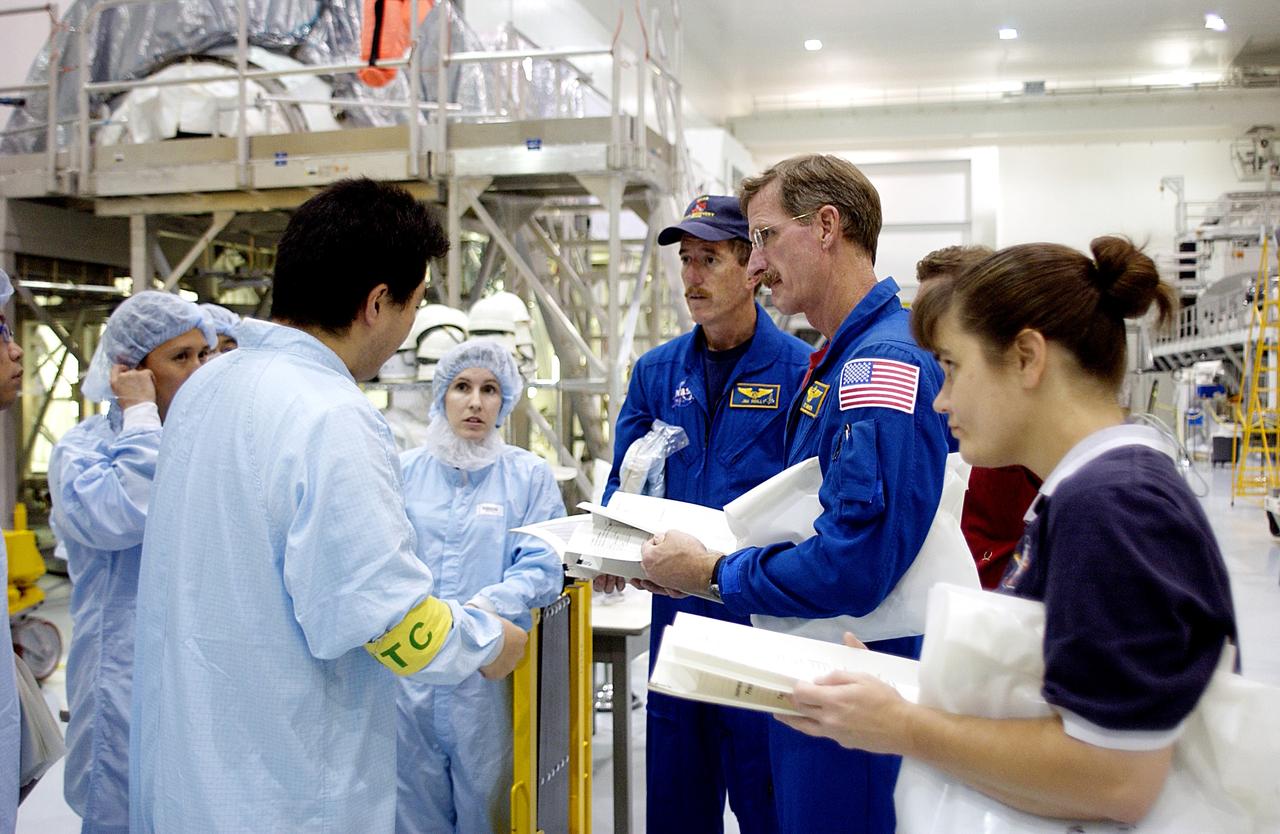
KENNEDY SPACE CENTER, FLA. - In the Space Station Processing Facility, workers (in protective clothing) brief STS-117 Mission Specialist James Reilly (center) and STS-115 Mission Specialist Joseph Tanner (right) about the Japanese Experiment Module (JEM). Equipment familiarization is a routine part of astronaut training and launch preparations.
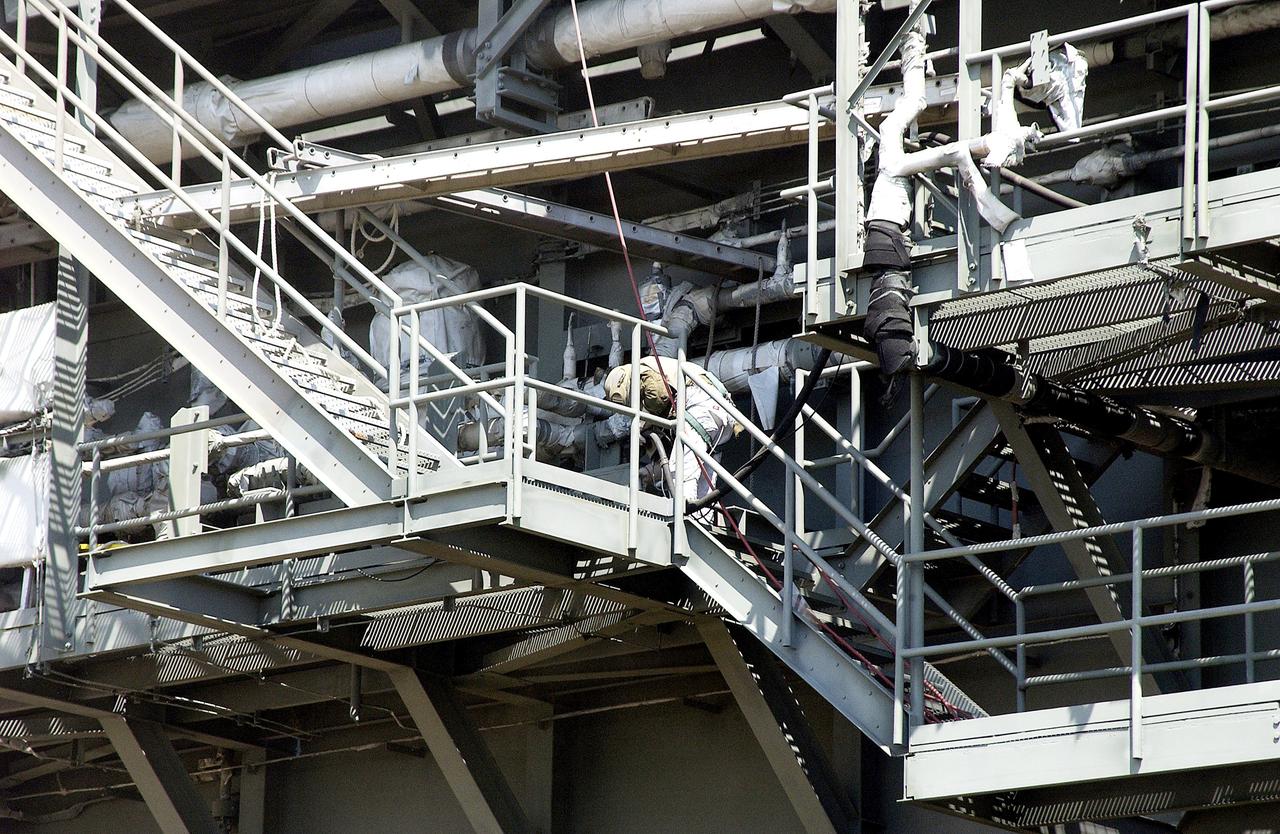
KENNEDY SPACE CENTER, FLA. - Workers, covered in protective clothing and breathing apparatus, continue sandblasting on the Mobile Launcher Platform on Launch Pad 39A to remove corrosion before repainting. Routine maintenance includes sandblasting and repainting as preventive means to minimize corrosion.
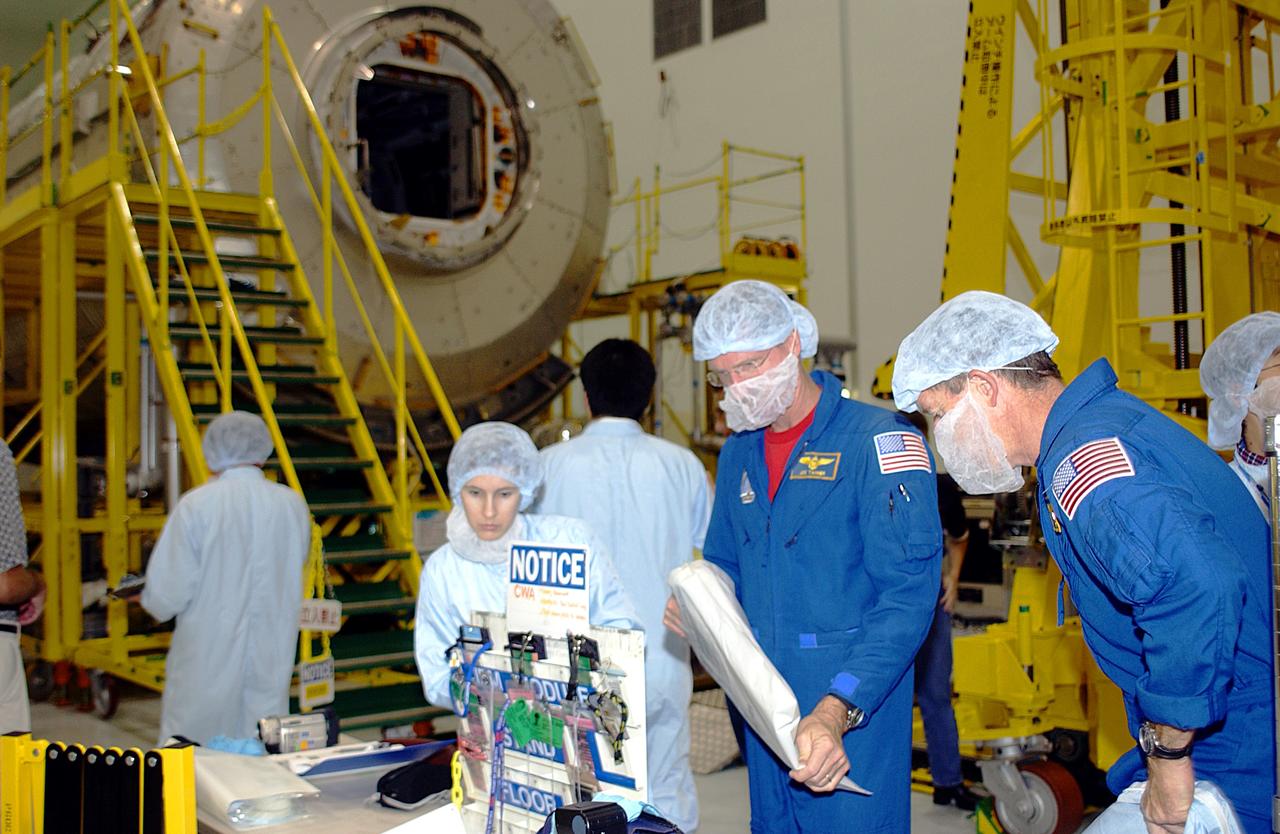
KENNEDY SPACE CENTER, FLA. - In the Space Station Processing Facility, STS-115 Mission Specialist Joseph Tanner (left) and STS-117 Mission Specialist James Reilly (right) are donning protective clothing to interface with the Japanese Experiment Module (JEM), in the background. Equipment familiarization is a routine part of astronaut training and launch preparations.
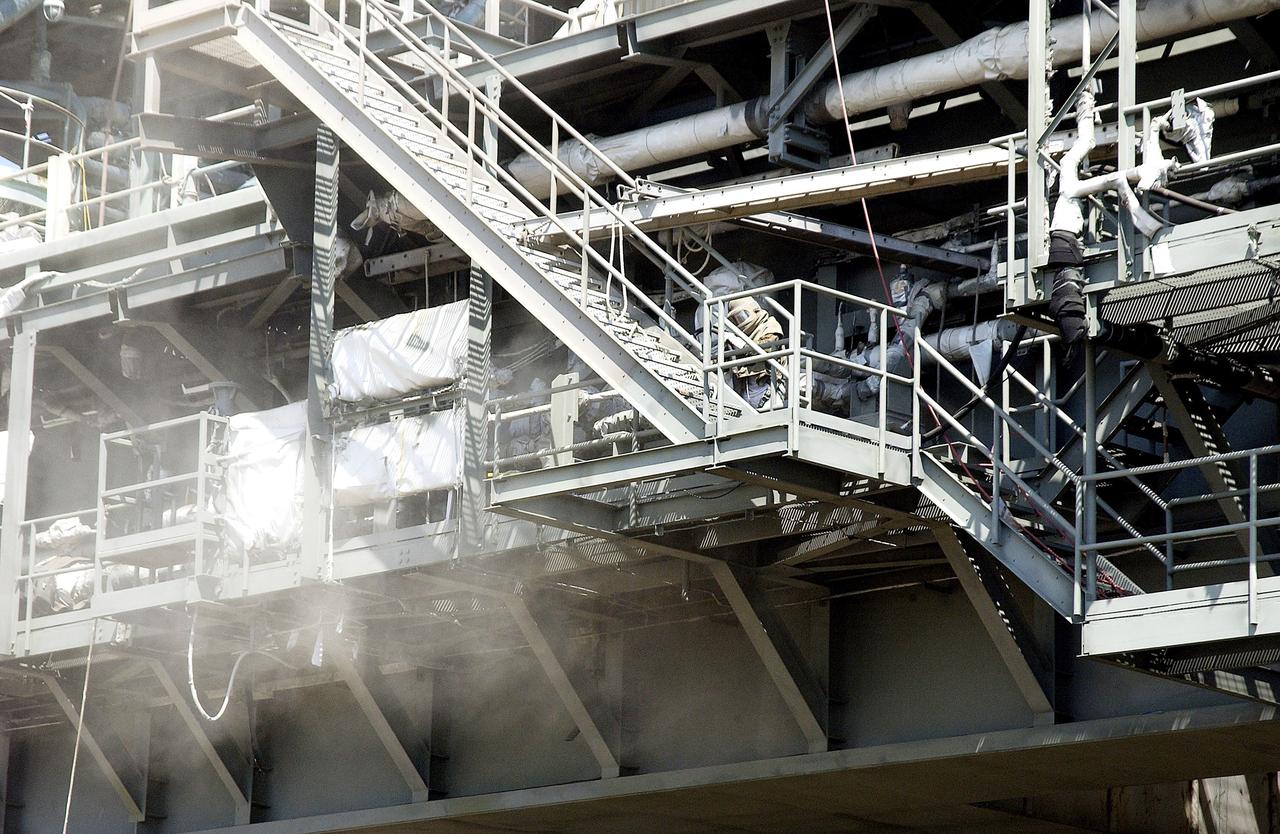
KENNEDY SPACE CENTER, FLA. - Workers, covered in protective clothing and breathing apparatus, continue sandblasting on the Mobile Launcher Platform on Launch Pad 39A to remove corrosion before repainting. Routine maintenance includes sandblasting and repainting as preventive means to minimize corrosion.
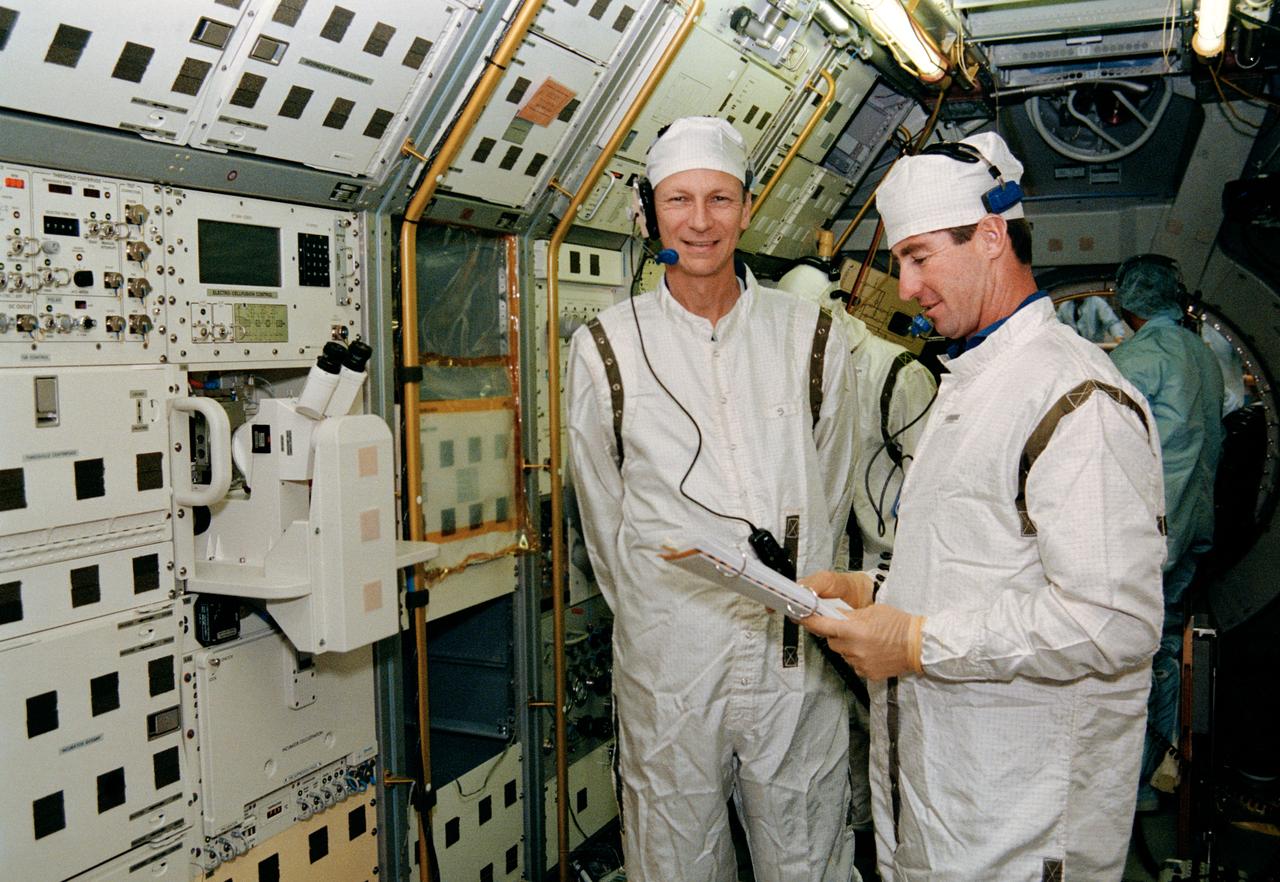
S93-29830 (4 Nov 1992) --- Inside the Spacelab D-2 module in the Operations and Checkout Building high bay, STS-55 Mission Commander Steven R. Nagel (left) and Pilot Terence T. Henricks are participating in a mission sequence test to check out experiment steps and procedures which will be conducted on-orbit. Spacelab D-2, the second German Spacelab, is scheduled to fly on space shuttle mission STS-55 in 1993.
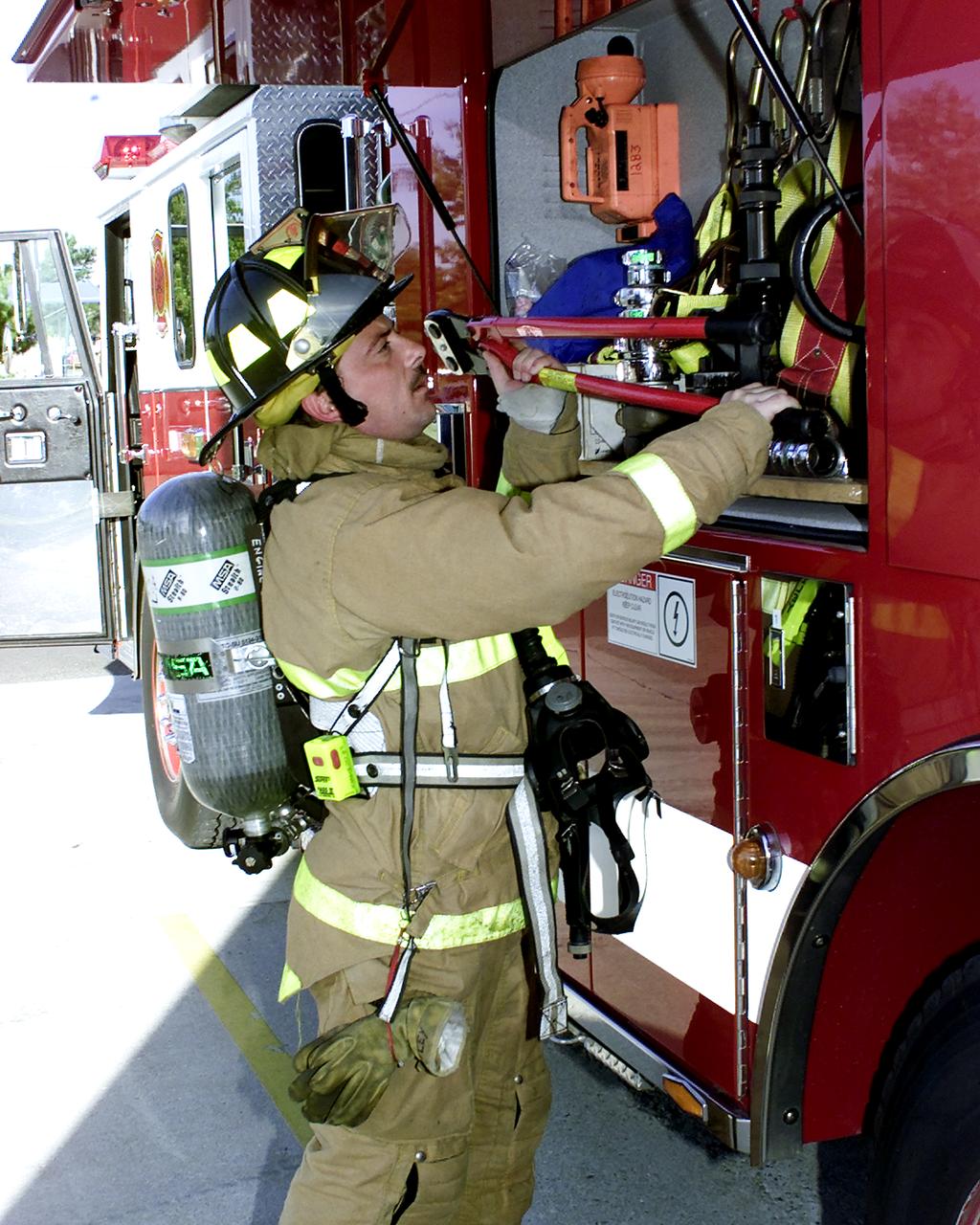
Technology used to provide thermal protection for Apollo astronauts and spacecraft components provides firefighters with better protective clothing and equipment. Spinoffs include a portable firefighting module, protective clothing for workers in hazardous environments, fire-retardant paints and forms, fireblocking coating for outdoor structures, and flame-resistant fabric. Perhaps the farthest reaching is the breathing apparatus worn by firefighters throughout the U.S. for protection against smoke inhalation injury. The breathing system weighs approximately 20 pounds, one-third less than past systems, and it enables the wearer to have improved mobility. It consists of a face mask, frame and harness, a warning device, and an air bottle. The basic air cylinder offers the same 30-minutes of operation time as its predecessor. The result is a drastic reduction in the number of inhalation injuries to firefighters. Though they have made many design modifications and refinements, manufacturers of breathing apparatus still incorporate the original NASA technology.

S82-26645 (March 1982) --- Spacesuit inner gloves consist of pressure bladders covered by Beta Cloth. EVA outer gloves are made of Beta Cloth, Mylar and a metallic mesh hand area. The thumb and fingertips of the glove are molded of silicone rubber to permit a degree of sensitivity. The inner gloves attach to the suit by pressure sealing rings, similar to these used in helmet-to-suit connections. The outer gloves served as a cover to protect from micrometeorites, abrasions and heat.
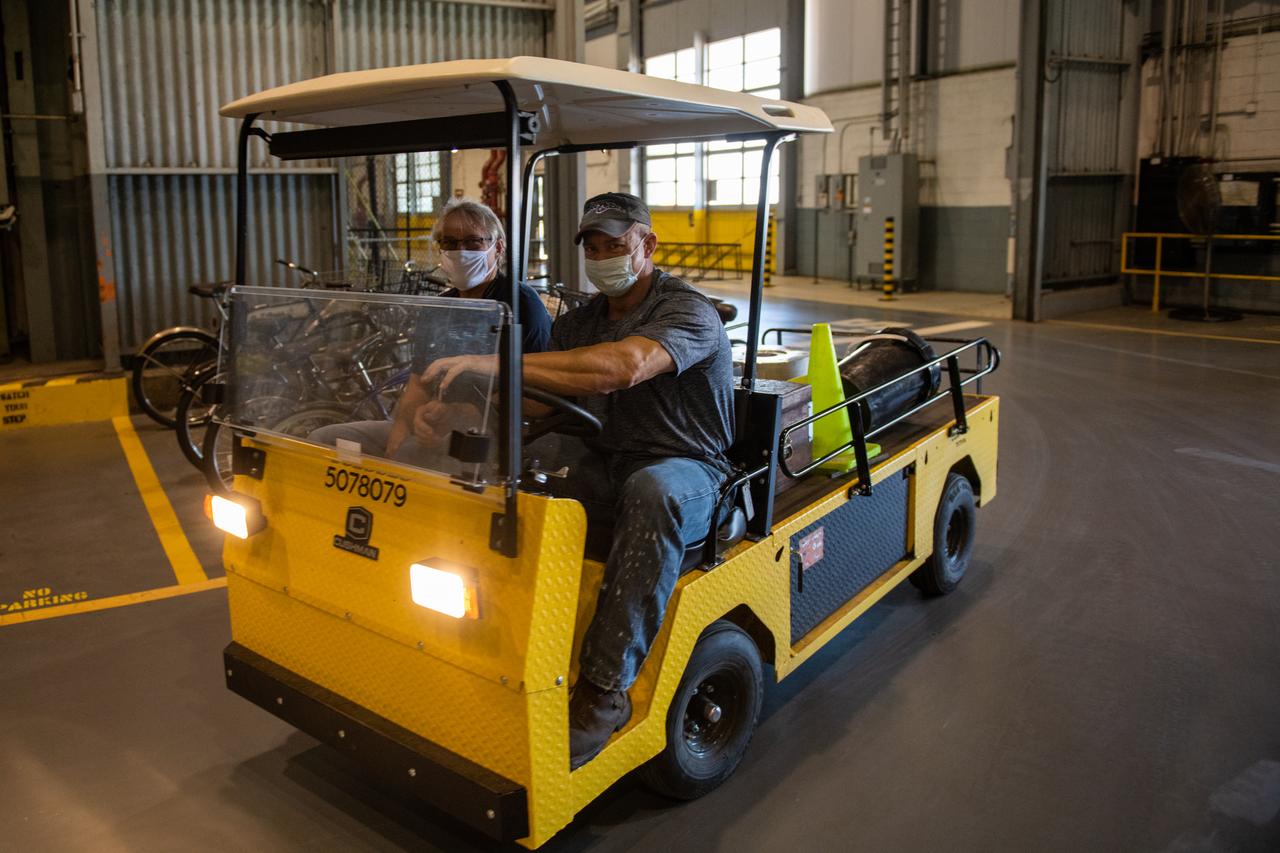
This photo includes two employees wearing personal protective gear at Michoud Assembly Facility as the facility transitioned to Stage 3 of NASA’s Framework for Return To On-Site Work. Employees wear the appropriate personal protective equipment (PPE) and/or cloth face coverings as required for assigned tasks. Every team member who goes on-site brings their own cloth face covering and wears it when social distancing is not possible, such as in a shared vehicle when working inside the large factory. Michoud Assembly Facility is made up of multiple buildings, the largest of which is more than 38 acres under one roof. Wearing a facemask is mandatory for common areas where social distancing is difficult to achieve. Access to the facility is limited to authorized personnel working on mission-critical tasks that must be conducted onsite. Mission-critical tasks include slowly and methodically resuming Space Launch System (SLS) Core Stage and Orion production activities, particularly critical path deliverables to support the Artemis Program, at a pace that limits personnel and follows federal guidelines for social distancing and use of personal protective equipment such as face masks. For more information about SLS, visit nasa.gov/sls.
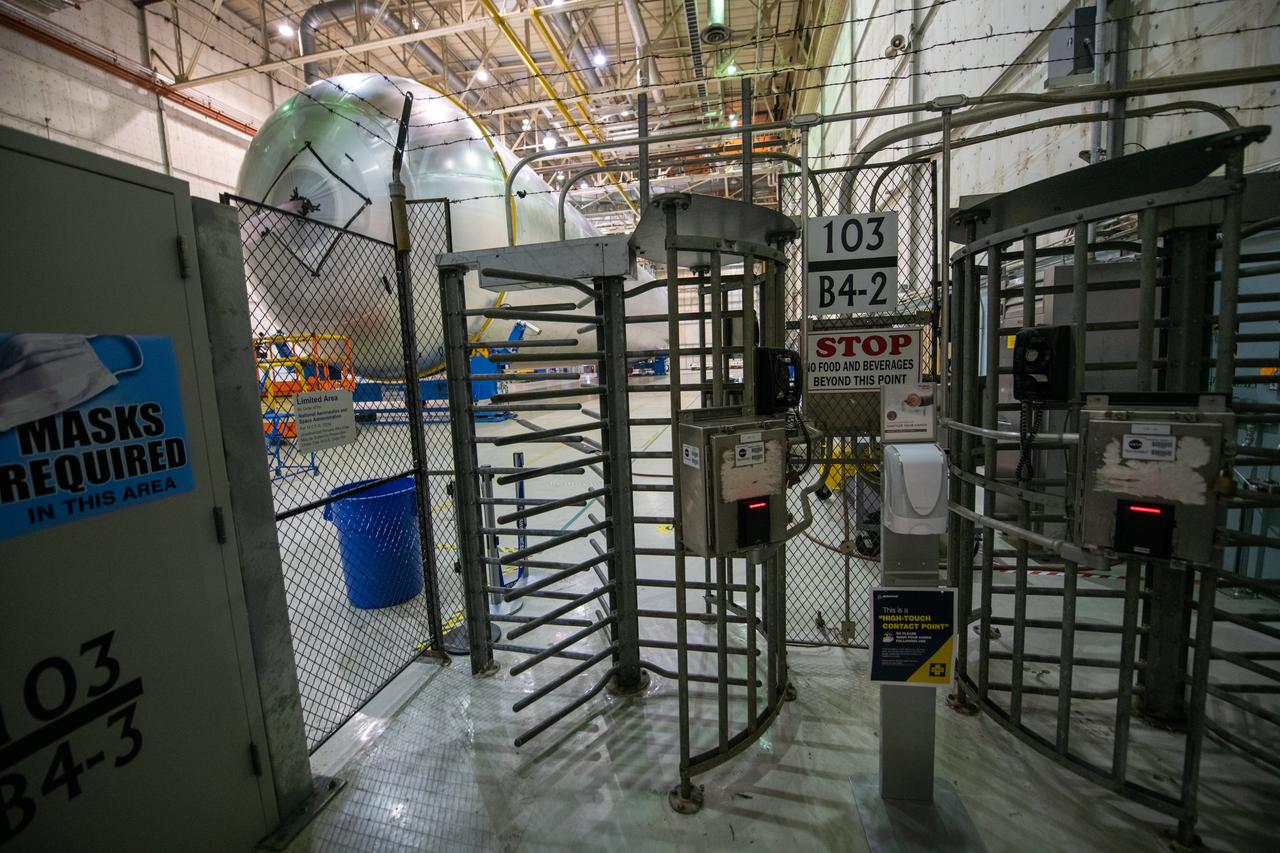
Employees wear personal protective gear at Michoud Assembly Facility as the facility transitioned to Stage 3 of NASA’s Framework for Return To On-Site Work. Employees wear the appropriate personal protective equipment (PPE) and/or cloth face coverings as required for assigned tasks. Access to the facility is limited to authorized personnel working on mission-critical tasks that must be conducted onsite. Mission-critical tasks include slowly and methodically resuming Space Launch System (SLS) Core Stage and Orion production activities, particularly critical path deliverables to support the Artemis Program, at a pace that limits personnel and follows federal guidelines for social distancing and use of personal protective equipment such as face masks. For more information about SLS, visit nasa.gov/sls.
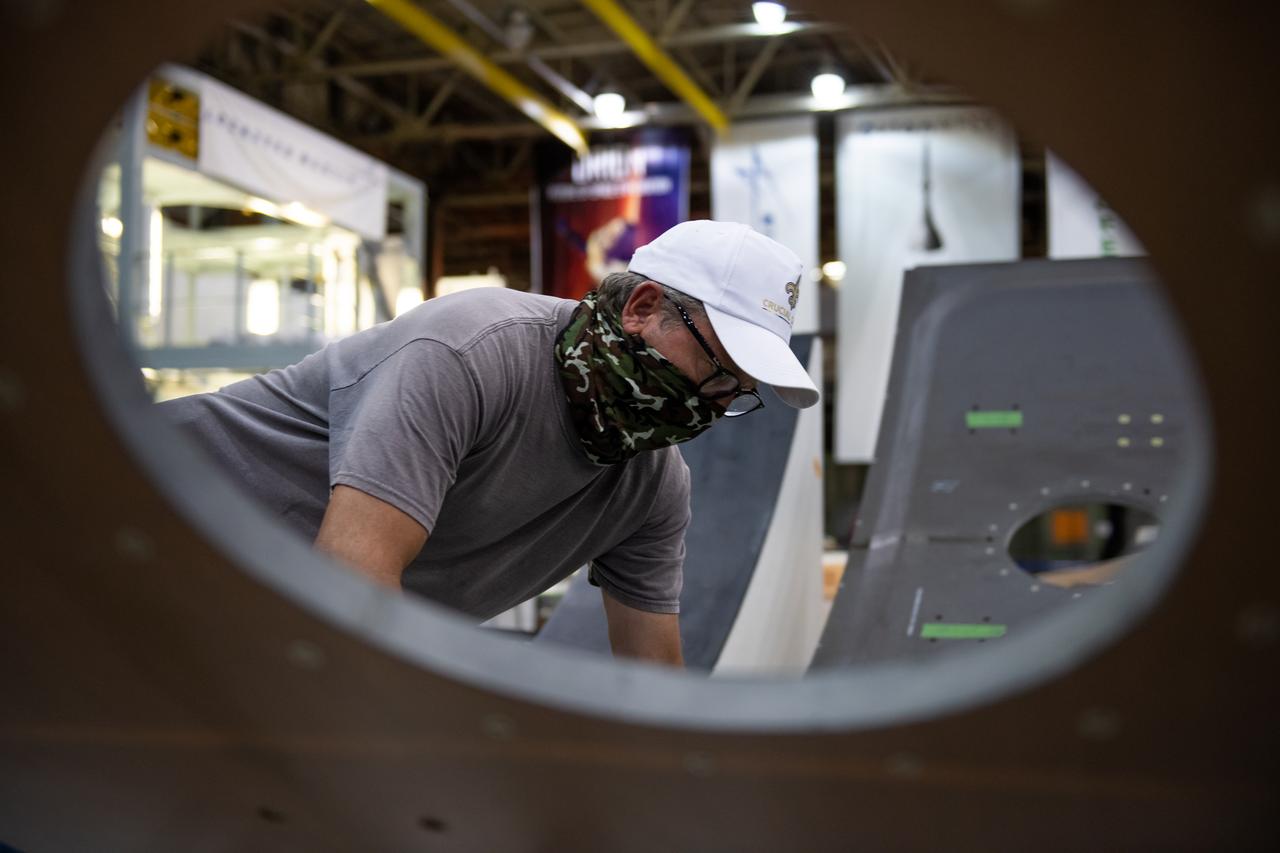
Employees wear personal protective gear at Michoud Assembly Facility as the facility transitioned to Stage 3 of NASA’s Framework for Return To On-Site Work. Employees wear the appropriate personal protective equipment (PPE) and/or cloth face coverings as required for assigned tasks. Access to the facility is limited to authorized personnel working on mission-critical tasks that must be conducted onsite. Mission-critical tasks include slowly and methodically resuming Space Launch System (SLS) Core Stage and Orion production activities, particularly critical path deliverables to support the Artemis Program, at a pace that limits personnel and follows federal guidelines for social distancing and use of personal protective equipment such as face masks. For more information about SLS, visit nasa.gov/sls.
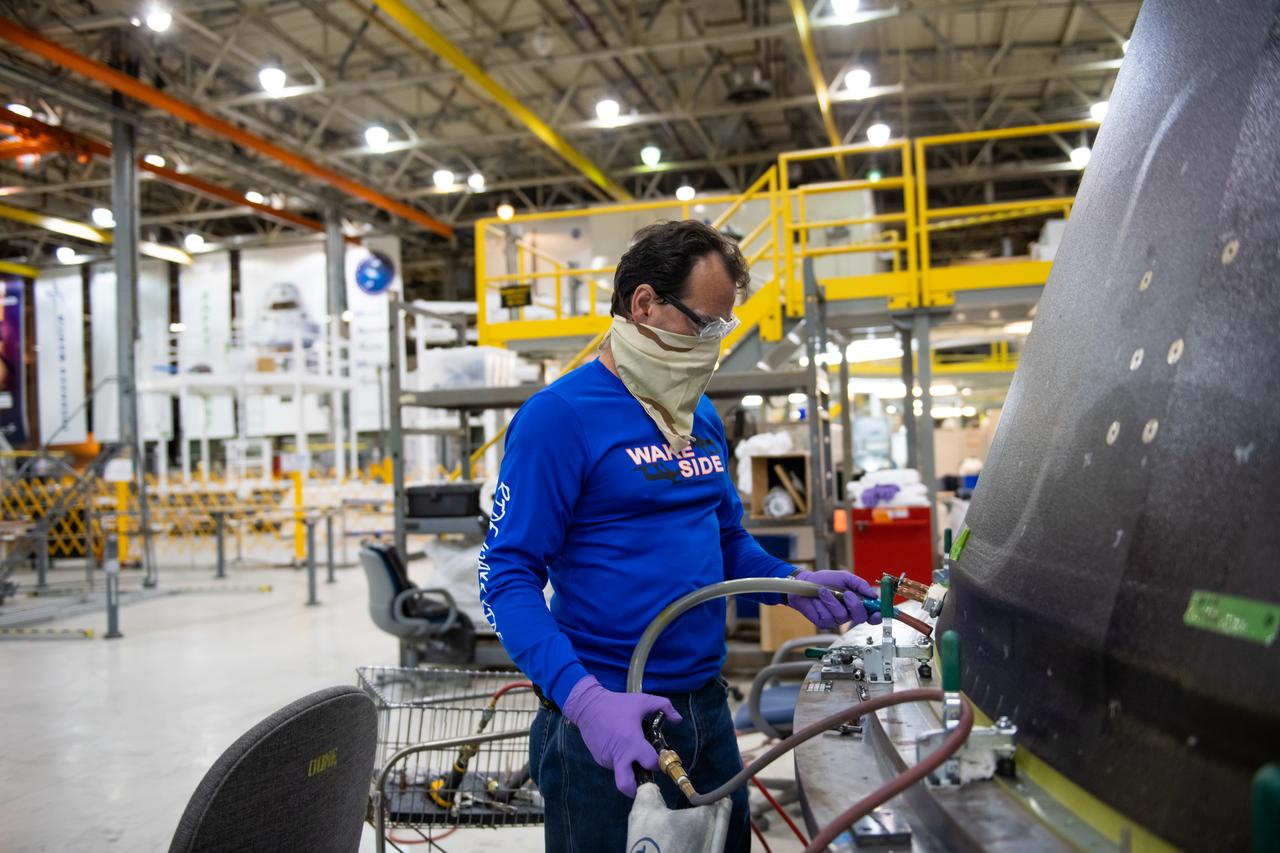
Employees wear personal protective gear at Michoud Assembly Facility as the facility transitioned to Stage 3 of NASA’s Framework for Return To On-Site Work. Employees wear the appropriate personal protective equipment (PPE) and/or cloth face coverings as required for assigned tasks. Access to the facility is limited to authorized personnel working on mission-critical tasks that must be conducted onsite. Mission-critical tasks include slowly and methodically resuming Space Launch System (SLS) Core Stage and Orion production activities, particularly critical path deliverables to support the Artemis Program, at a pace that limits personnel and follows federal guidelines for social distancing and use of personal protective equipment such as face masks. For more information about SLS, visit nasa.gov/sls.
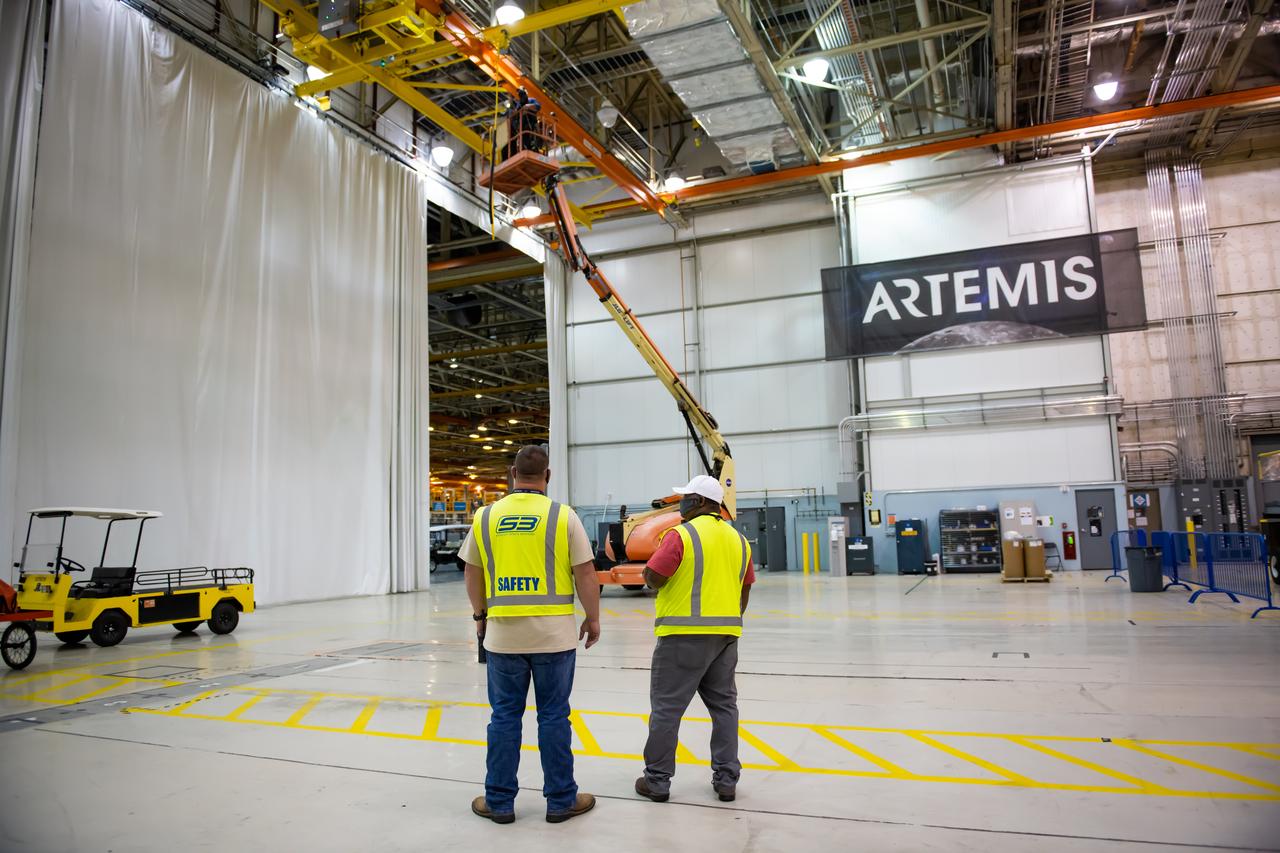
Employees wear personal protective gear at Michoud Assembly Facility as the facility transitioned to Stage 3 of NASA’s Framework for Return To On-Site Work. Employees wear the appropriate personal protective equipment (PPE) and/or cloth face coverings as required for assigned tasks. Access to the facility is limited to authorized personnel working on mission-critical tasks that must be conducted onsite. Mission-critical tasks include slowly and methodically resuming Space Launch System (SLS) Core Stage and Orion production activities, particularly critical path deliverables to support the Artemis Program, at a pace that limits personnel and follows federal guidelines for social distancing and use of personal protective equipment such as face masks. For more information about SLS, visit nasa.gov/sls.
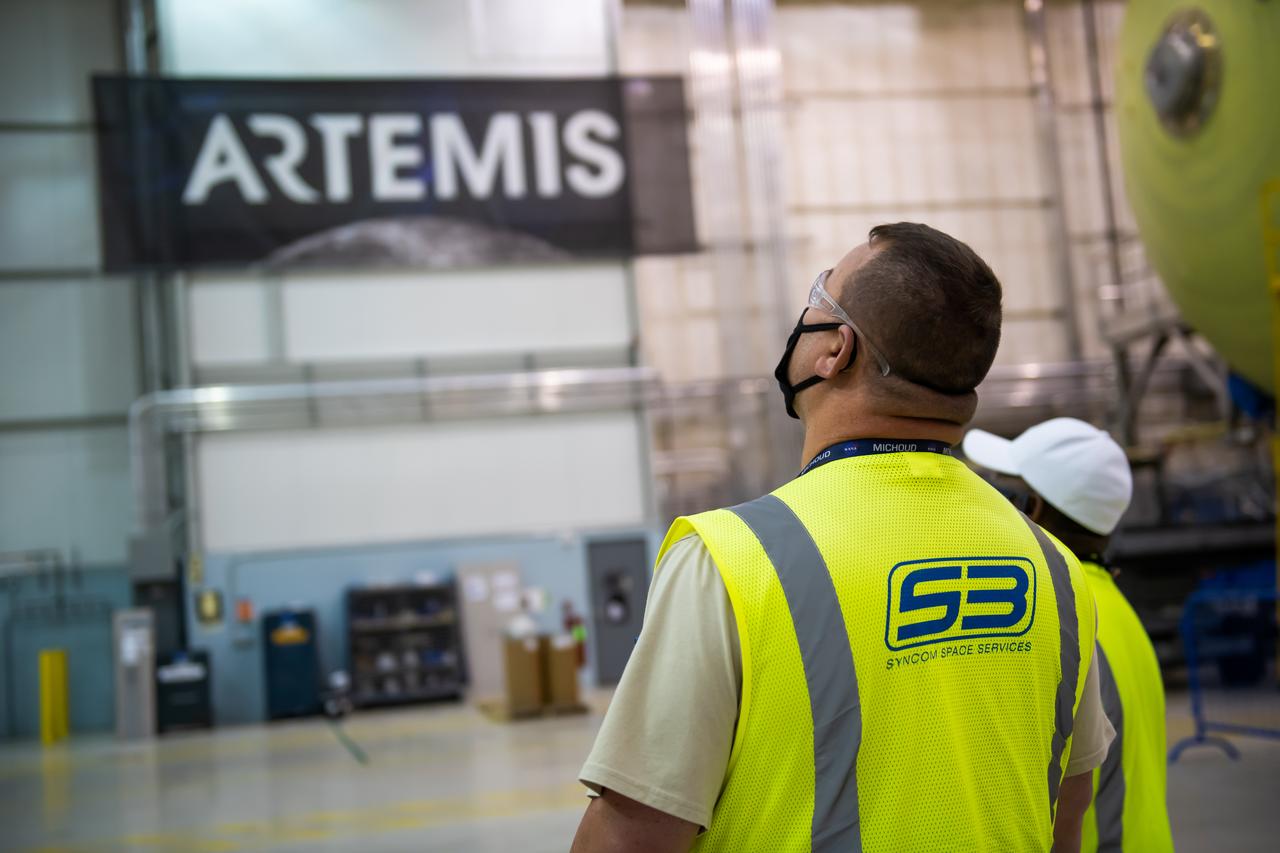
Employees wear personal protective gear at Michoud Assembly Facility as the facility transitioned to Stage 3 of NASA’s Framework for Return To On-Site Work. Employees wear the appropriate personal protective equipment (PPE) and/or cloth face coverings as required for assigned tasks. Access to the facility is limited to authorized personnel working on mission-critical tasks that must be conducted onsite. Mission-critical tasks include slowly and methodically resuming Space Launch System (SLS) Core Stage and Orion production activities, particularly critical path deliverables to support the Artemis Program, at a pace that limits personnel and follows federal guidelines for social distancing and use of personal protective equipment such as face masks. For more information about SLS, visit nasa.gov/sls.
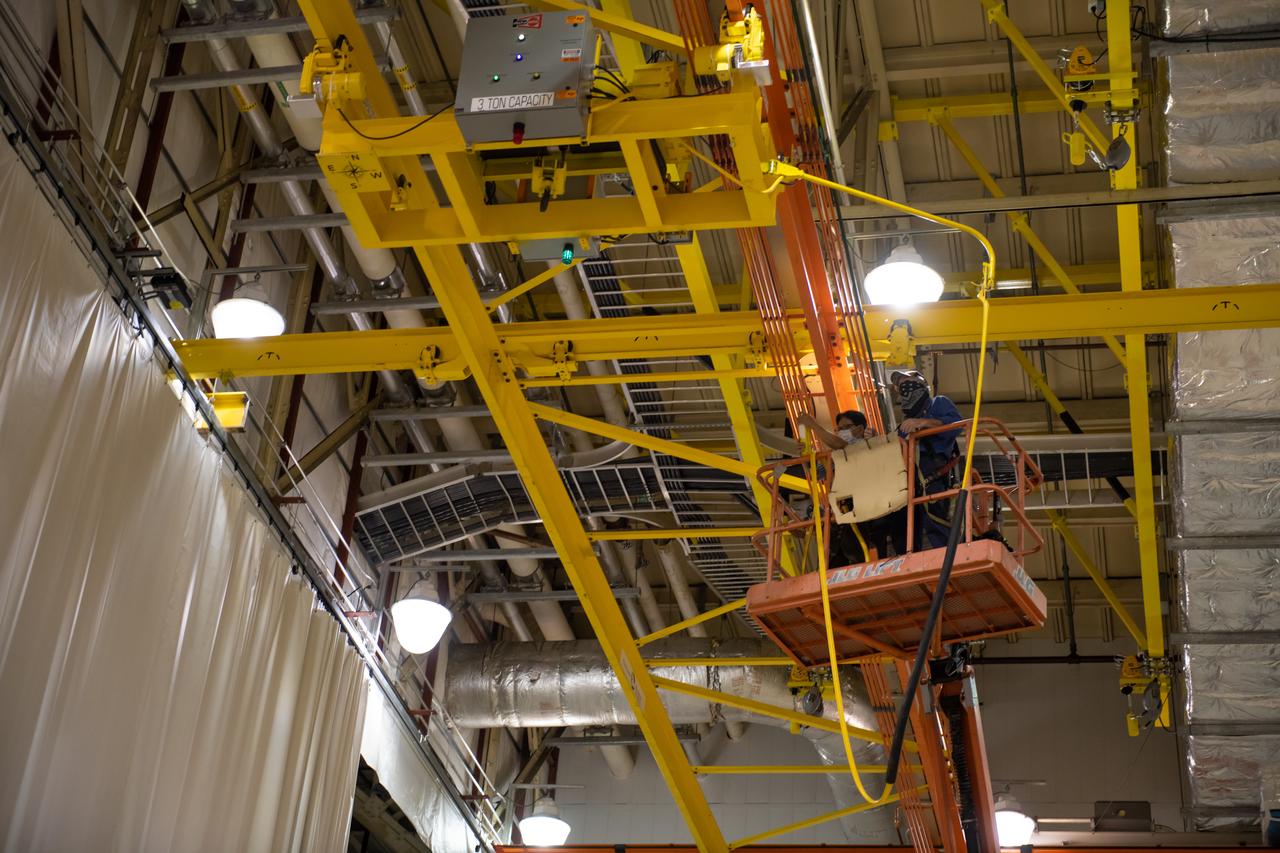
Employees wear personal protective gear at Michoud Assembly Facility as the facility transitioned to Stage 3 of NASA’s Framework for Return To On-Site Work. Employees wear the appropriate personal protective equipment (PPE) and/or cloth face coverings as required for assigned tasks. Access to the facility is limited to authorized personnel working on mission-critical tasks that must be conducted onsite. Mission-critical tasks include slowly and methodically resuming Space Launch System (SLS) Core Stage and Orion production activities, particularly critical path deliverables to support the Artemis Program, at a pace that limits personnel and follows federal guidelines for social distancing and use of personal protective equipment such as face masks. For more information about SLS, visit nasa.gov/sls.
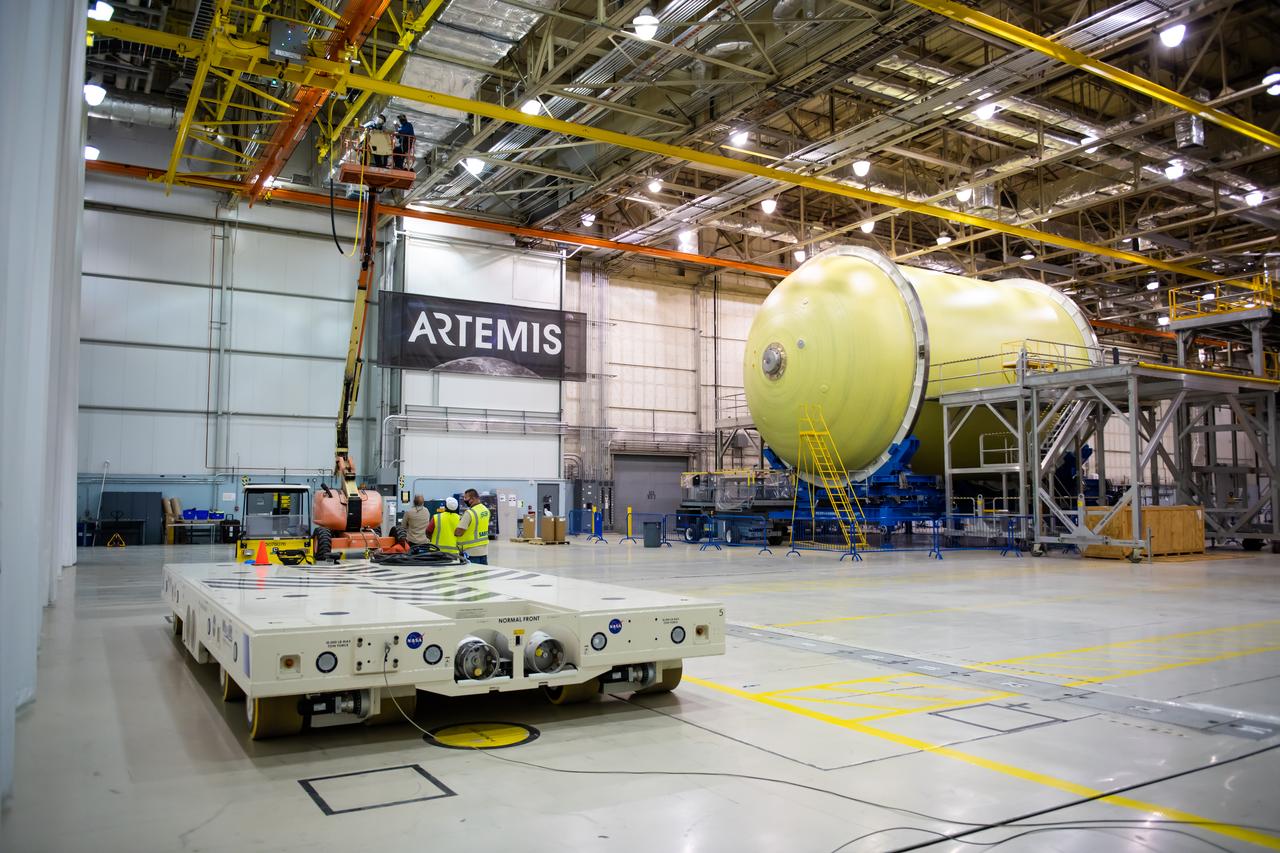
Employees wear personal protective gear at Michoud Assembly Facility as the facility transitioned to Stage 3 of NASA’s Framework for Return To On-Site Work. Employees wear the appropriate personal protective equipment (PPE) and/or cloth face coverings as required for assigned tasks. Access to the facility is limited to authorized personnel working on mission-critical tasks that must be conducted onsite. Mission-critical tasks include slowly and methodically resuming Space Launch System (SLS) Core Stage and Orion production activities, particularly critical path deliverables to support the Artemis Program, at a pace that limits personnel and follows federal guidelines for social distancing and use of personal protective equipment such as face masks. For more information about SLS, visit nasa.gov/sls.
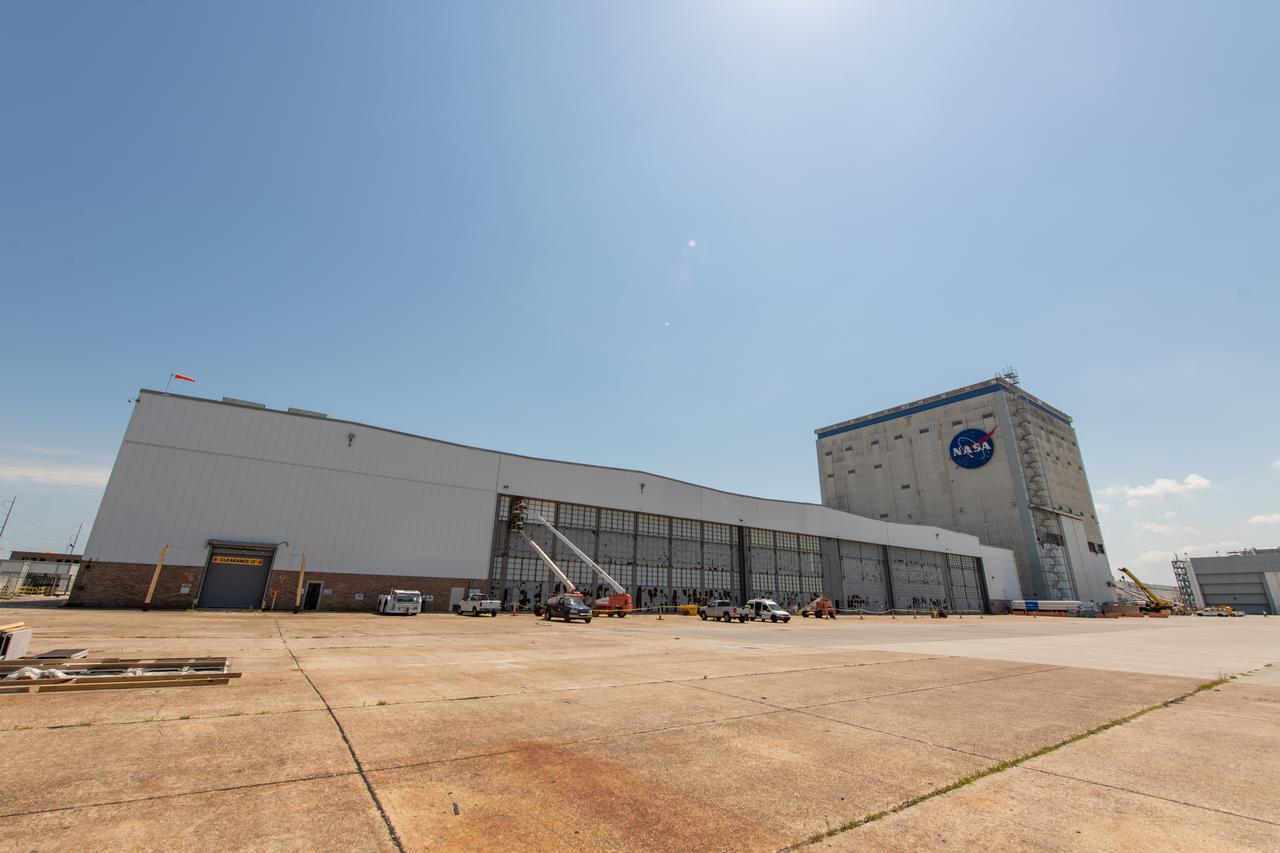
Employees wear personal protective gear at Michoud Assembly Facility as the facility transitioned to Stage 3 of NASA’s Framework for Return To On-Site Work. Employees wear the appropriate personal protective equipment (PPE) and/or cloth face coverings as required for assigned tasks. Access to the facility is limited to authorized personnel working on mission-critical tasks that must be conducted onsite. Mission-critical tasks include slowly and methodically resuming Space Launch System (SLS) Core Stage and Orion production activities, particularly critical path deliverables to support the Artemis Program, at a pace that limits personnel and follows federal guidelines for social distancing and use of personal protective equipment such as face masks. For more information about SLS, visit nasa.gov/sls.
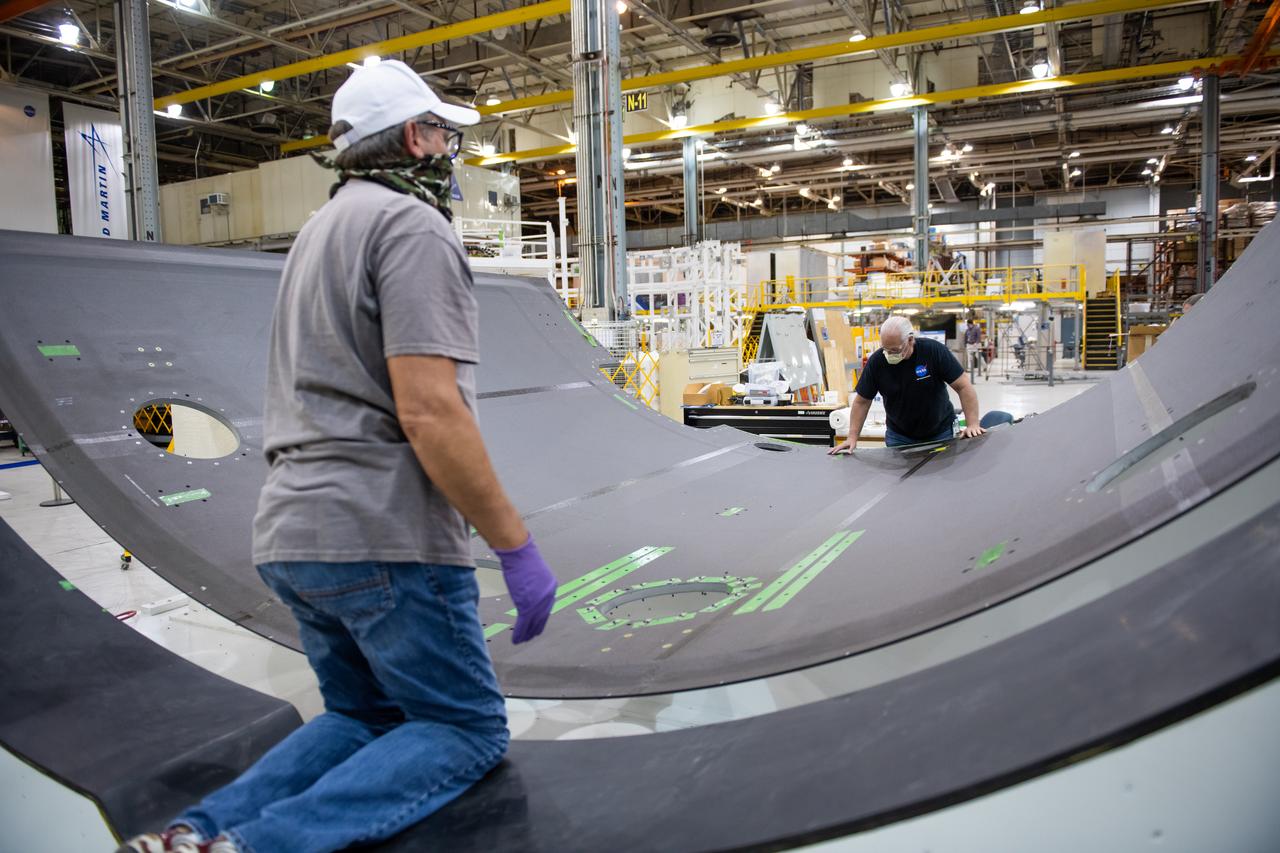
Employees wear personal protective gear at Michoud Assembly Facility as the facility transitioned to Stage 3 of NASA’s Framework for Return To On-Site Work. Employees wear the appropriate personal protective equipment (PPE) and/or cloth face coverings as required for assigned tasks. Access to the facility is limited to authorized personnel working on mission-critical tasks that must be conducted onsite. Mission-critical tasks include slowly and methodically resuming Space Launch System (SLS) Core Stage and Orion production activities, particularly critical path deliverables to support the Artemis Program, at a pace that limits personnel and follows federal guidelines for social distancing and use of personal protective equipment such as face masks. For more information about SLS, visit nasa.gov/sls.
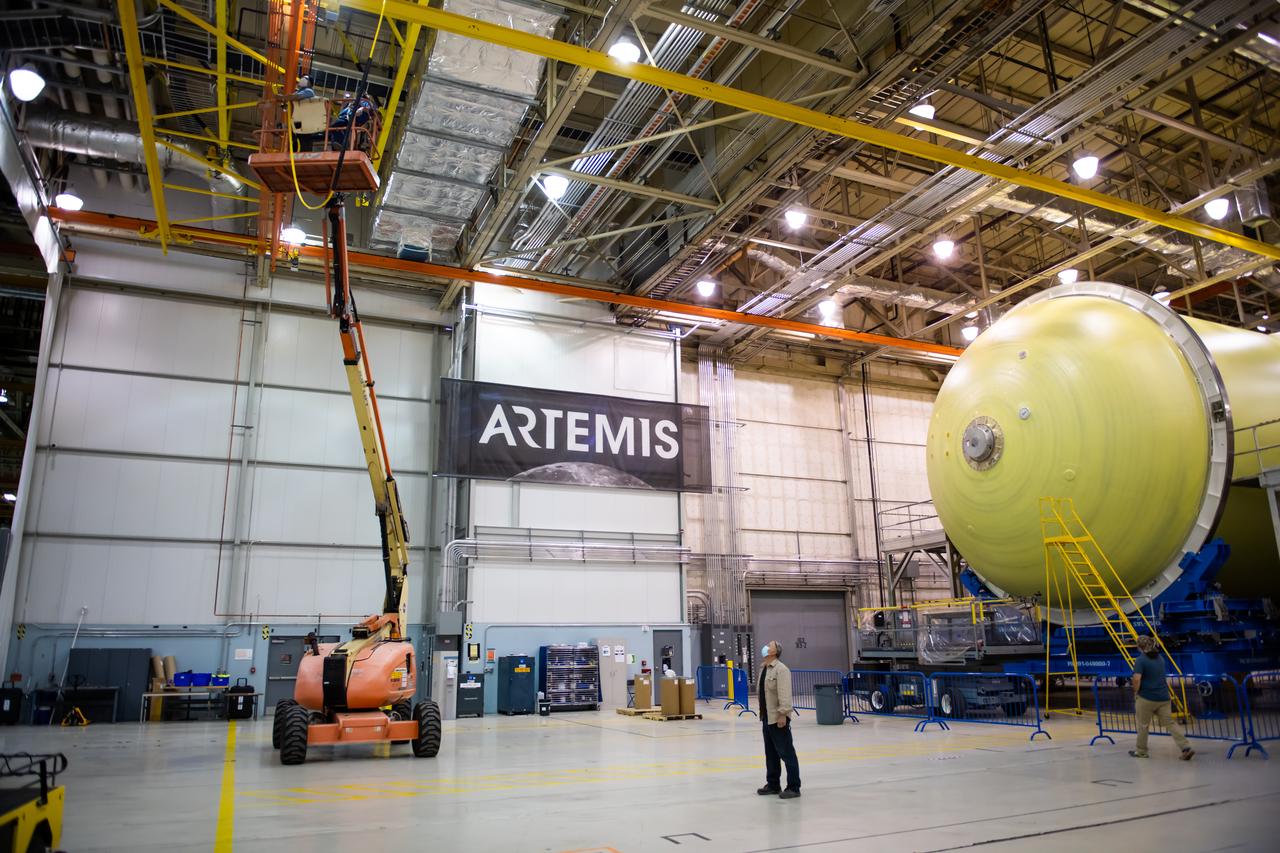
Employees wear personal protective gear at Michoud Assembly Facility as the facility transitioned to Stage 3 of NASA’s Framework for Return To On-Site Work. Employees wear the appropriate personal protective equipment (PPE) and/or cloth face coverings as required for assigned tasks. Access to the facility is limited to authorized personnel working on mission-critical tasks that must be conducted onsite. Mission-critical tasks include slowly and methodically resuming Space Launch System (SLS) Core Stage and Orion production activities, particularly critical path deliverables to support the Artemis Program, at a pace that limits personnel and follows federal guidelines for social distancing and use of personal protective equipment such as face masks. For more information about SLS, visit nasa.gov/sls.
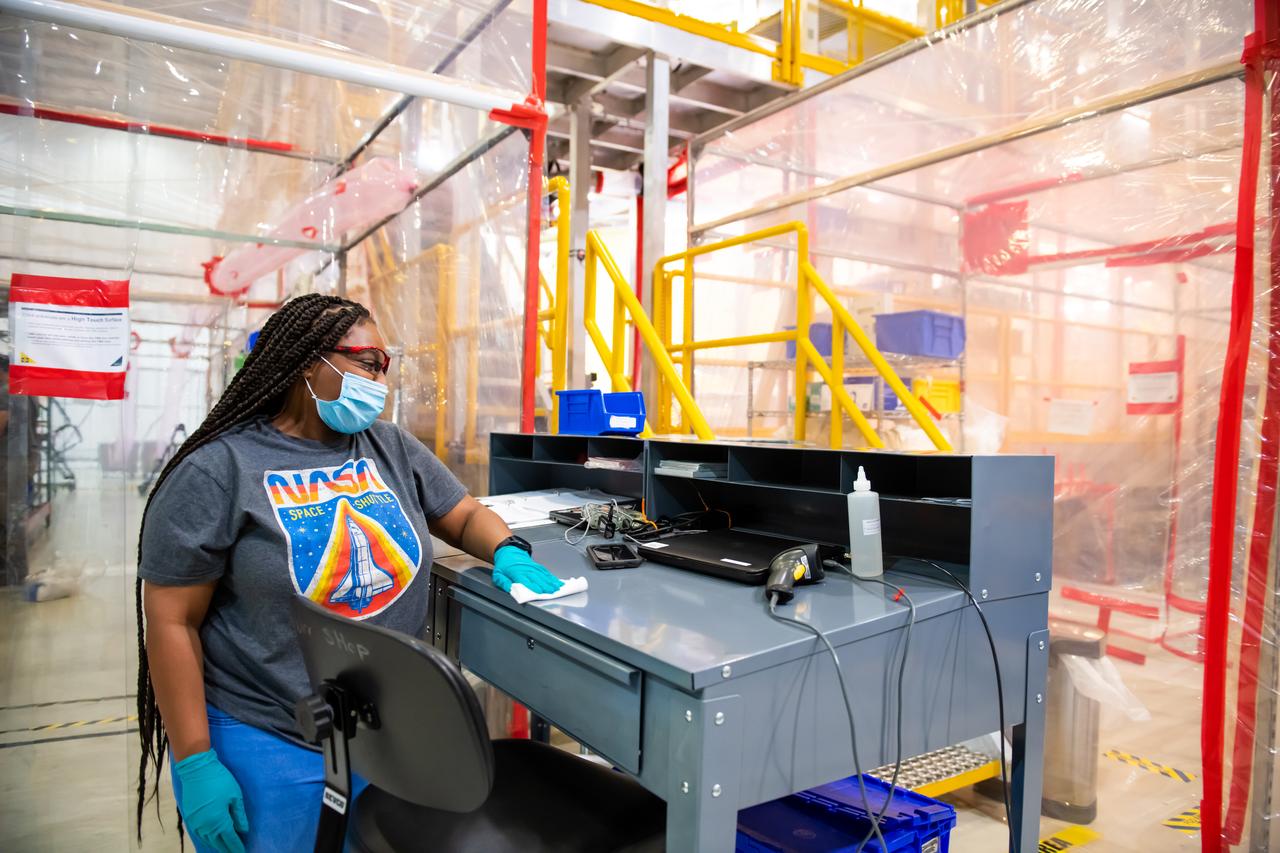
Employees wear personal protective gear at Michoud Assembly Facility as the facility transitioned to Stage 3 of NASA’s Framework for Return To On-Site Work. Employees wear the appropriate personal protective equipment (PPE) and/or cloth face coverings as required for assigned tasks. Access to the facility is limited to authorized personnel working on mission-critical tasks that must be conducted onsite. Mission-critical tasks include slowly and methodically resuming Space Launch System (SLS) Core Stage and Orion production activities, particularly critical path deliverables to support the Artemis Program, at a pace that limits personnel and follows federal guidelines for social distancing and use of personal protective equipment such as face masks. For more information about SLS, visit nasa.gov/sls.
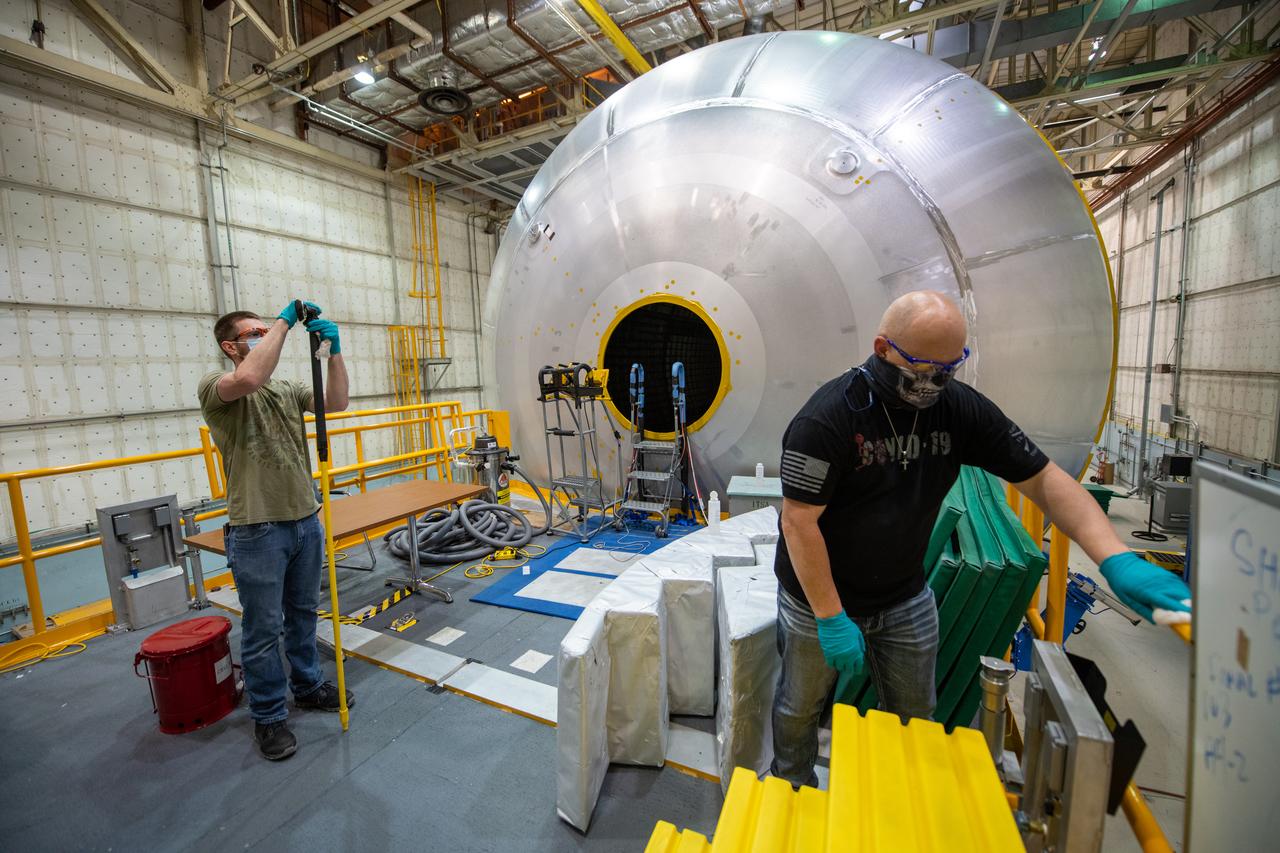
Employees wear personal protective gear at Michoud Assembly Facility as the facility transitioned to Stage 3 of NASA’s Framework for Return To On-Site Work. Employees wear the appropriate personal protective equipment (PPE) and/or cloth face coverings as required for assigned tasks. Access to the facility is limited to authorized personnel working on mission-critical tasks that must be conducted onsite. Mission-critical tasks include slowly and methodically resuming Space Launch System (SLS) Core Stage and Orion production activities, particularly critical path deliverables to support the Artemis Program, at a pace that limits personnel and follows federal guidelines for social distancing and use of personal protective equipment such as face masks. For more information about SLS, visit nasa.gov/sls.
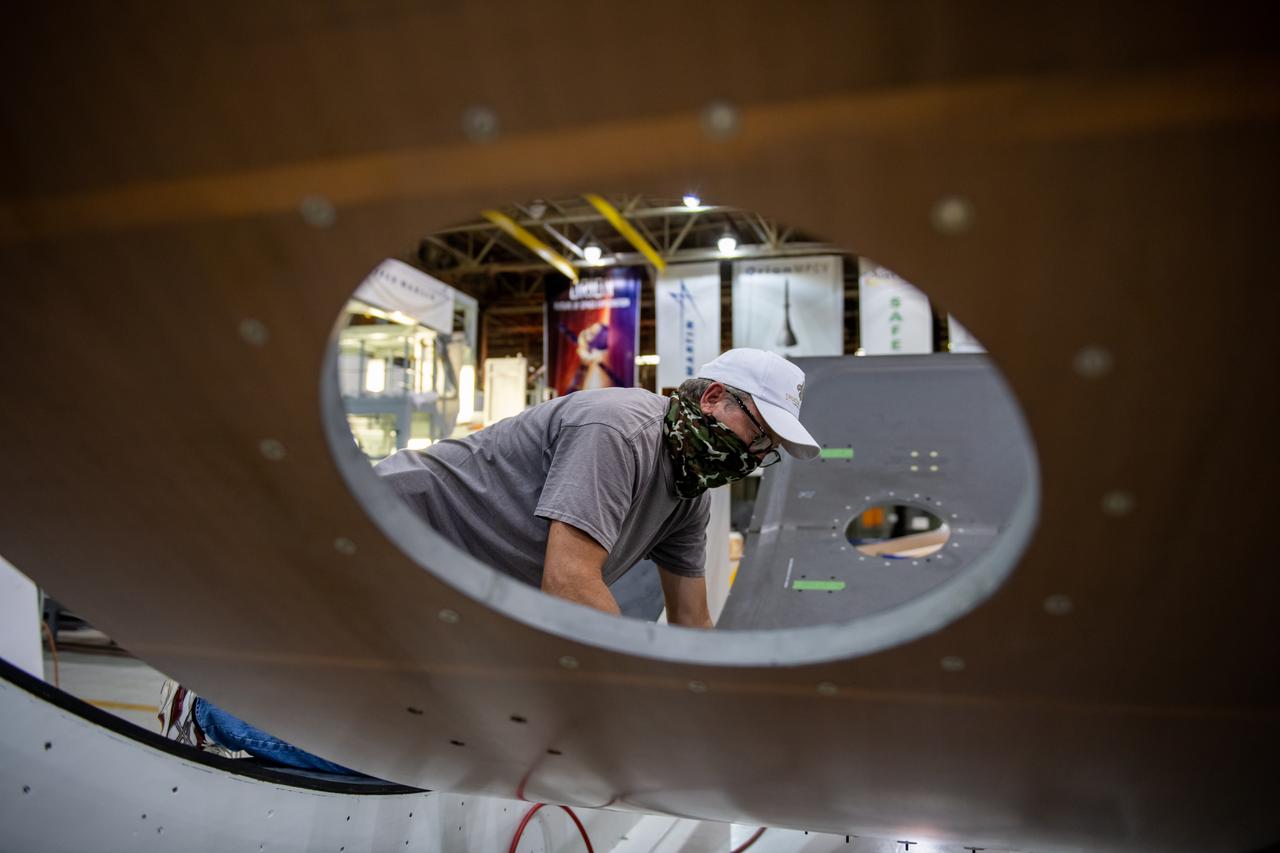
Employees wear personal protective gear at Michoud Assembly Facility as the facility transitioned to Stage 3 of NASA’s Framework for Return To On-Site Work. Employees wear the appropriate personal protective equipment (PPE) and/or cloth face coverings as required for assigned tasks. Access to the facility is limited to authorized personnel working on mission-critical tasks that must be conducted onsite. Mission-critical tasks include slowly and methodically resuming Space Launch System (SLS) Core Stage and Orion production activities, particularly critical path deliverables to support the Artemis Program, at a pace that limits personnel and follows federal guidelines for social distancing and use of personal protective equipment such as face masks. For more information about SLS, visit nasa.gov/sls.
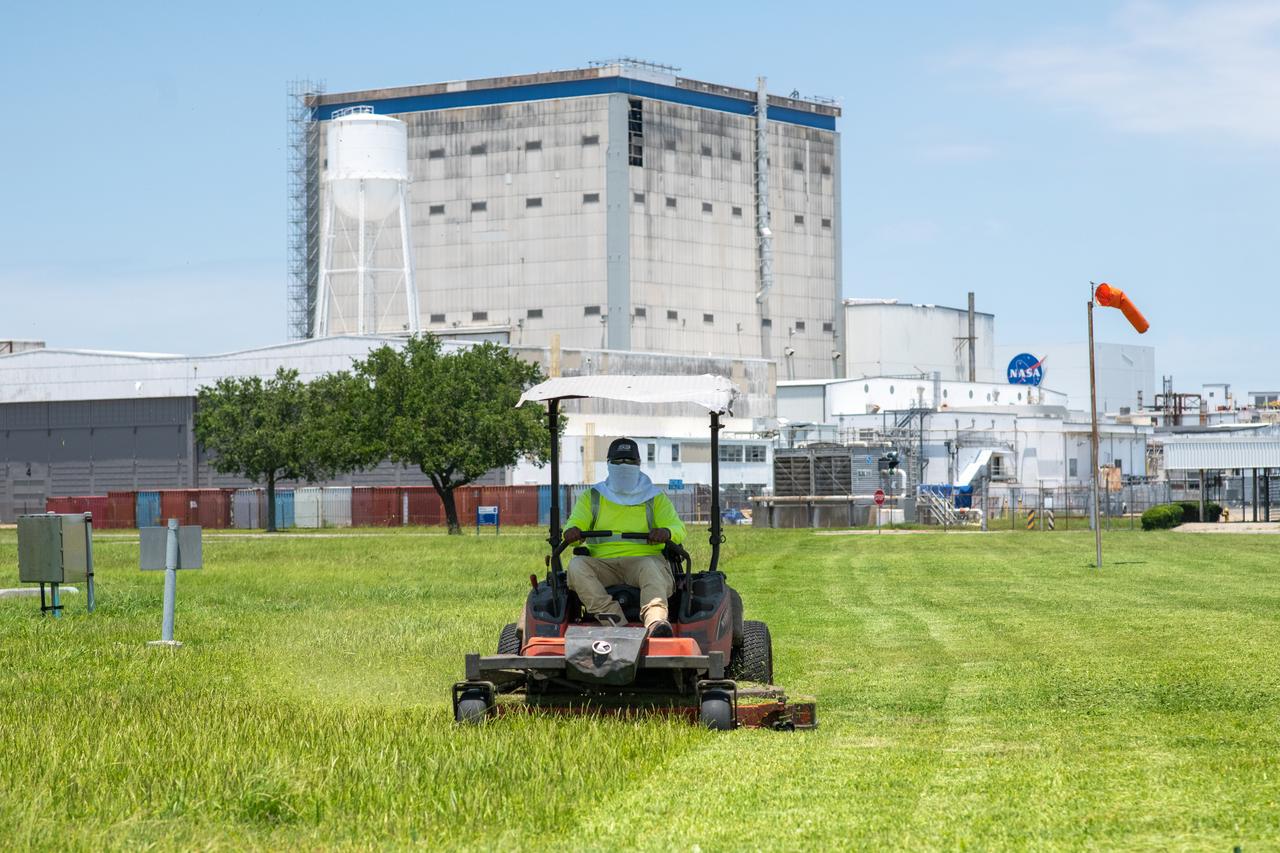
Employees wear personal protective gear at Michoud Assembly Facility as the facility transitioned to Stage 3 of NASA’s Framework for Return To On-Site Work. Employees wear the appropriate personal protective equipment (PPE) and/or cloth face coverings as required for assigned tasks. Access to the facility is limited to authorized personnel working on mission-critical tasks that must be conducted onsite. Mission-critical tasks include slowly and methodically resuming Space Launch System (SLS) Core Stage and Orion production activities, particularly critical path deliverables to support the Artemis Program, at a pace that limits personnel and follows federal guidelines for social distancing and use of personal protective equipment such as face masks. For more information about SLS, visit nasa.gov/sls.
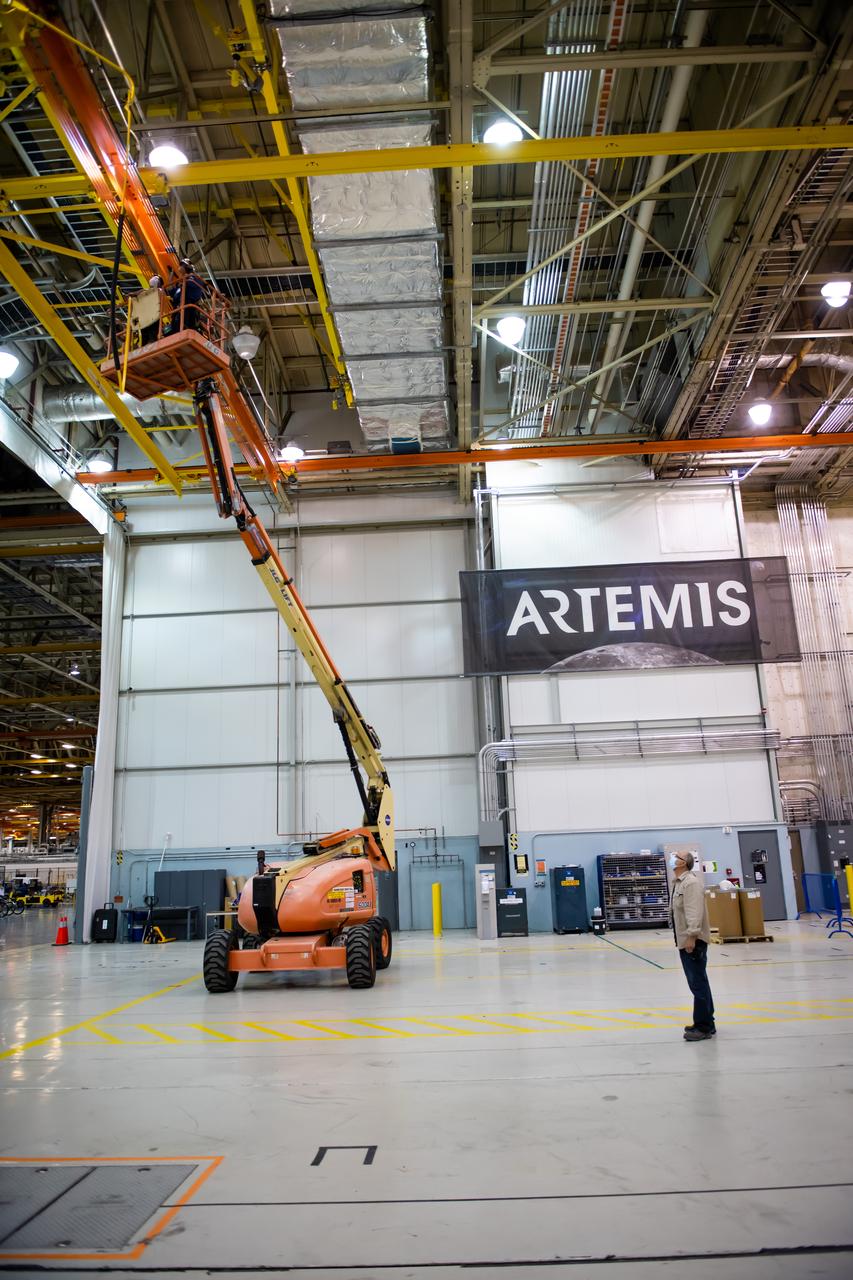
Employees wear personal protective gear at Michoud Assembly Facility as the facility transitioned to Stage 3 of NASA’s Framework for Return To On-Site Work. Employees wear the appropriate personal protective equipment (PPE) and/or cloth face coverings as required for assigned tasks. Access to the facility is limited to authorized personnel working on mission-critical tasks that must be conducted onsite. Mission-critical tasks include slowly and methodically resuming Space Launch System (SLS) Core Stage and Orion production activities, particularly critical path deliverables to support the Artemis Program, at a pace that limits personnel and follows federal guidelines for social distancing and use of personal protective equipment such as face masks. For more information about SLS, visit nasa.gov/sls.
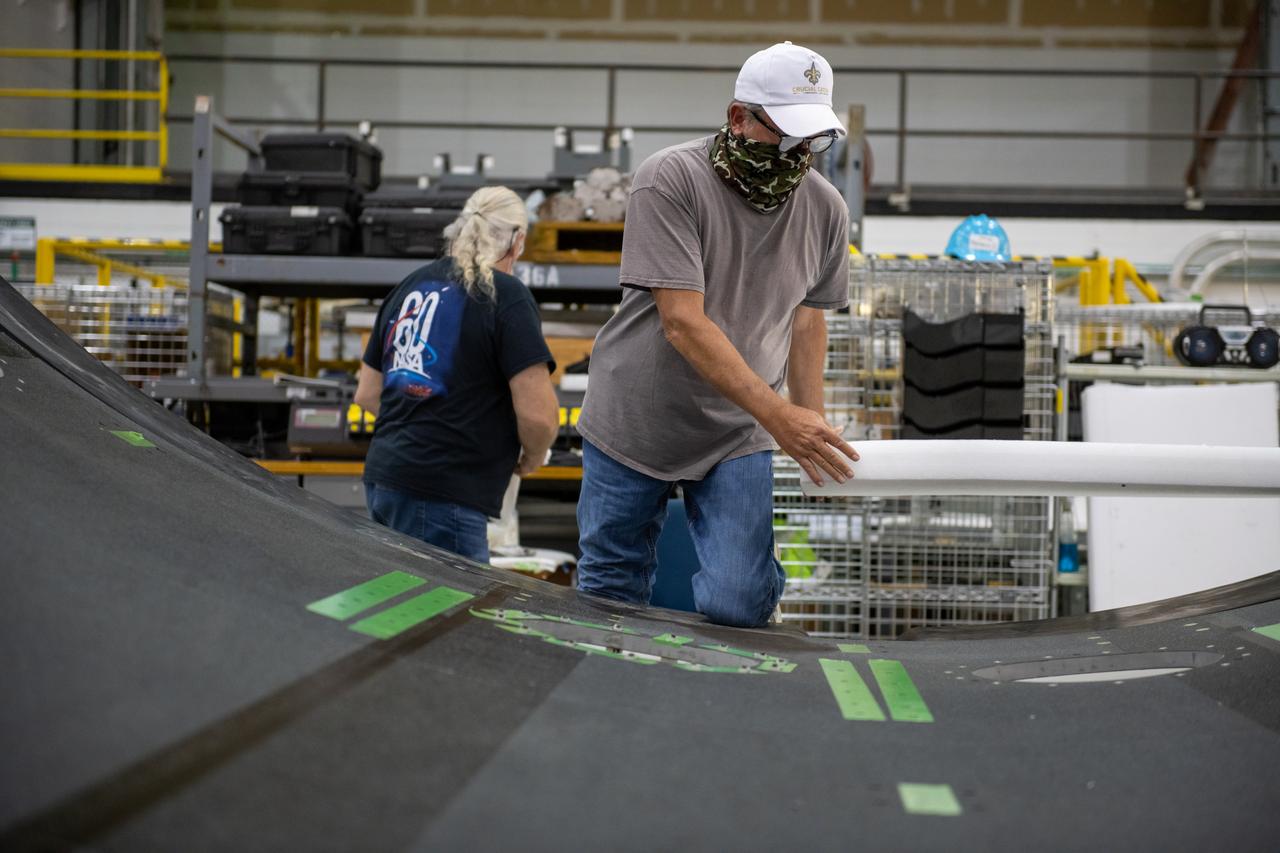
Employees wear personal protective gear at Michoud Assembly Facility as the facility transitioned to Stage 3 of NASA’s Framework for Return To On-Site Work. Employees wear the appropriate personal protective equipment (PPE) and/or cloth face coverings as required for assigned tasks. Access to the facility is limited to authorized personnel working on mission-critical tasks that must be conducted onsite. Mission-critical tasks include slowly and methodically resuming Space Launch System (SLS) Core Stage and Orion production activities, particularly critical path deliverables to support the Artemis Program, at a pace that limits personnel and follows federal guidelines for social distancing and use of personal protective equipment such as face masks. For more information about SLS, visit nasa.gov/sls.
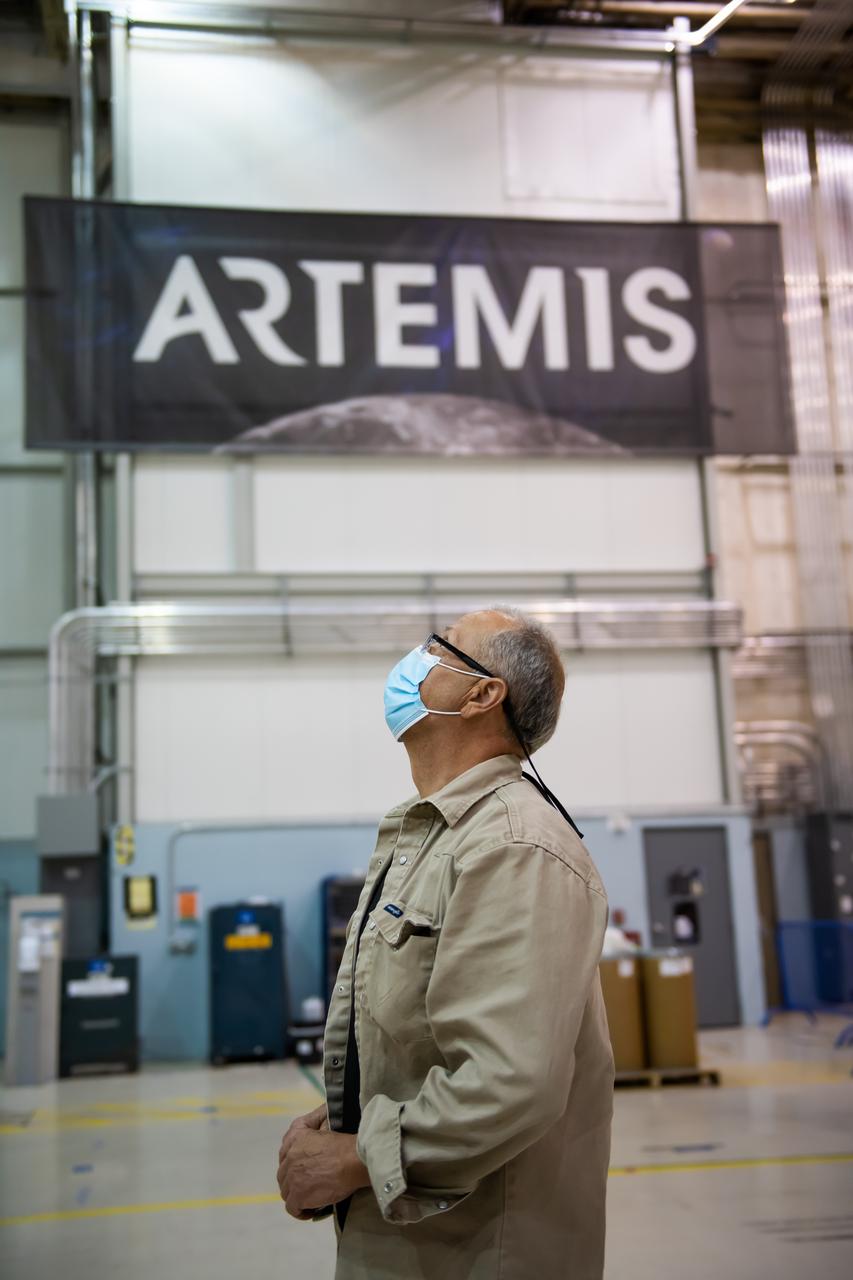
Employees wear personal protective gear at Michoud Assembly Facility as the facility transitioned to Stage 3 of NASA’s Framework for Return To On-Site Work. Employees wear the appropriate personal protective equipment (PPE) and/or cloth face coverings as required for assigned tasks. Access to the facility is limited to authorized personnel working on mission-critical tasks that must be conducted onsite. Mission-critical tasks include slowly and methodically resuming Space Launch System (SLS) Core Stage and Orion production activities, particularly critical path deliverables to support the Artemis Program, at a pace that limits personnel and follows federal guidelines for social distancing and use of personal protective equipment such as face masks. For more information about SLS, visit nasa.gov/sls.
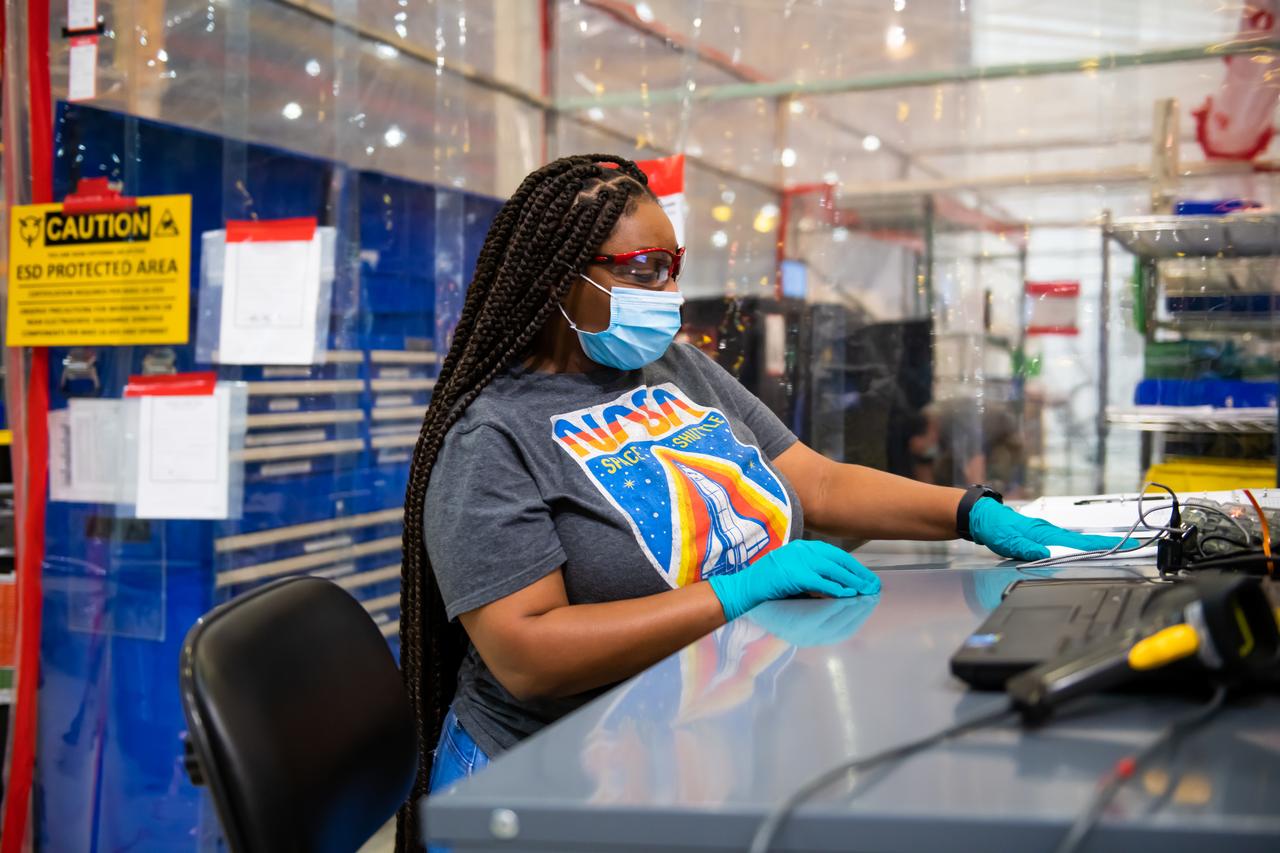
Employees wear personal protective gear at Michoud Assembly Facility as the facility transitioned to Stage 3 of NASA’s Framework for Return To On-Site Work. Employees wear the appropriate personal protective equipment (PPE) and/or cloth face coverings as required for assigned tasks. Access to the facility is limited to authorized personnel working on mission-critical tasks that must be conducted onsite. Mission-critical tasks include slowly and methodically resuming Space Launch System (SLS) Core Stage and Orion production activities, particularly critical path deliverables to support the Artemis Program, at a pace that limits personnel and follows federal guidelines for social distancing and use of personal protective equipment such as face masks. For more information about SLS, visit nasa.gov/sls.
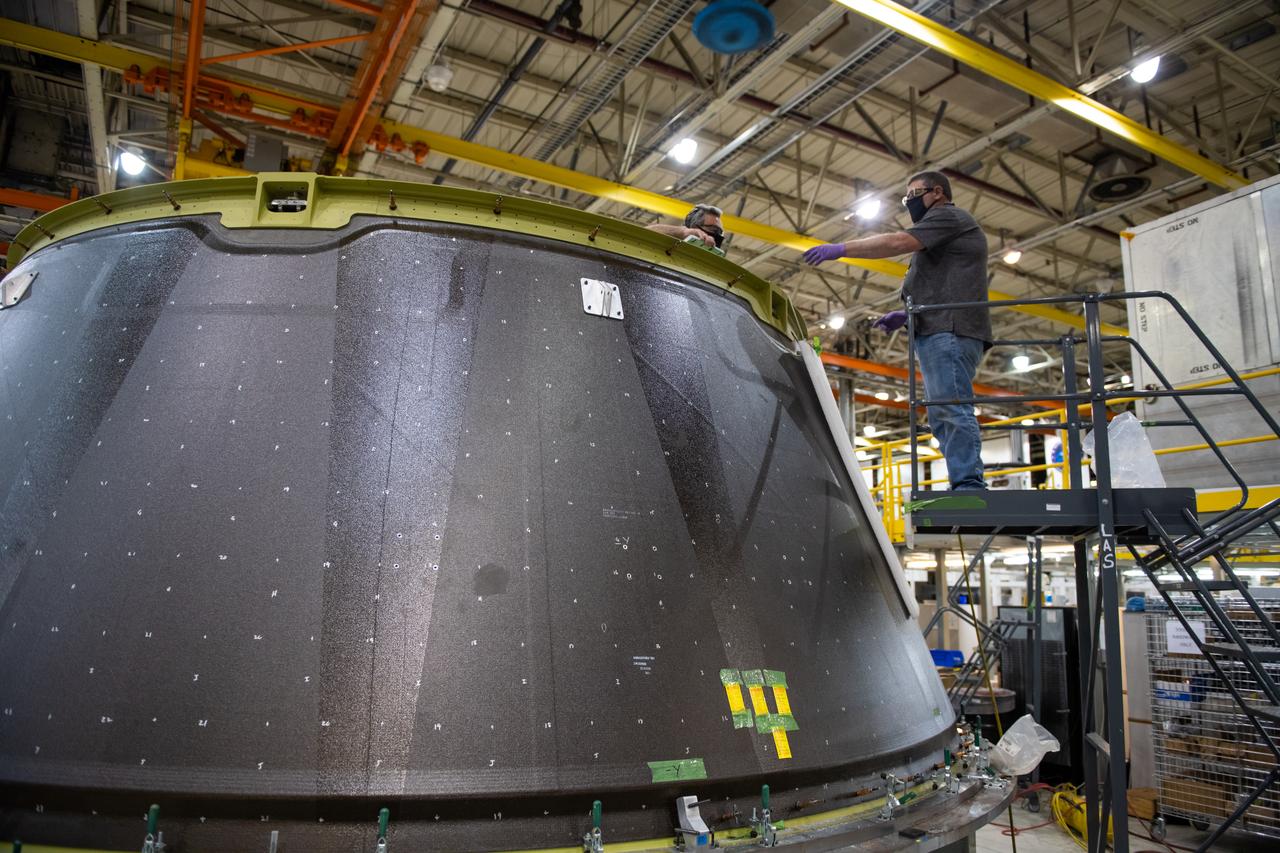
Employees wear personal protective gear at Michoud Assembly Facility as the facility transitioned to Stage 3 of NASA’s Framework for Return To On-Site Work. Employees wear the appropriate personal protective equipment (PPE) and/or cloth face coverings as required for assigned tasks. Access to the facility is limited to authorized personnel working on mission-critical tasks that must be conducted onsite. Mission-critical tasks include slowly and methodically resuming Space Launch System (SLS) Core Stage and Orion production activities, particularly critical path deliverables to support the Artemis Program, at a pace that limits personnel and follows federal guidelines for social distancing and use of personal protective equipment such as face masks. For more information about SLS, visit nasa.gov/sls.
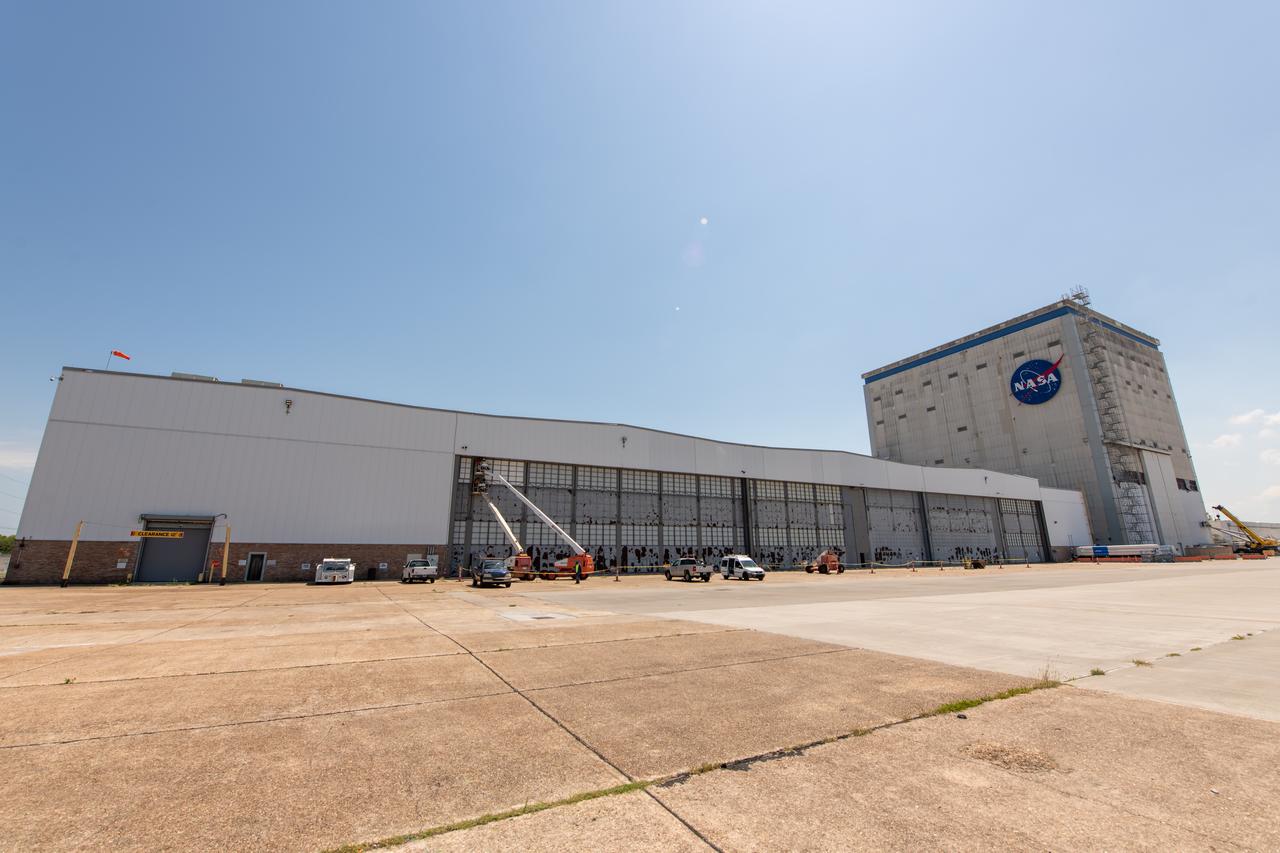
Employees wear personal protective gear at Michoud Assembly Facility as the facility transitioned to Stage 3 of NASA’s Framework for Return To On-Site Work. Employees wear the appropriate personal protective equipment (PPE) and/or cloth face coverings as required for assigned tasks. Access to the facility is limited to authorized personnel working on mission-critical tasks that must be conducted onsite. Mission-critical tasks include slowly and methodically resuming Space Launch System (SLS) Core Stage and Orion production activities, particularly critical path deliverables to support the Artemis Program, at a pace that limits personnel and follows federal guidelines for social distancing and use of personal protective equipment such as face masks. For more information about SLS, visit nasa.gov/sls.
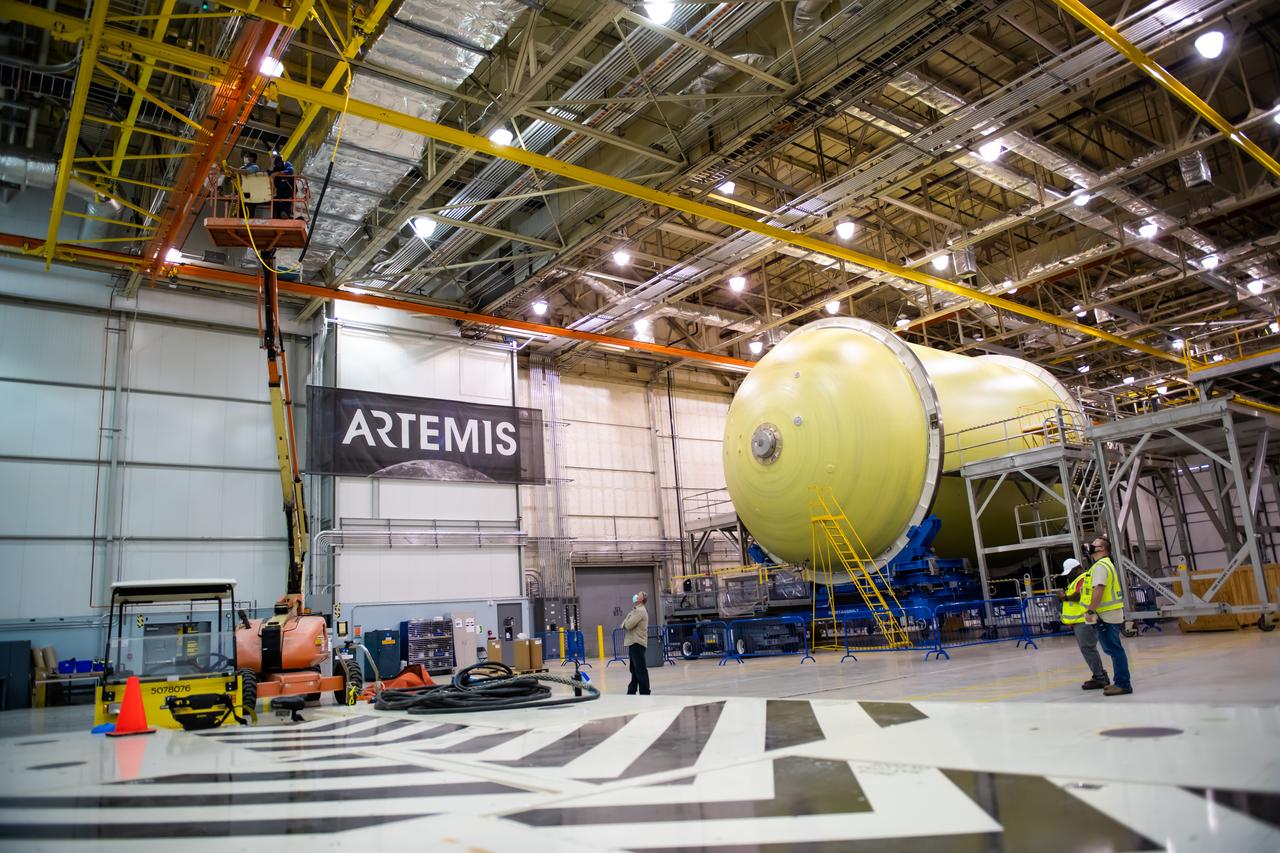
Employees wear personal protective gear at Michoud Assembly Facility as the facility transitioned to Stage 3 of NASA’s Framework for Return To On-Site Work. Employees wear the appropriate personal protective equipment (PPE) and/or cloth face coverings as required for assigned tasks. Access to the facility is limited to authorized personnel working on mission-critical tasks that must be conducted onsite. Mission-critical tasks include slowly and methodically resuming Space Launch System (SLS) Core Stage and Orion production activities, particularly critical path deliverables to support the Artemis Program, at a pace that limits personnel and follows federal guidelines for social distancing and use of personal protective equipment such as face masks. For more information about SLS, visit nasa.gov/sls.
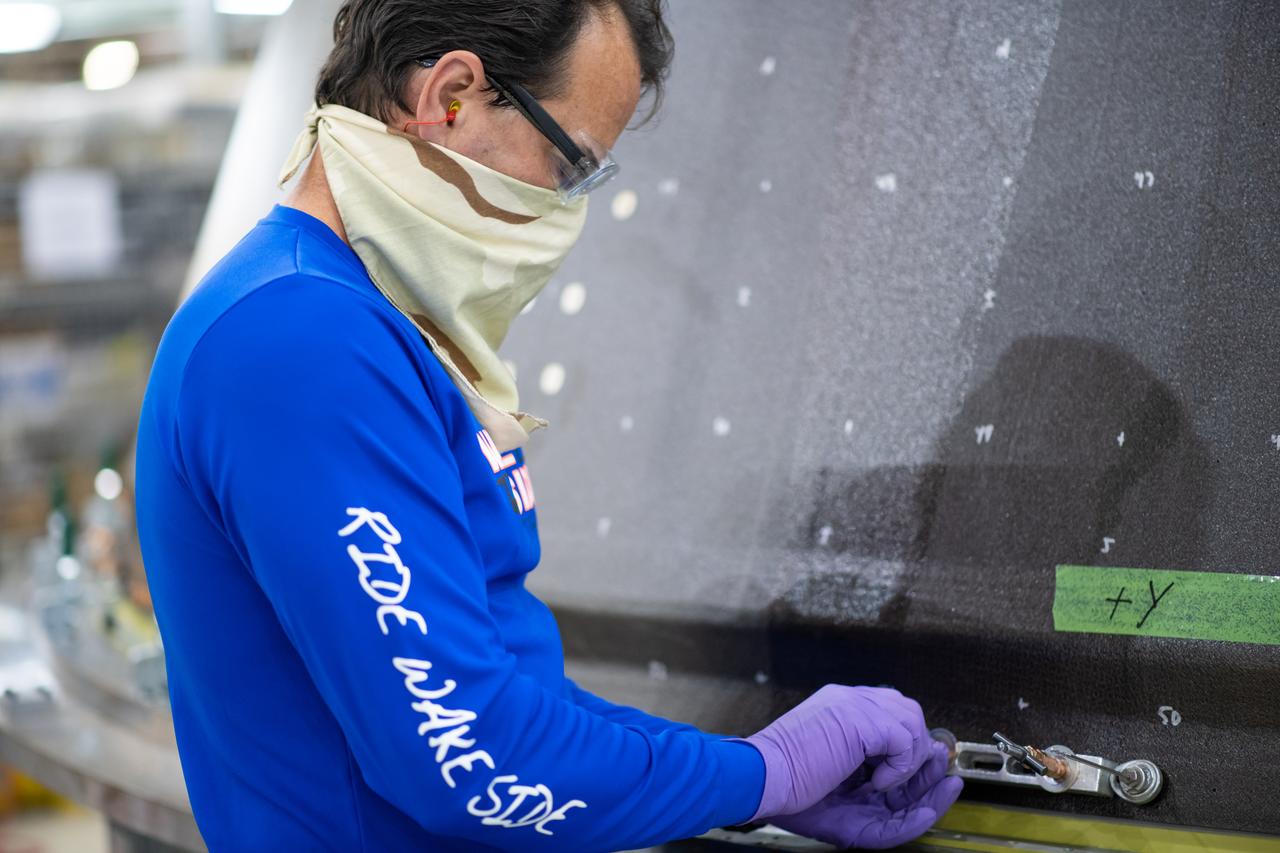
Employees wear personal protective gear at Michoud Assembly Facility as the facility transitioned to Stage 3 of NASA’s Framework for Return To On-Site Work. Employees wear the appropriate personal protective equipment (PPE) and/or cloth face coverings as required for assigned tasks. Access to the facility is limited to authorized personnel working on mission-critical tasks that must be conducted onsite. Mission-critical tasks include slowly and methodically resuming Space Launch System (SLS) Core Stage and Orion production activities, particularly critical path deliverables to support the Artemis Program, at a pace that limits personnel and follows federal guidelines for social distancing and use of personal protective equipment such as face masks. For more information about SLS, visit nasa.gov/sls.
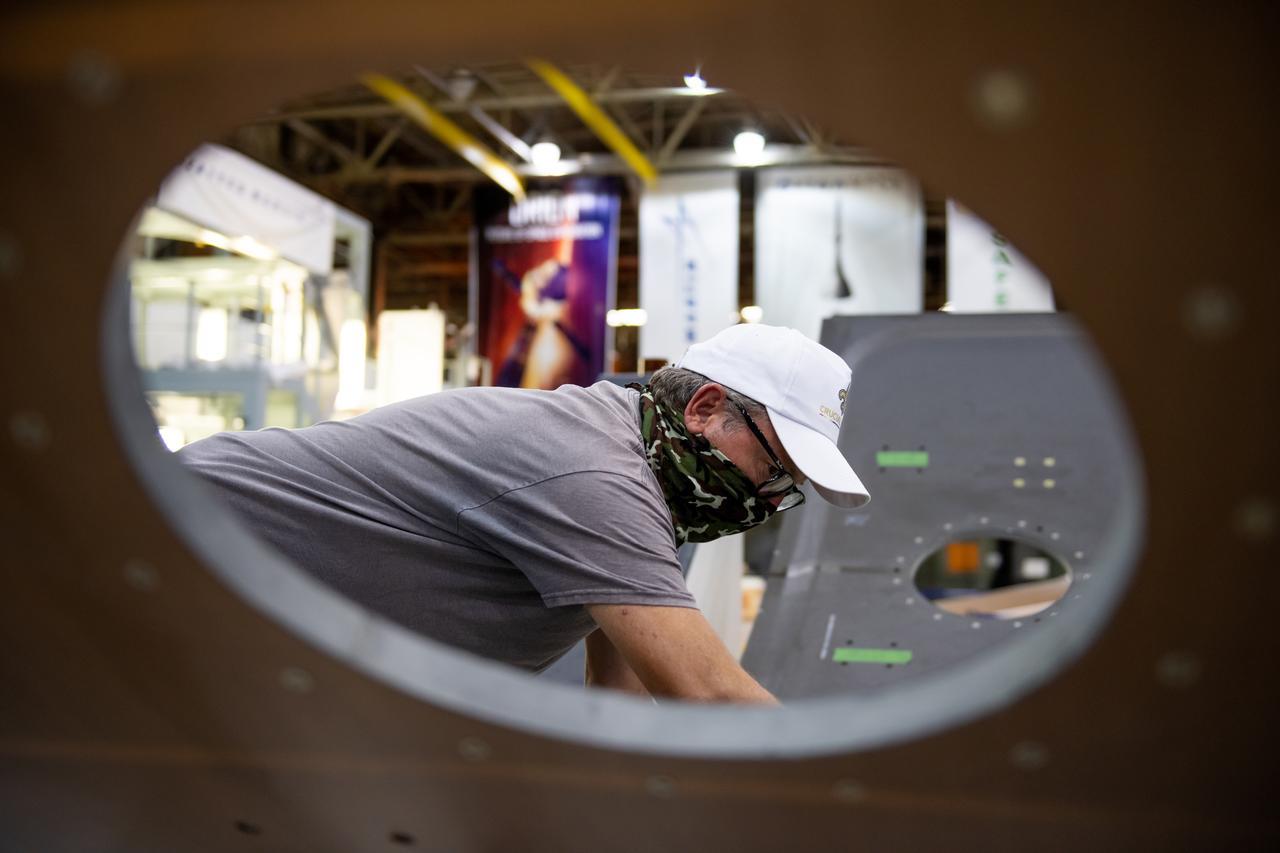
Employees wear personal protective gear at Michoud Assembly Facility as the facility transitioned to Stage 3 of NASA’s Framework for Return To On-Site Work. Employees wear the appropriate personal protective equipment (PPE) and/or cloth face coverings as required for assigned tasks. Access to the facility is limited to authorized personnel working on mission-critical tasks that must be conducted onsite. Mission-critical tasks include slowly and methodically resuming Space Launch System (SLS) Core Stage and Orion production activities, particularly critical path deliverables to support the Artemis Program, at a pace that limits personnel and follows federal guidelines for social distancing and use of personal protective equipment such as face masks. For more information about SLS, visit nasa.gov/sls.
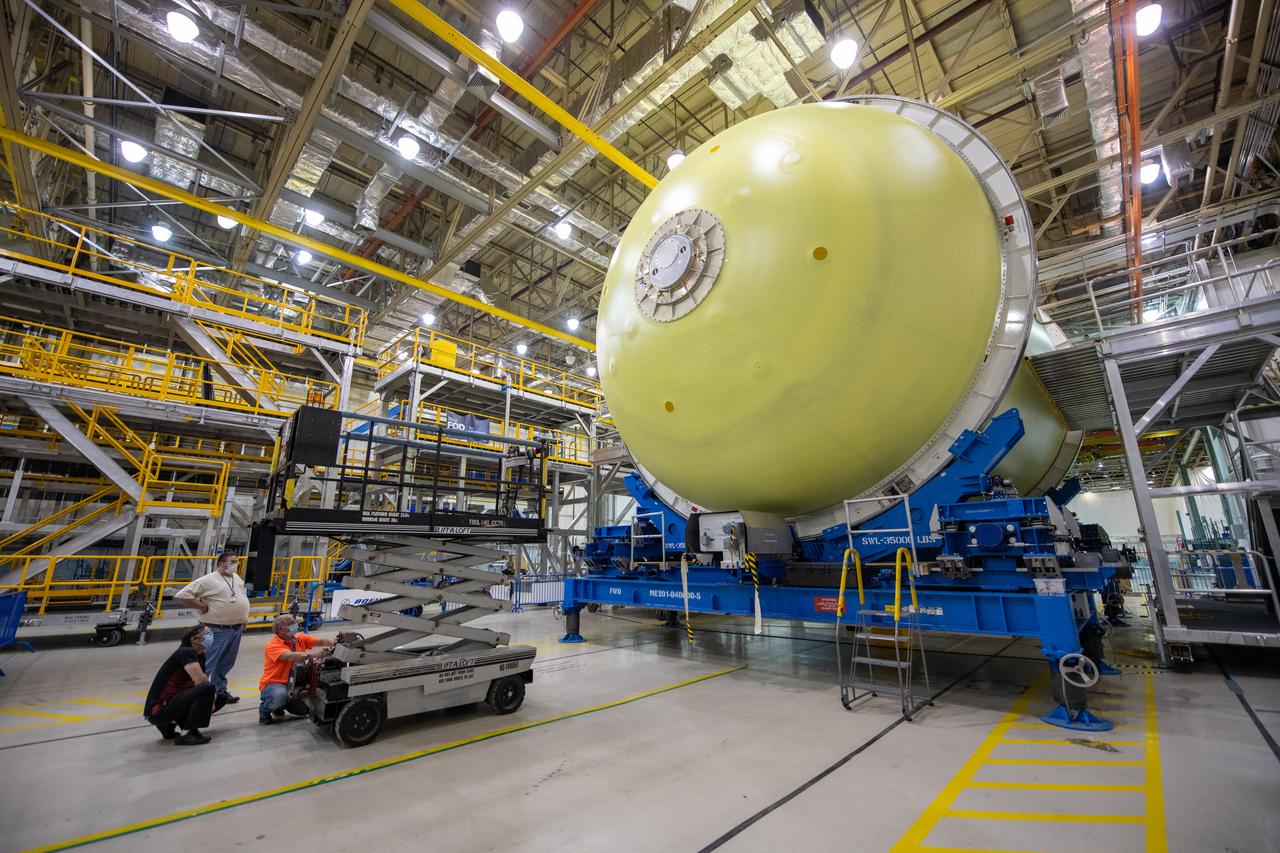
Employees wear personal protective gear at Michoud Assembly Facility as the facility transitioned to Stage 3 of NASA’s Framework for Return To On-Site Work. Employees wear the appropriate personal protective equipment (PPE) and/or cloth face coverings as required for assigned tasks. Access to the facility is limited to authorized personnel working on mission-critical tasks that must be conducted onsite. Mission-critical tasks include slowly and methodically resuming Space Launch System (SLS) Core Stage and Orion production activities, particularly critical path deliverables to support the Artemis Program, at a pace that limits personnel and follows federal guidelines for social distancing and use of personal protective equipment such as face masks. For more information about SLS, visit nasa.gov/sls.
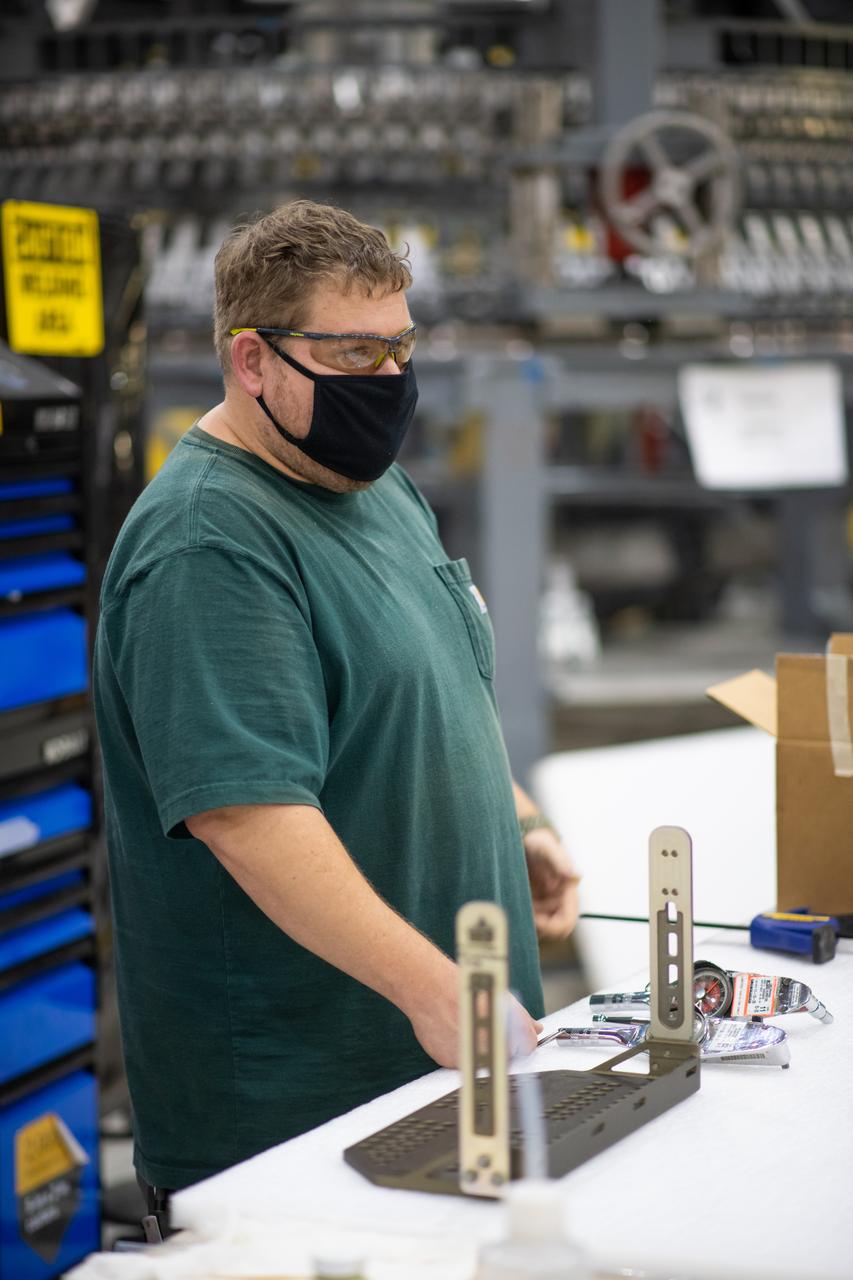
Employees wear personal protective gear at Michoud Assembly Facility as the facility transitioned to Stage 3 of NASA’s Framework for Return To On-Site Work. Employees wear the appropriate personal protective equipment (PPE) and/or cloth face coverings as required for assigned tasks. Access to the facility is limited to authorized personnel working on mission-critical tasks that must be conducted onsite. Mission-critical tasks include slowly and methodically resuming Space Launch System (SLS) Core Stage and Orion production activities, particularly critical path deliverables to support the Artemis Program, at a pace that limits personnel and follows federal guidelines for social distancing and use of personal protective equipment such as face masks. For more information about SLS, visit nasa.gov/sls.
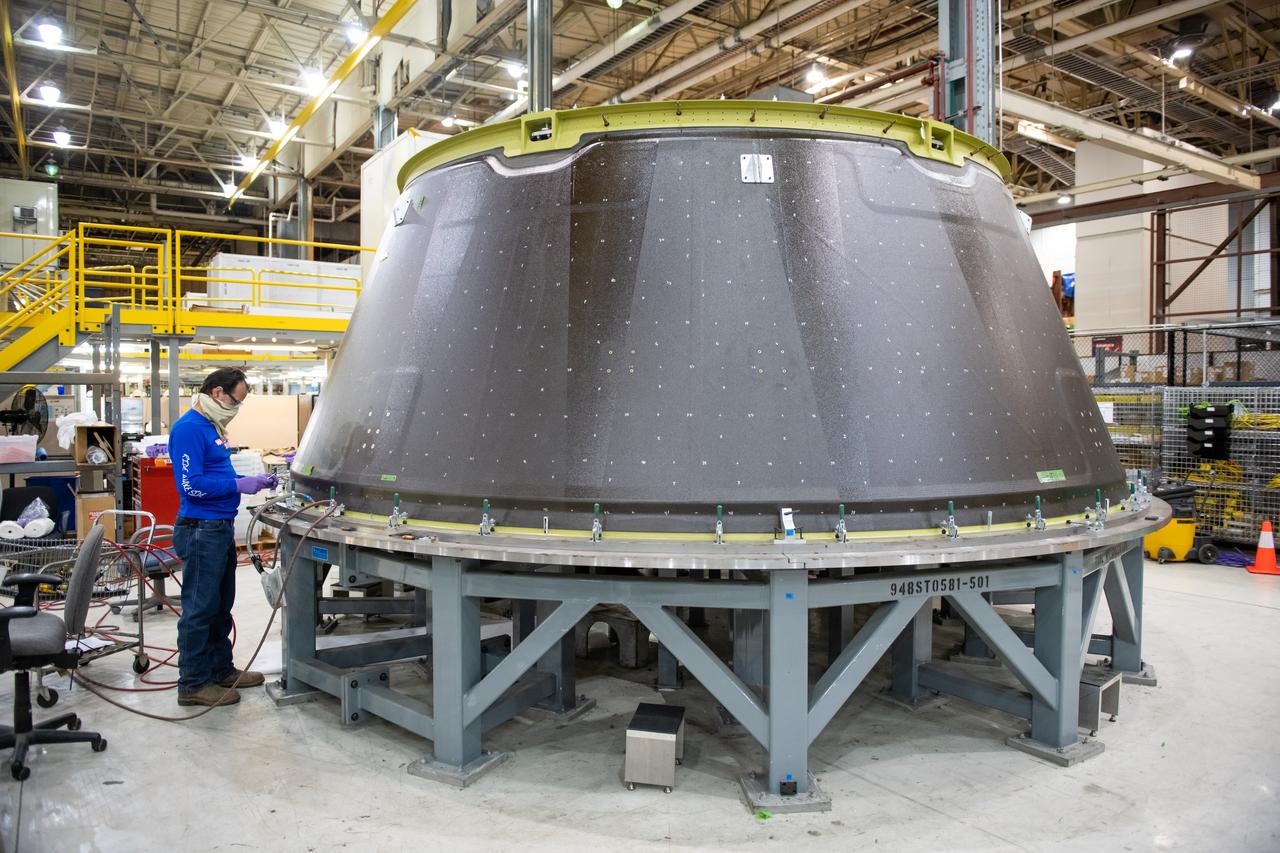
Employees wear personal protective gear at Michoud Assembly Facility as the facility transitioned to Stage 3 of NASA’s Framework for Return To On-Site Work. Employees wear the appropriate personal protective equipment (PPE) and/or cloth face coverings as required for assigned tasks. Access to the facility is limited to authorized personnel working on mission-critical tasks that must be conducted onsite. Mission-critical tasks include slowly and methodically resuming Space Launch System (SLS) Core Stage and Orion production activities, particularly critical path deliverables to support the Artemis Program, at a pace that limits personnel and follows federal guidelines for social distancing and use of personal protective equipment such as face masks. For more information about SLS, visit nasa.gov/sls.
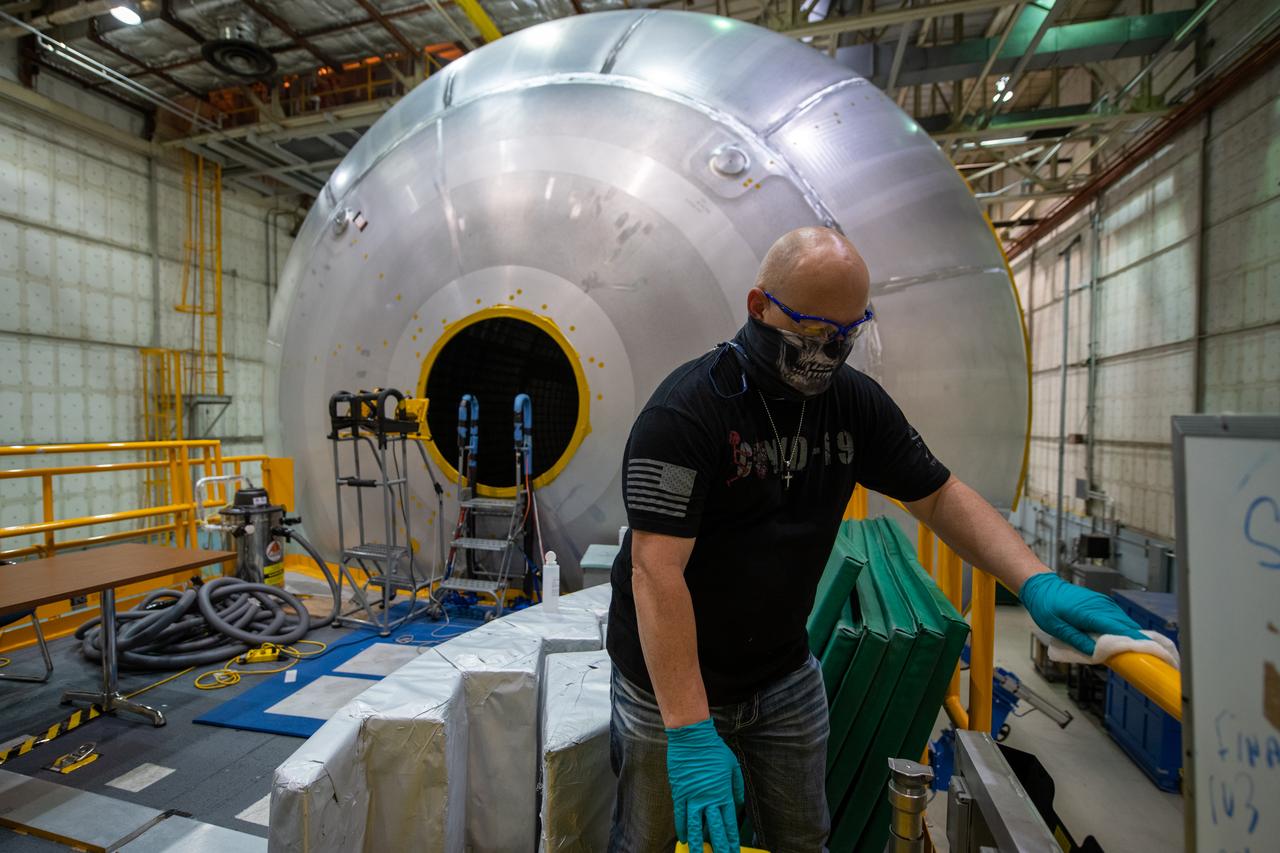
Employees wear personal protective gear at Michoud Assembly Facility as the facility transitioned to Stage 3 of NASA’s Framework for Return To On-Site Work. Employees wear the appropriate personal protective equipment (PPE) and/or cloth face coverings as required for assigned tasks. Access to the facility is limited to authorized personnel working on mission-critical tasks that must be conducted onsite. Mission-critical tasks include slowly and methodically resuming Space Launch System (SLS) Core Stage and Orion production activities, particularly critical path deliverables to support the Artemis Program, at a pace that limits personnel and follows federal guidelines for social distancing and use of personal protective equipment such as face masks. For more information about SLS, visit nasa.gov/sls.
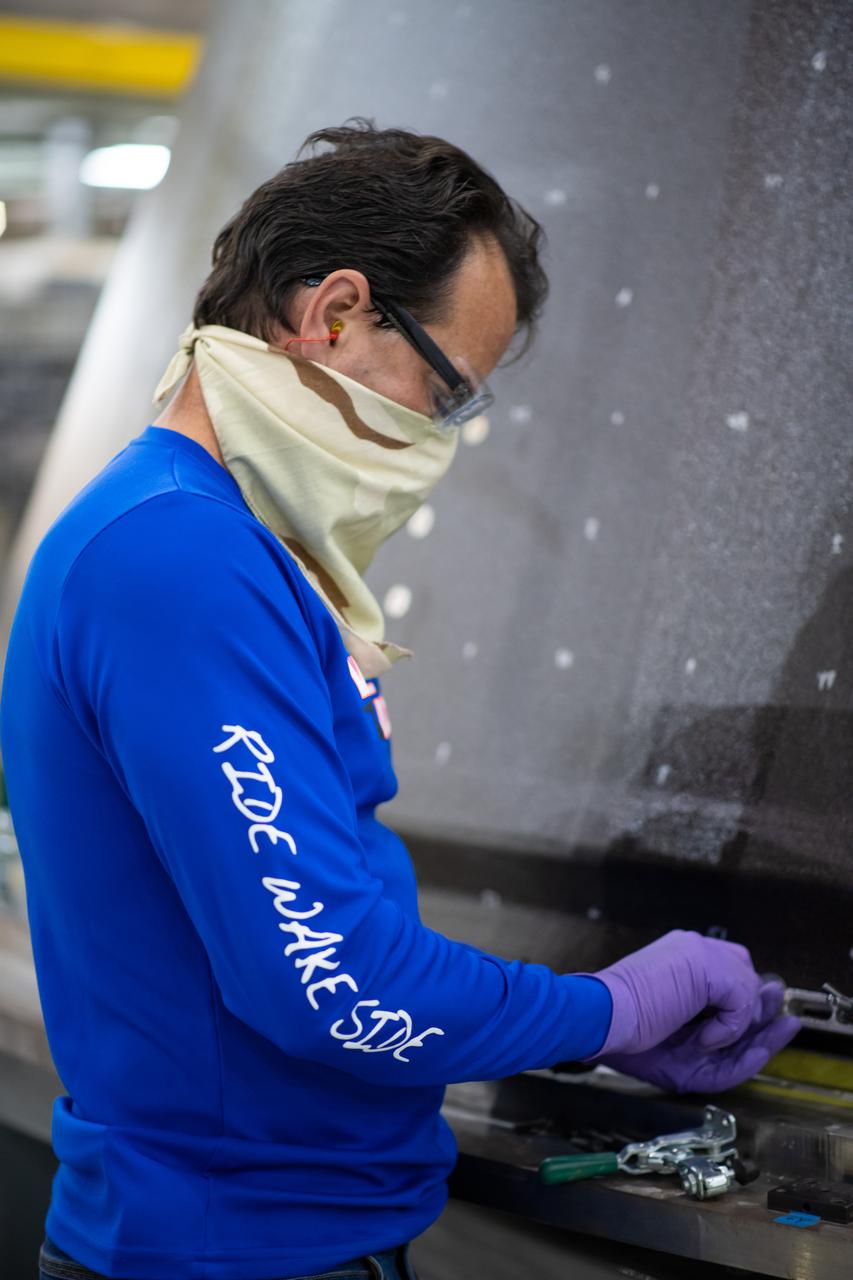
Employees wear personal protective gear at Michoud Assembly Facility as the facility transitioned to Stage 3 of NASA’s Framework for Return To On-Site Work. Employees wear the appropriate personal protective equipment (PPE) and/or cloth face coverings as required for assigned tasks. Access to the facility is limited to authorized personnel working on mission-critical tasks that must be conducted onsite. Mission-critical tasks include slowly and methodically resuming Space Launch System (SLS) Core Stage and Orion production activities, particularly critical path deliverables to support the Artemis Program, at a pace that limits personnel and follows federal guidelines for social distancing and use of personal protective equipment such as face masks. For more information about SLS, visit nasa.gov/sls.
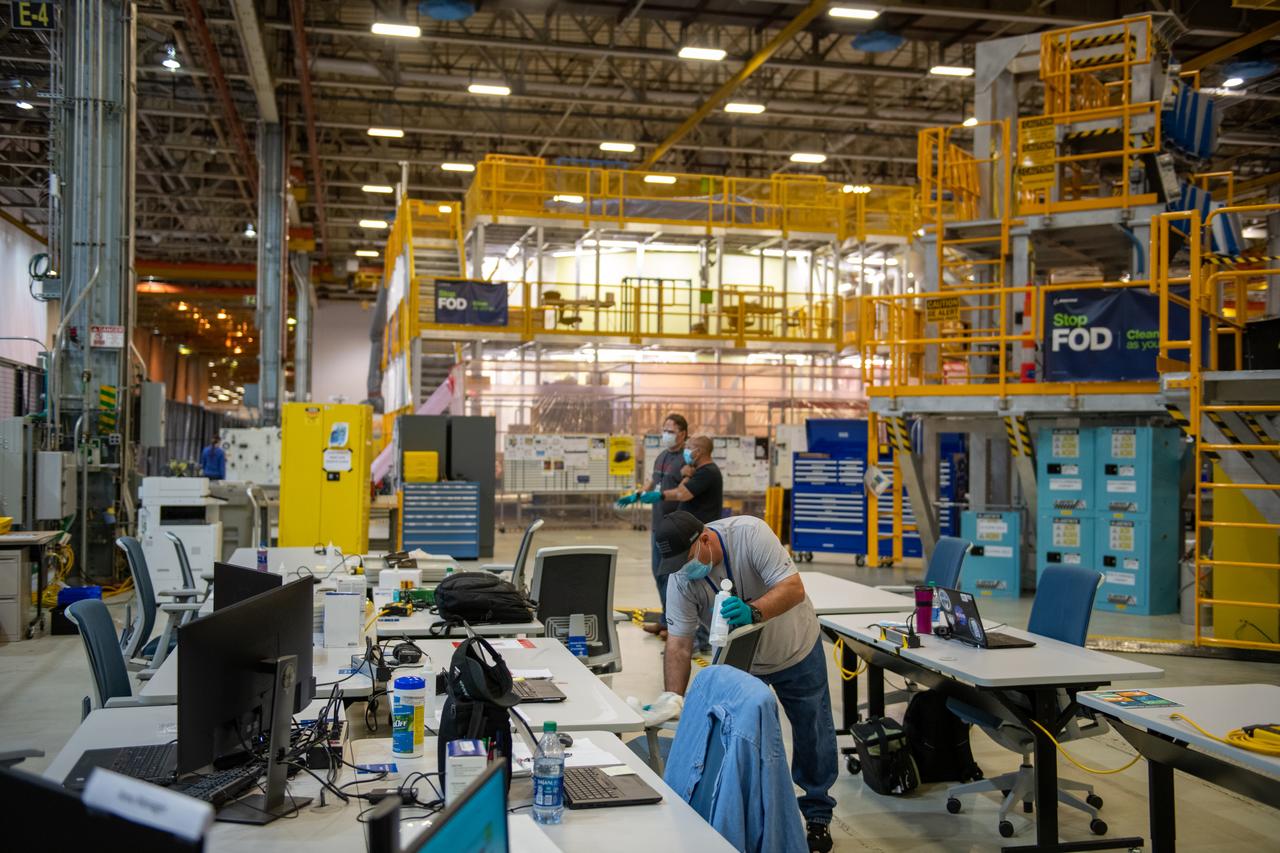
Employees wear personal protective gear at Michoud Assembly Facility as the facility transitioned to Stage 3 of NASA’s Framework for Return To On-Site Work. Employees wear the appropriate personal protective equipment (PPE) and/or cloth face coverings as required for assigned tasks. Access to the facility is limited to authorized personnel working on mission-critical tasks that must be conducted onsite. Mission-critical tasks include slowly and methodically resuming Space Launch System (SLS) Core Stage and Orion production activities, particularly critical path deliverables to support the Artemis Program, at a pace that limits personnel and follows federal guidelines for social distancing and use of personal protective equipment such as face masks. For more information about SLS, visit nasa.gov/sls.
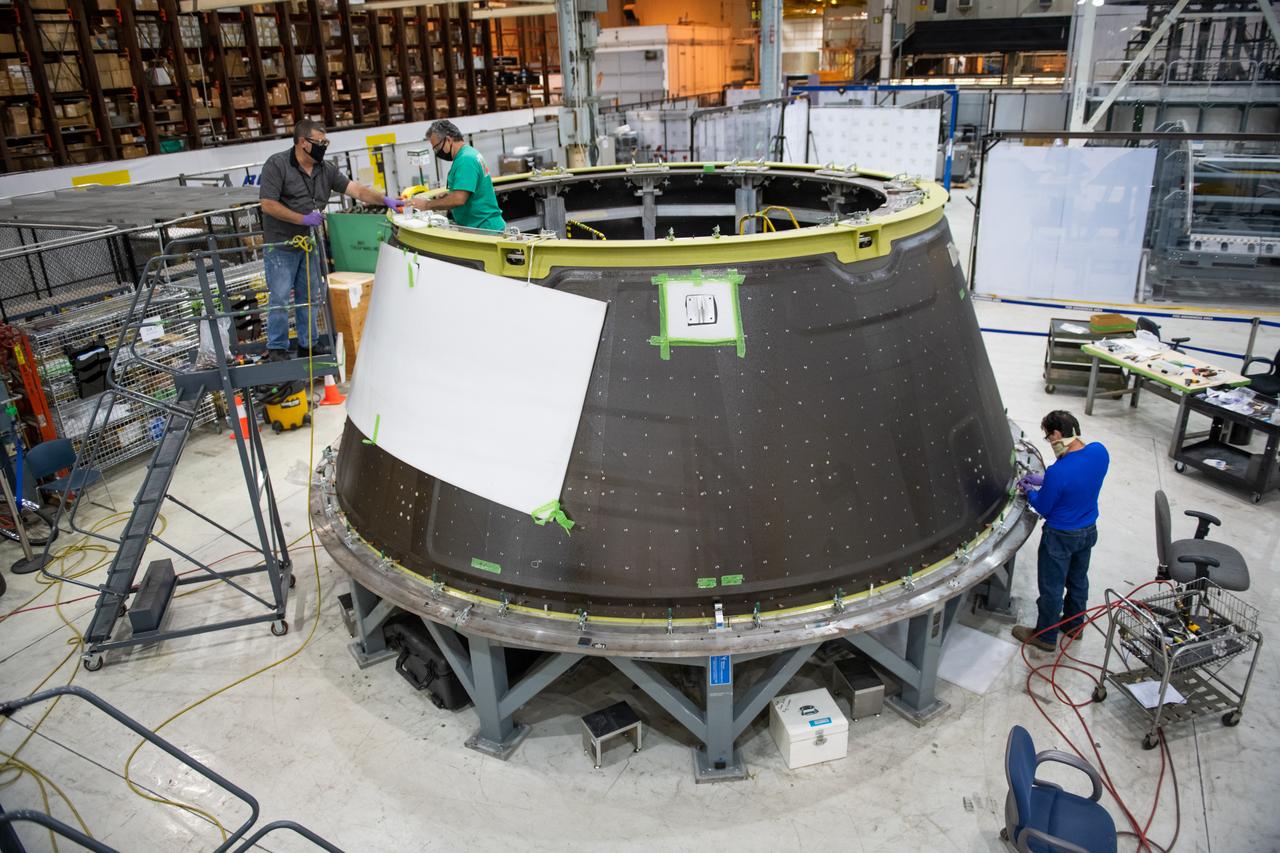
Employees wear personal protective gear at Michoud Assembly Facility as the facility transitioned to Stage 3 of NASA’s Framework for Return To On-Site Work. Employees wear the appropriate personal protective equipment (PPE) and/or cloth face coverings as required for assigned tasks. Access to the facility is limited to authorized personnel working on mission-critical tasks that must be conducted onsite. Mission-critical tasks include slowly and methodically resuming Space Launch System (SLS) Core Stage and Orion production activities, particularly critical path deliverables to support the Artemis Program, at a pace that limits personnel and follows federal guidelines for social distancing and use of personal protective equipment such as face masks. For more information about SLS, visit nasa.gov/sls.
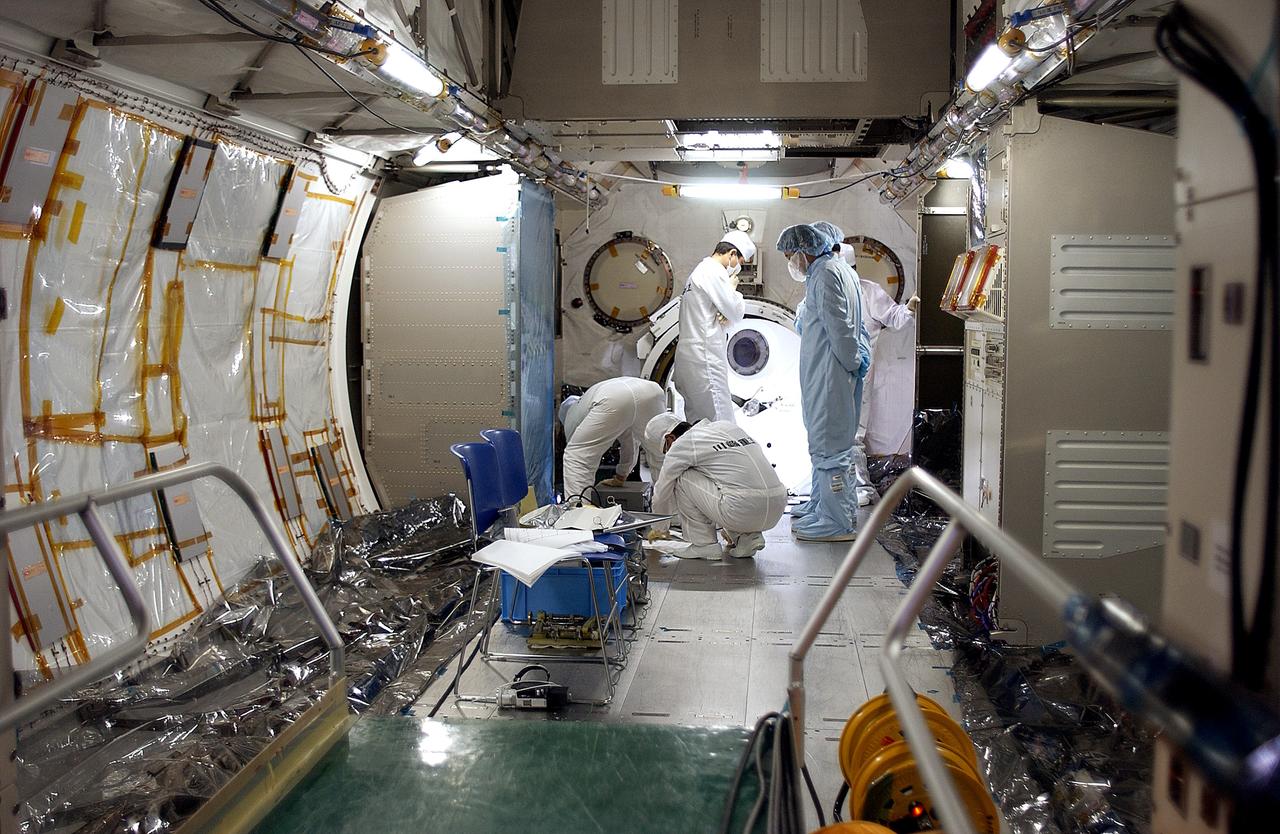
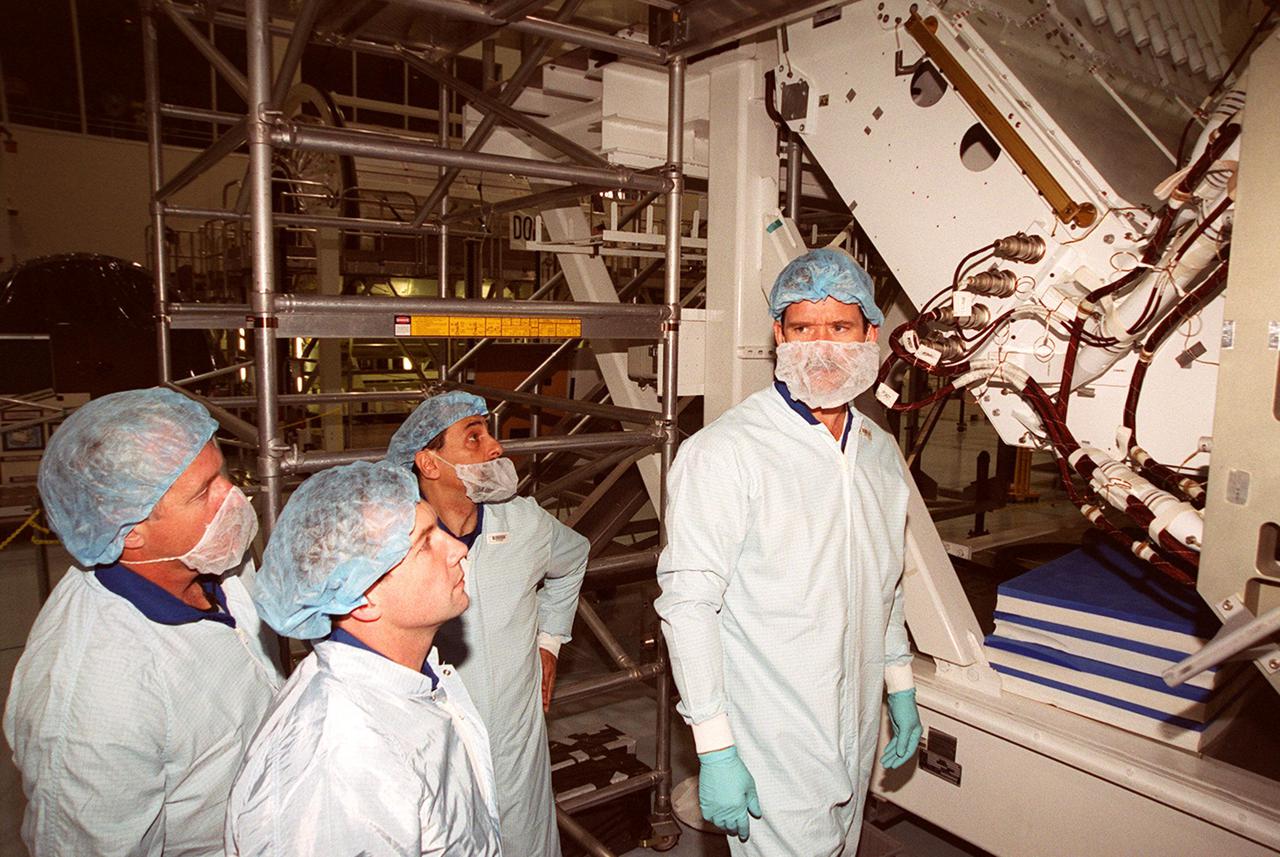
KENNEDY SPACE CENTER, FLA. - In the Space Station Processing Facility, Japanese astronaut Koichi Wakata, dressed in blue protective clothing (at right), looks at the inside of the Pressurized Module, or PM, part of the Japanese Experiment Module (JEM), along with technicians. The PM provides a shirt-sleeve environment in which astronauts on the International Space Station can conduct microgravity experiments. There are a total of 23 racks, including 10 experiment racks, inside the PM providing a power supply, communications, air conditioning, hardware cooling, water control and experiment support functions.
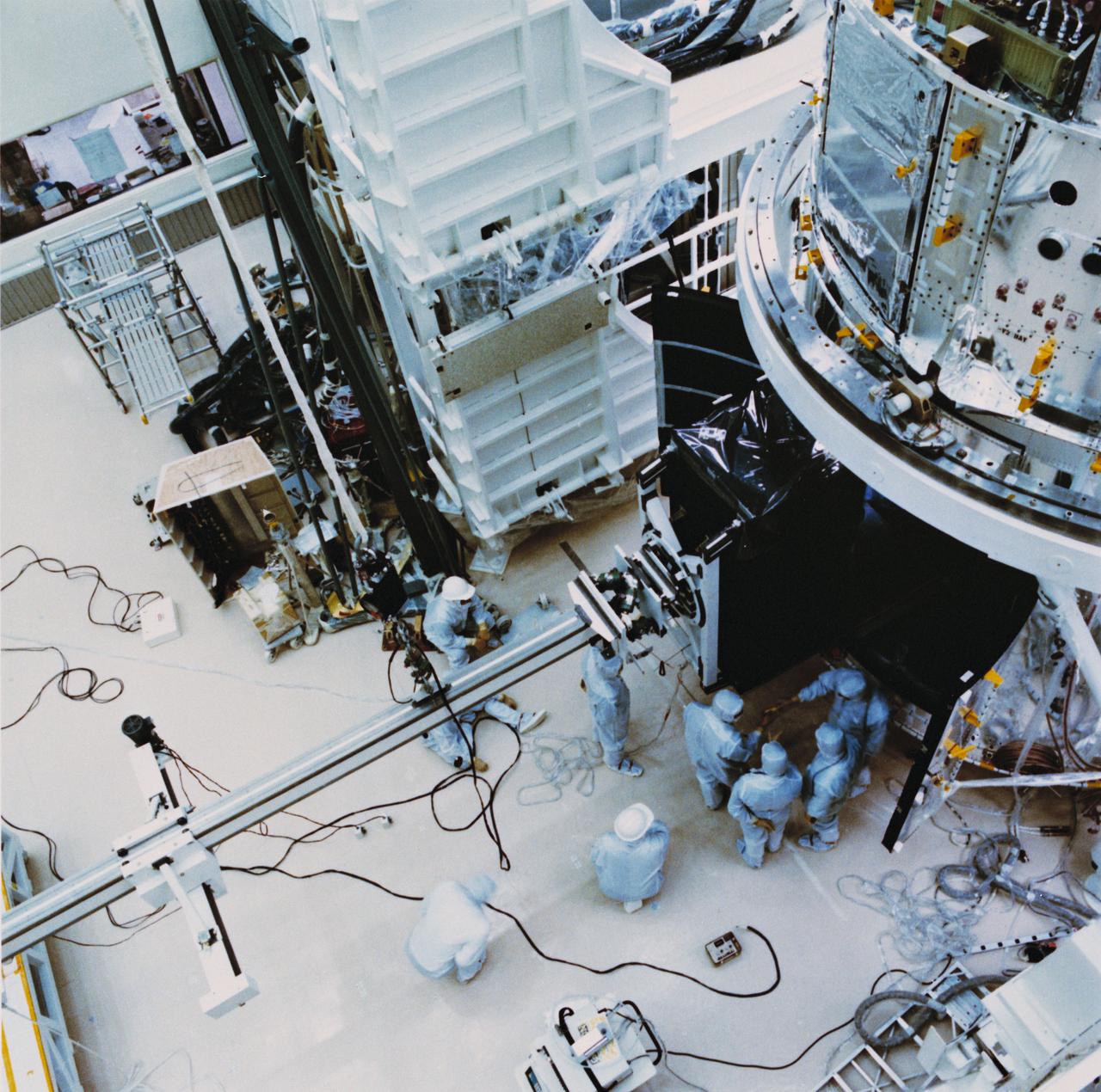
A mechanical arm positions the axial scientific instrument (SI) module (orbital replacement unit (ORU)) just outside the open doors of the Hubble Space Telescope (HST) Support System Module (SSM) as clean-suited technicians oversee the process. HST assembly is being completed at the Lockheed Facility in Sunnyvale, California.
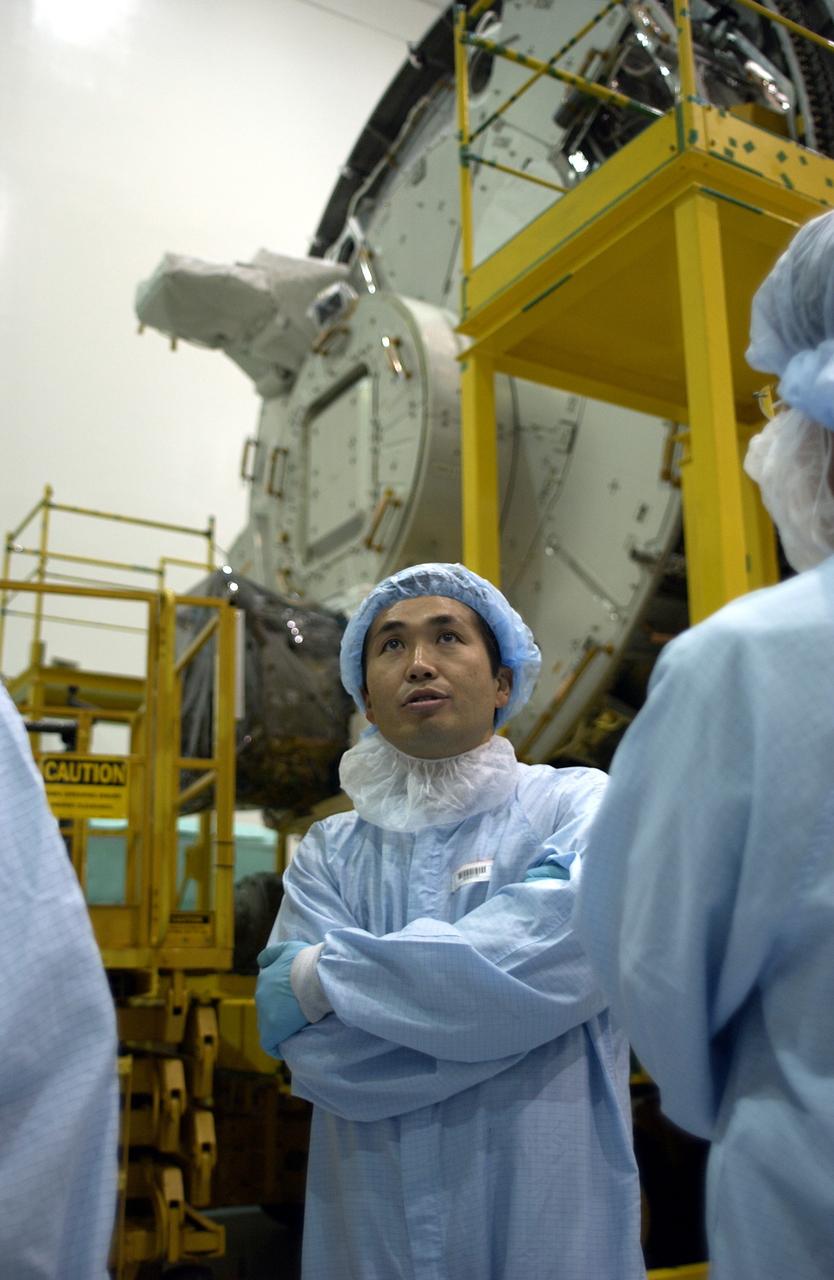
KENNEDY SPACE CENTER, FLA. - In the Space Station Processing Facility, Japanese astronaut Koichi Wakata is dressed in protective clothing before entering the Pressurized Module, or PM, behind him. Part of the Japanese Experiment Module (JEM), the PM provides a shirt-sleeve environment in which astronauts on the International Space Station can conduct microgravity experiments. There are a total of 23 racks, including 10 experiment racks, inside the PM providing a power supply, communications, air conditioning, hardware cooling, water control and experiment support functions.
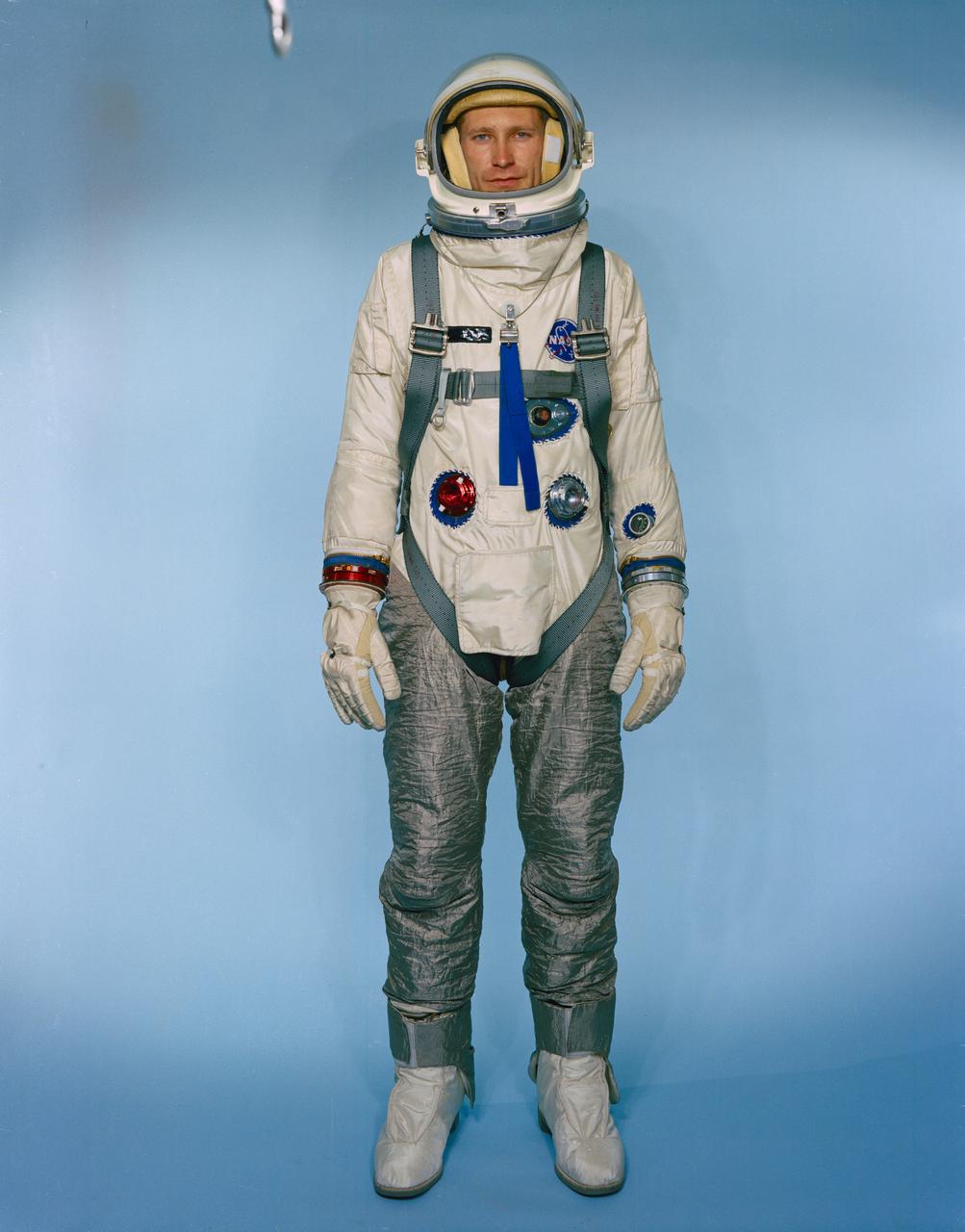
S66-31019 (May 1966) --- Test subject Fred Spross, Crew Systems Division, wears the Gemini-9 configured extravehicular spacesuit assembly. The legs are covered with Chromel R, which is a cloth woven from stainless steel fibers, used to protect the astronaut and suit from the hot exhaust thrust of the Astronaut Maneuvering Unit (AMU). Astronaut Eugene A. Cernan will wear this spacesuit during his Gemini-9A extravehicular activity (EVA). Photo credit: NASA
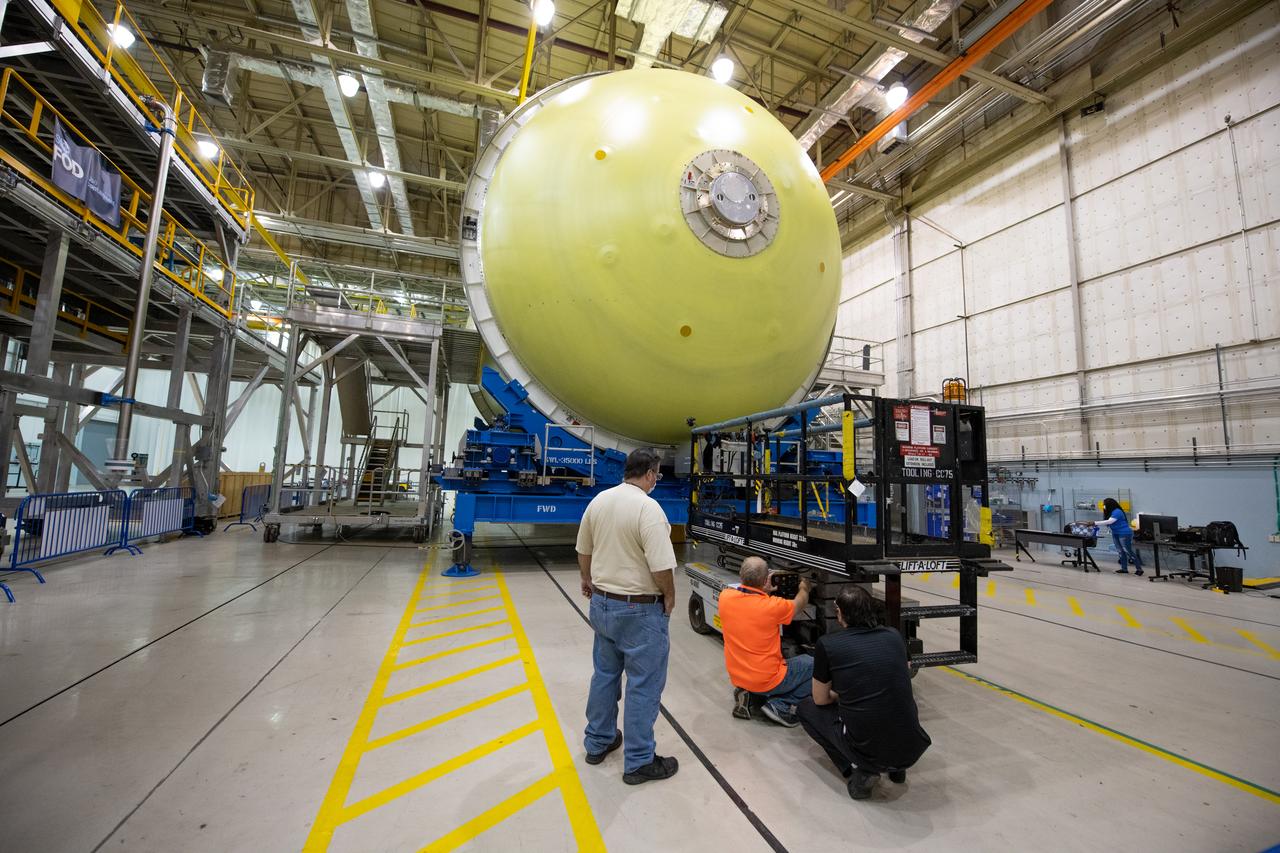
Employees wear personal protective gear at Michoud Assembly Facility as the facility transitioned to Stage 3 of NASA’s Framework for Return To On-Site Work. Employees wear the appropriate personal protective equipment (PPE) and/or cloth face coverings as required for assigned tasks. Access to the facility is limited to authorized personnel working on mission-critical tasks that must be conducted onsite. Mission-critical tasks include slowly and methodically resuming Space Launch System (SLS) Core Stage and Orion production activities, particularly critical path deliverables to support the Artemis Program, at a pace that limits personnel and follows federal guidelines for social distancing and use of personal protective equipment such as face masks. For more information about SLS, visit nasa.gov/sls.
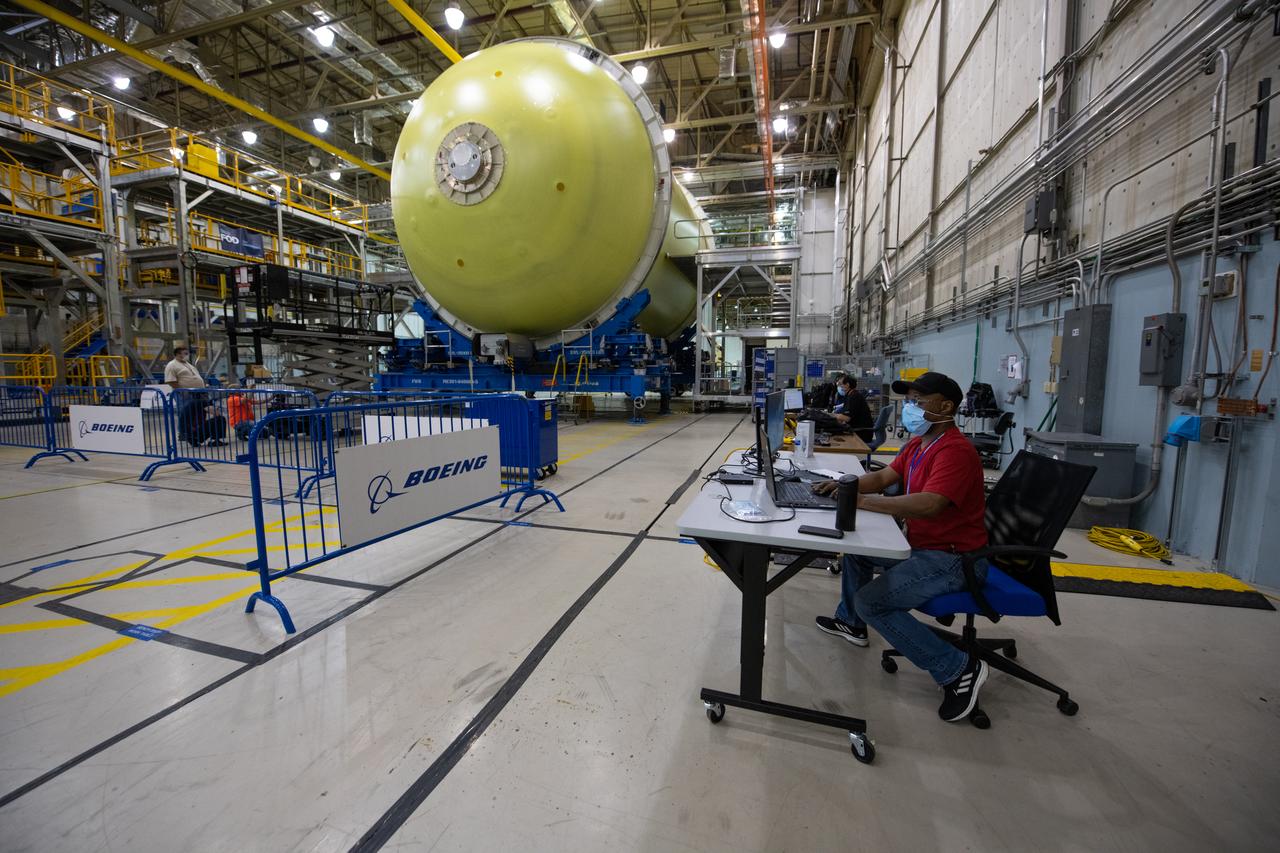
Employees wear personal protective gear at Michoud Assembly Facility as the facility transitioned to Stage 3 of NASA’s Framework for Return To On-Site Work. Employees wear the appropriate personal protective equipment (PPE) and/or cloth face coverings as required for assigned tasks. Access to the facility is limited to authorized personnel working on mission-critical tasks that must be conducted onsite. Mission-critical tasks include slowly and methodically resuming Space Launch System (SLS) Core Stage and Orion production activities, particularly critical path deliverables to support the Artemis Program, at a pace that limits personnel and follows federal guidelines for social distancing and use of personal protective equipment such as face masks. For more information about SLS, visit nasa.gov/sls.
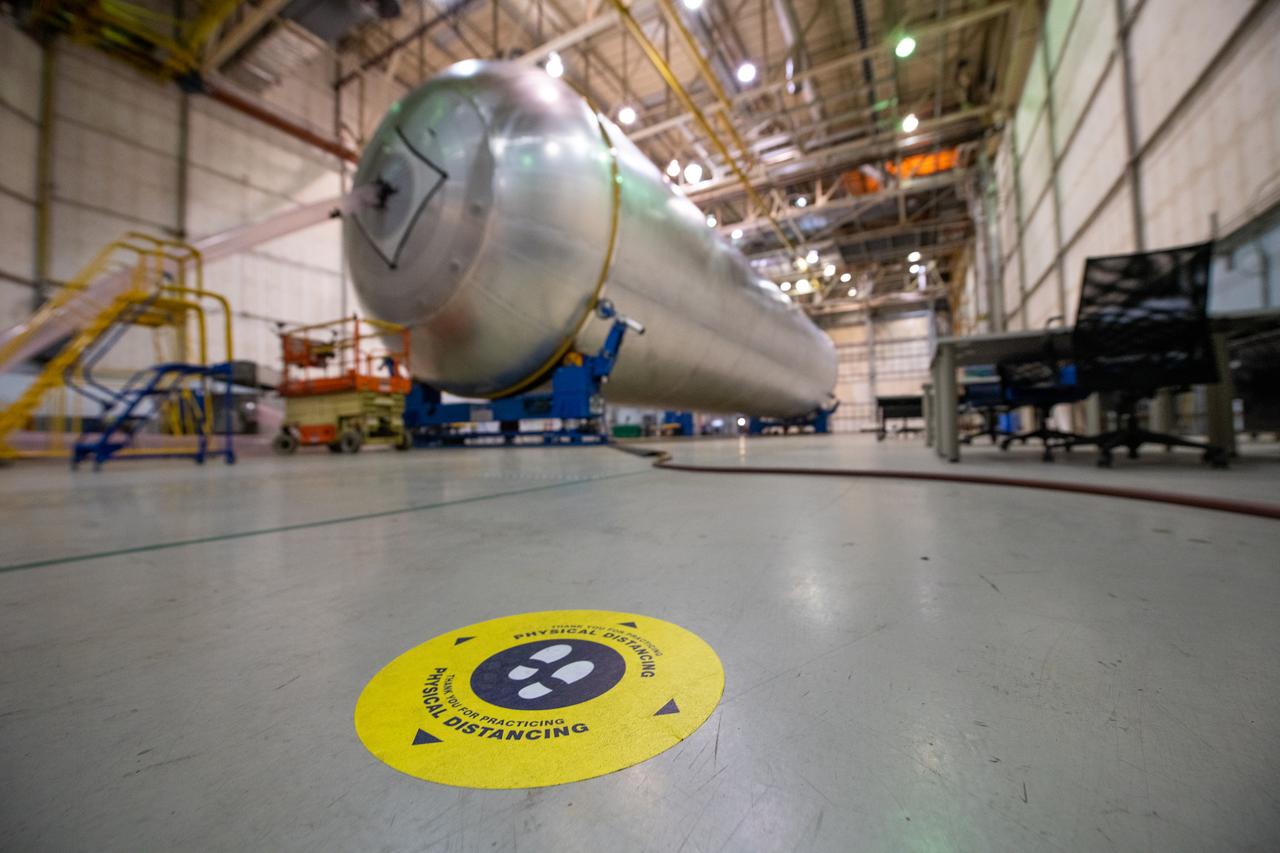
Employees wear personal protective gear at Michoud Assembly Facility as the facility transitioned to Stage 3 of NASA’s Framework for Return To On-Site Work. Employees wear the appropriate personal protective equipment (PPE) and/or cloth face coverings as required for assigned tasks. Access to the facility is limited to authorized personnel working on mission-critical tasks that must be conducted onsite. Mission-critical tasks include slowly and methodically resuming Space Launch System (SLS) Core Stage and Orion production activities, particularly critical path deliverables to support the Artemis Program, at a pace that limits personnel and follows federal guidelines for social distancing and use of personal protective equipment such as face masks. For more information about SLS, visit nasa.gov/sls.
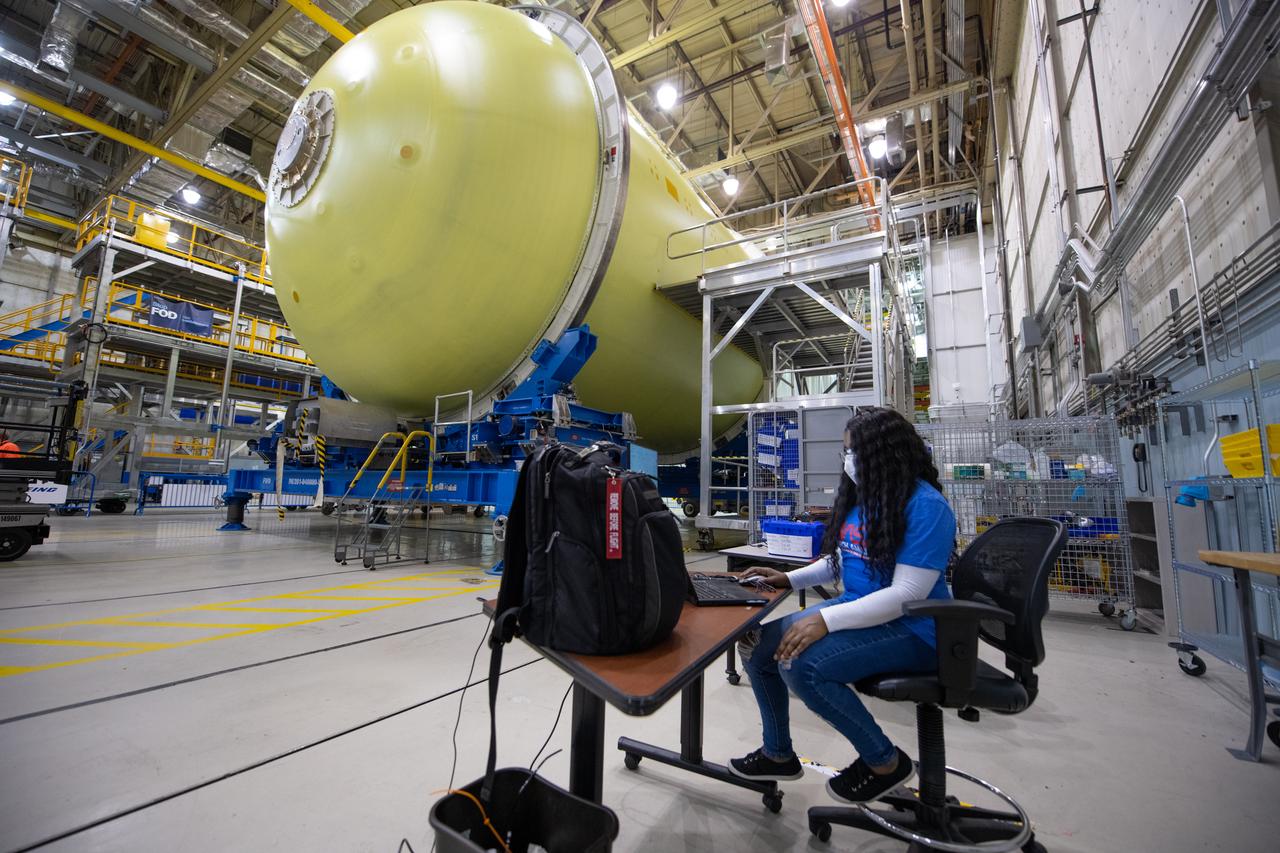
Employees wear personal protective gear at Michoud Assembly Facility as the facility transitioned to Stage 3 of NASA’s Framework for Return To On-Site Work. Employees wear the appropriate personal protective equipment (PPE) and/or cloth face coverings as required for assigned tasks. Access to the facility is limited to authorized personnel working on mission-critical tasks that must be conducted onsite. Mission-critical tasks include slowly and methodically resuming Space Launch System (SLS) Core Stage and Orion production activities, particularly critical path deliverables to support the Artemis Program, at a pace that limits personnel and follows federal guidelines for social distancing and use of personal protective equipment such as face masks. For more information about SLS, visit nasa.gov/sls.

S66-33162 (May 1966) --- Test subject Fred Spross, Crew Systems Division, wears configured extravehicular spacesuit assembly and Extravehicular Life Support System chest pack. The spacesuit legs are covered with Chromel R, which is a cloth woven from stainless steel fibers, used to protect the suit and astronaut from the hot exhaust thrust of the Astronaut Maneuvering Unit backpack. The Gemini spacesuit, backpack and chest pack comprise the AMU, a system which is essentially a miniature manned spacecraft. Astronaut Eugene A. Cernan will wear the AMU during his Gemini-9A extravehicular activity (EVA). Photo credit: NASA

S66-33167 (May 1966) --- Test subject Fred Spross, Crew Systems Division, wears an Astronaut Maneuvering Unit (AMU). The Gemini spacesuit, AMU backpack, and the Extravehicular Life Support System chest pack comprises the AMU, a system which is essentially a miniature manned spacecraft. The spacesuit legs are covered with Chromel R, which is a cloth woven from stainless steel fibers, used to protect the suit and astronaut from the hot exhaust thrust of the AMU backpack. Astronaut Eugene A. Cernan will wear the AMU during his Gemini-9A extravehicular activity (EVA). Photo credit: NASA
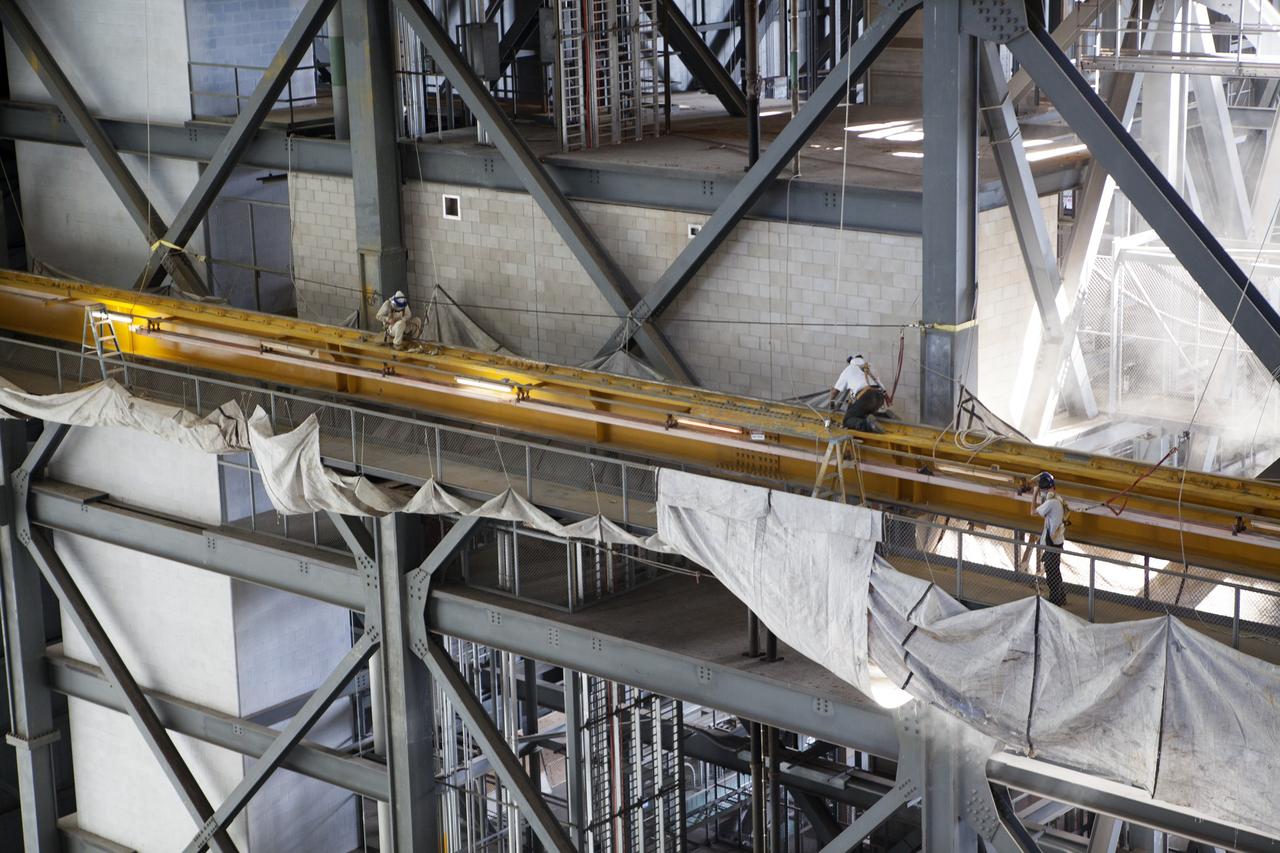
CAPE CANAVERAL, Fla. – Inside the Vehicle Assembly Building, or VAB, at NASA’s Kennedy Space Center in Florida, construction workers are hanging protective cloths around a work level near High Bay 3. Modifications are underway in the VAB to prepare High Bay 3 for a new platform system. The modifications are part of a centerwide refurbishment initiative under the Ground Systems Development and Operations Program. High bay 3 is being refurbished to accommodate NASA’s Space Launch System and a variety of other spacecraft. For more information, visit http://www.nasa.gov/exploration/systems/ground/index.html. Photo credit: NASA/Dimitri Gerondidakis
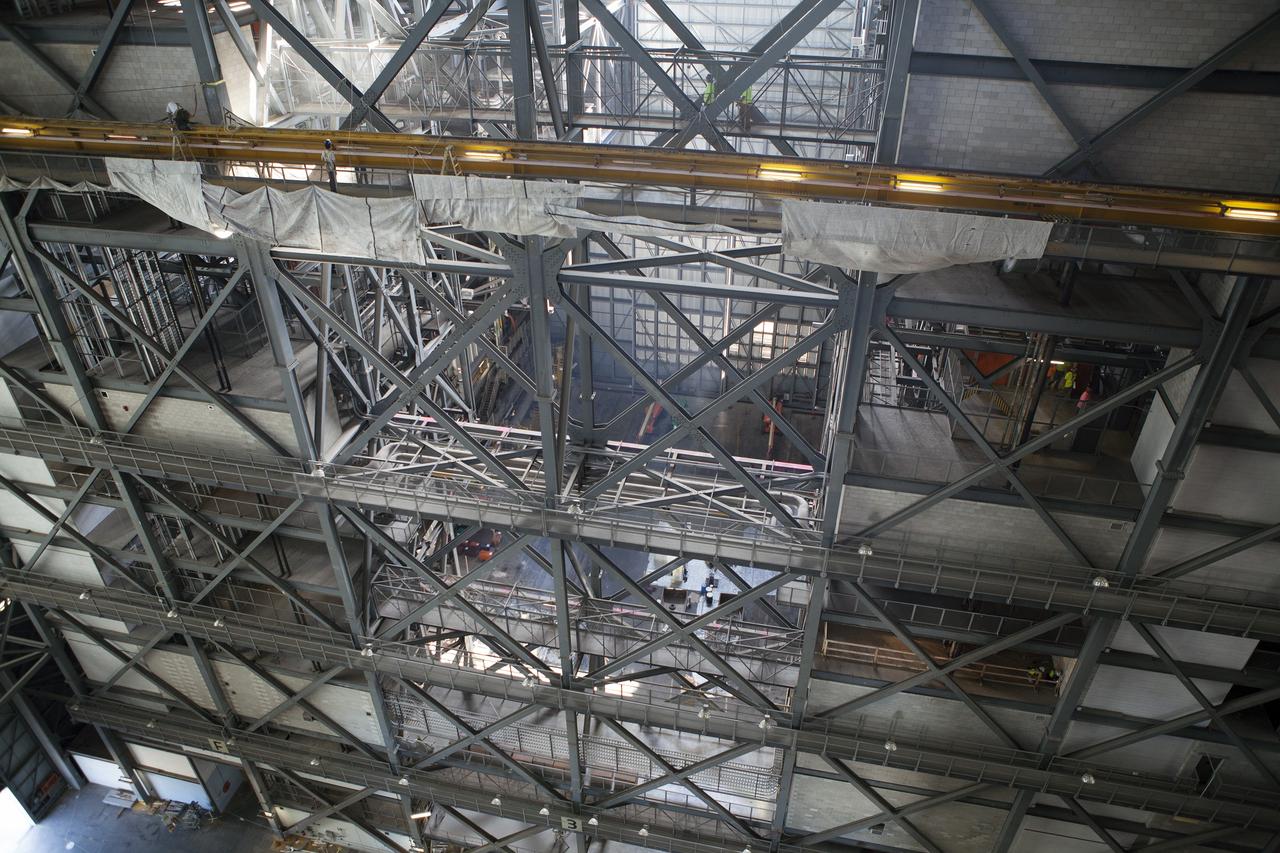
CAPE CANAVERAL, Fla. – Inside the Vehicle Assembly Building, or VAB, at NASA’s Kennedy Space Center in Florida, protective cloths are being placed around a work level near High Bay 3. Modifications are underway in the VAB to prepare High Bay 3 for a new platform system. The modifications are part of a centerwide refurbishment initiative under the Ground Systems Development and Operations Program. High bay 3 is being refurbished to accommodate NASA’s Space Launch System and a variety of other spacecraft. For more information, visit http://www.nasa.gov/exploration/systems/ground/index.html. Photo credit: NASA/Dimitri Gerondidakis
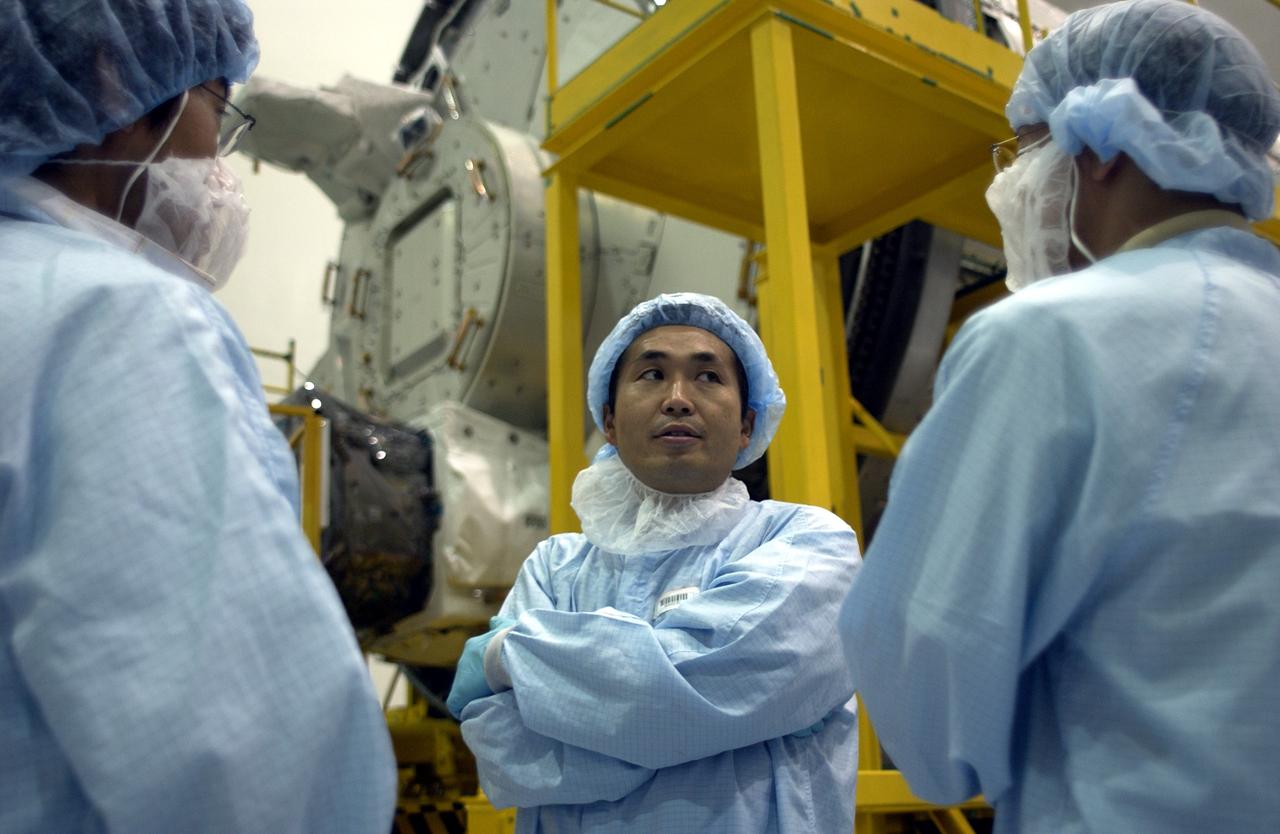
KENNEDY SPACE CENTER, FLA. - In the Space Station Processing Facility, Japanese astronaut Koichi Wakata, dressed in protective clothing, talks with workers before entering the Pressurized Module, or PM, behind him. Part of the Japanese Experiment Module (JEM), the PM provides a shirt-sleeve environment in which astronauts on the International Space Station can conduct microgravity experiments. There are a total of 23 racks, including 10 experiment racks, inside the PM providing a power supply, communications, air conditioning, hardware cooling, water control and experiment support functions.
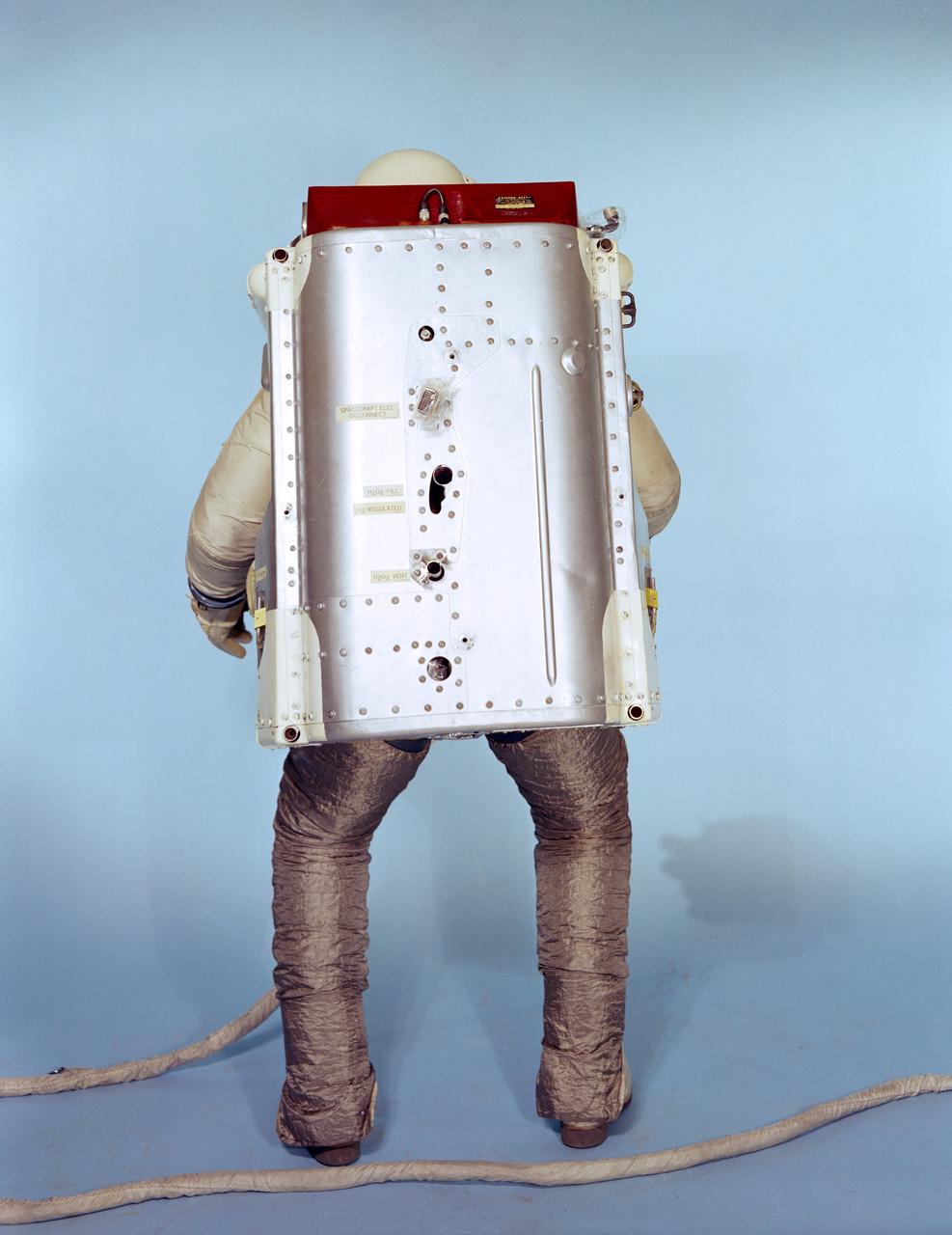
S66-33163 (May 1966) --- Rear view of the Astronaut Maneuvering Unit (AMU), worn by test subject Fred Spross, Crew Systems Division. The Gemini spacesuit, backpack and chest pack comprise the AMU, a system which is essentially a miniature manned spacecraft. The spacesuit legs are covered with Chromel R, which is a cloth woven from stainless steel fibers, used to protect the astronaut and suit from the hot exhaust thrust of the AMU backpack. Astronaut Eugene A. Cernan will wear the AMU during his Gemin-9A extravehicular activity (EVA). Photo credit: NASA
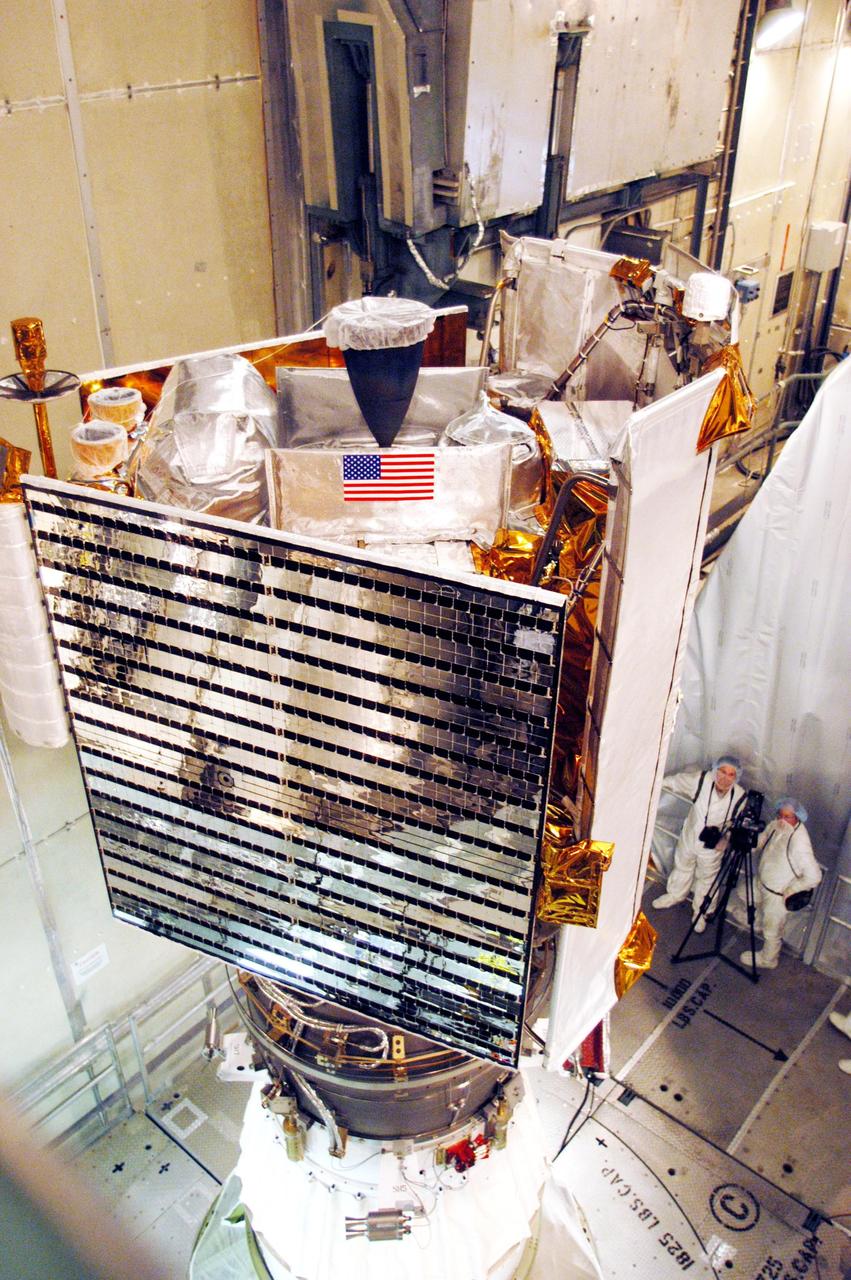
KENNEDY SPACE CENTER, FLA. - On Launch Pad 17-B at Cape Canaveral Air Force Station, the MESSENGER (Mercury Surface, Space Environment, Geochemistry and Ranging) spacecraft is ready for installation of the fairing, a molded structure that fits flush with the outside surface of the Delta II upper stage booster and forms an aerodynamically smooth joint, protecting the spacecraft during launch. Seen on the left is one of the solar panels on the spacecraft. On the right is part of the heat-resistant, ceramic-cloth sunshade that will protect the spacecraft’s instruments as MESSENGER orbits the Mercury where the surface reaches a high temperature near 840 degrees Fahrenheit and the solar intensity can be 11 times greater than on Earth. MESSENGER is scheduled to launch Aug. 2 aboard a Boeing Delta II rocket and is expected to enter Mercury orbit in March 2011. MESSENGER was built for NASA by the Johns Hopkins University Applied Physics Laboratory in Laurel, Md.
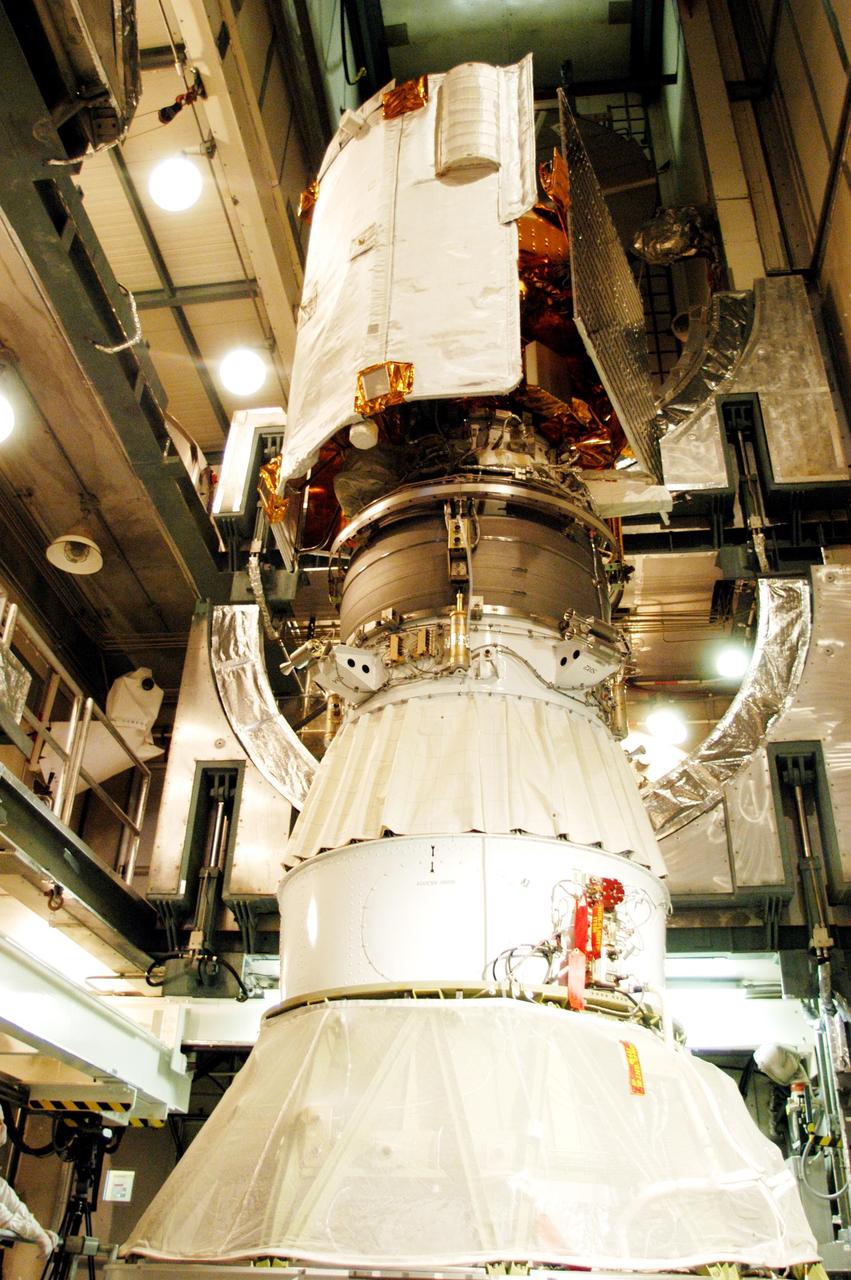
KENNEDY SPACE CENTER, FLA. - On Launch Pad 17-B at Cape Canaveral Air Force Station, the MESSENGER (Mercury Surface, Space Environment, Geochemistry and Ranging) spacecraft is seen atop the Delta II upper stage booster (middle) and the Delta II launch vehicle below. The spacecraft is ready for installation of the fairing, a molded structure that fits flush with the outside surface of the upper stage booster and forms an aerodynamically smooth joint, protecting the spacecraft during launch. Seen on the right is one of the solar panels on the spacecraft. On the left is the heat-resistant, ceramic-cloth sunshade that will protect the spacecraft’s instruments as MESSENGER orbits the Mercury where the surface reaches a high temperature near 840 degrees Fahrenheit and the solar intensity can be 11 times greater than on Earth. MESSENGER is scheduled to launch Aug. 2 and is expected to enter Mercury orbit in March 2011. MESSENGER was built for NASA by the Johns Hopkins University Applied Physics Laboratory in Laurel, Md.
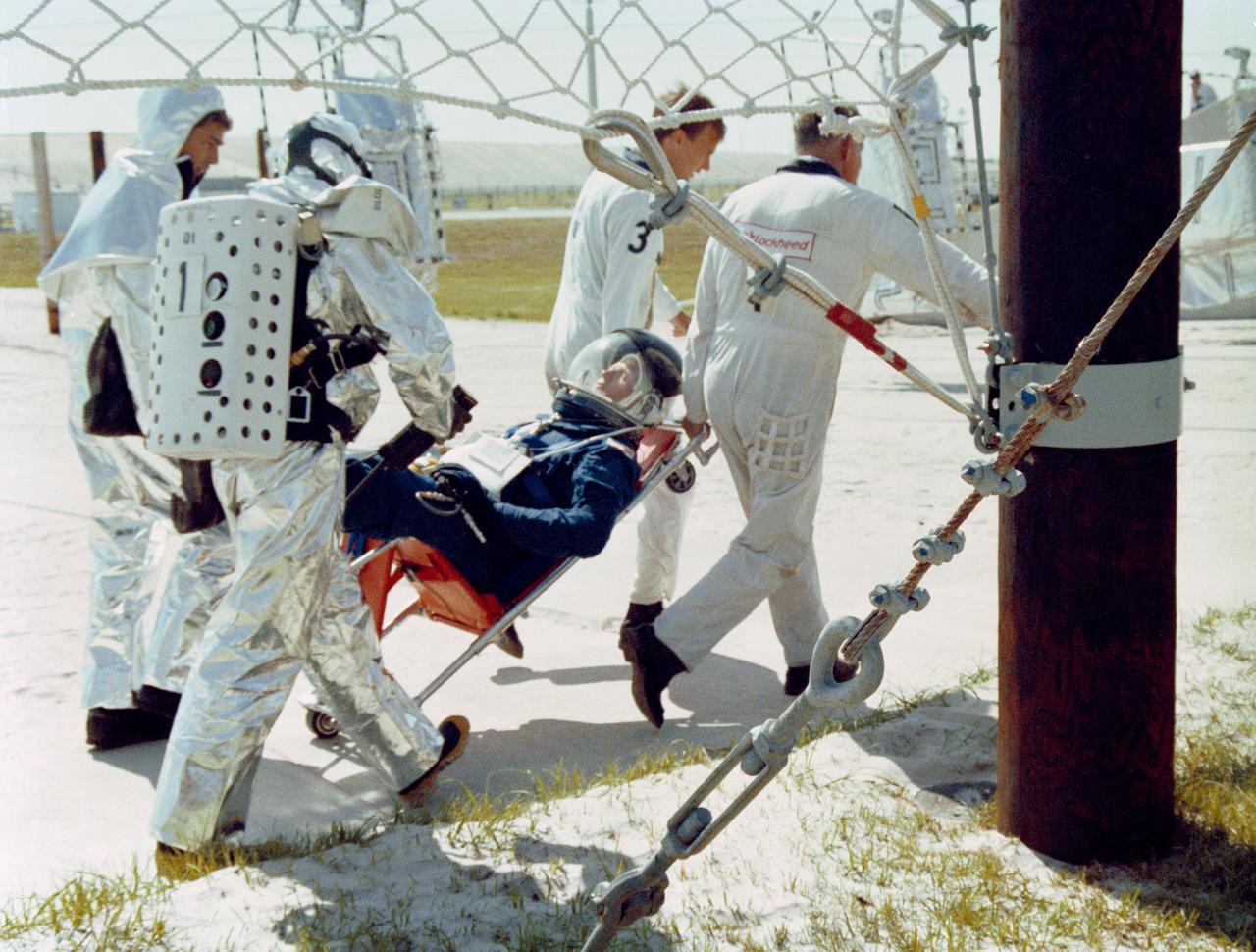
S88-40898 (4 May 1988) --- Astronauts, members of the orbiter close-out crew and fire and rescue personnel participate in a simulated emergency egress exercise near the slide wire termination point bunker at Launch Pad 39B. The simulated exercise was performed to familiarize personnel with evacuation routes as well as emergency equipment and procedures. Reasons for conducting the emergency exercises include the need to validate recent post-Challenger upgrades to the launch pad's emergency escape system and the new procedures developed in preparation for STS-26. (NOTE: The astronaut pictured and many of the others who participated in the exercises are not members of STS-26 prime crew).
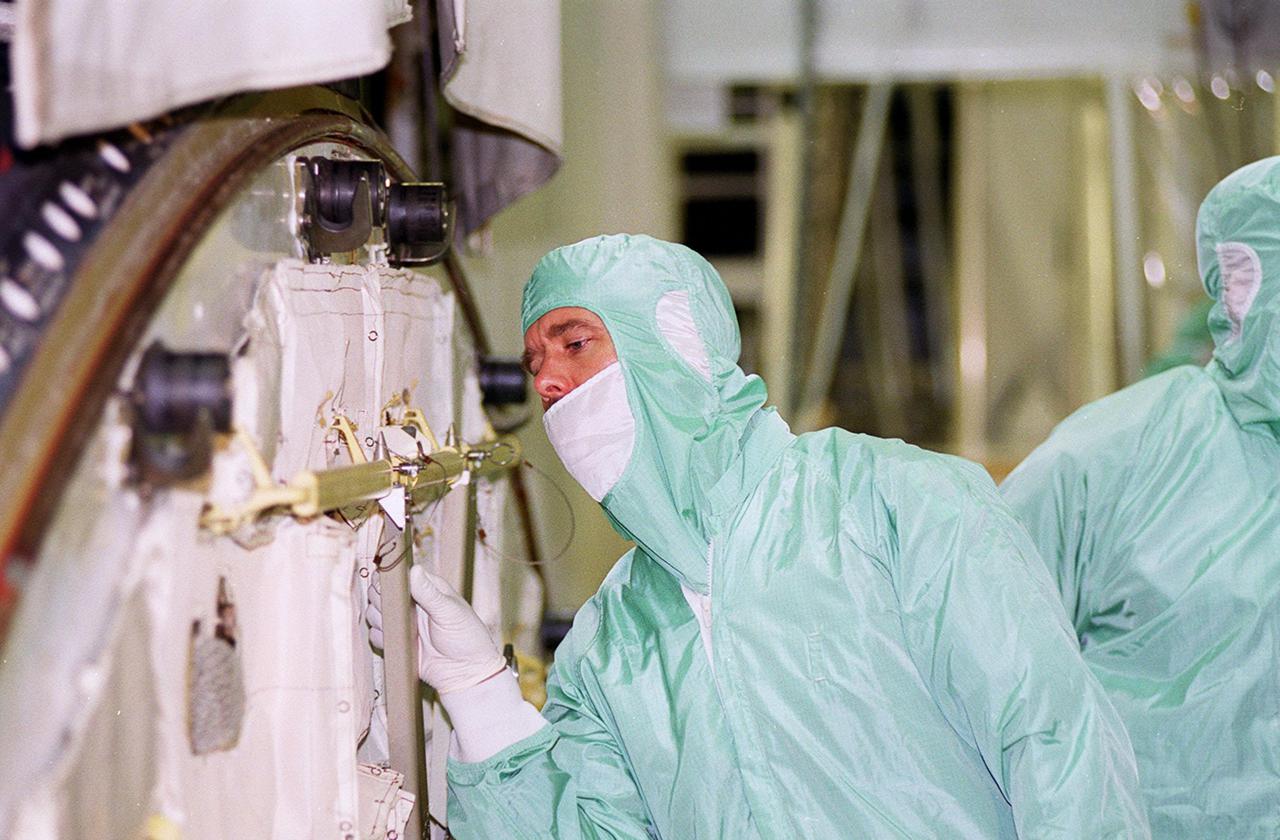
Dressed in protective clothing, STS-100 Mission Specialist Chris Hadfield looks at equipment in the payload bay of orbiter Endeavour during a Crew Equipment Interface Test (CEIT). Other crew members at KSC for the CEIT are Commander Kent V. Rominger, Pilot Jeffrey S. Ashby and Mission Specialists Scott Parazynski, John L. Phillips, Umberto Guidoni, who is with the European Space Agency, and Yuri Lonchakov, who is with the Russian Aviation and Space Agency. Hadfield is with the Canadian Space Agency. Endeavour is also carrying the Multi-Purpose Logistics Module Raffaello to the International Space Station. Raffaello carries six system racks and two storage racks for the U.S. Lab. Launch of mission STS-100 is scheduled for April 19 at 2:41 p.m. EDT from Launch Pad 39A
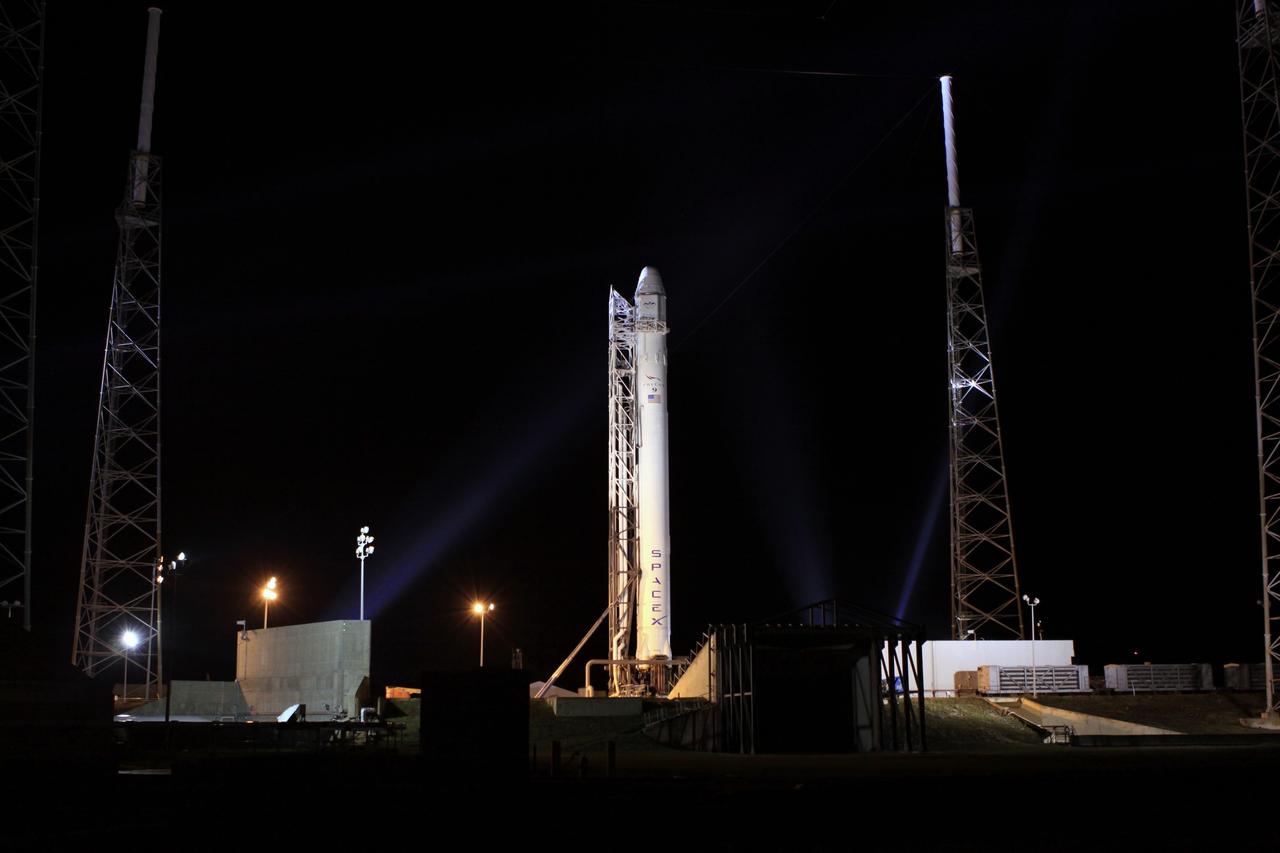
CAPE CANAVERAL, Fla. – The SpaceX Falcon 9 rocket is nestled between the lightning protection system towers surrounding the pad at Space Launch Complex-40 on Cape Canaveral Air Force Station in Florida. Liftoff with the SpaceX Dragon capsule aboard is set for 4:55 a.m. EDT on May 19. The launch will be the company's second demonstration test flight for NASA's Commercial Orbital Transportation Services Program, or COTS. During the flight, the capsule will conduct a series of check-out procedures to test and prove its systems, including rendezvous and berthing with the International Space Station. If the capsule performs as planned, the cargo and experiments it is carrying will be transferred to the station. The cargo includes food, water and provisions for the station’s Expedition crews, such as clothing, batteries and computer equipment. Under COTS, NASA has partnered with two aerospace companies to deliver cargo to the station. For more information, visit http://www.nasa.gov/spacex. Photo credit: NASA/Jim Grossmann
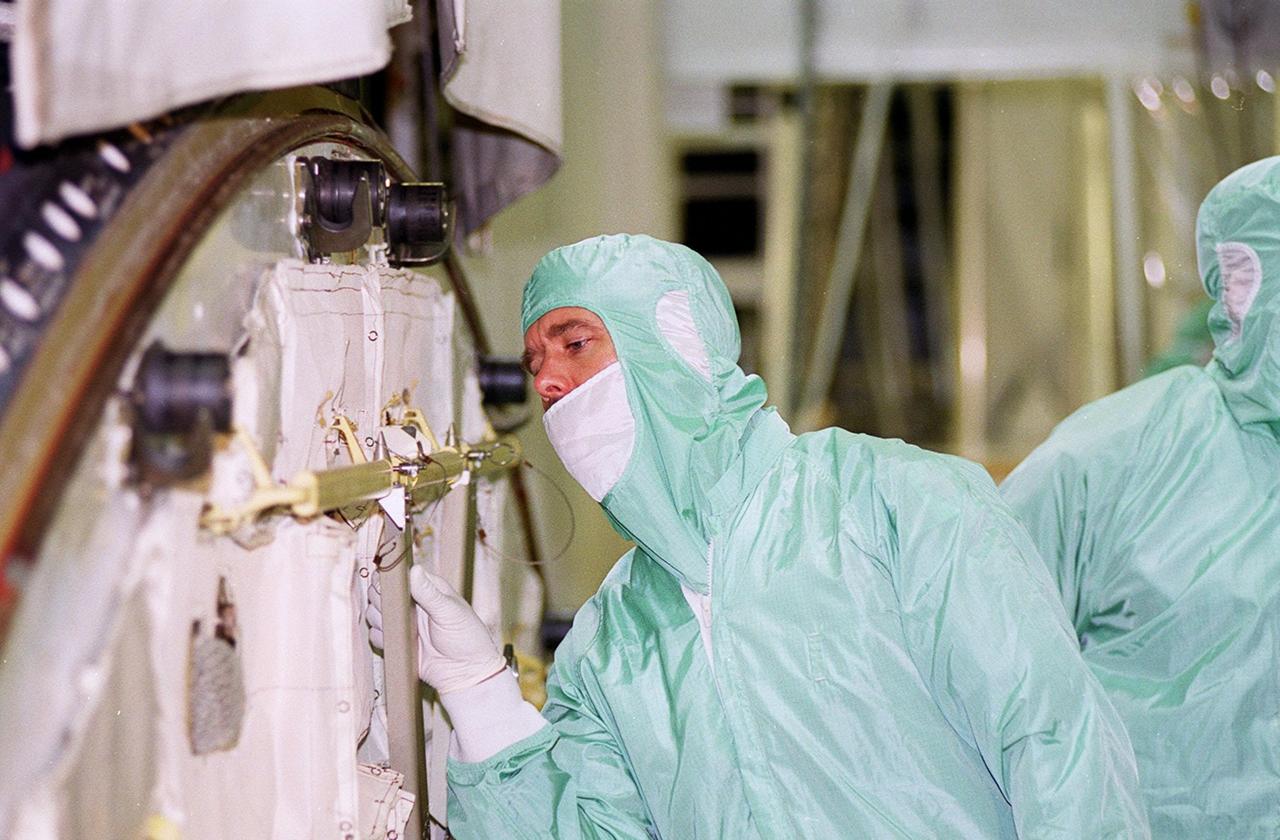
Dressed in protective clothing, STS-100 Mission Specialist Chris Hadfield looks at equipment in the payload bay of orbiter Endeavour during a Crew Equipment Interface Test (CEIT). Other crew members at KSC for the CEIT are Commander Kent V. Rominger, Pilot Jeffrey S. Ashby and Mission Specialists Scott Parazynski, John L. Phillips, Umberto Guidoni, who is with the European Space Agency, and Yuri Lonchakov, who is with the Russian Aviation and Space Agency. Hadfield is with the Canadian Space Agency. Endeavour is also carrying the Multi-Purpose Logistics Module Raffaello to the International Space Station. Raffaello carries six system racks and two storage racks for the U.S. Lab. Launch of mission STS-100 is scheduled for April 19 at 2:41 p.m. EDT from Launch Pad 39A
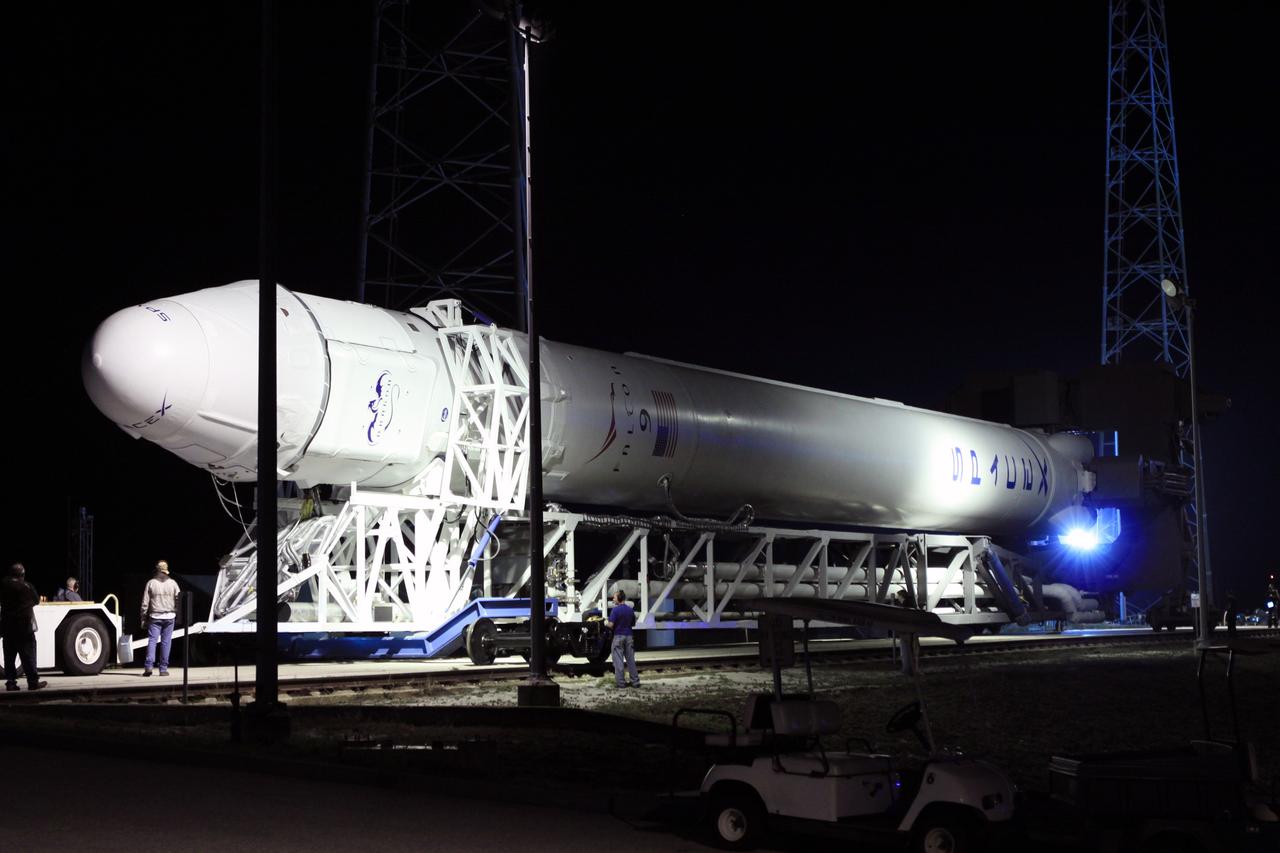
CAPE CANAVERAL, Fla. – The SpaceX Falcon 9 rocket rolls between the lightning protection system towers surrounding the pad at Space Launch Complex-40 on Cape Canaveral Air Force Station in Florida. Liftoff with the SpaceX Dragon capsule aboard is set for 4:55 a.m. EDT on May 19. The launch will be the company's second demonstration test flight for NASA's Commercial Orbital Transportation Services Program, or COTS. During the flight, the capsule will conduct a series of check-out procedures to test and prove its systems, including rendezvous and berthing with the International Space Station. If the capsule performs as planned, the cargo and experiments it is carrying will be transferred to the station. The cargo includes food, water and provisions for the station’s Expedition crews, such as clothing, batteries and computer equipment. Under COTS, NASA has partnered with two aerospace companies to deliver cargo to the station. For more information, visit http://www.nasa.gov/spacex. Photo credit: NASA/Jim Grossmann
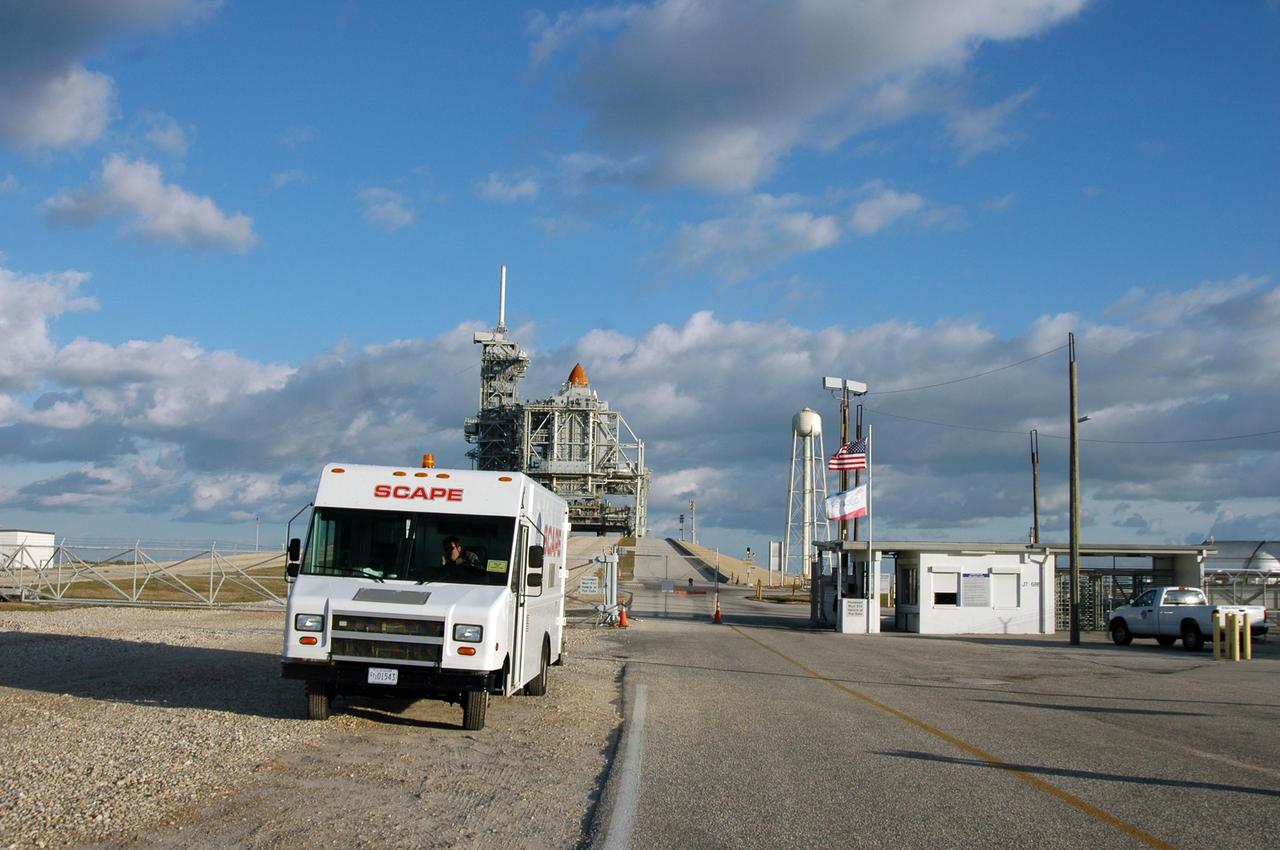
KENNEDY SPACE CENTER, FLA. -- On the morning of the second launch attempt, Space Shuttle Discovery is ready on Launch Pad 39B. The SCAPE vehicle (Self-Contained Atmospheric Protection Ensemble) at left contains the equipment necessary to support recovery, if necessary, including recovery crew SCAPE suits, liquid air packs, and a crew who assist recovery personnel in suiting-up in protective clothing. It is present before every launch and at every landing. The first launch attempt of STS-116 Dec. 7 was postponed due a low cloud ceiling over Kennedy Space Center. The next launch attempt was scheduled for Saturday, Dec. 9, at 8:47 p.m. This will be Discovery's 33rd mission and the first night launch since 2002. The 20th shuttle mission to the International Space Station, STS-116 carries another truss segment, P5. It will serve as a spacer, mated to the P4 truss that was attached in September. After installing the P5, the crew will reconfigure and redistribute the power generated by two pairs of U.S. solar arrays. Landing is expected Dec. 19 at KSC. Photo credit: NASA/Ken Thornsley

Members of the STS-100 crew, dressed in protective clothing, take a closer look at part of the mission payload, the Canadian robotic arm, SSRMS, which is on a workstand in the Space Station Processing Facility. From left are Mission Specialists John L. Phillips, Yuri V. Lonchakov, Umberto Guidoni, and Chris A. Hadfield. Lonchakov is with the Russian Space and Aviation Agency, Guidoni the European Space Agency, and Hadfield the Canadian Space Agency. The arm is 57.7 feet (17.6 meters) long when fully extended and has seven motorized joints. It is capable of handling large payloads and assisting with docking the Space Shuttle. The SSRMS is self-relocatable with a Latching End Effector, so it can be attached to complementary ports spread throughout the Station’s exterior surfaces. Mission STS-100 is scheduled to launch on Space Shuttle Endeavour April 19 at 2:41 p.m. EDT from Launch Pad 39A, KSC, with a crew of seven. Other crew members are Commander Kent V. Rominger, Pilot Jeffrey S. Ashby and Mission Specialist Scott E. Parazynski

Members of the STS-100 crew, dressed in protective clothing, take a look at part of the mission payload, the Canadian robotic arm, SSRMS, from the top of a workstand in the Space Station Processing Facility. From left are Mission Specialists John L. Phillips, Umberto Guidoni and Yuri V. Lonchakov. Guidoni is with the European Space Agency and Lonchakov is with the Russian Space and Aviation Agency. The arm is 57.7 feet (17.6 meters) long when fully extended and has seven motorized joints. It is capable of handling large payloads and assisting with docking the Space Shuttle. The SSRMS is self-relocatable with a Latching End Effector, so it can be attached to complementary ports spread throughout the Station’s exterior surfaces. Mission STS-100 is scheduled to launch on Space Shuttle Endeavour April 19 at 2:41 p.m. EDT from Launch Pad 39A, KSC, with a crew of seven. Other crew members are Commander Kent V. Rominger, Pilot Jeffrey S. Ashby and Mission Specialists Scott E. Parazynski and Chris A. Hadfield, who is with the Canadian Space Agency
Members of the STS-100 crew, dressed in protective clothing, take a closer look at part of the mission payload, the Canadian robotic arm, SSRMS, which is on a workstand in the Space Station Processing Facility. From left are Mission Specialists John L. Phillips, Yuri V. Lonchakov, Umberto Guidoni, and Chris A. Hadfield. Lonchakov is with the Russian Space and Aviation Agency, Guidoni the European Space Agency, and Hadfield the Canadian Space Agency. The arm is 57.7 feet (17.6 meters) long when fully extended and has seven motorized joints. It is capable of handling large payloads and assisting with docking the Space Shuttle. The SSRMS is self-relocatable with a Latching End Effector, so it can be attached to complementary ports spread throughout the Station’s exterior surfaces. Mission STS-100 is scheduled to launch on Space Shuttle Endeavour April 19 at 2:41 p.m. EDT from Launch Pad 39A, KSC, with a crew of seven. Other crew members are Commander Kent V. Rominger, Pilot Jeffrey S. Ashby and Mission Specialist Scott E. Parazynski
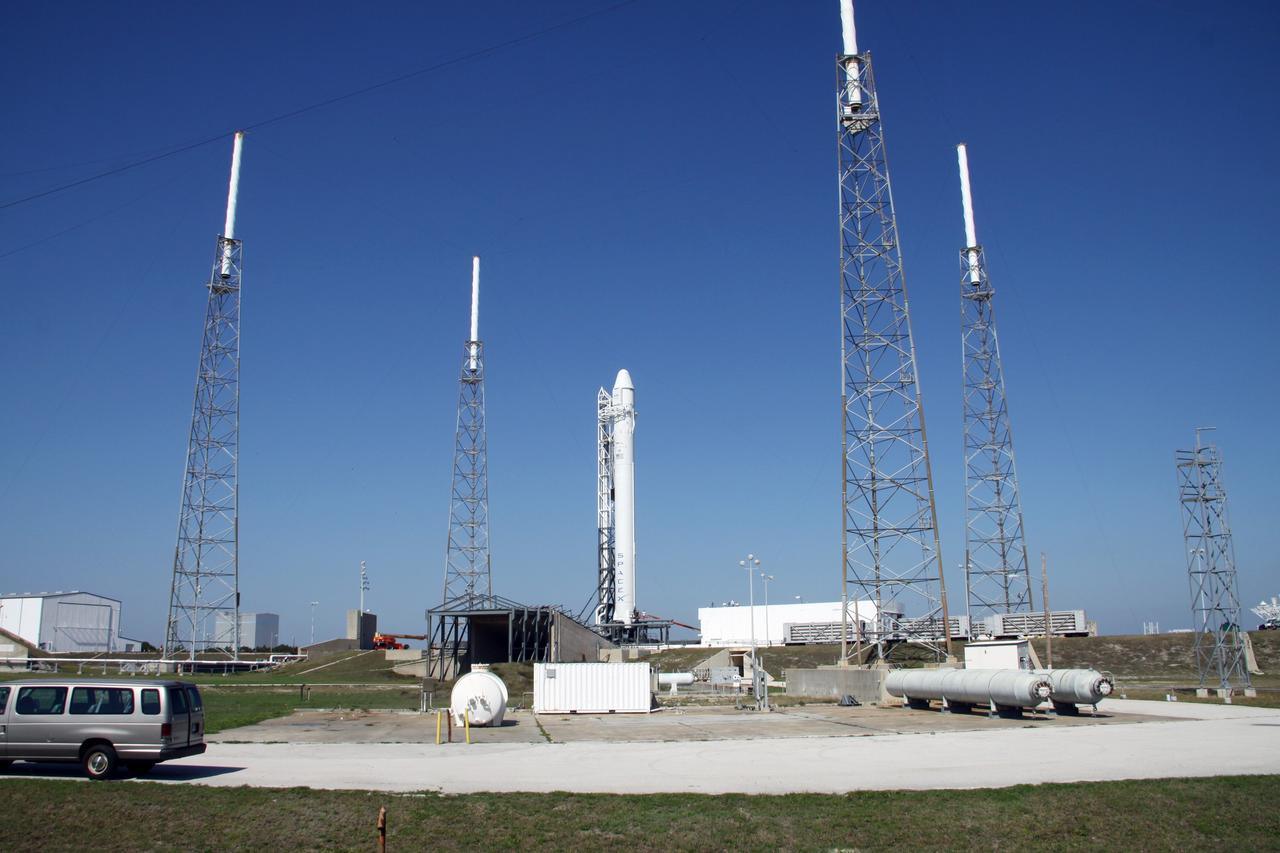
CAPE CANAVERAL, Fla. – The SpaceX Falcon 9 rocket is nestled between the lightning masts protecting the pad at Space Launch Complex-40 on Cape Canaveral Air Force Station in Florida. The vehicle rolled out to the pad on the evening of May 17. Liftoff with the Dragon capsule on top is set for 4:55 a.m. EDT on May 19. The launch will be the company's second demonstration test flight for NASA's Commercial Orbital Transportation Services Program, or COTS. During the flight, the capsule will conduct a series of check-out procedures to test and prove its systems, including rendezvous and berthing with the International Space Station. If the capsule performs as planned, the cargo and experiments it is carrying will be transferred to the station. The cargo includes food, water and provisions for the station’s Expedition crews, such as clothing, batteries and computer equipment. Under COTS, NASA has partnered with two aerospace companies to deliver cargo to the station. For more information, visit http://www.nasa.gov/spacex. Photo credit: NASA/Ken Thornsley

Members of the STS-100 crew, dressed in protective clothing, take a look at part of the mission payload, the Canadian robotic arm, SSRMS, from the top of a workstand in the Space Station Processing Facility. From left are Mission Specialists John L. Phillips, Umberto Guidoni and Yuri V. Lonchakov. Guidoni is with the European Space Agency and Lonchakov is with the Russian Space and Aviation Agency. The arm is 57.7 feet (17.6 meters) long when fully extended and has seven motorized joints. It is capable of handling large payloads and assisting with docking the Space Shuttle. The SSRMS is self-relocatable with a Latching End Effector, so it can be attached to complementary ports spread throughout the Station’s exterior surfaces. Mission STS-100 is scheduled to launch on Space Shuttle Endeavour April 19 at 2:41 p.m. EDT from Launch Pad 39A, KSC, with a crew of seven. Other crew members are Commander Kent V. Rominger, Pilot Jeffrey S. Ashby and Mission Specialists Scott E. Parazynski and Chris A. Hadfield, who is with the Canadian Space Agency
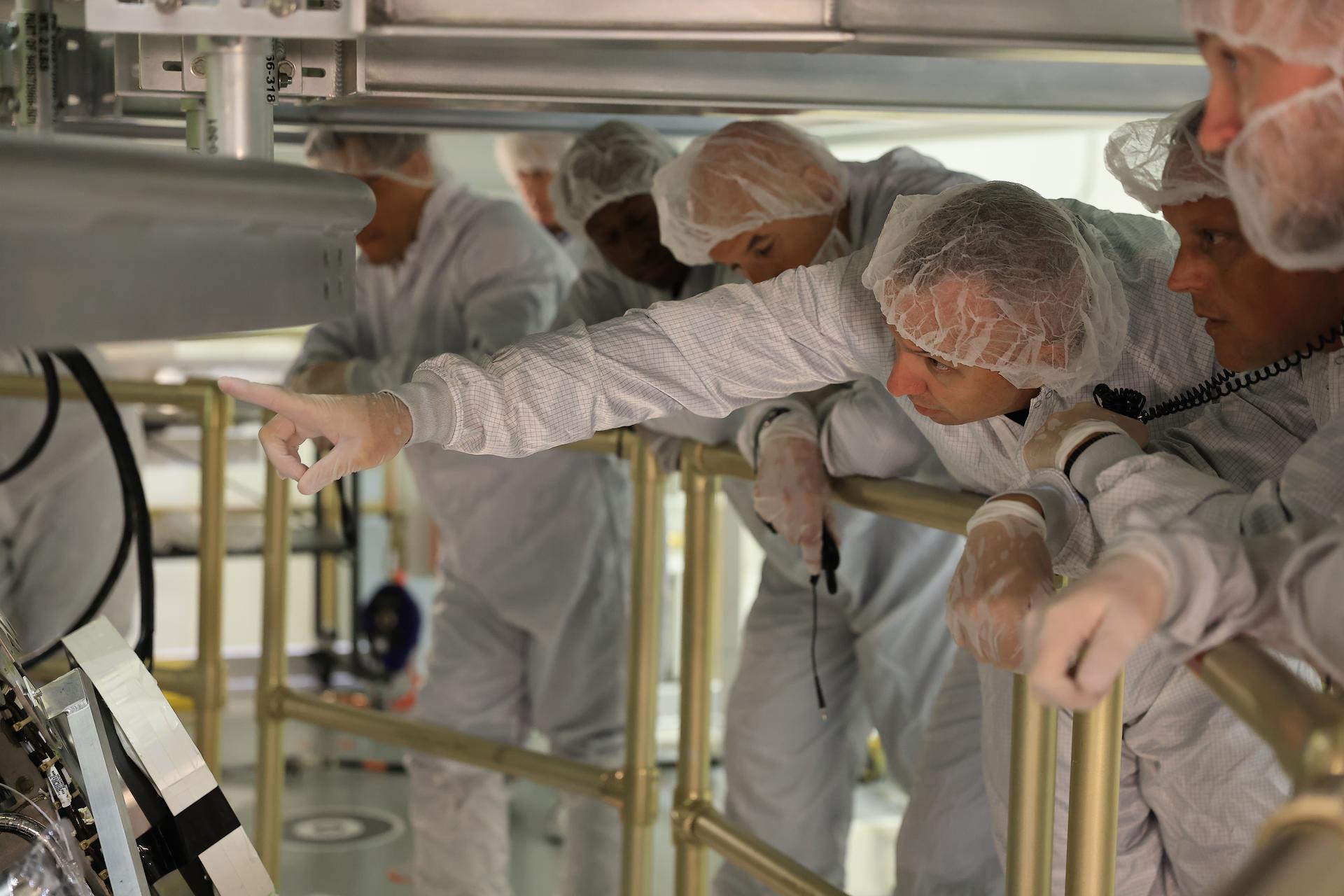
From left, the Artemis III primary and backup crew members, NASA astronauts Frank Rubio and Andre Douglas, ESA (European Space Agency) astronaut Luca Parmitano, and NASA astronauts Randy Bresnik and Bob Hines view the Orion spacecraft on Wednesday, Sept. 2, 2026, inside the Neil A. Armstrong Operations and Checkout building at NASA's Kennedy Space Center in Florida. This marked the first visit to Kennedy by the entire Artemis III crew and backup crew members. Artemis III will launch four crew members aboard the Orion spacecraft to carry out a series of objectives in low Earth orbit designed to demonstrate critical systems needed for future lunar landings, beginning with Artemis IV.