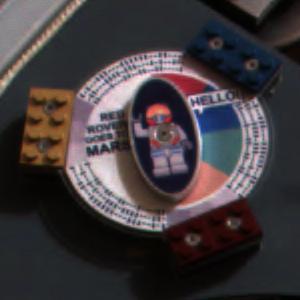
Students, Public Connect with Mars

NASA Honors awards medal - Exceptional Public Achievement

Public-Requested Mars Image: Crater on Pavonis Mons
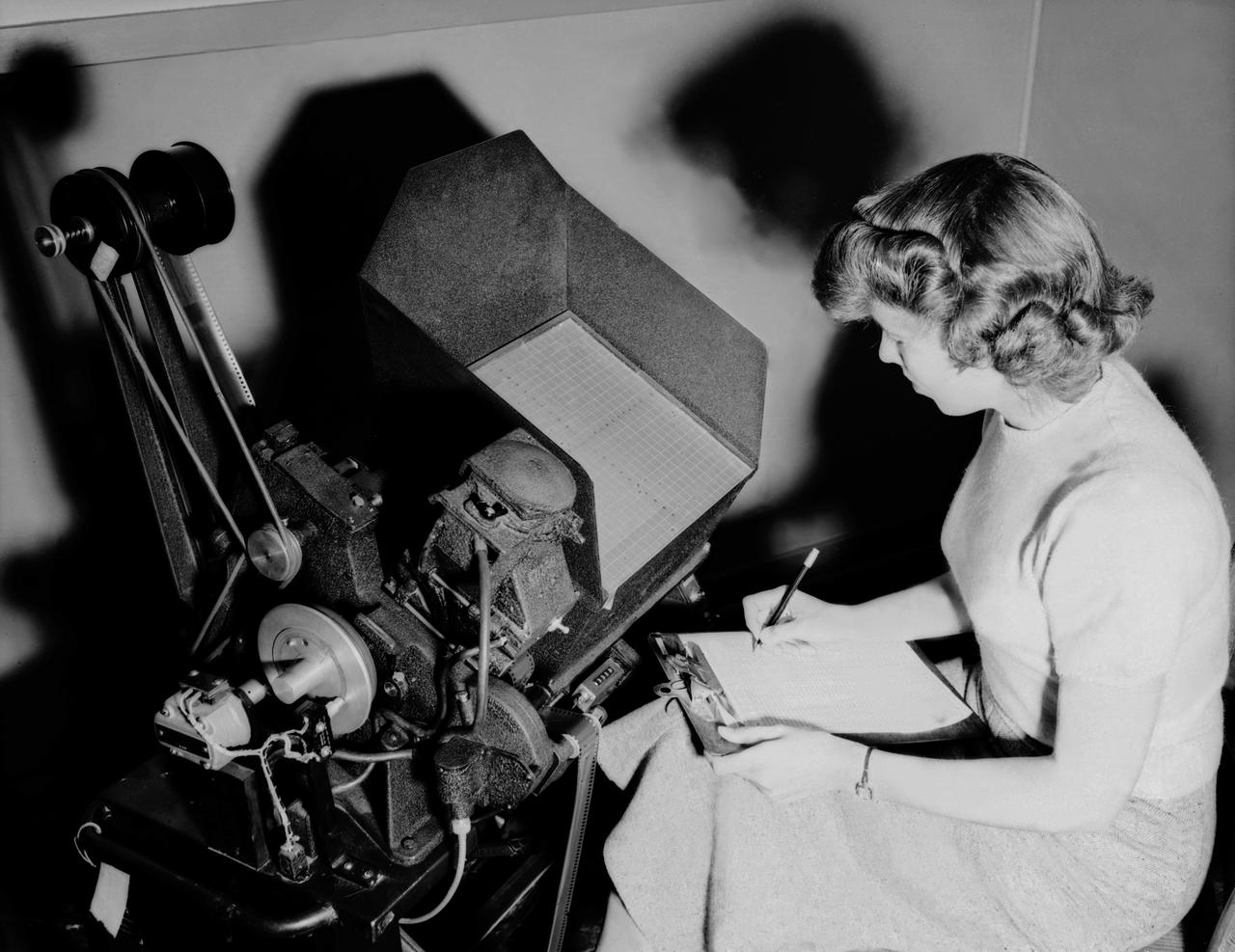
Publicity photo from Muroc California, showing female support personnel with equipment.
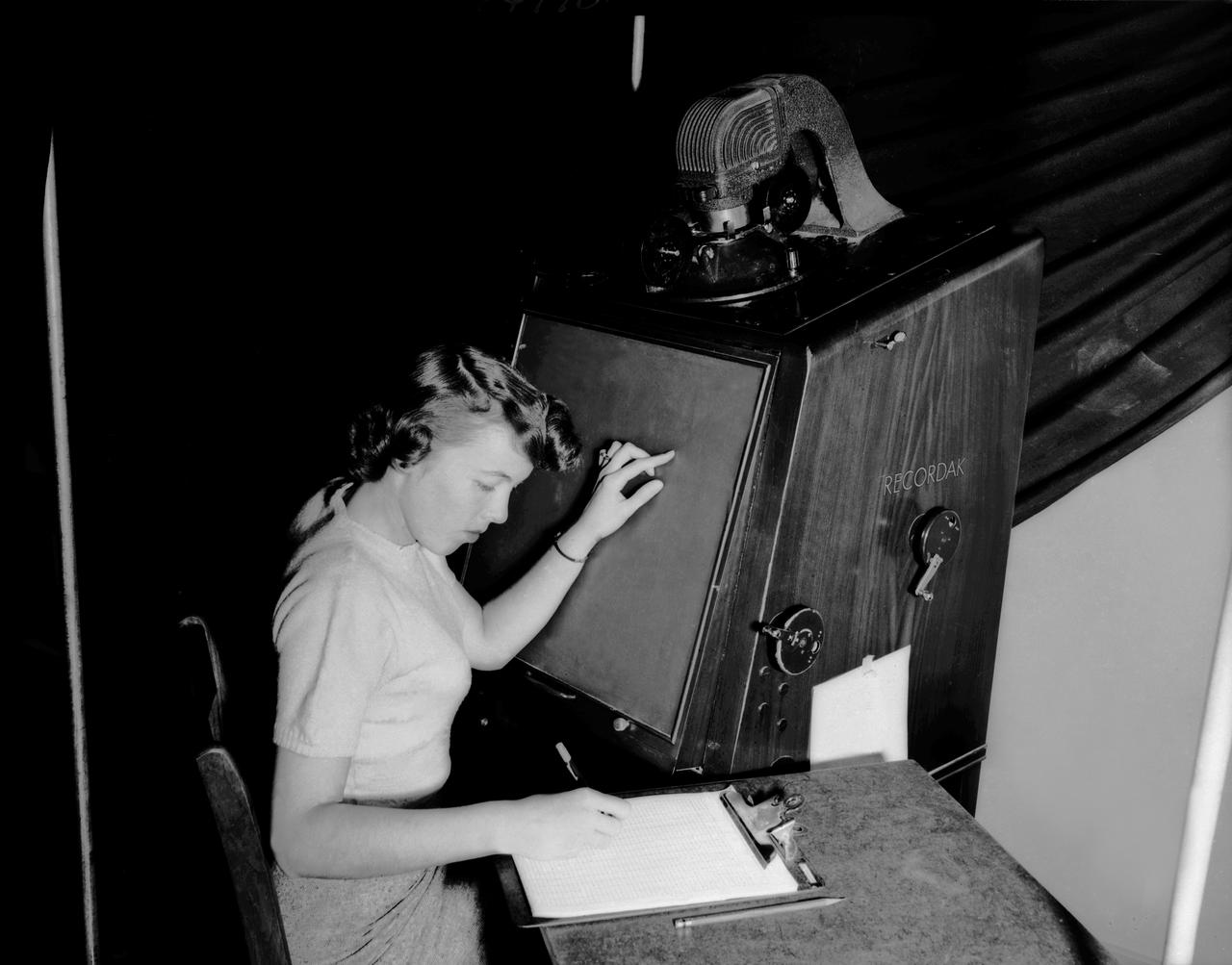
Publicity photo from Muroc California, showing female support personnel with equipment. A women working on a Kodak Recordak microfilm reader.
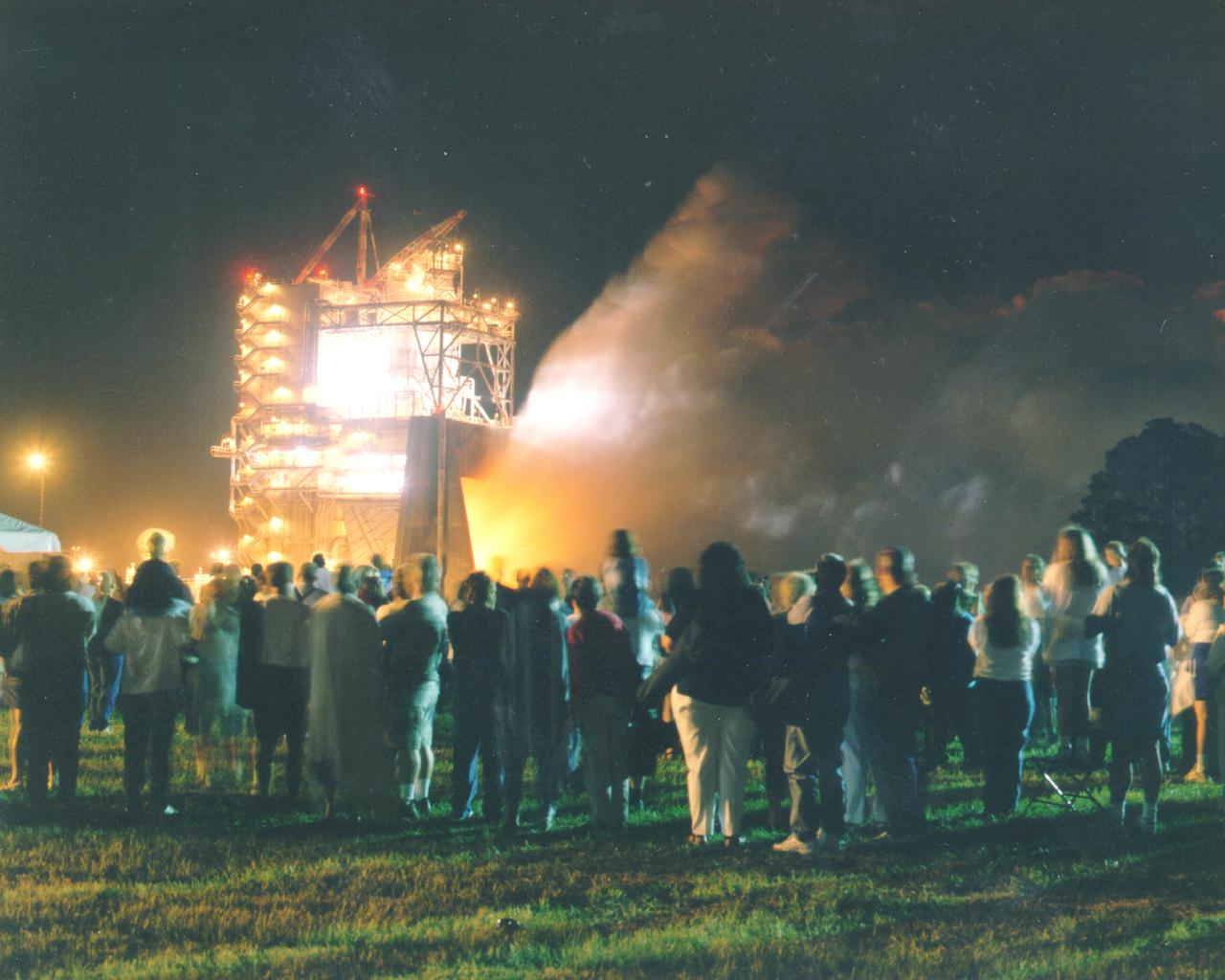
Thousands of people watch the first-ever evening public engine test of a Space Shuttle Main Engine at NASA's John C. Stennis Space Center. The spectacular test marked Stennis Space Center's 20th anniversary celebration of the first Space Shuttle mission.
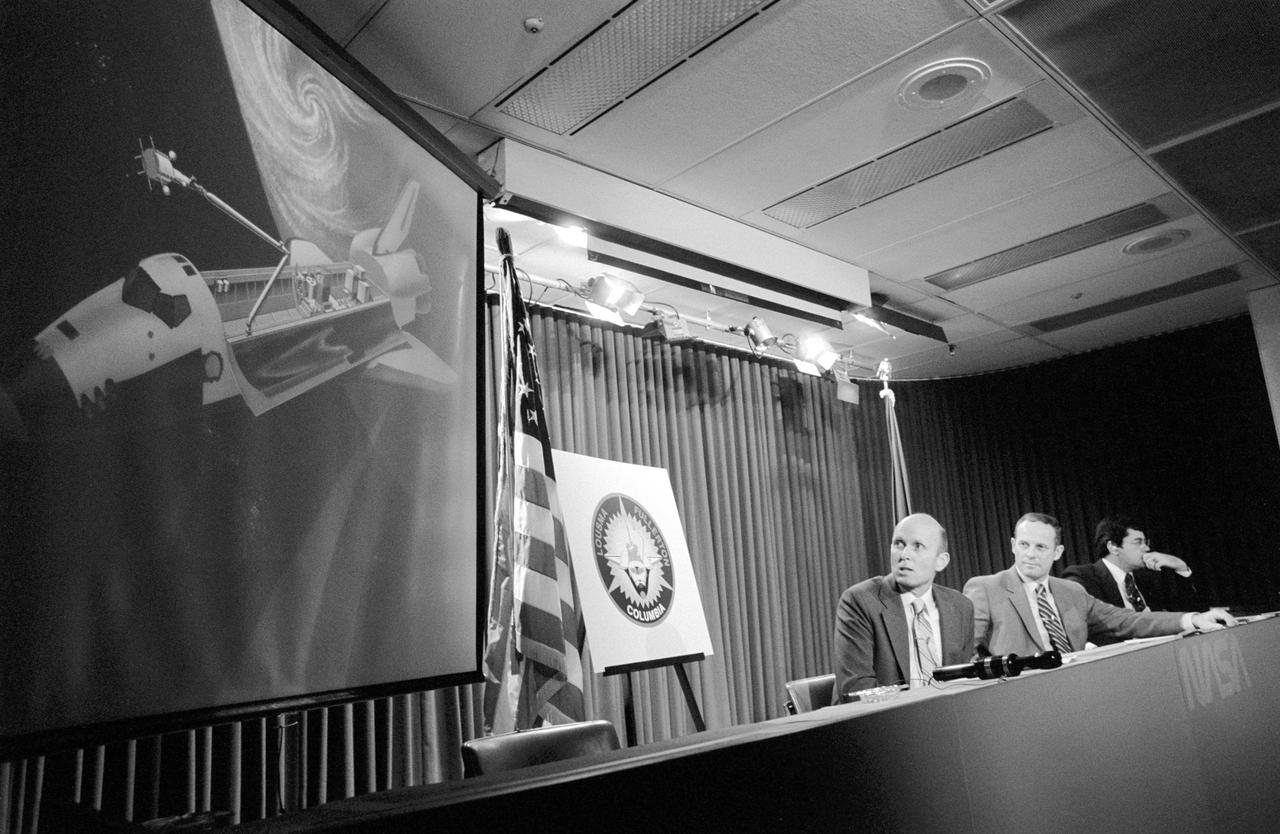
S82-25903 (21 Jan. 1982) --- Astronaut Jack R. Lousma, center, and C. Gordon Fullerton, left, respond to a visual depicting the Columbia and its remote manipulator system in space during a pre-STS-3 press conference in JSC?s pubic affairs building. Dr. John Lawrence, public information specialist who introduced the crew to news media representatives, is at far right. Photo credit: NASA
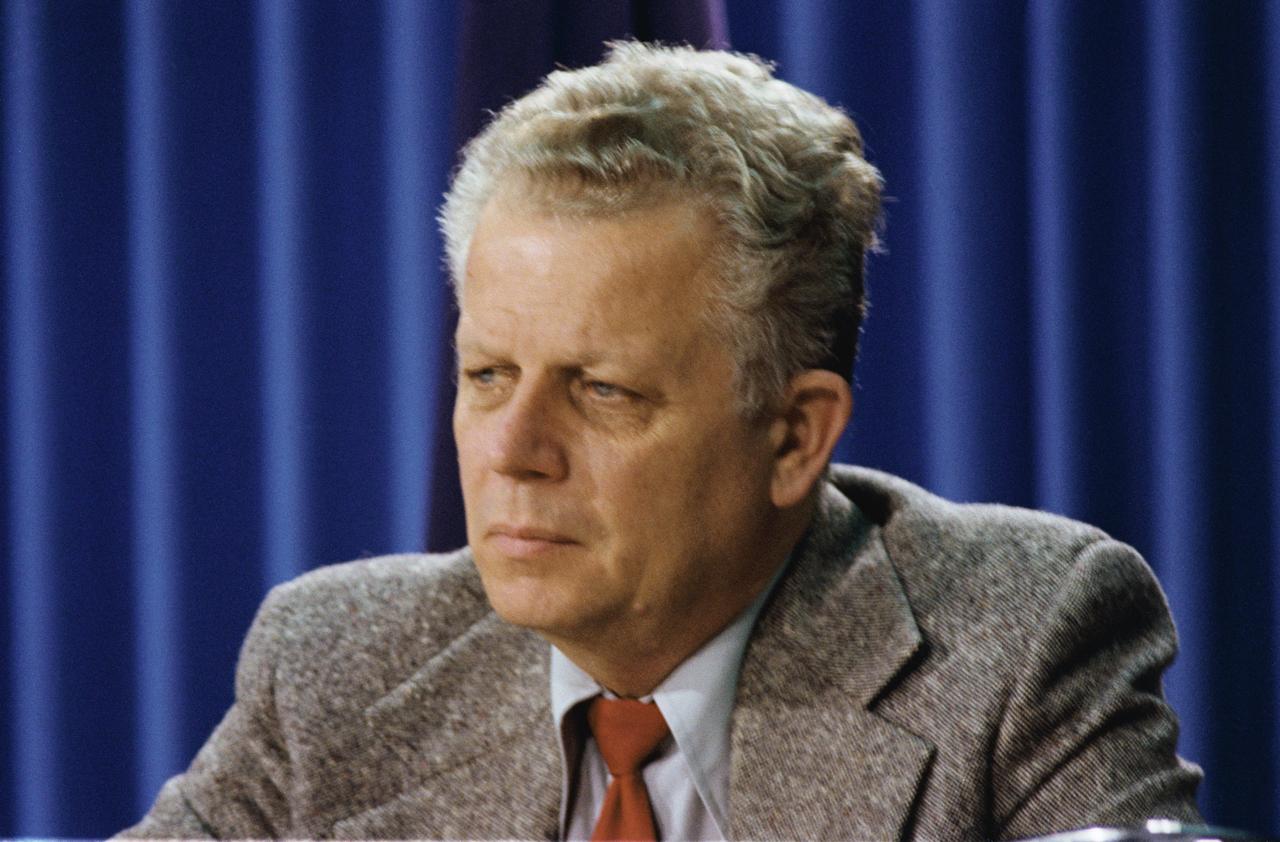
Terry White during a change-of-shift briefing in the JSC public affairs facility briefing room. White acted as one of the on-orbit public affairs officers and the landing PAO during the Challenger's STS-6 flight.
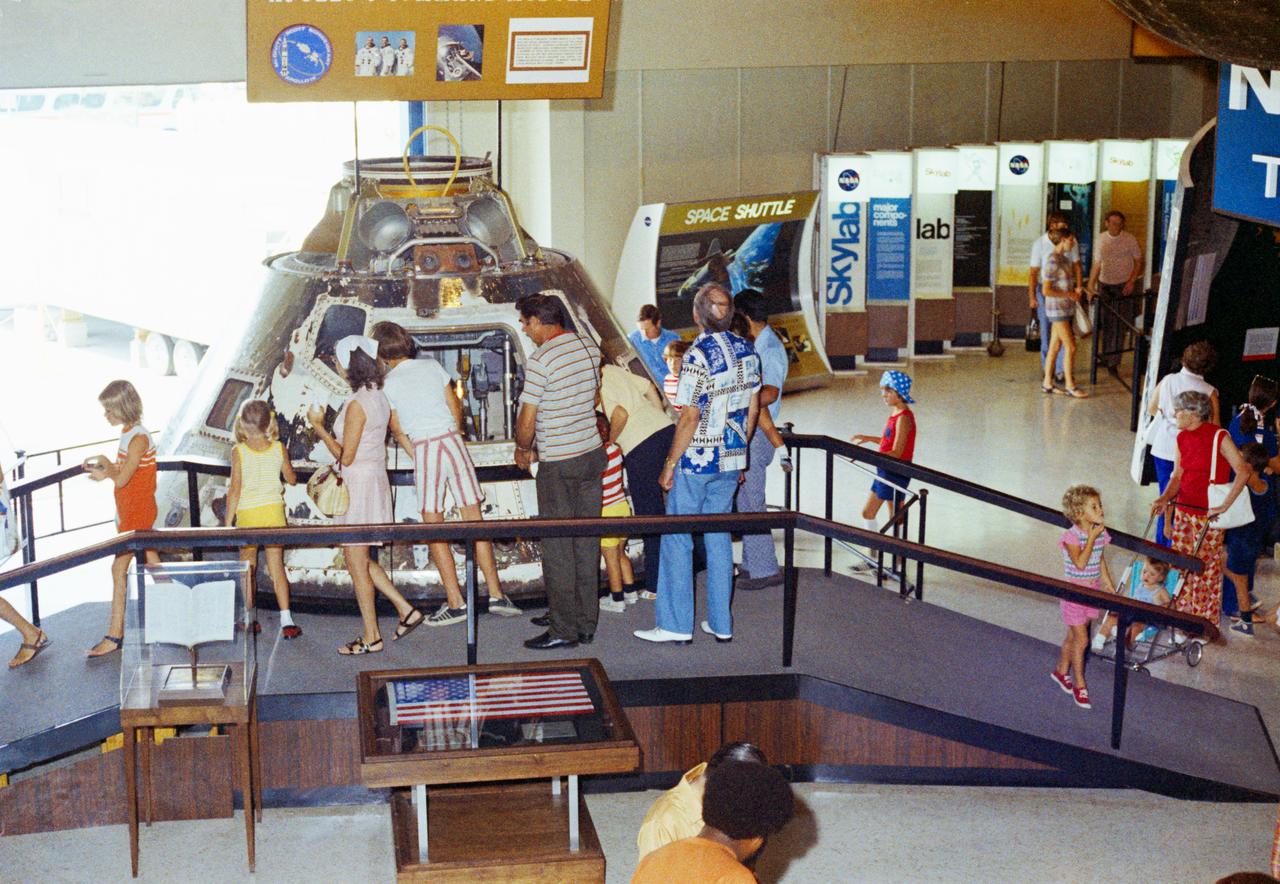
Series show exhibits displayed in the lobby and museum of Bldg. 1 Auditorium for public viewing. Views include spectators looking at the exhibits. JSC, HOUSTON, TX
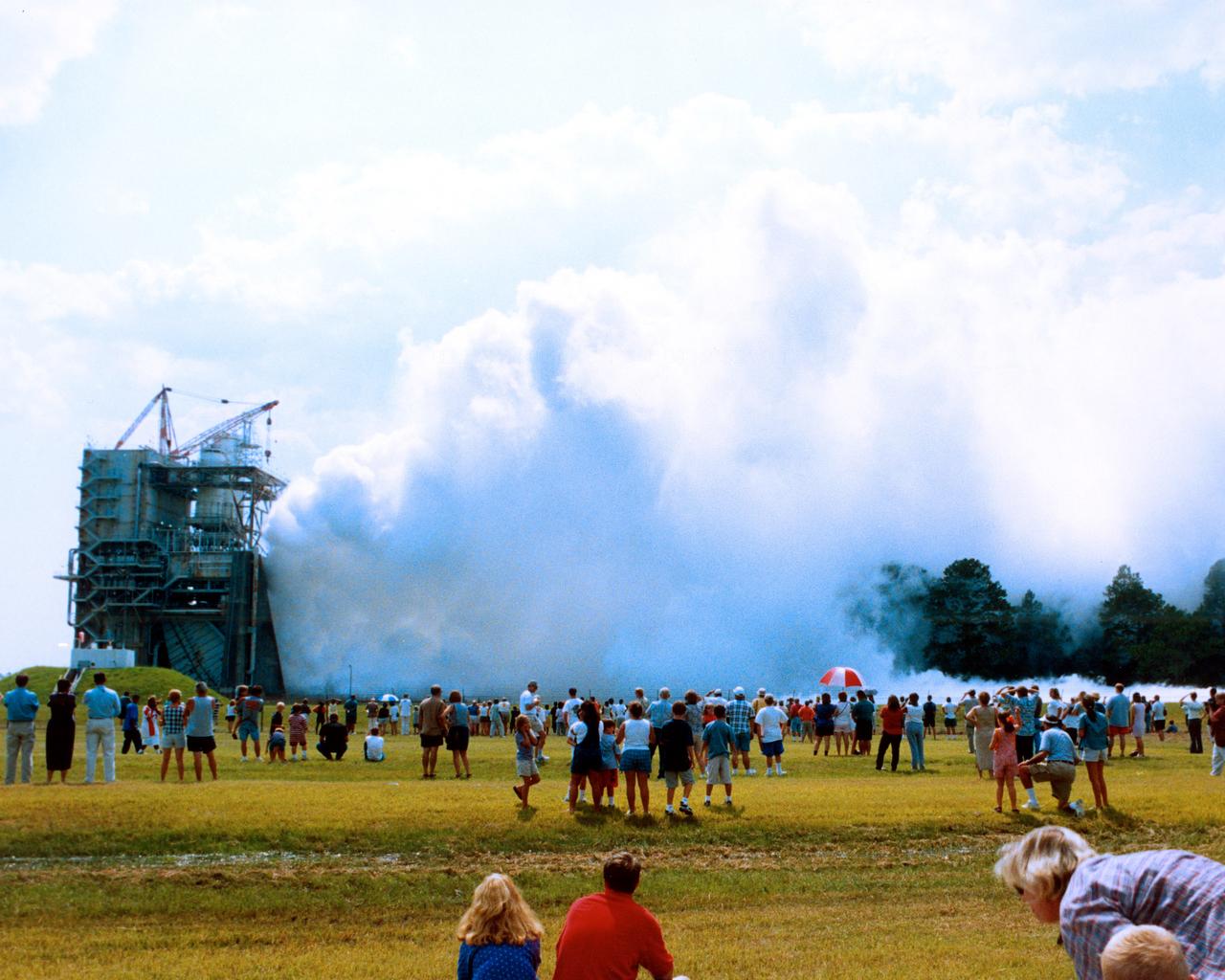
A new NASA Space Shuttle Main Engine (SSME) roars to the approval of more than 2,000 people who came to John C. Stennis Space Center in Hancock County, Miss., on July 25 for a flight-certification test of the SSME Block II configuration. The engine, a new and significantly upgraded shuttle engine, was delivered to NASA's Kennedy Space Center in Florida for use on future shuttle missions. Spectators were able to experience the 'shake, rattle and roar' of the engine, which ran for 520 seconds - the length of time it takes a shuttle to reach orbit.

iss073e0982172 (Oct. 25, 2025) --- Boston, Massachusetts—home to America's first public park, public school, and subway system—is pictured at approximately 2:24 a.m. local time from the International Space Station as it orbited 263 miles above the northeastern United States. Located on Boston Harbor, Boston Logan International Airport (center) opened in 1923 and handled 43.5 million passengers and 568 million pounds of cargo in 2024.
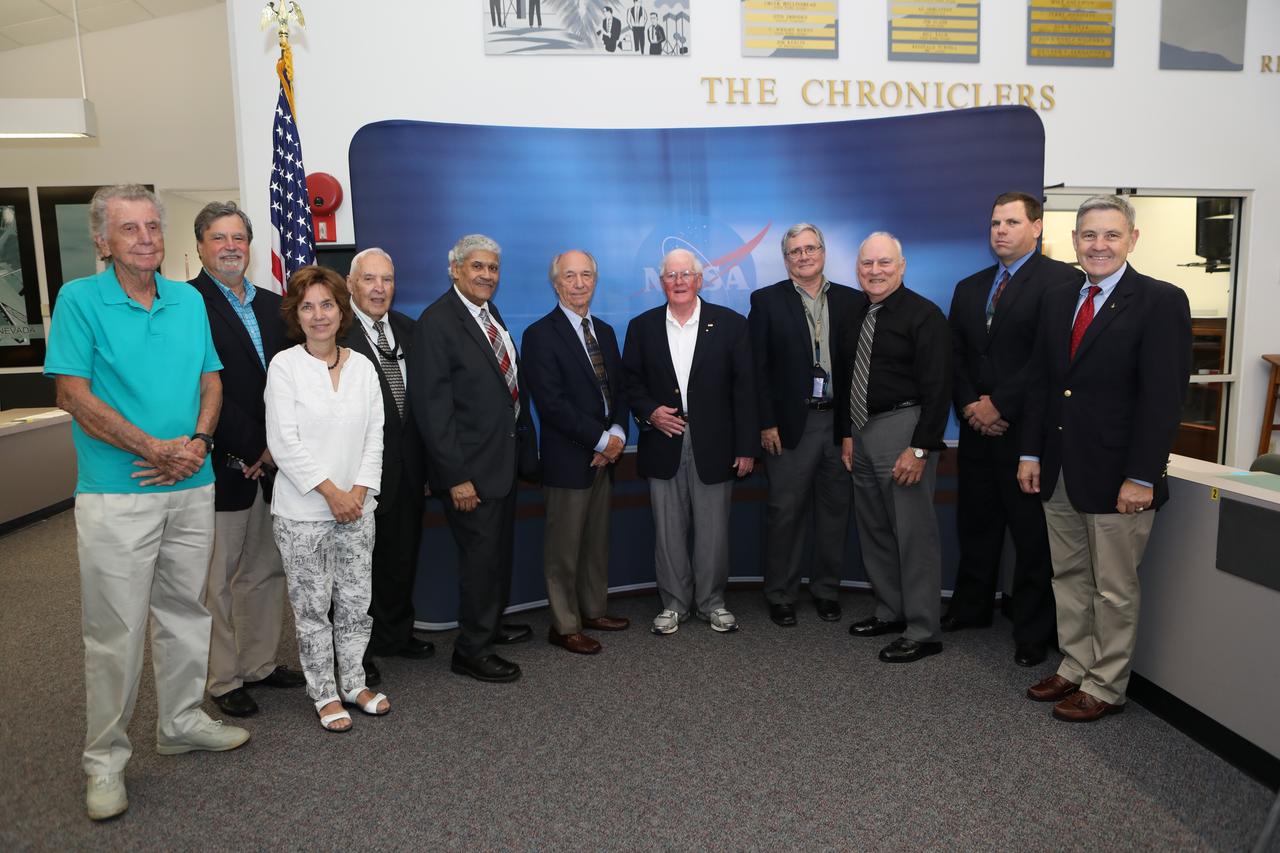
Current and retired NASA Public Affairs team members and space journalists gather in the NASA News Center at Kennedy Space Center in Florida for a ceremony in which six new honorees were added to the "Chroniclers" roll of honor. From left to right are Jay Barbree, NBC News; Al Feinberg, NASA Public Affairs; Marcia Dunn, Associated Press; Hugh Harris, NASA Public Affairs; Warren Leary, The New York Times; Phillip Sandlin, Associated Press photographer; Bob Murray, WDBO-TV, RCA and United Space Alliance; Bill Harwood, CBS News, there on behalf of the late Bruce Hall, CBS News; Bill Johnson, NASA Public Affairs; Emery McGough, son of the late Scott Harris, WESH, WKMG and Central Florida News 13; and Center Director Bob Cabana. Hall, Harris, Johnson, Leary, Murray and Sandlin are the 2017 Chroniclers. The program recognizes retirees of the news and communications business who helped spread news of American space exploration from Kennedy Space Center for ten years or more.

Reggie Alexander, manager of the Marshall Space Flight Center’s Partnerships and Formulation Office, is interviewed by a member of the MSFC Public Affairs Office. The Partnerships Formulation Office supports commercial development of future human landing systems
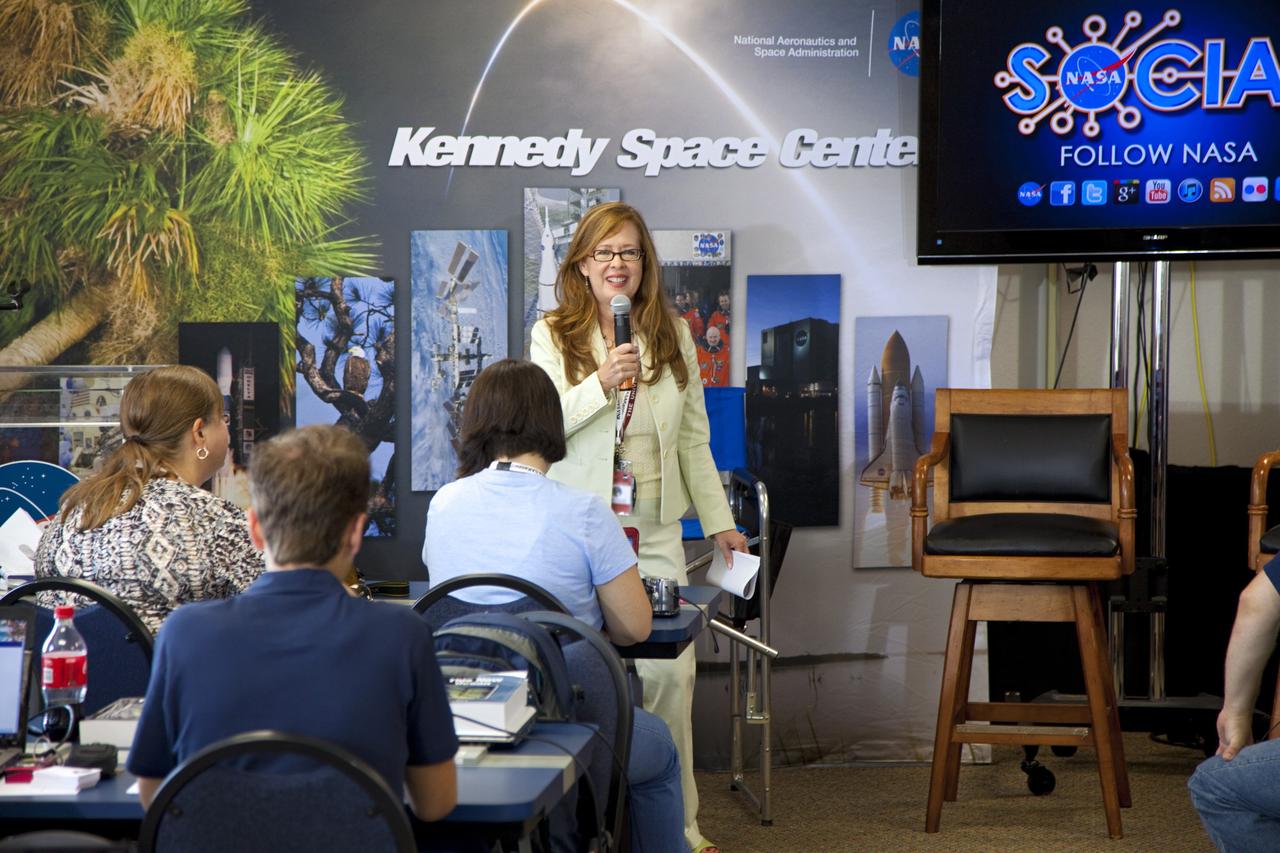
CAPE CANAVERAL, Fla. -- NASA Director of Public Affairs Lisa Malone welcomes about 45 of NASA’s social media followers for two days of presentations on the Kennedy Space Center's past, present and future. The social media participants gathered at the Florida spaceport on Aug. 2 and 3, 2012 to hear from key former and current leaders who related stories of the space agency's efforts to explore the unknown. It was the first social media event totally run by Kennedy. Photo credit: NASA/ Gianni Woods
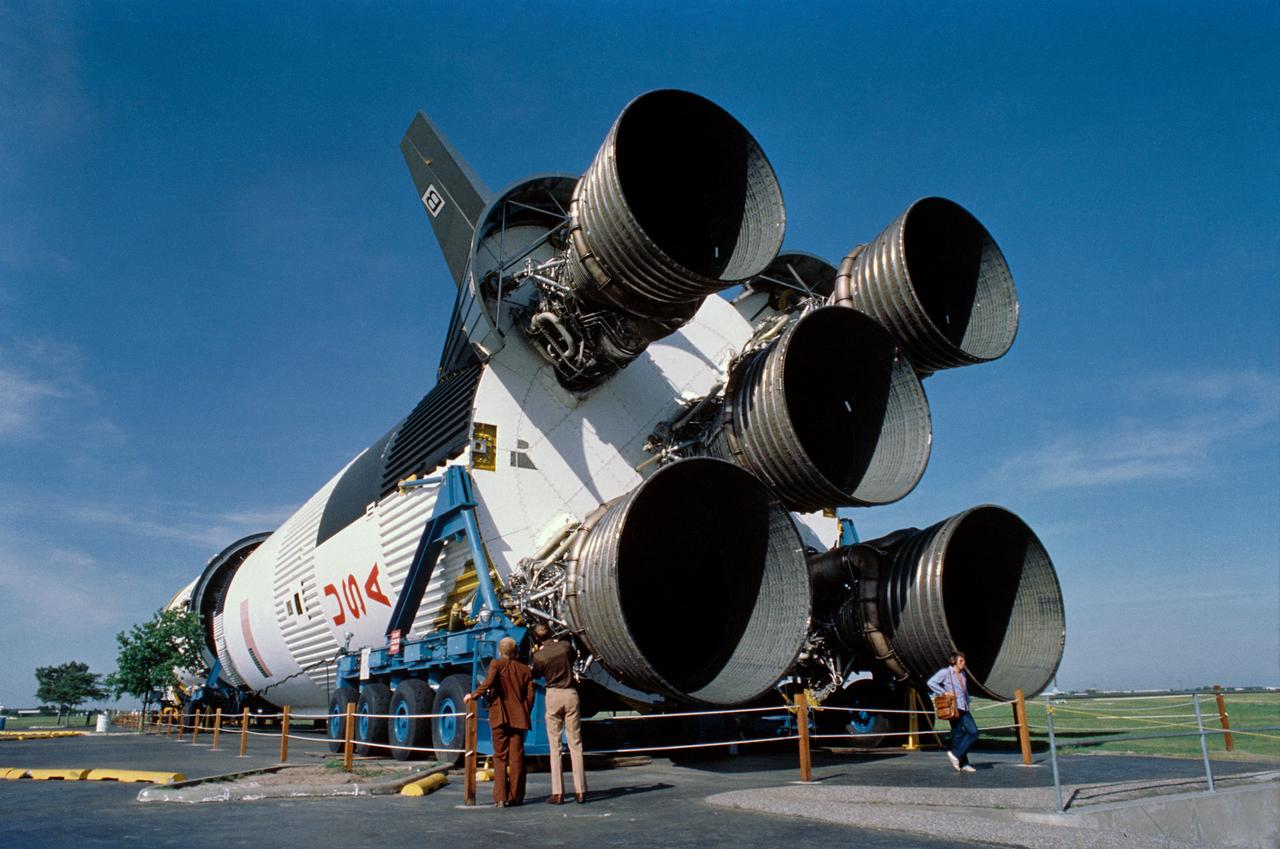
Views of exhibit to be used in making Public Service Announcements on 16mm for PAO.This is a view of the Saturn V First Stage and Engines.
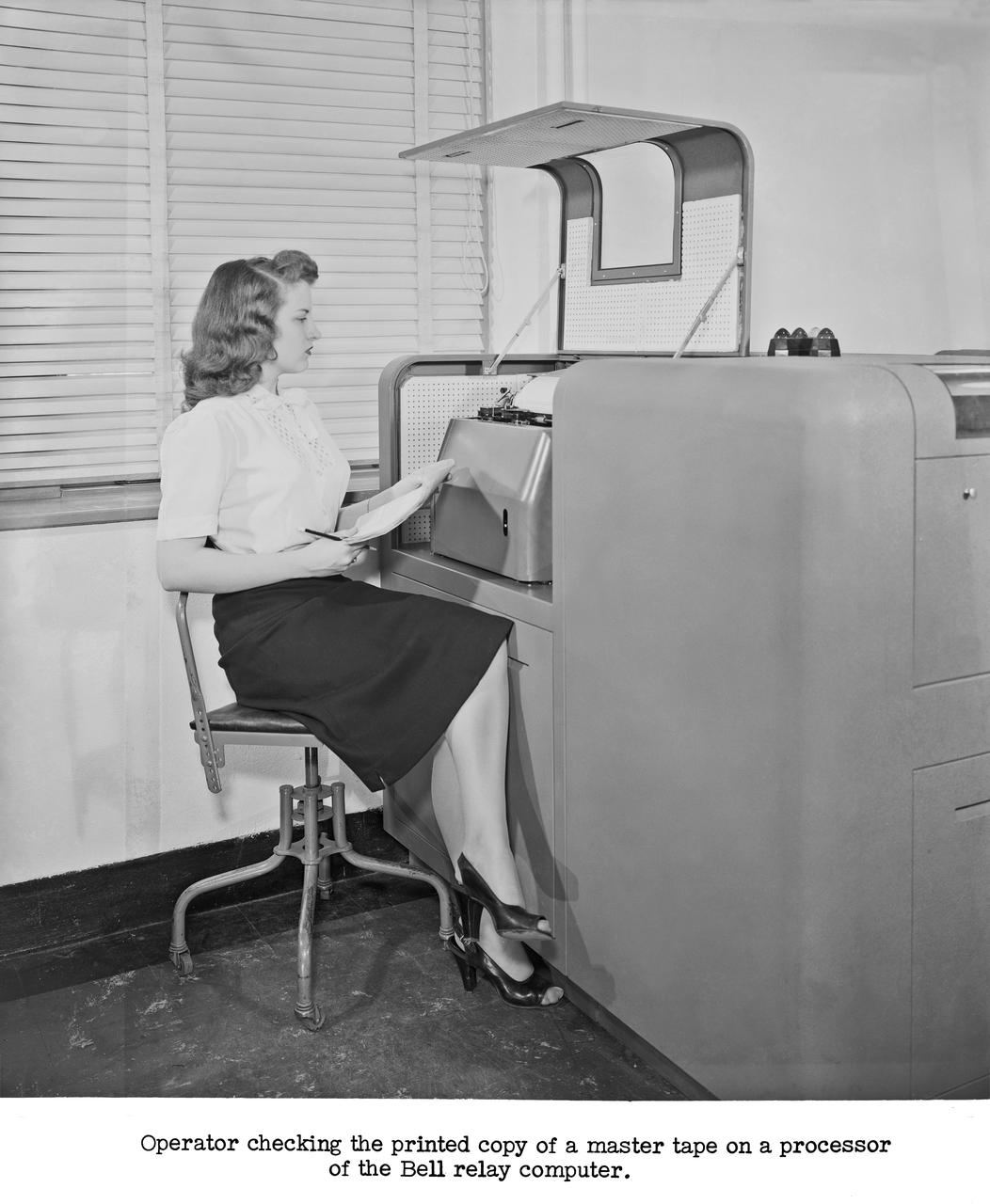
Publicity Photos of Bell Computing Machines at 19 Foot Pressure Tunnel Mrs. Doris Rudd Porter Baron photographed in the photos.
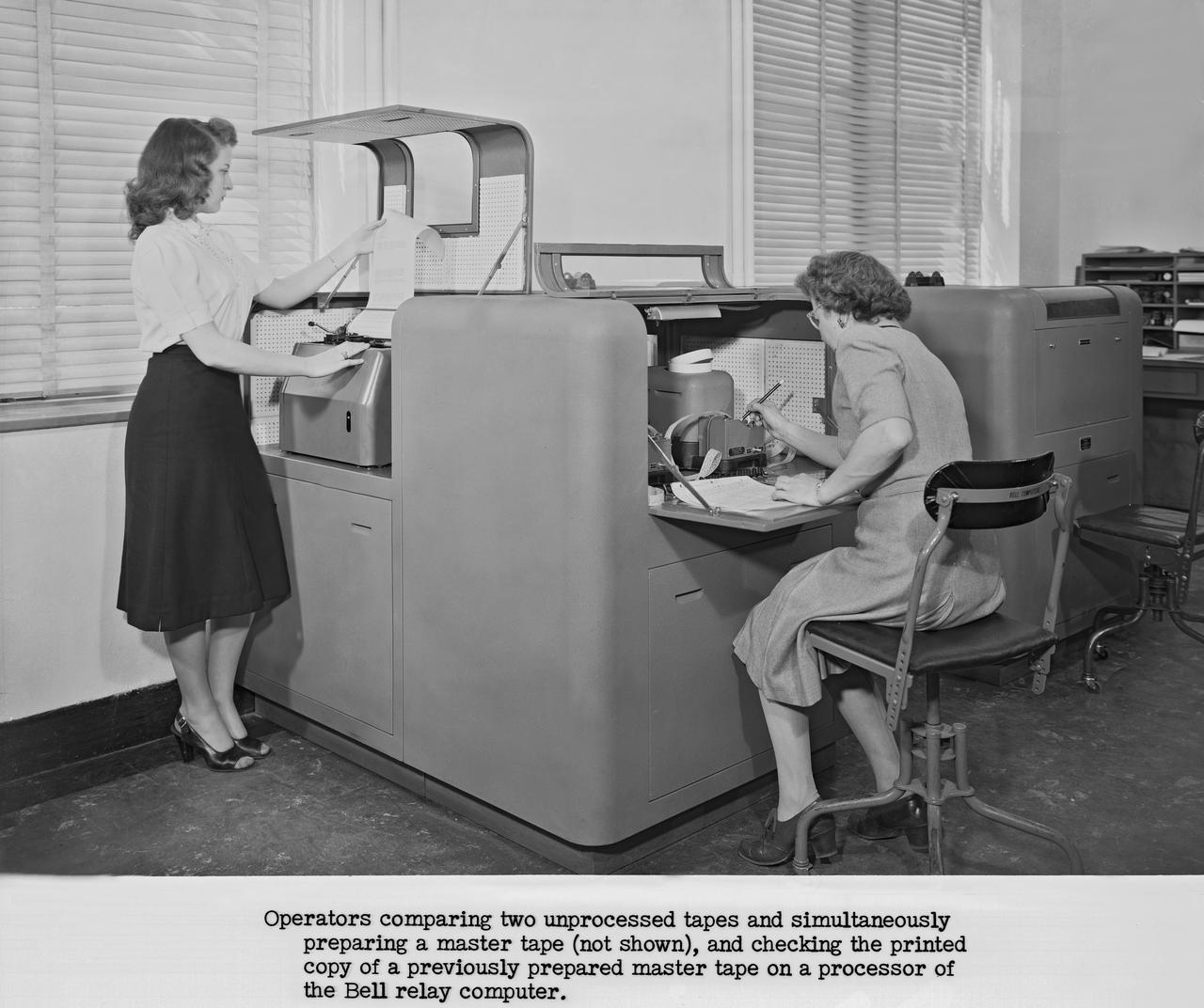
Publicity Photos of Bell Computing Machines at 19 Foot Pressure Tunnel Mrs. Doris Rudd Porter Baron photographed in the photos.
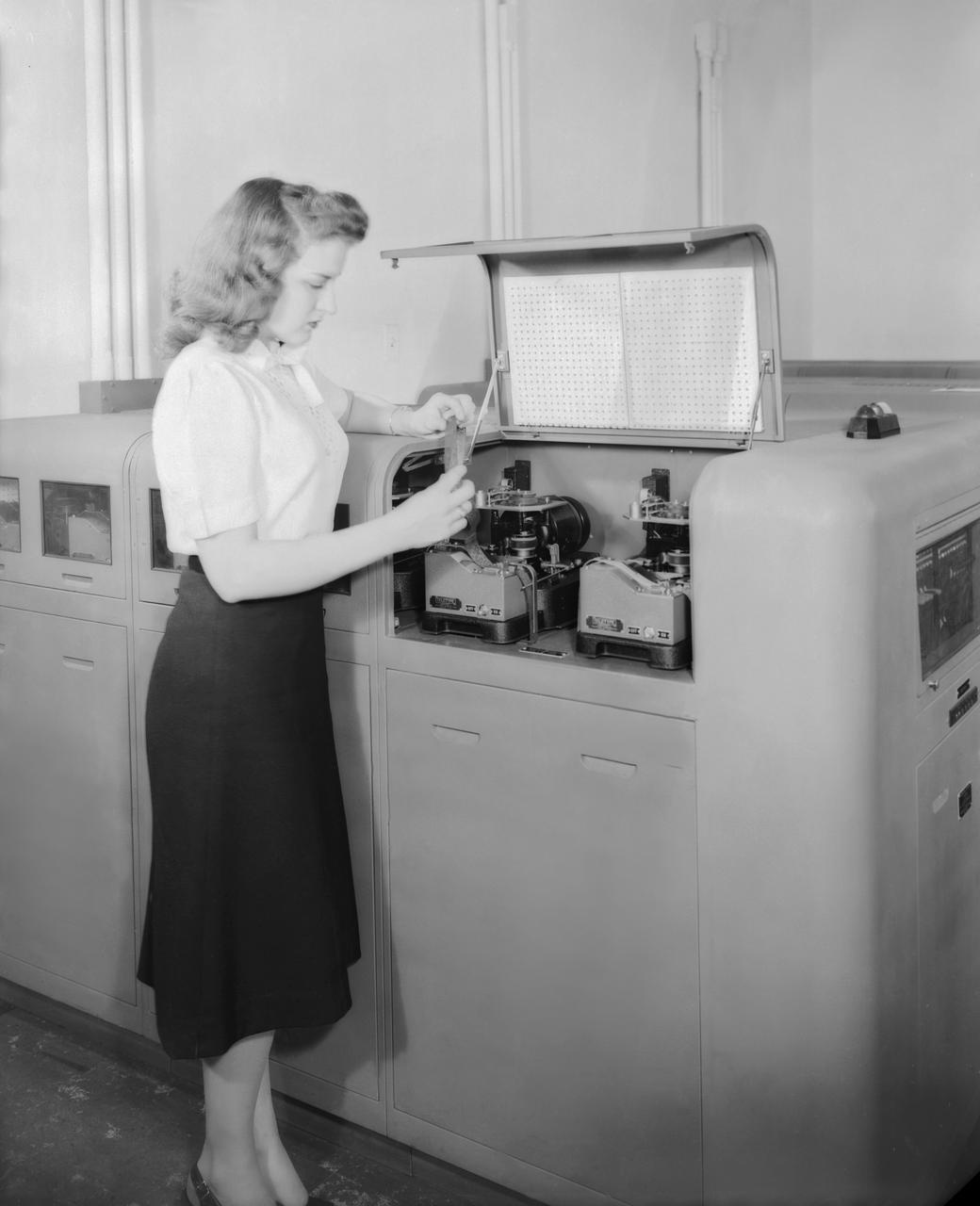
Publicity Photos of Bell Computing Machines at 19 Foot Pressure Tunnel Mrs. Doris Rudd Porter Baron photographed in the photos.
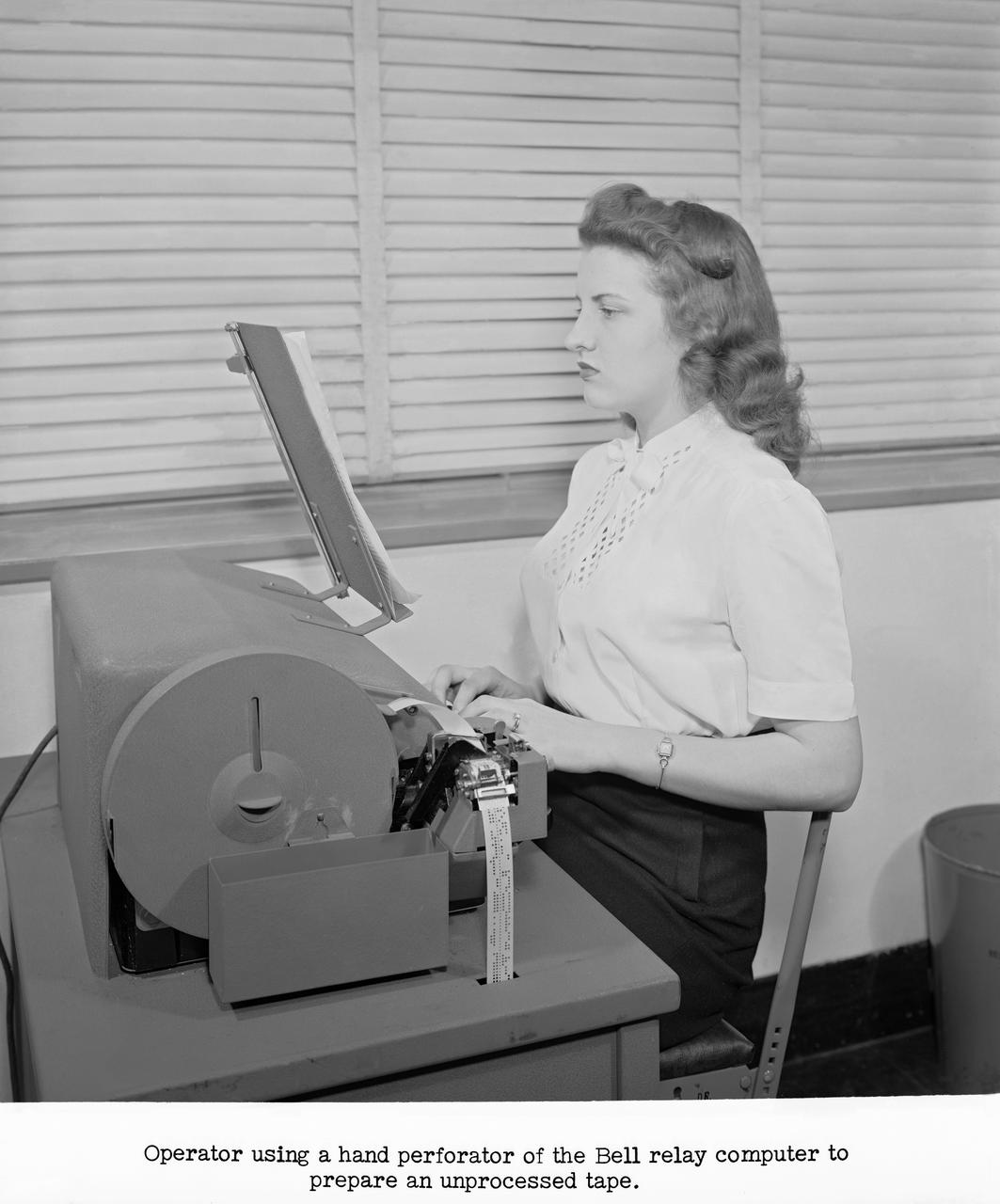
Publicity Photos of Bell Computing Machines at 19 Foot Pressure Tunnel Mrs. Doris Rudd Porter Baron photographed in the photos.
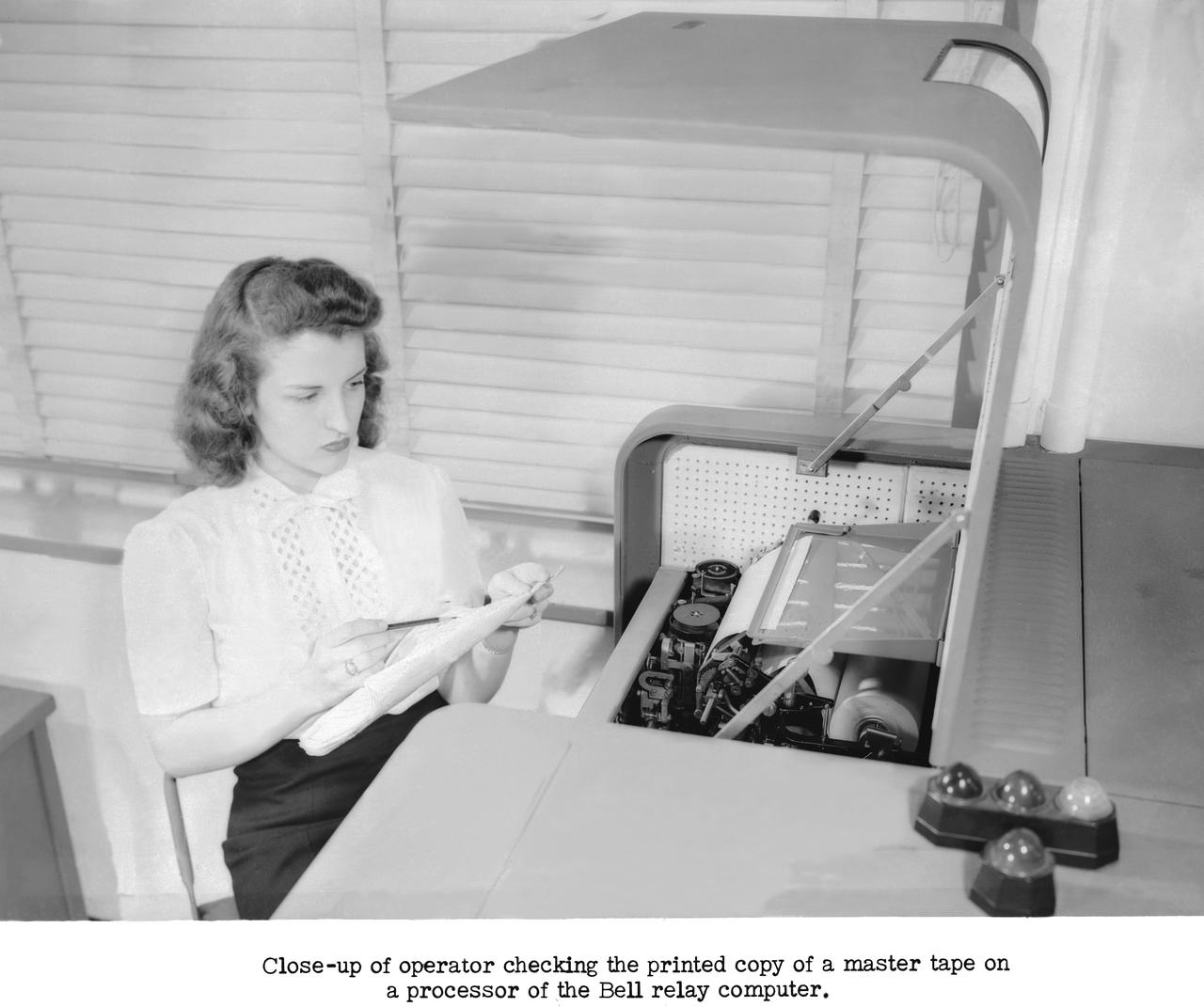
Publicity Photos of Bell Computing Machines at 19 Foot Pressure Tunnel Mrs. Doris Rudd Porter Baron photographed in the photos.
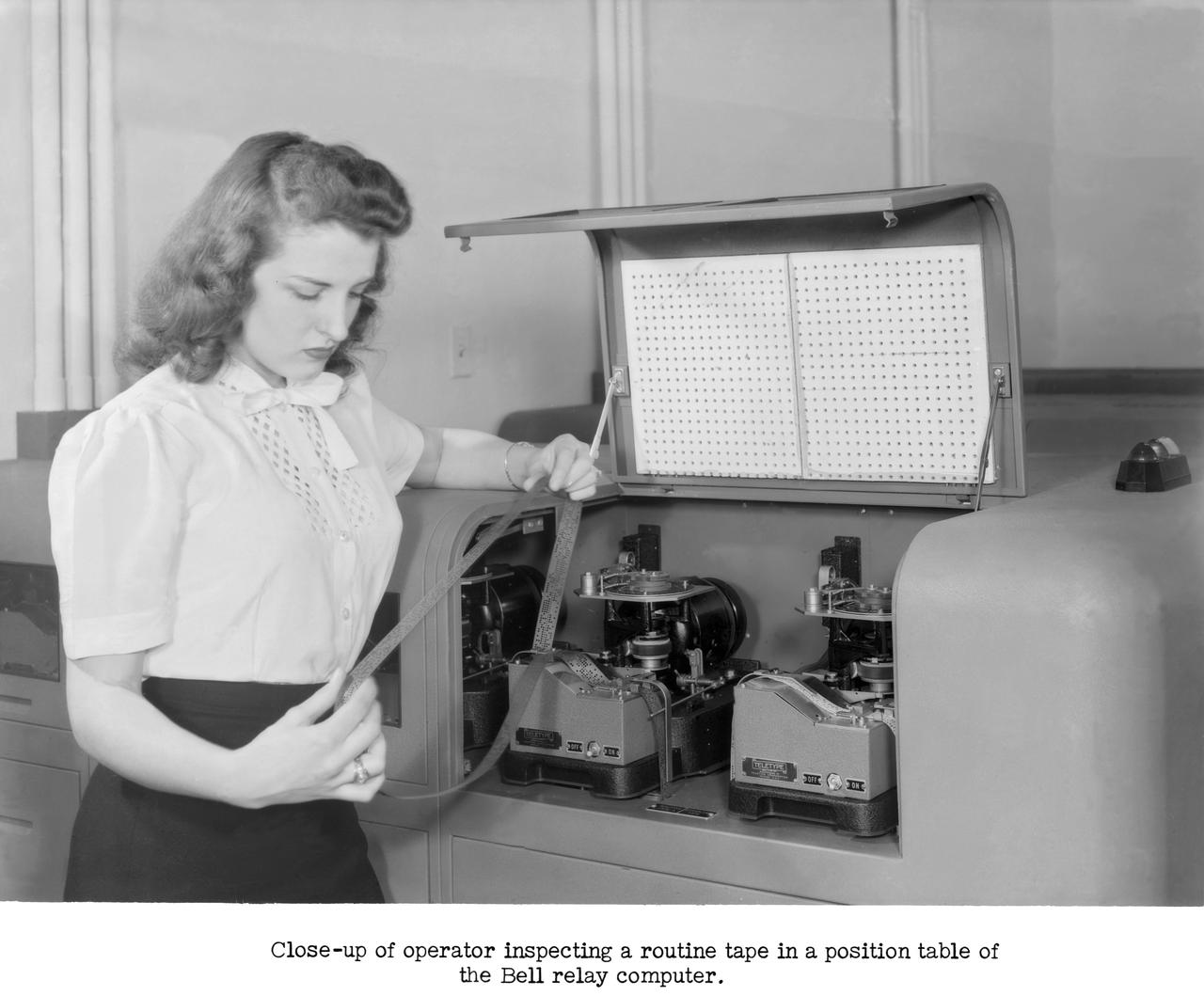
Publicity Photos of Bell Computing Machines at 19 Foot Pressure Tunnel Mrs. Doris Rudd Porter Baron photographed in the photos.
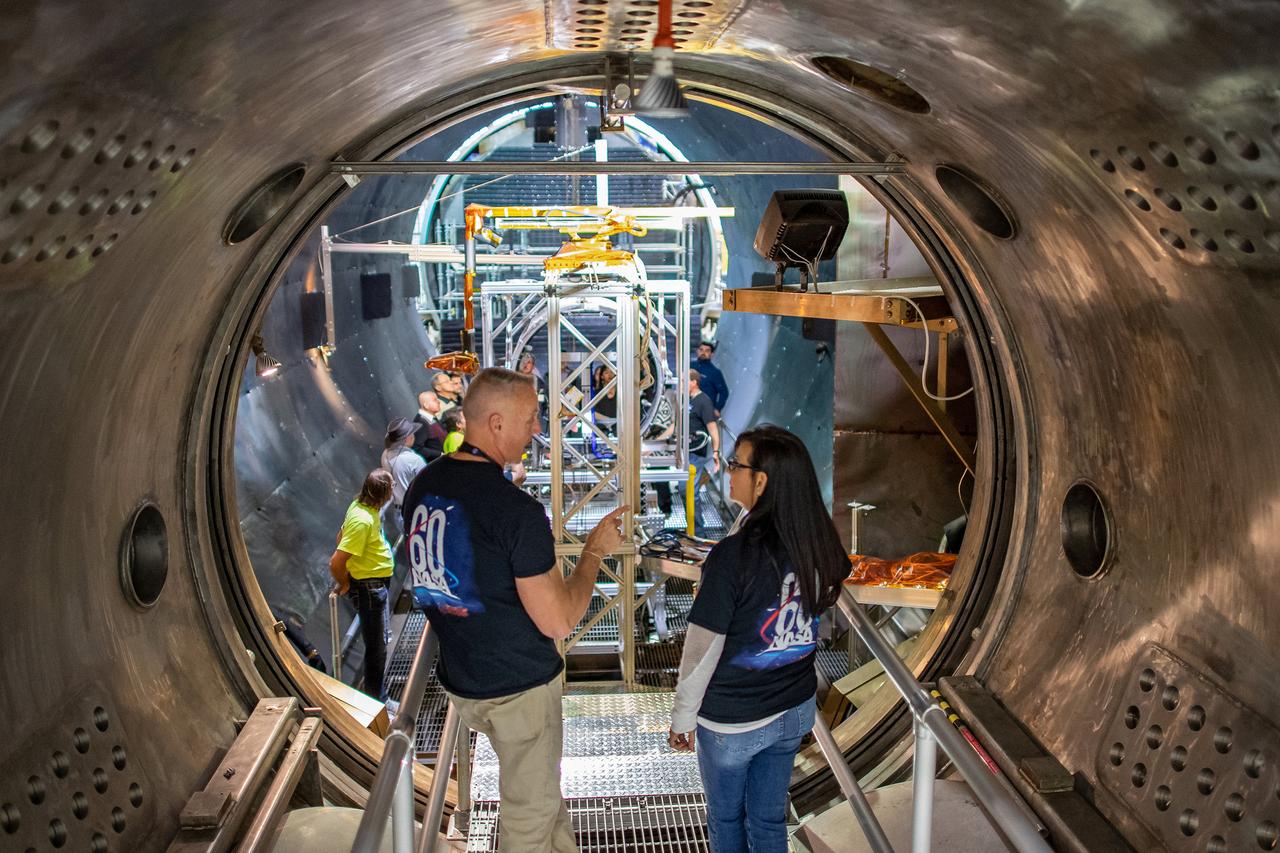
NASA 60th Anniversary Public Tours / NASA 60th Anniversary Celebration at the Great Lakes Science Center
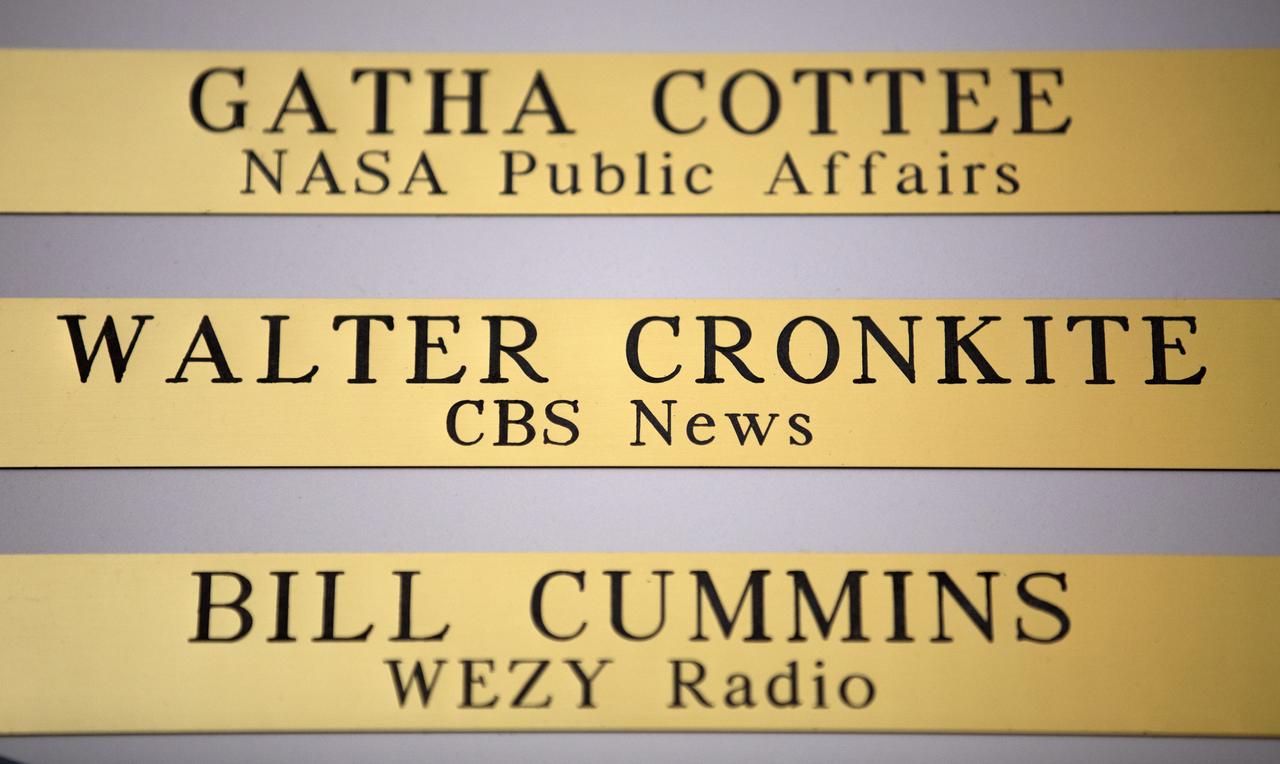
Brass plaques engraved with the names of Gatha Cottee of NASA Public Affairs, Walter Cronkite of CBS News and Bill Cummins of WEZY Radio are among the list of "The Chroniclers," a roll of honor on the wall at the NASA News Center at Kennedy Space Center in Florida. In this facility reporters from television, radio, print and online media outlets have monitored countless launches, landings and other space events in order to deliver the news to the world. The Chroniclers program recognizes retirees of the news and communications business who helped spread news of American space exploration from Kennedy Space Center for ten years or more.
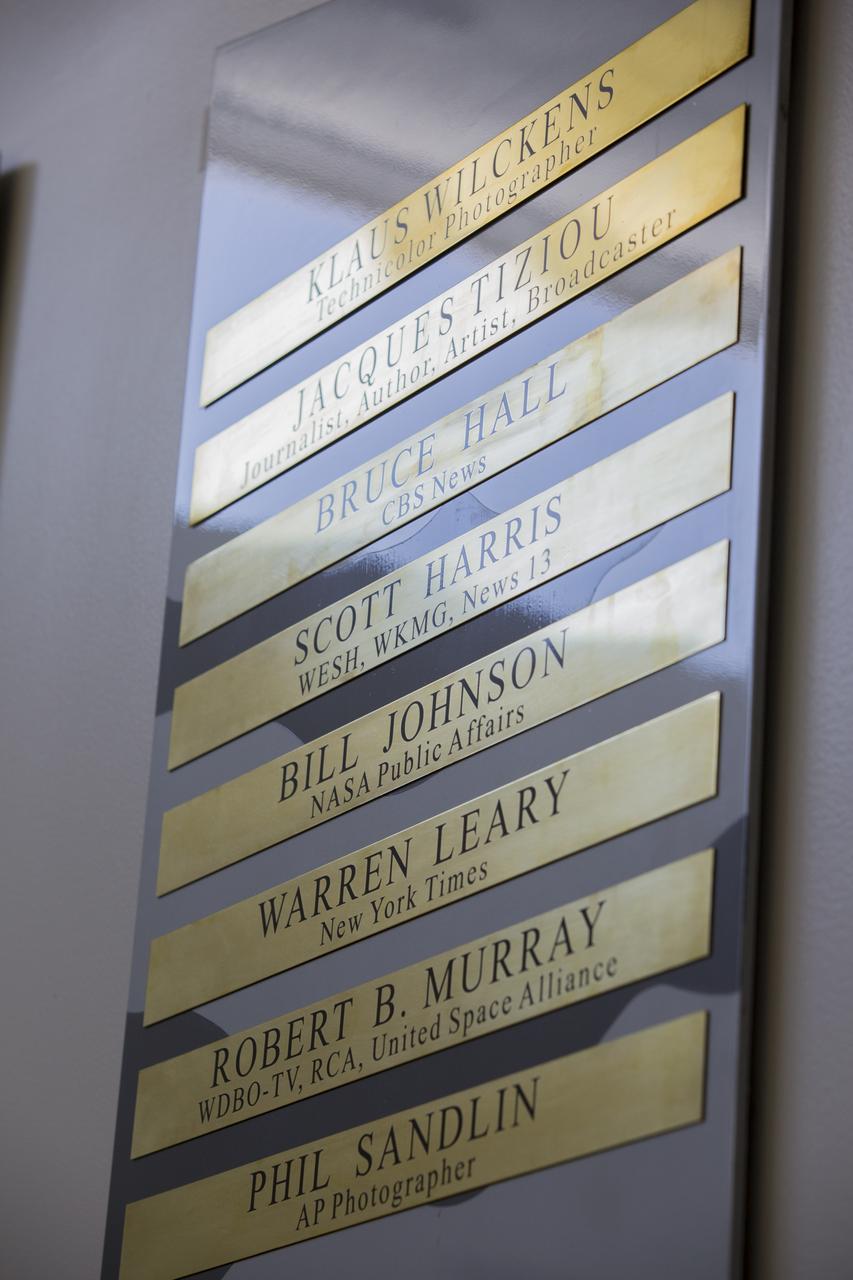
Brass strips bear the names and photos of the six new honorees added to the "Chroniclers" roll of honor in the NASA News Center at Kennedy Space Center in Florida. The Chroniclers program recognizes retirees of the news and communications business who helped spread news of American space exploration from Kennedy Space Center for ten years or more. The 2017 Chroniclers are Bruce Hall, CBS News and NBC News; Scott Harris, WESH, WKMG and Central Florida News 13; Bill Johnson, NASA Public Affairs; Warren Leary, The New York Times; Bob Murray, WDBO-TV, RCA and United Space Alliance; and Phillip Sandlin, Associated Press photographer.
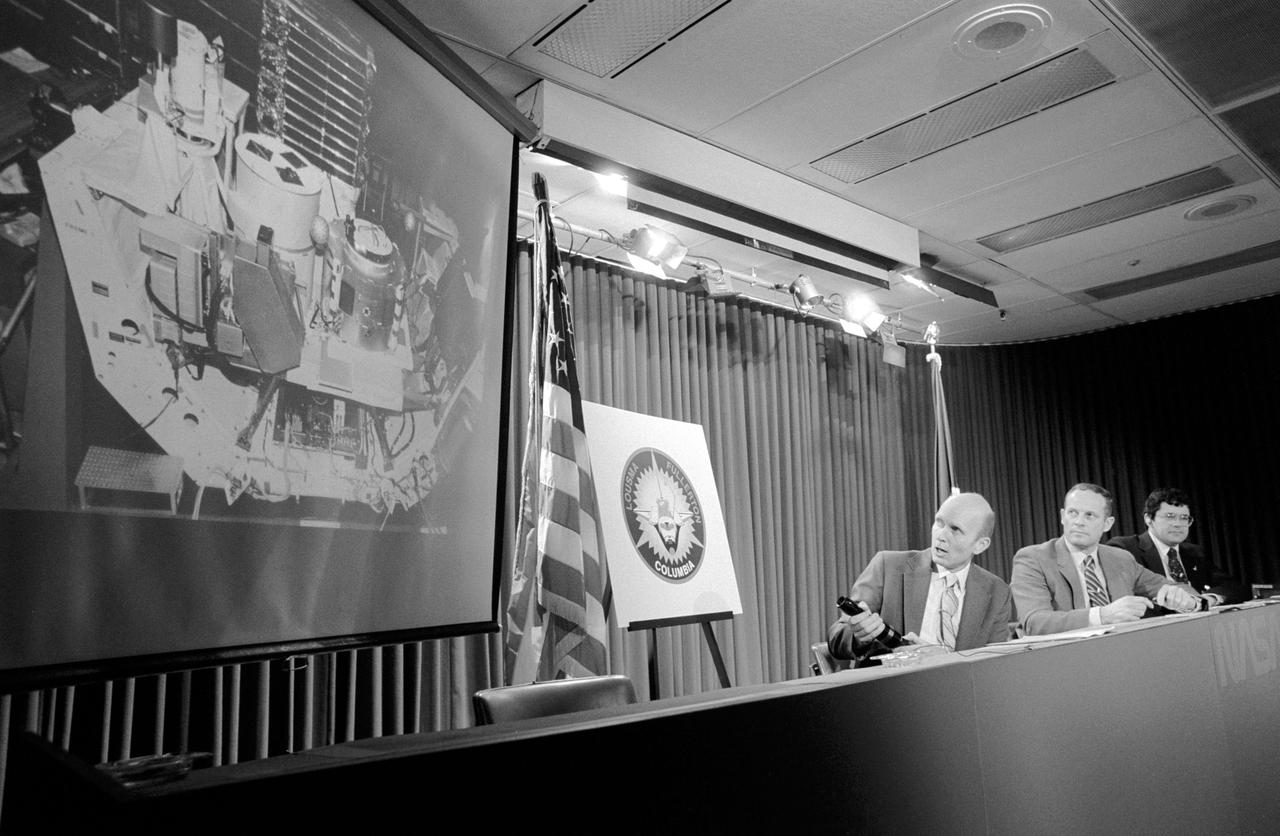
S82-25905 (21 Jan. 1982) --- Astronaut C. Gordon Fullerton uses an electronic pointer to localize an area on a projected visual of the OSS payload package to be carried in the cargo bay of the Columbia on STS-3. Fullerton is pilot for the flight and Jack R. Lousma, center, is mission commander. The two were holding one of a series of pre-STS-3 press briefings. They were introduced by Dr. John Lawrence, far right, a public information specialist for JSC?s Office of Public Affairs. Photo credit: NASA
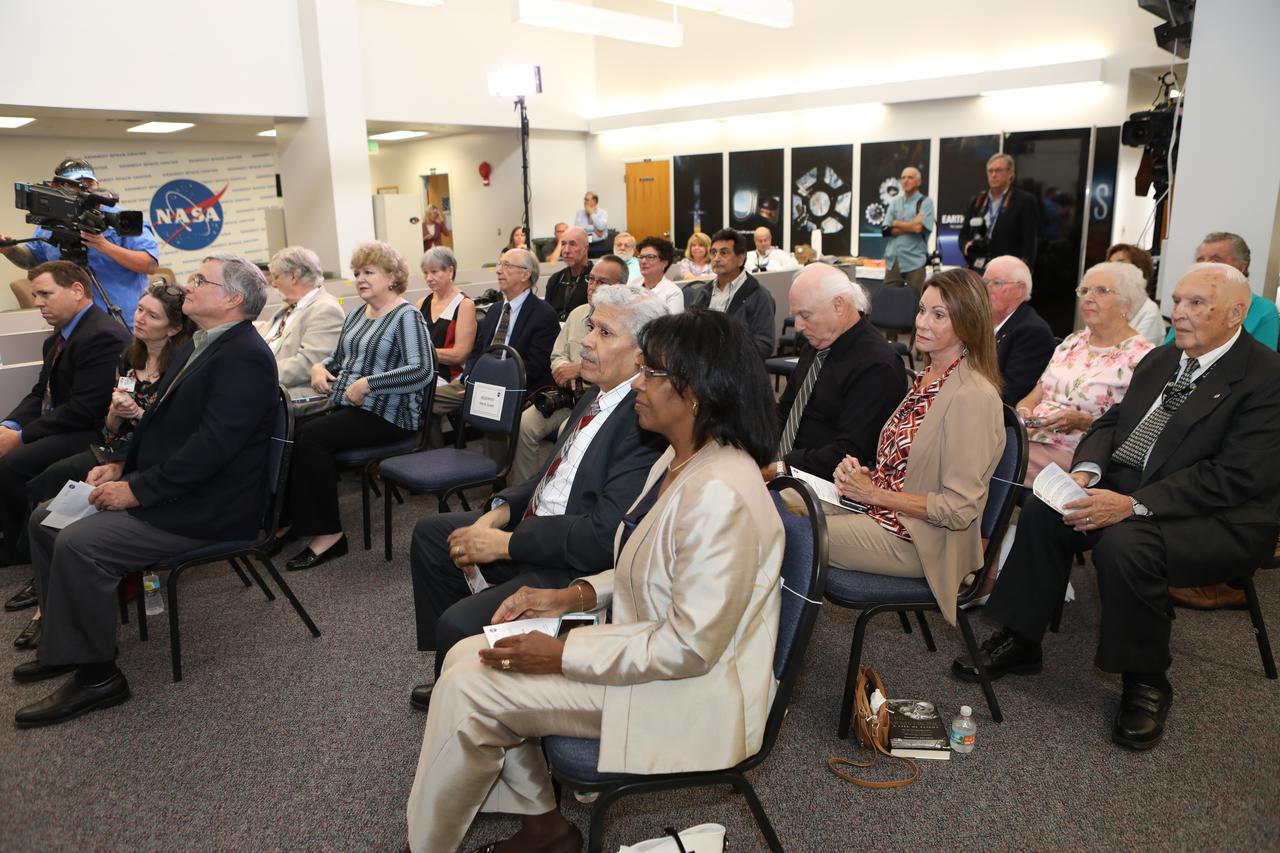
Friends, family members and colleagues of former NASA Public Affairs team members and space journalists gather in the NASA News Center at Kennedy Space Center in Florida for a ceremony in which six new honorees were added to the "Chroniclers" roll of honor. The Chroniclers program recognizes retirees of the news and communications business who helped spread news of American space exploration from Kennedy Space Center for ten years or more. The 2017 Chroniclers are Bruce Hall, CBS News and NBC News; Scott Harris, WESH, WKMG and Central Florida News 13; Bill Johnson, NASA Public Affairs; Warren Leary, The New York Times; Bob Murray, WDBO-TV, RCA and United Space Alliance; and Phillip Sandlin, Associated Press photographer.
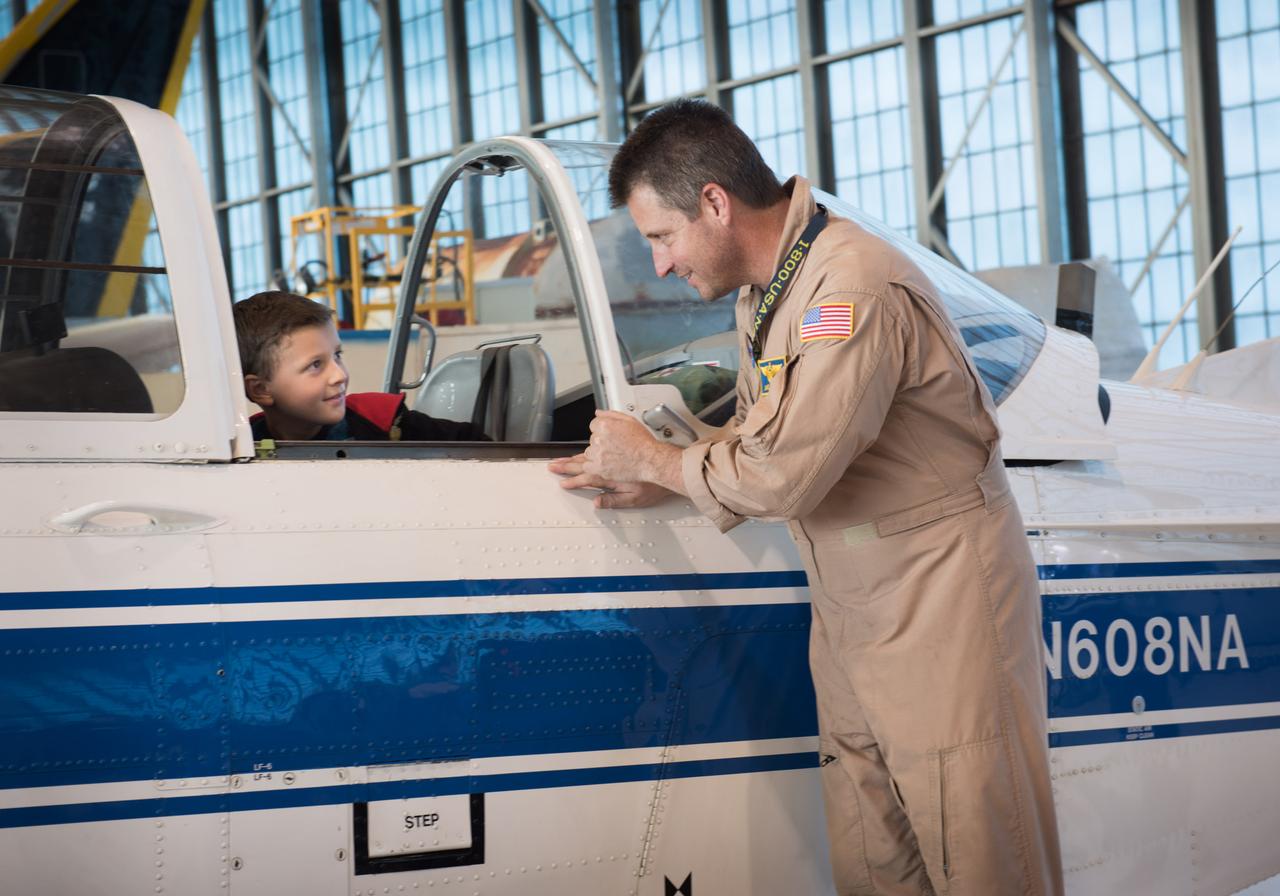
Jeremiah Kawczak checks out the T-34 aircraft with the help of Pilot and Chief of Aircraft Operations, James Demers at the Glenn Research Center Hangar during the NASA 60th Anniversary Public Tours
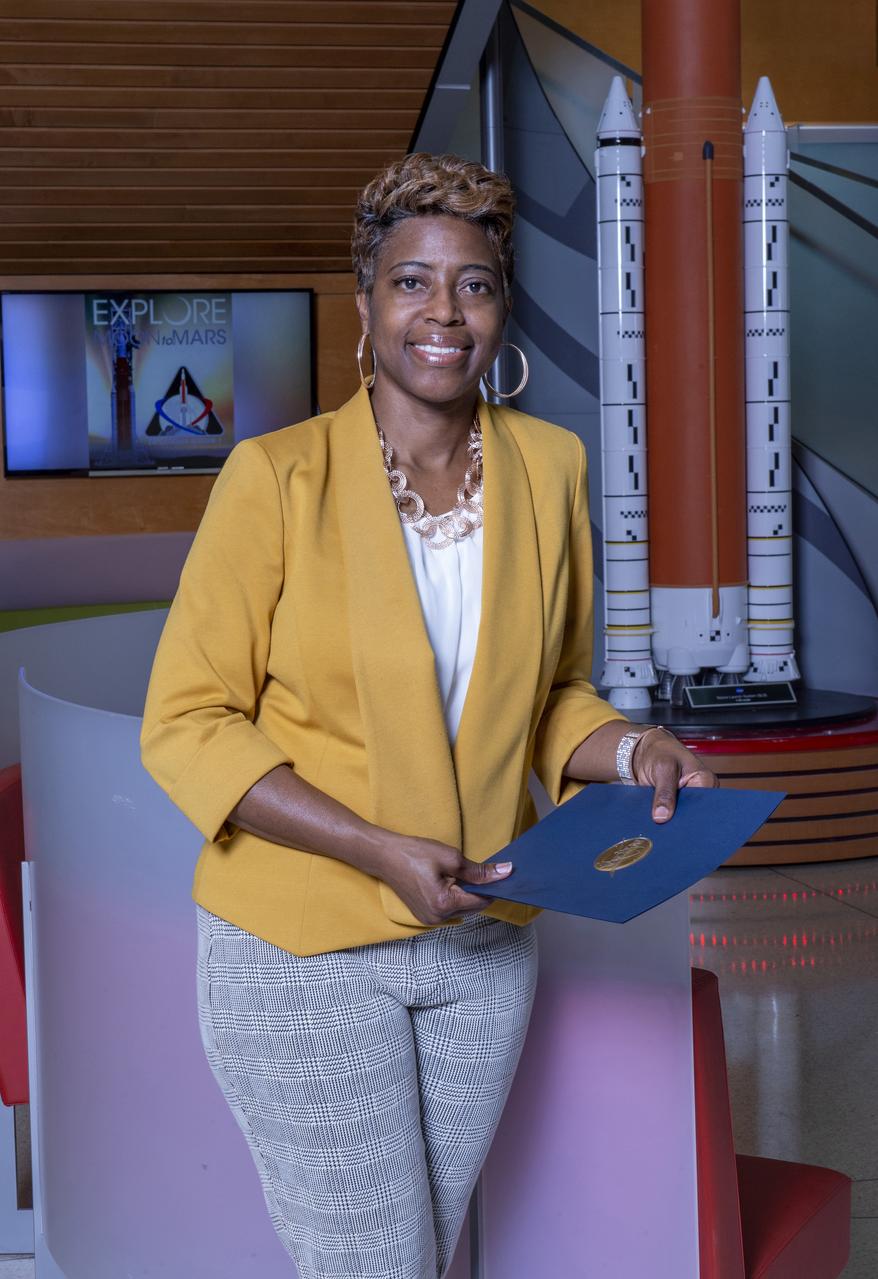
Dr. Ruth Jones, Branch Chief for Industrial Safety Branch (QD12) at MSFC, poses with model of Space Launch System, in Building 4220. Photo for publication in University of Arkansas, Pine Bluff, Alumni magazine.
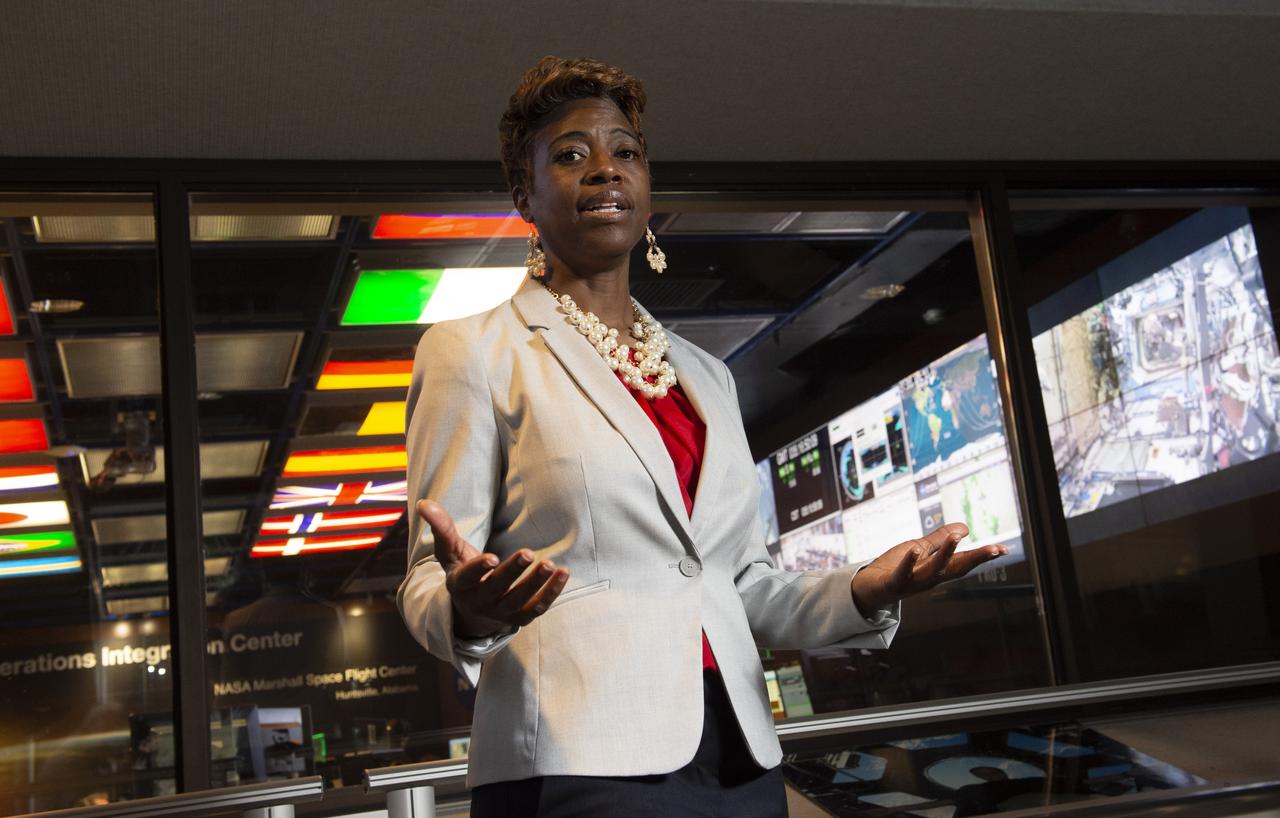
Dr. Ruth Jones, Branch Chief for Industrial Safety Branch (QD12) at MSFC, talks safety issues in the Payload Operation Integration Center. Photo for publication in University of Arkansas, Pine Bluff, Alumni magazine.
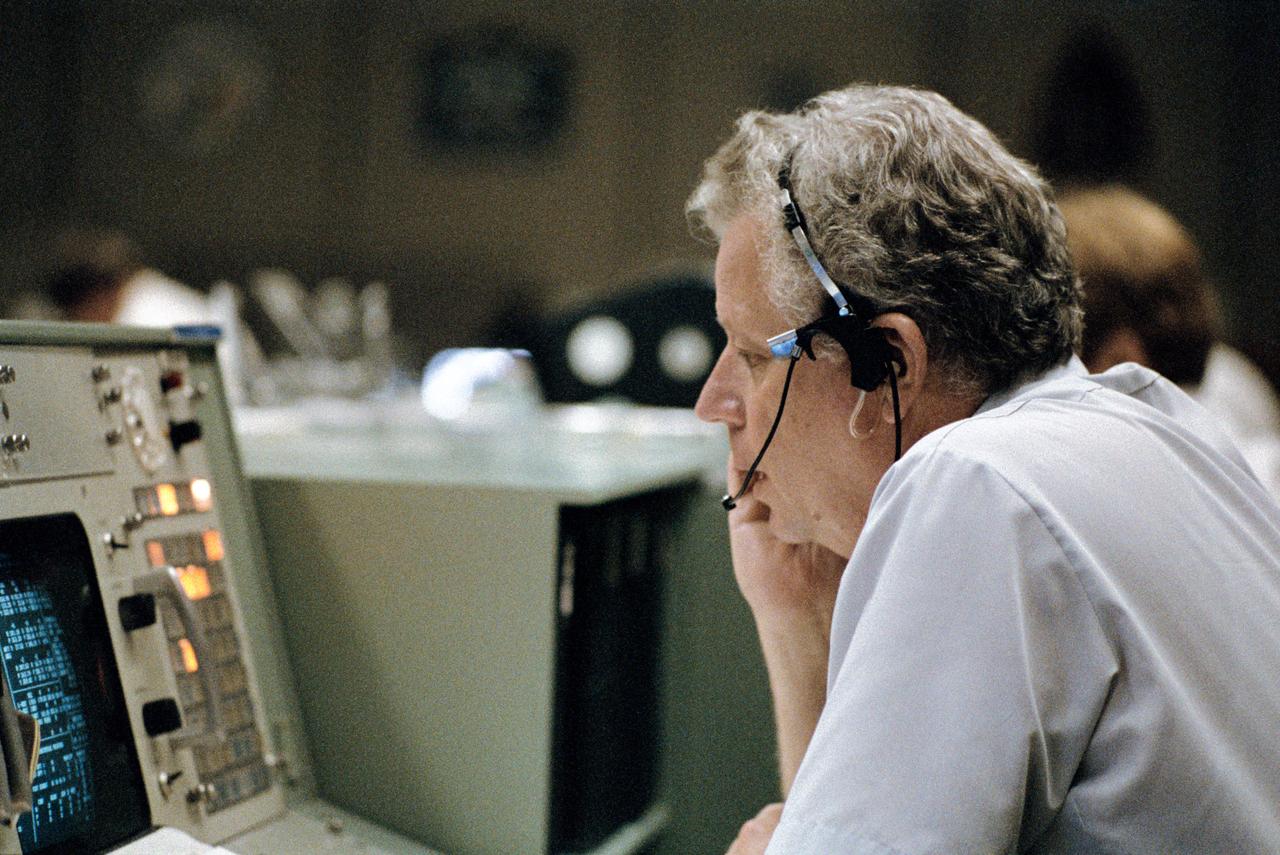
Terry White, serving as public affairs office commentator in the mission operations control room (MOCR) of JSC's mission control center, reads a status report on the STS-8 mission.
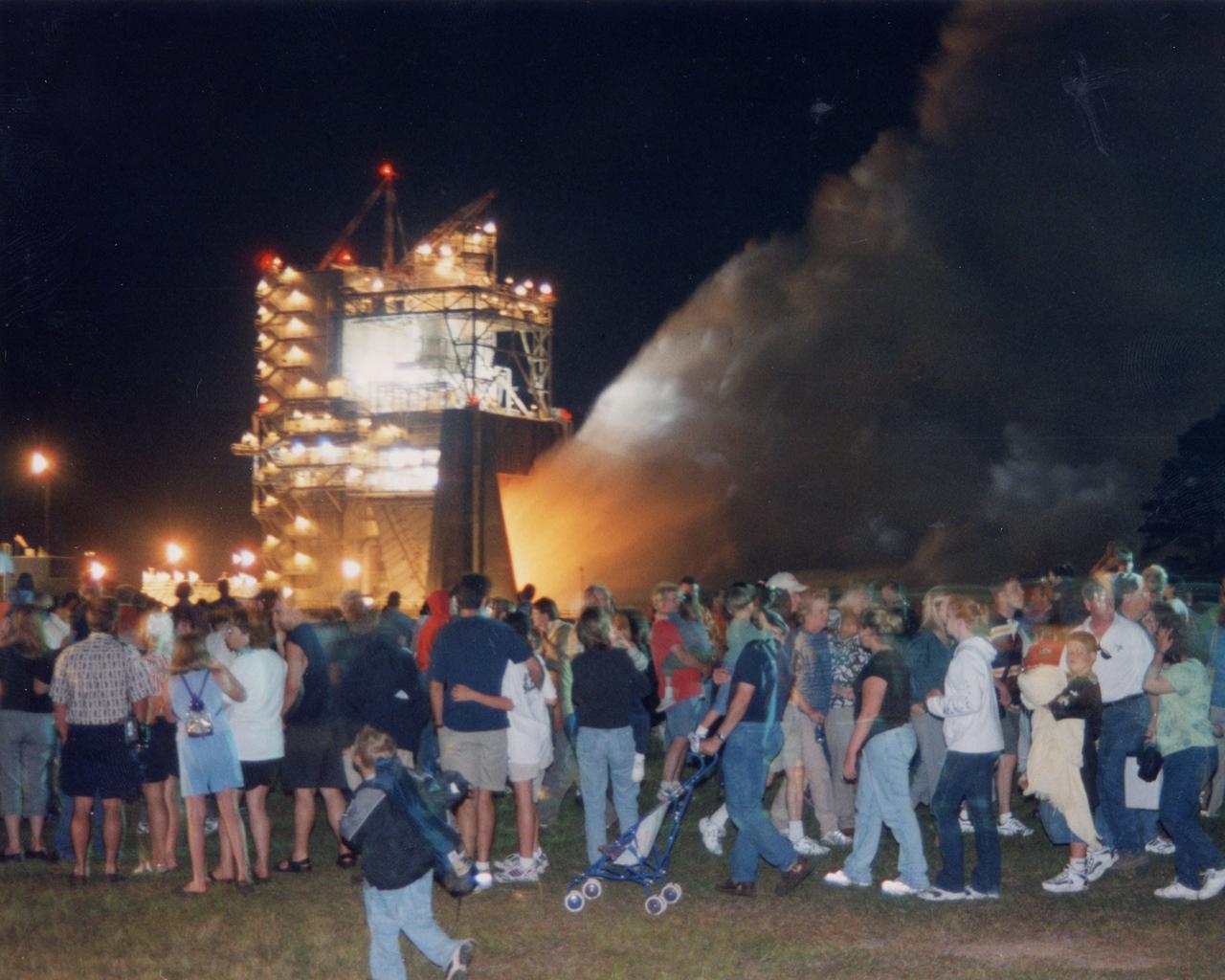
Over the past year, more than 20,000 people came to Stennis Space Center to witness the 'shake, rattle and roar' of one of the world's most sophisticated engines. Stennis Space Center in south Mississippi is NASA's lead center for rocket propulsion testing. StenniSphere, the visitor center for Stennis Space Center, hosted more than 250,000 visitors in its first year of operation. Of those visitors, 26.4 percent were from Louisiana.

S75-32053 (July 1975) --- An overall view of activity in the press working area of the ASTP News Center during the joint U.S.-USSR Apollo-Soyuz Test Project docking mission in Earth orbit. The JSC Public Affairs Office maintains a news center for each mission. The NASA spaceflights are covered by U.S. and foreign reporters representing TV networks, wire services, television and radio stations, newspapers, magazines, scientific and educational publications, etc. (Photo courtesy Communications Satellite Corporation)
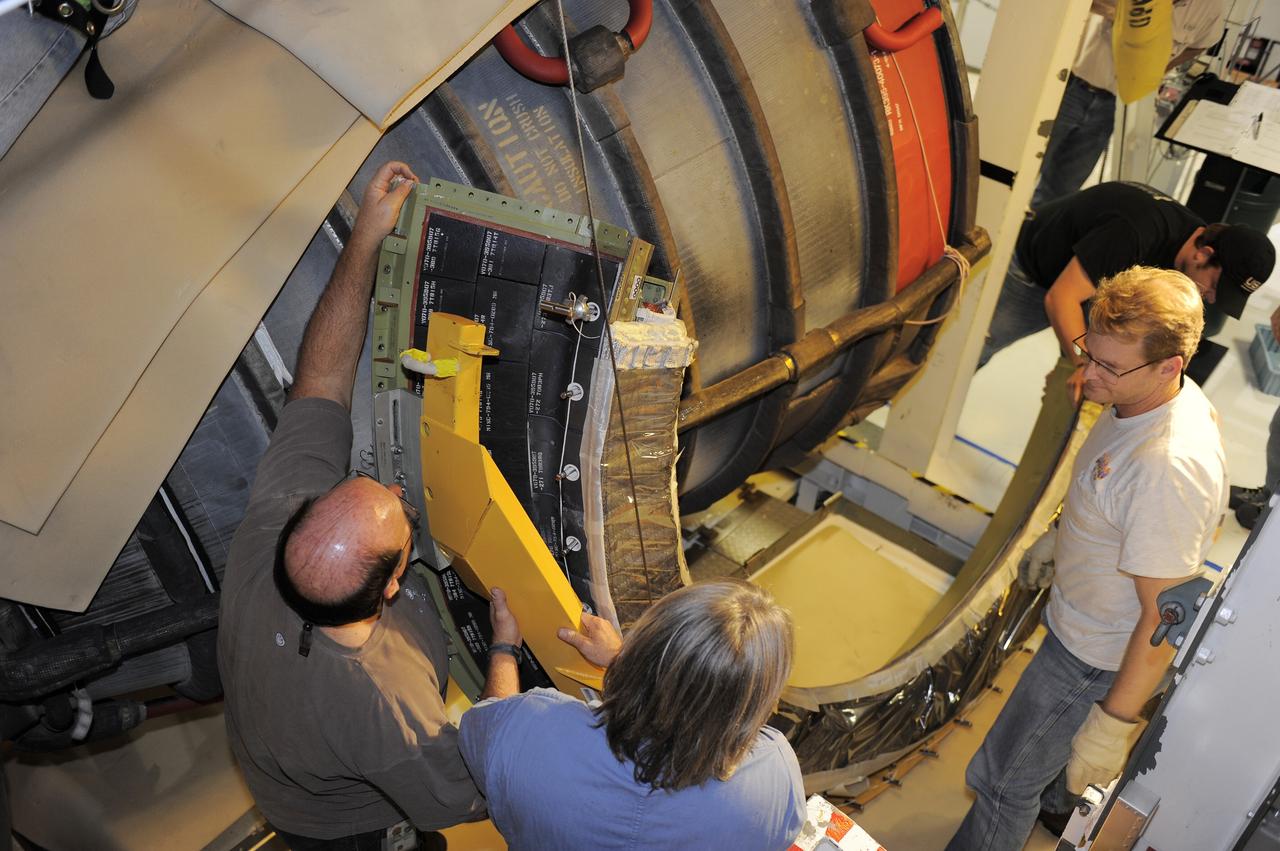
CAPE CANAVERAL, Fla. - Crews in Orbiter Processing Facility-2 at NASA's Kennedy Space Center in Florida remove space shuttle Discovery's right-hand inner heat shield from engine No. 1. The removal is part of Discovery's transition and retirement processing. Work performed on Discovery is expected to help rocket designers build next-generation spacecraft and prepare the shuttle for future public display.Photo credit: NASA/Kim Shiflett
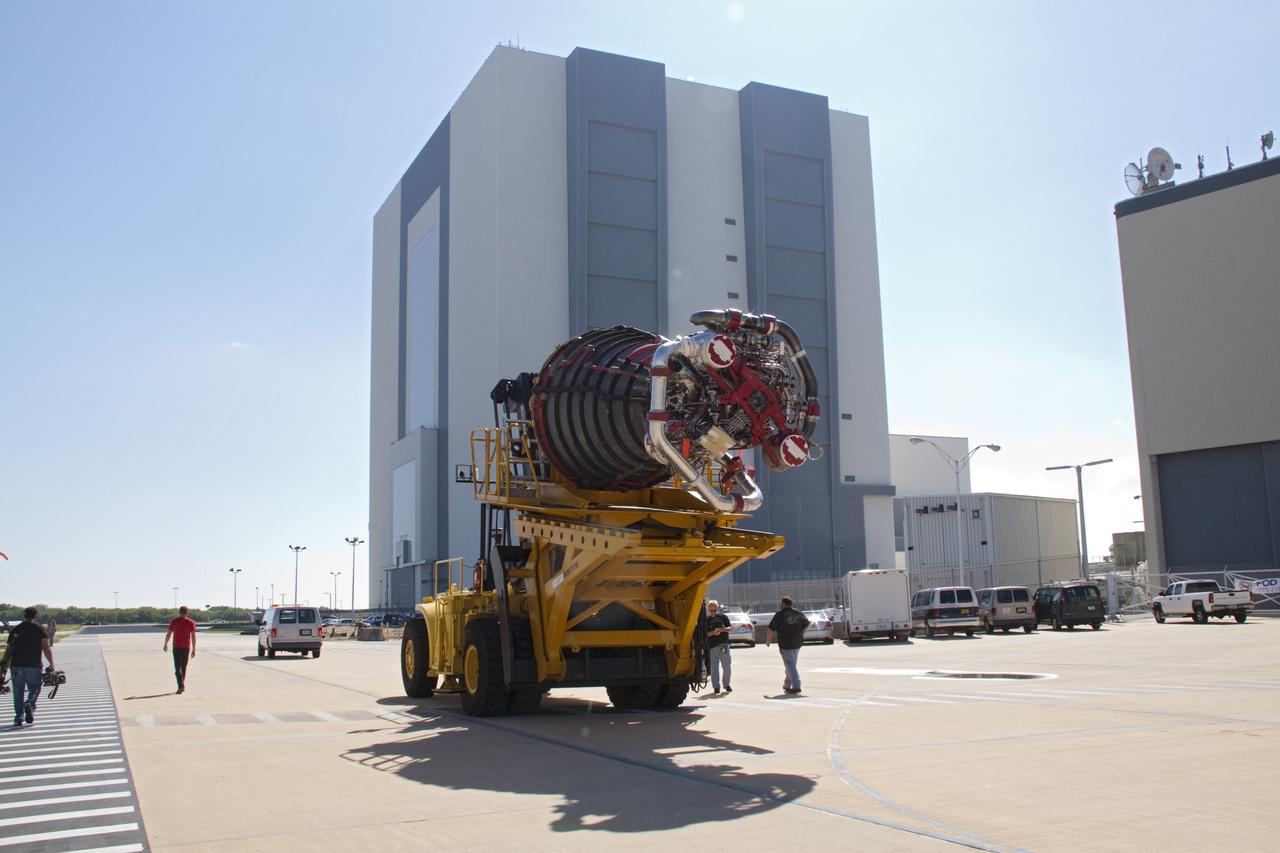
CAPE CANAVERAL, Fla. - Main engine No. 1, which was removed from space shuttle Discovery, is transported from Orbiter Processing Facility-2 to the Space Shuttle Main Engine Processing Facility at NASA's Kennedy Space Center in Florida. The removal was part of Discovery's transition and retirement processing. Work performed on Discovery is expected to help rocket designers build next-generation spacecraft and prepare the shuttle for future public display. Photo credit: NASA/Jack Pfaller
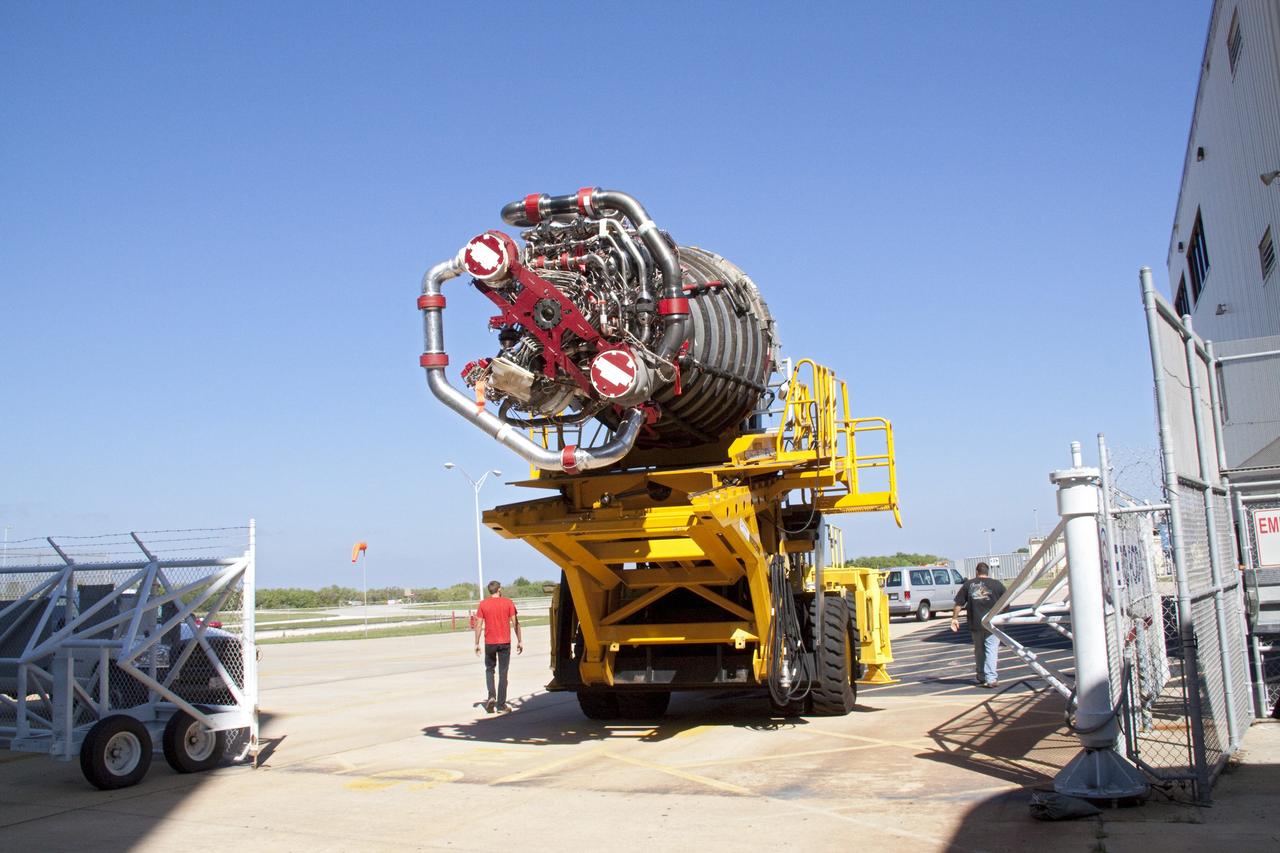
CAPE CANAVERAL, Fla. - Technicians complete the removal of main engine No. 1 from space shuttle Discovery using a specially designed engine installer, called a Hyster forklift. The work is taking place in Orbiter Processing Facility-2 at NASA's Kennedy Space Center in Florida. The removal is part of Discovery's transition and retirement processing. Work performed on Discovery is expected to help rocket designers build next-generation spacecraft and prepare the shuttle for future public display. Photo credit: NASA/Jack Pfaller
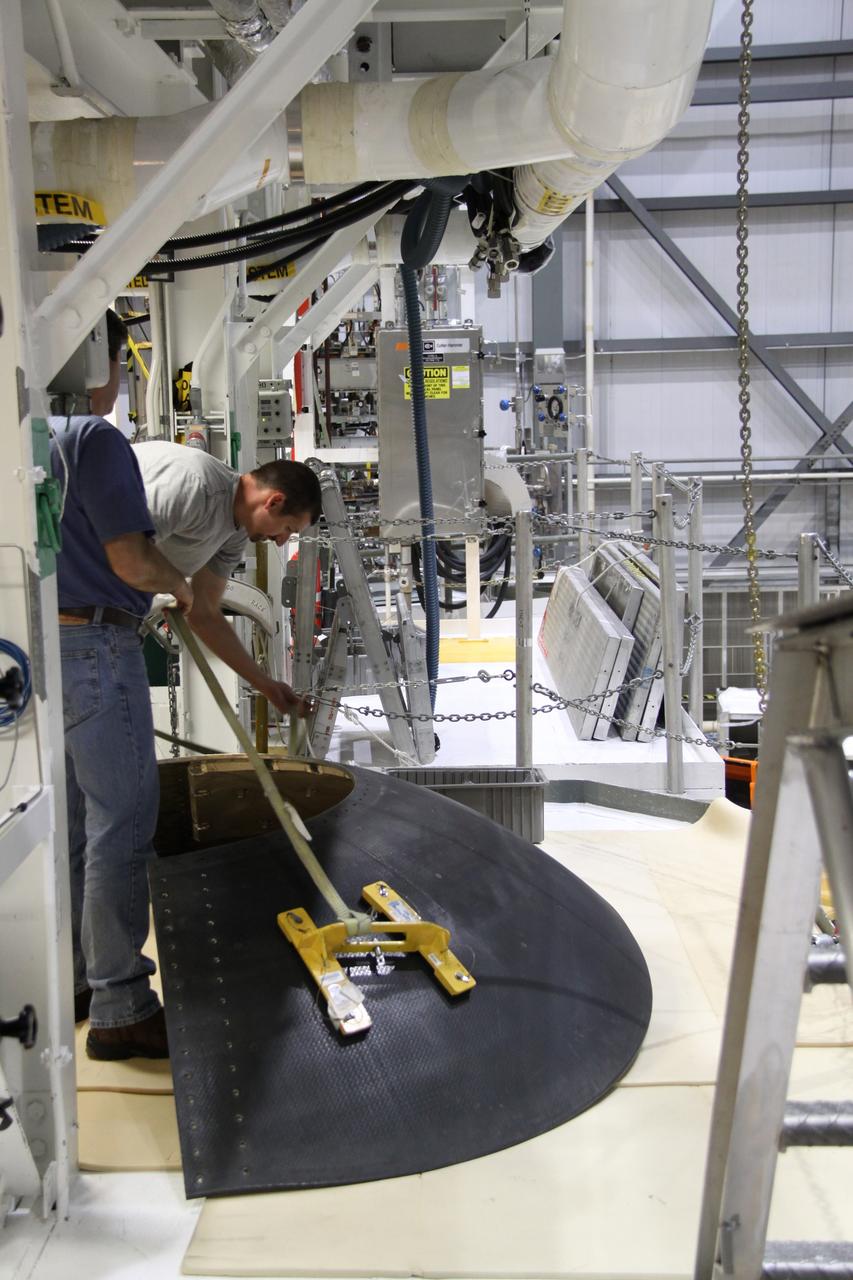
CAPE CANAVERAL, Fla. - Crews in Orbiter Processing Facility-2 at NASA's Kennedy Space Center in Florida remove space shuttle Discovery's right-hand inner heat shield from engine No. 1. The removal is part of Discovery's transition and retirement processing. Work performed on Discovery is expected to help rocket designers build next-generation spacecraft and prepare the shuttle for future public display.Photo credit: NASA/Jack Pfaller
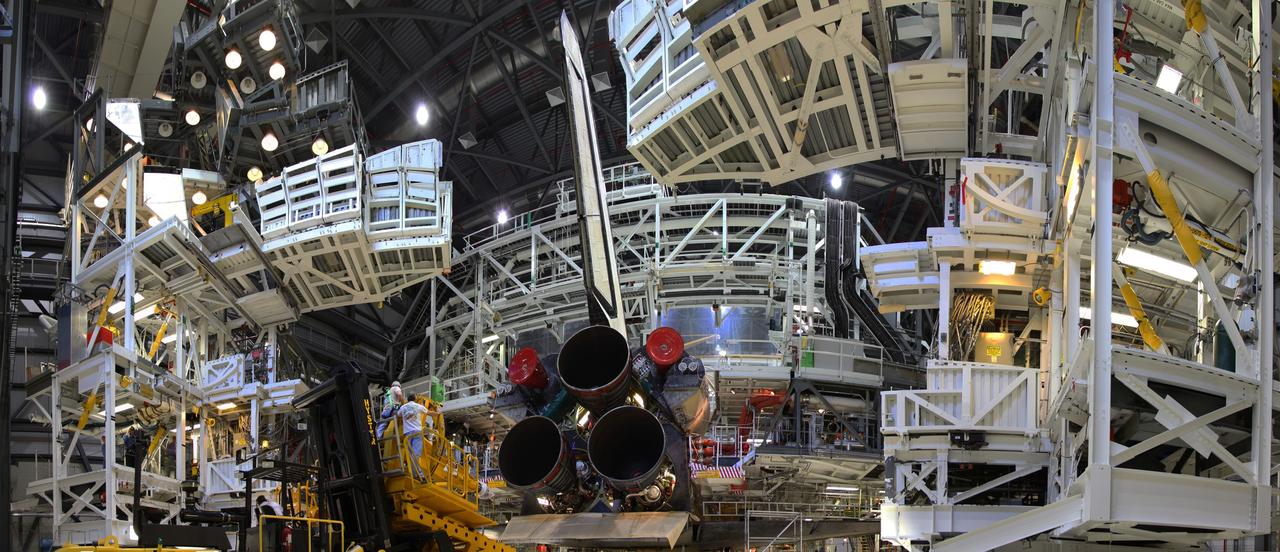
CAPE CANAVERAL, Fla. - A panoramic photo shows space shuttle Discovery during the main engine removal phase in Orbiter Processing Facility-2 at NASA's Kennedy Space Center in Florida. The removal is part of Discovery's transition and retirement processing. Work performed on Discovery is expected to help rocket designers build next-generation spacecraft and prepare the shuttle for future public display. NASA/Frankie Martin
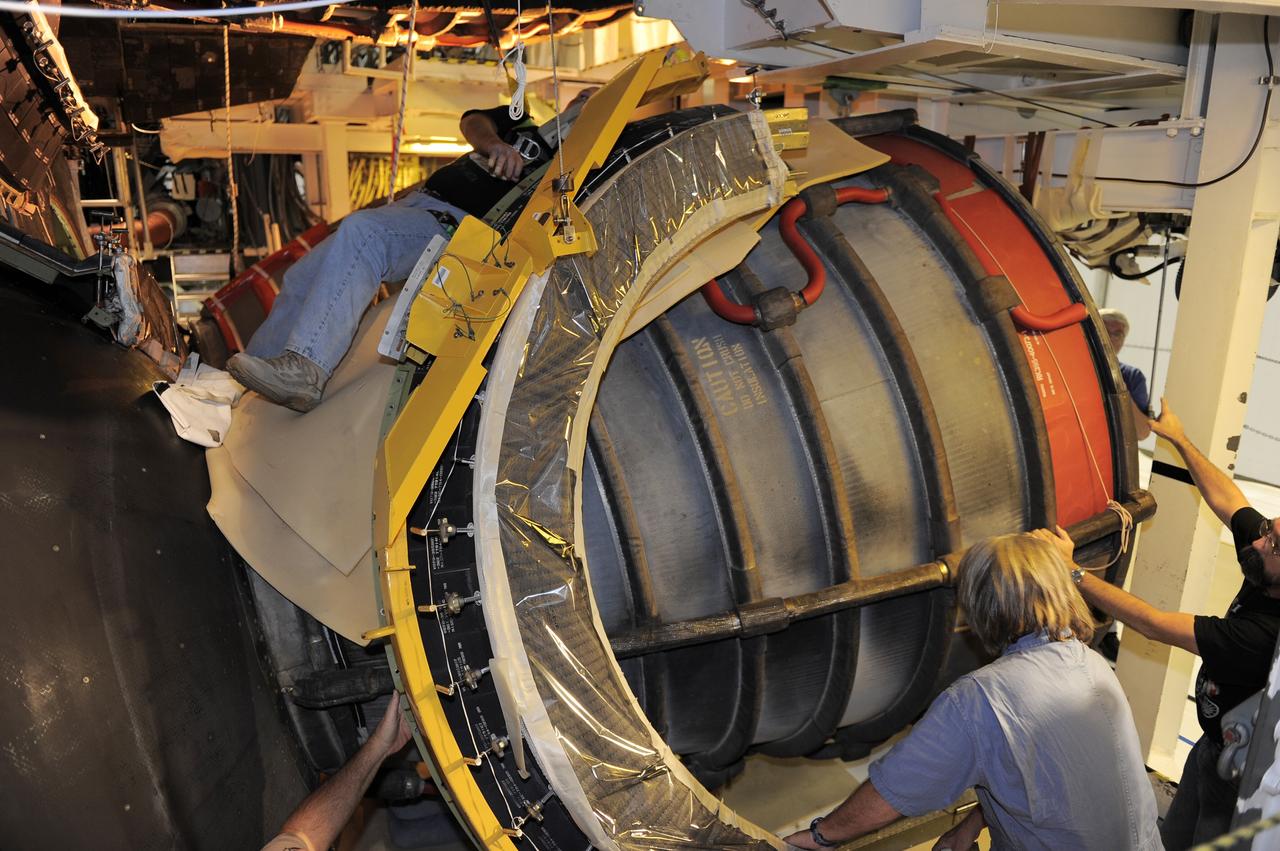
CAPE CANAVERAL, Fla. - Crews in Orbiter Processing Facility-2 at NASA's Kennedy Space Center in Florida remove space shuttle Discovery's right-hand inner heat shield from engine No. 1. The removal is part of Discovery's transition and retirement processing. Work performed on Discovery is expected to help rocket designers build next-generation spacecraft and prepare the shuttle for future public display.Photo credit: NASA/Kim Shiflett
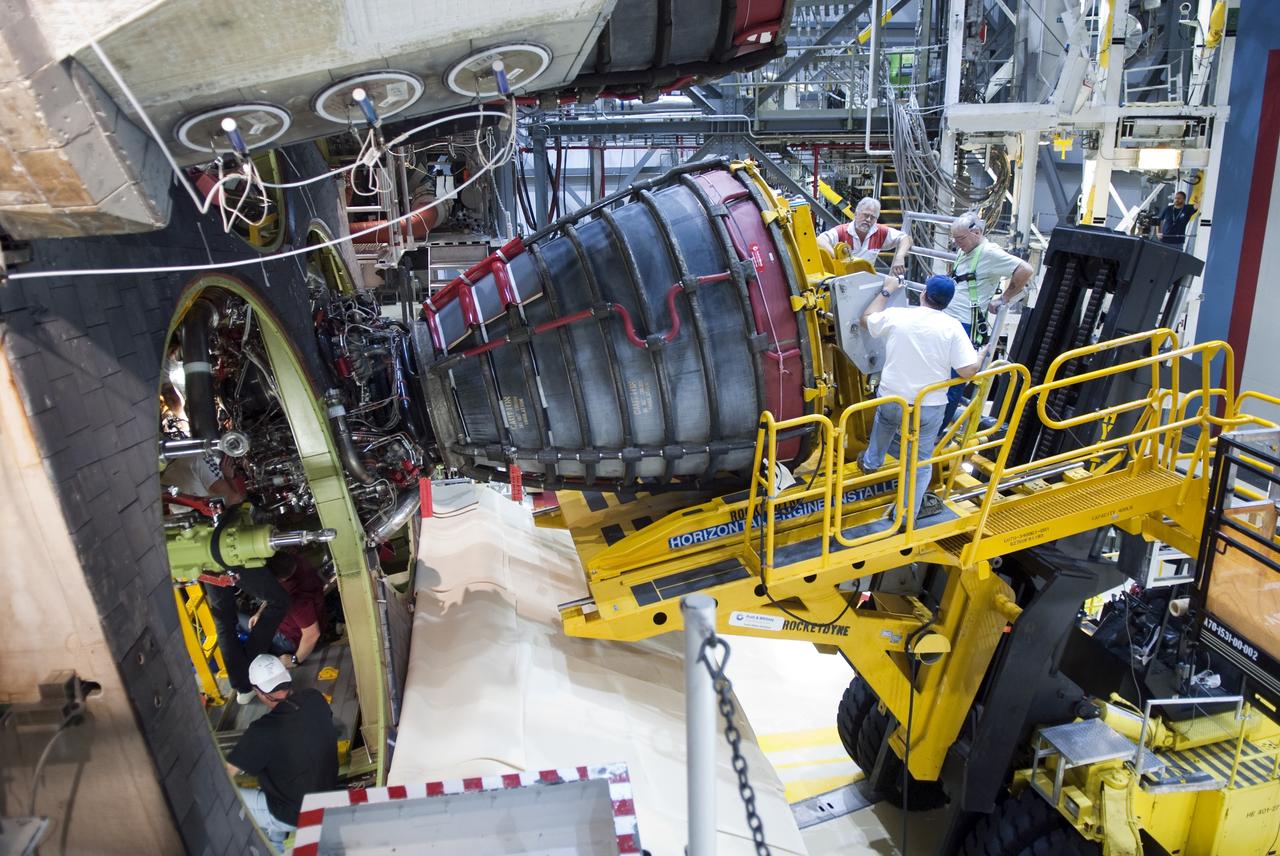
CAPE CANAVERAL, Fla. - Technicians carefully remove main engine No. 3 from space shuttle Discovery using a specially designed engine installer, called a Hyster forklift. The work is taking place in Orbiter Processing Facility-2 at NASA's Kennedy Space Center in Florida. The removal is part of Discovery's transition and retirement processing. Work performed on Discovery is expected to help rocket designers build next-generation spacecraft and prepare the shuttle for future public display. NASA/Jim Grossmann
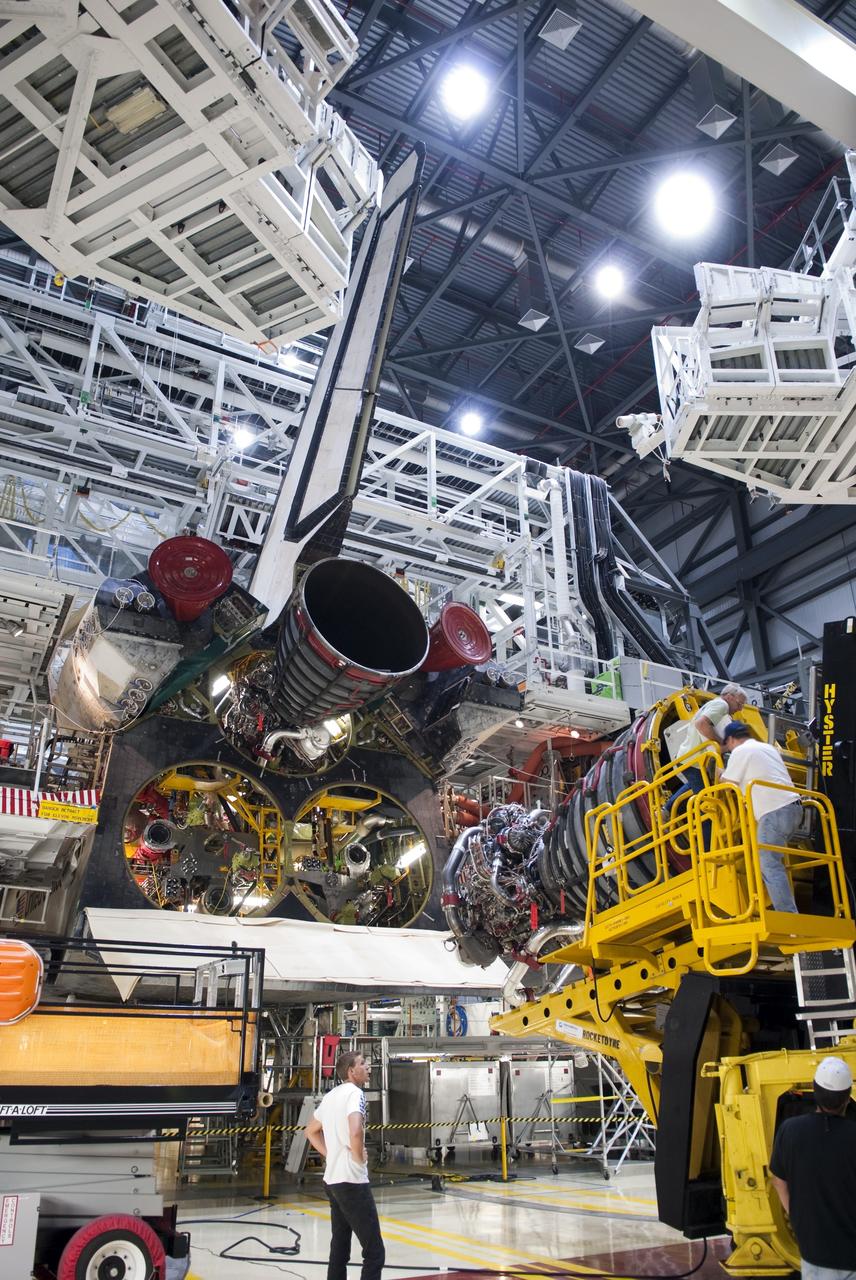
CAPE CANAVERAL, Fla. - Technicians complete the removal of main engine No. 3 from space shuttle Discovery using a specially designed engine installer, called a Hyster forklift. The work is taking place in Orbiter Processing Facility-2 at NASA's Kennedy Space Center in Florida. The removal is part of Discovery's transition and retirement processing. Work performed on Discovery is expected to help rocket designers build next-generation spacecraft and prepare the shuttle for future public display. NASA/Jim Grossmann
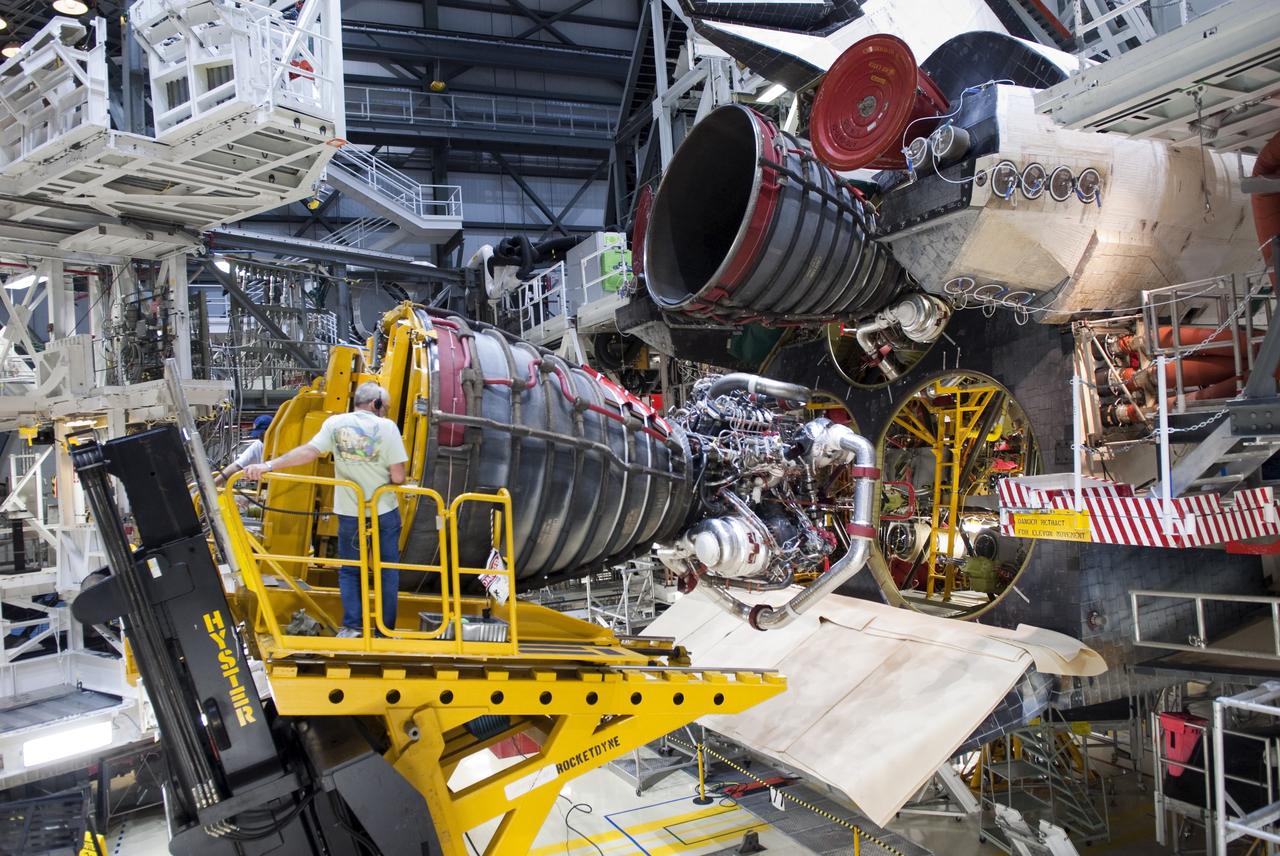
CAPE CANAVERAL, Fla. - Technicians complete the removal of main engine No. 3 from space shuttle Discovery using a specially designed engine installer, called a Hyster forklift. The work is taking place in Orbiter Processing Facility-2 at NASA's Kennedy Space Center in Florida. The removal is part of Discovery's transition and retirement processing. Work performed on Discovery is expected to help rocket designers build next-generation spacecraft and prepare the shuttle for future public display. NASA/Jim Grossmann
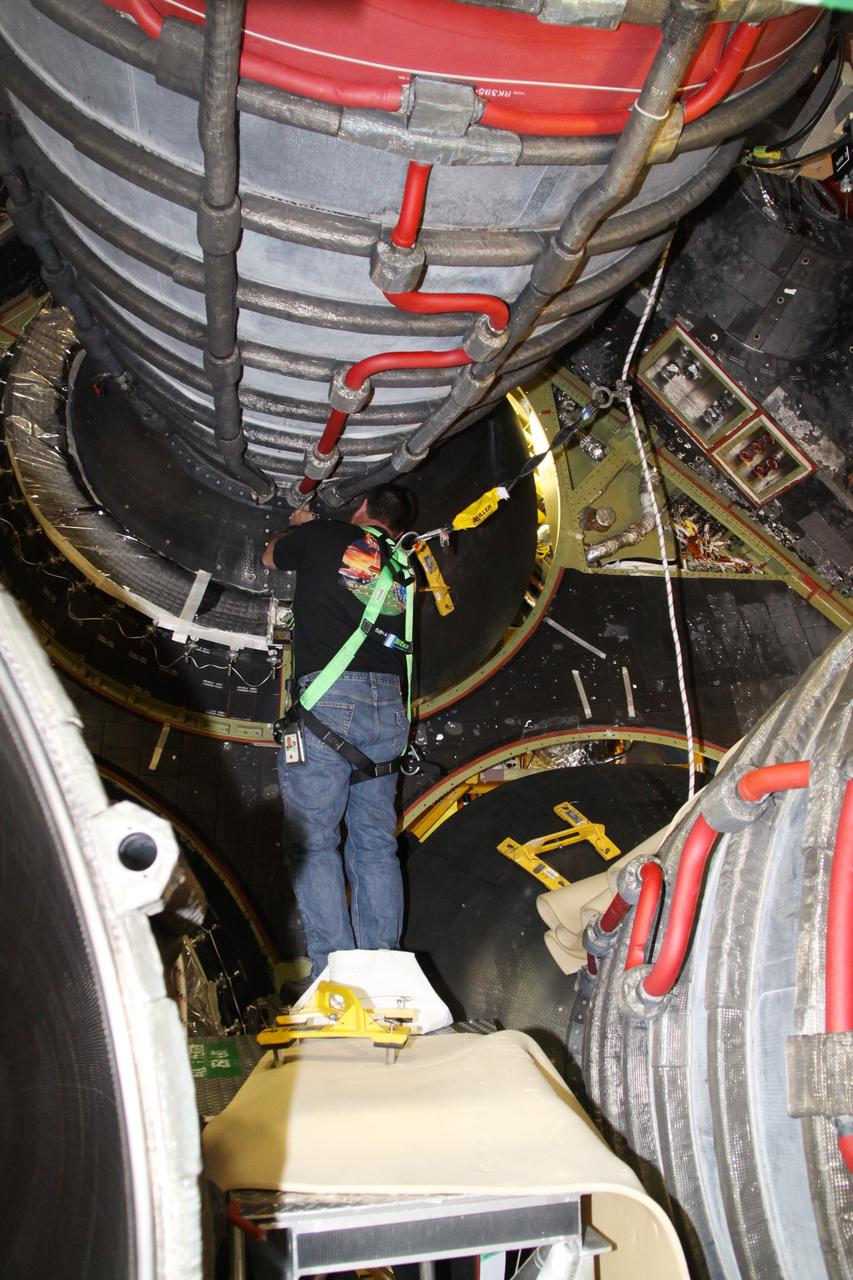
CAPE CANAVERAL, Fla. - Crews in Orbiter Processing Facility-2 at NASA's Kennedy Space Center in Florida remove space shuttle Discovery's right-hand inner heat shield from engine No. 1. The removal is part of Discovery's transition and retirement processing. Work performed on Discovery is expected to help rocket designers build next-generation spacecraft and prepare the shuttle for future public display.Photo credit: NASA/Jack Pfaller
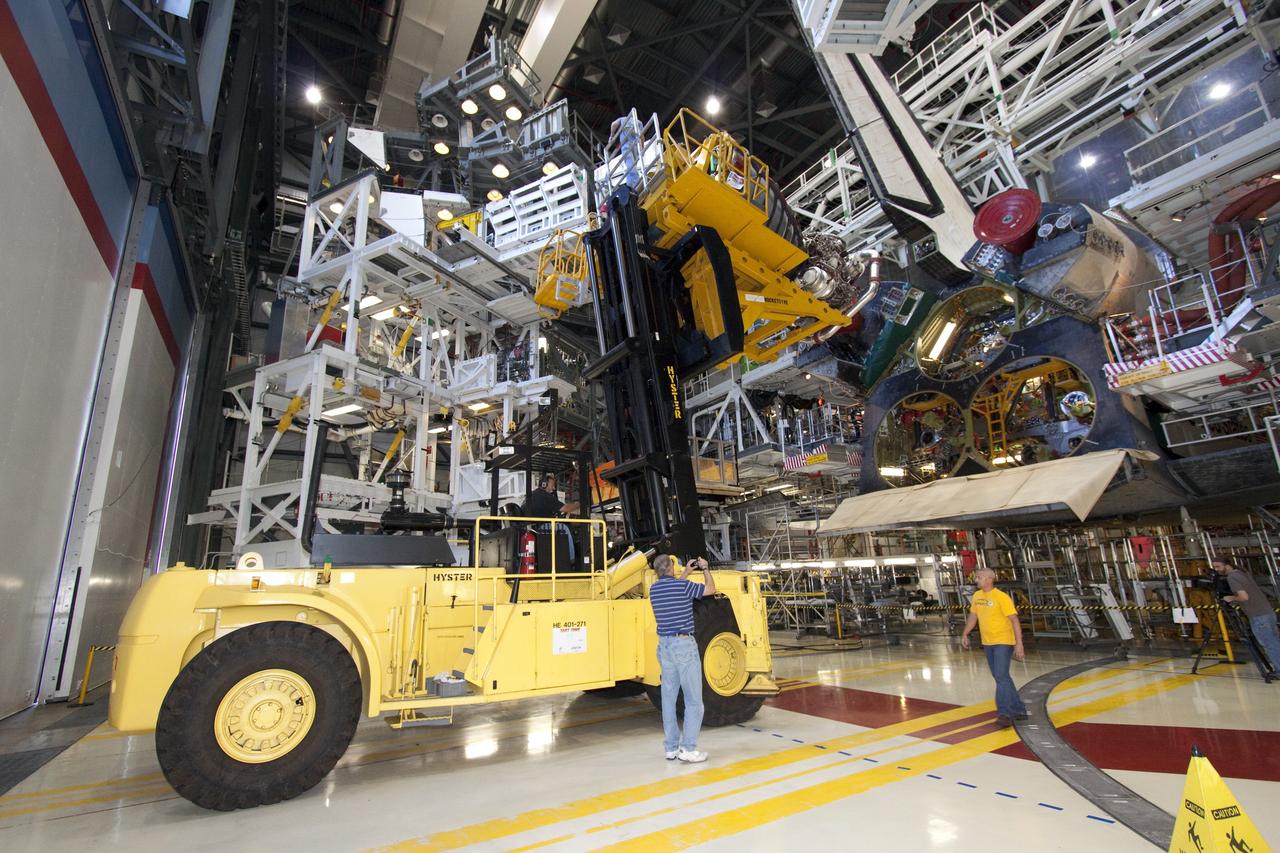
CAPE CANAVERAL, Fla. - Technicians complete the removal of main engine No. 1 from space shuttle Discovery using a specially designed engine installer, called a Hyster forklift. The work is taking place in Orbiter Processing Facility-2 at NASA's Kennedy Space Center in Florida. The removal is part of Discovery's transition and retirement processing. Work performed on Discovery is expected to help rocket designers build next-generation spacecraft and prepare the shuttle for future public display. Photo credit: NASA/Jack Pfaller
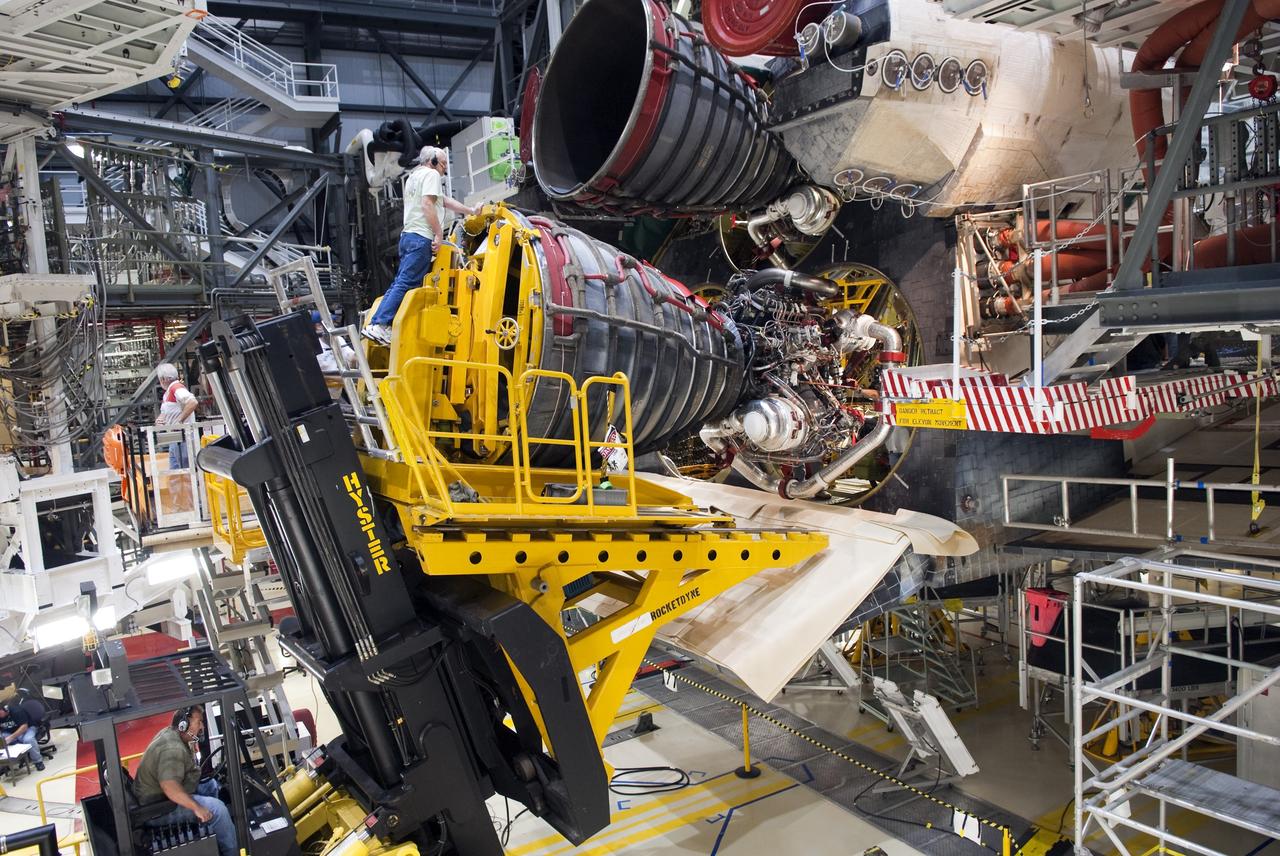
CAPE CANAVERAL, Fla. - Technicians carefully remove main engine No. 3 from space shuttle Discovery using a specially designed engine installer, called a Hyster forklift. The work is taking place in Orbiter Processing Facility-2 at NASA's Kennedy Space Center in Florida. The removal is part of Discovery's transition and retirement processing. Work performed on Discovery is expected to help rocket designers build next-generation spacecraft and prepare the shuttle for future public display. NASA/Jim Grossmann
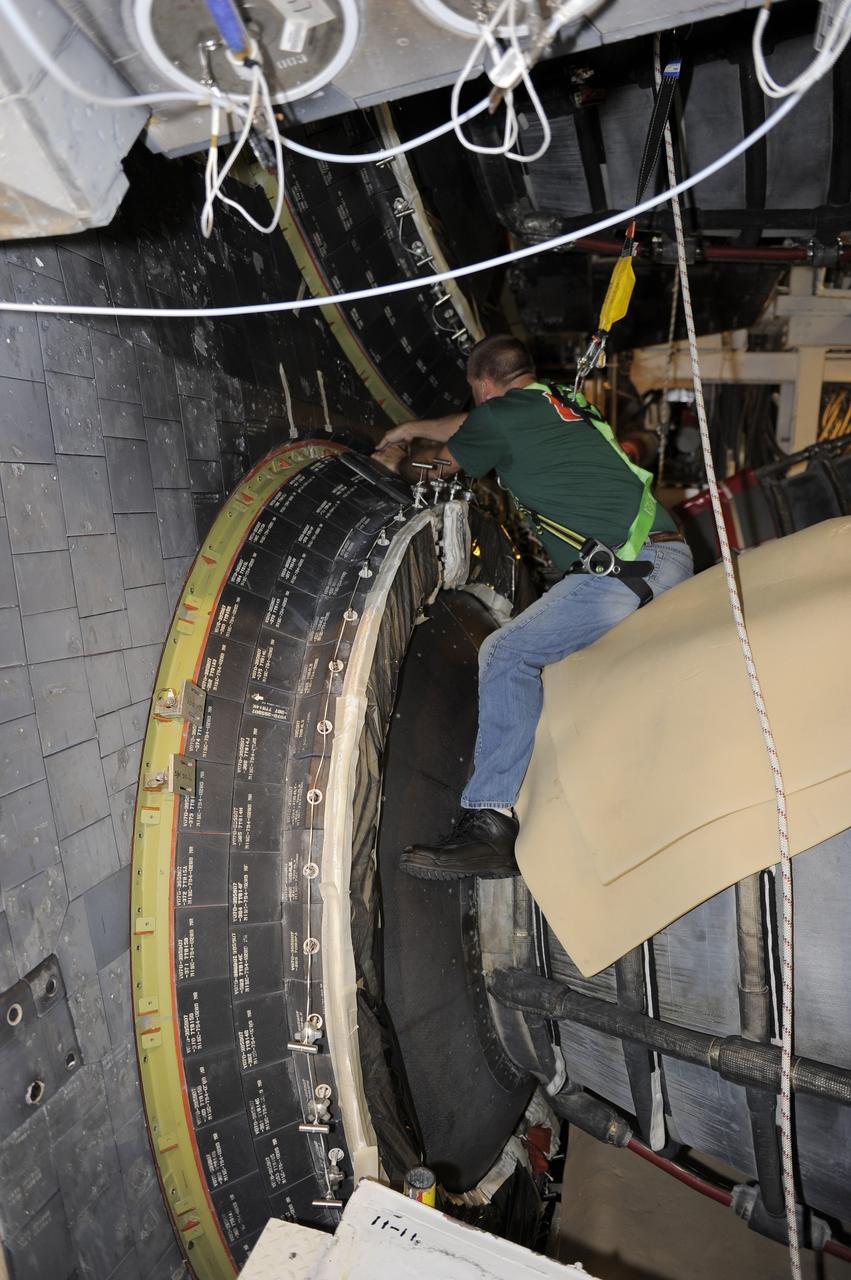
CAPE CANAVERAL, Fla. - Crews in Orbiter Processing Facility-2 at NASA's Kennedy Space Center in Florida remove space shuttle Discovery's right-hand inner heat shield from engine No. 1. The removal is part of Discovery's transition and retirement processing. Work performed on Discovery is expected to help rocket designers build next-generation spacecraft and prepare the shuttle for future public display.Photo credit: NASA/Kim Shiflett
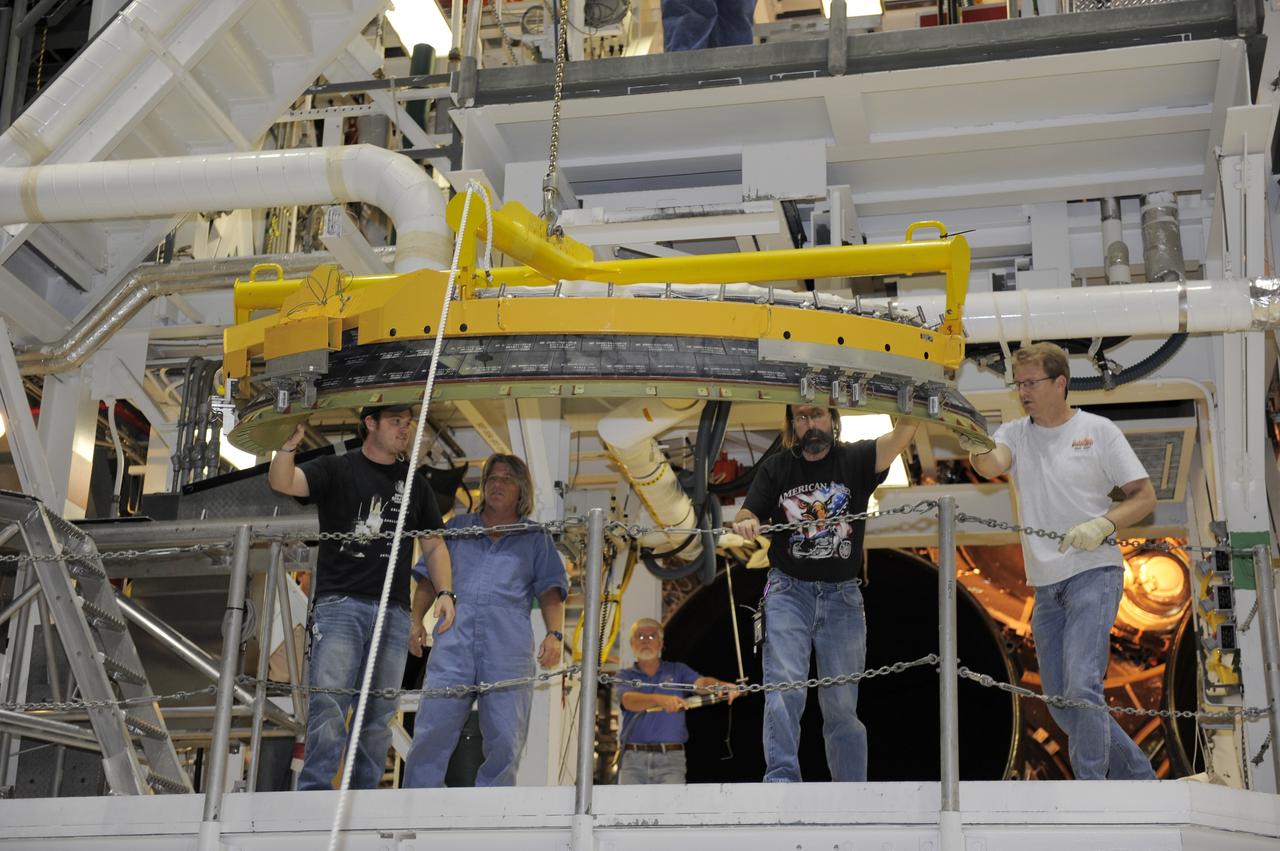
CAPE CANAVERAL, Fla. - Crews in Orbiter Processing Facility-2 at NASA's Kennedy Space Center in Florida remove space shuttle Discovery's right-hand inner heat shield from engine No. 1. The removal is part of Discovery's transition and retirement processing. Work performed on Discovery is expected to help rocket designers build next-generation spacecraft and prepare the shuttle for future public display.Photo credit: NASA/Kim Shiflett
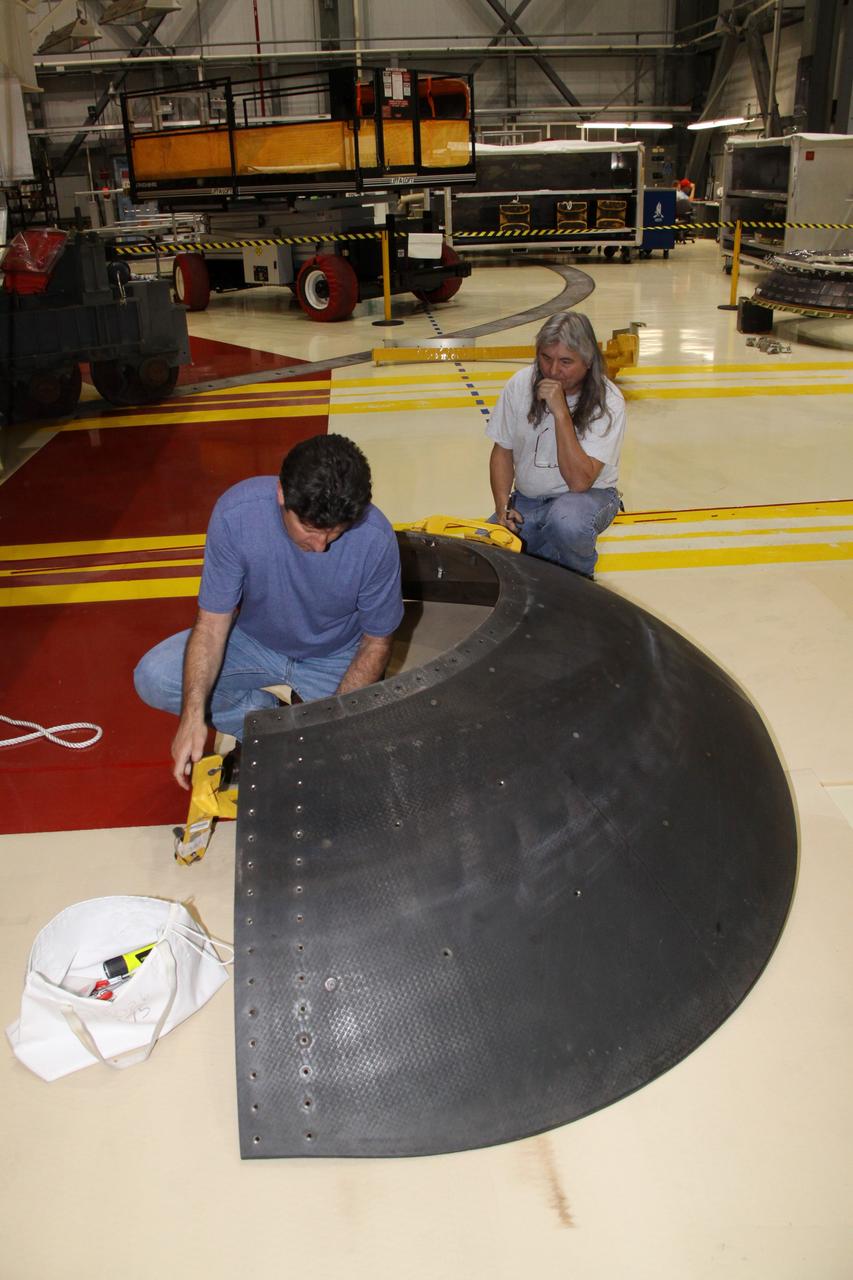
CAPE CANAVERAL, Fla. - Crews in Orbiter Processing Facility-2 at NASA's Kennedy Space Center in Florida remove space shuttle Discovery's right-hand inner heat shield from engine No. 1. The removal is part of Discovery's transition and retirement processing. Work performed on Discovery is expected to help rocket designers build next-generation spacecraft and prepare the shuttle for future public display.Photo credit: NASA/Jack Pfaller
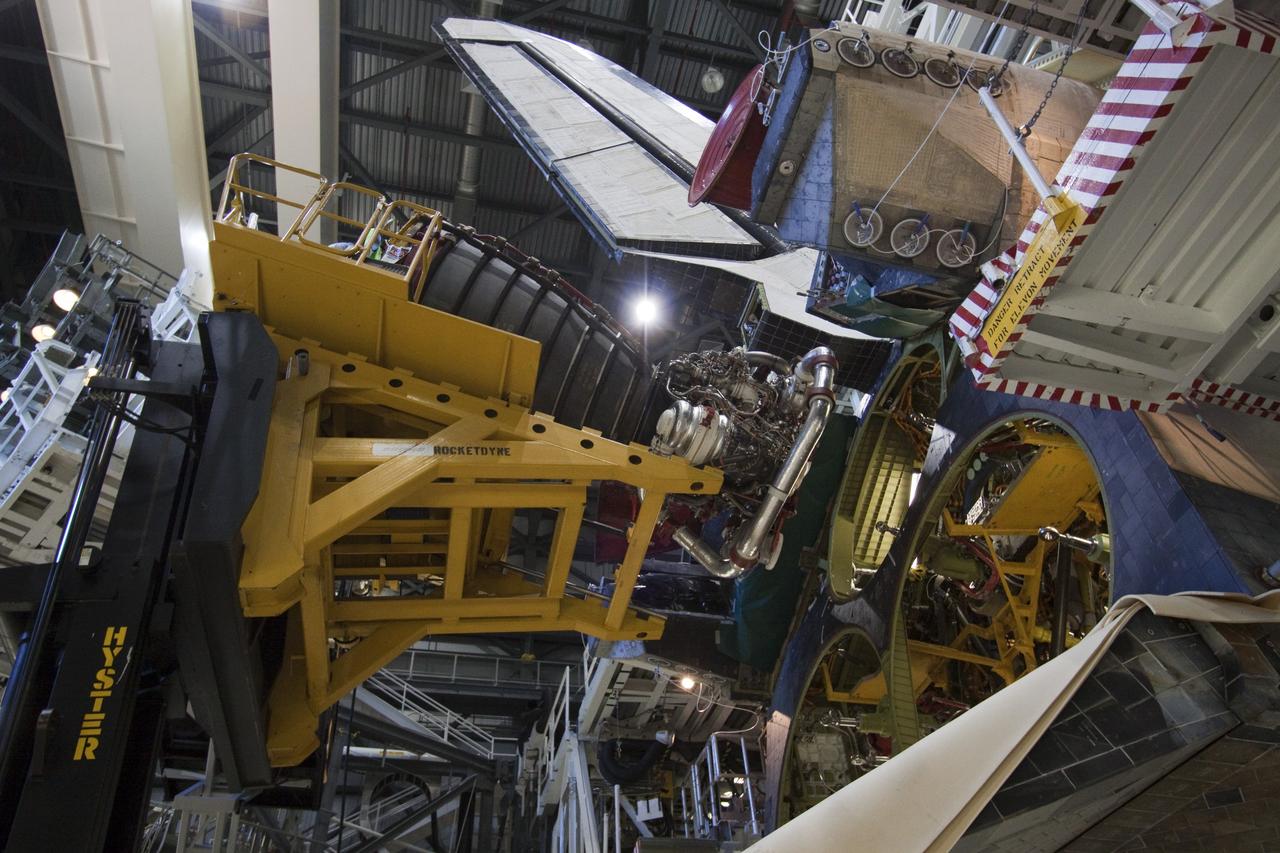
CAPE CANAVERAL, Fla. - Technicians complete the removal of main engine No. 1 from space shuttle Discovery using a specially designed engine installer, called a Hyster forklift. The work is taking place in Orbiter Processing Facility-2 at NASA's Kennedy Space Center in Florida. The removal is part of Discovery's transition and retirement processing. Work performed on Discovery is expected to help rocket designers build next-generation spacecraft and prepare the shuttle for future public display. Photo credit: NASA/Jack Pfaller
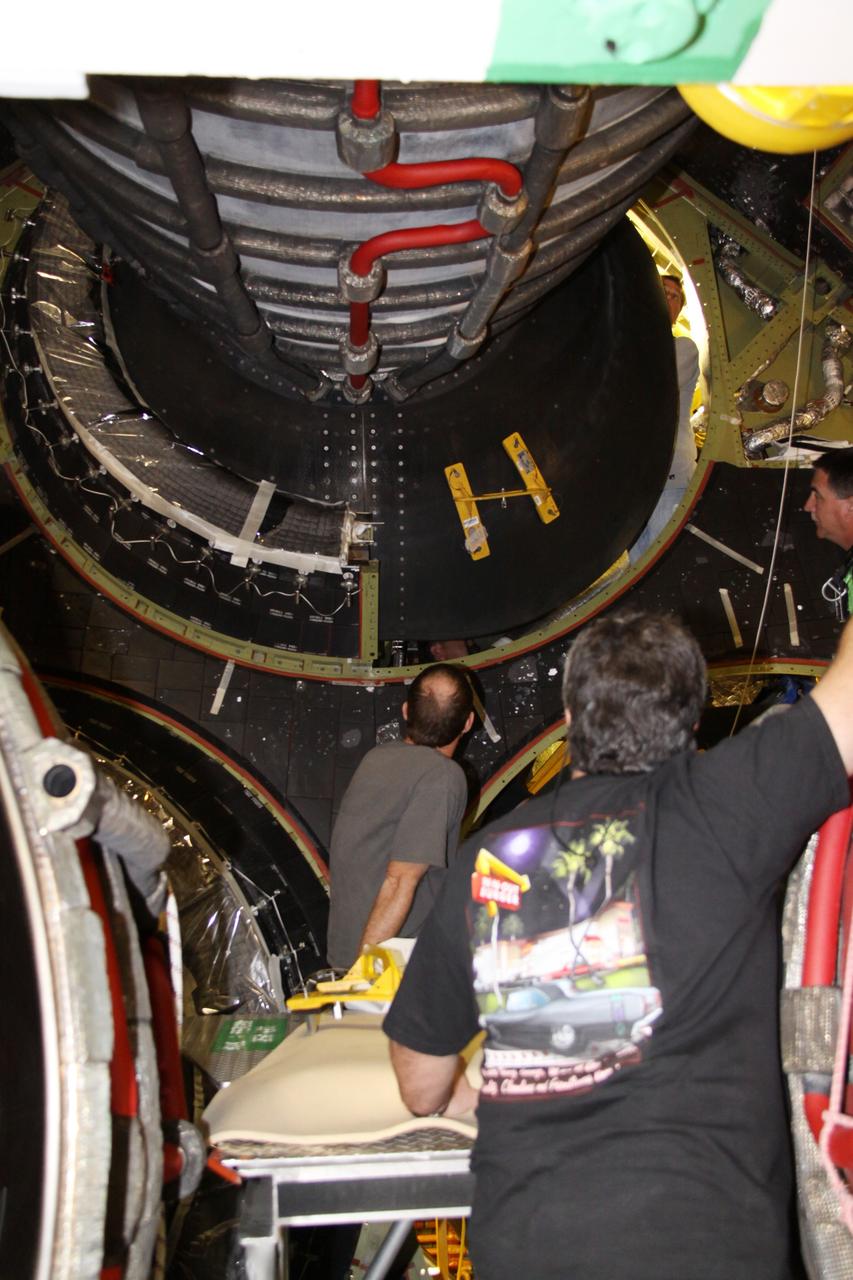
CAPE CANAVERAL, Fla. - Crews in Orbiter Processing Facility-2 at NASA's Kennedy Space Center in Florida remove space shuttle Discovery's right-hand inner heat shield from engine No. 1. The removal is part of Discovery's transition and retirement processing. Work performed on Discovery is expected to help rocket designers build next-generation spacecraft and prepare the shuttle for future public display.Photo credit: NASA/Jack Pfaller
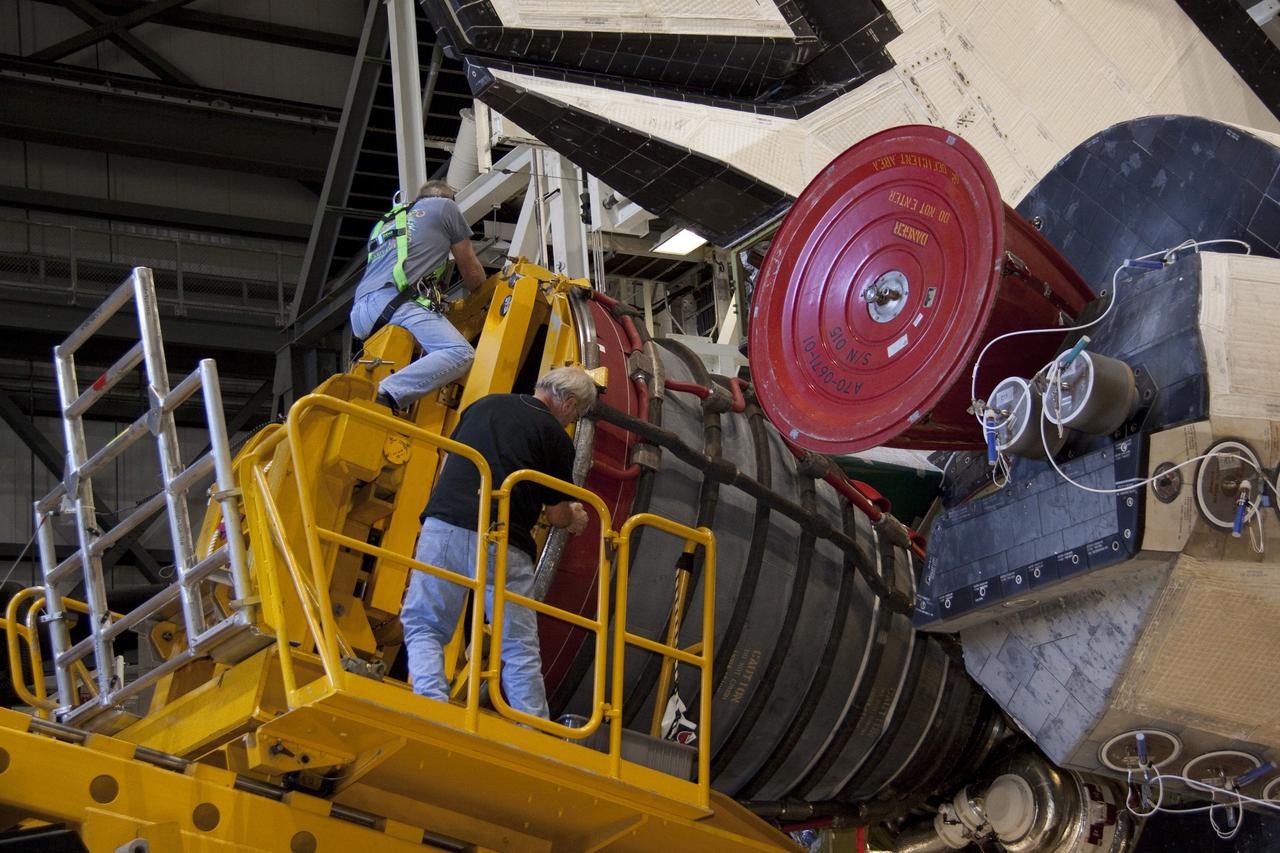
CAPE CANAVERAL, Fla. - Technicians carefully remove main engine No. 1 from space shuttle Discovery using a specially designed engine installer, called a Hyster forklift. The work is taking place in Orbiter Processing Facility-2 at NASA's Kennedy Space Center in Florida. The removal is part of Discovery's transition and retirement processing. Work performed on Discovery is expected to help rocket designers build next-generation spacecraft and prepare the shuttle for future public display. Photo credit: NASA/Jack Pfaller
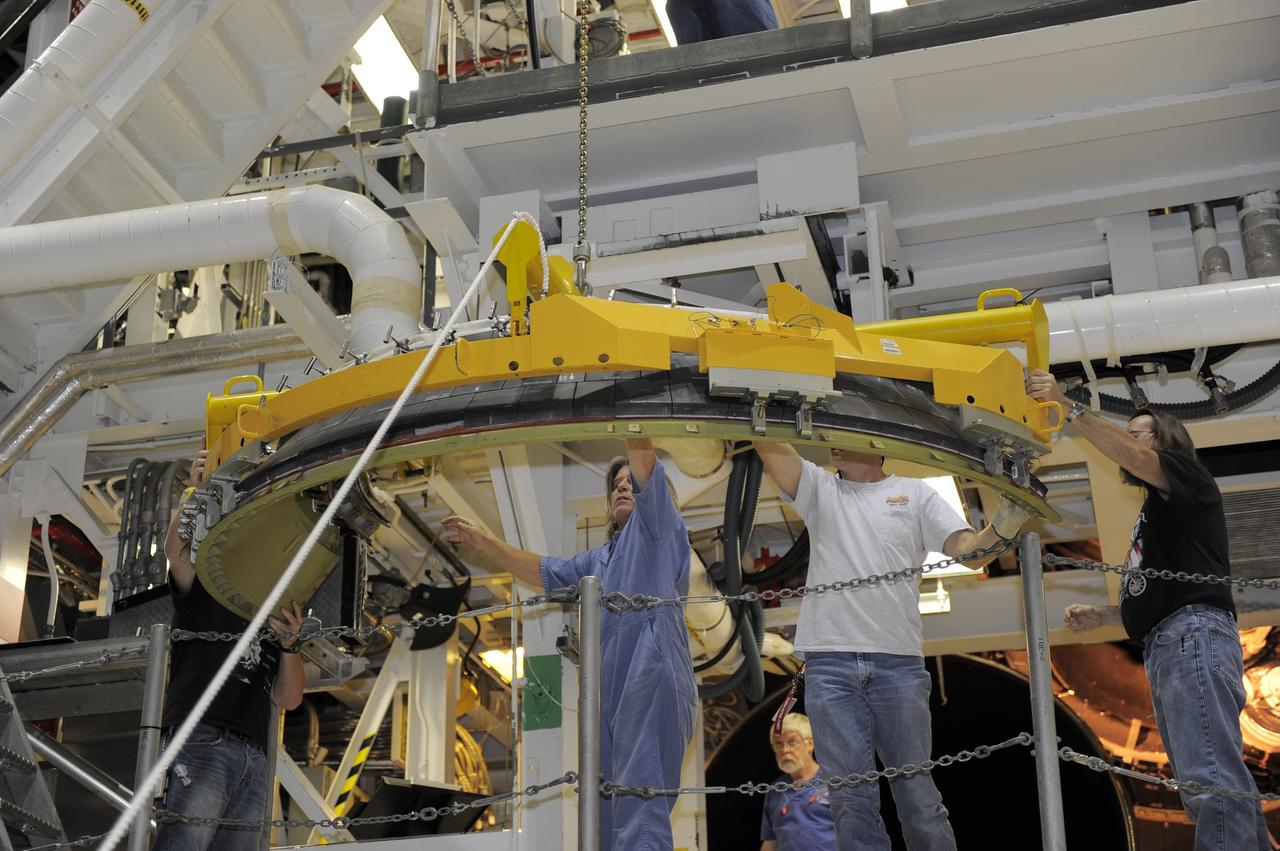
CAPE CANAVERAL, Fla. - Crews in Orbiter Processing Facility-2 at NASA's Kennedy Space Center in Florida remove space shuttle Discovery's right-hand inner heat shield from engine No. 1. The removal is part of Discovery's transition and retirement processing. Work performed on Discovery is expected to help rocket designers build next-generation spacecraft and prepare the shuttle for future public display.Photo credit: NASA/Kim Shiflett
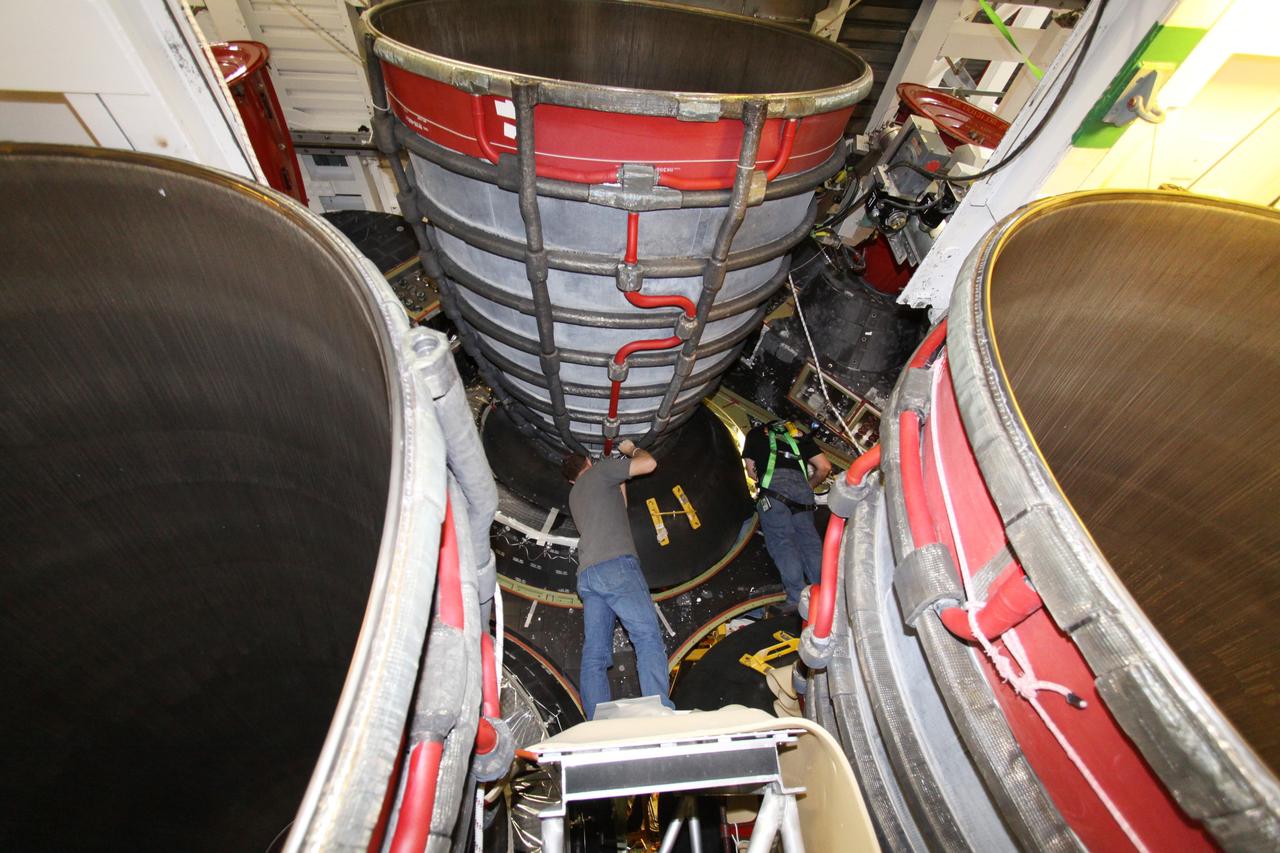
CAPE CANAVERAL, Fla. - Crews in Orbiter Processing Facility-2 at NASA's Kennedy Space Center in Florida remove space shuttle Discovery's right-hand inner heat shield from engine No. 1. The removal is part of Discovery's transition and retirement processing. Work performed on Discovery is expected to help rocket designers build next-generation spacecraft and prepare the shuttle for future public display.Photo credit: NASA/Jack Pfaller
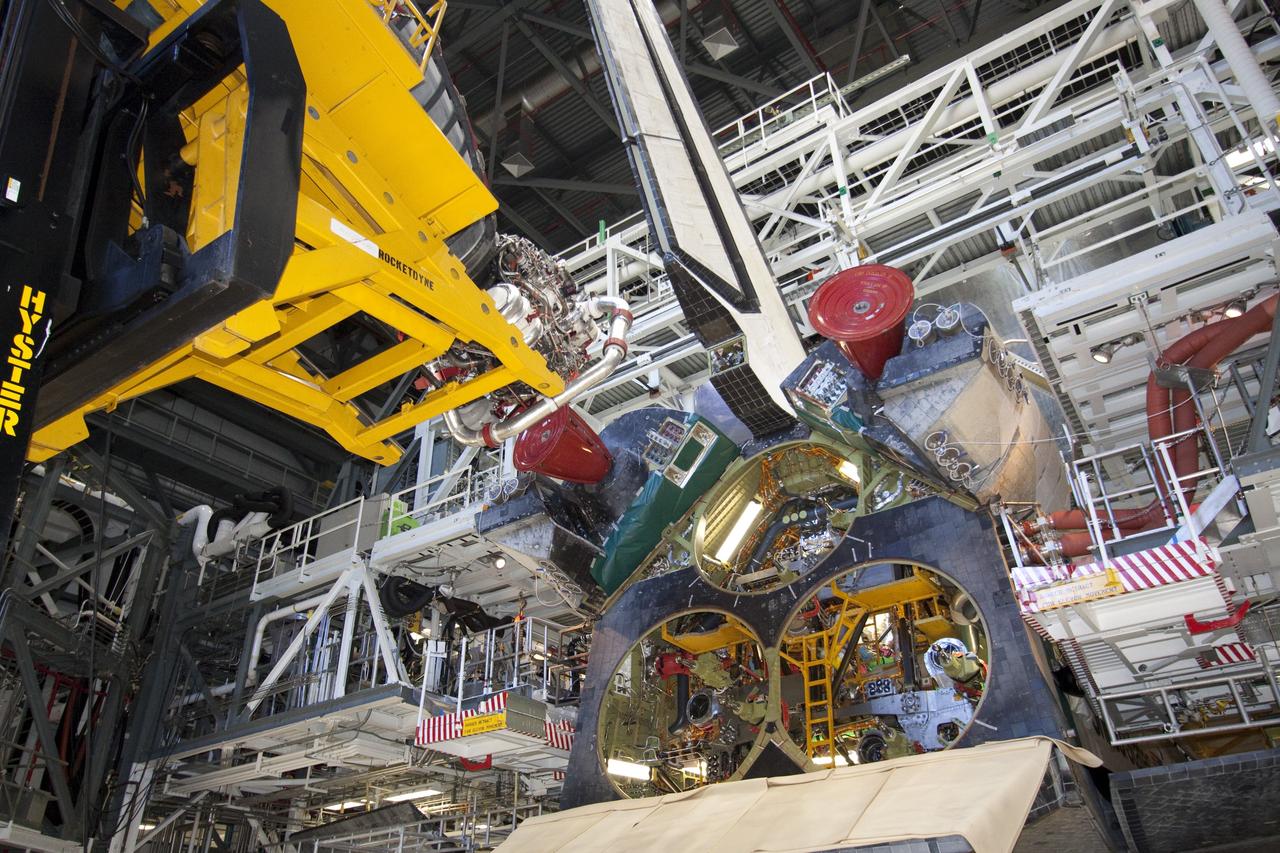
CAPE CANAVERAL, Fla. - Technicians complete the removal of main engine No. 1 from space shuttle Discovery using a specially designed engine installer, called a Hyster forklift. The work is taking place in Orbiter Processing Facility-2 at NASA's Kennedy Space Center in Florida. The removal is part of Discovery's transition and retirement processing. Work performed on Discovery is expected to help rocket designers build next-generation spacecraft and prepare the shuttle for future public display. Photo credit: NASA/Jack Pfaller
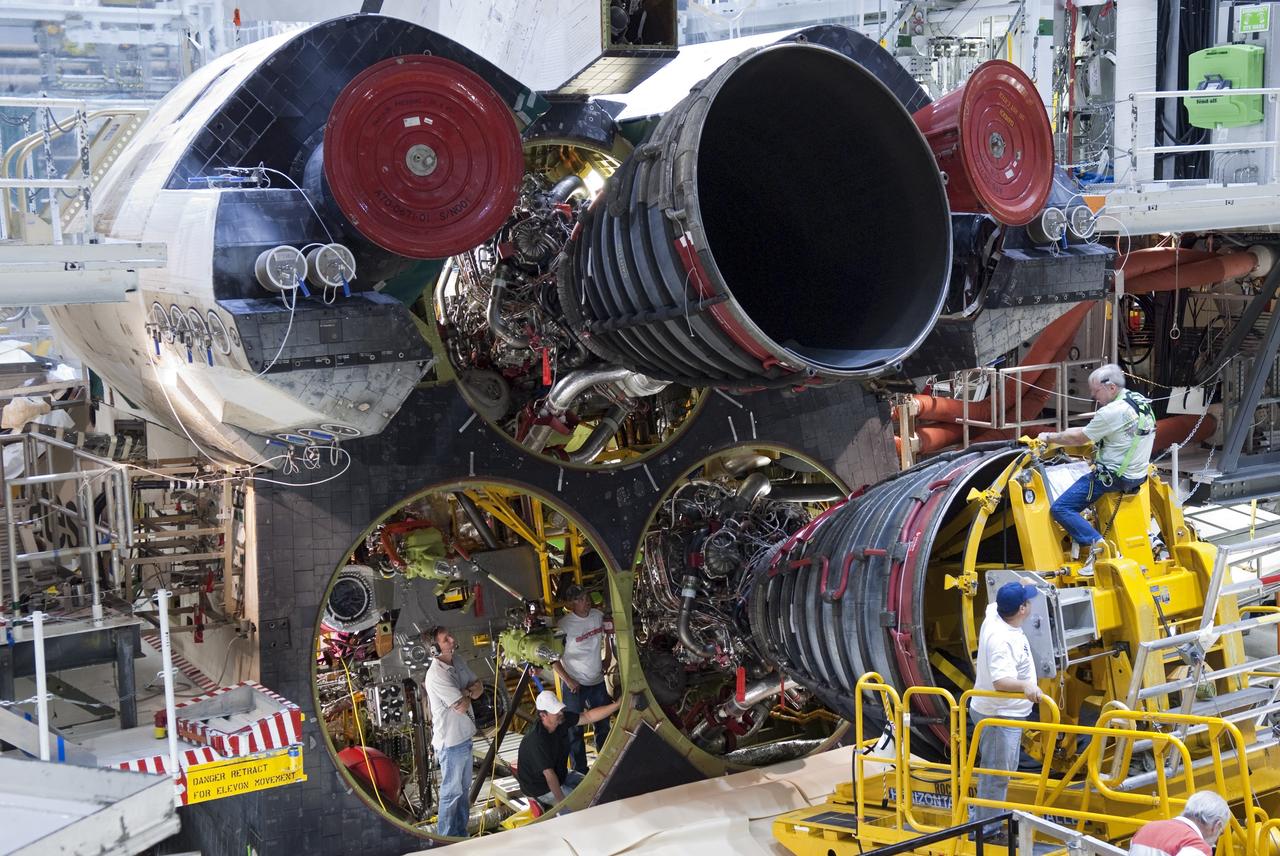
CAPE CANAVERAL, Fla. - Technicians carefully remove main engine No. 3 from space shuttle Discovery using a specially designed engine installer, called a Hyster forklift. The work is taking place in Orbiter Processing Facility-2 at NASA's Kennedy Space Center in Florida. The removal is part of Discovery's transition and retirement processing. Work performed on Discovery is expected to help rocket designers build next-generation spacecraft and prepare the shuttle for future public display. NASA/Jim Grossmann
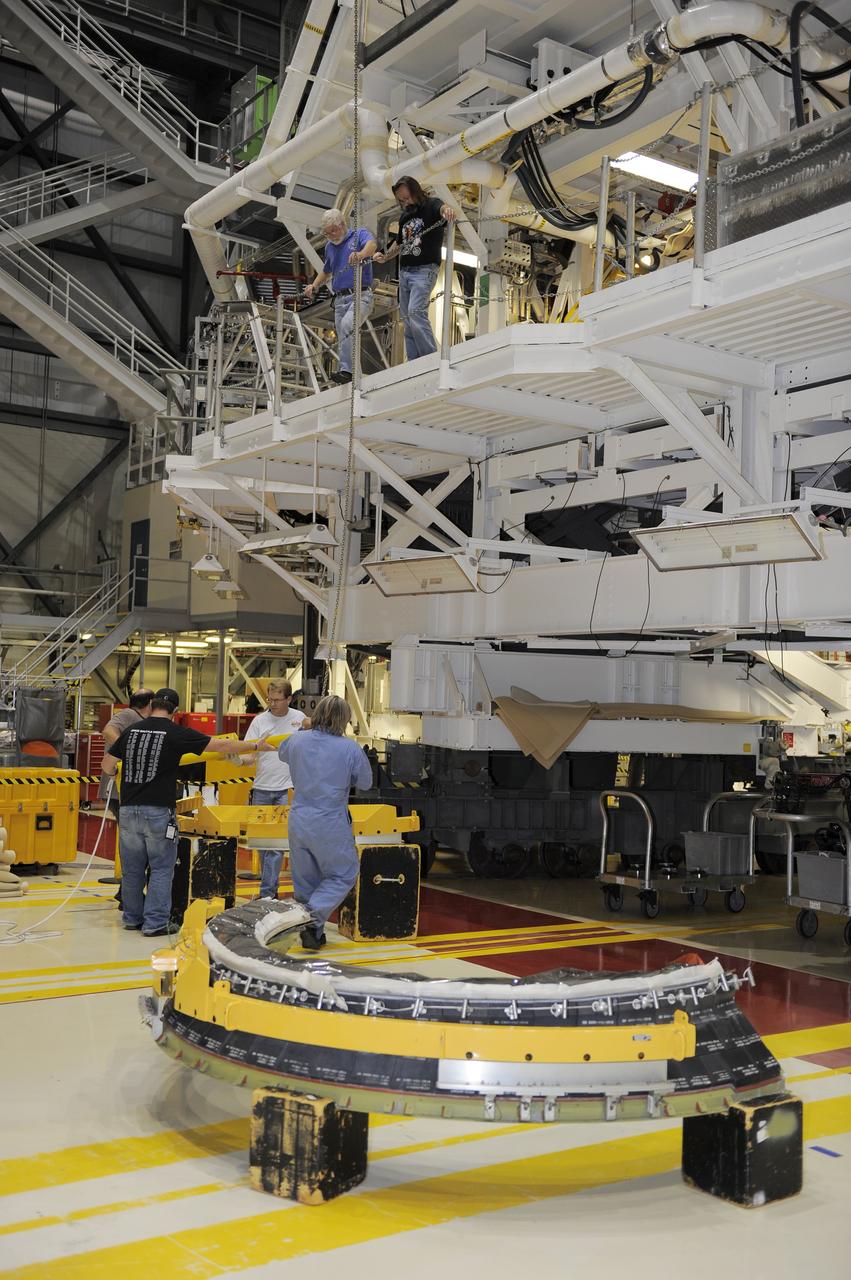
CAPE CANAVERAL, Fla. - Crews in Orbiter Processing Facility-2 at NASA's Kennedy Space Center in Florida remove space shuttle Discovery's right-hand inner heat shield from engine No. 1. The removal is part of Discovery's transition and retirement processing. Work performed on Discovery is expected to help rocket designers build next-generation spacecraft and prepare the shuttle for future public display.Photo credit: NASA/Kim Shiflett
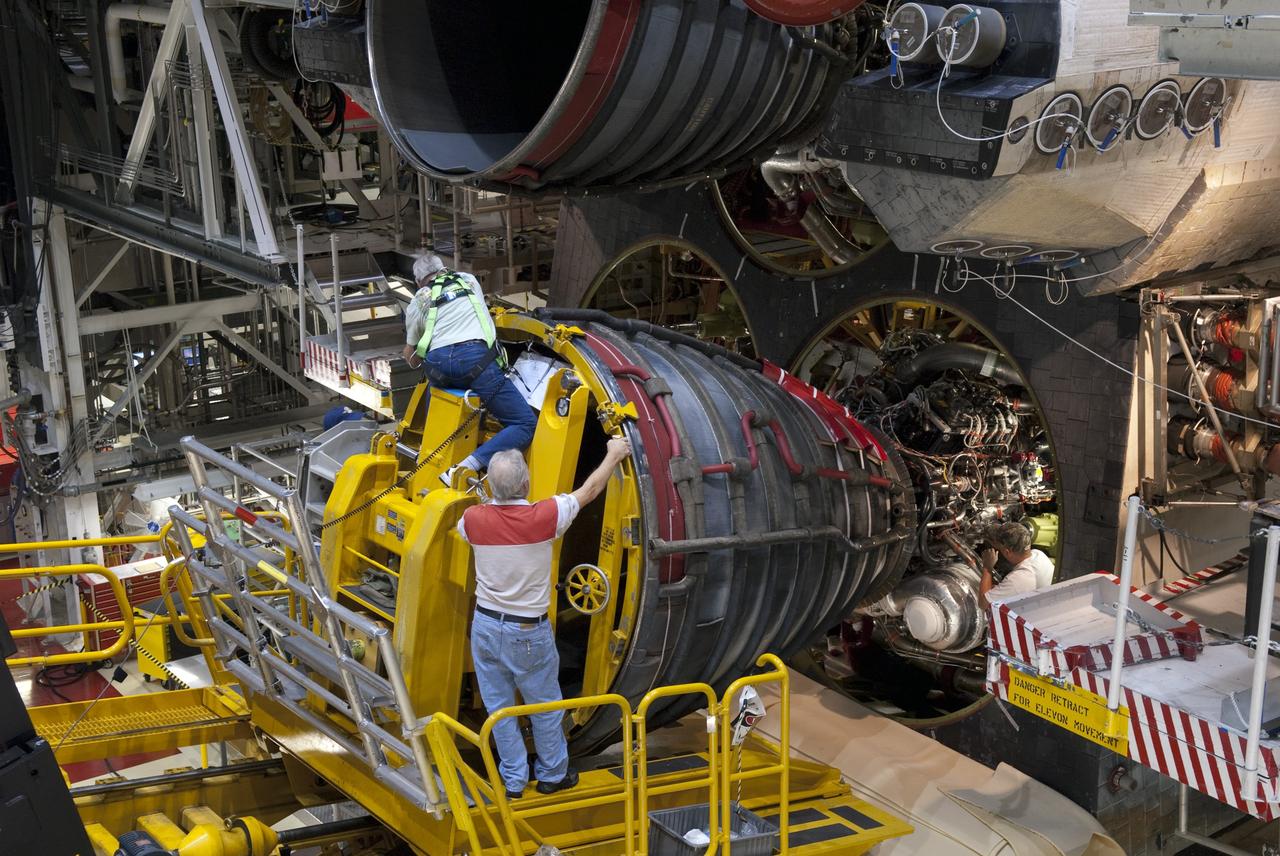
CAPE CANAVERAL, Fla. - Technicians carefully remove main engine No. 3 from space shuttle Discovery using a specially designed engine installer, called a Hyster forklift. The work is taking place in Orbiter Processing Facility-2 at NASA's Kennedy Space Center in Florida. The removal is part of Discovery's transition and retirement processing. Work performed on Discovery is expected to help rocket designers build next-generation spacecraft and prepare the shuttle for future public display. NASA/Jim Grossmann
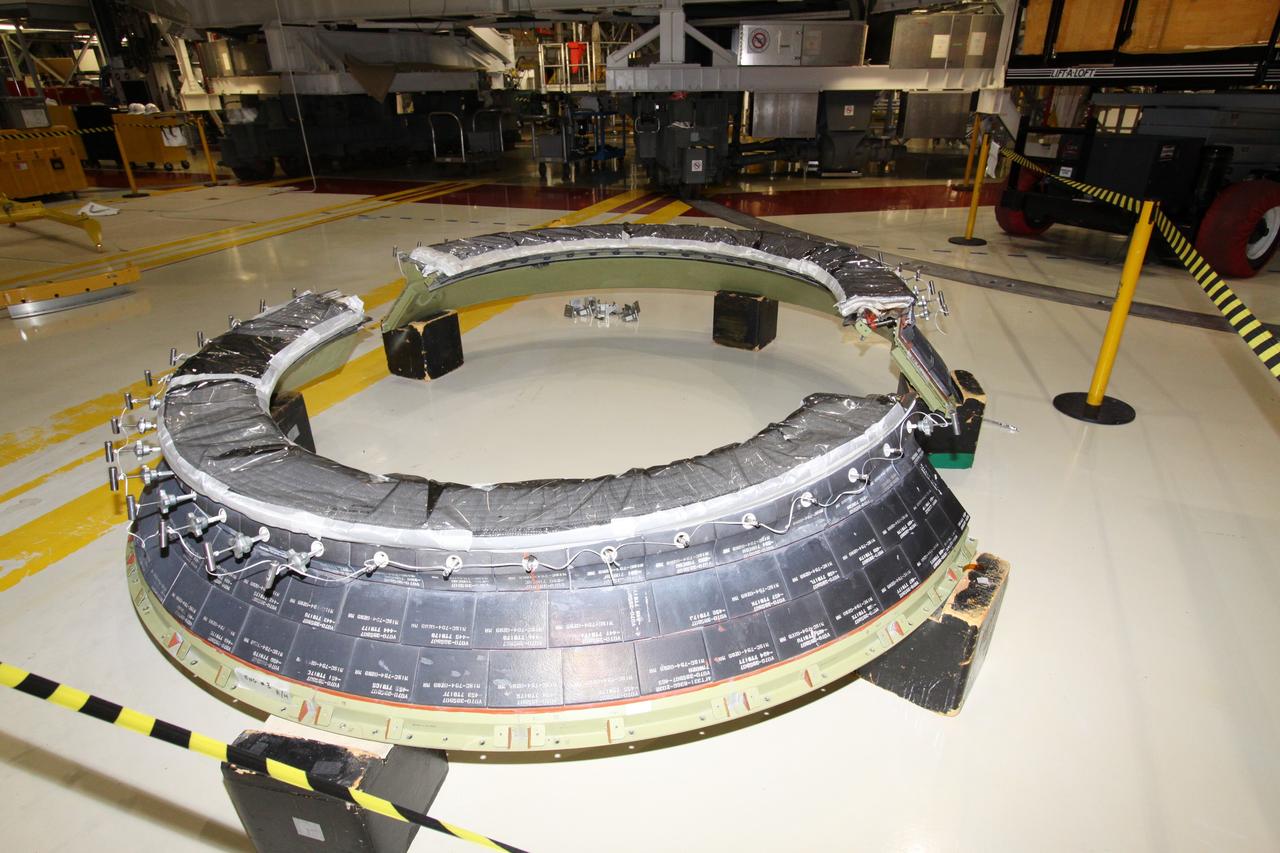
CAPE CANAVERAL, Fla. - Crews in Orbiter Processing Facility-2 at NASA's Kennedy Space Center in Florida remove space shuttle Discovery's right-hand inner heat shield from engine No. 1. The removal is part of Discovery's transition and retirement processing. Work performed on Discovery is expected to help rocket designers build next-generation spacecraft and prepare the shuttle for future public display.Photo credit: NASA/Jack Pfaller

CAPE CANAVERAL, Fla. - Crews in Orbiter Processing Facility-2 at NASA's Kennedy Space Center in Florida remove space shuttle Discovery's right-hand inner heat shield from engine No. 1. The removal is part of Discovery's transition and retirement processing. Work performed on Discovery is expected to help rocket designers build next-generation spacecraft and prepare the shuttle for future public display.Photo credit: NASA/Jack Pfaller
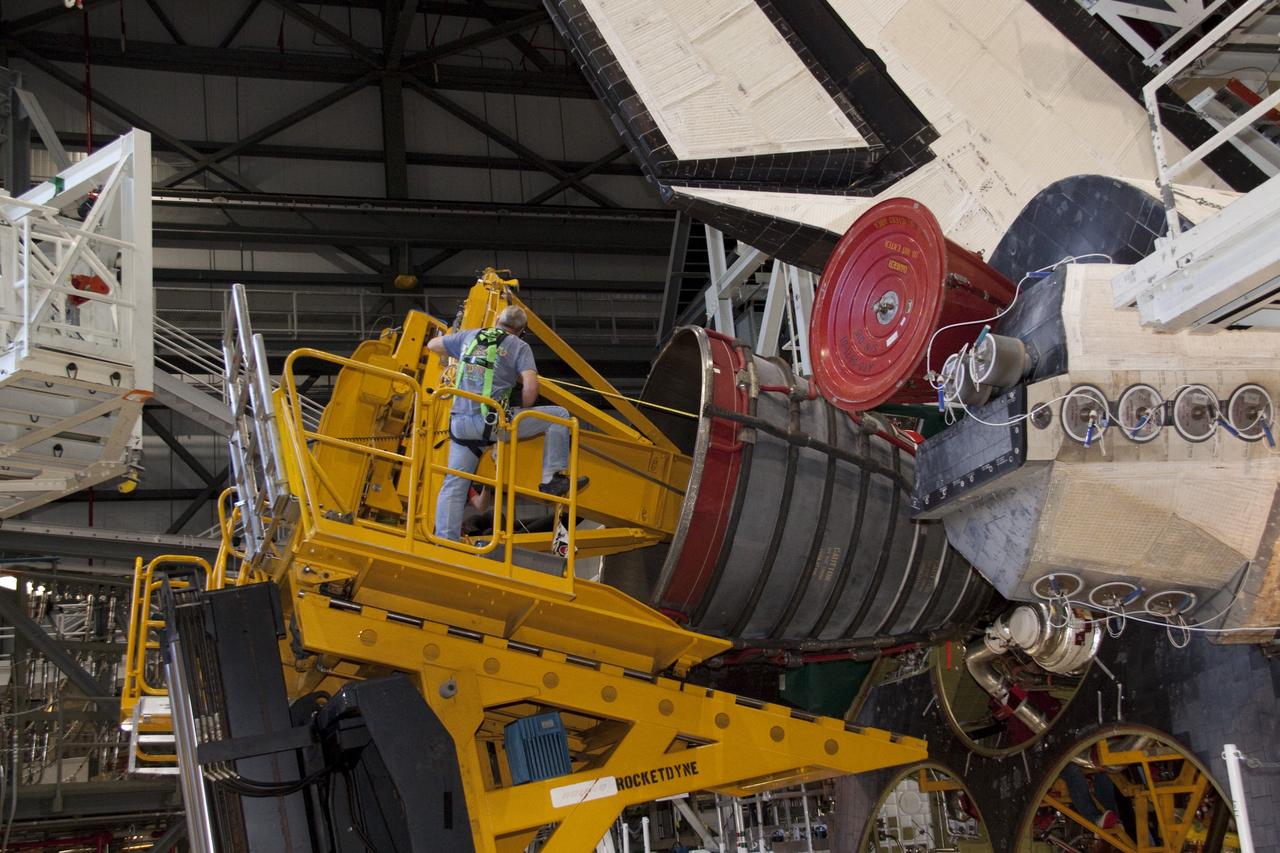
CAPE CANAVERAL, Fla. - Technicians carefully remove main engine No. 1 from space shuttle Discovery using a specially designed engine installer, called a Hyster forklift. The work is taking place in Orbiter Processing Facility-2 at NASA's Kennedy Space Center in Florida. The removal is part of Discovery's transition and retirement processing. Work performed on Discovery is expected to help rocket designers build next-generation spacecraft and prepare the shuttle for future public display. Photo credit: NASA/Jack Pfaller
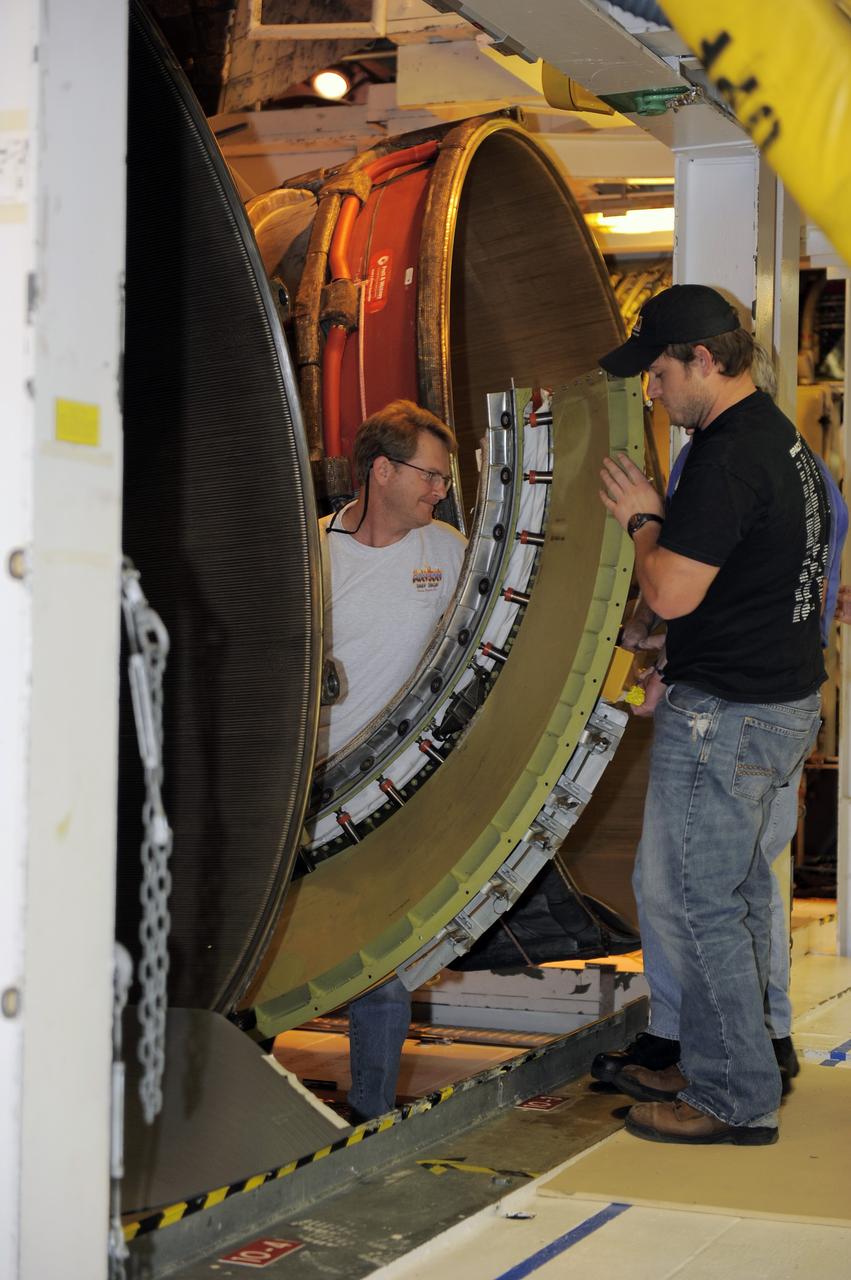
CAPE CANAVERAL, Fla. - Crews in Orbiter Processing Facility-2 at NASA's Kennedy Space Center in Florida remove space shuttle Discovery's right-hand inner heat shield from engine No. 1. The removal is part of Discovery's transition and retirement processing. Work performed on Discovery is expected to help rocket designers build next-generation spacecraft and prepare the shuttle for future public display.Photo credit: NASA/Kim Shiflett
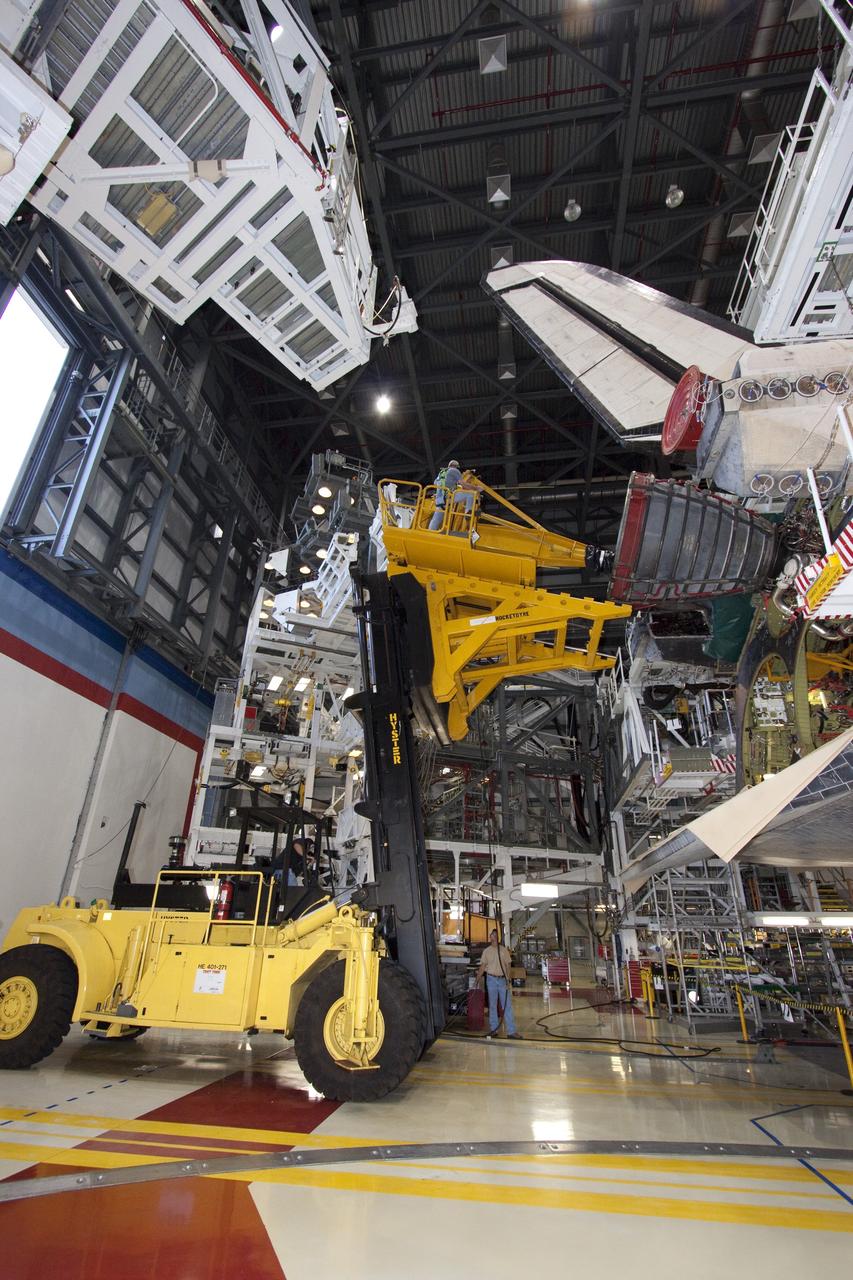
CAPE CANAVERAL, Fla. - Technicians carefully remove main engine No. 1 from space shuttle Discovery using a specially designed engine installer, called a Hyster forklift. The work is taking place in Orbiter Processing Facility-2 at NASA's Kennedy Space Center in Florida. The removal is part of Discovery's transition and retirement processing. Work performed on Discovery is expected to help rocket designers build next-generation spacecraft and prepare the shuttle for future public display. Photo credit: NASA/Jack Pfaller
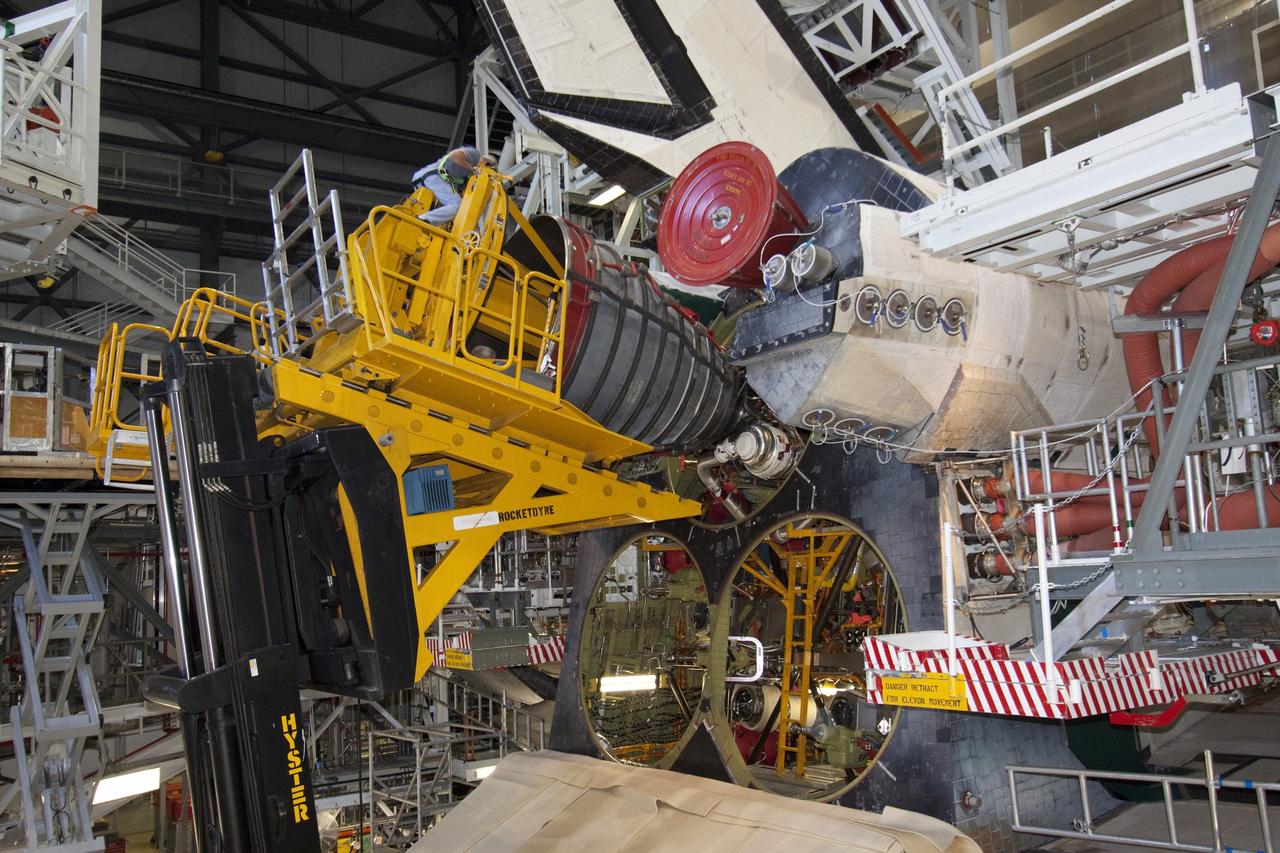
CAPE CANAVERAL, Fla. - Technicians carefully remove main engine No. 1 from space shuttle Discovery using a specially designed engine installer, called a Hyster forklift. The work is taking place in Orbiter Processing Facility-2 at NASA's Kennedy Space Center in Florida. The removal is part of Discovery's transition and retirement processing. Work performed on Discovery is expected to help rocket designers build next-generation spacecraft and prepare the shuttle for future public display. Photo credit: NASA/Jack Pfaller
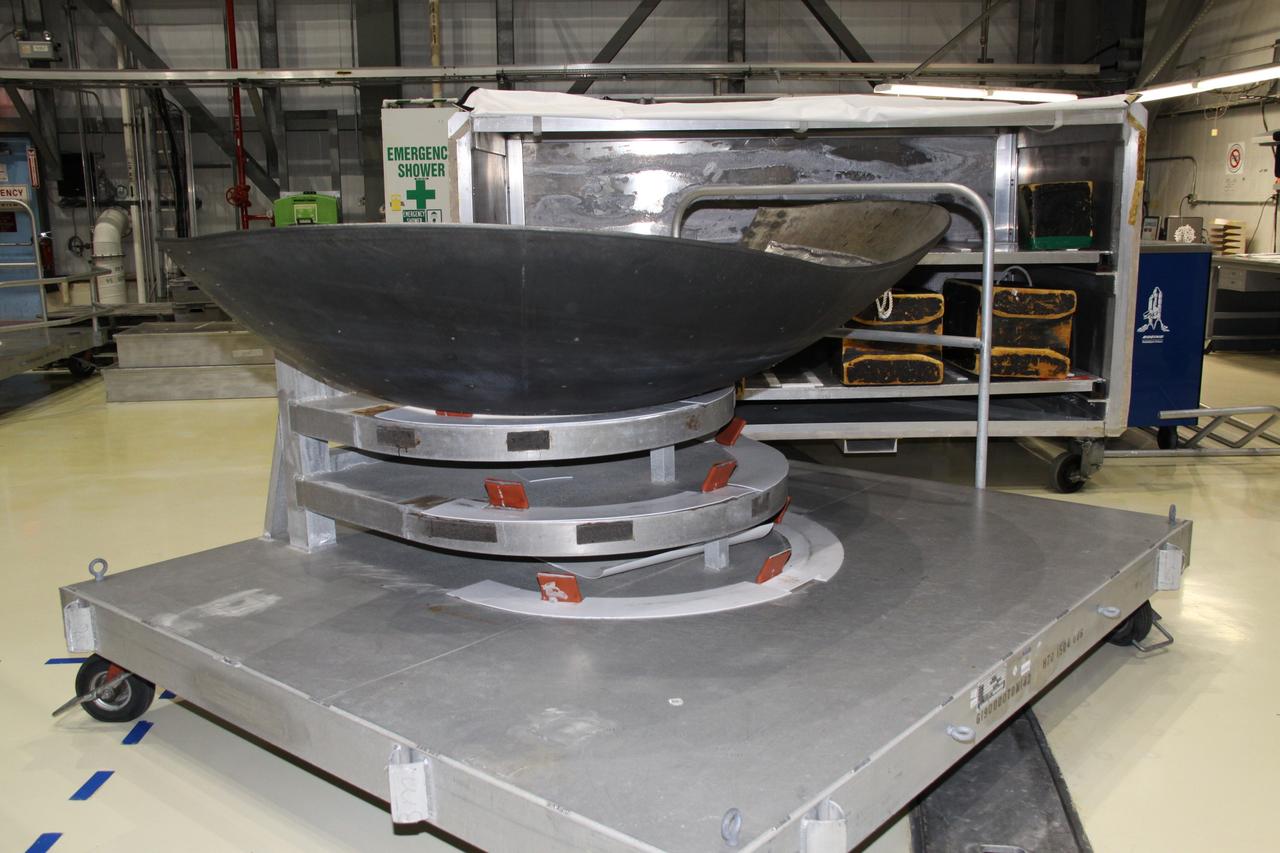
CAPE CANAVERAL, Fla. - Crews in Orbiter Processing Facility-2 at NASA's Kennedy Space Center in Florida remove space shuttle Discovery's right-hand inner heat shield from engine No. 1. The removal is part of Discovery's transition and retirement processing. Work performed on Discovery is expected to help rocket designers build next-generation spacecraft and prepare the shuttle for future public display.Photo credit: NASA/Jack Pfaller
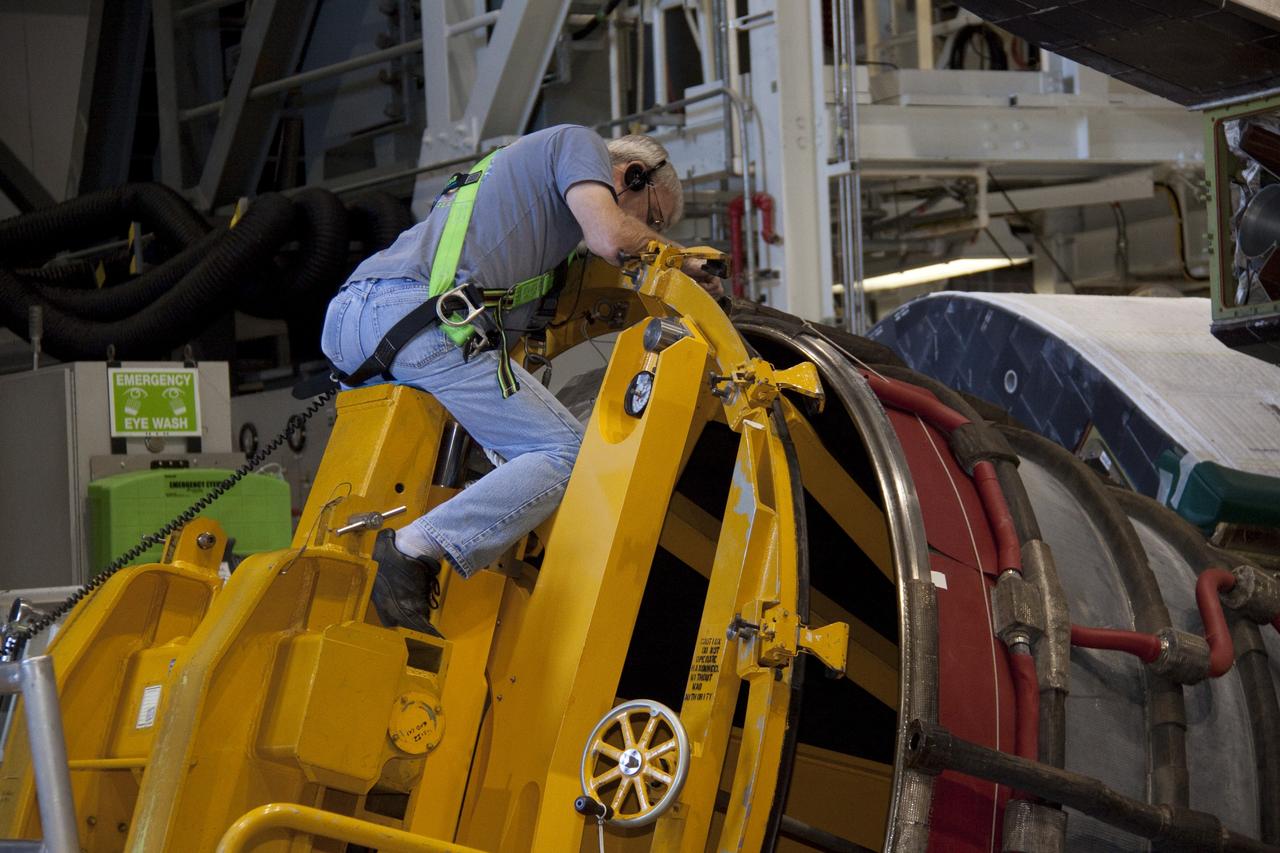
CAPE CANAVERAL, Fla. - Technicians carefully remove main engine No. 1 from space shuttle Discovery using a specially designed engine installer, called a Hyster forklift. The work is taking place in Orbiter Processing Facility-2 at NASA's Kennedy Space Center in Florida. The removal is part of Discovery's transition and retirement processing. Work performed on Discovery is expected to help rocket designers build next-generation spacecraft and prepare the shuttle for future public display. Photo credit: NASA/Jack Pfaller
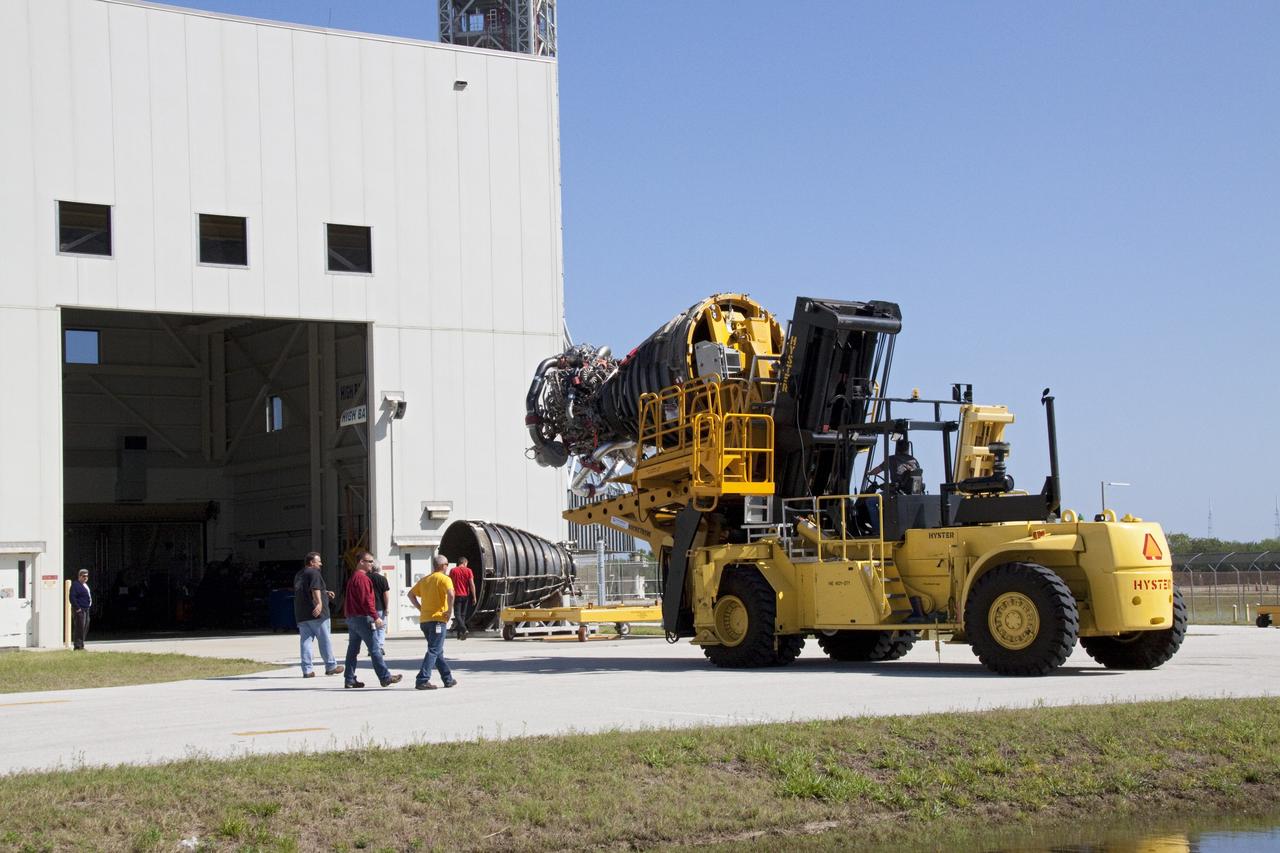
CAPE CANAVERAL, Fla. - Main engine No. 1, which was removed from space shuttle Discovery, is transported from Orbiter Processing Facility-2 to the Space Shuttle Main Engine Processing Facility at NASA's Kennedy Space Center in Florida. The removal was part of Discovery's transition and retirement processing. Work performed on Discovery is expected to help rocket designers build next-generation spacecraft and prepare the shuttle for future public display. Photo credit: NASA/Jack Pfaller
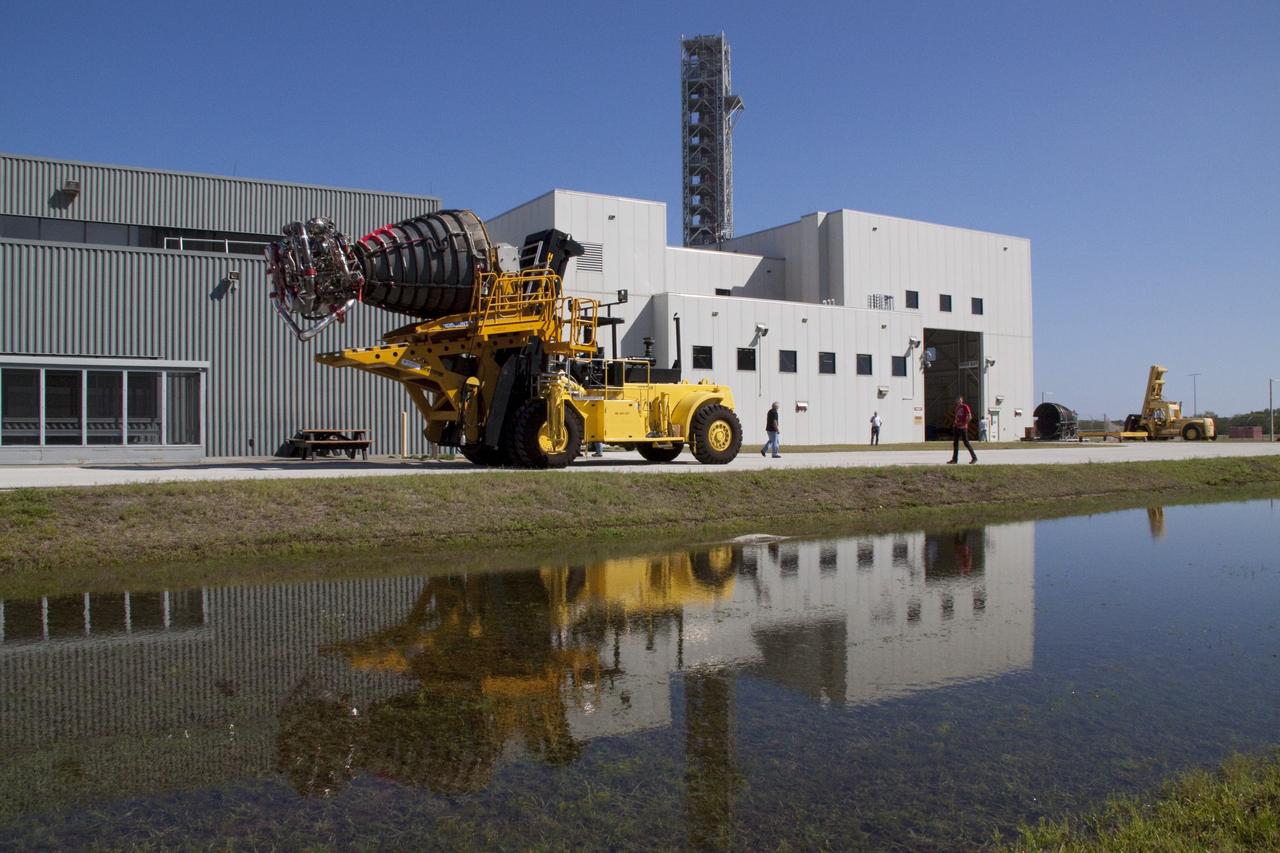
CAPE CANAVERAL, Fla. - Main engine No. 1, which was removed from space shuttle Discovery, is transported from Orbiter Processing Facility-2 to the Space Shuttle Main Engine Processing Facility at NASA's Kennedy Space Center in Florida. The removal was part of Discovery's transition and retirement processing. Work performed on Discovery is expected to help rocket designers build next-generation spacecraft and prepare the shuttle for future public display. Photo credit: NASA/Jack Pfaller
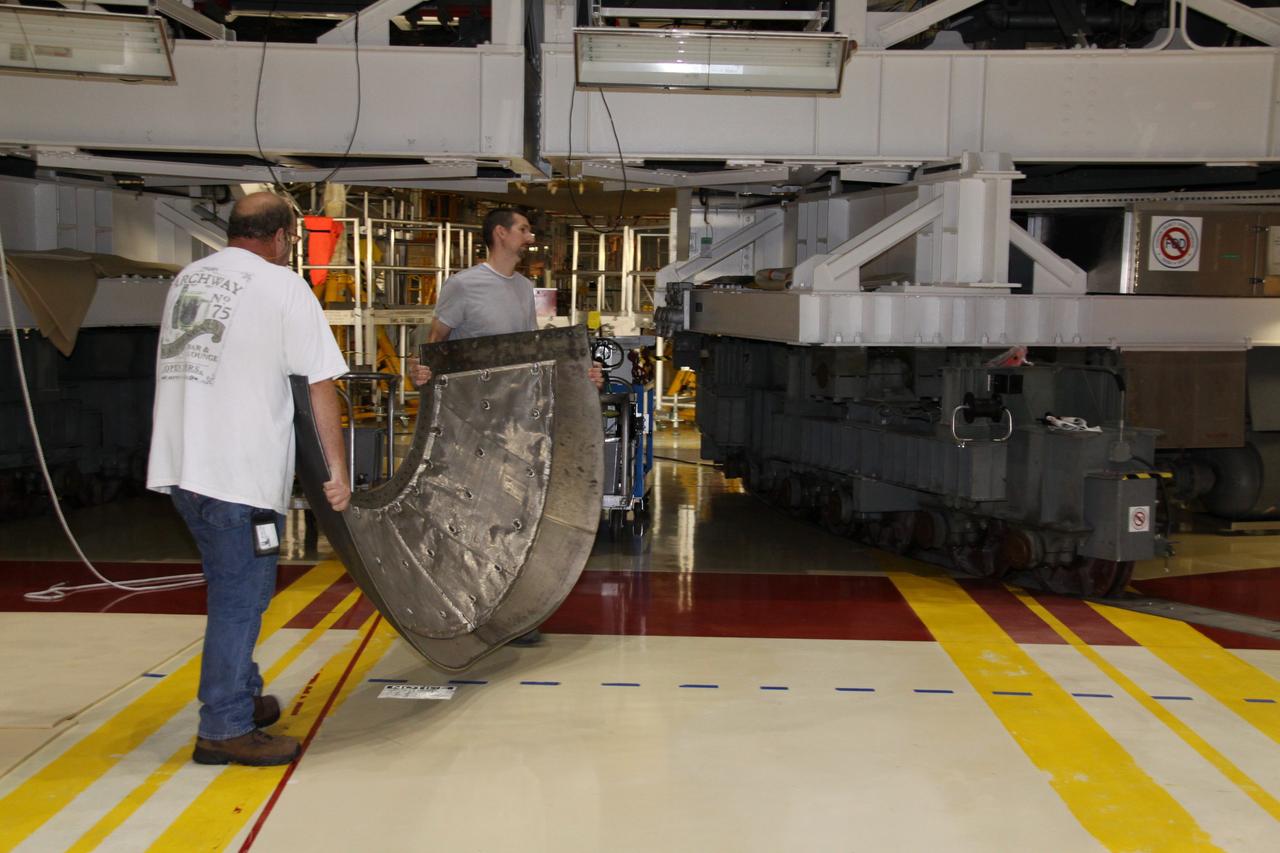
CAPE CANAVERAL, Fla. - Crews in Orbiter Processing Facility-2 at NASA's Kennedy Space Center in Florida remove space shuttle Discovery's right-hand inner heat shield from engine No. 1. The removal is part of Discovery's transition and retirement processing. Work performed on Discovery is expected to help rocket designers build next-generation spacecraft and prepare the shuttle for future public display.Photo credit: NASA/Jack Pfaller
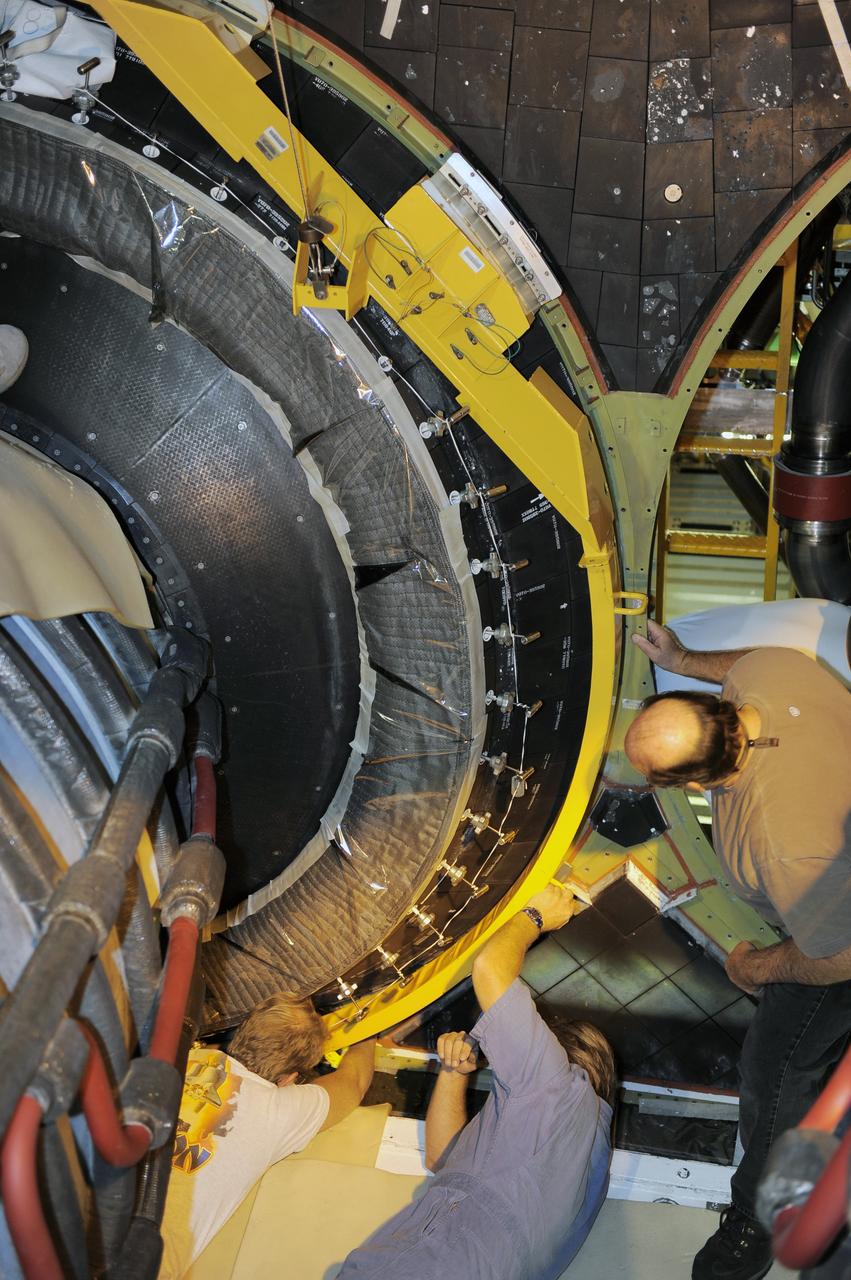
CAPE CANAVERAL, Fla. - Crews in Orbiter Processing Facility-2 at NASA's Kennedy Space Center in Florida remove space shuttle Discovery's right-hand inner heat shield from engine No. 1. The removal is part of Discovery's transition and retirement processing. Work performed on Discovery is expected to help rocket designers build next-generation spacecraft and prepare the shuttle for future public display.Photo credit: NASA/Kim Shiflett
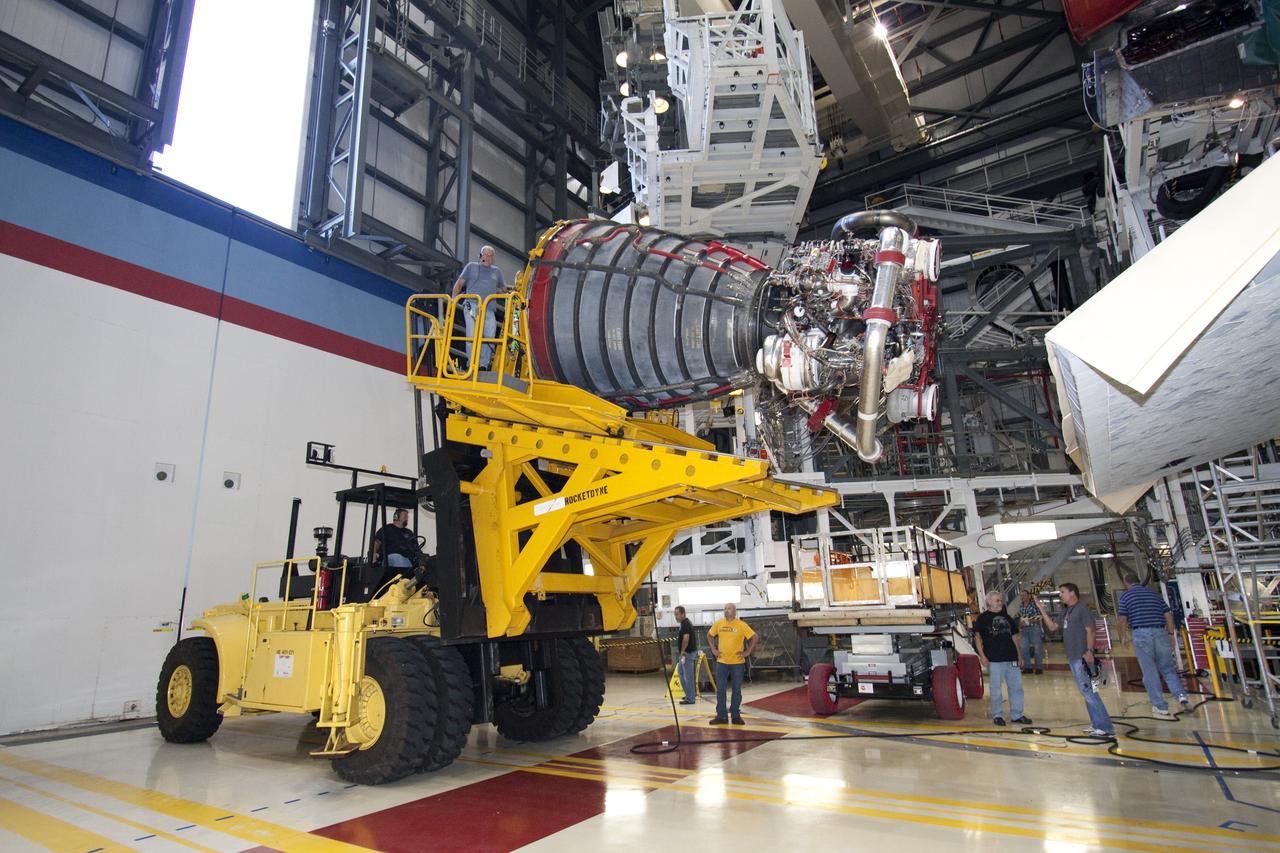
CAPE CANAVERAL, Fla. - Technicians complete the removal of main engine No. 1 from space shuttle Discovery using a specially designed engine installer, called a Hyster forklift. The work is taking place in Orbiter Processing Facility-2 at NASA's Kennedy Space Center in Florida. The removal is part of Discovery's transition and retirement processing. Work performed on Discovery is expected to help rocket designers build next-generation spacecraft and prepare the shuttle for future public display. Photo credit: NASA/Jack Pfaller
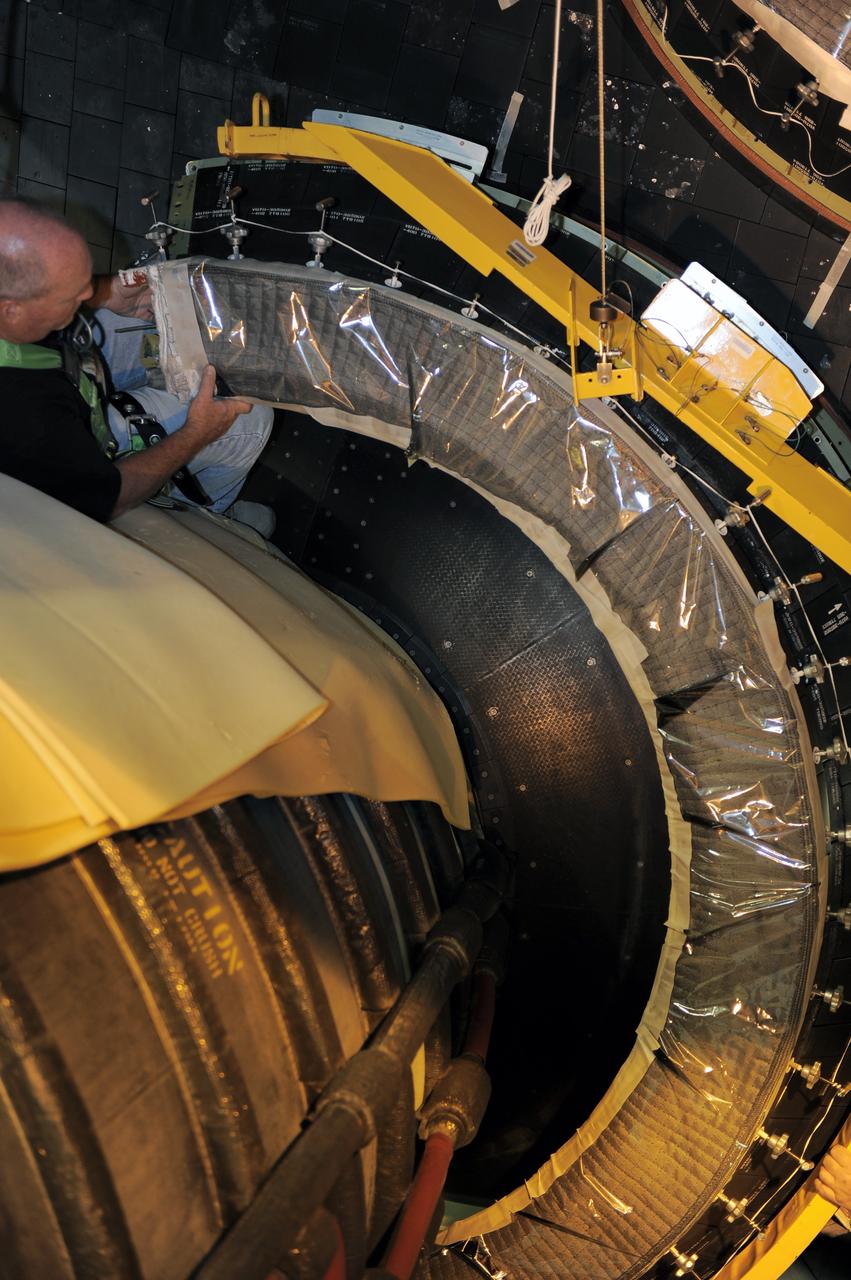
CAPE CANAVERAL, Fla. - Crews in Orbiter Processing Facility-2 at NASA's Kennedy Space Center in Florida remove space shuttle Discovery's right-hand inner heat shield from engine No. 1. The removal is part of Discovery's transition and retirement processing. Work performed on Discovery is expected to help rocket designers build next-generation spacecraft and prepare the shuttle for future public display.Photo credit: NASA/Kim Shiflett
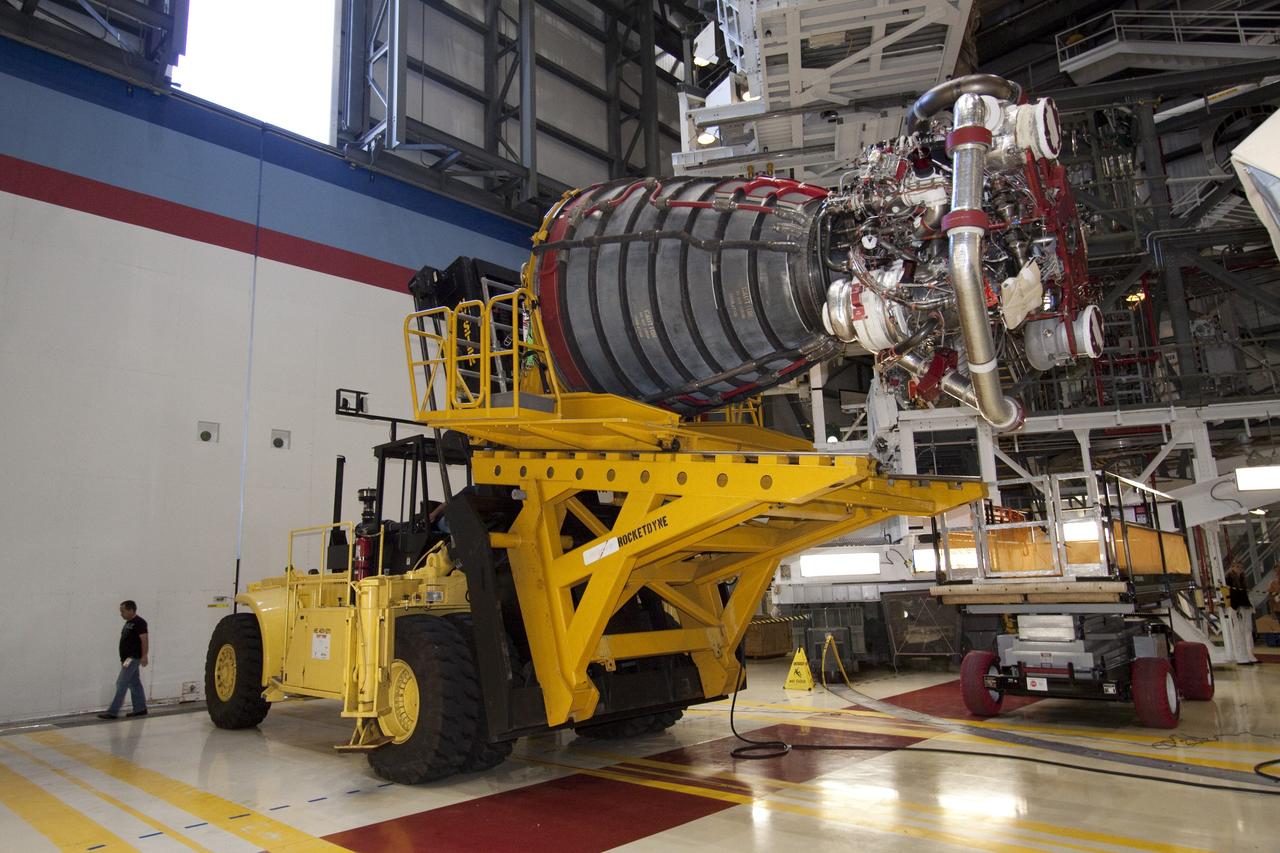
CAPE CANAVERAL, Fla. - Technicians complete the removal of main engine No. 1 from space shuttle Discovery using a specially designed engine installer, called a Hyster forklift. The work is taking place in Orbiter Processing Facility-2 at NASA's Kennedy Space Center in Florida. The removal is part of Discovery's transition and retirement processing. Work performed on Discovery is expected to help rocket designers build next-generation spacecraft and prepare the shuttle for future public display. Photo credit: NASA/Jack Pfaller
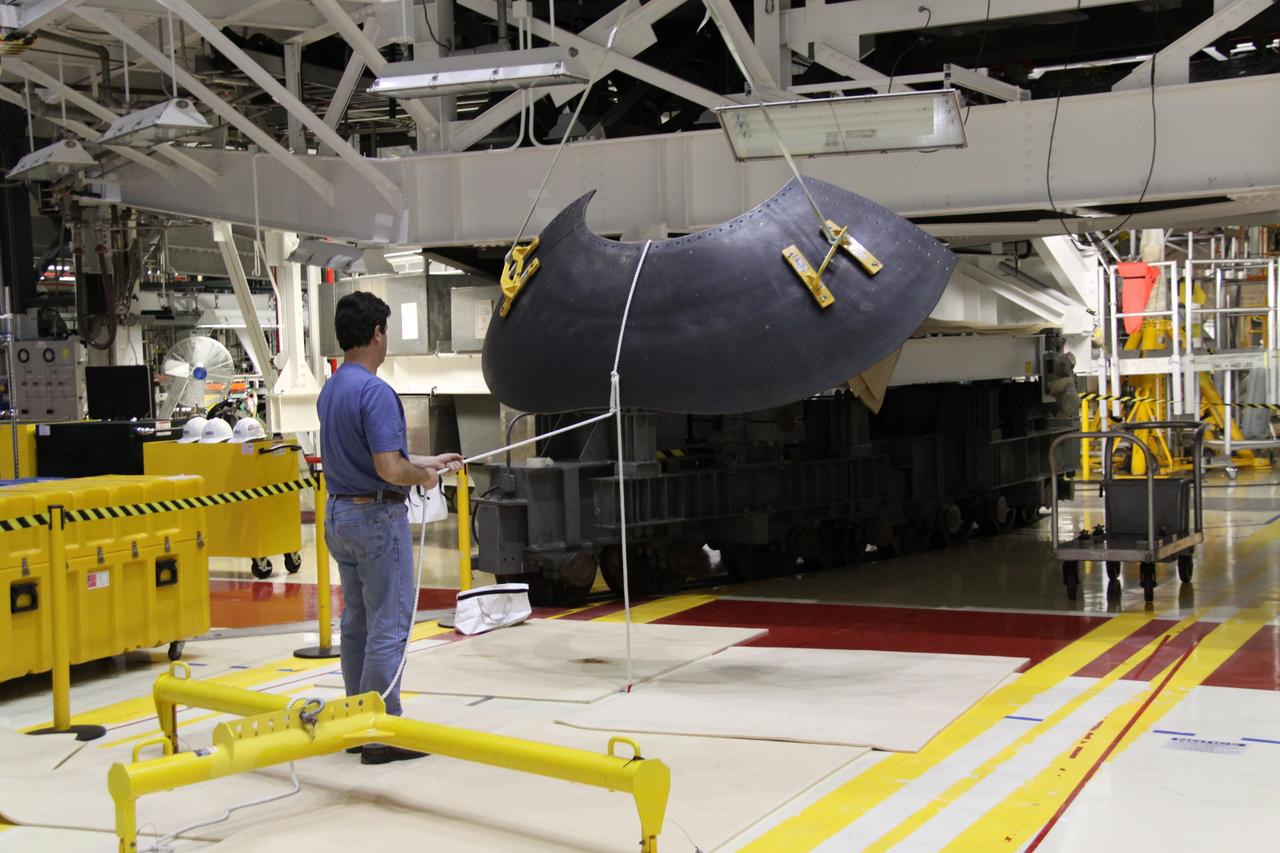
CAPE CANAVERAL, Fla. - Crews in Orbiter Processing Facility-2 at NASA's Kennedy Space Center in Florida remove space shuttle Discovery's right-hand inner heat shield from engine No. 1. The removal is part of Discovery's transition and retirement processing. Work performed on Discovery is expected to help rocket designers build next-generation spacecraft and prepare the shuttle for future public display.Photo credit: NASA/Jack Pfaller

Dr. Ruth Jones, Branch Chief for Industrial Safety Branch (QD12) at MSFC, at Test Stand 4693 which holds the Space Launch System Liquid Hydrogen Tank. Photo for publication in University of Arkansas, Pine Bluff, Alumni magazine.
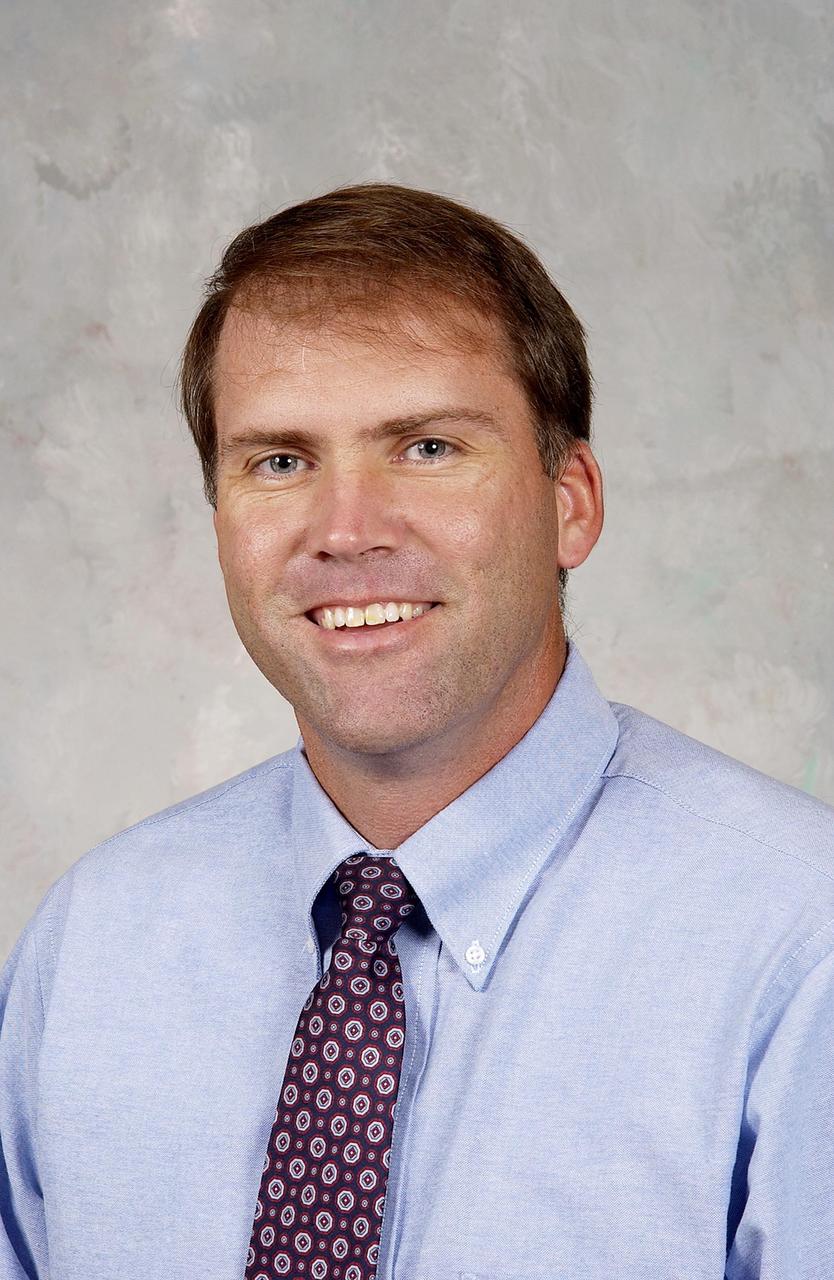
KENNEDY SPACE CENTER, FLA. -- Official portrait of Mike Rein, Division Chief, Media Services, External Relations and Business Development Directorate.
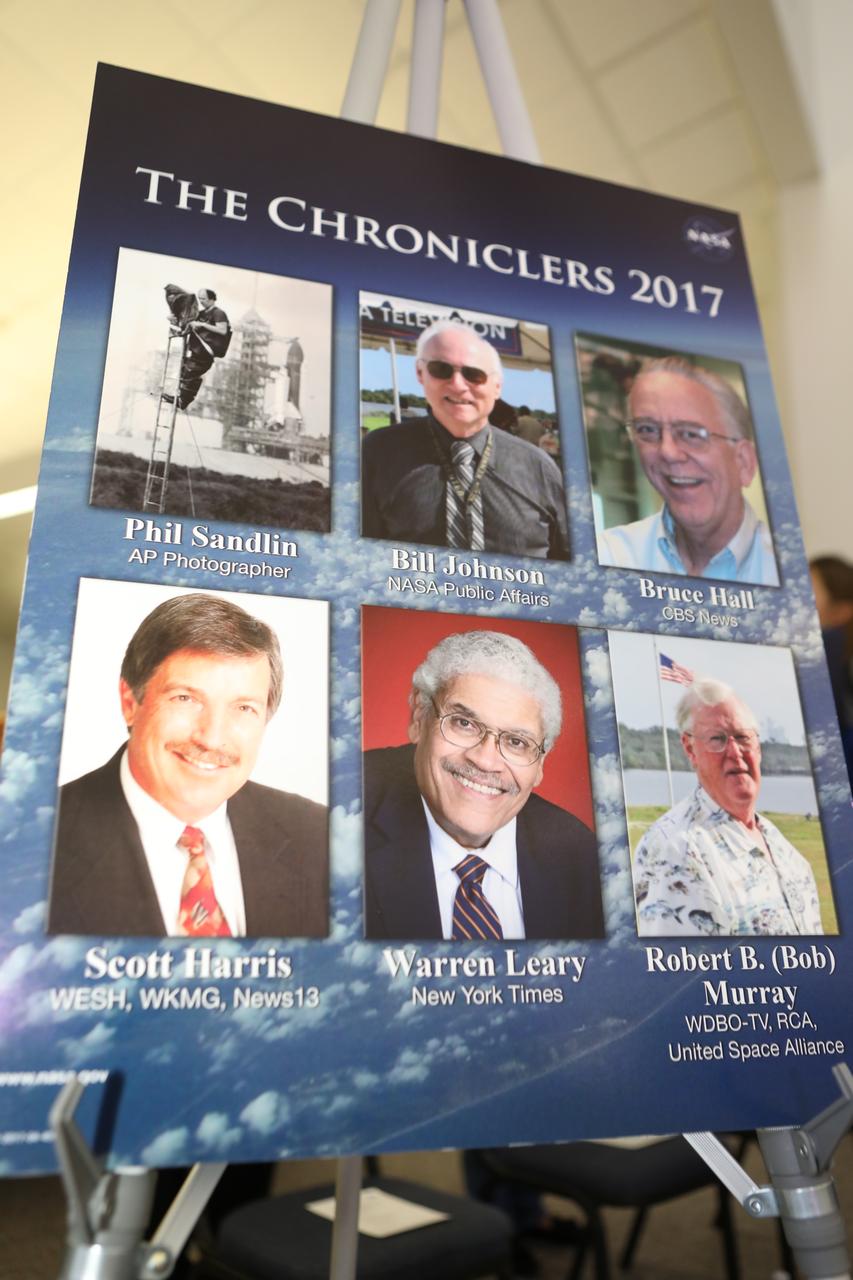
A poster in the NASA News Center at Kennedy Space Center in Florida bears the names and photos of the six new honorees added to the facility's "Chroniclers" roll of honor. The Chroniclers program recognizes retirees of the news and communications business who helped spread news of American space exploration from Kennedy Space Center for ten years or more. From top left to bottom right are Phillip Sandlin, Associated Press photographer; Bill Johnson, NASA Public Affairs; Bruce Hall, CBS News and NBC News; Scott Harris, WESH, WKMG and Central Florida News 13; Warren Leary, The New York Times; and Bob Murray, WDBO-TV, RCA and United Space Alliance.
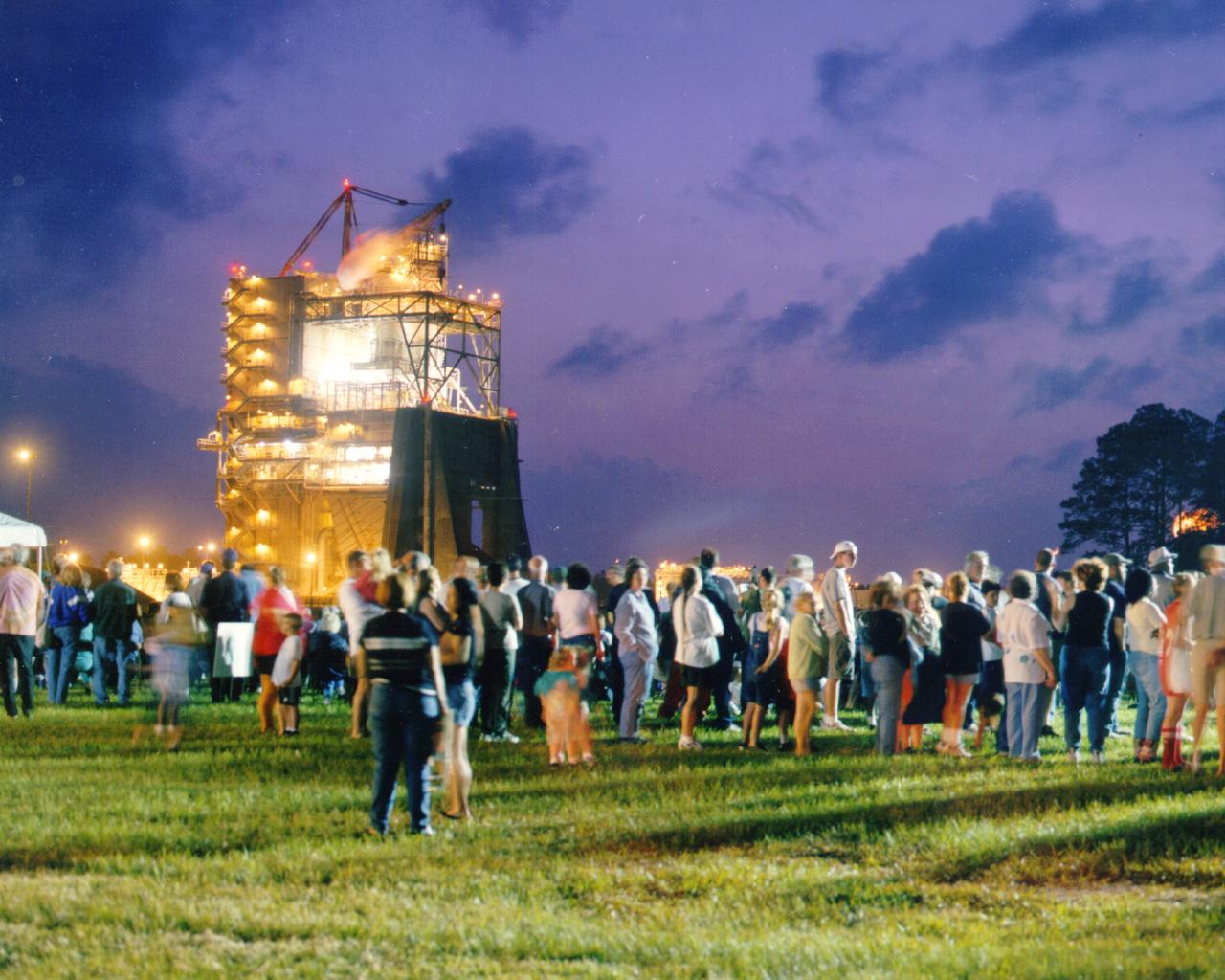
Approximately 13,000 people fill the grounds at NASA's John C. Stennis Space Center for the first-ever evening public engine test of a Space Shuttle Main Engine. The test marked Stennis Space Center's 20th anniversary celebration of the first Space Shuttle mission.
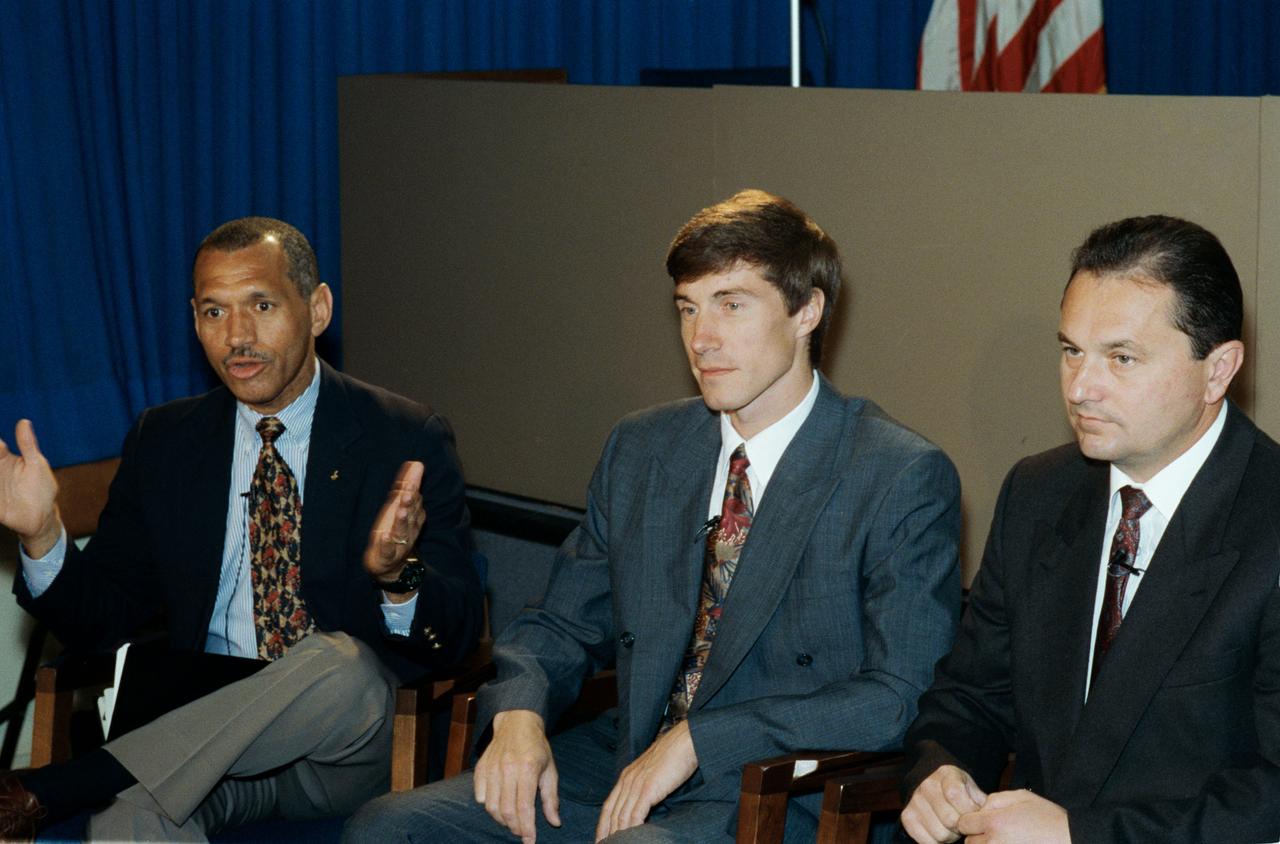
Two prime crew members and an alternate are pictured during a mission planning session in JSC's public affairs facility. Left to right are astronaut Charles F. Bolden Jr., mission commander; and Cosmonauts sergei Krikalev and Vladimir Titov, prime and alternate mission specialists, respectively.
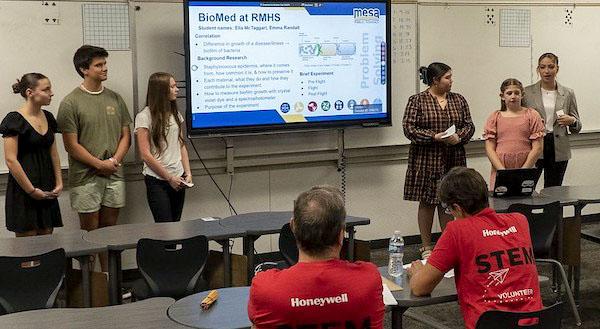
jsc2024e066518 (11/1/2023) --- Mesa Publc School students work together presenting their critical design review to their industry partners Honeywell Aerospace Technologies in their successful bid to be a finalist for the Nanoracks-National Center for Earth and Space Science Education-Surveyor-Student Spaceflight Experiments Program Mission 18 to ISS (Nanoracks-NCESSE-Surveyor-SSEP). Their experiment is The Growth and Mutation of Staphylococcus epidermidis Biofilm in Microgravity.
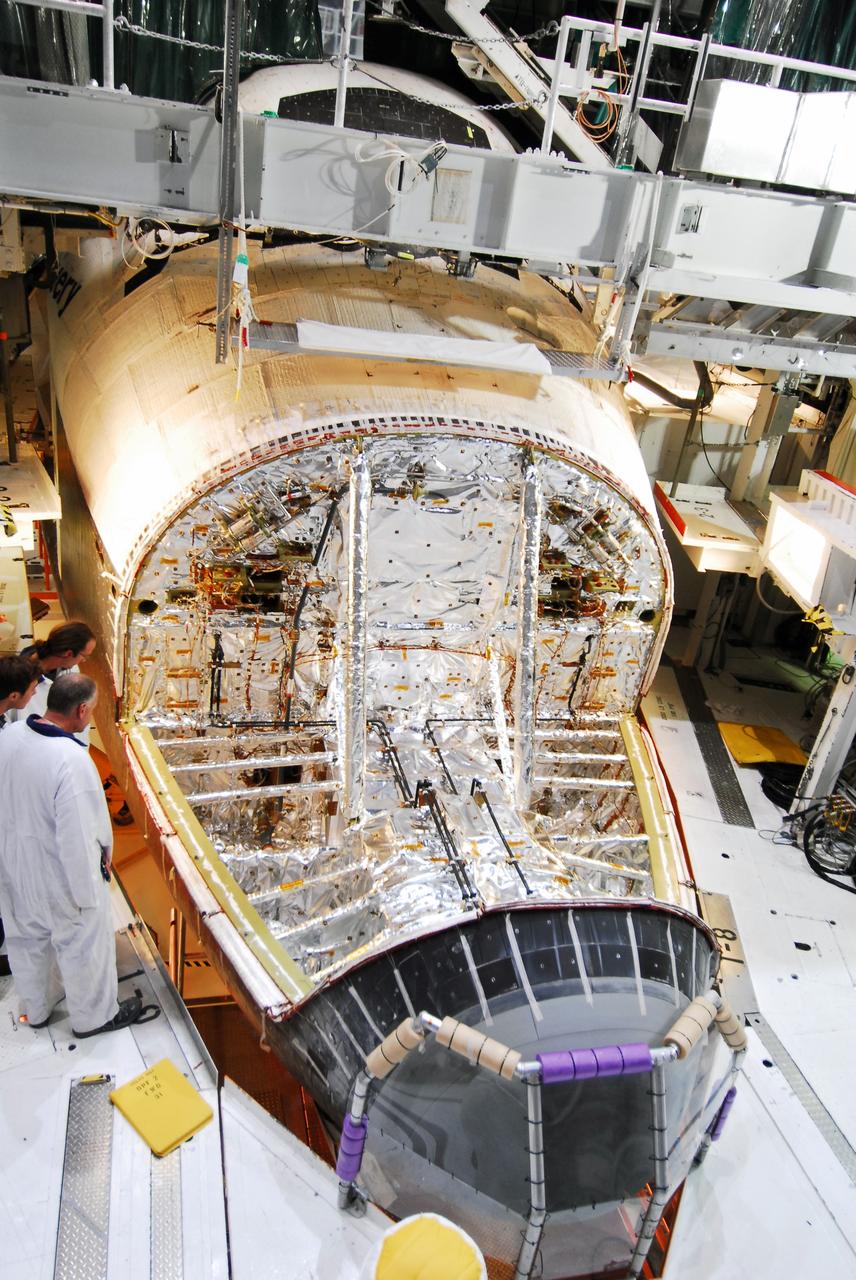
CAPE CANAVERAL, Fla. - Space shuttle Discovery's forward reaction control system (FRCS), which helped steer the shuttle in orbit, is removed in Orbiter Processing Facility-2 at NASA's Kennedy Space Center in Florida. To maneuver, the FRCS used hypergolic fuel and oxidizer, which were purged from Discovery after its final spaceflight, STS-133. Next, the FRCS will be shipped to a maintenance facility at White Sands Space Harbor in New Mexico, where additional inspections will be performed and its components made safe to go on public display. The transition and retirement processing is expected to help rocket designers build next-generation spacecraft and prepare the shuttle for display. Photo credit: NASA/Jim Grossmann
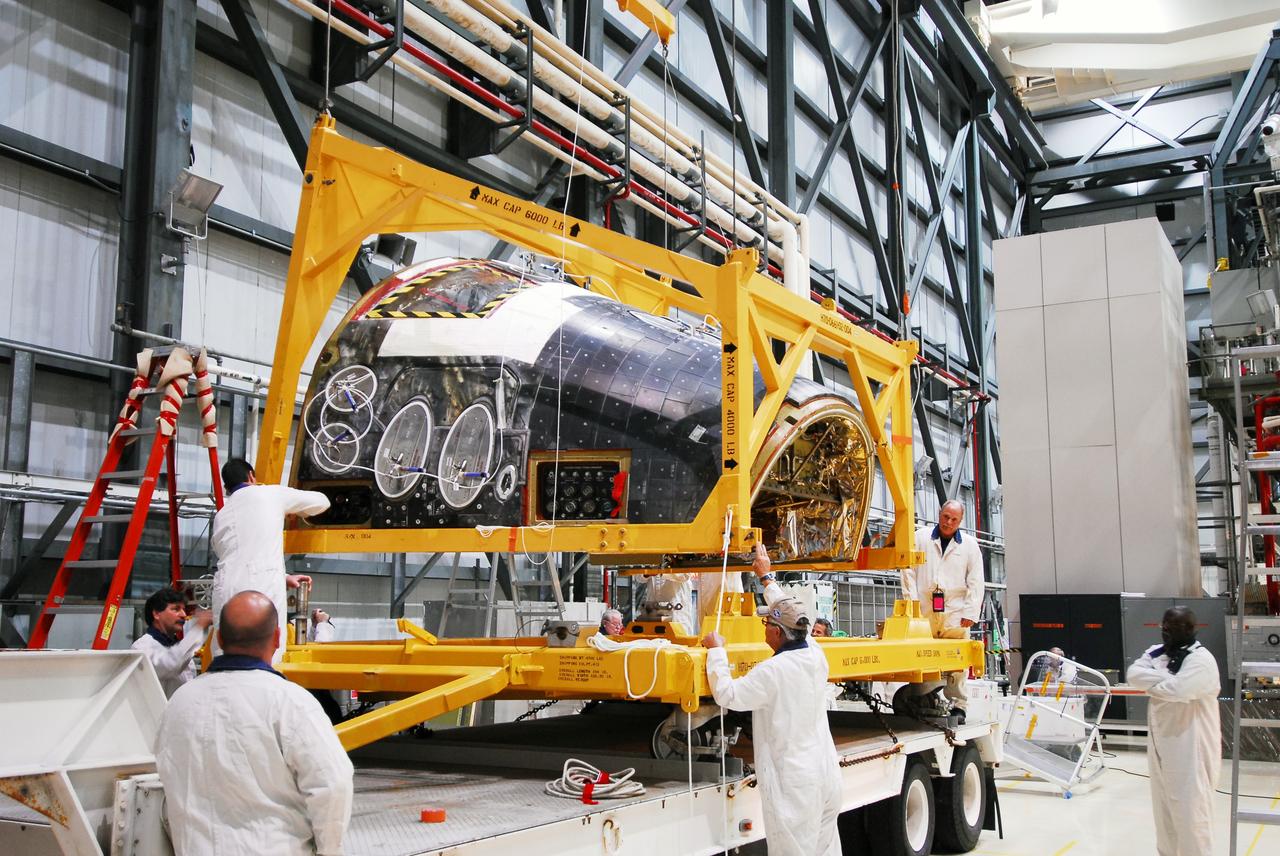
CAPE CANAVERAL, Fla. - Space shuttle Discovery's forward reaction control system (FRCS), which helped steer the shuttle in orbit, is moved to a transporter in Orbiter Processing Facility-2 at NASA's Kennedy Space Center in Florida. To maneuver, the FRCS used hypergolic fuel and oxidizer, which were purged from Discovery after its final spaceflight, STS-133. Next, the FRCS will be shipped to a maintenance facility at White Sands Space Harbor in New Mexico, where additional inspections will be performed and its components made safe to go on public display. The transition and retirement processing is expected to help rocket designers build next-generation spacecraft and prepare the shuttle for display. Photo credit: NASA/Jim Grossmann
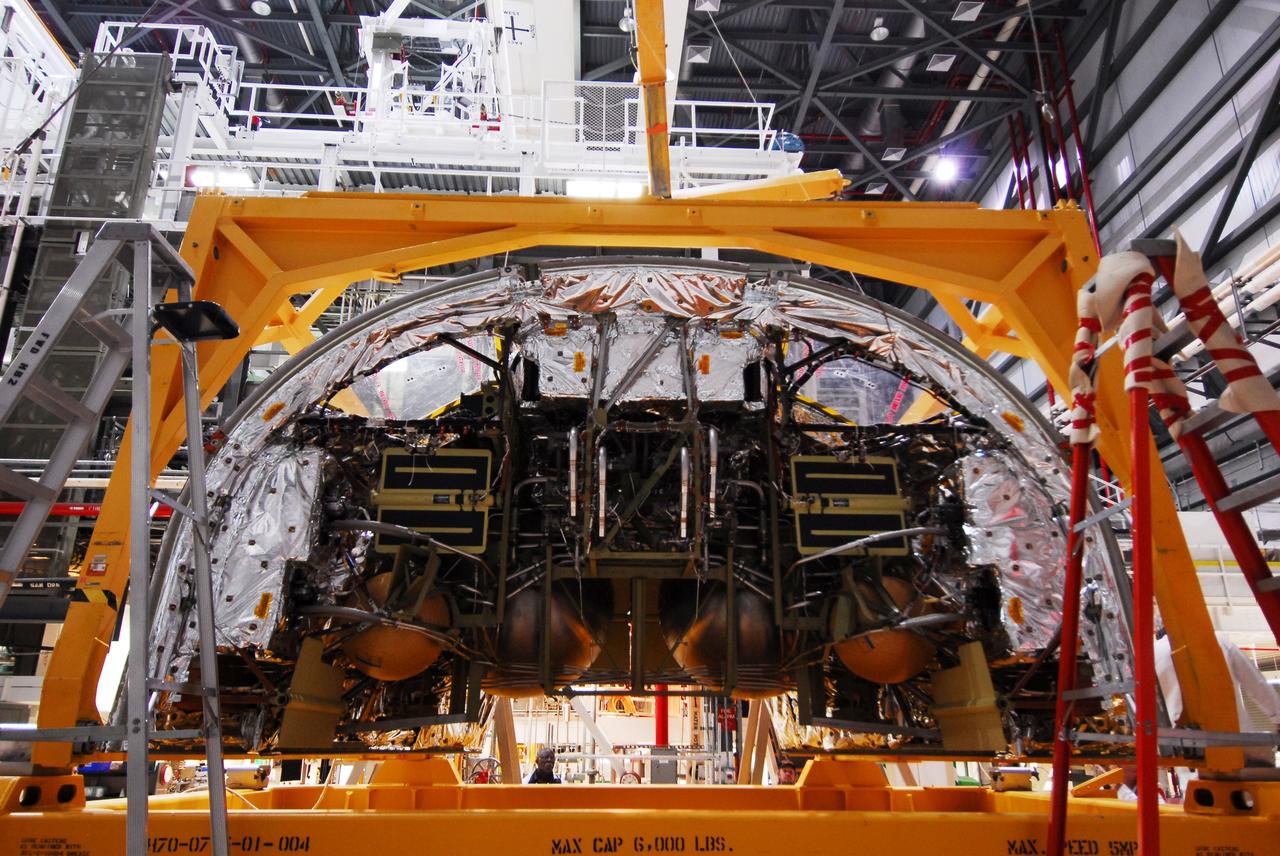
CAPE CANAVERAL, Fla. - Space shuttle Discovery's forward reaction control system (FRCS), which helped steer the shuttle in orbit, is atop a transporter in Orbiter Processing Facility-2 at NASA's Kennedy Space Center in Florida. To maneuver, the FRCS used hypergolic fuel and oxidizer, which were purged from Discovery after its final spaceflight, STS-133. Next, the FRCS will be shipped to a maintenance facility at White Sands Space Harbor in New Mexico, where additional inspections will be performed and its components made safe to go on public display. The transition and retirement processing is expected to help rocket designers build next-generation spacecraft and prepare the shuttle for display. Photo credit: NASA/Jim Grossmann
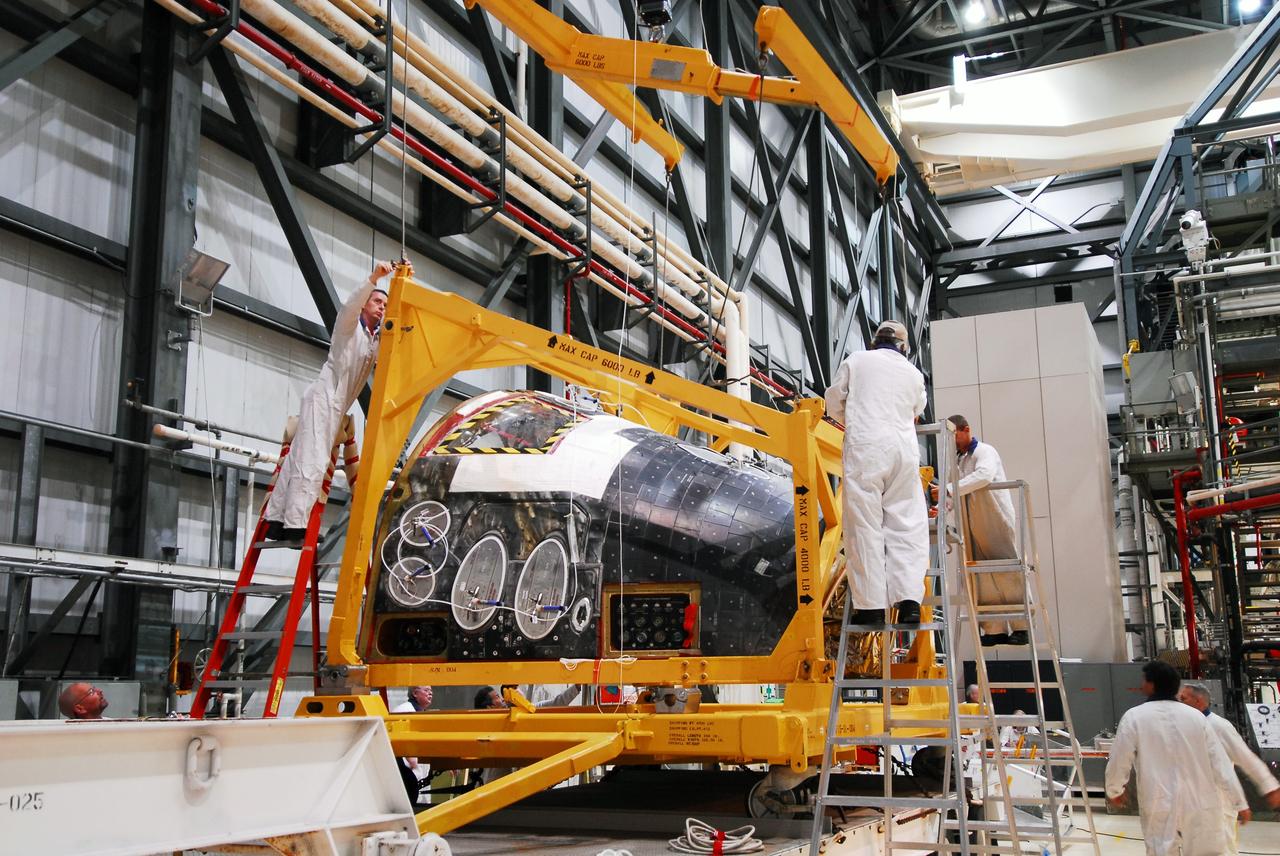
CAPE CANAVERAL, Fla. - Space shuttle Discovery's forward reaction control system (FRCS), which helped steer the shuttle in orbit, is moved to a transporter in Orbiter Processing Facility-2 at NASA's Kennedy Space Center in Florida. To maneuver, the FRCS used hypergolic fuel and oxidizer, which were purged from Discovery after its final spaceflight, STS-133. Next, the FRCS will be shipped to a maintenance facility at White Sands Space Harbor in New Mexico, where additional inspections will be performed and its components made safe to go on public display. The transition and retirement processing is expected to help rocket designers build next-generation spacecraft and prepare the shuttle for display. Photo credit: NASA/Jim Grossmann
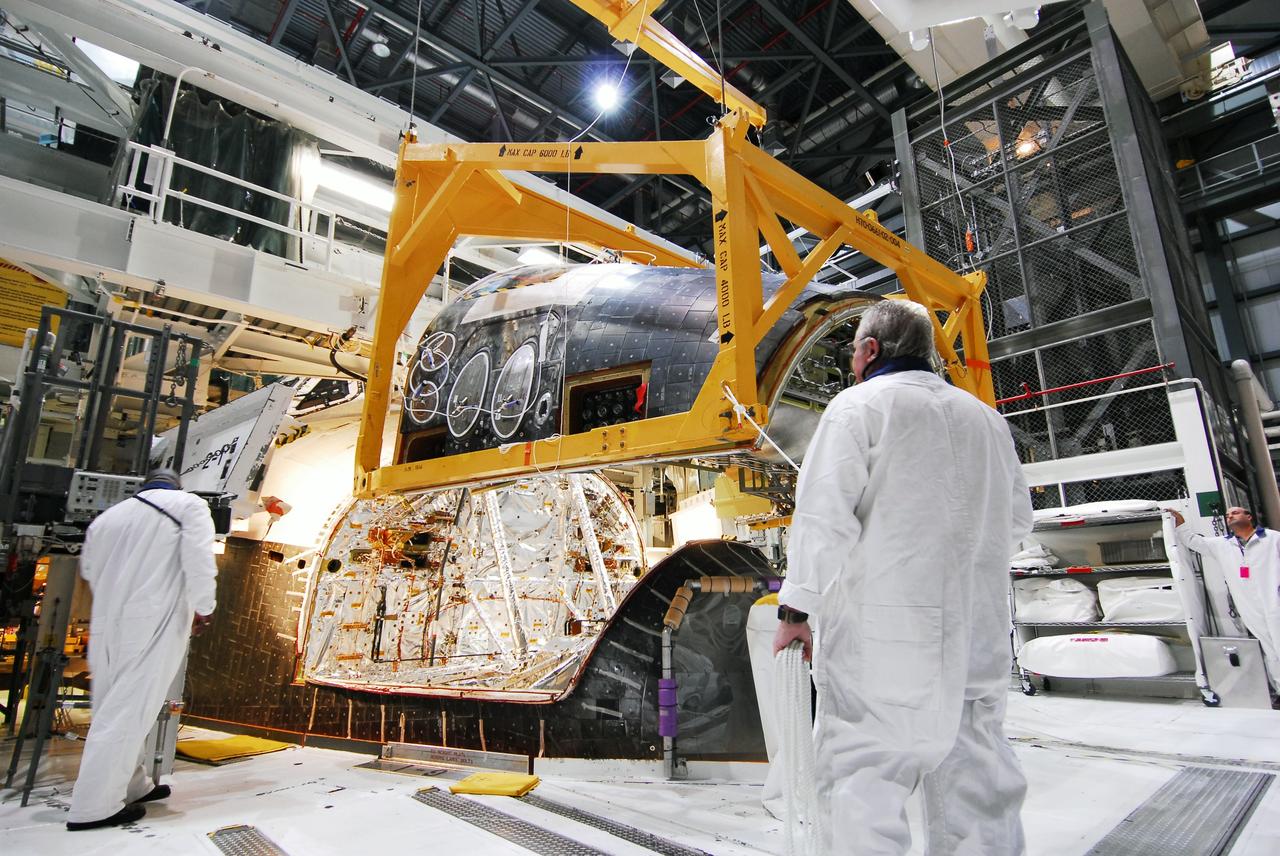
CAPE CANAVERAL, Fla. - Crews in Orbiter Processing Facility-2 at NASA's Kennedy Space Center in Florida remove space shuttle Discovery's forward reaction control system (FRCS), which helped steer the shuttle in orbit. To maneuver, the FRCS used hypergolic fuel and oxidizer, which were purged from Discovery after its final spaceflight, STS-133. Next, the FRCS will be shipped to a maintenance facility at White Sands Space Harbor in New Mexico, where additional inspections will be performed and its components made safe to go on public display. The transition and retirement processing is expected to help rocket designers build next-generation spacecraft and prepare the shuttle for display. Photo credit: NASA/Jim Grossmann
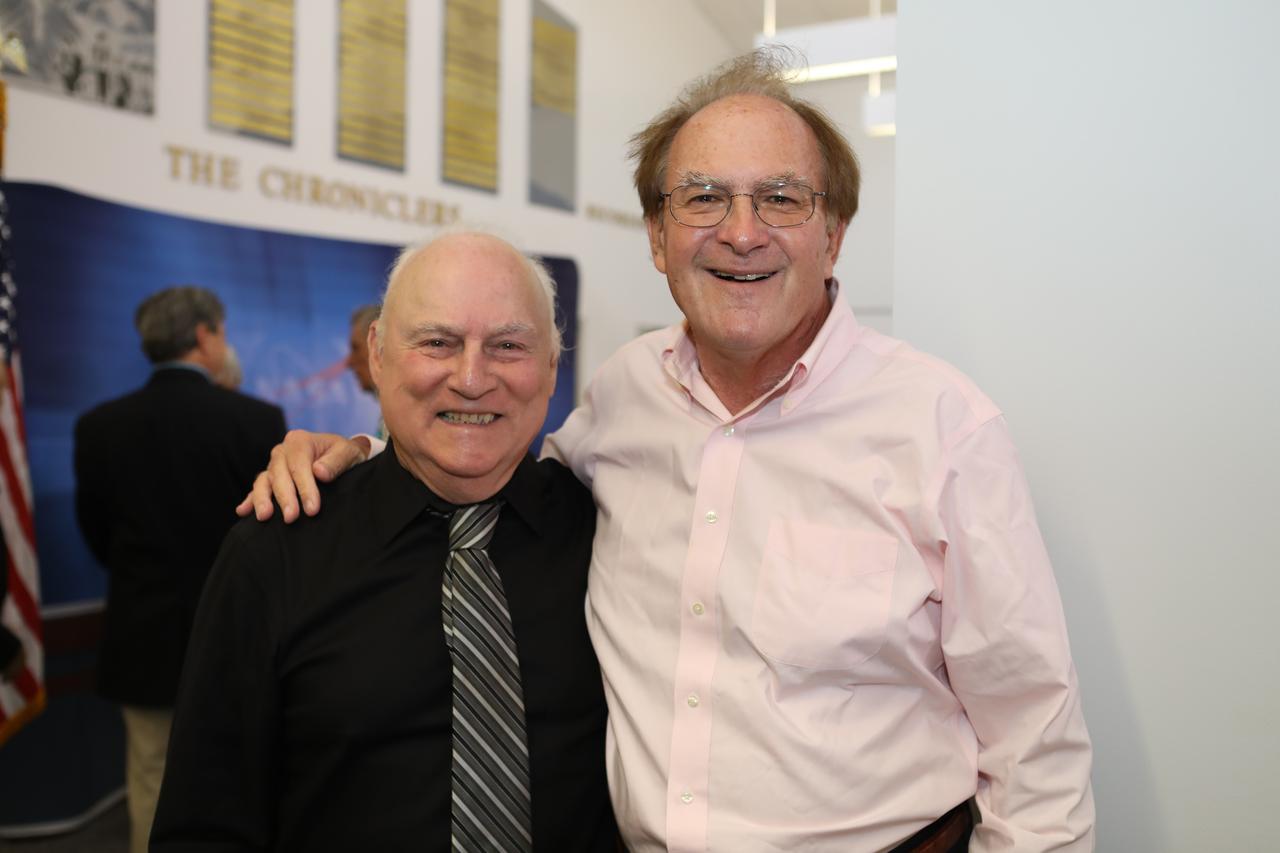
Bill Johnson, left, retired NASA chief of Media Services at Kennedy Space Center in Florida, is congratulated by NASA Public Information Specialist George Diller during a ceremony for six new honorees added to the "Chroniclers" roll of honor in the NASA News Center. Johnson, whose career at Kennedy spanned more than 45 years, was one of the six added to the Chroniclers list. Also added were Bruce Hall, CBS News and NBC News; Scott Harris, WESH, WKMG and Central Florida News 13; Warren Leary, The New York Times; Bob Murray, WDBO-TV, RCA and United Space Alliance; and Phillip Sandlin, Associated Press photographer. The Chroniclers program recognizes retirees of the news and communications business who helped spread news of American space exploration from Kennedy Space Center for ten years or more.
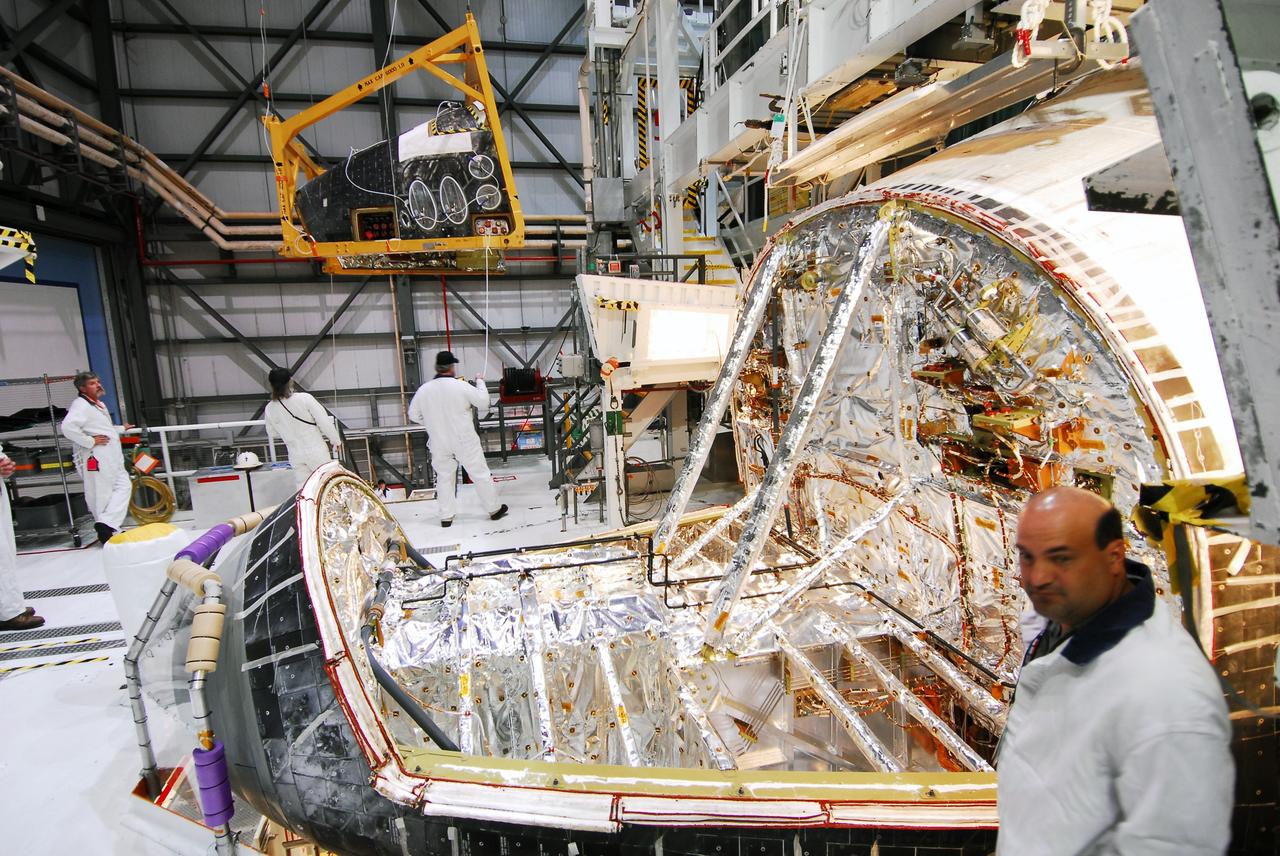
CAPE CANAVERAL, Fla. - Crews in Orbiter Processing Facility-2 at NASA's Kennedy Space Center in Florida remove space shuttle Discovery's forward reaction control system (FRCS), which helped steer the shuttle in orbit. To maneuver, the FRCS used hypergolic fuel and oxidizer, which were purged from Discovery after its final spaceflight, STS-133. Next, the FRCS will be shipped to a maintenance facility at White Sands Space Harbor in New Mexico, where additional inspections will be performed and its components made safe to go on public display. The transition and retirement processing is expected to help rocket designers build next-generation spacecraft and prepare the shuttle for display. Photo credit: NASA/Jim Grossmann
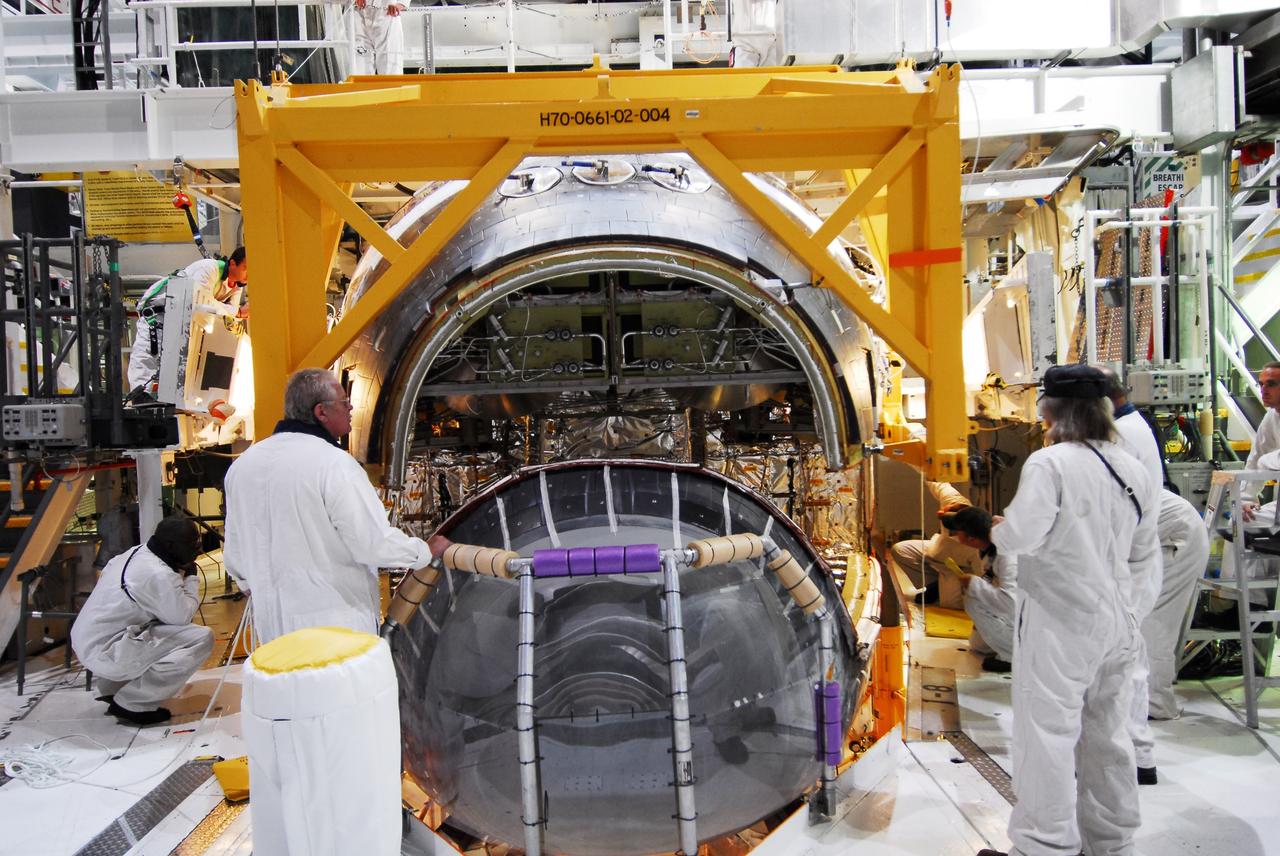
CAPE CANAVERAL, Fla. - Crews in Orbiter Processing Facility-2 at NASA's Kennedy Space Center in Florida begin to remove space shuttle Discovery's forward reaction control system (FRCS), which helped steer the shuttle in orbit. To maneuver, the FRCS used hypergolic fuel and oxidizer, which were purged from Discovery after its final spaceflight, STS-133. Next, the FRCS will be shipped to a maintenance facility at White Sands Space Harbor in New Mexico, where additional inspections will be performed and its components made safe to go on public display. The transition and retirement processing is expected to help rocket designers build next-generation spacecraft and prepare the shuttle for display. Photo credit: NASA/Jim Grossmann
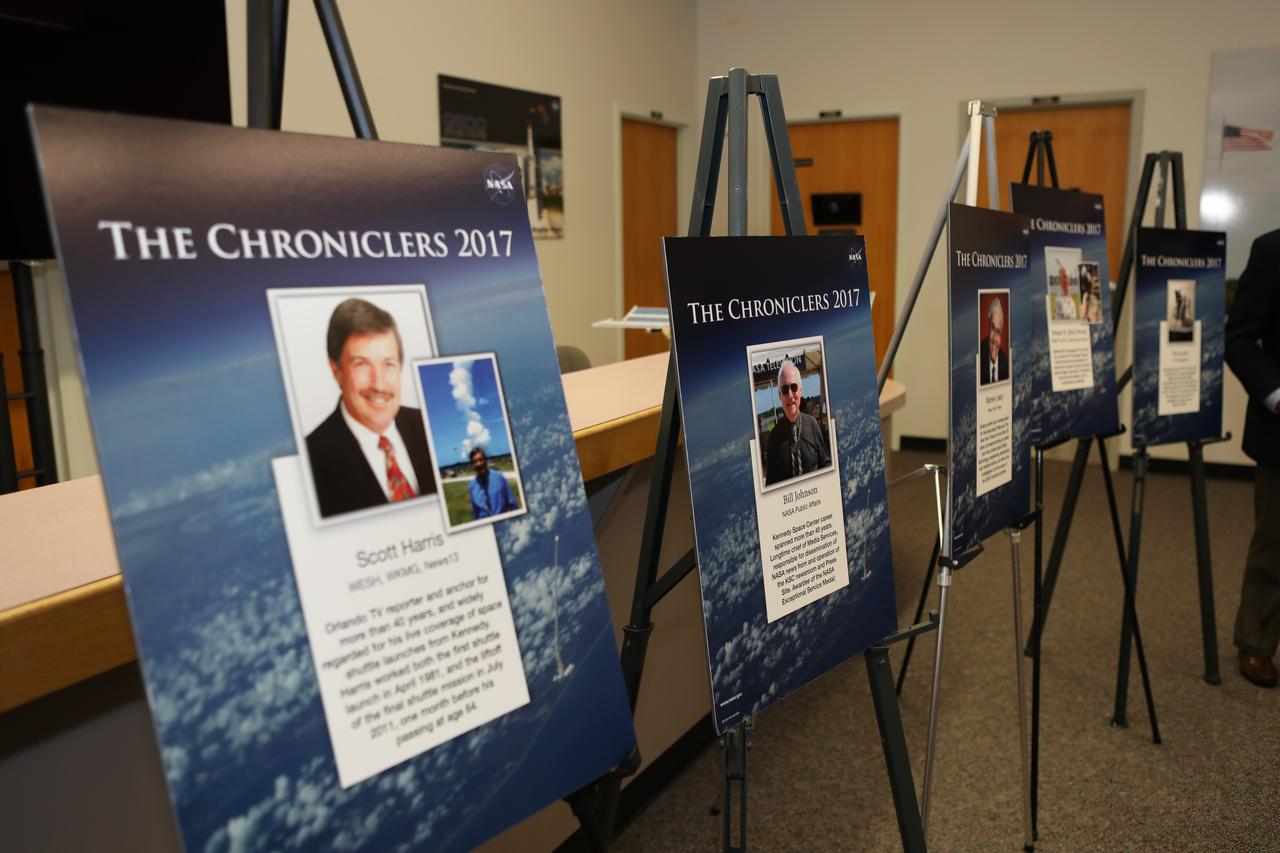
Posters in the NASA News Center at Kennedy Space Center in Florida bear the names and photos of five of the six new honorees added to the facility's "Chroniclers" roll of honor. From left to right are posters featuring Scott Harris, WESH, WKMG and Central Florida News 13; Bill Johnson, NASA Public Affairs; Warren Leary, The New York Times; Bob Murray, WDBO-TV, RCA and United Space Alliance; and Phillip Sandlin, Associated Press photographer. Not pictured is the poster for Bruce Hall, CBS News and NBC News. The Chroniclers program recognizes retirees of the news and communications business who helped spread news of American space exploration from Kennedy Space Center for ten years or more.
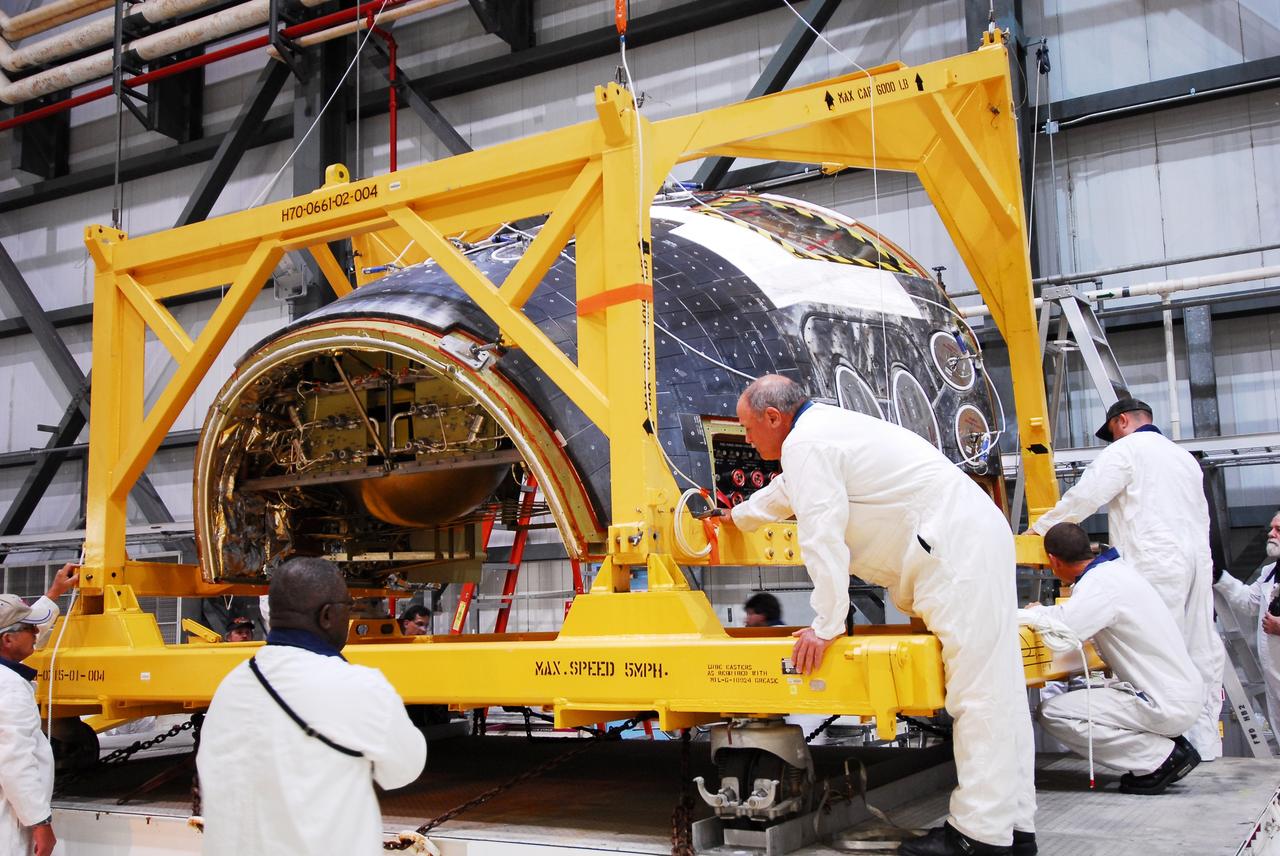
CAPE CANAVERAL, Fla. - Space shuttle Discovery's forward reaction control system (FRCS), which helped steer the shuttle in orbit, is moved to a transporter in Orbiter Processing Facility-2 at NASA's Kennedy Space Center in Florida. To maneuver, the FRCS used hypergolic fuel and oxidizer, which were purged from Discovery after its final spaceflight, STS-133. Next, the FRCS will be shipped to a maintenance facility at White Sands Space Harbor in New Mexico, where additional inspections will be performed and its components made safe to go on public display. The transition and retirement processing is expected to help rocket designers build next-generation spacecraft and prepare the shuttle for display. Photo credit: NASA/Jim Grossmann
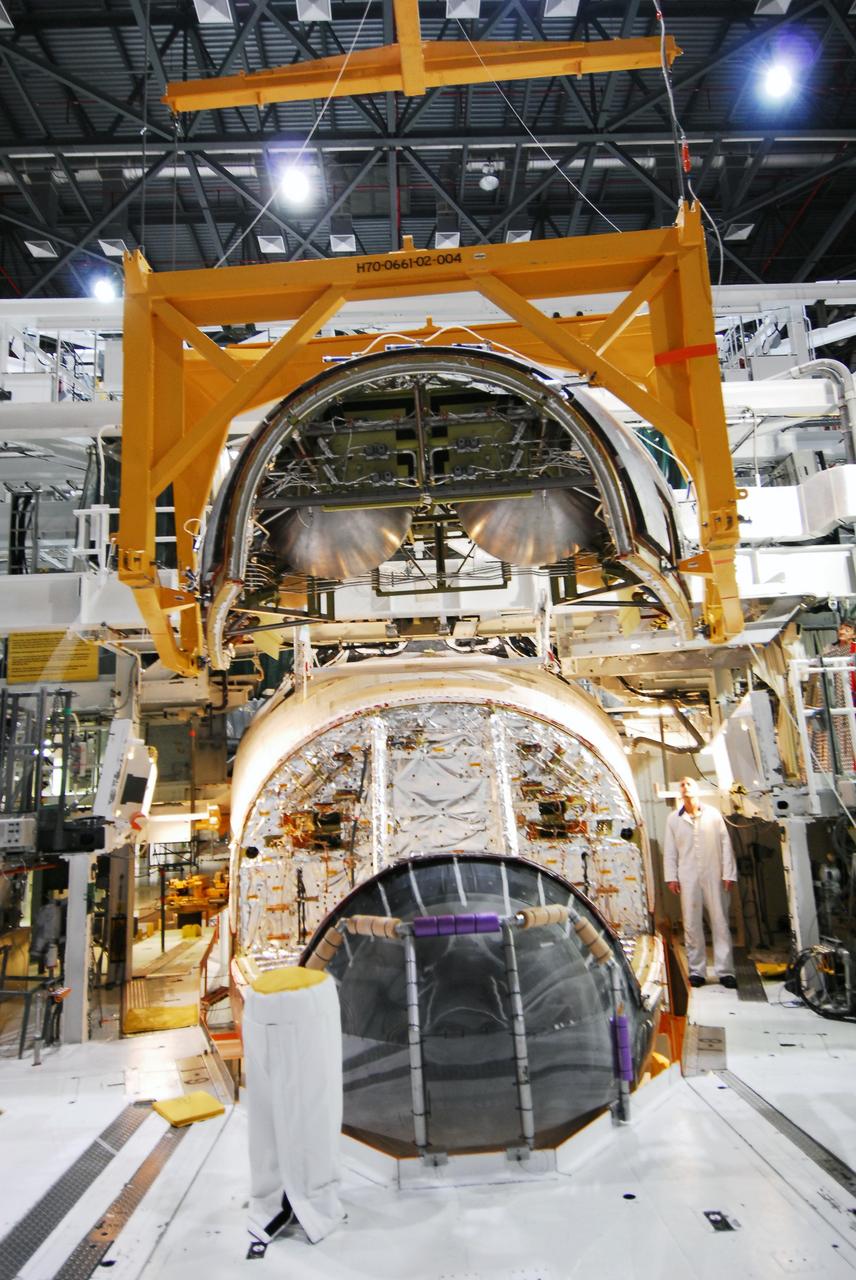
CAPE CANAVERAL, Fla. - Crews in Orbiter Processing Facility-2 at NASA's Kennedy Space Center in Florida remove space shuttle Discovery's forward reaction control system (FRCS), which helped steer the shuttle in orbit. To maneuver, the FRCS used hypergolic fuel and oxidizer, which were purged from Discovery after its final spaceflight, STS-133. Next, the FRCS will be shipped to a maintenance facility at White Sands Space Harbor in New Mexico, where additional inspections will be performed and its components made safe to go on public display. The transition and retirement processing is expected to help rocket designers build next-generation spacecraft and prepare the shuttle for display. Photo credit: NASA/Jim Grossmann
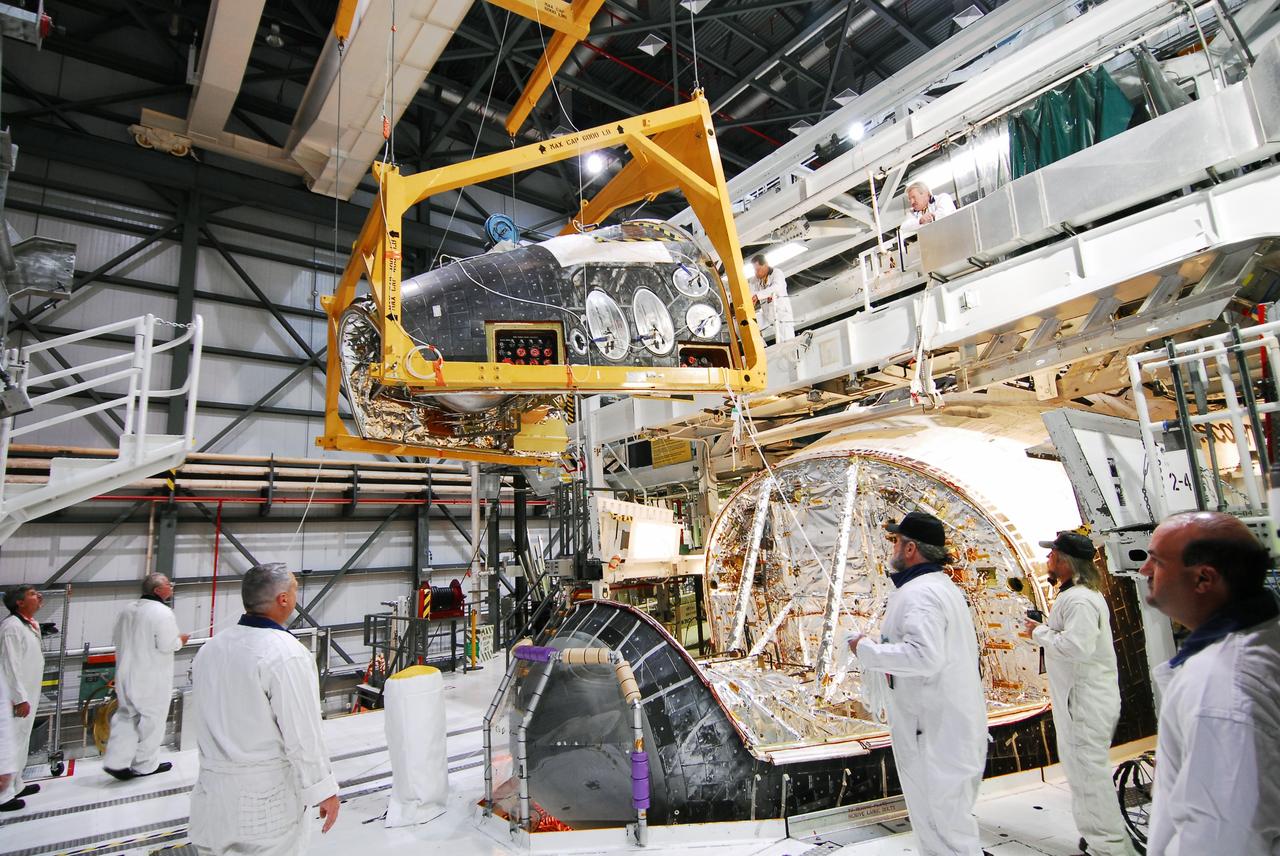
CAPE CANAVERAL, Fla. - Crews in Orbiter Processing Facility-2 at NASA's Kennedy Space Center in Florida remove space shuttle Discovery's forward reaction control system (FRCS), which helped steer the shuttle in orbit. To maneuver, the FRCS used hypergolic fuel and oxidizer, which were purged from Discovery after its final spaceflight, STS-133. Next, the FRCS will be shipped to a maintenance facility at White Sands Space Harbor in New Mexico, where additional inspections will be performed and its components made safe to go on public display. The transition and retirement processing is expected to help rocket designers build next-generation spacecraft and prepare the shuttle for display. Photo credit: NASA/Jim Grossmann
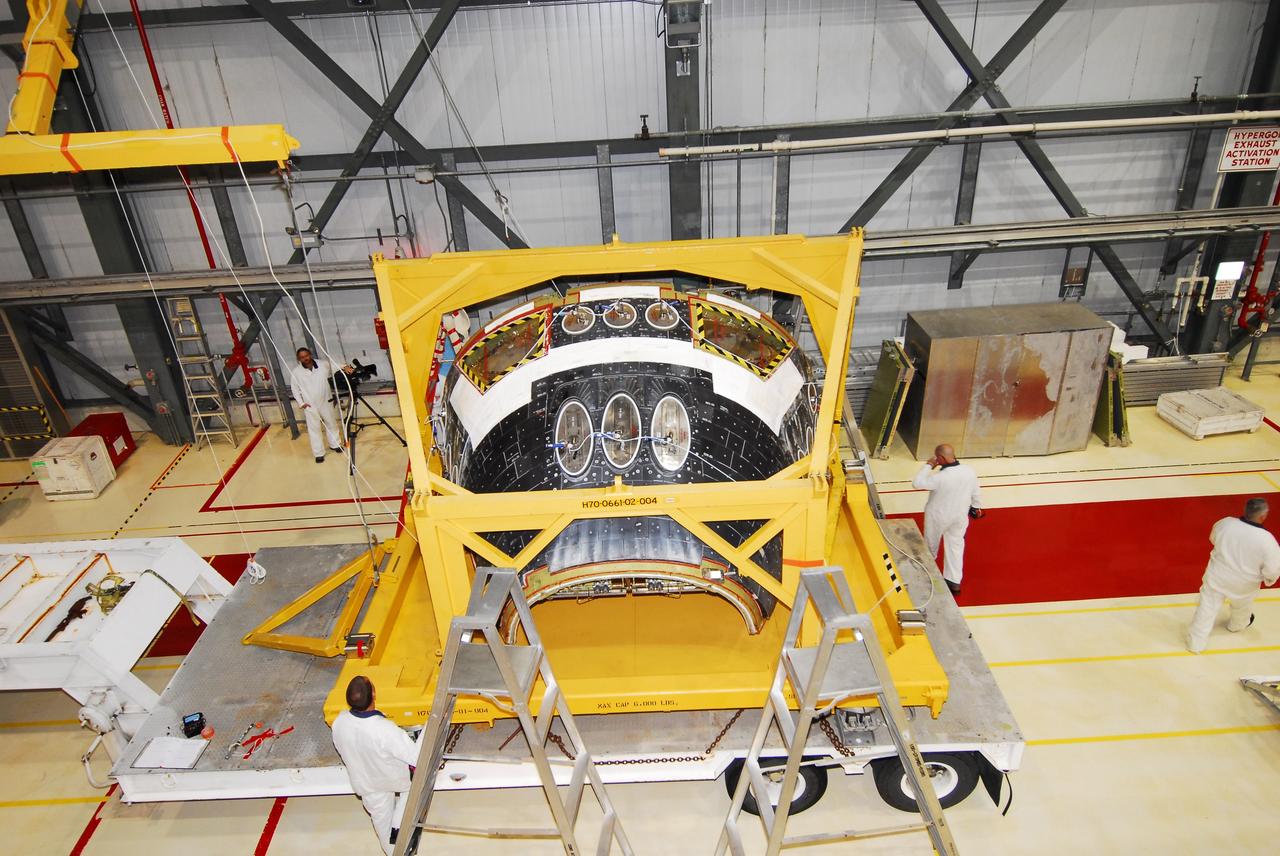
CAPE CANAVERAL, Fla. - Space shuttle Discovery's forward reaction control system (FRCS), which helped steer the shuttle in orbit, is atop a transporter in Orbiter Processing Facility-2 at NASA's Kennedy Space Center in Florida. To maneuver, the FRCS used hypergolic fuel and oxidizer, which were purged from Discovery after its final spaceflight, STS-133. Next, the FRCS will be shipped to a maintenance facility at White Sands Space Harbor in New Mexico, where additional inspections will be performed and its components made safe to go on public display. The transition and retirement processing is expected to help rocket designers build next-generation spacecraft and prepare the shuttle for display. Photo credit: NASA/Jim Grossmann
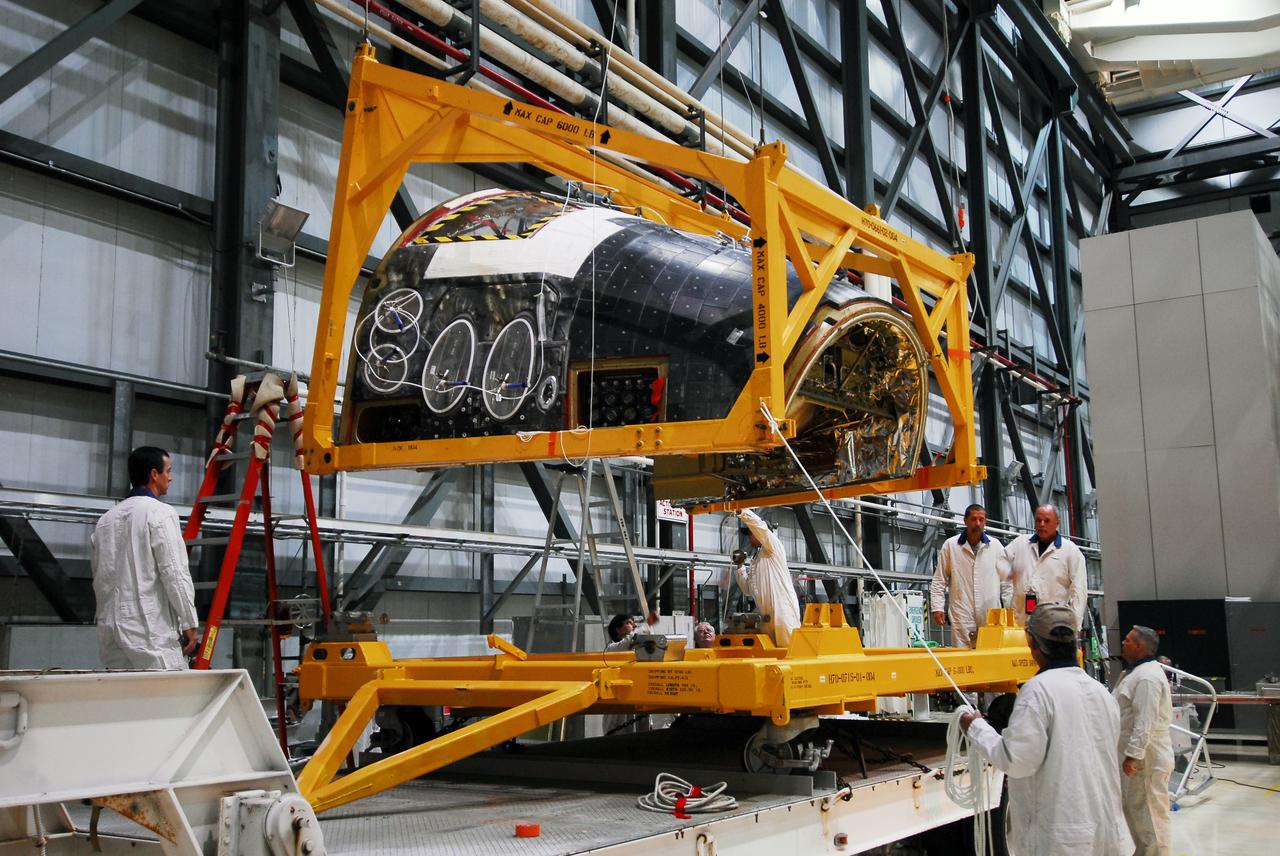
CAPE CANAVERAL, Fla. - Space shuttle Discovery's forward reaction control system (FRCS), which helped steer the shuttle in orbit, is moved to a transporter in Orbiter Processing Facility-2 at NASA's Kennedy Space Center in Florida. To maneuver, the FRCS used hypergolic fuel and oxidizer, which were purged from Discovery after its final spaceflight, STS-133. Next, the FRCS will be shipped to a maintenance facility at White Sands Space Harbor in New Mexico, where additional inspections will be performed and its components made safe to go on public display. The transition and retirement processing is expected to help rocket designers build next-generation spacecraft and prepare the shuttle for display. Photo credit: NASA/Jim Grossmann
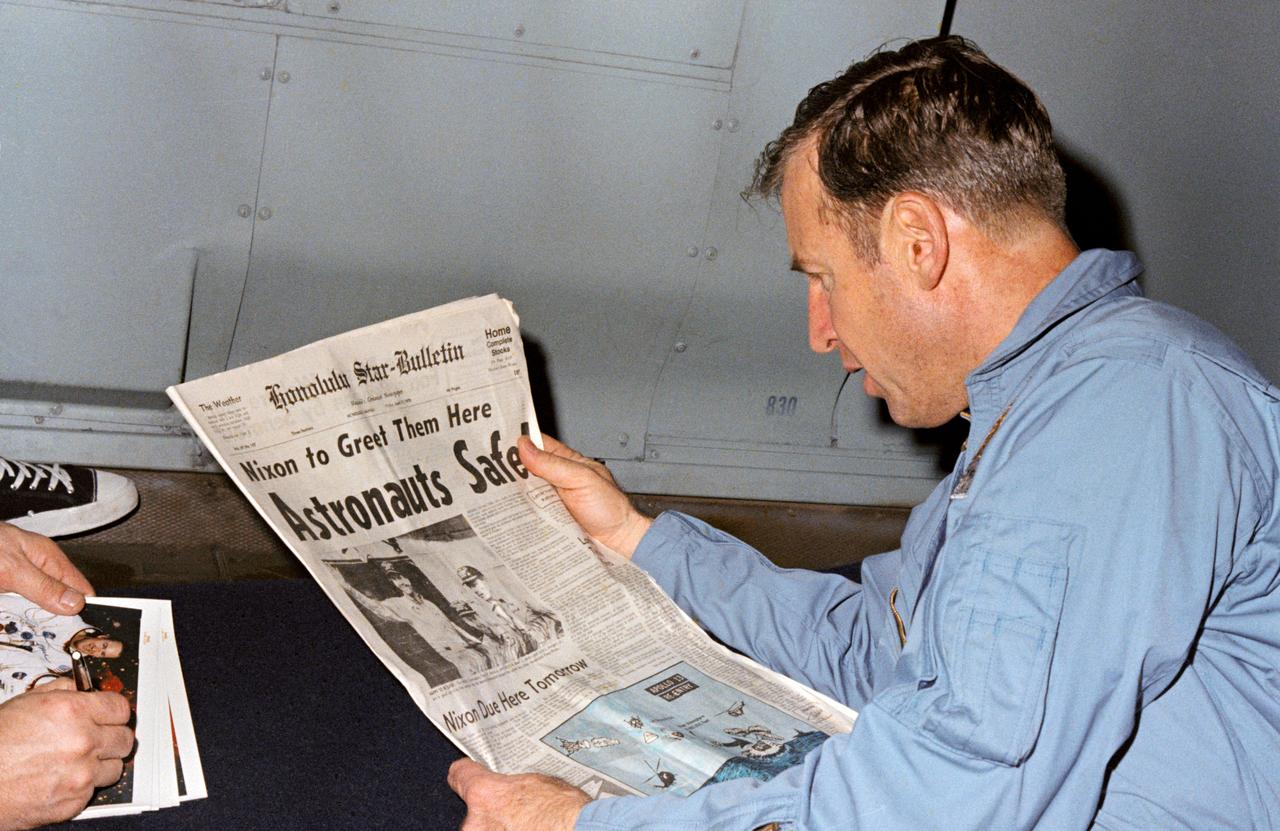
S70-15501 (17 April 1970) --- Astronaut James A. Lovell Jr., Apollo 13 mission commander, reads a newspaper account of the safe recovery of the problem plagued mission. Lovell is on board the USS Iwo Jima, prime recovery ship for Apollo 13, which was on a course headed for Pago Pago. From Pago Pago the astronauts flew to Hickam Air Force Base, Hawaii, where they were presented the Presidential Medal of Freedom by President Richard M. Nixon. Other Apollo 13 crew members were astronauts John L. Swigert Jr., command module pilot, and Fred W. Haise Jr., lunar module pilot.
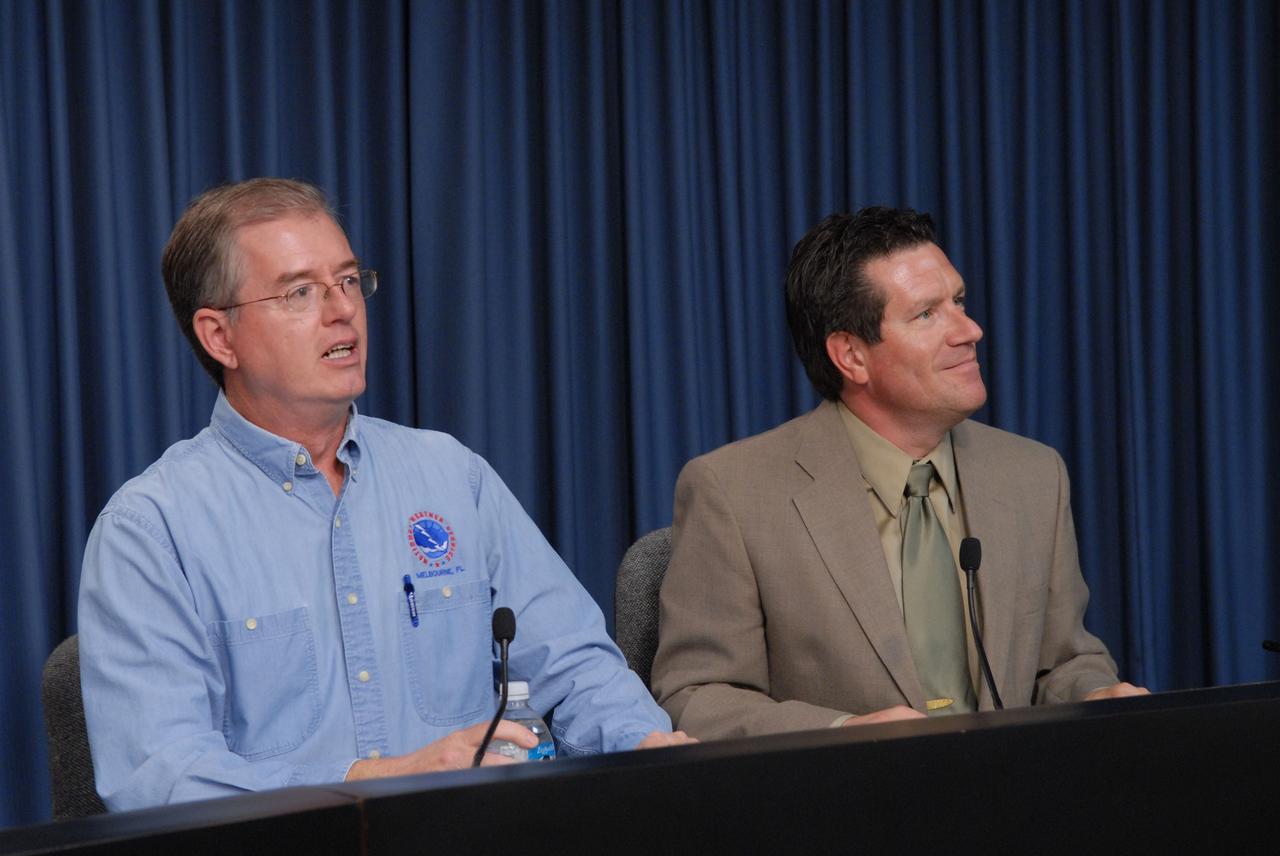
CAPE CANAVERAL, Fla. – Bart Hagemeyer, at left, meteorologist in charge, NOAA National Weather Service forecast office, Melbourne, Fla., and Joel Tumbiolo, Delta IV launch weather officer, 45th Weather Squadron, Cape Canaveral Air Force Station, participate in a prelaunch news conference on the Geostationary Operational Environmental Satellite-O mission in NASA's Kennedy Space Center press site auditorium. The GOES-O satellite is targeted to launch June 26. The latest Geostationary Operational Environmental Satellite, GOES-O was developed by NASA for the National Oceanic and Atmospheric Administration, or NOAA. Each of the GOES satellites continuously provides observations of 60 percent of the Earth including the continental United States, providing weather monitoring and forecast operations as well as a continuous and reliable stream of environmental information and severe weather warnings. Once in orbit, GOES-O will be designated GOES-14, and NASA will provide on-orbit checkout and then transfer operational responsibility to NOAA. Photo credit: NASA/Jim Grossmann
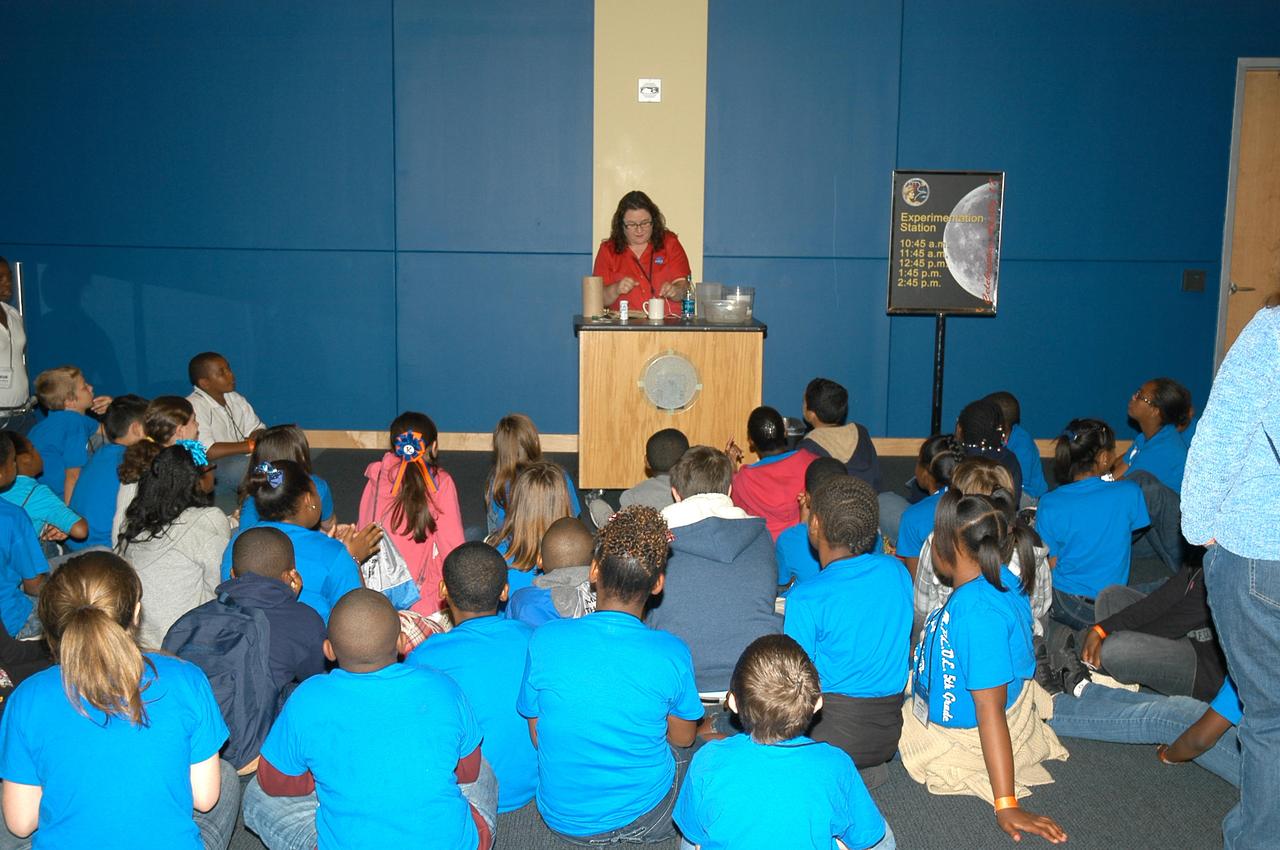
Young visitors to the INFINITY Science Center, a NASA visitors center, on Dec. 7 enjoy a Living and Working in Space presentation during activities celebrating the Apollo 17 lunar mission in 1972. Visitors were able to learn about the historic mission and to participate in hands-on activities. Apollo 17 was the final mission of America's manned lunar effort.
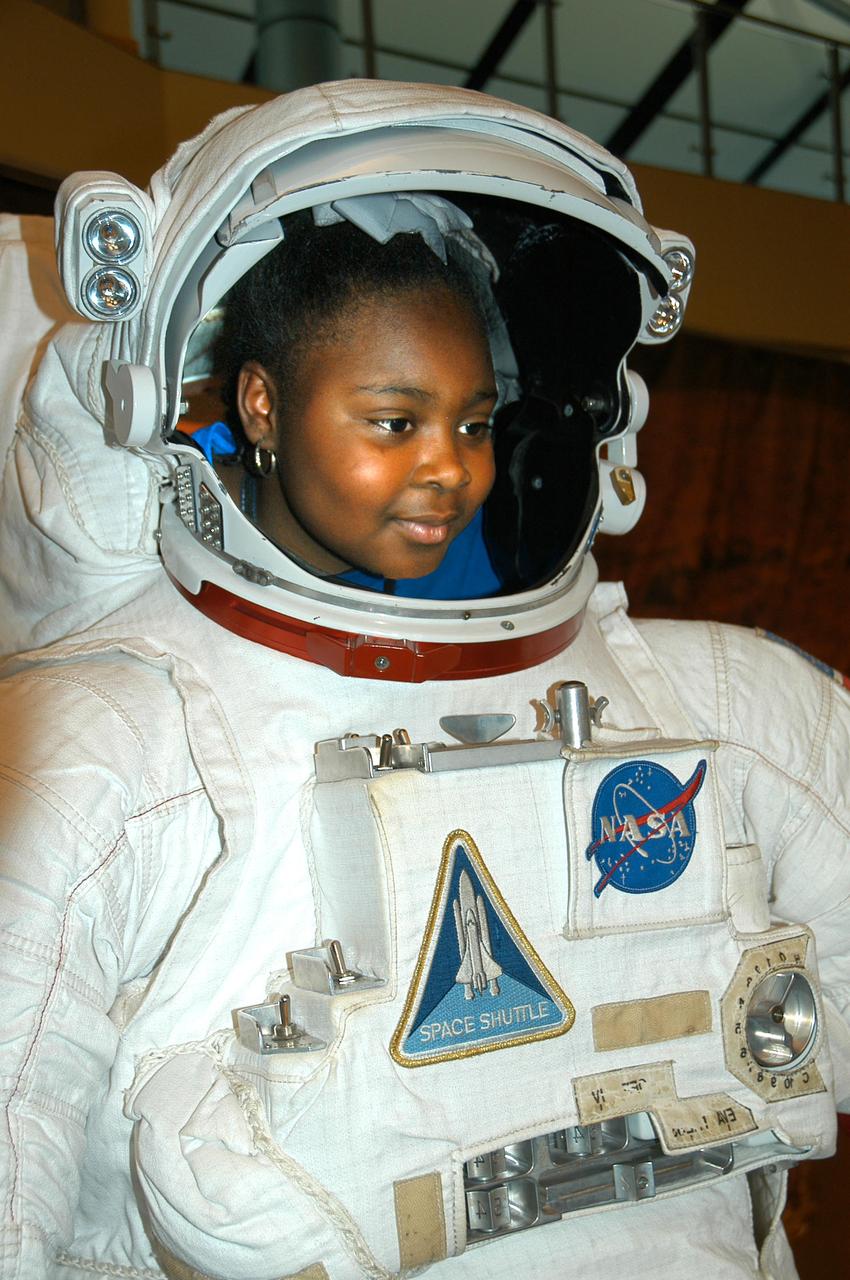
Ariana Lyons from Escatawpa Elementary School in Moss Point, Miss., experiences what it feels like to view the world out of a spacesuit during a visit to INFINITY Science Center, a NASA visitors center, Dec. 7. Lyons joined other young visitors to the facility that day in celebrating the 40th anniversary of the Apollo 17 mission to the moon in 1972.
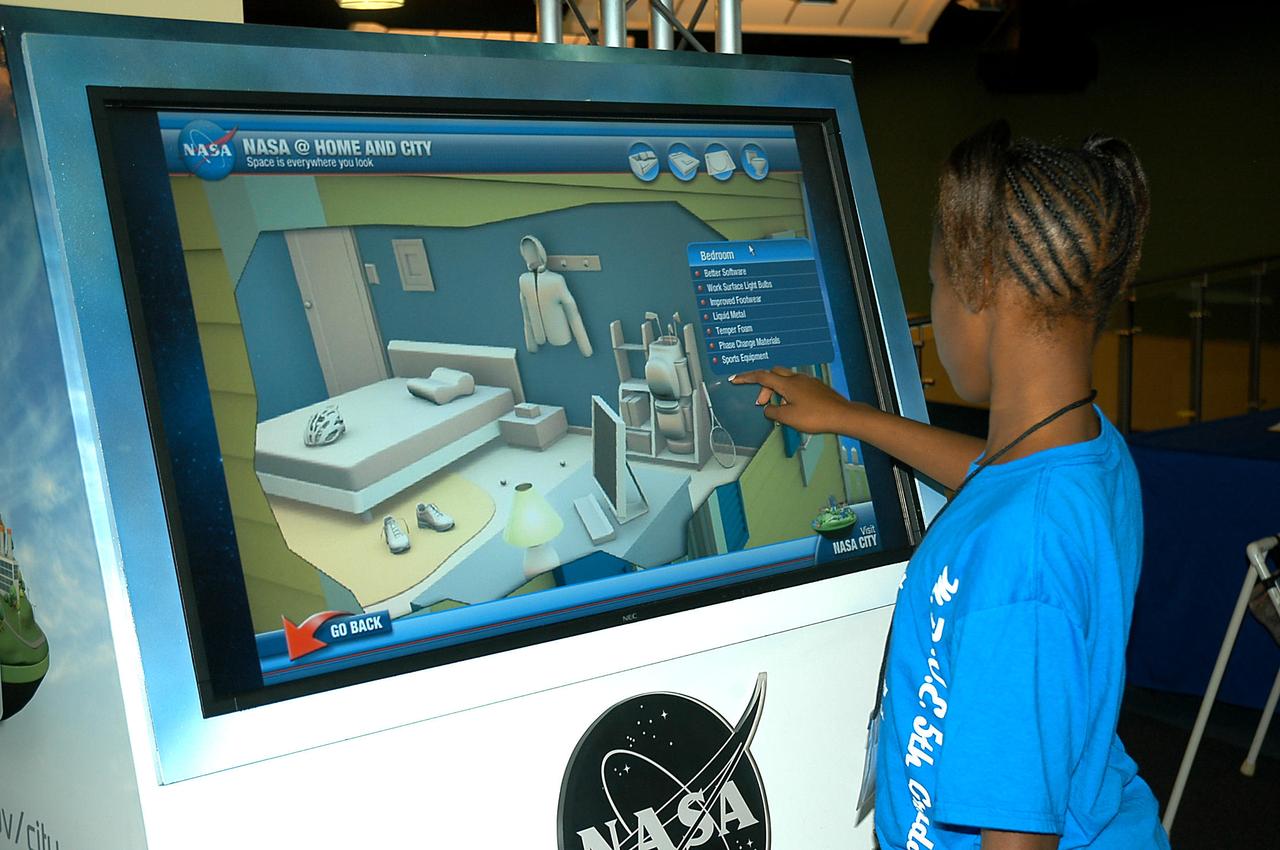
Escatawpa Elementary School student Danisha Dillon of Moss Point, Miss., learns about NASA at the Home and City interactive exhibit at INFINITY Science Center, a NASA visitors center. The facility hosted two days of activity to celebrate the 40th anniversary of the Apollo 17 flight, the last manned space mission to the moon.
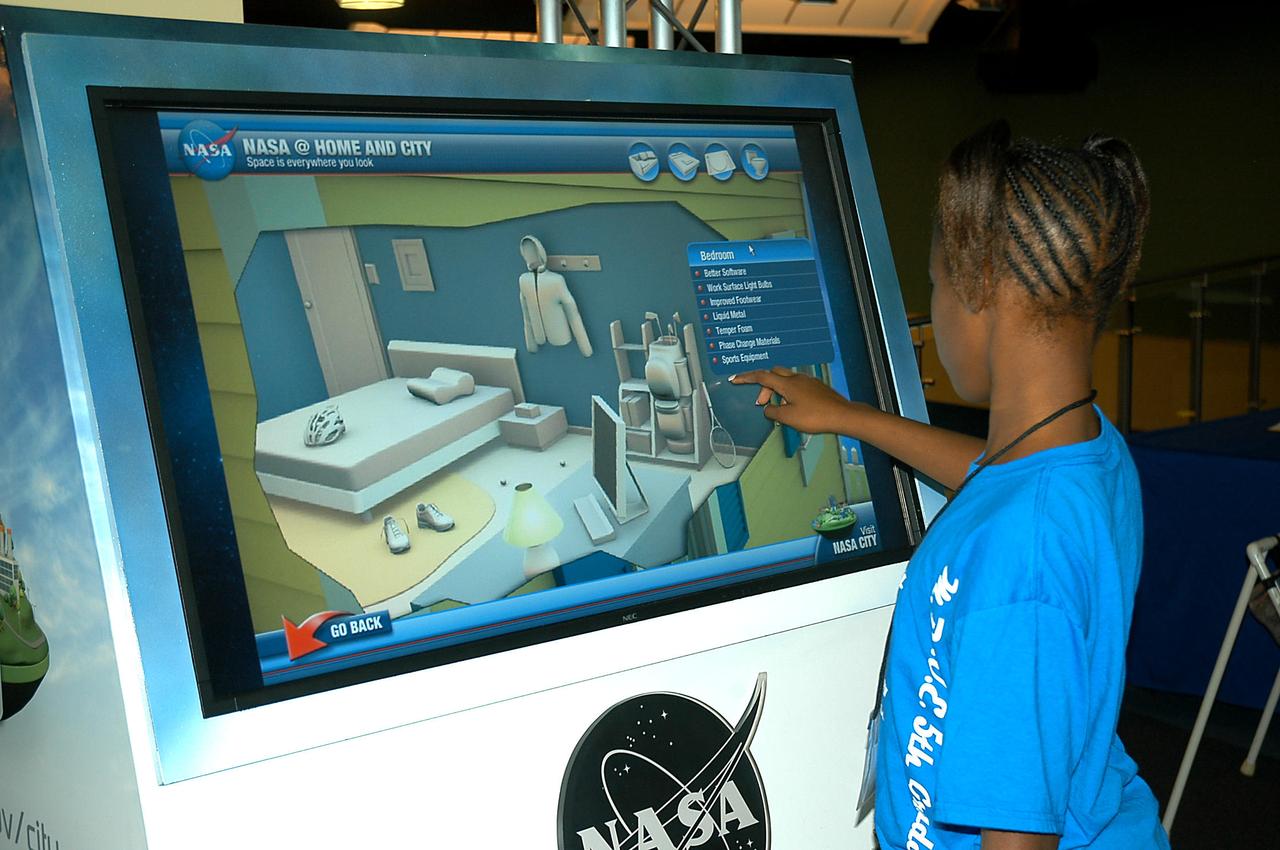
Escatawpa Elementary School student Danisha Dillon of Moss Point, Miss., learns about NASA at the Home and City interactive exhibit at INFINITY Science Center, a NASA visitors center. The facility hosted two days of activity to celebrate the 40th anniversary of the Apollo 17 flight, the last manned space mission to the moon.
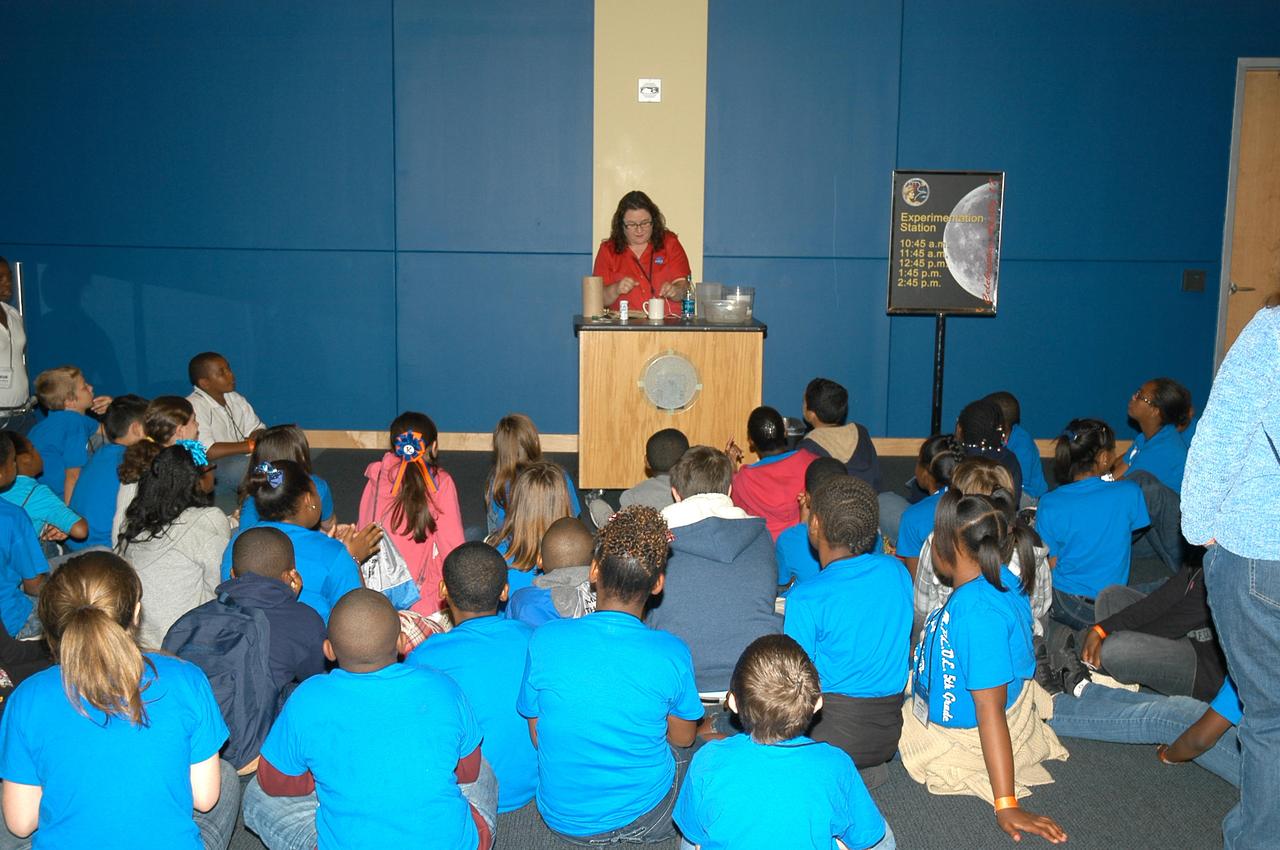
Young visitors to the INFINITY Science Center, a NASA visitors center, on Dec. 7 enjoy a Living and Working in Space presentation during activities celebrating the Apollo 17 lunar mission in 1972. Visitors were able to learn about the historic mission and to participate in hands-on activities. Apollo 17 was the final mission of America's manned lunar effort.
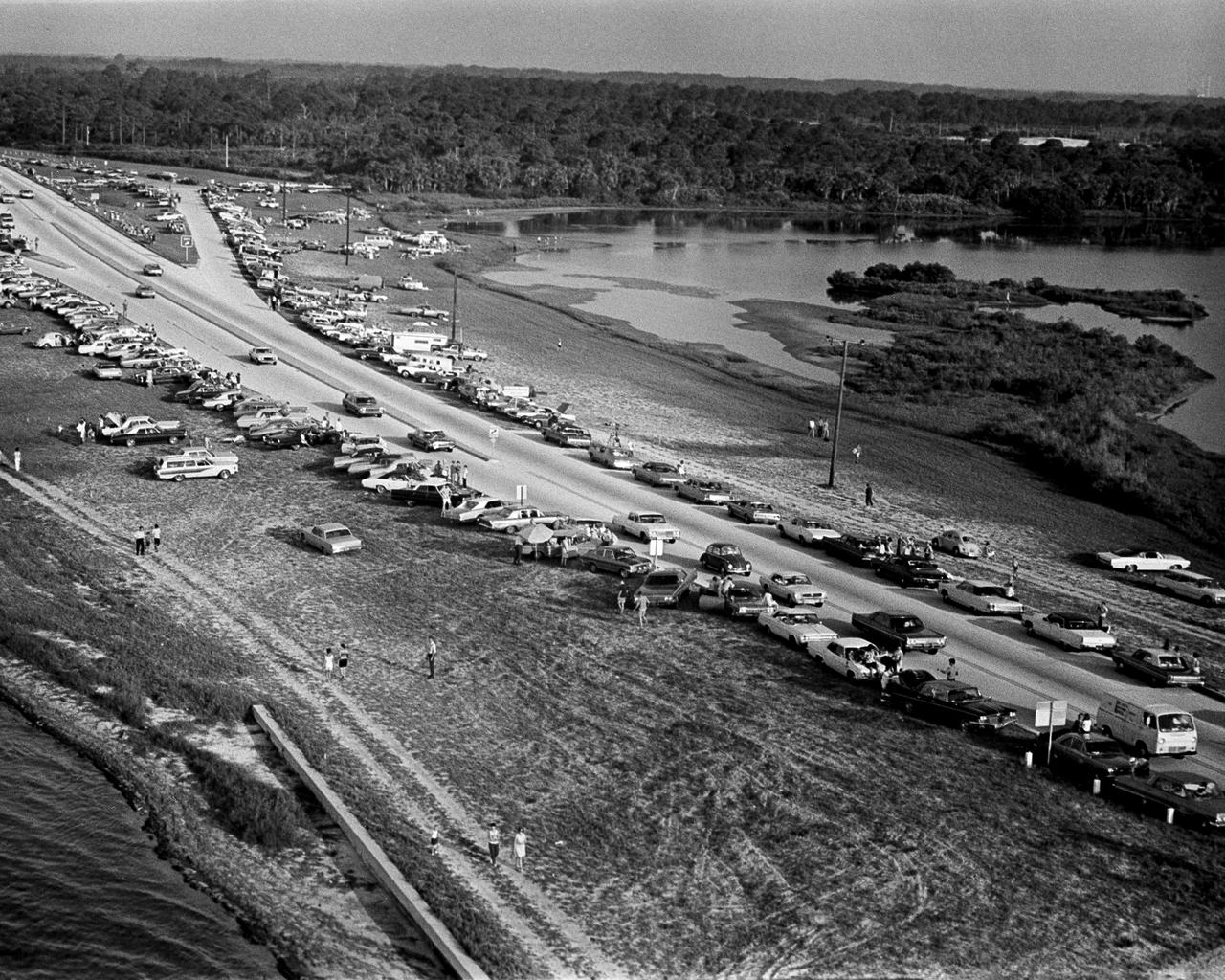
CAPE CANAVERAL, Fla. -- Thousands of persons lined roads adjacent to the Kennedy Space Center today to watch the launch of Apollo 11 astronauts Neil A. Armstrong, Michael Collins and Edwin E. Aldrin Jr. on the nation's first manned lunar landing mission. Their Apollo_Saturn V space vehicle lifted off at 9:32 a.m. EDT July 16, 1969, from the Kennedy Space Center's Launch Complex 39A. Photo credit: NASA