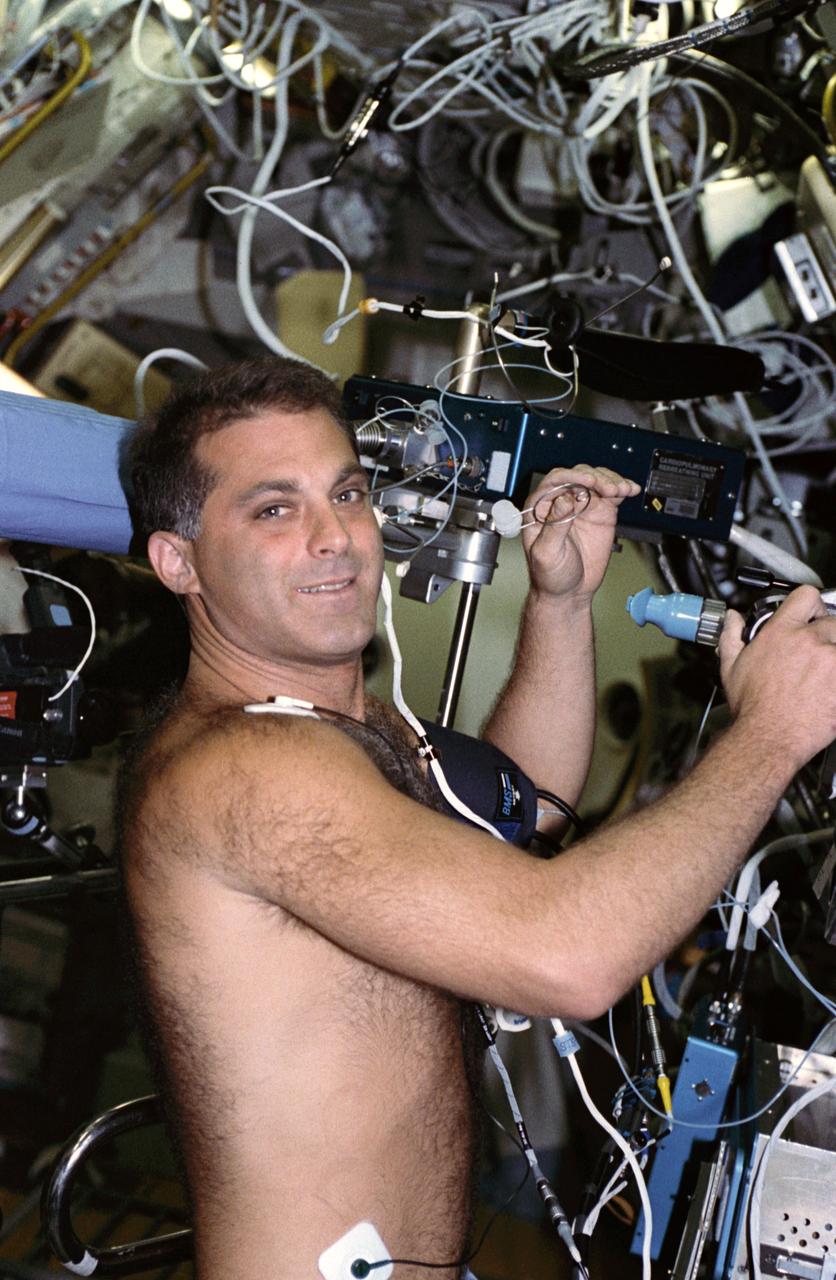
STS058-204-014 (18 Oct.-1 Nov. 1993) --- Astronaut David A. Wolf, mission specialist, participates in an experiment that investigates in-space distribution and movement of blood and gas in the pulmonary system. The data gathered during the two-week flight will be compared with results of tests performed on Earth to determine the changes that occur in pulmonary functions. Photo credit: NASA
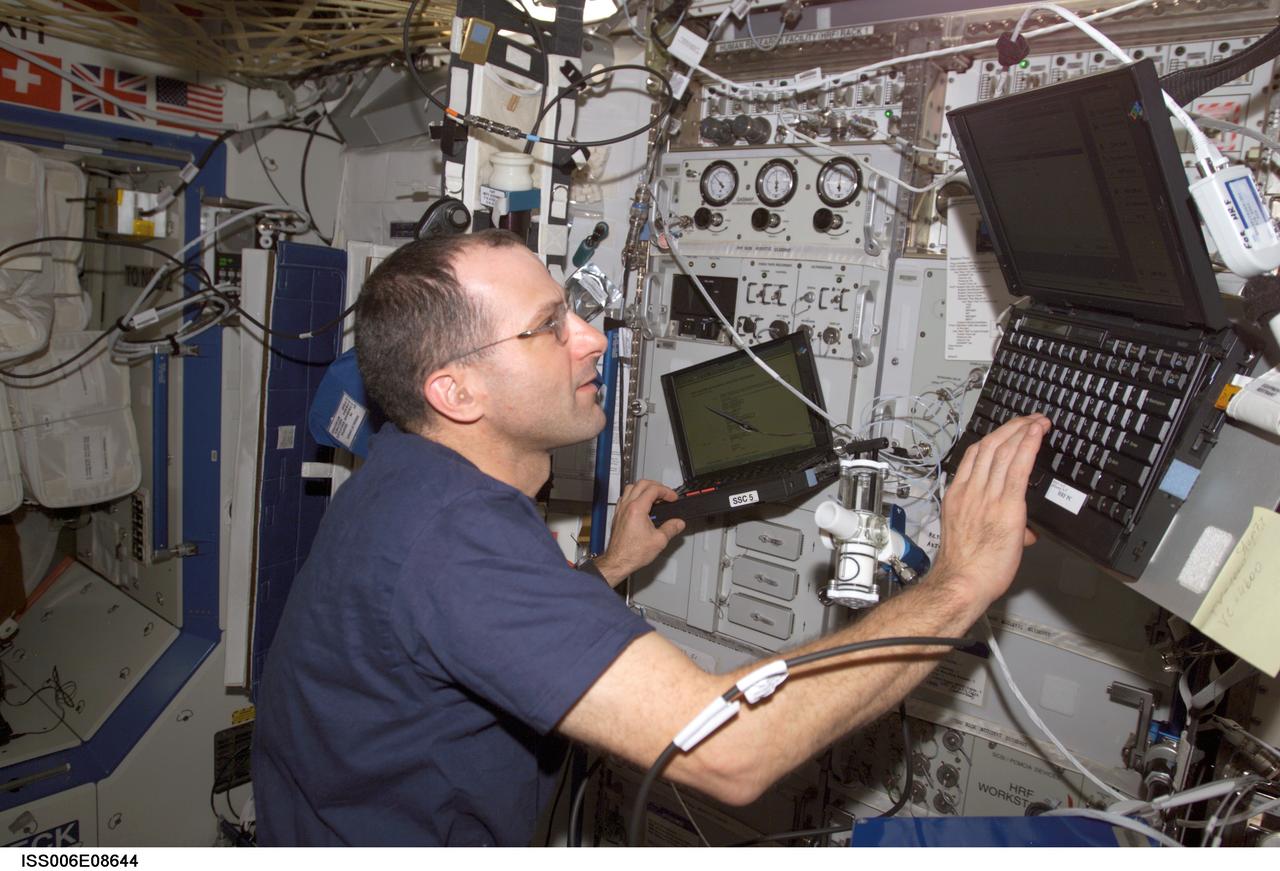
ISS006-E-08644 (9 December 2002) --- Astronaut Donald R. Pettit, Expedition Six NASA ISS science officer, works to set up Pulmonary Function in Flight (PuFF) hardware in preparation for a Human Research Facility (HRF) experiment in the Destiny laboratory on the International Space Station (ISS). Expedition Six is the fourth and final expedition crew to perform the HRF/PuFF Experiment on the ISS.
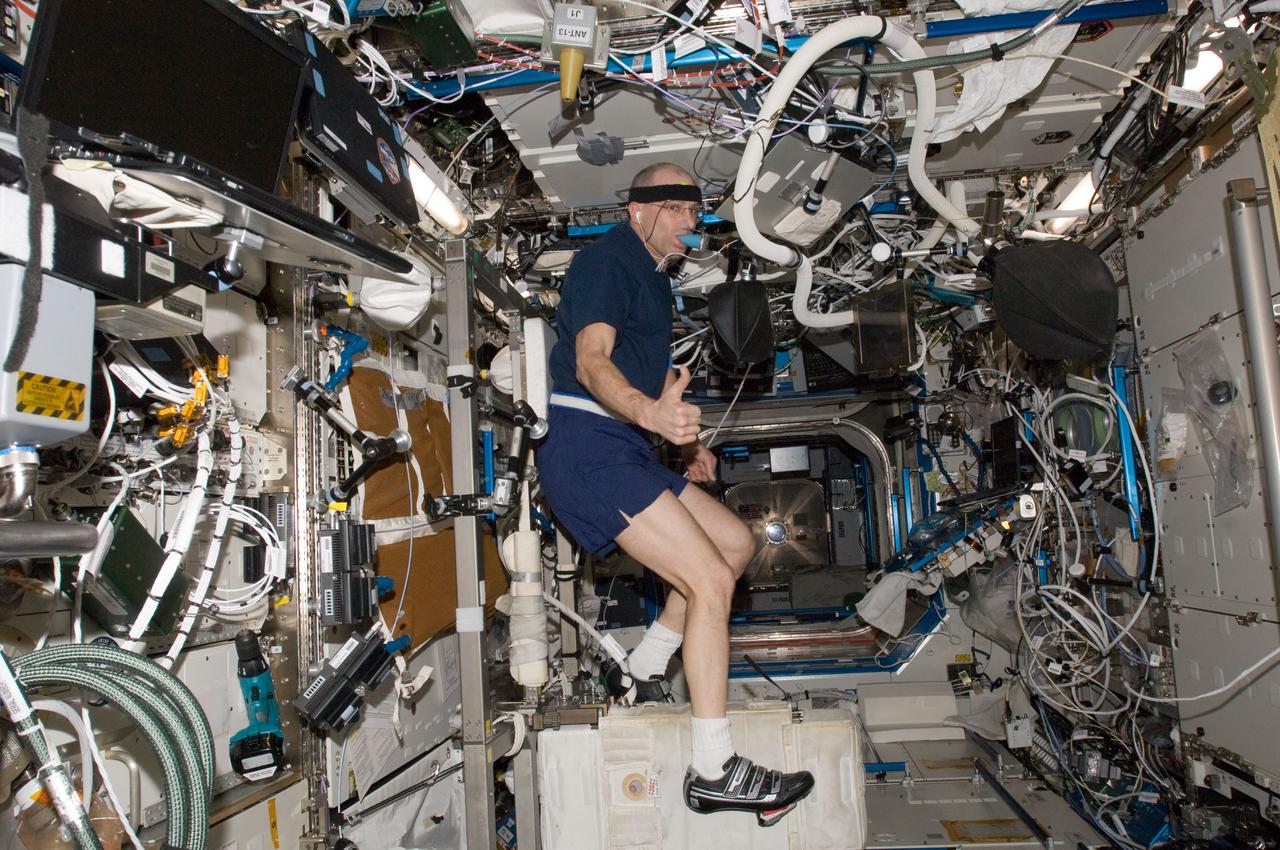
ISS030-E-132542 (7 March 2012) --- NASA astronaut Don Pettit, Expedition 30 flight engineer, performs a VO2max experiment while using the Cycle Ergometer with Vibration Isolation System (CEVIS) in the Destiny laboratory of the International Space Station. VO2max uses the Portable Pulmonary Function System (PPFS), CEVIS, Pulmonary Function System (PFS) gas cylinders and mixing bag system, plus multiple other pieces of hardware to measure oxygen uptake and cardiac output.
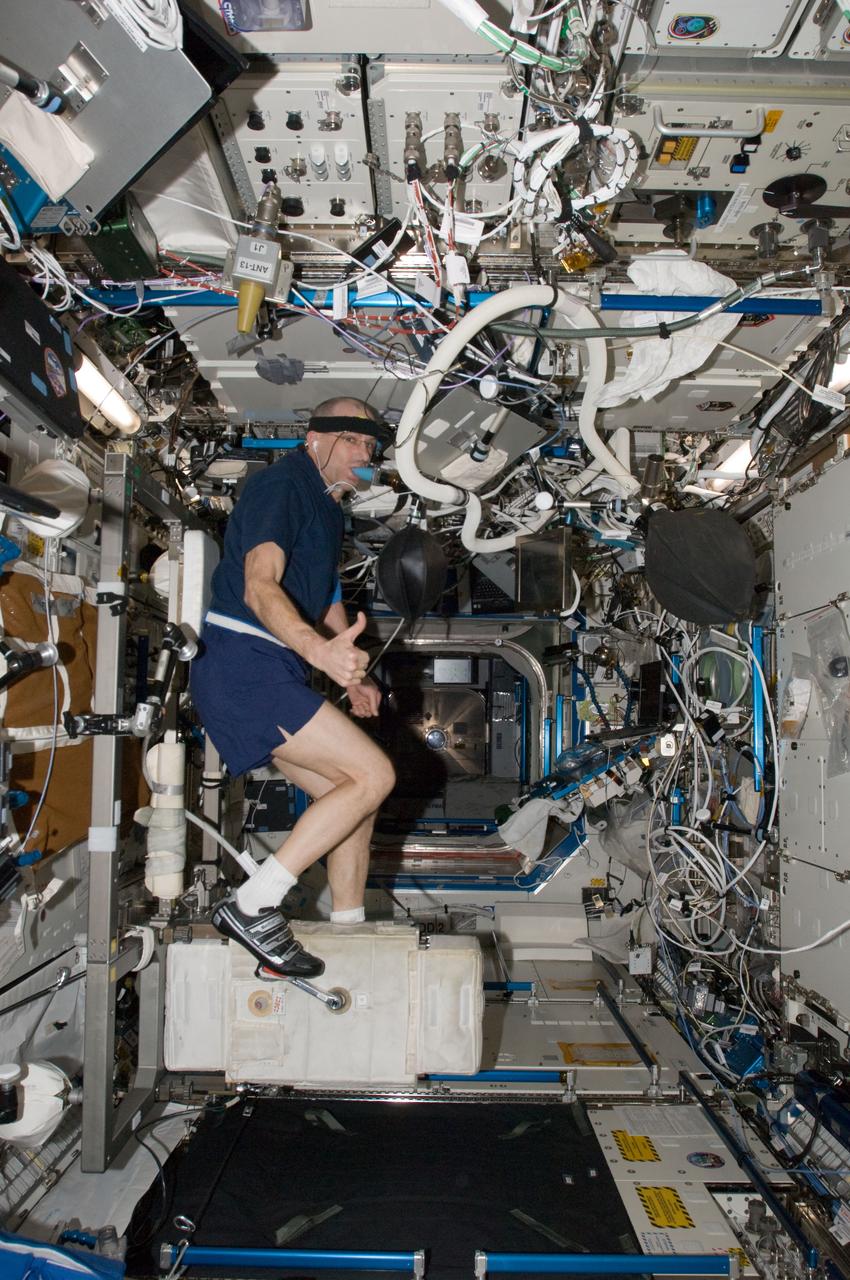
ISS030-E-132541 (7 March 2012) --- NASA astronaut Don Pettit, Expedition 30 flight engineer, performs a VO2max experiment while using the Cycle Ergometer with Vibration Isolation System (CEVIS) in the Destiny laboratory of the International Space Station. VO2max uses the Portable Pulmonary Function System (PPFS), CEVIS, Pulmonary Function System (PFS) gas cylinders and mixing bag system, plus multiple other pieces of hardware to measure oxygen uptake and cardiac output.
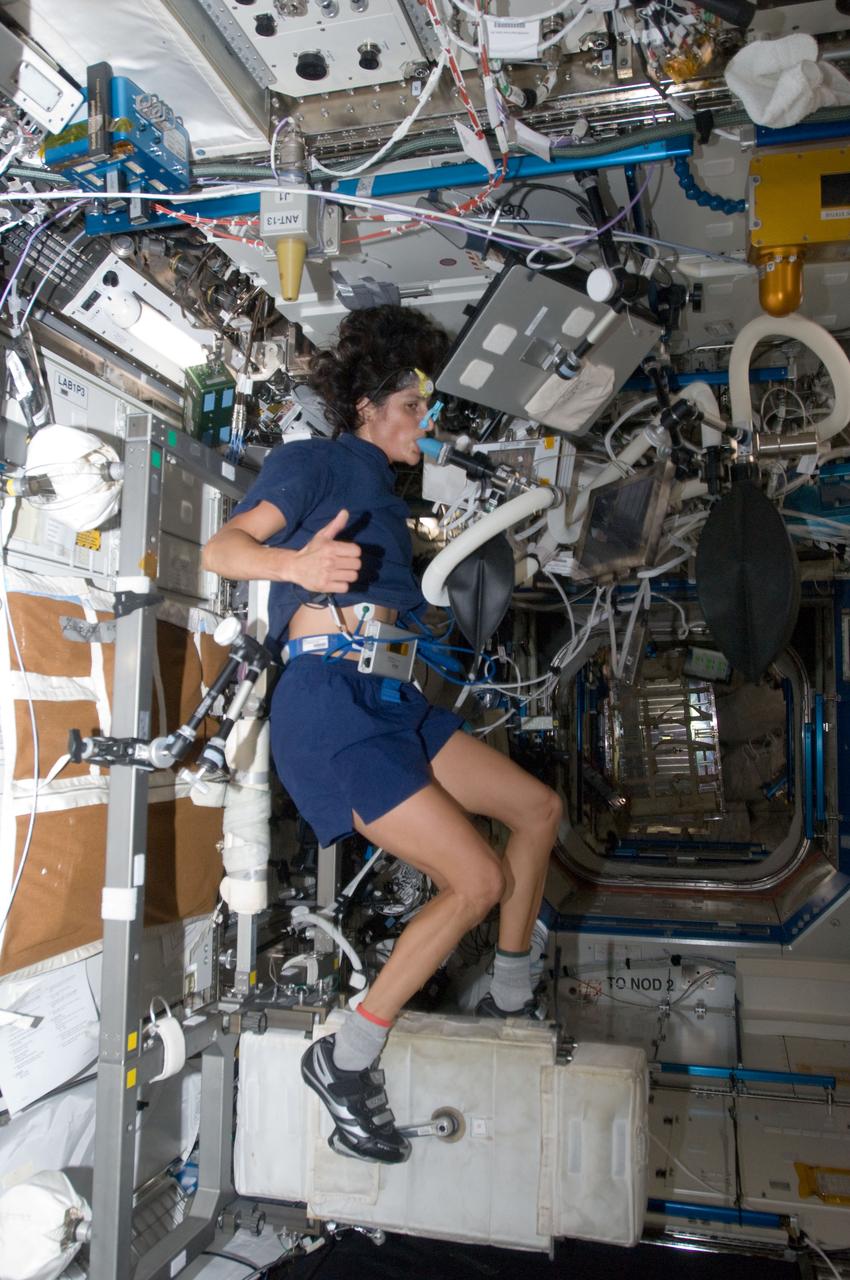
ISS032-E-016875 (8 Aug. 2012) --- NASA astronaut Sunita Williams, Expedition 32 flight engineer, performs a VO2max experiment while using the Cycle Ergometer with Vibration Isolation System (CEVIS) in the Destiny laboratory of the International Space Station. VO2max uses the Portable Pulmonary Function System (PPFS), CEVIS, Pulmonary Function System (PFS) gas cylinders and mixing bag system, plus multiple other pieces of hardware to measure oxygen uptake and cardiac output.
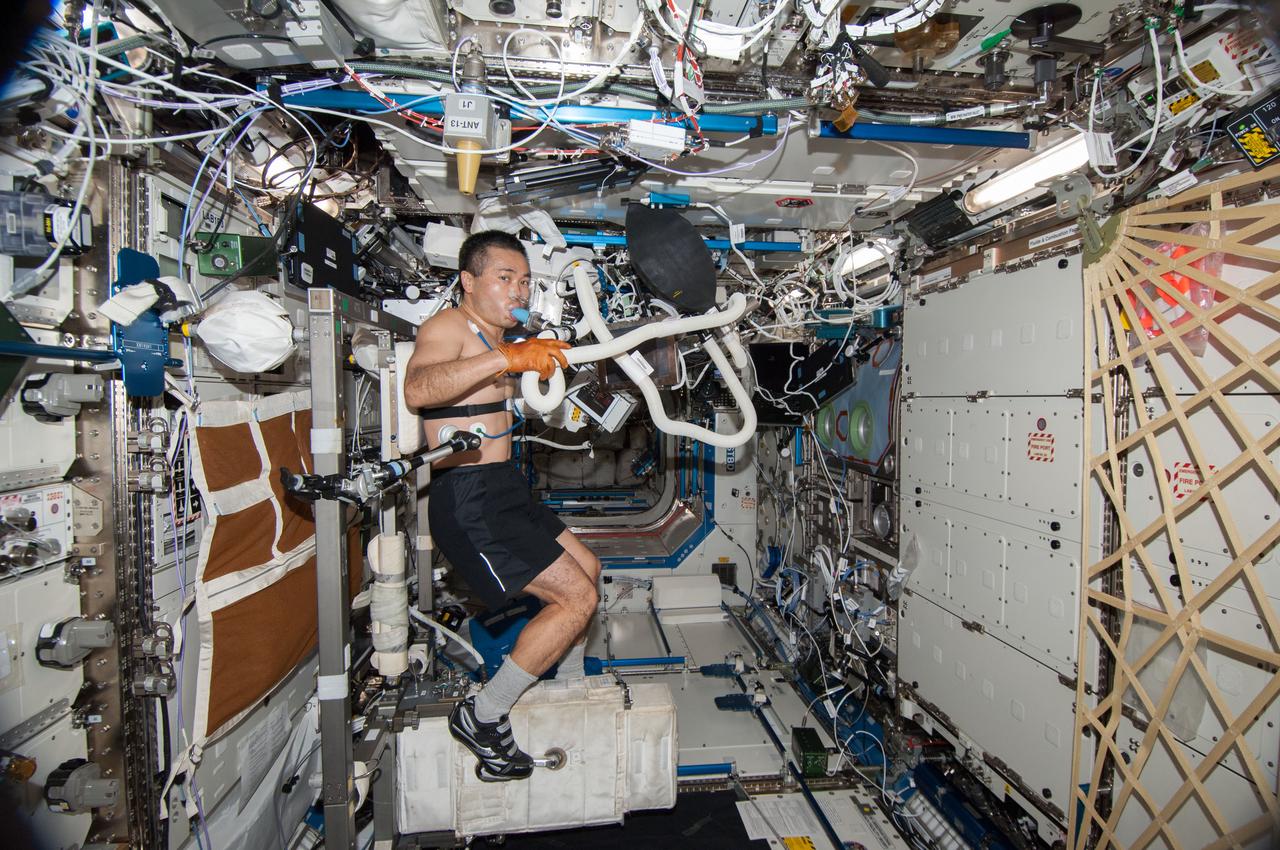
ISS038-E-009211 (26 Nov. 2013) --- Japan Aerospace Exploration Agency astronaut Koichi Wakata, Expedition 38 flight engineer, performs a VO2max session for the SPRINT investigation while using the Cycle Ergometer with Vibration Isolation System (CEVIS) in the Destiny laboratory of the International Space Station. VO2max uses the Portable Pulmonary Function System (PPFS), CEVIS, Pulmonary Function System (PFS) gas cylinders and mixing bag system, plus multiple other pieces of hardware to measure oxygen uptake and cardiac output.
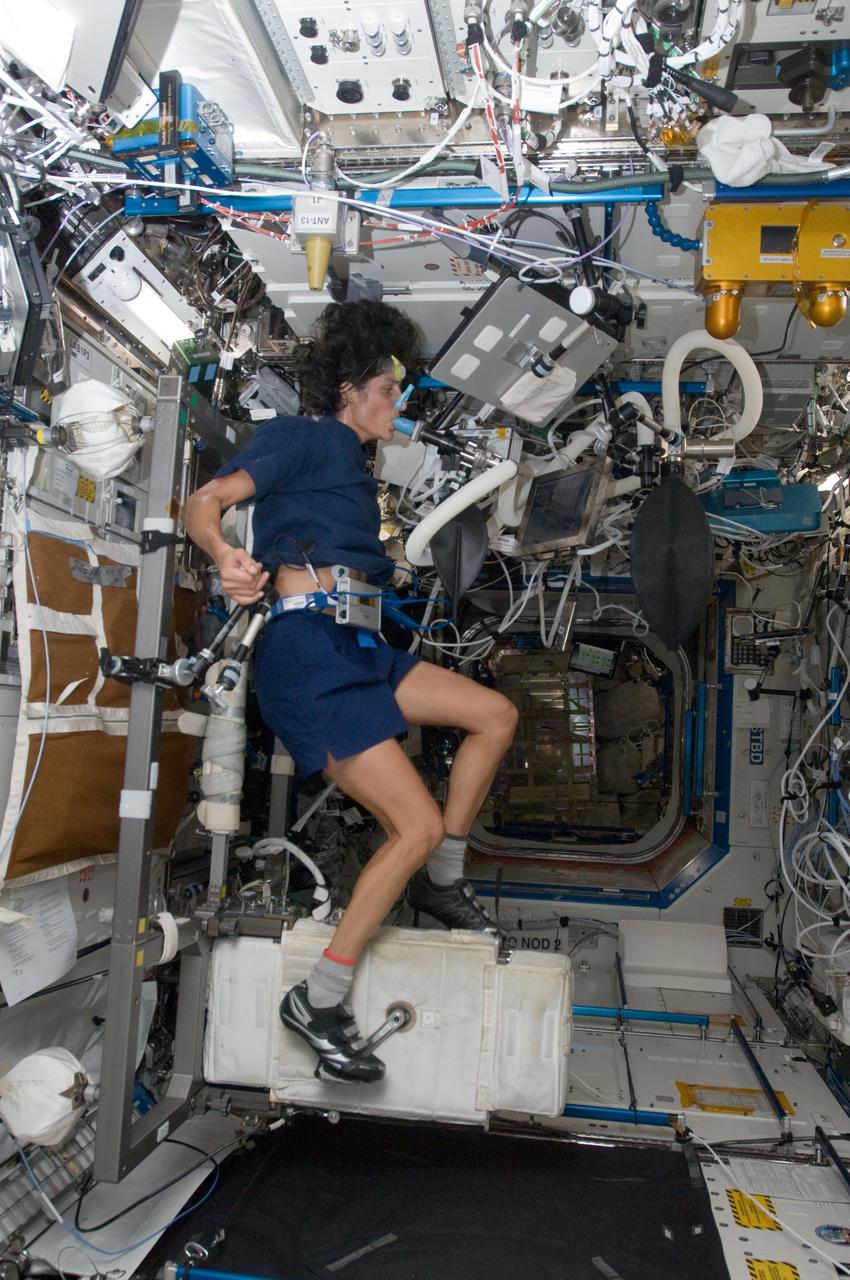
ISS032-E-016876 (8 Aug. 2012) --- NASA astronaut Sunita Williams, Expedition 32 flight engineer, performs a VO2max experiment while using the Cycle Ergometer with Vibration Isolation System (CEVIS) in the Destiny laboratory of the International Space Station. VO2max uses the Portable Pulmonary Function System (PPFS), CEVIS, Pulmonary Function System (PFS) gas cylinders and mixing bag system, plus multiple other pieces of hardware to measure oxygen uptake and cardiac output.
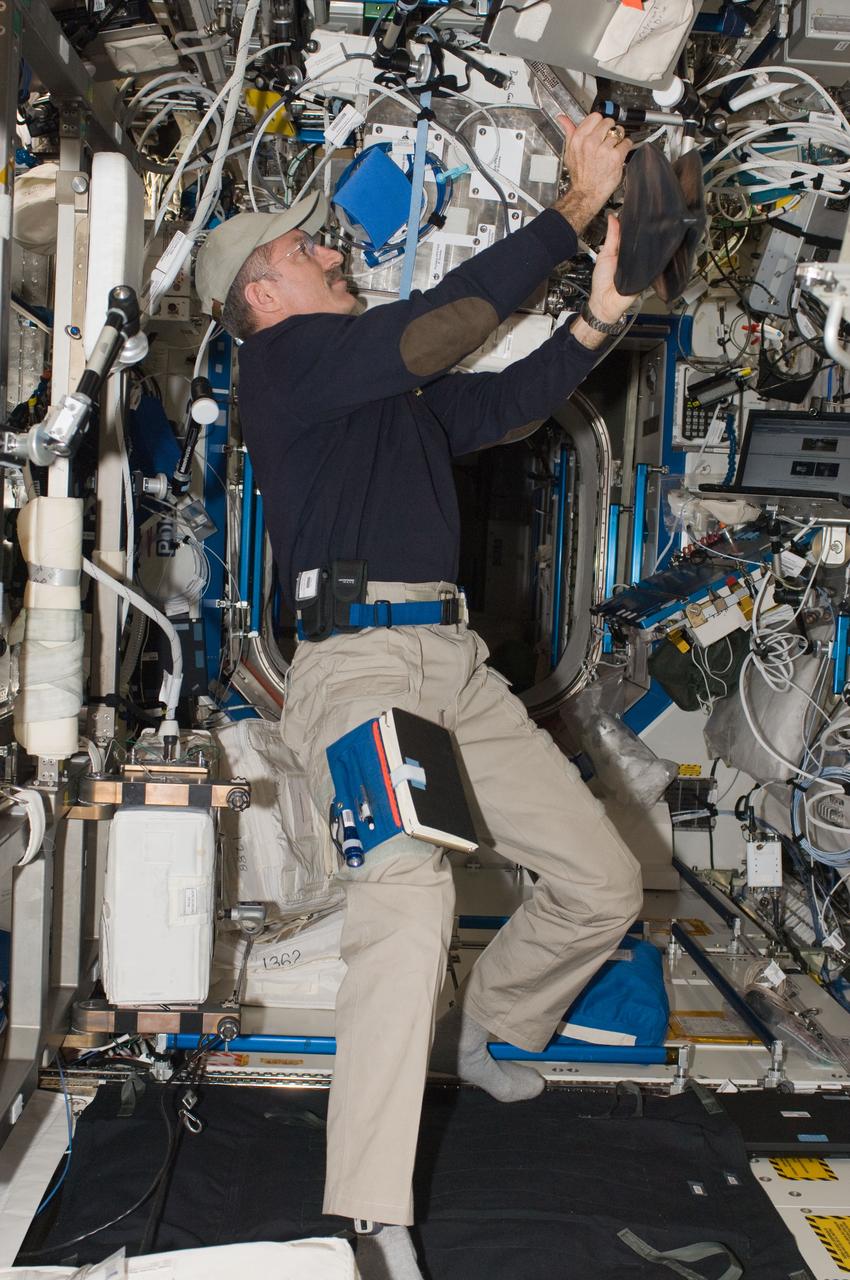
ISS030-E-060136 (2 Feb. 2012) --- NASA astronaut Dan Burbank, Expedition 30 commander, works with the Portable Pulmonary Function System (PPFS) Mixing Bag System (MBS) in the Destiny laboratory of the International Space Station.
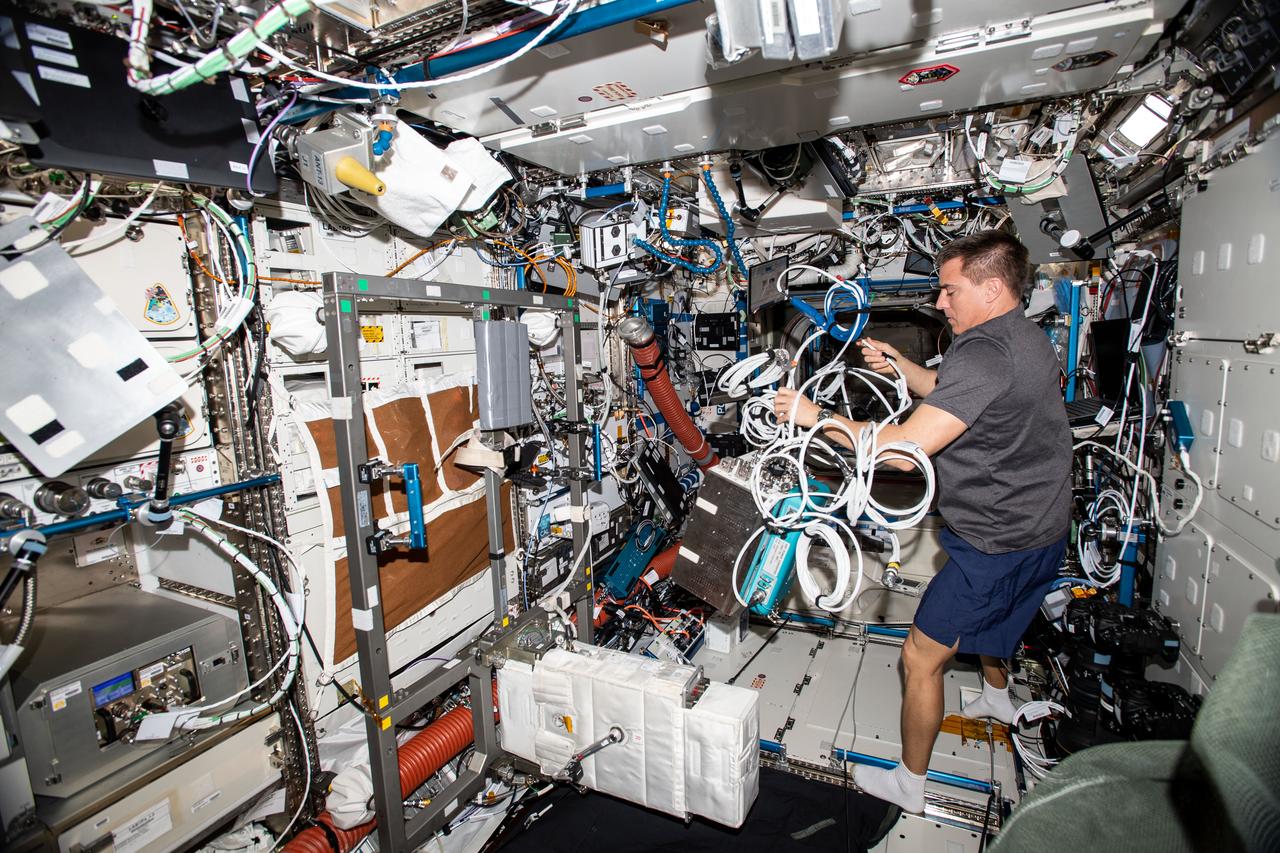
iss063e002916 (April 24, 2020) --- NASA astronaut and Expedition 63 Commander Chris Cassidy sets up hardware that measures pulmonary function while using the station's exercise bike, also known as the Cycle Ergometer with Vibration Isolation and Stabilization (CEVIS), located in the U.S. Destiny laboratory module.
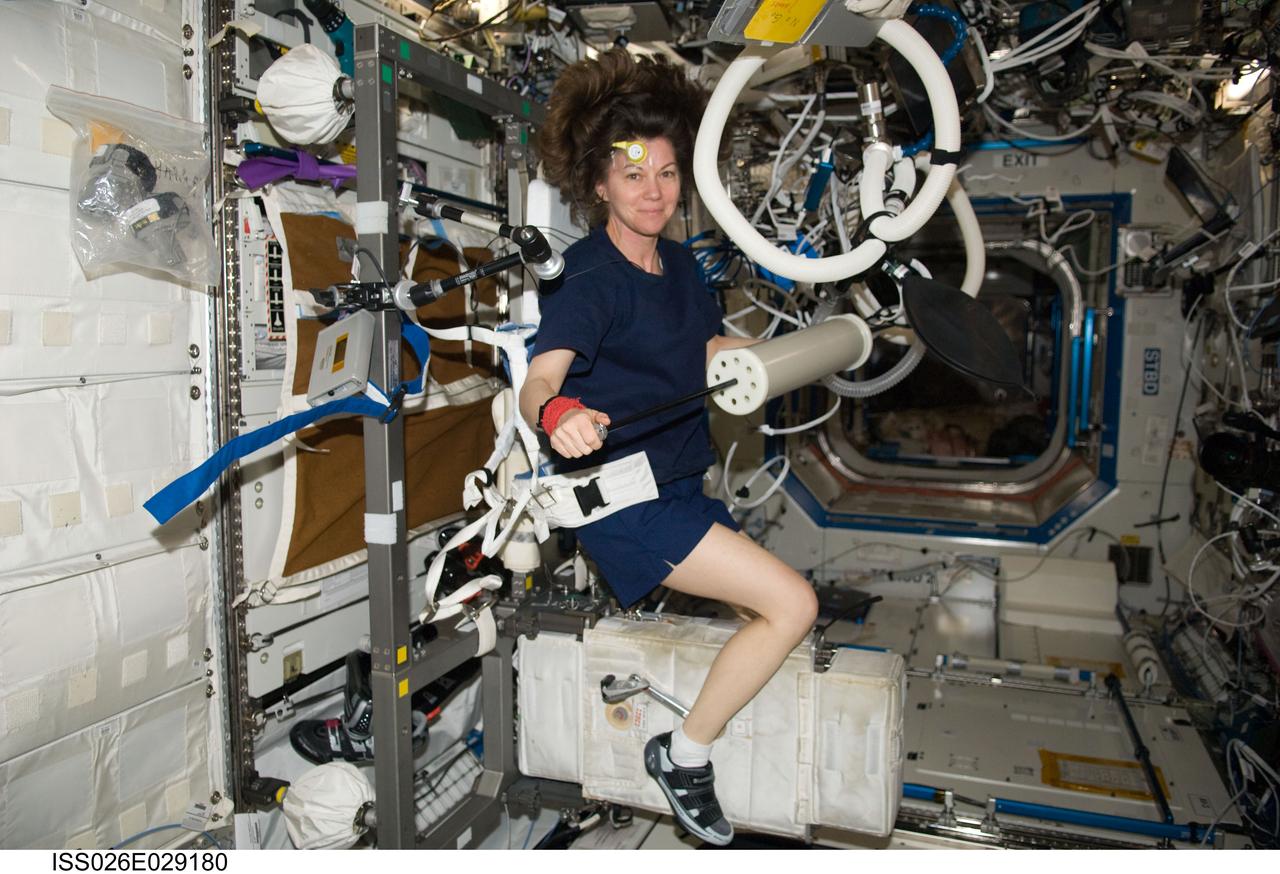
ISS026-E-029180 (24 Feb. 2011) --- NASA astronaut Catherine (Cady) Coleman, Expedition 26 flight engineer, performs VO2max portable Pulmonary Function System (PFS) software calibrations and instrument check while using the Cycle Ergometer with Vibration Isolation System (CEVIS) in the Destiny laboratory of the International Space Station.
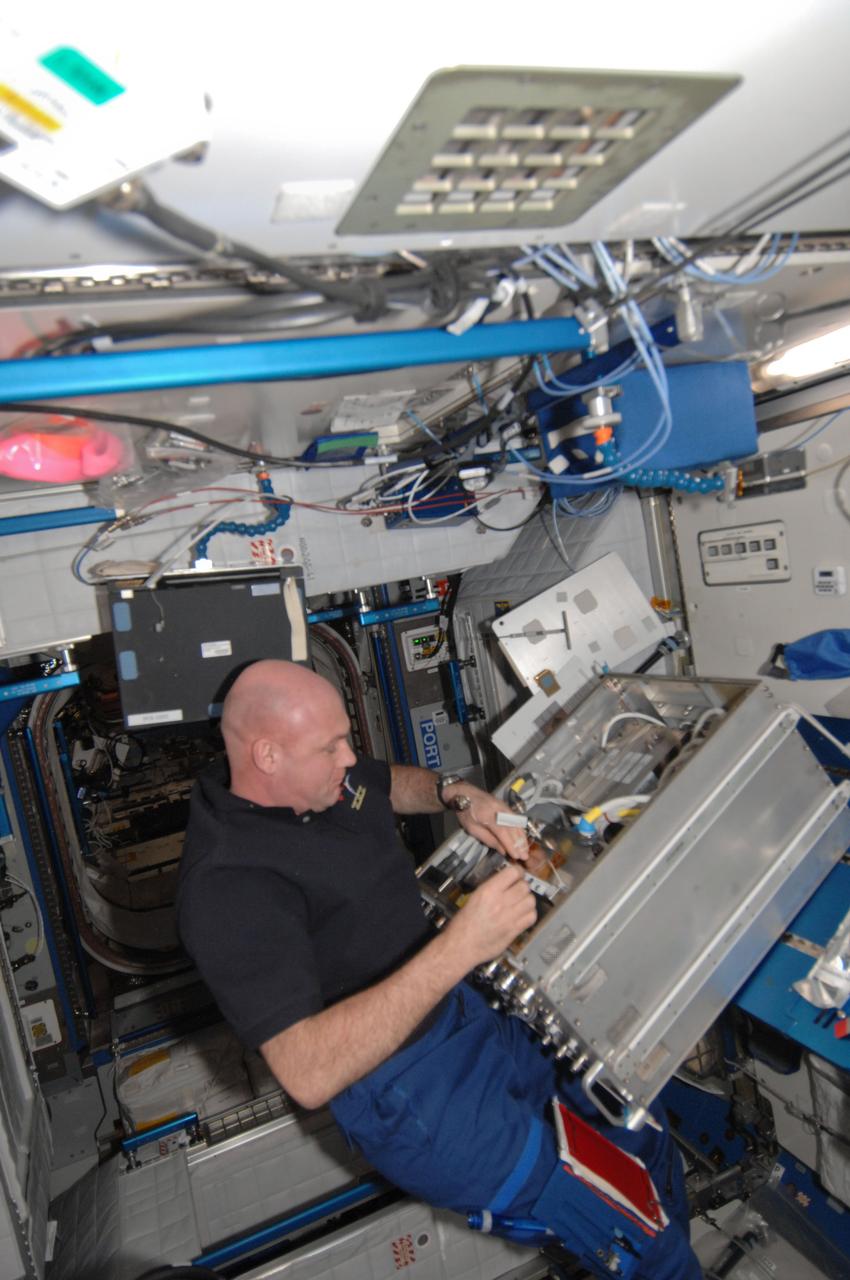
ISS030-E-117367 (31 Jan. 2012) --- European Space Agency astronaut Andre Kuipers, Expedition 30 flight engineer, removes and replaces the Photoacoustic Analyzer Module (PAM) Orbit Replaceable Unit (ORU) of the Pulmonary Function System (PFS) in the Harmony node of the International Space Station.
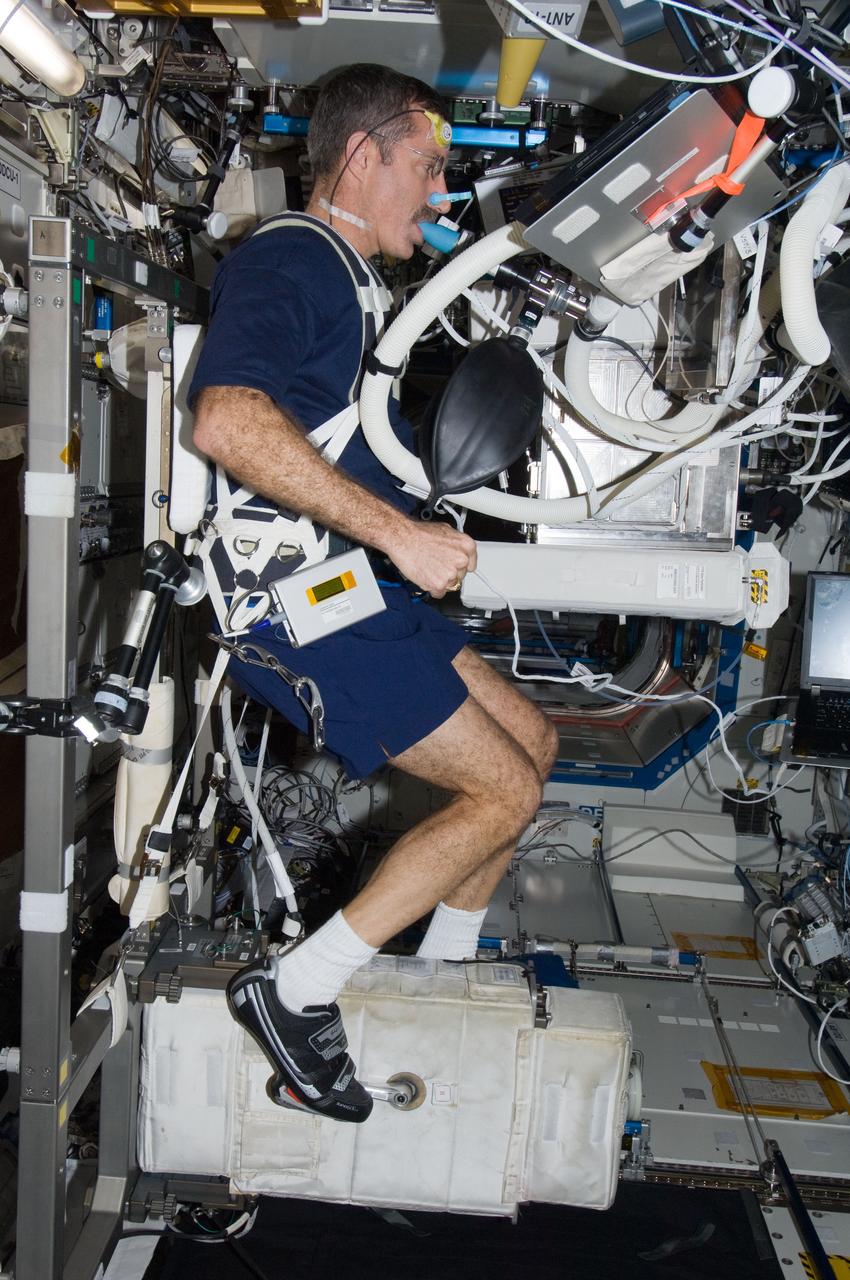
iss030e007538 (12/02/2011) --- NASA astronaut Dan Burbank using the Portable Pulmonary Function System, (PPFS) hardware while exercises on the Cycle Ergometer with Vibration Isolation and Stabilization System (CEVIS), the station’s exercise bike, inside the Destiny laboratory module.
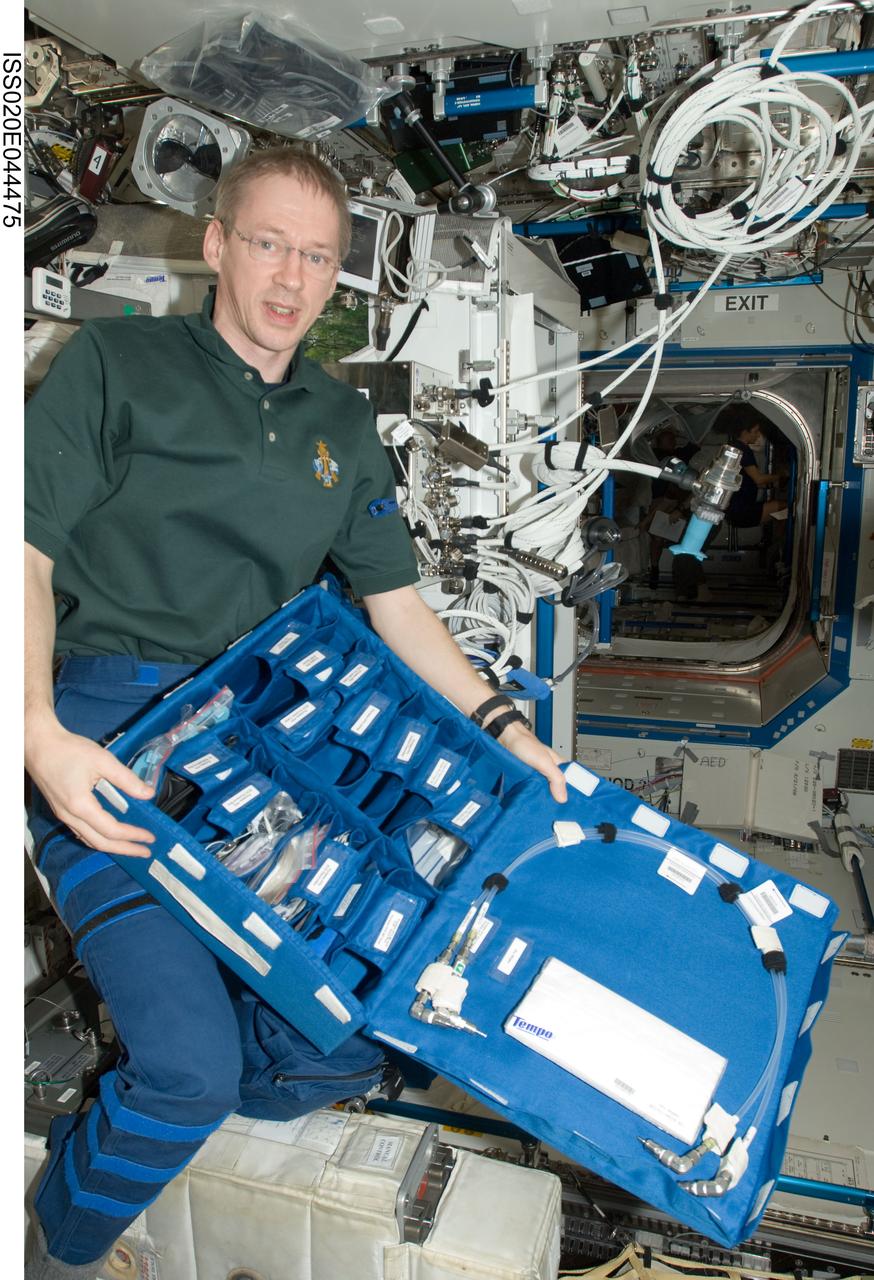
ISS020-E-044475 (3 Oct. 2009) --- European Space Agency astronaut Frank De Winne, Expedition 20 flight engineer and Expedition 21 commander, holds a Portable Pulmonary Function System (PPFS) stowage bag in the Destiny laboratory of the International Space Station.
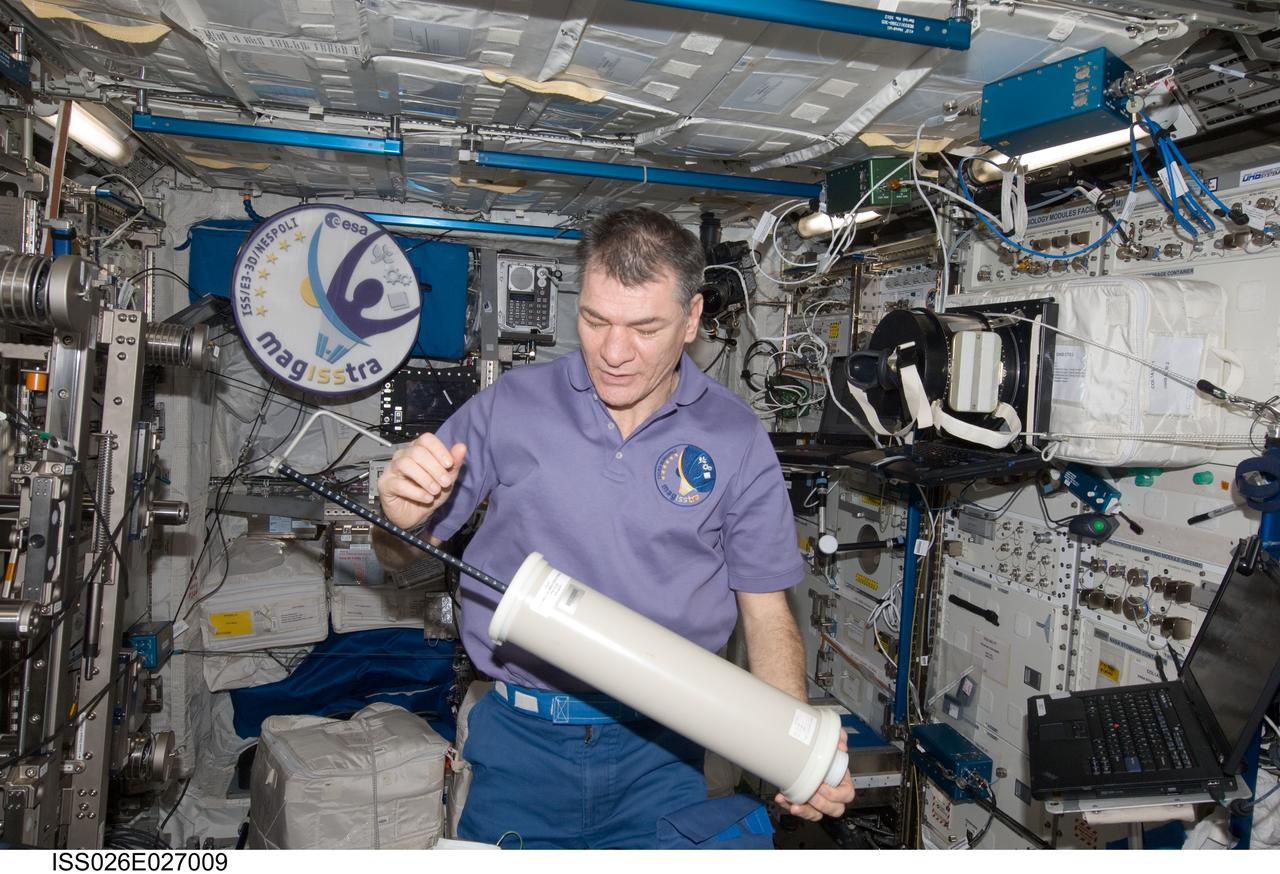
ISS026-E-027009 (14 Feb. 2011) --- European Space Agency (ESA) astronaut Paolo Nespoli, Expedition 26 flight engineer, performs periodic maintenance on the Pulmonary Function in Flight (PuFF) experiment by re-greasing the PuFF calibration syringe in the Columbus laboratory of the International Space Station.
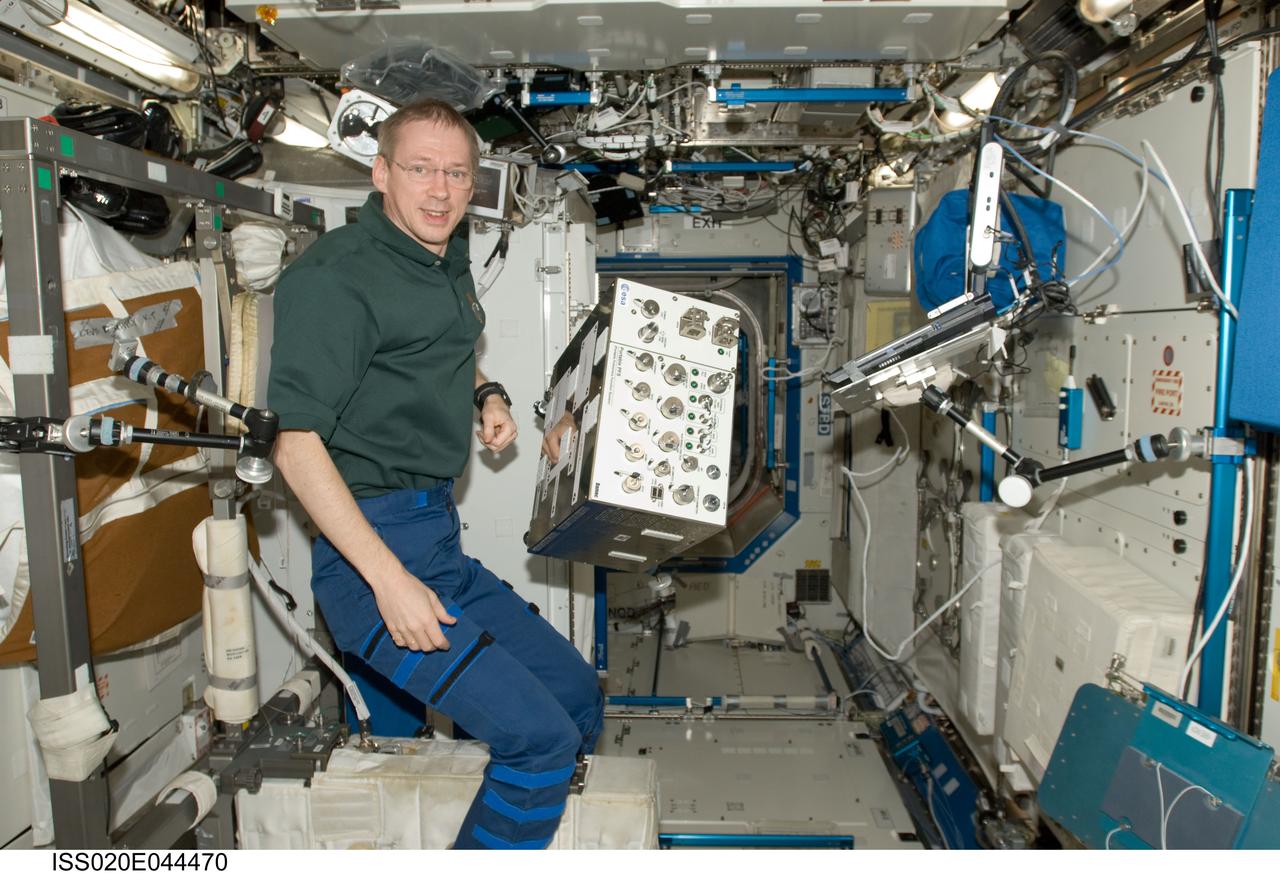
ISS020-E-044470 (3 Oct. 2009) --- European Space Agency astronaut Frank De Winne, Expedition 20 flight engineer and Expedition 21 commander, is pictured near Portable Pulmonary Function System (PPFS) hardware floating freely in the Destiny laboratory of the International Space Station.
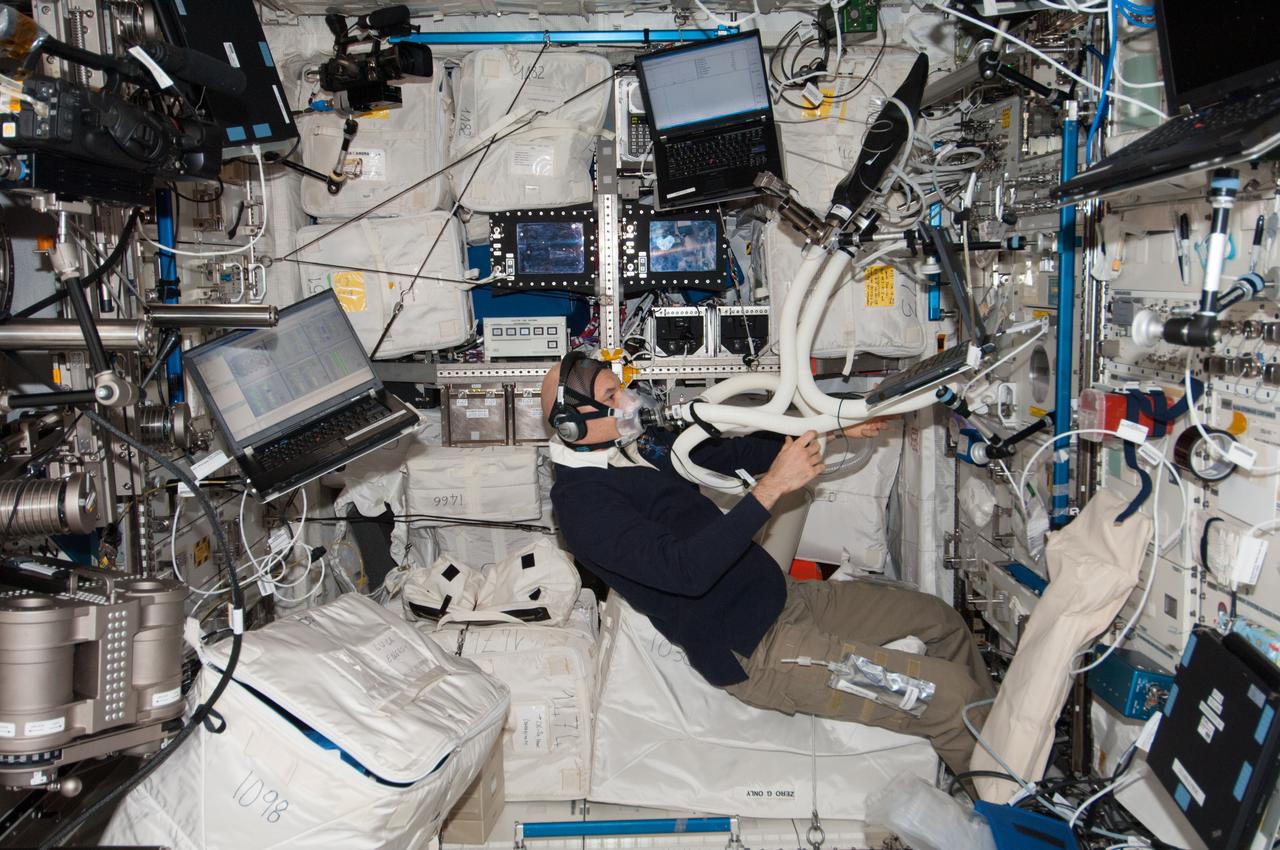
ISS037-E-004950 (2 Oct. 2013) --- European Space Agency astronaut Luca Parmitano, Expedition 37 flight engineer, performs an oxygen uptake measurement session in the Columbus laboratory of the International Space Station. He is wearing a Pulmonary Function System (PFS) face mask during the session.
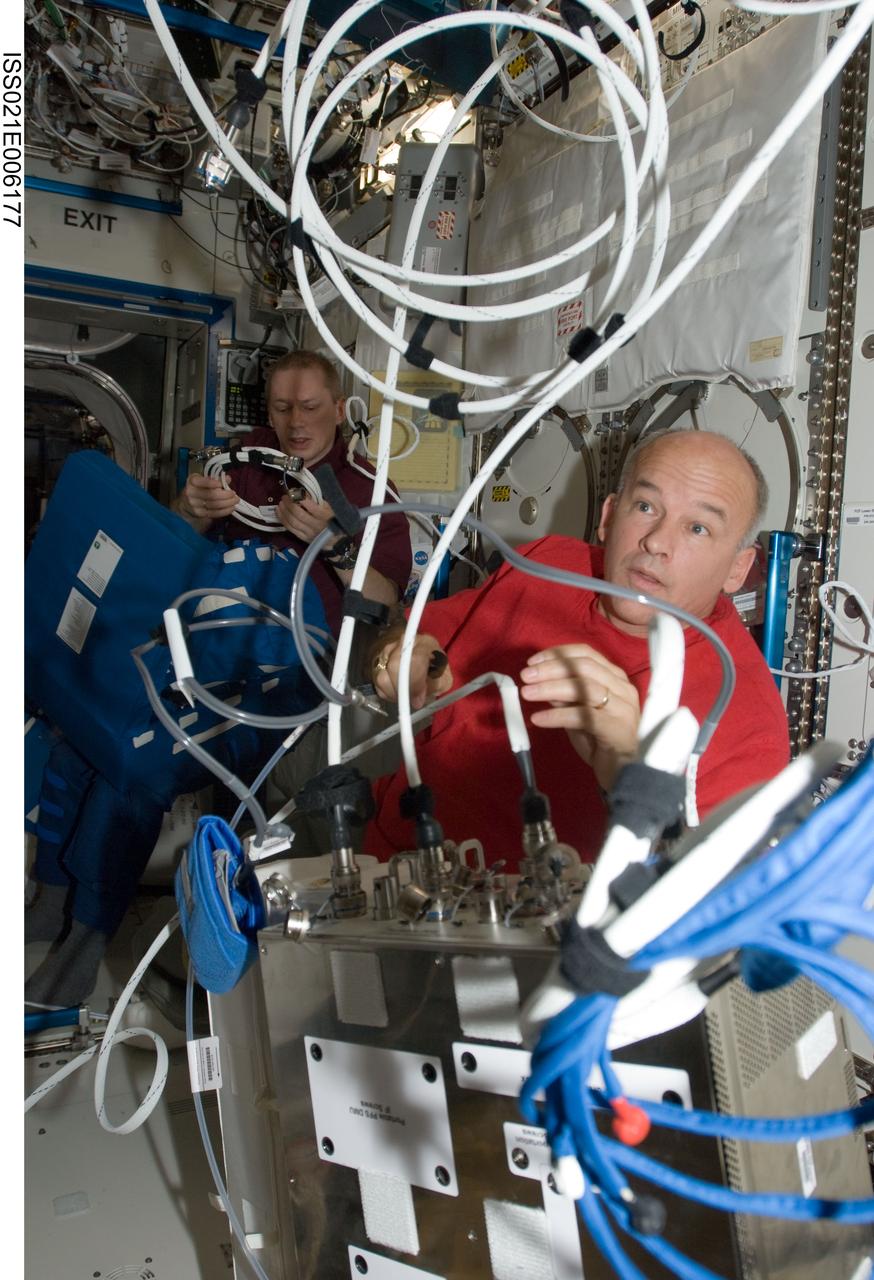
ISS021-E-006177 (14 Oct. 2009) --- NASA astronaut Jeffrey Williams, Expedition 21 flight engineer, works with the Portable Pulmonary Function System (PPFS) in the Destiny laboratory of the International Space Station. European Space Agency astronaut Frank De Winne, commander, works in the background.
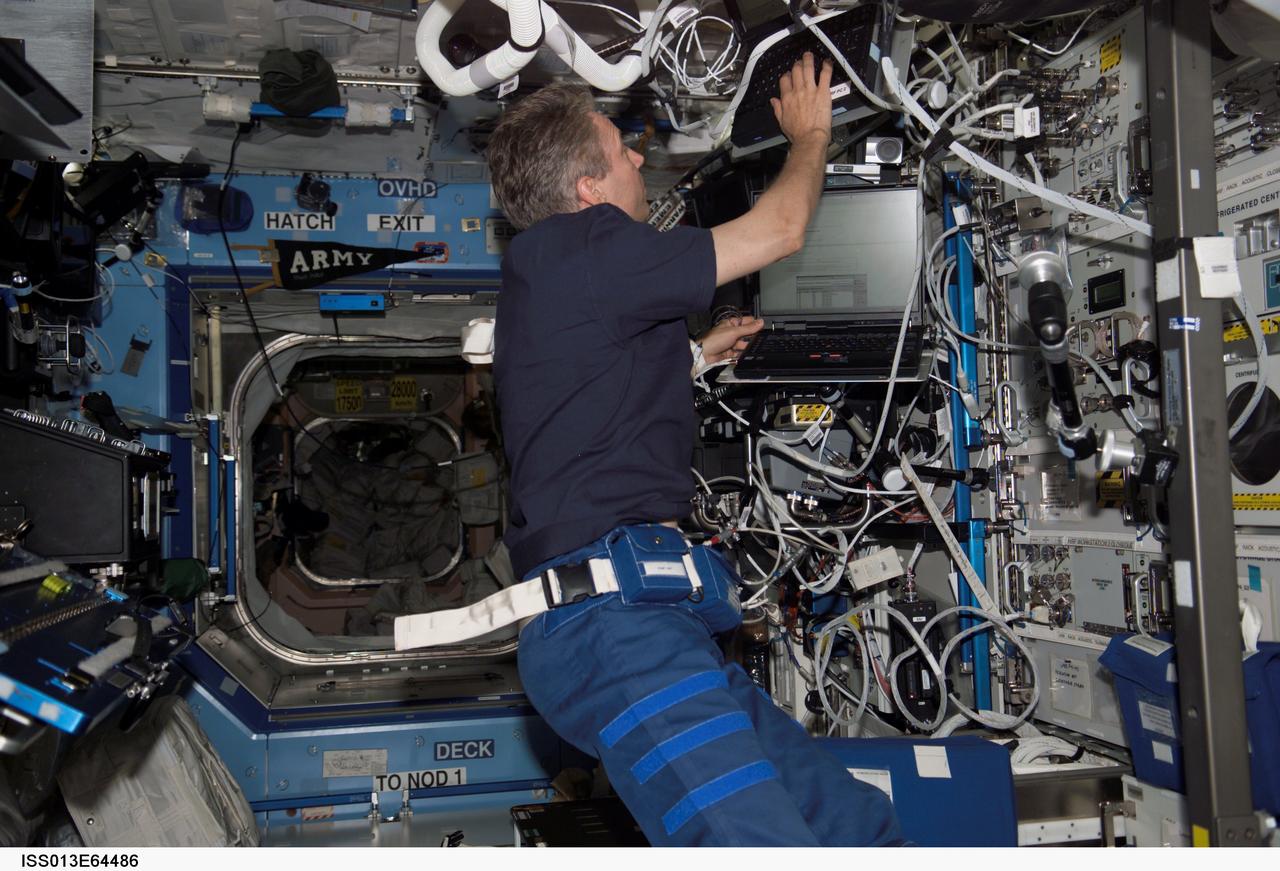
ISS013-E-64486 (25 July 2006) --- European Space Agency (ESA) astronaut Thomas Reiter, Expedition 13 flight engineer, prepares the Human Research Facility (HRF-2) rack for the scheduled upgrade of the Pulmonary Function System (PFS) experiment in the Destiny laboratory of the International Space Station.
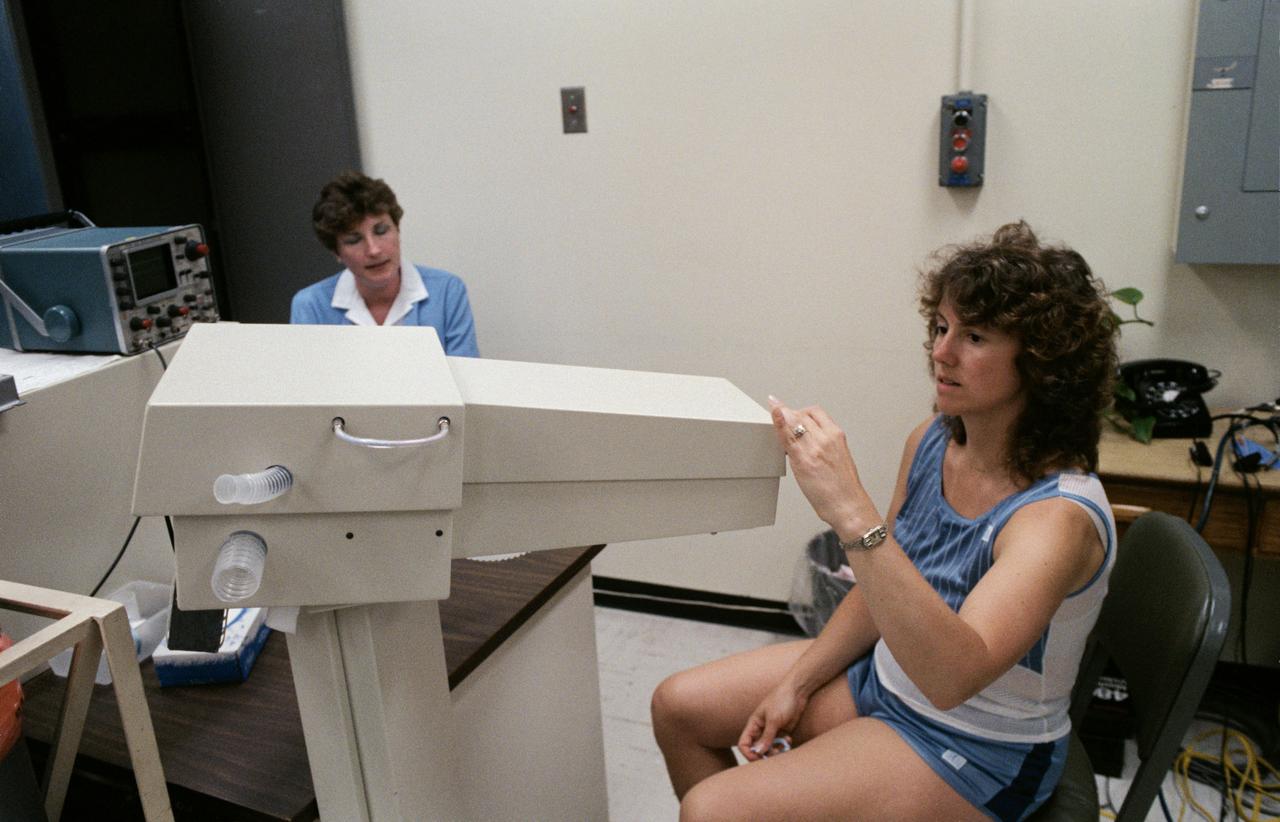
S85-36966 (10 July 1985) --- Teacher Sharon Christa McAuliffe prepares to test her lung capacity during medical examinations at the Johnson Space Center (JSC) clinic. Photo credit: NASA
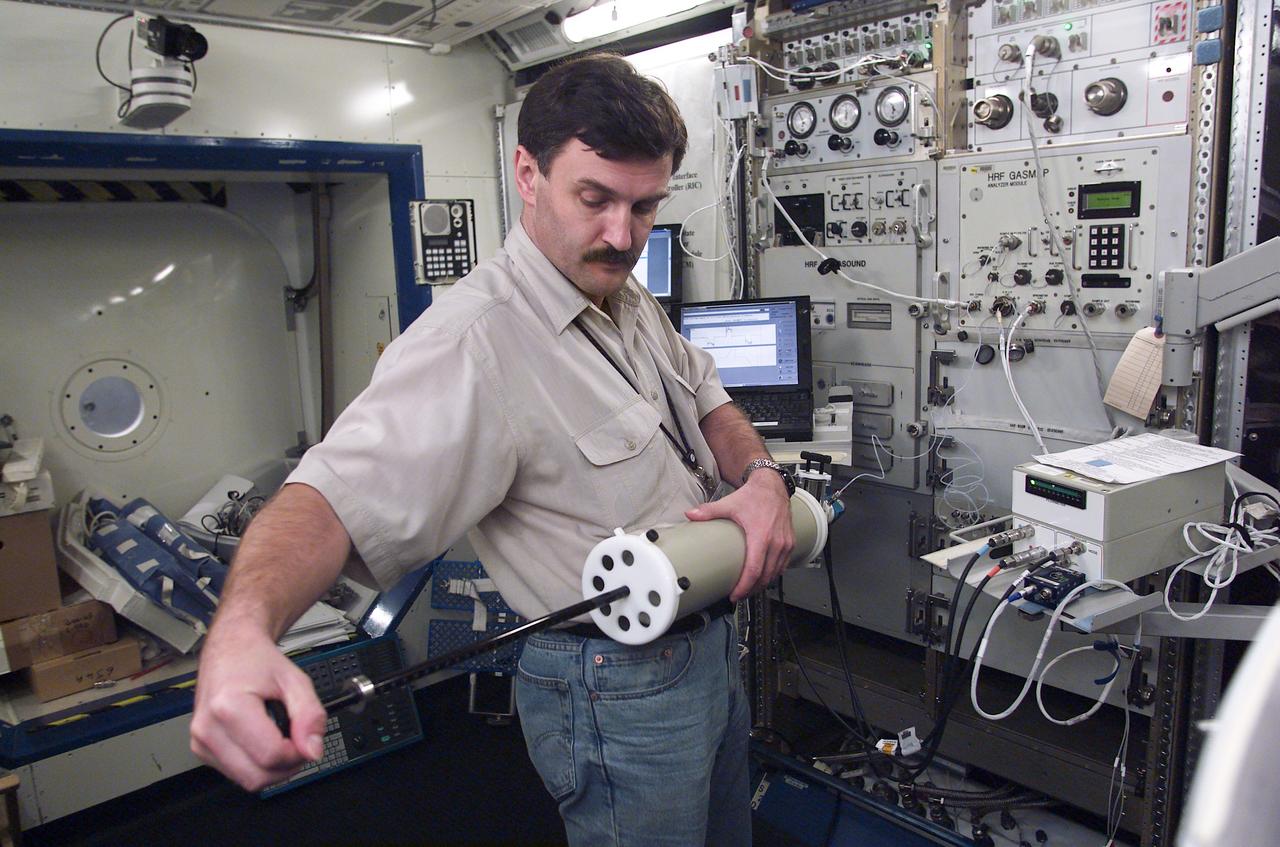
JSC2002-E-04266 (25 January 2002) --- Cosmonaut Alexander Kaleri, Expedition Five back-up crewmember representing Rosaviakosmos, participates in Pulmonary Function in Flight (PuFF) nominal operations training in the International Space Station (ISS) Destiny laboratory mockup/trainer at the Johnson Space Center’s Space Vehicle Mockup Facility.
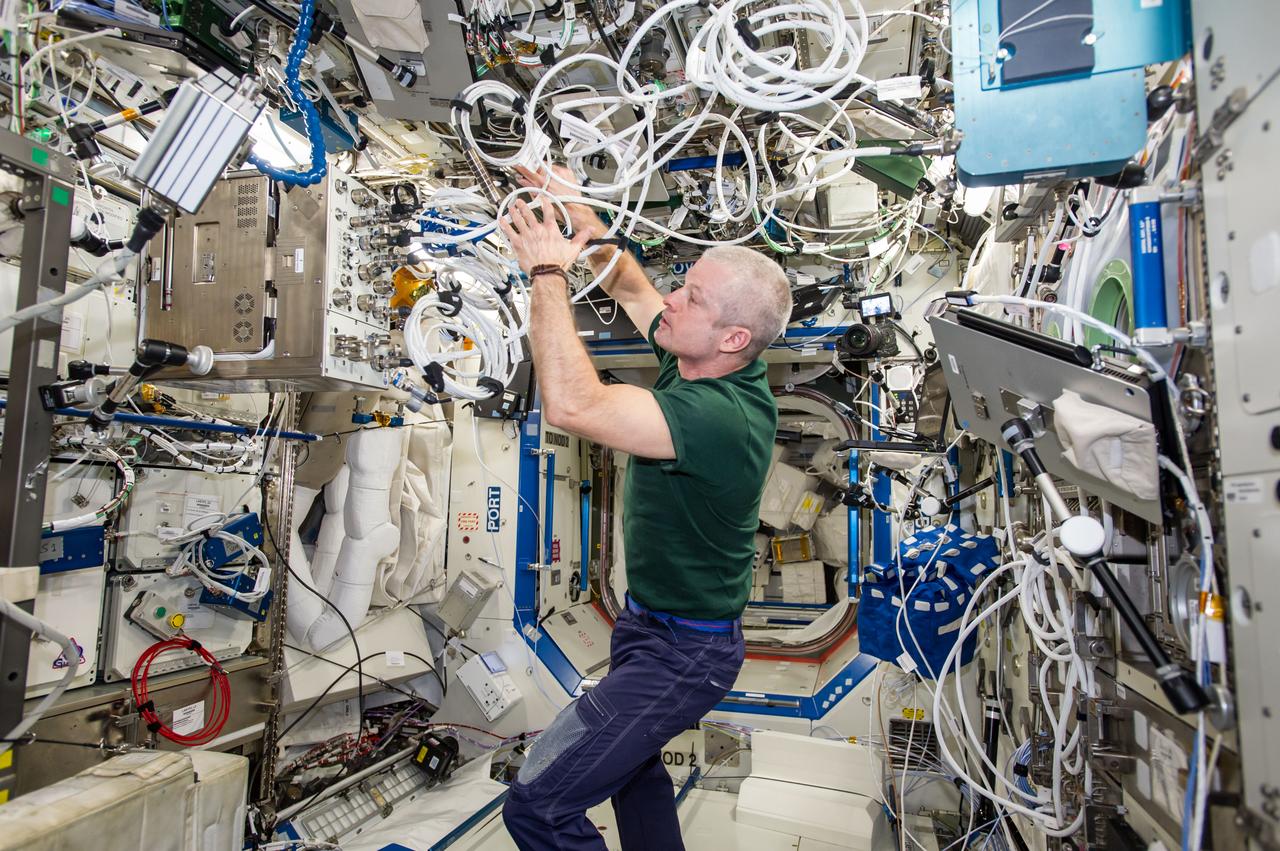
ISS040-E-123262 (2 Sept. 2014) --- NASA astronaut Steve Swanson, Expedition 40 commander, sets up the Portable Pulmonary Function System hardware for Sprint VO2max sessions in the Destiny laboratory of the International Space Station. The Sprint experiment measures the effectiveness of high-intensity, low-volume exercise training in minimizing the loss of muscle mass and bone density that occurs during spaceflight.
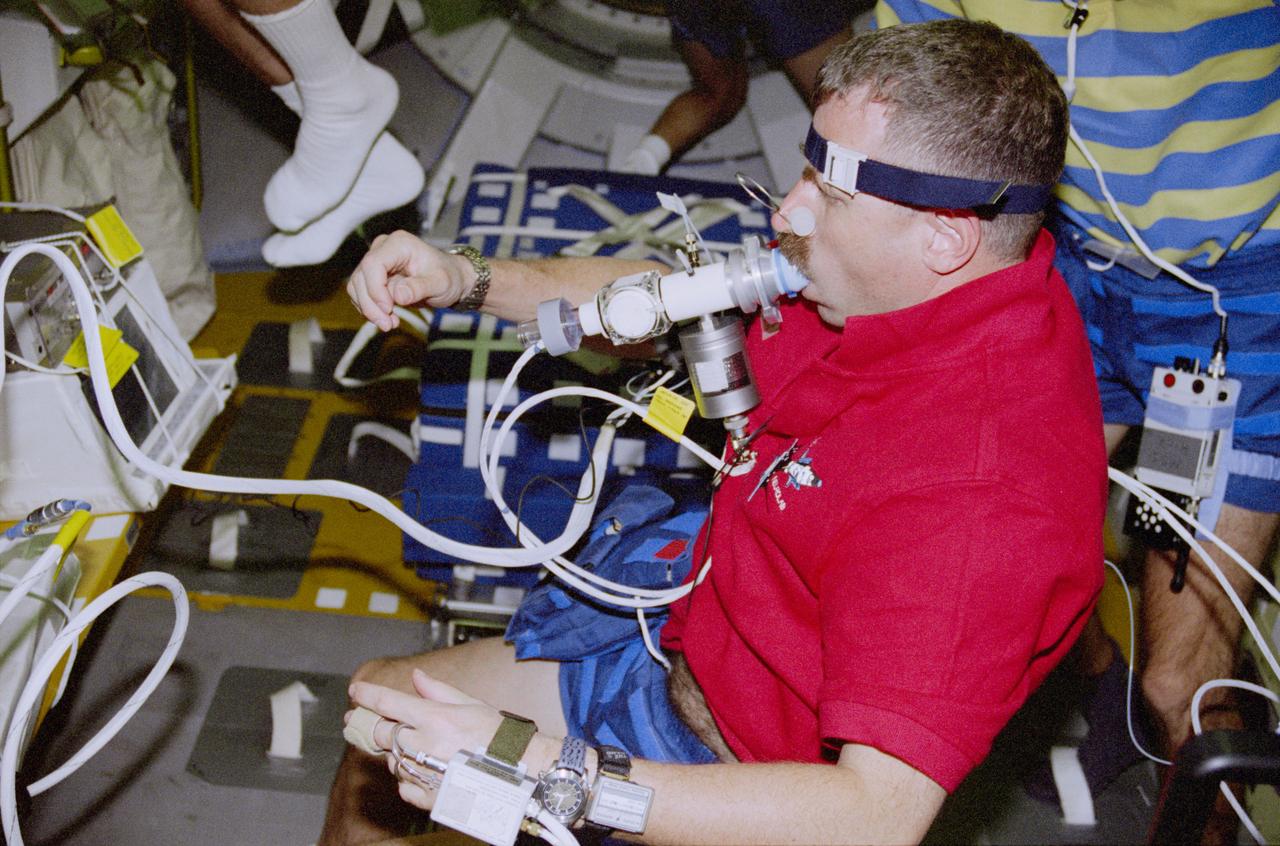
STS090-350-002 (17 April - 3 May 1998) --- Astronaut Dafydd R. (Dave) Williams, mission specialist representing the Canadian Space Agency (CSA), is pictured during a Neurolab pulmonary function test. Williams joined four NASA astronauts and two payload specialists for 16-days aboard the Space Shuttle Columbia in support of the Neurolab mission.
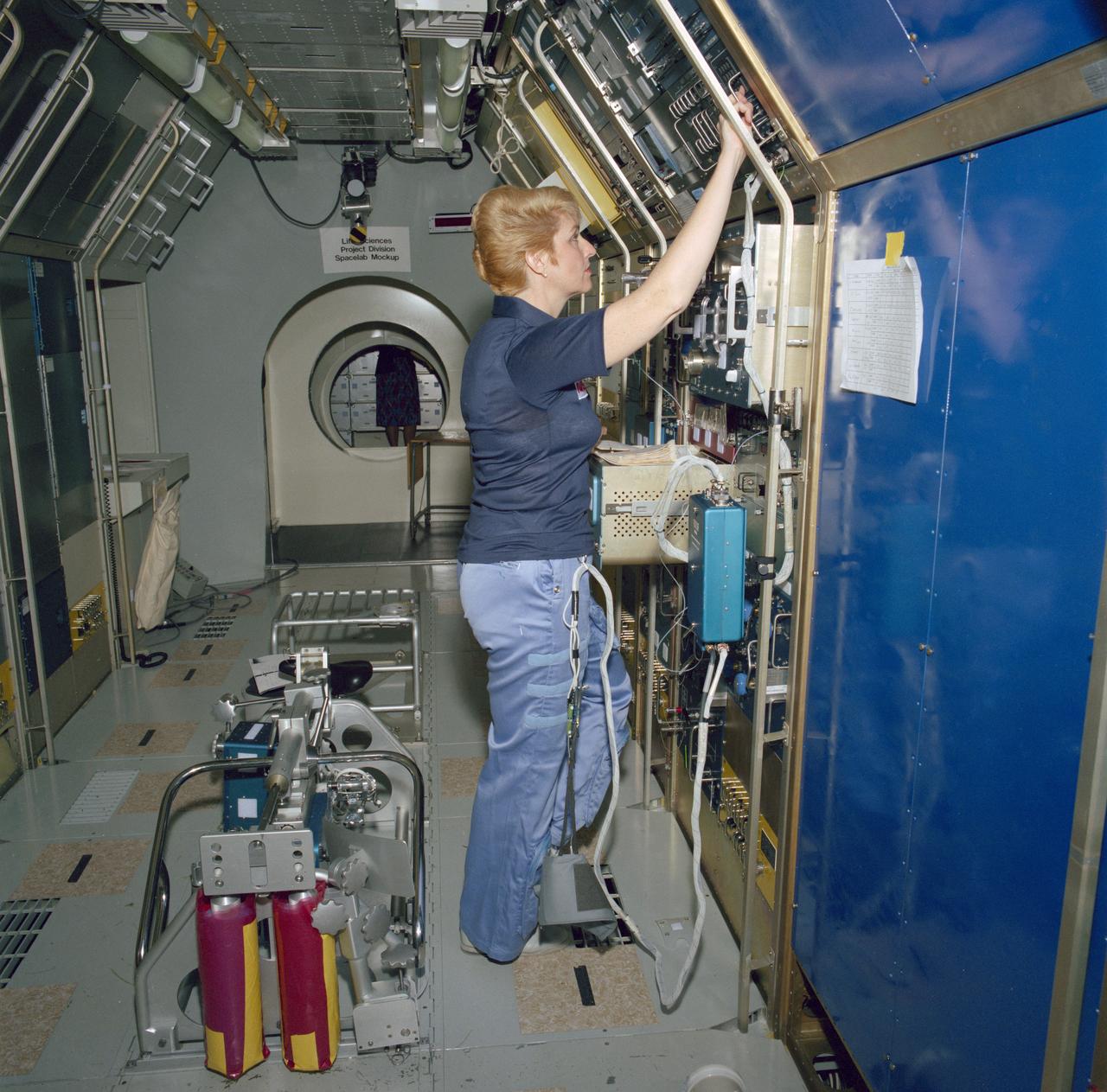
STS-40 Payload Specialist Millie Hughes-Fulford conducts Spacelab Life Sciences 1 (SLS-1) Experiment No. 198, Pulmonary Function During Weightlessness, in JSC's Life Sciences Project Division (LSPD) SLS mockup located in the Bioengineering and Test Support Facility Bldg 36. Hughes-Fulford sets switches on Rack 8. Behind her in the center aisle are the stowed bicycle ergometer (foreground) and the body restraint system.
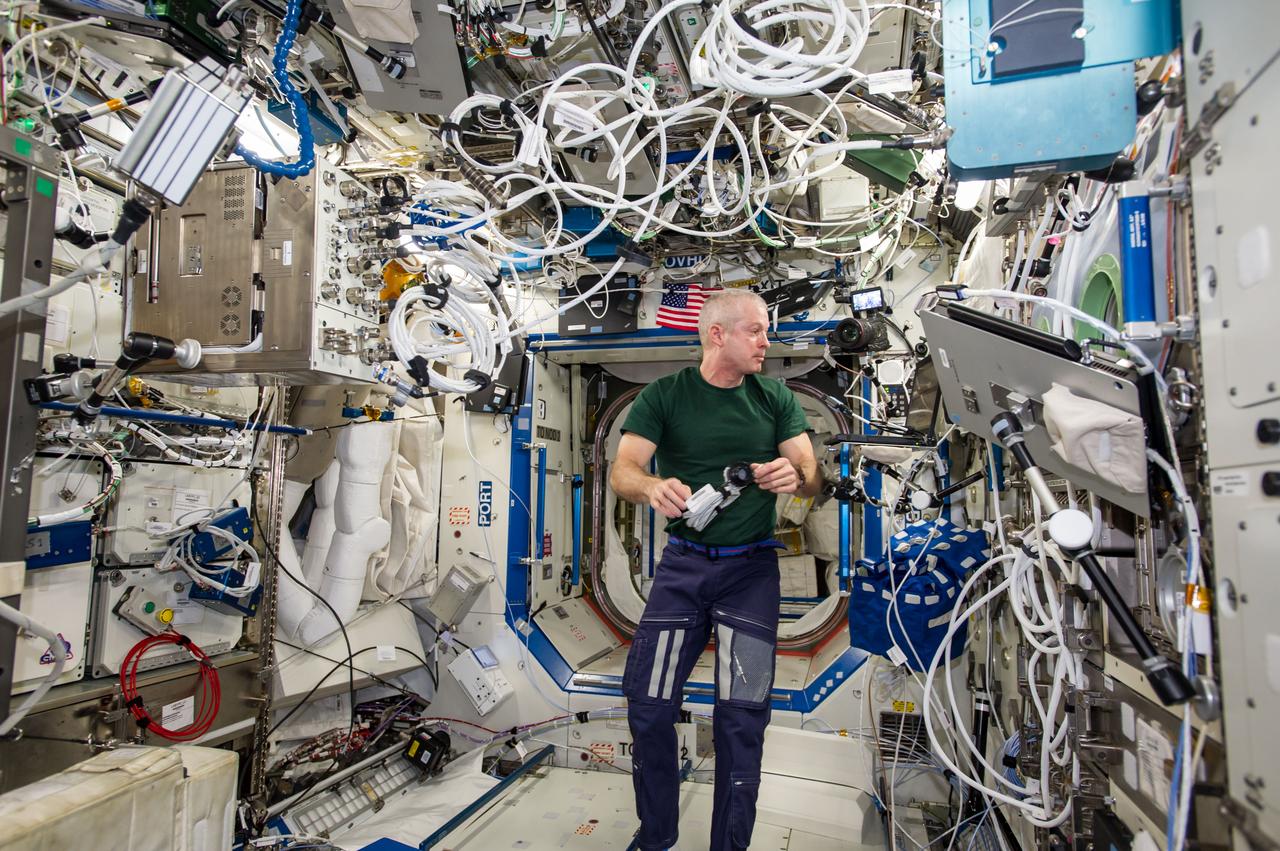
ISS040-E-123259 (2 Sept. 2014) --- NASA astronaut Steve Swanson, Expedition 40 commander, prepares to set up the Portable Pulmonary Function System hardware for Sprint VO2max sessions in the Destiny laboratory of the International Space Station. The Sprint experiment measures the effectiveness of high-intensity, low-volume exercise training in minimizing the loss of muscle mass and bone density that occurs during spaceflight.
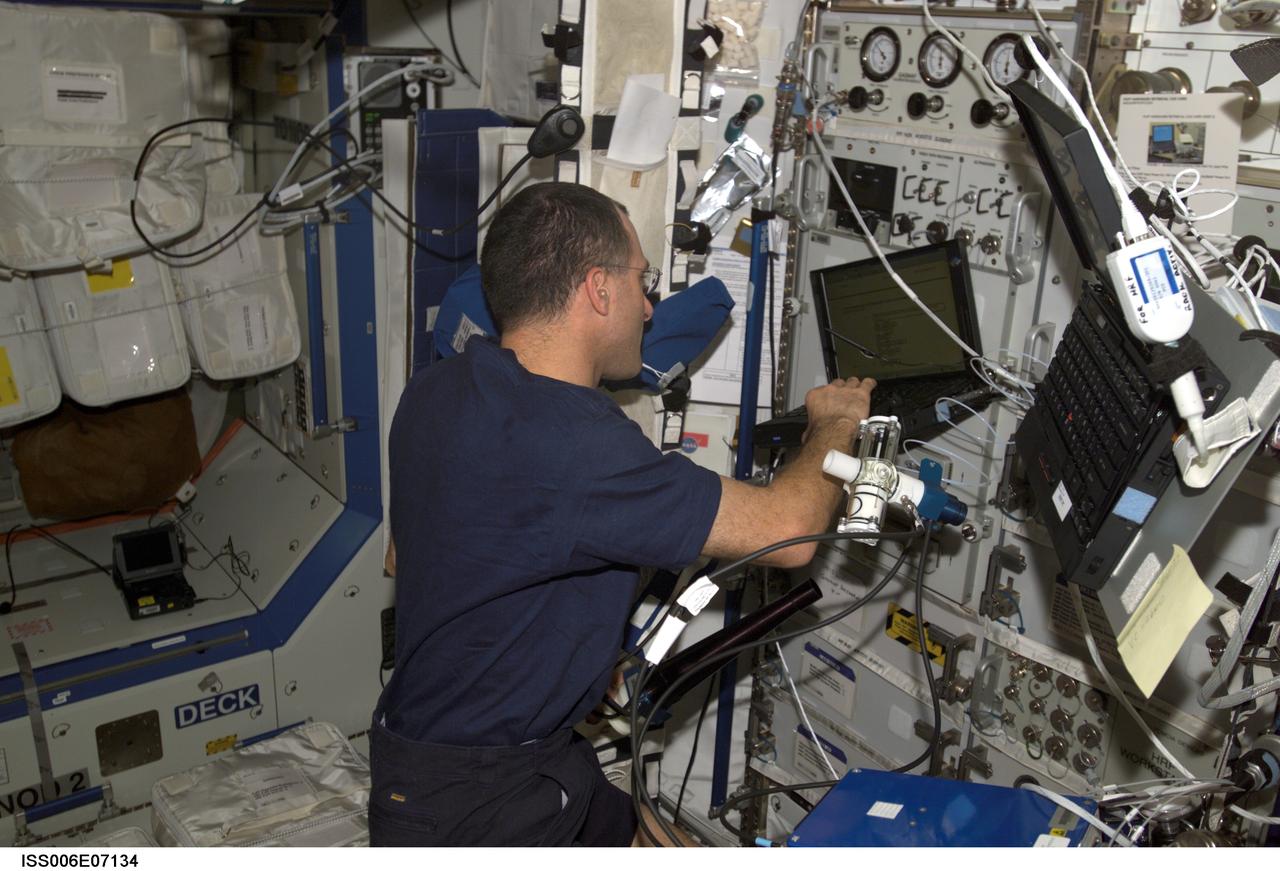
ISS006-E-07134 (9 December 2002) --- Astronaut Donald R. Pettit, Expedition Six NASA ISS science officer, works to set up Pulmonary Function in Flight (PuFF) hardware in preparation for a Human Research Facility (HRF) experiment in the Destiny laboratory on the International Space Station (ISS). Expedition Six is the fourth and final expedition crew to perform the HRF/PuFF Experiment on the ISS.
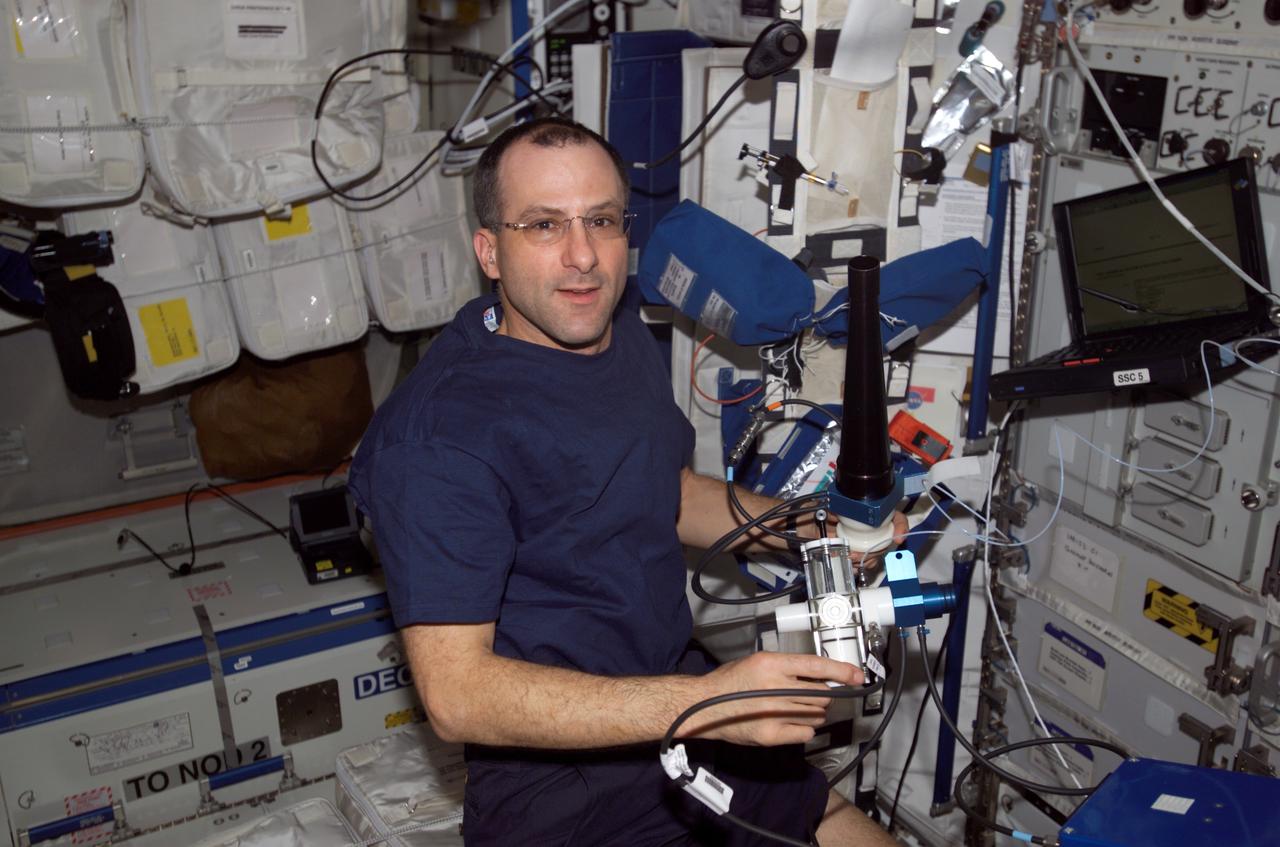
ISS006-E-07133 (9 December 2002) --- Astronaut Donald R. Pettit, Expedition 6 NASA ISS science officer, works to set up Pulmonary Function in Flight (PuFF) hardware in preparation for a Human Research Facility (HRF) experiment in the Destiny laboratory on the International Space Station (ISS). Expedition 6 is the fourth and final expedition crew to perform the HRF/PuFF Experiment on the ISS.
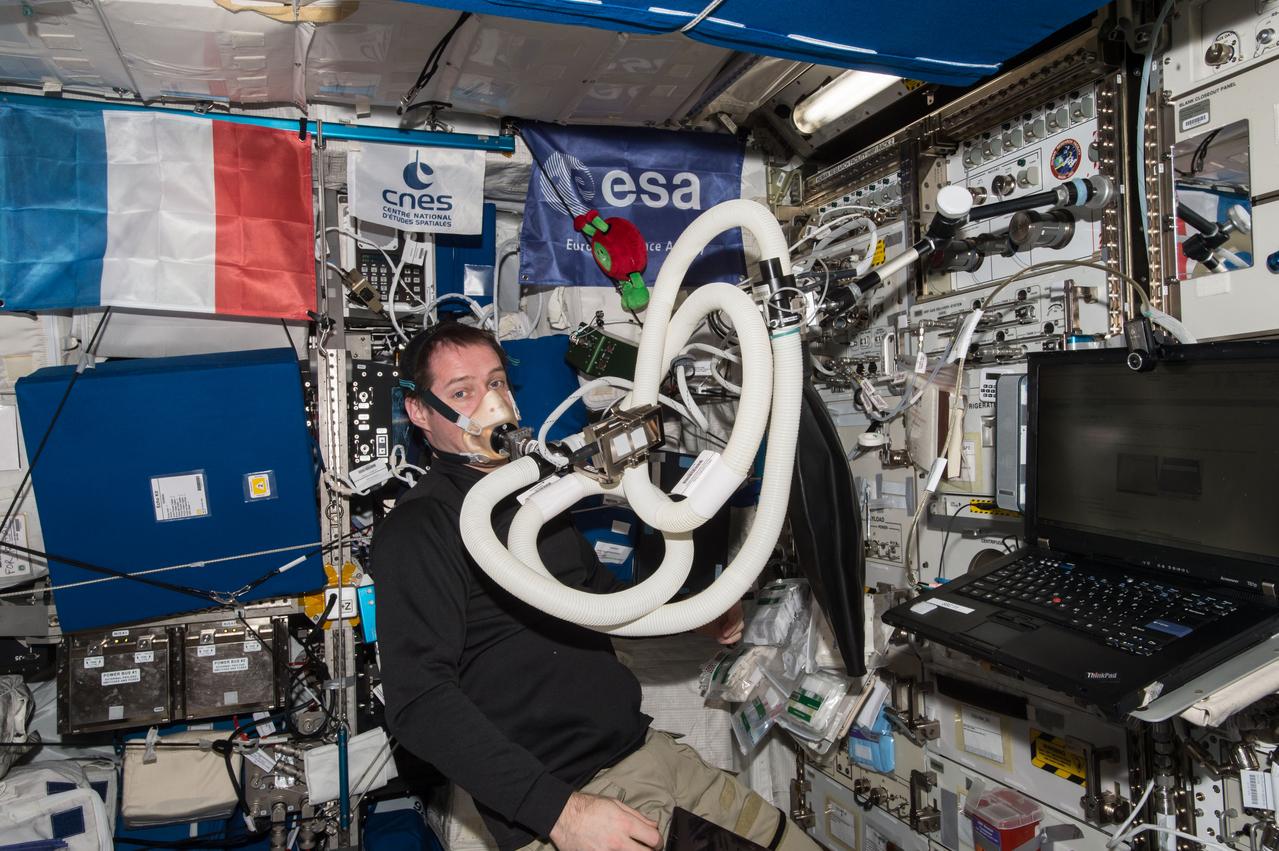
iss050e055526 (3/8/2017) --- European Space Agency (ESA) astronaut Thomas Pesquet utilizing the Pulmonary Function System (PFS) to perform a series of Oxygen Uptake Measurements (OUMs) after prescribed meals and scheduled fluid collections, in the Columbus Module. The Energy investigation measures an Astronaut's Energy Requirements for Long-Term Space Flight, a crucial factor needed for sending the correct amount of the right types of food with space crews.
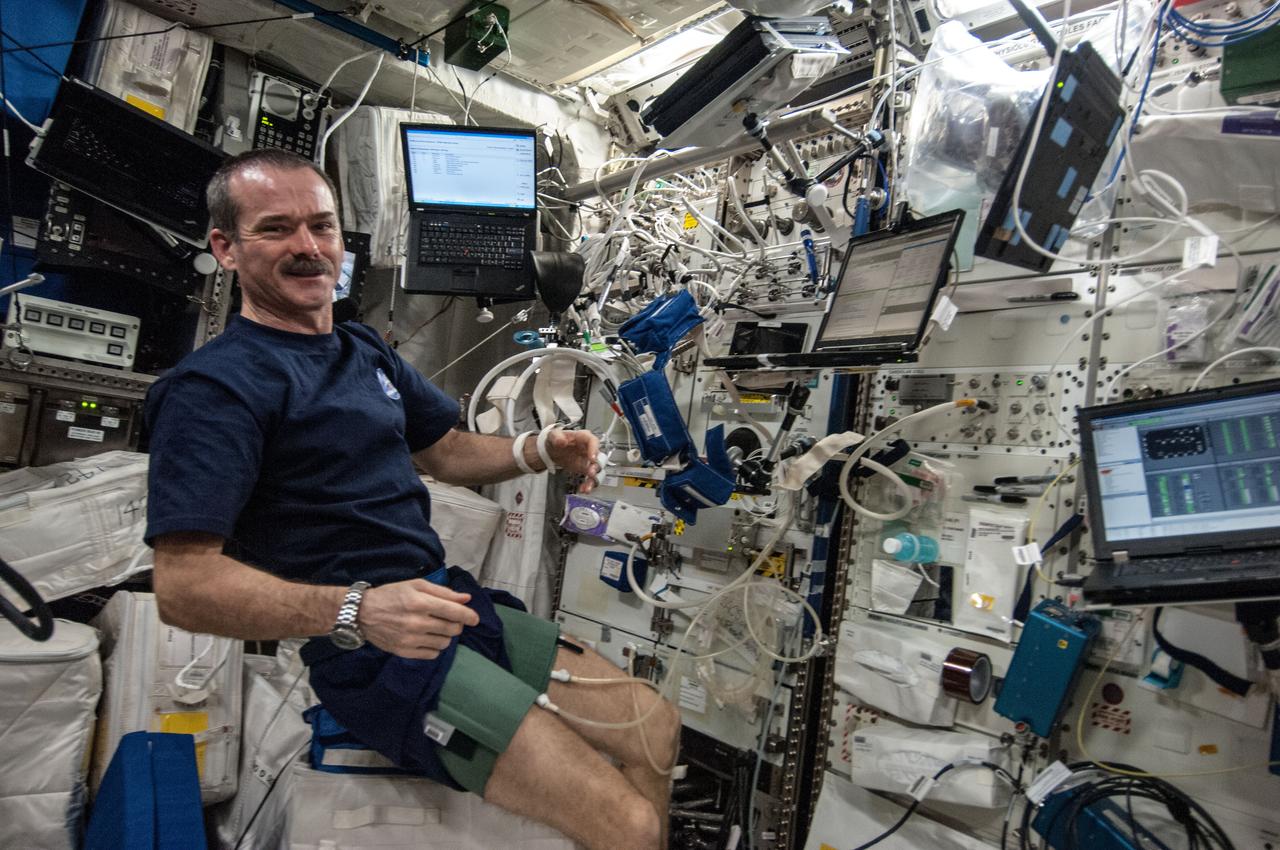
ISS035-E-022357 (17 April 2013) --- In support of the Blood Pressure Regulation Experiment (BP Reg), Expedition 35 Commander Chris Hadfield of the Canadian Space Agency is pictured after having set up the Human Research Facility (HRF) PFS (Pulmonary Function System) and the European Physiology Module (EPM) Cardiolab (CDL) Leg/Arm Cuff System (LACS) and conducting the first ever session of this experiment. The test, which will be repeated using other crew members as well, will help to identify the astronauts who could benefit from countermeasures before returning to Earth. Thus, this method has great potential for astronaut health monitoring during future long-term space flights and it also has important implications for testing of individuals on Earth, especially the elderly, who are at risk for fainting. The research will also allow demonstrating the feasibility of obtaining a set of indicators of overall cardiovascular regulation from the non-invasive measurement of continuous blood pressure.
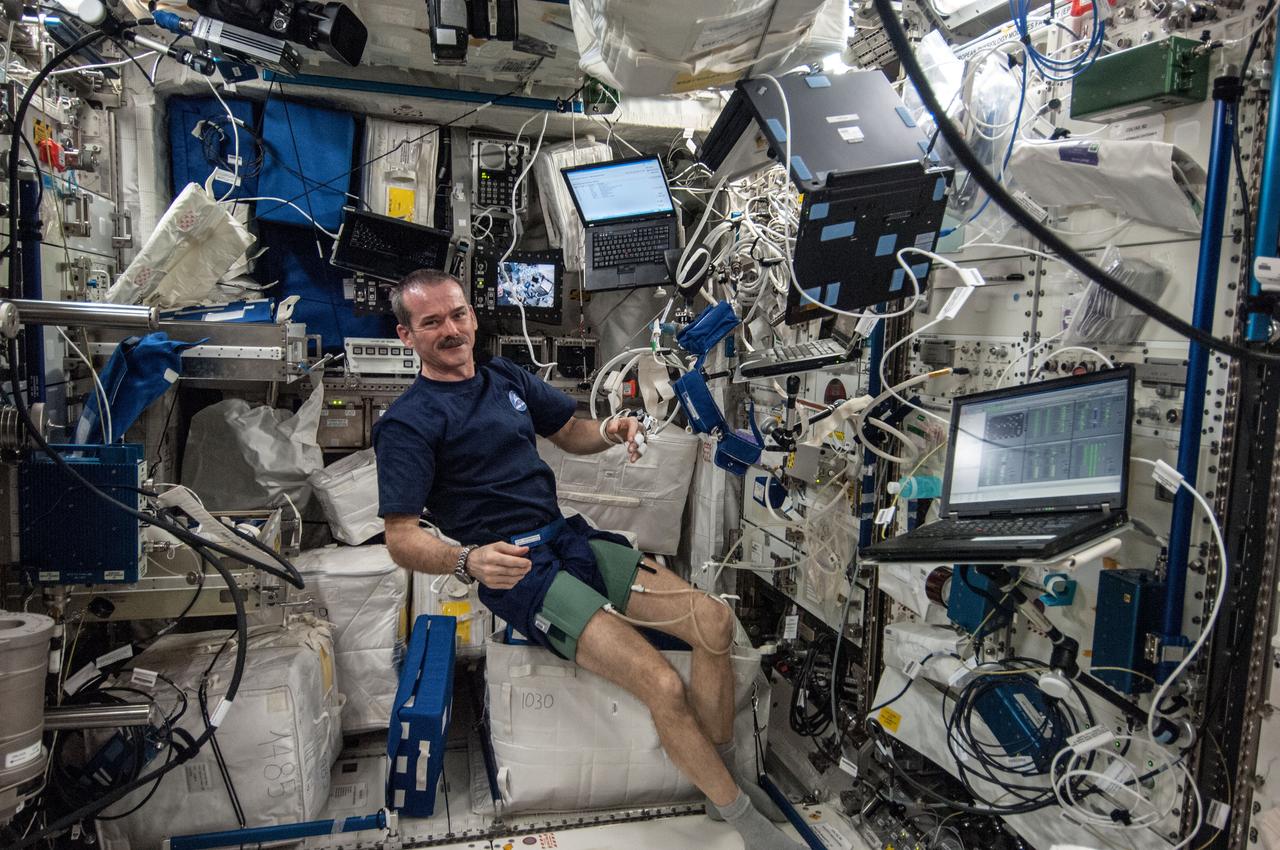
ISS035-E-022356 (17 April 2013) --- In support of the Blood Pressure Regulation Experiment (BP Reg), Expedition 35 Commander Chris Hadfield of the Canadian Space Agency is pictured after having set up the Human Research Facility (HRF) PFS (Pulmonary Function System) and the European Physiology Module (EPM) Cardiolab (CDL) Leg/Arm Cuff System (LACS) and conducting the first ever session of this experiment. The test, which will be repeated using other crew members as well, will help to identify the astronauts who could benefit from countermeasures before returning to Earth. Thus, this method has great potential for astronaut health monitoring during future long-term space flights and it also has important implications for testing of individuals on Earth, especially the elderly, who are at risk for fainting. The research will also allow demonstrating the feasibility of obtaining a set of indicators of overall cardiovascular regulation from the non-invasive measurement of continuous blood pressure.
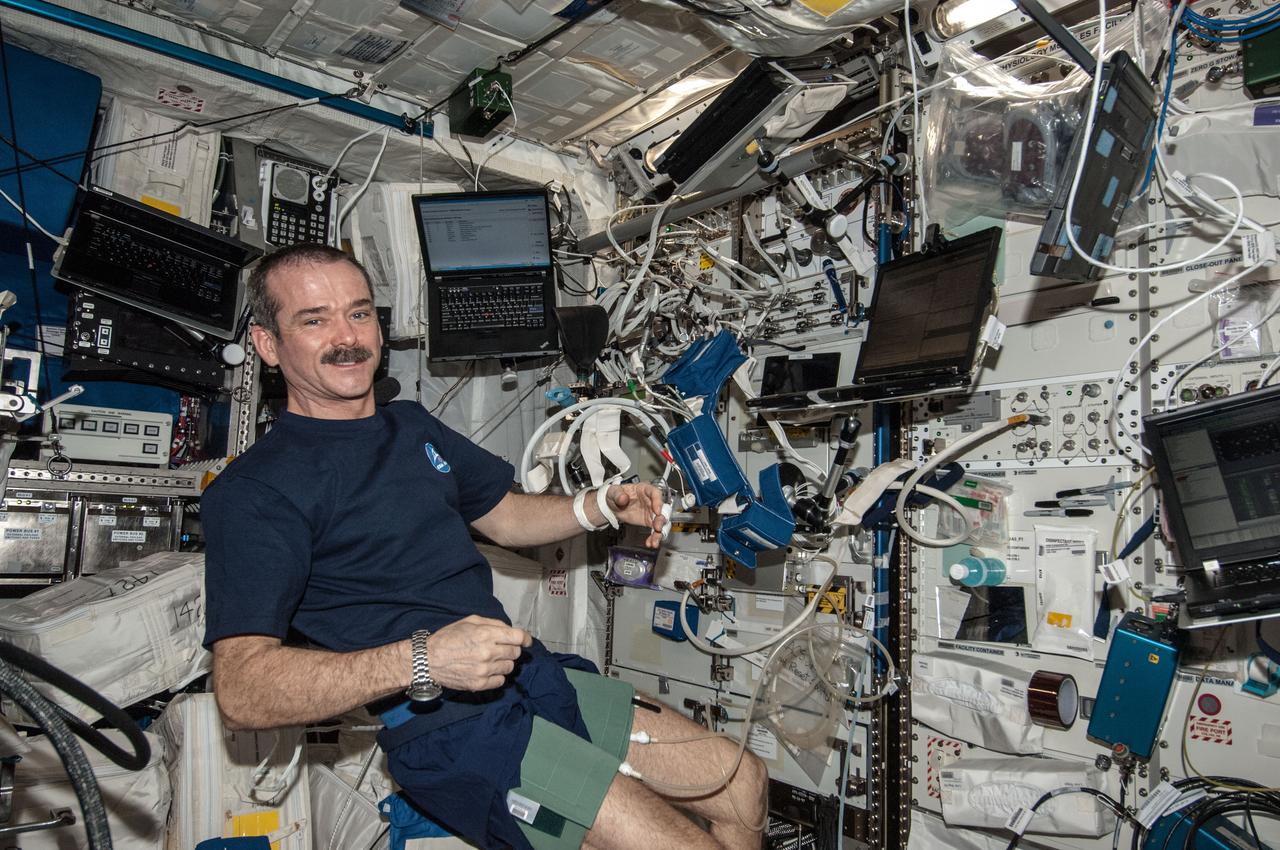
ISS035-E-022360 (17 April 2013) --- In support of the Blood Pressure Regulation Experiment (BP Reg), Expedition 35 Commander Chris Hadfield of the Canadian Space Agency is pictured after having set up the Human Research Facility (HRF) PFS (Pulmonary Function System) and the European Physiology Module (EPM) Cardiolab (CDL) Leg/Arm Cuff System (LACS) and conducting the first ever session of this experiment. The test, which will be repeated using other crew members as well, will help to identify the astronauts who could benefit from countermeasures before returning to Earth. Thus, this method has great potential for astronaut health monitoring during future long-term space flights and it also has important implications for testing of individuals on Earth, especially the elderly, who are at risk for fainting. The research will also allow demonstrating the feasibility of obtaining a set of indicators of overall cardiovascular regulation from the non-invasive measurement of continuous blood pressure.
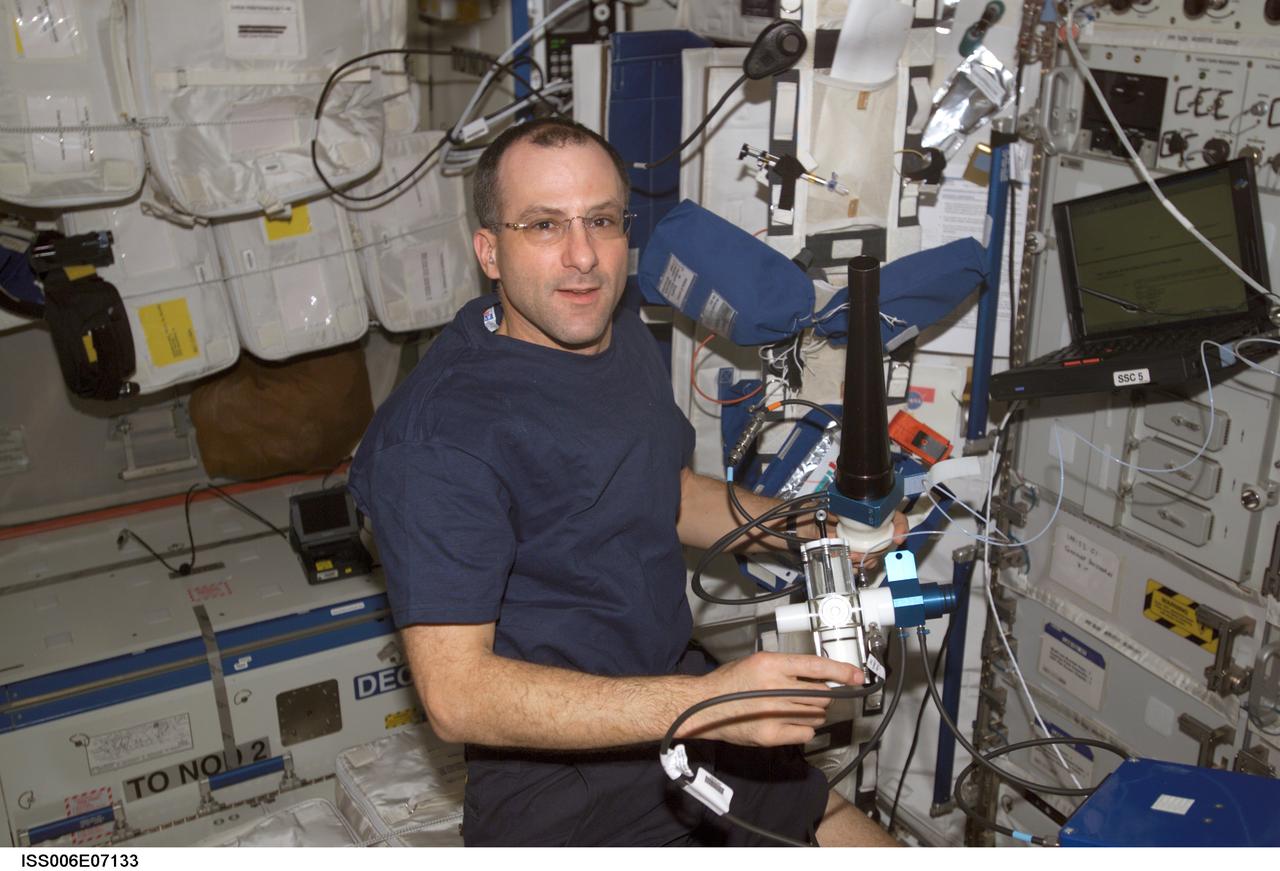
In this International Space Station (ISS) onboard photo, Expedition Six Science Officer Donald R. Pettit works to set up the Pulmonary Function in Flight (PuFF) experiment hardware in the Destiny Laboratory. Expedition Six is the fourth and final crew to perform the PuFF experiment. The PuFF experiment was developed to better understand what effects long term exposure to microgravity may have on the lungs. The focus is on measuring changes in the everness of gas exchange in the lungs, and on detecting changes in respiratory muscle strength. It allows astronauts to measure blood flow through the lungs, the ability of the lung to take up oxygen, and lung volumes. Each PuFF session includes five lung function tests, which involve breathing only cabin air. For each planned extravehicular (EVA) activity, a crew member performs a PuFF test within one week prior to the EVA. Following the EVA, those crew members perform another test to document the effect of exposure of the lungs to the low-pressure environment of the space suits. This experiment utilizes the Gas Analyzer System for Metabolic Analysis Physiology, or GASMAP, located in the Human Research Facility (HRF), along with a variety of other Puff equipment including a manual breathing valve, flow meter, pressure-flow module, pressure and volume calibration syringes, and disposable mouth pieces.