
CAPE CANAVERAL, Fla. – At Launch Pad 39A at NASA’s Kennedy Space Center in Florida, the seven slidewire baskets have traveled down the wires to the ground after technicians released them from the 195-foot level for the final time. The baskets will be removed and put in storage. The system of seven slidewire baskets at launch pads A and B provided an escape route for personnel inside the orbiter or on the orbiter access arm. The baskets are suspended from slidewires that extend from the pad’s Fixed Service Structure to a landing zone 1,200 feet to the west. Each basket could hold up to three people. A braking system catch net and drag chain slowed and then halted the baskets sliding down the wire approximately 55 miles per hour in about half a minute. Photo credit: NASA/Frankie Martin
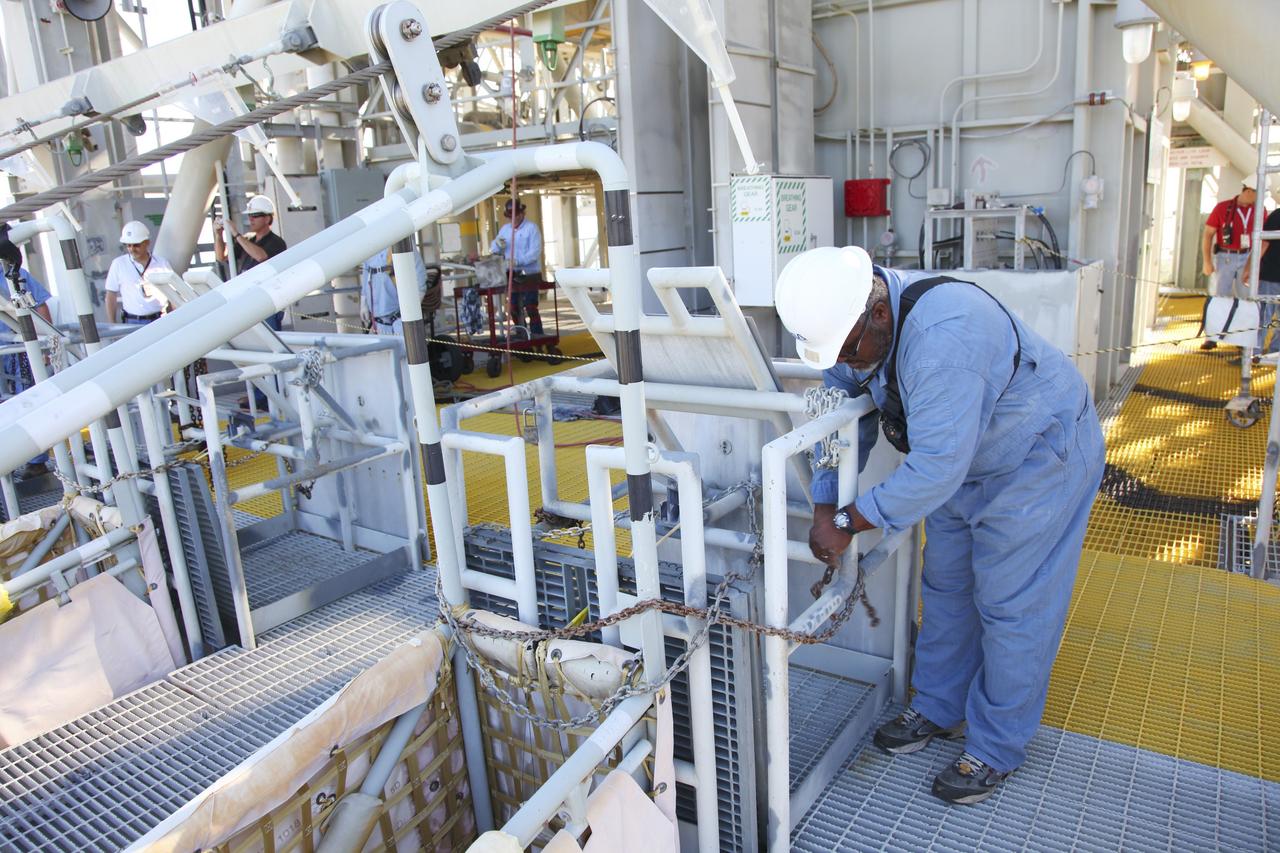
CAPE CANAVERAL, Fla. – At Launch Pad 39A at NASA’s Kennedy Space Center in Florida, technicians prepare for the final release of the seven slidewire baskets from the 195-foot level. After the baskets reach the ground they will be removed and put in storage. The system of seven slidewire baskets at launch pads A and B provided an escape route for personnel inside the orbiter or on the orbiter access arm. The baskets are suspended from slidewires that extend from the pad’s Fixed Service Structure to a landing zone 1,200 feet to the west. Each basket could hold up to three people. A braking system catch net and drag chain slowed and then halted the baskets sliding down the wire approximately 55 miles per hour in about half a minute. Photo credit: NASA/Frankie Martin

CAPE CANAVERAL, Fla. – At Launch Pad 39A at NASA’s Kennedy Space Center in Florida, technicians prepare for the final release of the seven slidewire baskets from the 195-foot level. After the baskets reach the ground they will be removed and put in storage. The system of seven slidewire baskets at launch pads A and B provided an escape route for personnel inside the orbiter or on the orbiter access arm. The baskets are suspended from slidewires that extend from the pad’s Fixed Service Structure to a landing zone 1,200 feet to the west. Each basket could hold up to three people. A braking system catch net and drag chain slowed and then halted the baskets sliding down the wire approximately 55 miles per hour in about half a minute. Photo credit: NASA/Frankie Martin
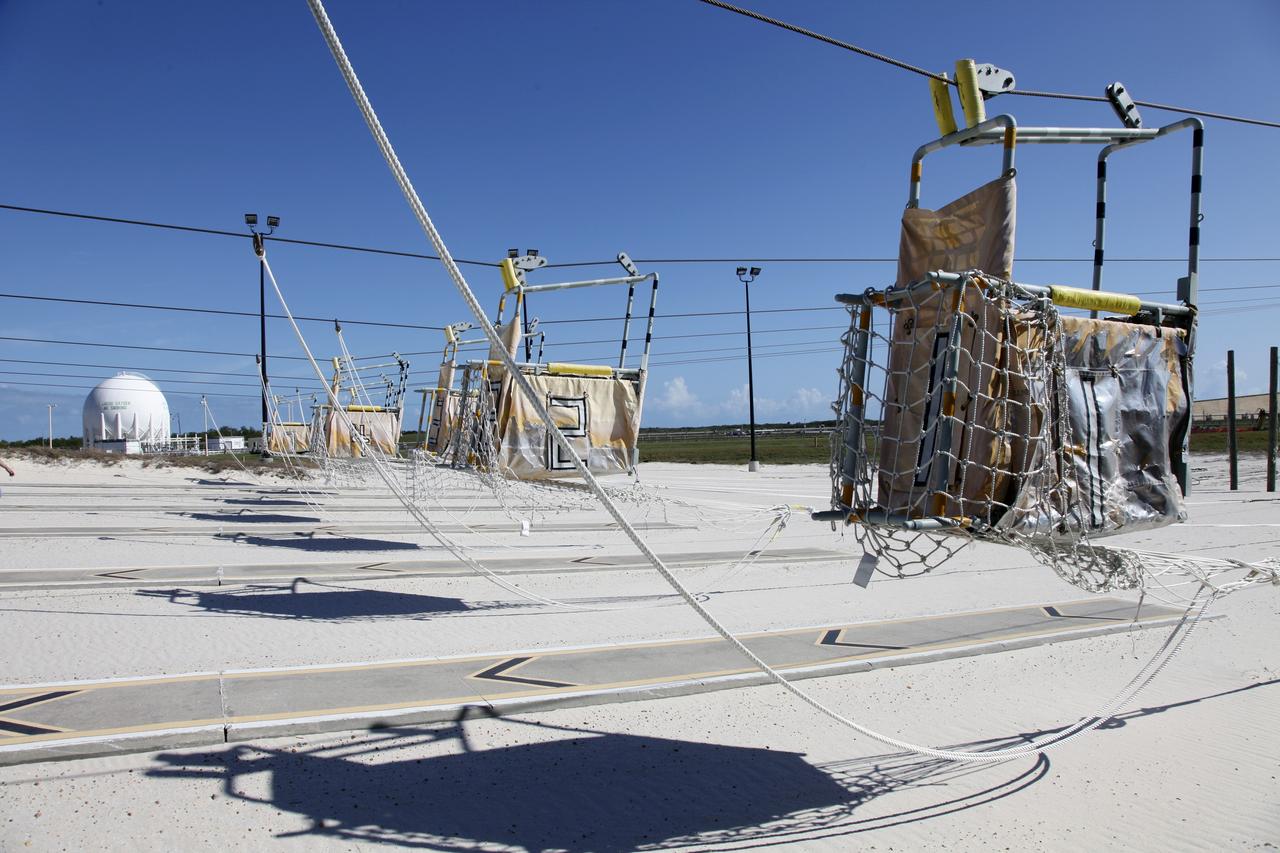
CAPE CANAVERAL, Fla. – At Launch Pad 39A at NASA’s Kennedy Space Center in Florida, the seven slidewire baskets have traveled down the wires to the ground after technicians released them from the 195-foot level for the final time. The baskets will be removed and put in storage. The system of seven slidewire baskets at launch pads A and B provided an escape route for personnel inside the orbiter or on the orbiter access arm. The baskets are suspended from slidewires that extend from the pad’s Fixed Service Structure to a landing zone 1,200 feet to the west. Each basket could hold up to three people. A braking system catch net and drag chain slowed and then halted the baskets sliding down the wire approximately 55 miles per hour in about half a minute. Photo credit: NASA/Frankie Martin
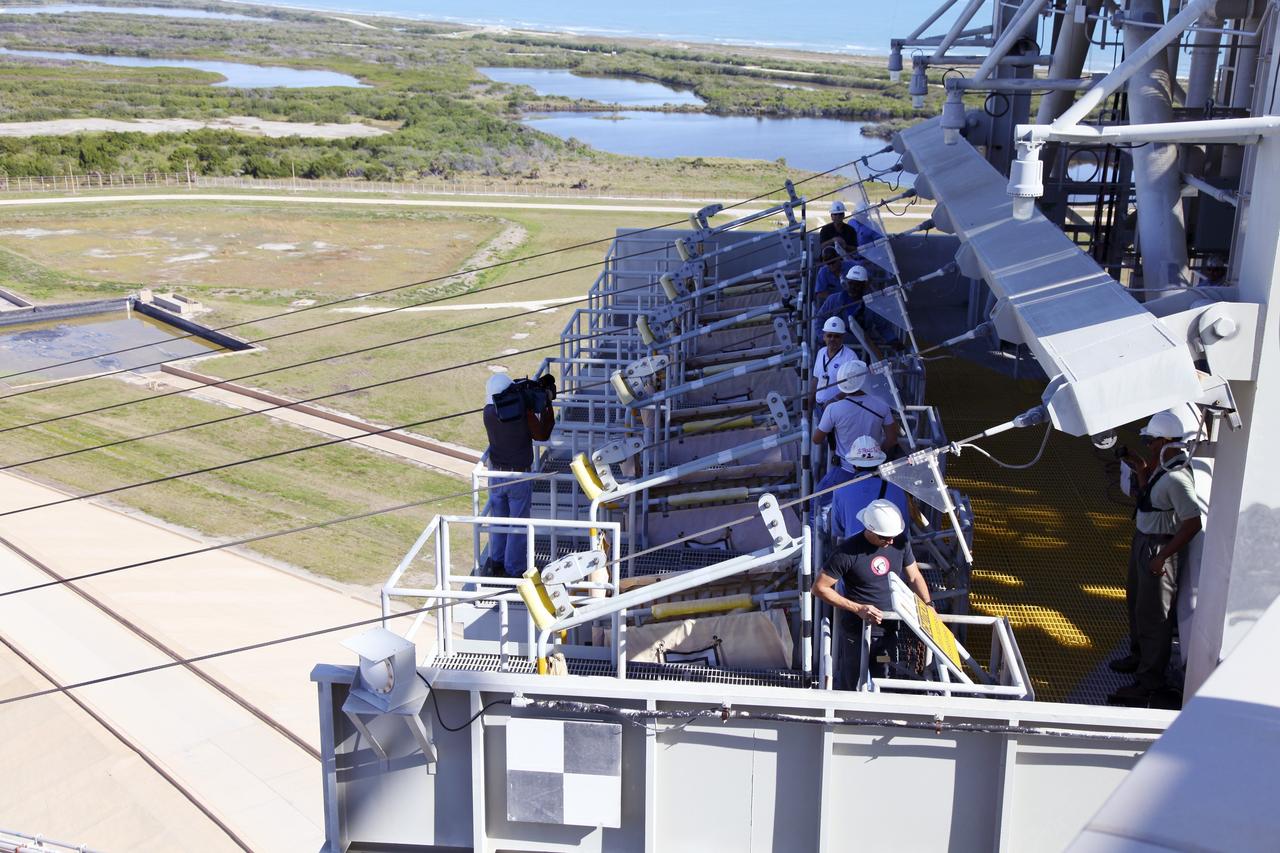
CAPE CANAVERAL, Fla. – At Launch Pad 39A at NASA’s Kennedy Space Center in Florida, technicians prepare for the final release of the seven slidewire baskets from the 195-foot level. After the baskets reach the ground they will be removed and put in storage. The system of seven slidewire baskets at launch pads A and B provided an escape route for personnel inside the orbiter or on the orbiter access arm. The baskets are suspended from slidewires that extend from the pad’s Fixed Service Structure to a landing zone 1,200 feet to the west. Each basket could hold up to three people. A braking system catch net and drag chain slowed and then halted the baskets sliding down the wire approximately 55 miles per hour in about half a minute. Photo credit: NASA/Frankie Martin
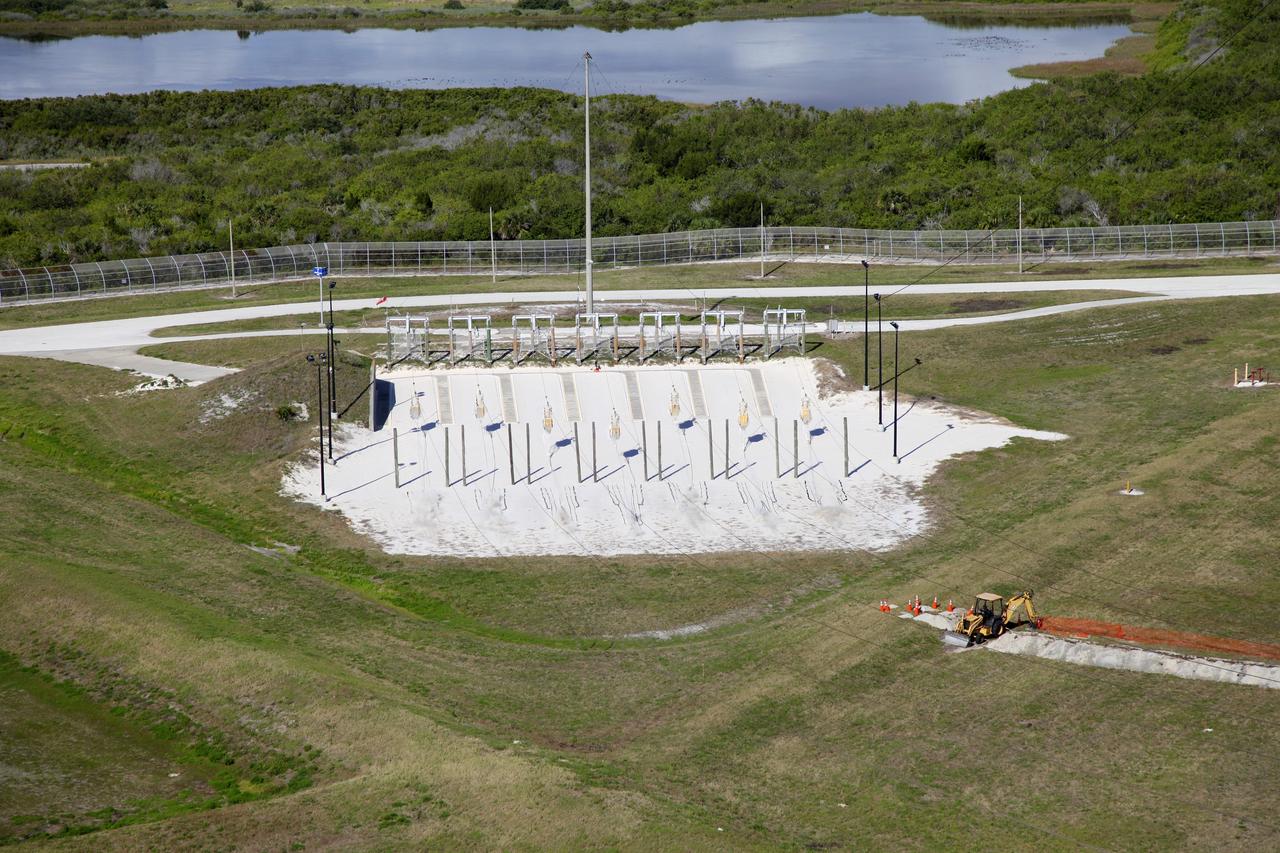
CAPE CANAVERAL, Fla. – At Launch Pad 39A at NASA’s Kennedy Space Center in Florida, the seven slidewire baskets have traveled down the wires to the ground after technicians released them from the 195-foot level for the final time. The baskets will be removed and put in storage. The system of seven slidewire baskets at launch pads A and B provided an escape route for personnel inside the orbiter or on the orbiter access arm. The baskets are suspended from slidewires that extend from the pad’s Fixed Service Structure to a landing zone 1,200 feet to the west. Each basket could hold up to three people. A braking system catch net and drag chain slowed and then halted the baskets sliding down the wire approximately 55 miles per hour in about half a minute. Photo credit: NASA/Frankie Martin

CAPE CANAVERAL, Fla. – At Launch Pad 39A at NASA’s Kennedy Space Center in Florida, a technician prepares for the final release of the seven slidewire baskets from the 195-foot level. After the baskets reach the ground they will be removed and put in storage. The system of seven slidewire baskets at launch pads A and B provided an escape route for personnel inside the orbiter or on the orbiter access arm. The baskets are suspended from slidewires that extend from the pad’s Fixed Service Structure to a landing zone 1,200 feet to the west. Each basket could hold up to three people. A braking system catch net and drag chain slowed and then halted the baskets sliding down the wire approximately 55 miles per hour in about half a minute. Photo credit: NASA/Frankie Martin
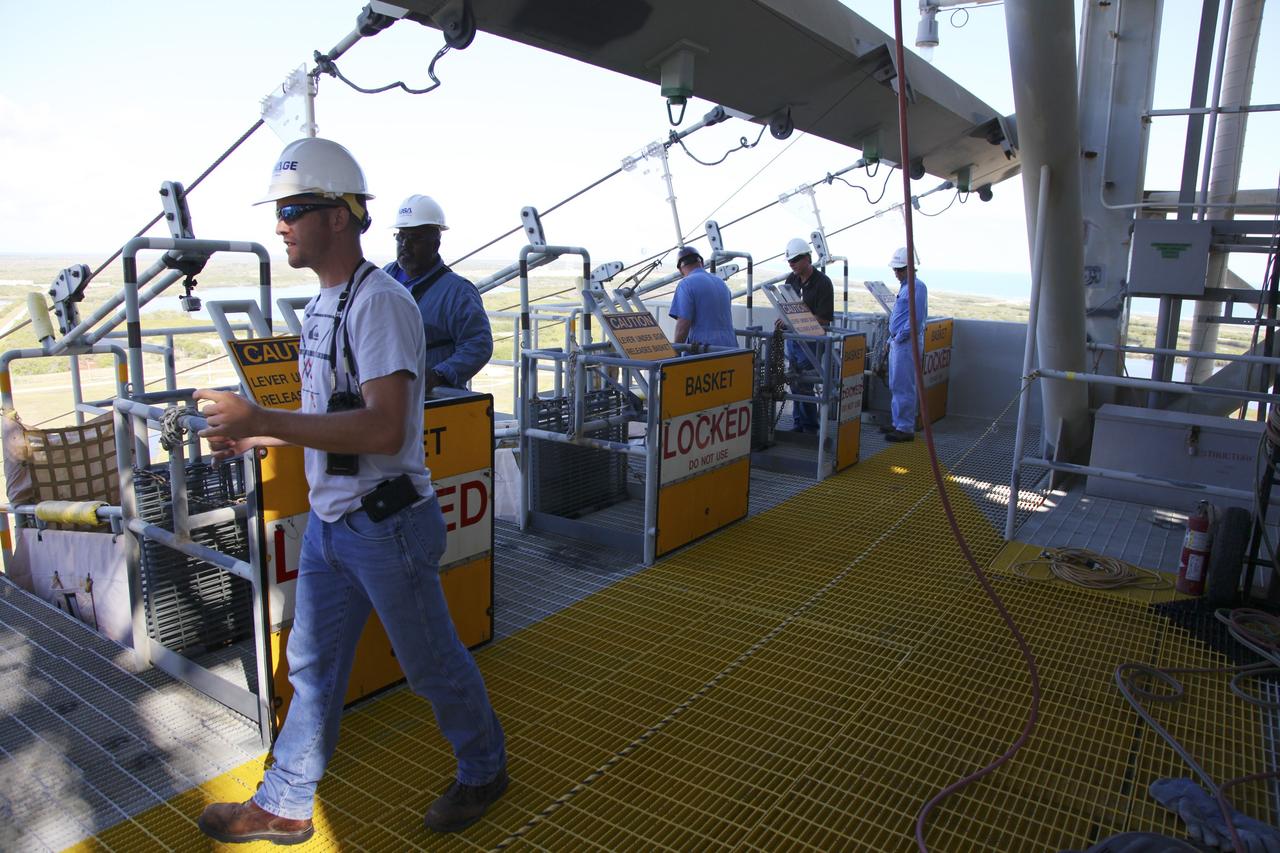
CAPE CANAVERAL, Fla. – At Launch Pad 39A at NASA’s Kennedy Space Center in Florida, technicians prepare for the final release of the seven slidewire baskets from the 195-foot level. After the baskets reach the ground they will be removed and put in storage. The system of seven slidewire baskets at launch pads A and B provided an escape route for personnel inside the orbiter or on the orbiter access arm. The baskets are suspended from slidewires that extend from the pad’s Fixed Service Structure to a landing zone 1,200 feet to the west. Each basket could hold up to three people. A braking system catch net and drag chain slowed and then halted the baskets sliding down the wire approximately 55 miles per hour in about half a minute. Photo credit: NASA/Frankie Martin
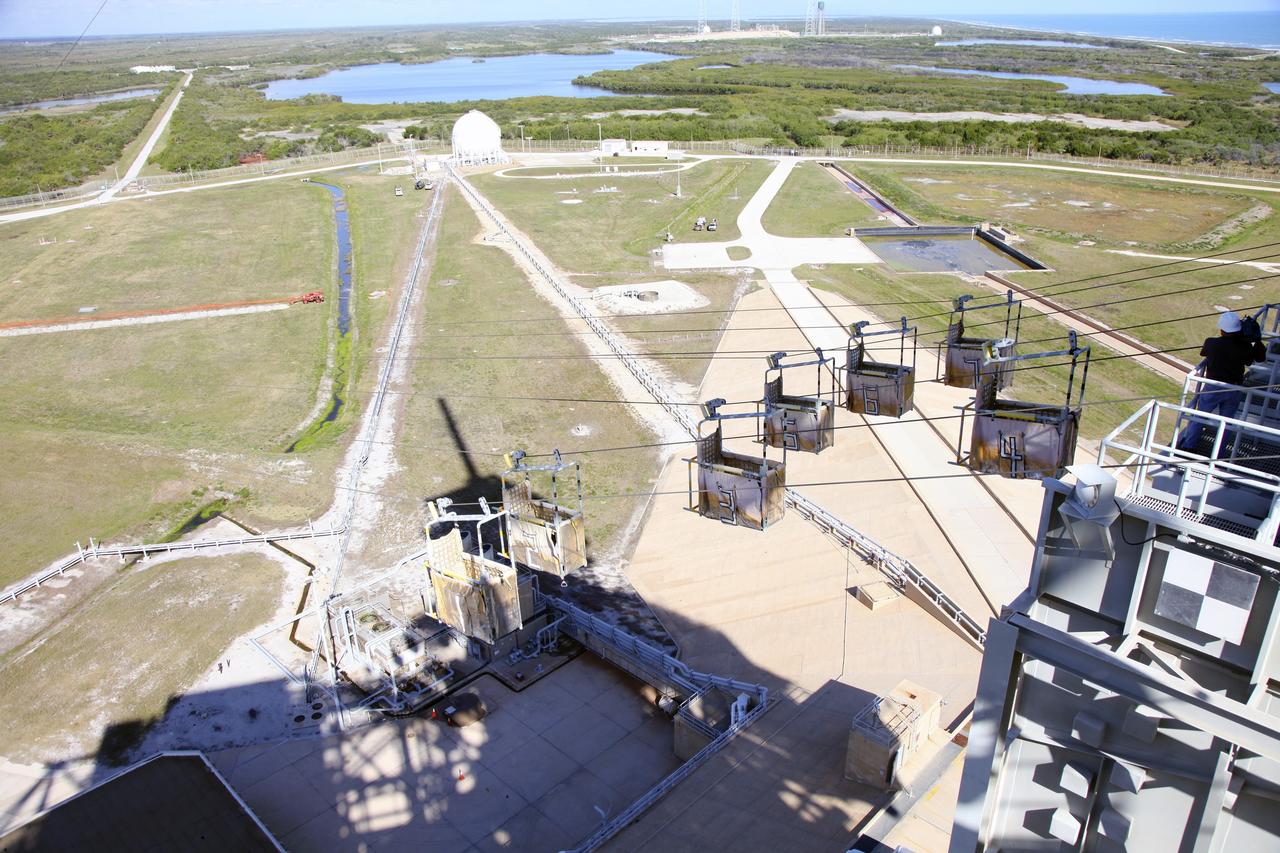
CAPE CANAVERAL, Fla. – At Launch Pad 39A at NASA’s Kennedy Space Center in Florida, technicians have released the seven slidewire baskets from the 195-foot level for the final time. After the baskets reach the ground they will be removed and put in storage. The system of seven slidewire baskets at launch pads A and B provided an escape route for personnel inside the orbiter or on the orbiter access arm. The baskets are suspended from slidewires that extend from the pad’s Fixed Service Structure to a landing zone 1,200 feet to the west. Each basket could hold up to three people. A braking system catch net and drag chain slowed and then halted the baskets sliding down the wire approximately 55 miles per hour in about half a minute. Photo credit: NASA/Frankie Martin
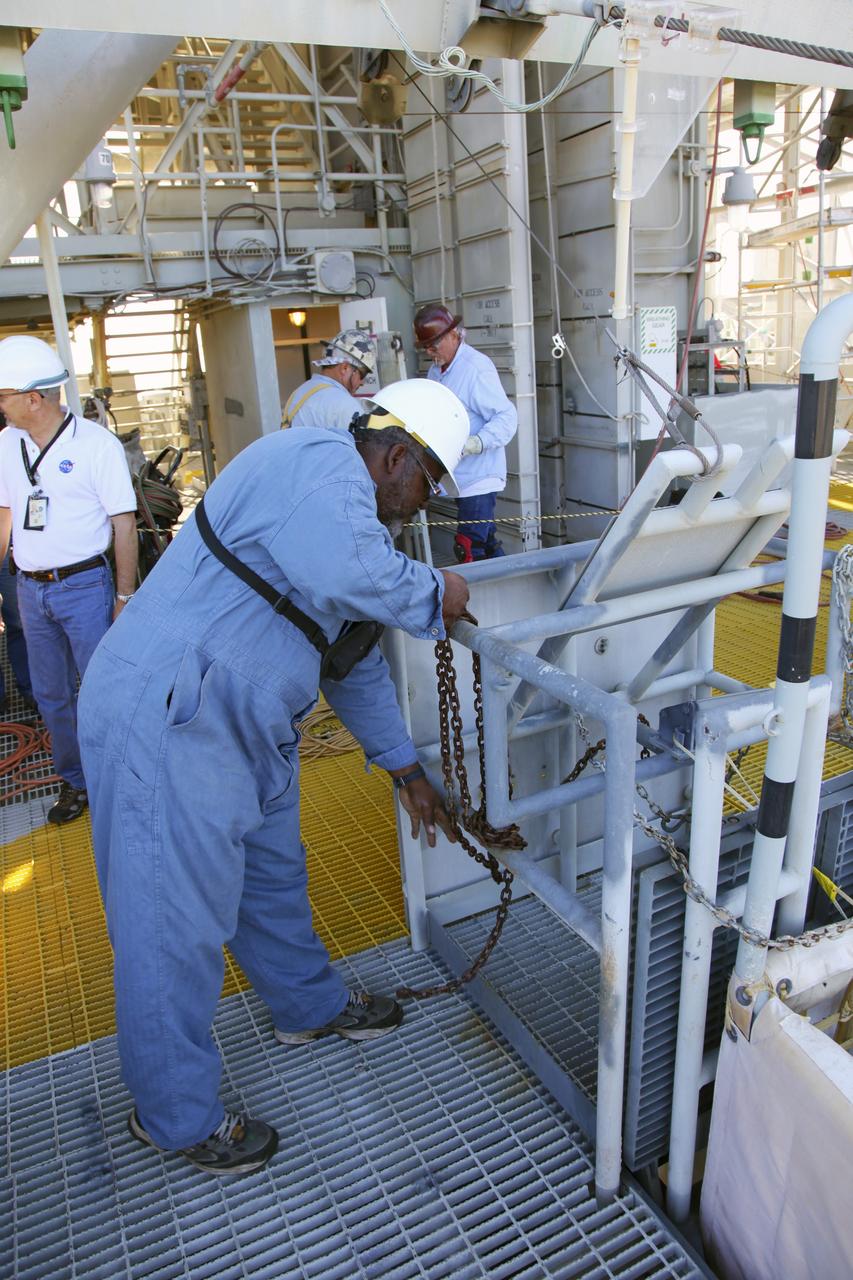
CAPE CANAVERAL, Fla. – At Launch Pad 39A at NASA’s Kennedy Space Center in Florida, technicians prepare for the final release of the seven slidewire baskets from the 195-foot level. After the baskets reach the ground they will be removed and put in storage. The system of seven slidewire baskets at launch pads A and B provided an escape route for personnel inside the orbiter or on the orbiter access arm. The baskets are suspended from slidewires that extend from the pad’s Fixed Service Structure to a landing zone 1,200 feet to the west. Each basket could hold up to three people. A braking system catch net and drag chain slowed and then halted the baskets sliding down the wire approximately 55 miles per hour in about half a minute. Photo credit: NASA/Frankie Martin
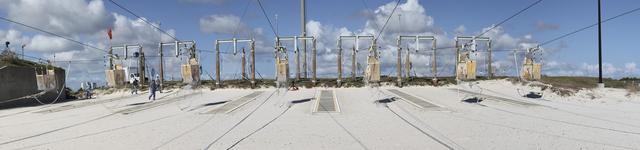
CAPE CANAVERAL, Fla. – A panoramic view of the seven slidewire baskets on the ground near Launch Pad 39A at NASA’s Kennedy Space Center in Florida, is seen here after technicians released them from the 195-foot level for the final time. The baskets will be removed and put in storage. The system of seven slidewire baskets at launch pads A and B provided an escape route for personnel inside the orbiter or on the orbiter access arm. The baskets are suspended from slidewires that extend from the pad’s Fixed Service Structure to a landing zone 1,200 feet to the west. Each basket could hold up to three people. A braking system catch net and drag chain slowed and then halted the baskets sliding down the wire approximately 55 miles per hour in about half a minute. Photo credit: NASA/Frankie Martin
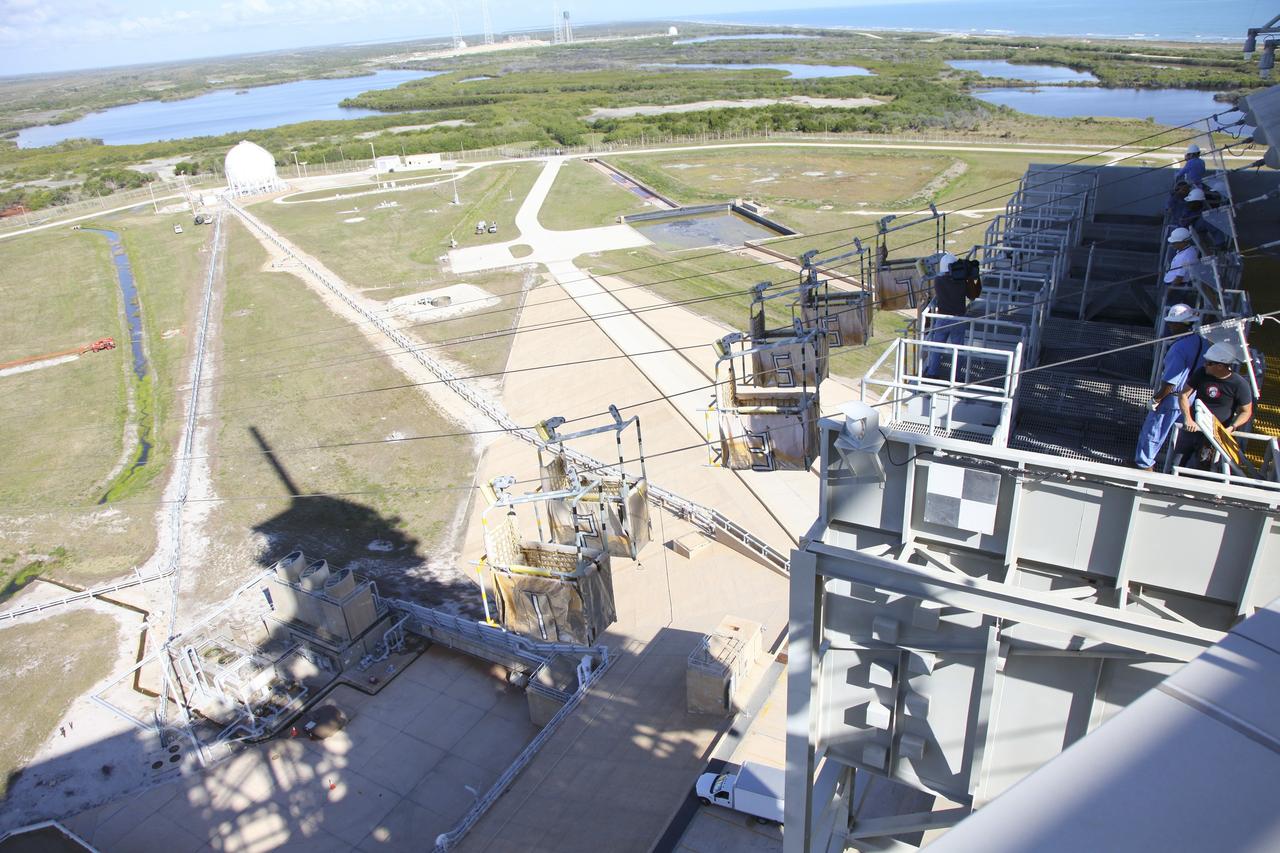
CAPE CANAVERAL, Fla. – At Launch Pad 39A at NASA’s Kennedy Space Center in Florida, technicians have released the seven slidewire baskets from the 195-foot level for the final time. After the baskets reach the ground they will be removed and put in storage. The system of seven slidewire baskets at launch pads A and B provided an escape route for personnel inside the orbiter or on the orbiter access arm. The baskets are suspended from slidewires that extend from the pad’s Fixed Service Structure to a landing zone 1,200 feet to the west. Each basket could hold up to three people. A braking system catch net and drag chain slowed and then halted the baskets sliding down the wire approximately 55 miles per hour in about half a minute. Photo credit: NASA/Frankie Martin
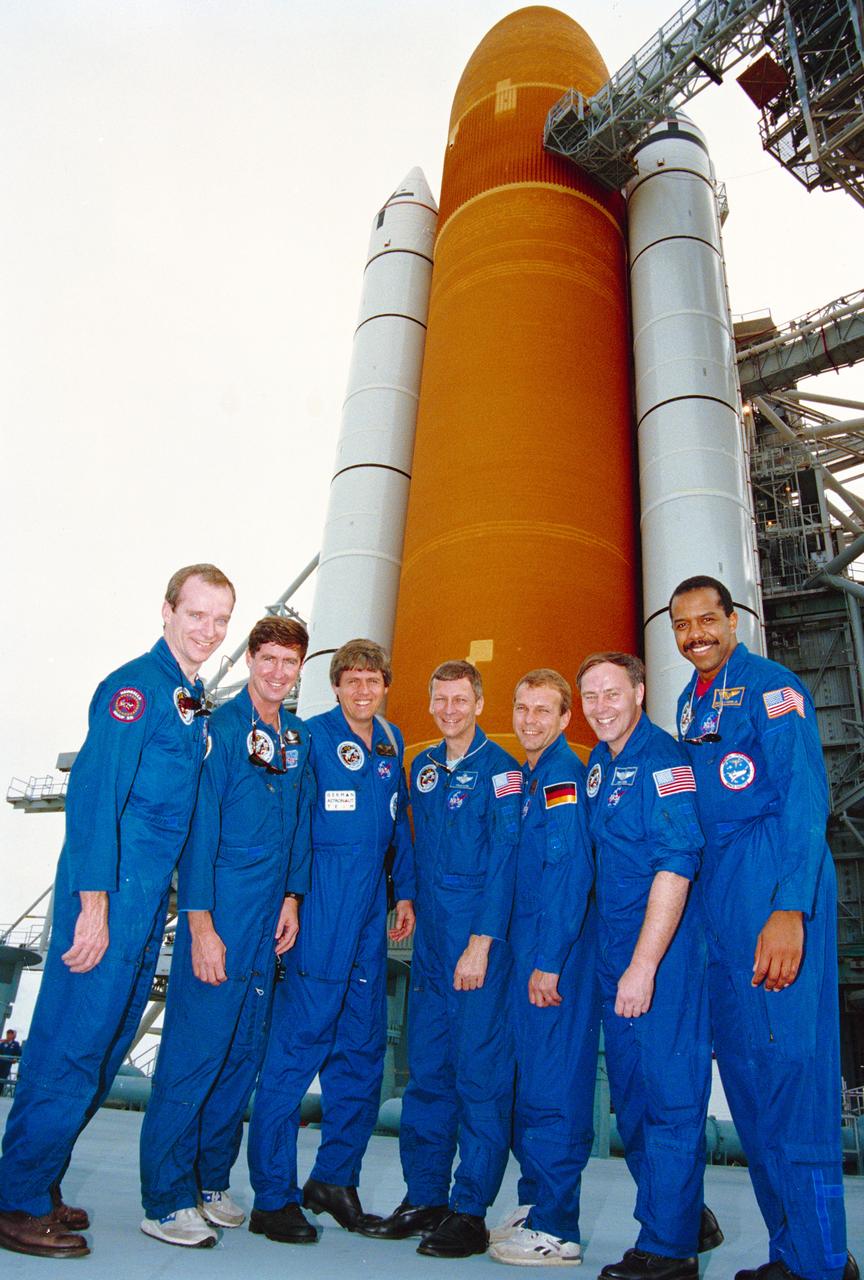
S93-29860 (11 Feb 1993) --- The STS-55 crew poses for a group portrait next to the Space Shuttle Columbia at Launch Pad 39A. From left are mission specialist Charles J. Precourt; pilot Terence T. Henricks; payload specialist Ulrich Walter, mission commander Steven R. Nagel; payload specialist Hans Schlegel; payload commander Jerry L. Ross; and mission specialist Bernard A. Harris Jr.. The crew is at KSC for the Terminal Countdown Demonstration Test (TCDT), a dress rehearsal for launch.
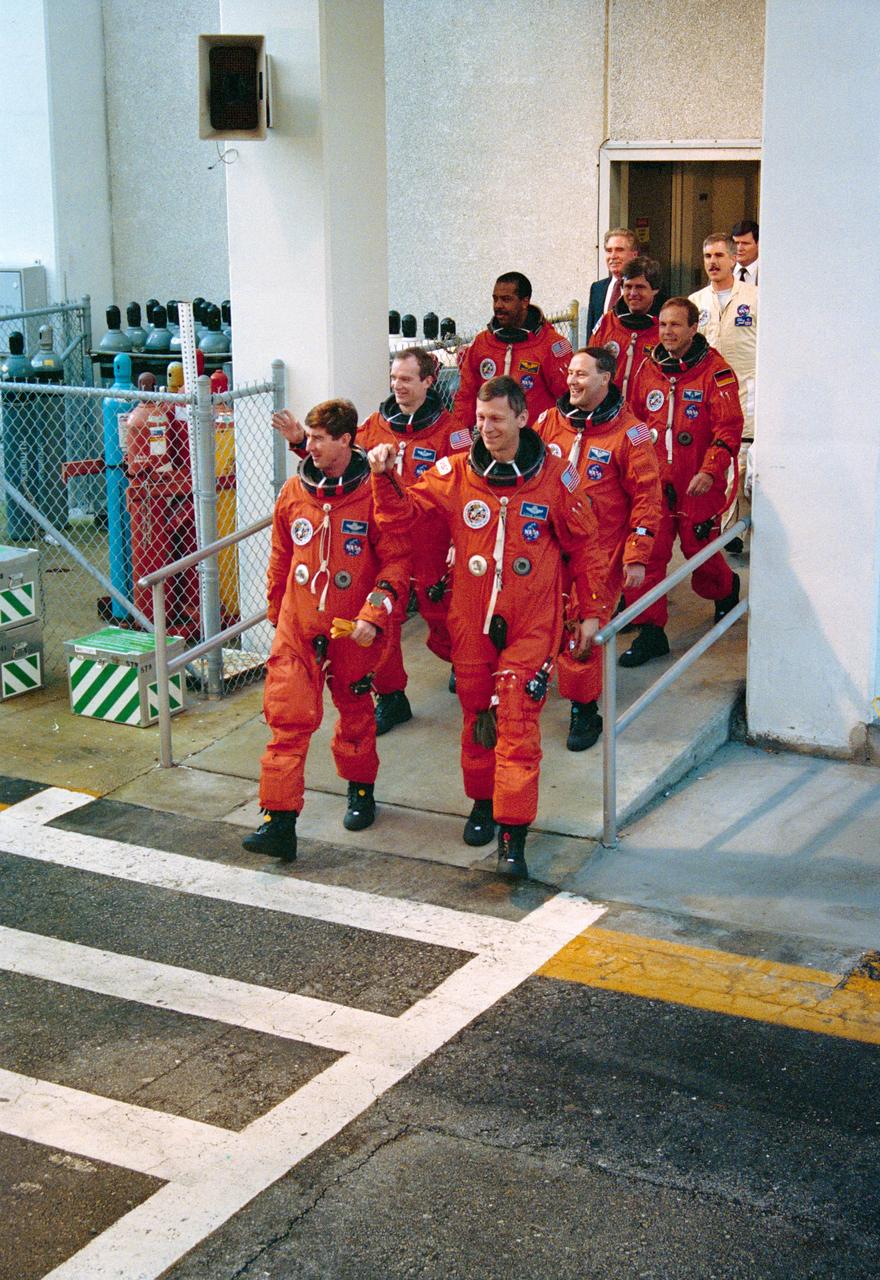
S93-29851 (12 Feb 1993) --- Clad in their bright orange launch/entry suits, the STS-55 flight crew departs the Operations and Checkout Building for the Space Shuttle Columbia at Launch Pad 39A. Leading the way are Pilot Terence T. Henricks (left) and Mission Commander Steven R. Nagel; behind them are, from left, Mission Specialists Charles J. Precourt and Bernard A. Harris Jr.; Payload Commander Jerry L. Ross; and Payload Specialists Ulrich Walter and Hans Schlegel. This is the final portion of the Terminal Countdown Demonstration Test, a dress rehearsal for launch which culminates with a simulated T -0.
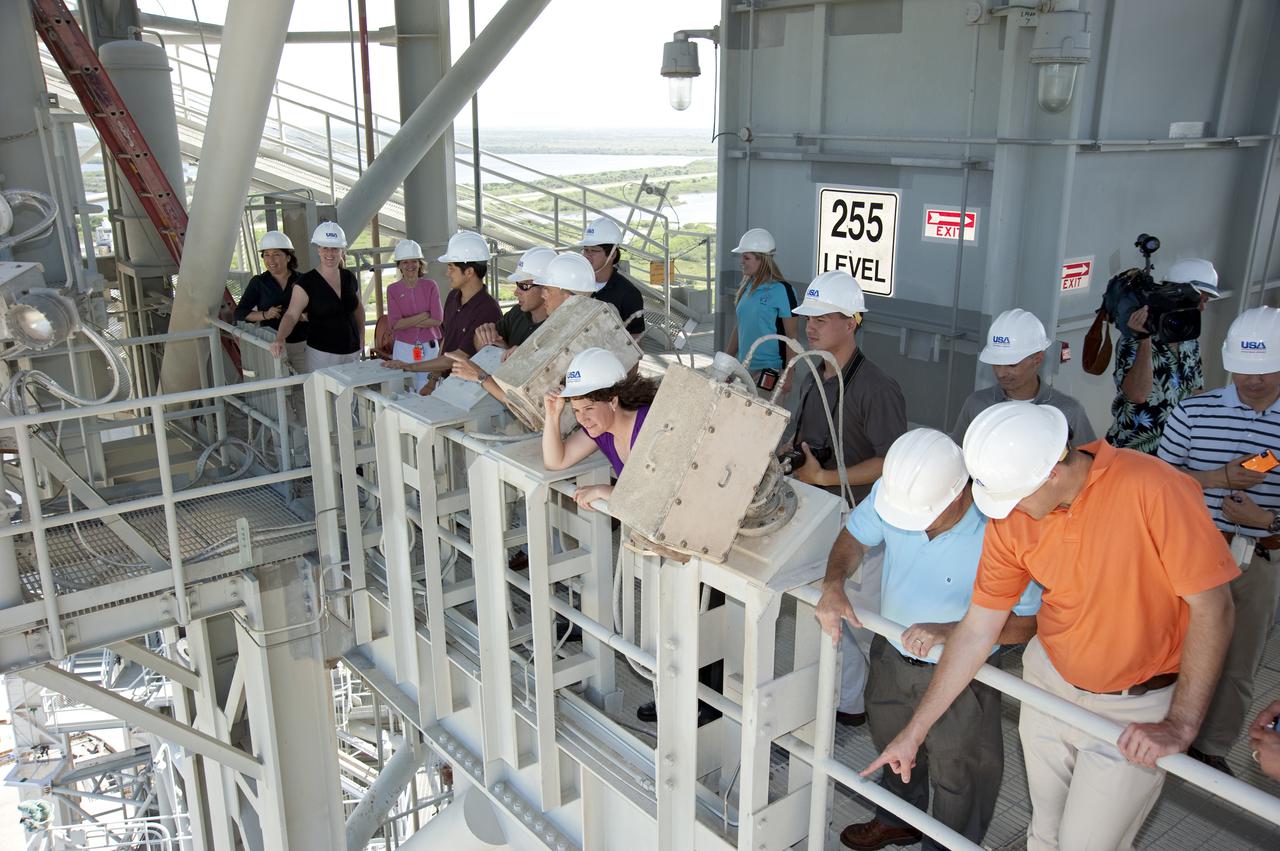
CAPE CANAVERAL, Fla. --- At NASA's Kennedy Space Center in Florida, the Class of 2009 Astronaut Candidates, also called ASCANs, tour Launch Pad 39A. Here, they are at the 255-foot-level, the highest floor of the pad structure. This is where the Final Inspection Team begins its top-to-bottom inspection of a space shuttle and external fuel tank before launch. The new astronaut candidates for NASA are Serena M. Aunon, Jeanette J. Epps, Air Force Maj. Jack D. Fischer, Air Force Lt. Col. Michael S. Hopkins, Kjell N. Lindgren, Kathleen 'Kate' Rubins, Navy Cmdr. Scott D. Tingle, Army Lt. Col. Mark T. Vande, and Navy Lt. Cmdr. Gregory R. 'Reid' Wiseman. The new astronaut candidates for the Japan Aerospace Exploration Agency, or JAXA, are Norishige Kanai, Takuya Onishi and Kimiya Yui. The new astronaut candidates for the Canadian Space Agency, or CSA, are Jeremy Hansen and David Saint-Jacques. Photo Credit: NASA_Kim Shiflett