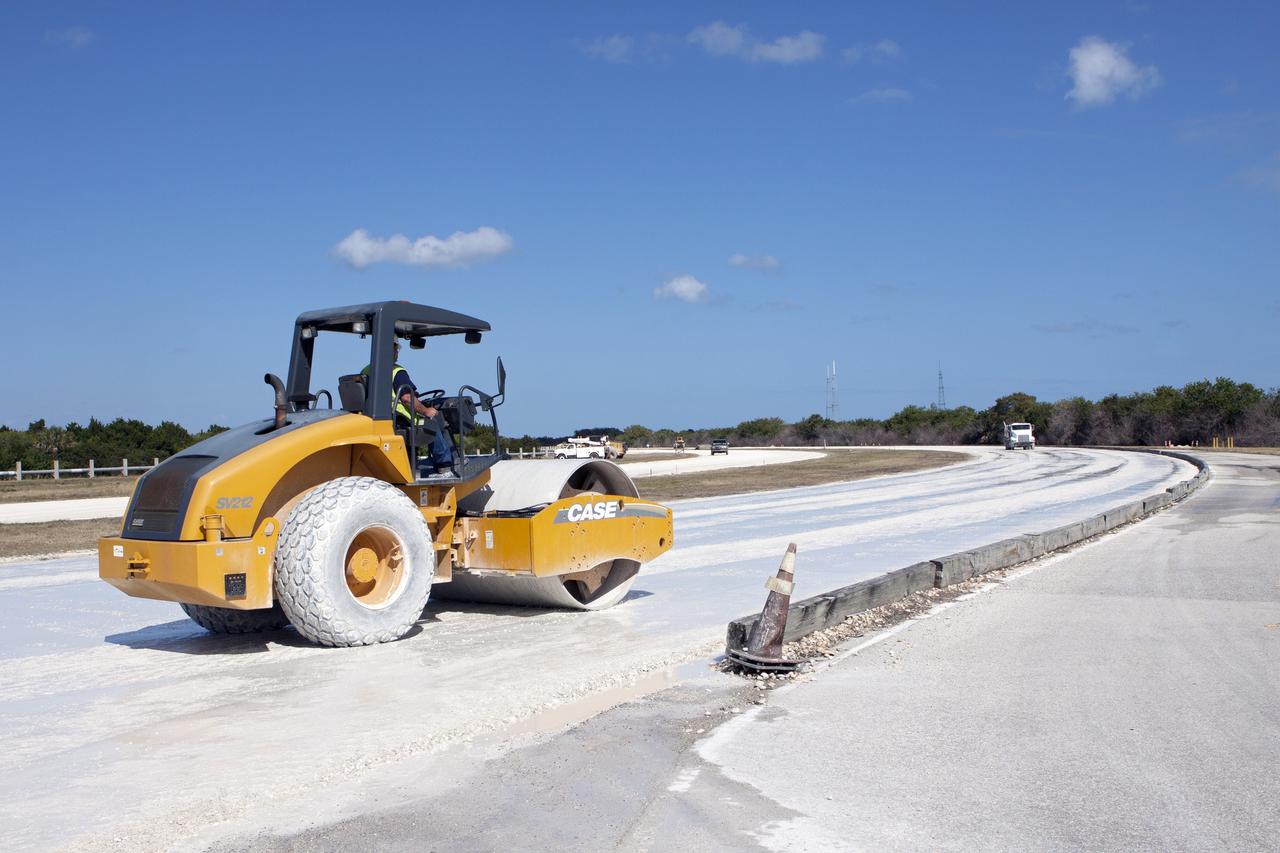
CAPE CANAVERAL, Fla. – A worker from Canaveral Construction in Mims, Fla., re-grades a section of the lime rock on the crawlerway near Launch Pad 39B at NASA’s Kennedy Space Center in Florida. The crawlerway is being upgraded to improve the foundation and prepare it to support the weight of NASA’s Space Launch System, or SLS, and mobile launcher on the crawler-transporter during rollout. Workers are removing the original Alabama river rock and restoring the layer of lime rock below to its original depth. Then new river rock will be added on top. The Ground Systems Development and Operations, or GSDO, Program office at Kennedy is leading the center’s transformation to safely handle a variety of rockets and spacecraft. For more information about GSDO, visit: http://go.nasa.gov/groundsystems. Photo credit: NASA/Jim Grossmann
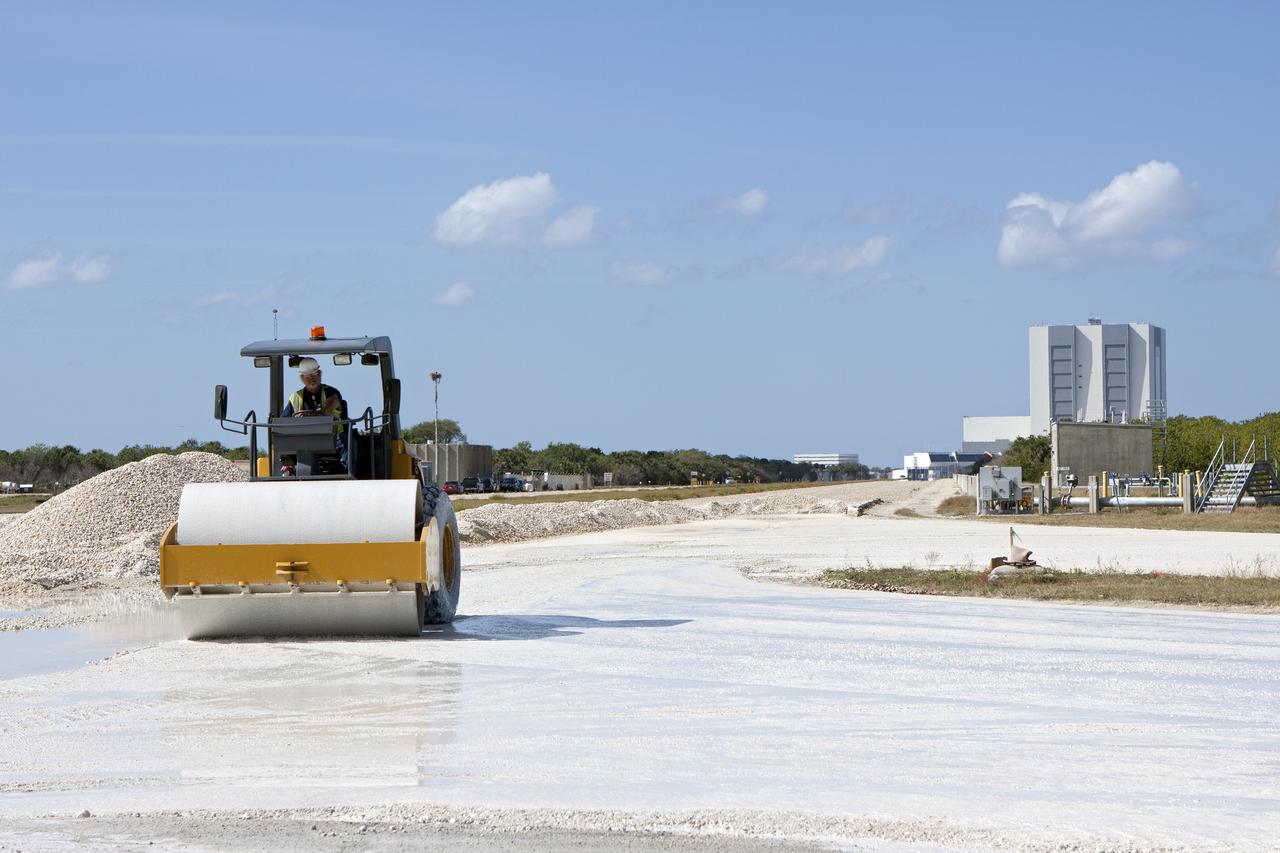
CAPE CANAVERAL, Fla. – A worker from Canaveral Construction in Mims, Fla., re-grades a section of the lime rock on the crawlerway near Launch Pad 39B at NASA’s Kennedy Space Center in Florida. The crawlerway is being upgraded to improve the foundation and prepare it to support the weight of NASA’s Space Launch System, or SLS, and mobile launcher on the crawler-transporter during rollout. Workers are removing the original Alabama river rock and restoring the layer of lime rock below to its original depth. Then new river rock will be added on top. The Ground Systems Development and Operations, or GSDO, Program office at Kennedy is leading the center’s transformation to safely handle a variety of rockets and spacecraft. For more information about GSDO, visit: http://go.nasa.gov/groundsystems. Photo credit: NASA/Jim Grossmann
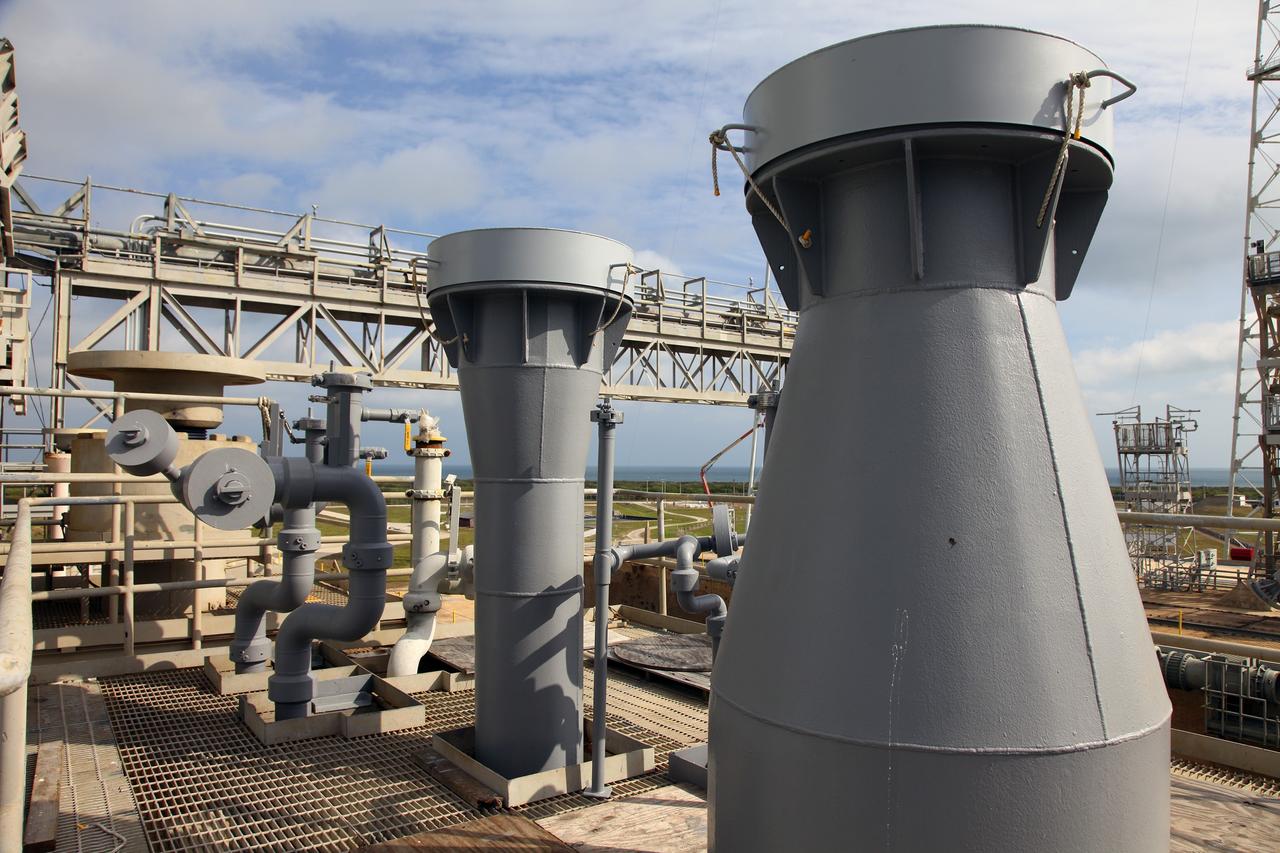
CAPE CANAVERAL, Fla. -- At NASA’s Kennedy Space Center in Florida, various fluid interface connections have been installed at Launch Pad 39B. New system connections include chilled water supply-and-return and conditioned air that will be used to provide the mobile launcher with the necessary commodities during launch operations. The Ground Systems Development and Operations Program office at Kennedy is overseeing upgrades and modifications to Pad B to support the launch of NASA’s Space Launch System heavy-lift rocket, which is under design, and new Orion spacecraft. The pads supported space shuttle launches for 30 years. Photo credit: NASA/Frankie Martin
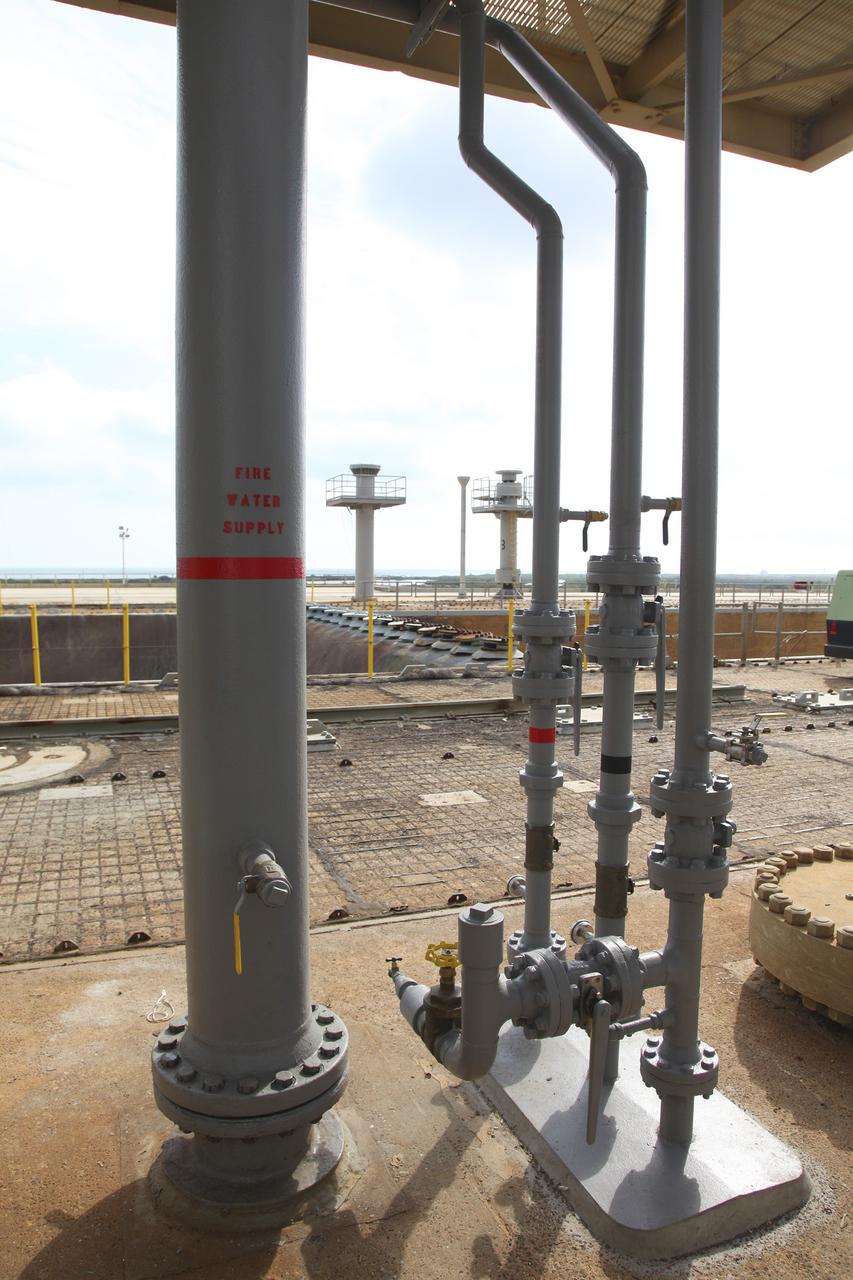
CAPE CANAVERAL, Fla. -- At NASA’s Kennedy Space Center in Florida, various fluid interface connections have been installed at Launch Pad 39B. New system connections include chilled water supply-and-return and conditioned air that will be used to provide the mobile launcher with the necessary commodities during launch operations. The Ground Systems Development and Operations Program office at Kennedy is overseeing upgrades and modifications to Pad B to support the launch of NASA’s Space Launch System heavy-lift rocket, which is under design, and new Orion spacecraft. The pads supported space shuttle launches for 30 years. Photo credit: NASA/Frankie Martin
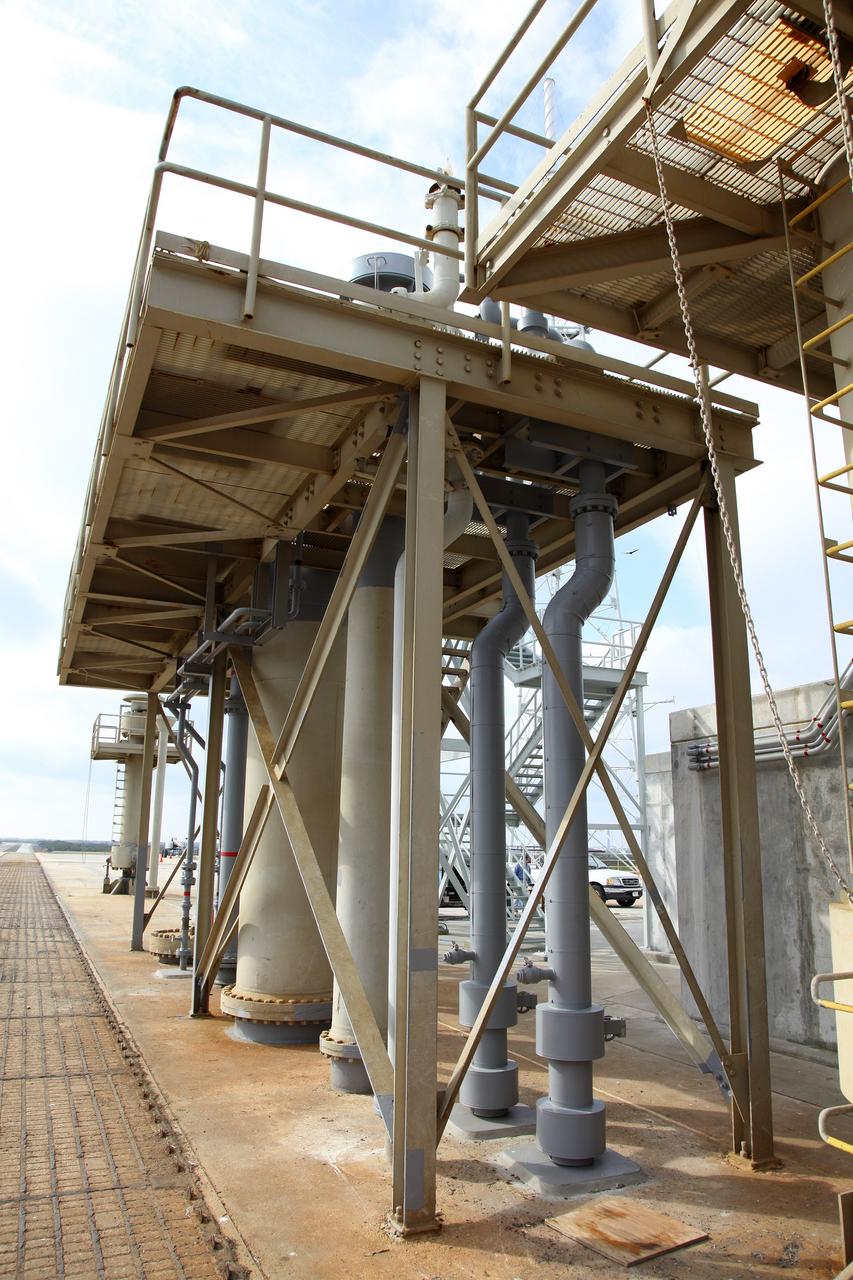
CAPE CANAVERAL, Fla. -- At NASA’s Kennedy Space Center in Florida, various fluid interface connections have been installed at Launch Pad 39B. New system connections include chilled water supply-and-return and conditioned air that will be used to provide the mobile launcher with the necessary commodities during launch operations. The Ground Systems Development and Operations Program office at Kennedy is overseeing upgrades and modifications to Pad B to support the launch of NASA’s Space Launch System heavy-lift rocket, which is under design, and new Orion spacecraft. The pads supported space shuttle launches for 30 years. Photo credit: NASA/Frankie Martin
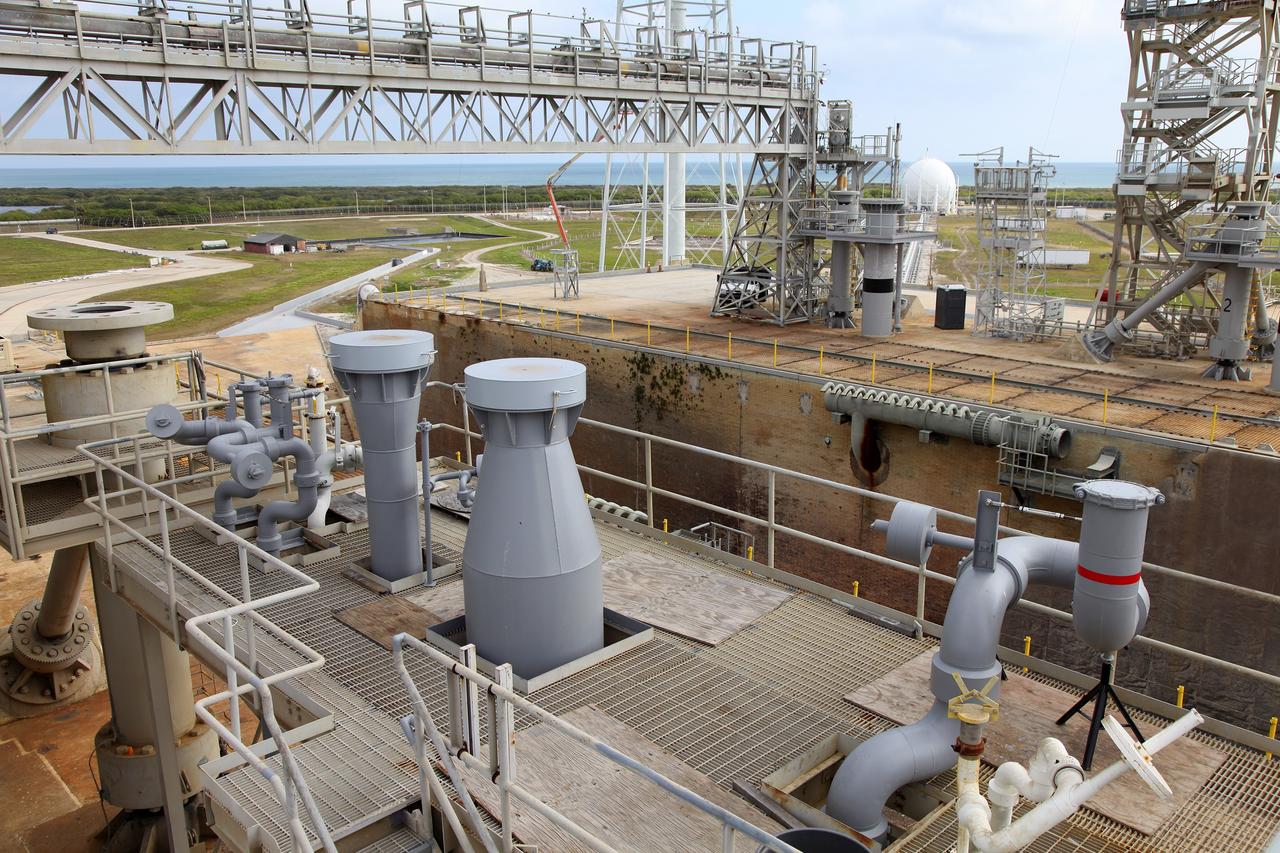
CAPE CANAVERAL, Fla. -- At NASA’s Kennedy Space Center in Florida, various fluid interface connections have been installed at Launch Pad 39B. New system connections include chilled water supply-and-return and conditioned air that will be used to provide the mobile launcher with the necessary commodities during launch operations. The Ground Systems Development and Operations Program office at Kennedy is overseeing upgrades and modifications to Pad B to support the launch of NASA’s Space Launch System heavy-lift rocket, which is under design, and new Orion spacecraft. The pads supported space shuttle launches for 30 years. Photo credit: NASA/Frankie Martin
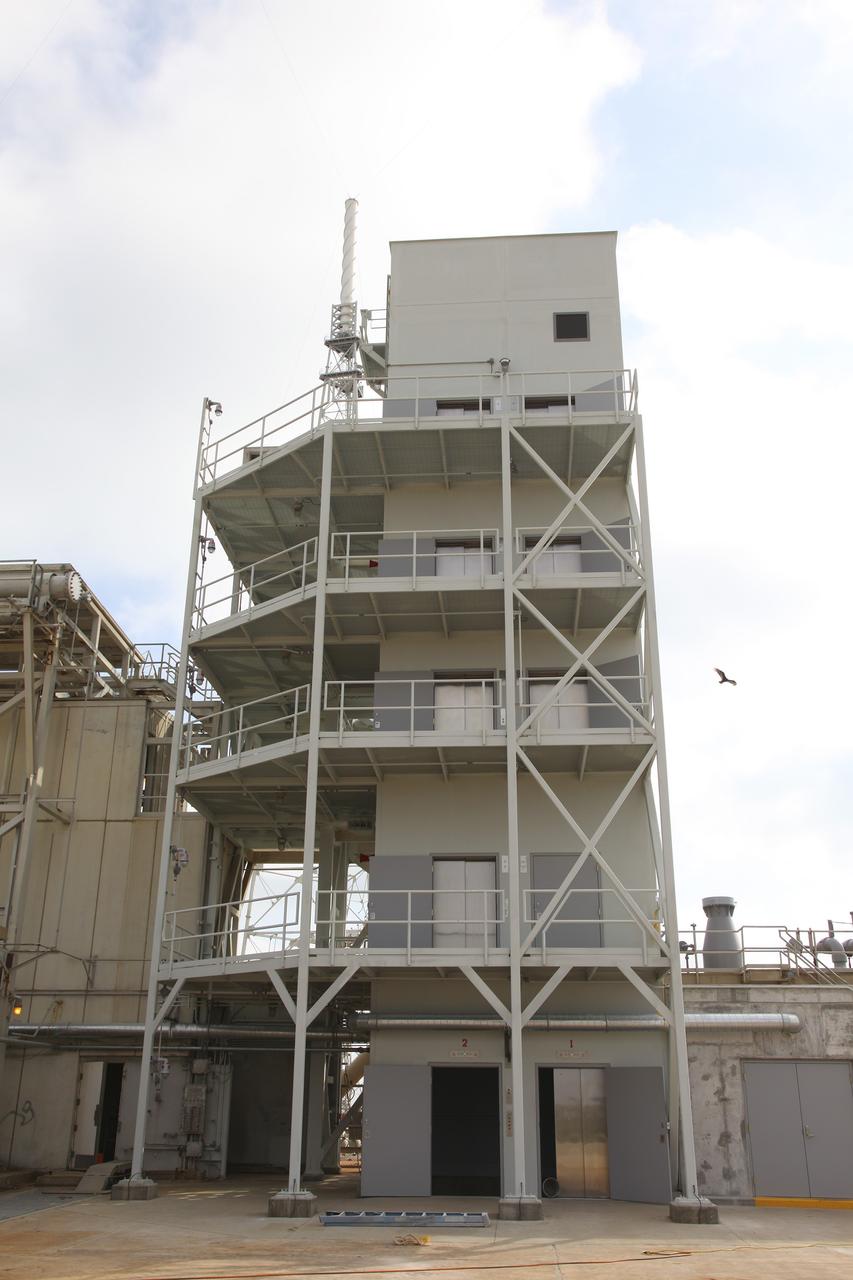
CAPE CANAVERAL, Fla. -- At NASA’s Kennedy Space Center in Florida, the Launch Pad 39B elevator has been upgraded and painted. Also, various fluid interface connections have been installed on the pad. New system connections include chilled water supply-and-return and conditioned air that will be used to provide the mobile launcher with the necessary commodities during launch operations. The Ground Systems Development and Operations Program office at Kennedy is overseeing upgrades and modifications to Pad B to support the launch of NASA’s Space Launch System heavy-lift rocket, which is under design, and new Orion spacecraft. The pads supported space shuttle launches for 30 years. Photo credit: NASA/Frankie Martin
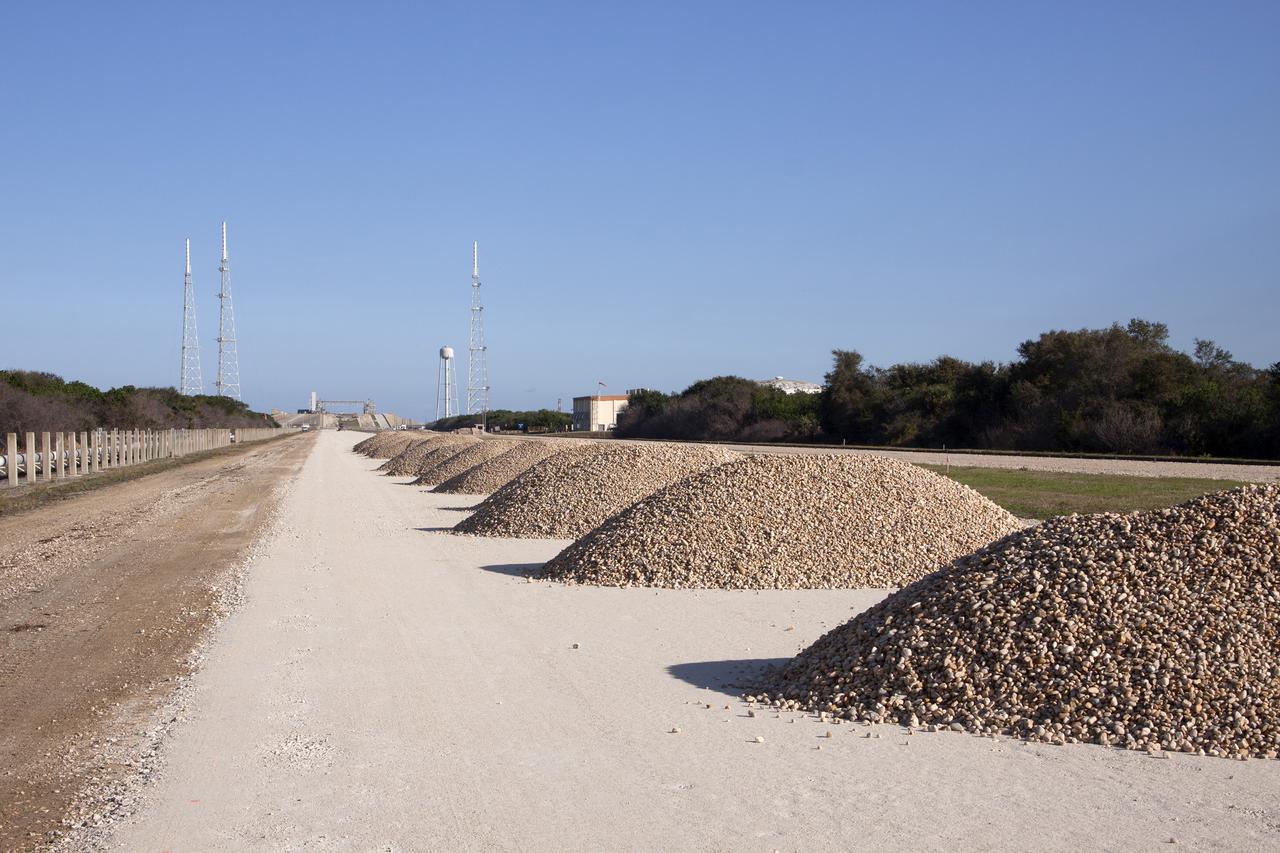
CAPE CANAVERAL, Fla. – Workers from Canaveral Construction in Mims, Fla., have removed the Alabama river rock from one side of the crawlerway near Launch Pad 39B at NASA’s Kennedy Space Center in Florida. The crawlerway is being upgraded to improve the foundation and prepare it to support the weight of NASA’s Space Launch System, or SLS, and mobile launcher on the crawler-transporter during rollout. Workers are removing the original Alabama river rock and restoring the layer of lime rock below to its original depth of three feet. Then new river rock will be added on top. The Ground Systems Development and Operations, or GSDO, Program office at Kennedy is leading the center’s transformation to safely handle a variety of rockets and spacecraft. For more information about GSDO, visit: http:__go.nasa.gov_groundsystems. Photo credit: NASA_Jim Grossmann
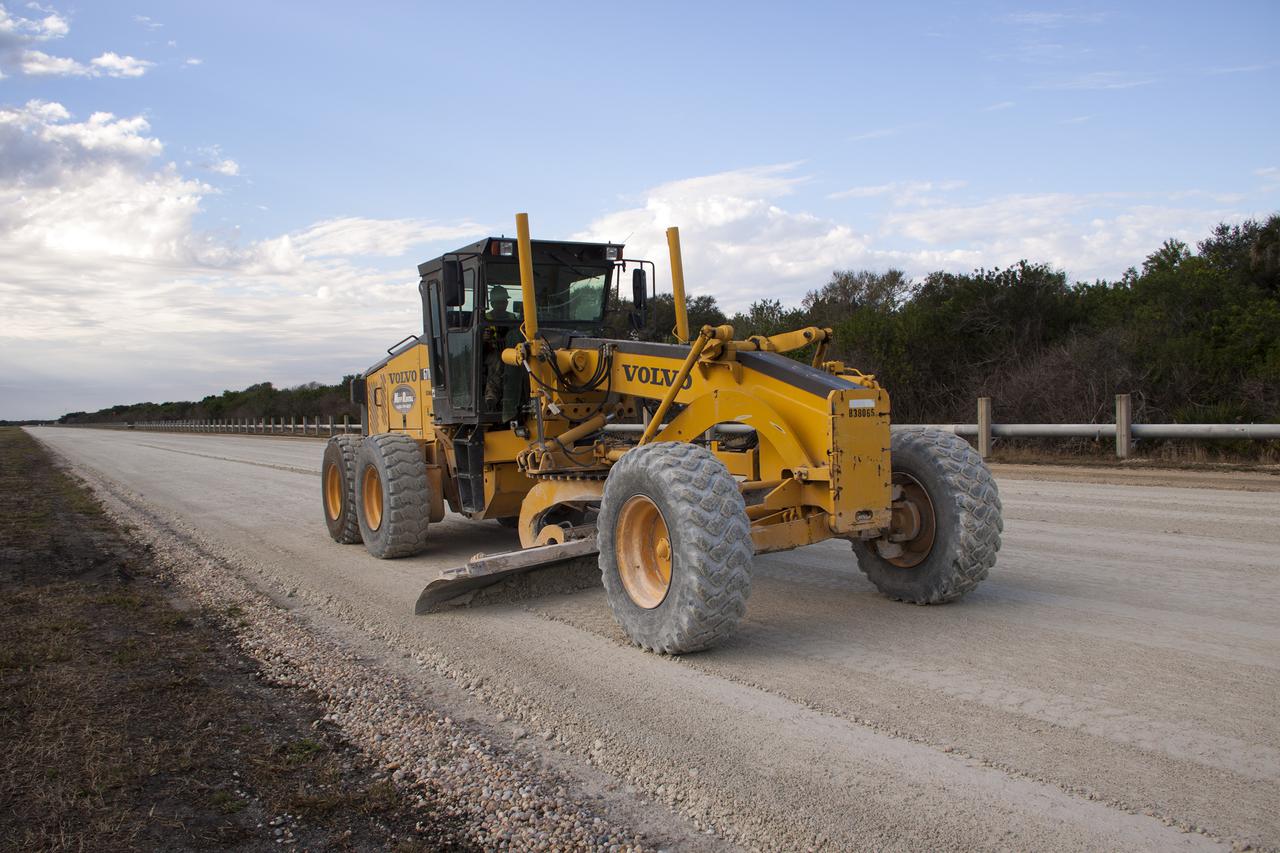
CAPE CANAVERAL, Fla. – A worker from Canaveral Construction in Mims, Fla., re-grades a section of the crawlerway near Launch Pad 39B at NASA’s Kennedy Space Center in Florida. The crawlerway is being upgraded to improve the foundation and prepare it to support the weight of NASA’s Space Launch System, or SLS, and mobile launcher on the crawler-transporter during rollout. Workers are removing the original Alabama river rock and restoring the layer of lime rock below to its original depth of three feet. Then new river rock will be added on top. The Ground Systems Development and Operations, or GSDO, Program office at Kennedy is leading the center’s transformation to safely handle a variety of rockets and spacecraft. For more information about GSDO, visit: http:__go.nasa.gov_groundsystems. Photo credit: NASA_Jim Grossmann
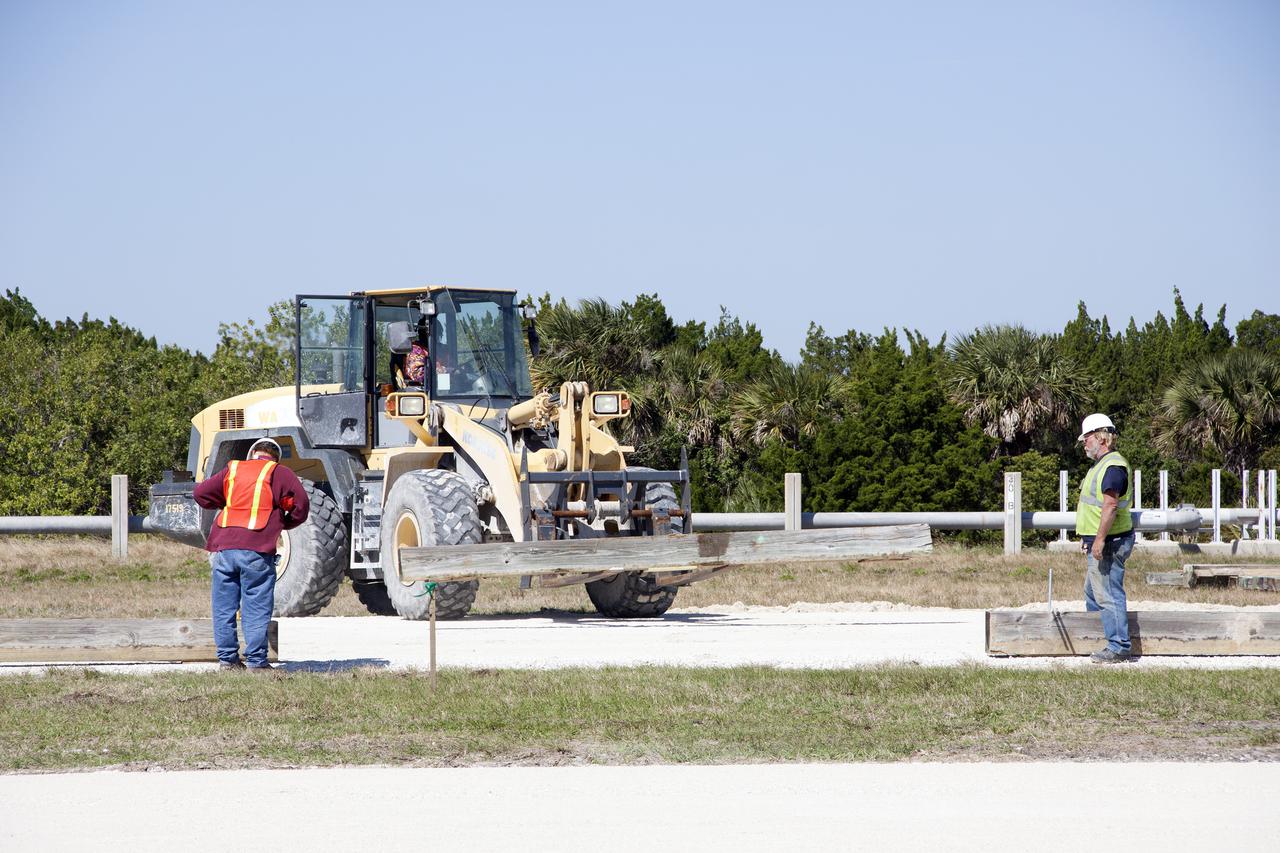
CAPE CANAVERAL, Fla. -- At NASA’s Kennedy Space Center in Florida, workers from Canaveral Construction in Mims, Fla., continue to re-grade the lime rock in sections of the crawlerway leading to Launch Pad 39B. The crawlerway is being upgraded to improve the foundation and prepare it to support the weight of NASA’s Space Launch System, or SLS, and mobile launcher on the crawler-transporter during rollout. Workers are removing the original Alabama river rock and restoring the layer of lime rock below to its original depth. Then new river rock will be added on top. The Ground Systems Development and Operations, or GSDO, Program office at Kennedy is leading the center’s transformation to safely handle a variety of rockets and spacecraft. For more information about GSDO, visit: http:__go.nasa.gov_groundsystems. Photo credit: NASA_Jim Grossmann
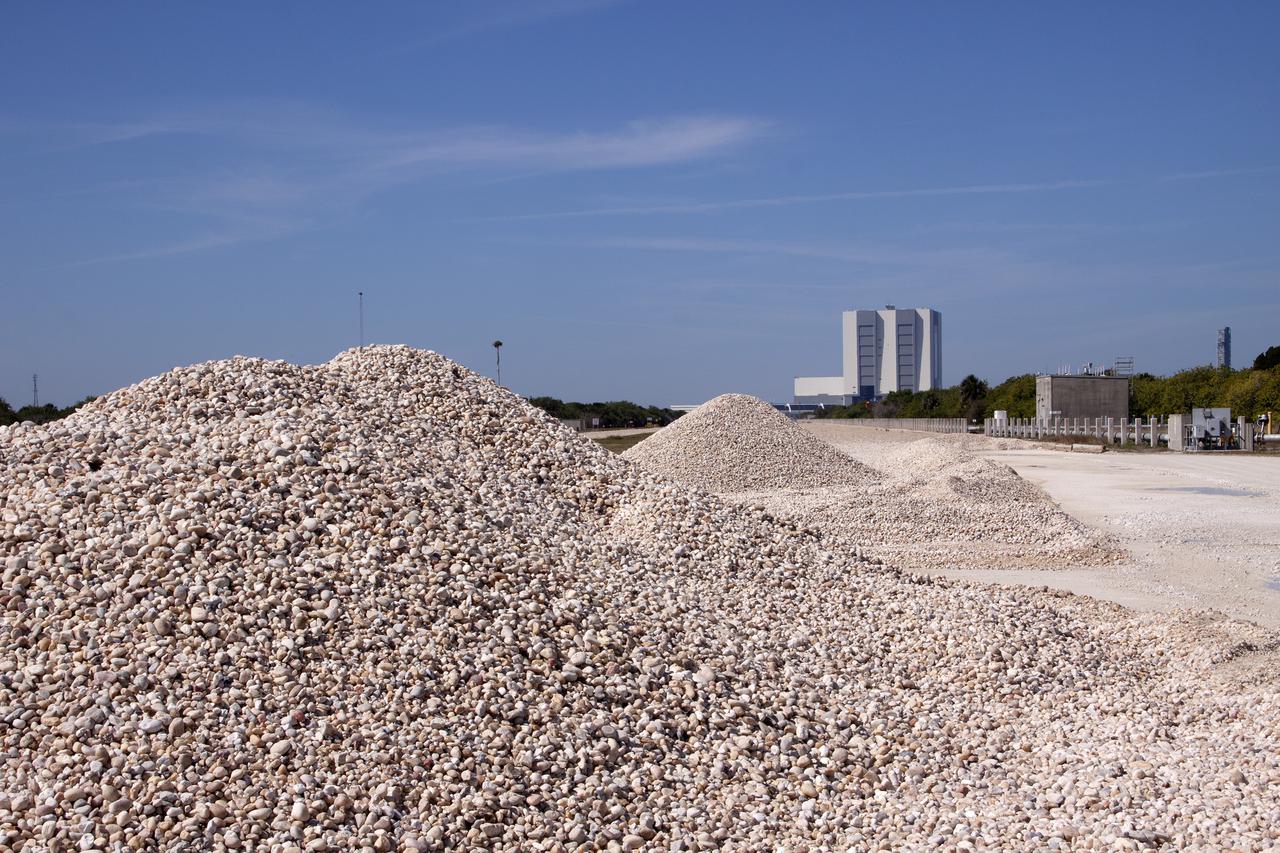
CAPE CANAVERAL, Fla. -- On the crawlerway leading to Launch Pad 39B at NASA’s Kennedy Space Center in Florida, workers from Canaveral Construction in Mims, Fla., continue to remove sections of the Alabama river rock in order to re-grade the lime rock below. The crawlerway is being upgraded to improve the foundation and prepare it to support the weight of NASA’s Space Launch System, or SLS, and mobile launcher on the crawler-transporter during rollout. Workers are removing the original Alabama river rock and restoring the layer of lime rock below to its original depth. Then new river rock will be added on top. The Ground Systems Development and Operations, or GSDO, Program office at Kennedy is leading the center’s transformation to safely handle a variety of rockets and spacecraft. For more information about GSDO, visit: http:__go.nasa.gov_groundsystems. Photo credit: NASA_Jim Grossmann
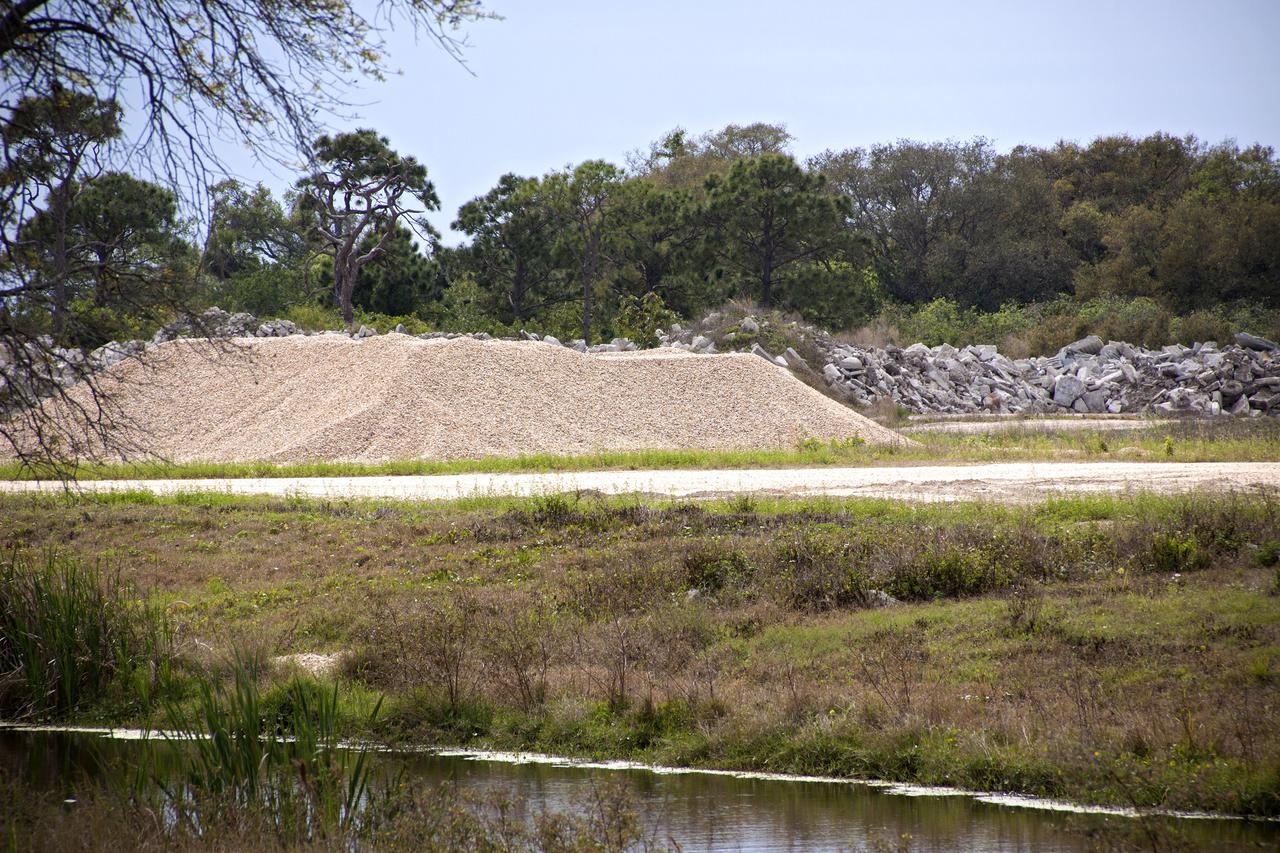
CAPE CANAVERAL, Fla. -- At NASA’s Kennedy Space Center in Florida, workers from Canaveral Construction in Mims, Fla., removed the Alabama river rock from sections of the crawlerway near Launch Pad 39B and transported it to the landfill. The crawlerway is being upgraded to improve the foundation and prepare it to support the weight of NASA’s Space Launch System, or SLS, and mobile launcher on the crawler-transporter during rollout. Workers are removing the original Alabama river rock and restoring the layer of lime rock below to its original depth. Then new river rock will be added on top. The Ground Systems Development and Operations, or GSDO, Program office at Kennedy is leading the center’s transformation to safely handle a variety of rockets and spacecraft. For more information about GSDO, visit: http:__go.nasa.gov_groundsystems. Photo credit: NASA_Jim Grossmann
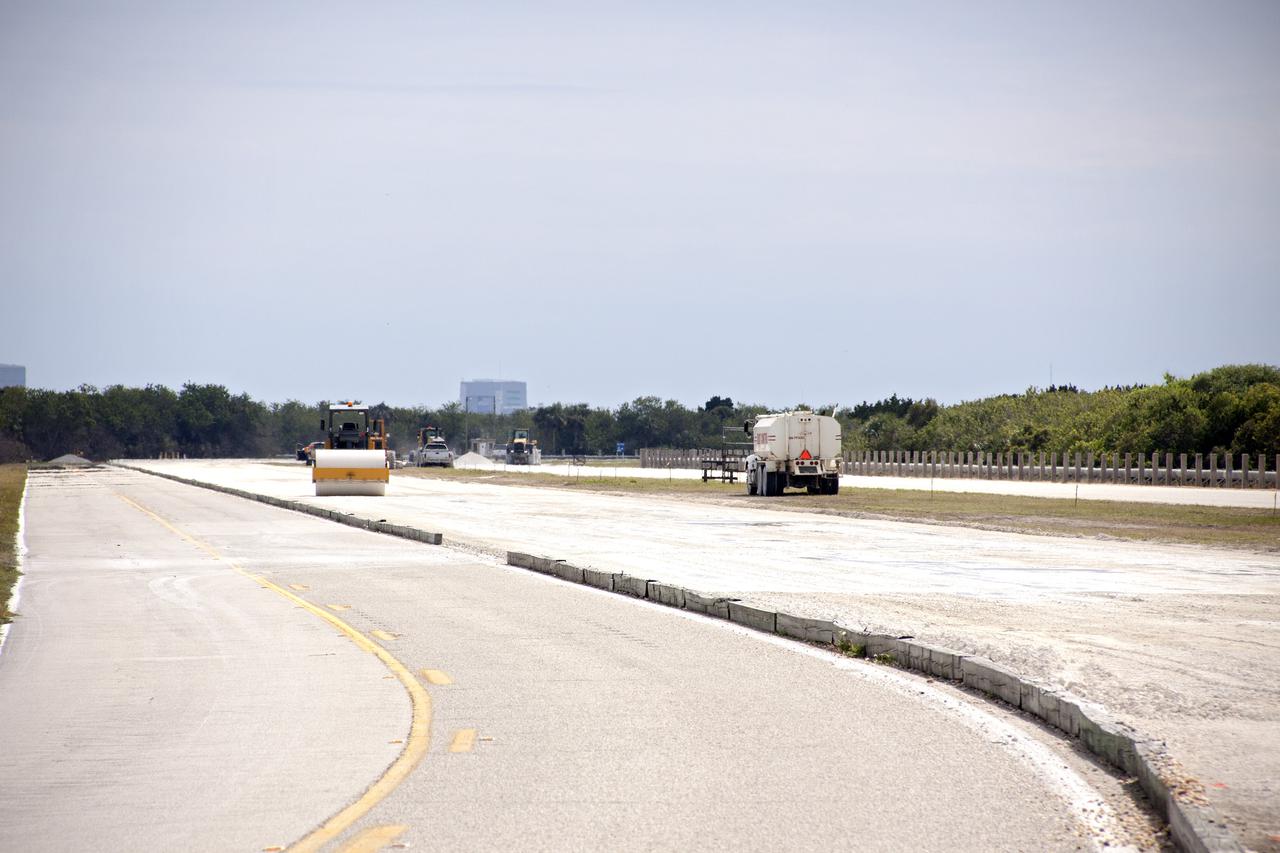
CAPE CANAVERAL, Fla. --Workers from Canaveral Construction in Mims, Fla., continue to re-grade the lime rock on the crawlerway near Launch Pad 39B at NASA’s Kennedy Space Center in Florida. The crawlerway is being upgraded to improve the foundation and prepare it to support the weight of NASA’s Space Launch System, or SLS, and mobile launcher on the crawler-transporter during rollout. Workers are removing the original Alabama river rock and restoring the layer of lime rock below to its original depth. Then new river rock will be added on top. The Ground Systems Development and Operations, or GSDO, Program office at Kennedy is leading the center’s transformation to safely handle a variety of rockets and spacecraft. For more information about GSDO, visit: http:__go.nasa.gov_groundsystems. Photo credit: NASA_Jim Grossmann
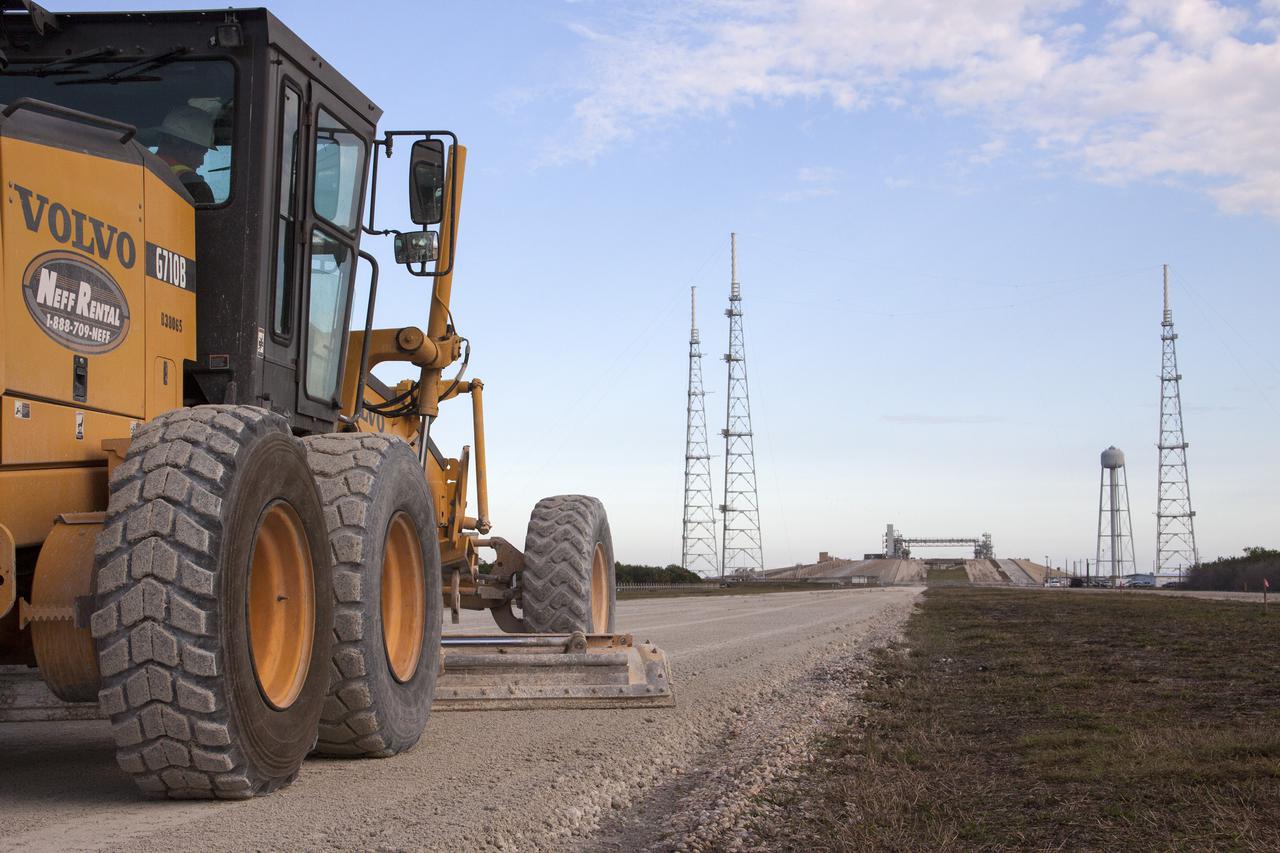
CAPE CANAVERAL, Fla. – A worker from Canaveral Construction in Mims, Fla., re-grades a section of the crawlerway near Launch Pad 39B at NASA’s Kennedy Space Center in Florida. The crawlerway is being upgraded to improve the foundation and prepare it to support the weight of NASA’s Space Launch System, or SLS, and mobile launcher on the crawler-transporter during rollout. Workers are removing the original Alabama river rock and restoring the layer of lime rock below to its original depth of three feet. Then new river rock will be added on top. The Ground Systems Development and Operations, or GSDO, Program office at Kennedy is leading the center’s transformation to safely handle a variety of rockets and spacecraft. For more information about GSDO, visit: http:__go.nasa.gov_groundsystems. Photo credit: NASA_Jim Grossmann
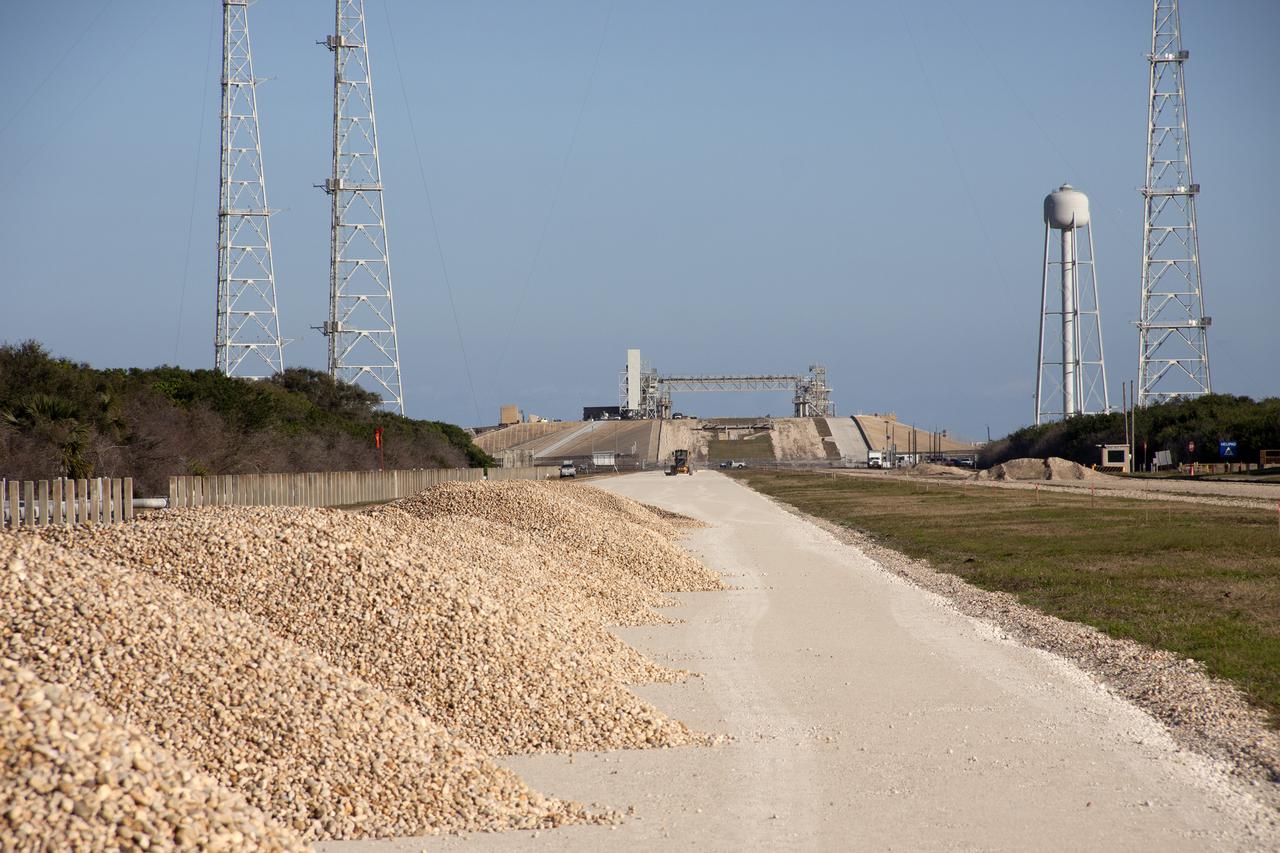
CAPE CANAVERAL, Fla. -- At NASA’s Kennedy Space Center in Florida, workers from Canaveral Construction in Mims, Fla., continue to re-grade the lime rock in sections of the crawlerway leading to Launch Pad 39B. The crawlerway is being upgraded to improve the foundation and prepare it to support the weight of NASA’s Space Launch System, or SLS, and mobile launcher on the crawler-transporter during rollout. Workers are removing the original Alabama river rock and restoring the layer of lime rock below to its original depth. Then new river rock will be added on top. The Ground Systems Development and Operations, or GSDO, Program office at Kennedy is leading the center’s transformation to safely handle a variety of rockets and spacecraft. For more information about GSDO, visit: http:__go.nasa.gov_groundsystems. Photo credit: NASA_Jim Grossmann
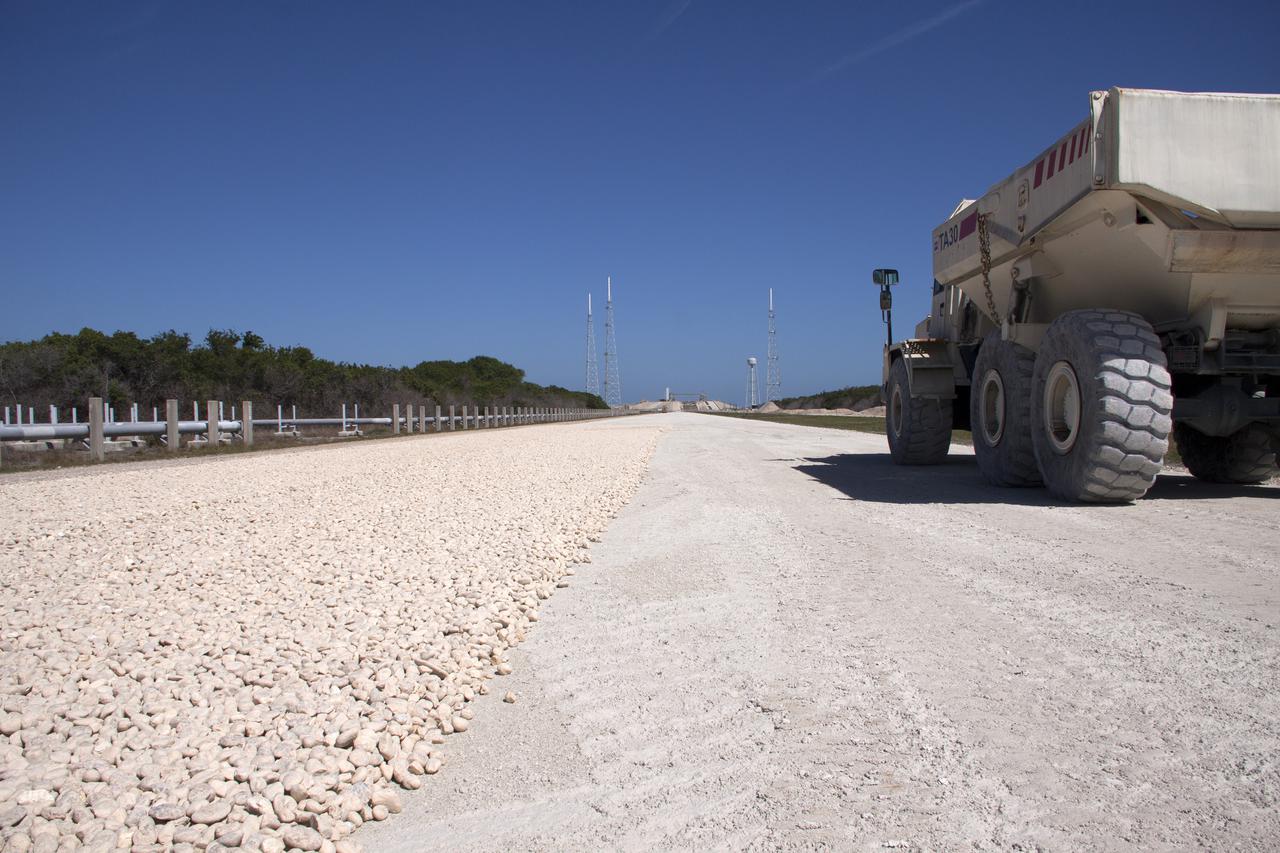
CAPE CANAVERAL, Fla. – Workers from Canaveral Construction in Mims, Fla., have removed the Alabama river rock from one side of the crawlerway near Launch Pad 39B at NASA’s Kennedy Space Center in Florida. The crawlerway is being upgraded to improve the foundation and prepare it to support the weight of NASA’s Space Launch System, or SLS, and mobile launcher on the crawler-transporter during rollout. Workers are removing the original Alabama river rock and restoring the layer of lime rock below to its original depth of three feet. Then new river rock will be added on top. The Ground Systems Development and Operations, or GSDO, Program office at Kennedy is leading the center’s transformation to safely handle a variety of rockets and spacecraft. For more information about GSDO, visit: http:__go.nasa.gov_groundsystems. Photo credit: NASA_Jim Grossmann
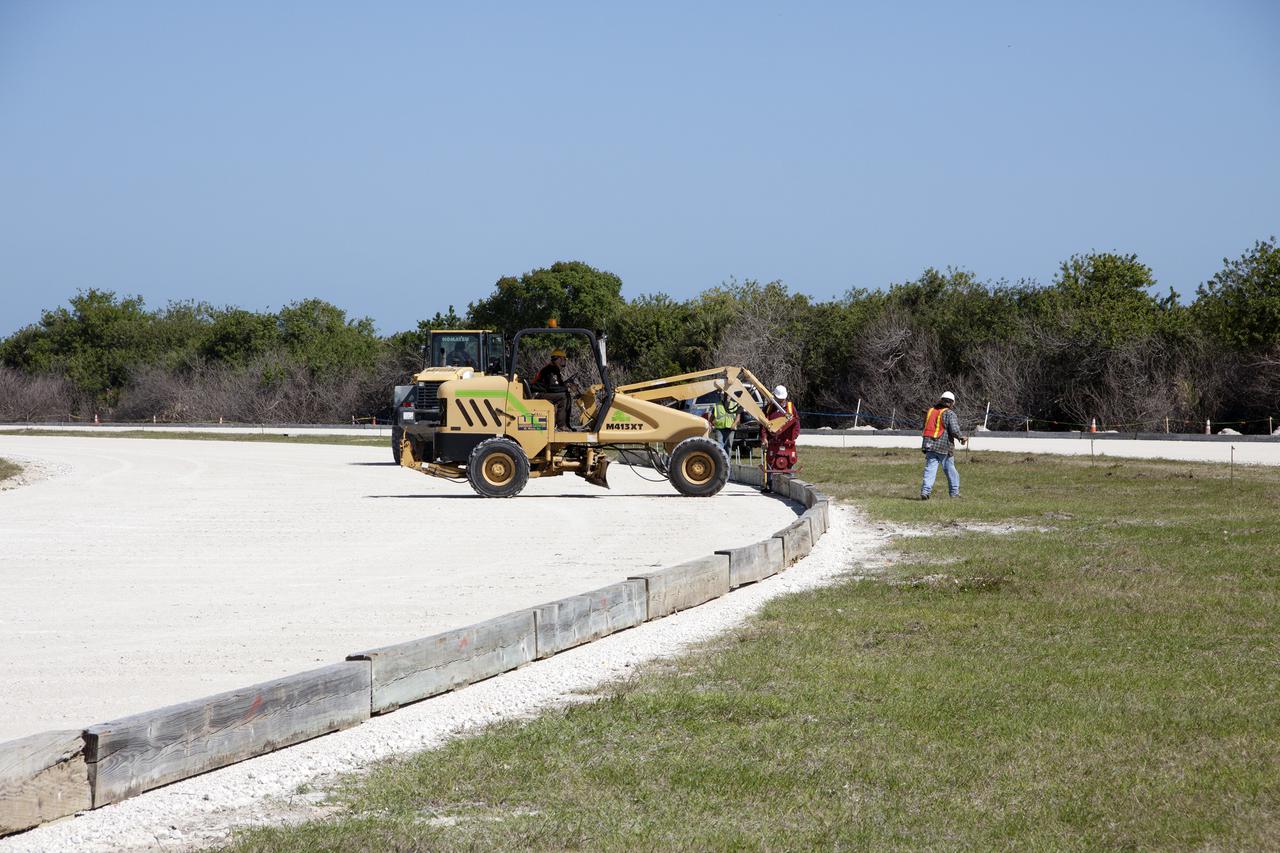
CAPE CANAVERAL, Fla. -- At NASA’s Kennedy Space Center in Florida, workers from Canaveral Construction in Mims, Fla., continue to re-grade the lime rock in sections of the crawlerway leading to Launch Pad 39B. The crawlerway is being upgraded to improve the foundation and prepare it to support the weight of NASA’s Space Launch System, or SLS, and mobile launcher on the crawler-transporter during rollout. Workers are removing the original Alabama river rock and restoring the layer of lime rock below to its original depth. Then new river rock will be added on top. The Ground Systems Development and Operations, or GSDO, Program office at Kennedy is leading the center’s transformation to safely handle a variety of rockets and spacecraft. For more information about GSDO, visit: http:__go.nasa.gov_groundsystems. Photo credit: NASA_Jim Grossmann
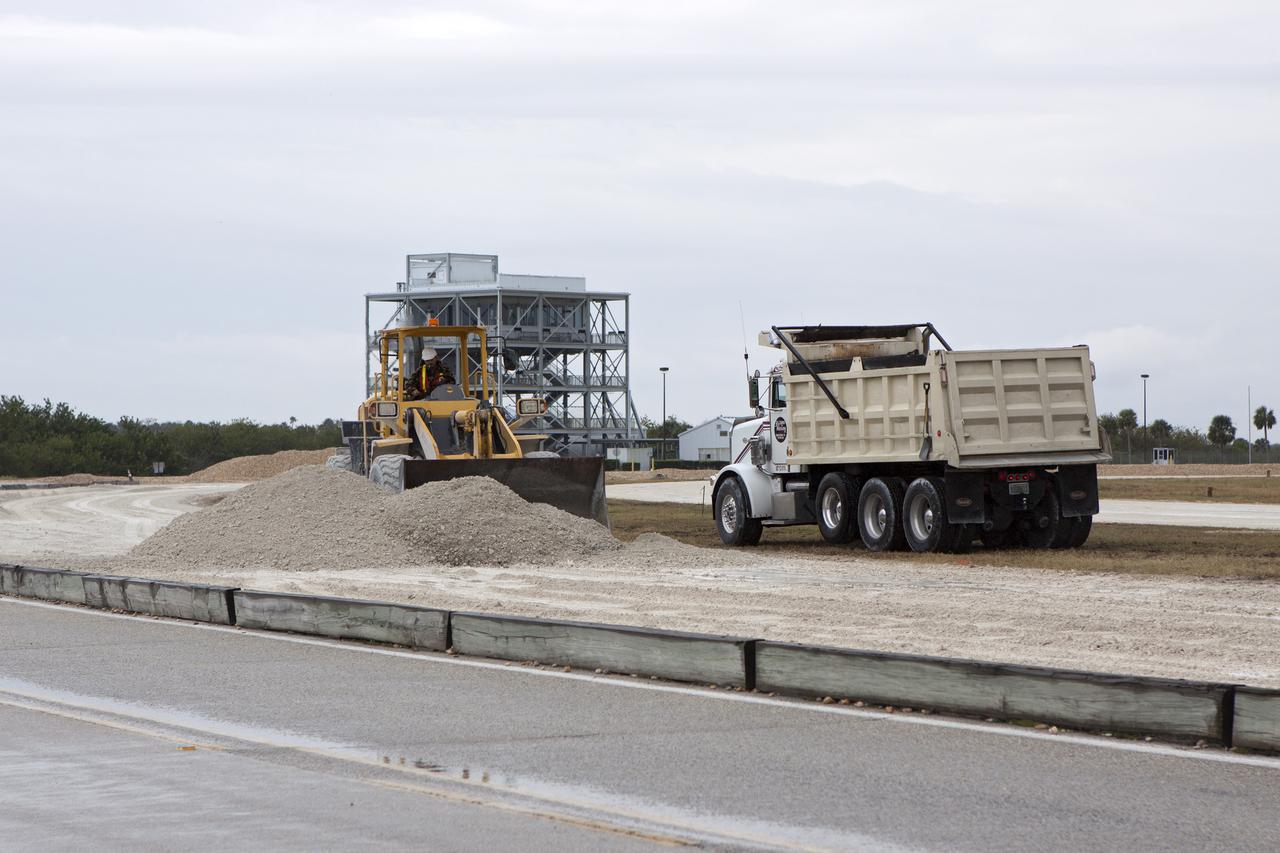
CAPE CANAVERAL, Fla. – Workers from Canaveral Construction in Mims, Fla., remove the Alabama river rock from the crawlerway near the turn off to Launch Pad 39B at NASA’s Kennedy Space Center in Florida. In the background is the Launch Viewing Gantry that is a Kennedy Space Center Visitor Complex tour stop. The crawlerway is being upgraded to improve the foundation and prepare it to support the weight of NASA’s Space Launch System, or SLS, and mobile launcher on the crawler-transporter during rollout. Workers are removing the original Alabama river rock and restoring the layer of lime rock below to its original depth. Then new river rock will be added on top. The Ground Systems Development and Operations, or GSDO, Program office at Kennedy is leading the center’s transformation to safely handle a variety of rockets and spacecraft. For more information about GSDO, visit: http:__go.nasa.gov_groundsystems. Photo credit: NASA_Jim Grossmann
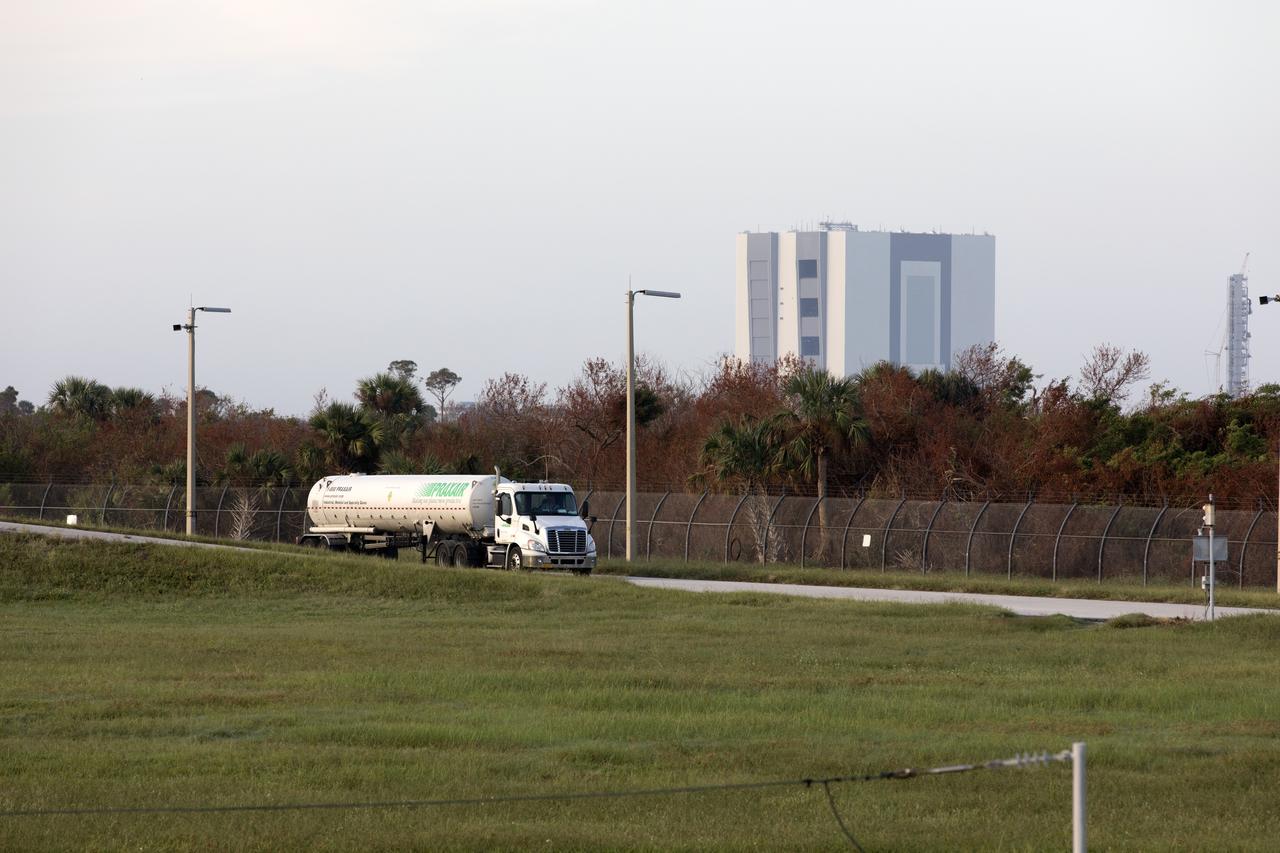
One of several Praxair trucks carrying its load of liquid oxygen, or LO2, is in route to Launch Pad 39B at NASA's Kennedy Space Center in Florida. The truck will offload LO2 slowly into a giant storage sphere located at the northwest corner of the pad to gradually chill it down from normal temperature to about negative 298 degrees Fahrenheit, during the first major integrated operation to prepare for the launch of the agency's Orion spacecraft atop the Space Launch System (SLS) rocket. The Ground Systems Development and Operations Program is overseeing upgrades and modifications to pad B to support the launch of the SLS and Orion spacecraft for Exploration Mission-1, deep space missions and NASA’s journey to Mars.
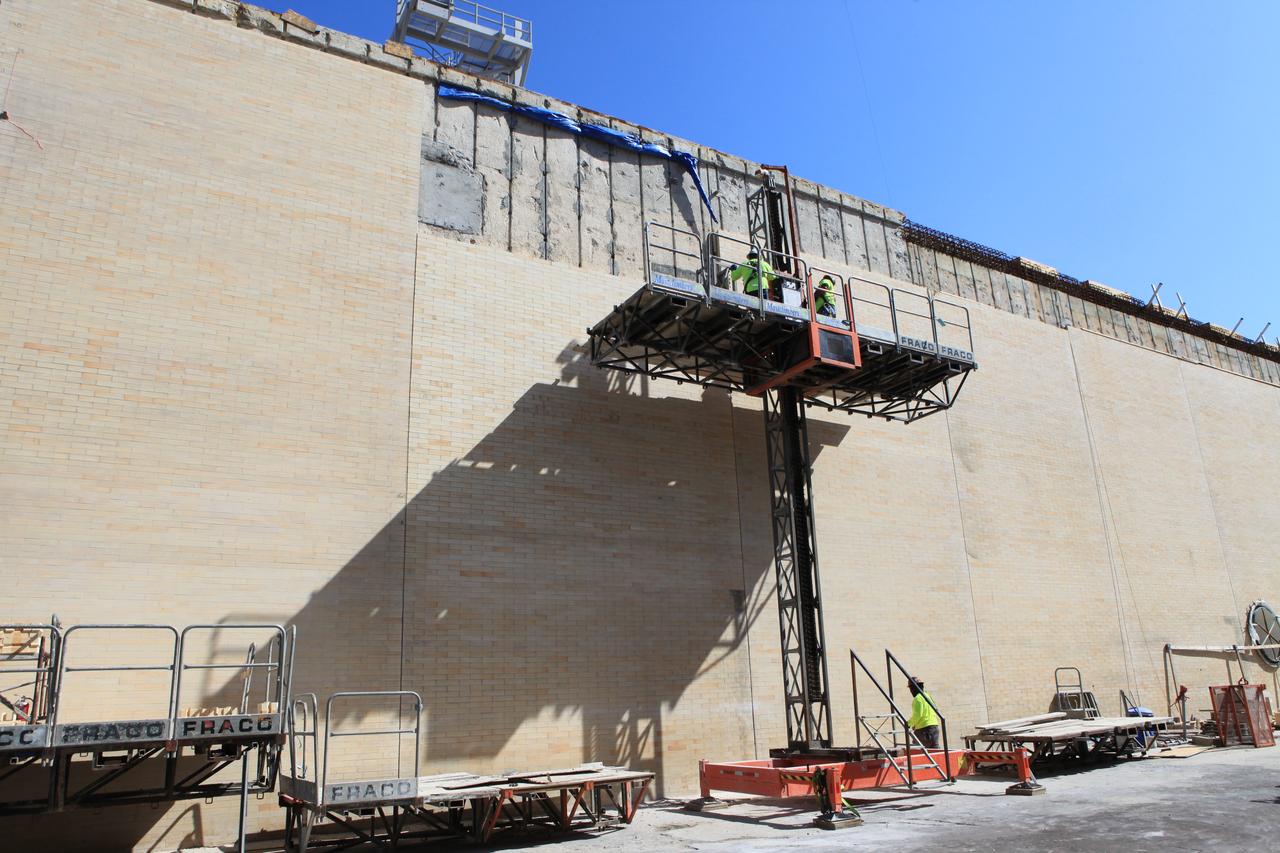
Progress continues on the new flame trench at Launch Pad 39B at NASA's Kennedy Space Center in Florida. Construction workers with J.P. Donovan of Rockledge, Florida, are on an elevated work stand to install new heat-resistant bricks on the north side of the flame trench. The Pad B flame trench is being refurbished to support the launch of NASA’s Space Launch System rocket. The Ground Systems Development and Operations (GSDO) Program at Kennedy is helping transform the space center into a multi-user spaceport and prepare for Exploration Mission 1, deep space missions, and NASA's Journey to Mars. For more information about GSDO, visit: http://www.nasa.gov/groundsystems.
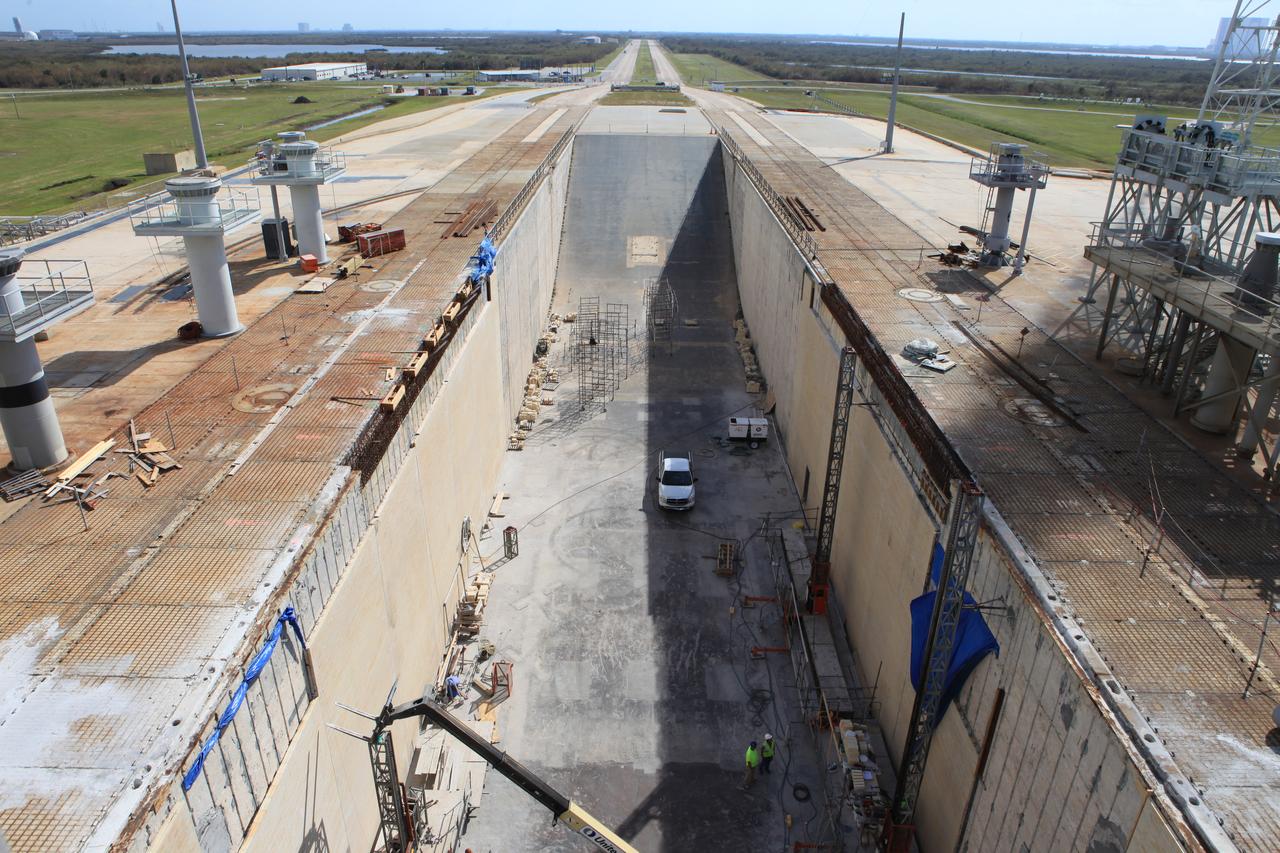
Progress on the new brick walls of the north side of the flame trench at Launch Pad 39B is seen in a view from the top of the pad at NASA’s Kennedy Space Center in Florida. Construction workers with J.P. Donovan of Rockledge, Florida, continue to install new heat-resistant bricks on the concrete walls. The Pad B flame trench is being refurbished to support the launch of NASA’s Space Launch System rocket. The Ground Systems Development and Operations (GSDO) Program at Kennedy is helping transform the space center into a multi-user spaceport and prepare for Exploration Mission 1, deep-space missions, and the journey to Mars. For more information about GSDO, visit: http://www.nasa.gov/groundsystems.
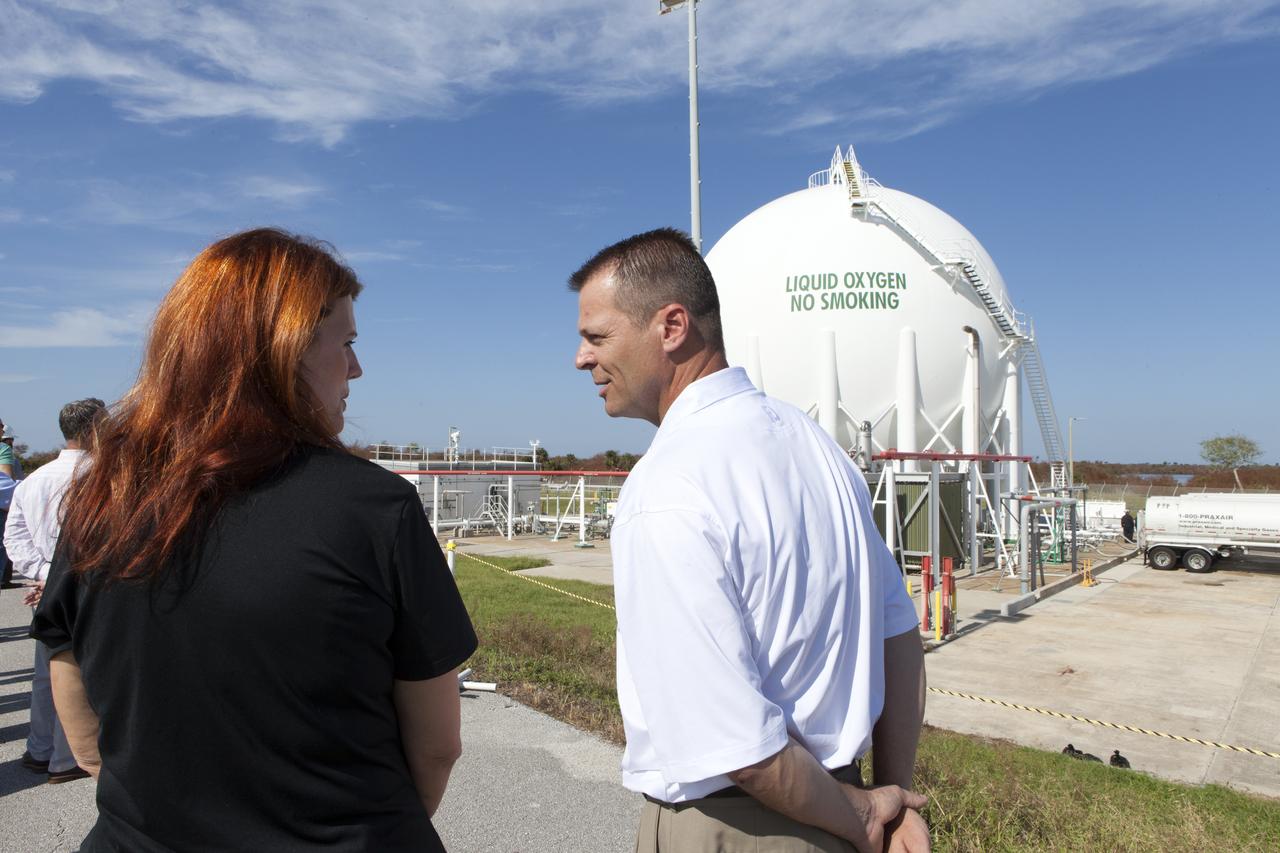
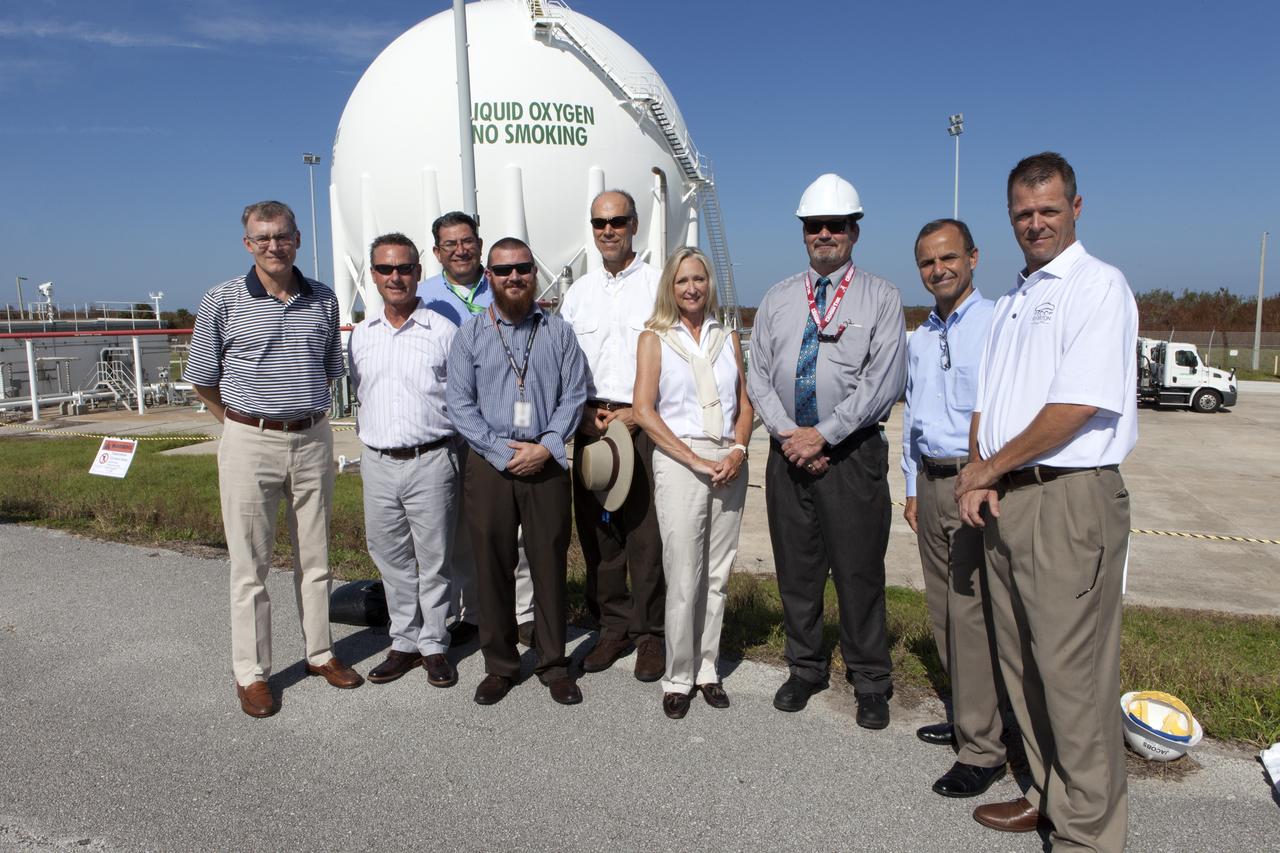
NASA Launch Director Charlie Blackwell-Thompson, at left, arrives at Launch Pad 39B at NASA's Kennedy Space Center in Florida, to observe the first major tanking operation of liquid oxygen, or LO2, into the giant storage sphere at the northwest corner of the pad to prepare for the launch of the agency's Orion spacecraft atop the Space Launch System (SLS) rocket. During the operation, several Praxair trucks will slowly offload LO2 to gradually chill down the sphere from normal temperature to about negative 298 degrees Fahrenheit. The Ground Systems Development and Operations Program is overseeing upgrades and modifications to pad B to support the launch of the SLS and Orion spacecraft for Exploration Mission-1, deep space missions and NASA’s journey to Mars.
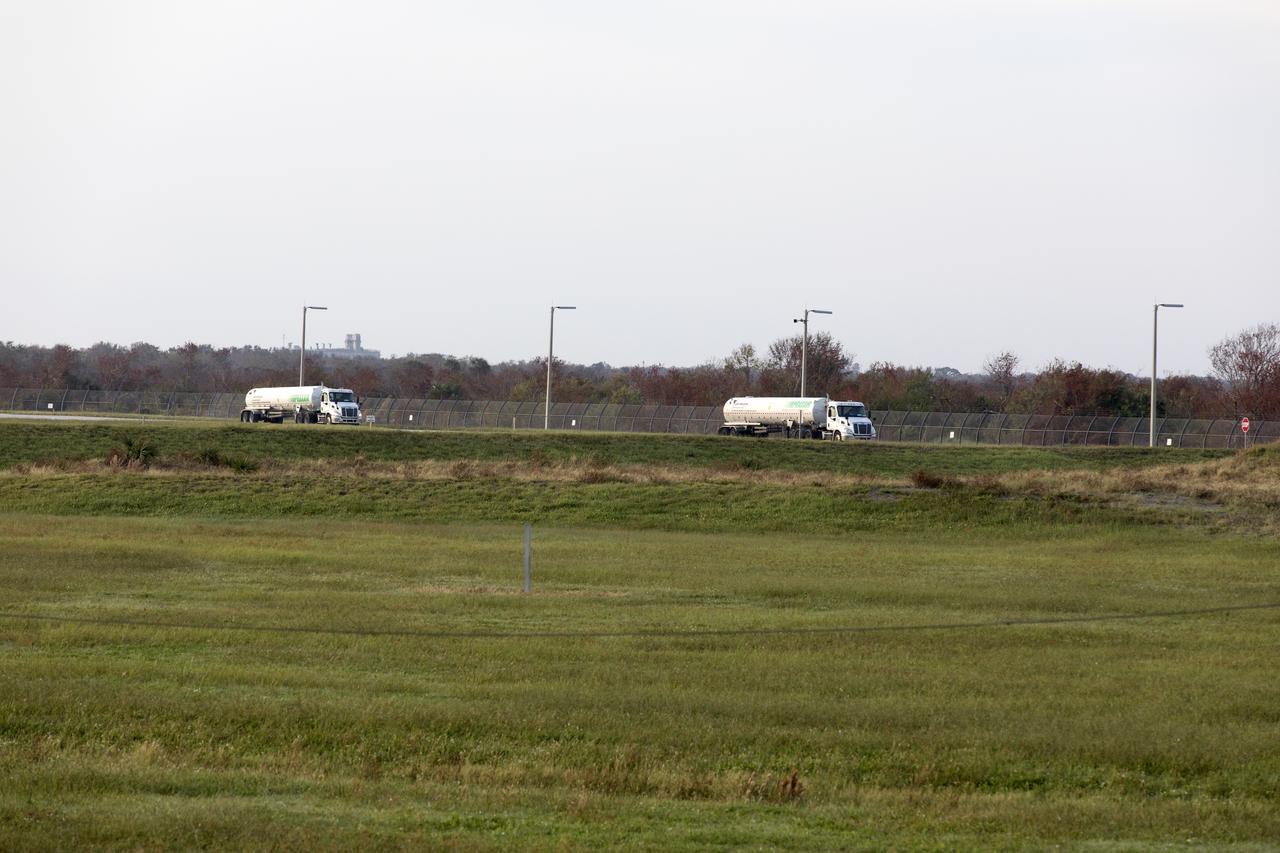
Praxair trucks carrying their loads of liquid oxygen, or LO2, are on their way to Launch Pad 39B at NASA's Kennedy Space Center in Florida. The trucks will offload LO2 slowly into a giant storage sphere located at the northwest corner of the pad to gradually chill it down from normal temperature to about negative 298 degrees Fahrenheit, during the first major integrated operation to prepare for the launch of the agency's Orion spacecraft atop the Space Launch System (SLS) rocket. The Ground Systems Development and Operations Program is overseeing upgrades and modifications to pad B to support the launch of the SLS and Orion spacecraft for Exploration Mission-1, deep space missions and NASA’s journey to Mars.
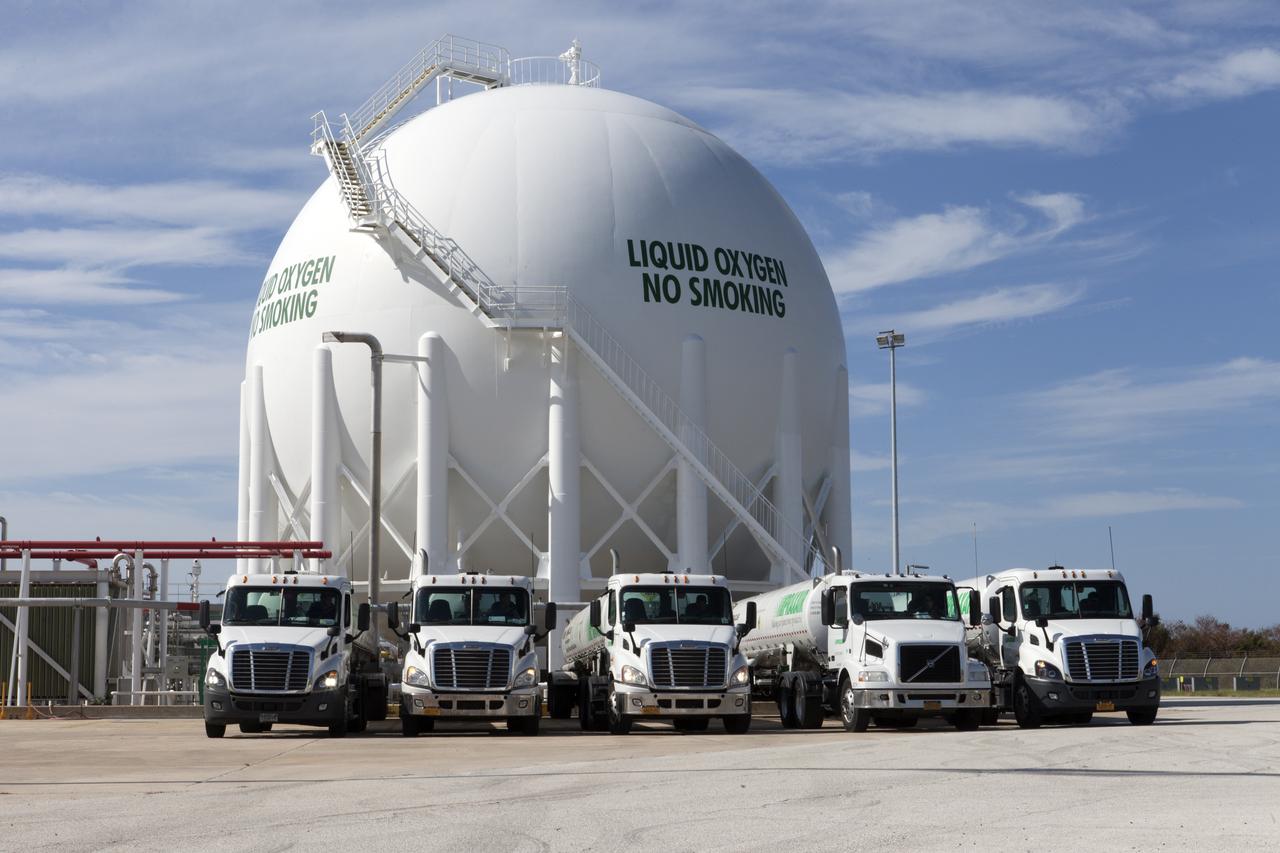
Several Praxair trucks carrying their loads of liquid oxygen, or LO2, have arrived at Launch Pad 39B at NASA's Kennedy Space Center in Florida. The trucks will begin to offload the LO2 one at a time into the giant storage sphere located at the northwest corner of the pad. The sphere will gradually be chilled down from normal temperature to about negative 298 degrees Fahrenheit, during the first major integrated operation to prepare for the launch of the agency's Orion spacecraft atop the Space Launch System (SLS) rocket. The Ground Systems Development and Operations Program is overseeing upgrades and modifications to pad B to support the launch of the SLS and Orion spacecraft for Exploration Mission-1, deep space missions and NASA’s journey to Mars.
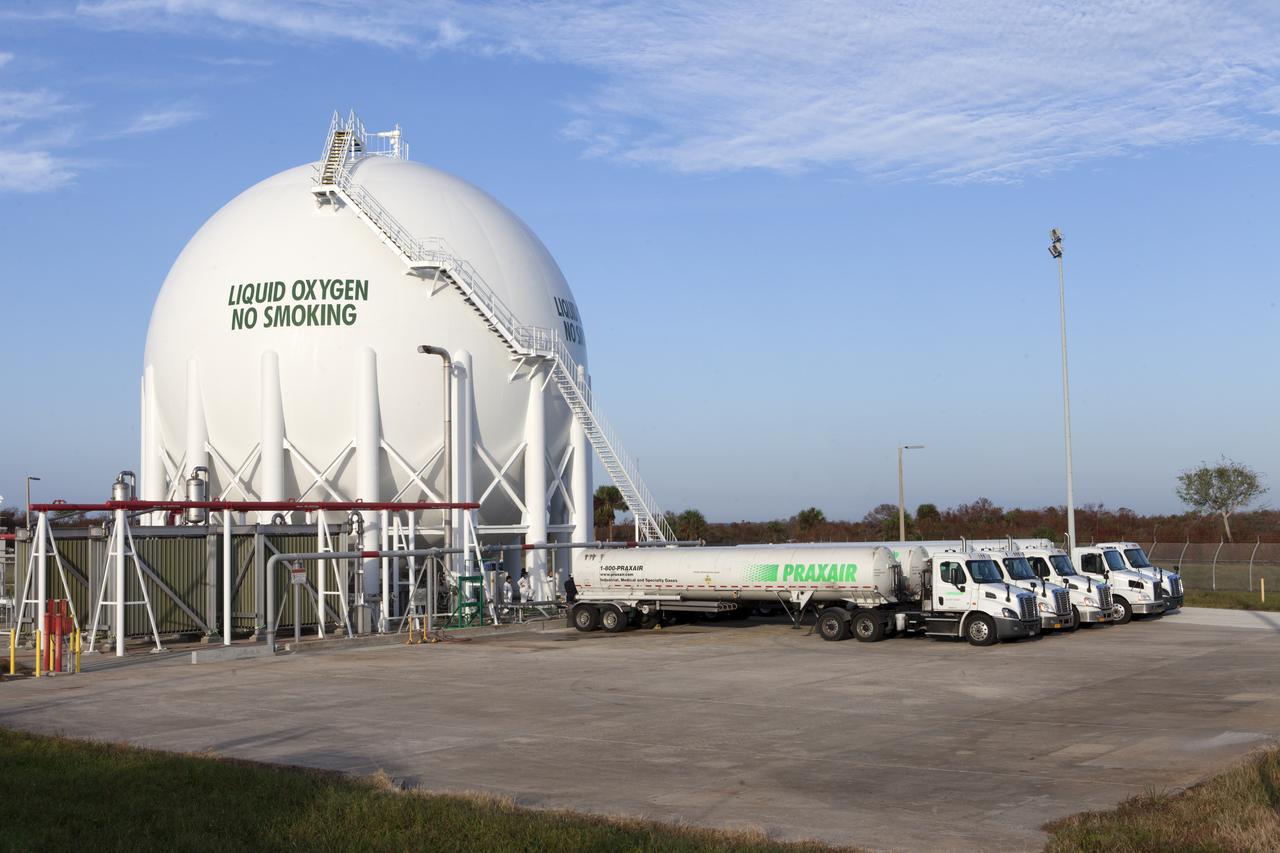
Several Praxair trucks carrying their loads of liquid oxygen, or LO2, have arrived at Launch Pad 39B at NASA's Kennedy Space Center in Florida. The trucks will offload LO2 slowly into a giant storage sphere located at the northwest corner of the pad to gradually chill it down from normal temperature to about negative 298 degrees Fahrenheit, during the first major integrated operation to prepare for the launch of the agency's Orion spacecraft atop the Space Launch System (SLS) rocket. The Ground Systems Development and Operations Program is overseeing upgrades and modifications to pad B to support the launch of the SLS and Orion spacecraft for Exploration Mission-1, deep space missions and NASA’s journey to Mars.
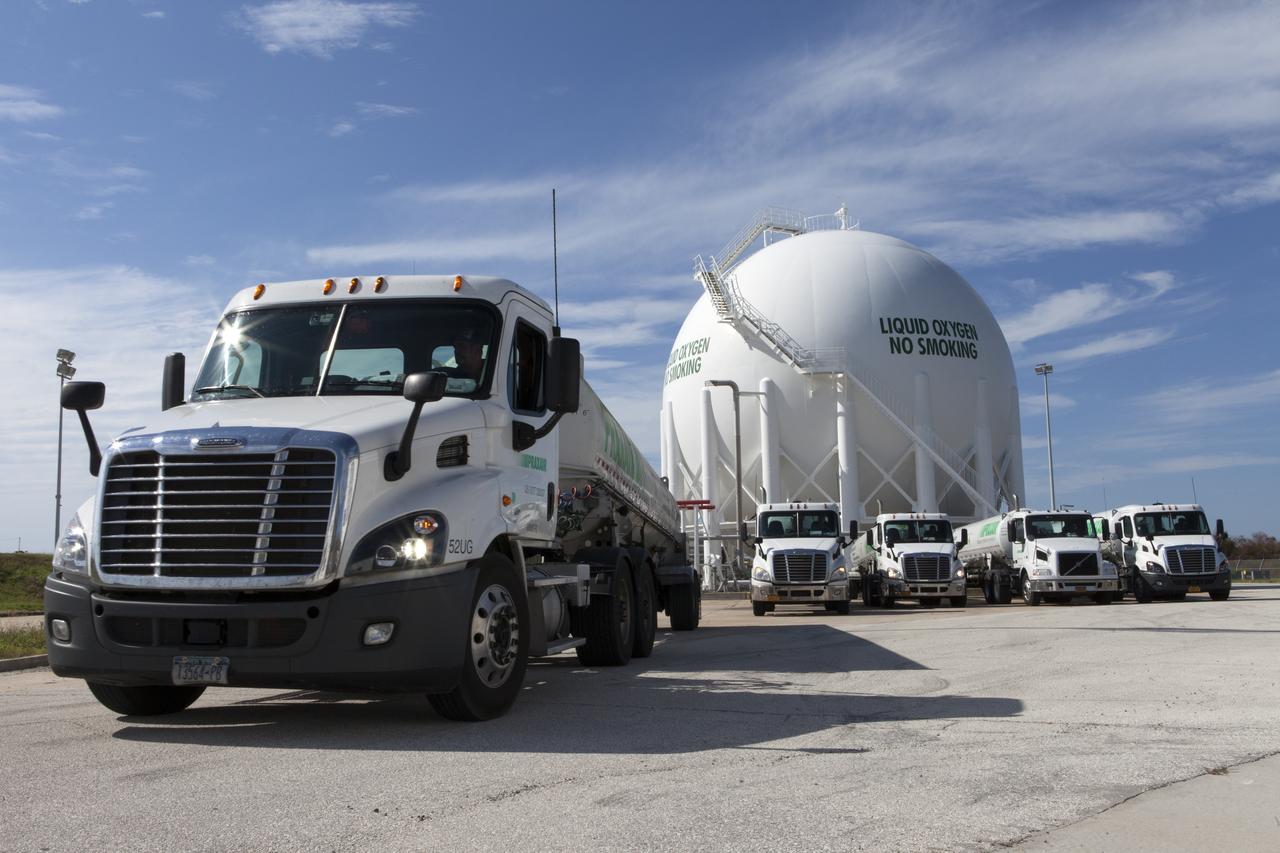
Several Praxair trucks begin to depart Launch Pad 39B at NASA's Kennedy Space Center in Florida, after offloading their loads of liquid oxygen, or LO2, one at a time into the giant storage sphere located at the northwest corner of the pad. The sphere was gradually chilled down from normal temperature to about negative 298 degrees Fahrenheit, during the first major integrated operation to prepare for the launch of the agency's Orion spacecraft atop the Space Launch System (SLS) rocket. The Ground Systems Development and Operations Program is overseeing upgrades and modifications to pad B to support the launch of the SLS and Orion spacecraft for Exploration Mission-1, deep space missions and NASA’s journey to Mars.
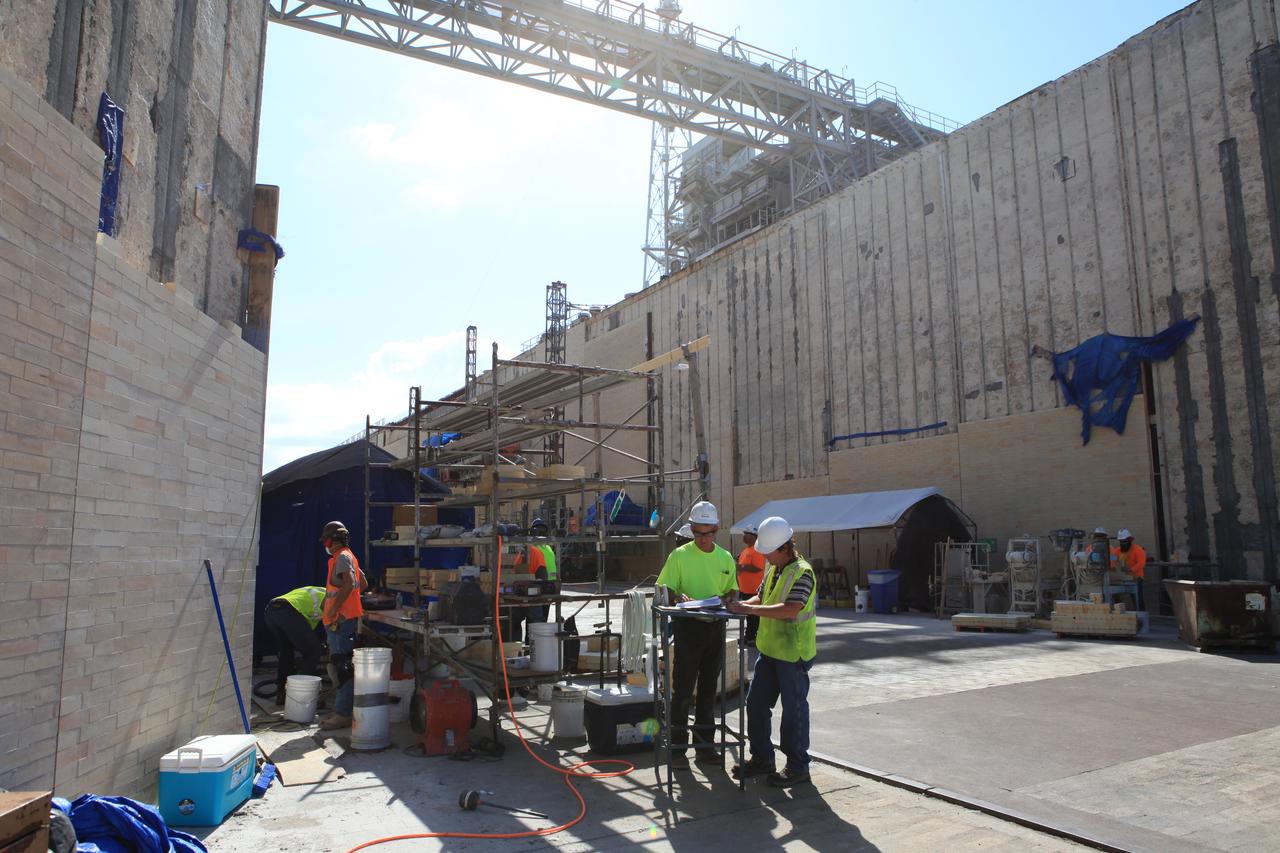
Progress continues on the new flame trench at Launch Pad 39B at NASA's Kennedy Space Center in Florida. Construction workers with J.P. Donovan of Rockledge, Florida, prepare new heat-resistant bricks for installation on the north side of the flame trench. The Pad B flame trench is being refurbished to support the launch of NASA’s Space Launch System rocket. The Ground Systems Development and Operations (GSDO) Program at Kennedy is helping transform the space center into a multi-user spaceport and prepare for Exploration Mission 1, deep space missions, and NASA's Journey to Mars. For more information about GSDO, visit: http://www.nasa.gov/groundsystems.
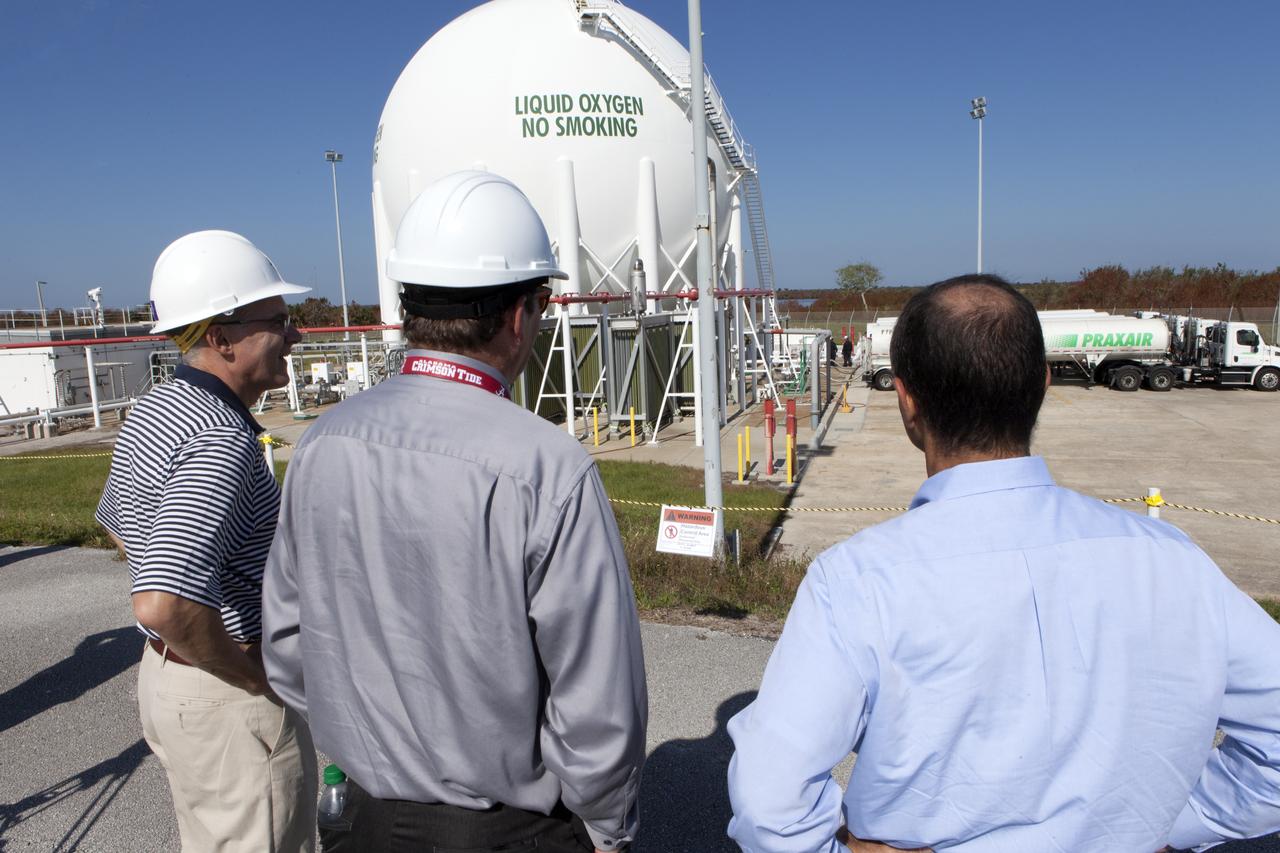
Engineers watch as several Praxair trucks carrying their loads of liquid oxygen, or LO2, arrive at Launch Pad 39B at NASA's Kennedy Space Center in Florida. The trucks will offload the LO2 one at a time into the giant storage sphere located at the northwest corner of the pad. The sphere will gradually be chilled down from normal temperature to about negative 298 degrees Fahrenheit, during the first major integrated operation to prepare for the launch of the agency's Orion spacecraft atop the Space Launch System (SLS) rocket. The Ground Systems Development and Operations Program is overseeing upgrades and modifications to pad B to support the launch of the SLS and Orion spacecraft for Exploration Mission-1, deep space missions and NASA’s journey to Mars.
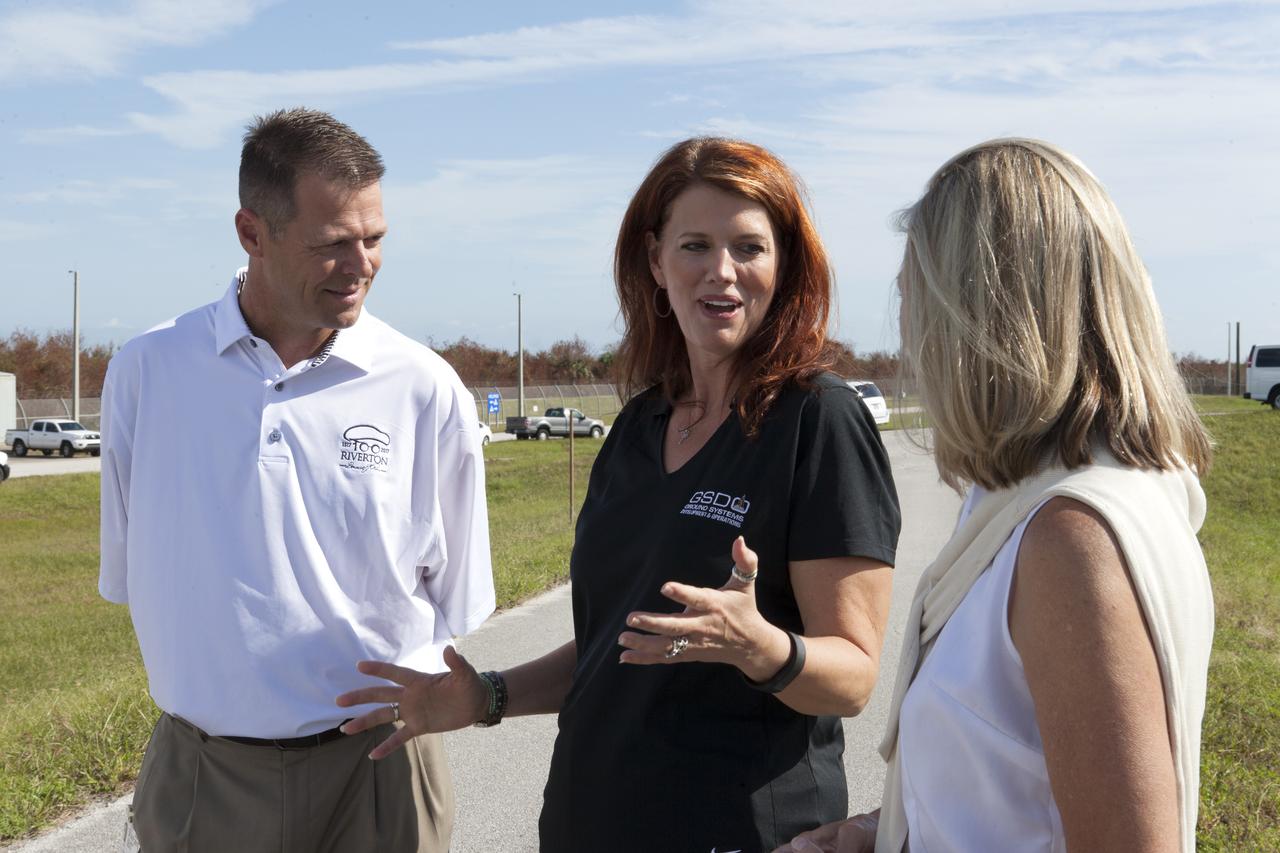
NASA Launch Director Charlie Blackwell-Thompson, center, talks to engineers at Launch Pad 39B at the agency's Kennedy Space Center in Florida. Blackwell-Thompson will observe the first major tanking operation of liquid oxygen, or LO2, into the giant storage sphere at the northwest corner of the pad to prepare for the launch of the agency's Orion spacecraft atop the Space Launch System (SLS) rocket. During the operation, several Praxair trucks will slowly offload LO2 to gradually chill down the sphere from normal temperature to about negative 298 degrees Fahrenheit. The Ground Systems Development and Operations Program is overseeing upgrades and modifications to pad B to support the launch of the SLS and Orion spacecraft for Exploration Mission-1, deep space missions and NASA’s journey to Mars.

Several Praxair trucks carrying their loads of liquid oxygen, or LO2, arrive at Launch Pad 39B at NASA's Kennedy Space Center in Florida. The trucks will offload LO2 slowly into a giant storage sphere located at the northwest corner of the pad to gradually chill it down from normal temperature to about negative 298 degrees Fahrenheit, during the first major integrated operation to prepare for the launch of the agency's Orion spacecraft atop the Space Launch System (SLS) rocket. The Ground Systems Development and Operations Program is overseeing upgrades and modifications to pad B to support the launch of the SLS and Orion spacecraft for Exploration Mission-1, deep space missions and NASA’s journey to Mars.
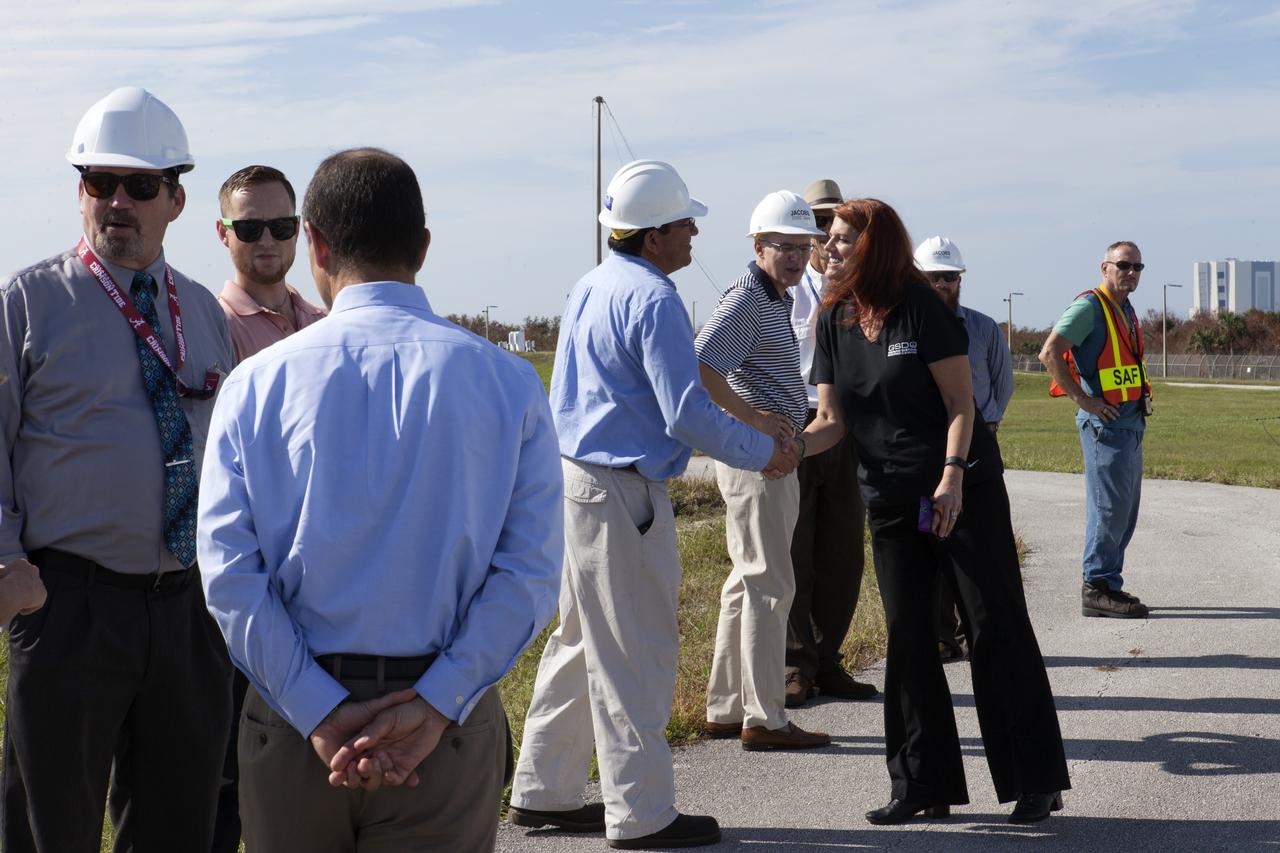
NASA Launch Director Charlie Blackwell-Thompson, at right, greets engineers and technicians at Launch Pad 39B at the agency's Kennedy Space Center in Florida. Blackwell-Thompson will observe the first major tanking operation of liquid oxygen, or LO2, into the giant storage sphere at the northwest corner of the pad to prepare for the launch of the agency's Orion spacecraft atop the Space Launch System (SLS) rocket. During the operation, several Praxair trucks will slowly offload LO2 to gradually chill down the sphere from normal temperature to about negative 298 degrees Fahrenheit. The Ground Systems Development and Operations Program is overseeing upgrades and modifications to pad B to support the launch of the SLS and Orion spacecraft for Exploration Mission-1, deep space missions and NASA’s journey to Mars.
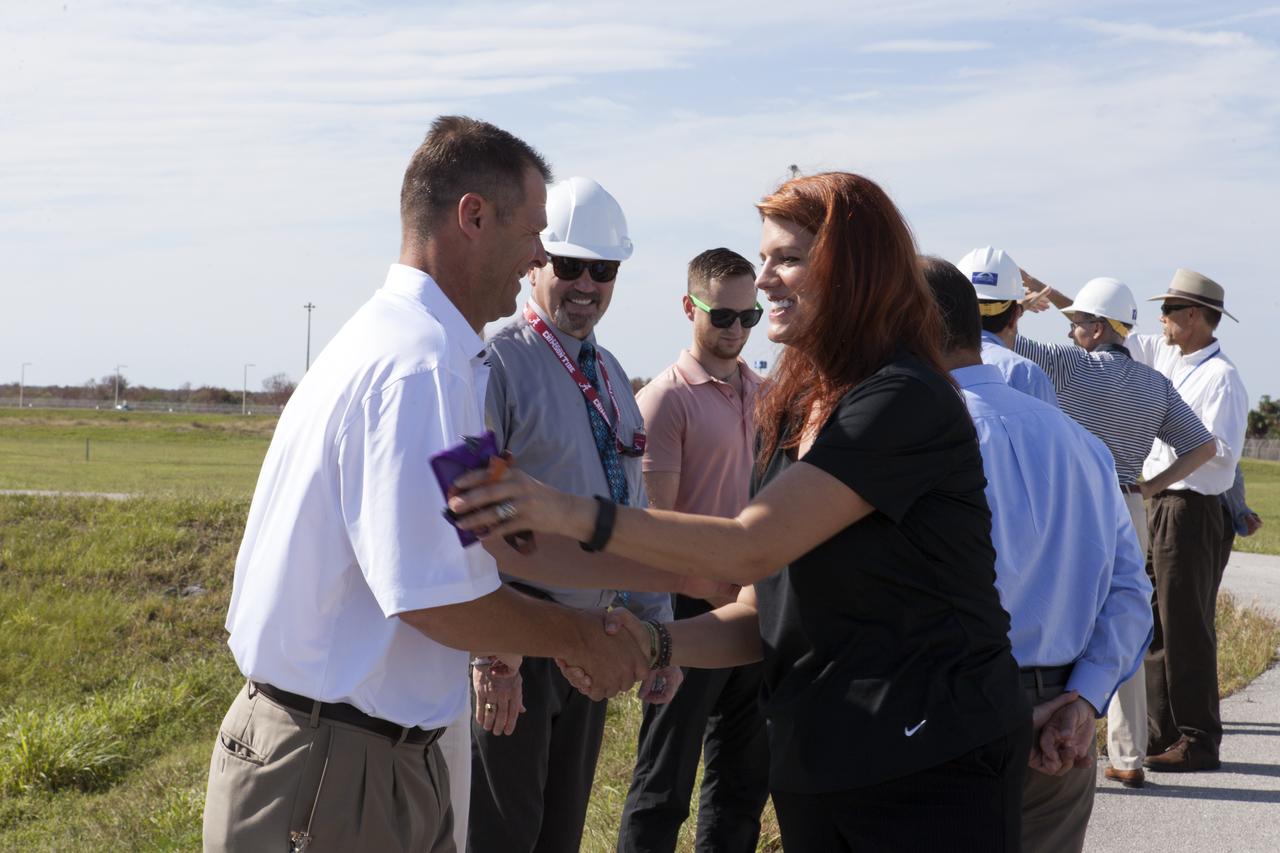
NASA Launch Director Charlie Blackwell-Thompson, at right, greets engineers and technicians at Launch Pad 39B at the agency's Kennedy Space Center in Florida. Blackwell-Thompson will observe the first major tanking operation of liquid oxygen, or LO2, into the giant storage sphere at the northwest corner of the pad to prepare for the launch of the agency's Orion spacecraft atop the Space Launch System (SLS) rocket. During the operation, several Praxair trucks will slowly offload LO2 to gradually chill down the sphere from normal temperature to about negative 298 degrees Fahrenheit. The Ground Systems Development and Operations Program is overseeing upgrades and modifications to pad B to support the launch of the SLS and Orion spacecraft for Exploration Mission-1, deep space missions and NASA’s journey to Mars.
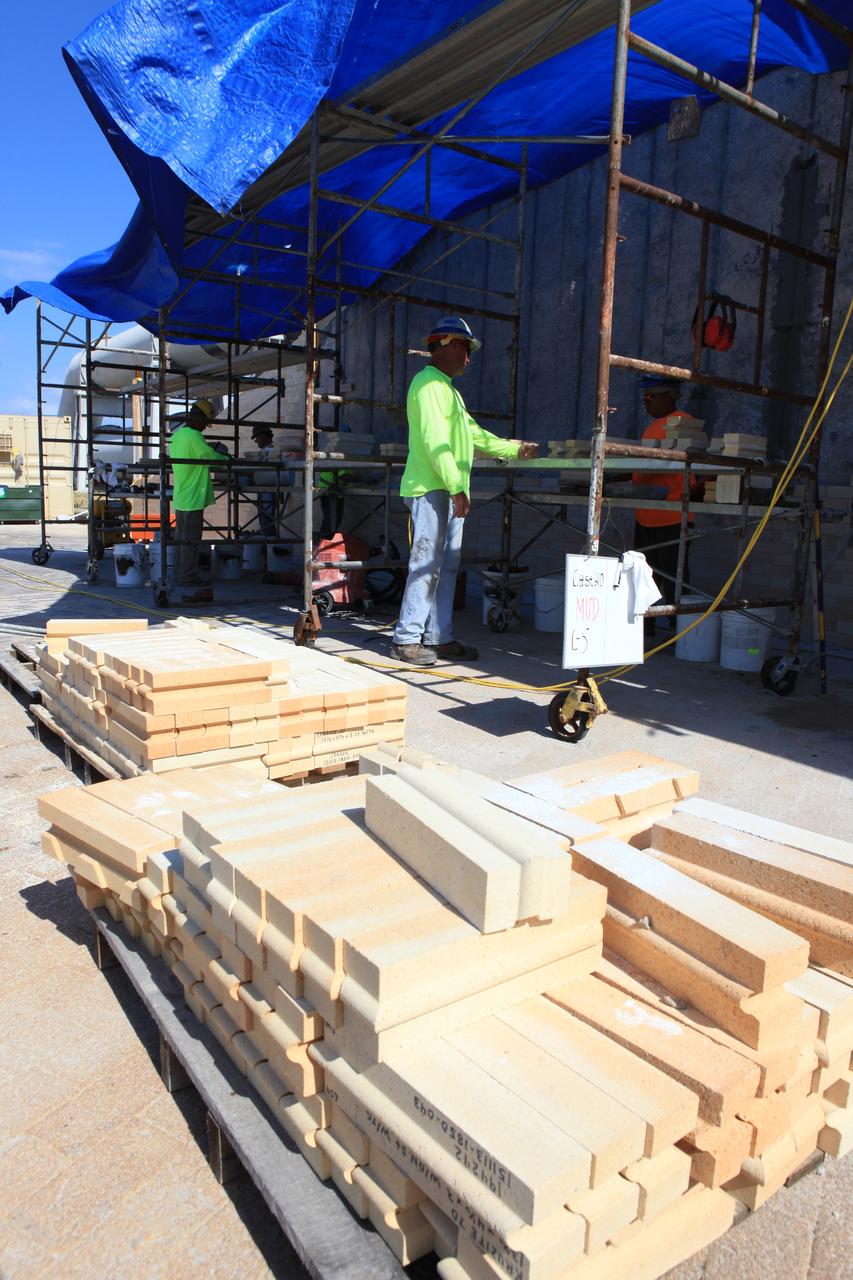
Progress continues on the new flame trench at Launch Pad 39B at NASA's Kennedy Space Center in Florida. Construction workers with J.P. Donovan of Rockledge, Florida, prepare new heat-resistant bricks for installation on the north side of the flame trench. The Pad B flame trench is being refurbished to support the launch of NASA’s Space Launch System rocket. The Ground Systems Development and Operations (GSDO) Program at Kennedy is helping transform the space center into a multi-user spaceport and prepare for Exploration Mission 1, deep space missions, and NASA's Journey to Mars. For more information about GSDO, visit: http://www.nasa.gov/groundsystems.
Liquid Oxygen filled in the Cryo tank of Pad 39B in support of the SLS rocket.
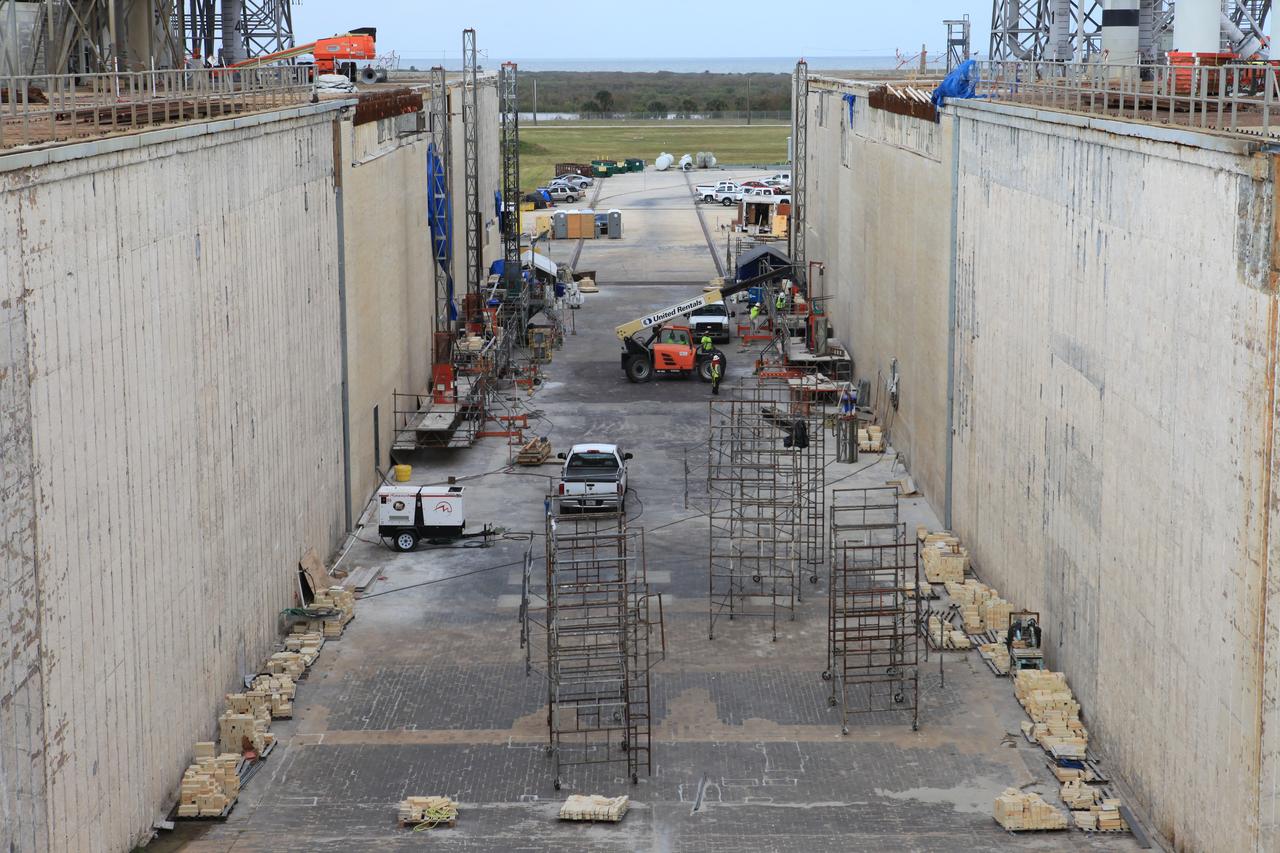
Progress on the new brick walls of the north side of the flame trench at Launch Pad 39B is seen in a view from the top of the pad at NASA’s Kennedy Space Center in Florida. Construction workers with J.P. Donovan of Rockledge, Florida, continue to install new heat-resistant bricks on the concrete walls. The Pad B flame trench is being refurbished to support the launch of NASA’s Space Launch System rocket. The Ground Systems Development and Operations (GSDO) Program at Kennedy is helping transform the space center into a multi-user spaceport and prepare for Exploration Mission 1, deep-space missions, and the journey to Mars. For more information about GSDO, visit: http://www.nasa.gov/groundsystems.
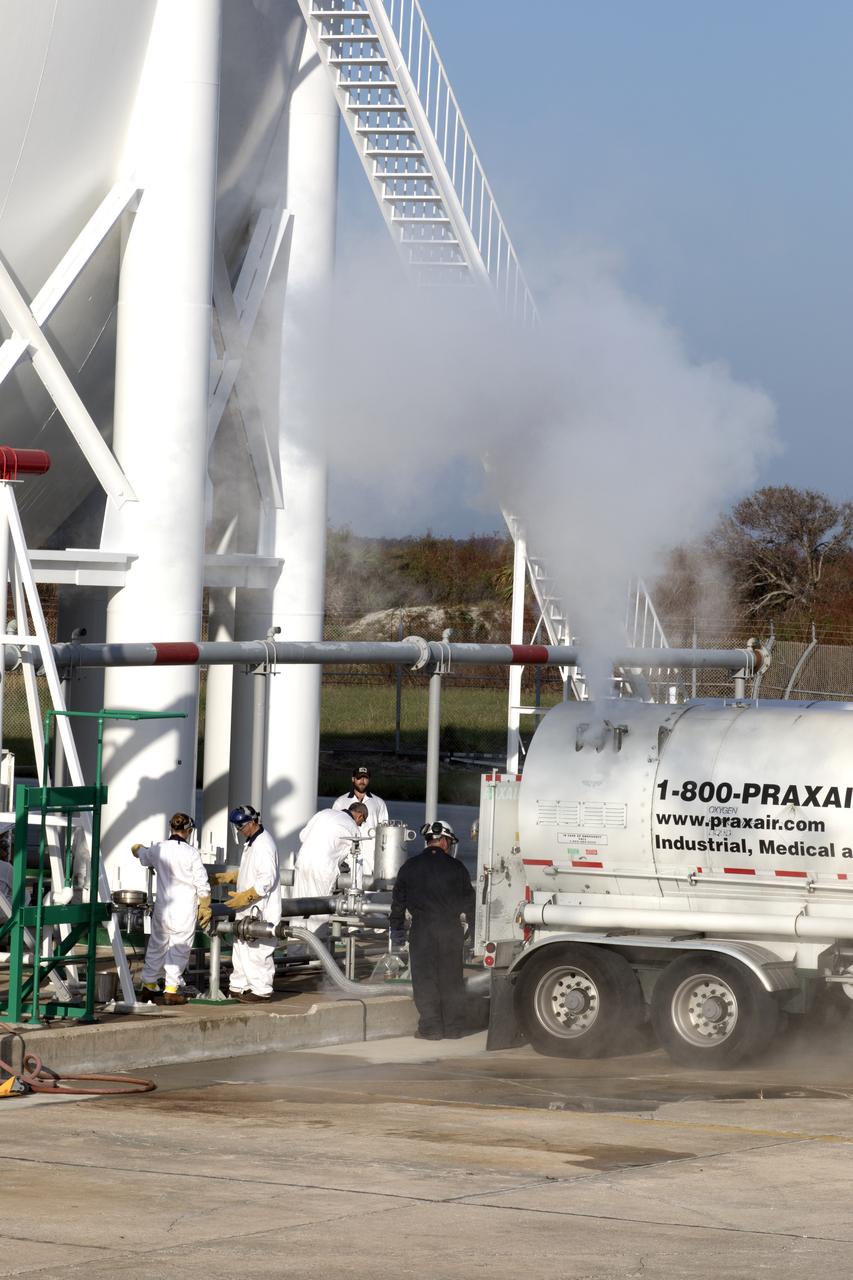
A large plume of mist or vapor is visible as a Praxair truck slowly transfers its load of liquid oxygen, or LO2, into a giant storage sphere at the northwest corner of Launch Pad 39B at NASA's Kennedy Space Center in Florida. The sphere will gradually be chilled down from normal temperature to about negative 298 degrees Fahrenheit, during the first major integrated operation to prepare for the launch of the agency's Orion spacecraft atop the Space Launch System (SLS) rocket. The Ground Systems Development and Operations Program is overseeing upgrades and modifications to pad B to support the launch of the SLS and Orion spacecraft for Exploration Mission-1, deep space missions and NASA’s journey to Mars.
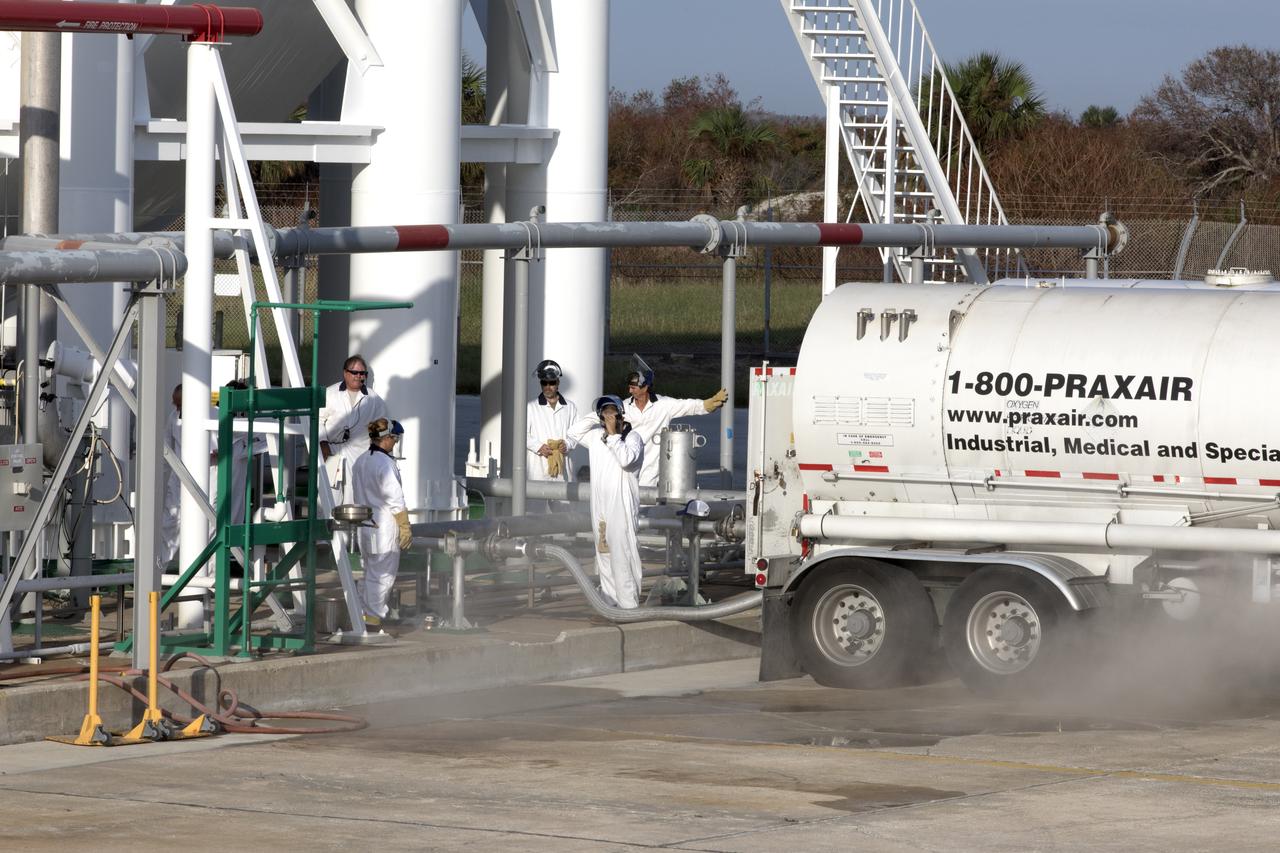
Mist or vapor is visible as a Praxair truck slowly transfers its load of liquid oxygen, or LO2, into a giant storage sphere at the northwest corner of Launch Pad 39B at NASA's Kennedy Space Center in Florida. The sphere will gradually be chilled down from normal temperature to about negative 298 degrees Fahrenheit, during the first major integrated operation to prepare for the launch of the agency's Orion spacecraft atop the Space Launch System (SLS) rocket. The Ground Systems Development and Operations Program is overseeing upgrades and modifications to pad B to support the launch of the SLS and Orion spacecraft for Exploration Mission-1, deep space missions and NASA’s journey to Mars.
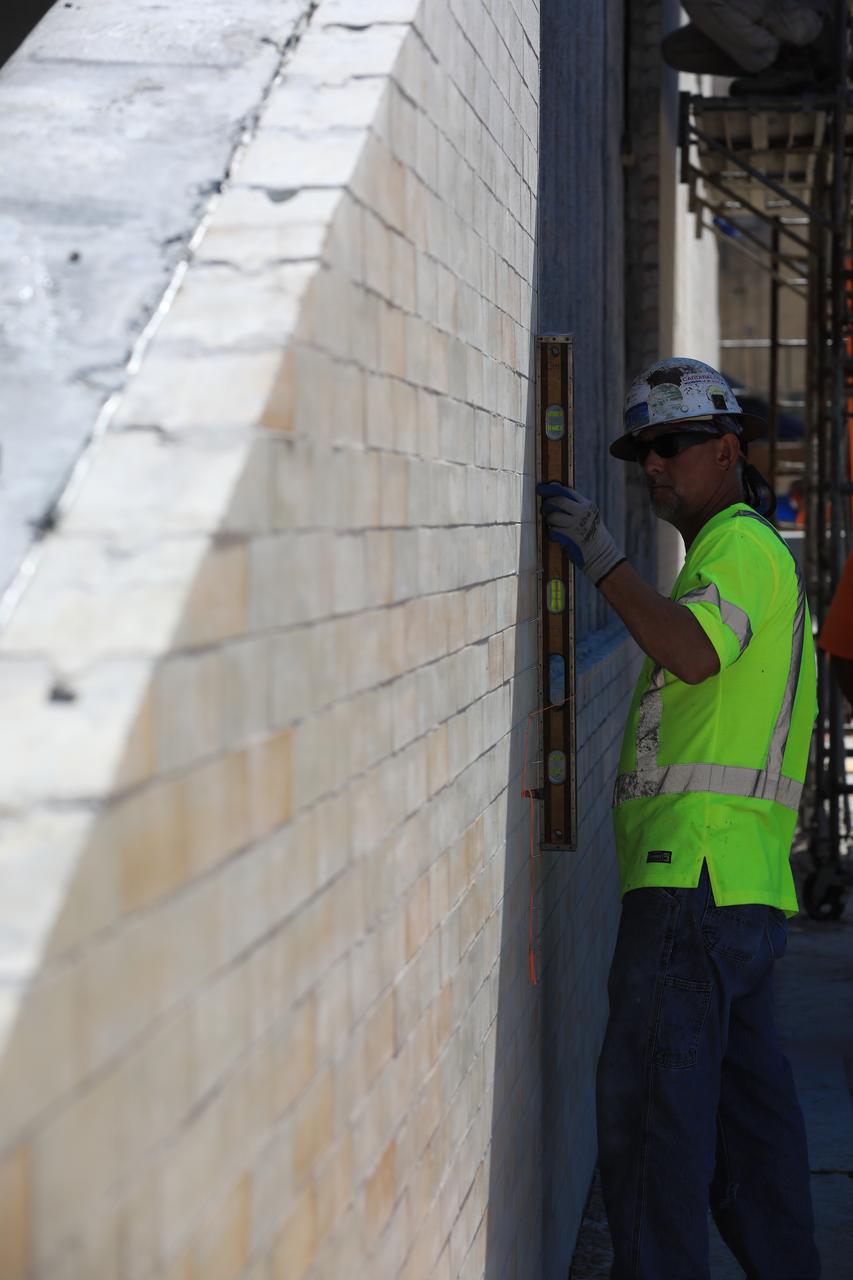
A construction worker with J.P. Donovan of Rockledge, Florida, checks to make sure new heat-resistant bricks attached to the north side of the flame trench are level at Launch Pad 39B at NASA’s Kennedy Space Center in Florida. The Pad B flame trench is being refurbished to support the launch of NASA’s Space Launch System rocket. The Ground Systems Development and Operations (GSDO) Program at Kennedy is helping transform the space center into a multi-user spaceport and prepare for Exploration Mission 1, deep space missions, and NASA's Journey to Mars. For more information about GSDO, visit: http://www.nasa.gov/groundsystems.
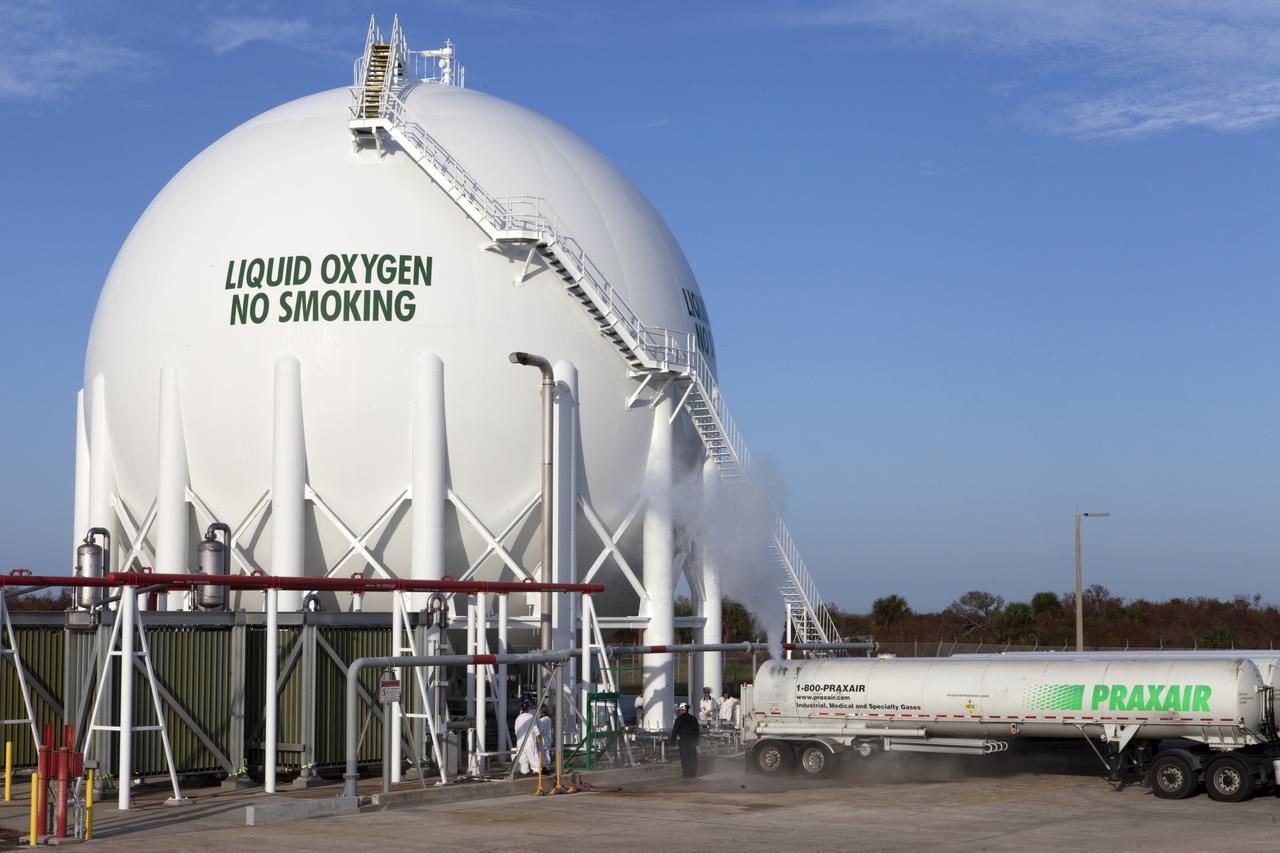
Several Praxair trucks carrying their loads of liquid oxygen, or LO2, have arrived at Launch Pad 39B at NASA's Kennedy Space Center in Florida. A mist is visible as LO2 is offloaded from one of the trucks into the giant storage sphere located at the northwest corner of the pad has begun. The sphere will gradually be chilled down from normal temperature to about negative 298 degrees Fahrenheit, during the first major integrated operation to prepare for the launch of the agency's Orion spacecraft atop the Space Launch System (SLS) rocket. The Ground Systems Development and Operations Program is overseeing upgrades and modifications to pad B to support the launch of the SLS and Orion spacecraft for Exploration Mission-1, deep space missions and NASA’s journey to Mars.
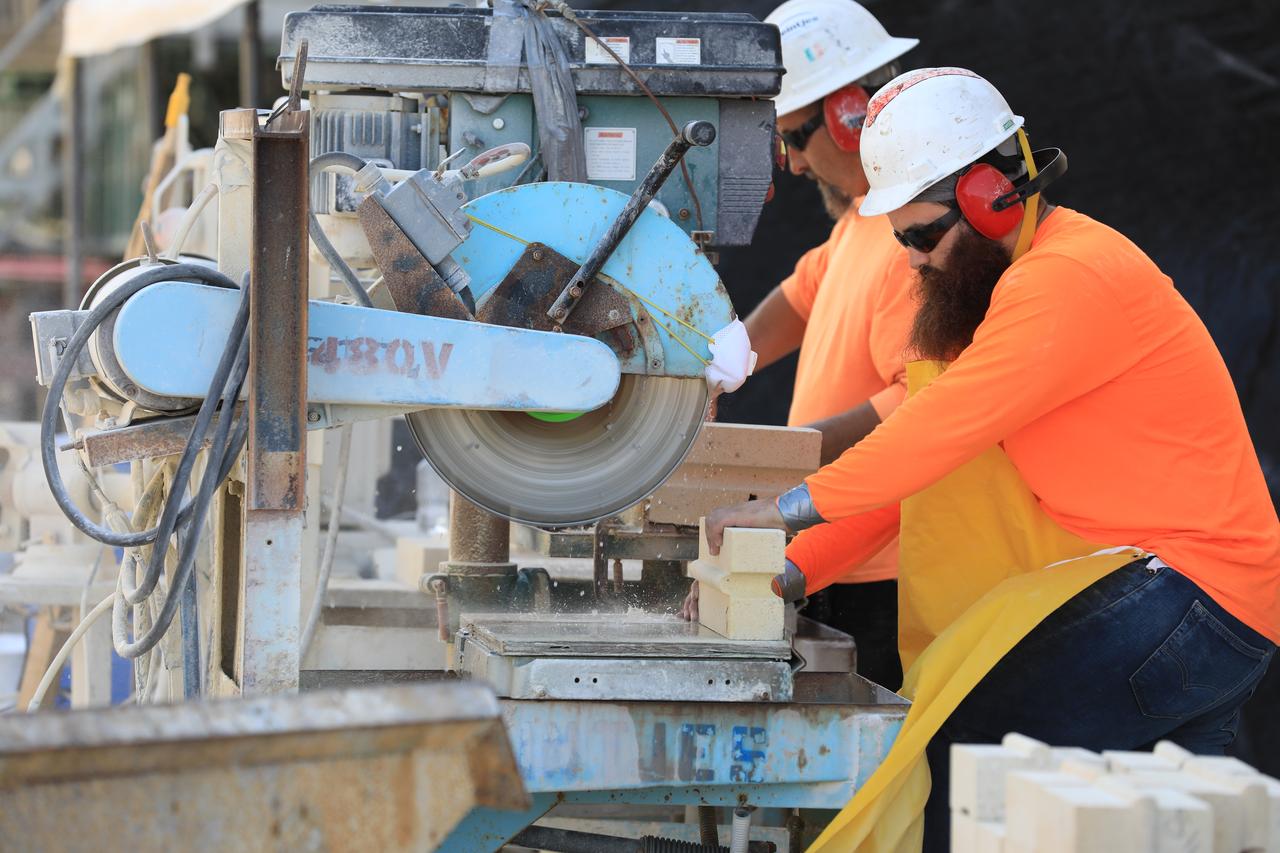
Construction workers with J.P. Donovan of Rockledge, Florida, cut new heat-resistant bricks to size for the concrete walls of the flame trench at Launch Pad 39B at NASA’s Kennedy Space Center in Florida. New heat-resistant bricks are being attached with epoxy mortar to the flame trench walls. The Pad B flame trench is being refurbished to support the launch of NASA’s Space Launch System rocket. The Ground Systems Development and Operations (GSDO) Program at Kennedy is helping transform the space center into a multi-user spaceport and prepare for Exploration Mission 1, deep space missions, and NASA's Journey to Mars. For more information about GSDO, visit: http://www.nasa.gov/groundsystems.