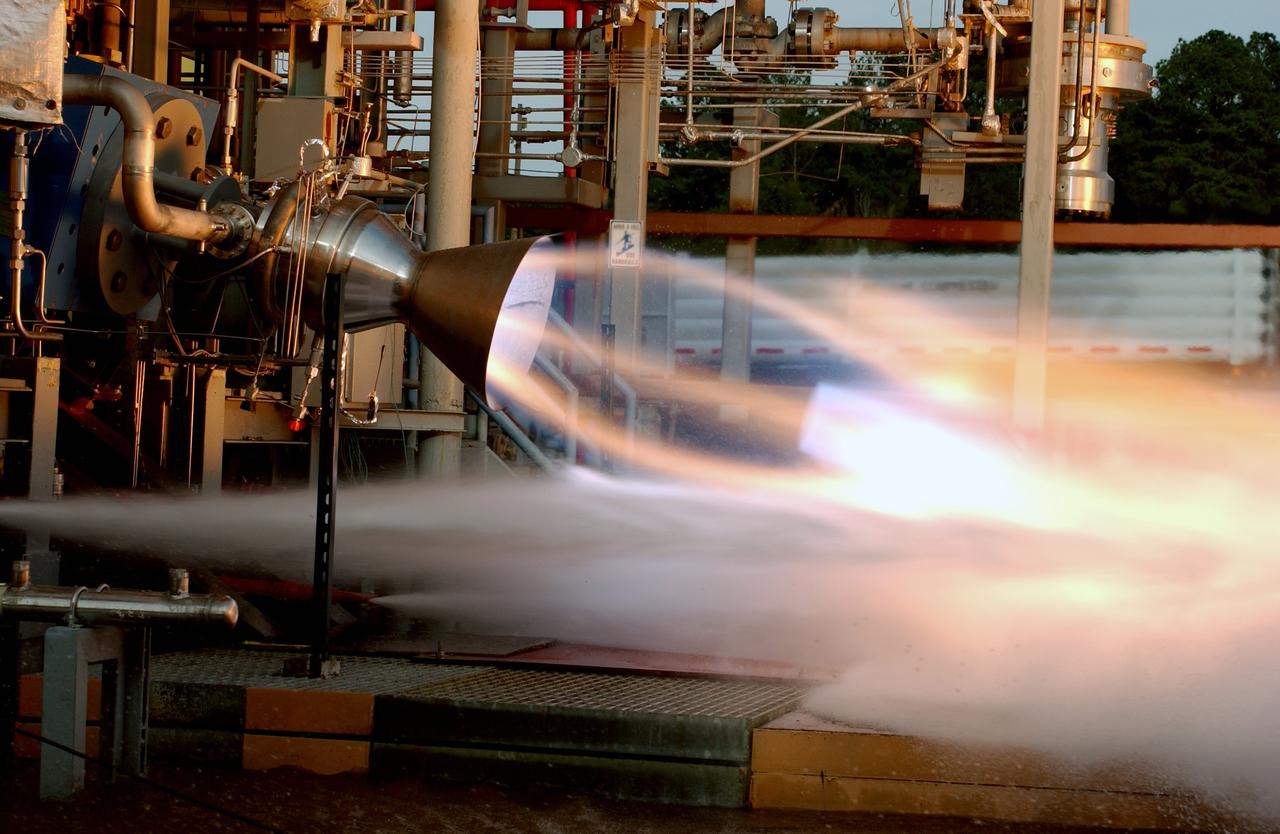
In this photo, an RS-88 development rocket engine is being test fired at NASA's Marshall Space Flight Center in Huntsville, Alabama, in support of the Pad Abort Demonstration (PAD) test flights for NASA's Orbital Space Plane (OSP). The tests could be instrumental in developing the first crew launch escape system in almost 30 years. Paving the way for a series of integrated PAD test flights, the engine tests support development of a system that could pull a crew safely away from danger during liftoff. A series of 16 hot fire tests of a 50,000-pound thrust RS-88 rocket engine were conducted, resulting in a total of 55 seconds of successful engine operation. The engine is being developed by the Rocketdyne Propulsion and Power unit of the Boeing Company. Integrated launch abort demonstration tests in 2005 will use four RS-88 engines to separate a test vehicle from a test platform, simulating pulling a crewed vehicle away from an aborted launch. Four 156-foot parachutes will deploy and carry the vehicle to landing. Lockheed Martin is building the vehicles for the PAD tests. Seven integrated tests are plarned for 2005 and 2006.
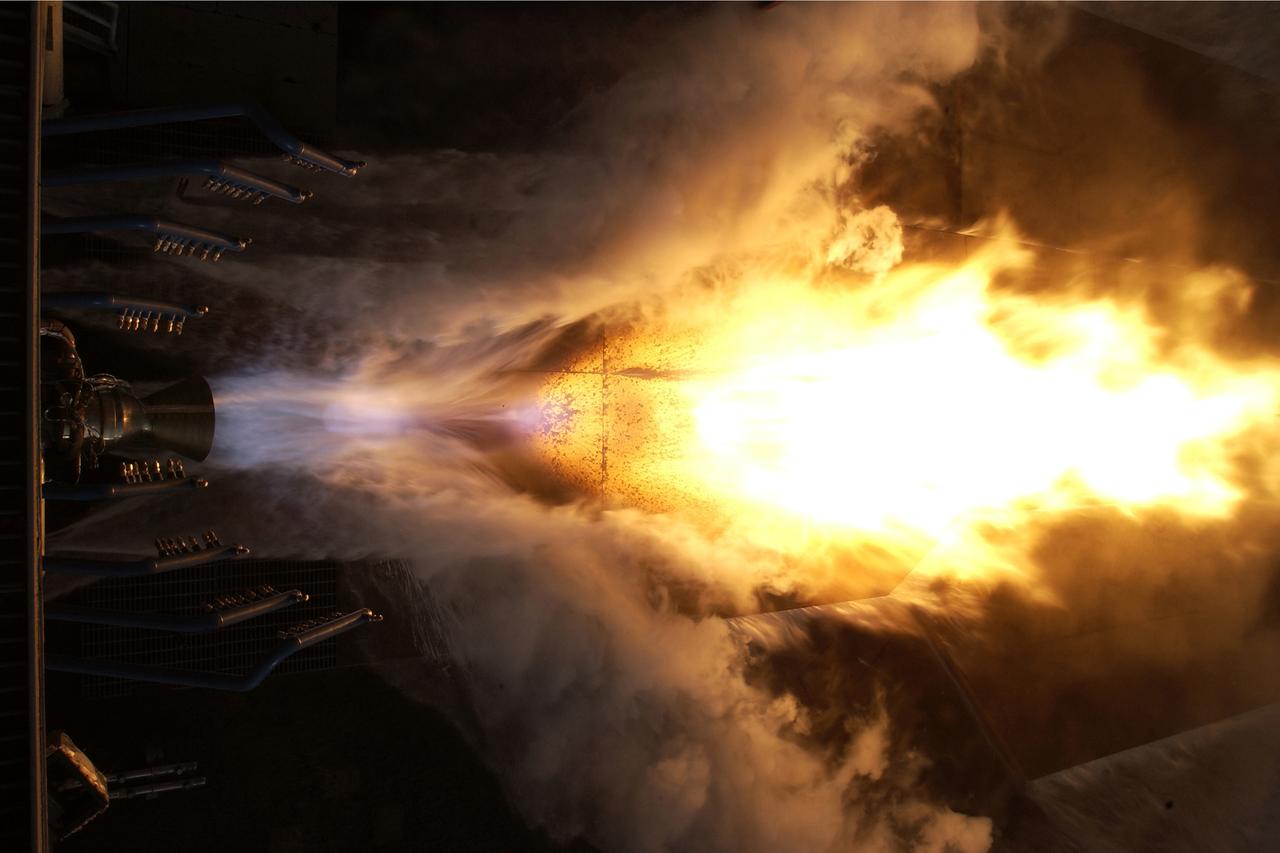
This photo gives an overhead look at an RS-88 development rocket engine being test fired at NASA's Marshall Space Flight Center in Huntsville, Alabama, in support of the Pad Abort Demonstration (PAD) test flights for NASA's Orbital Space Plane (OSP). The tests could be instrumental in developing the first crew launch escape system in almost 30 years. Paving the way for a series of integrated PAD test flights, the engine tests support development of a system that could pull a crew safely away from danger during liftoff. A series of 16 hot fire tests of a 50,000-pound thrust RS-88 rocket engine were conducted, resulting in a total of 55 seconds of successful engine operation. The engine is being developed by the Rocketdyne Propulsion and Power unit of the Boeing Company. Integrated launch abort demonstration tests in 2005 will use four RS-88 engines to separate a test vehicle from a test platform, simulating pulling a crewed vehicle away from an aborted launch. Four 156-foot parachutes will deploy and carry the vehicle to landing. Lockheed Martin is building the vehicles for the PAD tests. Seven integrated tests are plarned for 2005 and 2006.
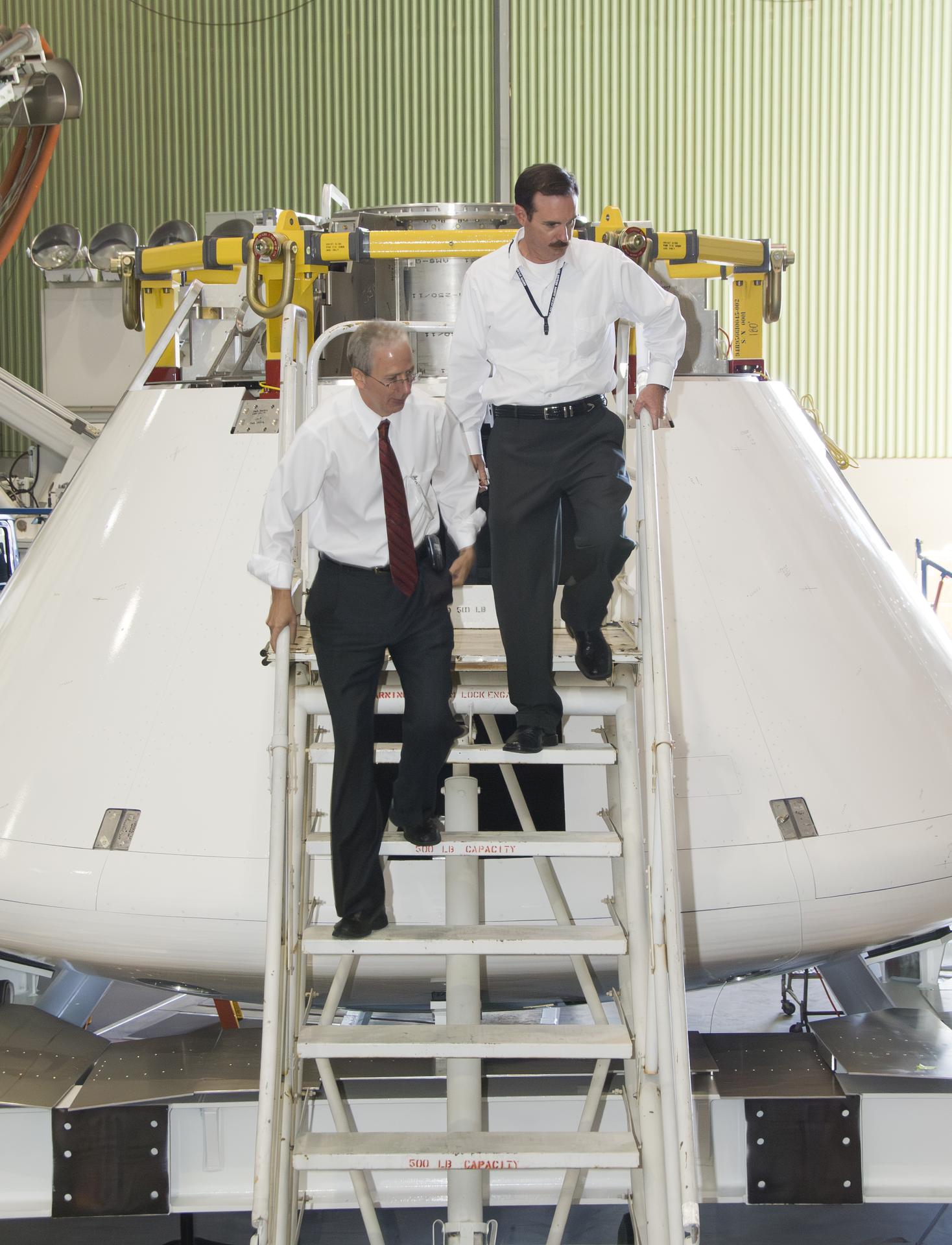
Mark Geyer, NASA’s Orion manager, visited NASA’s Armstrong Flight Research Center in Edwards, California, on April 9, 2008, to see the Pad Abort-1 test article, developed to demonstrate the Orion capsule’s emergency escape system during launch. Dave McAllister, NASA Armstrong Abort Flight Test operations lead, right, shows Geyer the Orion capsule mockup. Pad Abort-1 was later tested at the U.S. Army’s White Sands Missile Range in New Mexico, on May 6, 2010.

Teams with NASA’s Exploration Ground Systems Program, as well as NASA’s pad rescue team, conduct training inside the Artemis emergency egress baskets at Launch Pad 39B as part of the Artemis emergency egress demonstration training at the agency’s Kennedy Space Center in Florida on Thursday, Aug. 8, 2024. The baskets, similar to gondolas on ski lifts, are used in the case of a pad abort emergency to enable astronauts and other pad personnel a way to quickly escape away from the mobile launcher to the base of the pad and where waiting emergency transport vehicles will then drive them away.
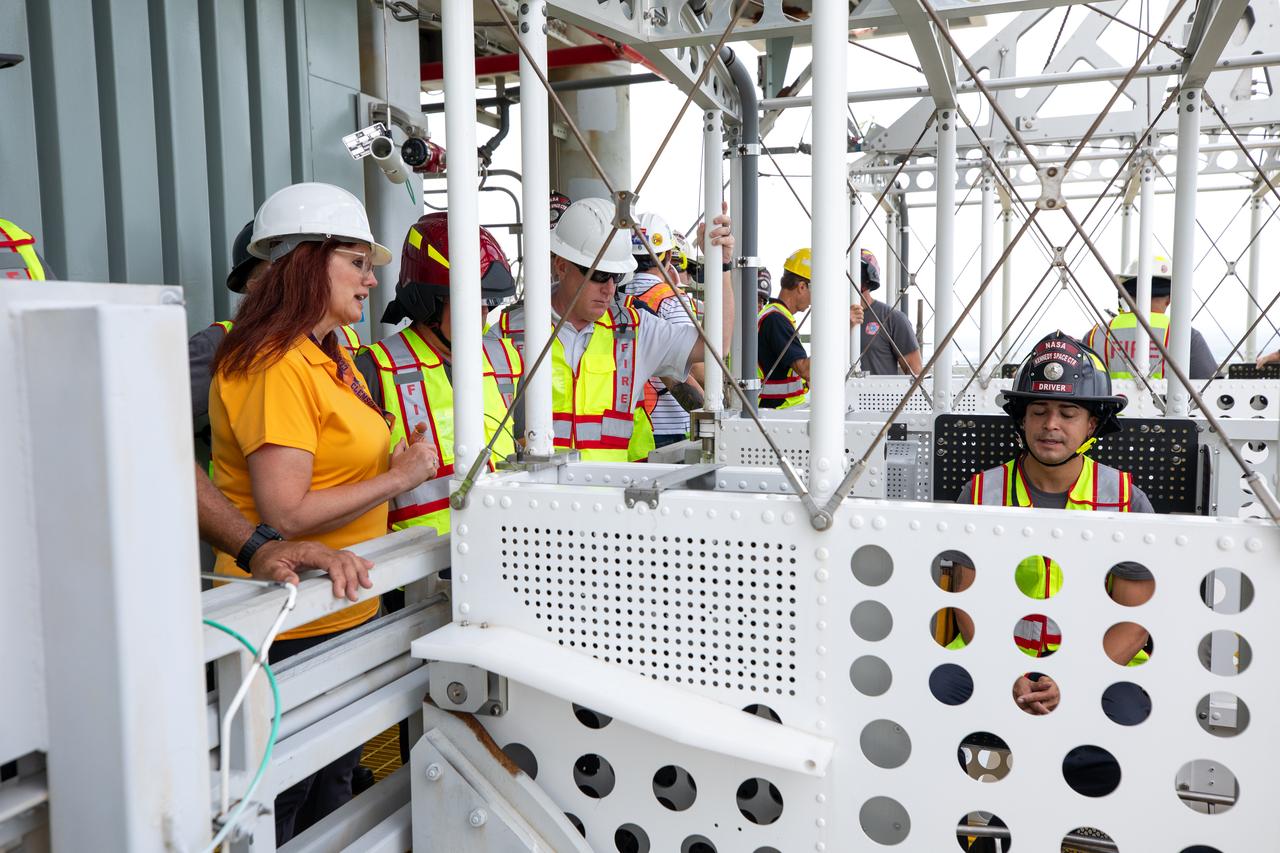
Teams with NASA’s Exploration Ground Systems Program, as well as NASA’s pad rescue team, conduct training inside the Artemis emergency egress baskets at Launch Pad 39B as part of the Artemis emergency egress demonstration training at the agency’s Kennedy Space Center in Florida on Thursday, Aug. 8, 2024. The baskets, similar to gondolas on ski lifts, are used in the case of a pad abort emergency to enable astronauts and other pad personnel a way to quickly escape away from the mobile launcher to the base of the pad and where waiting emergency transport vehicles will then drive them away.
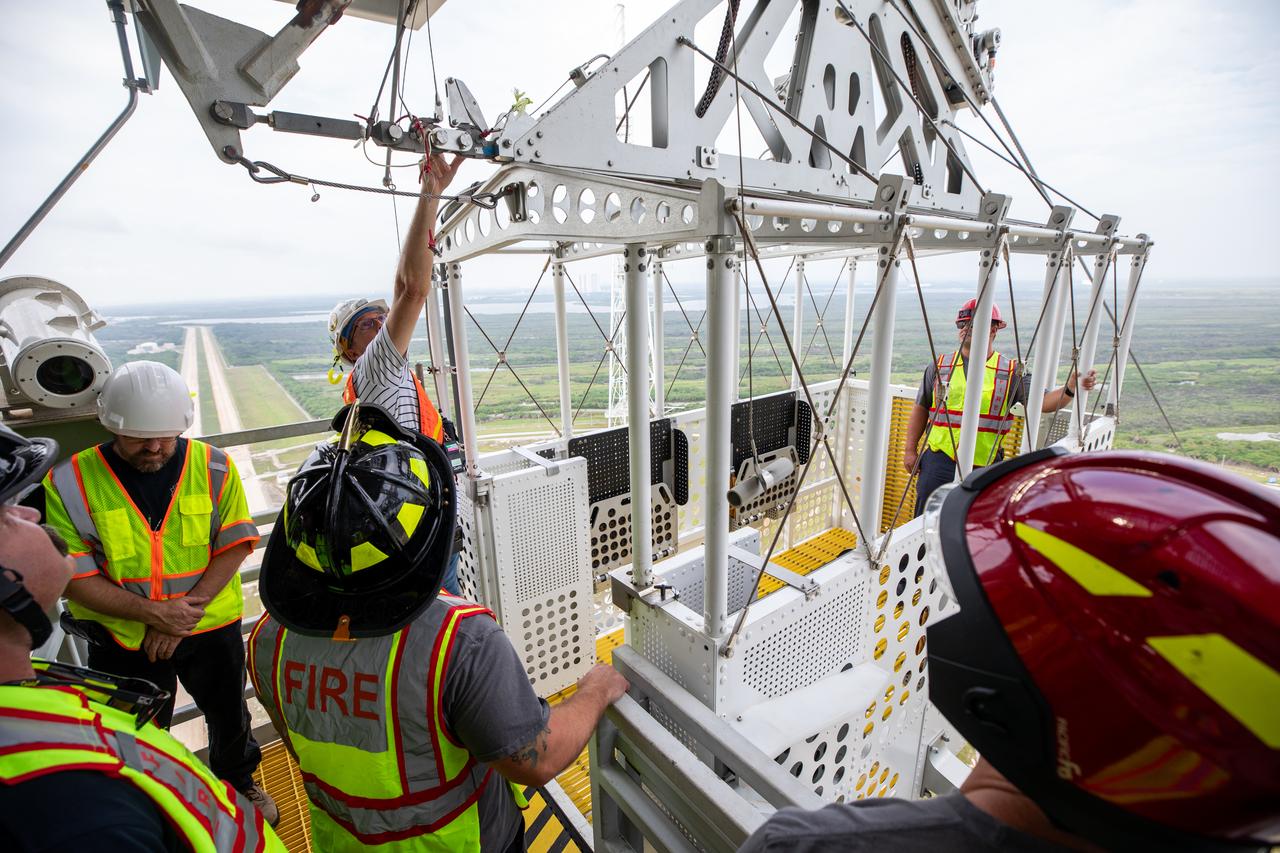
Teams with NASA’s Exploration Ground Systems Program, as well as NASA’s pad rescue team, conduct training inside the Artemis emergency egress baskets at Launch Pad 39B as part of the Artemis emergency egress demonstration training at the agency’s Kennedy Space Center in Florida on Thursday, Aug. 8, 2024. The baskets, similar to gondolas on ski lifts, are used in the case of a pad abort emergency to enable astronauts and other pad personnel a way to quickly escape away from the mobile launcher to the base of the pad and where waiting emergency transport vehicles will then drive them away.
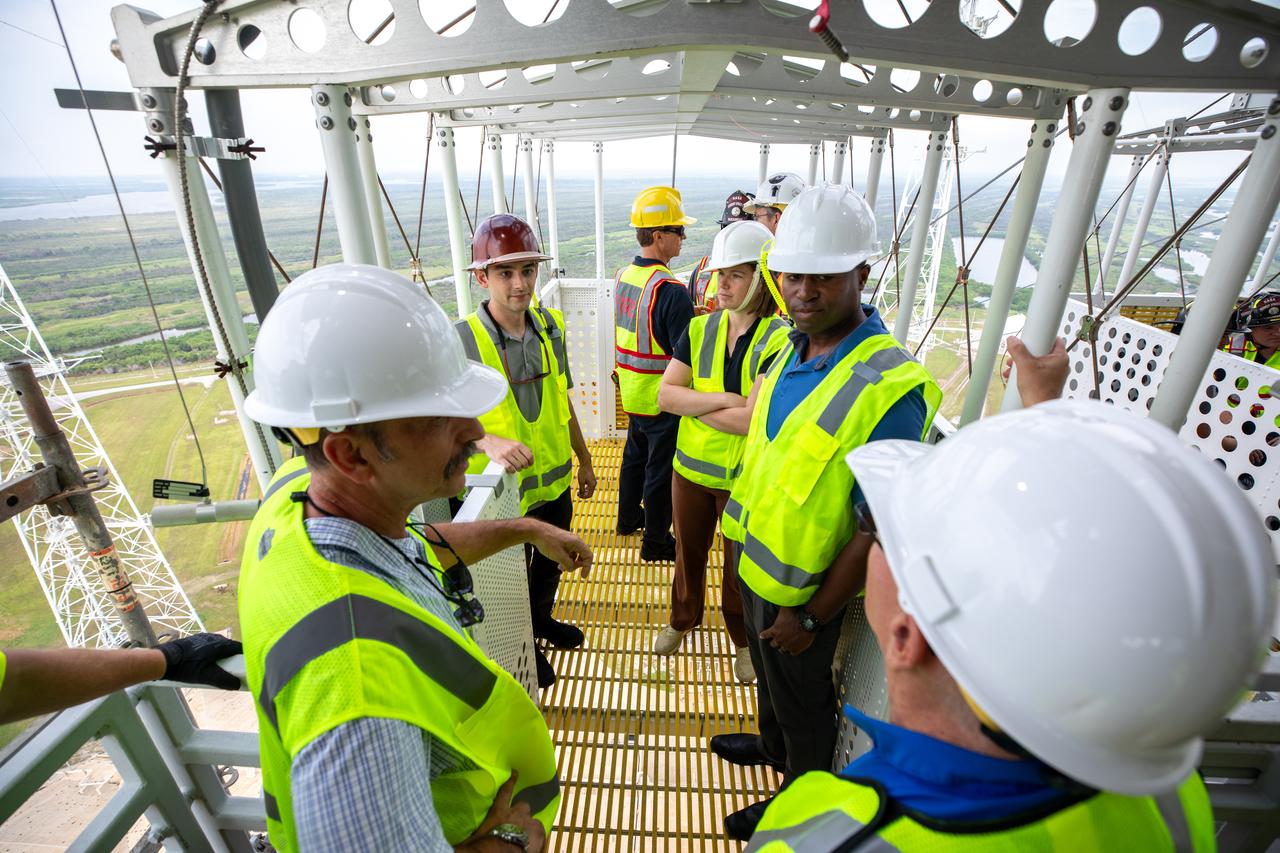
Teams with NASA’s Exploration Ground Systems Program, as well as NASA’s pad rescue team, conduct training inside the Artemis emergency egress baskets at Launch Pad 39B as part of the Artemis emergency egress demonstration training at the agency’s Kennedy Space Center in Florida on Thursday, Aug. 8, 2024. The baskets, similar to gondolas on ski lifts, are used in the case of a pad abort emergency to enable astronauts and other pad personnel a way to quickly escape away from the mobile launcher to the base of the pad and where waiting emergency transport vehicles will then drive them away.
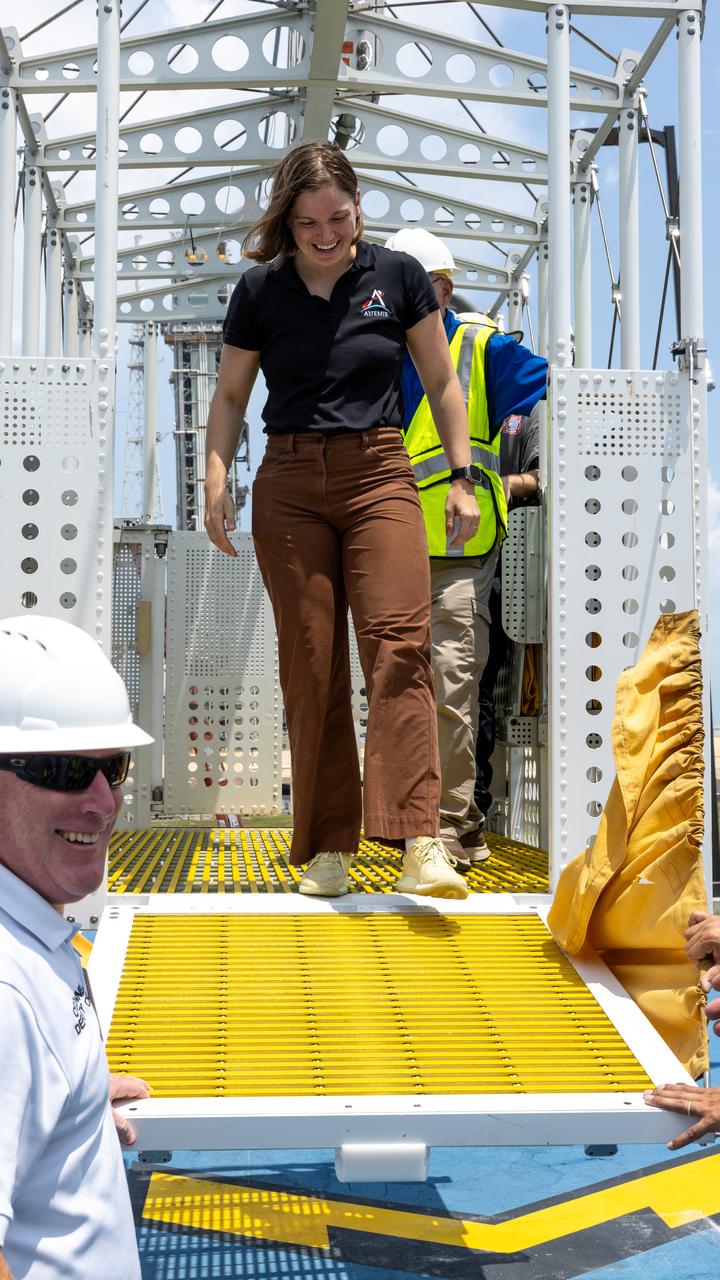
Artemis II backup crew member, CSA (Canadian Space Agency) astronaut Jenni Gibbons, participates in the Artemis II emergency egress demonstration, which is one of the integrated system verification and validation tests taking place at Launch Complex 39B at the agency’s Kennedy Space Center in Florida on Thursday, Aug. 8, 2024. The baskets, similar to gondolas on ski lifts, are used in the case of a pad abort emergency to enable astronauts and other pad personnel a way to quickly escape away from the mobile launcher to the base of the pad and where waiting emergency transport vehicles will then drive them away.
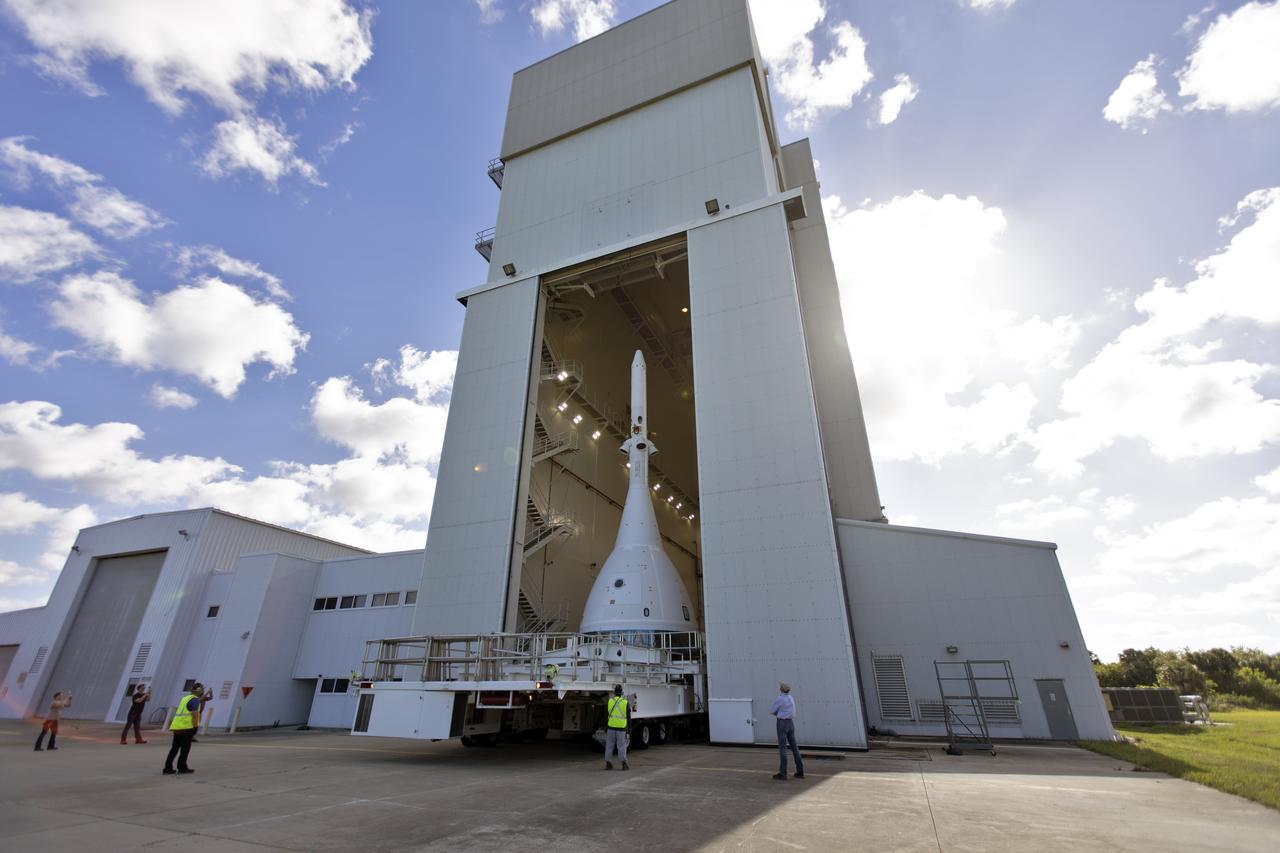
The vehicle for Orion’s Ascent Abort-2 (AA-2) flight test exits the Launch Abort System Facility at NASA’s Kennedy Space Center in Florida on May 22, 2019. The flight test article will make the 21.5 mile trek to Space Launch Complex 46 at Cape Canaveral Air Force Station in preparation for its launch this summer. During AA-2, a test version of Orion will launch on a booster to more than six miles in altitude, where Orion’s launch abort system will pull the capsule away to demonstrate it can keep a future crew inside safe if an emergency occurs during ascent on the Space Launch System rocket. The AA-2 elements will be stacked together at the launch pad over the next several weeks. The launch is planned for July 2 and is a critical safety test that helps pave the way for Artemis missions near the Moon, and will enable astronauts to set foot on the lunar surface by 2024.
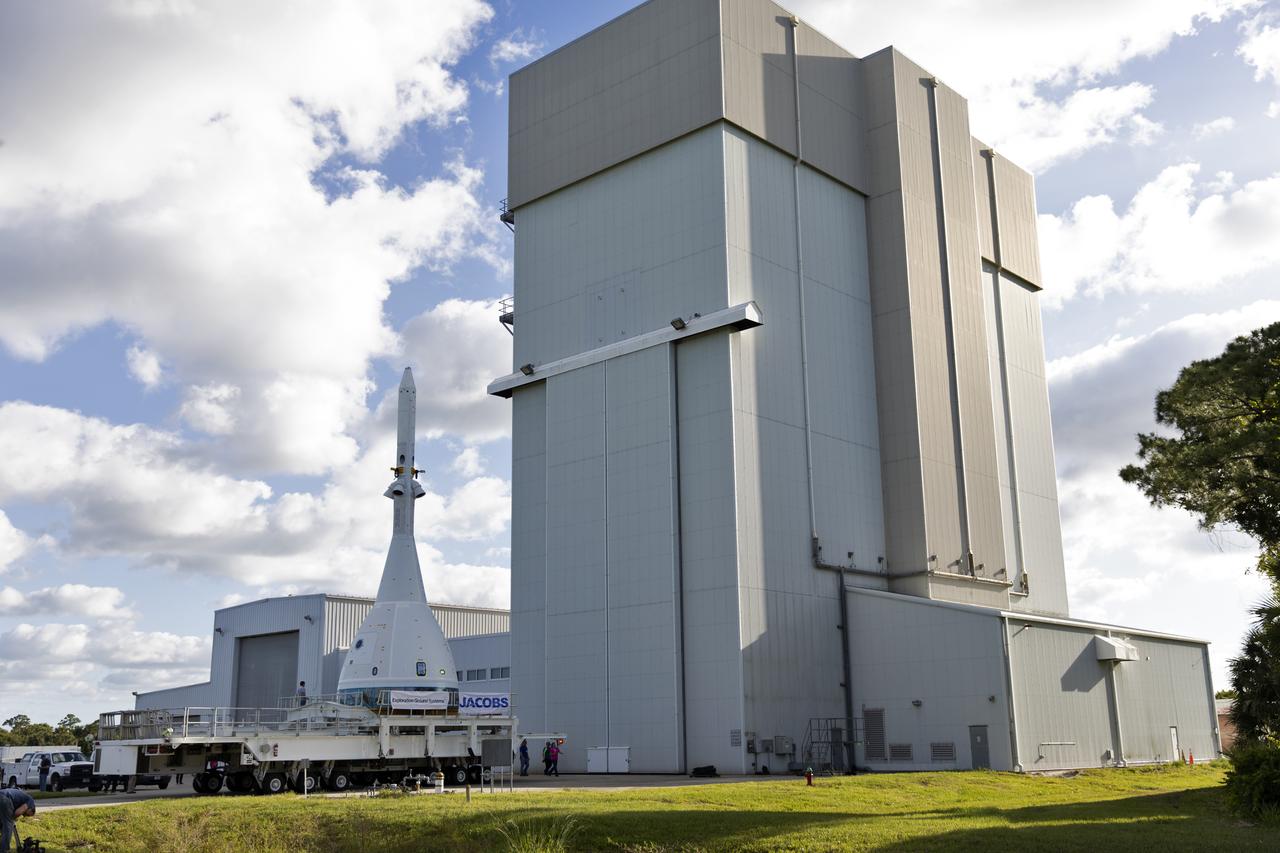
The vehicle for Orion’s Ascent Abort-2 (AA-2) flight test exits the Launch Abort System Facility at NASA’s Kennedy Space Center in Florida on May 22, 2019. The flight test article will make the 21.5 mile trek to Space Launch Complex 46 at Cape Canaveral Air Force Station in preparation for its launch this summer. During AA-2, a test version of Orion will launch on a booster to more than six miles in altitude, where Orion’s launch abort system will pull the capsule away to demonstrate it can keep a future crew inside safe if an emergency occurs during ascent on the Space Launch System rocket. The AA-2 elements will be stacked together at the launch pad over the next several weeks. The launch is planned for July 2 and is a critical safety test that helps pave the way for Artemis missions near the Moon, and will enable astronauts to set foot on the lunar surface by 2024.

An engineer monitors a Boeing CST-100 Starliner spacecraft inside Boeing's Commercial Crew and Cargo Processing Facility at NASA's Kennedy Space Center in Florida. This was the first time "Spacecraft 1," as the individual Starliner is known, was powered up. It is being assembled for use during a pad abort test that will demonstrate the Starliners' ability to lift astronauts out of danger in the unlikely event of an emergency. Later flight tests will demonstrate Starliners in orbital missions to the station without a crew, and then with astronauts aboard. The flight tests will preview the crew rotation missions future Starliners will perform as they take up to four astronauts at a time to the orbiting laboratory in order to enhance the research taking place there
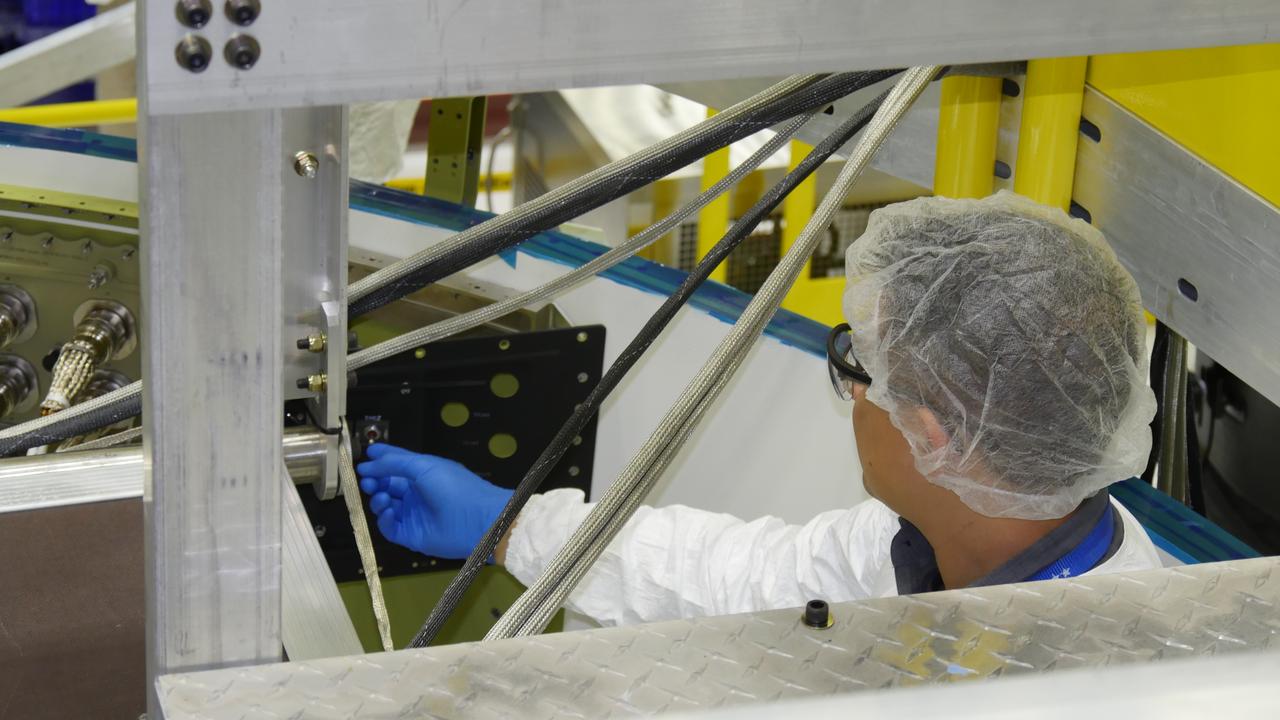
An engineer works the switch to power on a Boeing CST-100 Starliner spacecraft inside Boeing's Commercial Crew and Cargo Processing Facility at NASA's Kennedy Space Center in Florida. This was the first time "Spacecraft 1," as the individual Starliner is known, was powered up. It is being assembled for use during a pad abort test that will demonstrate the Starliners' ability to lift astronauts out of danger in the unlikely event of an emergency. Later flight tests will demonstrate Starliners in orbital missions to the station without a crew, and then with astronauts aboard. The flight tests will preview the crew rotation missions future Starliners will perform as they take up to four astronauts at a time to the orbiting laboratory in order to enhance the research taking place there.
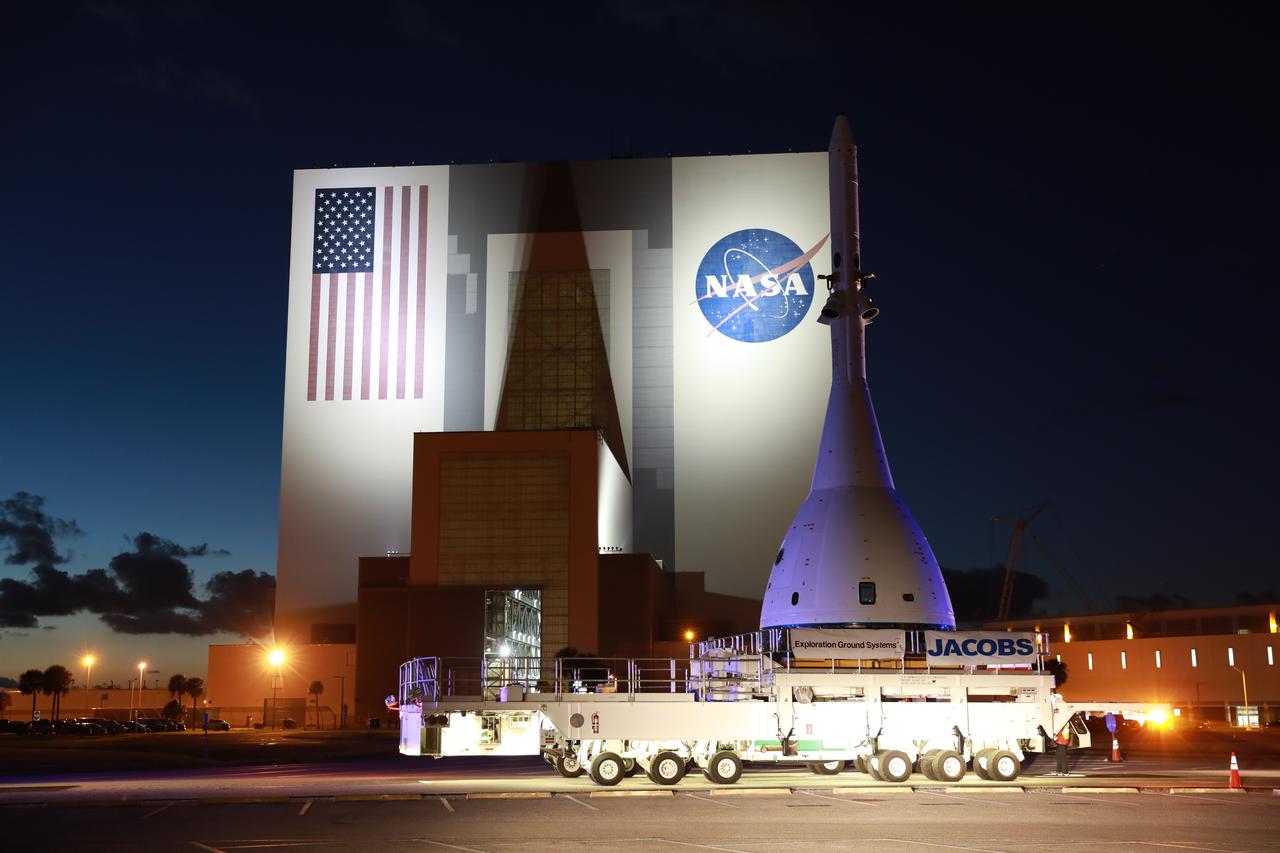
The vehicle for Orion’s Ascent Abort-2 (AA-2) fight test passes by the Vehicle Assembly Building at NASA’s Kennedy Space Center in Florida on its 21.5-mile-trek to Space Launch Complex 46 at Cape Canaveral Air Force Station on May 22, 2019. During AA-2, a test version of Orion will launch on a booster to more than six miles in altitude, where Orion’s launch abort system will pull the capsule away to demonstrate it can keep a future crew inside safe if an emergency occurs during ascent on the Space Launch System rocket. The AA-2 elements will be stacked together at the launch pad over the next several weeks. The launch is planned for July 2 and is a critical safety test that helps pave the way for Artemis missions near the Moon, and will enable astronauts to set foot on the lunar surface by 2024.
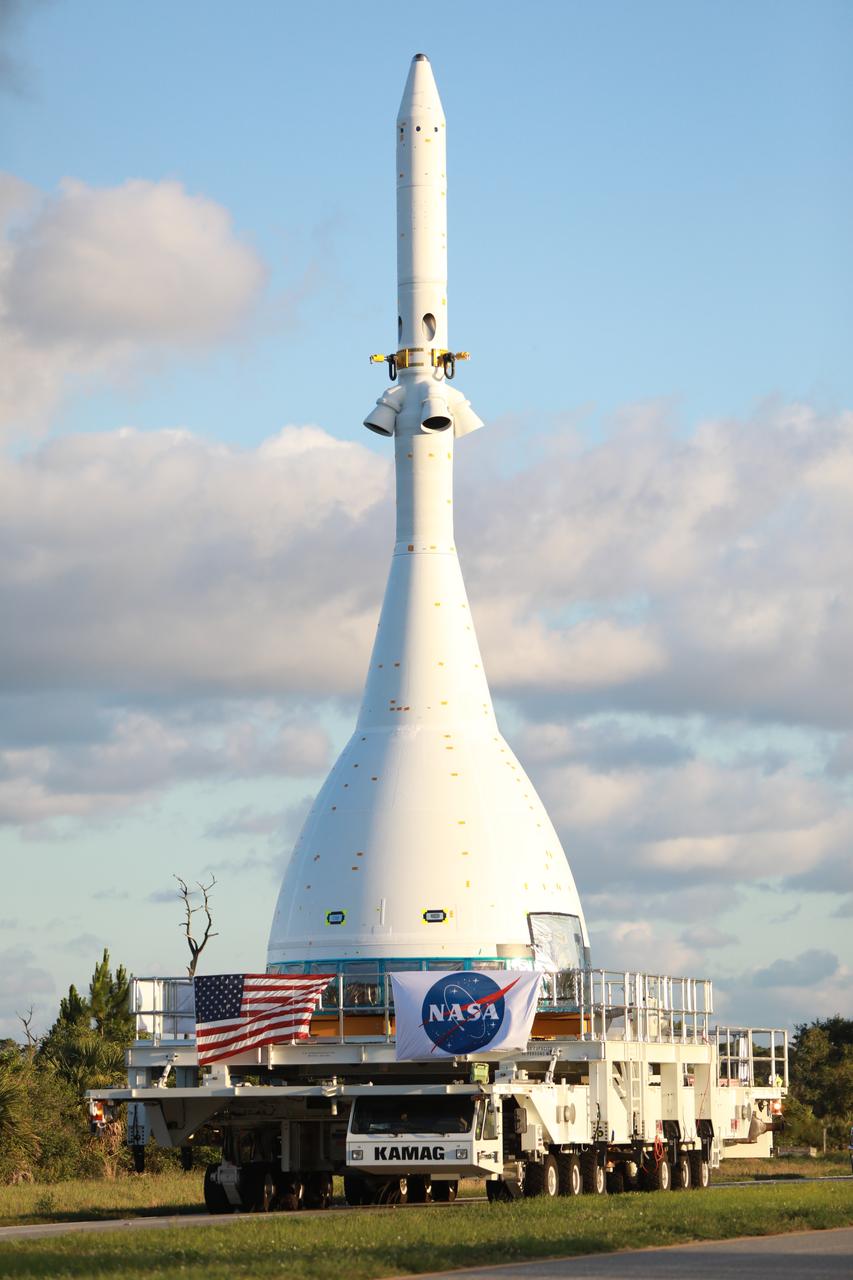
The vehicle for Orion’s Ascent Abort-2 (AA-2) flight test is moved along a route from NASA’s Kennedy Space Center in Florida, to Space Launch Complex 46 at Cape Canaveral Air Force Station on May 22, 2019, in preparation for its launch this summer. During AA-2, a test version of Orion will launch on a booster to more than six miles in altitude, where Orion’s launch abort system will pull the capsule away to demonstrate it can keep a future crew inside safe if an emergency occurs during ascent on the Space Launch System rocket. The AA-2 elements will be stacked together at the launch pad over the next several weeks. The launch is planned for July 2 and is a critical safety test that helps pave the way for Artemis missions near the Moon, and will enable astronauts to set foot on the lunar surface by 2024.
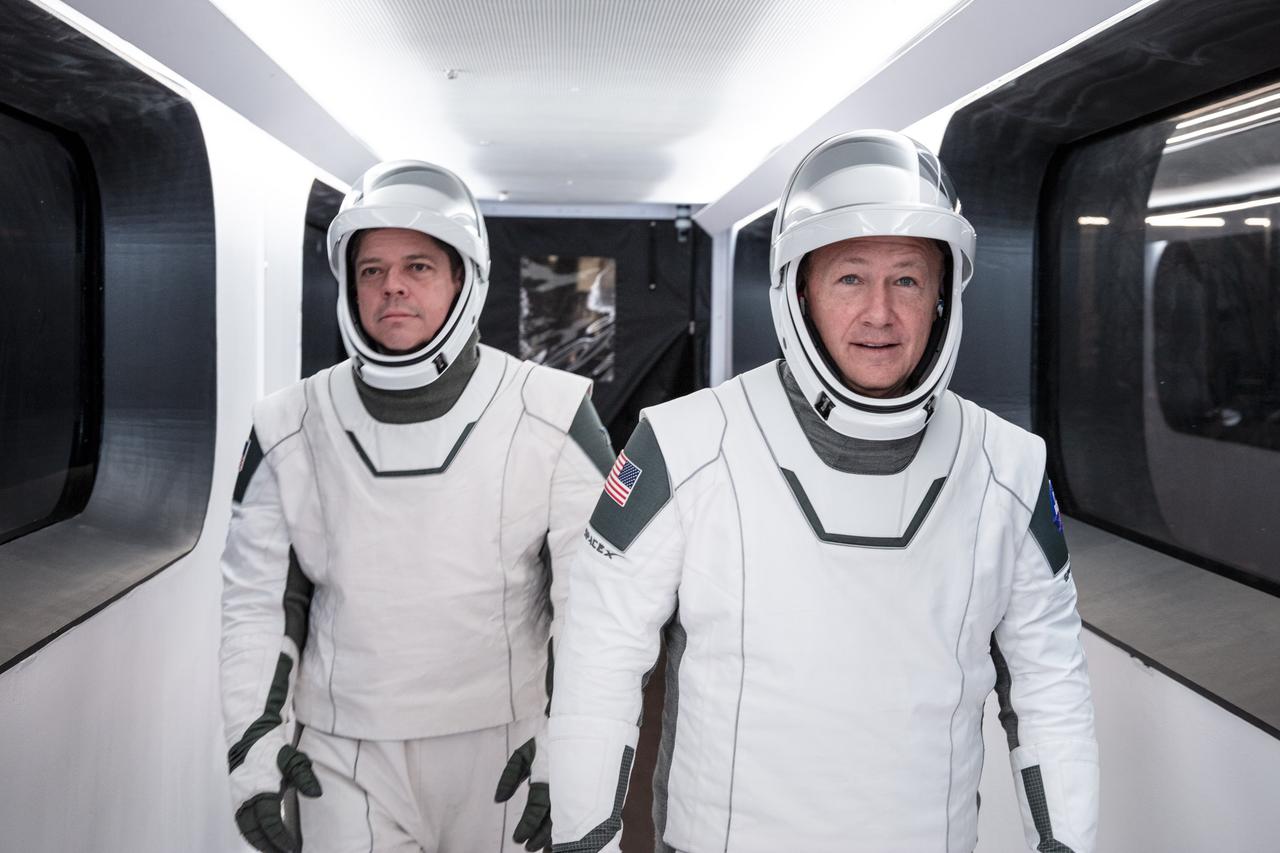
NASA astronauts Bob Behnken, left, and Doug Hurley, wearing SpaceX spacesuits, walk through the Crew Access Arm connecting the launch tower to the SpaceX Crew Dragon spacecraft during a dress rehearsal at NASA’s Kennedy Space Center in Florida on Jan. 17, 2020. A SpaceX Falcon 9 rocket and Crew Dragon spacecraft stand on the launch pad at Launch Complex 39A ahead of the company’s uncrewed In-Flight Abort Test. The flight test will demonstrate the spacecraft’s escape capabilities in preparation for crewed flights to the International Space Station as part of the agency’s Commercial Crew Program. Behnken and Hurley are slated to fly on the company’s first crewed mission, Demo-2.
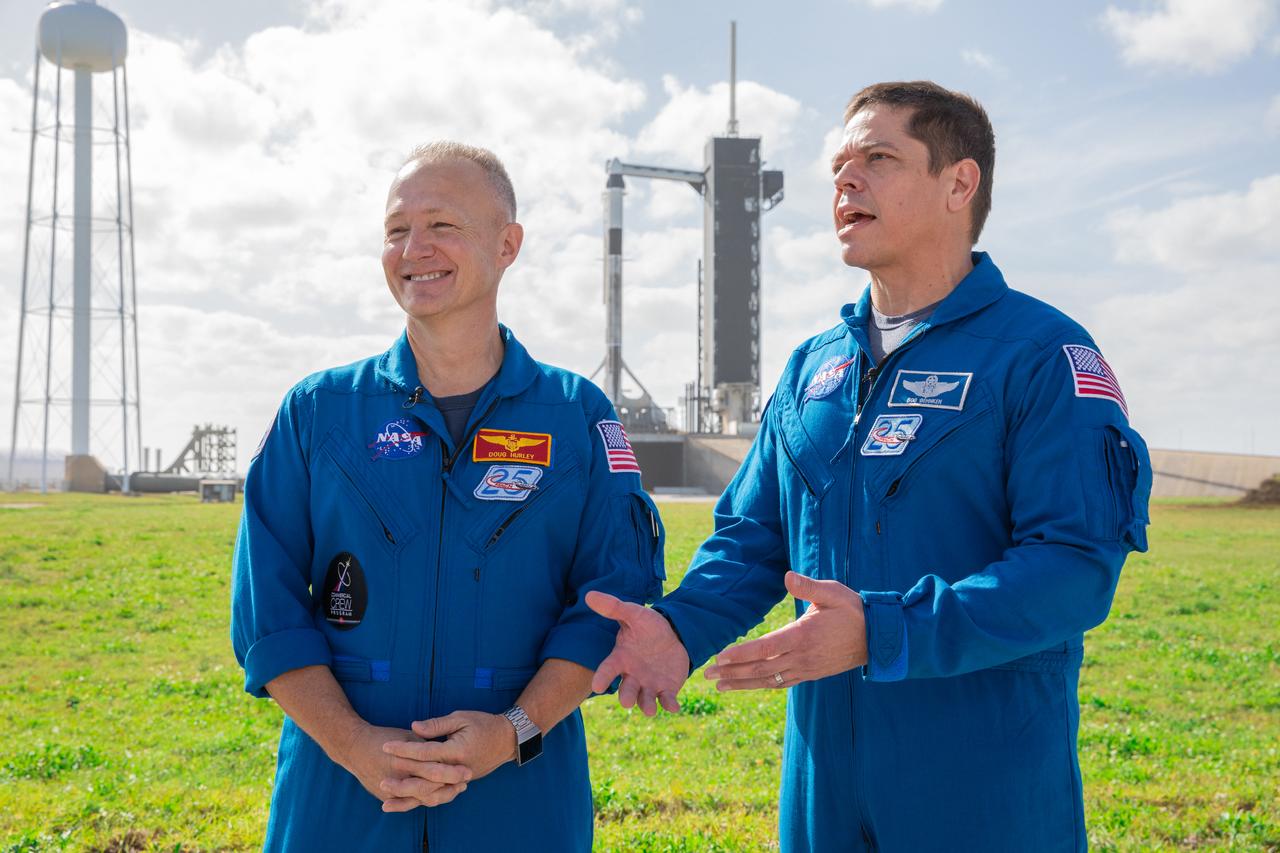
NASA astronauts Doug Hurley, left, and Bob Behnken stand near Launch Pad 39A at the agency’s Kennedy Space Center in Florida on Jan. 17, 2020, during a dress rehearsal ahead of the SpaceX uncrewed In-Flight Abort Test. In the background, the company’s Falcon 9 rocket is topped by the Crew Dragon spacecraft. The flight test will demonstrate the spacecraft’s escape capabilities in preparation for crewed flights to the International Space Station as part of the agency’s Commercial Crew Program. Hurley and Behnken are slated to fly on the company’s first crewed mission, Demo-2.
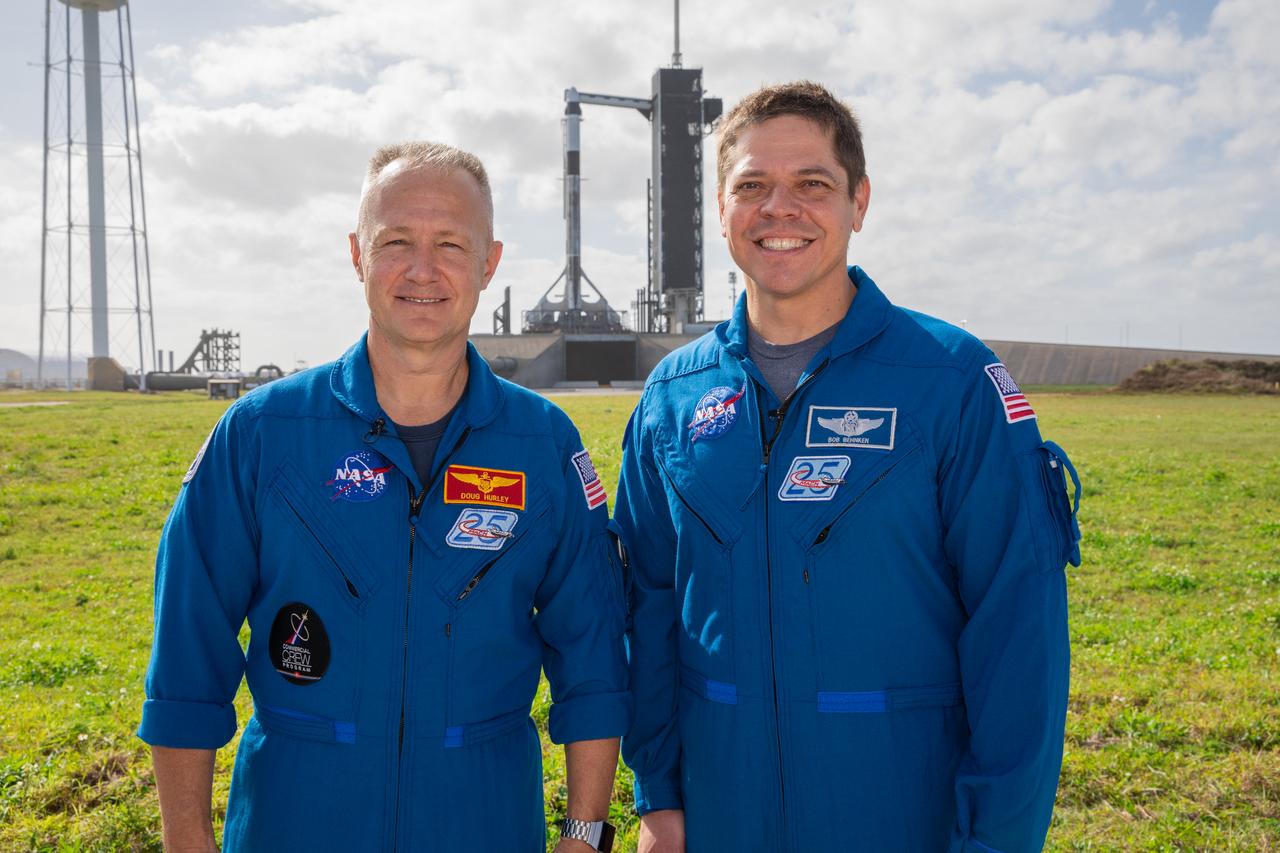
NASA astronauts Doug Hurley, left, and Bob Behnken stand near Launch Pad 39A at the agency’s Kennedy Space Center in Florida on Jan. 17, 2020, during a dress rehearsal ahead of the SpaceX uncrewed In-Flight Abort Test. In the background, the company’s Falcon 9 rocket is topped by the Crew Dragon spacecraft. The flight test will demonstrate the spacecraft’s escape capabilities in preparation for crewed flights to the International Space Station as part of the agency’s Commercial Crew Program. Hurley and Behnken are slated to fly on the company’s first crewed mission, Demo-2.
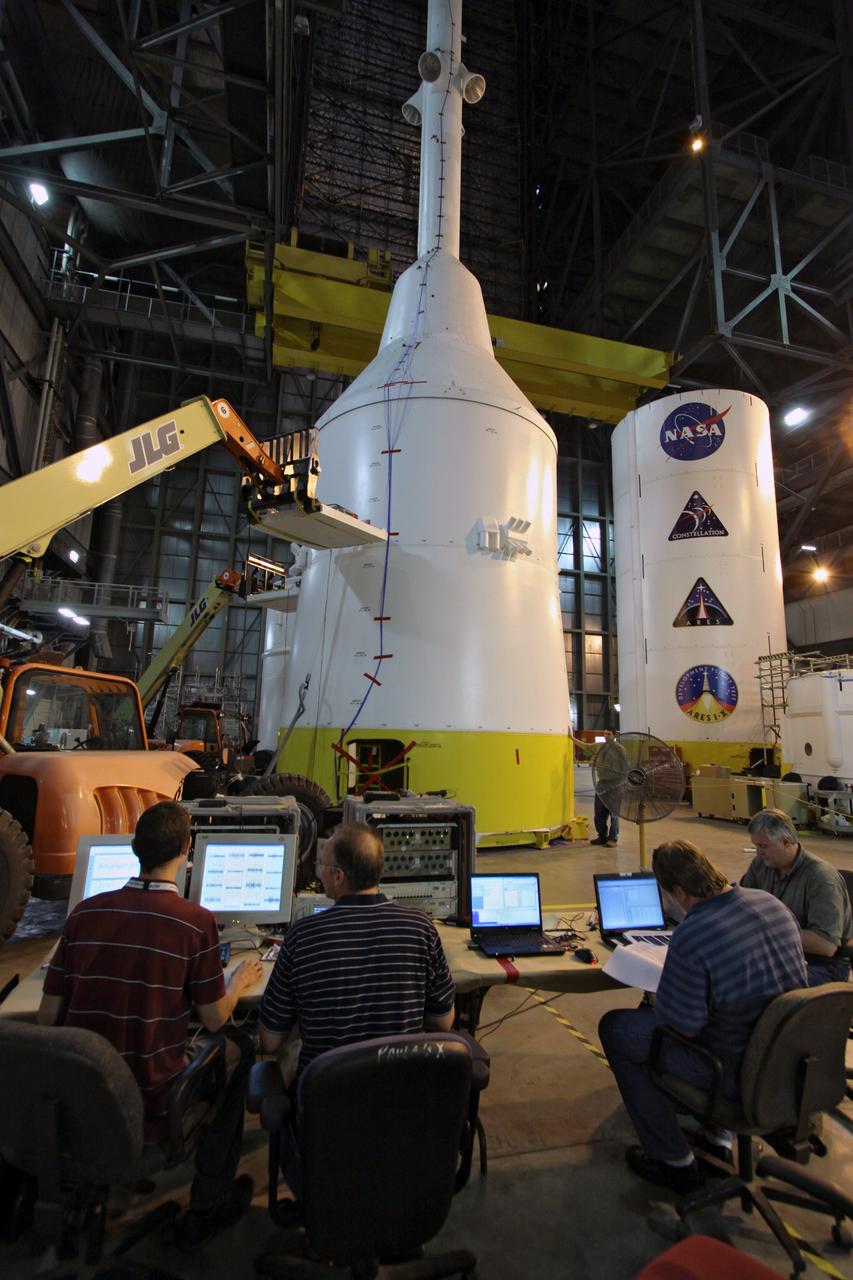
CAPE CANAVERAL, Fla. – In high bay 4 of the Vehicle Assembly Building at NASA's Kennedy Space Center in Florida, technicians begin the modal survey testing on the top part of the Ares I-X (center) after sensors were placed on the stack. The top consists of the launch abort tower, crew module, service module and spacecraft adaptor. Shakers will impose random loads/vibrations to determine the flight test vehicle’s first several bending modes and the strategically located sensors throughout the stacks will measure the amount, acceleration and direction of movement. The purpose of the testing is to confirm that Ares I-X will behave as predicted as it lifts off the pad and powers through the initial stage of flight in a demonstration flight later this year. Photo credit: NASA/Jack Pfaller
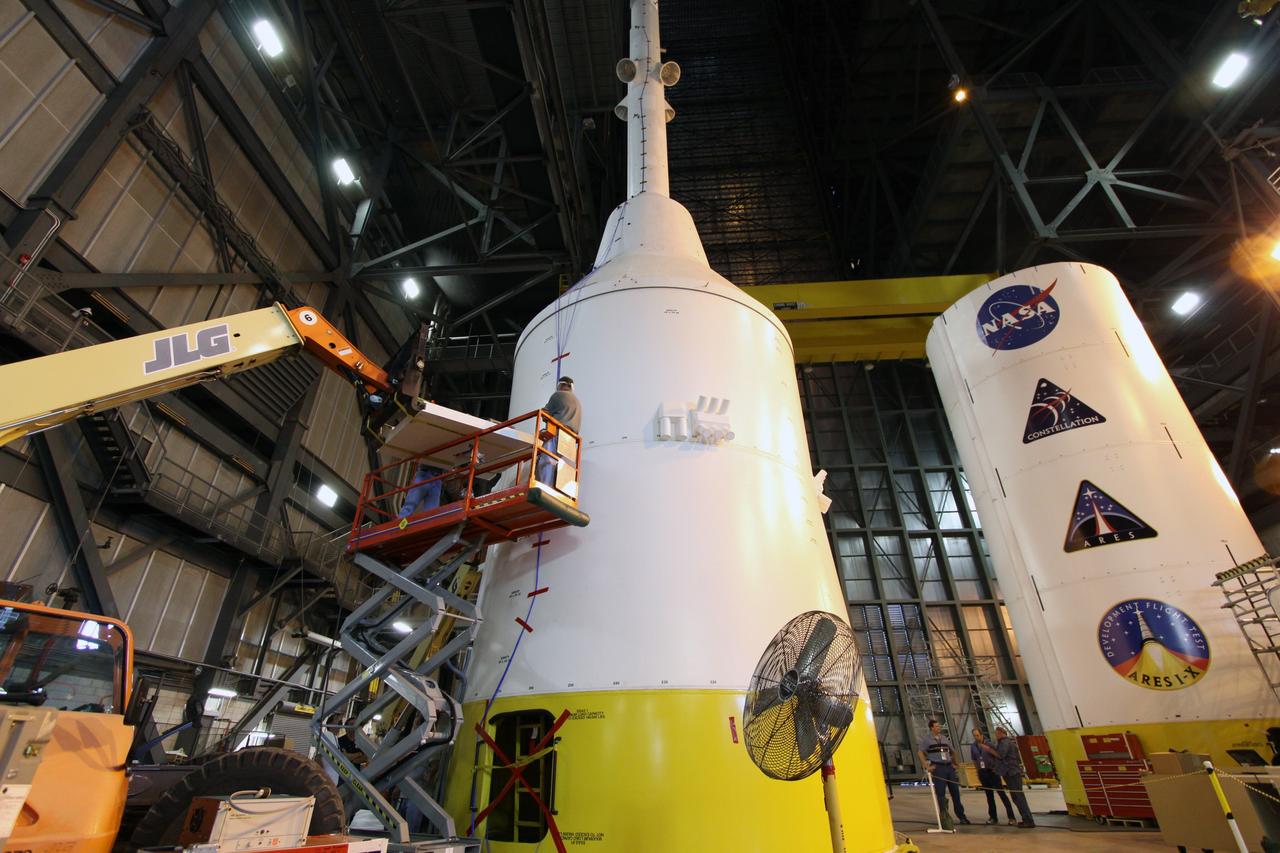
CAPE CANAVERAL, Fla. – In high bay 4 of the Vehicle Assembly Building at NASA's Kennedy Space Center in Florida, technicians place sensors on the top part of the Ares I-X for modal survey testing. The top consists of the launch abort tower, crew module, service module and spacecraft adaptor. Shakers will impose random loads/vibrations to determine the flight test vehicle’s first several bending modes and the strategically located sensors throughout the stacks will measure the amount, acceleration and direction of movement. The purpose of the testing is to confirm that Ares I-X will behave as predicted as it lifts off the pad and powers through the initial stage of flight in a demonstration flight later this year. Photo credit: NASA/Jack Pfaller
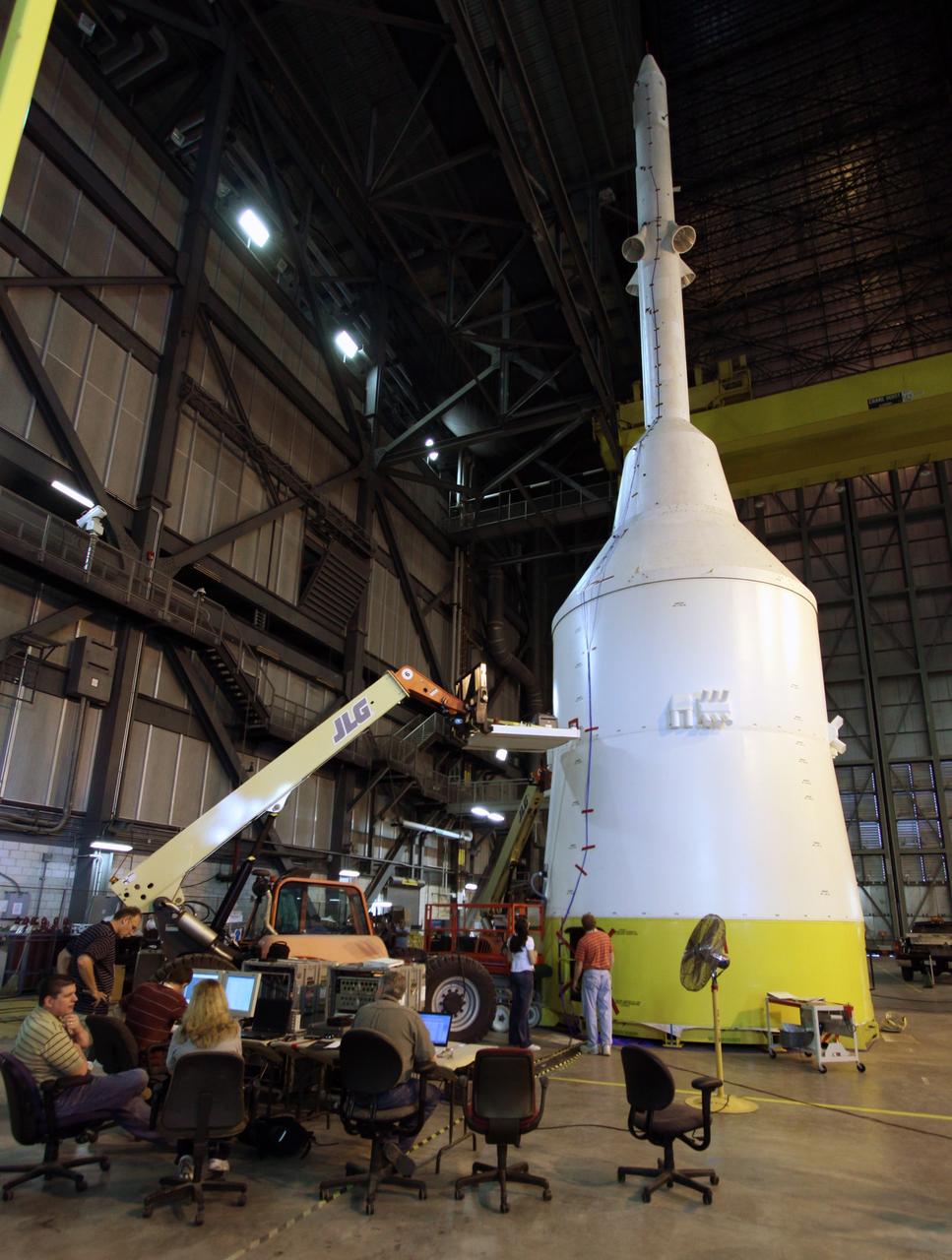
CAPE CANAVERAL, Fla. – In high bay 4 of the Vehicle Assembly Building at NASA's Kennedy Space Center in Florida, technicians place sensors on the top part of the Ares I-X for modal survey testing. The top consists of the launch abort tower, crew module, service module and spacecraft adaptor. Shakers will impose random loads/vibrations to determine the flight test vehicle’s first several bending modes and the strategically located sensors throughout the stacks will measure the amount, acceleration and direction of movement. The purpose of the testing is to confirm that Ares I-X will behave as predicted as it lifts off the pad and powers through the initial stage of flight in a demonstration flight later this year. Photo credit: NASA/Jack Pfaller
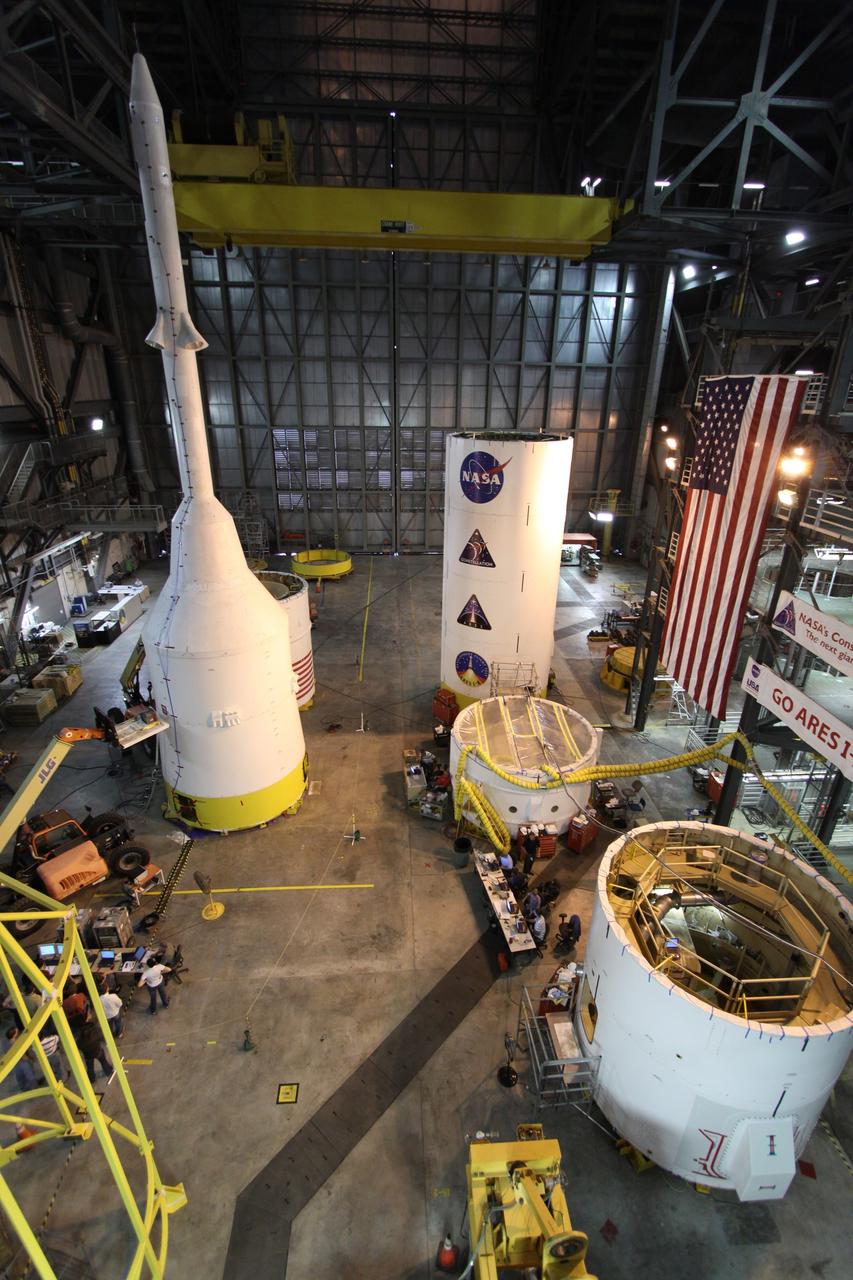
CAPE CANAVERAL, Fla. – In high bay 4 of the Vehicle Assembly Building at NASA's Kennedy Space Center in Florida, technicians begin the modal survey testing on the top part of the Ares I-X (upper left) after sensors were placed on the stack. The top consists of the launch abort tower, crew module, service module and spacecraft adaptor. Other segments are stacked nearby. Shakers will impose random loads/vibrations to determine the flight test vehicle’s first several bending modes and the strategically located sensors throughout the stacks will measure the amount, acceleration and direction of movement. The purpose of the testing is to confirm that Ares I-X will behave as predicted as it lifts off the pad and powers through the initial stage of flight in a demonstration flight later this year. Photo credit: NASA/Jack Pfaller
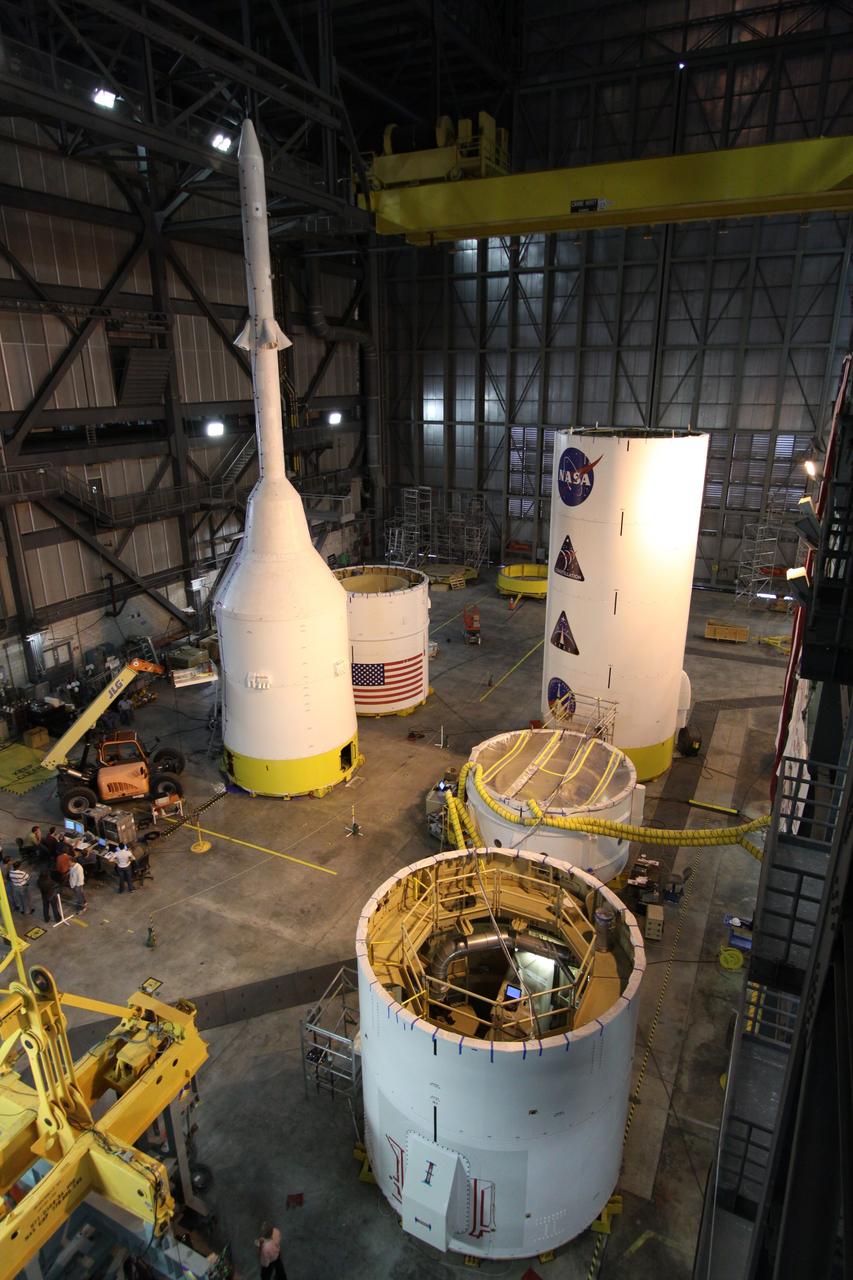
CAPE CANAVERAL, Fla. – In high bay 4 of the Vehicle Assembly Building at NASA's Kennedy Space Center in Florida, the top part of the Ares I-X (upper left) undergoes modal survey testing after sensors were placed on the stack. The top consists of the launch abort tower, crew module, service module and spacecraft adaptor. Other segments are stacked nearby. Shakers will impose random loads/vibrations to determine the flight test vehicle’s first several bending modes and the strategically located sensors throughout the stacks will measure the amount, acceleration and direction of movement. The purpose of the testing is to confirm that Ares I-X will behave as predicted as it lifts off the pad and powers through the initial stage of flight in a demonstration flight later this year. Photo credit: NASA/Jack Pfaller
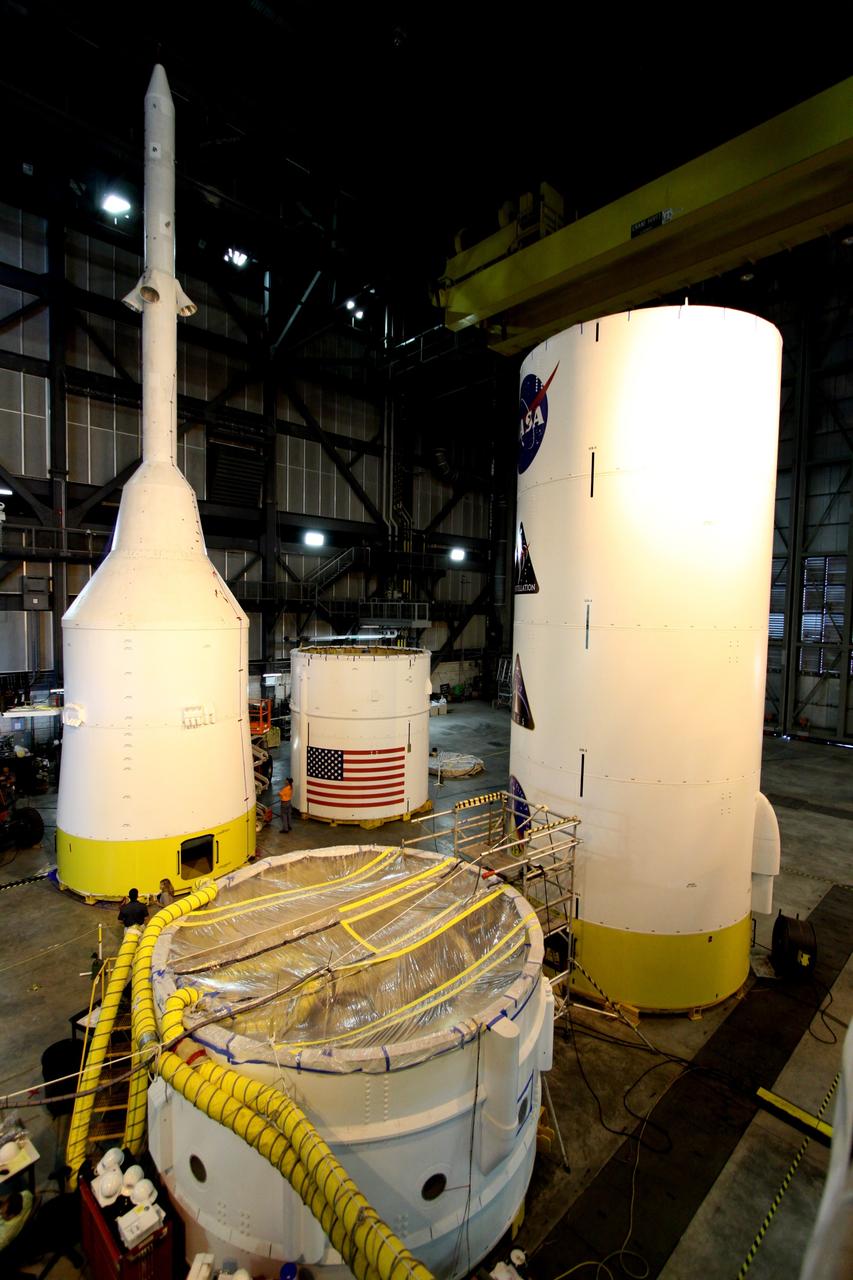
CAPE CANAVERAL, Fla. – In high bay 4 of the Vehicle Assembly Building at NASA's Kennedy Space Center in Florida, the top part of the Ares I-X (upper left) is ready for modal survey testing. The top consists of the launch abort tower, crew module, service module and spacecraft adaptor. Other segments are stacked nearby. Shakers will impose random loads/vibrations to determine the flight test vehicle’s first several bending modes and the strategically located sensors throughout the stacks will measure the amount, acceleration and direction of movement. The purpose of the testing is to confirm that Ares I-X will behave as predicted as it lifts off the pad and powers through the initial stage of flight in a demonstration flight later this year. Photo credit: NASA/Jack Pfaller