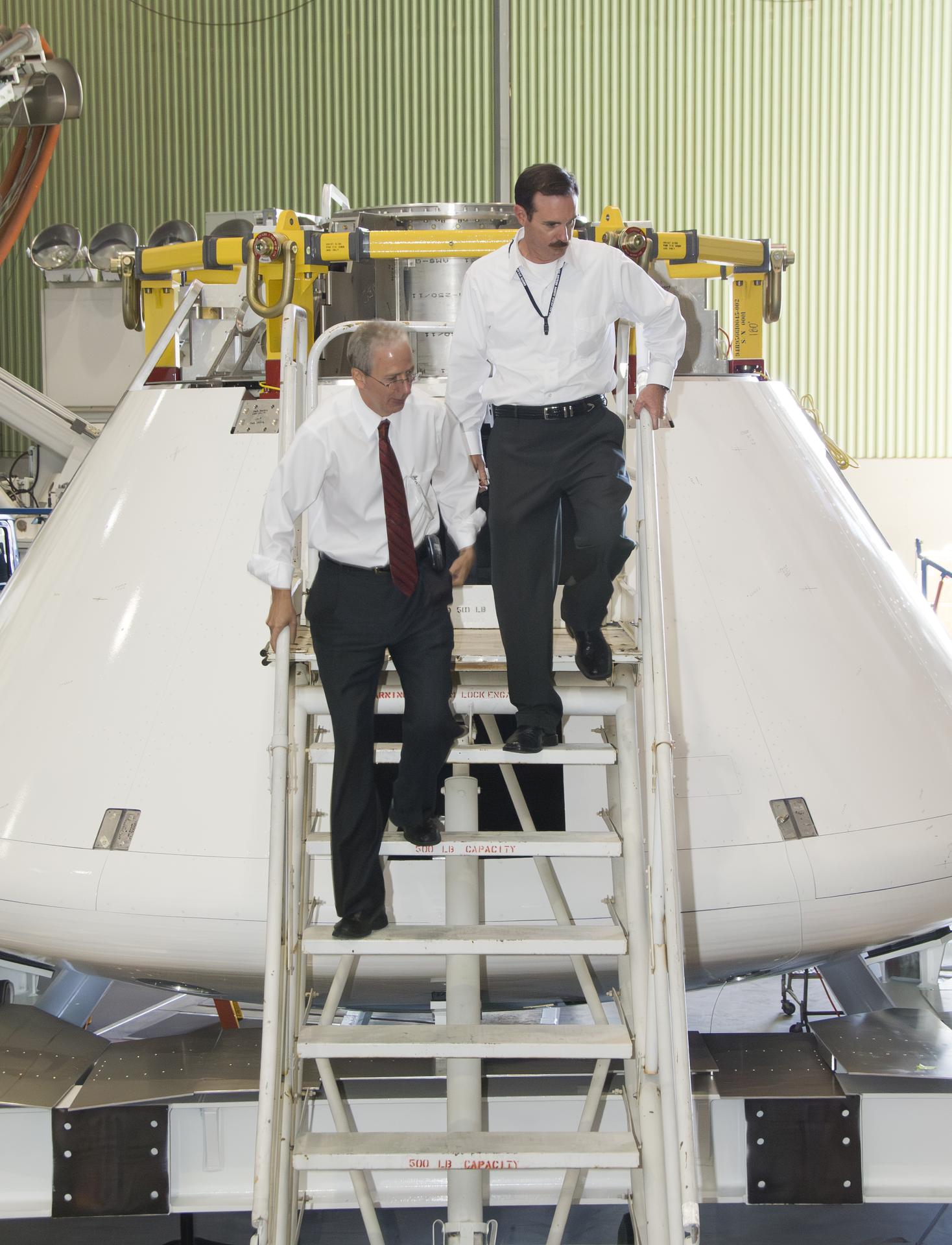
Mark Geyer, NASA’s Orion manager, visited NASA’s Armstrong Flight Research Center in Edwards, California, on April 9, 2008, to see the Pad Abort-1 test article, developed to demonstrate the Orion capsule’s emergency escape system during launch. Dave McAllister, NASA Armstrong Abort Flight Test operations lead, right, shows Geyer the Orion capsule mockup. Pad Abort-1 was later tested at the U.S. Army’s White Sands Missile Range in New Mexico, on May 6, 2010.
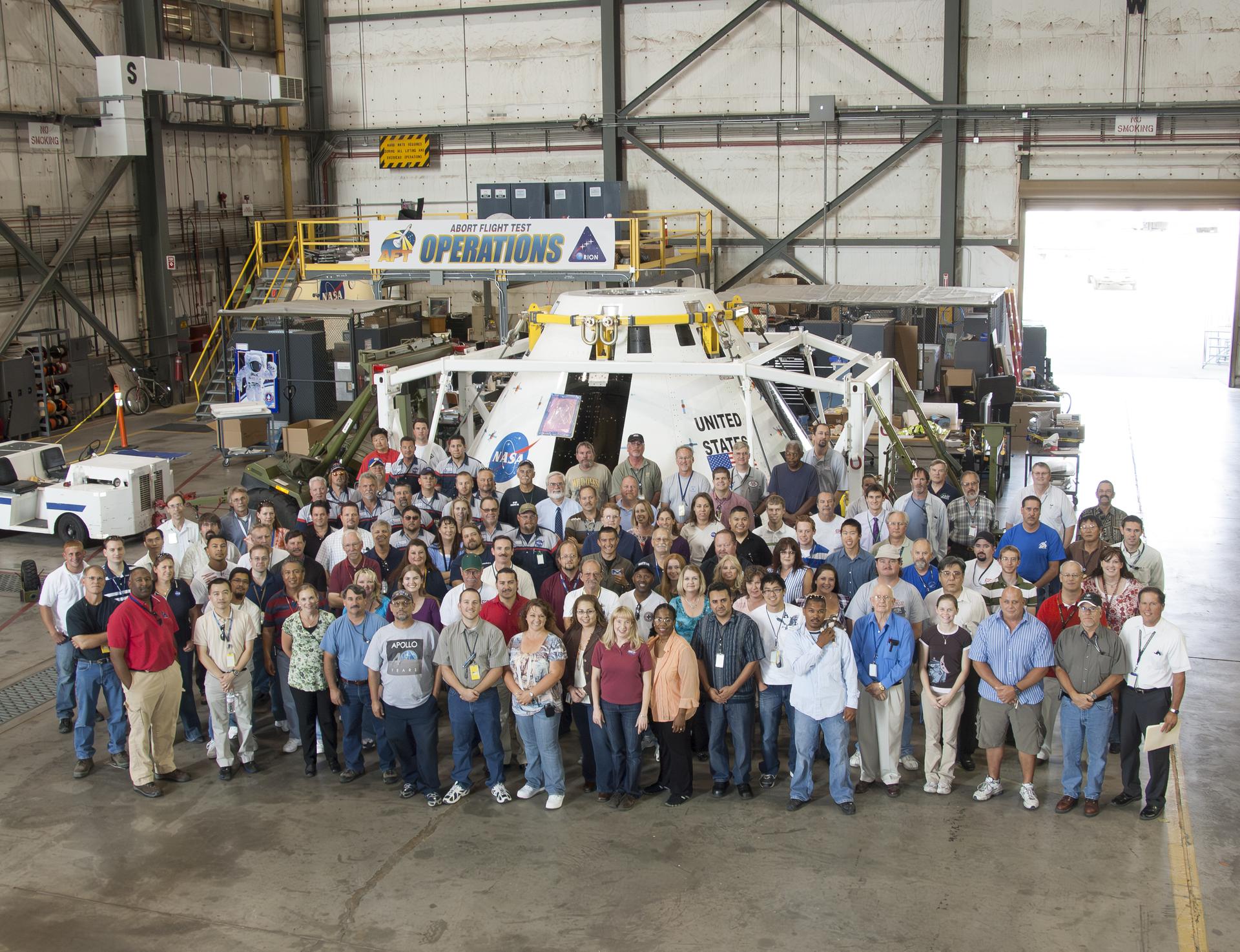
Teamwork was on full display at NASA’s Armstrong Flight Research Center in Edwards, California, on Aug. 13, 2009, as engineers and technicians prepared the Pad Abort-1 vehicle – the Orion launch abort system development test article. After assembly and integration, the mock crew capsule was transported to the U.S. Army’s White Sands Missile Range in New Mexico where it successfully completed its test on May 6, 2010.
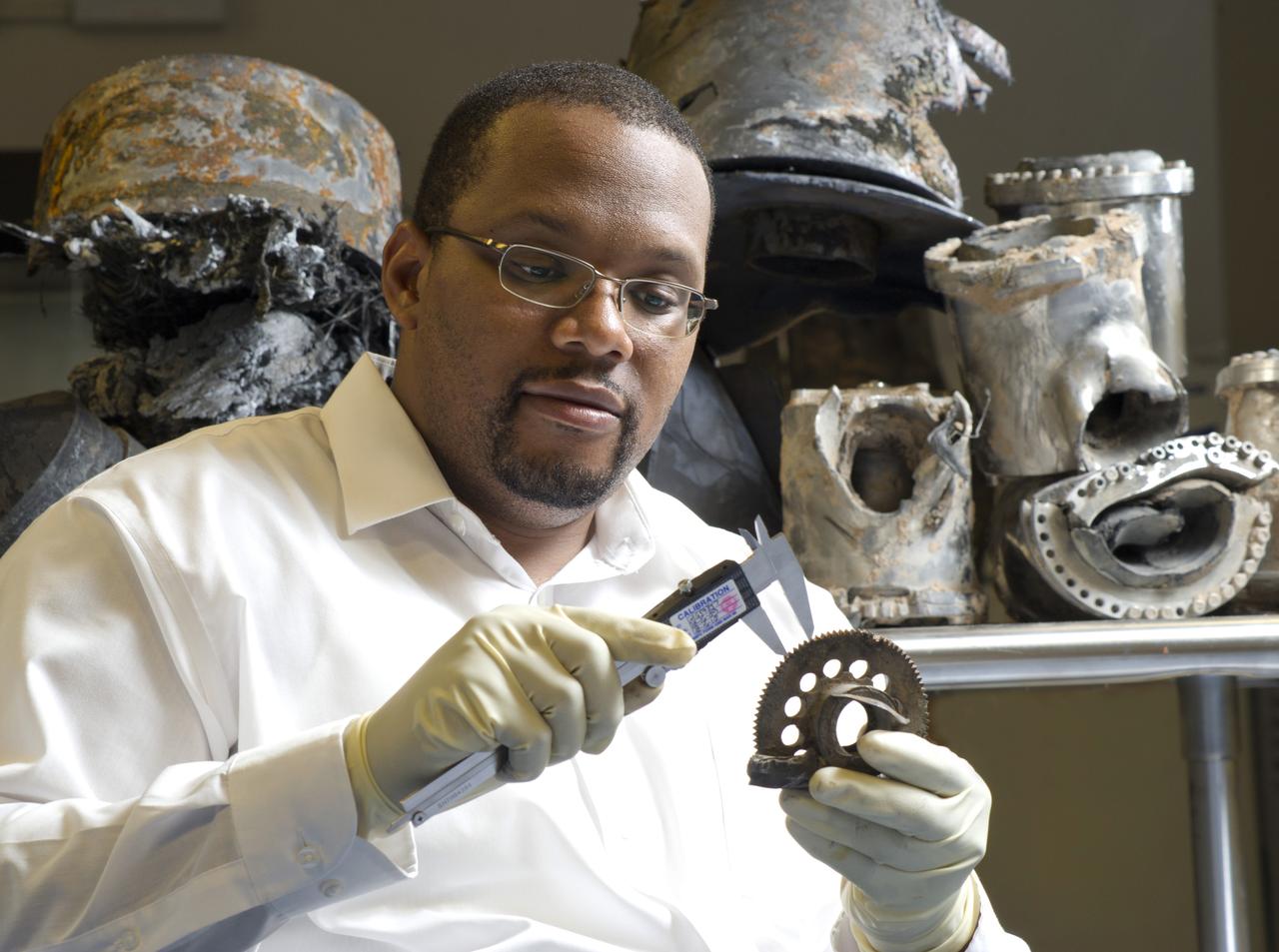
MARVIN BARNES, NASA MSFC ER52 SOLID PROPULSION, SEPARATION AND MANEUVERING SYSTEMS BRANCH, INSPECTS POST-FLIGHT ORION LAUNCH ABORT SYSTEM (LAS) PAD ABORT 1 (PA-1) HARDWARE
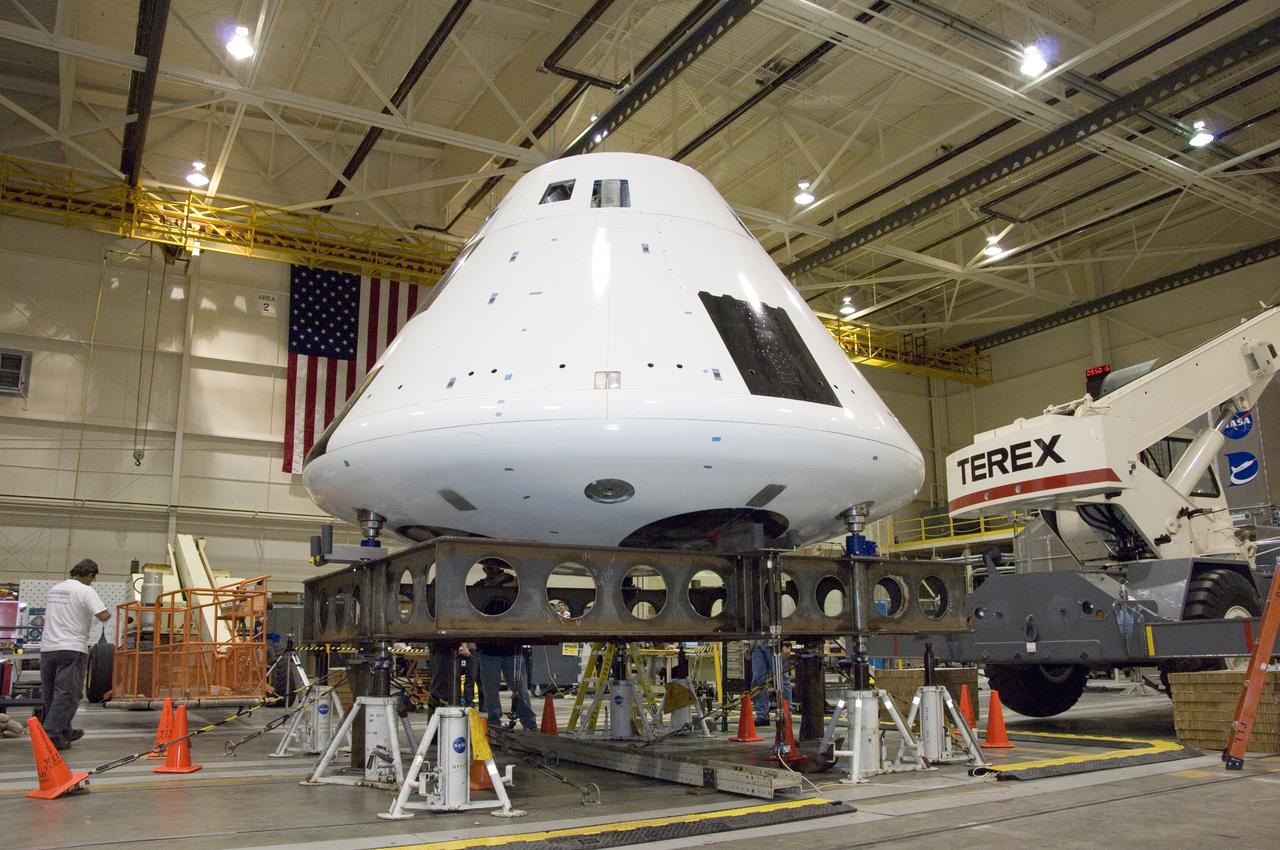
The boilerplate Orion crew module for the Orion Launch Abort System Pad Abort-1 flight test undergoes moment-of-inertia testing at NASA Dryden's Flight Loads Lab.
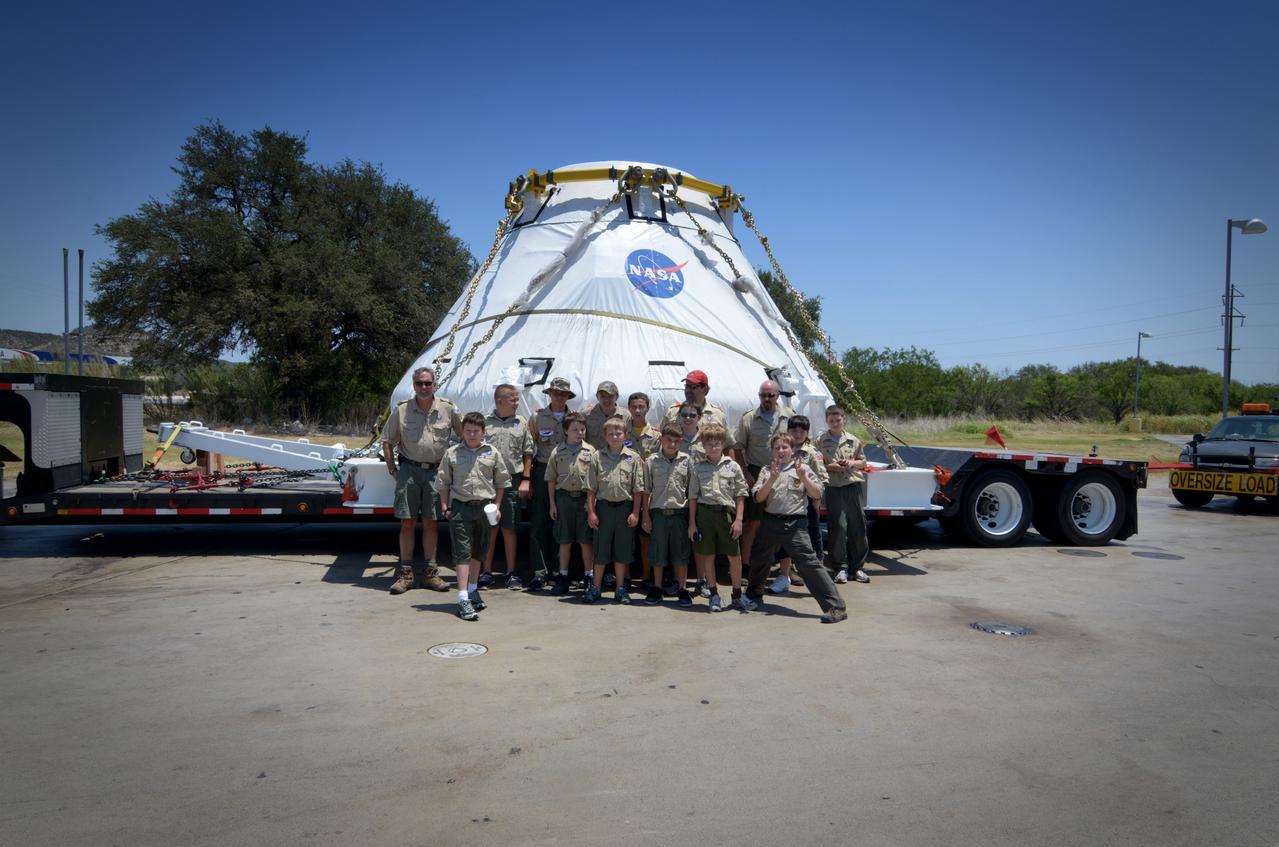
Travelers take a photo with the Orion crew module flown on NASA’s Pad Abort-1 (PA-1) flight test on the road on June 15, 2011. Part of Batch image transfer from Flickr.
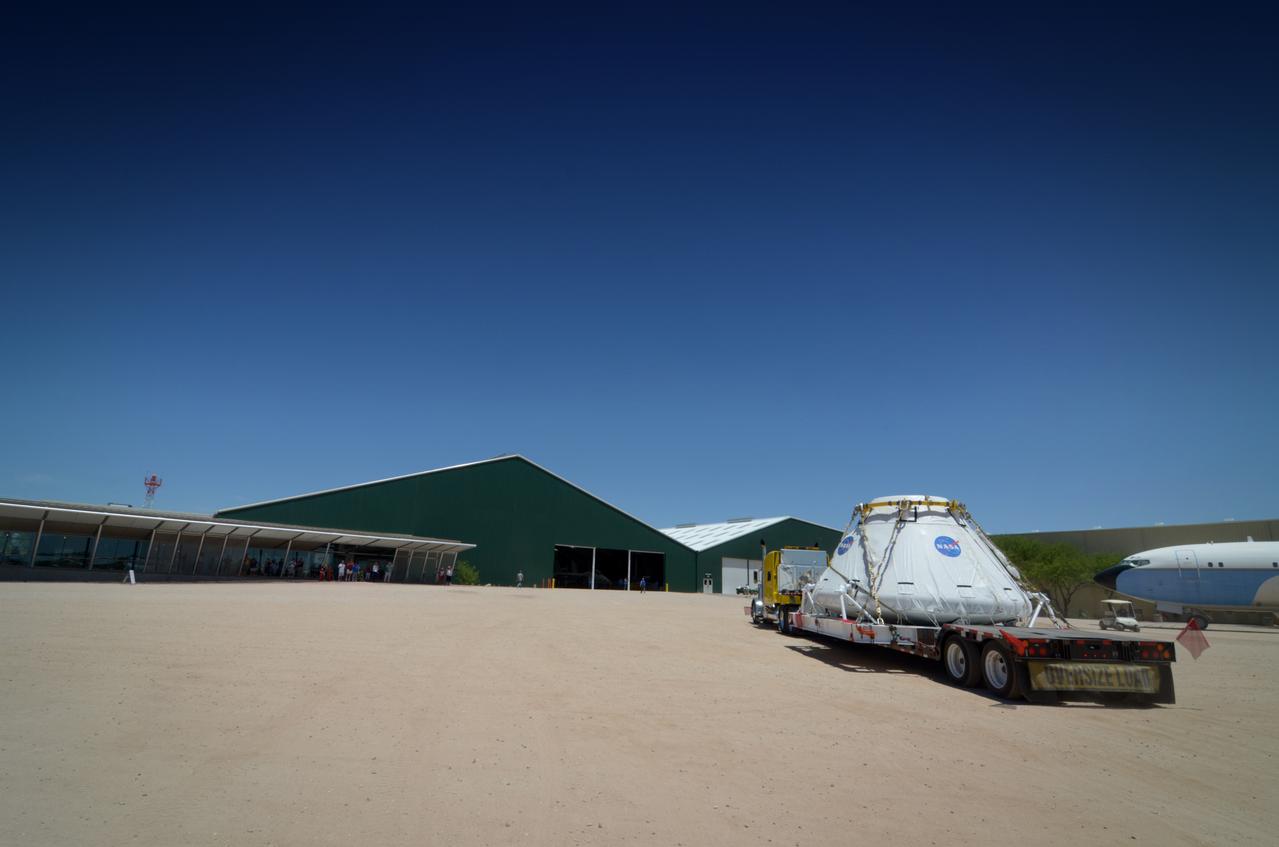
Travelers take a photo with the Orion crew module flown on NASA’s Pad Abort-1 (PA-1) flight test on the road on June 15, 2011. Part of Batch image transfer from Flickr.
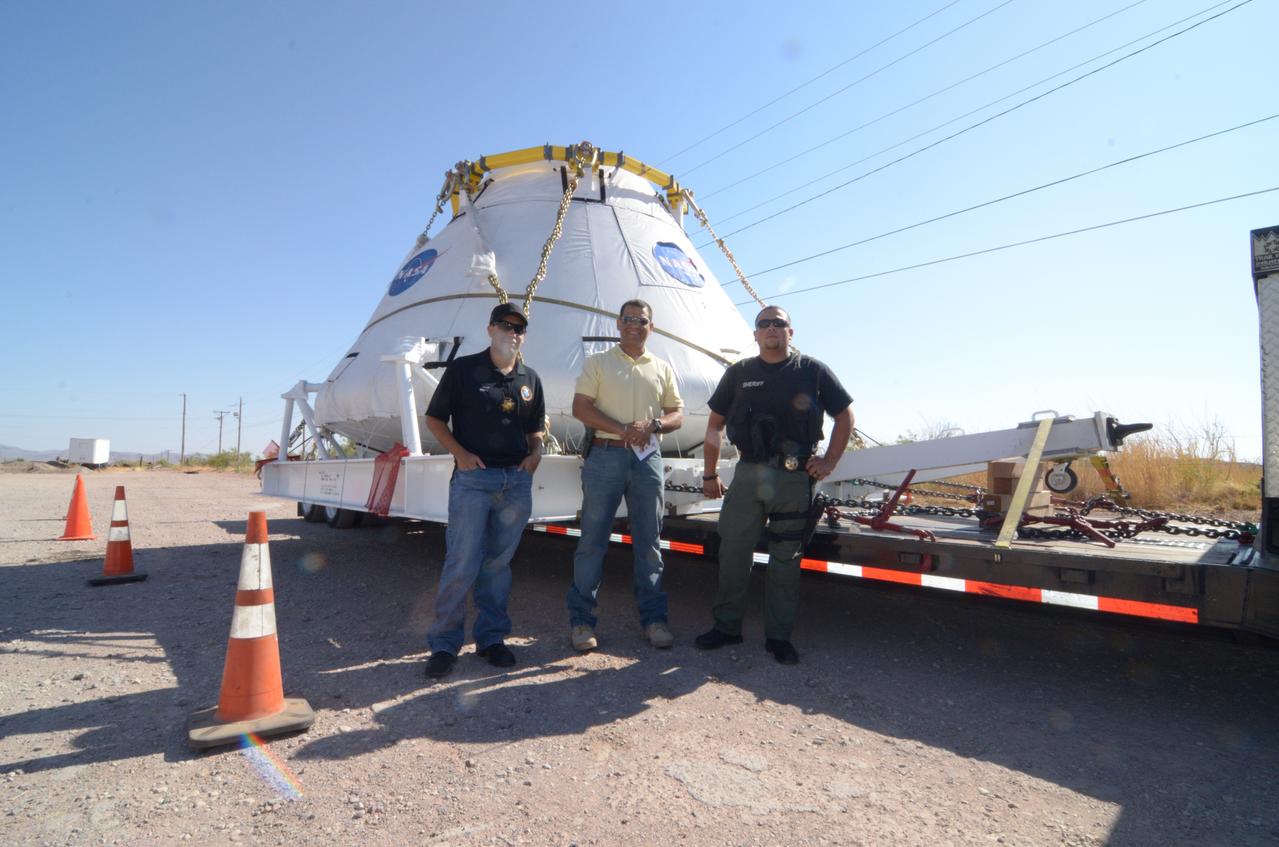
Travelers take a photo with the Orion crew module flown on NASA’s Pad Abort-1 (PA-1) flight test on the road on June 17, 2011. Part of Batch image transfer from Flickr.
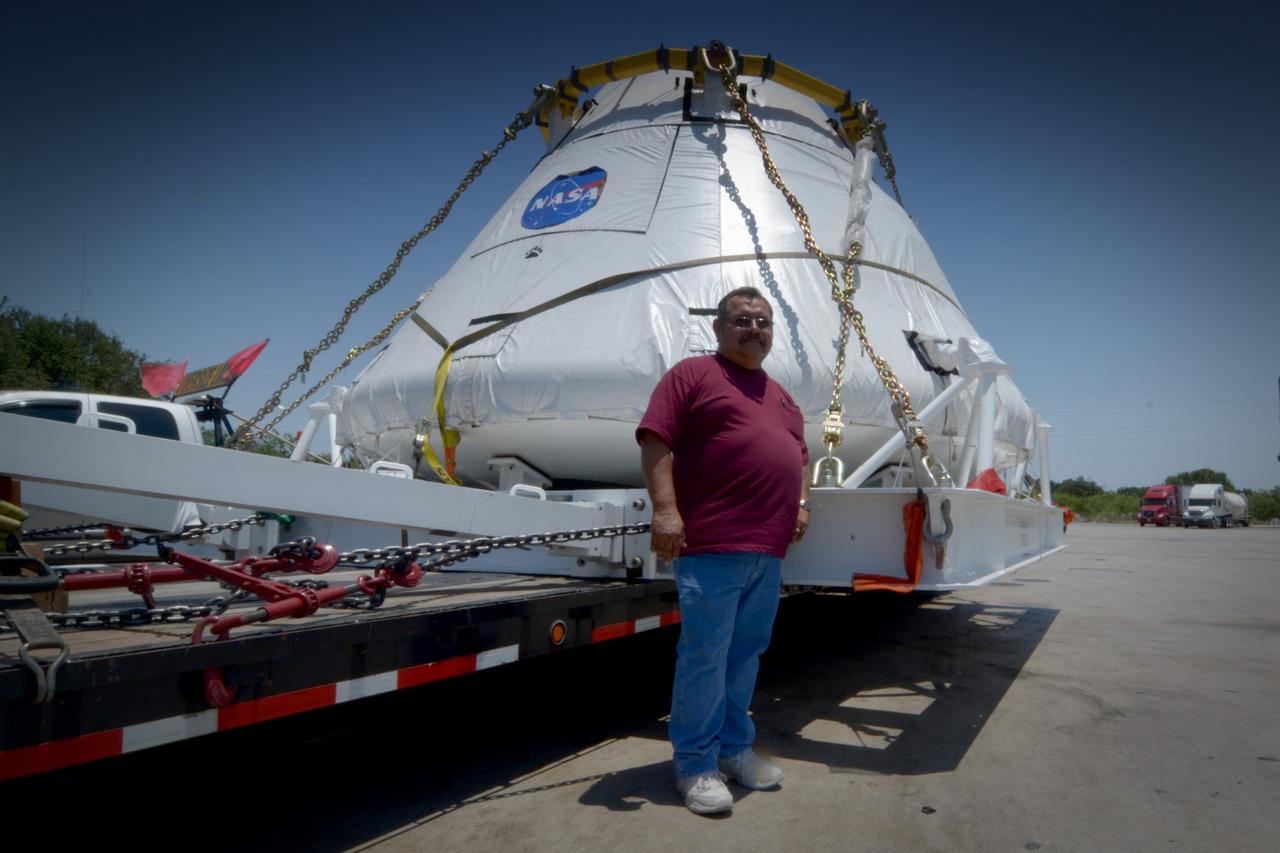
Travelers take a photo with the Orion crew module flown on NASA’s Pad Abort-1 (PA-1) flight test on the road on June 15, 2011. Part of Batch image transfer from Flickr.
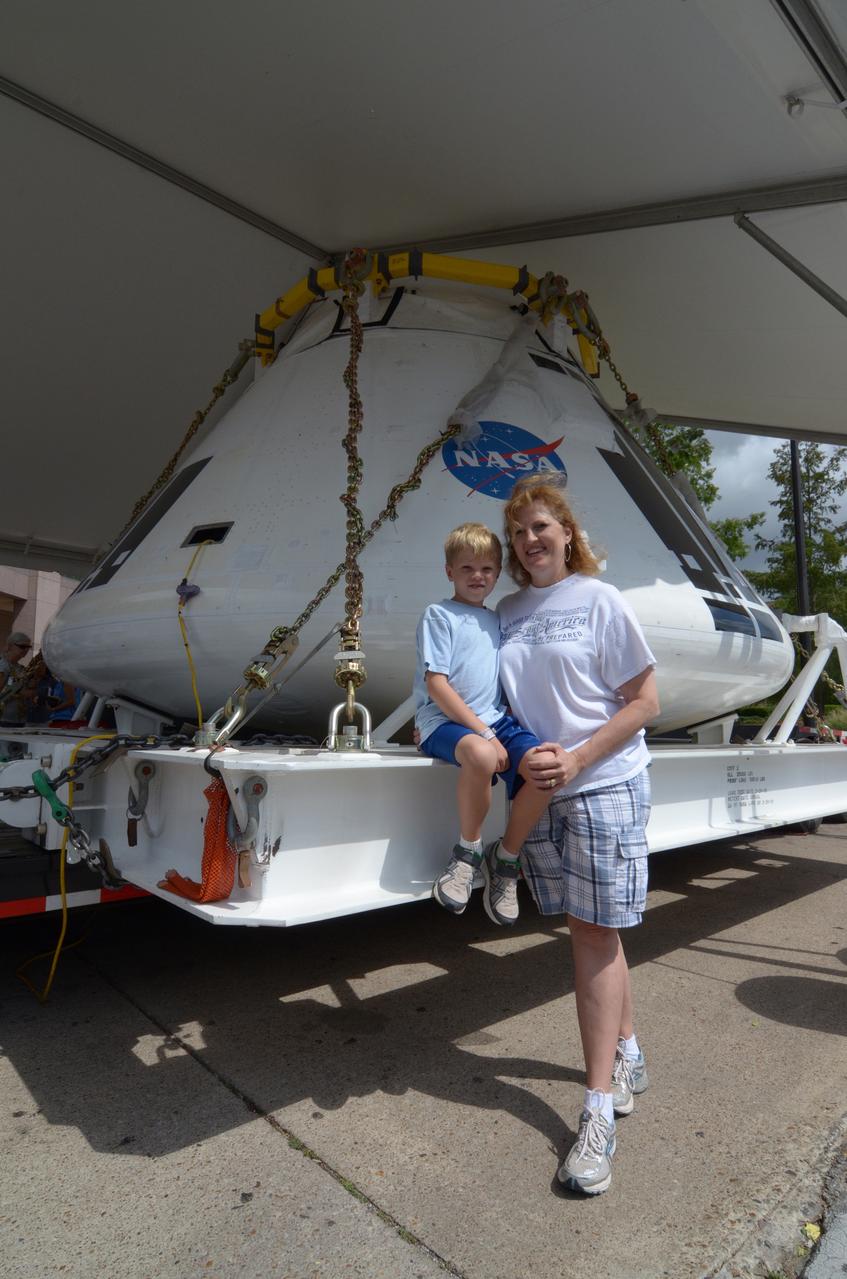
Travelers take a photo with the Orion crew module flown on NASA’s Pad Abort-1 (PA-1) flight test on the road on June 18, 2011. Part of Batch image transfer from Flickr.
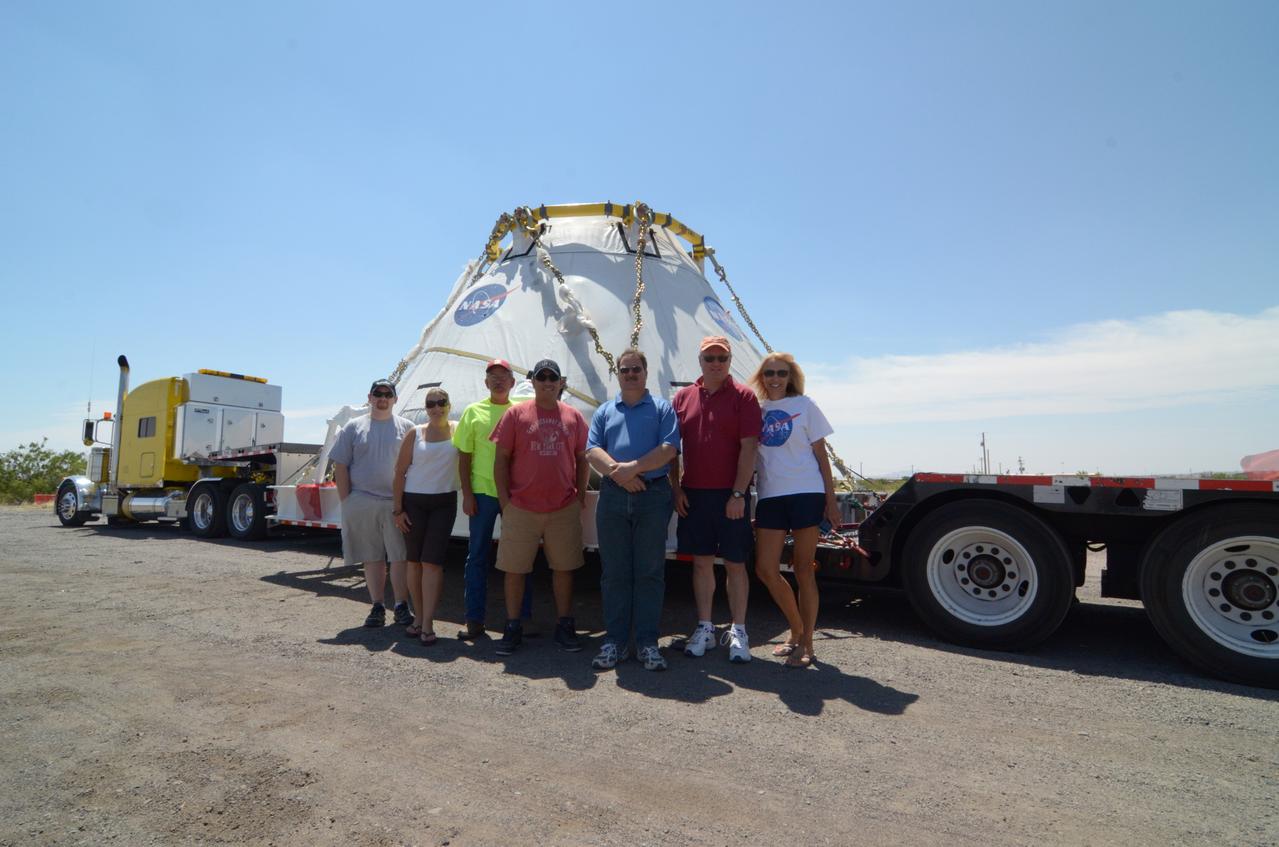
Travelers take a photo with the Orion crew module flown on NASA’s Pad Abort-1 (PA-1) flight test on the road on June 17, 2011. Part of Batch image transfer from Flickr.
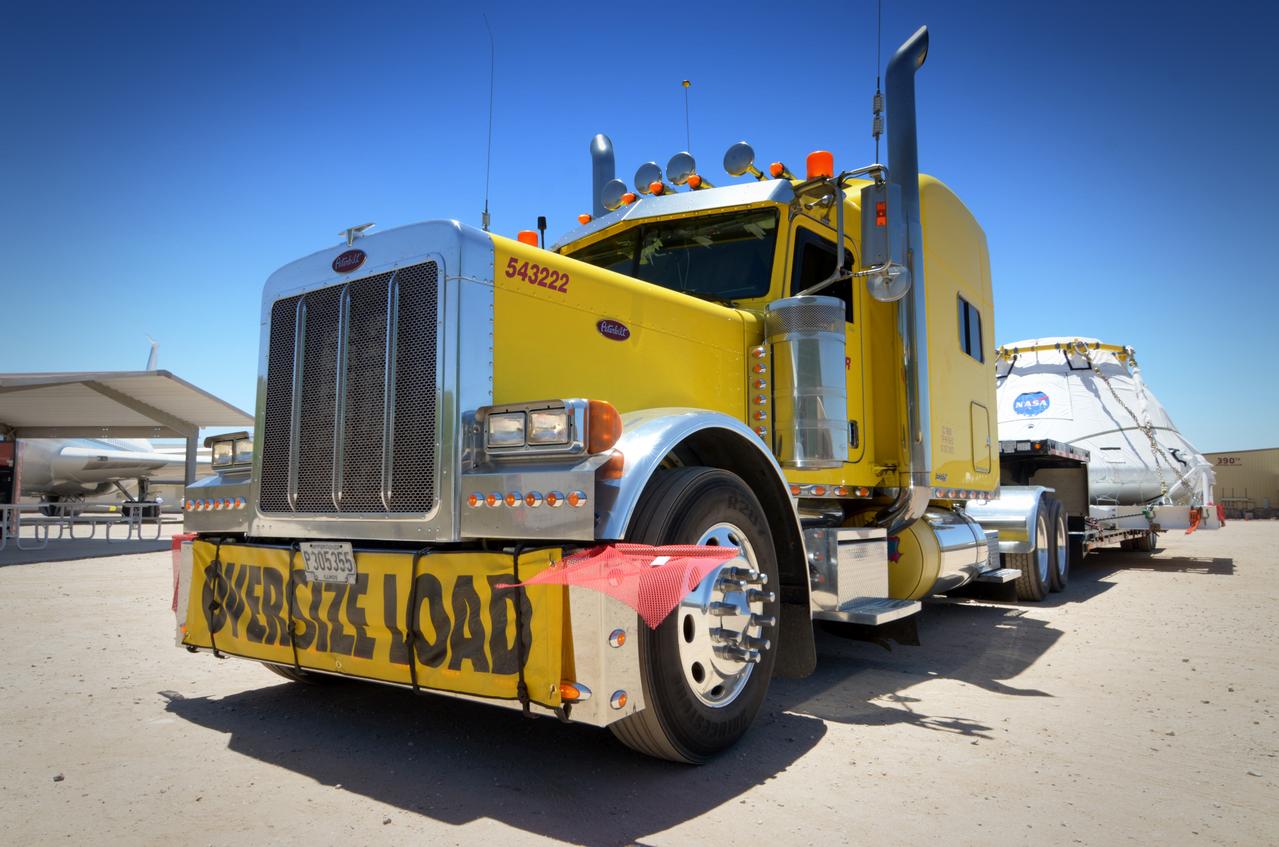
Travelers take a photo with the Orion crew module flown on NASA’s Pad Abort-1 (PA-1) flight test on the road on June 15, 2011. Part of Batch image transfer from Flickr.
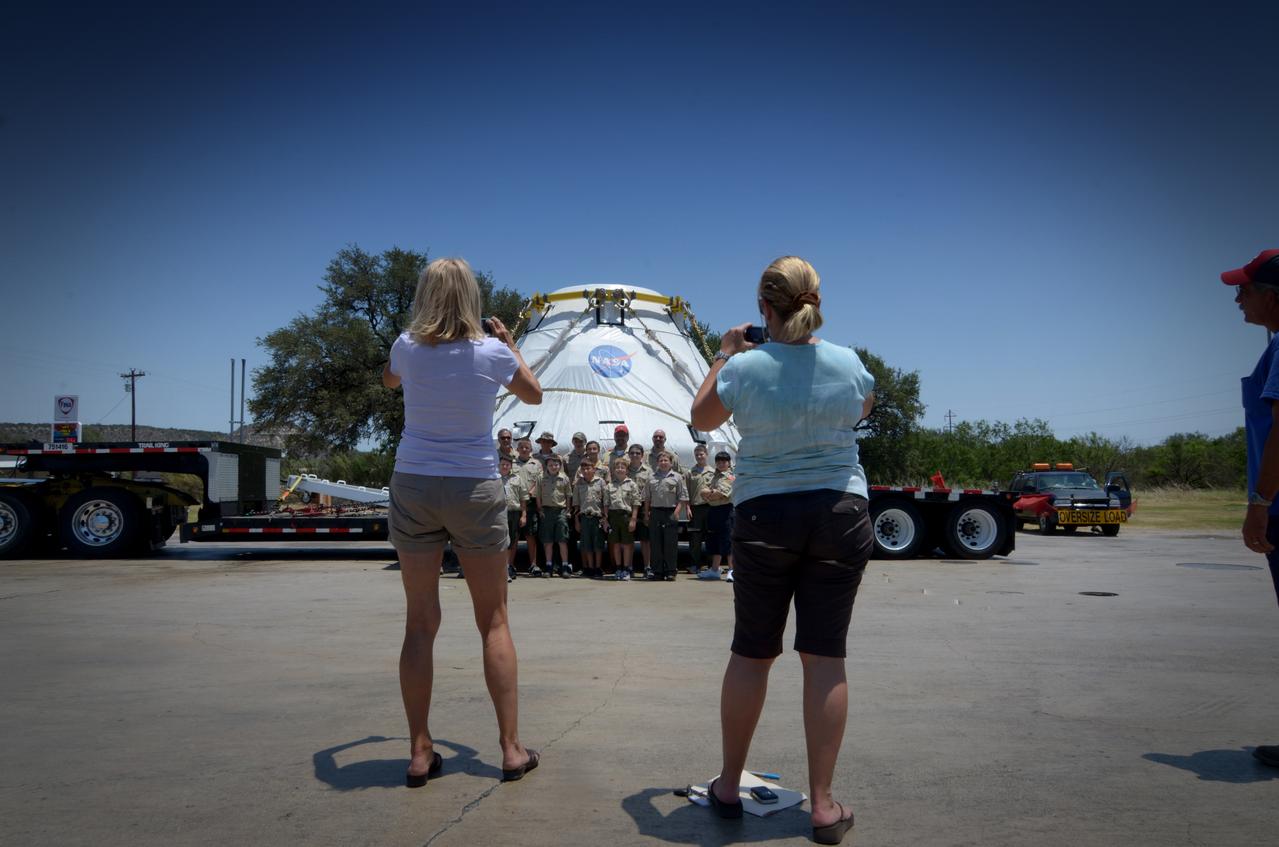
Travelers take a photo with the Orion crew module flown on NASA’s Pad Abort-1 (PA-1) flight test on the road on June 15, 2011. Part of Batch image transfer from Flickr.

The Orion Pad Abort-1 (PA-1) crew module exits the tent at the press site at the Kennedy Space Center in Florida on July 11, 2011. Part of Batch image transfer from Flickr.
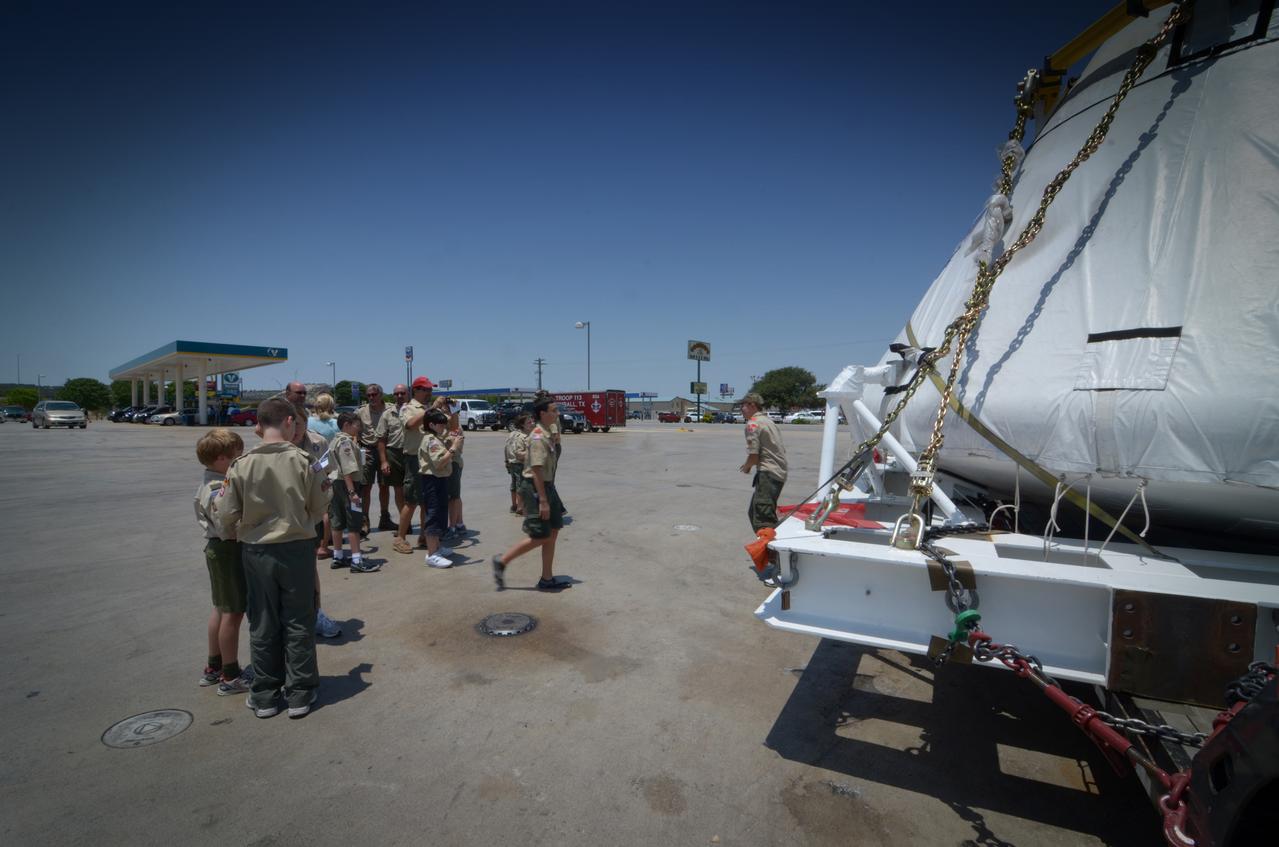
Travelers take a photo with the Orion crew module flown on NASA’s Pad Abort-1 (PA-1) flight test on the road on June 15, 2011. Part of Batch image transfer from Flickr.
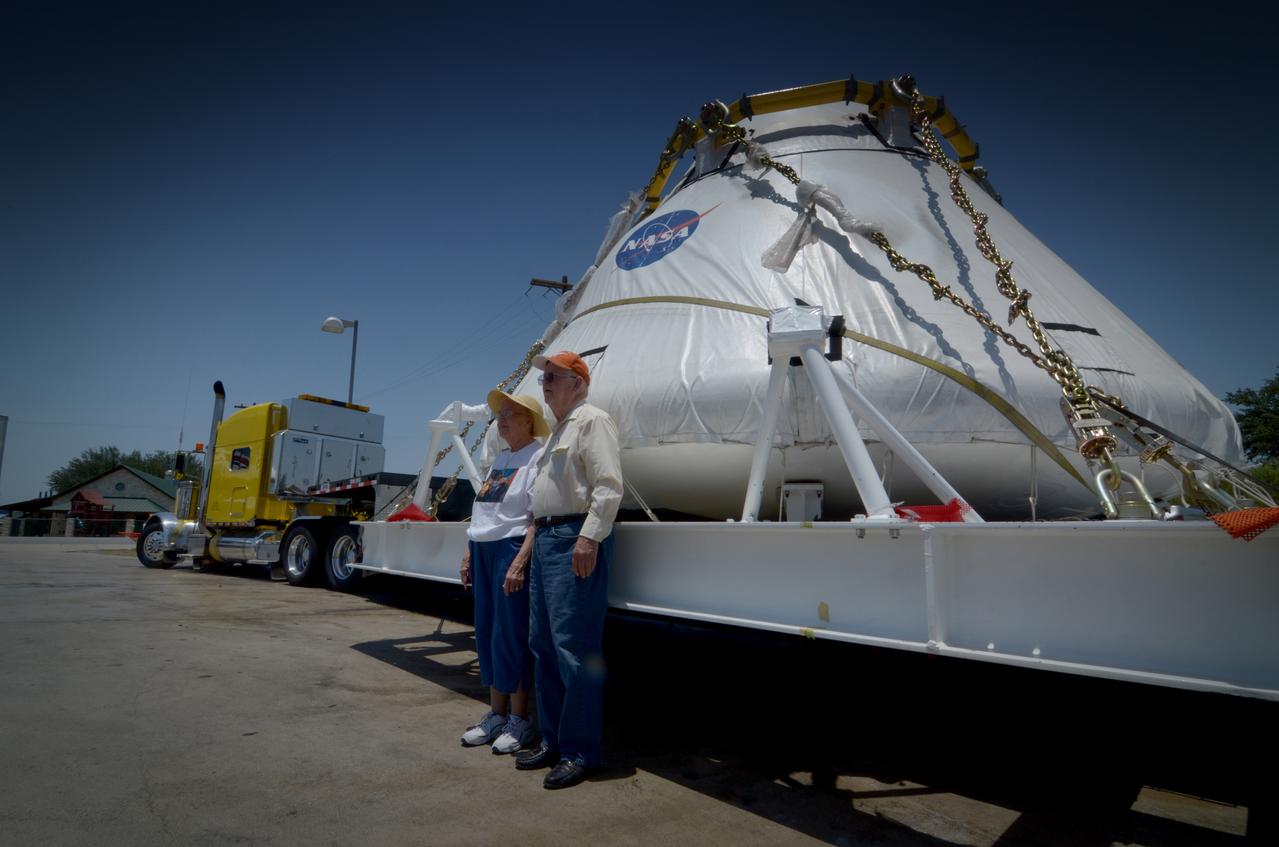
Travelers take a photo with the Orion crew module flown on NASA’s Pad Abort-1 (PA-1) flight test on the road on June 15, 2011. Part of Batch image transfer from Flickr.
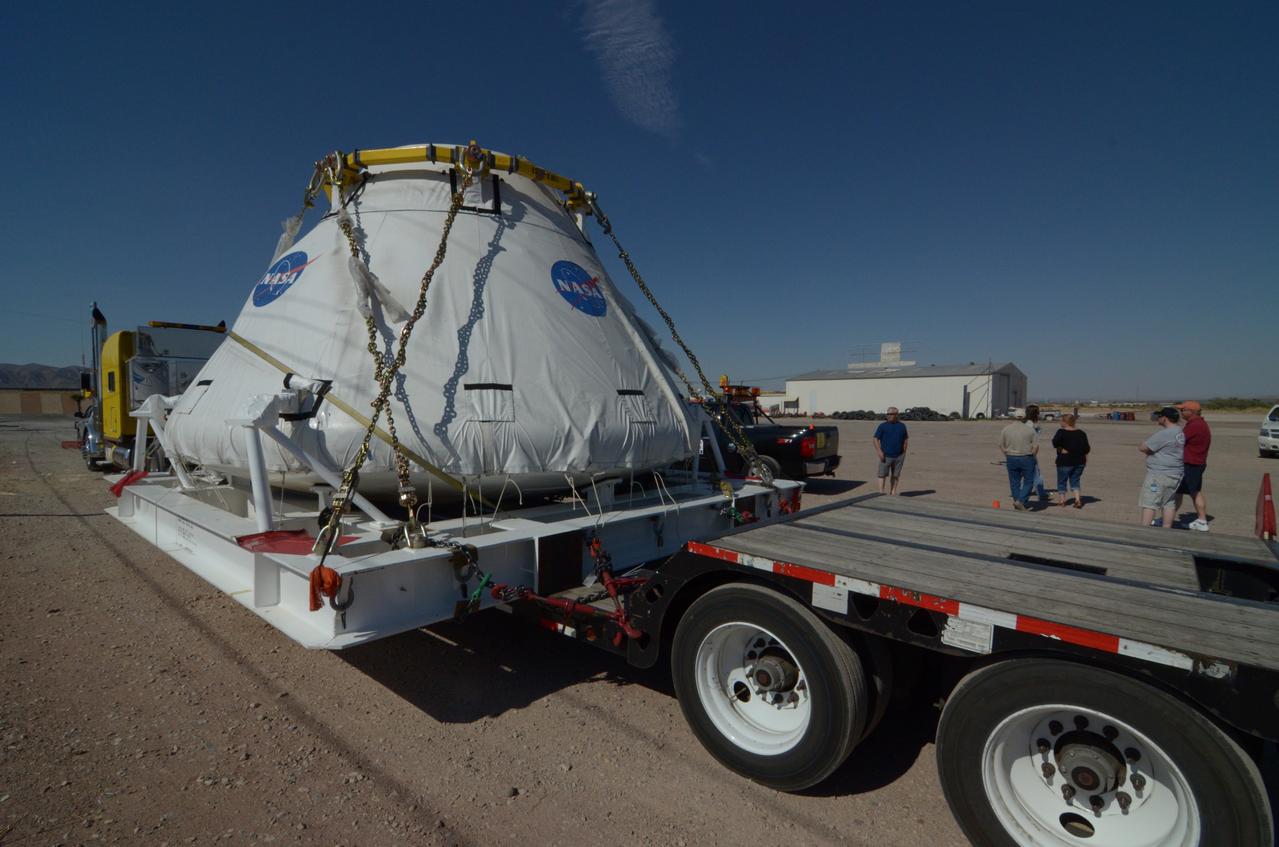
Travelers take a photo with the Orion crew module flown on NASA’s Pad Abort-1 (PA-1) flight test on the road on June 15, 2011. Part of Batch image transfer from Flickr.
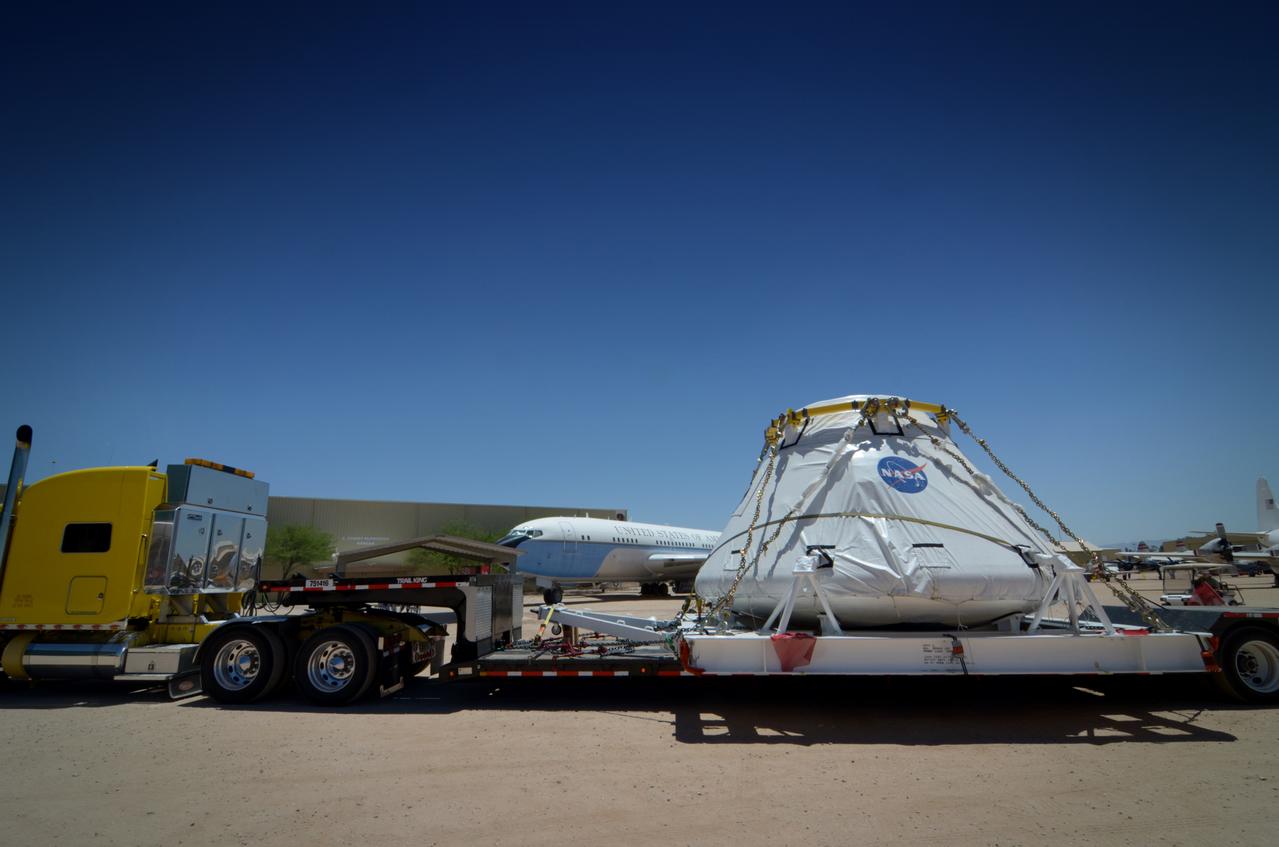
Travelers take a photo with the Orion crew module flown on NASA’s Pad Abort-1 (PA-1) flight test on the road on June 15, 2011. Part of Batch image transfer from Flickr.
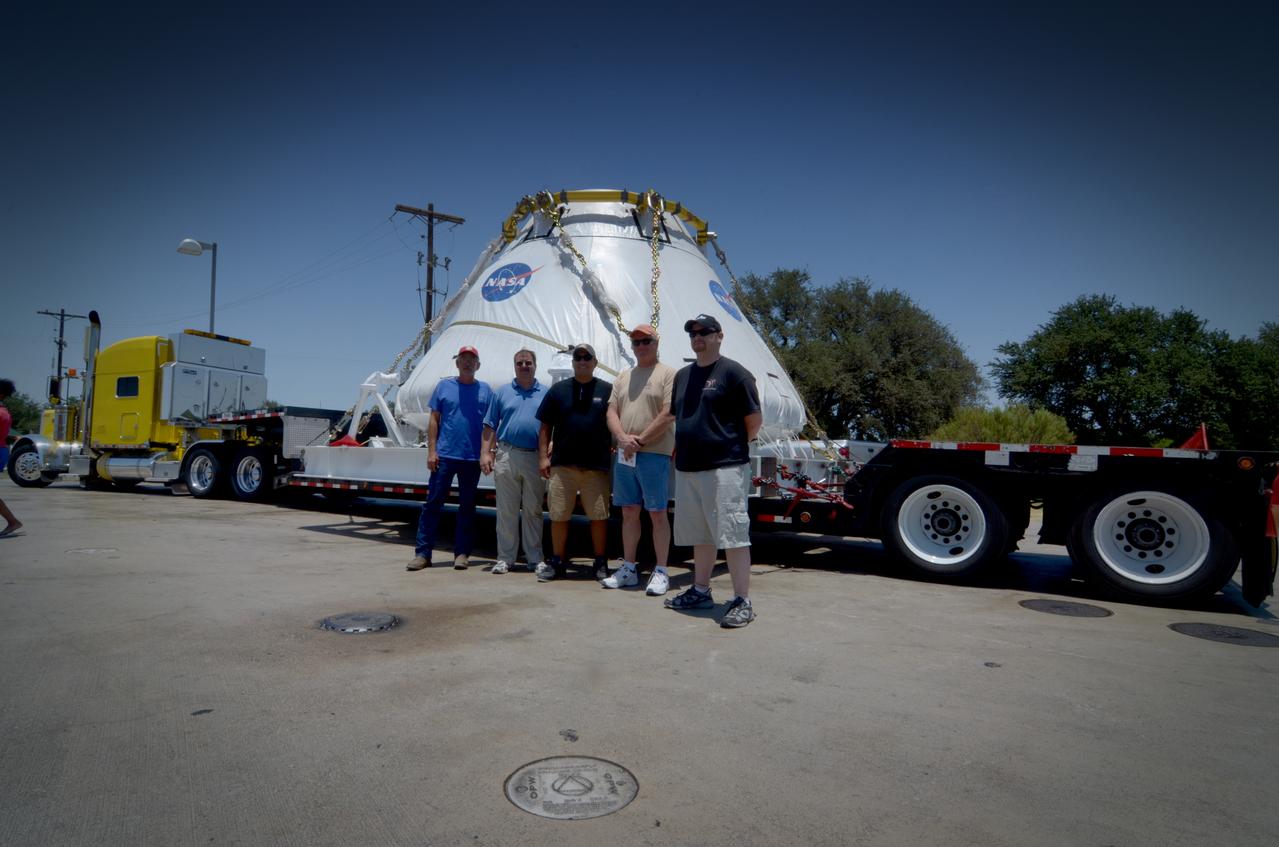
Travelers take a photo with the Orion crew module flown on NASA’s Pad Abort-1 (PA-1) flight test on the road on June 15, 2011. Part of Batch image transfer from Flickr.
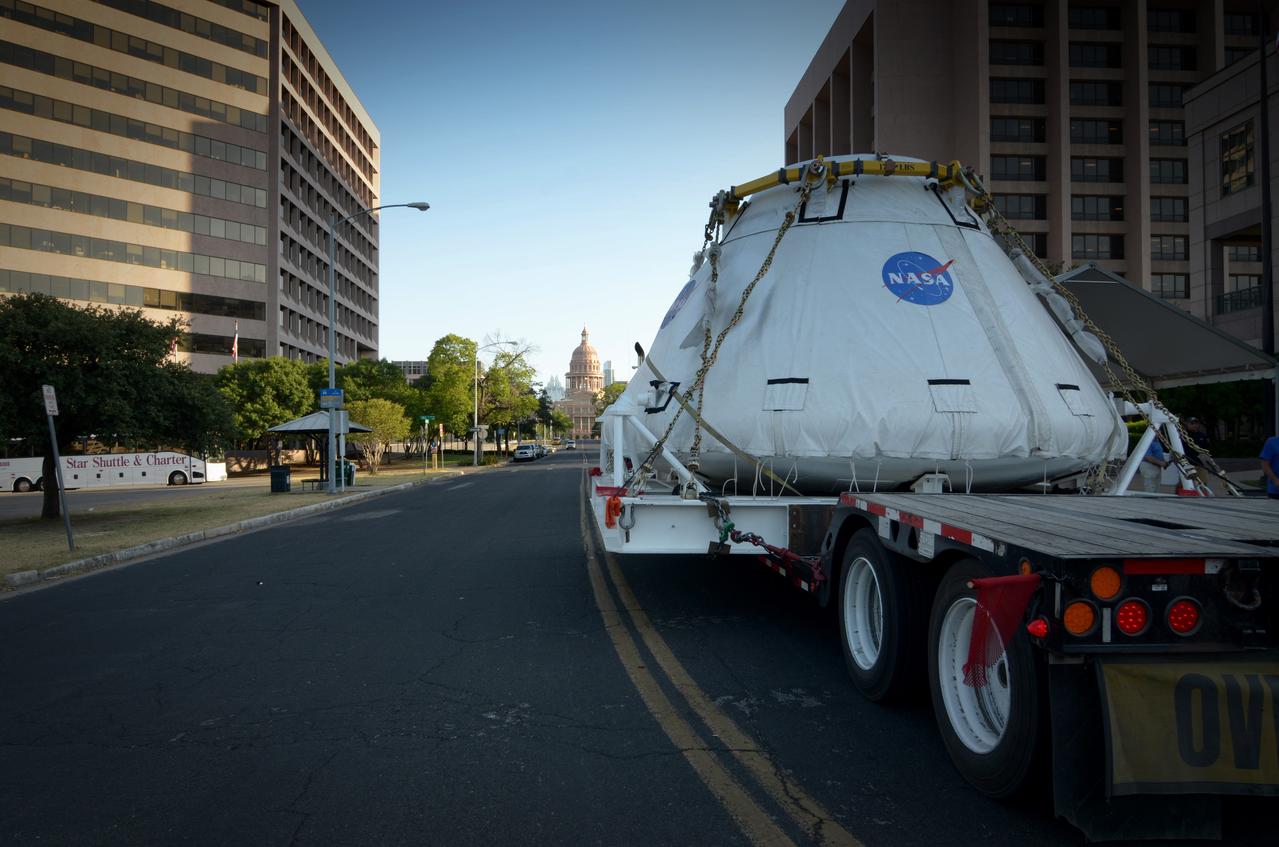
Travelers take a photo with the Orion crew module flown on NASA’s Pad Abort-1 (PA-1) flight test on the road on June 15, 2011. Part of Batch image transfer from Flickr.
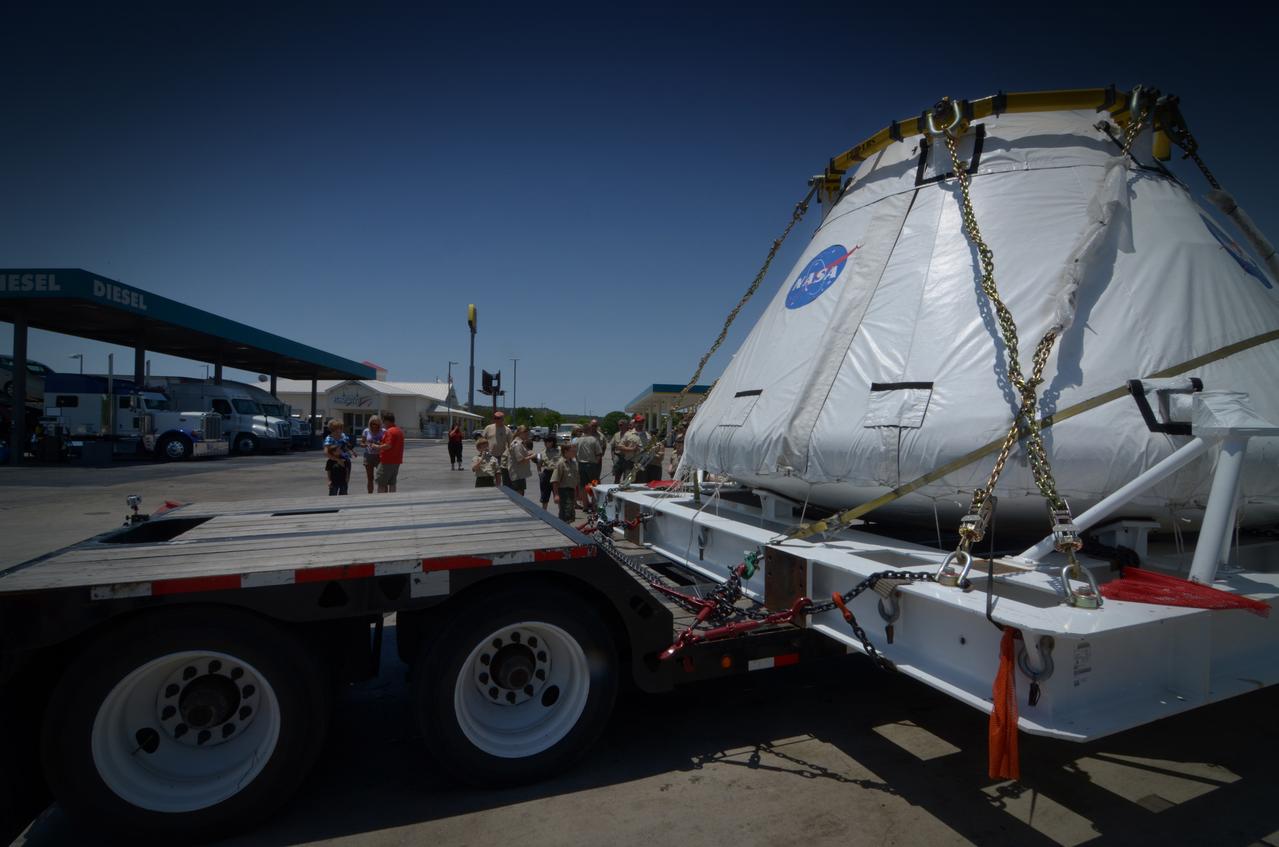
Travelers take a photo with the Orion crew module flown on NASA’s Pad Abort-1 (PA-1) flight test on the road on June 18, 2011. Part of Batch image transfer from Flickr.
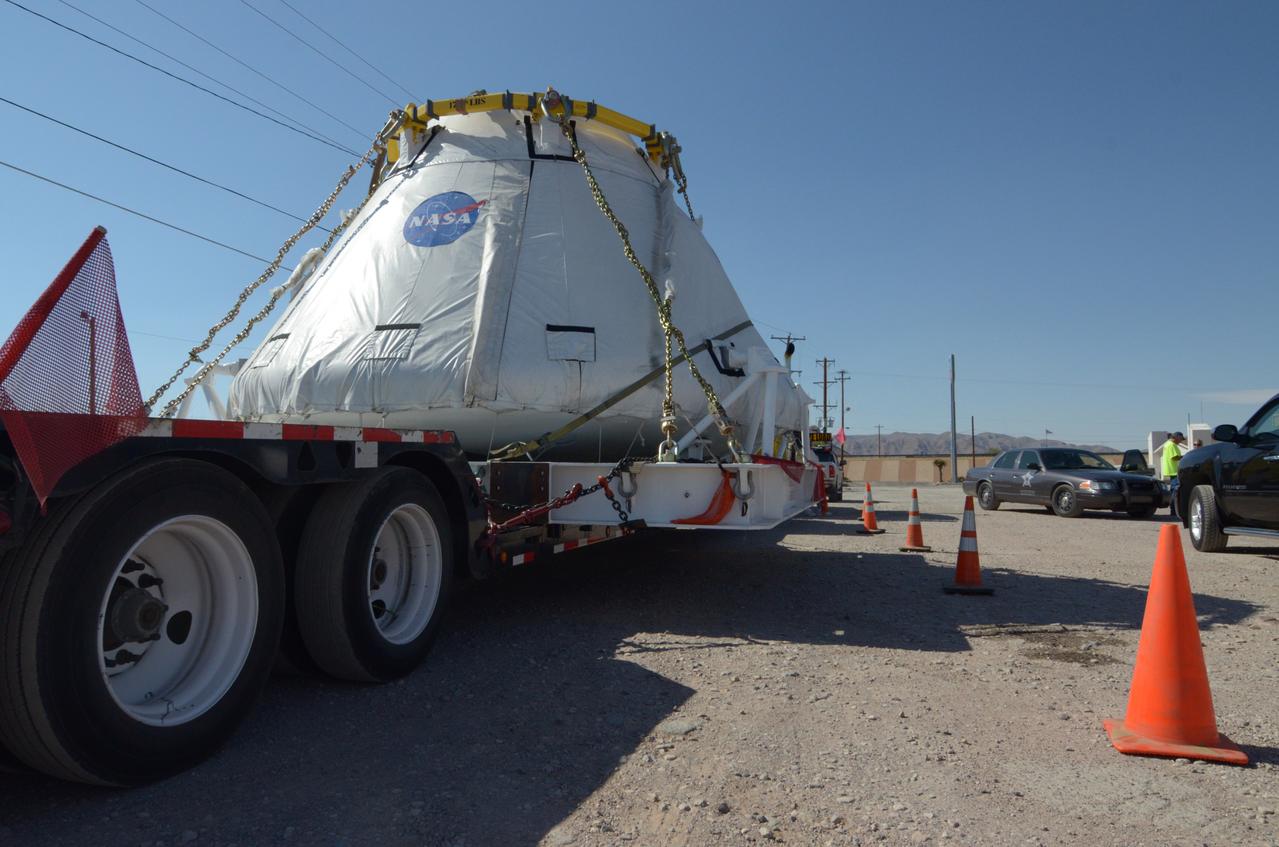
Travelers take a photo with the Orion crew module flown on NASA’s Pad Abort-1 (PA-1) flight test on the road on June 15, 2011. Part of Batch image transfer from Flickr.
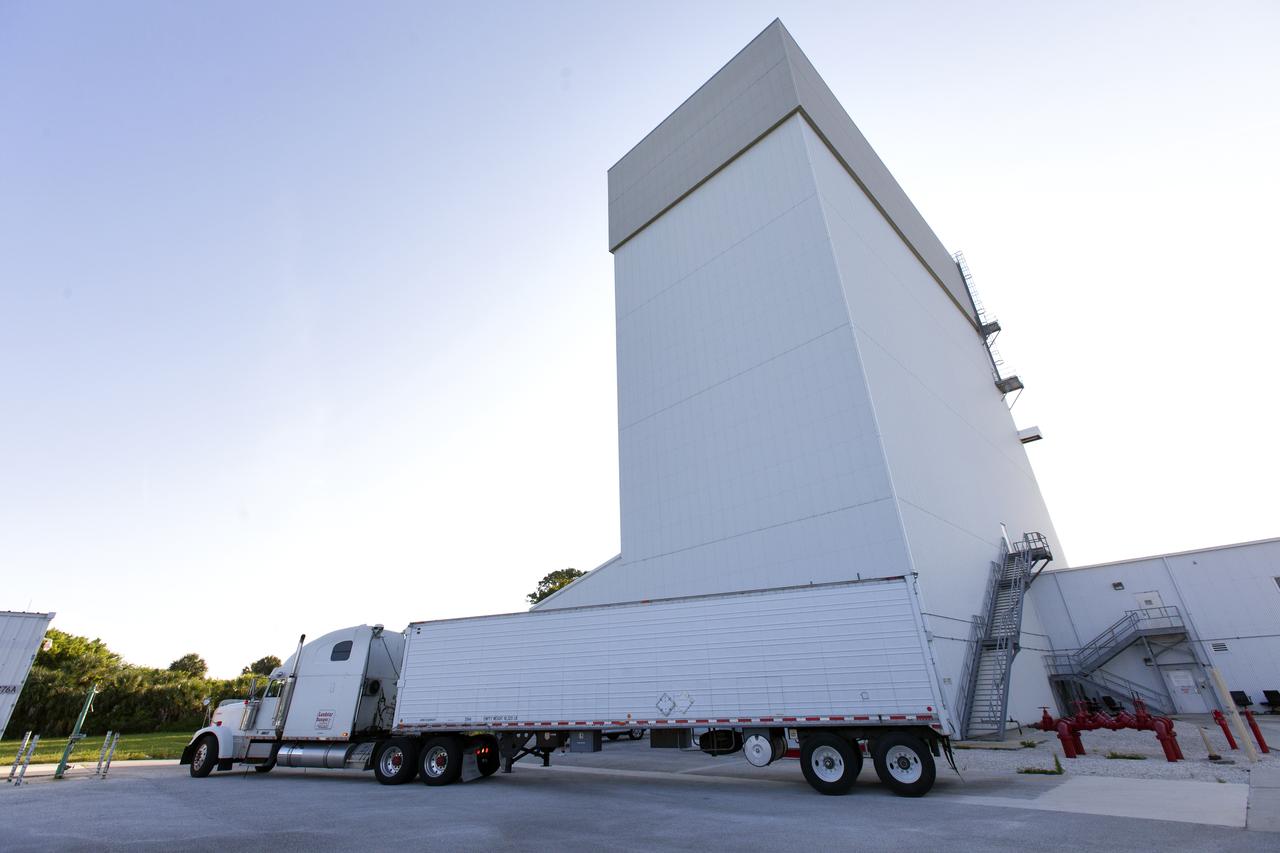
The abort motor for NASA’s Artemis 1 mission, secured in a heavy transport truck, arrives at the Launch Abort System Facility (LASF) at the agency’s Kennedy Space Center in Florida on June 6, 2019. The abort motor, manufactured by Northrop Grumman, will be offloaded and moved into the LASF where it will be integrated with Orion subcomponents and prepared for Artemis 1. The abort motor is one of three motors located on the tower of the Launch Abort System (LAS). The LAS is designed to pull the Orion capsule and its crew away to safety if an emergency occurs during ascent of the Space Launch System (SLS) rocket. During Artemis 1, the uncrewed Orion spacecraft will launch atop the SLS from Launch Pad 39B at Kennedy. Orion will embark on an approximately three-week mission that will take the spacecraft thousands of miles past the Moon. Orion will return to Earth and splashdown in the Pacific Ocean off the coast of California, where it will be retrieved and returned to Kennedy.
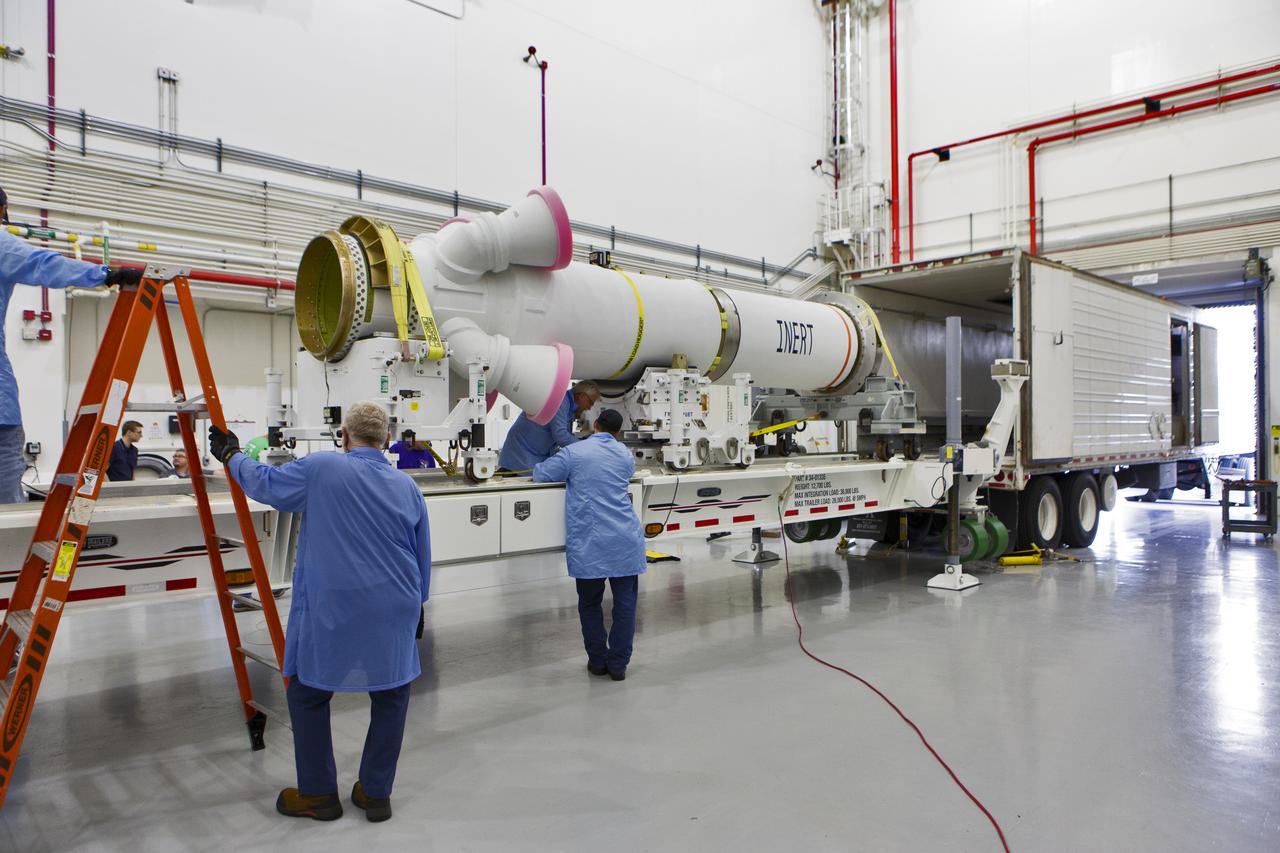
Workers begin checkouts of the abort motor for NASA’s Artemis 1 mission inside the Launch Abort System Facility (LASF) at the agency’s Kennedy Space Center in Florida on June 6, 2019. The abort motor, manufactured by Northrop Grumman, will be integrated with Orion subcomponents and prepared for Artemis 1. The abort motor is one of three motors located on the tower of the Launch Abort System (LAS). The LAS is designed to pull the Orion capsule and its crew away to safety if an emergency occurs during ascent of the Space Launch System (SLS) rocket. During Artemis 1, the uncrewed Orion spacecraft will launch atop the SLS from Launch Pad 39B at Kennedy. Orion will embark on an approximately three-week mission that will take the spacecraft thousands of miles past the Moon. Orion will return to Earth and splashdown in the Pacific Ocean off the coast of California, where it will be retrieved and returned to Kennedy.
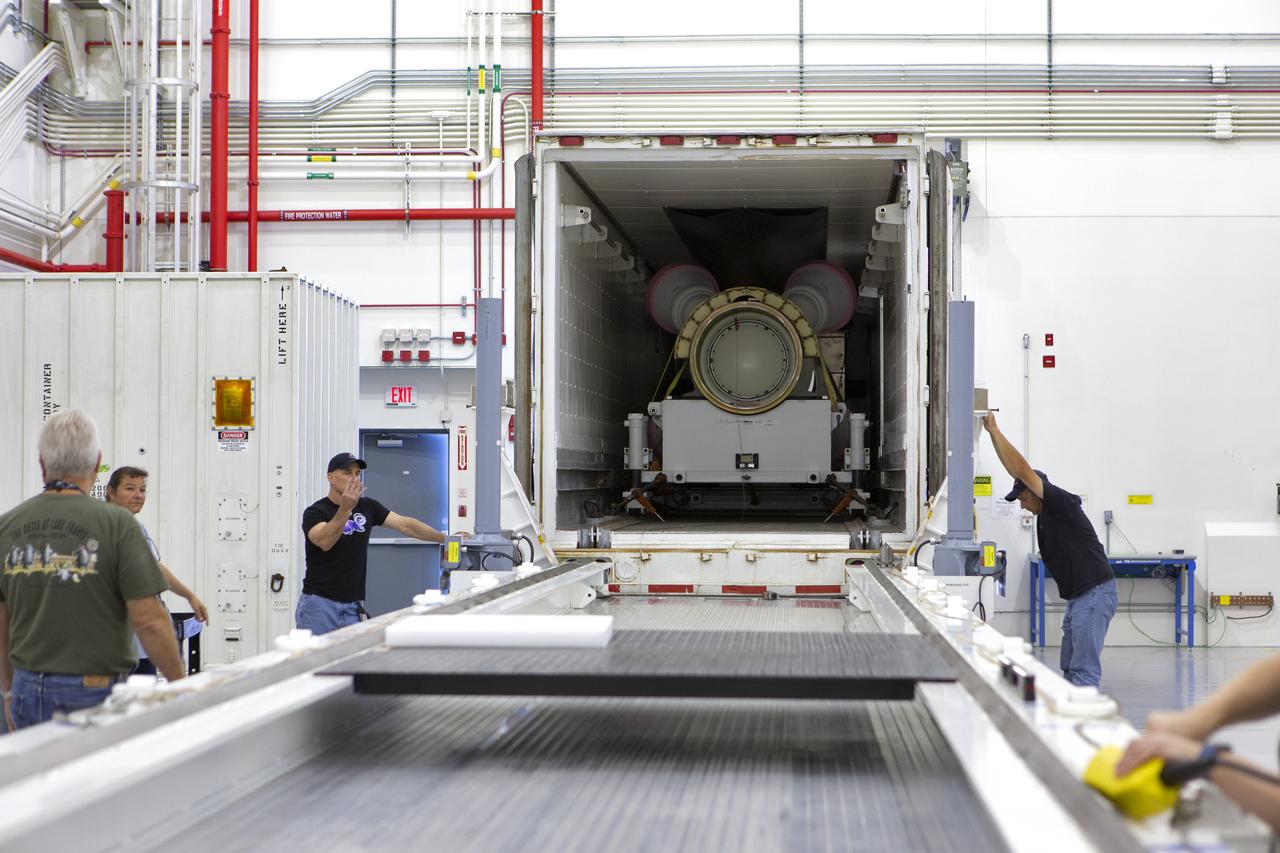
The abort motor for NASA’s Artemis 1 mission, is offloaded from a heavy transport truck inside the Launch Abort System Facility (LASF) at the agency’s Kennedy Space Center in Florida on June 6, 2019. The abort motor, manufactured by Northrop Grumman, will be integrated with Orion subcomponents and prepared for Artemis 1. The abort motor is one of three motors located on the tower of the Launch Abort System (LAS). The LAS is designed to pull the Orion capsule and its crew away to safety if an emergency occurs during ascent of the Space Launch System (SLS) rocket. During Artemis 1, the uncrewed Orion spacecraft will launch atop the SLS from Launch Pad 39B at Kennedy. Orion will embark on an approximately three-week mission that will take the spacecraft thousands of miles past the Moon. Orion will return to Earth and splashdown in the Pacific Ocean off the coast of California, where it will be retrieved and returned to Kennedy.
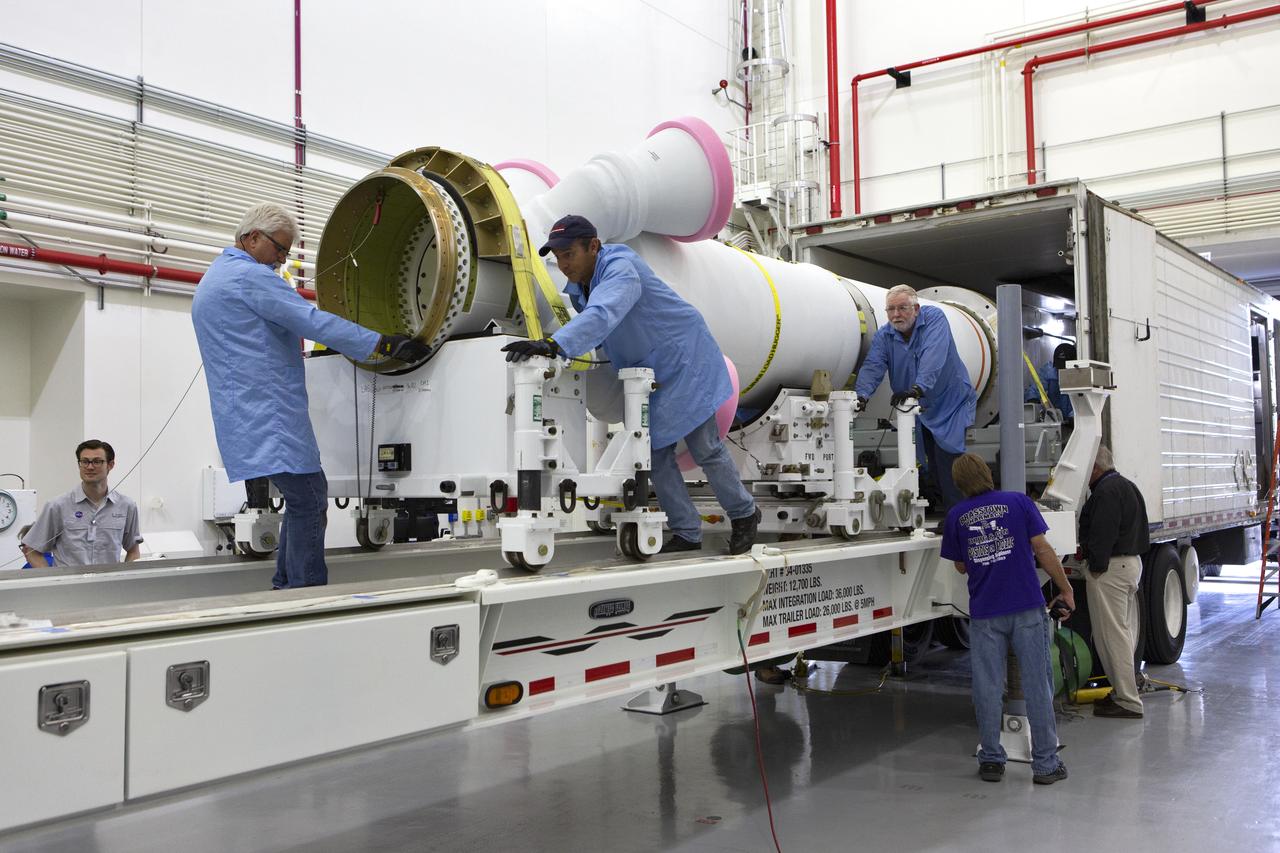
Workers offload the abort motor for NASA’s Artemis 1 mission from a heavy transport truck inside the Launch Abort System Facility (LASF) at the agency’s Kennedy Space Center in Florida on June 6, 2019. The abort motor, manufactured by Northrop Grumman, will be integrated with Orion subcomponents and prepared for Artemis 1. The abort motor is one of three motors located on the tower of the Launch Abort System (LAS). The LAS is designed to pull the Orion capsule and its crew away to safety if an emergency occurs during ascent of the Space Launch System (SLS). During Artemis 1, the uncrewed Orion spacecraft will launch atop the SLS from Launch Pad 39B at Kennedy. Orion will embark on an approximately three-week mission that will take the spacecraft thousands of miles past the Moon. Orion will return to Earth and splashdown in the Pacific Ocean off the coast of California, where it will be retrieved and returned to Kennedy.
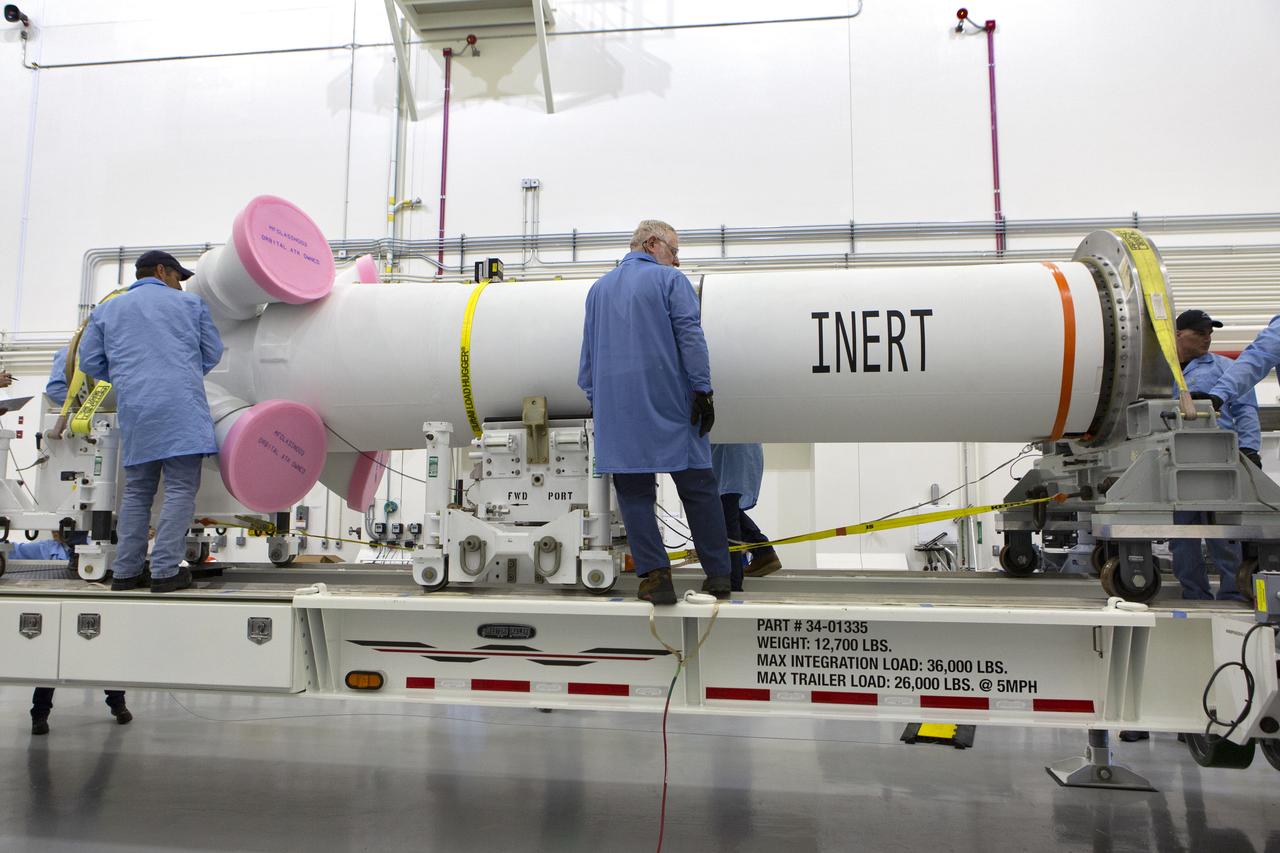
The abort motor for NASA’s Artemis 1 mission is offloaded from a heavy transport truck inside the Launch Abort System Facility (LASF) at the agency’s Kennedy Space Center in Florida on June 6, 2019. The abort motor, manufactured by Northrop Grumman, will be integrated with Orion subcomponents and prepared for Artemis 1. The abort motor is one of three motors located on the tower of the Launch Abort System (LAS). The LAS is designed to pull the Orion capsule and its crew away to safety if an emergency occurs during ascent of the Space Launch System (SLS) rocket. During Artemis 1, the uncrewed Orion spacecraft will launch atop the SLS from Launch Pad 39B at Kennedy. Orion will embark on an approximately three-week mission that will take the spacecraft thousands of miles past the Moon. Orion will return to Earth and splashdown in the Pacific Ocean off the coast of California, where it will be retrieved and returned to Kennedy.
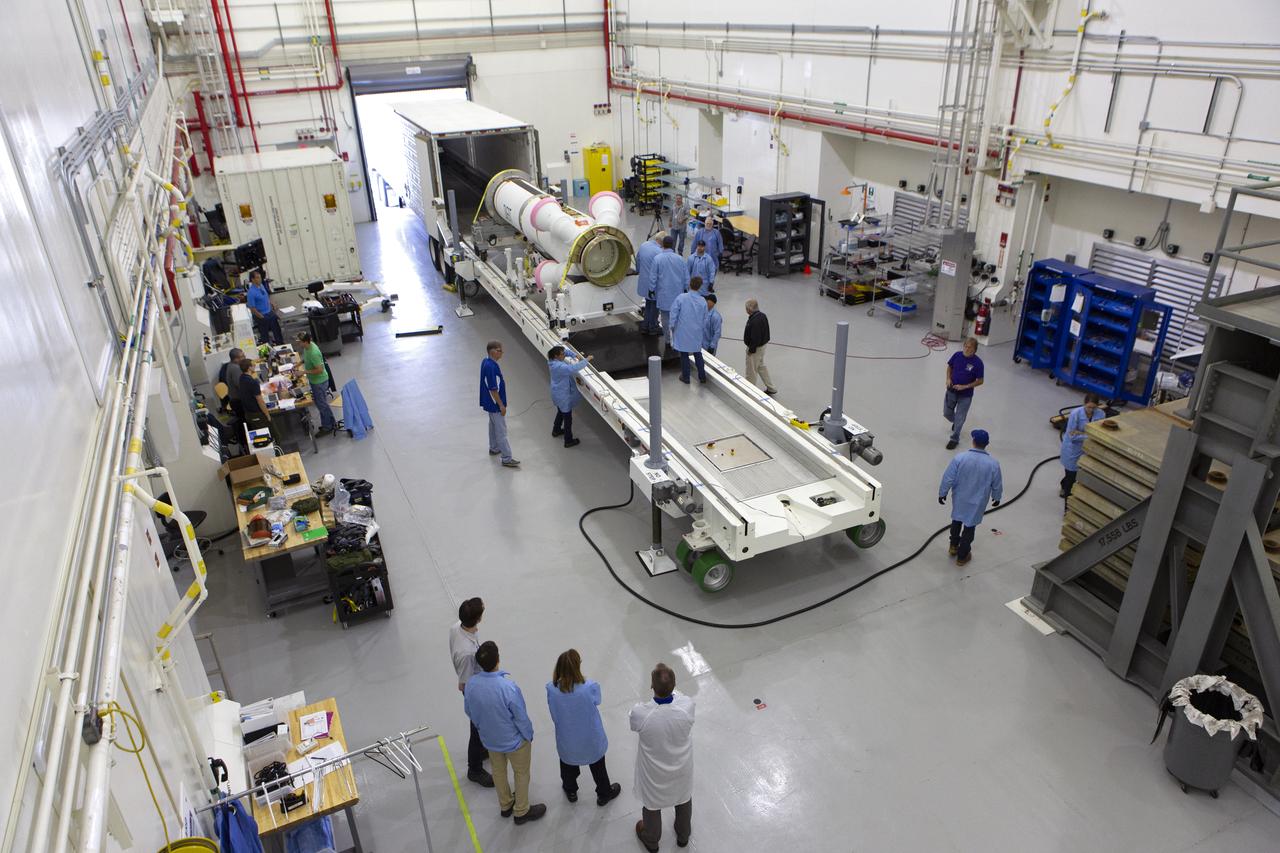
Workers have offloaded the abort motor for NASA’s Artemis 1 mission from a heavy transport truck inside the Launch Abort System Facility (LASF) at the agency’s Kennedy Space Center in Florida on June 6, 2019. The abort motor, manufactured by Northrop Grumman, will be integrated with Orion subcomponents and prepared for Artemis 1. The abort motor is one of three motors located on the tower of the Launch Abort System (LAS). The LAS is designed to pull the Orion capsule and its crew away to safety if an emergency occurs during ascent of the Space Launch System (SLS) rocket. During Artemis 1, the uncrewed Orion spacecraft will launch atop the SLS from Launch Pad 39B at Kennedy. Orion will embark on an approximately three-week mission that will take the spacecraft thousands of miles past the Moon. Orion will return to Earth and splashdown in the Pacific Ocean off the coast of California, where it will be retrieved and returned to Kennedy.
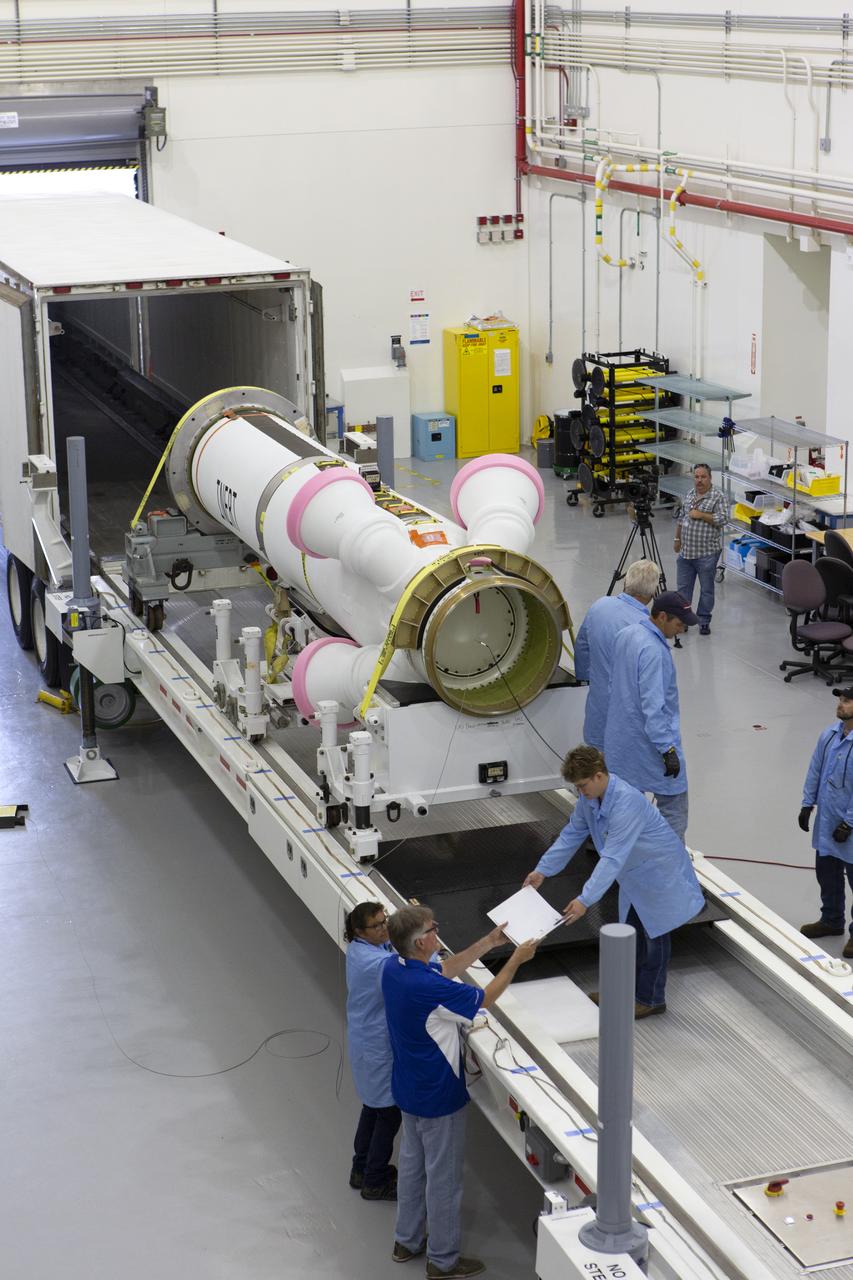
Workers have offloaded the abort motor for NASA’s Artemis 1 mission from a heavy transport truck inside the Launch Abort System Facility (LASF) at the agency’s Kennedy Space Center in Florida on June 6, 2019. The abort motor, manufactured by Northrop Grumman, will be integrated with Orion subcomponents and prepared for Artemis 1. The abort motor is one of three motors located on the tower of the Launch Abort System (LAS). The LAS is designed to pull the Orion capsule and its crew away to safety if an emergency occurs during ascent of the Space Launch System (SLS) rocket. During Artemis 1, the uncrewed Orion spacecraft will launch atop the SLS from Launch Pad 39B at Kennedy. Orion will embark on an approximately three-week mission that will take the spacecraft thousands of miles past the Moon. Orion will return to Earth and splashdown in the Pacific Ocean off the coast of California, where it will be retrieved and returned to Kennedy.
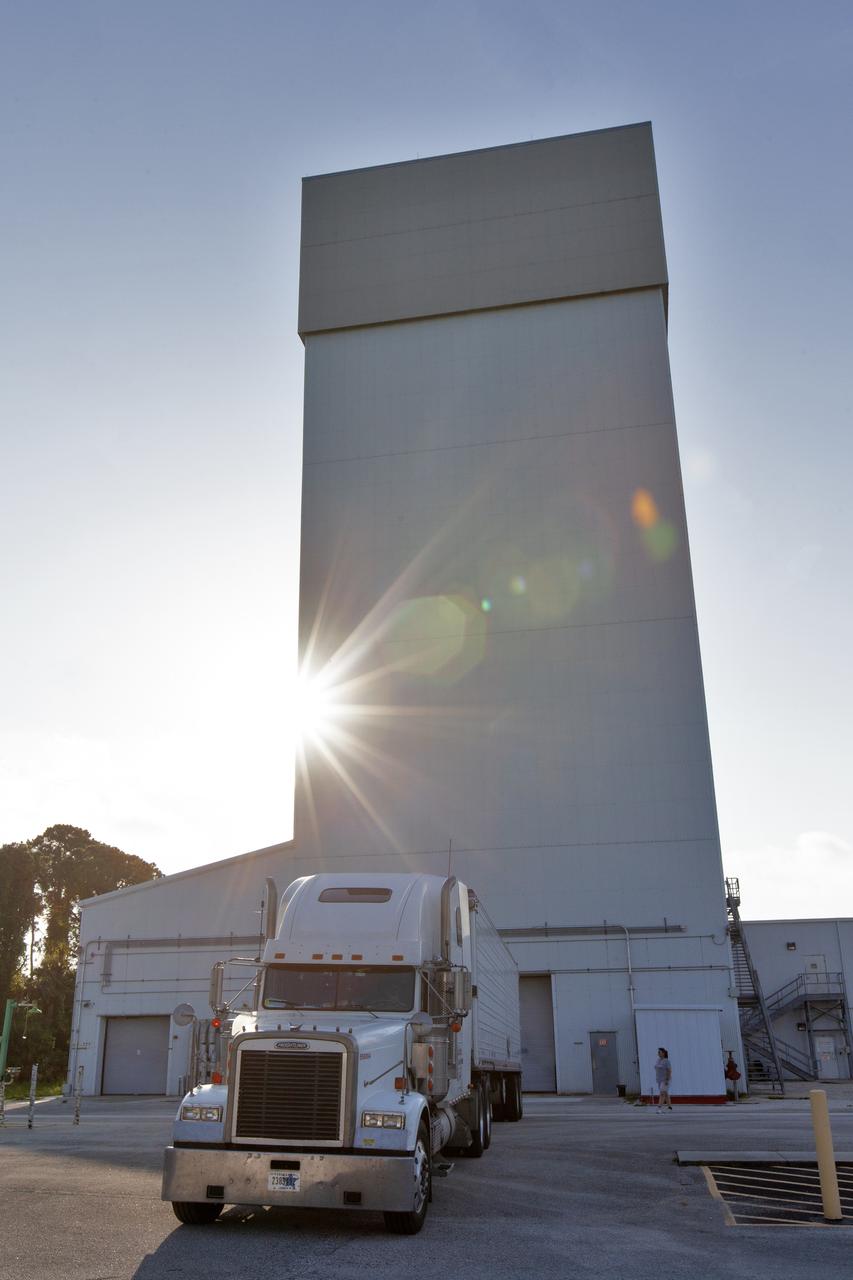
The abort motor for NASA’s Artemis 1 mission, secured in a heavy transport truck, arrives at the Launch Abort System Facility (LASF) at the agency’s Kennedy Space Center in Florida on June 6, 2019. The abort motor, manufactured by Northrop Grumman, will be offloaded and moved into the LASF where it will be integrated with Orion subcomponents and prepared for Artemis 1. The abort motor is one of three motors located on the tower of the Launch Abort System (LAS). The LAS is designed to pull the Orion capsule and its crew away to safety if an emergency occurs during ascent of the Space Launch System (SLS) rocket. During Artemis 1, the uncrewed Orion spacecraft will launch atop the SLS from Launch Pad 39B at Kennedy. Orion will embark on an approximately three-week mission that will take the spacecraft thousands of miles past the Moon. Orion will return to Earth and splashdown in the Pacific Ocean off the coast of California, where it will be retrieved and returned to Kennedy.
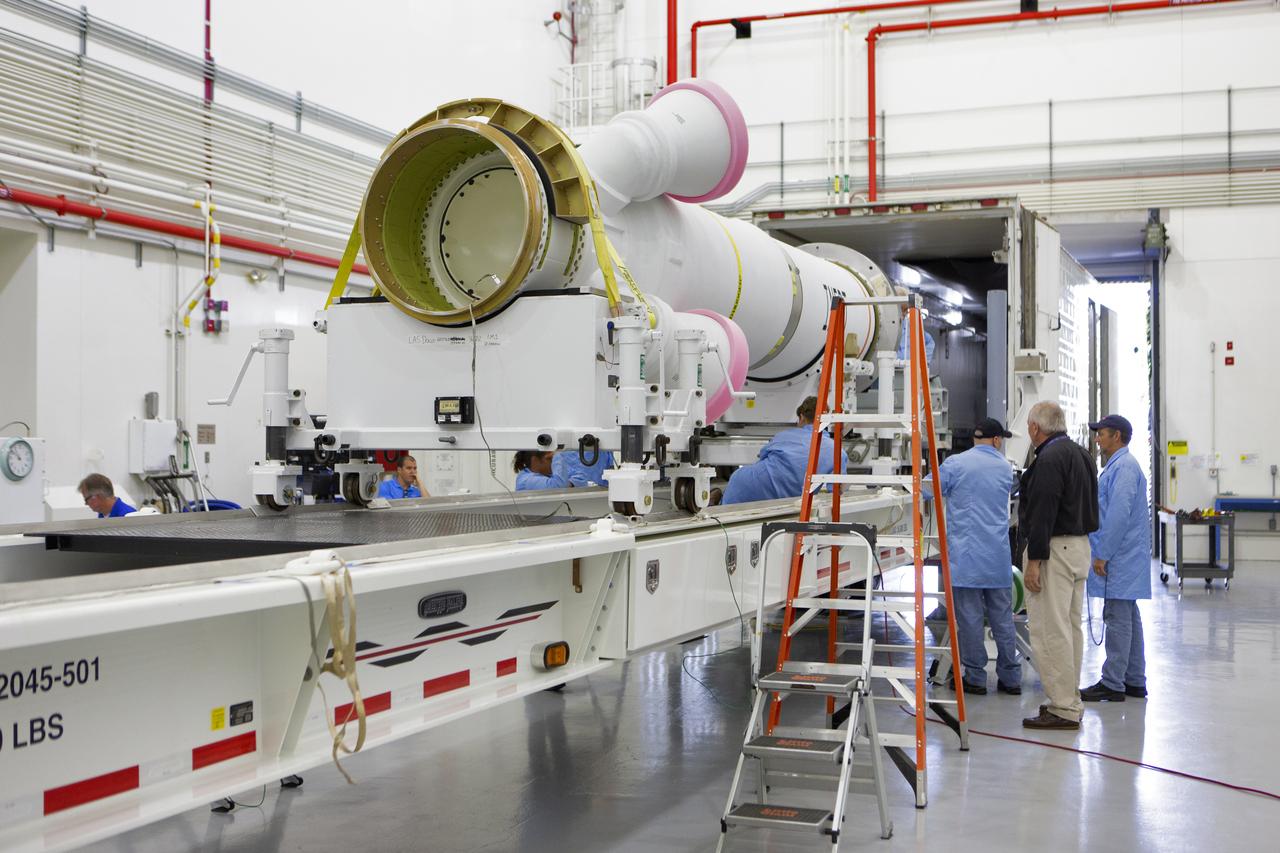
Workers help offload the abort motor for NASA’s Artemis 1 mission from a heavy transport truck inside the Launch Abort System Facility (LASF) at the agency’s Kennedy Space Center in Florida on June 6, 2019. The abort motor, manufactured by Northrop Grumman, will be integrated with Orion subcomponents and prepared for Artemis 1. The abort motor is one of three motors located on the tower of the Launch Abort System (LAS). The LAS is designed to pull the Orion capsule and its crew away to safety if an emergency occurs during ascent of the Space Launch System (SLS) rocket. During Artemis 1, the uncrewed Orion spacecraft will launch atop the SLS from Launch Pad 39B at Kennedy. Orion will embark on an approximately three-week mission that will take the spacecraft thousands of miles past the Moon. Orion will return to Earth and splashdown in the Pacific Ocean off the coast of California, where it will be retrieved and returned to Kennedy.
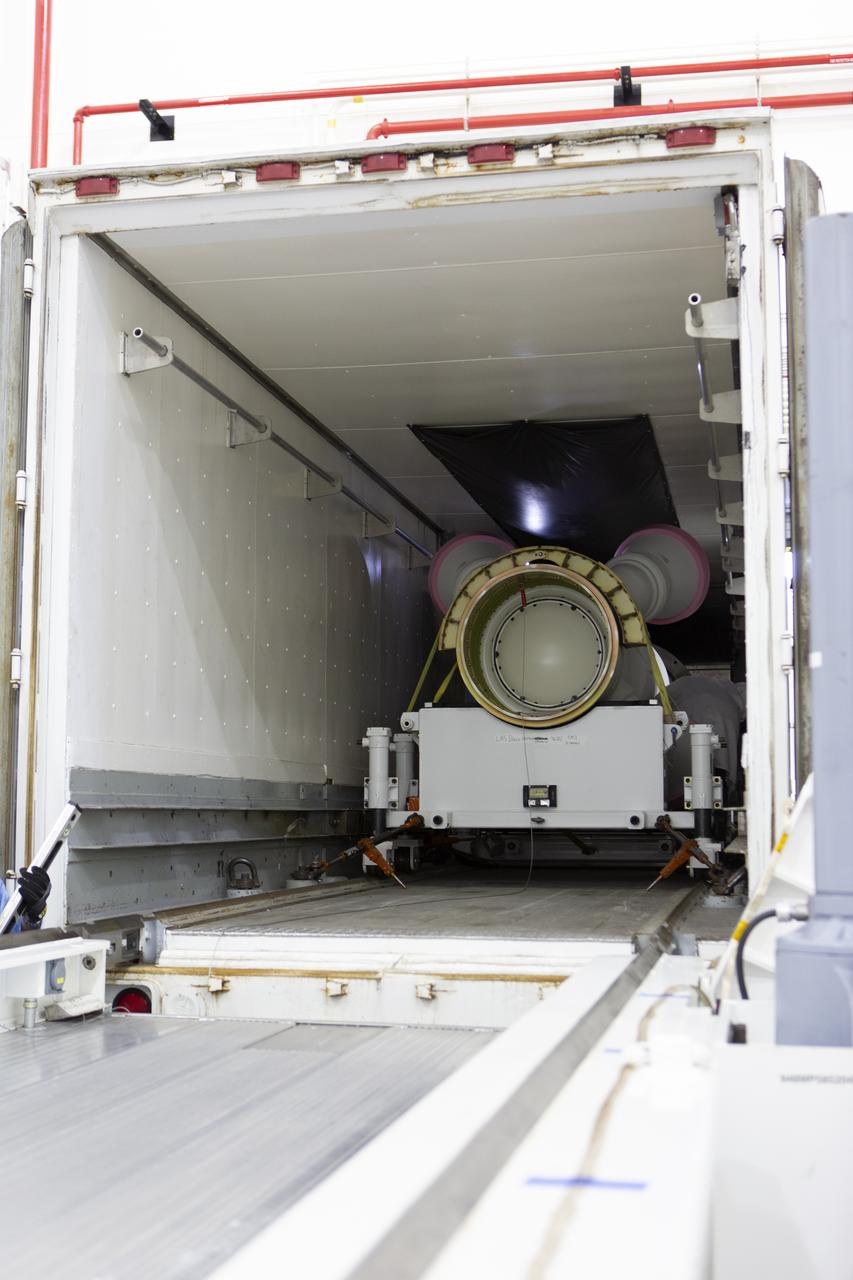
The abort motor for NASA’s Artemis 1 mission, is offloaded from a heavy transport truck inside the Launch Abort System Facility (LASF) at the agency’s Kennedy Space Center in Florida on June 6, 2019. The abort motor, manufactured by Northrop Grumman, will be integrated with Orion subcomponents and prepared for Artemis 1. The abort motor is one of three motors located on the tower of the Launch Abort System (LAS). The LAS is designed to pull the Orion capsule and its crew away to safety if an emergency occurs during ascent of the Space Launch System (SLS) rocket. During Artemis 1, the uncrewed Orion spacecraft will launch atop the SLS from Launch Pad 39B at Kennedy. Orion will embark on an approximately three-week mission that will take the spacecraft thousands of miles past the Moon. Orion will return to Earth and splashdown in the Pacific Ocean off the coast of California, where it will be retrieved and returned to Kennedy.
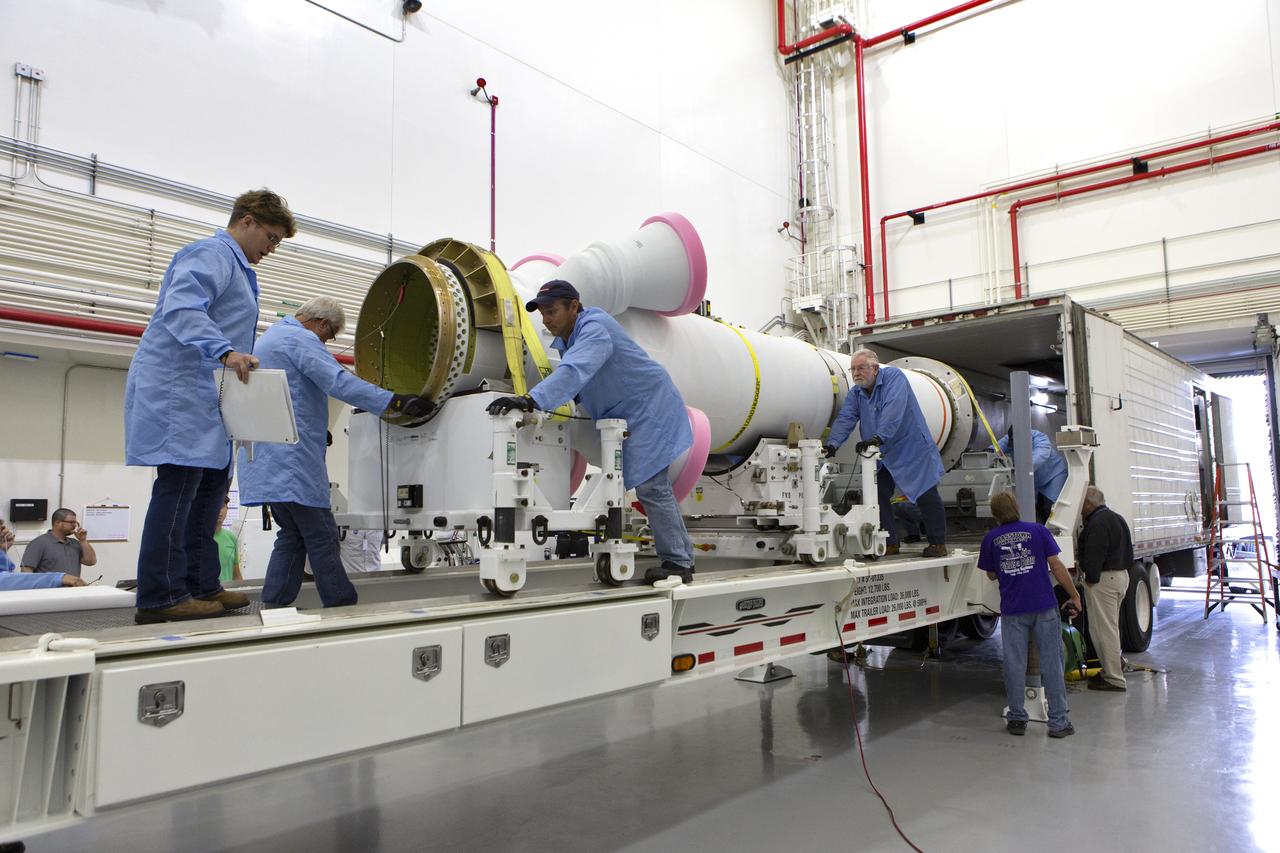
Workers offload the abort motor for NASA’s Artemis 1 mission from a heavy transport truck inside the Launch Abort System Facility (LASF) at the agency’s Kennedy Space Center in Florida on June 6, 2019. The abort motor, manufactured by Northrop Grumman, will be integrated with Orion subcomponents and prepared for Artemis 1. The abort motor is one of three motors located on the tower of the Launch Abort System (LAS). The LAS is designed to pull the Orion capsule and its crew away to safety if an emergency occurs during ascent of the Space Launch System (SLS) rocket. During Artemis 1, the uncrewed Orion spacecraft will launch atop the SLS from Launch Pad 39B at Kennedy. Orion will embark on an approximately three-week mission that will take the spacecraft thousands of miles past the Moon. Orion will return to Earth and splashdown in the Pacific Ocean off the coast of California, where it will be retrieved and returned to Kennedy.
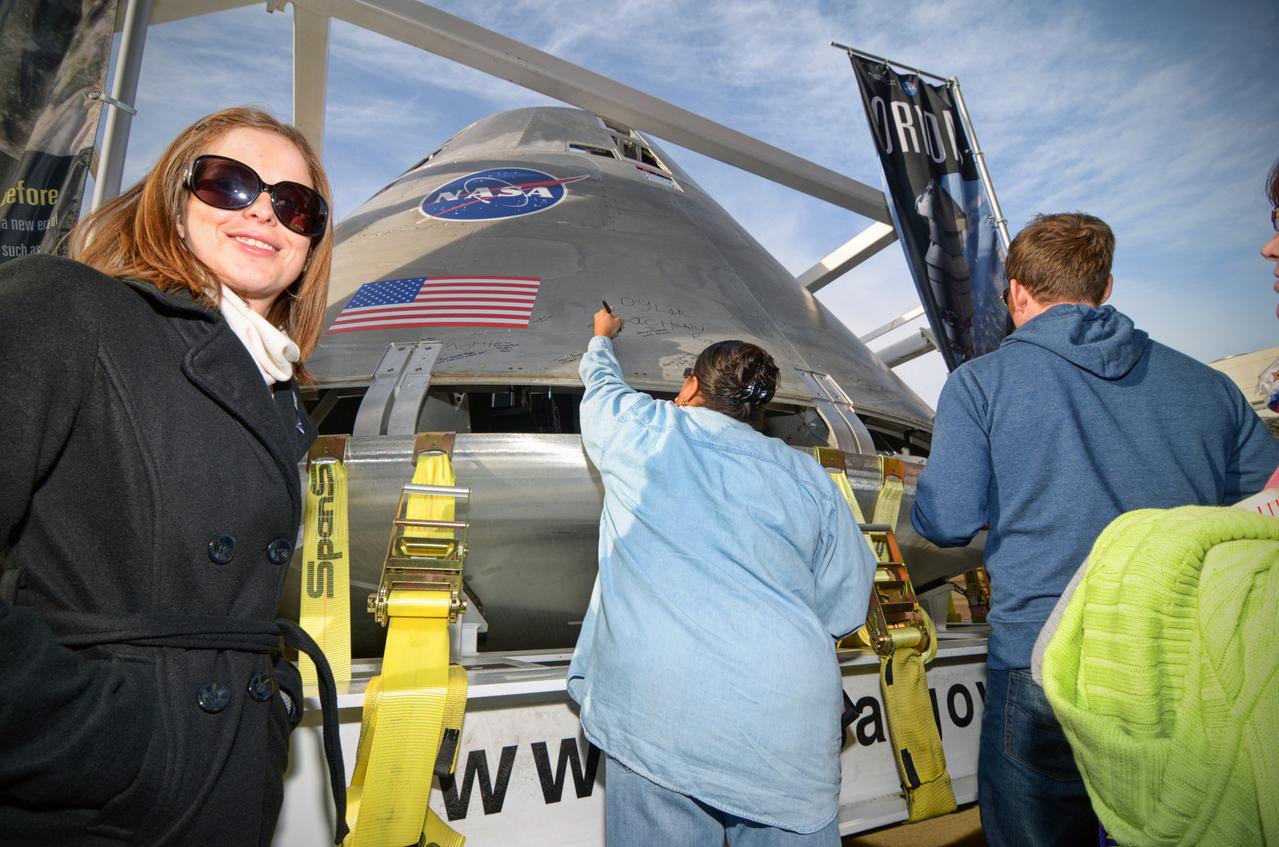
The Orion Pad Abort-1 pathfinder on display at an event outside American Airlines Center in Dallas on Jan. 27, 2012. Part of Batch image transfer from Flickr.
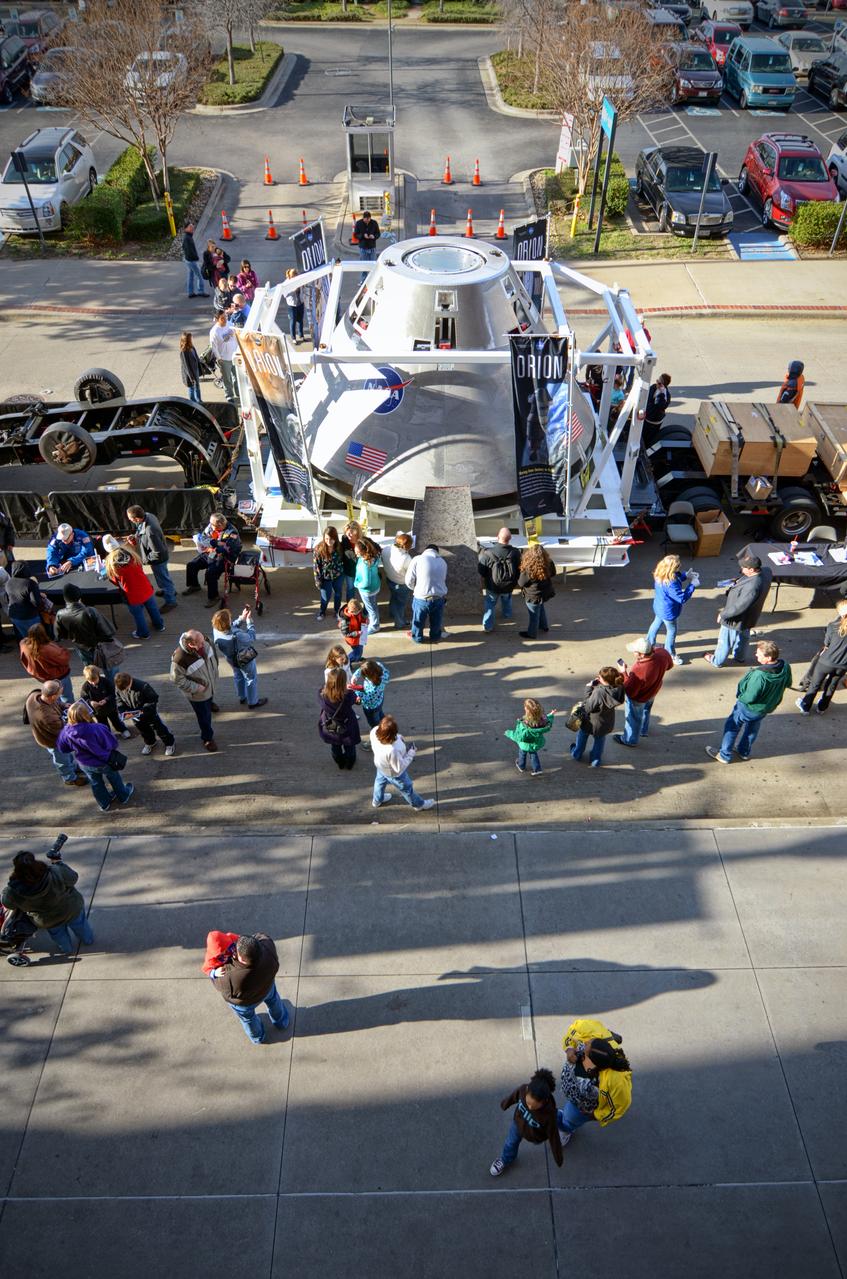
The Orion Pad Abort-1 pathfinder on display at an event outside American Airlines Center in Dallas on Jan. 27, 2012. Part of Batch image transfer from Flickr.
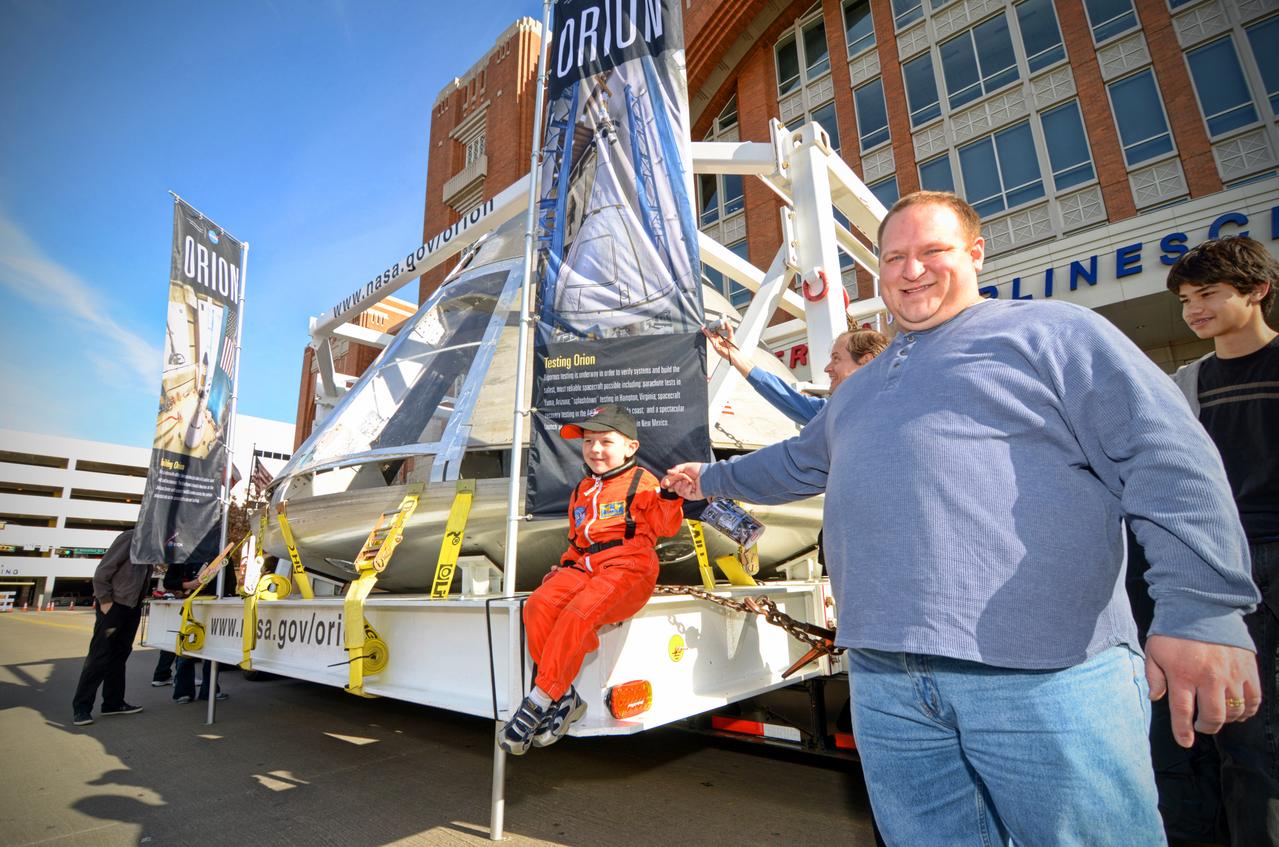
The Orion Pad Abort-1 pathfinder on display at an event outside American Airlines Center in Dallas on Jan. 27, 2012. Part of Batch image transfer from Flickr.
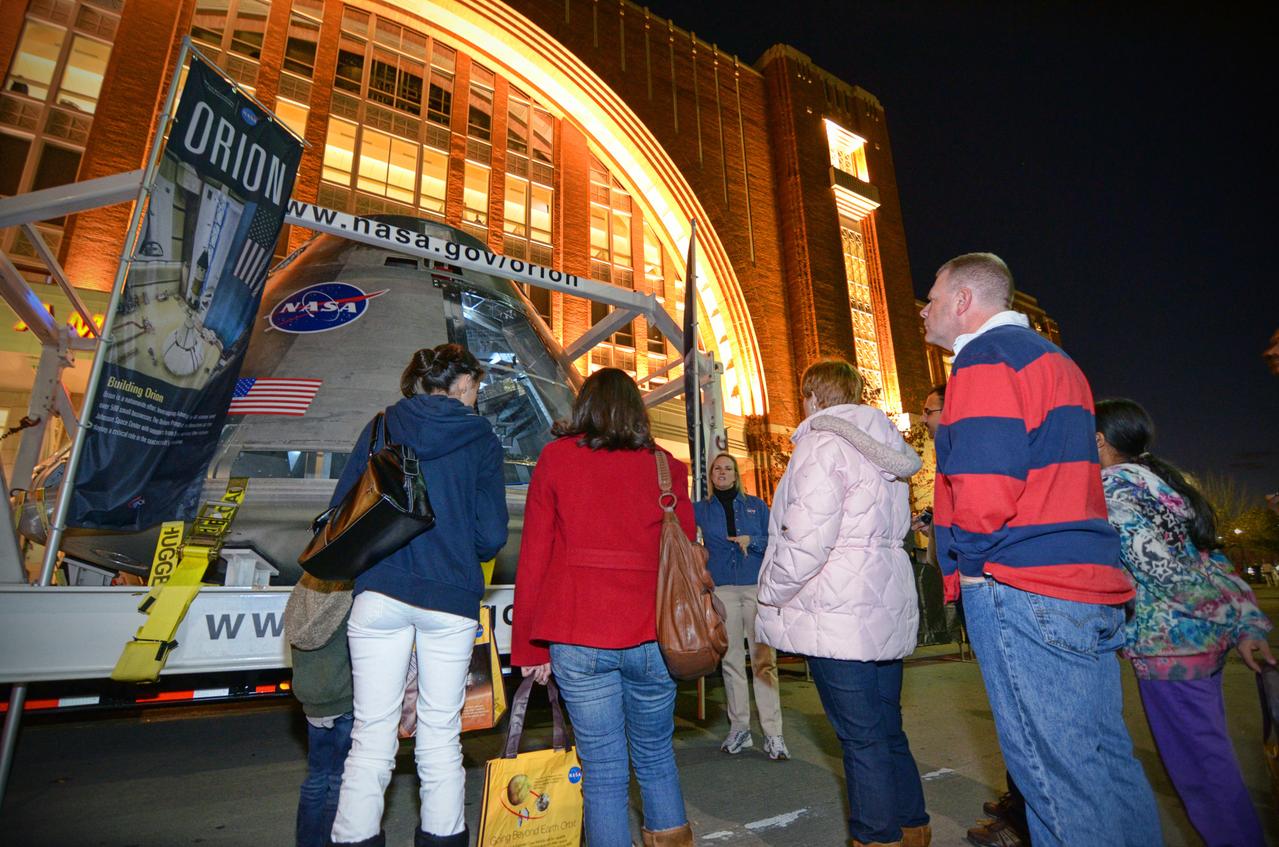
The Orion Pad Abort-1 pathfinder on display at an event outside American Airlines Center in Dallas on Jan. 27, 2012. Part of Batch image transfer from Flickr.
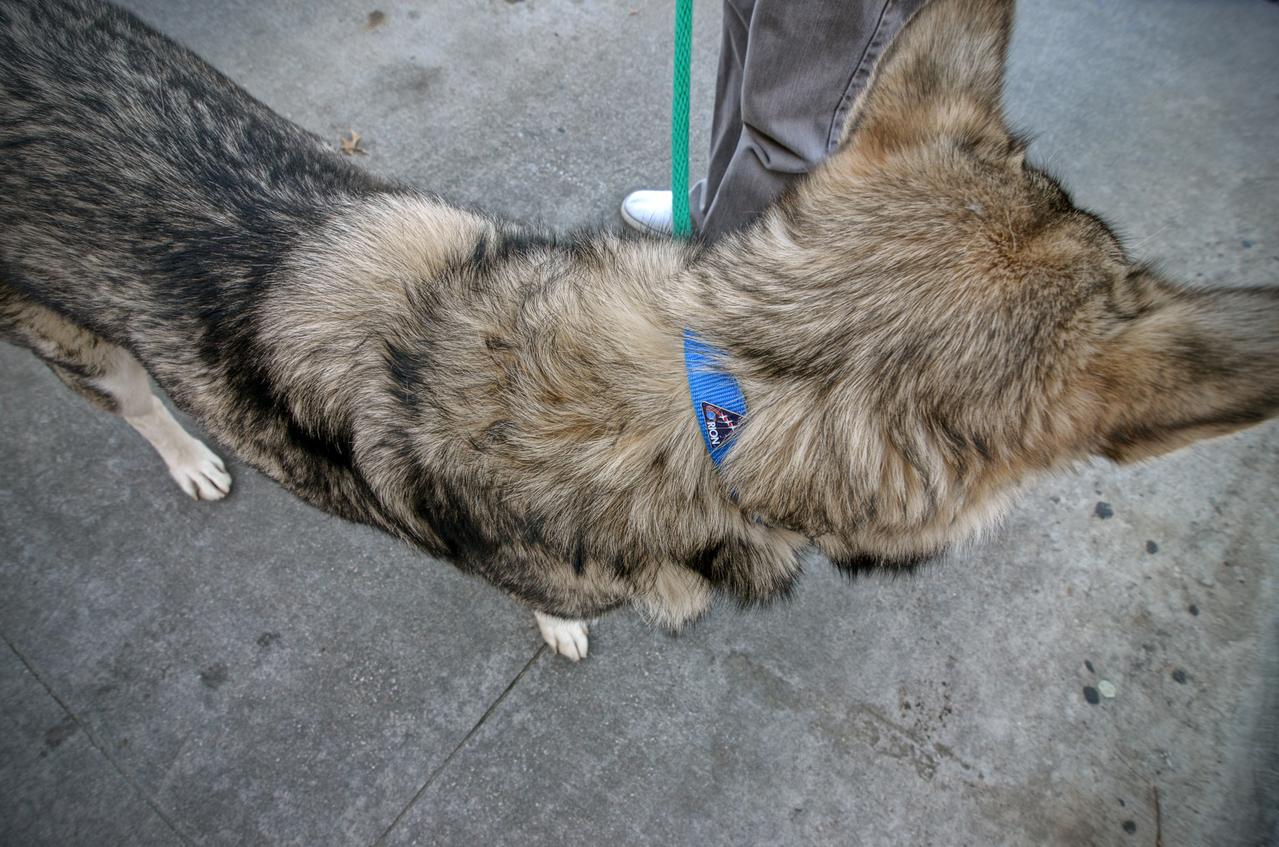
Image of dog on leash taken during view of the Orion Pad Abort-1 pathfinder on display at an event outside American Airlines Center in Dallas on Jan. 27, 2012. Part of Batch image transfer from Flickr.
The Orion Pad Abort-1 pathfinder on display at an event outside American Airlines Center in Dallas on Jan. 27, 2012. Part of Batch image transfer from Flickr.
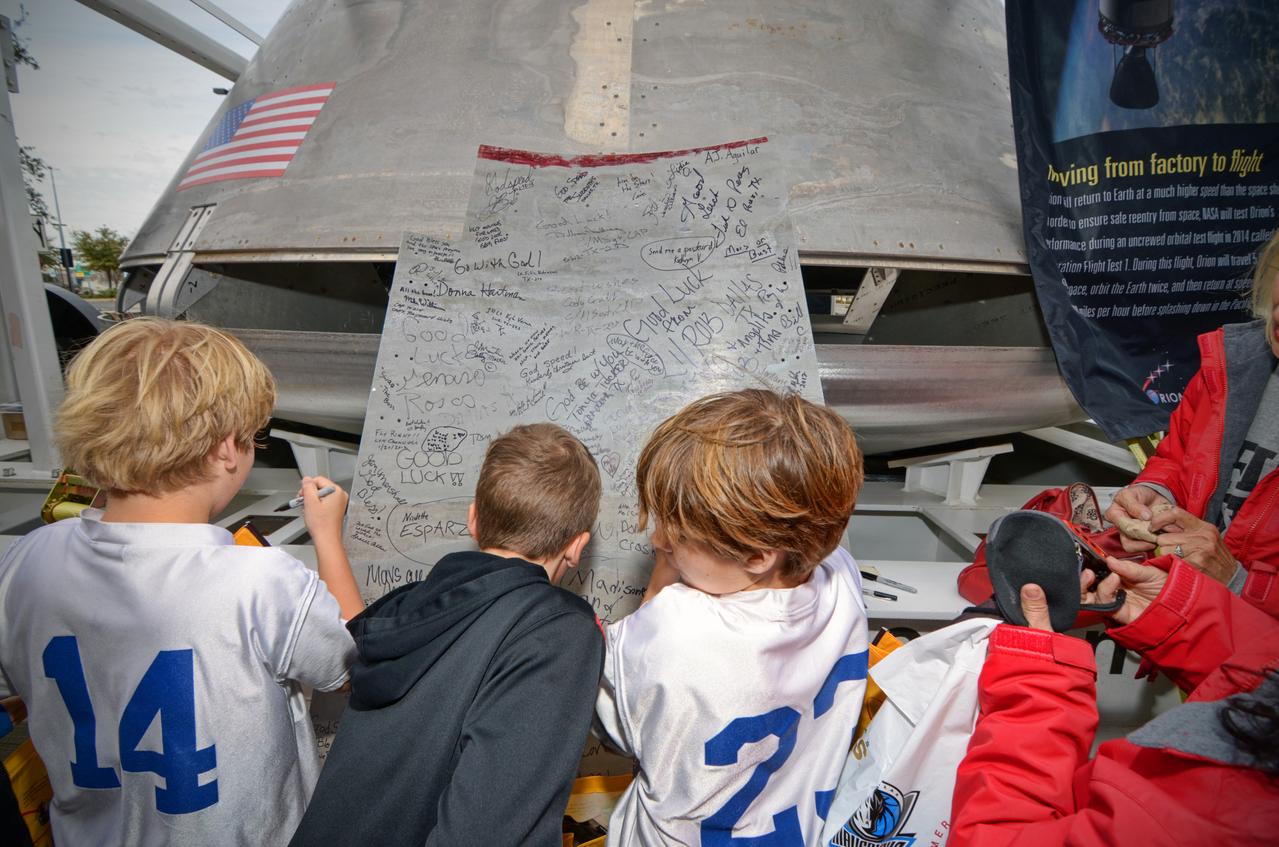
The Orion Pad Abort-1 pathfinder on display at an event outside American Airlines Center in Dallas on Jan. 27, 2012. Part of Batch image transfer from Flickr.
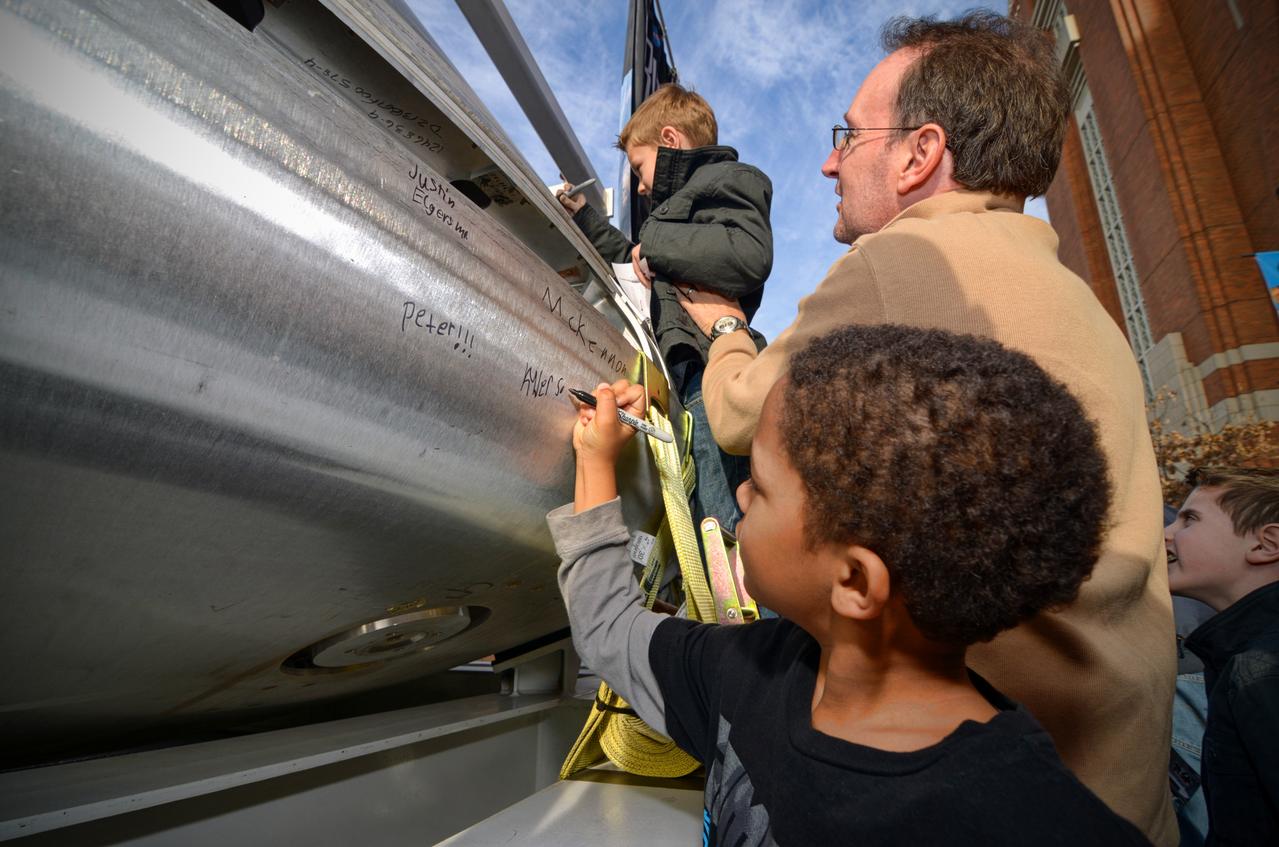
The Orion Pad Abort-1 pathfinder on display at an event outside American Airlines Center in Dallas on Jan. 27, 2012. Part of Batch image transfer from Flickr.

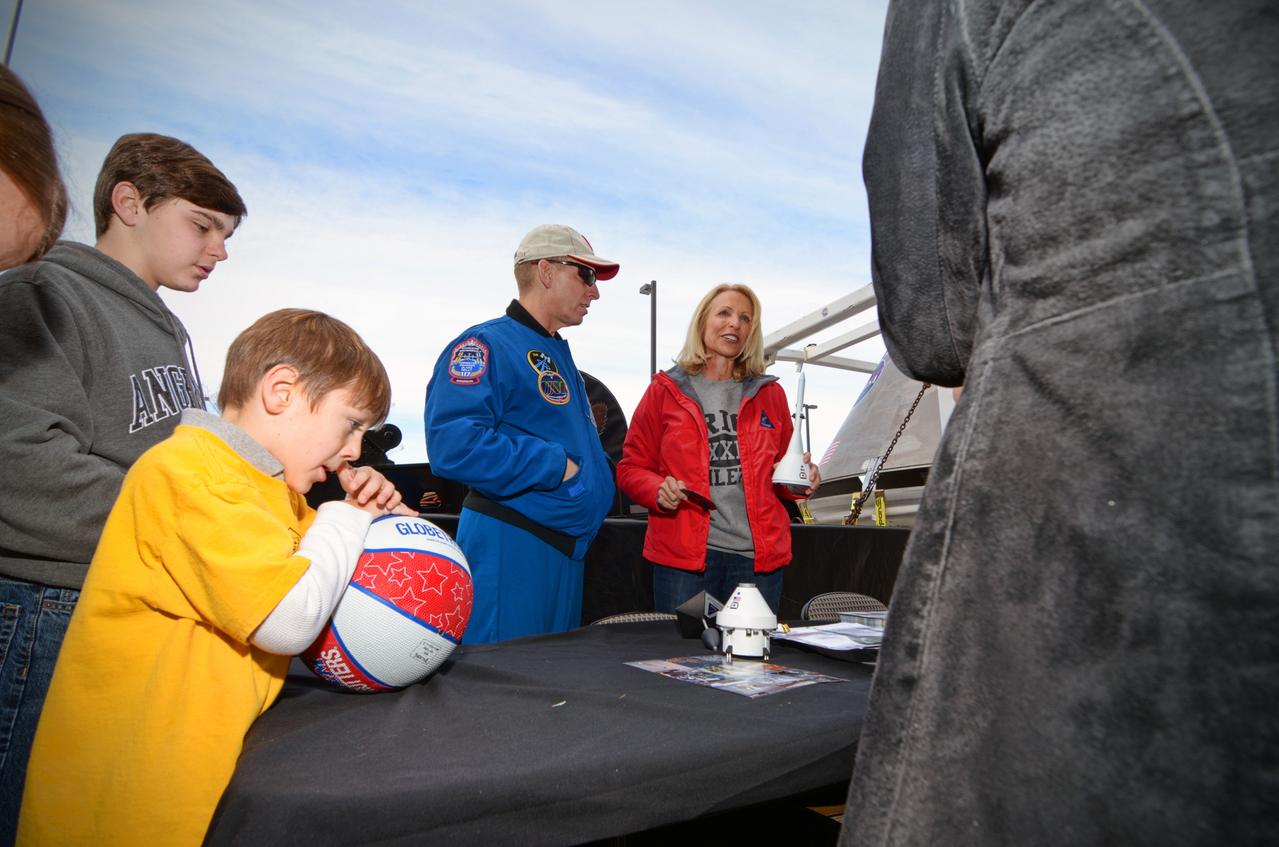
Astronaut Nicholas Patrick signs autographs for visitors during Orion Pad Abort-1 pathfinder display at an event outside American Airlines Center in Dallas on Jan. 27, 2012. Part of Batch image transfer from Flickr.
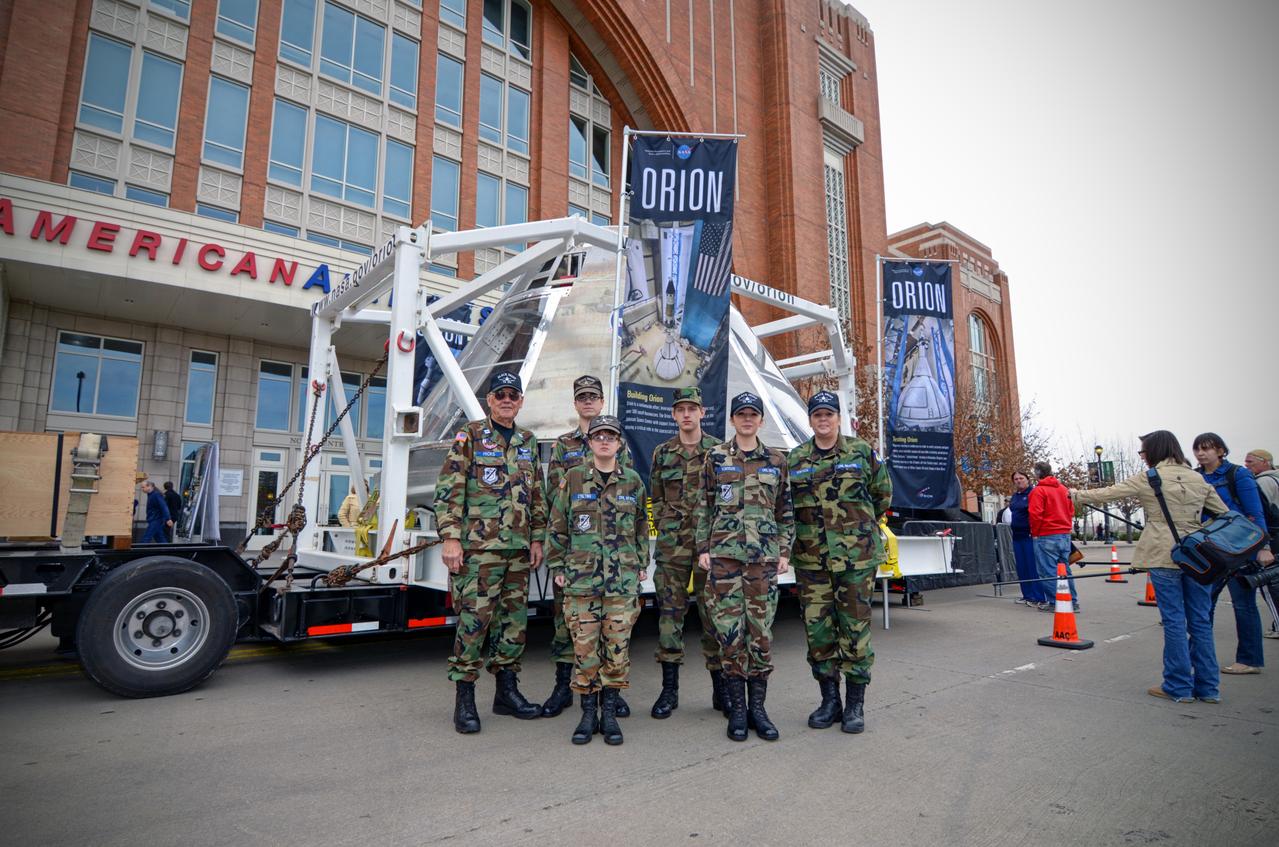
The Orion Pad Abort-1 pathfinder on display at an event outside American Airlines Center in Dallas on Jan. 27, 2012. Part of Batch image transfer from Flickr.
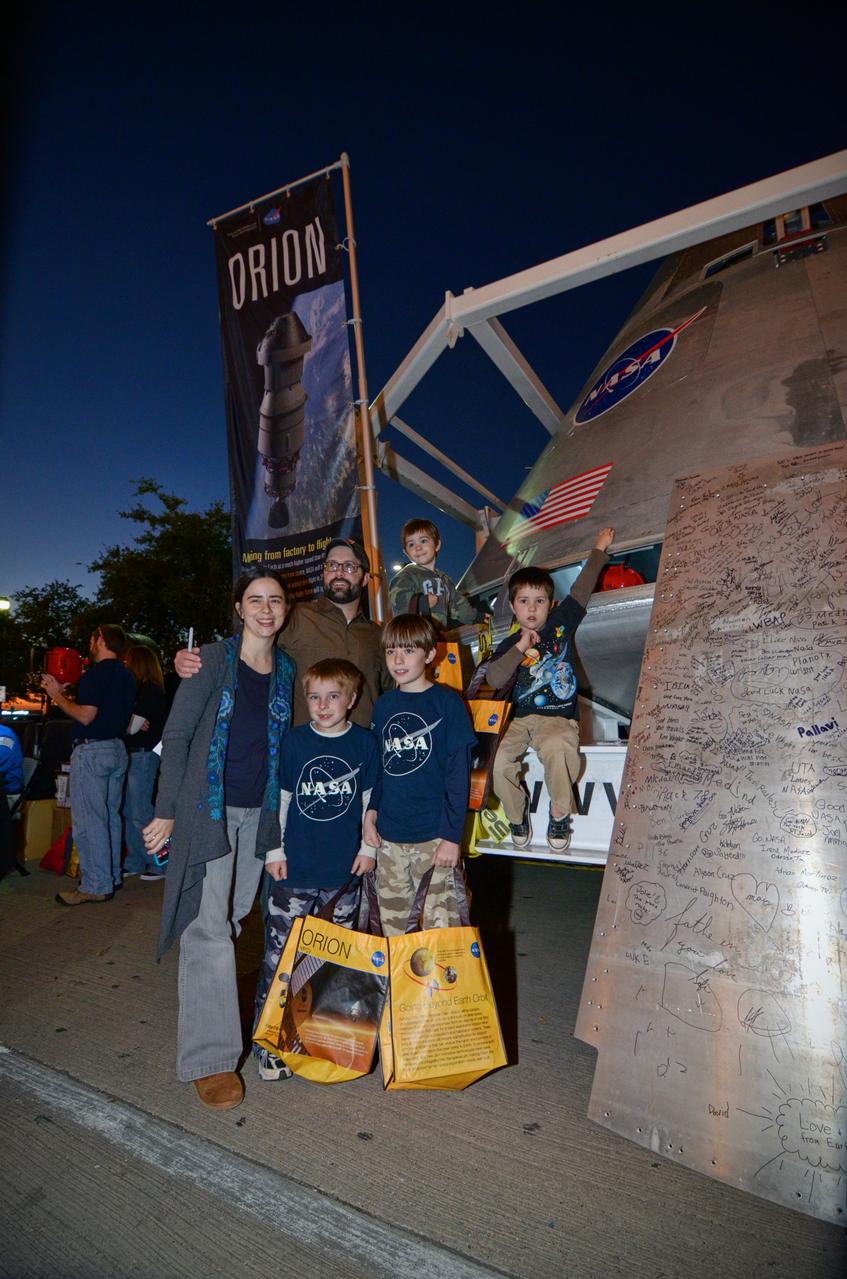
The Orion Pad Abort-1 pathfinder on display at an event outside American Airlines Center in Dallas on Jan. 27, 2012. Part of Batch image transfer from Flickr.
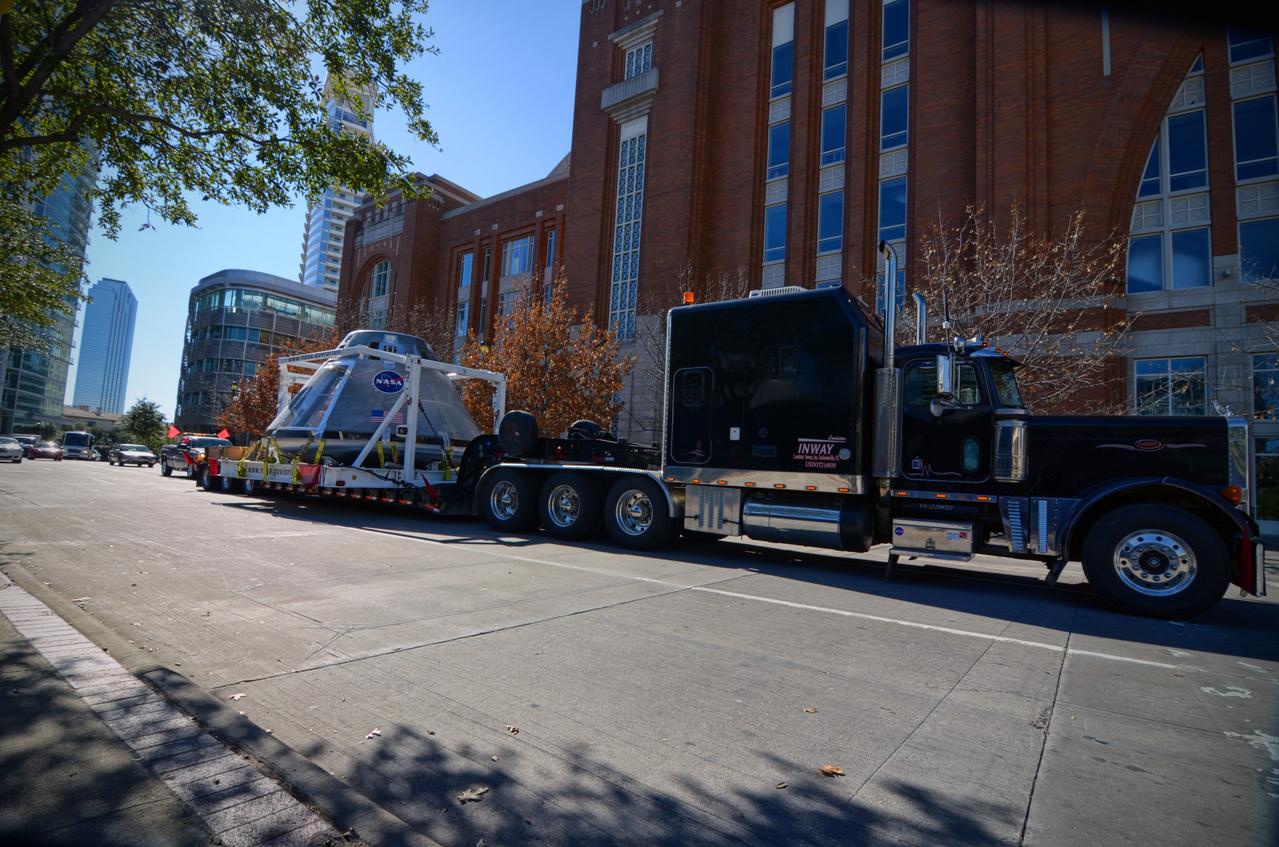
The Orion Pad Abort-1 pathfinder on display at an event outside American Airlines Center in Dallas on Jan. 27, 2012. Part of Batch image transfer from Flickr.
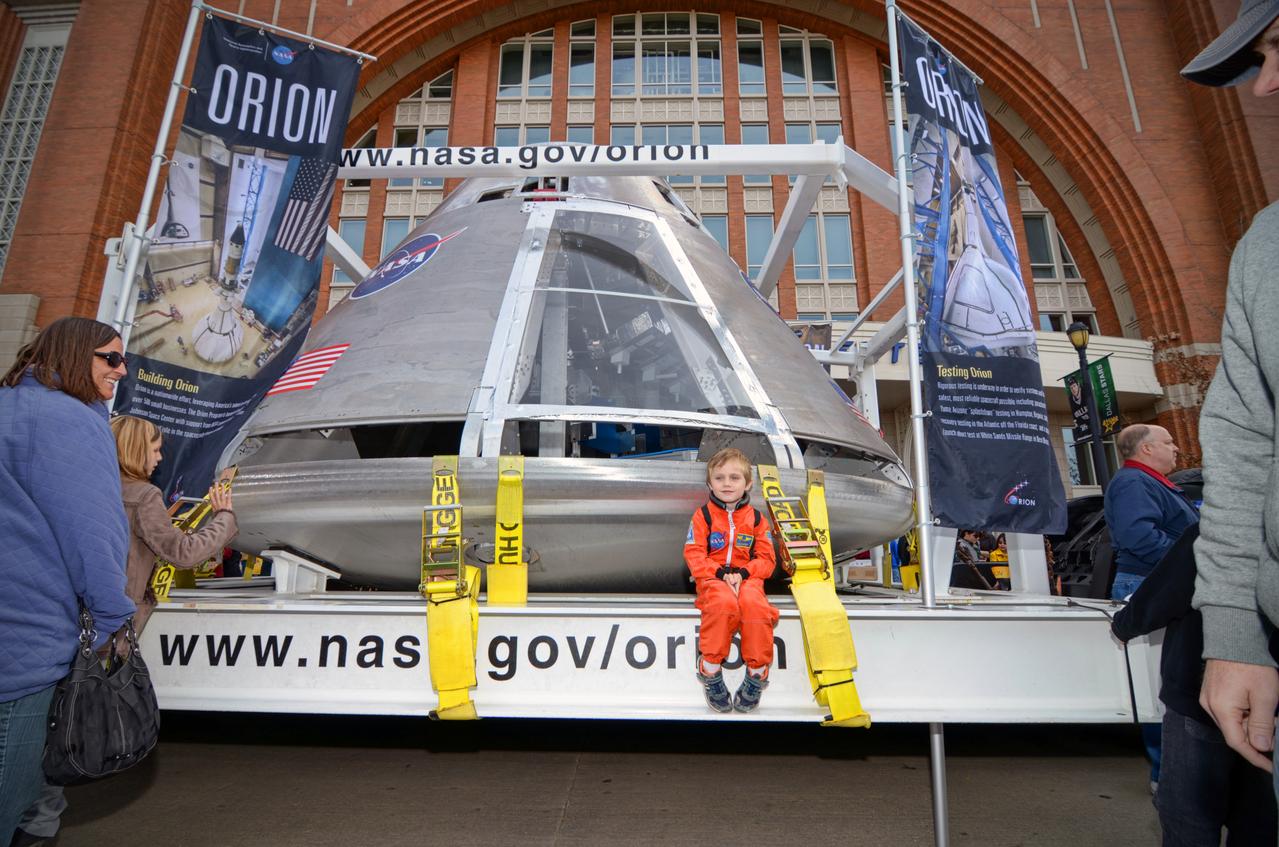
The Orion Pad Abort-1 pathfinder on display at an event outside American Airlines Center in Dallas on Jan. 27, 2012. Part of Batch image transfer from Flickr.
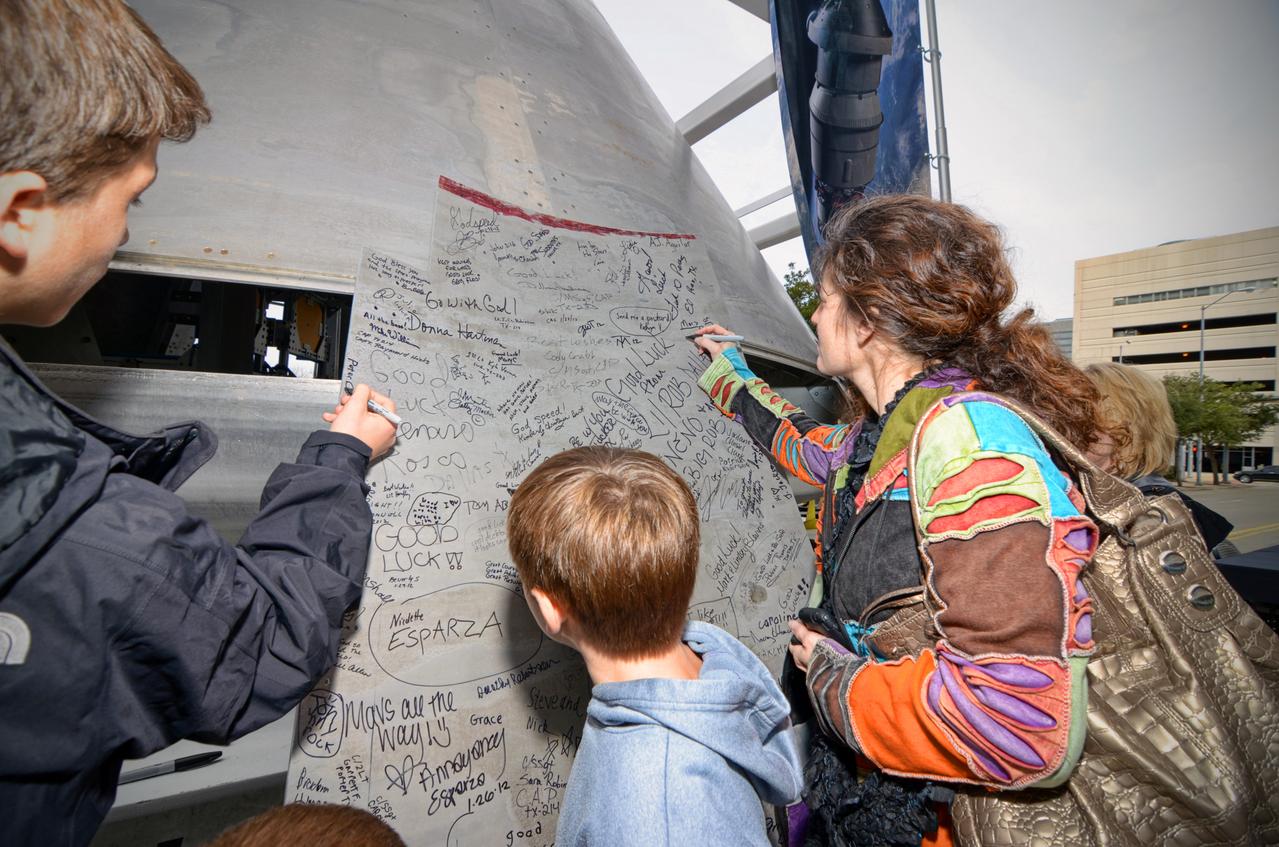
The Orion Pad Abort-1 pathfinder on display at an event outside American Airlines Center in Dallas on Jan. 27, 2012. Part of Batch image transfer from Flickr.
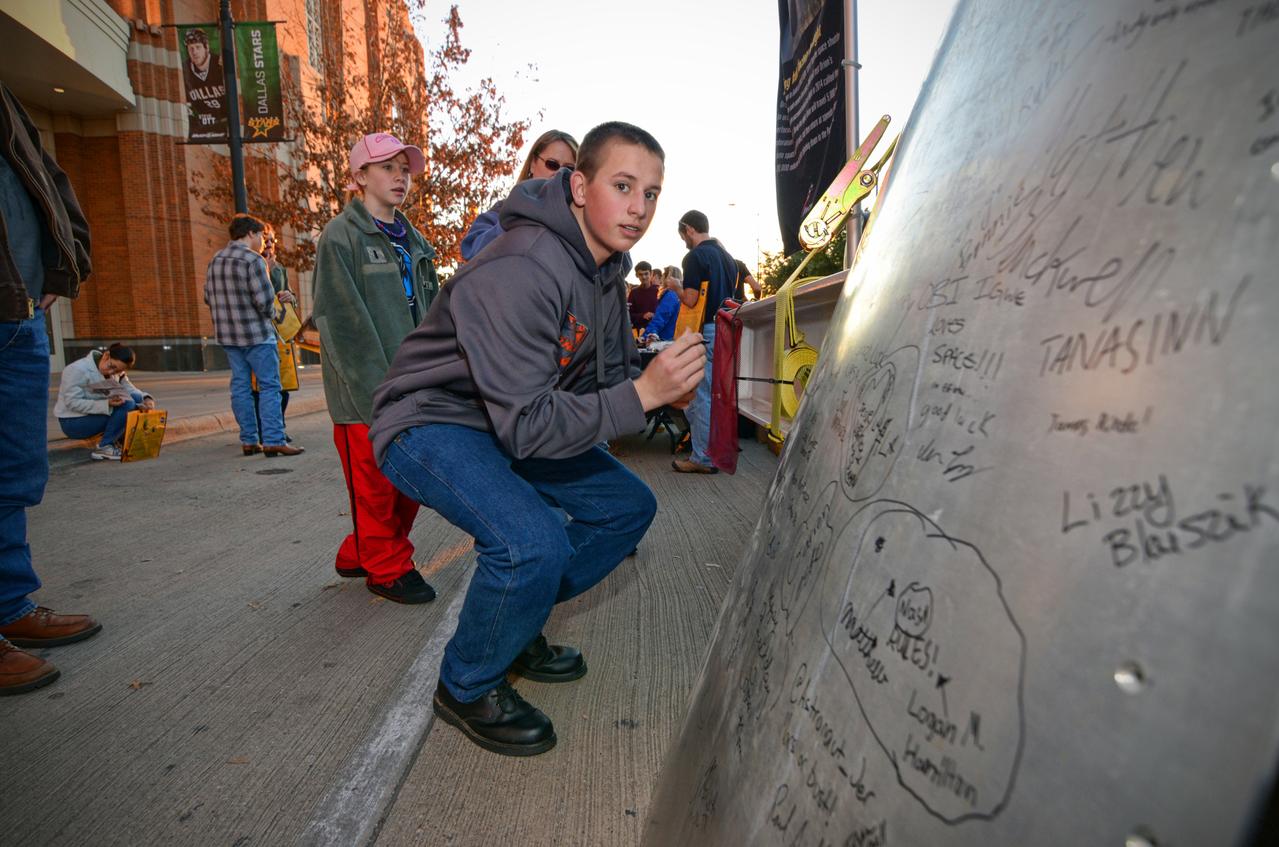
The Orion Pad Abort-1 pathfinder on display at an event outside American Airlines Center in Dallas on Jan. 27, 2012. Part of Batch image transfer from Flickr.
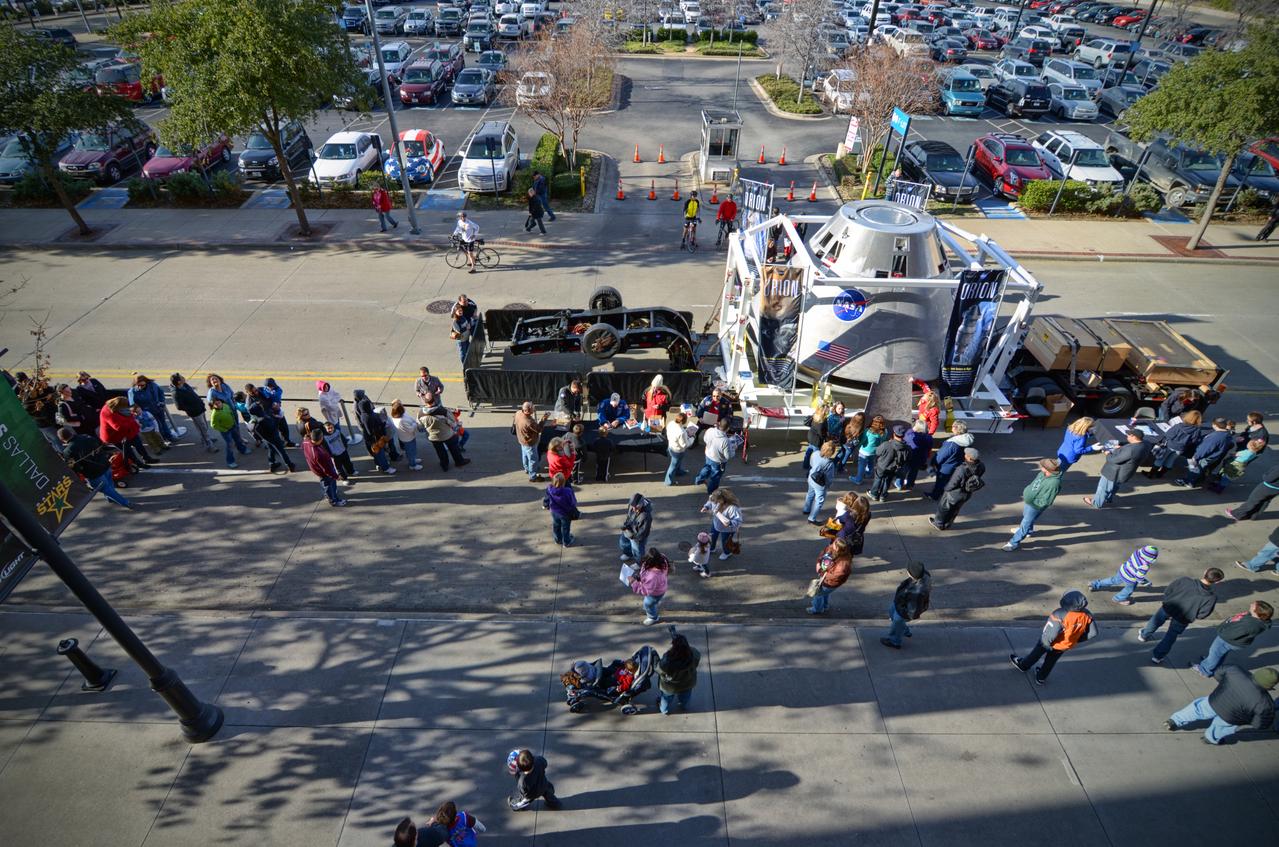
The Orion Pad Abort-1 pathfinder on display at an event outside American Airlines Center in Dallas on Jan. 27, 2012. Part of Batch image transfer from Flickr.
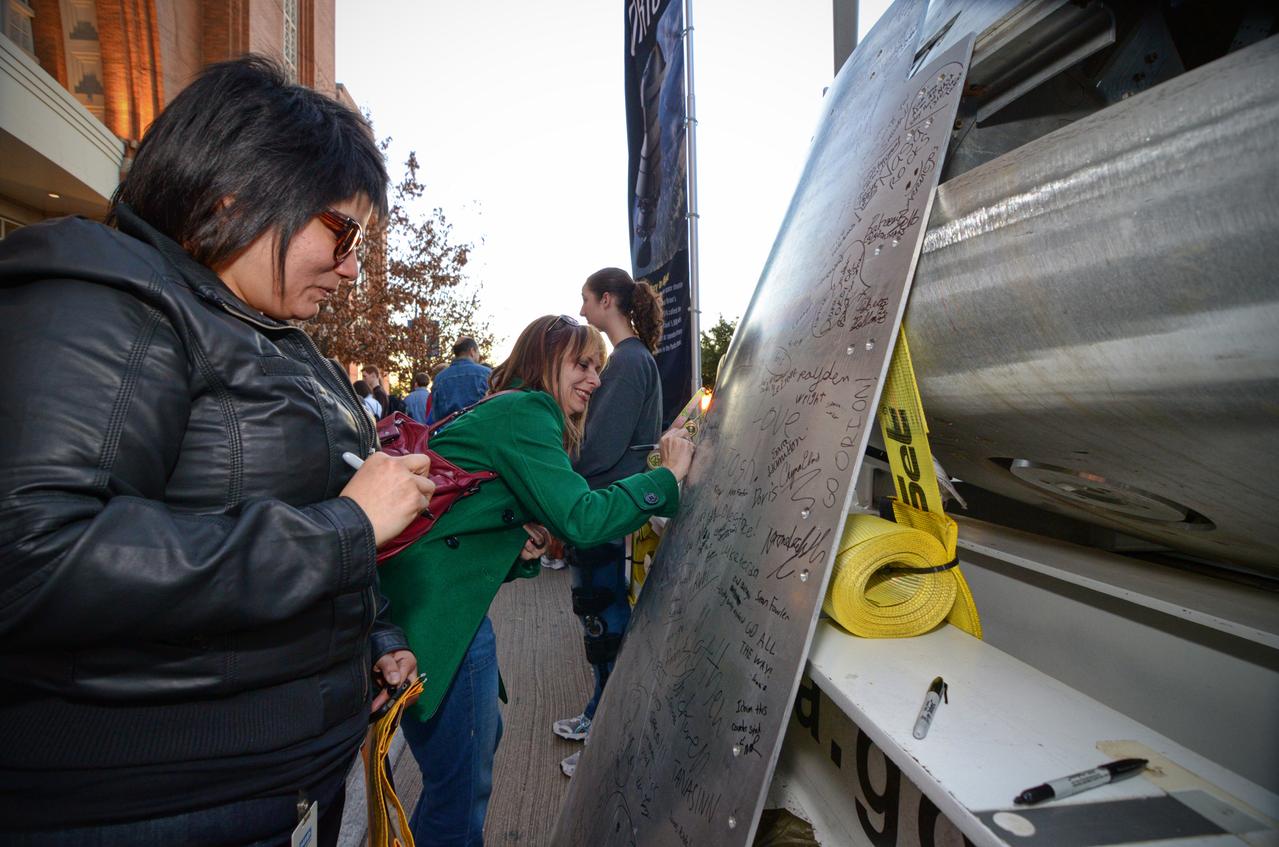
The Orion Pad Abort-1 pathfinder on display at an event outside American Airlines Center in Dallas on Jan. 27, 2012. Part of Batch image transfer from Flickr.

The Orion Pad Abort-1 pathfinder on display at an event outside American Airlines Center in Dallas on Jan. 27, 2012. Part of Batch image transfer from Flickr.
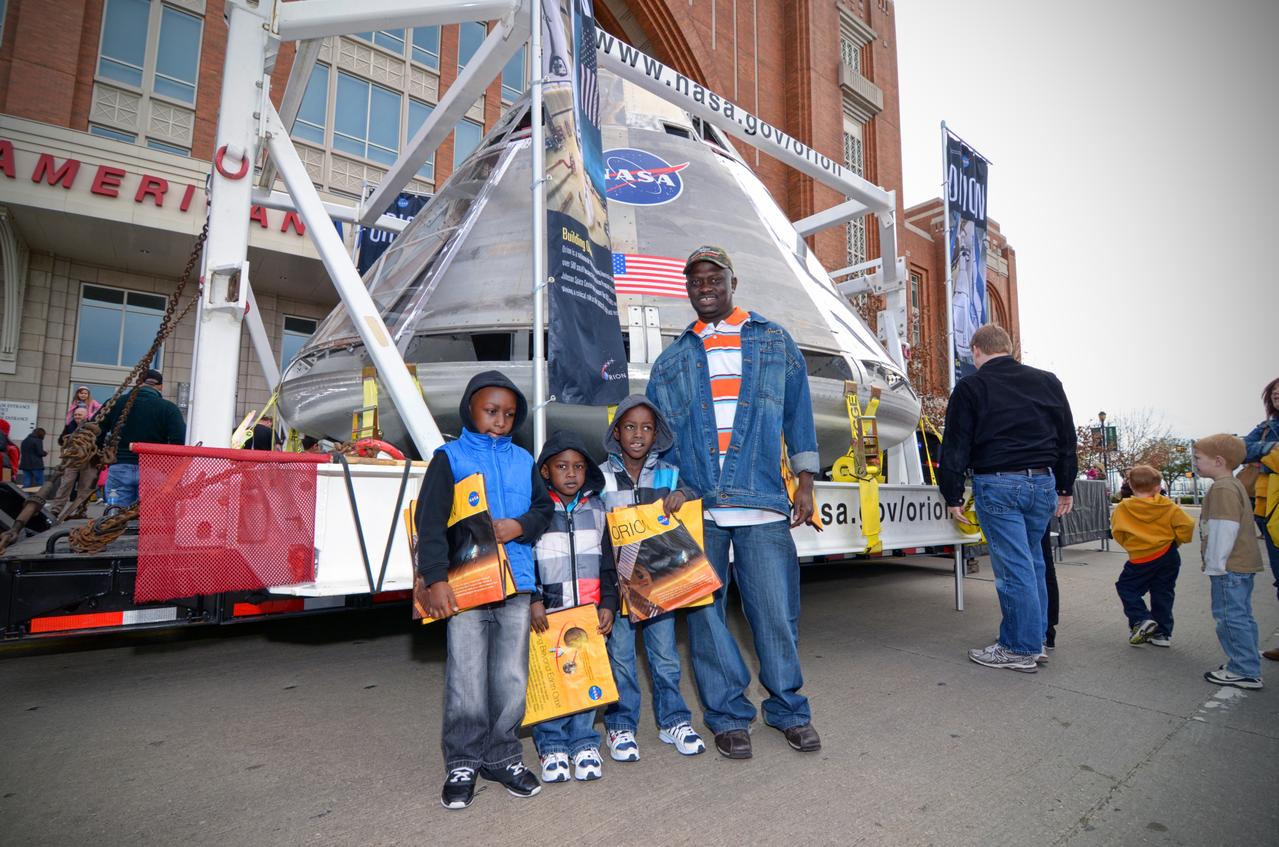
The Orion Pad Abort-1 pathfinder on display at an event outside American Airlines Center in Dallas on Jan. 27, 2012. Part of Batch image transfer from Flickr.
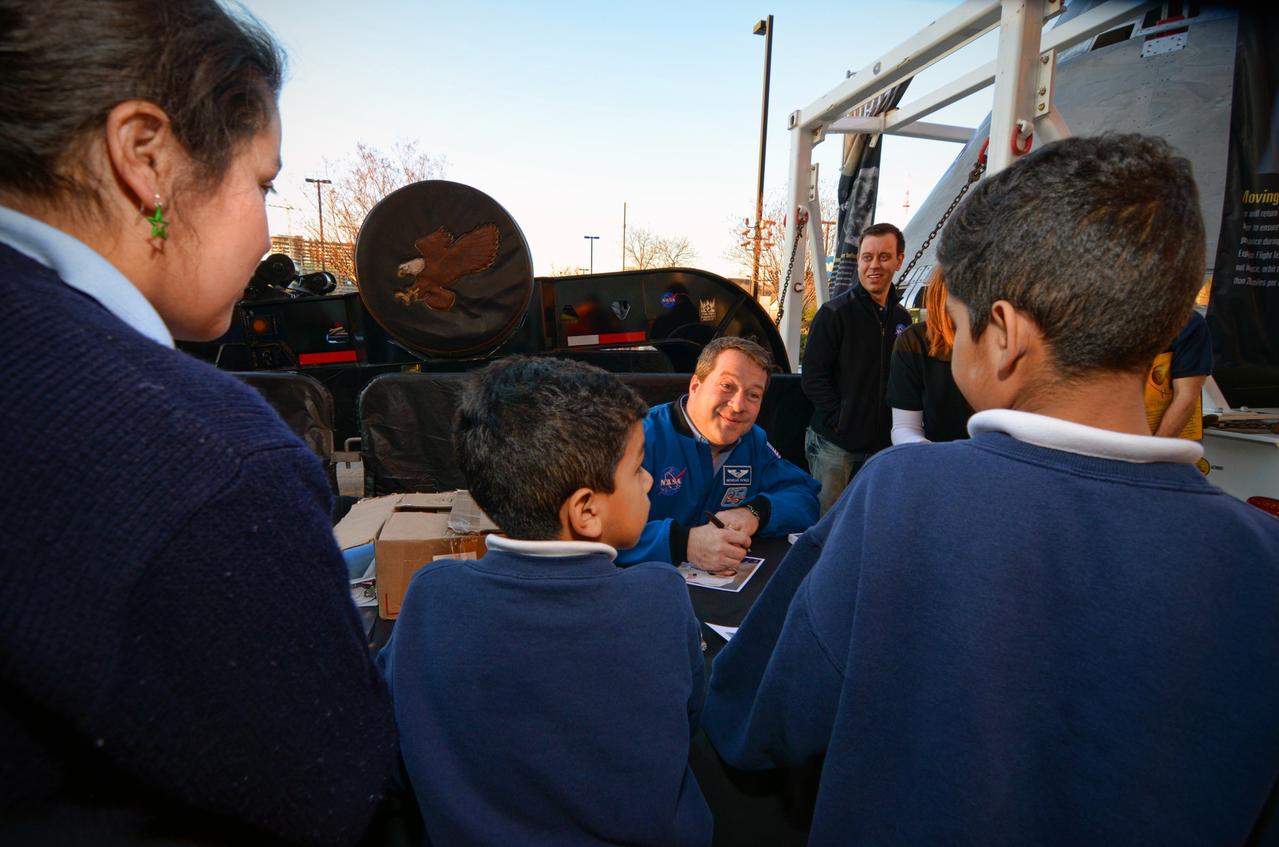
Astronaut Nicholas Patrick signs autographs for visitors during Orion Pad Abort-1 pathfinder display at an event outside American Airlines Center in Dallas on Jan. 27, 2012. Part of Batch image transfer from Flickr.
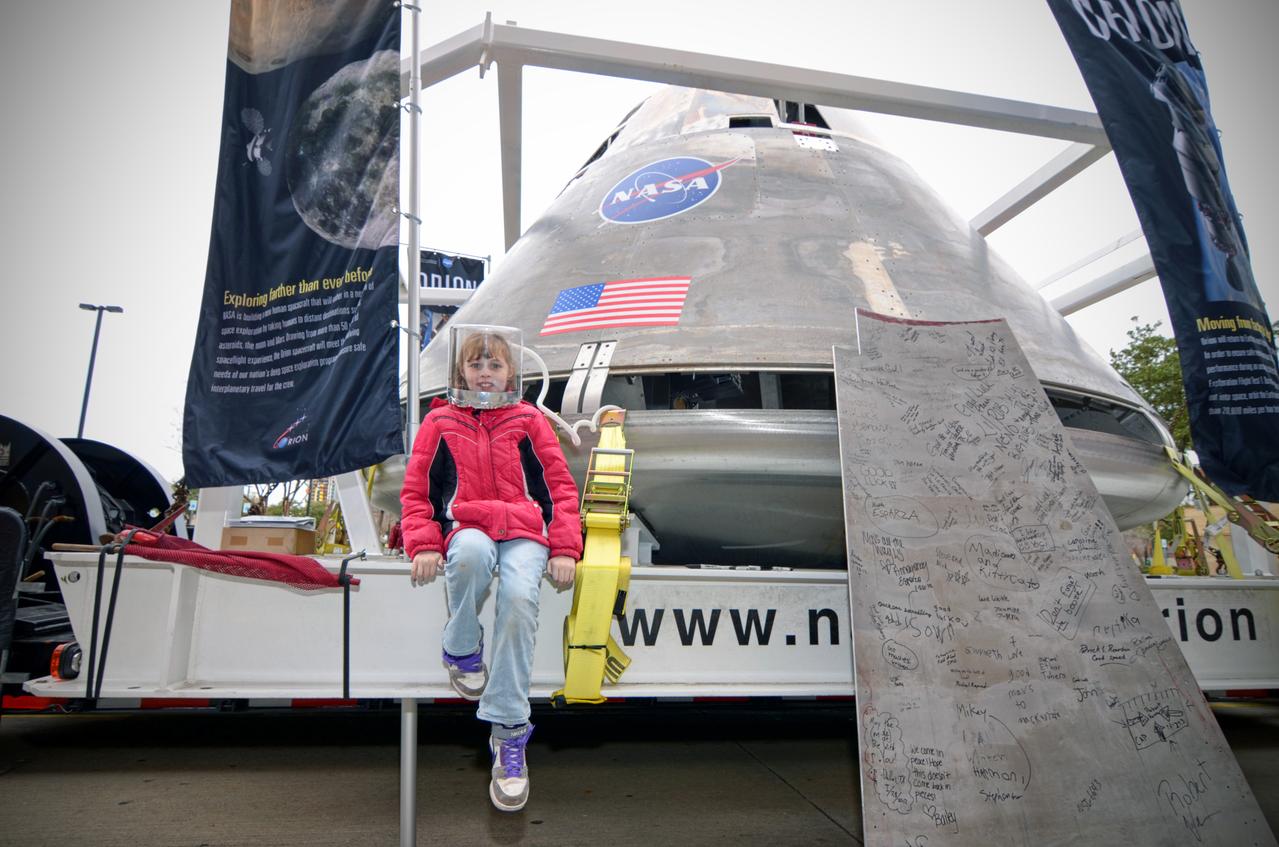
The Orion Pad Abort-1 pathfinder on display at an event outside American Airlines Center in Dallas on Jan. 27, 2012. Part of Batch image transfer from Flickr.
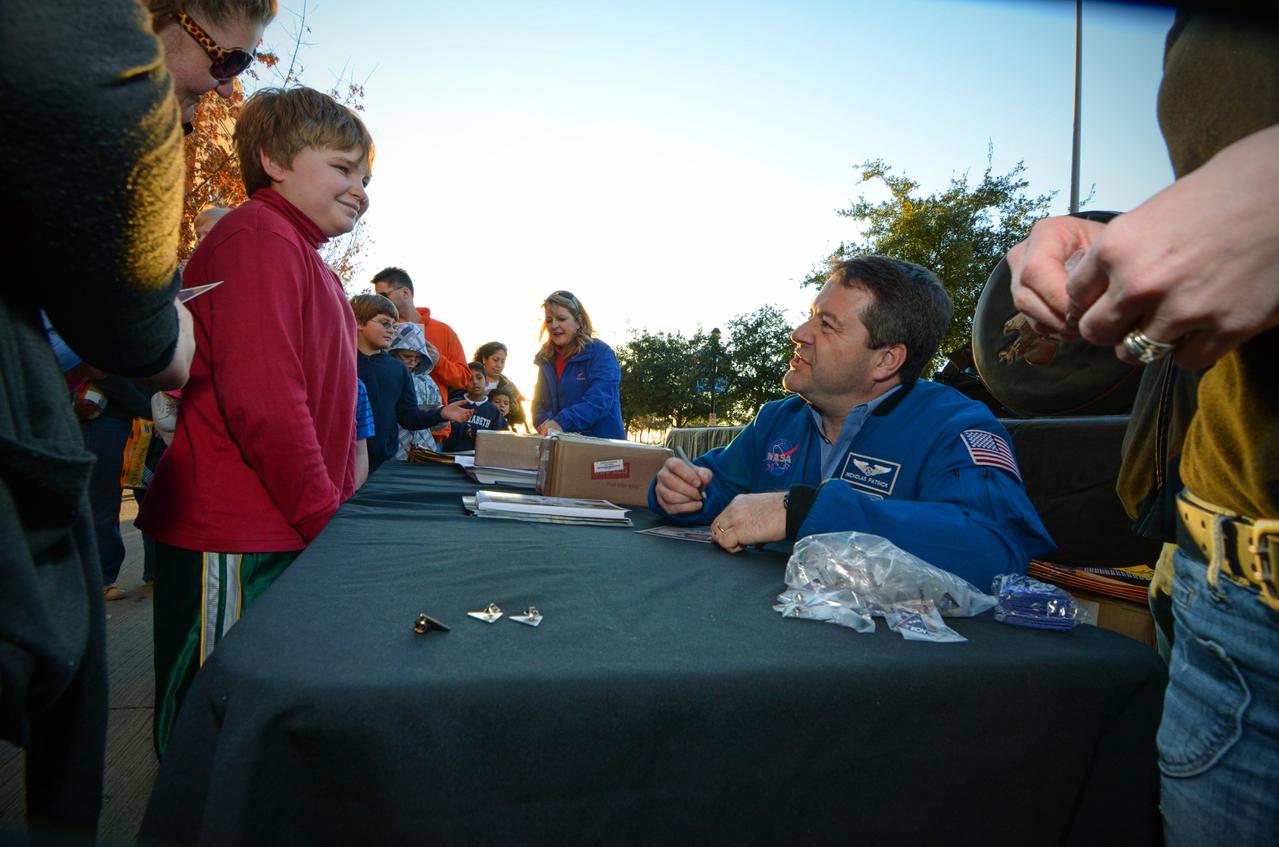
Astronaut Nicholas Patrick signs autographs for visitors during Orion Pad Abort-1 pathfinder display at an event outside American Airlines Center in Dallas on Jan. 27, 2012. Part of Batch image transfer from Flickr.

Astronaut signs autographs for visitors during Orion Pad Abort-1 pathfinder display at an event outside American Airlines Center in Dallas on Jan. 27, 2012. Part of Batch image transfer from Flickr.
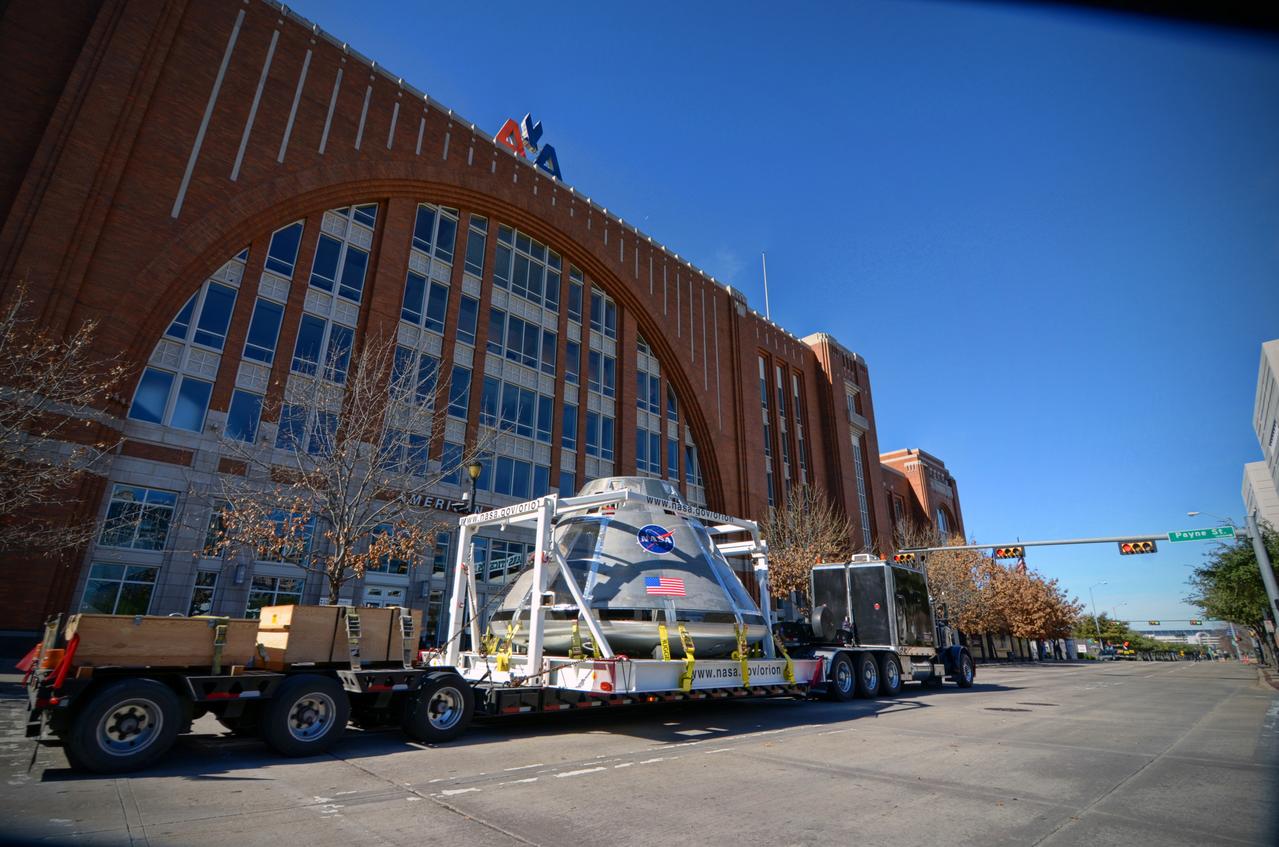
The Orion Pad Abort-1 pathfinder on display at an event outside American Airlines Center in Dallas on Jan. 27, 2012. Part of Batch image transfer from Flickr.

Astronaut signs autographs for visitors during Orion Pad Abort-1 pathfinder display at an event outside American Airlines Center in Dallas on Jan. 27, 2012. Part of Batch image transfer from Flickr.

Astronaut signs autographs for visitors during Orion Pad Abort-1 pathfinder display at an event outside American Airlines Center in Dallas on Jan. 27, 2012. Part of Batch image transfer from Flickr.

Astronaut Nicholas Patrick signs autographs for visitors during Orion Pad Abort-1 pathfinder display at an event outside American Airlines Center in Dallas on Jan. 27, 2012. Part of Batch image transfer from Flickr.
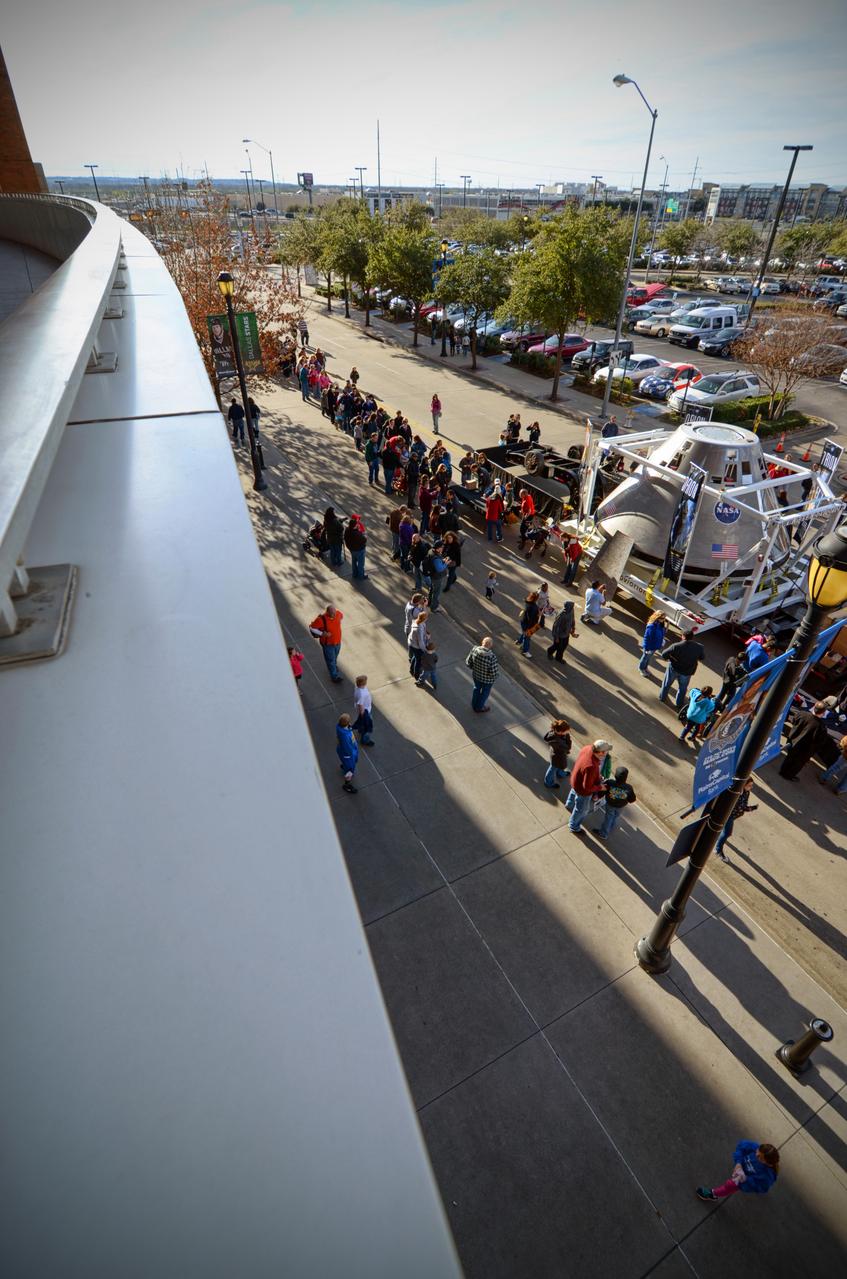
The Orion Pad Abort-1 pathfinder on display at an event outside American Airlines Center in Dallas on Jan. 27, 2012. Part of Batch image transfer from Flickr.
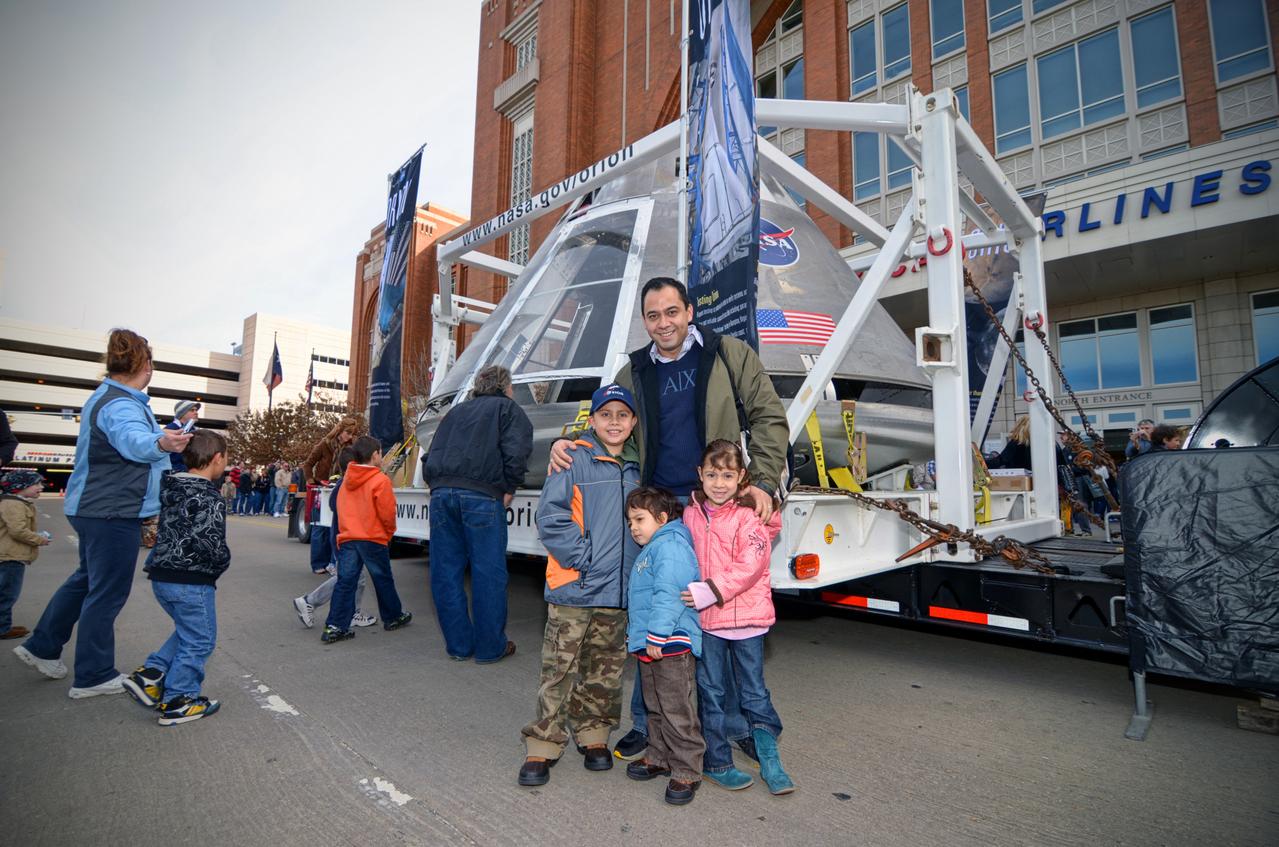
The Orion Pad Abort-1 pathfinder on display at an event outside American Airlines Center in Dallas on Jan. 27, 2012. Part of Batch image transfer from Flickr.
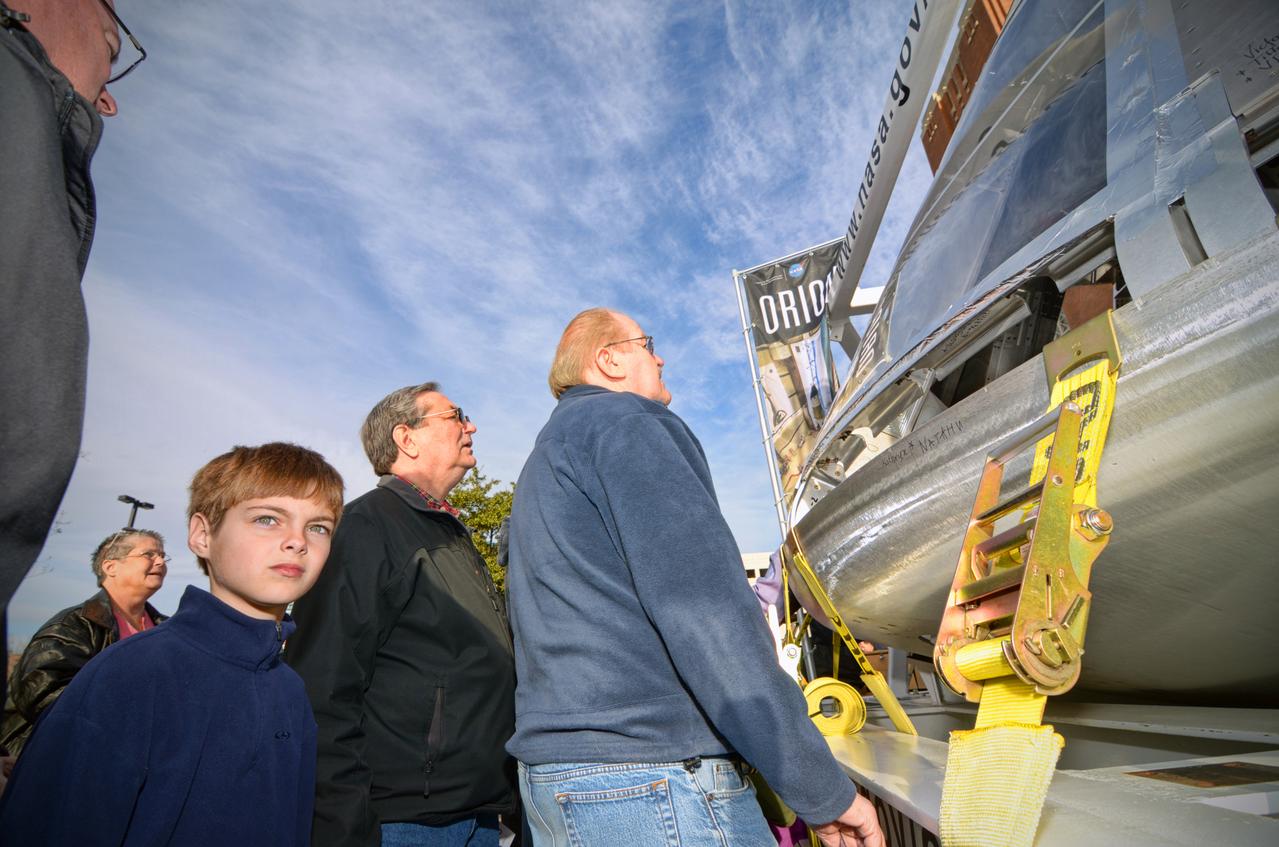
The Orion Pad Abort-1 pathfinder on display at an event outside American Airlines Center in Dallas on Jan. 27, 2012. Part of Batch image transfer from Flickr.
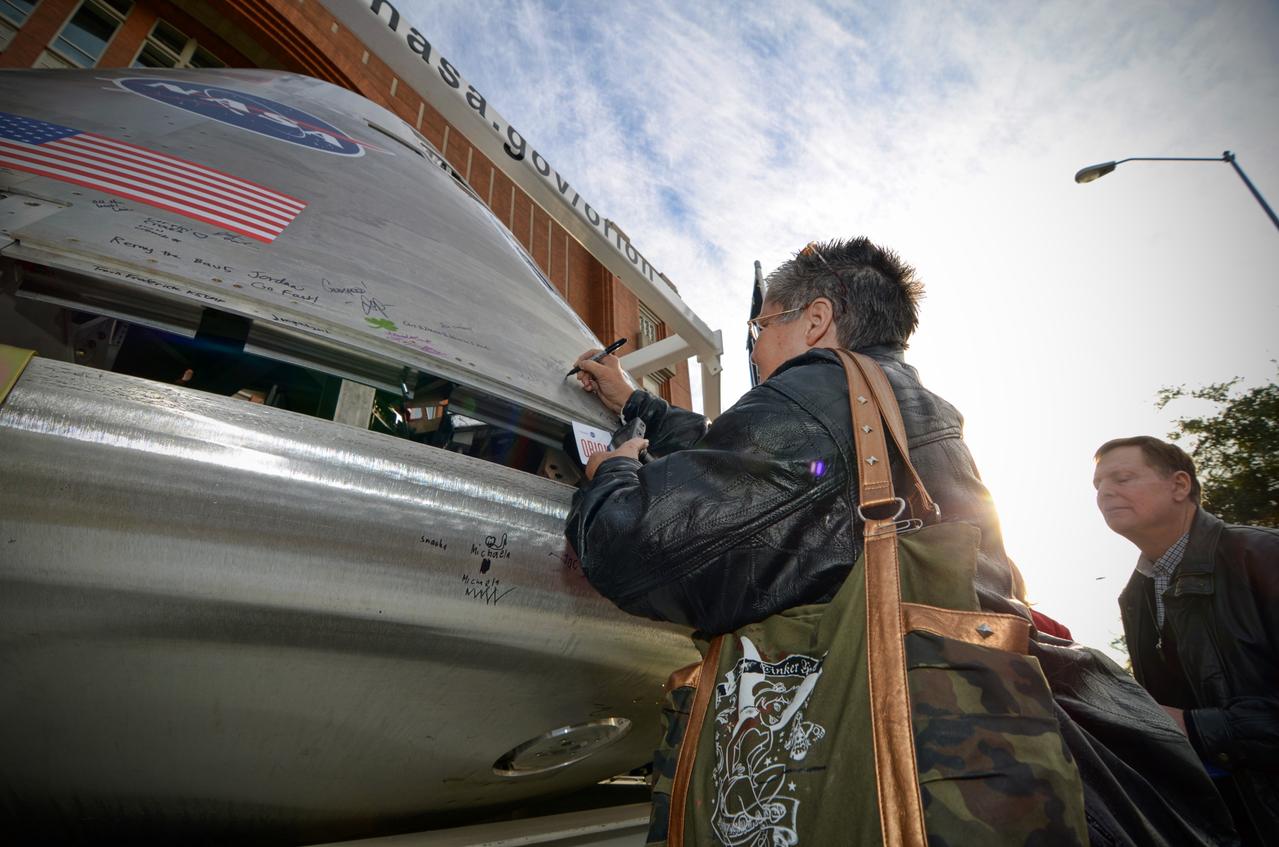
The Orion Pad Abort-1 pathfinder on display at an event outside American Airlines Center in Dallas on Jan. 27, 2012. Part of Batch image transfer from Flickr.

Astronaut signs autographs for visitors during Orion Pad Abort-1 pathfinder display at an event outside American Airlines Center in Dallas on Jan. 27, 2012. Part of Batch image transfer from Flickr.
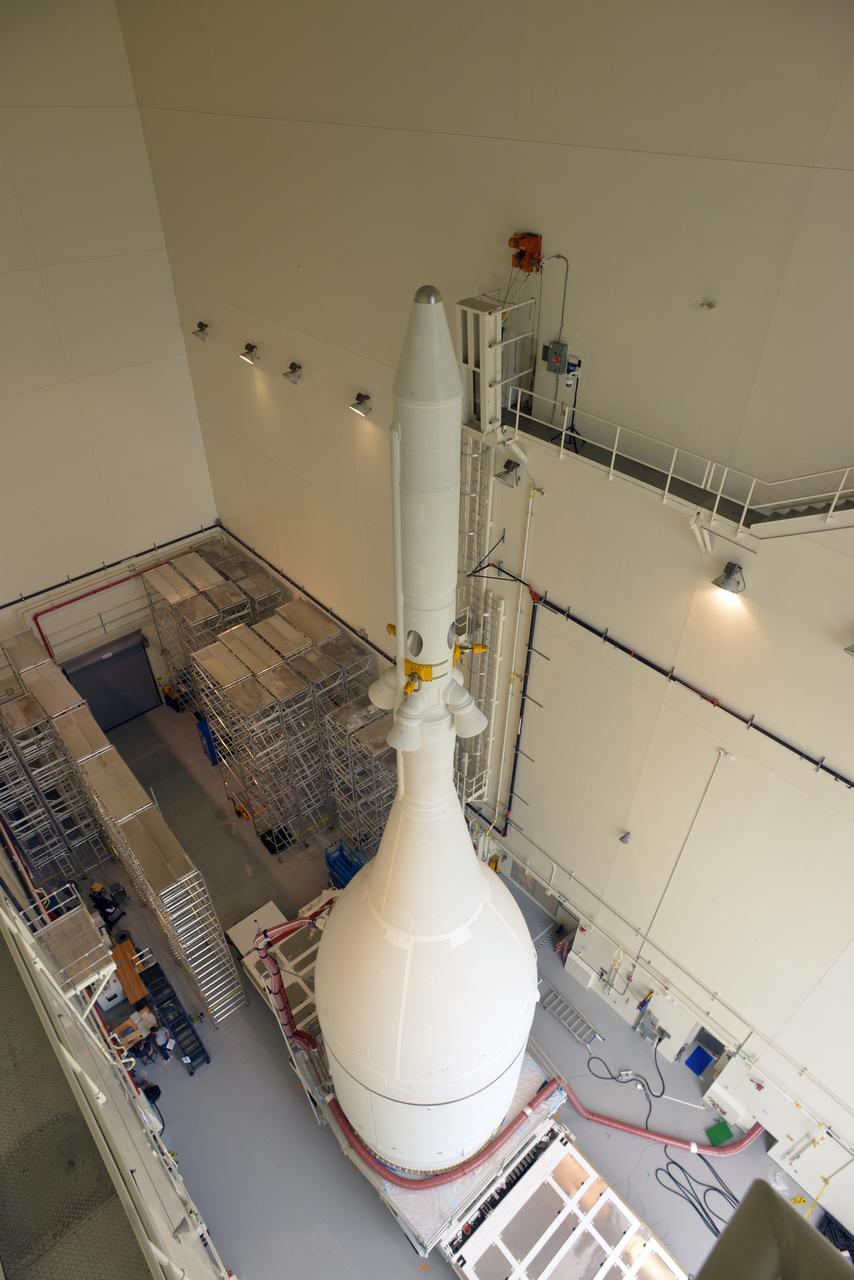
The Orion for Exploration Flight Test-1 (EFT-1) is stacked and ready to roll to the pad in the Launch Abort System Facility (LASF) at Kennedy Space Center on Nov. 10, 2014. The Orion stack, consisting of the launch abort system, the crew module, and the service module measures over 80 feet tall. Part of Batch image transfer from Flickr.
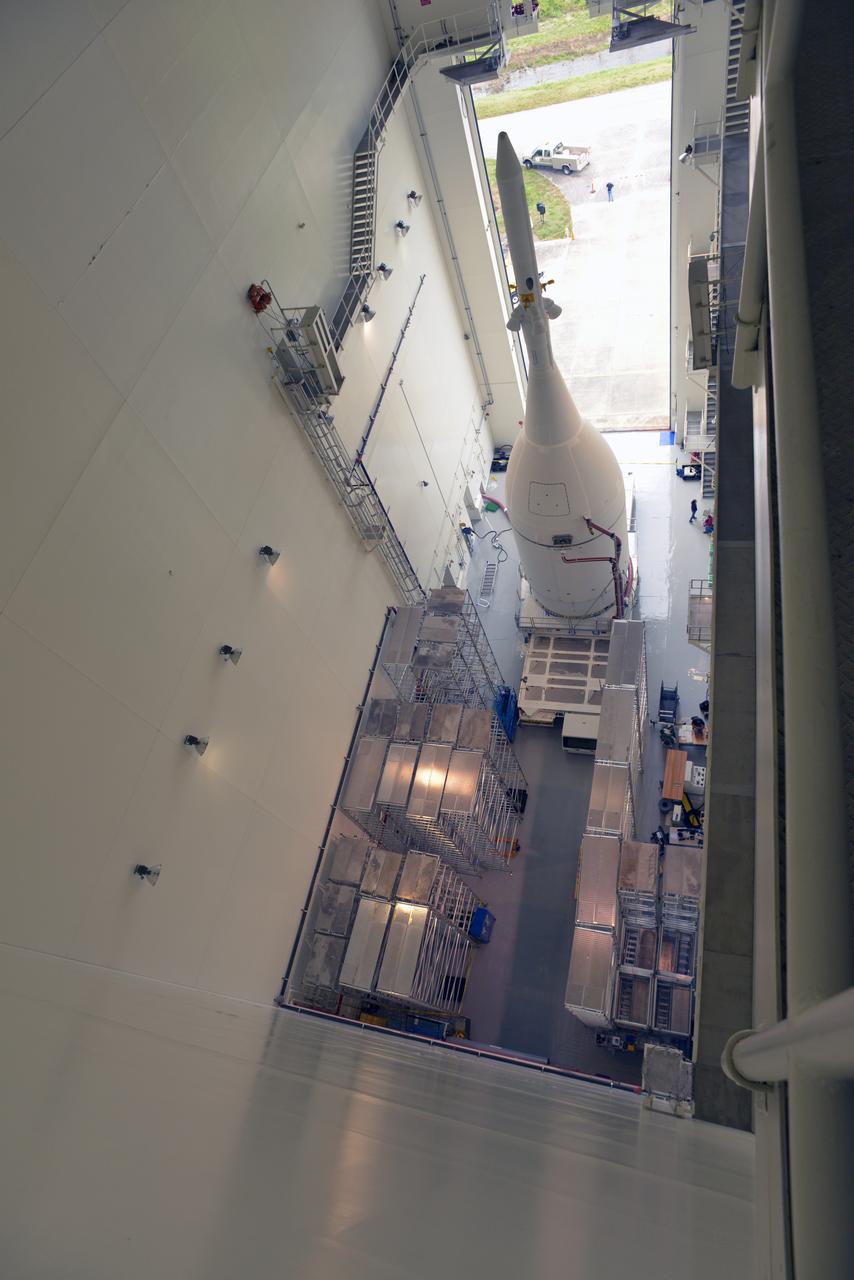
The Orion for Exploration Flight Test-1 (EFT-1) is stacked and ready to roll to the pad in the Launch Abort System Facility (LASF) at Kennedy Space Center on Nov. 10, 2014. The Orion stack, consisting of the launch abort system, the crew module, and the service module measures over 80 feet tall. Part of Batch image transfer from Flickr.
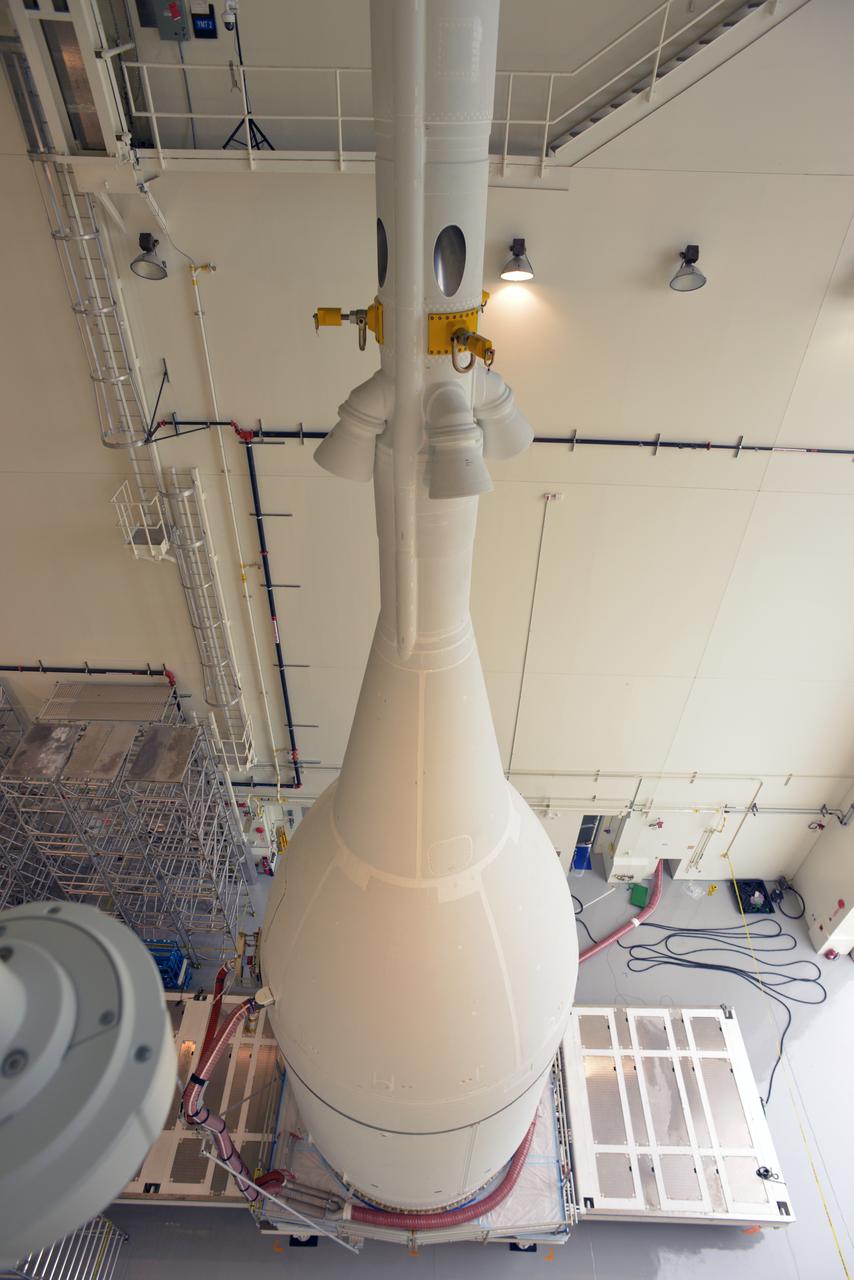
The Orion for Exploration Flight Test-1 (EFT-1) is stacked and ready to roll to the pad in the Launch Abort System Facility (LASF) at Kennedy Space Center on Nov. 10, 2014. The Orion stack, consisting of the launch abort system, the crew module, and the service module measures over 80 feet tall. Part of Batch image transfer from Flickr.
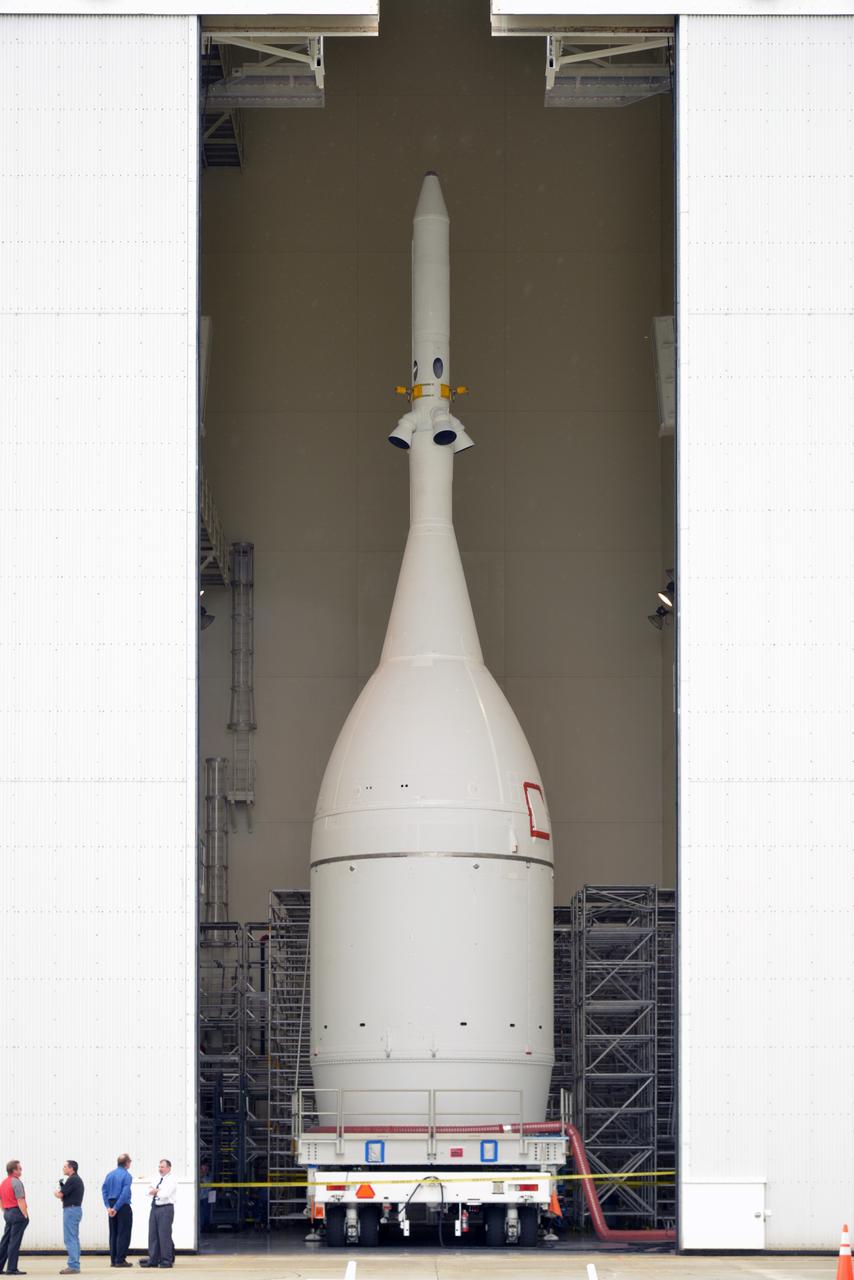
The Orion for Exploration Flight Test-1 (EFT-1) is stacked and ready to roll to the pad in the Launch Abort System Facility (LASF) at Kennedy Space Center on Nov. 10, 2014. The Orion stack, consisting of the launch abort system, the crew module, and the service module measures over 80 feet tall. Part of Batch image transfer from Flickr.
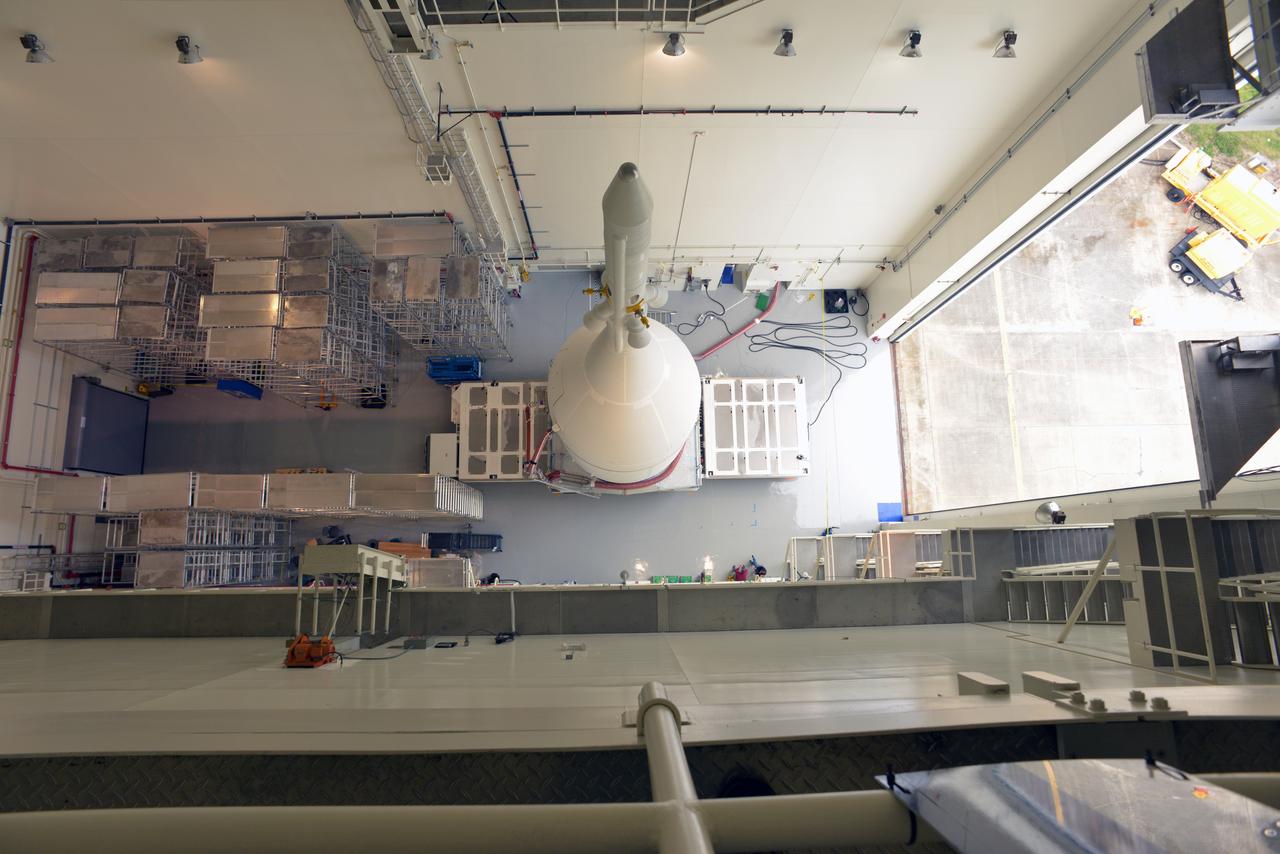
The Orion for Exploration Flight Test-1 (EFT-1) is stacked and ready to roll to the pad in the Launch Abort System Facility (LASF) at Kennedy Space Center on Nov. 10, 2014. The Orion stack, consisting of the launch abort system, the crew module, and the service module measures over 80 feet tall. Part of Batch image transfer from Flickr.
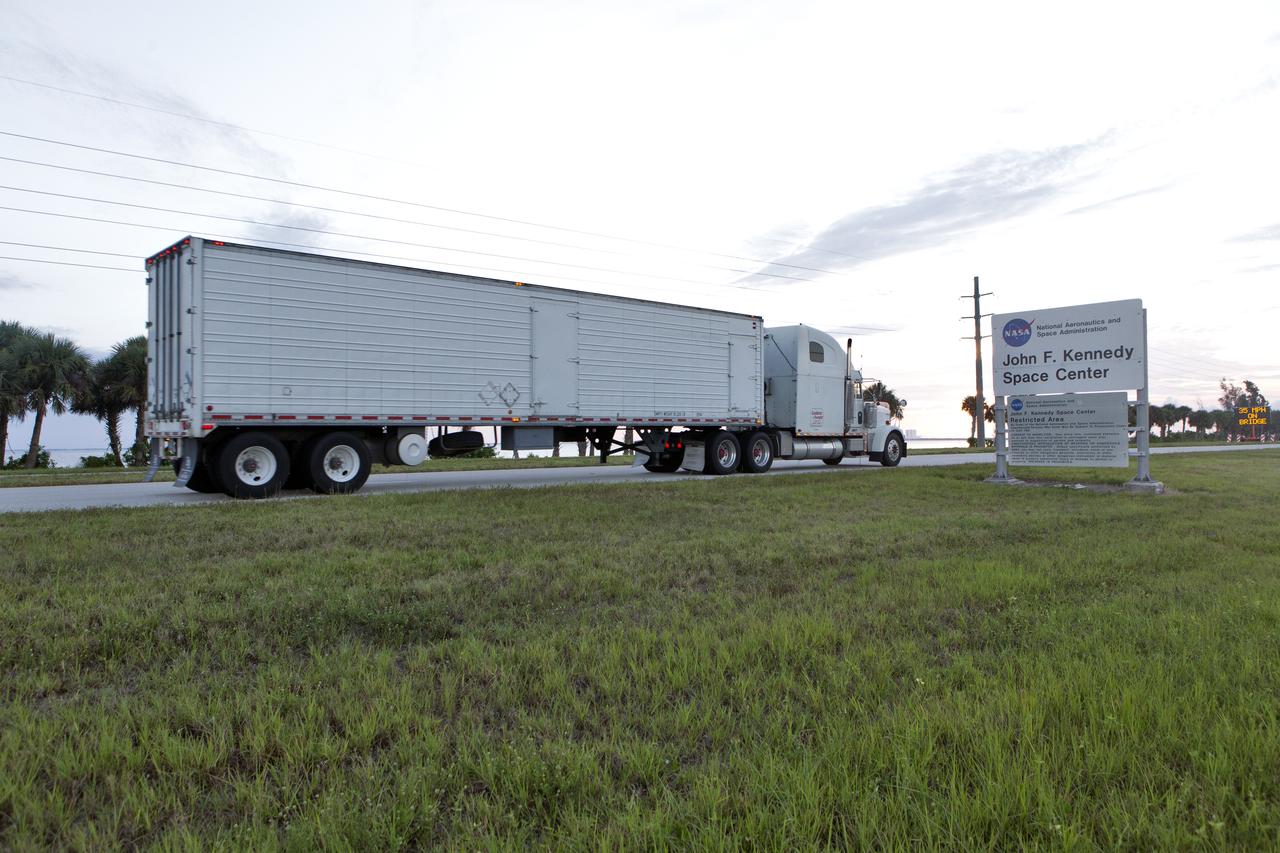
The abort motor for NASA’s Artemis 1 mission, secured in a heavy transport truck, arrives at the entrance to the agency’s Kennedy Space Center in Florida on June 6, 2019. The abort motor, manufactured by Northrop Grumman, will be delivered to the Launch Abort System Facility and integrated with Orion subcomponents and prepared for Artemis 1. It is one of three motors located on the tower of the Launch Abort System (LAS). The LAS is designed to pull the Orion capsule and its crew away to safety if an emergency occurs during ascent of the Space Launch System (SLS) rocket. During Artemis 1, the uncrewed Orion spacecraft will launch atop the SLS from Launch Pad 39B at Kennedy. Orion will embark on an approximately three-week mission that will take the spacecraft thousands of miles past the Moon. Orion will return to Earth and splashdown in the Pacific Ocean off the coast of California, where it will be retrieved and returned to Kennedy.

The abort motor for NASA’s Artemis 1 mission, secured in a heavy transport truck, arrives at the entrance to the agency’s Kennedy Space Center in Florida on June 6, 2019. The abort motor, manufactured by Northrop Grumman, will be delivered to the Launch Abort System Facility and integrated with Orion subcomponents and prepared for Artemis 1. It is one of three motors located on the tower of the Launch Abort System (LAS). The LAS is designed to pull the Orion capsule and its crew away to safety if an emergency occurs during ascent of the Space Launch System (SLS) rocket. During Artemis 1, the uncrewed Orion spacecraft will launch atop the SLS from Launch Pad 39B at Kennedy. Orion will embark on an approximately three-week mission that will take the spacecraft thousands of miles past the Moon. Orion will return to Earth and splashdown in the Pacific Ocean off the coast of California, where it will be retrieved and returned to Kennedy.
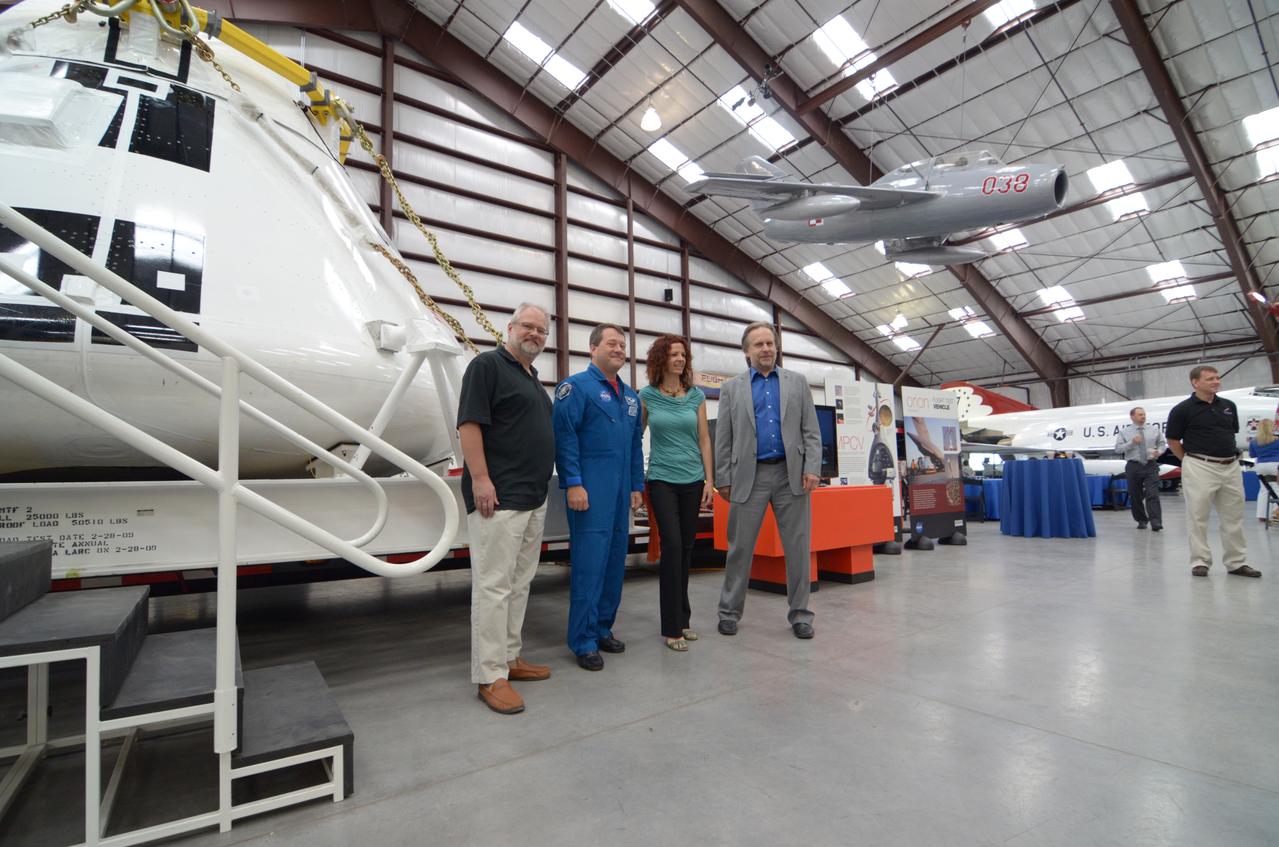
The Orion crew module flown on NASA’s Pad Abort-1 (PA-1) flight test is shown on display and NASA Astronaut Nicholas Patrick speaks at an event at the Pima Air and Space Museum in Tucson, Arizona, on June 16, 2011. Part of Batch image transfer from Flickr.
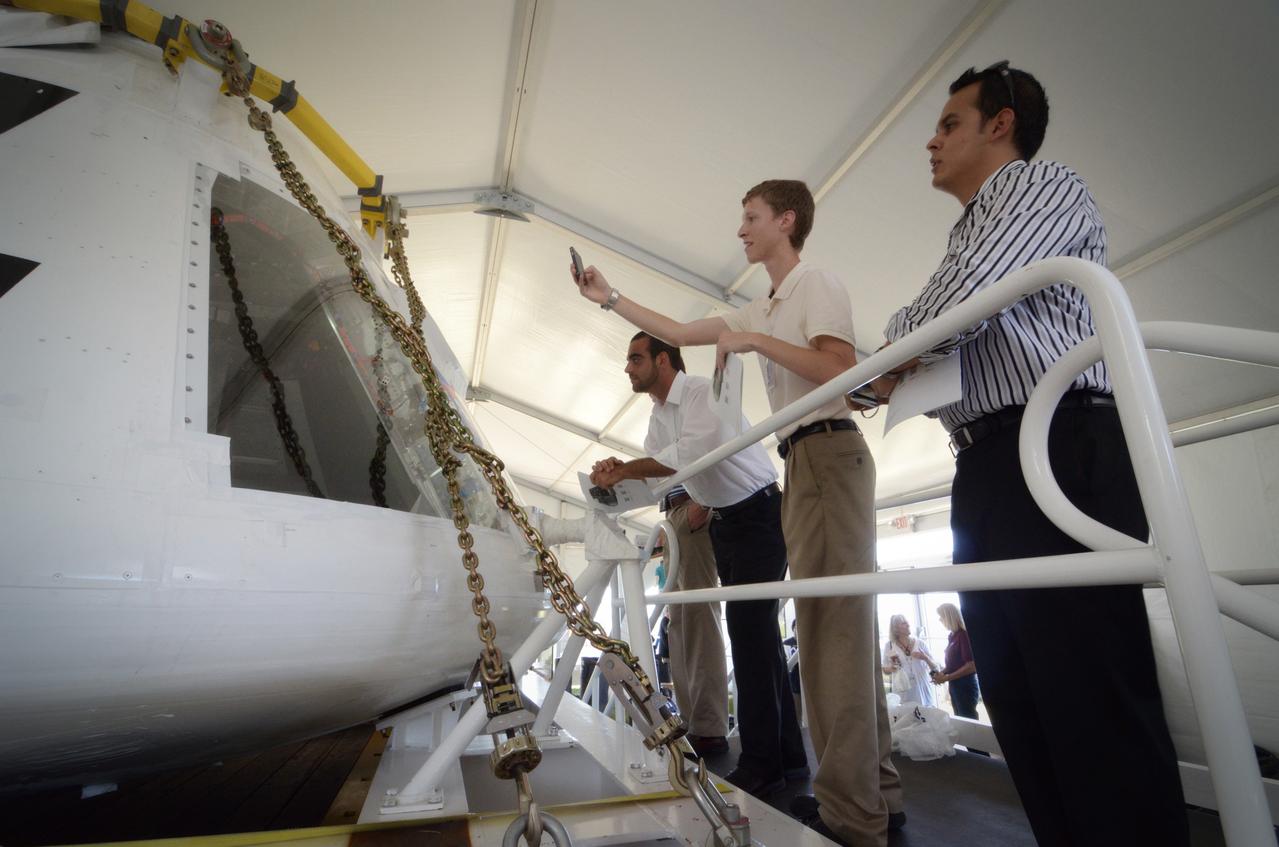
The Orion crew module flown on NASA’s Pad Abort-1 (PA-1) flight test is shown on display at an event at Kennedy Space Center in Florida on July 5, 2011 before moving into the Operations & Checkout (O&C) Building. Part of Batch image transfer from Flickr.
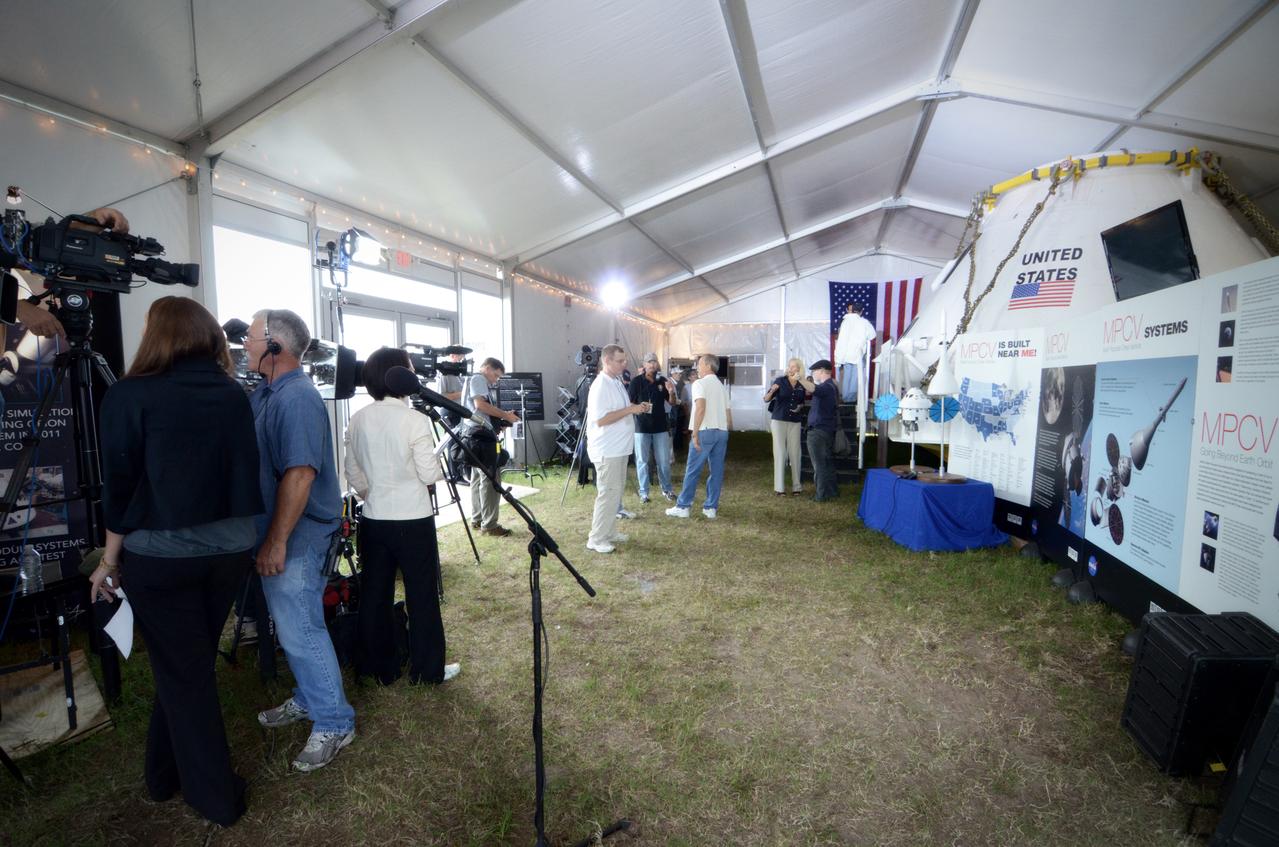
The Orion crew module flown on NASA’s Pad Abort-1 (PA-1) flight test is shown on display at an event at Kennedy Space Center in Florida on July 7, 2011 before moving into the Operations & Checkout (O&C) Building. Part of Batch image transfer from Flickr.

The Orion crew module flown on NASA’s Pad Abort-1 (PA-1) flight test is shown on display at an event at Kennedy Space Center in Florida on July 9, 2011 before moving into the Operations & Checkout (O&C) Building. Part of Batch image transfer from Flickr.
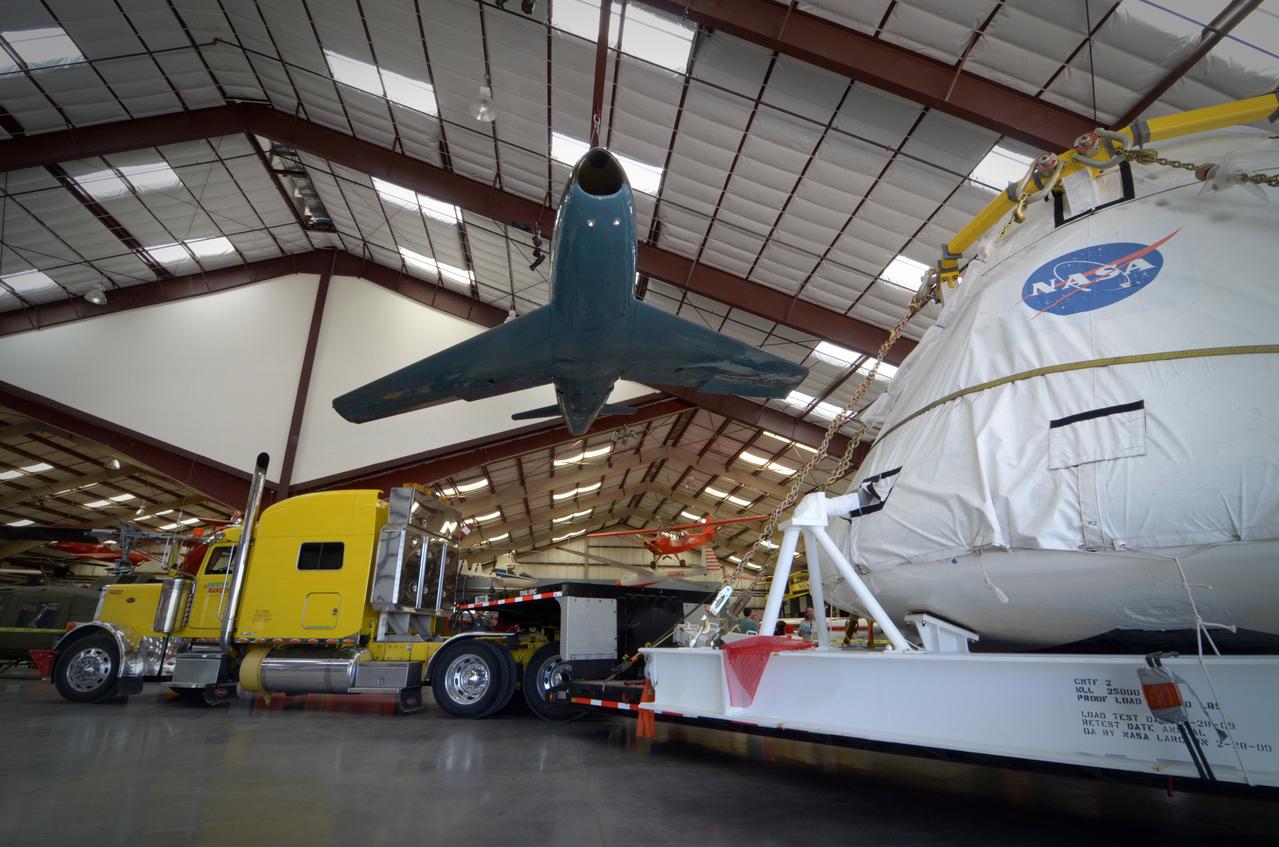
The Orion crew module flown on NASA’s Pad Abort-1 (PA-1) flight test is shown on display during an event at the Pima Air and Space Museum in Tucson, Arizona, on June 16, 2011. Part of Batch image transfer from Flickr.
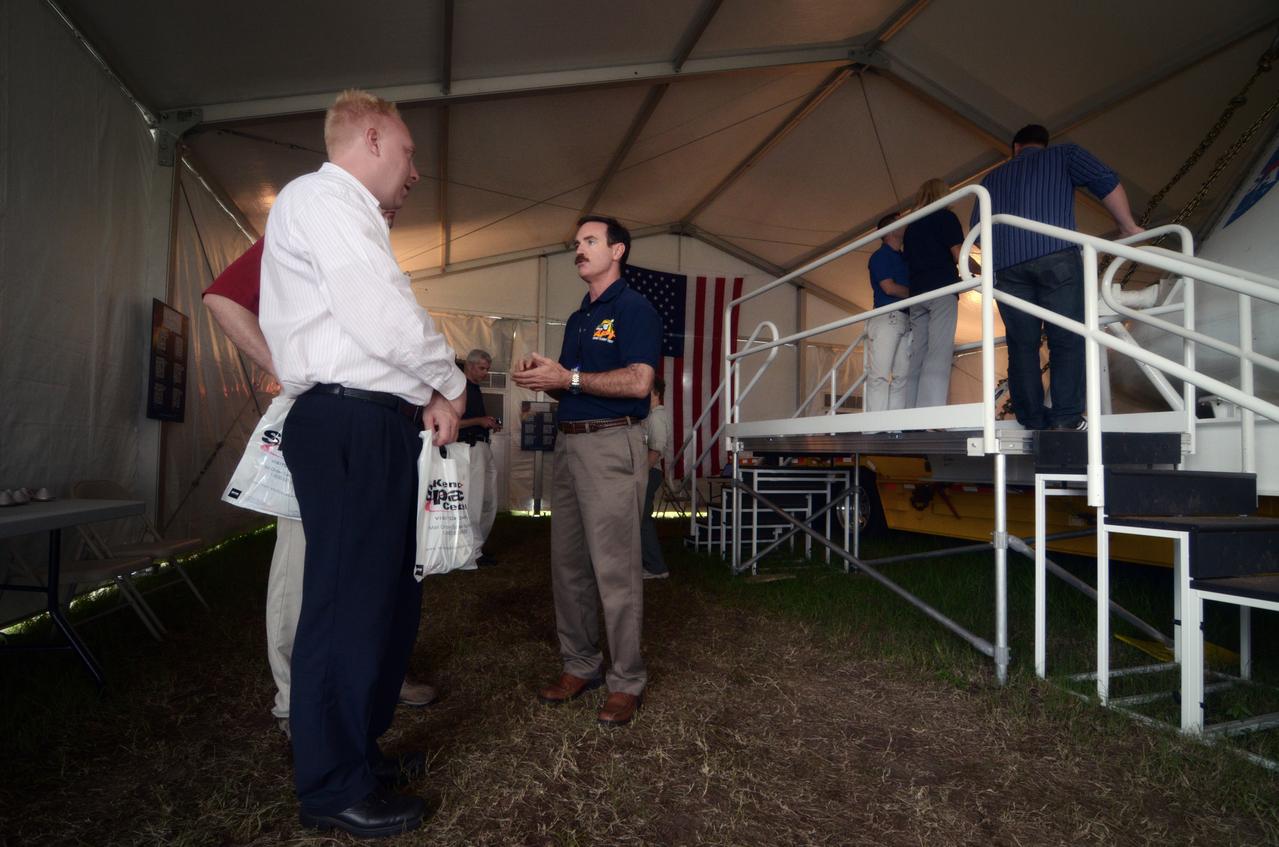
The Orion crew module flown on NASA’s Pad Abort-1 (PA-1) flight test is shown on display at an event at Kennedy Space Center in Florida on July 9, 2011 before moving into the Operations & Checkout (O&C) Building. Part of Batch image transfer from Flickr.
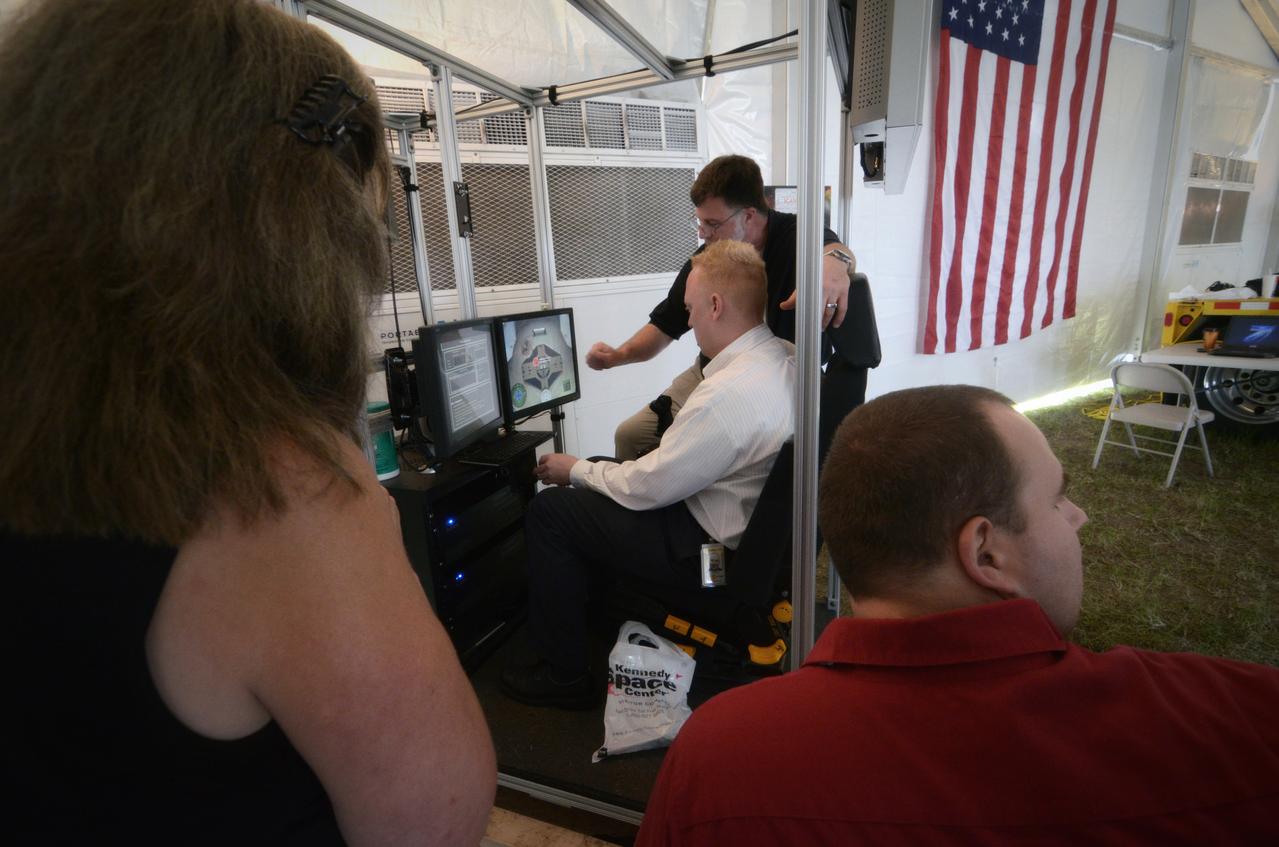
The Orion crew module flown on NASA’s Pad Abort-1 (PA-1) flight test is shown on display at an event at Kennedy Space Center in Florida on July 9, 2011 before moving into the Operations & Checkout (O&C) Building. Part of Batch image transfer from Flickr.
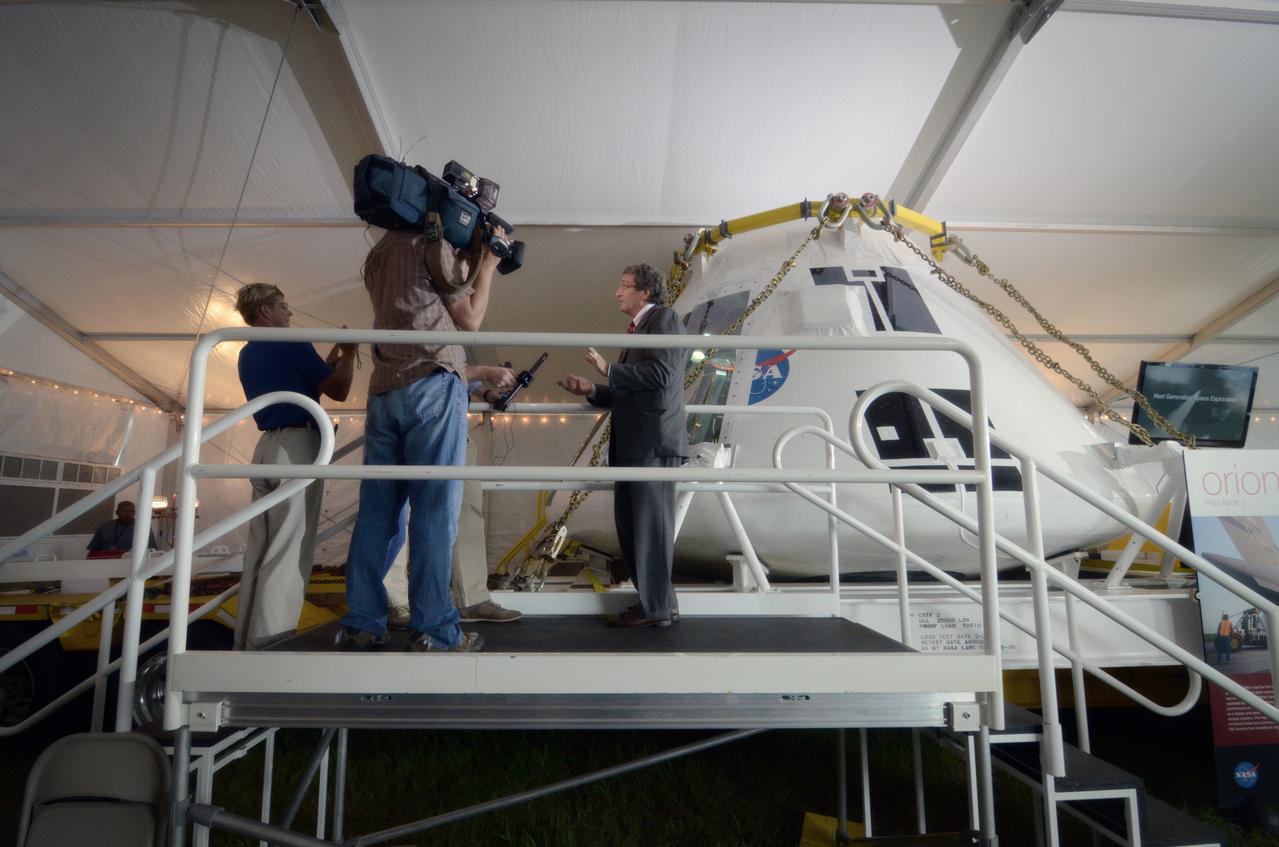
The Orion crew module flown on NASA’s Pad Abort-1 (PA-1) flight test is shown on display at an event at Kennedy Space Center in Florida on July 7, 2011 before moving into the Operations & Checkout (O&C) Building. Part of Batch image transfer from Flickr.

The Orion crew module flown on NASA’s Pad Abort-1 (PA-1) flight test is shown on display and NASA Astronaut Nicholas Patrick speaks at an event at the Pima Air and Space Museum in Tucson, Arizona, on June 16, 2011. Part of Batch image transfer from Flickr.
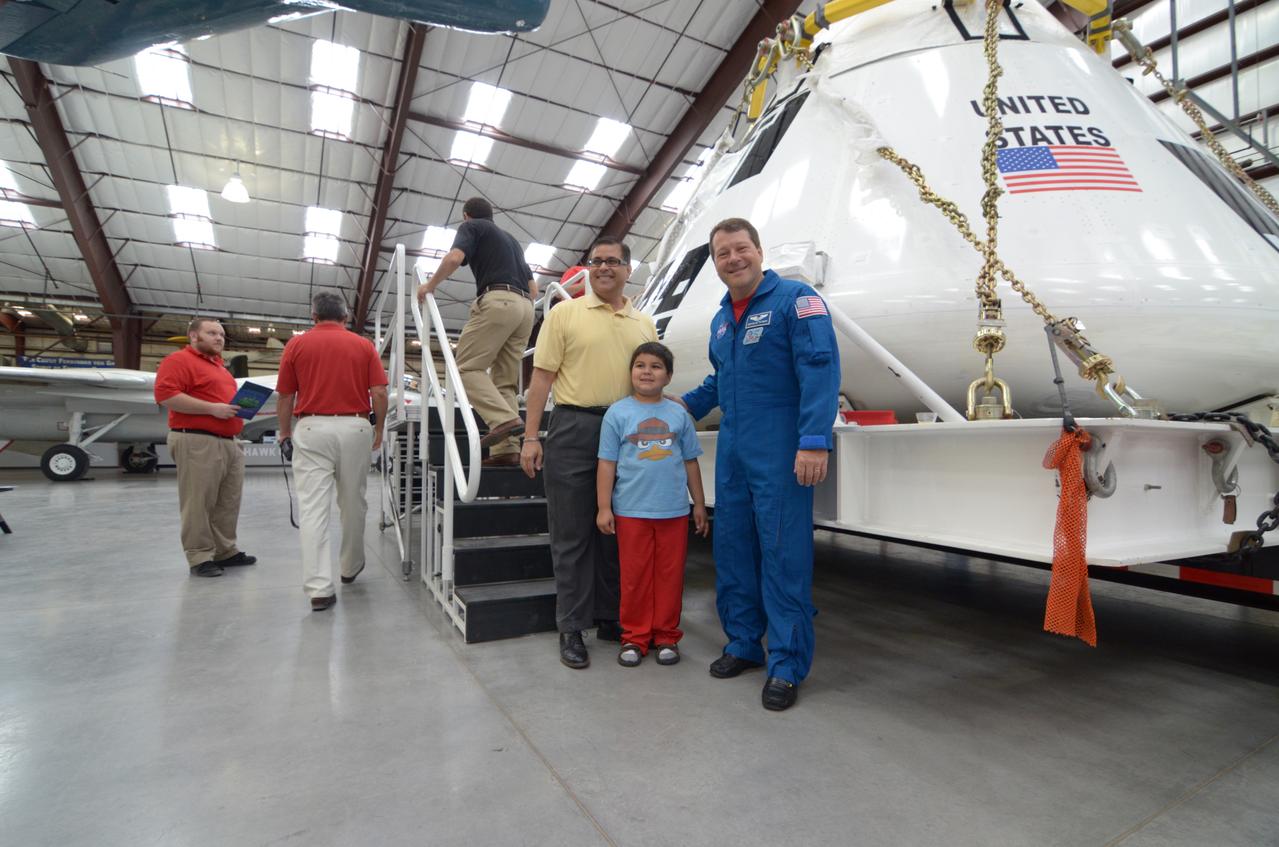
The Orion crew module flown on NASA’s Pad Abort-1 (PA-1) flight test is shown on display and NASA Astronaut Nicholas Patrick speaks at an event at the Pima Air and Space Museum in Tucson, Arizona, on June 16, 2011. Part of Batch image transfer from Flickr.
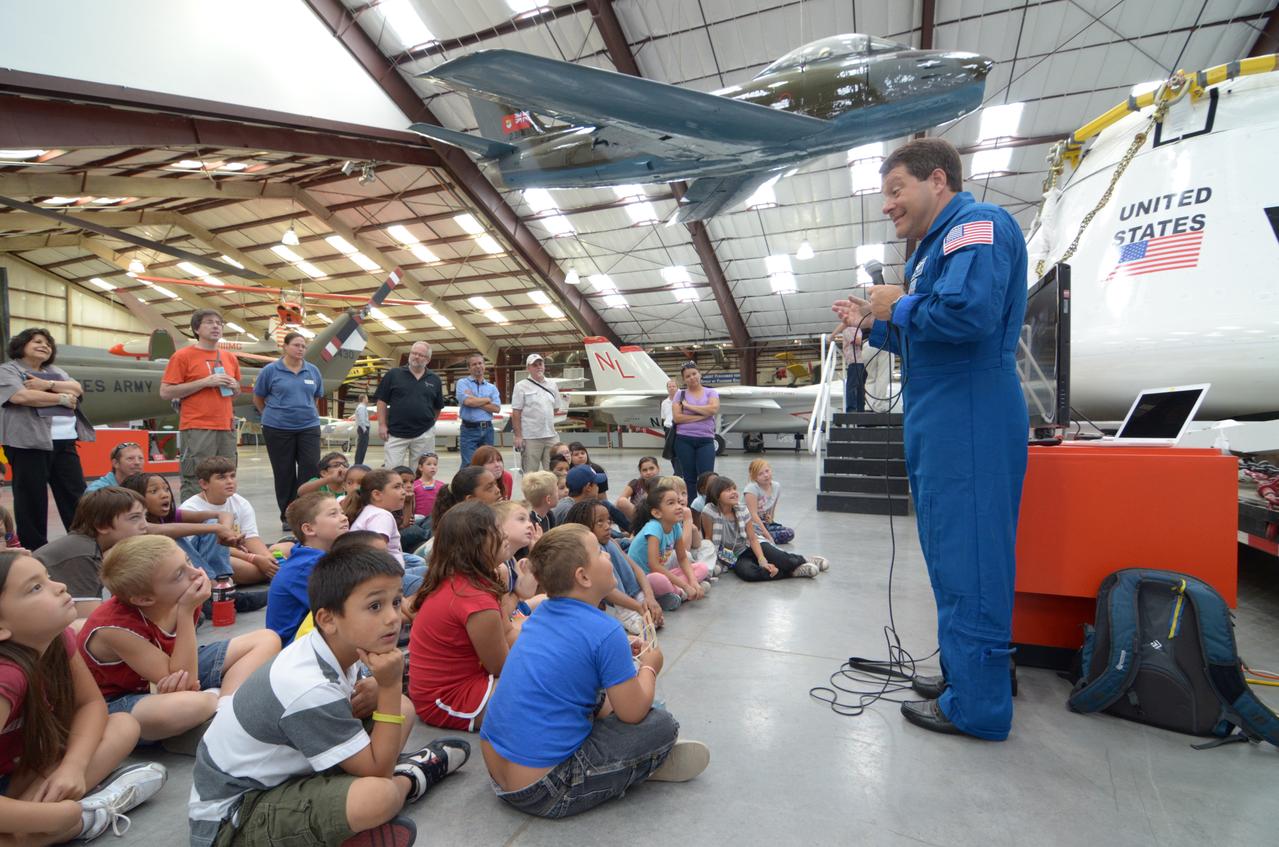
The Orion crew module flown on NASA’s Pad Abort-1 (PA-1) flight test is shown on display and NASA Astronaut Nicholas Patrick speaks at an event at the Pima Air and Space Museum in Tucson, Arizona, on June 16, 2011. Part of Batch image transfer from Flickr.

The Orion crew module flown on NASA’s Pad Abort-1 (PA-1) flight test is shown on display at an event at Kennedy Space Center in Florida on July 7, 2011 before moving into the Operations & Checkout (O&C) Building. Part of Batch image transfer from Flickr.
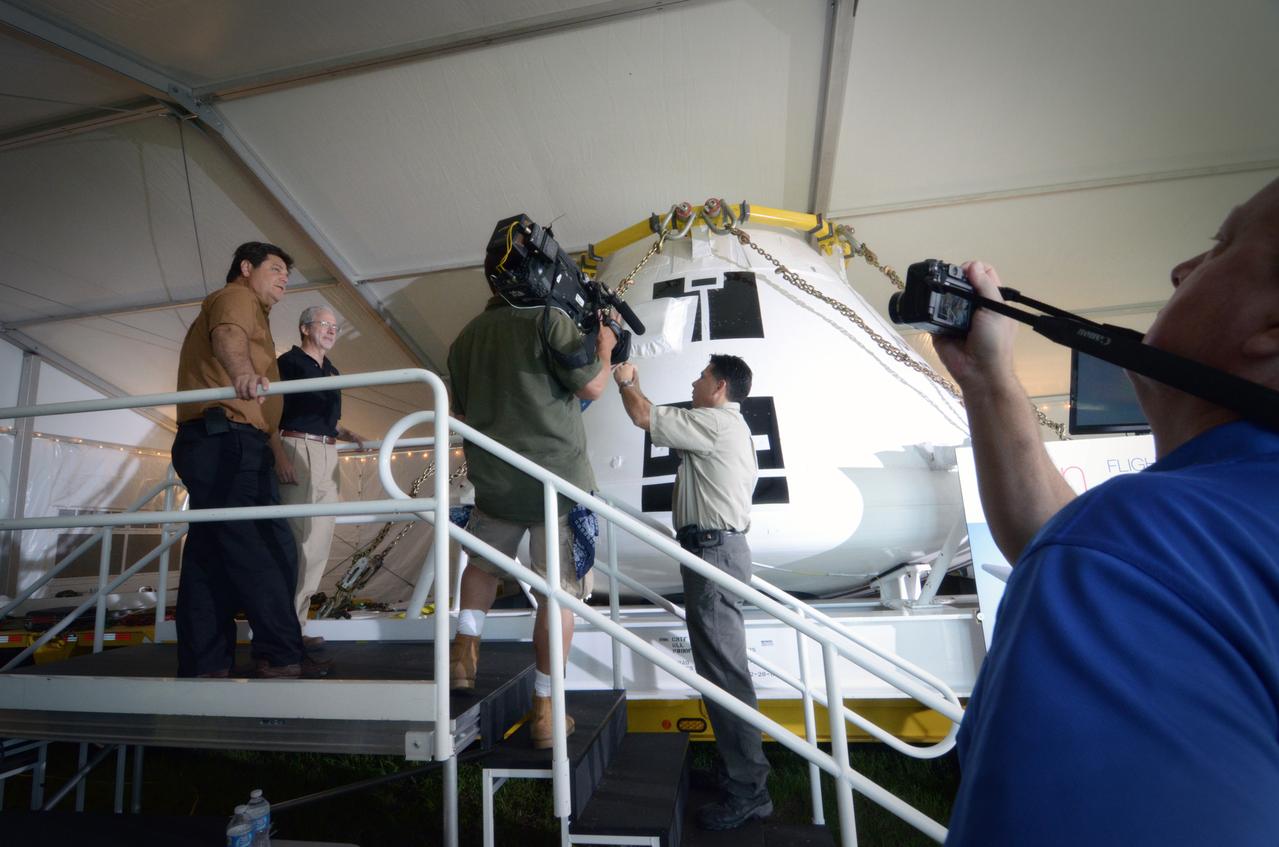
The Orion crew module flown on NASA’s Pad Abort-1 (PA-1) flight test is shown on display at an event at Kennedy Space Center in Florida on July 6, 2011 before moving into the Operations & Checkout (O&C) Building. Part of Batch image transfer from Flickr.
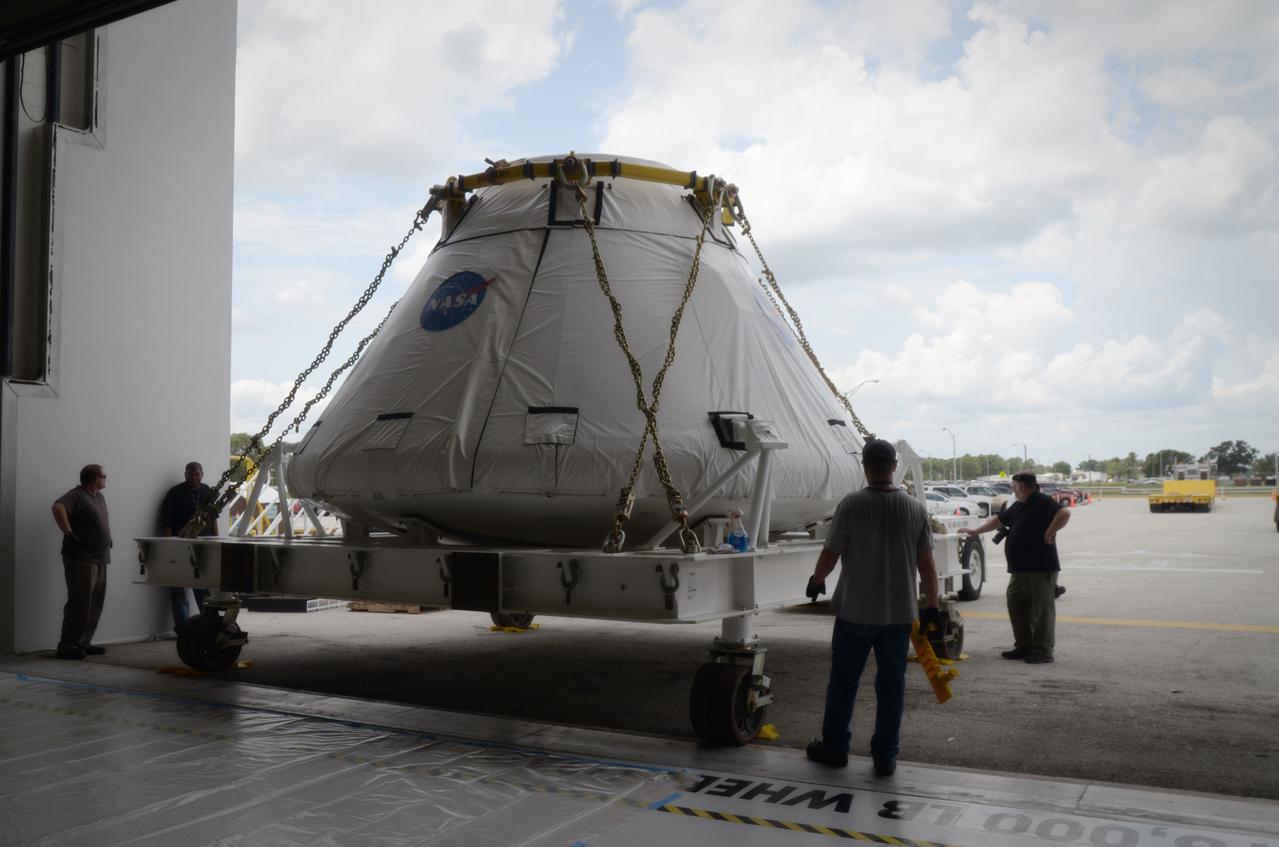
The Orion Pad Abort-1 (PA-1) crew module is pushed into the airlock at the Operations & Checkout (O&C) Building at Kennedy Space Center in Florida on July 11, 2011. Part of Batch image transfer from Flickr.
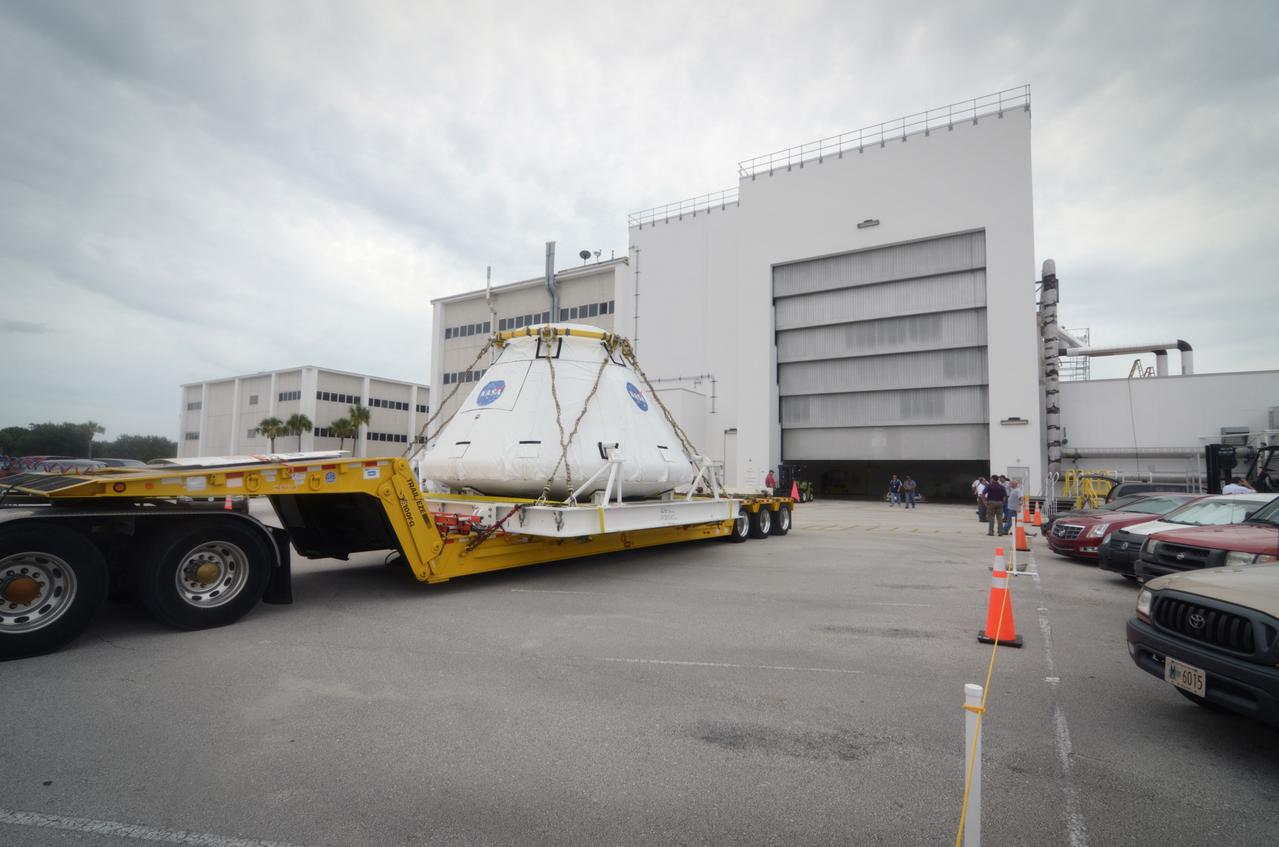
The Orion Pad Abort-1 (PA-1) crew module arrives at the Operations & Checkout (O&C) Building at Kennedy Space Center in Florida on July 11, 2011. Part of Batch image transfer from Flickr.
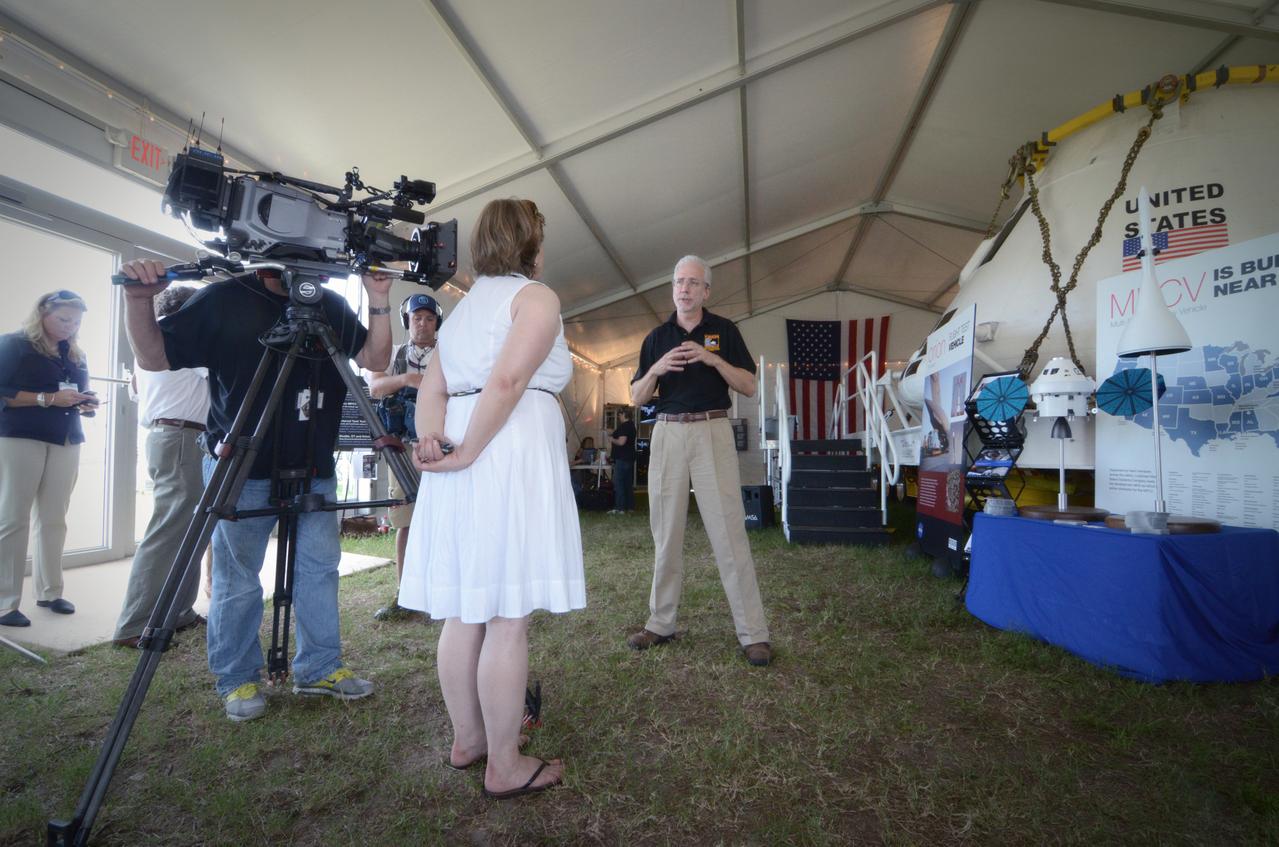
The Orion crew module flown on NASA’s Pad Abort-1 (PA-1) flight test is shown on display at an event at Kennedy Space Center in Florida on July 6, 2011 before moving into the Operations & Checkout (O&C) Building. Part of Batch image transfer from Flickr.
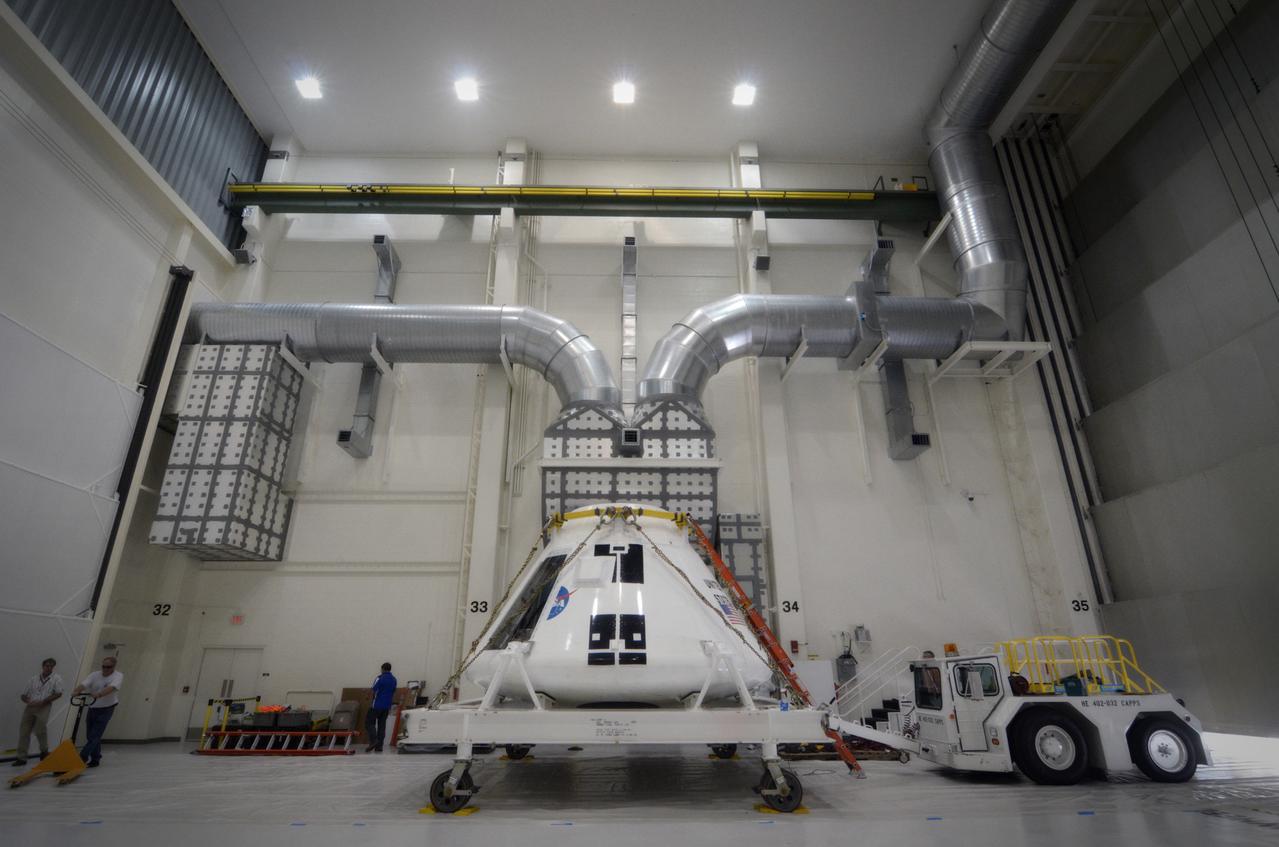
The Orion Pad Abort-1 (PA-1) crew module inside the airlock at the Operations & Checkout (O&C) Building at Kennedy Space Center in Florida on July 11, 2011. Part of Batch image transfer from Flickr.
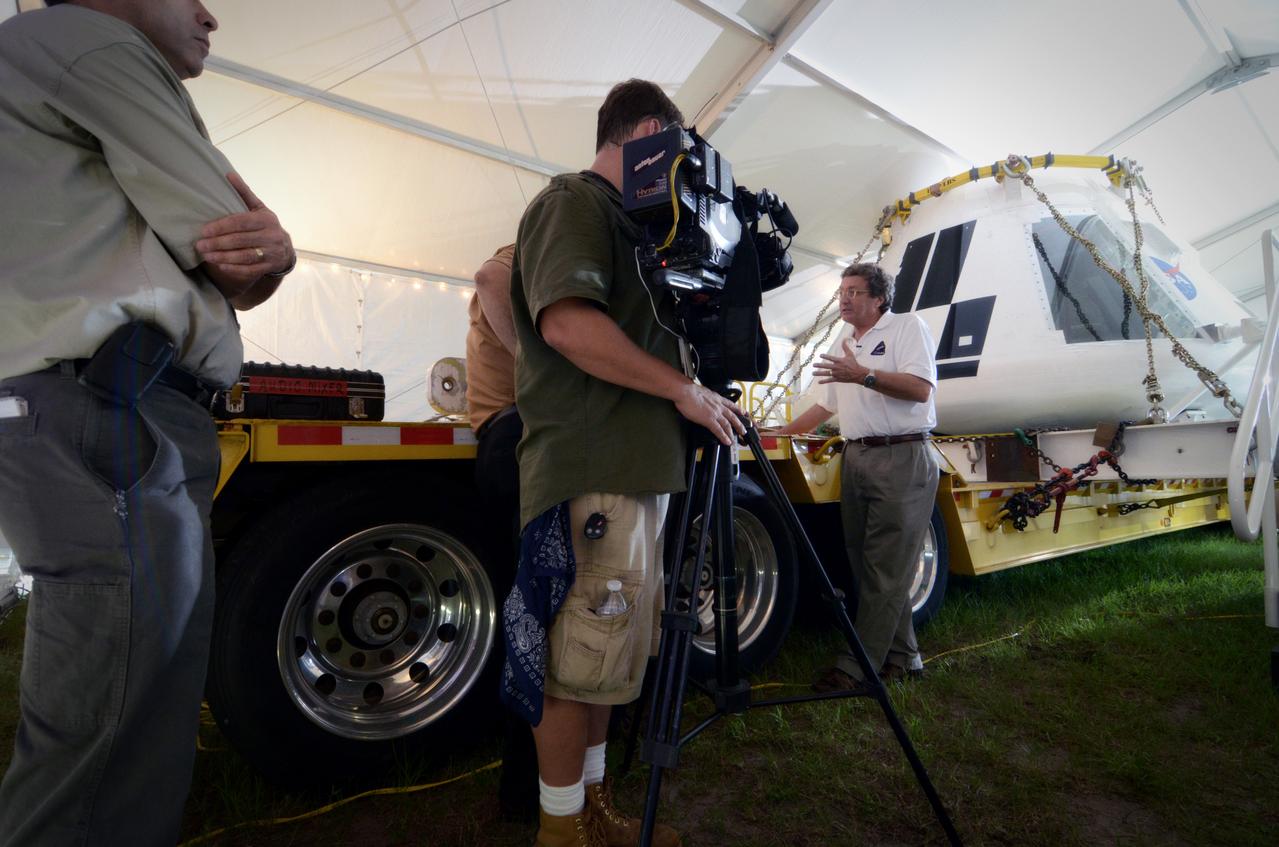
The Orion crew module flown on NASA’s Pad Abort-1 (PA-1) flight test is shown on display at an event at Kennedy Space Center in Florida on July 6, 2011 before moving into the Operations & Checkout (O&C) Building. Part of Batch image transfer from Flickr.

The Orion crew module flown on NASA’s Pad Abort-1 (PA-1) flight test is shown on display and NASA Astronaut Nicholas Patrick speaks at an event at the Pima Air and Space Museum in Tucson, Arizona, on June 16, 2011. Part of Batch image transfer from Flickr.
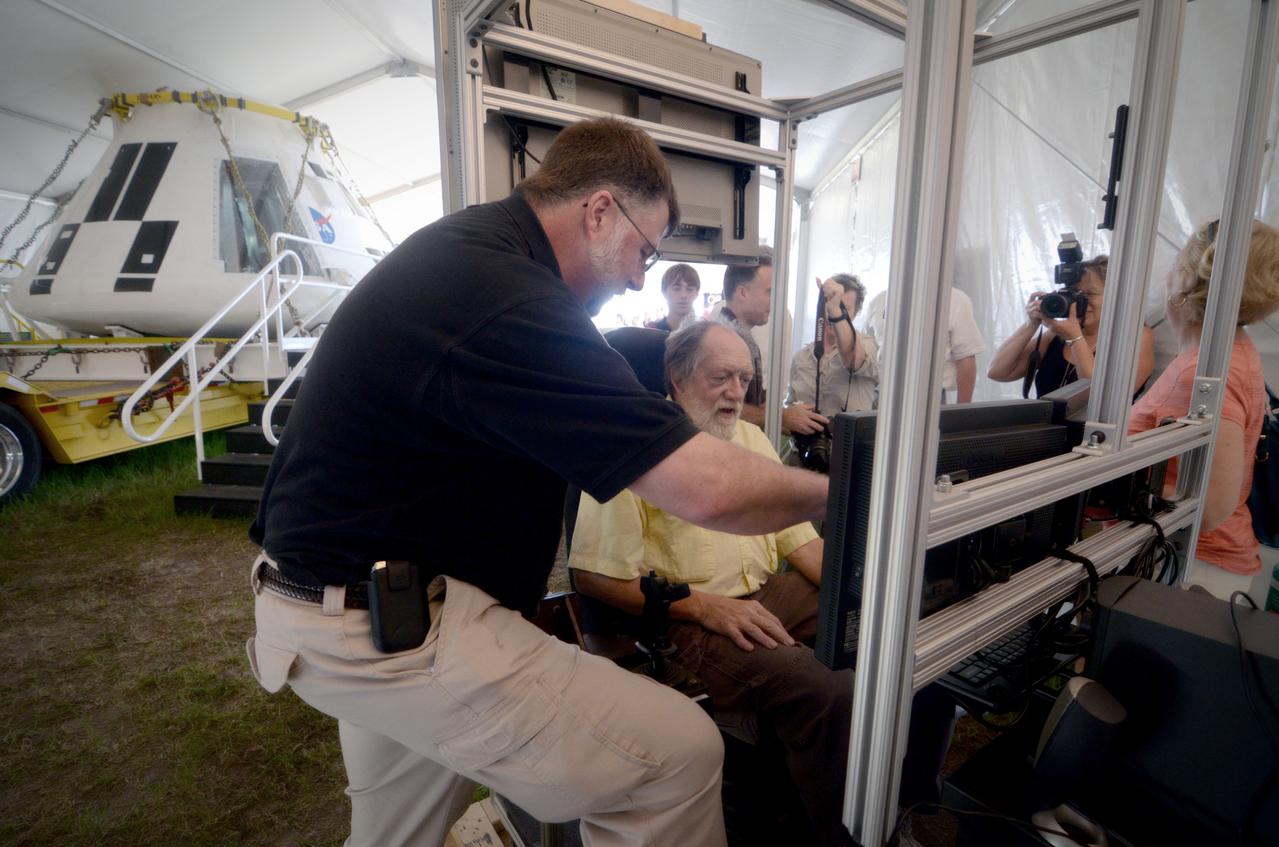
The Orion crew module flown on NASA’s Pad Abort-1 (PA-1) flight test is shown on display at an event at Kennedy Space Center in Florida on July 9, 2011 before moving into the Operations & Checkout (O&C) Building. Part of Batch image transfer from Flickr.
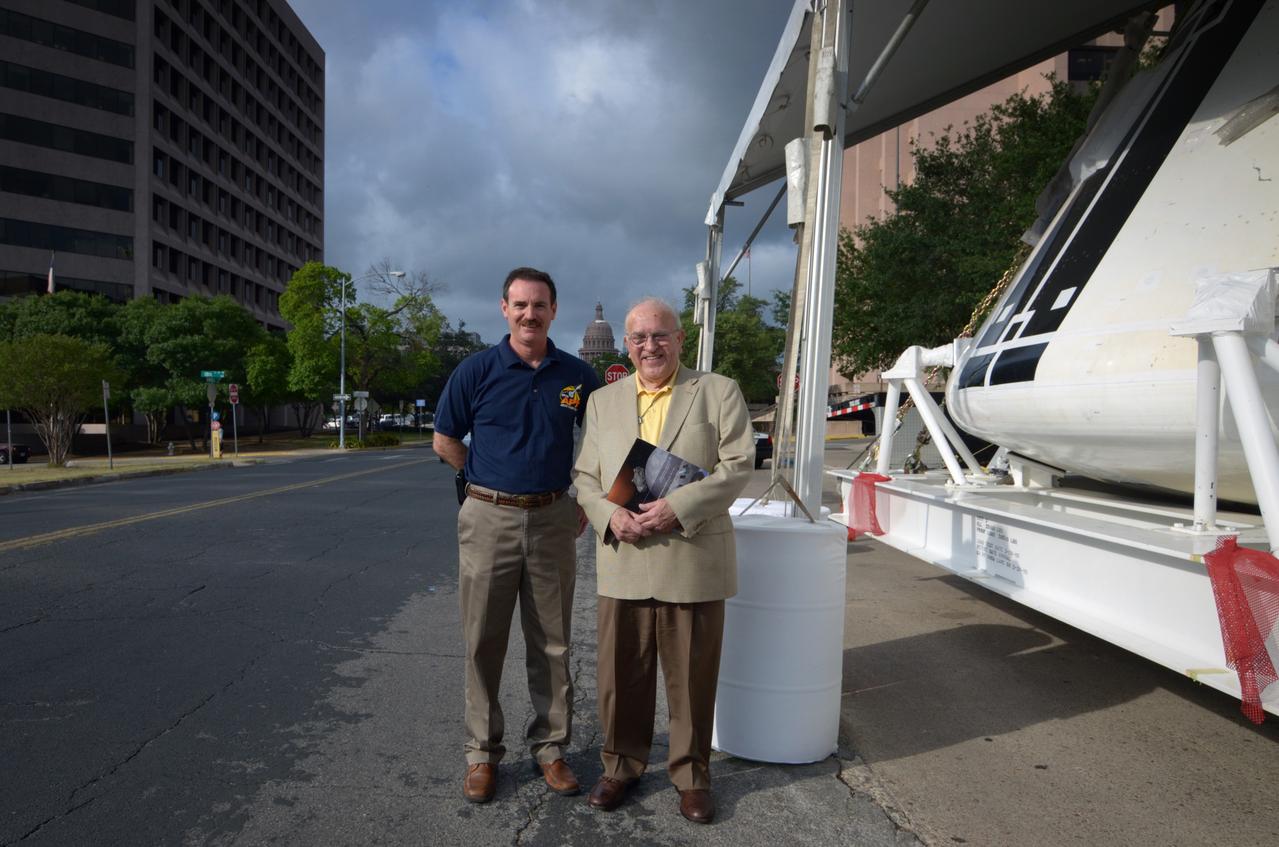
Visitors prepare to view the Orion crew module flown on NASA’s Pad Abort-1 (PA-1) flight test, which is on display at an event at the Bullock Texas State History Museum in Austin, Texas on June 20, 2011. Part of Batch image transfer from Flickr.
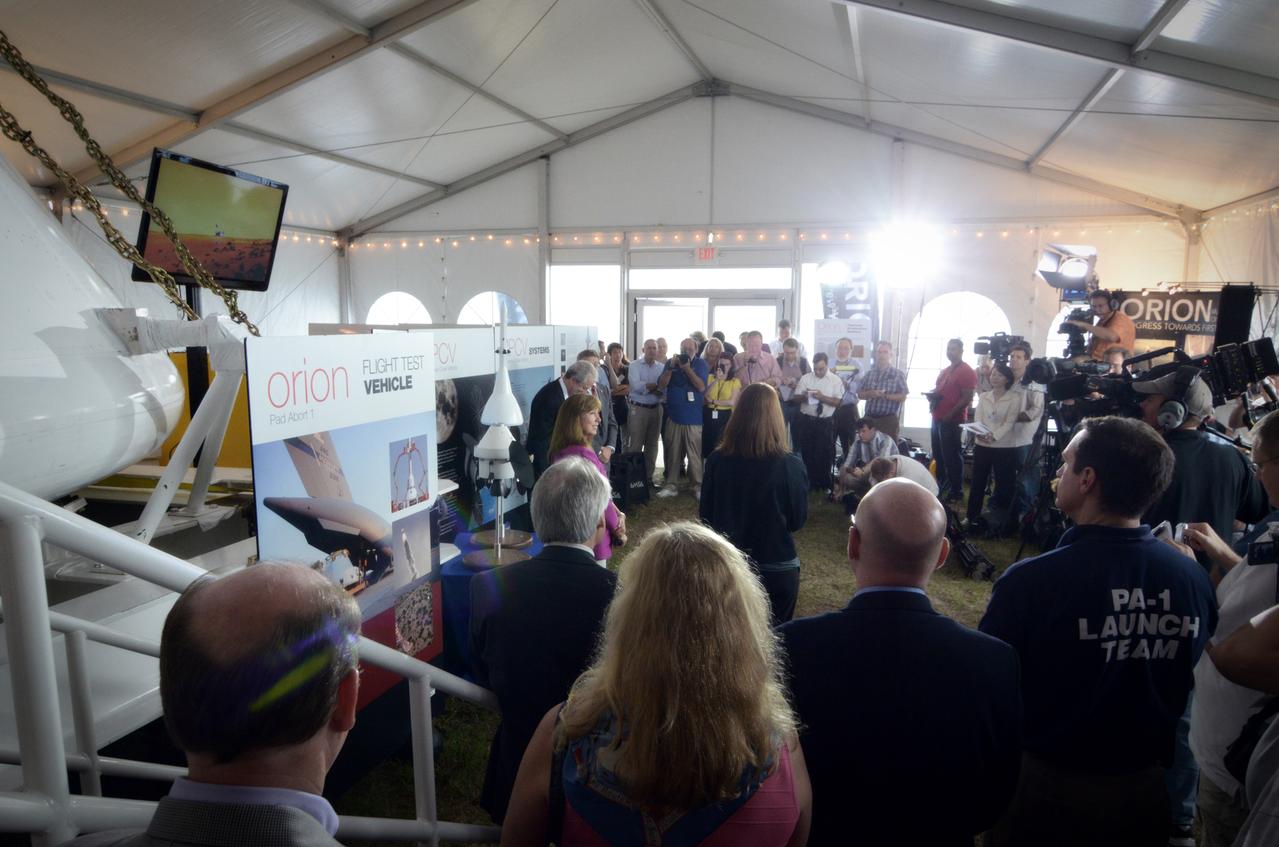
The Orion crew module flown on NASA’s Pad Abort-1 (PA-1) flight test is shown on display at an event at Kennedy Space Center in Florida on July 7, 2011 before moving into the Operations & Checkout (O&C) Building. Part of Batch image transfer from Flickr.

The Orion crew module flown on NASA’s Pad Abort-1 (PA-1) flight test is shown on display and NASA Astronaut Nicholas Patrick speaks at an event at the Pima Air and Space Museum in Tucson, Arizona, on June 16, 2011. Part of Batch image transfer from Flickr.
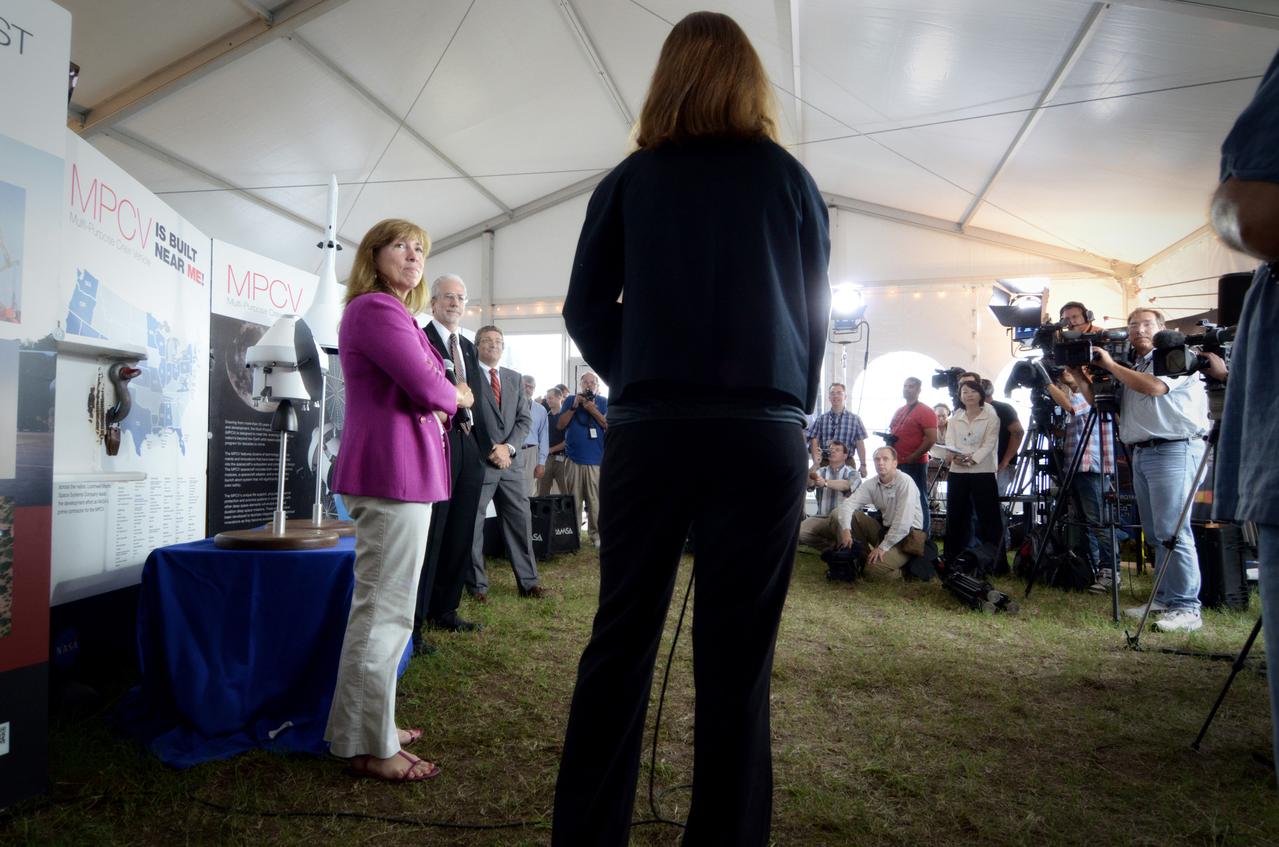
The Orion crew module flown on NASA’s Pad Abort-1 (PA-1) flight test is shown on display at an event at Kennedy Space Center in Florida on July 7, 2011 before moving into the Operations & Checkout (O&C) Building. Part of Batch image transfer from Flickr.
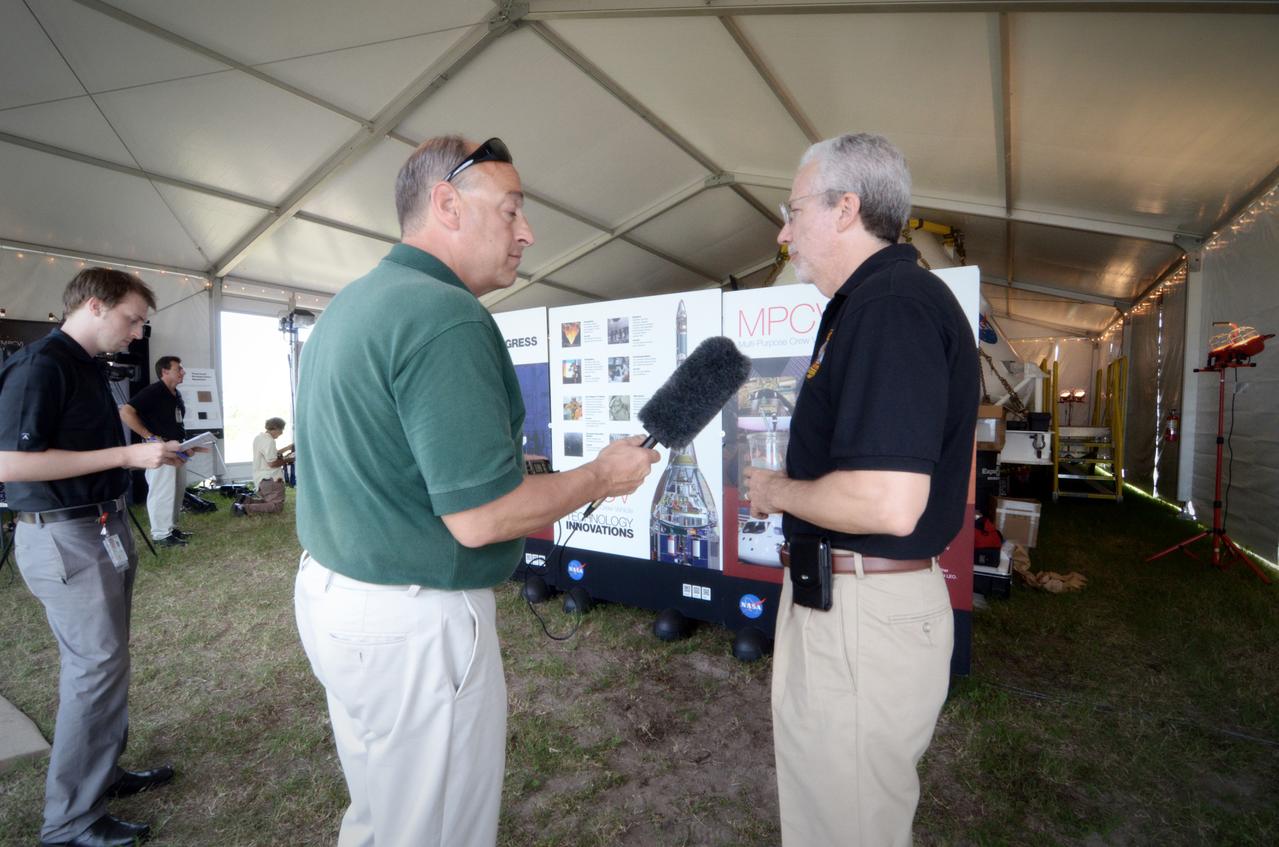
The Orion crew module flown on NASA’s Pad Abort-1 (PA-1) flight test is shown on display at an event at Kennedy Space Center in Florida on July 6, 2011 before moving into the Operations & Checkout (O&C) Building. Part of Batch image transfer from Flickr.
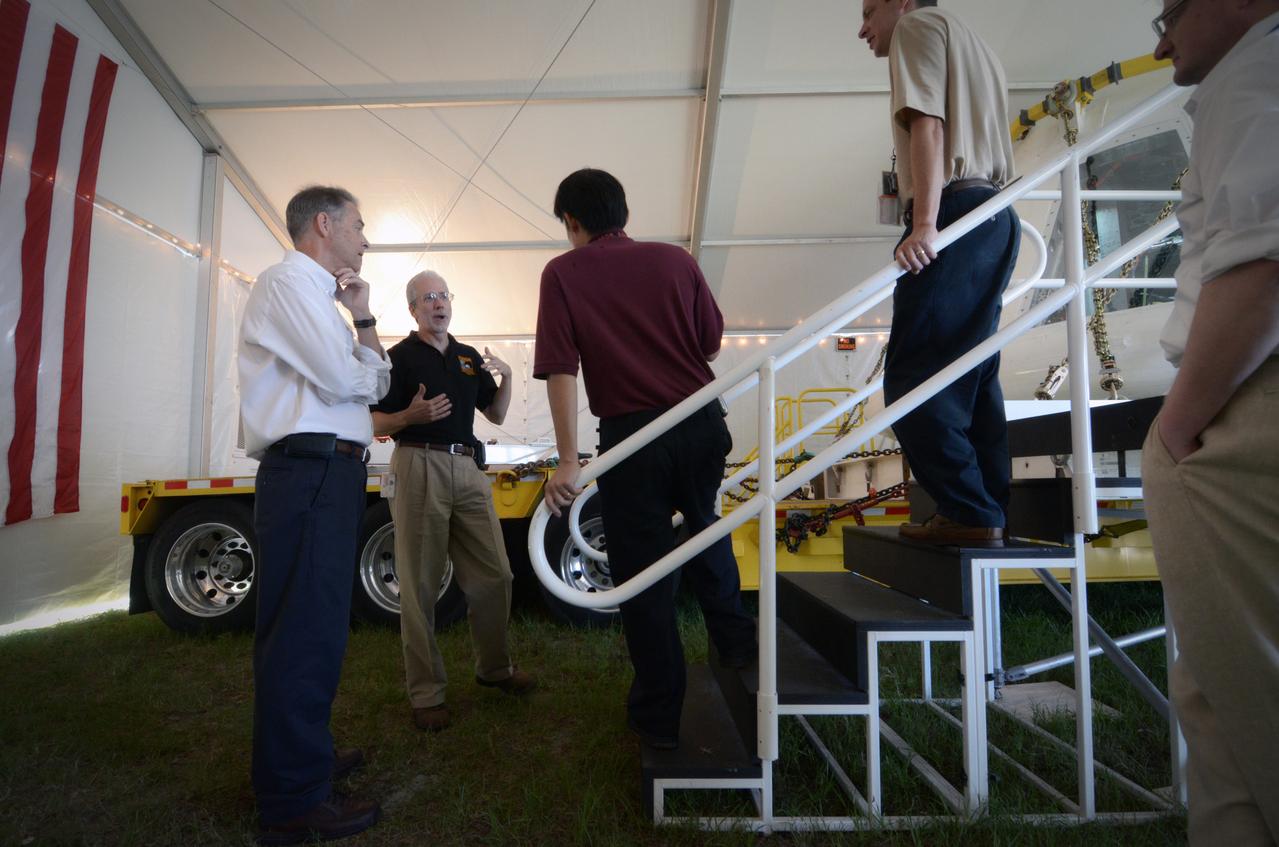
The Orion crew module flown on NASA’s Pad Abort-1 (PA-1) flight test is shown on display at an event at Kennedy Space Center in Florida on July 6, 2011 before moving into the Operations & Checkout (O&C) Building. Part of Batch image transfer from Flickr.

The Orion crew module flown on NASA’s Pad Abort-1 (PA-1) flight test is shown on display at an event at Kennedy Space Center in Florida on July 8, 2011 before moving into the Operations & Checkout (O&C) Building. Part of Batch image transfer from Flickr.
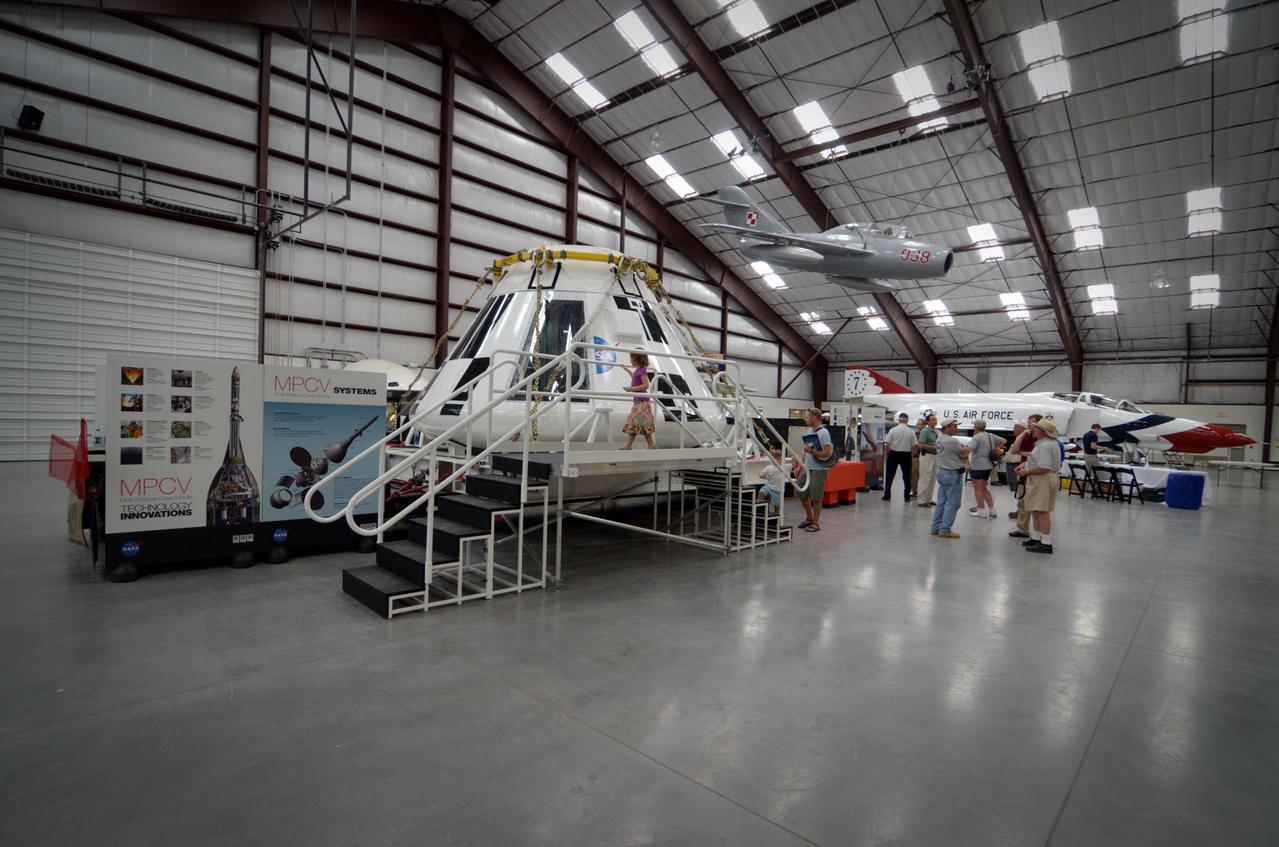
The Orion crew module flown on NASA’s Pad Abort-1 (PA-1) flight test is shown on display and NASA Astronaut Nicholas Patrick speaks at an event at the Pima Air and Space Museum in Tucson, Arizona, on June 16, 2011. Part of Batch image transfer from Flickr.
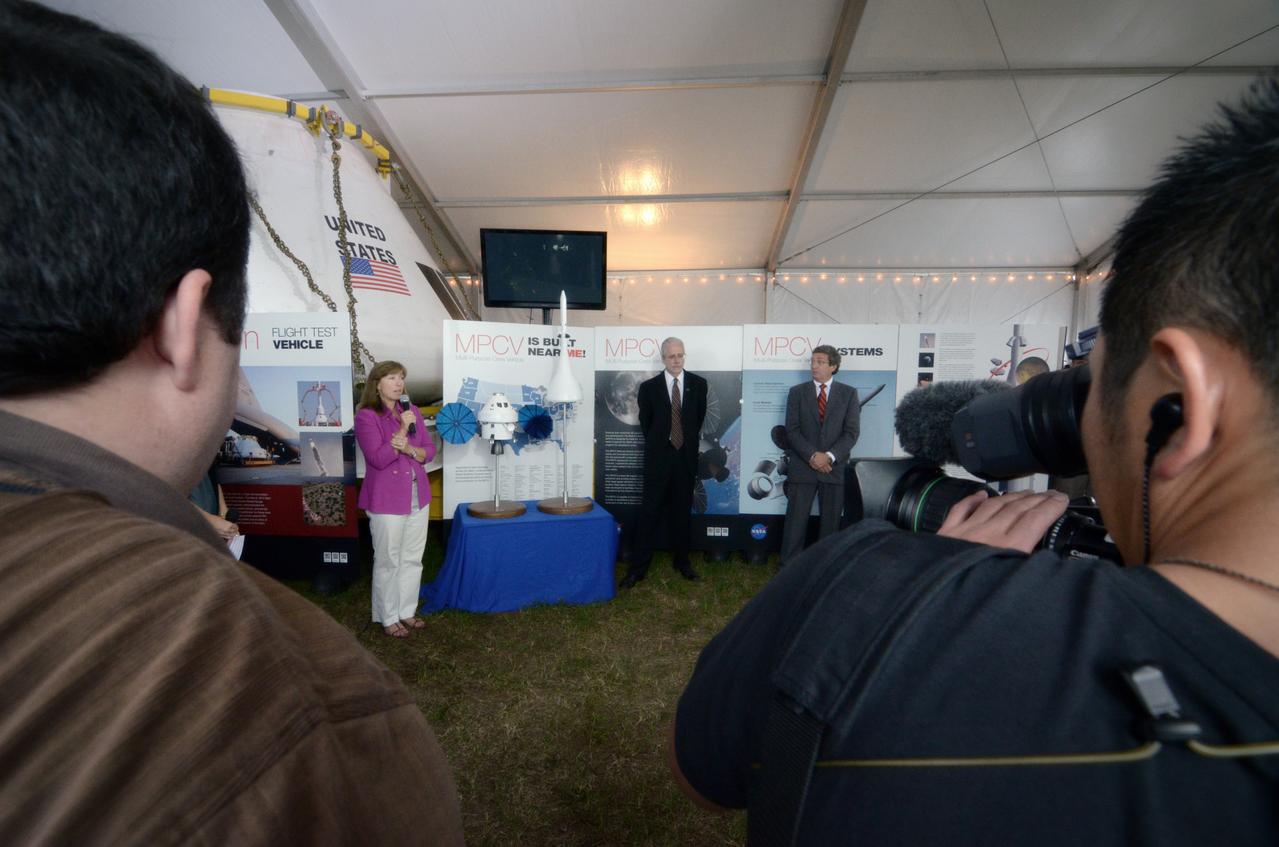
The Orion crew module flown on NASA’s Pad Abort-1 (PA-1) flight test is shown on display at an event at Kennedy Space Center in Florida on July 7, 2011 before moving into the Operations & Checkout (O&C) Building. Part of Batch image transfer from Flickr.