
CAPE CANAVERAL, Fla. -- At NASA's Kennedy Space Center in Florida, this image shows the progress of the rotating service structure (RSS) on Launch Pad 39B as it is being dismantled. Sand, reinforcing steel and large wooden mats were put down under the RSS to protect the structure's concrete from falling debris during deconstruction. Starting in 2009, the structure at the pad was no longer needed for NASA's Space Shuttle Program, so it is being restructured for future use. The new design will feature a "clean pad" for rockets to come with their own launcher, making it more versatile for a number of vehicles. The new lightning protection system, consisting of three lightning towers and a wire catenary system will remain. Photo credit: NASA/Jack Pfaller
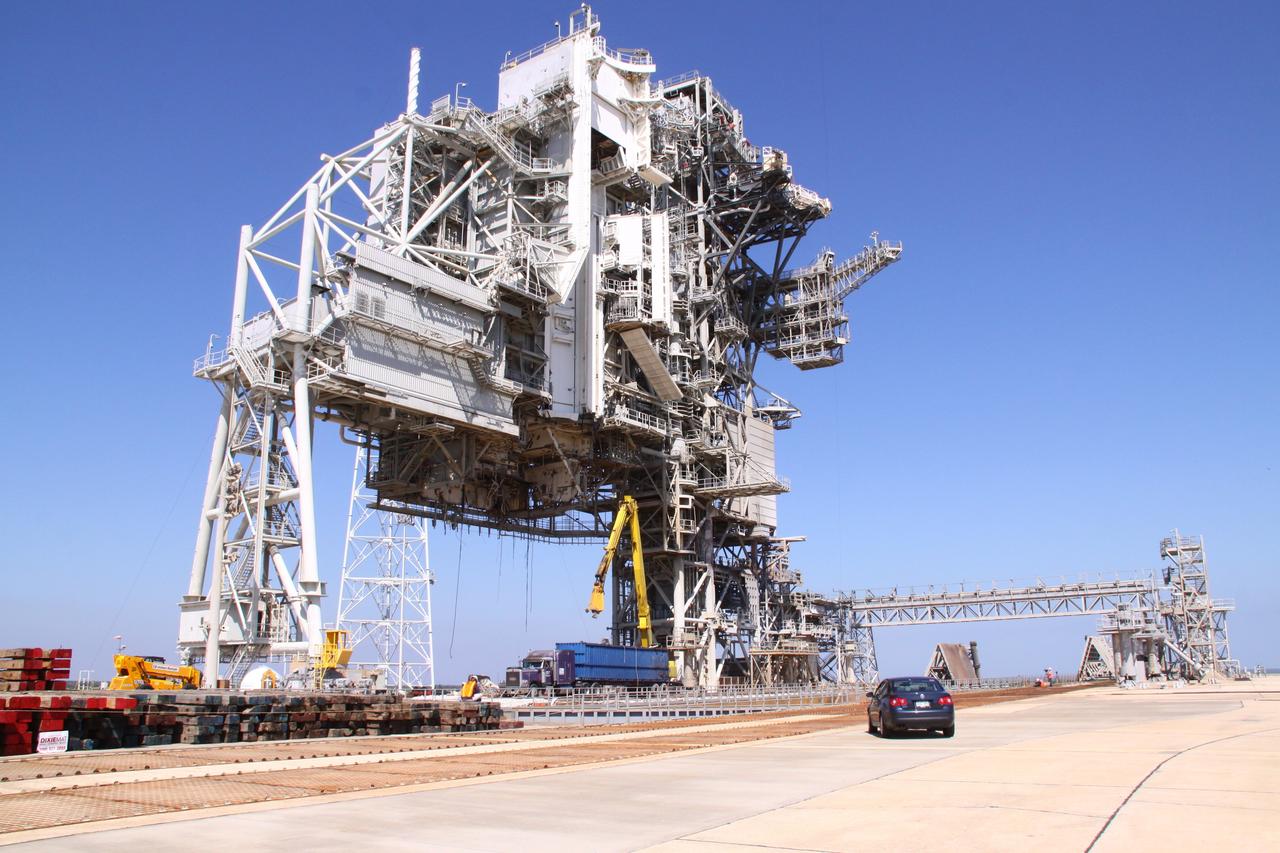
CAPE CANAVERAL, Fla. -- At NASA's Kennedy Space Center in Florida, this long range view shows the progress of the rotating service structure (RSS) on Launch Pad 39B as it is being dismantled. Sand, reinforcing steel and large wooden mats were put down under the RSS to protect the structure's concrete from falling debris during deconstruction. Starting in 2009, the structure at the pad was no longer needed for NASA's Space Shuttle Program, so it is being restructured for future use. The new design will feature a "clean pad" for rockets to come with their own launcher, making it more versatile for a number of vehicles. The new lightning protection system, consisting of three lightning towers and a wire catenary system will remain. Photo credit: NASA/Jack Pfaller
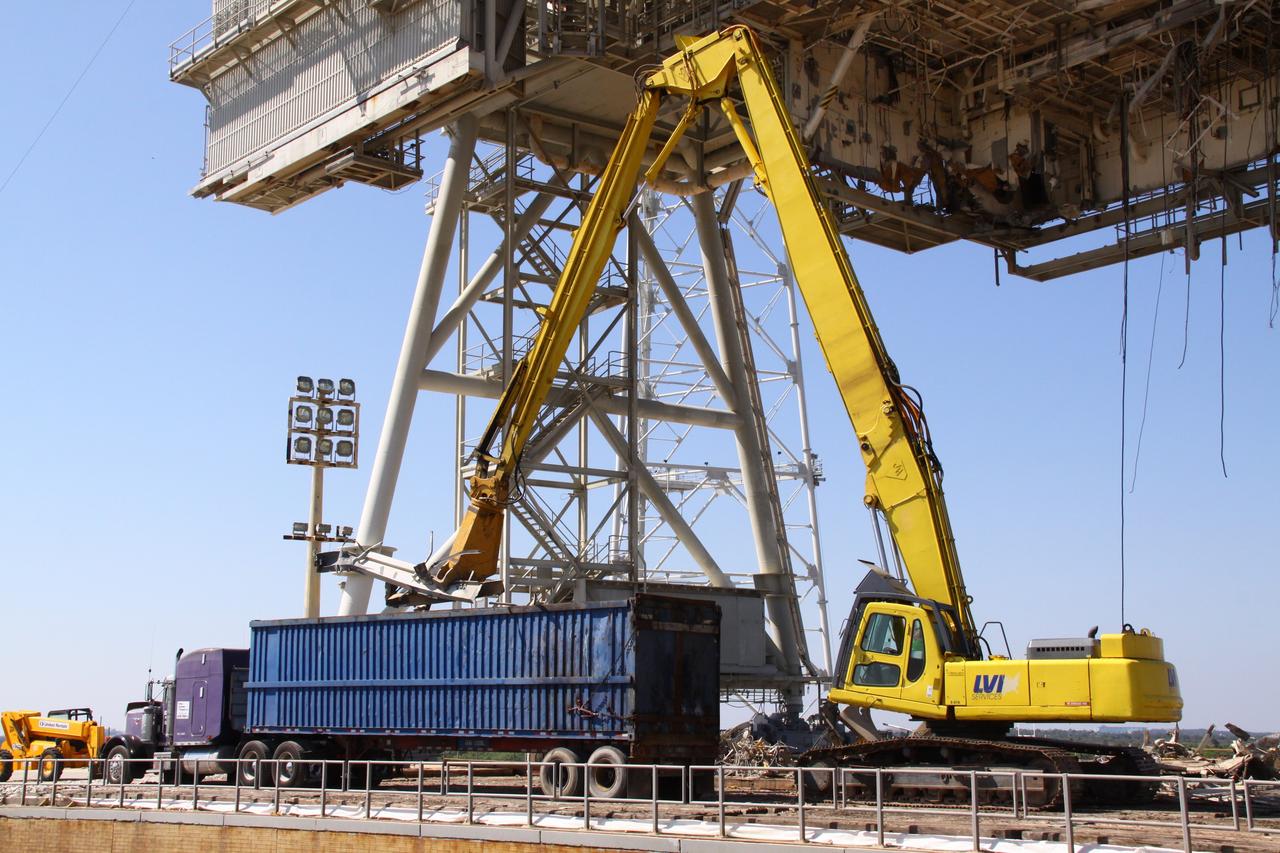
CAPE CANAVERAL, Fla. -- At NASA's Kennedy Space Center in Florida, crews continue dismantling the rotating service structure (RSS) on Launch Pad 39B. Sand, reinforcing steel and large wooden mats were put down under the RSS to protect the structure's concrete from falling debris during deconstruction. Starting in 2009, the structure at the pad was no longer needed for NASA's Space Shuttle Program, so it is being restructured for future use. The new design will feature a "clean pad" for rockets to come with their own launcher, making it more versatile for a number of vehicles. The new lightning protection system, consisting of three lightning towers and a wire catenary system will remain. Photo credit: NASA/Jack Pfaller
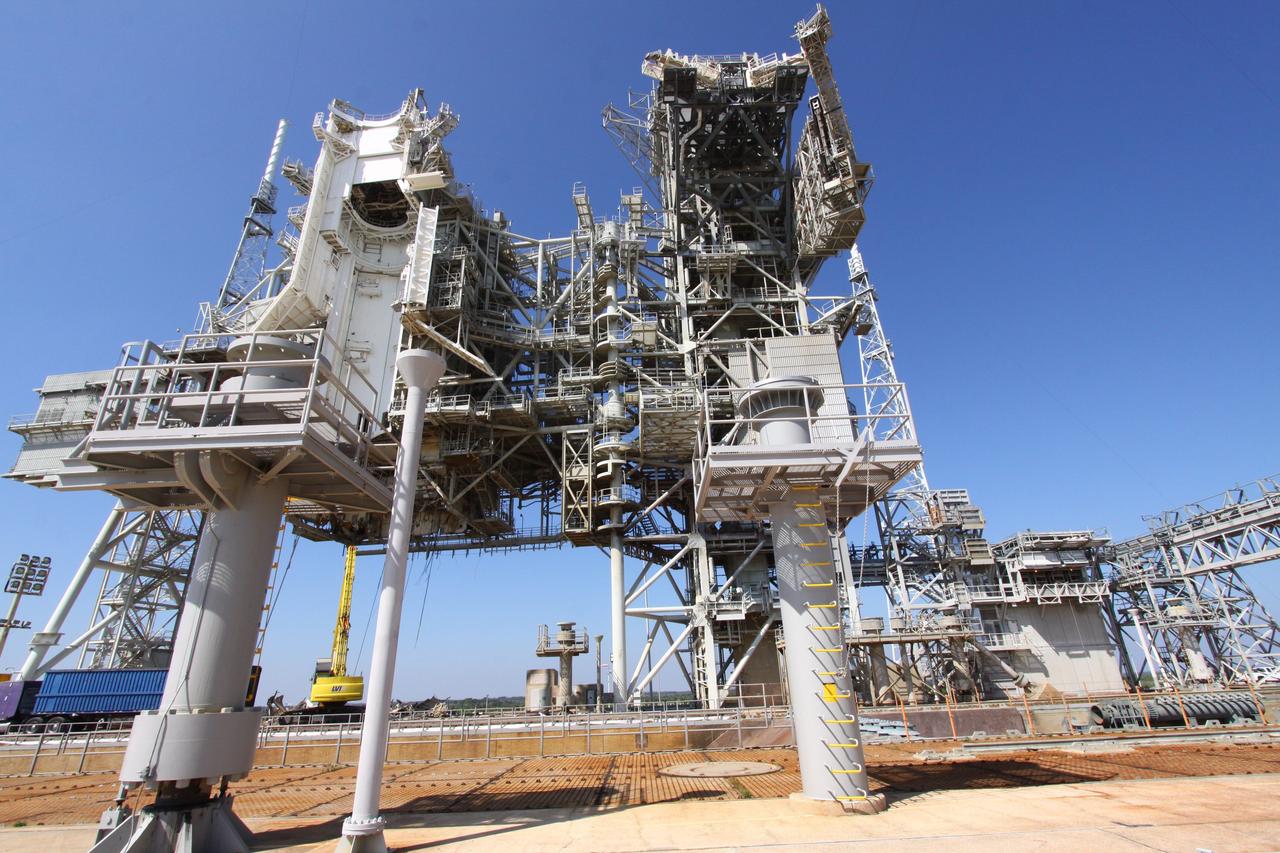
CAPE CANAVERAL, Fla. -- At NASA's Kennedy Space Center in Florida, this image shows the progress of the rotating service structure (RSS) on Launch Pad 39B as it is being dismantled. Sand, reinforcing steel and large wooden mats were put down under the RSS to protect the structure's concrete from falling debris during deconstruction. Starting in 2009, the structure at the pad was no longer needed for NASA's Space Shuttle Program, so it is being restructured for future use. The new design will feature a "clean pad" for rockets to come with their own launcher, making it more versatile for a number of vehicles. The new lightning protection system, consisting of three lightning towers and a wire catenary system will remain. Photo credit: NASA/Jack Pfaller
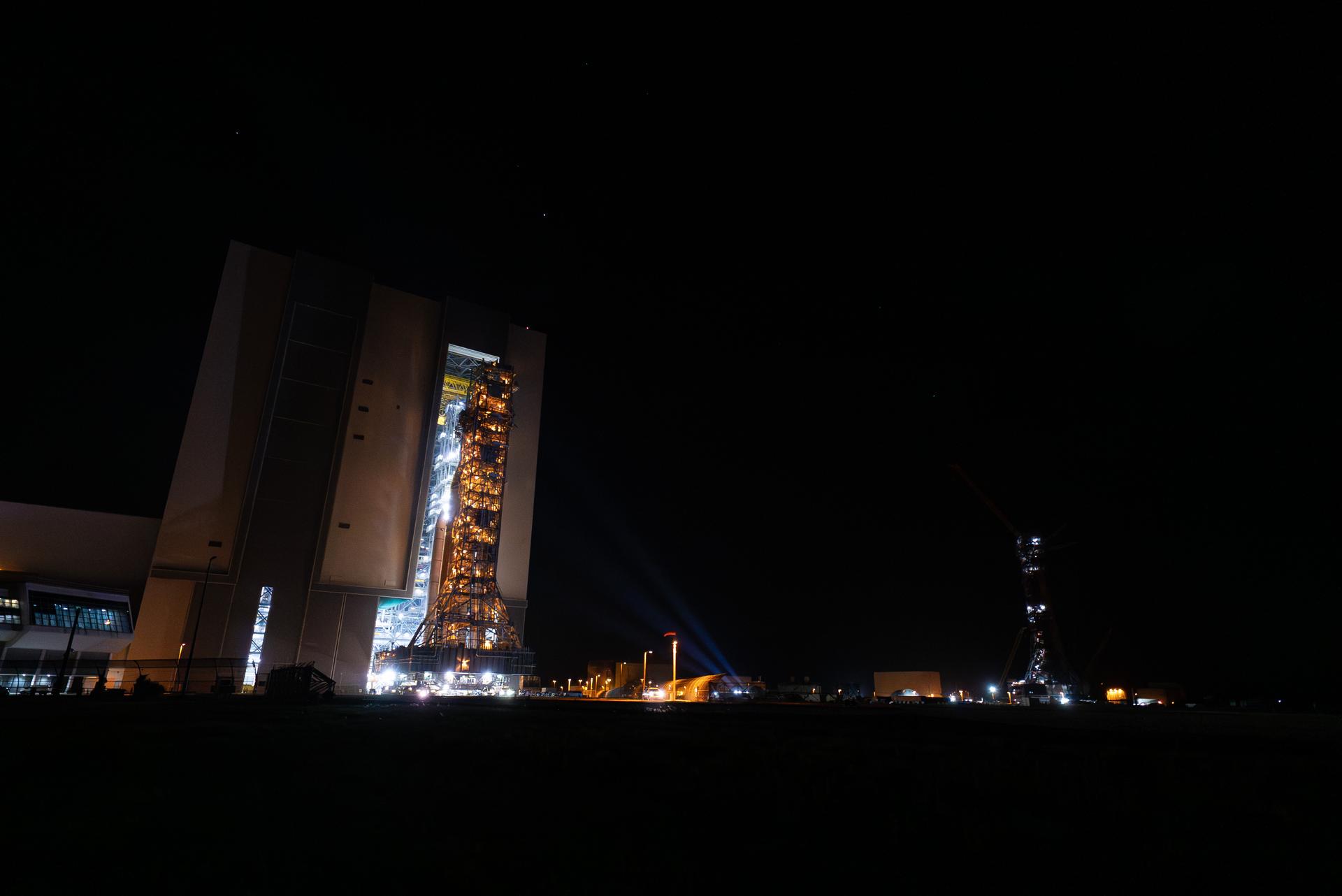
This image shows NASA’s SLS (Space Launch System) and Orion spacecraft rolling out of the Vehicle Assembly Building at NASA’s Kennedy Space Center. NASA's massive Crawler-Transporter, upgraded for the Artemis program, carries the powerful SLS rocket and Orion spacecraft on the Mobile Launcher from the Vehicle Assembly Building to Launch Pad 39B at Kennedy Space Center in preparation for the Artemis II mission.