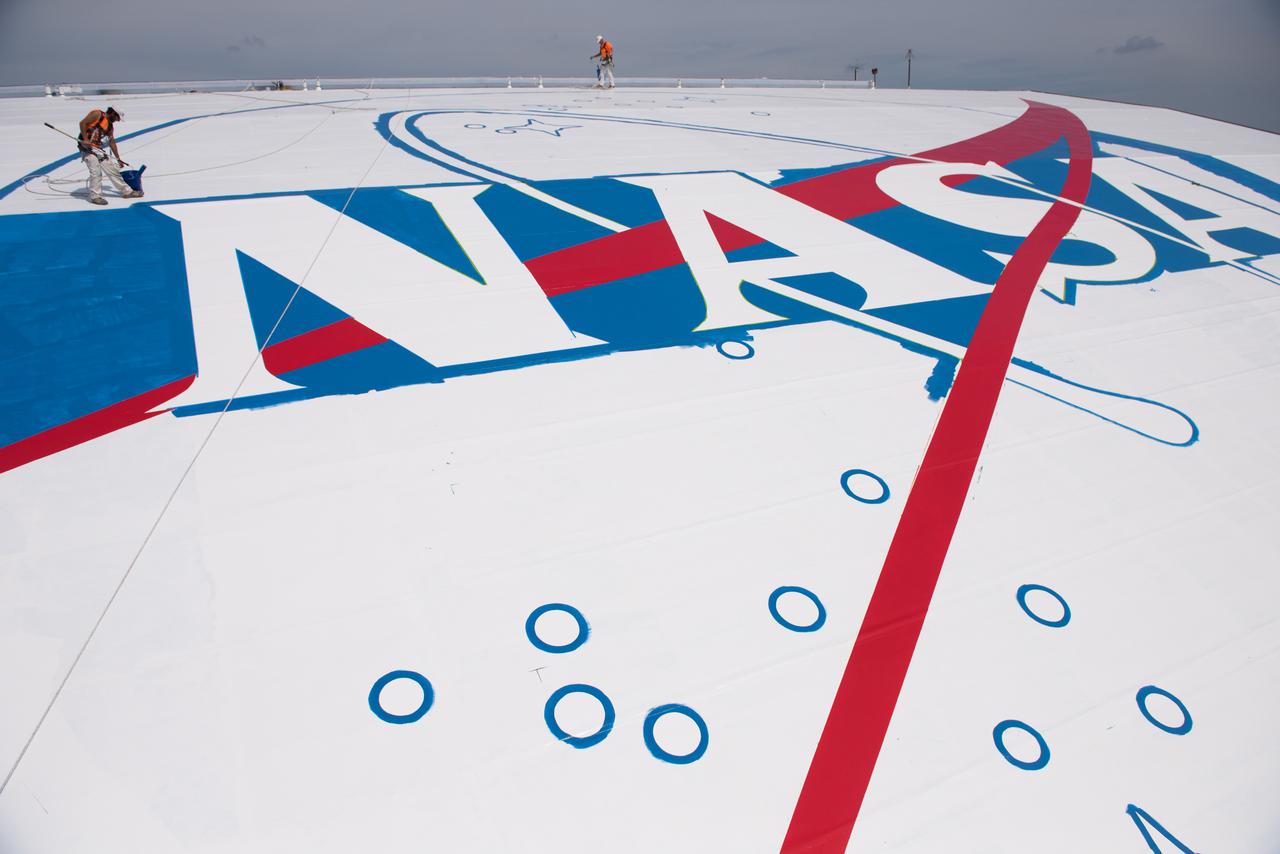
Painters paint the NASA Insignia or Meatball on the Hangar Roof
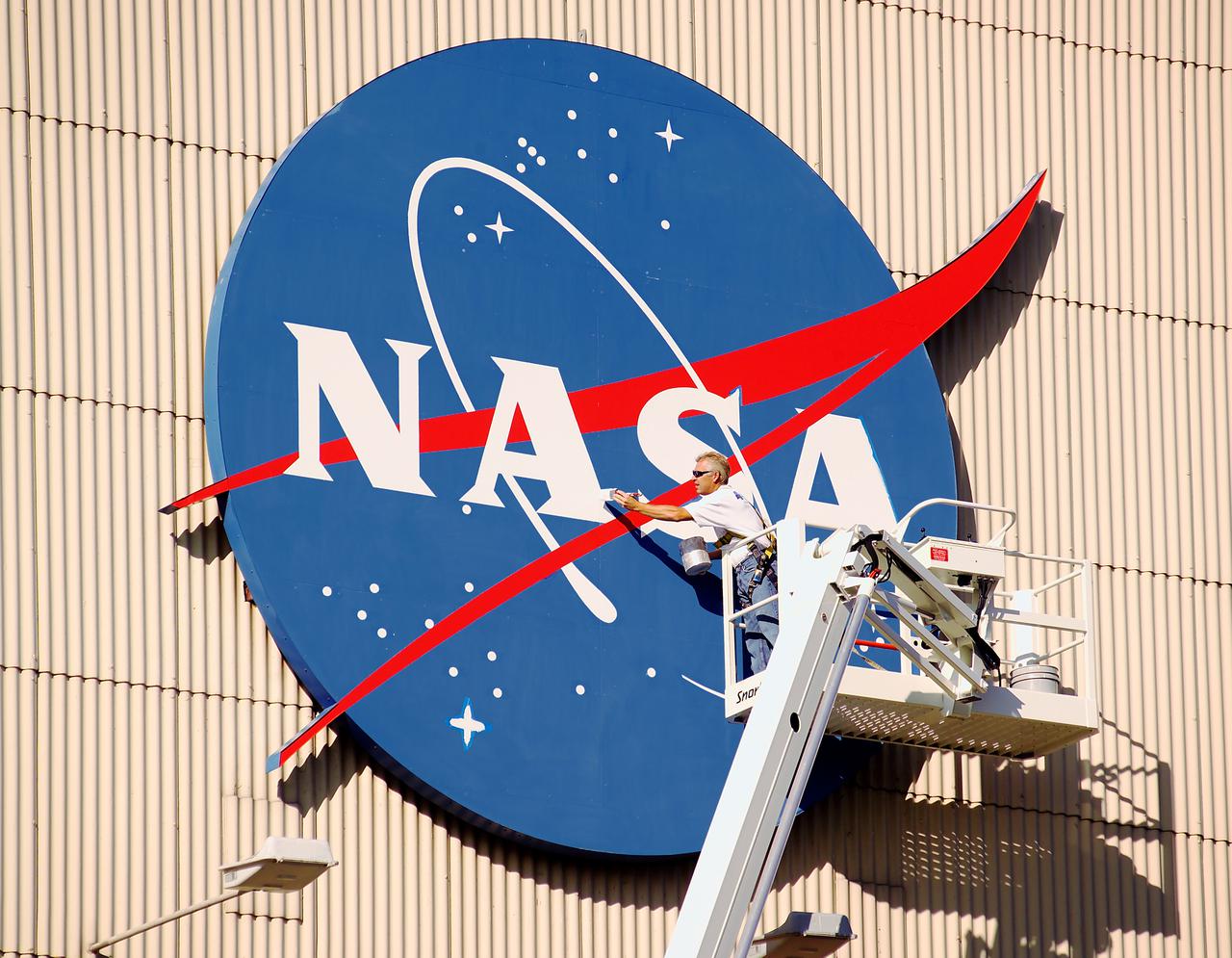
Painter applies fresh coat of paint to the NASA Meatball on the Hangar's North Facade
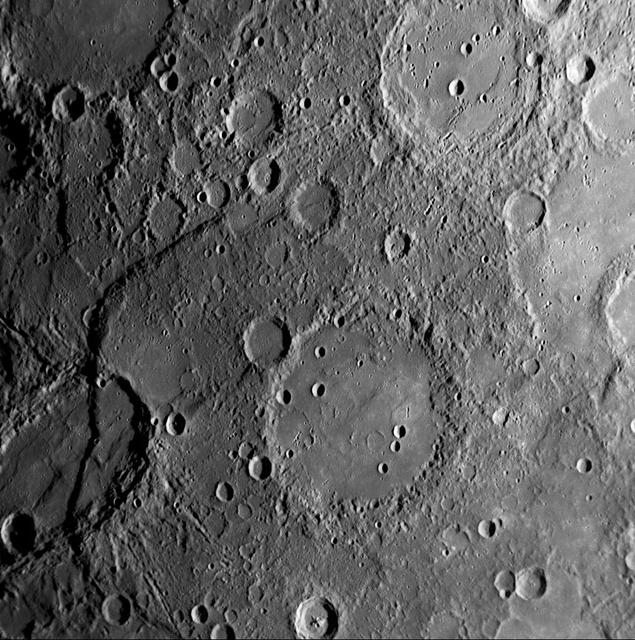
Mercury Izquierdo: An Impact Basin Newly Named for the Mexican Painter
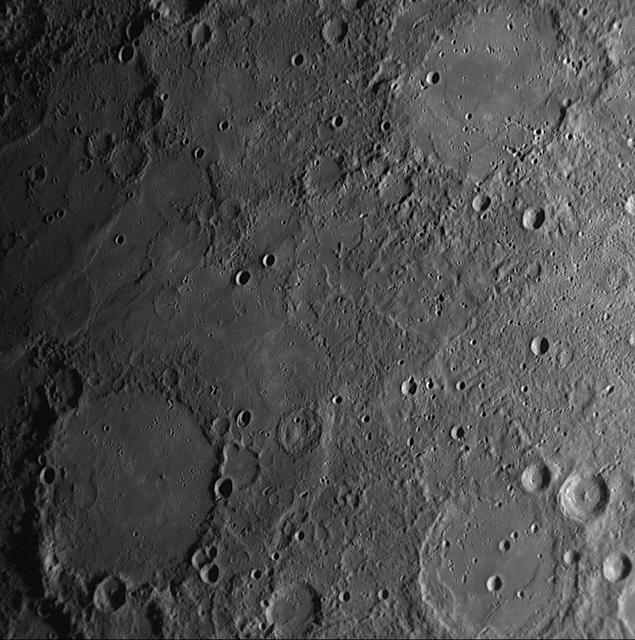
Impact craters and basins on Mercury are named for deceased artists, musicians, painters, and authors who have made outstanding contributions to their fields in this image taken by NASA MESSENGER.
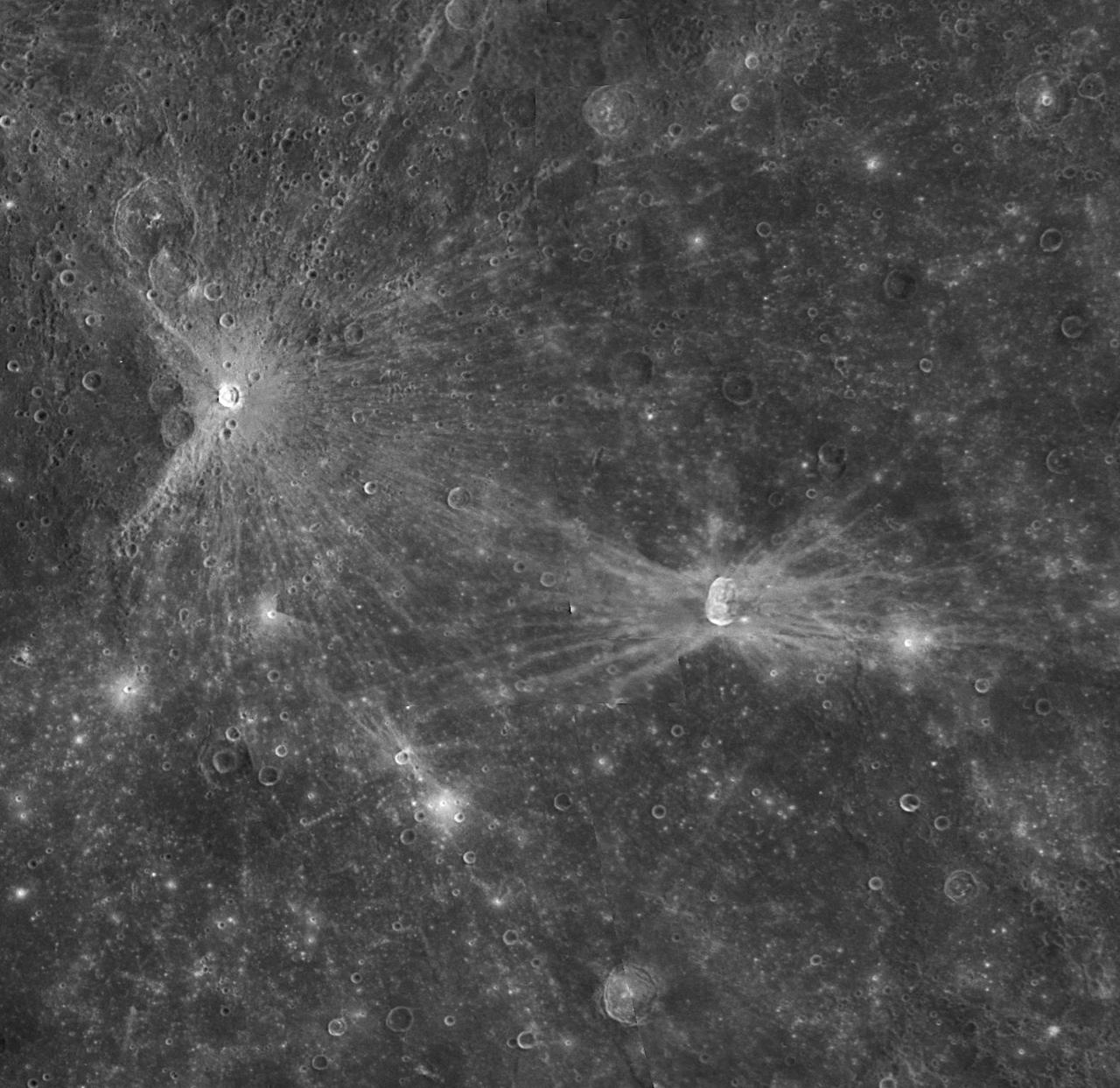
This NAC image shows Qi Baishi and Hovnatanian, two craters that were newly named in November 2008. Qi Baishi is named for the famous Chinese painter who died in 1957. Hovnatanian is named for the nineteenth century Armenian painter Hakop Hovnatanian.
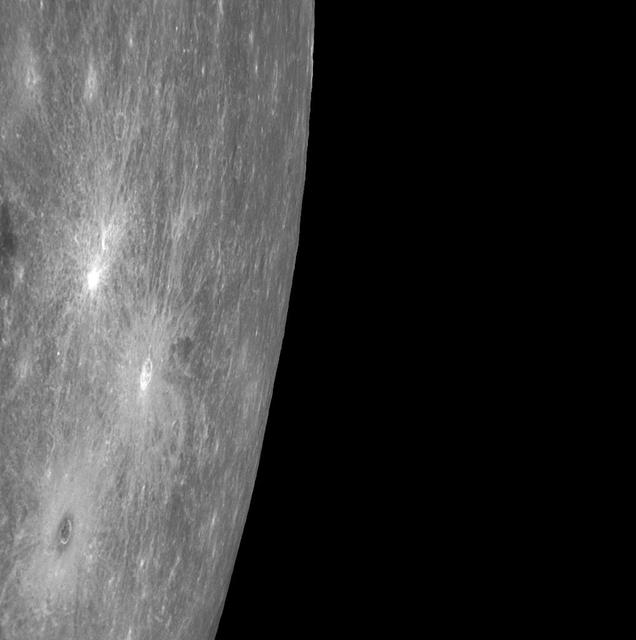
The crater in the lower left corner of this image is Berkel, recently named for Turkish painter and printmaker Sabri Berkel 1909-1993.
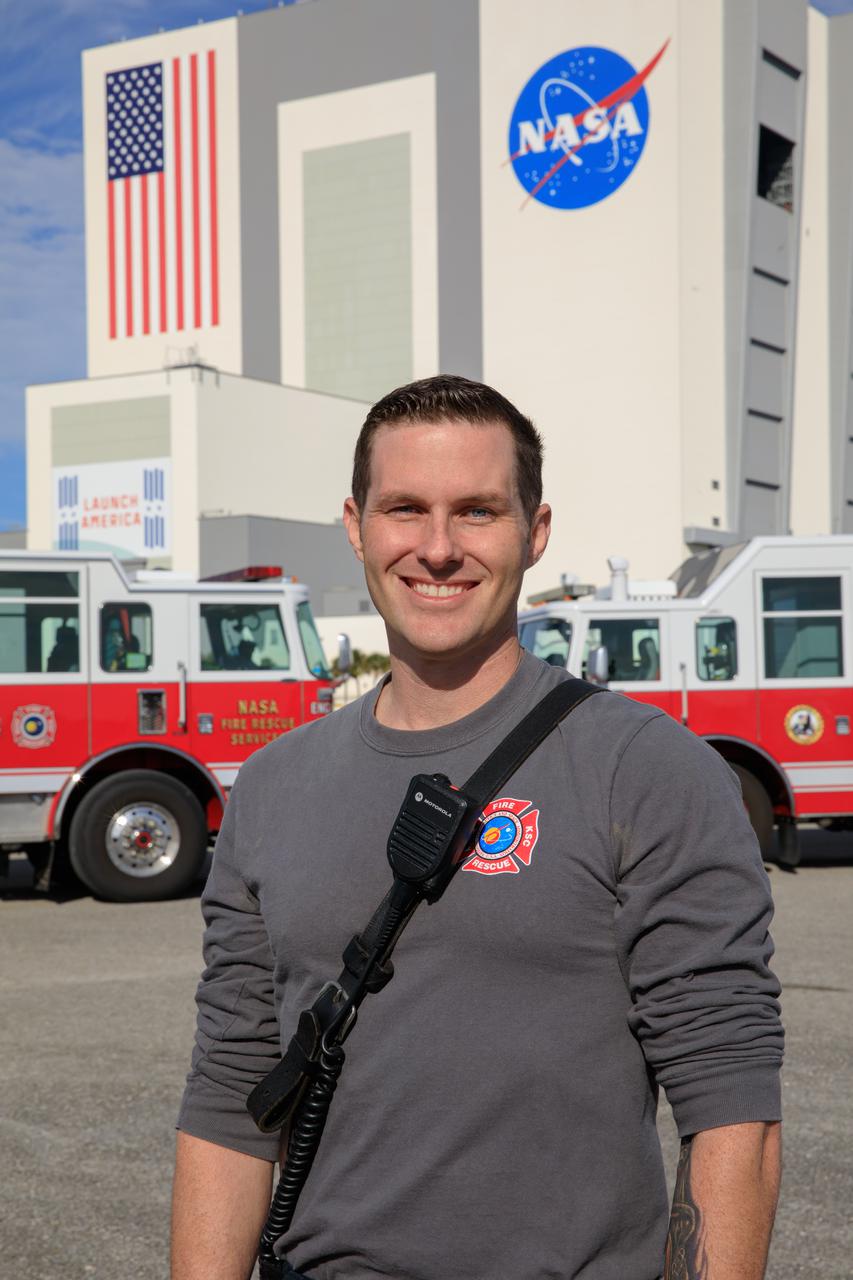
NASA Kennedy Space Center firefighter Andrew Morgan is selected as the Space Coast Fire Chiefs Association’s 2020 Firefighter of the Year. A member of the Technical Rescue Team, Morgan scaled down the side of the Florida spaceport’s Vehicle Assembly Building to rescue a team of painters when their scaffolding motor broke in October 2020, leaving them stranded 375 feet off the ground.

Michael Painter, senior program officer, Robert Wood Johnson Foundation, speaks on a panel on improving air quality for health in space and on Earth, at a pop-up makerspace hosted by Future Engineers with support from NASA and The American Society of Mechanical Engineers (ASME), at the Steven F. Udvar-Hazy Center, Thursday, September 21, 2017 in Chantilly, Virginia. Participants were able to create digital 3D models using Autodesk Tinkercad and watch objects being printed with Makerbot 3D printers. Photo Credit: (NASA/Aubrey Gemignani)
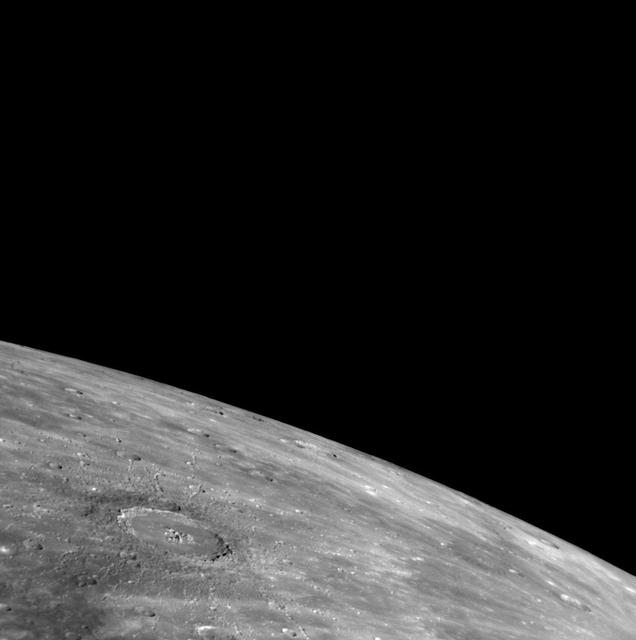
This impact crater in the high northern latitudes of Mercury was recently named for the Bangladeshi painter Zainul Abedin 1914-1976. Abedin exhibits a complex crater structure with a smooth floor, wall terraces, and a central peak complex.
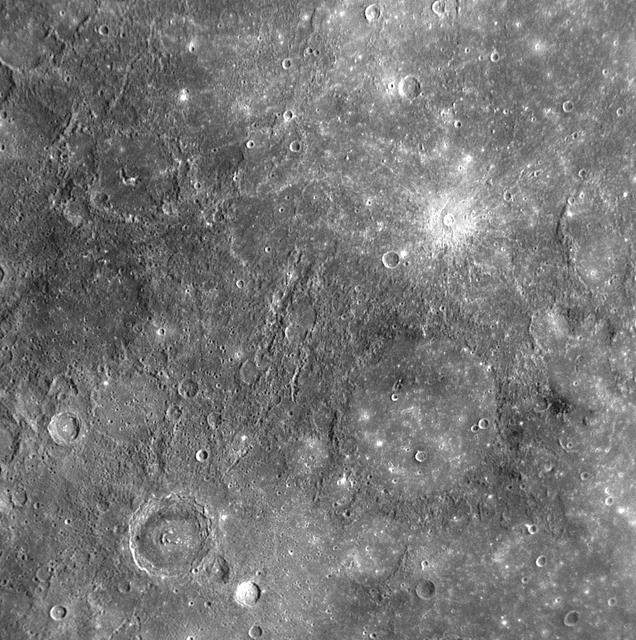
The crater identified in this NAC image was named in November 2008 for Ronald Moody, a 20th century Jamaican sculptor and painter. Moody features a central peak or peak-ring structure and an annulus of dark material on its outer floor green arrows.
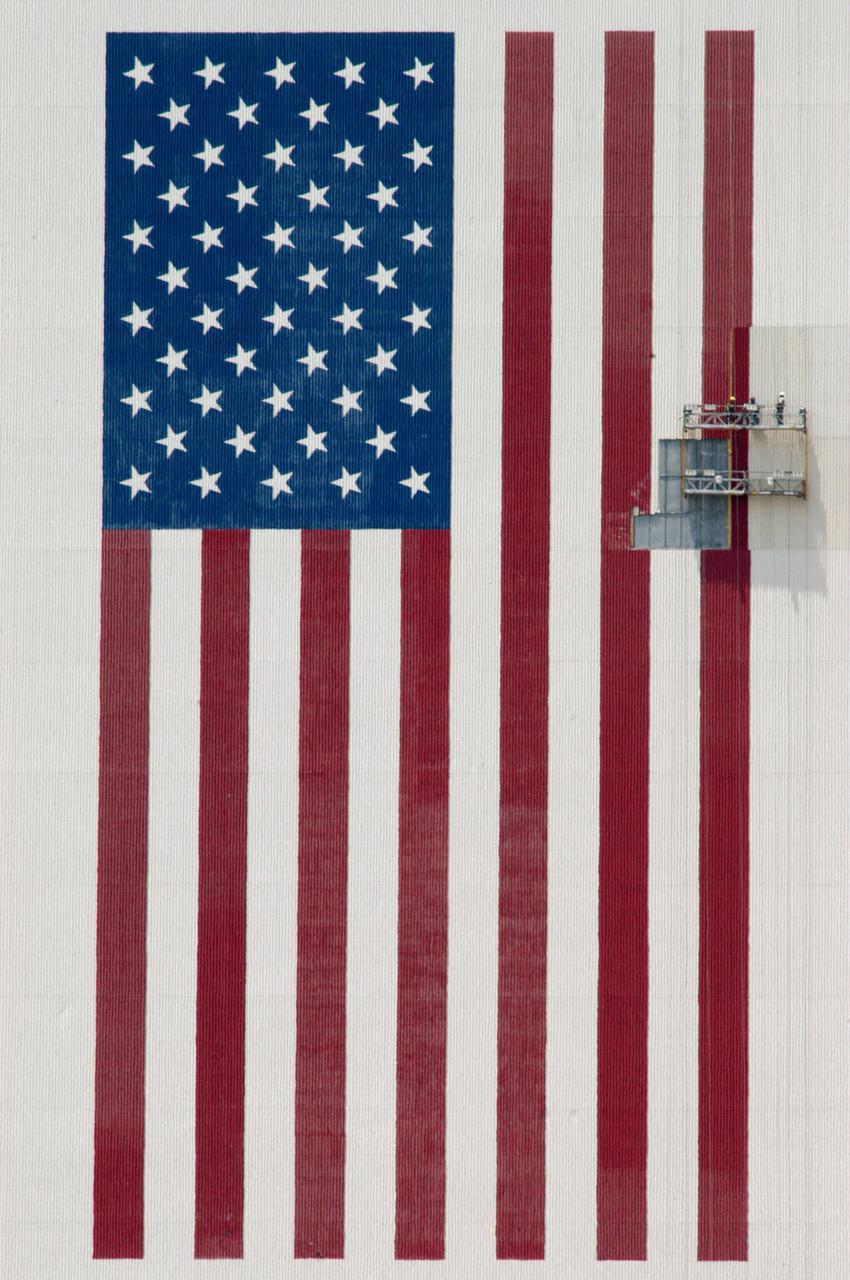
KENNEDY SPACE CENTER, FLA. - About 450 feet above the ground, painters on scaffolding begin preparations to repaint portions of the American flag on the side of the Vehicle Assembly Building at NASA’s Kennedy Space Center. The flag was damaged in the hurricanes of 2004 that assaulted the east coast of Florida. Winds pulled a number of panels from the side of the 525-foot-high building. The flag is 209 feet by 110 feet. Each star is more than six feet in diameter and each stripe is nine feet wide.
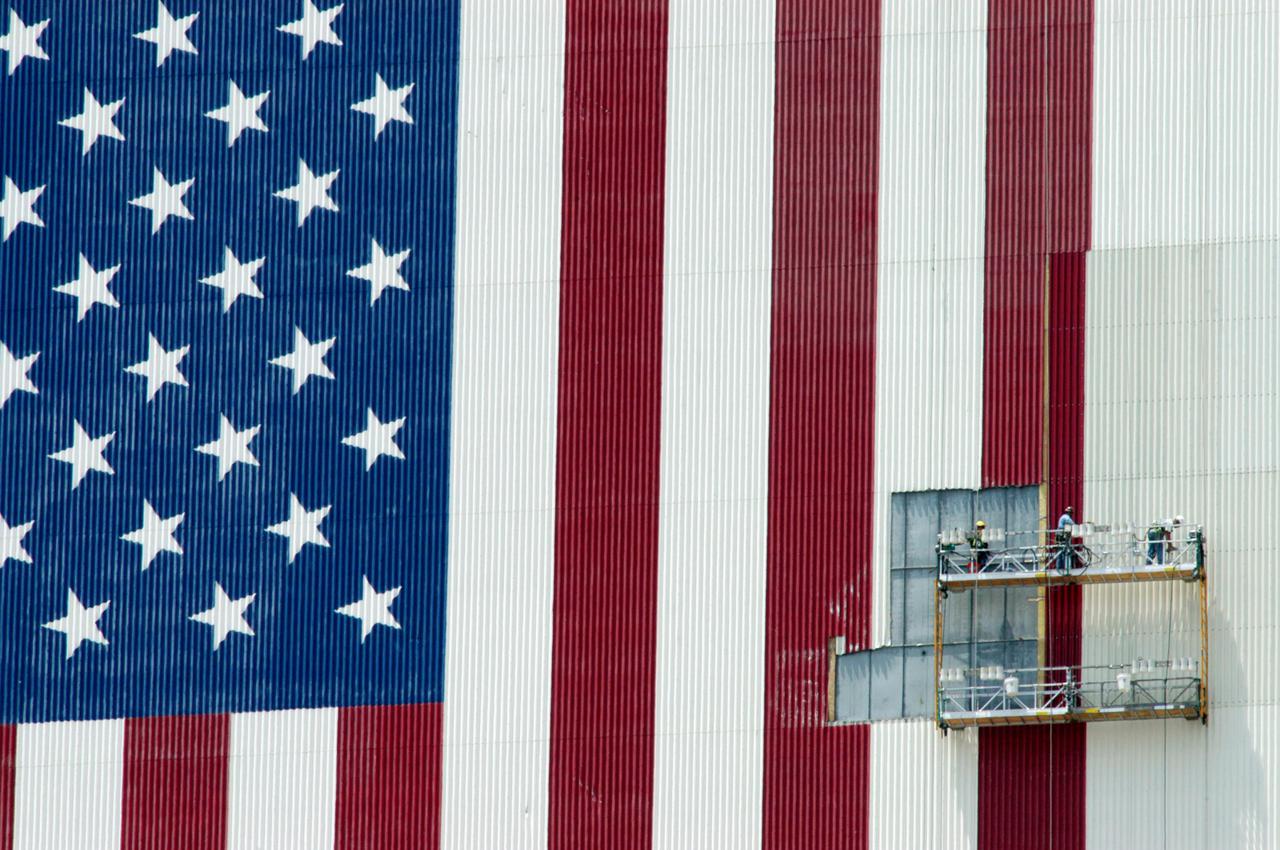
KENNEDY SPACE CENTER, FLA. - About 450 feet above the ground, painters on scaffolding begin preparations to repaint portions of the American flag on the side of the Vehicle Assembly Building at NASA’s Kennedy Space Center. The flag was damaged in the hurricanes of 2004 that assaulted the east coast of Florida. Winds pulled a number of panels from the side of the 525-foot-high building. The flag is 209 feet by 110 feet. Each star is more than six feet in diameter and each stripe is nine feet wide.
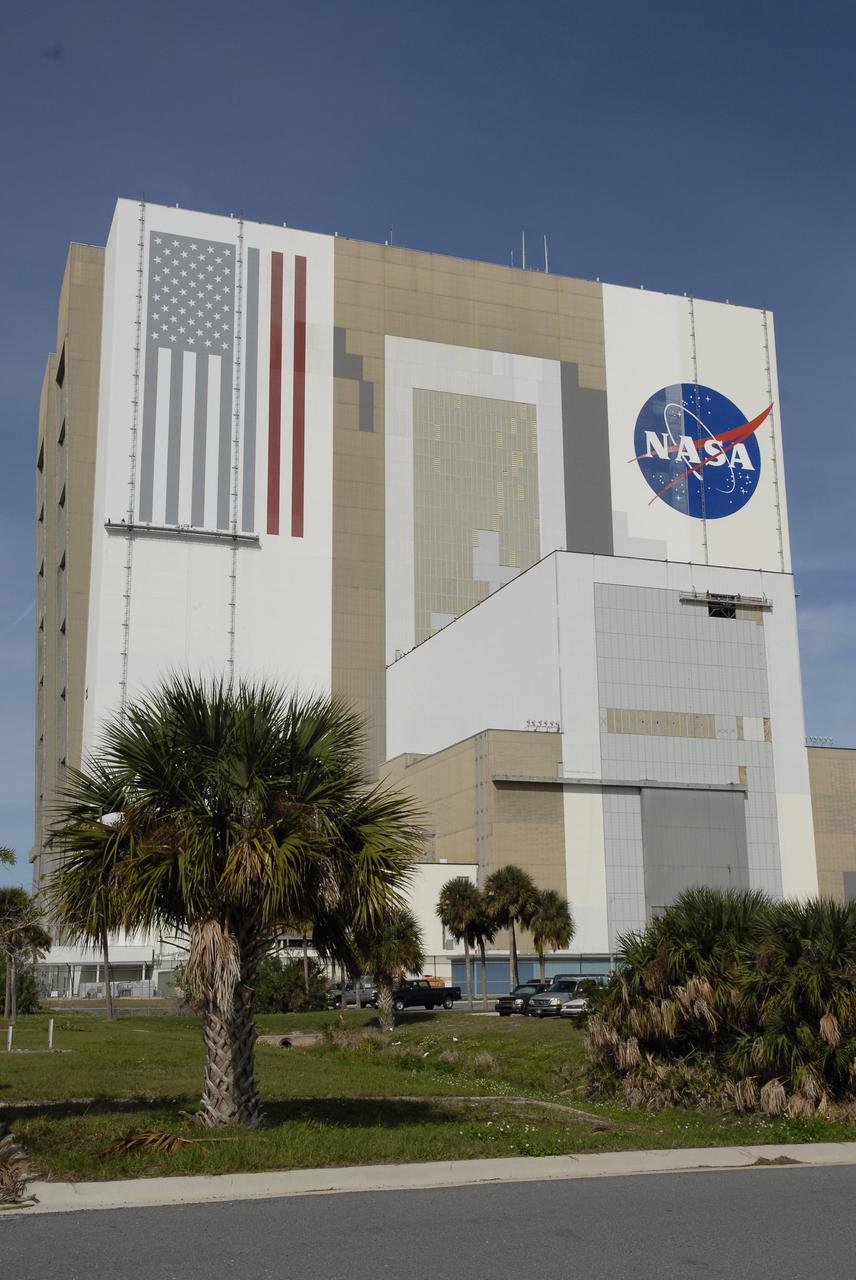
KENNEDY SPACE CENTER, FLA. -- Painters' platforms are seen hanging on the side of Kennedy Space Center's 525-foot-high Vehicle Assembly Building to facilitate the repainting of the American flag and the NASA logo. Workers use rollers and brushes to do the painting. The flag and logo were last painted in 1998, honoring NASA's 40th anniversary. The flag spans an area 209 feet by 110 feet, or about 23,437 square feet. Each stripe is 9 feet wide and each star is 6 feet in diameter. The logo, also known as the "meatball," measures 110 feet by 132 feet, or about 12,300 square feet. Photo credit: NASA/Kim Shiflett
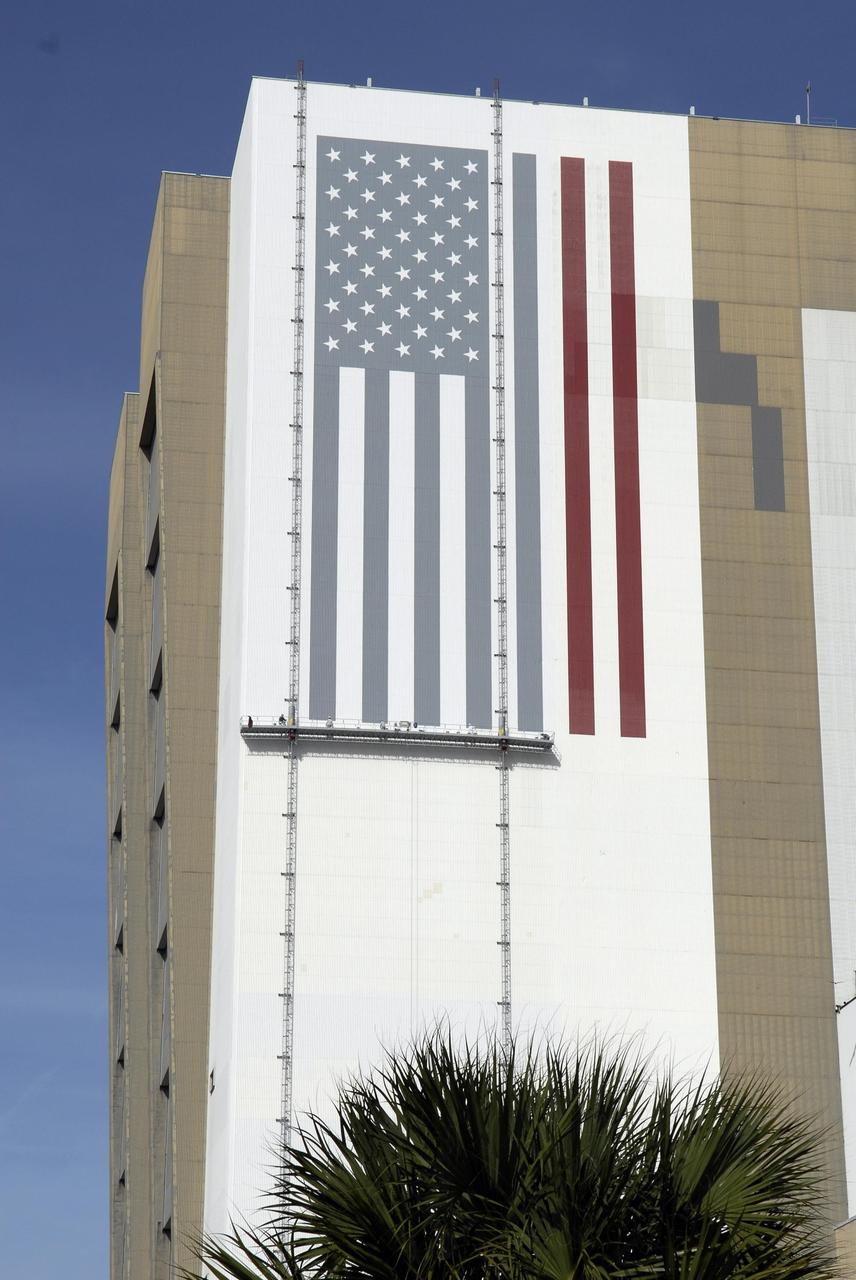
KENNEDY SPACE CENTER, FLA. -- Painters' platforms are seen hanging on the side of Kennedy Space Center's 525-foot-high Vehicle Assembly Building to facilitate the repainting of the American flag. The NASA logo is also being repainted. Workers use rollers and brushes to do the painting. The flag and logo were last painted in 1998, honoring NASA's 40th anniversary. The flag spans an area 209 feet by 110 feet, or about 23,437 square feet. Each stripe is 9 feet wide and each star is 6 feet in diameter. The logo, also known as the "meatball," measures 110 feet by 132 feet, or about 12,300 square feet. Photo credit: NASA/Kim Shiflett
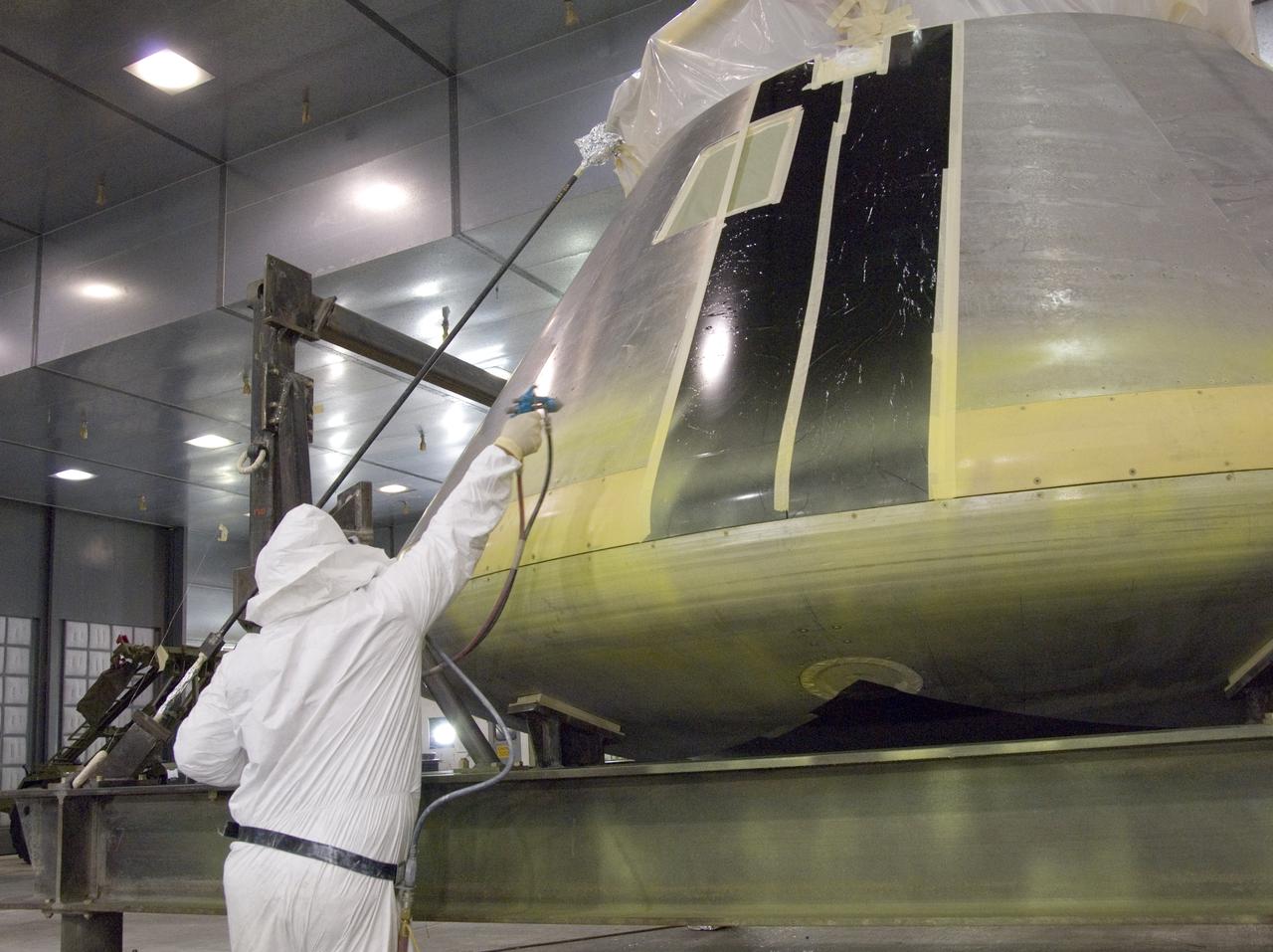
A full-scale flight-test mockup of the Constellation program's Orion crew vehicle arrived at NASA's Dryden Flight Research Center in late March 2008 to undergo preparations for the first short-range flight test of the spacecraft's astronaut escape system later that year. Engineers and technicians at NASA's Langley Research Center fabricated the structure, which precisely represents the size, outer shape and mass characteristics of the Orion space capsule. The Orion crew module mockup was ferried to NASA Dryden on an Air Force C-17. After painting in the Edwards Air Force Base paint hangar, the conical capsule was taken to Dryden for installation of flight computers, instrumentation and other electronics prior to being sent to the U.S. Army's White Sands Missile Range in New Mexico for integration with the escape system and the first abort flight test in late 2008. The tests were designed to ensure a safe, reliable method of escape for astronauts in case of an emergency.
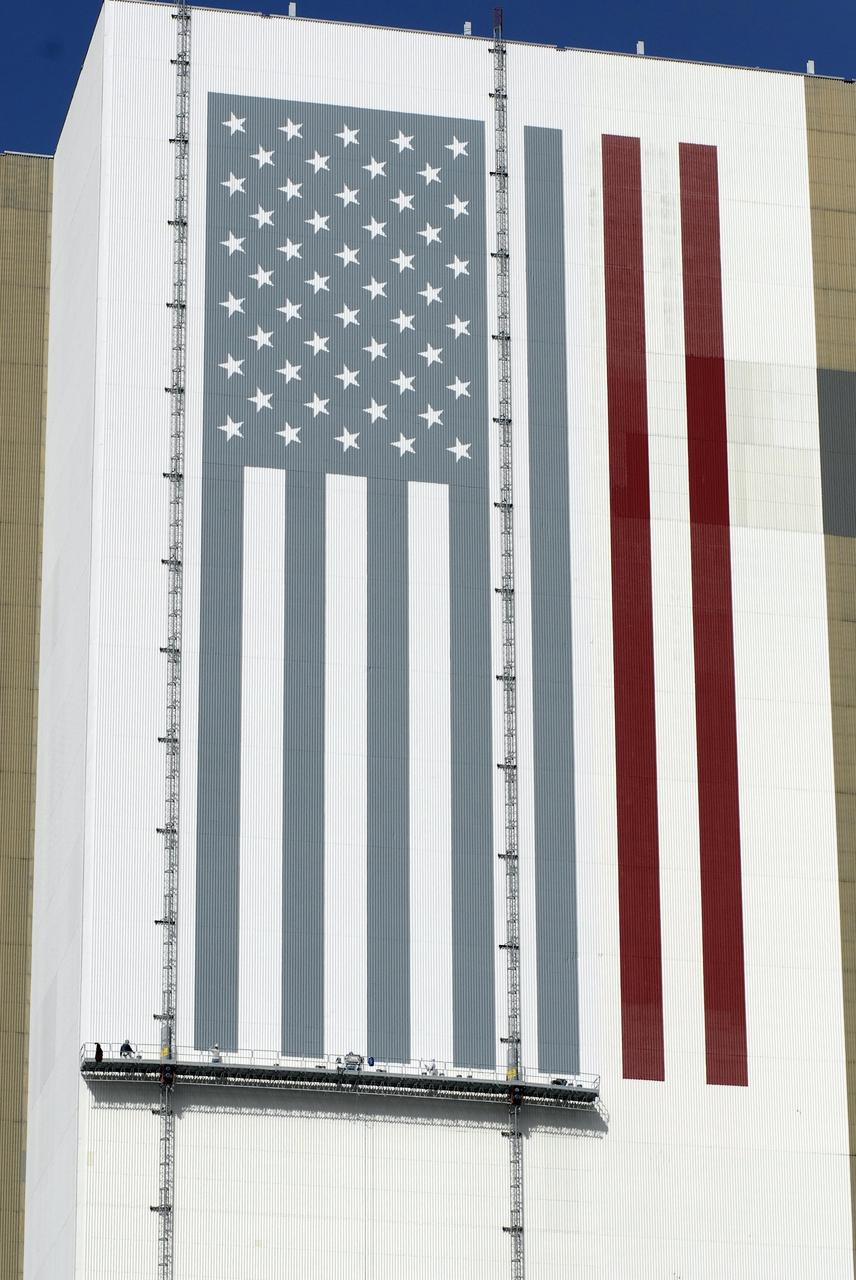
KENNEDY SPACE CENTER, FLA. -- Painters' scaffolding is seen hanging on the side of Kennedy Space Center's Vehicle Assembly Building to facilitate the repainting of the American flag. The NASA logo is also being repainted. Workers, suspended on platforms from the top of the 525-foot-high VAB, use rollers and brushes to do the painting. The flag and logo were last painted in 1998, honoring NASA's 40th anniversary. The flag spans an area 209 feet by 110 feet, or about 23,437 square feet. Each stripe is 9 feet wide and each star is 6 feet in diameter. The logo, also known as the "meatball," measures 110 feet by 132 feet, or about 12,300 square feet. Photo credit: NASA/Kim Shiflett
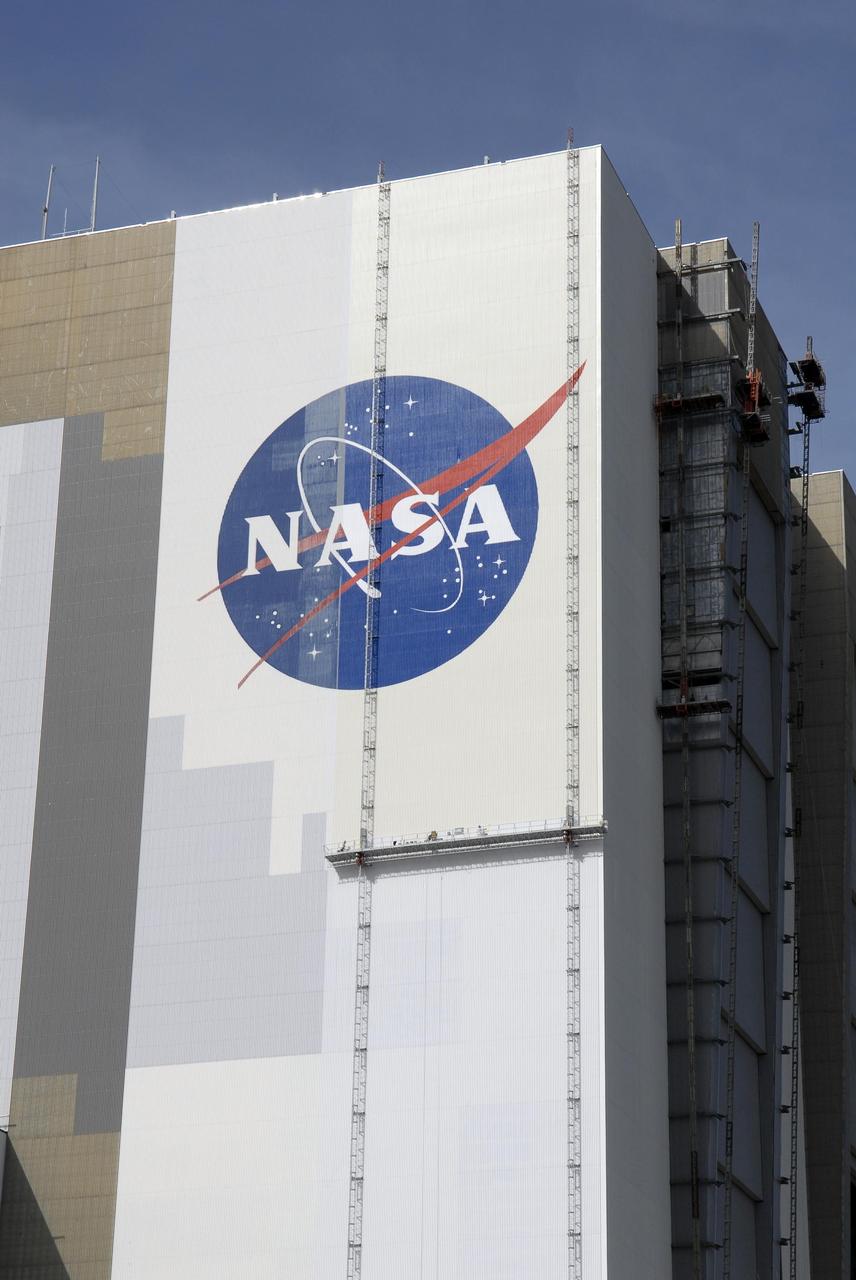
KENNEDY SPACE CENTER, FLA. -- Painters' scaffolding is seen hanging on the side of Kennedy Space Center's Vehicle Assembly Building to facilitate the repainting of the NASA logo. The American flag is also being repainted. Workers, suspended on platforms from the top of the 525-foot-high VAB, use rollers and brushes to do the painting. The flag and logo were last painted in 1998, honoring NASA's 40th anniversary. The flag spans an area 209 feet by 110 feet, or about 23,437 square feet. Each stripe is 9 feet wide and each star is 6 feet in diameter. The logo, also known as the "meatball," measures 110 feet by 132 feet, or about 12,300 square feet. Photo credit: NASA/Kim Shiflett
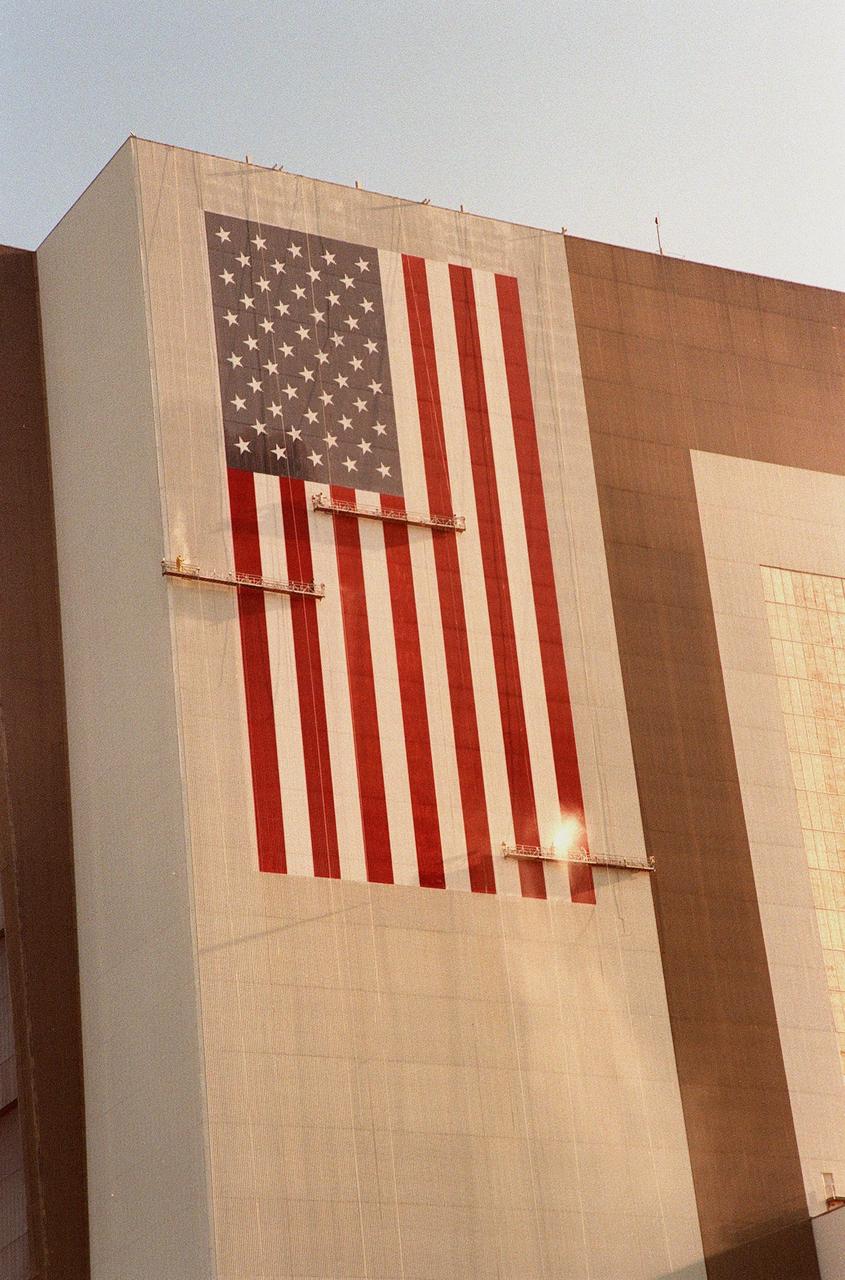
Painters are suspended on platforms from the top of the 525-foot-high Vehicle Assembly Building (VAB) at KSC during repainting of the American flag. The flag spans an area 209 feet by 110 feet and will require 510 gallons of red, white and blue paint. Each stripe of the flag is 9 feet wide and each star is 6 feet in diameter. The platforms are operated by two electric motors and travel 35 feet per minute. Work is being done with rollers, with brushes being used for details. The paint was donated by ICI Devoe of Louisville, Ky. In addition to the flag, the Bicentennial Emblem on the other side of the VAB doors is being replaced by the NASA logo, honoring NASA’s 40th anniversary (in October). The logo covers an area 110 feet by 132 feet. Work is expected to be completed in mid-September
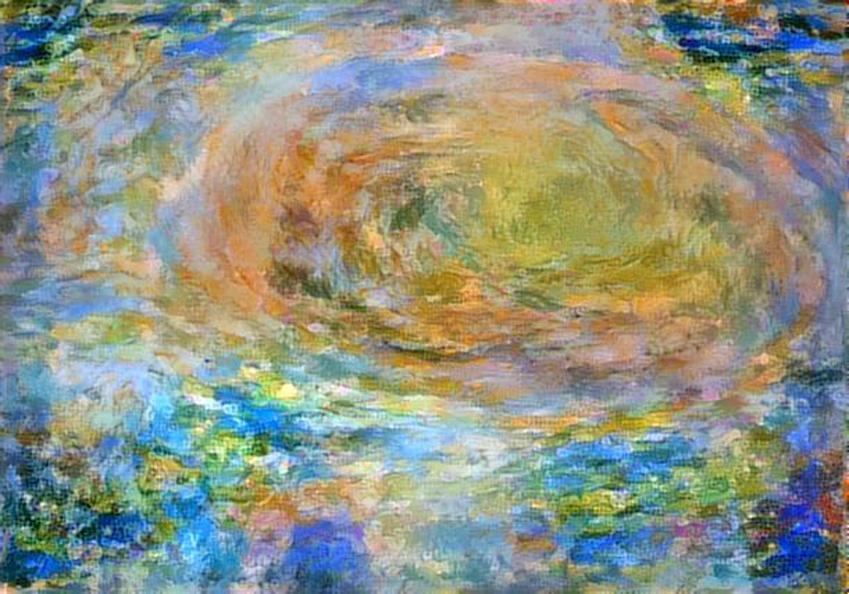
Citizen scientist David Englund created this avant-garde Jovian artwork using data from the JunoCam imager on NASA's Juno spacecraft. The unique interpretation of Jupiter's Great Red Spot was done in a style that pays tribute to French Impressionist painter Claude Monet. The original image was taken on July 10, 2017 at 7:12 p.m. PDT (10:12 p.m. EDT), as the Juno spacecraft performed its 7th close flyby of Jupiter. At the time the image was taken, the spacecraft was 10,274 miles (16,535 kilometers) from the tops of the clouds of the planet, at a latitude of -36.9 degrees. https://photojournal.jpl.nasa.gov/catalog/PIA21779 . - Enhanced image by David Englund based on images provided courtesy of NASA/JPL-Caltech/SwRI/MSSS
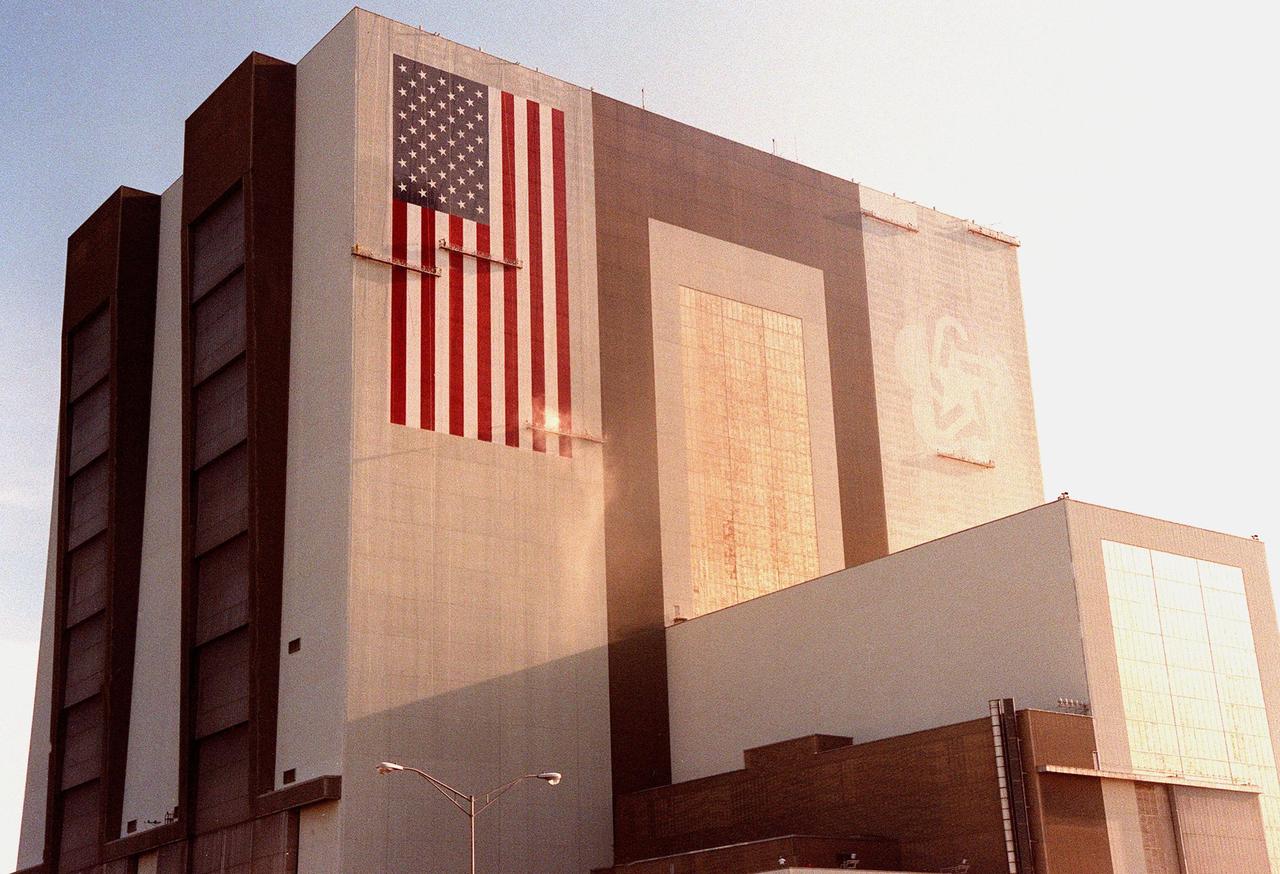
Painters are suspended on platforms from the top of the 525-foot-high Vehicle Assembly Building (VAB) at KSC during repainting of the American flag and NASA logo. The flag spans an area 209 feet by 110 feet and will require 510 gallons of red, white and blue paint. Each stripe of the flag is 9 feet wide and each star is 6 feet in diameter. The previous Bicentennial Emblem on the other side of the VAB doors is being replaced by the NASA logo, honoring NASA’s 40th anniversary (in October). The logo covers an area 110 feet by 132 feet. The painting platforms are operated by two electric motors and travel 35 feet per minute. Work is being done with rollers, with brushes being used for details. The paint was donated by ICI Devoe of Louisville, Ky. Work is expected to be completed in mid-September

KENNEDY SPACE CENTER, FLA. -- Painters are suspended on platforms from the top of the 525-foot-high Vehicle Assembly Building (VAB) at KSC during repainting of the American flag and NASA logo. The flag spans an area 209 feet by 110 feet, or about 23,437 square feet, and will require 510 gallons of red, white and blue paint. Each stripe of the flag is 9 feet wide and each star is 6 feet in diameter. The previous Bicentennial Emblem on the right side of the VAB doors is being replaced by the NASA logo, honoring NASA’s 40th anniversary (in October). The logo will cover an area 110 feet by 132 feet, or about 12,300 square feet. The painting platforms are operated by two electric motors and travel 35 feet per minute. Work is being done with rollers, with brushes being used for details. The paint was donated by ICI Devoe of Louisville, Ky. Work is expected to be completed in mid-September

KENNEDY SPACE CENTER, FLA. -- Painters' scaffolding is seen hanging on the side of Kennedy Space Center's Vehicle Assembly Building to facilitate the repainting of the American flag and the NASA logo. Workers, suspended on platforms from the top of the 525-foot-high VAB, use rollers and brushes to do the painting. The flag and logo were last painted in 1998, honoring NASA's 40th anniversary. The flag spans an area 209 feet by 110 feet, or about 23,437 square feet. Each stripe is 9 feet wide and each star is 6 feet in diameter. The logo, also known as the "meatball," measures 110 feet by 132 feet, or about 12,300 square feet. Photo credit: NASA/Kim Shiflett
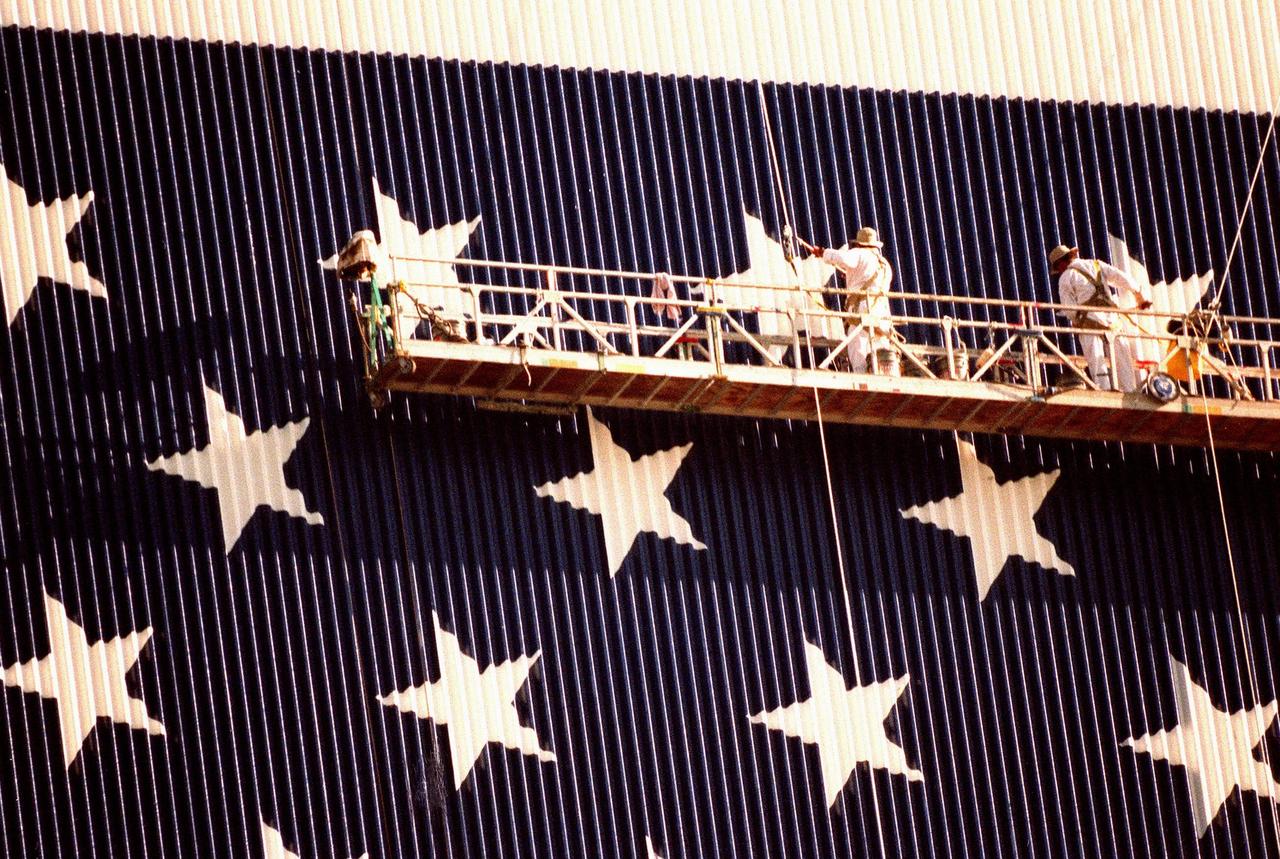
KENNEDY SPACE CENTER, FLA. -- Painters are dwarfed by the six-foot stars in the blue field of the American flag they are repainting on the side of the Vehicle Assembly Building (VAB). The flag spans an area 209 feet by 110 feet, or about 23, 437 square feet. Each stripe is 9 feet wide. Workers, suspended on platforms from the top of the 525-foot-high VAB, are using rollers and brushes to do the painting. In addition to the flag, the NASA logo, also known as the "meatball," is being painted on the VAB. When finished, the logo will measure 110 feet by 132 feet, or about 12,300 square feet. The entire fleet of orbiters is also receiving the addition of the NASA logo on their wings and sidewalls. The painting honors NASA’s 40th anniversary on Oct. 1 and is expected to be complete in mid-September
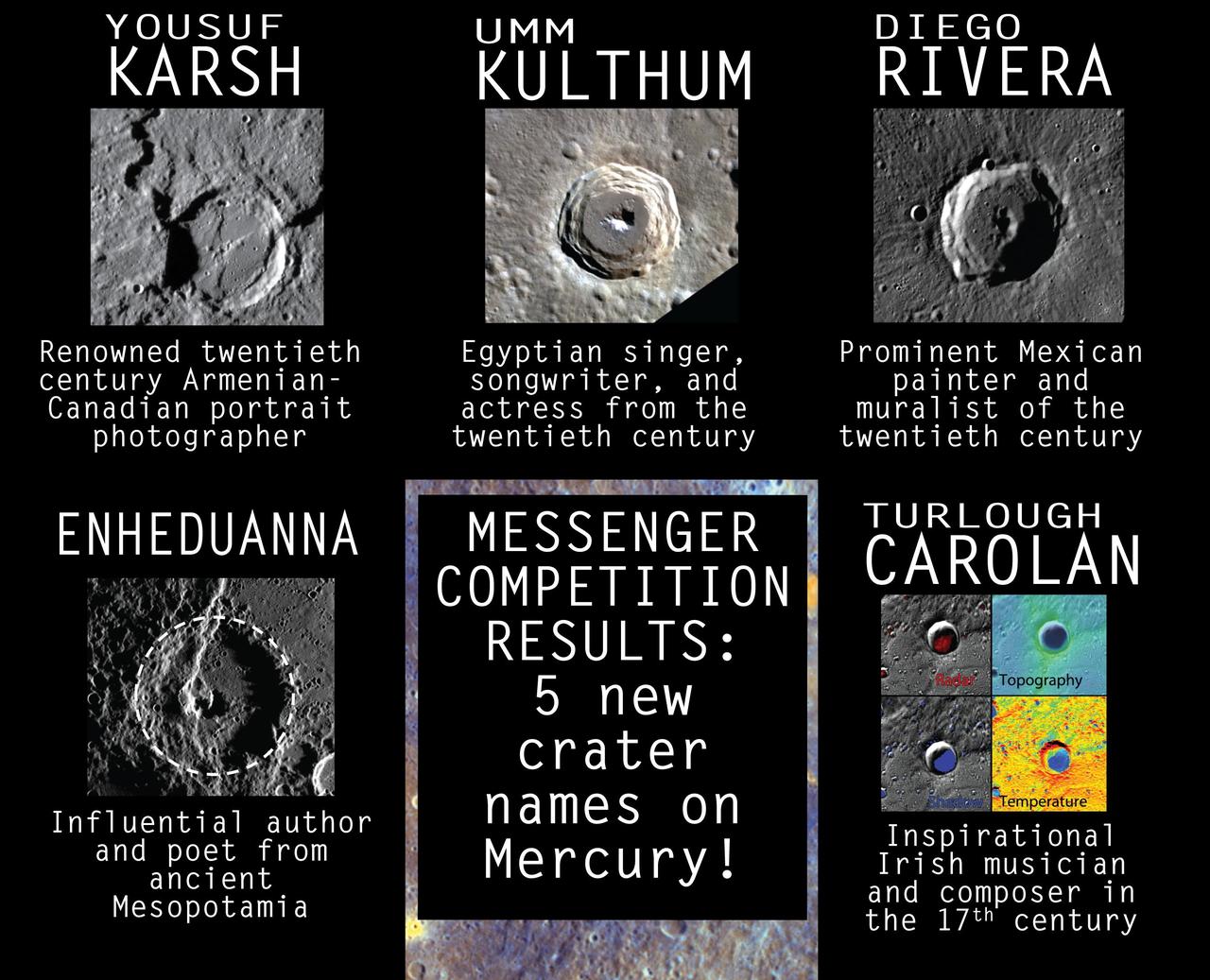
Five previously unnamed craters on Mercury now have names. MESSENGER's Education and Public Outreach (EPO) team led a contest that solicited naming suggestions from the public via a competition website. In total, 3,600 contest entries were received and a semi-final list of 17 names were submitted to the International Astronomical Union (IAU) for consideration. The IAU selected the final five crater names, keeping with the convention that Mercury's craters are named after those who have made significant contributions to the humanities. And the winners are: Carolan: (83.8° N, 31.7° E) Named for Turlough O'Carolan, the Irish musician and composer (1670-1738) Enheduanna: (48.3° N, 326.2° E) Named for the author and poet from ancient Mesopotamia Karsh (35.6° S, 78.9° E) Named for Yousuf Karsh, twentieth century Armenian-Canadian portrait photographer Kulthum (50.7° N, 93.5° E) Named for Umm Kulthum, twentieth century Egyptian singer, songwriter, and actress Rivera: (69.3° N, 32.4° E) Named for Diego Rivera, twentieth century Mexican painter and muralist http://photojournal.jpl.nasa.gov/catalog/PIA19439
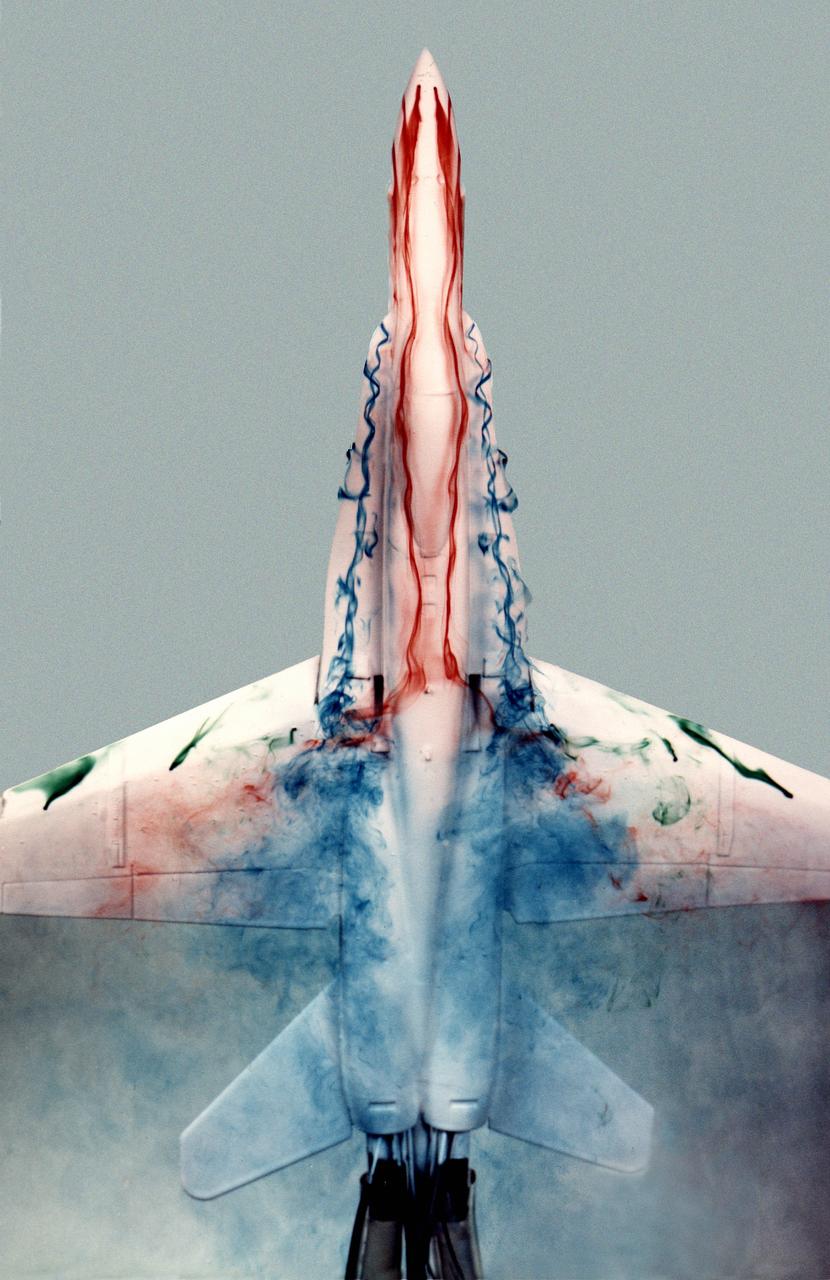
This image shows a plastic 1/48-scale model of an F-18 aircraft inside the "Water Tunnel" more formally known as the NASA Dryden Flow Visualization Facility. Water is pumped through the tunnel in the direction of normal airflow over the aircraft; then, colored dyes are pumped through tubes with needle valves. The dyes flow back along the airframe and over the airfoils highlighting their aerodynamic characteristics. The aircraft can also be moved through its pitch axis to observe airflow disruptions while simulating actual flight at high angles of attack. The Water Tunnel at NASA's Dryden Flight Research Center, Edwards, CA, became operational in 1983 when Dryden was a Flight Research Facility under the management of the Ames Research Center in Mountain View, CA. As a medium for visualizing fluid flow, water has played a significant role. Its use dates back to Leonardo da Vinci (1452-1519), the Renaissance Italian engineer, architect, painter, and sculptor. In more recent times, water tunnels have assisted the study of complex flows and flow-field interactions on aircraft shapes that generate strong vortex flows. Flow visualization in water tunnels assists in determining the strength of vortices, their location, and possible methods of controlling them. The design of the Dryden Water Tunnel imitated that of the Northrop Corporation's tunnel in Hawthorne, CA. Called the Flow Visualization Facility, the Dryden tunnel was built to assist researchers in understanding the aerodynamics of aircraft configured in such a way that they create strong vortex flows, particularly at high angles of attack. The tunnel provides results that compare well with data from aircraft in actual flight in another fluid-air. Other uses of the tunnel have included study of how such flight hardware as antennas, probes, pylons, parachutes, and experimental fixtures affect airflow. The facility has also been helpful in finding the best locations for emitting smoke from flight vehicles for flow vi