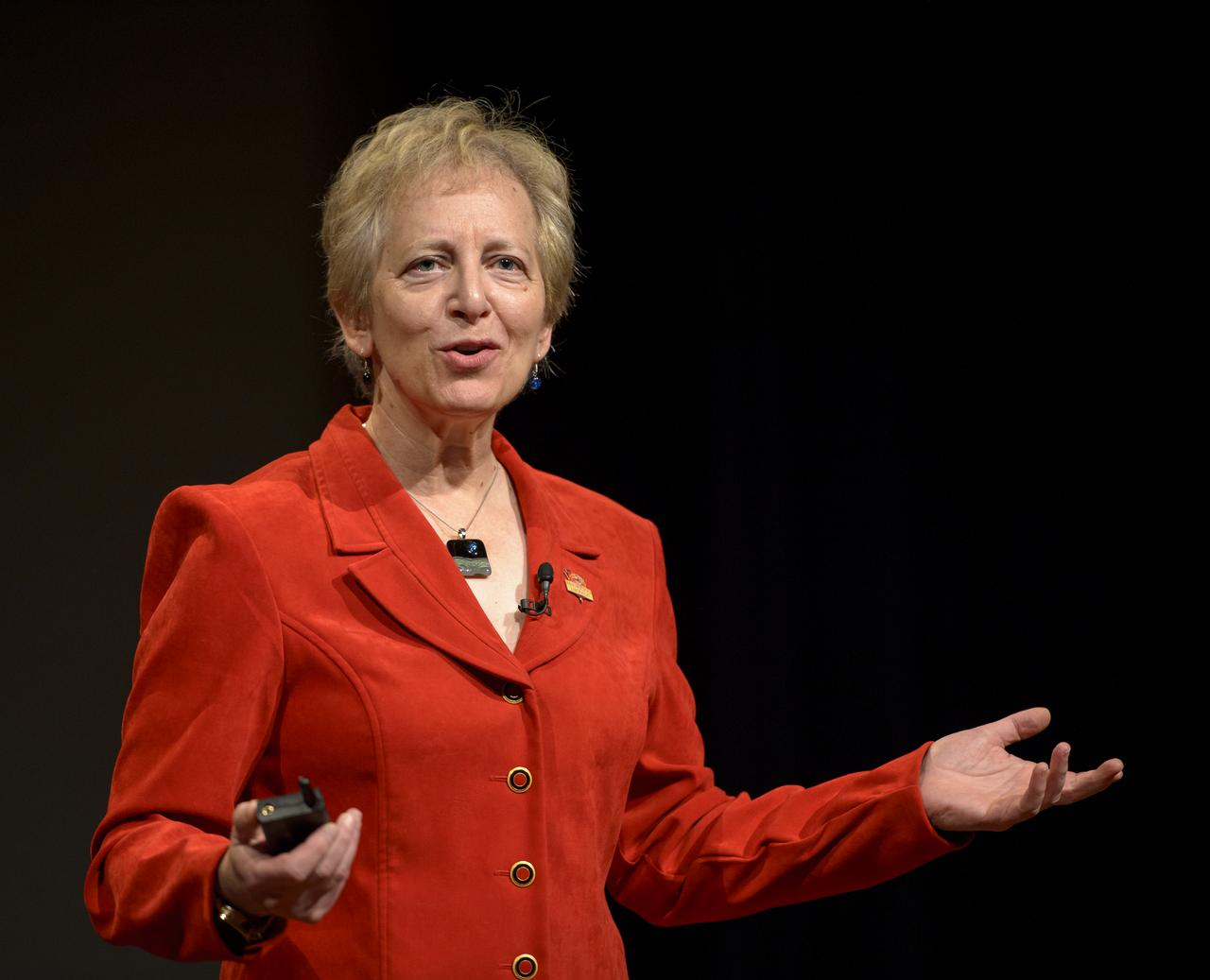
Pan Conrad, deputy principal investigator, Sample Analysis at Mars team, NASA‘s Goddard Space Flight Center, discusses what we’ve learned from Curiosity and the other Mars rovers during a “Mars Up Close” panel discussion, Tuesday, August 5, 2014, at the National Geographic Society headquarters in Washington. Photo Credit: (NASA/Bill Ingalls)
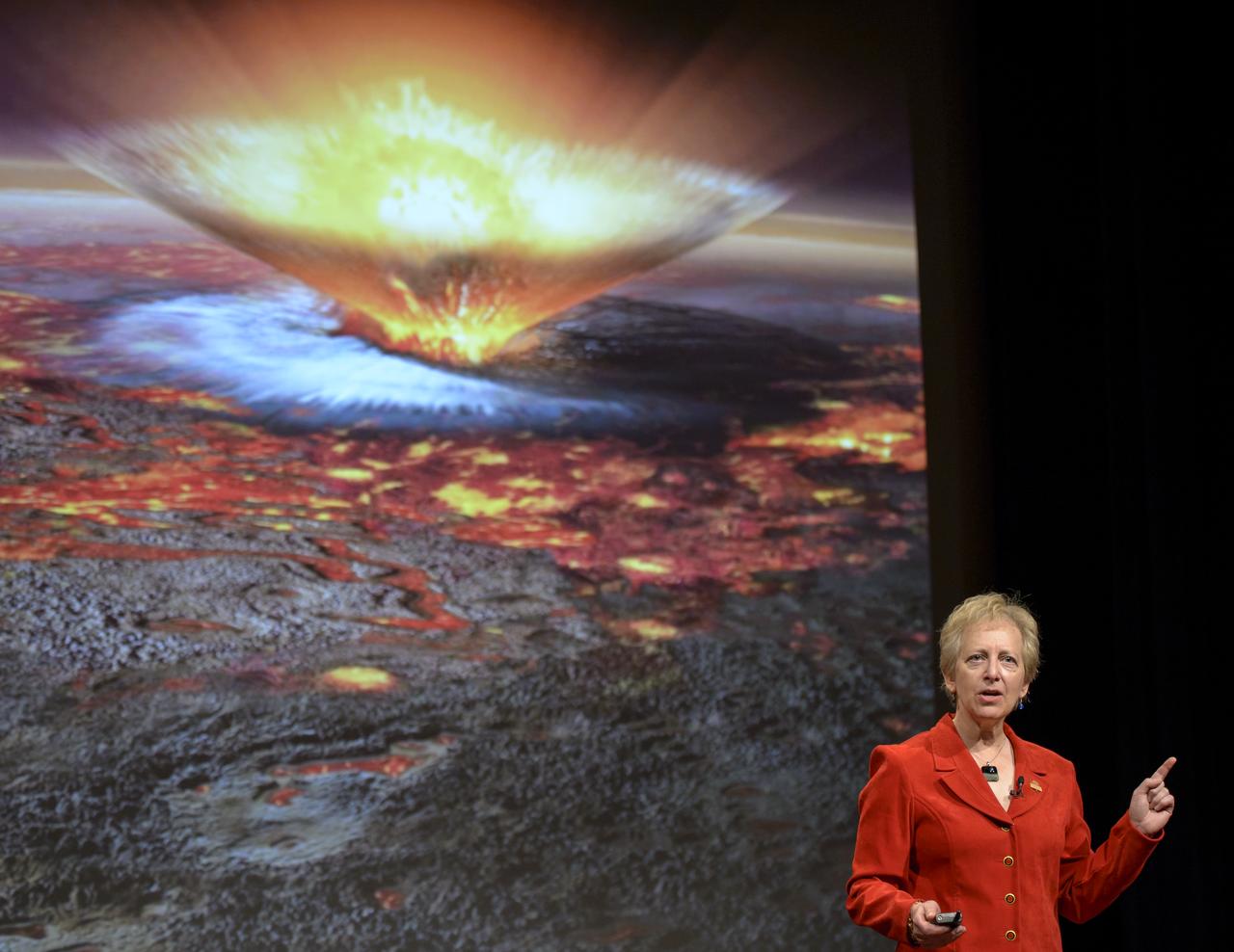
Pan Conrad, deputy principal investigator, Sample Analysis at Mars team, NASA‘s Goddard Space Flight Center, discusses what we’ve learned from Curiosity and the other Mars rovers during a “Mars Up Close” panel discussion, Tuesday, August 5, 2014, at the National Geographic Society headquarters in Washington. Photo Credit: (NASA/Bill Ingalls)

Pan Conrad, deputy principal investigator, Sample Analysis at Mars team, NASA‘s Goddard Space Flight Center, discusses what we’ve learned from Curiosity and the other Mars rovers during a “Mars Up Close” panel discussion, Tuesday, August 5, 2014, at the National Geographic Society headquarters in Washington. Photo Credit: (NASA/Bill Ingalls)
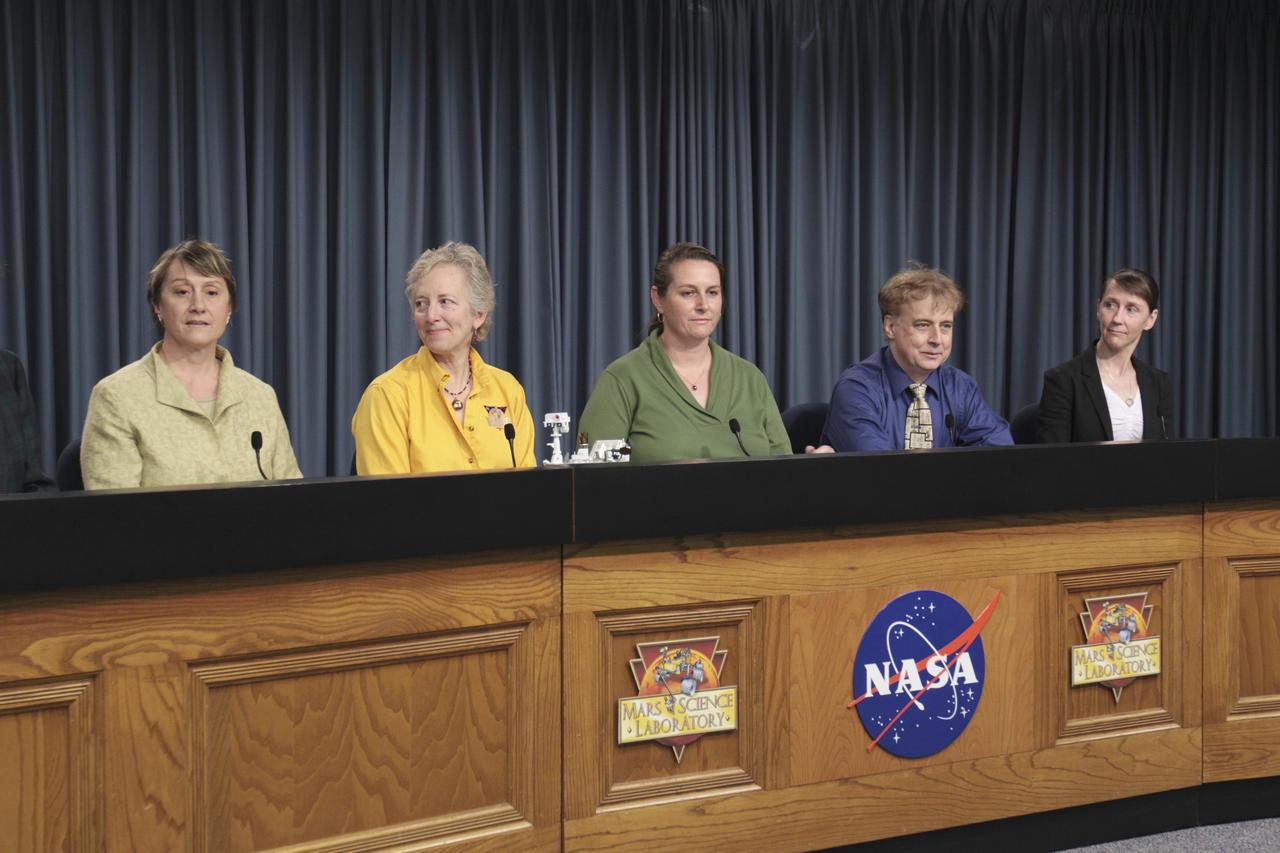
CAPE CANAVERAL, Fla. – At NASA’s Kennedy Space Center in Florida, several scientists and researchers participate in a “Looking for Signs of Life in the Universe” news conference, Nov. 22, as part of preflight activities for the Mars Science Laboratory (MSL) mission. From left, are NASA Astrobiology Director Mary Voytek; Professor Jamie Foster from the Department of Microbiology and Cell Science at the University of Florida in Gainesville; MSL Deputy Principal Investigator Pan Conrad; Director of the Foundation for Applied Molecular Evolution Steven Benner; and NASA Planetary Protection Officer Catharine Conley. MSL’s components include a car-sized rover, Curiosity, which has 10 science instruments designed to search for signs of life, including methane, and help determine if the gas is from a biological or geological source. Launch of MSL aboard a United Launch Alliance Atlas V rocket is targeted for Nov. 26 from Space Launch Complex 41 on Cape Canaveral Air Force Station in Florida. For more information, visit http://www.nasa.gov/msl. Photo credit: NASA/Kim Shiflett
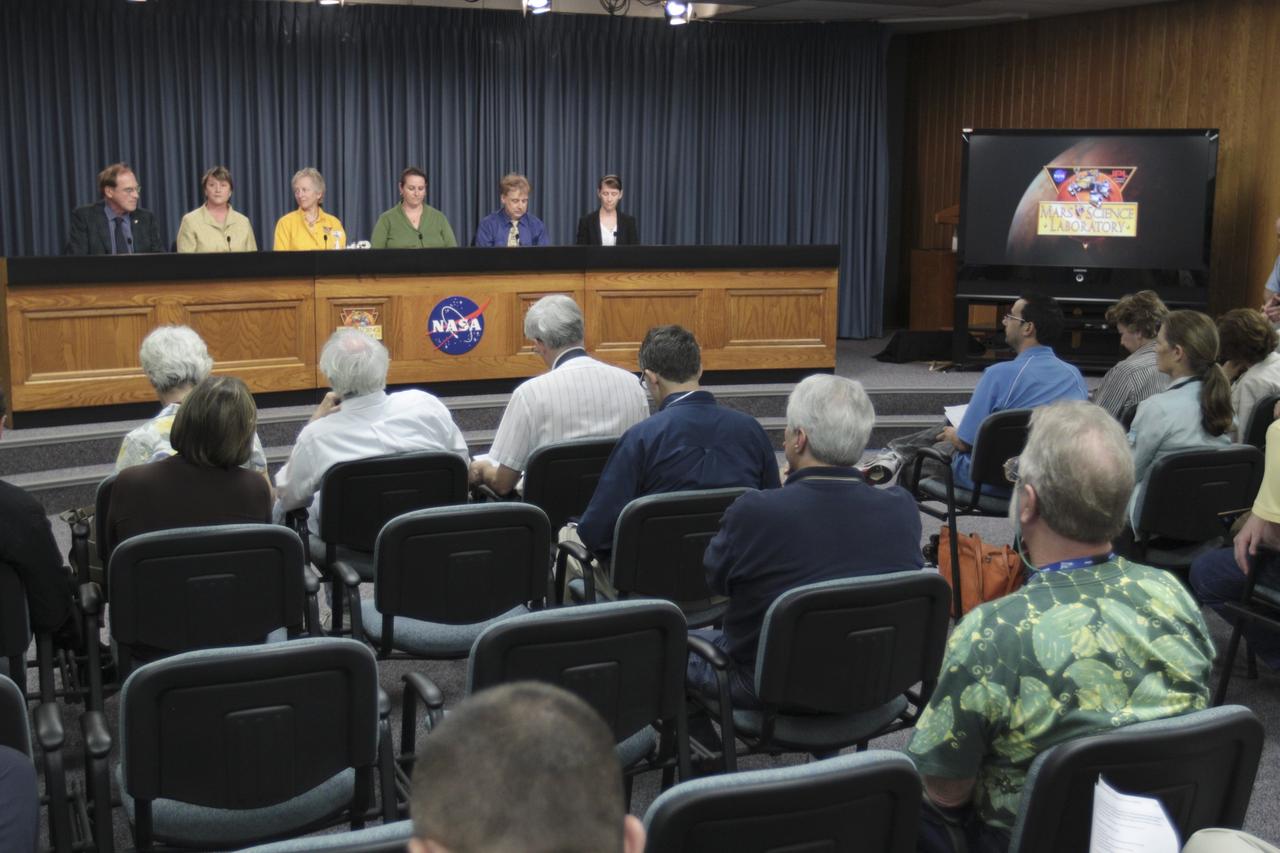
CAPE CANAVERAL, Fla. – At NASA’s Kennedy Space Center in Florida, several scientists and researchers participate in a “Looking for Signs of Life in the Universe” news conference, Nov. 22, as part of preflight activities for the Mars Science Laboratory (MSL) mission. From left, are NASA Public Affairs Officer and conference moderator George Diller; NASA Astrobiology Director Mary Voytek; Professor Jamie Foster from the Department of Microbiology and Cell Science at the University of Florida in Gainesville; MSL Deputy Principal Investigator Pan Conrad; Director of the Foundation for Applied Molecular Evolution Steven Benner; and NASA Planetary Protection Officer Catharine Conley. MSL’s components include a car-sized rover, Curiosity, which has 10 science instruments designed to search for signs of life, including methane, and help determine if the gas is from a biological or geological source. Launch of MSL aboard a United Launch Alliance Atlas V rocket is targeted for Nov. 26 from Space Launch Complex 41 on Cape Canaveral Air Force Station in Florida. For more information, visit http://www.nasa.gov/msl. Photo credit: NASA/Kim Shiflett
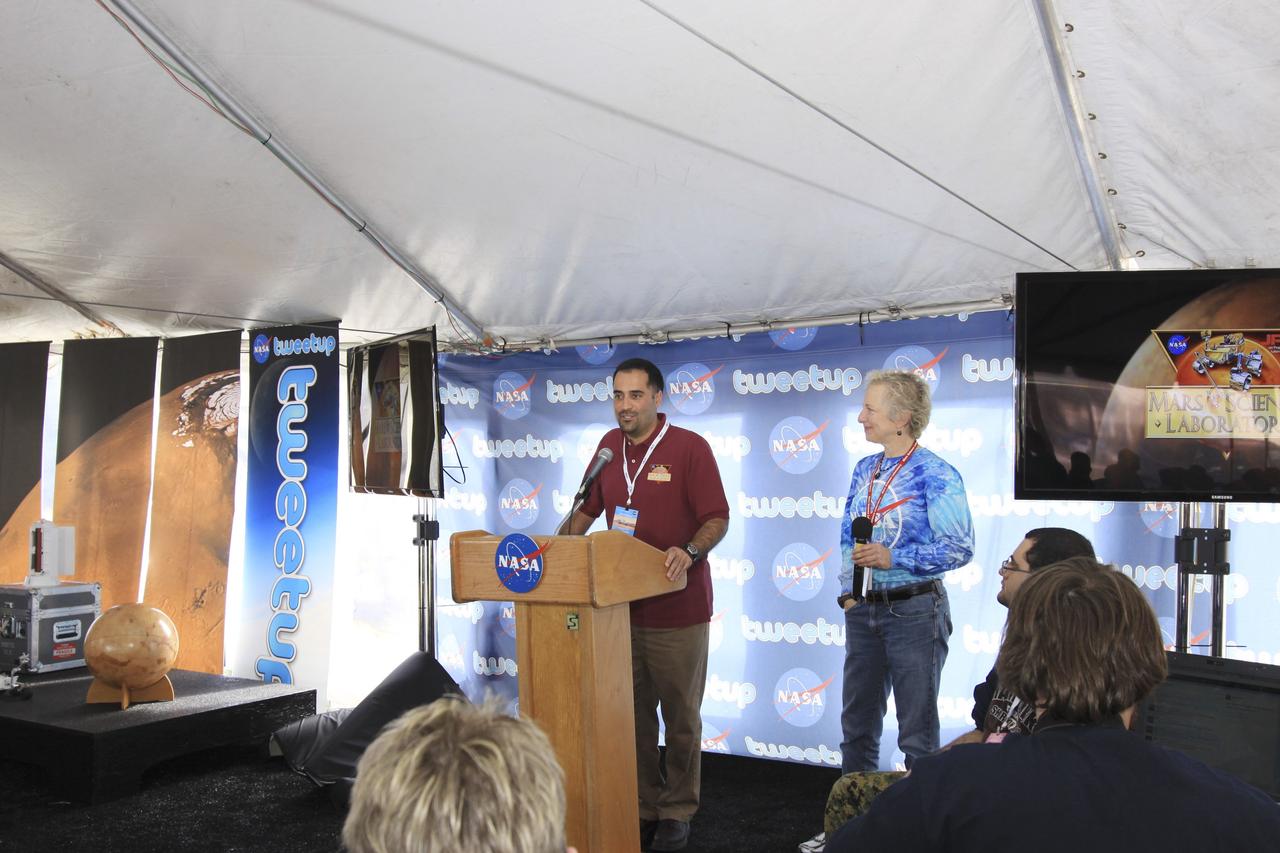
CAPE CANAVERAL, Fla. – Ashwin Vasavada, deputy project scientist for the Mars Science Laboratory (MSL) at NASA's Jet Propulsion Laboratory, speaks to a group of Tweetup participants at NASA Kennedy Space Center's Press Site in Florida during prelaunch activities for the agency’s MSL launch. Pan Conrad, deputy principal investigator for the Sample Analysis at Mars (SAM) instrument on the Curiosity rover from NASA Goddard Space Flight Center, awaits her turn to speak, at right. Following a series of briefings, participants will tour the center and get a close-up view of Space Launch Complex-41 on Cape Canaveral Air Force Station. The tweeters will share their experiences with followers through the social networking site Twitter. MSL's components include a car-sized rover, Curiosity, which has 10 science instruments designed to search for signs of life, including methane, and help determine if the gas is from a biological or geological source. Liftoff of MSL aboard a United Launch Alliance Atlas V rocket from pad 41 is planned during a launch window which extends from 10:02 a.m. to 11:45 a.m. EST on Nov. 26. For more information, visit http://www.nasa.gov/msl. Photo credit: NASA/Jim Grossmann
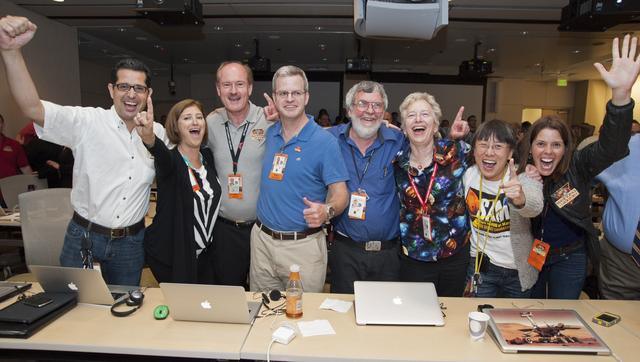
<b>Who Should Be TIME's Person of the Year 2012? - The Mars Rover! VOTE here: <a href="http://ti.me/YxJU1i" rel="nofollow">ti.me/YxJU1i</a></b> Caption - SAM Team celebrates a picture perfect landing! Pictured from left to rights: Mehdi Benna, Laurie Leshin, Chris Webster, Will Brinckerhoff, Paul Mahaffy, Pan Conrad, Florence Tan, and Jen Eigenbrode. Credit: NASA ----- The Curiosity rover bristles with multiple cameras and instruments, including Goddard's Sample Analysis at Mars (SAM) instrument suite. By looking for evidence of water, carbon, and other important building blocks of life in the Martian soil and atmosphere, SAM will help discover whether Mars ever had the potential to support life. Curiosity was delivered to Gale crater, a 96-mile-wide crater that contains a record of environmental changes in its sedimentary rock, in August 2012. Related links: <a href="http://www.nasa.gov/mission_pages/msl/index.html" rel="nofollow">www.nasa.gov/mission_pages/msl/index.html</a> <a href="http://science.gsfc.nasa.gov/699/marsSAM.shtml" rel="nofollow">science.gsfc.nasa.gov/699/marsSAM.shtml</a> <a href="http://mars.jpl.nasa.gov/msl/" rel="nofollow">mars.jpl.nasa.gov/msl/</a> <b><a href="http://www.nasa.gov/audience/formedia/features/MP_Photo_Guidelines.html" rel="nofollow">NASA image use policy.</a></b> <b><a href="http://www.nasa.gov/centers/goddard/home/index.html" rel="nofollow">NASA Goddard Space Flight Center</a></b> enables NASA’s mission through four scientific endeavors: Earth Science, Heliophysics, Solar System Exploration, and Astrophysics. Goddard plays a leading role in NASA’s accomplishments by contributing compelling scientific knowledge to advance the Agency’s mission. <b>Follow us on <a href="http://twitter.com/NASA_GoddardPix" rel="nofollow">Twitter</a></b> <b>Like us on <a href="http://www.facebook.com/pages/Greenbelt-MD/NASA-Goddard/395013845897?ref=tsd" rel="nofollow">Facebook</a></b> <b>Find us on <a href="http://instagram.com/nasagoddard?vm=grid" rel="nofollow">Instagram</a></b>