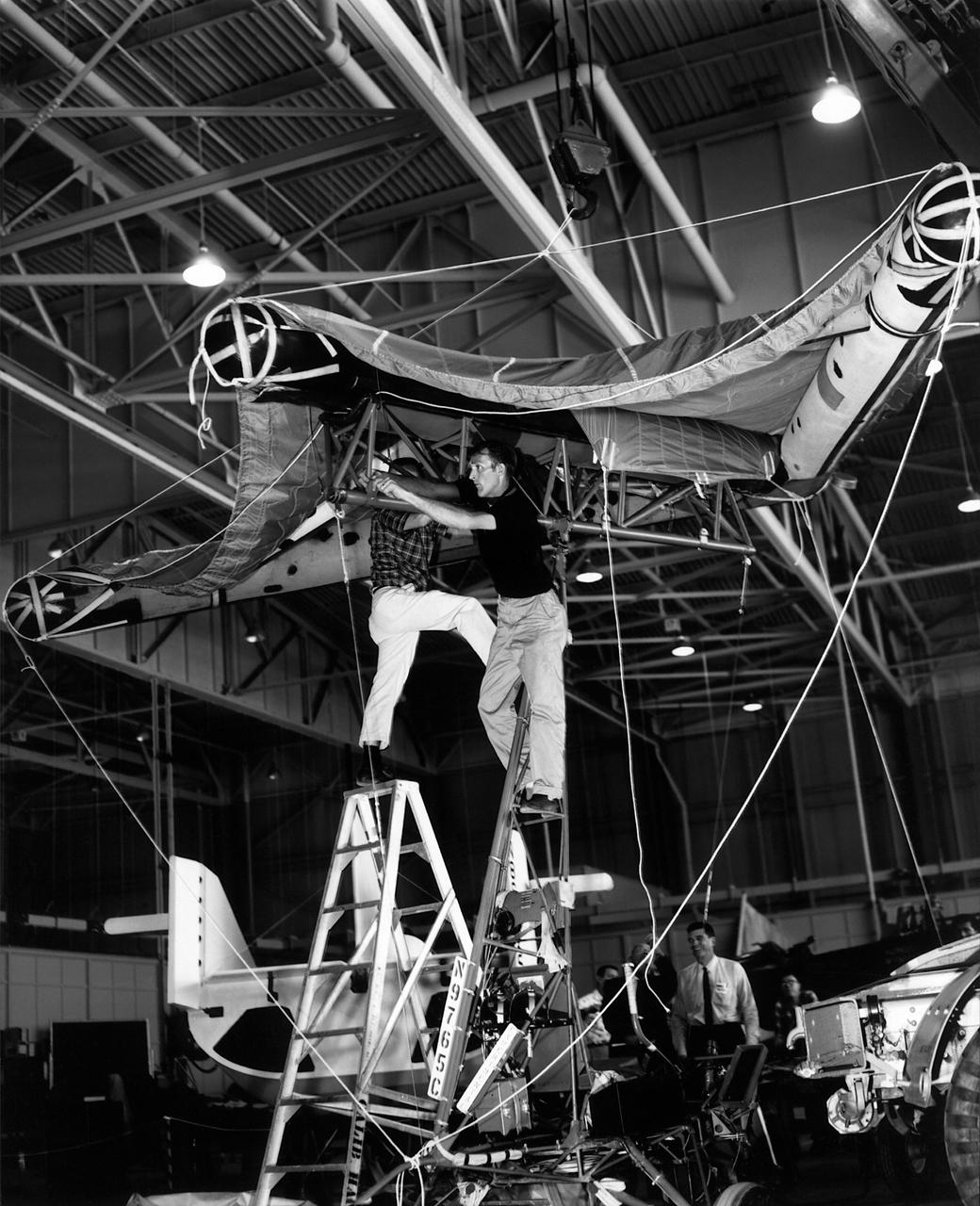
This photo shows the Paresev (Paraglider Research Vehicle) space frame receiving a new wing. Frank Fedor and a technician helper are attaching a half-scale version of an inflatable wing in a hangar at NASA Flight Research Center at Edwards, California. The Paresev in this configuration was called the 1-C and was expected to closely approximate the aerodynamic characteristics that would be encountered with the Gemini space capsule with a parawing extended. The whole wing was not inflatable; the three chambers that acted as spars and supported the wing inflated.
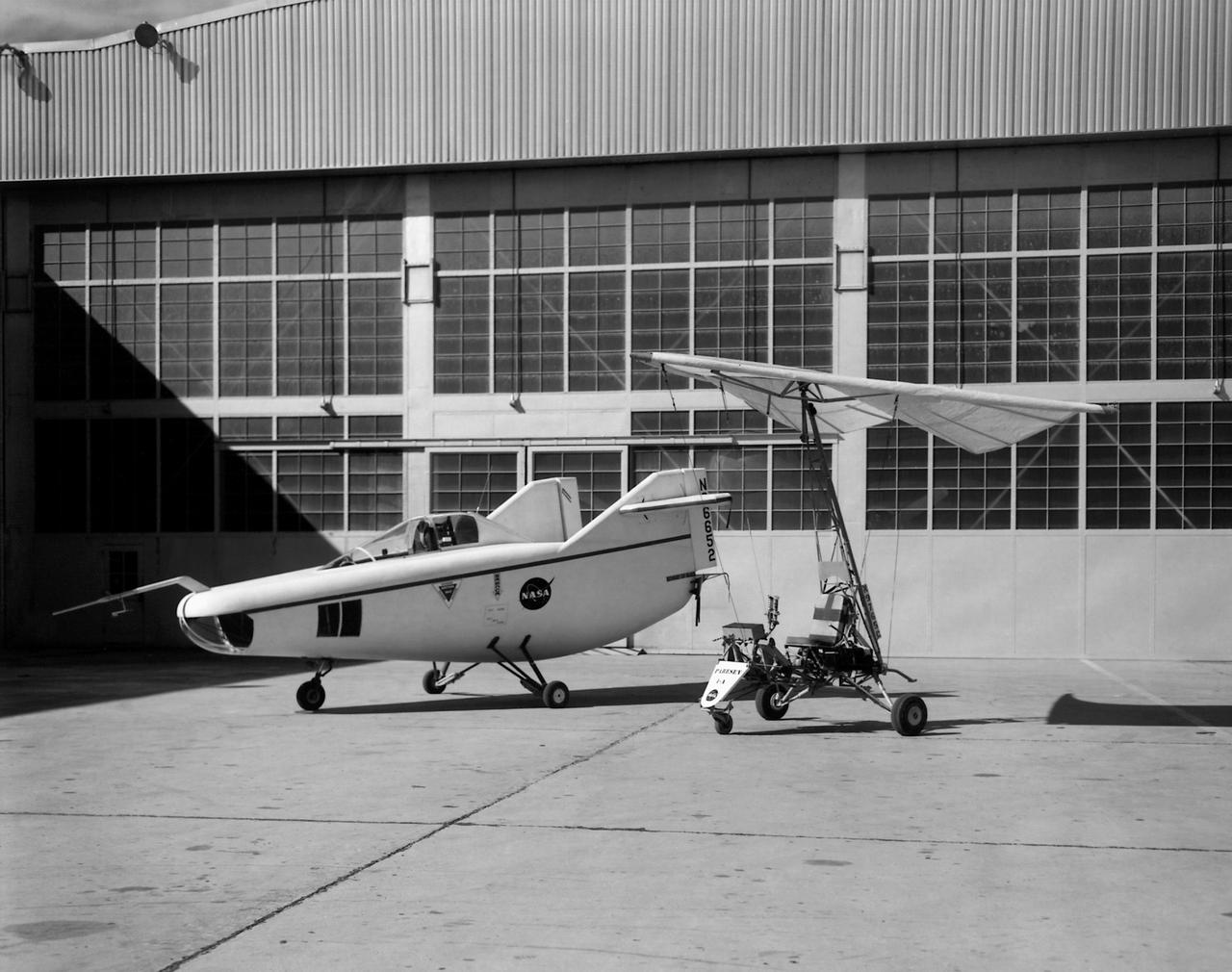
In this photo of the M2-F1 lifting body and the Paresev 1B on the ramp, the viewer sees two vehicles representing different approaches to building a research craft to simulate a spacecraft able to land on the ground instead of splashing down in the ocean as the Mercury capsules did. The M2-F1 was a lifting body, a shape able to re-enter from orbit and land. The Paresev (Paraglider Research Vehicle) used a Rogallo wing that could be (but never was) used to replace a conventional parachute for landing a capsule-type spacecraft, allowing it to make a controlled landing on the ground.
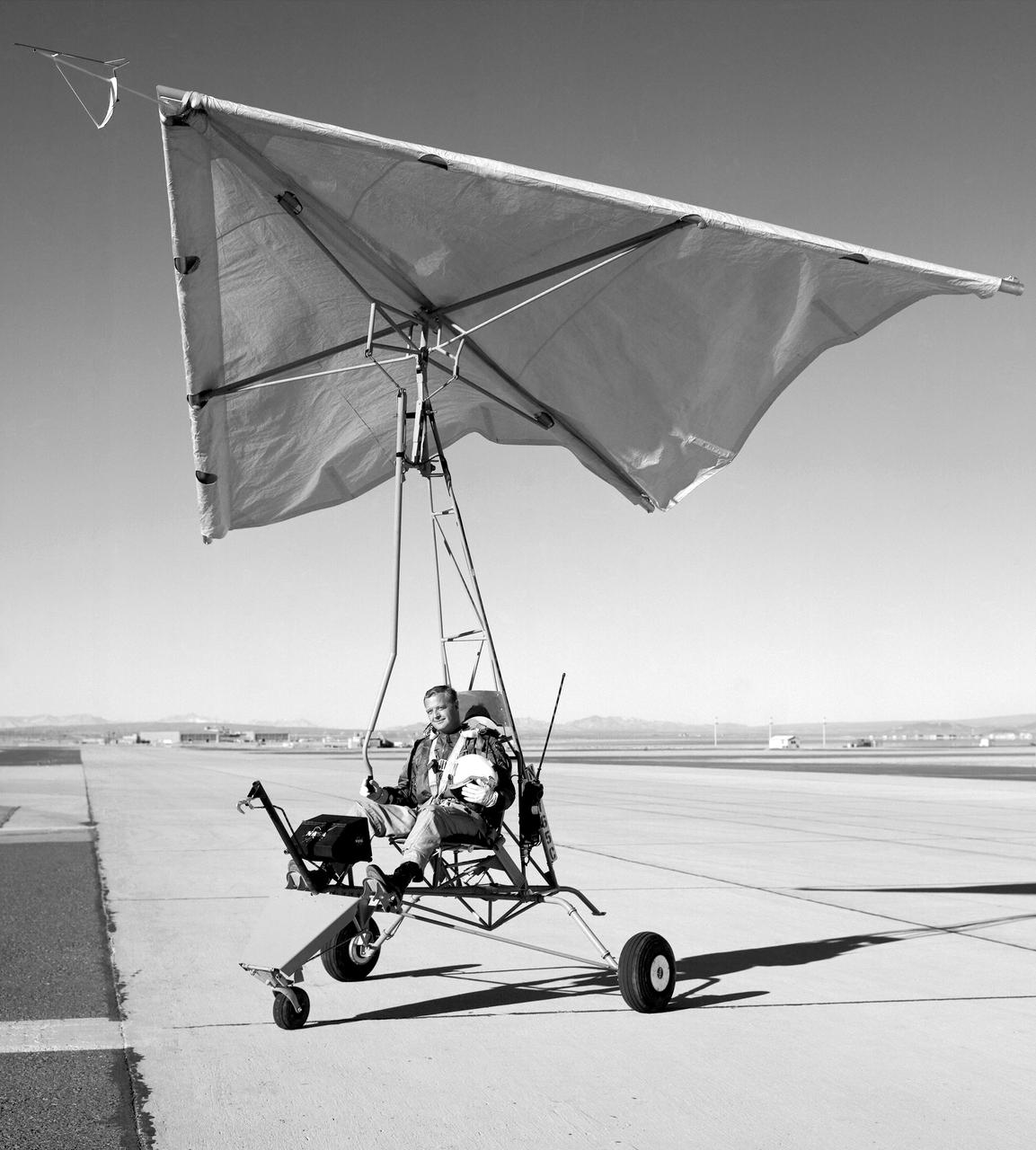
Test pilot Milton Thompson sitting in NASA Flight Research Center-built Paresev 1 (Paraglider Research Vehicle) on the taxi strip in front of the NASA Flight Research Center in 1962. In this photo the control stick can be seen coming from overhead and hanging in front of the pilot. The control system was a direct link with the wing membrane made of doped Irish linen. By maintaining simplicity during construction, it was possible to make control and configuration changes overnight and, in many instances, in minutes.
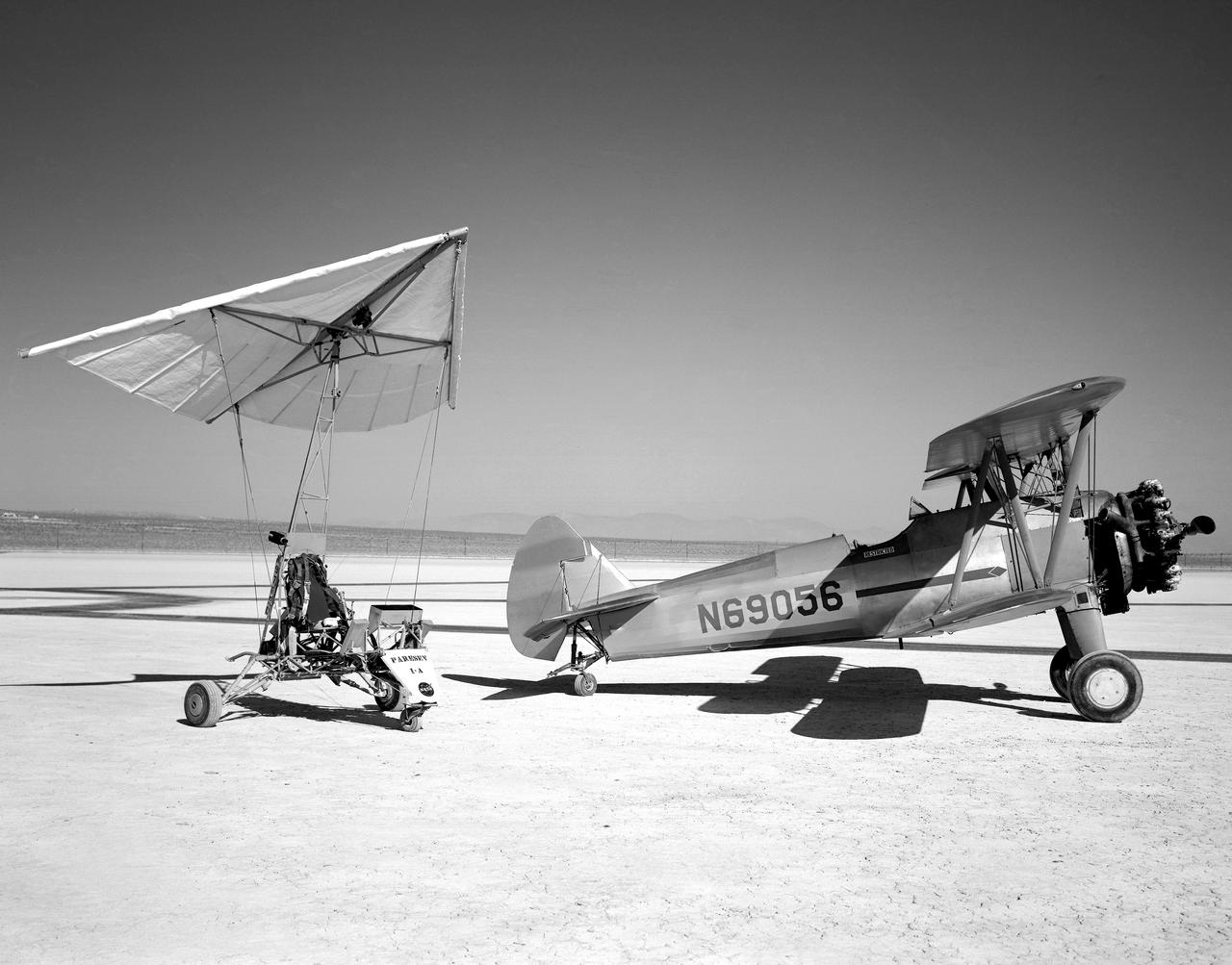
The Paresev 1-A (Paraglider Research Vehicle) and the tow airplane, 450-hp Stearman sport Biplane, sitting on Rogers dry lakebed, Edwards, California. The control system in the Paresev 1-A had a more conventional control stick position and was cable-operated; the main landing gear used shocks and bungees with the 100-square-foot wing membrane being made of 6-ounce unsealed Dacron.