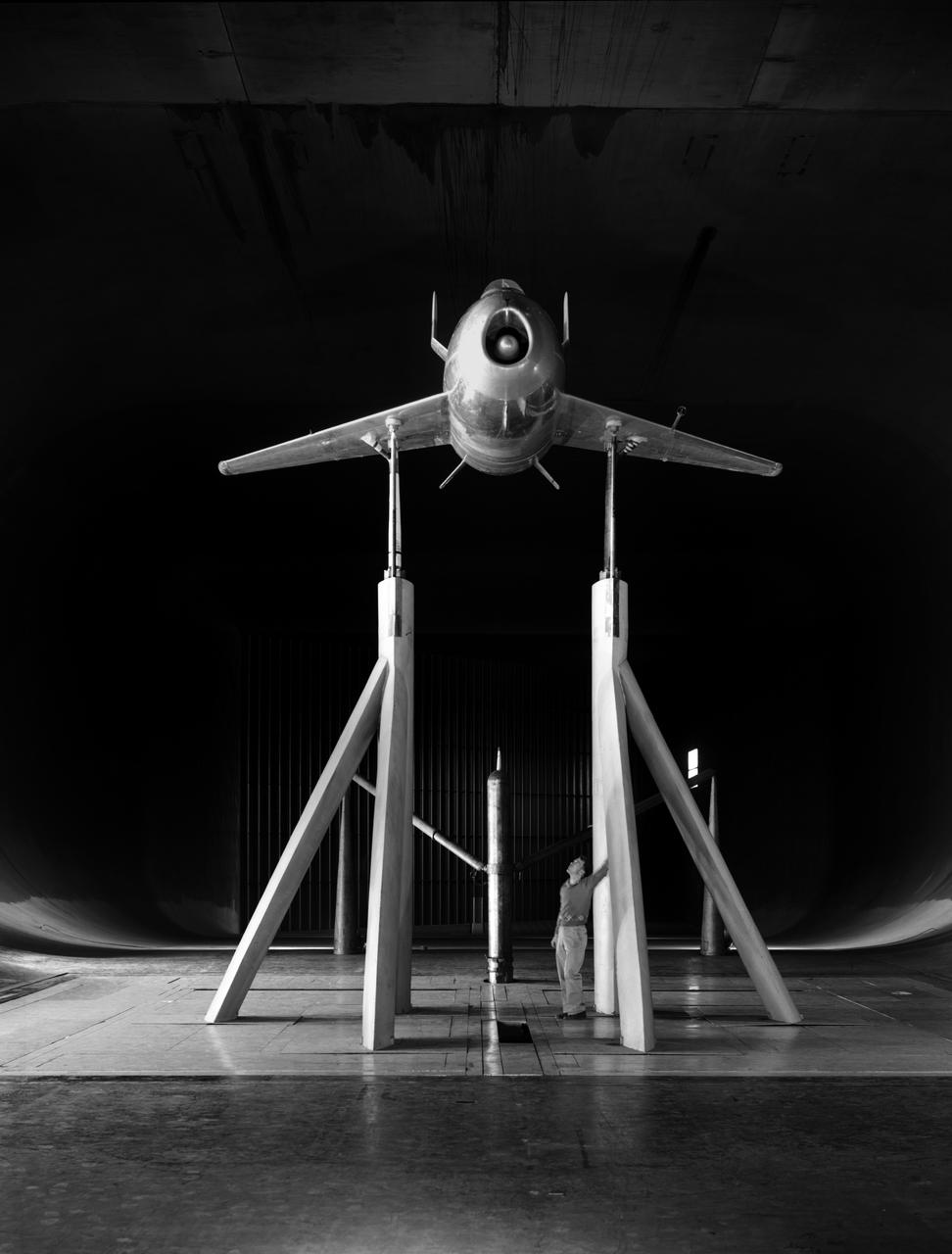
Front View of McDonald XP-85 Plan Model. Parasite Airplane designed to be carried in the B-36 bombay (never built) At the time it was the smallest Jet powered airplane. The McDonnell XF-85 Goblin was an American prototype fighter aircraft conceived during World War II by McDonnell Aircraft. It was intended to be deployed from the bomb bay of the giant Convair B-36 bomber as a parasite fighter. The XF-85's intended role was to defend bombers from hostile interceptor aircraft, a need demonstrated during World War II
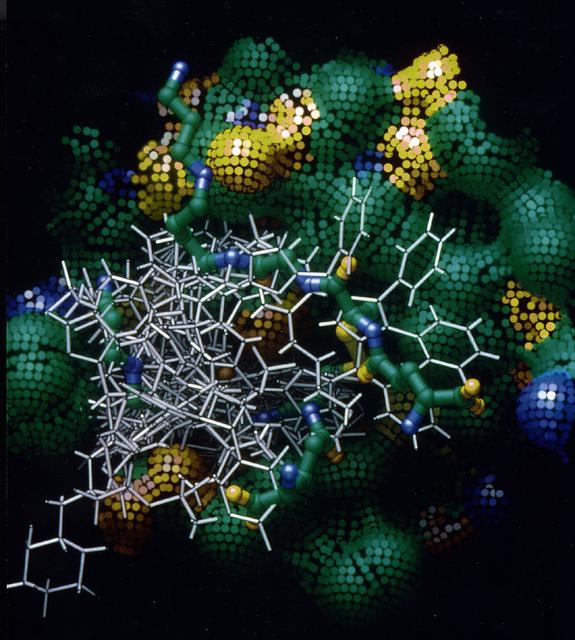
A computer model for the protein crystal trypanathione reductase, which is being studied in an effort to devise a treatment for Chaga's disease, a devastation illness caused by a parasite.
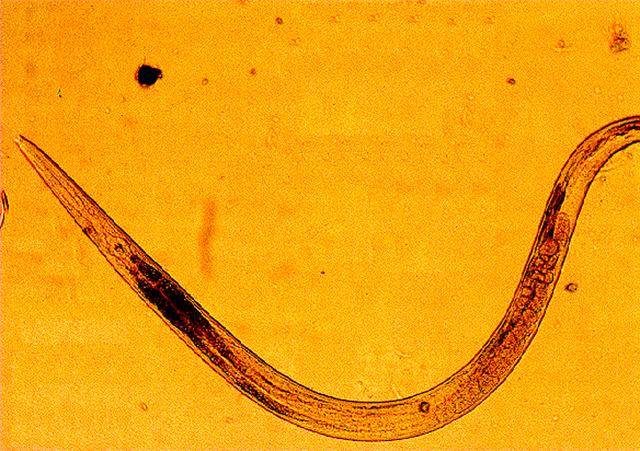
Over a billion of mostly third world people are infected with a roundworm known as ascarids. Ascarids are tiny parasites that infect the intestinal tract of vertebrates. Movement of the larvae into the brain or other parts of the body can prove fatal. Space-based research is providing new hope in combating these parasitic worms. Ascarids are dependent upon a substance known as malic enzyme to regulate certain bodily functions. A new drug designed to interfere with normal functioning of malic enzyme should prove deadly to ascarids. The Center for Macromolecular Crystallography, along with the University of North Texas grew malic enzyme crystals on the USML-1 Spacelab mission. Although these crystals proved to be smaller than ground based ones, they were more perfectly formed, therefore producing better data for drug design.
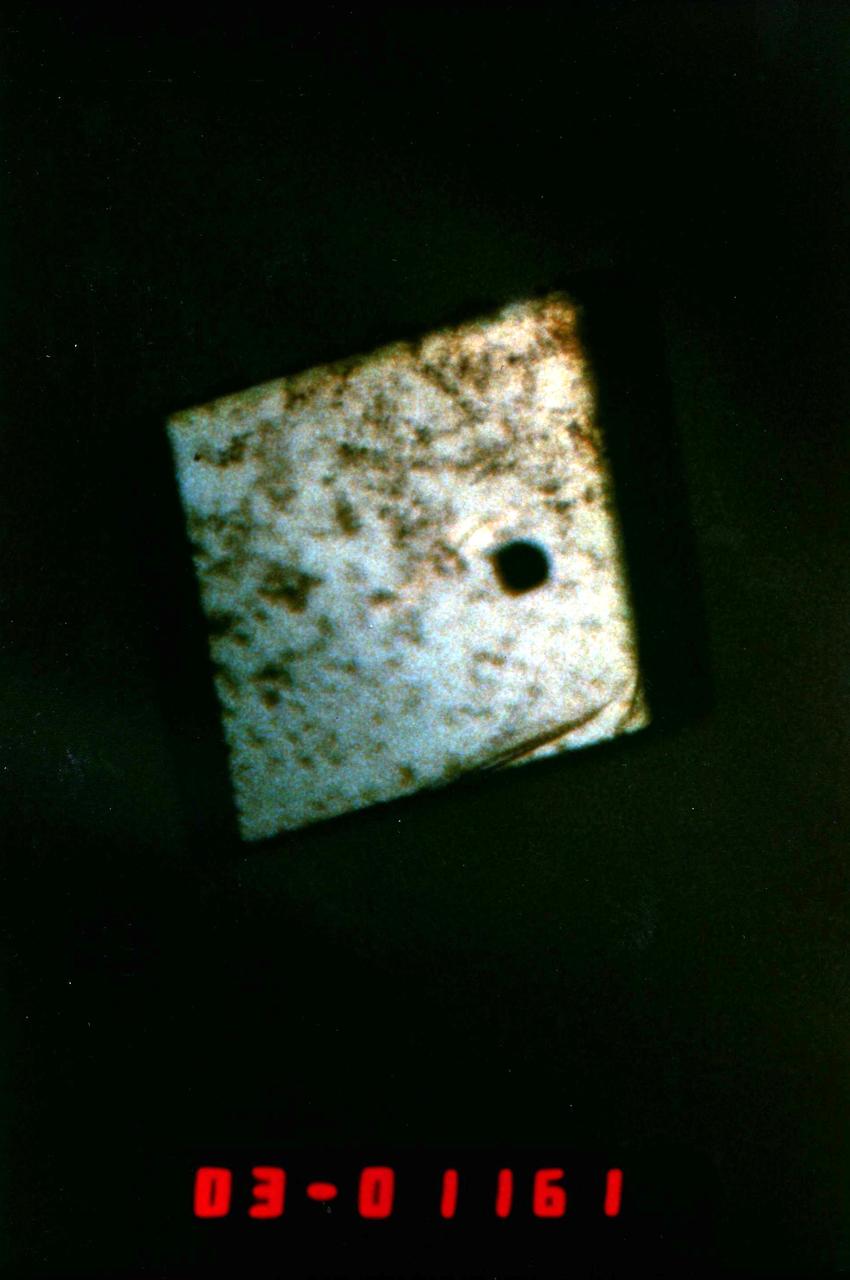
(PCG) Protein Crystal Growth Gamma-Interferon. Stimulates the body's immune system and is used clinically in the treatment of cancer. Potential as an anti-tumor agent against solid tumors as well as leukemia's and lymphomas. It has additional utility as an anti-ineffective agent, including antiviral, anti-bacterial, and anti-parasitic activities. Principal Investigator on STS-26 was Charles Bugg.
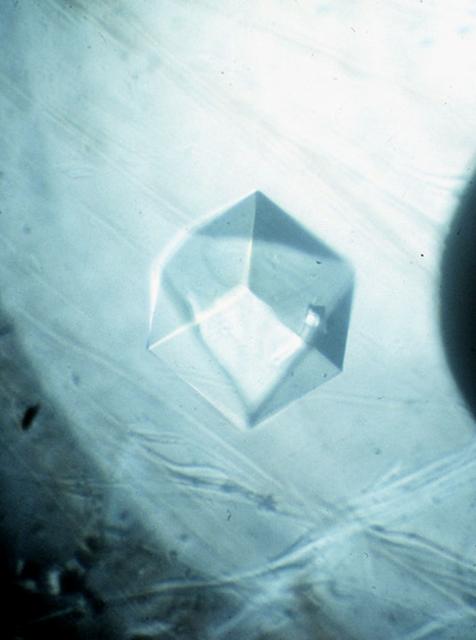
Malic Enzyme is a target protein for drug design because it is a key protein in the life cycle of intestinal parasites. After 2 years of effort on Earth, investigators were unable to produce any crystals that were of high enough quality and for this reason the structure of this important protein could not be determined. Crystals obtained from one STS-50 were of superior quality allowing the structure to be determined. This is just one example why access to space is so vital for these studies. Principal Investigator is Larry DeLucas.
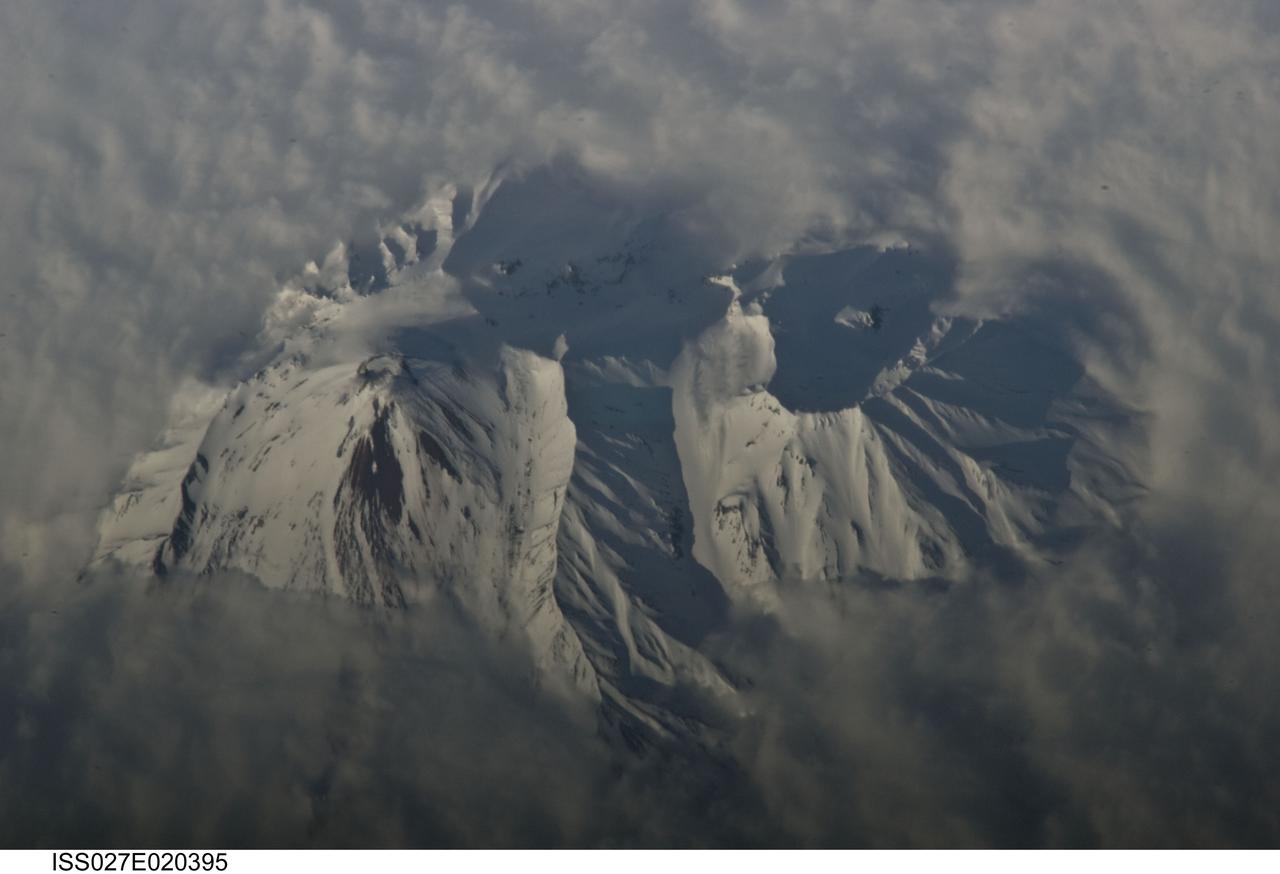
ISS027-E-020395 (2 May 2011) --- Avachinsky Volcano, Kamchatka Peninsula, Russia is featured in this image photographed by an Expedition 27 crew member on the International Space Station. The Kamchatka Peninsula, located along the Pacific ?ring of fire?, includes more than 100 identified volcanoes. While most of these volcanoes are not actively erupting, many are considered to be dangerous due to their past eruptive history and proximity to population centers and air travel corridors. This detailed photograph highlights the summit crater and snow-covered upper slopes of the Avachinsky stratovolcano exposed above a surrounding cloud deck. The 2,741-meter-high Avachinsky volcano has an extensive historical and geological record of eruptions with the latest activity observed in 2008. The large city of Petropavlovsk, Kamchatka is located approximately 25 kilometers to the southwest and, according to scientists, is built over approximately 30,000 ? 40,000 year old debris avalanche deposits that originated from Avachinsky ? suggesting that the city may be at risk from a similar hazard in the future. To the southeast (right), the large breached crater of Kozelsky Volcano is also visible above the clouds. Kozelsky is a parasitic cone, formed by the eruption of material from vents along the flank of Avachinsky volcano. The topography of the volcanoes is accentuated by shadows produced by the relatively low sun angle, and by the oblique viewing angle. Oblique images are taken looking outwards at an angle from the International Space Station, rather than the ?straight down? (or nadir) view typical of most orbital Earth-observing sensor systems.