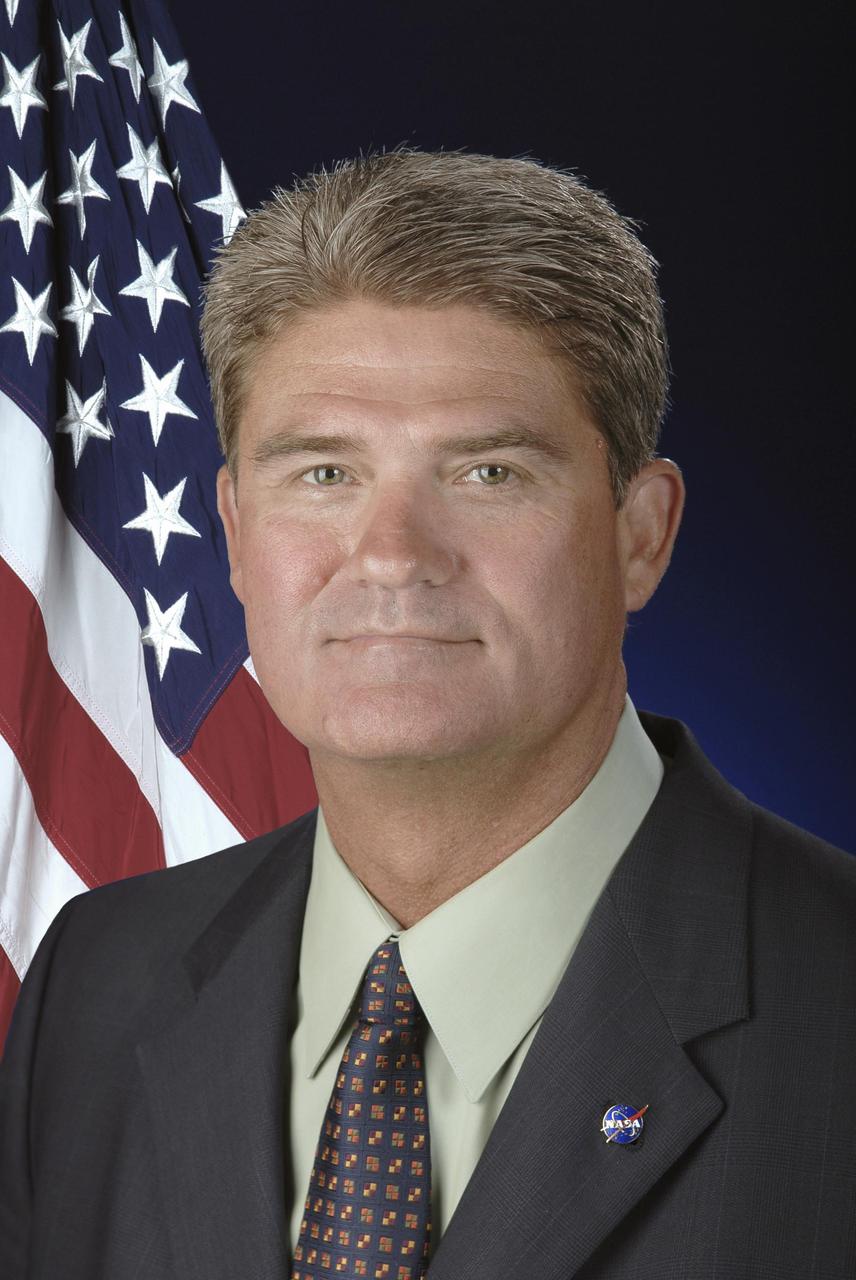
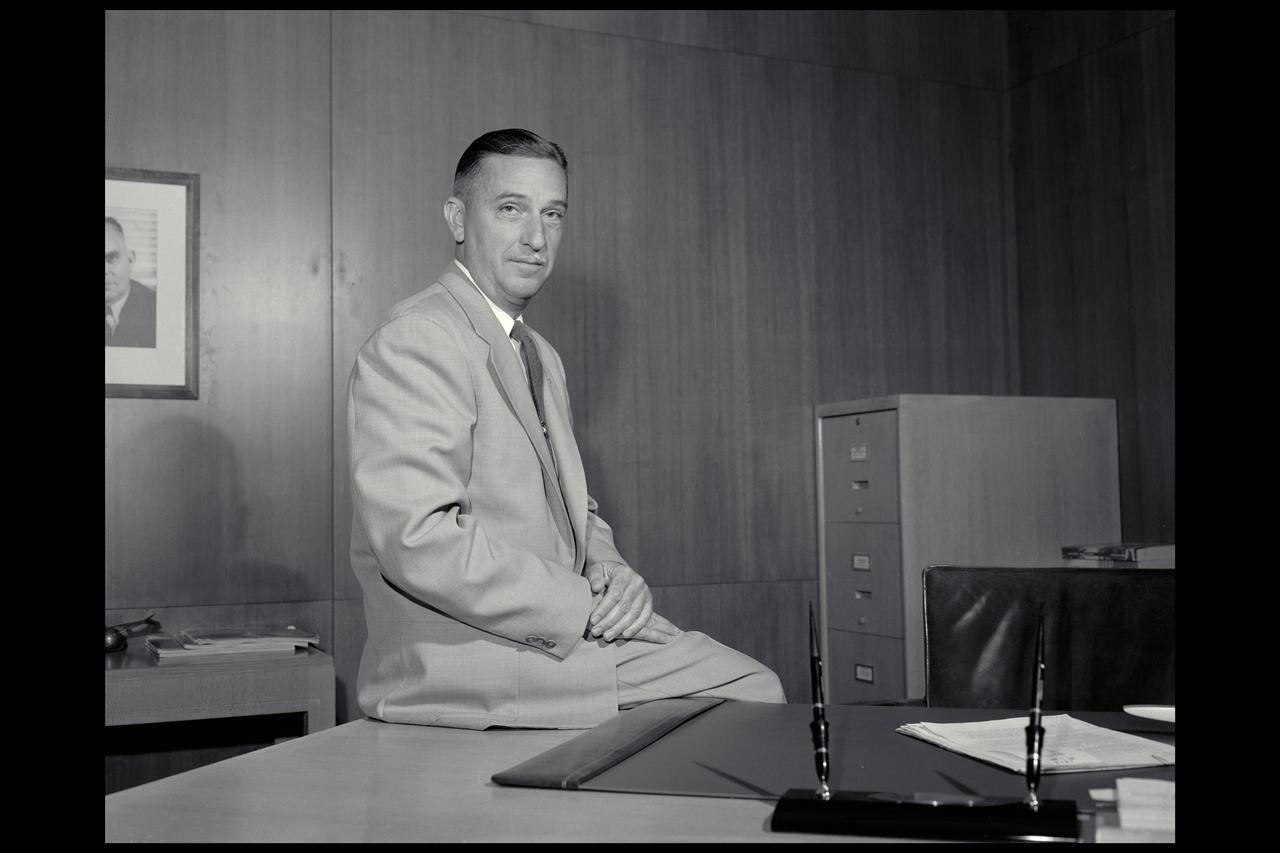
Official portrait of William W. "Bill" Parsons, director of the John F. Kennedy Space Center.
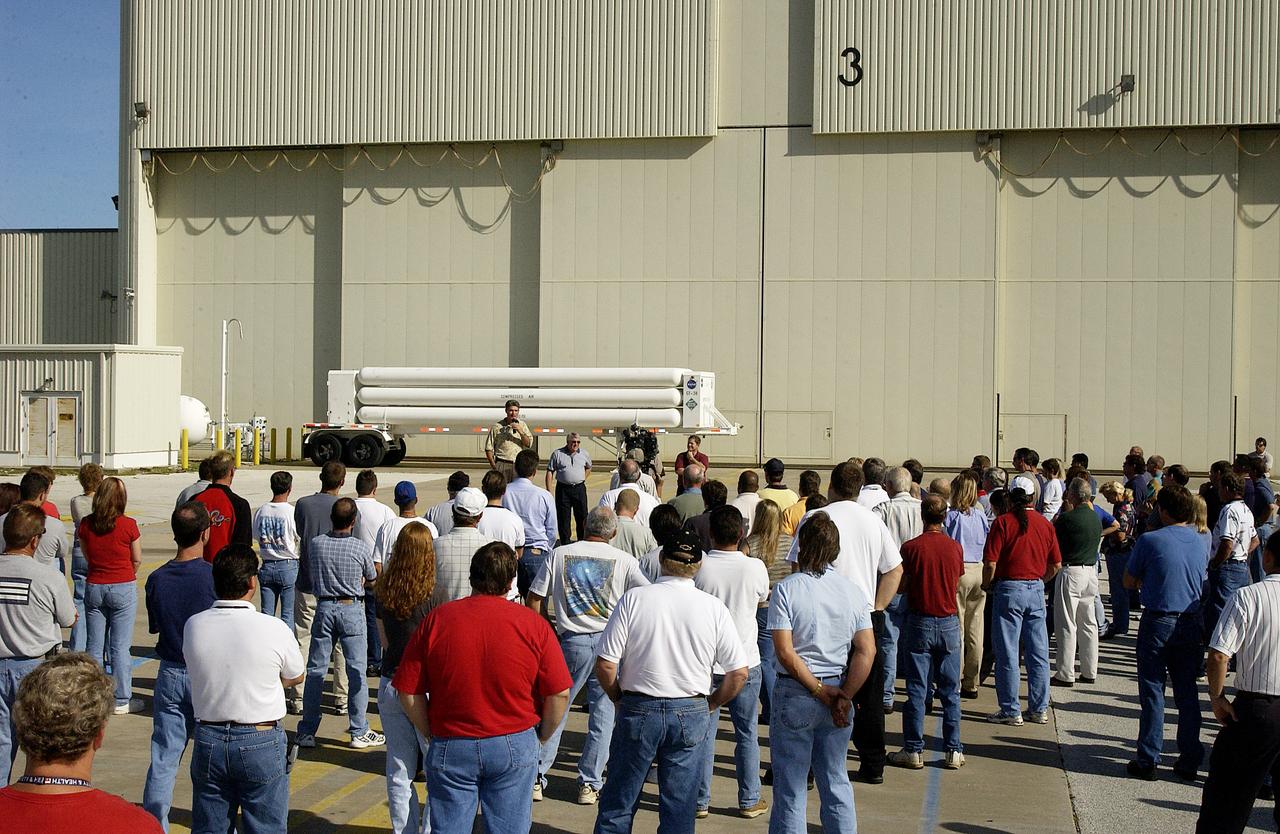
Shuttle Program Manager Bill Parsons praises the Discovery processing team for their successful power-up of the vehicle after Orbiter Major Modifications (OMM). The OMM work ranged from wiring, control panels and black boxes to gaseous and fluid systems tubing and components. These systems were deserviced, disassembled, inspected, modified, reassembled, checked out and reserviced, as were most other systems onboard. The work included the installation of the Multifunction Electronic Display Subsystem (MEDS) - a state-of-the-art “glass cockpit.”
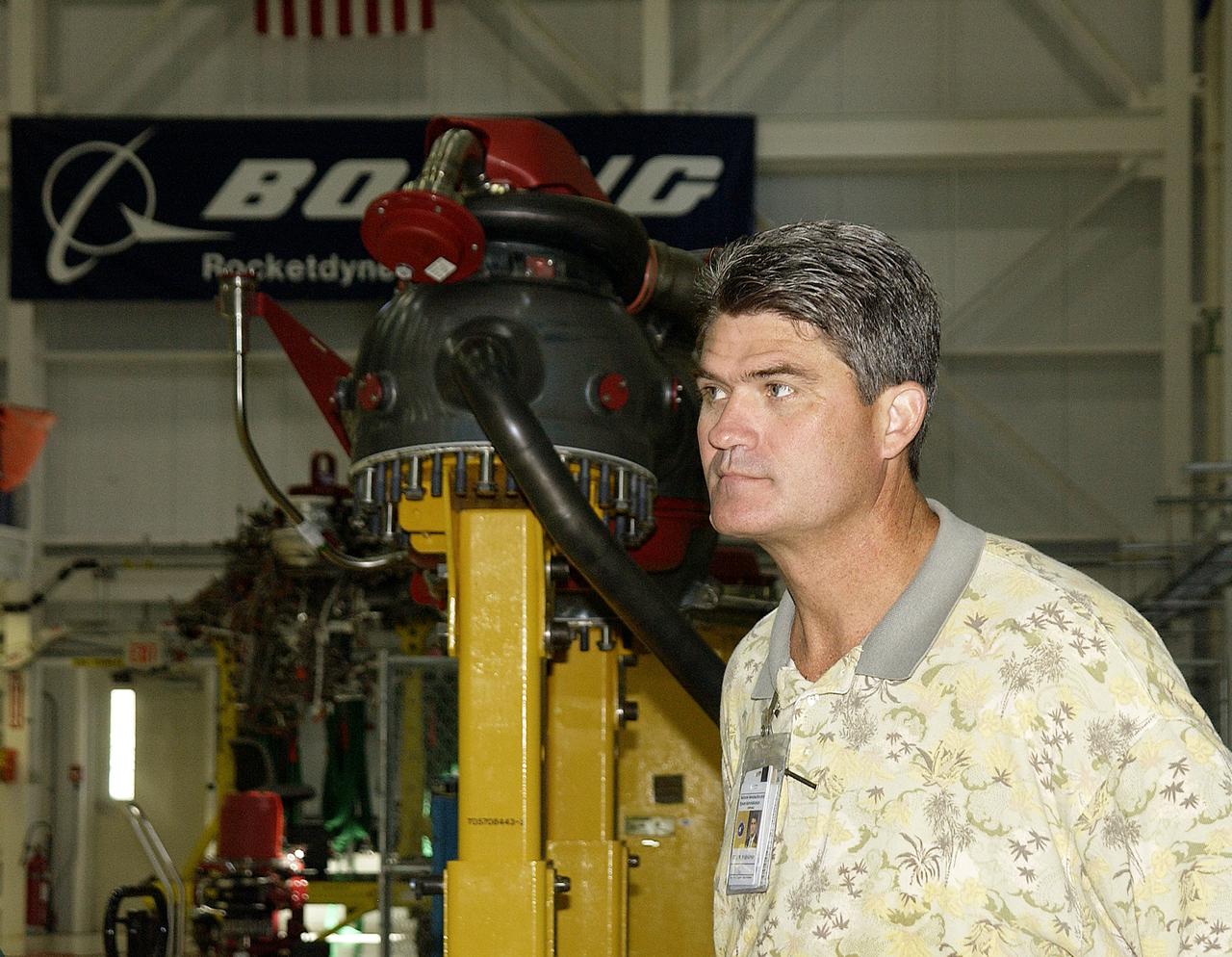
In the Orbiter Processing Facility, Shuttle Program Manager Bill Parsons, center, is briefed on Orbiter Major Modifications (OMM) that were recently completed on Discovery. The OMM work ranged from wiring, control panels and black boxes to gaseous and fluid systems tubing and components. These systems were deserviced, disassembled, inspected, modified, reassembled, checked out and reserviced, as were most other systems onboard. The work included the installation of the Multifunction Electronic Display Subsystem (MEDS) - a state-of-the-art “glass cockpit.”
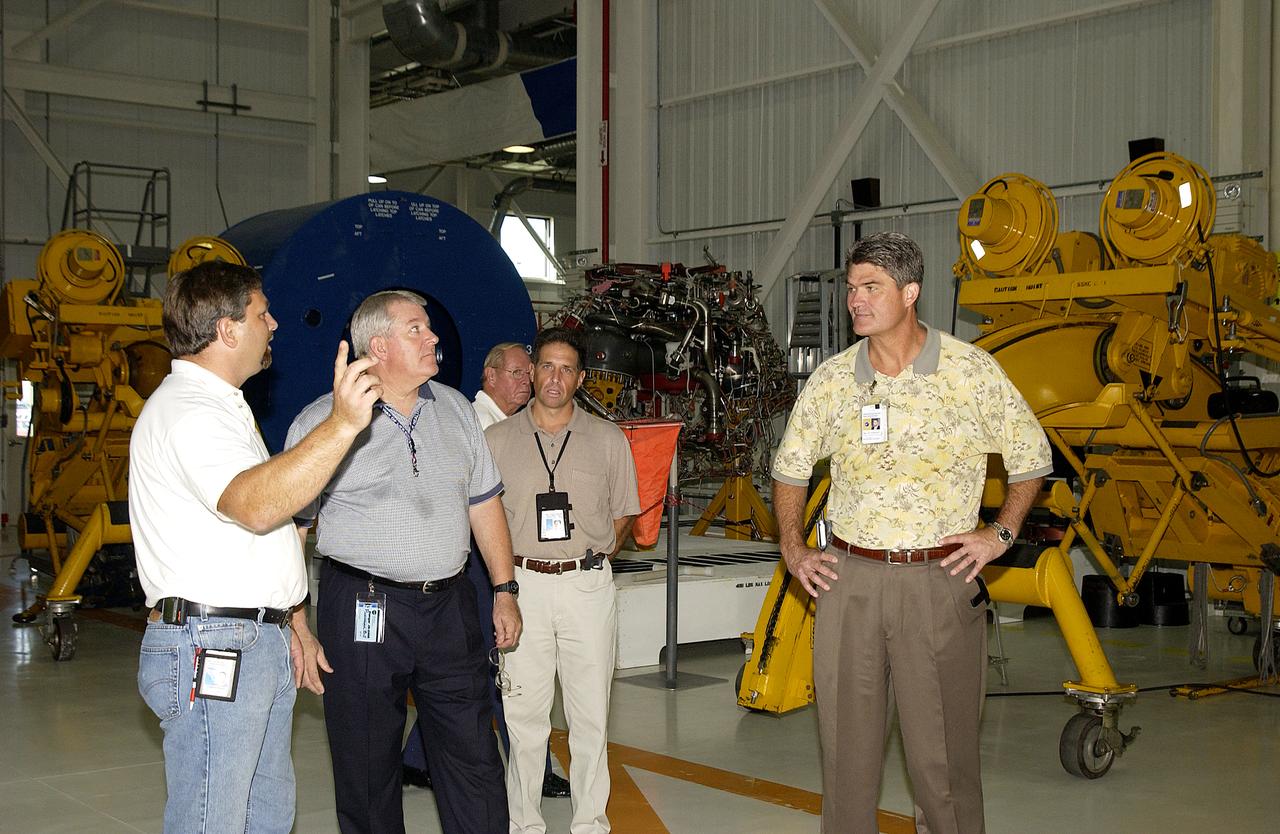
Shuttle Program Manager Bill Parsons, right, is briefed on Orbiter Major Modifications (OMM) that were recently completed on Discovery. From left are a Boeing representative; Bill Pickavance, vice president and deputy program manager, Florida operations, United Space Alliance (USA); and Mark Nappi, deputy associate program manager, ground operations, USA. The OMM work ranged from wiring, control panels and black boxes to gaseous and fluid systems tubing and components. These systems were deserviced, disassembled, inspected, modified, reassembled, checked out and reserviced, as were most other systems onboard. The work included the installation of the Multifunction Electronic Display Subsystem (MEDS) - a state-of-the-art “glass cockpit.”
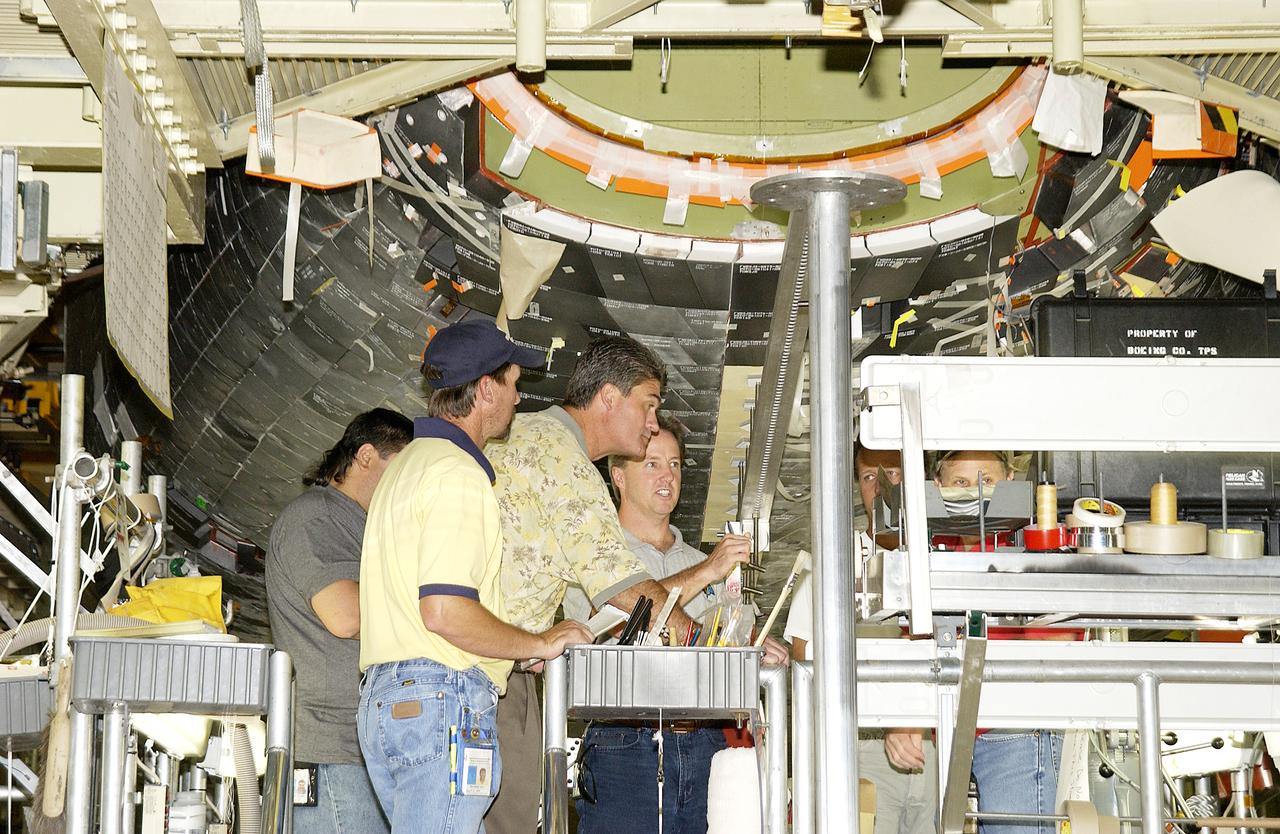
United Space Alliance workers explain tile installation around Discovery’s nose landing gear to Shuttle Program Manager Bill Parsons (center). Discovery has been undergoing Orbiter Major Modifications. The OMM work ranged from wiring, control panels and black boxes to gaseous and fluid systems tubing and components. These systems were deserviced, disassembled, inspected, modified, reassembled, checked out and reserviced, as were most other systems onboard. The work included the installation of the Multifunction Electronic Display Subsystem (MEDS) - a state-of-the-art “glass cockpit.”
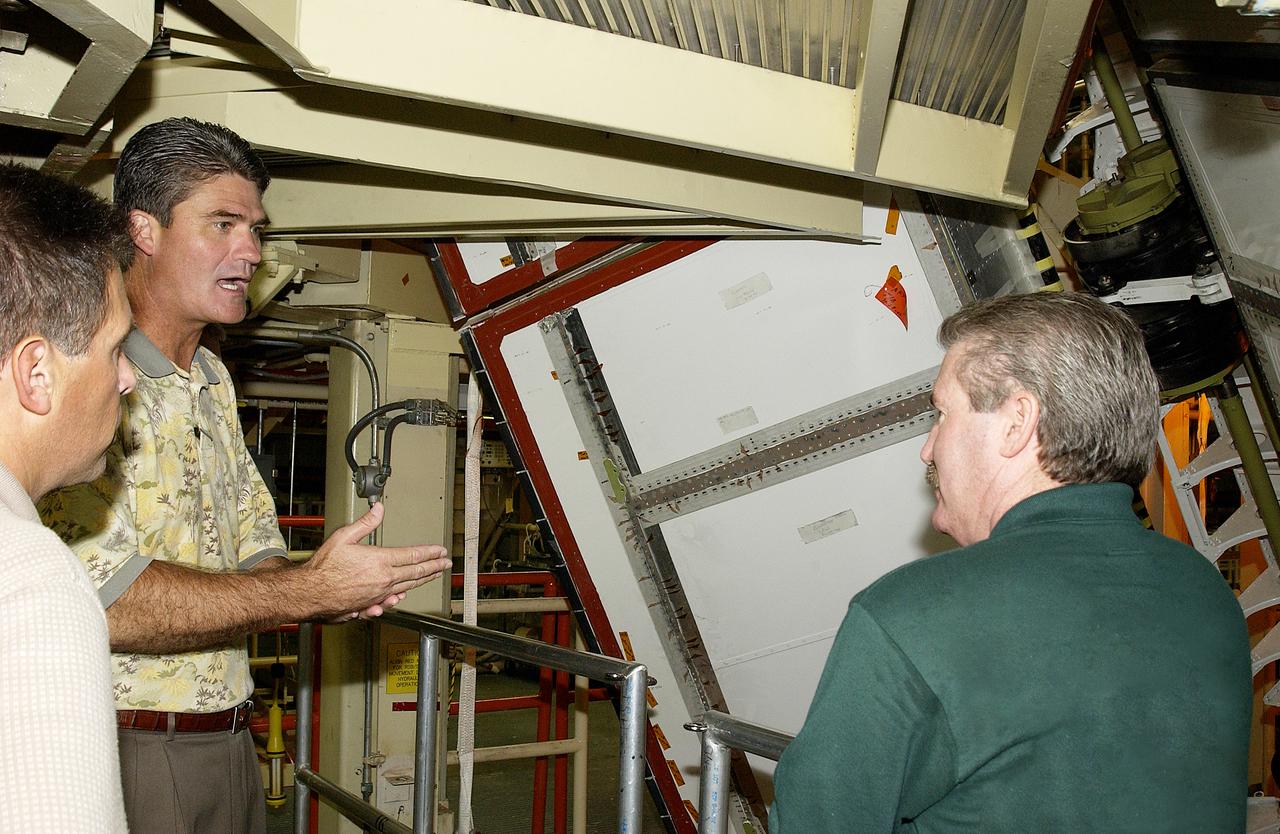
Mark McGee (right) shows the bead blasting completed on the rudder speed brake on orbiter Discovery to Shuttle Program Manager Bill Parsons (center). McGee is manager, Orbiter Processing Facility, with United Space Alliance. At left is Mark Nappi, deputy associate program manager, ground operations, USA. The work was part of Orbiter Major Modifications (OMM) that were recently completed on Discovery. The OMM work ranged from wiring, control panels and black boxes to gaseous and fluid systems tubing and components. These systems were deserviced, disassembled, inspected, modified, reassembled, checked out and reserviced, as were most other systems onboard. The work included the installation of the Multifunction Electronic Display Subsystem (MEDS) - a state-of-the-art “glass cockpit.”
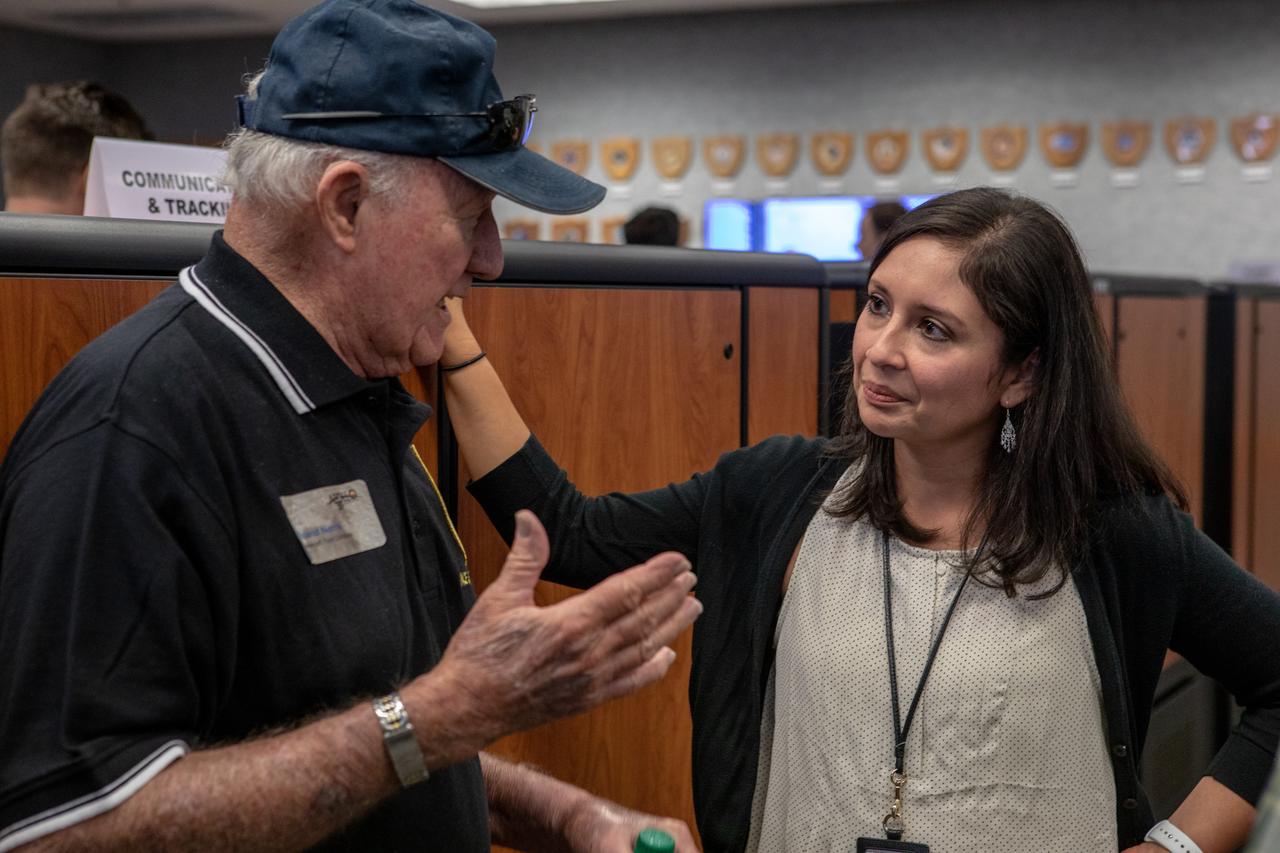
On July 16, 2019, the 50th anniversary of the Apollo 11 launch to the Moon, Jessica Parsons, right, technical assistant to the Artemis 1 launch director, talks with a member of the Apollo 11 launch team in Launch Control Center Firing Room 1 at NASA's Kennedy Space Center in Florida.
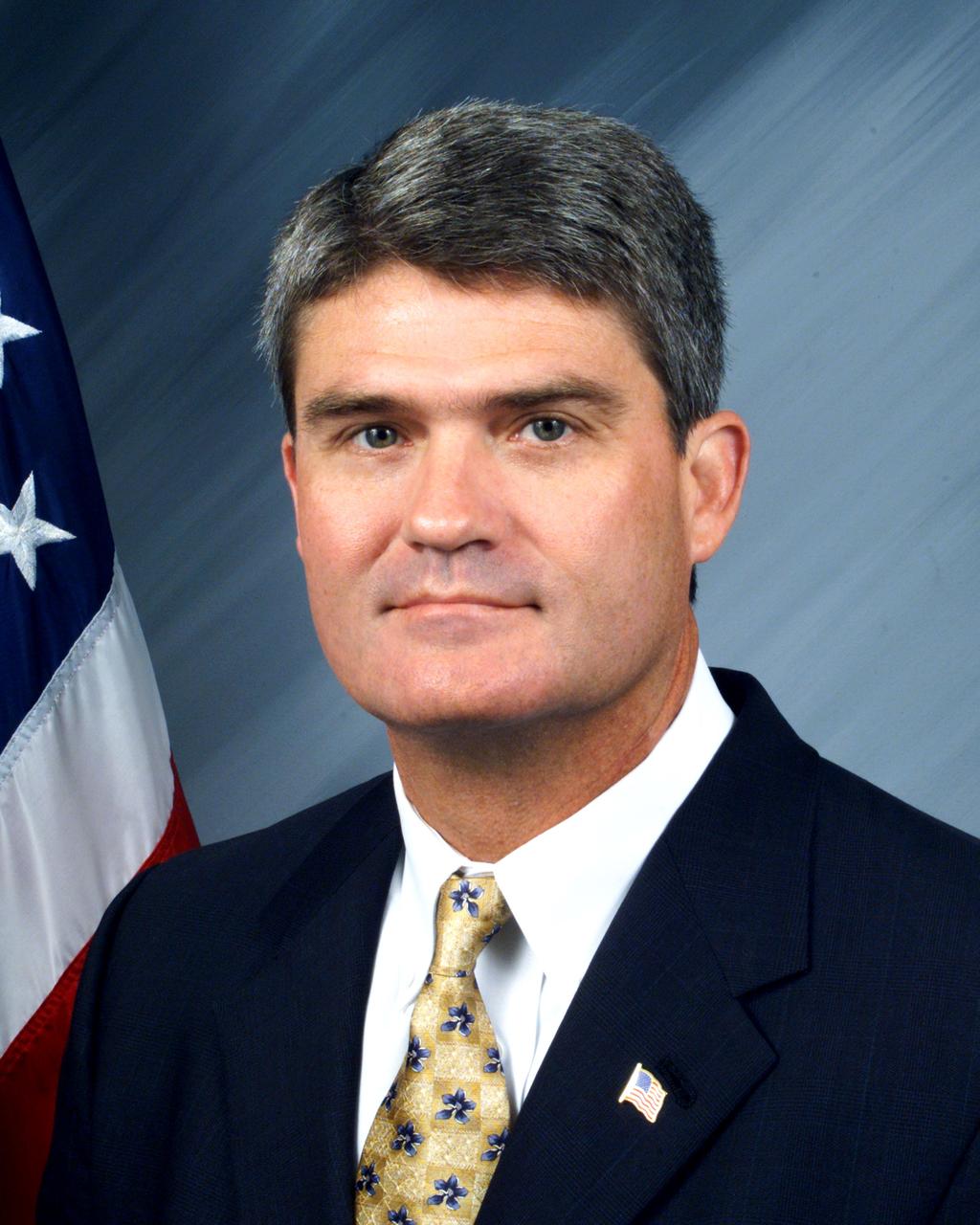
KENNEDY SPACE CENTER, FLA. - William (Bill) W. Parsons, named Space Shuttle Program Manager, Johnson Space Center, Houston, in May 2003.
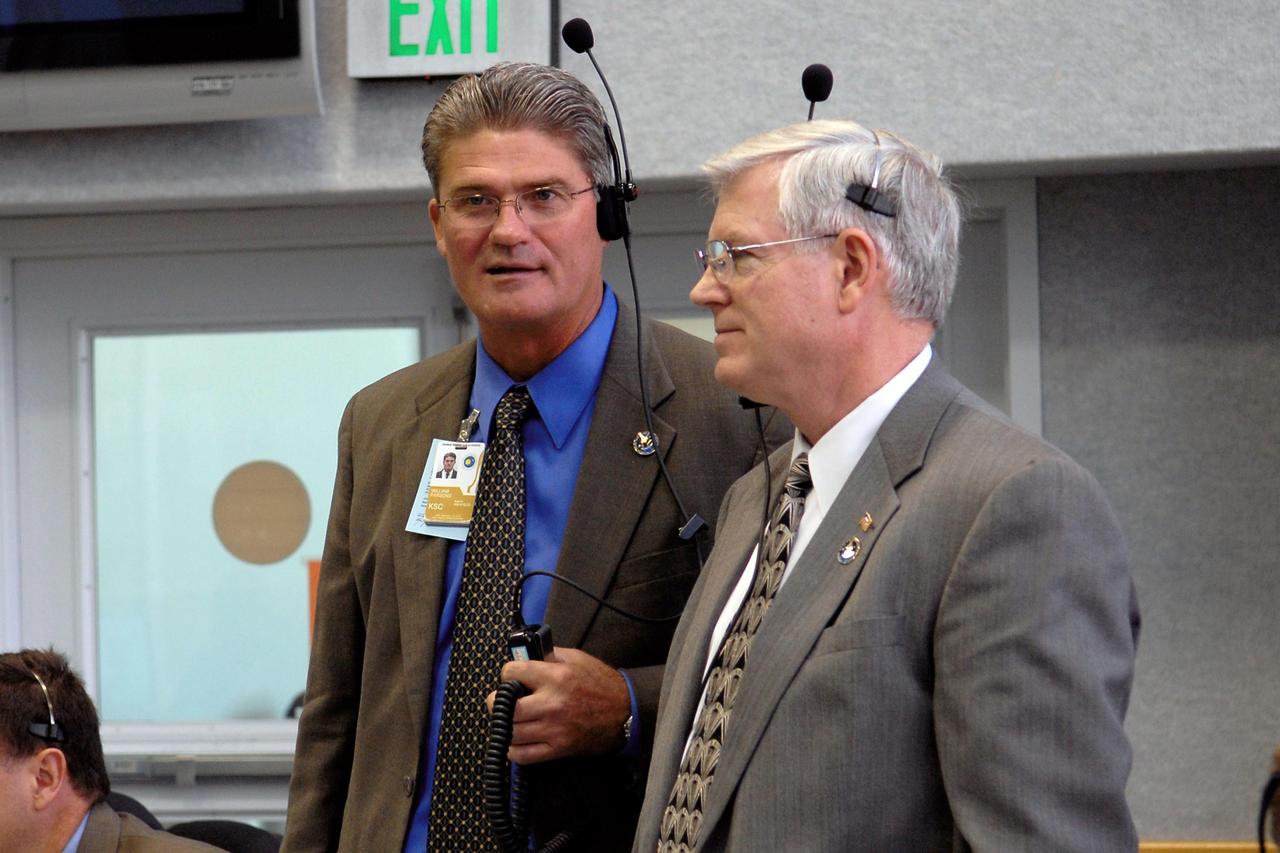
STS120-S-012 (23 Oct. 2007) --- In the firing room of the Launch Control Center at NASA's Kennedy Space Center, KSC Director Bill Parsons (left) and Johnson Space Center Director Michael Coats wait for the final countdown of Space Shuttle Discovery on mission STS-120. Liftoff was on time at 11:38:19 a.m. (EDT). Discovery carries the Italian-built U.S. Node 2, called Harmony. During the 14-day STS-120 mission, the crew will install Harmony and move the P6 solar arrays to their permanent position and deploy them.
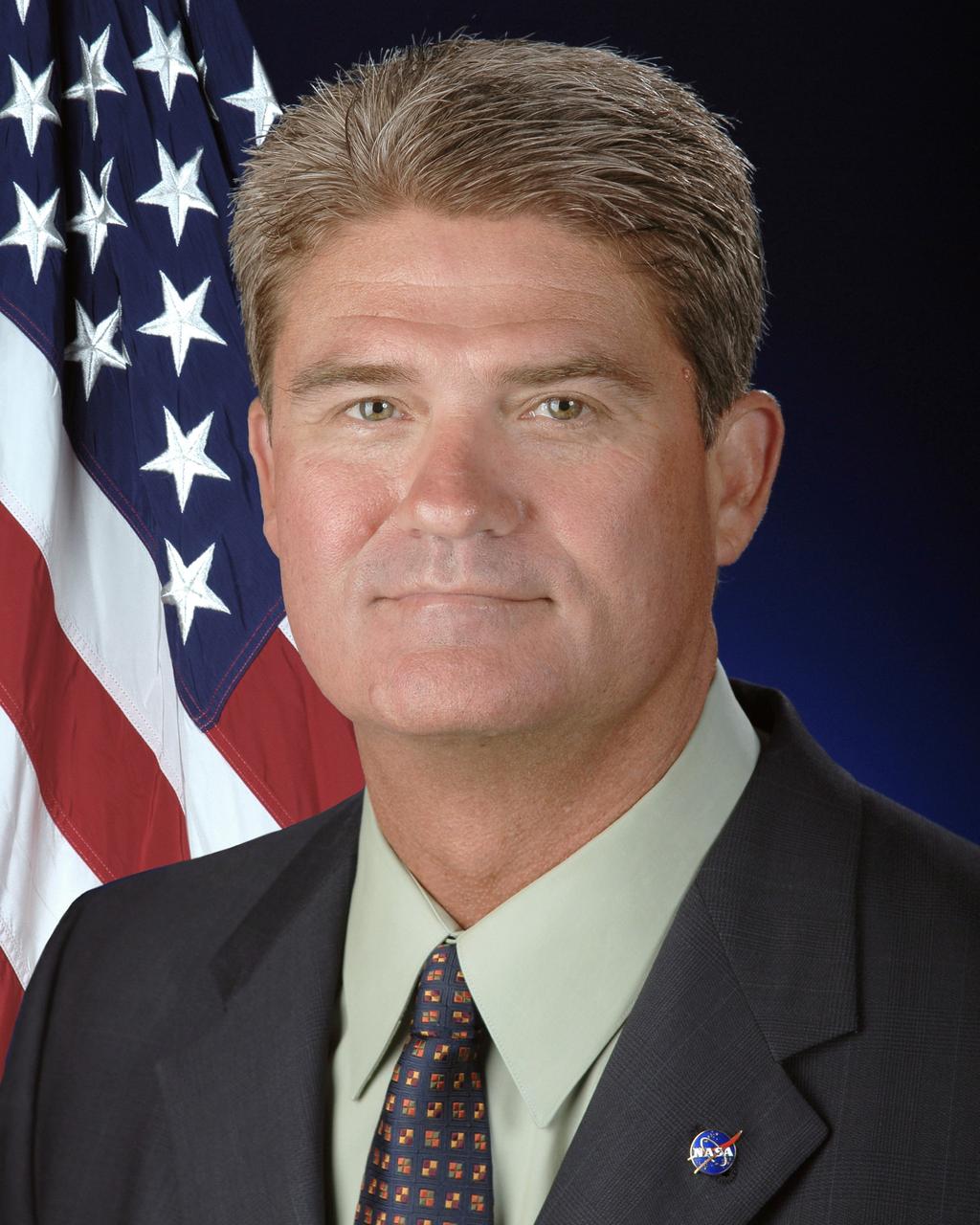
KENNEDY SPACE CENTER, FLA. - Official portrait of William W. "Bill" Parsons, director of the John F. Kennedy Space Center. Photo credit: NASA/Kim Shiflett
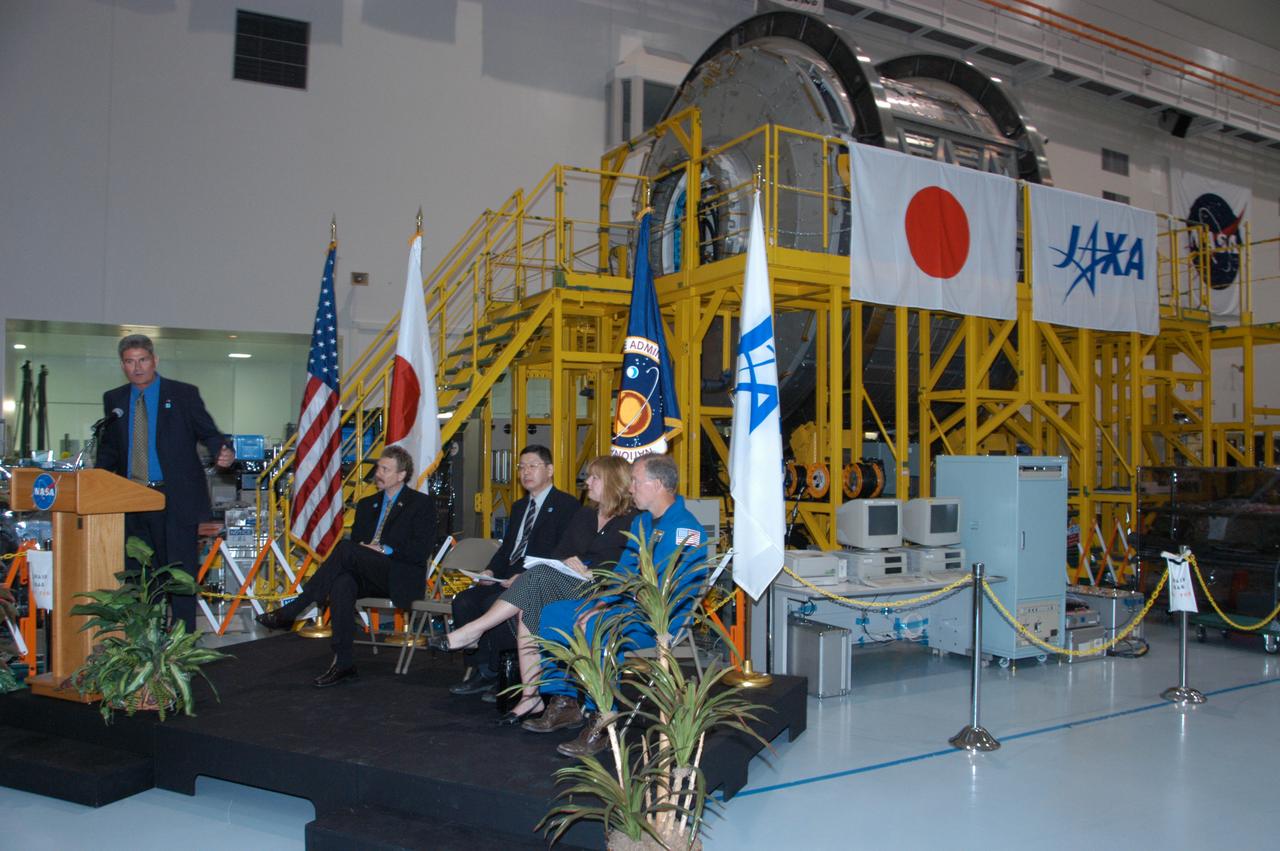
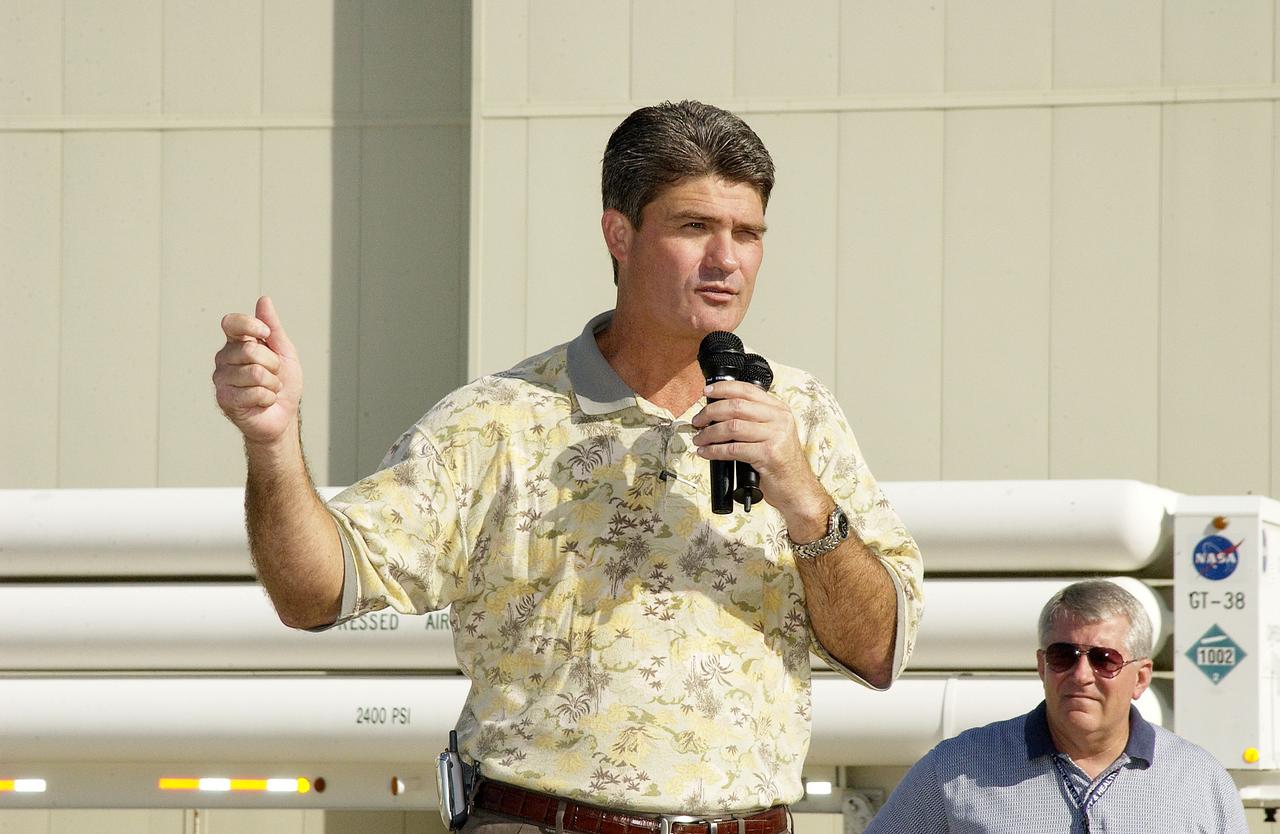
In the Space Station Processing Facility, NASA and Japanese Aerospace and Exploration Agency (JAXA) officials welcome the arrival of the Experiment Logistics Module Pressurized Section for the Japanese Experiment Module, or JEM, to the Kennedy Space Center. At the podium is Bill Parsons, director of Kennedy Space Center. Seated at right are Russ Romanella, director of International Space Station and Spacecraft Processing; Dr. Kichiro Imagawa, project manager of the JEM Development Project Team for JAXA; Melanie Saunders, associate manager of the International Space Station Program at Johnson Space Center; and Dominic Gorie, commander on mission STS-123 that will deliver the module to the space station. The new International Space Station component arrived at Kennedy March 12 to begin preparations for its future launch on mission STS-123. It will serve as an on-orbit storage area for materials, tools and supplies. It can hold up to eight experiment racks and will attach to the top of another larger pressurized module.
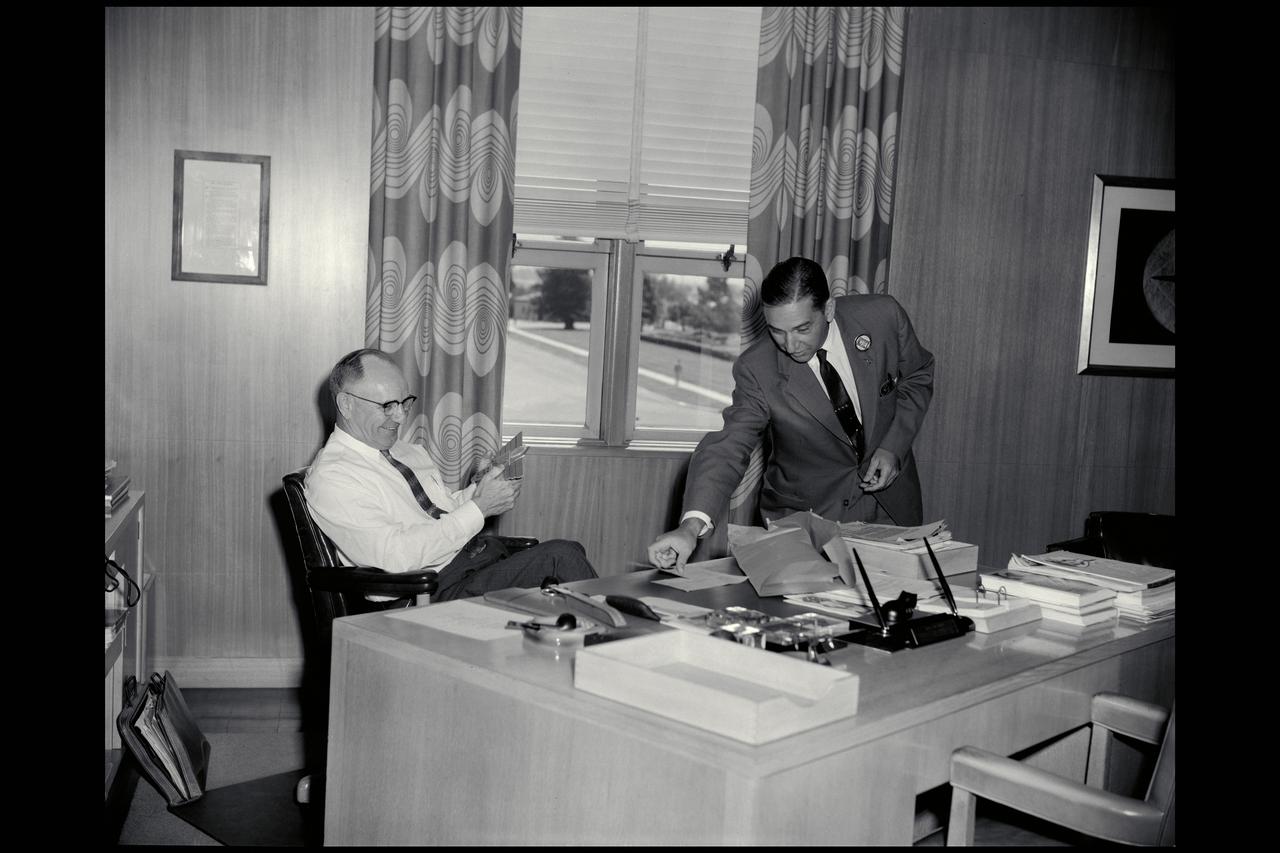
Smith J. DeFrance and J.F Parsons in Directors office
NACA Photographer John F Parsons, Ames Assistant Director
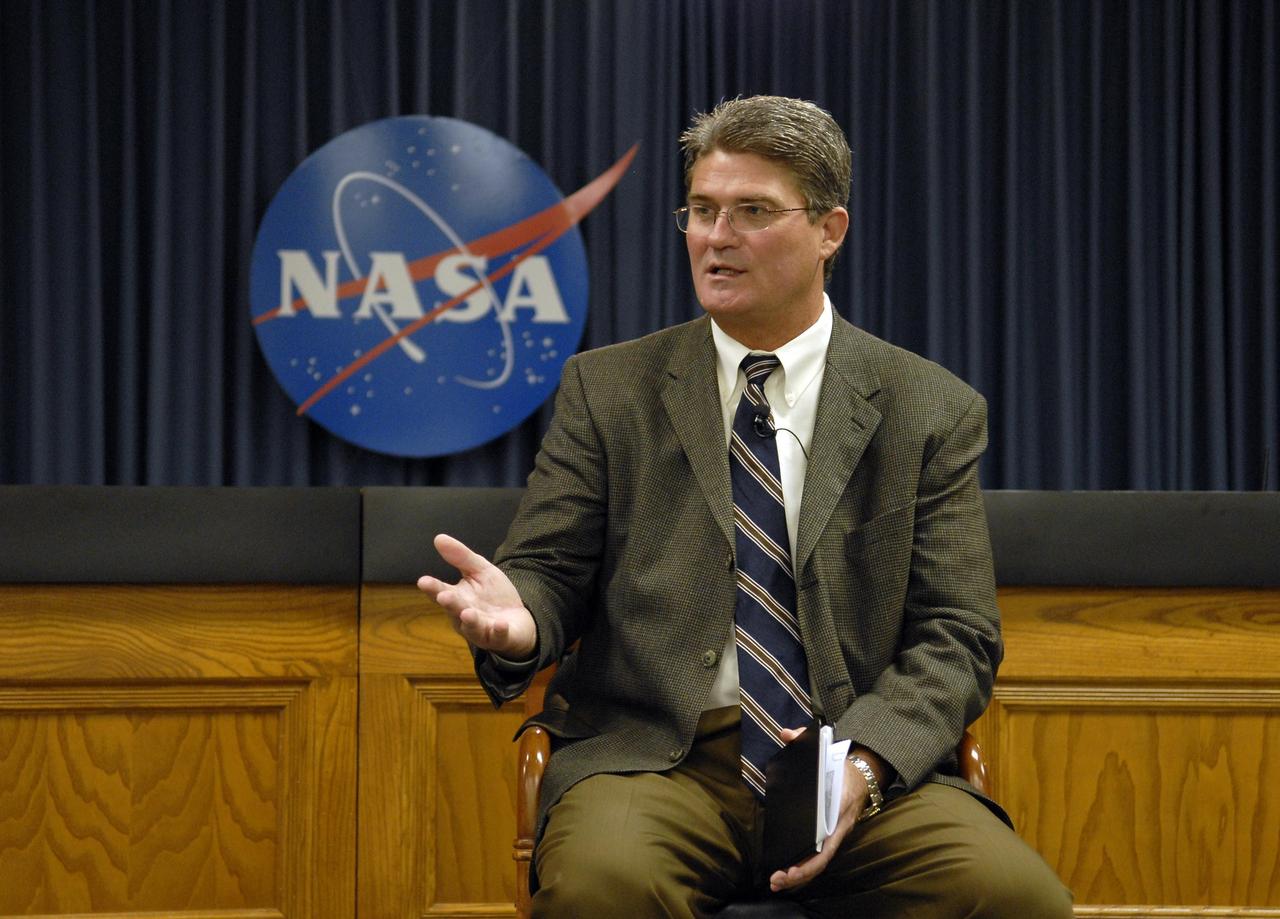
KENNEDY SPACE CENTER, FLA. -- Center Director Bill Parsons responds to a question from the media in the NASA News Center Auditorium. He used the occasion to introduce himself and his expectations for the center. Parsons took over the helm of the Kennedy Space Center on Jan. 4 as the ninth director, succeeding James W. Kennedy, who is retiring from the agency. Parsons had served as deputy director under Kennedy during 2006. In 1990, Parsons joined the NASA team at Kennedy Space Center as a launch site support manager in the Shuttle Operations Directorate. He also worked as an executive management intern and later as the shuttle flow director of the Shuttle Operations Directorate at Kennedy. In 1996, he became manager of the Space Station Hardware Integration Office at Kennedy. Photo credit: NASA/Kim Shiflett
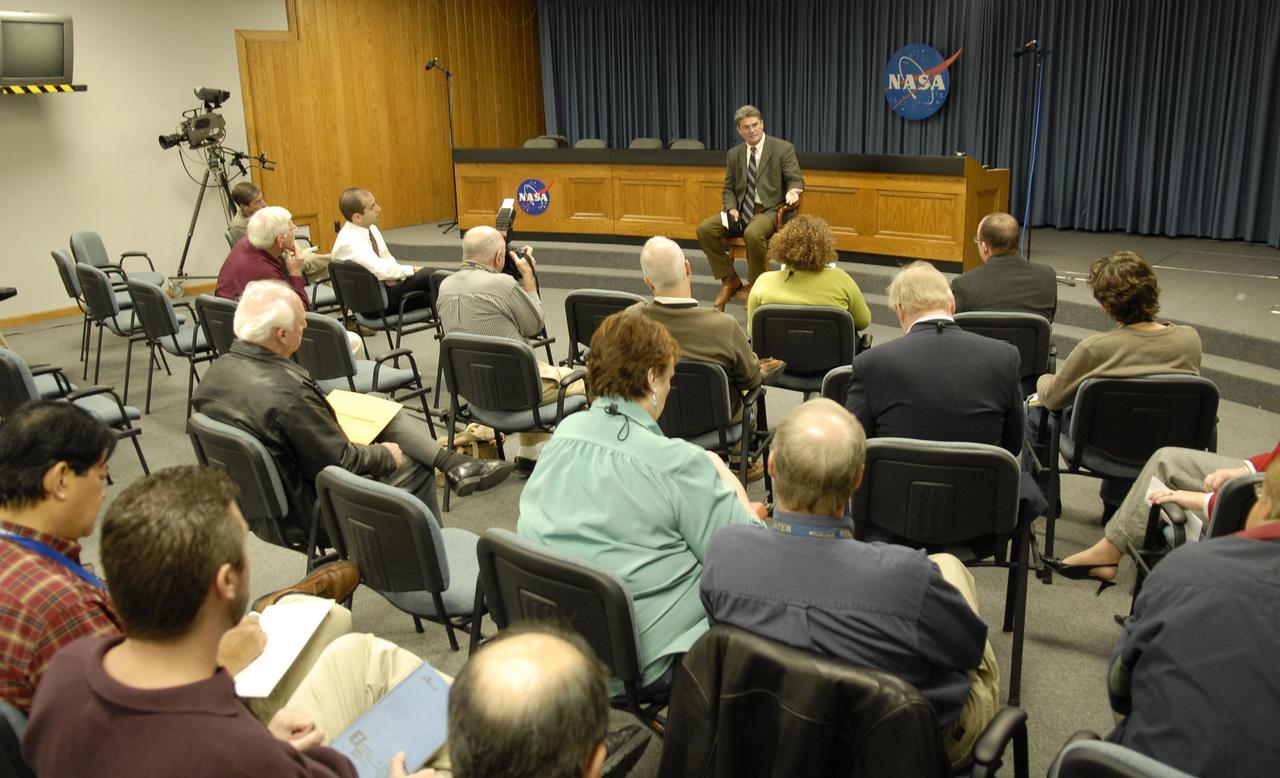
KENNEDY SPACE CENTER, FLA. -- Center Director Bill Parsons talks to the media in the NASA News Center Auditorium. He used the occasion to introduce himself and his expectations for the center. Parsons took over the helm of the Kennedy Space Center on Jan. 4 as the ninth director, succeeding James W. Kennedy, who is retiring from the agency. Parsons had served as deputy director under Kennedy during 2006. In 1990, Parsons joined the NASA team at Kennedy Space Center as a launch site support manager in the Shuttle Operations Directorate. He also worked as an executive management intern and later as the shuttle flow director of the Shuttle Operations Directorate at Kennedy. In 1996, he became manager of the Space Station Hardware Integration Office at Kennedy. Photo credit: NASA/Kim Shiflett
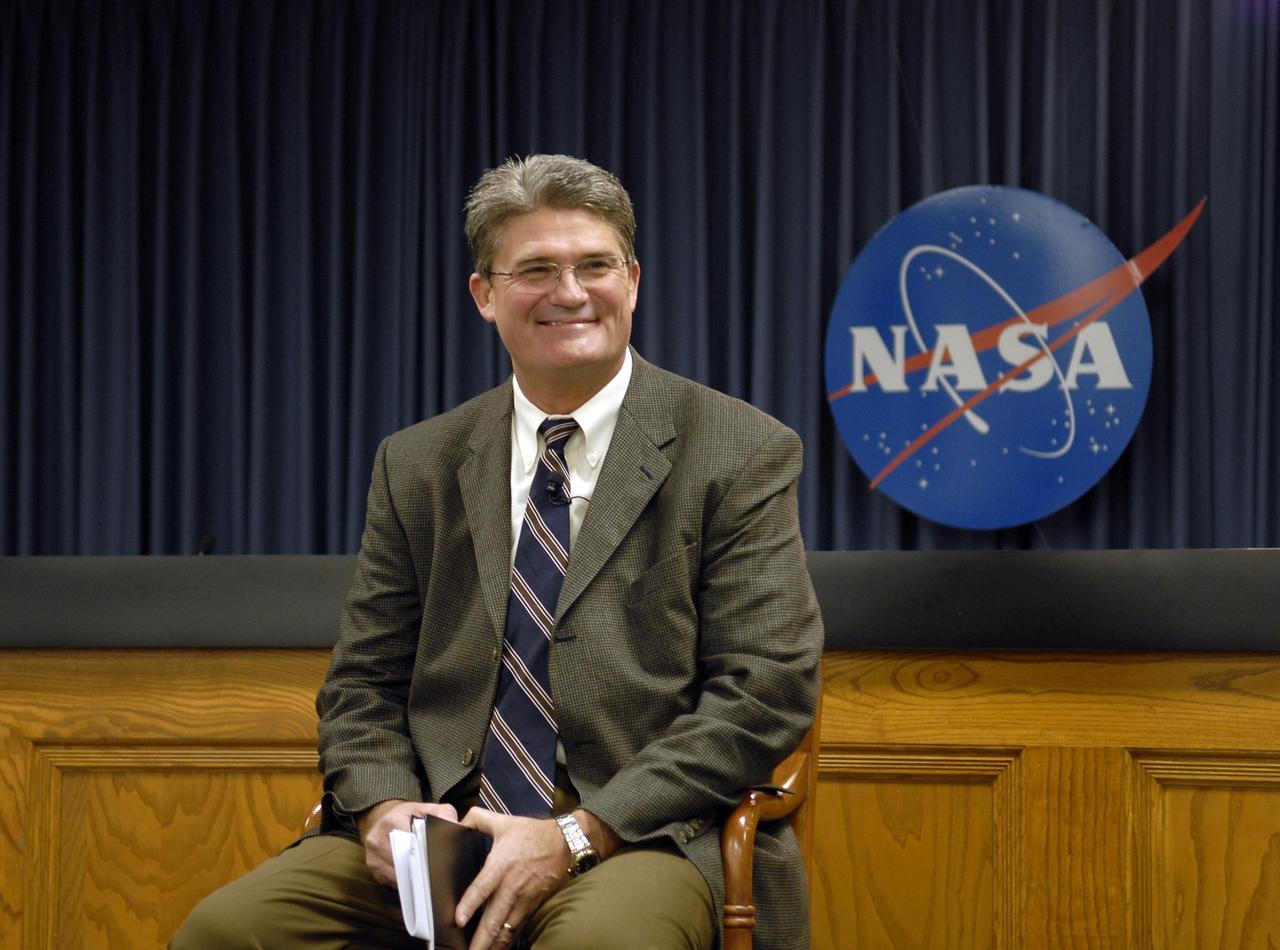
KENNEDY SPACE CENTER, FLA. -- Center Director Bill Parsons introduces himself to media in the NASA News Center Auditorium. Parsons took over the helm of the Kennedy Space Center on Jan. 4 as the ninth director, succeeding James W. Kennedy, who is retiring from the agency. Parsons had served as deputy director under Kennedy during 2006. In 1990, Parsons joined the NASA team at Kennedy Space Center as a launch site support manager in the Shuttle Operations Directorate. He also worked as an executive management intern and later as the shuttle flow director of the Shuttle Operations Directorate at Kennedy. In 1996, he became manager of the Space Station Hardware Integration Office at Kennedy. Photo credit: NASA/Kim Shiflett
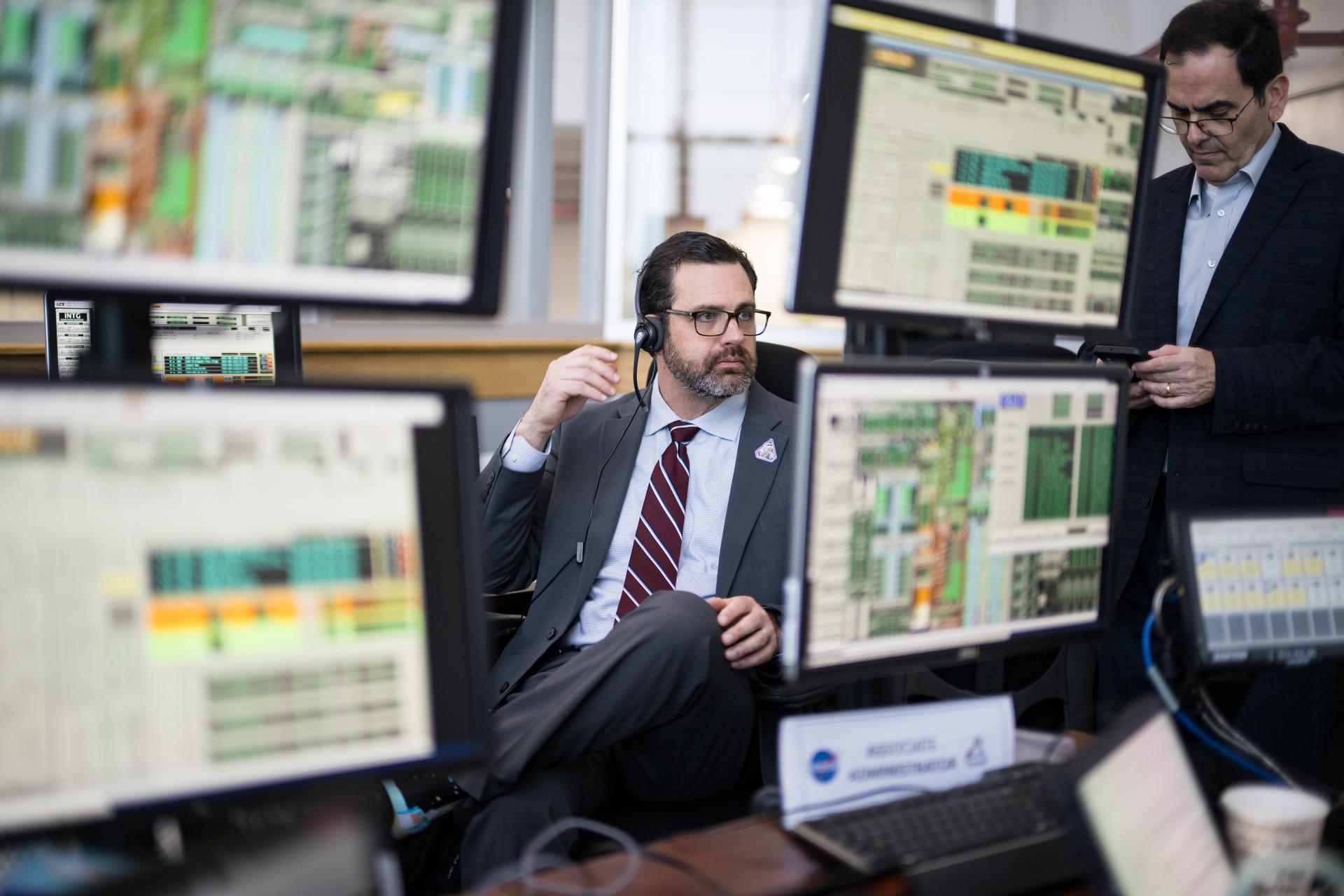
NASA Acting Deputy Associate Administrator for Moon to Mars, Jeremy Parsons, monitors the countdown of the launch of NASA’s Space Launch System (SLS) rocket and Orion spacecraft with NASA astronauts Reid Wiseman, commander; Victor Glover, pilot; Christina Koch, mission specialist; and CSA (Canadian Space Agency) astronaut Jeremy Hansen, mission specialist onboard on the Artemis II mission from Firing Room 2 of the Rocco A. Petrone Launch Control Center, Wednesday, April 1, 2026, at NASA’s Kennedy Space Center in Florida. NASA’s Artemis II mission will take Wiseman, Glover, Koch, and Hansen on a 10-day journey around the Moon and back aboard SLS rocket and Orion spacecraft from Launch Complex 39B. The quartet launched at 6:35pm EDT. Photo Credit: (NASA/Aubrey Gemignani)
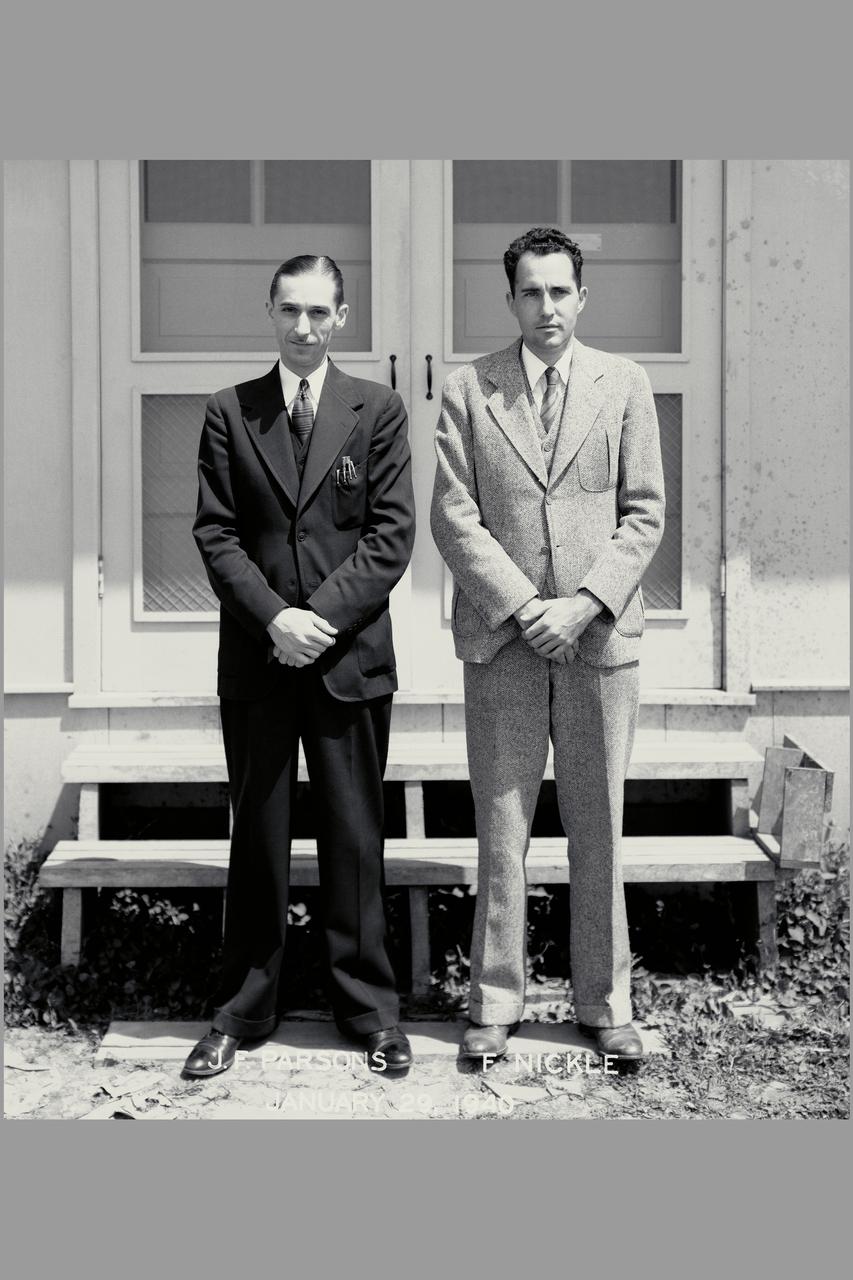
First members of the Ames staff: John F Parsons (left) and Ferril R. Nickle (right) standing in front of construction shack.
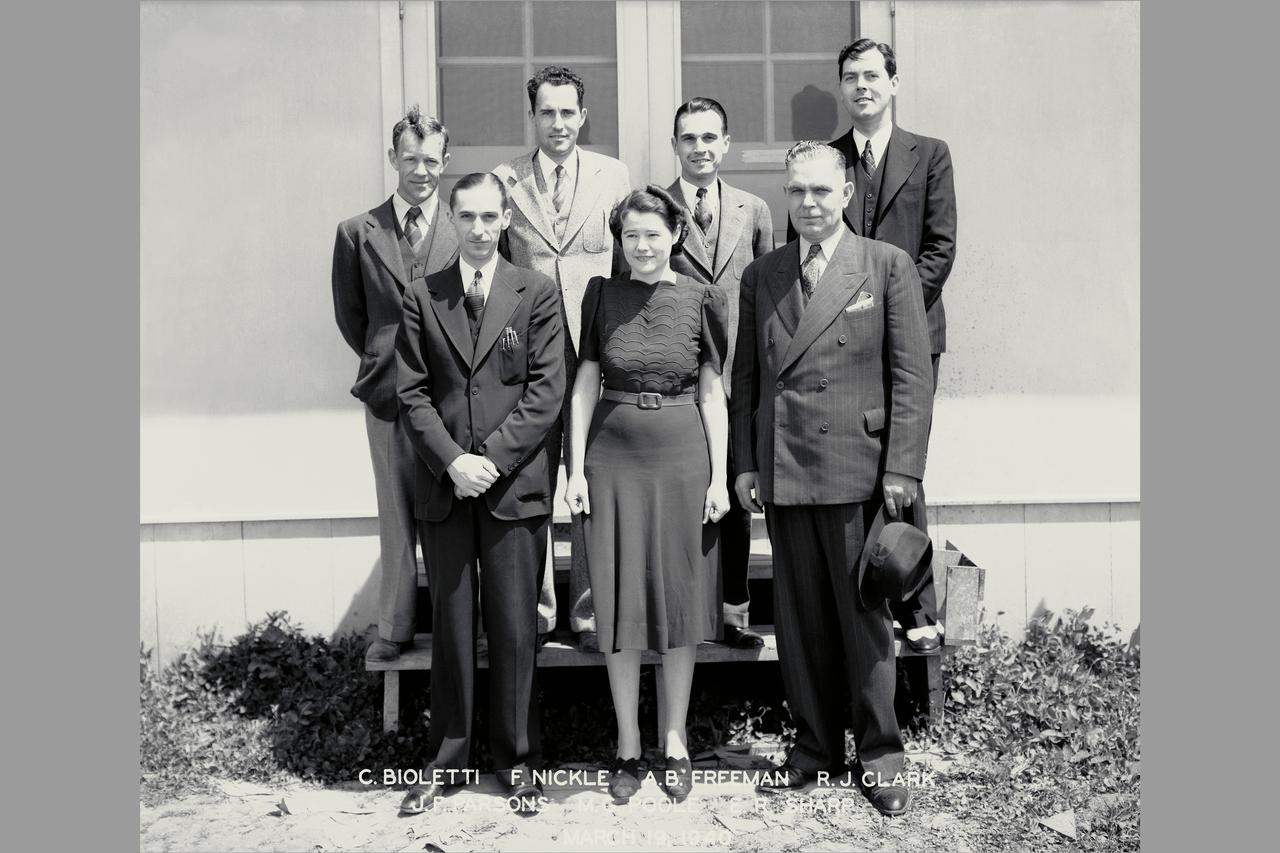
AMES PERSONNEL: Front Row; John Parsons, Manie Poole, Edward Sharp, Back Row; Carlson Bioletti, Ferril Nickle, Arthur Freeman, R J Clark
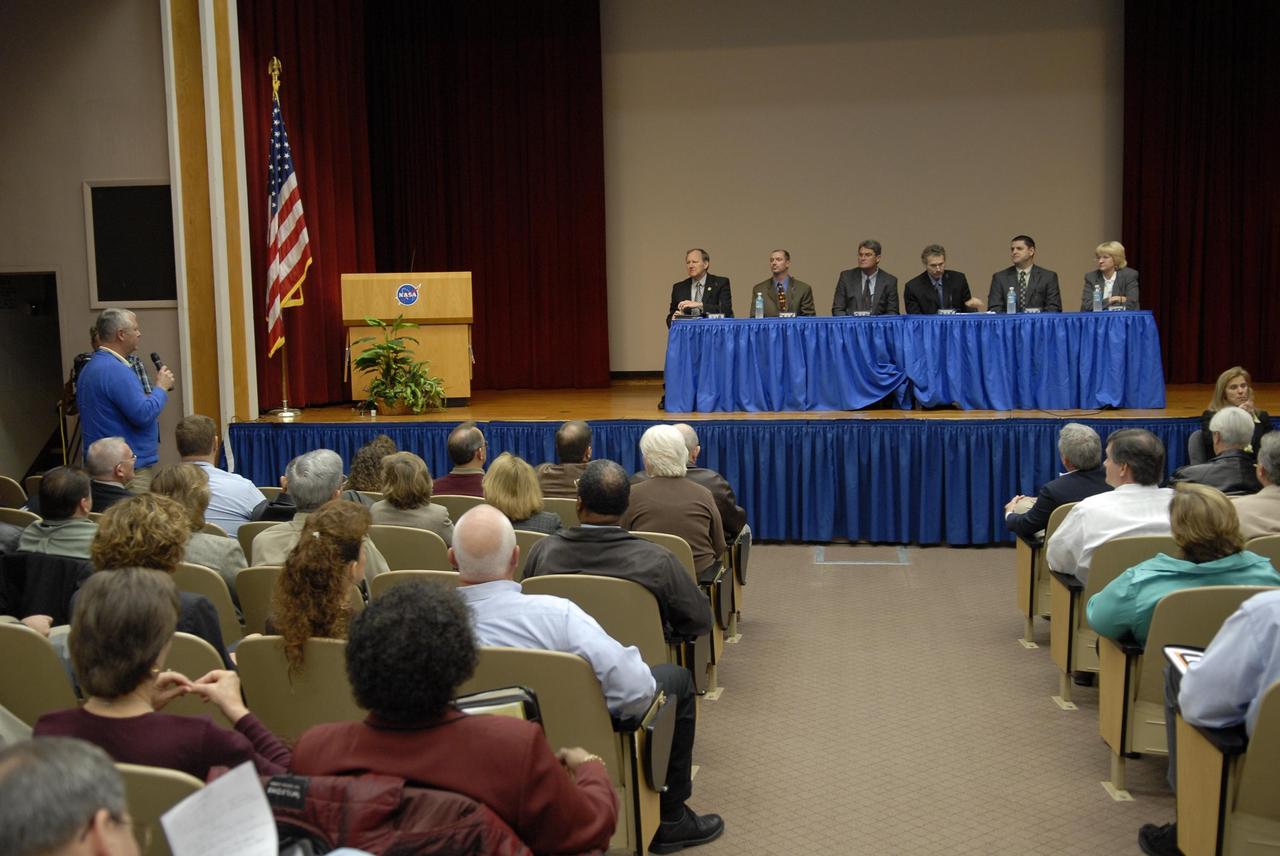
KENNEDY SPACE CENTER, FLA. -- During an all-hands meeting led by Center Director Bill Parsons (center left at the table), an employee asks for more information. Topics discussed included the year ahead at KSC. At the table on stage (from left) are Steve Francois, manager of Launch Services Program; Pepper Phillips, deputy director of the Constellation Program office; Parsons; Russ Romanella, director of the ISS & Spacecraft Processing Directorate; Jeff Angermeier, chief of the Project Control office in the Launch Vehicle Processing Directorate; and Shannon Bartell, director of NASA Safety and Mission Assurance. Photo credit: NASA/Kim Shiflett
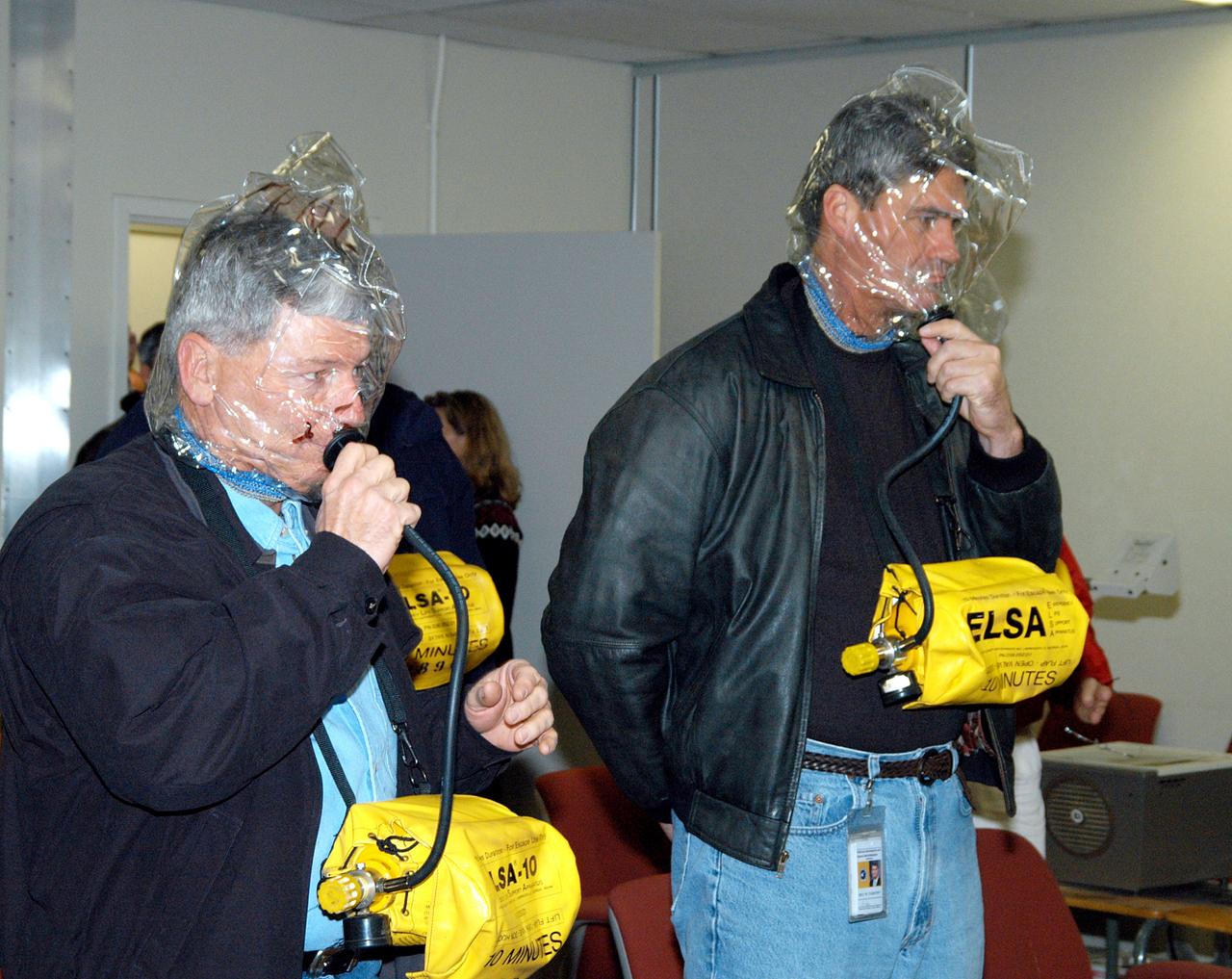
KENNEDY SPACE CENTER, FLA. -- From left, NASA Deputy Associate Administrator for Space Station and Shuttle Programs Michael Kostelnik and NASA Space Shuttle Program Manager William Parsons each don an Emergency Life Support Apparatus (ELSA) during training on the proper use of the escape devices. NASA and United Space Alliance (USA) Space Shuttle program management are participating in a leadership workday. The day is intended to provide management with an in-depth, hands-on look at Shuttle processing activities at KSC.
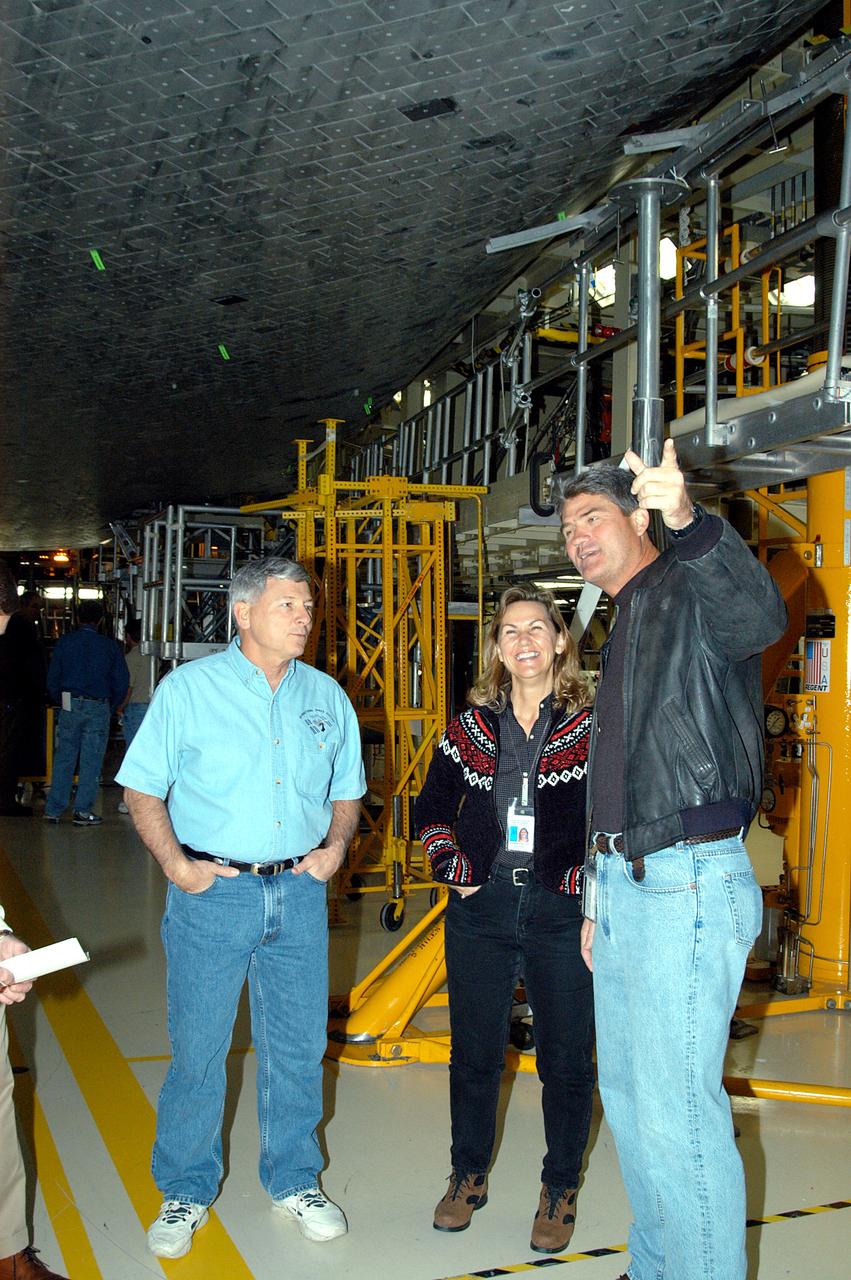
KENNEDY SPACE CENTER, FLA. -- From left, NASA Deputy Associate Administrator for Space Station and Shuttle Programs Michael Kostelnik, United Space Alliance (USA) Director of Orbiter Operations Patty Stratton, and NASA Space Shuttle Program Manager William Parsons view the underside of Shuttle Discovery in Orbiter Processing Facility Bay 3. NASA and USA Space Shuttle program management are participating in a leadership workday. The day is intended to provide management with an in-depth, hands-on look at Shuttle processing activities at KSC.

KENNEDY SPACE CENTER, FLA. -- From front row left, NASA Deputy Associate Administrator for Space Station and Shuttle Programs Michael Kostelnik and NASA Space Shuttle Program Manager William Parsons are trained on the proper use of the Emergency Life Support Apparatus (ELSA). NASA and United Space Alliance (USA) Space Shuttle program management are participating in a leadership workday. The day is intended to provide management with an in-depth, hands-on look at Shuttle processing activities at KSC.
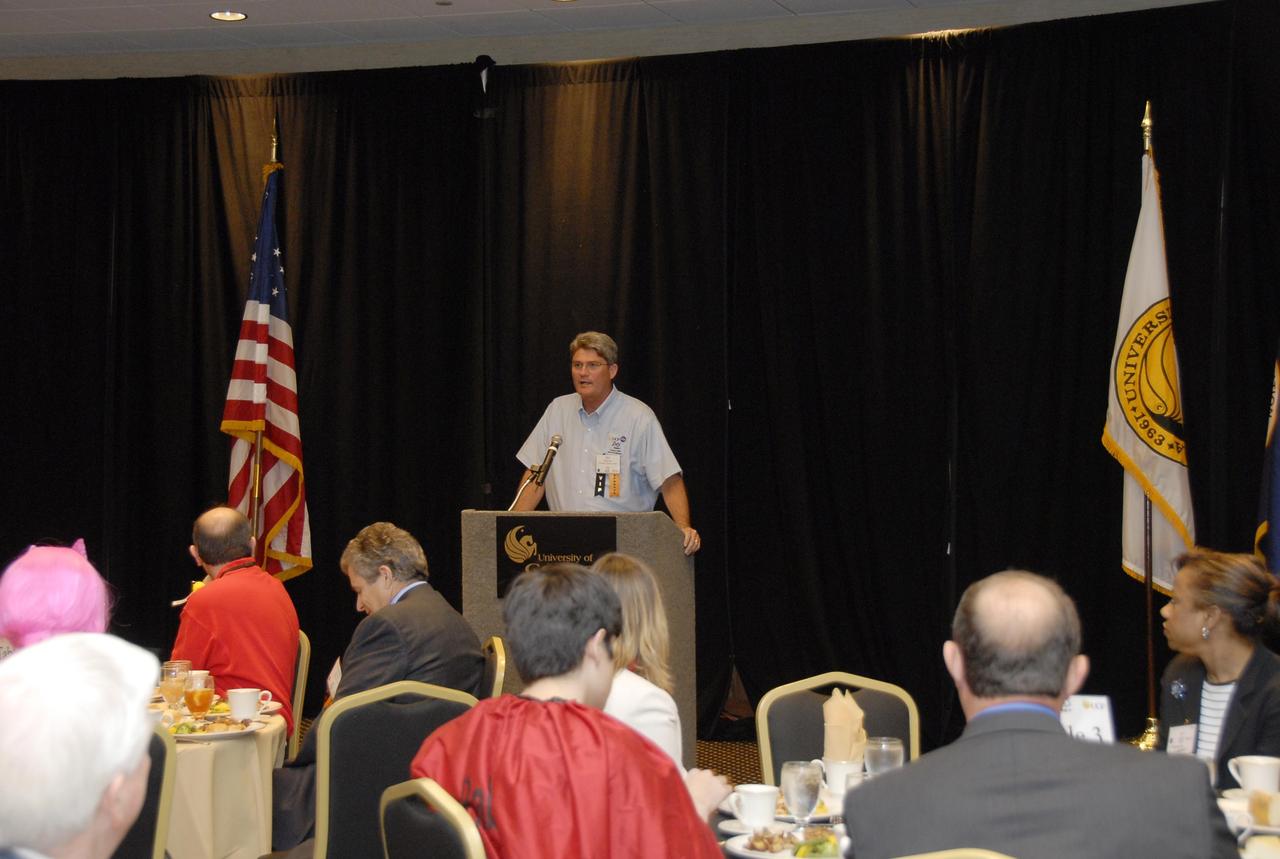
KENNEDY SPACE CENTER, FLA. -- Center Director Bill Parsons talks to guests at the VIP luncheon held during the FIRST robotics event held at the University of Central Florida Arena March 8-10. This was Parsons' first year attending the event as center director. An alumnus of UCF, Parsons also serves on the FIRST Executive Advisory Board. The FIRST, or For Inspiration and Recognition of Science and Technology, Robotics Competition challenges teams of young people and their mentors to solve a common problem in a six-week timeframe using a standard "kit of parts" and a common set of rules. Teams build robots from the parts and enter them in a series of competitions designed by FIRST founder Dean Kamen and Dr. Woodie Flowers, chairman and vice chairman of the Executive Advisory Board respectively, and a committee of engineers and other professionals. FIRST redefines winning for these students. Teams are rewarded for excellence in design, demonstrated team spirit, gracious professionalism and maturity, and ability to overcome obstacles. Scoring the most points is a secondary goal. Winning means building partnerships that last. Photo credit: NASA/Kim Shiflett
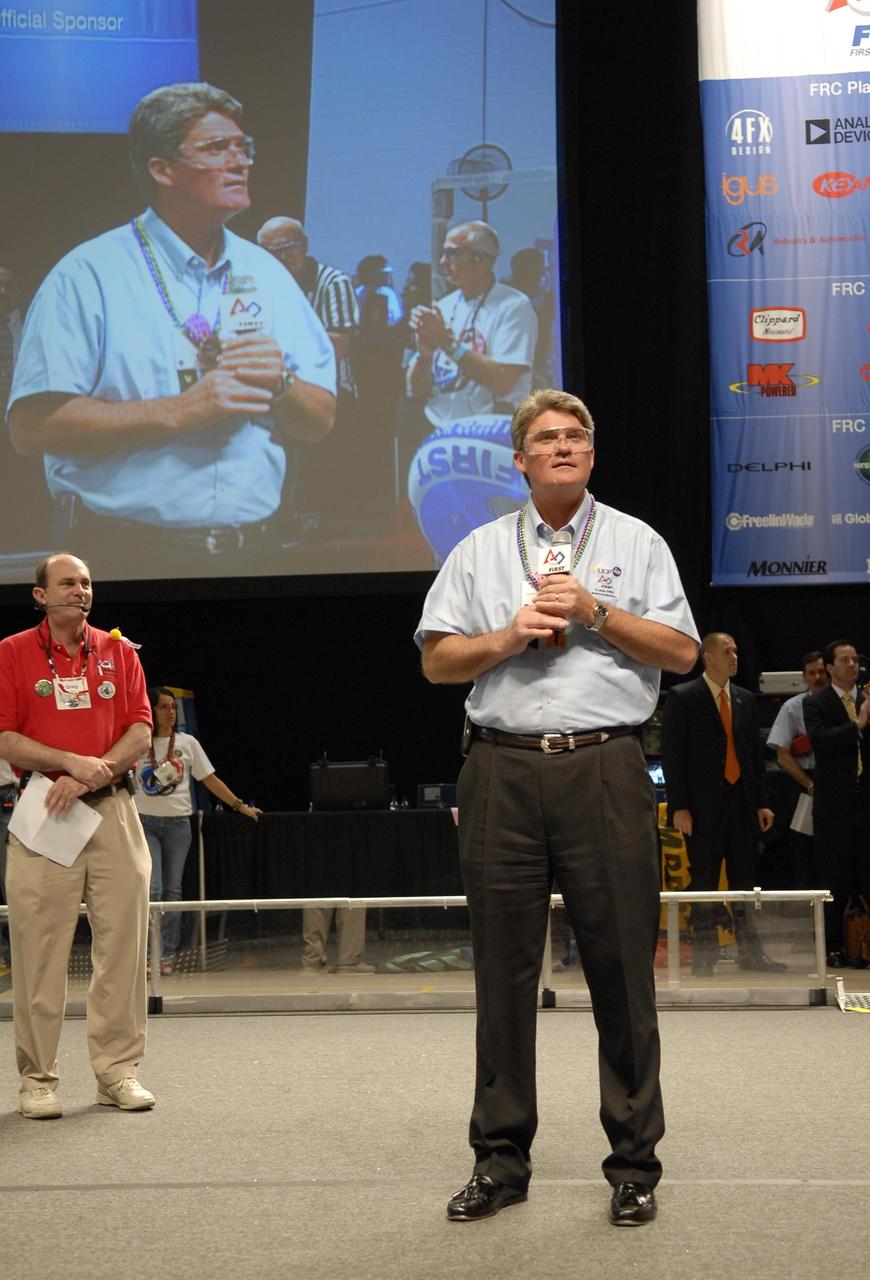
KENNEDY SPACE CENTER, FLA. -- Center Director Bill Parsons talks to an audience primarily of students during the FIRST robotics event held at the University of Central Florida Arena March 8-10. This was Parsons' first year attending the event as center director. An alumnus of UCF, Parsons also serves on the FIRST Executive Advisory Board. The FIRST, or For Inspiration and Recognition of Science and Technology, Robotics Competition challenges teams of young people and their mentors to solve a common problem in a six-week timeframe using a standard "kit of parts" and a common set of rules. Teams build robots from the parts and enter them in a series of competitions designed by FIRST founder Dean Kamen and Dr. Woodie Flowers, chairman and vice chairman of the Executive Advisory Board respectively, and a committee of engineers and other professionals. FIRST redefines winning for these students. Teams are rewarded for excellence in design, demonstrated team spirit, gracious professionalism and maturity, and ability to overcome obstacles. Scoring the most points is a secondary goal. Winning means building partnerships that last. Photo credit: NASA/Kim Shiflett
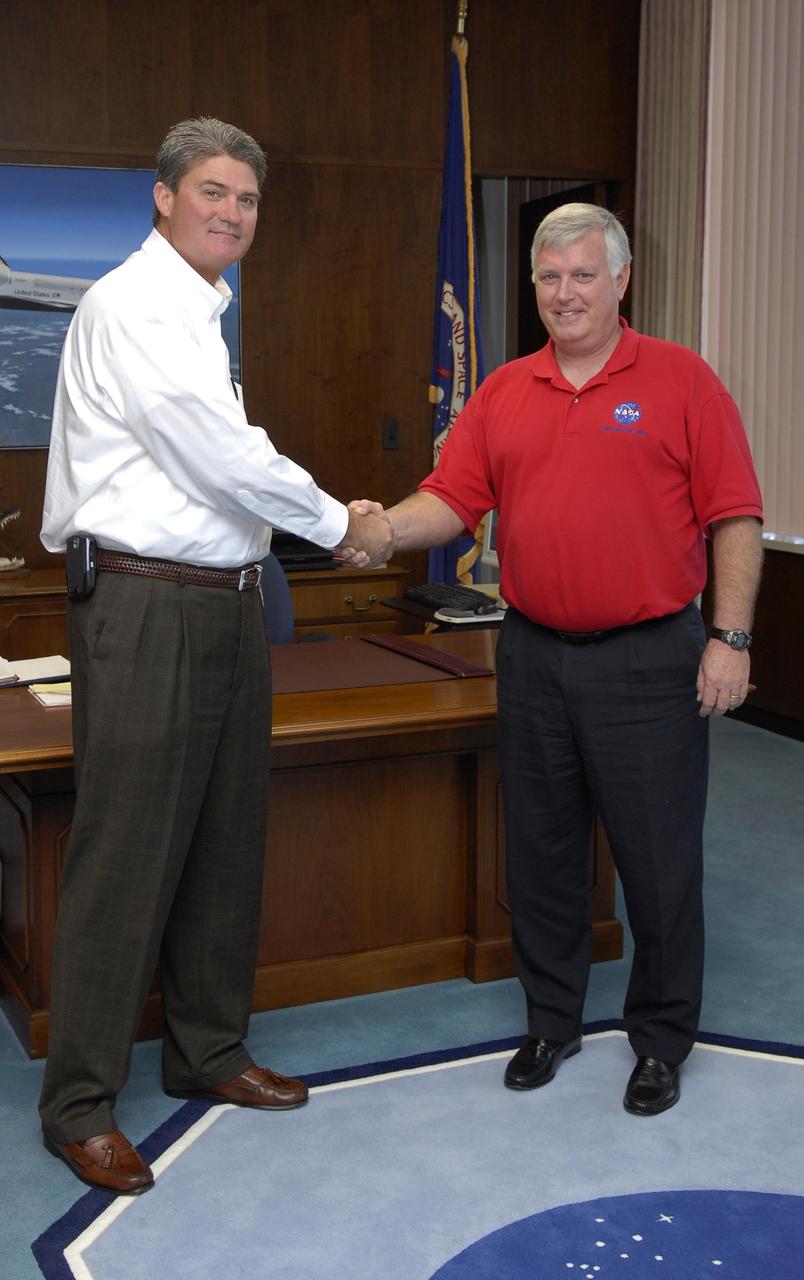
KENNEDY SPACE CENTER, FLA. -- A handshake signifies the change of leadership at NASA's Kennedy Space Center as William W. Parsons (left) assumes the role as the facility's ninth director, succeeding James W. Kennedy (right), who is retiring from the agency. Photo credit: NASA/Kim Shiflett
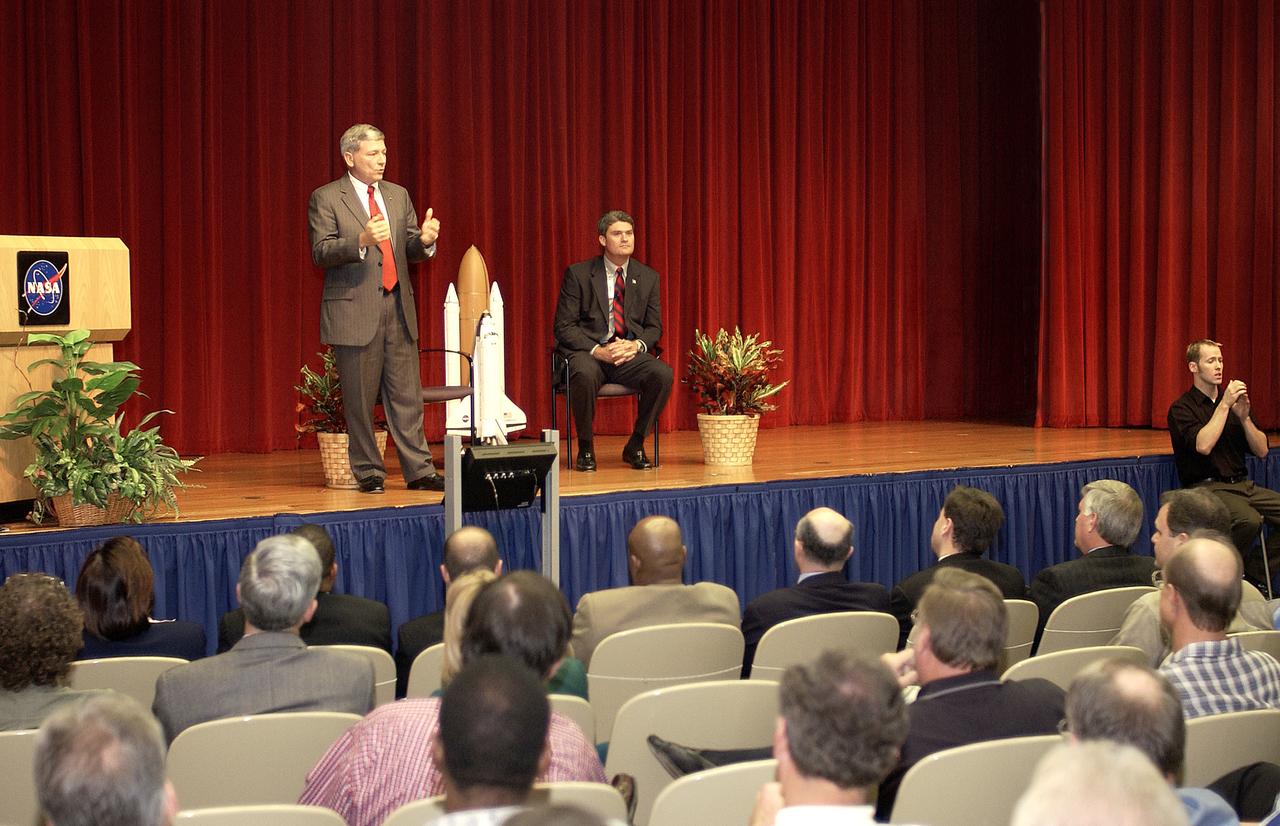
Mike Kostelnik, deputy associate administrator, Space Shuttle and International Space Station Programs, addresses the group of employees gathered for an all-hands briefing in the Training Auditorium. At right is Bill Parsons, Shuttle Program manager; not seen is Center Director Jim Kennedy. Topics discussed were return to flight and the Shuttle program.
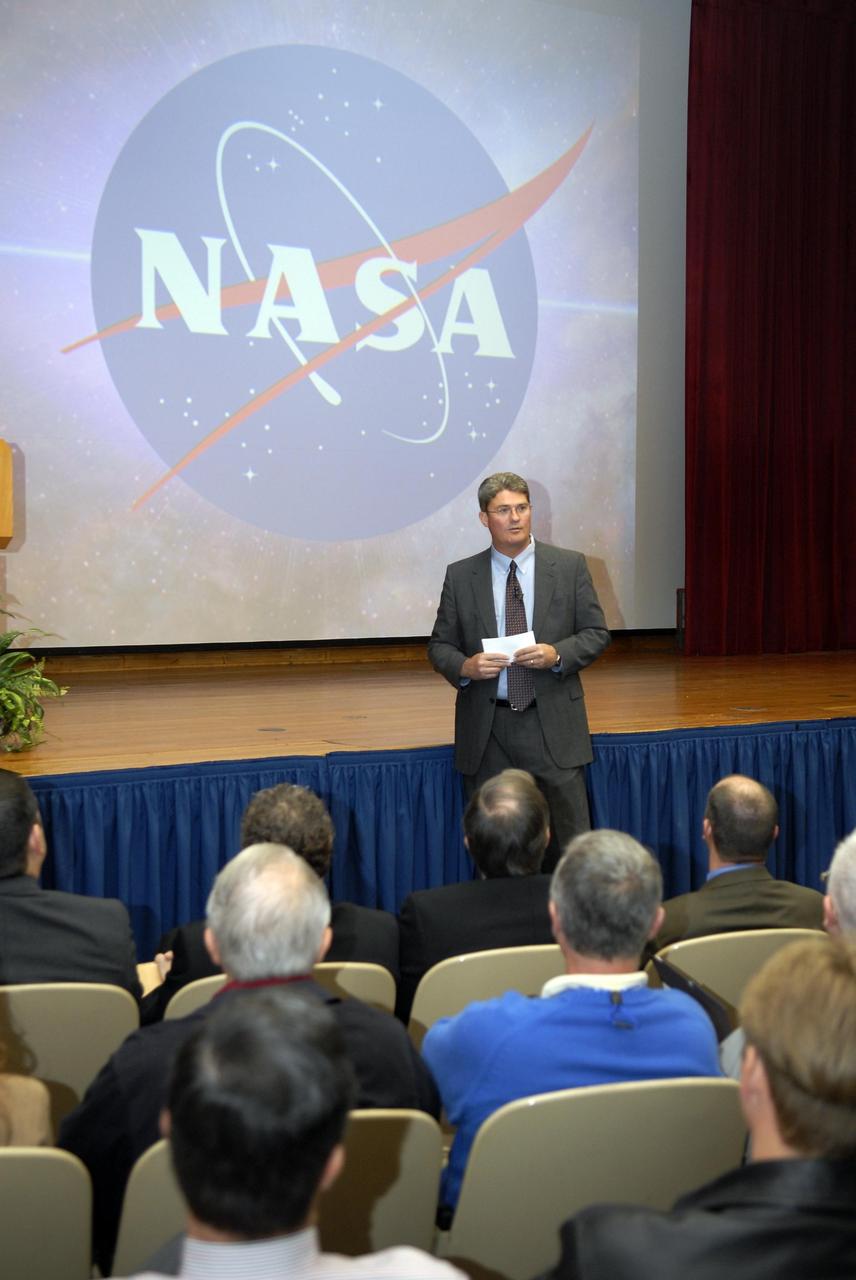
KENNEDY SPACE CENTER, FLA. -- Center Director Bill Parsons talks to employees in his first all-hands meeting of 2007 and his first as director. Topics discussed included the year ahead at KSC. A brief question-and-answer segment followed. Photo credit: NASA/Kim Shiflett
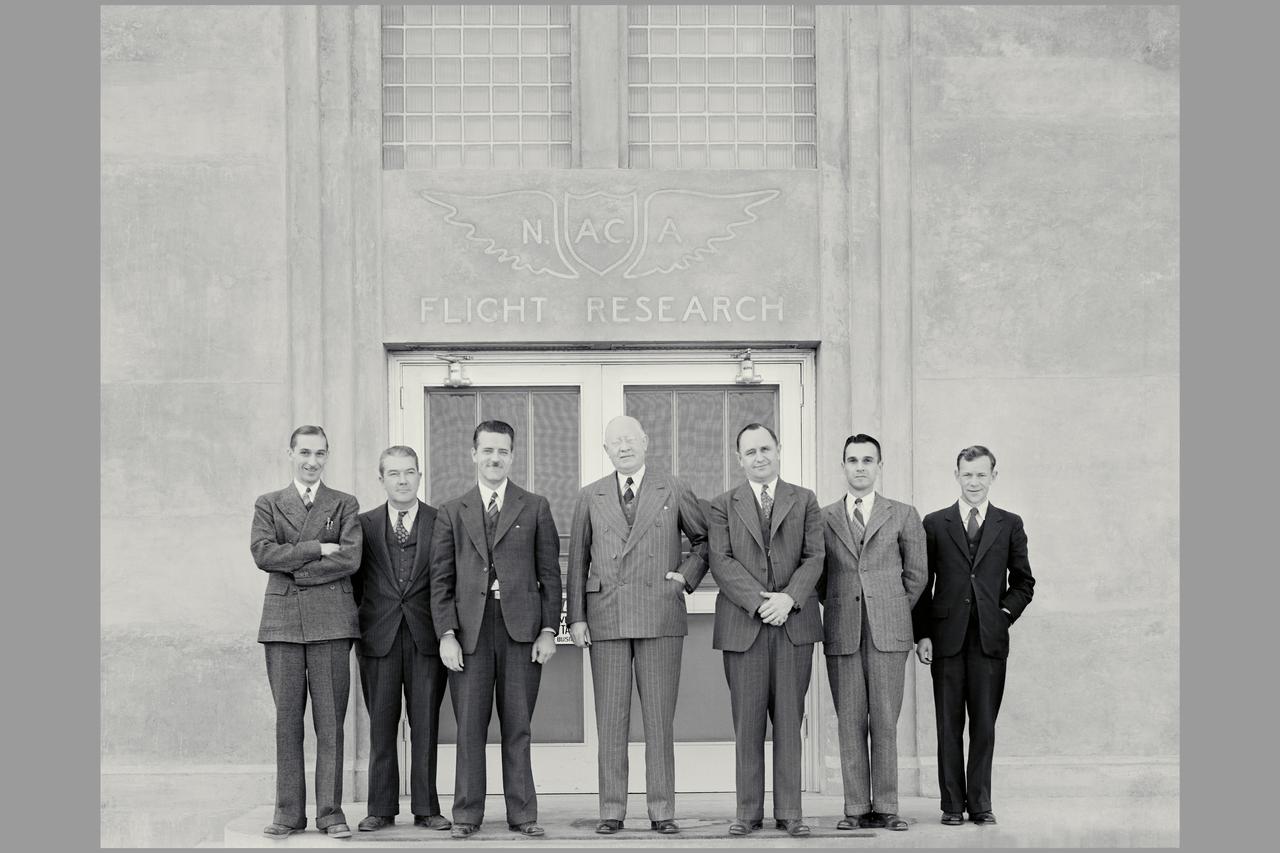
Dr George W. Lewis, NACA Director of Aeronautical Research (1929-1947) first visit to Ames Lab: L-R; John Parsons, William Mc Avoy, Donald H. Wood, Dr. Lewis, S. J. DeFrance, Author B. Freeman, Carlton Bioletti
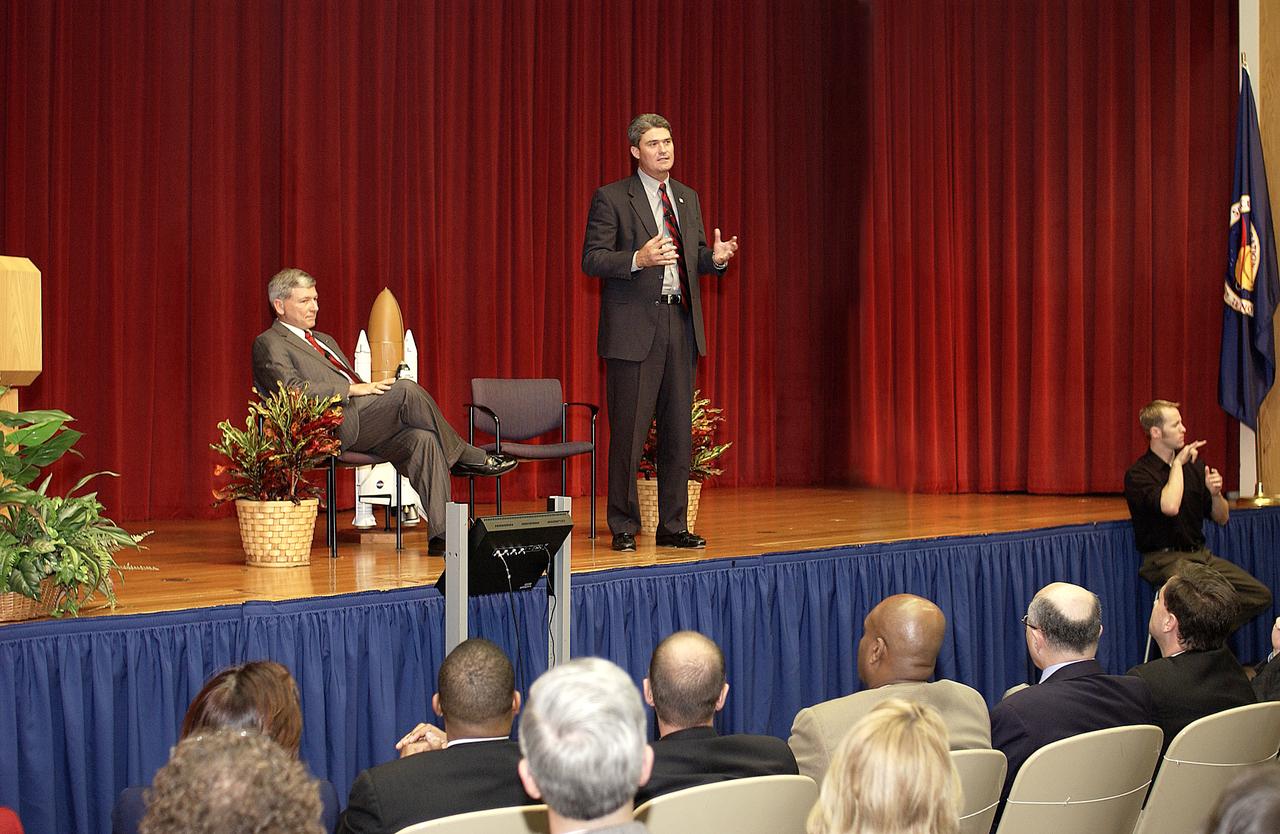
Bill Parsons, Shuttle Program manager, addresses the group of employees gathered for an all-hands briefing in the Training Auditorium. At left is Mike Kostelnik, deputy associate administrator, Space Shuttle and International Space Station Programs; not seen is Center Director Jim Kennedy. Topics discussed were return to flight and the Shuttle program.

KENNEDY SPACE CENTER, FLA. -- Center Director Bill Parsons talks to employees in his first all-hands meeting of 2007 and his first as director. Topics discussed included the year ahead at KSC. A brief question-and-answer segment followed. Photo credit: NASA/Kim Shiflett
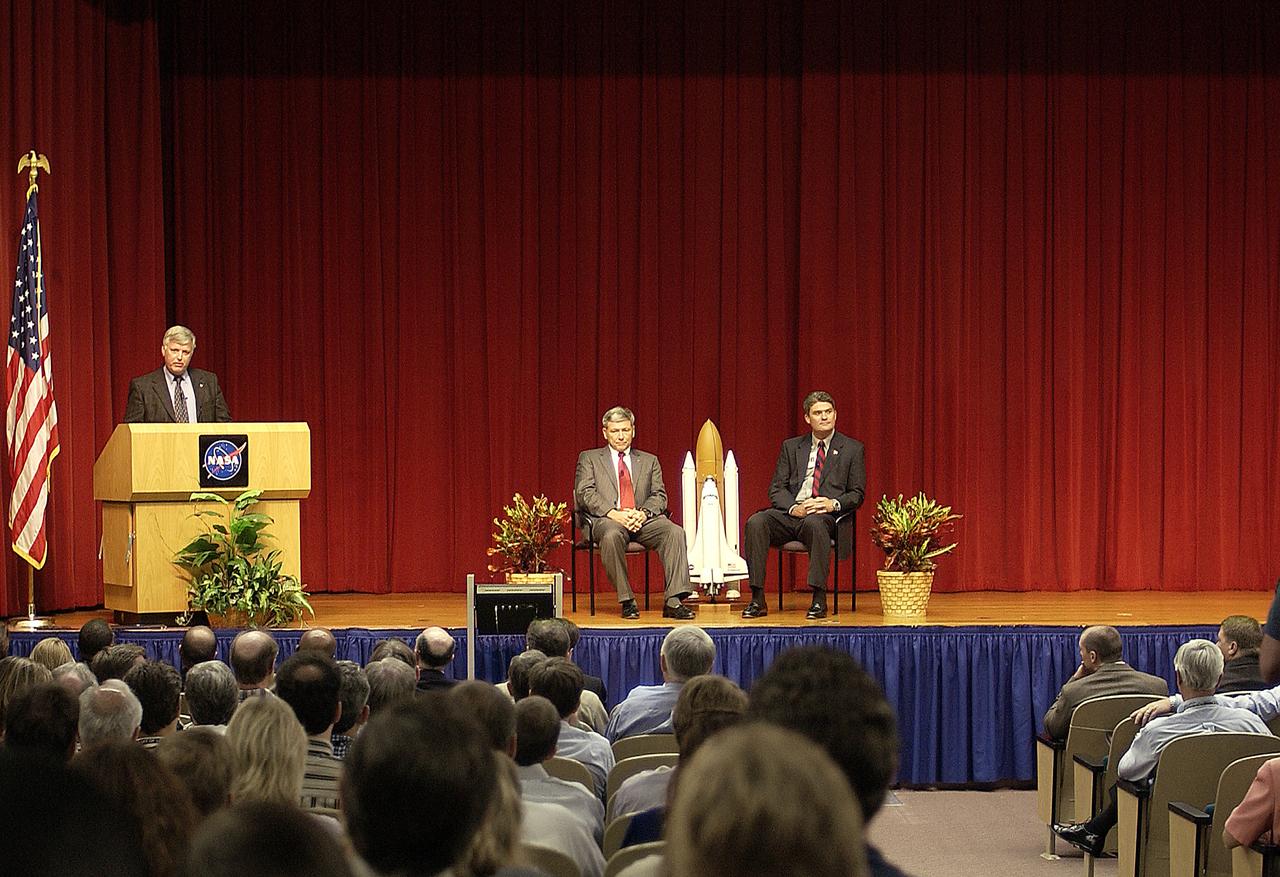
Center Director Jim Kennedy addresses the group of employees gathered for an all-hands briefing in the Training Auditorium. Seated on stage are (left to right) Mike Kostelnik, deputy associate administrator, Space Shuttle and International Space Station Programs, and Bill Parsons, Shuttle Program manager. Topics discussed were return to flight and the Shuttle program.
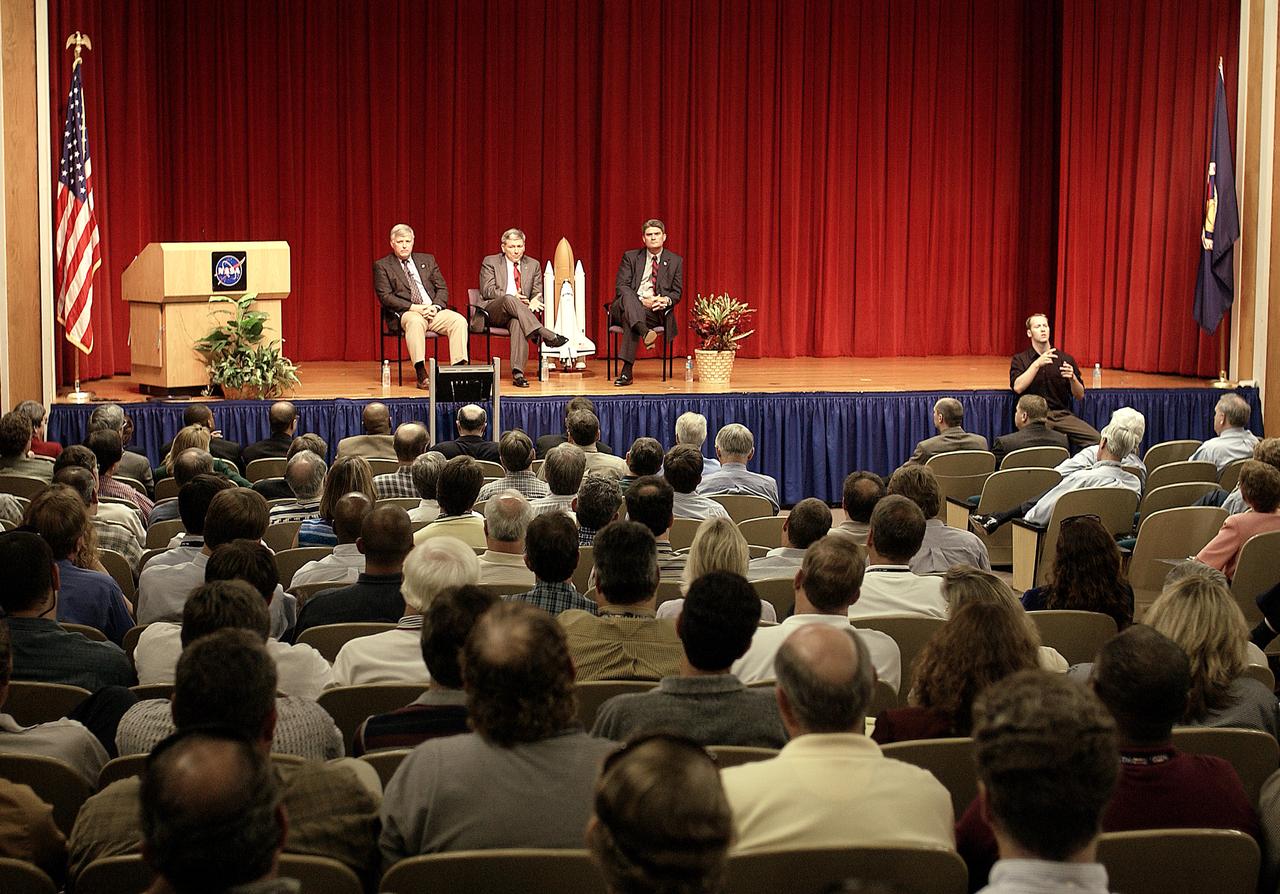
At an all-hands briefing in the Training Auditorium, Center Director Jim Kennedy, Mike Kostelnik, deputy associate administrator, Space Shuttle and International Space Station Programs, and Bill Parsons, Shuttle Program manager, respond to questions from KSC employees. Topics discussed were return to flight and the Shuttle program.
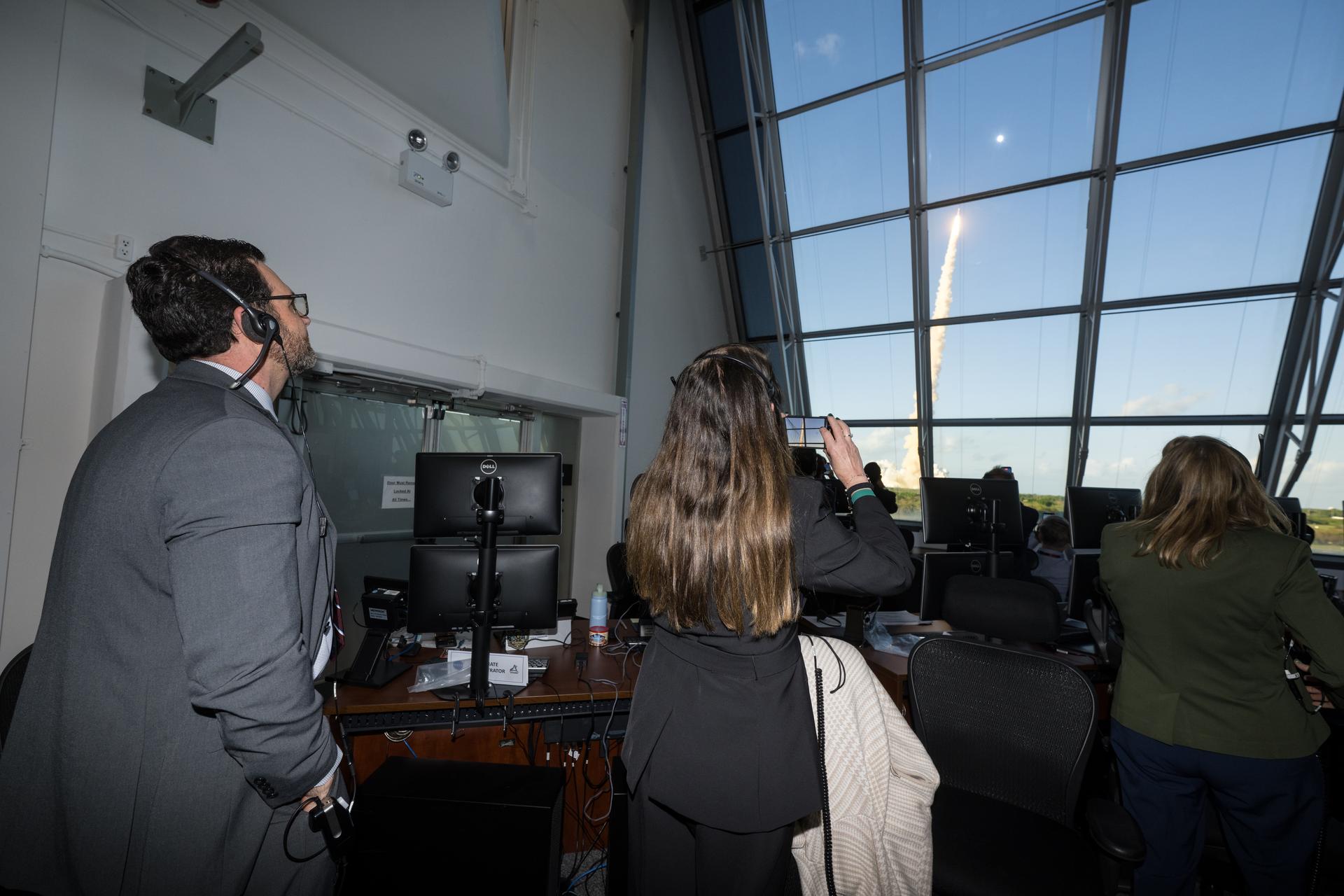
From left to right, NASA Acting Deputy Associate Administrator for Moon to Mars, Jeremy Parsons, Acting Director of NASA's Marshall Space Flight Center, Rae Ann Meyer, and Director of NASA's Kennedy Space Center, Janet Petro, watch the launch of NASA’s Space Launch System (SLS) rocket and Orion spacecraft with NASA astronauts Reid Wiseman, commander; Victor Glover, pilot; Christina Koch, mission specialist; and CSA (Canadian Space Agency) astronaut Jeremy Hansen, mission specialist onboard on the Artemis II mission from Firing Room 2 of the Rocco A. Petrone Launch Control Center, Wednesday, April 1, 2026, at NASA’s Kennedy Space Center in Florida. NASA’s Artemis II mission will take Wiseman, Glover, Koch, and Hansen on a 10-day journey around the Moon and back aboard SLS rocket and Orion spacecraft from Launch Complex 39B. The quartet launched at 6:35pm EDT. Photo Credit: (NASA/Aubrey Gemignani)
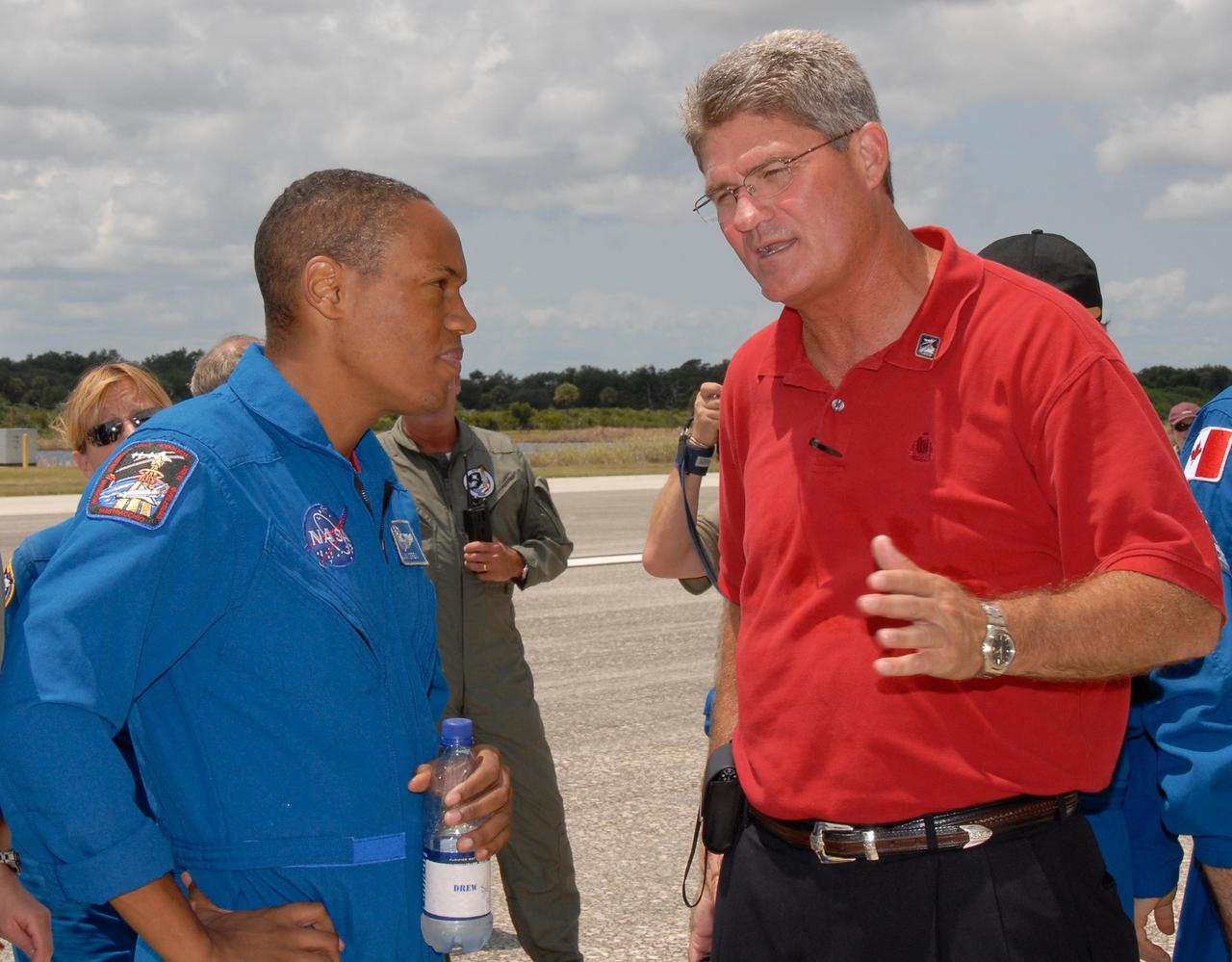
KENNEDY SPACE CENTER, FLA. -- KSC Director Bill Parsons (right) is one of the NASA officials present to welcome back the STS-118 crew from its mission to the International Space Station. Parsons is talking to Mission Specialist Alvin Drew. On the mission, the crew installed a new gyroscope, an external spare parts platform and another truss segment to the expanding station. Endeavour's main gear touched down at 12:32:16 p.m. EDT. Nose gear touchdown was at 12:32:29 p.m. and wheel stop was at 12:33:20 p.m. Endeavour landed on orbit 201. STS-118 was the 119th space shuttle flight, the 22nd flight to the station, the 20th flight for Endeavour and the second of four missions planned for 2007. This was the 65th landing of an orbiter at Kennedy. Photo credit: NASA/Kim Shiflett
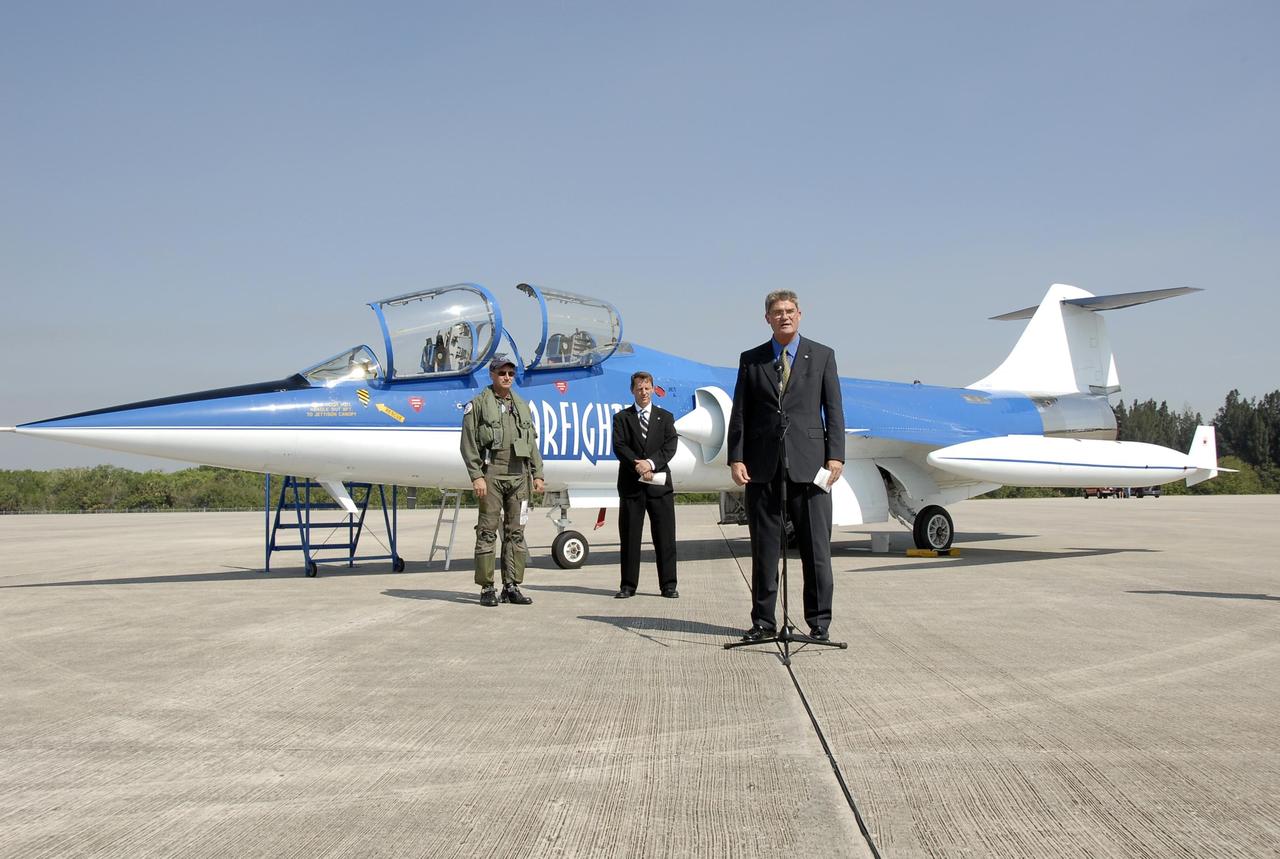
KENNEDY SPACE CENTER, FLA. -- Bill Parsons, director of Kennedy Space Center, addresses the media at the KSC Shuttle Landing Facility after a test flight of the Starfighter F-104. Behind Parsons, at left, is the pilot Rick Svetkoff. At right is Al Wassel, a representative from the FAA Office of Commercial Space. The aircraft is taking part in a series of pathfinder test missions from the space shuttle runway. Two flights will generate test data to validate sonic boom assumptions about the potential impacts of suborbital and orbital commercial spaceflight from the facility. NASA is assessing the environmental impact of such flights. Starfighters Inc. of Clearwater, Fla., will perform the flights to help in assessing suborbital space launch trajectories from the runway and paving the way for future commercial space tourism and research flights from the facility. Photo credit: NASA/Kim Shiflett
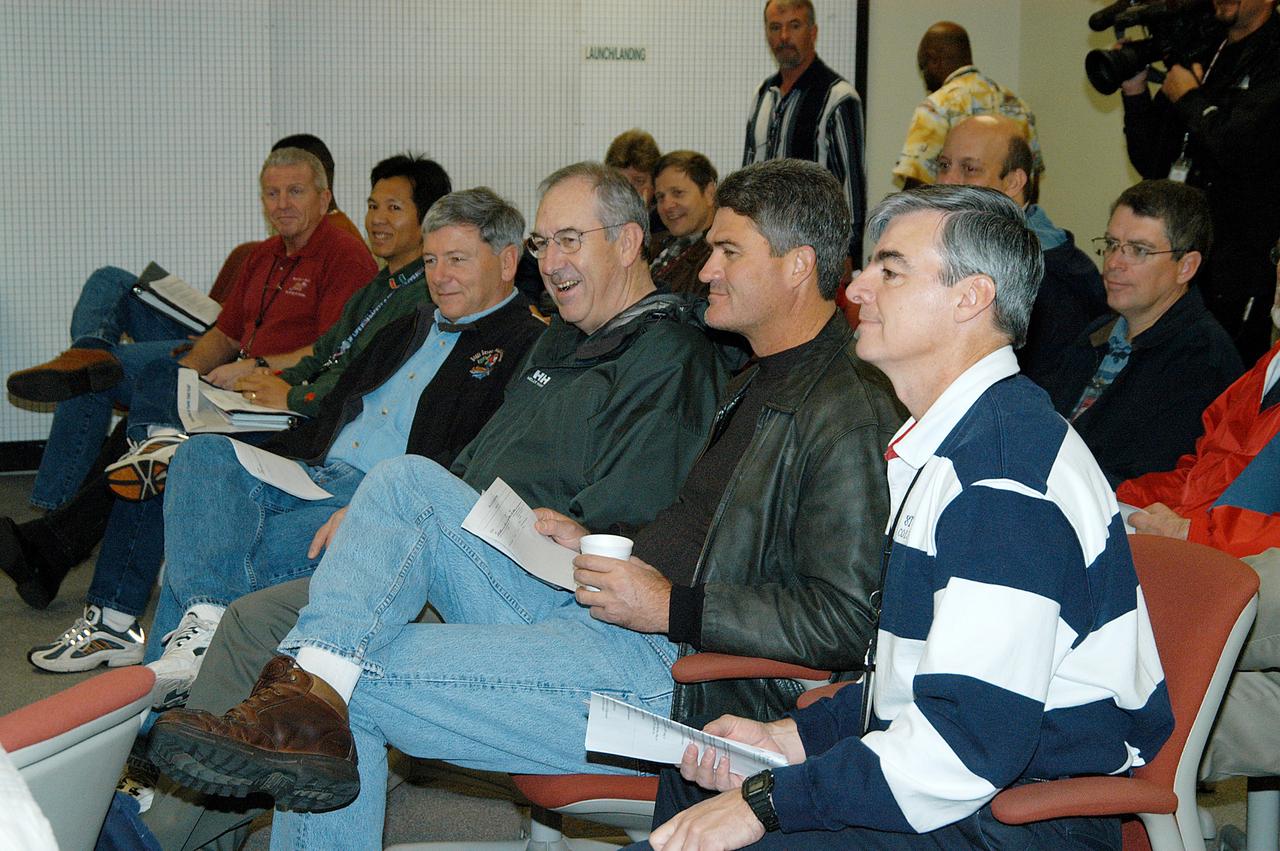
KENNEDY SPACE CENTER, FLA. -- NASA and United Space Alliance (USA) Space Shuttle program managers attend a briefing, part of activities during a leadership workday. The day is intended to provide management with an in-depth, hands-on look at Shuttle processing activities at KSC. Starting third from left are NASA Deputy Associate Administrator for Space Station and Shuttle Programs Michael Kostelnik, USA Vice President and Space Shuttle Program Manager Howard DeCastro, NASA Space Shuttle Program Manager William Parsons, and USA Associate Program Manager of Ground Operations Andy Allen.
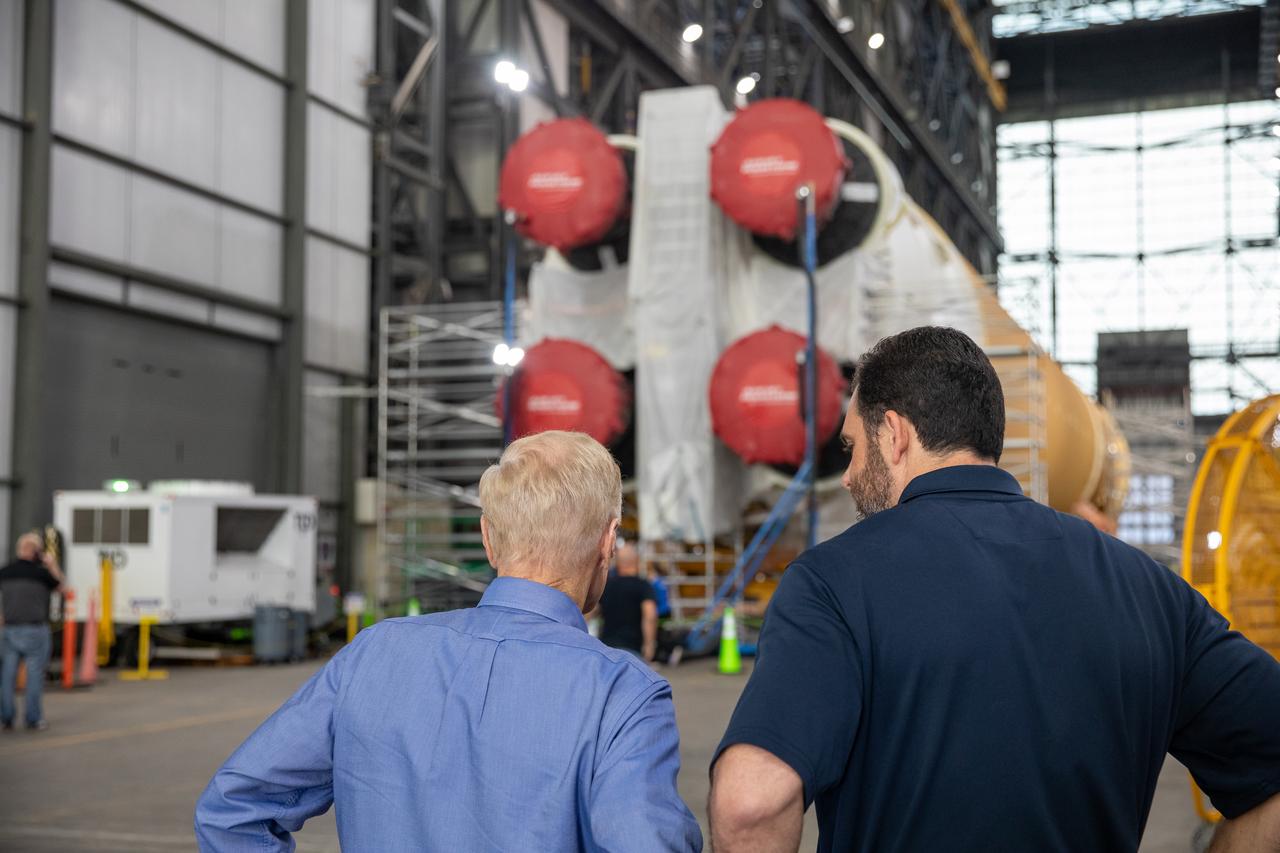
NASA Administrator Bill Nelson and NASA Exploration Ground Systems Program Deputy Manager Jeremy Parsons visit the agency’s SLS (Space Launch System) rocket core stage for the Artemis II mission inside NASA’s Kennedy Space Center in Florida on Thursday, Aug. 29, 2024. In the coming months, teams will integrate the rocket core stage atop the mobile launcher with the additional Artemis II flight hardware, including the twin solid rocket boosters, launch vehicle stage adapter, and the Orion spacecraft.
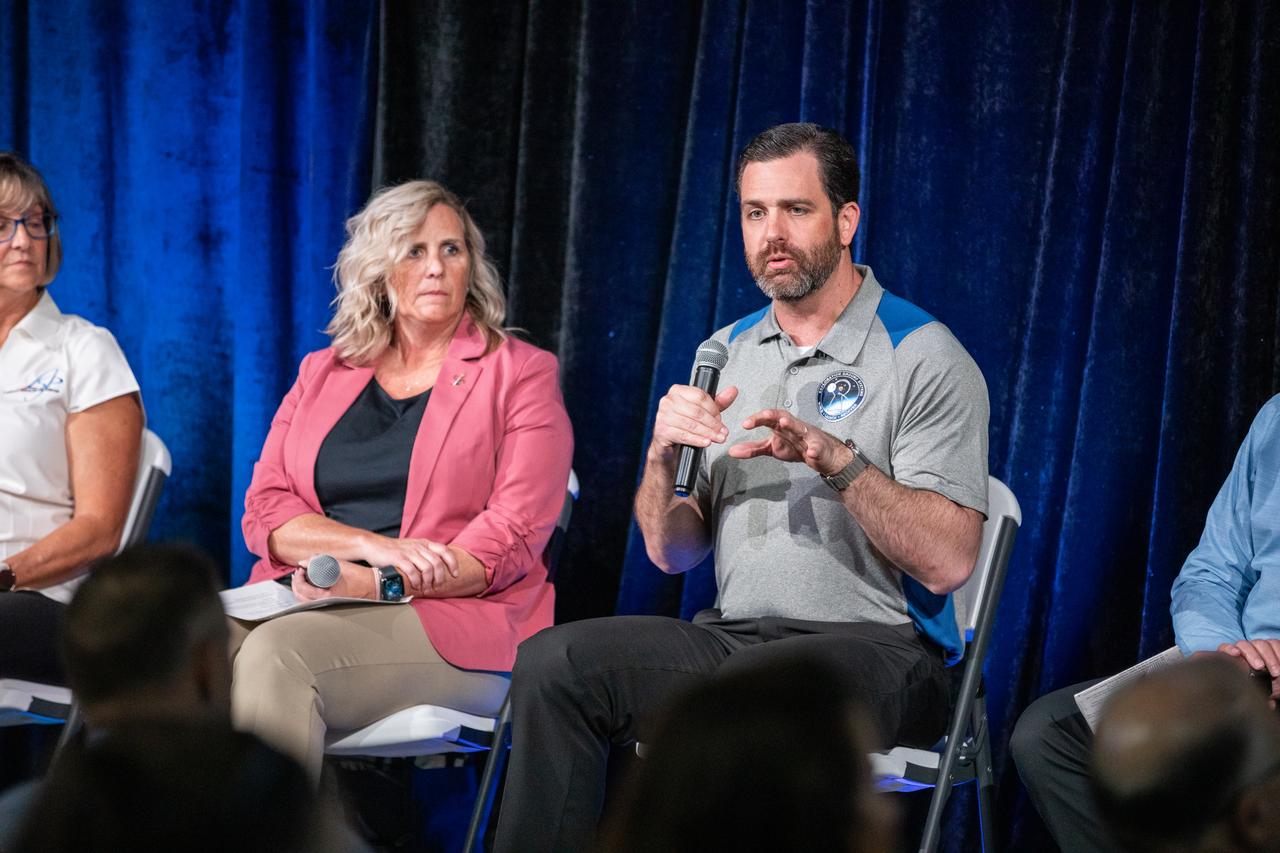
Jeremy Parsons, deputy manager, NASA’s Exploration Ground Systems, speaks to a crowd gathered for the NASA Kennedy Space Center Community Leaders Update on Thursday, May 23, 2024, at the center’s Visitor Complex. At left, Dana Hutcherson, deputy manager, Commercial Crew Program, were among the panelists discussing how programs based at NASA Kennedy support the agency’s efforts to return humans to the Moon in preparation for Mars and answered questions from guests.
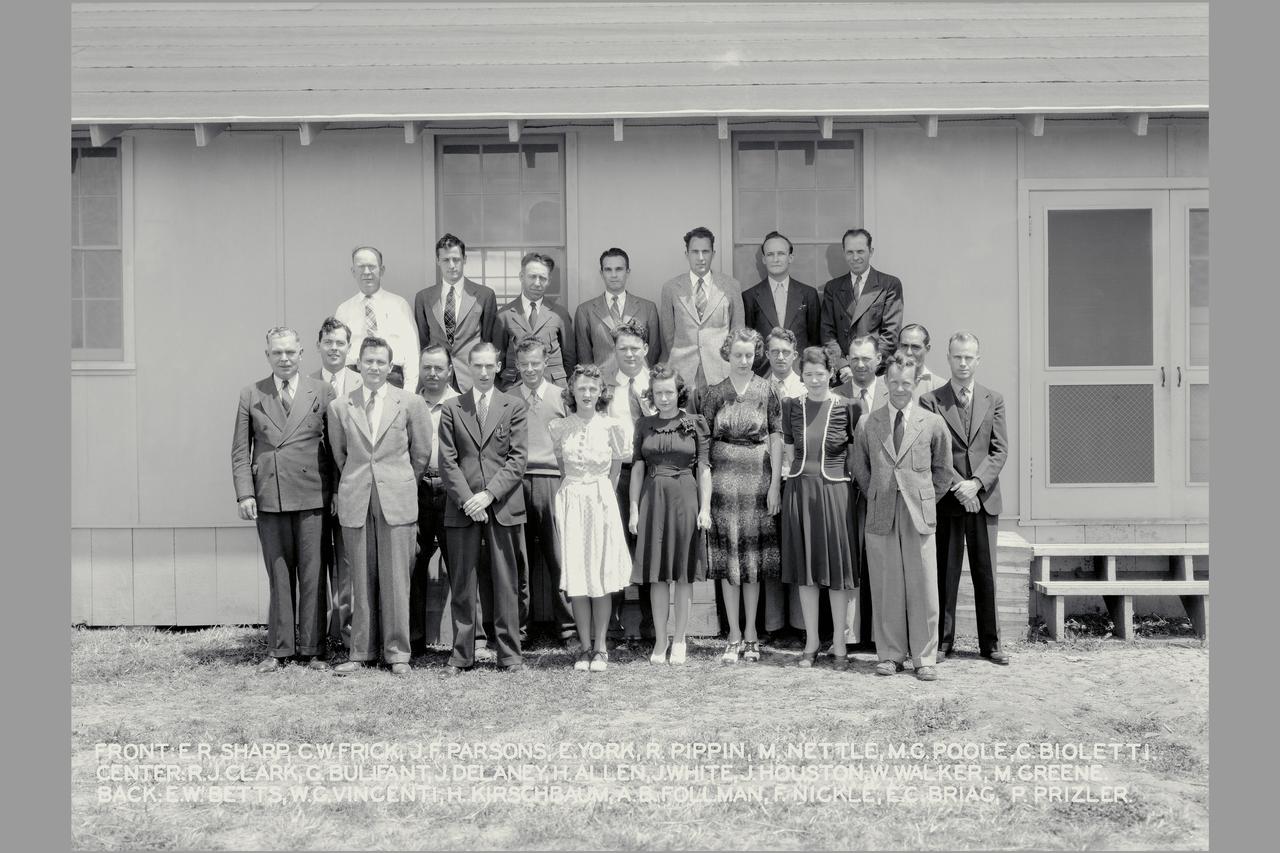
Ames Personnel in front of construction shack FRONT: ER Sharp, CF Frick, JF Parsons, E York, R Pippin, M Nettle, M G Poole, C Bioletti CENTER: R Clark, G Bulifant, J Delaney H. Allen, J. White, H. Houston, W. Walker, M. Green BACK: E. W. Betts. W.G.. Vincenti, H Kirschbaum, A.B. Follman, F. Nickle, E.C.. Briag, P. Prizler
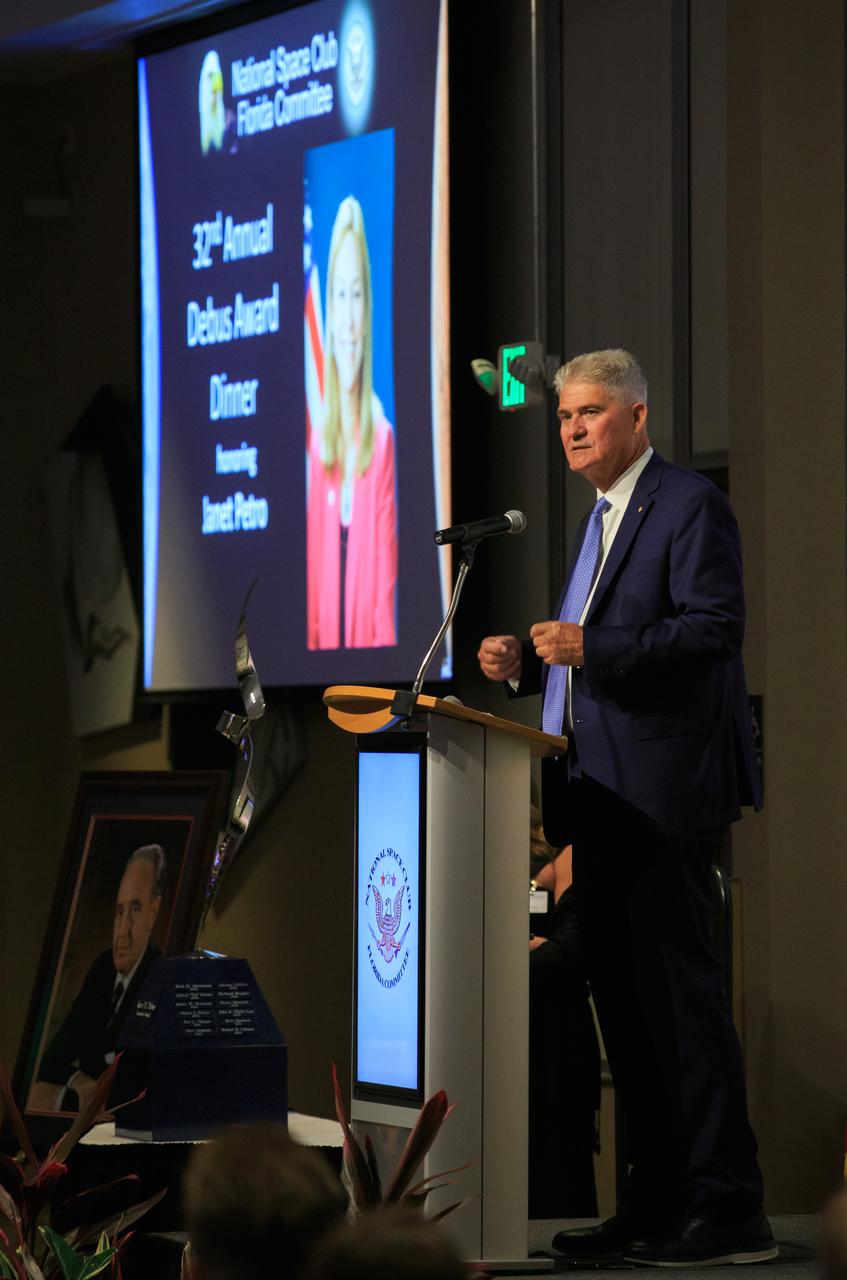
Bill Parsons, vice president of Human Space Programs at Peraton, speaks at a ceremony honoring Kennedy Space Center Director Janet Petro with the Dr. Kurt H. Debus Award on June 24, 2022, at the Florida spaceport’s visitor complex. The National Space Club Florida Committee presented Petro with the prestigious award for her contributions to America’s aerospace efforts within the state of Florida. The award – originating in 1990 – is named after Kennedy’s first director.
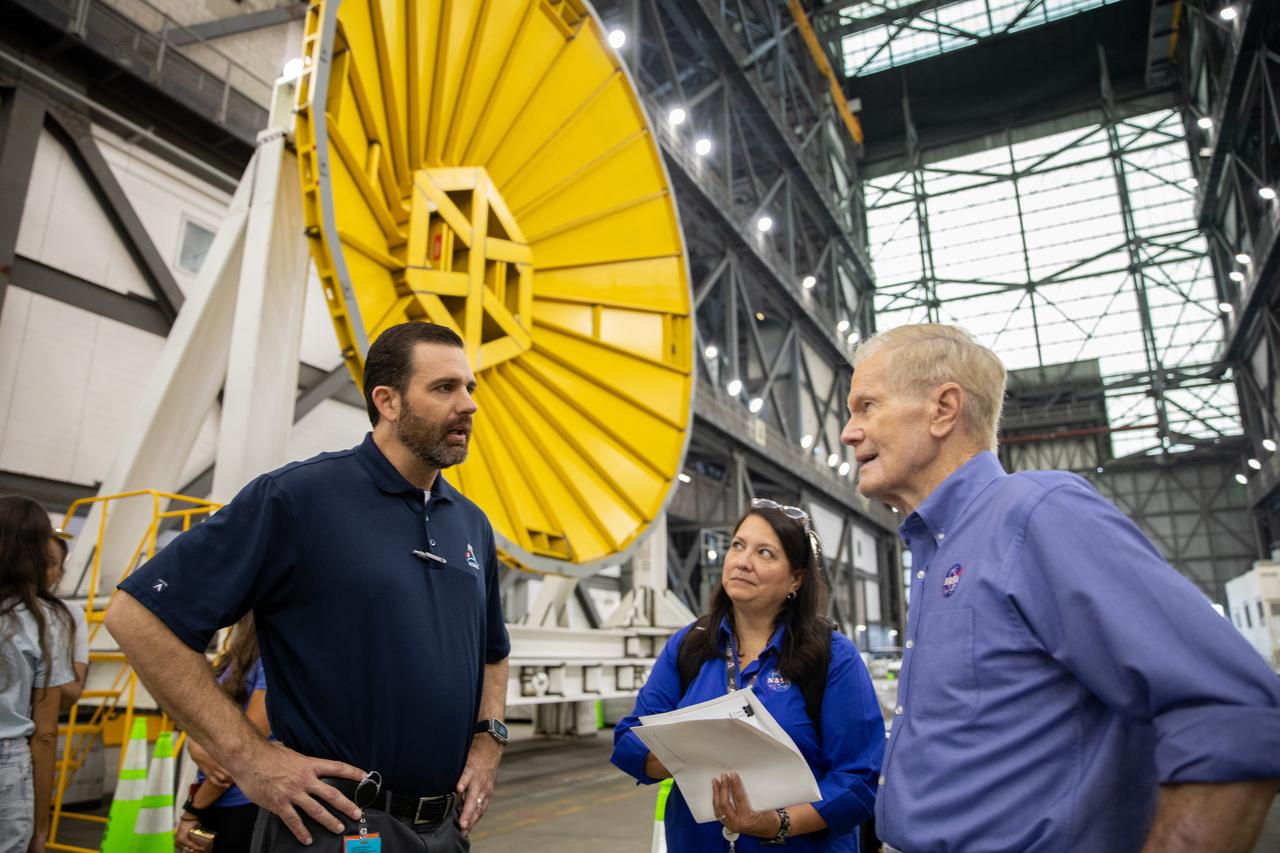
NASA Administrator Bill Nelson and NASA Exploration Ground Systems Program Deputy Manager Jeremy Parsons visit the agency’s SLS (Space Launch System) rocket core stage for the Artemis II mission inside NASA’s Kennedy Space Center in Florida on Thursday, Aug. 29, 2024. In the coming months, teams will integrate the rocket core stage atop the mobile launcher with the additional Artemis II flight hardware, including the twin solid rocket boosters, launch vehicle stage adapter, and the Orion spacecraft.
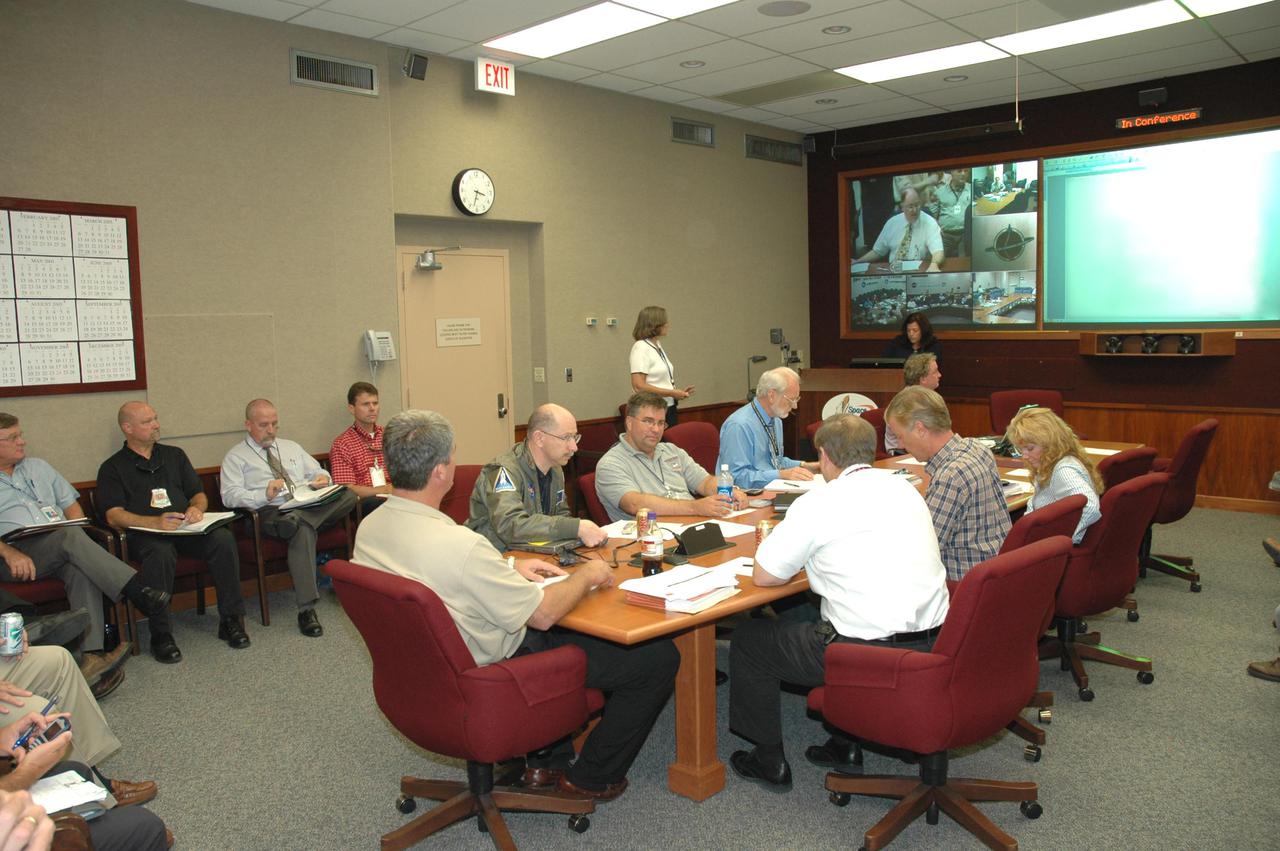
KENNEDY SPACE CENTER, FLA. - The Mission Management Team gathers in NASA Kennedy Space Center’s Headquarters Building to review the findings about the faulty Engine Cut-Off sensor reading in last week’s launch attempt for Return to Flight mission STS-114. Seated at the head of the table at left is Bill Parsons, Space Shuttle program manager. A press briefing is scheduled for late in the day.
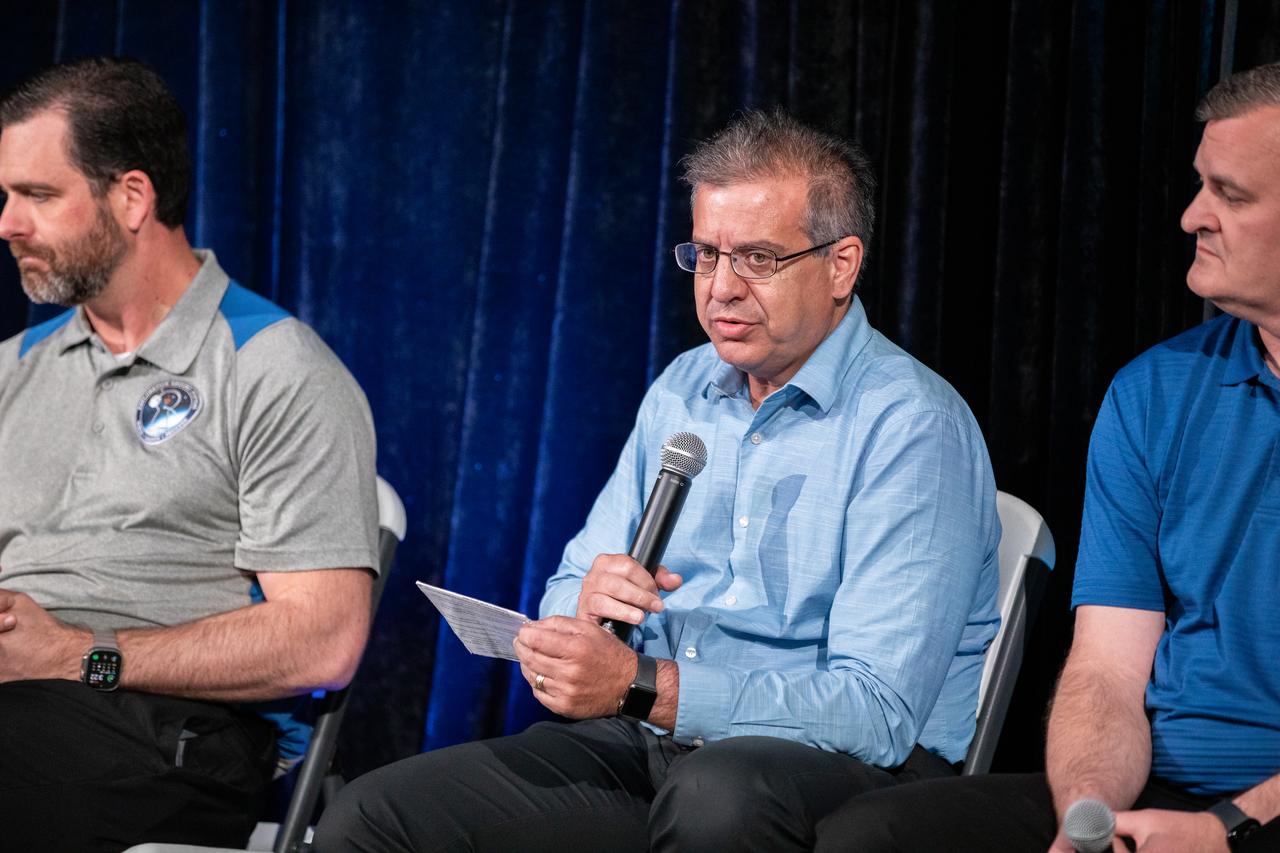
In the middle, Emilio Cruz, deputy director, NASA’s Exploration Research and Technology Programs, speaks to a crowd gathered for the 2024 Kennedy Space Center Community Leaders Update on Thursday, May 23, 2024, held at the center’s Visitor Complex. From left, Jeremy Parsons, deputy manager, NASA’s Exploration Ground Systems, and Mark Weise, manager, Gateway Deep Space Logistics, discussed how programs based at NASA Kennedy support the agency’s efforts to return humans to the Moon in preparation for Mars and answered questions from guests.
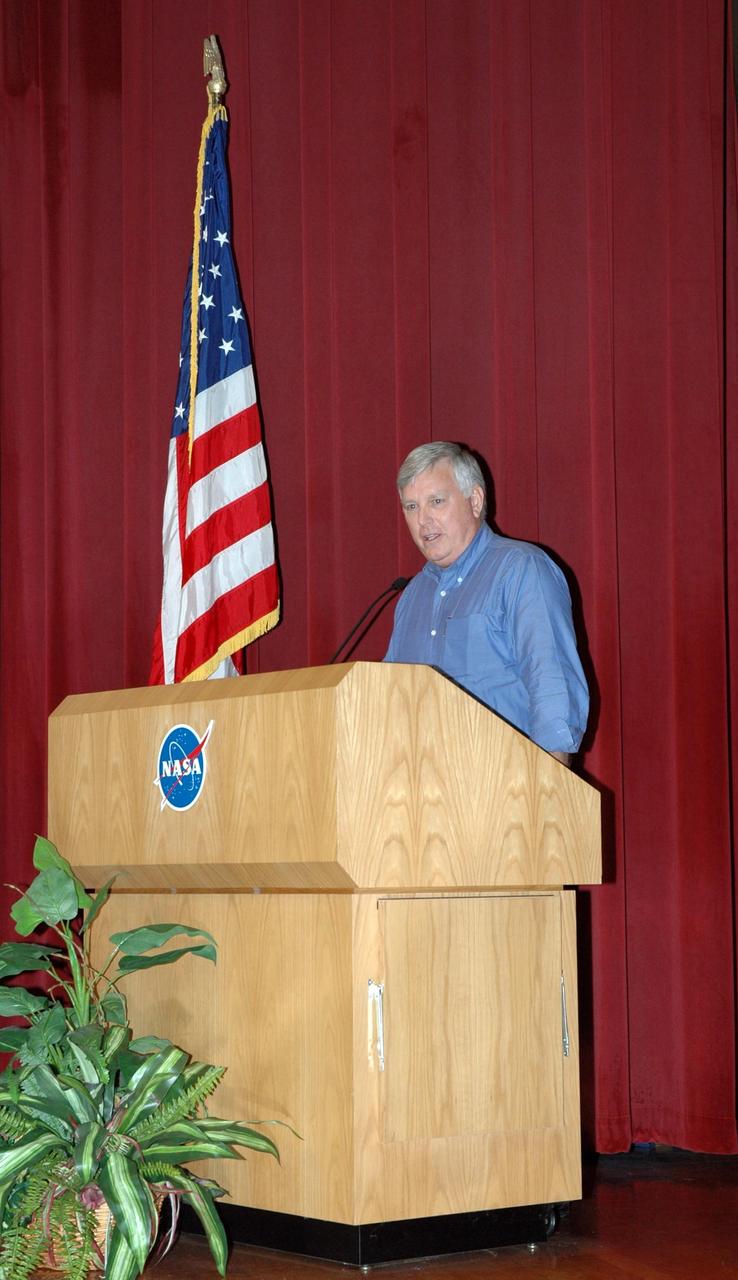
KENNEDY SPACE CENTER, FLA. - In the training auditorium at NASA's Kennedy Space Center, Center Director Jim Kennedy (at podium) welcomes Deputy Director Bill Parsons back to the center during a space shuttle all hands meeting. Following Kennedy, Space Shuttle Program Manager Wayne Hale discussed the status of the program, successes of the STS-114 mission, effects of Hurricane Katrina on NASA facilities, and the newly released budget. Photo credit: NASA/Jim Grossmann
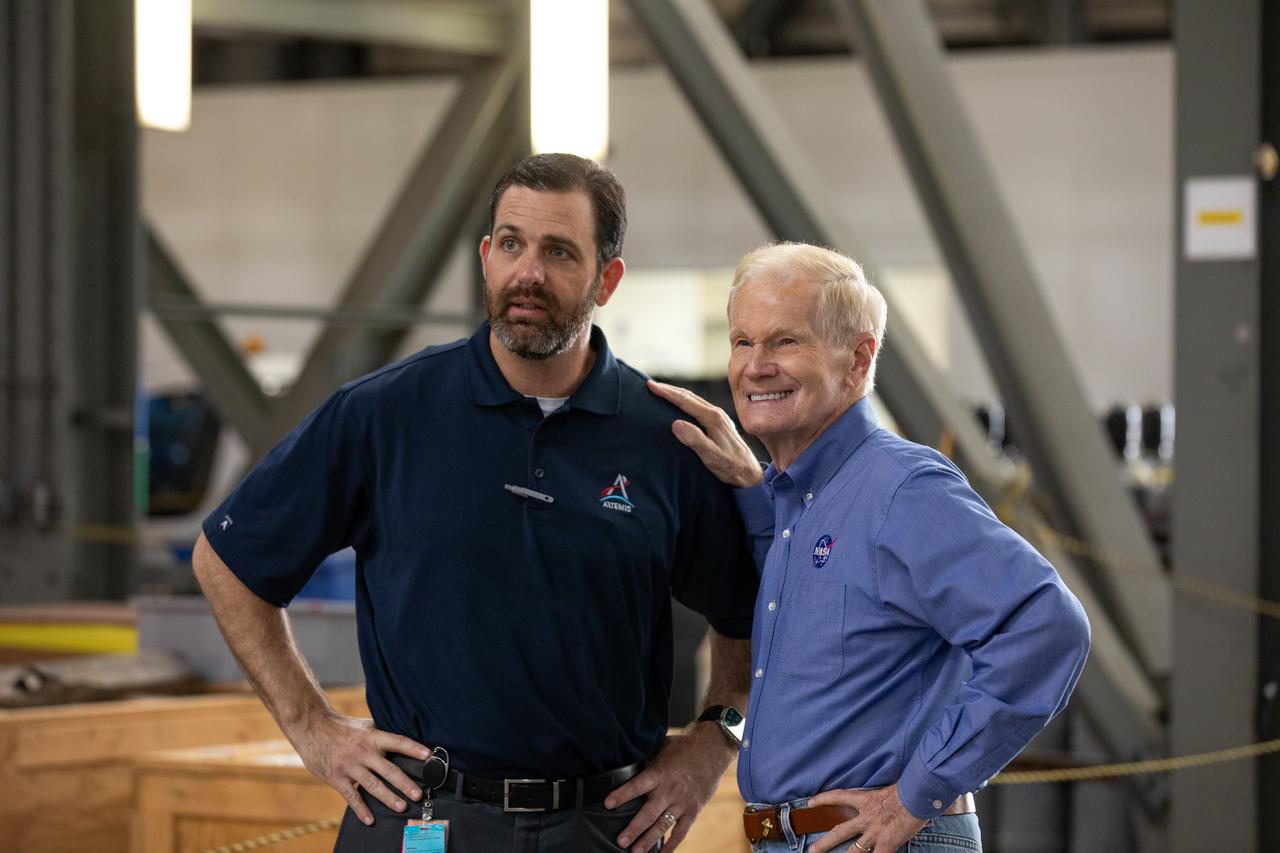
NASA Administrator Bill Nelson and NASA Exploration Ground Systems Program Deputy Manager Jeremy Parsons visit the agency’s SLS (Space Launch System) rocket core stage for the Artemis II mission inside NASA’s Kennedy Space Center in Florida on Thursday, Aug. 29, 2024. In the coming months, teams will integrate the rocket core stage atop the mobile launcher with the additional Artemis II flight hardware, including the twin solid rocket boosters, launch vehicle stage adapter, and the Orion spacecraft.
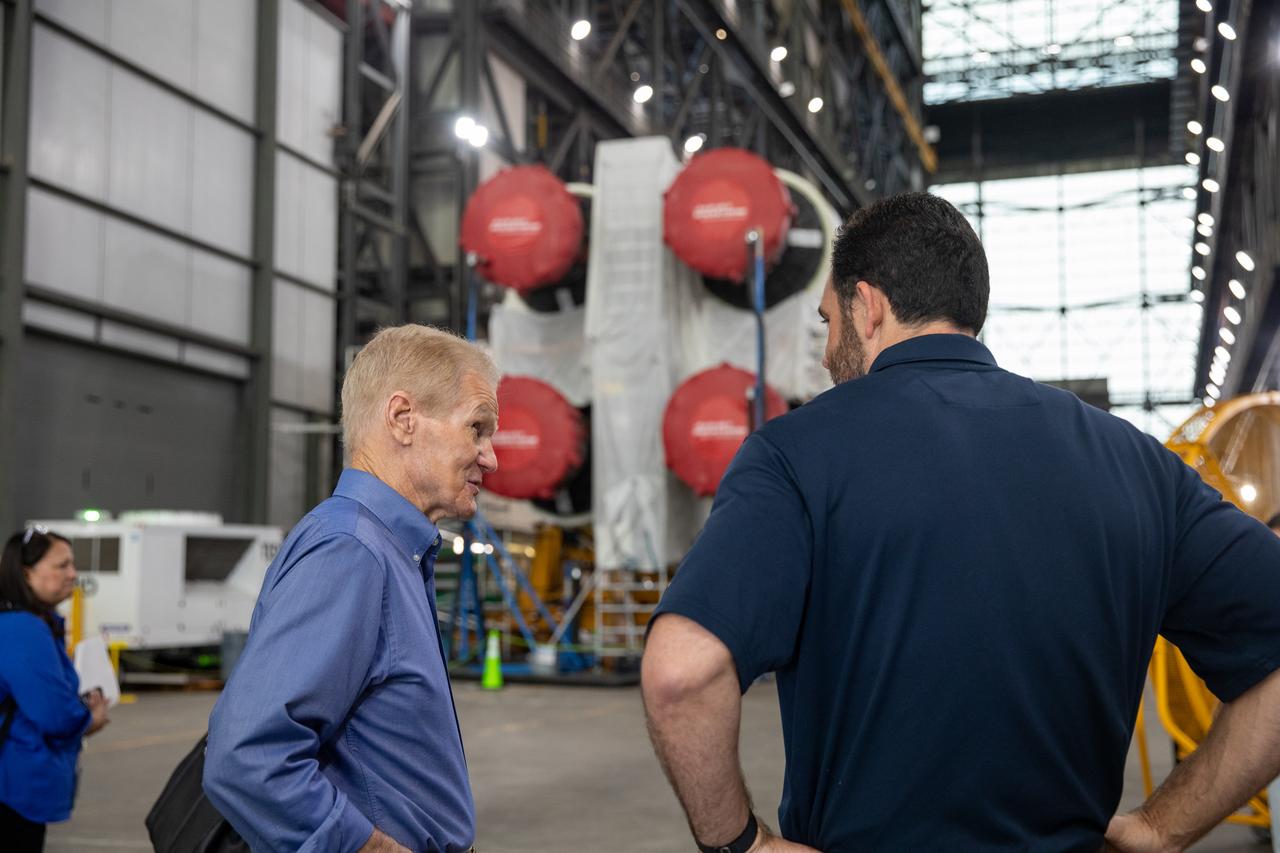
NASA Administrator Bill Nelson and NASA Exploration Ground Systems Program Deputy Manager Jeremy Parsons visit the agency’s SLS (Space Launch System) rocket core stage for the Artemis II mission inside NASA’s Kennedy Space Center in Florida on Thursday, Aug. 29, 2024. In the coming months, teams will integrate the rocket core stage atop the mobile launcher with the additional Artemis II flight hardware, including the twin solid rocket boosters, launch vehicle stage adapter, and the Orion spacecraft.
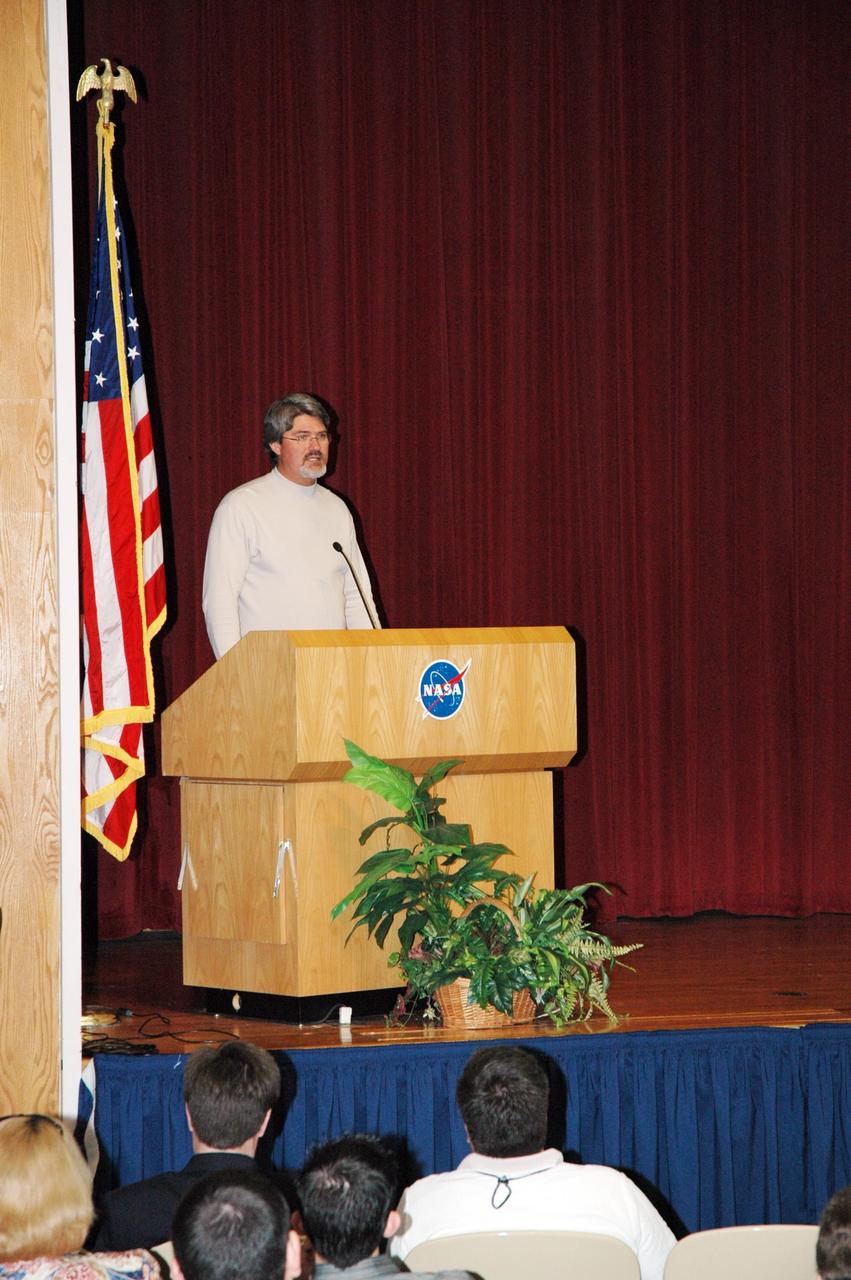
KENNEDY SPACE CENTER, FLA. - In the training auditorium at NASA's Kennedy Space Center, Deputy Director Bill Parsons, at the beginning of a space shuttle all hands meeting, speaks to employees about his journey through NASA. He was followed by Space Shuttle Program Manager Wayne Hale discussed the status of the program, successes of the STS-114 mission, effects of Hurricane Katrina on NASA facilities, and the newly released budget. Photo credit: NASA/Jim Grossmann
KENNEDY SPACE CENTER, FLA. - Shuttle Program Manager Bill Parsons praises the Discovery processing team for their successful power-up of the vehicle after Orbiter Major Modifications (OMM). The OMM work ranged from wiring, control panels and black boxes to gaseous and fluid systems tubing and components. These systems were deserviced, disassembled, inspected, modified, reassembled, checked out and reserviced, as were most other systems onboard. The work included the installation of the Multifunction Electronic Display Subsystem (MEDS) - a state-of-the-art “glass cockpit.”
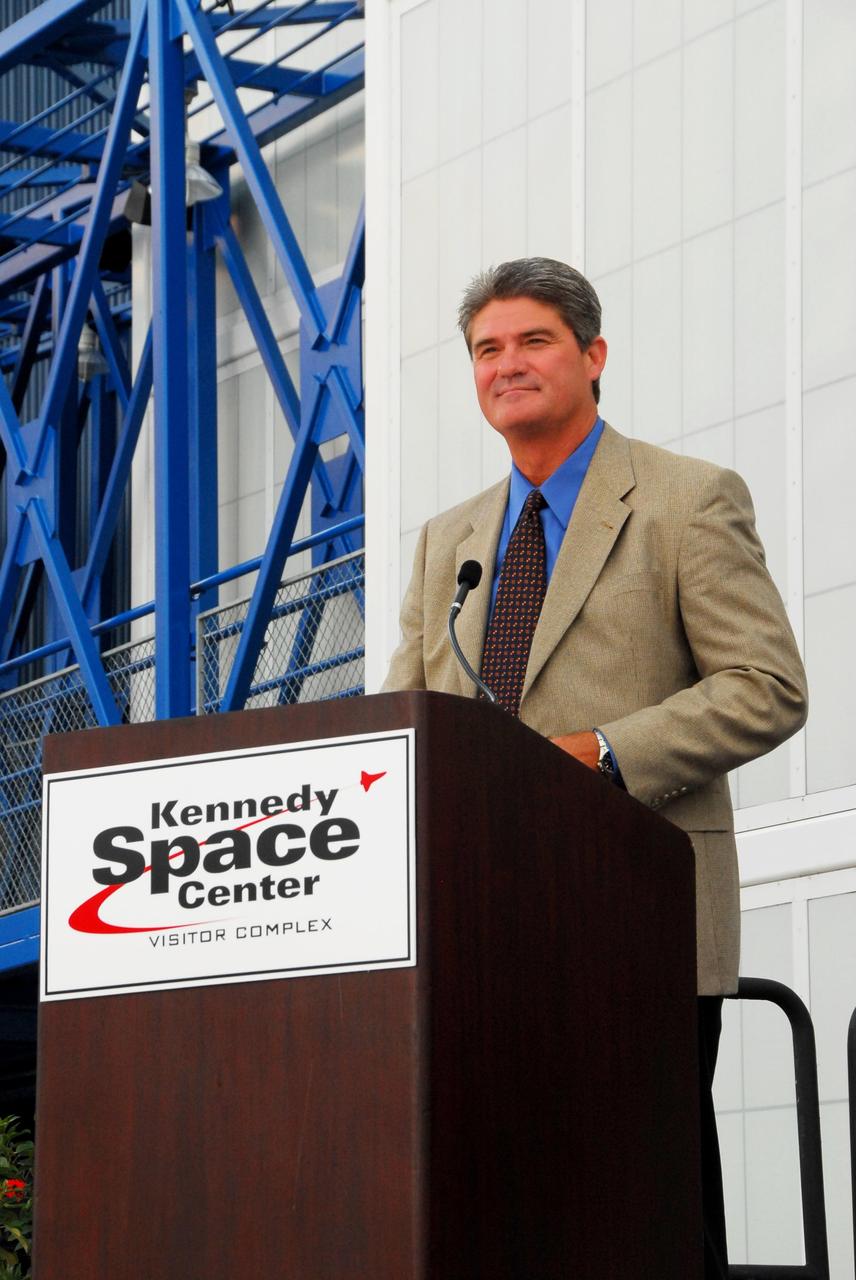
KENNEDY SPACE CENTER, FLA. -- NASA, Kennedy Space Center and State of Florida dignitaries helped launch the opening of the newest attraction at Kennedy Space Center's Visitor Complex, the Shuttle Launch Experience. Speaking to attendees is Center Director Bill Parsons. The attraction includes a simulated launch with the sights, sounds and sensations of launching into space. Find out more about the Visitor Complex and the Shuttle Launch Experience at <b>http://www.kennedyspacecenter.com/visitKSC/attractions/index.asp</b>. Photo credit: NASA/George Shelton
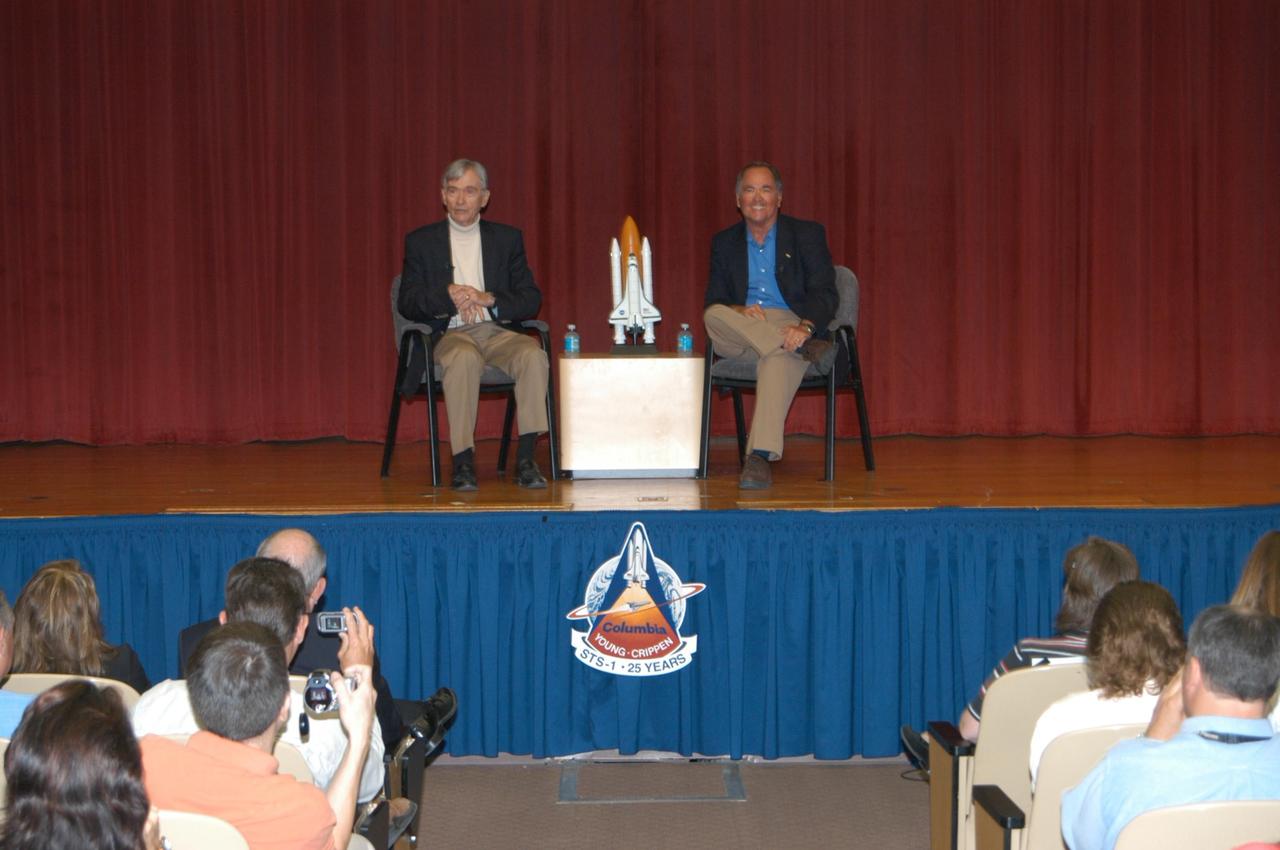
KENNEDY SPACE CENTER, FLA. - To honor the 25th anniversary of the first shuttle launch on April 12, 1981, STS-1 Commander John Young (seated, left) and Pilot Bob Crippen (right) were invited to share their experiences with employees during a special presentation at Kennedy. Kennedy's Deputy Director Bill Parsons (far left) introduced the two men. Here, Young relates his feelings about making that historic flight. Photo credit: NASA/George Shelton
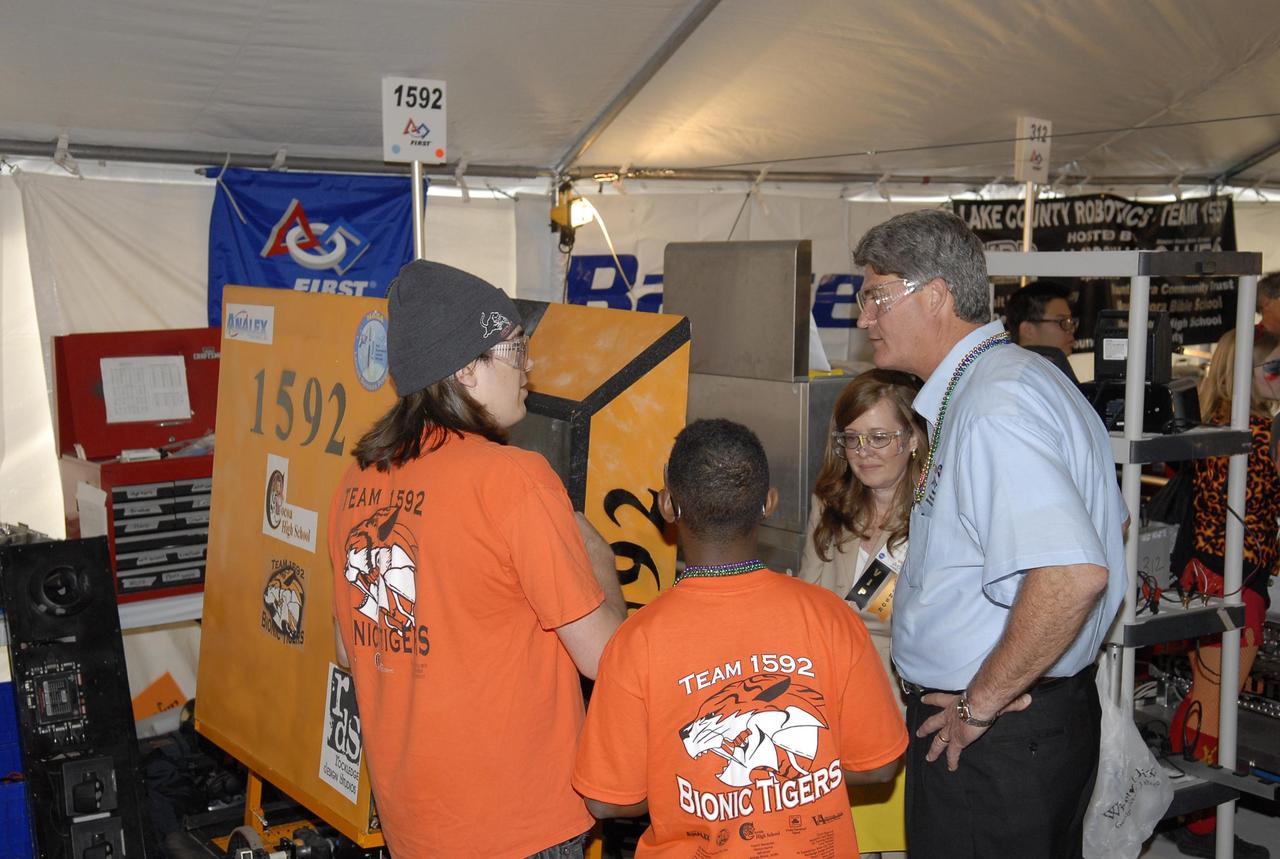
KENNEDY SPACE CENTER, FLA. -- Center Director Bill Parsons (right) talks with students of another NASA-sponsored robotic team during the FIRST robotics event held at the University of Central Florida Arena March 8-10. Next to Parsons is Lisa Malone, director of External Relations at Kennedy Space Center. The students of team 1592, the Bionic Tigers, represent the cosponsors Analex Corporation and NASA Launch Services Program and Cocoa High School in Central Florida. Participating since 2005, this is the first year for this team to receive NASA financial support. They were mentored by the Pink Team. The FIRST, or For Inspiration and Recognition of Science and Technology, Robotics Competition challenges teams of young people and their mentors to solve a common problem in a six-week timeframe using a standard "kit of parts" and a common set of rules. Teams build robots from the parts and enter them in a series of competitions designed by FIRST founder Dean Kamen and Dr. Woodie Flowers, chairman and vice chairman of the Executive Advisory Board respectively, and a committee of engineers and other professionals. FIRST redefines winning for these students. Teams are rewarded for excellence in design, demonstrated team spirit, gracious professionalism and maturity, and ability to overcome obstacles. Scoring the most points is a secondary goal. Winning means building partnerships that last. Photo credit: NASA/Kim Shiflett
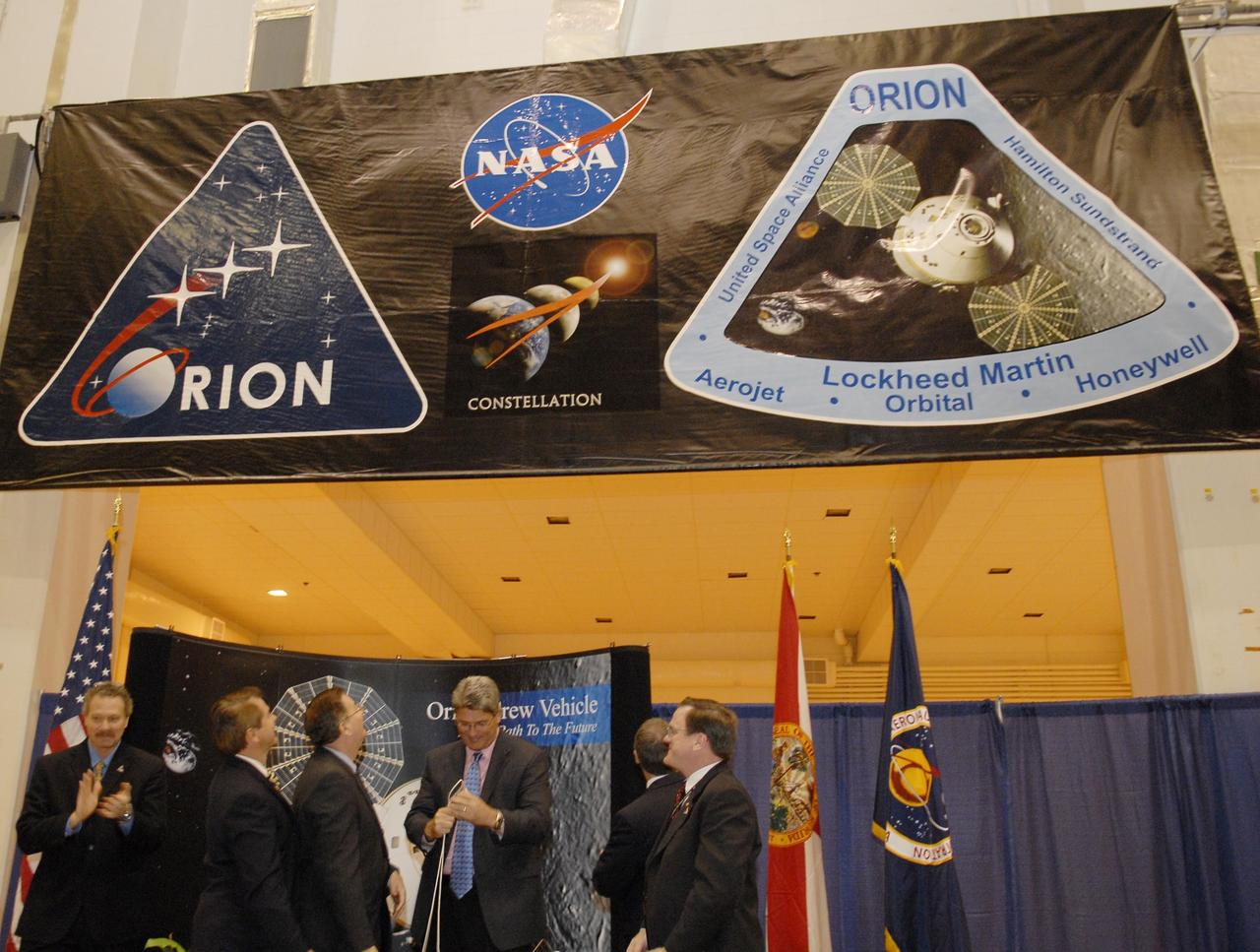
KENNEDY SPACE CENTER, FLA. -- After a ceremony to commemorate the transition of the historic Operations and Checkout (O&C) Building high bay for use by the Constellation Program, representatives from NASA, Lockheed Martin, Space Florida and the state of Florida look at the banner, unfurled by Kennedy Space Center Director Bill Parsons (center), spotlighting the Orion crew exploration vehicle that will be assembled in the O&C. From left are Russell Romanella, director of the International Space Station/Payload Processing Directorate at Kennedy Space Center; Thad Altman, representative of the State of Florida; Cleon Lacefield, Lockheed Martin program manager; Parsons; Steve Koller, executive director of Space Florida (turned away); and Skip Hatfield, Orion Project manager. Originally built to process space vehicles in the Apollo era, the O&C Building will serve as the final assembly facility for the Orion crew exploration vehicle. Orion, America's human spaceflight vehicle of the future, will be capable of transporting four crewmembers for lunar missions and later will support crew transfers for Mars missions. Each Orion spacecraft also may be used to support up to six crewmembers to the International Space Station after the space shuttle is retired in 2010. Design, development and construction of Orion's components will be performed by Lockheed Martin for NASA at facilities throughout the country. Photo credit: NASA/Kim Shiflett
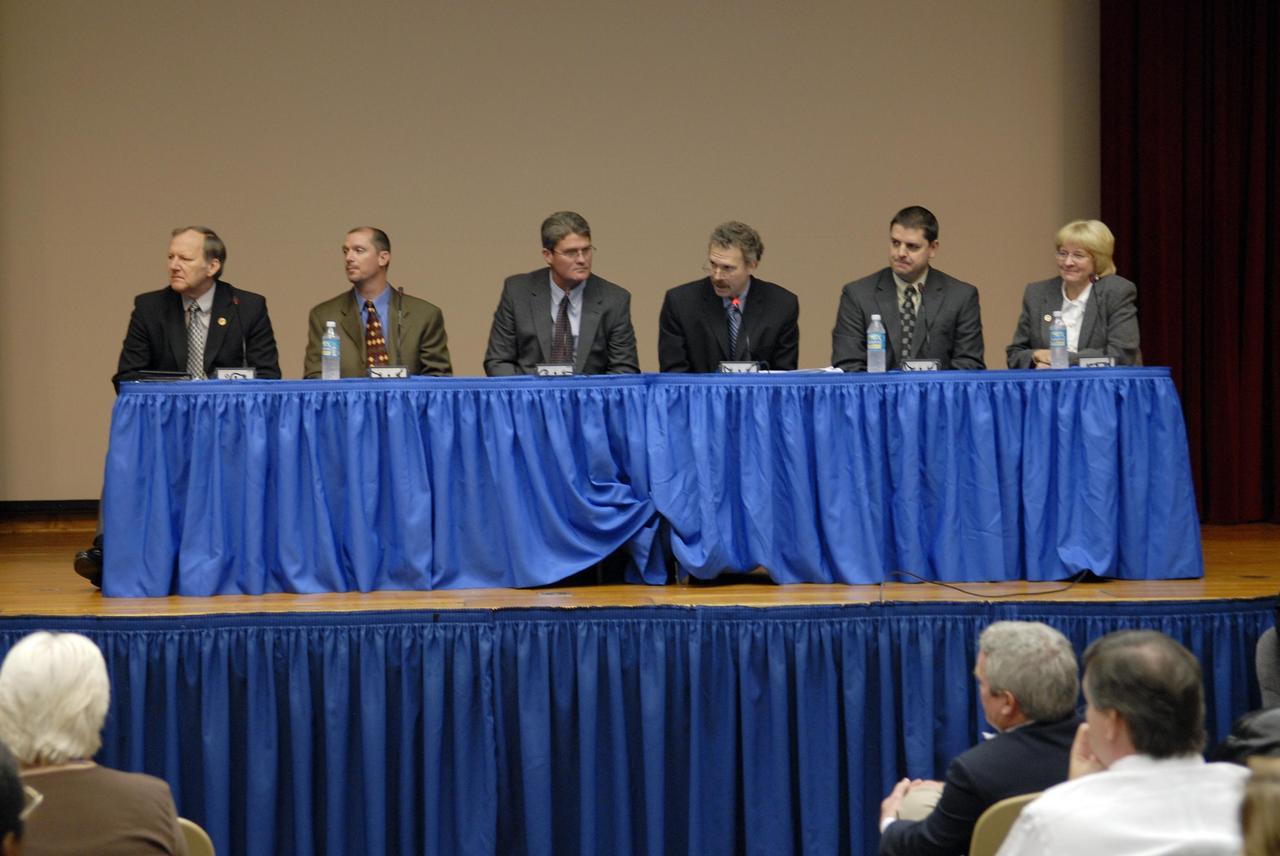
KENNEDY SPACE CENTER, FLA. -- Participants in the all-hands meeting respond to questions from the audience. Topics discussed included the year ahead at KSC. Seated at the table (from left) are Steve Francois, manager of Launch Services Program; Pepper Phillips, deputy director of the Constellation Program office; Parsons; Russ Romanella, director of the ISS & Spacecraft Processing Directorate; Jeff Angermeier, chief of the Project Control office in the Launch Vehicle Processing Directorate; and Shannon Bartell, director of NASA Safety and Mission Assurance. Photo credit: NASA/Kim Shiflett
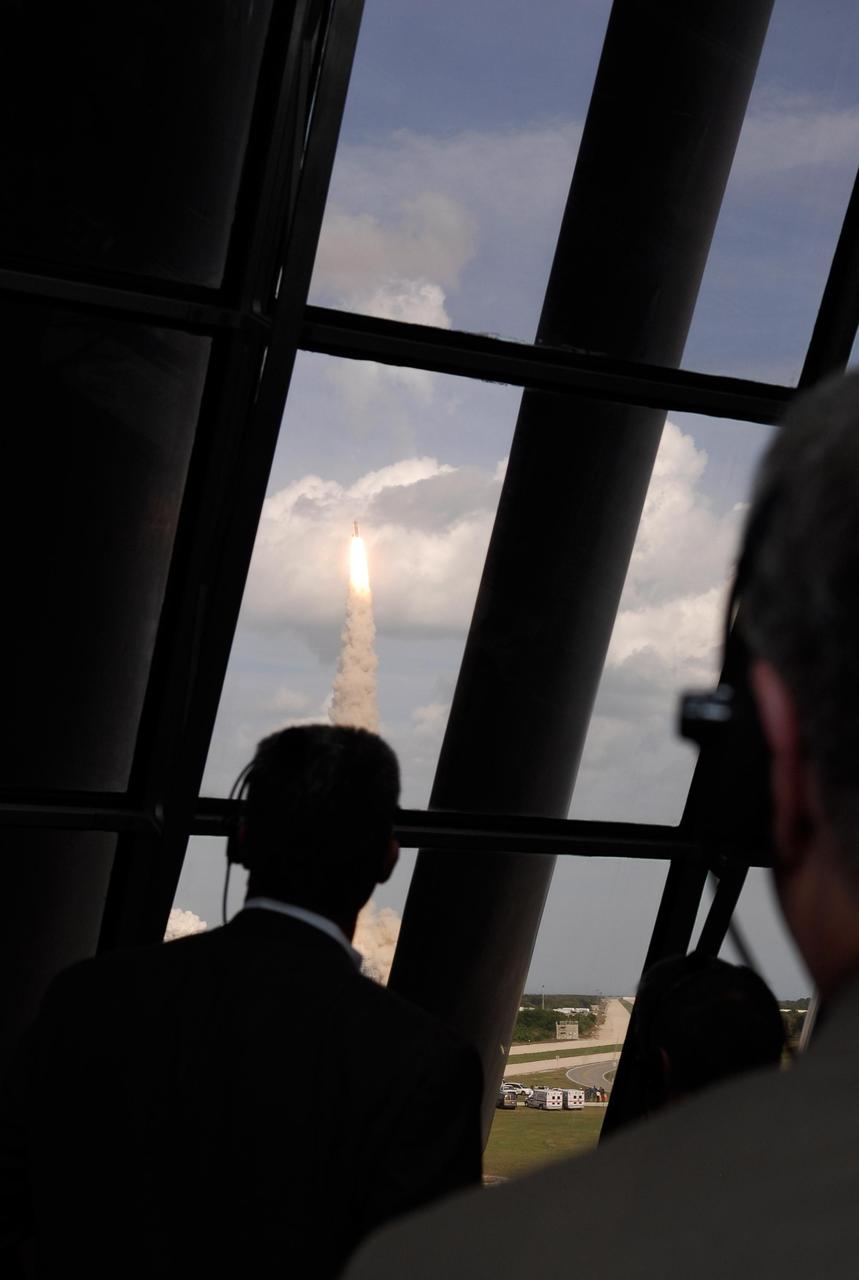
KENNEDY SPACE CENTER, FLA. -- The launch of space shuttle Atlantis is viewed through the windows of the Launch Control Center, where VIPS gathered to watch, including Center Director Bill Parsons, Associate Administrator for NASA Space Operations William H. Gerstenmaier and NASA Administrator Mike Griffin. Liftoff was on time at 2:45 p.m. EST from Launch Pad 39A. The launch is the third attempt for Atlantis since December 2007 to carry the European Space Agency's Columbus laboratory to the International Space Station. During the 11-day mission, the crew's prime objective is to attach the laboratory to the Harmony module, adding to the station's size and capabilities. Photo credit: NASA/Kim Shiflett
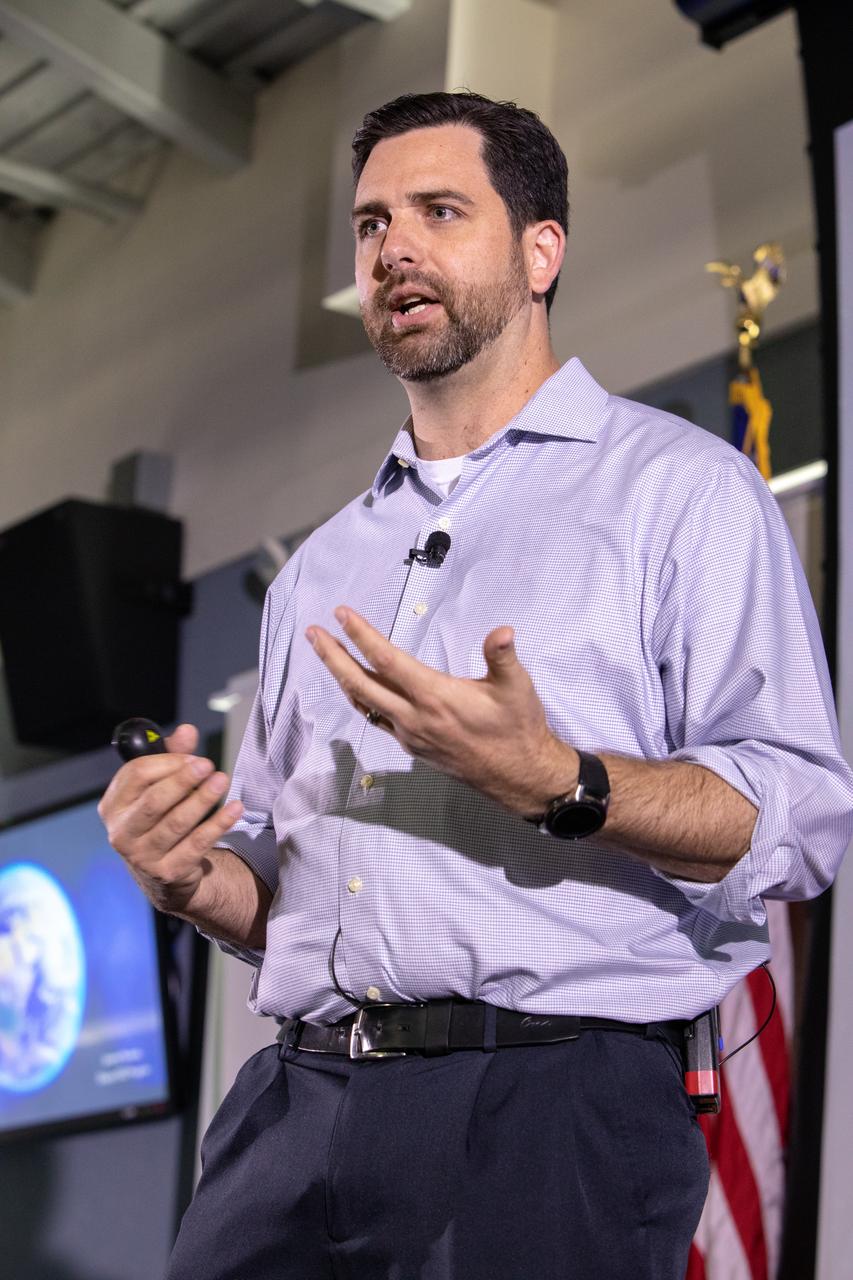
Jeremy Parsons, deputy manager of NASA’s Exploration Ground Systems at the agency’s Kennedy Space Center in Florida, speaks at the fourth in a series of five TED Talk-style informational sessions on Oct. 31, 2019, in the Kennedy Learning Institute. Sponsored by Kennedy’s Launching Leaders and Leadership for the Future, NASAtalks focuses on the topic of intentional careers and aims to provide employees with tools and knowledge that can be utilized for career growth. The theme of this fourth session was employees, and additional speakers included Kennedy’s Johnny Nguyen and Tony Derbyshire, with a skill-building section on vulnerability, authentic self and diverse inclusion by Ronnie Rodriguez.
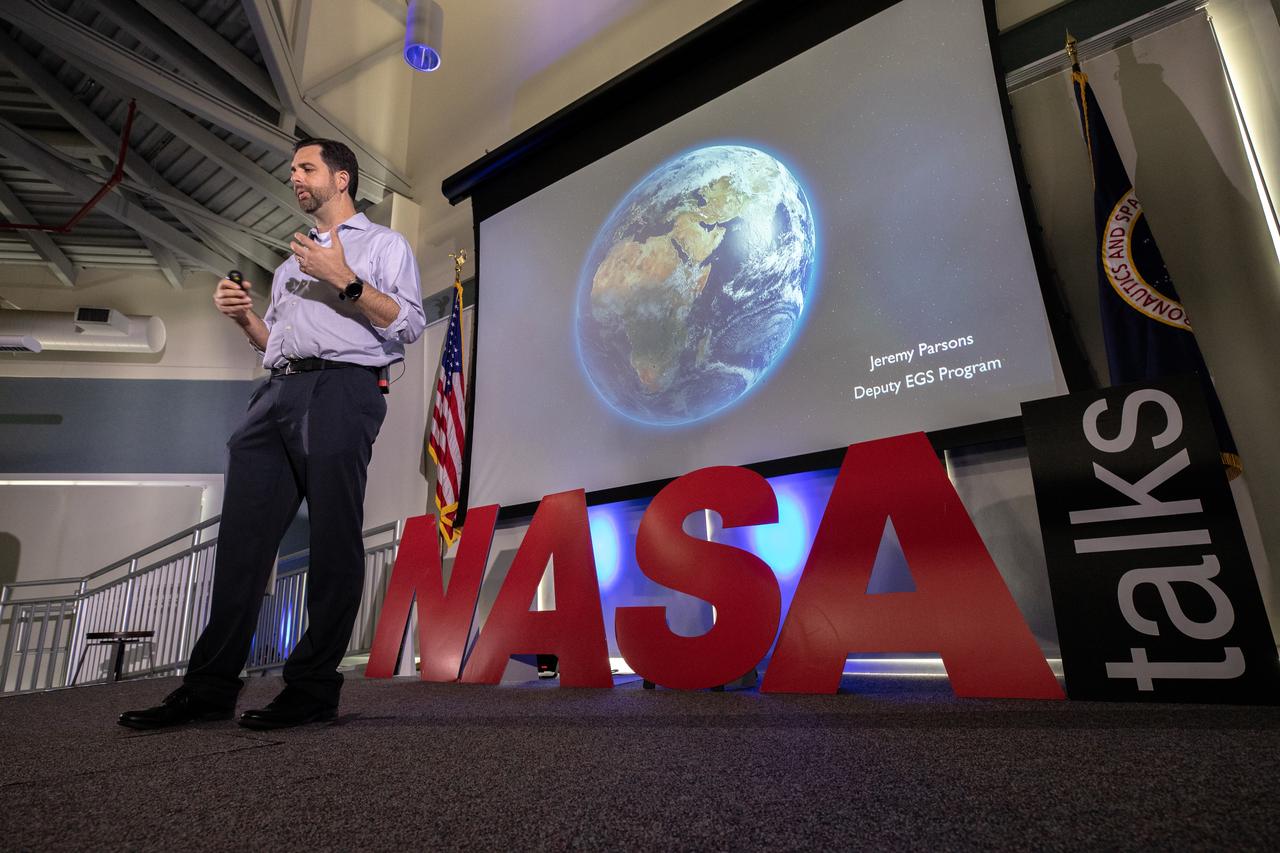
Jeremy Parsons, deputy manager of NASA’s Exploration Ground Systems at the agency’s Kennedy Space Center in Florida, speaks at the fourth in a series of five TED Talk-style informational sessions on Oct. 31, 2019, in the Kennedy Learning Institute. Sponsored by Kennedy’s Launching Leaders and Leadership for the Future, NASAtalks focuses on the topic of intentional careers and aims to provide employees with tools and knowledge that can be utilized for career growth. The theme of this fourth session was employees, and additional speakers included Kennedy’s Johnny Nguyen and Tony Derbyshire, with a skill-building section on vulnerability, authentic self and diverse inclusion by Ronnie Rodriguez.

Kennedy Space Center’s Johnny Nguyen speaks at the fourth in a series of five TED Talk-style informational sessions on Oct. 31, 2019, in the Florida spaceport’s Kennedy Learning Institute. Sponsored by Kennedy’s Launching Leaders and Leadership for the Future, NASAtalks focuses on the topic of intentional careers and aims to provide employees with tools and knowledge that can be utilized for career growth. The theme of this fourth session was employees, and additional speakers included Kennedy’s Tony Derbyshire and Deputy Manager of NASA’s Exploration Ground Systems Jeremy Parsons, with a skill-building section on vulnerability, authentic self and diverse inclusion by Ronnie Rodriguez.
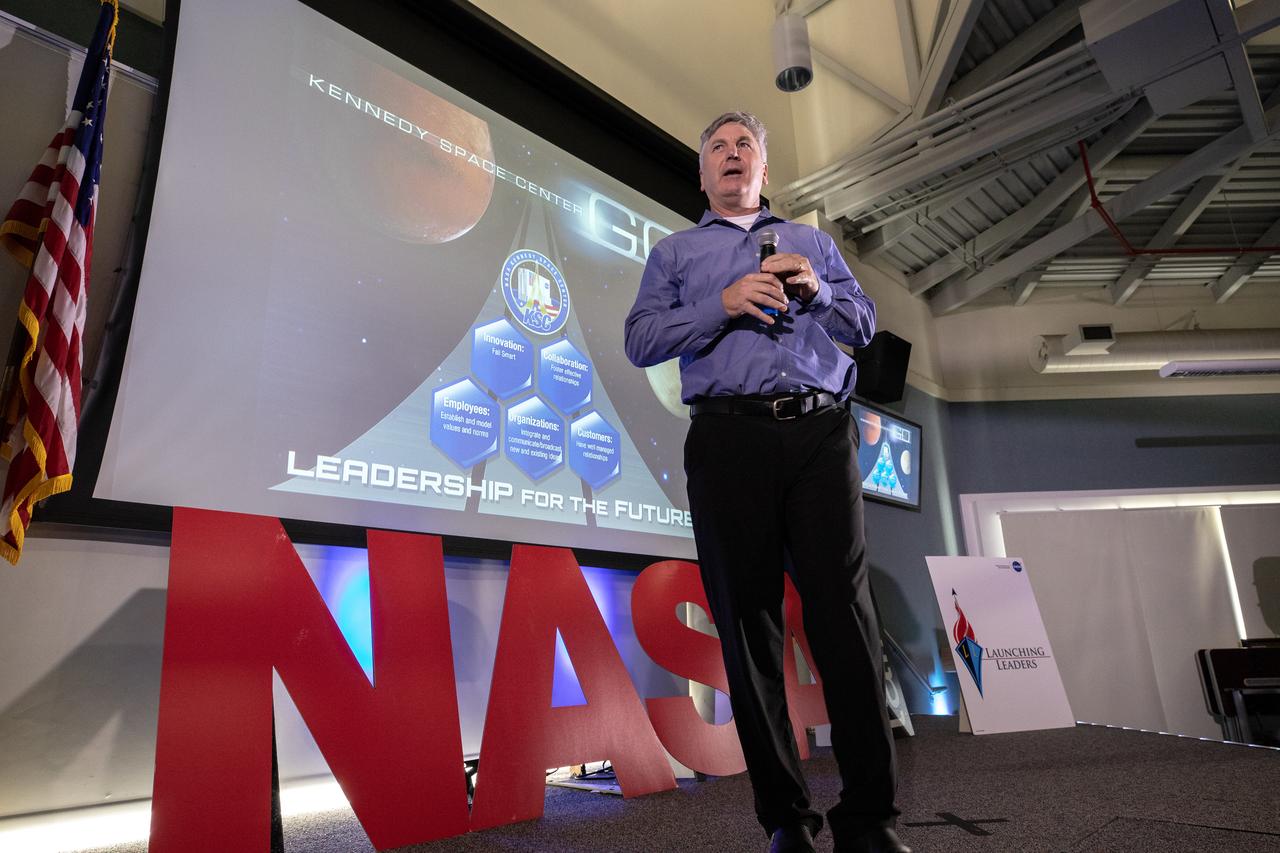
Scott Colloredo, deputy director of Engineering at NASA’s Kennedy Space Center in Florida, speaks at the fourth in a series of five TED Talk-style informational sessions on Oct. 31, 2019, in the Kennedy Learning Institute. Sponsored by Kennedy’s Launching Leaders and Leadership for the Future, NASAtalks focuses on the topic of intentional careers and aims to provide employees with tools and knowledge that can be utilized for career growth. The theme of this fourth session was employees, and additional speakers included Kennedy’s Johnny Nguyen, Tony Derbyshire and Jeremy Parsons, deputy manager of NASA’s Exploration Ground Systems, with a skill-building section on vulnerability, authentic self and diverse inclusion by Ronnie Rodriguez.
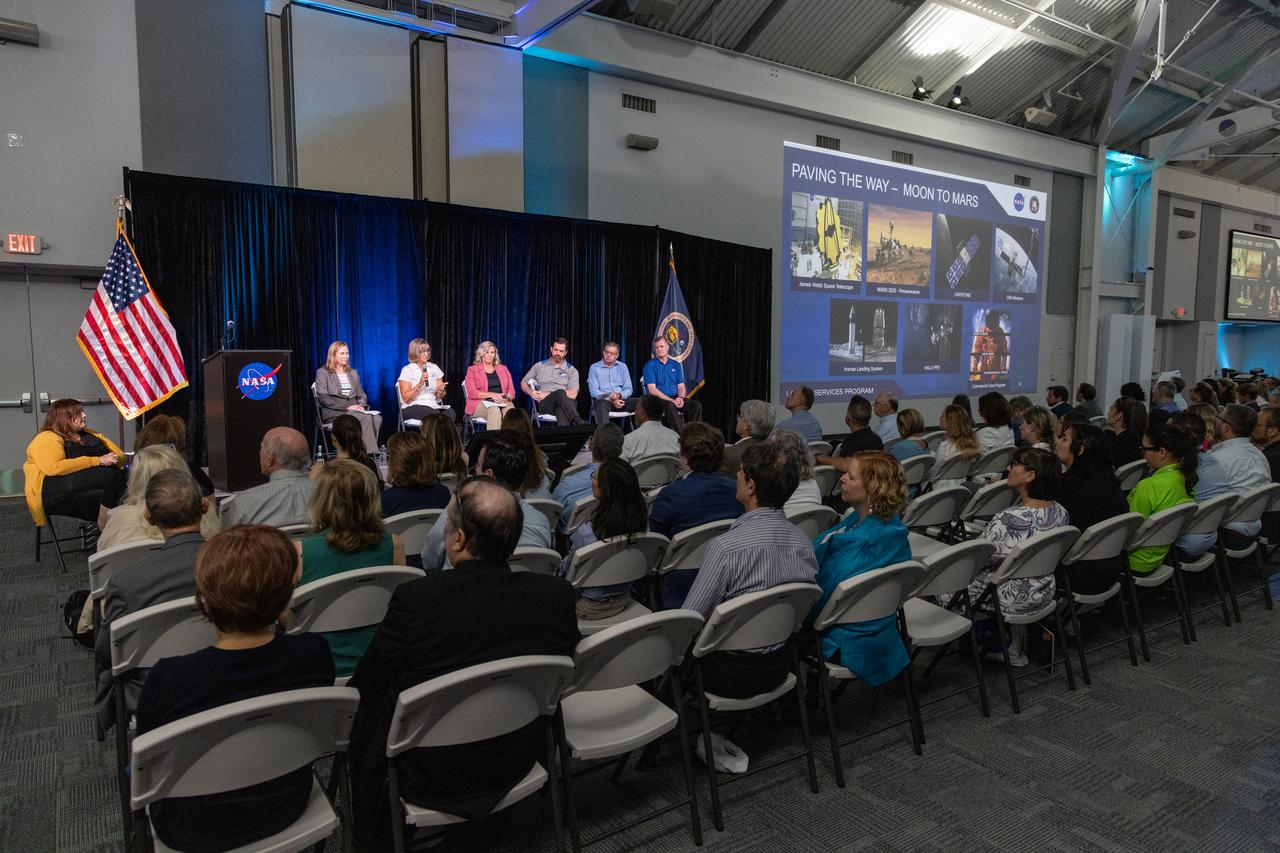
NASA Kennedy Space Center Director Janet Petro, with senior leaders of NASA and center programs, holds a Community Leaders Update on Thursday, May 23, 2024, at the Kennedy Space Center Visitor Complex. The panel discussed how programs based at NASA Kennedy support the agency’s efforts to return humans to the Moon and prepare for Mars, and they answered questions from guests. From second to left, Jenny Lyons, deputy manager, Launch Services Program; Dana Hutcherson, deputy manager, Commercial Crew Program; Jeremy Parsons, deputy manager, Exploration Ground Systems; Emilio Cruz, deputy director, Exploration Research and Technology Programs; and Mark Weise, manager, Gateway Deep Space Logistics.
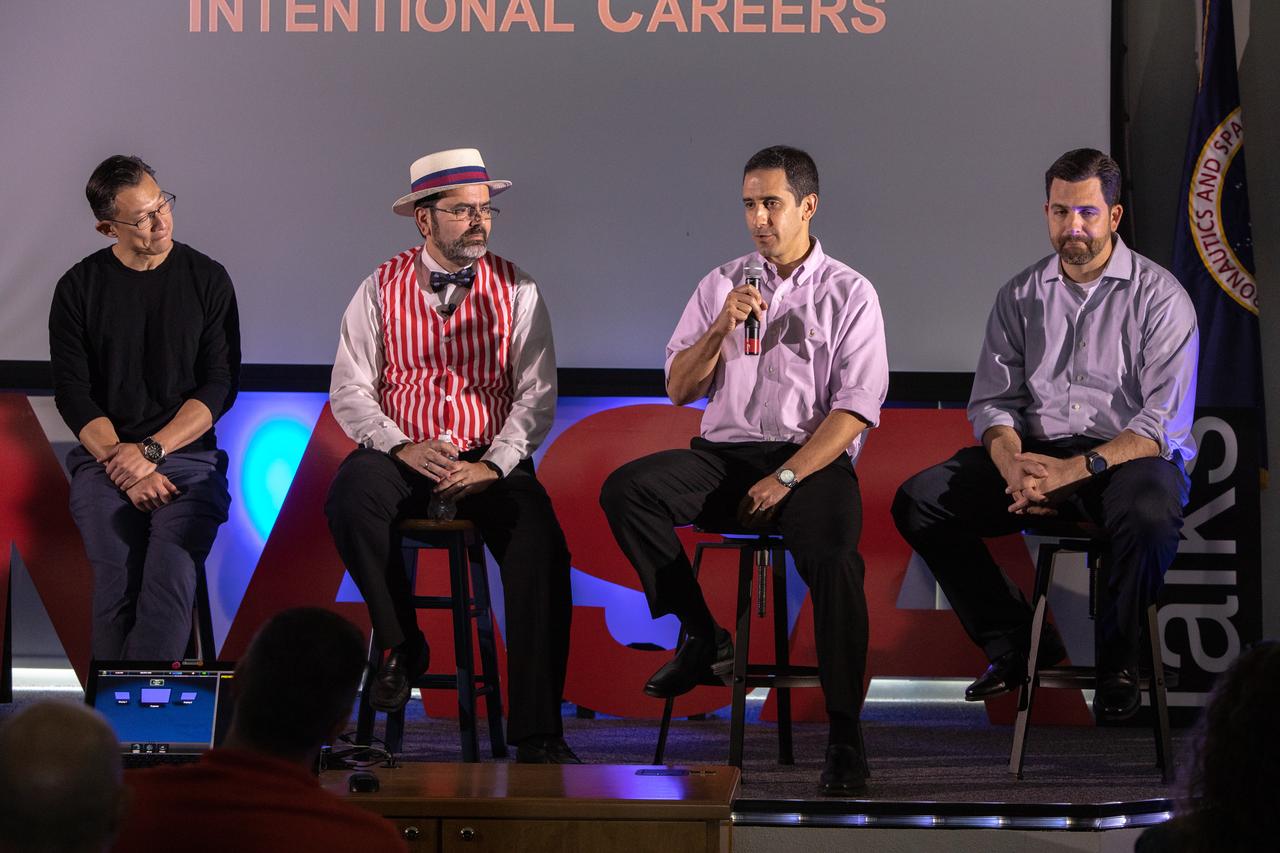
From left, Kennedy Space Center’s Johnny Nguyen, Ronnie Rodriguez, deputy director of Safety and Mission Assurance, Tony Derbyshire and Jeremy Parsons, deputy manager of NASA’s Exploration Ground Systems, participate in the fourth of a series of five TED Talk-style informational sessions on Oct. 31, 2019, inside the Florida spaceport’s Kennedy Learning Institute. Sponsored by Kennedy’s Launching Leaders and Leadership for the Future, NASAtalks focuses on the topic of intentional careers and aims to provide employees with tools and knowledge that can be utilized for career growth. The theme of this fourth session was employees.
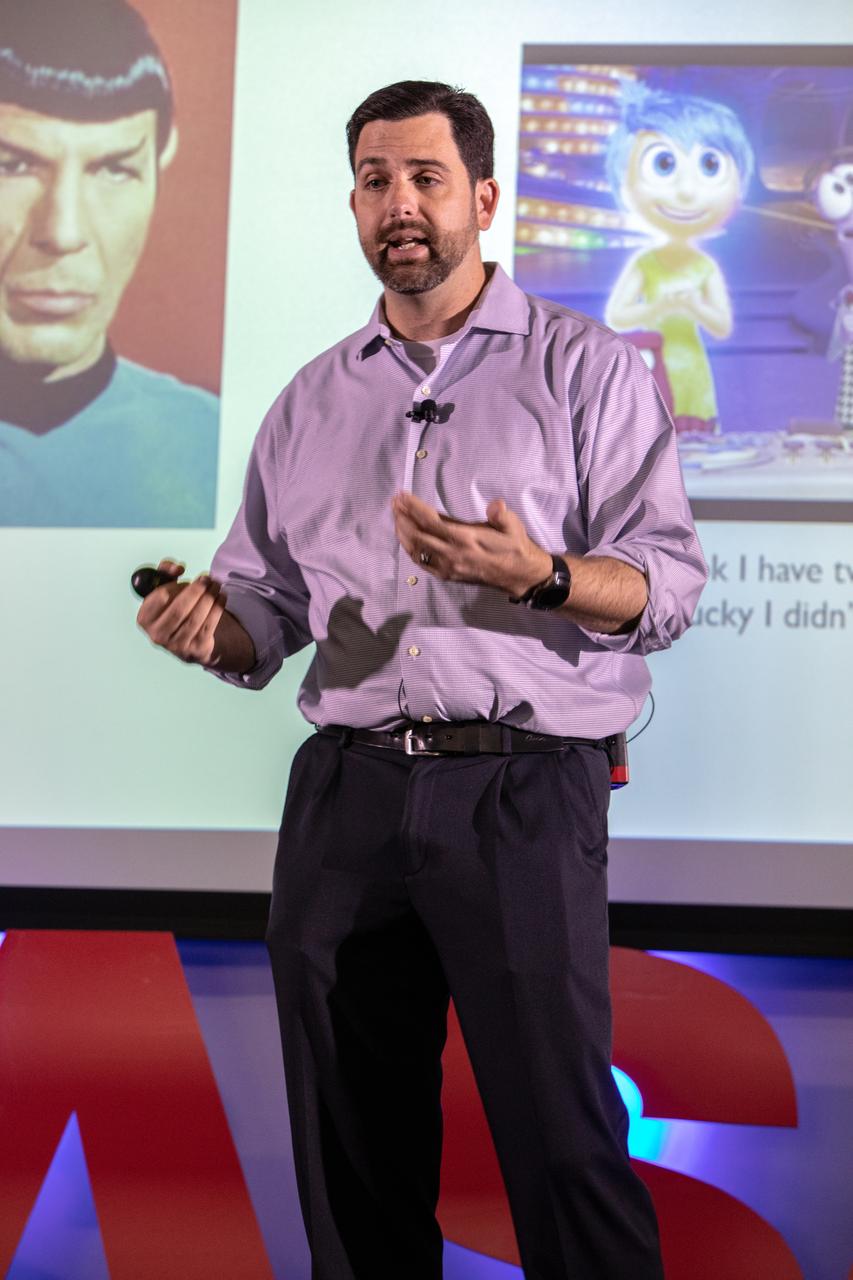
Jeremy Parsons, deputy manager of NASA’s Exploration Ground Systems at the agency’s Kennedy Space Center in Florida, speaks at the fourth in a series of five TED Talk-style informational sessions on Oct. 31, 2019, in the Kennedy Learning Institute. Sponsored by Kennedy’s Launching Leaders and Leadership for the Future, NASAtalks focuses on the topic of intentional careers and aims to provide employees with tools and knowledge that can be utilized for career growth. The theme of this fourth session was employees, and additional speakers included Kennedy’s Johnny Nguyen and Tony Derbyshire, with a skill-building section on vulnerability, authentic self and diverse inclusion by Ronnie Rodriguez.

Barbara Brown, center, chief technologist, Exploration Research and Technology Programs, participates in a panel discussion during a Community Leaders Update hosted by Kennedy Space Center on Feb. 18, 2020, at the Kennedy Space Center Visitor Complex in Florida. At left is Jenny Lyons, deputy manager, Gateway Logistics Element. At right is Jeremy Parsons, deputy manager, Exploration Ground Systems. The panel discussion was moderated by Center Director Bob Cabana. Attendees included community leaders, business executives, partners, educators and government leaders. After the presentation, guests had the opportunity to ask questions and visit displays from the programs and some of the commercial partners.
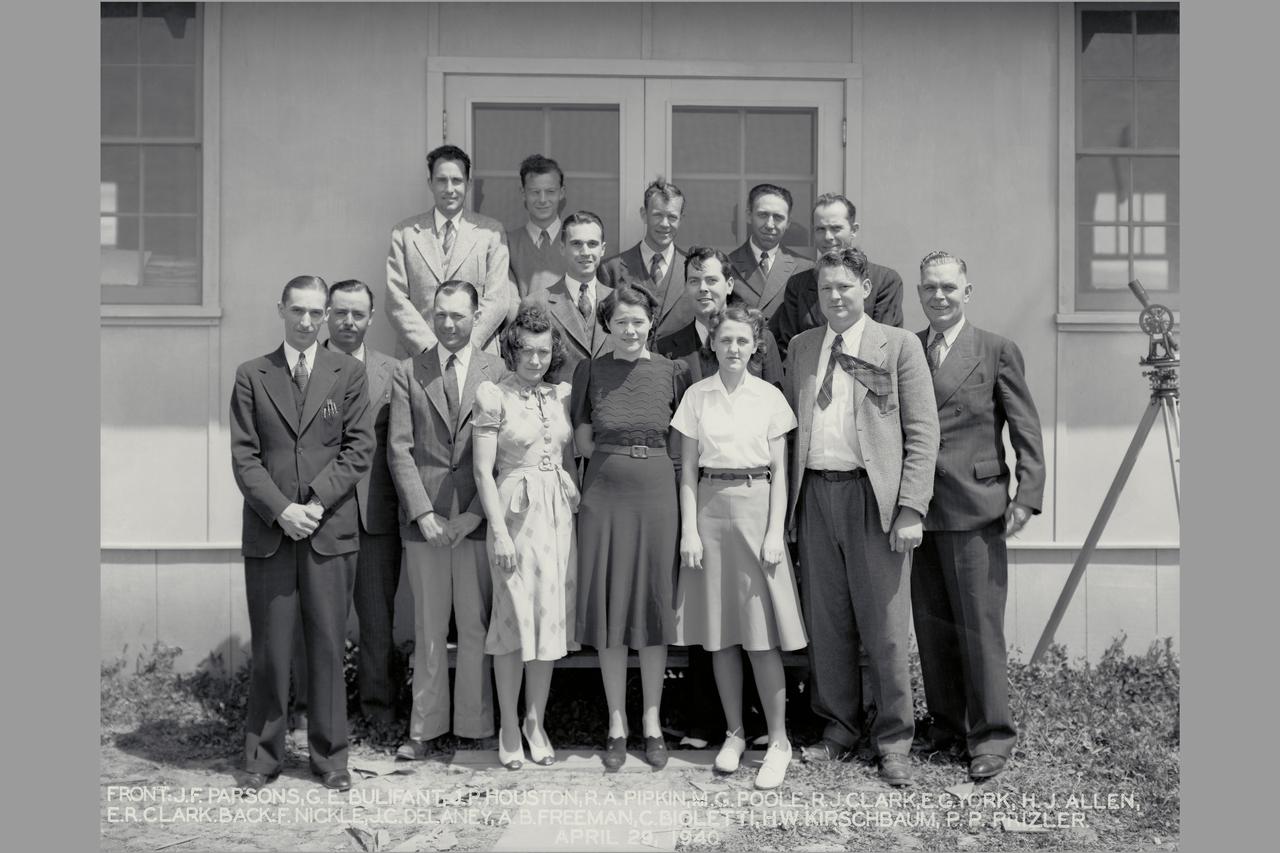
Arriving Engineers were John Parsons and Ferril Nickle (January 29, 1940) They were the first permanent members of the laboratory's staff on site. Other early arrivals from Langley were: Carlton Bioletti, March 1; Arthur B. Freeman, March 2; Edward R. Sharp, March 11; Manie G Poole, March 11; H. Julian Allen, April 13; Geroge E. Bulifant, April 17; Howard W. Krischbaum, April 29; and John P. Houston, April 29. Russ Robinson on-site representative of the construction group and their support staff E York, R Pippen.
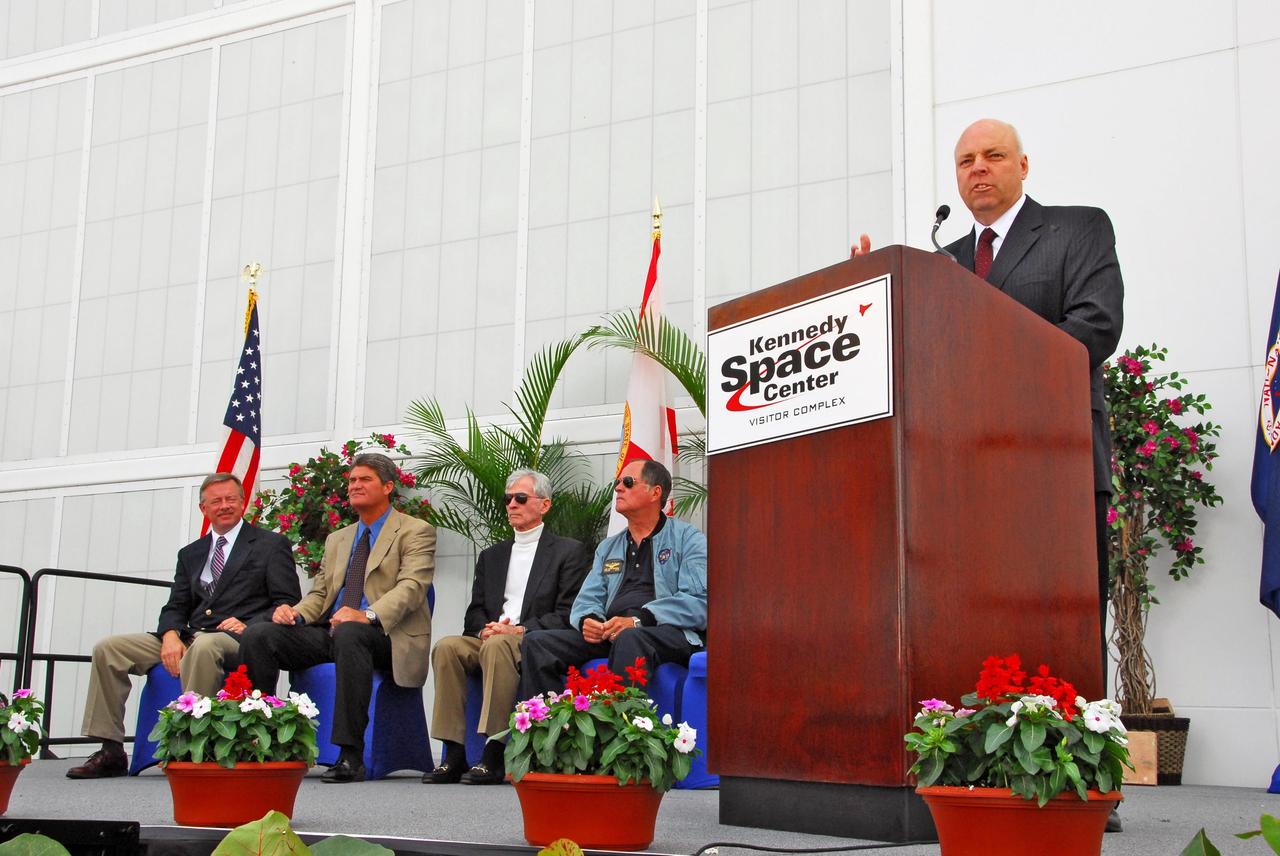
KENNEDY SPACE CENTER, FLA. -- NASA, Kennedy Space Center and State of Florida dignitaries helped launch the opening of the newest attraction at Kennedy Space Center's Visitor Complex, the Shuttle Launch Experience. At the dais is Dan LeBlanc, chief operating officer of the KSC Visitor Complex. Seated on stage are (from left) Lt. Governor of Florida Jeff Kottkamp, Center Director Bill Parsons, and former astronauts John Young and Bob Crippen. The attraction includes a simulated launch with the sights, sounds and sensations of launching into space. Find out more about the Visitor Complex and the Shuttle Launch Experience at <b>http://www.kennedyspacecenter.com/visitKSC/attractions/index.asp</b>. Photo credit: NASA/George Shelton
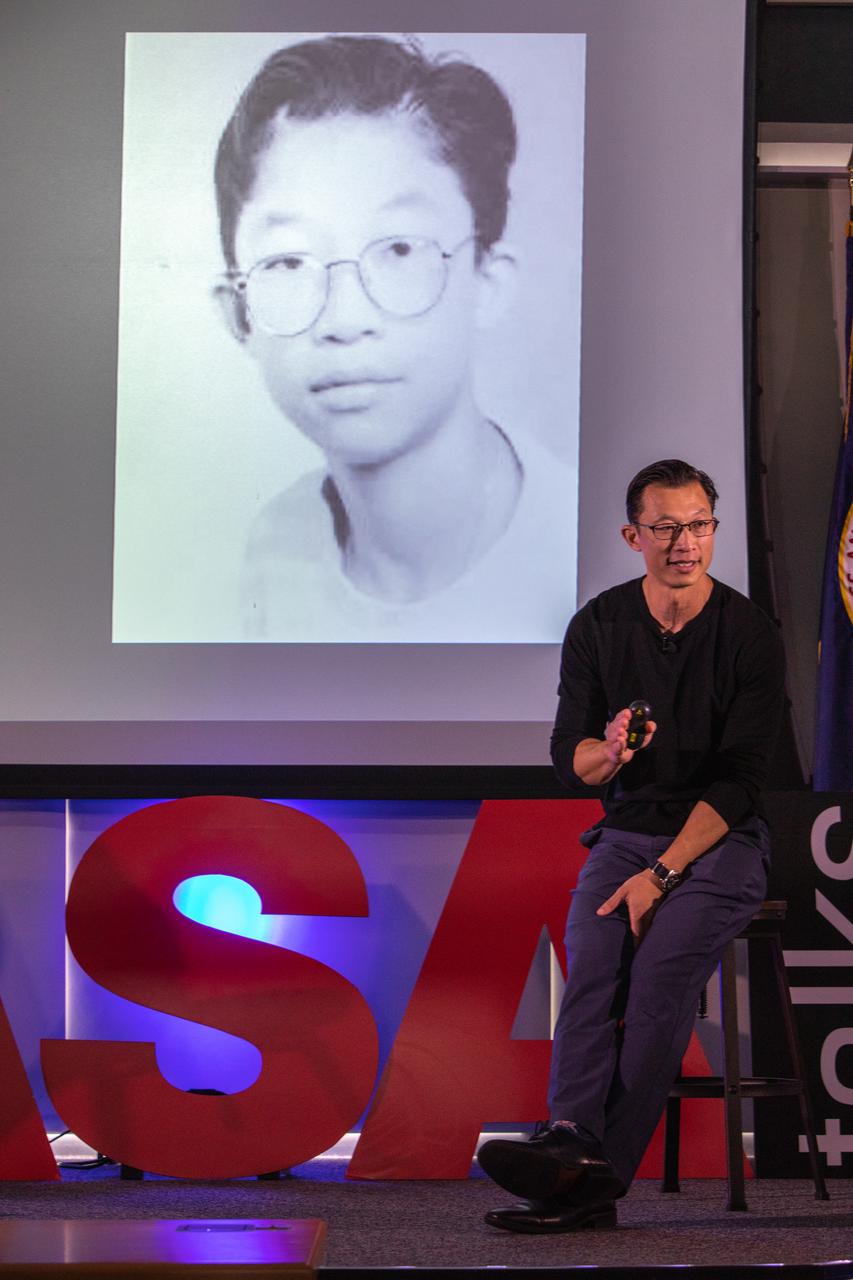
Kennedy Space Center’s Johnny Nguyen speaks at the fourth in a series of five TED Talk-style informational sessions on Oct. 31, 2019, in the Florida spaceport’s Kennedy Learning Institute. Sponsored by Kennedy’s Launching Leaders and Leadership for the Future, NASAtalks focuses on the topic of intentional careers and aims to provide employees with tools and knowledge that can be utilized for career growth. The theme of this fourth session was employees, and additional speakers included Kennedy’s Tony Derbyshire and Deputy Manager of NASA’s Exploration Ground Systems Jeremy Parsons, with a skill-building section on vulnerability, authentic self and diverse inclusion by Ronnie Rodriguez.
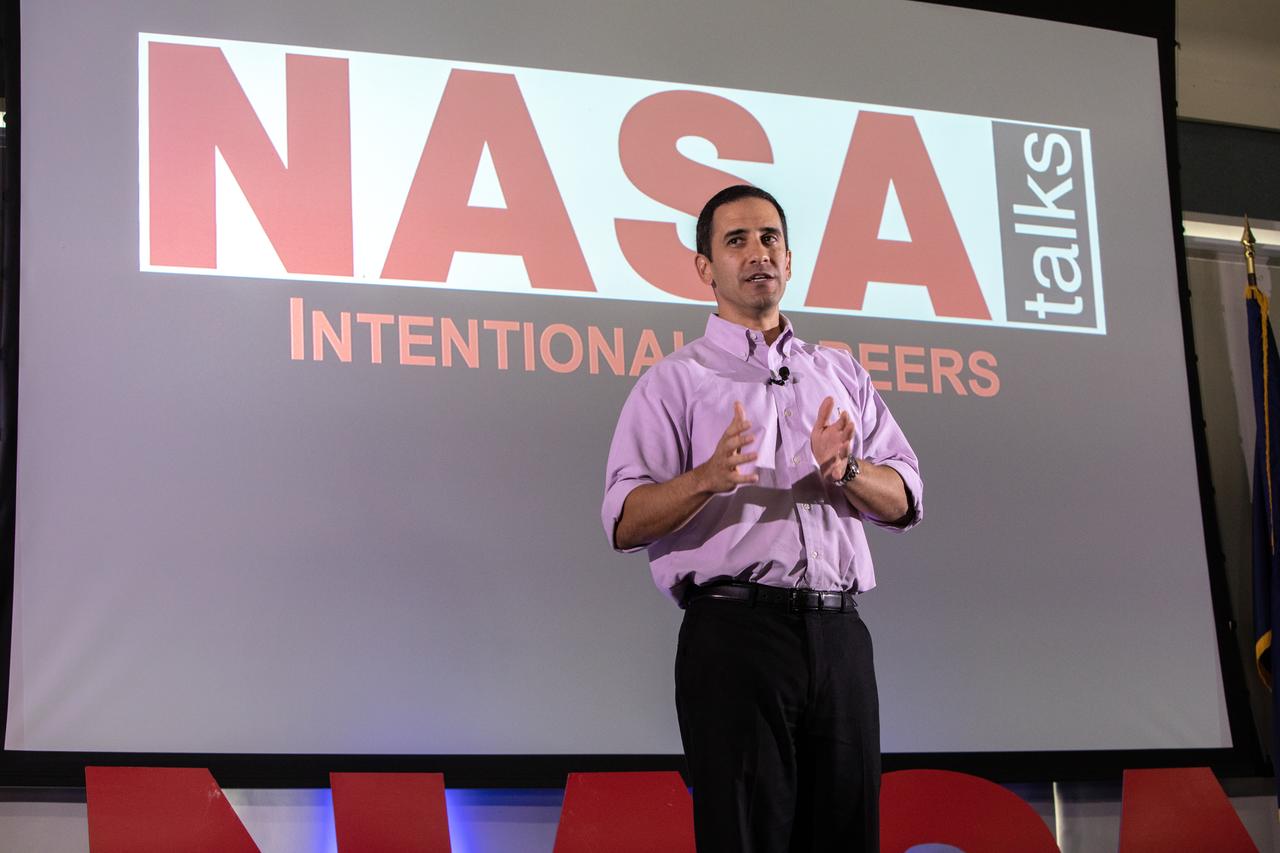
Kennedy Space Center’s Tony Derbyshire speaks at the fourth in a series of five TED Talk-style informational sessions on Oct. 31, 2019, in the Florida spaceport’s Kennedy Learning Institute. Sponsored by Kennedy’s Launching Leaders and Leadership for the Future, NASAtalks focuses on the topic of intentional careers and aims to provide employees with tools and knowledge that can be utilized for career growth. The theme of this fourth session was employees, and additional speakers included Kennedy’s Johnny Nguyen and Deputy Manager of NASA’s Exploration Ground Systems Jeremy Parsons, with a skill-building section on vulnerability, authentic self and diverse inclusion by Ronnie Rodriguez.
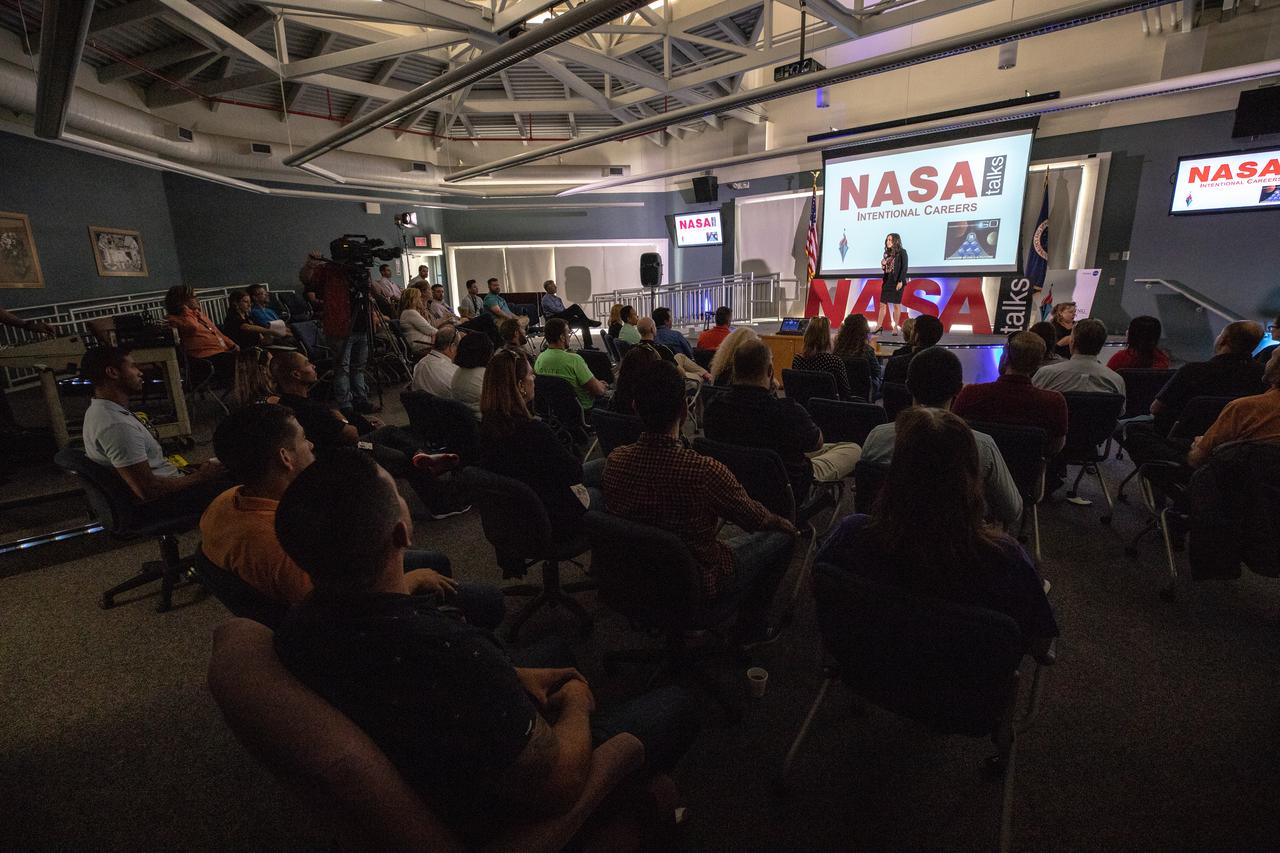
Kennedy Space Center’s Jennifer Lane addresses co-workers inside the Florida spaceport’s Kennedy Learning Institute on Oct. 31, 2019, during the fourth in a series of five TED Talk-style informational sessions. Sponsored by Kennedy’s Launching Leaders and Leadership for the Future, NASAtalks focuses on the topic of intentional careers and aims to provide employees with tools and knowledge that can be utilized for career growth. The theme of this fourth session was employees, and additional speakers included Kennedy’s Johnny Nguyen, Tony Derbyshire and Jeremy Parsons, deputy manager of NASA’s Exploration Ground Systems, with a skill-building section on vulnerability, authentic self and diverse inclusion by Ronnie Rodriguez.
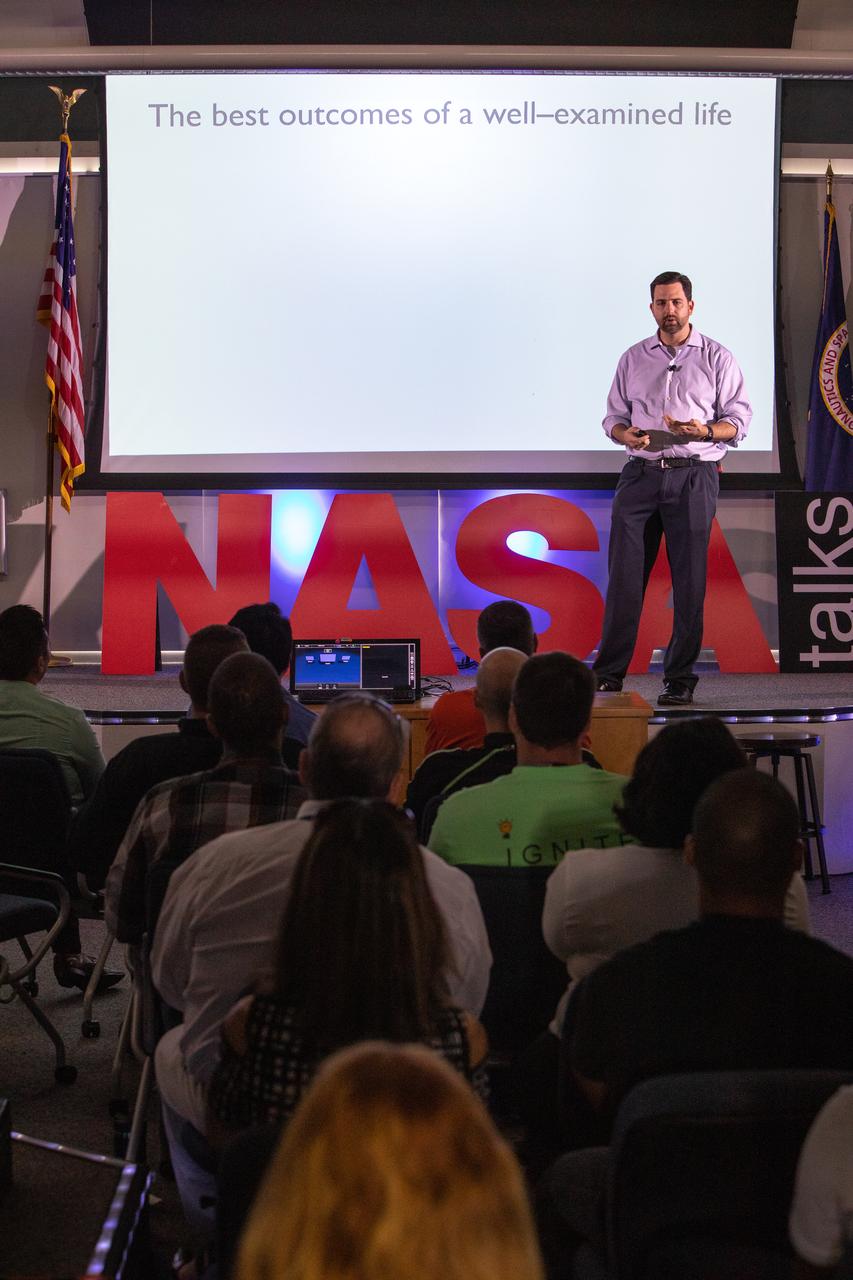
Jeremy Parsons, deputy manager of NASA’s Exploration Ground Systems at the agency’s Kennedy Space Center in Florida, speaks to Kennedy employees on Oct. 31, 2019, in the Kennedy Learning Institute during the fourth in a series of five TED Talk-style informational sessions. Sponsored by Kennedy’s Launching Leaders and Leadership for the Future, NASAtalks focuses on the topic of intentional careers and aims to provide employees with tools and knowledge that can be utilized for career growth. The theme of this fourth session was employees, and additional speakers included Kennedy’s Johnny Nguyen and Tony Derbyshire, with a skill-building section on vulnerability, authentic self and diverse inclusion by Ronnie Rodriguez.
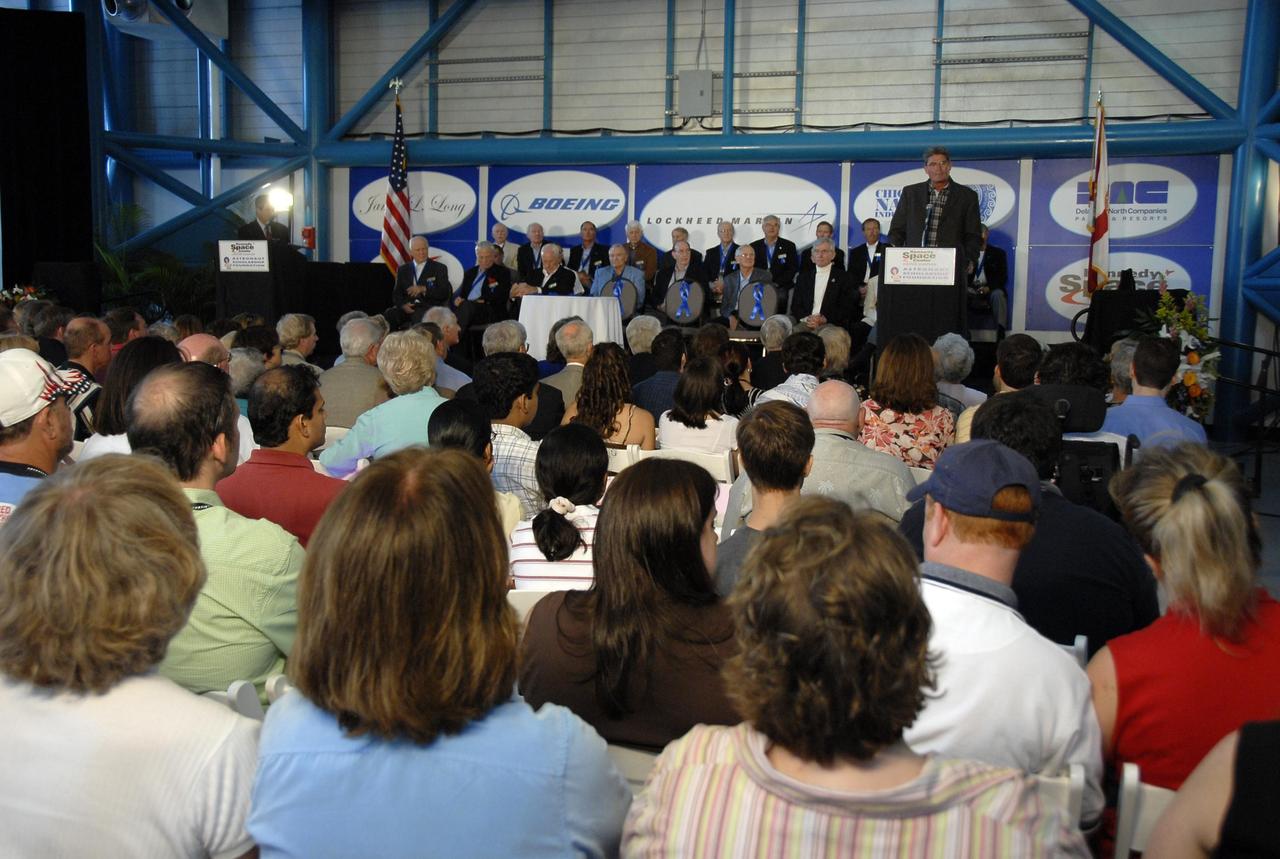
KENNEDY SPACE CENTER, FLA. -- At the U.S. Astronaut Hall of Fame induction ceremony, Kennedy Space Center Director Bill Parsons speaks about the accomplishments of the newest inductees to the Hall of Fame. The May 5 induction added space shuttle commanders Michael L. Coats, Steven A. Hawley and Jeffrey A. Hoffman to the Hall of Fame. They grow the number of space explorers enshrined in the Hall of Fame to 66. These gentlemen have joined such American space heroes as Neil Armstrong, Glenn, Alan Shepard and Sally Ride. The ceremony was held at the Kennedy Space Center's Apollo/Saturn V Center. Photo credit: NASA/Kim Shiflett
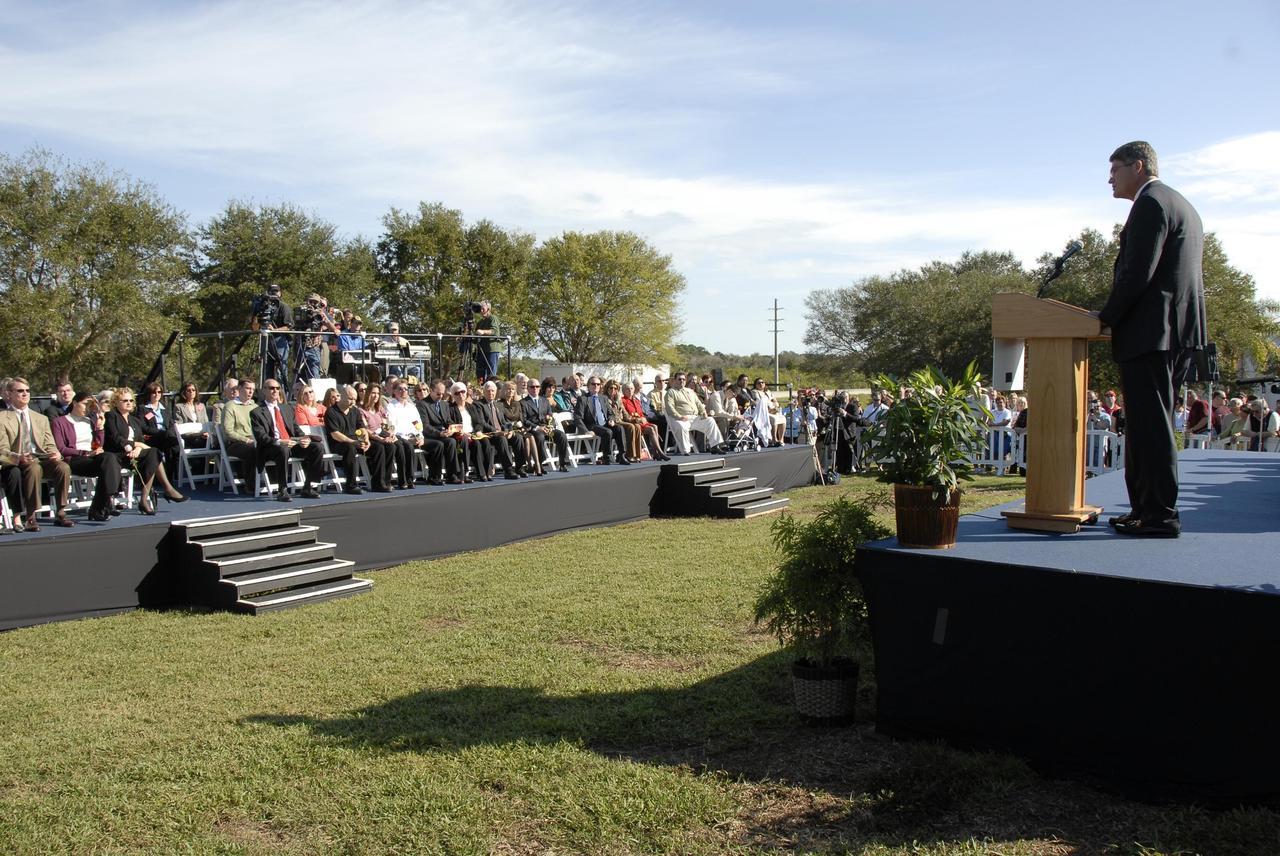
KENNEDY SPACE CENTER, FLA. -- Kennedy Space Center Director Bill Parsons (right) addresses guests attending a ceremony at the KSC Visitor Complex held in remembrance of the astronauts lost in the Apollo 1 fire: Virgil "Gus" Grissom, Edward H. White II and Roger B. Chaffee. Members of their families, along with Associate Administrator for Space Operations William Gerstenmaier, President of the Astronauts Memorial Foundation Stephen Feldman, Chairman of the Board of Directors of the Astronauts Memorial Foundation William Potter and former astronaut John Young, attended the ceremony. Photo credit:NASA/Kim Shiflett
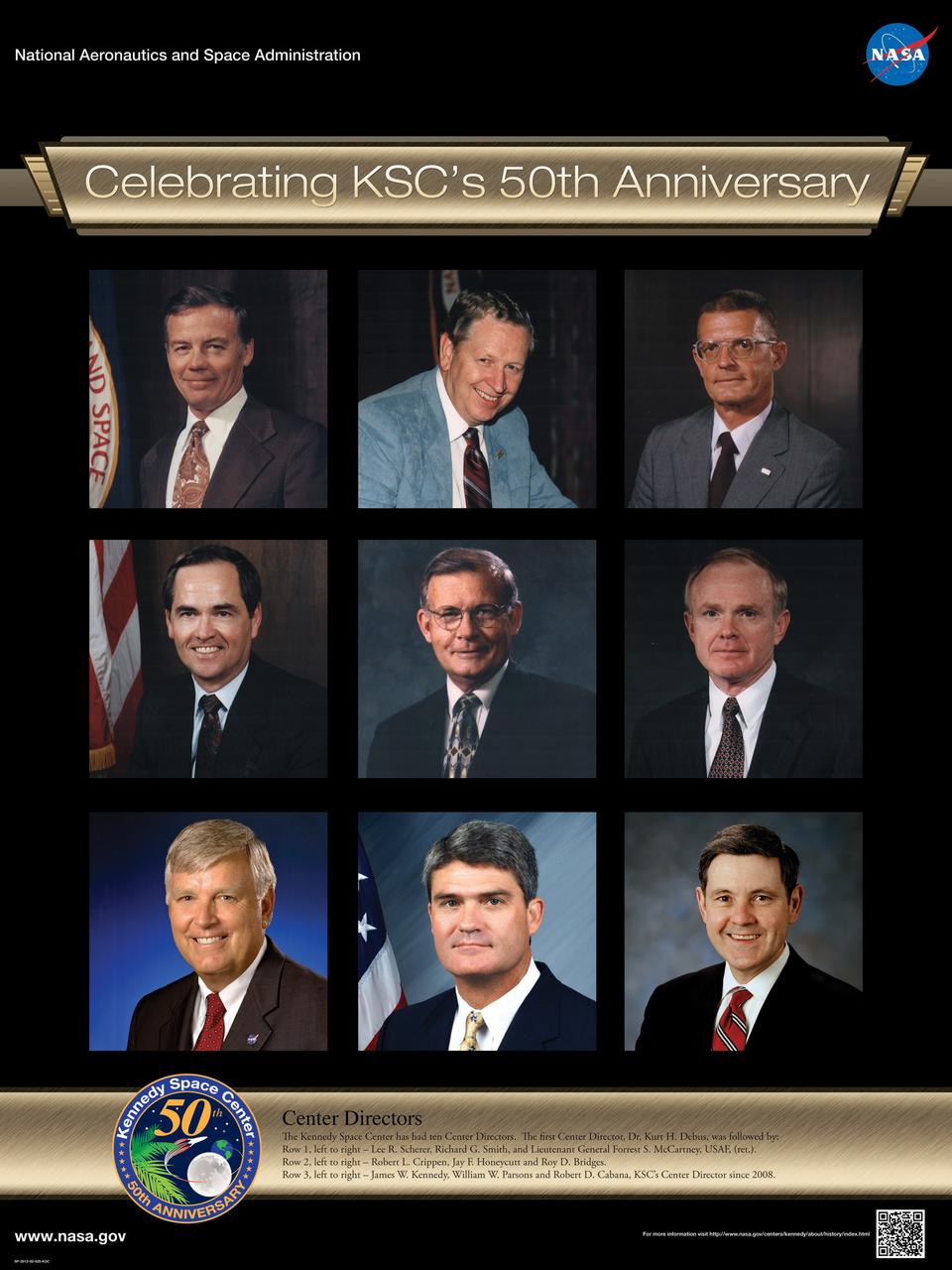
Center Directors: The Kennedy Space Center has had ten Center Directors. The first Center Director, Dr. Kurt H. Debus, was followed by: Row 1, left to right – Lee R. Scherer, Richard G. Smith, and Lieutenant General Forrest S. McCartney, USAF, ret.. Row 2, left to right – Robert L. Crippen, Jay F. Honeycutt and Roy D. Bridges. Row 3, left to right – James W. Kennedy, William W. Parsons and Robert D. Cabana, KSC’s Center Director since 2008. Poster designed by Kennedy Space Center Graphics Department/Greg Lee. Credit: NASA
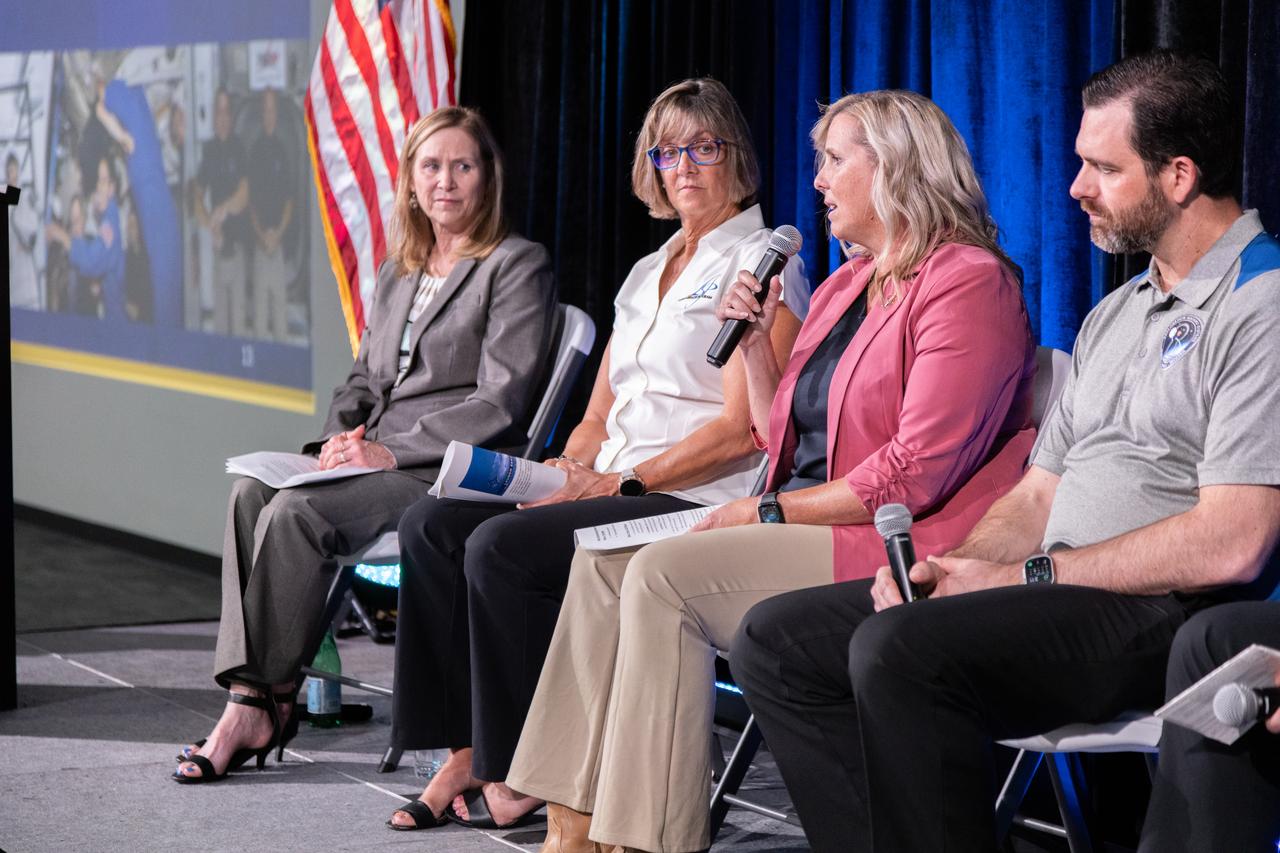
Dana Hutcherson, deputy manager, NASA’s Commercial Crew Program, speaks to a crowd gathered for the 2024 Kennedy Space Center Community Leaders Update on Thursday, May 23, 2024, held at the center’s Visitor Complex. She is joined by, from left, NASA Kennedy Space Center Director Janet Petro, Jenny Lyons, deputy manager, Launch Services Program, and Jeremy Parsons, deputy manager, Exploration Ground System. Together the panelists discussed how programs based at NASA Kennedy support the agency’s efforts to return humans to the Moon in preparation for Mars and answered audience questions.
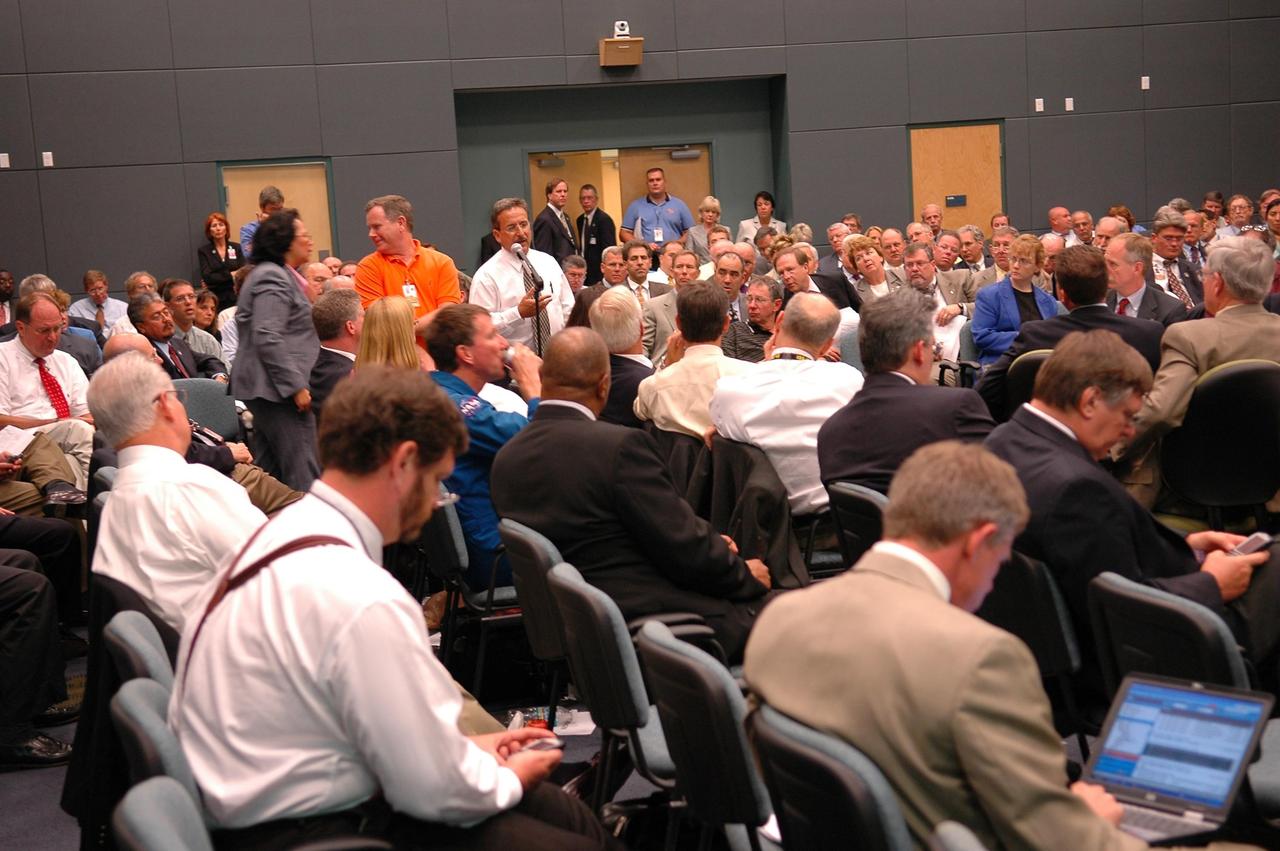
KENNEDY SPACE CENTER, FLA. - Space Shuttle Program and mission managers meet for the traditional Flight Readiness Review, a thorough assessment of preparations for the mission. Listening to a comment from attendees is NASA Administrator Mike Griffin (fourth to the right of the speaker) and Associate Administrator for Space Operations William Gerstenmaier and KSC Deputy Director Bill Parsons, at far right. The June 16-17 meeting is designed to produce a number of key decisions about Discovery's mission, STS-121, including selection of an official launch date. Photo credit: NASA/Kim Shiflett
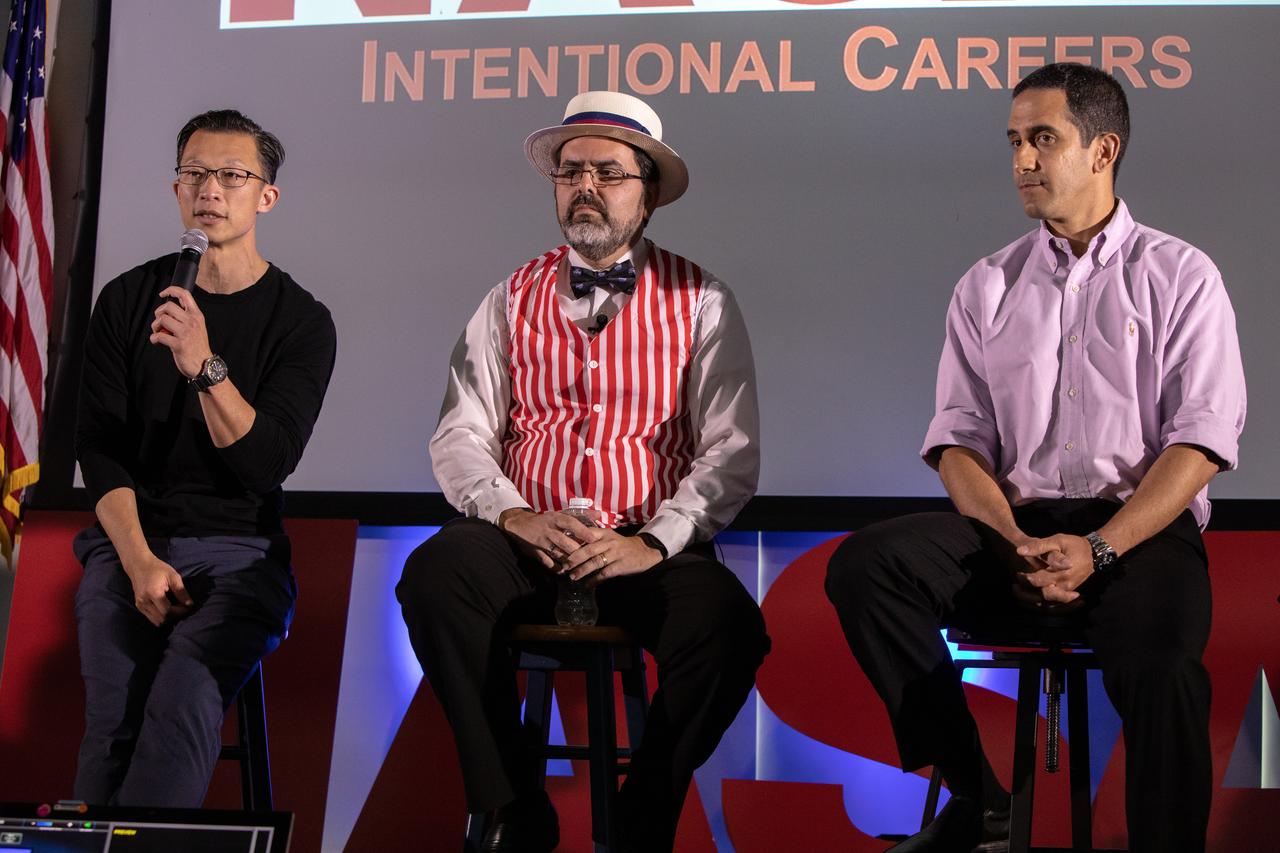
From left, Kennedy Space Center’s Johnny Nguyen, Ronnie Rodriguez, deputy director of Safety and Mission Assurance, and Tony Derbyshire participate in the fourth of a series of five TED Talk-style informational sessions on Oct. 31, 2019, inside the Florida spaceport’s Kennedy Learning Institute. Sponsored by Kennedy’s Launching Leaders and Leadership for the Future, NASAtalks focuses on the topic of intentional careers and aims to provide employees with tools and knowledge that can be utilized for career growth. The theme of this fourth session was employees, and additional speakers included Scott Colloredo, deputy director of Engineering, and Jeremy Parsons, deputy manager of NASA’s Exploration Ground Systems.

Kennedy Space Center’s Johnny Nguyen addresses co-workers inside the Florida spaceport’s Kennedy Learning Institute on Oct. 31, 2019, during the fourth in a series of five TED Talk-style informational sessions. Sponsored by Kennedy’s Launching Leaders and Leadership for the Future, NASAtalks focuses on the topic of intentional careers and aims to provide employees with tools and knowledge that can be utilized for career growth. The theme of this fourth session was employees, and additional speakers included Kennedy’s Tony Derbyshire and Deputy Manager of NASA’s Exploration Ground Systems Jeremy Parsons, with a skill-building section on vulnerability, authentic self and diverse inclusion by Ronnie Rodriguez.
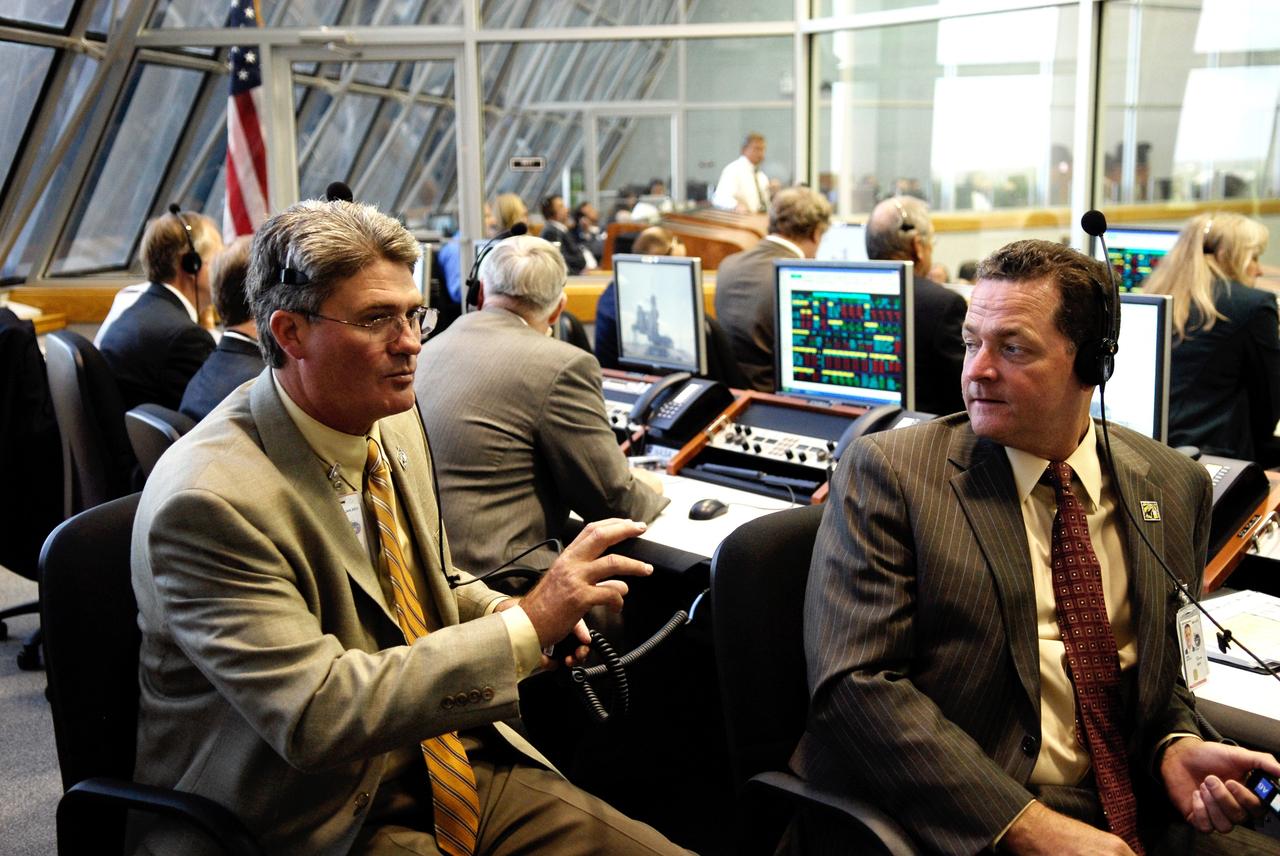
CAPE CANAVERAL, Fla. -- In the firing room, Bill Parsons (left), director of NASA's Kennedy Space Center, and Dave King, director of NASA's Marshall Space Flight Center, discuss the imminent launch of space shuttle Discovery on its STS-124 mission. Discovery is making its 35th flight. The STS-124 mission is the 26th in the assembly of the space station. It is the second of three flights launching components to complete the Japan Aerospace Exploration Agency's Kibo laboratory. The shuttle crew will install Kibo's large Japanese Pressurized Module and its remote manipulator system, or RMS. The 14-day flight includes three spacewalks. Photo credit: NASA/Kim Shiflett

KENNEDY SPACE CENTER, FLA. -- Inside the Launch Control Center at NASA's Kennedy Space Center, NASA management watches and waits for the launch of space shuttle Atlantis on the STS-122 mission to the International Space Station. Standing at left is Center Director Bill Parsons. Seated at right are Associate Administrator for NASA Space Operations William H. Gerstenmaier and NASA Administrator Mike Griffin. The launch is the third attempt for Atlantis since December 2007 to carry the European Space Agency's Columbus laboratory to the International Space Station. During the 11-day mission, the crew's prime objective is to attach the laboratory to the Harmony module, adding to the station's size and capabilities. Photo credit: NASA/Kim Shiflett
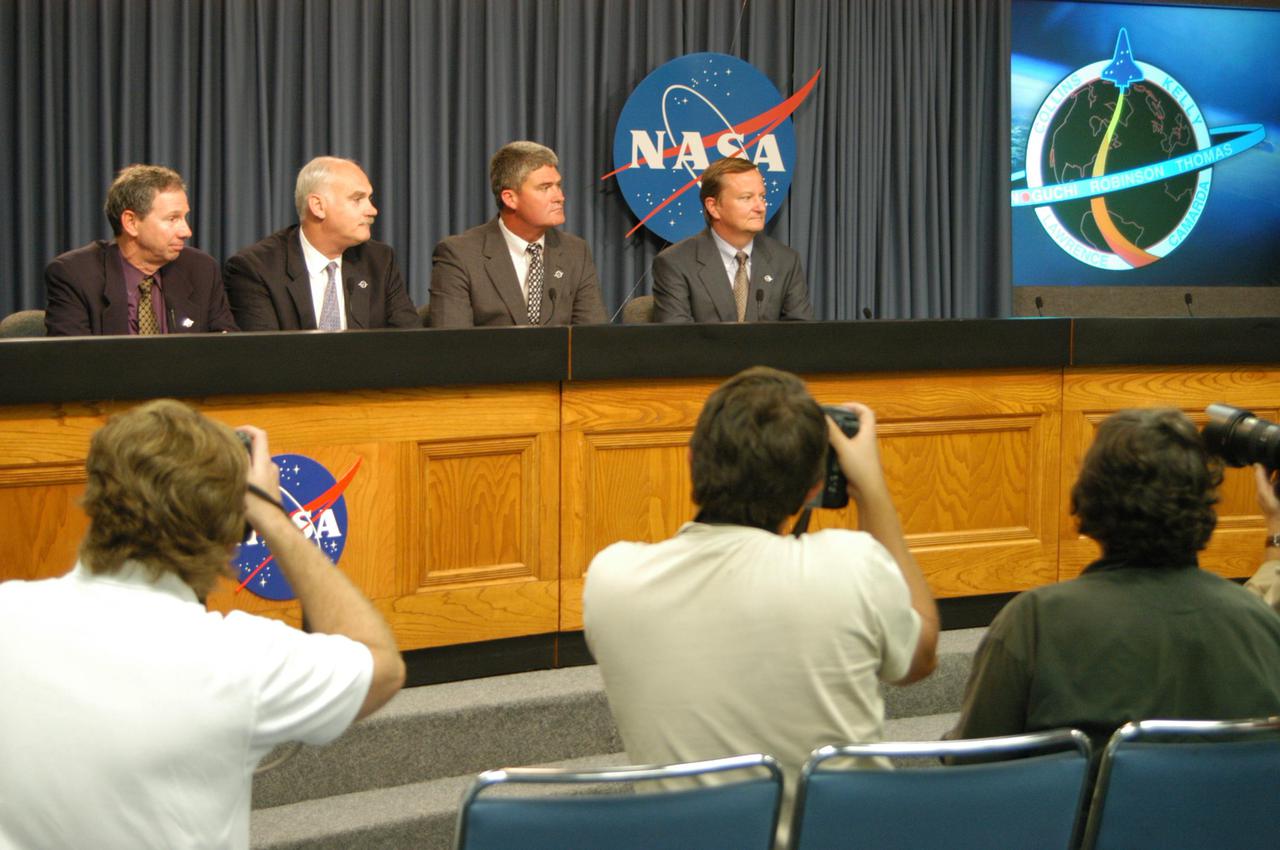
KENNEDY SPACE CENTER, FLA. - Space Shuttle managers take questions from the media during a press conference held following the conclusion of the Flight Readiness Review for Space Shuttle Discovery's Return to Flight mission STS-114. From left are NASA's Administrator Michael Griffin, Associate Administrator for Space Operations William Readdy, Space Shuttle Program Manager William Parsons, and Space Shuttle Launch Director Michael Leinbach. A July 13 launch date was approved for the 12-day mission during which Discovery’s seven-person crew will test new hardware and techniques to improve Shuttle safety, as well as deliver supplies to the International Space Station.
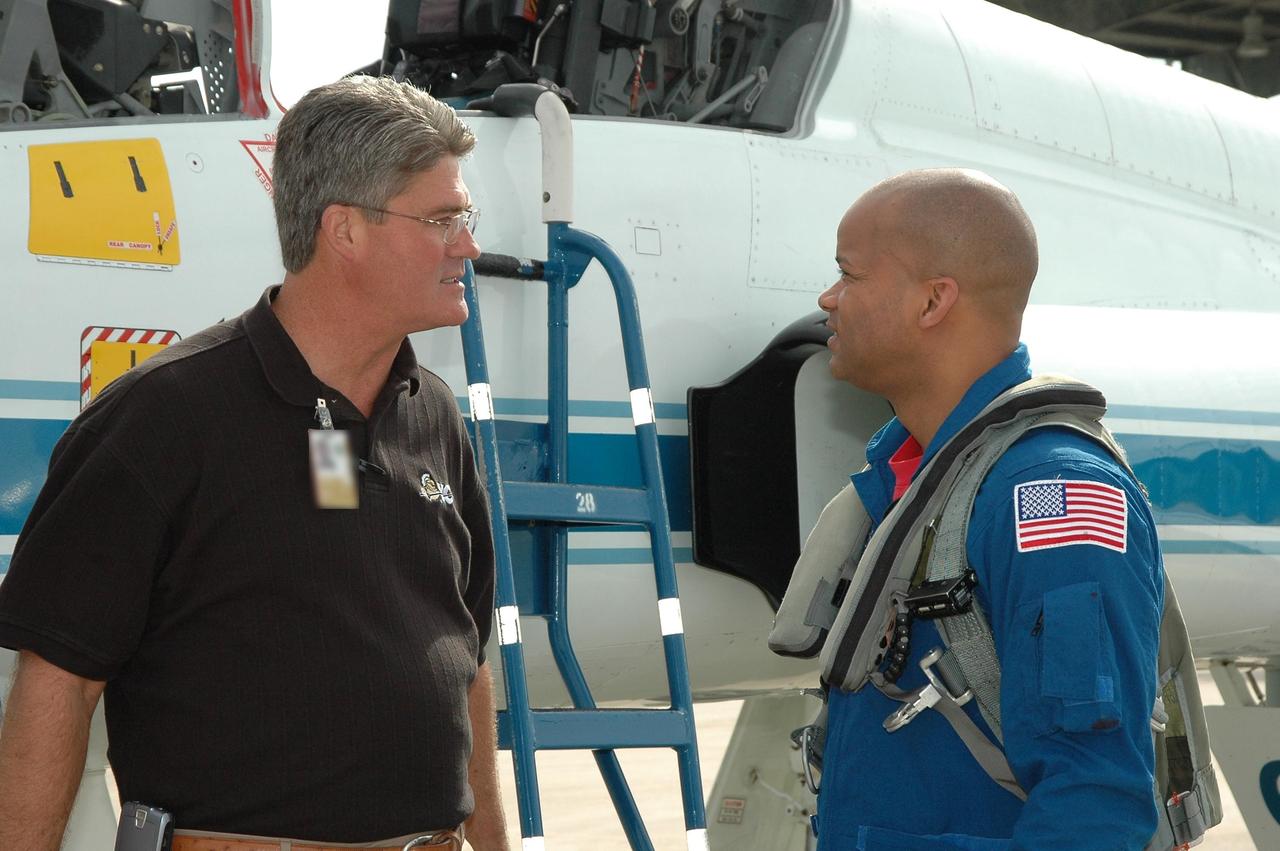
KENNEDY SPACE CENTER, FLA. - At Kennedy Space Center’s Shuttle Landing Facility, Deputy Director William Parsons (left) greets STS-116 Mission Specialist Robert Curbeam after his arrival for the Crew Equipment Interface Test. Mission crews make frequent trips to the Space Coast to become familiar with the equipment and payloads they will be using. STS-116 will be mission No. 20 to the International Space Station and construction flight 12A.1. The mission payload is the SPACEHAB module, the P5 integrated truss structure and other key components. Launch is scheduled for no earlier than Dec. 7. Photo credit: NASA/Kim Shiflett
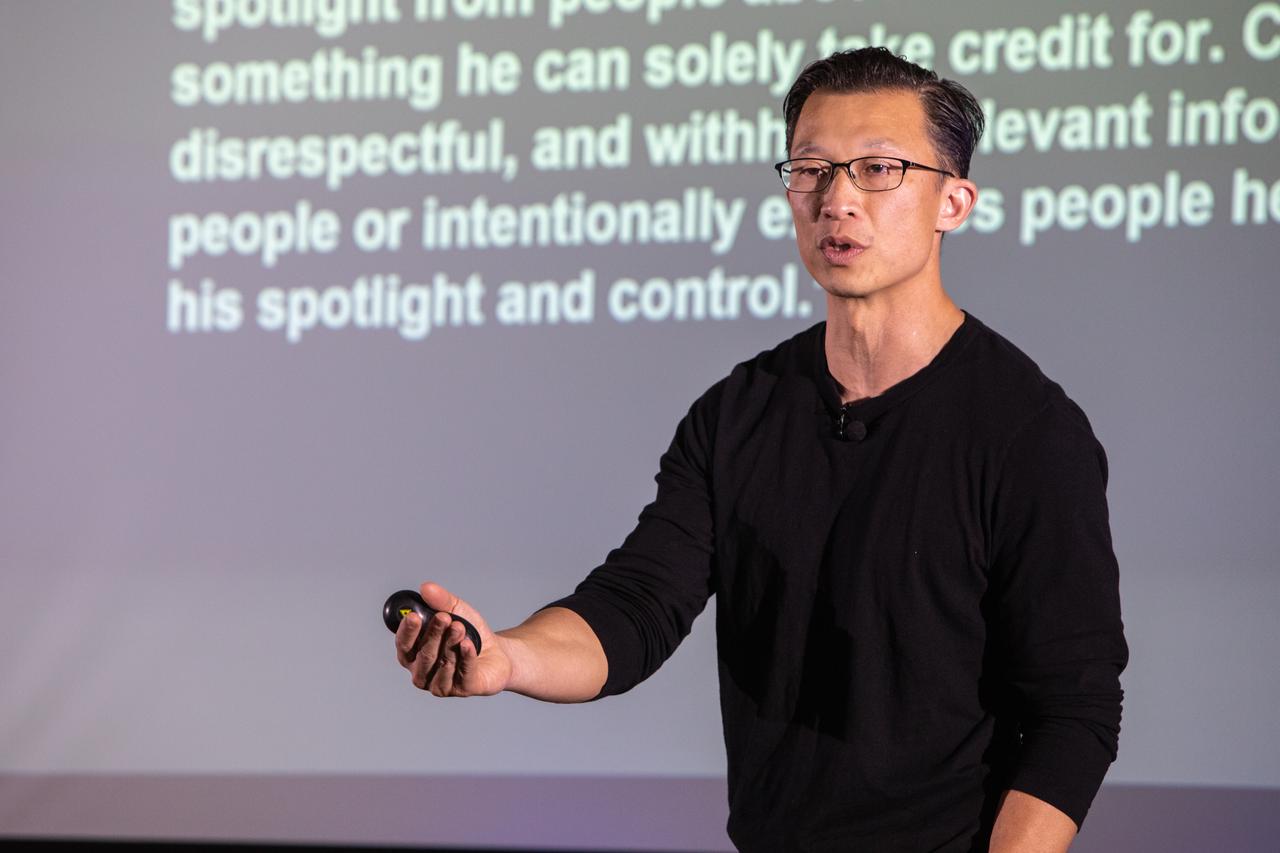
Kennedy Space Center’s Johnny Nguyen speaks at the fourth in a series of five TED Talk-style informational sessions on Oct. 31, 2019, in the Florida spaceport’s Kennedy Learning Institute. Sponsored by Kennedy’s Launching Leaders and Leadership for the Future, NASAtalks focuses on the topic of intentional careers and aims to provide employees with tools and knowledge that can be utilized for career growth. The theme of this fourth session was employees, and additional speakers included Kennedy’s Tony Derbyshire and Deputy Manager of NASA’s Exploration Ground Systems Jeremy Parsons, with a skill-building section on vulnerability, authentic self and diverse inclusion by Ronnie Rodriguez.
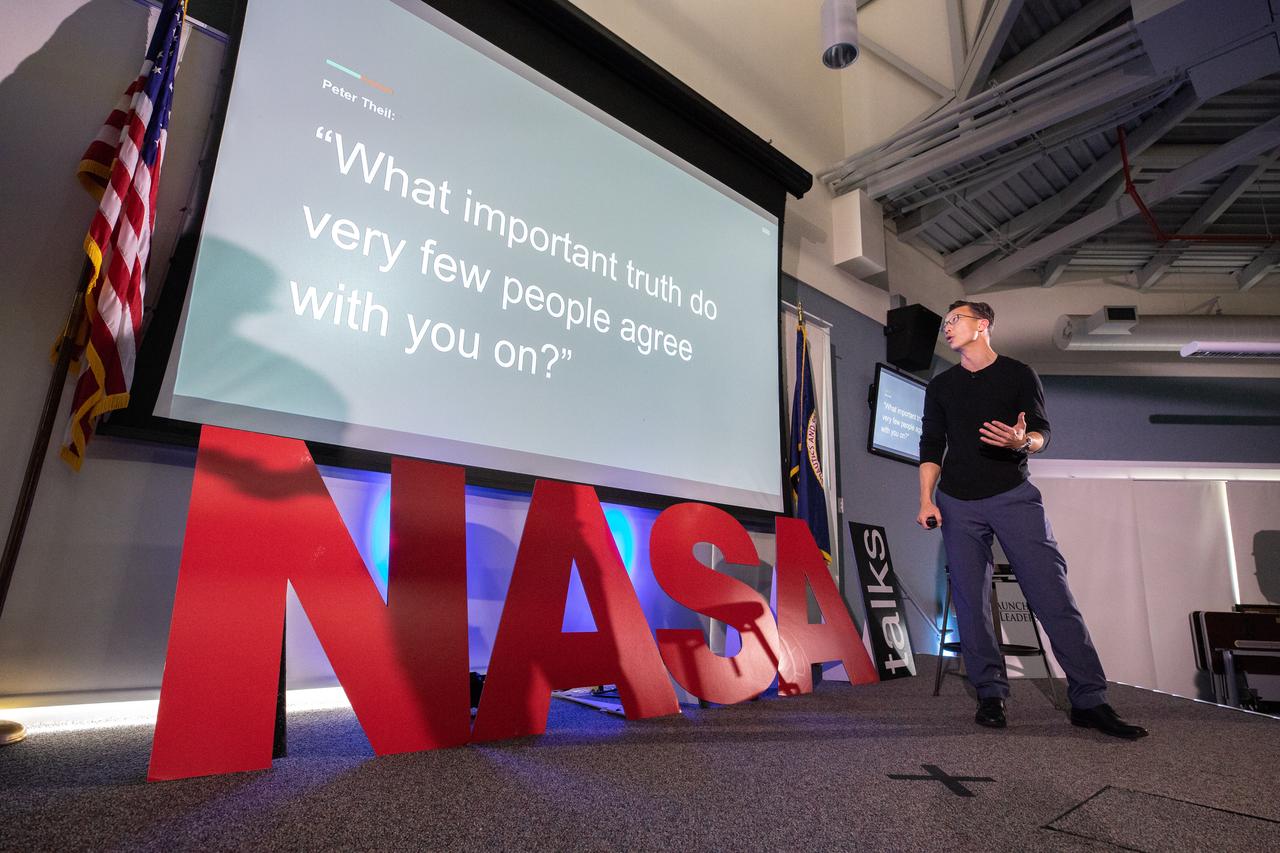
Kennedy Space Center’s Johnny Nguyen speaks at the fourth in a series of five TED Talk-style informational sessions on Oct. 31, 2019, in the Florida spaceport’s Kennedy Learning Institute. Sponsored by Kennedy’s Launching Leaders and Leadership for the Future, NASAtalks focuses on the topic of intentional careers and aims to provide employees with tools and knowledge that can be utilized for career growth. The theme of this fourth session was employees, and additional speakers included Kennedy’s Tony Derbyshire and Deputy Manager of NASA’s Exploration Ground Systems Jeremy Parsons, with a skill-building section on vulnerability, authentic self and diverse inclusion by Ronnie Rodriguez.
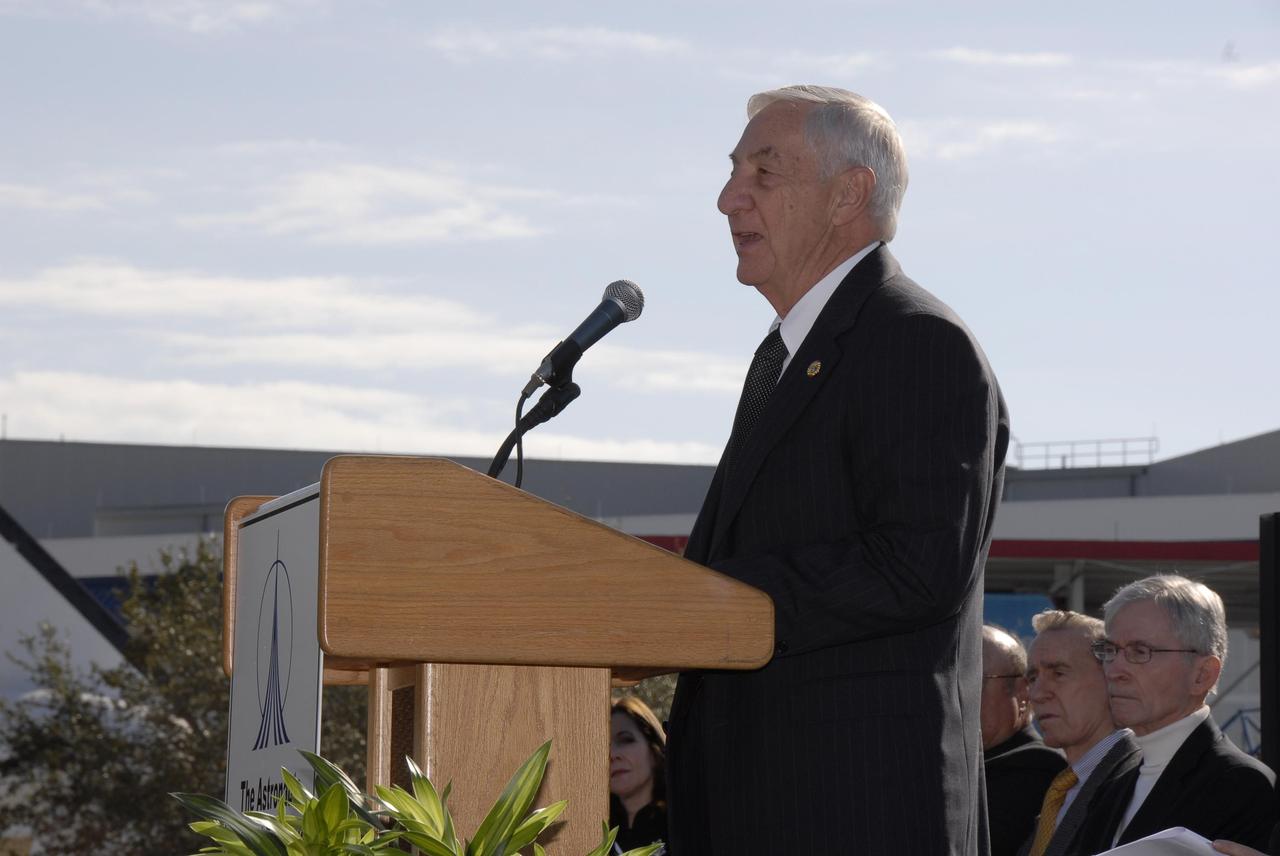
KENNEDY SPACE CENTER, FLA. -- Lowell Grissom addresses guests attending a ceremony at the KSC Visitor Complex held in remembrance of the astronauts lost in the Apollo 1 fire: Virgil "Gus" Grissom, Edward H. White II and Roger B. Chaffee. Grissom is the brother of Gus Grissom. Members of the Apollo 1 families, along with KSC Director Bill Parsons, Associate Administrator for Space Operations William Gerstenmaier, President of the Astronauts Memorial Foundation Stephen Feldman, Chairman of the Board of Directors of the Astronauts Memorial Foundation William Potter and former astronaut John Young (seen at lower right), attended the ceremony. Photo credit:NASA/Kim Shiflett
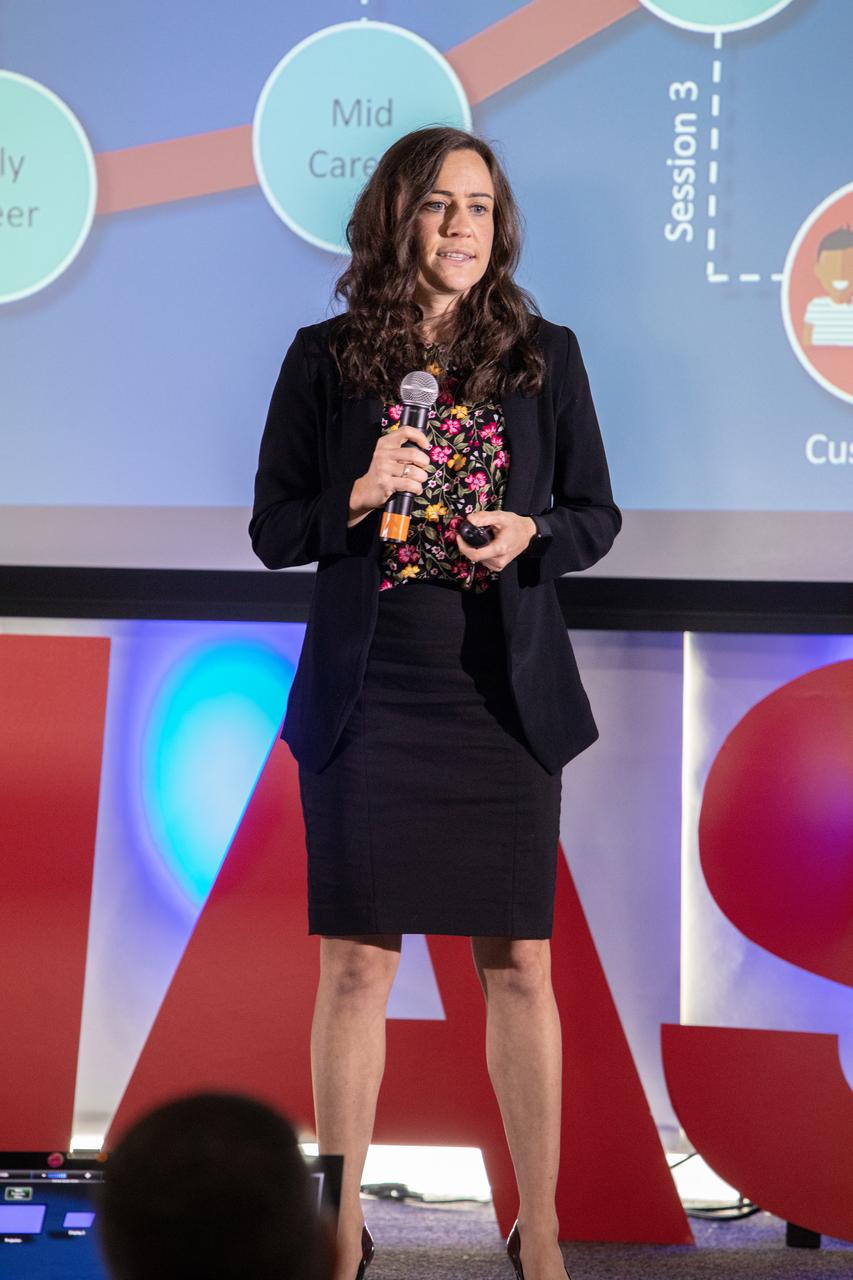
Kennedy Space Center’s Jennifer Lane participates the fourth in a series of five TED Talk-style informational sessions on Oct. 31, 2019, in the Florida spaceport’s Kennedy Learning Institute. Sponsored by Kennedy’s Launching Leaders and Leadership for the Future, NASAtalks focuses on the topic of intentional careers and aims to provide employees with tools and knowledge that can be utilized for career growth. The theme of this fourth session was employees, and additional speakers included Kennedy’s Johnny Nguyen, Tony Derbyshire and Jeremy Parsons, deputy manager of NASA’s Exploration Ground Systems, with a skill-building section on vulnerability, authentic self and diverse inclusion by Ronnie Rodriguez.
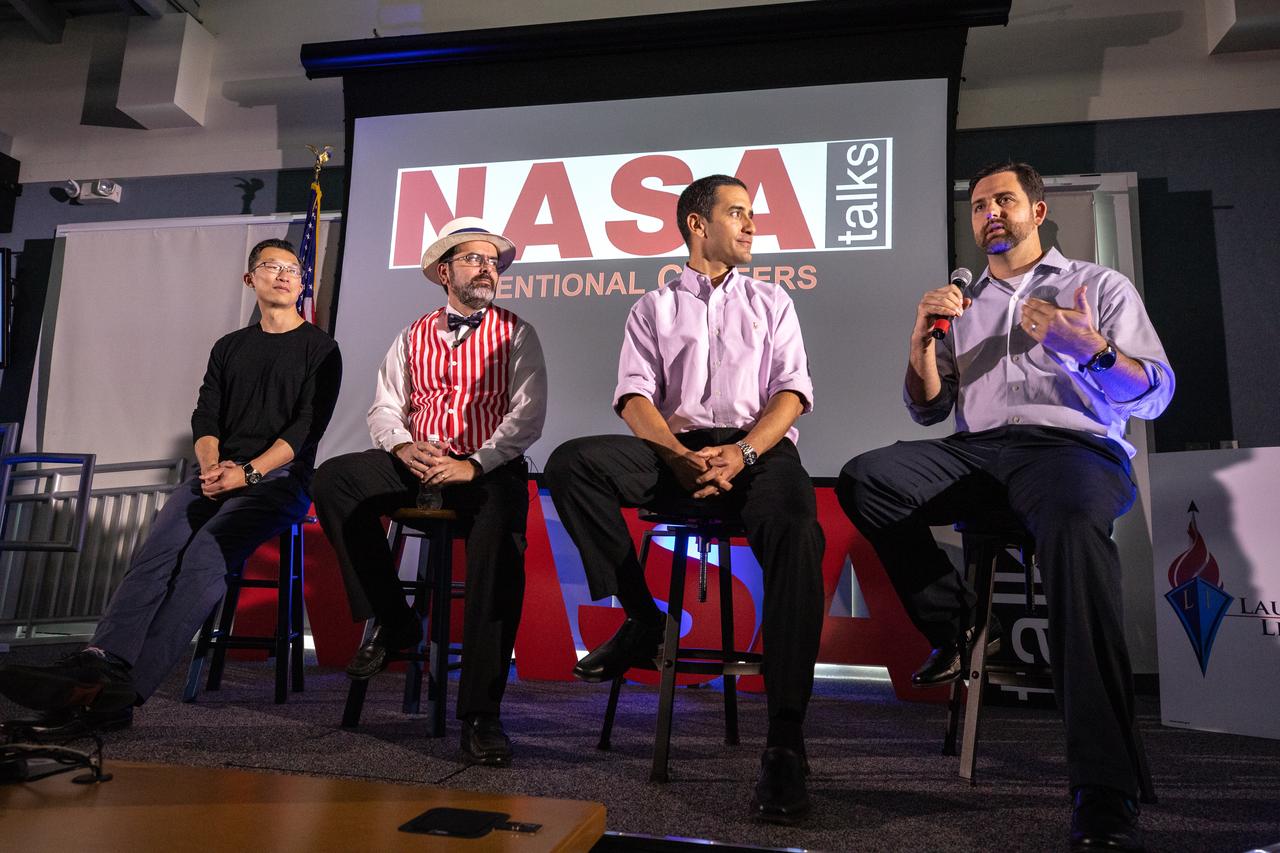
From left, Kennedy Space Center’s Johnny Nguyen, Ronnie Rodriguez, deputy director of Safety and Mission Assurance, Tony Derbyshire and Jeremy Parsons, deputy manager of NASA’s Exploration Ground Systems, participate in the fourth of a series of five TED Talk-style informational sessions on Oct. 31, 2019, inside the Florida spaceport’s Kennedy Learning Institute. Sponsored by Kennedy’s Launching Leaders and Leadership for the Future, NASAtalks focuses on the topic of intentional careers and aims to provide employees with tools and knowledge that can be utilized for career growth. The theme of this fourth session was employees.
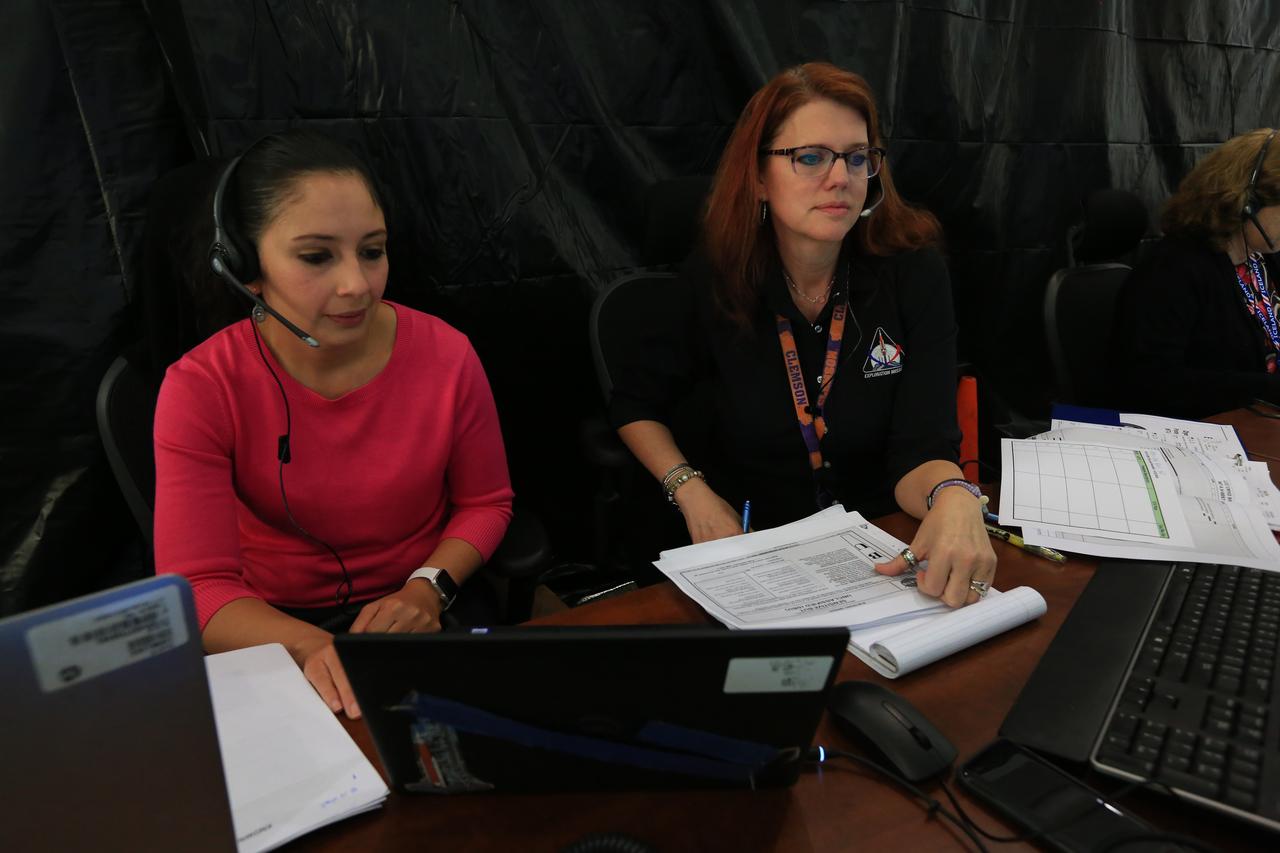
Charlie Blackwell-Thompson, at right, Exploration Mission-1 (EM-1) launch director, leads a countdown demonstration event of cryogenic propellant loading April 12, 2019, inside Firing Room 2 in the Launch Control Center at NASA’s Kennedy Space Center in Florida. Seated next to her is Jessica Parsons, technical assitant to the launch director. The practice simulation involved loading of liquid hydrogen and liquid oxygen into the Space Launch System rocket’s core and upper stages to prepare for EM-1. During the tanking exercise, the team worked through surprise issues in real-time. The practice countdown events are training opportunities coordinated by Blackwell-Thompson with Exploration Ground Systems.
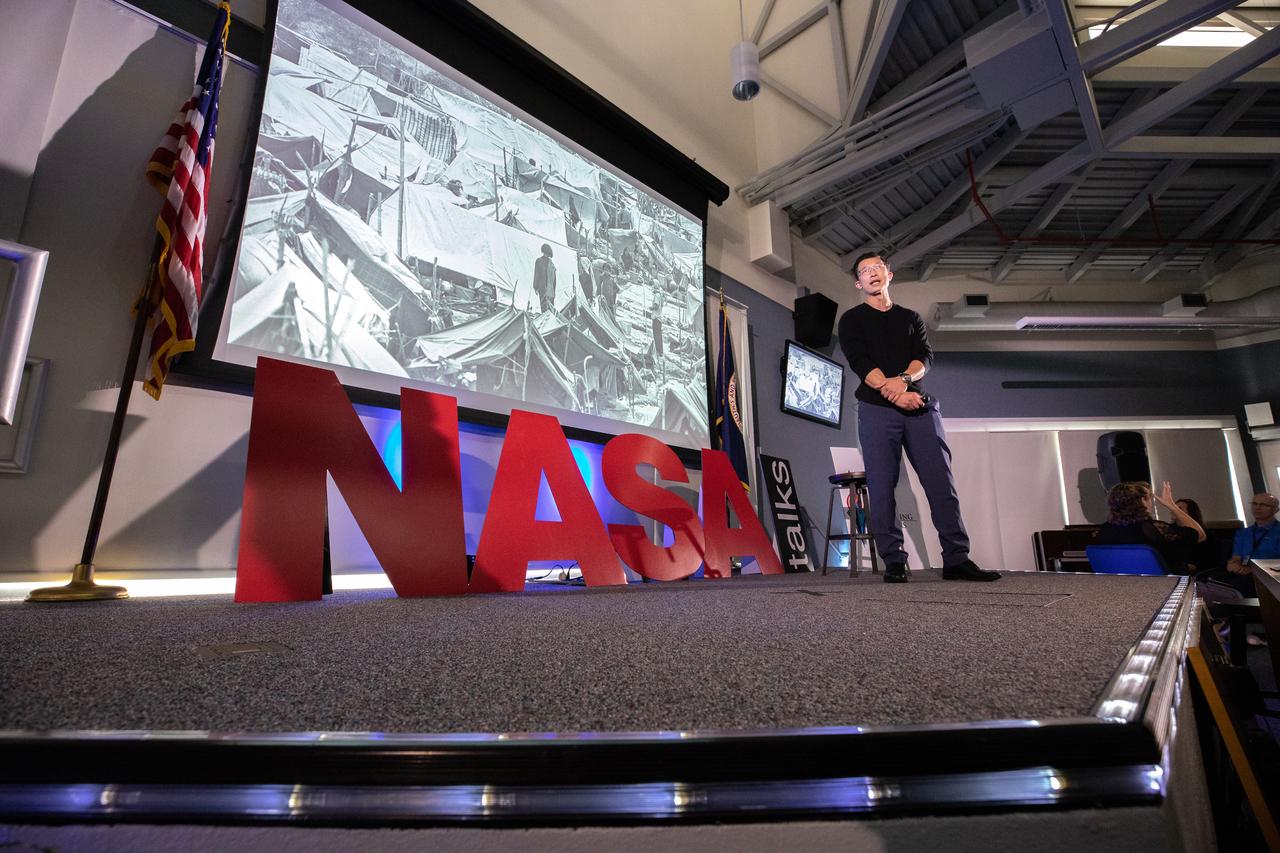
Kennedy Space Center’s Johnny Nguyen addresses co-workers inside the Florida spaceport’s Kennedy Learning Institute on Oct. 31, 2019, during the fourth in a series of five TED Talk-style informational sessions. Sponsored by Kennedy’s Launching Leaders and Leadership for the Future, NASAtalks focuses on the topic of intentional careers and aims to provide employees with tools and knowledge that can be utilized for career growth. The theme of this fourth session was employees, and additional speakers included Kennedy’s Tony Derbyshire and Deputy Manager of NASA’s Exploration Ground Systems Jeremy Parsons, with a skill-building section on vulnerability, authentic self and diverse inclusion by Ronnie Rodriguez.
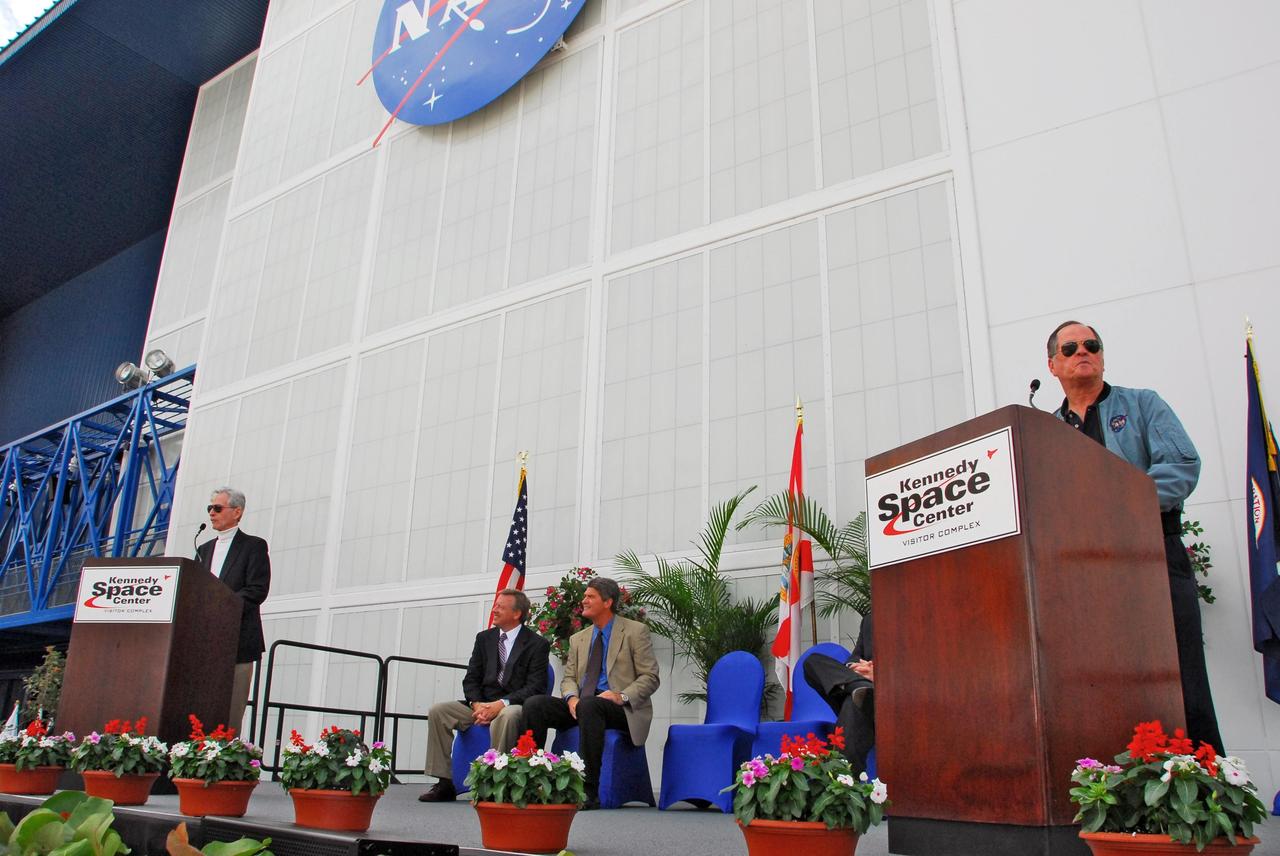
KENNEDY SPACE CENTER, FLA. -- NASA, Kennedy Space Center and State of Florida dignitaries helped launch the opening of the newest attraction at Kennedy Space Center's Visitor Complex the Shuttle Launch Experience. Former astronauts John Young (left) and Bob Crippen (right) share their impressions with the audience. Seated on stage are Lt. Governor of Florida Jeff Kottkamp and Center Director Bill Parsons. The attraction includes a simulated launch with the sights, sounds and sensations of launching into space. Find out more about the Visitor Complex and the Shuttle Launch Experience at <b>http://www.kennedyspacecenter.com/visitKSC/attractions/index.asp</b>. Photo credit: NASA/George Shelton
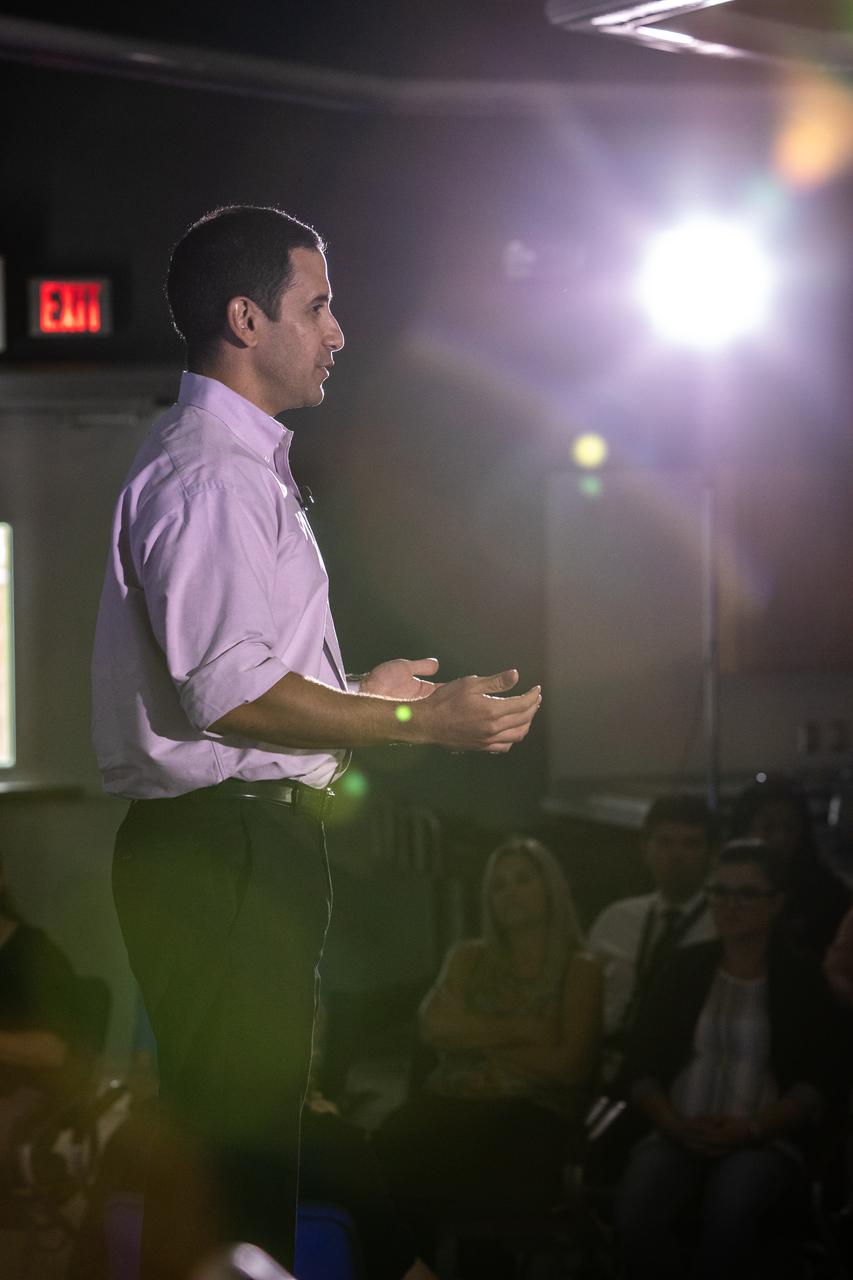
Kennedy Space Center’s Tony Derbyshire addresses co-workers inside the Florida spaceport’s Kennedy Learning Institute on Oct. 31, 2019, during the fourth in a series of five TED Talk-style informational sessions. Sponsored by Kennedy’s Launching Leaders and Leadership for the Future, NASAtalks focuses on the topic of intentional careers and aims to provide employees with tools and knowledge that can be utilized for career growth. The theme of this fourth session was employees, and additional speakers included Kennedy’s Johnny Nguyen and Deputy Manager of NASA’s Exploration Ground Systems Jeremy Parsons, with a skill-building section on vulnerability, authentic self and diverse inclusion by Ronnie Rodriguez.
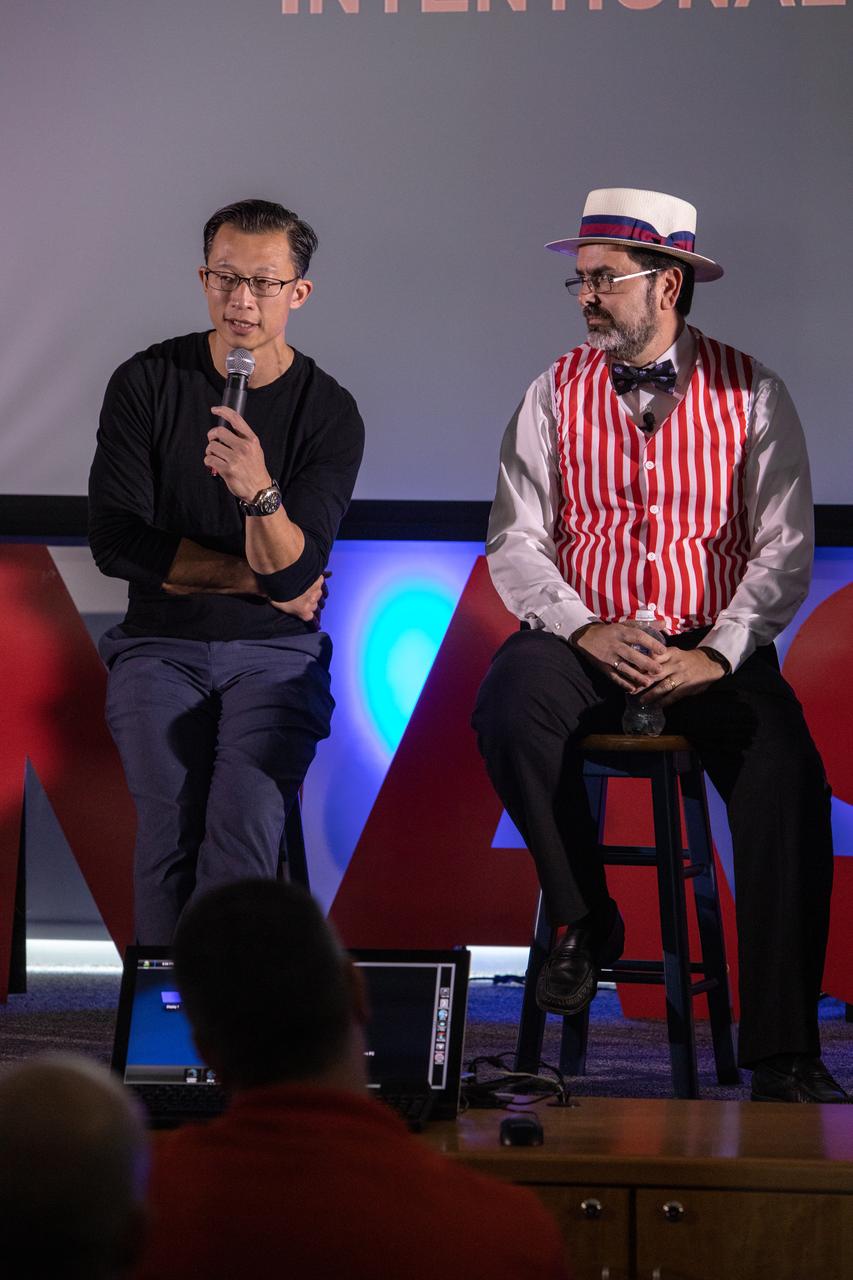
Kennedy Space Center’s Johnny Nguyen (left) and Ronnie Rodriguez, deputy director of Safety and Mission Assurance, participate in the fourth of a series of five TED Talk-style informational sessions on Oct. 31, 2019, inside the Florida spaceport’s Kennedy Learning Institute. Sponsored by Kennedy’s Launching Leaders and Leadership for the Future, NASAtalks focuses on the topic of intentional careers and aims to provide employees with tools and knowledge that can be utilized for career growth. The theme of this fourth session was employees, and additional speakers included Kennedy’s Tony Derbyshire, Deputy Director of Engineering Scott Colloredo and Deputy Manager of NASA’s Exploration Ground Systems Jeremy Parsons.
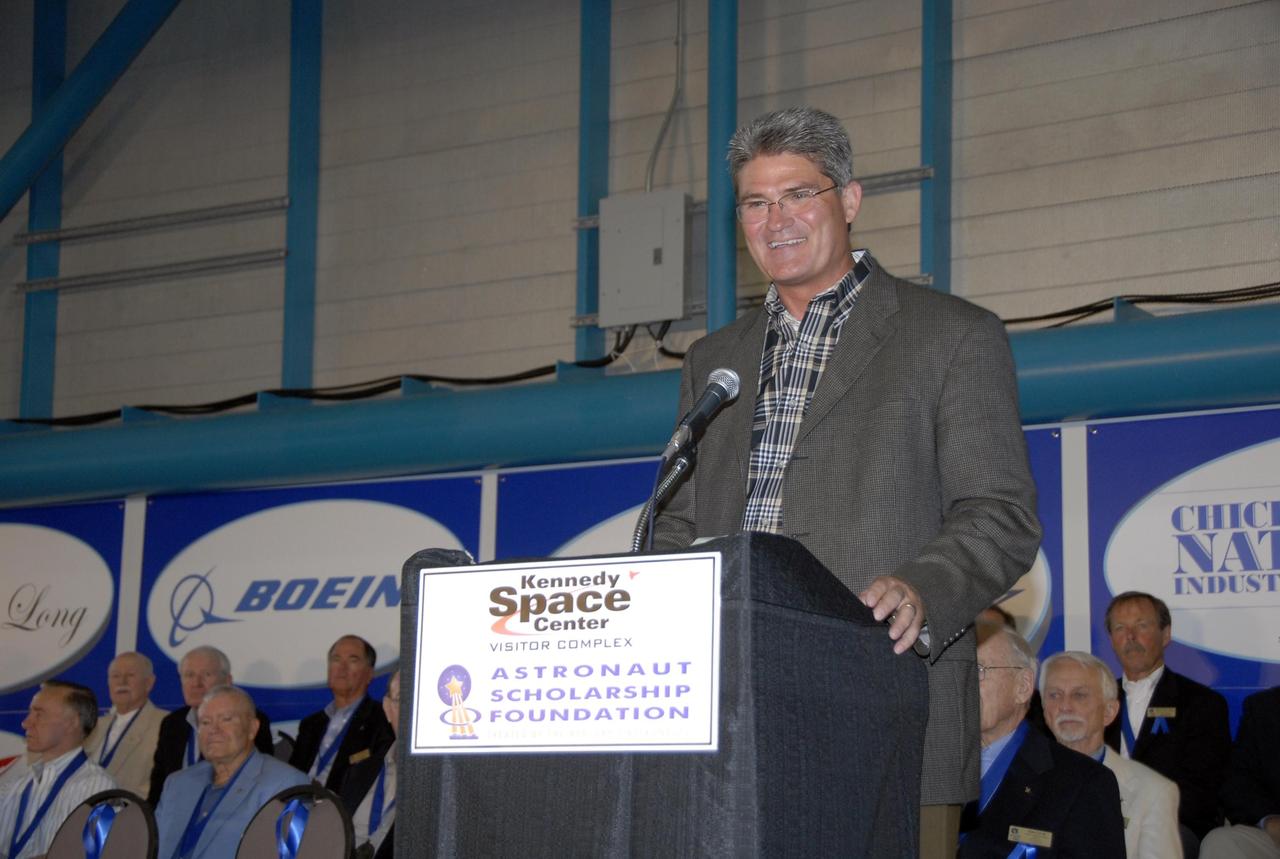
KENNEDY SPACE CENTER, FLA. -- At the U.S. Astronaut Hall of Fame induction ceremony, Kennedy Space Center Director Bill Parsons speaks about the accomplishments of the newest inductees to the Hall of Fame. The May 5 induction added space shuttle commanders Michael L. Coats, Steven A. Hawley and Jeffrey A. Hoffman to the Hall of Fame. They grow the number of space explorers enshrined in the Hall of Fame to 66. These gentlemen have joined such American space heroes as Neil Armstrong, Glenn, Alan Shepard and Sally Ride. The ceremony was held at the Kennedy Space Center's Apollo/Saturn V Center. Photo credit: NASA/Kim Shiflett
![Center Directors: Kennedy Space Center Directors around KSC – 1st row, left to right, Richard Smith [center] Bob Cabana [at the podium] Jay Honeycutt [far right]. 2nd row, left to right, Bob Crippen [left] Jim Kennedy Lieutenant General Forrest S. McCartney, USAF, ret. [far left]. 3rd row, left to right, Bill Parsons [far right] Lee Scherer Roy Bridges [2nd from right]. Poster designed by Kennedy Space Center Graphics Department/Greg Lee. Credit: NASA](https://images-assets.nasa.gov/image/KSC-2012-1848/KSC-2012-1848~medium.jpg)
Center Directors: Kennedy Space Center Directors around KSC – 1st row, left to right, Richard Smith [center] Bob Cabana [at the podium] Jay Honeycutt [far right]. 2nd row, left to right, Bob Crippen [left] Jim Kennedy Lieutenant General Forrest S. McCartney, USAF, ret. [far left]. 3rd row, left to right, Bill Parsons [far right] Lee Scherer Roy Bridges [2nd from right]. Poster designed by Kennedy Space Center Graphics Department/Greg Lee. Credit: NASA
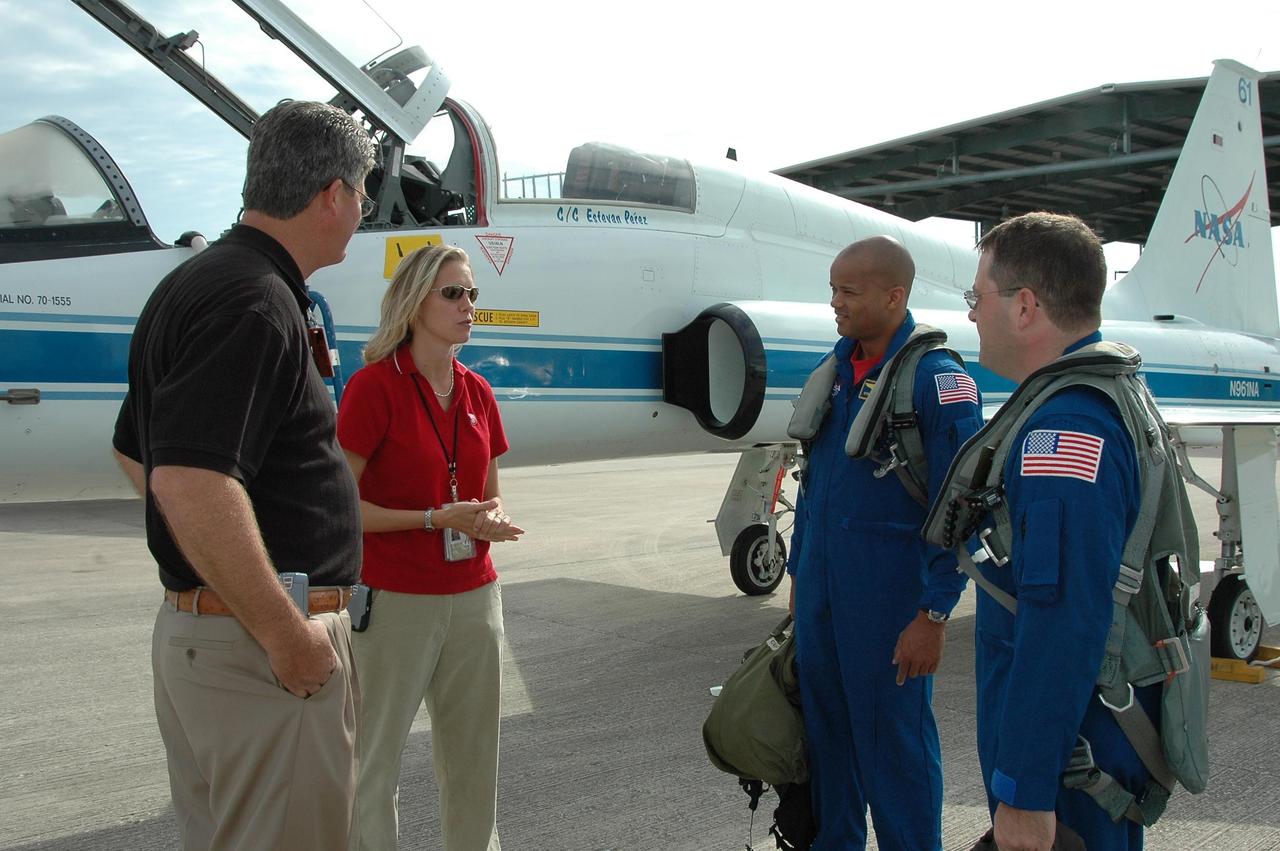
KENNEDY SPACE CENTER, FLA. - From left, at Kennedy Space Center’s Shuttle Landing Facility, Deputy Director William Parsons and Discovery Flow Director Stephanie Stilson greet STS-116 Mission Specialists Robert Curbeam and Nicholas Patrick after they arrive for the Crew Equipment Interface Test. Mission crews make frequent trips to the Space Coast to become familiar with the equipment and payloads they will be using. STS-116 will be mission No. 20 to the International Space Station and construction flight 12A.1. The mission payload is the SPACEHAB module, the P5 integrated truss structure and other key components. Launch is scheduled for no earlier than Dec. 7. Photo credit: NASA/Kim Shiflett
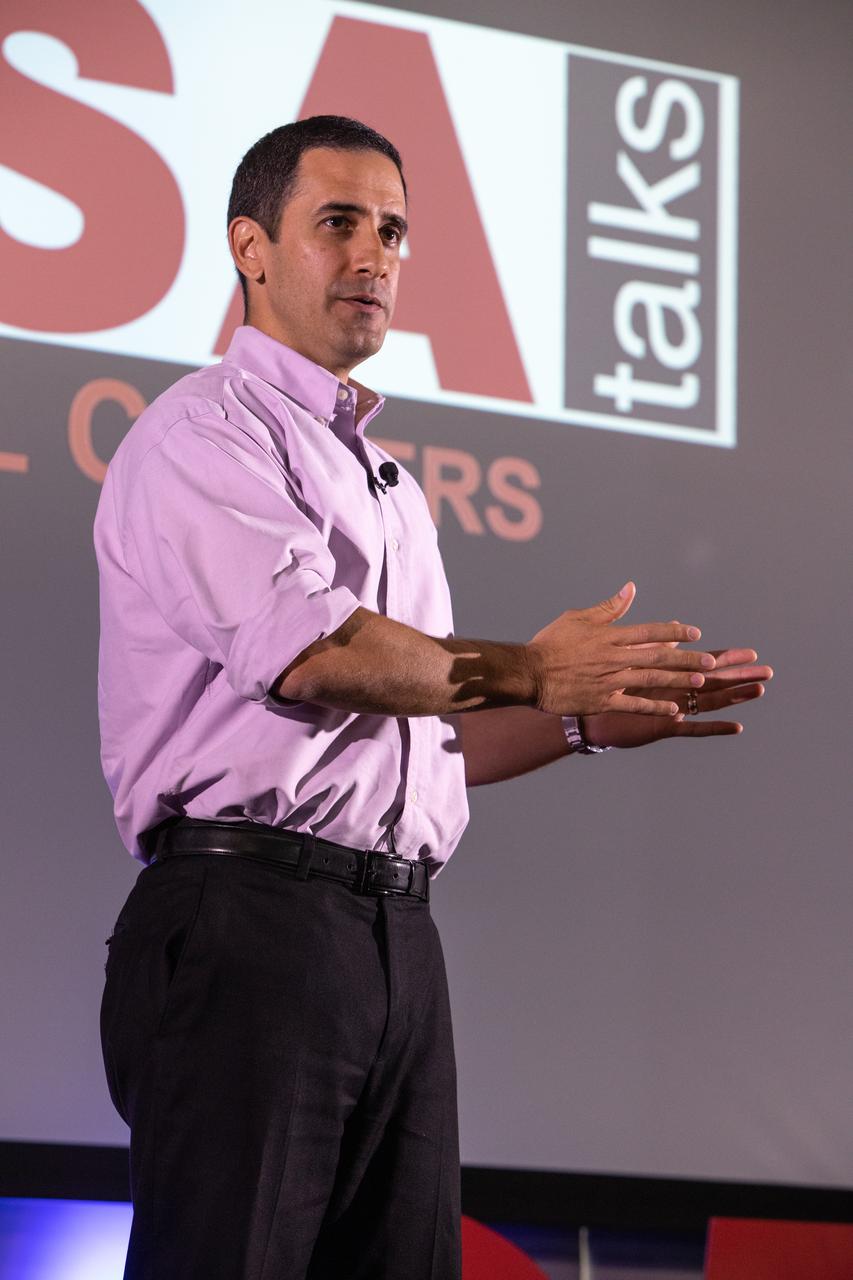
Kennedy Space Center’s Tony Derbyshire speaks at the fourth in a series of five TED Talk-style informational sessions on Oct. 31, 2019, in the Florida spaceport’s Kennedy Learning Institute. Sponsored by Kennedy’s Launching Leaders and Leadership for the Future, NASAtalks focuses on the topic of intentional careers and aims to provide employees with tools and knowledge that can be utilized for career growth. The theme of this fourth session was employees, and additional speakers included Kennedy’s Johnny Nguyen and Deputy Manager of NASA’s Exploration Ground Systems Jeremy Parsons, with a skill-building section on vulnerability, authentic self and diverse inclusion by Ronnie Rodriguez.
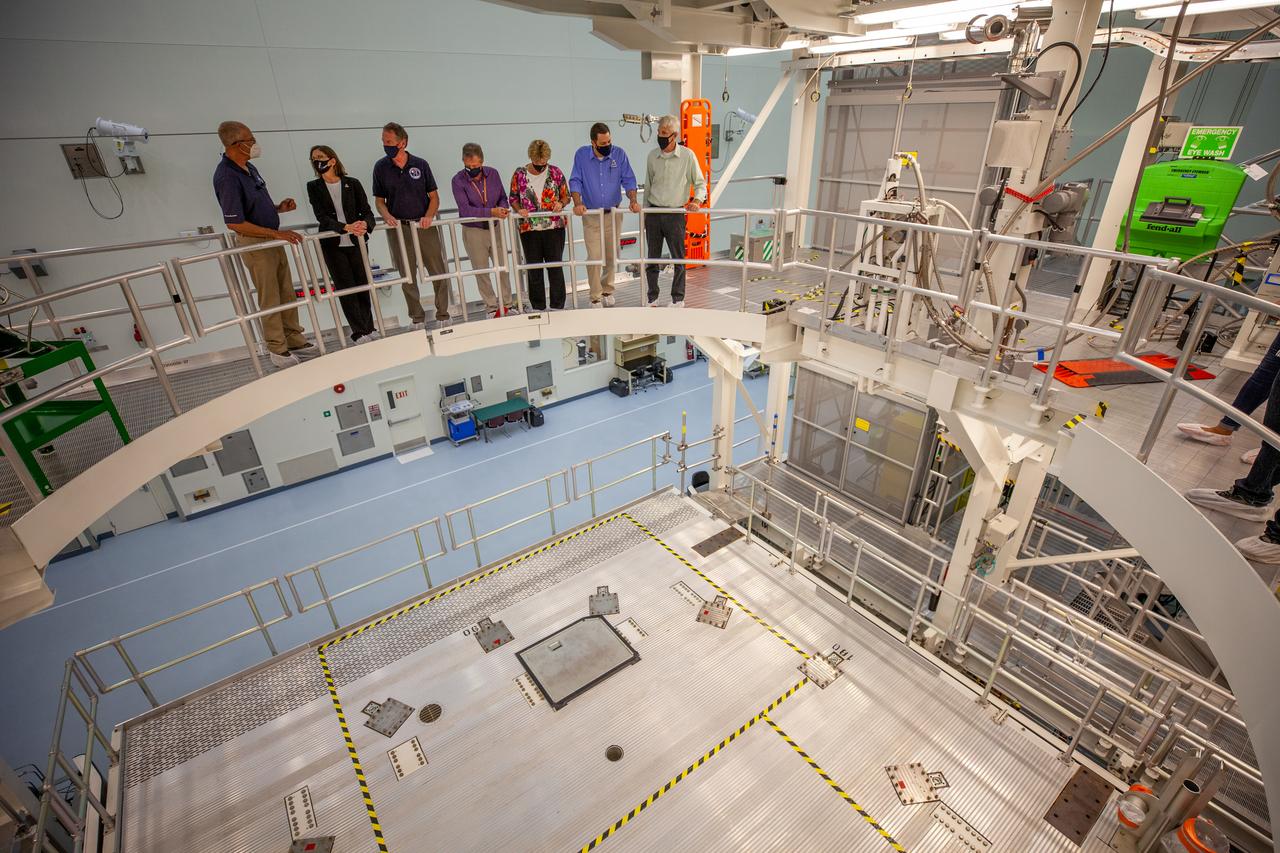
Catherine Koerner, second from left, NASA Orion Program manager, along with senior managers from Orion, Exploration Ground Systems (EGS) and TOSC, tours the Multi-Payload Processing Facility (MPPF) at NASA’s Kennedy Space Center in Florida on Oct. 5, 2020. Accompanying her, from left are Skip Williams, operations manager for the MPPF spacecraft offline element integration team; Mike Bolger, EGS manager; Nicolas Kindred, TOSC flow manager; Annette Hasbrook, Orion Program assistant manager; Jeremy Parsons, EGS deputy manager; and Scott Wilson, Orion Production Operations manager. Koerner viewed spacecraft hardware and processing facilities for the Artemis I and II missions. The first in a series of increasingly complex missions, Artemis I will test the Orion spacecraft and Space Launch System as an integrated system ahead of crewed flights to the Moon. Under the Artemis program, NASA will land the first woman and the next man on the Moon in 2024.
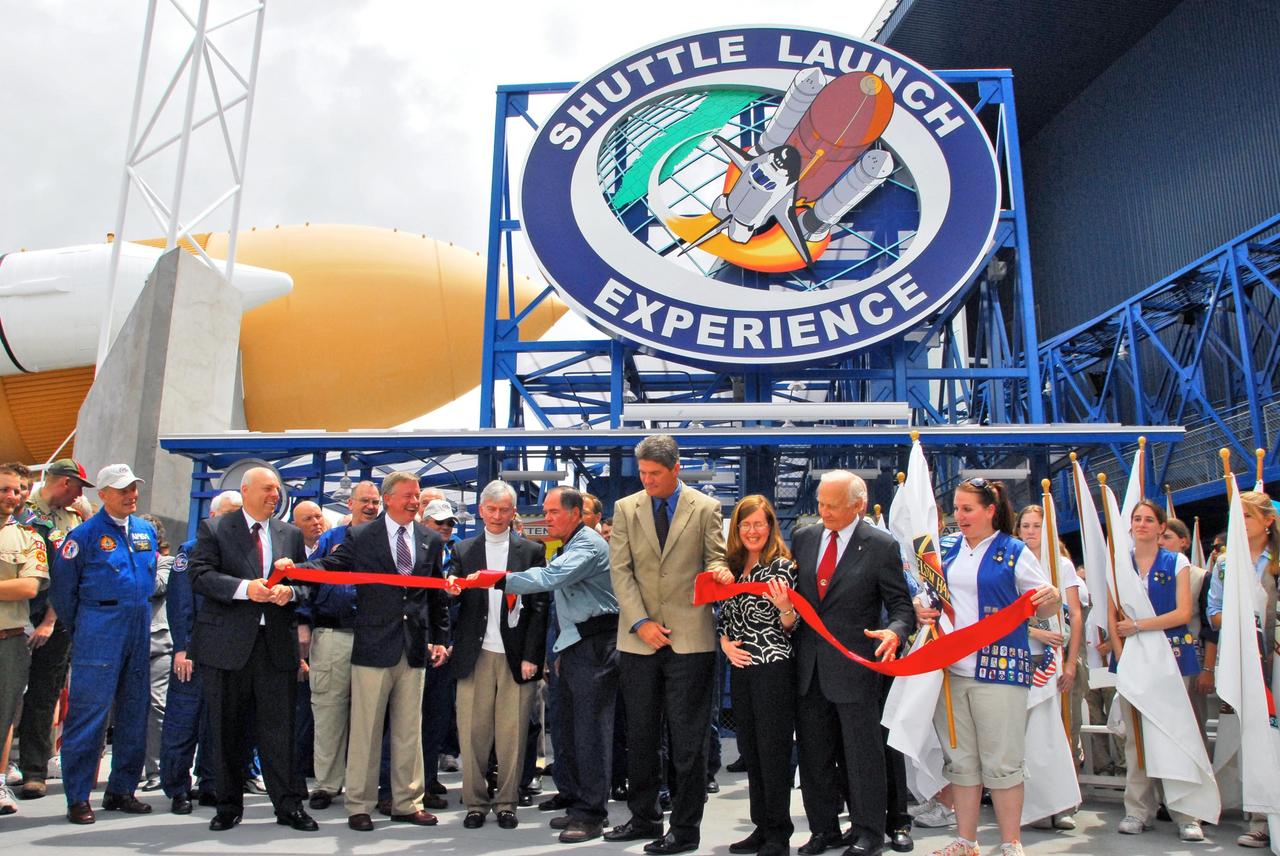
KENNEDY SPACE CENTER, FLA. -- NASA, Kennedy Space Center and State of Florida dignitaries helped launch the opening of the newest attraction at Kennedy Space Center's Visitor Complex, the Shuttle Launch Experience. Breaking the ribbon are (left to right) Dan LeBlanc, chief operating officer of the KSC Visitor Complex; Lt. Governor of Florida Jeff Kottkamp; former astronauts John Young and Bob Crippen; Center Director Bill Parsons; KSC Director of External Relations Lisa Malone; and former astronaut Buzz Aldrin. The attraction includes a simulated launch with the sights, sounds and sensations of launching into space. Find out more about the Visitor Complex and the Shuttle Launch Experience at <b>http://www.kennedyspacecenter.com/visitKSC/attractions/index.asp</b>. Photo credit: NASA/George Shelton
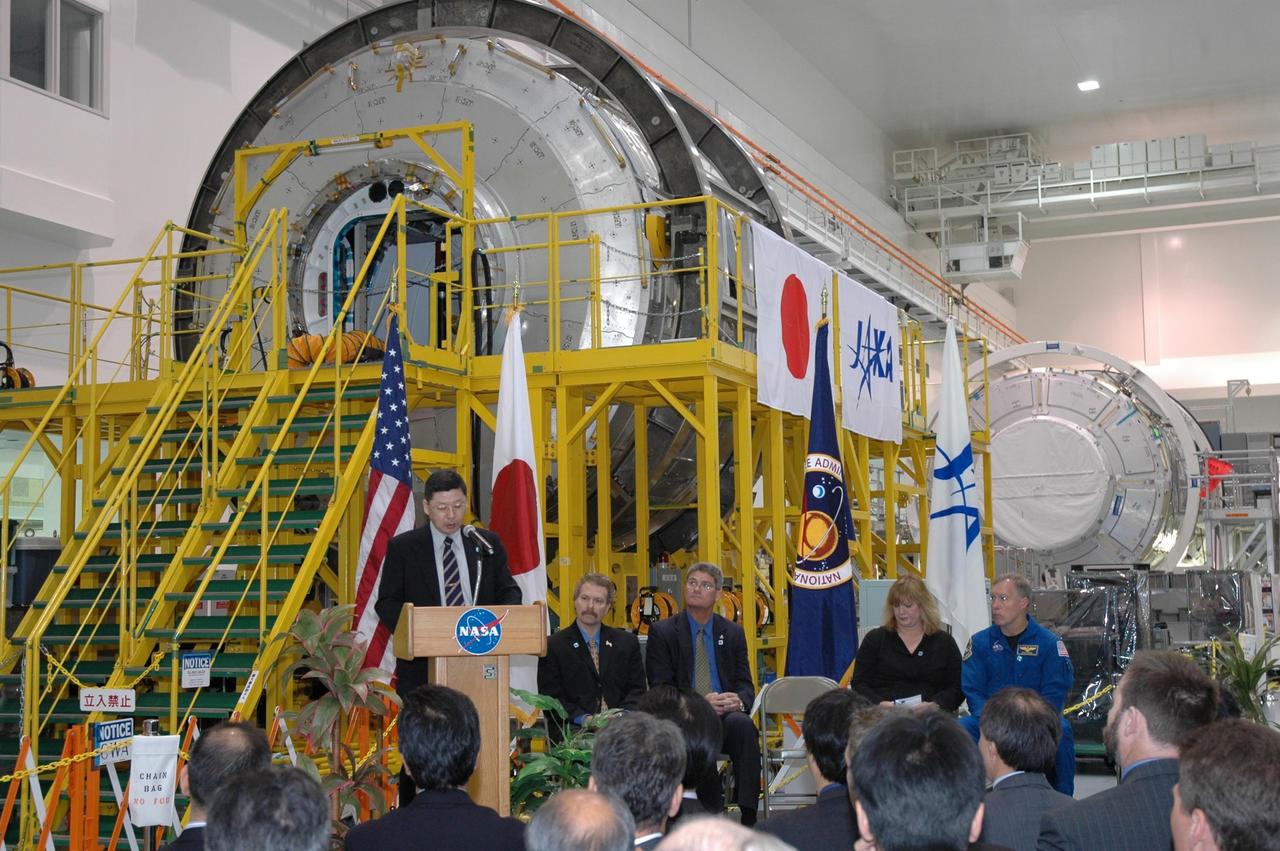
KENNEDY SPACE CENTER, FLA. -- In the Space Station Processing Facility, NASA and Japanese Aerospace and Exploration Agency (JAXA) officials welcome the arrival of the Experiment Logistics Module Pressurized Section for the Japanese Experiment Module, or JEM, to the Kennedy Space Center. At the podium is Dr. Kichiro Imagawa, project manager of the JEM Development Project Team for JAXA. Seated at right are Russ Romanella, director of International Space Station and Spacecraft Processing; Bill Parsons, director of Kennedy Space Center; Melanie Saunders, associate manager of the International Space Station Program at Johnson Space Center; and Dominic Gorie, commander on mission STS-123 that will deliver the module to the space station. The logistics module will serve as an on-orbit storage area for materials, tools and supplies. It can hold up to eight experiment racks and will attach to the top of another larger pressurized module. Photo credit: NASA/George Shelton

Catherine Koerner, in front, NASA Orion Program manager, along with senior managers from Orion, Exploration Ground Systems (EGS) and TOSC, tours the Multi-Payload Processing Facility (MPPF) at NASA’s Kennedy Space Center in Florida on Oct. 5, 2020. Accompanying her, from left are Nicolas Kindred, (partically hidden), TOSC flow manager; Jeremy Parsons, EGS deputy manager; Scott Wilson, Orion Production Operations manager; Mike Bolger, (partially hidden), EGS manager; and Skip Williams, operations manager for the MPPF spacecraft offline element integration team. Koerner viewed spacecraft hardware and processing facilities for the Artemis I and II missions. The first in a series of increasingly complex missions, Artemis I will test the Orion spacecraft and Space Launch System as an integrated system ahead of crewed flights to the Moon. Under the Artemis program, NASA will land the first woman and the next man on the Moon in 2024.
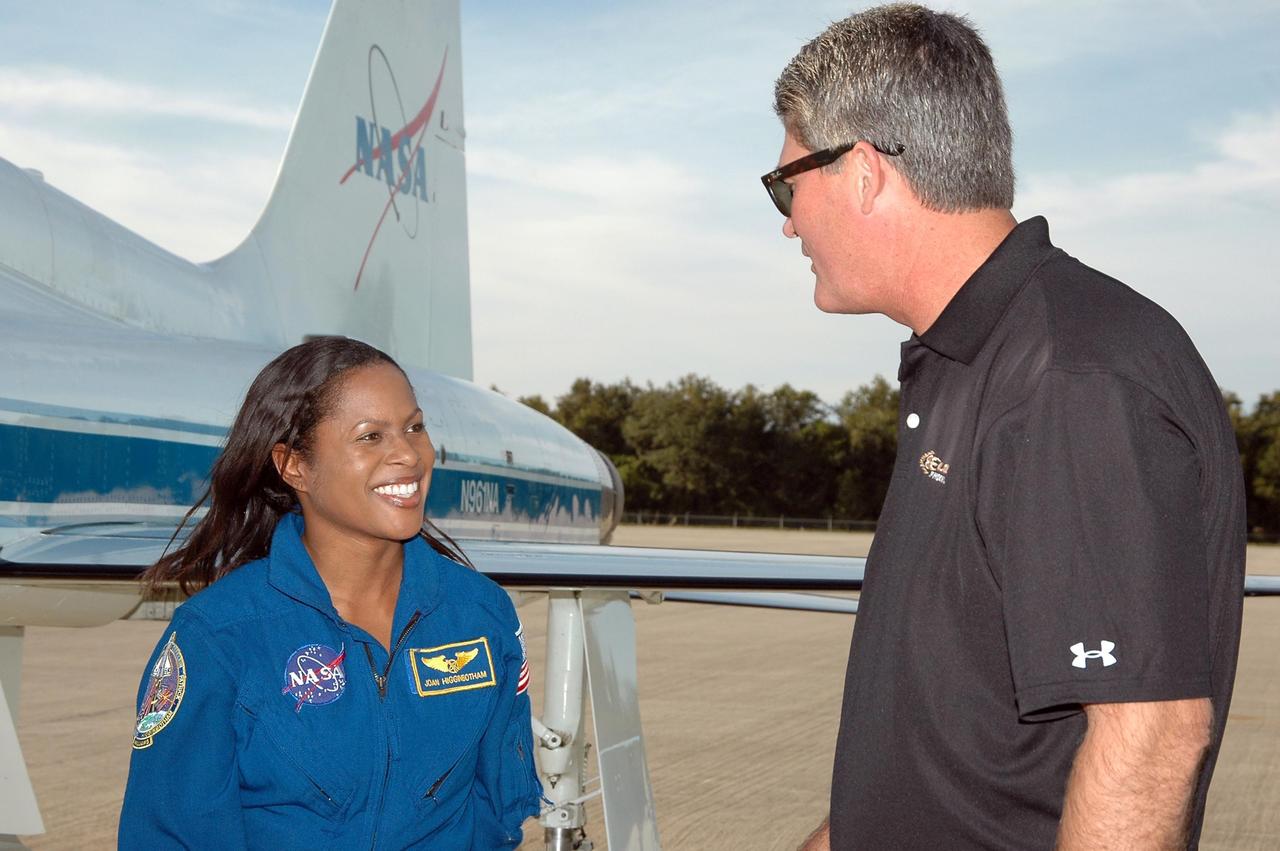
KENNEDY SPACE CENTER, FLA. -- STS-116 Mission Specialist Joan Higginbotham is greeted by Kennedy Space Center Deputy Director Bill Parsons at the Shuttle Landing Facility. The STS-116 crew has returned to KSC for the terminal countdown demonstration test, which are pre-launch preparations that include a simulated launch countdown. The crew also includes Commander Mark Polansky, Pilot William Oefelein, Mission Specialists Nicholas Patrick, Robert Curbeam, Christer Fuglesang and Flight Engineer Sunita Williams, joining Expedition 14 in progress. The mission is No. 20 to the International Space Station and construction flight 12A.1. The mission payload is the SPACEHAB module, the P5 integrated truss structure and other key components. Launch is scheduled for no earlier than Dec. 7. Photo credit: NASA/Kim Shiflett
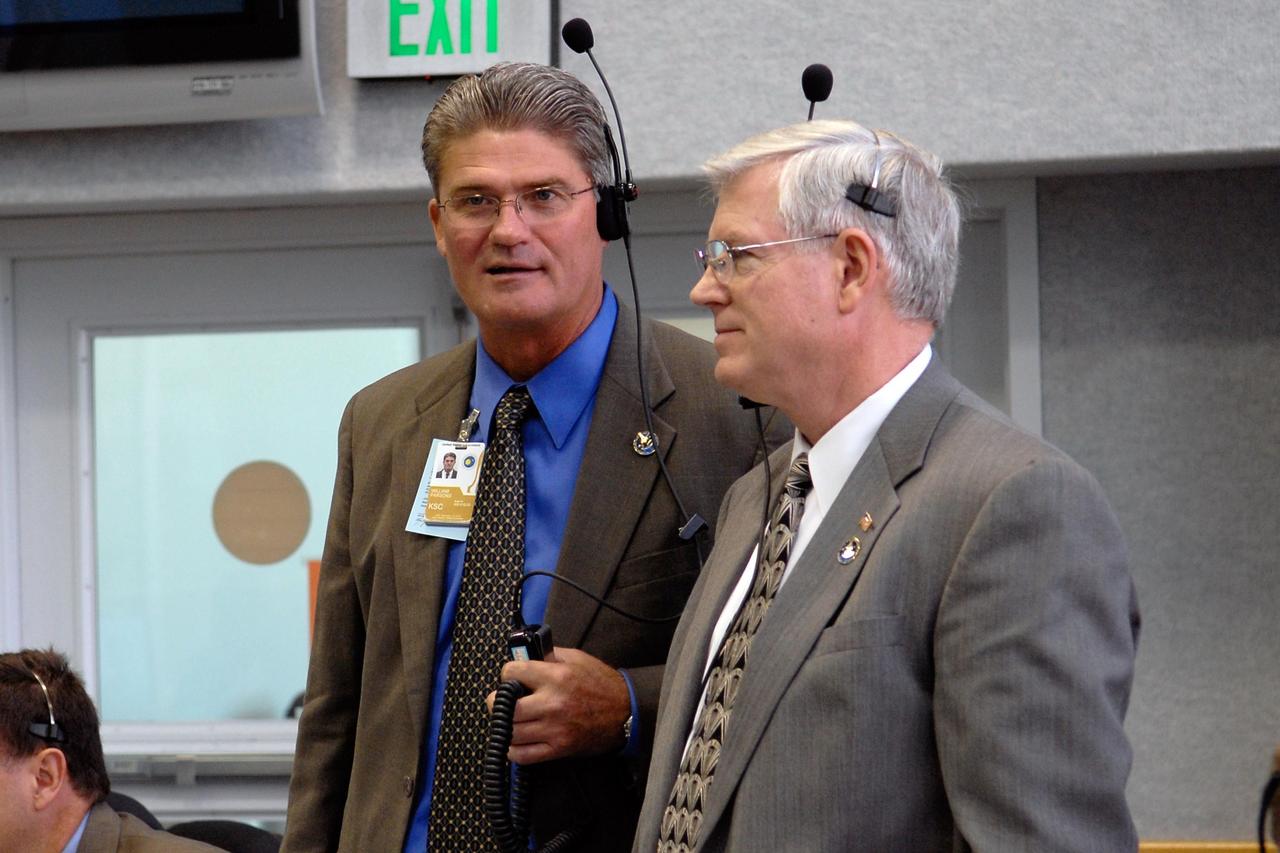
KENNEDY SPACE CENTER, FLA. -- In the firing room of the Launch Control Center at NASA's Kennedy Space Center, KSC Director Bill Parsons (left) and Johnson Space Center Director Michael Coats wait for the final countdown of space shuttle Discovery on mission STS-120. Liftoff was on time at 11:38:19 a.m. EDT. Discovery carries the Italian-built U.S. Node 2, called Harmony. During the 14-day STS-120 mission, the crew will install Harmony and move the P6 solar arrays to their permanent position and deploy them. Discovery is expected to complete its mission and return home at 4:47 a.m. EST on Nov. 6. Photo credit: NASA/Kim Shiflett