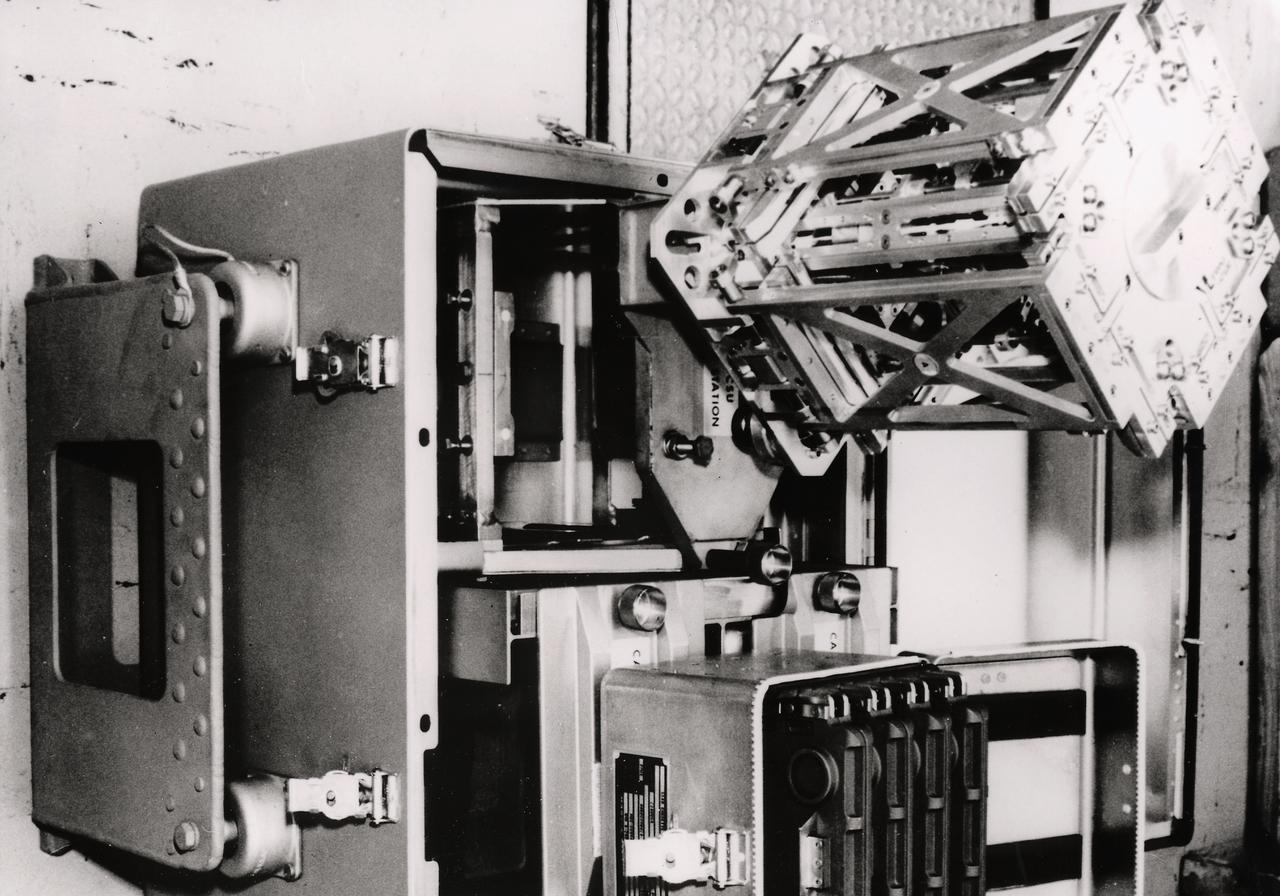
This photograph shows Skylab's Particle Collection device, a scientific experiment designed to study micro-meteoroid particles in near-Earth space and determine their abundance, mass distribution, composition, and erosive effects. The Marshall Space Flight Center had program management responsibility for the development of Skylab hardware and experiments.
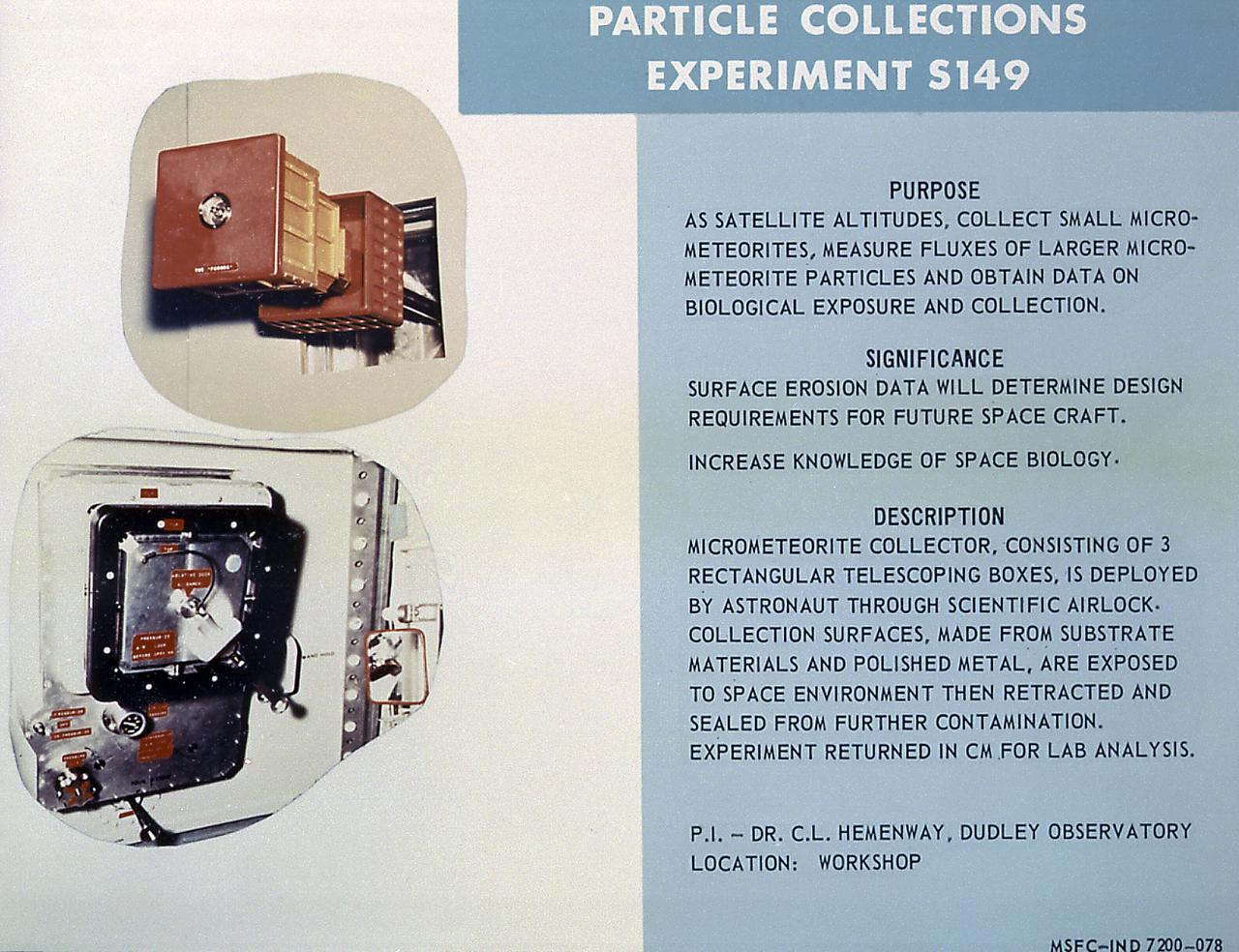
This chart describes Skylab's Particle Collection device, a scientific experiment designed to study micro-meteoroid particles in near-Earth space and determine their abundance, mass distribution, composition, and erosive effects. The Marshall Space Flight Center had program management responsibility for the development of Skylab hardware and experiments.
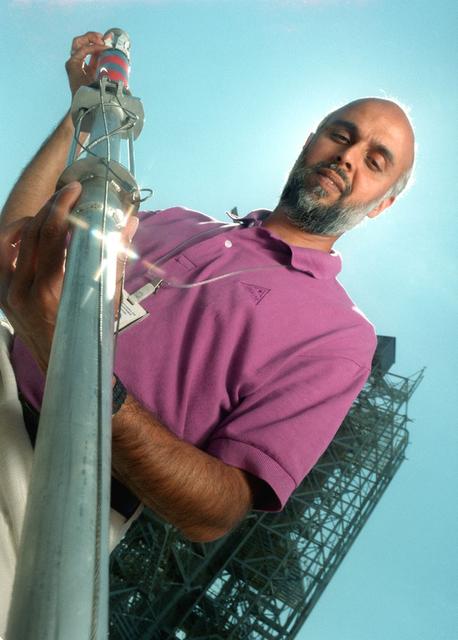
The dart and associated launching system was developed by engineers at MSFC to collect a sample of the aluminum oxide particles during the static fire testing of the Shuttle's solid rocket motor. The dart is launched through the exhaust and recovered post test. The particles are collected on sticky copper tapes affixed to a cylindrical shaft in the dart. A protective sleeve draws over the tape after the sample is collected to prevent contamination. The sample is analyzed under a scarning electron microscope under high magnification and a particle size distribution is determined. This size distribution is input into the analytical model to predict the radiative heating rates from the motor exhaust. Good prediction models are essential to optimizing the development of the thermal protection system for the Shuttle.
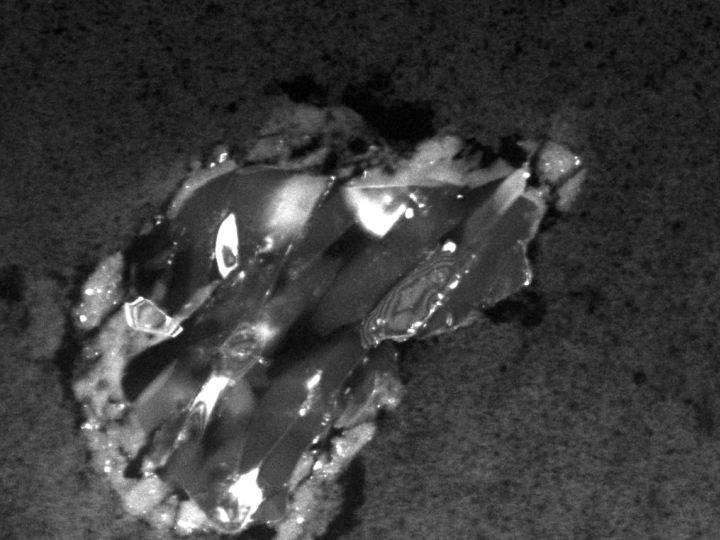
This image shows a comet particle collected by NASA’s Stardust spacecraft. The particle is made up of the silicate mineral forsterite, also known as peridot in its gem form.

jsc2025e036184 (4/4/2025) --- Airborne particles collected in the US Orbital Segment during the Aerosol Sampling Experiment (Aerosol Samplers). Top (from left to right): a stainless-steel particle collected near an exercise machine in Node 3, a silver particle collected on an overhead supply diffuser in Node 3, a skin flake (ubiquitous throughout the International Space Station cabin). Bottom (from left to right): a fiberglass particle (ubiquitous throughout the space station cabin), an antiperspirant particle collected in Node 2, an iron particle collected in the US Lab. The Aerosol Sampler collects airborne particles in the International Space Station’s cabin air and returns them to Earth so scientists can study the particles with powerful microscopes.
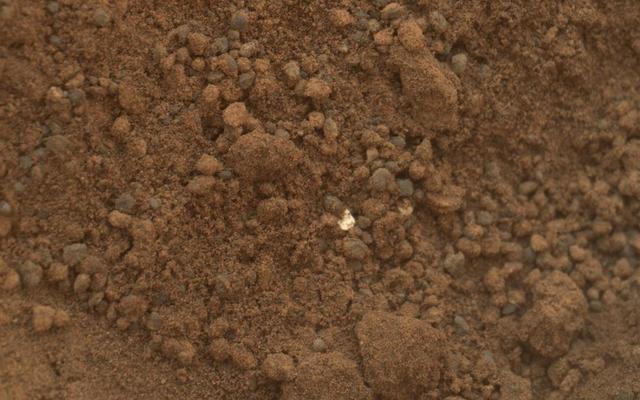
The mission science team assessed the bright particles in this scooped pit to be native Martian material rather than spacecraft debris as seen in this image from NASA Mars rover Curiosity as it collected its second scoop of Martian soil.
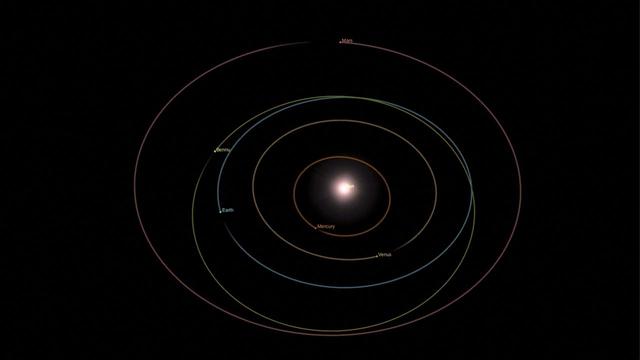
Using data collected by NASA's OSIRIS-REx mission, this animation shows the trajectories of rocky particles after being ejected from asteroid (101955) Bennu's surface. The animation emphasizes the four largest particle-ejection events detected at Bennu between December 2018 and September 2019. Additional particles not related to the ejections are also visible. Most of these pebble-size pieces of rock, typically measuring around a quarter inch (7 millimeters), were pulled back to Bennu under the asteroid's weak gravity after a short hop, sometimes even ricocheting back into space after colliding with the surface. Others remained in orbit for a few days and up to 16 revolutions. And some were ejected with enough force to completely escape from the Bennu environs. OSIRIS-REx — which stands for Origins, Spectral Interpretation, Resource Identification, and Security-Regolith Explorer — arrived at Bennu in December 2018. On Oct. 20, 2020, the mission will attempt to briefly touch down on the asteroid to scoop up material likely to include particles that were ejected before dropping back to the surface. If all goes as planned, the spacecraft will return to Earth in September 2023 with a cache of Bennu's particles for further study, including of which may even hold the physical clues as to what ejection mechanisms are at play. Movie available at https://photojournal.jpl.nasa.gov/catalog/PIA24101
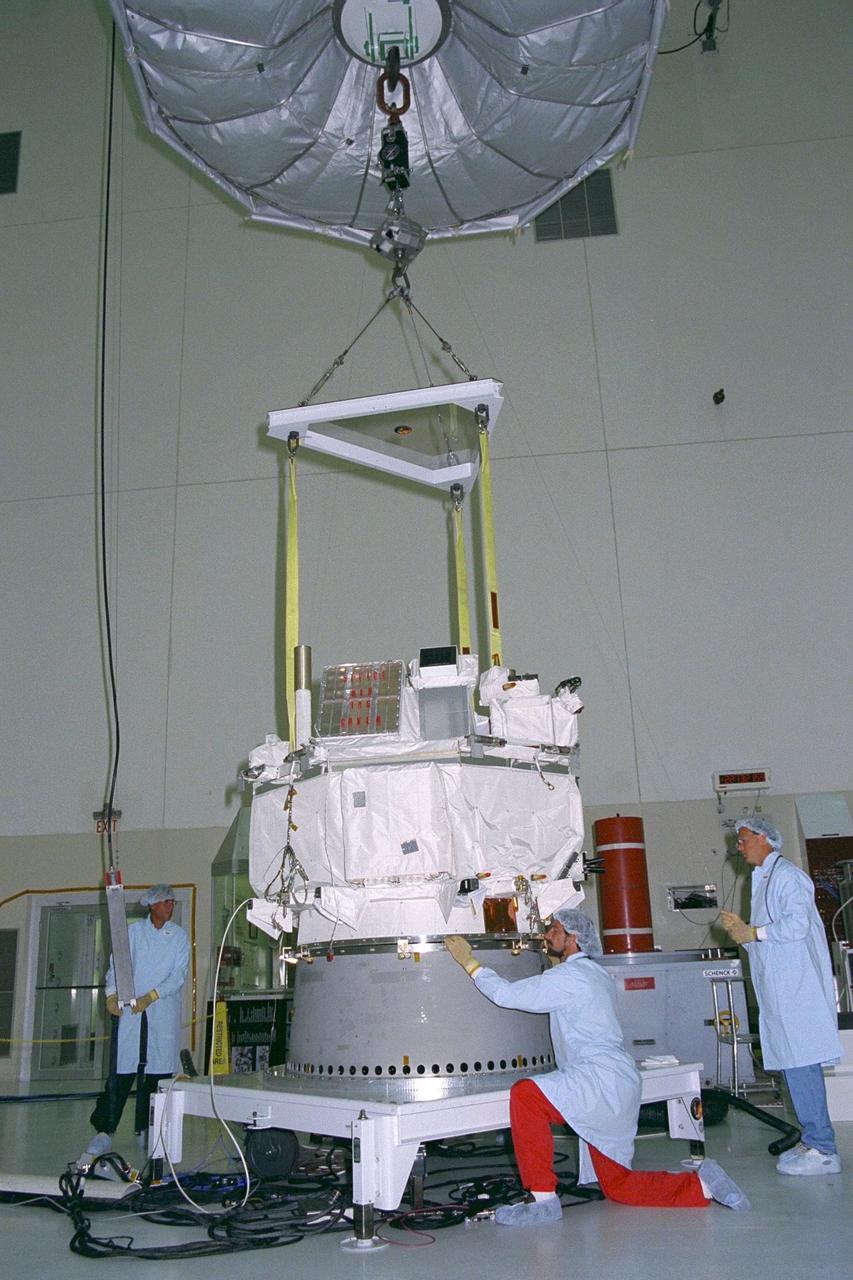
Applied Physics Laboratory engineers and technicians from Johns Hopkins University assist in leveling and orienting the Advanced Composition Explorer (ACE) as it is seated on a platform for solar array installation in KSC’s Spacecraft Assembly and Encapsulation Facility-II. Scheduled for launch on a Delta II rocket from Cape Canaveral Air Station on Aug. 25, ACE will study low-energy particles of solar origin and high-energy galactic particles. The ACE observatory has six high-resolution particle detection sensors and three monitoring instruments. The collecting power of instrumentation aboard ACE is at least 100 times more sensitive than anything previously flown to collect similar data by NASA
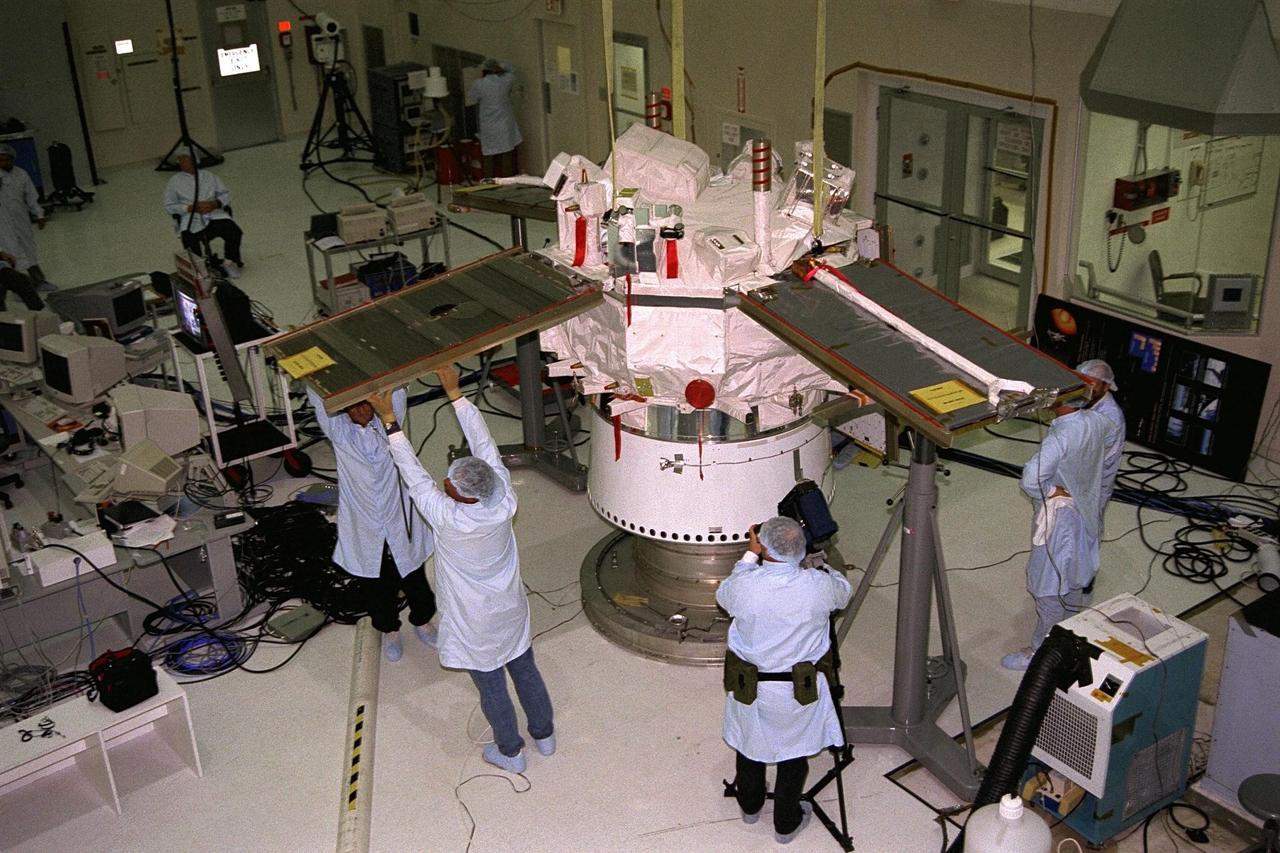
Extension of the solar panels is tested on the Advanced Composition Explorer (ACE) spacecraft in KSC’s Spacecraft Assembly and Encapsulation Facility-II (SAEF-II). Scheduled for launch on a Delta II rocket from Cape Canaveral Air Station on Aug. 25, ACE will study low-energy particles of solar origin and high-energy galactic particles. The collecting power of instruments aboard ACE is 10 to 1,000 times greater than anything previously flown to collect similar data by NASA
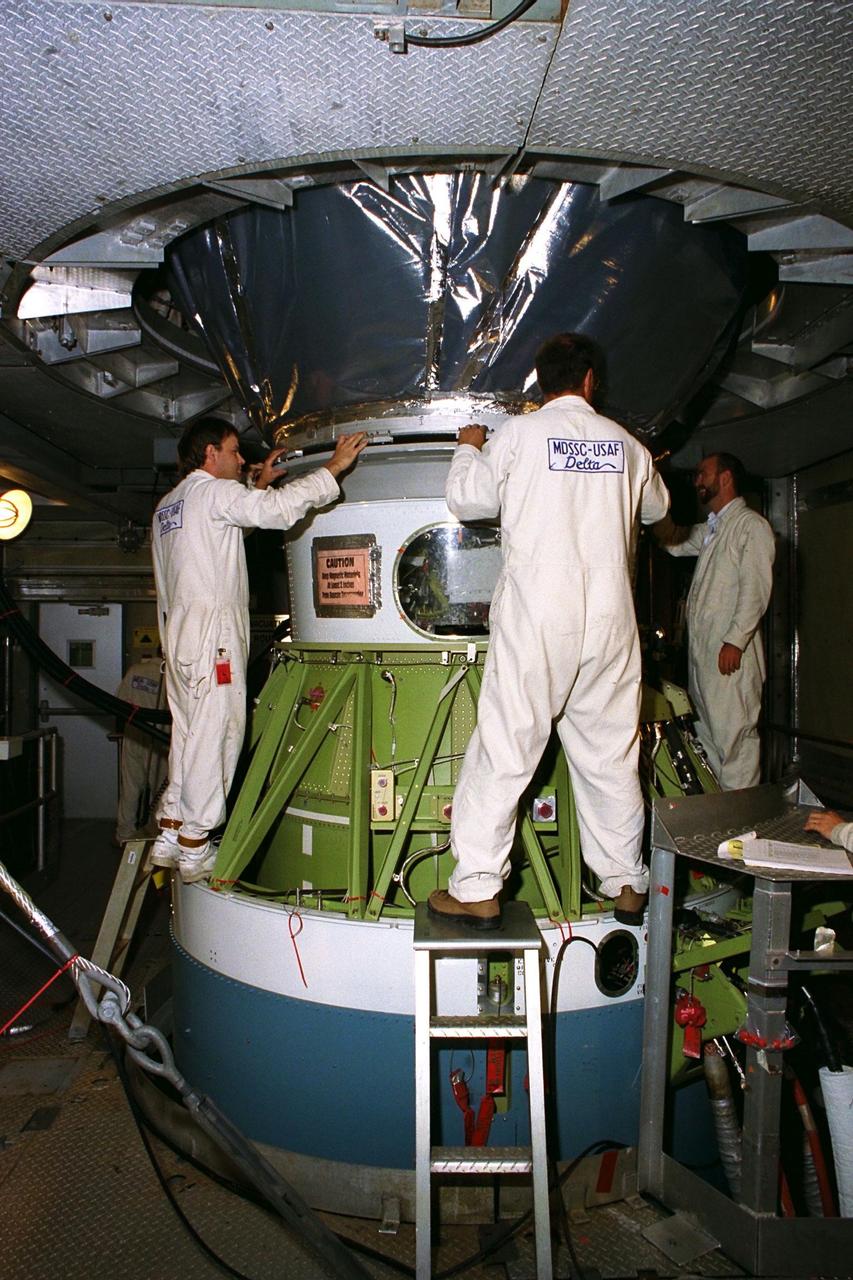
The Advanced Composition Explorer (ACE) spacecraft is placed atop its launch vehicle at Launch Complex 17A. Scheduled for launch on a Delta II rocket from Cape Canaveral Air Station on Aug. 24, ACE will study low-energy particles of solar origin and high-energy galactic particles. The collecting power of instruments aboard ACE is 10 to 1,000 times greater than anything previously flown to collect similar data by NASA
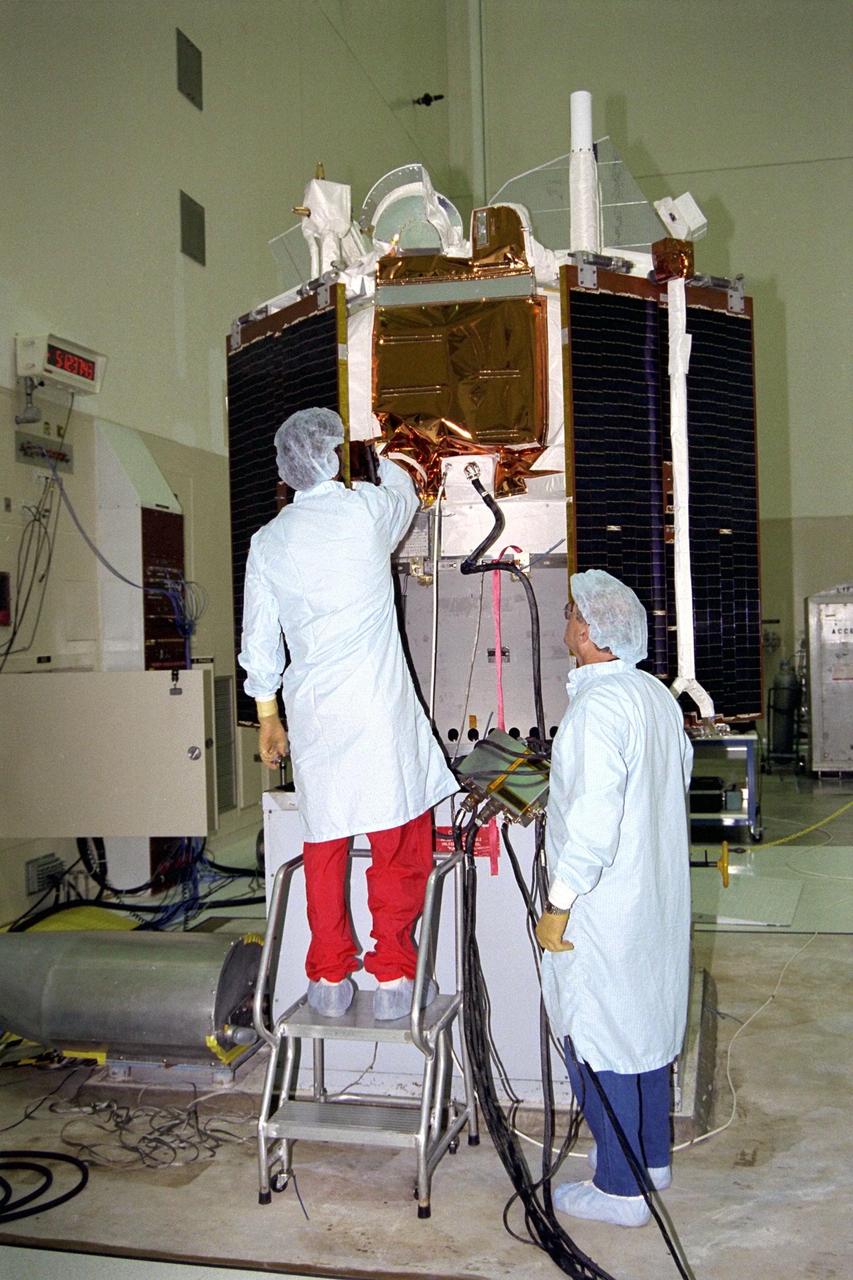
The Advanced Composition Explorer (ACE) spacecraft undergoes a spin test in KSC’s Spacecraft Assembly and Encapsulation Facility-II (SAEF-II). Scheduled for launch on a Delta II rocket from Cape Canaveral Air Station on Aug. 25, ACE will study low-energy particles of solar origin and high-energy galactic particles. The collecting power of instruments aboard ACE is 10 to 1,000 times greater than anything previously flown to collect similar data by NASA
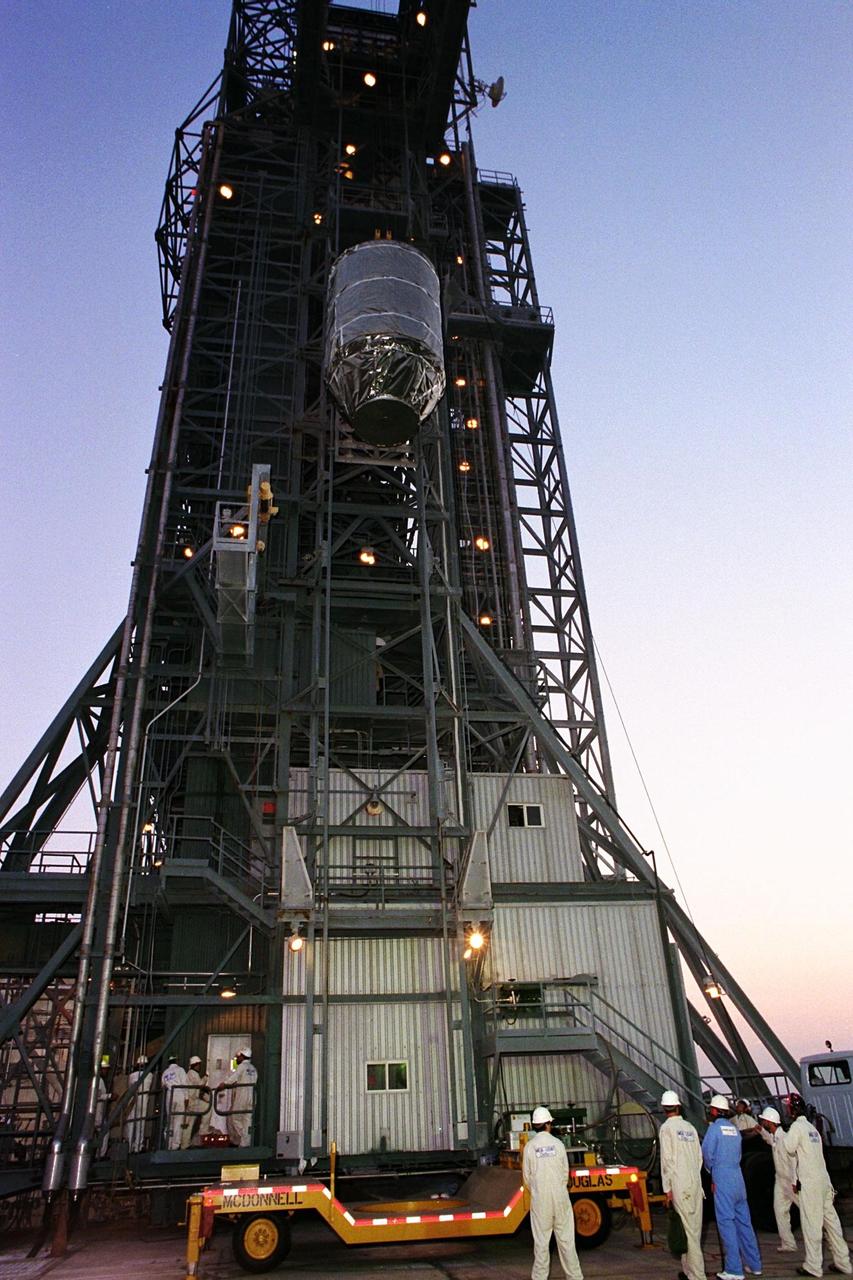
The Advanced Composition Explorer (ACE) spacecraft is placed atop its launch vehicle at Launch Complex 17A. Scheduled for launch on a Delta II rocket from Cape Canaveral Air Station on Aug. 24, ACE will study low-energy particles of solar origin and high-energy galactic particles. The collecting power of instruments aboard ACE is 10 to 1,000 times greater than anything previously flown to collect similar data by NASA
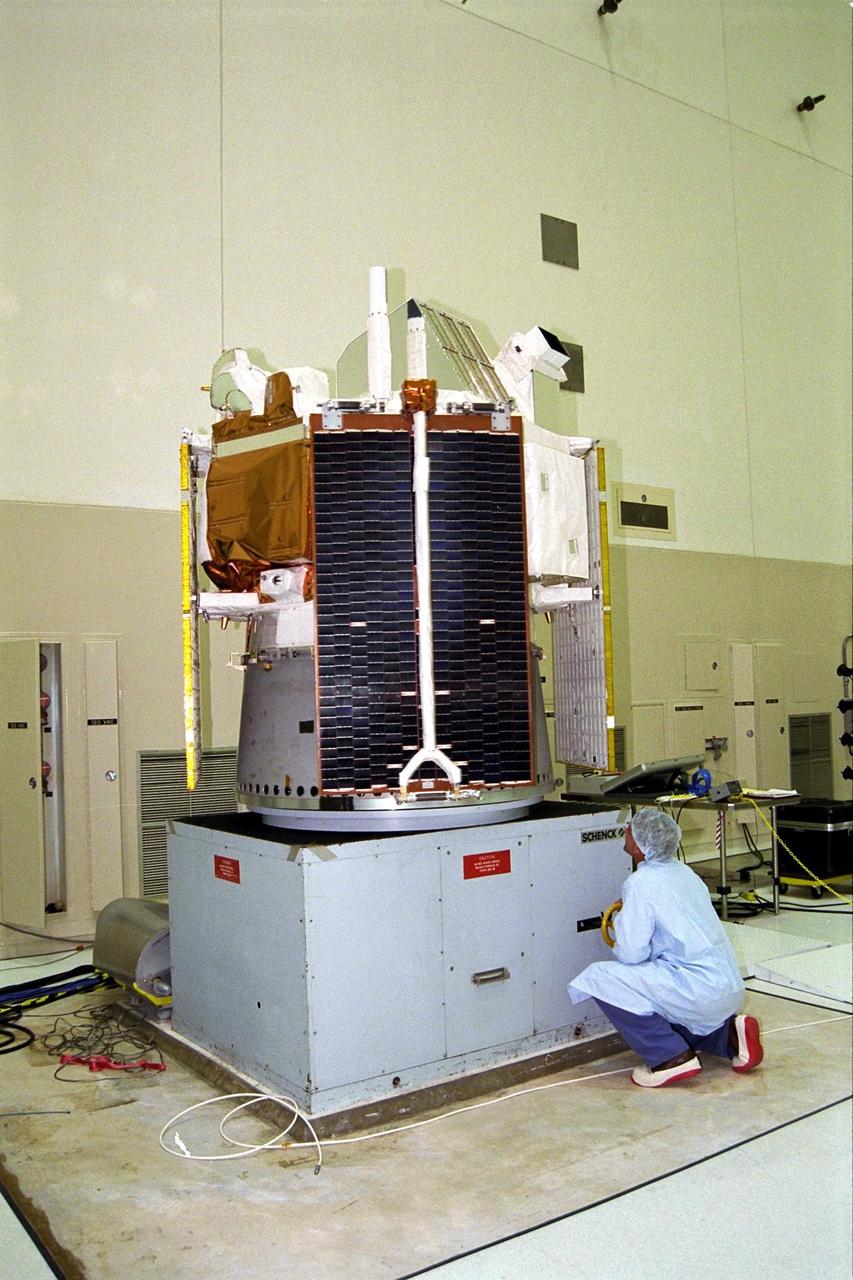
The Advanced Composition Explorer (ACE) spacecraft undergoes a spin test in KSC’s Spacecraft Assembly and Encapsulation Facility-II (SAEF-II). Scheduled for launch on a Delta II rocket from Cape Canaveral Air Station on Aug. 25, ACE will study low-energy particles of solar origin and high-energy galactic particles. The collecting power of instruments aboard ACE is 10 to 1,000 times greater than anything previously flown to collect similar data by NASA
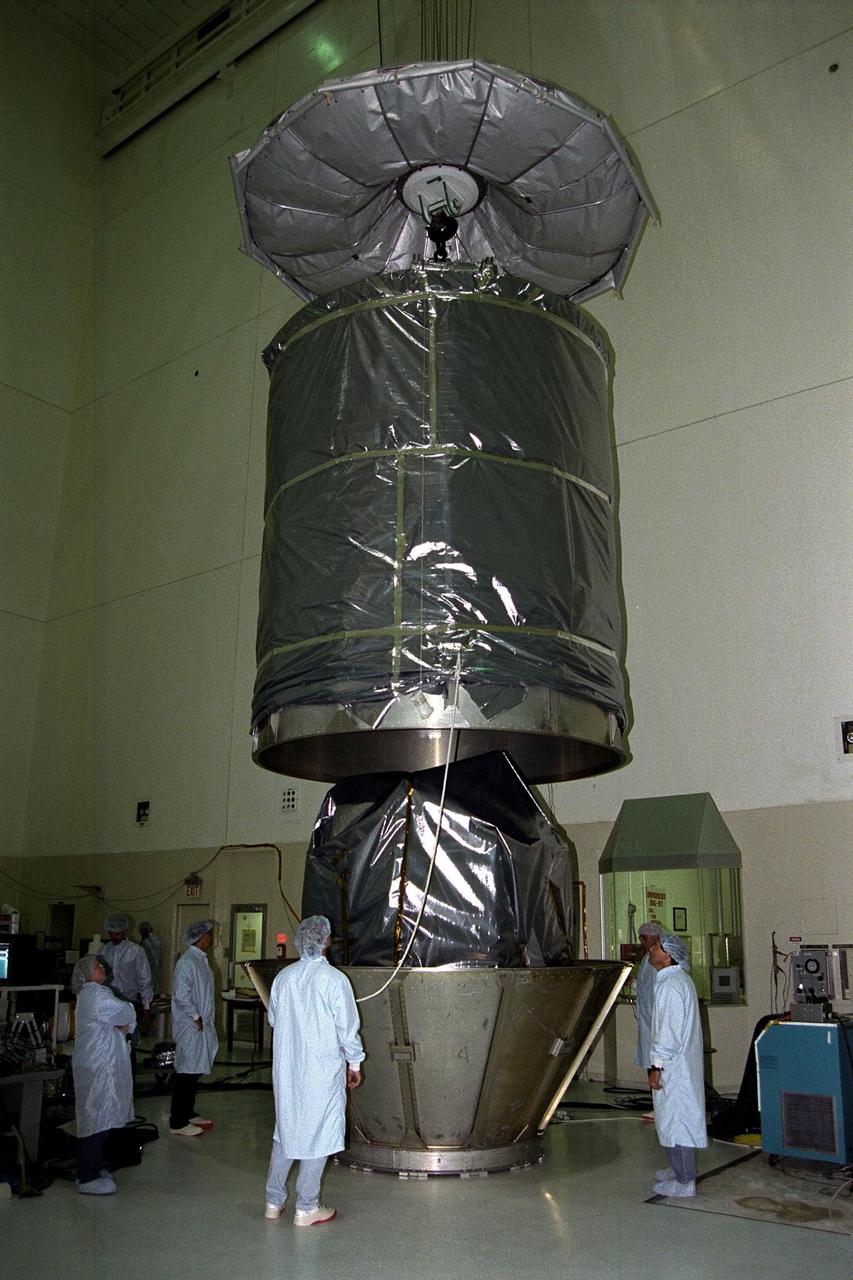
In KSC’s Spacecraft Assembly and Encapsulation Facility-II (SAEF-II), the Advanced Composition Explorer (ACE) spacecraft is encapsulated and placed into the transporter which will move it to Launch Complex 17A. Scheduled for launch on a Delta II rocket from Cape Canaveral Air Station on Aug. 24, ACE will study low-energy particles of solar origin and high-energy galactic particles. The collecting power of instruments aboard ACE is 10 to 1,000 times greater than anything previously flown to collect similar data by NASA
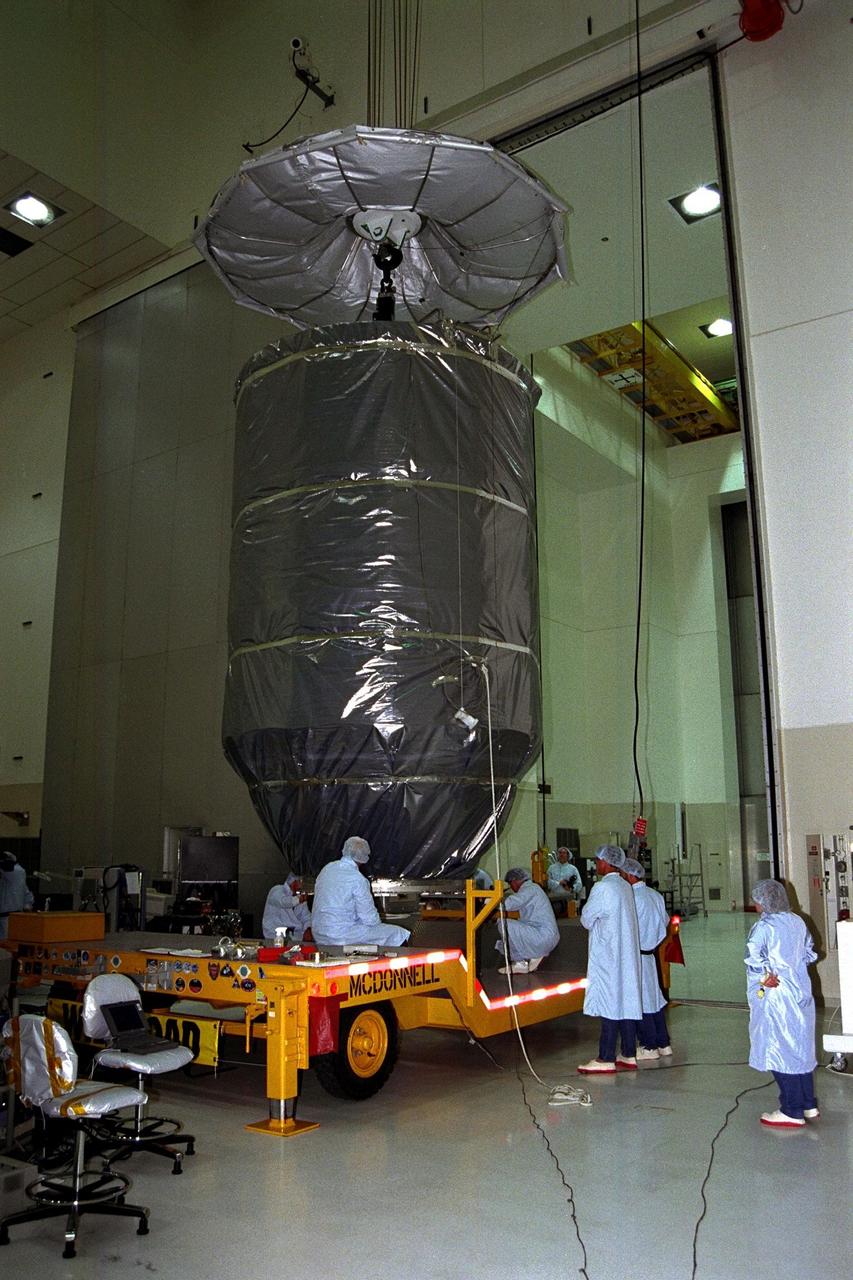
In KSC’s Spacecraft Assembly and Encapsulation Facility-II (SAEF-II), the Advanced Composition Explorer (ACE) spacecraft is encapsulated and placed into the transporter which will move it to Launch Complex 17A. Scheduled for launch on a Delta II rocket from Cape Canaveral Air Station on Aug. 24, ACE will study low-energy particles of solar origin and high-energy galactic particles. The collecting power of instruments aboard ACE is 10 to 1,000 times greater than anything previously flown to collect similar data by NASA
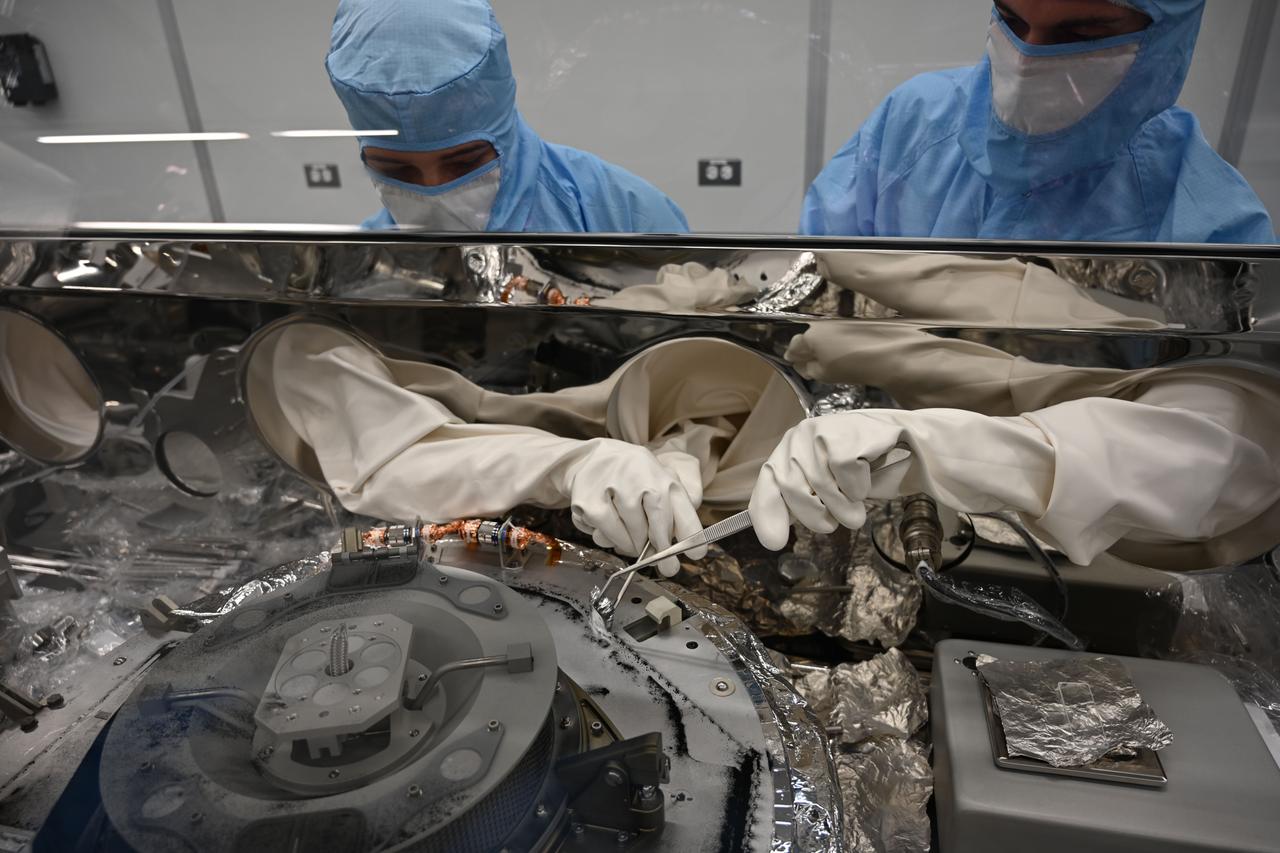
Astromaterials processors Mari Montoya, left, and Curtis Calva, right, use tools to collect asteroid particles from the base of the OSIRIS-REx science canister. Credit: NASA
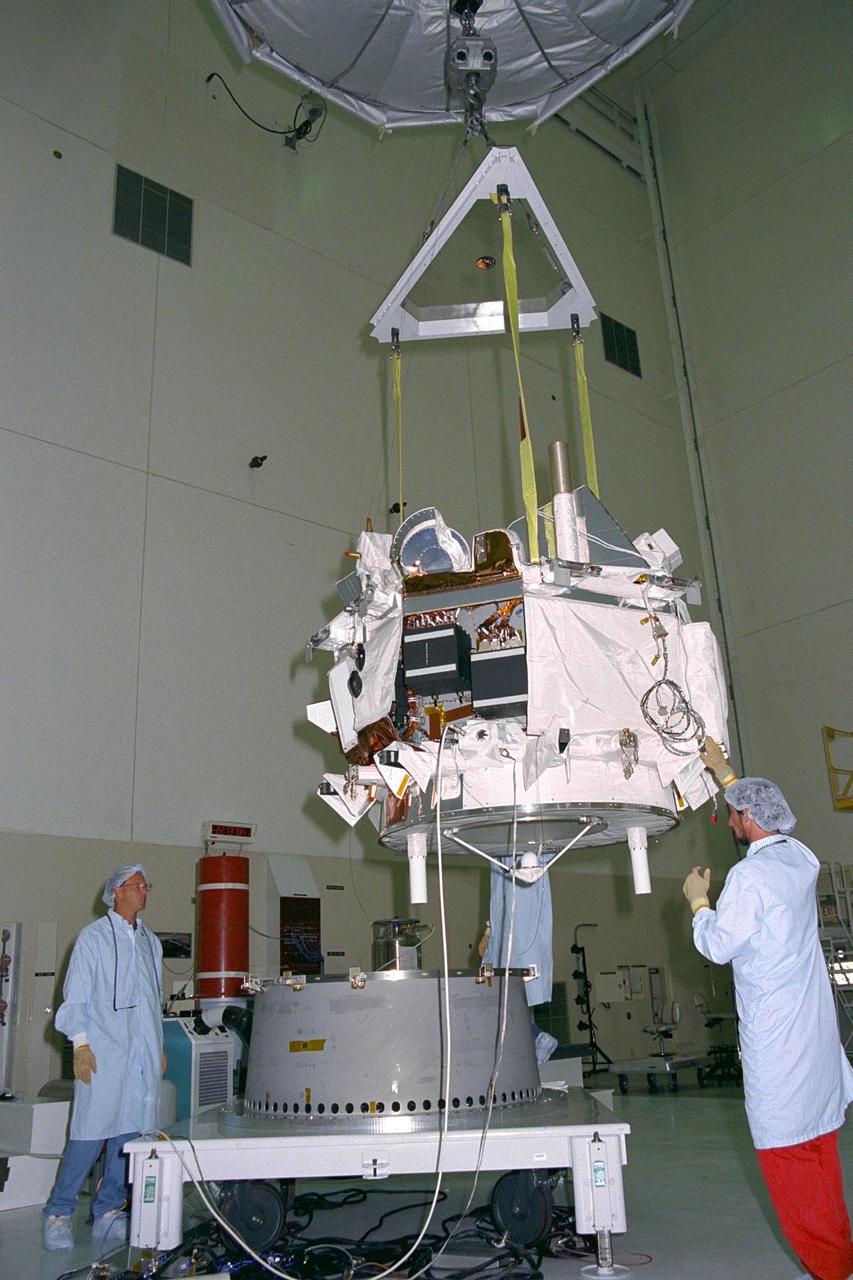
Applied Physics Laboratory engineers and technicians from Johns Hopkins University assist in guiding the Advanced Composition Explorer (ACE) as it is hoisted over a platform for solar array installation in KSC’s Spacecraft Assembly and Encapsulation Facility-II. Scheduled for launch on a Delta II rocket from Cape Canaveral Air Station on Aug. 25, ACE will study low-energy particles of solar origin and high-energy galactic particles. The ACE observatory will contribute to the understanding of the formation and evolution of the solar system as well as the astrophysical processes involved. The collecting power of instruments aboard ACE is 10 to 1,000 times greater than anything previously flown to collect similar data by NASA
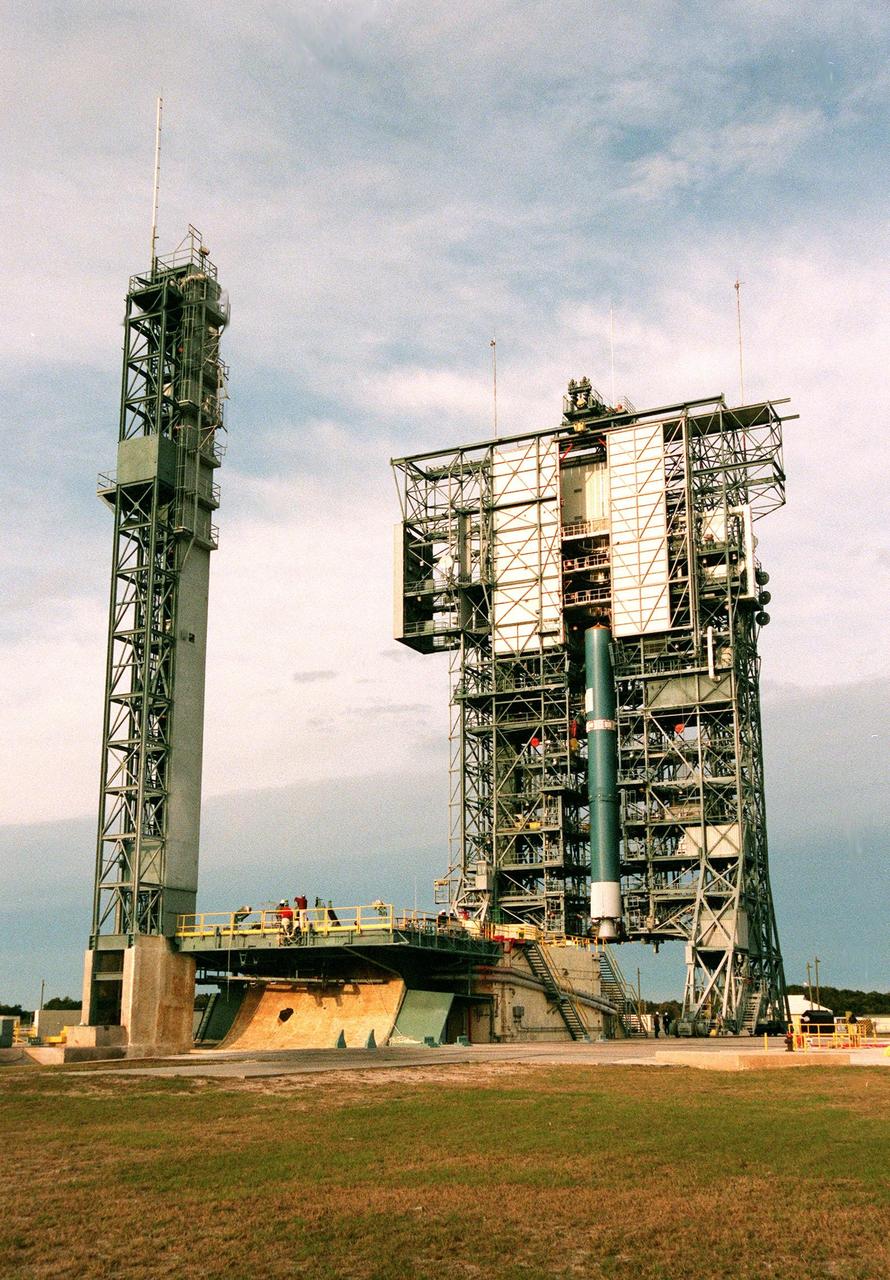
The first stage of a Boeing Delta II rocket is in position on the mobile tower (at right) at Launch Complex 17. At left is the launch tower. The rocket will carry the Stardust spacecraft into space for a close encounter with the comet Wild 2 in January 2004. Using a medium called aerogel, it will capture comet particles flying off the nucleus of the comet, plus collect interstellar dust for later analysis. The collected samples will return to Earth in a Sample Return Capsule to be jettisoned as Stardust swings by Earth in January 2006. Stardust is scheduled to be launched on Feb. 6, 1999
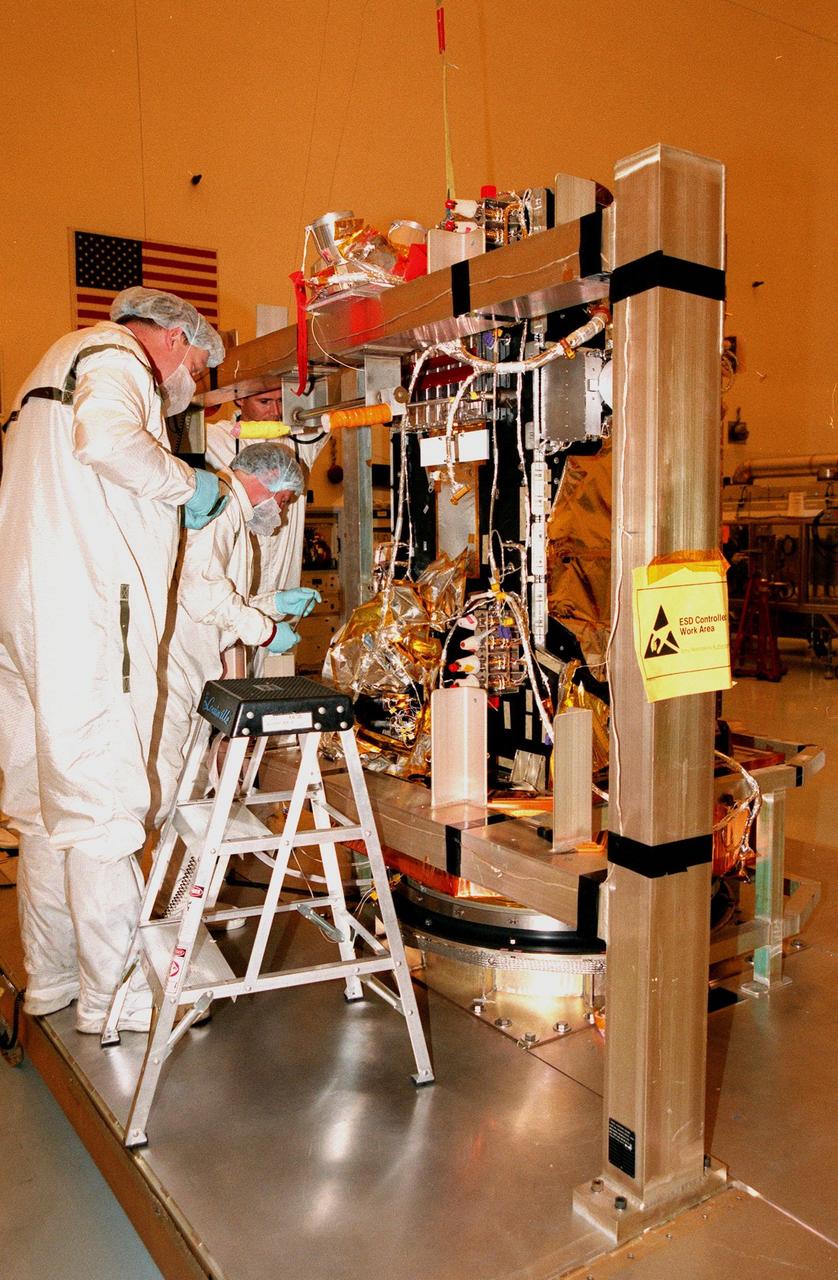
In the Payload Hazardous Servicing Facility, workers install a science panel on the spacecraft Stardust. Scheduled to be launched aboard a Boeing Delta 7426 rocket from Complex 17, Cape Canaveral Air Station, on Feb. 6, 1999, Stardust will use a unique medium called aerogel to capture comet particles flying off the nucleus of comet Wild 2 in January 2004, plus collect interstellar dust for later analysis. The collected samples will return to Earth in a re-entry capsule to be jettisoned as it swings by Earth in January 2006
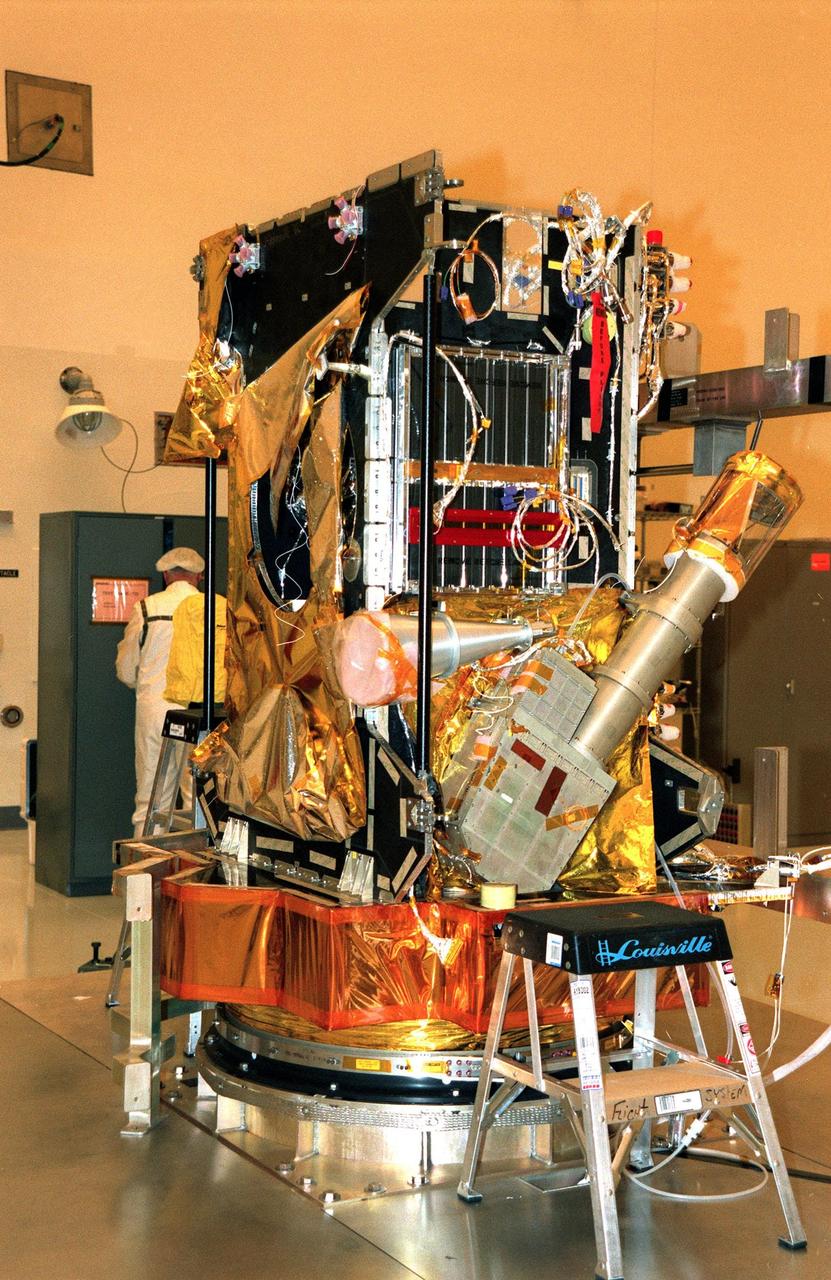
In the Payload Hazardous Servicing Facility, the Stardust spacecraft is ready for the sample return capsule to be attached. Stardust will use a unique medium called aerogel to capture comet particles flying off the nucleus of comet Wild 2 in January 2004, plus collect interstellar dust for later analysis. The collected samples will return to Earth in the re-entry capsule to be jettisoned as it swings by Earth in January 2006. Stardust is scheduled to be launched aboard a Boeing Delta 7426 rocket from Complex 17, Cape Canaveral Air Station, on Feb. 6, 1999
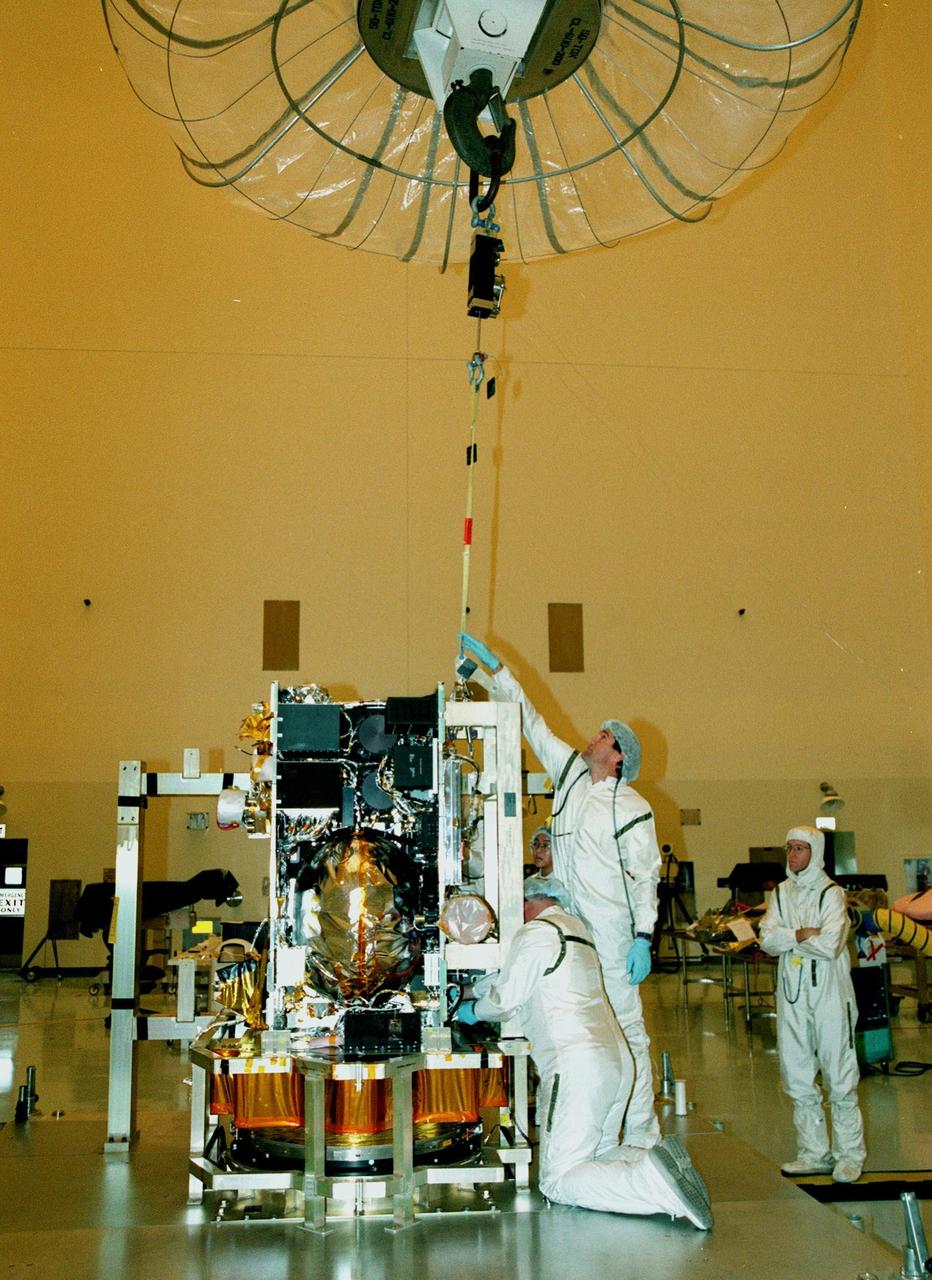
In the Payload Hazardous Servicing Facility, workers adjust a science panel they are installing on the spacecraft Stardust. Scheduled to be launched aboard a Boeing Delta 7426 rocket from Complex 17, Cape Canaveral Air Station, on Feb. 6, 1999, Stardust will use a unique medium called aerogel to capture comet particles flying off the nucleus of comet Wild 2 in January 2004, plus collect interstellar dust for later analysis. The collected samples will return to Earth in a re-entry capsule to be jettisoned as it swings by Earth in January 2006
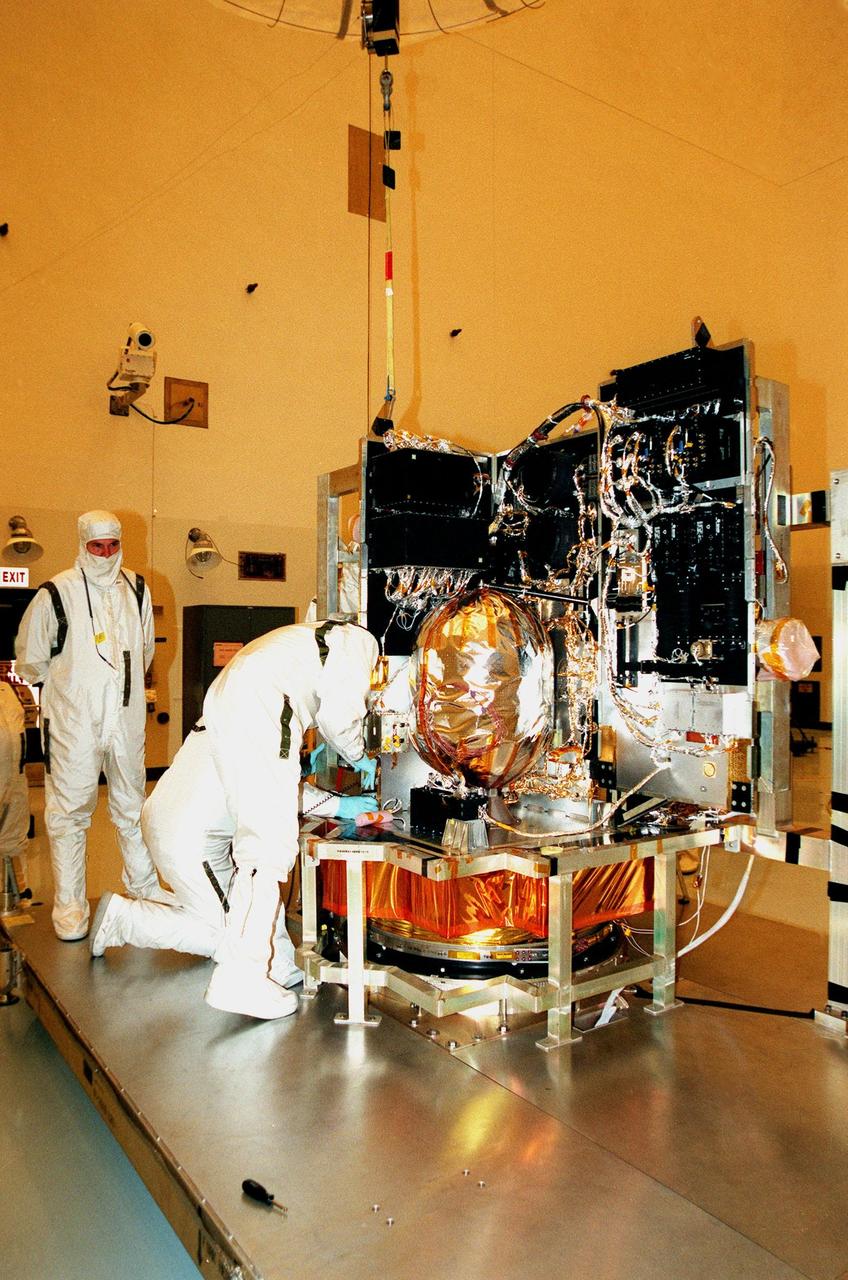
In the Payload Hazardous Servicing Facility, workers get ready to install a science panel on the spacecraft Stardust. Scheduled to be launched aboard a Boeing Delta 7426 rocket from Complex 17, Cape Canaveral Air Station, on Feb. 6, 1999, Stardust will use a unique medium called aerogel to capture comet particles flying off the nucleus of comet Wild 2 in January 2004, plus collect interstellar dust for later analysis. The collected samples will return to Earth in a re-entry capsule to be jettisoned as it swings by Earth in January 2006
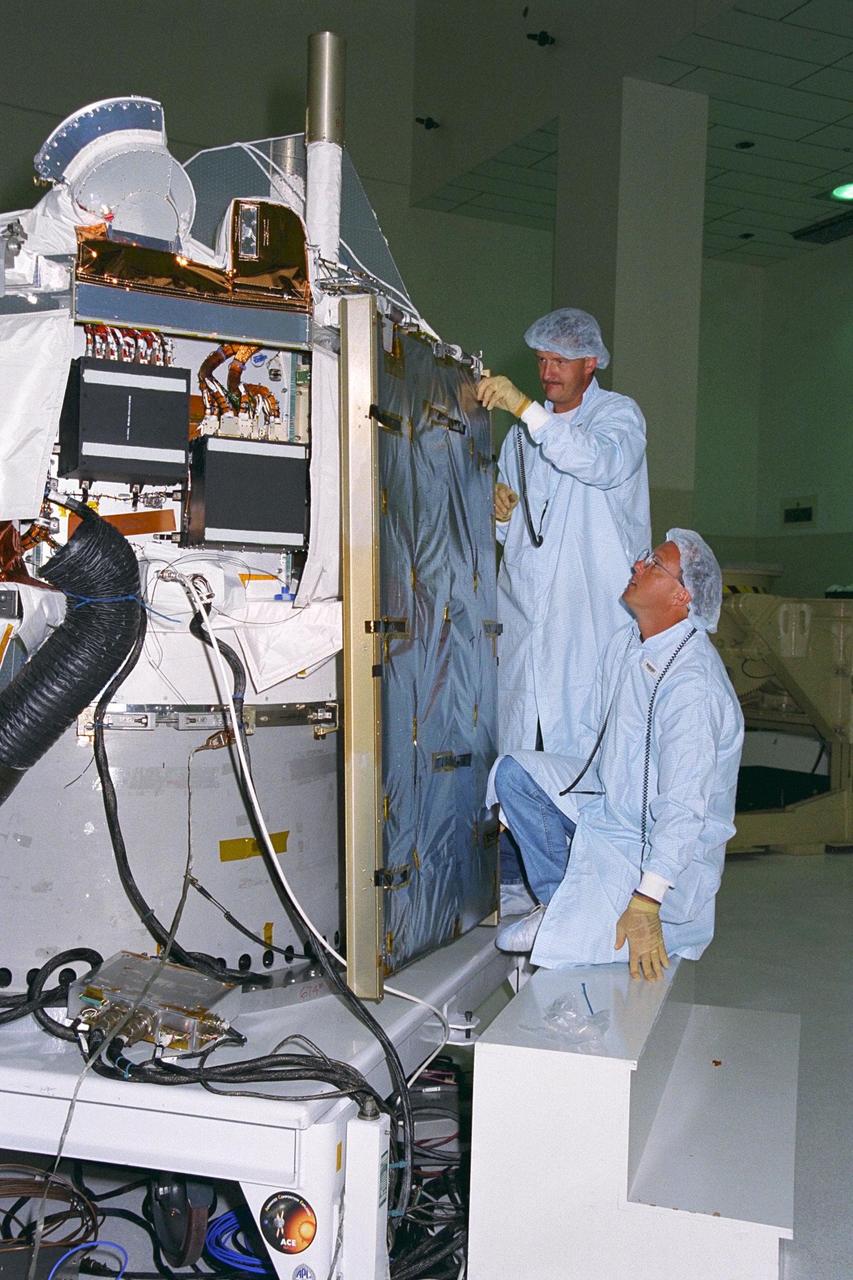
Applied Physics Laboratory Engineer Cliff Willey (kneeling) and Engineering Assistant Jim Hutcheson from Johns Hopkins University install solar array panels on the Advanced Composition Explorer (ACE) in KSC’s Spacecraft Assembly and Encapsulation Facility-II. Scheduled for launch on a Delta II rocket from Cape Canaveral Air Station on Aug. 25, ACE will study low-energy particles of solar origin and high-energy galactic particles for a better understanding of the formation and evolution of the solar system as well as the astrophysical processes involved. The ACE observatory will be placed into an orbit almost a million miles (1.5 million kilometers) away from the Earth, about 1/100 the distance from the Earth to the Sun. The collecting power of instrumentation aboard ACE is at least 100 times more sensitive than anything previously flown to collect similar data by NASA
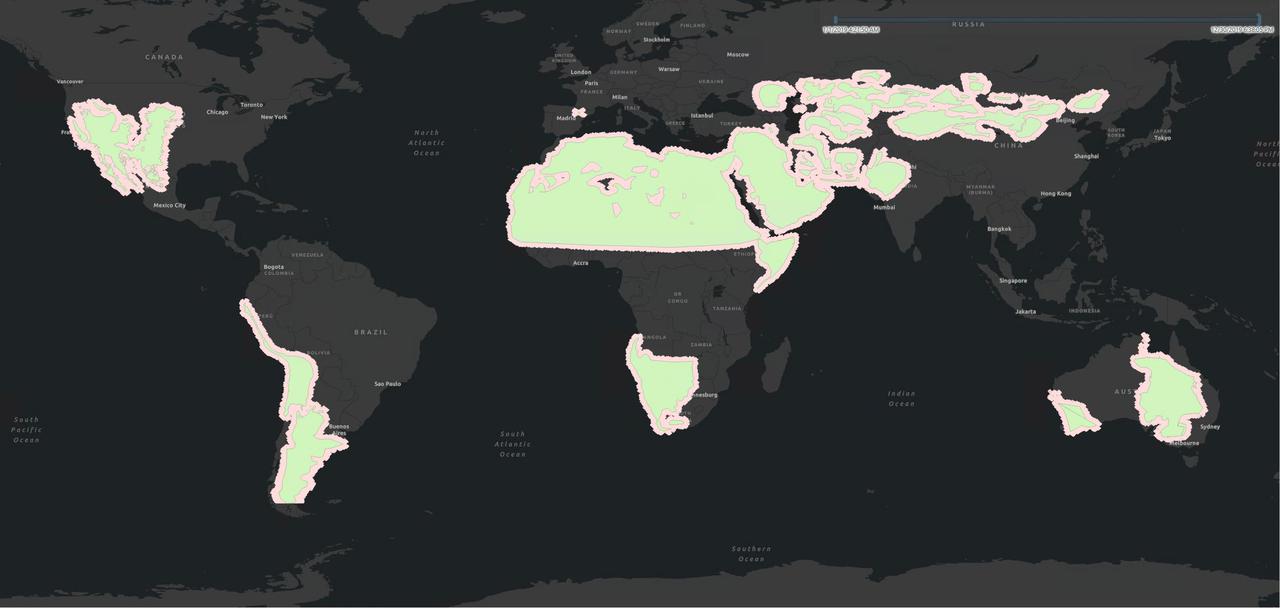
From its vantage point aboard the International Space Station (ISS), NASA's Earth Surface Mineral Dust Source Investigation (EMIT) mission will map the world's mineral-dust sources, gathering information about particle color and composition as the instrument, designed at NASA's Jet Propulsion Laboratory in Southern California, orbits over the planet's dry, sparsely vegetated regions. EMIT will collect measurements of 10 important surface minerals – hematite, goethite, illite, vermiculite, calcite, dolomite, montmorillonite, kaolinite, chlorite, and gypsum – in arid regions between 50-degree south and north latitudes in Africa, Asia, North and South America, and Australia. The data EMIT collects will help scientists better understand the role of airborne dust particles in heating and cooling Earth's atmosphere on global and regional scales. https://photojournal.jpl.nasa.gov/catalog/PIA25145
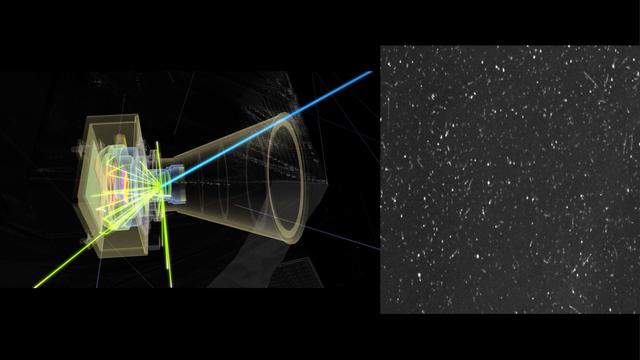
This animation gives an X-ray view of the Juno spacecraft's Stellar Reference Unit (SRU) star camera (left) as it is bombarded by high-energy particles in Jupiter's inner radiation belts. Even though the SRU camera head is six times more heavily shielded than Juno's radiation vault, the highest-energy particles in Jupiter's extreme radiation environment can still penetrate, striking the imaging sensor inside. The signatures from high-energy electron and ion hits appear as dots, squiggles, and streaks (right) in the images collected by the SRU, like static on a television screen. Juno's Radiation Monitoring Investigation collects SRU images and uses image processing to extract these radiation-induced noise signatures to profile the radiation levels encountered by Juno during its close flybys of Jupiter. Animation available at https://photojournal.jpl.nasa.gov/catalog/PIA24436
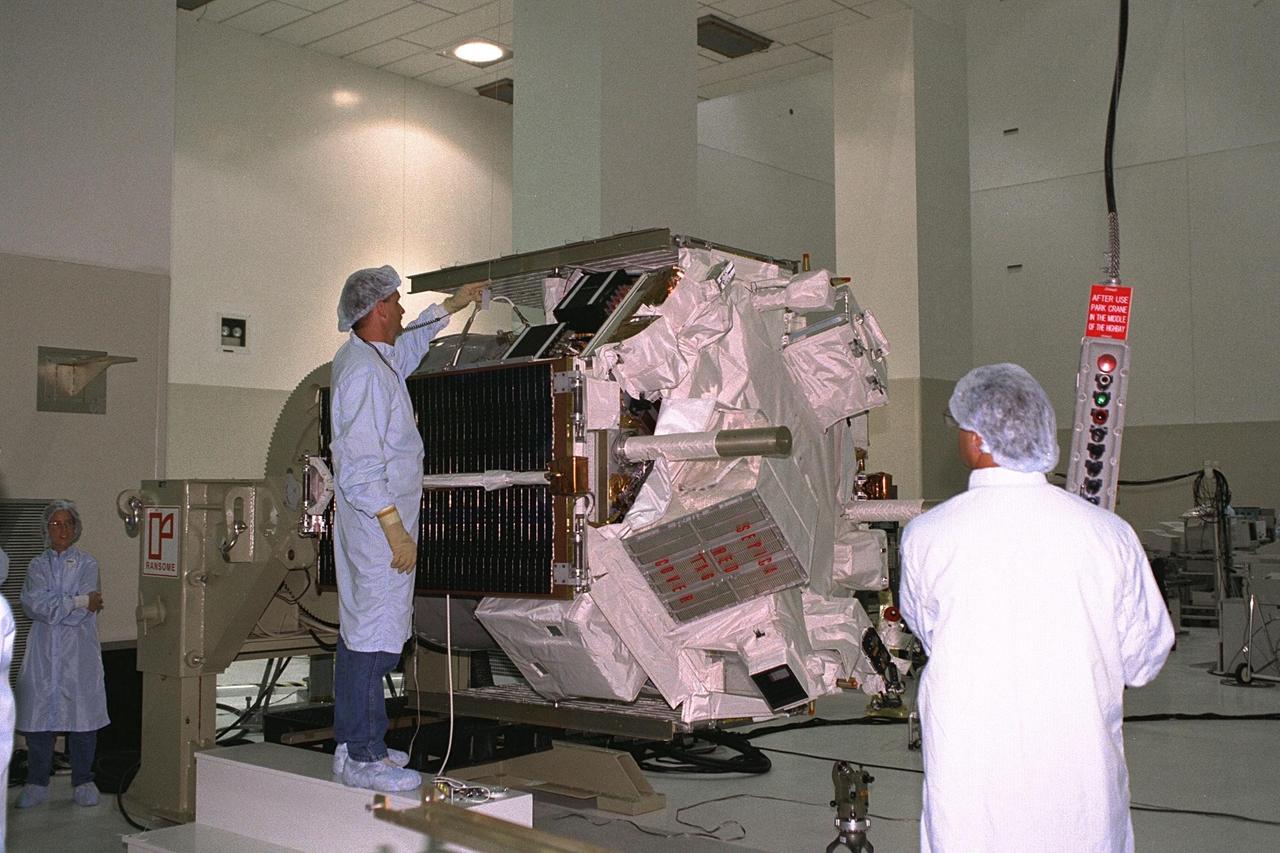
Applied Physics Laboratory engineers and technicians from Johns Hopkins University test solar array deployment of the Advanced Composition Explorer (ACE) in KSC’s Spacecraft Assembly and Encapsulation Facility-II (SAEF-II). The wire hanging from the ceiling above the black solar array panel is used for "g-negation," which takes the weight off of the panel’s hinges to simulate zero gravity, mimicking deployment in space. Scheduled for launch on a Delta II rocket from Cape Canaveral Air Station on Aug. 25, ACE will study low-energy particles of solar origin and high-energy galactic particles. The collecting power of instruments aboard ACE is 10 to 1,000 times greater than anything previously flown to collect similar data by NASA
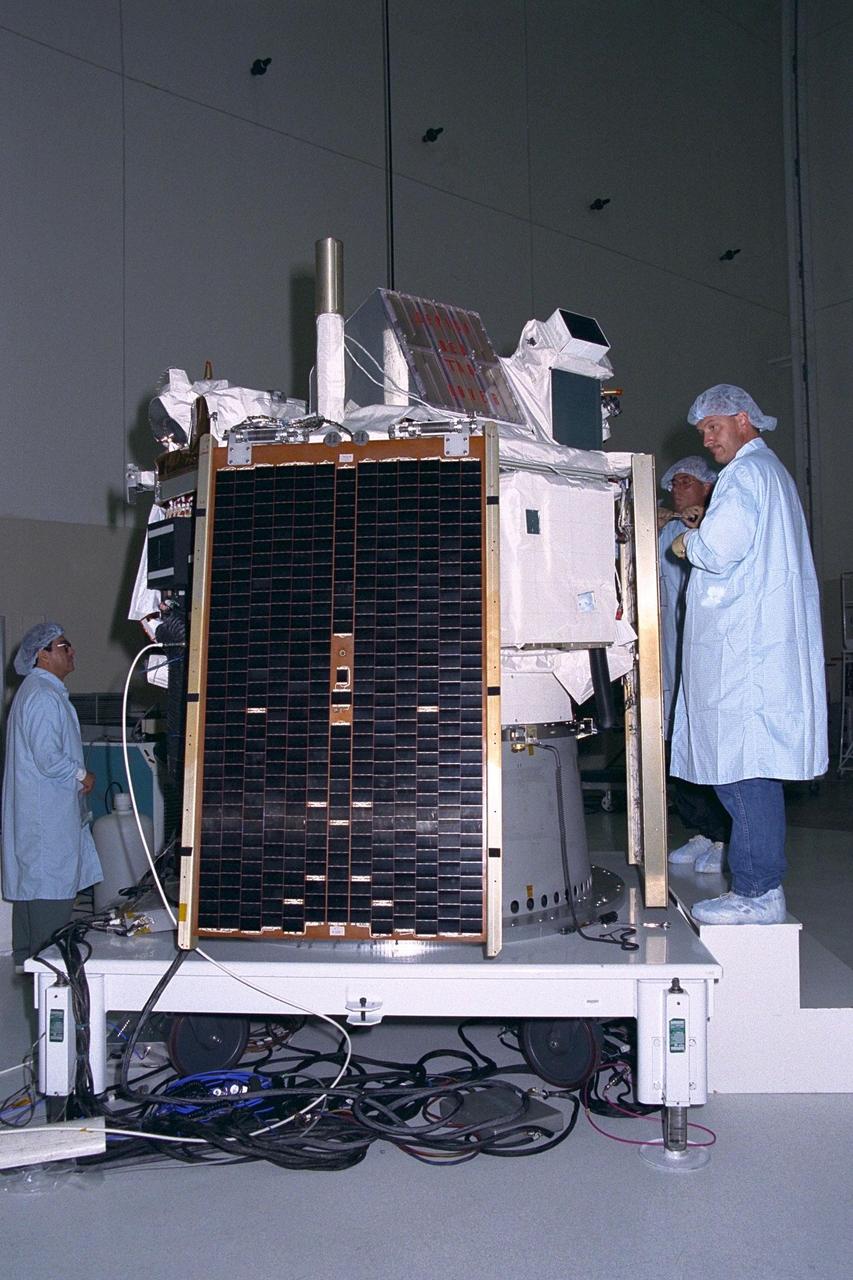
Applied Physics Laboratory engineers and technicians from Johns Hopkins University install solar array panels on the Advanced Composition Explorer (ACE) in KSC’s Spacecraft Assembly and Encapsulation Facility-II. The panel on which they are working is identical to the panel (one of four) seen in the foreground on the ACE spacecraft. Scheduled for launch on a Delta II rocket from Cape Canaveral Air Station on Aug. 25, ACE will study low-energy particles of solar origin and high-energy galactic particles for a better understanding of the formation and evolution of the solar system as well as the astrophysical processes involved. The ACE observatory will be placed into an orbit almost a million miles (1.5 million kilometers) away from the Earth, about 1/100 the distance from the Earth to the Sun. The collecting power of instrumentation aboard ACE is at least 100 times more sensitive than anything previously flown to collect similar data by NASA
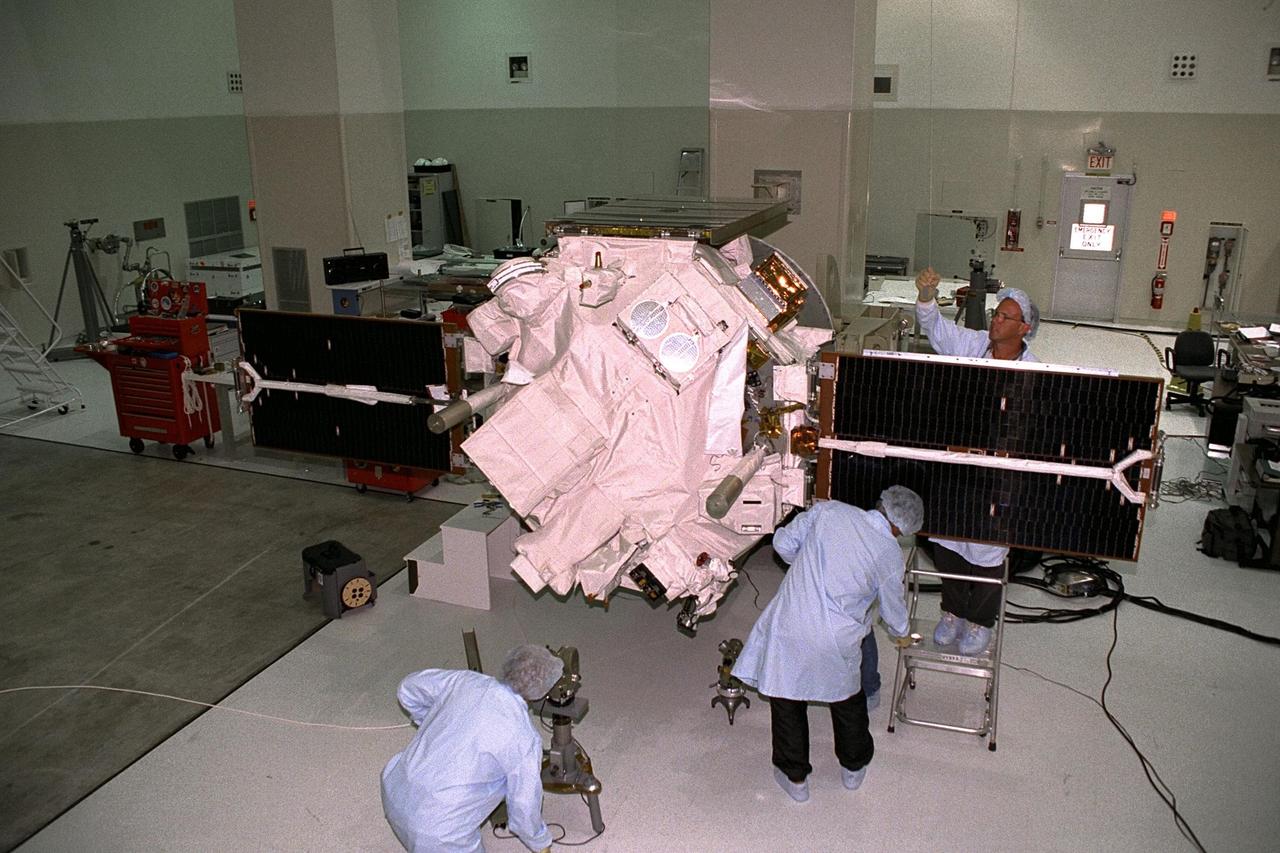
Applied Physics Laboratory engineers and technicians from Johns Hopkins University test solar array deployment of the Advanced Composition Explorer (ACE) in KSC’s Spacecraft Assembly and Encapsulation Facility-II (SAEF-II). The wire hanging from the ceiling above the black solar array panel is used for "g-negation," which takes the weight off of the panel’s hinges to simulate zero gravity, mimicking deployment in space. Scheduled for launch on a Delta II rocket from Cape Canaveral Air Station on Aug. 25, ACE will study low-energy particles of solar origin and high-energy galactic particles for a better understanding of the formation and evolution of the solar system as well as the astrophysical processes involved. The collecting power of instrumentation aboard ACE is at least 100 times more sensitive than anything previously flown to collect similar data by NASA
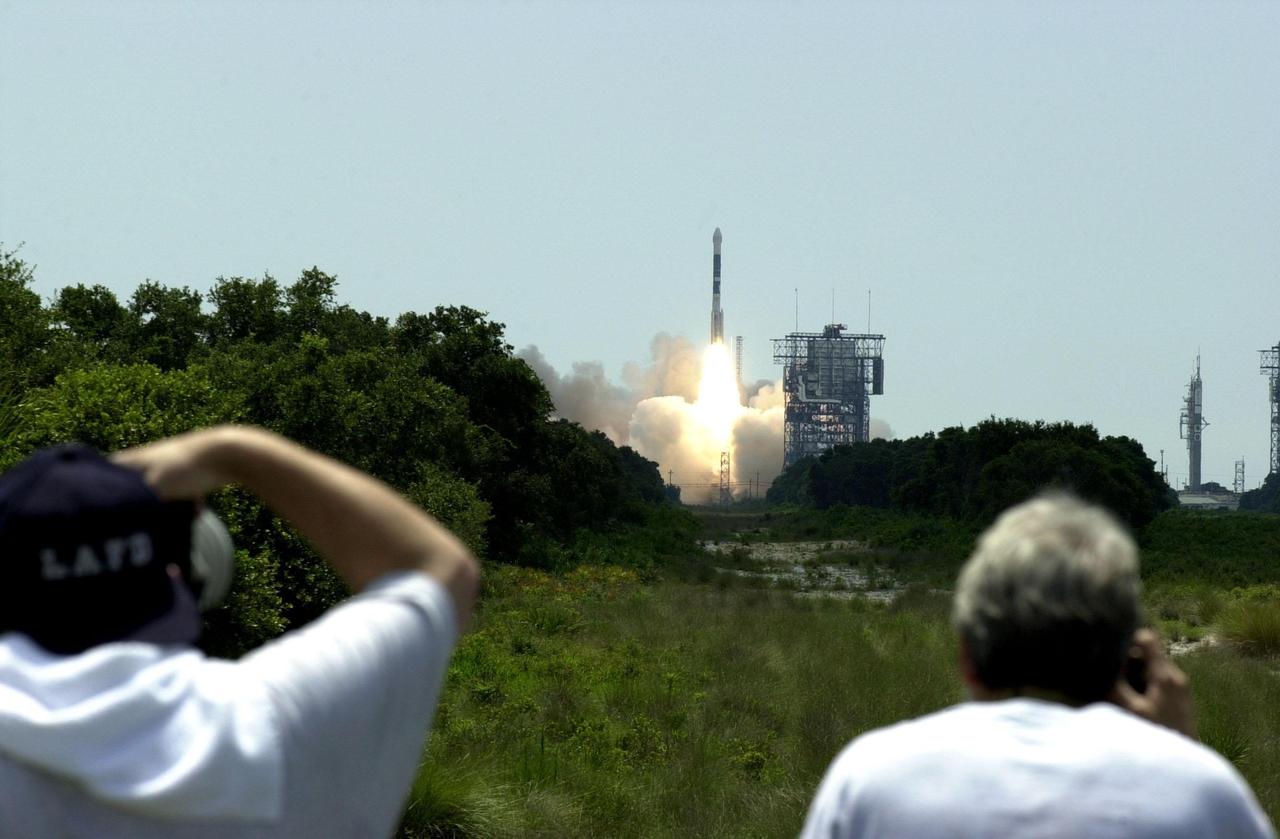
KENNEDY SPACE CENTER, Fla. -- The Boeing Delta II rocket propels NASA’s Genesis spacecraft into the sky as photographers take aim. The Genesis/Delta launch occurred ontime at 12:13:40 p.m. EDT from Launch Complex 17-A, Cape Canaveral Air Force Station. Genesis is on a journey to collect and return to Earth just 10 to 20 micrograms of solar wind, invisible charged particles that flow outward from the Sun. The particles will be studied by scientists over the next century to search for answers to fundamental questions about the exact composition of our star and the birth of our solar system
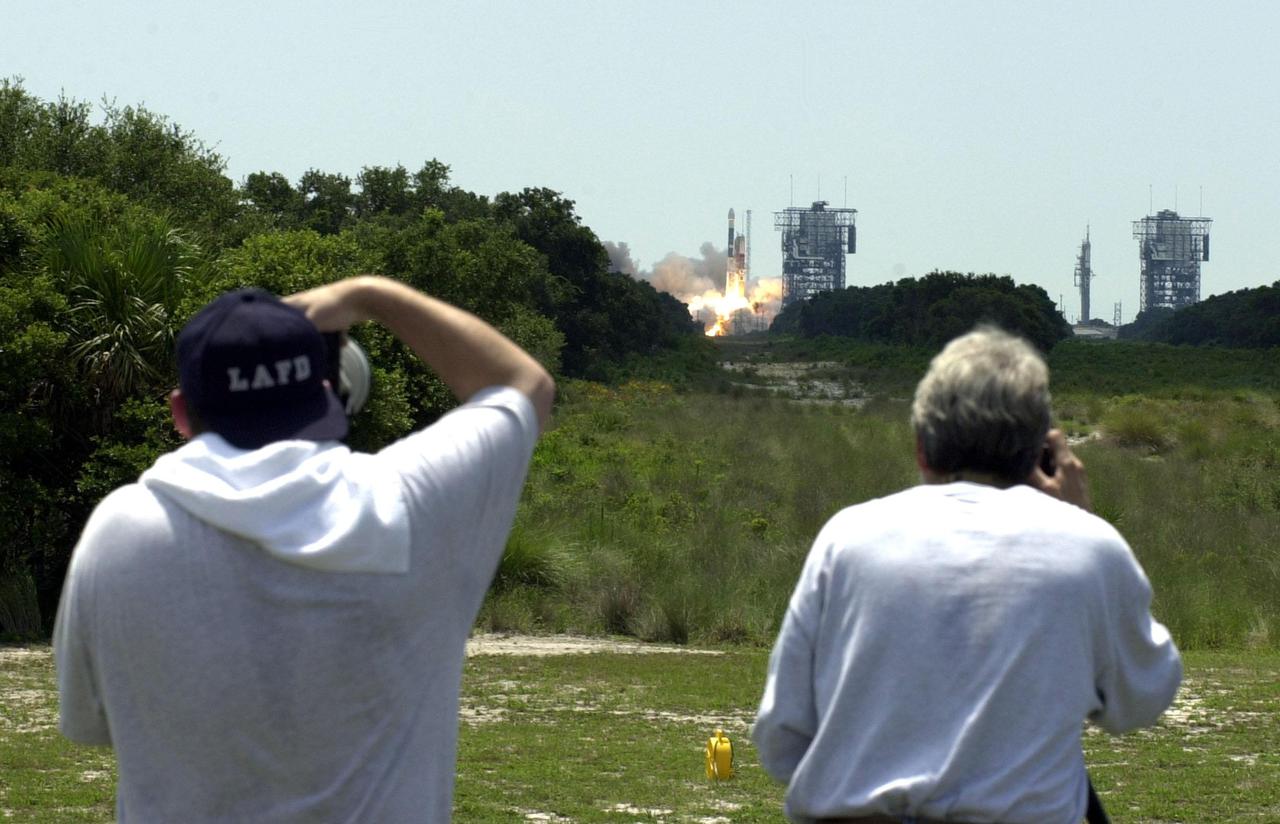
KENNEDY SPACE CENTER, Fla. -- Photographers take aim as the Boeing Delta II rocket propels NASA’s Genesis spacecraft into the sky on a journey to collect and return to Earth just 10 to 20 micrograms of solar wind, invisible charged particles that flow outward from the Sun. The particles will be studied by scientists over the next century to search for answers to fundamental questions about the exact composition of our star and the birth of our solar system. The Genesis_Delta launch occurred ontime at 12:13:40 p.m. EDT from Launch Complex 17-A, Cape Canaveral Air Force Station
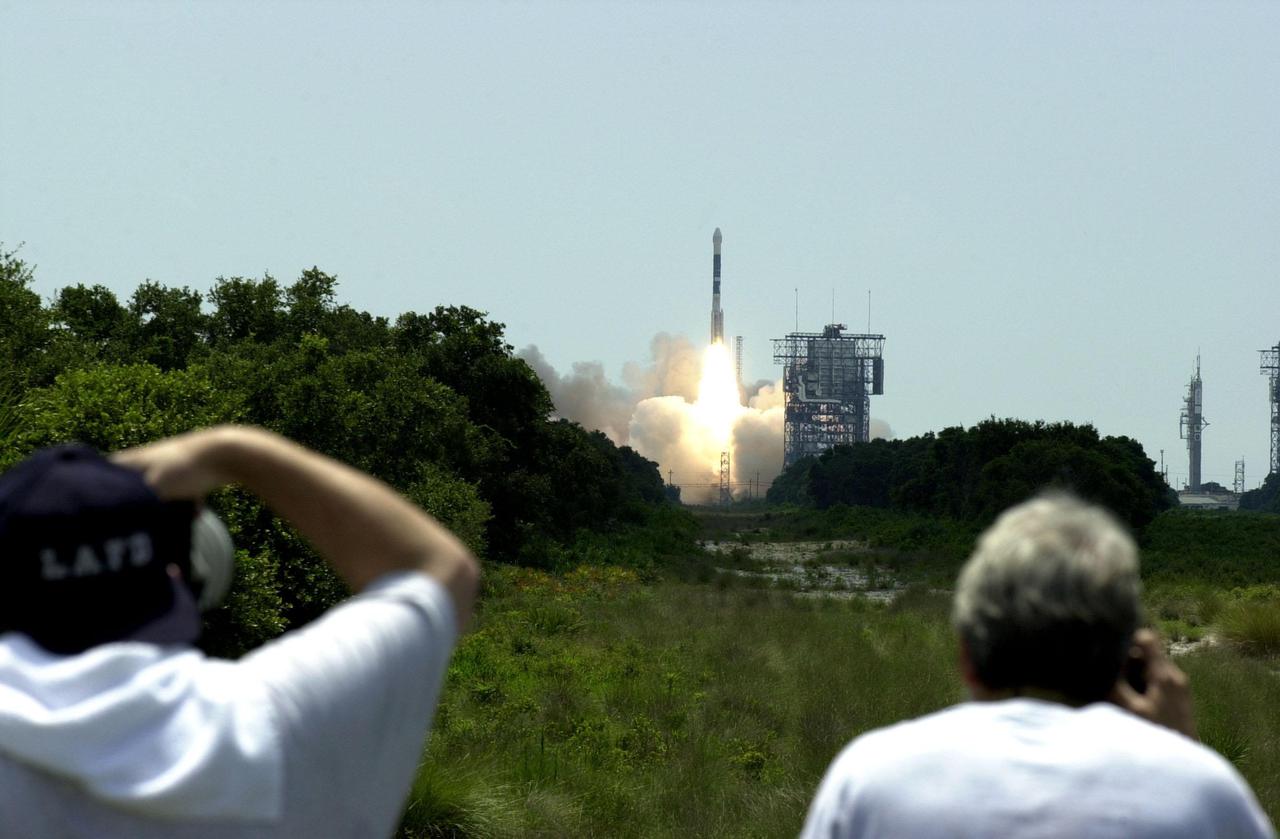
KENNEDY SPACE CENTER, Fla. -- The Boeing Delta II rocket propels NASA’s Genesis spacecraft into the sky as photographers take aim. The Genesis_Delta launch occurred ontime at 12:13:40 p.m. EDT from Launch Complex 17-A, Cape Canaveral Air Force Station. Genesis is on a journey to collect and return to Earth just 10 to 20 micrograms of solar wind, invisible charged particles that flow outward from the Sun. The particles will be studied by scientists over the next century to search for answers to fundamental questions about the exact composition of our star and the birth of our solar system
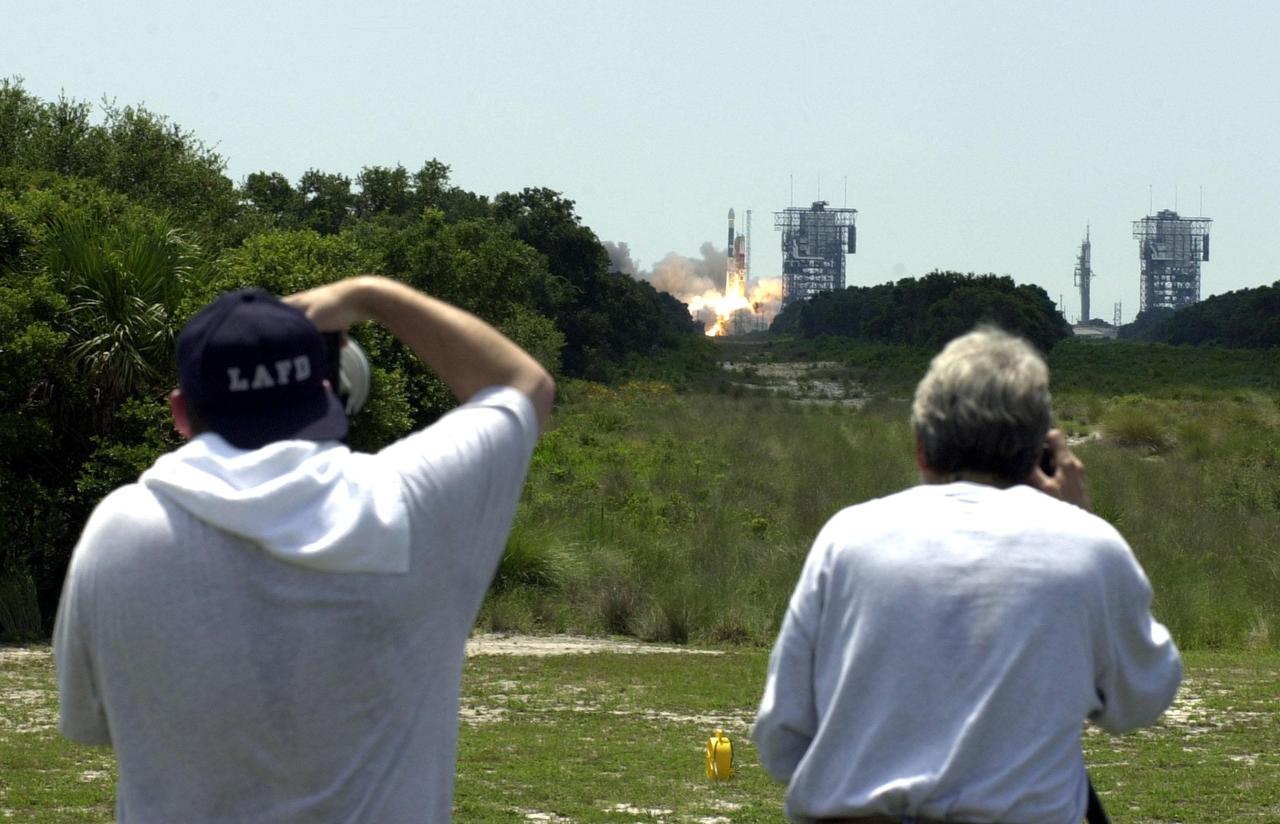
KENNEDY SPACE CENTER, Fla. -- Photographers take aim as the Boeing Delta II rocket propels NASA’s Genesis spacecraft into the sky on a journey to collect and return to Earth just 10 to 20 micrograms of solar wind, invisible charged particles that flow outward from the Sun. The particles will be studied by scientists over the next century to search for answers to fundamental questions about the exact composition of our star and the birth of our solar system. The Genesis/Delta launch occurred ontime at 12:13:40 p.m. EDT from Launch Complex 17-A, Cape Canaveral Air Force Station
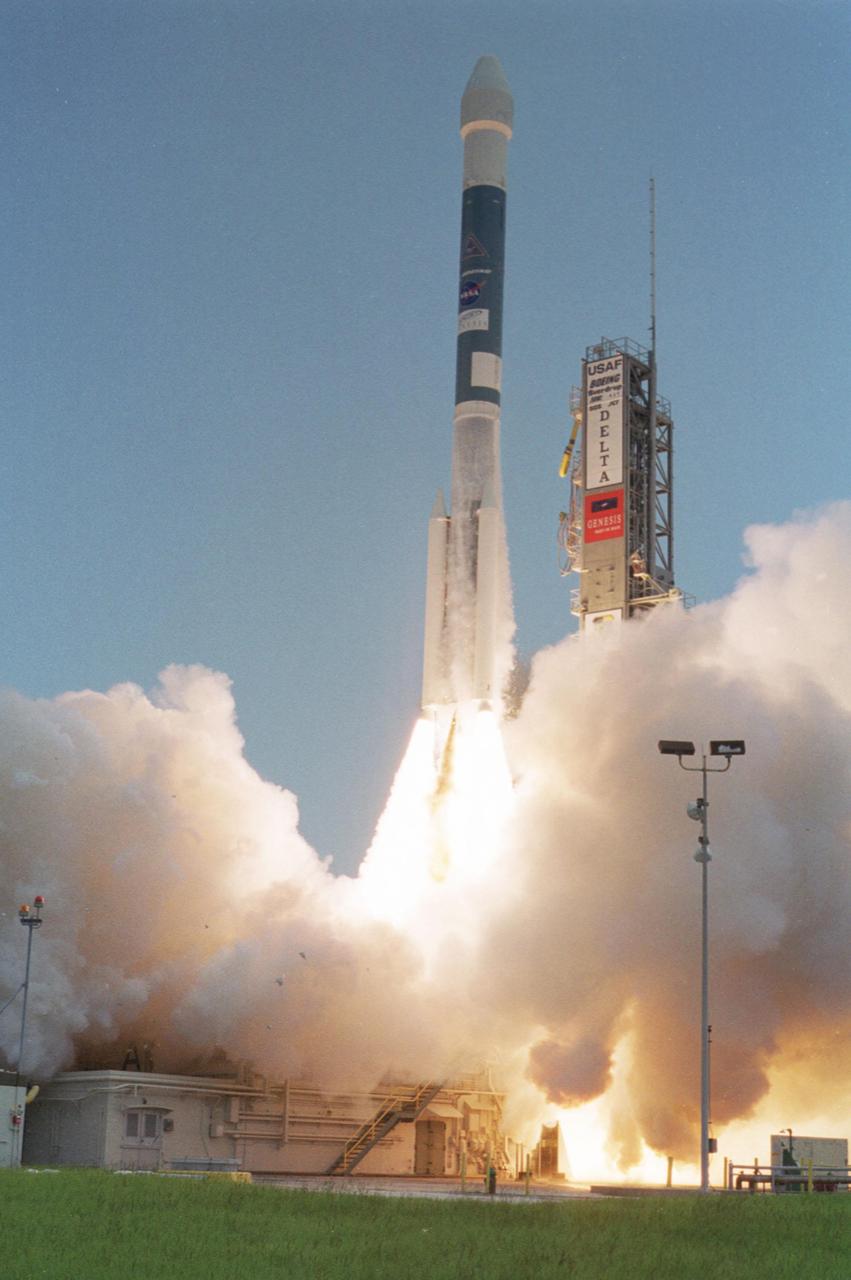
KENNEDY SPACE CENTER, Fla. -- The sky over the Central Florida coast is clear blue as the Boeing Delta II rocket hurtles into the sky with NASA’s Genesis spacecraft on board. The Genesis_Delta launch occurred on time at 12:13:40 p.m. EDT. Genesis is on a journey to collect and return to Earth just 10 to 20 micrograms of solar wind, invisible charged particles that flow outward from the Sun. The particles will be studied by scientists over the next century to search for answers to fundamental questions about the exact composition of our star and the birth of our solar system
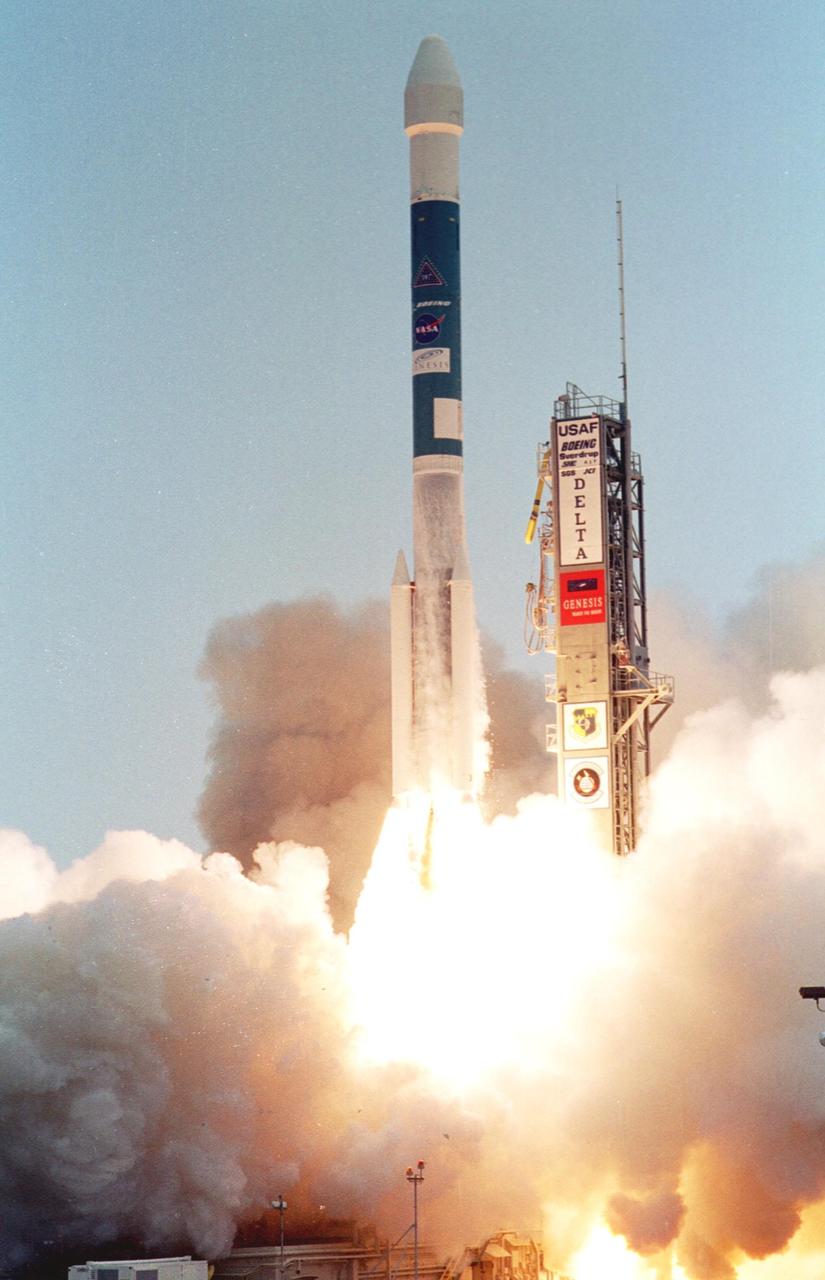
KENNEDY SPACE CENTER, Fla. -- Smoke and steam rolls engulfs the launch tower at Launch Complex 17-A, Cape Canaveral Air Force Station, as the Boeing Delta II rocket propels NASA’s Genesis spacecraft into the sky. The Genesis/Delta launch occurred on time at 12:13:40 p.m. EDT. Genesis is on a journey to collect and return to Earth just 10 to 20 micrograms of solar wind, invisible charged particles that flow outward from the Sun. The particles will be studied by scientists over the next century to search for answers to fundamental questions about the exact composition of our star and the birth of our solar system
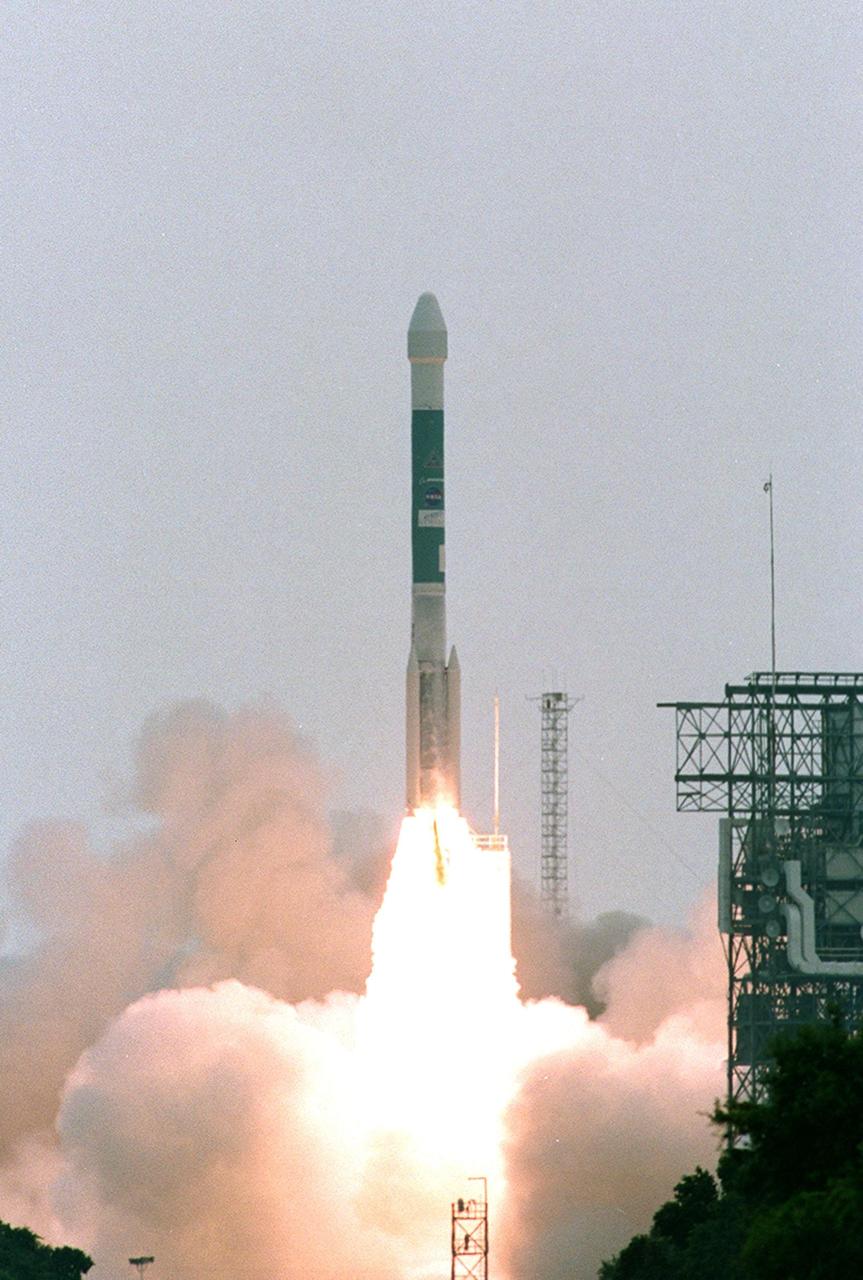
KENNEDY SPACE CENTER, Fla. -- Flames light up the smoke and steam from the launch of Boeing Delta II rocket propelling NASA’s Genesis spacecraft into the sky. . The Genesis/Delta launch occurred on time at 12:13:40 p.m. EDT. Genesis is on a journey to collect and return to Earth just 10 to 20 micrograms of solar wind, invisible charged particles that flow outward from the Sun. The particles will be studied by scientists over the next century to search for answers to fundamental questions about the exact composition of our star and the birth of our solar system
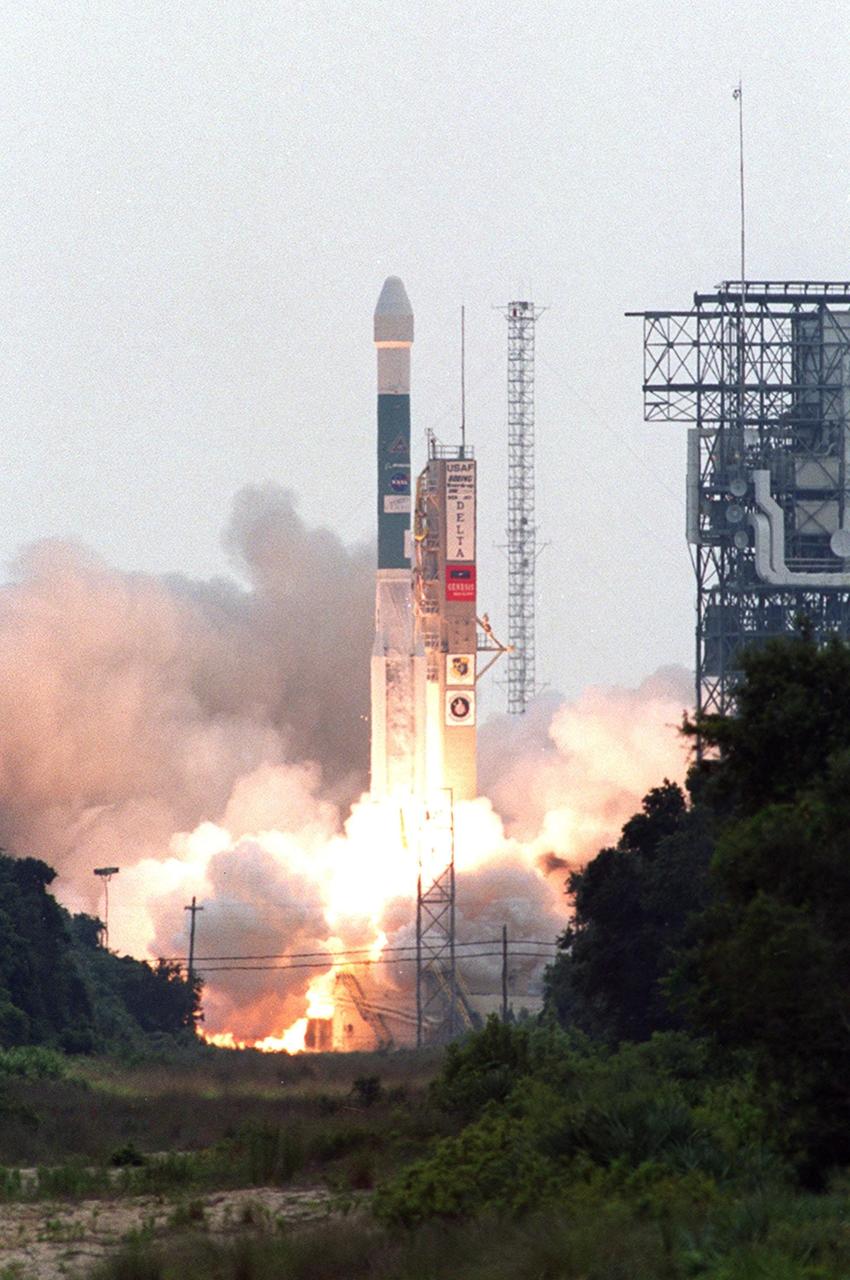
KENNEDY SPACE CENTER, Fla. -- Smoke and steam rolls across Launch Complex 17-A, Cape Canaveral Air Force Station, as the Boeing Delta II rocket propels NASA’s Genesis spacecraft above the launch tower and into the sky. The Genesis/Delta launch occurred on time at 12:13:40 p.m. EDT. Genesis is on a journey to collect and return to Earth just 10 to 20 micrograms of solar wind, invisible charged particles that flow outward from the Sun. The particles will be studied by scientists over the next century to search for answers to fundamental questions about the exact composition of our star and the birth of our solar system
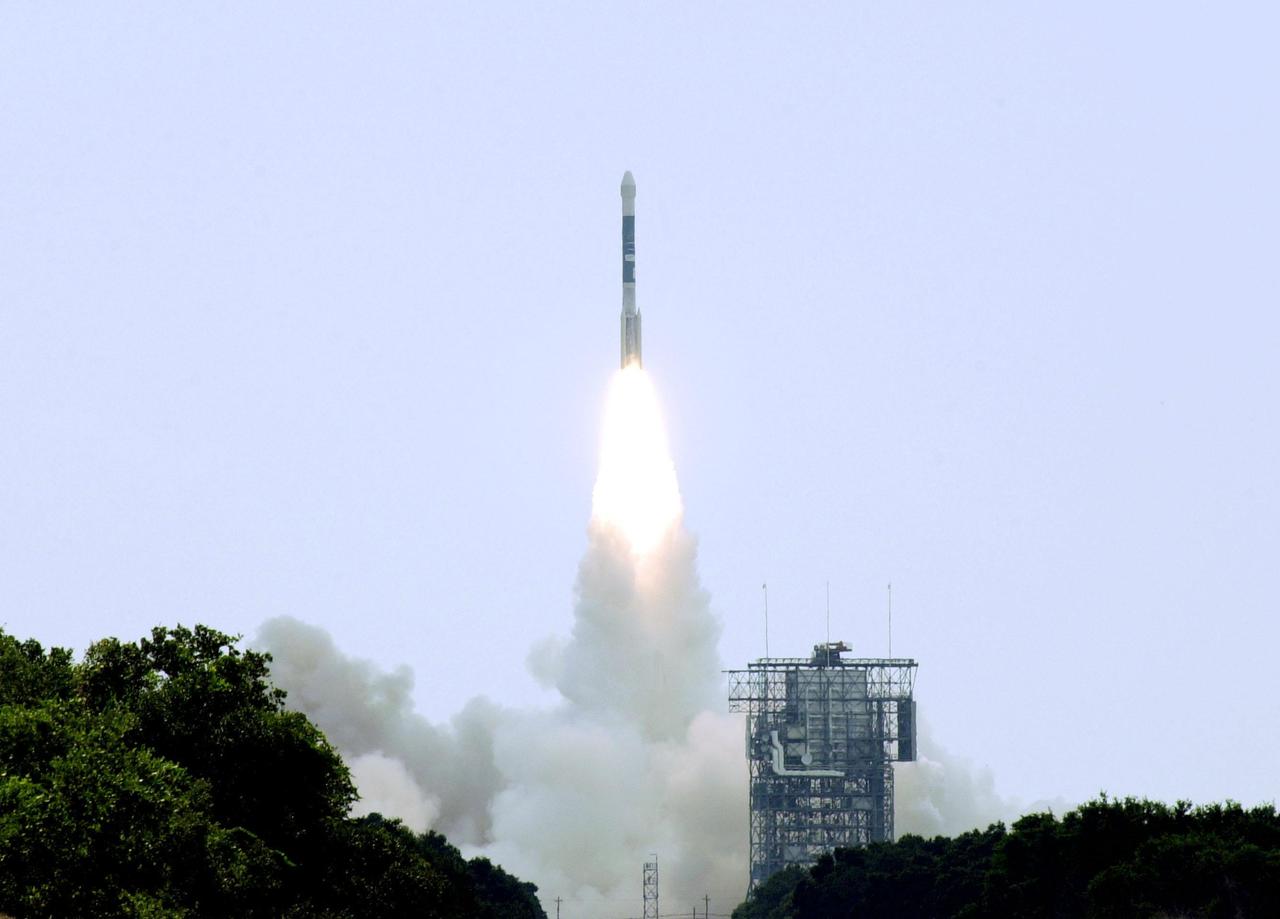
KENNEDY SPACE CENTER, Fla. -- As if bursting forth from a cushion of smoke and steam, the Boeing Delta II rocket propels NASA’s Genesis spacecraft into the clear blue sky on a journey to collect and return to Earth just 10 to 20 micrograms of solar wind, invisible charged particles that flow outward from the Sun. The particles will be studied by scientists over the next century to search for answers to fundamental questions about the exact composition of our star and the birth of our solar system. The Genesis_Delta launch occurred ontime at 12:13:40 p.m. EDT from Launch Complex 17-A, Cape Canaveral Air Force Station
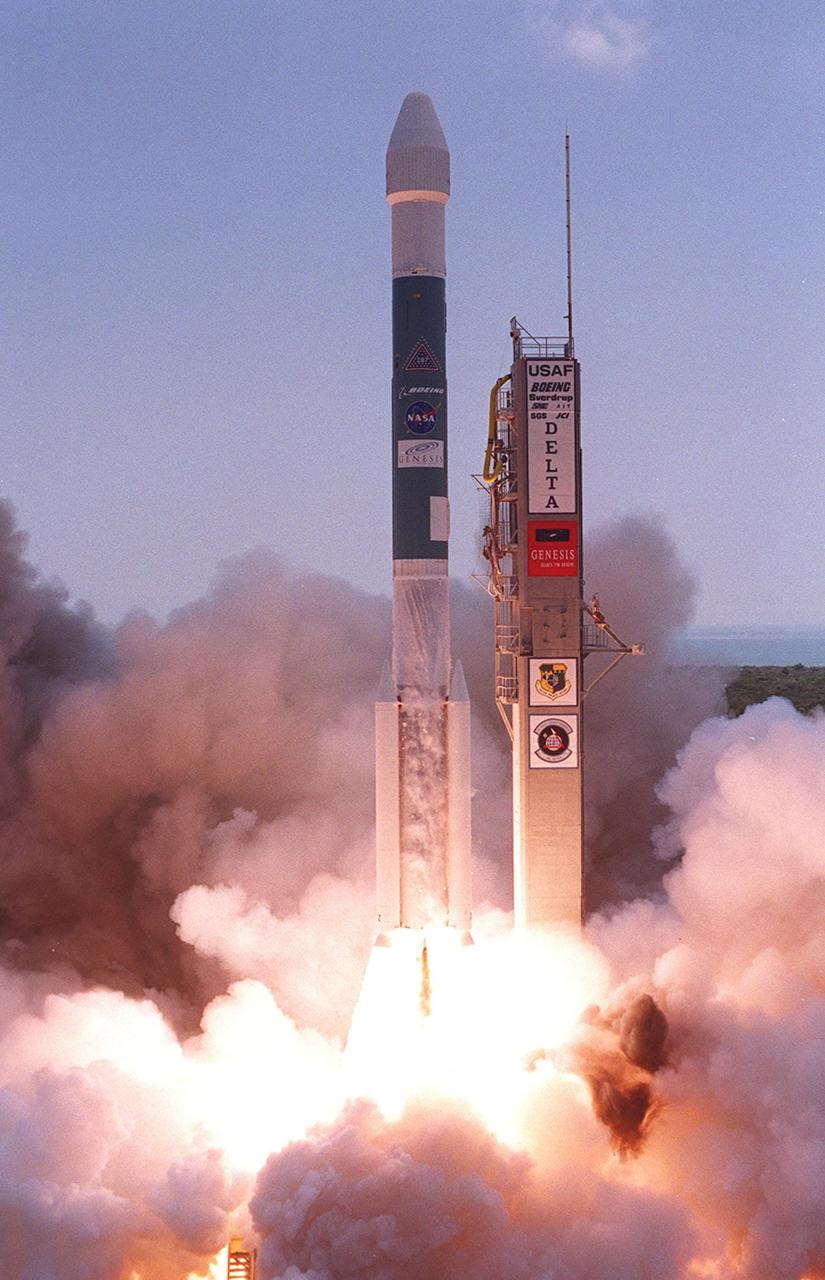
KENNEDY SPACE CENTER, Fla. -- Flames light up the smoke and steam from the launch of Boeing Delta II rocket propelling NASA’s Genesis spacecraft into the sky. . The Genesis/Delta launch occurred on time at 12:13:40 p.m. EDT. Genesis is on a journey to collect and return to Earth just 10 to 20 micrograms of solar wind, invisible charged particles that flow outward from the Sun. The particles will be studied by scientists over the next century to search for answers to fundamental questions about the exact composition of our star and the birth of our solar system
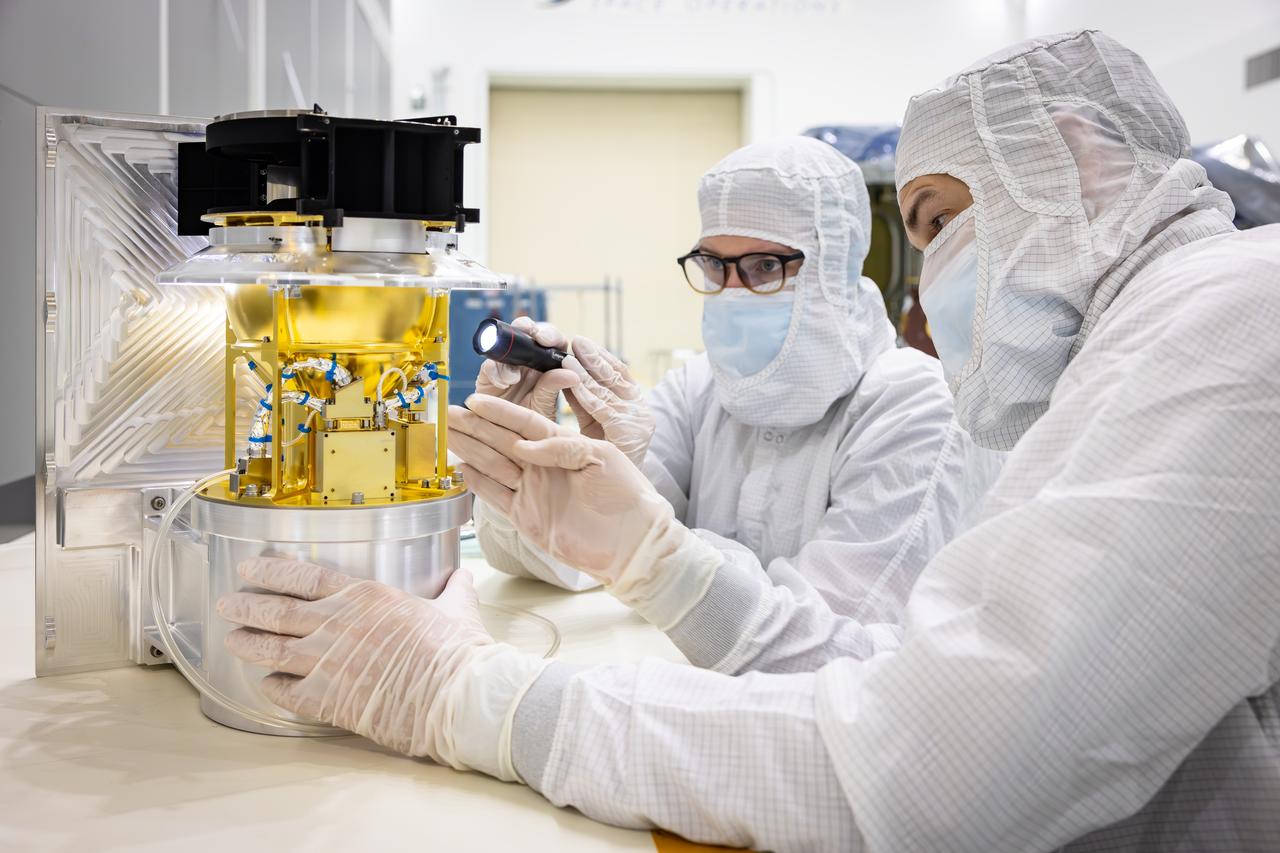
Technicians perform tests the Solar Wind and Pickup Ions (SWAPI) instrument of NASA’s IMAP (Interstellar Mapping and Acceleration Probe) observatory inside the high bay at the Astrotech Space Operations Facility near the agency’s Kennedy Space Center in Florida on Tuesday, June 17, 2025. As IMAP spins in space, solar wind particles are swept into SWAPI through a special opening called “sunglasses,” an opening covered by a screen with very tiny precise holes that cut down the brightness of the very intense solar wind. SWAPI collects and counts particles from the solar wind flowing from the Sun and particles called pick-up ions that have entered the heliosphere from outside the solar system and traveled inwards where IMAP orbits near Earth. Launch of the IMAP mission is targeted for no earlier than September 2025 aboard a SpaceX Falcon 9 rocket from Launch Complex 39A at NASA Kennedy.
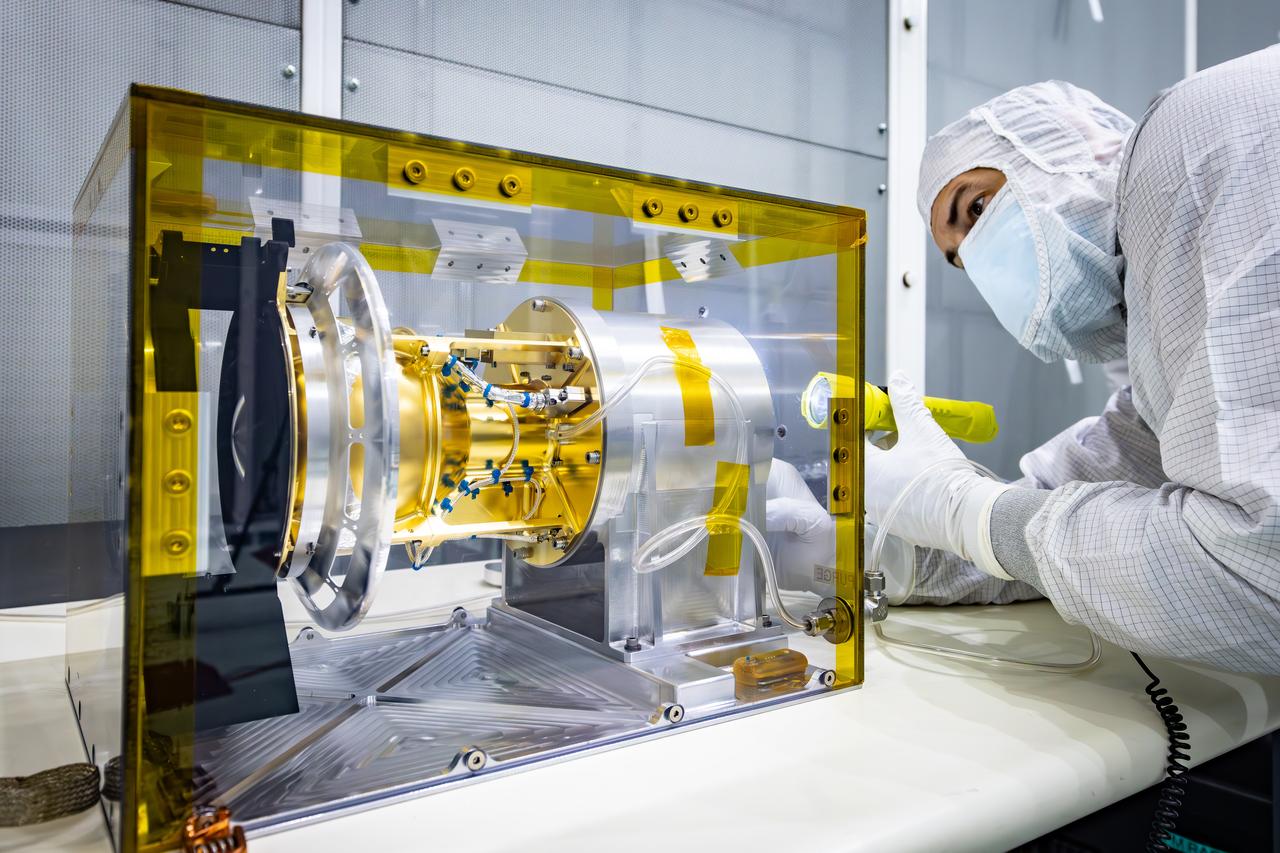
Technicians perform tests the Solar Wind and Pickup Ions (SWAPI) instrument of NASA’s IMAP (Interstellar Mapping and Acceleration Probe) observatory inside the high bay at the Astrotech Space Operations Facility near the agency’s Kennedy Space Center in Florida on Tuesday, June 17, 2025. As IMAP spins in space, solar wind particles are swept into SWAPI through a special opening called “sunglasses,” an opening covered by a screen with very tiny precise holes that cut down the brightness of the very intense solar wind. SWAPI collects and counts particles from the solar wind flowing from the Sun and particles called pick-up ions that have entered the heliosphere from outside the solar system and traveled inwards where IMAP orbits near Earth. Launch of the IMAP mission is targeted for no earlier than September 2025 aboard a SpaceX Falcon 9 rocket from Launch Complex 39A at NASA Kennedy.
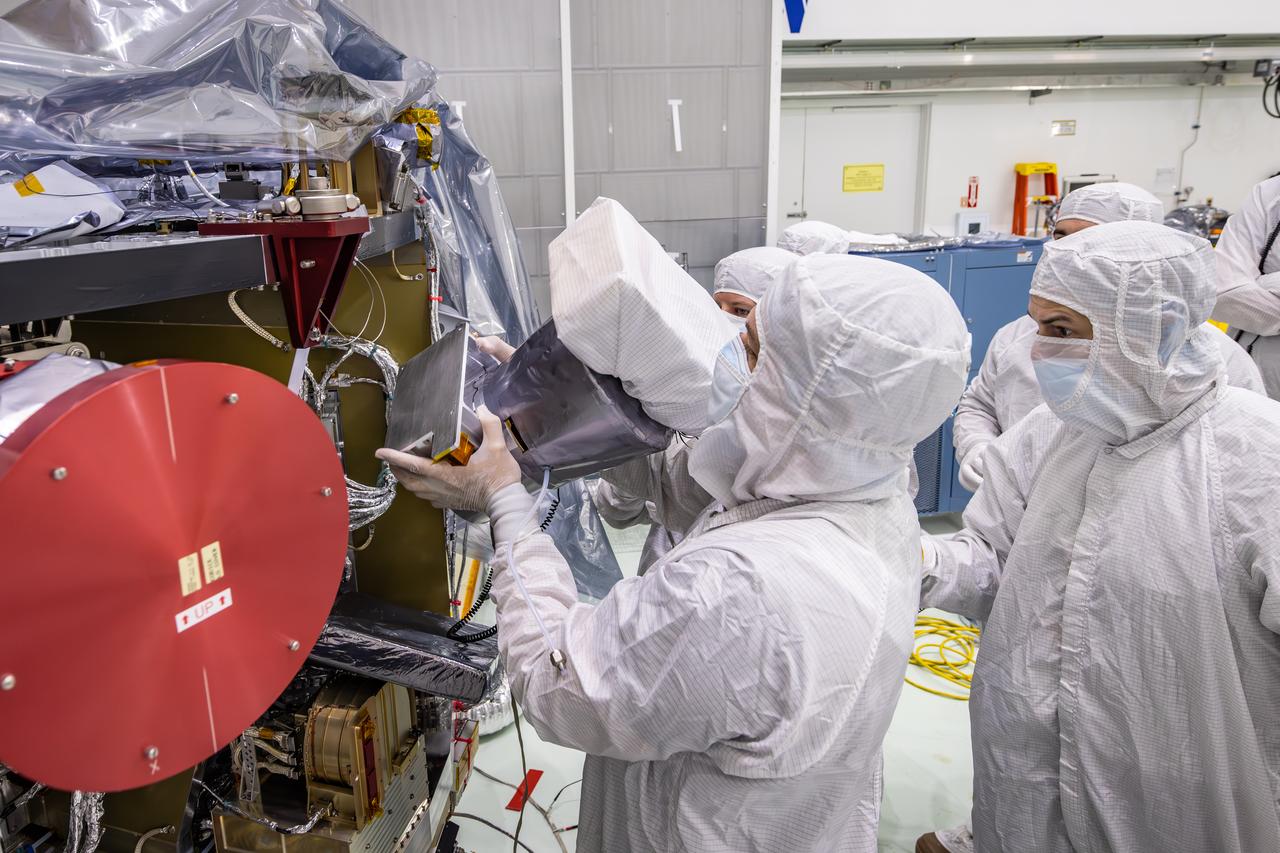
Technicians reintegrate the Solar Wind and Pickup Ions (SWAPI) instrument of NASA’s IMAP (Interstellar Mapping and Acceleration Probe) observatory inside the high bay at the Astrotech Space Operations Facility near the agency’s Kennedy Space Center in Florida on Monday, June 23, 2025. As IMAP spins in space, solar wind particles are swept into SWAPI through a special opening called “sunglasses,” an opening covered by a screen with very tiny precise holes that cut down the brightness of the very intense solar wind. SWAPI collects and counts particles from the solar wind flowing from the Sun and particles called pick-up ions that have entered the heliosphere from outside the solar system and traveled inwards where IMAP orbits near Earth. Launch of the IMAP mission is targeted for no earlier than September 2025 aboard a SpaceX Falcon 9 rocket from Launch Complex 39A at NASA Kennedy.
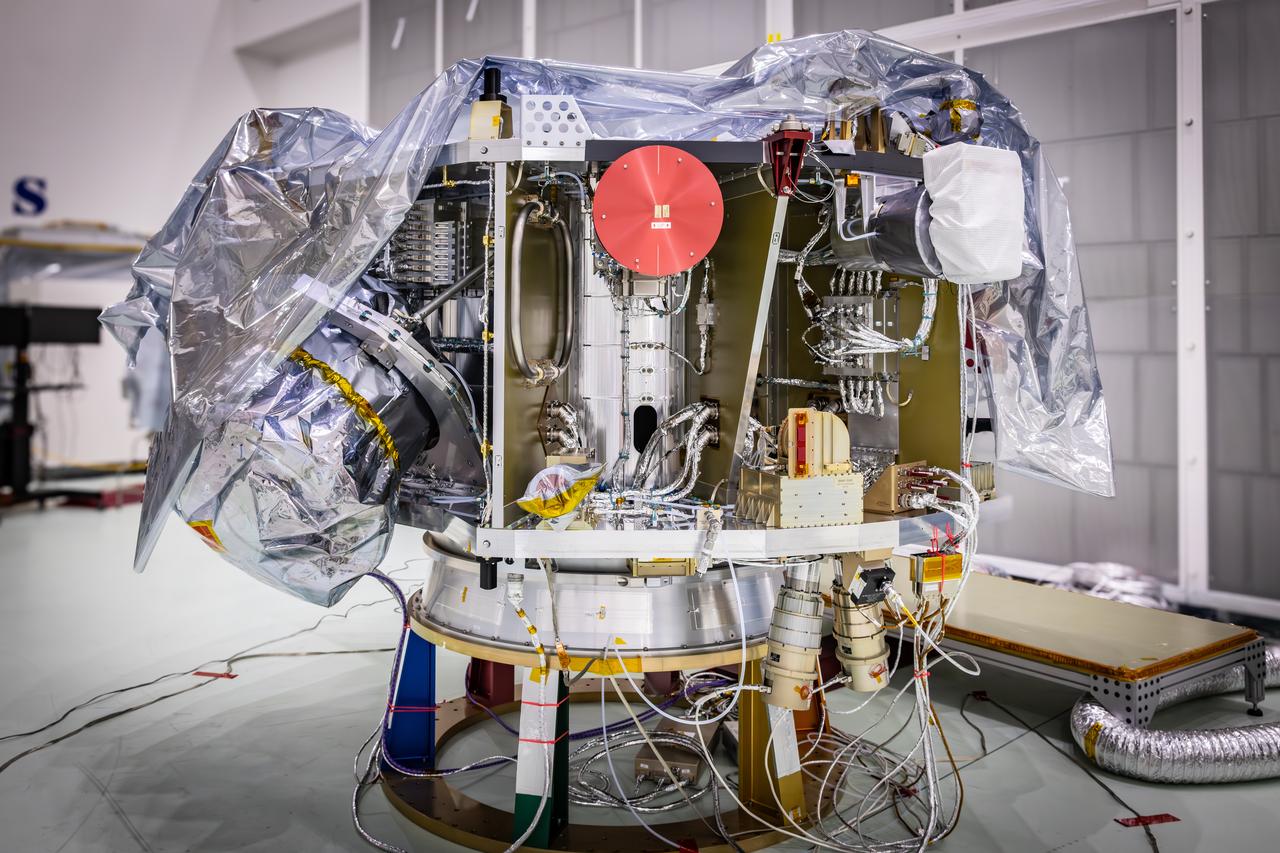
Technicians reintegrate the Solar Wind and Pickup Ions (SWAPI) instrument of NASA’s IMAP (Interstellar Mapping and Acceleration Probe) observatory inside the high bay at the Astrotech Space Operations Facility near the agency’s Kennedy Space Center in Florida on Monday, June 23, 2025. As IMAP spins in space, solar wind particles are swept into SWAPI through a special opening called “sunglasses,” an opening covered by a screen with very tiny precise holes that cut down the brightness of the very intense solar wind. SWAPI collects and counts particles from the solar wind flowing from the Sun and particles called pick-up ions that have entered the heliosphere from outside the solar system and traveled inwards where IMAP orbits near Earth. Launch of the IMAP mission is targeted for no earlier than September 2025 aboard a SpaceX Falcon 9 rocket from Launch Complex 39A at NASA Kennedy.
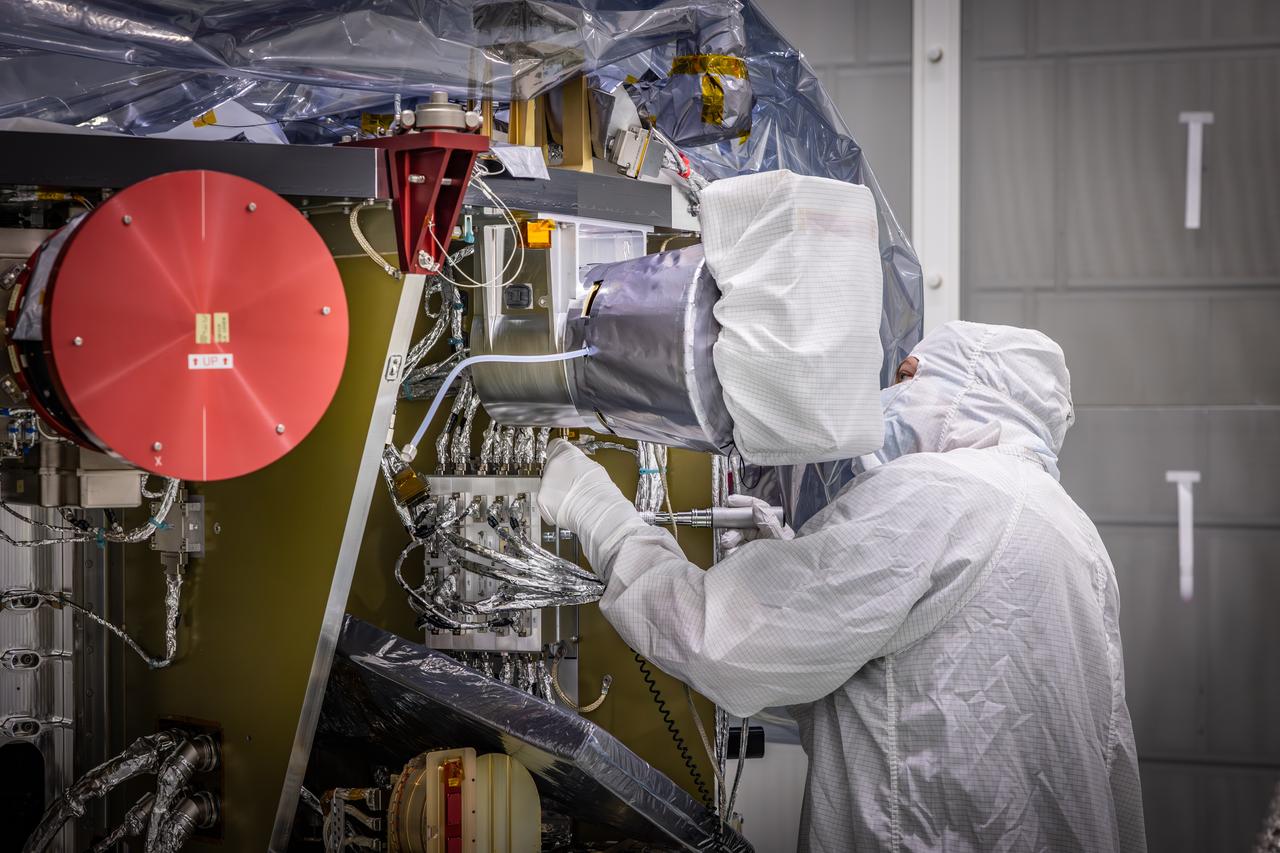
Technicians reintegrate the Solar Wind and Pickup Ions (SWAPI) instrument of NASA’s IMAP (Interstellar Mapping and Acceleration Probe) observatory inside the high bay at the Astrotech Space Operations Facility near the agency’s Kennedy Space Center in Florida on Monday, June 23, 2025. As IMAP spins in space, solar wind particles are swept into SWAPI through a special opening called “sunglasses,” an opening covered by a screen with very tiny precise holes that cut down the brightness of the very intense solar wind. SWAPI collects and counts particles from the solar wind flowing from the Sun and particles called pick-up ions that have entered the heliosphere from outside the solar system and traveled inwards where IMAP orbits near Earth. Launch of the IMAP mission is targeted for no earlier than September 2025 aboard a SpaceX Falcon 9 rocket from Launch Complex 39A at NASA Kennedy.
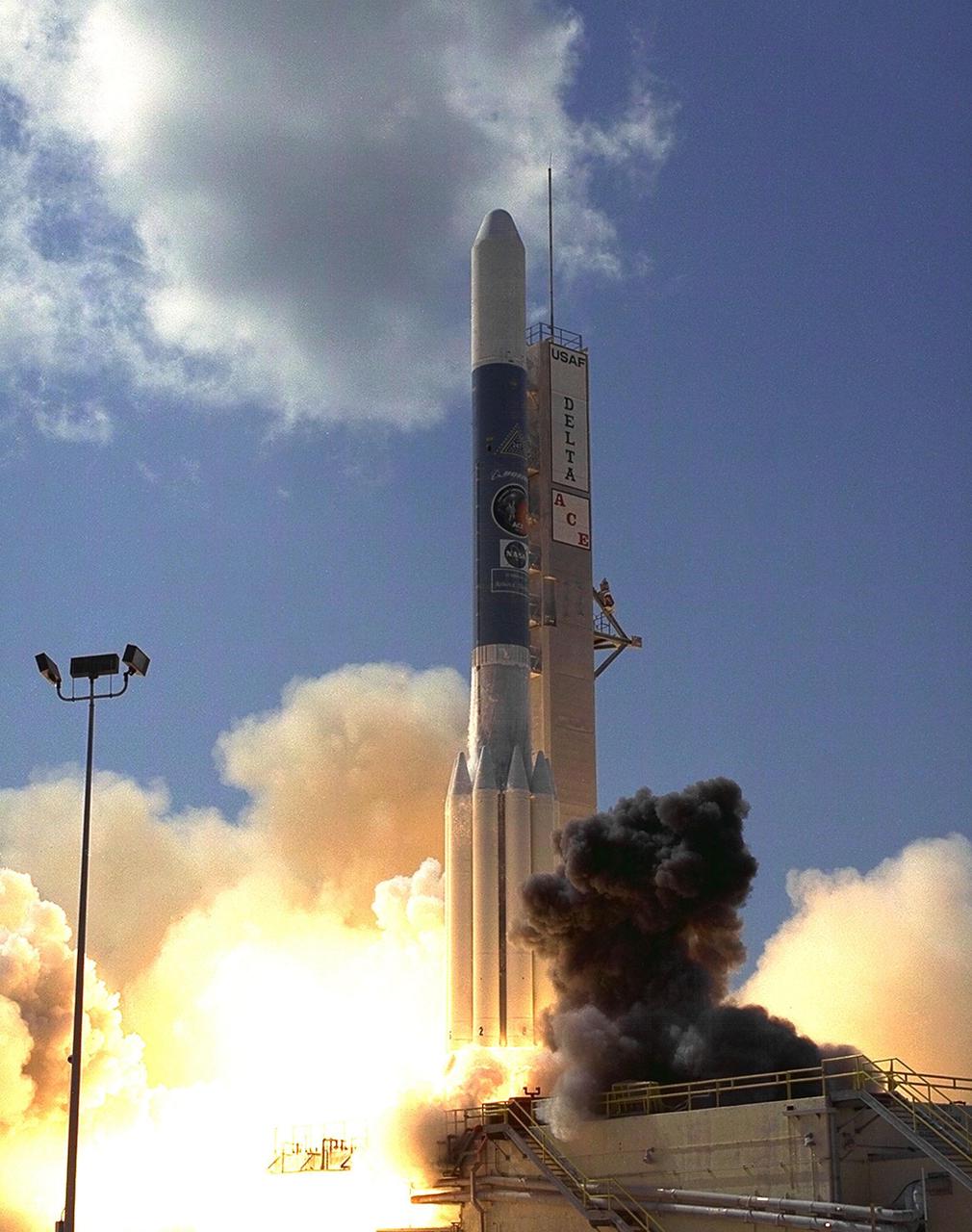
A Boeing Delta II expendable launch vehicle lifts off with NASA’s Advanced Composition Explorer (ACE) observatory at 10:39 a.m. EDT, on Aug. 25, 1997, from Launch Complex 17A, Cape Canaveral Air Station. This is the second Delta launch under the Boeing name and the first from Cape Canaveral. Launch was scrubbed one day by Air Force range safety personnel because two commercial fishing vessels were within the Delta’s launch danger area. The ACE spacecraft will study low-energy particles of solar origin and high-energy galactic particles on its one-million-mile journey. The collecting power of instruments aboard ACE is 10 to 1,000 times greater than anything previously flown to collect similar data by NASA. Study of these energetic particles may contribute to our understanding of the formation and evolution of the solar system. ACE has a two-year minimum mission lifetime and a goal of five years of service. ACE was built for NASA by the Johns Hopkins Applied Physics Laboratory and is managed by the Explorer Project Office at NASA's Goddard Space Flight Center. The lead scientific institution is the California Institute of Technology (Caltech) in Pasadena, Calif

Photographers and other onlookers watch as a Boeing Delta II expendable launch vehicle lifts off with NASA’s Advanced Composition Explorer (ACE) observatory at 10:39 a.m. EDT, on Aug. 25, 1997, from Launch Complex 17A, Cape Canaveral Air Station. This is the second Delta launch under the Boeing name and the first from Cape Canaveral. Liftoff had been scheduled for Aug. 24, but was scrubbed one day by Air Force range safety personnel because two commercial fishing vessels were within the Delta’s launch danger area. The ACE spacecraft will study low-energy particles of solar origin and high-energy galactic particles on its one-million-mile journey. The collecting power of instruments aboard ACE is 10 to 1,000 times greater than anything previously flown to collect similar data by NASA. Study of these energetic particles may contribute to our understanding of the formation and evolution of the solar system. ACE has a two-year minimum mission lifetime and a goal of five years of service. ACE was built for NASA by the Johns Hopkins Applied Physics Laboratory and is managed by the Explorer Project Office at NASA's Goddard Space Flight Center. The lead scientific institution is the California Institute of Technology (Caltech) in Pasadena, Calif
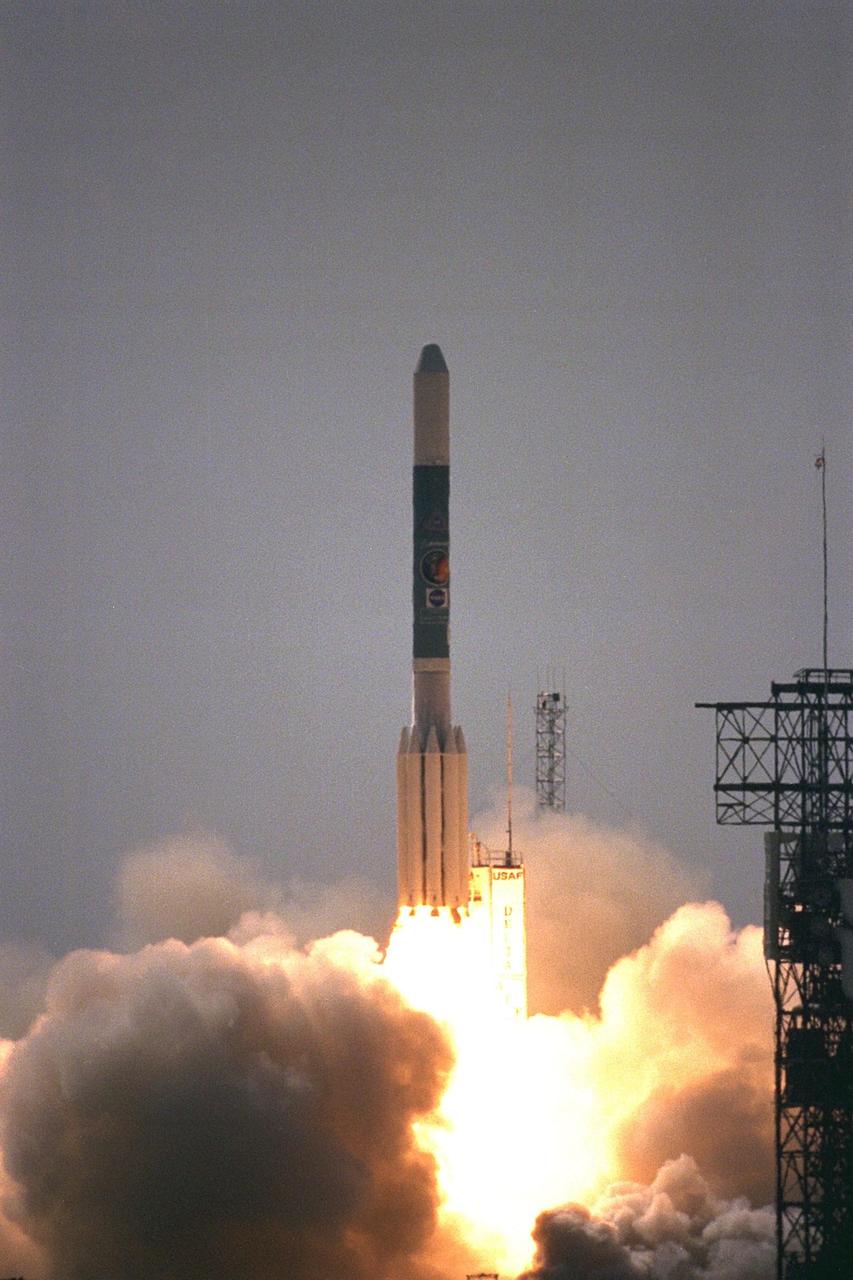
A Boeing Delta II expendable launch vehicle lifts off with NASA’s Advanced Composition Explorer (ACE) observatory at 10:39 a.m. EDT, on Aug. 25, 1997, from Launch Complex 17A, Cape Canaveral Air Station. This is the second Delta launch under the Boeing name and the first from Cape Canaveral. Launch was scrubbed one day by Air Force range safety personnel because two commercial fishing vessels were within the Delta’s launch danger area. The ACE spacecraft will study low-energy particles of solar origin and high-energy galactic particles on its one-million-mile journey. The collecting power of instruments aboard ACE is 10 to 1,000 times greater than anything previously flown to collect similar data by NASA. Study of these energetic particles may contribute to our understanding of the formation and evolution of the solar system. ACE has a two-year minimum mission lifetime and a goal of five years of service. ACE was built for NASA by the Johns Hopkins Applied Physics Laboratory and is managed by the Explorer Project Office at NASA's Goddard Space Flight Center. The lead scientific institution is the California Institute of Technology (Caltech) in Pasadena, Calif
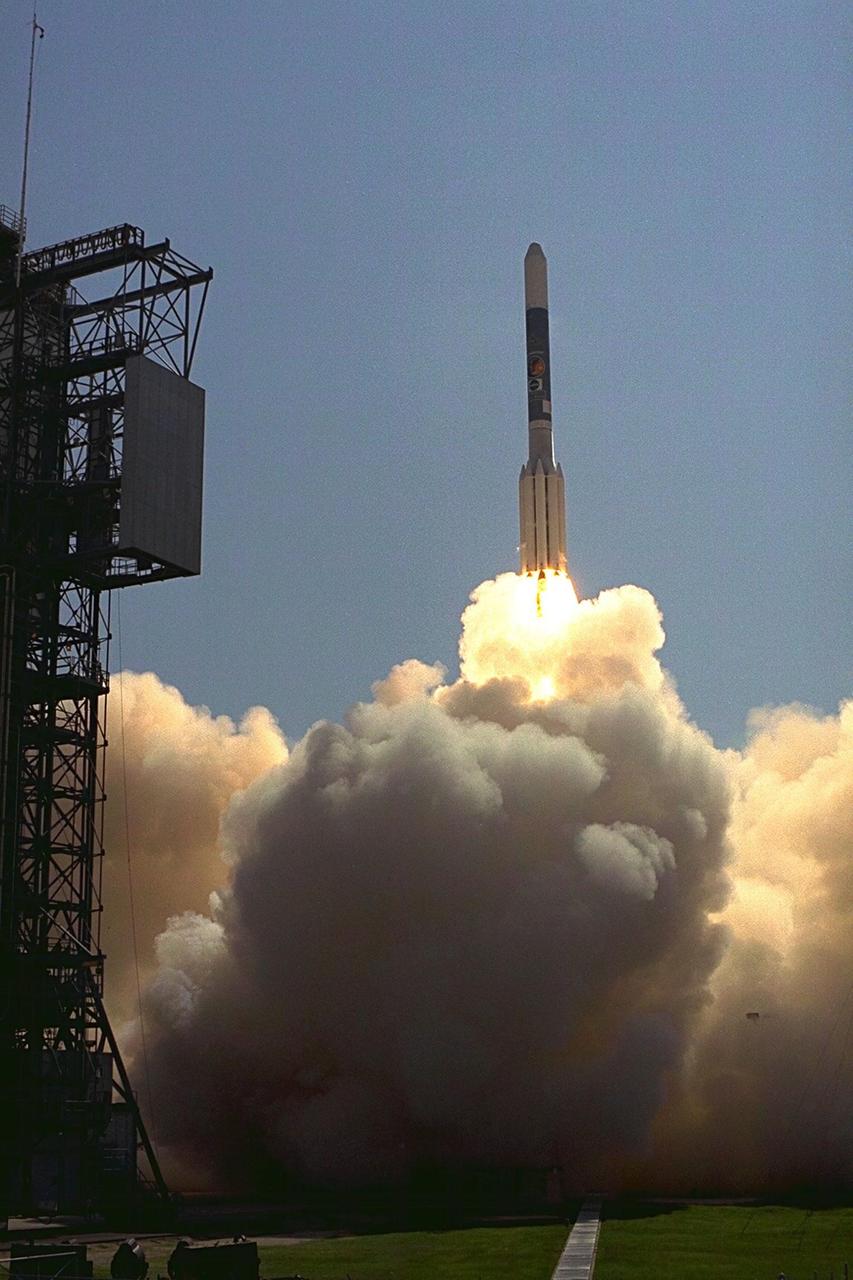
A Boeing Delta II expendable launch vehicle lifts off with NASA’s Advanced Composition Explorer (ACE) observatory at 10:39 a.m. EDT, on Aug. 25, 1997, from Launch Complex 17A, Cape Canaveral Air Station. This is the second Delta launch under the Boeing name and the first from Cape Canaveral. Launch was scrubbed one day by Air Force range safety personnel because two commercial fishing vessels were within the Delta’s launch danger area. The ACE spacecraft will study low-energy particles of solar origin and high-energy galactic particles on its one-million-mile journey. The collecting power of instruments aboard ACE is 10 to 1,000 times greater than anything previously flown to collect similar data by NASA. Study of these energetic particles may contribute to our understanding of the formation and evolution of the solar system. ACE has a two-year minimum mission lifetime and a goal of five years of service. ACE was built for NASA by the Johns Hopkins Applied Physics Laboratory and is managed by the Explorer Project Office at NASA's Goddard Space Flight Center. The lead scientific institution is the California Institute of Technology (Caltech) in Pasadena, Calif
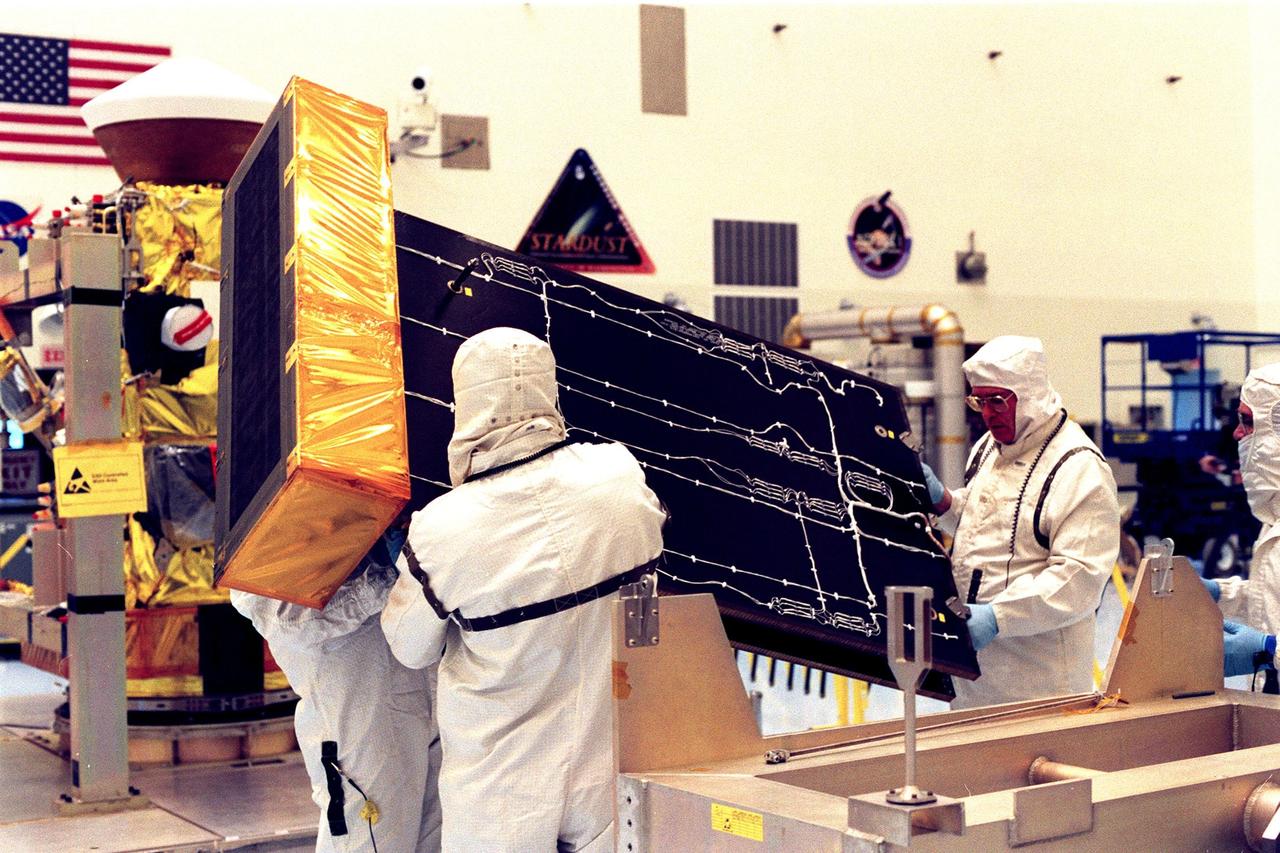
In the Payload Hazardous Servicing Facility, workers carry one of the Stardust solar panels removed for testing. The spacecraft Stardust will use a unique medium called aerogel to capture comet particles flying off the nucleus of comet Wild 2 in January 2004, plus collect interstellar dust for later analysis. Stardust will be launched aboard a Boeing Delta 7426 rocket from Complex 17, Cape Canaveral Air Station, targeted for Feb. 6, 1999. The collected samples will return to Earth in a re-entry capsule to be jettisoned from Stardust as it swings by Earth in January 2006
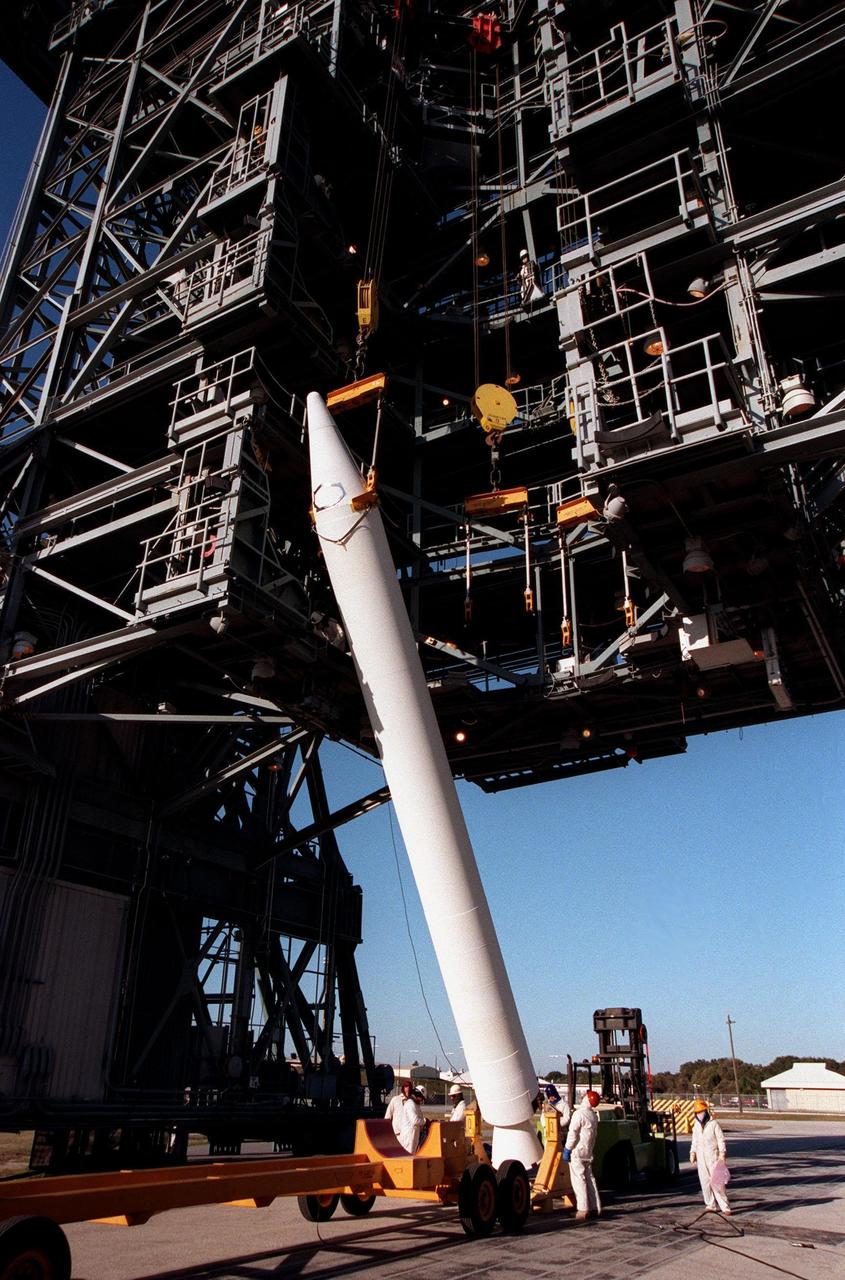
A solid rocket booster is raised to a vertical position before lifting it up the mobile launch tower at Pad 17A, Cape Canaveral Air Station. It will be mated with a Boeing Delta II rocket that will carry the Stardust spacecraft into space for a close encounter with the comet Wild 2 in January 2004. Using a medium called aerogel, Stardust will capture comet particles flying off the nucleus of the comet, plus collect interstellar dust for later analysis. The collected samples will return to Earth in a sample return capsule to be jettisoned as Stardust swings by Earth in January 2006. Stardust is scheduled to be launched on Feb. 6, 1999
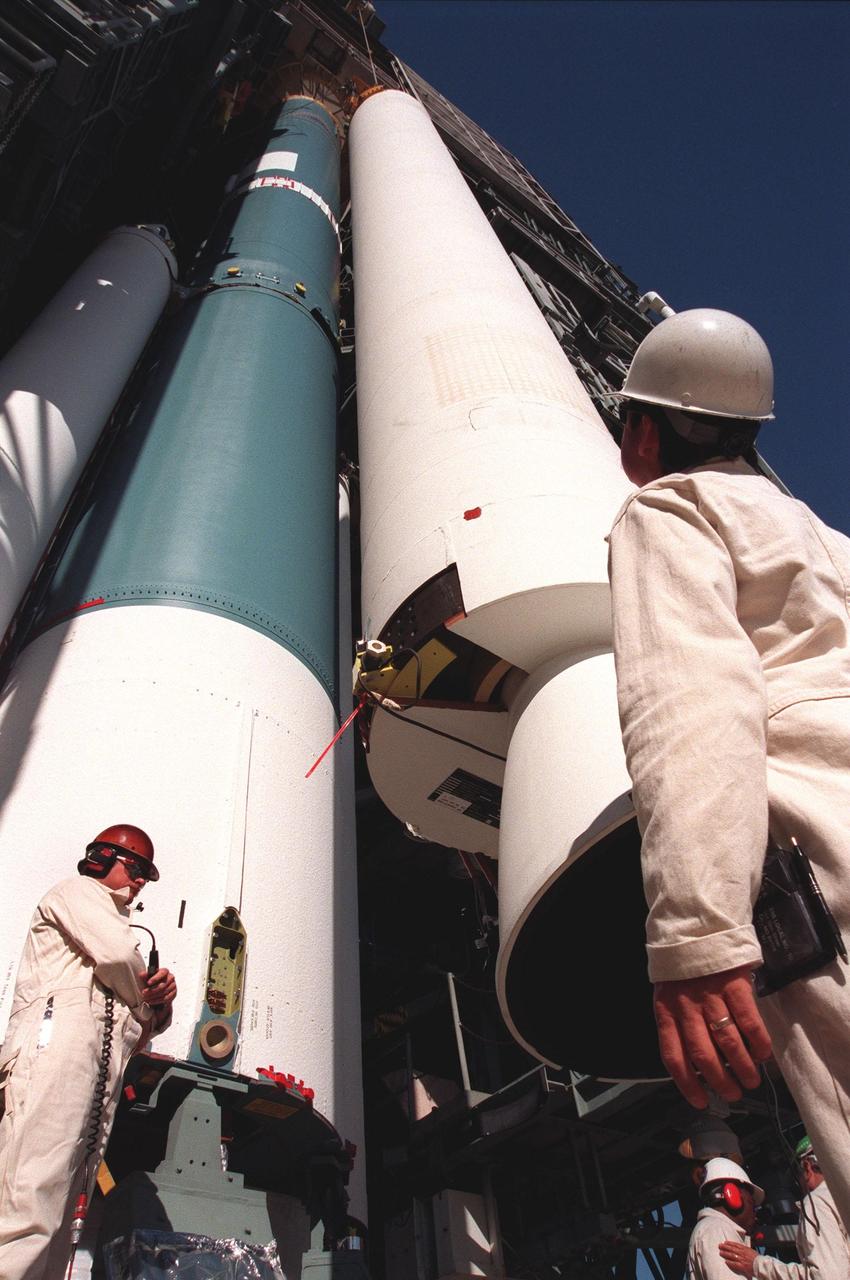
At Pad 17A, Cape Canaveral Air Station, workers keep watch on the placement of the fourth and final solid rocket booster (SRB) being mated with the Boeing Delta II rocket. The rocket will be aided by four SRBs to carry the Stardust satellite into space for a close encounter with the comet Wild 2 in January 2004. Using a medium called aerogel, Stardust will capture comet particles flying off the nucleus of the comet, plus collect interstellar dust for later analysis. The collected samples will return to Earth in a Sample Return Capsule to be jettisoned as Stardust swings by Earth in January 2006. Stardust is scheduled to be launched on Feb. 6, 1999

In the Payload Hazardous Servicing Facility, the fully extended solar panels of the <a href="http://www-pao.ksc.nasa.gov/kscpao/captions/subjects/stardust.htm"> Stardust</a>spacecraft undergo lighting tests. Stardust is scheduled to be launched aboard a Boeing Delta II rocket from Launch Pad 17A, Cape Canaveral Air Station, on Feb. 6, 1999, for a rendezvous with the comet Wild 2 in January 2004. Stardust will use a substance called aerogel to capture comet particles flying off the nucleus of the comet, plus collect interstellar dust for later analysis. The collected samples will return to Earth in a sample return capsule to be jettisoned as it swings by Earth in January 2006
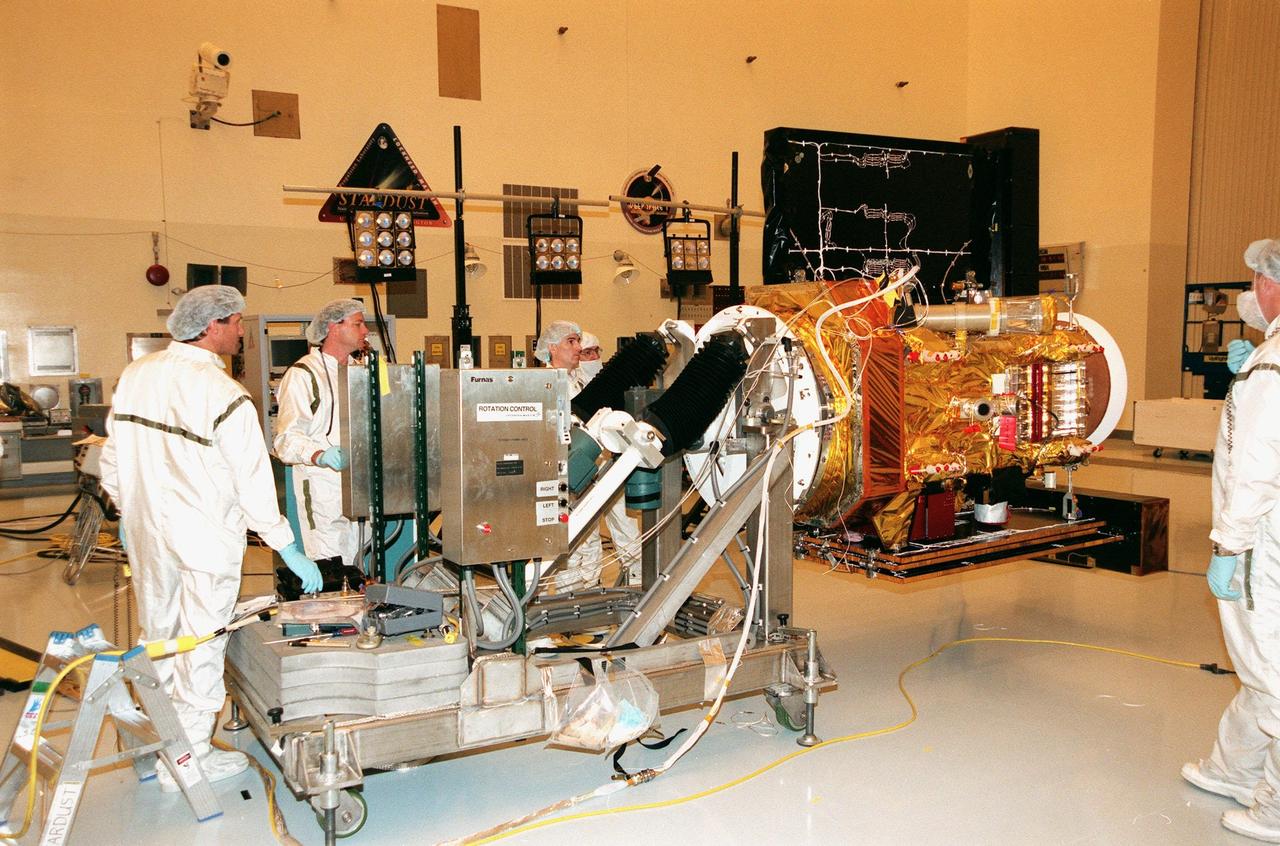
Workers in the Payload Hazardous Servicing Facility deploy a solar panel on the <a href="http://www-pao.ksc.nasa.gov/kscpao/captions/subjects/stardust.htm"> Stardust</a> spacecraft before performing lighting tests. Stardust is scheduled to be launched aboard a Boeing Delta II rocket from Launch Pad 17A, Cape Canaveral Air Station, on Feb. 6, 1999, for a rendezvous with the comet Wild 2 in January 2004. Stardust will use a substance called aerogel to capture comet particles flying off the nucleus of the comet, plus collect interstellar dust for later analysis. The collected samples will return to Earth in a sample return capsule to be jettisoned as it swings by Earth in January 2006
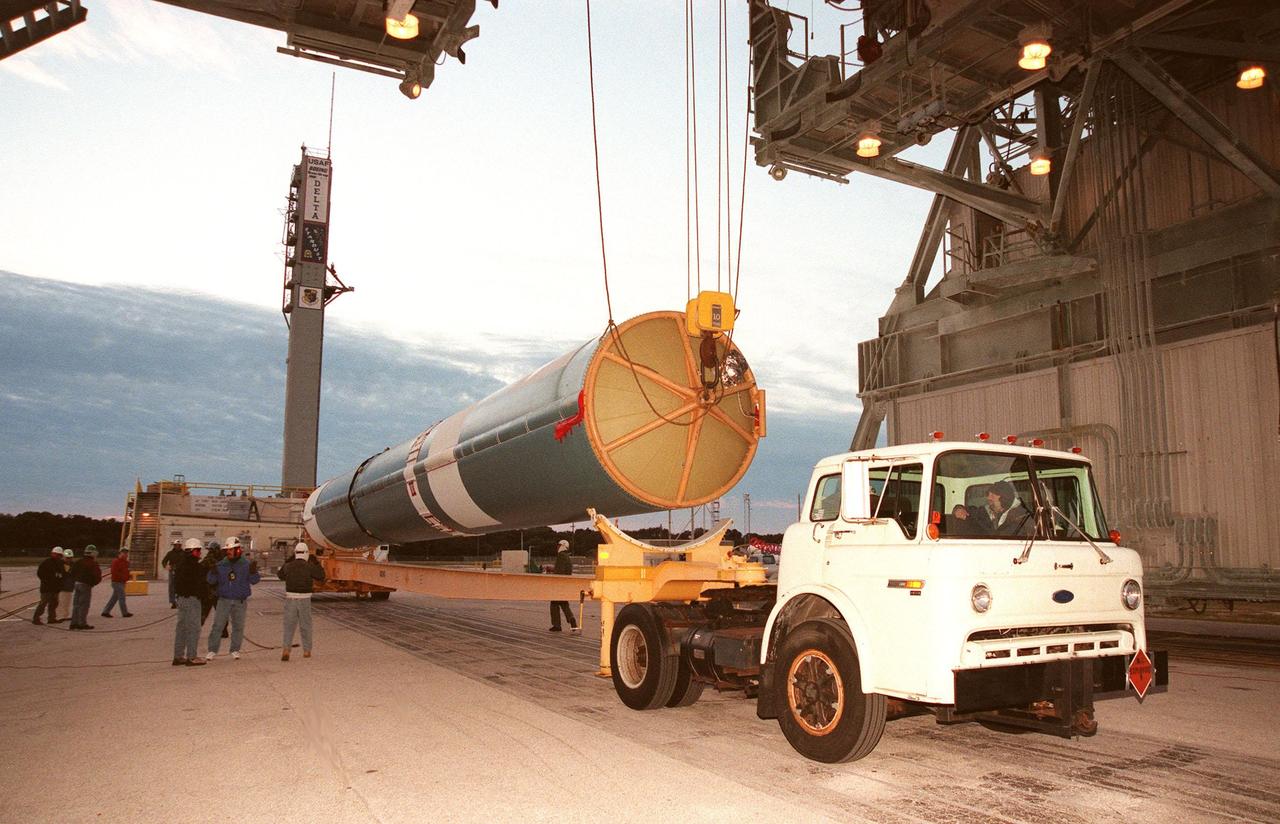
The first stage of a Boeing Delta II rocket is raised off a truck bed before being lifted into place on the tower at Launch Complex 17, Cape Canaveral Air Station. The rocket will carry the Stardust spacecraft into space for a close encounter with the comet Wild 2 in January 2004. Using a medium called aerogel, it will capture comet particles flying off the nucleus of the comet, plus collect interstellar dust for later analysis. The collected samples will return to Earth in a Sample Return Capsule to be jettisoned as Stardust swings by Earth in January 2006. Stardust is scheduled to be launched on Feb. 6, 1999
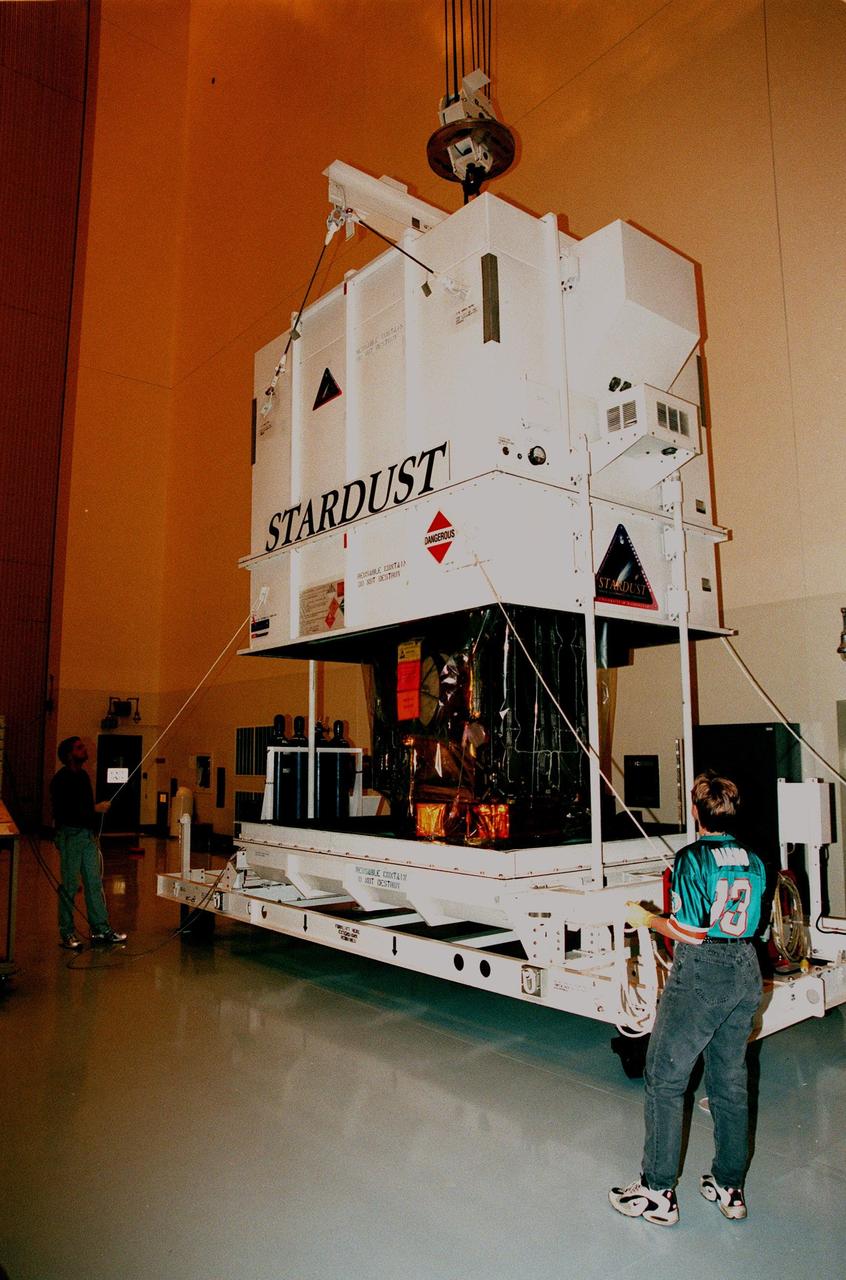
In the Payload Hazardous Service Facility, workers lift the cover that protected the Stardust spacecraft during its journey. Built by Lockheed Martin Astronautics near Denver, Colo., for the Jet Propulsion Laboratory (JPL) and NASA, the spacecraft Stardust will use a unique medium called aerogel to capture comet particles flying off the nucleus of comet Wild 2 in January 2004, plus collect interstellar dust for later analysis. Stardust will be launched aboard a Boeing Delta 7426 rocket from Complex 17, Cape Canaveral Air Station, targeted for Feb. 6, 1999. The collected samples will return to Earth in a re-entry capsule to be jettisoned from Stardust as it swings by in January 2006
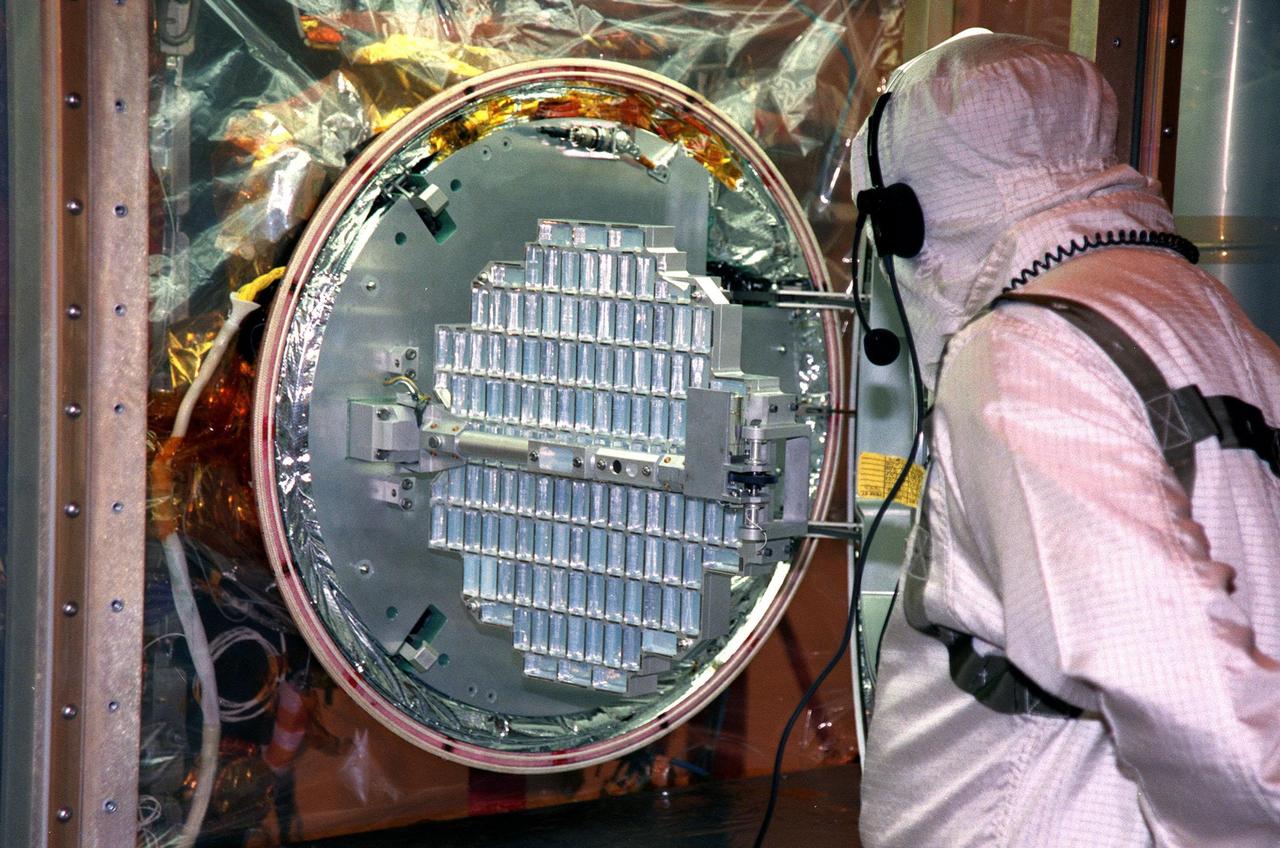
In the Payload Hazardous Servicing Facility, workers deploy an aerogel grid from the Stardust Sample Return Capsule (SRC) in the Class 100 Glove Box. Stardust will use a unique medium called aerogel to capture comet particles flying off the nucleus of comet Wild 2 in January 2004, plus collect interstellar dust for later analysis. The collected samples will return to Earth in the SRC to be jettisoned as it swings by Earth in January 2006. Stardust is scheduled to be launched aboard a Boeing Delta 7426 rocket from Complex 17, Cape Canaveral Air Station, on Feb. 6, 1999
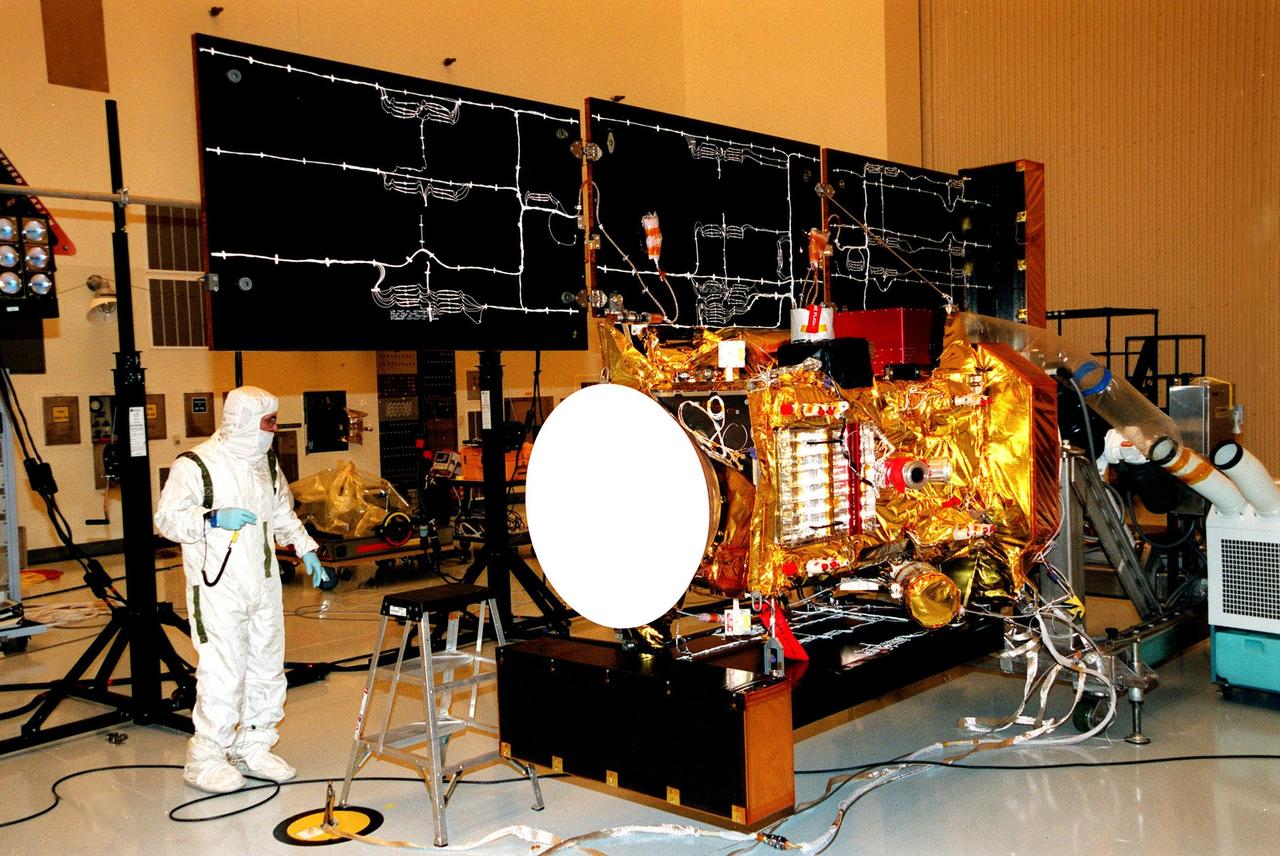
In the Payload Hazardous Servicing Facility, a worker looks over the solar panels of the <a href="http://www-pao.ksc.nasa.gov/kscpao/captions/subjects/stardust.htm"> Stardust</a> spacecraft before it undergoes lighting tests. Stardust is scheduled to be launched aboard a Boeing Delta II rocket from Launch Pad 17A, Cape Canaveral Air Station, on Feb. 6, 1999, for a rendezvous with the comet Wild 2 in January 2004. Stardust will use a substance called aerogel to capture comet particles flying off the nucleus of the comet, plus collect interstellar dust for later analysis. The collected samples will return to Earth in a sample return capsule (its white cap is seen on the left) to be jettisoned as it swings by Earth in January 2006
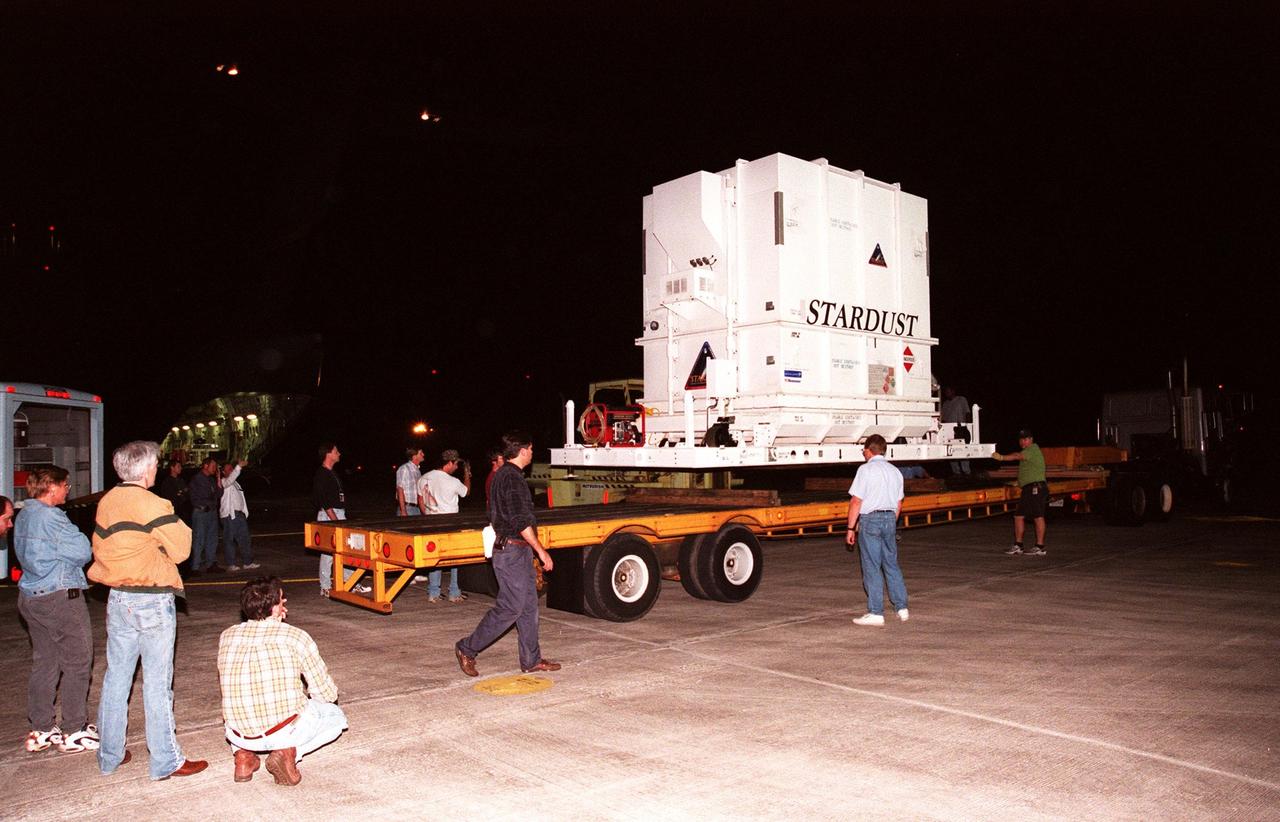
At the Shuttle Landing Facility, workers observe the loading of the crated Stardust spacecraft onto a trailer for transporting to the Payload Hazardous Service Facility. Built by Lockheed Martin Astronautics near Denver, Colo., for the Jet Propulsion Laboratory (JPL) and NASA, the spacecraft Stardust will use a unique medium called aerogel to capture comet particles flying off the nucleus of comet Wild 2 in January 20004, plus collect interstellar dust for later analysis. Stardust will be launched aboard a Boeing Delta 7426 rocket from Complex 17, Cape Canaveral Air Station, targeted for Feb. 6, 1999. The collected samples will return to Earth in a re-entry capsule to be jettisoned from Stardust as it swings by in January 2006

The first stage of a Boeing Delta II rocket is lifted to its vertical position on the tower at Launch Complex 17, Cape Canaveral Air Station. The rocket will carry the Stardust spacecraft into space for a close encounter with the comet Wild 2 in January 2004. Using a medium called aerogel, it will capture comet particles flying off the nucleus of the comet, plus collect interstellar dust for later analysis. The collected samples will return to Earth in a Sample Return Capsule to be jettisoned as Stardust swings by Earth in January 2006. Stardust is scheduled to be launched on Feb. 6, 1999
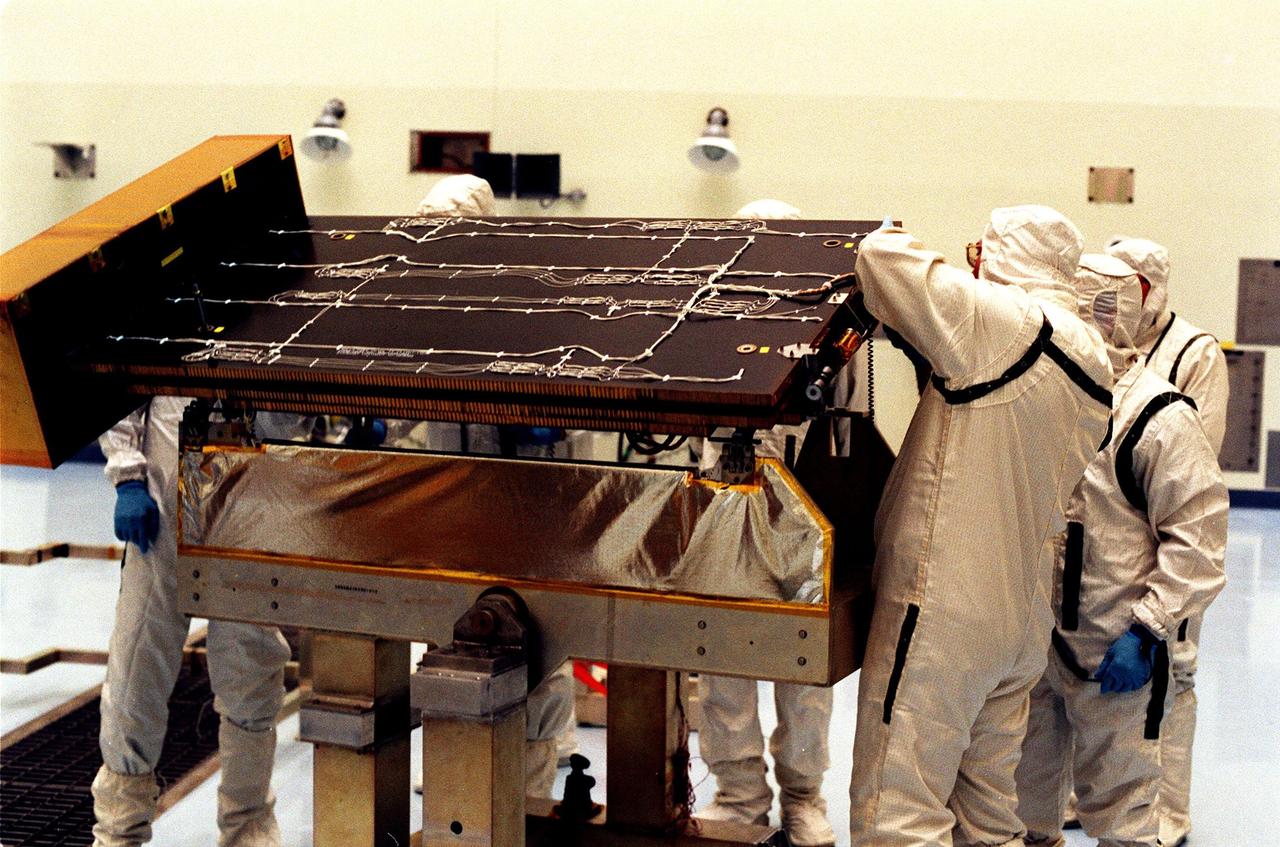
In the Payload Hazardous Servicing Facility, workers place one of the Stardust solar panels on a stand. The panels are being removed for testing. The spacecraft Stardust will use a unique medium called aerogel to capture comet particles flying off the nucleus of comet Wild 2 in January 2004, plus collect interstellar dust for later analysis. Stardust will be launched aboard a Boeing Delta 7426 rocket from Complex 17, Cape Canaveral Air Station, targeted for Feb. 6, 1999. The collected samples will return to Earth in a re-entry capsule to be jettisoned from Stardust as it swings by Earth in January 2006
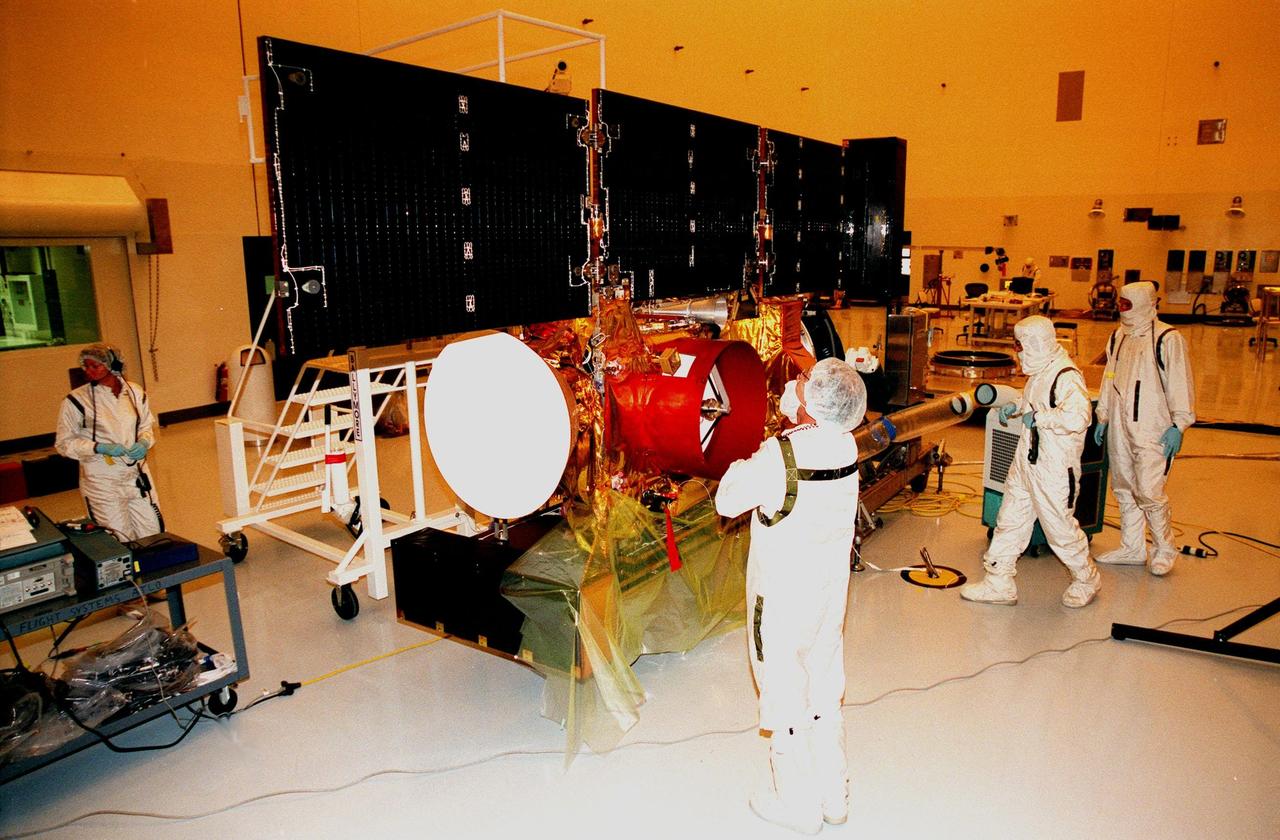
In the Payload Hazardous Servicing Facility, workers look over the solar panels on the <a href="http://www-pao.ksc.nasa.gov/kscpao/captions/subjects/stardust.htm"> Stardust</a> spacecraft that are deployed for lighting tests. Stardust is scheduled to be launched aboard a Boeing Delta II rocket from Launch Pad 17A, Cape Canaveral Air Station, on Feb. 6, 1999, for a rendezvous with the comet Wild 2 in January 2004. Stardust will use a substance called aerogel to capture comet particles flying off the nucleus of the comet, plus collect interstellar dust for later analysis. The collected samples will return to Earth in a sample return capsule to be jettisoned as it swings by Earth in January 2006
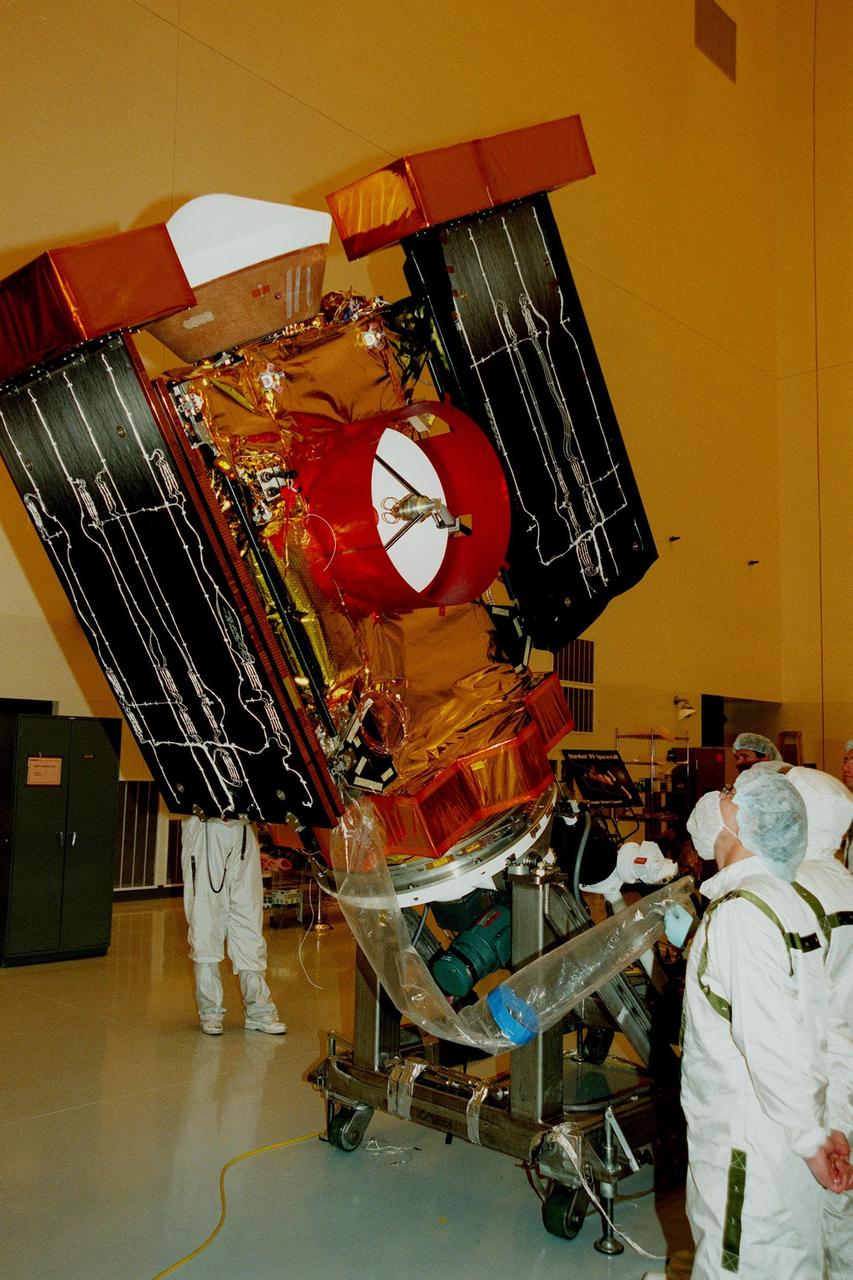
Workers in the Payload Hazardous Servicing Facility watch as the <a href="http://www-pao.ksc.nasa.gov/kscpao/captions/subjects/stardust.htm"> Stardust</a> spacecraft is rotated and lowered before deploying the solar panels for lighting tests. Stardust is scheduled to be launched aboard a Boeing Delta II rocket from Launch Pad 17A, Cape Canaveral Air Station, on Feb. 6, 1999, for a rendezvous with the comet Wild 2 in January 2004. Stardust will use a substance called aerogel to capture comet particles flying off the nucleus of the comet, plus collect interstellar dust for later analysis. The collected samples will return to Earth in a sample return capsule (seen on top of the spacecraft) to be jettisoned as it swings by Earth in January 2006

In the Payload Hazardous Servicing Facility, Randy Scott (left) and Pat Wedeman (right), with Lockheed Martin Astronautics, check the insulation on the <a href="http://www-pao.ksc.nasa.gov/kscpao/captions/subjects/stardust.htm">Stardust</a> spacecraft. Stardust will use a unique medium called aerogel to capture comet particles flying off the nucleus of comet Wild 2 in January 2004, plus collect interstellar dust for later analysis. The collected samples will return to Earth in the SRC to be jettisoned as it swings by Earth in January 2006. Stardust is scheduled to be launched aboard a Boeing Delta 7426 rocket from Complex 17, Cape Canaveral Air Station, on Feb. 6, 1999
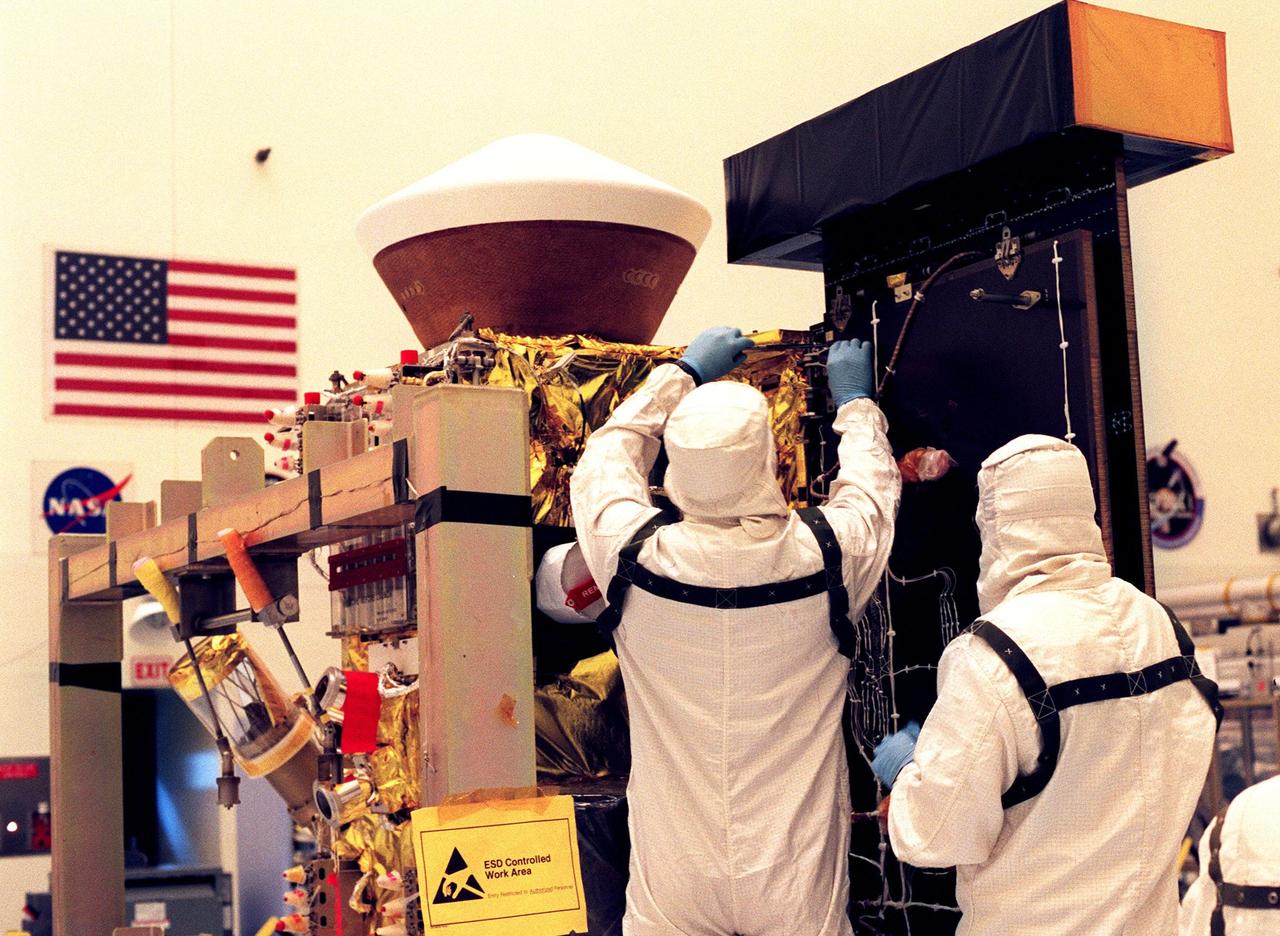
In the Payload Hazardous Servicing Facility, workers remove one of the Stardust solar panels for testing. The spacecraft Stardust will be launched aboard a Boeing Delta 7426 rocket from Complex 17, Cape Canaveral Air Station, targeted for Feb. 6, 1999. Stardust will use a unique medium called aerogel to capture comet particles flying off the nucleus of comet Wild 2 in January 2004, plus collect interstellar dust for later analysis. The collected samples will return to Earth in a re-entry capsule (seen on top, next to the solar panel) to be jettisoned from Stardust as it swings by Earth in January 2006

Workers at Cape Canaveral Air Station help guide the first stage of a Boeing Delta II rocket to its vertical position on the tower at Launch Complex 17. The rocket will carry the Stardust spacecraft into space for a close encounter with the comet Wild 2 in January 2004. Using a medium called aerogel, it will capture comet particles flying off the nucleus of the comet, plus collect interstellar dust for later analysis. The collected samples will return to Earth in a Sample Return Capsule to be jettisoned as Stardust swings by Earth in January 2006. Stardust is scheduled to be launched on Feb. 6, 1999
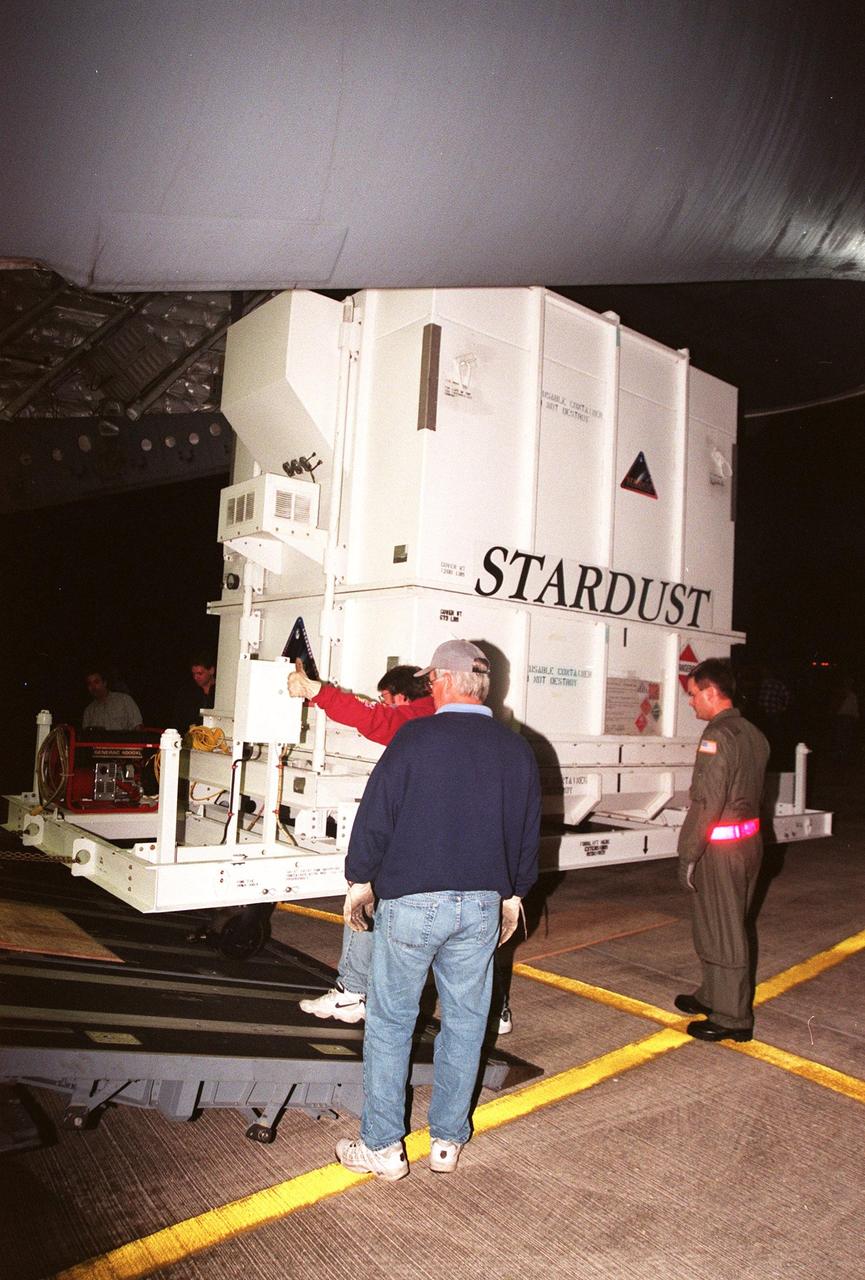
At the Shuttle Landing Facility, workers unload the crated Stardust spacecraft from the airplane before transporting to the Payload Hazardous Service Facility. Built by Lockheed Martin Astronautics near Denver, Colo., for the Jet Propulsion Laboratory (JPL) and NASA, the spacecraft Stardust will use a unique medium called aerogel to capture comet particles flying off the nucleus of comet Wild 2 in January 2004, plus collect interstellar dust for later analysis. Stardust will be launched aboard a Boeing Delta 7426 rocket from Complex 17, Cape Canaveral Air Station, targeted for Feb. 6, 1999. The collected samples will return to Earth in a re-entry capsule to be jettisoned from Stardust as it swings by in January 2006
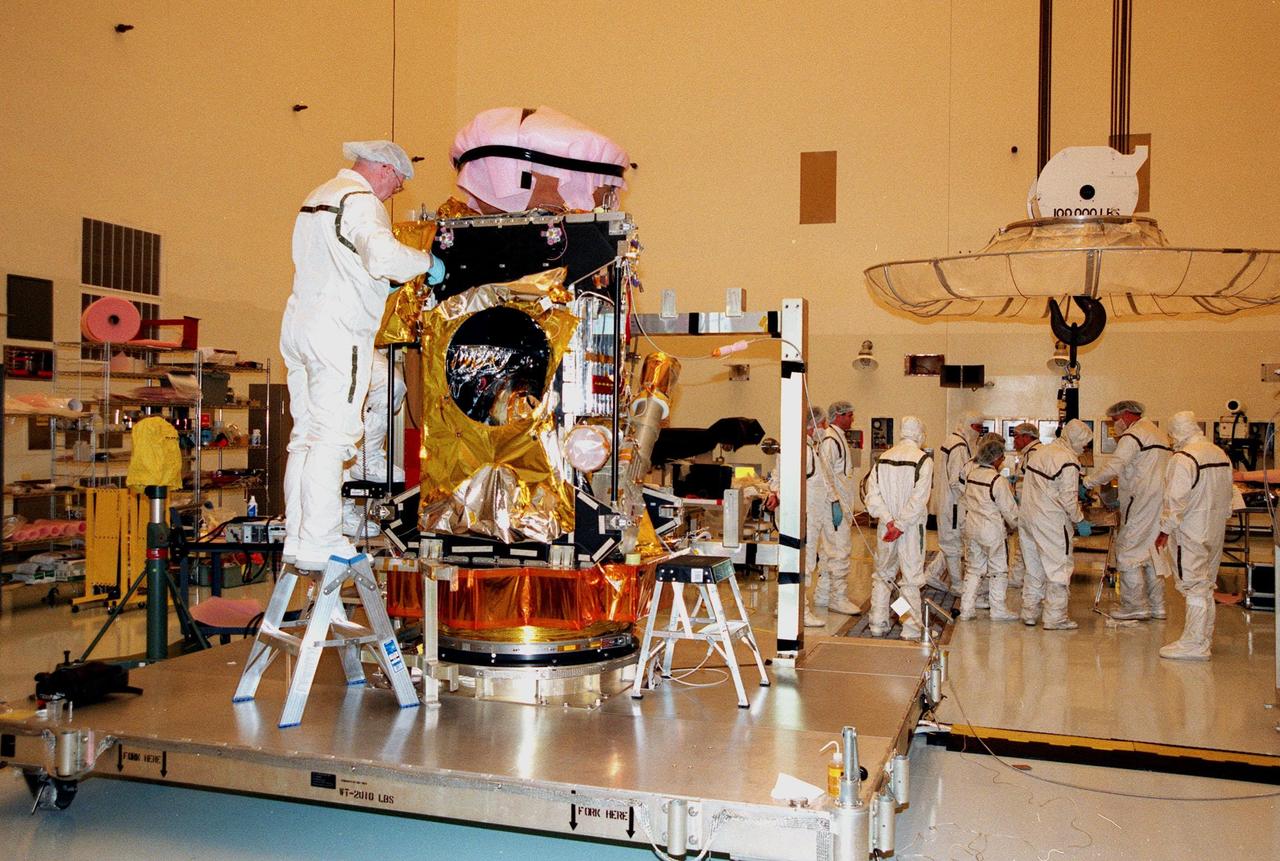
In the Payload Hazardous Servicing Facility, workers oversee closeout operations of the Stardust Sample Return Capsule (SRC) and -X spacecraft panel with the spacecraft bus. Stardust will use a unique medium called aerogel to capture comet particles flying off the nucleus of comet Wild 2 in January 2004, plus collect interstellar dust for later analysis. The collected samples will return to Earth in the SRC to be jettisoned as it swings by Earth in January 2006. Stardust is scheduled to be launched aboard a Boeing Delta 7426 rocket from Complex 17, Cape Canaveral Air Station, on Feb. 6, 1999

A solid rocket booster is lifted up the mobile launch tower at Pad 17A, Cape Canaveral Air Station. It will be mated with a Boeing Delta II rocket that will carry the Stardust spacecraft into space for a close encounter with the comet Wild 2 in January 2004. Using a medium called aerogel, Stardust will capture comet particles flying off the nucleus of the comet, plus collect interstellar dust for later analysis. The collected samples will return to Earth in a sample return capsule to be jettisoned as Stardust swings by Earth in January 2006. Stardust is scheduled to be launched on Feb. 6, 1999
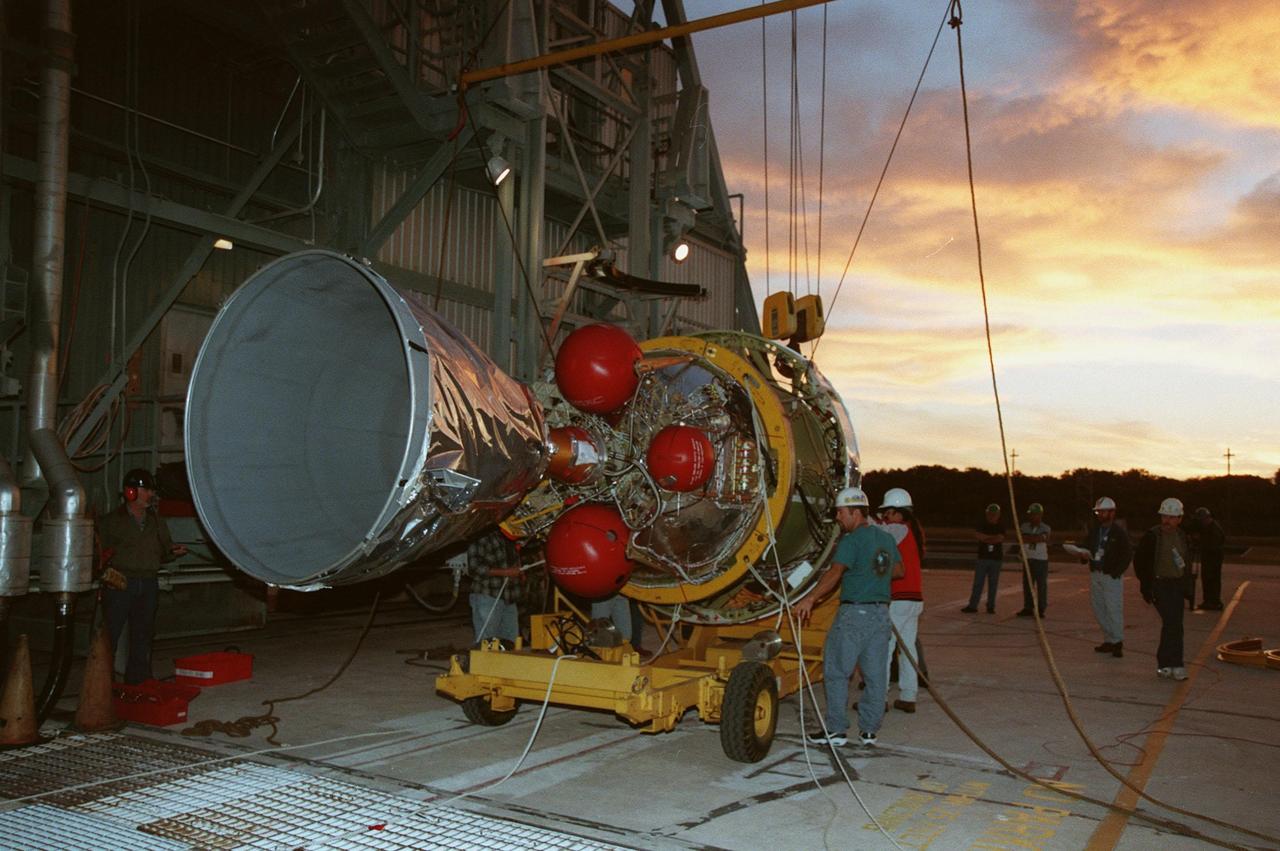
At Pad 17A, Cape Canaveral Air Station, the second stage of a Boeing Delta II rocket arrives for mating with the first stage. The rocket is targeted for launch on Feb. 6, carrying the <a href="http://www-pao.ksc.nasa.gov/kscpao/captions/subjects/stardust.htm">Stardust </a> spacecraft into space for a close encounter with the comet Wild 2 in January 2004. Using a substance called aerogel, Stardust will capture comet particles flying off the nucleus of the comet, plus collect interstellar dust for later analysis. The collected samples will return to Earth in a sample return capsule to be jettisoned as Stardust swings by Earth in January 2006
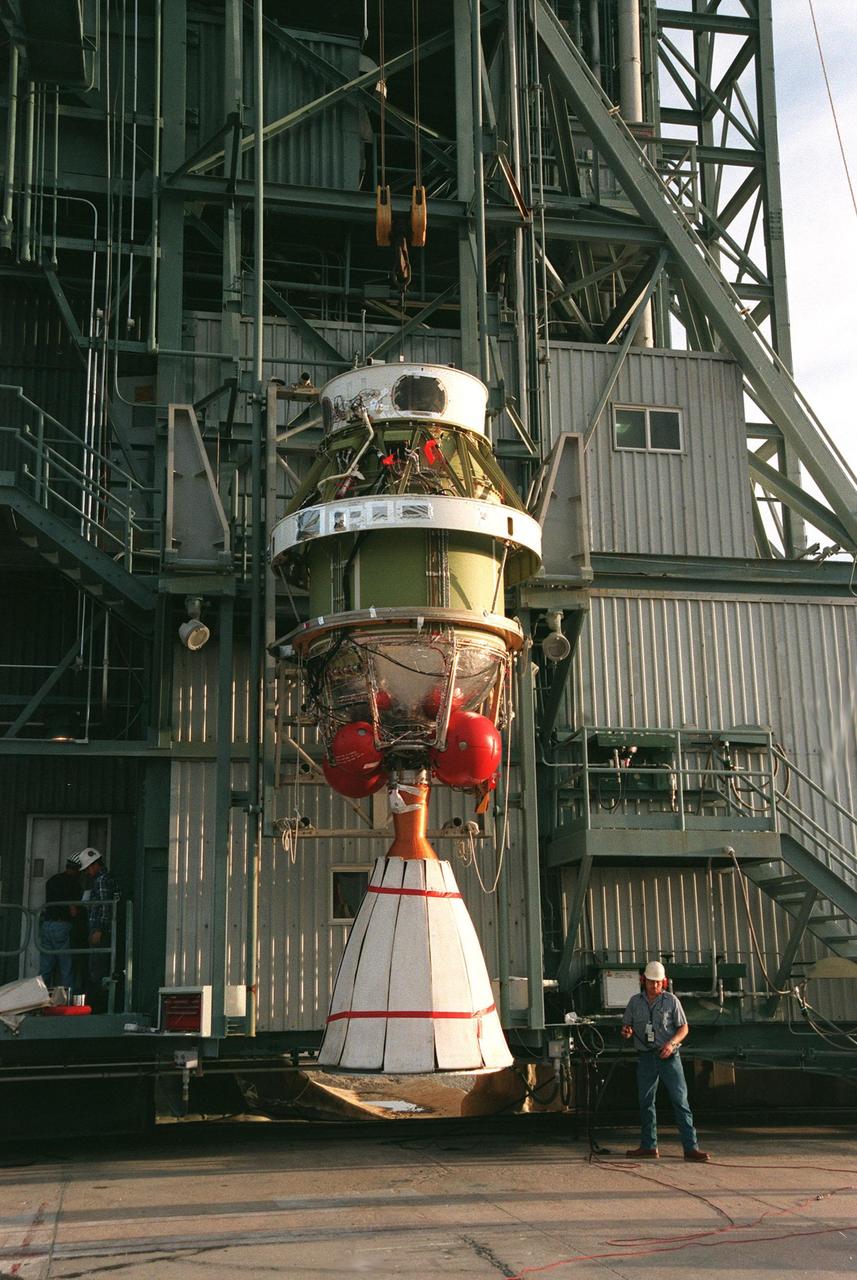
The second stage of a Boeing Delta II rocket begins its move up the tower at Pad 17A, Cape Canaveral Air Station, for mating with the first stage. The rocket is targeted for launch on Feb. 6, carrying the <a href="http://www-pao.ksc.nasa.gov/kscpao/captions/subjects/stardust.htm">Stardust </a> spacecraft into space for a close encounter with the comet Wild 2 in January 2004. Using a substance called aerogel, Stardust will capture comet particles flying off the nucleus of the comet, plus collect interstellar dust for later analysis. The collected samples will return to Earth in a sample return capsule to be jettisoned as Stardust swings by Earth in January 2006
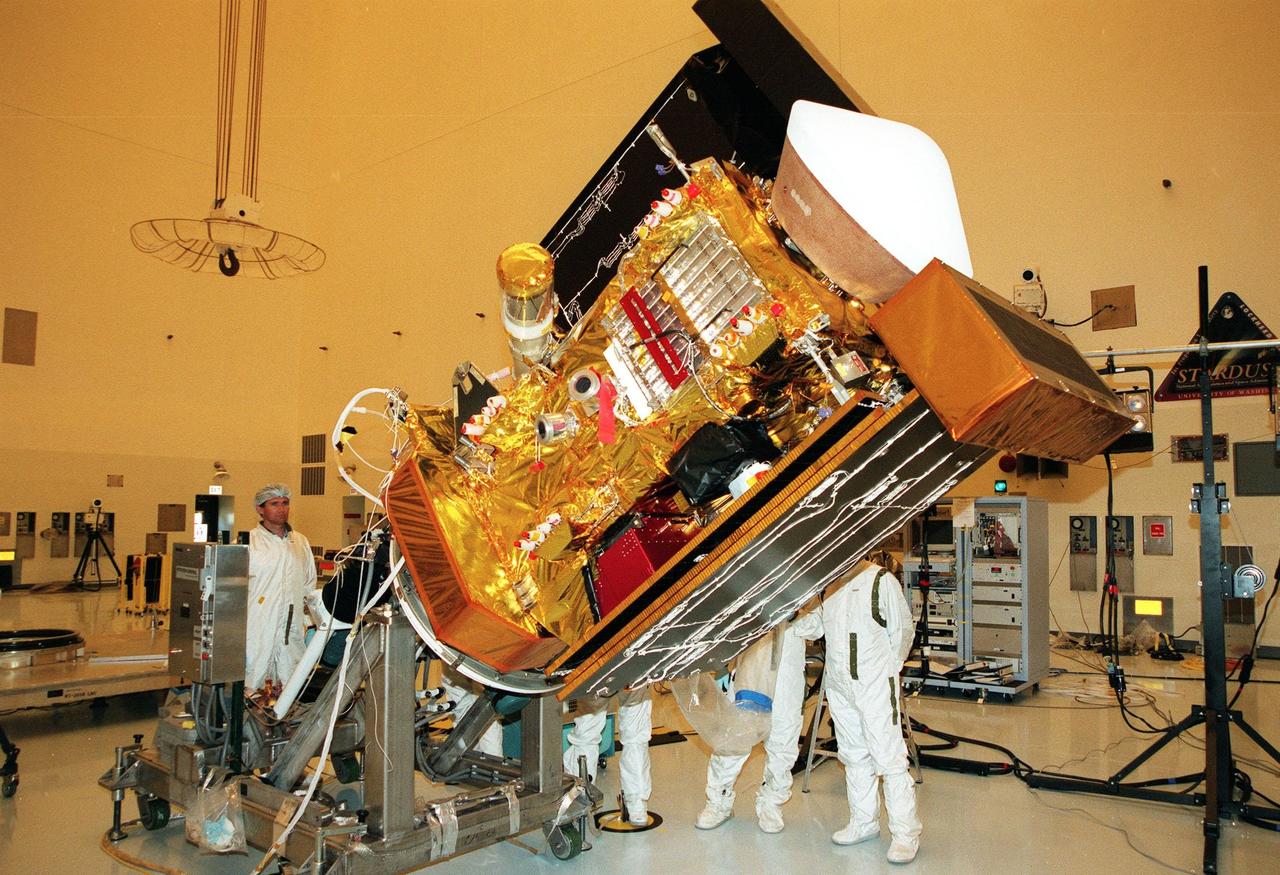
Workers in the Payload Hazardous Servicing Facility watch as the <a href="http://www-pao.ksc.nasa.gov/kscpao/captions/subjects/stardust.htm"> Stardust</a> spacecraft is lowered before deploying panels for lighting tests. Stardust is scheduled to be launched aboard a Boeing Delta II rocket from Launch Pad 17A, Cape Canaveral Air Station, on Feb. 6, 1999, for a rendezvous with the comet Wild 2 in January 2004. Stardust will use a substance called aerogel to capture comet particles flying off the nucleus of the comet, plus collect interstellar dust for later analysis. The collected samples will return to Earth in a sample return capsule (seen on top of the spacecraft) to be jettisoned as it swings by Earth in January 2006

Workers at the top of the tower at Pad 17A, Cape Canaveral Air Station, watch as the second stage of a Boeing Delta II rocket moves toward the opening through which it will be mated with the first stage. The rocket is targeted for launch on Feb. 6, carrying the <a href="http://www-pao.ksc.nasa.gov/kscpao/captions/subjects/stardust.htm">Stardust </a> spacecraft into space for a close encounter with the comet Wild 2 in January 2004. Using a substance called aerogel, Stardust will capture comet particles flying off the nucleus of the comet, plus collect interstellar dust for later analysis. The collected samples will return to Earth in a sample return capsule to be jettisoned as Stardust swings by Earth in January 2006

After arrival at the Shuttle Landing Facility in the early morning hours, the crated Stardust spacecraft waits to be unloaded from the aircraft. Built by Lockheed Martin Astronautics near Denver, Colo., for the Jet Propulsion Laboratory (JPL) NASA, the spacecraft Stardust will use a unique medium called aerogel to capture comet particles flying off the nucleus of comet Wild 2 in January 2004, plus collect interstellar dust for later analysis. Stardust will be launched aboard a Boeing Delta 7426 rocket from Complex 17, Cape Canaveral Air Station, targeted for Feb. 6, 1999. The collected samples will return to Earth in a re-entry capsule to be jettisoned from Stardust as it swings by in January 2006
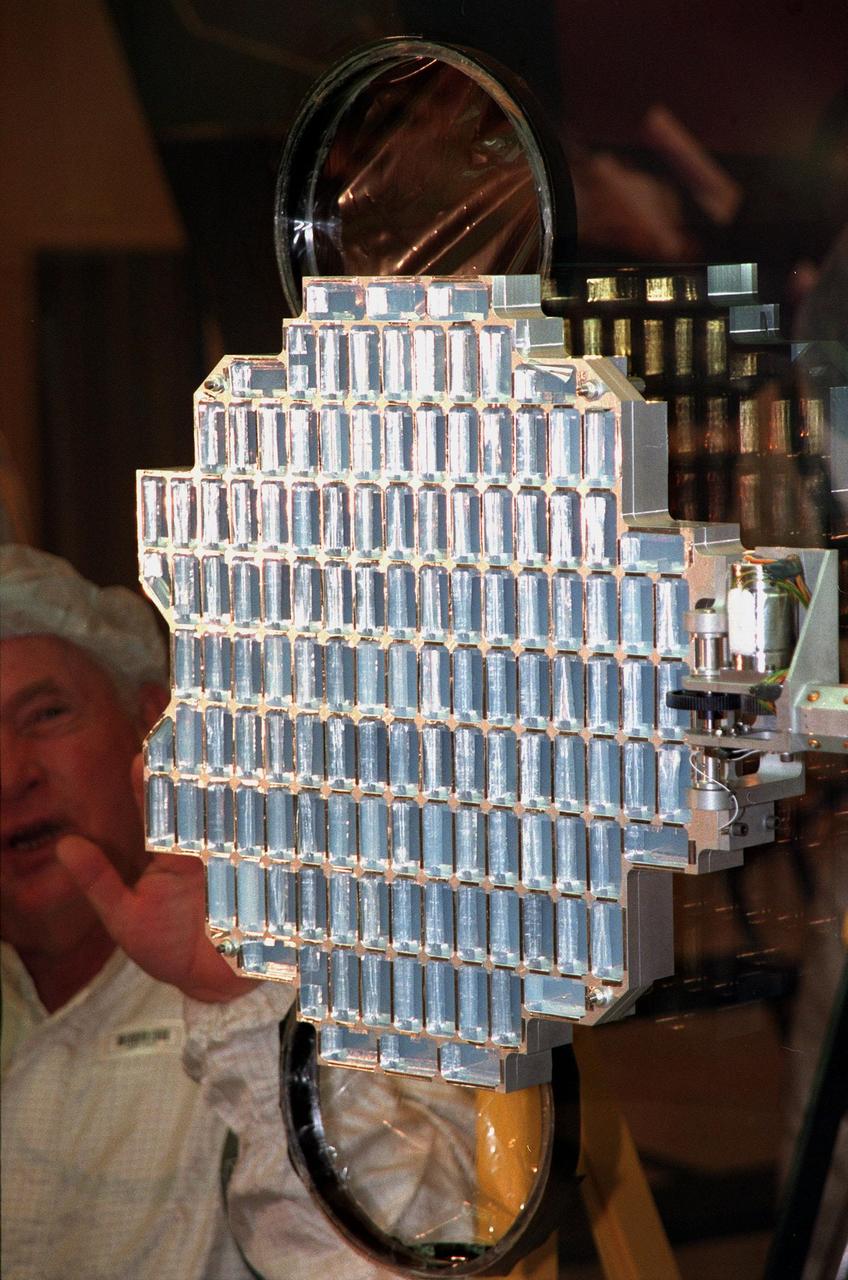
In the Payload Hazardous Servicing Facility, the aerogel grid is fully deployed from the Stardust Sample Return Capsule (SRC) for final closeout. Stardust will use a unique medium called aerogel to capture comet particles flying off the nucleus of comet Wild 2 in January 2004, plus collect interstellar dust for later analysis. The collected samples will return to Earth in the SRC to be jettisoned as it swings by Earth in January 2006. Stardust is scheduled to be launched aboard a Boeing Delta 7426 rocket from Complex 17, Cape Canaveral Air Station, on Feb. 6, 1999
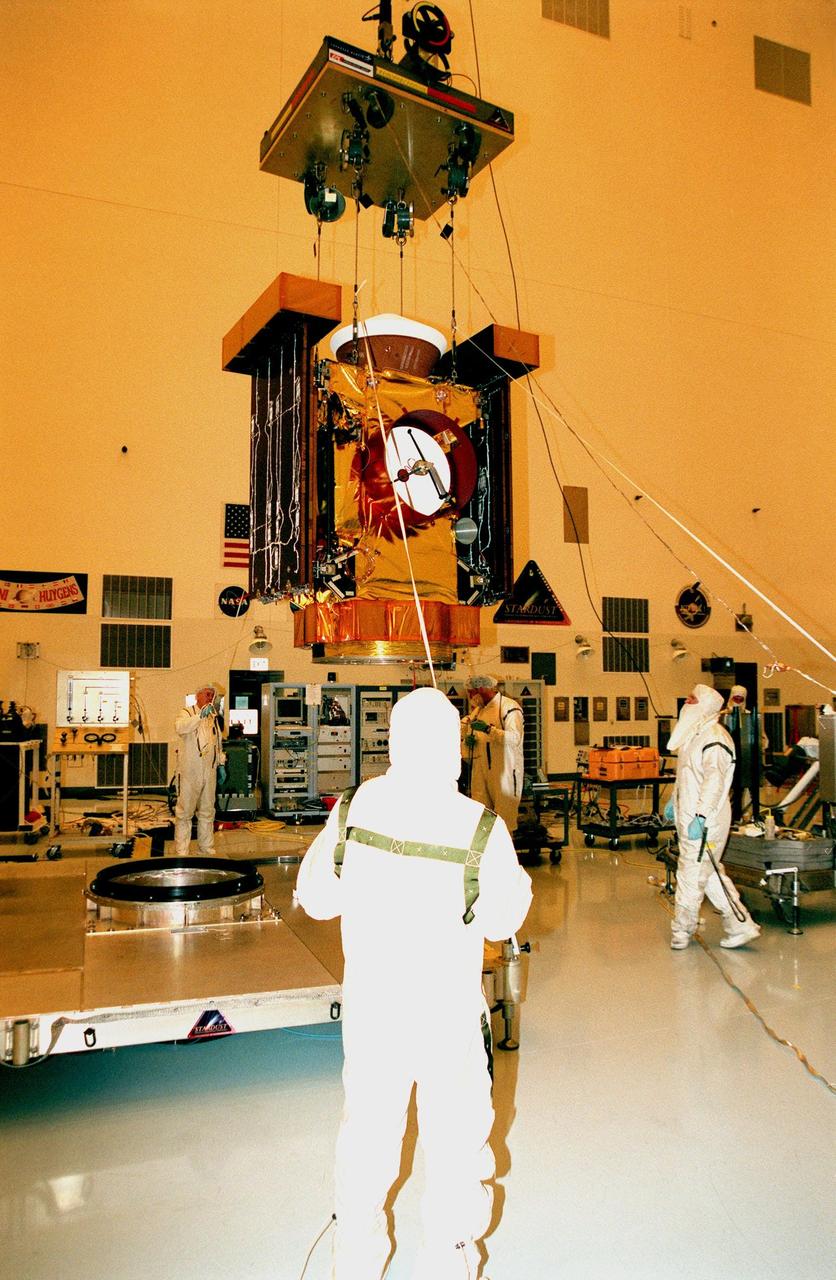
In the Payload Hazardous Servicing Facility, workers raise the <a href="http://www-pao.ksc.nasa.gov/kscpao/captions/subjects/stardust.htm"> Stardust</a> spacecraft from its workstand to move it to another area for lighting tests on the solar panels. Stardust is scheduled to be launched aboard a Boeing Delta II rocket from Launch Pad 17A, Cape Canaveral Air Station, on Feb. 6, 1999, for a rendezvous with the comet Wild 2 in January 2004. Stardust will use a substance called aerogel to capture comet particles flying off the nucleus of the comet, plus collect interstellar dust for later analysis. The collected samples will return to Earth in a sample return capsule to be jettisoned as it swings by Earth in January 2006
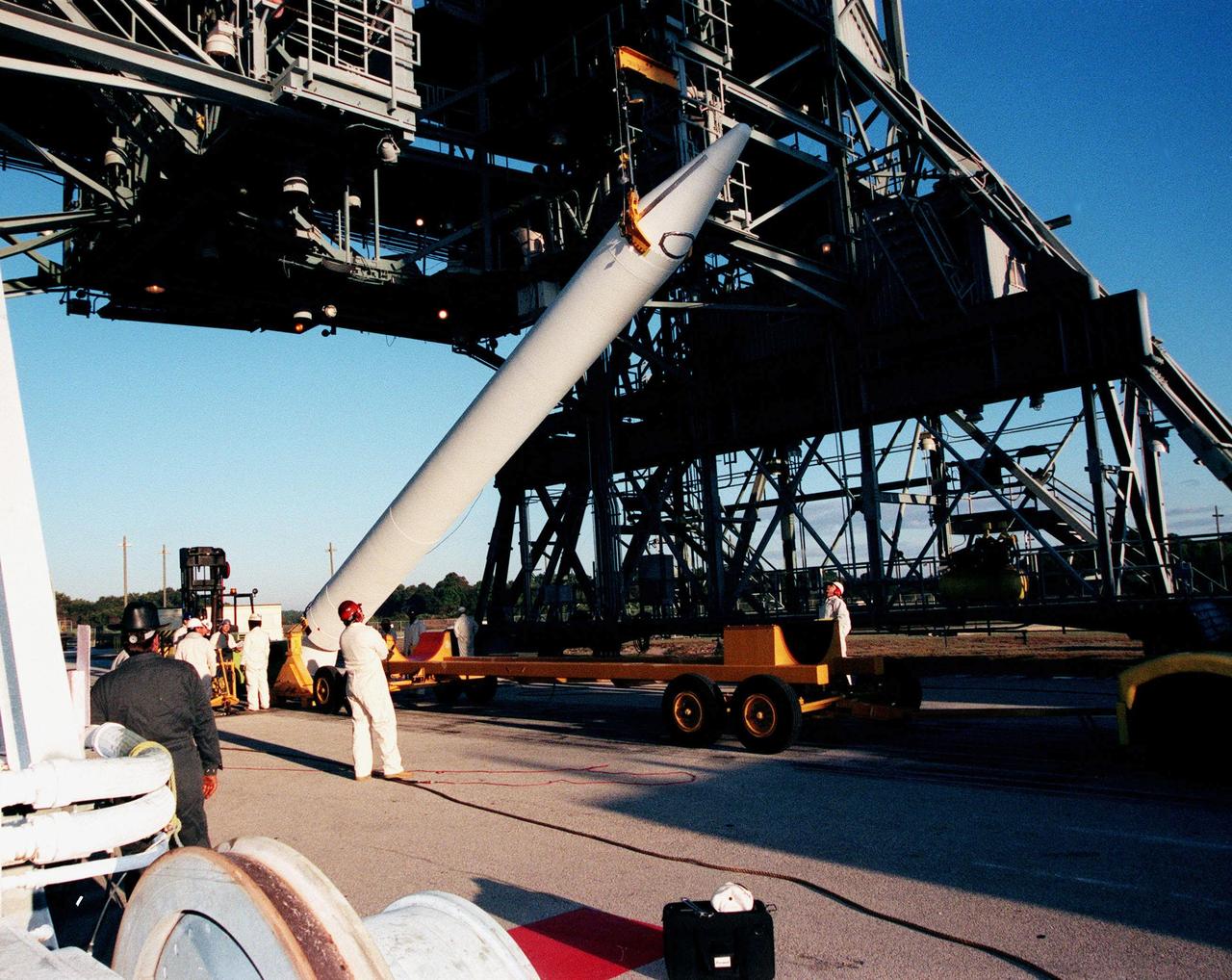
A fourth and final Solid Rocket Booster arrives at Pad 17A, Cape Canaveral Air Station to be mated with a Boeing Delta II rocket. The rocket will carry the Stardust satellite into space for a close encounter with the comet Wild 2 in January 2004. Using a medium called aerogel, Stardust will capture comet particles flying off the nucleus of the comet, plus collect interstellar dust for later analysis. The collected samples will return to Earth in a Sample Return Capsule to be jettisoned as Stardust swings by Earth in January 2006. Stardust is scheduled to be launched on Feb. 6, 1999

In the Payload Hazardous Service Facility, workers oversee the arrival of the crated Stardust spacecraft. Built by Lockheed Martin Astronautics near Denver, Colo., for the Jet Propulsion Laboratory (JPL) and NASA, the spacecraft Stardust will use a unique medium called aerogel to capture comet particles flying off the nucleus of comet Wild 2 in January 2004, plus collect interstellar dust for later analysis. Stardust will be launched aboard a Boeing Delta 7426 rocket from Complex 17, Cape Canaveral Air Station, targeted for Feb. 6, 1999. The collected samples will return to Earth in a re-entry capsule to be jettisoned from Stardust as it swings by in January 2006
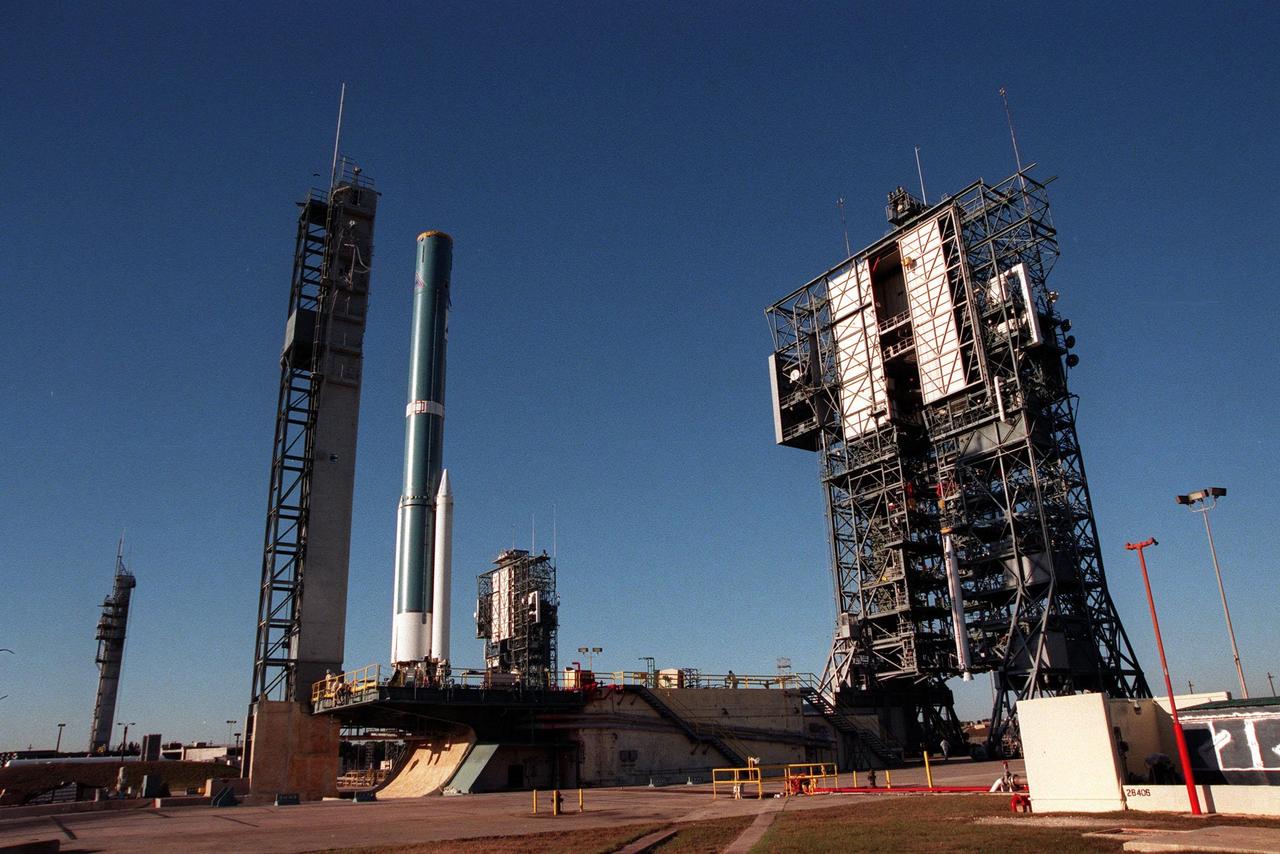
A Boeing Delta II rocket sits on Launch Pad 17A (left), Cape Canaveral Air Station, before mating with its final Solid Rocket Booster, in the tower at right. In the background is Pad 17B with its two launch tower components. The Delta II rocket will carry the Stardust satellite into space for a close encounter with the comet Wild 2 in January 2004. Using a medium called aerogel, Stardust will capture comet particles flying off the nucleus of the comet, plus collect interstellar dust for later analysis. The collected samples will return to Earth in a Sample Return Capsule to be jettisoned as Stardust swings by Earth in January 2006. Stardust is scheduled to be launched on Feb. 6, 1999
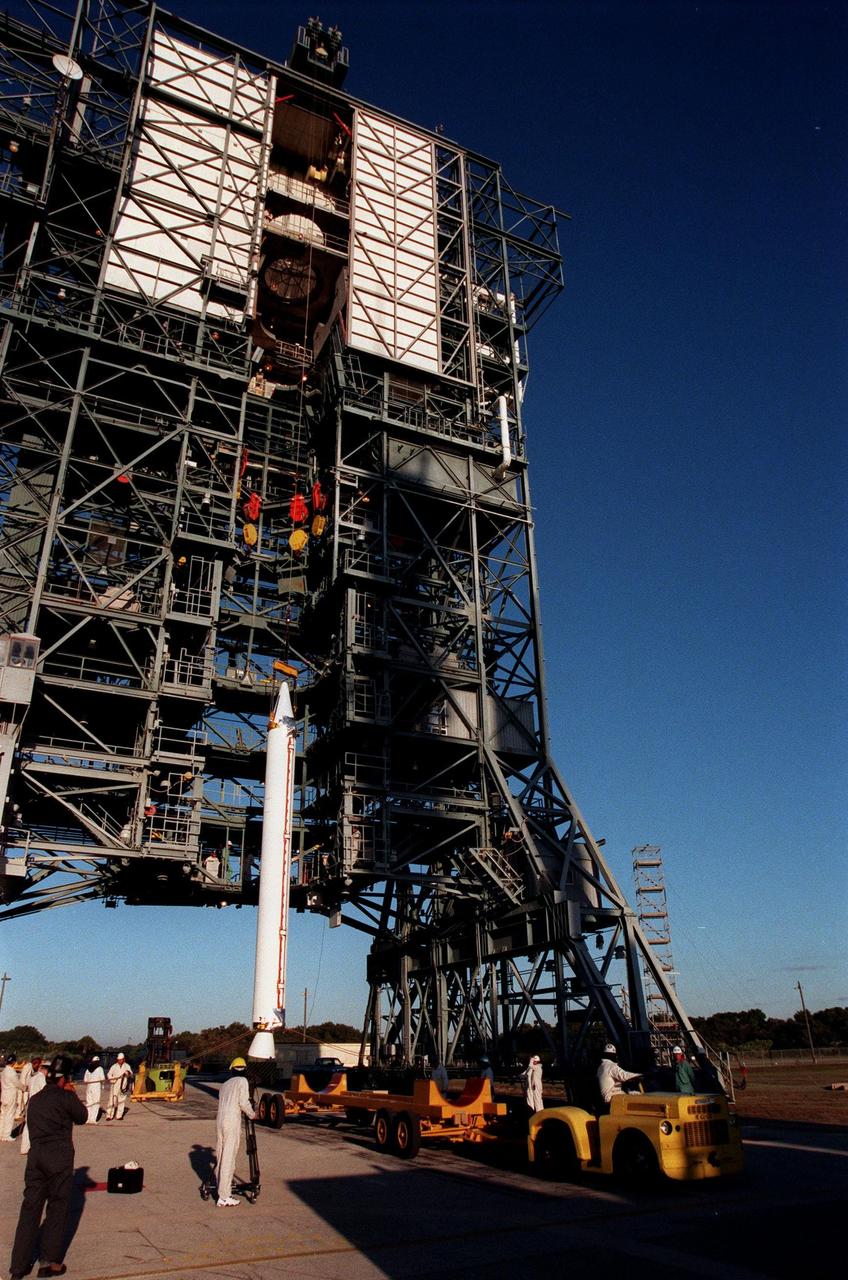
A fourth and final Solid Rocket Booster, to be mated with a Boeing Delta II rocket, starts its lift up the tower at Pad 17A, Cape Canaveral Air Station. The rocket will carry the Stardust satellite into space for a close encounter with the comet Wild 2 in January 2004. Using a medium called aerogel, Stardust will capture comet particles flying off the nucleus of the comet, plus collect interstellar dust for later analysis. The collected samples will return to Earth in a Sample Return Capsule to be jettisoned as Stardust swings by Earth in January 2006. Stardust is scheduled to be launched on Feb. 6, 1999
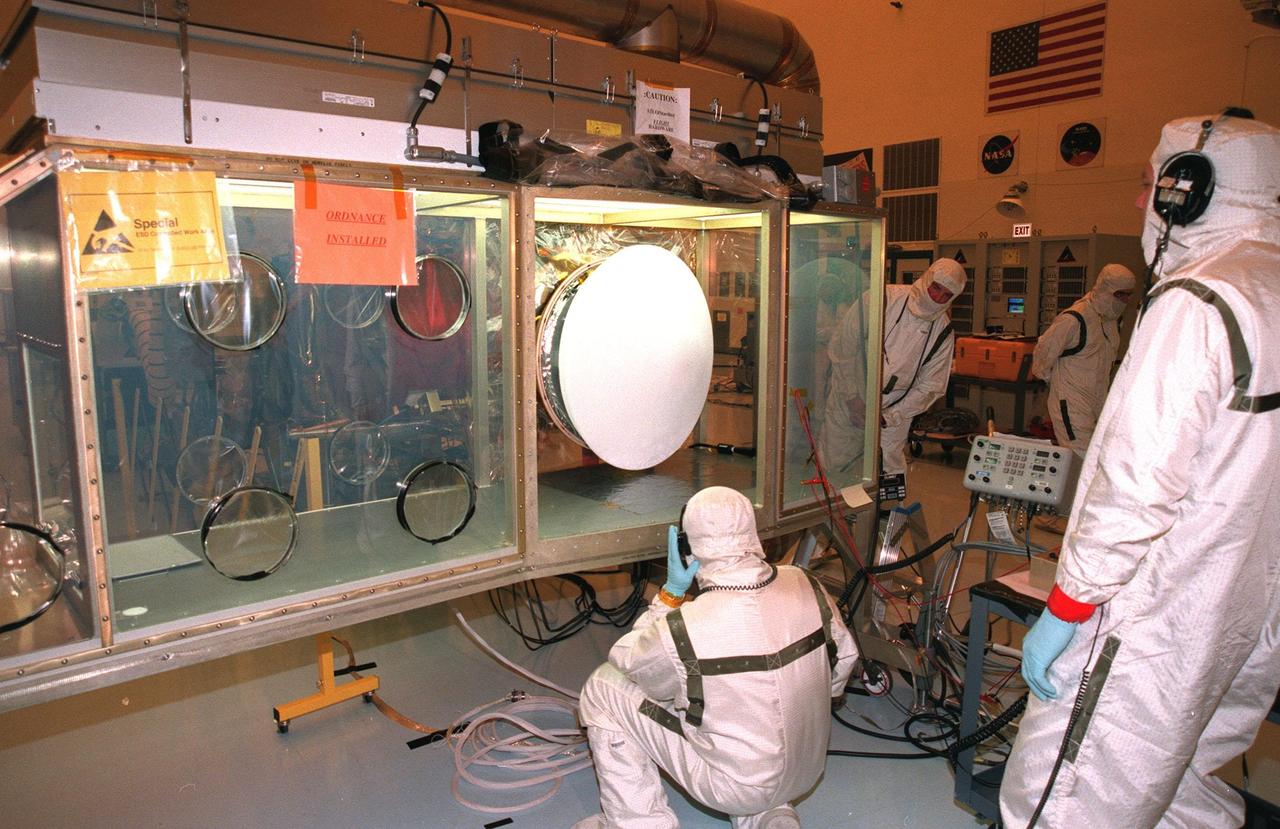
In the Payload Hazardous Servicing Facility, workers prepare to open the Stardust Sample Return Capsule (SRC) residing in a Class 100 glove box. Stardust will use a unique medium called aerogel to capture comet particles flying off the nucleus of comet Wild 2 in January 2004, plus collect interstellar dust for later analysis. The collected samples will return to Earth in the SRC to be jettisoned as it swings by Earth in January 2006. Stardust is scheduled to be launched aboard a Boeing Delta 7426 rocket from Complex 17, Cape Canaveral Air Station, on Feb. 6, 1999
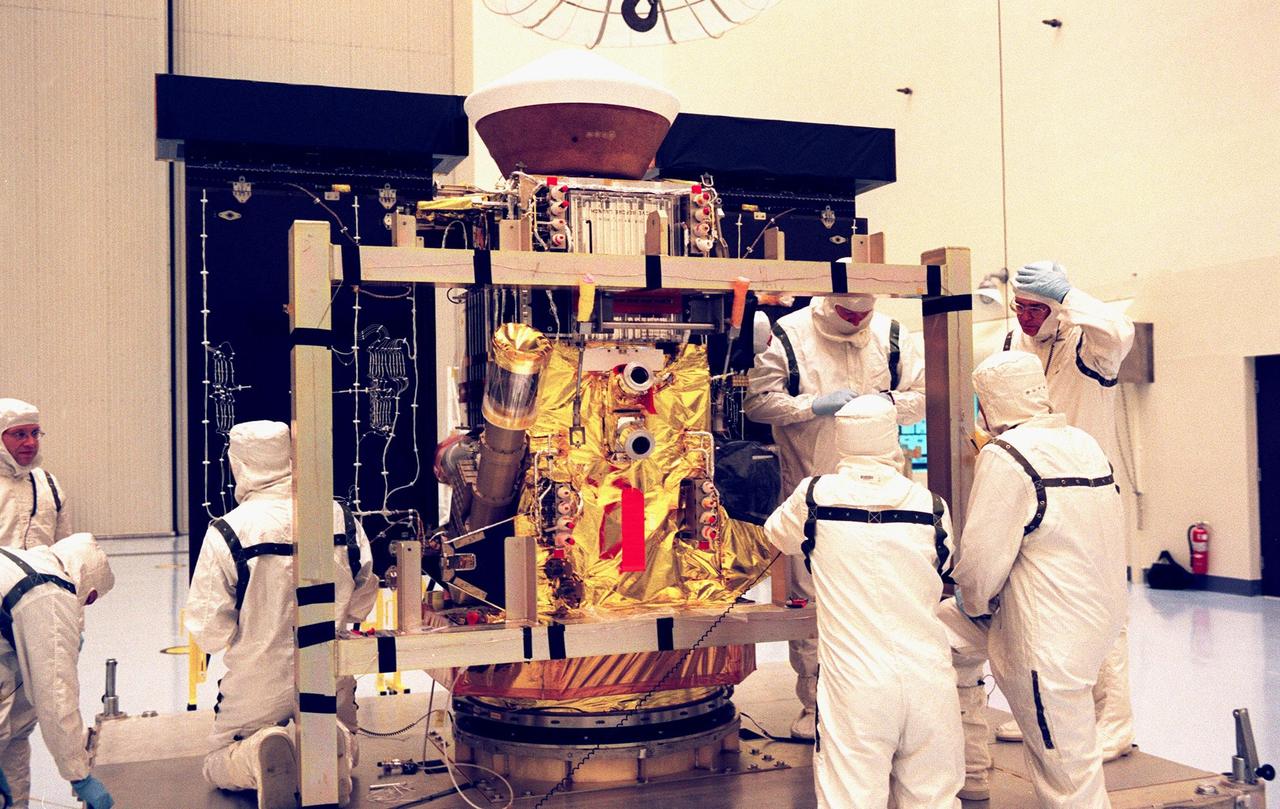
In the Payload Hazardous Servicing Facility, workers work at removing the Stardust solar panels for testing. The spacecraft Stardust will use a unique medium called aerogel to capture comet particles flying off the nucleus of comet Wild 2 in January 2004, plus collect interstellar dust for later analysis. Stardust will be launched aboard a Boeing Delta 7426 rocket from Complex 17, Cape Canaveral Air Station, targeted for Feb. 6, 1999. The collected samples will return to Earth in a re-entry capsule to be jettisoned from Stardust as it swings by Earth in January 2006
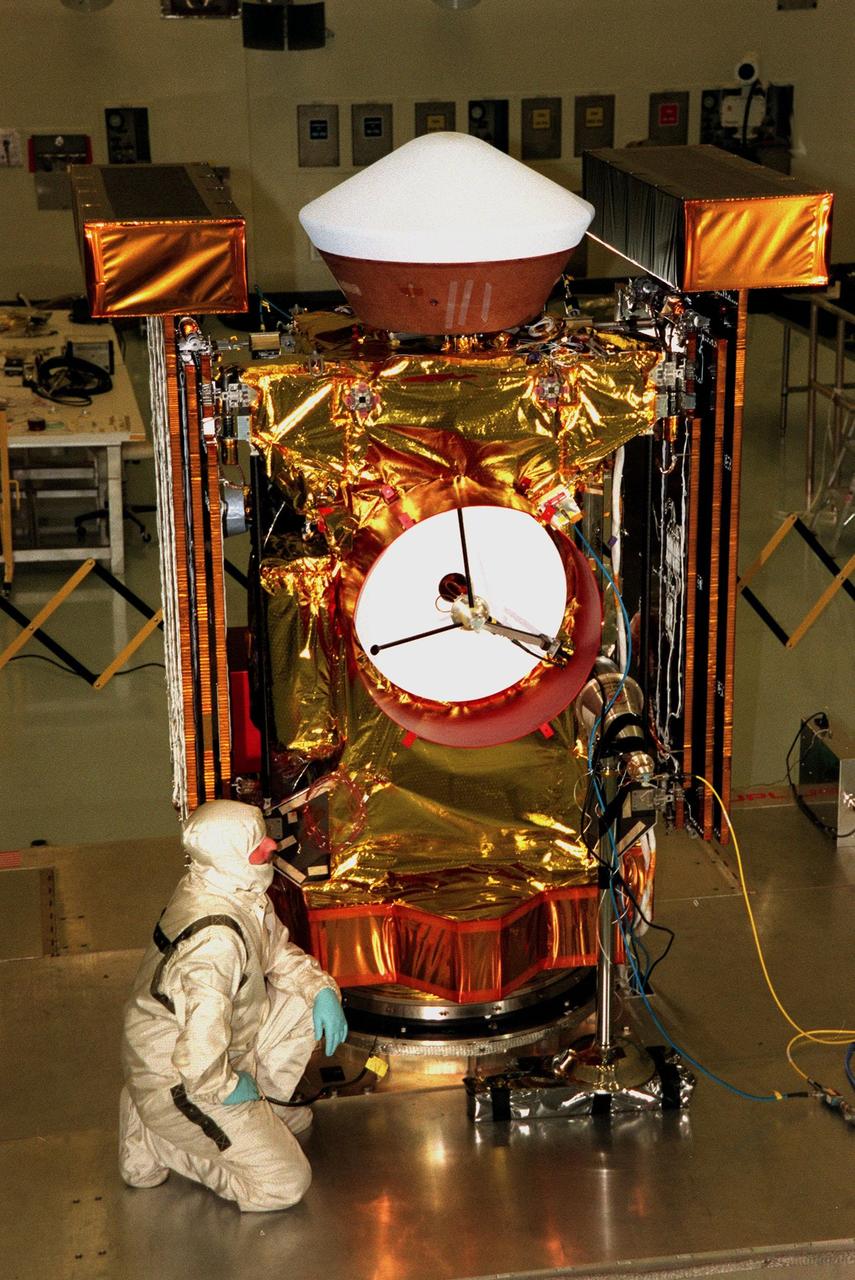
In the Payload Hazardous Servicing Facility, Randy Scott, with Lockheed Martin Astronautics, looks over the <a href="http://www-pao.ksc.nasa.gov/kscpao/captions/subjects/stardust.htm">Stardust</a> spacecraft after closeout. Stardust will use a unique medium called aerogel to capture comet particles flying off the nucleus of comet Wild 2 in January 2004, plus collect interstellar dust for later analysis. The collected samples will return to Earth in the SRC to be jettisoned as it swings by Earth in January 2006. Stardust is scheduled to be launched aboard a Boeing Delta 7426 rocket from Complex 17, Cape Canaveral Air Station, on Feb. 6, 1999
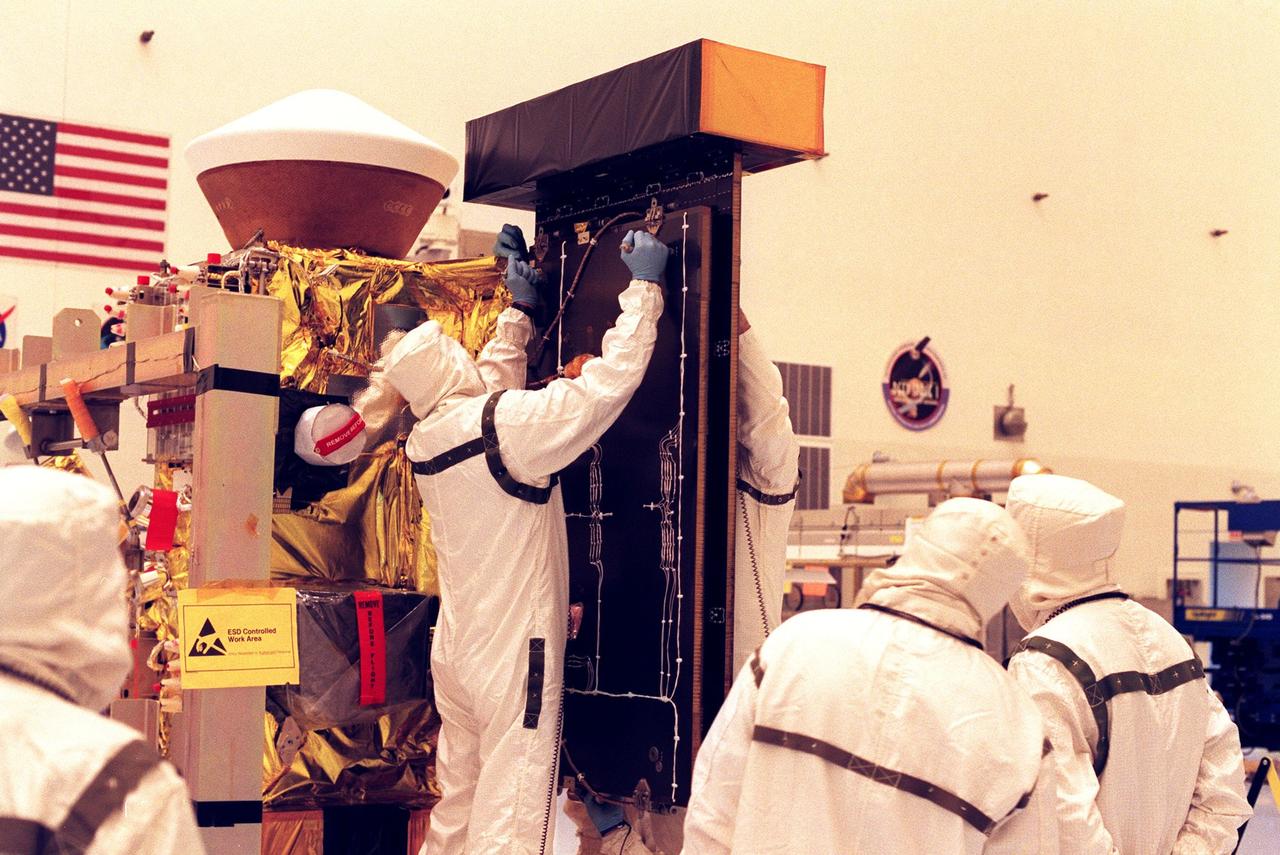
In the Payload Hazardous Servicing Facility, workers begin removing the Stardust solar panels for testing. The spacecraft Stardust will use a unique medium called aerogel to capture comet particles flying off the nucleus of comet Wild 2 in January 2004, plus collect interstellar dust for later analysis. Stardust will be launched aboard a Boeing Delta 7426 rocket from Complex 17, Cape Canaveral Air Station, targeted for Feb. 6, 1999. The collected samples will return to Earth in a re-entry capsule to be jettisoned from Stardust as it swings by Earth in January 2006
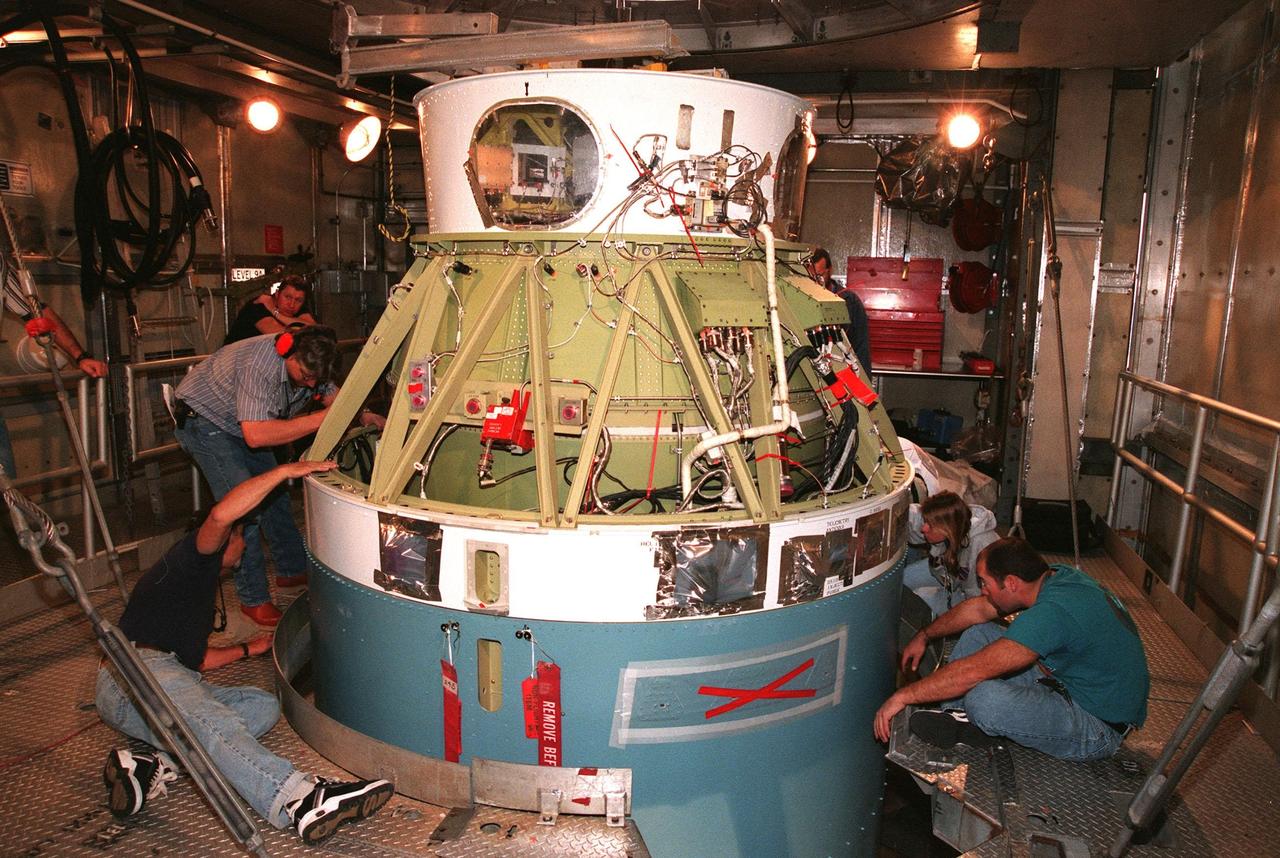
Workers at Pad 17A, Cape Canaveral Air Station, ensure the successful mating of the second stage of a Boeing Delta II rocket with the first stage below it. The rocket is targeted for launch on Feb. 6, carrying the <a href="http://www-pao.ksc.nasa.gov/kscpao/captions/subjects/stardust.htm">Stardust </a> spacecraft into space for a close encounter with the comet Wild 2 in January 2004. Using a substance called aerogel, Stardust will capture comet particles flying off the nucleus of the comet, plus collect interstellar dust for later analysis. The collected samples will return to Earth in a sample return capsule to be jettisoned as Stardust swings by Earth in January 2006
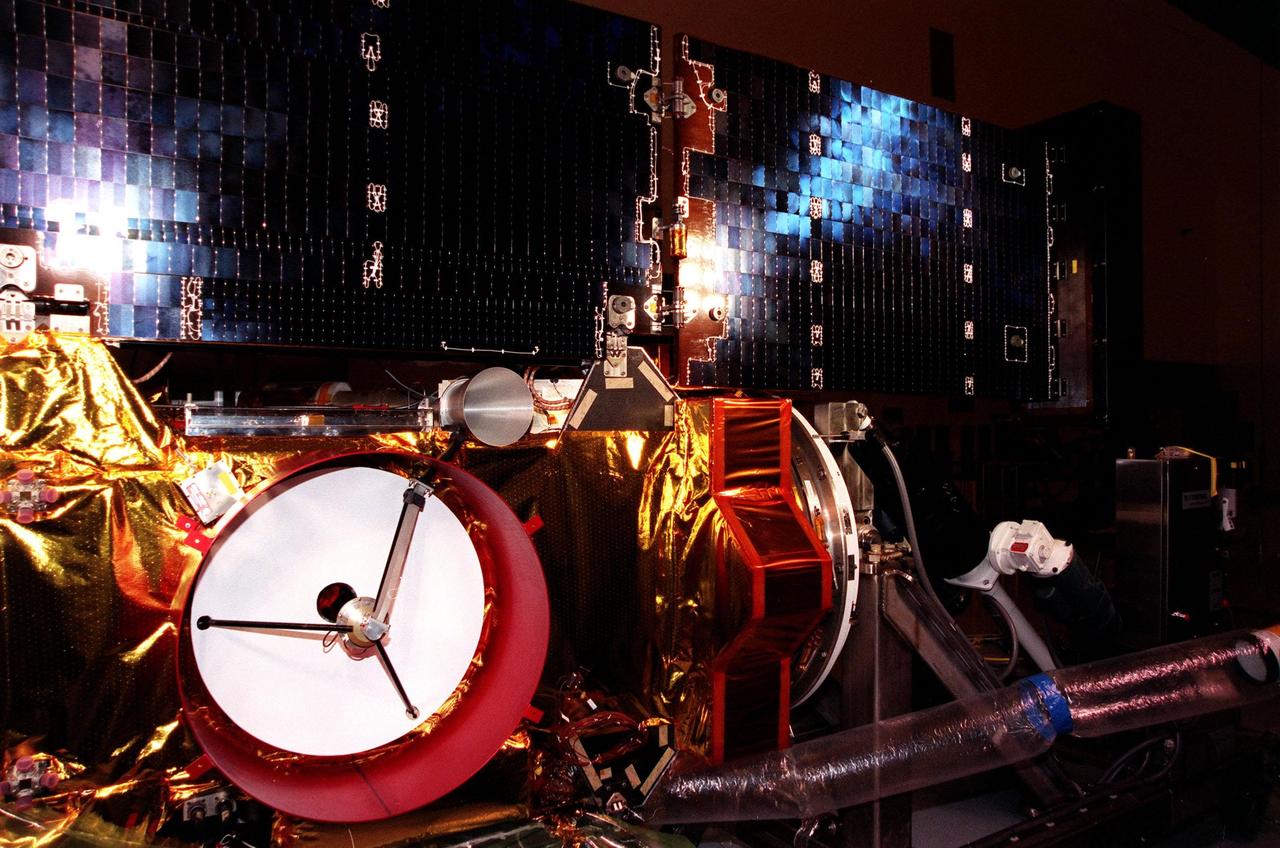
Bright white light (left) and blue light (upper right) appear on the solar panels of the <a href="http://www-pao.ksc.nasa.gov/kscpao/captions/subjects/stardust.htm"> Stardust</a> spacecraft during lighting tests in the Payload Hazardous Servicing Facility. Stardust is scheduled to be launched aboard a Boeing Delta II rocket from Launch Pad 17A, Cape Canaveral Air Station, on Feb. 6, 1999, for a rendezvous with the comet Wild 2 in January 2004. Stardust will use a substance called aerogel to capture comet particles flying off the nucleus of the comet, plus collect interstellar dust for later analysis. The collected samples will return to Earth in a sample return capsule to be jettisoned as it swings by Earth in January 2006
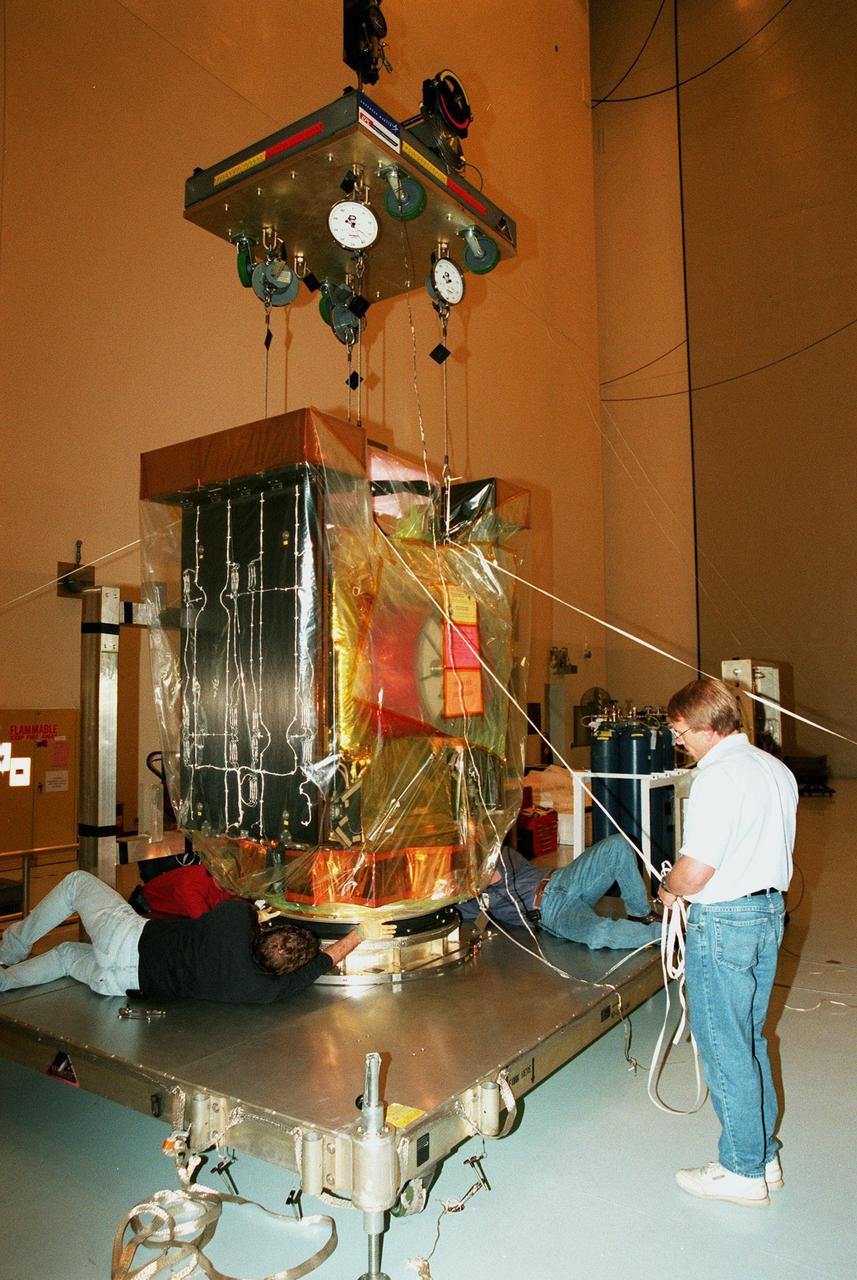
In the Payload Hazardous Service Facility, a worker prepares the Stardust spacecraft for its transfer to . Built by Lockheed Martin Astronautics near Denver, Colo., for the Jet Propulsion Laboratory (JPL) and NASA, the spacecraft Stardust will use a unique medium called aerogel to capture comet particles flying off the nucleus of comet Wild 2 in January 2004, plus collect interstellar dust for later analysis. Stardust will be launched aboard a Boeing Delta 7426 rocket from Complex 17, Cape Canaveral Air Station, targeted for Feb. 6, 1999. . The collected samples will return to Earth in a re-entry capsule to be jettisoned from Stardust as it swings by in January 2006
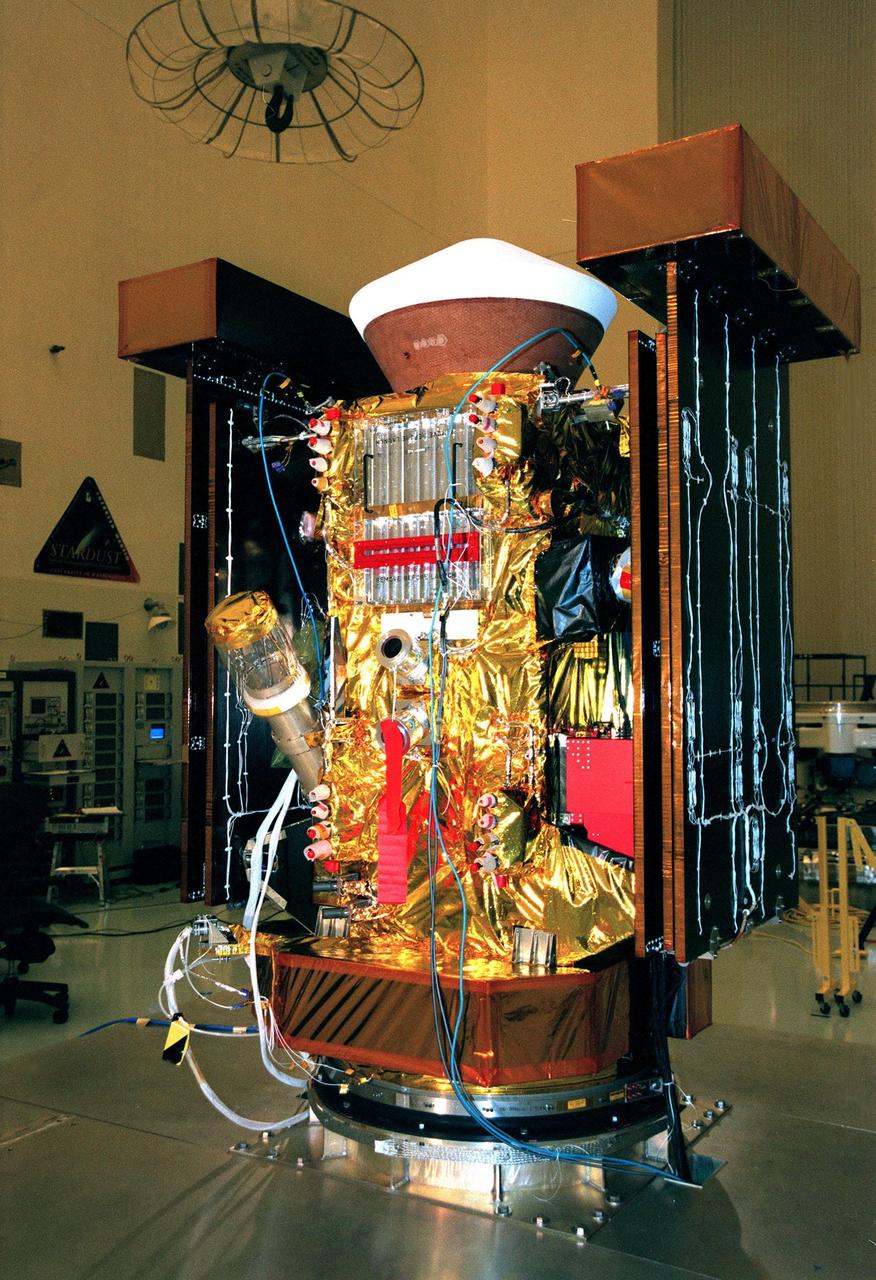
In the Payload Hazardous Servicing Facility, closeout of the <a href="http://www-pao.ksc.nasa.gov/kscpao/captions/subjects/stardust.htm">Stardust</a> spacecraft is complete. Stardust will use a unique medium called aerogel to capture comet particles flying off the nucleus of comet Wild 2 in January 2004, plus collect interstellar dust for later analysis. The collected samples will return to Earth in the SRC to be jettisoned as it swings by Earth in January 2006. Stardust is scheduled to be launched aboard a Boeing Delta 7426 rocket from Complex 17, Cape Canaveral Air Station, on Feb. 6, 1999
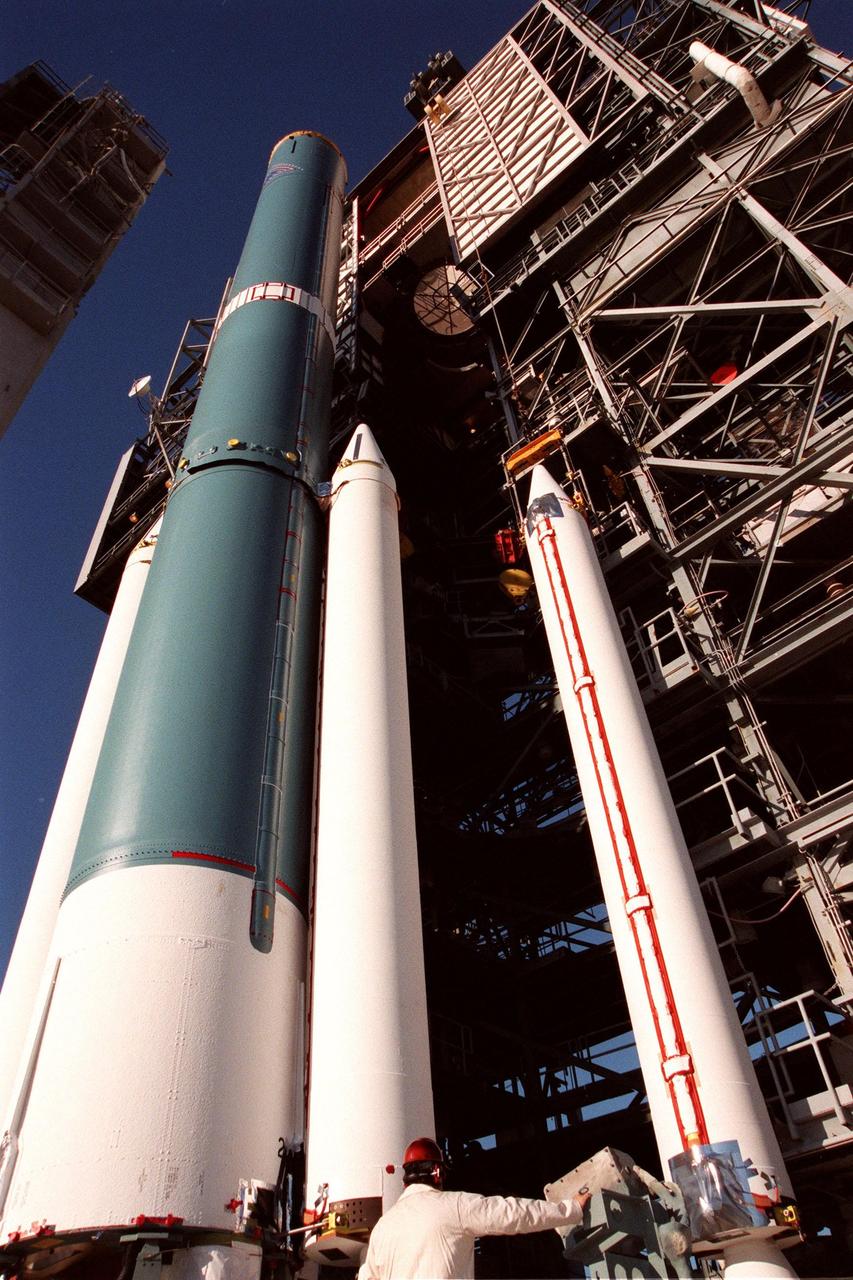
At Pad 17A, Cape Canaveral Air Station, a fourth and final solid rocket booster (SRB) (right) is moved from the mobile tower by a crane before mating with the Delta II rocket (left). The rocket will be aided by four SRBs to carry the Stardust satellite into space for a close encounter with the comet Wild 2 in January 2004. Using a medium called aerogel, Stardust will capture comet particles flying off the nucleus of the comet, plus collect interstellar dust for later analysis. The collected samples will return to Earth in a Sample Return Capsule to be jettisoned as Stardust swings by Earth in January 2006. Stardust is scheduled to be launched on Feb. 6, 1999
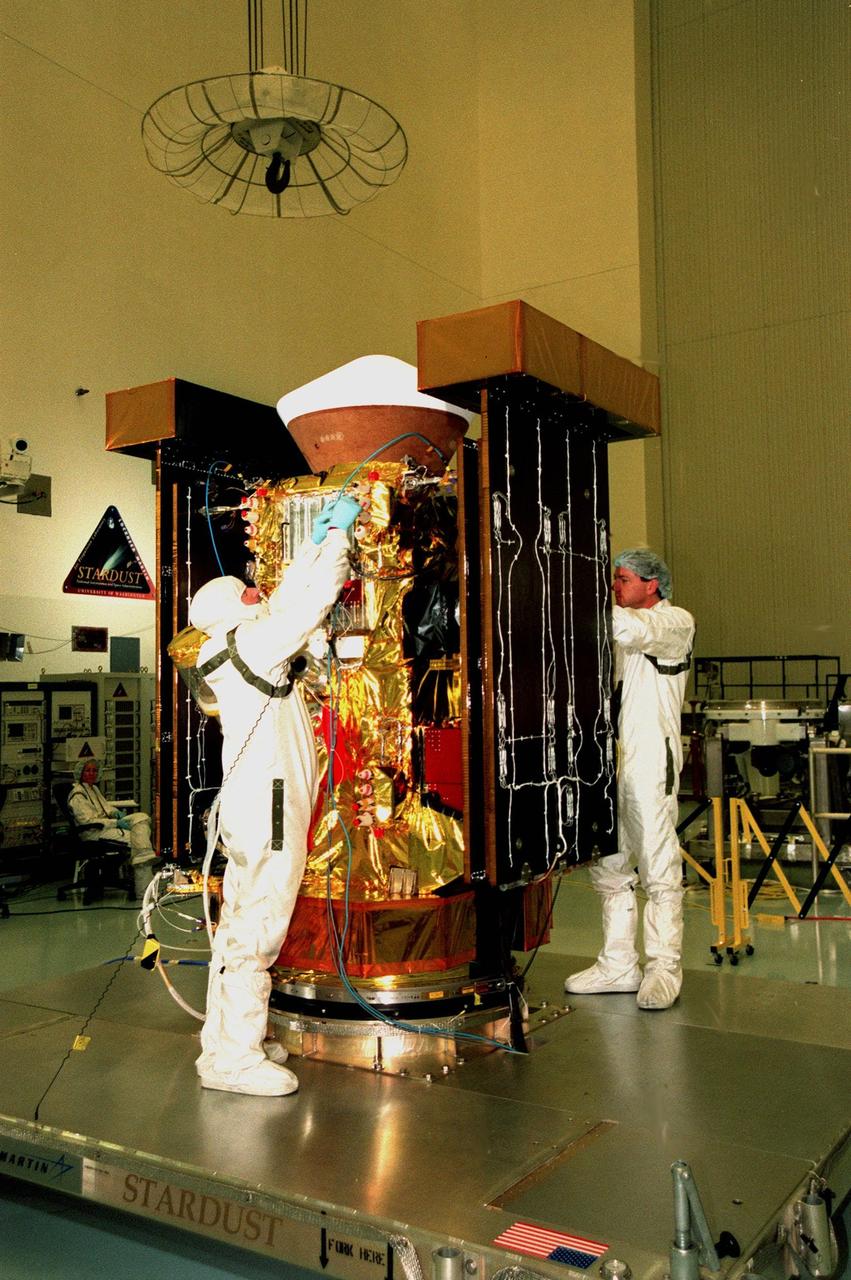
In the Payload Hazardous Servicing Facility, Randy Scott (left) and Pat Wedeman (right), with Lockheed Martin Astronautics, check the insulation material on the <a href="http://www-pao.ksc.nasa.gov/kscpao/captions/subjects/stardust.htm">Stardust</a> spacecraft. Stardust will use a unique medium called aerogel to capture comet particles flying off the nucleus of comet Wild 2 in January 2004, plus collect interstellar dust for later analysis. The collected samples will return to Earth in the SRC to be jettisoned as it swings by Earth in January 2006. Stardust is scheduled to be launched aboard a Boeing Delta 7426 rocket from Complex 17, Cape Canaveral Air Station, on Feb. 6, 1999
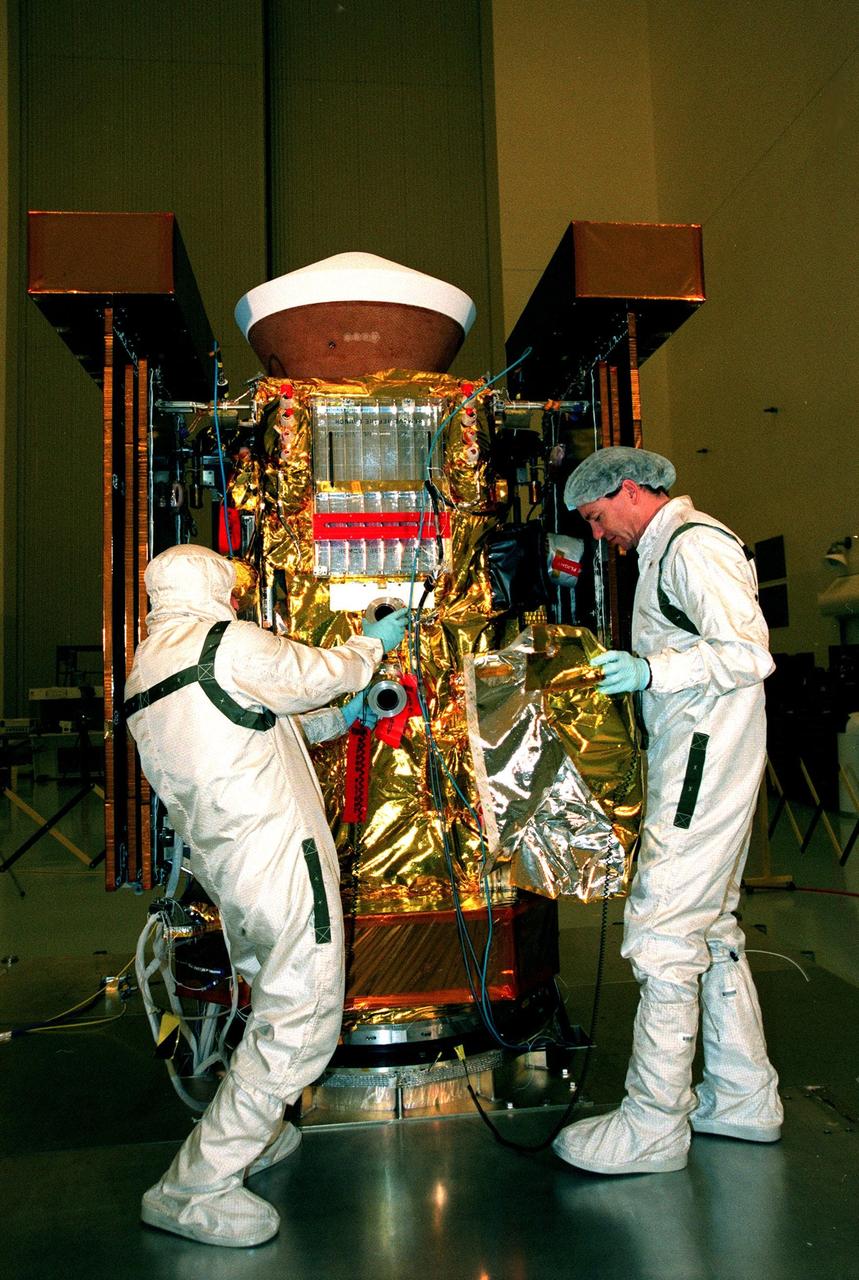
In the Payload Hazardous Servicing Facility, Randy Scott (left) and Pat Wedeman (right) , with Lockheed Martin Astronautics, insulate the <a href="http://www-pao.ksc.nasa.gov/kscpao/captions/subjects/stardust.htm">Stardust</a> spacecraft. Stardust will use a unique medium called aerogel to capture comet particles flying off the nucleus of comet Wild 2 in January 2004, plus collect interstellar dust for later analysis. The collected samples will return to Earth in the SRC to be jettisoned as it swings by Earth in January 2006. Stardust is scheduled to be launched aboard a Boeing Delta 7426 rocket from Complex 17, Cape Canaveral Air Station, on Feb. 6, 1999
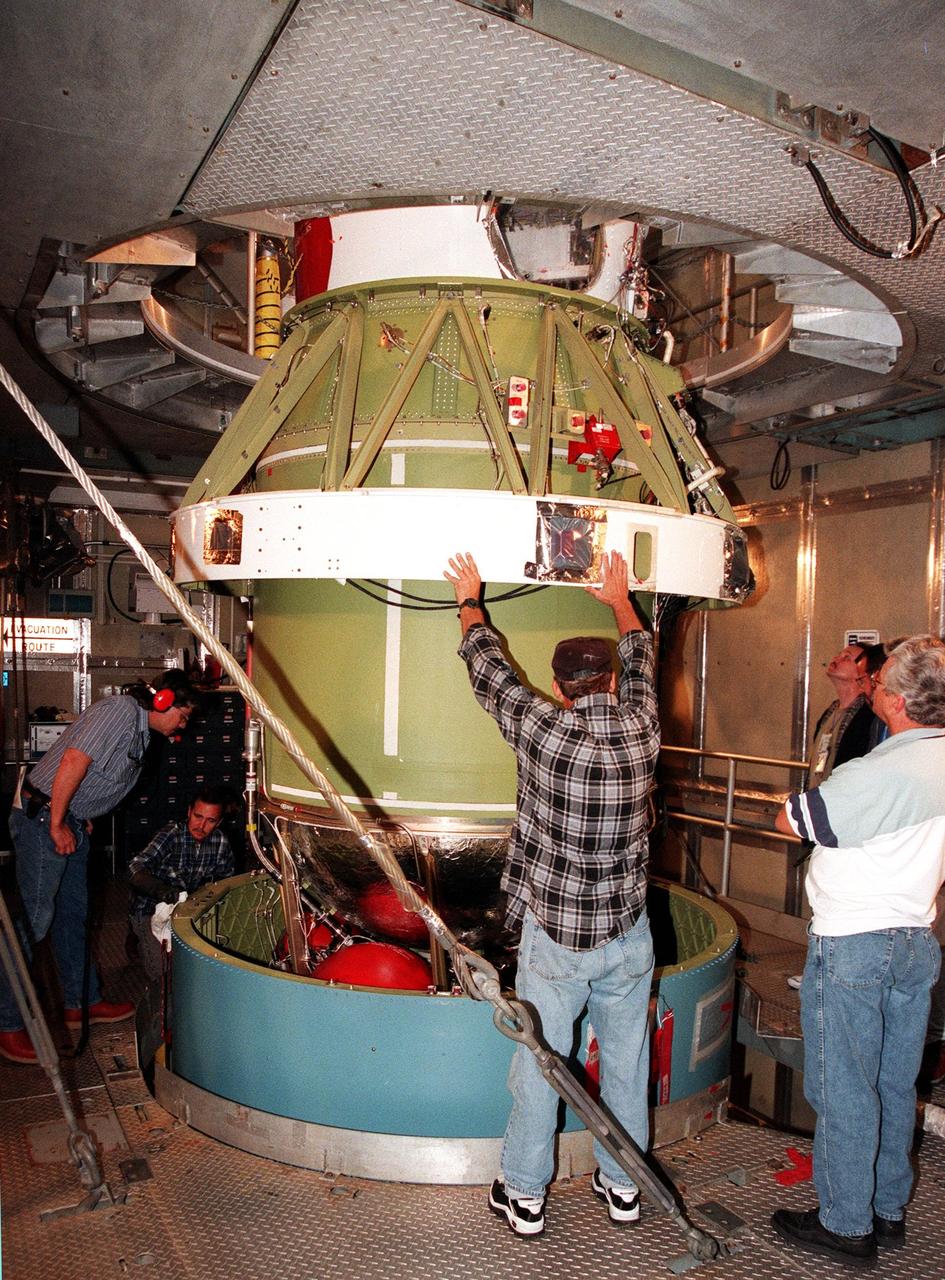
At Pad 17A, Cape Canaveral Air Station, a worker helps guide the second stage of a Boeing Delta II rocket as it is lowered for mating with the first stage. The rocket is targeted for launch on Feb. 6, carrying the <a href="http://www-pao.ksc.nasa.gov/kscpao/captions/subjects/stardust.htm">Stardust </a> spacecraft into space for a close encounter with the comet Wild 2 in January 2004. Using a substance called aerogel, Stardust will capture comet particles flying off the nucleus of the comet, plus collect interstellar dust for later analysis. The collected samples will return to Earth in a sample return capsule to be jettisoned as Stardust swings by Earth in January 2006
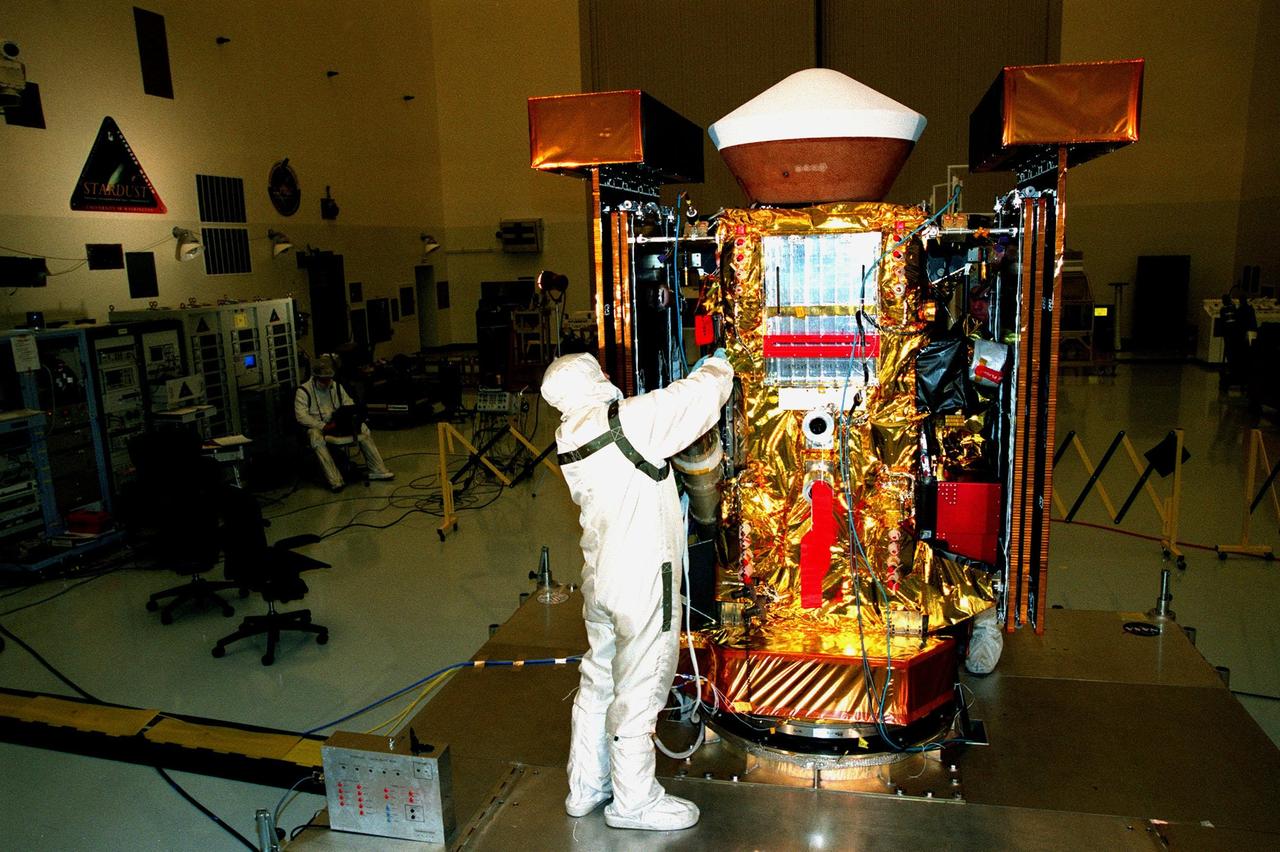
In the Payload Hazardous Servicing Facility, Randy Scott, with Lockheed Martin Astronautics, checks insulation material on the <a href="http://www-pao.ksc.nasa.gov/kscpao/captions/subjects/stardust.htm">Stardust</a> spacecraft. Stardust will use a unique medium called aerogel to capture comet particles flying off the nucleus of comet Wild 2 in January 2004, plus collect interstellar dust for later analysis. The collected samples will return to Earth in the SRC to be jettisoned as it swings by Earth in January 2006. Stardust is scheduled to be launched aboard a Boeing Delta 7426 rocket from Complex 17, Cape Canaveral Air Station, on Feb. 6, 1999
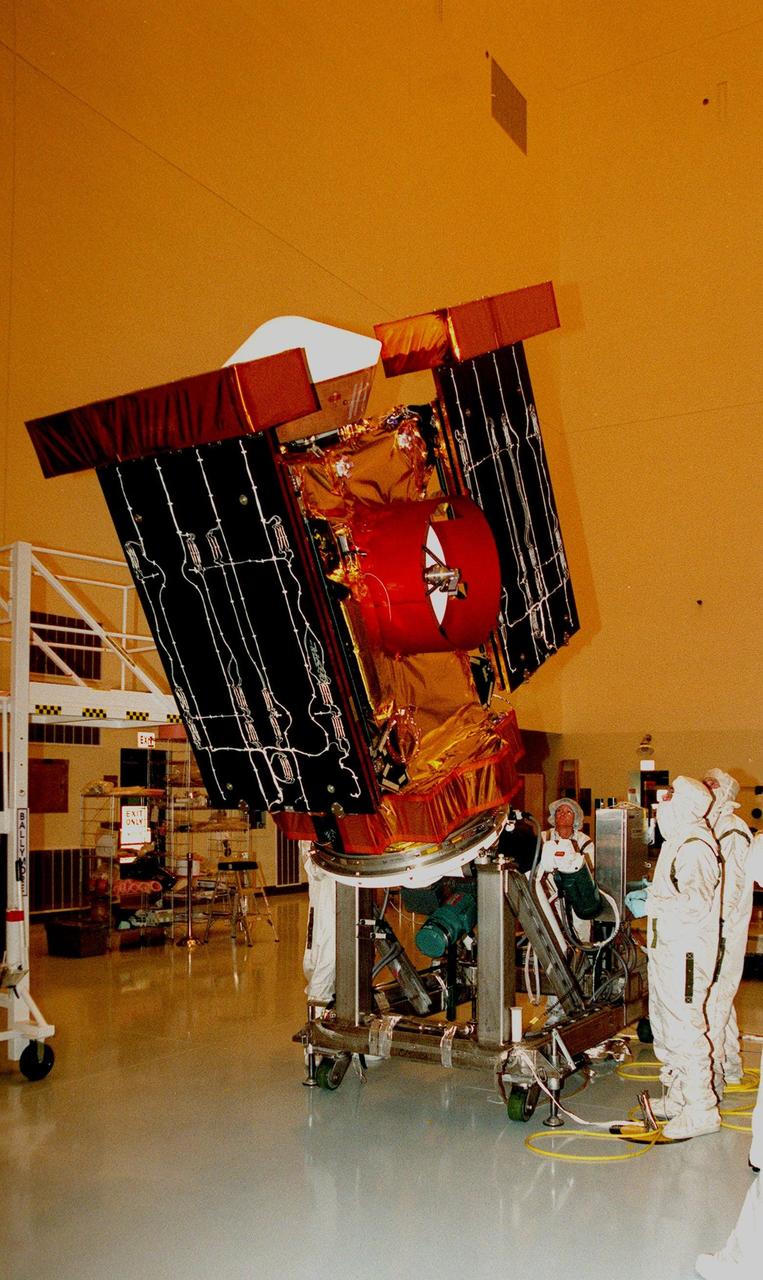
In the Payload Hazardous Servicing Facility, workers get ready to rotate the <a href="http://www-pao.ksc.nasa.gov/kscpao/captions/subjects/stardust.htm"> Stardust</a> spacecraft before deploying the solar panels (at left and right) for lighting tests. Stardust is scheduled to be launched aboard a Boeing Delta II rocket from Launch Pad 17A, Cape Canaveral Air Station, on Feb. 6, 1999, for a rendezvous with the comet Wild 2 in January 2004. Stardust will use a substance called aerogel to capture comet particles flying off the nucleus of the comet, plus collect interstellar dust for later analysis. The collected samples will return to Earth in a sample return capsule to be jettisoned as it swings by Earth in January 2006
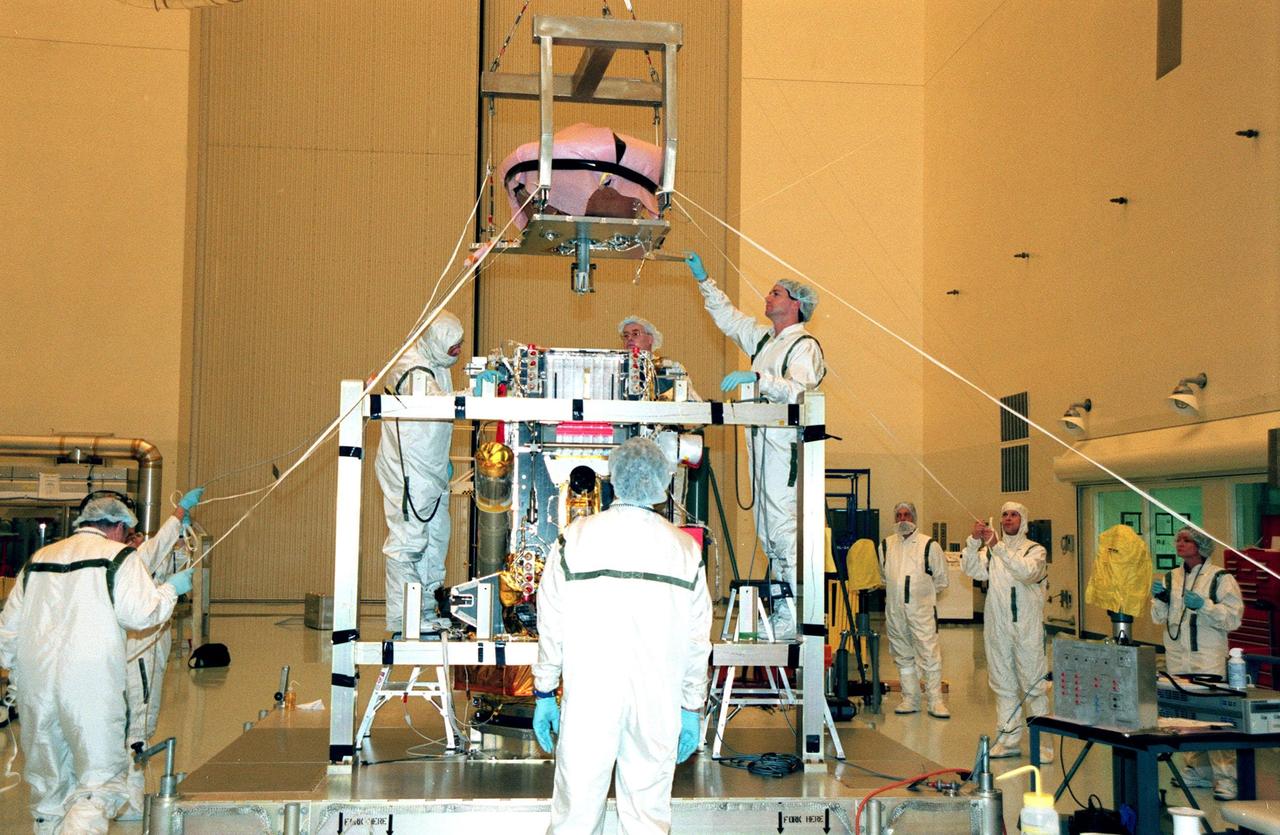
In the Payload Hazardous Servicing Facility, workers get ready to install the Sample Return Capsule (SRC) and -X spacecraft panel on the Stardust spacecraft . Stardust will use a unique medium called aerogel to capture comet particles flying off the nucleus of comet Wild 2 in January 2004, plus collect interstellar dust for later analysis. The collected samples will return to Earth in the SRC to be jettisoned as it swings by Earth in January 2006. Stardust is scheduled to be launched aboard a Boeing Delta 7426 rocket from Complex 17, Cape Canaveral Air Station, on Feb. 6, 1999
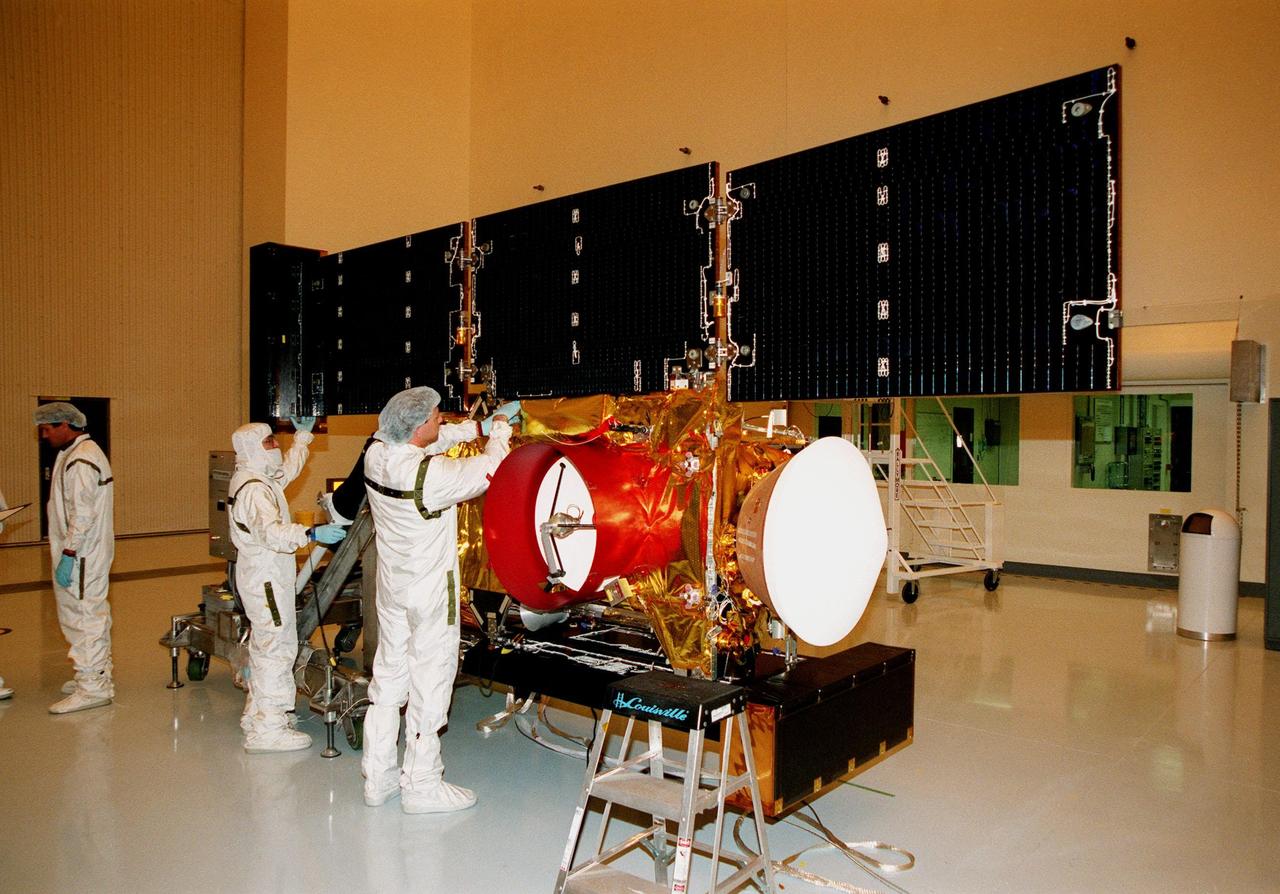
In the Payload Hazardous Servicing Facility, workers adjust the solar panels of the <a href="http://www-pao.ksc.nasa.gov/kscpao/captions/subjects/stardust.htm"> Stardust</a>spacecraft before performing lighting tests. Stardust is scheduled to be launched aboard a Boeing Delta II rocket from Launch Pad 17A, Cape Canaveral Air Station, on Feb. 6, 1999, for a rendezvous with the comet Wild 2 in January 2004. Stardust will use a substance called aerogel to capture comet particles flying off the nucleus of the comet, plus collect interstellar dust for later analysis. The collected samples will return to Earth in a sample return capsule to be jettisoned as it swings by Earth in January 2006
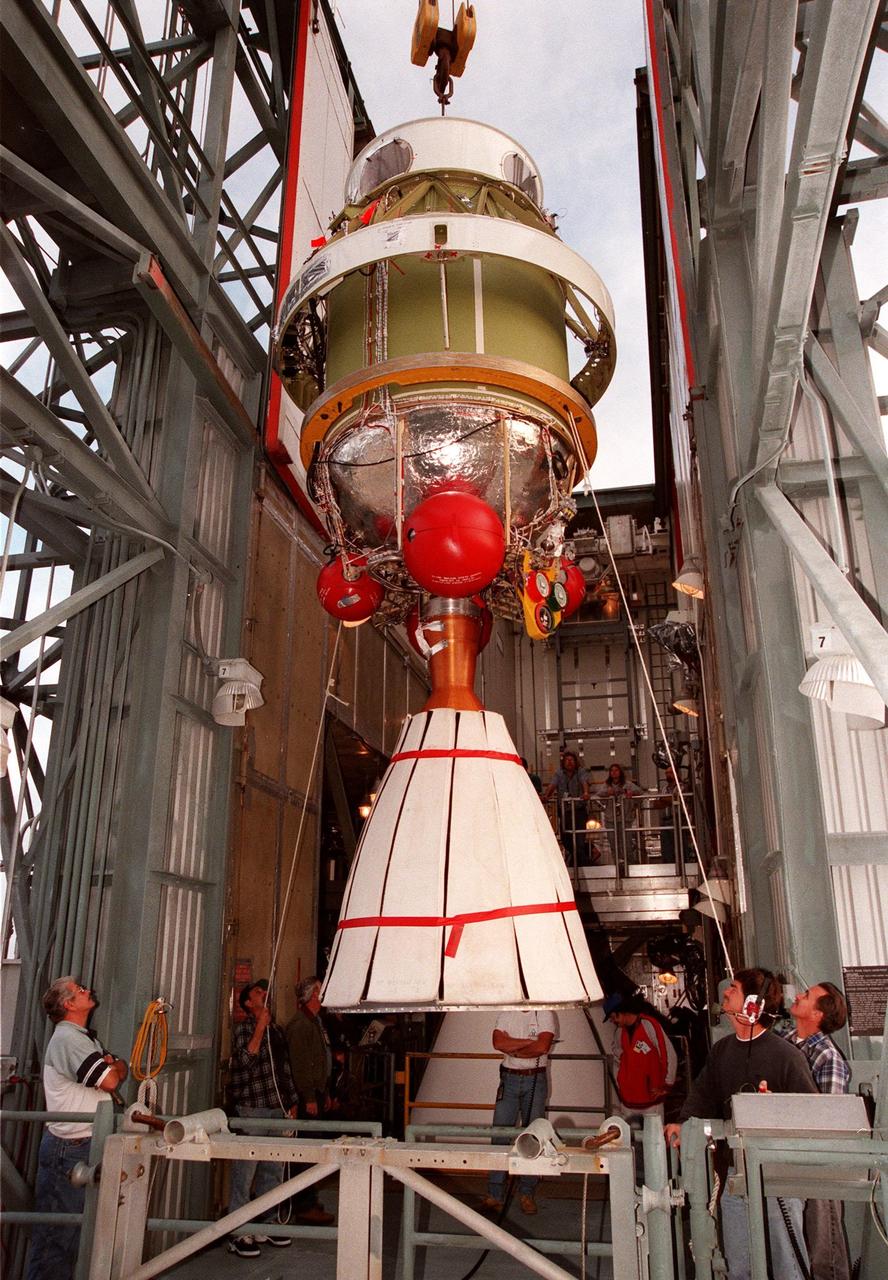
The second stage of a Boeing Delta II rocket arrives at the top of the tower at Pad 17A, Cape Canaveral Air Station for mating with the first stage. The rocket is targeted for launch on Feb. 6, carrying the <a href="http://www-pao.ksc.nasa.gov/kscpao/captions/subjects/stardust.htm">Stardust </a>spacecraft into space for a close encounter with the comet Wild 2 in January 2004. Using a substance called aerogel, Stardust will capture comet particles flying off the nucleus of the comet, plus collect interstellar dust for later analysis. The collected samples will return to Earth in a sample return capsule to be jettisoned as Stardust swings by Earth in January 2006
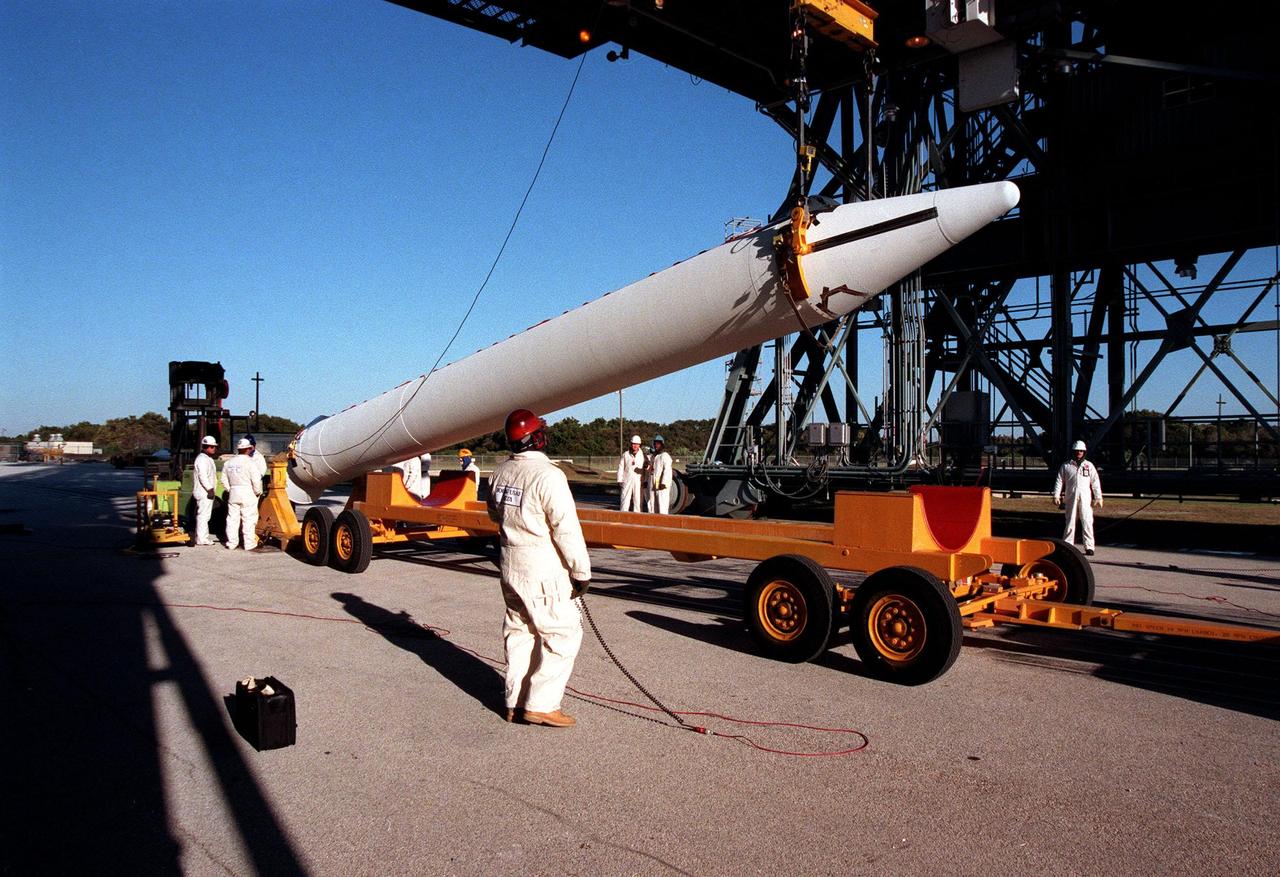
A solid rocket booster is lifted off a transport vehicle for its transfer to the mobile launch tower at Pad 17A, Cape Canaveral Air Station. It will be mated with a Boeing Delta II rocket that will carry the Stardust spacecraft into space for a close encounter with the comet Wild 2 in January 2004. Using a medium called aerogel, Stardust will capture comet particles flying off the nucleus of the comet, plus collect interstellar dust for later analysis. The collected samples will return to Earth in a sample return capsule to be jettisoned as Stardust swings by Earth in January 2006. Stardust is scheduled to be launched on Feb. 6, 1999
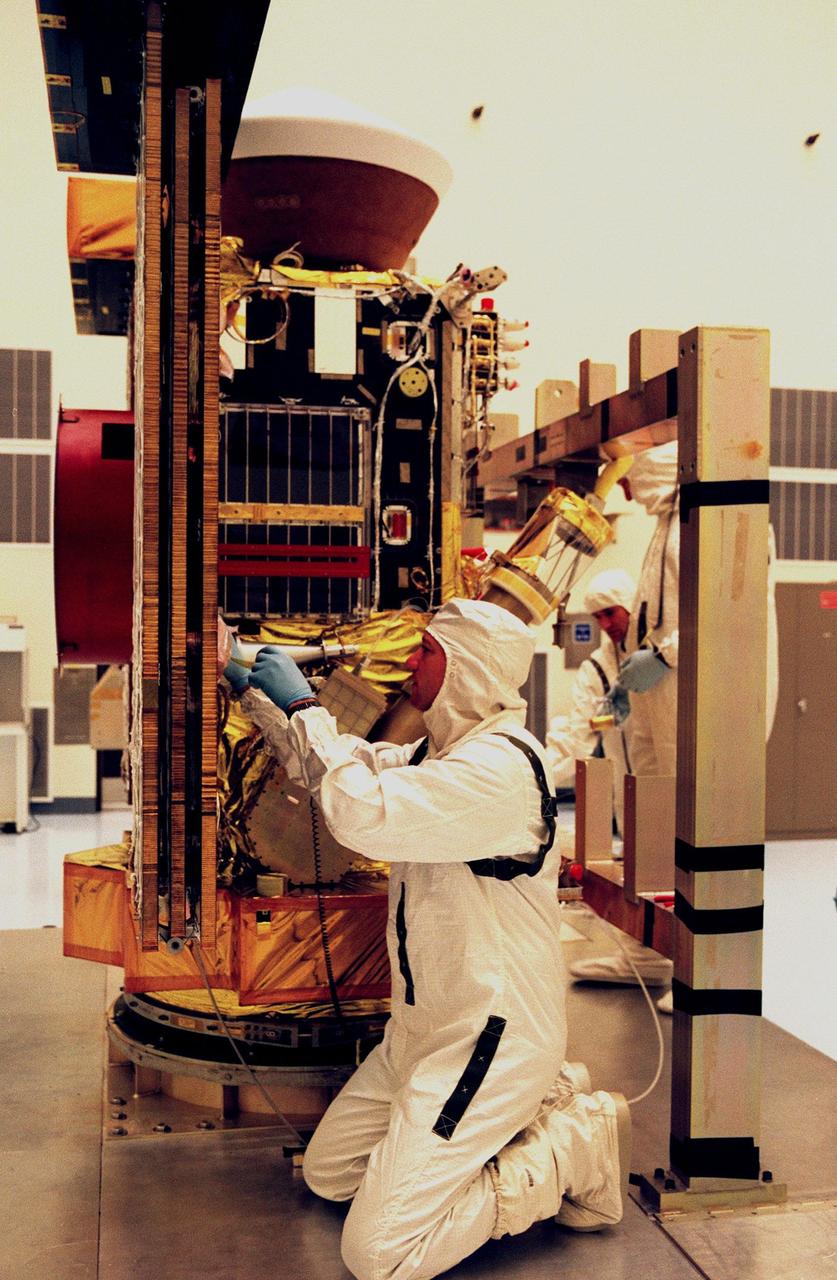
In the Payload Hazardous Servicing Facility, workers remove the Stardust solar panels for testing. The spacecraft Stardust will use a unique medium called aerogel to capture comet particles flying off the nucleus of comet Wild 2 in January 2004, plus collect interstellar dust for later analysis. Stardust will be launched aboard a Boeing Delta 7426 rocket from Complex 17, Cape Canaveral Air Station, targeted for Feb. 6, 1999. The collected samples will return to Earth in a re-entry capsule (seen at the top of the spacecraft in this photo) to be jettisoned from Stardust as it swings by Earth in January 2006
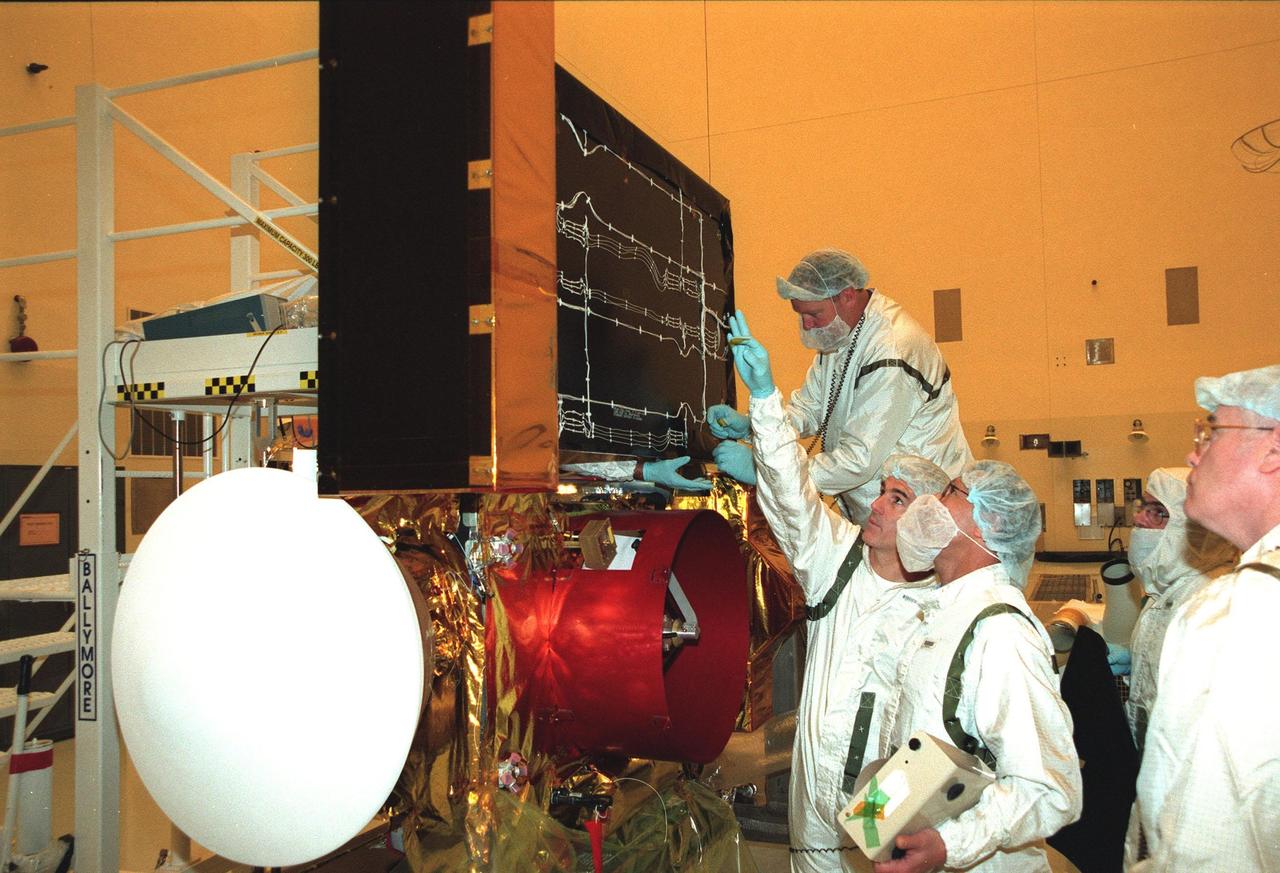
Workers in the Payload Hazardous Servicing Facility check solar panels on the <a href="http://www-pao.ksc.nasa.gov/kscpao/captions/subjects/stardust.htm"> Stardust</a> spacecraft before performing lighting tests. Stardust is scheduled to be launched aboard a Boeing Delta II rocket from Launch Pad 17A, Cape Canaveral Air Station, on Feb. 6, 1999, for a rendezvous with the comet Wild 2 in January 2004. Stardust will use a substance called aerogel to capture comet particles flying off the nucleus of the comet, plus collect interstellar dust for later analysis. The collected samples will return to Earth in a sample return capsule (its white cap is seen on the left) to be jettisoned as it swings by Earth in January 2006
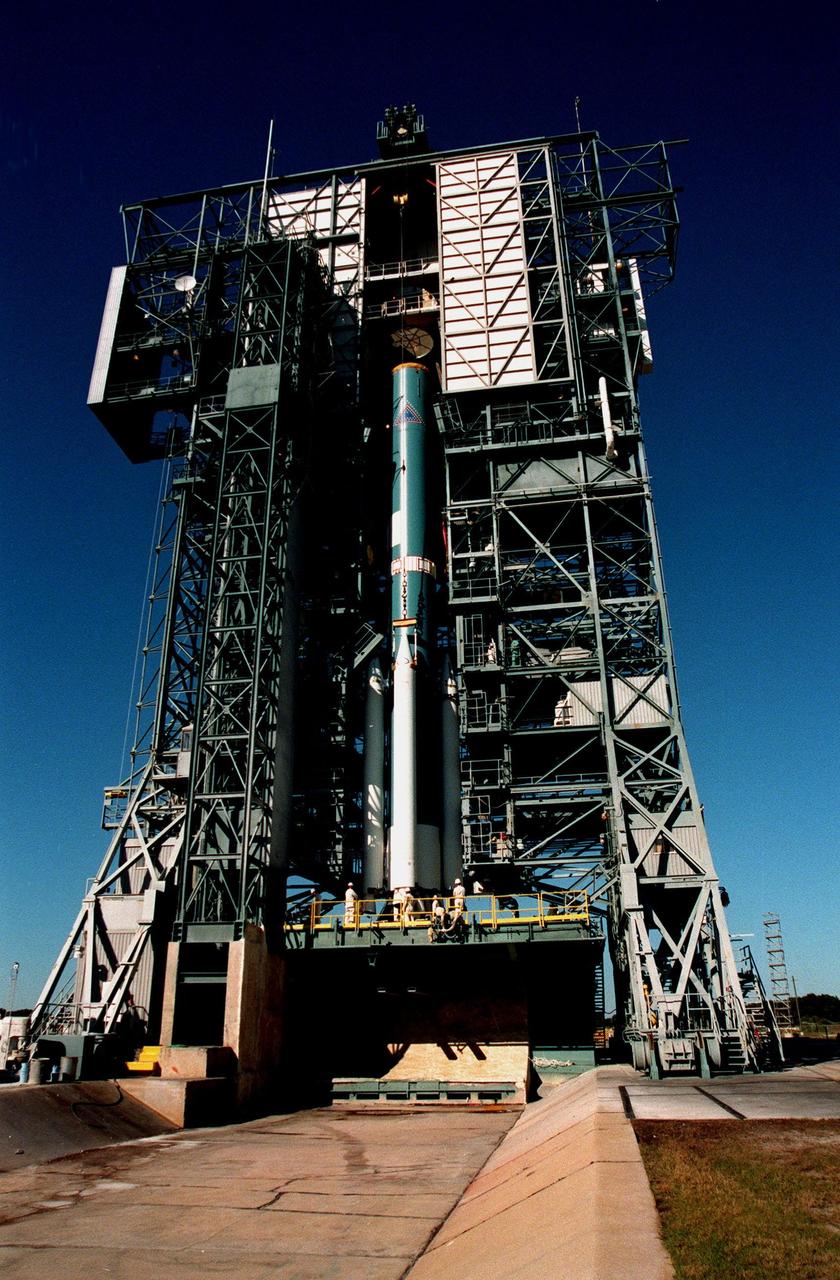
At Pad 17A, Cape Canaveral Air Station, a Boeing Delta II rocket waits with its four solid rocket boosters for final preparations to launch the Stardust satellite on Feb. 6, 1999. The rocket will carry Stardust into space for a close encounter with the comet Wild 2 in January 2004. Using a medium called aerogel, Stardust will capture comet particles flying off the nucleus of the comet, plus collect interstellar dust for later analysis. The collected samples will return to Earth in a Sample Return Capsule to be jettisoned as Stardust swings by Earth in January 2006
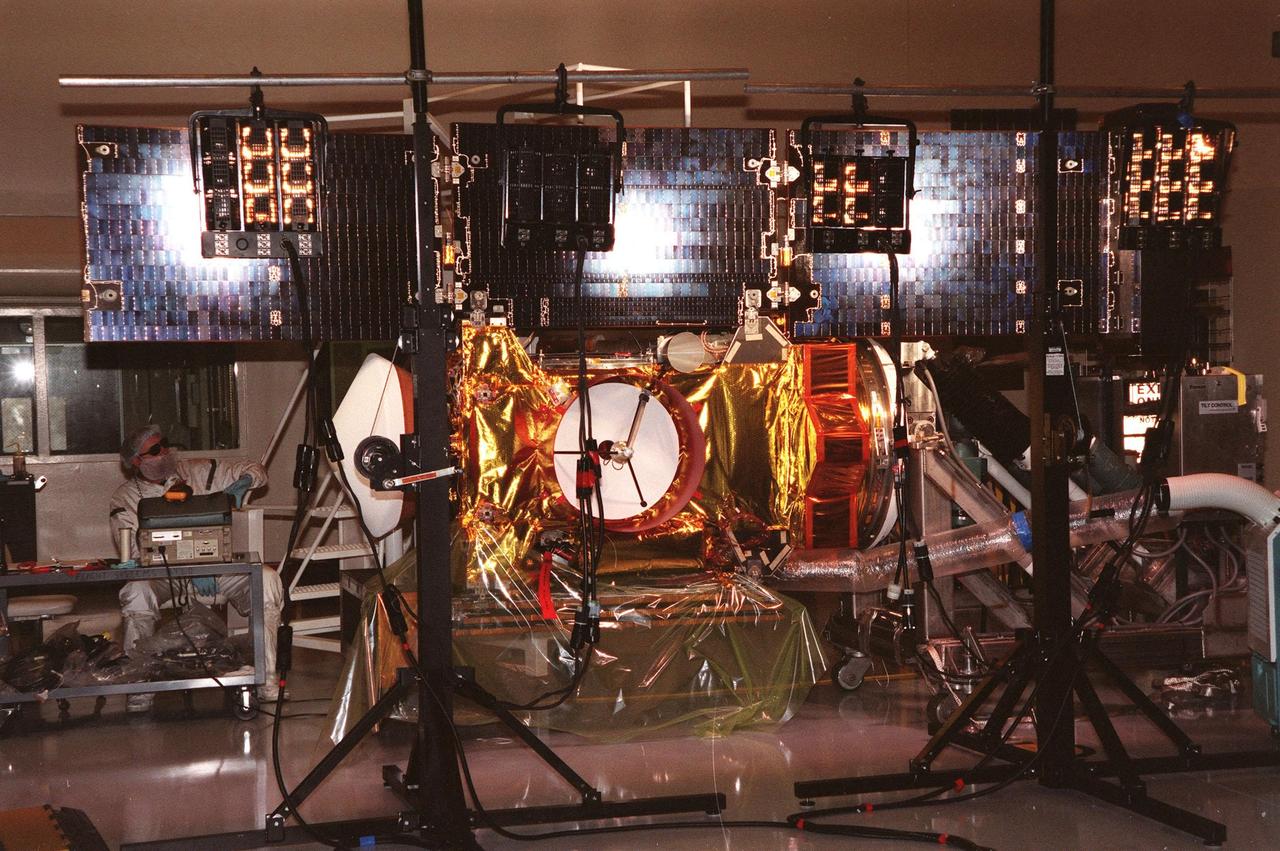
In the Payload Hazardous Servicing Facility, a worker (left) conducts lighting tests on the fully extended solar panels of the <a href="http://www-pao.ksc.nasa.gov/kscpao/captions/subjects/stardust.htm"> Stardust</a>spacecraft. Stardust is scheduled to be launched aboard a Boeing Delta II rocket from Launch Pad 17A, Cape Canaveral Air Station, on Feb. 6, 1999, for a rendezvous with the comet Wild 2 in January 2004. Stardust will use a substance called aerogel to capture comet particles flying off the nucleus of the comet, plus collect interstellar dust for later analysis. The collected samples will return to Earth in a sample return capsule to be jettisoned as it swings by Earth in January 2006