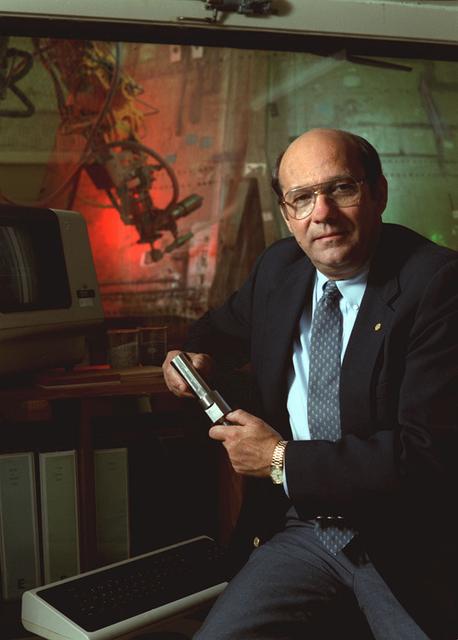
Marshall's fifth Center Director, James R. Thompson (1986-1989), in the control room of the Solid Rocket Booster (SRB)automated thermal protection system (TPS) removal facility. Under Dr. Thompson's leadership, the shuttle program was rekindled after the Challenger explosion. Return to Flight kept NASA 's future programs alive.
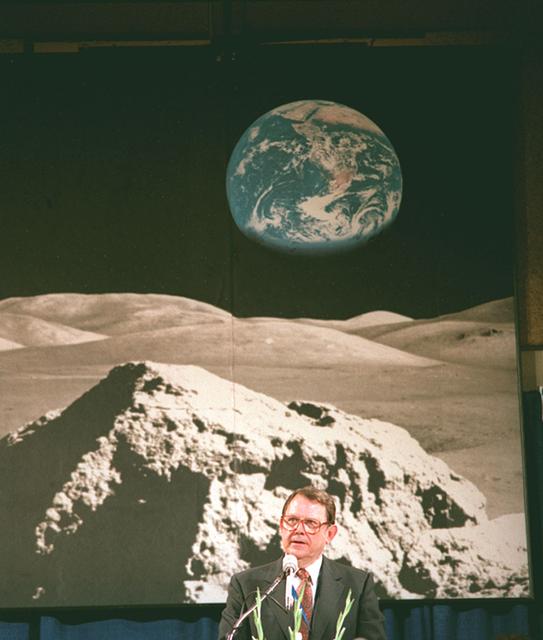
Dr. William R. Lucas, Marshall's fourth Center Director (1974-1986), delivers a speech in front of a picture of the lunar landscape with Earth looming in the background while attending a Huntsville Chamber of Commerce reception honoring his achievements as Director of Marshall Space Flight Center (MSFC).
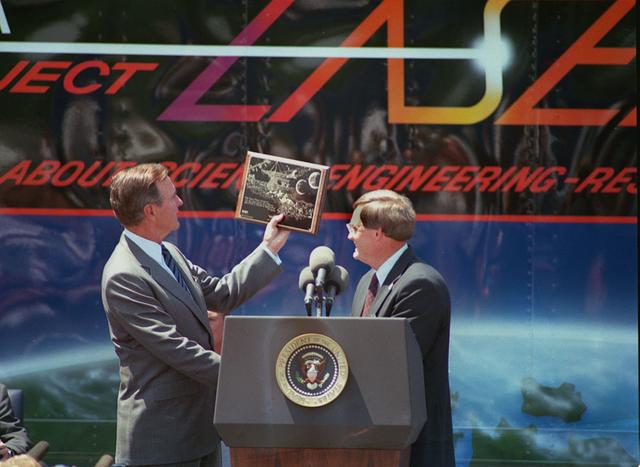
President George Bush receives a placque commemorating the quincentenary of Columbus' voyage to the new world and exploration from Marshall's sixth Center Director Thomas J. Lee (1989-1994) during an address to Marshall employees. The three replicas of Columbus' ships, the Nina, the Pinta, and the Santa Maria sailed by the launch pad at Kennedy Space Center while STS-52 Columbia awaited launch on the anniversary of Columbus' arrival in the New World.
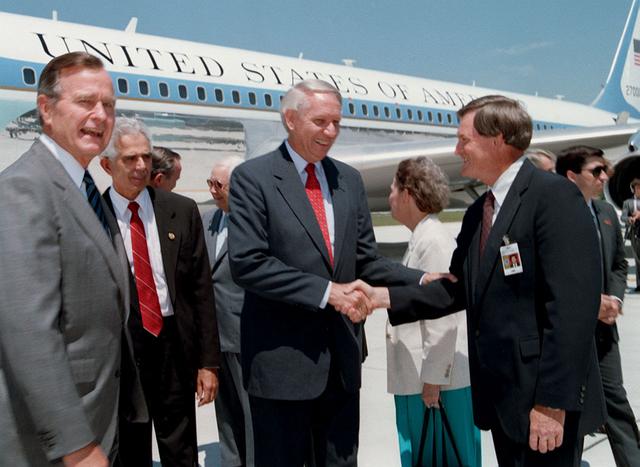
President George Bush and Alabama Governor Guy Hunt are greeted by Marshall's sixth Center Director Thomas J. Lee (1989-1994) upon their arrival at Redstone Arsenal (RSA) airfield. This was the first sitting president to visit Marshall Space Flight Center (MSFC) since President Kennedy's visit almost 30 years ago.
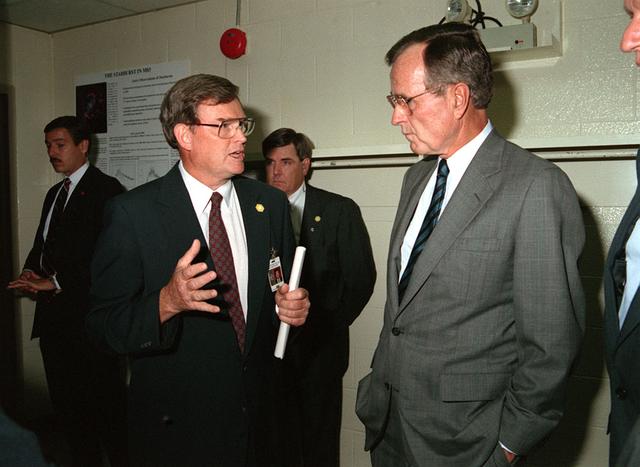
President George Bush is taken for a tour of Huntsville Operations Support Center (HOSC) by Marshall's sixth Center Director Thomas J. Lee (1989-1994).
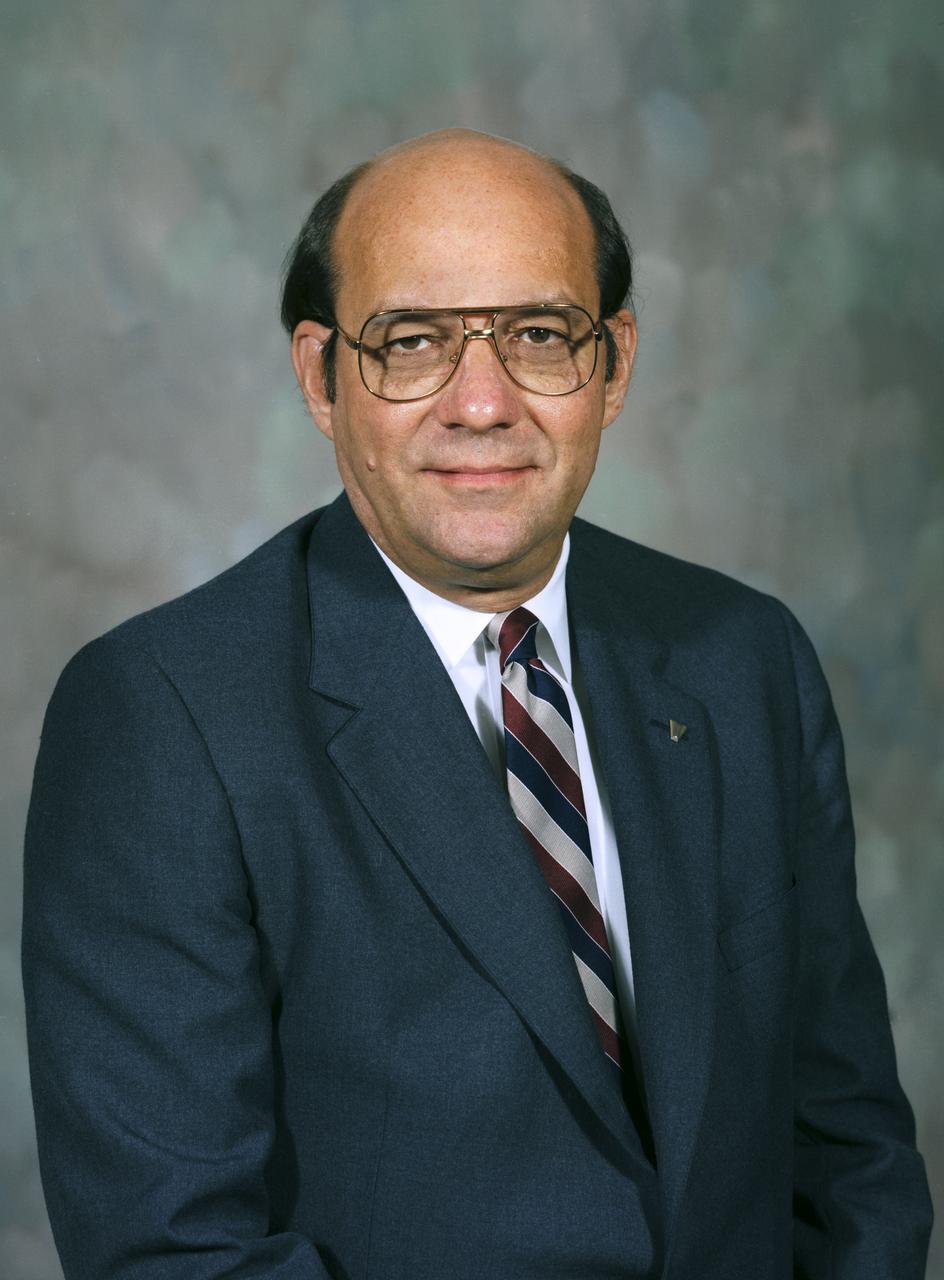
James R. Thompon served as director of the Marshall Space Flight Center from September 29, 1986 until July 6, 1989, when he was appointed as NASA Deputy Administrator. Prior to his tenure as Marshall's Director, Thompson served from March to June 1986 as the vice-chairman of the NASA task force investigating the cause of the Space Shuttle Challenger accident. He was credited with playing a significant role in returning the Space Shuttle to flight following the Challenger disaster.
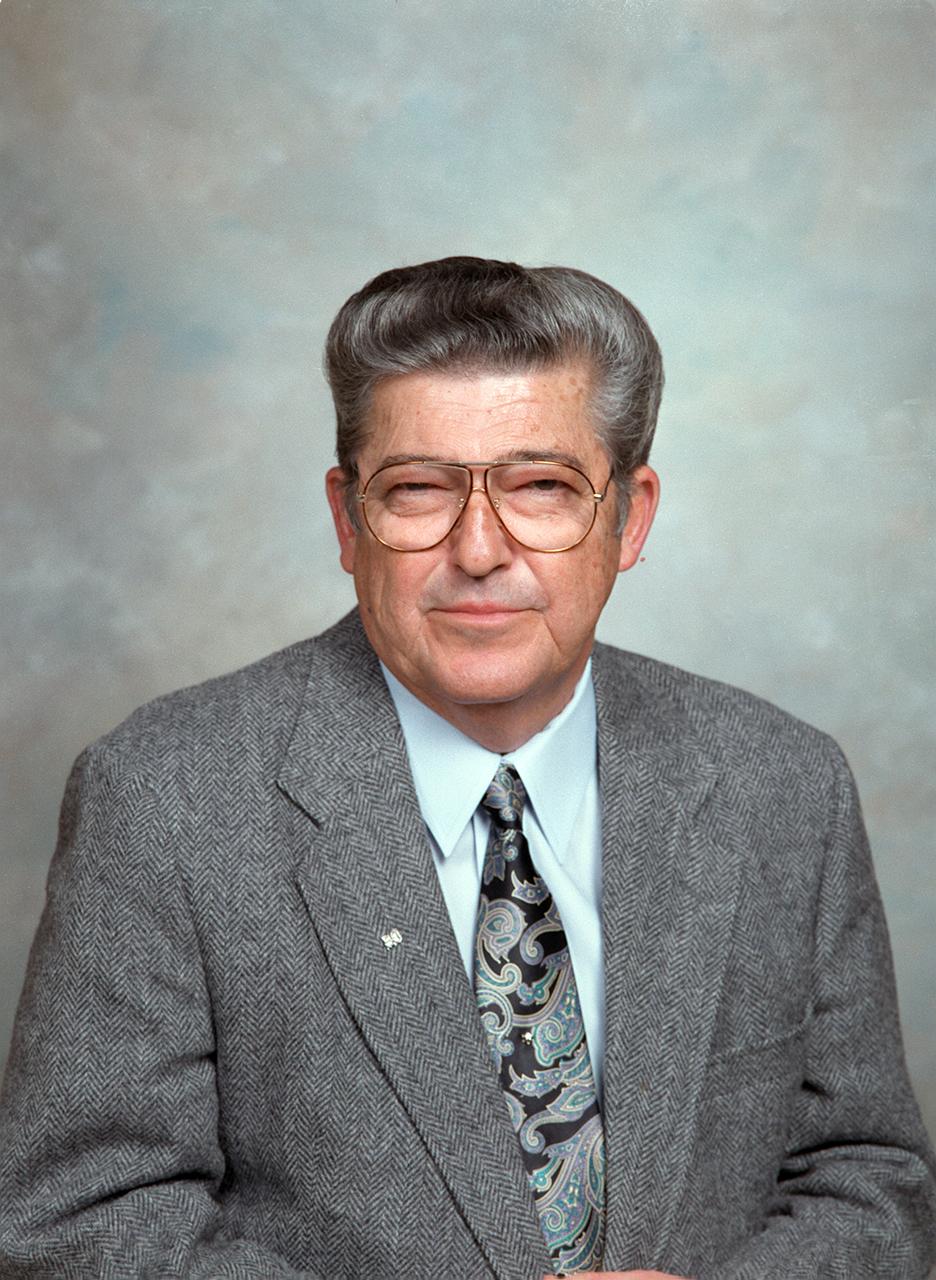
Gene Porter Bridwell served as the director of the Marshall Space Flight Center from January 6, 1994 until February 3, 1996, when he retired from NASA after thirty-four years service. Bridwell, a Marshall employee since 1962, had been Marshall's Space Shuttle Projects Office Director and Space Station Redesign Team deputy manager. Under Bridwell, Marshall worked to develop its role as a Center of Excellence for propulsion and for providing access to space.
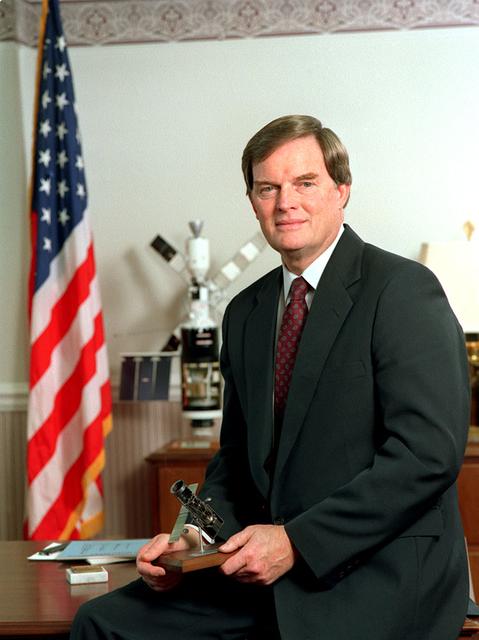
Informal executive portrait of Marshall's sixth Center Director Thomas J. Lee (1989-1994) holding a model of the Hubble Space Telescope (HST).

Portrait of Marshall's eighth Center Director Dr. Jerroll W. Littles (1996-1998). During the two short years as Center Director, Dr. Littles' administration was responsible for the space lab mission, the space science projects, alternative light-weight launch vehicles and their engine development.
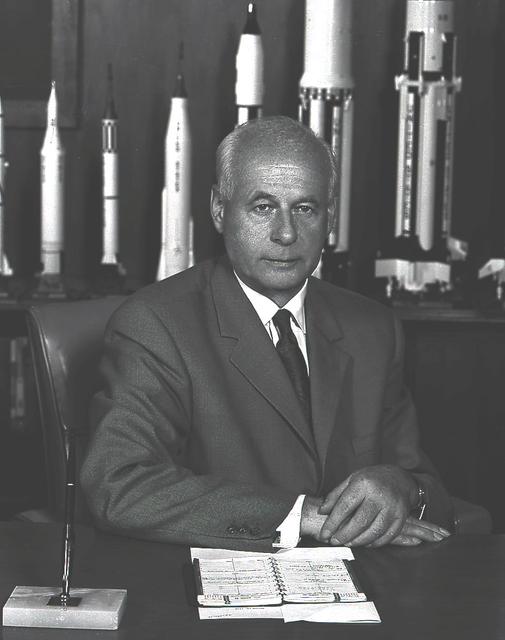
Official portrait of Marshall's second Center Director Dr. Eberhard F. Rees (1970-1973).
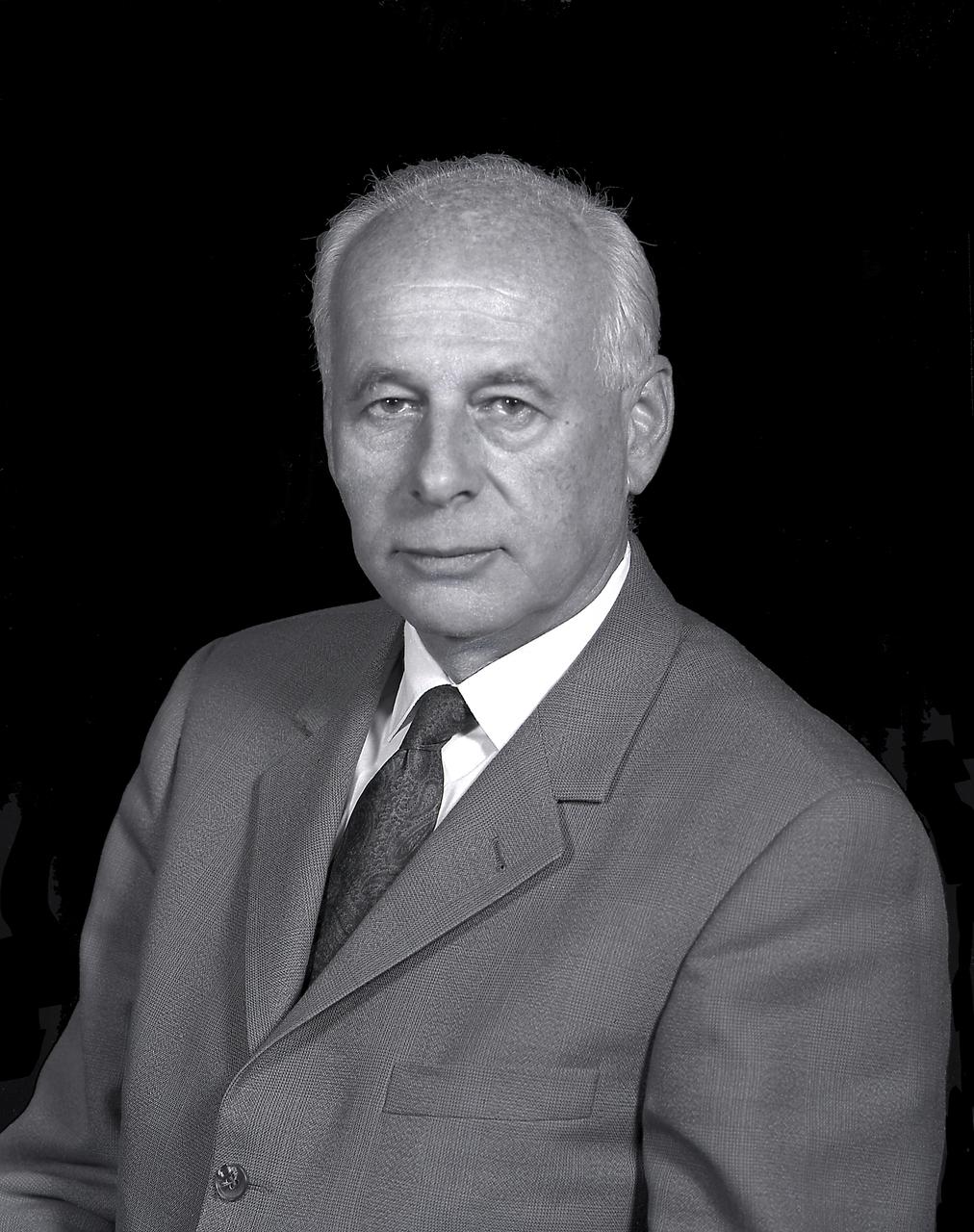
Dr. Eberhard Rees served as director of the Marshall Space Flight Center from March 1, 1970 until January 19, 1973 when he retired from NASA. Prior to his appointment as Director, Rees served as the Center's deputy director under Dr. Wernher von Braun, 1960-1970. Rees came to the United States as part of the Dr. Wernher von Braun's German Rocket team following World War II. He transferred to Huntsville, Alabama from Fort Bliss, Texas in 1950 to work for the Army's rocket program at Redstone Arsenal. From 1956 to 1960 he served as deputy director of development operations at the Army Ballistic Missile Agency under von Braun. In 1960 Rees was transferred to NASA's Marshall Center.
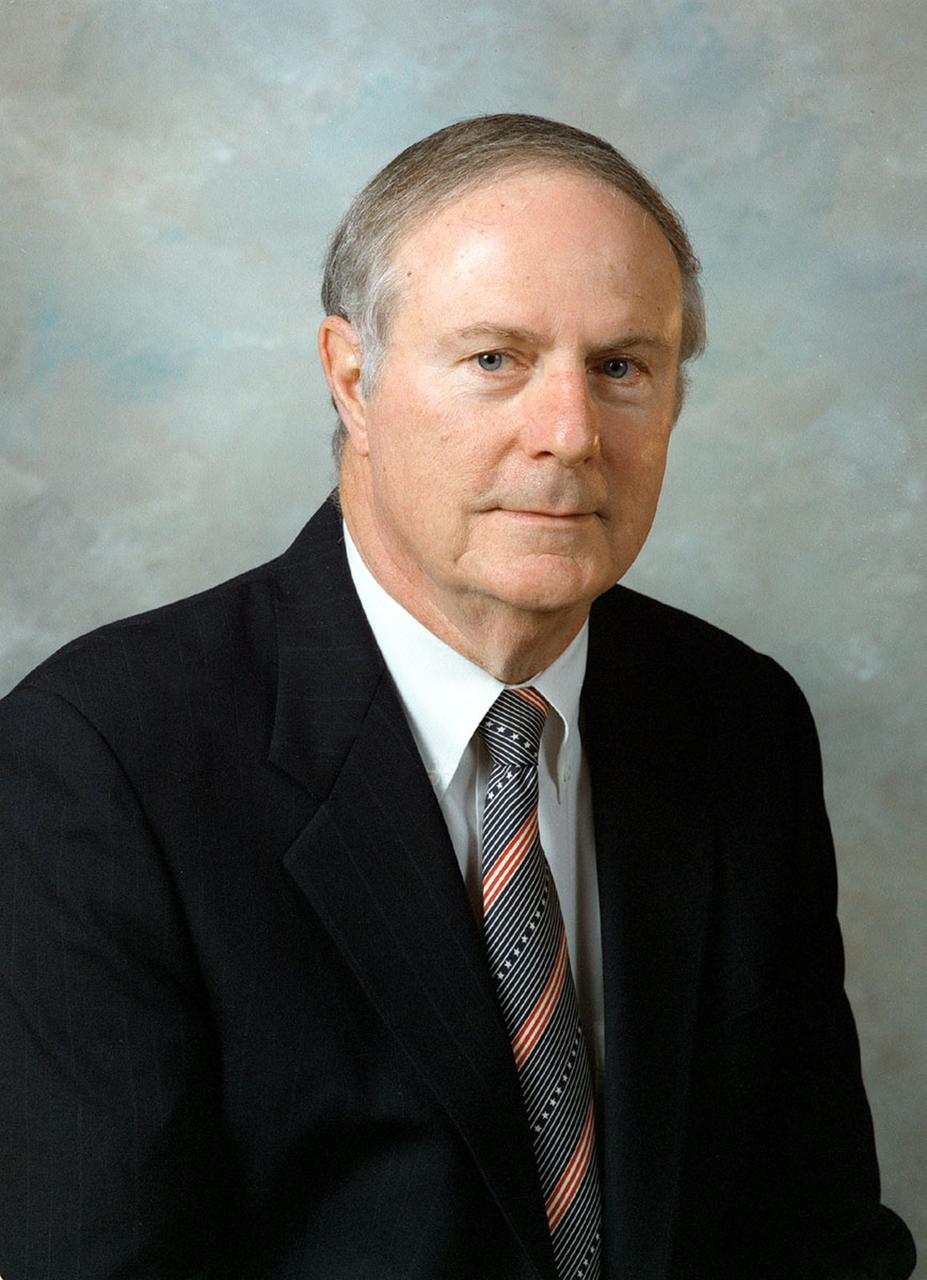
Dr. J. Wayne Littles served as director of the Marshall Space Flight Center from February 3, 1996 until his retirement from NASA, January 3, 1998. Prior to his appointment as Center Director, Littles served as NASA Associate Administrator for the Office of Space Flight (1994-1996). Littles began his NASA career in 1967 when he worked as an engineer in Marshall's former Propulsion and Vehicle Engineering Directorate. He worked in various capacities at the Marshall Center, including Science Engineering Director (1988-1989) and Center Deputy Director (1989-1994) before transferring to NASA Headquarters in 1994.
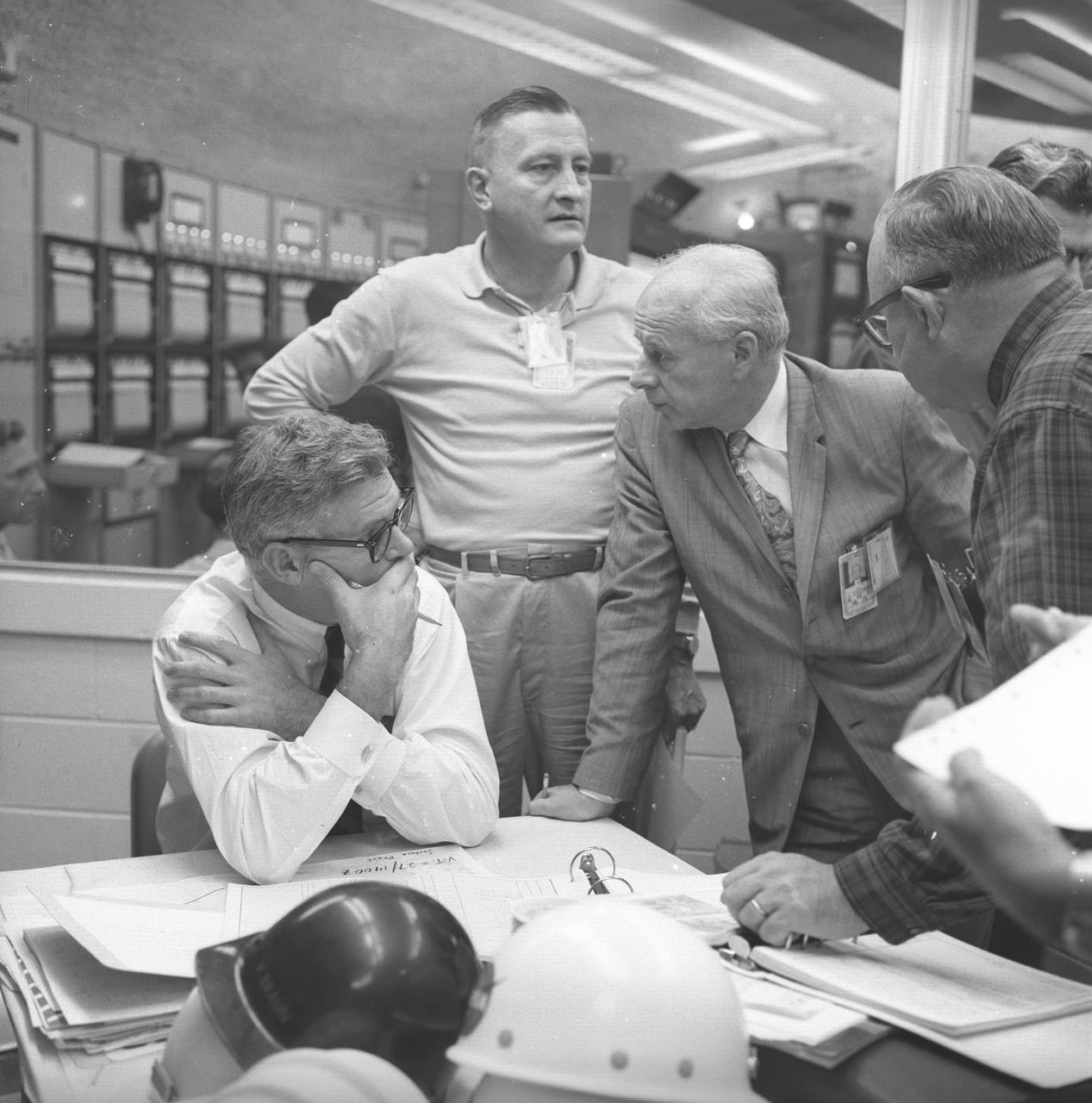
Dr. Eberhard Rees surrounded by other rocket scientist in the blockhouse, a safe viewing area for rocket tests or launches, during a missile launch. Dr. Rees, Marshall's second Center Director (1970-1973), kept most of Von Braun's plans alive but also succeeded in bringing the Saturn program to forebearance.
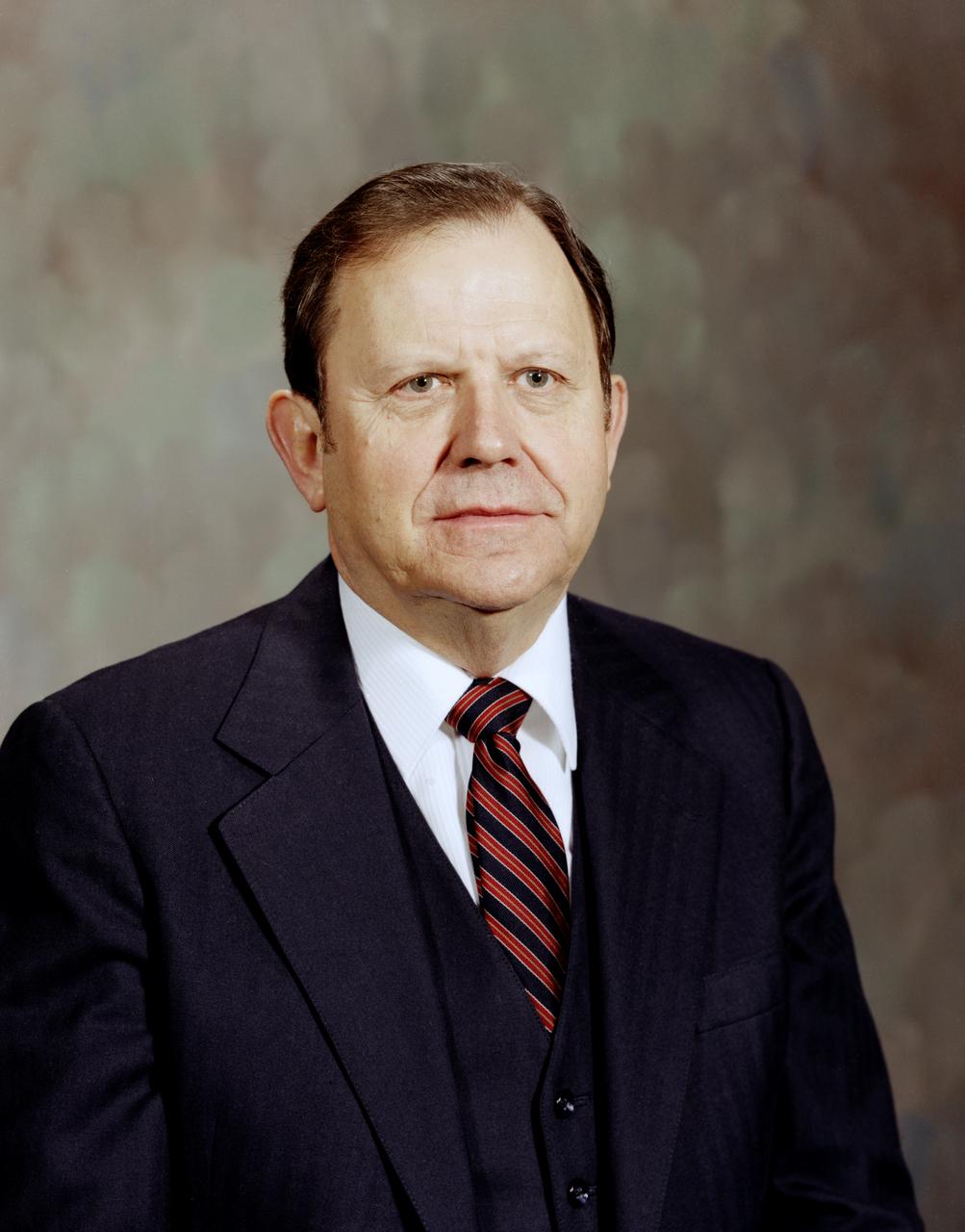
Dr. William R. Lucas served as Marshall Space Flight Center Director from June 15, 1974 until July 3, 1986, when he retired after thirty-four years of civil service. Prior to the appointment, Lucas served as Center Deputy Director (1971-1974), Program Development Director (1968-1971), Astronautics Laboratory Director (1966-1968), and Propulsion and Vehicle Laboratory Director (1960-1966).
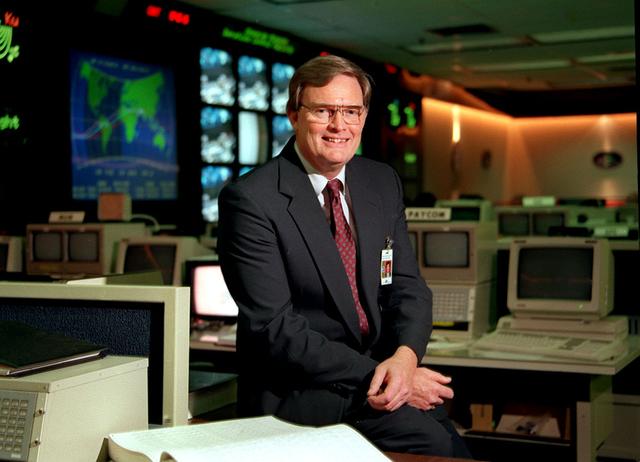
Marshall's sixth Center Director Thomas J. Lee (1989-1994) touring the Payload Operations Control Center (POCC). The Hubble Space Telescope (HST) saw its launch into orbit under the leadership of Dr. Lee's administration.
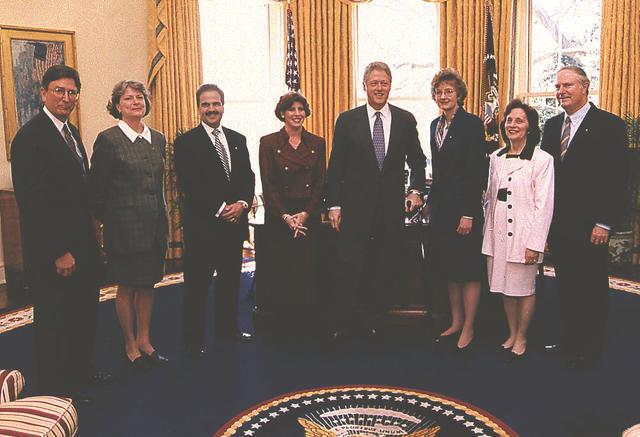
Marshall's eighth Center Director Dr. Jerroll W. Littles (1996-1998) and his wife are pictured with President Bill Clinton in the Oval Office of the White House following the presentation of the Presidential Rank Award for Distinguished Service. Other NASA honorees and their spouses are also pictured.
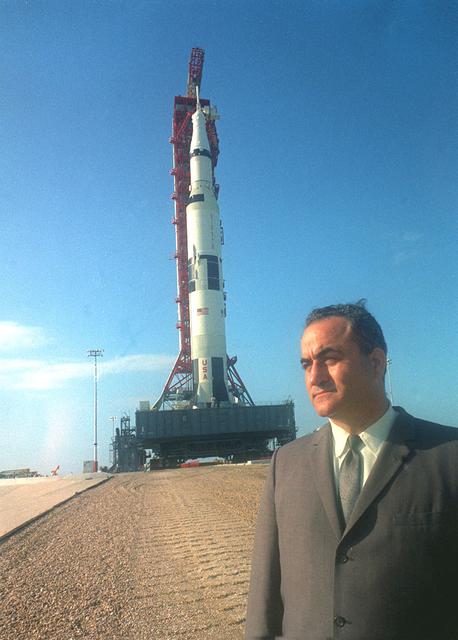
Portrait of Marshall's third Center Director Dr. Rocco A. Petrone (1973-1974) standing in front of a Saturn V rocket. Dr. Petrone personally supervised the Apollo 11 Mission and then became Director of the Apollo program in 1969 before coming to Marshall. At Marshall he continued to direct the marned space flight programs.
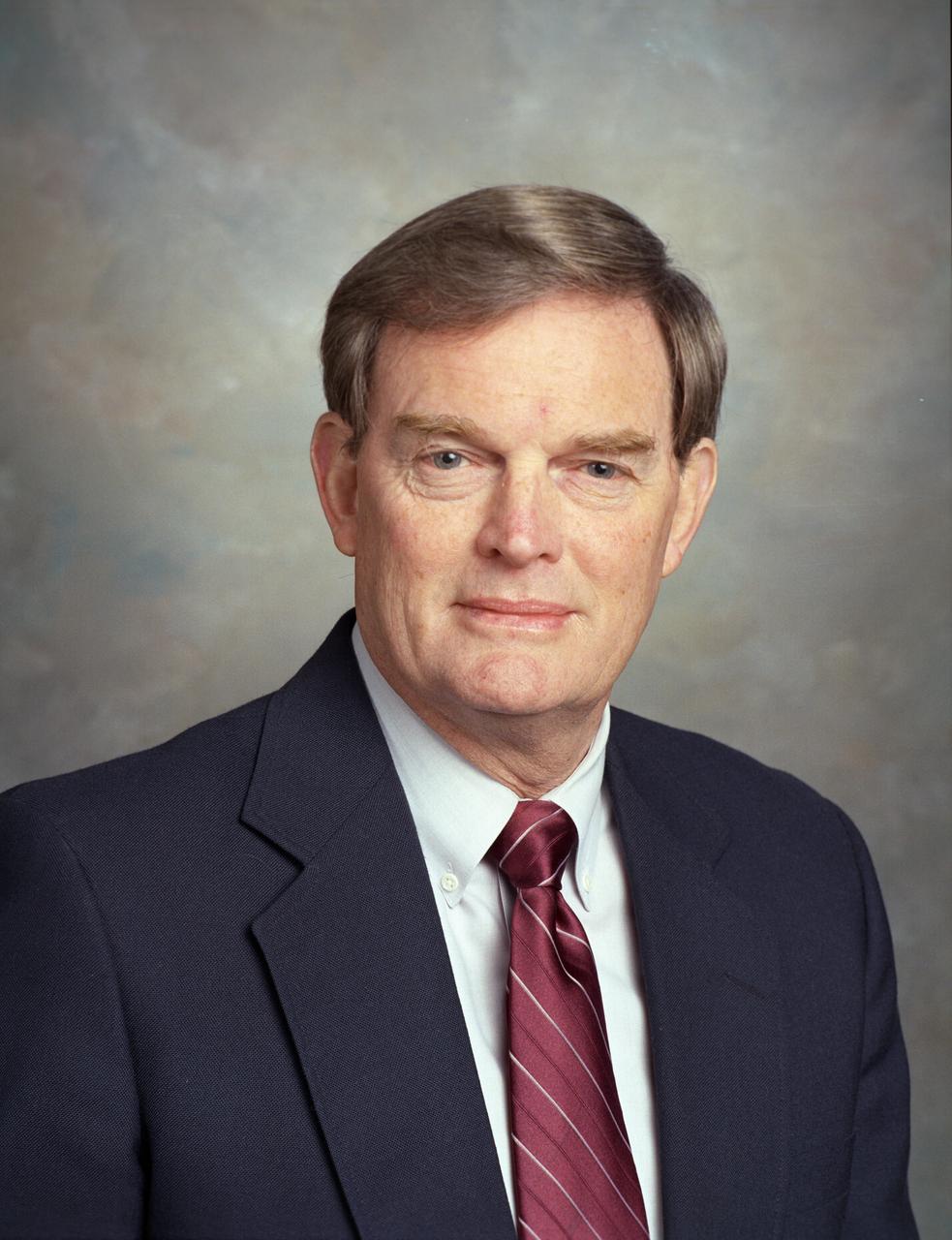
Thomas Jack Lee served as the sixth director of the Marshall Space Flight Center from July 6, 1989 to January 6, 1994. Prior to the appointment, Lee held positions as Center Deputy Director (1980 - 1989) and Spacelab Program Manager (1973 - 1980). Lee began his NASA career in July 1960 when he transferred to the newly formed MSFC from Redstone Arsenal's Army Ballistic Missile Agency.
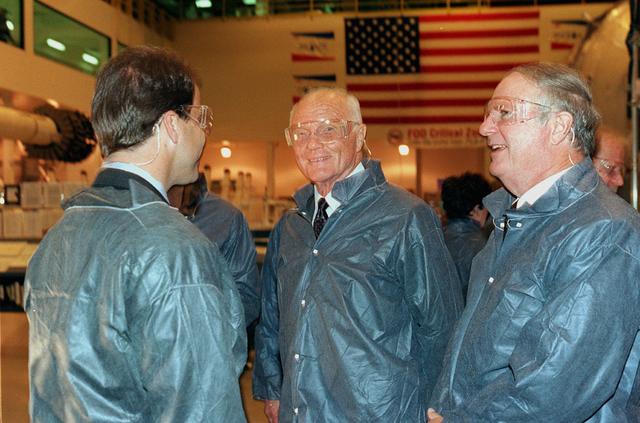
One of NASA's first astronauts, now Senator John Glenn and Alabama senatorial candidate Roger Bedford receive a tour of the Space Station manufacturing facility conducted by Marshall Space Flight Center (MSFC) Director Jerroll W. Littles.
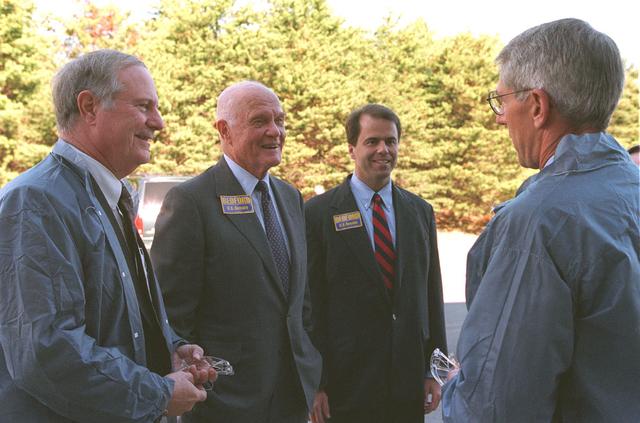
One of NASA's first astronauts, now Senator John Glenn and Alabama senatorial candidate Roger Bedford receive a tour of the Space Station manufacturing facility conducted by Marshall Space Flight Center (MSFC) Director Jerroll W. Littles.
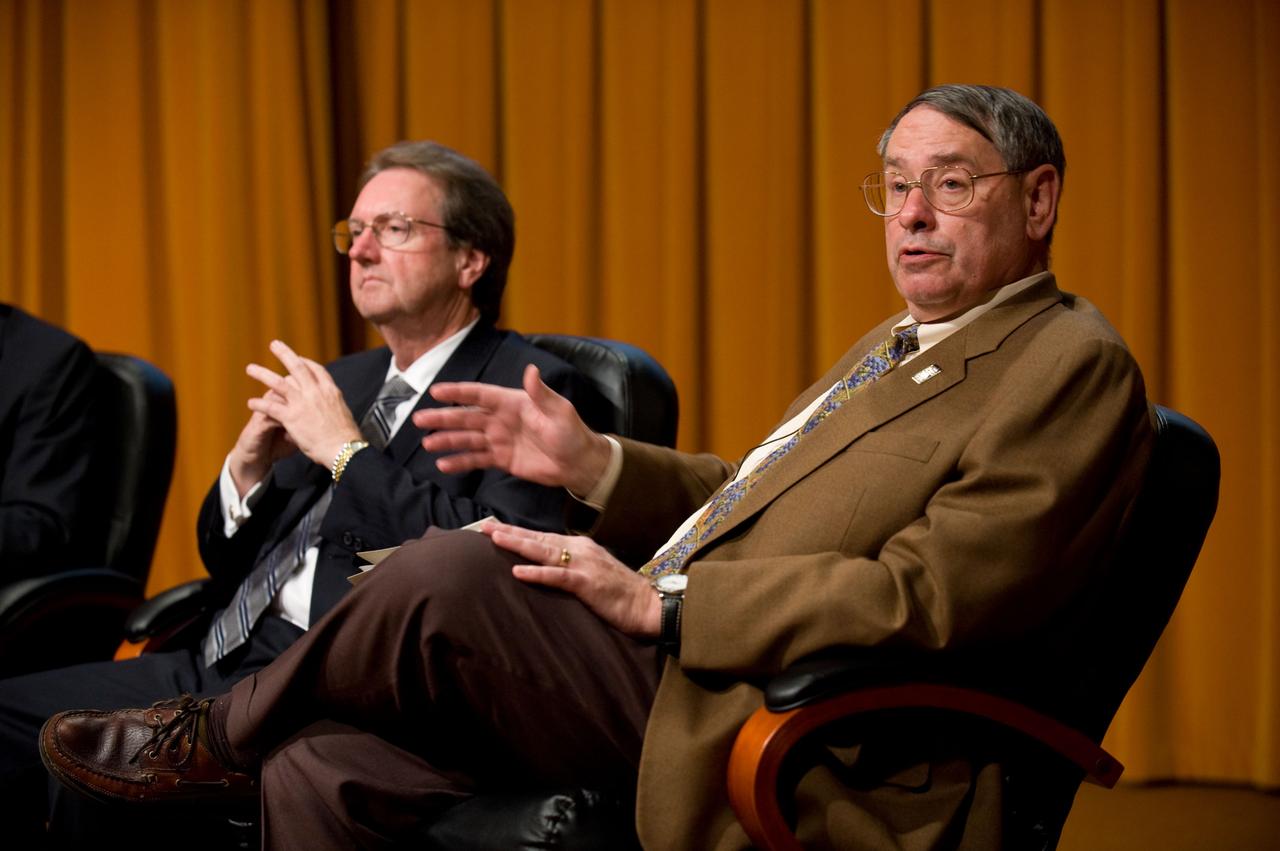
NASA's 50th Anniversay year. Panel discussion with four of NASA AMES's past center directors on how their tenure effected Ames and NASA. On the projects they pushed for and/or pushed forward and the culture of the center and the agency and how that worked for or against Ames, as well as major contributions of the time made by Ames Research Center. Panel L-R; Hans Mark, Sy Syvertson, Dale Compton, Scott Hubbard and Pete Worden, present director. (Past Directors served for periods from 1969 thru 2006) Scott Hubbard and Pete Worden
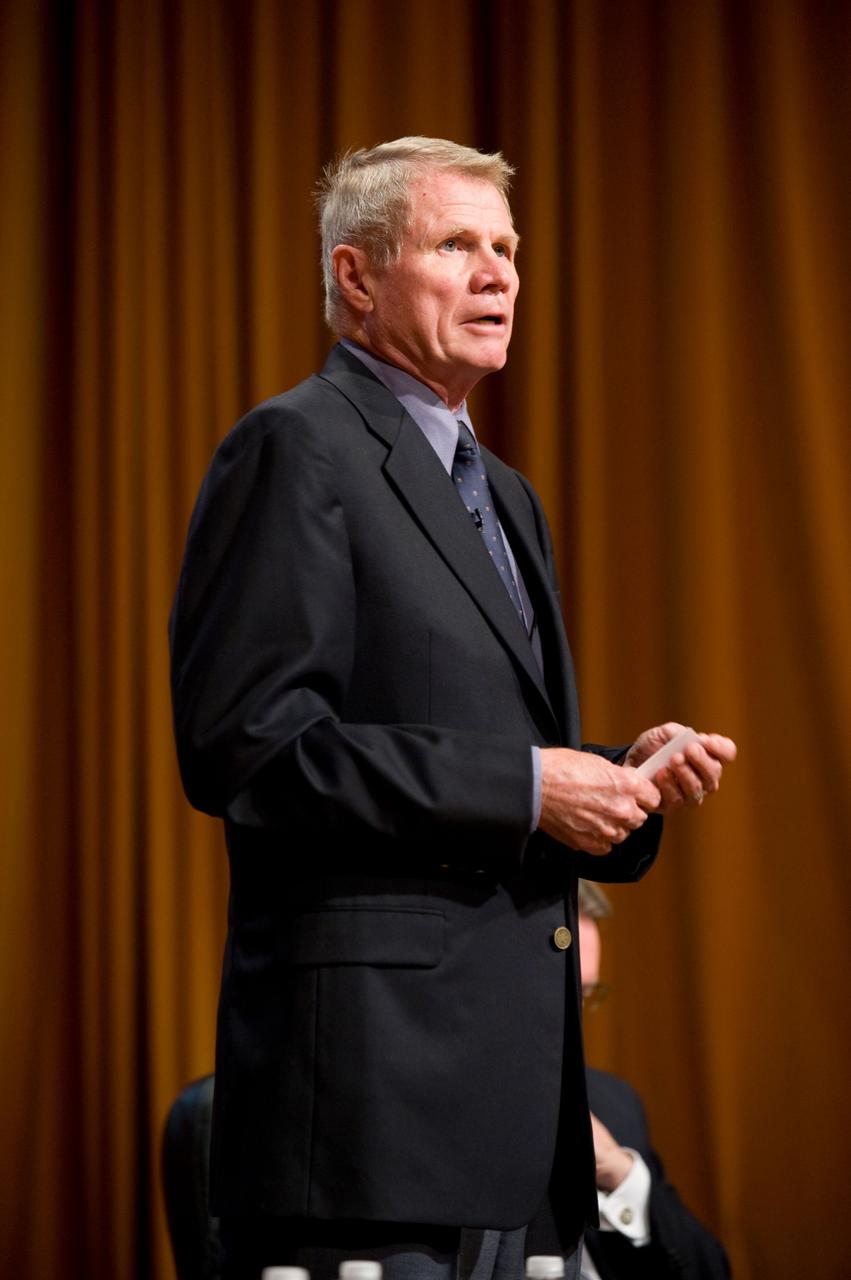
NASA's 50th Anniversay year. Panel discussion with four of NASA AMES's past center directors on how their tenure effected Ames and NASA. On the projects they pushed for and/or pushed forward and the culture of the center and the agency and how that worked for or against Ames, as well as major contributions of the time made by Ames Research Center. Panel L-R; Hans Mark, Sy Syvertson, Dale Compton, Scott Hubbard and Pete Worden, present director. (Past Directors served for periods from 1969 thru 2006)
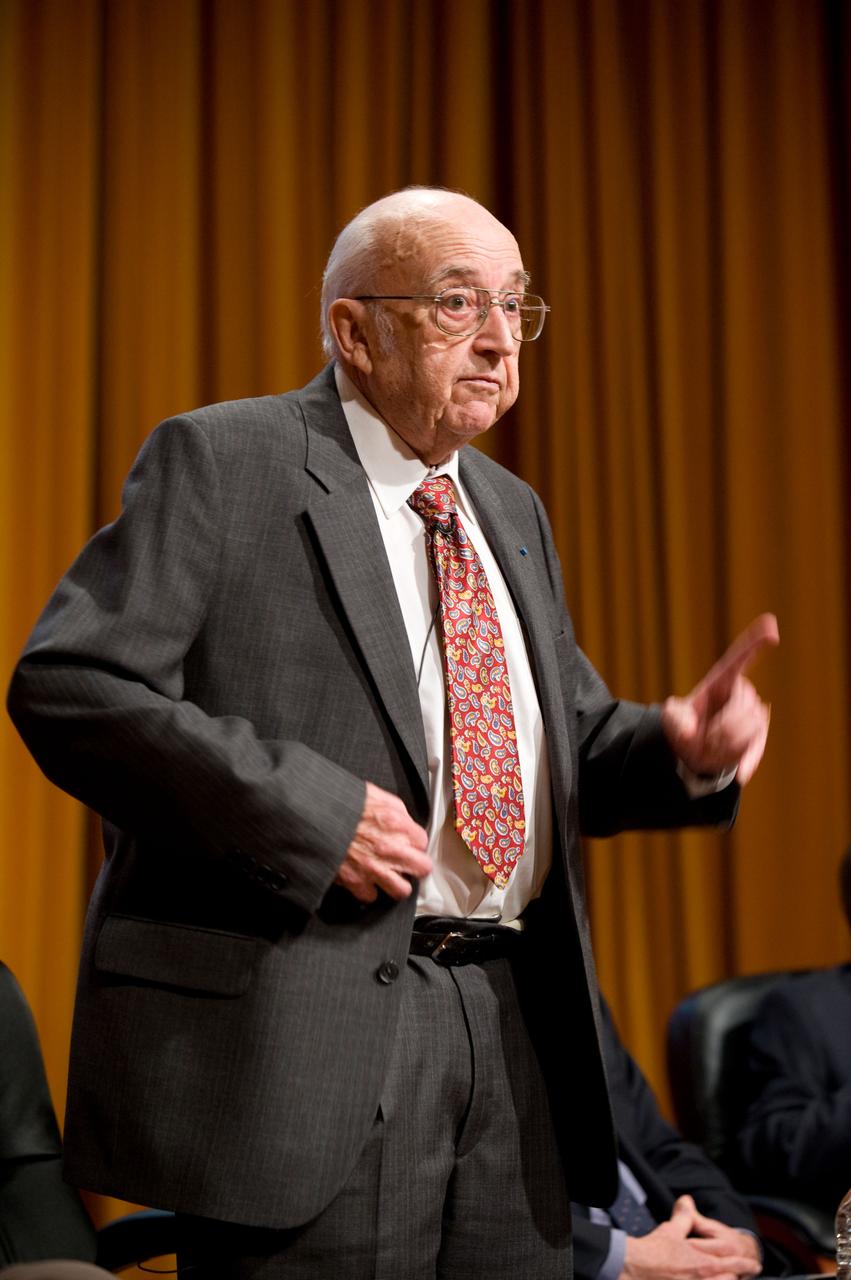
NASA's 50th Anniversay year. Panel discussion with four of NASA AMES's past center directors on how their tenure effected Ames and NASA. On the projects they pushed for and/or pushed forward and the culture of the center and the agency and how that worked for or against Ames, as well as major contributions of the time made by Ames Research Center. Panel L-R; Hans Mark, Sy Syvertson, Dale Compton, Scott Hubbard and Pete Worden, present director. (Past Directors served for periods from 1969 thru 2006)
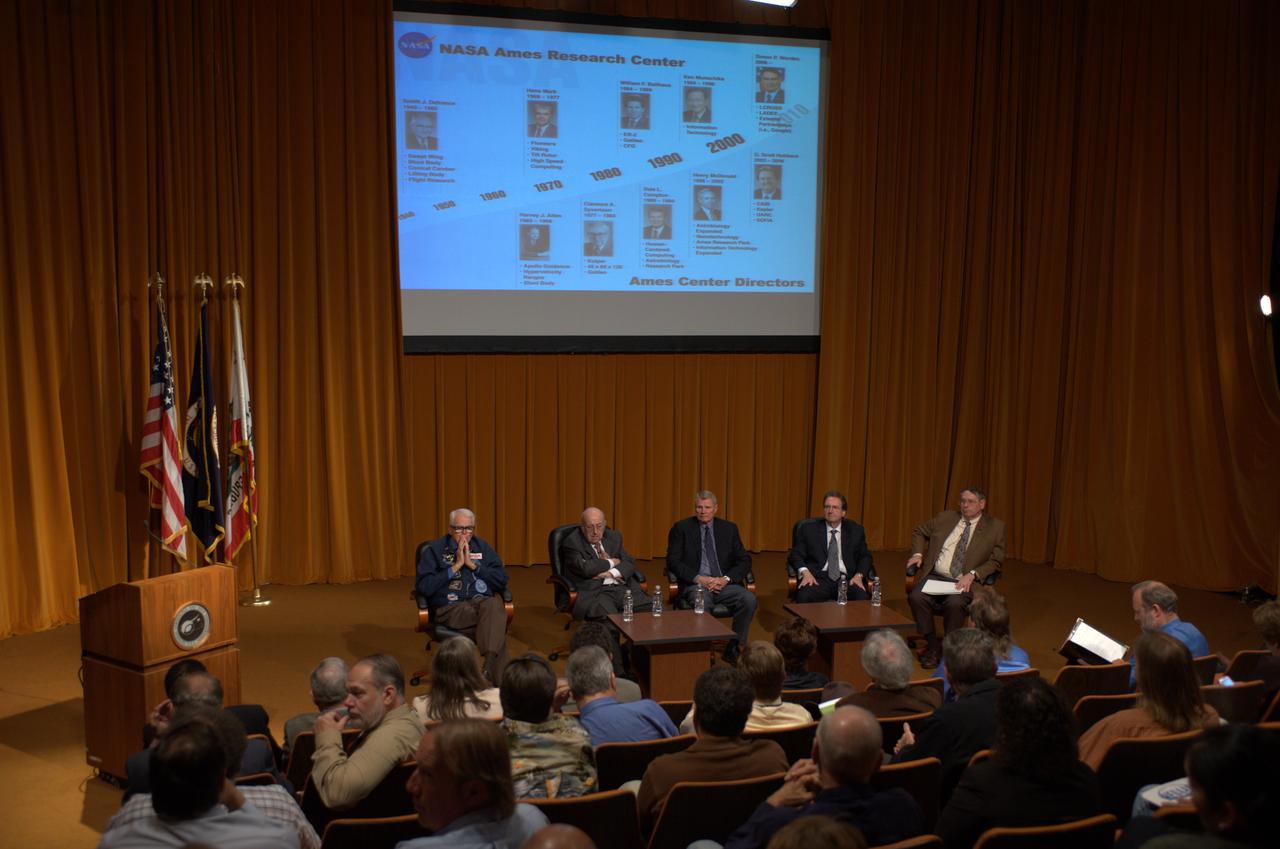
NASA's 50th Anniversay year. Panel discussion with four of NASA AMES's past center directors on how their tenure effected Ames and NASA. On the projects they pushed for and/or pushed forward and the culture of the center and the agency and how that worked for or against Ames, as well as major contributions of the time made by Ames Research Center. Panel L-R; Hans Mark, Sy Syvertson, Dale Compton, Scott Hubbard and Pete Worden, present director. (Past Directors served for periods from 1969 thru 2006)
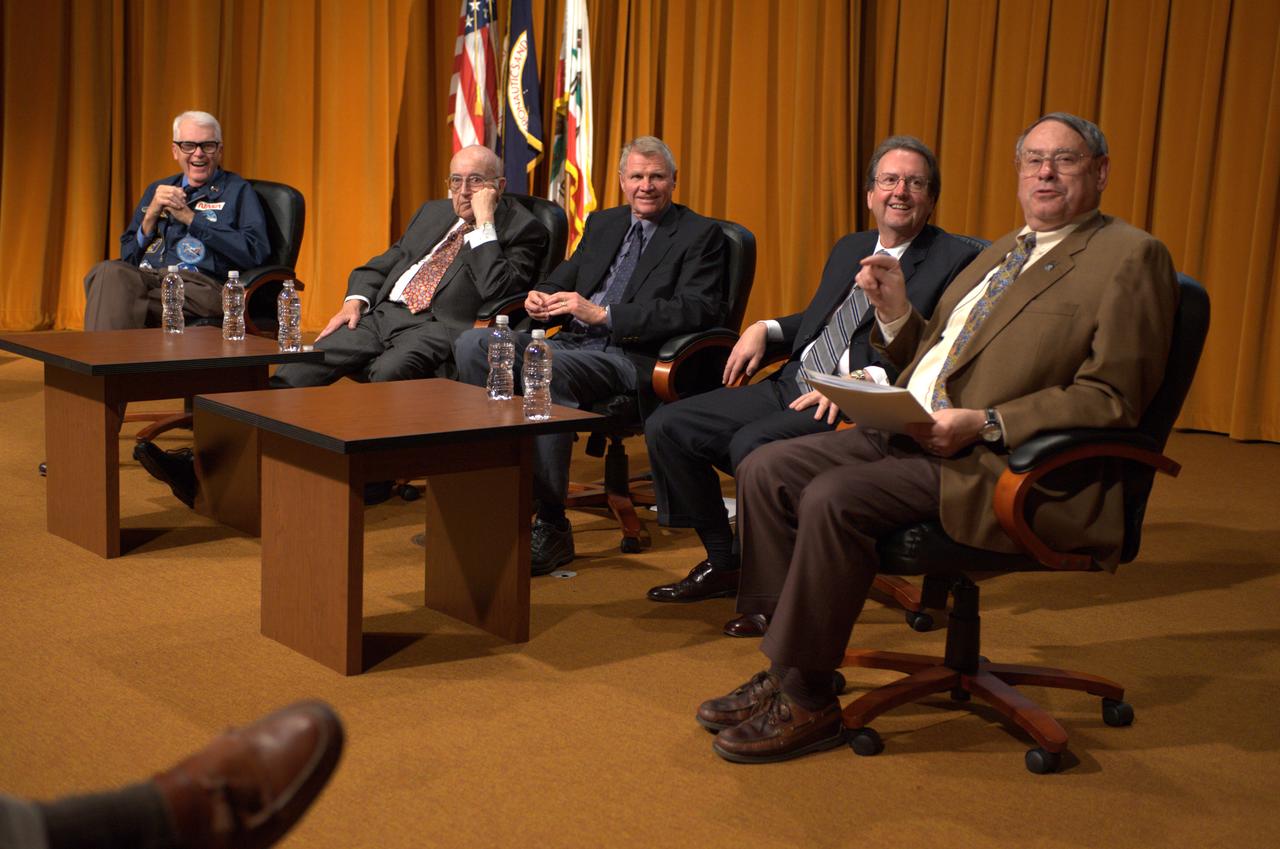
NASA's 50th Anniversay year. Panel discussion with four of NASA AMES's past center directors on how their tenure effected Ames and NASA. On the projects they pushed for and/or pushed forward and the culture of the center and the agency and how that worked for or against Ames, as well as major contributions of the time made by Ames Research Center. Panel L-R; Hans Mark, Sy Syvertson, Dale Compton, Scott Hubbard and Pete Worden, present director. (Past Directors served for periods from 1969 thru 2006)
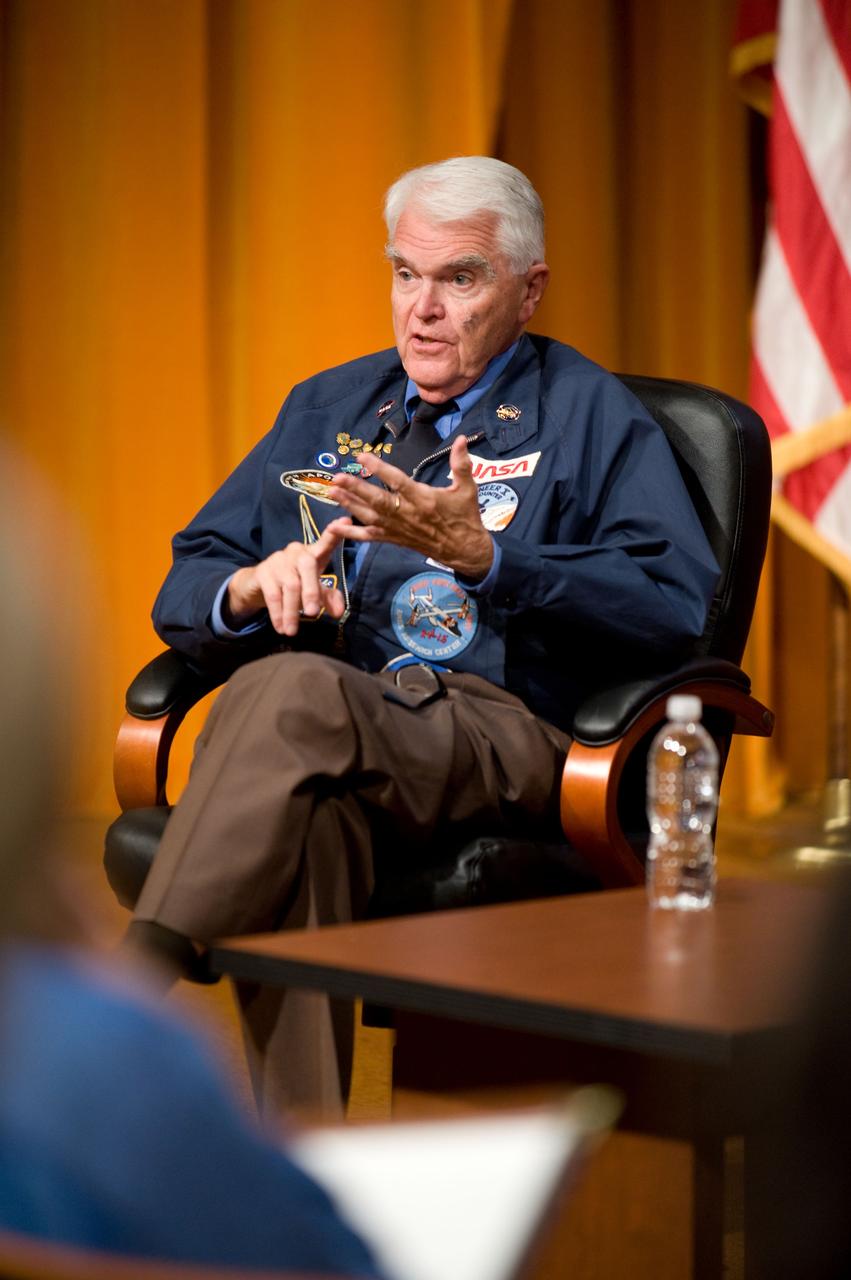
NASA's 50th Anniversay year. Panel discussion with four of NASA AMES's past center directors on how their tenure effected Ames and NASA. On the projects they pushed for and/or pushed forward and the culture of the center and the agency and how that worked for or against Ames, as well as major contributions of the time made by Ames Research Center. Panel L-R; Hans Mark, Sy Syvertson, Dale Compton, Scott Hubbard and Pete Worden, present director. (Past Directors served for periods from 1969 thru 2006)
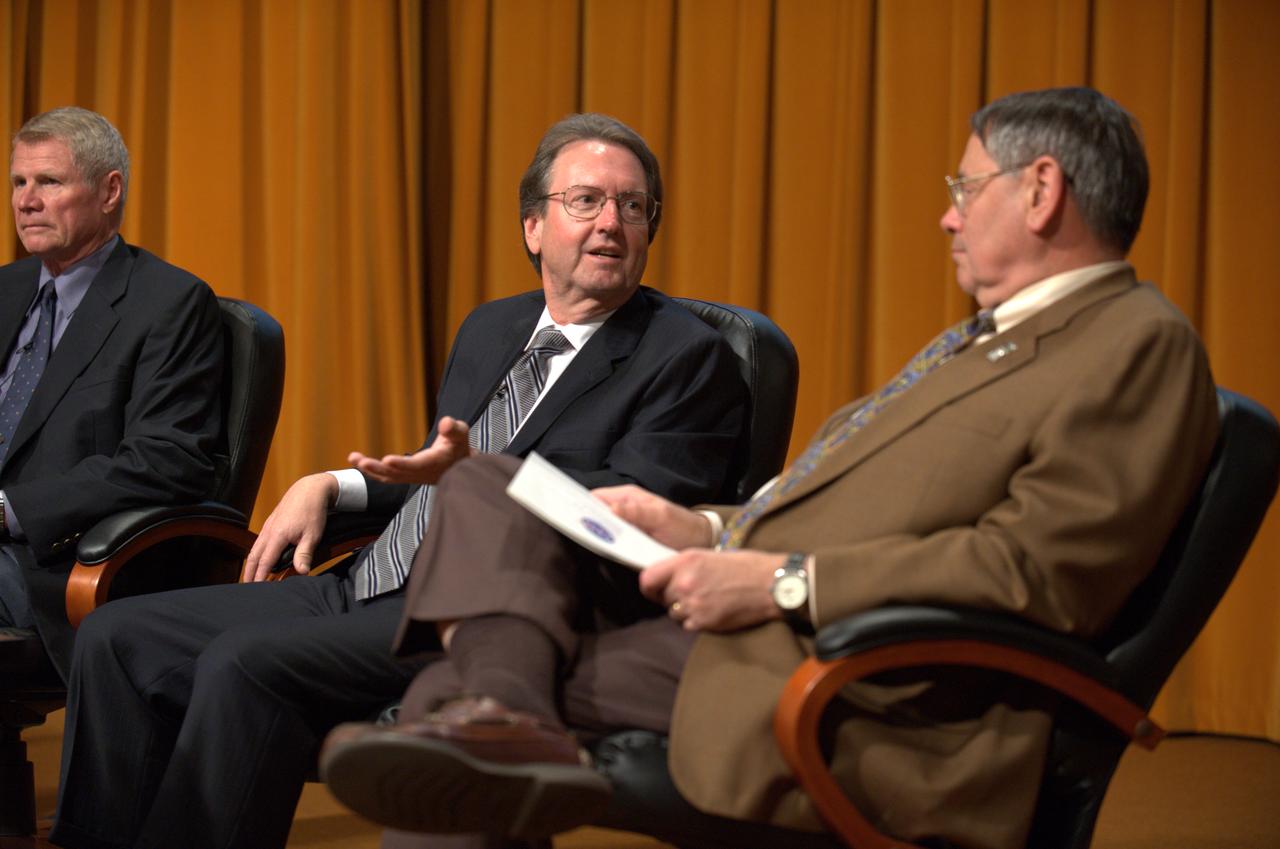
NASA's 50th Anniversay year. Panel discussion with four of NASA AMES's past center directors on how their tenure effected Ames and NASA. On the projects they pushed for and/or pushed forward and the culture of the center and the agency and how that worked for or against Ames, as well as major contributions of the time made by Ames Research Center. Panel L-R; Hans Mark, Sy Syvertson, Dale Compton, Scott Hubbard and Pete Worden, present director. (Past Directors served for periods from 1969 thru 2006)
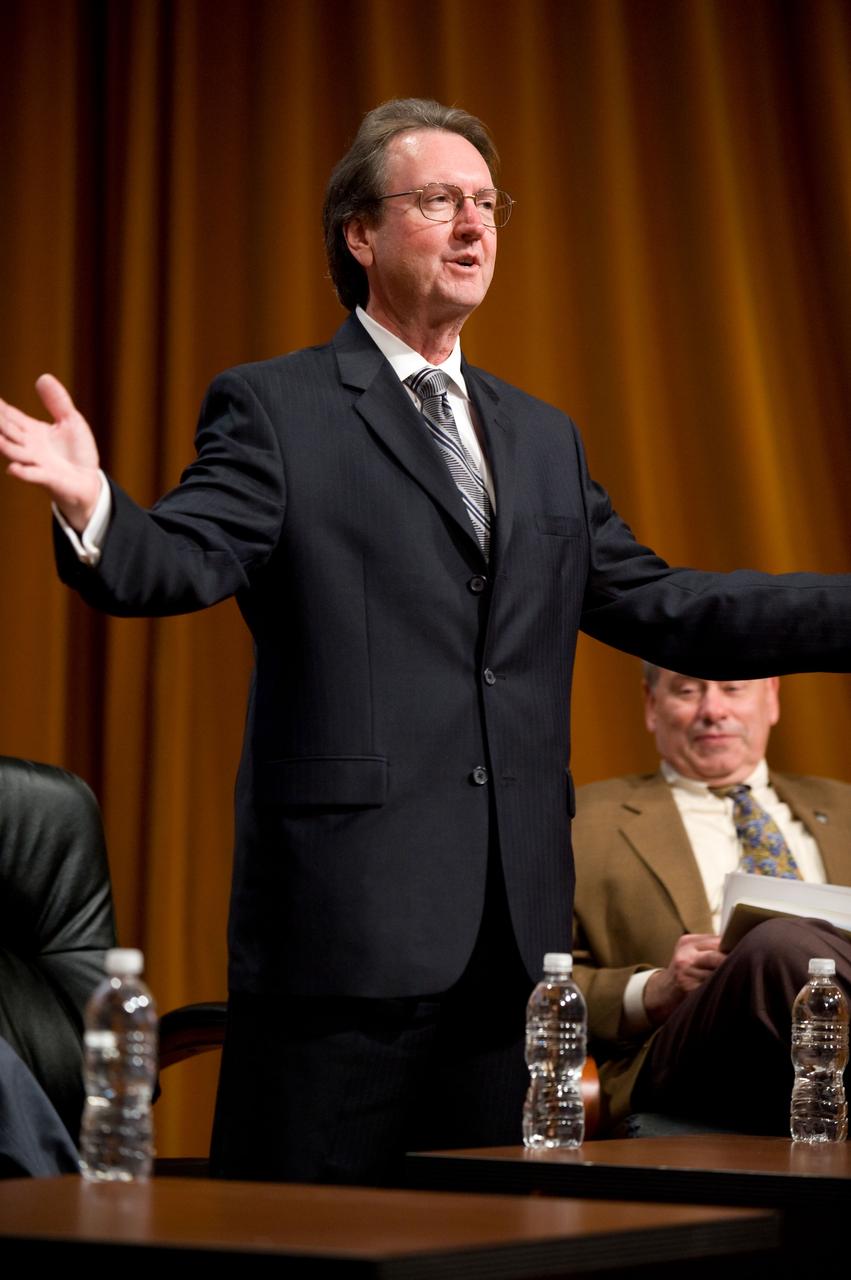
NASA's 50th Anniversay year. Panel discussion with four of NASA AMES's past center directors on how their tenure effected Ames and NASA. On the projects they pushed for and/or pushed forward and the culture of the center and the agency and how that worked for or against Ames, as well as major contributions of the time made by Ames Research Center. Panel L-R; Hans Mark, Sy Syvertson, Dale Compton, Scott Hubbard and Pete Worden, present director. (Past Directors served for periods from 1969 thru 2006)
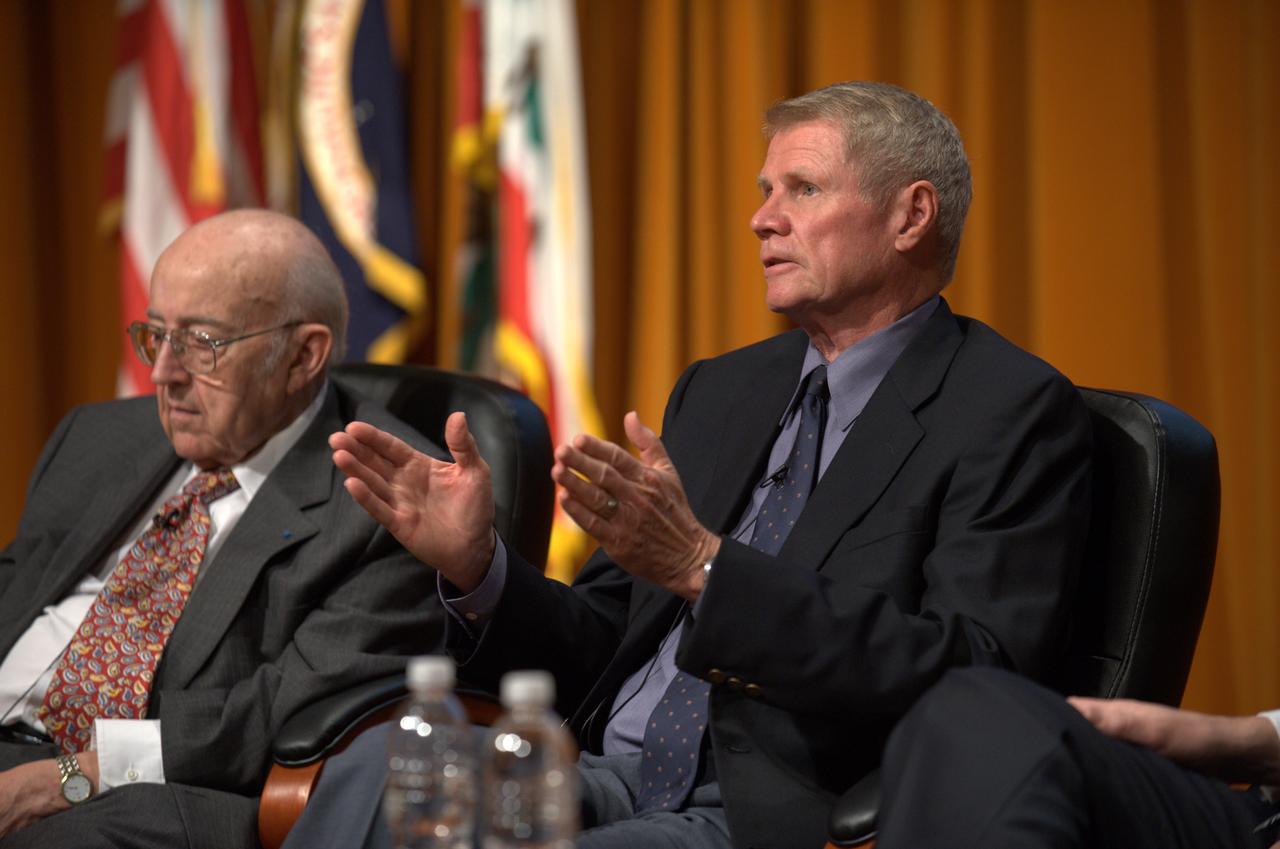
NASA's 50th Anniversay year. Panel discussion with four of NASA AMES's past center directors on how their tenure effected Ames and NASA. On the projects they pushed for and/or pushed forward and the culture of the center and the agency and how that worked for or against Ames, as well as major contributions of the time made by Ames Research Center. Panel L-R; Hans Mark, Sy Syvertson, Dale Compton, Scott Hubbard and Pete Worden, present director. (Past Directors served for periods from 1969 thru 2006) Dale Compton speaking.
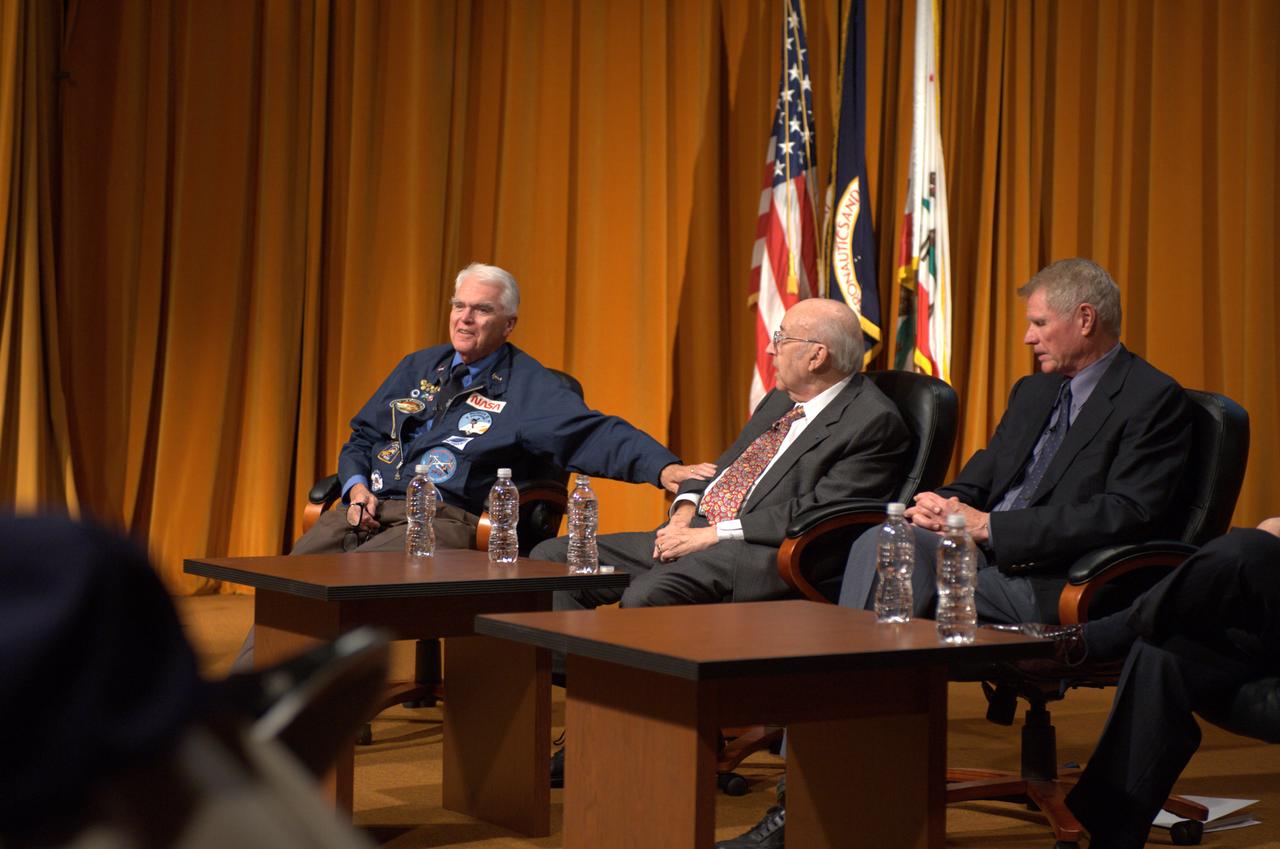
NASA's 50th Anniversay year. Panel discussion with four of NASA AMES's past center directors on how their tenure effected Ames and NASA. On the projects they pushed for and/or pushed forward and the culture of the center and the agency and how that worked for or against Ames, as well as major contributions of the time made by Ames Research Center. Panel L-R; Hans Mark, Sy Syvertson, Dale Compton, Scott Hubbard and Pete Worden, present director. (Past Directors served for periods from 1969 thru 2006)
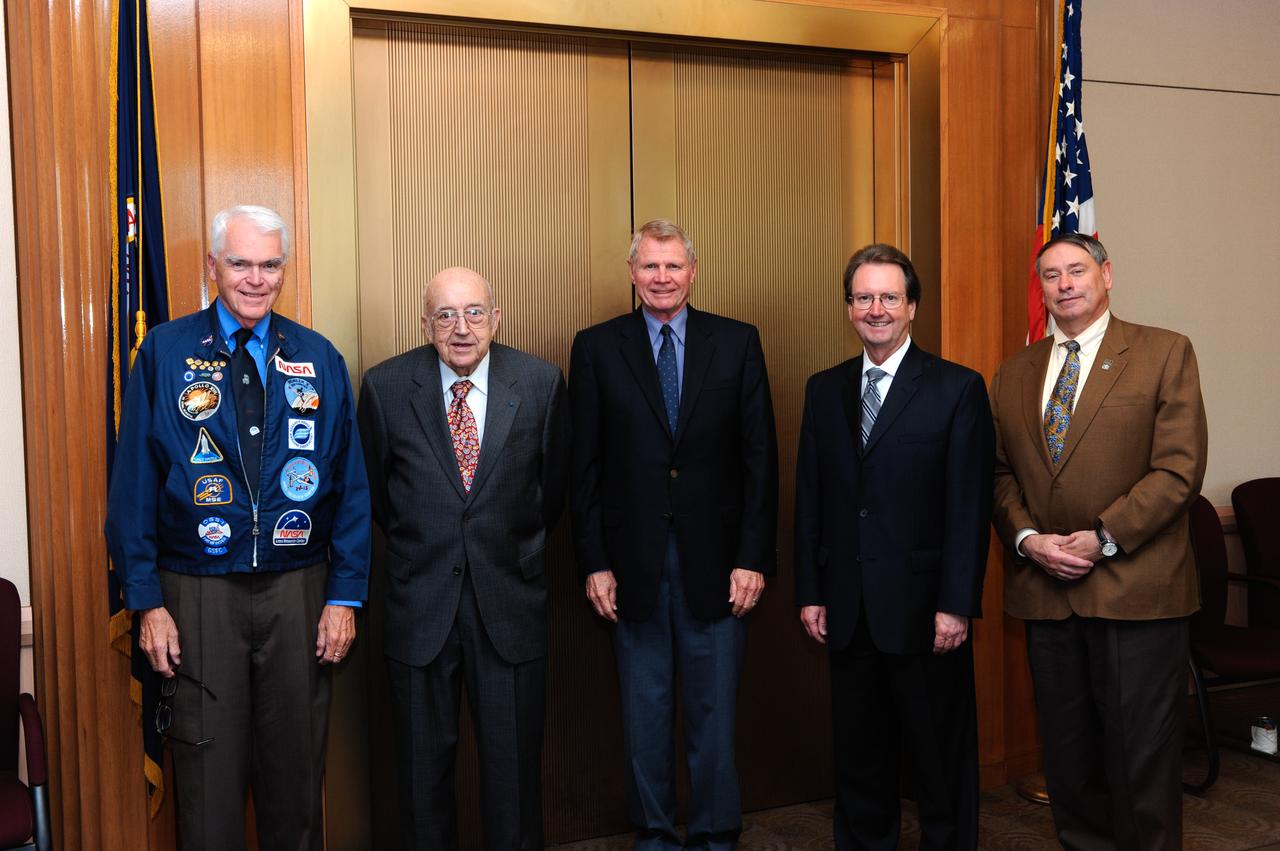
NASA's 50th Anniversay year. Panel discussion with four of NASA AMES's past center directors on how their tenure effected Ames and NASA. On the projects they pushed for and/or pushed forward and the culture of the center and the agency and how that worked for or against Ames, as well as major contributions of the time made by Ames Research Center. Panel L-R; Hans Mark, Sy Syvertson, Dale Compton, Scott Hubbard and Pete Worden, present director. (Past Directors served for periods from 1969 thru 2006) Ames Directors L-R: Hans Mark, Sy Syvertson, Dale Compton, Scott Hubbard and Pete Worden
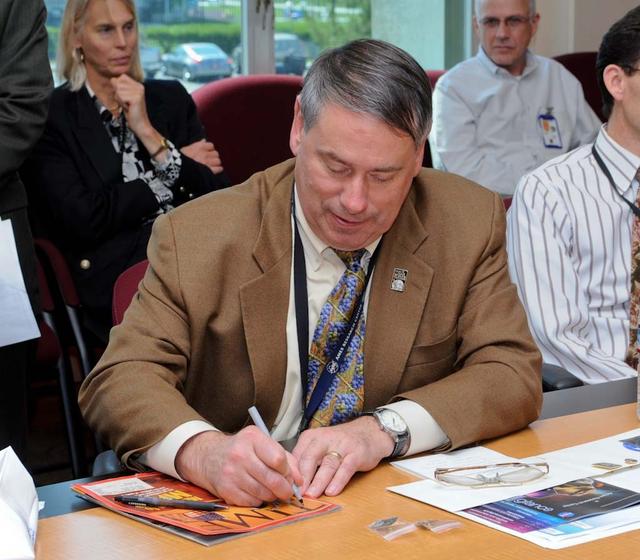
NASA's 50th Anniversay year. Panel discussion with four of NASA AMES's past center directors on how their tenure effected Ames and NASA. On the projects they pushed for and/or pushed forward and the culture of the center and the agency and how that worked for or against Ames, as well as major contributions of the time made by Ames Research Center. Panel L-R; Hans Mark, Sy Syvertson, Dale Compton, Scott Hubbard and Pete Worden, present director. (Past Directors served for periods from 1969 thru 2006) Pete Worden signing a Time Magazine cover with a story about NASA's Mission to Mars. for a Space fan from Flordia.
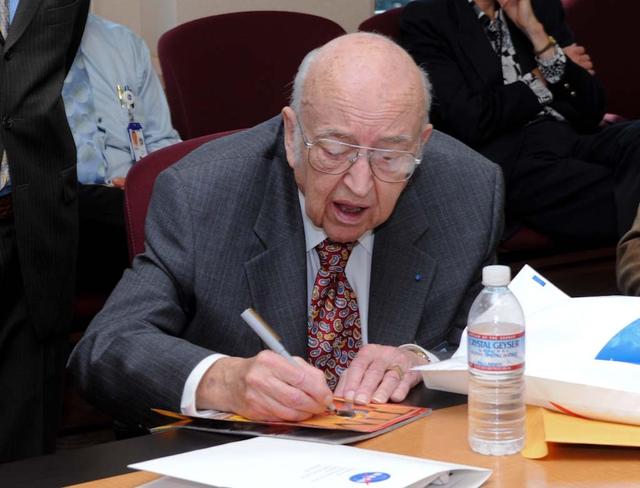
NASA's 50th Anniversay year. Panel discussion with four of NASA AMES's past center directors on how their tenure effected Ames and NASA. On the projects they pushed for and/or pushed forward and the culture of the center and the agency and how that worked for or against Ames, as well as major contributions of the time made by Ames Research Center. Panel L-R; Hans Mark, Sy Syvertson, Dale Compton, Scott Hubbard and Pete Worden, present director. (Past Directors served for periods from 1969 thru 2006) Sy Syvertson signing a Time Magazine cover with a story about NASA's Mission to Mars. for a Space fan from Flordia.
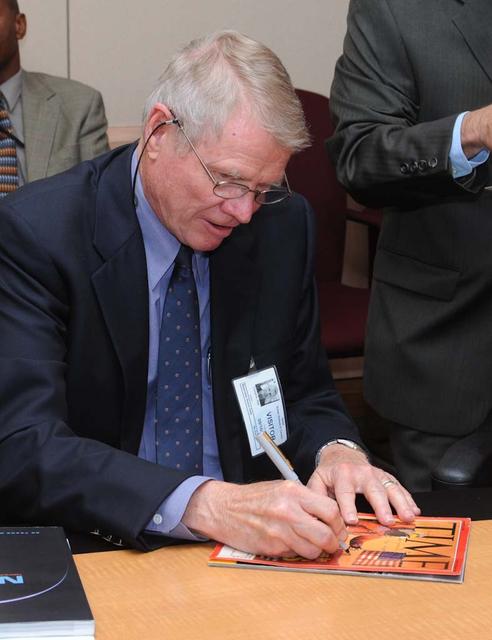
NASA's 50th Anniversay year. Panel discussion with four of NASA AMES's past center directors on how their tenure effected Ames and NASA. On the projects they pushed for and/or pushed forward and the culture of the center and the agency and how that worked for or against Ames, as well as major contributions of the time made by Ames Research Center. Panel L-R; Hans Mark, Sy Syvertson, Dale Compton, Scott Hubbard and Pete Worden, present director. (Past Directors served for periods from 1969 thru 2006) Dale Compton signing a Time Magazine cover with a story about NASA's Mission to Mars. for a Space fan from Flordia.
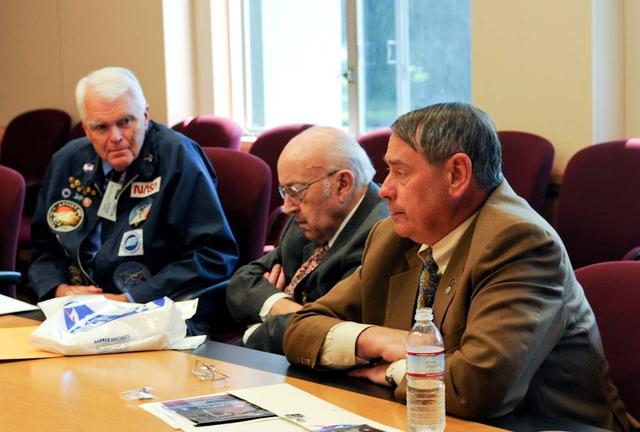
NASA's 50th Anniversay year. Panel discussion with four of NASA AMES's past center directors on how their tenure effected Ames and NASA. On the projects they pushed for and/or pushed forward and the culture of the center and the agency and how that worked for or against Ames, as well as major contributions of the time made by Ames Research Center. Panel L-R; Hans Mark, Sy Syvertson, Dale Compton, Scott Hubbard and Pete Worden, present director. (Past Directors served for periods from 1969 thru 2006) at a round table in the Boyd Room of N-200.
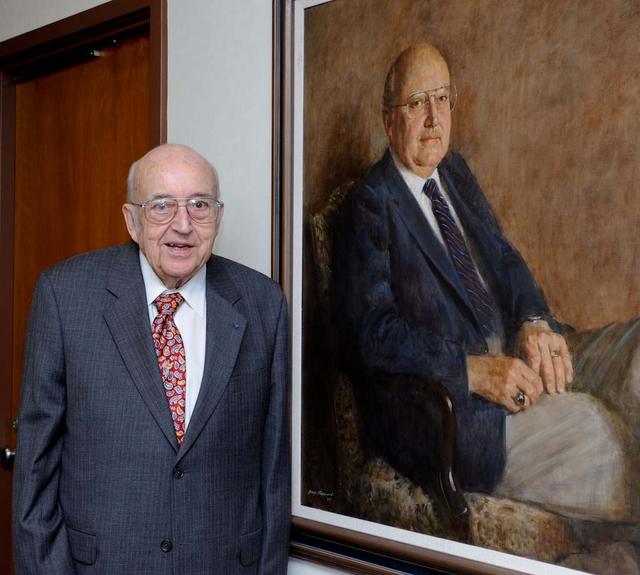
NASA's 50th Anniversay year. Panel discussion with four of NASA AMES's past center directors on how their tenure effected Ames and NASA. On the projects they pushed for and/or pushed forward and the culture of the center and the agency and how that worked for or against Ames, as well as major contributions of the time made by Ames Research Center. Panel L-R; Hans Mark, Sy Syvertson, Dale Compton, Scott Hubbard and Pete Worden, present director. (Past Directors served for periods from 1969 thru 2006) Sy Syverson posses with his portrait hanging in the hall of NASA Ames Administration Building N-200.
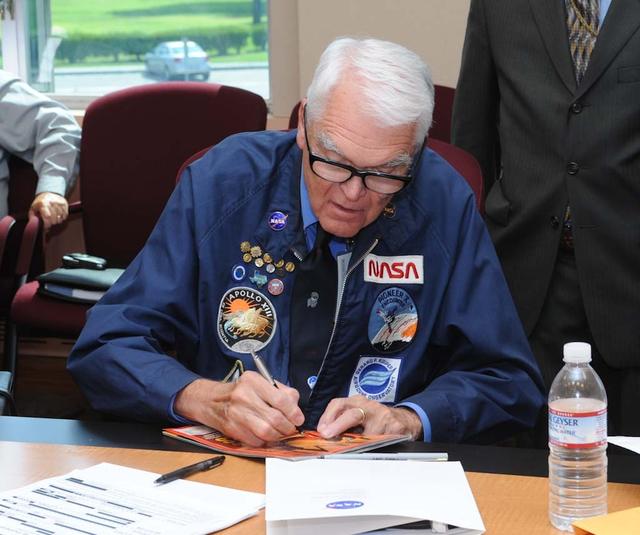
NASA's 50th Anniversay year. Panel discussion with four of NASA AMES's past center directors on how their tenure effected Ames and NASA. On the projects they pushed for and/or pushed forward and the culture of the center and the agency and how that worked for or against Ames, as well as major contributions of the time made by Ames Research Center. Panel L-R; Hans Mark, Sy Syvertson, Dale Compton, Scott Hubbard and Pete Worden, present director. (Past Directors served for periods from 1969 thru 2006) Hans Mark signing a Time Magazine cover with a story about NASA's Mission to Mars. for a Space fan from Flordia.
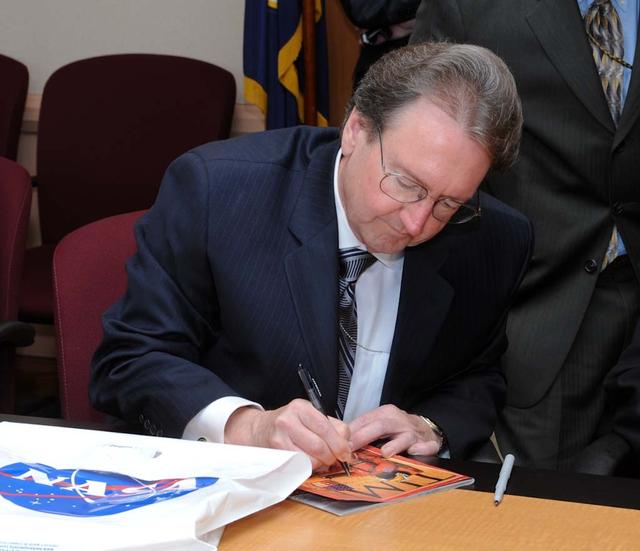
NASA's 50th Anniversay year. Panel discussion with four of NASA AMES's past center directors on how their tenure effected Ames and NASA. On the projects they pushed for and/or pushed forward and the culture of the center and the agency and how that worked for or against Ames, as well as major contributions of the time made by Ames Research Center. Panel L-R; Hans Mark, Sy Syvertson, Dale Compton, Scott Hubbard and Pete Worden, present director. (Past Directors served for periods from 1969 thru 2006) Scott Hubbard signing a Time Magazine cover with a story about NASA's Mission to Mars. for a Space fan from Flordia.
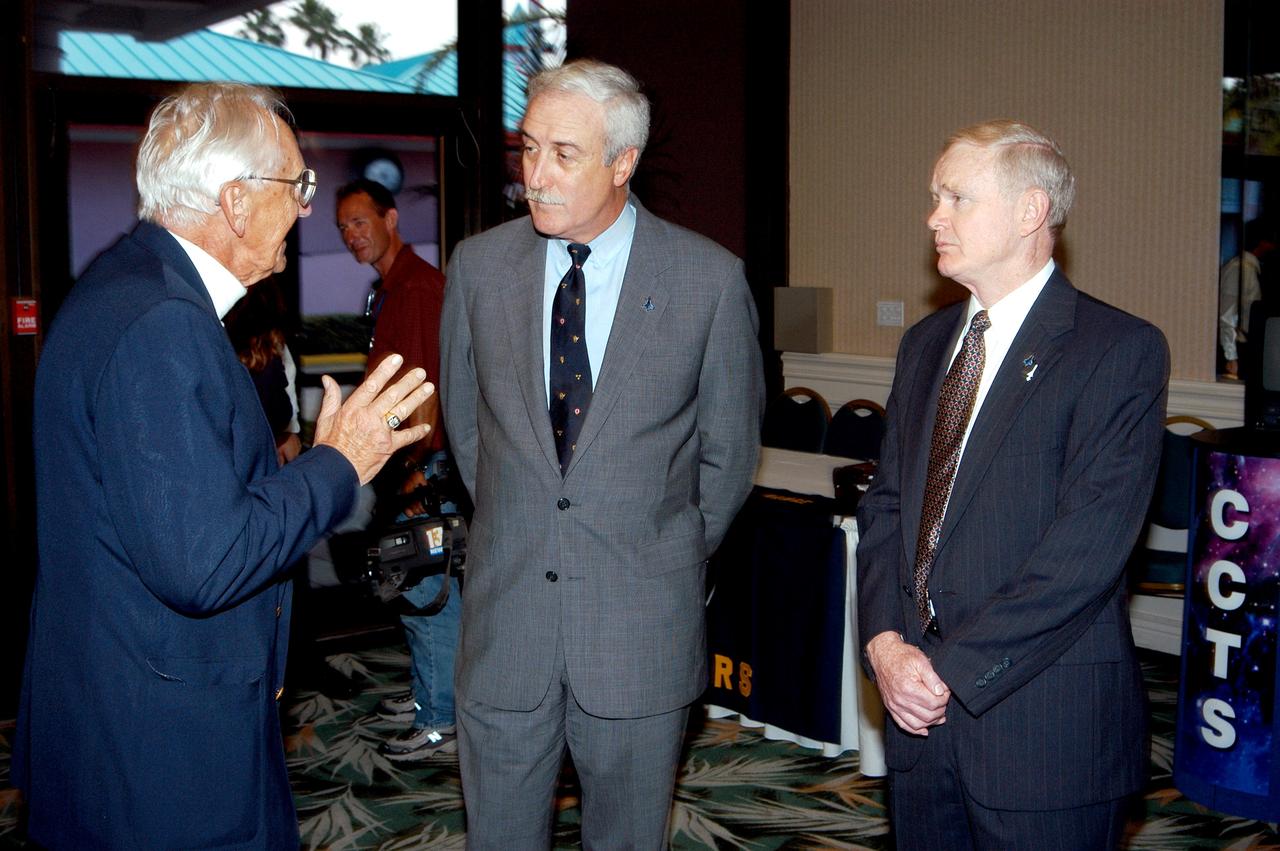
KENNEDY SPACE CENTER, FLA. - Gunther Wendt (left), NASA retiree, holds the attention of NASA Administrator Sean O'Keefe (center) and Center Director Roy Bridges Jr. (right) at the annual Congressional Dinner hosted by the Florida Space Business Roundtable. The dinner kicked off the annual Space Congress, held April 28-May 1, 2003, in Cape Canaveral, Fla. The theme for the event was "Linking the Past to the Future: A Celebration of Space" and commemorated the 40th anniversary of the Kennedy Space Center and the Centennial of Flight.
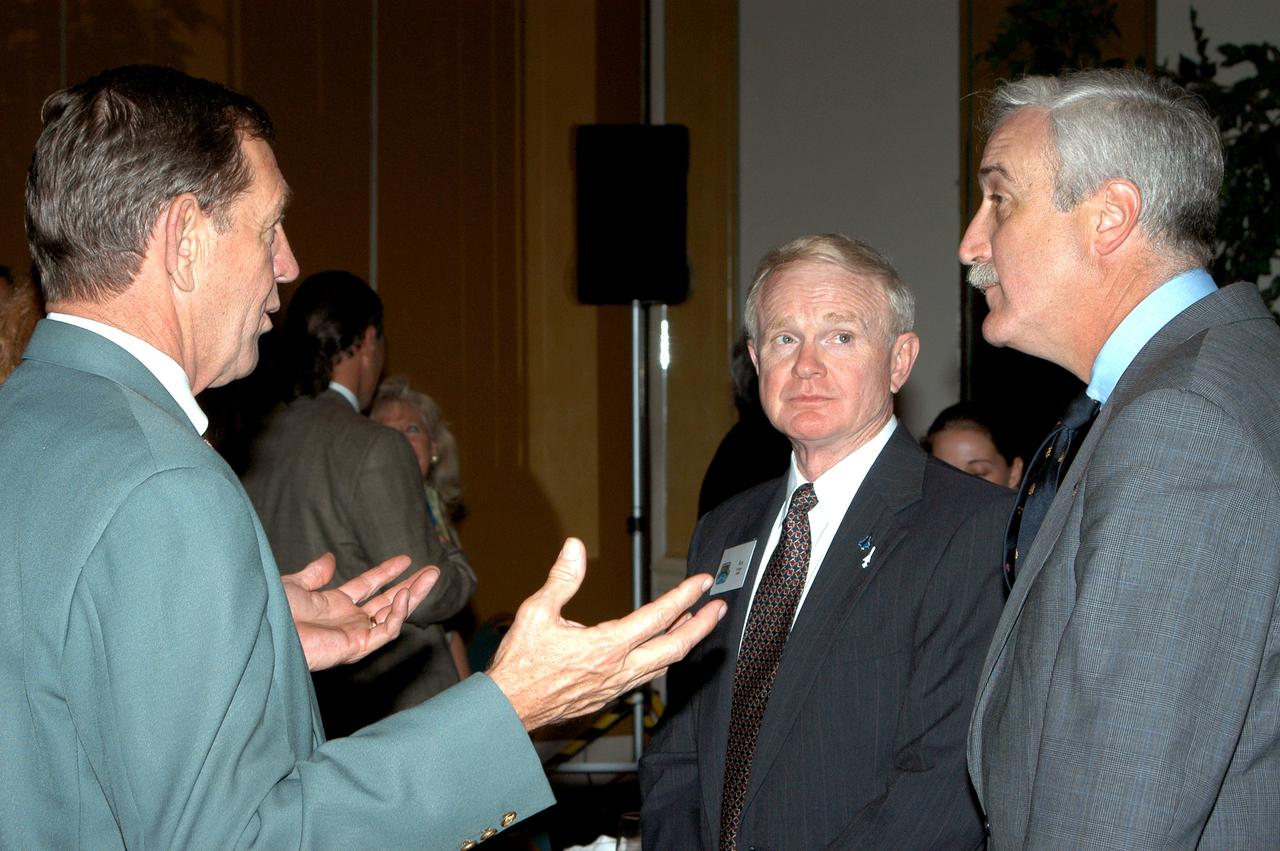
KENNEDY SPACE CENTER, FLA. - Mike McCulley (left), chief operating officer with United Space Alliance, talks with Center Director Roy Bridges Jr. (center) and NASA Administrator Sean O'Keefe (right) during the annual Congressional Dinner hosted by the Florida Space Business Roundtable. The dinner kicked off the annual Space Congress, held April 28-May 1, 2003, in Cape Canaveral, Fla. The theme for the event was "Linking the Past to the Future: A Celebration of Space" and commemorated the 40th anniversary of the Kennedy Space Center and the Centennial of Flight.
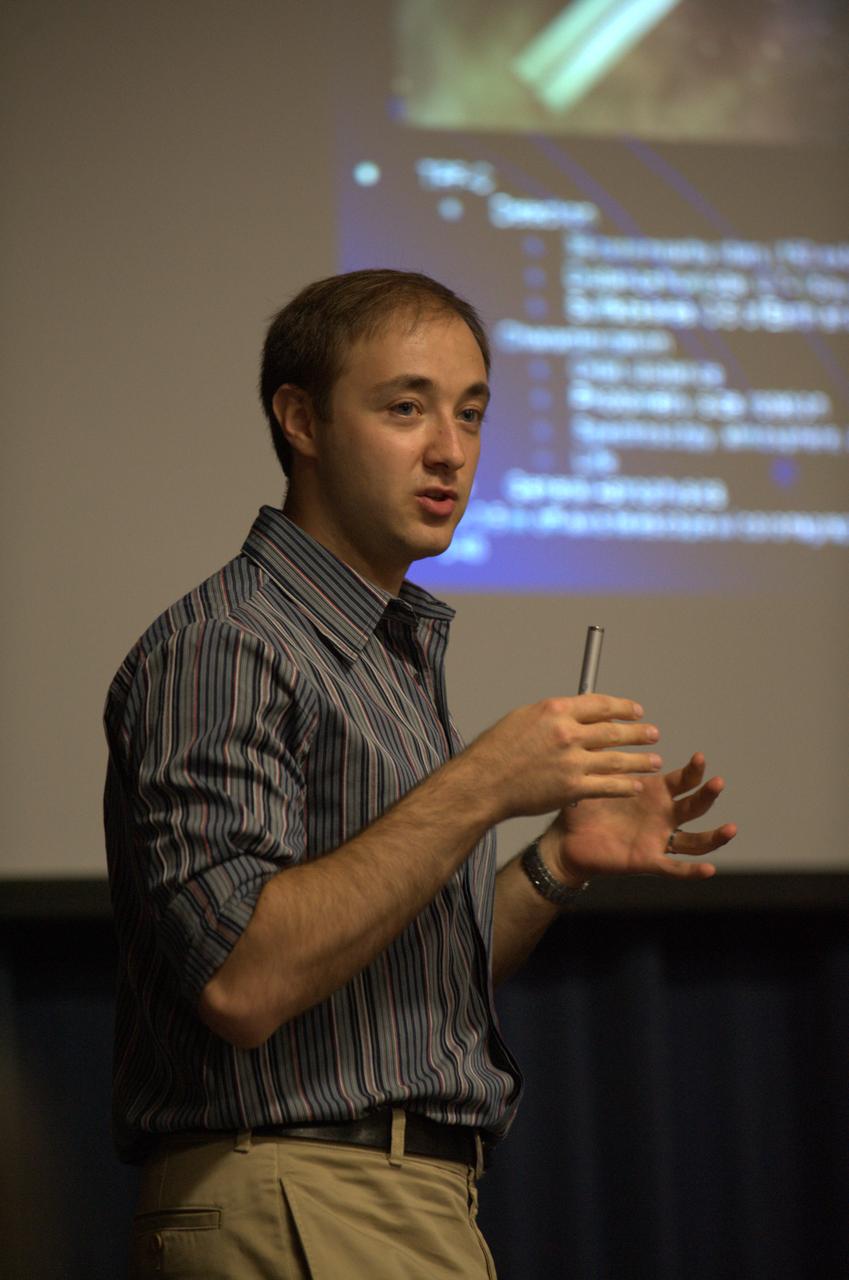
Director's Colloquium: Ruslan Belikov, Ames Astrophysicist presents 'Imaging other Earths and High Contrast Coronagraphy at Ames abstract: Exoplanet detection over the past decade - Audio available through Ames Library
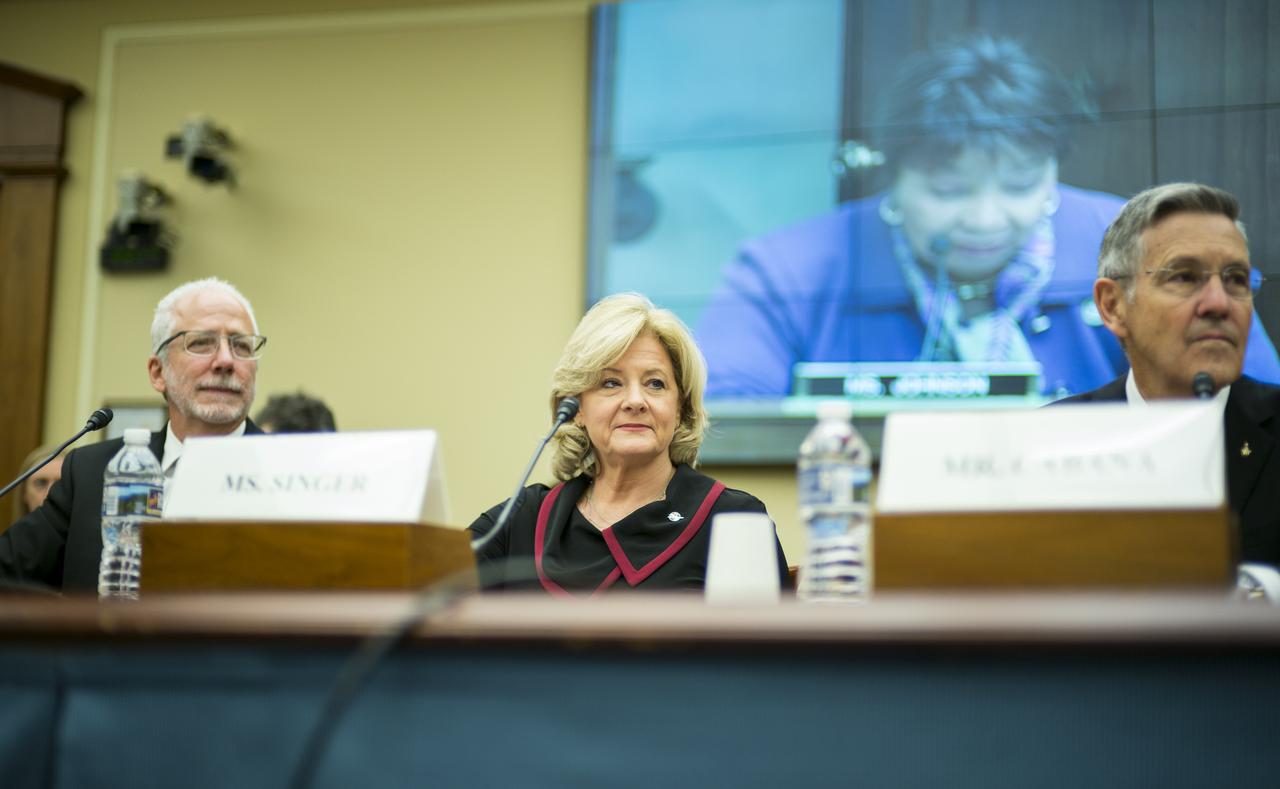
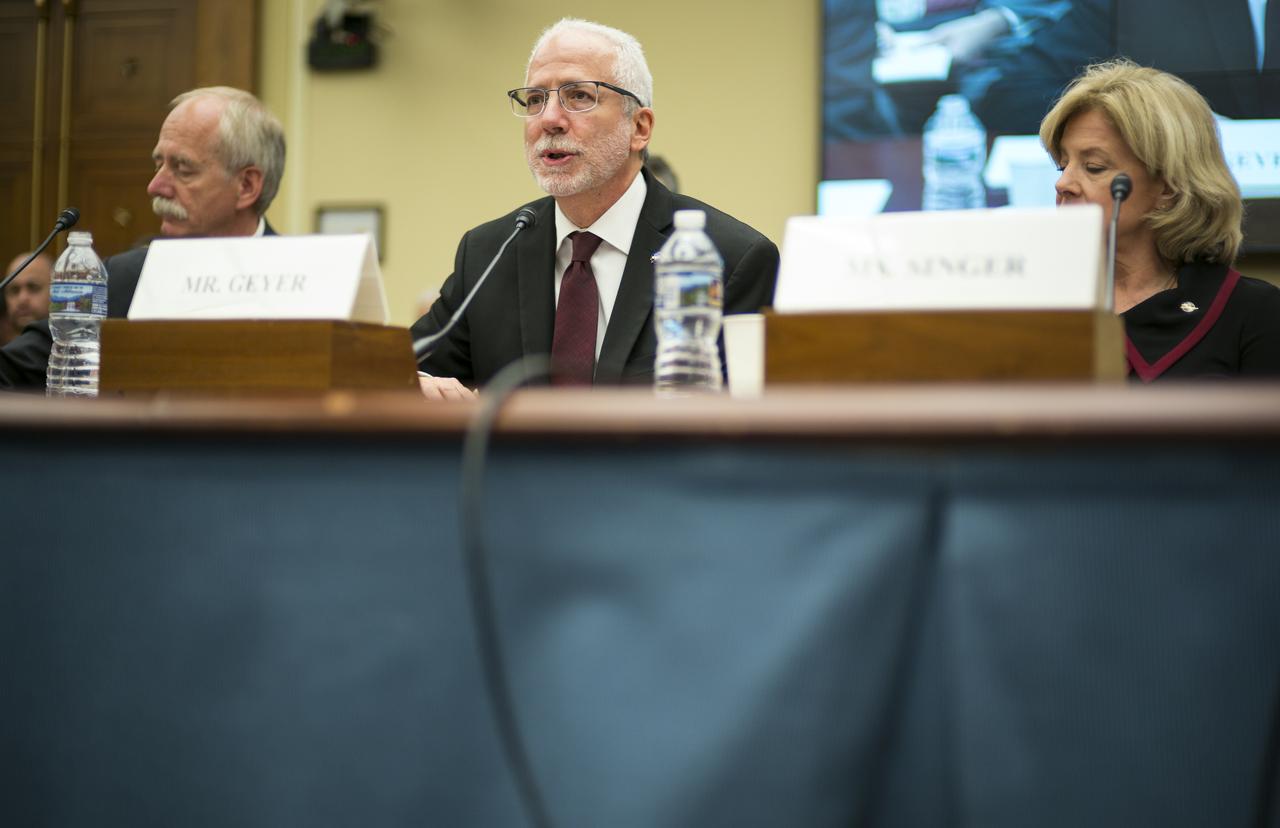
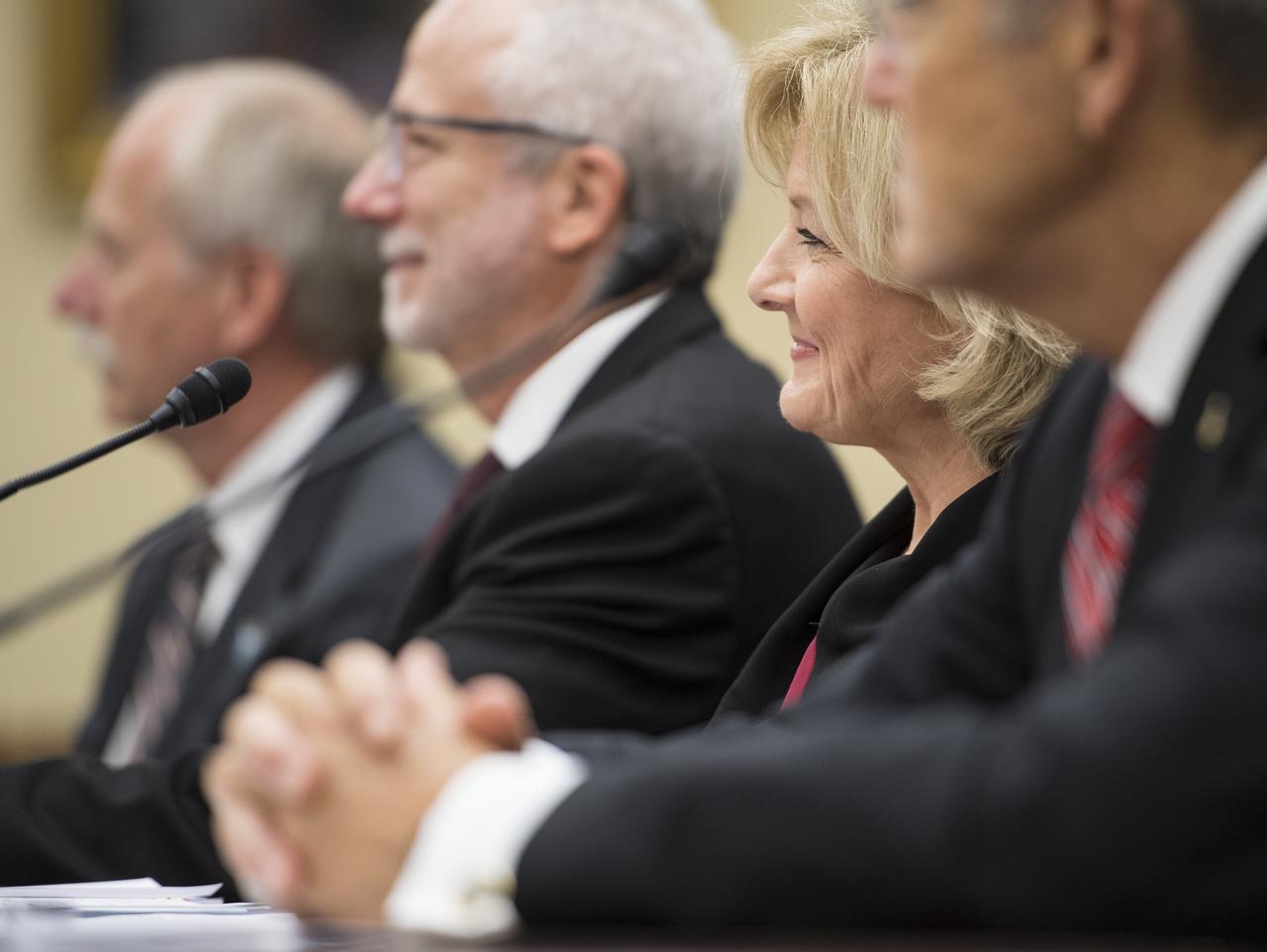
Mark Geyer, Director of NASA's Johnson Space Center, left, Jody Singer, Director of NASA's Marshall Space Flight Center, center, and Robert Cabana, Director of NASA's Kennedy Space Center, right, listen to Rep. Eddie Berniece Johnson, D-Texas, during a House Subcommittee on Space hearing titled "60 Years of NASA Leadership in Human Space Exploration: Past, Present, and Future," Wednesday, Sept. 26, 2018 at the Rayburn House Office Building in Washington. Photo Credit: (NASA/Joel Kowsky)
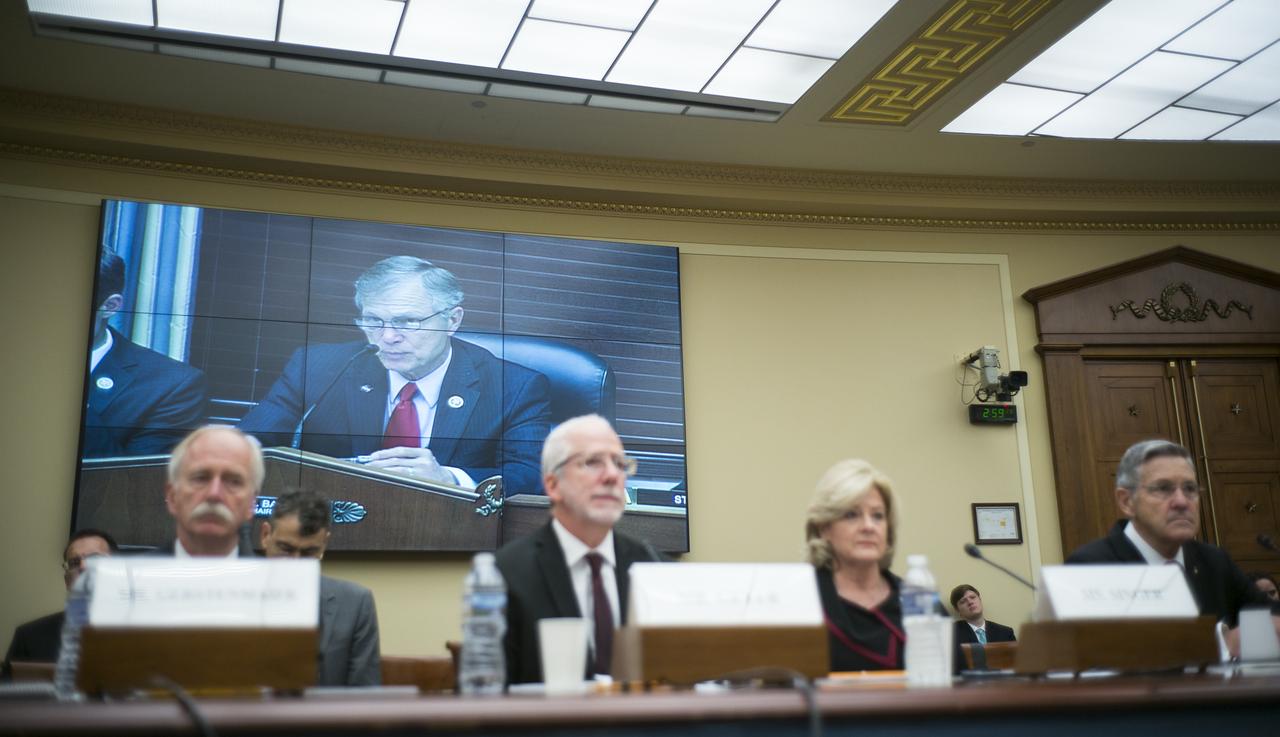
Chairman Brian Babin, R-Texas, asks a question of NASA's Associate Administrator for the Human Exploration and Operations Mission Directorate William Gerstenmaier, left, Mark Geyer, Director of NASA's Johnson Space Center, second from left, Jody Singer, Director of NASA's Marshall Space Flight Center, second from right, and Robert Cabana, Director of NASA's Kennedy Space Center, right, during a House Subcommittee on Space hearing titled "60 Years of NASA Leadership in Human Space Exploration: Past, Present, and Future," Wednesday, Sept. 26, 2018 at the Rayburn House Office Building in Washington. Photo Credit: (NASA/Joel Kowsky)
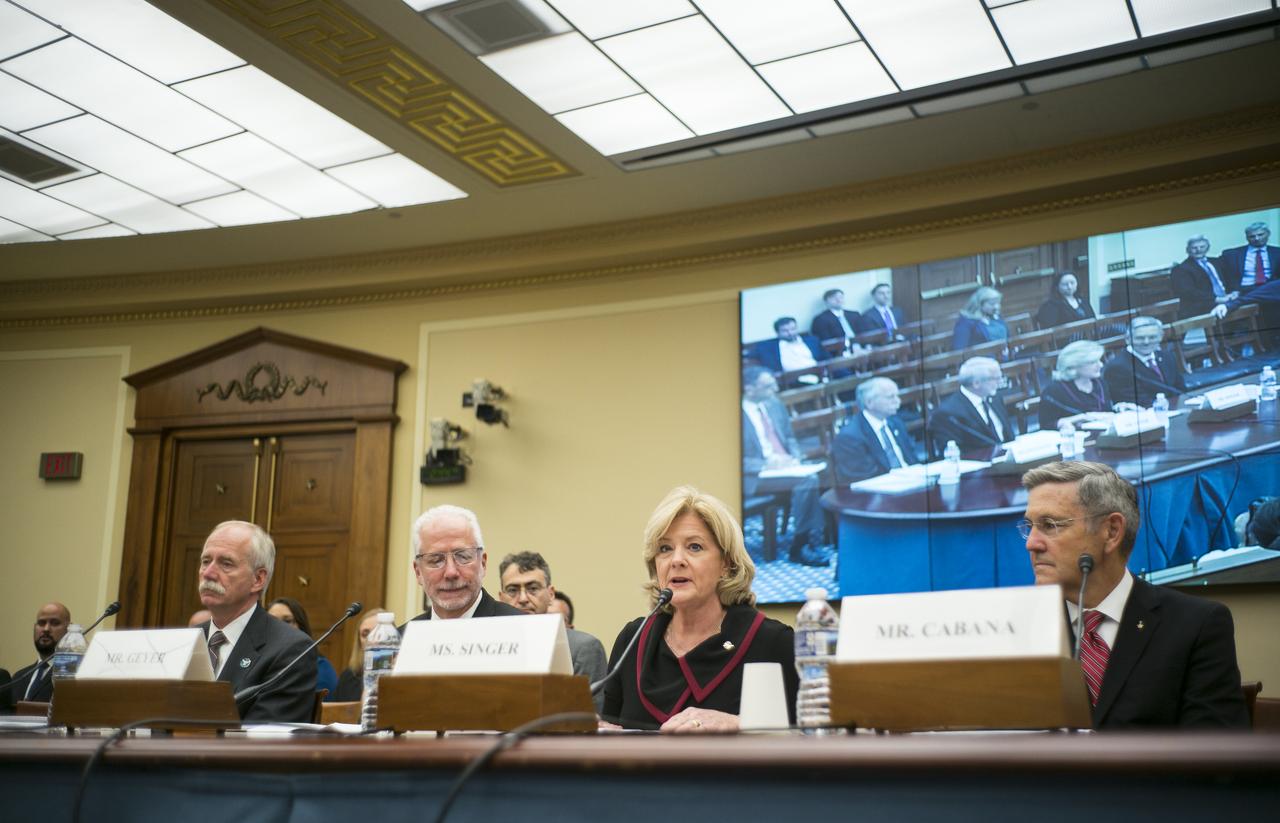
Jody Singer, Director of NASA's Marshall Space Flight Center, second from right, testifies during a House Subcommittee on Space hearing titled "60 Years of NASA Leadership in Human Space Exploration: Past, Present, and Future," Wednesday, Sept. 26, 2018 at the Rayburn House Office Building in Washington. NASA's Associate Administrator for the Human Exploration and Operations Mission Directorate William Gerstenmaier, left, Mark Geyer, Director of NASA's Johnson Space Center, second from left, and Robert Cabana, Director of NASA's Kennedy Space Center, right, also testified during the hearing. Photo Credit: (NASA/Joel Kowsky)
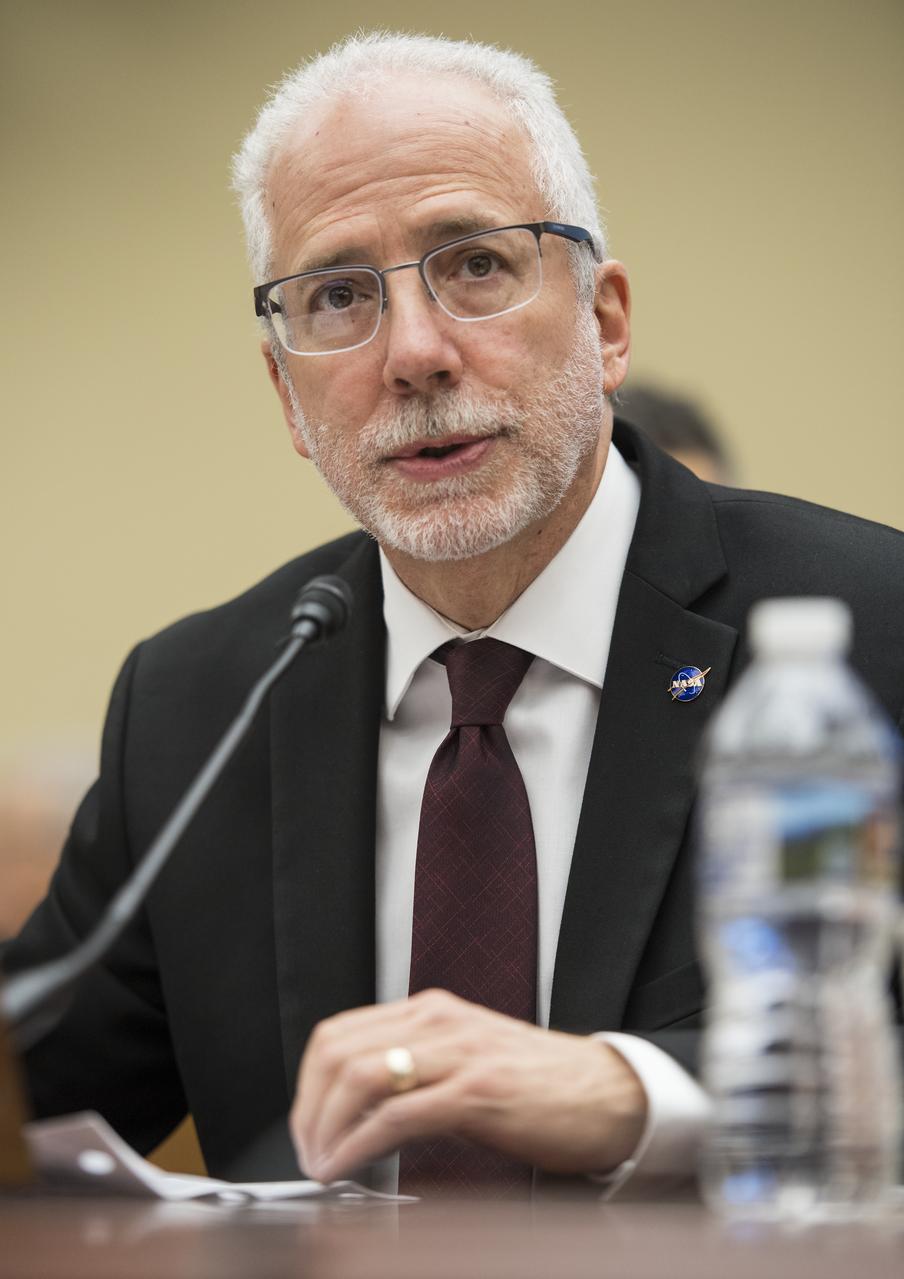
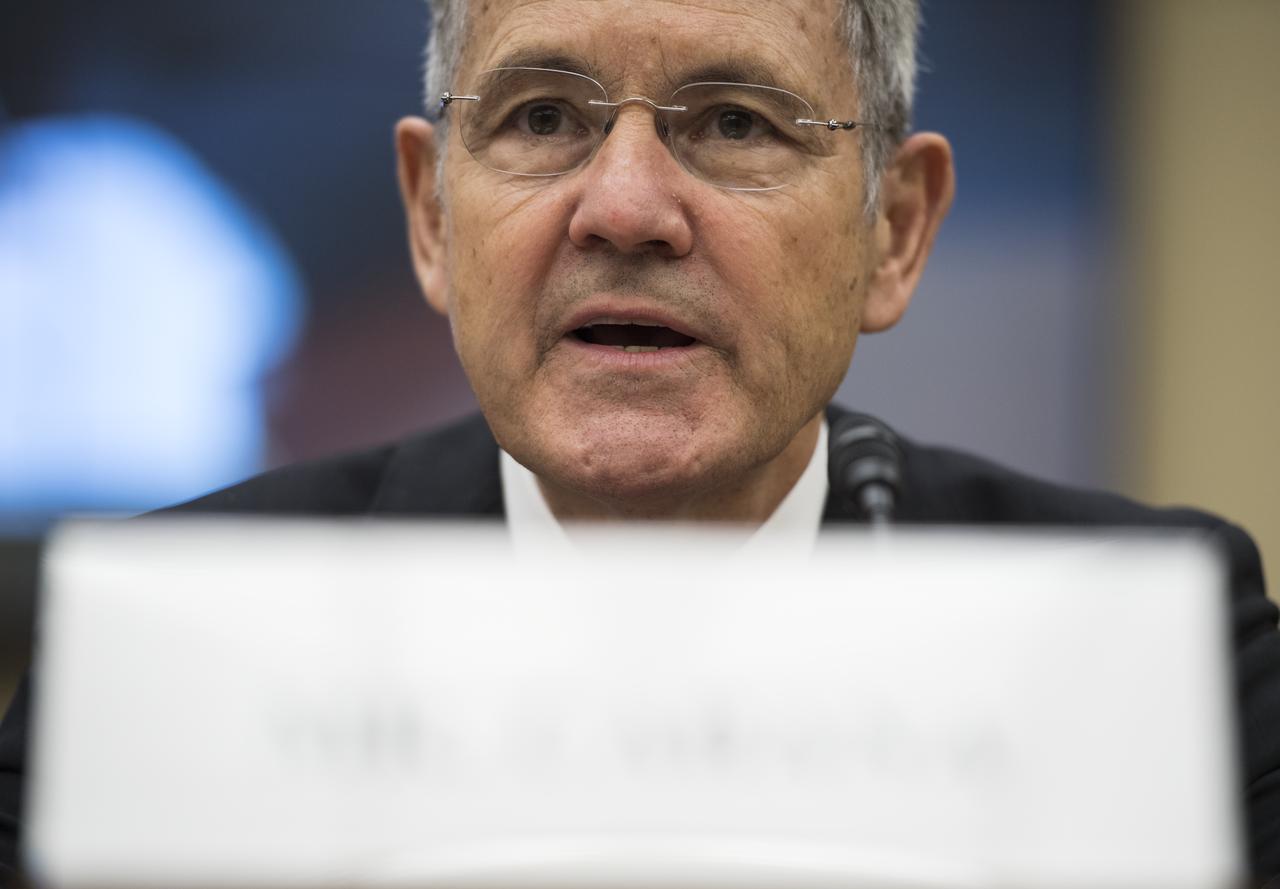
Mark Geyer, Director of NASA's Johnson Space Center, testifies during a House Subcommittee on Space hearing titled "60 Years of NASA Leadership in Human Space Exploration: Past, Present, and Future," Wednesday, Sept. 26, 2018 at the Rayburn House Office Building in Washington. Photo Credit: (NASA/Joel Kowsky)
Mark Geyer, Director of NASA's Johnson Space Center, testifies during a House Subcommittee on Space hearing titled "60 Years of NASA Leadership in Human Space Exploration: Past, Present, and Future," Wednesday, Sept. 26, 2018 at the Rayburn House Office Building in Washington. Photo Credit: (NASA/Joel Kowsky)
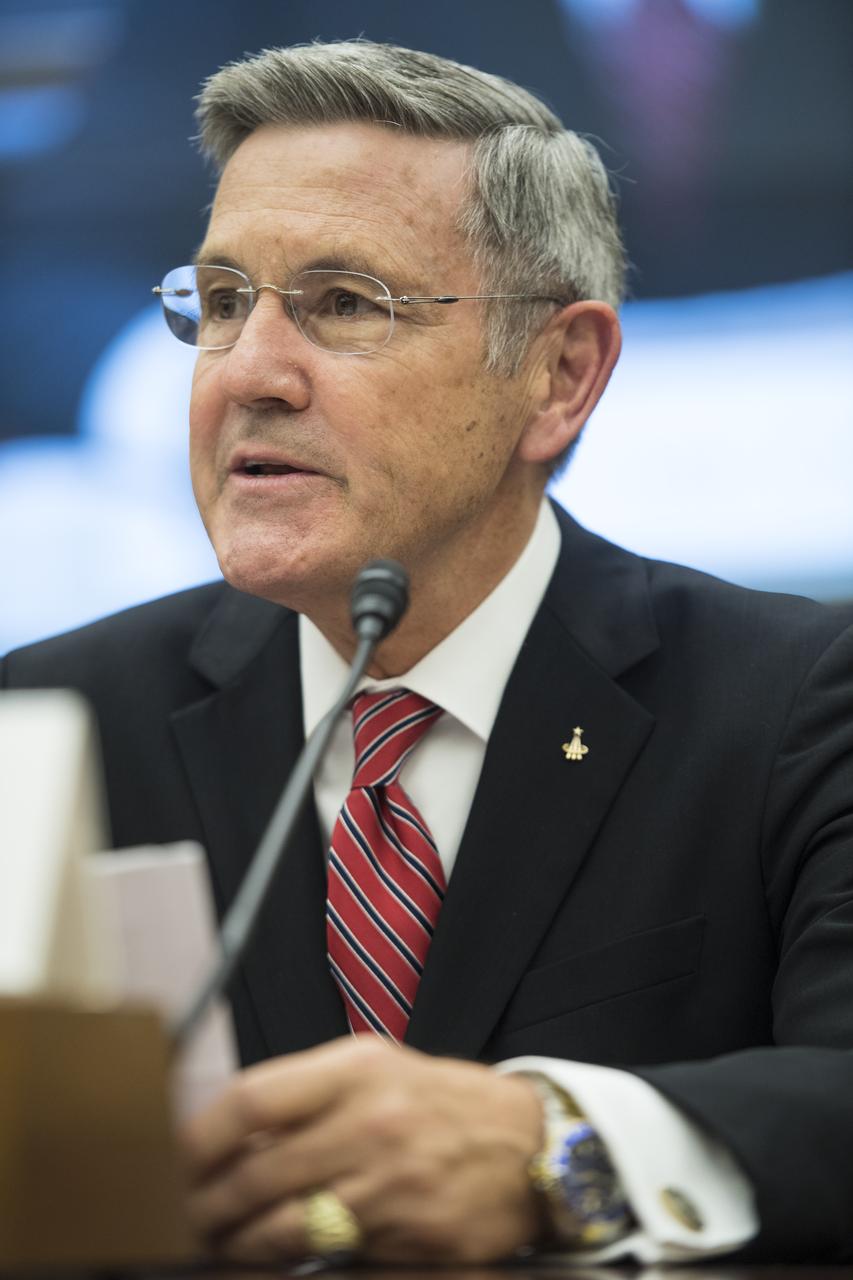
Robert Cabana, Director of NASA's Kennedy Space Center, testifies during a House Subcommittee on Space hearing titled "60 Years of NASA Leadership in Human Space Exploration: Past, Present, and Future," Wednesday, Sept. 26, 2018 at the Rayburn House Office Building in Washington. Photo Credit: (NASA/Joel Kowsky)
Jody Singer, Director of NASA's Marshall Space Flight Center, testifies during a House Subcommittee on Space hearing titled "60 Years of NASA Leadership in Human Space Exploration: Past, Present, and Future," Wednesday, Sept. 26, 2018 at the Rayburn House Office Building in Washington. Photo Credit: (NASA/Joel Kowsky)
Robert Cabana, Director of NASA's Kennedy Space Center, testifies during a House Subcommittee on Space hearing titled "60 Years of NASA Leadership in Human Space Exploration: Past, Present, and Future," Wednesday, Sept. 26, 2018 at the Rayburn House Office Building in Washington. Photo Credit: (NASA/Joel Kowsky)
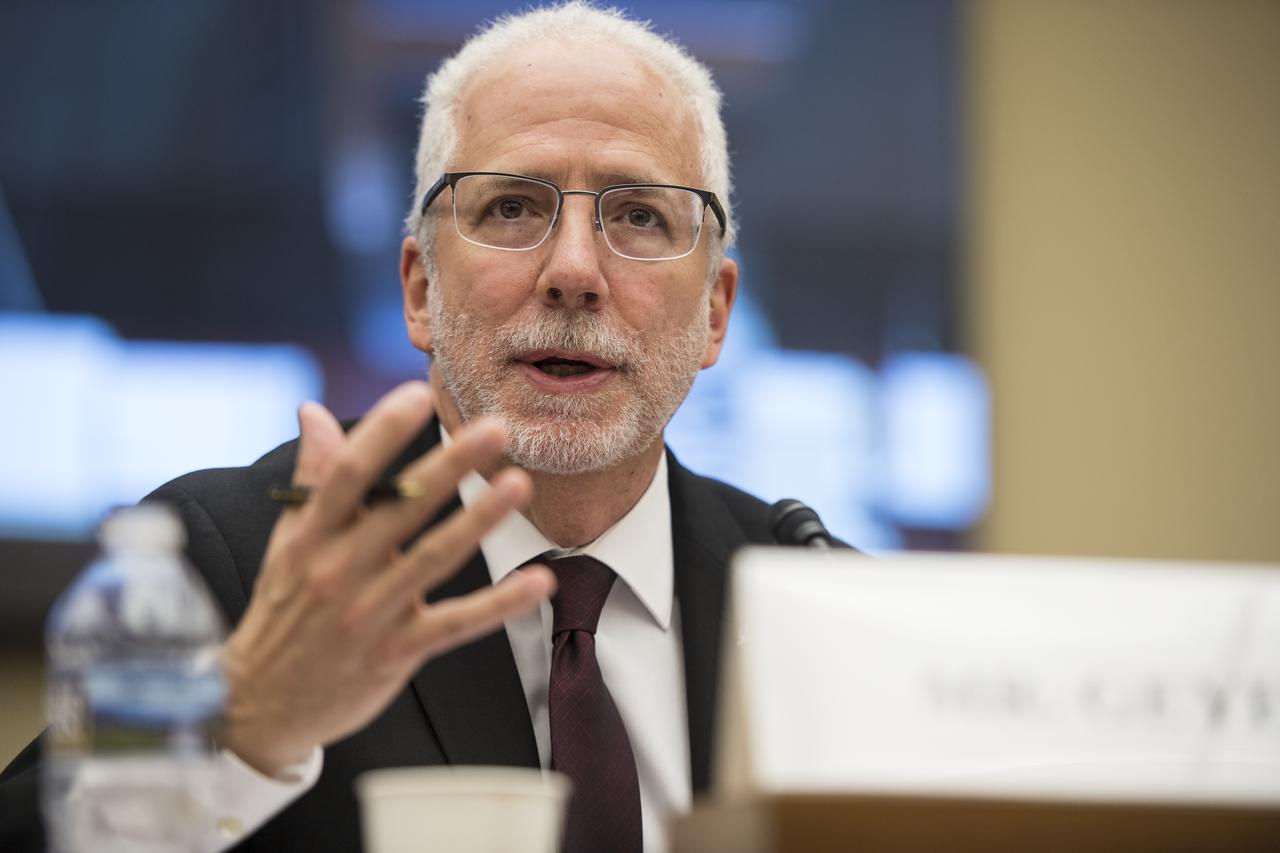
Mark Geyer, Director of NASA's Johnson Space Center, testifies during a House Subcommittee on Space hearing titled "60 Years of NASA Leadership in Human Space Exploration: Past, Present, and Future," Wednesday, Sept. 26, 2018 at the Rayburn House Office Building in Washington. Photo Credit: (NASA/Joel Kowsky)
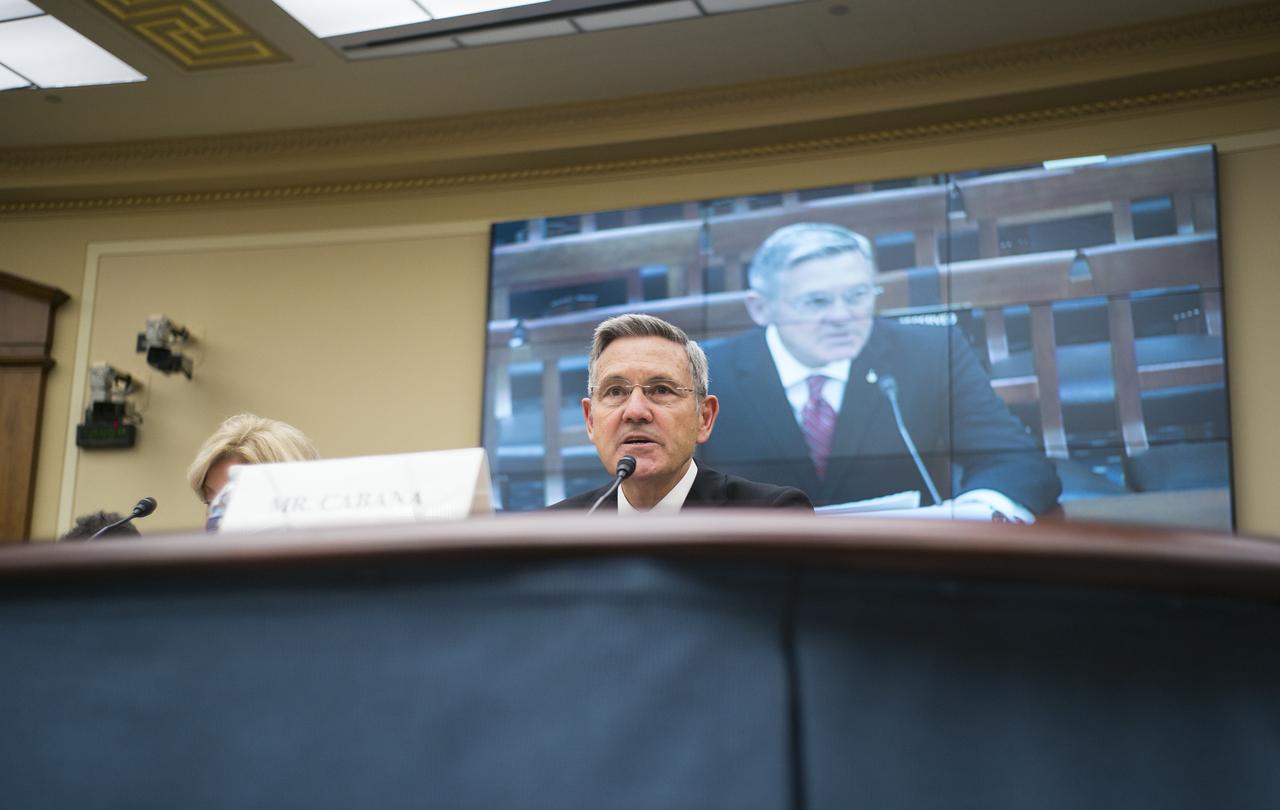
Robert Cabana, Director of NASA's Kennedy Space Center, testifies during a House Subcommittee on Space hearing titled "60 Years of NASA Leadership in Human Space Exploration: Past, Present, and Future," Wednesday, Sept. 26, 2018 at the Rayburn House Office Building in Washington. Photo Credit: (NASA/Joel Kowsky)
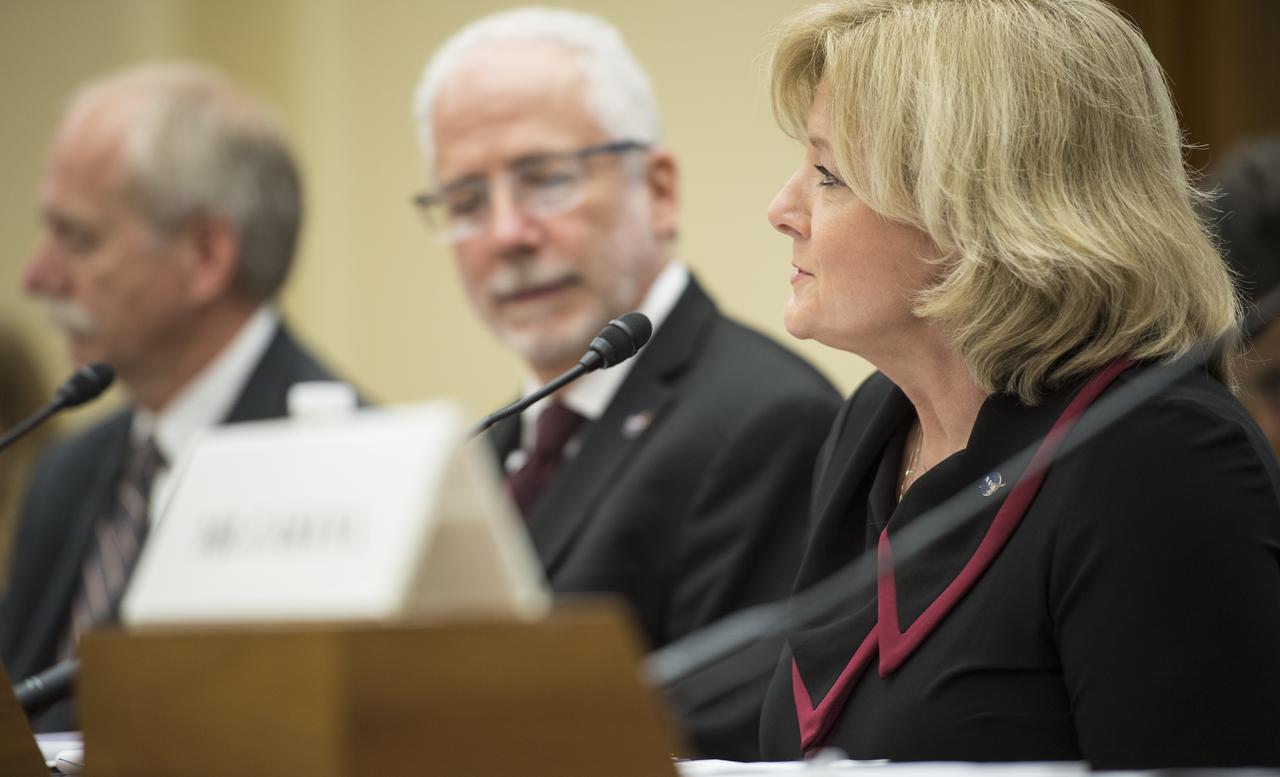
Jody Singer, Director of NASA's Marshall Space Flight Center, testifies during a House Subcommittee on Space hearing titled "60 Years of NASA Leadership in Human Space Exploration: Past, Present, and Future," Wednesday, Sept. 26, 2018 at the Rayburn House Office Building in Washington. Photo Credit: (NASA/Joel Kowsky)
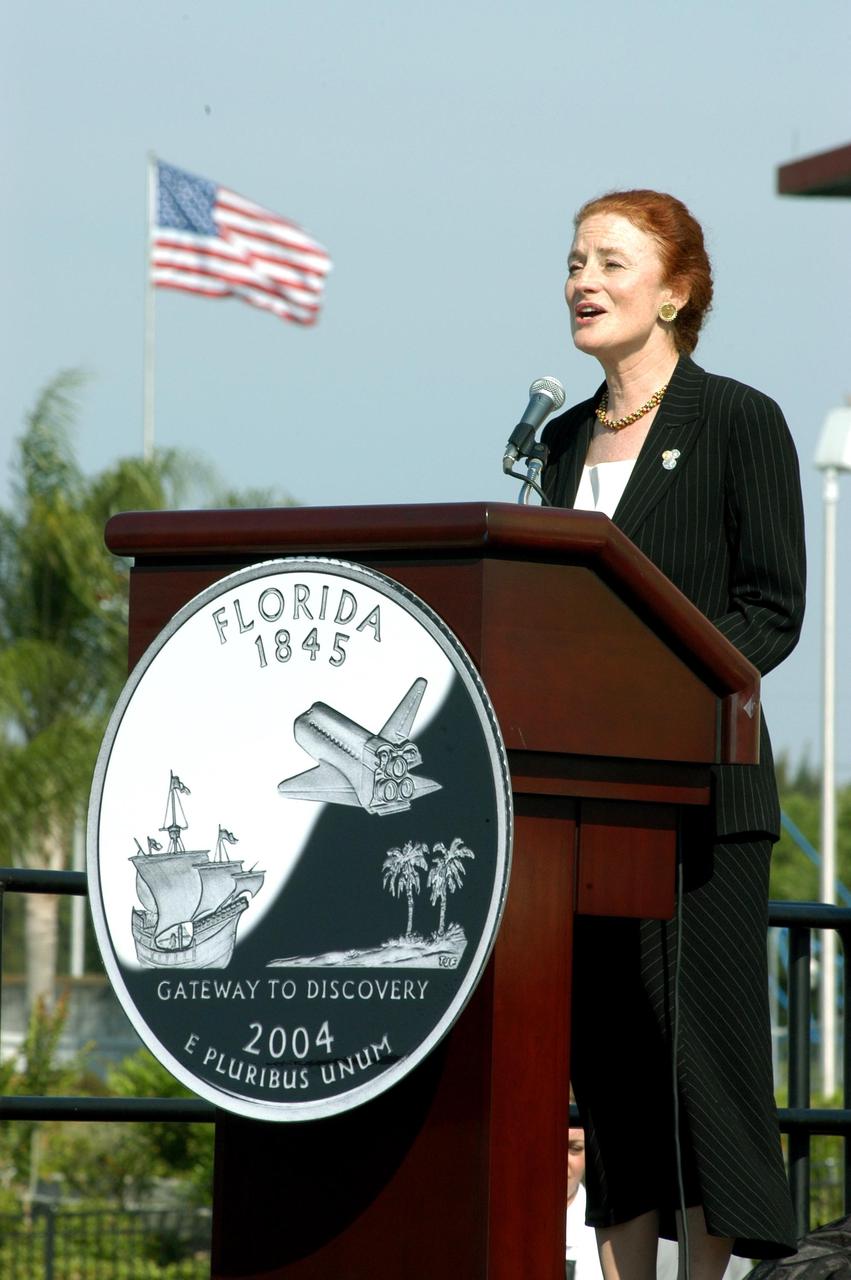
KENNEDY SPACE CENTER, FLA. -- U.S. Mint Director Henrietta Holsman Fore addresses the audience at a ceremony to launch the new Florida quarter, held at the KSC Visitor Complex. The quarter celebrates Florida as the gateway to discovery -- a destination for explorers in the past, a launch site for space explorers of the future, and an inviting place for visitors today.
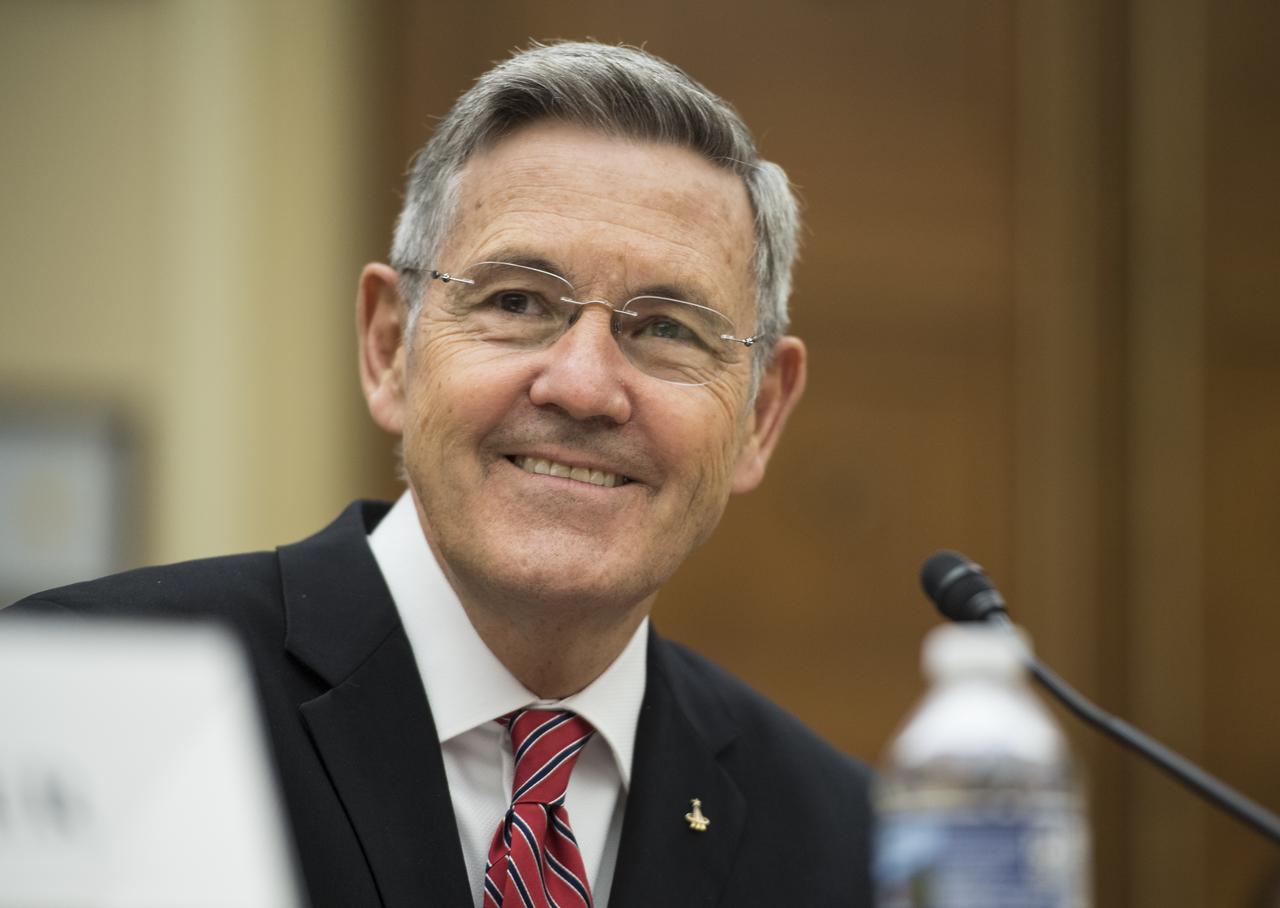
Robert Cabana, Director of NASA's Kennedy Space Center, testifies during a House Subcommittee on Space hearing titled "60 Years of NASA Leadership in Human Space Exploration: Past, Present, and Future," Wednesday, Sept. 26, 2018 at the Rayburn House Office Building in Washington. Photo Credit: (NASA/Joel Kowsky)
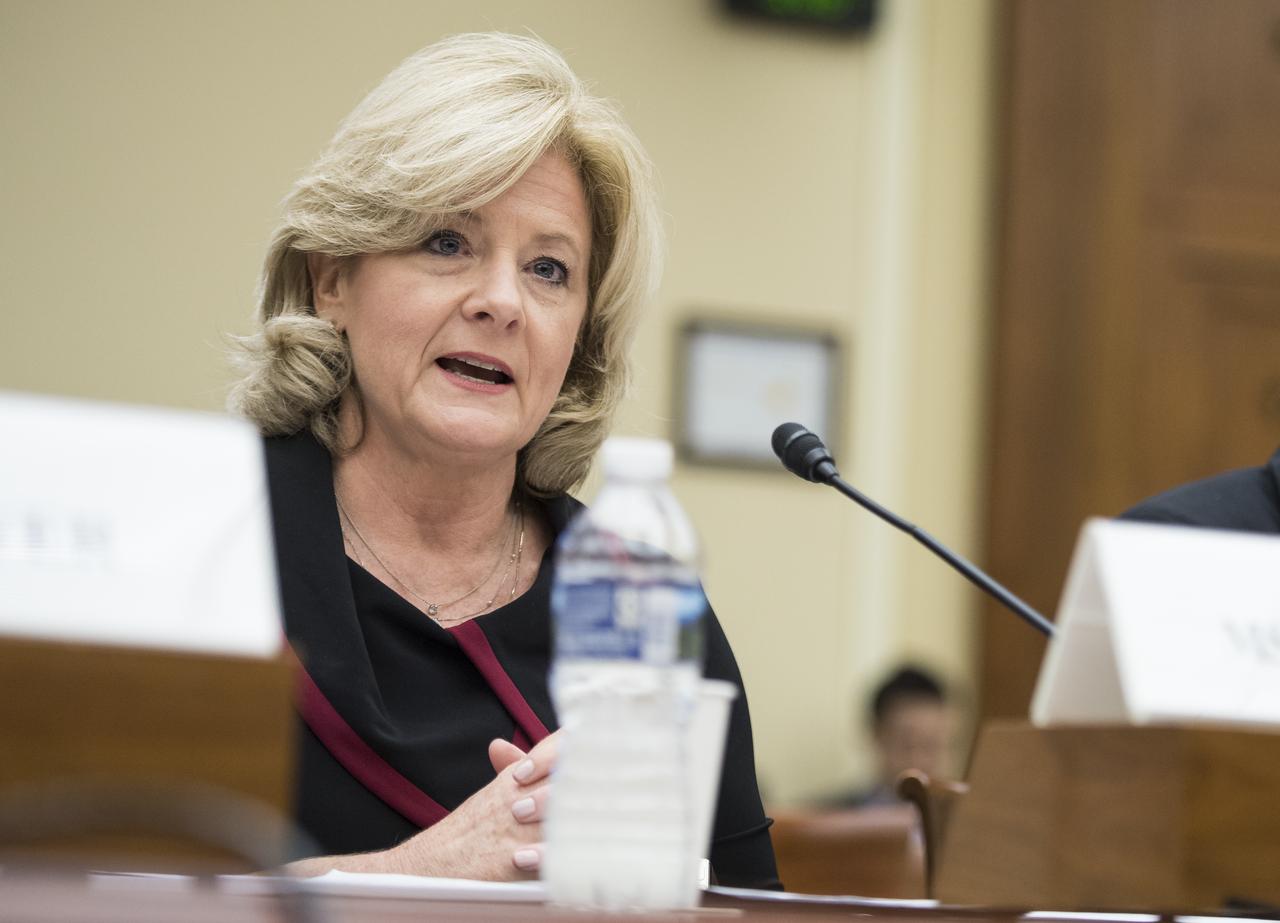
Jody Singer, Director of NASA's Marshall Space Flight Center, testifies during a House Subcommittee on Space hearing titled "60 Years of NASA Leadership in Human Space Exploration: Past, Present, and Future," Wednesday, Sept. 26, 2018 at the Rayburn House Office Building in Washington. Photo Credit: (NASA/Joel Kowsky)
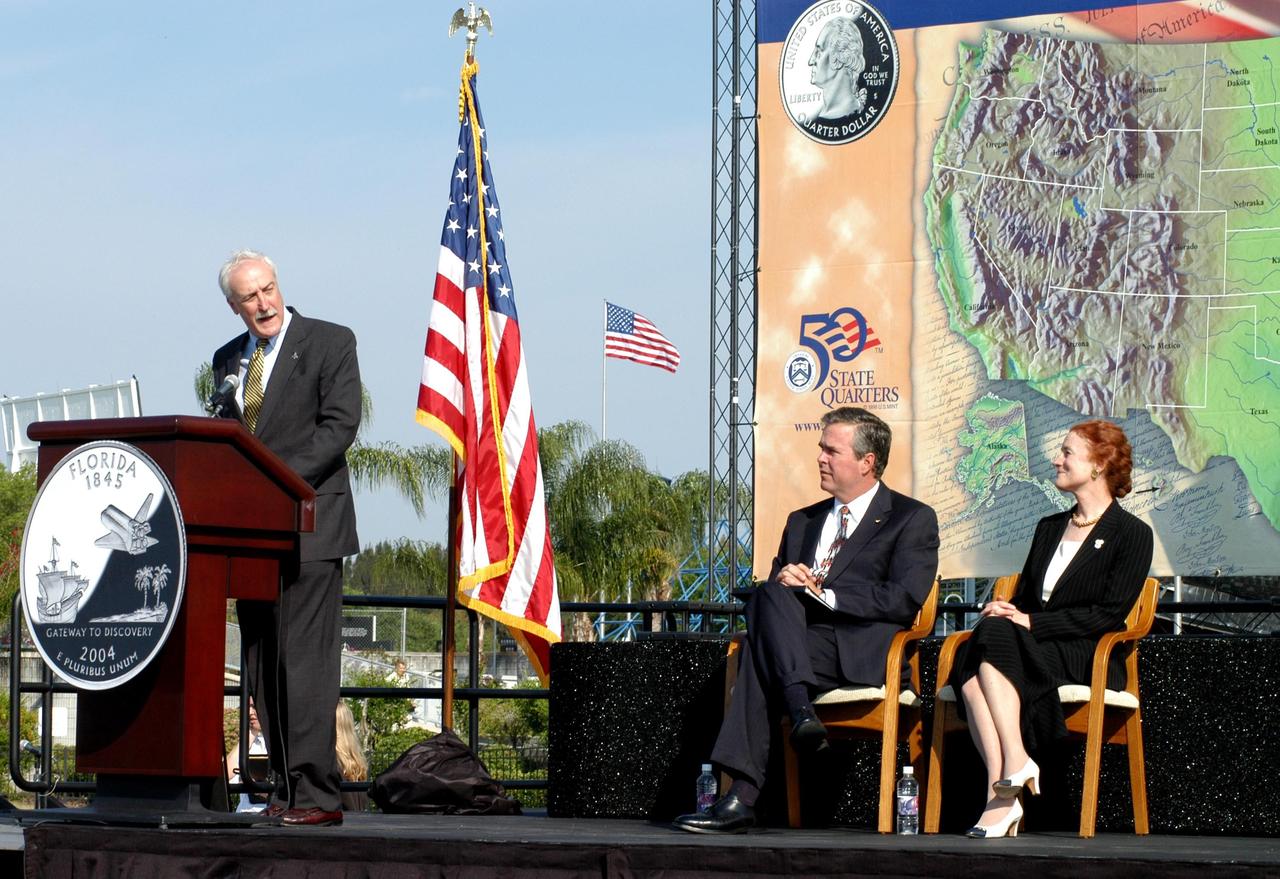
KENNEDY SPACE CENTER, FLA. -- NASA Administrator Sean O’Keefe comments on the design of the new Florida quarter during the ceremony at the KSC Visitor Complex that launched the coin. Sharing the stage with him are Florida Gov. Jeb Bush and U.S. Mint Director Henrietta Holsman Fore. Also participating were Center Director Jim Kennedy, who emceed, and Deputy Secretary of the Treasury Samuel W. Bodman. The quarter celebrates Florida as a destination for explorers in the past, a launch site for future explorers into space and an inviting place for visitors today.
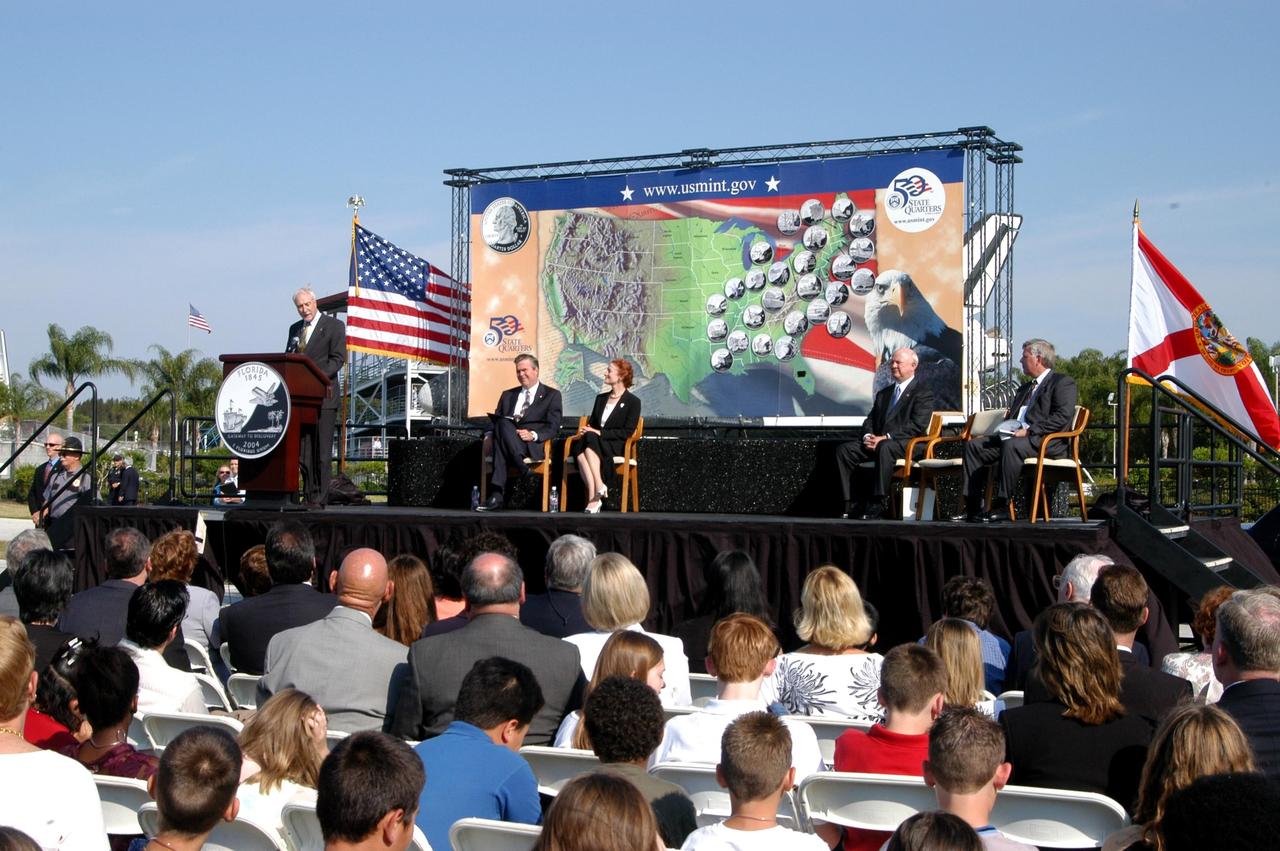
KENNEDY SPACE CENTER, FLA. -- NASA Administrator Sean O’Keefe comments on the design of the new Florida quarter during the ceremony at the KSC Visitor Complex that launched the coin. Sharing the stage with him are Florida Gov. Jeb Bush, U.S. Mint Director Henrietta Holsman Fore, Deputy Secretary of the Treasury Samuel W. Bodman and Center Director Jim Kennedy, who emceed. The quarter celebrates Florida as a destination for explorers in the past, a launch site for future explorers into space and an inviting place for visitors today.
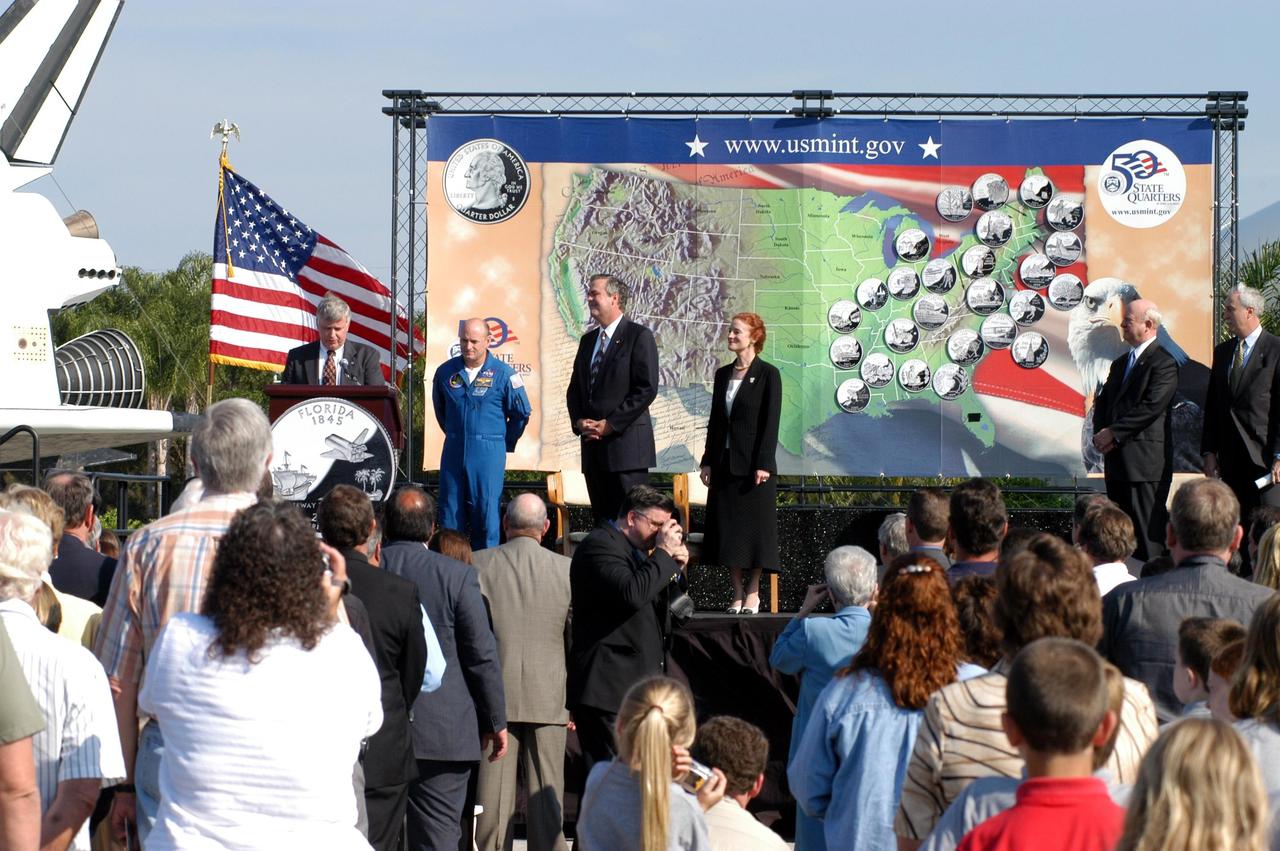
KENNEDY SPACE CENTER, FLA. -- As master of ceremonies, Center Director Jim Kennedy opens the event at the KSC Visitor Complex launching the new Florida quarter. On stage with him are (left to right) astronaut Scott Kelly, Florida Gov. Jeb Bush, U.S. Mint Director Henrietta Holsman Fore, Deputy Secretary of the Treasury Samuel W. Bodman and NASA Administrator Sean O’Keefe. The quarter celebrates Florida as a destination for explorers in the past, a launch site for future explorers into space and an inviting place for visitors today.
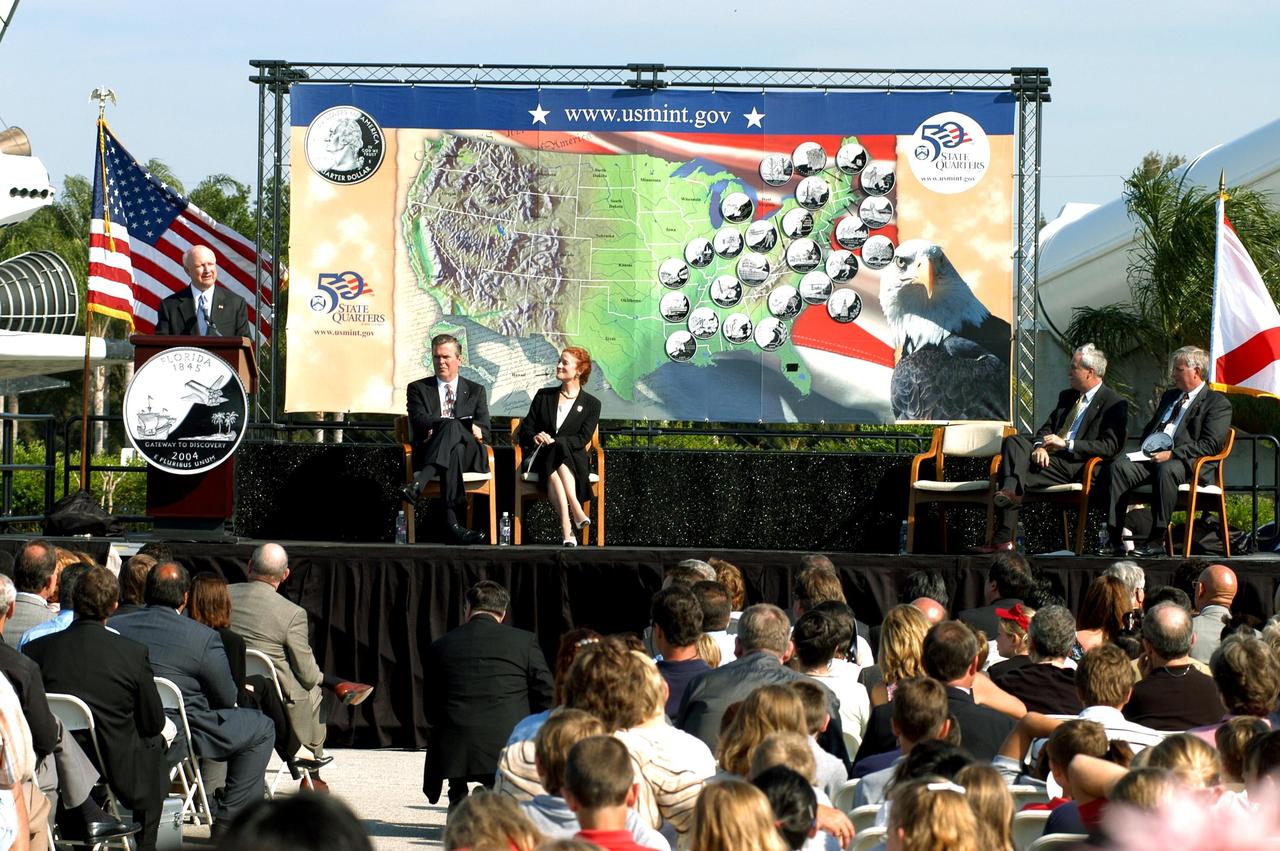
KENNEDY SPACE CENTER, FLA. -- Deputy Secretary of the Treasury Samuel W. Bodman remarks on the design of the new Florida quarter at its launch ceremony. Sharing the stage with him at the KSC Visitor Complex are, from left, Florida Gov. Jeb Bush, U.S. Mint Director Henrietta Holsman Fore, NASA Administrator Sean O'Keefe and KSC Director James W. Kennedy. The quarter celebrates Florida as the gateway to discovery -- a destination for explorers in the past, a launch site for space explorers of the future, and an inviting place for visitors today.

KENNEDY SPACE CENTER, FLA. -- It is standing room only at the launching ceremony for the new Florida quarter held at the KSC Visitor Complex. Emceed by Center Director Jim Kennedy, the event included comments by NASA Administrator Sean O’Keefe and Deputy Secretary of the Treasury Samuel W. Bodman. The coin was presented by U.S. Mint Director Henrietta Holsman Fore to Florida Gov. Jeb Bush. The quarter celebrates Florida as the gateway to discovery -- a destination for explorers in the past, a launch site for space explorers of the future, and an inviting place for visitors today.
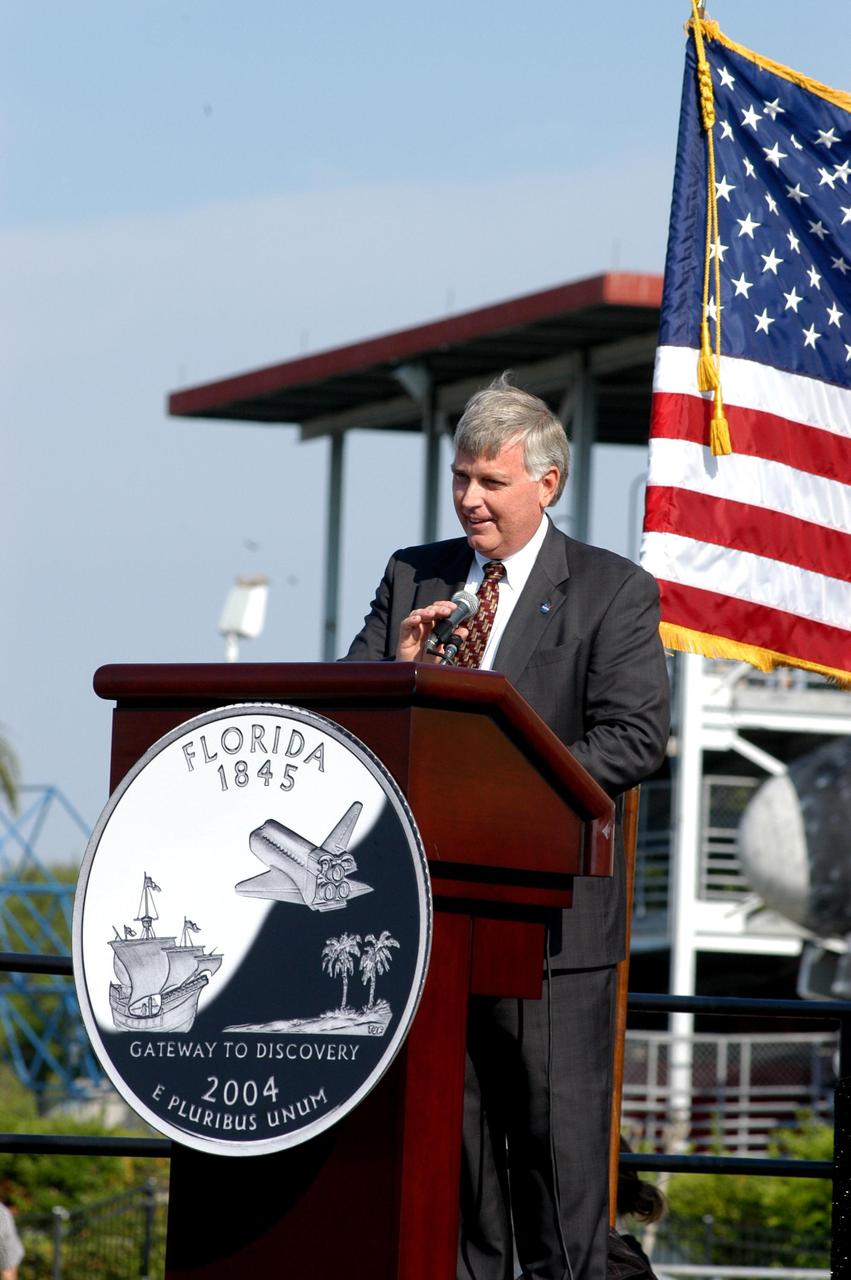
KENNEDY SPACE CENTER, FLA. -- As master of ceremonies, Center Director Jim Kennedy opens the event at the KSC Visitor Complex launching the new Florida quarter. Participating were NASA Administrator Sean O’Keefe, Deputy Secretary of the Treasury Samuel W. Bodman, U.S. Mint Director Henrietta Holsman Fore and Florida Gov. Jeb Bush. The quarter celebrates Florida as a destination for explorers in the past, a launch site for future explorers into space and an inviting place for visitors today.
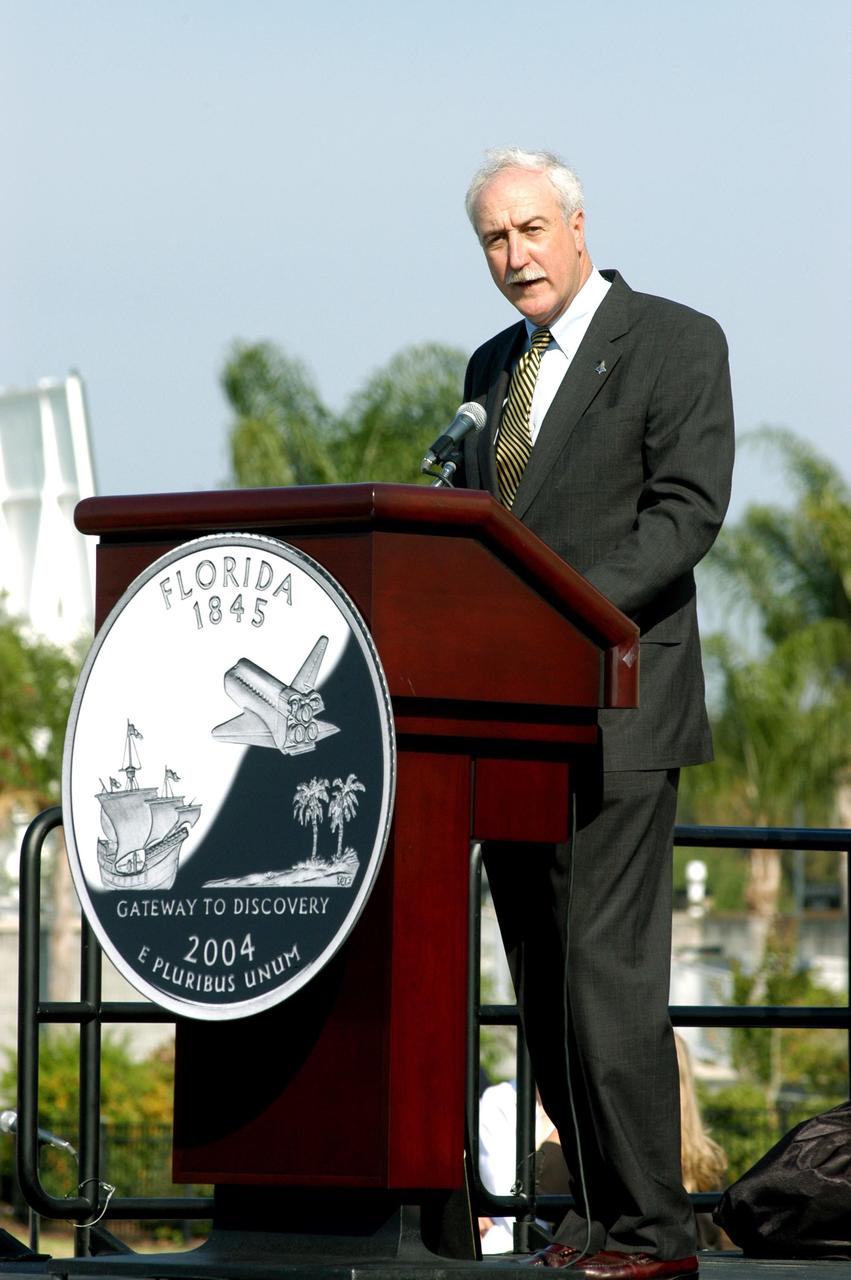
KENNEDY SPACE CENTER, FLA. -- NASA Administrator Sean O’Keefe comments on the design of the new Florida quarter during the ceremony at the KSC Visitor Complex that launched the coin. Also participating were Center Director Jim Kennedy, who emceed, Florida Gov. Jeb Bush, U.S. Mint Director Henrietta Holsman Fore and Deputy Secretary of the Treasury Samuel W. Bodman. The quarter celebrates Florida as a destination for explorers in the past, a launch site for future explorers into space and an inviting place for visitors today.
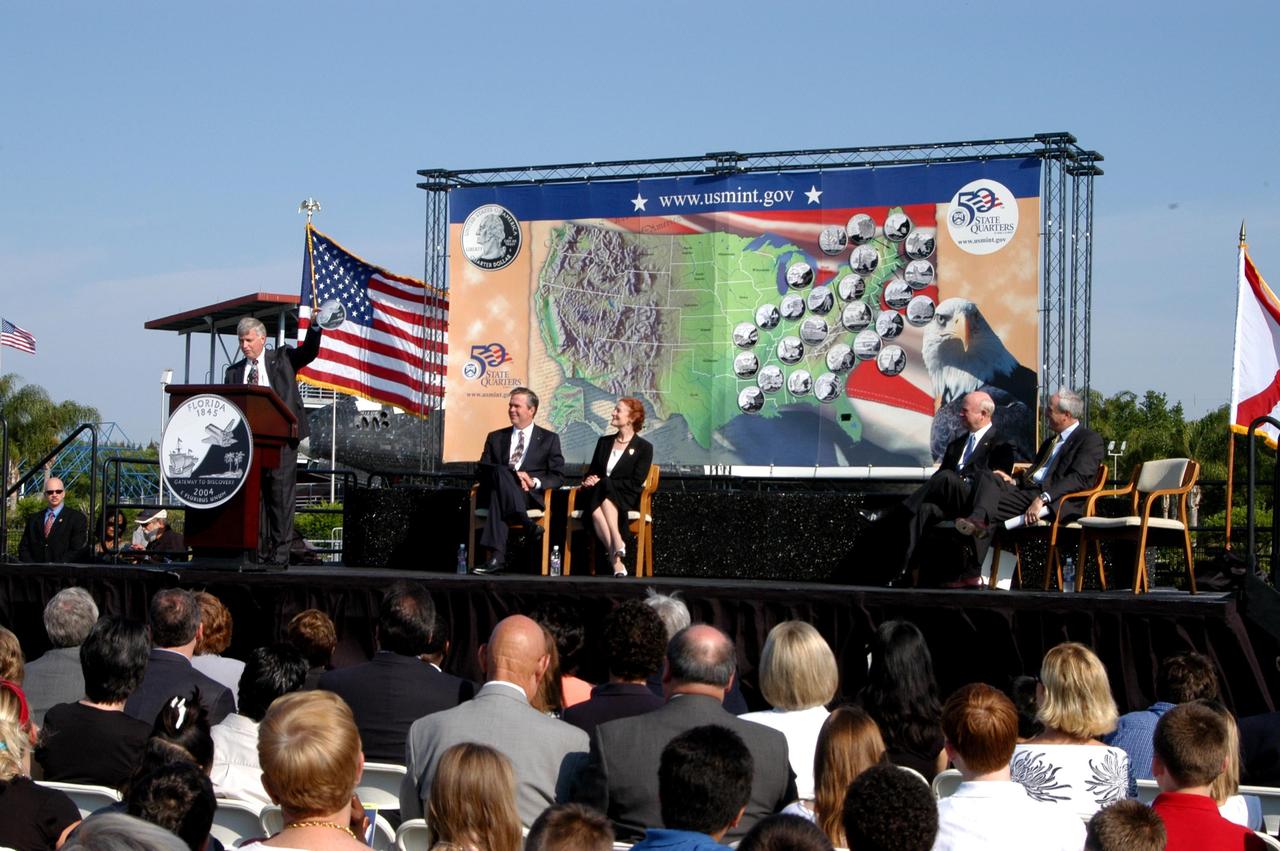
KENNEDY SPACE CENTER, FLA. -- As master of ceremonies, Center Director Jim Kennedy opens the event at the KSC Visitor Complex launching the new Florida quarter. Participating were (left to right) Florida Gov. Jeb Bush, U.S. Mint Director Henrietta Holsman Fore, Deputy Secretary of the Treasury Samuel W. Bodman and NASA Administrator Sean O’Keefe. The quarter celebrates Florida as a destination for explorers in the past, a launch site for future explorers into space and an inviting place for visitors today.
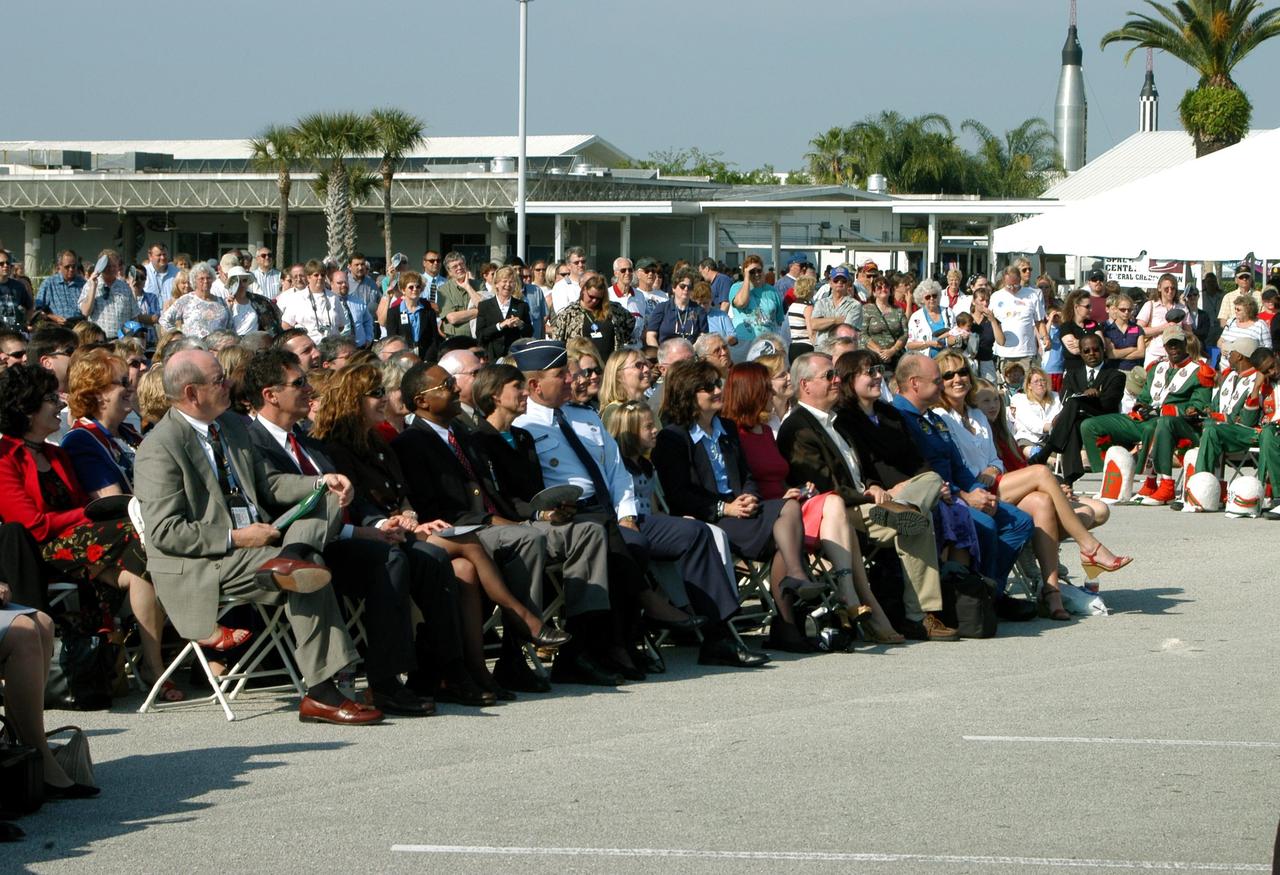
KENNEDY SPACE CENTER, FLA. -- It is standing room only at the launching ceremony for the new Florida quarter held at the KSC Visitor Complex. Emceed by Center Director Jim Kennedy, the event included comments by NASA Administrator Sean O’Keefe and Deputy Secretary of the Treasury Samuel W. Bodman. The coin was presented by U.S. Mint Director Henrietta Holsman Fore and Florida Gov. Jeb Bush. The quarter celebrates Florida as a destination for explorers in the past, a launch site for future explorers into space and an inviting place for visitors today.
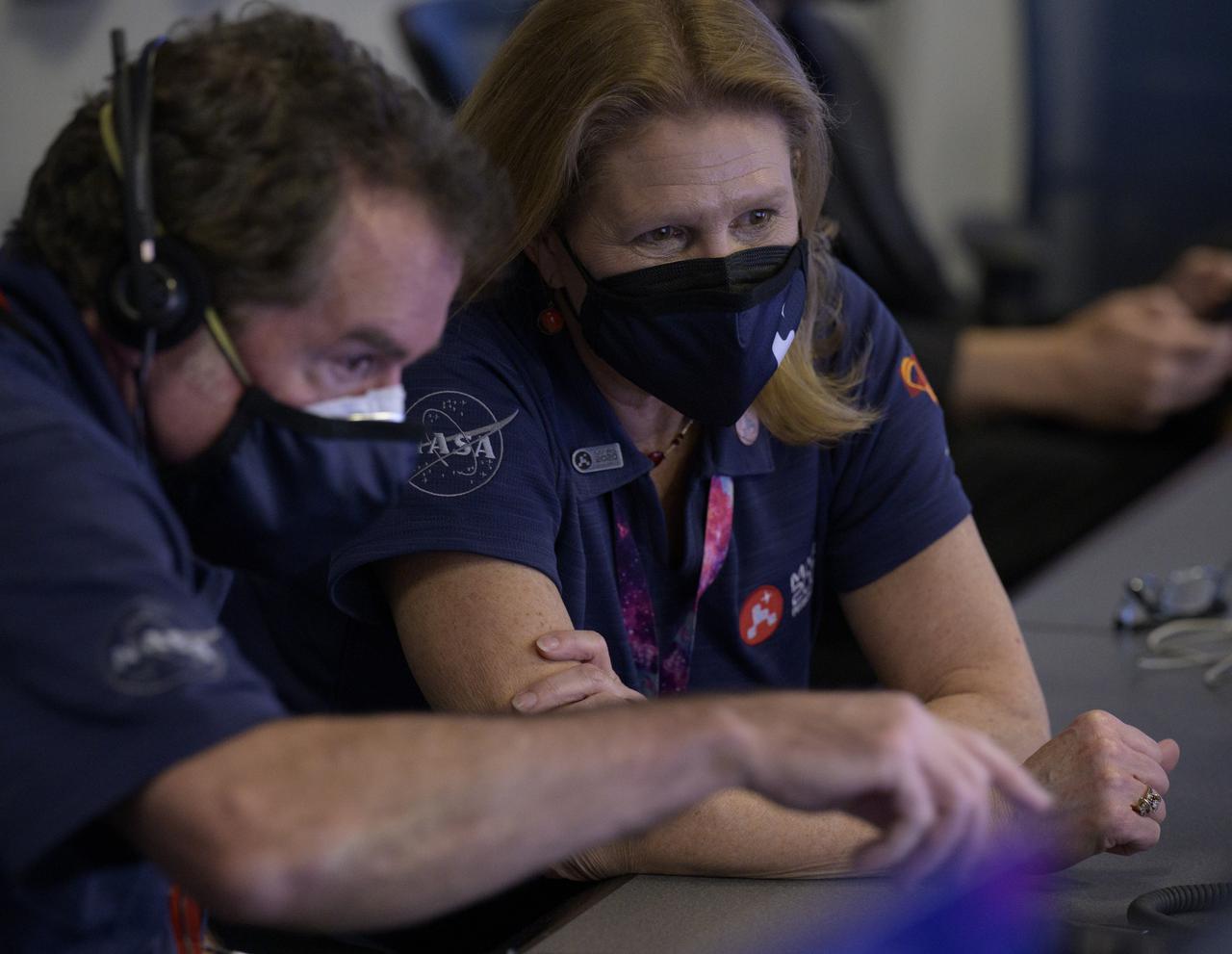
JPL Director Michael Watkins, left, talks with Director of NASA's Science Mission Directorate’s Planetary Science Division, Lori Glaze, as they and the NASA Perseverance Mars rover team await the landing of the spacecraft in mission control, Thursday, Feb. 18, 2021, at NASA's Jet Propulsion Laboratory in Pasadena, California. A key objective for Perseverance’s mission on Mars is astrobiology, including the search for signs of ancient microbial life. The rover will characterize the planet’s geology and past climate, pave the way for human exploration of the Red Planet, and be the first mission to collect and cache Martian rock and regolith. Photo Credit: (NASA/Bill Ingalls)
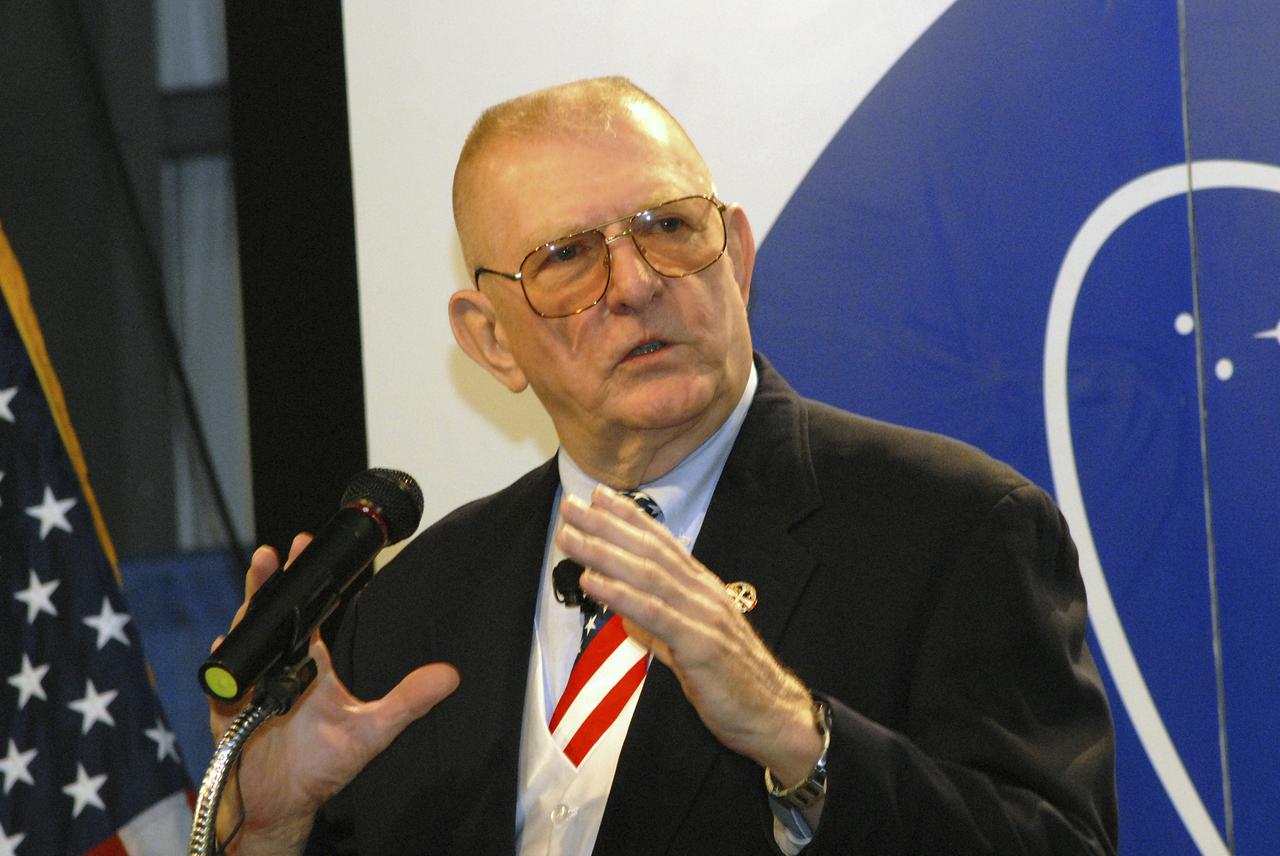
On October 19, 2006, former NASA director of Mission Operations Gene Kranz was a keynote speaker at the Marshall Space Flight Center’s (MSFC’s) 2006 Annual Safety Day program. The best selling author of “Failure Is Not An Option” and past Apollo flight director was featured during a morning session called “Coffee and Kranz”. Marshall employees hung on his every word as he told the fascinating story of Apollo 13. Kranz was the acting flight director during the Apollo 13 mission, a mission that seemed doomed to fail due to an onboard explosion. Kranz and his flight control team worked around the clock relentlessly, solving problem after problem, until the crew was returned safely to Earth.
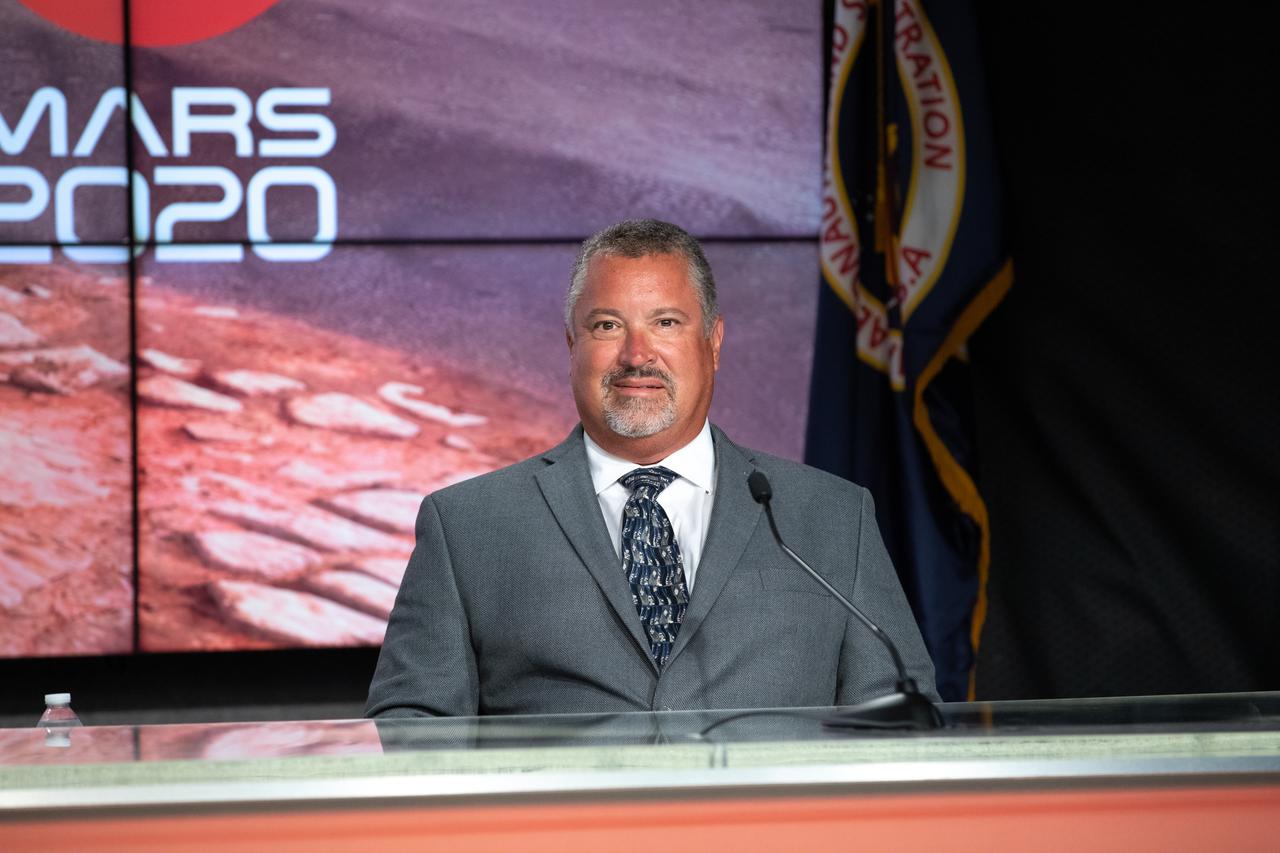
Launch Director Omar Baez, with NASA’s Launch Services Program, participates in a Mars 2020 prelaunch news briefing at NASA’s Kennedy Space Center in Florida on July 27, 2020. The Mars Perseverance rover is scheduled to launch on July 30, on a United Launch Alliance Atlas V 541 rocket from Space Launch Complex 41 at nearby Cape Canaveral Air Force Station. The rover is part of NASA’s Mars Exploration Program, a long-term effort of robotic exploration of the Red Planet. The rover will search for habitable conditions in the ancient past and signs of past microbial life on Mars. The Launch Services Program at Kennedy is responsible for launch management.
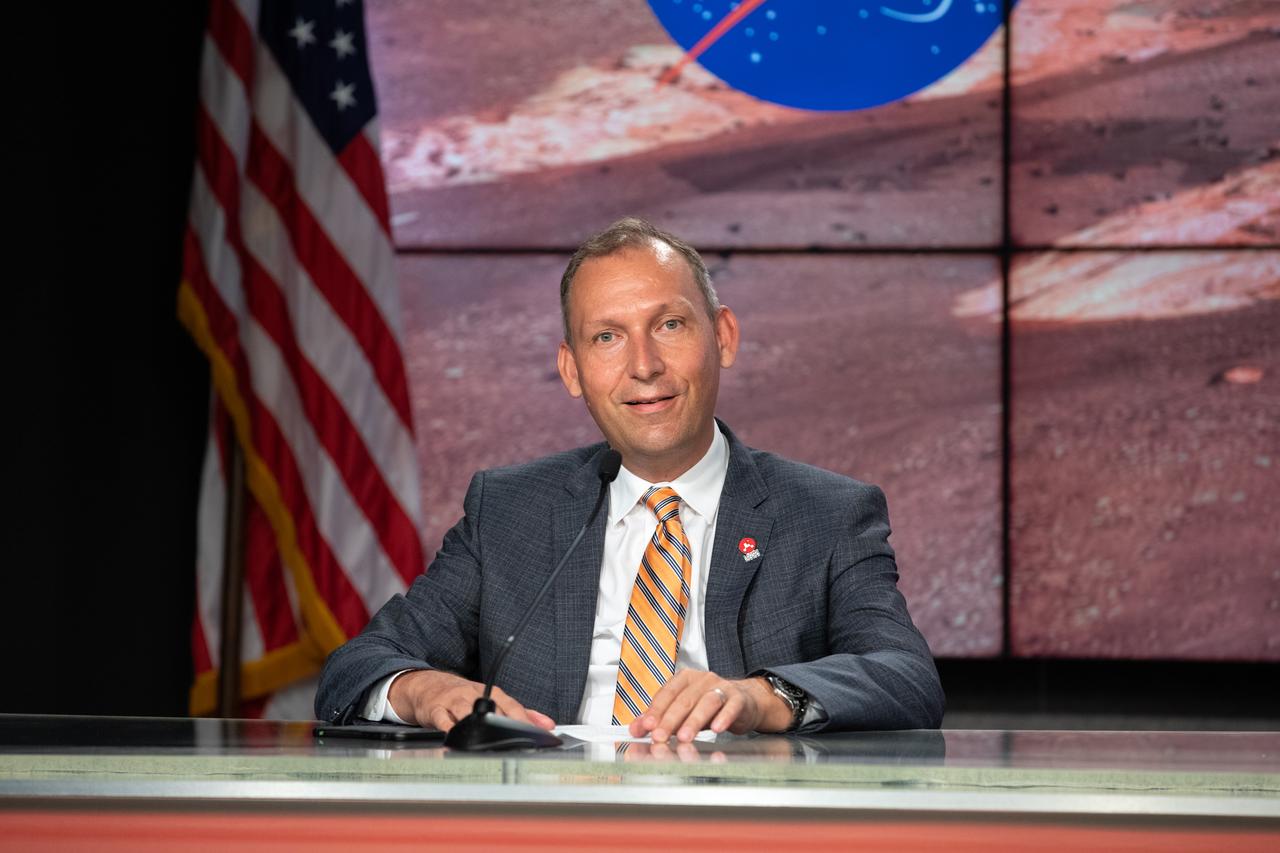
Thomas Zurbuchen, NASA Associate Administrator, Science Mission Directorate, participates in a Mars 2020 prelaunch news briefing at NASA’s Kennedy Space Center in Florida on July 27, 2020. The Mars Perseverance rover is scheduled to launch on July 30, on a United Launch Alliance Atlas V 541 rocket from Space Launch Complex 41 at nearby Cape Canaveral Air Force Station. The rover is part of NASA’s Mars Exploration Program, a long-term effort of robotic exploration of the Red Planet. The rover will search for habitable conditions in the ancient past and signs of past microbial life on Mars. The Launch Services Program at Kennedy is responsible for launch management.
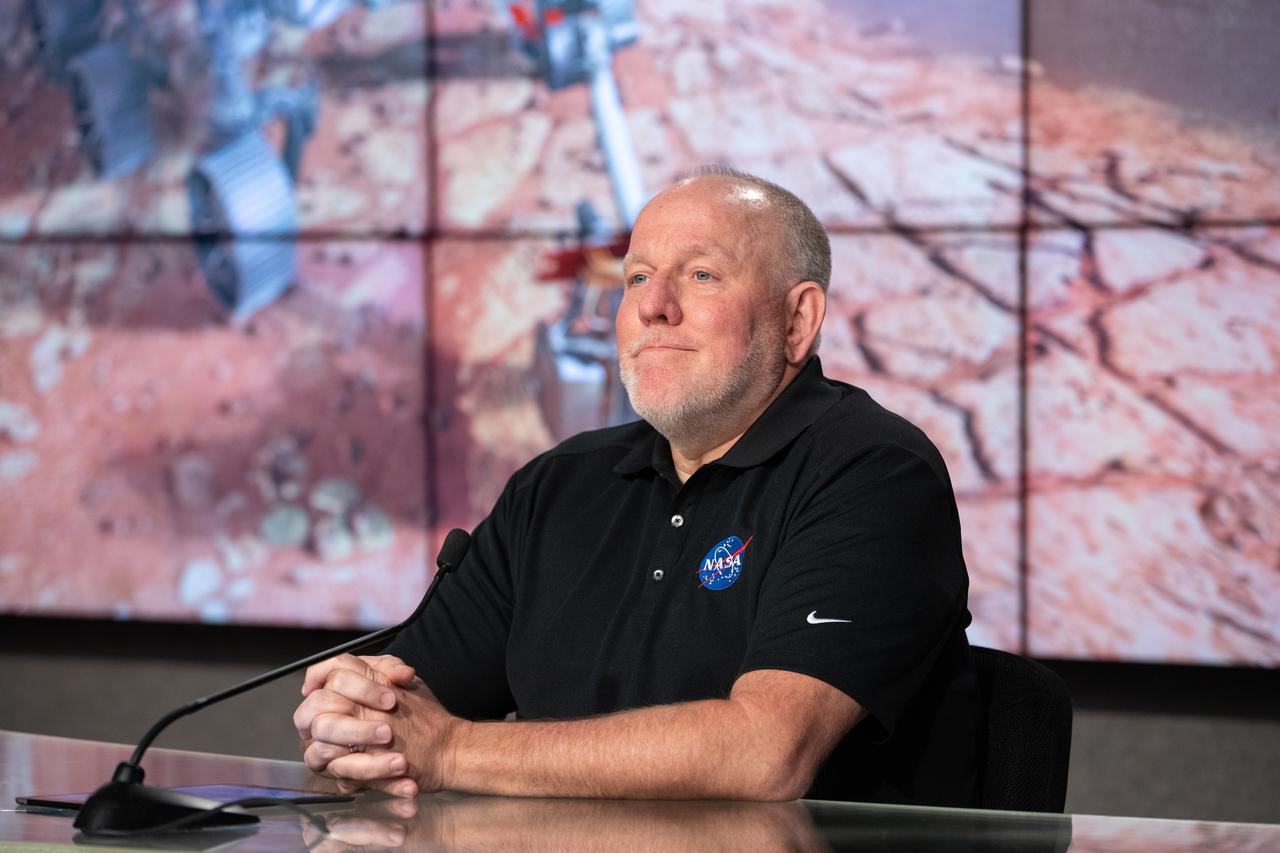
Jeff Sheehy, Space Technology Mission Directorate, NASA Headquarters, participates in a Mars 2020 Mission Tech and Humans to Mars Briefing at NASA’s Kennedy Space Center in Florida on July 28, 2020. The Mars Perseverance rover is scheduled to launch July 30, on a United Launch Alliance Atlas V 541 rocket from Space Launch Complex 41 at nearby Cape Canaveral Air Force Station. The rover is part of NASA’s Mars Exploration Program, a long-term effort of robotic exploration of the Red Planet. The rover will search for habitable conditions in the ancient past and signs of past microbial life on Mars. The Launch Services Program at Kennedy is responsible for launch management.
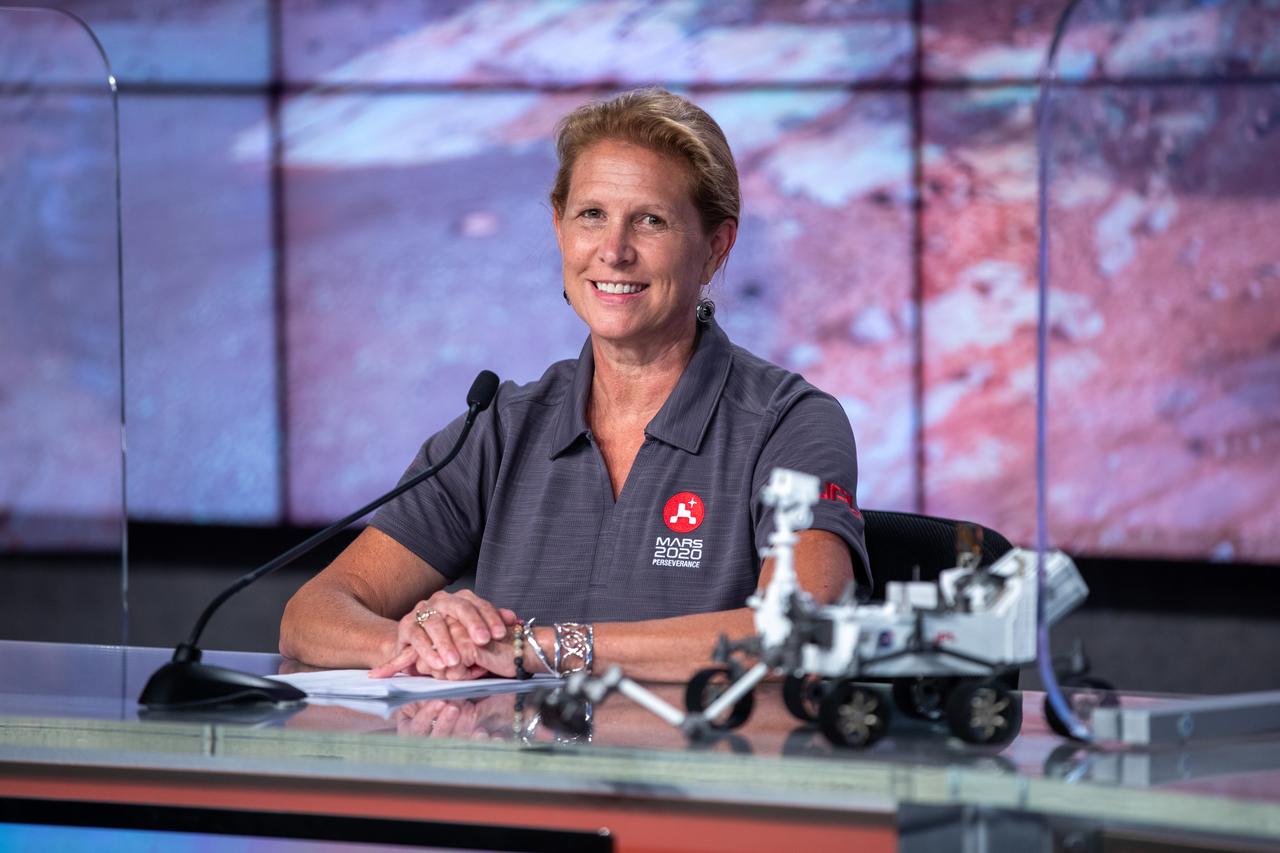
Lori Glaze, Planetary Science Division director, NASA Headquarters, participates in a Mars 2020 Mission Engineering and Science Briefing at NASA’s Kennedy Space Center in Florida on July 27, 2020. The Mars Perseverance rover is scheduled to launch July 30, on a United Launch Alliance Atlas V 541 rocket from Space Launch Complex 41 at nearby Cape Canaveral Air Force Station. The rover is part of NASA’s Mars Exploration Program, a long-term effort of robotic exploration of the Red Planet. The rover will search for habitable conditions in the ancient past and signs of past microbial life on Mars. The Launch Services Program at Kennedy is responsible for launch management.
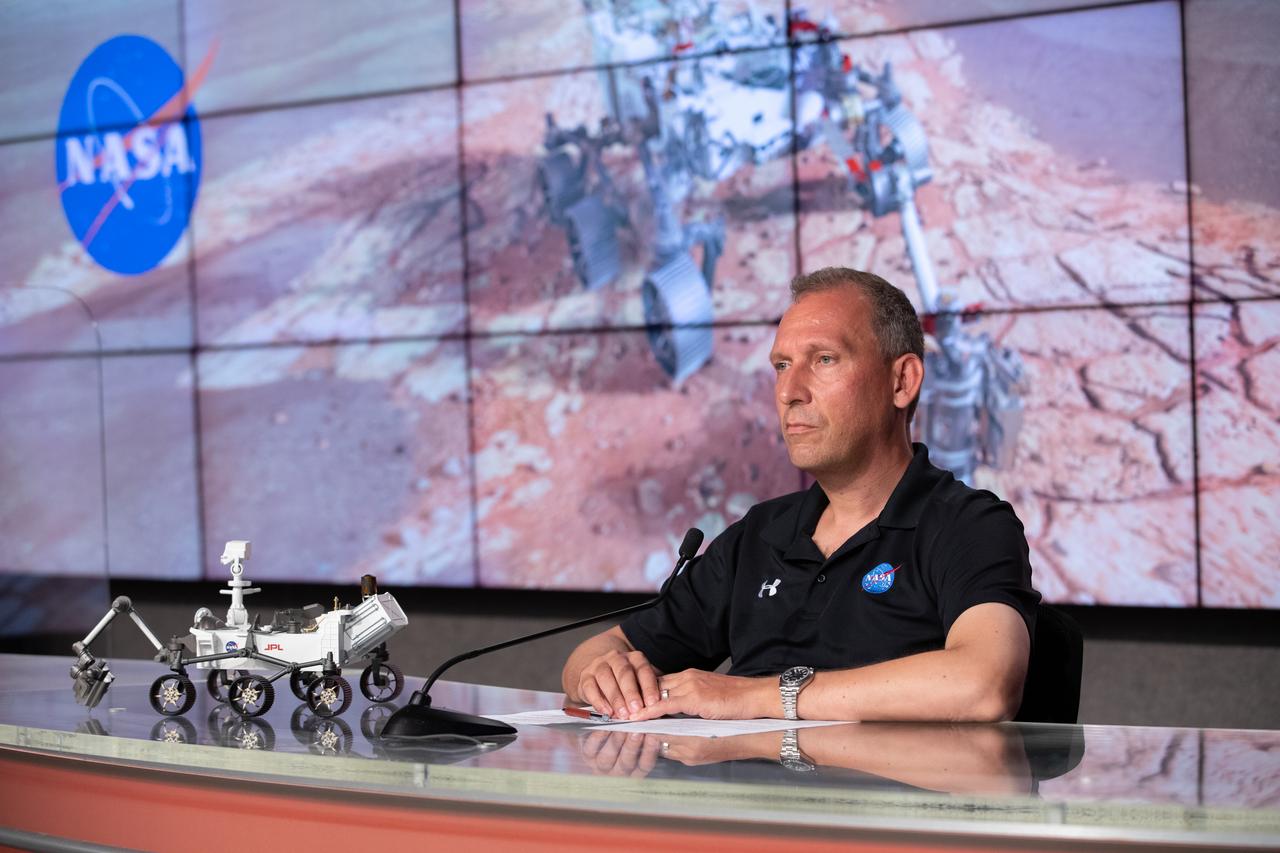
Thomas Zurbuchen, NASA associate administrator, Science Mission Directorate, participates in a Mars 2020 Sample Return briefing at NASA’s Kennedy Space Center in Florida on July 28, 2020. The Mars Perseverance rover is scheduled to launch on July 30, on a United Launch Alliance Atlas V 541 rocket from Space Launch Complex 41 at nearby Cape Canaveral Air Force Station. The rover is part of NASA’s Mars Exploration Program, a long-term effort of robotic exploration of the Red Planet. The rover will search for habitable conditions in the ancient past and signs of past microbial life on Mars. The Launch Services Program at Kennedy is responsible for launch management.
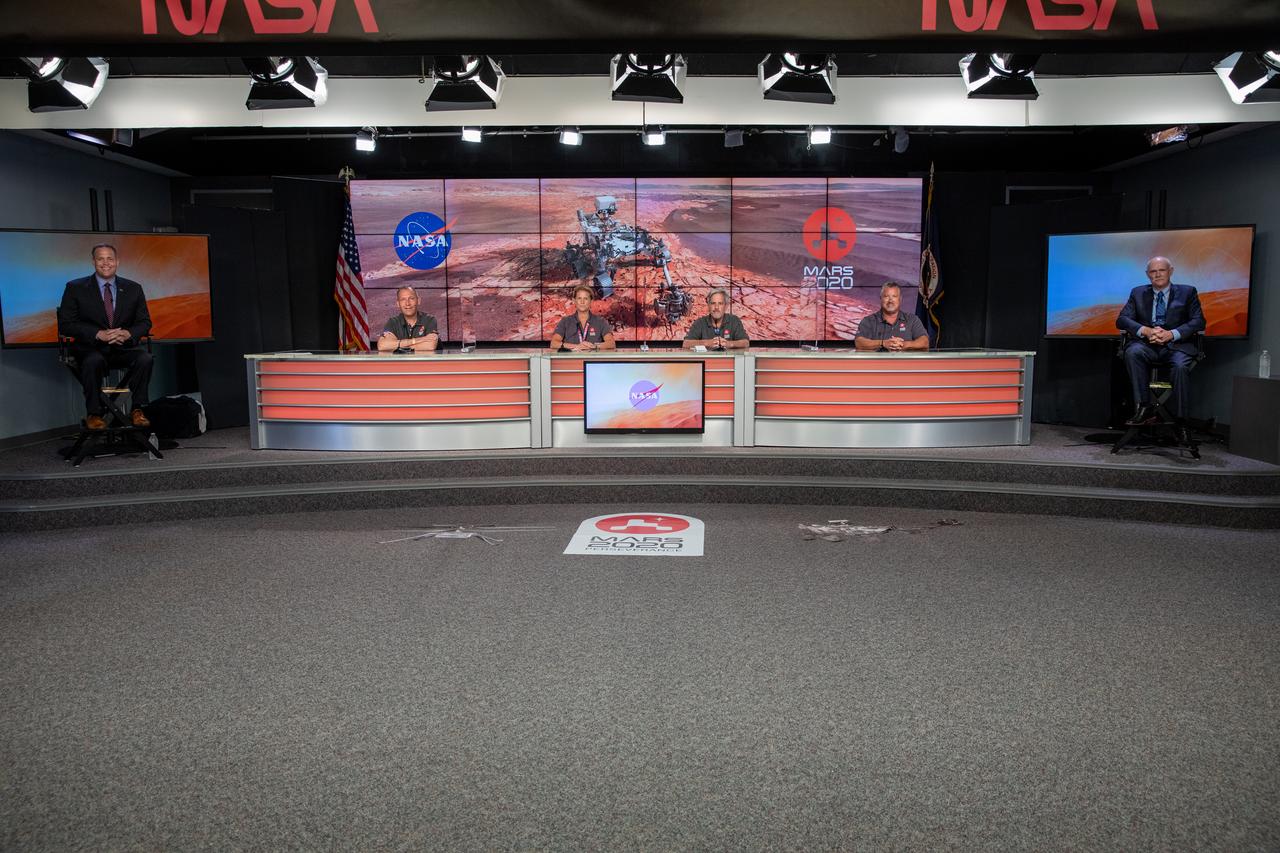
A Mars 2020 post-launch news conference is held at NASA’s Kennedy Space Center in Florida on July 30, 2020. Participants, from left, are NASA Administrator Jim Bridenstine; Thomas Zurbuchen, NASA associate administrator, Science Mission Directorate; Lori Glaze, Planetary Science Division director, NASA Headquarters; Matt Wallace, deputy project manager, NASA’s Jet Propulsion Laboratory; Omar Baez, launch director, NASA’s Launch Services Program; and Tory Bruno, president and CEO of United Launch Alliance. The United Launch Alliance Atlas V 541 rocket lifted off from Space Launch Complex 41 at Cape Canaveral Air Force Station at 7:50 a.m. EDT, carrying the agency’s Mars Perseverance rover and Ingenuity helicopter. The rover is part of NASA’s Mars Exploration Program, a long-term effort of robotic exploration of the Red Planet. The rover will search for habitable conditions in the ancient past and signs of past microbial life on Mars. The Launch Services Program at Kennedy is responsible for launch management.
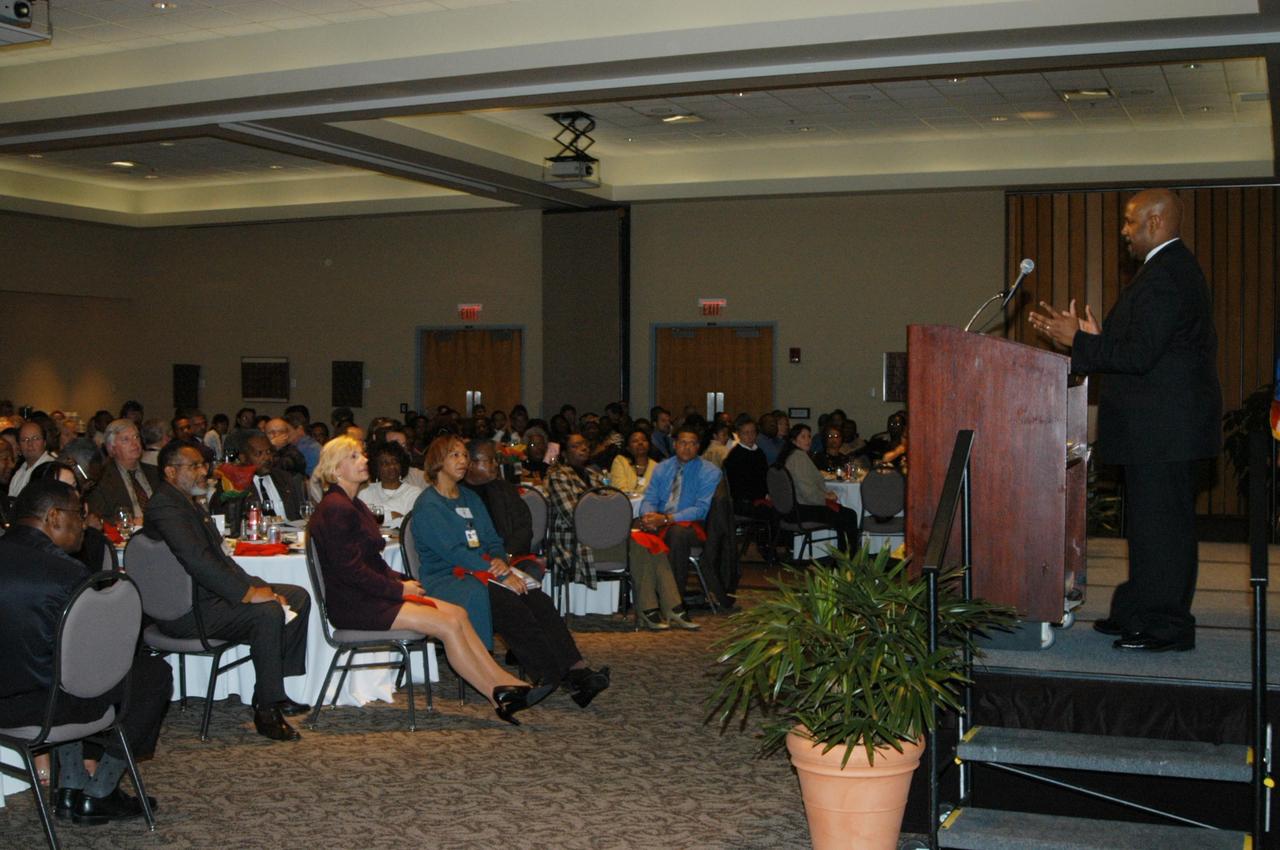
KENNEDY SPACE CENTER, FLA. - At the dais (right), Kwatsi Alibaruho speaks to guests at NASA Kennedy Space Center's annual BEST (Black Employee Strategy Team) African-American History Month luncheon. Among attendees was Center Director Jim Kennedy. The guest speaker for the luncheon, Alibaruho is a flight director from Johnson Space Center Mission Control. The theme for this year's luncheon was "Creating New Paths From Journeys Past." The luncheon was held in the Kurt H. Debus Center at Kennedy Space Center's Visitor Complex. Photo credit: NASA/George Shelton
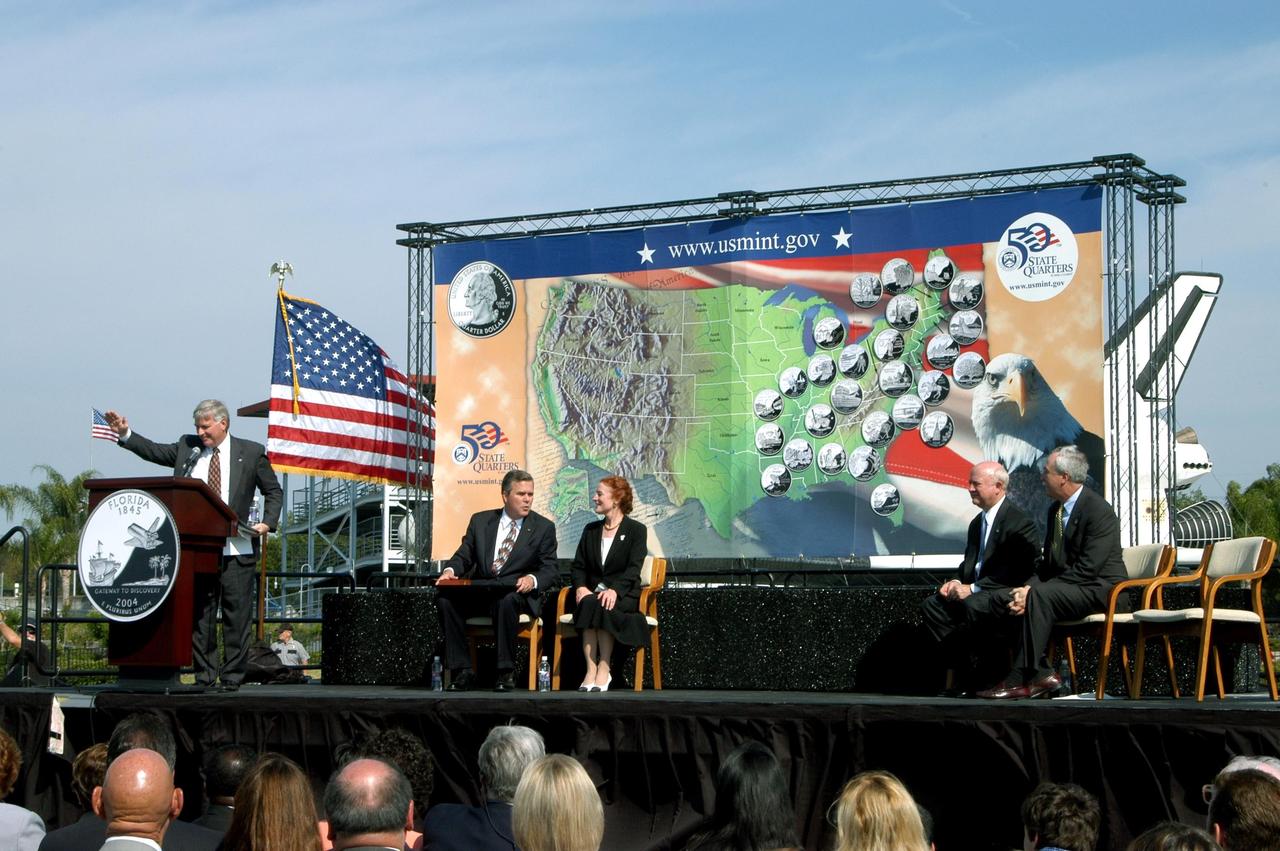
KENNEDY SPACE CENTER, FLA. -- KSC Director James W. Kennedy thanks the standing-room-only crowd for attending the ceremony to launch the new Florida quarter at the KSC Visitor Complex. The backdrop is a map of the United States, illustrating the state quarters issued to date. Also on stage are, from left, Florida Gov. Jeb Bush, U.S. Mint Director Henrietta Holsman Fore, Deputy Secretary of the Treasury Samuel W. Bodman, and NASA Administrator Sean O'Keefe. The quarter celebrates Florida as the gateway to discovery -- a destination for explorers in the past, a launch site for space explorers of the future, and an inviting place for visitors today.
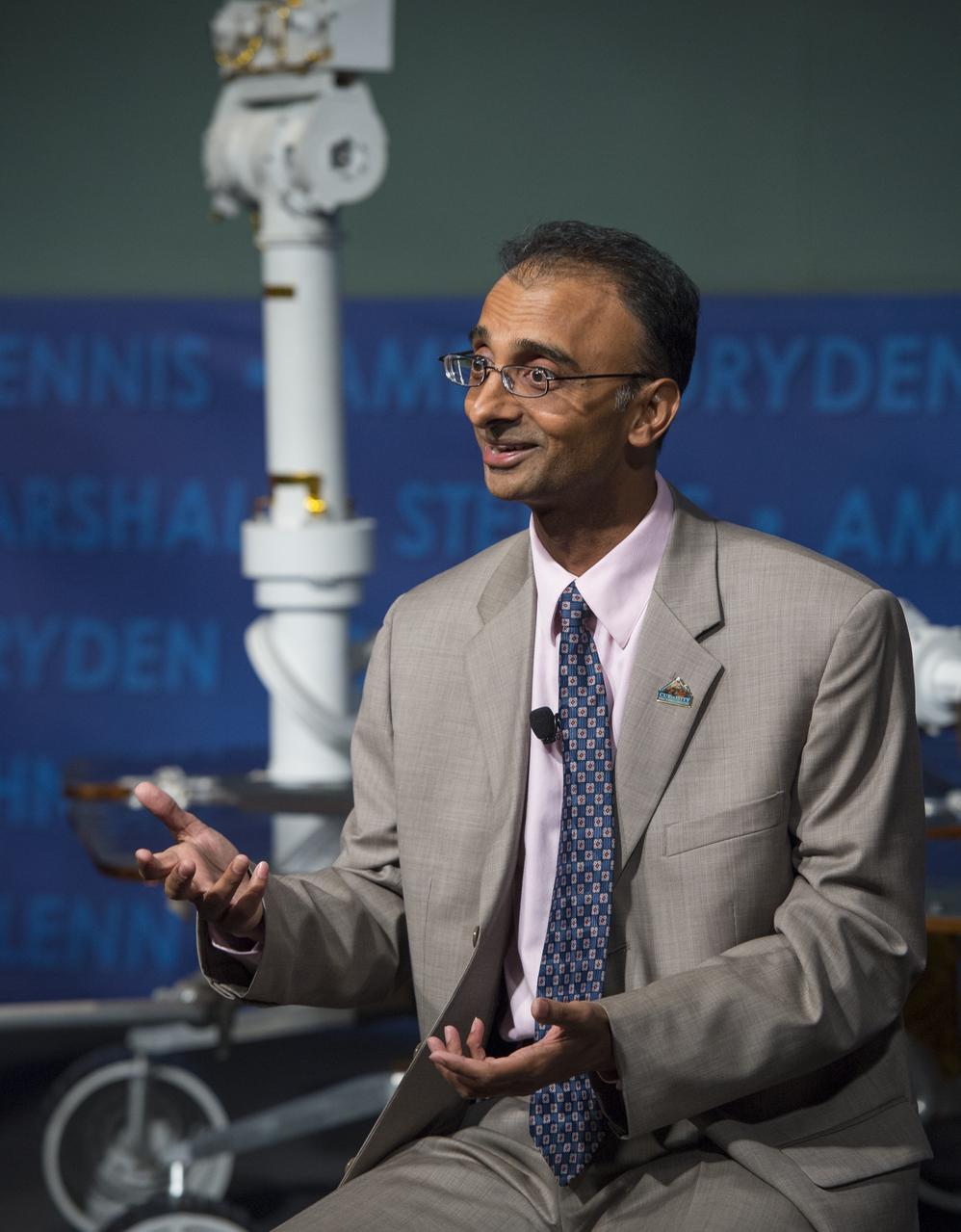
Prasun Desai, acting director, Strategic Integration, NASA's Space Technology Mission Directorate, speaks at a public event at NASA Headquarters observing the first anniversary of the Curiosity rover's landing on Mars, Tuesday, August 6th, 2013 in Washington. The Mars Science Laboratory mission successfully placed the one-ton Curiosity rover on the surface of Mars on Aug. 6, 2012, about 1 mile from the center of its 12-mile-long target area. Within the first eight months of a planned 23-months primary mission, Curiosity met its major science objective of finding evidence of a past environment well-suited to support microbial life. Photo Credit: (NASA/Carla Cioffi)
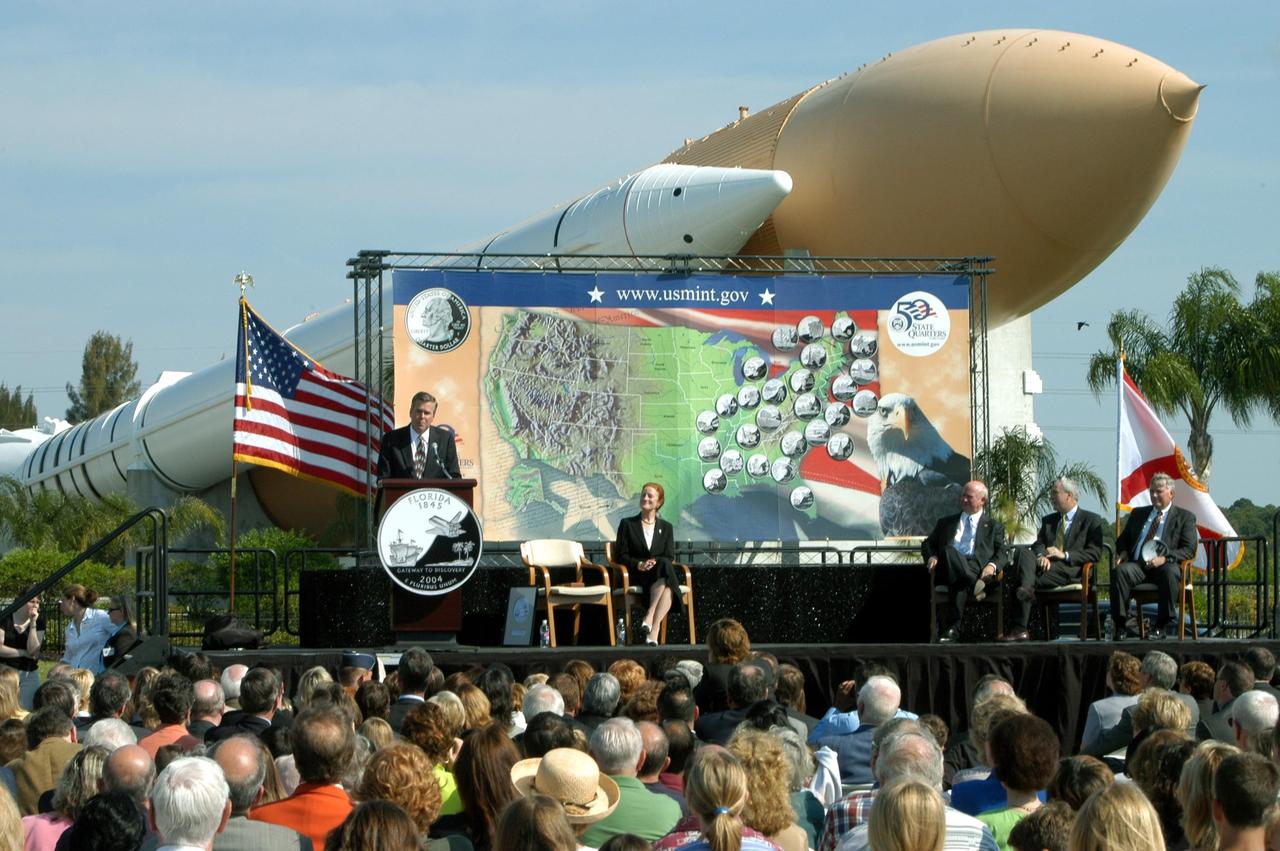
KENNEDY SPACE CENTER, FLA. -- Florida Gov. Jeb Bush addresses the audience at a ceremony to launch the new Florida quarter, held at the KSC Visitor Complex. The Solid Rocket Booster/External Tank exhibit towers over a map of the United States set up on stage, illustrating the state quarters issued to date. Sharing the stage with him are, from left, U.S. Mint Director Henrietta Holsman Fore, Deputy Secretary of the Treasury Samuel W. Bodman, NASA Administrator Sean O'Keefe, and KSC Director James W. Kennedy. The quarter celebrates Florida as the gateway to discovery -- a destination for explorers in the past, a launch site for space explorers of the future, and an inviting place for visitors today.
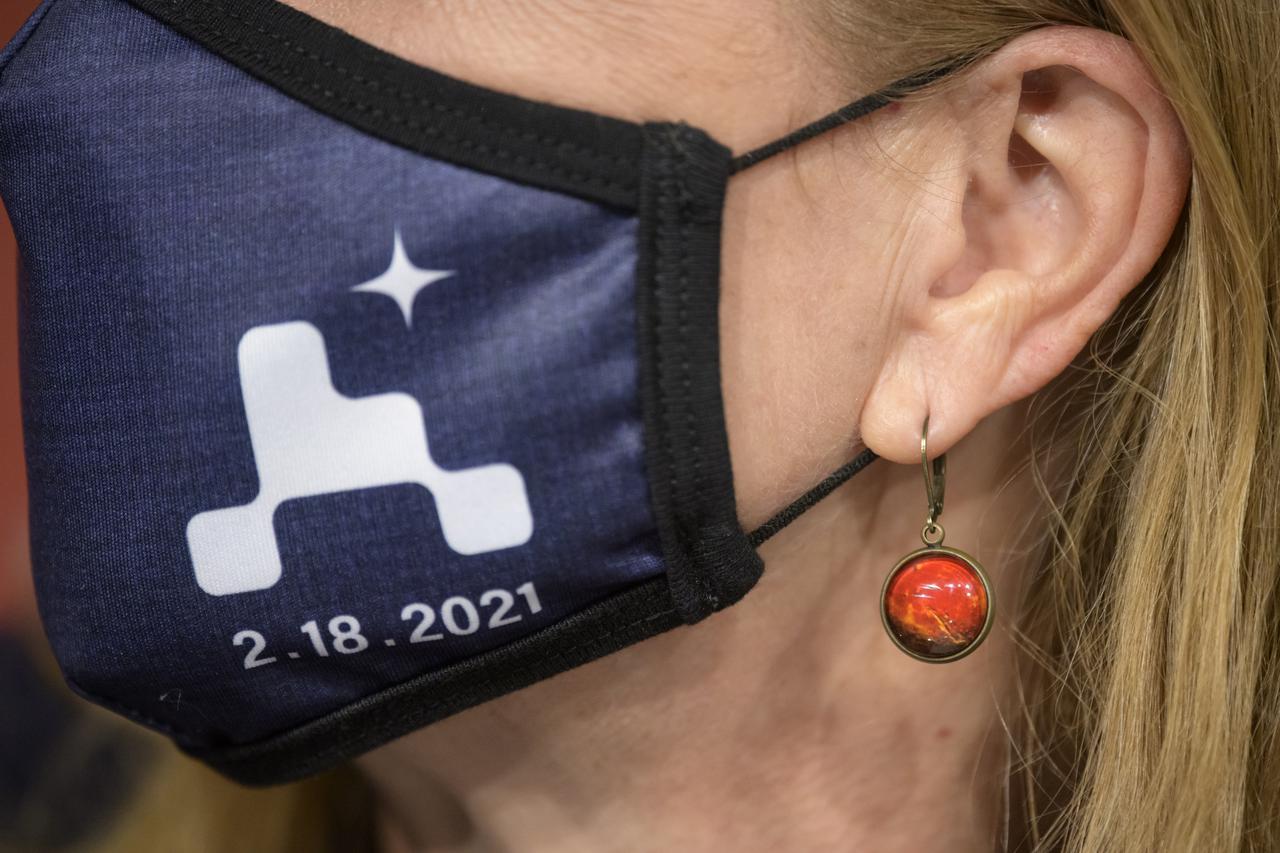
Mars earrings are seen on Director of NASA's Science Mission Directorate’s Planetary Science Division, Lori Glaze during a NASA Perseverance rover mission post-landing update, Thursday, Feb. 18, 2021, at NASA's Jet Propulsion Laboratory in Pasadena, California. A key objective for Perseverance’s mission on Mars is astrobiology, including the search for signs of ancient microbial life. The rover will characterize the planet’s geology and past climate, pave the way for human exploration of the Red Planet, and be the first mission to collect and cache Martian rock and regolith. Photo Credit: (NASA/Bill Ingalls)

Director of NASA's Science Mission Directorate’s Planetary Science Division, Lori Glaze, gives remarks during a NASA Perseverance rover mission science overview, Tuesday, Feb. 16, 2021, at NASA's Jet Propulsion Laboratory in Pasadena, California. The Perseverance Mars rover is due to land on Mars Thursday, Feb. 18, 2021. A key objective for Perseverance’s mission on Mars is astrobiology, including the search for signs of ancient microbial life. The rover will characterize the planet’s geology and past climate, pave the way for human exploration of the Red Planet, and be the first mission to collect and cache Martian rock and regolith. Photo Credit: (NASA/Bill Ingalls)
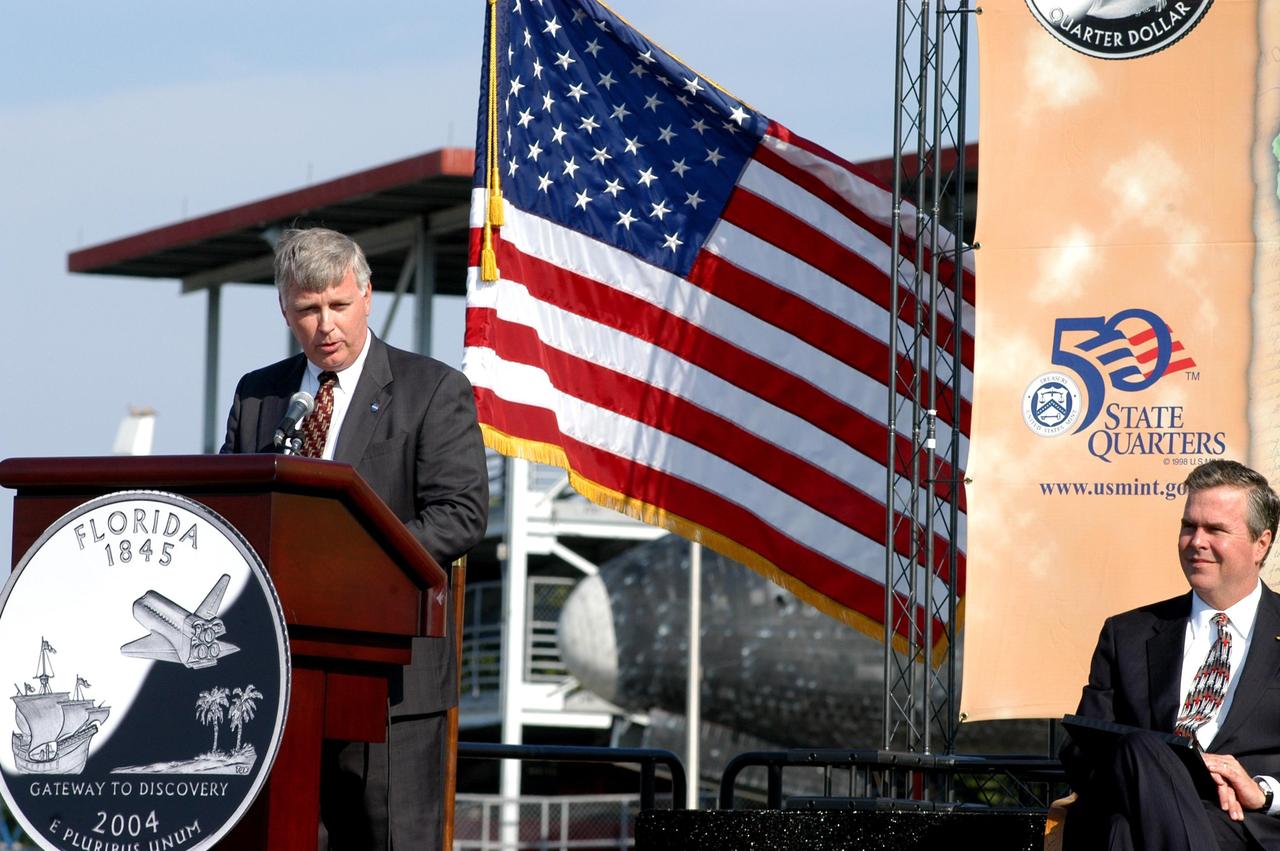
KENNEDY SPACE CENTER, FLA. -- As master of ceremonies, Center Director Jim Kennedy opens the event at the KSC Visitor Complex launching the new Florida quarter. He introduced Florida Gov. Jeb Bush (right) who helped present the new coin. Also participating were NASA Administrator Sean O’Keefe, Deputy Secretary of the Treasury Samuel W. Bodman and U.S. Mint Director Henrietta Holsman Fore. The quarter celebrates Florida as a destination for explorers in the past, a launch site for future explorers into space and an inviting place for visitors today.
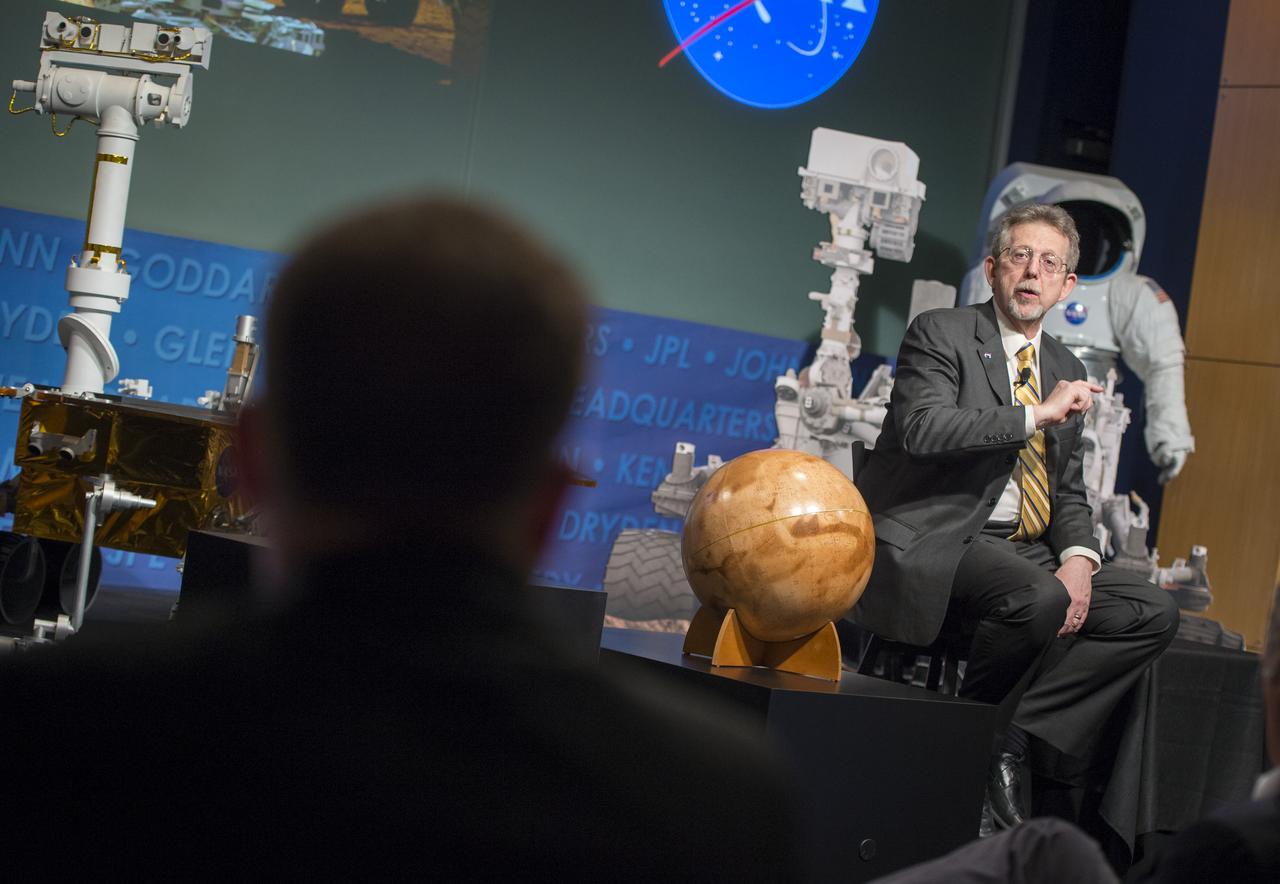
Jim Green, director, Planetary Division, NASA's Science Mission Directorate, answers a question at a public event at NASA Headquarters observing the first anniversary of the Curiosity rover's landing on Mars, Tuesday, August 6th, 2013 in Washington. The Mars Science Laboratory mission successfully placed the one-ton Curiosity rover on the surface of Mars on Aug. 6, 2012, about 1 mile from the center of its 12-mile-long target area. Within the first eight months of a planned 23-months primary mission, Curiosity met its major science objective of finding evidence of a past environment well-suited to support microbial life. Photo Credit: (NASA/Carla Cioffi)
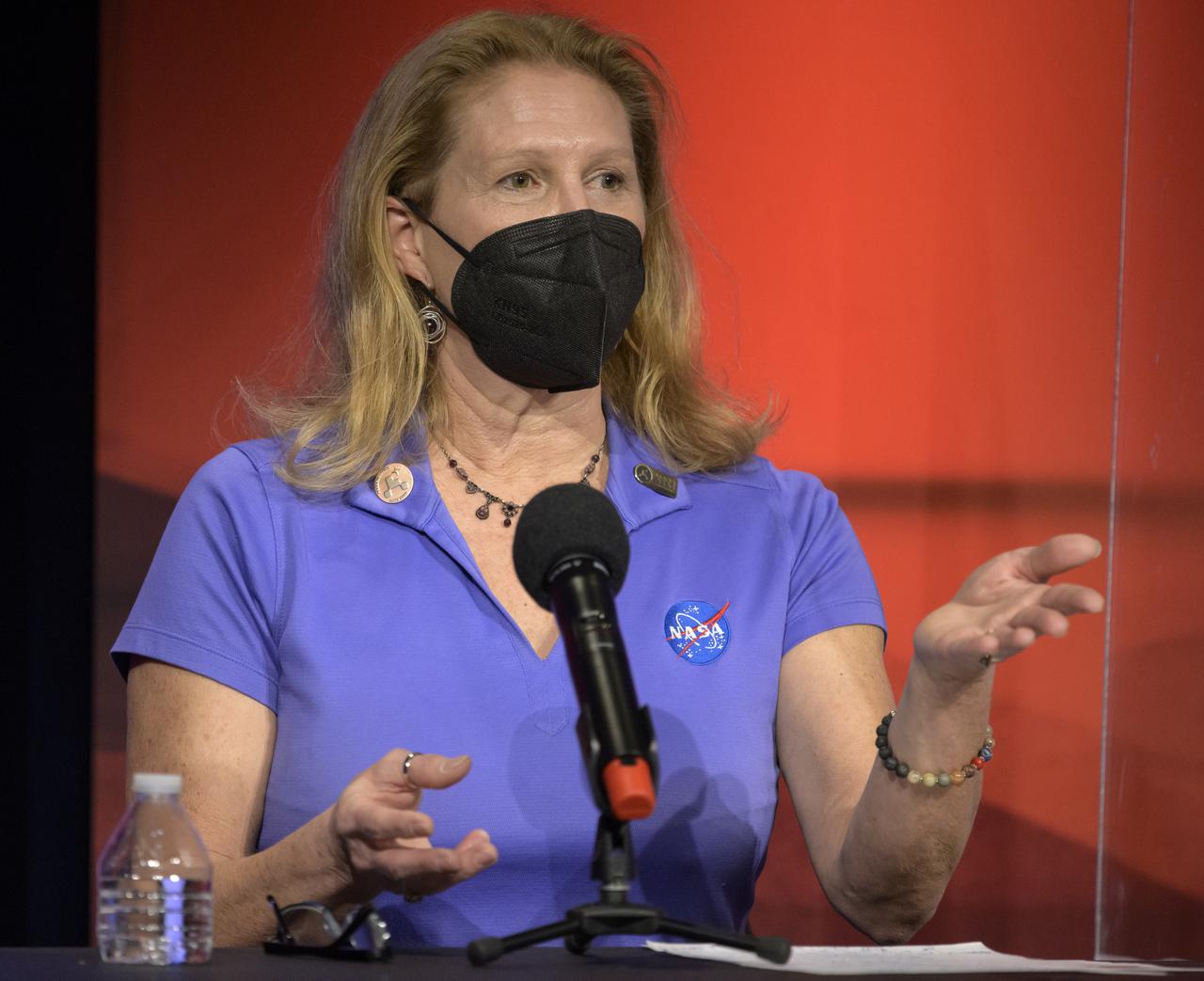
Director of NASA's Science Mission Directorate’s Planetary Science Division, Lori Glaze, gives remarks during a NASA Perseverance rover mission landing update, Wednesday, Feb. 17, 2021, at NASA's Jet Propulsion Laboratory in Pasadena, California. The Perseverance Mars rover is due to land on Mars Thursday, Feb. 18, 2021. A key objective for Perseverance’s mission on Mars is astrobiology, including the search for signs of ancient microbial life. The rover will characterize the planet’s geology and past climate, pave the way for human exploration of the Red Planet, and be the first mission to collect and cache Martian rock and regolith. Photo Credit: (NASA/Bill Ingalls)

Director of NASA's Science Mission Directorate’s Planetary Science Division, Lori Glaze, gives remarks during a NASA Perseverance rover mission post-landing update, Thursday, Feb. 18, 2021, at NASA's Jet Propulsion Laboratory in Pasadena, California. A key objective for Perseverance’s mission on Mars is astrobiology, including the search for signs of ancient microbial life. The rover will characterize the planet’s geology and past climate, pave the way for human exploration of the Red Planet, and be the first mission to collect and cache Martian rock and regolith. Photo Credit: (NASA/Bill Ingalls)
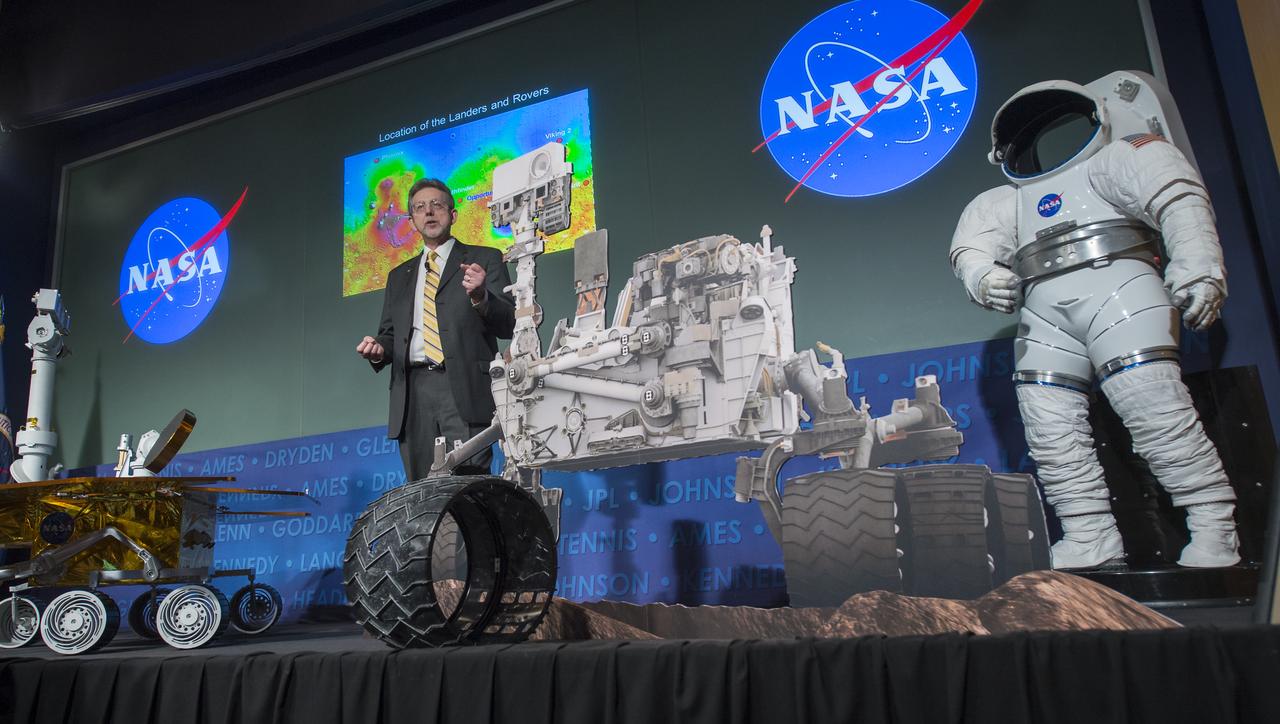
Jim Green, director, Planetary Division, NASA's Science Mission Directorate, speaks at a public event at NASA Headquarters observing the first anniversary of the Curiosity rover's landing on Mars, Tuesday, August 6th, 2013 in Washington. The Mars Science Laboratory mission successfully placed the one-ton Curiosity rover on the surface of Mars on Aug. 6, 2012, about 1 mile from the center of its 12-mile-long target area. Within the first eight months of a planned 23-months primary mission, Curiosity met its major science objective of finding evidence of a past environment well-suited to support microbial life. Photo Credit: (NASA/Carla Cioffi)
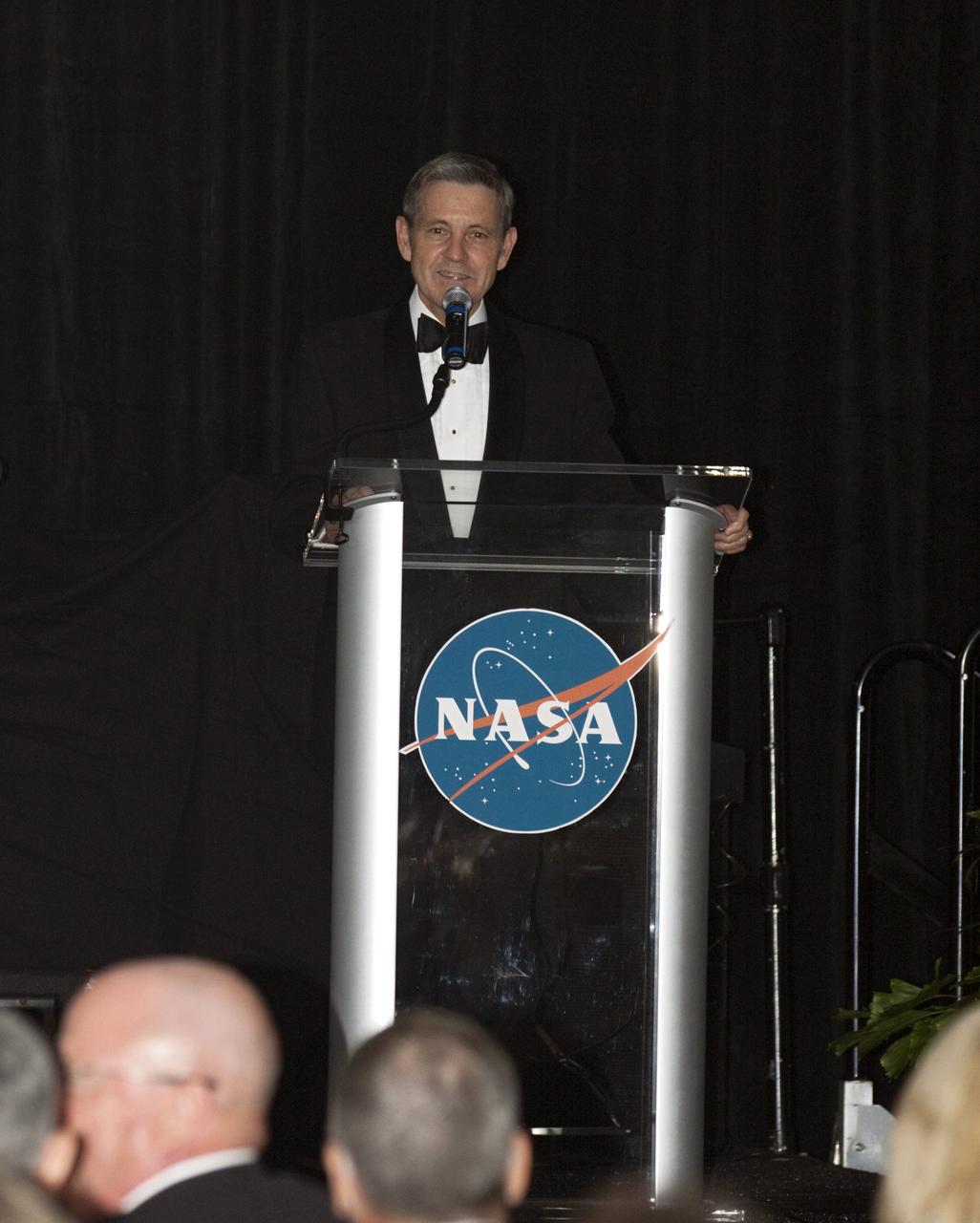
CAPE CANAVERAL, Fla. – NASA Kennedy Space Center Director Robert Cabana speaks to attendees during Kennedy Space Center’s 50th Anniversary Gala event at the Kennedy Space Center Visitor Complex Apollo/Saturn V Center in Florida. The gala was coordinated by Kennedy Space Center and the National Space Club Florida Committee with the theme, “Celebrating the Past and Preparing for the Future.” The event was attended by about 650 current and retired NASA and contractor workers, dignitaries, and several former Kennedy Space Center directors. Photo credit: NASA/Kim Shiflett
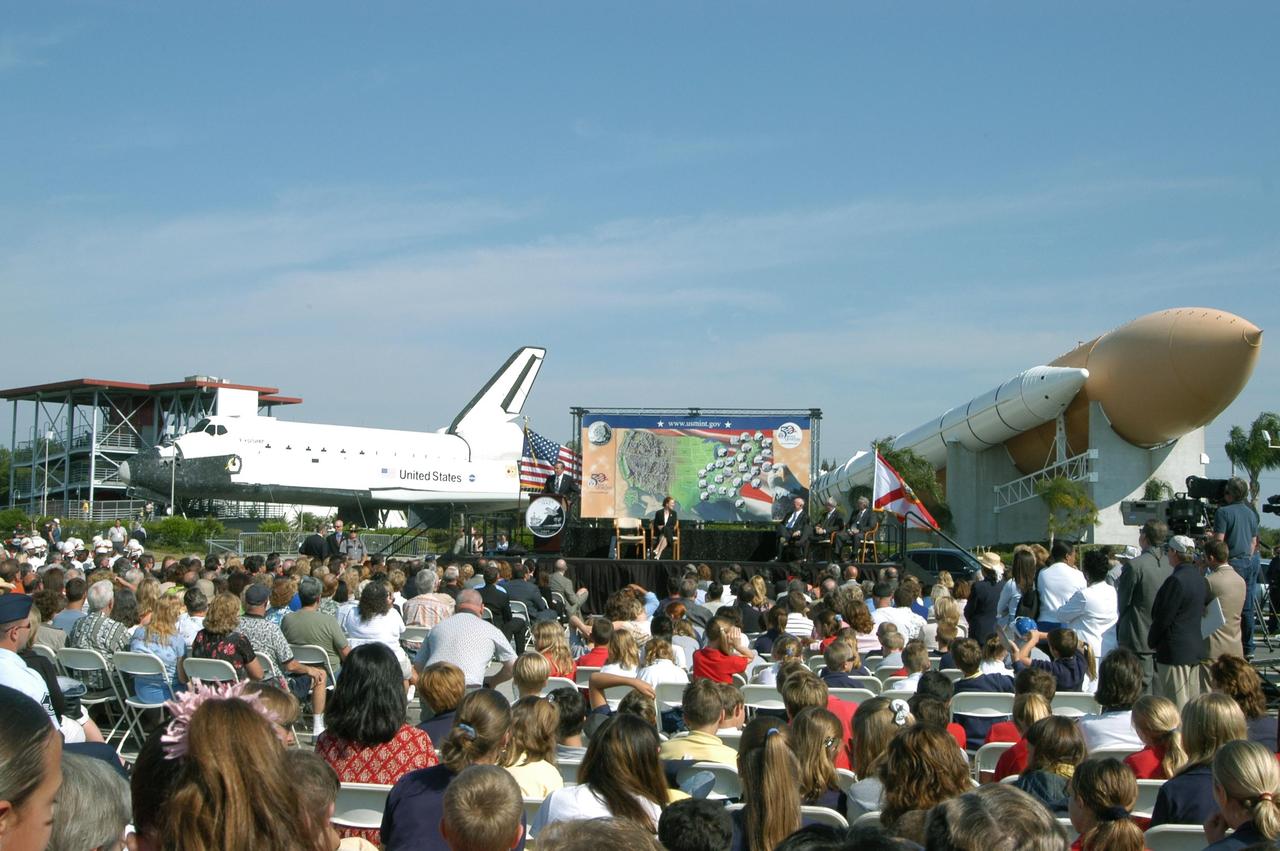
KENNEDY SPACE CENTER, FLA. -- A large crowd attends the launching ceremony for the new Florida quarter, held at the KSC Visitor Complex. Emceed by Center Director Jim Kennedy, the event included comments by NASA Administrator Sean O’Keefe and Deputy Secretary of the Treasury Samuel W. Bodman. The coin was also officially presented by U.S. Mint Director Henrietta Holsman Fore to Florida Gov. Jeb Bush. On the stage, a map of the United States, illustrating the state quarters issued to date, is framed between the orbiter mockup and SRB-external tank exhibit. The quarter celebrates Florida as the gateway to discovery -- a destination for explorers in the past, a launch site for space explorers of the future, and an inviting place for visitors today.

Director of NASA's Science Mission Directorate’s Planetary Science Division, Lori Glaze, gives remarks during a NASA Perseverance rover mission science overview, Tuesday, Feb. 16, 2021, at NASA's Jet Propulsion Laboratory in Pasadena, California. The Perseverance Mars rover is due to land on Mars Thursday, Feb. 18, 2021. A key objective for Perseverance’s mission on Mars is astrobiology, including the search for signs of ancient microbial life. The rover will characterize the planet’s geology and past climate, pave the way for human exploration of the Red Planet, and be the first mission to collect and cache Martian rock and regolith. Photo Credit: (NASA/Bill Ingalls)

Director of NASA's Science Mission Directorate’s Planetary Science Division, Lori Glaze, gives remarks during a NASA Perseverance rover mission science overview, Tuesday, Feb. 16, 2021, at NASA's Jet Propulsion Laboratory in Pasadena, California. The Perseverance Mars rover is due to land on Mars Thursday, Feb. 18, 2021. A key objective for Perseverance’s mission on Mars is astrobiology, including the search for signs of ancient microbial life. The rover will characterize the planet’s geology and past climate, pave the way for human exploration of the Red Planet, and be the first mission to collect and cache Martian rock and regolith. Photo Credit: (NASA/Bill Ingalls)
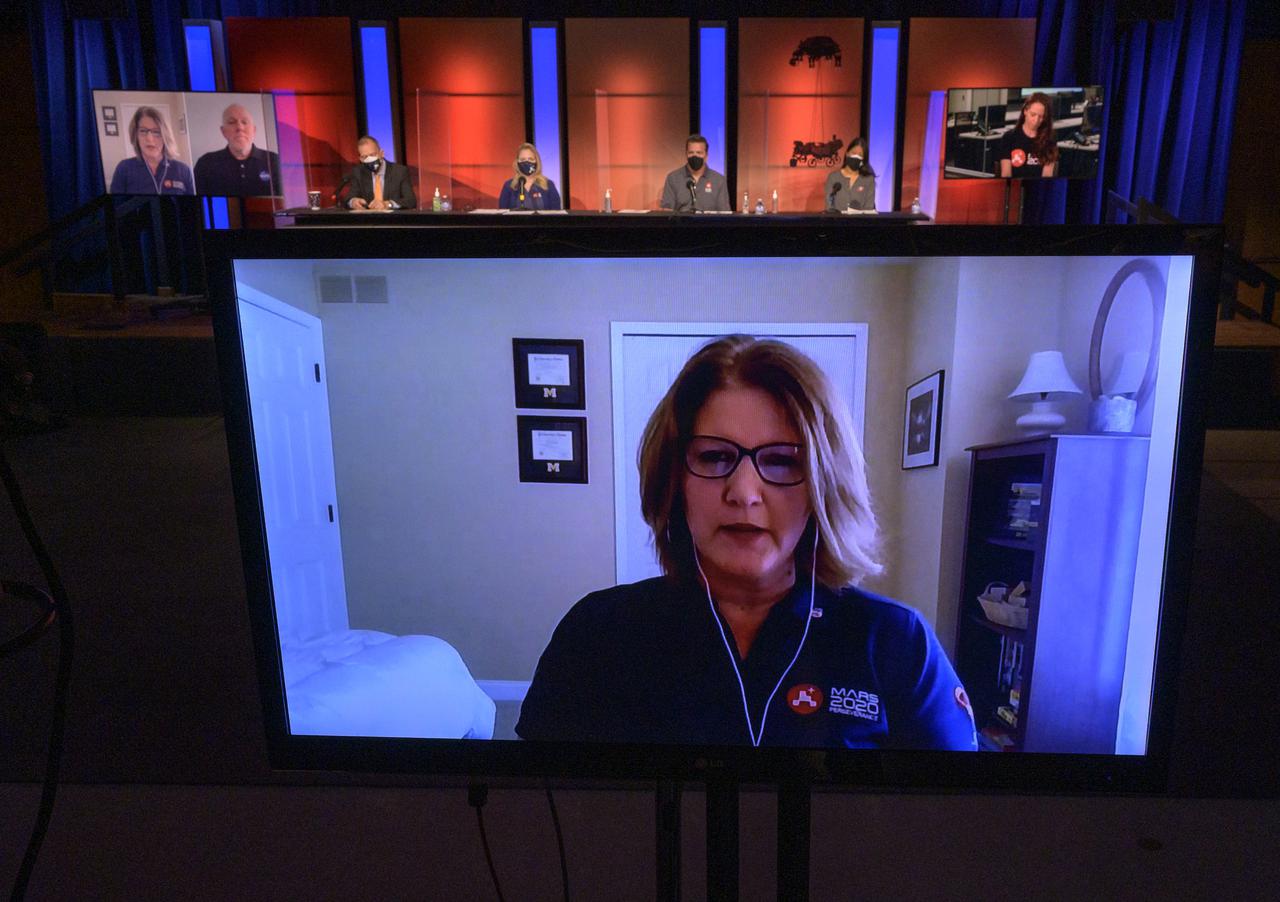
Director of technology demonstrations, NASA’s Space Technology Mission Directorate, Trudy Kortes, gives remarks via remote during a NASA Perseverance rover mission engineering and technology overview, Tuesday, Feb. 16, 2021, at NASA's Jet Propulsion Laboratory in Pasadena, California. The Perseverance Mars rover is due to land on Mars Thursday, Feb. 18, 2021. A key objective for Perseverance’s mission on Mars is astrobiology, including the search for signs of ancient microbial life. The rover will characterize the planet’s geology and past climate, pave the way for human exploration of the Red Planet, and be the first mission to collect and cache Martian rock and regolith. Photo Credit: (NASA/Bill Ingalls)
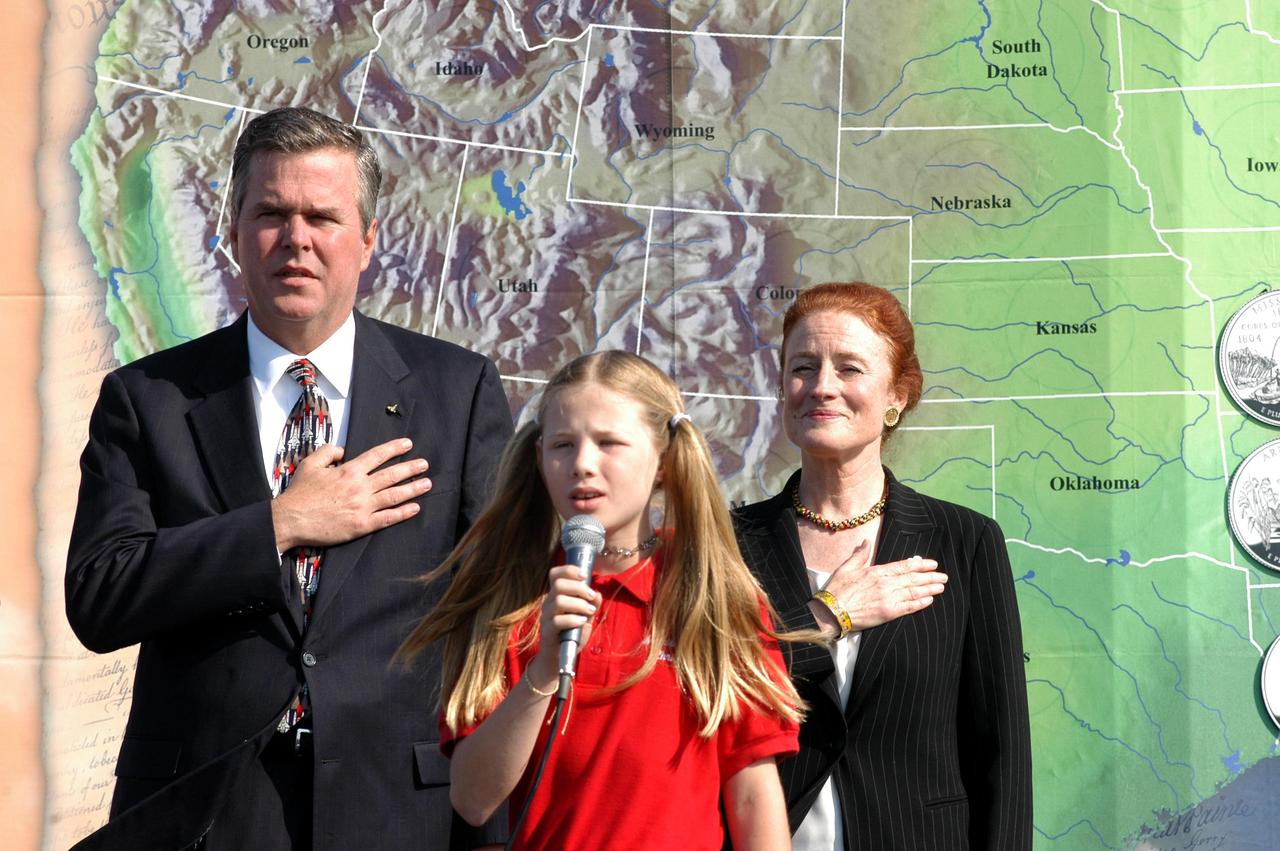
KENNEDY SPACE CENTER, FLA. -- During opening ceremonies at the KSC Visitor Complex launching the new Florida quarter, Florida Gov. Jeb Bush (left) and U.S. Mint Director Henrietta Holsman Fore (right) stand at attention while fourth grader Alexandra Schenck, from Merritt Island Christian School, sings the national anthem. Also participating in the event were NASA Administrator Sean O’Keefe and Deputy Secretary of the Treasury Samuel W. Bodman. Center Director Jim Kennedy emceed the ceremonies. . The quarter celebrates Florida as a destination for explorers in the past, a launch site for future explorers into space and an inviting place for visitors today.

Director of NASA's Science Mission Directorate’s Planetary Science Division, Lori Glaze, gives remarks during a NASA Perseverance rover mission landing update, Wednesday, Feb. 17, 2021, at NASA's Jet Propulsion Laboratory in Pasadena, California. The Perseverance Mars rover is due to land on Mars Thursday, Feb. 18, 2021. A key objective for Perseverance’s mission on Mars is astrobiology, including the search for signs of ancient microbial life. The rover will characterize the planet’s geology and past climate, pave the way for human exploration of the Red Planet, and be the first mission to collect and cache Martian rock and regolith. Photo Credit: (NASA/Bill Ingalls)
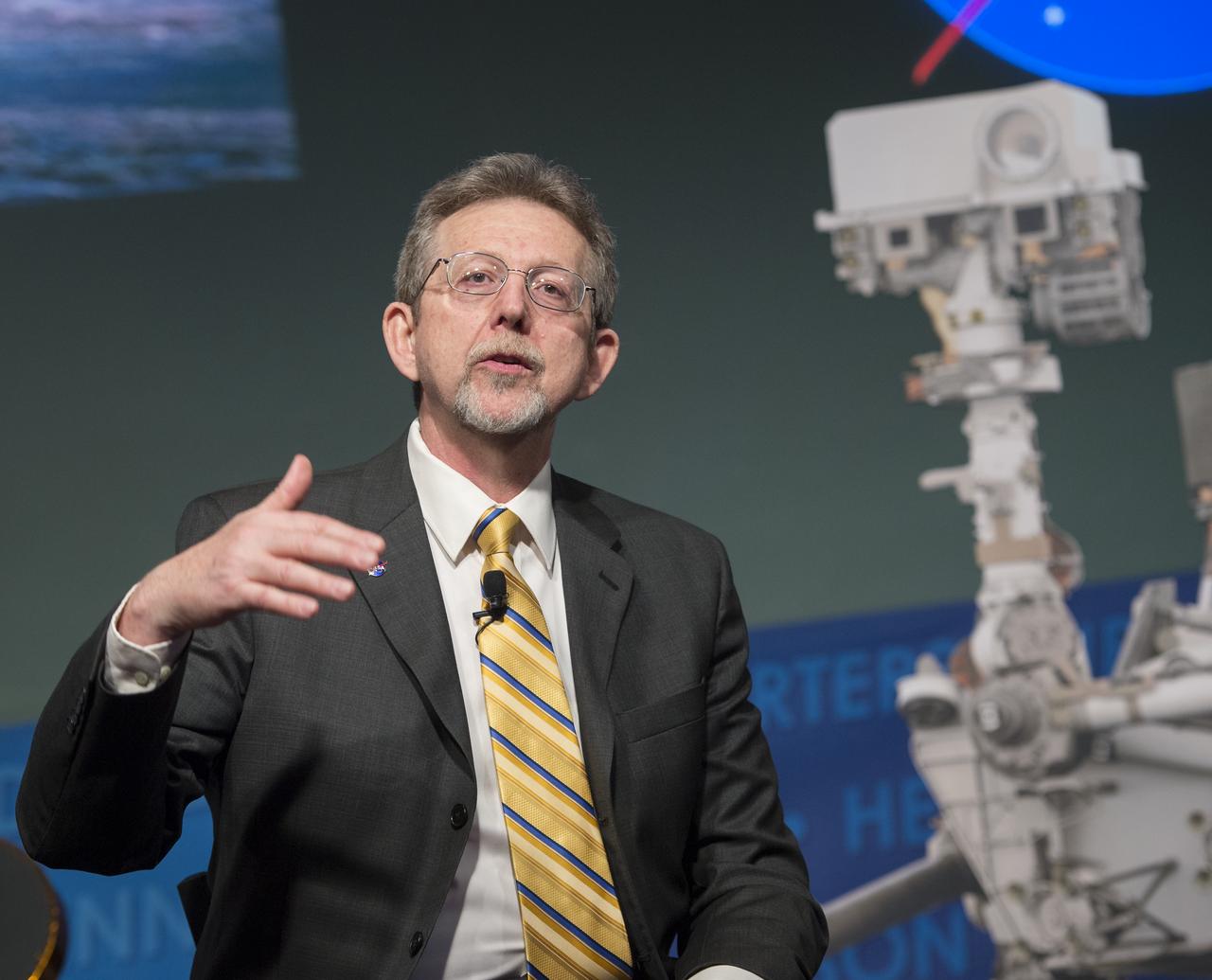
Jim Green, director, Planetary Division, NASA's Science Mission Directorate, speaks at a public event at NASA Headquarters observing the first anniversary of the Curiosity rover's landing on Mars, Tuesday, August 6th, 2013 in Washington. The Mars Science Laboratory mission successfully placed the one-ton Curiosity rover on the surface of Mars on Aug. 6, 2012, about 1 mile from the center of its 12-mile-long target area. Within the first eight months of a planned 23-months primary mission, Curiosity met its major science objective of finding evidence of a past environment well-suited to support microbial life. Photo Credit: (NASA/Carla Cioffi)

Director of NASA's Science Mission Directorate’s Planetary Science Division, Lori Glaze, gives remarks during a NASA Perseverance rover mission landing update, Wednesday, Feb. 17, 2021, at NASA's Jet Propulsion Laboratory in Pasadena, California. The Perseverance Mars rover is due to land on Mars Thursday, Feb. 18, 2021. A key objective for Perseverance’s mission on Mars is astrobiology, including the search for signs of ancient microbial life. The rover will characterize the planet’s geology and past climate, pave the way for human exploration of the Red Planet, and be the first mission to collect and cache Martian rock and regolith. Photo Credit: (NASA/Bill Ingalls)
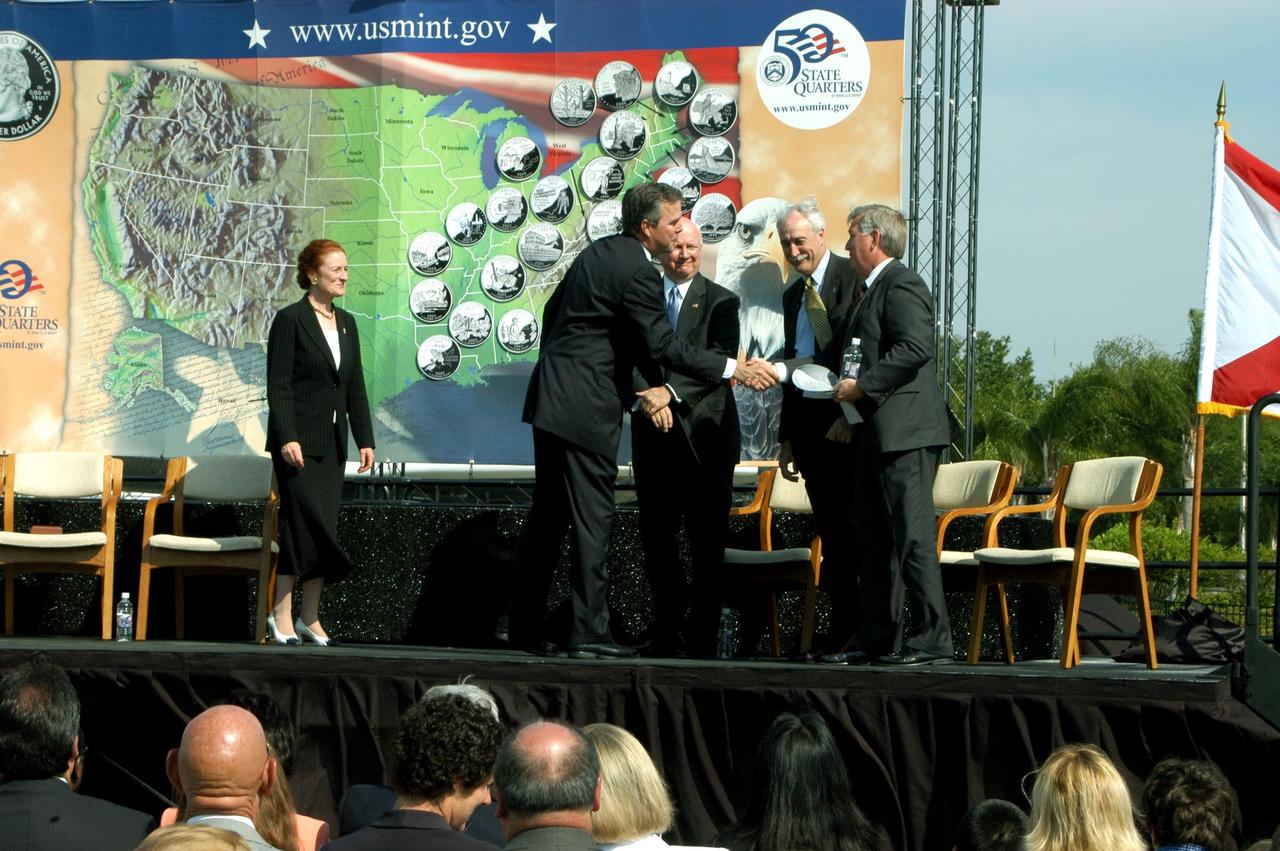
KENNEDY SPACE CENTER, FLA. -- Florida Gov. Jeb Bush thanks KSC Director James W. Kennedy (right) for hosting the ceremony to launch the new Florida quarter at the KSC Visitor Complex. The backdrop is a map of the United States, illustrating the state quarters issued to date. Also on stage are, from left, U.S. Mint Director Henrietta Holsman Fore, Deputy Secretary of the Treasury Samuel W. Bodman, and NASA Administrator Sean O'Keefe. The quarter celebrates Florida as the gateway to discovery -- a destination for explorers in the past, a launch site for space explorers of the future, and an inviting place for visitors today.
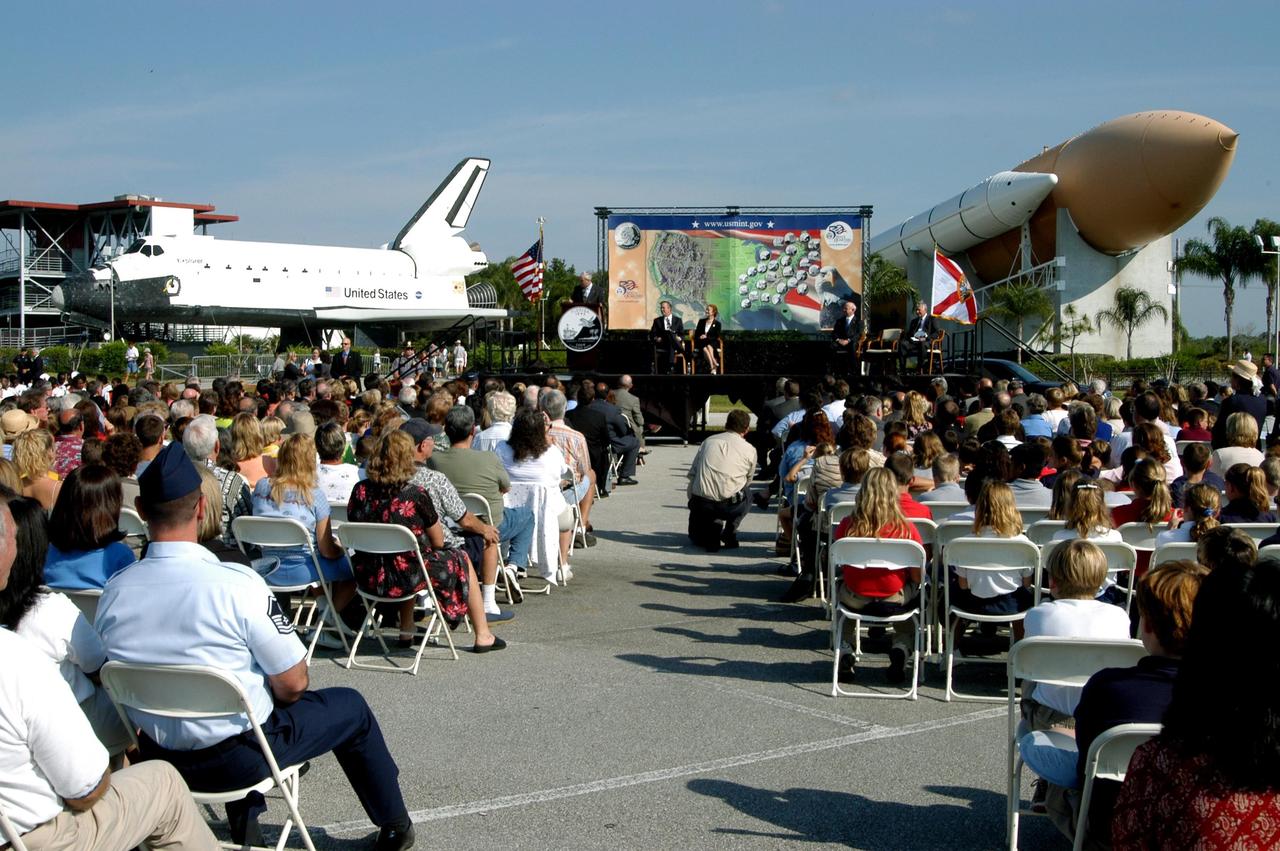
KENNEDY SPACE CENTER, FLA. -- On the stage framed between the orbiter mockup and SRB-external tank exhibit at the KSC Visitor Complex, NASA Administrator Sean O’Keefe comments on the design of the new Florida quarter during the launch ceremony. Sharing the stage with him are Florida Gov. Jeb Bush, U.S. Mint Director Henrietta Holsman Fore, Deputy Secretary of the Treasury Samuel W. Bodman and Center Director Jim Kennedy, who emceed. The quarter celebrates Florida as a destination for explorers in the past, a launch site for future explorers into space and an inviting place for visitors today.
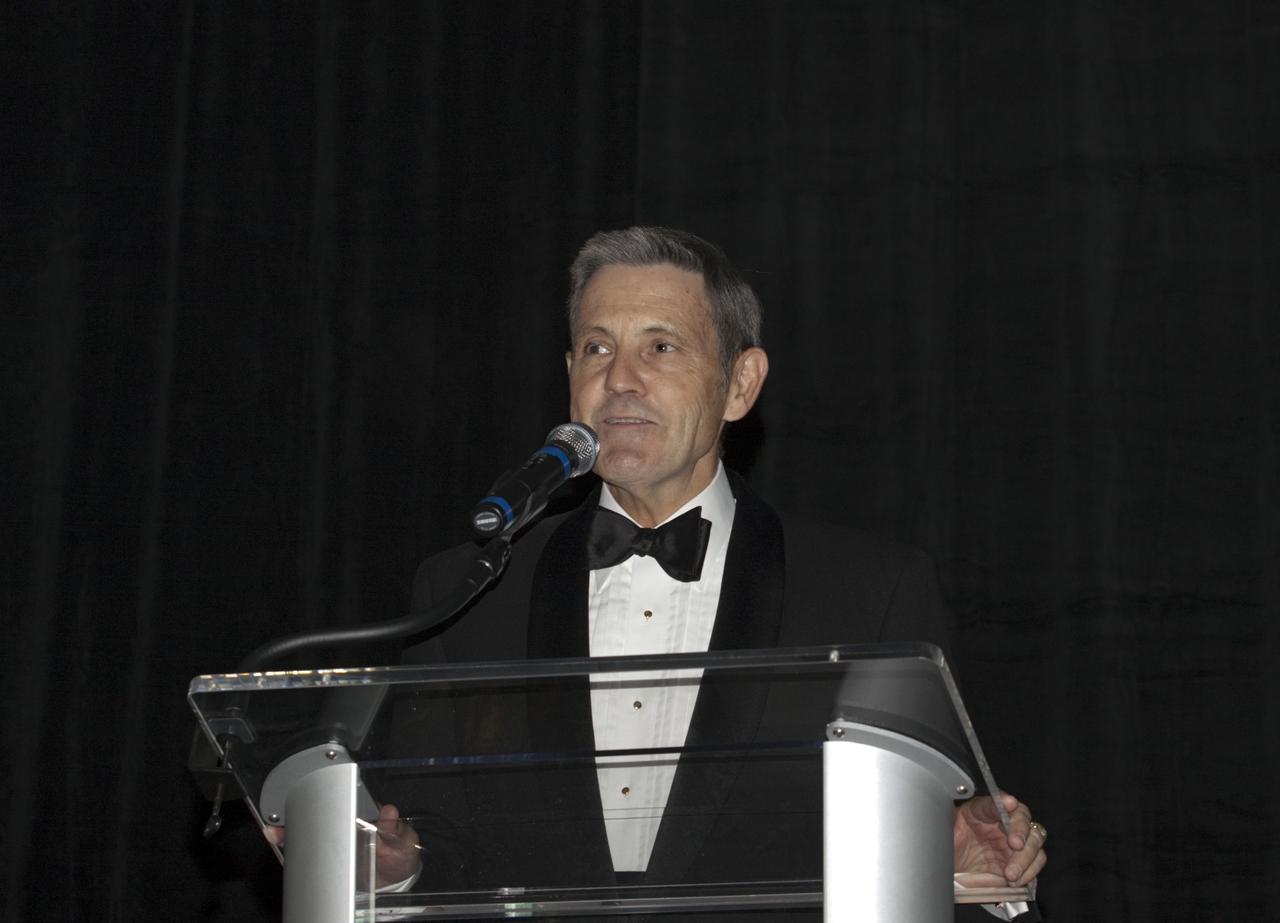
CAPE CANAVERAL, Fla. – NASA Kennedy Space Center Director Robert Cabana speaks to attendees during Kennedy Space Center’s 50th Anniversary Gala event at the Kennedy Space Center Visitor Complex Apollo/Saturn V Center in Florida. The gala was coordinated by Kennedy Space Center and the National Space Club Florida Committee with the theme, “Celebrating the Past and Preparing for the Future.” The event was attended by about 650 current and retired NASA and contractor workers, dignitaries, and several former Kennedy Space Center directors. Photo credit: NASA/Kim Shiflett

Director of NASA's Science Mission Directorate’s Planetary Science Division, Lori Glaze, gives remarks during a NASA Perseverance rover mission post-landing update, Thursday, Feb. 18, 2021, at NASA's Jet Propulsion Laboratory in Pasadena, California. A key objective for Perseverance’s mission on Mars is astrobiology, including the search for signs of ancient microbial life. The rover will characterize the planet’s geology and past climate, pave the way for human exploration of the Red Planet, and be the first mission to collect and cache Martian rock and regolith. Photo Credit: (NASA/Bill Ingalls)
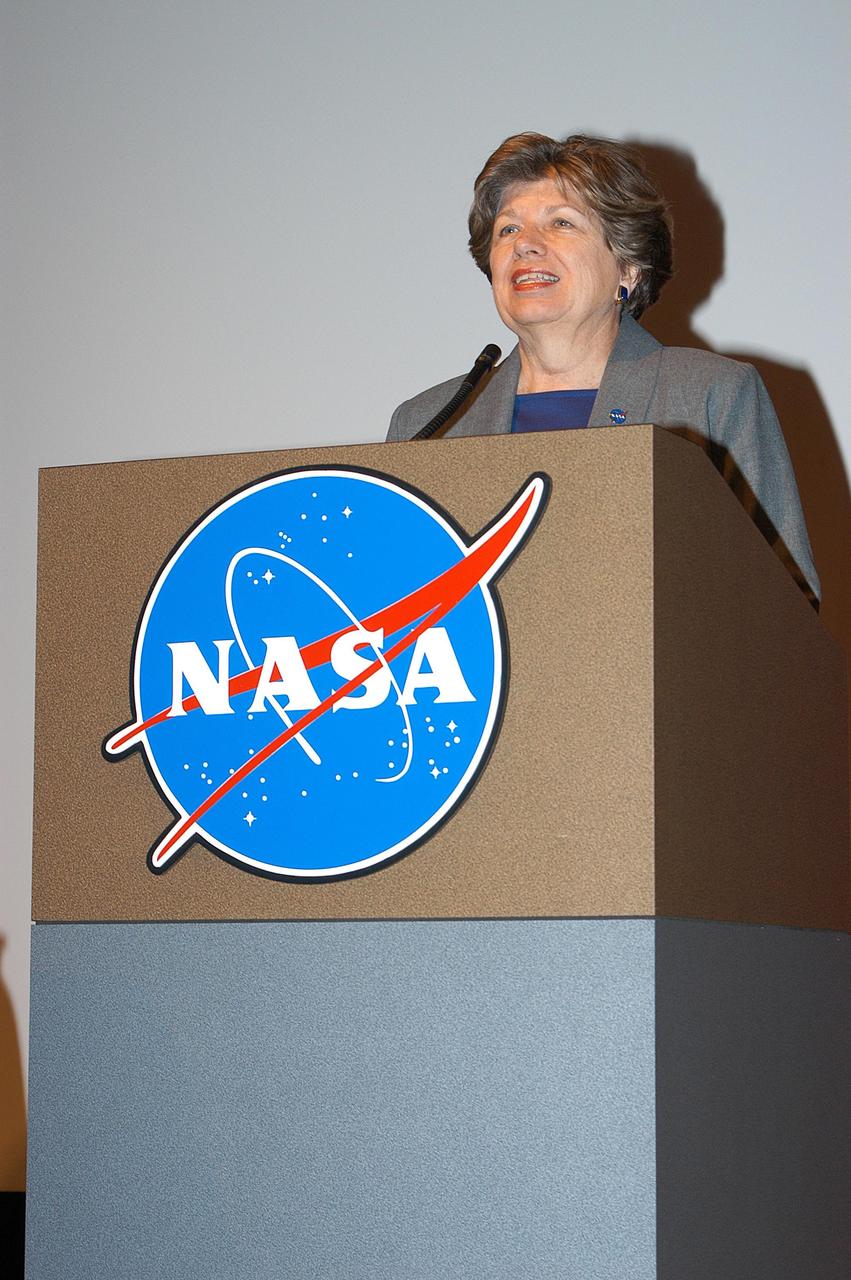
KENNEDY SPACE CENTER, FLA. - JoAnn Morgan, director, External Relations and Business Development, speaks to the students of MESA, the New Mexico Mathematics, Engineering and Science Achievement Program. The students are visiting KSC, touring facilities and meeting with mentors. MESA students, high school seniors who hold grade-point averages of at least 3.2 and who tutor other students in math and science, have made the spring trip for the past 14 years. The MESA program has close ties to the NASA Training Project at the University of New Mexico.
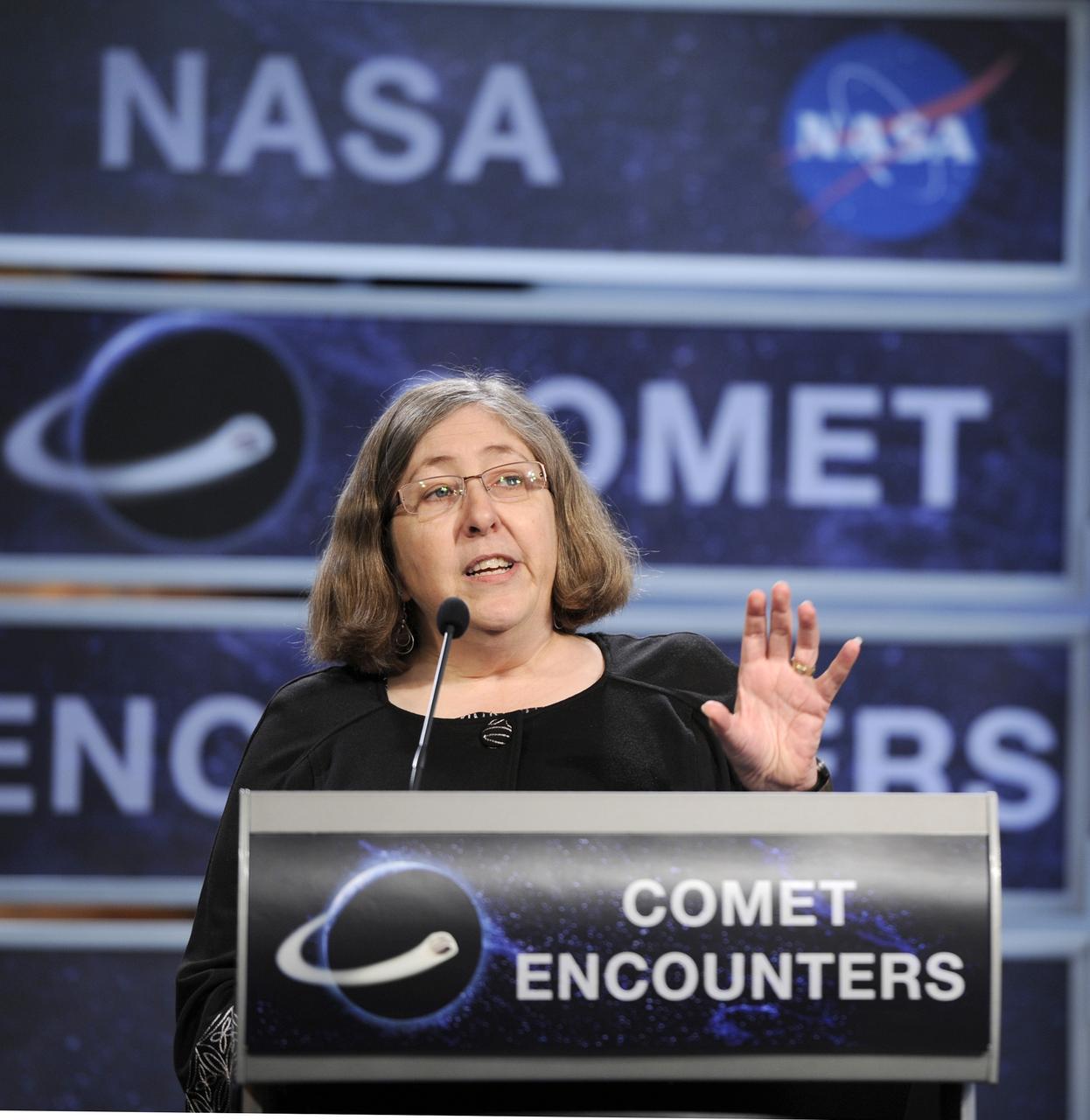
Dr. Anita Cochran, Assistant Director, McDonald Observatory at the University of Texas-Austin, speaks during a symposium commemorating a quarter-century of comet discoveries, Friday, Sept. 10, 2010, in the Knight studio at the Newseum in Washington. The International Sun-Earth Explorer-3 (ISEE-3) spacecraft flew past the comet Giacobini-Zinner on Sept. 11, 1985 which established a foundation of discoveries that continue today. Photo Credit: (NASA/Paul E. Alers)
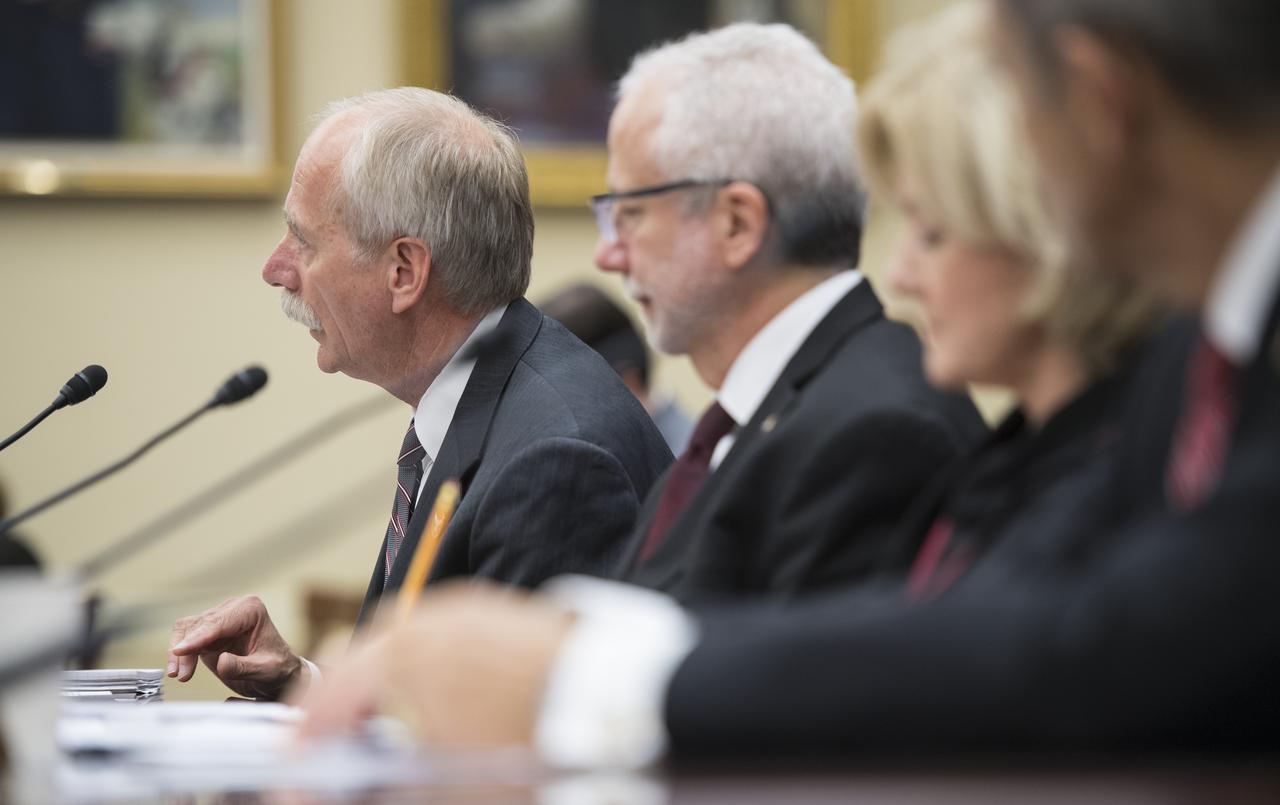
NASA Associate Administrator for the Human Exploration and Operations Mission Directorate William Gerstenmaier testifies during a House Subcommittee on Space hearing titled "60 Years of NASA Leadership in Human Space Exploration: Past, Present, and Future," Wednesday, Sept. 26, 2018 at the Rayburn House Office Building in Washington. Photo Credit: (NASA/Joel Kowsky)
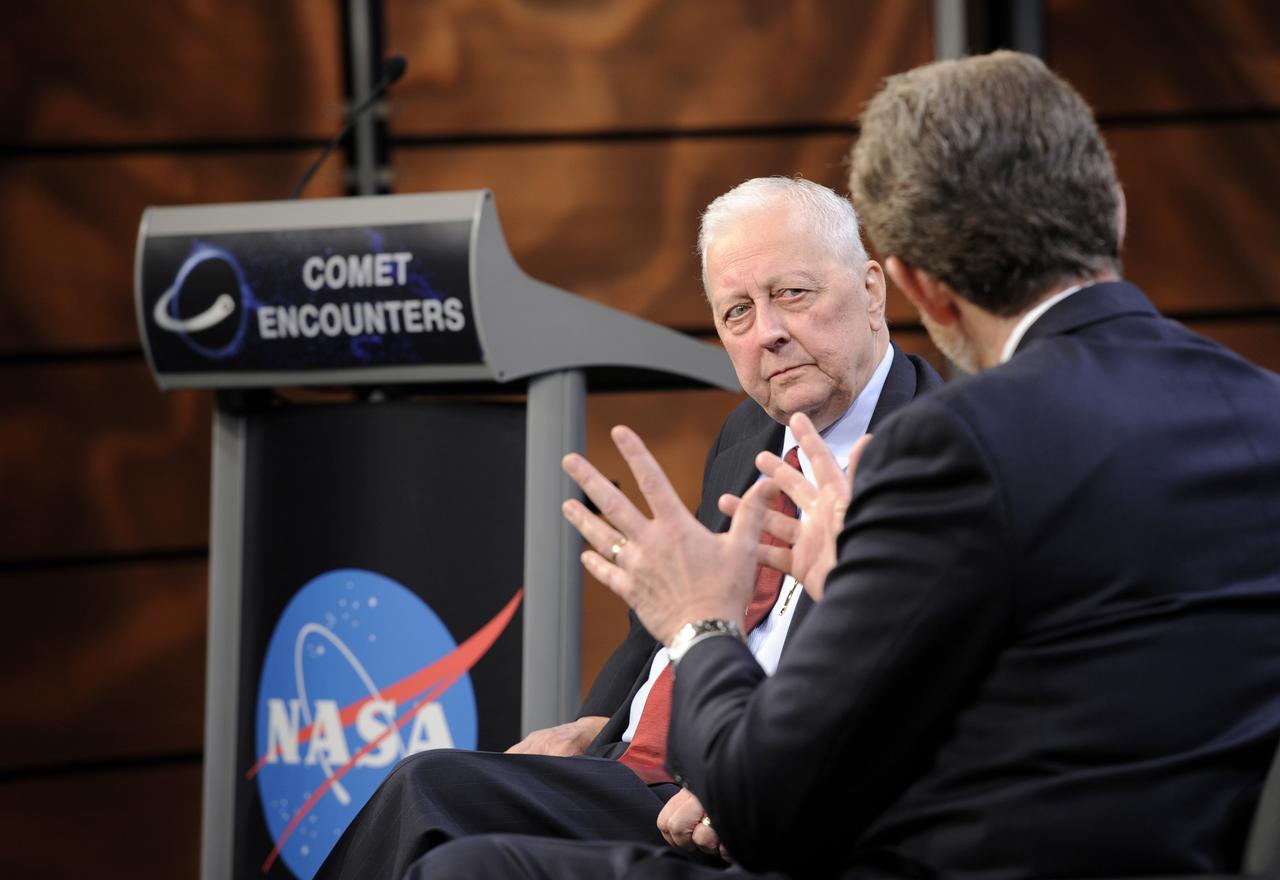
Dr. James L. Green, Director of Planetary Science at NASA, right, speaks with Dr. Robert Farquar, an executive for space exploration at KinetX Inc., during a symposium commemorating a quarter-century of comet discoveries, Friday, Sept. 10, 2010, in the Knight studio at the Newseum in Washington. The International Sun-Earth Explorer-3 (ISEE-3) spacecraft flew past the comet Giacobini-Zinner on Sept. 11, 1985 which established a foundation of discoveries that continue today. Photo Credit: (NASA/Paul E. Alers)