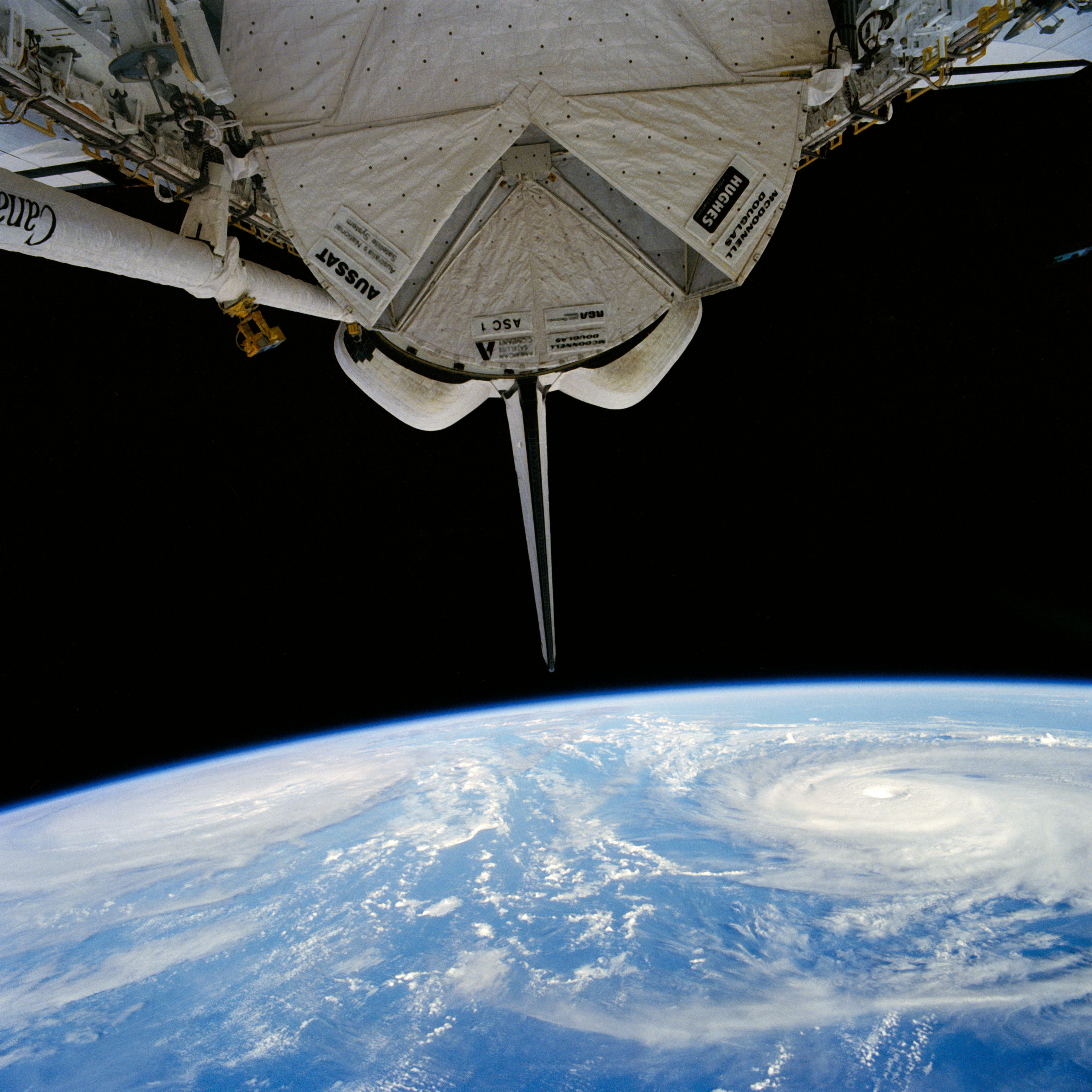
51I-35-078 (30 Aug 1985) --- Typhoons Pat (left) and Odessa in the western Pacific. Of the many tropical cyclones photographed by the STS 51-I crew, the dual typhoons of Pat and Odessa were the most unusual. The twin typhoons constitute a Fujiwara system of connected cyclones first described by the Japanese meteorologist after whom the phenomena has been named. Never before have such paired typhoons been photographed from orbit.
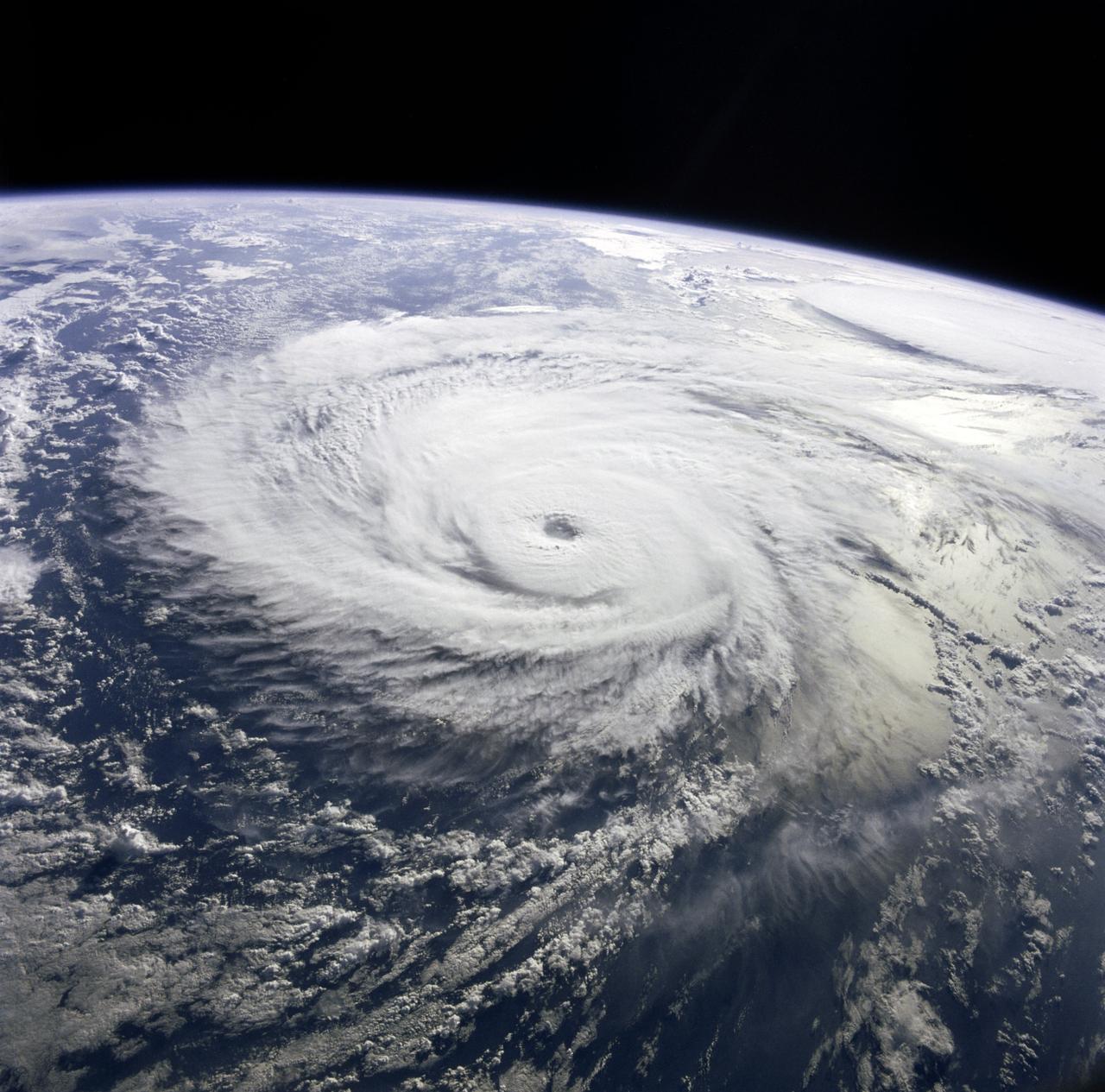
51I-35-075 (30 Aug 1985) --- Typhoon Pat was photographed on the morning of August 30th at a position of approximately 25 degrees N, 131 degrees E. Stereoscopically-overlapping photographs taken by the 51I crew provide much more detail of the three-dimensional structure of tropical cyclones than can be determined from data returned from meteorological satellites. The 51I shuttle mission was launched on August 27 and landed September 3. The mission was flown in the space shuttle orbiter Discovery.
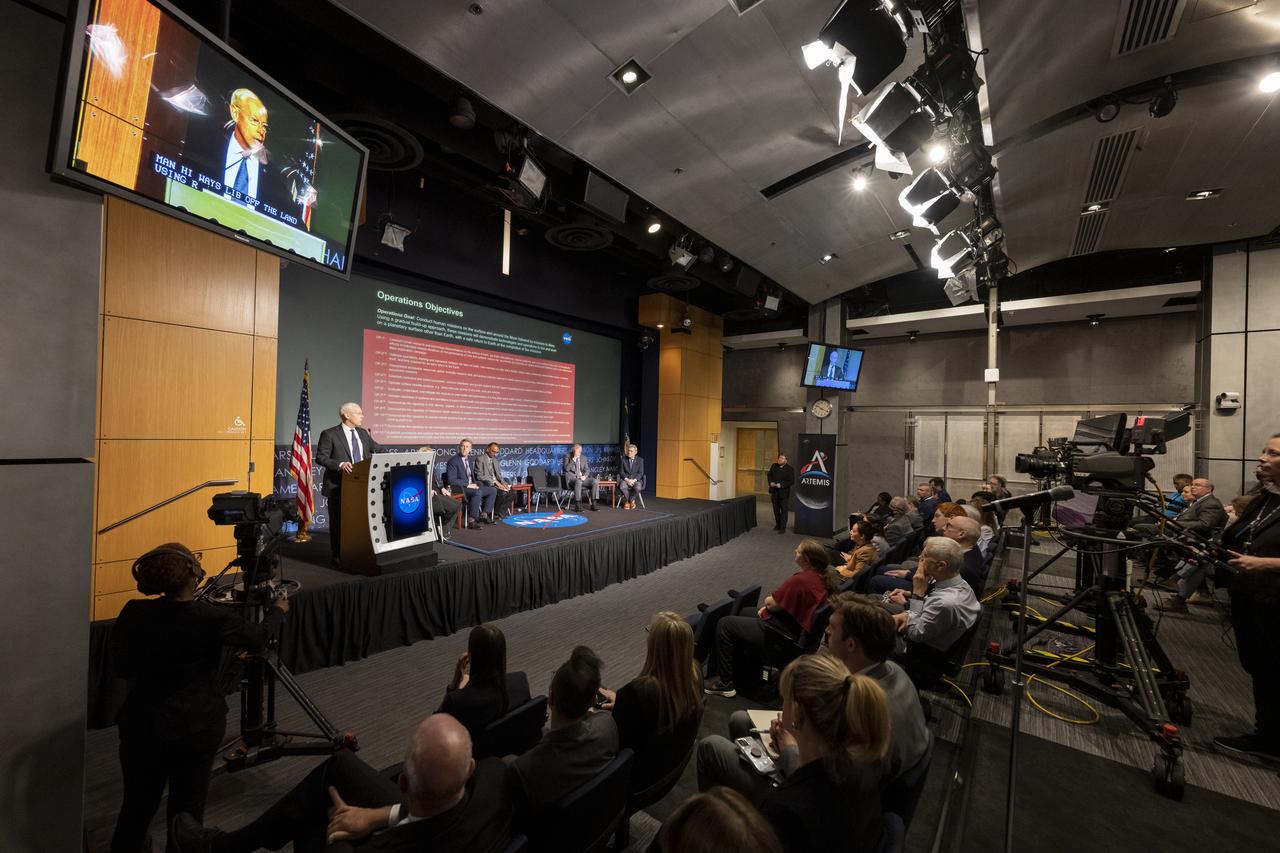
Special Advisor to the Associate Administrator, Space Operations Mission Directorate Pat Forrester delivers remarks during a Moon to Mars Town Hall, Thursday, May 18, 2023, at the Mary W. Jackson NASA Headquarters building in Washington. Photo Credit: (NASA/Keegan Barber)
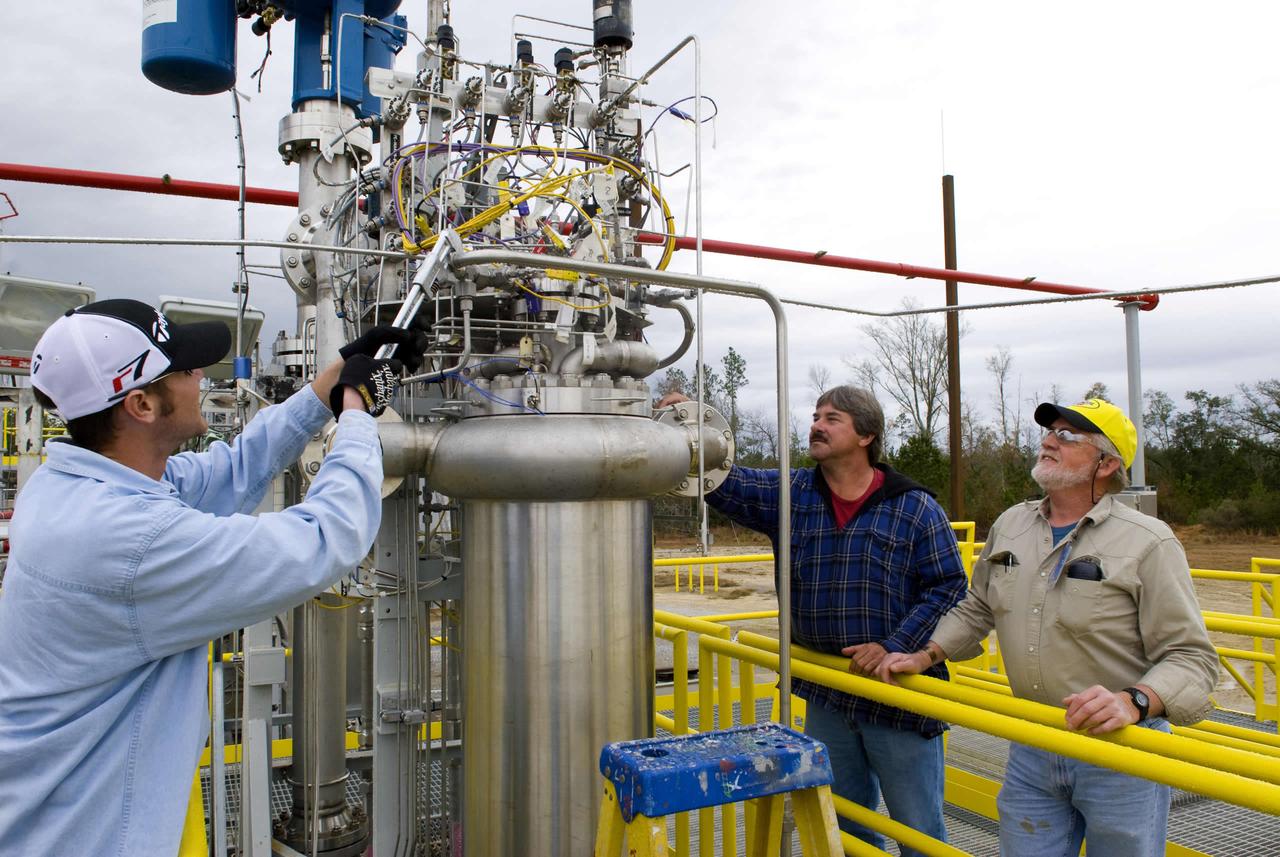
Kanaly Slade, Pat Guidry and Danny Tarter, all of Jacobs NTOG, make adjustments to the chemical steam generator installed on the E-2 Test Stand.
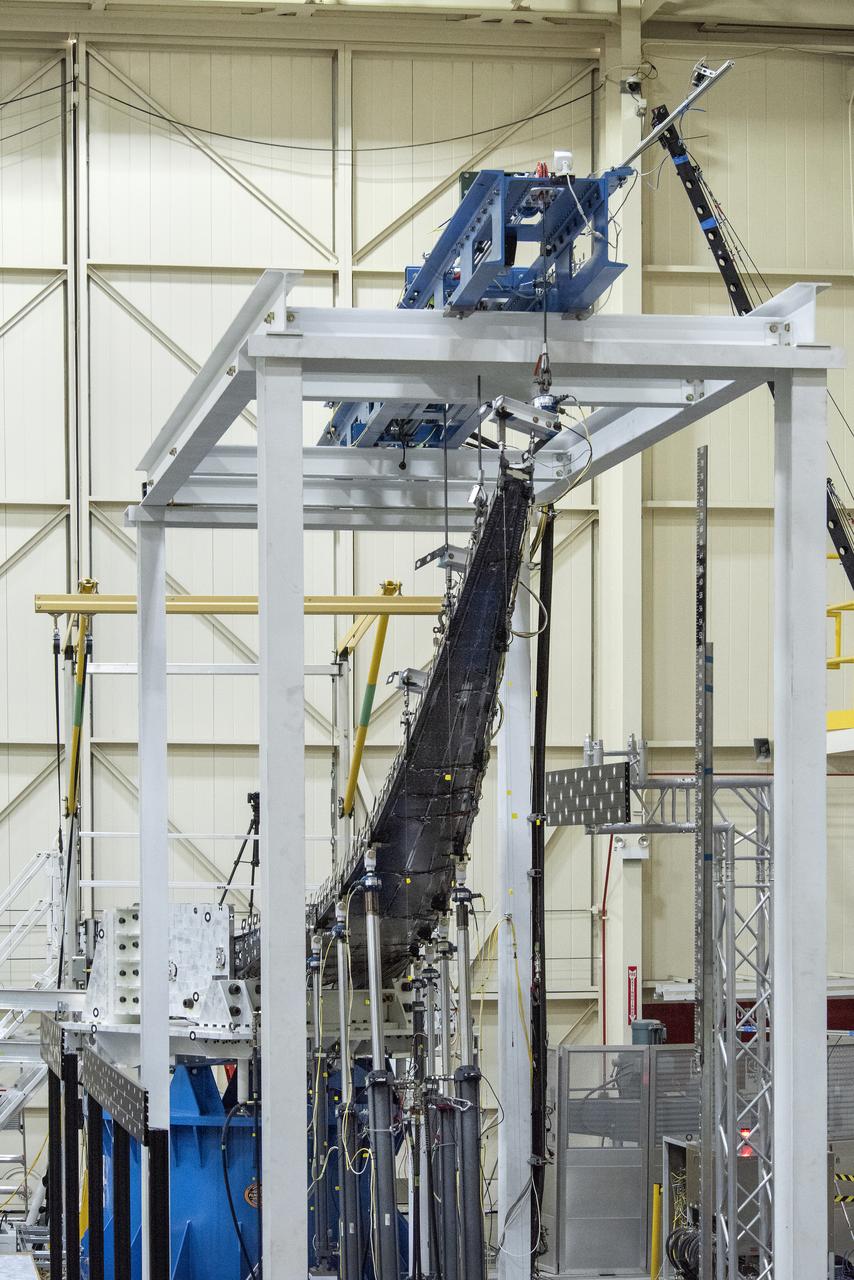
The Passive Aeroelastic Tailored (PAT) wing bends under pressure from the highest loads applied during testing at NASA’s Armstrong Flight Research Center in California.
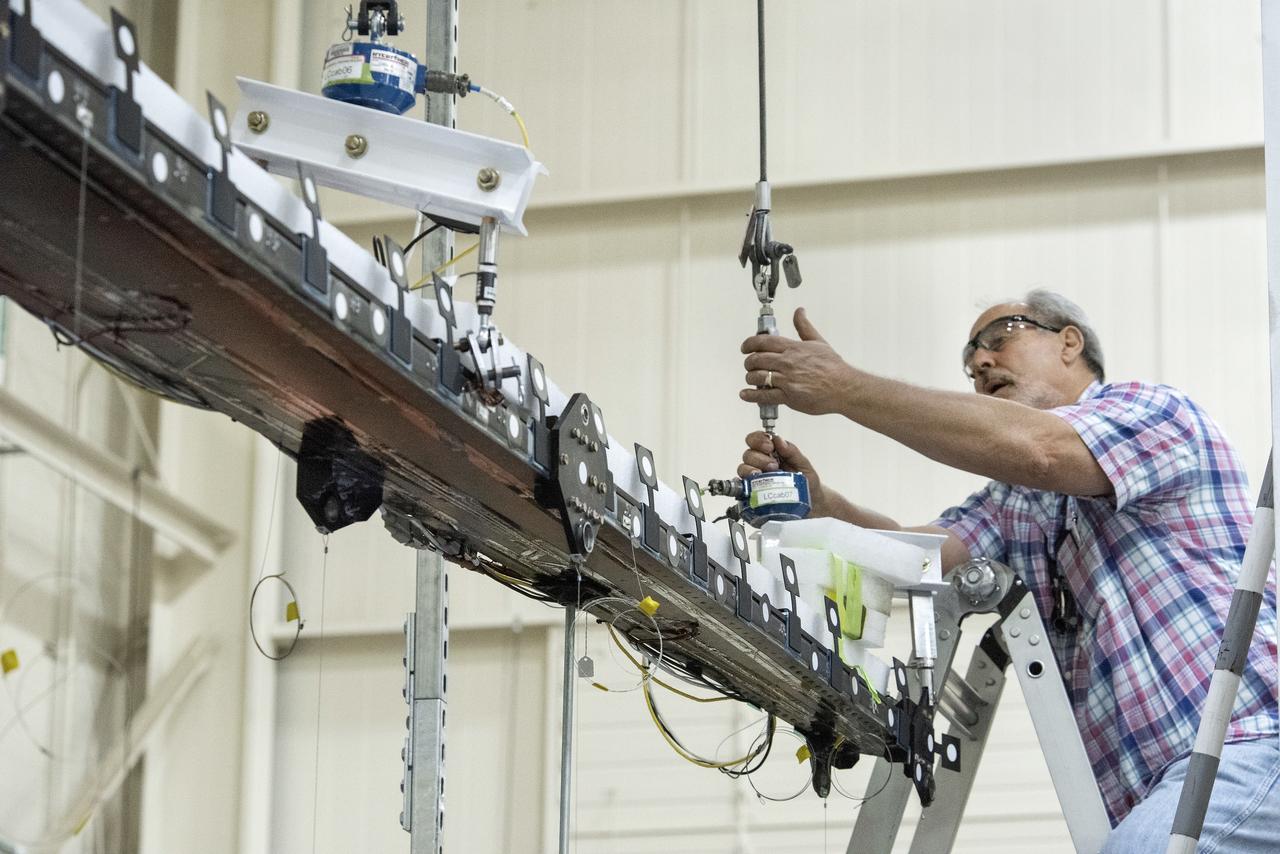
Ted Powers makes an adjustment to the Passive Aeroelastic Tailored (PAT) wing testing apparatus at NASA’s Armstrong Flight Research Center in California.
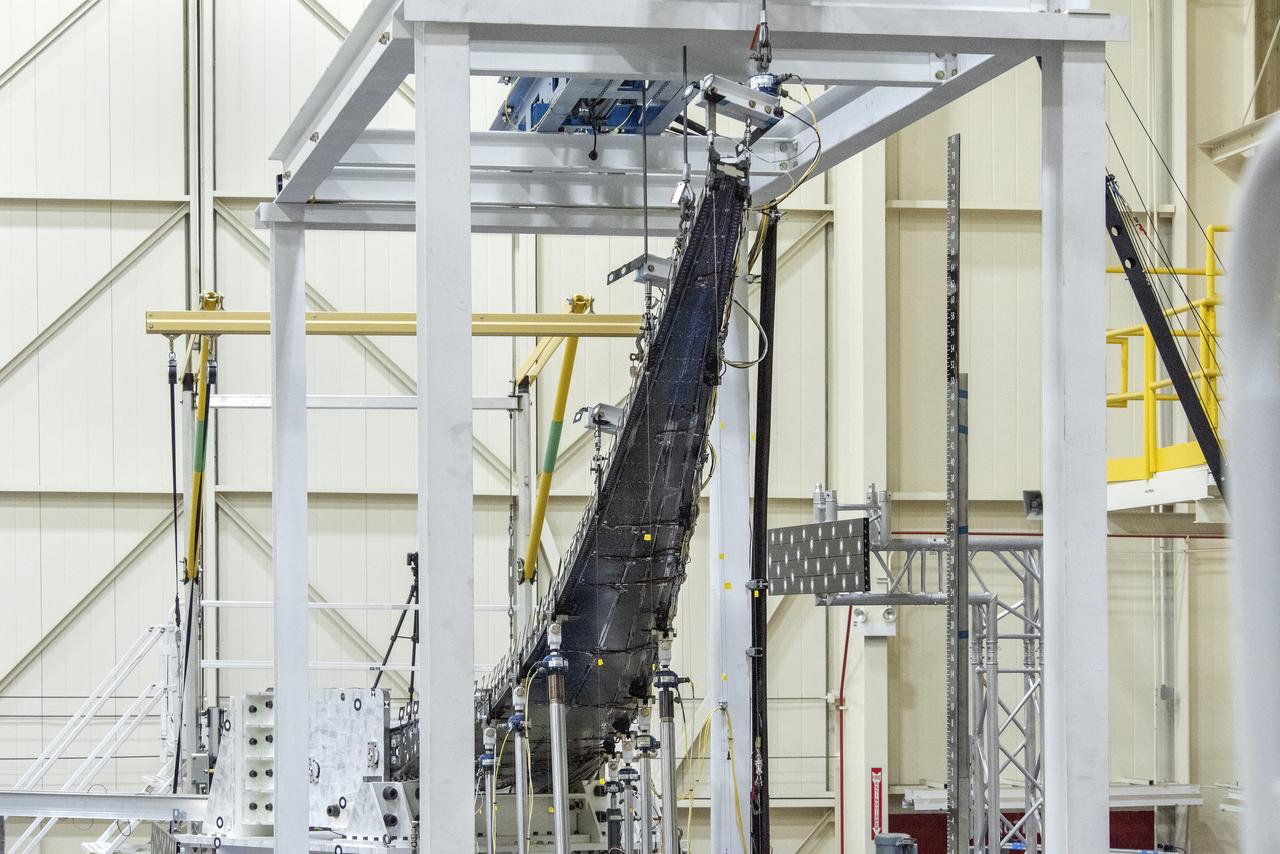
The Passive Aeroelastic Tailored (PAT) wing bends under pressure from the highest loads applied during testing at NASA’s Armstrong Flight Research Center in California.
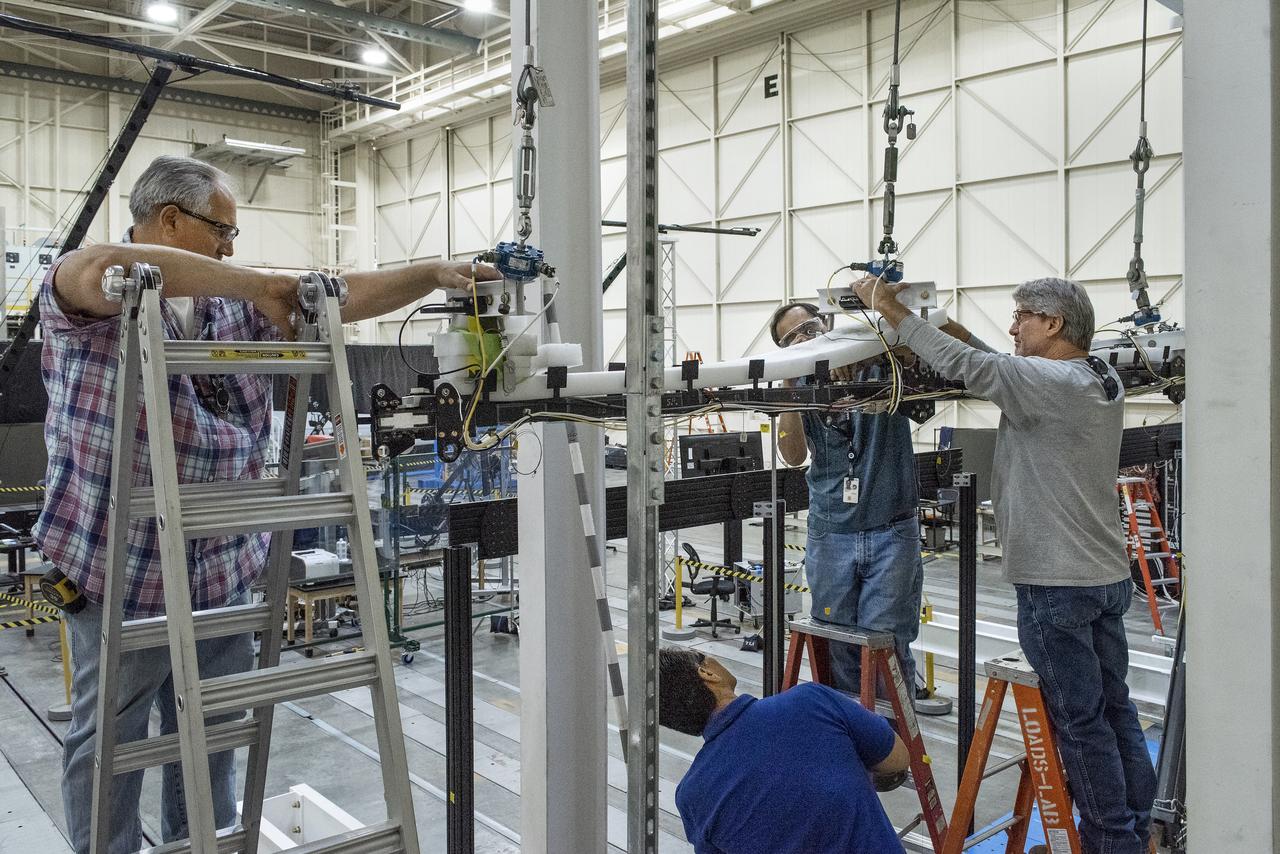
Ted Powers, from left, Larry Hudson, Ron Haraguchi and Walter Hargis make adjustments to the Passive Aeroelastic Tailored (PAT) wing testing apparatus at NASA’s Armstrong Flight Research Center in California.
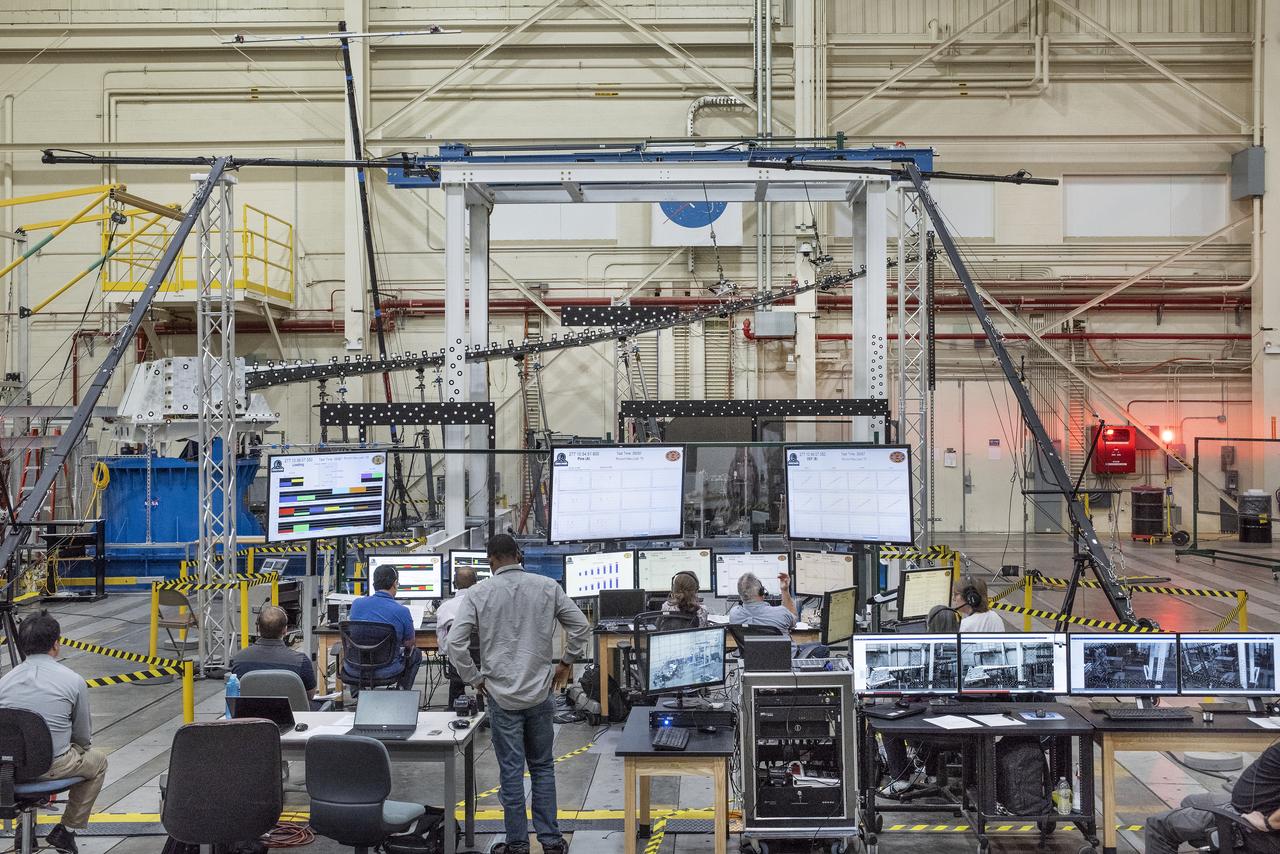
NASA’s Armstrong Flight Research Center and Langley Research Center staff members monitor a test of the Passive Aeroelastic Tailored (PAT) wing at NASA’s Armstrong Flight Research Center in California.
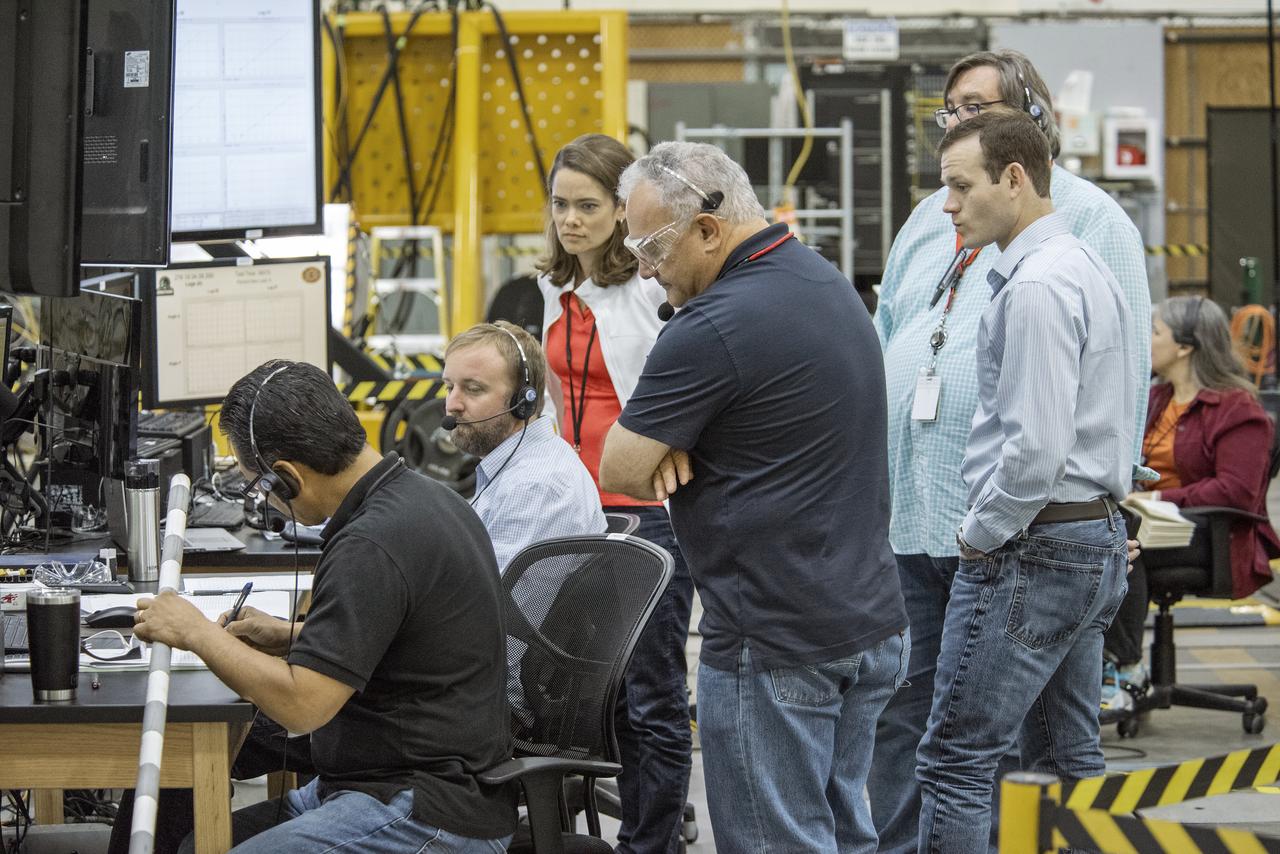
NASA’s Armstrong Flight Research Center and Langley Research Center staff members monitor a test of the Passive Aeroelastic Tailored (PAT) wing at NASA’s Armstrong Flight Research Center in California.
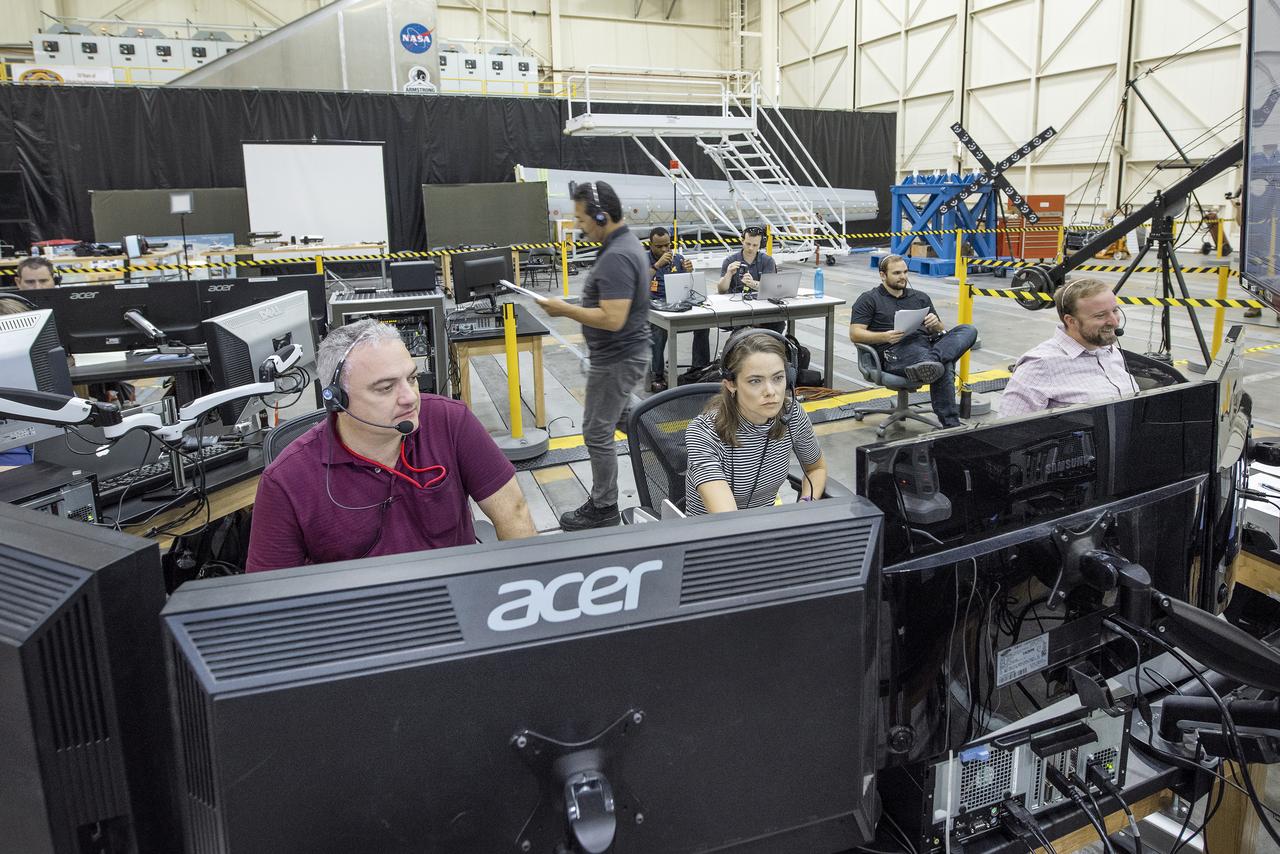
NASA’s Armstrong Flight Research Center and Langley Research Center staff members monitor a test of the Passive Aeroelastic Tailored (PAT) wing at NASA’s Armstrong Flight Research Center in California.
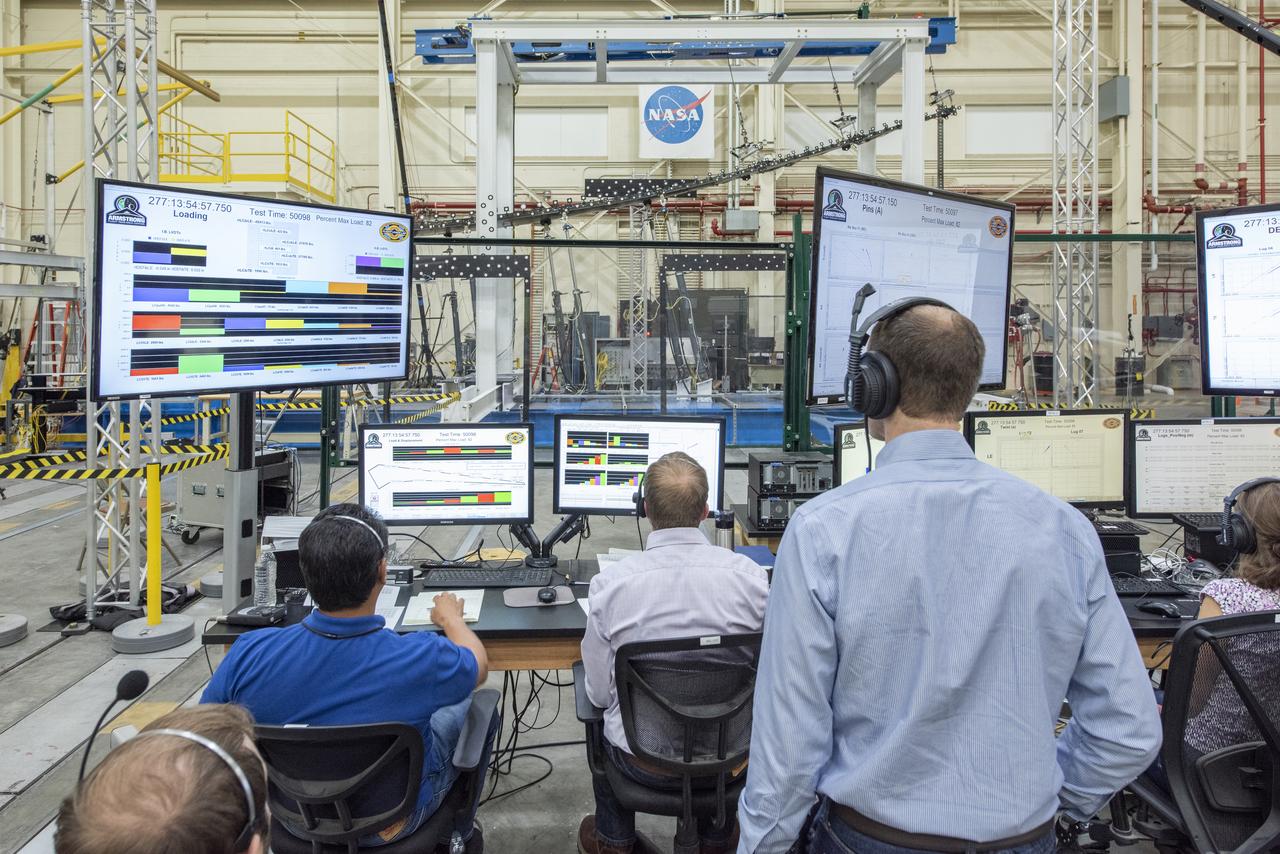
NASA’s Armstrong Flight Research Center and Langley Research Center staff members monitor a test of the Passive Aeroelastic Tailored (PAT) wing at NASA’s Armstrong Flight Research Center in California.
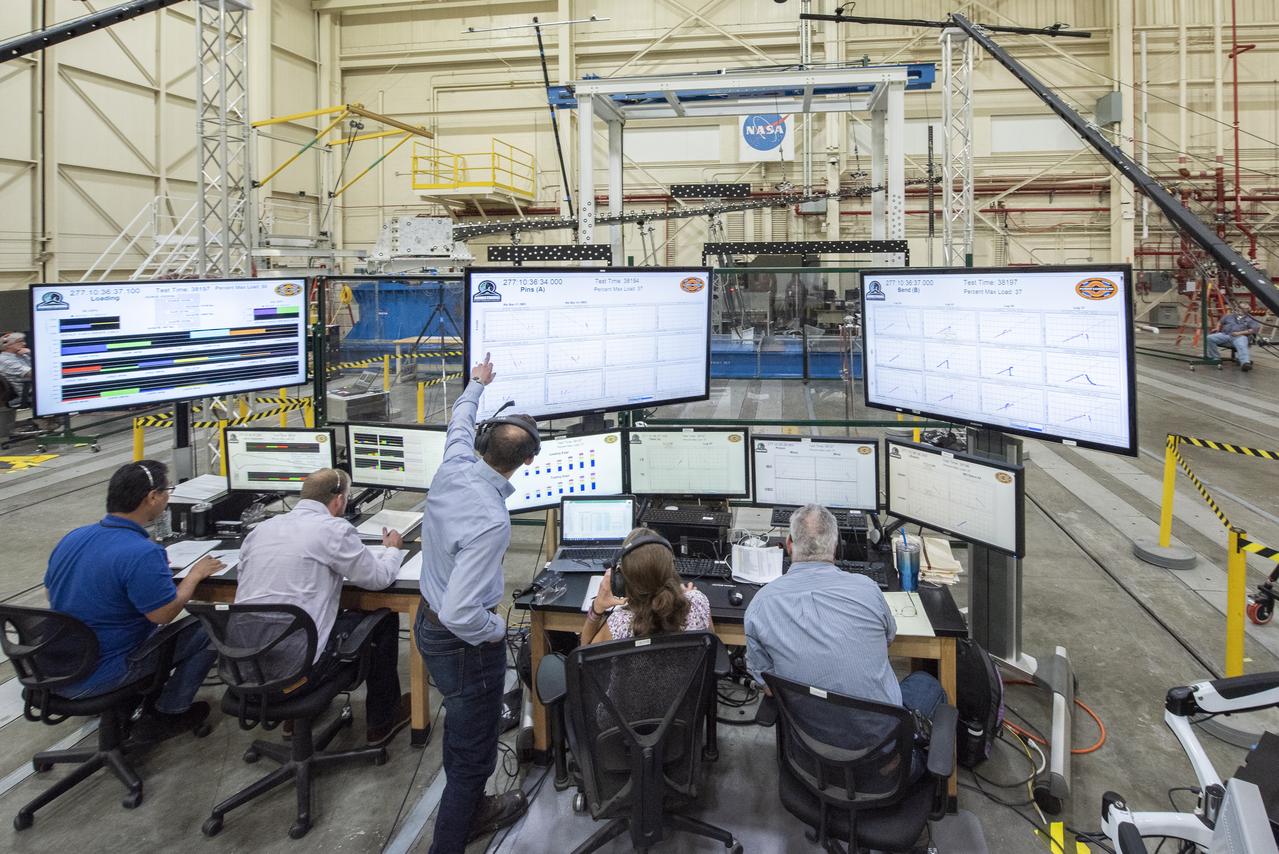
NASA’s Armstrong Flight Research Center and Langley Research Center staff members monitor a test of the Passive Aeroelastic Tailored (PAT) wing at NASA’s Armstrong Flight Research Center in California.
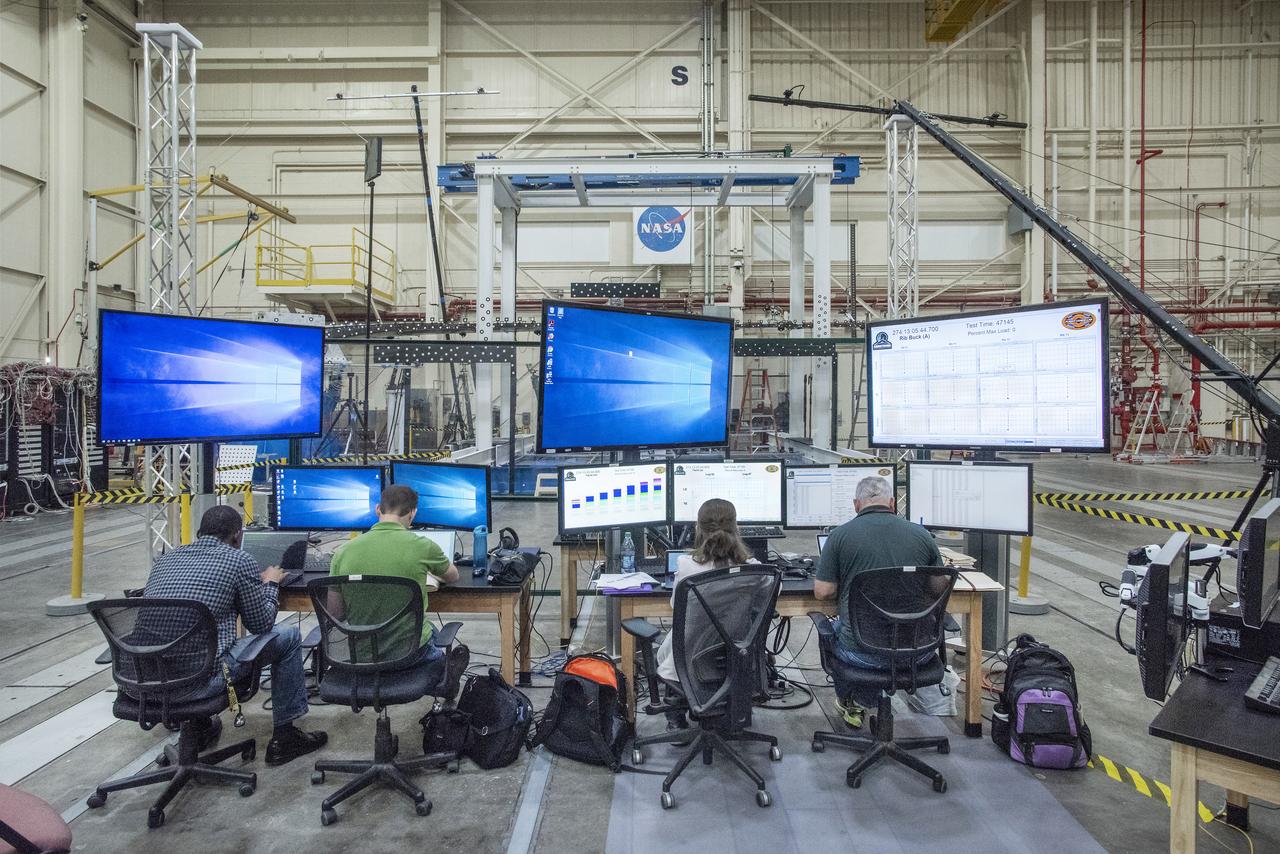
NASA’s Armstrong Flight Research Center and Langley Research Center staff members monitor a test of the Passive Aeroelastic Tailored (PAT) wing at NASA’s Armstrong Flight Research Center in California.
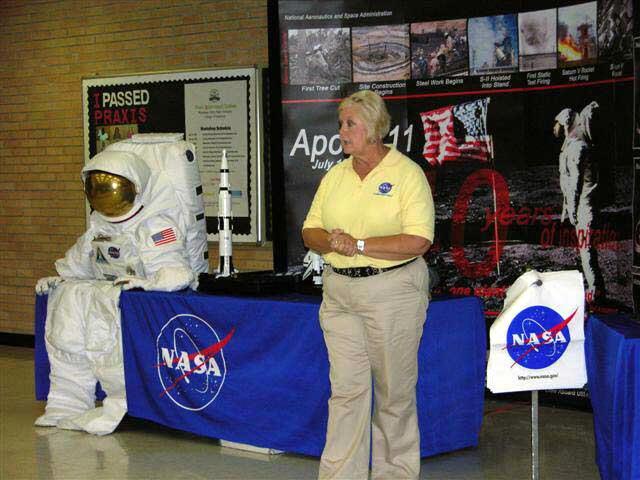
Pat Gaspard, a visitor relations specialist with NASA's StenniSphere visitor center, speaks to Mississippi Valley State University students. Gaspard spoke July 15 during Stennis Space Center's three-day educational outreach program at the college.

Queen Elizabeth II and Prince Philip, The Duke of Edinburgh look on as Goddard employees demonstrate “Science on a Sphere.” This system, developed by the National Oceanic and Atmospheric Administration (NOAA), uses computers and four video projectors to display animated images on the outside of a 6-foot diameter sphere. Photo Credit: (NASA/Pat Izzo)
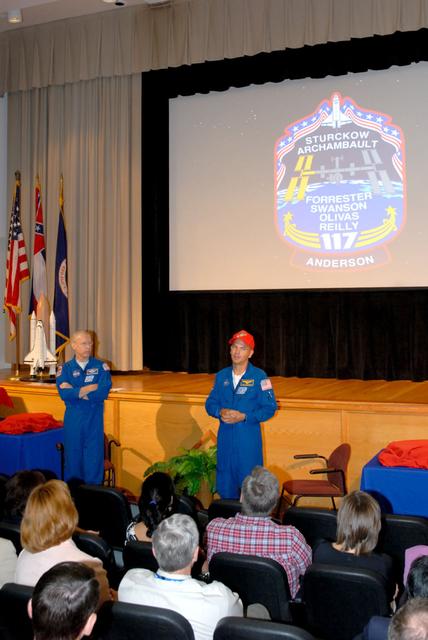
Astronauts Rick Sturckow (right) and Pat Forrester make a presentation Aug. 2 at NASA Stennis Space Center near Bay St. Louis, Miss., about their recent space shuttle mission, STS-117. Sturckow and Forrester thanked employees for the reliability and safe performance of the space shuttle's main engines, which are all tested and proved flight-worthy at SSC. The astronauts delivered a video of their mission's highlights, held a question-and-answer session, met one-on-one with employees and presented two Silver Snoopy awards during their visit. The STS-117 mission, which launched June 8, delivered a truss segment and a set of U.S. solar arrays, batteries and associated equipment to the International Space Station. Sturckow commanded the mission; Forrester was a mission specialist who performed two of STS-117's four spacewalks.
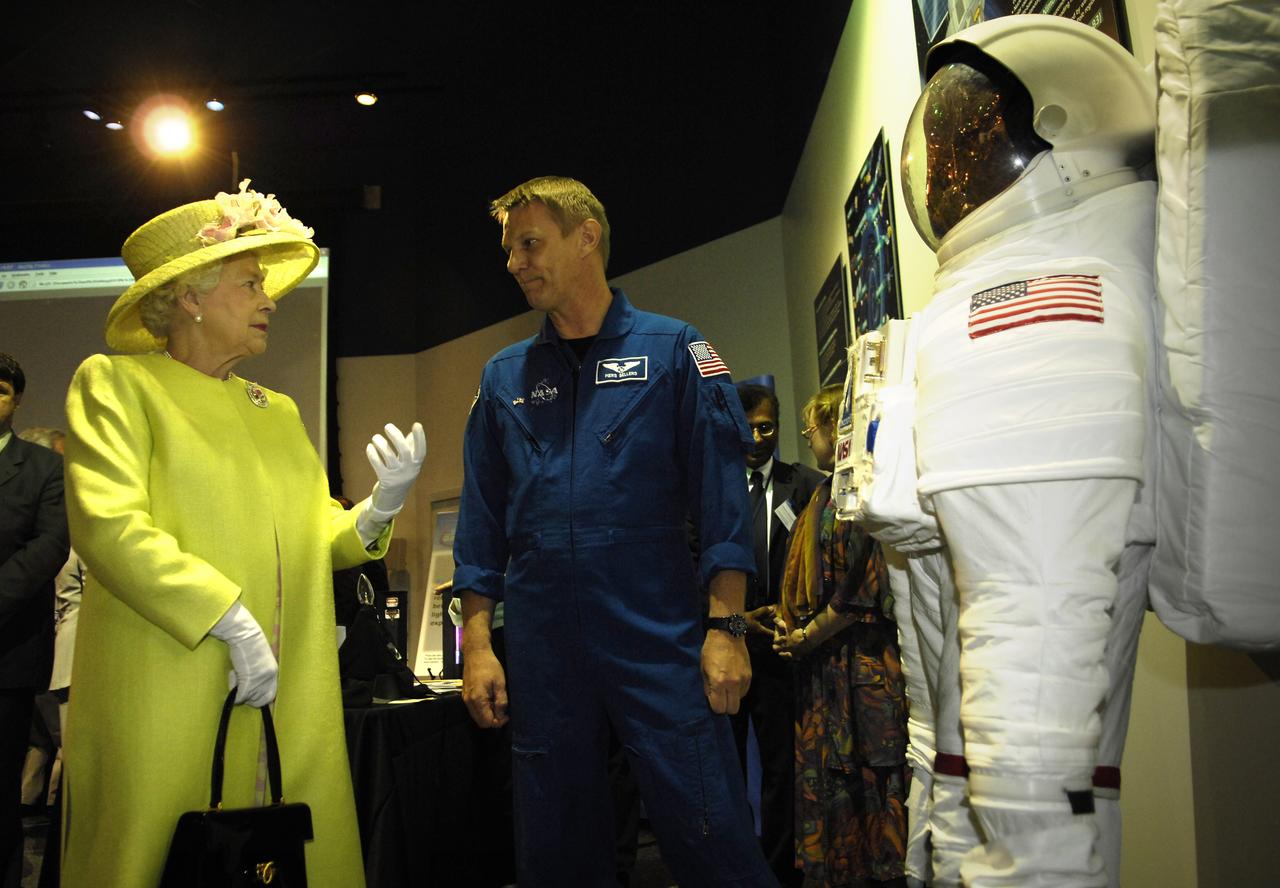
Queen Elizabeth II talks with NASA astronaut Piers Sellers at NASA's Goddard Spaceflight Center, Tuesday, May 8, 2007, in Greenbelt, Md. Queen Elizabeth II and her husband, Prince Philip, Duke of Edinburgh, visited the NASA Goddard Space Flight Center as one of the last stops on their six-day United States visit. Photo Credit: (NASA/Pat Izzo)
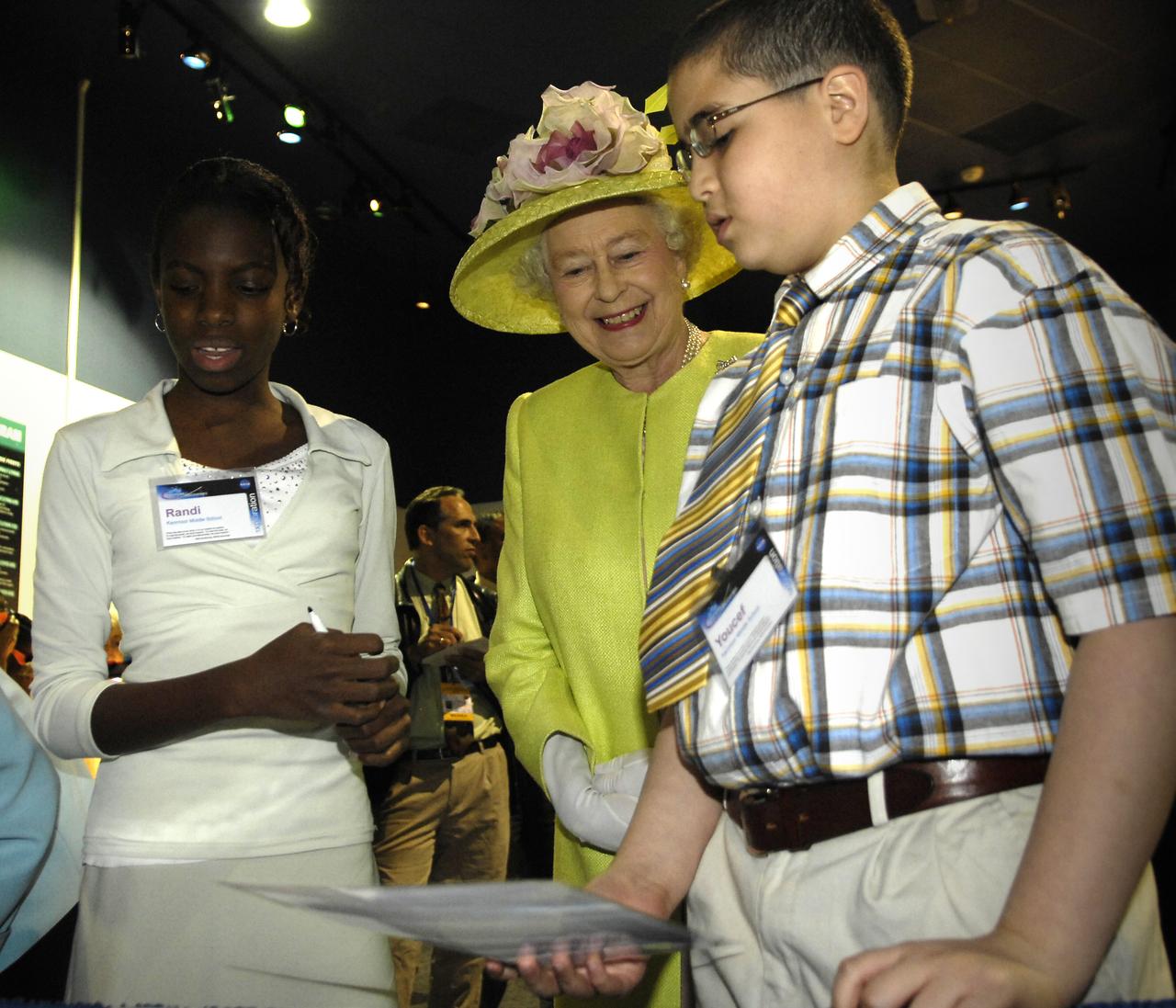
Queen Elizabeth II talks with students at a NASA Explorer School Workshop, at NASA's Goddard Spaceflight Center, Tuesday, May 8, 2007, in Greenbelt, Md. Queen Elizabeth II and her husband, Prince Philip, Duke of Edinburgh, visited the NASA Goddard Space Flight Center as one of the last stops on their six-day United States visit. Photo Credit: (NASA/Pat Izzo)
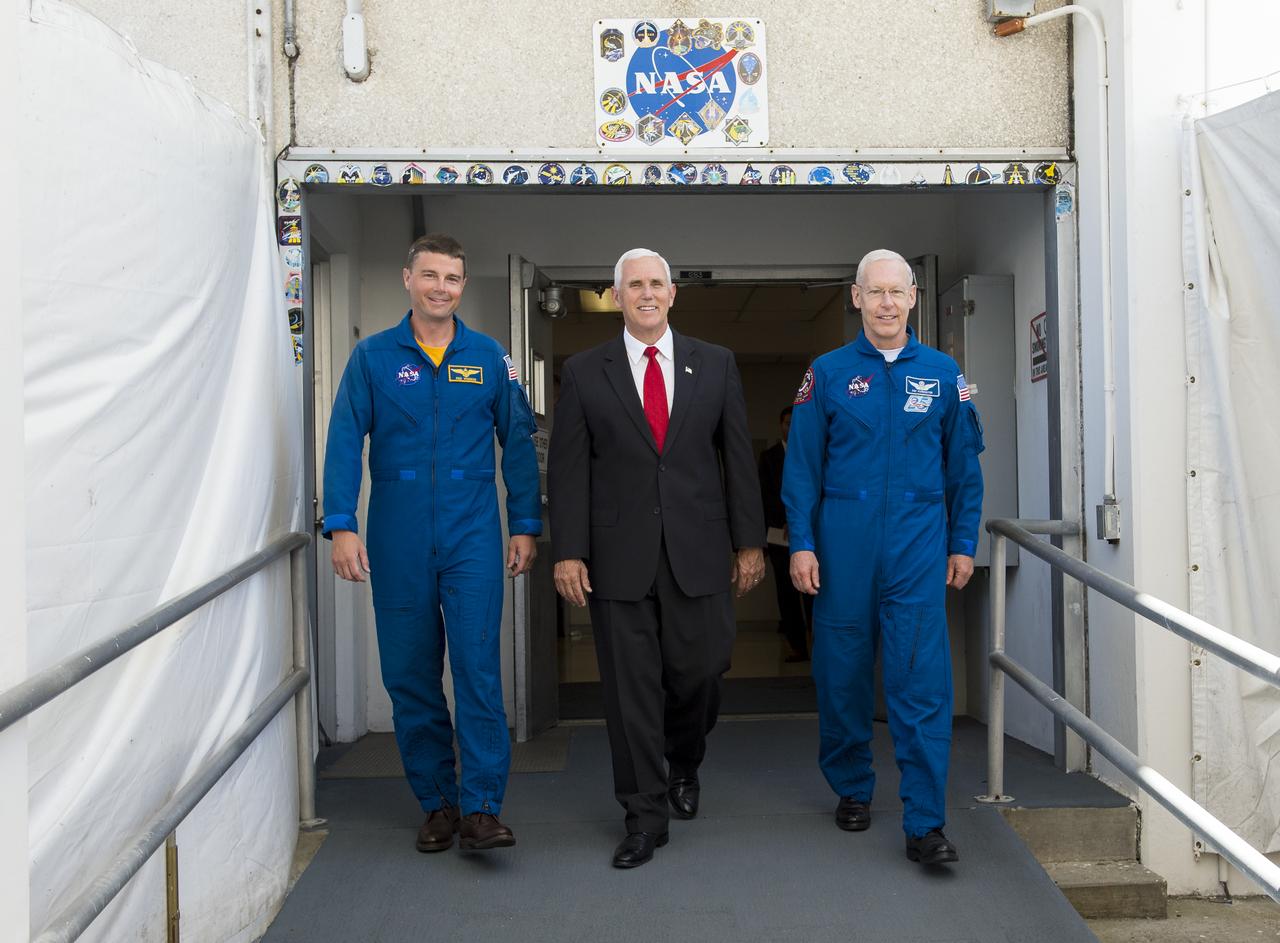
Vice President Mike Pence, center, and NASA astronaut Reid Wiseman, left, and NASA astronaut Pat Forrester, right, walk out of the historic crew doors at Kennedy Space Center's (KSC) Operations and Checkout Building on Thursday, July 6, 2017, in Cape Canaveral, Florida. These are the same doors that Apollo and space shuttle astronauts walked through on their way to the launch pad. Photo Credit: (NASA/Aubrey Gemignani)

NASA astronaut Doug Hurley and chief of the astronaut office Pat Forrester watch the launch of a SpaceX Falcon 9 rocket carrying the company's Crew Dragon spacecraft on the Demo-1 mission from firing room four of the Launch Control Center, Saturday, March 2, 2019 at the Kennedy Space Center in Florida. The Demo-1 mission is the first launch of a commercially built and operated American spacecraft and space system designed for humans as part of NASA's Commercial Crew Program. The mission will serve as an end-to-end test of the system's capabilities. Photo Credit: (NASA/Joel Kowsky)
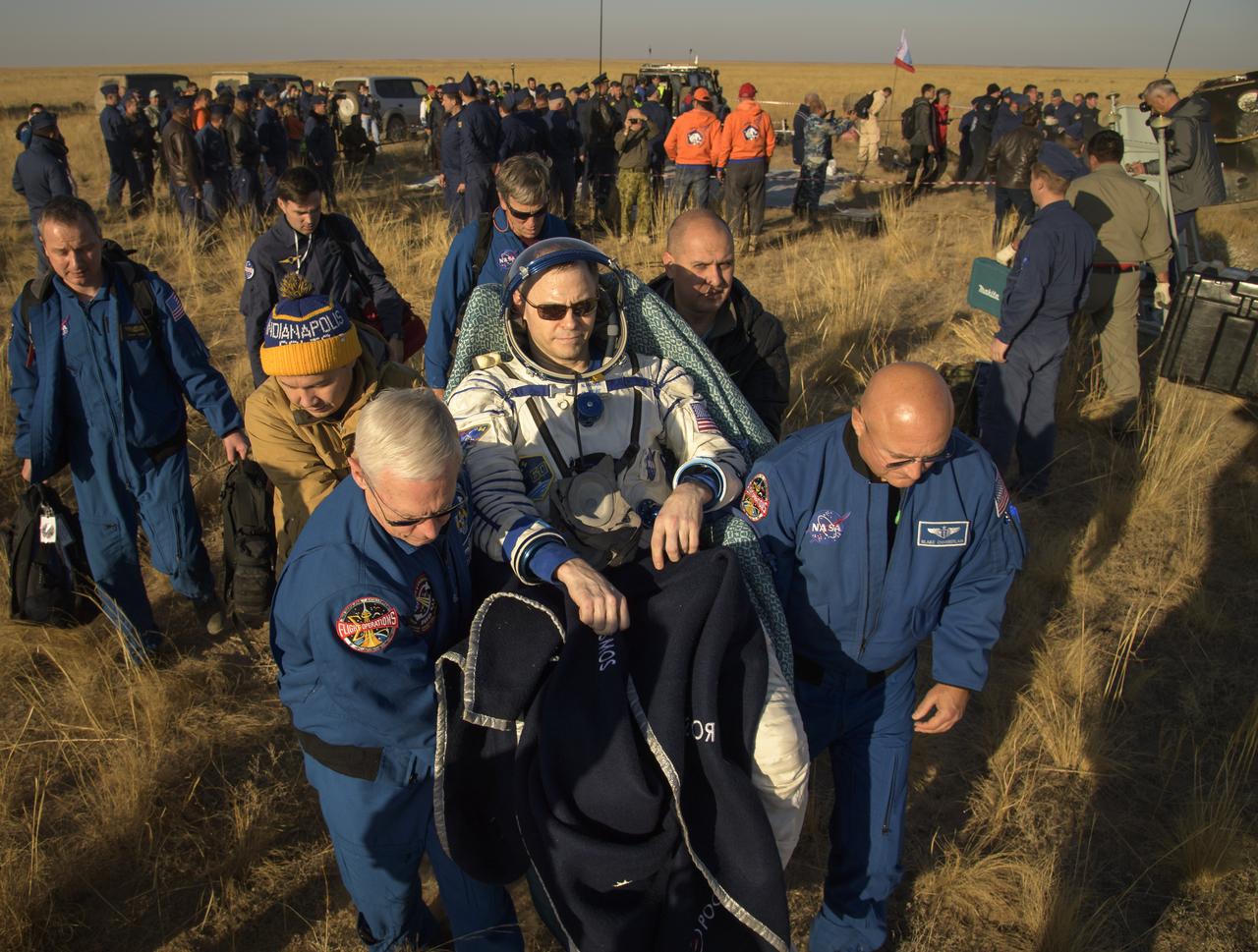
Expedition 60 crewmember Nick Hague of NASA is carried to a medical tent by NASA Chief Astronaut Pat Forrester, left, and NASA Flight Surgeon Blake Chamberlain, right, after he and fellow Expedition 60 crewmember Alexey Ovchinin of Roscosmos and visiting astronaut Hazzaa Ali Almansoori of the United Arab Emirates landed in their Soyuz MS-12 spacecraft near the town of Zhezkazgan, Kazakhstan on Thursday, Oct. 3, 2019. Hague and Ovchinin are returning after 203 days in space where they served as members of the Expedition 59 and 60 crews onboard the International Space Station. Almansoori logged 8 days in space during his first flight as an astronaut. Photo Credit: (NASA/Bill Ingalls)
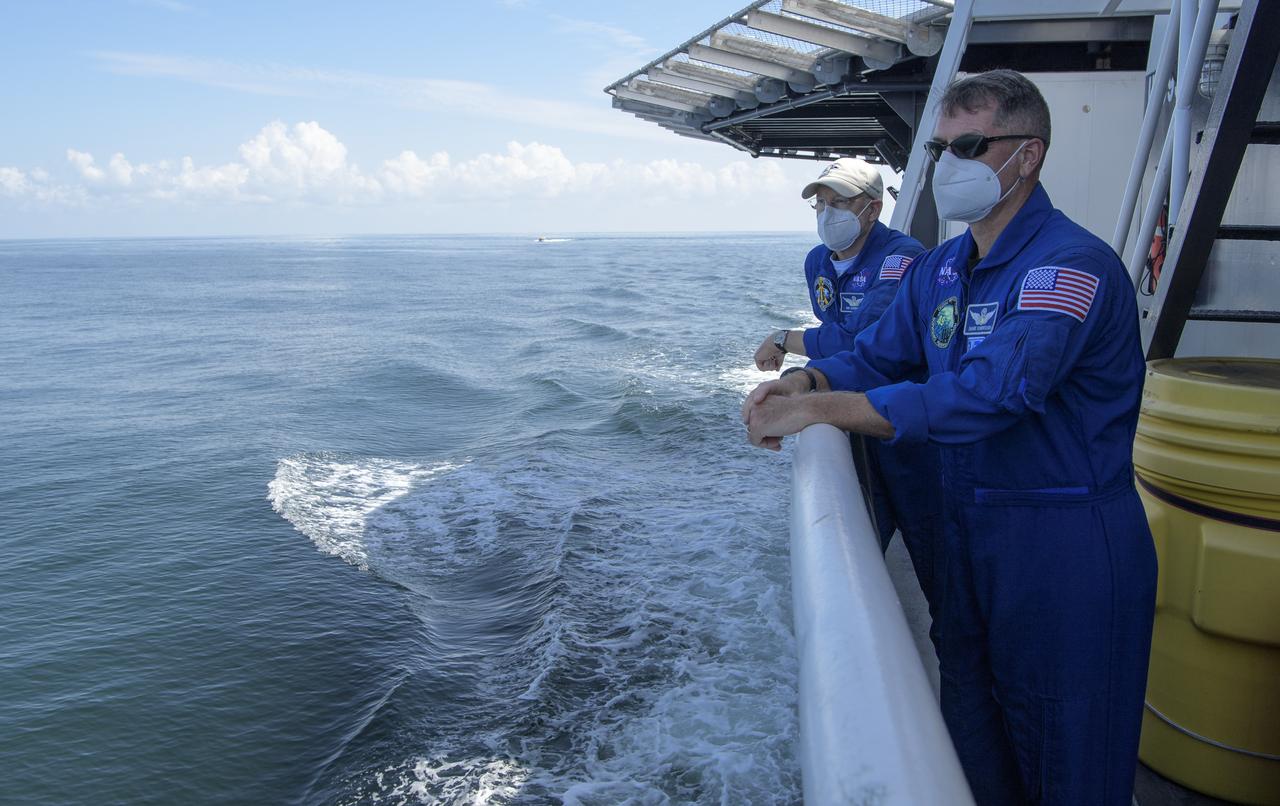
NASA Chief Astronaut Pat Forrester, left, and NASA astronaut and Crew Recovery Chief Shane Kimbrough, along with other NASA and SpaceX support teams onboard the SpaceX GO Navigator recovery ship, prepare for the landing of the SpaceX Crew Dragon Endeavour spacecraft with NASA astronauts Robert Behnken and Douglas Hurley onboard, Sunday, Aug. 2, 2020 in the Gulf of Mexico off the cost of Pensacola, Florida. The Demo-2 test flight for NASA's Commercial Crew Program is the first to deliver astronauts to the International Space Station and return them to Earth onboard a commercially built and operated spacecraft. Behnken and Hurley are returning after spending 64 days in space. Photo Credit: (NASA/Bill Ingalls)
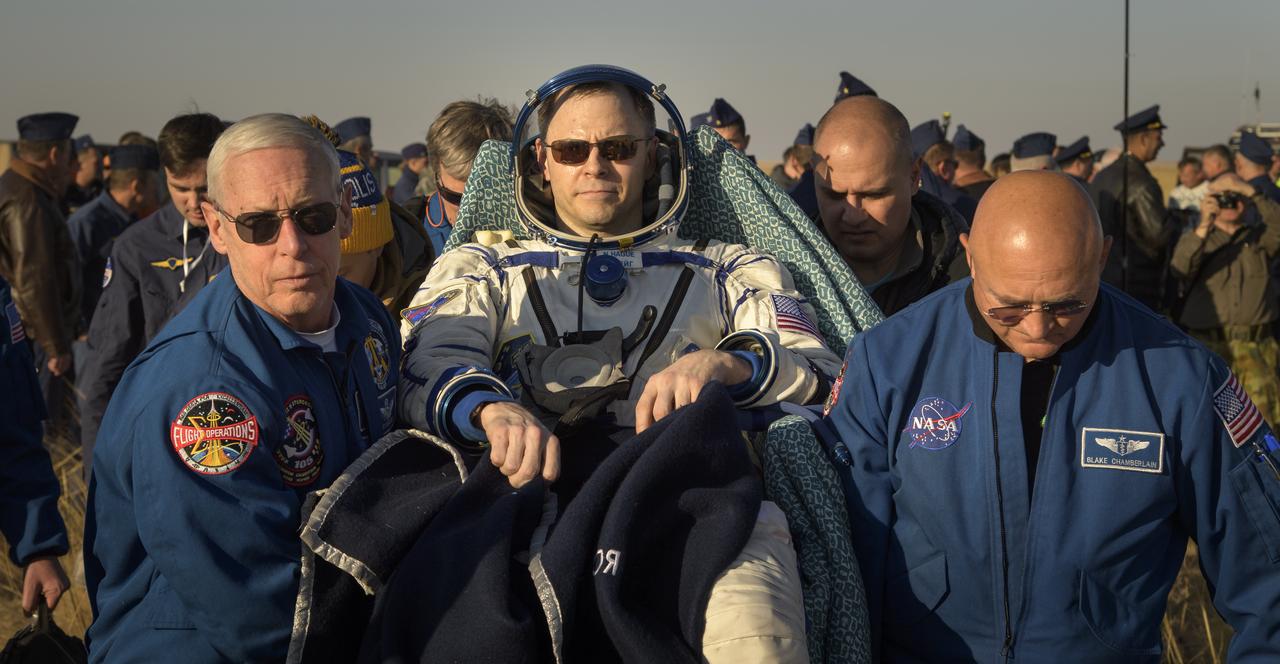
Expedition 60 crewmember Nick Hague of NASA is carried to a medical tent by NASA Chief Astronaut Pat Forrester, left, and NASA Flight Surgeon Blake Chamberlain, right, after he and fellow Expedition 60 crewmember Alexey Ovchinin of Roscosmos and visiting astronaut Hazzaa Ali Almansoori of the United Arab Emirates landed in their Soyuz MS-12 spacecraft near the town of Zhezkazgan, Kazakhstan on Thursday, Oct. 3, 2019. Hague and Ovchinin are returning after 203 days in space where they served as members of the Expedition 59 and 60 crews onboard the International Space Station. Almansoori logged 8 days in space during his first flight as an astronaut. Photo Credit: (NASA/Bill Ingalls)

Robert Quinn (middle) and Lindsay Rogers (R) seen with NASA Langley’s pilot Pat Bookey, are recipients of the Administrator’s Flight Experience Awards, a ride-along program to recognize and reward members of the workforce for their dedication to accomplishing agency priorities at Langley Research Center, Hampton Va. (Photo Credit: NASA, Ryan Hill)
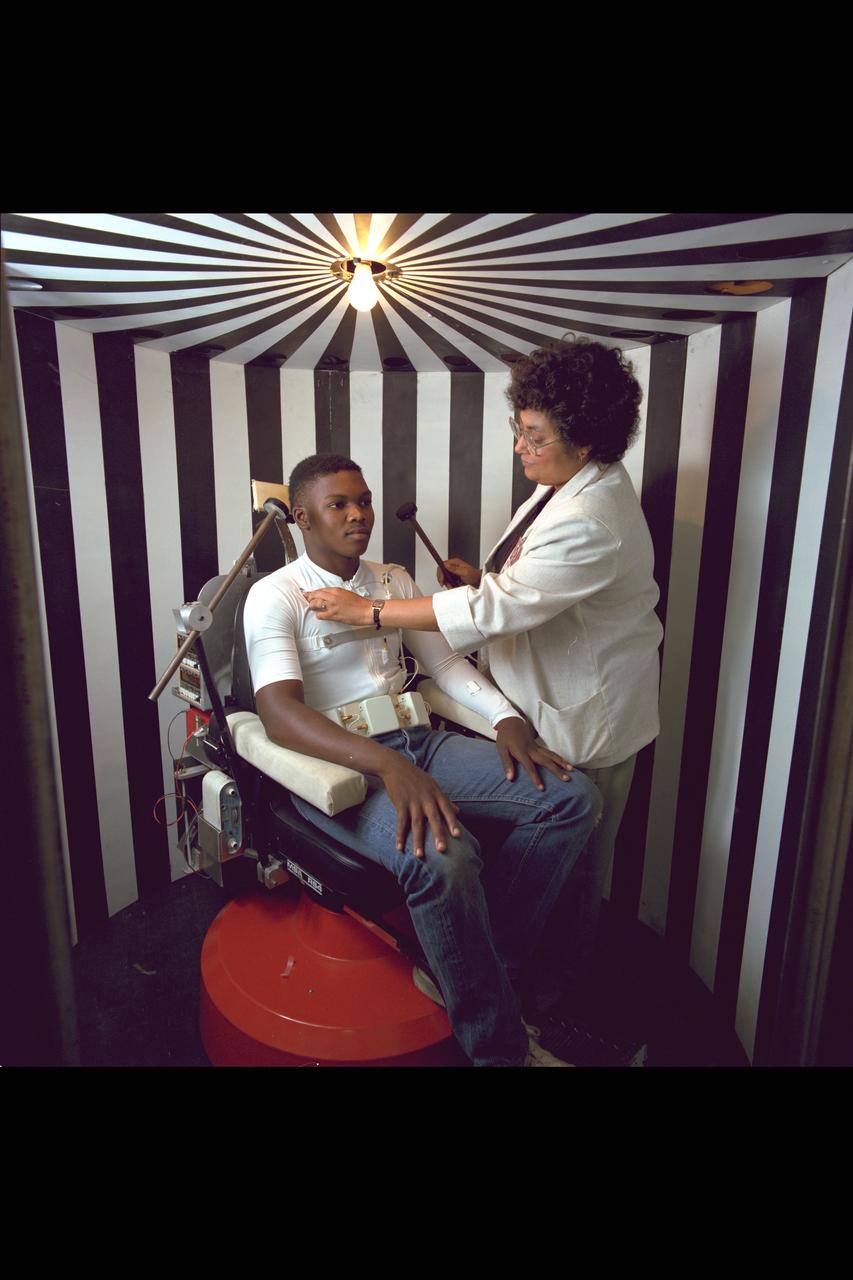
Dr. Pat Cowings in Motion Sickness Laboratory of the Human Environmental Test Facility S.13 with test subject Leah Schafer
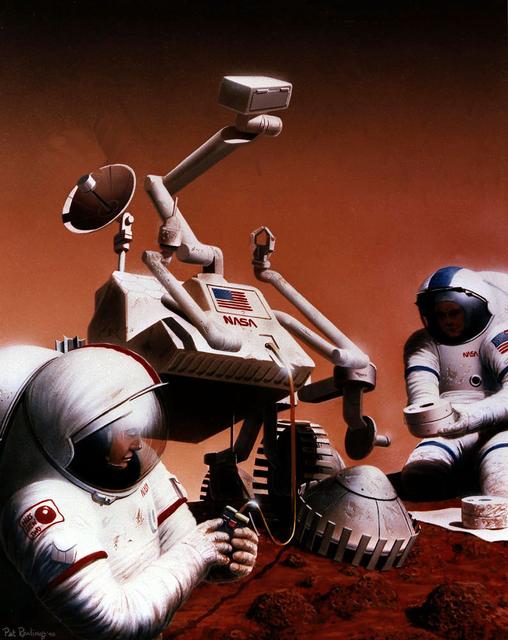
Artist Pat Rawlings' concept of the type of work and hazards future astronauts will encounter on outer worlds: Mars Rover Repair
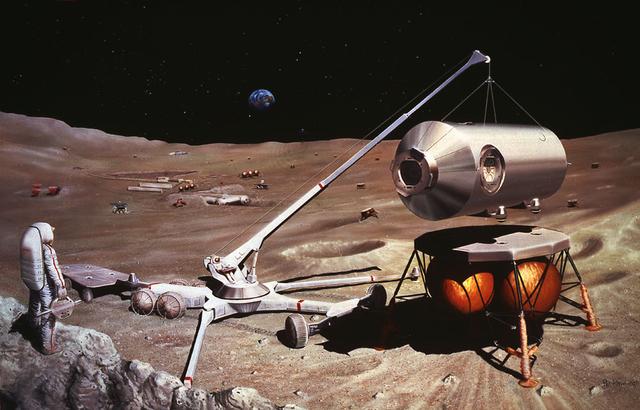
Artist Pat Rawlings' conception of the different types of machinery that will likely be needed in the future: Lunar Crane
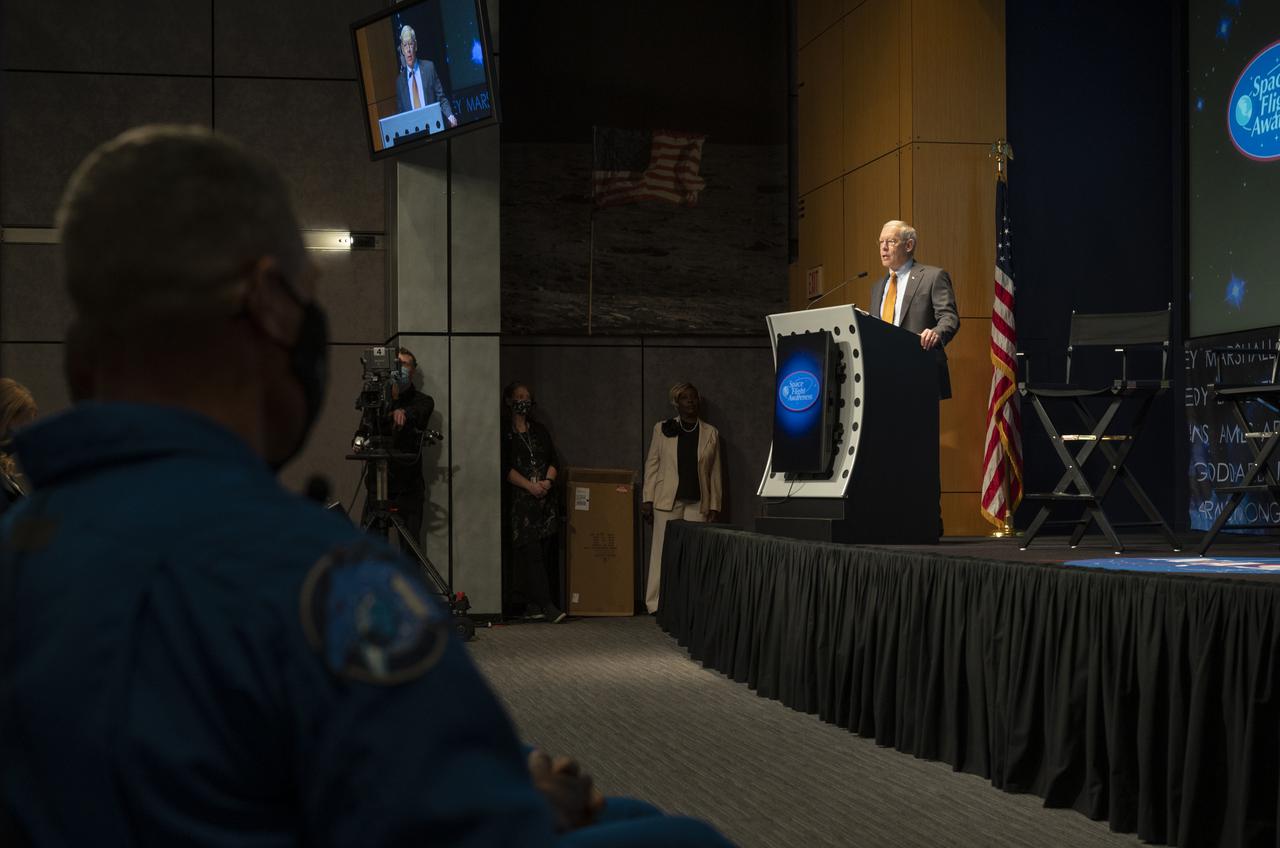
Pat Forrester, special assistant to the associate administrator of the Space Operations Mission Directorate, speaks during a presentation to the Space Operations and Exploration Systems Development Mission Directorates by SpaceX Crew-1 NASA astronauts Mike Hopkins, Victor Glover, and Shannon Walker, and Japan Aerospace Exploration Agency (JAXA) astronaut Soichi Noguchi, Monday, Nov. 15, 2021, at the Mary W. Jackson NASA Headquarters Building in Washington. Hopkins, Glover, Walker, and Noguchi launched on the first crew rotation mission to the International Space Station for SpaceX’s Falcon 9 and Crew Dragon spacecraft as part of the agency’s Commercial Crew Program and spent 168 days in space across Expeditions 64 and 65. Photo Credit: (NASA/Joel Kowsky)
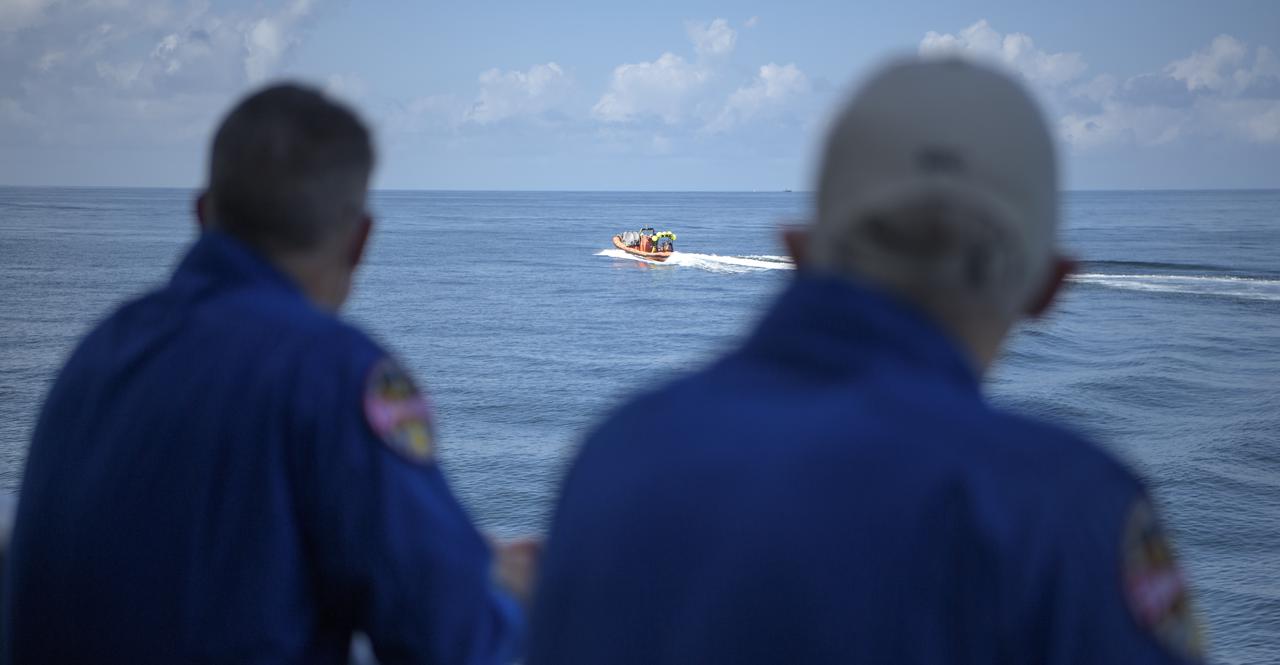
NASA astronaut and Crew Recovery Chief Shane Kimbrough, left, and NASA Chief Astronaut Pat Forrester watch as SpaceX support teams are deployed on fast boats from the SpaceX GO Navigator recovery ship ahead of the landing of the SpaceX Crew Dragon Endeavour spacecraft with NASA astronauts Robert Behnken and Douglas Hurley onboard, Sunday, Aug. 2, 2020 in the Gulf of Mexico off the cost of Pensacola, Florida. The Demo-2 test flight for NASA's Commercial Crew Program is the first to deliver astronauts to the International Space Station and return them to Earth onboard a commercially built and operated spacecraft. Behnken and Hurley are returning after spending 64 days in space. Photo Credit: (NASA/Bill Ingalls)
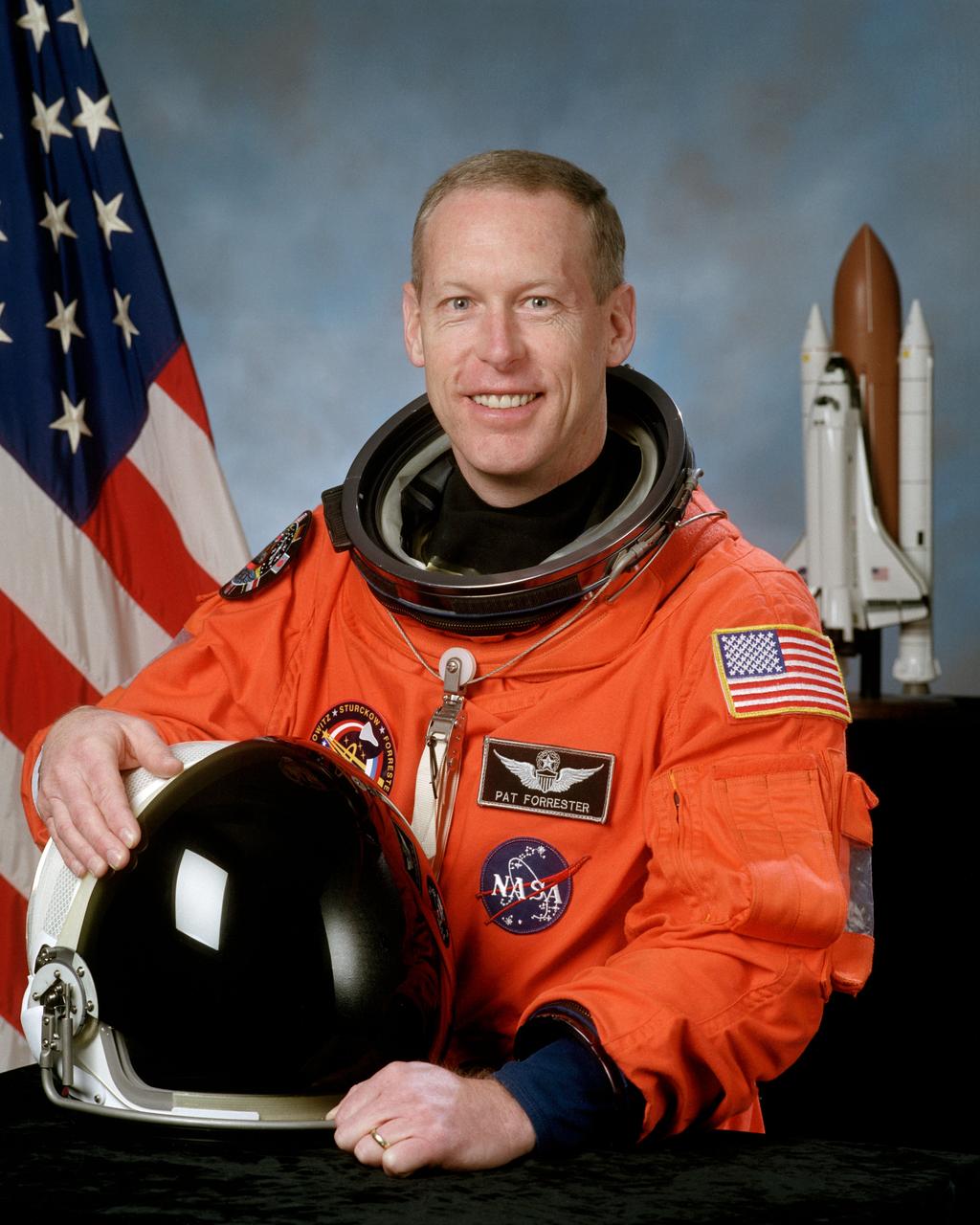
JSC2001-00956 (10 April 2001) --- Astronaut Patrick G. Forrester, mission specialist.
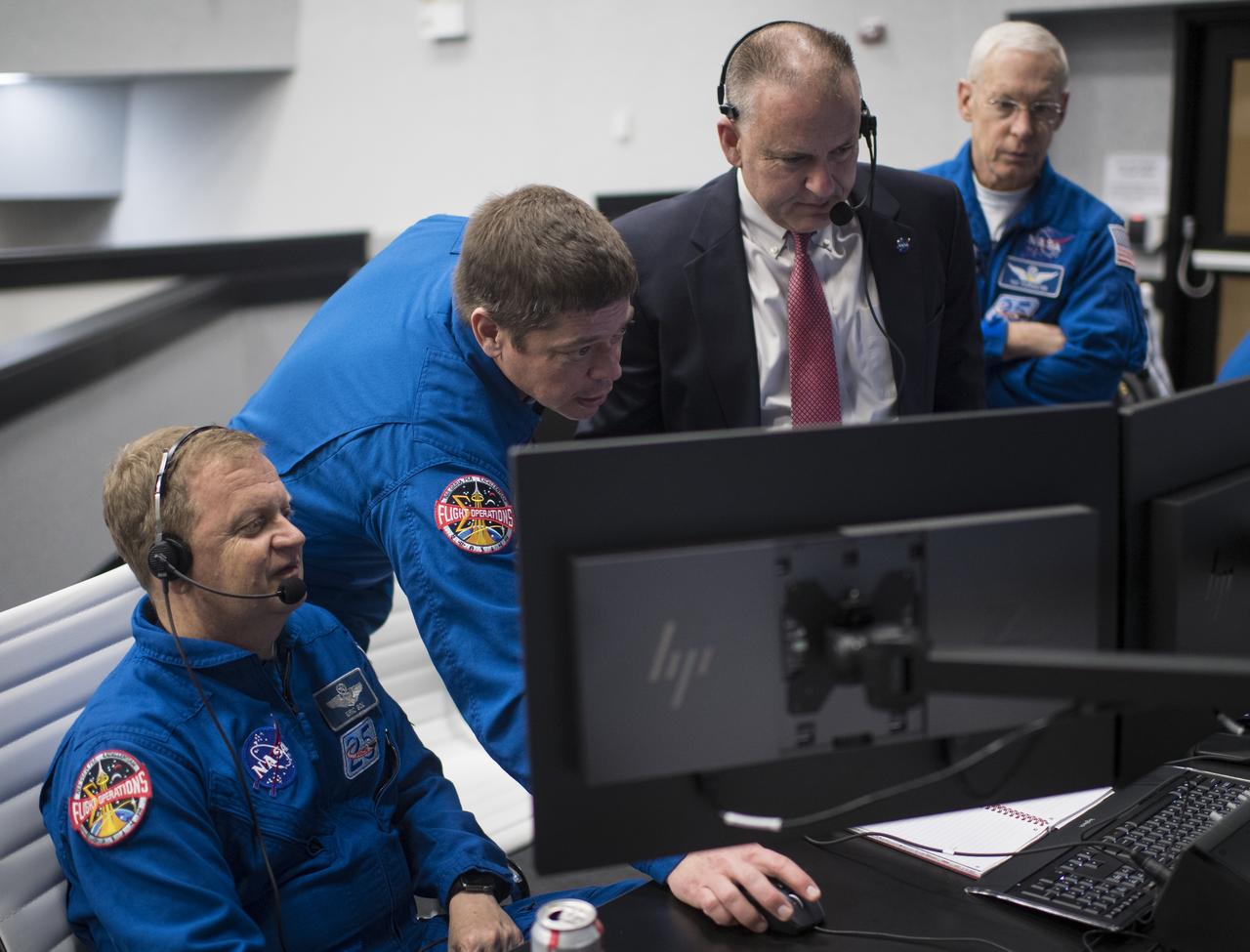
NASA astronaut Eric Boe, assistant to the chief of the astronaut office for commercial crew, left, NASA astronaut Bob Behnken, Norm Knight, deputy director of flight operations at NASA's Johnson Space Center and chief of the astronaut office Pat Forrester monitor the countdown of the launch of a SpaceX Falcon 9 rocket carrying the company's Crew Dragon spacecraft on the Demo-1 mission from firing room four of the Launch Control Center, Saturday, March 2, 2019 at the Kennedy Space Center in Florida. The Demo-1 mission will be the first launch of a commercially built and operated American spacecraft and space system designed for humans as part of NASA's Commercial Crew Program. The mission will serve as an end-to-end test of the system's capabilities. Photo Credit: (NASA/Joel Kowsky)
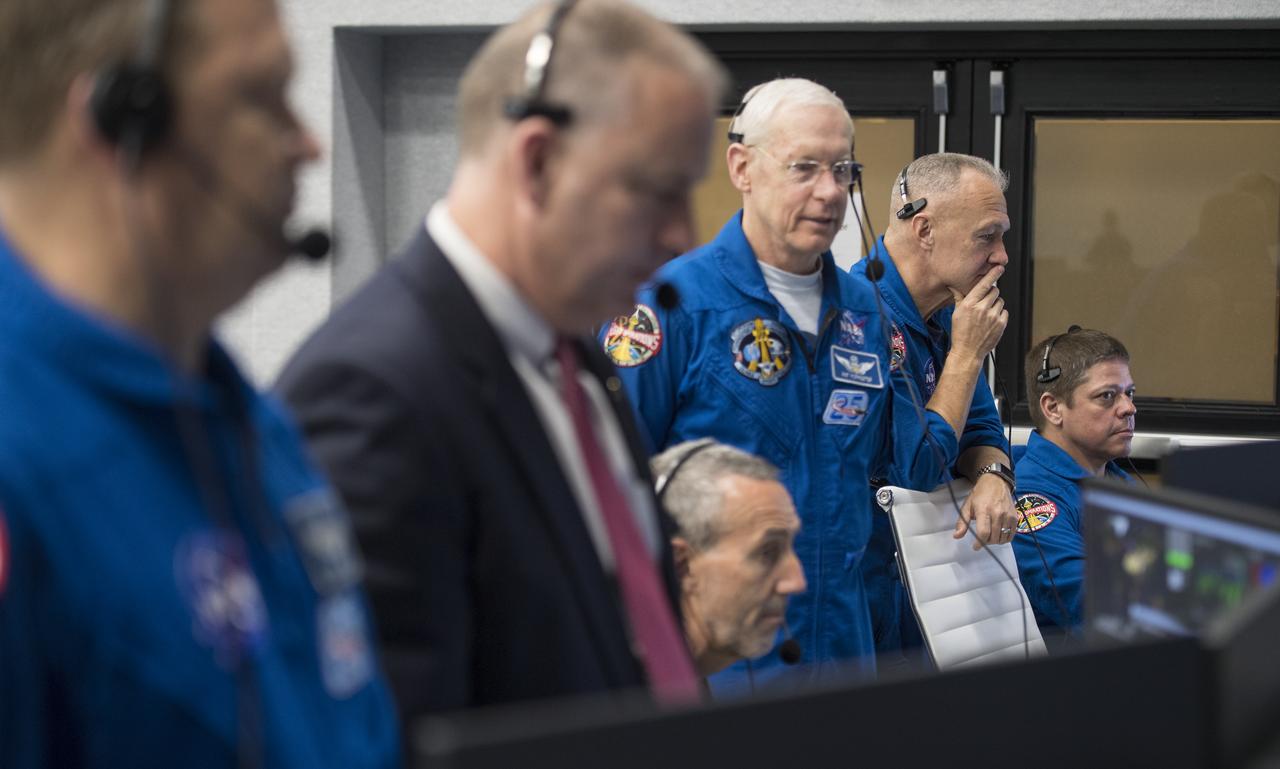
NASA's chief of the astronaut office Pat Forrester, third from right and NASA astronauts Doug Hurley, second from right, and Bob Behnken, right, who are assigned to fly on the crewed Demo-2 mission, monitor the countdown of the launch of a SpaceX Falcon 9 rocket carrying the company's Crew Dragon spacecraft on the Demo-1 mission from firing room four of the Launch Control Center, Saturday, March 2, 2019 at the Kennedy Space Center in Florida. The Demo-1 mission will be the first launch of a commercially built and operated American spacecraft and space system designed for humans as part of NASA's Commercial Crew Program. The mission will serve as an end-to-end test of the system's capabilities. Photo Credit: (NASA/Joel Kowsky)

Lindsay Rogers, Office of the Chief Financial Officer (OCFO), and Robert Quinn, Office of the Chief Information Officer (OCIO) participate in an employee incentive flying event with NASA Langley pilots Taylor Thorson and Pat Bookey. Rogers and Quinn flew in NASA Langley’s aircraft as part of the Administrator’s Flight Experience Awards, a ride-along program to recognize and reward members of the workforce for their dedication to accomplishing agency priorities. NASA Langley Research Center aircraft in Hampton Va. (Photo Credit: NASA, Ryan Hill)

Robert E Quinn, Supervisory Information Technology Specialist, Office of the Chief Information Officer (OCIO), poses with NASA Langley’s pilot Pat Bookey after receiving the Administrator's Flight Experience Award under Administrator Jared Isaacman initiated employee incentive program at NASA Langley Research Center, Hampton Va. (Photo Credit: NASA, Mark Knopp)
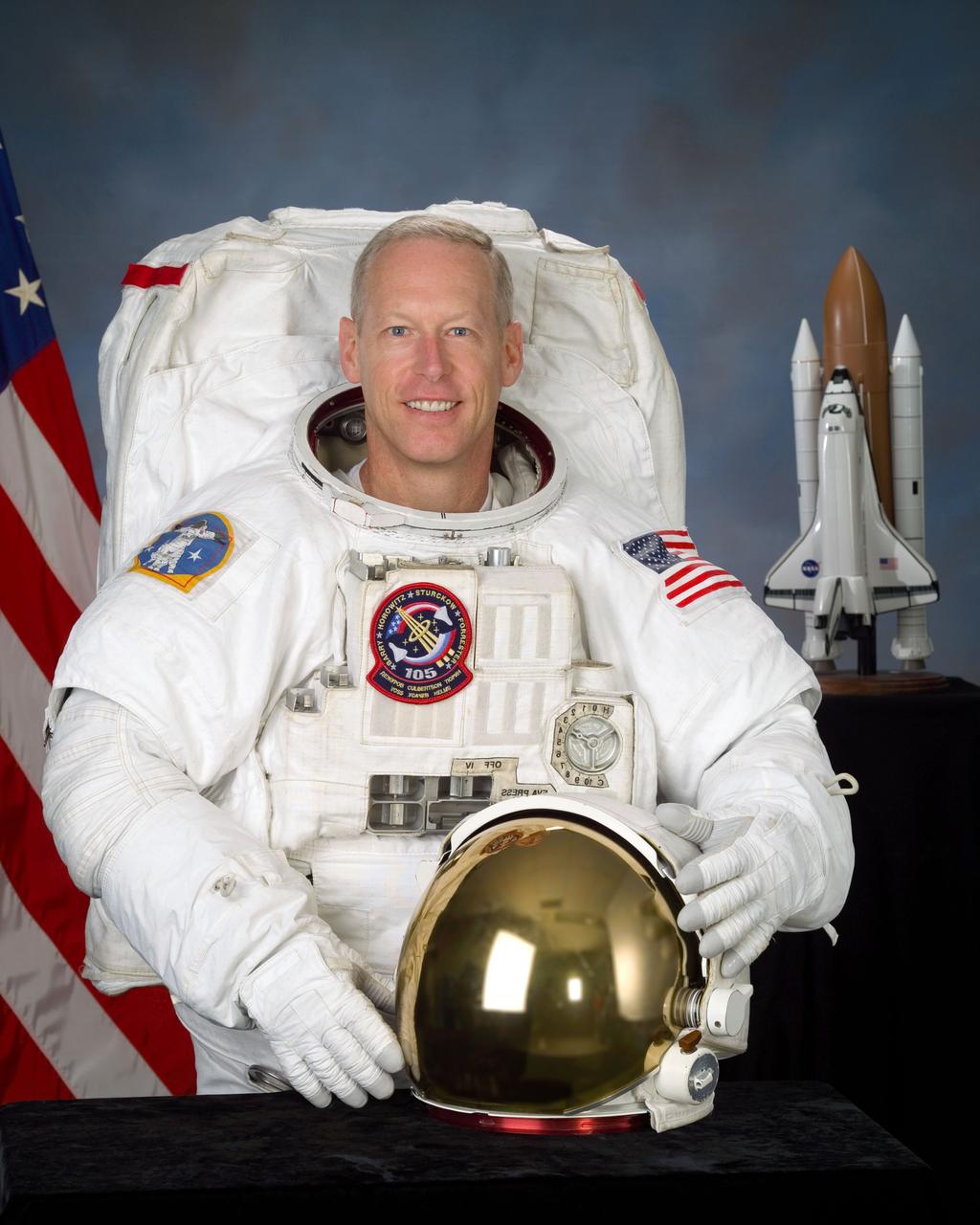
JSC2005-E-45340 (19 Aug. 2005) --- Astronaut Patrick G. Forrester, mission specialist
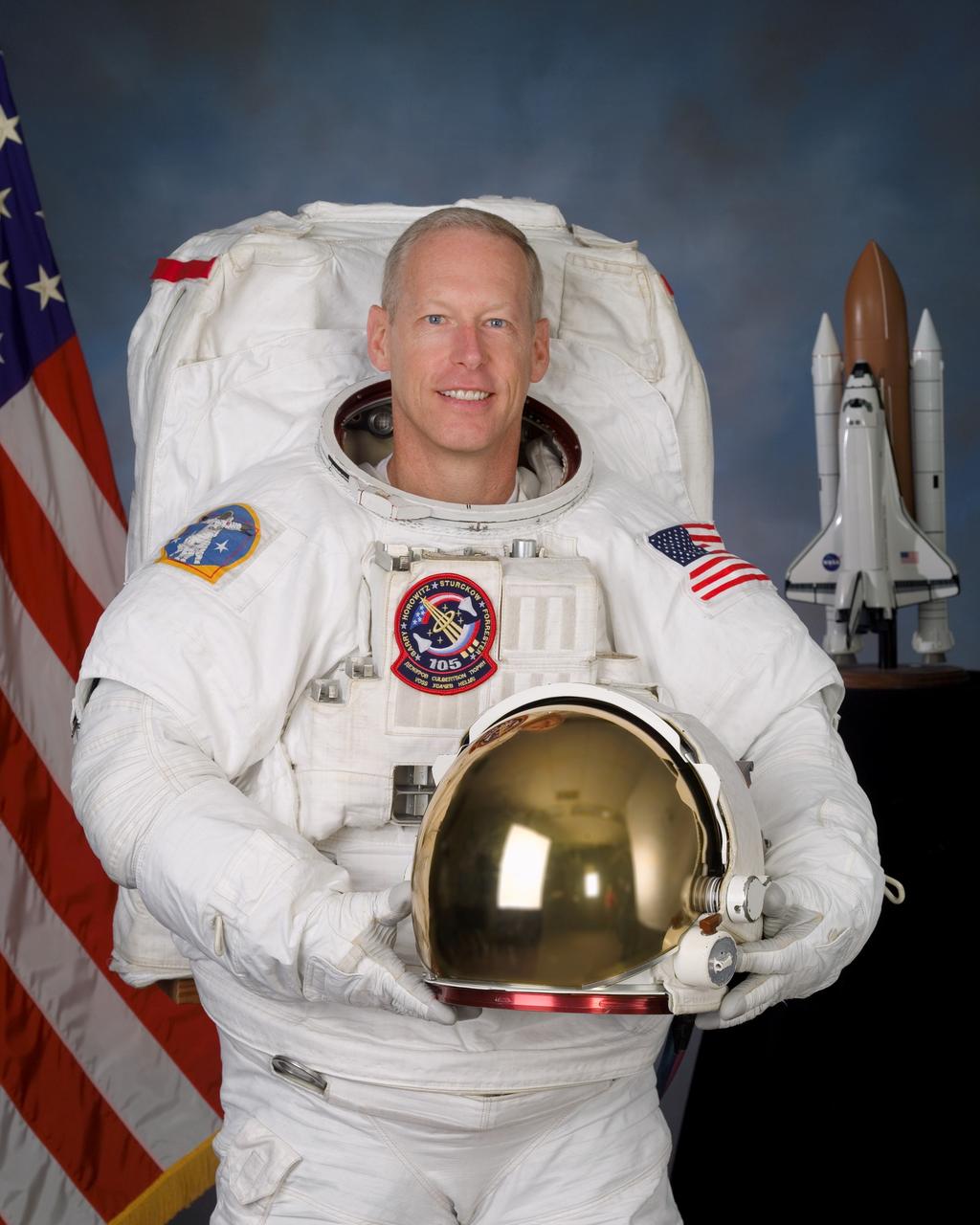
JSC2005-E-45341 (19 Aug. 2005) --- Astronaut Patrick G. Forrester, mission specialist
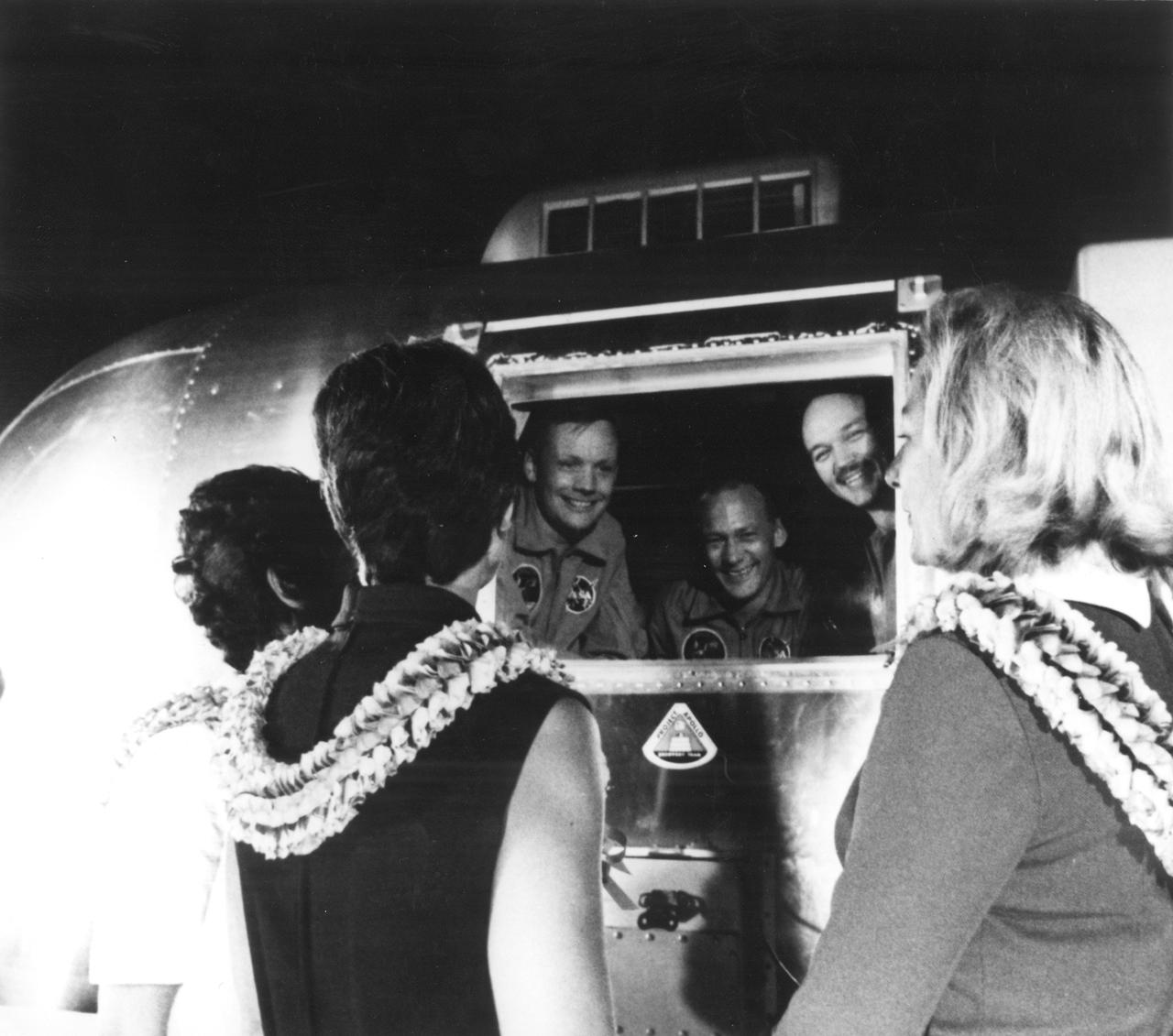
The Apollo 11 mission, the first manned lunar mission, launched from the Kennedy Space Center, Florida via the Marshall Space Flight Center (MSFC) developed Saturn V launch vehicle on July 16, 1969 and safely returned to Earth on July 24, 1969. Aboard the space craft were astronauts Neil A. Armstrong, commander; Michael Collins, Command Module (CM) pilot; and Edwin E. Aldrin Jr., Lunar Module (LM) pilot. The CM, piloted by Michael Collins remained in a parking orbit around the Moon while the LM, named “Eagle’’, carrying astronauts Neil Armstrong and Edwin Aldrin, landed on the Moon. During 2½ hours of surface exploration, the crew collected 47 pounds of lunar surface material for analysis back on Earth. The recovery operation took place in the Pacific Ocean where Navy para-rescue men recovered the capsule housing the 3-man Apollo 11 crew. The crew was airlifted to safety aboard the U.S.S. Hornet, where they were quartered in a Mobile Quarantine Facility (MQF) which served as their home until they reached the NASA Manned Spacecraft Center (MSC) Lunar Receiving Laboratory in Houston, Texas. On arrival at Ellington Air Force base near the MSC, the crew, still under a 21 day quarantine in the MQF are greeted by their wives. Looking out of the facility are (L-R) Armstrong, Aldrin, and Collins. Wives are (L-R) Pat Collins, Jan Armstrong, and Joan Aldrin.
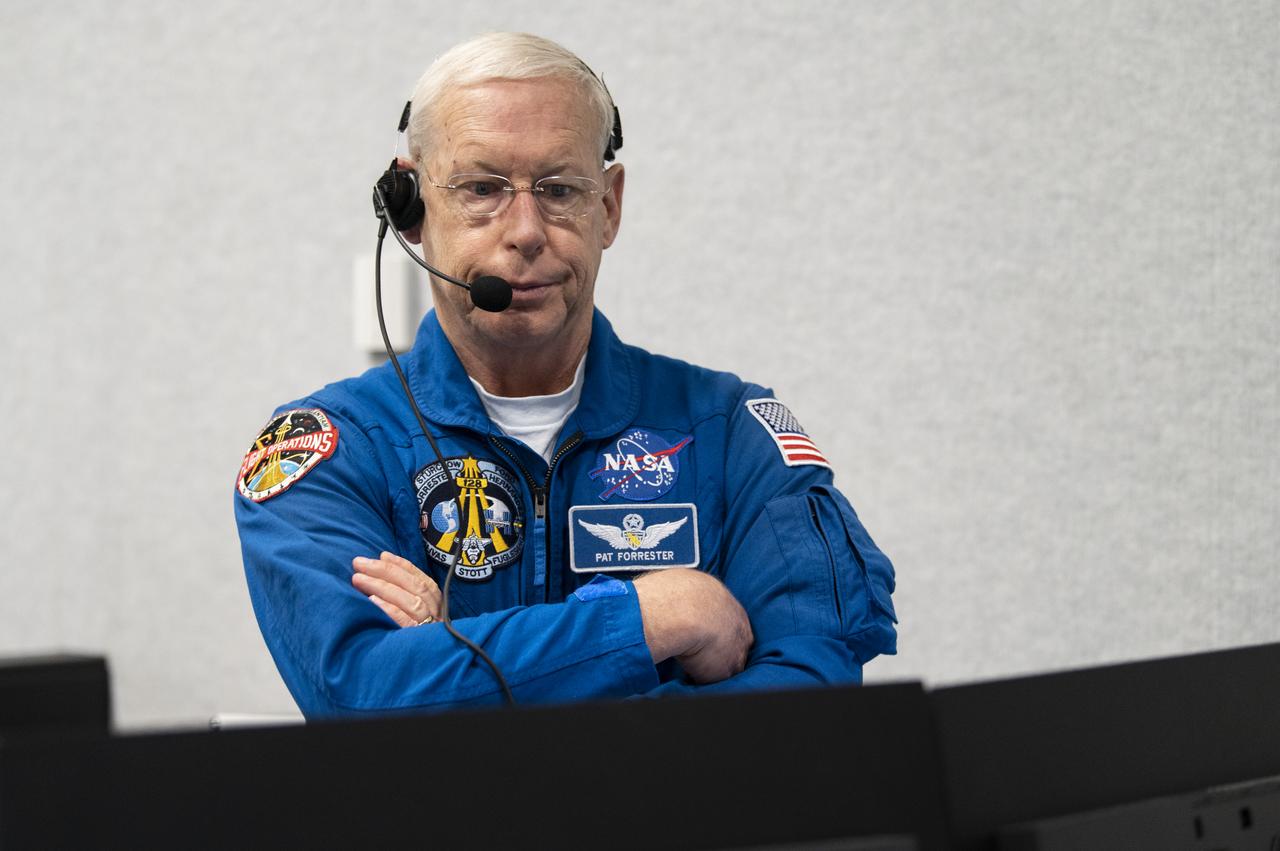
Pat Forrester, NASA’s chief of the astronaut office monitor the launch of a SpaceX Falcon 9 rocket carrying the company's Crew Dragon spacecraft on NASA’s SpaceX Crew-1 mission with NASA astronauts Mike Hopkins, Victor Glover, Shannon Walker, and Japan Aerospace Exploration Agency (JAXA) astronaut Soichi Noguchi onboard, Sunday, Nov. 15, 2020, in firing room four of the Launch Control Center at NASA’s Kennedy Space Center in Florida. NASA’s SpaceX Crew-1 mission is the first crew rotation mission of the SpaceX Crew Dragon spacecraft and Falcon 9 rocket to the International Space Station as part of the agency’s Commercial Crew Program. Hopkins, Glover, Walker, and Noguchi launched at 7:27 p.m. EST, from Launch Complex 39A at the Kennedy Space Center. Photo Credit: (NASA/Aubrey Gemignani)
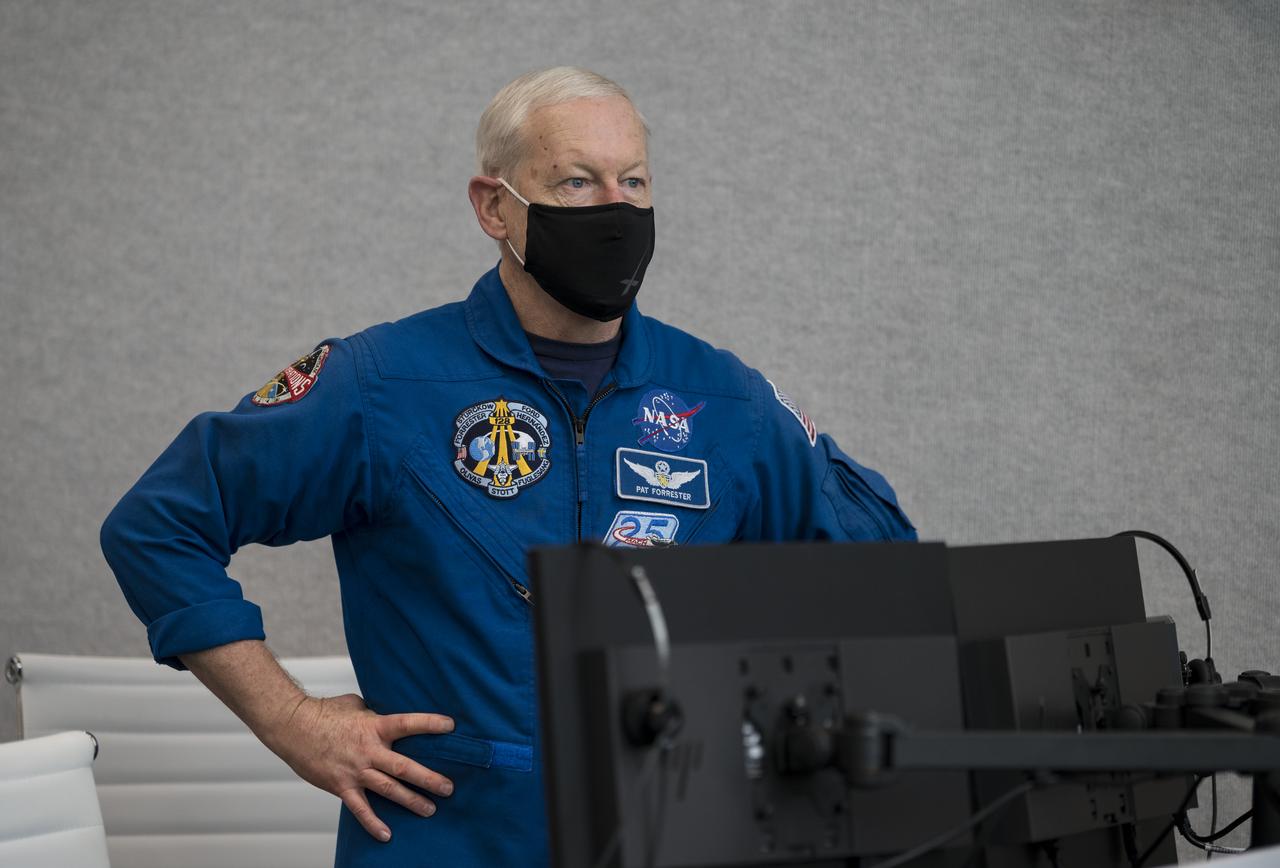
Pat Forrester, Chief of the Astronaut Office, watches the monitors during a dress rehearsal in preparation for the launch of a SpaceX Falcon 9 rocket carrying the company's Crew Dragon spacecraft on NASA’s SpaceX Crew-1 mission with NASA astronauts Mike Hopkins, Victor Glover, Shannon Walker, and Japan Aerospace Exploration Agency (JAXA) astronaut Soichi Noguchi onboard, Thursday, Nov. 12, 2020, in firing room four of the Launch Control Center at NASA’s Kennedy Space Center in Florida. NASA’s SpaceX Crew-1 mission is the first crew rotation mission of the SpaceX Crew Dragon spacecraft and Falcon 9 rocket to the International Space Station as part of the agency’s Commercial Crew Program. Hopkins, Glover, Walker, and Noguchi are scheduled to launch at 7:49 p.m. EST on Saturday, Nov. 14, from Launch Complex 39A at the Kennedy Space Center. Photo Credit: (NASA/Aubrey Gemignani)
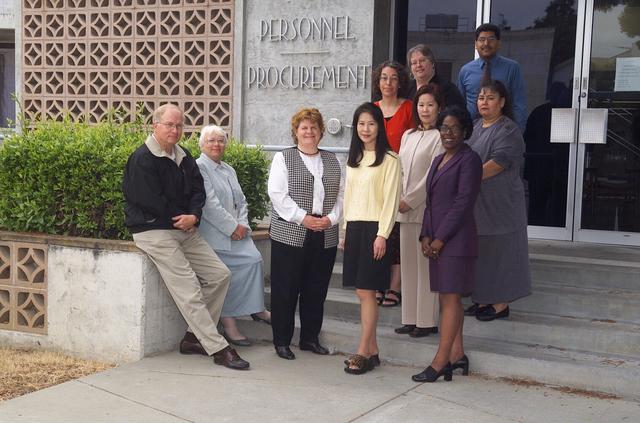
Acquisition Division (Code-JAI) Acquisition Branch for Information Systems; Front Row L-R; Errol Ridgway, Lupe Velasquez, Dolores Morrison, Sue King, Pat Williams: Back Clockwise from bottom; Wendy Takeguchi, Jill Willard, Joanne Comstock, Carlos Torrez, Alma Garcia
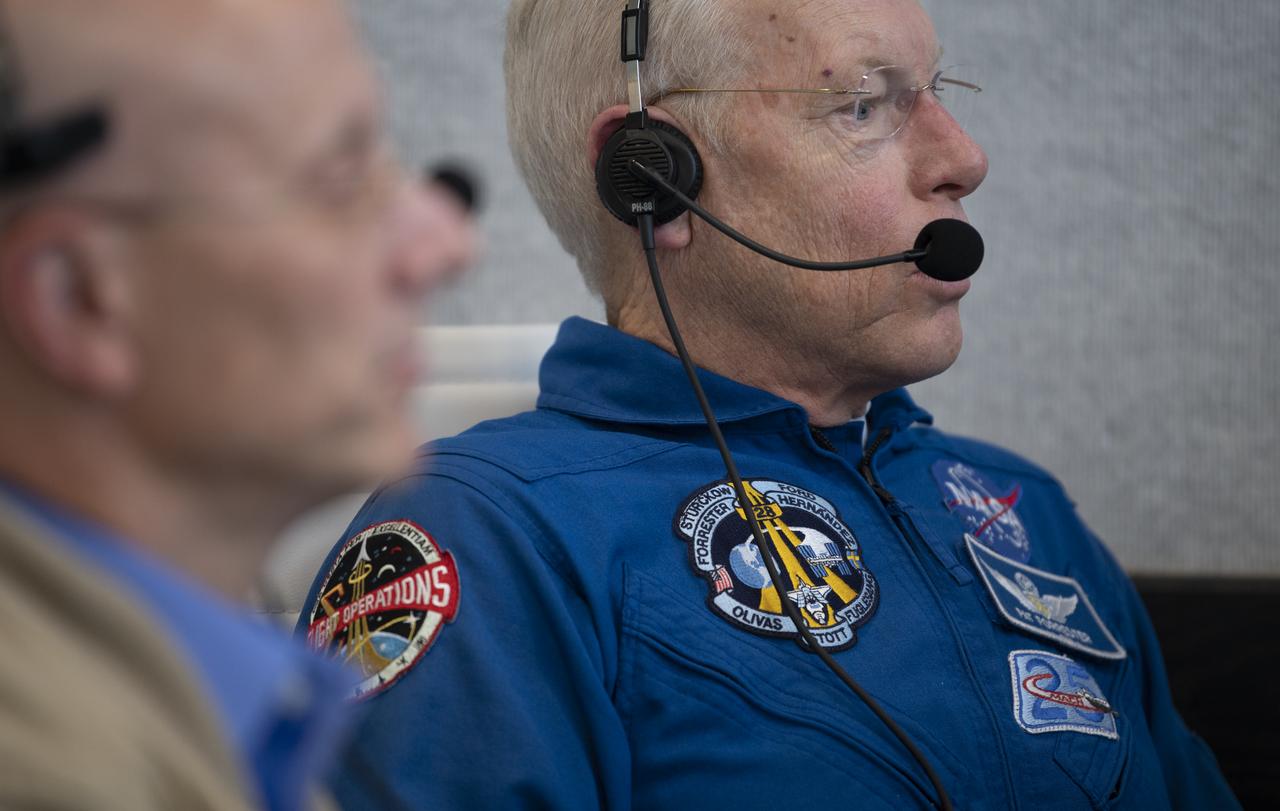
Pat Forrester, NASA’s chief of the astronaut office, monitors the launch of a SpaceX Falcon 9 rocket carrying the company's Crew Dragon spacecraft on the Demo-2 mission with NASA astronauts Douglas Hurley and Robert Behnken onboard, Saturday, May 30, 2020, in firing room four of the Launch Control Center at NASA’s Kennedy Space Center in Florida. NASA’s SpaceX Demo-2 mission is the first launch with astronauts of the SpaceX Crew Dragon spacecraft and Falcon 9 rocket to the International Space Station as part of the agency’s Commercial Crew Program. The test flight serves as an end-to-end demonstration of SpaceX’s crew transportation system. Behnken and Hurley launched at 3:22 p.m. EDT on Saturday, May 30, from Launch Complex 39A at the Kennedy Space Center. A new era of human spaceflight is set to begin as American astronauts once again launch on an American rocket from American soil to low-Earth orbit for the first time since the conclusion of the Space Shuttle Program in 2011. Photo Credit: (NASA/Joel Kowsky)
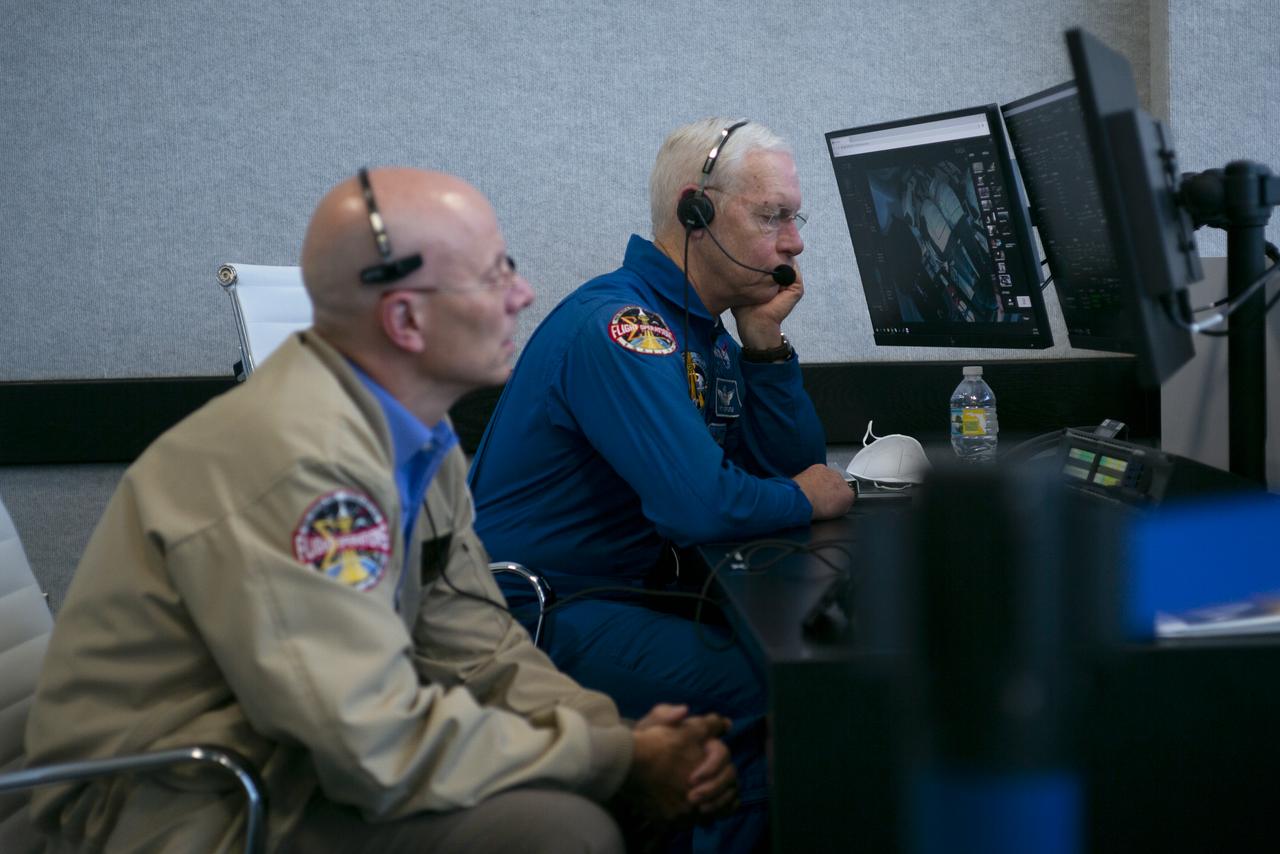
Stephen Koerner, Director of the Flight Operations Directorate at NASA’s Johnson Space Center, left, and Pat Forrester, NASA’s chief of the astronaut office, monitor the countdown of the launch of a SpaceX Falcon 9 rocket carrying the company's Crew Dragon spacecraft on NASA’s SpaceX Demo-2 mission with NASA astronauts Robert Behnken and Douglas Hurley onboard, Saturday, May 30, 2020, in firing room four of the Launch Control Center at NASA’s Kennedy Space Center in Florida. NASA’s SpaceX Demo-2 mission is the first launch with astronauts of the SpaceX Crew Dragon spacecraft and Falcon 9 rocket to the International Space Station as part of the agency’s Commercial Crew Program. The test flight serves as an end-to-end demonstration of SpaceX’s crew transportation system. Behnken and Hurley launched at 3:22 p.m. EDT on Saturday, May 30, from Launch Complex 39A at the Kennedy Space Center. A new era of human spaceflight is set to begin as American astronauts once again launch on an American rocket from American soil to low-Earth orbit for the first time since the conclusion of the Space Shuttle Program in 2011. Photo Credit: (NASA/Joel Kowsky)
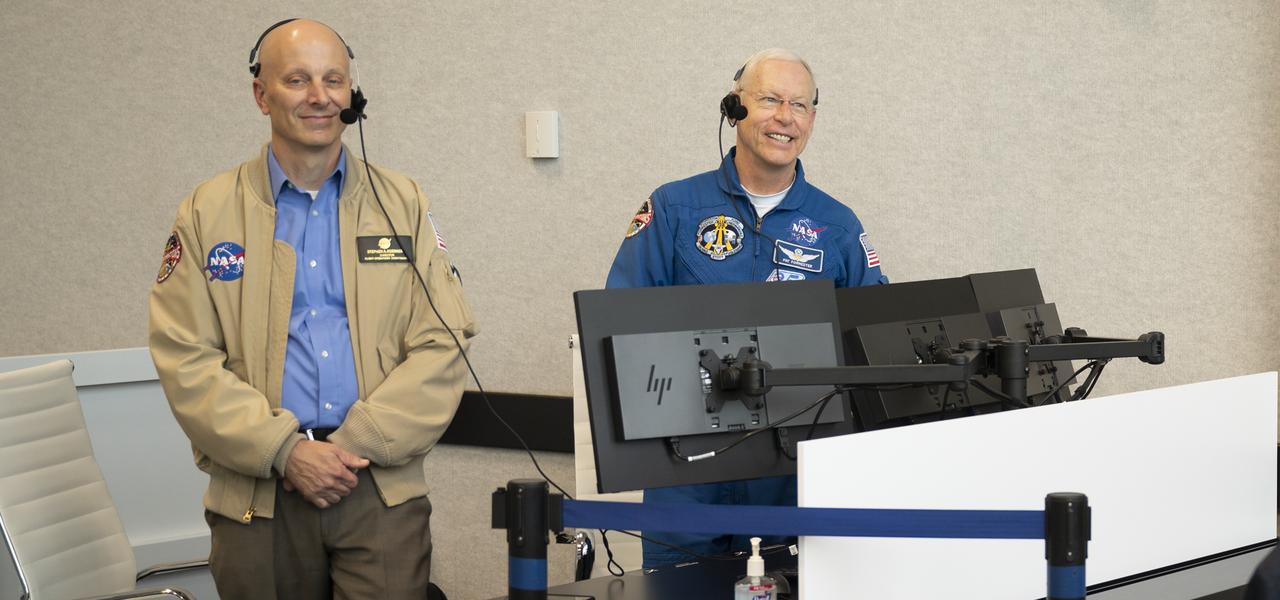
Stephen Koerner, Director of the Flight Operations Directorate at NASA’s Johnson Space Center, left, and Pat Forrester, NASA’s chief of the astronaut office, monitor the launch of a SpaceX Falcon 9 rocket carrying the company's Crew Dragon spacecraft on the Demo-2 mission with NASA astronauts Douglas Hurley and Robert Behnken onboard, Saturday, May 30, 2020, in firing room four of the Launch Control Center at NASA’s Kennedy Space Center in Florida. NASA’s SpaceX Demo-2 mission is the first launch with astronauts of the SpaceX Crew Dragon spacecraft and Falcon 9 rocket to the International Space Station as part of the agency’s Commercial Crew Program. The test flight serves as an end-to-end demonstration of SpaceX’s crew transportation system. Behnken and Hurley launched at 3:22 p.m. EDT on Saturday, May 30, from Launch Complex 39A at the Kennedy Space Center. A new era of human spaceflight is set to begin as American astronauts once again launch on an American rocket from American soil to low-Earth orbit for the first time since the conclusion of the Space Shuttle Program in 2011. Photo Credit: (NASA/Joel Kowsky)
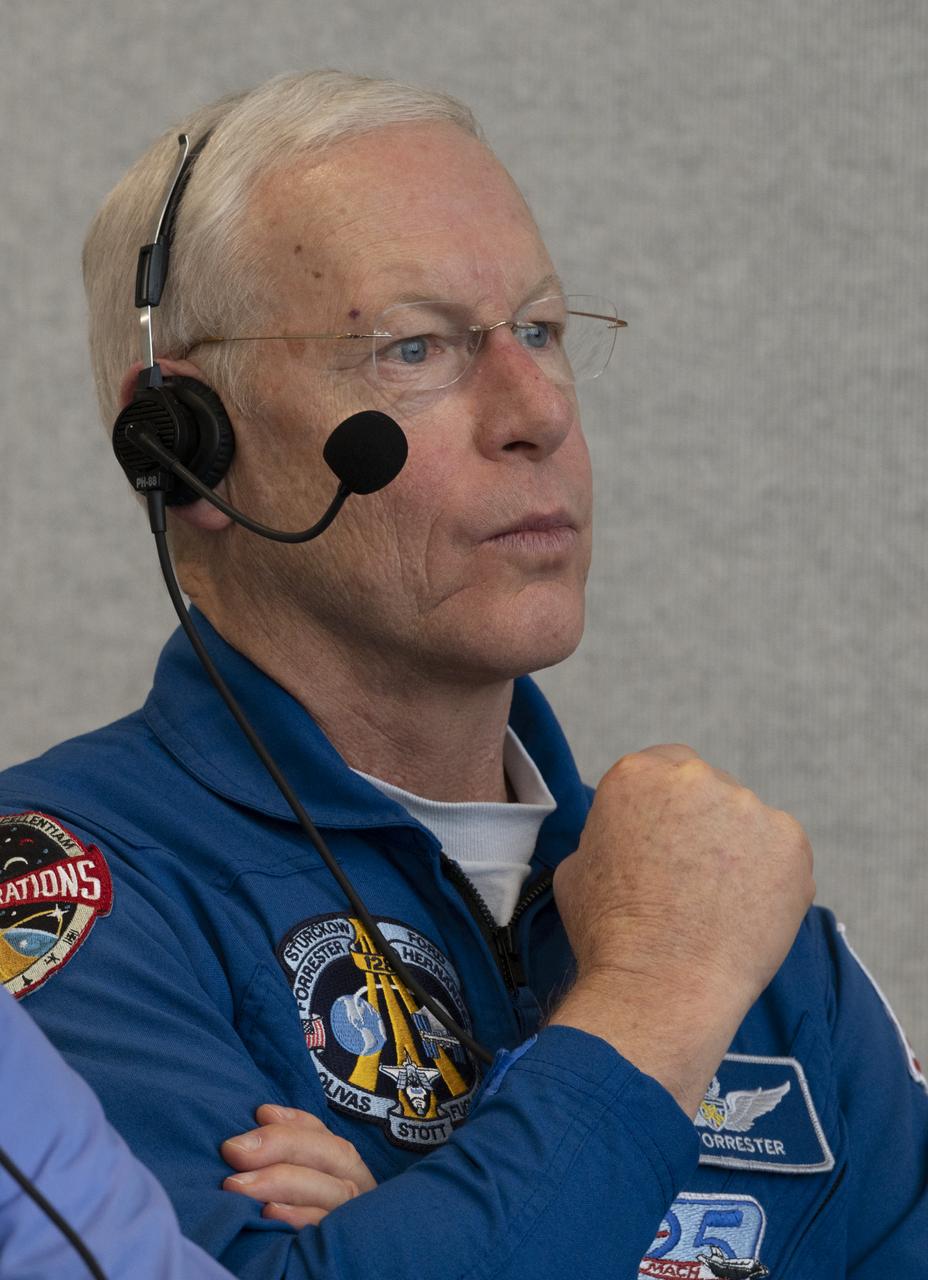
Pat Forrester, NASA’s chief of the astronaut office, monitors the launch of a SpaceX Falcon 9 rocket carrying the company's Crew Dragon spacecraft on the Demo-2 mission with NASA astronauts Douglas Hurley and Robert Behnken onboard, Saturday, May 30, 2020, in firing room four of the Launch Control Center at NASA’s Kennedy Space Center in Florida. NASA’s SpaceX Demo-2 mission is the first launch with astronauts of the SpaceX Crew Dragon spacecraft and Falcon 9 rocket to the International Space Station as part of the agency’s Commercial Crew Program. The test flight serves as an end-to-end demonstration of SpaceX’s crew transportation system. Behnken and Hurley launched at 3:22 p.m. EDT on Saturday, May 30, from Launch Complex 39A at the Kennedy Space Center. A new era of human spaceflight is set to begin as American astronauts once again launch on an American rocket from American soil to low-Earth orbit for the first time since the conclusion of the Space Shuttle Program in 2011. Photo Credit: (NASA/Joel Kowsky)
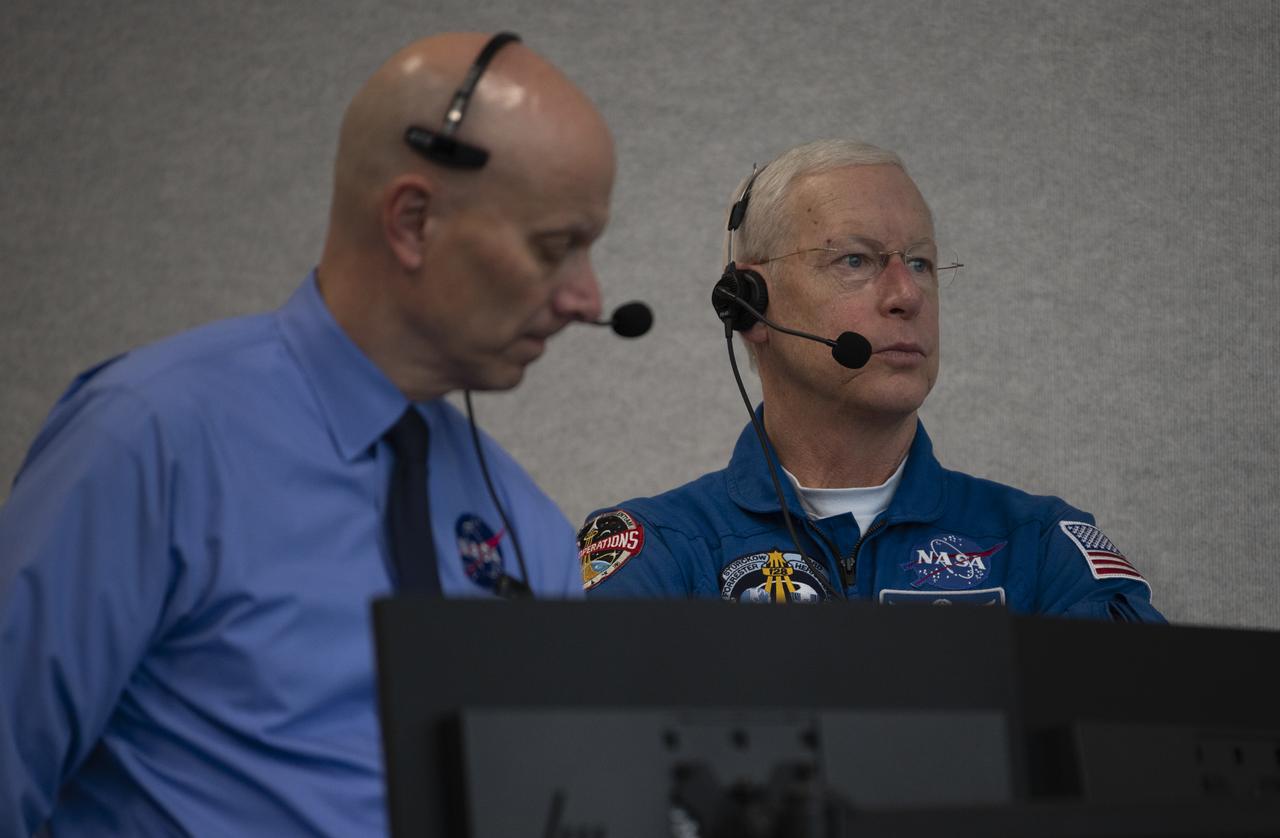
Stephen Koerner, Director of the Flight Operations Directorate at NASA’s Johnson Space Center, left, and Pat Forrester, NASA’s chief of the astronaut office, right, monitor the countdown of the launch attempt of a SpaceX Falcon 9 rocket carrying the company's Crew Dragon spacecraft on NASA’s SpaceX Demo-2 mission with NASA astronauts Robert Behnken and Douglas Hurley onboard, Wednesday, May 27, 2020, in firing room four of the Launch Control Center at NASA’s Kennedy Space Center in Florida. NASA’s SpaceX Demo-2 mission is the first launch with astronauts of the SpaceX Crew Dragon spacecraft and Falcon 9 rocket to the International Space Station as part of the agency’s Commercial Crew Program. The test flight serves as an end-to-end demonstration of SpaceX’s crew transportation system. Today’s launch of Behnken and Hurley was scrubbed due to weather and is now scheduled for 3:22 p.m. EDT on Saturday, May 30, from Launch Complex 39A at the Kennedy Space Center. A new era of human spaceflight is set to begin as American astronauts once again launch on an American rocket from American soil to low-Earth orbit for the first time since the conclusion of the Space Shuttle Program in 2011. Photo Credit: (NASA/Joel Kowsky)
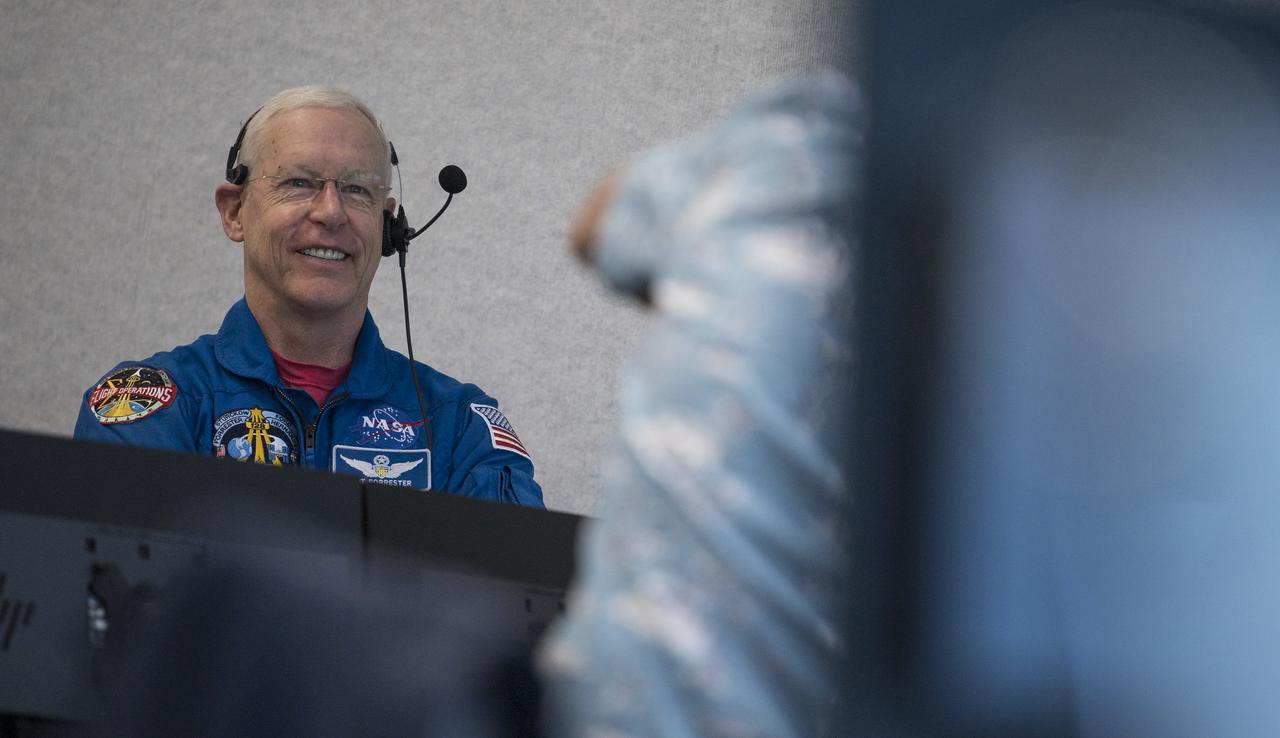
Pat Forrester, NASA’s chief of the astronaut office, is seen in firing room four during a dress rehearsal in preparation for the launch of a SpaceX Falcon 9 rocket carrying the company's Crew Dragon spacecraft on NASA’s SpaceX Demo-2 mission with NASA astronauts Robert Behnken and Douglas Hurley onboard, Saturday, May 23, 2020, Launch Control Center at NASA’s Kennedy Space Center in Florida. NASA’s SpaceX Demo-2 mission is the first launch with astronauts of the SpaceX Crew Dragon spacecraft and Falcon 9 rocket to the International Space Station as part of the agency’s Commercial Crew Program. The test flight serves as an end-to-end demonstration of SpaceX’s crew transportation system. Behnken and Hurley are scheduled to launch at 4:33 p.m. EDT on Wednesday, May 27, from Launch Complex 39A at the Kennedy Space Center. A new era of human spaceflight is set to begin as American astronauts once again launch on an American rocket from American soil to low-Earth orbit for the first time since the conclusion of the Space Shuttle Program in 2011. Photo Credit: (NASA/Joel Kowsky)
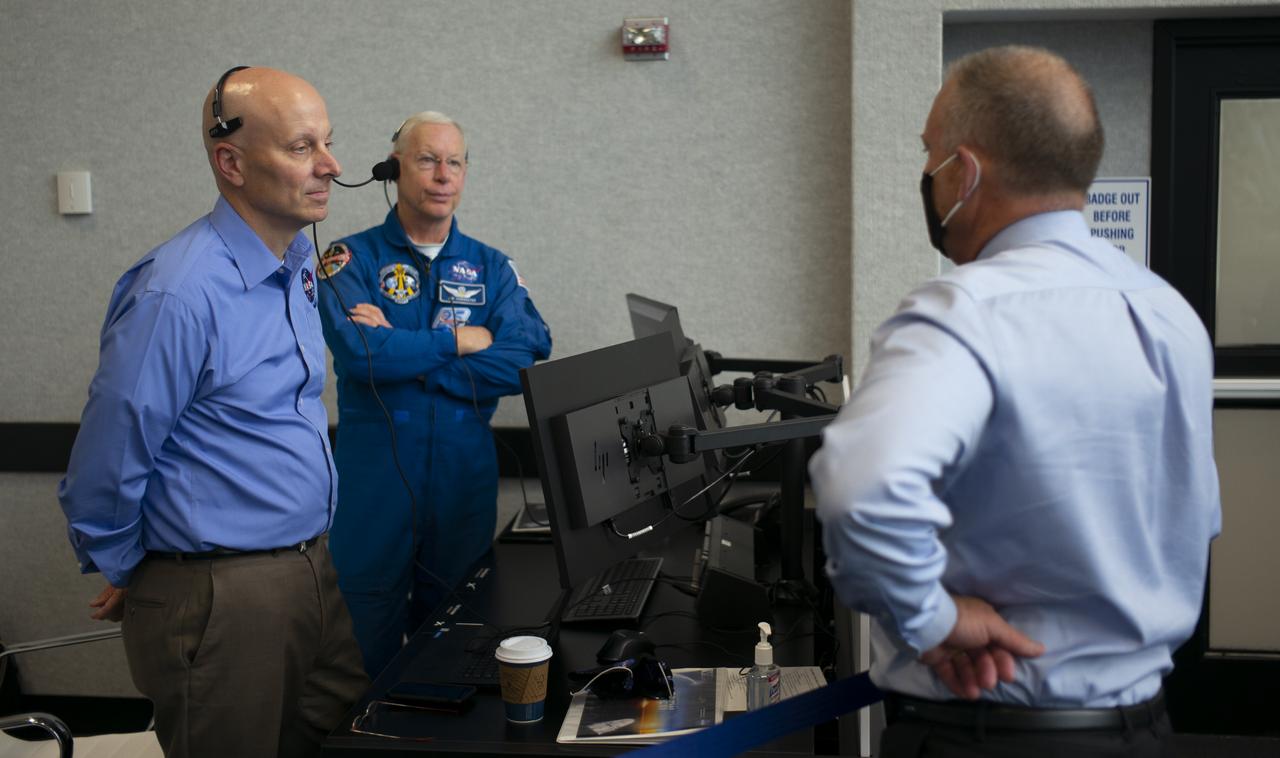
Stephen Koerner, Director of the Flight Operations Directorate at NASA’s Johnson Space Center, left, Pat Forrester, NASA’s chief of the astronaut office, and Norm Knight, deputy director of Flight Operations at NASA's Johnson Space Center are seen during countdown of the launch of a SpaceX Falcon 9 rocket carrying the company's Crew Dragon spacecraft on NASA’s SpaceX Demo-2 mission with NASA astronauts Robert Behnken and Douglas Hurley onboard, Saturday, May 30, 2020, in firing room four of the Launch Control Center at NASA’s Kennedy Space Center in Florida. NASA’s SpaceX Demo-2 mission is the first launch with astronauts of the SpaceX Crew Dragon spacecraft and Falcon 9 rocket to the International Space Station as part of the agency’s Commercial Crew Program. The test flight serves as an end-to-end demonstration of SpaceX’s crew transportation system. Behnken and Hurley launched at 3:22 p.m. EDT on Saturday, May 30, from Launch Complex 39A at the Kennedy Space Center. A new era of human spaceflight is set to begin as American astronauts once again launch on an American rocket from American soil to low-Earth orbit for the first time since the conclusion of the Space Shuttle Program in 2011. Photo Credit: (NASA/Joel Kowsky)
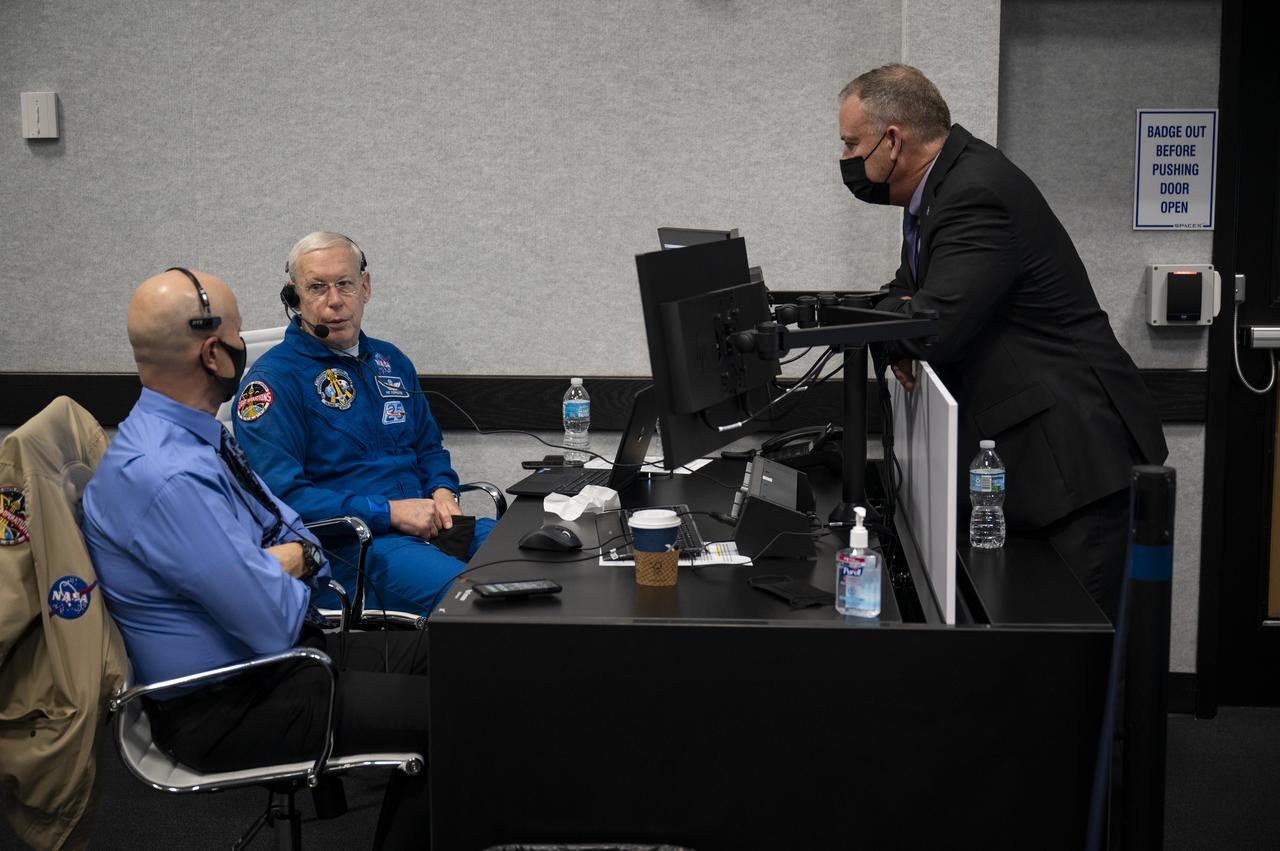
Stephen Koerner, director of the Flight Operations Directorate at NASA’s Johnson Space Center, left, and Pat Forrester, NASA’s chief of the astronaut office, center, speak with Norm Knight, deputy director of Flight Operations at NASA's Johnson Space Center as they monitor the countdown of the launch of a SpaceX Falcon 9 rocket carrying the company's Crew Dragon spacecraft on NASA’s SpaceX Crew-1 mission with NASA astronauts Mike Hopkins, Victor Glover, Shannon Walker, and Japan Aerospace Exploration Agency (JAXA) astronaut Soichi Noguchi onboard, Sunday, Nov. 15, 2020, in firing room four of the Launch Control Center at NASA’s Kennedy Space Center in Florida. NASA’s SpaceX Crew-1 mission is the first crew rotation mission of the SpaceX Crew Dragon spacecraft and Falcon 9 rocket to the International Space Station as part of the agency’s Commercial Crew Program. Hopkins, Glover, Walker, and Noguchi are scheduled to launch at 7:27 p.m. EST, from Launch Complex 39A at the Kennedy Space Center. Photo Credit: (NASA/Aubrey Gemignani)
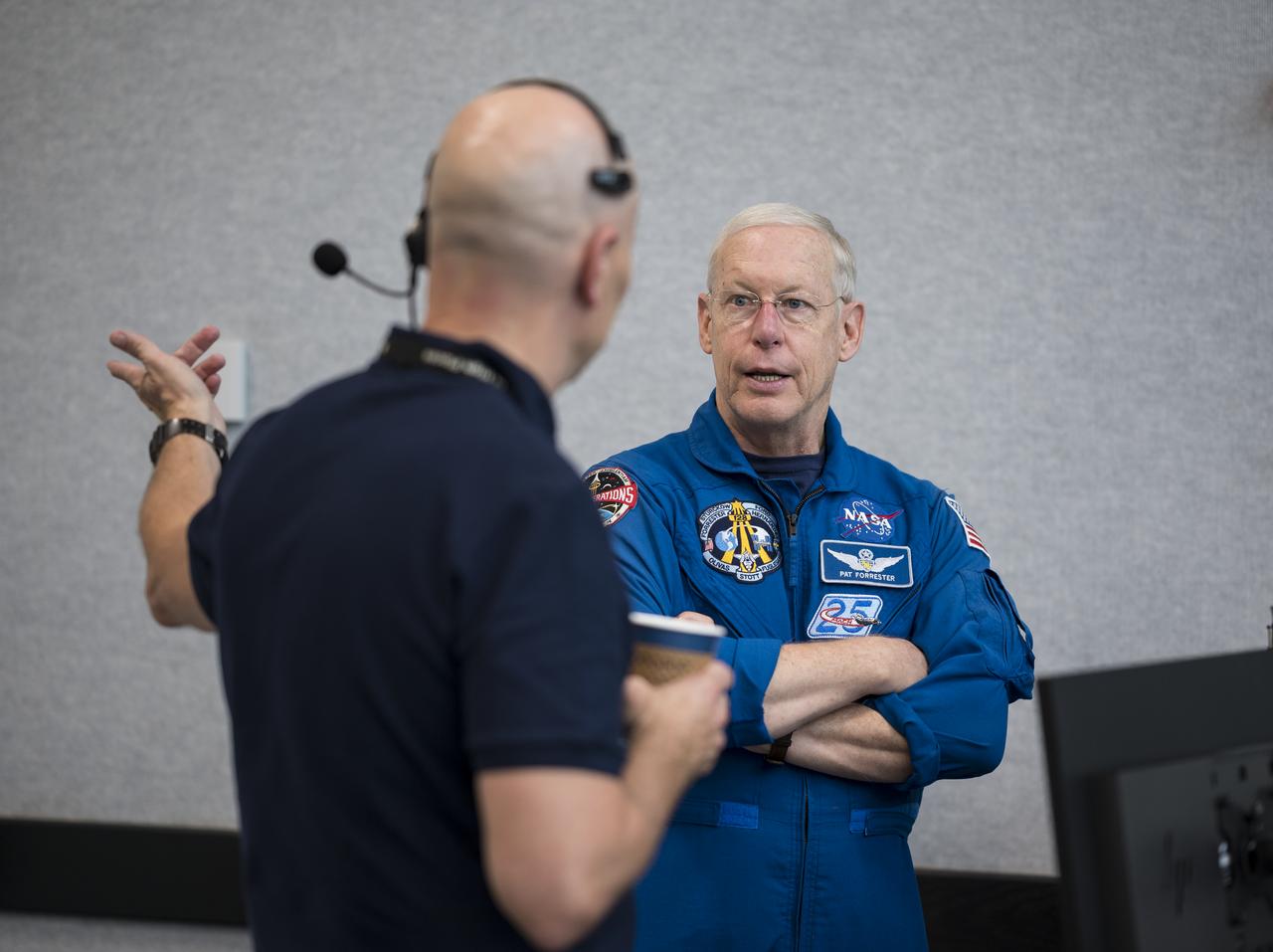
Pat Forrester, Chief of the Astronaut Office, speaks with Stephen Koerner, director of the Flight Operations Directorate at NASA’s Johnson Space Center during a dress rehearsal in preparation for the launch of a SpaceX Falcon 9 rocket carrying the company's Crew Dragon spacecraft on NASA’s SpaceX Crew-1 mission with NASA astronauts Mike Hopkins, Victor Glover, Shannon Walker, and Japan Aerospace Exploration Agency (JAXA) astronaut Soichi Noguchi onboard, Thursday, Nov. 12, 2020, in firing room four of the Launch Control Center at NASA’s Kennedy Space Center in Florida. NASA’s SpaceX Crew-1 mission is the first crew rotation mission of the SpaceX Crew Dragon spacecraft and Falcon 9 rocket to the International Space Station as part of the agency’s Commercial Crew Program. Hopkins, Glover, Walker, and Noguchi are scheduled to launch at 7:49 p.m. EST on Saturday, Nov. 14, from Launch Complex 39A at the Kennedy Space Center. Photo Credit: (NASA/Aubrey Gemignani)
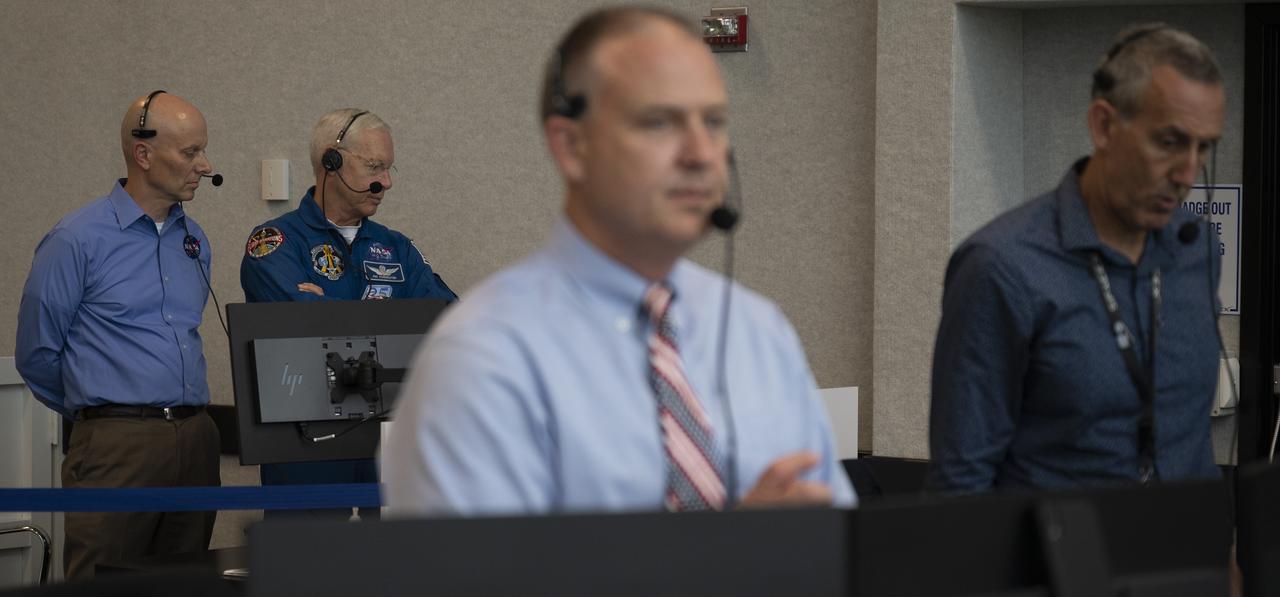
Stephen Koerner, Director of the Flight Operations Directorate at NASA’s Johnson Space Center, left, Pat Forrester, NASA’s chief of the astronaut office, Norm Knight, deputy director of Flight Operations at NASA's Johnson Space Center, and Lee Rosen, vice president for mission and launch operations at SpaceX, monitor the launch of a SpaceX Falcon 9 rocket carrying the company's Crew Dragon spacecraft on the Demo-2 mission with NASA astronauts Douglas Hurley and Robert Behnken onboard, Saturday, May 30, 2020, in firing room four of the Launch Control Center at NASA’s Kennedy Space Center in Florida. NASA’s SpaceX Demo-2 mission is the first launch with astronauts of the SpaceX Crew Dragon spacecraft and Falcon 9 rocket to the International Space Station as part of the agency’s Commercial Crew Program. The test flight serves as an end-to-end demonstration of SpaceX’s crew transportation system. Behnken and Hurley launched at 3:22 p.m. EDT on Saturday, May 30, from Launch Complex 39A at the Kennedy Space Center. A new era of human spaceflight is set to begin as American astronauts once again launch on an American rocket from American soil to low-Earth orbit for the first time since the conclusion of the Space Shuttle Program in 2011. Photo Credit: (NASA/Joel Kowsky)
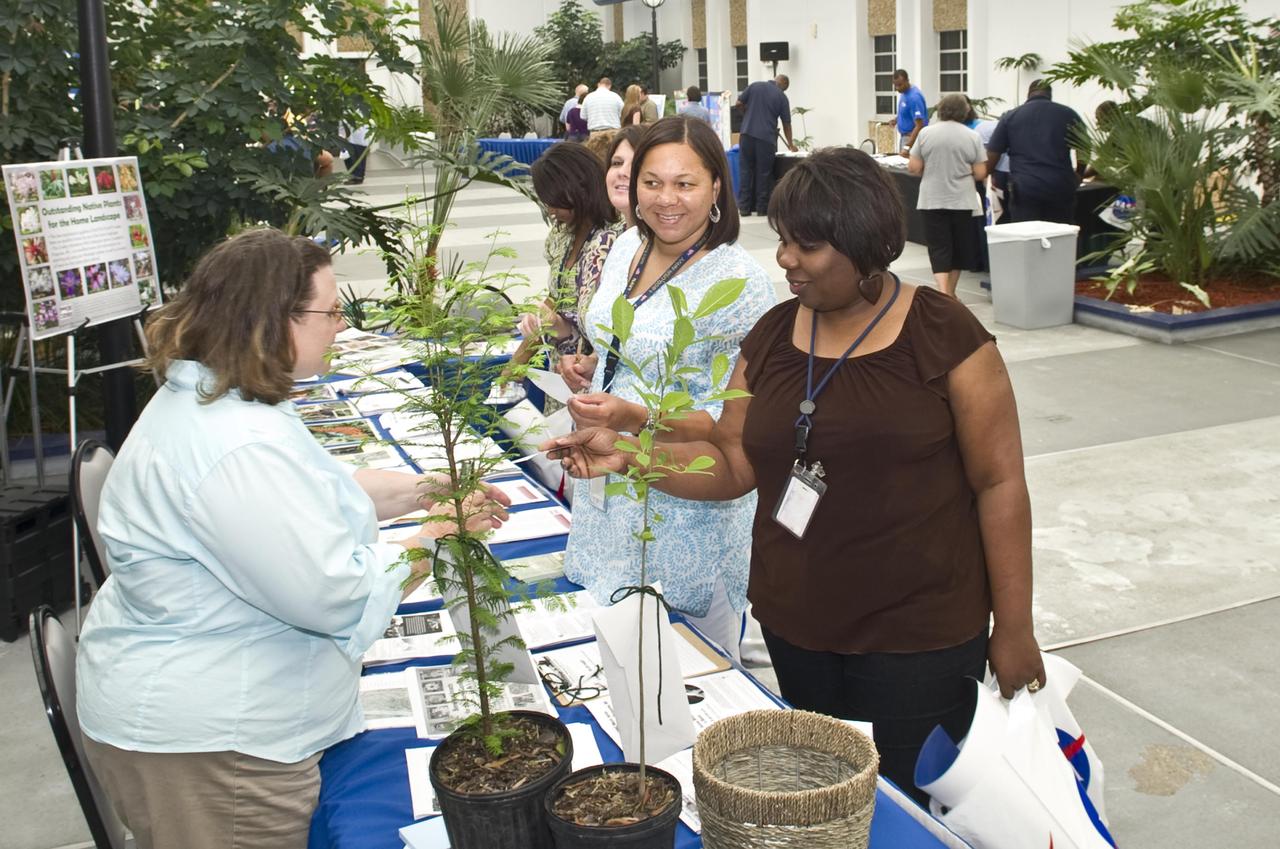
Pat Drackett of the Crosby Arboretum in Picayune (l) speaks with Helen Robinson and Arlene Brown, both employees of the Naval Oceanographic Office at Stennis Space Center, during Earth Day 2011 activities April 21. During the day, Stennis employees were able to visit various exhibits featuring environmentally friendly and energy-conscious items and information. The activities were coordinated by the Stennis Environmental Office.
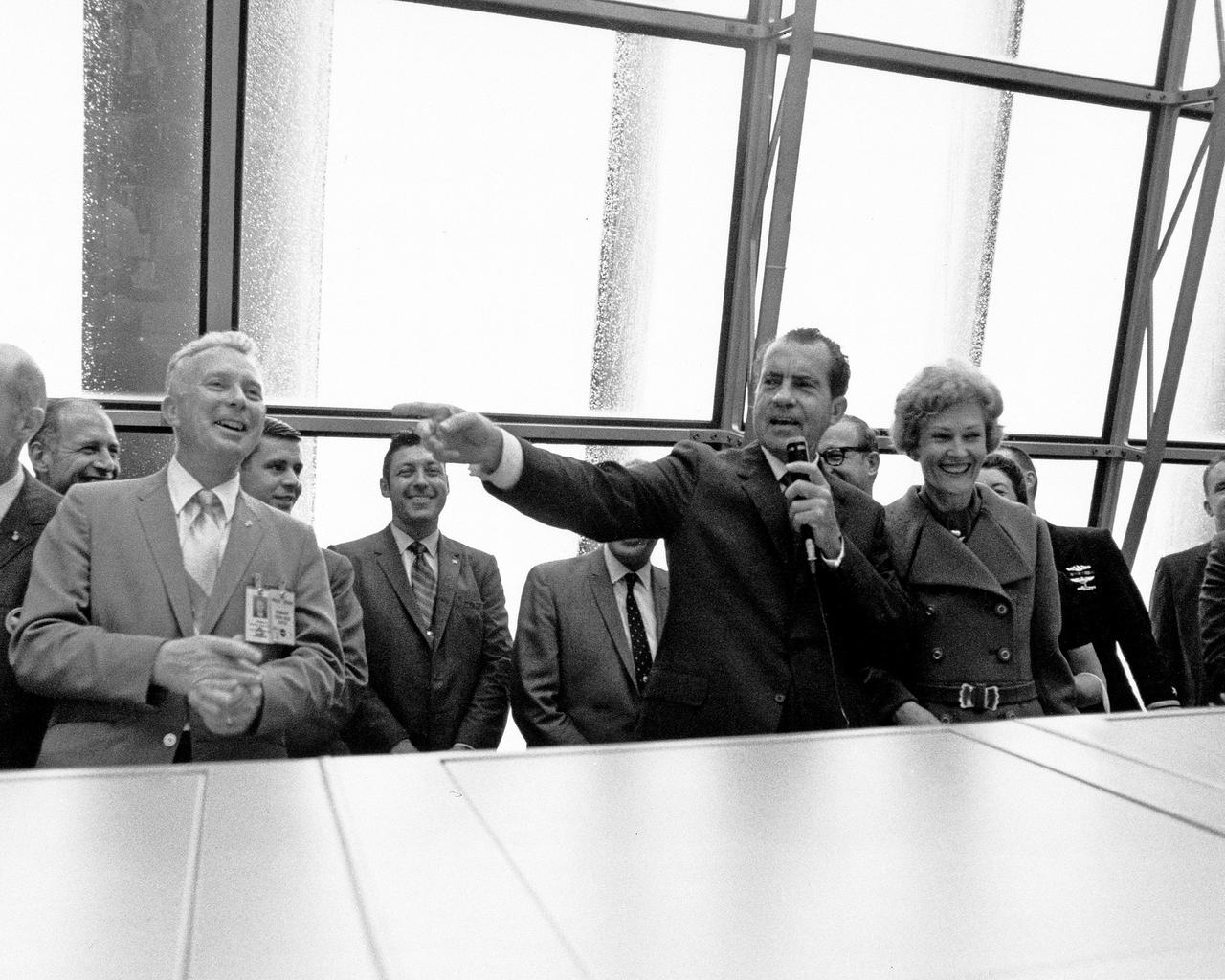
CAPE CANAVERAL, Fla. -- At the Kennedy Space Center in Florida, President Richard M. Nixon speaks in the Launch Control Center after the successful liftoff of the Apollo 12 space vehicle, which sent astronauts Charles Conrad, Jr., Richard F. Gordon and Alan Bean on the first leg of their lunar landing mission. With the President are Paul Donnelly, Launch Operations manager, on the left, and First Lady Pat Nixon, on the right. Photo Credit: NASA
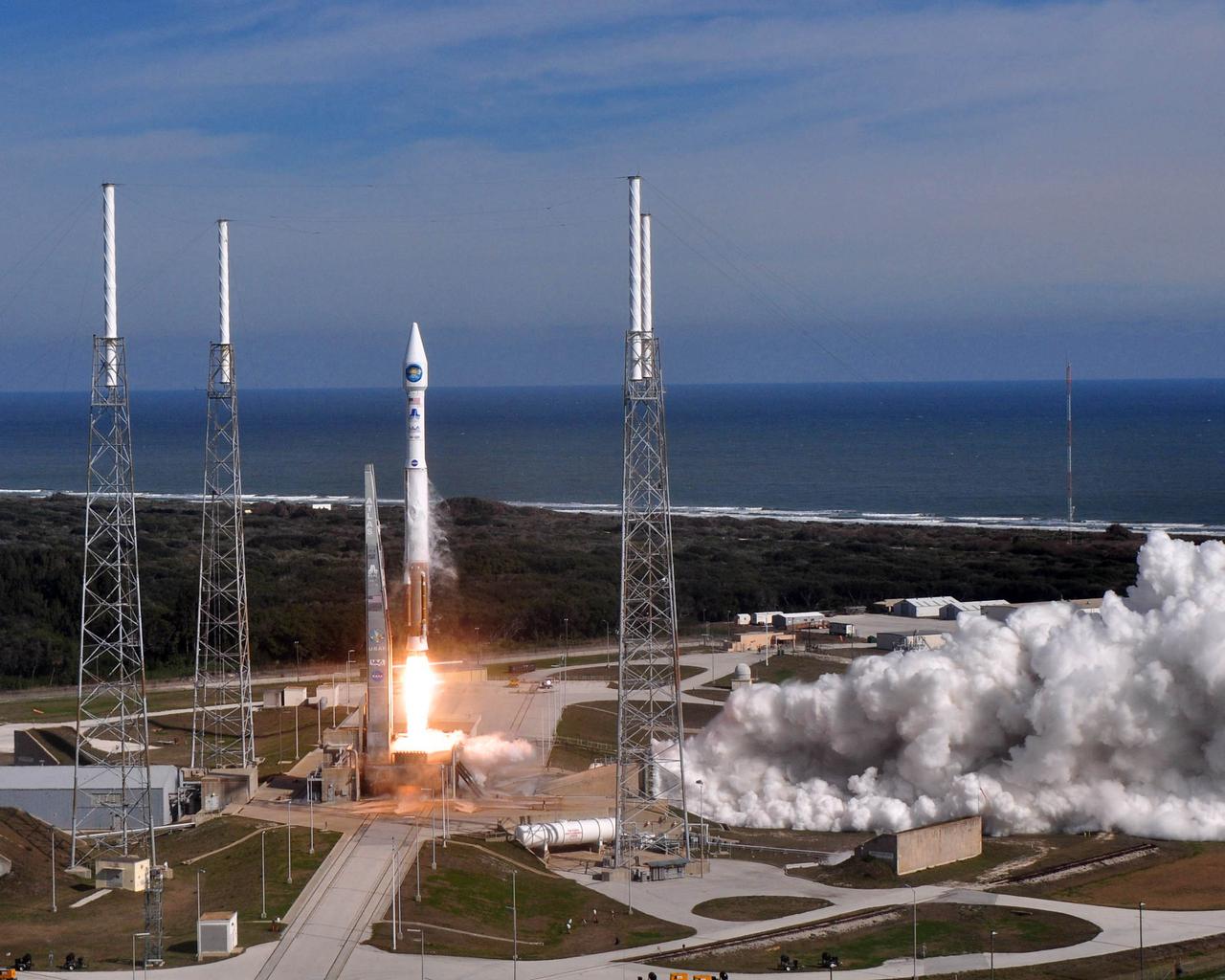
CAPE CANAVERAL, Fla. - A United Launch Alliance Atlas V with NASA’s Solar Dynamics Observatory launches from its Space Launch Complex-41 launch pad at 10:23 a.m. EST here today. SDO is the first satellite of NASA’s Living with a Star (LWS) program. Its purpose is to examine the sun, the source of all space weather. Photo by Pat Corkery, United Launch Alliance
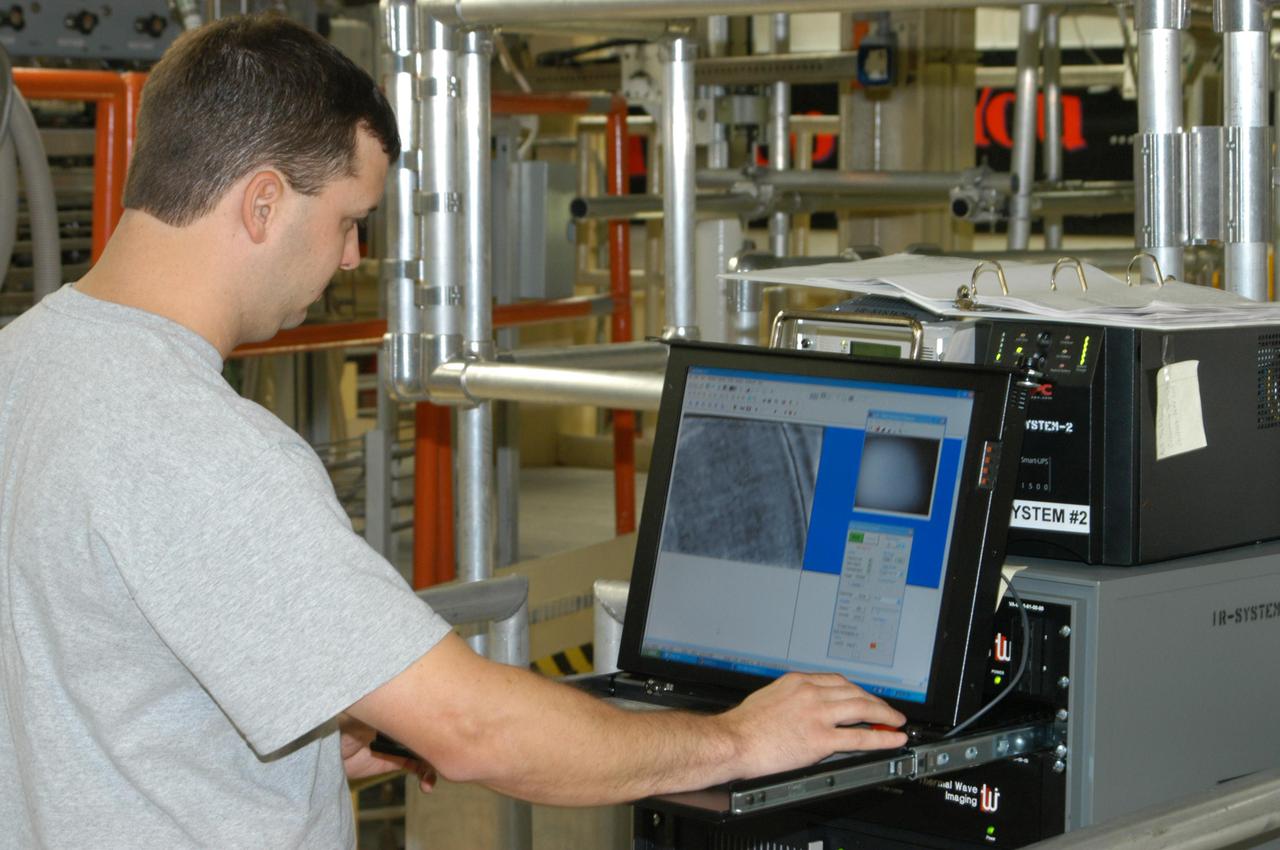
KENNEDY SPACE CENTER, FLA. - In NASA Kennedy Space Center’s Orbiter Processing Facility, bay 3, Pat Cerny, with United Space Alliance, monitors readings from thermography testing on Discovery’s nose cone. Thermography uses high-intensity light to heat specific areas, which are then immediately scanned with an infrared camera. As the area cools, internal flaws are revealed. Discovery has been identified as the orbiter to fly on mission STS-121.
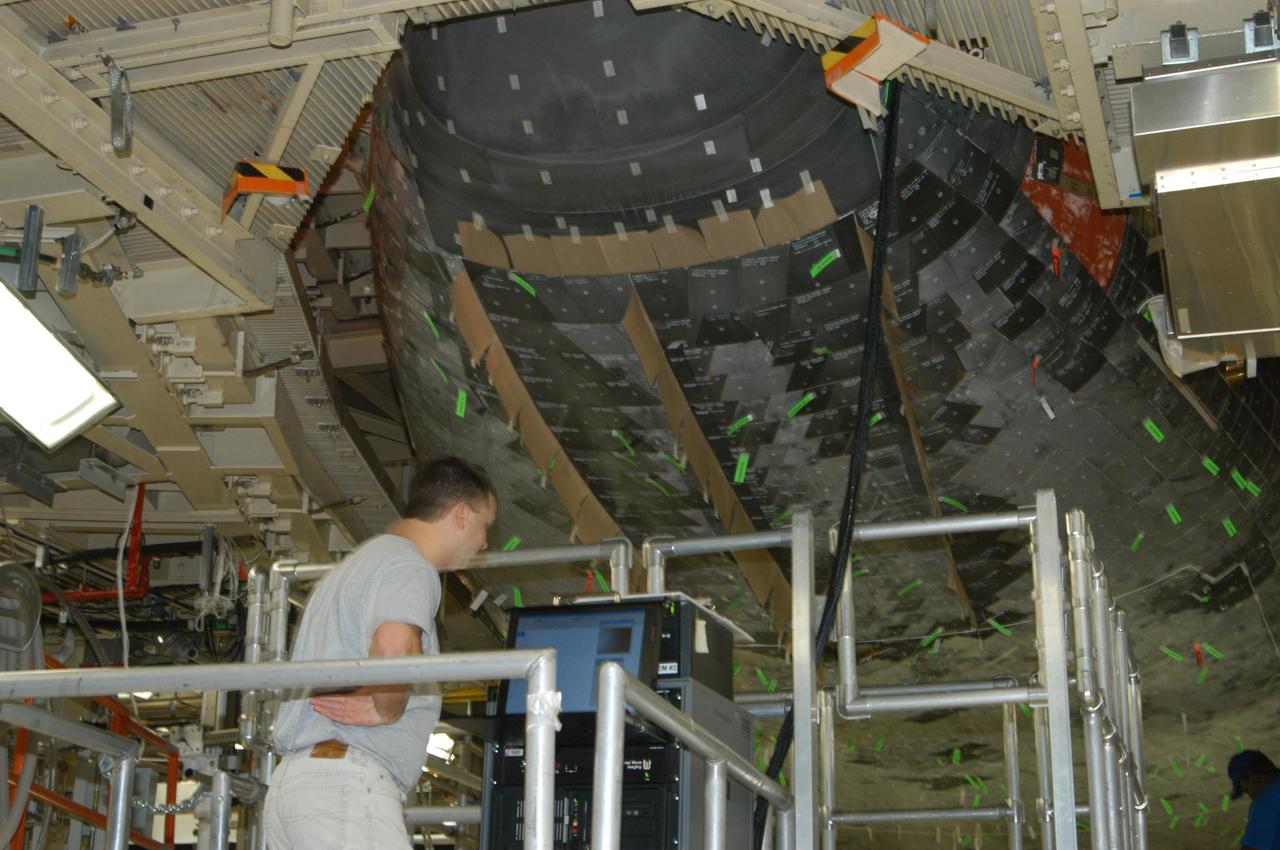
KENNEDY SPACE CENTER, FLA. - In NASA Kennedy Space Center’s Orbiter Processing Facility, bay 3, Pat Cerny, with United Space Alliance, monitors readings from thermography testing on Discovery’s nose cone.Thermography uses high-intensity light to heat specific areas, which are then immediately scanned with an infrared camera. As the area cools, internal flaws are revealed. Discovery has been identified as the orbiter to fly on mission STS-121.
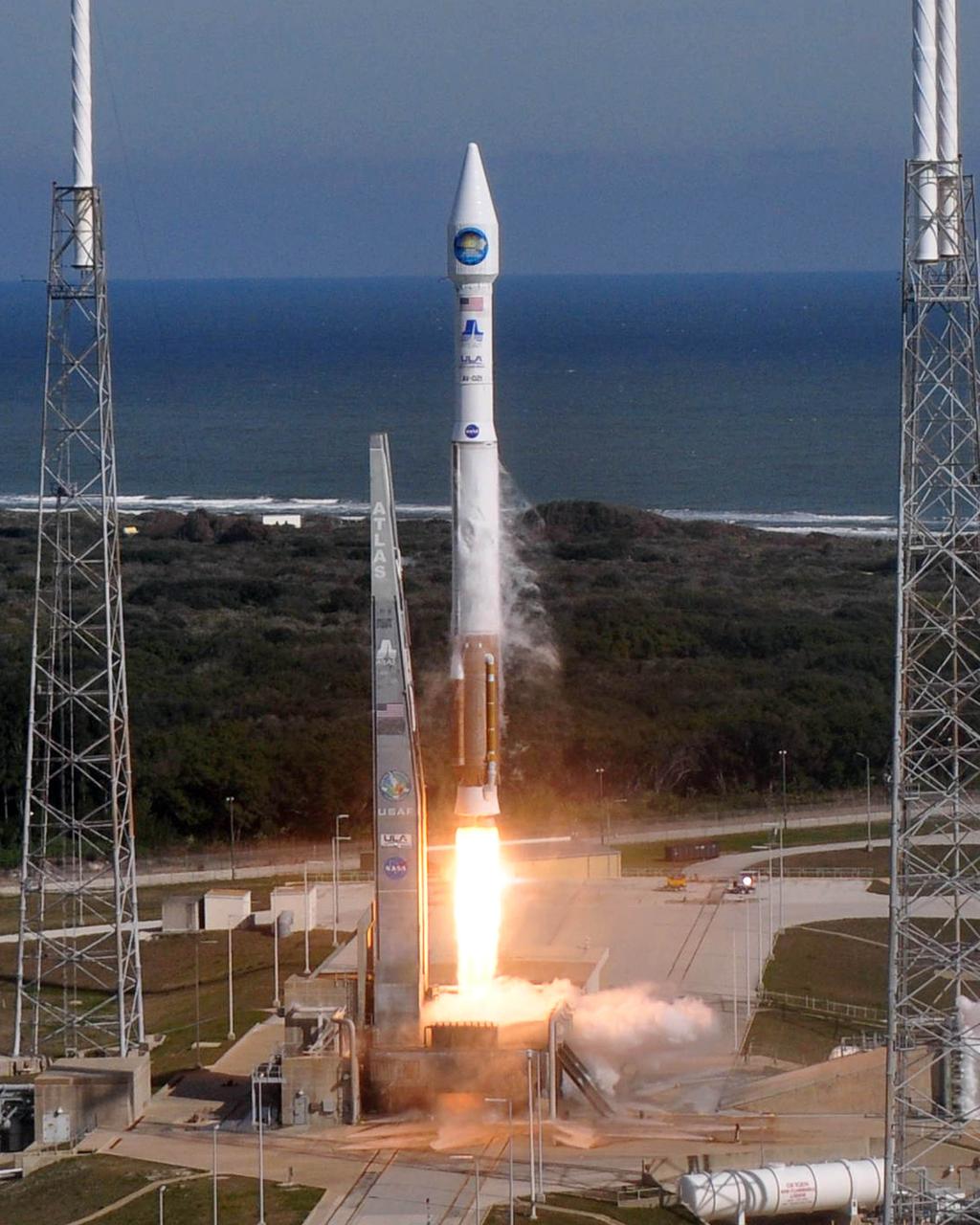
CAPE CANAVERAL, Fla. - A United Launch Alliance Atlas V with NASA’s Solar Dynamics Observatory launches from its Space Launch Complex-41 launch pad at 10:23 a.m. EST here today. SDO is the first satellite of NASA’s Living with a Star (LWS) program. Its purpose is to examine the sun, the source of all space weather. Photo by Pat Corkery, United Launch Alliance
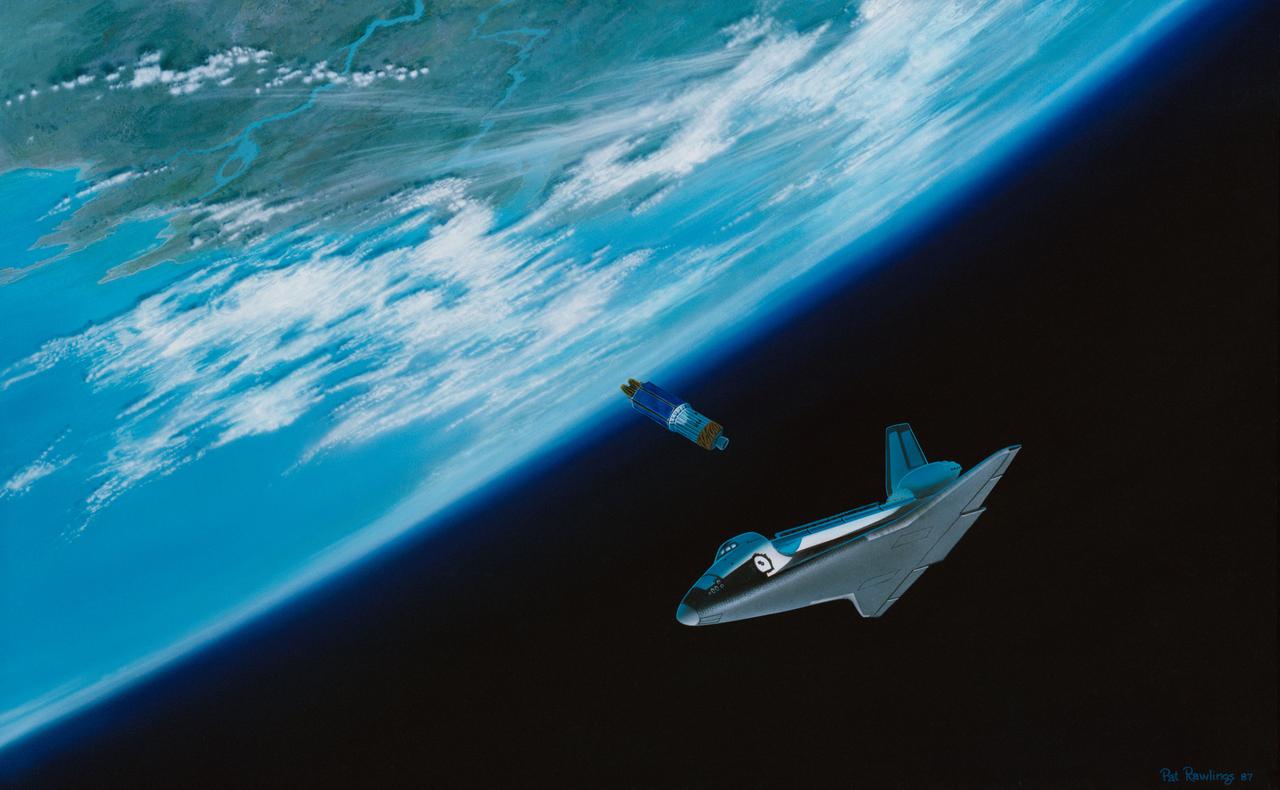
STS-26 Discovery, Orbiter Vehicle (OV) 103, artwork depicts tracking and data relay satellite C (TDRS-C) deployment. OV-103 orbits above Earth in bottom-to-sun attitude, moments after TDRS-C's release into space. TDRS-C is seen just below open payload bay (PLB). Artwork was done by Pat Rawlings of Eagle Engineering.
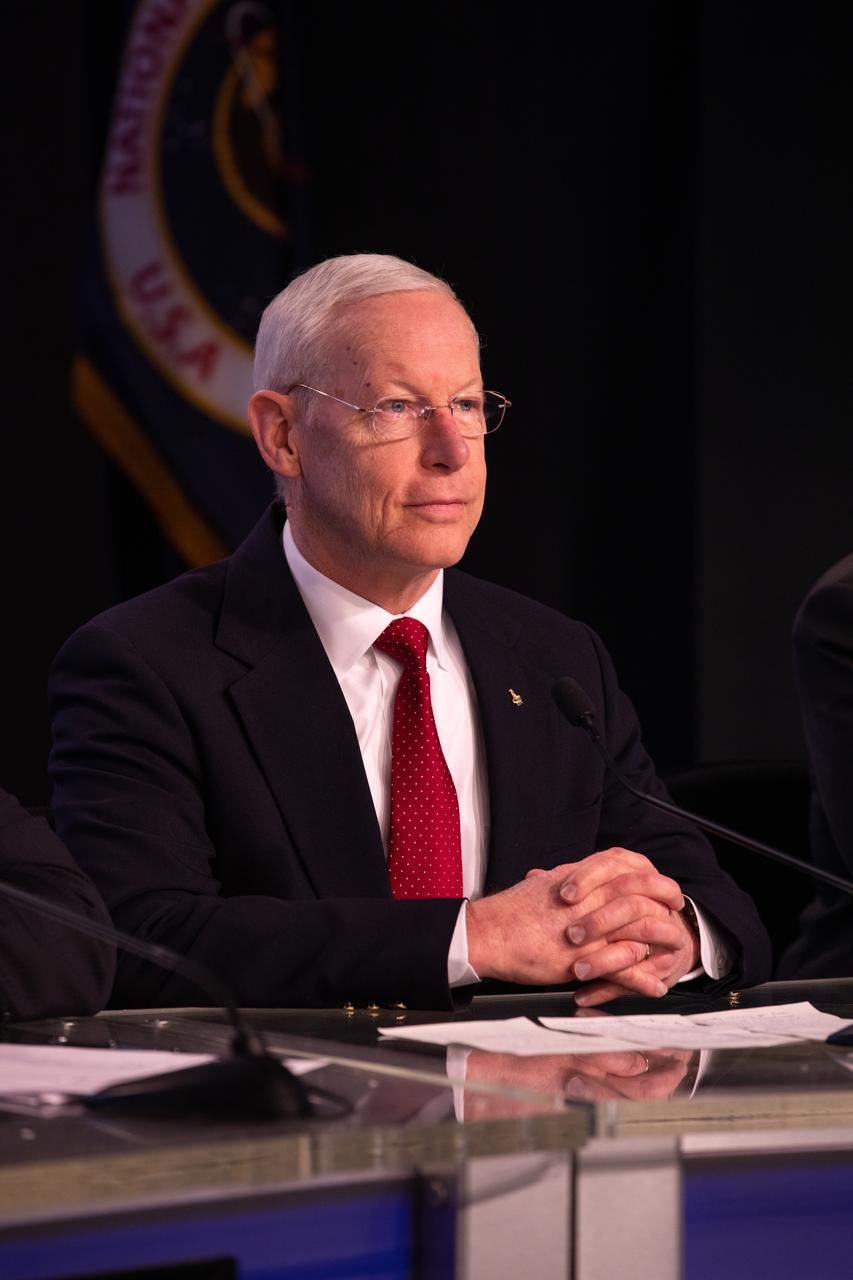
Pat Forrester, Astronaut Office chief, Johnson Space Center, speaks during a prelaunch briefing for Boeing’s Orbital Flight Test at the agency’s Kennedy Space Center in Florida, Dec. 17, 2019. Boeing’s CST-100 Starliner spacecraft will launch atop a United Launch Alliance Atlas V rocket from Space Launch Complex 41 at Cape Canaveral Air Force Station. The uncrewed Orbital Flight Test will be the Starliner’s first flight to the International Space Station for NASA’s Commercial Crew Program.
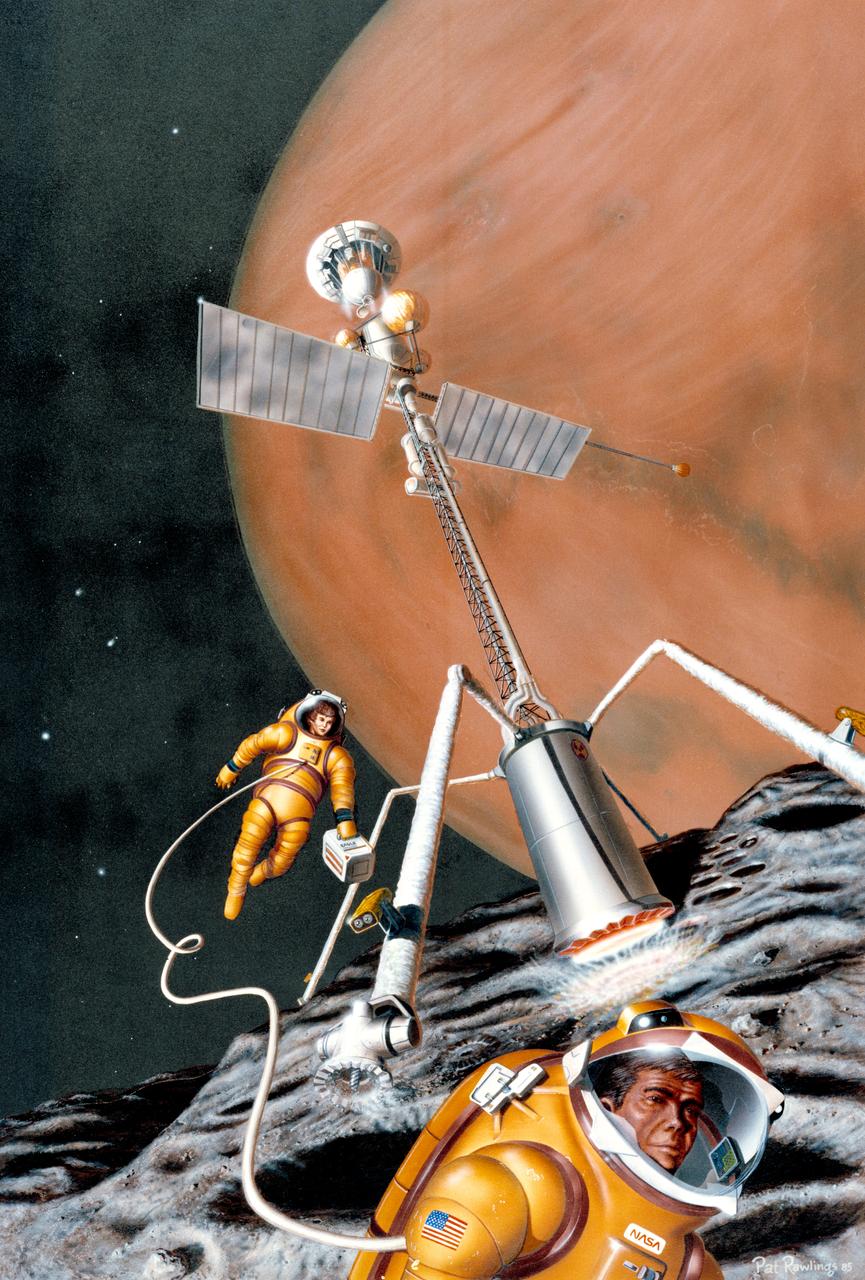
S86-25375 (1986) --- (Artist's concept of possible exploration programs.) On Phobos, the innermost moon of Mars and likely location for extraterrestrial resources, a mobile propellant-production plant lumbers across the irregular surface. Using a nuclear reactor the large tower melts into the surface, generating steam which is converted into liquid hydrogen and liquid oxygen. Artwork by Pat Rawlings, of Eagle Engineering, Incorporated.
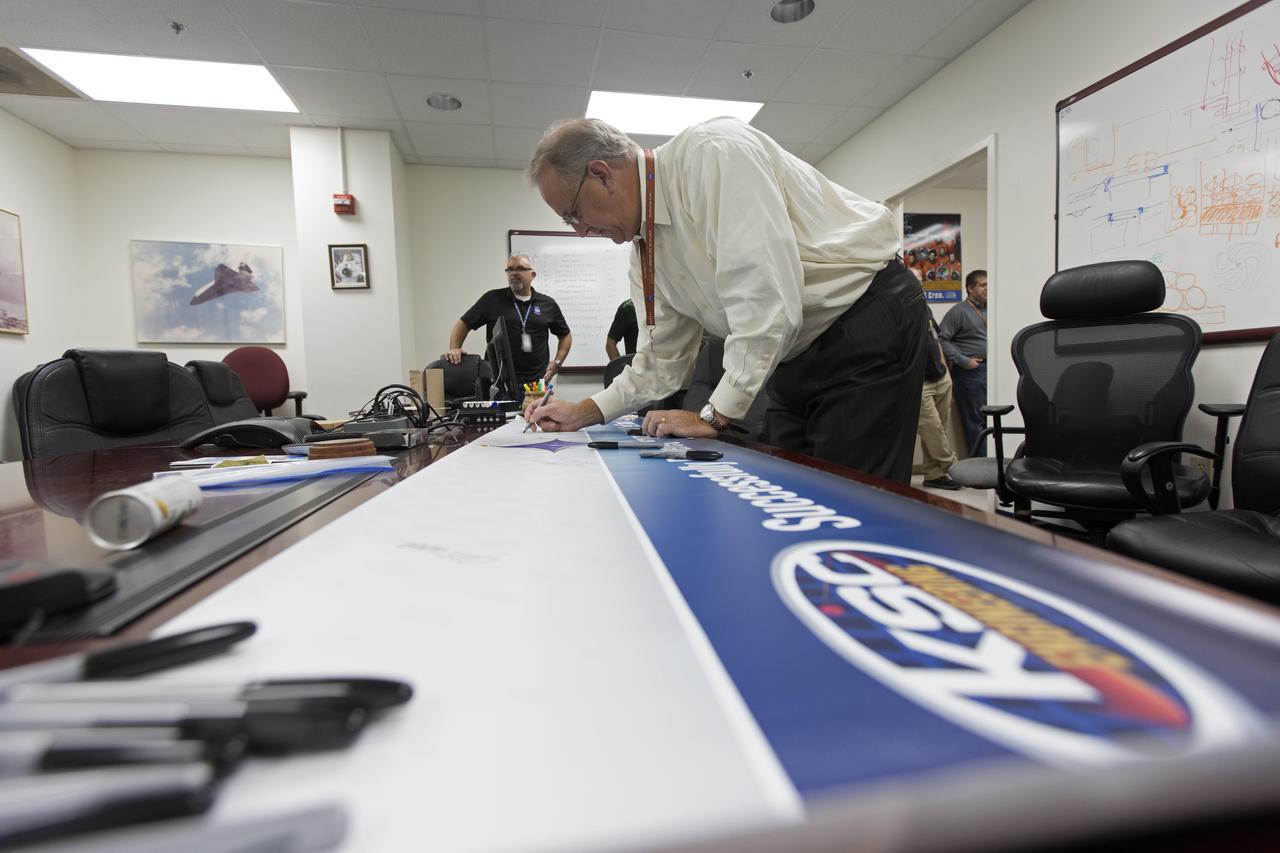
NASA Kennedy Space Center's Engineering Director Pat Simpkins signs the banner marking the successful delivery of a liquid oxygen test tank, called Tardis, in the Prototype Development Laboratory at NASA's Kennedy Space Center in Florida. Engineers and technicians worked together to develop the tank and build it to support cryogenic testing at Johnson Space Center's White Stands Test Facility in Las Cruces, New Mexico. The 12-foot-tall, 3,810-pound aluminum tank will be shipped to White Sands for testing.
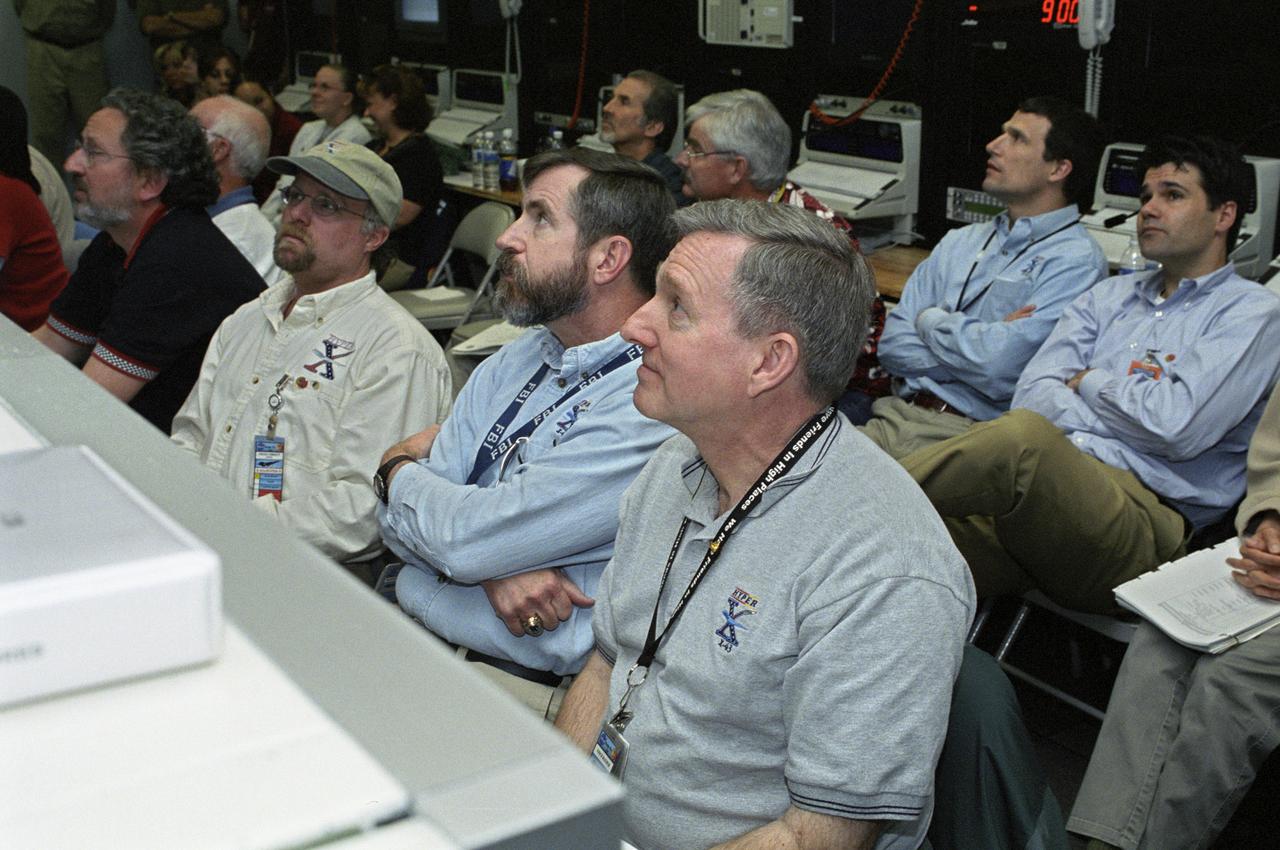
NASA personnel in a control room during the successful second flight of the X-43A aircraft. front row, left to right: Randy Voland, LaRC Propulsion; Craig Christy, Boeing Systems; Dave Reubush, NASA Hyper-X Deputy Program Manager; and Vince Rausch, NASA Hyper-X Program Manager. back row, left to right: Bill Talley, DCI/consultant; Pat Stoliker, DFRC Director (Acting) of Research Engineering; John Martin, LaRC G&C; and Dave Bose, AMA/Controls.
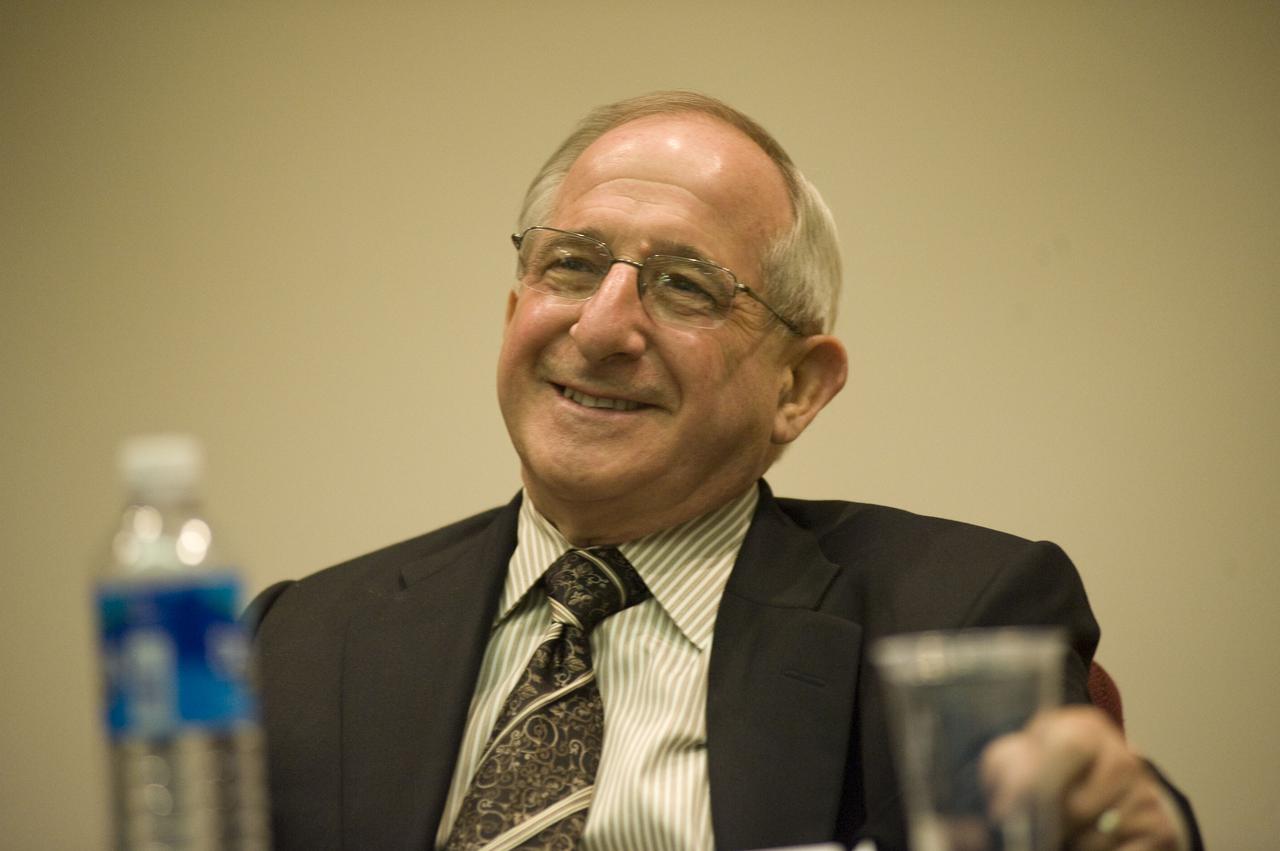
Robert Strain was the center director of NASA's Goddard Space Flight Center in Greenbelt, Md. Strain assumed his post on Aug. 4, 2008. Strain was replaced by Christopher Scolese on March 5, 2012.
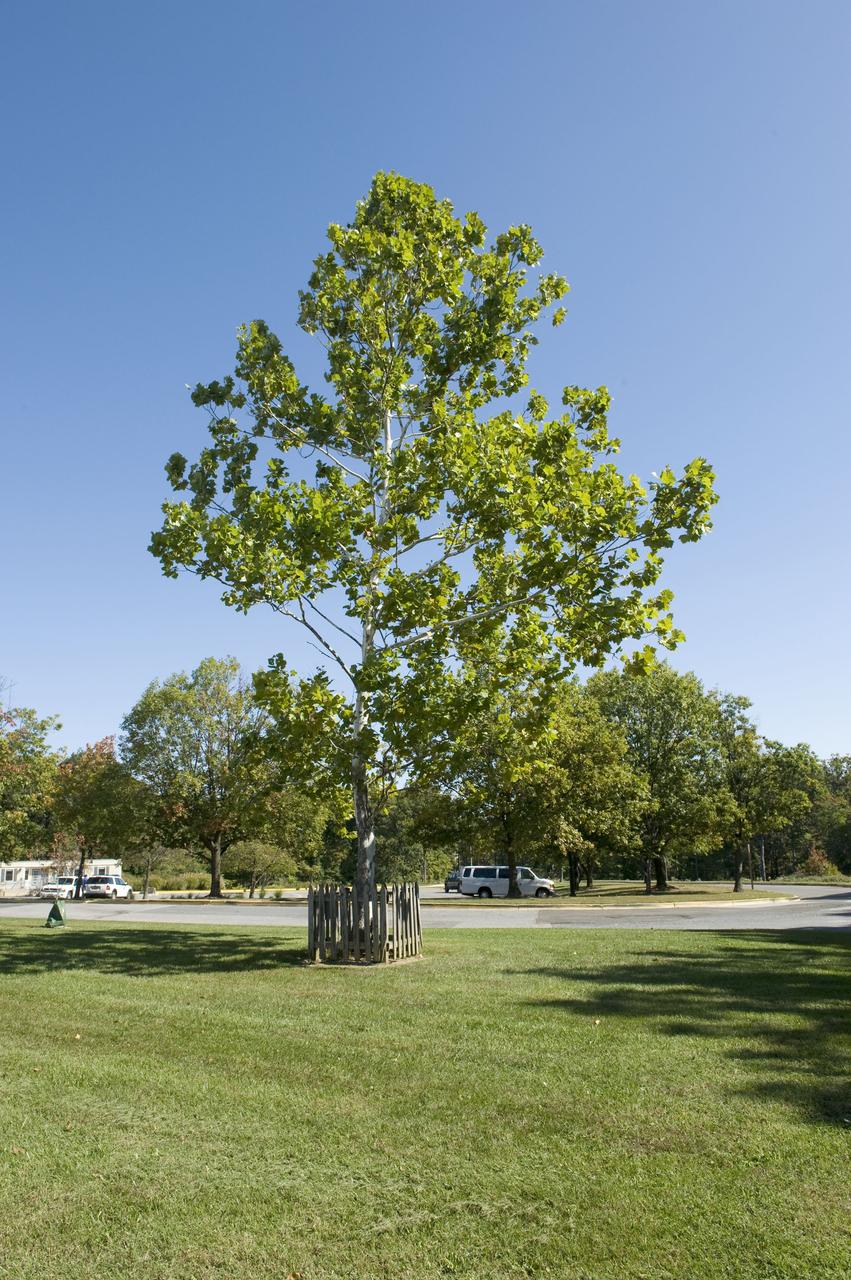
The "Moon Tree" in front of the Visitor Center at NASA's Goddard Space Flight Center in Greenbelt, Md. This sycamore was planted at the visitor center on June 9, 1977, and grew from a seed carried to the Moon aboard Apollo 14.
The NASA Administrator's Seal, painted onto the rear wall of the Acoustic Test Chamber at NASA's Goddard Space Flight Center in Greenbelt, Md.
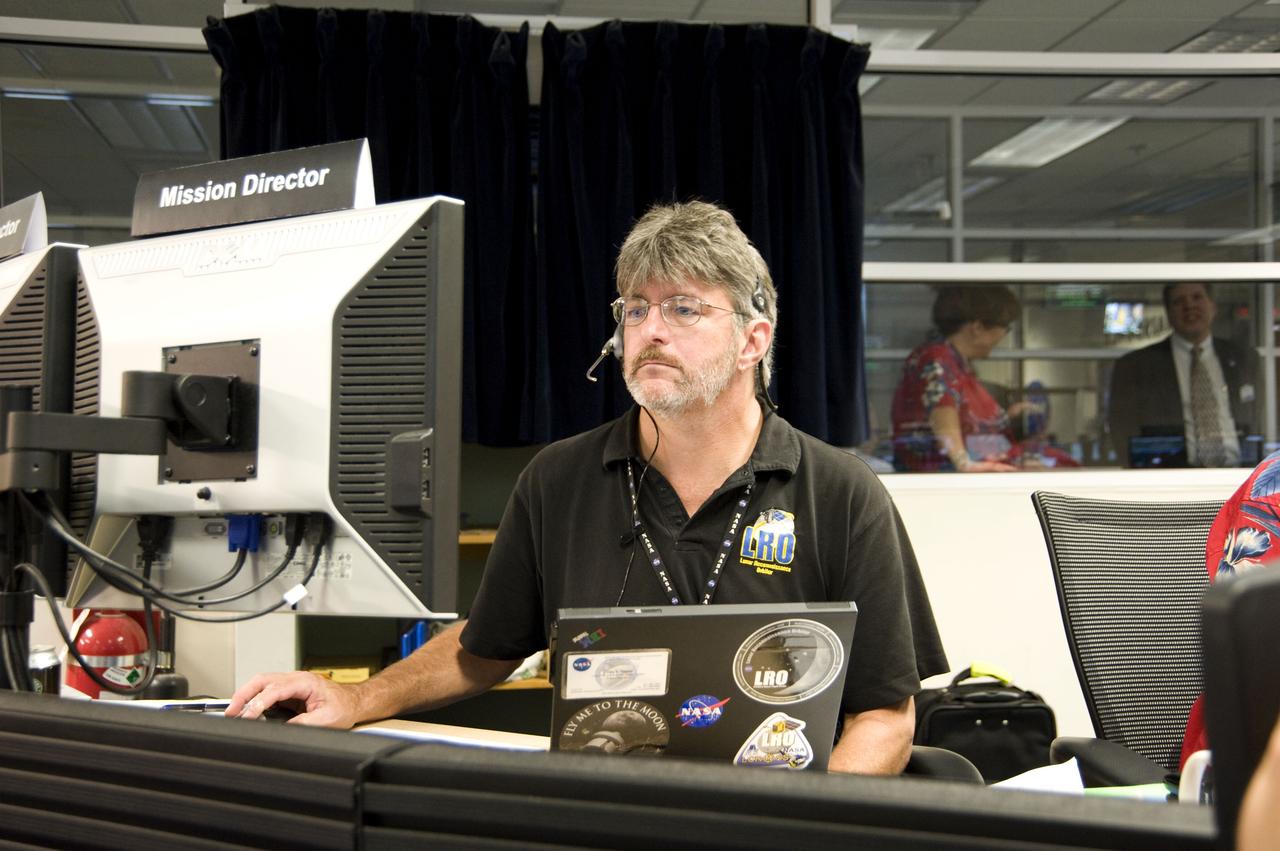
Craig Tooley, then-LRO project manager
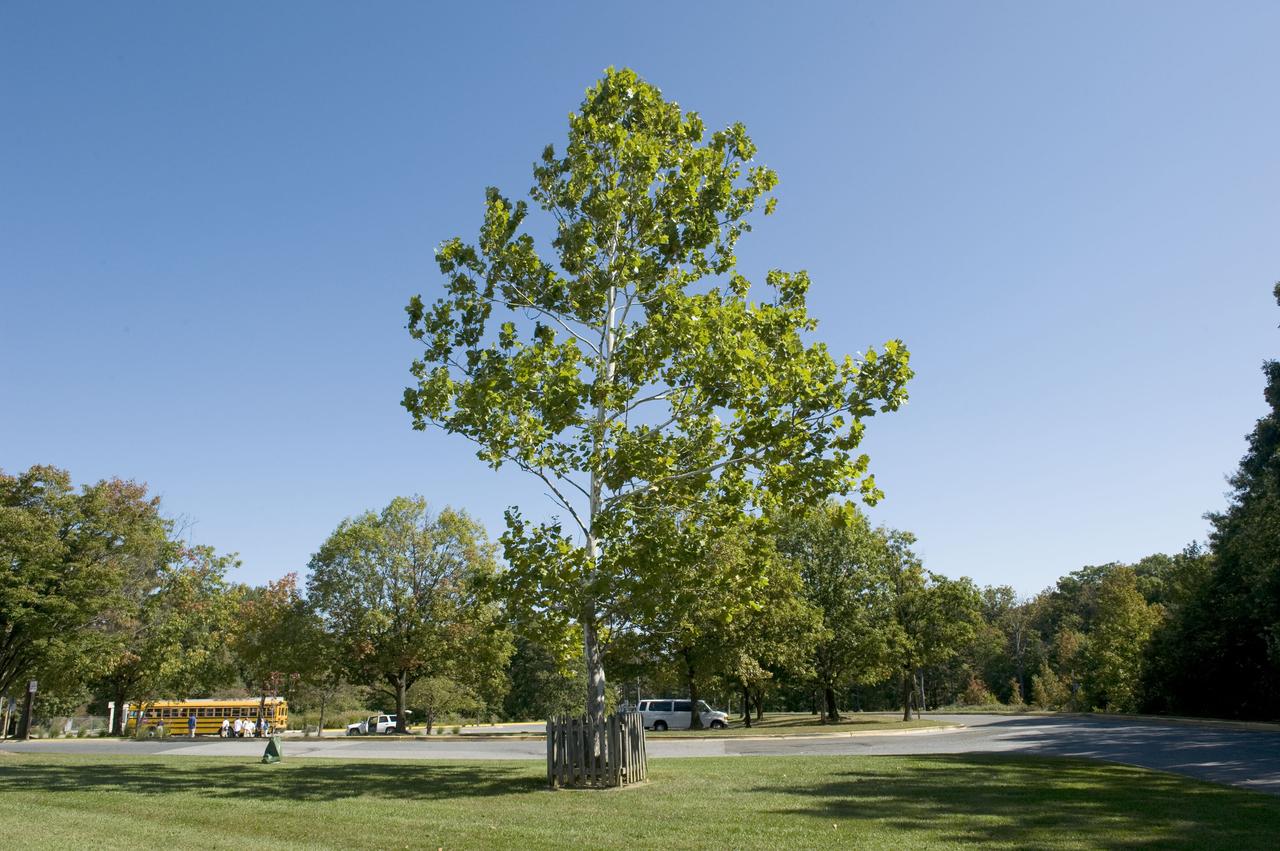
The "Moon Tree" in front of the Visitor Center at NASA's Goddard Space Flight Center in Greenbelt, Md. This sycamore was planted at the visitor center on June 9, 1977, and grew from a seed carried to the Moon aboard Apollo 14.
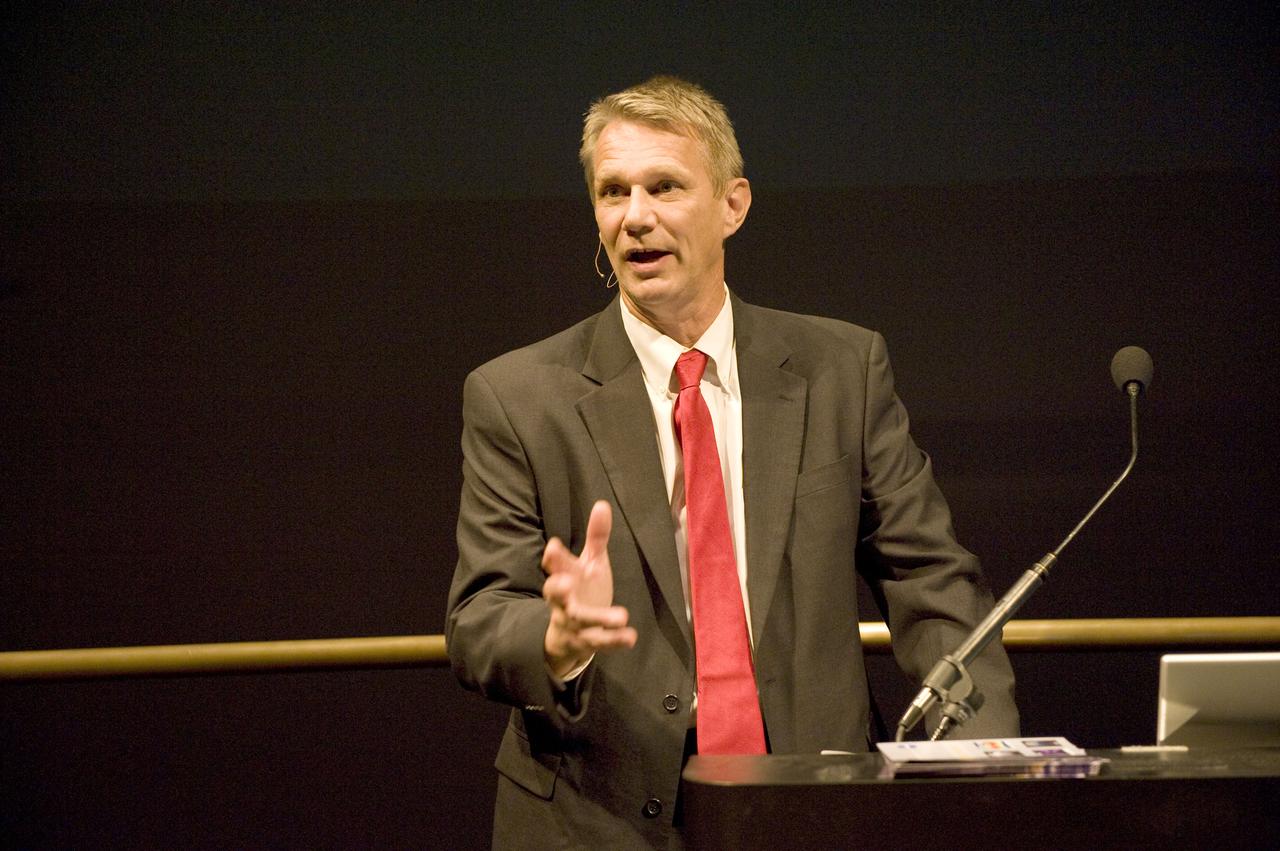
NASA astronaut Piers Sellers at the podium in the IMAX theater at the National Air and Space Museum in Washington, D.C., for an annual reception and presentation with the Maryland Space Business Roundtable.
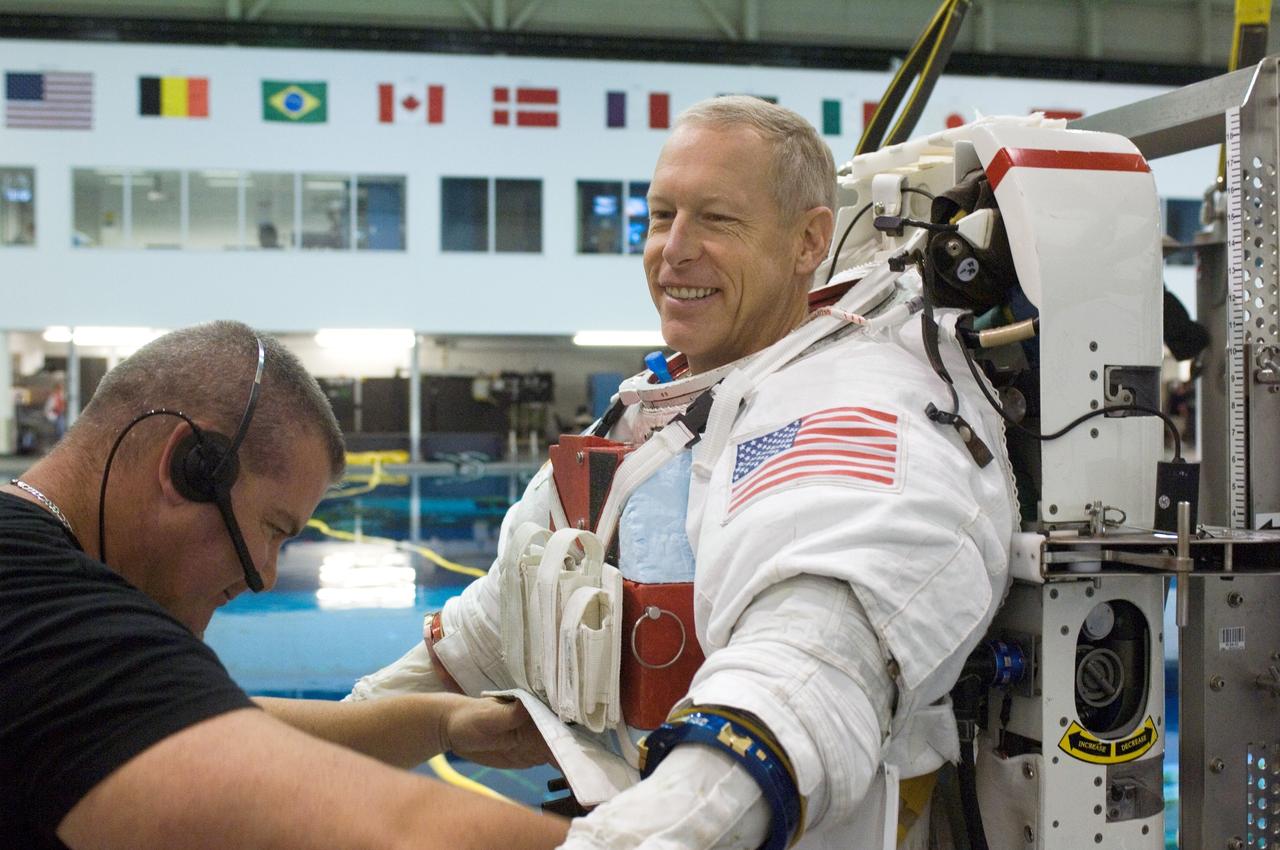
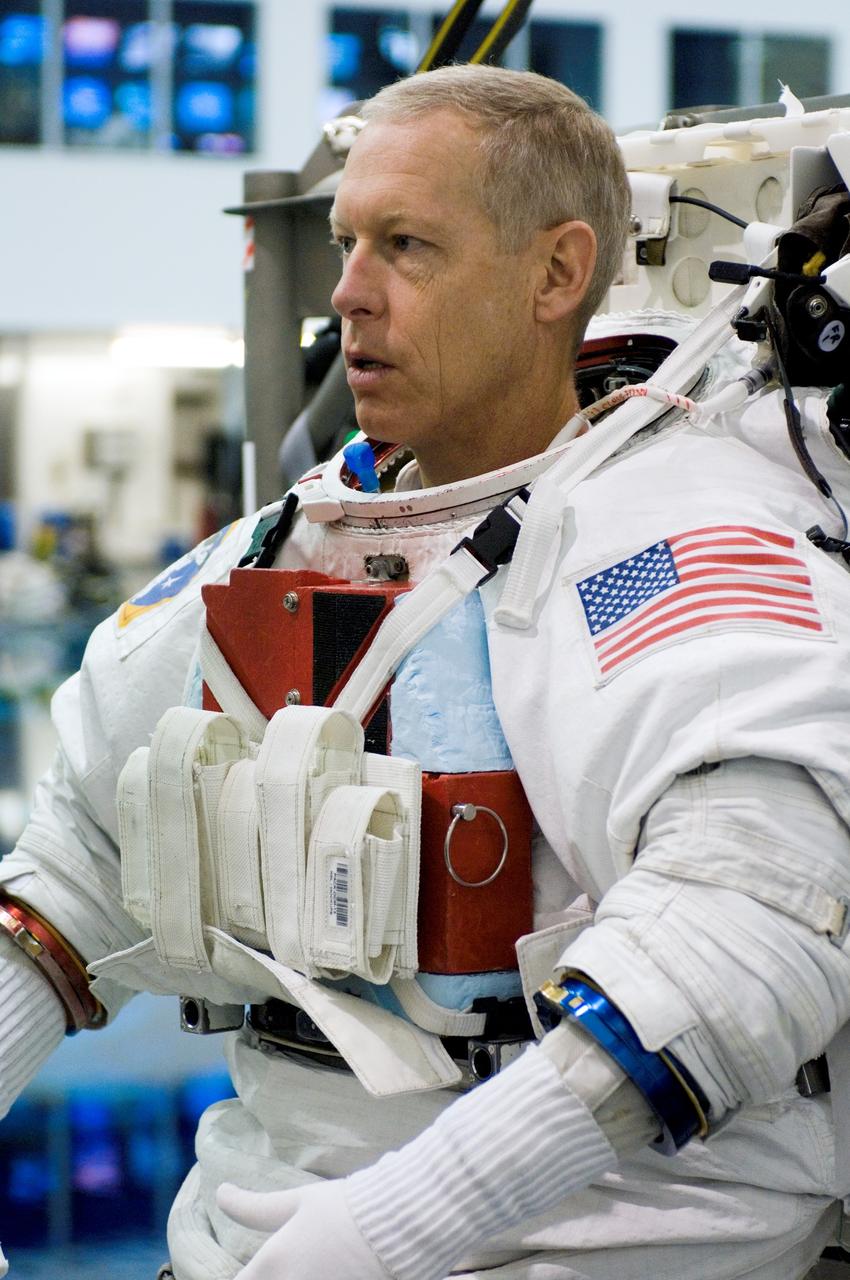
JSC2006-E-48960 (9 Nov. 2006) --- Astronaut Patrick G. Forrester, STS-117 mission specialist, dons a training version of the Extravehicular Mobility Unit (EMU) spacesuit prior to being submerged in the waters of the Neutral Buoyancy Laboratory (NBL) near Johnson Space Center. A suit technician assisted Forrester.
JSC2006-E-48963 (9 Nov. 2006) --- Astronaut Patrick G. Forrester, STS-117 mission specialist, dons a training version of the Extravehicular Mobility Unit (EMU) spacesuit prior to being submerged in the waters of the Neutral Buoyancy Laboratory (NBL) near Johnson Space Center.
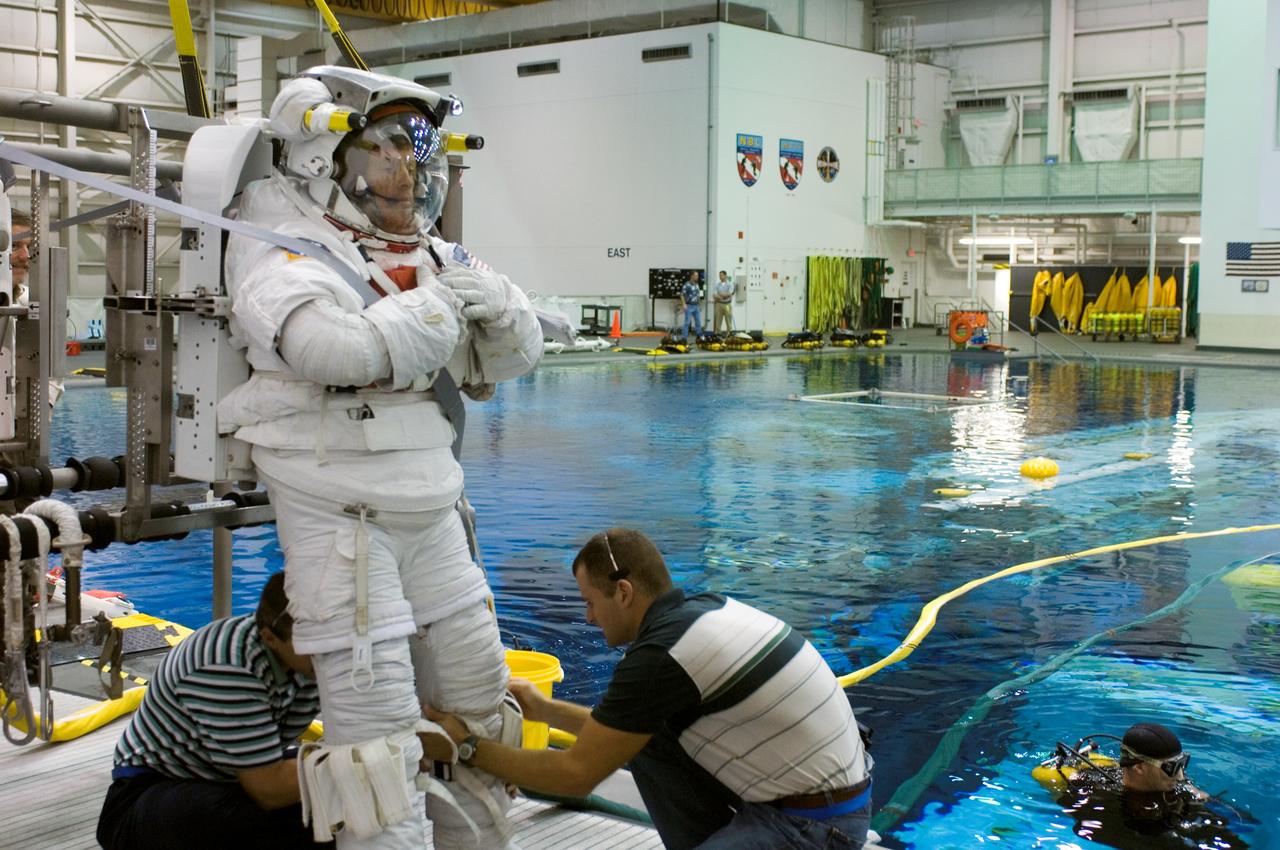
JSC2006-E-48970 (9 Nov. 2006) --- Astronaut Steven R. Swanson, STS-117 mission specialist, attired in a training version of the Extravehicular Mobility Unit (EMU) spacesuit, is about to begin a training session in the waters of the Neutral Buoyancy Laboratory (NBL) near the Johnson Space Center. Suit technicians assisted Swanson with the final touches in the donning process.
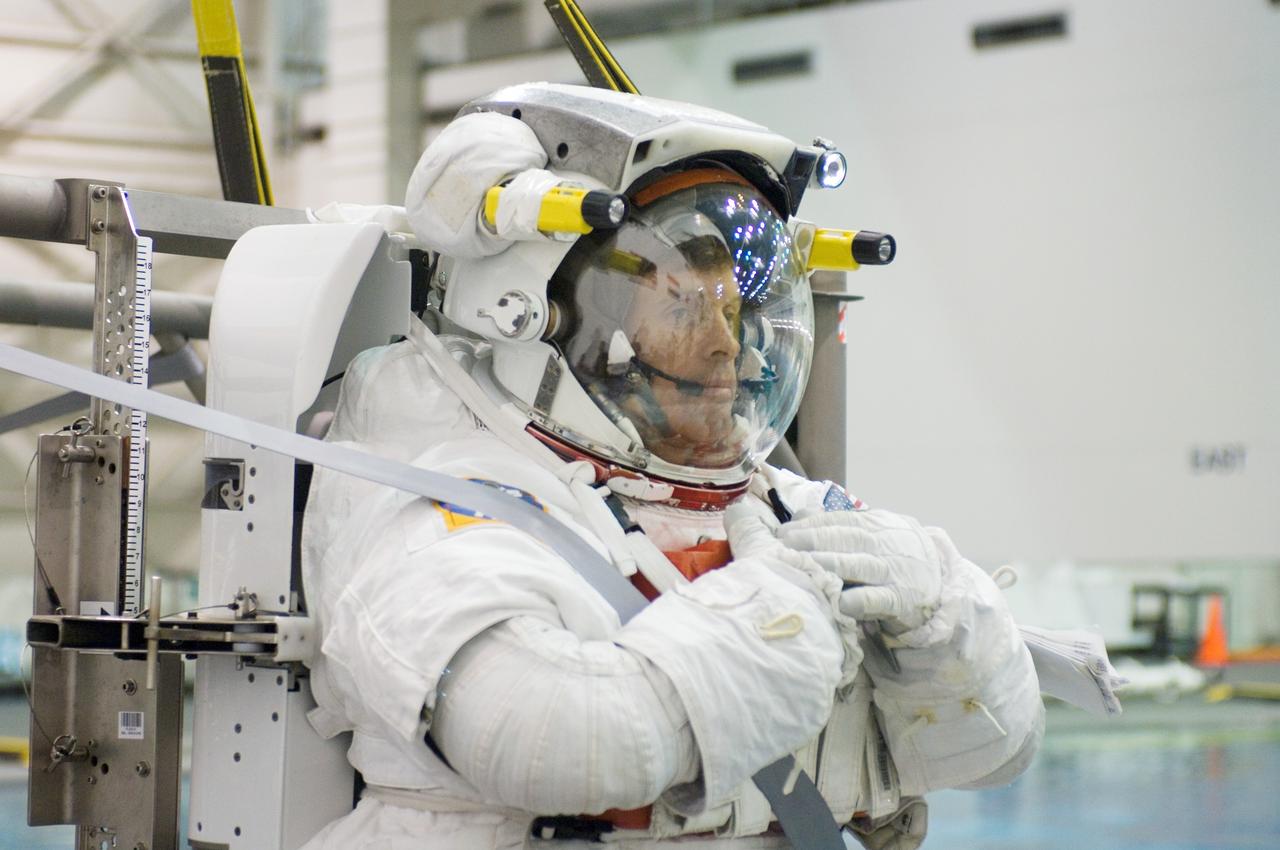
JSC2006-E-48969 (9 Nov. 2006) --- Astronaut Steven R. Swanson, STS-117 mission specialist, attired in a training version of the Extravehicular Mobility Unit (EMU) spacesuit, is about to begin a training session in the waters of the Neutral Buoyancy Laboratory (NBL) near the Johnson Space Center.
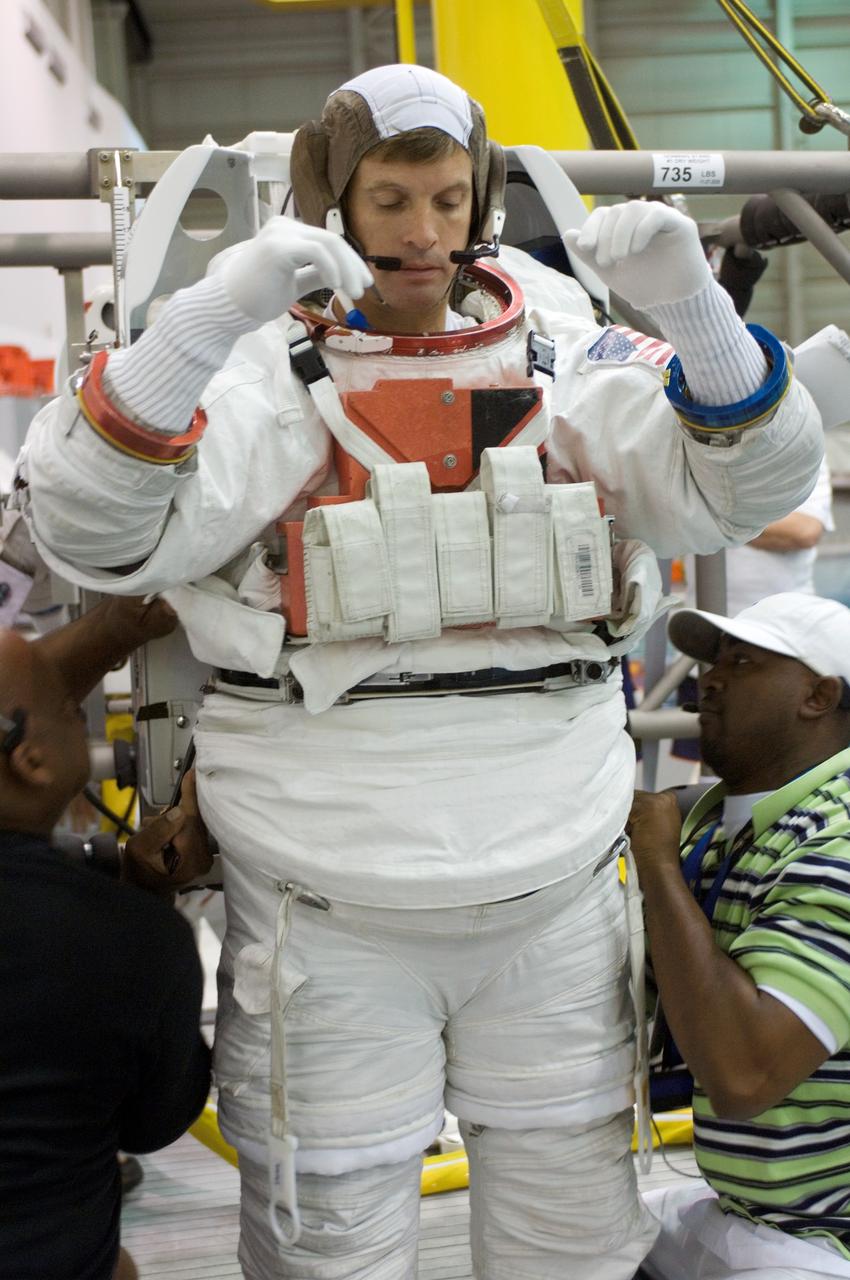
JSC2006-E-48962 (9 Nov. 2006) --- Astronaut Steven R. Swanson, STS-117 mission specialist, dons a training version of the Extravehicular Mobility Unit (EMU) spacesuit prior to being submerged in the waters of the Neutral Buoyancy Laboratory (NBL) near Johnson Space Center. Suit technicians assisted Swanson.
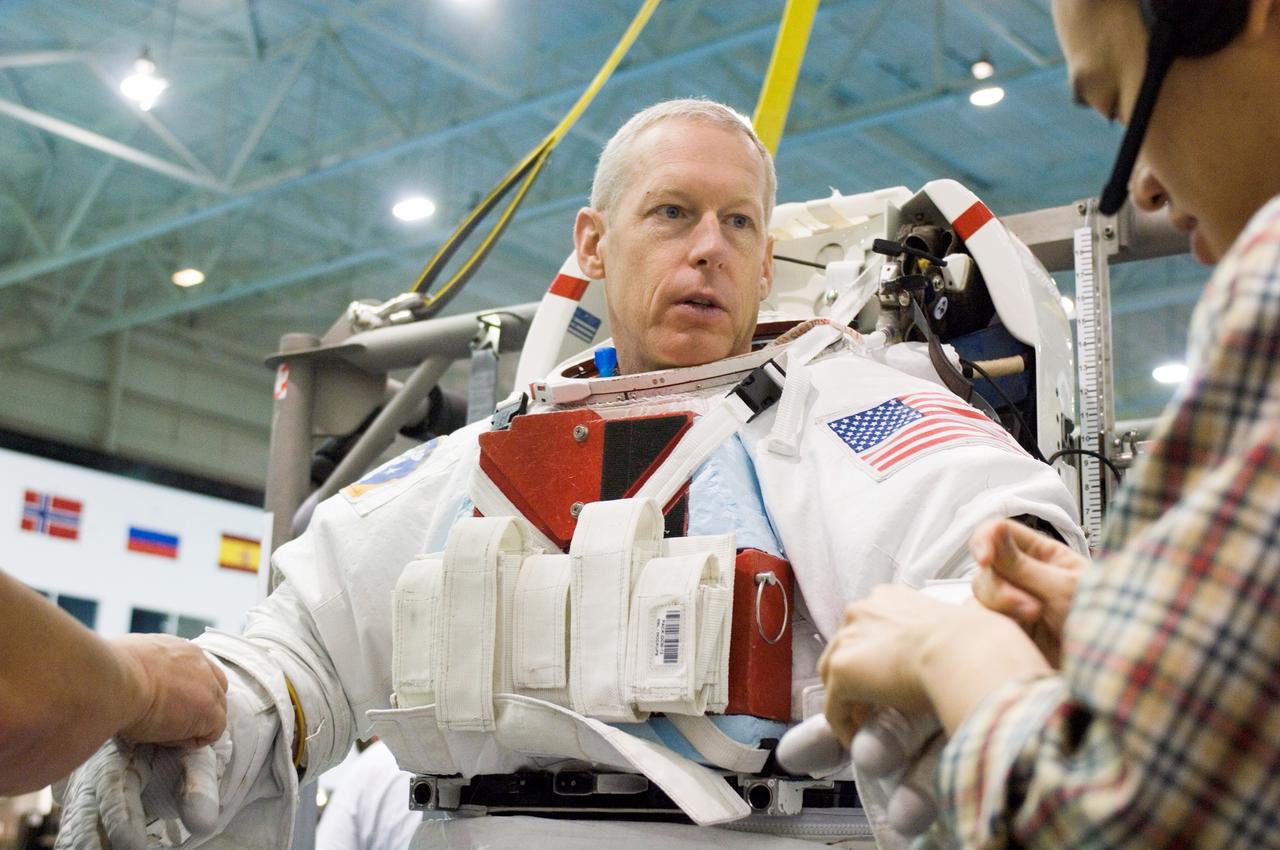
JSC2006-E-48964 (9 Nov. 2006) --- Astronaut Patrick G. Forrester, STS-117 mission specialist, dons a training version of the Extravehicular Mobility Unit (EMU) spacesuit prior to being submerged in the waters of the Neutral Buoyancy Laboratory (NBL) near Johnson Space Center. Suit technicians assisted Forrester.
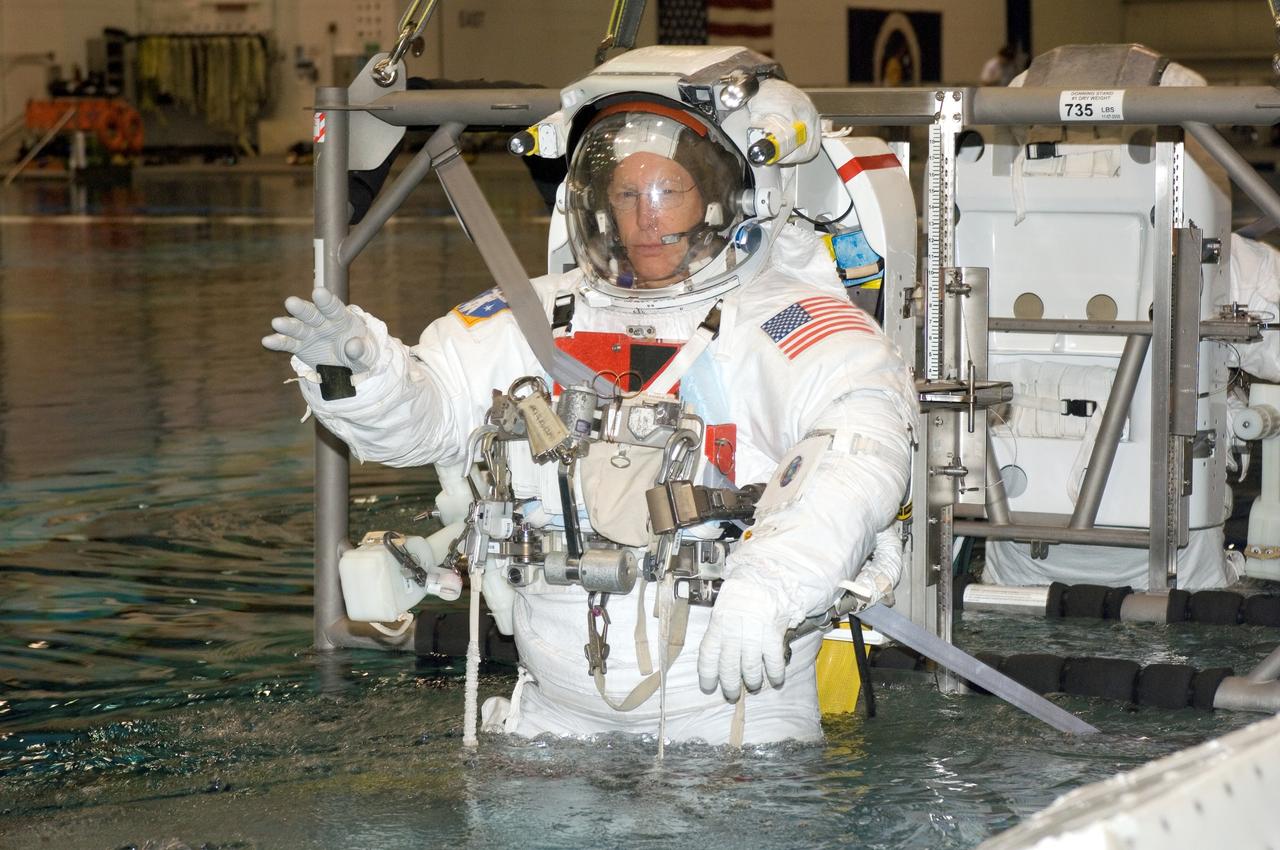
JSC2006-E-48972 (9 Nov. 2006) --- Astronauts Patrick G. Forrester and Steven R. Swanson (partially obscured), both STS-117 mission specialists, are about to be submerged in the waters of the Neutral Buoyancy Laboratory (NBL) near Johnson Space Center. Forrester and Swanson are attired in training versions of the Extravehicular Mobility Unit (EMU) spacesuit. SCUBA-equipped divers (out of frame) are in the water to assist the crewmembers in their rehearsal, intended to help prepare them for work on the exterior of the International Space Station.
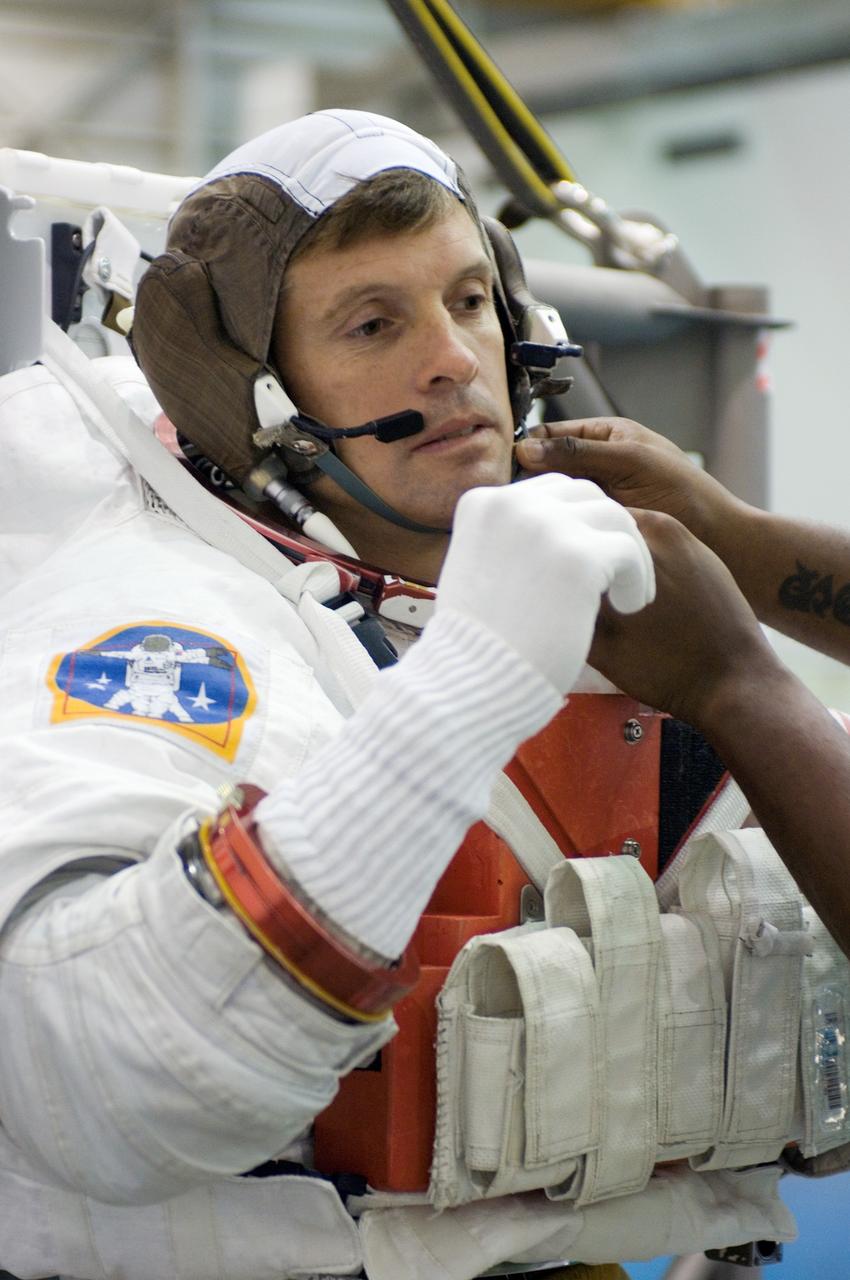
JSC2006-E-48961 (9 Nov. 2006) --- Astronaut Steven R. Swanson, STS-117 mission specialist, dons a training version of the Extravehicular Mobility Unit (EMU) spacesuit prior to being submerged in the waters of the Neutral Buoyancy Laboratory (NBL) near Johnson Space Center.
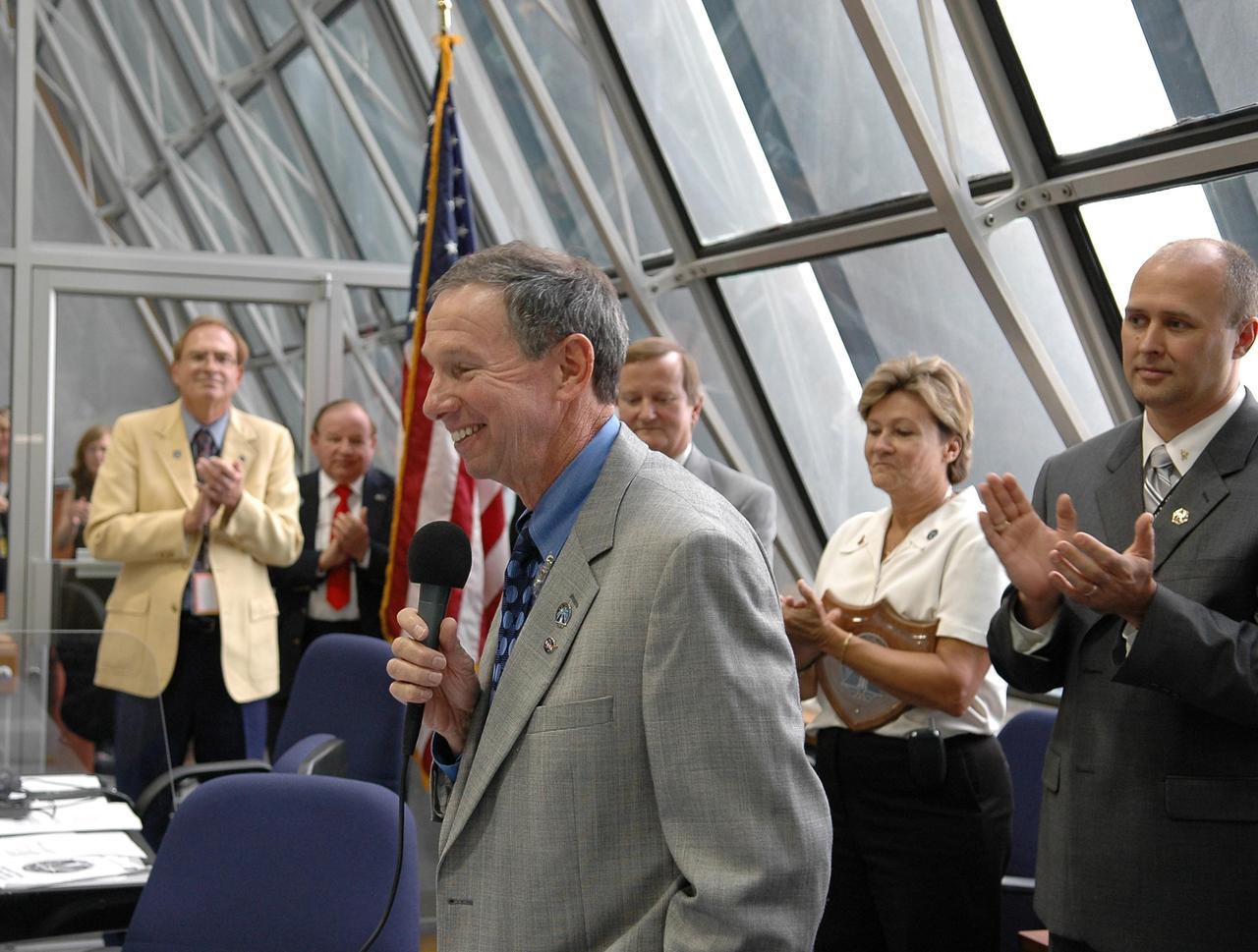
KENNEDY SPACE CENTER, FLA. - Inside the Launch Control Center, NASA Administrator Michael Griffin congratulates the launch team after the liftoff of Space Shuttle Atlantis on mission STS-115. Behind him are (left to right) Shuttle Launch Director Mike Leinbach, Pat Leslie and Robbie Ashley, STS-115 payload manager. Mission STS-115 is the 116th space shuttle flight, the 27th flight for orbiter Atlantis, and the 19th U.S. flight to the International Space Station. Mission STS-115 is scheduled to last 11 days with a planned landing at KSC. Photo credit: NASA/Kim Shiflett
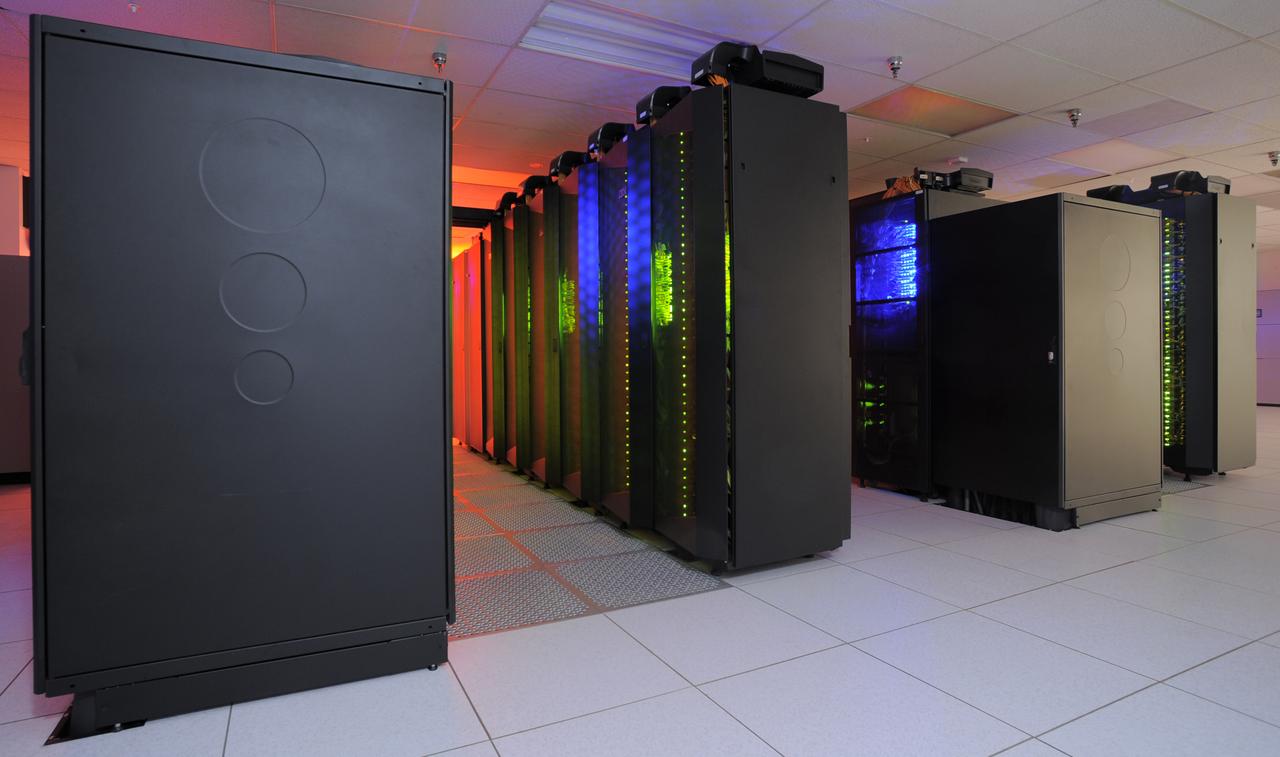
The heart of the NASA Center for Climate Simulation (NCCS) is the “Discover” supercomputer. In 2009, NCCS added more than 8,000 computer processors to Discover, for a total of nearly 15,000 processors. Credit: NASA/Pat Izzo To learn more about NCCS go to: <a href="http://www.nasa.gov/topics/earth/features/climate-sim-center.html" rel="nofollow">www.nasa.gov/topics/earth/features/climate-sim-center.html</a> NASA Goddard Space Flight Center is home to the nation's largest organization of combined scientists, engineers and technologists that build spacecraft, instruments and new technology to study the Earth, the sun, our solar system, and the universe.
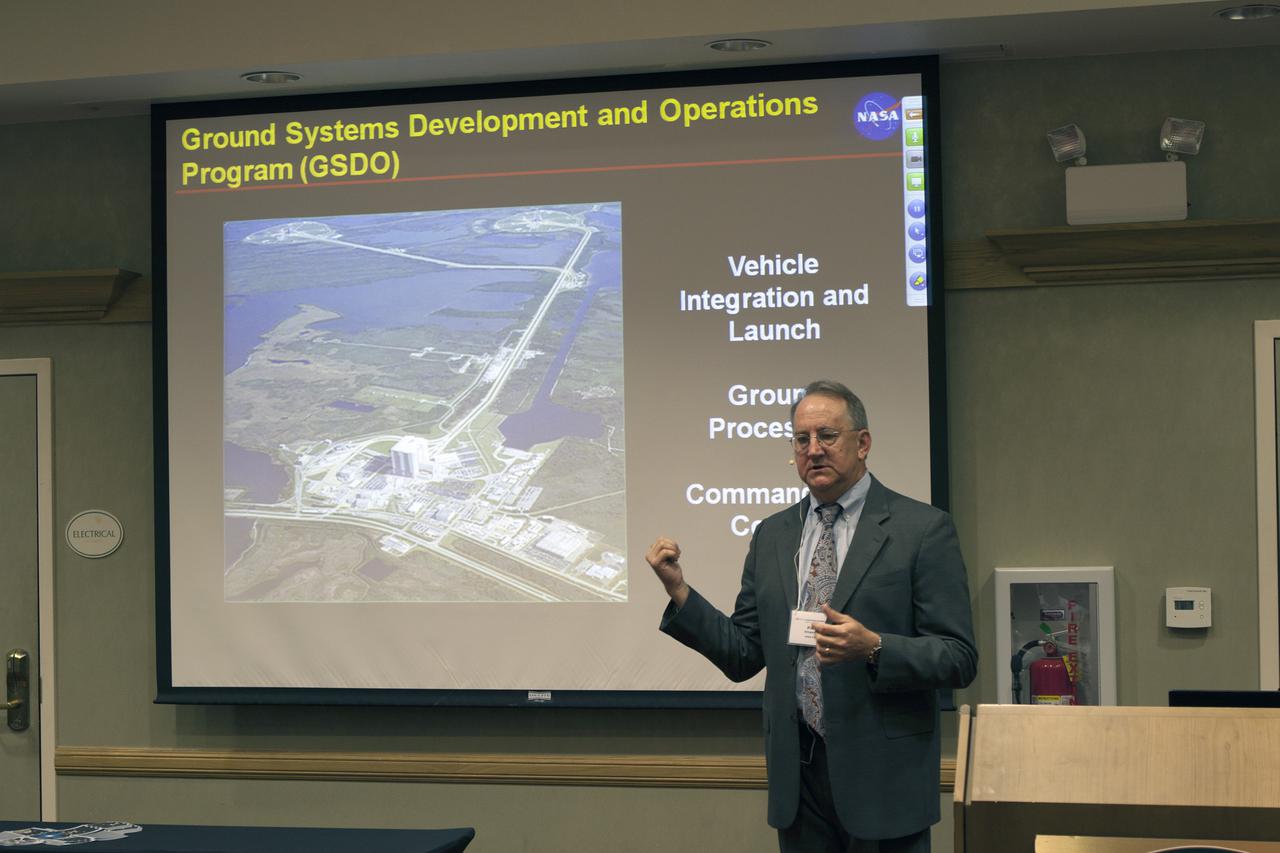
CAPE CANAVERAL, Fla. – At the Courtyard by Marriott hotel in Cocoa Beach, Fla., Pat Simpkins, director of Engineering and Technology at Kennedy Space Center talks to participants in the room and those participating online during the Third International Workshop on Lunar Superconductor Applications. The workshop included presentations from several engineers and researchers at Kennedy Space Center. The three-day workshop included presentations from speakers throughout the country and focused on Lunar in-situ resource utilization, NASA’s Lunar Ice Prospector called RESOLVE, CubeSats, cryogenic storage and many other topics related to lunar exploration. Photo credit: NASA_Jim Grossmann

In the Payload Hazardous Servicing Facility, Randy Scott (left) and Pat Wedeman (right), with Lockheed Martin Astronautics, check the insulation on the <a href="http://www-pao.ksc.nasa.gov/kscpao/captions/subjects/stardust.htm">Stardust</a> spacecraft. Stardust will use a unique medium called aerogel to capture comet particles flying off the nucleus of comet Wild 2 in January 2004, plus collect interstellar dust for later analysis. The collected samples will return to Earth in the SRC to be jettisoned as it swings by Earth in January 2006. Stardust is scheduled to be launched aboard a Boeing Delta 7426 rocket from Complex 17, Cape Canaveral Air Station, on Feb. 6, 1999
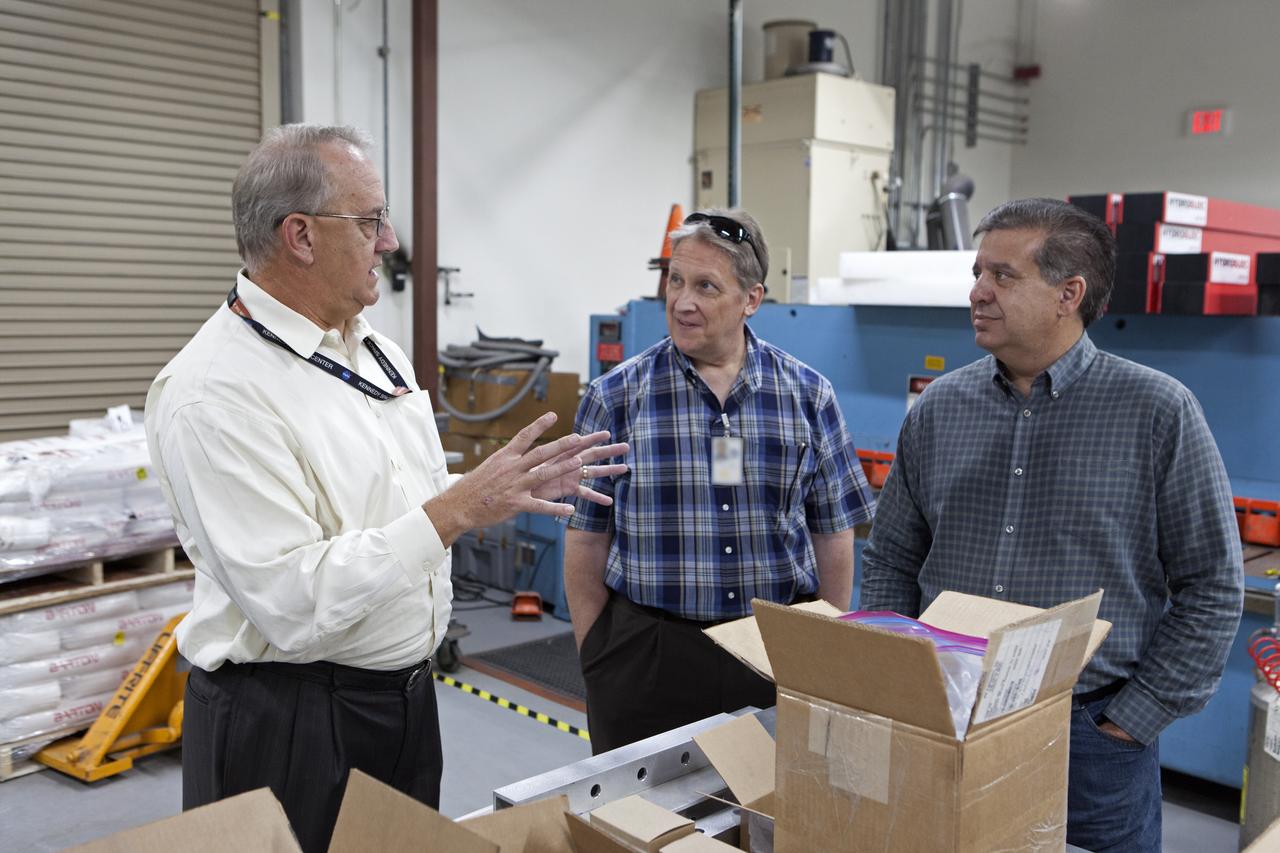
NASA Kennedy Space Center's Engineering Director Pat Simpkins, at left, talks with Michael E. Johnson, a project engineer; and Emilio Cruz, deputy division chief in the Laboratories, Development and Testing Division, inside the Prototype Development Laboratory. A banner signing event was held to mark the successful delivery of a liquid oxygen test tank, called Tardis. Engineers and technicians worked together to develop the tank and build it at the lab to support cryogenic testing at Johnson Space Center's White Sands Test Facility in Las Cruces, New Mexico. The 12-foot-tall, 3,810-pound aluminum tank will be shipped to White Sands for testing.
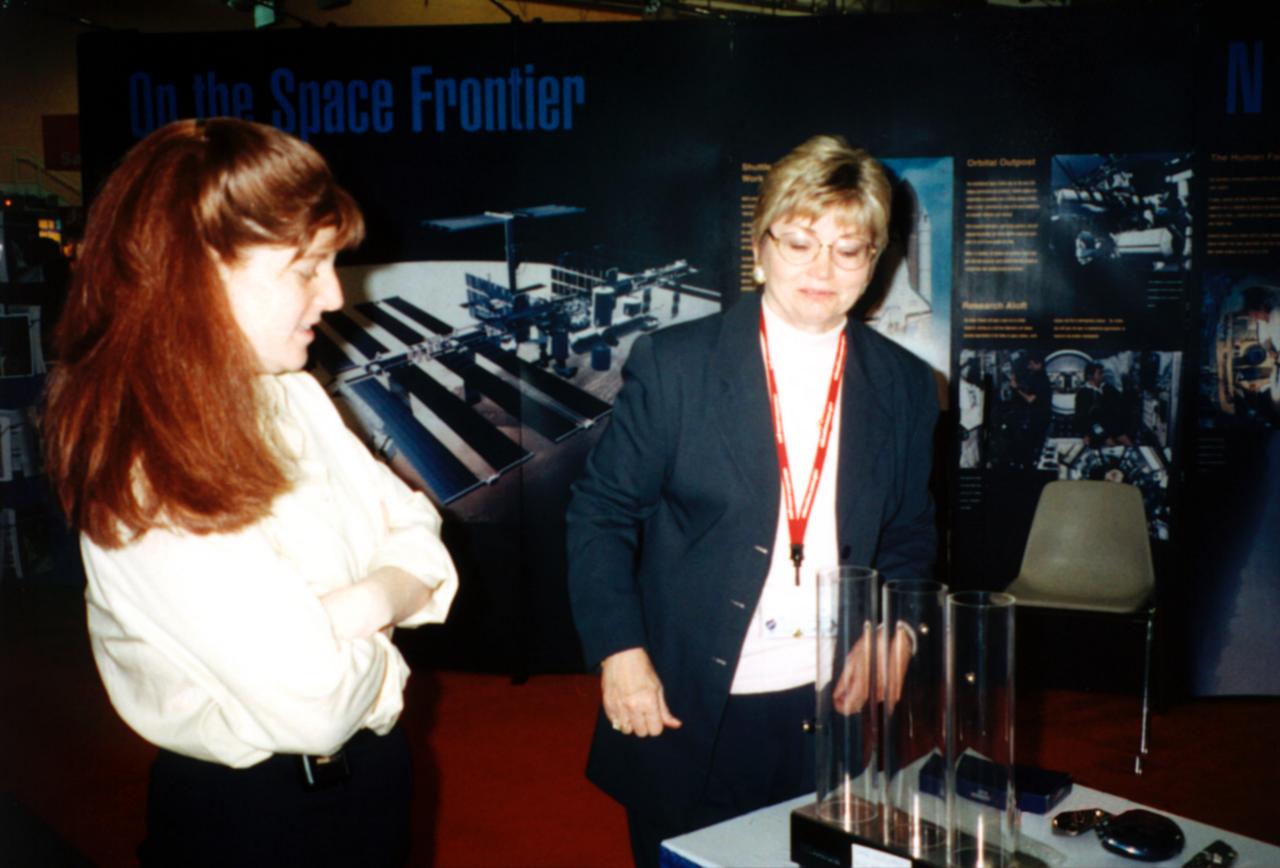
Pat Doty (right) of NASA/Marshall Space Flight Center (MSFC) demonstrates the greater bounce to the ounce of metal made from a supercooled bulk metallic glass alloy that NASA is studying in space expepriments. The metal plates at the bottom of plexiglass tubes are made of three different types of metal. Bulk mettalic glass is more resilient and, as a result, the dropped ball bearing bounces higher. Experiments in space allow scientists to study fundamental properties that carnot be observed on Earth. This demonstration was at the April 2000 conference of the National Council of Teachers of Mathematics (NCTM) in Chicago. Photo credit: NASA/Marshall Space Flight Center (MSFC)
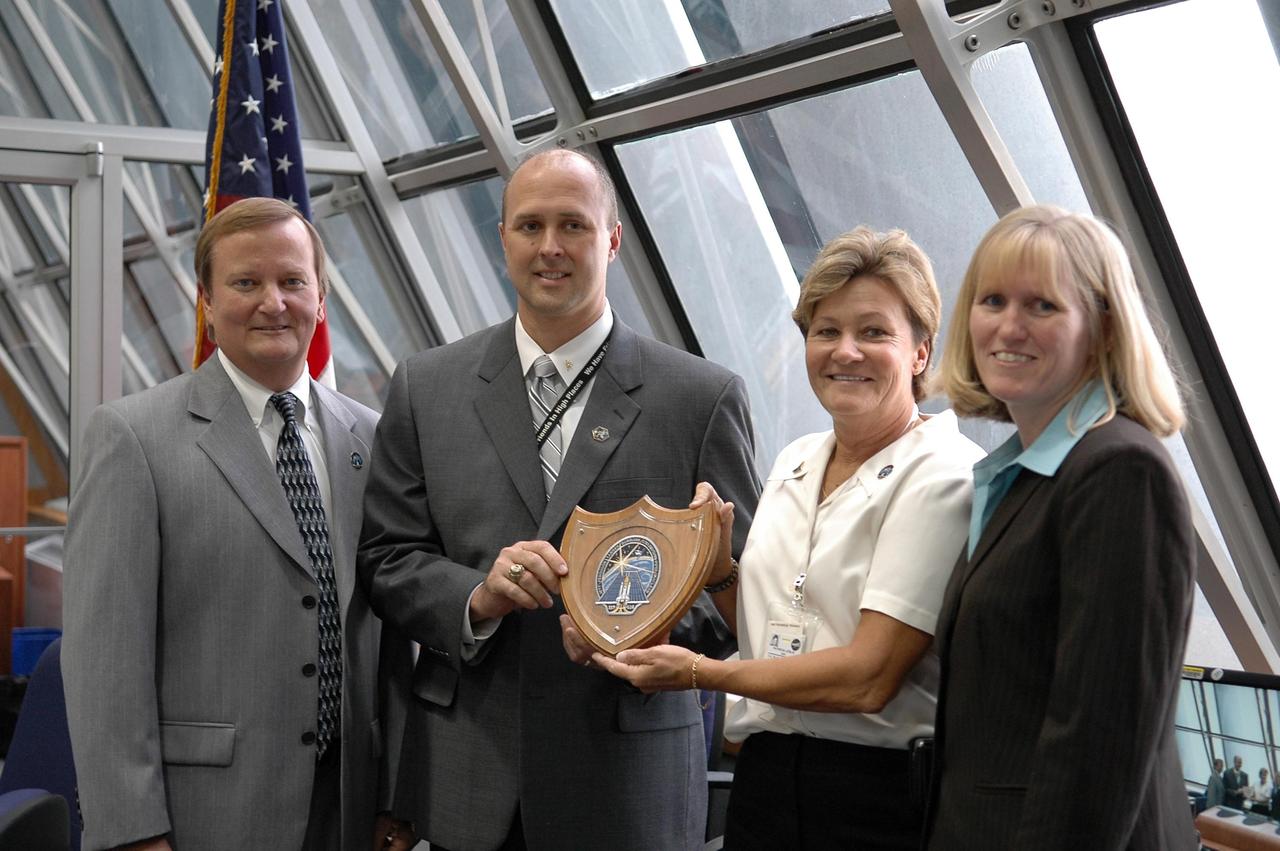
KENNEDY SPACE CENTER, FLA. - Inside the Launch Control Center, Robbie Ashley, STS-115 payload manager, and Pat Lesley, with United Space Alliance, receive a special award from (at left) Shuttle Launch Director Mike Leinbach and (at right) NASA Flow Director Angie Brewer. Mission STS-115 is the 116th space shuttle flight, the 27th flight for orbiter Atlantis, and the 19th U.S. flight to the International Space Station. STS-115 is scheduled to last 11 days with a planned landing at KSC. Photo credit: NASA/Kim Shiflett
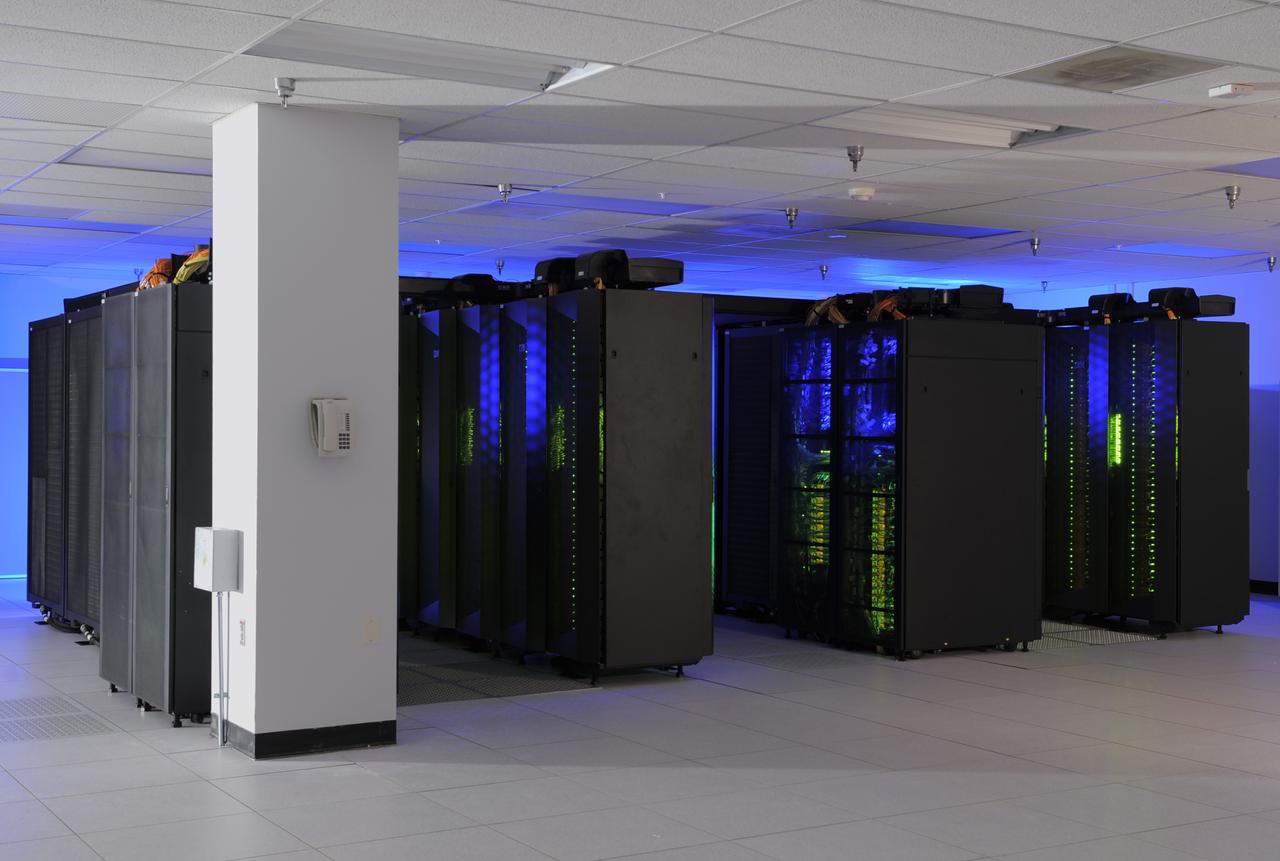
The heart of the NASA Center for Climate Simulation (NCCS) is the “Discover” supercomputer. In 2009, NCCS added more than 8,000 computer processors to Discover, for a total of nearly 15,000 processors. Credit: NASA/Pat Izzo To learn more about NCCS go to: <a href="http://www.nasa.gov/topics/earth/features/climate-sim-center.html" rel="nofollow">www.nasa.gov/topics/earth/features/climate-sim-center.html</a> NASA Goddard Space Flight Center is home to the nation's largest organization of combined scientists, engineers and technologists that build spacecraft, instruments and new technology to study the Earth, the sun, our solar system, and the universe.
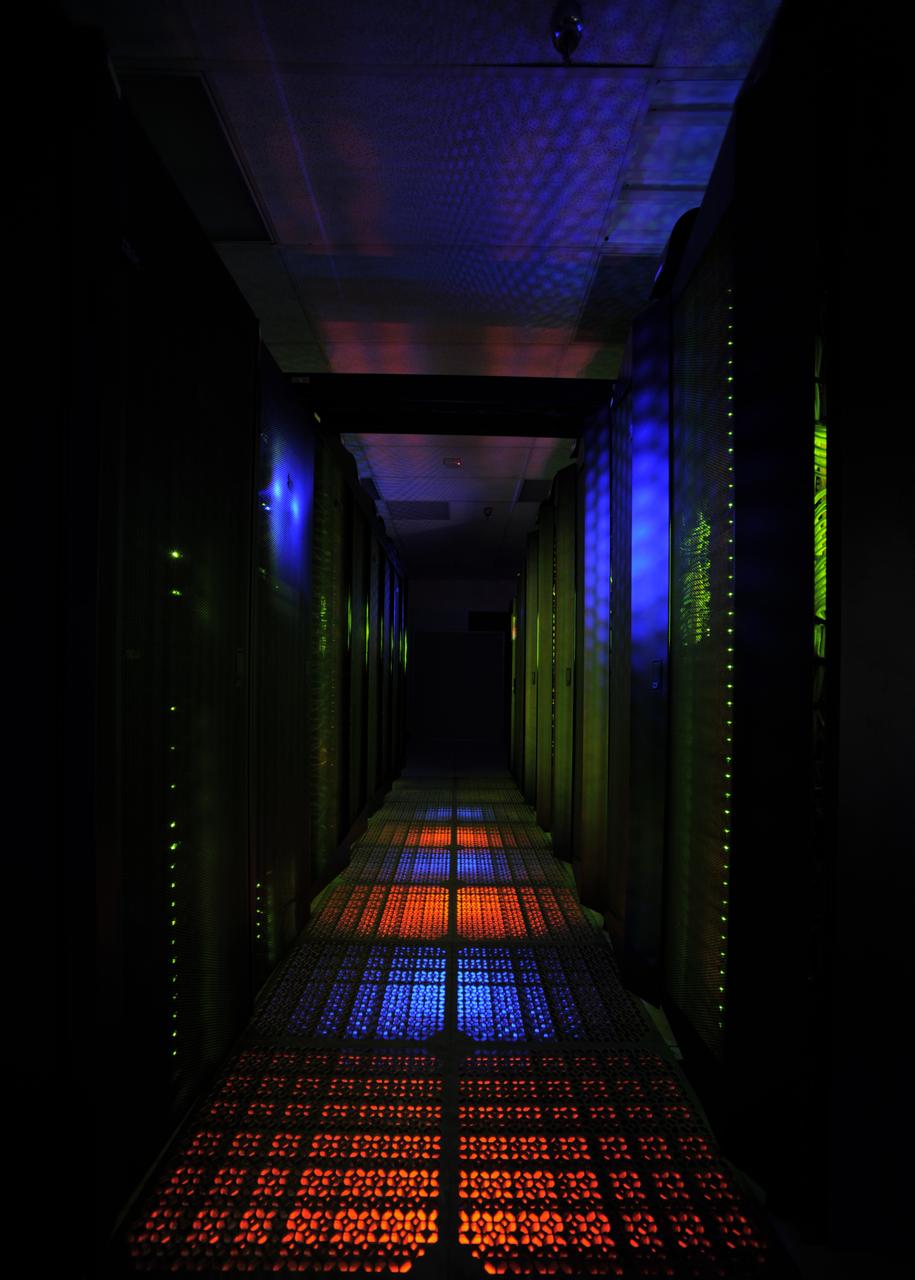
Two rows of the “Discover” supercomputer at the NASA Center for Climate Simulation (NCCS) contain more than 4,000 computer processors. Discover has a total of nearly 15,000 processors. Credit: NASA/Pat Izzo To learn more about NCCS go to: <a href="http://www.nasa.gov/topics/earth/features/climate-sim-center.html" rel="nofollow">www.nasa.gov/topics/earth/features/climate-sim-center.html</a> NASA Goddard Space Flight Center is home to the nation's largest organization of combined scientists, engineers and technologists that build spacecraft, instruments and new technology to study the Earth, the sun, our solar system, and the universe.
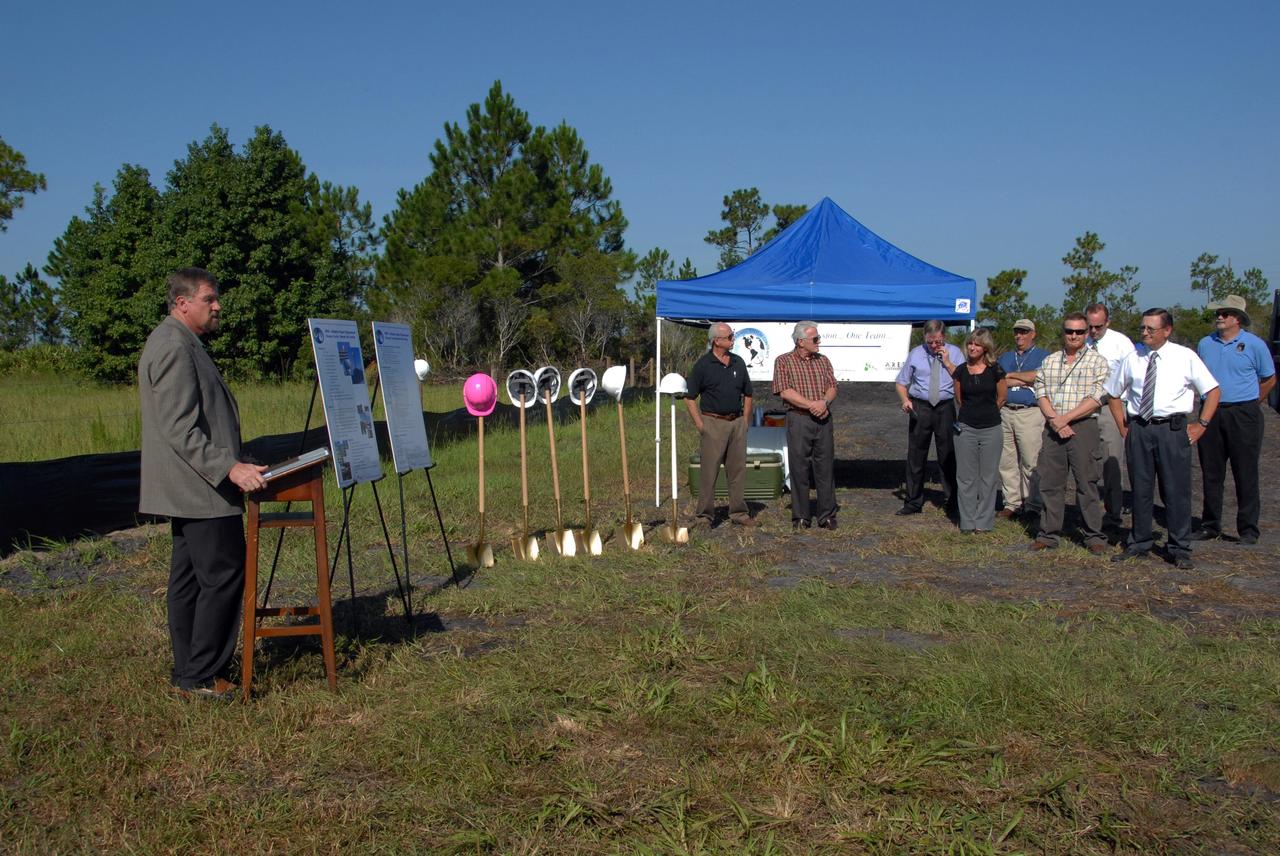
CAPE CANAVERAL, Fla. - A new weather radar site is dedicated with a mock ground-breaking ceremony. At the podium is Pat Carr, SLRSC program director with ITT. The site will be used by NASA's Kennedy Space Center, the 45th Space Wing and their customers. The weather radar is essential in issuing lightning and other severe weather warnings and vital in evaluating lightning launch commit criteria. The new radar, replacing what was installed 25 years ago, includes Doppler capability to detect winds and identify the type, size and number of precipitation particles. The site is ideally distant from the launch pads and has unobstructed views of Cape Canaveral Air Force Station and Kennedy. Photo credit: NASA/Amanda Diller
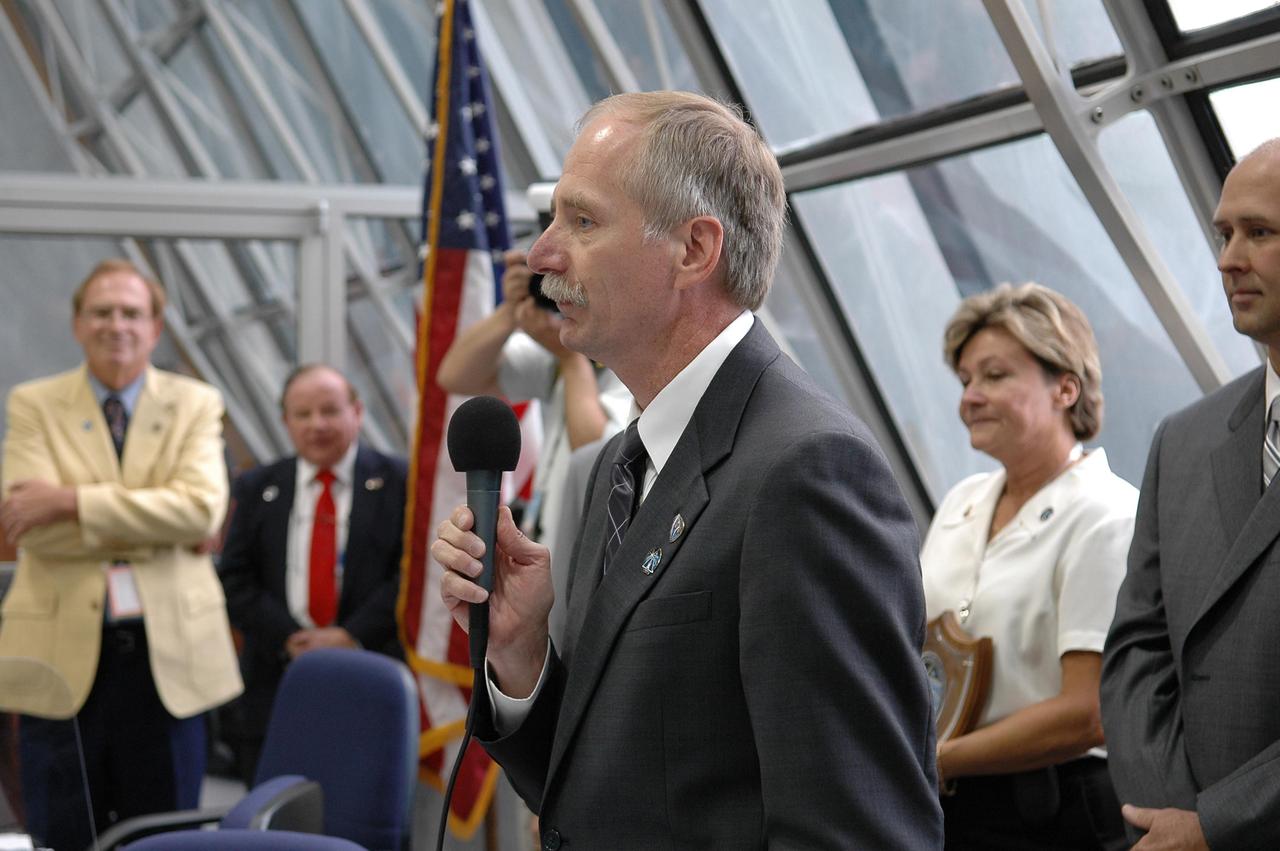
KENNEDY SPACE CENTER, FLA. - Inside the Launch Control Center, Associate Administrator for Space Operations Mission William Gerstenmaier congratulates the launch team after the liftoff of Space Shuttle Atlantis on mission STS-115. Behind him, at right, are Pat Leslie and Robbie Ashley, STS-115 payload manager. Mission STS-115 is the 116th space shuttle flight, the 27th flight for orbiter Atlantis, and the 19th U.S. flight to the International Space Station. Mission STS-115 is scheduled to last 11 days with a planned landing at KSC. Photo credit: NASA/Kim Shiflett
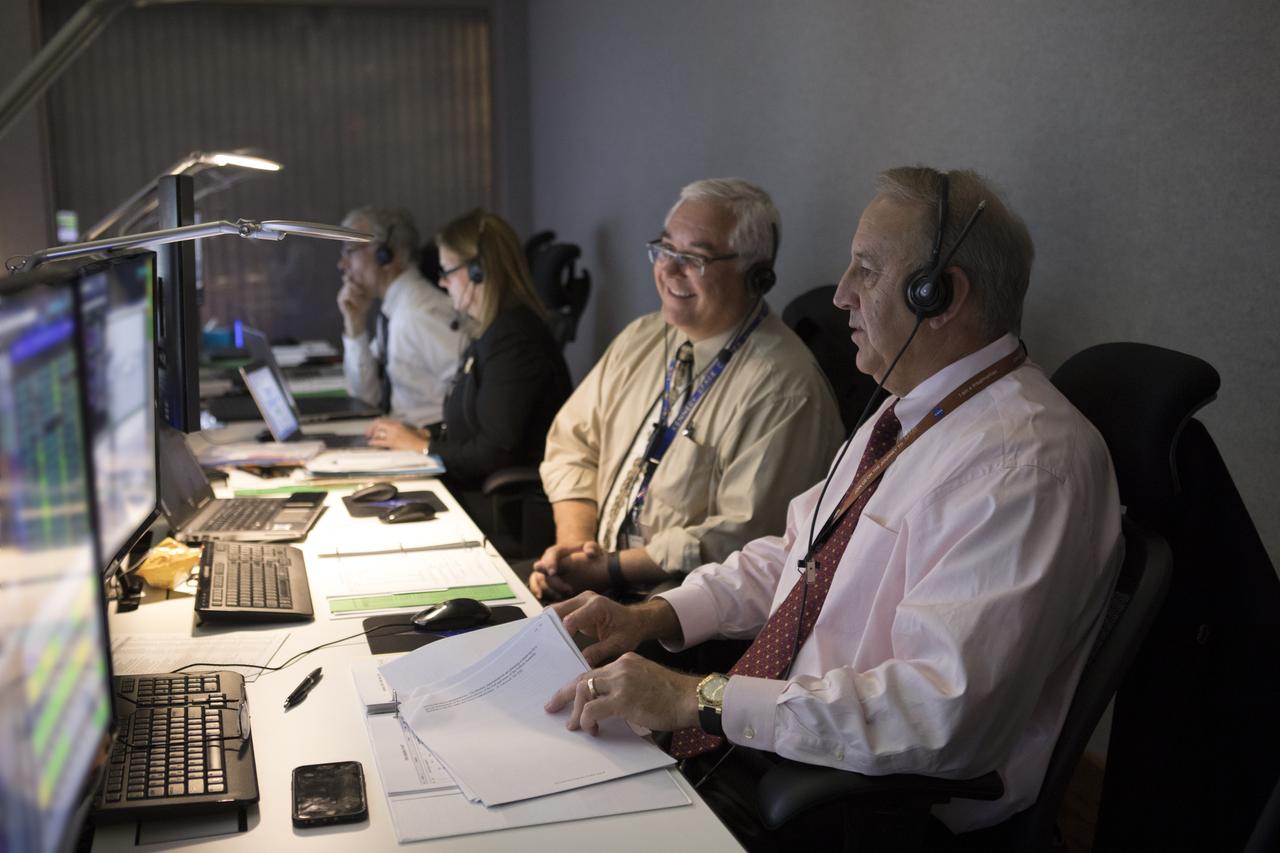
In the Mission Director's Center at Cape Canaveral Air Force Station, Andy Bundy, Avionics lead, left, and Pat Simpkins, director of Kennedy Space Center Engineering, monitor the progress of preparations to launch eight Cyclone Global Navigation Satellite System, or CYGNSS, spacecraft. The CYGNSS satellites will make frequent and accurate measurements of ocean surface winds throughout the life cycle of tropical storms and hurricanes. The data that CYGNSS provides will enable scientists to probe key air-sea interaction processes that take place near the core of storms, which are rapidly changing and play a crucial role in the beginning and intensification of hurricanes.
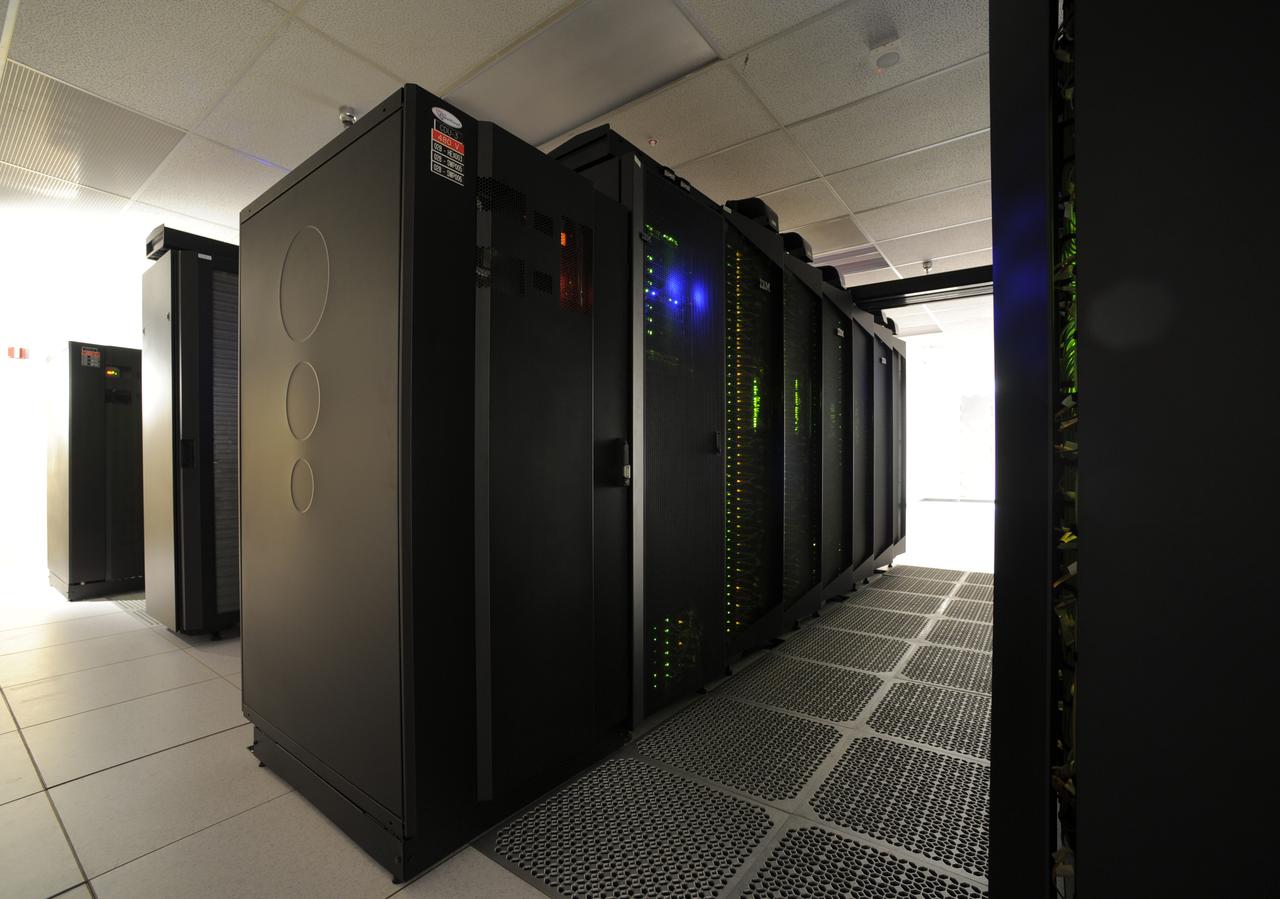
This close-up view highlights one row—approximately 2,000 computer processors—of the “Discover” supercomputer at the NASA Center for Climate Simulation (NCCS). Discover has a total of nearly 15,000 processors. Credit: NASA/Pat Izzo To learn more about NCCS go to: <a href="http://www.nasa.gov/topics/earth/features/climate-sim-center.html" rel="nofollow">www.nasa.gov/topics/earth/features/climate-sim-center.html</a> NASA Goddard Space Flight Center is home to the nation's largest organization of combined scientists, engineers and technologists that build spacecraft, instruments and new technology to study the Earth, the sun, our solar system, and the universe.
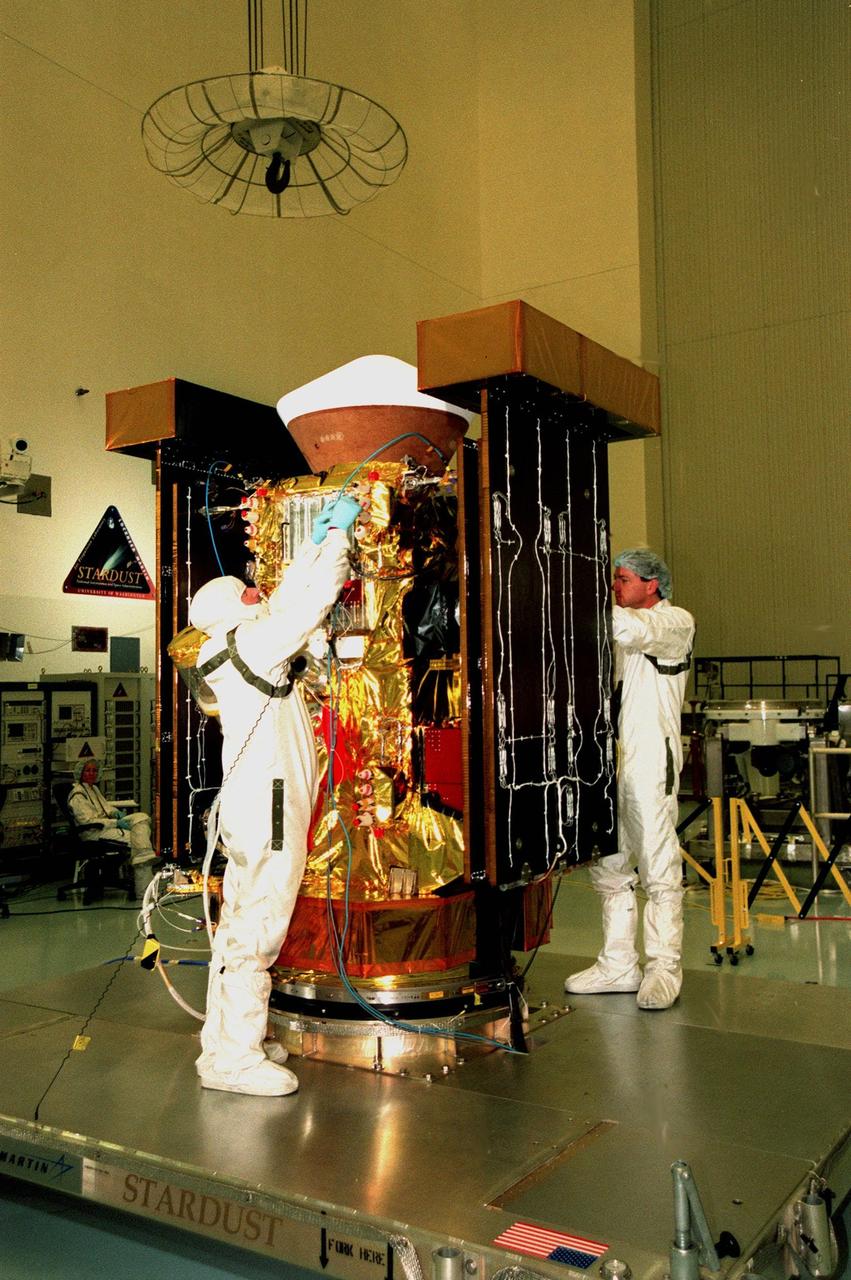
In the Payload Hazardous Servicing Facility, Randy Scott (left) and Pat Wedeman (right), with Lockheed Martin Astronautics, check the insulation material on the <a href="http://www-pao.ksc.nasa.gov/kscpao/captions/subjects/stardust.htm">Stardust</a> spacecraft. Stardust will use a unique medium called aerogel to capture comet particles flying off the nucleus of comet Wild 2 in January 2004, plus collect interstellar dust for later analysis. The collected samples will return to Earth in the SRC to be jettisoned as it swings by Earth in January 2006. Stardust is scheduled to be launched aboard a Boeing Delta 7426 rocket from Complex 17, Cape Canaveral Air Station, on Feb. 6, 1999
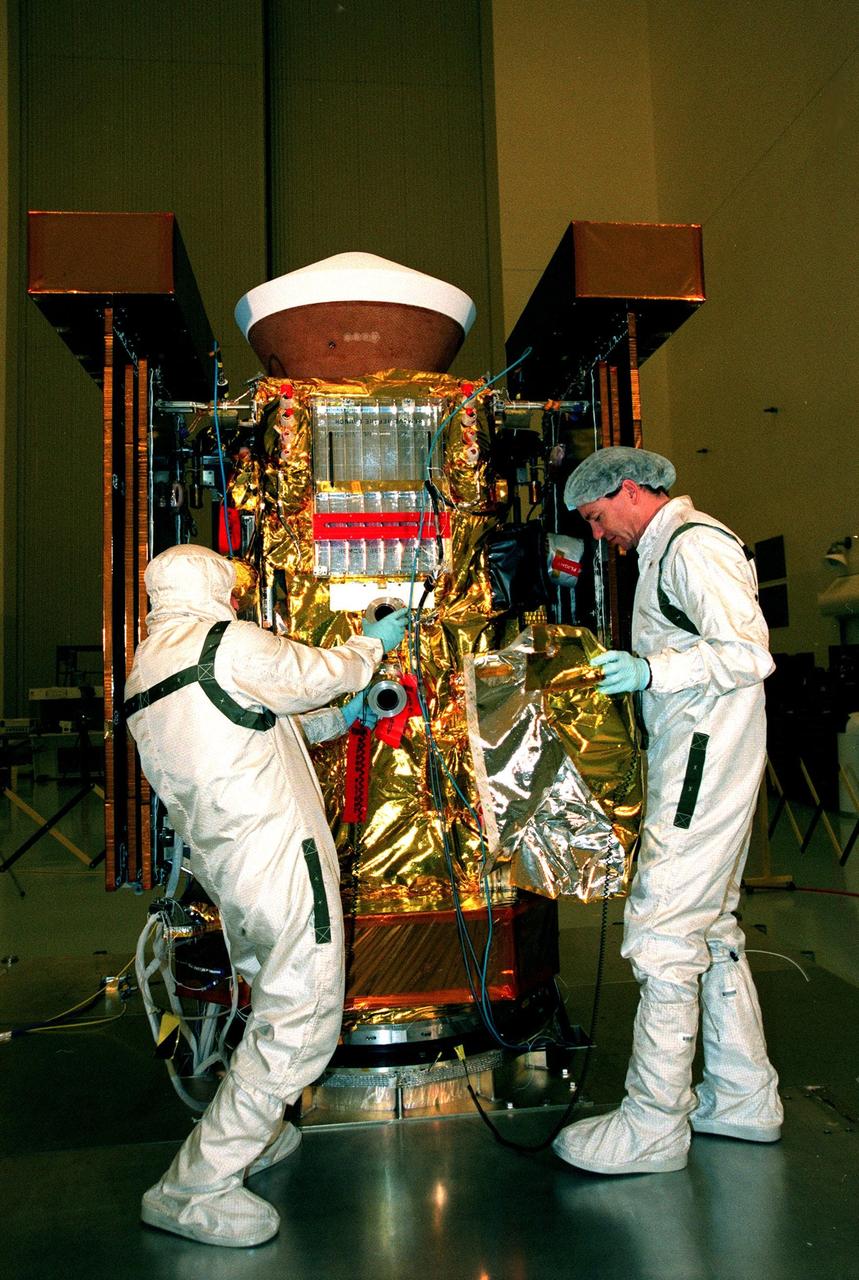
In the Payload Hazardous Servicing Facility, Randy Scott (left) and Pat Wedeman (right) , with Lockheed Martin Astronautics, insulate the <a href="http://www-pao.ksc.nasa.gov/kscpao/captions/subjects/stardust.htm">Stardust</a> spacecraft. Stardust will use a unique medium called aerogel to capture comet particles flying off the nucleus of comet Wild 2 in January 2004, plus collect interstellar dust for later analysis. The collected samples will return to Earth in the SRC to be jettisoned as it swings by Earth in January 2006. Stardust is scheduled to be launched aboard a Boeing Delta 7426 rocket from Complex 17, Cape Canaveral Air Station, on Feb. 6, 1999
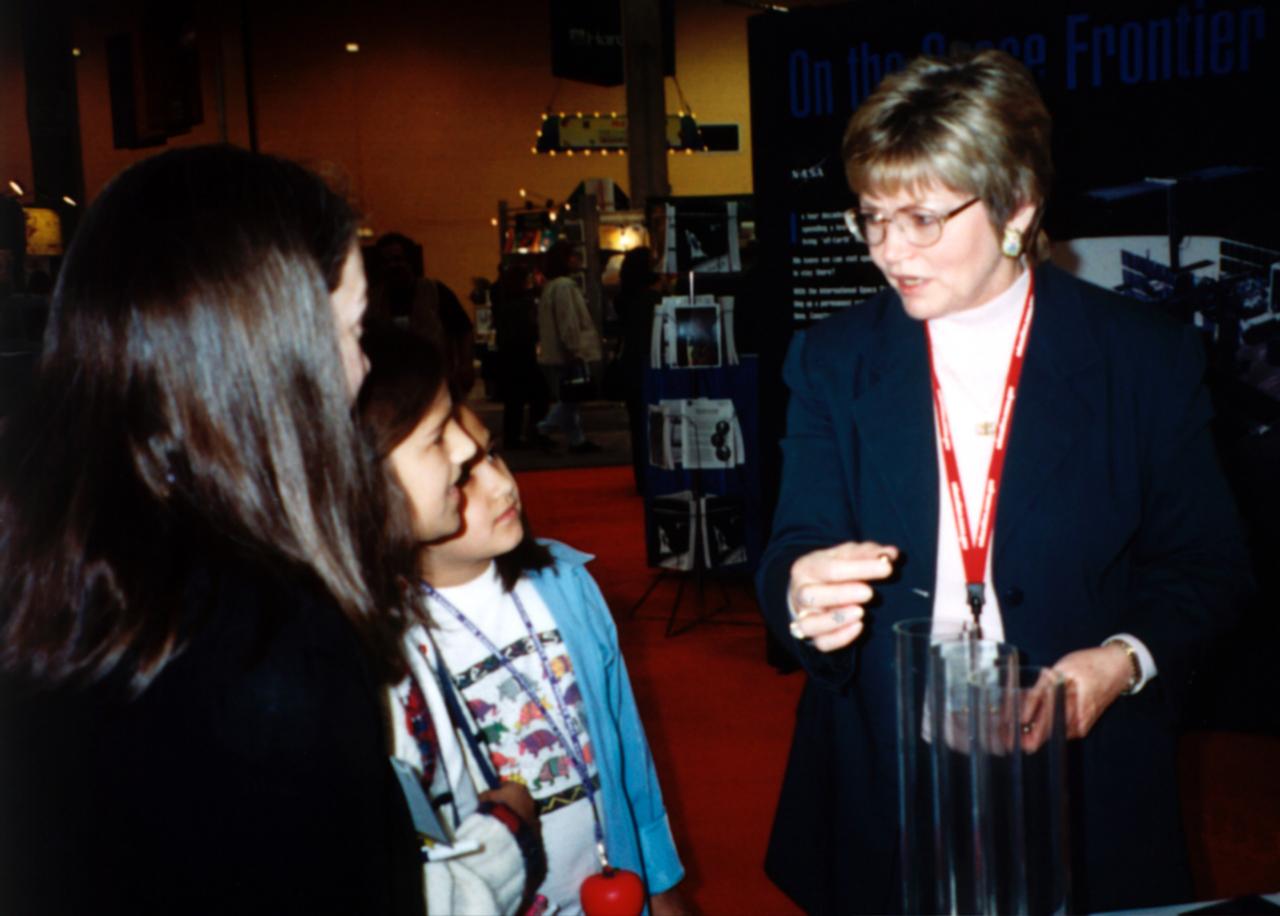
Pat Doty (right) of NASA/Marshall Space Flight Center (MSFC) demonstrates the greater bounce to the ounce of metal made from a supercooled bulk metallic glass alloy that NASA is studying in space experiments. The metal plates at the bottom of the plexiglass tubes are made of three different types of metal. Bulk metallic glass is more resilient and, as a result, the dropped ball bearing bounces higher. Experiments in space allow scientists to study fundamental properties that carnot be observed on Earth. This demonstration was at the April 200 conference of the National Council of Teachers of Mathematics (NCTM) in Chicago. photo credit: NASA/Marshall Space Flight Center (MSFC)
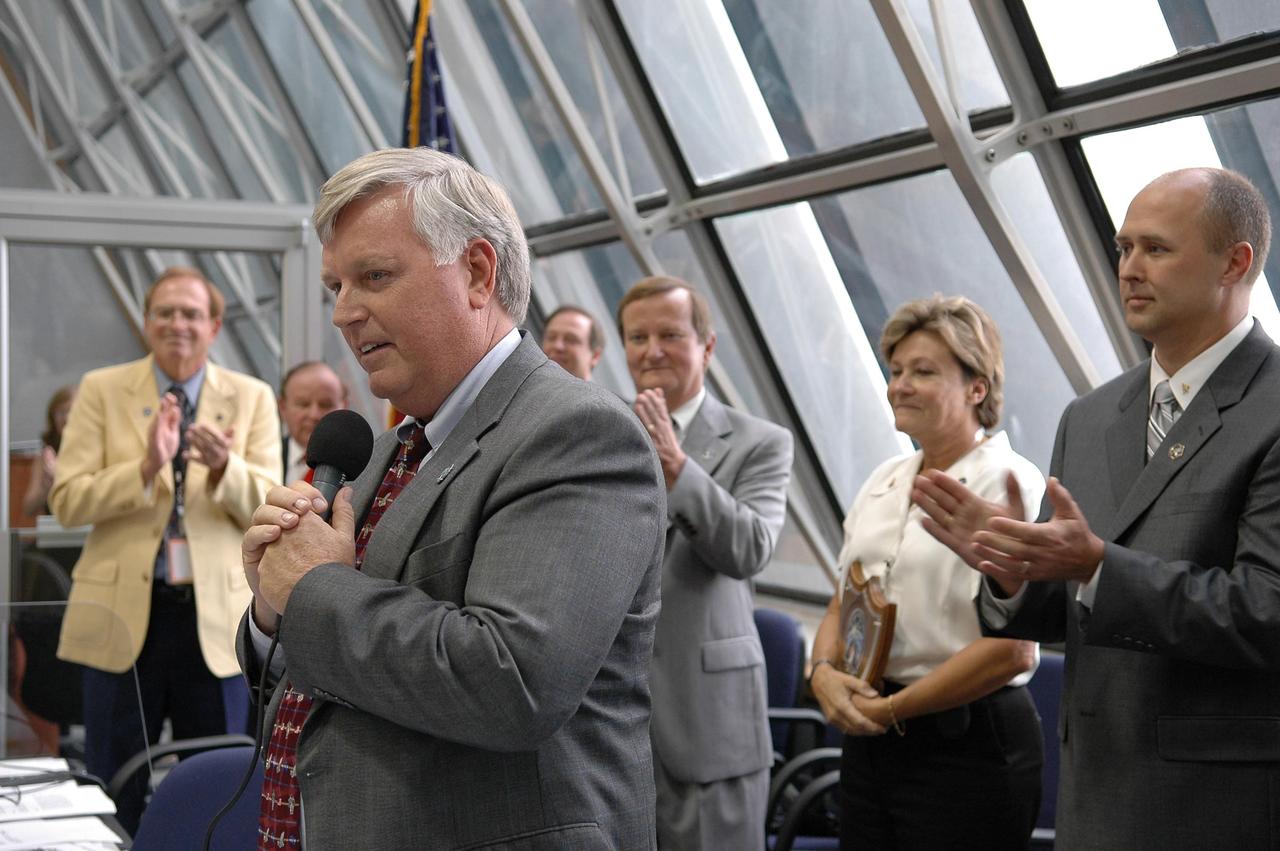
KENNEDY SPACE CENTER, FLA. - Inside the Launch Control Center, KSC Director Jim Kennedy congratulates the launch team after the liftoff of Space Shuttle Atlantis on mission STS-115. Behind him are (left to right) Shuttle Launch Director Mike Leinbach, Pat Leslie and Robbie Ashley, STS-115 payload manager. Mission STS-115 is the 116th space shuttle flight, the 27th flight for orbiter Atlantis, and the 19th U.S. flight to the International Space Station. Mission STS-115 is scheduled to last 11 days with a planned landing at KSC. Photo credit: NASA/Kim Shiflett
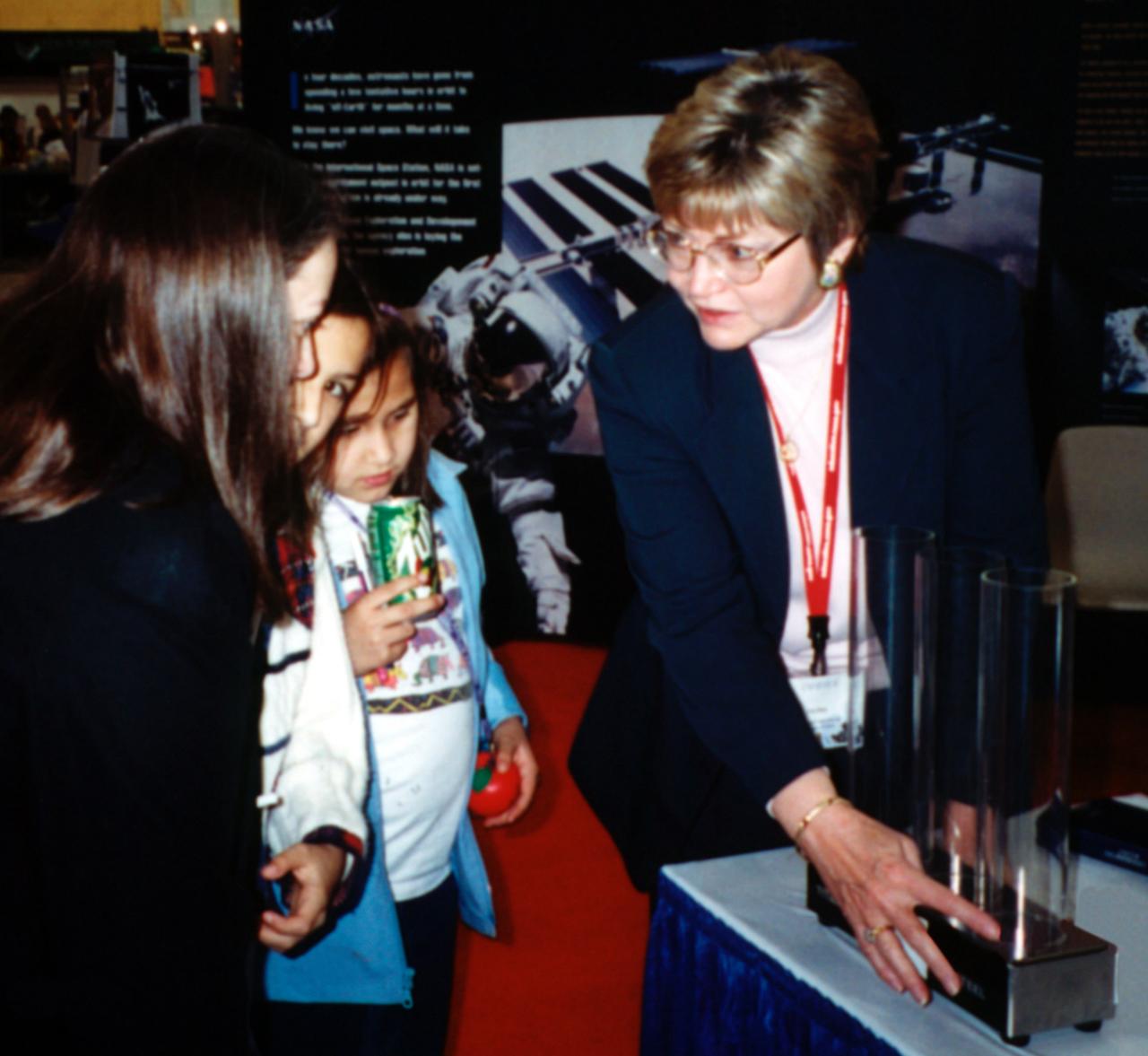
Pat Doty (right) of NASA/Marshall Space Flight Center (MSFC) demonstrates the greater bounce to the ounce of metal made from a supercooled bulk metallic glass alloy that NASA is studying in space experiments. The metal plates at the bottom of the plexiglass tubes are made of three different types of metal. Bulk metallic glass is more resilient and, as a result, the dropped ball bearing bounces higher. Experiments in space allow scientists to study fundamental properties that carnot be observed on Earth. This demonstration was at the April 2000 conference of the National Council of Teachers of Mathematics in Chicago. Photo credit: NASA/Marshall Space Flight Center (MSFC)
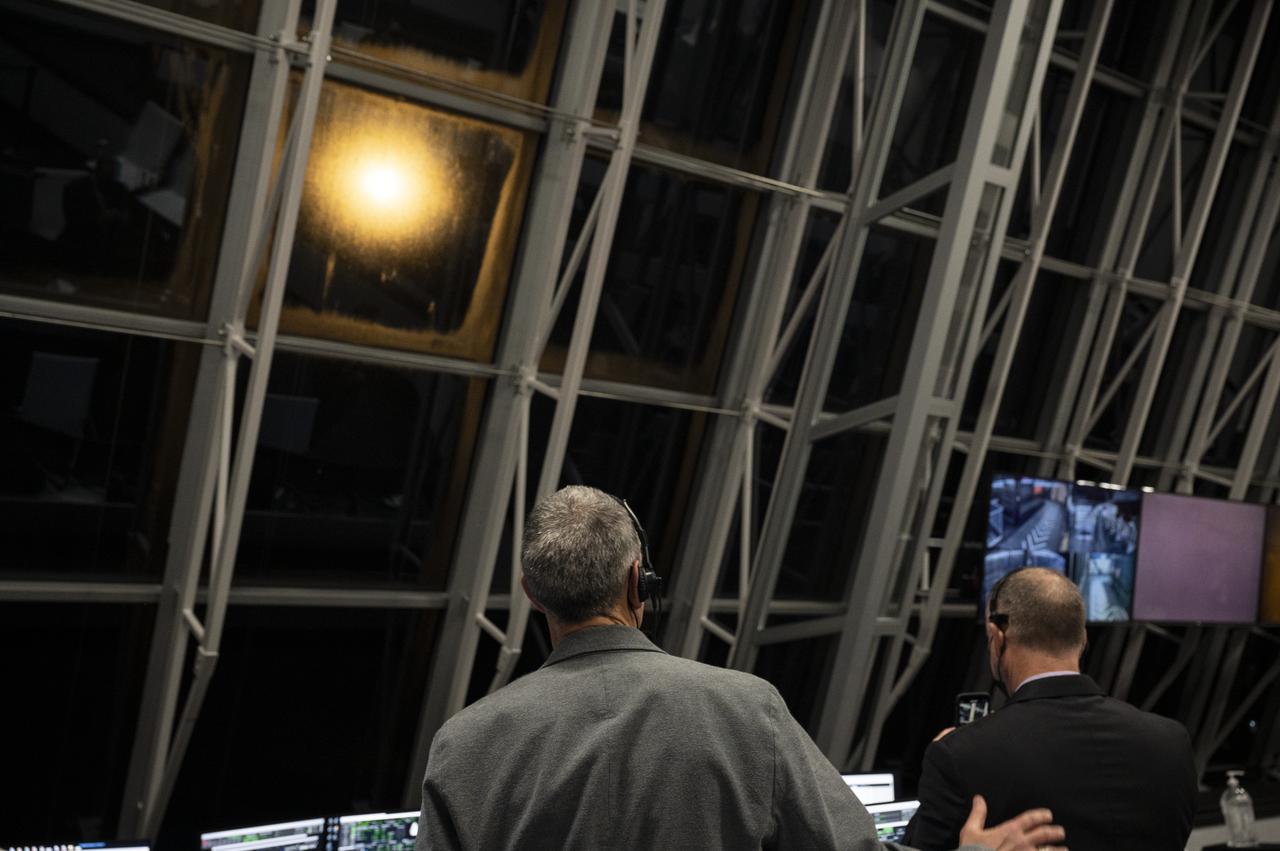
Lee Rosen, vice president, Mission and Launch Operations at SpaceX pats Norm Knight, deputy director of Flight Operations at NASA's Johnson Space Center on the back as they watch the launch of a SpaceX Falcon 9 rocket carrying the company's Crew Dragon spacecraft on NASA’s SpaceX Crew-1 mission with NASA astronauts Mike Hopkins, Victor Glover, Shannon Walker, and Japan Aerospace Exploration Agency (JAXA) astronaut Soichi Noguchi onboard, Sunday, Nov. 15, 2020, in firing room four of the Launch Control Center at NASA’s Kennedy Space Center in Florida. NASA’s SpaceX Crew-1 mission is the first crew rotation mission of the SpaceX Crew Dragon spacecraft and Falcon 9 rocket to the International Space Station as part of the agency’s Commercial Crew Program. Hopkins, Glover, Walker, and Noguchi launched at 7:27 p.m. EST, from Launch Complex 39A at the Kennedy Space Center. Photo Credit: (NASA/Aubrey Gemignani)
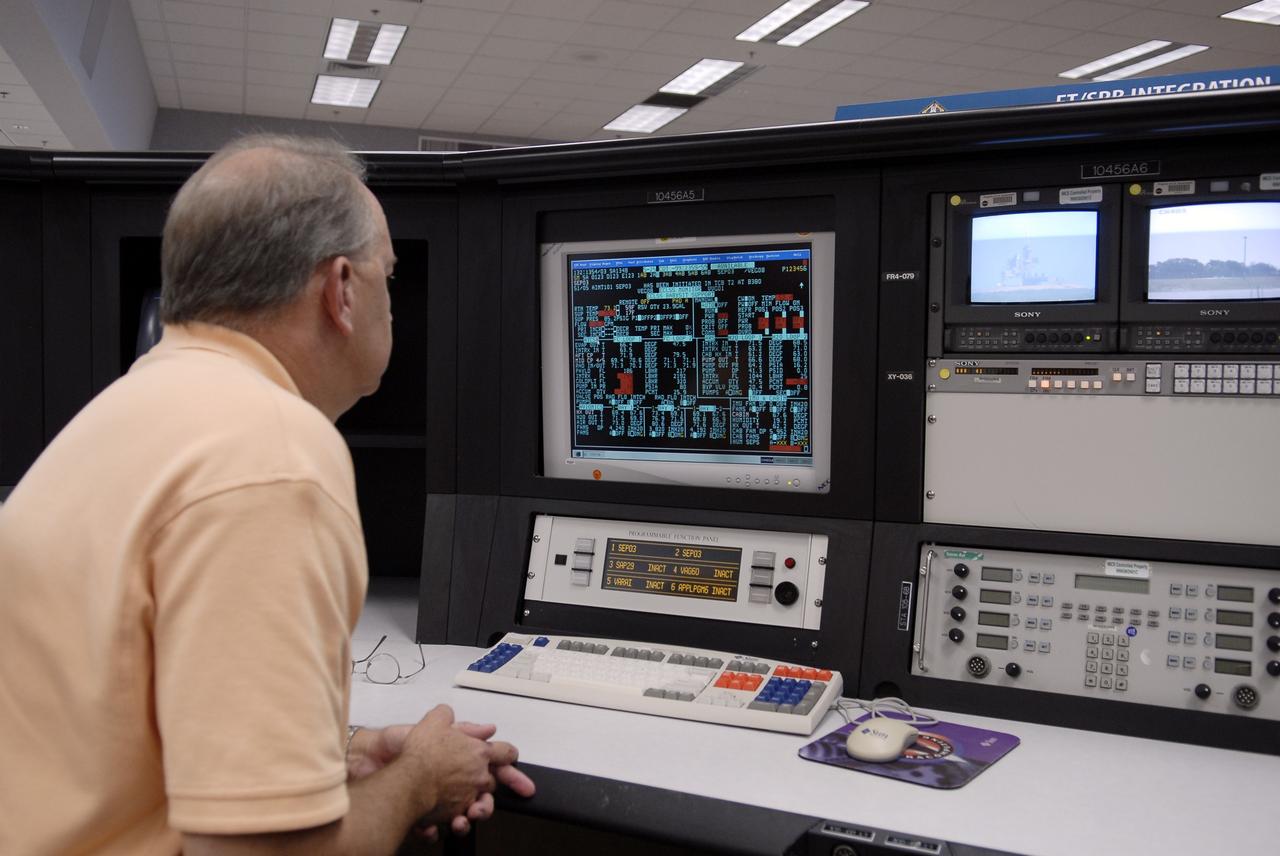
CAPE CANAVERAL, Fla. – Pat Simpkins, director of Engineering for NASA at Kennedy Space Center in Florida, monitors the final power down of space shuttle Endeavour from the Firing Room 4 Integration Console in the Launch Control Center. The Integration Console manages all orbiter systems including those needed for shuttle power up and launch. Endeavour’s power down is under way in in Orbiter Processing Facility-2. Endeavour is being prepared for public display at the California Science Center in Los Angeles. Its ferry flight to California is targeted for mid-September. Endeavour was the last space shuttle added to NASA’s orbiter fleet. Over the course of its 19-year career, Endeavour spent 299 days in space during 25 missions. For more information, visit http://www.nasa.gov/transition. Photo credit: NASA/Tim Jacobs
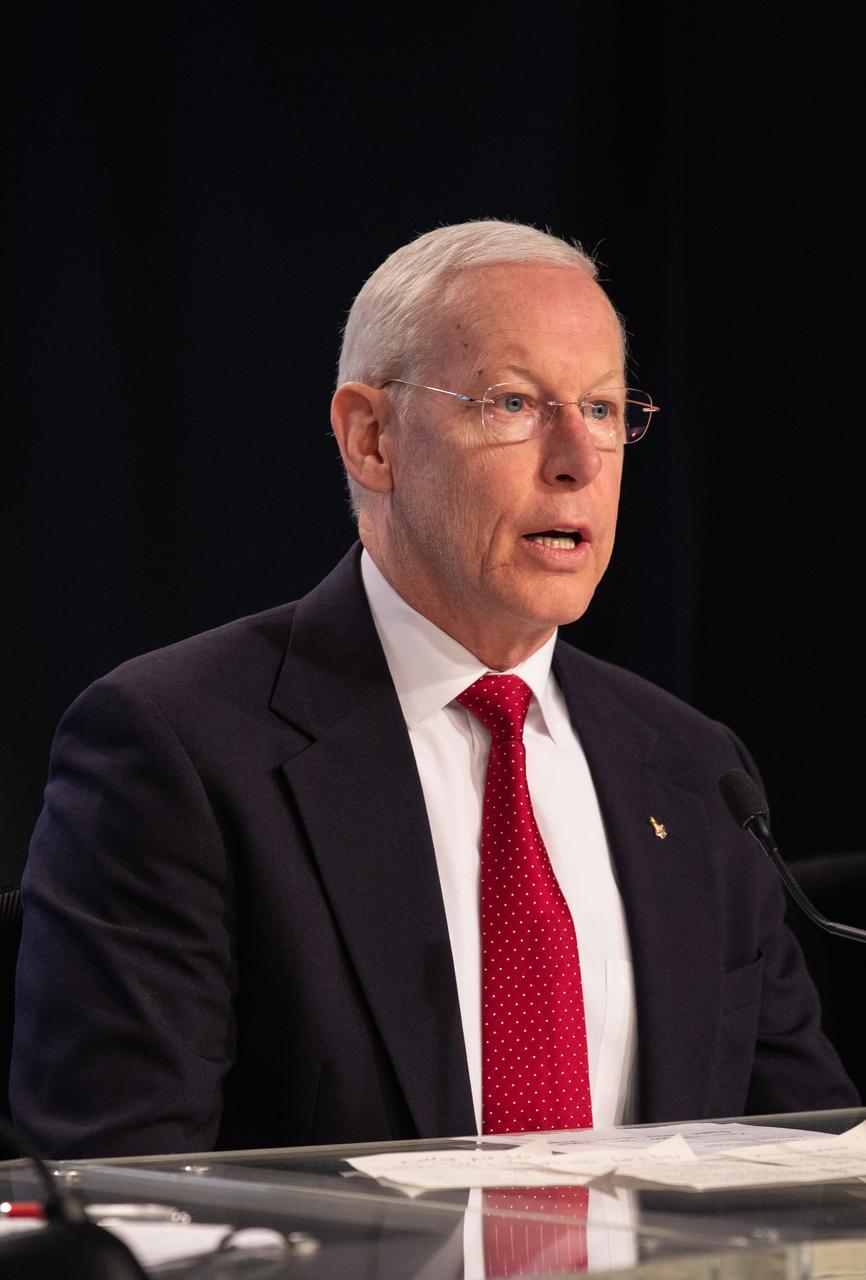
Pat Forrester, chief, Astronaut Office, Johnson Space Center, speaks to members of the media during a prelaunch news conference with NASA, SpaceX and the 45th Weather Squadron leaders Thursday, Feb. 28, prior to the Saturday, March 2 launch of the SpaceX Demo-1 Commercial Crew Program (CCP) mission to the International Space Station. The inaugural flight of the SpaceX Crew Dragon, known as Demo-1, is scheduled to lift off from Kennedy’s Launch Complex 39A Saturday at 2:49 EST. A SpaceX Falcon 9 rocket will launch the uncrewed spacecraft on a mission designed to validate end-to-end systems and capabilities, leading to certification to fly crew. NASA has worked with SpaceX and Boeing in developing the Commercial Crew Program spacecraft to facilitate new human spaceflight systems launching from U.S. soil with the goal of safe, reliable and cost-effective access to low-Earth orbit destinations, such as the International Space Station.
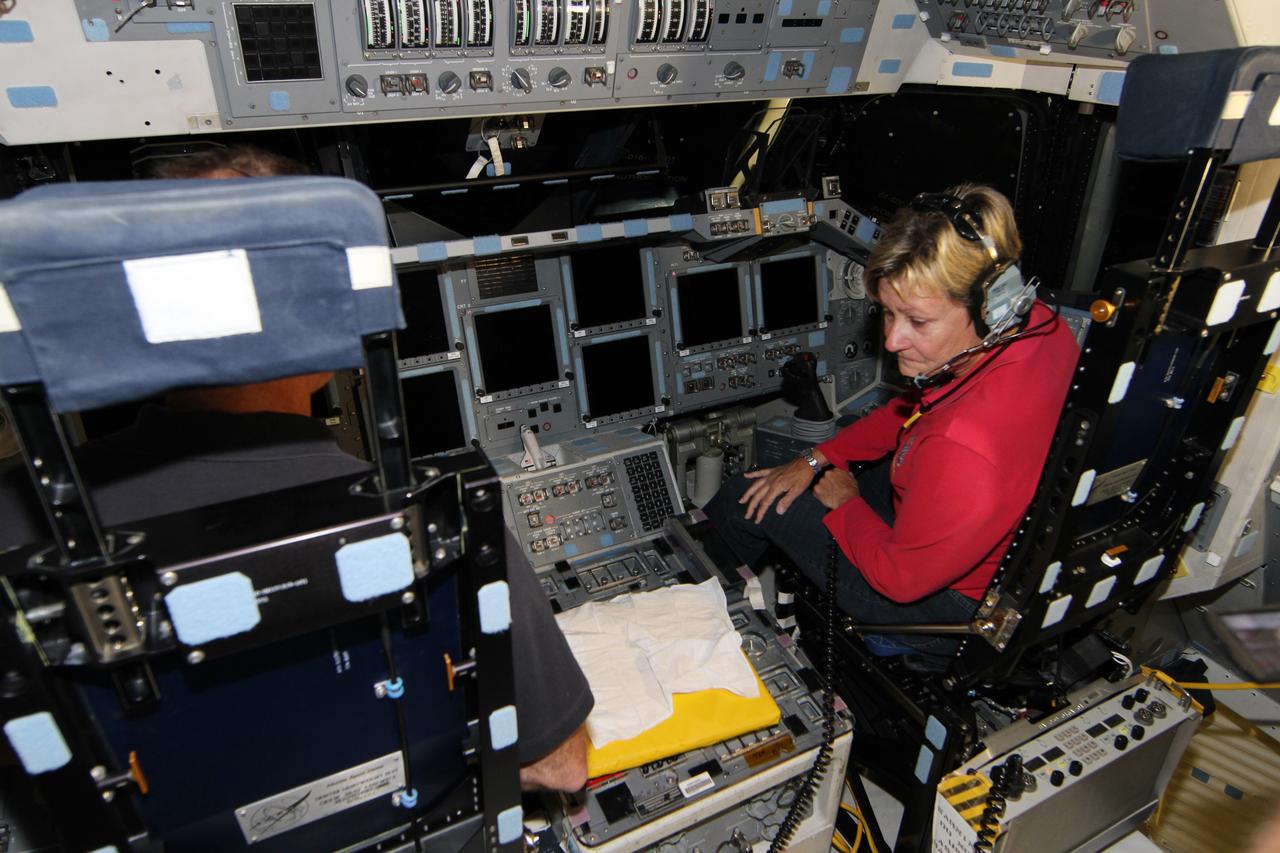
CAPE CANAVERAL, Fla. – In Orbiter Processing Facility-2 at NASA’s Kennedy Space Center in Florida, United Space Alliance OV-105 operations chief Mike Parrish, left, and associate operations chief Pat Leslie complete their respective tasks on space shuttle Endeavour’s flight deck as the shuttle is powered down for the final time. Endeavour is being prepared for public display at the California Science Center in Los Angeles. Its ferry flight to California is targeted for mid-September. Endeavour was the last space shuttle added to NASA’s orbiter fleet. Over the course of its 19-year career, Endeavour spent 299 days in space during 25 missions. For more information, visit http://www.nasa.gov/transition. Photo credit: NASA/Ben Smegelsky
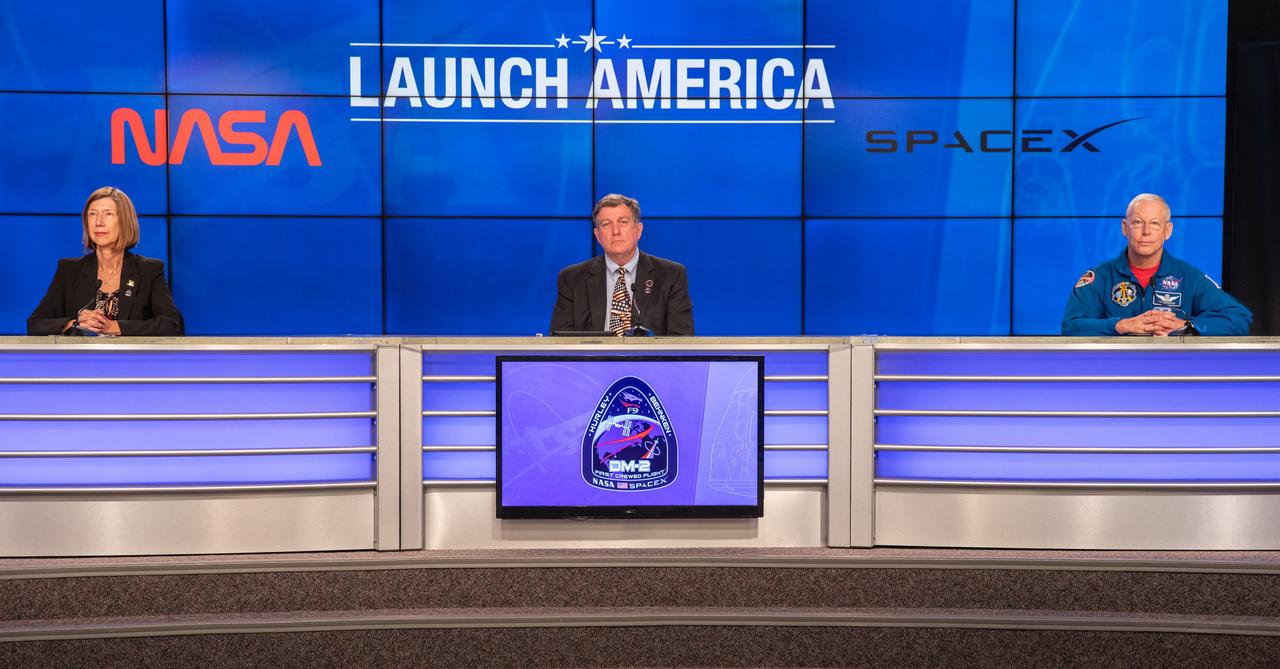
From left, NASA Commercial Crew Program Manager Kathy Lueders, NASA International Space Station Program Manager Kirk Shireman and NASA Chief Astronaut Pat Forrester participate in a postlaunch news conference inside the Press Site auditorium at NASA’s Kennedy Space Center in Florida on May 30, 2020, following the launch of the agency’s SpaceX Demo-2 mission to the International Space Station. Liftoff of the SpaceX Falcon 9 rocket and Crew Dragon spacecraft, carrying NASA astronauts Robert Behnken and Douglas Hurley, occurred at 3:22 p.m. EDT from historic Launch Complex 39A. Behnken and Hurley are the first astronauts to launch to the space station from U.S. soil since the end of the Space Shuttle Program in 2011. Part of NASA’s Commercial Crew Program, this will be SpaceX’s final flight test, paving the way for the agency to certify the crew transportation system for regular, crewed flights to the orbiting laboratory.

Officials from NASA, Boeing, United Launch Alliance and the U.S. Air Force 45th Weather Squadron participate in a prelaunch briefing for Boeing’s Orbital Flight Test at the agency’s Kennedy Space Center in Florida, Dec. 17, 2019. From left are John Elbon, chief operating officer, United Launch Alliance; Joel Montalbano, deputy manager, International Space Station Program; Pat Forrester, Astronaut Office chief, Johnson Space Center; and Will Ulrich, launch weather officer, 45th Weather Squadron. Boeing’s CST-100 Starliner spacecraft will launch atop a United Launch Alliance Atlas V rocket from Space Launch Complex 41 at Cape Canaveral Air Force Station. The uncrewed Orbital Flight Test will be the Starliner’s first flight to the International Space Station for NASA’s Commercial Crew Program.