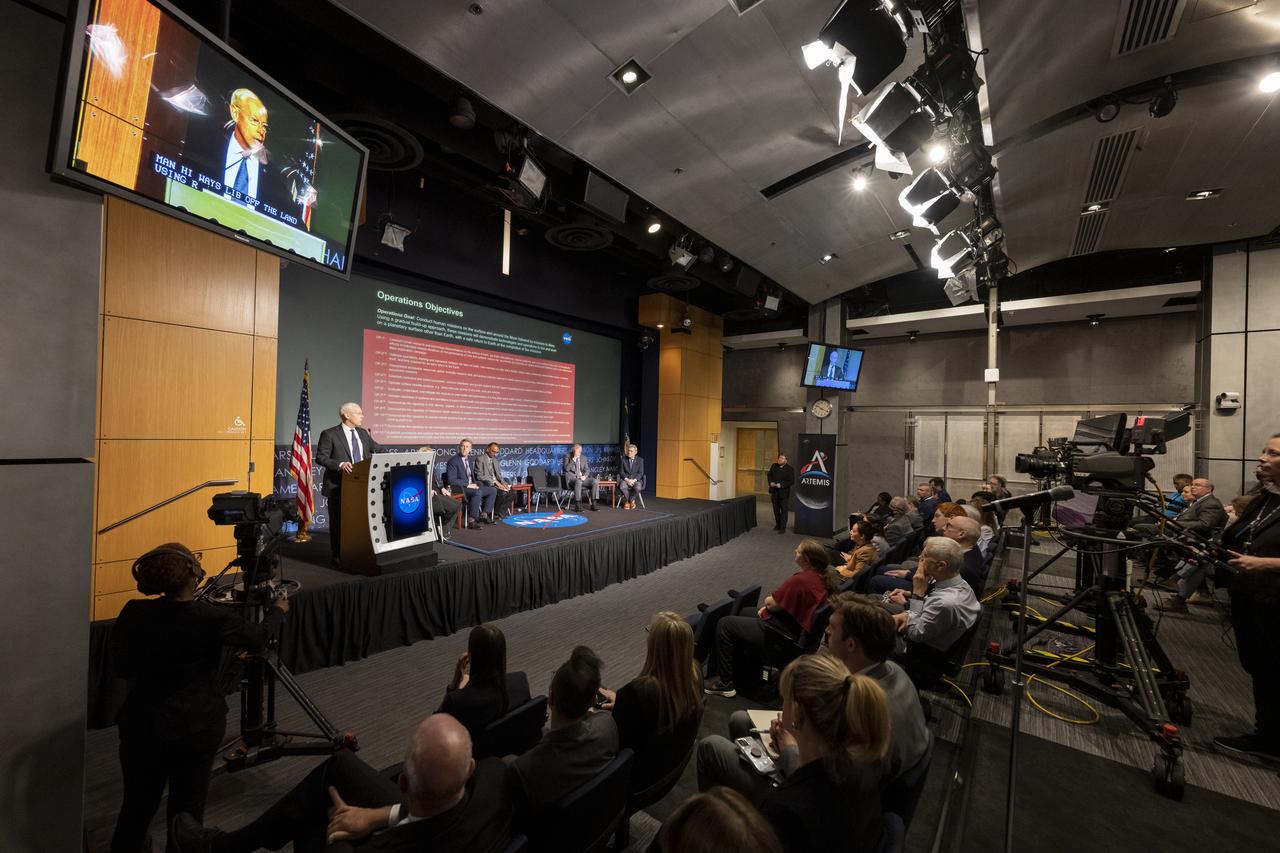
Special Advisor to the Associate Administrator, Space Operations Mission Directorate Pat Forrester delivers remarks during a Moon to Mars Town Hall, Thursday, May 18, 2023, at the Mary W. Jackson NASA Headquarters building in Washington. Photo Credit: (NASA/Keegan Barber)
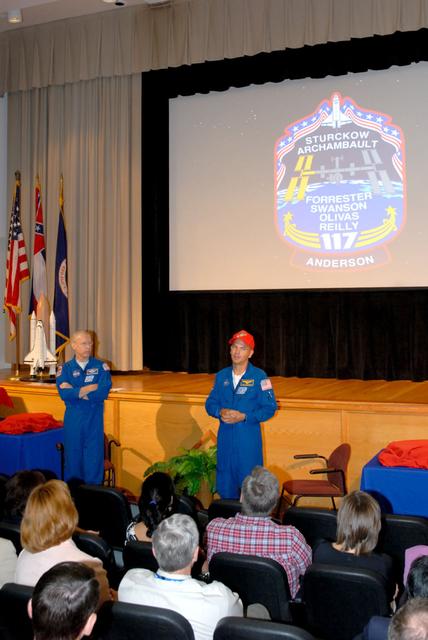
Astronauts Rick Sturckow (right) and Pat Forrester make a presentation Aug. 2 at NASA Stennis Space Center near Bay St. Louis, Miss., about their recent space shuttle mission, STS-117. Sturckow and Forrester thanked employees for the reliability and safe performance of the space shuttle's main engines, which are all tested and proved flight-worthy at SSC. The astronauts delivered a video of their mission's highlights, held a question-and-answer session, met one-on-one with employees and presented two Silver Snoopy awards during their visit. The STS-117 mission, which launched June 8, delivered a truss segment and a set of U.S. solar arrays, batteries and associated equipment to the International Space Station. Sturckow commanded the mission; Forrester was a mission specialist who performed two of STS-117's four spacewalks.
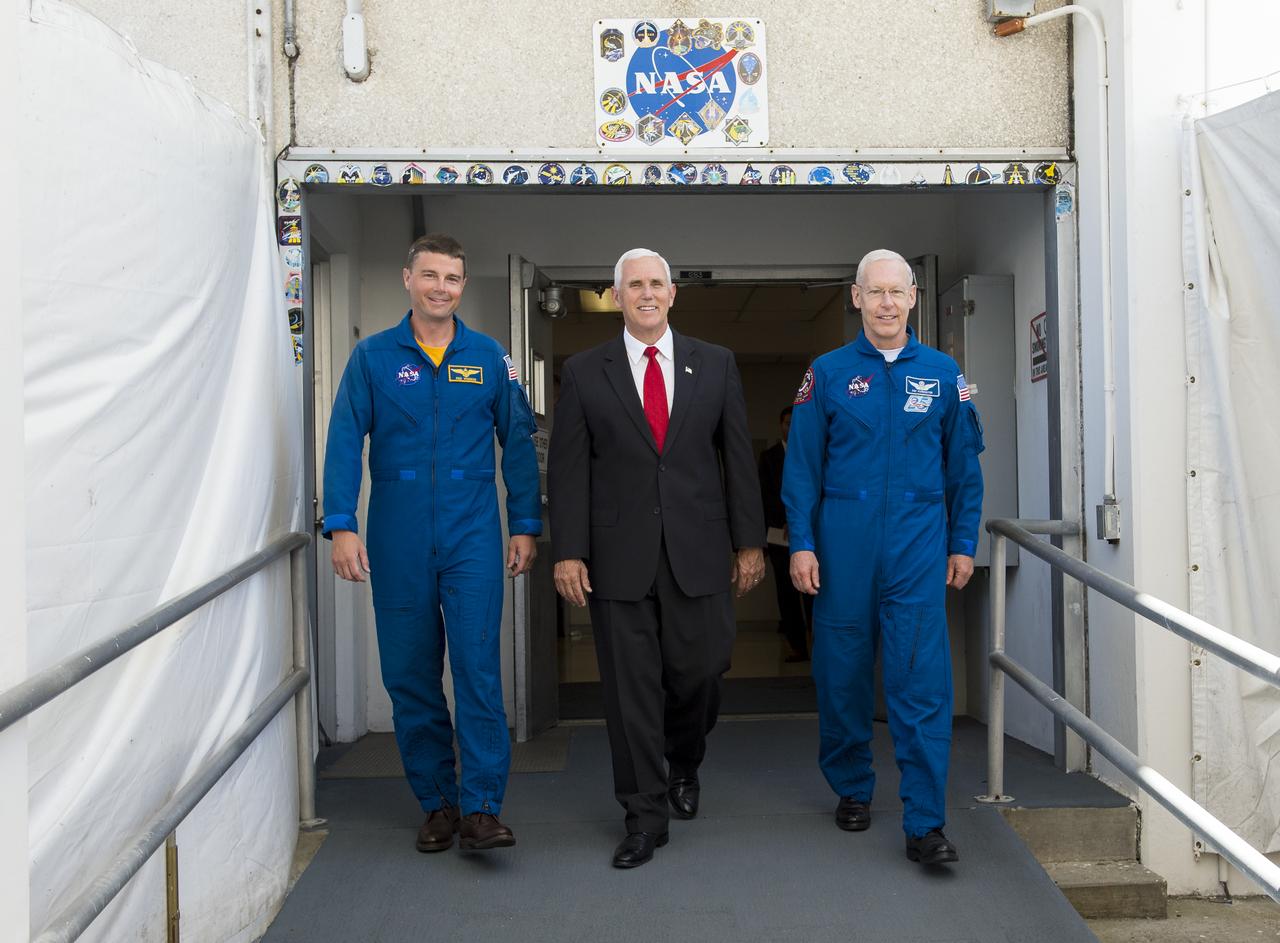
Vice President Mike Pence, center, and NASA astronaut Reid Wiseman, left, and NASA astronaut Pat Forrester, right, walk out of the historic crew doors at Kennedy Space Center's (KSC) Operations and Checkout Building on Thursday, July 6, 2017, in Cape Canaveral, Florida. These are the same doors that Apollo and space shuttle astronauts walked through on their way to the launch pad. Photo Credit: (NASA/Aubrey Gemignani)
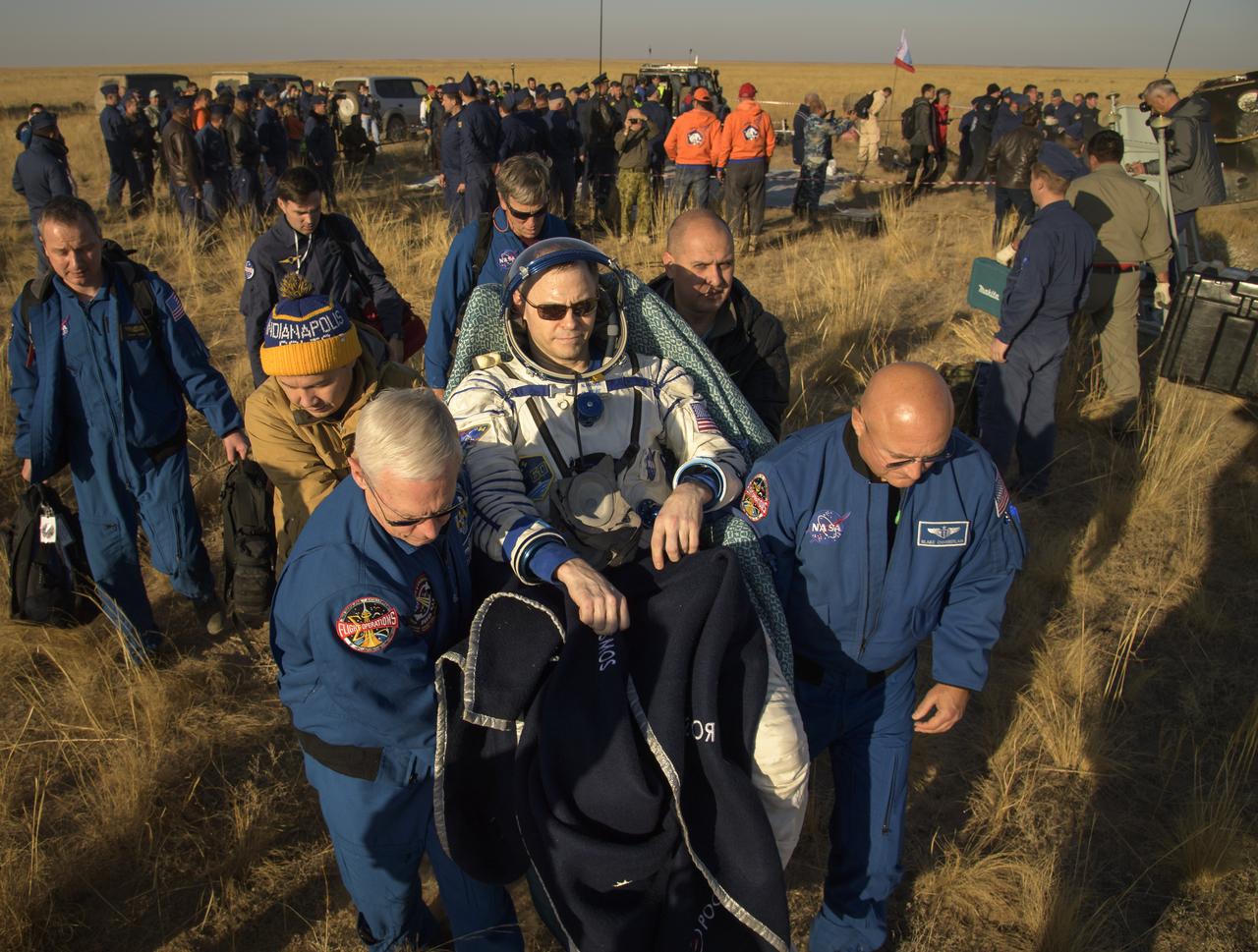
Expedition 60 crewmember Nick Hague of NASA is carried to a medical tent by NASA Chief Astronaut Pat Forrester, left, and NASA Flight Surgeon Blake Chamberlain, right, after he and fellow Expedition 60 crewmember Alexey Ovchinin of Roscosmos and visiting astronaut Hazzaa Ali Almansoori of the United Arab Emirates landed in their Soyuz MS-12 spacecraft near the town of Zhezkazgan, Kazakhstan on Thursday, Oct. 3, 2019. Hague and Ovchinin are returning after 203 days in space where they served as members of the Expedition 59 and 60 crews onboard the International Space Station. Almansoori logged 8 days in space during his first flight as an astronaut. Photo Credit: (NASA/Bill Ingalls)
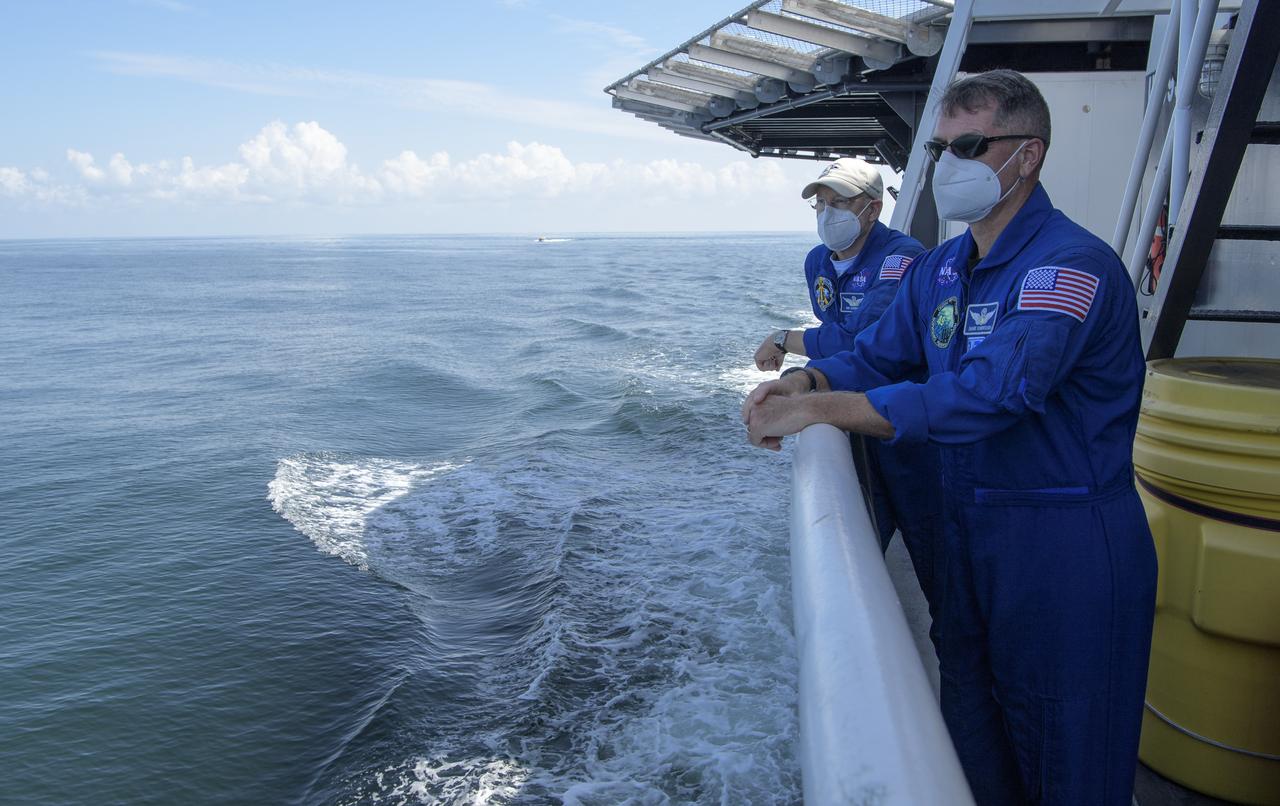
NASA Chief Astronaut Pat Forrester, left, and NASA astronaut and Crew Recovery Chief Shane Kimbrough, along with other NASA and SpaceX support teams onboard the SpaceX GO Navigator recovery ship, prepare for the landing of the SpaceX Crew Dragon Endeavour spacecraft with NASA astronauts Robert Behnken and Douglas Hurley onboard, Sunday, Aug. 2, 2020 in the Gulf of Mexico off the cost of Pensacola, Florida. The Demo-2 test flight for NASA's Commercial Crew Program is the first to deliver astronauts to the International Space Station and return them to Earth onboard a commercially built and operated spacecraft. Behnken and Hurley are returning after spending 64 days in space. Photo Credit: (NASA/Bill Ingalls)
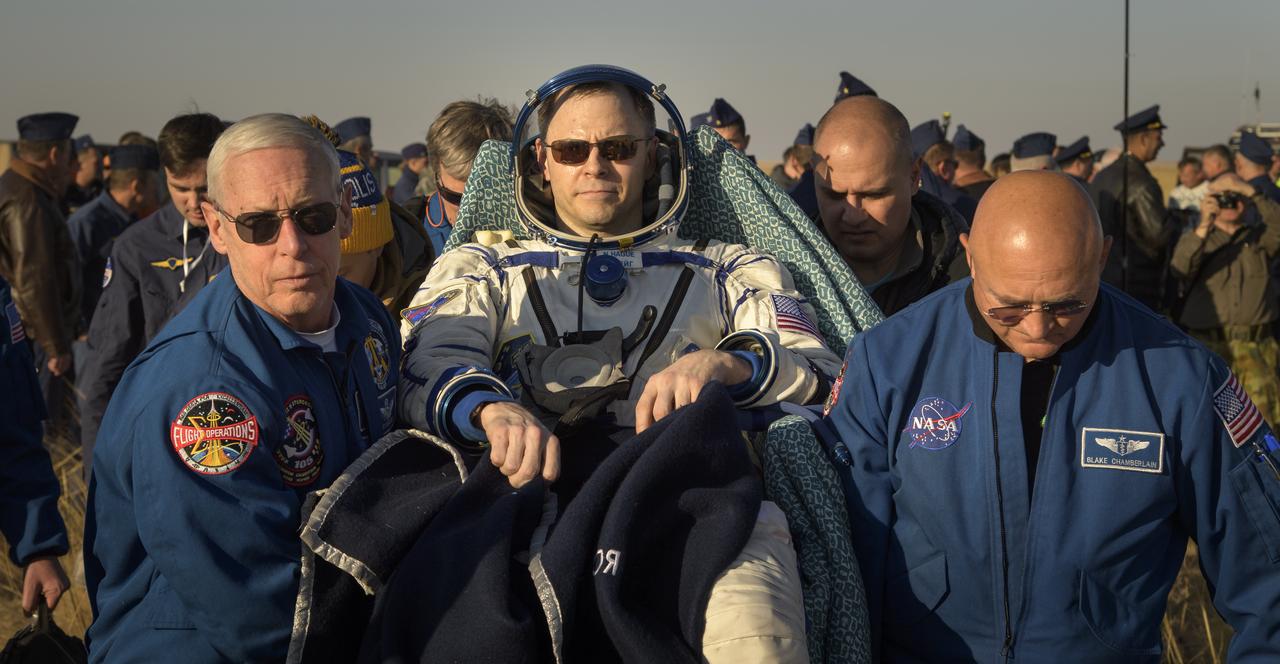
Expedition 60 crewmember Nick Hague of NASA is carried to a medical tent by NASA Chief Astronaut Pat Forrester, left, and NASA Flight Surgeon Blake Chamberlain, right, after he and fellow Expedition 60 crewmember Alexey Ovchinin of Roscosmos and visiting astronaut Hazzaa Ali Almansoori of the United Arab Emirates landed in their Soyuz MS-12 spacecraft near the town of Zhezkazgan, Kazakhstan on Thursday, Oct. 3, 2019. Hague and Ovchinin are returning after 203 days in space where they served as members of the Expedition 59 and 60 crews onboard the International Space Station. Almansoori logged 8 days in space during his first flight as an astronaut. Photo Credit: (NASA/Bill Ingalls)

NASA astronaut Doug Hurley and chief of the astronaut office Pat Forrester watch the launch of a SpaceX Falcon 9 rocket carrying the company's Crew Dragon spacecraft on the Demo-1 mission from firing room four of the Launch Control Center, Saturday, March 2, 2019 at the Kennedy Space Center in Florida. The Demo-1 mission is the first launch of a commercially built and operated American spacecraft and space system designed for humans as part of NASA's Commercial Crew Program. The mission will serve as an end-to-end test of the system's capabilities. Photo Credit: (NASA/Joel Kowsky)
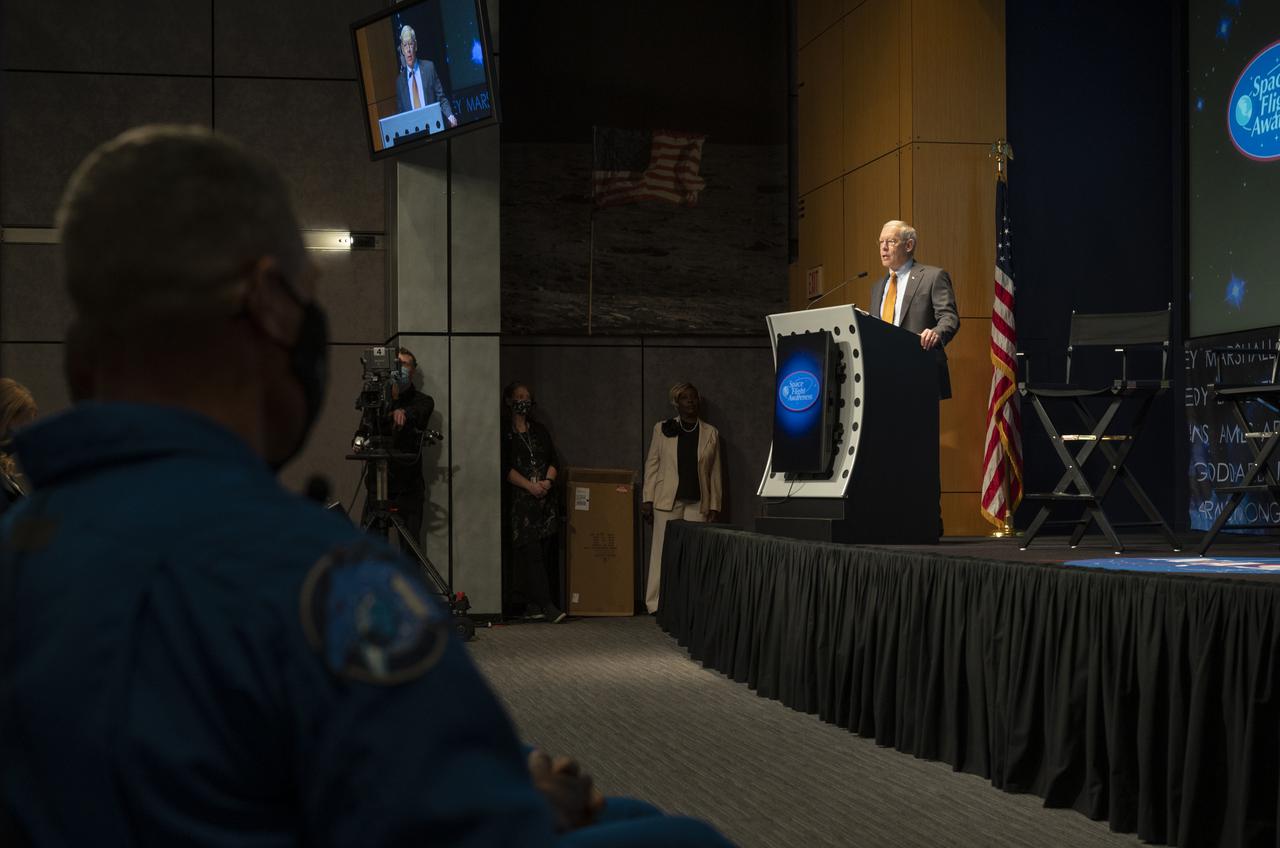
Pat Forrester, special assistant to the associate administrator of the Space Operations Mission Directorate, speaks during a presentation to the Space Operations and Exploration Systems Development Mission Directorates by SpaceX Crew-1 NASA astronauts Mike Hopkins, Victor Glover, and Shannon Walker, and Japan Aerospace Exploration Agency (JAXA) astronaut Soichi Noguchi, Monday, Nov. 15, 2021, at the Mary W. Jackson NASA Headquarters Building in Washington. Hopkins, Glover, Walker, and Noguchi launched on the first crew rotation mission to the International Space Station for SpaceX’s Falcon 9 and Crew Dragon spacecraft as part of the agency’s Commercial Crew Program and spent 168 days in space across Expeditions 64 and 65. Photo Credit: (NASA/Joel Kowsky)
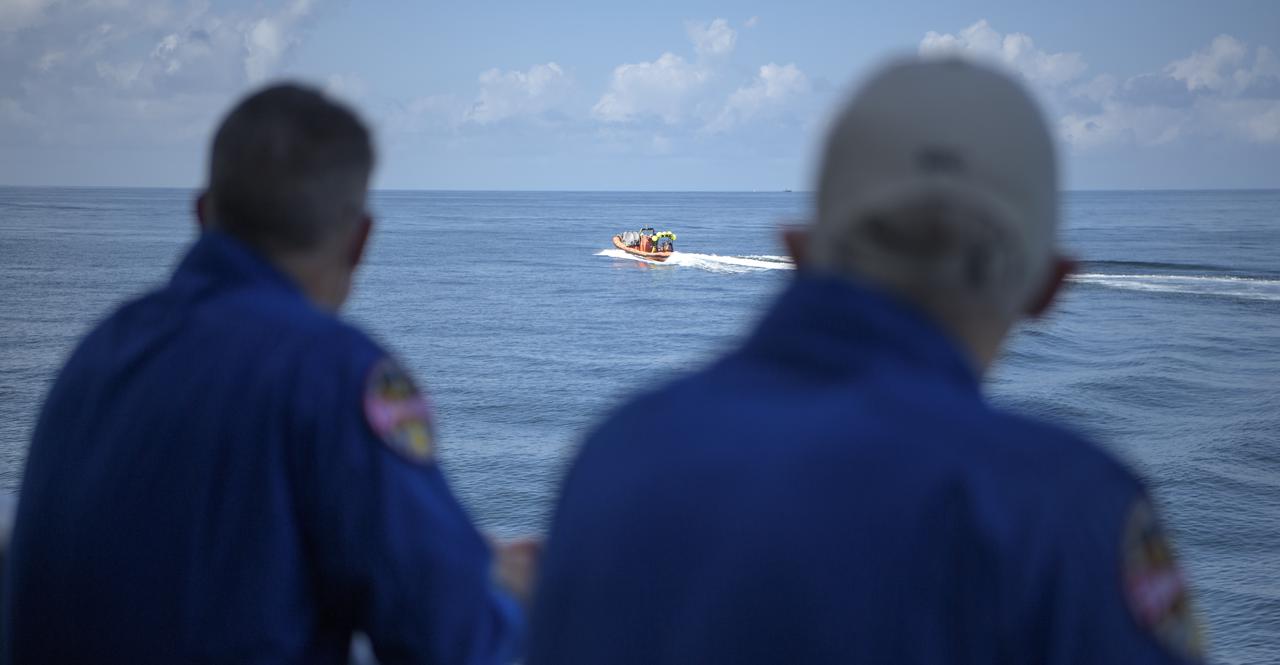
NASA astronaut and Crew Recovery Chief Shane Kimbrough, left, and NASA Chief Astronaut Pat Forrester watch as SpaceX support teams are deployed on fast boats from the SpaceX GO Navigator recovery ship ahead of the landing of the SpaceX Crew Dragon Endeavour spacecraft with NASA astronauts Robert Behnken and Douglas Hurley onboard, Sunday, Aug. 2, 2020 in the Gulf of Mexico off the cost of Pensacola, Florida. The Demo-2 test flight for NASA's Commercial Crew Program is the first to deliver astronauts to the International Space Station and return them to Earth onboard a commercially built and operated spacecraft. Behnken and Hurley are returning after spending 64 days in space. Photo Credit: (NASA/Bill Ingalls)
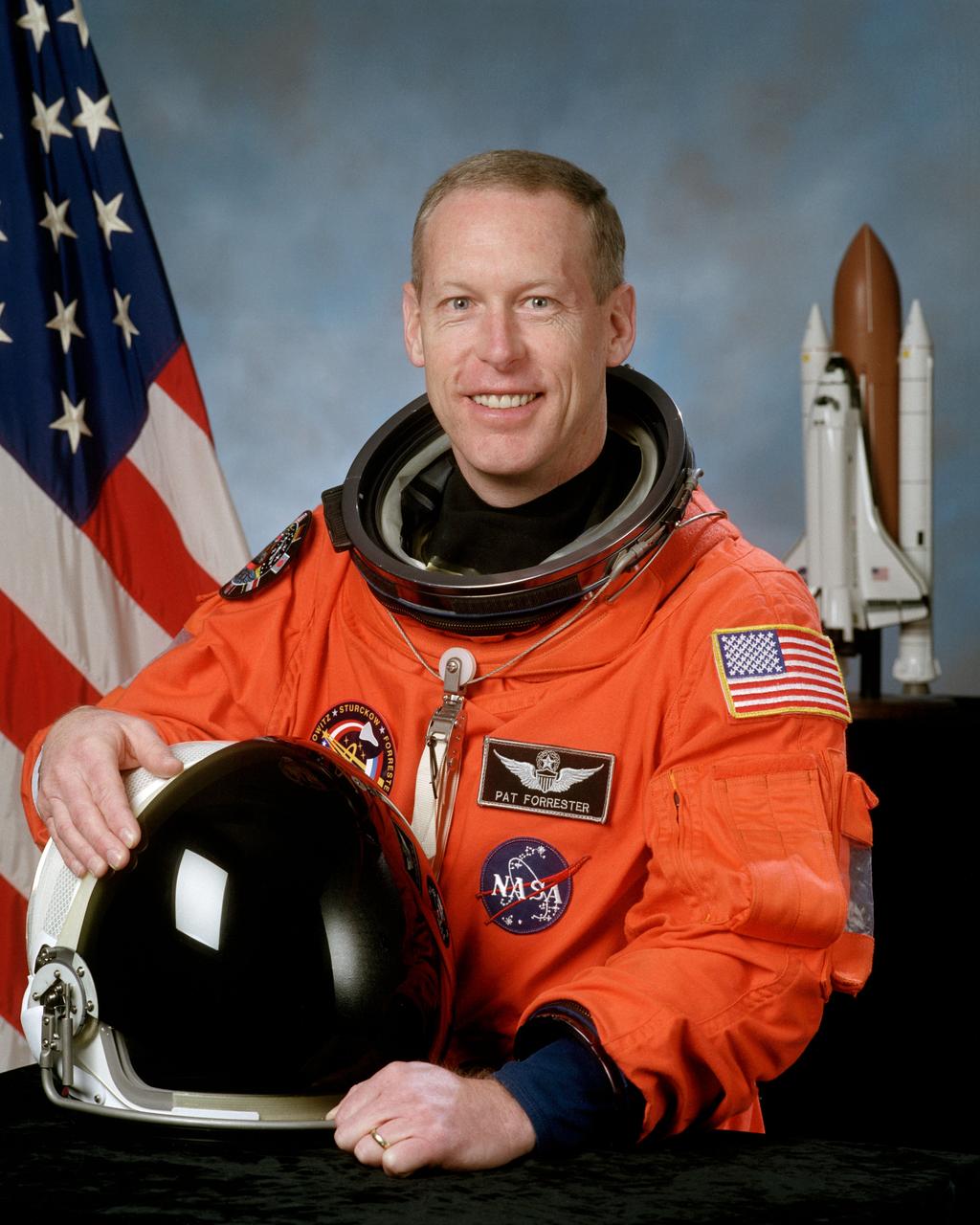
JSC2001-00956 (10 April 2001) --- Astronaut Patrick G. Forrester, mission specialist.
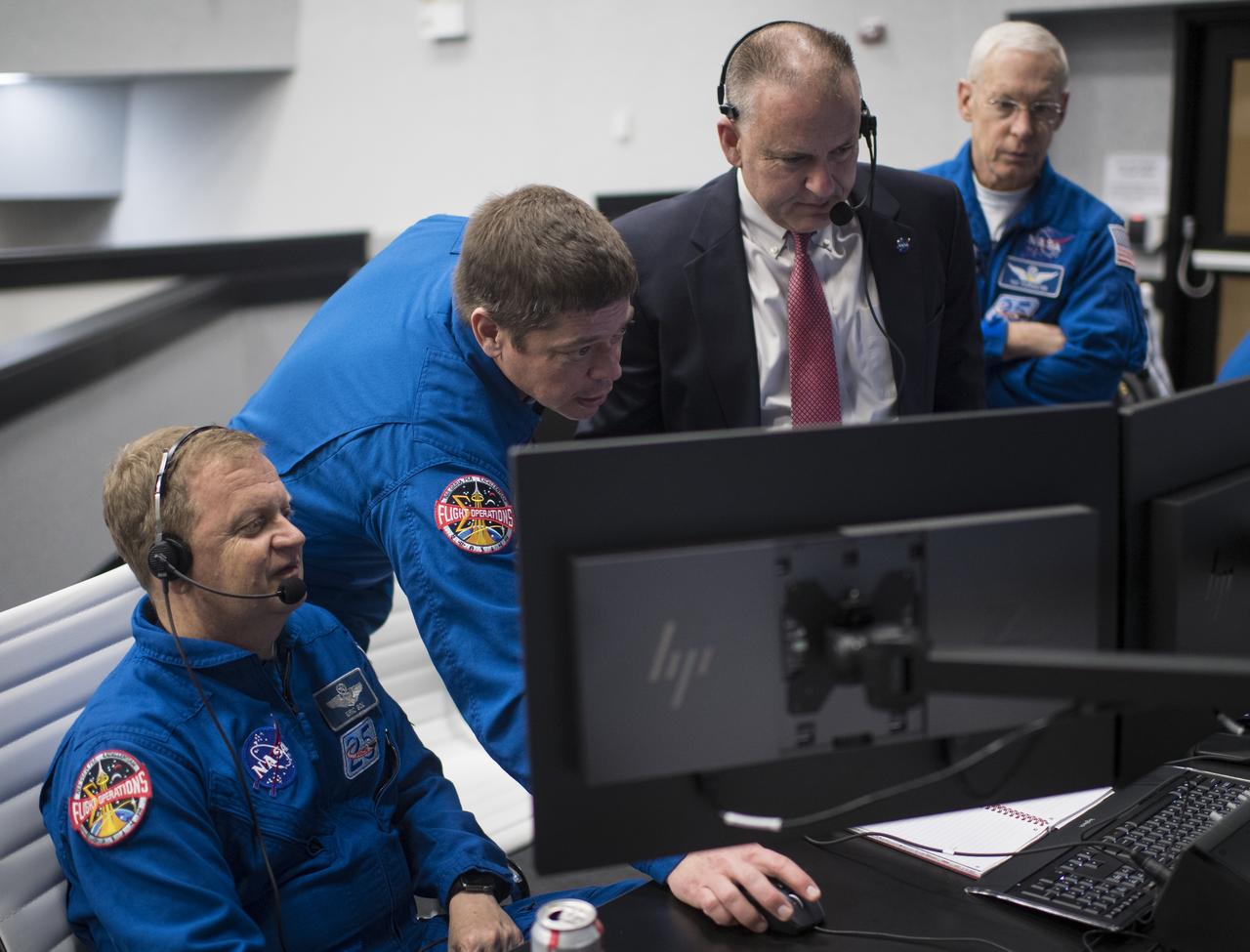
NASA astronaut Eric Boe, assistant to the chief of the astronaut office for commercial crew, left, NASA astronaut Bob Behnken, Norm Knight, deputy director of flight operations at NASA's Johnson Space Center and chief of the astronaut office Pat Forrester monitor the countdown of the launch of a SpaceX Falcon 9 rocket carrying the company's Crew Dragon spacecraft on the Demo-1 mission from firing room four of the Launch Control Center, Saturday, March 2, 2019 at the Kennedy Space Center in Florida. The Demo-1 mission will be the first launch of a commercially built and operated American spacecraft and space system designed for humans as part of NASA's Commercial Crew Program. The mission will serve as an end-to-end test of the system's capabilities. Photo Credit: (NASA/Joel Kowsky)
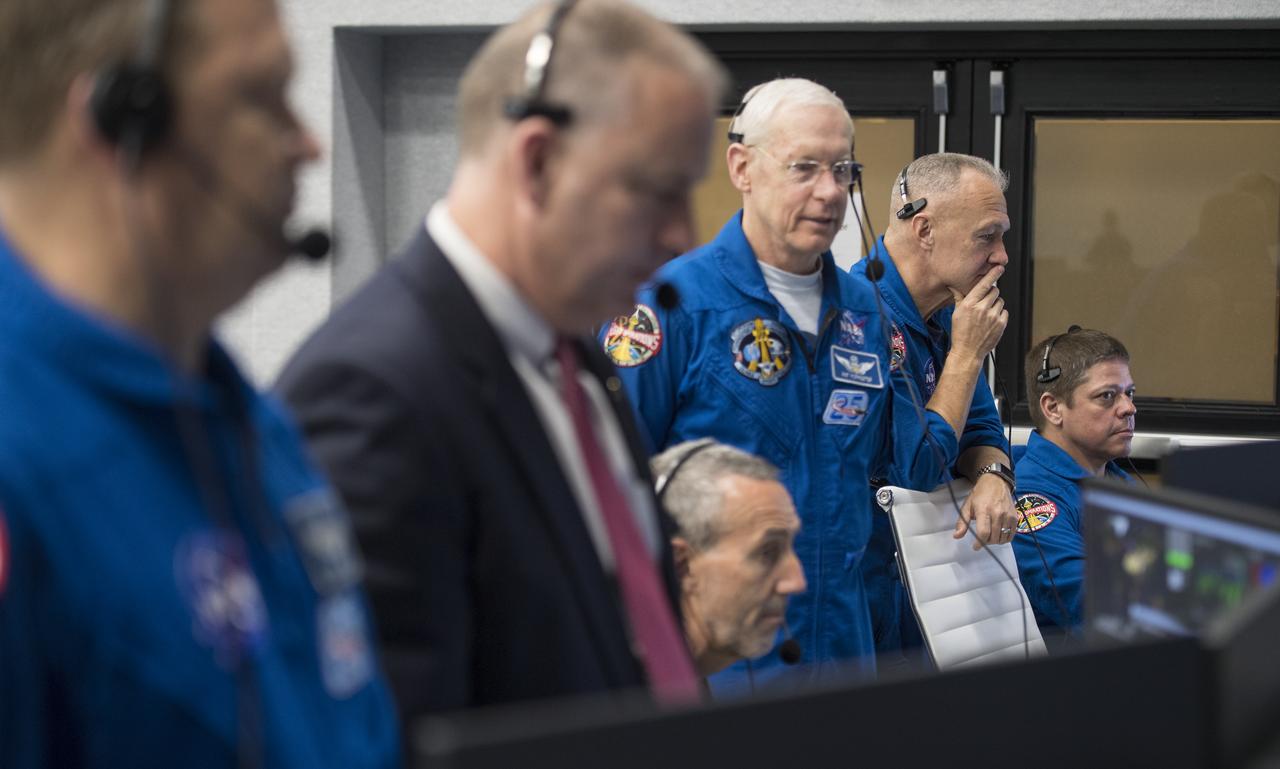
NASA's chief of the astronaut office Pat Forrester, third from right and NASA astronauts Doug Hurley, second from right, and Bob Behnken, right, who are assigned to fly on the crewed Demo-2 mission, monitor the countdown of the launch of a SpaceX Falcon 9 rocket carrying the company's Crew Dragon spacecraft on the Demo-1 mission from firing room four of the Launch Control Center, Saturday, March 2, 2019 at the Kennedy Space Center in Florida. The Demo-1 mission will be the first launch of a commercially built and operated American spacecraft and space system designed for humans as part of NASA's Commercial Crew Program. The mission will serve as an end-to-end test of the system's capabilities. Photo Credit: (NASA/Joel Kowsky)
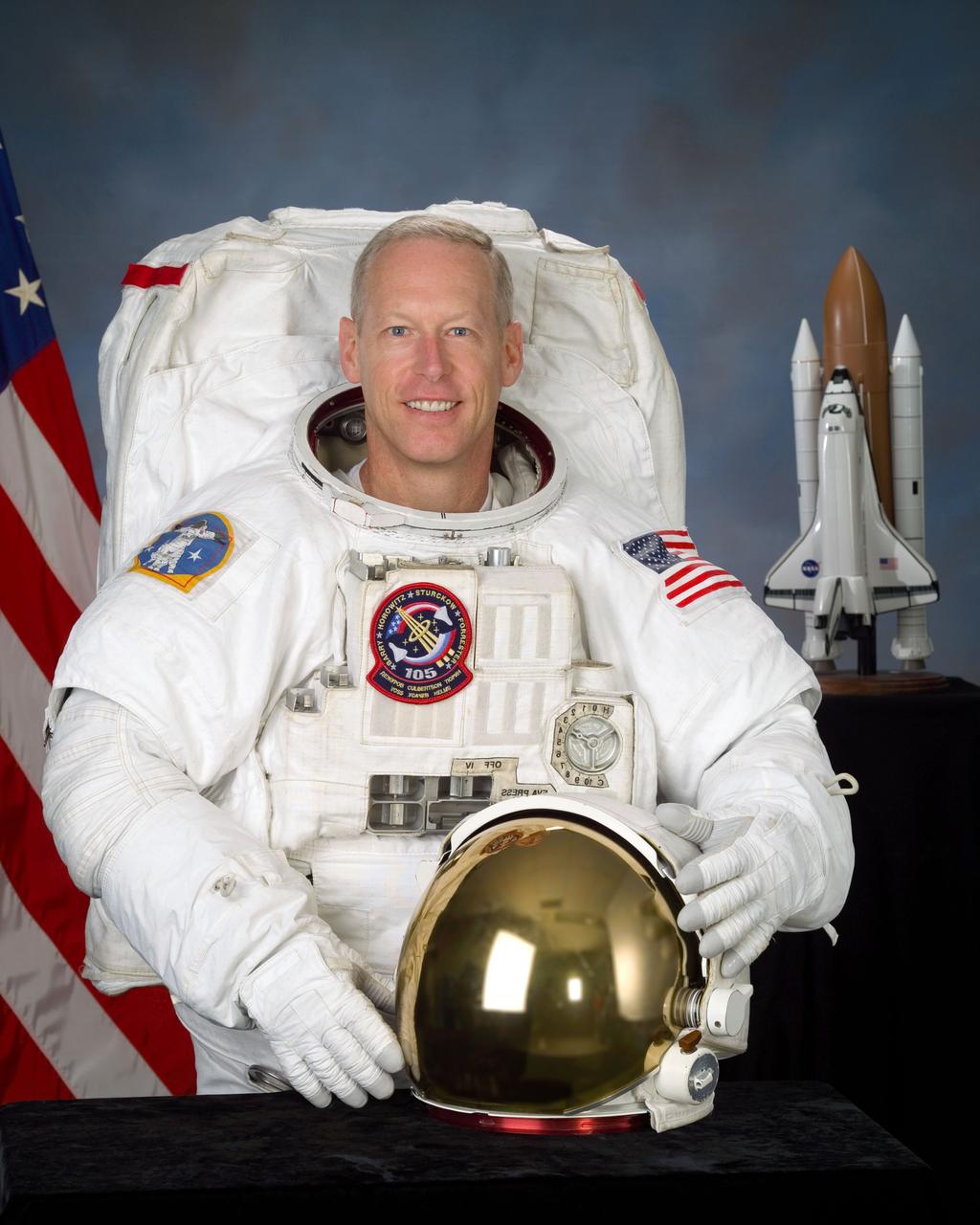
JSC2005-E-45340 (19 Aug. 2005) --- Astronaut Patrick G. Forrester, mission specialist
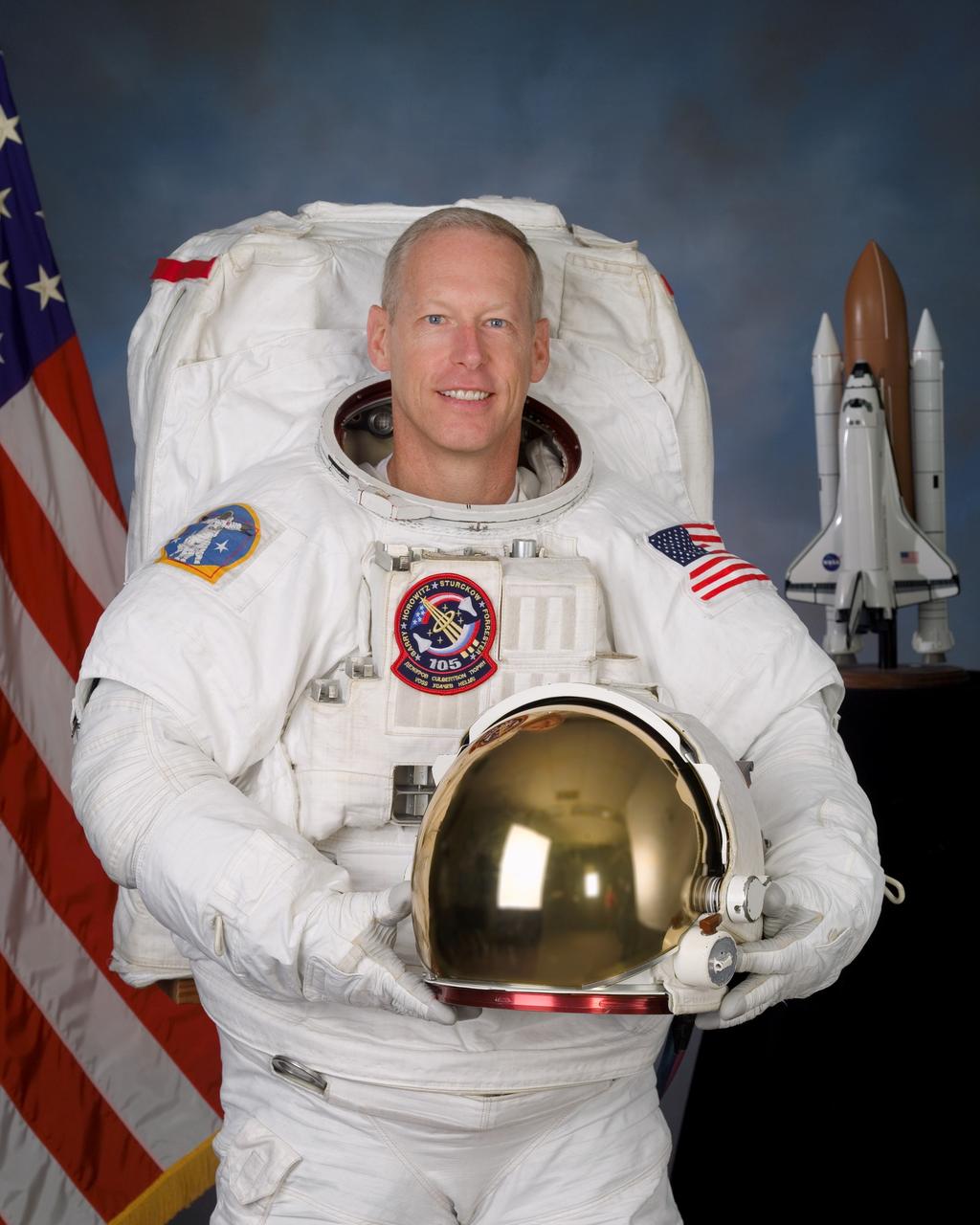
JSC2005-E-45341 (19 Aug. 2005) --- Astronaut Patrick G. Forrester, mission specialist
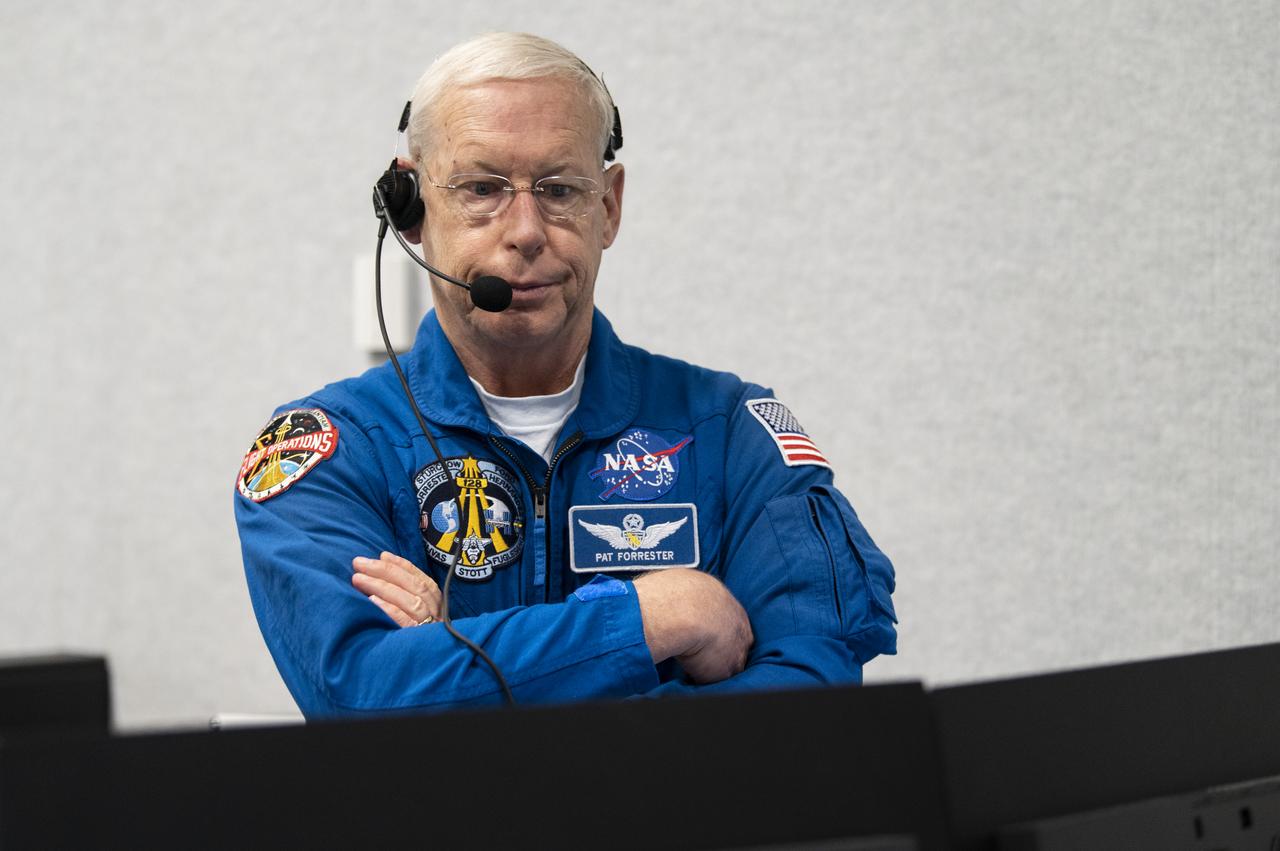
Pat Forrester, NASA’s chief of the astronaut office monitor the launch of a SpaceX Falcon 9 rocket carrying the company's Crew Dragon spacecraft on NASA’s SpaceX Crew-1 mission with NASA astronauts Mike Hopkins, Victor Glover, Shannon Walker, and Japan Aerospace Exploration Agency (JAXA) astronaut Soichi Noguchi onboard, Sunday, Nov. 15, 2020, in firing room four of the Launch Control Center at NASA’s Kennedy Space Center in Florida. NASA’s SpaceX Crew-1 mission is the first crew rotation mission of the SpaceX Crew Dragon spacecraft and Falcon 9 rocket to the International Space Station as part of the agency’s Commercial Crew Program. Hopkins, Glover, Walker, and Noguchi launched at 7:27 p.m. EST, from Launch Complex 39A at the Kennedy Space Center. Photo Credit: (NASA/Aubrey Gemignani)
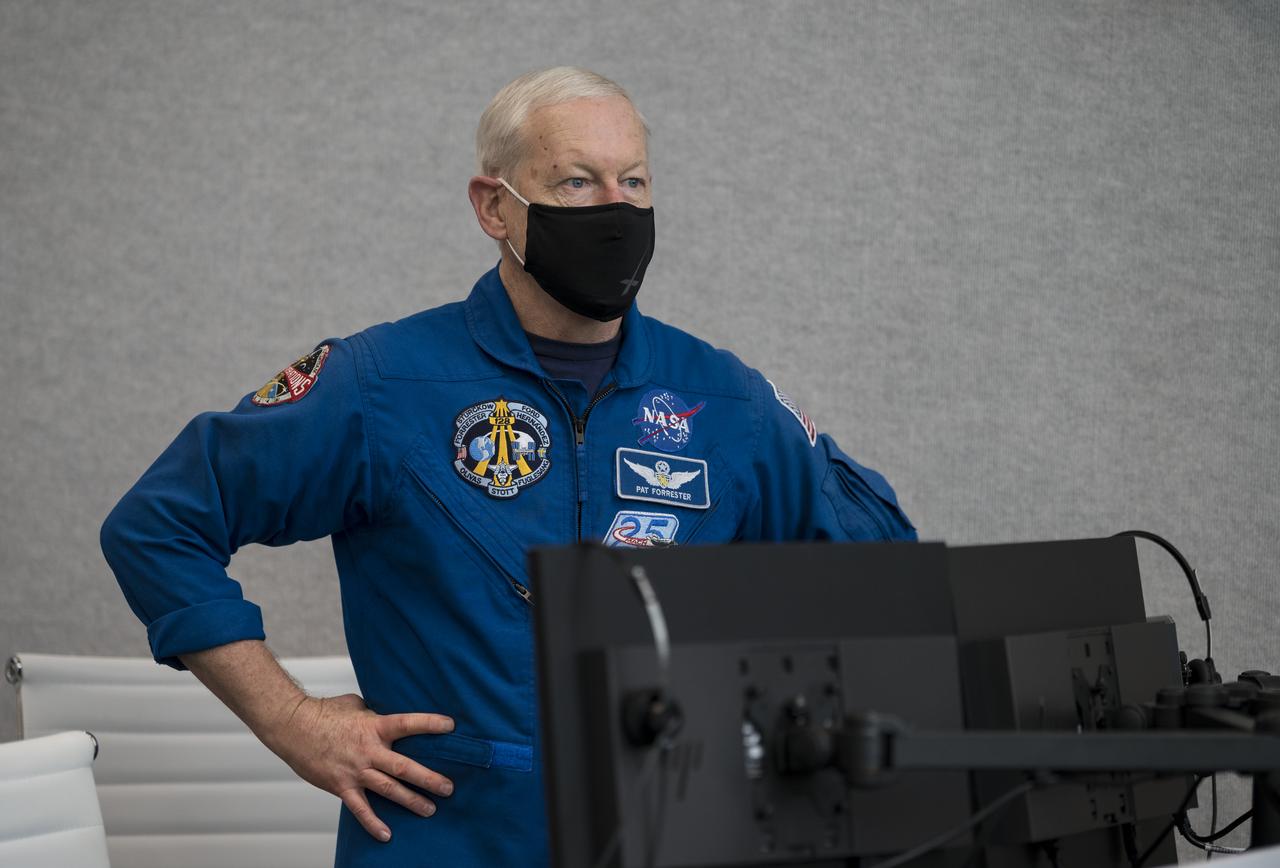
Pat Forrester, Chief of the Astronaut Office, watches the monitors during a dress rehearsal in preparation for the launch of a SpaceX Falcon 9 rocket carrying the company's Crew Dragon spacecraft on NASA’s SpaceX Crew-1 mission with NASA astronauts Mike Hopkins, Victor Glover, Shannon Walker, and Japan Aerospace Exploration Agency (JAXA) astronaut Soichi Noguchi onboard, Thursday, Nov. 12, 2020, in firing room four of the Launch Control Center at NASA’s Kennedy Space Center in Florida. NASA’s SpaceX Crew-1 mission is the first crew rotation mission of the SpaceX Crew Dragon spacecraft and Falcon 9 rocket to the International Space Station as part of the agency’s Commercial Crew Program. Hopkins, Glover, Walker, and Noguchi are scheduled to launch at 7:49 p.m. EST on Saturday, Nov. 14, from Launch Complex 39A at the Kennedy Space Center. Photo Credit: (NASA/Aubrey Gemignani)
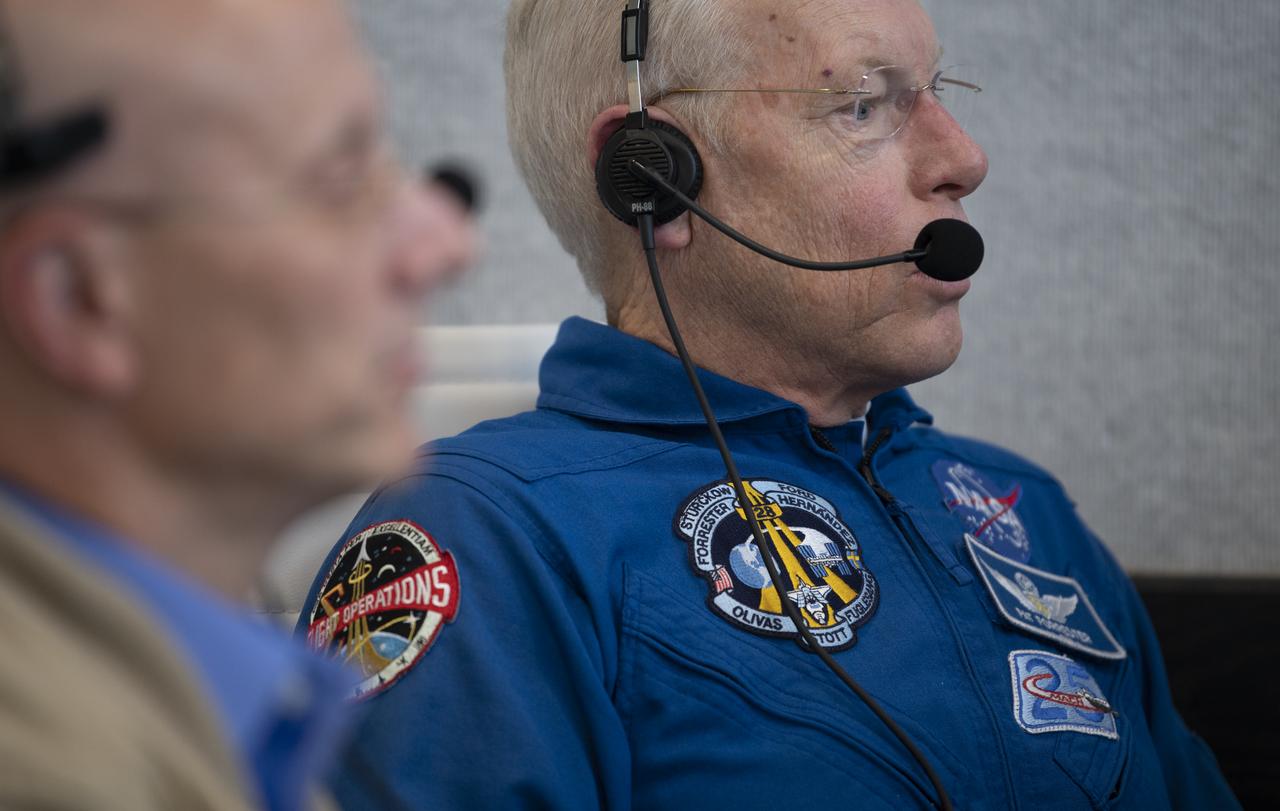
Pat Forrester, NASA’s chief of the astronaut office, monitors the launch of a SpaceX Falcon 9 rocket carrying the company's Crew Dragon spacecraft on the Demo-2 mission with NASA astronauts Douglas Hurley and Robert Behnken onboard, Saturday, May 30, 2020, in firing room four of the Launch Control Center at NASA’s Kennedy Space Center in Florida. NASA’s SpaceX Demo-2 mission is the first launch with astronauts of the SpaceX Crew Dragon spacecraft and Falcon 9 rocket to the International Space Station as part of the agency’s Commercial Crew Program. The test flight serves as an end-to-end demonstration of SpaceX’s crew transportation system. Behnken and Hurley launched at 3:22 p.m. EDT on Saturday, May 30, from Launch Complex 39A at the Kennedy Space Center. A new era of human spaceflight is set to begin as American astronauts once again launch on an American rocket from American soil to low-Earth orbit for the first time since the conclusion of the Space Shuttle Program in 2011. Photo Credit: (NASA/Joel Kowsky)
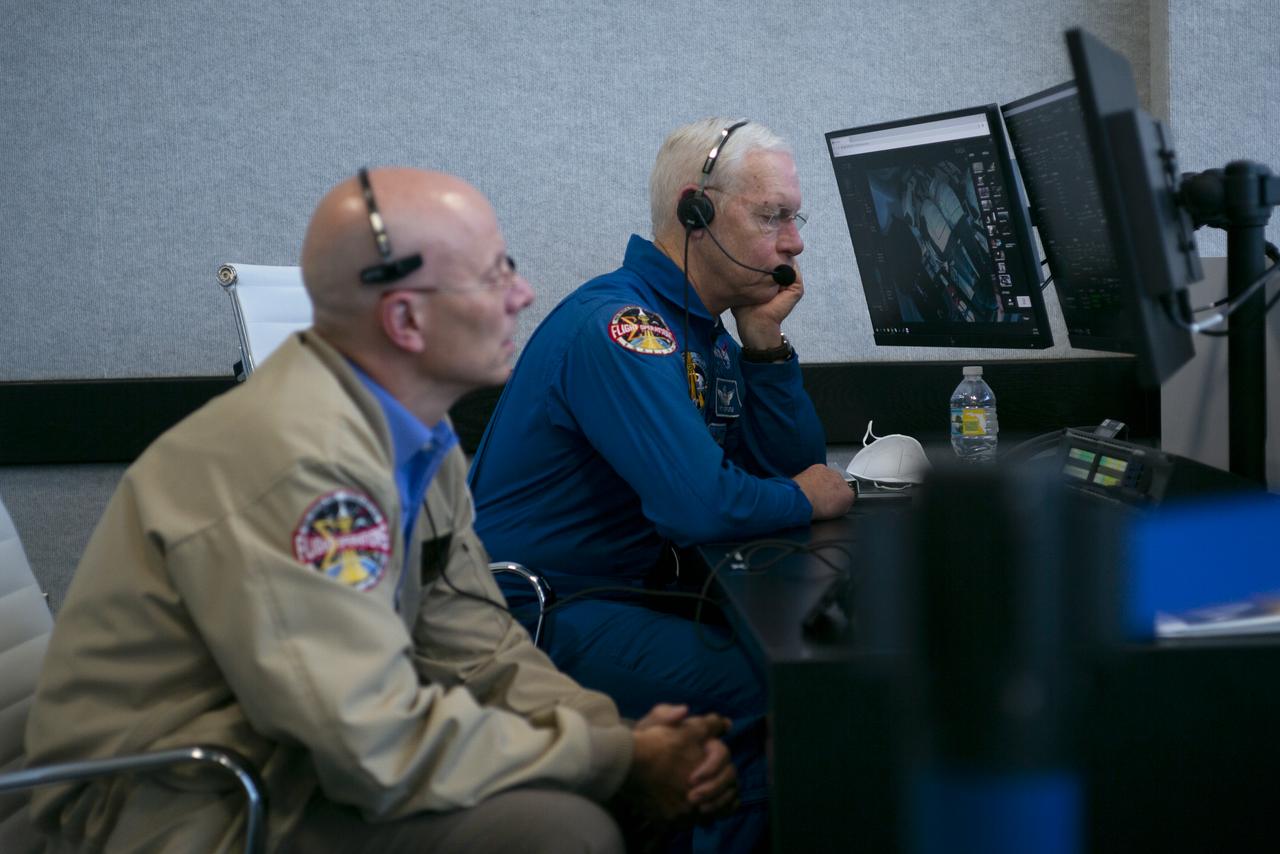
Stephen Koerner, Director of the Flight Operations Directorate at NASA’s Johnson Space Center, left, and Pat Forrester, NASA’s chief of the astronaut office, monitor the countdown of the launch of a SpaceX Falcon 9 rocket carrying the company's Crew Dragon spacecraft on NASA’s SpaceX Demo-2 mission with NASA astronauts Robert Behnken and Douglas Hurley onboard, Saturday, May 30, 2020, in firing room four of the Launch Control Center at NASA’s Kennedy Space Center in Florida. NASA’s SpaceX Demo-2 mission is the first launch with astronauts of the SpaceX Crew Dragon spacecraft and Falcon 9 rocket to the International Space Station as part of the agency’s Commercial Crew Program. The test flight serves as an end-to-end demonstration of SpaceX’s crew transportation system. Behnken and Hurley launched at 3:22 p.m. EDT on Saturday, May 30, from Launch Complex 39A at the Kennedy Space Center. A new era of human spaceflight is set to begin as American astronauts once again launch on an American rocket from American soil to low-Earth orbit for the first time since the conclusion of the Space Shuttle Program in 2011. Photo Credit: (NASA/Joel Kowsky)
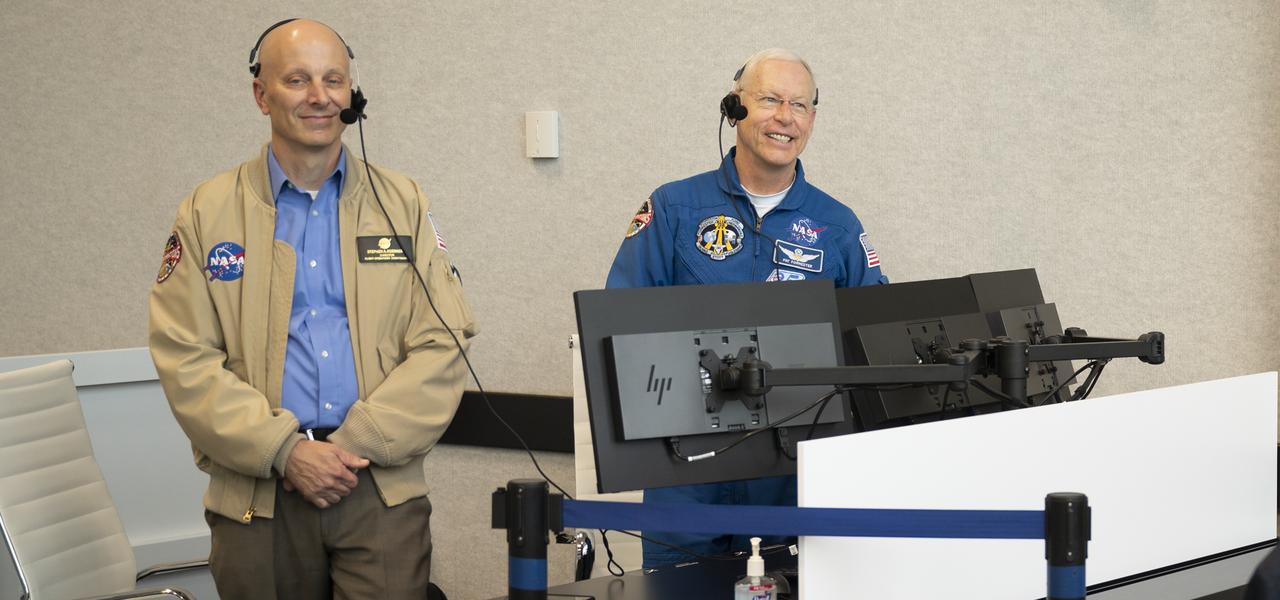
Stephen Koerner, Director of the Flight Operations Directorate at NASA’s Johnson Space Center, left, and Pat Forrester, NASA’s chief of the astronaut office, monitor the launch of a SpaceX Falcon 9 rocket carrying the company's Crew Dragon spacecraft on the Demo-2 mission with NASA astronauts Douglas Hurley and Robert Behnken onboard, Saturday, May 30, 2020, in firing room four of the Launch Control Center at NASA’s Kennedy Space Center in Florida. NASA’s SpaceX Demo-2 mission is the first launch with astronauts of the SpaceX Crew Dragon spacecraft and Falcon 9 rocket to the International Space Station as part of the agency’s Commercial Crew Program. The test flight serves as an end-to-end demonstration of SpaceX’s crew transportation system. Behnken and Hurley launched at 3:22 p.m. EDT on Saturday, May 30, from Launch Complex 39A at the Kennedy Space Center. A new era of human spaceflight is set to begin as American astronauts once again launch on an American rocket from American soil to low-Earth orbit for the first time since the conclusion of the Space Shuttle Program in 2011. Photo Credit: (NASA/Joel Kowsky)
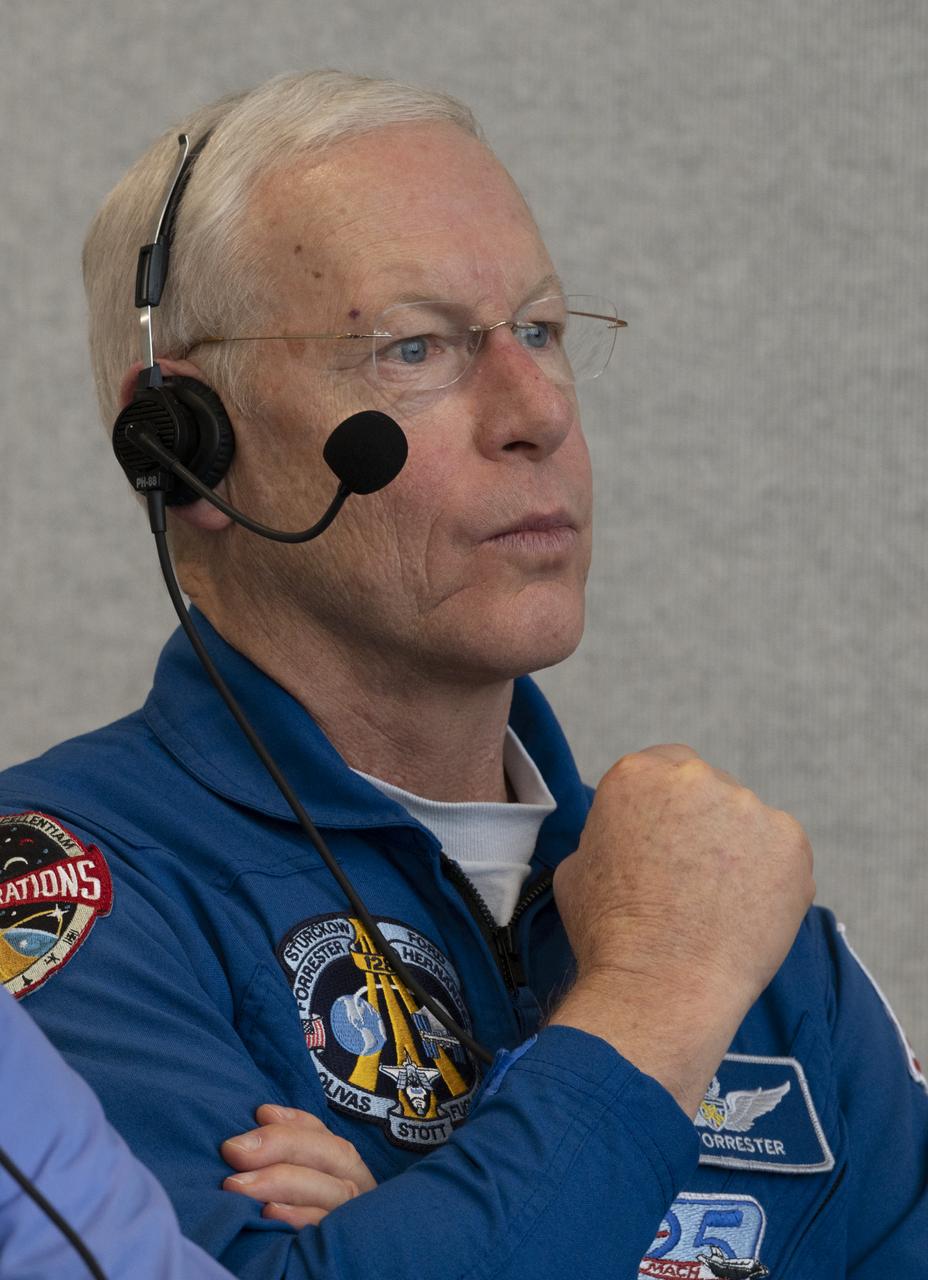
Pat Forrester, NASA’s chief of the astronaut office, monitors the launch of a SpaceX Falcon 9 rocket carrying the company's Crew Dragon spacecraft on the Demo-2 mission with NASA astronauts Douglas Hurley and Robert Behnken onboard, Saturday, May 30, 2020, in firing room four of the Launch Control Center at NASA’s Kennedy Space Center in Florida. NASA’s SpaceX Demo-2 mission is the first launch with astronauts of the SpaceX Crew Dragon spacecraft and Falcon 9 rocket to the International Space Station as part of the agency’s Commercial Crew Program. The test flight serves as an end-to-end demonstration of SpaceX’s crew transportation system. Behnken and Hurley launched at 3:22 p.m. EDT on Saturday, May 30, from Launch Complex 39A at the Kennedy Space Center. A new era of human spaceflight is set to begin as American astronauts once again launch on an American rocket from American soil to low-Earth orbit for the first time since the conclusion of the Space Shuttle Program in 2011. Photo Credit: (NASA/Joel Kowsky)
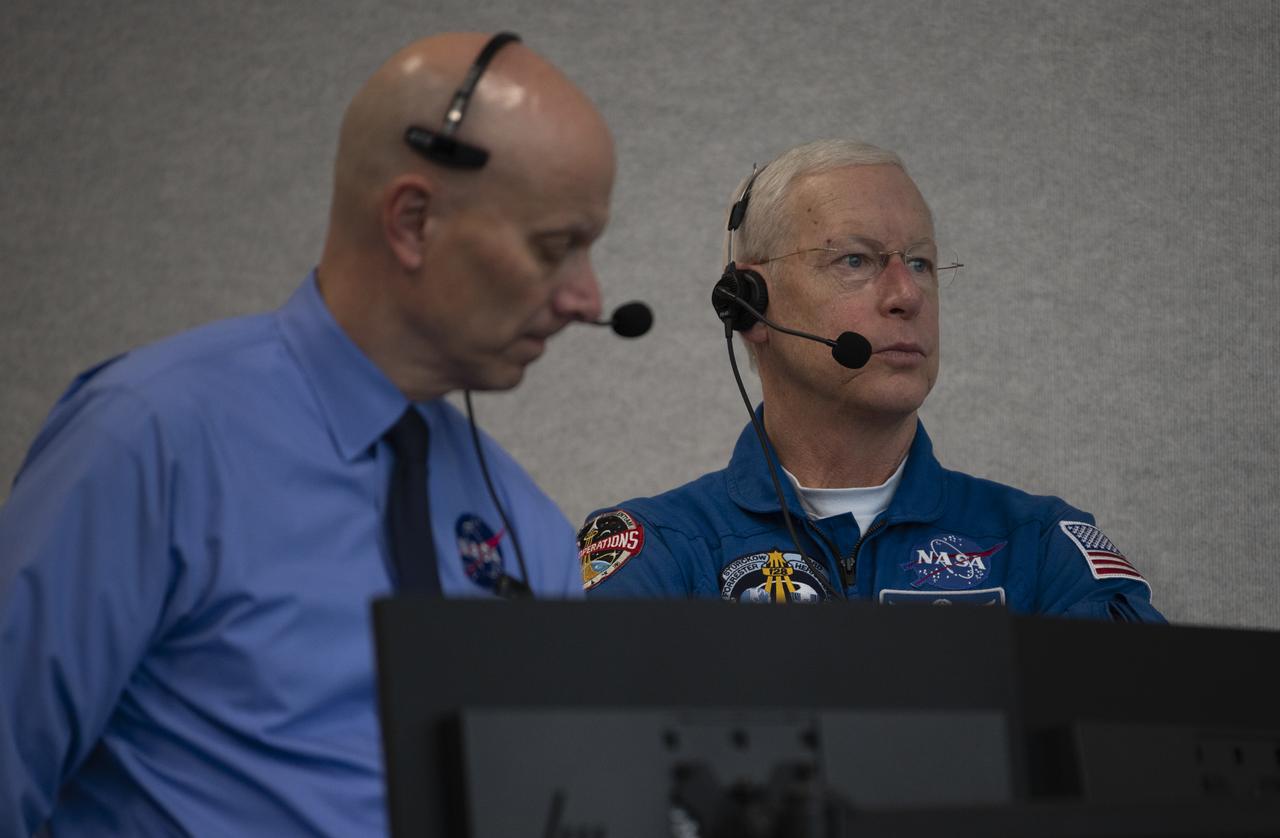
Stephen Koerner, Director of the Flight Operations Directorate at NASA’s Johnson Space Center, left, and Pat Forrester, NASA’s chief of the astronaut office, right, monitor the countdown of the launch attempt of a SpaceX Falcon 9 rocket carrying the company's Crew Dragon spacecraft on NASA’s SpaceX Demo-2 mission with NASA astronauts Robert Behnken and Douglas Hurley onboard, Wednesday, May 27, 2020, in firing room four of the Launch Control Center at NASA’s Kennedy Space Center in Florida. NASA’s SpaceX Demo-2 mission is the first launch with astronauts of the SpaceX Crew Dragon spacecraft and Falcon 9 rocket to the International Space Station as part of the agency’s Commercial Crew Program. The test flight serves as an end-to-end demonstration of SpaceX’s crew transportation system. Today’s launch of Behnken and Hurley was scrubbed due to weather and is now scheduled for 3:22 p.m. EDT on Saturday, May 30, from Launch Complex 39A at the Kennedy Space Center. A new era of human spaceflight is set to begin as American astronauts once again launch on an American rocket from American soil to low-Earth orbit for the first time since the conclusion of the Space Shuttle Program in 2011. Photo Credit: (NASA/Joel Kowsky)
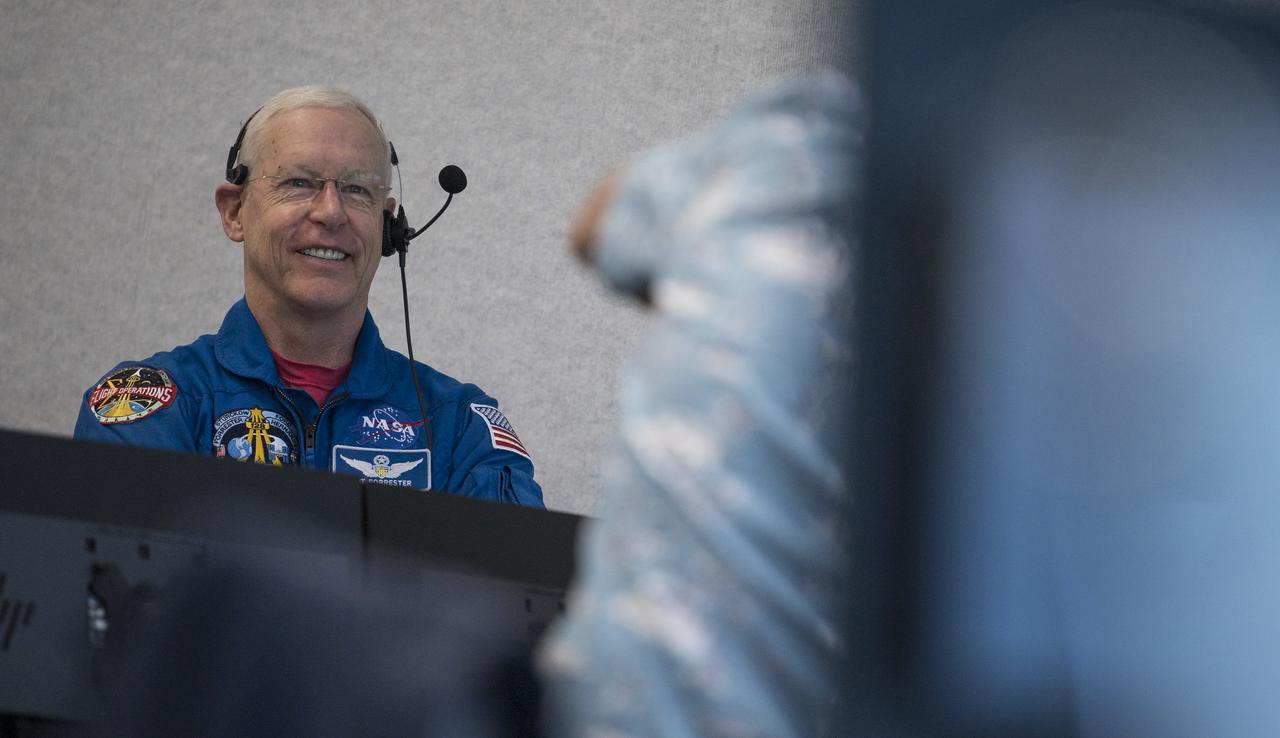
Pat Forrester, NASA’s chief of the astronaut office, is seen in firing room four during a dress rehearsal in preparation for the launch of a SpaceX Falcon 9 rocket carrying the company's Crew Dragon spacecraft on NASA’s SpaceX Demo-2 mission with NASA astronauts Robert Behnken and Douglas Hurley onboard, Saturday, May 23, 2020, Launch Control Center at NASA’s Kennedy Space Center in Florida. NASA’s SpaceX Demo-2 mission is the first launch with astronauts of the SpaceX Crew Dragon spacecraft and Falcon 9 rocket to the International Space Station as part of the agency’s Commercial Crew Program. The test flight serves as an end-to-end demonstration of SpaceX’s crew transportation system. Behnken and Hurley are scheduled to launch at 4:33 p.m. EDT on Wednesday, May 27, from Launch Complex 39A at the Kennedy Space Center. A new era of human spaceflight is set to begin as American astronauts once again launch on an American rocket from American soil to low-Earth orbit for the first time since the conclusion of the Space Shuttle Program in 2011. Photo Credit: (NASA/Joel Kowsky)
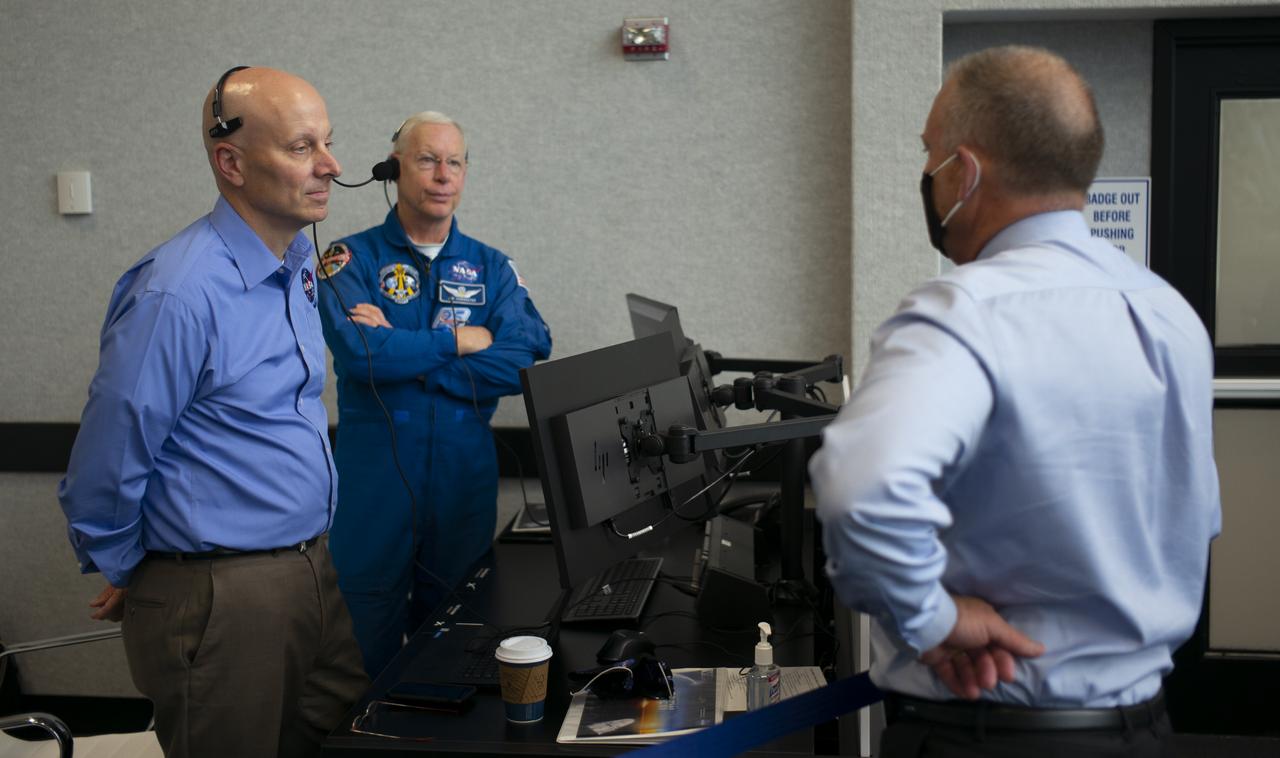
Stephen Koerner, Director of the Flight Operations Directorate at NASA’s Johnson Space Center, left, Pat Forrester, NASA’s chief of the astronaut office, and Norm Knight, deputy director of Flight Operations at NASA's Johnson Space Center are seen during countdown of the launch of a SpaceX Falcon 9 rocket carrying the company's Crew Dragon spacecraft on NASA’s SpaceX Demo-2 mission with NASA astronauts Robert Behnken and Douglas Hurley onboard, Saturday, May 30, 2020, in firing room four of the Launch Control Center at NASA’s Kennedy Space Center in Florida. NASA’s SpaceX Demo-2 mission is the first launch with astronauts of the SpaceX Crew Dragon spacecraft and Falcon 9 rocket to the International Space Station as part of the agency’s Commercial Crew Program. The test flight serves as an end-to-end demonstration of SpaceX’s crew transportation system. Behnken and Hurley launched at 3:22 p.m. EDT on Saturday, May 30, from Launch Complex 39A at the Kennedy Space Center. A new era of human spaceflight is set to begin as American astronauts once again launch on an American rocket from American soil to low-Earth orbit for the first time since the conclusion of the Space Shuttle Program in 2011. Photo Credit: (NASA/Joel Kowsky)
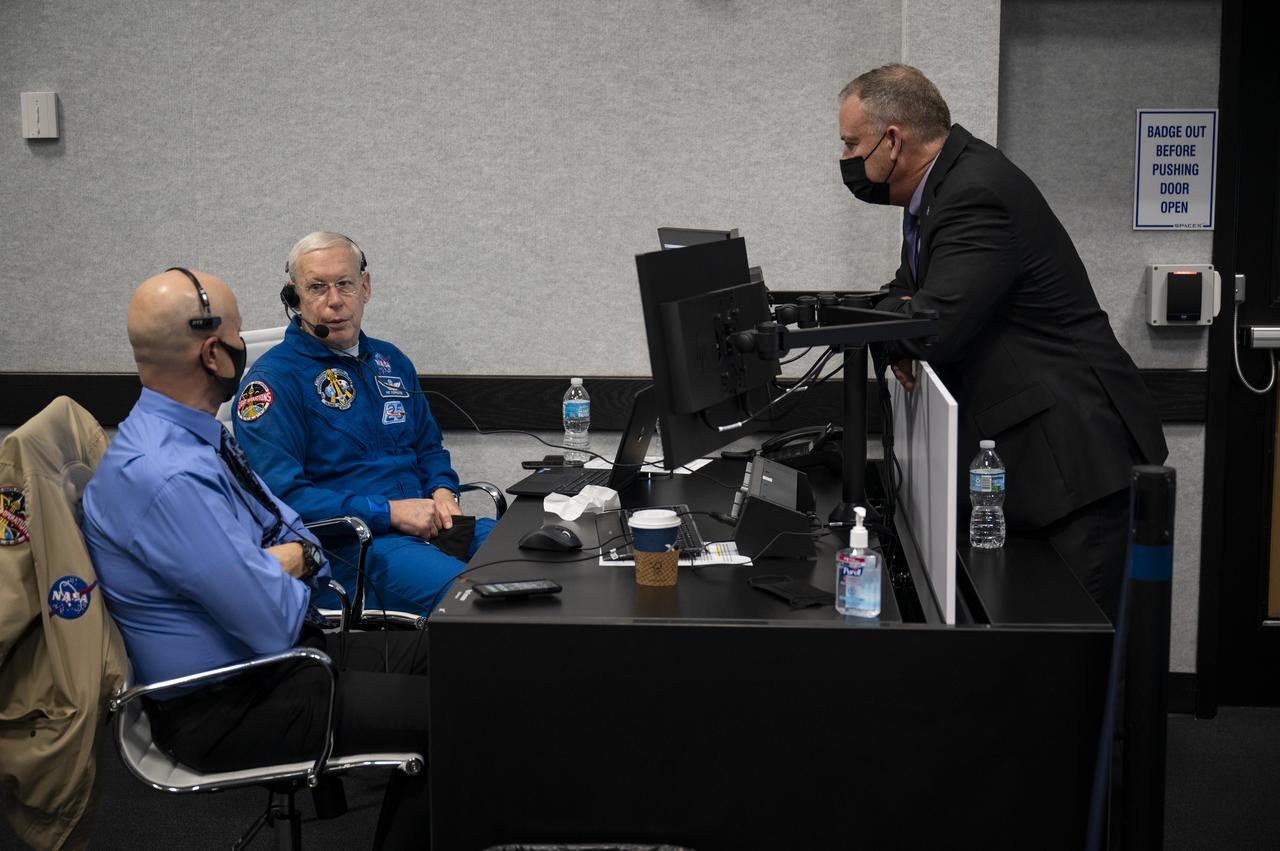
Stephen Koerner, director of the Flight Operations Directorate at NASA’s Johnson Space Center, left, and Pat Forrester, NASA’s chief of the astronaut office, center, speak with Norm Knight, deputy director of Flight Operations at NASA's Johnson Space Center as they monitor the countdown of the launch of a SpaceX Falcon 9 rocket carrying the company's Crew Dragon spacecraft on NASA’s SpaceX Crew-1 mission with NASA astronauts Mike Hopkins, Victor Glover, Shannon Walker, and Japan Aerospace Exploration Agency (JAXA) astronaut Soichi Noguchi onboard, Sunday, Nov. 15, 2020, in firing room four of the Launch Control Center at NASA’s Kennedy Space Center in Florida. NASA’s SpaceX Crew-1 mission is the first crew rotation mission of the SpaceX Crew Dragon spacecraft and Falcon 9 rocket to the International Space Station as part of the agency’s Commercial Crew Program. Hopkins, Glover, Walker, and Noguchi are scheduled to launch at 7:27 p.m. EST, from Launch Complex 39A at the Kennedy Space Center. Photo Credit: (NASA/Aubrey Gemignani)
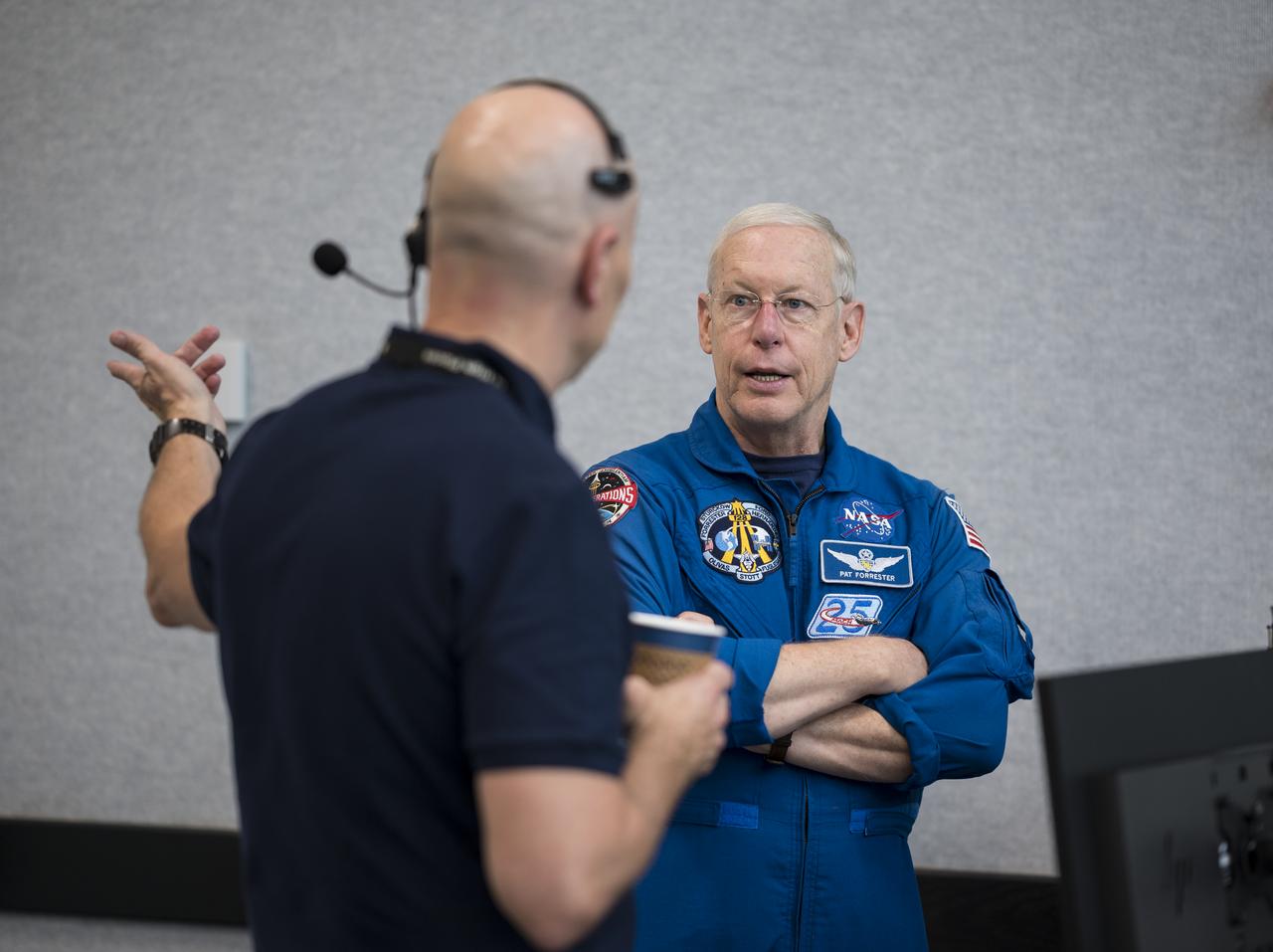
Pat Forrester, Chief of the Astronaut Office, speaks with Stephen Koerner, director of the Flight Operations Directorate at NASA’s Johnson Space Center during a dress rehearsal in preparation for the launch of a SpaceX Falcon 9 rocket carrying the company's Crew Dragon spacecraft on NASA’s SpaceX Crew-1 mission with NASA astronauts Mike Hopkins, Victor Glover, Shannon Walker, and Japan Aerospace Exploration Agency (JAXA) astronaut Soichi Noguchi onboard, Thursday, Nov. 12, 2020, in firing room four of the Launch Control Center at NASA’s Kennedy Space Center in Florida. NASA’s SpaceX Crew-1 mission is the first crew rotation mission of the SpaceX Crew Dragon spacecraft and Falcon 9 rocket to the International Space Station as part of the agency’s Commercial Crew Program. Hopkins, Glover, Walker, and Noguchi are scheduled to launch at 7:49 p.m. EST on Saturday, Nov. 14, from Launch Complex 39A at the Kennedy Space Center. Photo Credit: (NASA/Aubrey Gemignani)
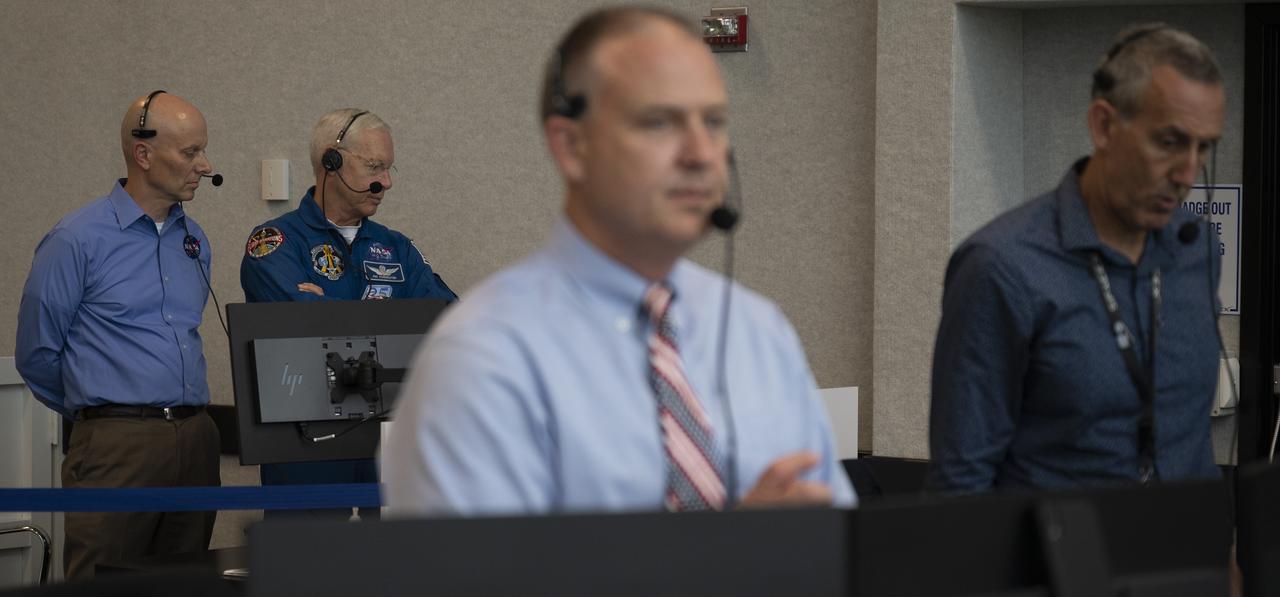
Stephen Koerner, Director of the Flight Operations Directorate at NASA’s Johnson Space Center, left, Pat Forrester, NASA’s chief of the astronaut office, Norm Knight, deputy director of Flight Operations at NASA's Johnson Space Center, and Lee Rosen, vice president for mission and launch operations at SpaceX, monitor the launch of a SpaceX Falcon 9 rocket carrying the company's Crew Dragon spacecraft on the Demo-2 mission with NASA astronauts Douglas Hurley and Robert Behnken onboard, Saturday, May 30, 2020, in firing room four of the Launch Control Center at NASA’s Kennedy Space Center in Florida. NASA’s SpaceX Demo-2 mission is the first launch with astronauts of the SpaceX Crew Dragon spacecraft and Falcon 9 rocket to the International Space Station as part of the agency’s Commercial Crew Program. The test flight serves as an end-to-end demonstration of SpaceX’s crew transportation system. Behnken and Hurley launched at 3:22 p.m. EDT on Saturday, May 30, from Launch Complex 39A at the Kennedy Space Center. A new era of human spaceflight is set to begin as American astronauts once again launch on an American rocket from American soil to low-Earth orbit for the first time since the conclusion of the Space Shuttle Program in 2011. Photo Credit: (NASA/Joel Kowsky)
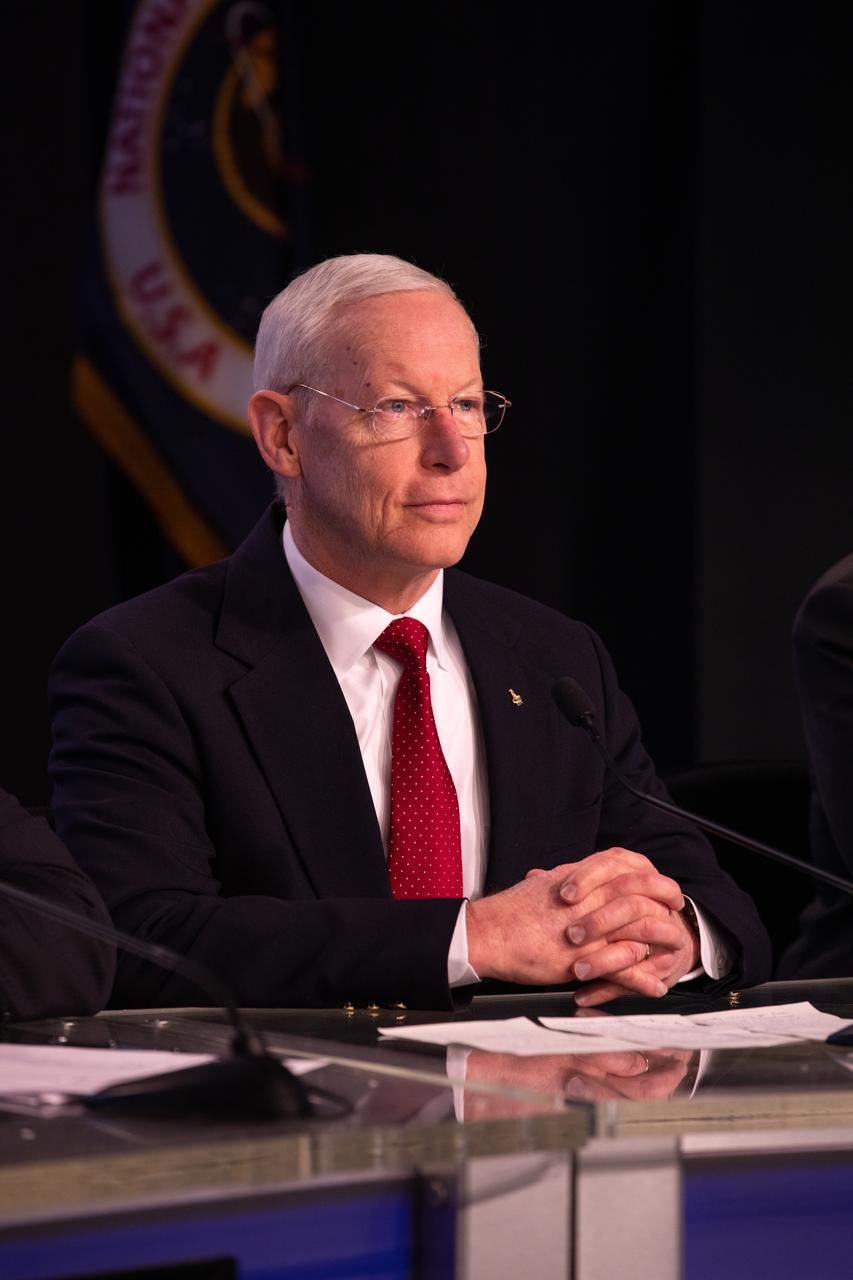
Pat Forrester, Astronaut Office chief, Johnson Space Center, speaks during a prelaunch briefing for Boeing’s Orbital Flight Test at the agency’s Kennedy Space Center in Florida, Dec. 17, 2019. Boeing’s CST-100 Starliner spacecraft will launch atop a United Launch Alliance Atlas V rocket from Space Launch Complex 41 at Cape Canaveral Air Force Station. The uncrewed Orbital Flight Test will be the Starliner’s first flight to the International Space Station for NASA’s Commercial Crew Program.
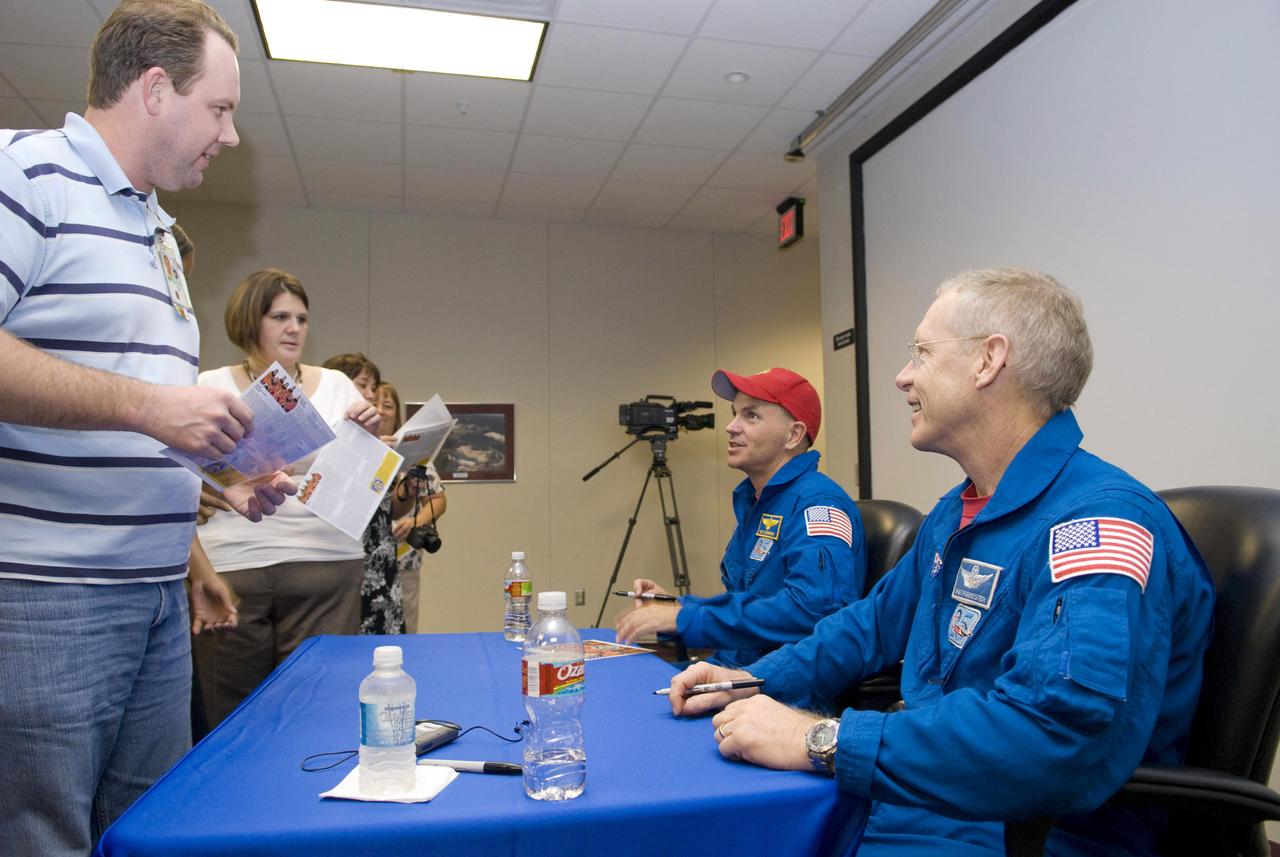
Astronauts C.J. Sturckow (seated, left) and Pat Forrester (seated, right) sign autographs during their Oct. 7 visit to Stennis Space Center. The astronauts visited the rocket engine testing facility to thank Stennis employees for contributions to their recent STS-128 space shuttle mission. All three of the main engines used on the mission were tested at Stennis. Sturckow served as commander for the STS-128 flight; Forrester was a mission specialist. During a 14-day mission aboard space shuttle discovery, the STS-128 crew delivered equipment and supplies to the International Space Station, including science and storage racks, a freezer to store research samples, a new sleeping compartment and an exercise treadmill. The mission featured three spacewalks to replace experiments and install new equipment at the space station.
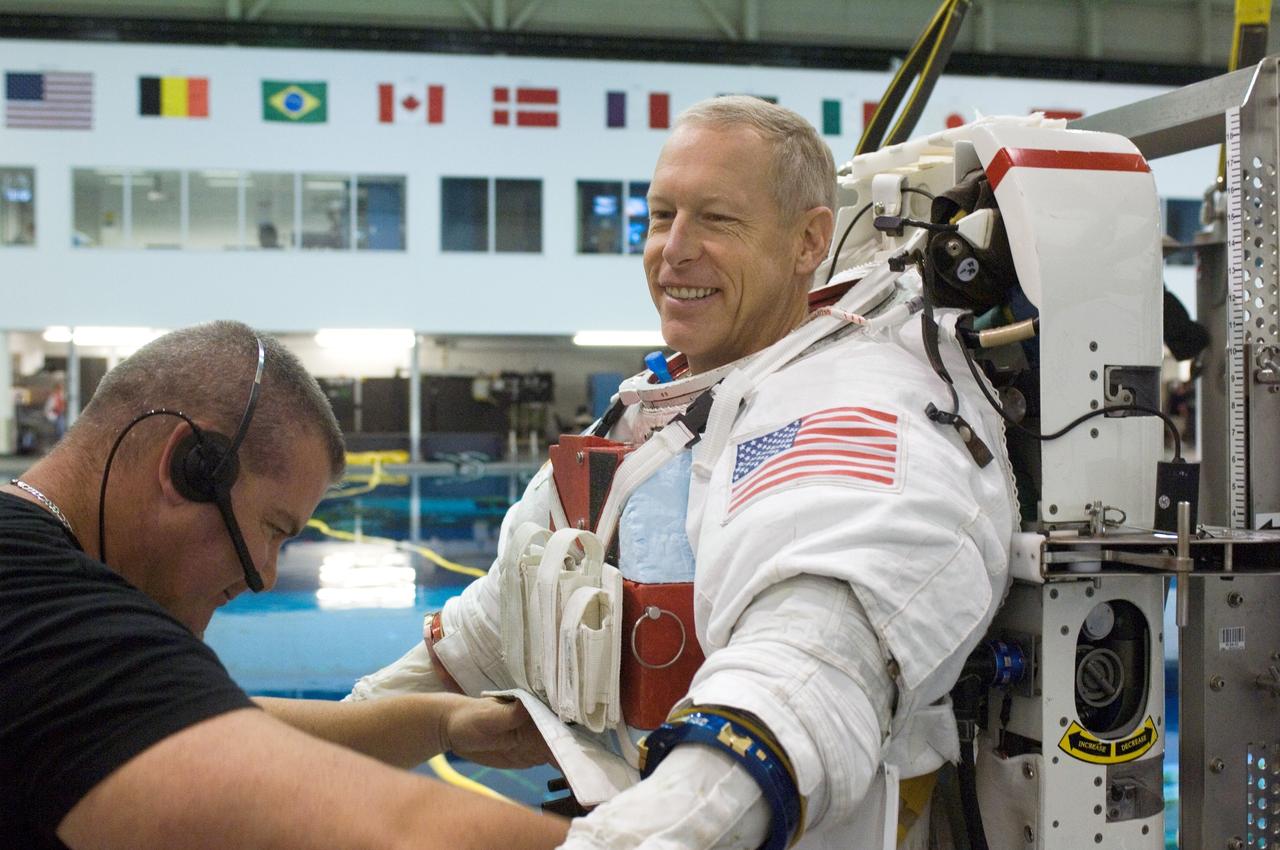
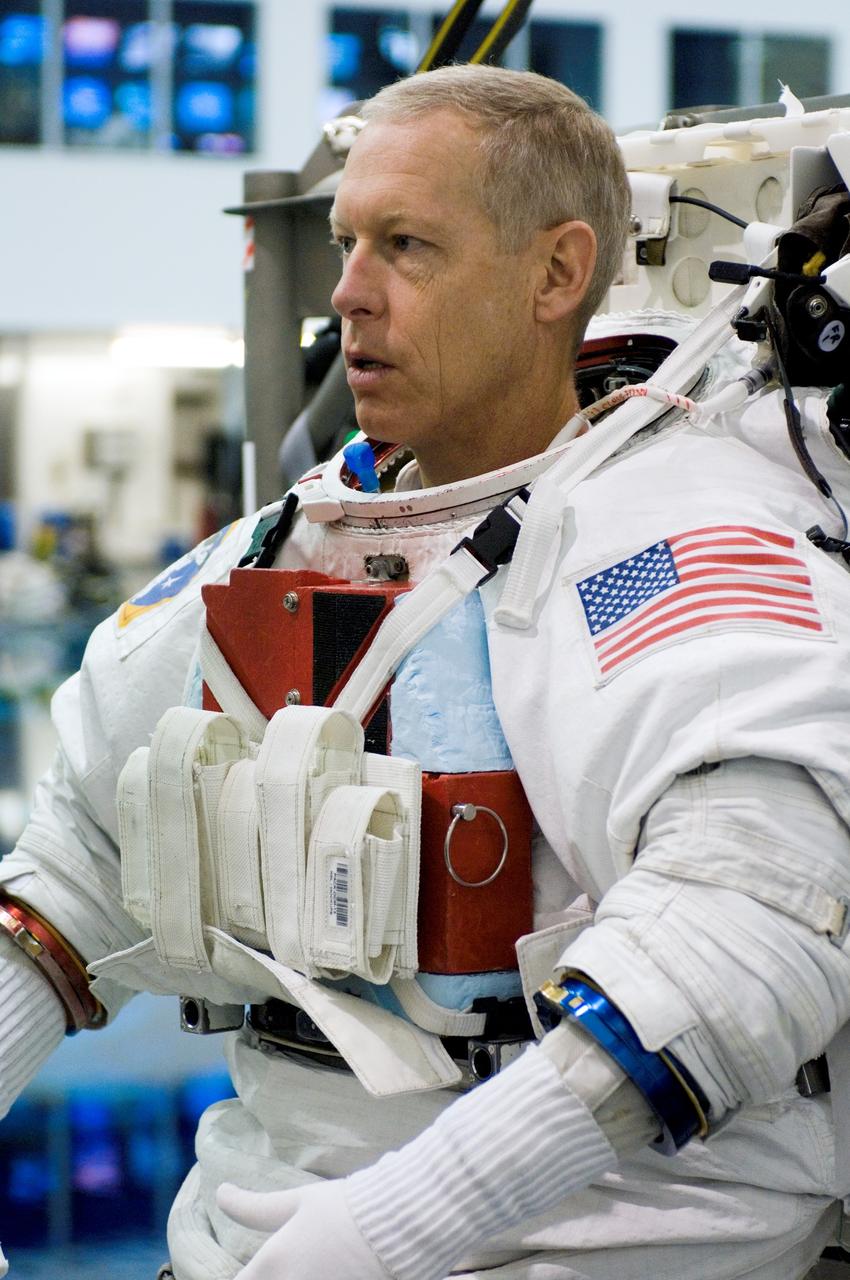
JSC2006-E-48960 (9 Nov. 2006) --- Astronaut Patrick G. Forrester, STS-117 mission specialist, dons a training version of the Extravehicular Mobility Unit (EMU) spacesuit prior to being submerged in the waters of the Neutral Buoyancy Laboratory (NBL) near Johnson Space Center. A suit technician assisted Forrester.
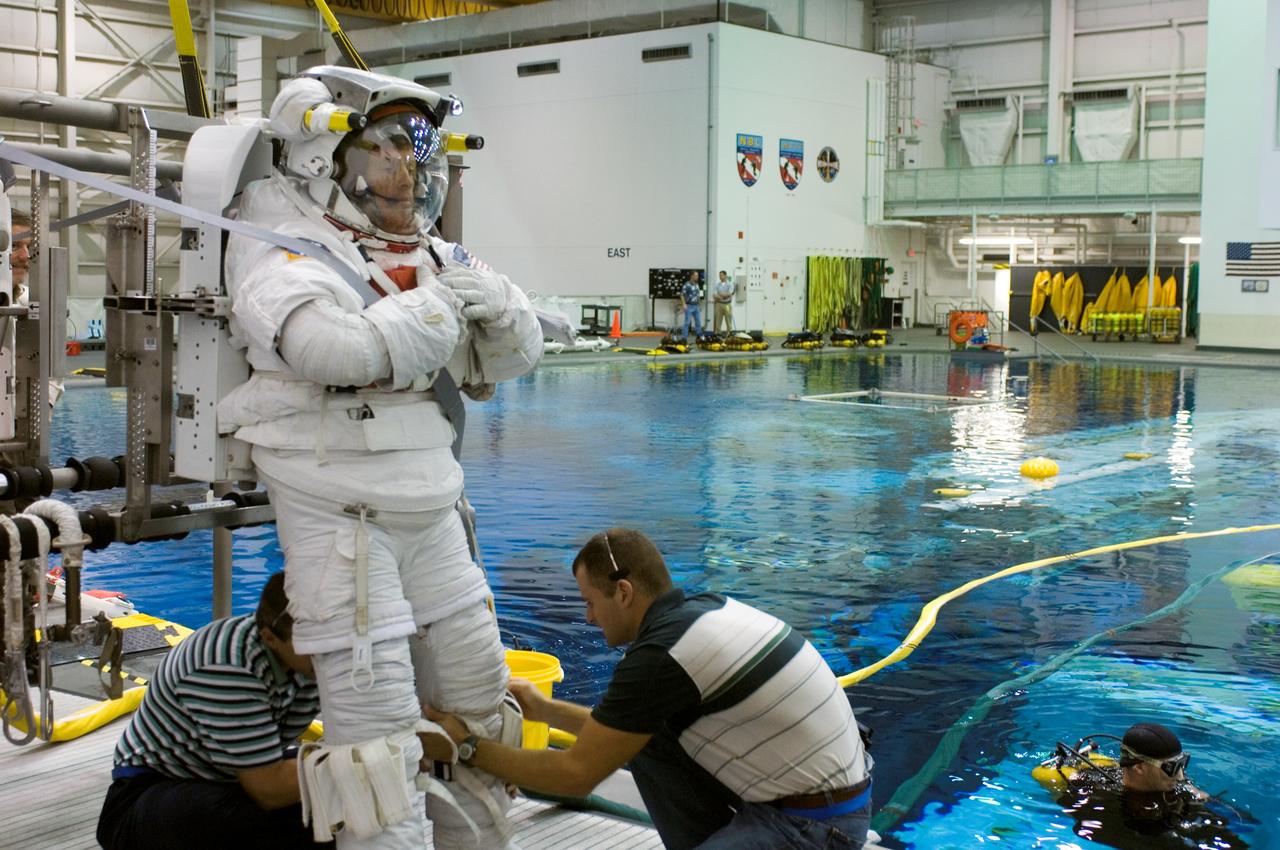
JSC2006-E-48963 (9 Nov. 2006) --- Astronaut Patrick G. Forrester, STS-117 mission specialist, dons a training version of the Extravehicular Mobility Unit (EMU) spacesuit prior to being submerged in the waters of the Neutral Buoyancy Laboratory (NBL) near Johnson Space Center.
JSC2006-E-48970 (9 Nov. 2006) --- Astronaut Steven R. Swanson, STS-117 mission specialist, attired in a training version of the Extravehicular Mobility Unit (EMU) spacesuit, is about to begin a training session in the waters of the Neutral Buoyancy Laboratory (NBL) near the Johnson Space Center. Suit technicians assisted Swanson with the final touches in the donning process.
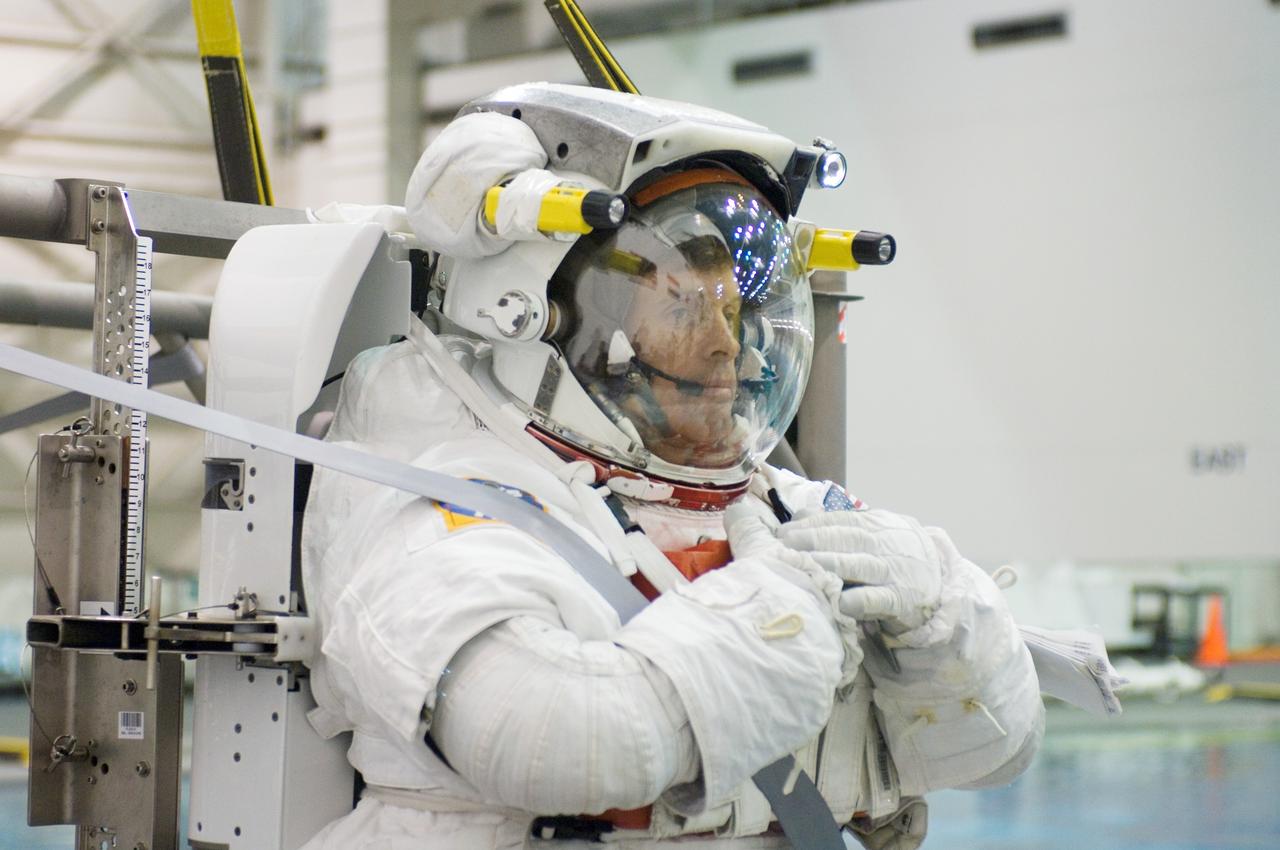
JSC2006-E-48969 (9 Nov. 2006) --- Astronaut Steven R. Swanson, STS-117 mission specialist, attired in a training version of the Extravehicular Mobility Unit (EMU) spacesuit, is about to begin a training session in the waters of the Neutral Buoyancy Laboratory (NBL) near the Johnson Space Center.
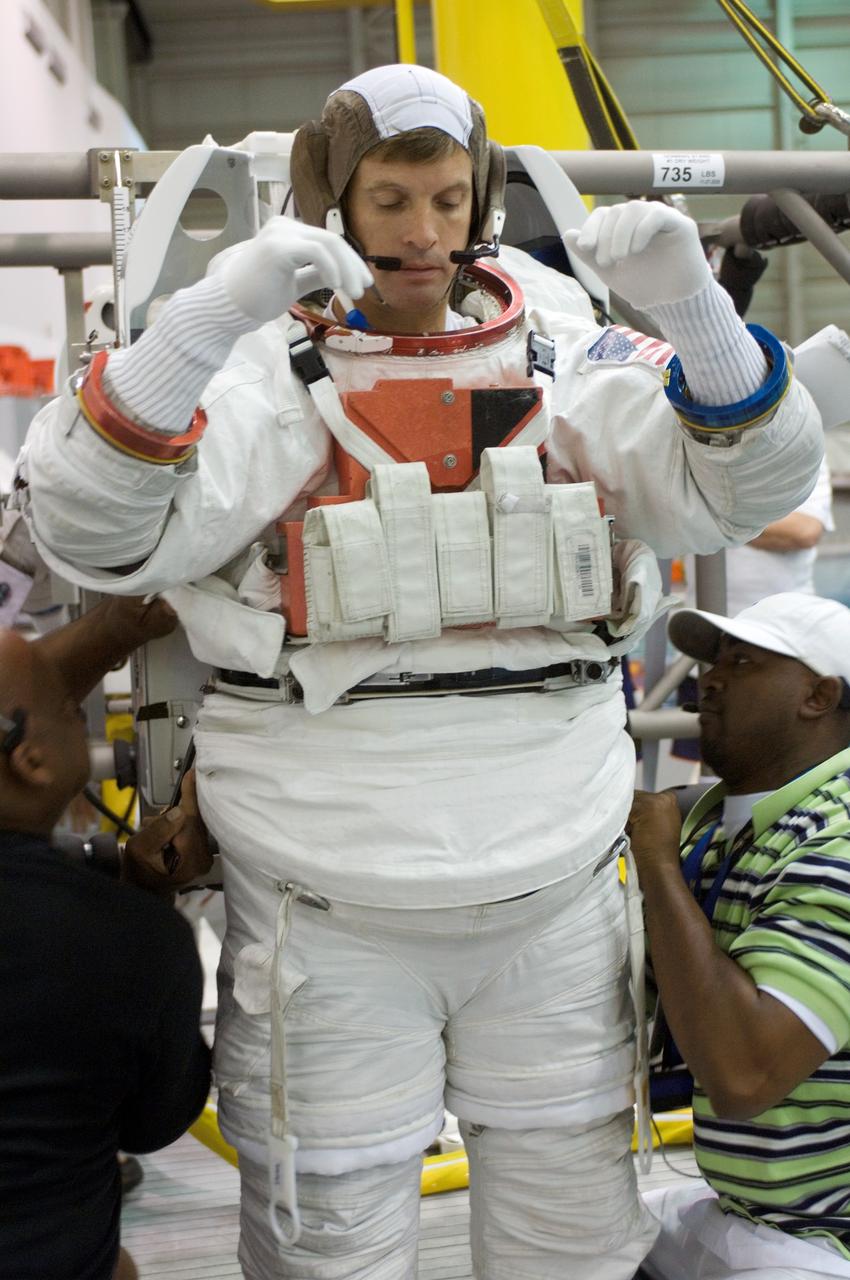
JSC2006-E-48962 (9 Nov. 2006) --- Astronaut Steven R. Swanson, STS-117 mission specialist, dons a training version of the Extravehicular Mobility Unit (EMU) spacesuit prior to being submerged in the waters of the Neutral Buoyancy Laboratory (NBL) near Johnson Space Center. Suit technicians assisted Swanson.
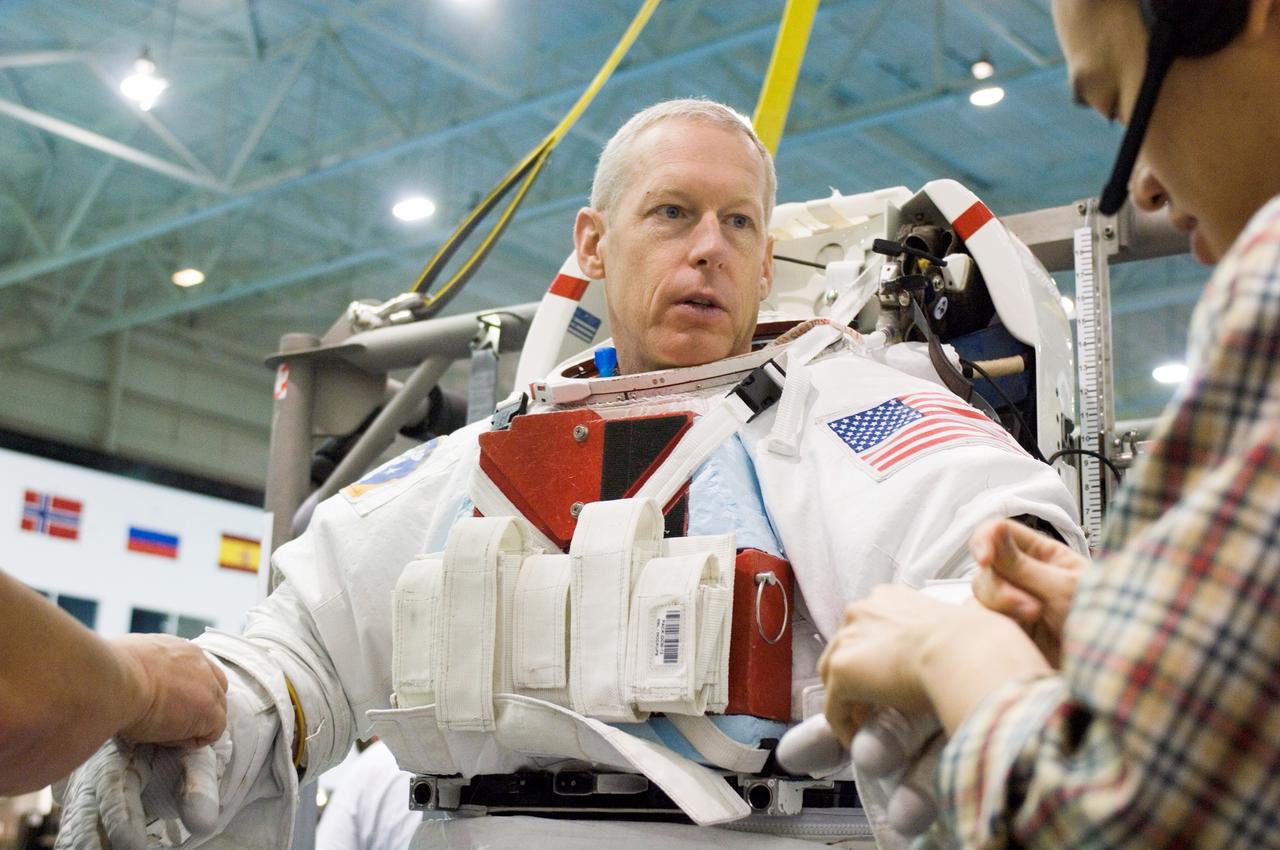
JSC2006-E-48964 (9 Nov. 2006) --- Astronaut Patrick G. Forrester, STS-117 mission specialist, dons a training version of the Extravehicular Mobility Unit (EMU) spacesuit prior to being submerged in the waters of the Neutral Buoyancy Laboratory (NBL) near Johnson Space Center. Suit technicians assisted Forrester.
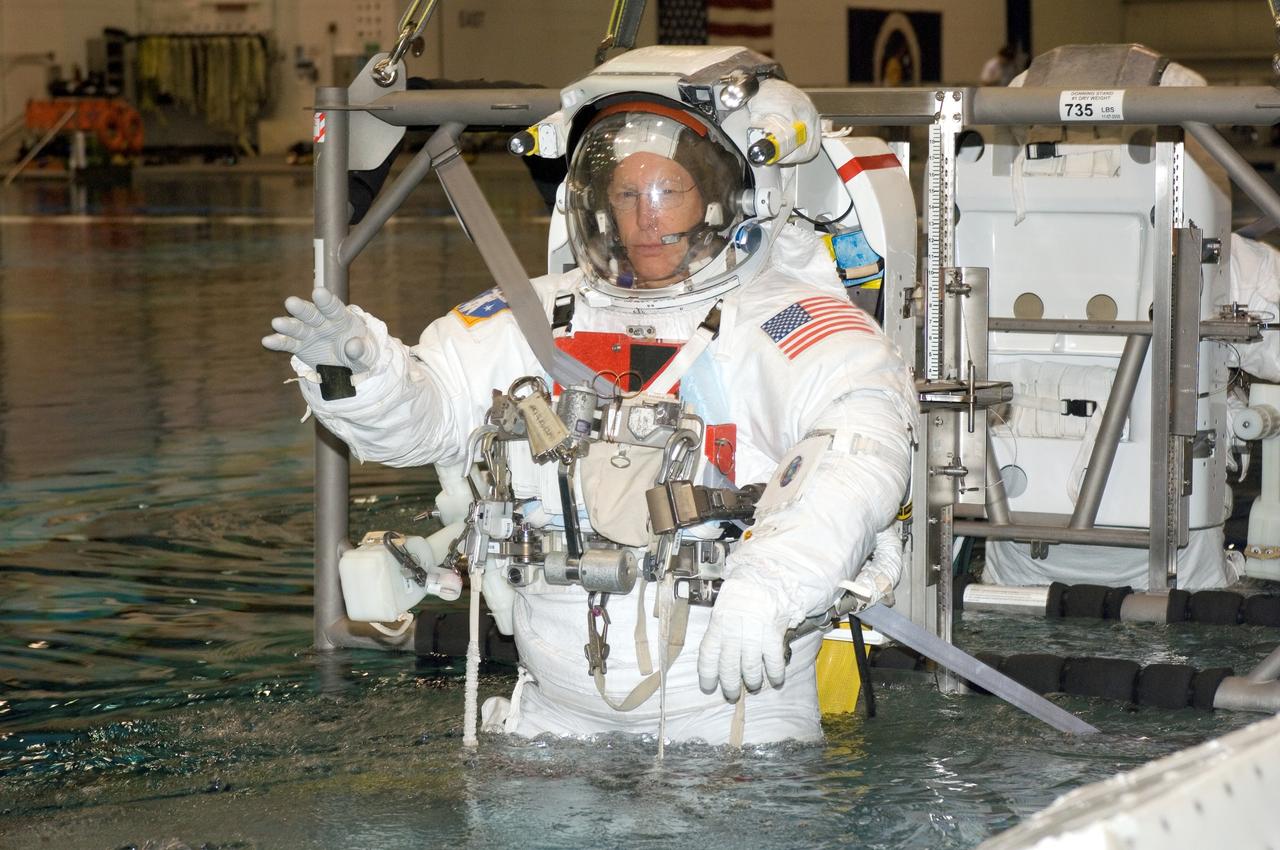
JSC2006-E-48972 (9 Nov. 2006) --- Astronauts Patrick G. Forrester and Steven R. Swanson (partially obscured), both STS-117 mission specialists, are about to be submerged in the waters of the Neutral Buoyancy Laboratory (NBL) near Johnson Space Center. Forrester and Swanson are attired in training versions of the Extravehicular Mobility Unit (EMU) spacesuit. SCUBA-equipped divers (out of frame) are in the water to assist the crewmembers in their rehearsal, intended to help prepare them for work on the exterior of the International Space Station.
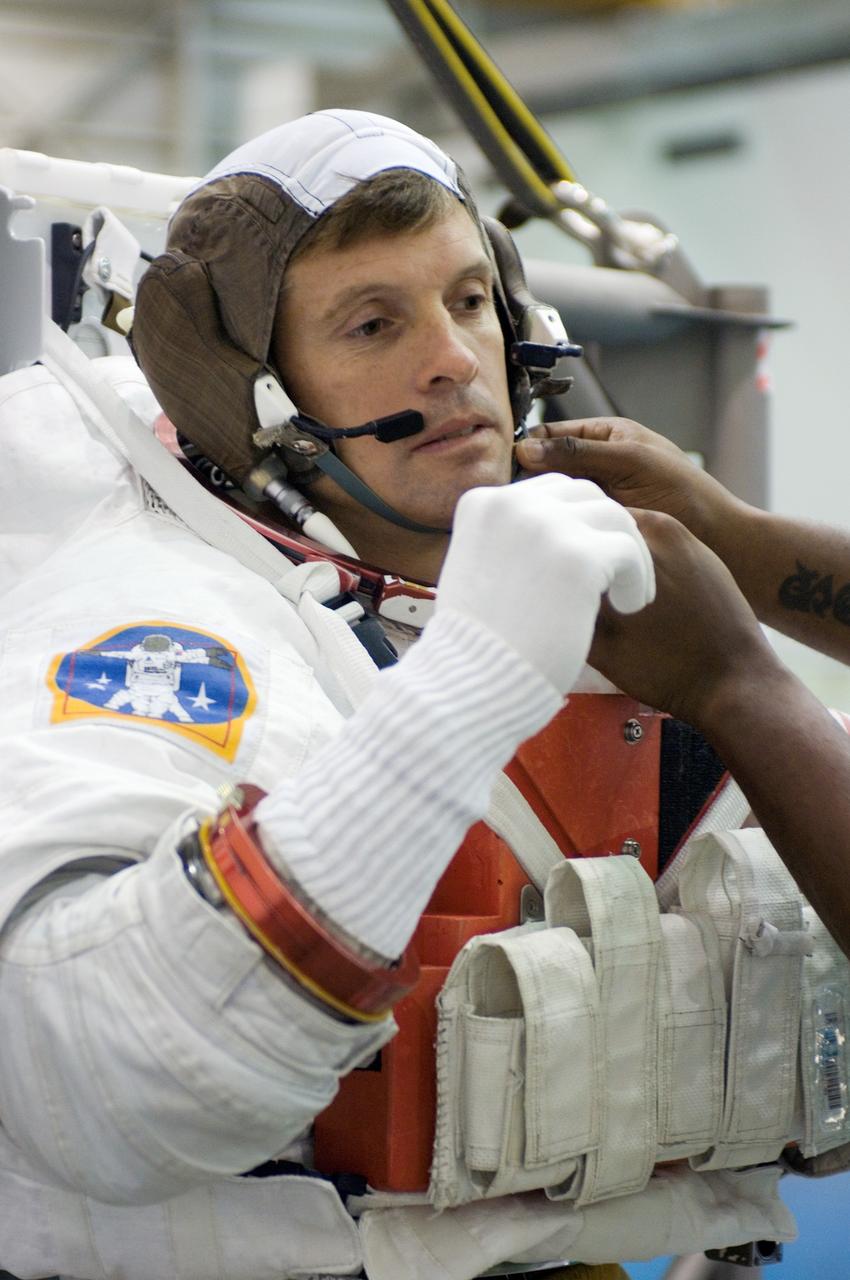
JSC2006-E-48961 (9 Nov. 2006) --- Astronaut Steven R. Swanson, STS-117 mission specialist, dons a training version of the Extravehicular Mobility Unit (EMU) spacesuit prior to being submerged in the waters of the Neutral Buoyancy Laboratory (NBL) near Johnson Space Center.
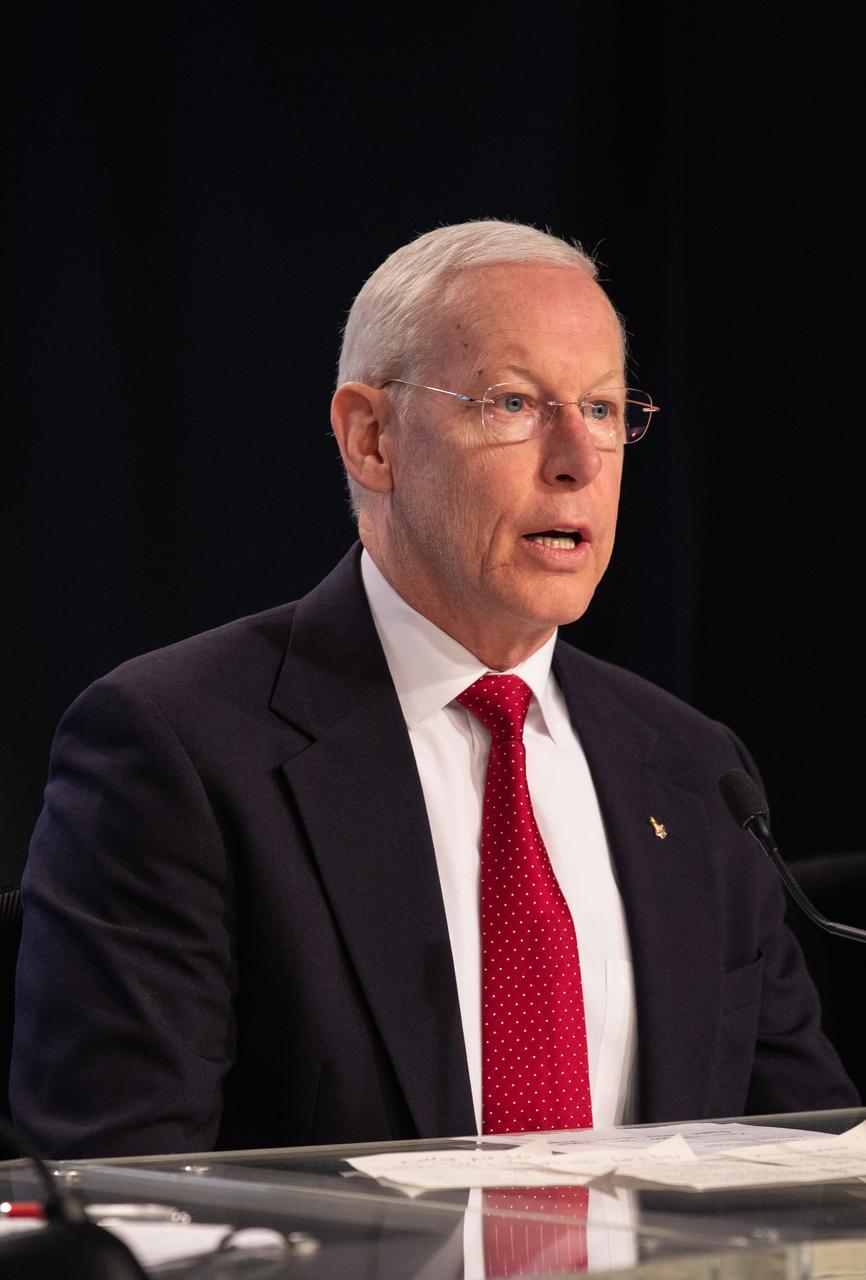
Pat Forrester, chief, Astronaut Office, Johnson Space Center, speaks to members of the media during a prelaunch news conference with NASA, SpaceX and the 45th Weather Squadron leaders Thursday, Feb. 28, prior to the Saturday, March 2 launch of the SpaceX Demo-1 Commercial Crew Program (CCP) mission to the International Space Station. The inaugural flight of the SpaceX Crew Dragon, known as Demo-1, is scheduled to lift off from Kennedy’s Launch Complex 39A Saturday at 2:49 EST. A SpaceX Falcon 9 rocket will launch the uncrewed spacecraft on a mission designed to validate end-to-end systems and capabilities, leading to certification to fly crew. NASA has worked with SpaceX and Boeing in developing the Commercial Crew Program spacecraft to facilitate new human spaceflight systems launching from U.S. soil with the goal of safe, reliable and cost-effective access to low-Earth orbit destinations, such as the International Space Station.
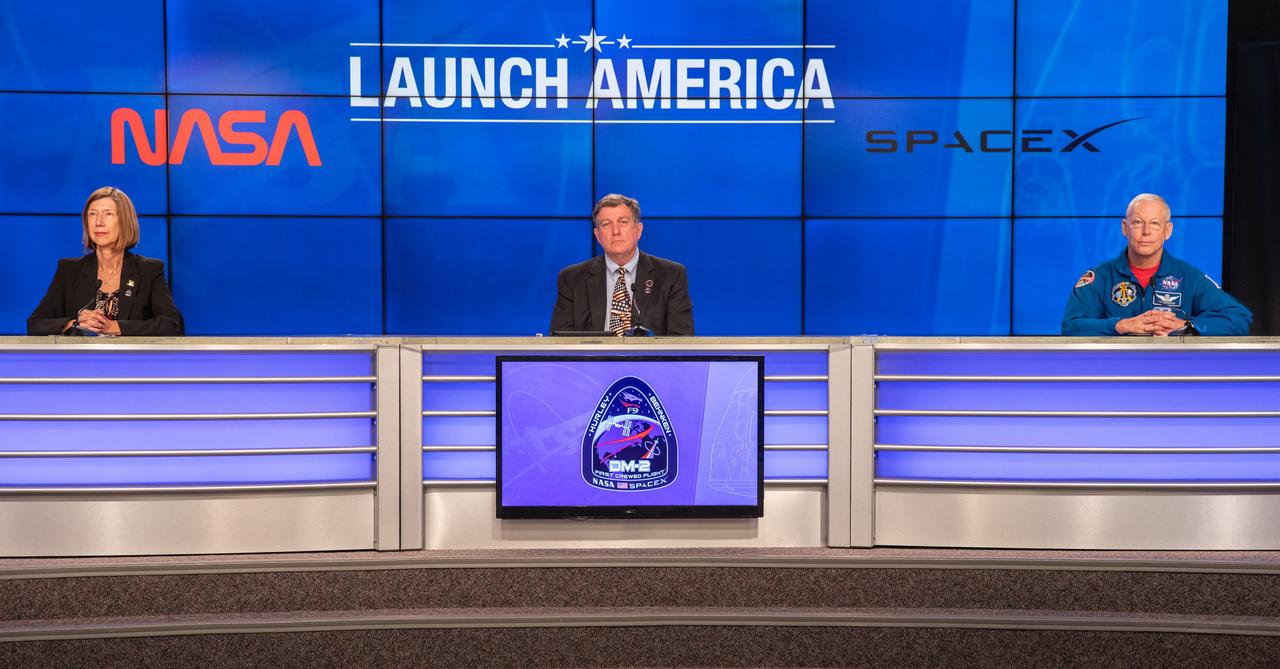
From left, NASA Commercial Crew Program Manager Kathy Lueders, NASA International Space Station Program Manager Kirk Shireman and NASA Chief Astronaut Pat Forrester participate in a postlaunch news conference inside the Press Site auditorium at NASA’s Kennedy Space Center in Florida on May 30, 2020, following the launch of the agency’s SpaceX Demo-2 mission to the International Space Station. Liftoff of the SpaceX Falcon 9 rocket and Crew Dragon spacecraft, carrying NASA astronauts Robert Behnken and Douglas Hurley, occurred at 3:22 p.m. EDT from historic Launch Complex 39A. Behnken and Hurley are the first astronauts to launch to the space station from U.S. soil since the end of the Space Shuttle Program in 2011. Part of NASA’s Commercial Crew Program, this will be SpaceX’s final flight test, paving the way for the agency to certify the crew transportation system for regular, crewed flights to the orbiting laboratory.

Officials from NASA, Boeing, United Launch Alliance and the U.S. Air Force 45th Weather Squadron participate in a prelaunch briefing for Boeing’s Orbital Flight Test at the agency’s Kennedy Space Center in Florida, Dec. 17, 2019. From left are John Elbon, chief operating officer, United Launch Alliance; Joel Montalbano, deputy manager, International Space Station Program; Pat Forrester, Astronaut Office chief, Johnson Space Center; and Will Ulrich, launch weather officer, 45th Weather Squadron. Boeing’s CST-100 Starliner spacecraft will launch atop a United Launch Alliance Atlas V rocket from Space Launch Complex 41 at Cape Canaveral Air Force Station. The uncrewed Orbital Flight Test will be the Starliner’s first flight to the International Space Station for NASA’s Commercial Crew Program.
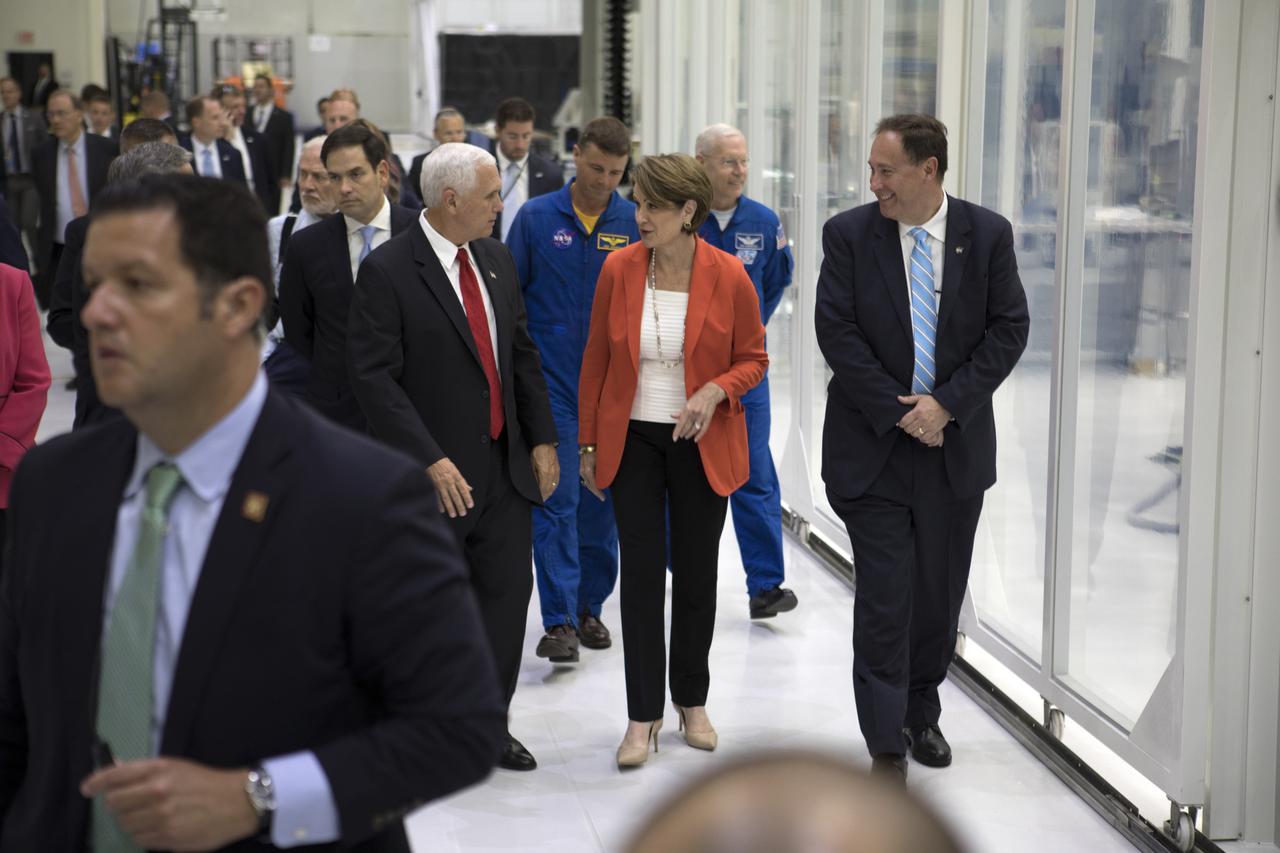
Vice President Mike Pence, center left, listens to Lockheed Martin Chairman, President and CEO Marillyn Hewson during a tour of the Neil Armstrong Operations and Checkout Building at NASA's Kennedy Space Center in Florida, where the Orion spacecraft is being readied for a trip beyond the moon on its first integrated flight with the Space Launch System rocket. Walking with them from left to right are U.S. Senator Marco Rubio (R-FL), NASA Astronauts Reid Wiseman and Pat Forrester, and NASA Acting Administrator Robert Lightfoot. During his visit to Kennedy, Pence spoke inside the Vehicle Assembly Building, where he thanked employees for advancing American leadership in space. The Vice President also toured several facilities highlighting the public-private partnerships at Kennedy, as both NASA and commercial companies prepare to launch American astronauts from the multi-user spaceport.
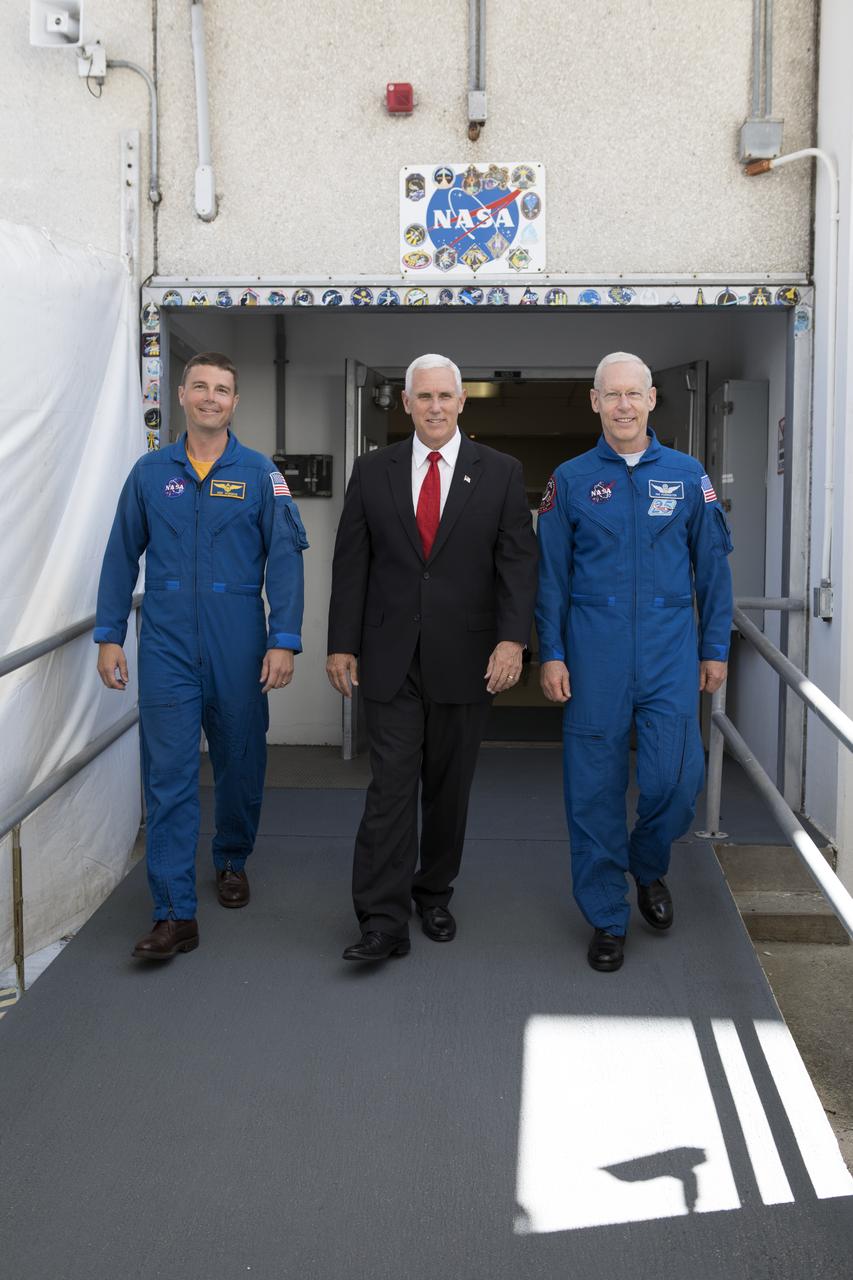
Vice President Mike Pence, center, is flanked by NASA Astronaut Reid Wiseman and NASA Astronaut Office Chief Pat Forrester as they walk out through the same door used by Apollo and space shuttle flight crews departing for the launch pad. Pence toured the Astronaut Crew Quarters during a stop at the Neil Armstrong Operations and Checkout Building at NASA's Kennedy Space Center in Florida, where the Orion spacecraft is being readied for a trip beyond the moon on its first integrated flight with the Space Launch System rocket. During his visit to Kennedy, Pence spoke inside the Vehicle Assembly Building, where he thanked employees for advancing American leadership in space. The Vice President also toured several facilities highlighting the public-private partnerships at Kennedy, as both NASA and commercial companies prepare to launch American astronauts from the multi-user spaceport.
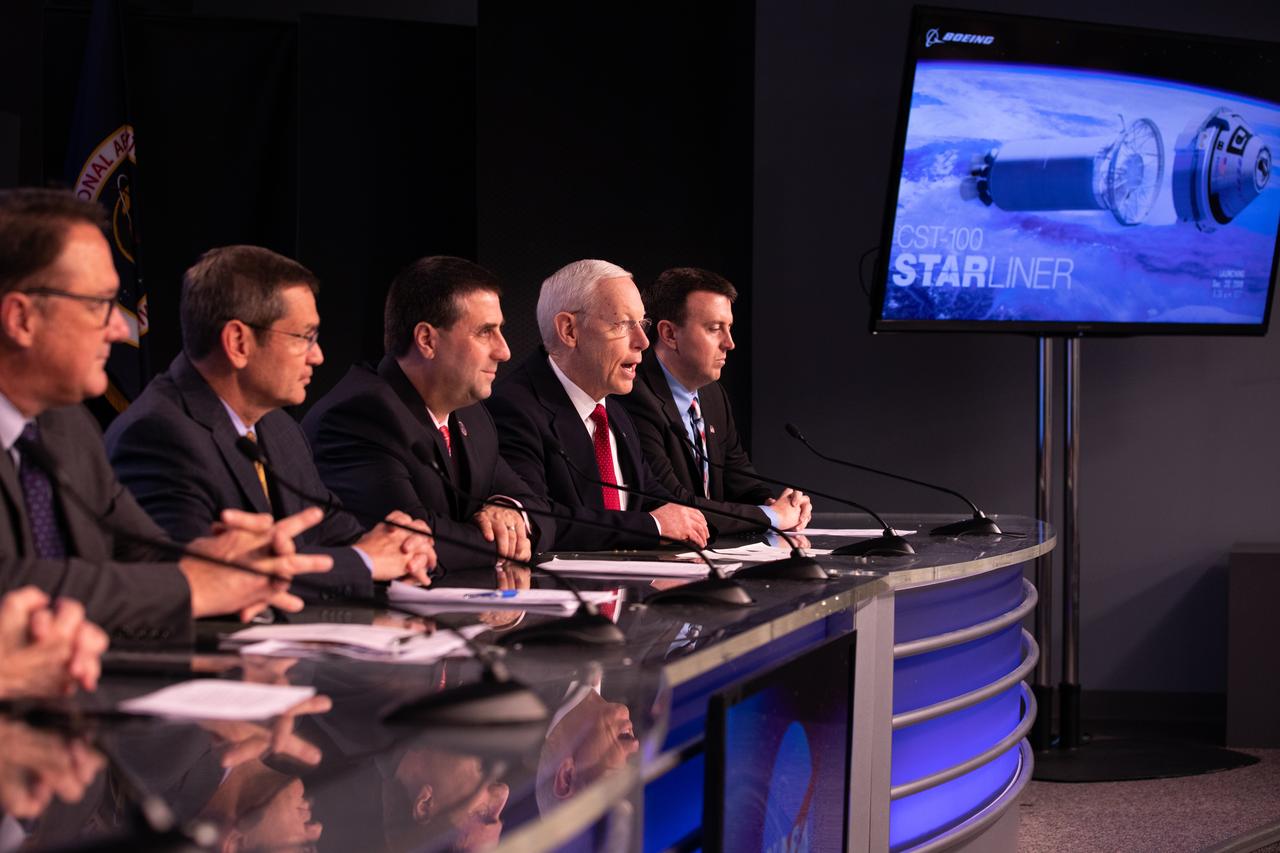
Officials from NASA, Boeing, United Launch Alliance and the U.S. Air Force 45th Weather Squadron participate in a prelaunch briefing for Boeing’s Orbital Flight Test at the agency’s Kennedy Space Center in Florida, Dec. 17, 2019. From left are John Mulholland, vice president and program manager, Boeing Commercial Crew Program; John Elbon, chief operating officer, United Launch Alliance; Joel Montalbano, deputy manager, International Space Station Program; Pat Forrester, Astronaut Office chief, Johnson Space Center; and Will Ulrich, launch weather officer, 45th Weather Squadron. Boeing’s CST-100 Starliner spacecraft will launch atop a United Launch Alliance Atlas V rocket from Space Launch Complex 41 at Cape Canaveral Air Force Station. The uncrewed Orbital Flight Test will be the Starliner’s first flight to the International Space Station for NASA’s Commercial Crew Program.
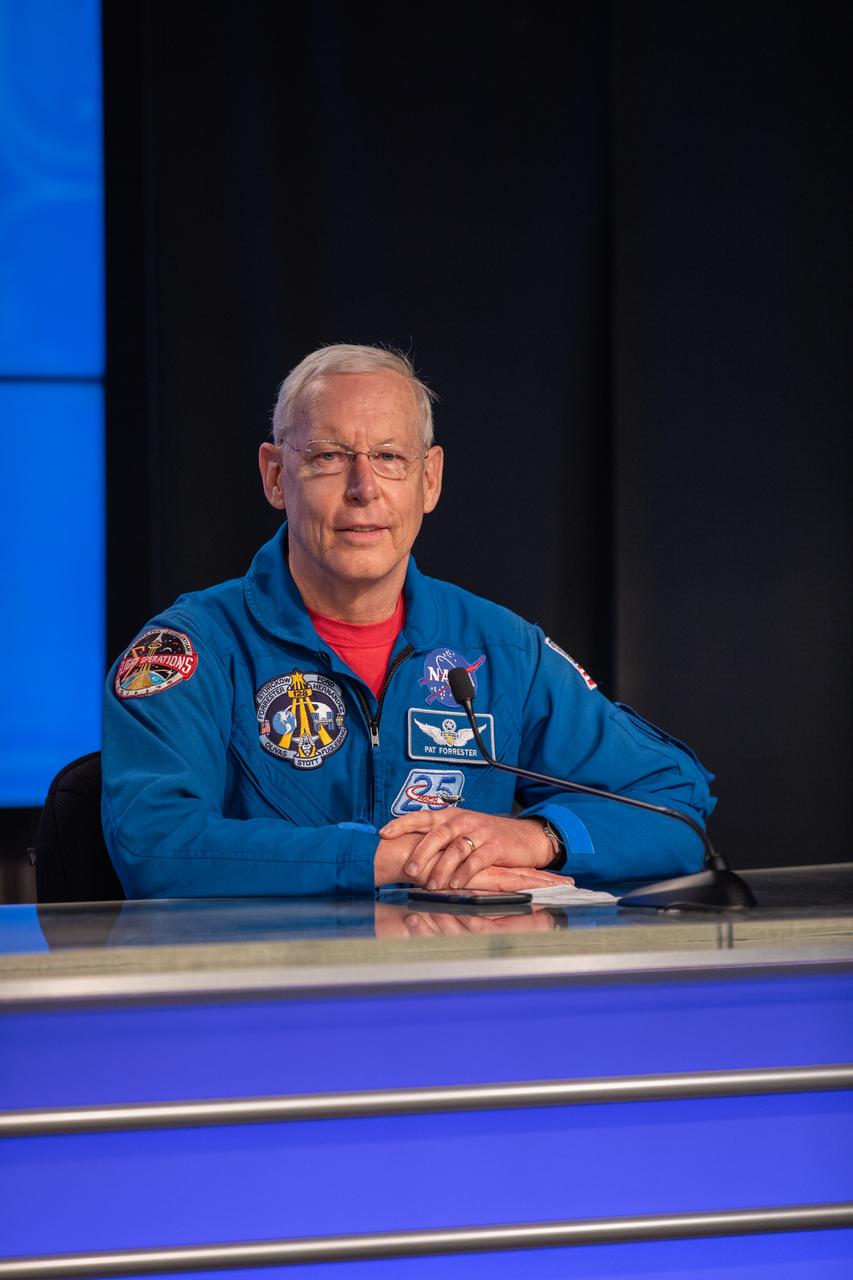
NASA Chief Astronaut Pat Forrester participates in a postlaunch news conference inside the Press Site auditorium at NASA’s Kennedy Space Center in Florida on May 30, 2020, following the launch of the agency’s SpaceX Demo-2 mission to the International Space Station. Liftoff of the SpaceX Falcon 9 rocket and Crew Dragon spacecraft, carrying NASA astronauts Robert Behnken and Douglas Hurley, occurred at 3:22 p.m. EDT from historic Launch Complex 39A. Behnken and Hurley are the first astronauts to launch to the space station from U.S. soil since the end of the Space Shuttle Program in 2011. Part of NASA’s Commercial Crew Program, this will be SpaceX’s final flight test, paving the way for the agency to certify the crew transportation system for regular, crewed flights to the orbiting laboratory.
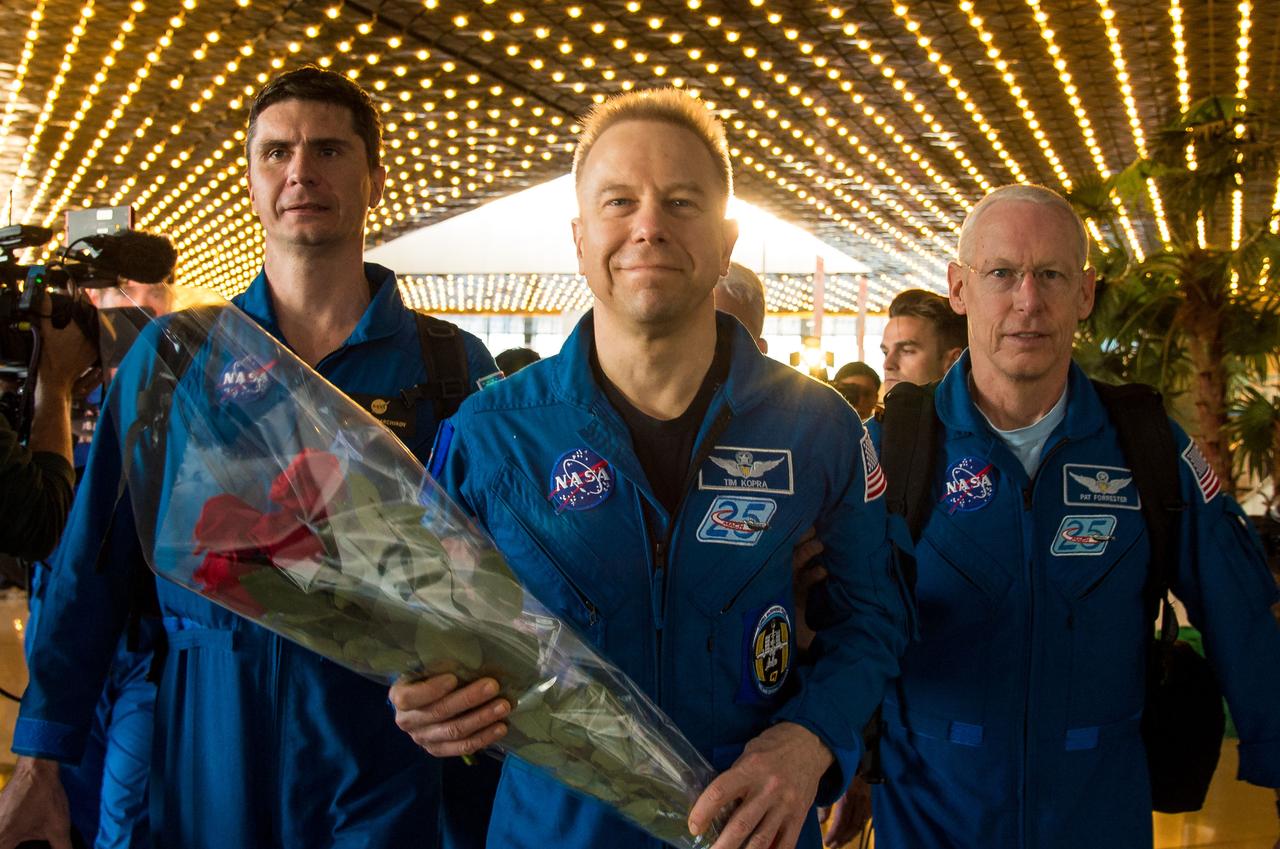
Expedition 47 astronaut Tim Kopra of NASA, center, arrives at the Karaganda Airport in Kazakhstan a few hours after he, Yuri Malenchenko of Roscosmos, and Tim Peake of the European Space Agency landed in their Soyuz TMA-19M spacecraft near the town of Zhezkazgan, Kazakhstan on Saturday, June 18, 2016. Kopra, Peake, and Malenchenko are returning after six months in space where they served as members of the Expedition 46 and 47 crews onboard the International Space Station. Photo Credit: (NASA/Bill Ingalls)
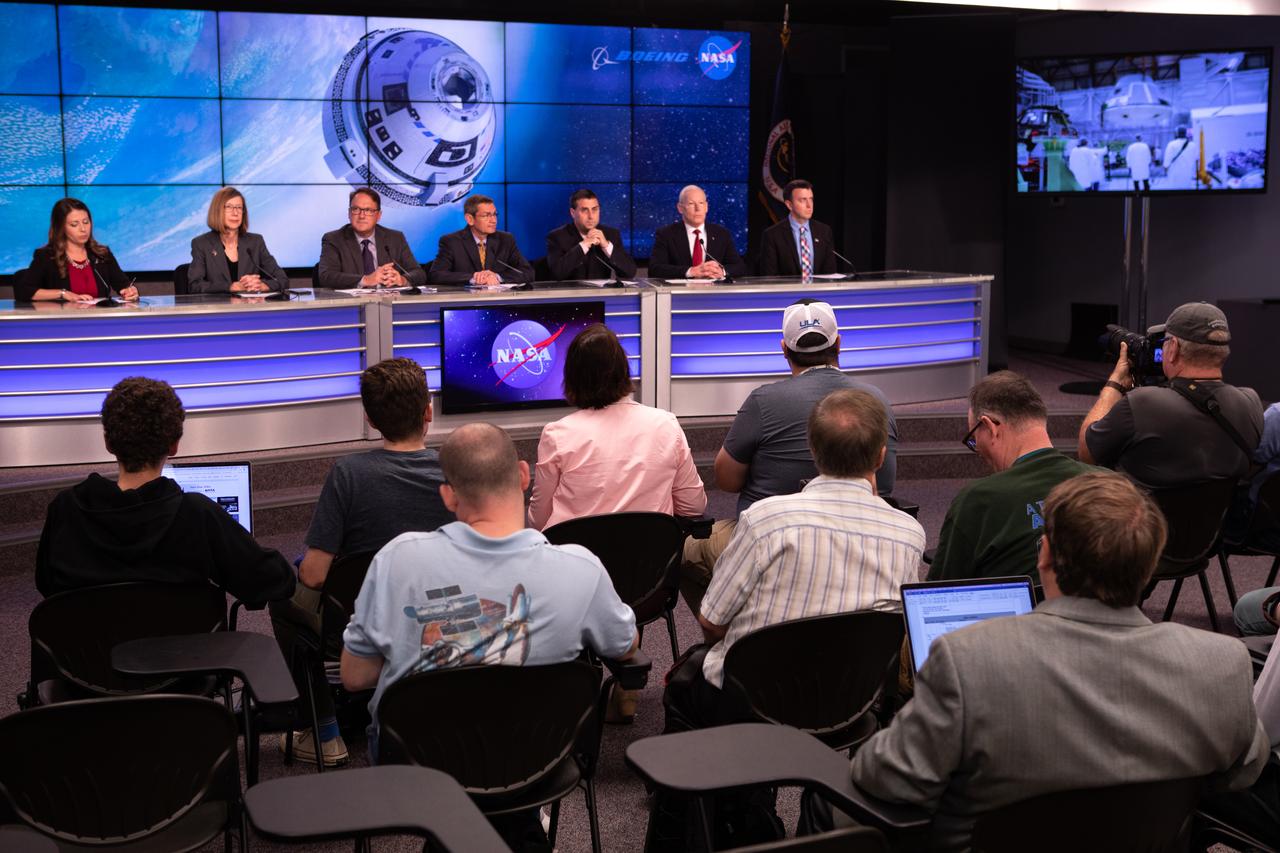
Officials from NASA, Boeing, United Launch Alliance and the U.S. Air Force 45th Weather Squadron participate in a prelaunch briefing for Boeing’s Orbital Flight Test at the agency’s Kennedy Space Center in Florida, Dec. 17, 2019. From left to right are Marie Lewis, NASA Communications; Kathy Lueders, NASA Commercial Crew Program; John Mulholland, vice president and program manager, Boeing Commercial Crew Program; John Elbon, chief operating officer, United Launch Alliance; Joel Montalbano, deputy manager, International Space Station Program; Pat Forrester, Astronaut Office chief, Johnson Space Center; and Will Ulrich, launch weather officer, 45th Weather Squadron. Boeing’s CST-100 Starliner spacecraft will launch atop a United Launch Alliance Atlas V rocket from Space Launch Complex 41 at Cape Canaveral Air Force Station. The uncrewed Orbital Flight Test will be the Starliner’s first flight to the International Space Station for NASA’s Commercial Crew Program.
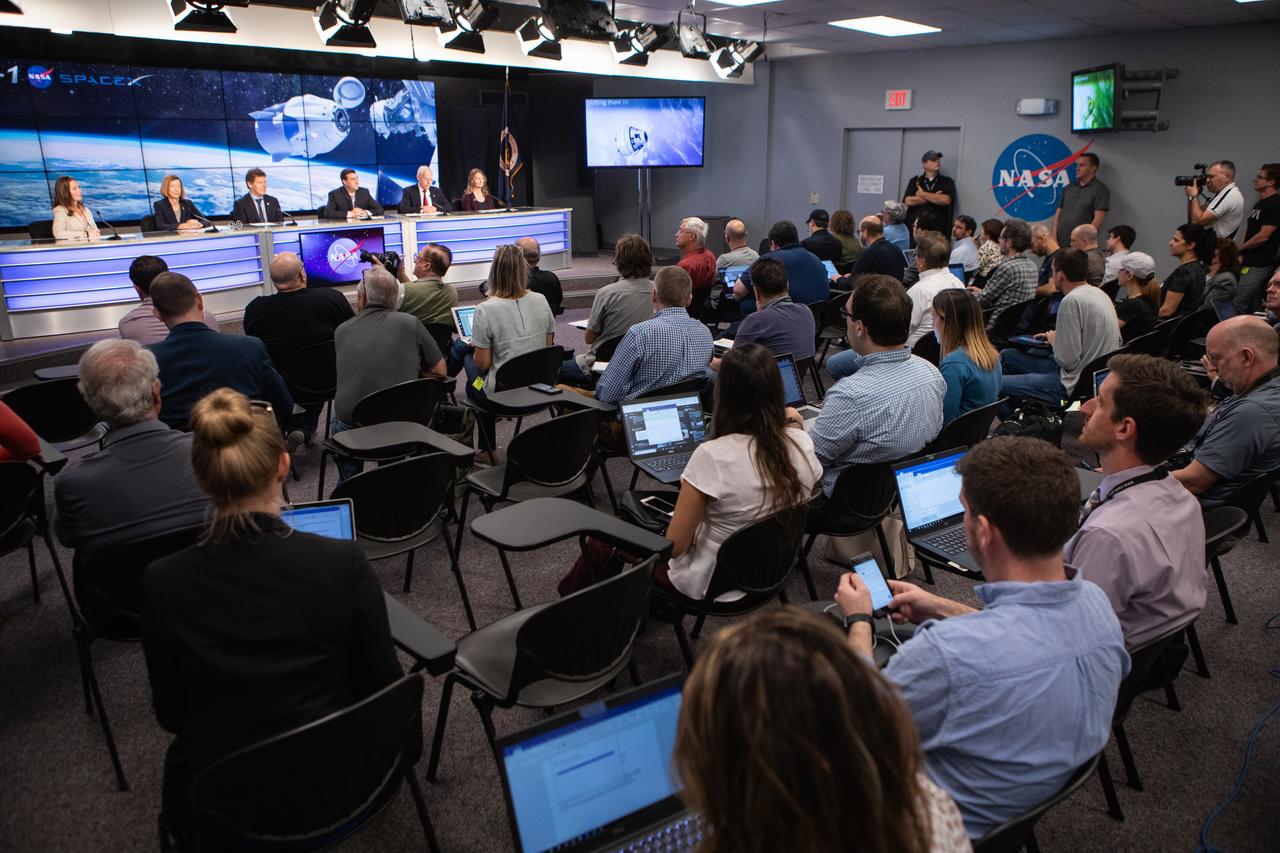
In the Kennedy Space Center’s Press Site TV auditorium, NASA, SpaceX and the 45th Weather Squadron leaders speak to members of the media during a prelaunch news conference Thursday, Feb. 28, prior to the Saturday, March 2 launch of the SpaceX Demo-1 Commercial Crew Program (CCP) mission to the International Space Station. From left are: Stephanie Martin of NASA Communications, Kathy Lueders, manager, NASA’s Commercial Crew Program; Hans Koenigsmann, vice president, Build and Flight Reliability, SpaceX; Joel Montalbano, deputy manager, International Space Station Program; Pat Forrester, chief, Astronaut Office, Johnson Space Center; and Melody C. Lovin, launch weather officer, 45th Weather Squadron. The inaugural flight of the SpaceX Crew Dragon, known as Demo-1, is scheduled to lift off from Kennedy’s Launch Complex 39A Saturday at 2:49 EST. A SpaceX Falcon 9 rocket will launch the uncrewed spacecraft on a mission designed to validate end-to-end systems and capabilities, leading to certification to fly crew. NASA has worked with SpaceX and Boeing in developing the Commercial Crew Program spacecraft to facilitate new human spaceflight systems launching from U.S. soil with the goal of safe, reliable and cost-effective access to low-Earth orbit destinations, such as the International Space Station.
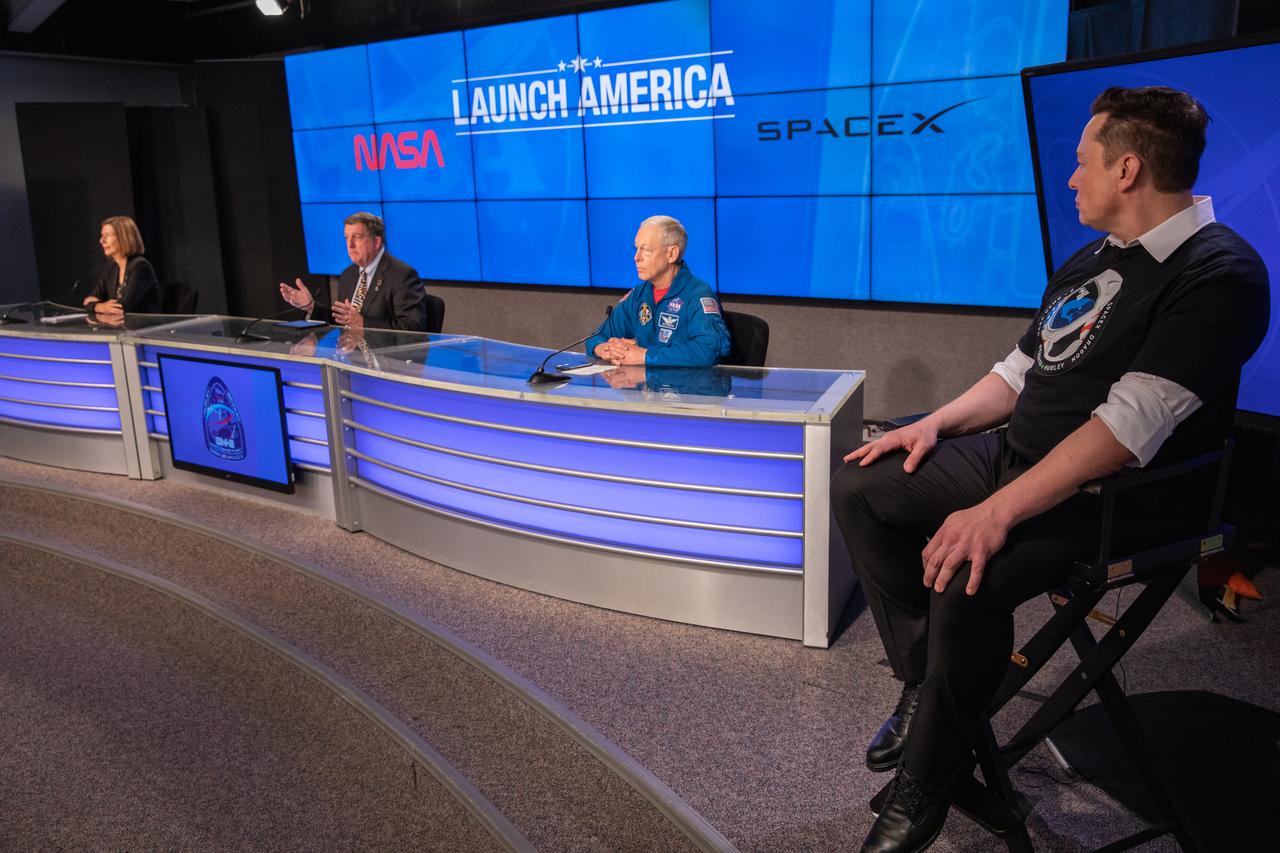
Inside the Press Site auditorium at NASA’s Kennedy Space Center in Florida, NASA and SpaceX officials conduct a postlaunch news conference on May 30, 2020, following the launch of the agency’s SpaceX Demo-2 mission to the International Space Station. From left are: Commercial Crew Program Manager Kathy Lueders; International Space Station Program Manager Kirk Shireman; NASA Chief Astronaut Pat Forrester; and Chief Engineer Elon Musk. Liftoff of the SpaceX Falcon 9 rocket and Crew Dragon spacecraft, carrying NASA astronauts Robert Behnken and Douglas Hurley, occurred at 3:22 p.m. EDT from historic Launch Complex 39A. Behnken and Hurley are the first astronauts to launch to the space station from U.S. soil since the end of the Space Shuttle Program in 2011. Part of NASA’s Commercial Crew Program, this will be SpaceX’s final flight test, paving the way for the agency to certify the crew transportation system for regular, crewed flights to the orbiting laboratory.

Vice President Mike Pence tours the Neil Armstrong Operations and Checkout Building at NASA's Kennedy Space Center in Florida, where the Orion spacecraft is being readied for a trip beyond the moon on its first integrated flight with the Space Launch System rocket. Pictured from left to right are NASA Kennedy Space Center Deputy Director Janet Petro; Acting NASA Administrator Robert Lightfoot; NASA Astronaut Reid Wiseman; Pence; NASA Astronaut Pat Forrester; retired astronaut Buzz Aldrin; U.S. Senator Marco Rubio (R-FL); Lockheed Martin Chairman, President and CEO Marillyn Hewson; and NASA Kennedy Space Center Director Robert Cabana. During his visit to Kennedy, Pence spoke inside the Vehicle Assembly Building, where he thanked employees for advancing American leadership in space. The Vice President also toured several facilities highlighting the public-private partnerships at Kennedy, as both NASA and commercial companies prepare to launch American astronauts from the multi-user spaceport.
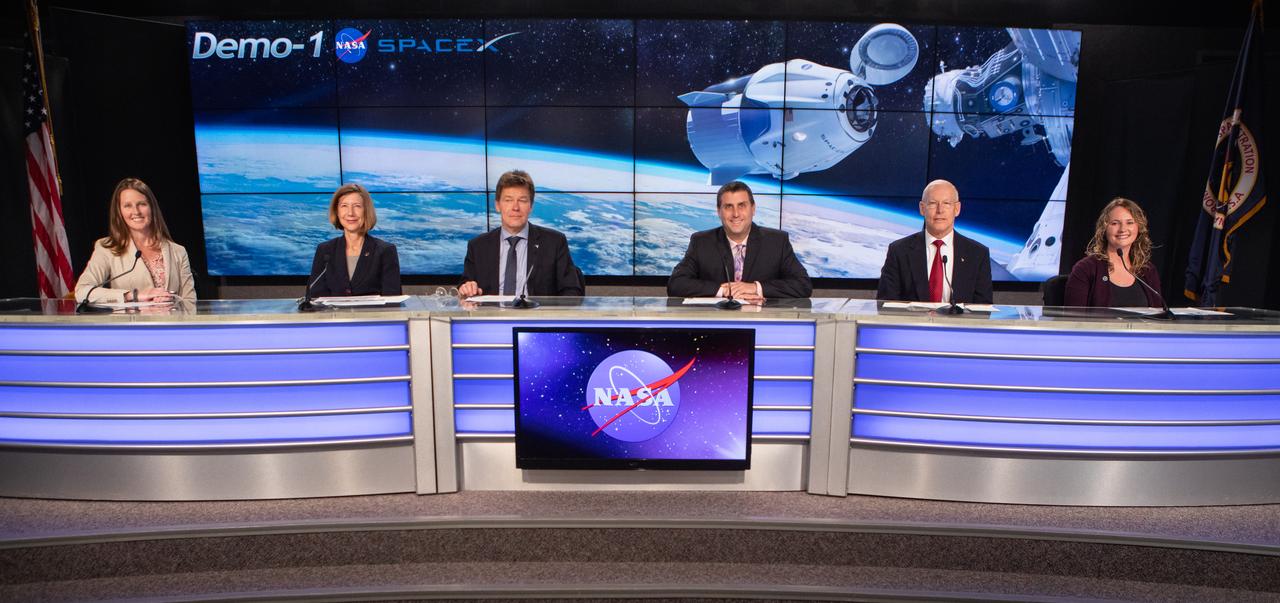
In the Kennedy Space Center’s Press Site TV auditorium, NASA, SpaceX and the 45th Weather Squadron leaders speak to members of the media during a prelaunch news conference Thursday, Feb. 28, prior to the Saturday, March 2 launch of the SpaceX Demo-1 Commercial Crew Program (CCP) mission to the International Space Station. From left are: Stephanie Martin of NASA Communications, Kathy Lueders, manager, NASA’s Commercial Crew Program; Hans Koenigsmann, vice president, Build and Flight Reliability, SpaceX; Joel Montalbano, deputy manager, International Space Station Program; Pat Forrester, chief, Astronaut Office, Johnson Space Center; and Melody C. Lovin, launch weather officer, 45th Weather Squadron. The inaugural flight of the SpaceX Crew Dragon, known as Demo-1, is scheduled to lift off from Kennedy’s Launch Complex 39A Saturday at 2:49 EST. A SpaceX Falcon 9 rocket will launch the uncrewed spacecraft on a mission designed to validate end-to-end systems and capabilities, leading to certification to fly crew. NASA has worked with SpaceX and Boeing in developing the Commercial Crew Program spacecraft to facilitate new human spaceflight systems launching from U.S. soil with the goal of safe, reliable and cost-effective access to low-Earth orbit destinations, such as the International Space Station.
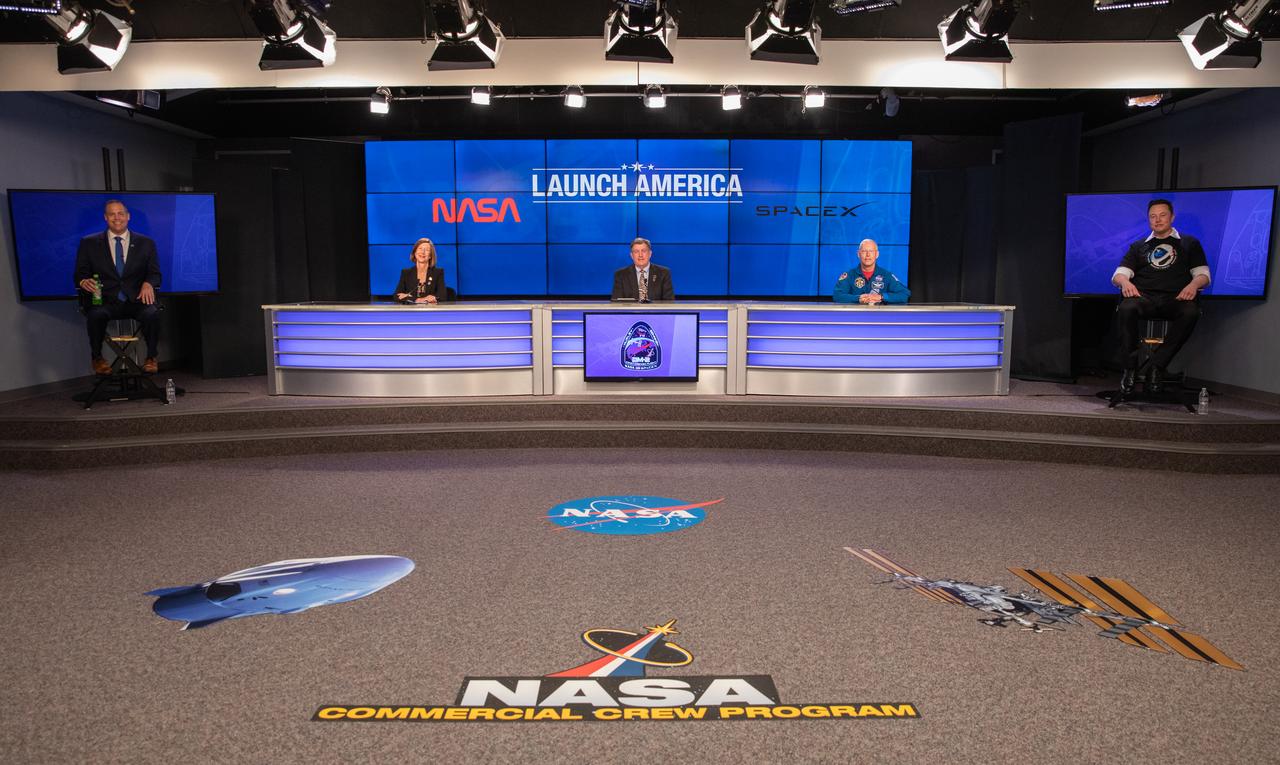
Inside the Press Site auditorium at NASA’s Kennedy Space Center in Florida, NASA and SpaceX officials conduct a postlaunch news conference on May 30, 2020, following the launch of the agency’s SpaceX Demo-2 mission to the International Space Station. From left are: NASA Administrator Jim Bridenstine; NASA Commercial Crew Program Manager Kathy Lueders; NASA International Space Station Program Manager Kirk Shireman; NASA Chief Astronaut Pat Forrester; and Chief Engineer Elon Musk. Liftoff of the SpaceX Falcon 9 rocket and Crew Dragon spacecraft, carrying NASA astronauts Robert Behnken and Douglas Hurley, occurred at 3:22 p.m. EDT from historic Launch Complex 39A. Behnken and Hurley are the first astronauts to launch to the space station from U.S. soil since the end of the Space Shuttle Program in 2011. Part of NASA’s Commercial Crew Program, this will be SpaceX’s final flight test, paving the way for the agency to certify the crew transportation system for regular, crewed flights to the orbiting laboratory.
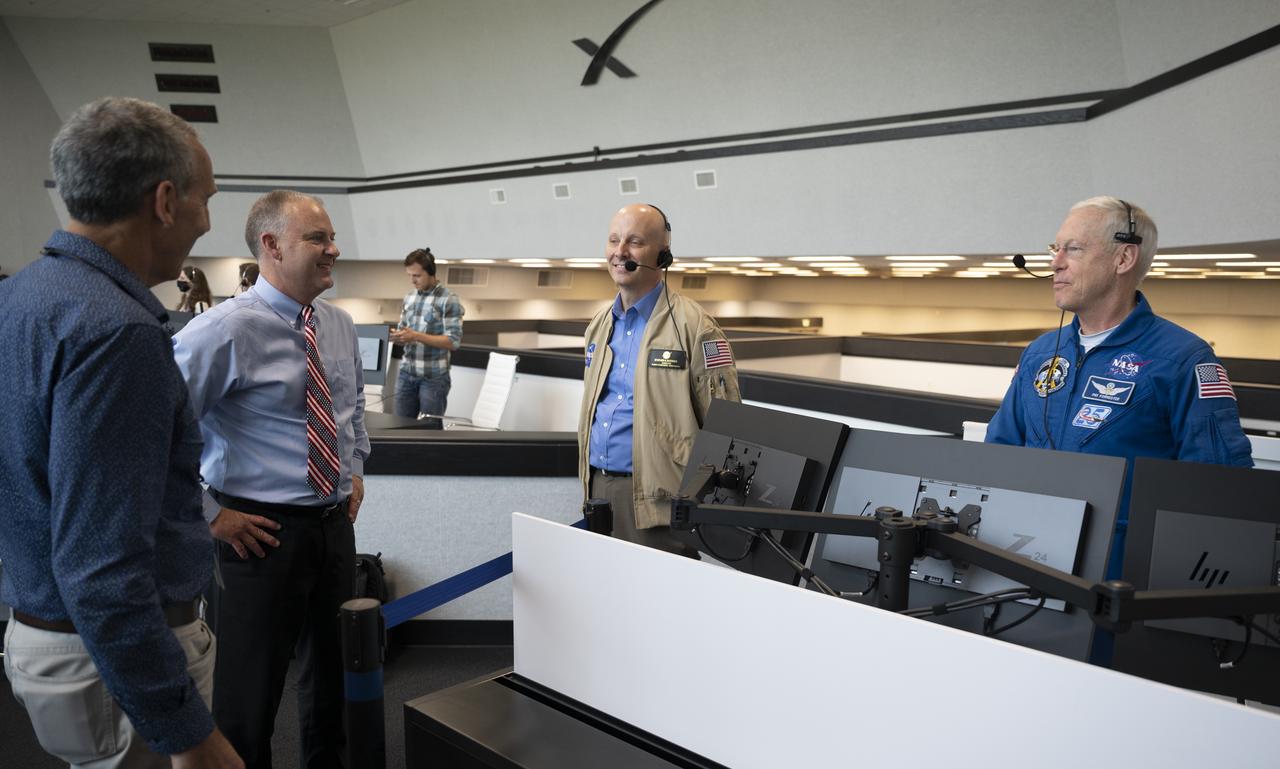
Lee Rosen, vice president for mission and launch operations at SpaceX, left, Norm Knight, deputy director of Flight Operations at NASA's Johnson Space Center, Stephen Koerner, Director of the Flight Operations Directorate at NASA’s Johnson Space Center, and Pat Forrester, NASA’s chief of the astronaut office, are seen after the launch of a SpaceX Falcon 9 rocket carrying the company's Crew Dragon spacecraft on the Demo-2 mission with NASA astronauts Douglas Hurley and Robert Behnken onboard, Saturday, May 30, 2020, in firing room four of the Launch Control Center at NASA’s Kennedy Space Center in Florida. NASA’s SpaceX Demo-2 mission is the first launch with astronauts of the SpaceX Crew Dragon spacecraft and Falcon 9 rocket to the International Space Station as part of the agency’s Commercial Crew Program. The test flight serves as an end-to-end demonstration of SpaceX’s crew transportation system. Behnken and Hurley launched at 3:22 p.m. EDT on Saturday, May 30, from Launch Complex 39A at the Kennedy Space Center. A new era of human spaceflight is set to begin as American astronauts once again launch on an American rocket from American soil to low-Earth orbit for the first time since the conclusion of the Space Shuttle Program in 2011. Photo Credit: (NASA/Joel Kowsky)
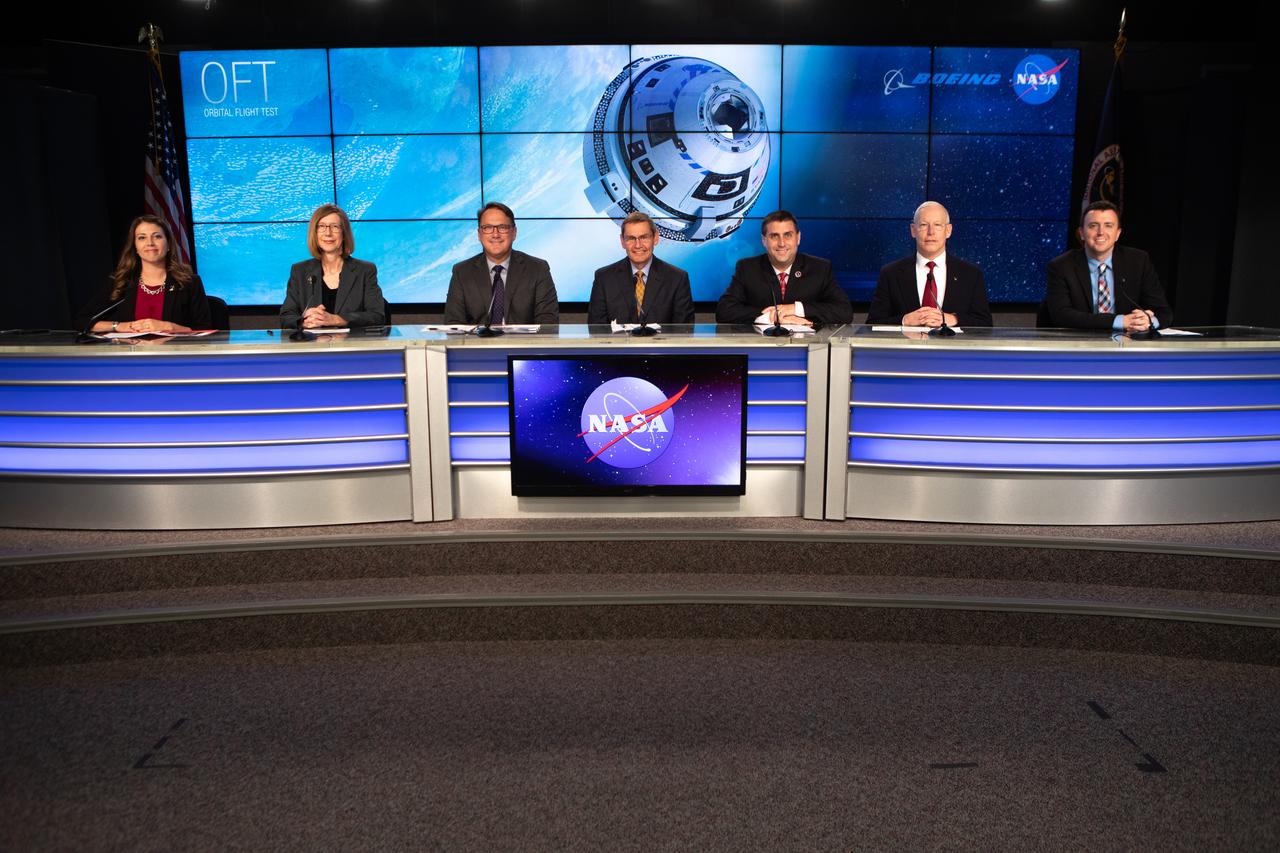
Officials from NASA, Boeing, United Launch Alliance and the U.S. Air Force 45th Weather Squadron participate in a prelaunch briefing for Boeing’s Orbital Flight Test at the agency’s Kennedy Space Center in Florida, Dec. 17, 2019. From left to right are Marie Lewis, NASA Communications; Kathy Lueders, NASA Commercial Crew Program; John Mulholland, vice president and program manager, Boeing Commercial Crew Program; John Elbon, chief operating officer, United Launch Alliance; Joel Montalbano, deputy manager, International Space Station Program; Pat Forrester, Astronaut Office chief, Johnson Space Center; and Will Ulrich, launch weather officer, 45th Weather Squadron. Boeing’s CST-100 Starliner spacecraft will launch atop a United Launch Alliance Atlas V rocket from Space Launch Complex 41 at Cape Canaveral Air Force Station. The uncrewed Orbital Flight Test will be the Starliner’s first flight to the International Space Station for NASA’s Commercial Crew Program.
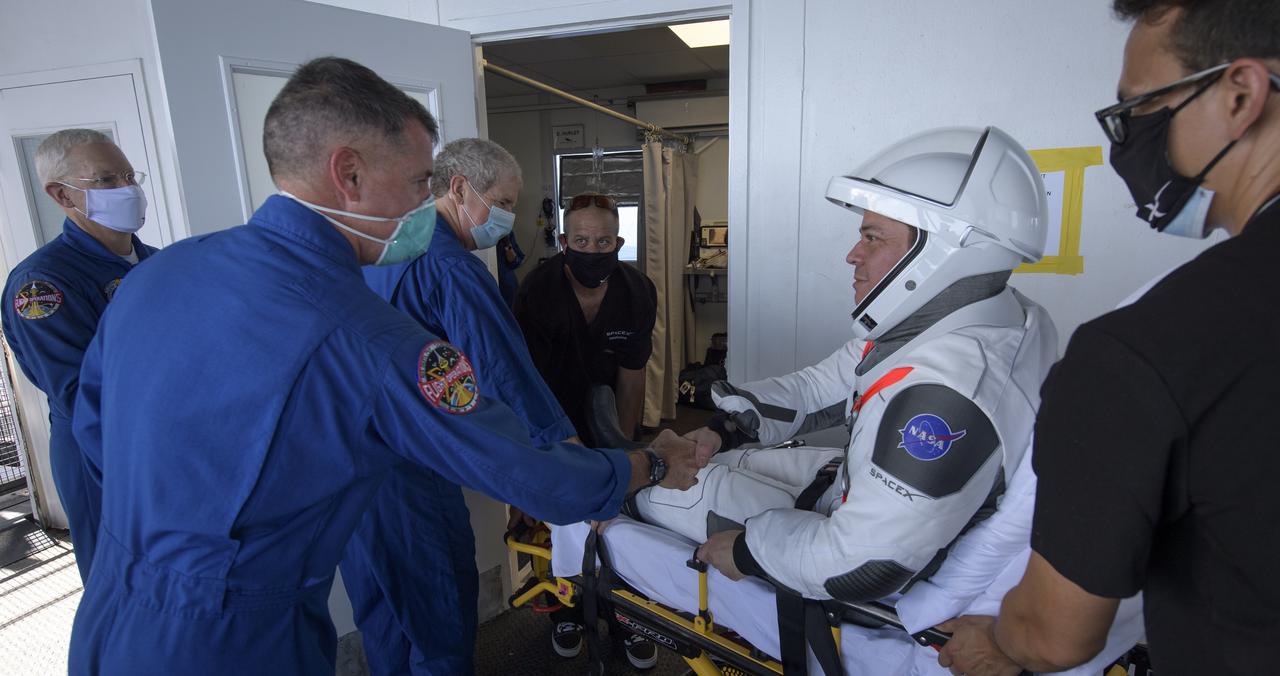
NASA astronaut Robert Behnken is greeted by NASA astronaut and Crew Recovery Chief Shane Kimbrough after egressing the SpaceX Crew Dragon Endeavour spacecraft onboard the SpaceX GO Navigator recovery ship after he and NASA astronaut Douglas Hurley landed in the Gulf of Mexico off the coast of Pensacola, Florida, Sunday, Aug. 2, 2020. The Demo-2 test flight for NASA's Commercial Crew Program was the first to deliver astronauts to the International Space Station and return them safely to Earth onboard a commercially built and operated spacecraft. Behnken and Hurley returned after spending 64 days in space. Photo Credit: (NASA/Bill Ingalls)
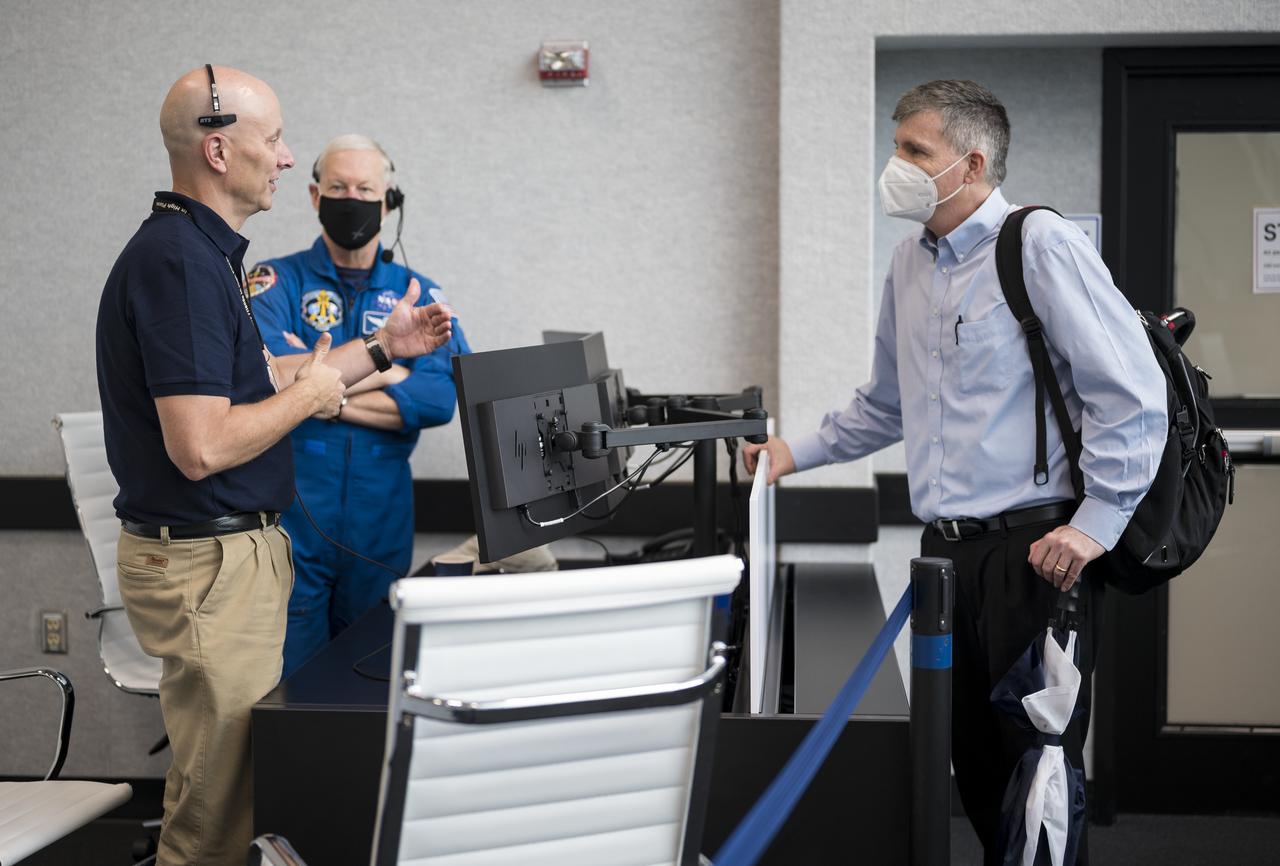
Stephen Koerner, director of the Flight Operations Directorate at NASA’s Johnson Space Center, left, speaks with Steve Stich, manager of NASA’s Commercial Crew Program, right, during a dress rehearsal in preparation for the launch of a SpaceX Falcon 9 rocket carrying the company's Crew Dragon spacecraft on NASA’s SpaceX Crew-1 mission with NASA astronauts Mike Hopkins, Victor Glover, Shannon Walker, and Japan Aerospace Exploration Agency (JAXA) astronaut Soichi Noguchi onboard, Thursday, Nov. 12, 2020, in firing room four of the Launch Control Center at NASA’s Kennedy Space Center in Florida. NASA’s SpaceX Crew-1 mission is the first crew rotation mission of the SpaceX Crew Dragon spacecraft and Falcon 9 rocket to the International Space Station as part of the agency’s Commercial Crew Program. Hopkins, Glover, Walker, and Noguchi are scheduled to launch at 7:49 p.m. EST on Saturday, Nov. 14, from Launch Complex 39A at the Kennedy Space Center. Photo Credit: (NASA/Aubrey Gemignani)