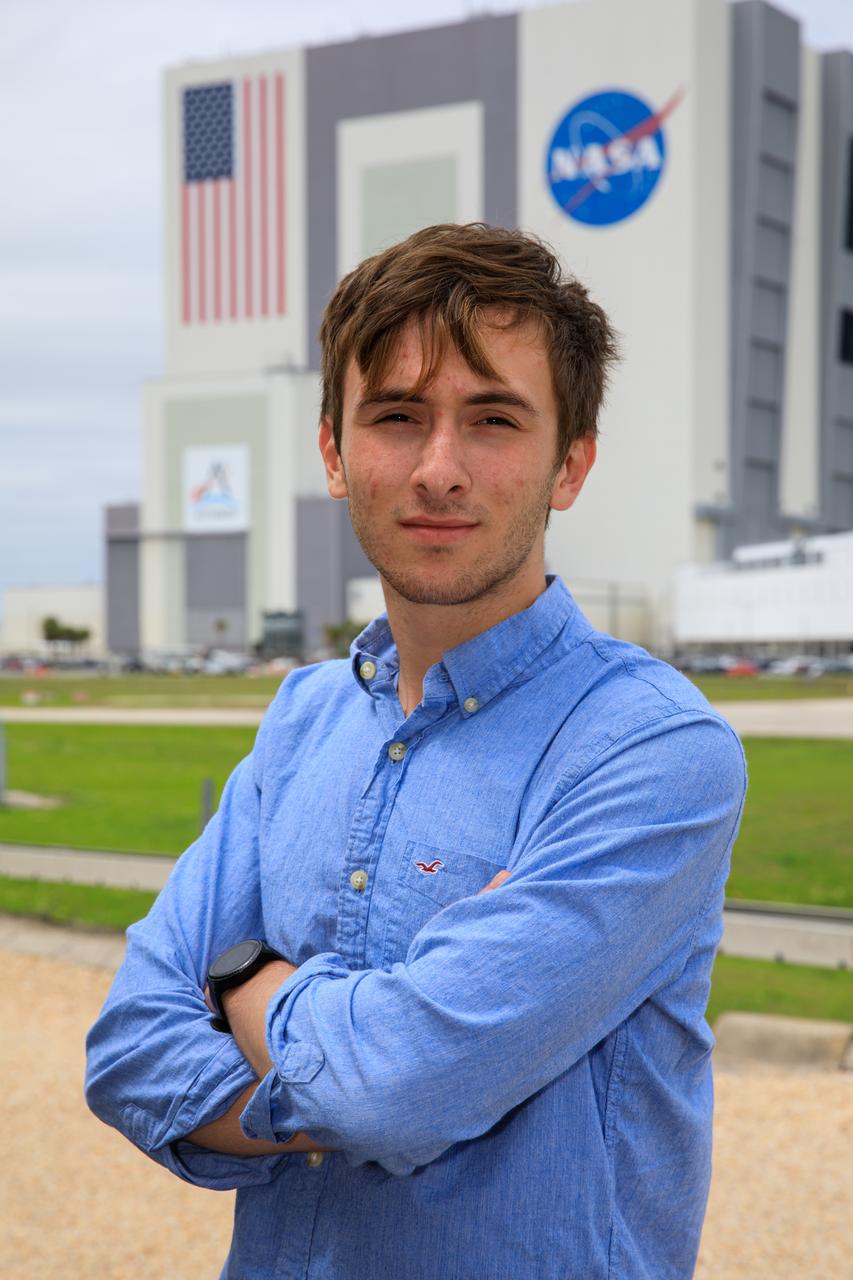
Jonah Saunders, Electrical Engineering Pathways Intern, poses in front of Vehicle Assembly Building at NASA’s Kennedy Space Center in Florida on April 17, 2023.
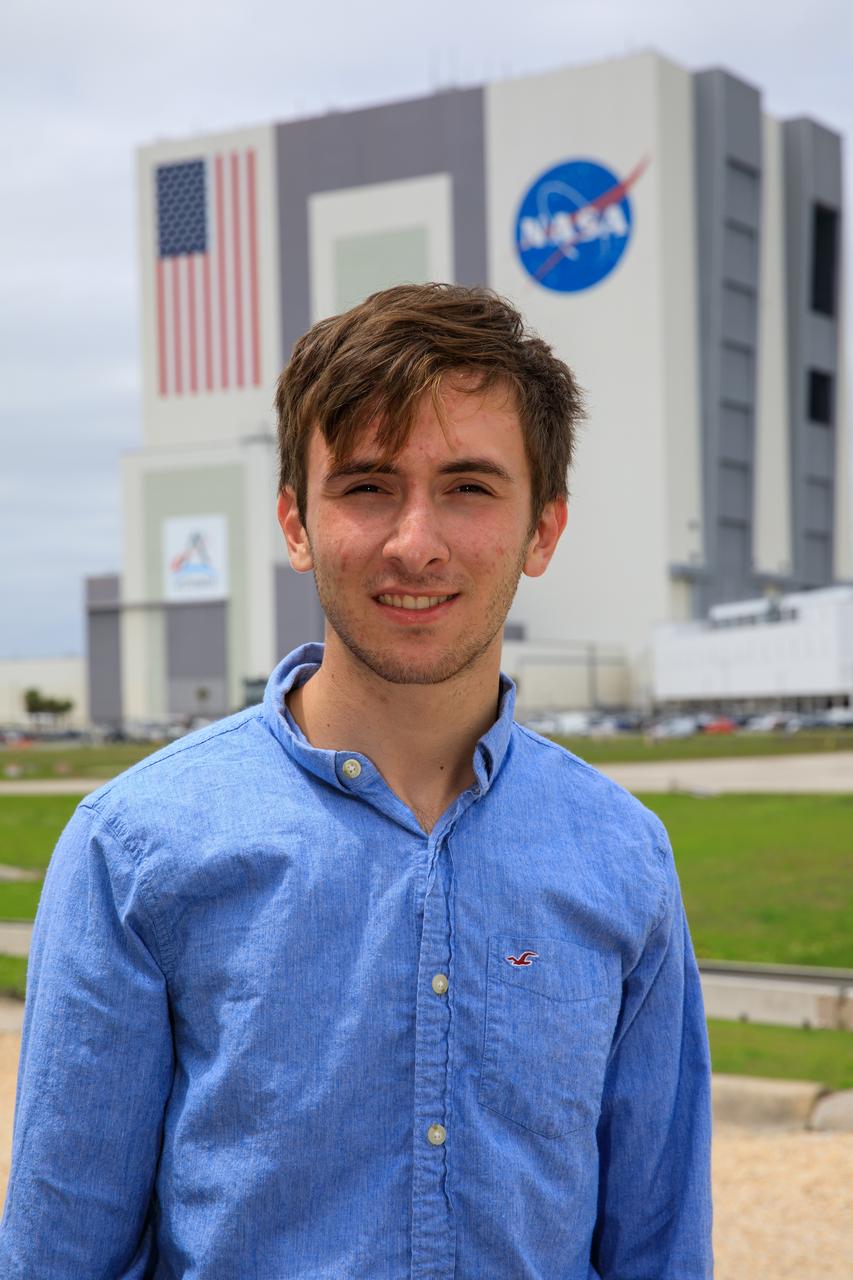
Jonah Saunders, Electrical Engineering Pathways Intern, poses in front of Vehicle Assembly Building at NASA’s Kennedy Space Center in Florida on April 17, 2023.
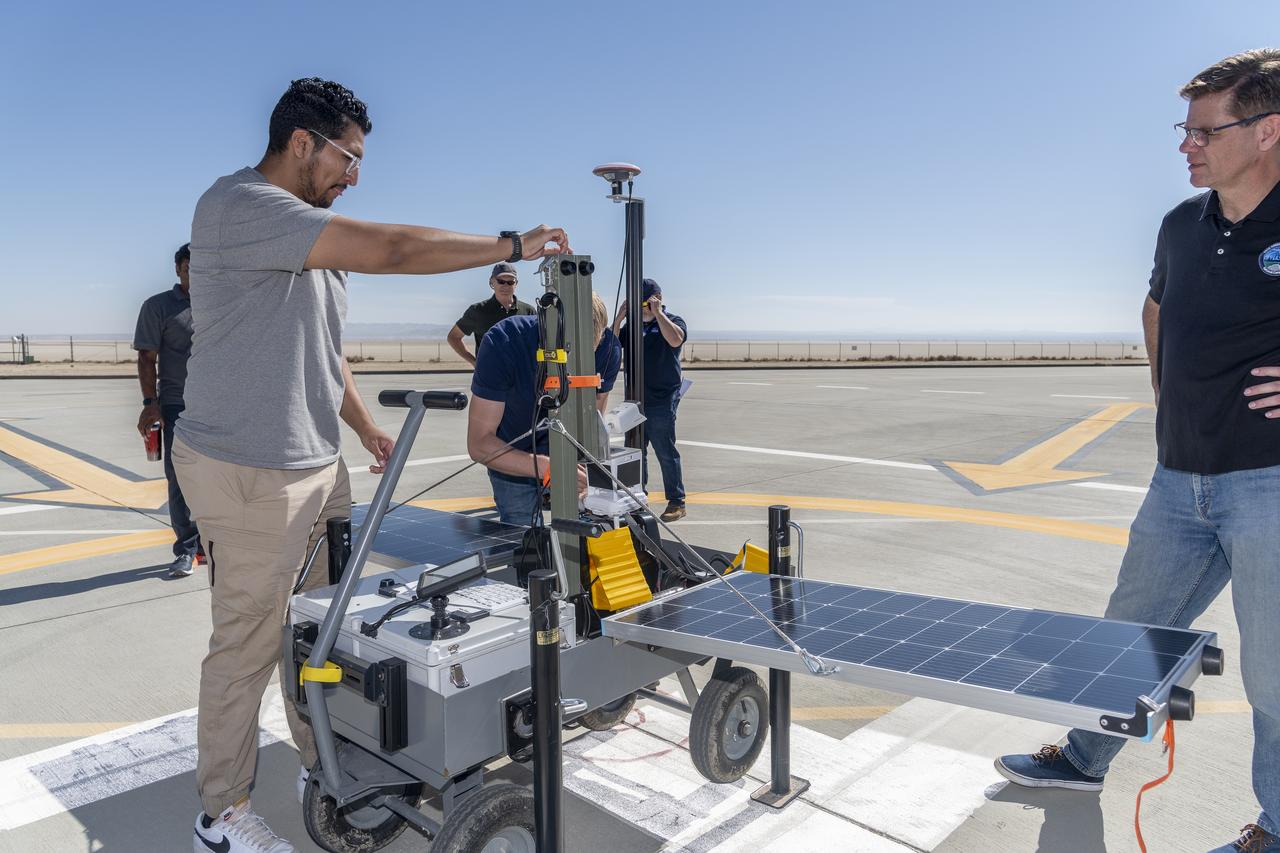
NASA operations engineer Daniel Velasquez, left, is reviewing the Mobile Vertipad Sensor Package system as part of the Air Mobility Pathways test project at NASA's Armstrong Flight Research Center in Edwards, California on October 17, 2023. The portable system allows Advanced Air Mobility researchers to test and evaluate several factors involved in monitoring takeoff and landing conditions at vertipad sites. "Vertipads" or "vertiports" will be where future air taxis will land and take off to transport passengers.
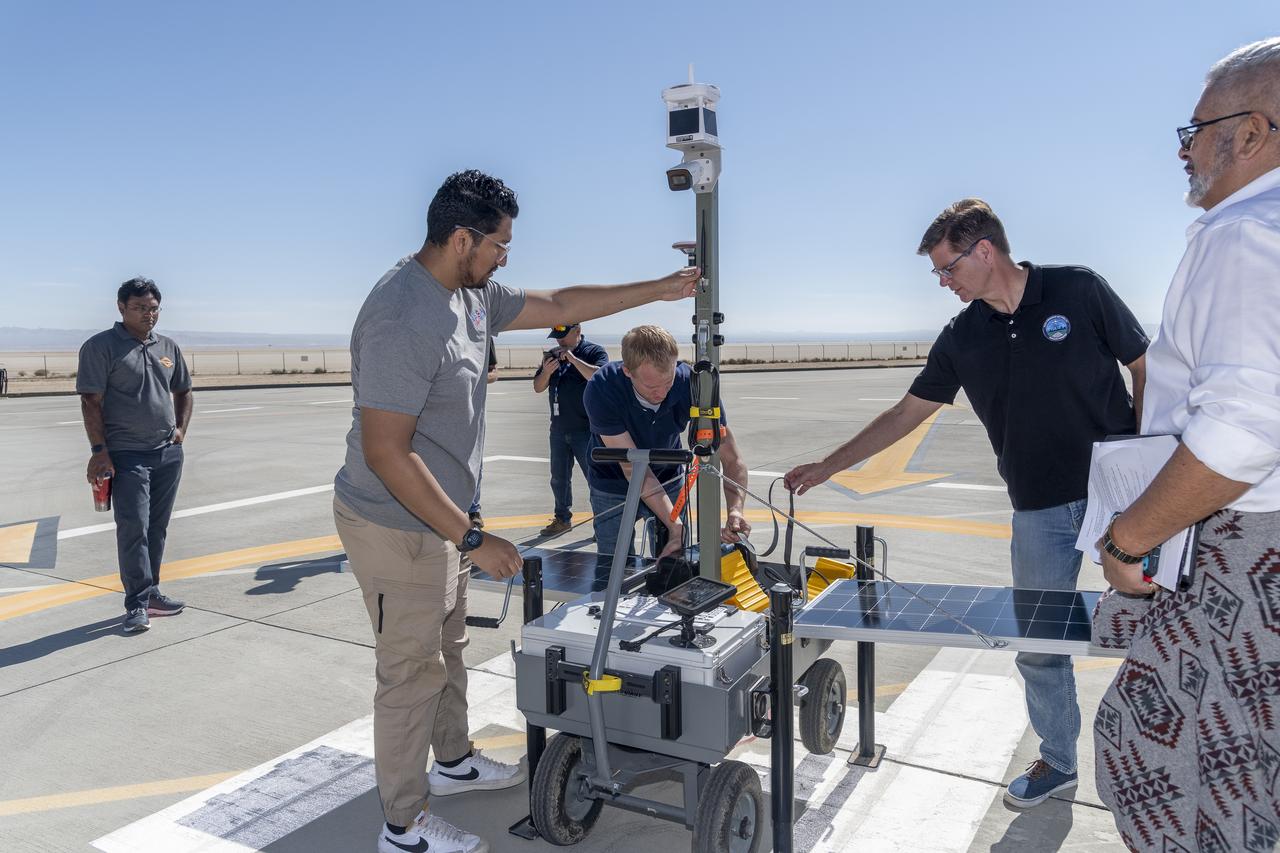
NASA operations engineer Daniel Velasquez, left, is reviewing the Mobile Vertipad Sensor Package system as part of the Air Mobility Pathways test project at NASA's Armstrong Flight Research Center in Edwards, California on October 17, 2023. The portable system allows Advanced Air Mobility researchers to test and evaluate several factors involved in monitoring takeoff and landing conditions at vertipad sites. "Vertipads" or "vertiports" will be where future air taxis will land and take off to transport passengers.
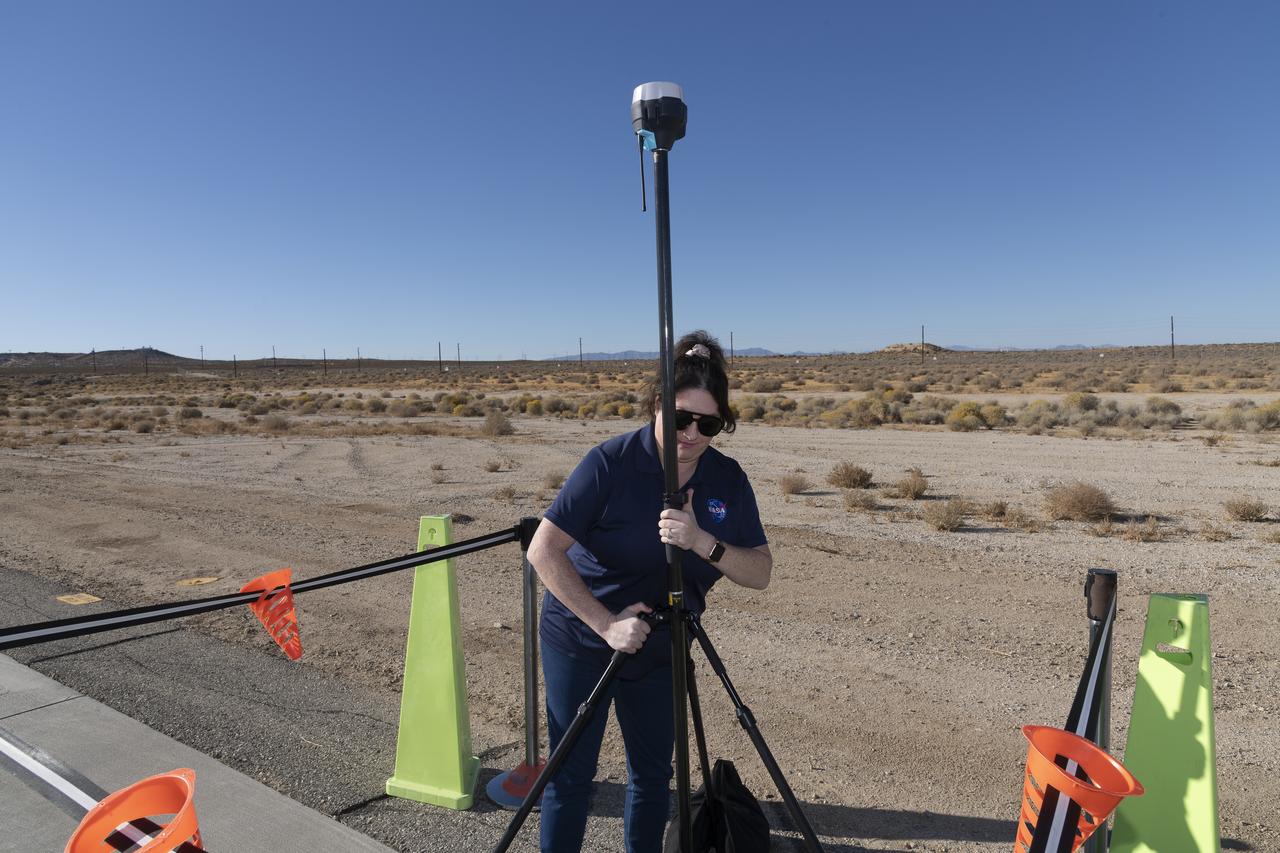
Saré Culbertson, NASA Pathways intern at NASA’s Armstrong Flight Research Center in Edwards, California, adjusts the Emlid Reach RS2+ receiver equipment that connects with GPS and global navigation satellite systems on Nov. 7, 2024, in preparation for future air taxi test flight research.
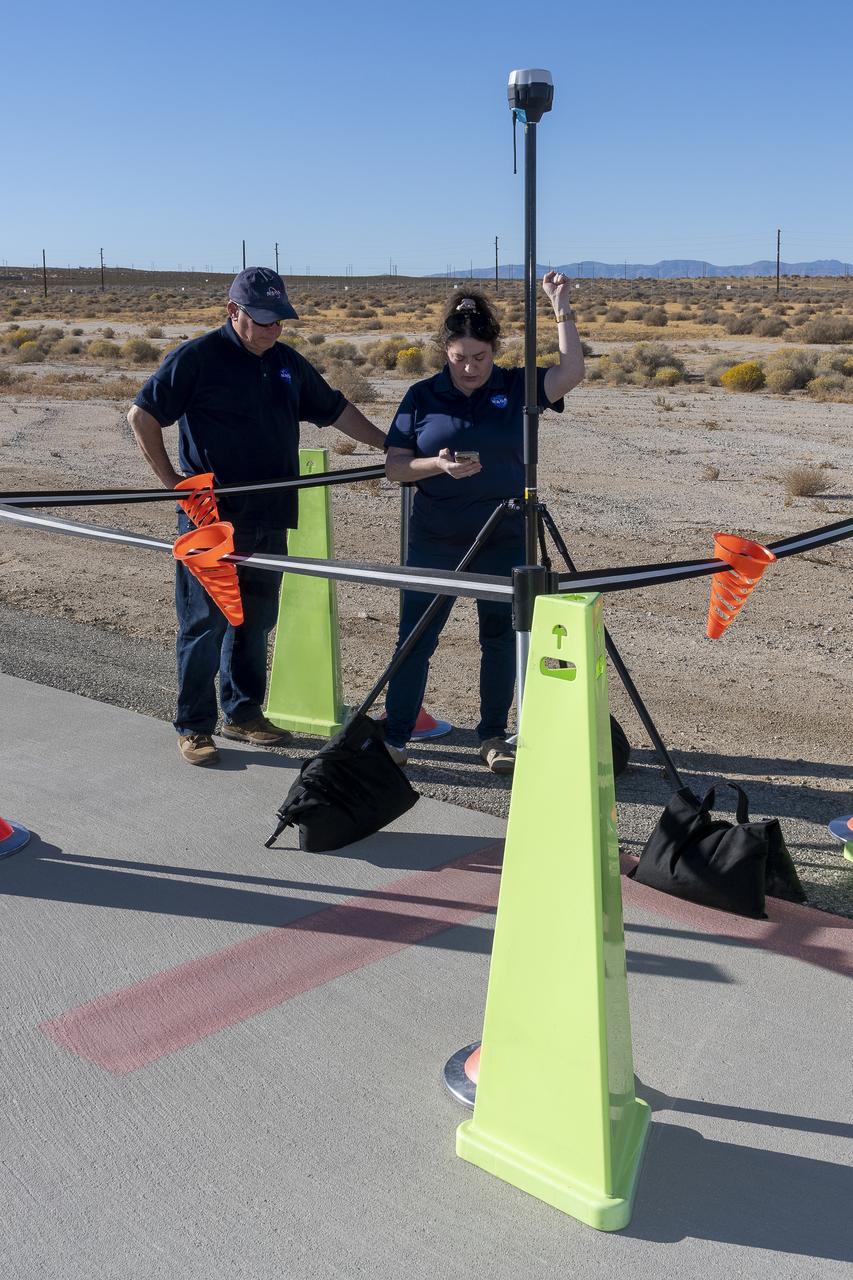
NASA Pathways intern Saré Culbertson, right, works with NASA operations engineer Jack Hayes at NASA’s Armstrong Flight Research Center in Edwards, California, on Nov. 7, 2024. They are verifying GPS and global navigation satellite system coordinates using Emlid Reach RS2+ receiver equipment, which supports surveying, mapping, and navigation in preparation for future air taxi test flight research.
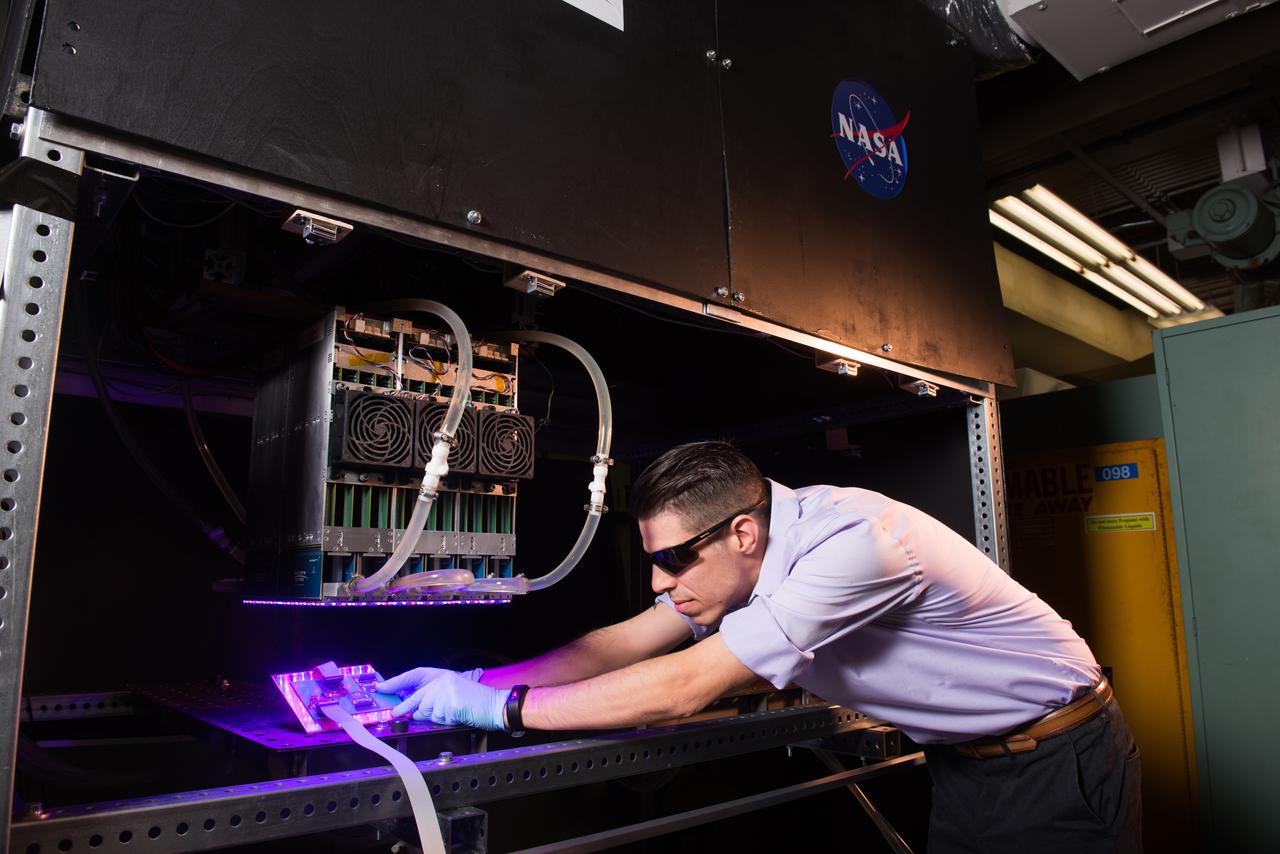
NASA Glenn researcher Tim Peshek shows off a new type of ultrathin solar cell, known as a ‘perovskite’ because of its structure. These solar cells show promise for space applications because of their high efficiency and radiation tolerance and open the door to extremely low cost and large solar arrays for spacecraft or lunar surface habitats.
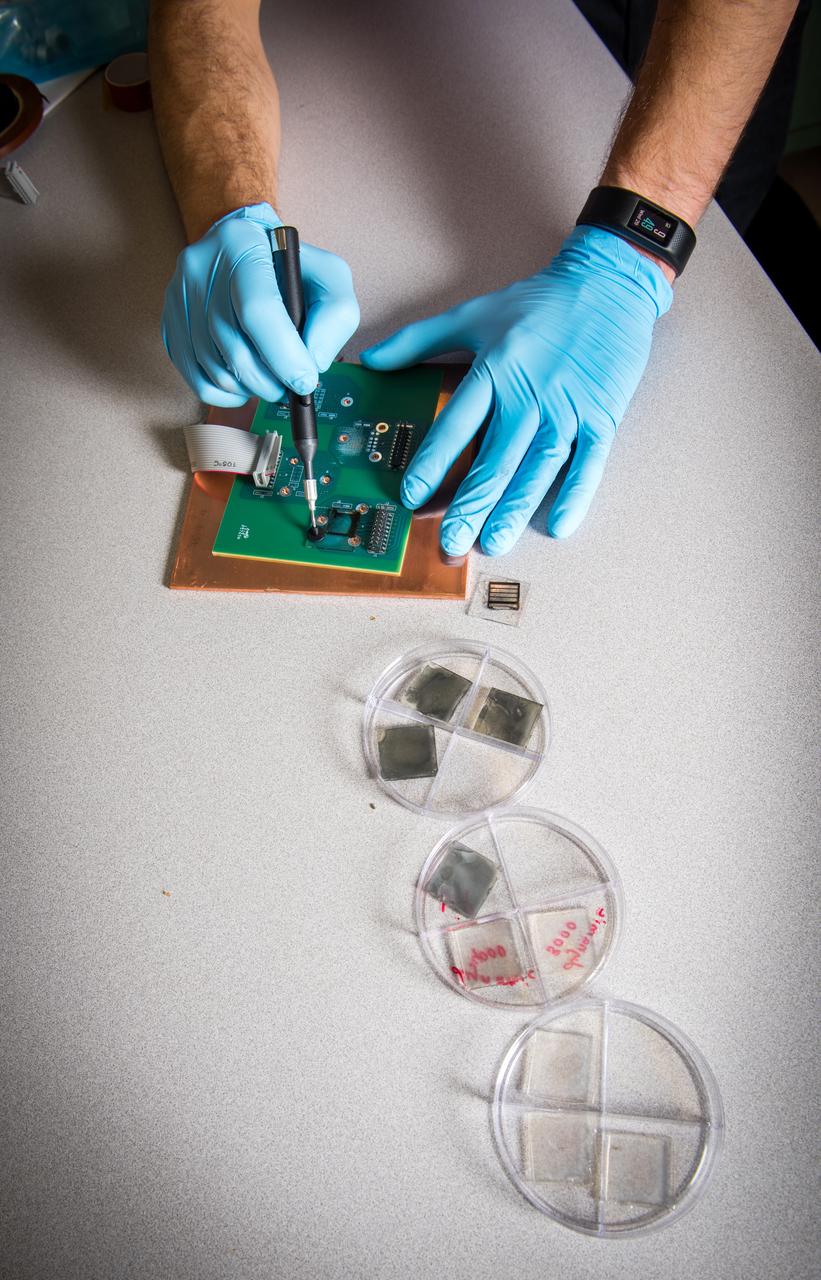
NASA Glenn researcher Tim Peshek shows off a new type of ultrathin solar cell, known as a ‘perovskite’ because of its structure. These solar cells show promise for space applications because of their high efficiency and radiation tolerance and open the door to extremely low cost and large solar arrays for spacecraft or lunar surface habitats.
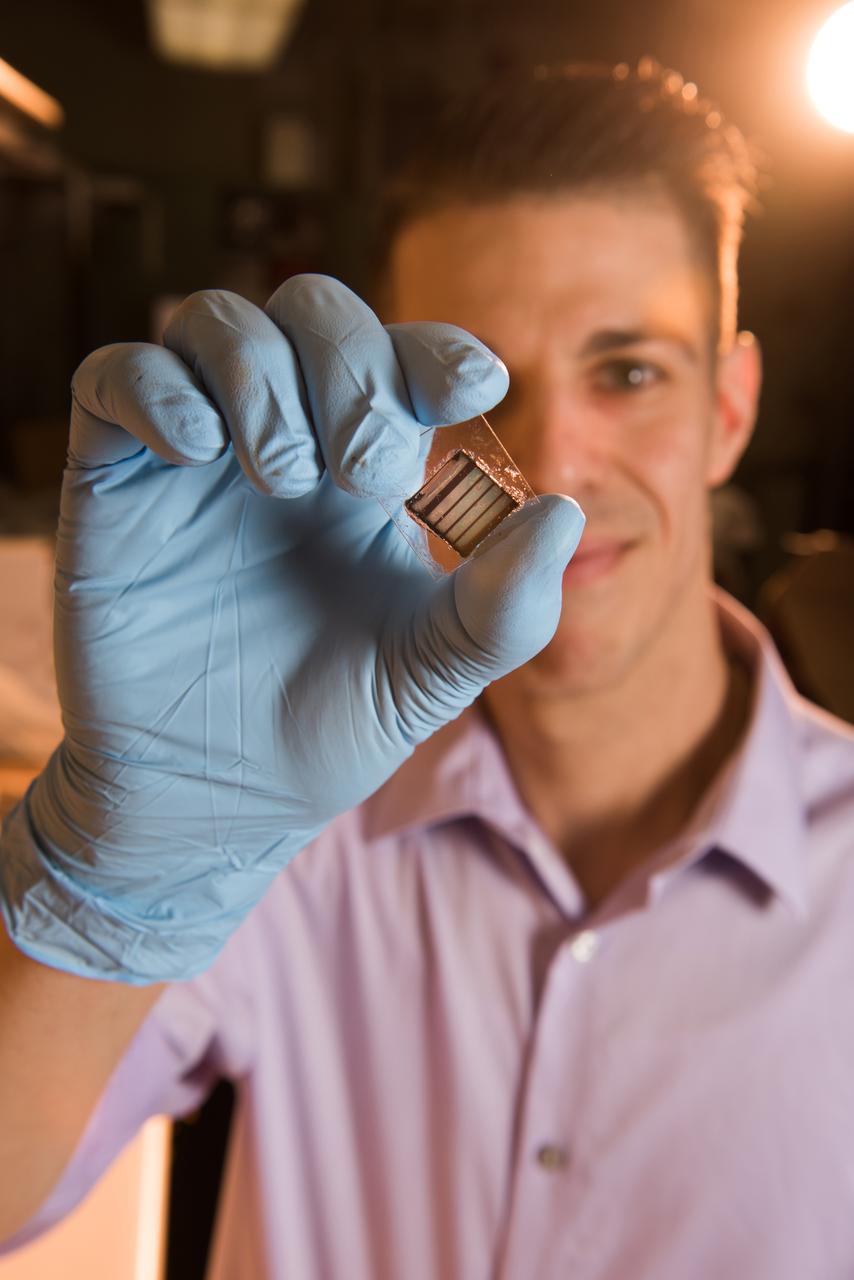
NASA Glenn researcher Tim Peshek shows off a new type of ultrathin solar cell, known as a ‘perovskite’ because of its structure. These solar cells show promise for space applications because of their high efficiency and radiation tolerance and open the door to extremely low cost and large solar arrays for spacecraft or lunar surface habitats.

The movement pathways of molten rock, or lava, is demonstrated in this image from NASA Mars Odyssey spacecraft of a portion of Olympus Mons, the largest volcano in our solar system.
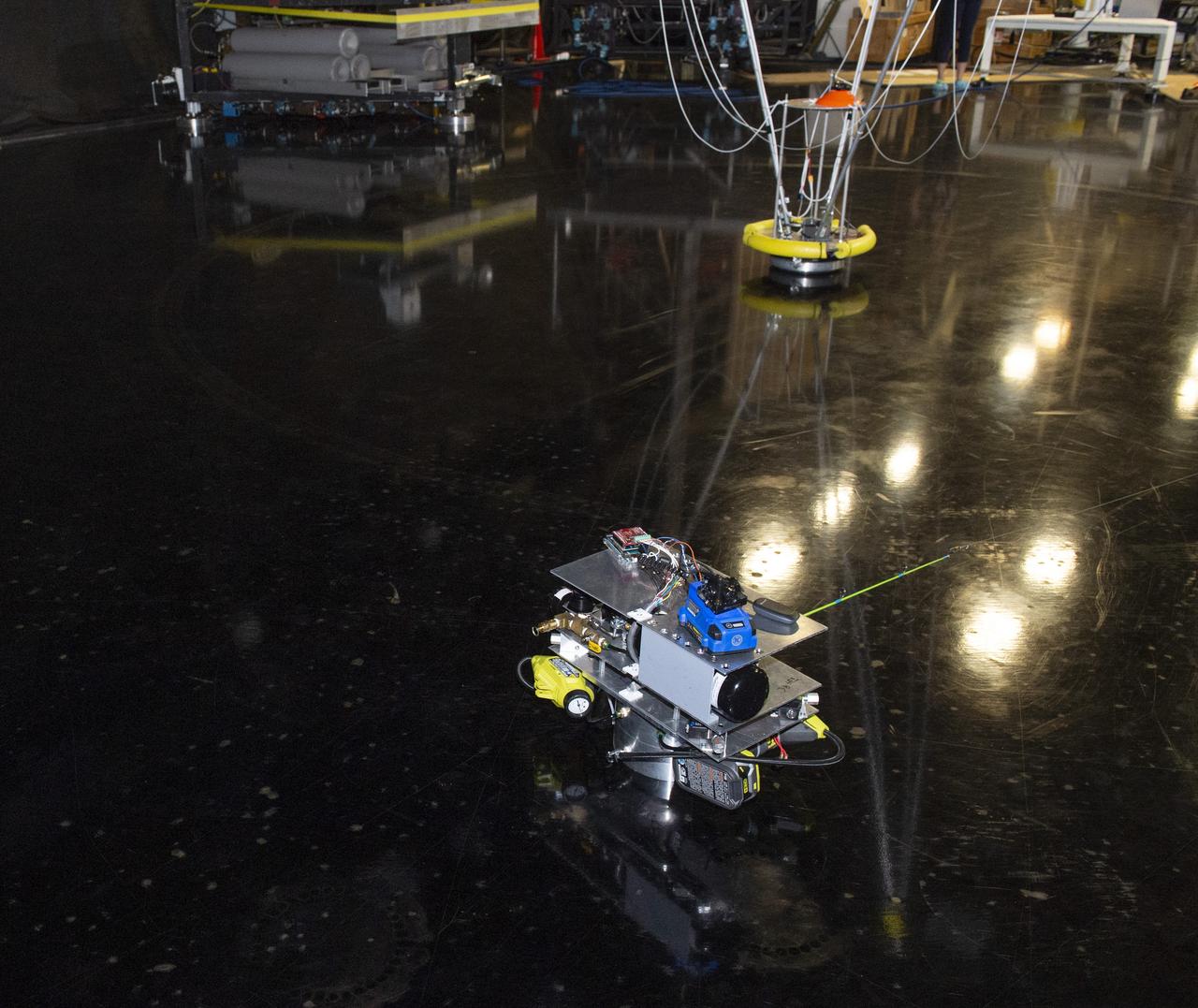
PATHWAYS INTERN ALEXANDRA BOEHM, AND JACOBS INTERN, PEYTON NELSON DEMONSTRATE STEERABLE AIR BEARING TETHER DEPLOYMENT SYSTEM TO MSFC SENIOR MANAGEMENT. ALSO WORKING ON THE PROJECT BUT NOT PICTURED WERE SUMMER INTERN ALI BERTELSMAN, PATHWAYS INTERN ANNA SHIPMAN, AND JACOBS FULL-TIME EMPLOYEE BRANDON MOORE.
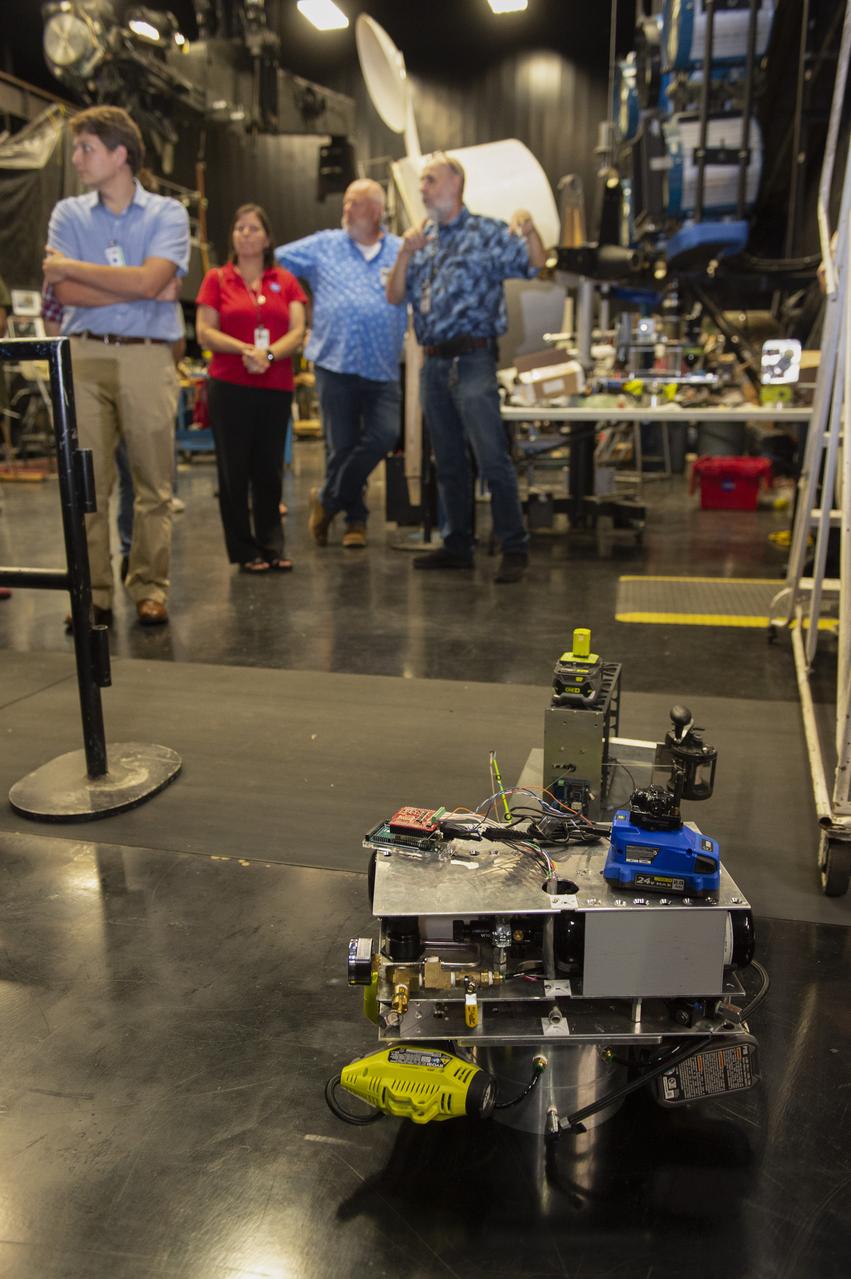
PATHWAYS INTERN ALEXANDRA BOEHM, AND JACOBS INTERN, PEYTON NELSON DEMONSTRATE STEERABLE AIR BEARING TETHER DEPLOYMENT SYSTEM TO MSFC SENIOR MANAGEMENT. ALSO WORKING ON THE PROJECT BUT NOT PICTURED WERE SUMMER INTERN ALI BERTELSMAN, PATHWAYS INTERN ANNA SHIPMAN, AND JACOBS FULL-TIME EMPLOYEE BRANDON MOORE.
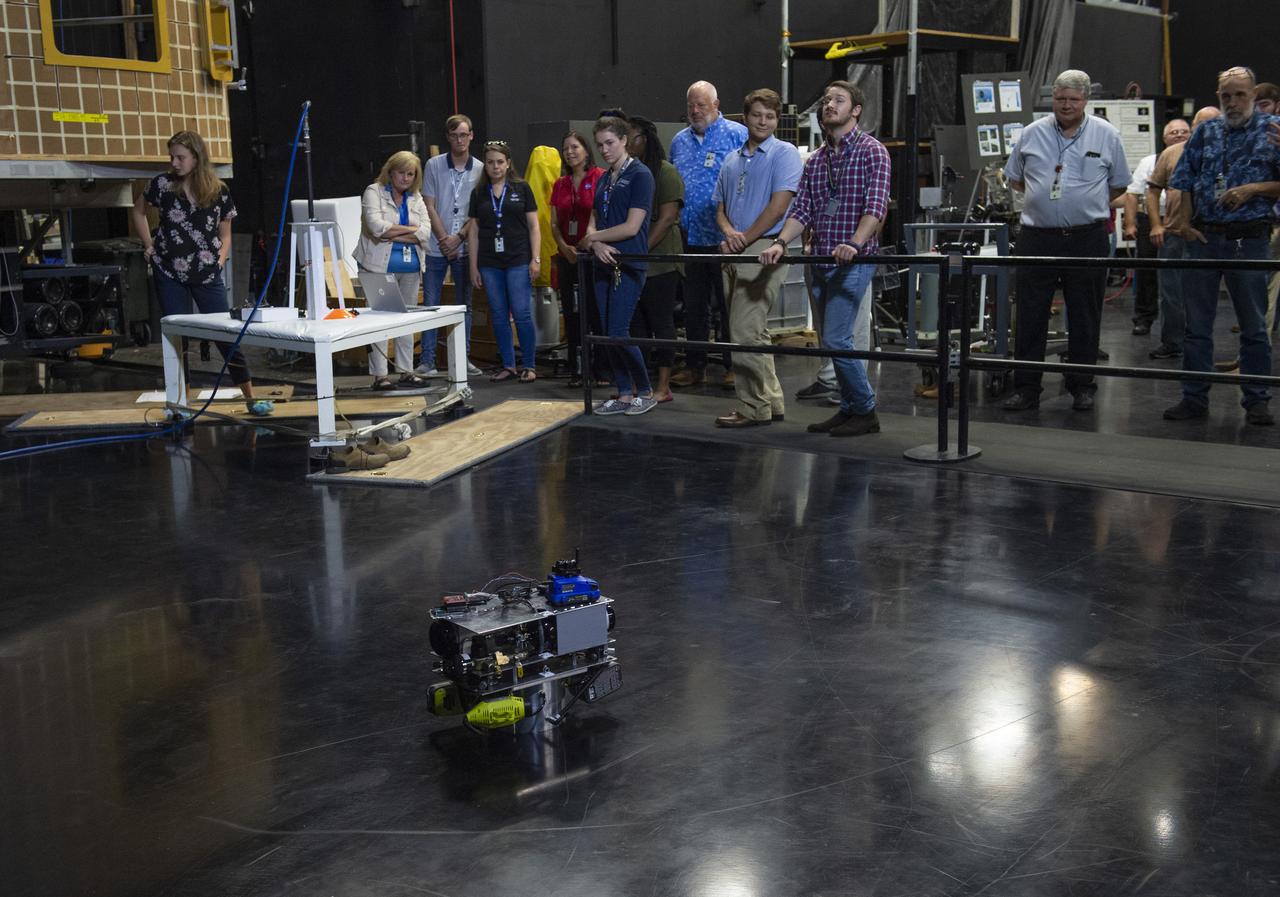
PATHWAYS INTERN ALEXANDRA BOEHM, AND JACOBS INTERN, PEYTON NELSON DEMONSTRATE STEERABLE AIR BEARING TETHER DEPLOYMENT SYSTEM TO MSFC SENIOR MANAGEMENT. ALSO WORKING ON THE PROJECT BUT NOT PICTURED WERE SUMMER INTERN ALI BERTELSMAN, PATHWAYS INTERN ANNA SHIPMAN, AND JACOBS FULL-TIME EMPLOYEE BRANDON MOORE.
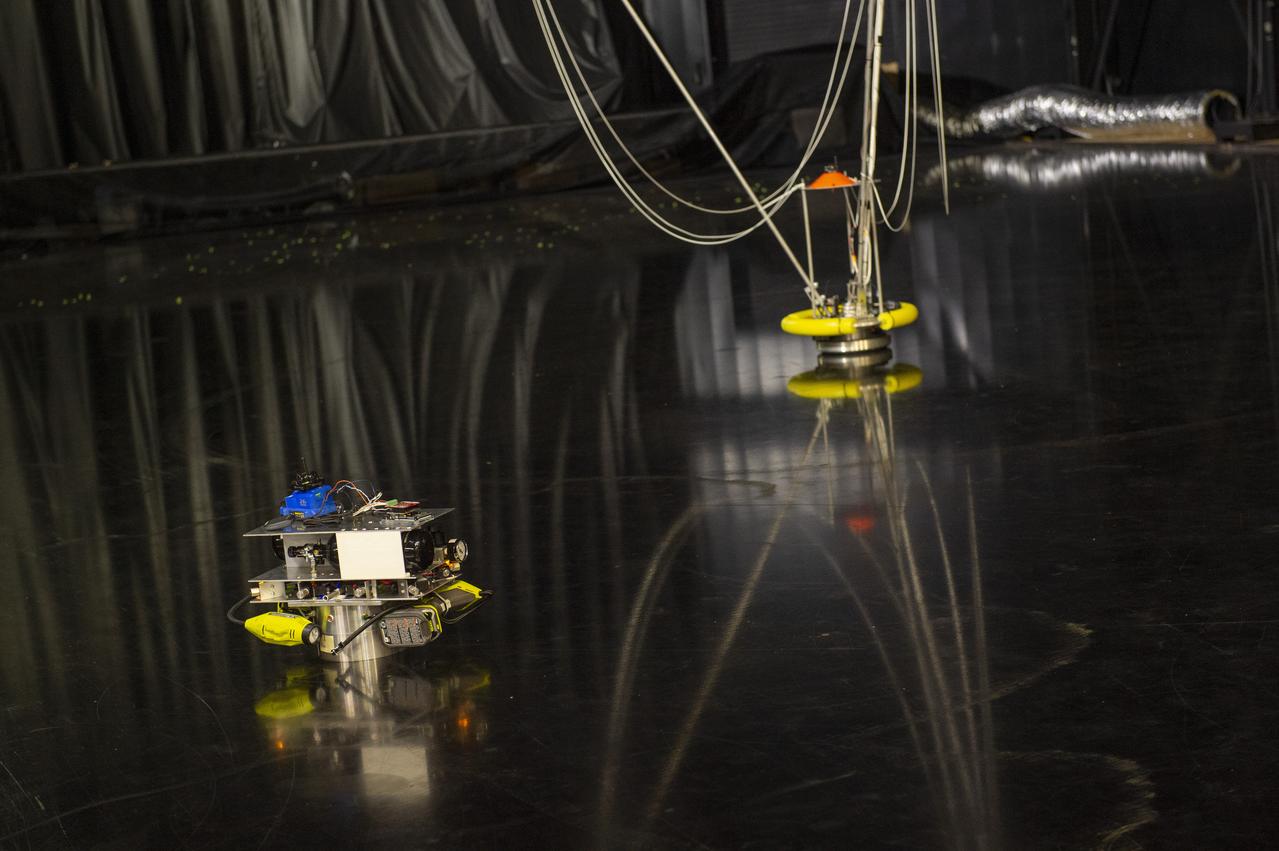
PATHWAYS INTERN ALEXANDRA BOEHM, AND JACOBS INTERN, PEYTON NELSON DEMONSTRATE STEERABLE AIR BEARING TETHER DEPLOYMENT SYSTEM TO MSFC SENIOR MANAGEMENT. ALSO WORKING ON THE PROJECT BUT NOT PICTURED WERE SUMMER INTERN ALI BERTELSMAN, PATHWAYS INTERN ANNA SHIPMAN, AND JACOBS FULL-TIME EMPLOYEE BRANDON MOORE.
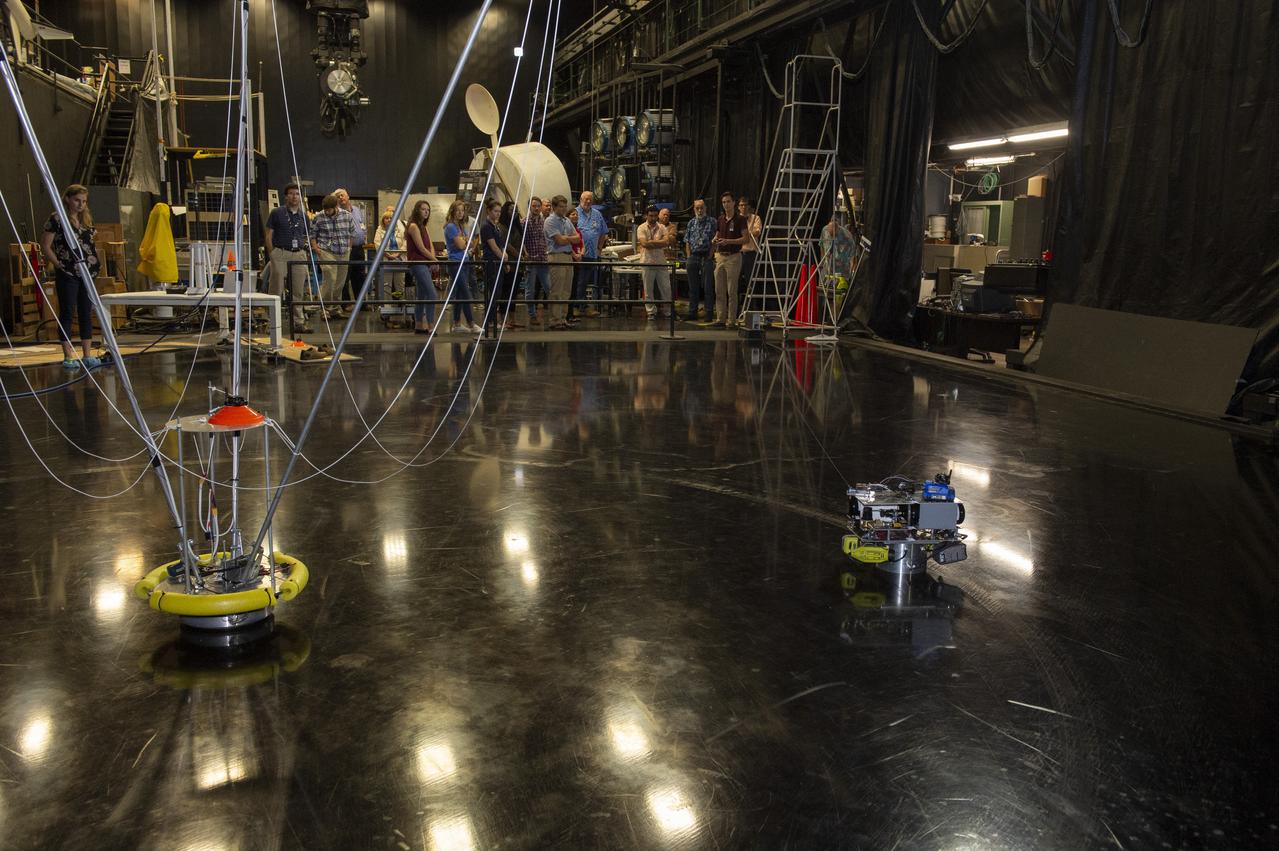
PATHWAYS INTERN ALEXANDRA BOEHM, AND JACOBS INTERN, PEYTON NELSON DEMONSTRATE STEERABLE AIR BEARING TETHER DEPLOYMENT SYSTEM TO MSFC SENIOR MANAGEMENT. ALSO WORKING ON THE PROJECT BUT NOT PICTURED WERE SUMMER INTERN ALI BERTELSMAN, PATHWAYS INTERN ANNA SHIPMAN, AND JACOBS FULL-TIME EMPLOYEE BRANDON MOORE.
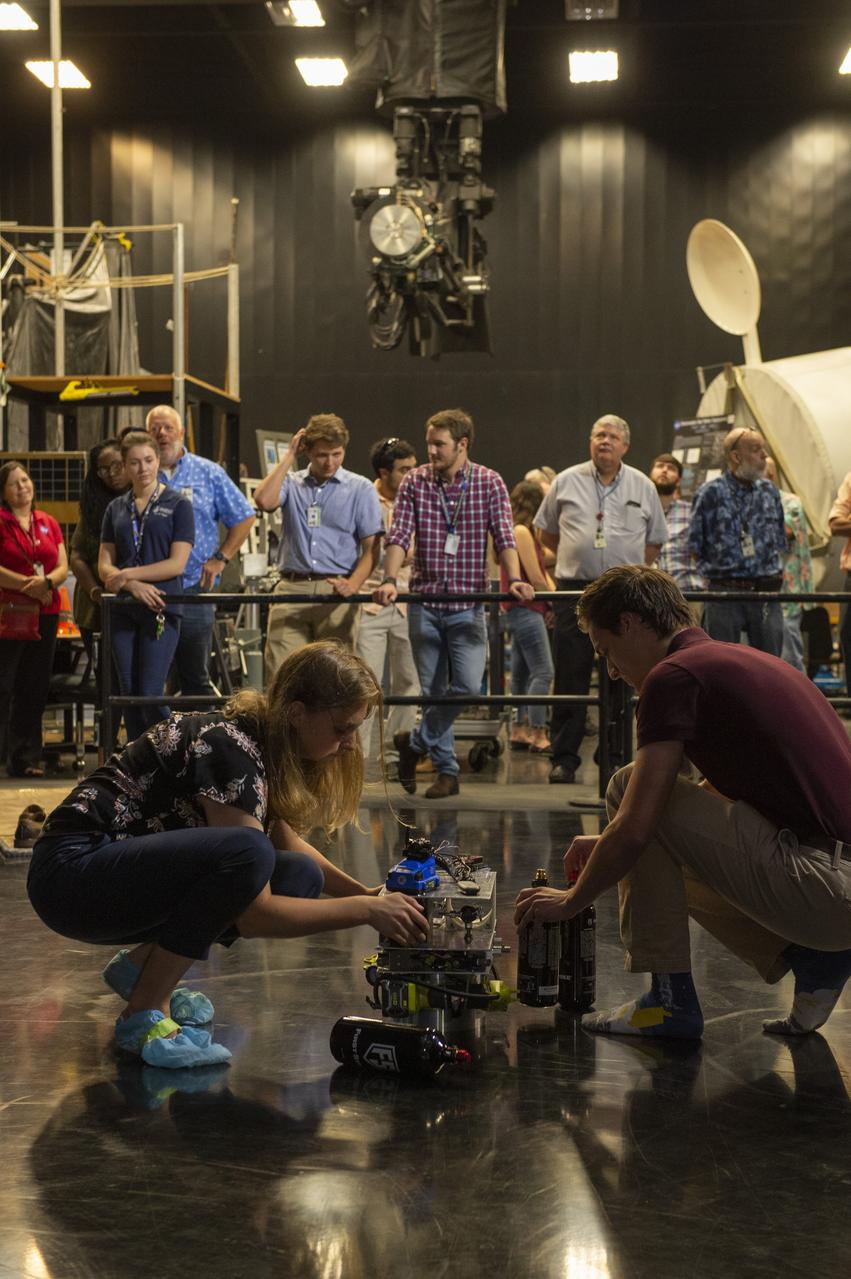
PATHWAYS INTERN ALEXANDRA BOEHM, AND JACOBS INTERN, PEYTON NELSON DEMONSTRATE STEERABLE AIR BEARING TETHER DEPLOYMENT SYSTEM TO MSFC SENIOR MANAGEMENT. ALSO WORKING ON THE PROJECT BUT NOT PICTURED WERE SUMMER INTERN ALI BERTELSMAN, PATHWAYS INTERN ANNA SHIPMAN, AND JACOBS FULL-TIME EMPLOYEE BRANDON MOORE.
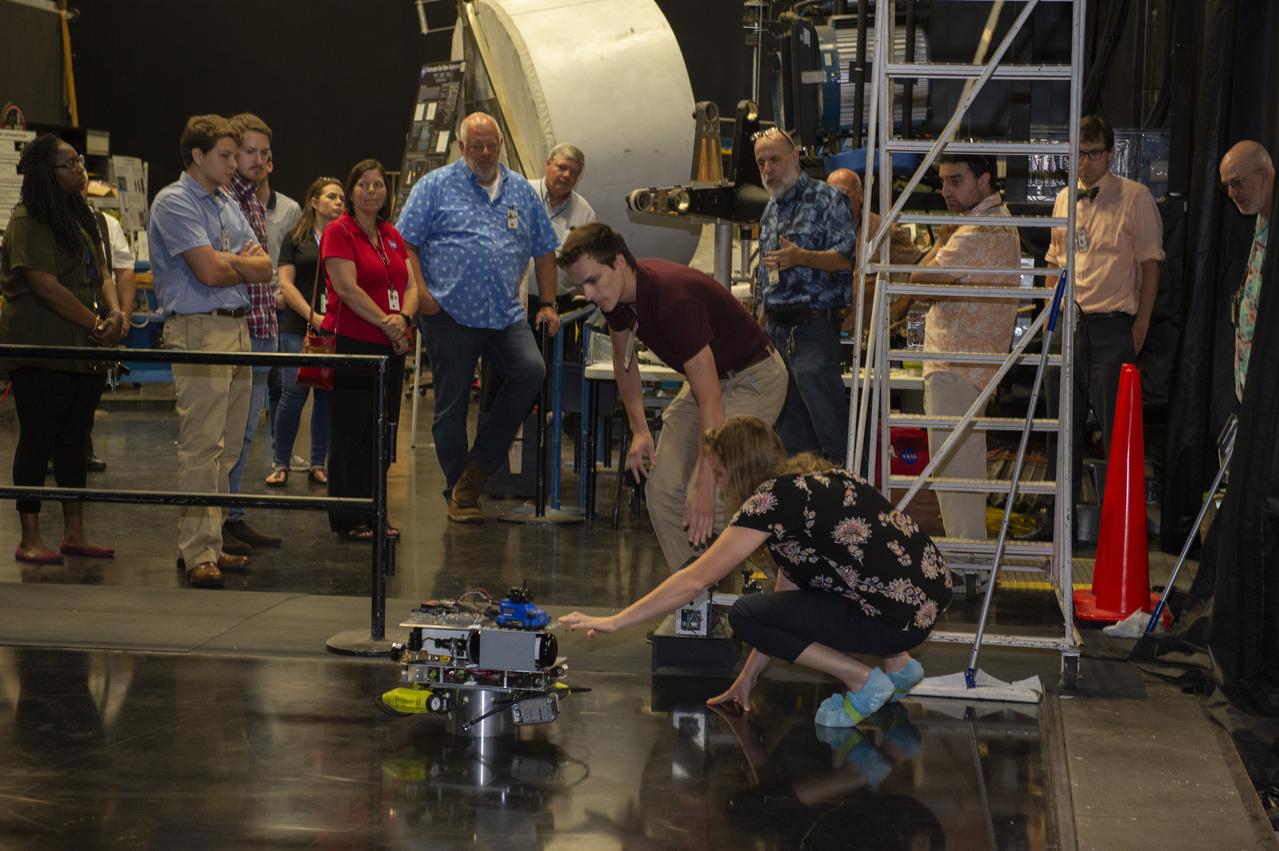
PATHWAYS INTERN ALEXANDRA BOEHM, AND JACOBS INTERN, PEYTON NELSON DEMONSTRATE STEERABLE AIR BEARING TETHER DEPLOYMENT SYSTEM TO MSFC SENIOR MANAGEMENT. ALSO WORKING ON THE PROJECT BUT NOT PICTURED WERE SUMMER INTERN ALI BERTELSMAN, PATHWAYS INTERN ANNA SHIPMAN, AND JACOBS FULL-TIME EMPLOYEE BRANDON MOORE.
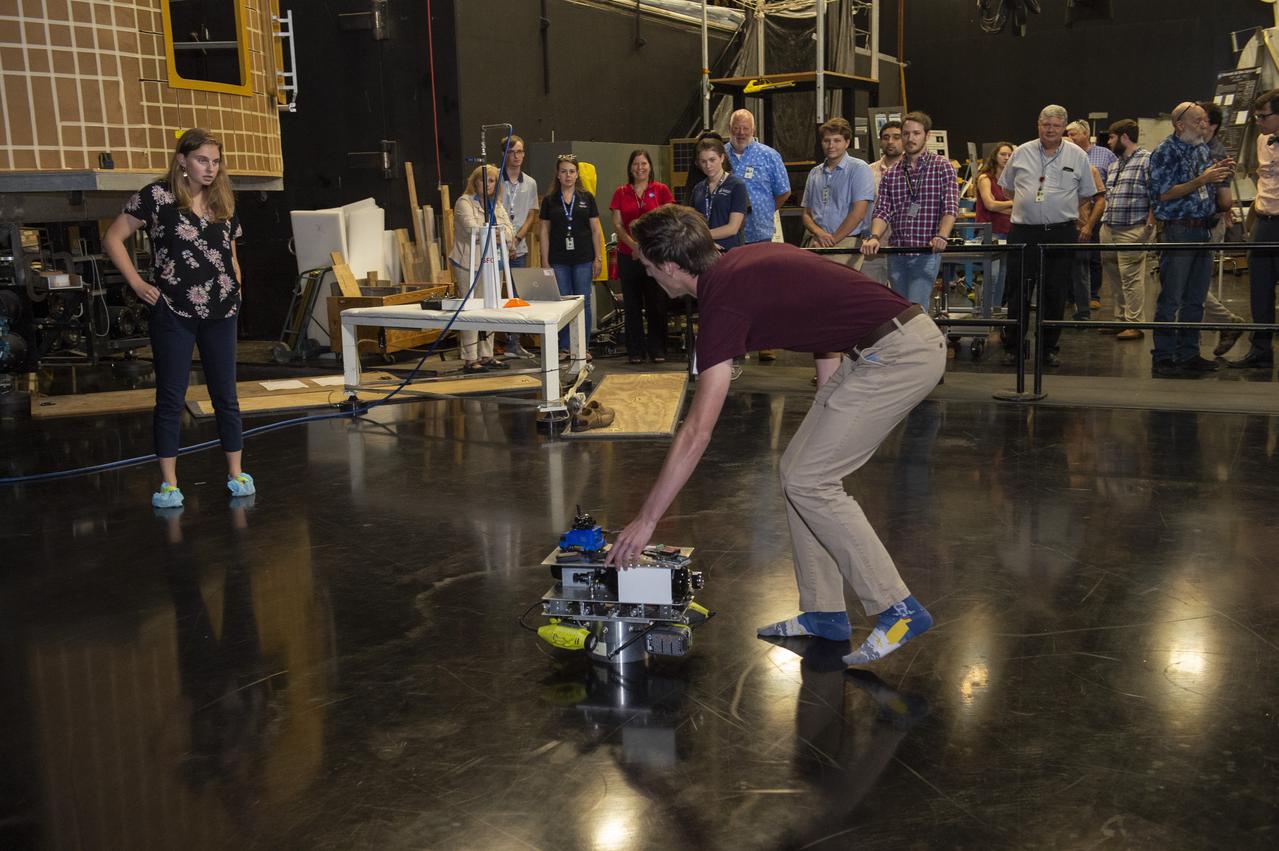
PATHWAYS INTERN ALEXANDRA BOEHM, AND JACOBS INTERN, PEYTON NELSON DEMONSTRATE STEERABLE AIR BEARING TETHER DEPLOYMENT SYSTEM TO MSFC SENIOR MANAGEMENT. ALSO WORKING ON THE PROJECT BUT NOT PICTURED WERE SUMMER INTERN ALI BERTELSMAN, PATHWAYS INTERN ANNA SHIPMAN, AND JACOBS FULL-TIME EMPLOYEE BRANDON MOORE.

PATHWAYS INTERN ALEXANDRA BOEHM, AND JACOBS INTERN, PEYTON NELSON DEMONSTRATE STEERABLE AIR BEARING TETHER DEPLOYMENT SYSTEM TO MSFC SENIOR MANAGEMENT. ALSO WORKING ON THE PROJECT BUT NOT PICTURED WERE SUMMER INTERN ALI BERTELSMAN, PATHWAYS INTERN ANNA SHIPMAN, AND JACOBS FULL-TIME EMPLOYEE BRANDON MOORE.
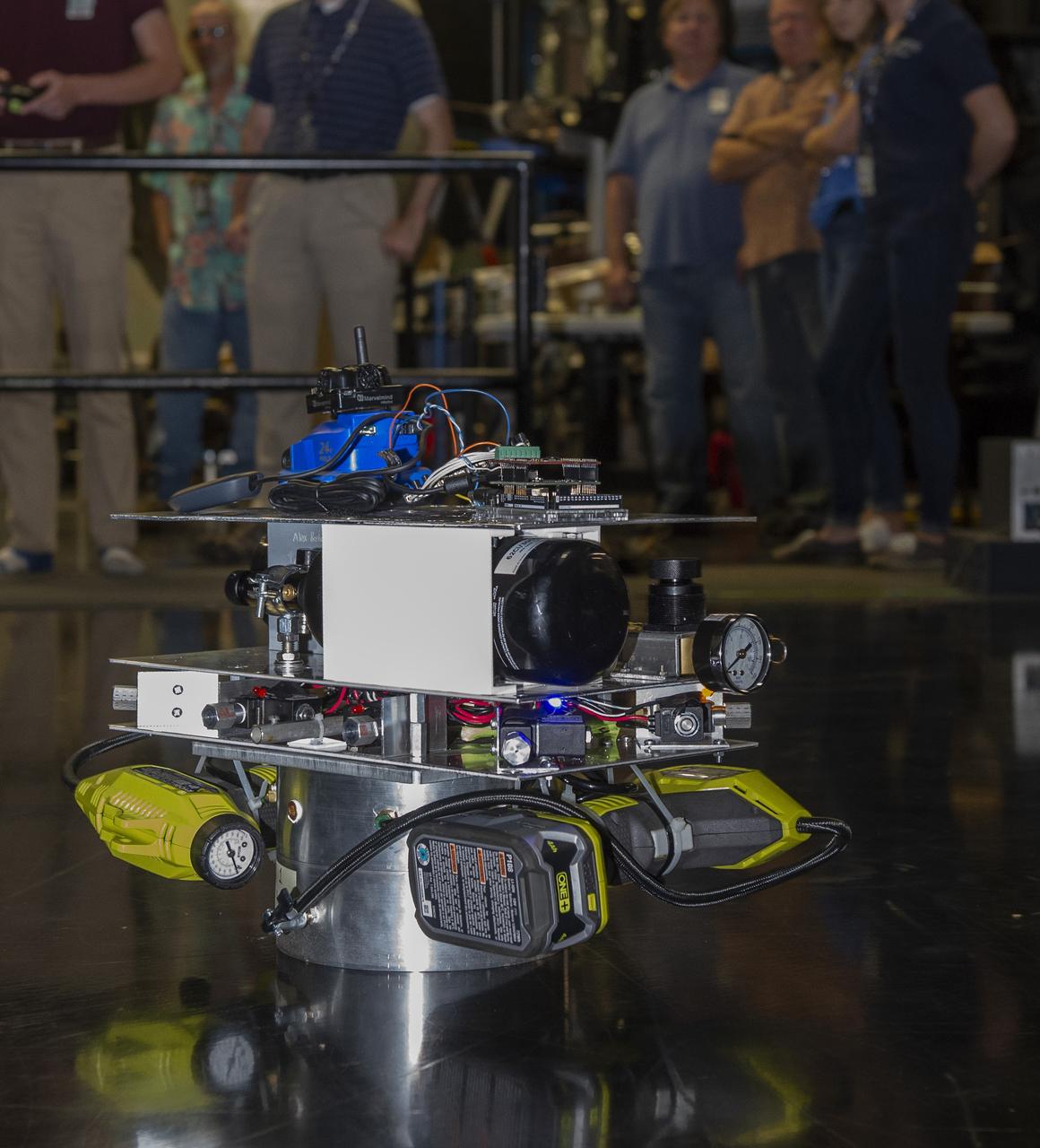
PATHWAYS INTERN ALEXANDRA BOEHM, AND JACOBS INTERN, PEYTON NELSON DEMONSTRATE STEERABLE AIR BEARING TETHER DEPLOYMENT SYSTEM TO MSFC SENIOR MANAGEMENT. ALSO WORKING ON THE PROJECT BUT NOT PICTURED WERE SUMMER INTERN ALI BERTELSMAN, PATHWAYS INTERN ANNA SHIPMAN, AND JACOBS FULL-TIME EMPLOYEE BRANDON MOORE.
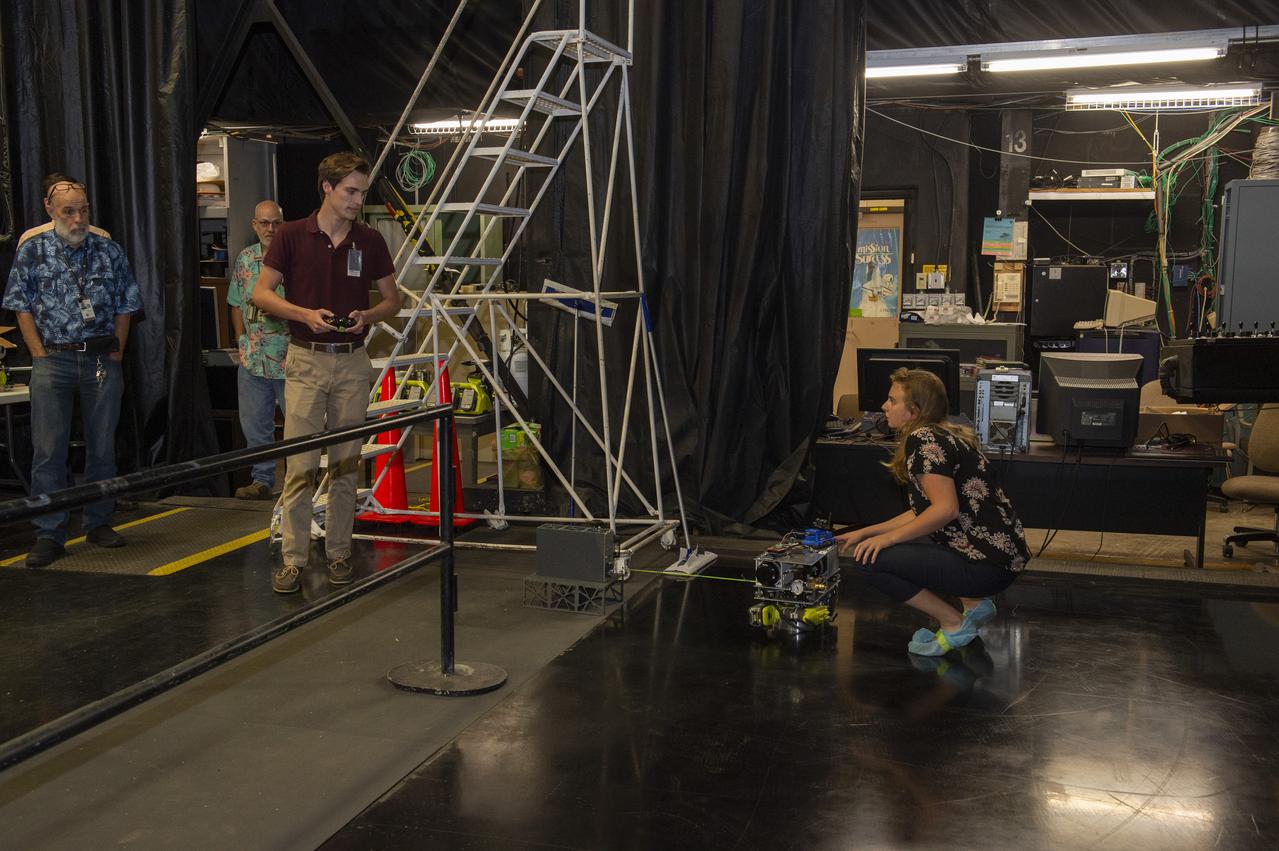
PATHWAYS INTERN ALEXANDRA BOEHM, AND JACOBS INTERN, PEYTON NELSON DEMONSTRATE STEERABLE AIR BEARING TETHER DEPLOYMENT SYSTEM TO MSFC SENIOR MANAGEMENT. ALSO WORKING ON THE PROJECT BUT NOT PICTURED WERE SUMMER INTERN ALI BERTELSMAN, PATHWAYS INTERN ANNA SHIPMAN, AND JACOBS FULL-TIME EMPLOYEE BRANDON MOORE.
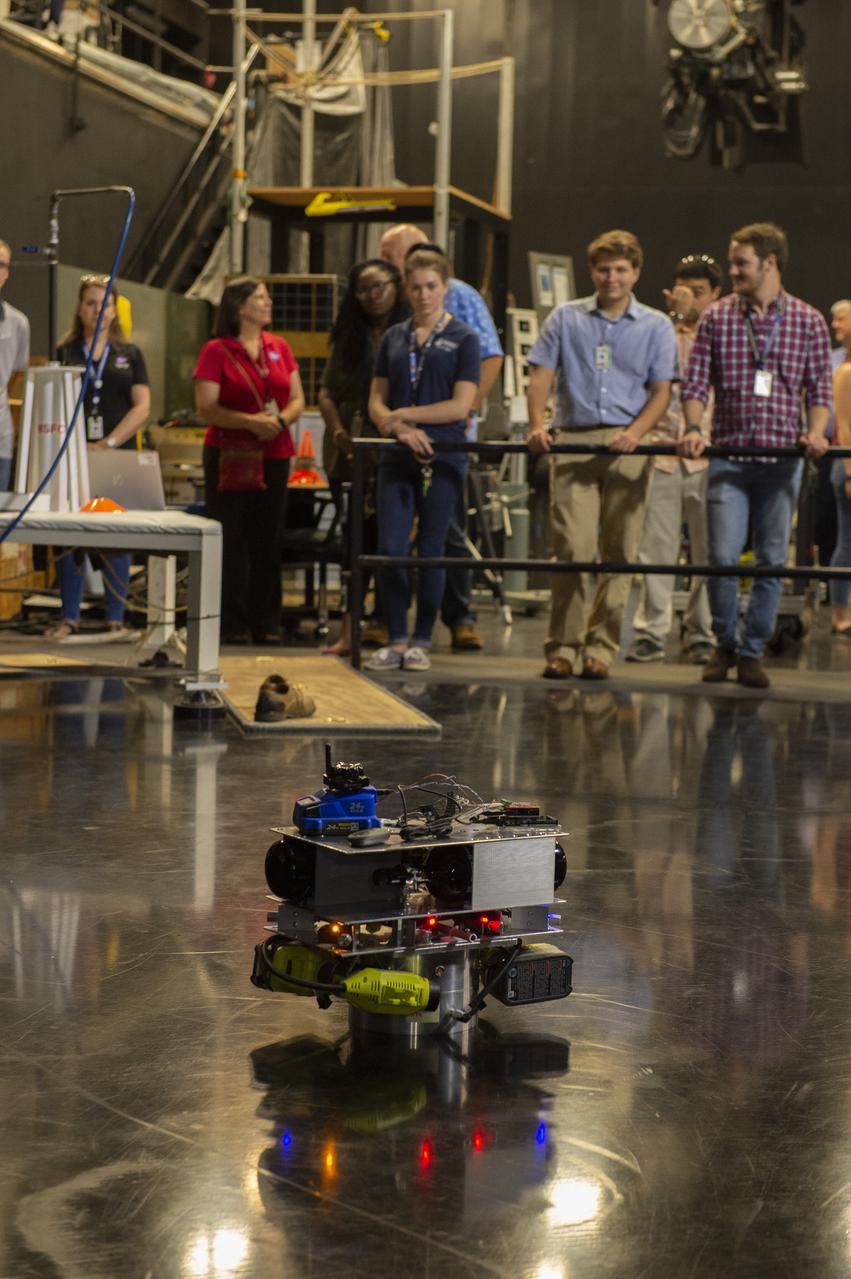
PATHWAYS INTERN ALEXANDRA BOEHM, AND JACOBS INTERN, PEYTON NELSON DEMONSTRATE STEERABLE AIR BEARING TETHER DEPLOYMENT SYSTEM TO MSFC SENIOR MANAGEMENT. ALSO WORKING ON THE PROJECT BUT NOT PICTURED WERE SUMMER INTERN ALI BERTELSMAN, PATHWAYS INTERN ANNA SHIPMAN, AND JACOBS FULL-TIME EMPLOYEE BRANDON MOORE.
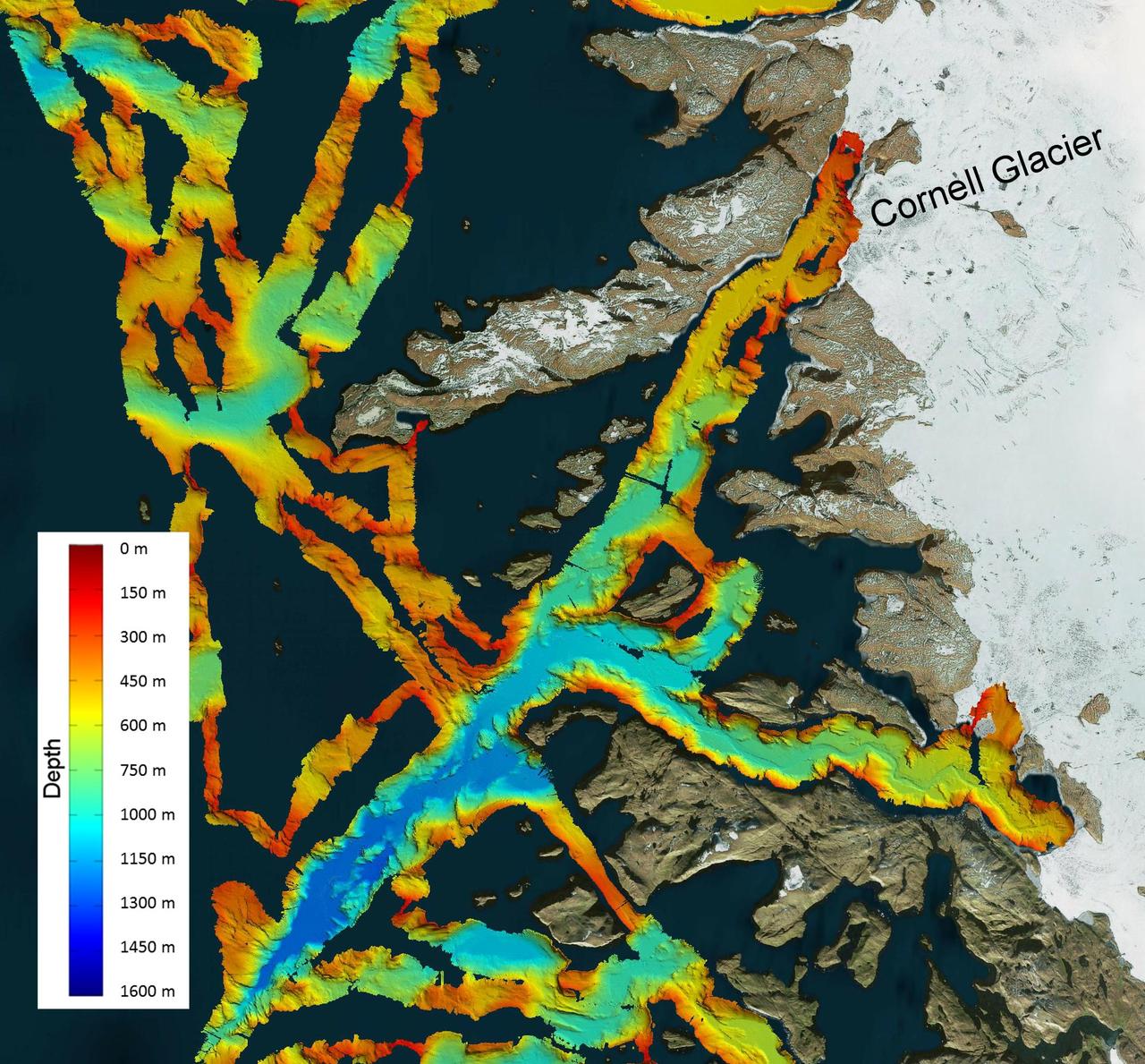
This image shows a region of the sea floor off the coast of northwest Greenland mapped as part of NASA Oceans Melting Greenland OMG mission. The data shown here will be used to understand the pathways by which warm water can reach glacier edges.
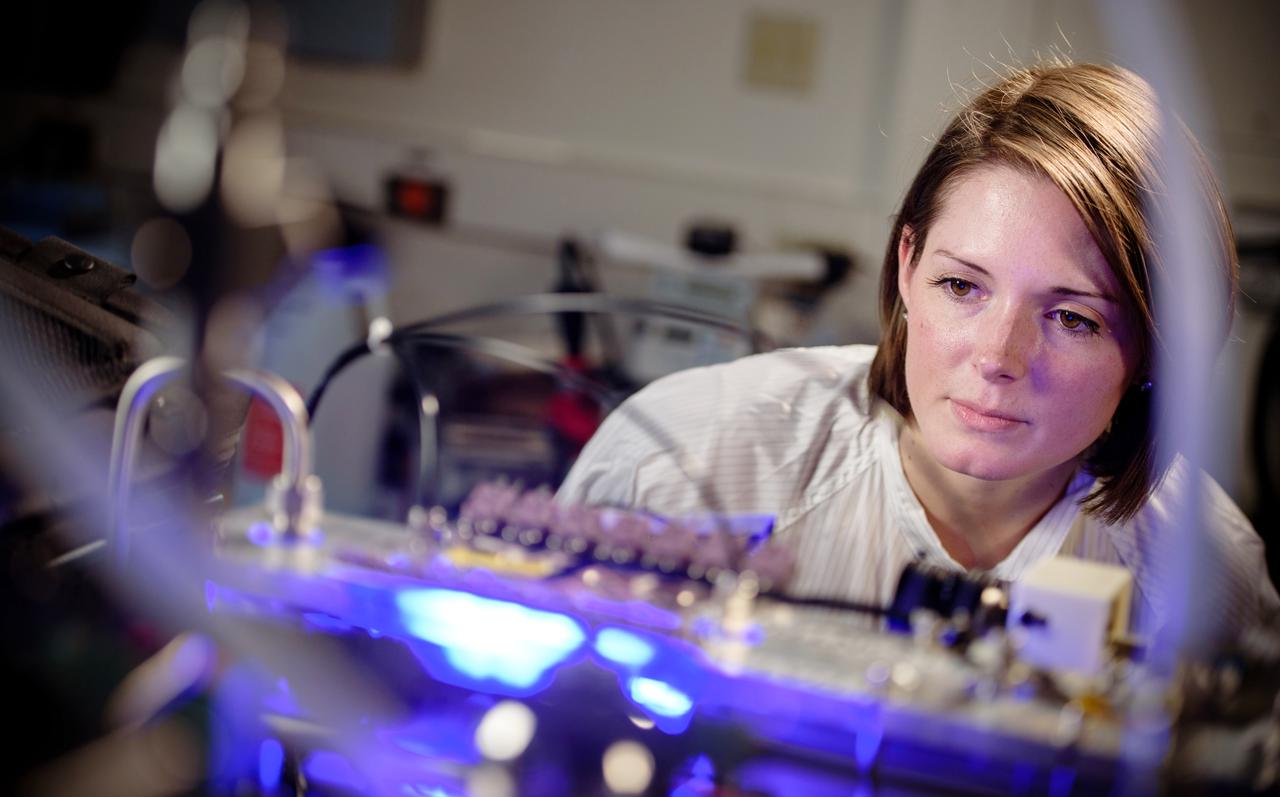
Grace Gaskin, an Aerospace Flight Systems Engineer Trainee, was sworn in as a civil servant in September 2017. After serving for 6 years in the U.S. Army she enrolled at Case Western Reserve University and will graduate in May 2018 with a degree in Chemical Engineering. As a Pathways Intern one of the many projects she has worked on is the Flow Boiling and Condensation Experiments (FBCE). The proposed research aims to develop an integrated two-phase flow boiling/condensation facility for the International Space Station (ISS) to serve as a primary platform for obtaining two-phase flow and heat transfer data in microgravity. By comparing the microgravity data against those obtained in Earth's gravity, it will be possible to ascertain the influence of body force on two-phase transport phenomena in pursuit of mechanistic models as well as correlations, and to help determine the minimum flow criteria to ensure gravity independent flow boiling and condensation.
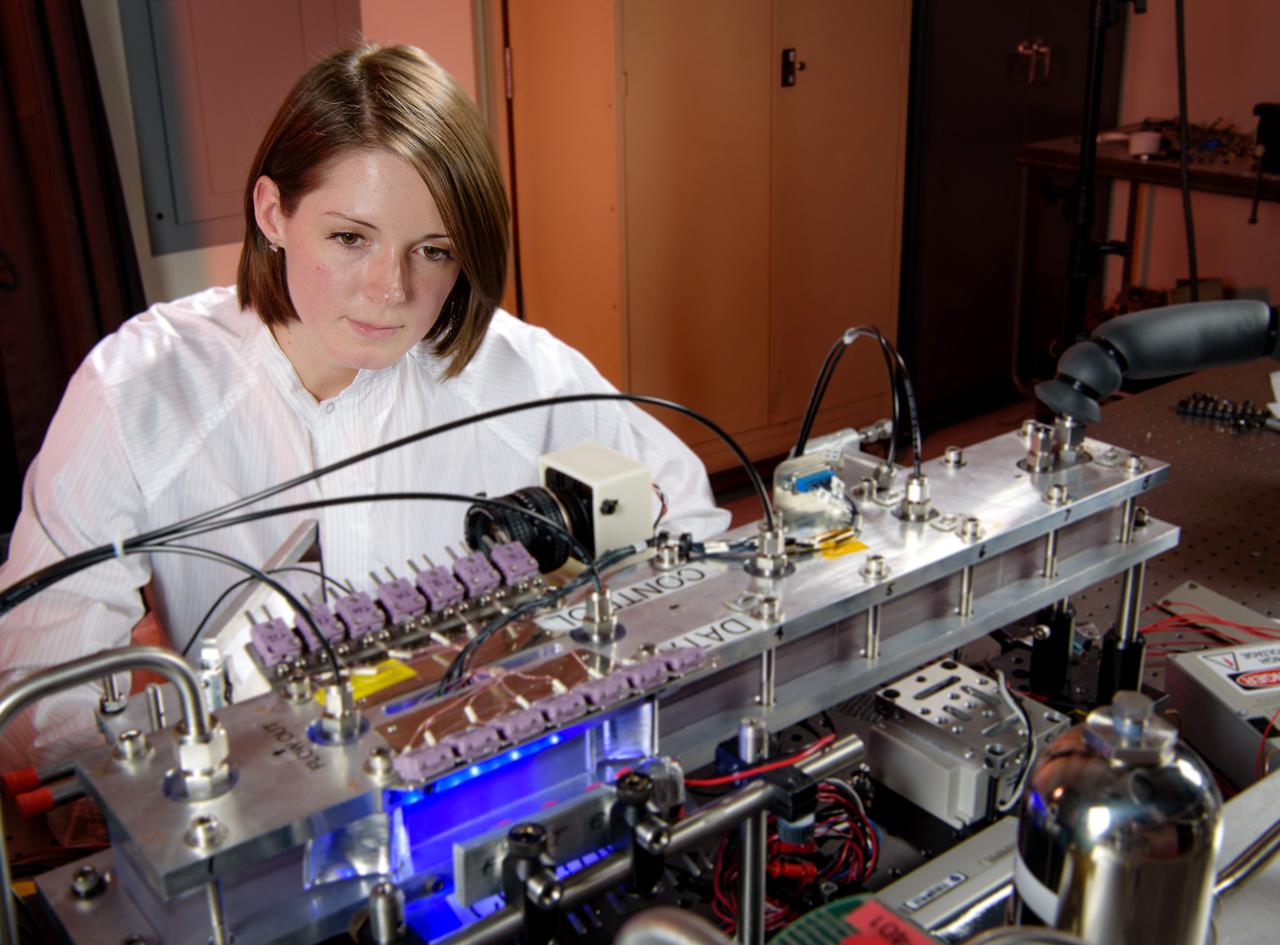
Grace Gaskin, an Aerospace Flight Systems Engineer Trainee, was sworn in as a civil servant in September 2017. After serving for 6 years in the U.S. Army she enrolled at Case Western Reserve University and will graduate in May 2018 with a degree in Chemical Engineering. As a Pathways Intern one of the many projects she has worked on is the Flow Boiling and Condensation Experiments (FBCE). The proposed research aims to develop an integrated two-phase flow boiling/condensation facility for the International Space Station (ISS) to serve as a primary platform for obtaining two-phase flow and heat transfer data in microgravity. By comparing the microgravity data against those obtained in Earth's gravity, it will be possible to ascertain the influence of body force on two-phase transport phenomena in pursuit of mechanistic models as well as correlations, and to help determine the minimum flow criteria to ensure gravity independent flow boiling and condensation.
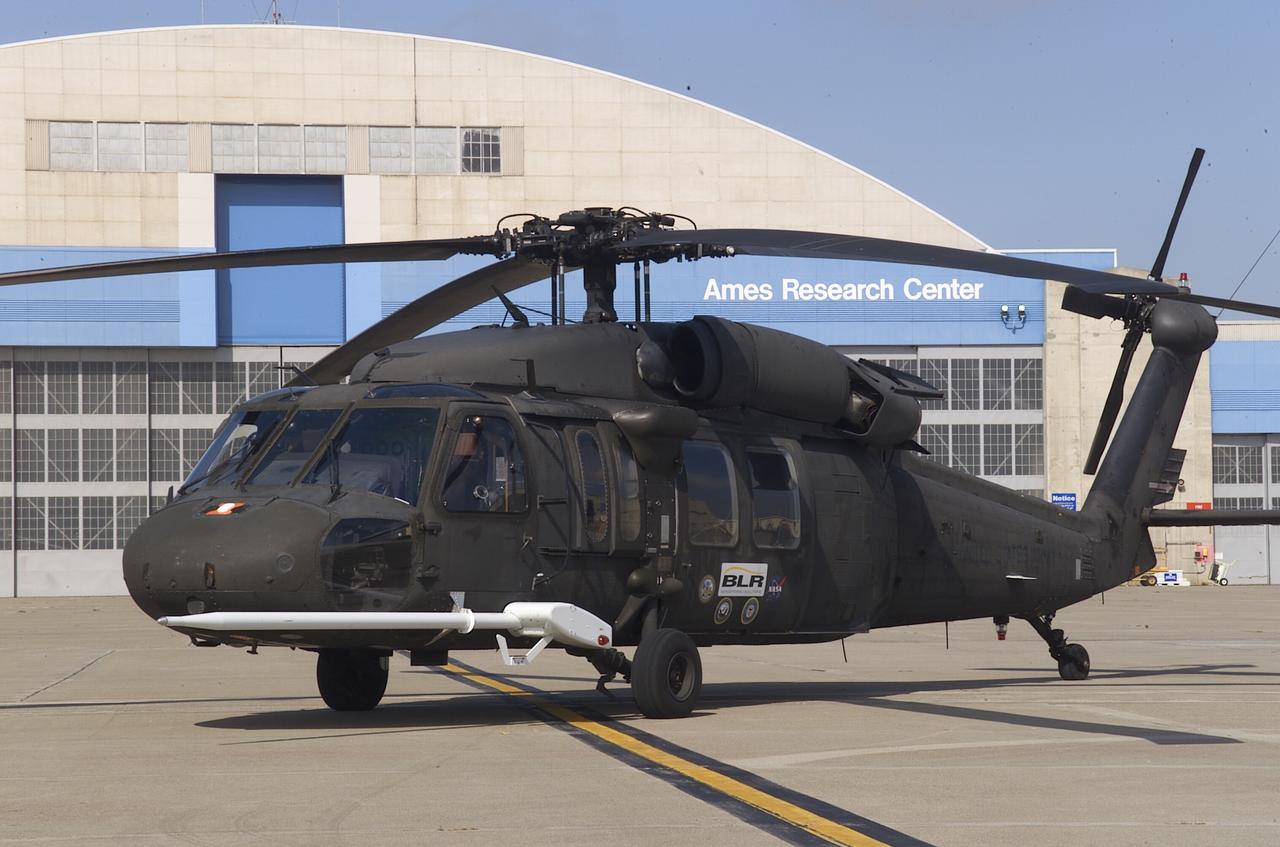
NRTC/RITA Precision Pathway Terminal Guidance: UH-60 RASCAL (#012) (National Rotocraft Technology Center/Rotorcraft Industry Technology Association) runway independent aircraft
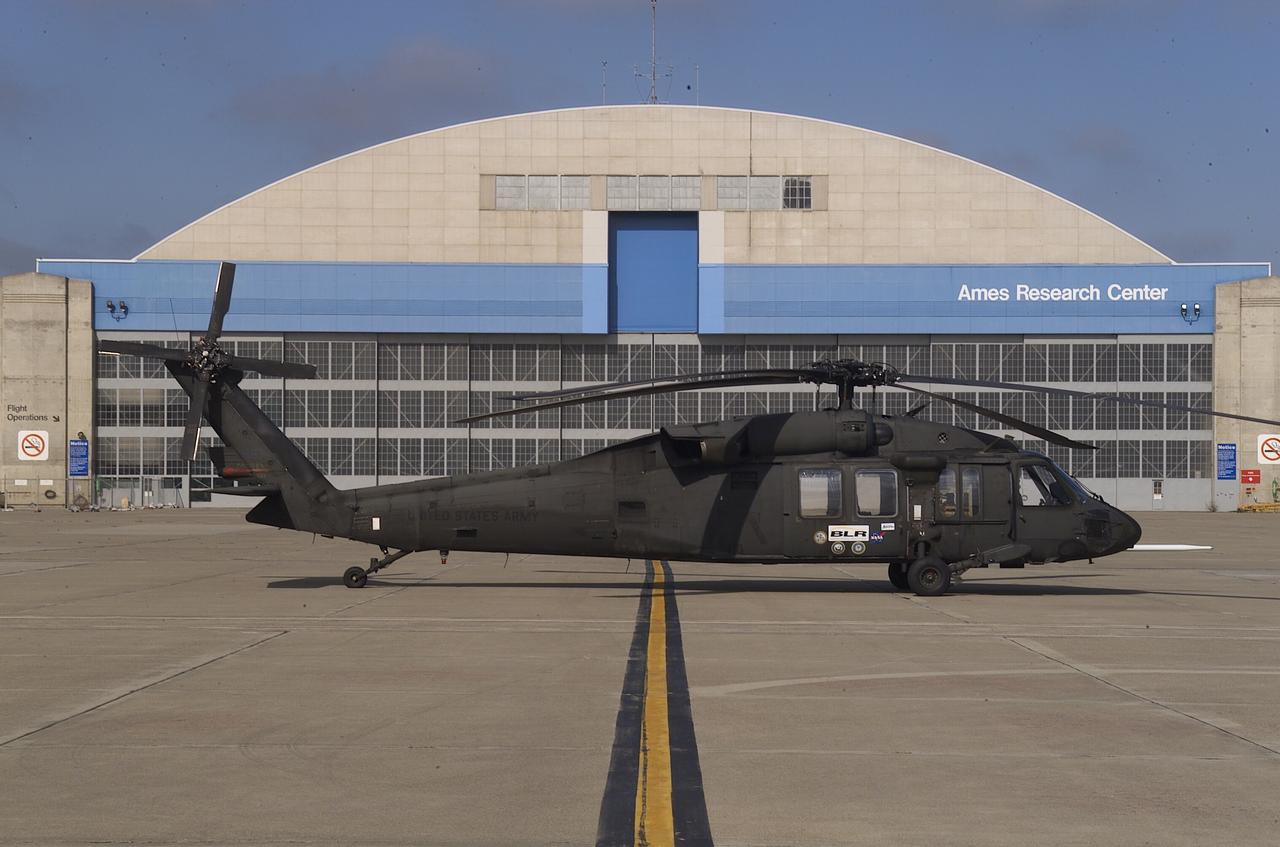
NRTC/RITA Precision Pathway Terminal Guidance: UH-60 RASCAL (#012) (National Rotocraft Technology Center/Rotorcraft Industry Technology Association) runway independent aircraft
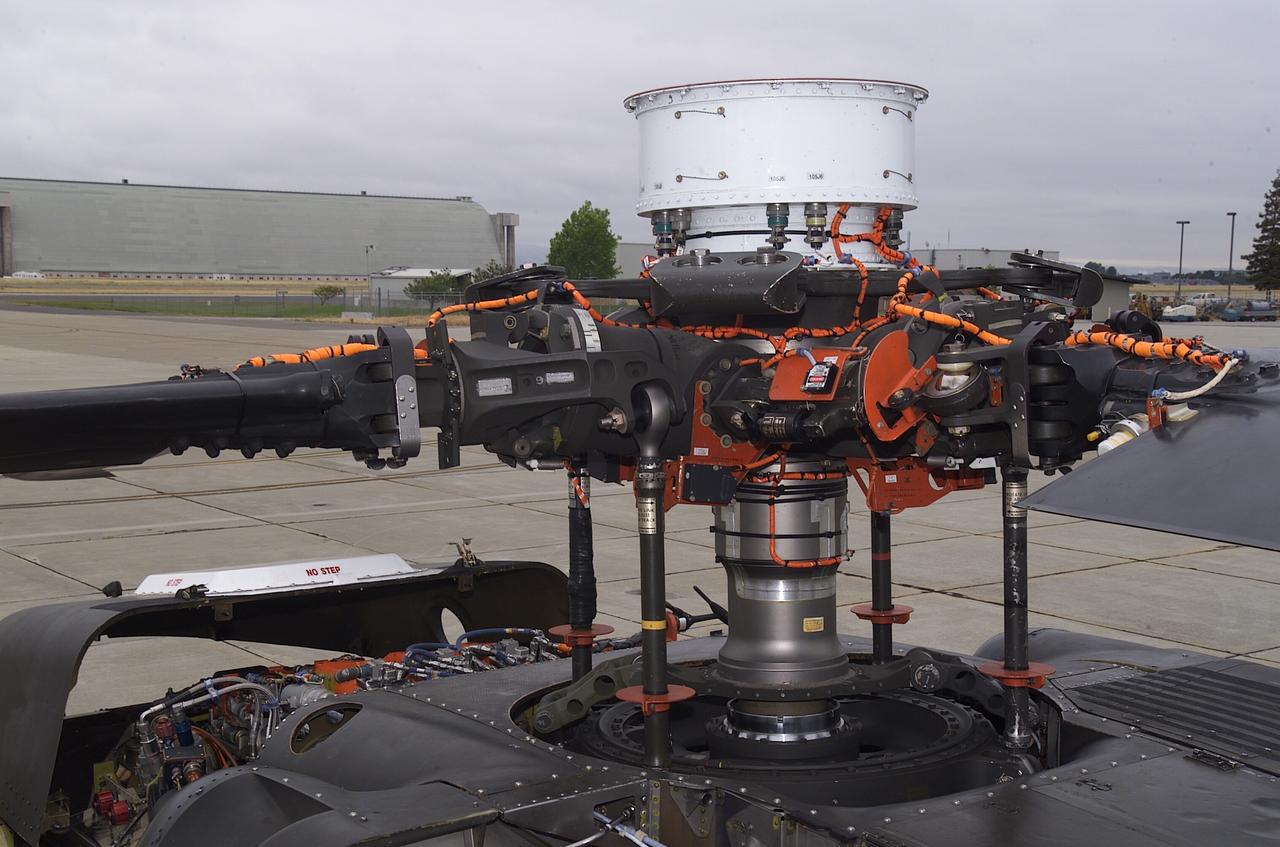
NRTC/RITA Precision Pathway Terminal Guidance: UH-60 RASCAL (#012) (National Rotocraft Technology Center/Rotorcraft Industry Technology Association) runway independent aircraft

NRTC/RITA Precision Pathway Terminal Guidance: UH-60 RASCAL (#012) (National Rotocraft Technology Center/Rotorcraft Industry Technology Association) runway independent aircraft

NRTC/RITA Precision Pathway Terminal Guidance: UH-60 RASCAL (#012) (National Rotocraft Technology Center/Rotorcraft Industry Technology Association) runway independent aircraft

NRTC/RITA Precision Pathway Terminal Guidance: UH-60 RASCAL (#012) (National Rotocraft Technology Center/Rotorcraft Industry Technology Association) runway independent aircraft
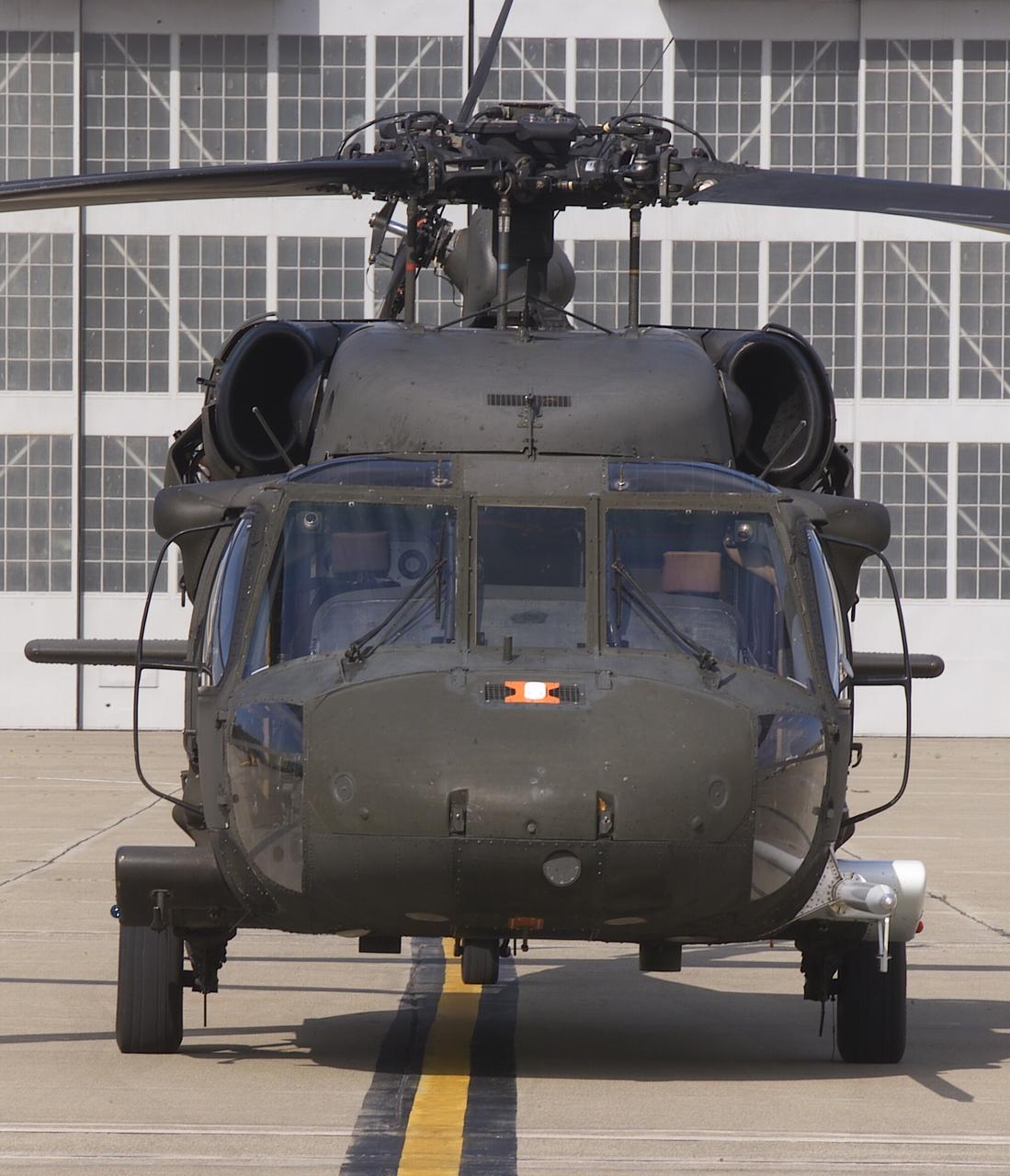
NRTC/RITA Precision Pathway Terminal Guidance: UH-60 RASCAL (#012) (National Rotocraft Technology Center/Rotorcraft Industry Technology Association) runway independent aircraft
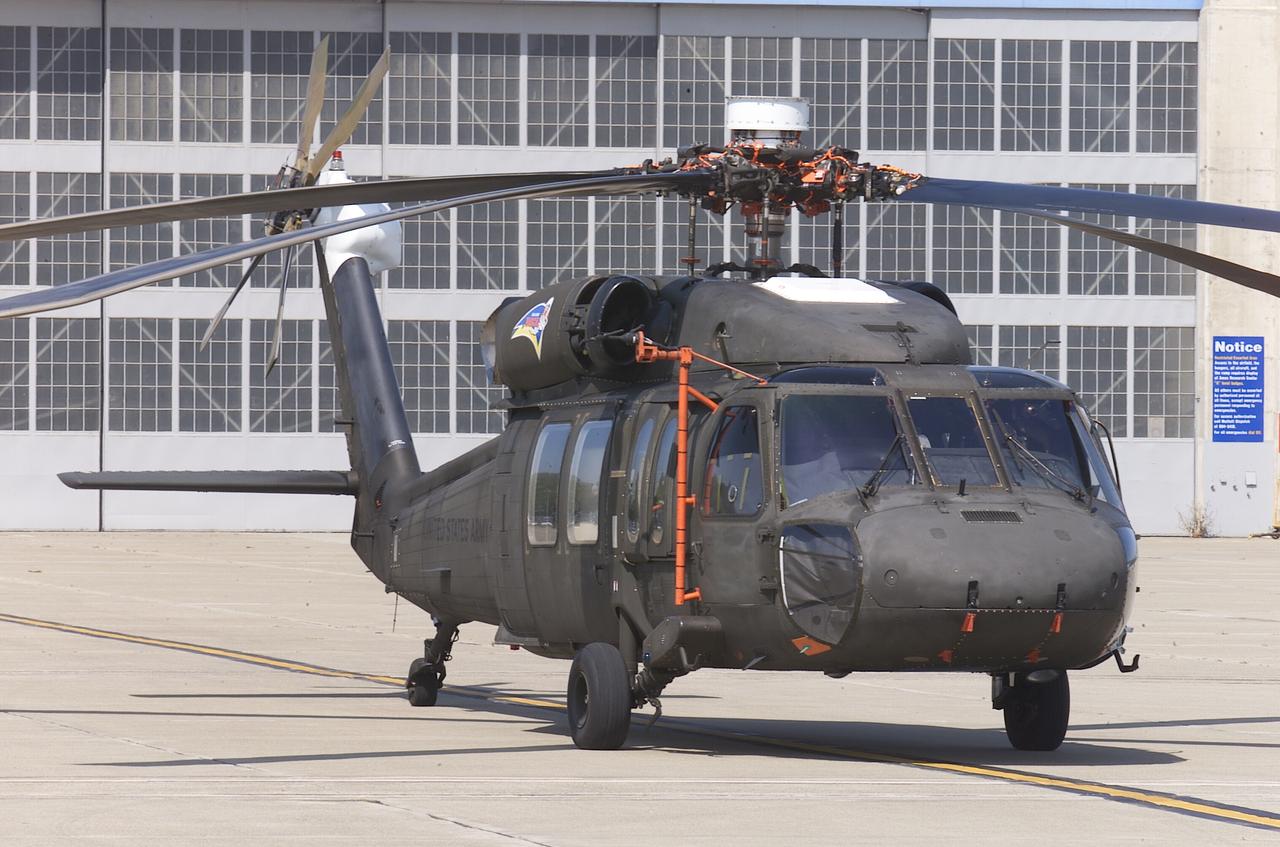
NRTC/RITA Precision Pathway Terminal Guidance: UH-60 RASCAL (#012) (National Rotocraft Technology Center/Rotorcraft Industry Technology Association) runway independent aircraft
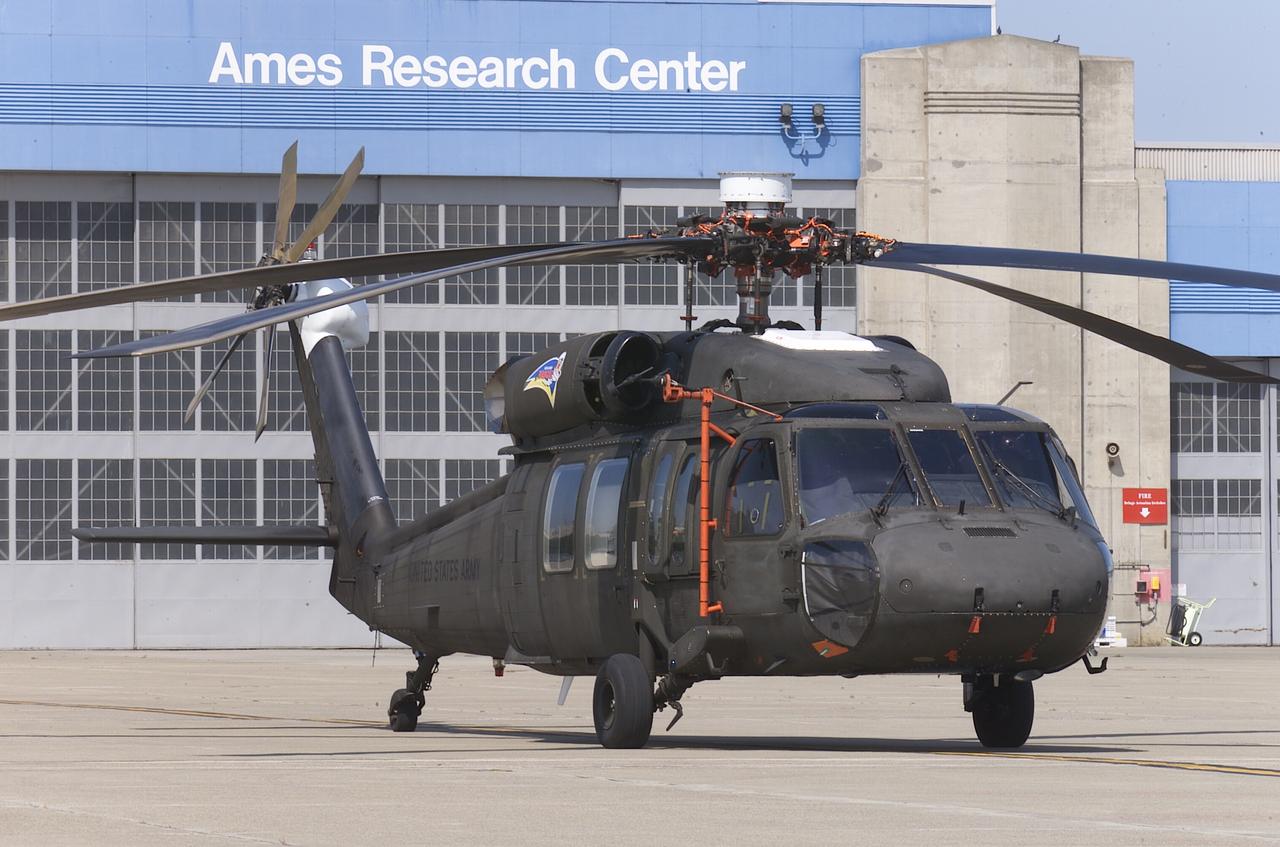
NRTC/RITA Precision Pathway Terminal Guidance: UH-60 RASCAL (#012) (National Rotocraft Technology Center/Rotorcraft Industry Technology Association) runway independent aircraft
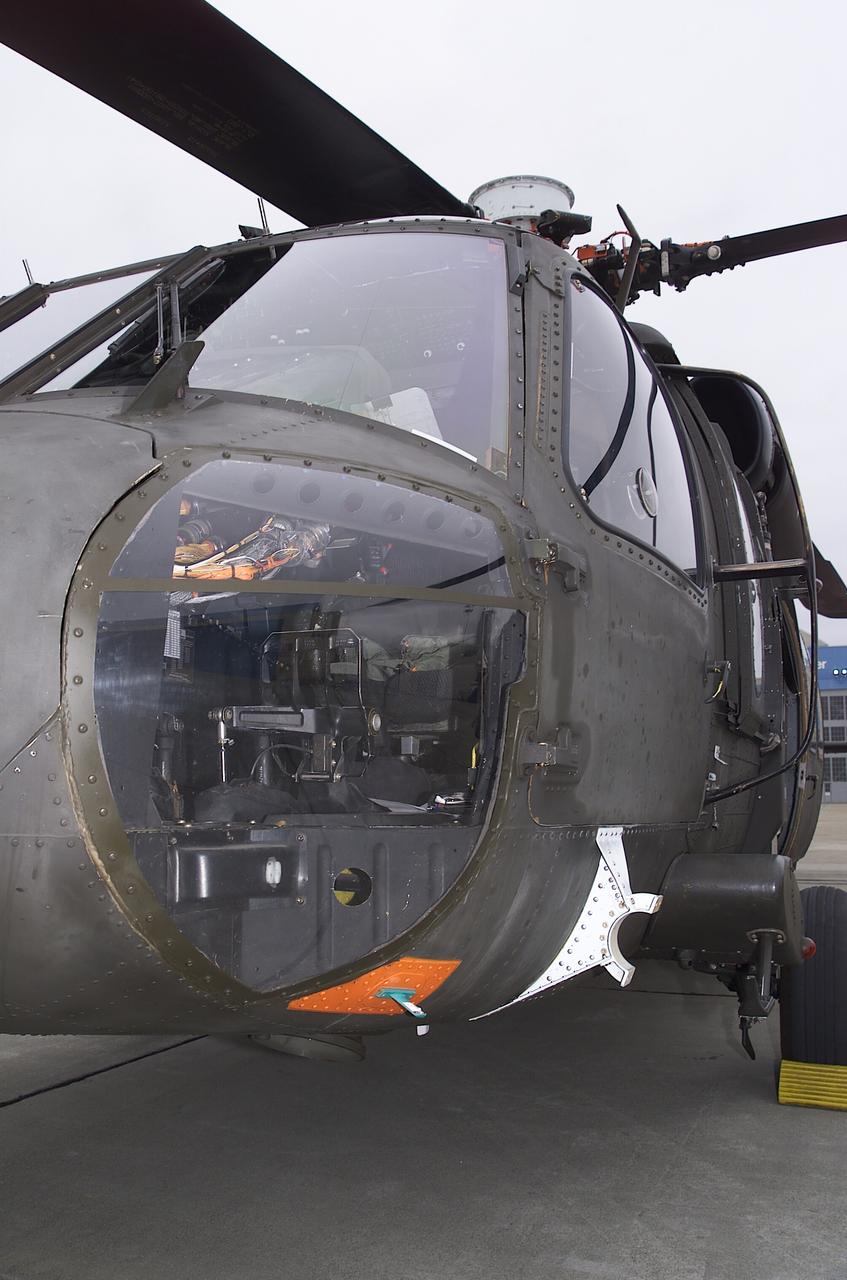
NRTC/RITA Precision Pathway Terminal Guidance: UH-60 RASCAL (#012) (National Rotocraft Technology Center/Rotorcraft Industry Technology Association) runway independent aircraft
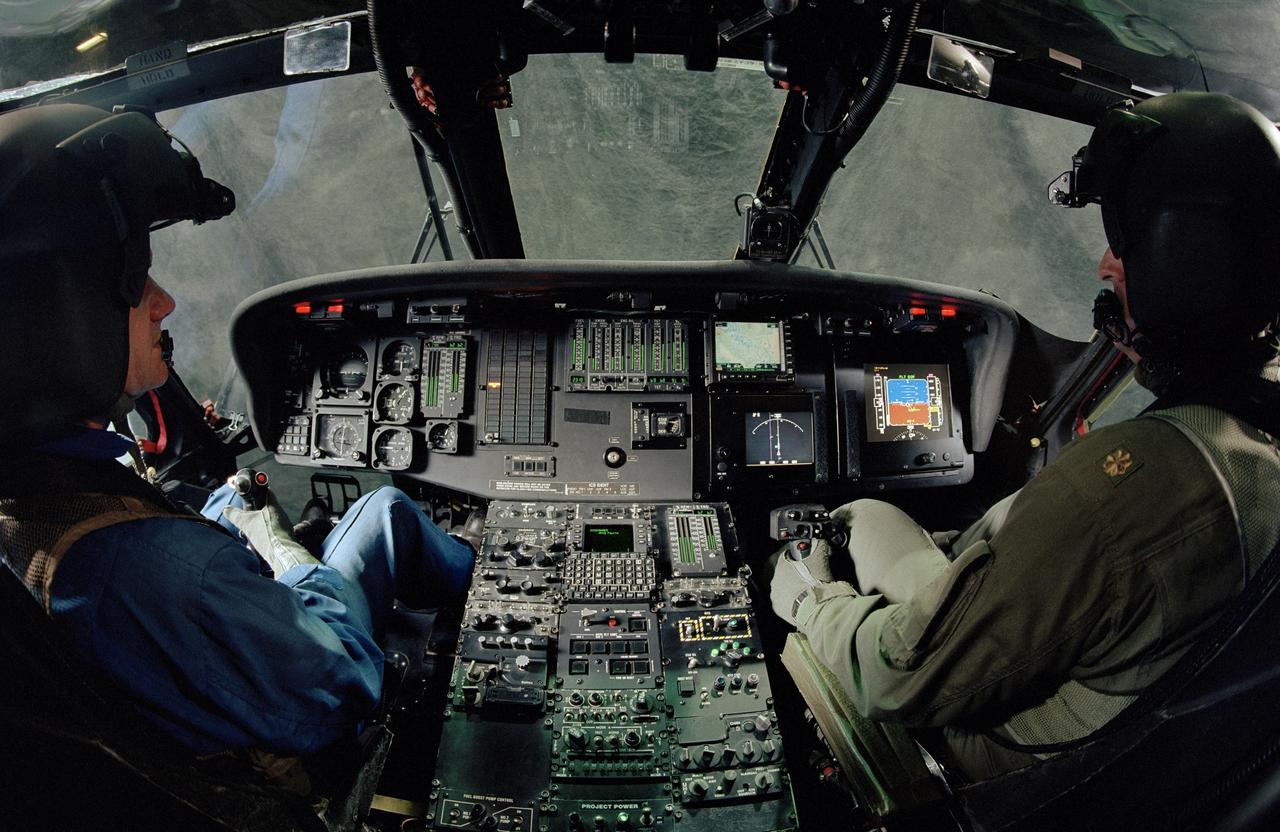
NRTC/RITA RIA precision pathway terminal Guidance: UN-60 RASCAL (#012) cockpit (National Rotorcraft Technology Center/Rotorcraft Industry Technology Association Runway Independent Aircraft)
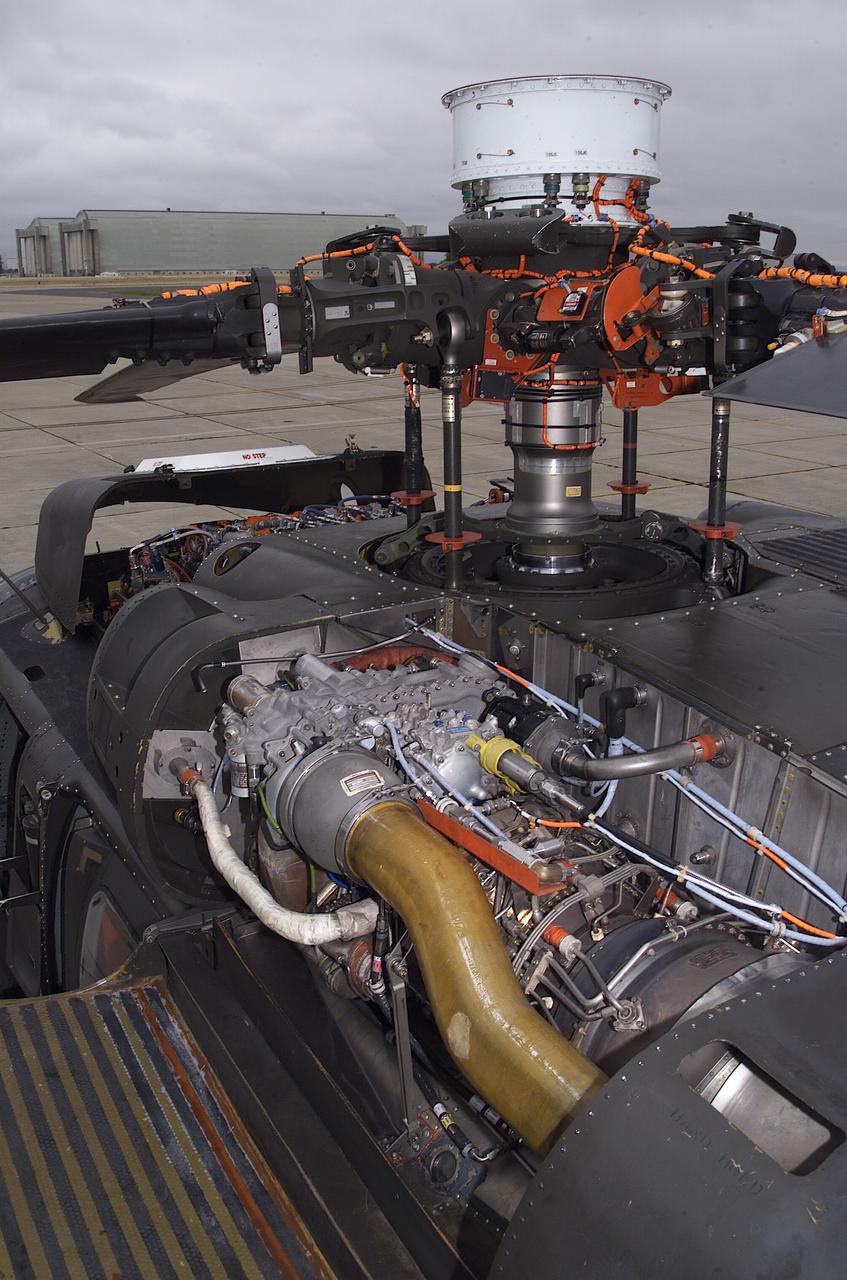
NRTC/RITA Precision Pathway Terminal Guidance: UH-60 RASCAL (#012) (National Rotocraft Technology Center/Rotorcraft Industry Technology Association) runway independent aircraft

NRTC/RITA Precision Pathway Terminal Guidance: UH-60 RASCAL (#012) (National Rotocraft Technology Center/Rotorcraft Industry Technology Association) runway independent aircraft

NRTC/RITA Precision Pathway Terminal Guidance: UH-60 RASCAL (#012) (National Rotocraft Technology Center/Rotorcraft Industry Technology Association) runway independent aircraft
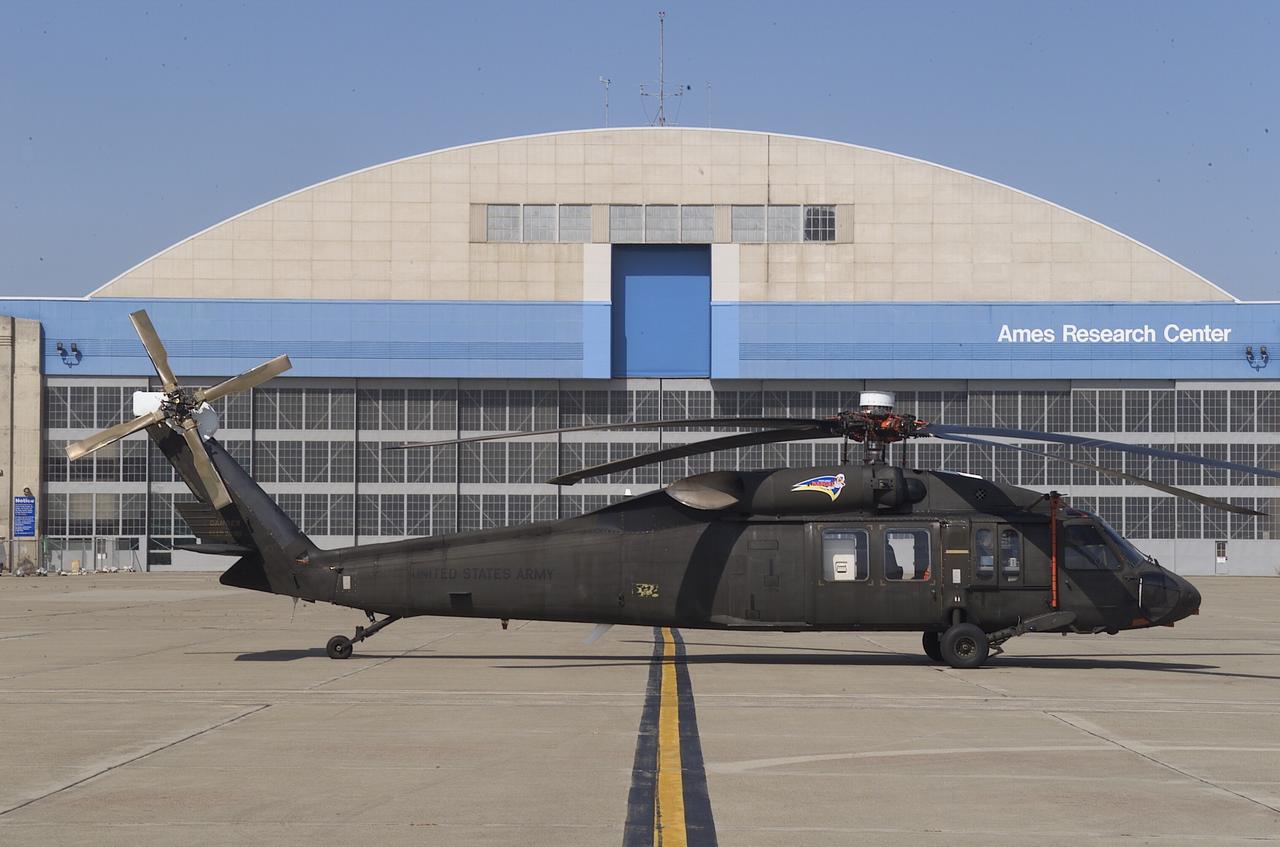
NRTC/RITA Precision Pathway Terminal Guidance: UH-60 RASCAL (#012) (National Rotocraft Technology Center/Rotorcraft Industry Technology Association) runway independent aircraft
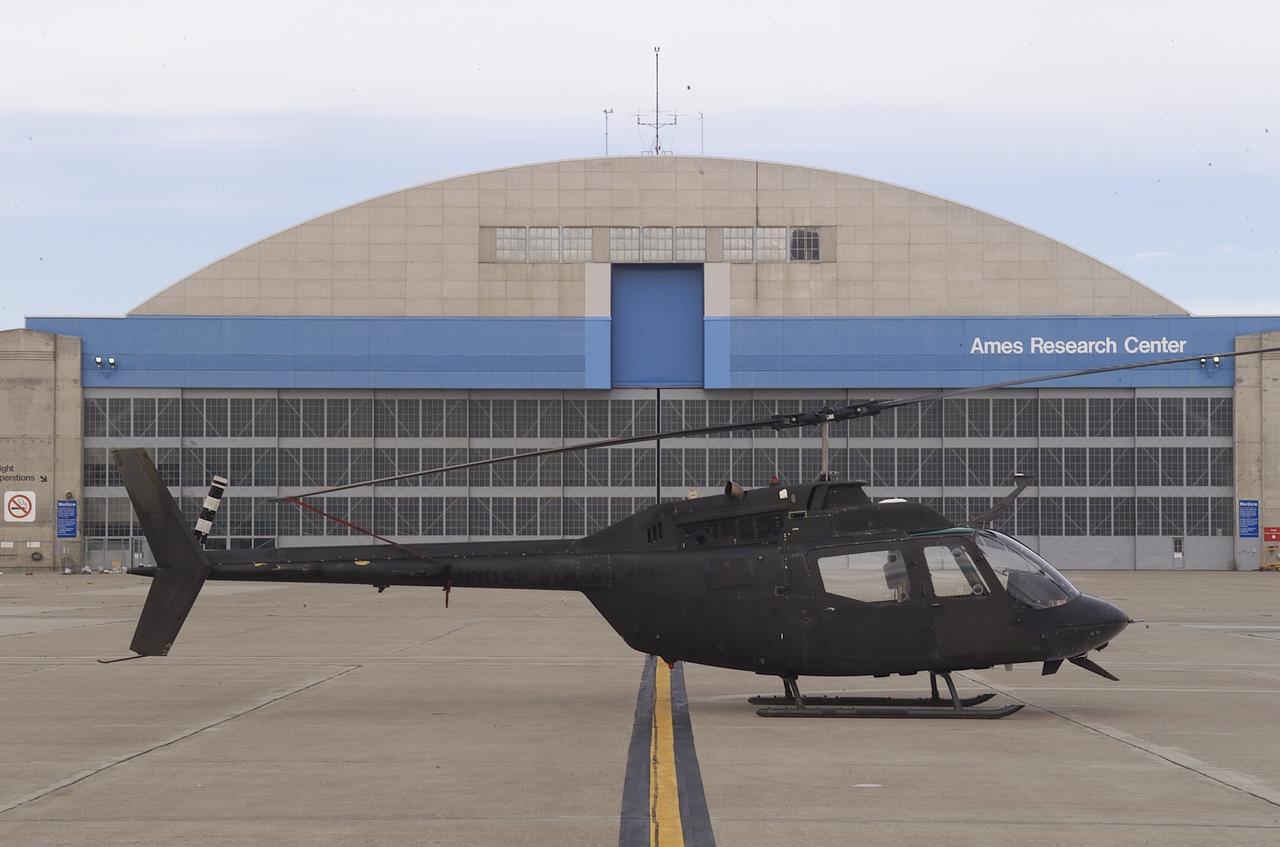
NRTC/RITA Precision Pathway Terminal Guidance: UH-60 RASCAL (#012) (National Rotocraft Technology Center/Rotorcraft Industry Technology Association) runway independent aircraft
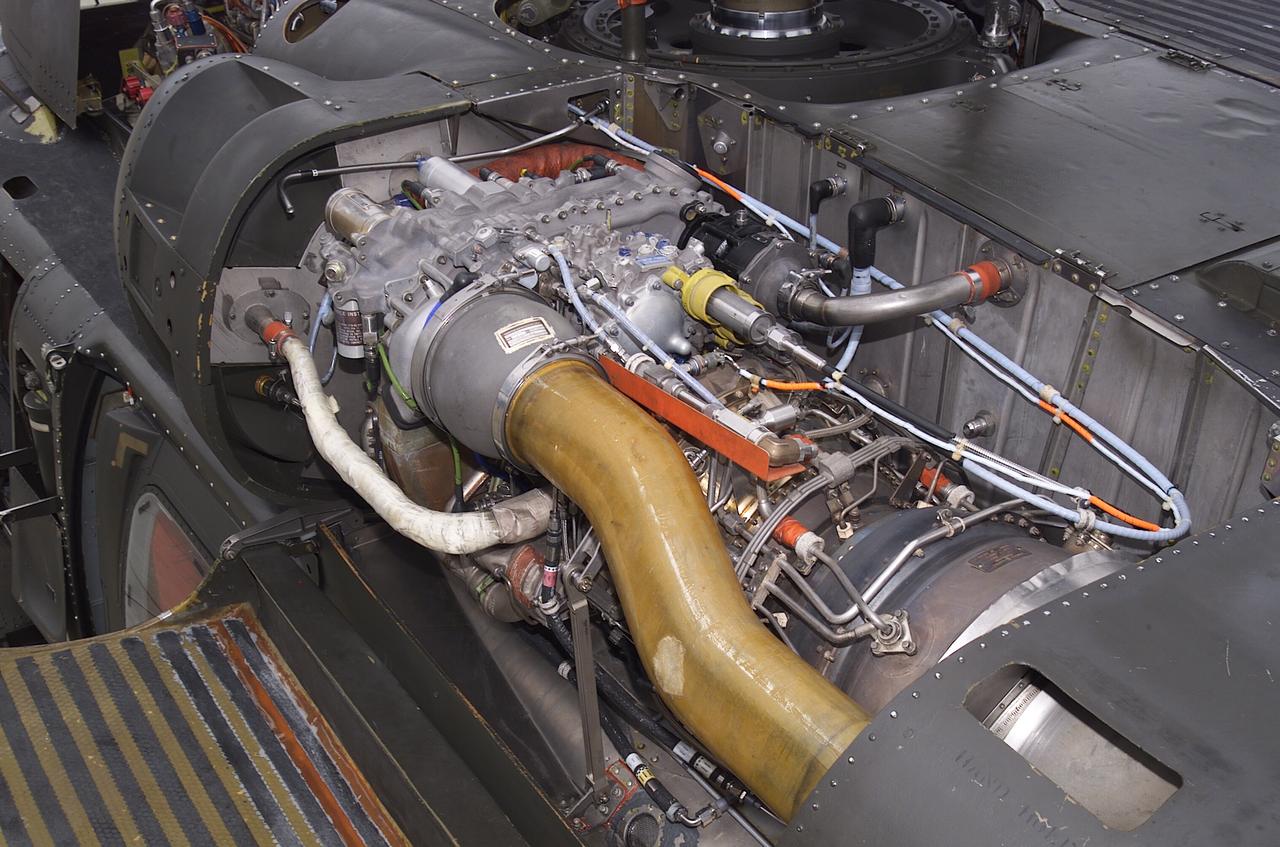
NRTC/RITA Precision Pathway Terminal Guidance: UH-60 RASCAL (#012) (National Rotocraft Technology Center/Rotorcraft Industry Technology Association) runway independent aircraft
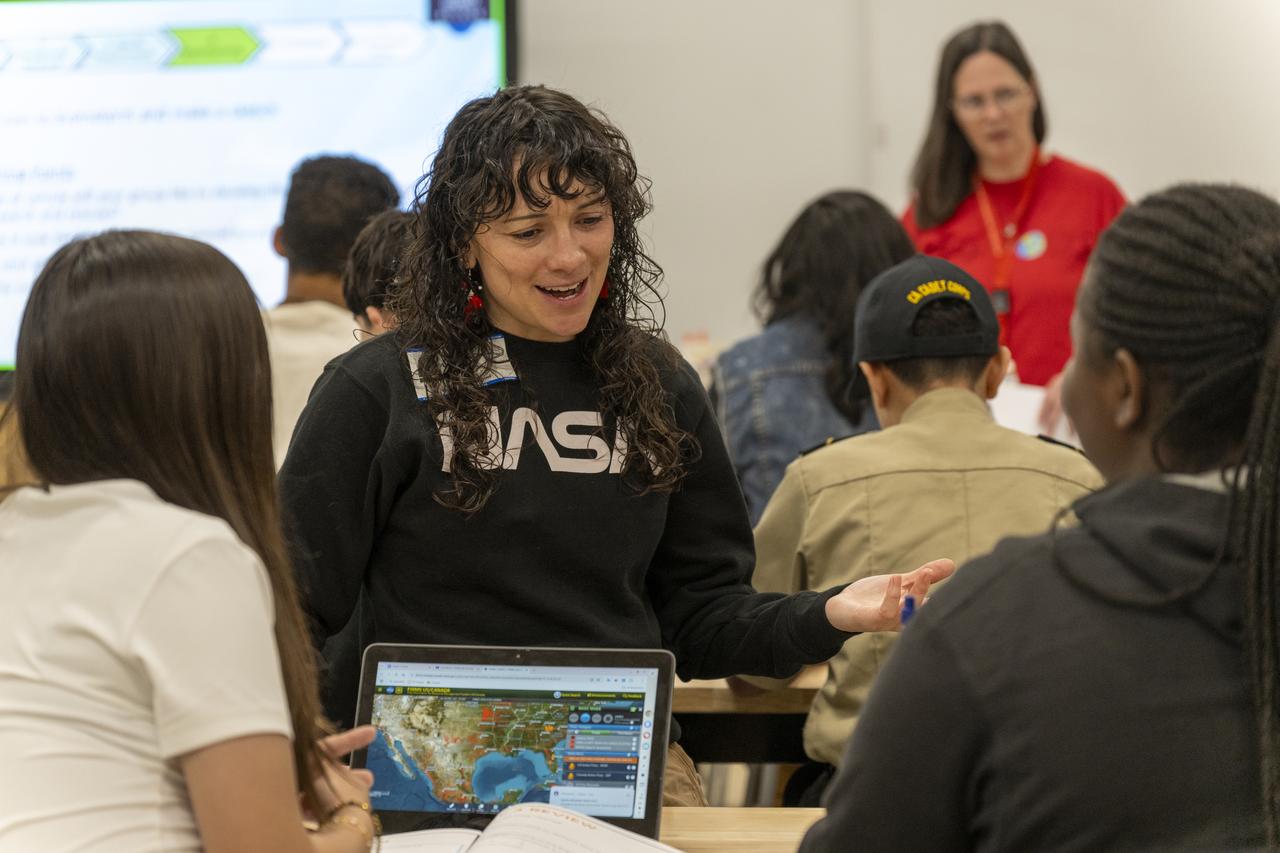
Giovanna Camacho, Pathways systems engineering intern at NASA’s Armstrong Flight Research Center in Edwards, California, teaches students about aeronautics during Aero Fair at Tropico Middle School in Rosamond, California, on April 9, 2025.
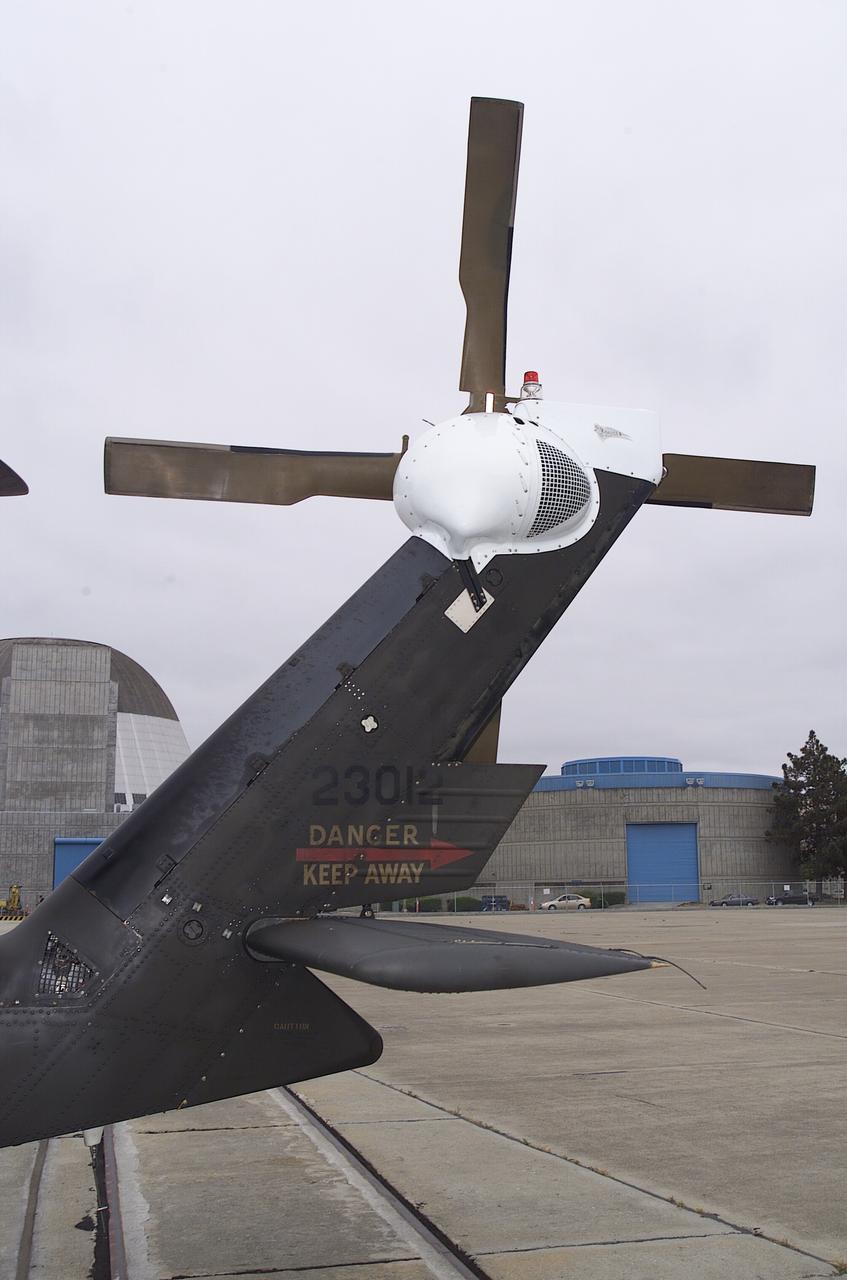
NRTC/RITA Precision Pathway Terminal Guidance: UH-60 RASCAL (#012) (National Rotocraft Technology Center/Rotorcraft Industry Technology Association) runway independent aircraft
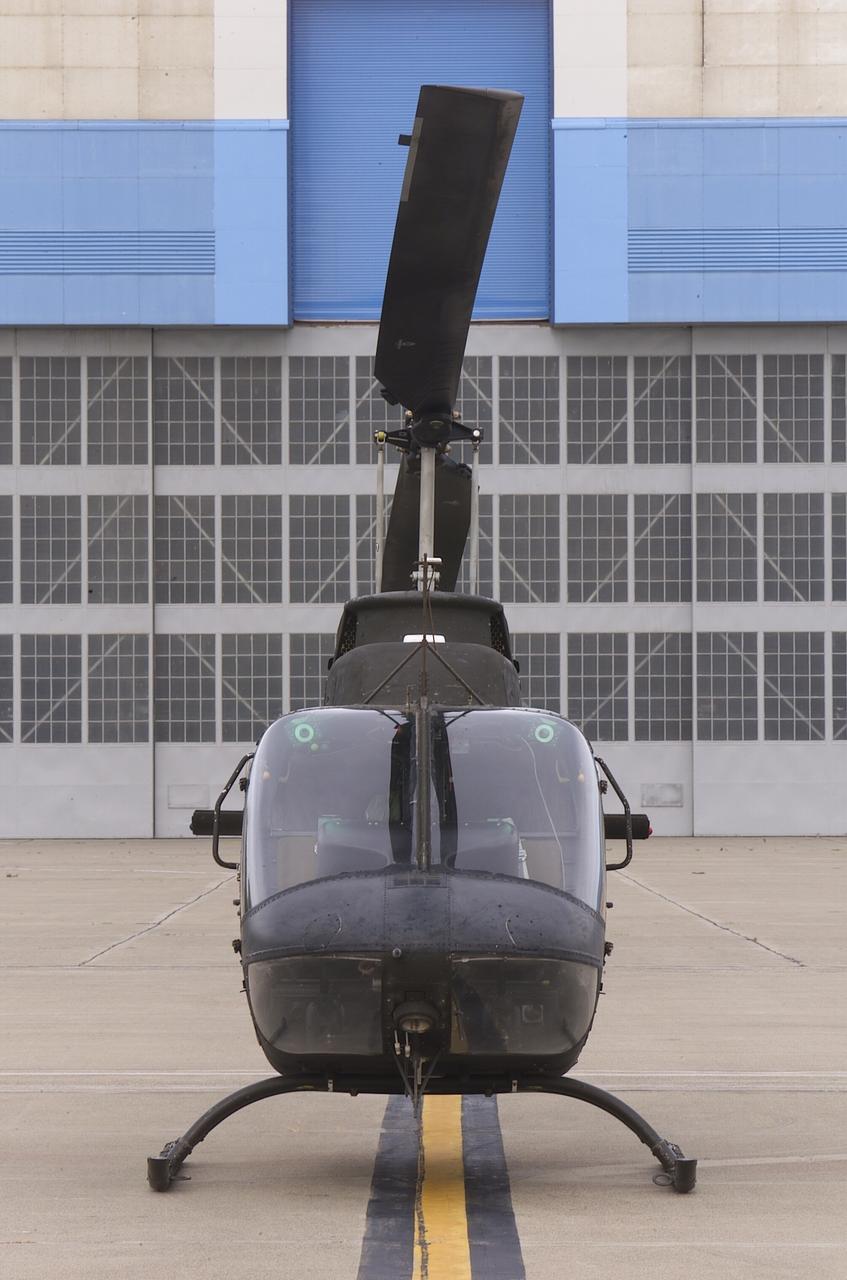
NRTC/RITA Precision Pathway Terminal Guidance: UH-60 RASCAL (#012) (National Rotocraft Technology Center/Rotorcraft Industry Technology Association) runway independent aircraft
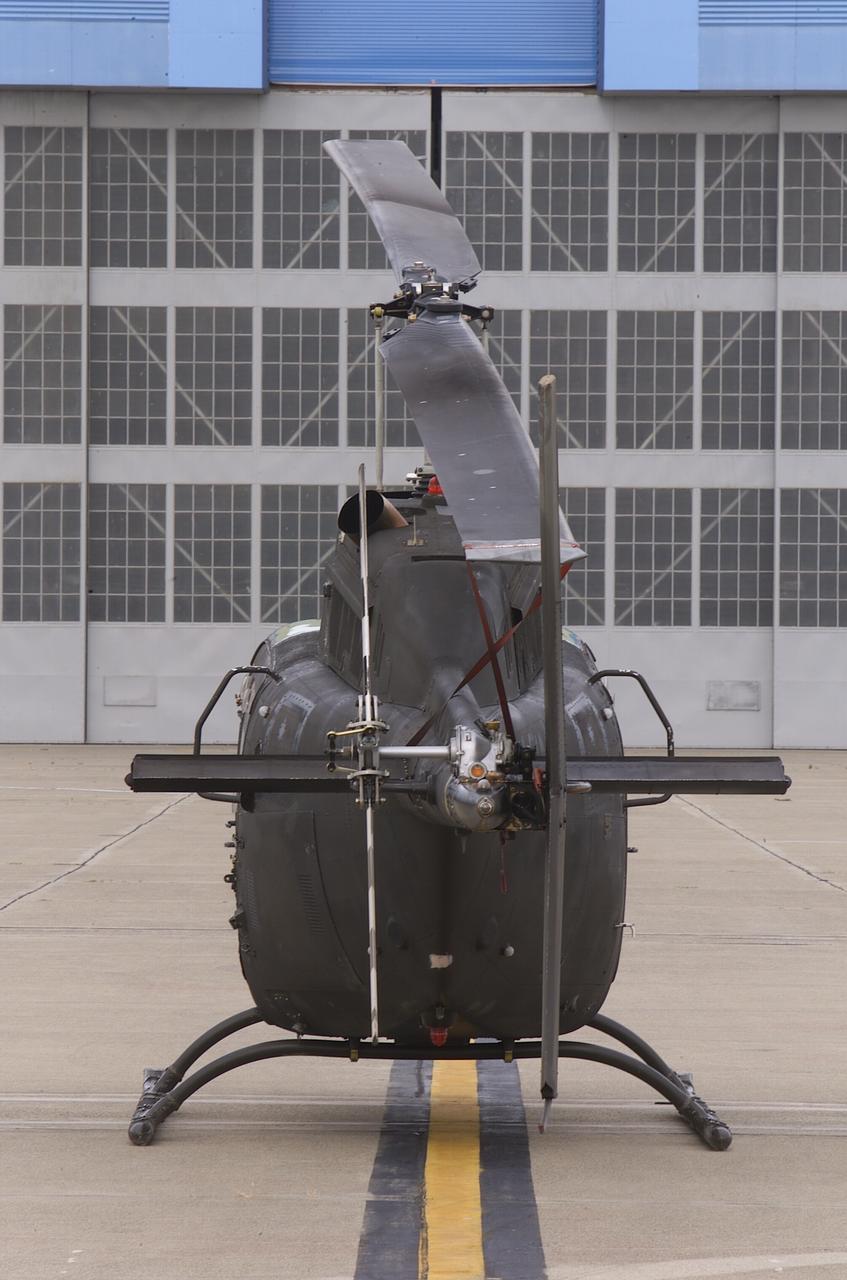
NRTC/RITA Precision Pathway Terminal Guidance: UH-60 RASCAL (#012) (National Rotocraft Technology Center/Rotorcraft Industry Technology Association) runway independent aircraft
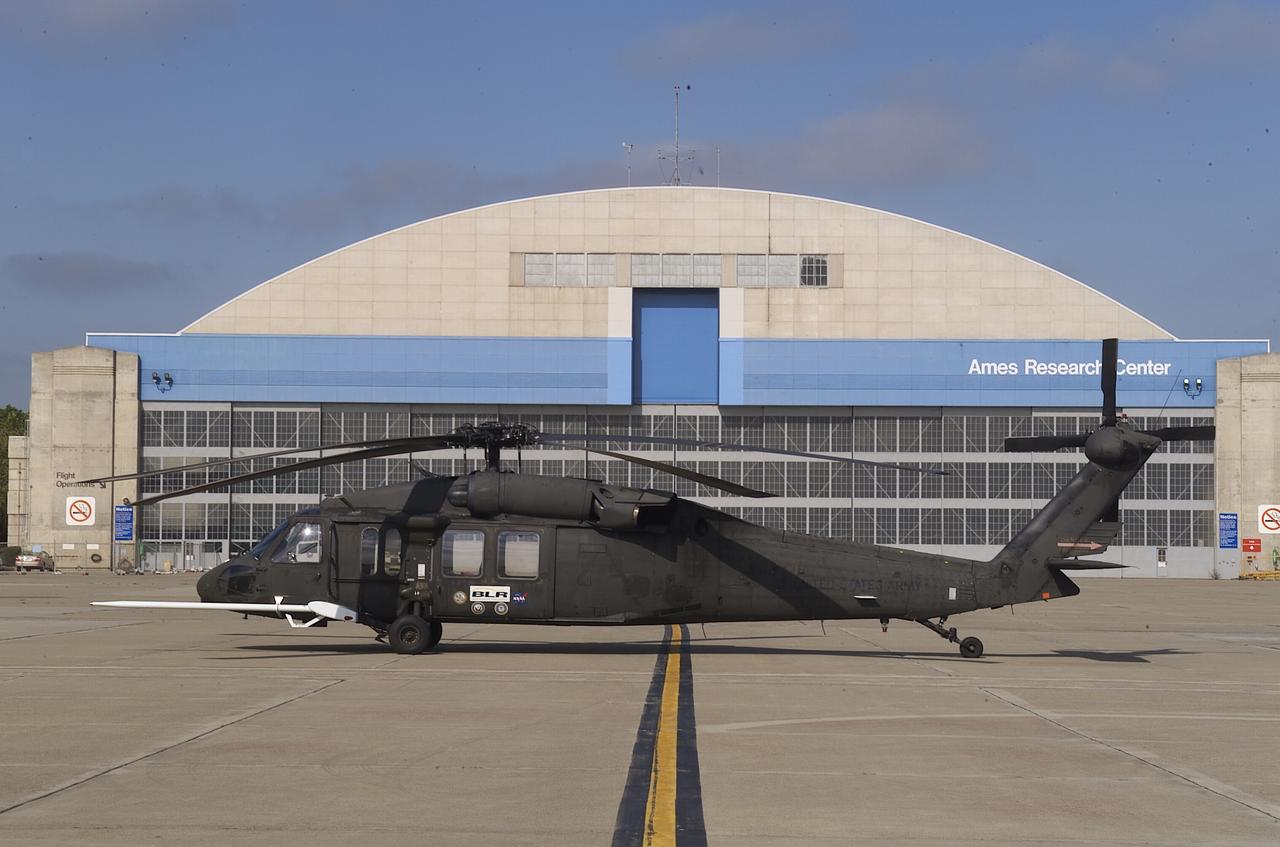
NRTC/RITA Precision Pathway Terminal Guidance: UH-60 RASCAL (#012) (National Rotocraft Technology Center/Rotorcraft Industry Technology Association) runway independent aircraft
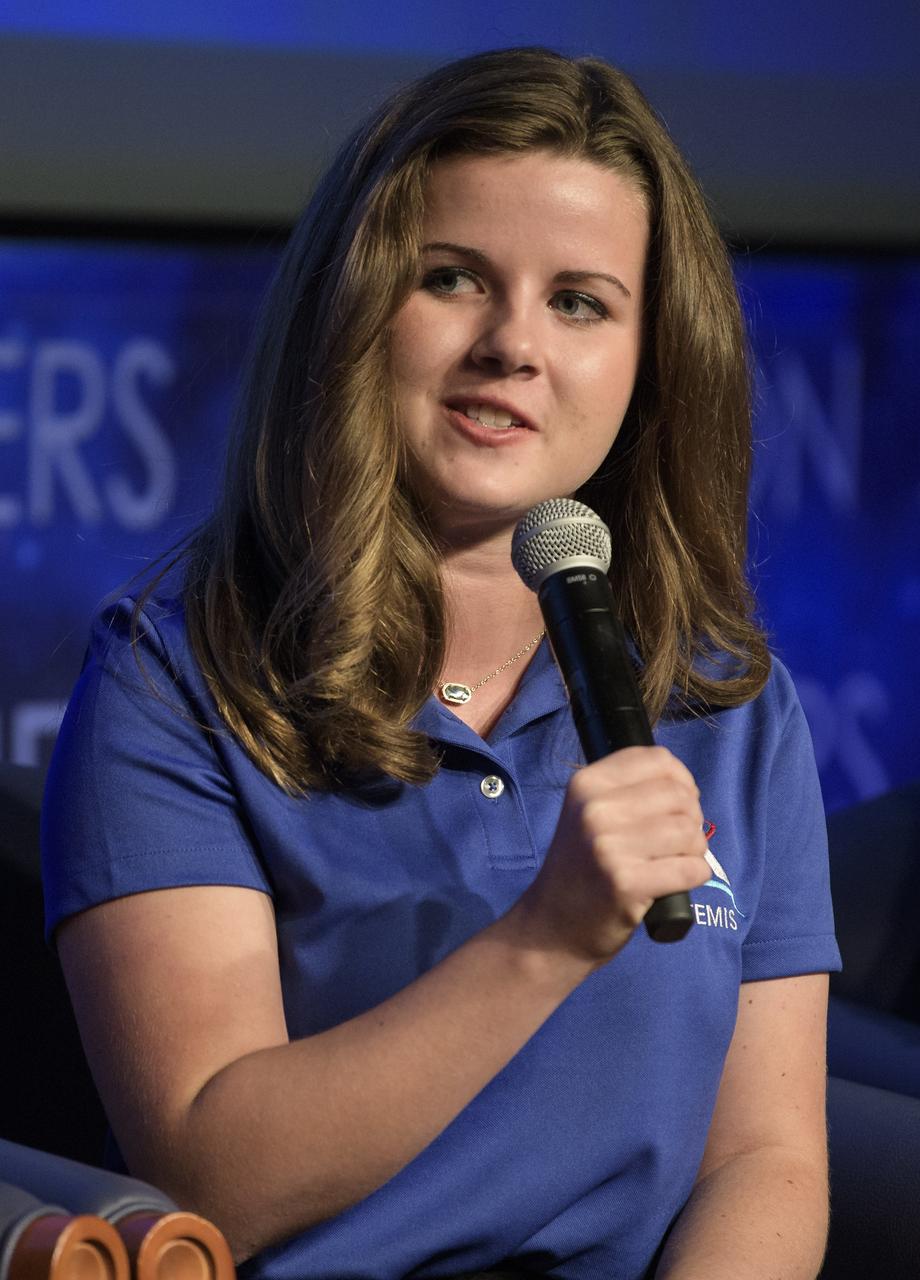
Alexis Vance, a Pathways student engineering trainee at NASA’s Johnson Space Center, speaks about being an intern at NASA’s Johnson Space Center during an interactive STEM discussion with students attending the 70th International Astronautical Congress, Wednesday, Oct. 23, 2019, at NASA Headquarters in Washington. Photo Credit: (NASA/Joel Kowsky)
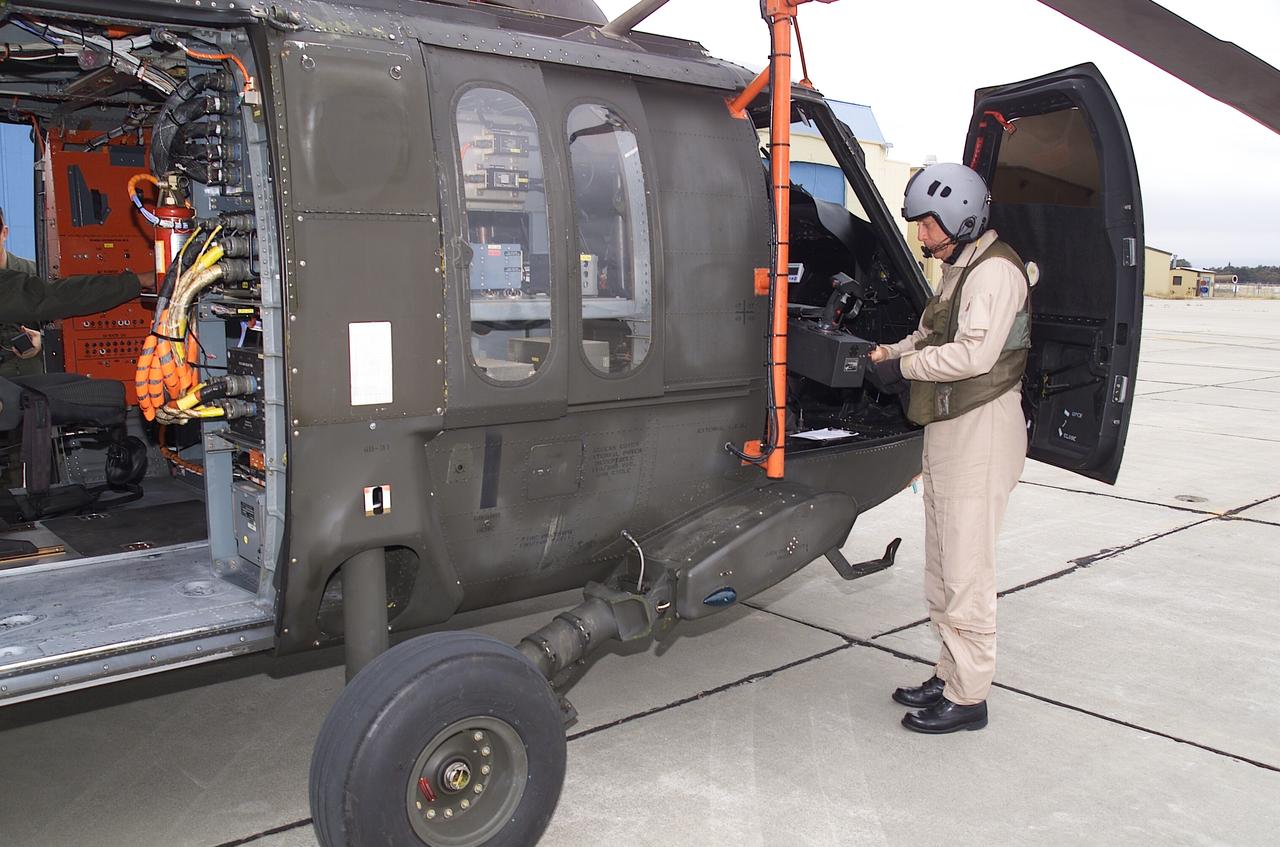
NRTC/RITA Precision Pathway Terminal Guidance: UH-60 RASCAL (#012) (National Rotocraft Technology Center/Rotorcraft Industry Technology Association) runway independent aircraft - Sikorsky Helicopter pilot Kevin Bredenbeck preparing for flight in RASCAL with Dave Arterburn
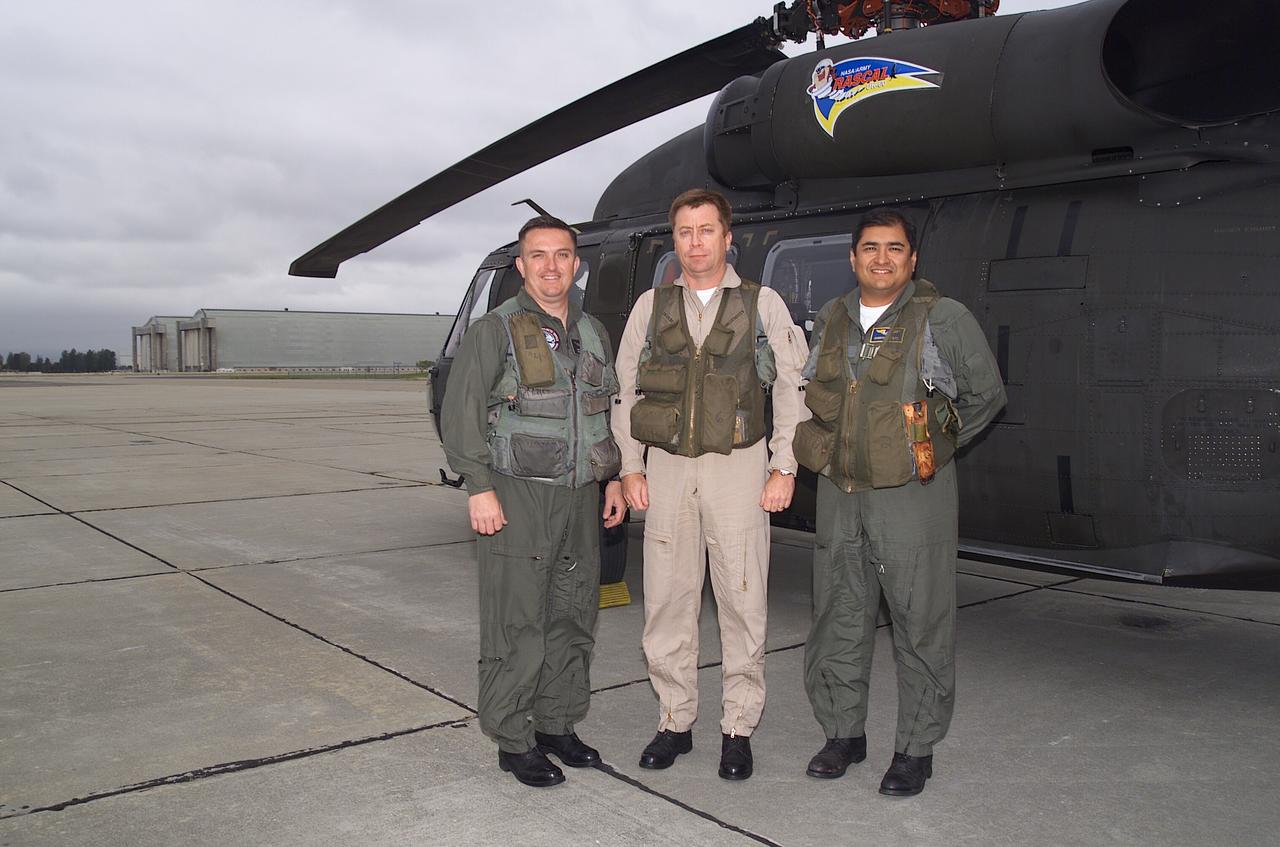
NRTC/RITA Precision Pathway Terminal Guidance: UH-60 RASCAL (#012) (National Rotocraft Technology Center/Rotorcraft Industry Technology Association) runway independent aircraft - Sikorsky Helicopter pilot Kevin Bredenbeck with Dave Arterburn and Ernie Morales of Ames
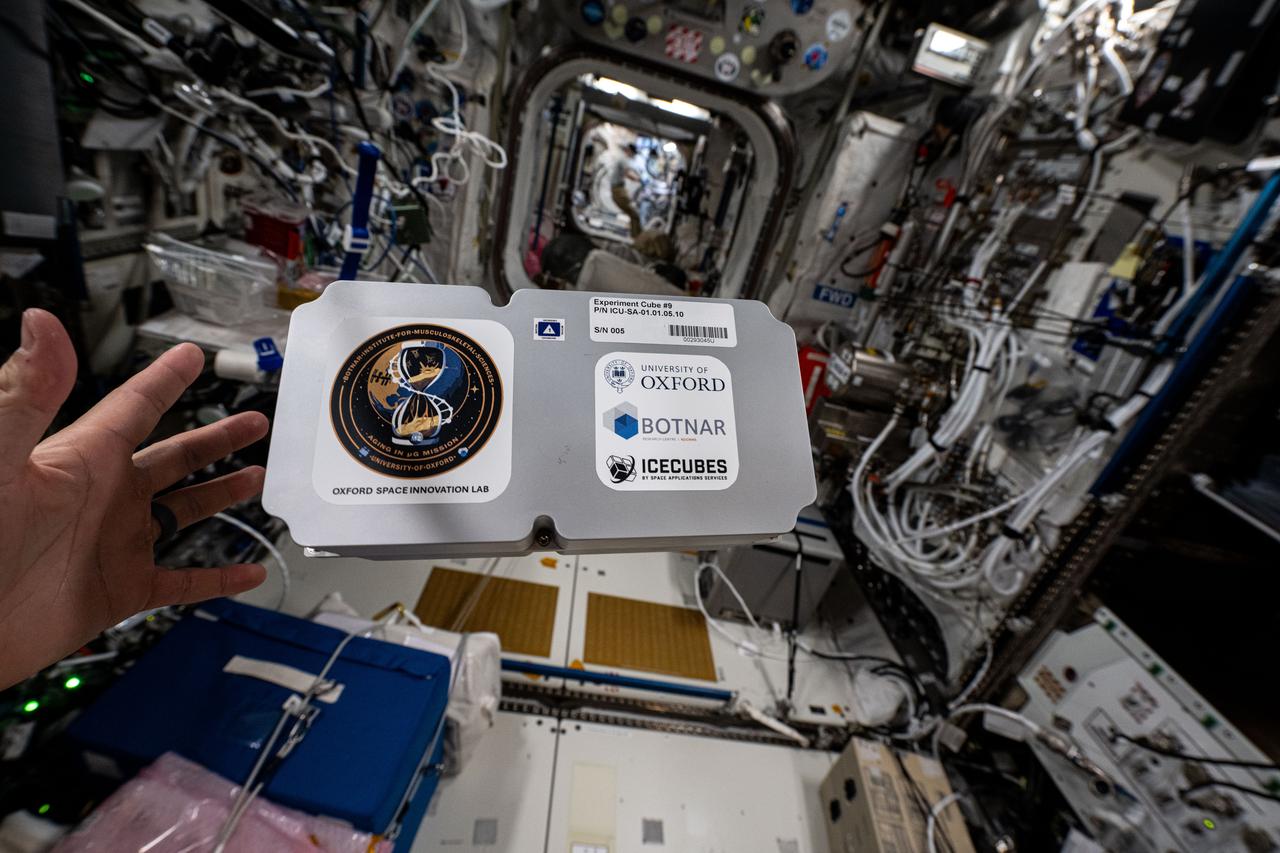
iss073e0001010 (4/23/2025) --- The ICE Cubes Experiment Cube #9 that hosts the Aging in Microgravity investigation. Aging in Microgravity aims to bridge the gap between aging research and space exploration by investigating common pathways between aging and spaceflight exposure.
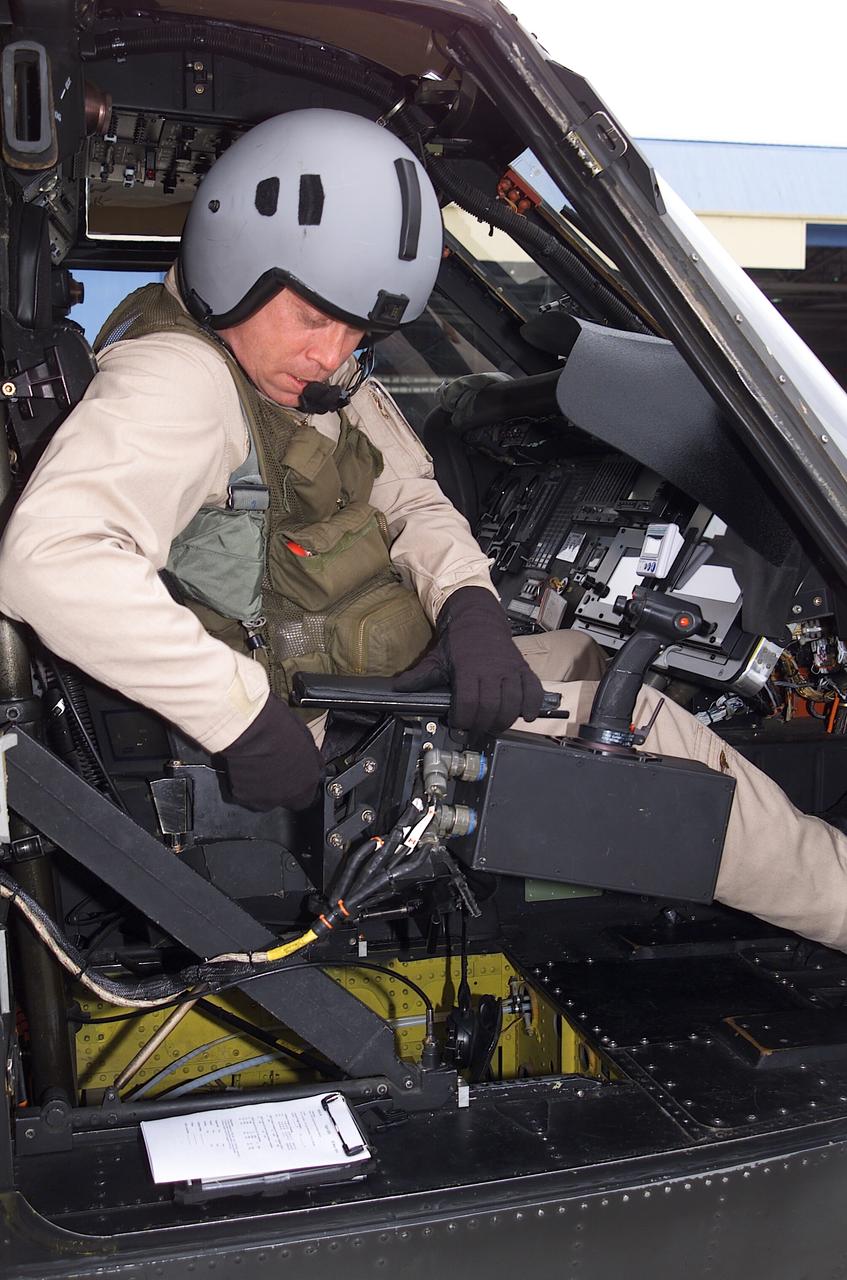
NRTC/RITA Precision Pathway Terminal Guidance: UH-60 RASCAL (#012) (National Rotocraft Technology Center/Rotorcraft Industry Technology Association) runway independent aircraft - Sikorsky Helicopter pilot Kevin Bredenbeck preparing for flight in RASCAL with Dave Arterburn
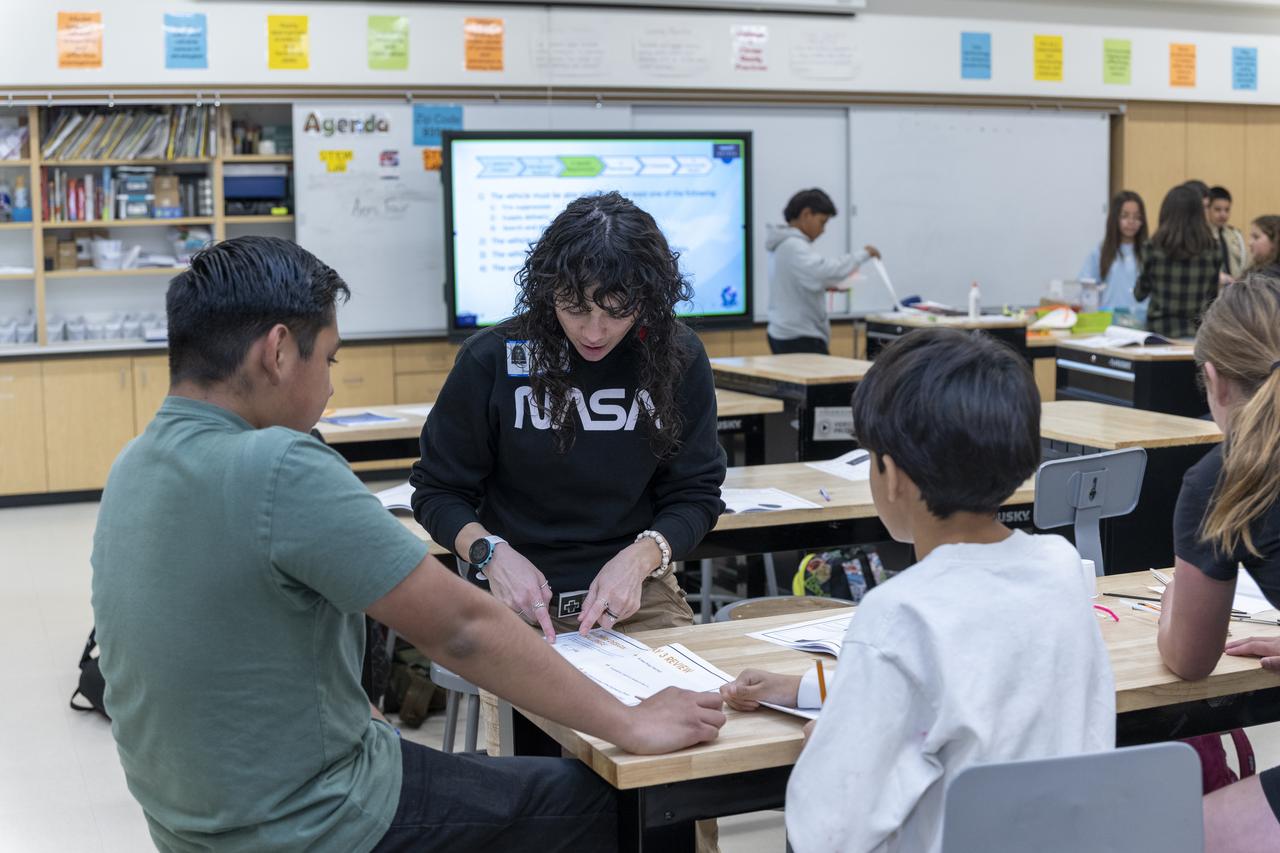
Giovanna Camacho, Pathways systems engineering intern from NASA’s Armstrong Flight Research Center in Edwards, California, teaches students about aeronautics during Aero Fair at Tropico Middle School in Rosamond, California, on April 9, 2025.
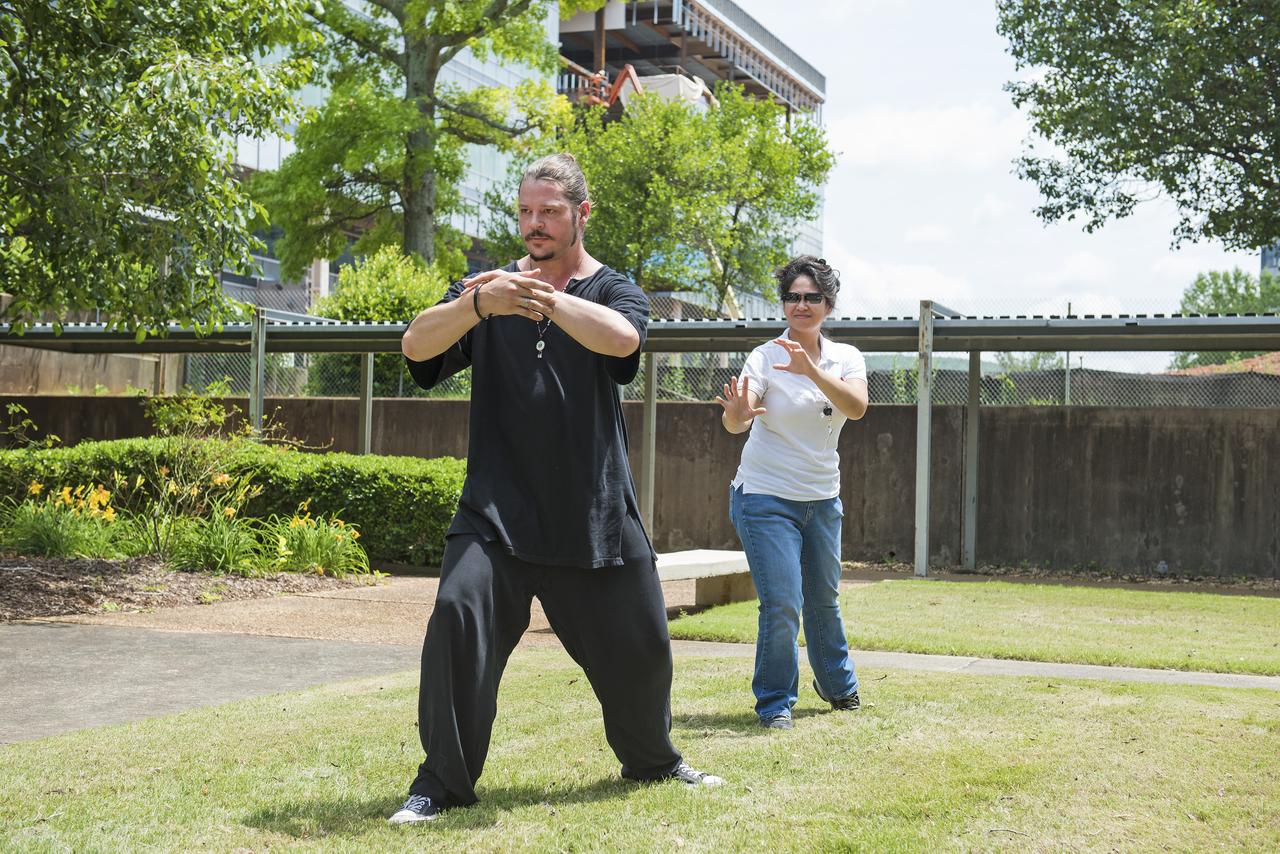
Warren Cain, an instructor at WuDang Martial Arts Center in Huntsville, leads Marshall Pathways intern Donna Cendana of the Engineering Directorate's Propulsion Systems Department, in a demonstration of tai chi, the noncompetitive Eastern martial arts tradition that evolved over the centuries into a means of alleviating stress and anxiety.
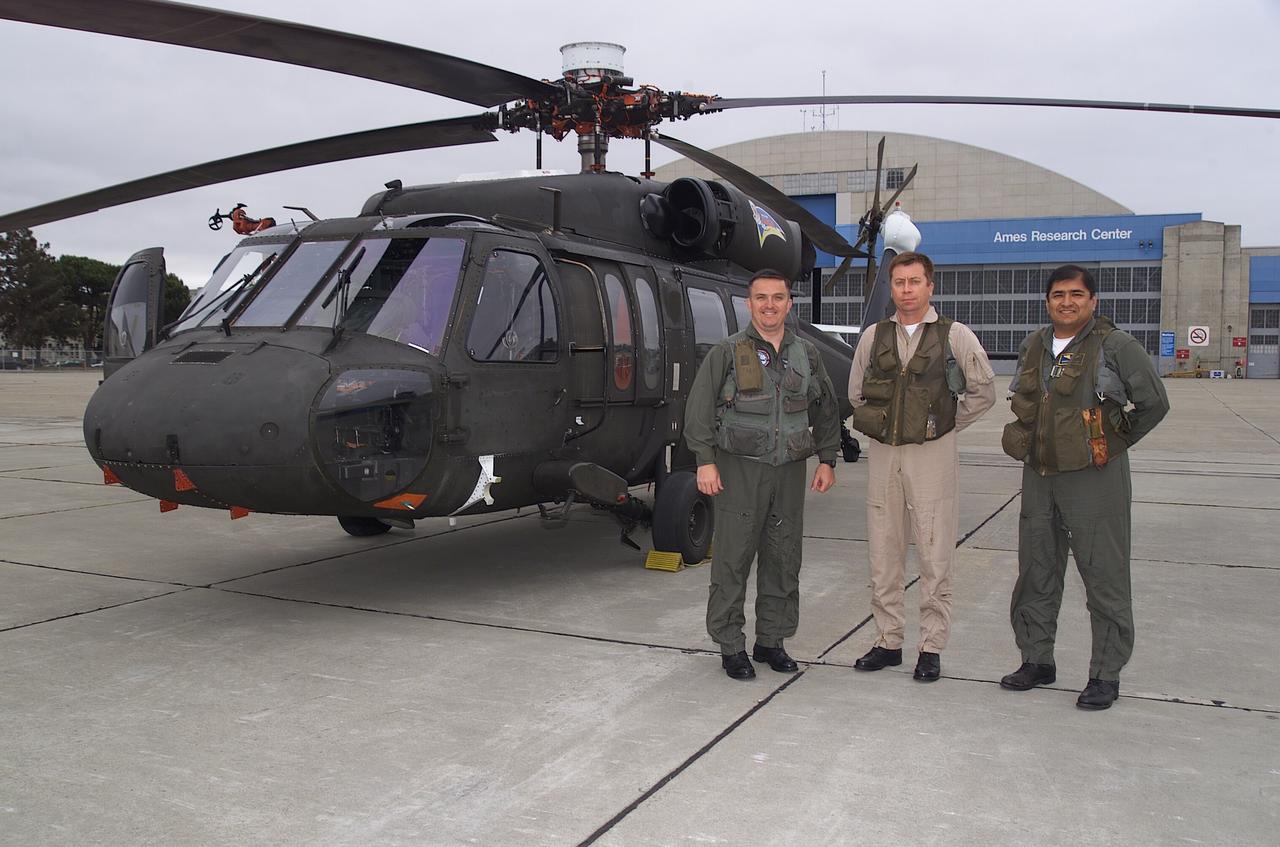
NRTC/RITA Precision Pathway Terminal Guidance: UH-60 RASCAL (#012) (National Rotocraft Technology Center/Rotorcraft Industry Technology Association) runway independent aircraft - Sikorsky Helicopter pilot Kevin Bredenbeck with Dave Arterburn and Ernie Morales of Ames
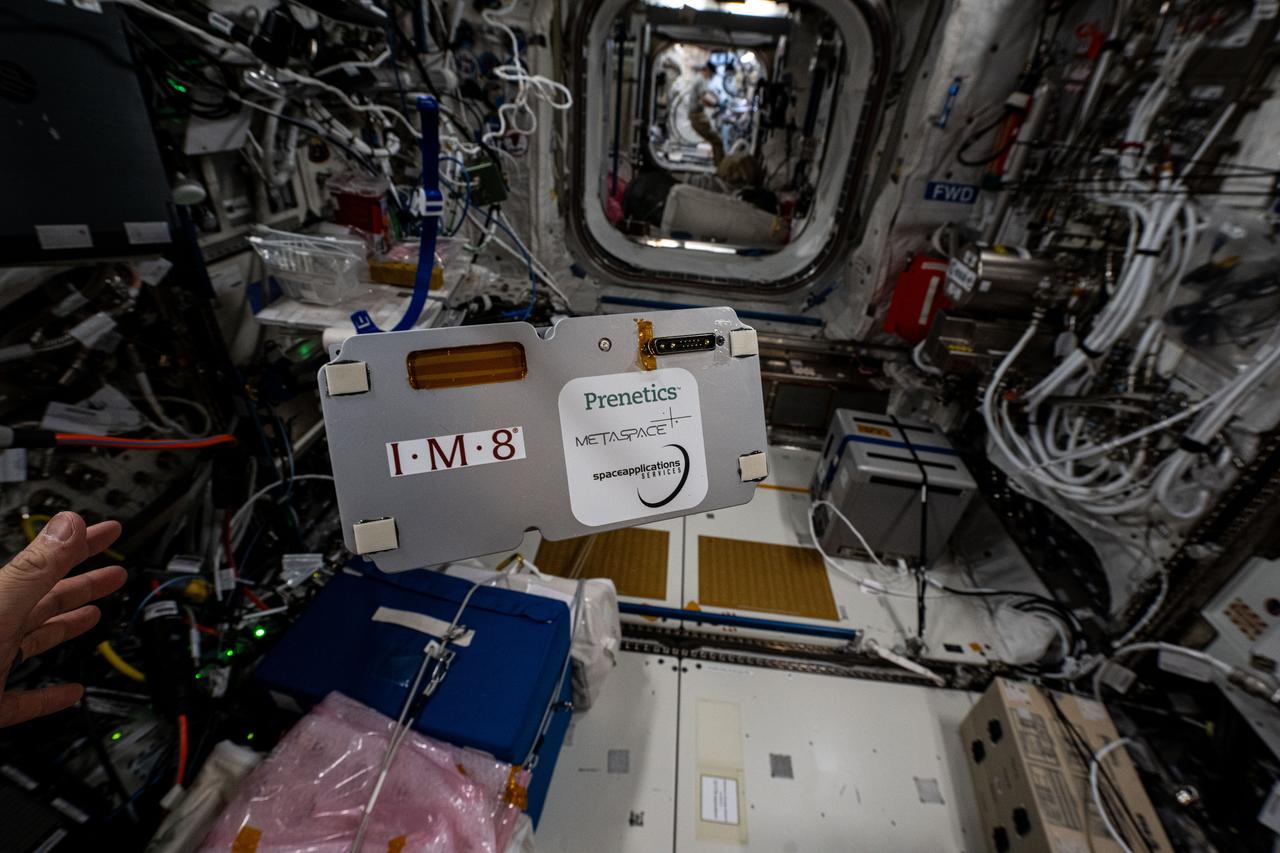
iss073e0001012 (4/23/2025) --- Another view of the ICE Cubes Experiment Cube #9 that hosts the Aging in Microgravity investigation. Aging in Microgravity aims to bridge the gap between aging research and space exploration by investigating common pathways between aging and spaceflight exposure.
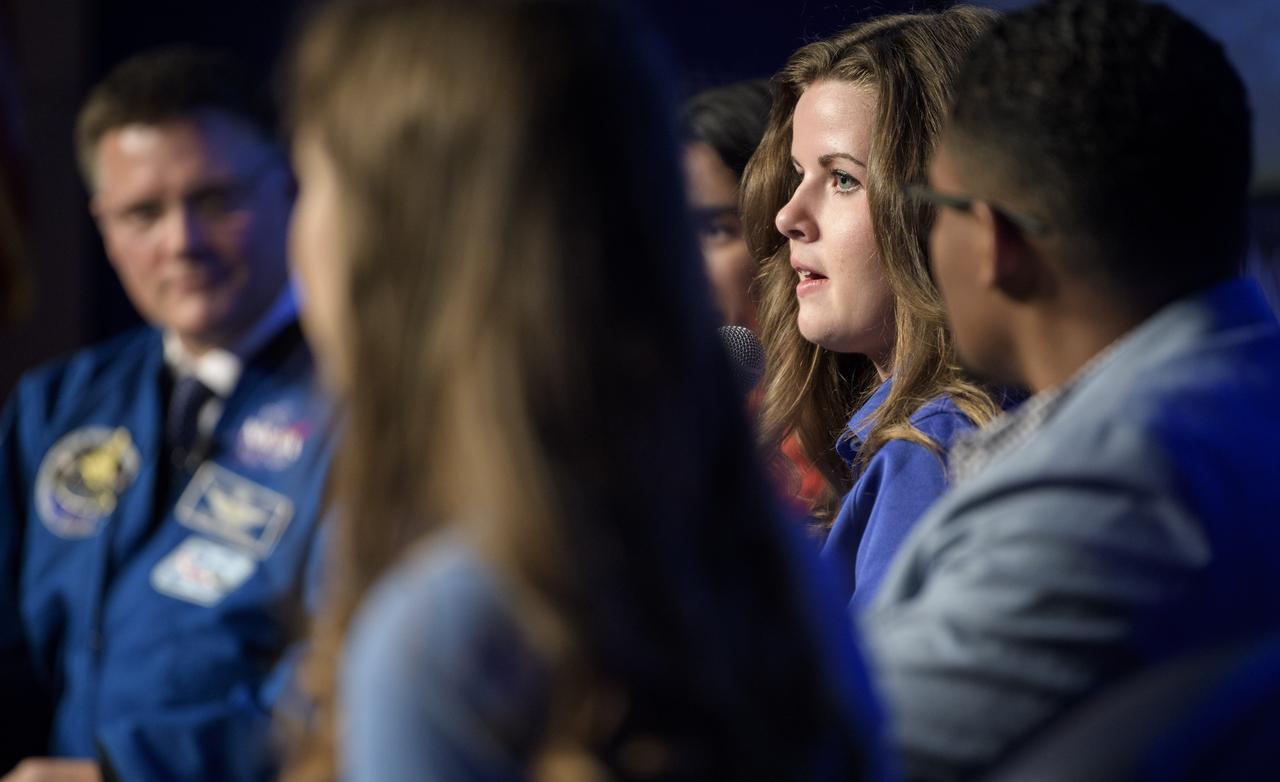
Alexis Vance, a Pathways student engineering trainee at NASA’s Johnson Space Center, speaks about being an intern at NASA’s Johnson Space Center during an interactive STEM discussion with students attending the 70th International Astronautical Congress, Wednesday, Oct. 23, 2019, at NASA Headquarters in Washington. Photo Credit: (NASA/Joel Kowsky)
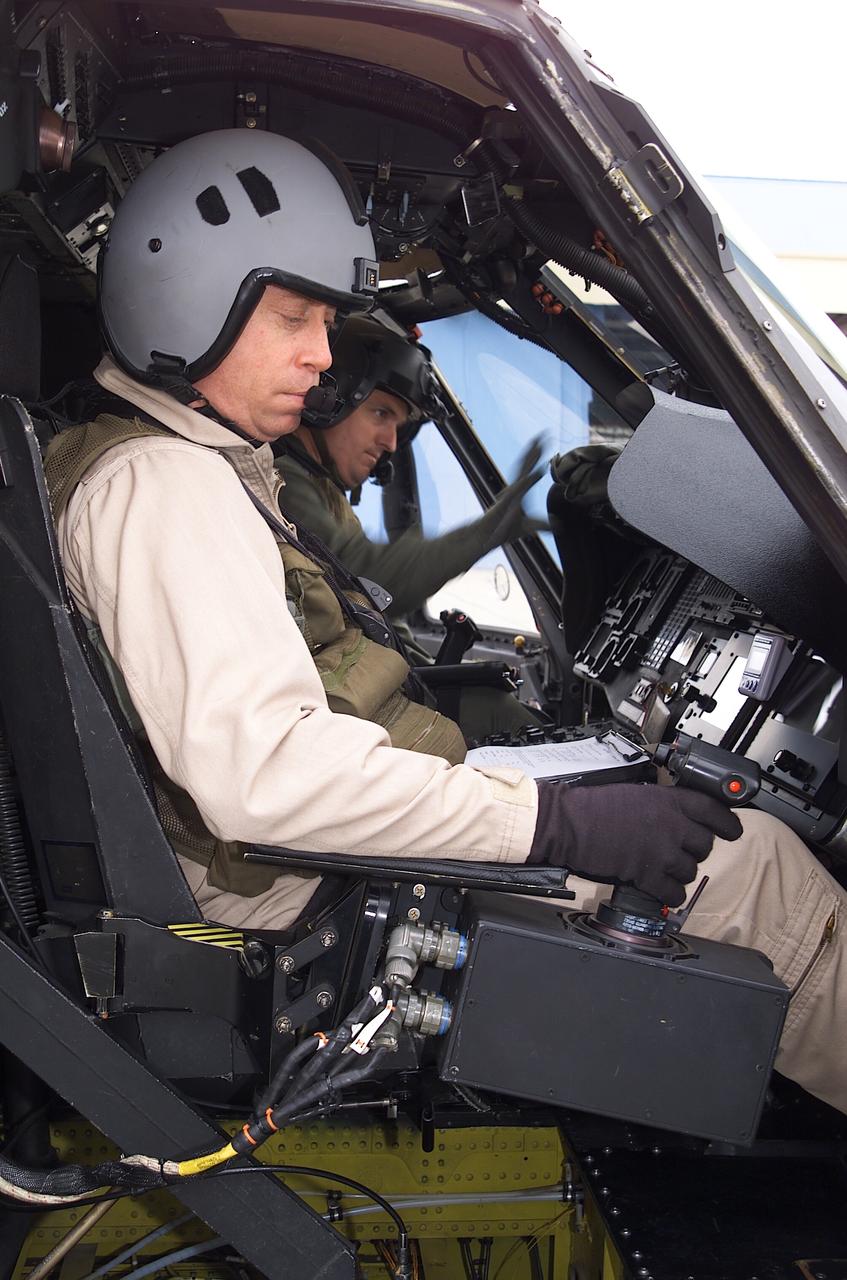
NRTC/RITA Precision Pathway Terminal Guidance: UH-60 RASCAL (#012) (National Rotocraft Technology Center/Rotorcraft Industry Technology Association) runway independent aircraft; Sikorsky Helicopter pilot Kevin Bredenbeck preparing for flight in RASCAL with Dave Arterburn
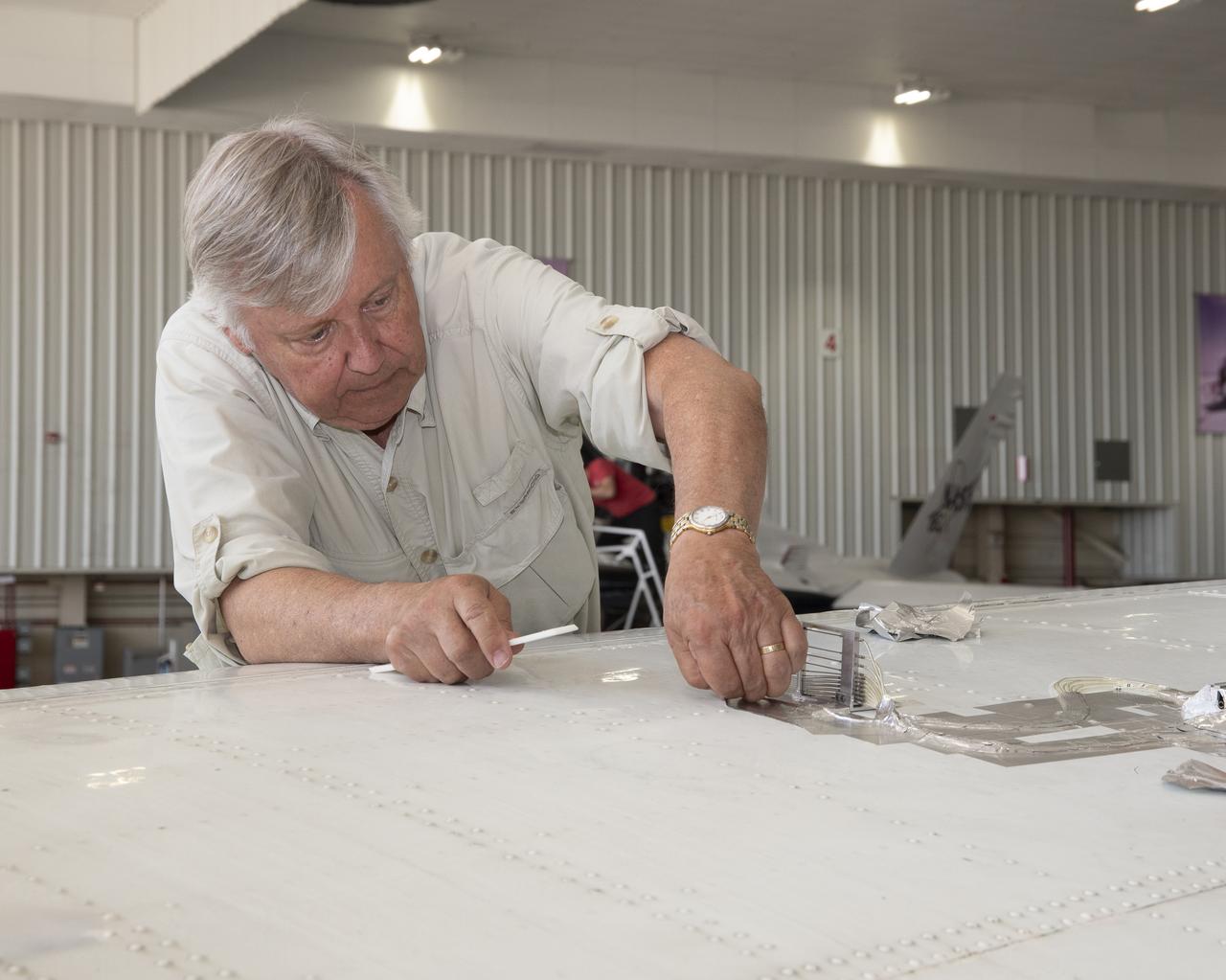
Cal Poly San Luis Obispo Professor Russ Westphal works on the Boundary Layer Data System (BLDS) attached to the wing of a Beechcraft Beech 200 Super King Air aircraft. The BLDS was attached to the aircraft with removable adhesives for a flight test at NASA’s Armstrong Flight Research Center.
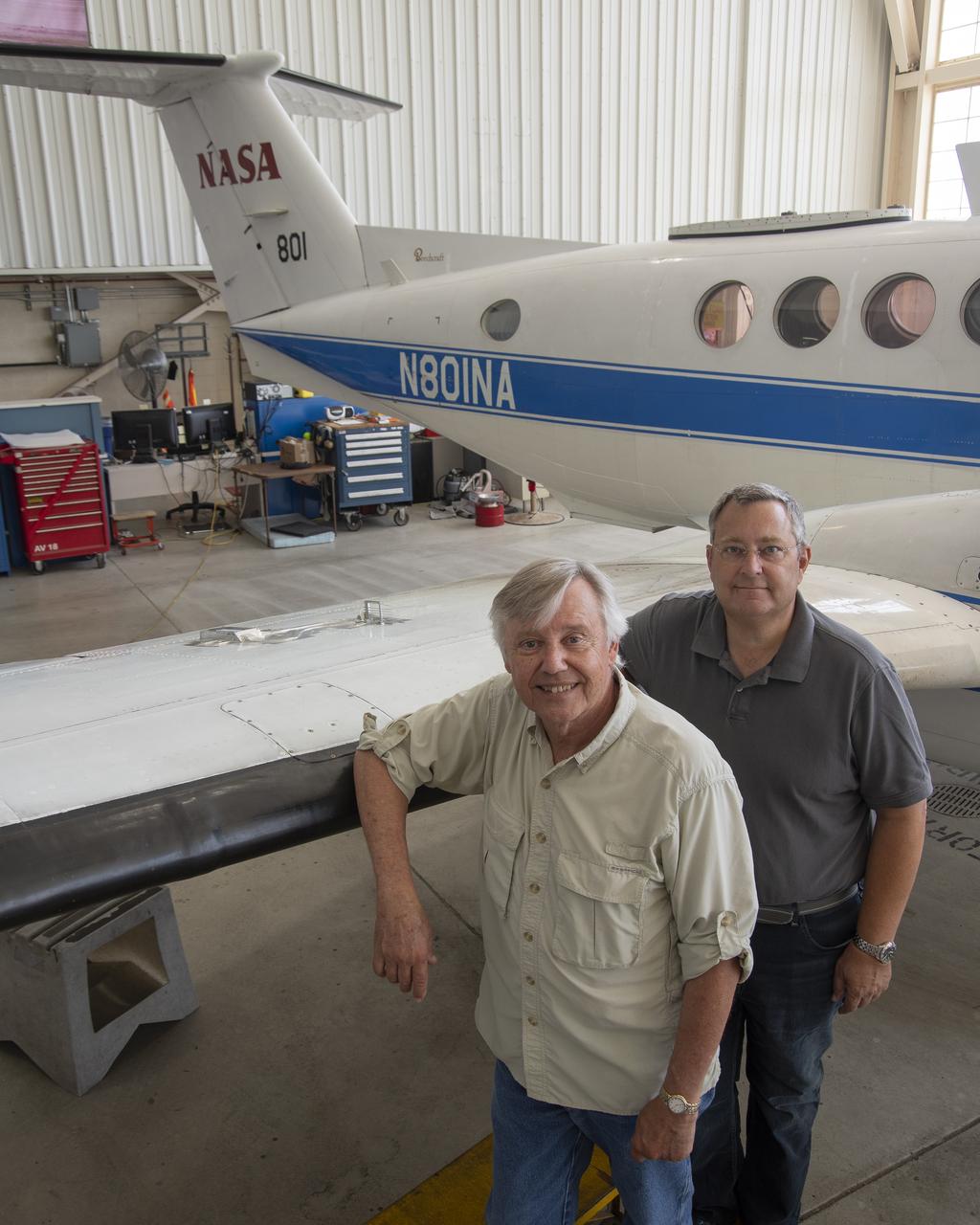
Cal Poly San Luis Obispo professors Russ Westphal, left, and Aaron Drake posed next to NASA Armstrong Flight Research Center’s Beechcraft Beech 200 Super King Air aircraft. On the King Air’s wing is the Boundary Layer Data System (BLDS), a sensor developed by Cal Poly and Northrop Grumman. BLDS was flown at NASA Armstrong as a step towards creating a process allowing universities, small businesses and other interested parties to quickly test flight technologies.
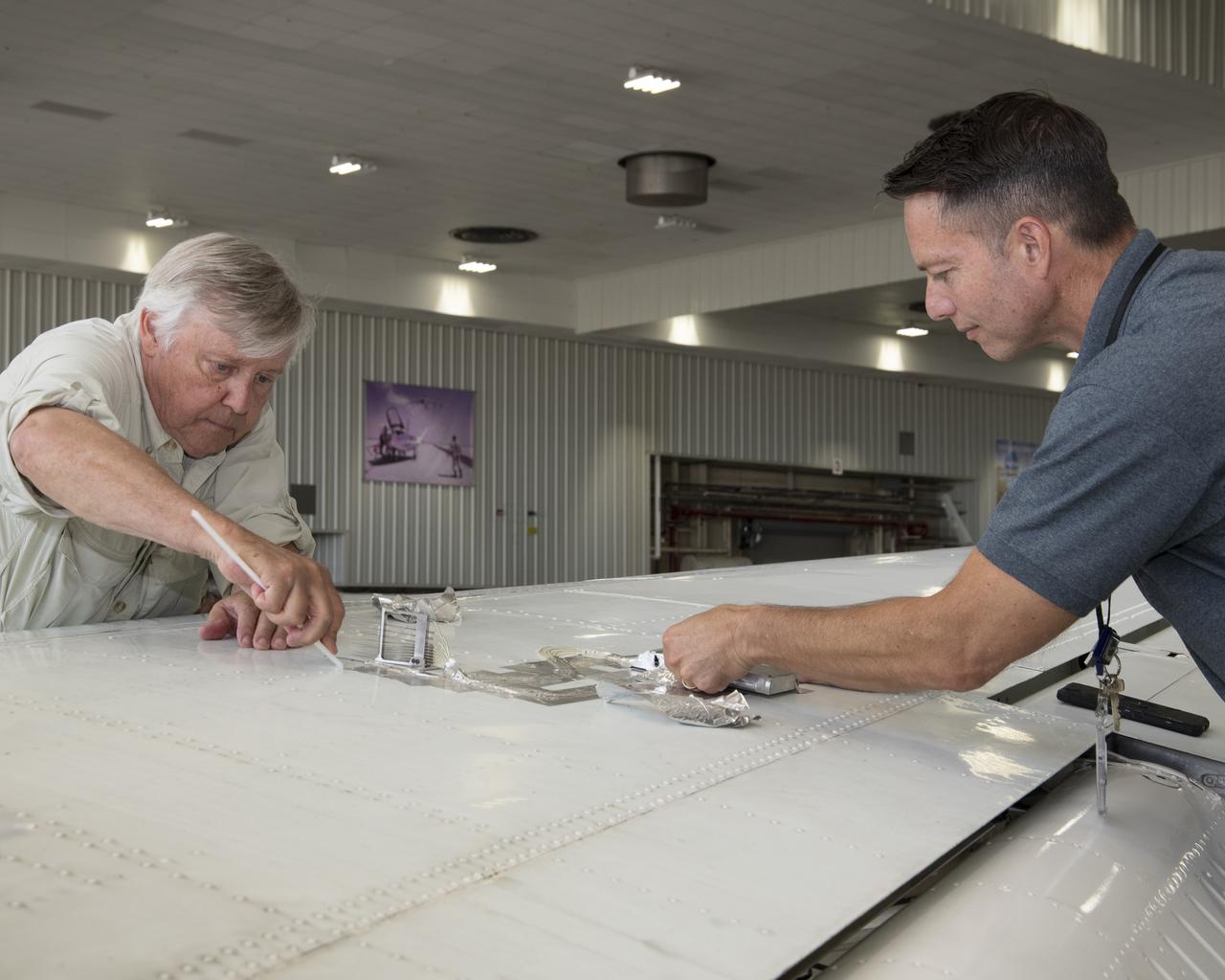
Cal Poly San Luis Obispo Professor Russ Westphal, left, and NASA Armstrong’s Technology Transfer Officer Benjamin Tomlinson remove the Boundary Layer Data System (BLDS) sensor attached to the wing of a Beechcraft Beech 200 Super King Air. The BLDS was flight tested at NASA’s Armstrong Flight Research Center to showcase rapid and flexible flight-testing capabilities.
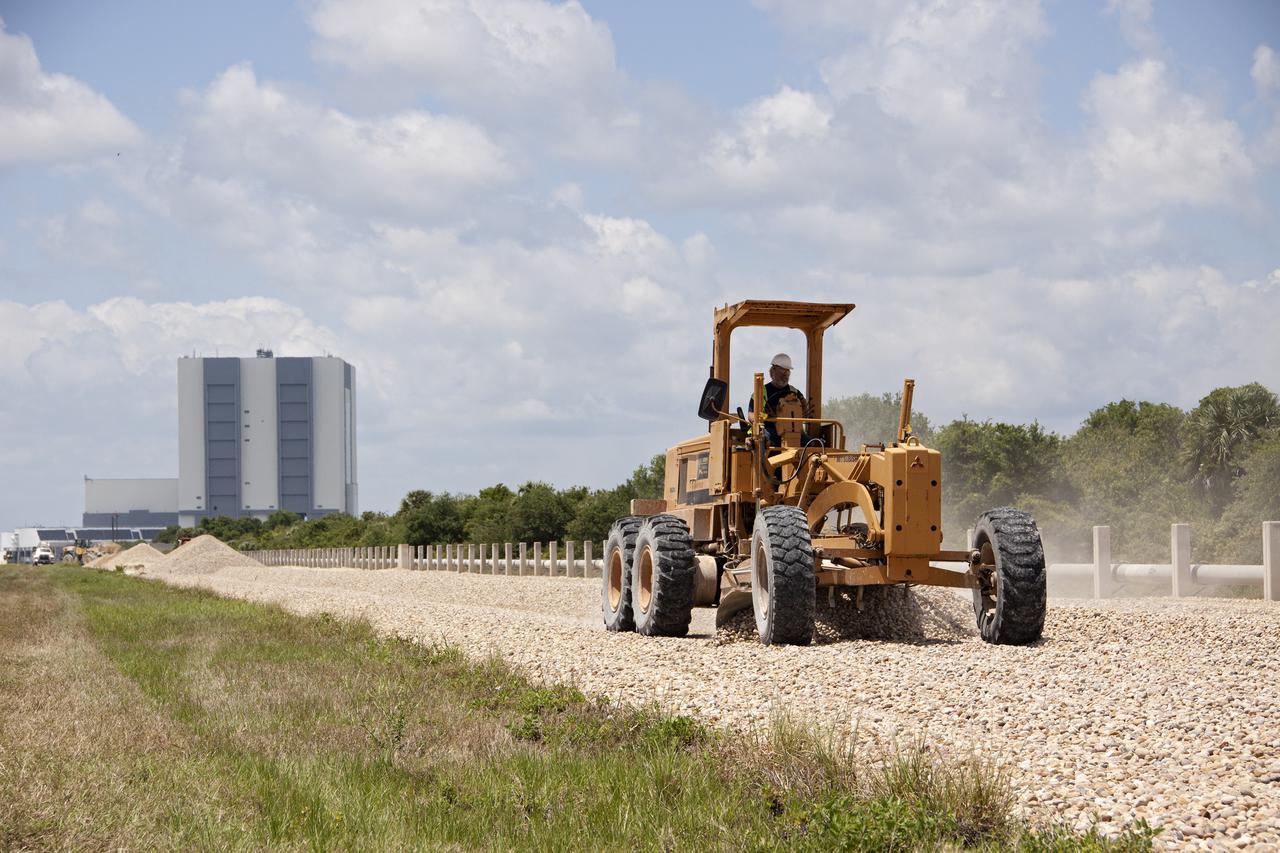
CAPE CANAVERAL, Fla. – At NASA’s Kennedy Space Center in Florida, a road-grader resurfaces a section of the crawlerway leading from the Vehicle Assembly Building VAB to the launch pads. The Ground Systems Development and Operations GSDO Program office at Kennedy is working to upgrade the two 40-foot-wide pathways the crawler-transporter will travel as it transports launch vehicles such as NASA's Space Launch System SLS rocket from the VAB to the launch pad. For more: http:__www.nasa.gov_exploration_systems_ground_crawlerway_upgrades.html Photo credit: NASA_Jim Grossman
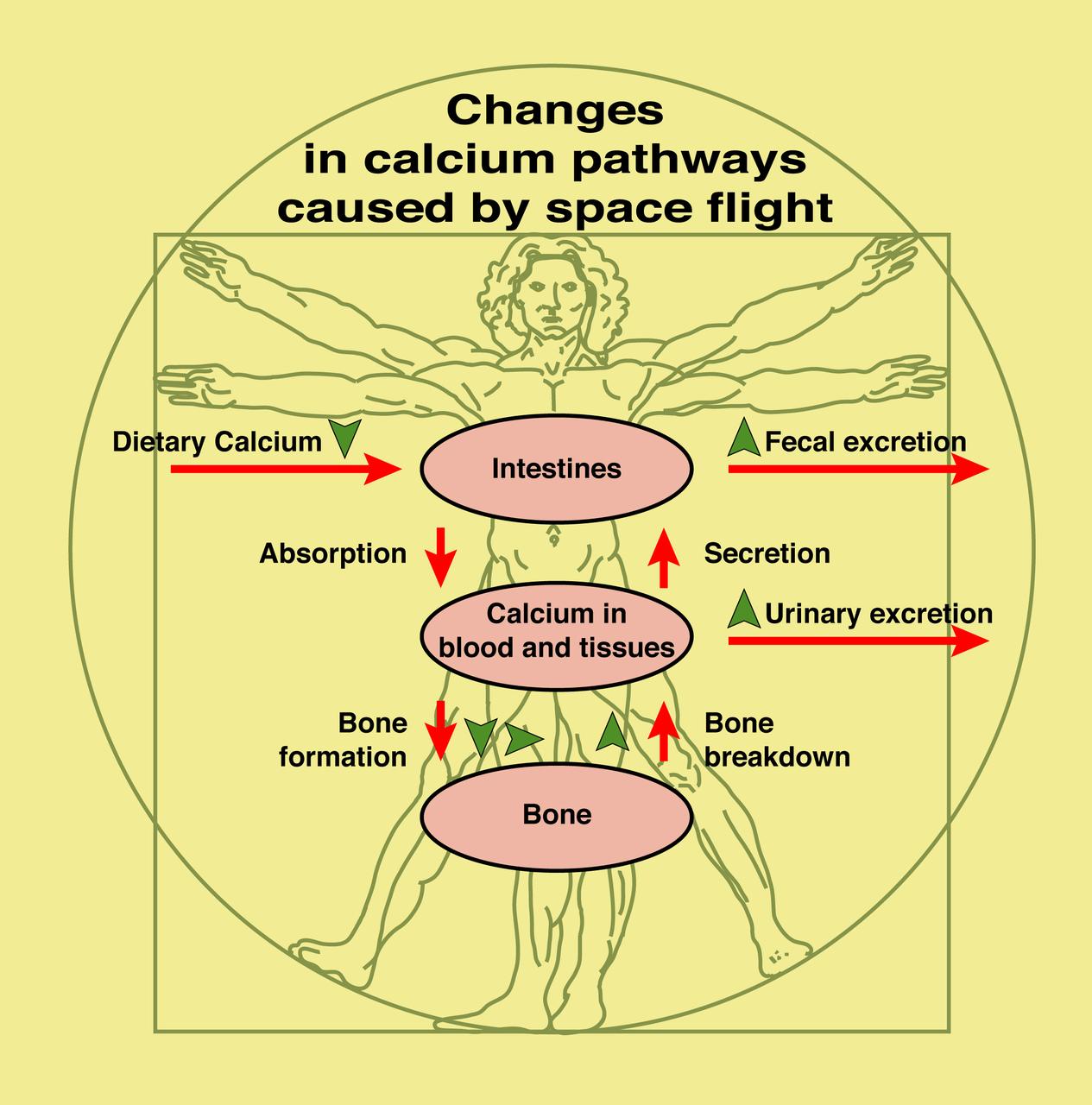
This diagram shows the normal pathways of calcium movement in the body and indicates changes (green arrows) seen during preliminary space flight experiments. Calcium plays a central role because 1) it gives strength and structure to bone and 2) all types of cells require it to function normally. To better understand how and why weightlessness induces bone loss, astronauts have participated in a study of calcium kinetics -- that is, the movement of calcium through the body, including absorption from food, and its role in the formation and breakdown of bone.
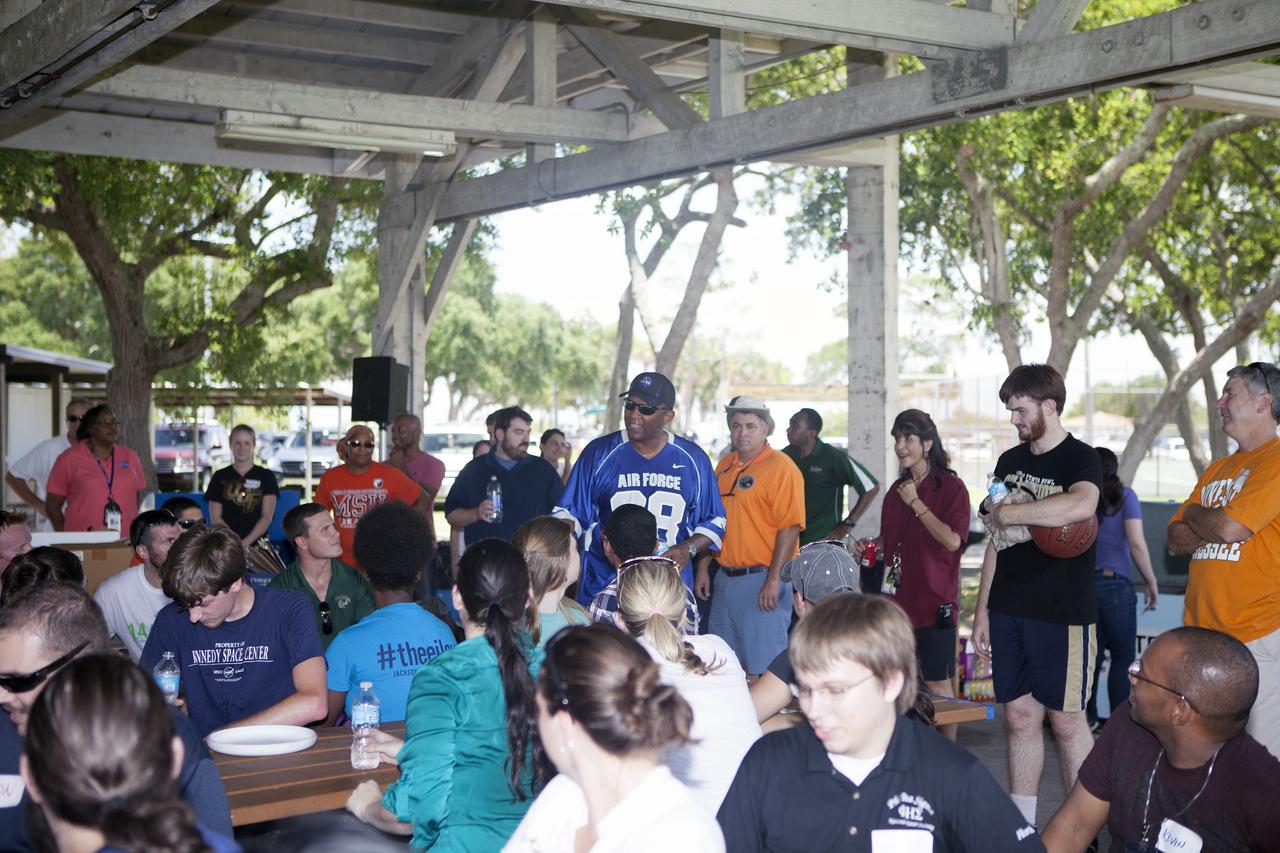
CAPE CANAVERAL, Fla. – Kennedy Space Center Associate Director Kelvin Manning, in the blue Air Force shirt, speaks to Pathways and summer interns at the KARS Park I facility near the center. High school, undergraduate and graduate students participated in a team building exercise and received advice on leadership skills and working together from Kennedy's senior management. About 160 students are working and gaining experience in many of the directorates and programs during their time at Kennedy. Photo credit: NASA/Daniel Casper
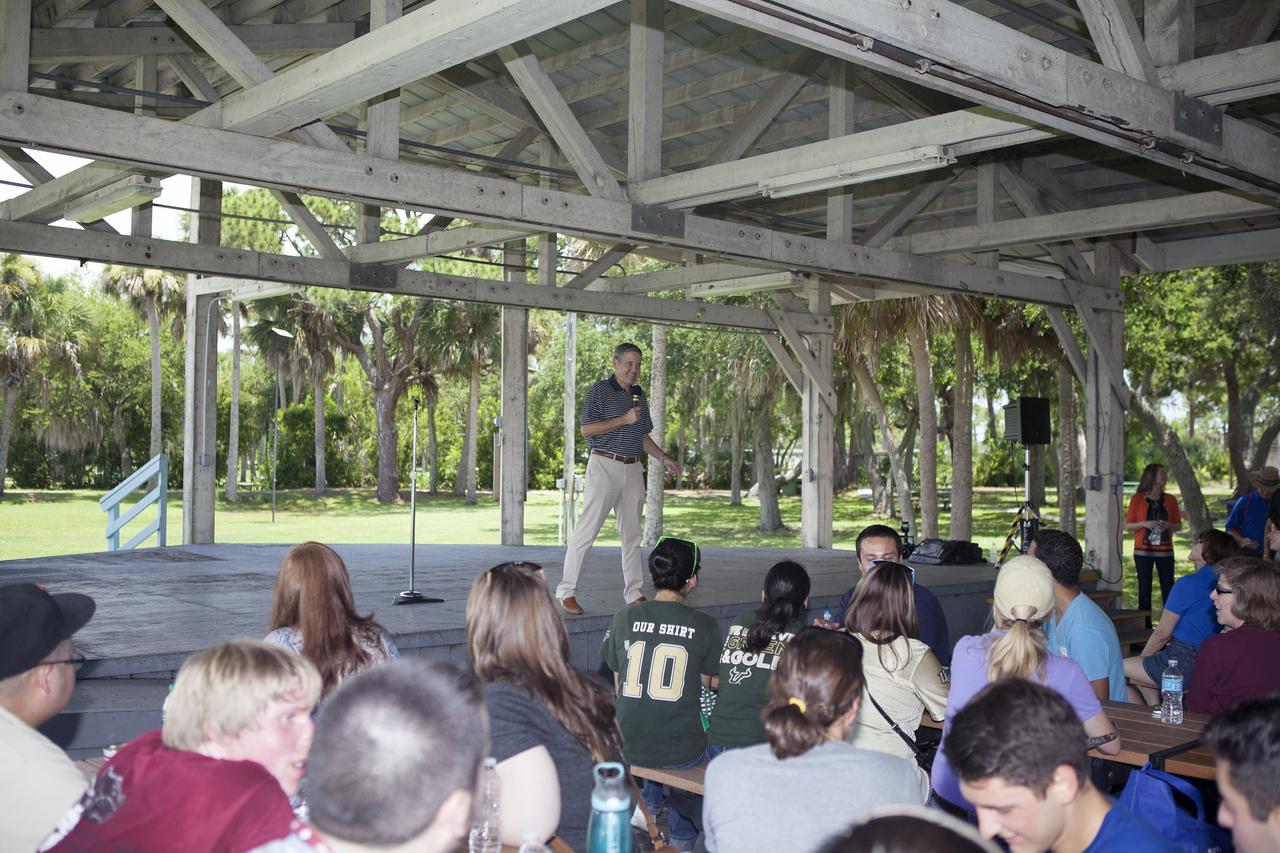
CAPE CANAVERAL, Fla. – Kennedy Space Center Director Bob Cabana speaks to Pathways and summer interns at the KARS Park I facility near the center. High school, undergraduate and graduate students participated in a team building exercise and received advice on leadership skills and working together from Kennedy's senior management. About 160 students are working and gaining experience in many of the directorates and programs during their time at Kennedy. Photo credit: NASA/Daniel Casper
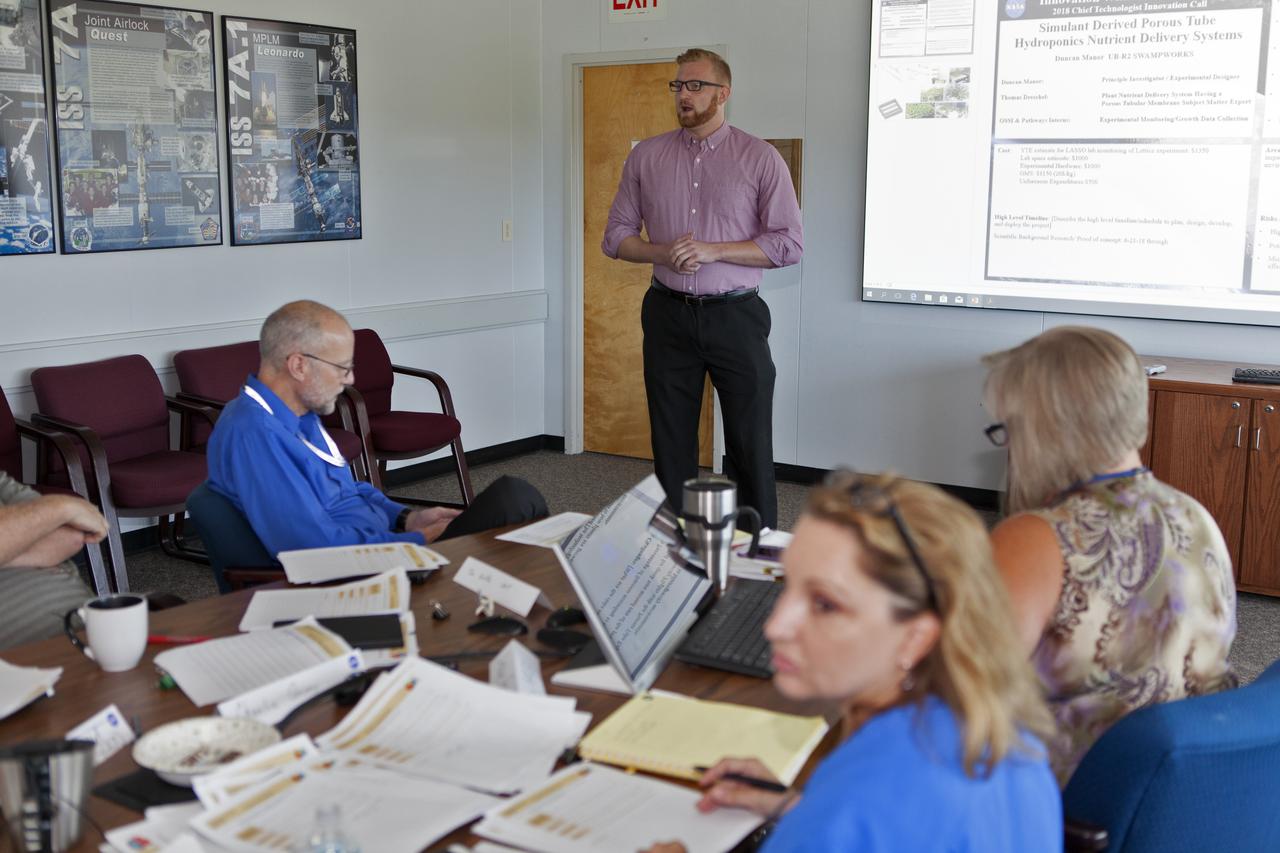
Pathways intern Duncan Manor presents his proposal during an “Innovation Without Boundaries” event held in the Space Station Processing Facility at Kennedy Space Center in Florida on Thursday, Aug. 2. Civil servants and contractors throughout Kennedy participated in the event, which featured 39 proposals as part of the Chief Technologist Innovation Call. Presenters had two minutes to highlight their idea, followed by a three-minute question-and-answer period. The judging panel included senior staff, contractors and representatives throughout the center.

iss070e075298 (Jan. 19, 2024) --- Expedition 70 Flight Engineer and JAXA (Japan Aerospace Exploration Agency) astronaut Satoshi Furukawa jogs on the Combined Operational Load Bearing External Resistance Treadmill (COLBERT) inside the International Space Station's Tranquility module. COLBERT is designed to allow walking and running in a microgravity environment for maintaining crew cardiovascular fitness, muscular strength, and to exercise neurophysiological pathways and reflexes that are required to walk once returned to Earth.
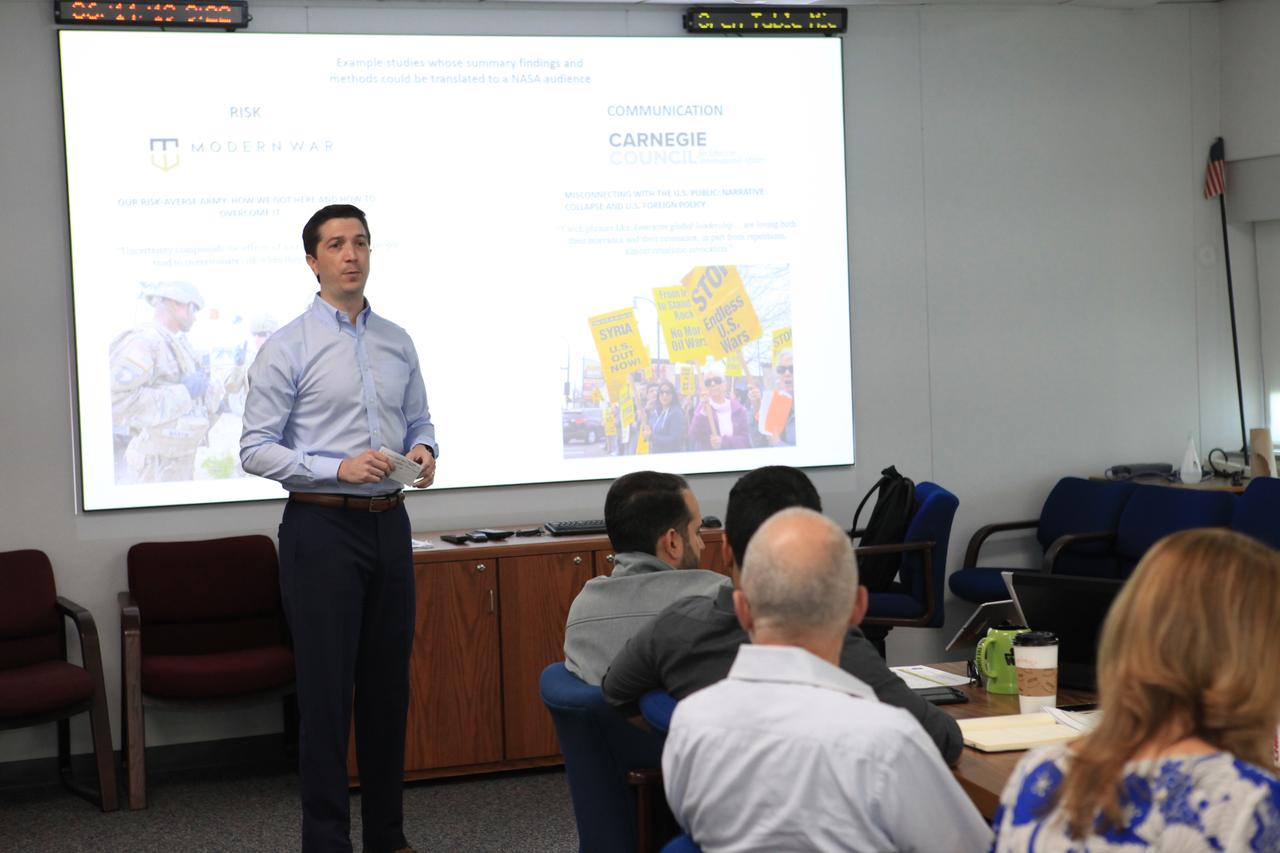
Pathways intern Douglas Jackson presents his proposal to a panel of judges during the “Innovation Without Boundaries” event held inside the Space Station Processing Facility at Kennedy Space Center in Florida on June 14, 2019. A number of Kennedy employees presented their proposals as part of the Chief Technologist Innovation Call. Representatives from across Kennedy evaluated ideas based on relevance, benefit, innovativeness, likelihood of success and sustainability.
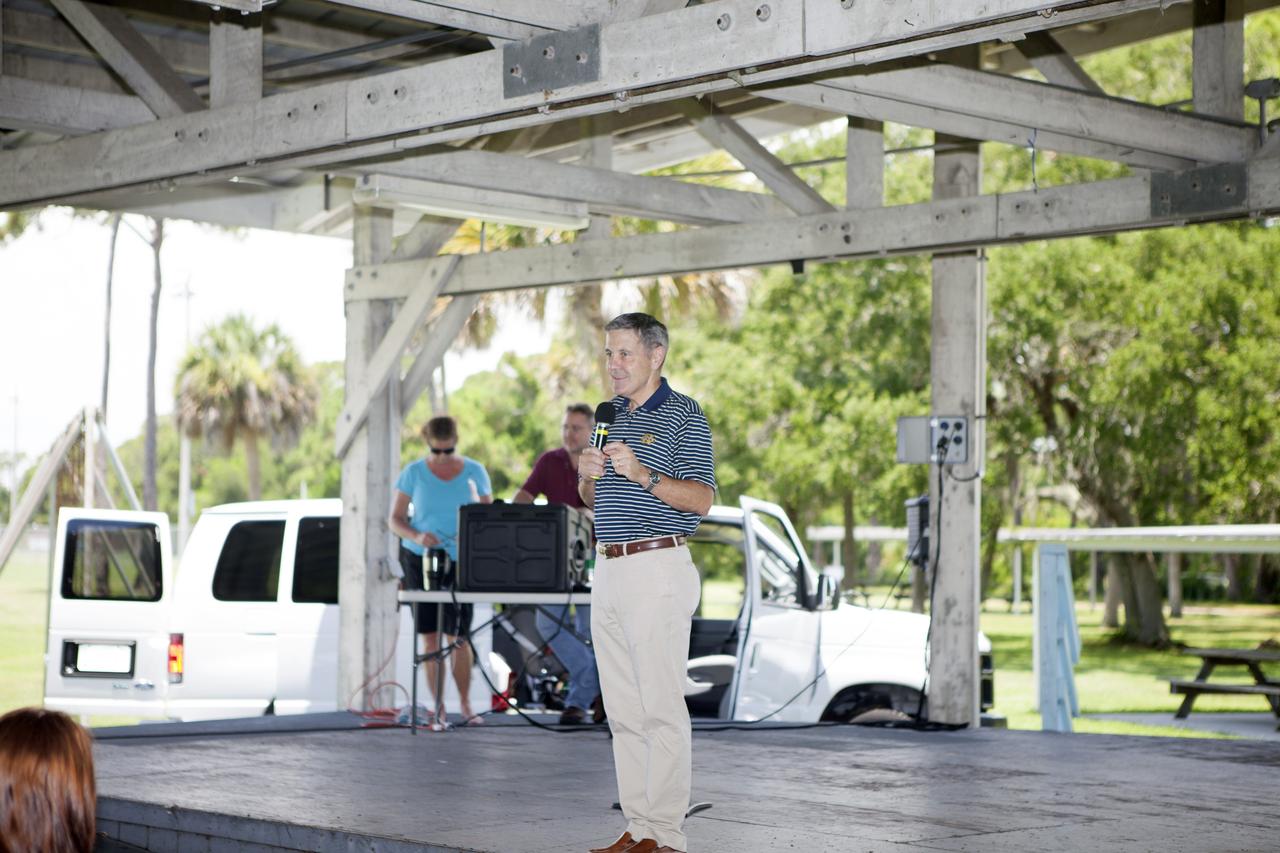
CAPE CANAVERAL, Fla. – Kennedy Space Center Director Bob Cabana speaks to Pathways and summer interns at the KARS Park I facility near the center. High school, undergraduate and graduate students participated in a team building exercise and received advice on leadership skills and working together from Kennedy's senior management. About 160 students are working and gaining experience in many of the directorates and programs during their time at Kennedy. Photo credit: NASA/Daniel Casper
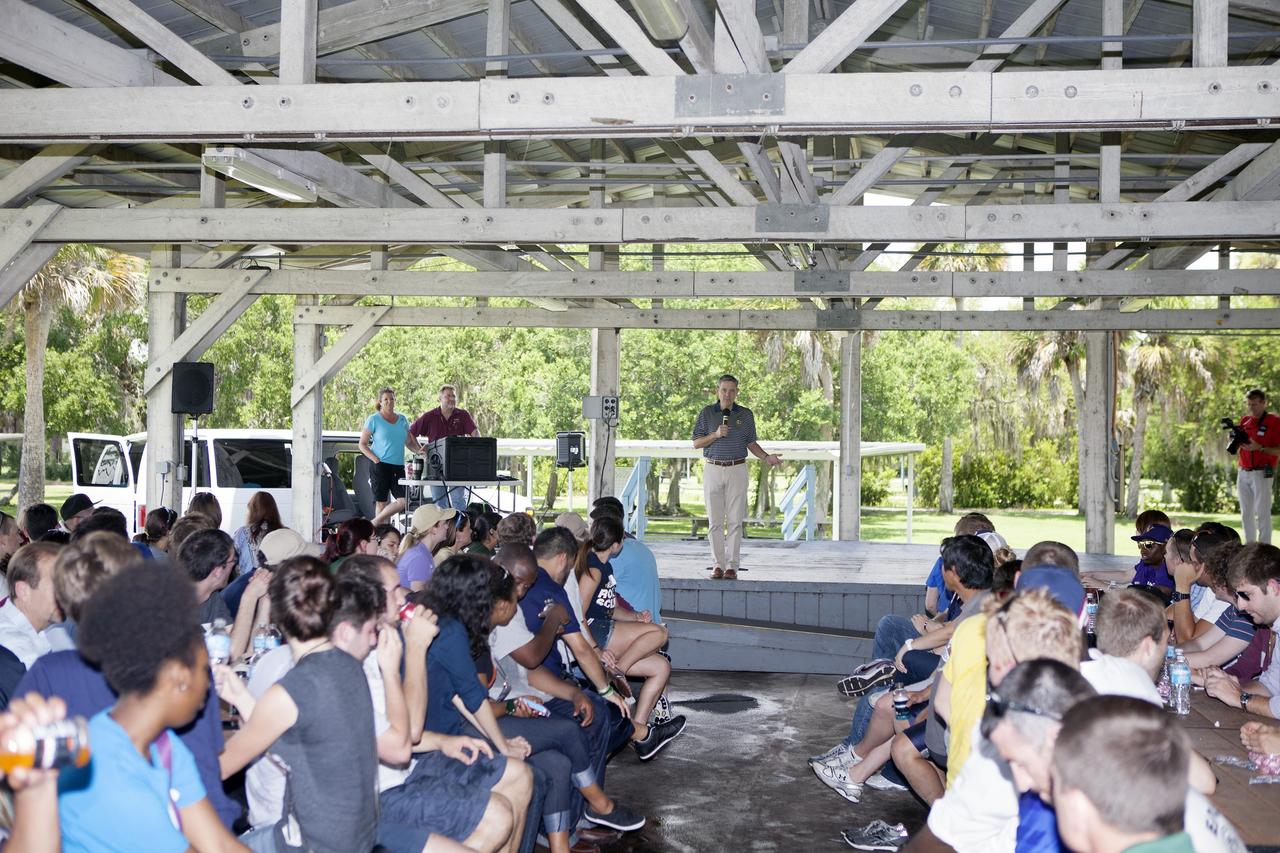
CAPE CANAVERAL, Fla. – Kennedy Space Center Director Bob Cabana speaks to Pathways and summer interns at the KARS Park I facility near the center. High school, undergraduate and graduate students participated in a team building exercise and received advice on leadership skills and working together from Kennedy's senior management. About 160 students are working and gaining experience in many of the directorates and programs during their time at Kennedy. Photo credit: NASA/Daniel Casper
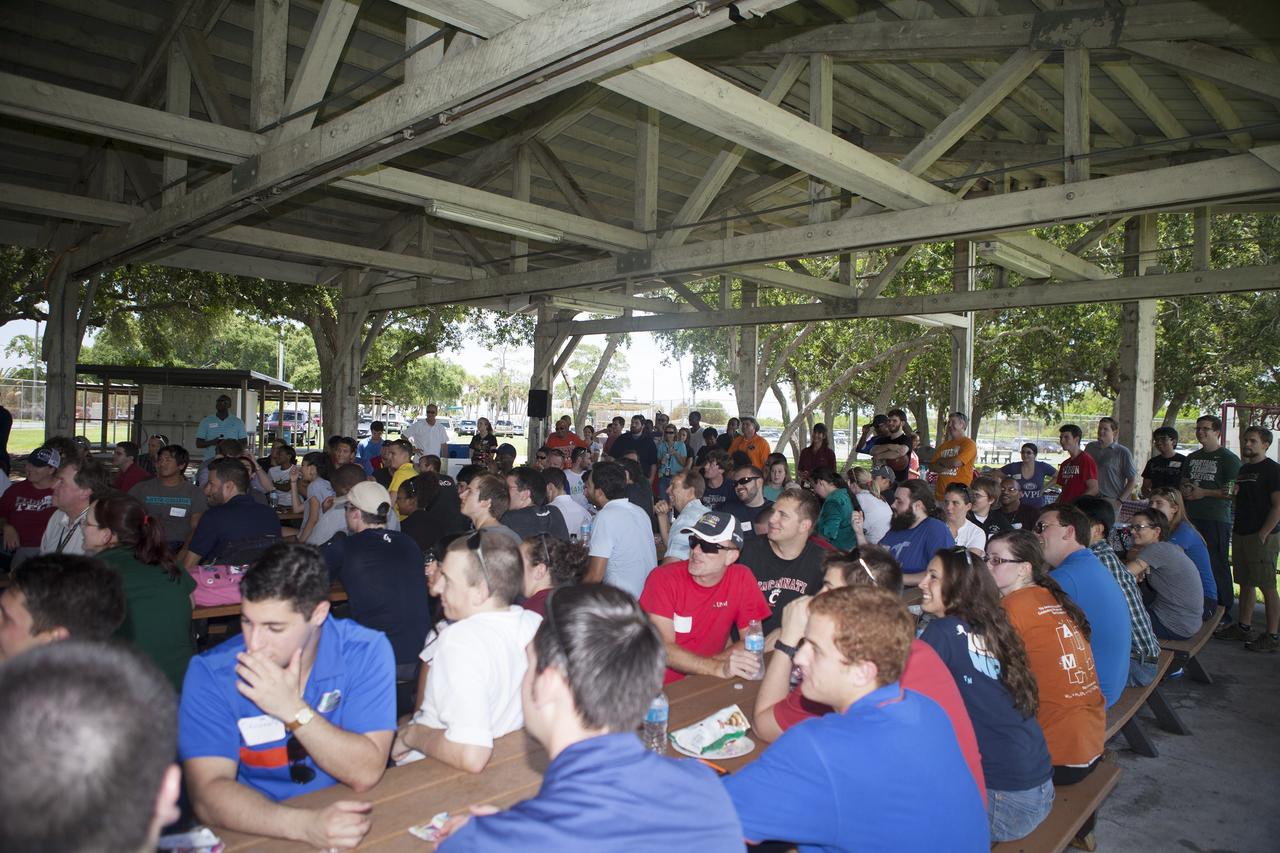
CAPE CANAVERAL, Fla. – Pathways and summer interns listen as Kennedy Space Center Director Bob Cabana speaks to them during an event at the KARS Park I facility near the center. High school, undergraduate and graduate students participated in a team building exercise and received advice on leadership skills and working together from Kennedy's senior management. About 160 students are working and gaining experience in many of the directorates and programs during their time at Kennedy. Photo credit: NASA/Daniel Casper
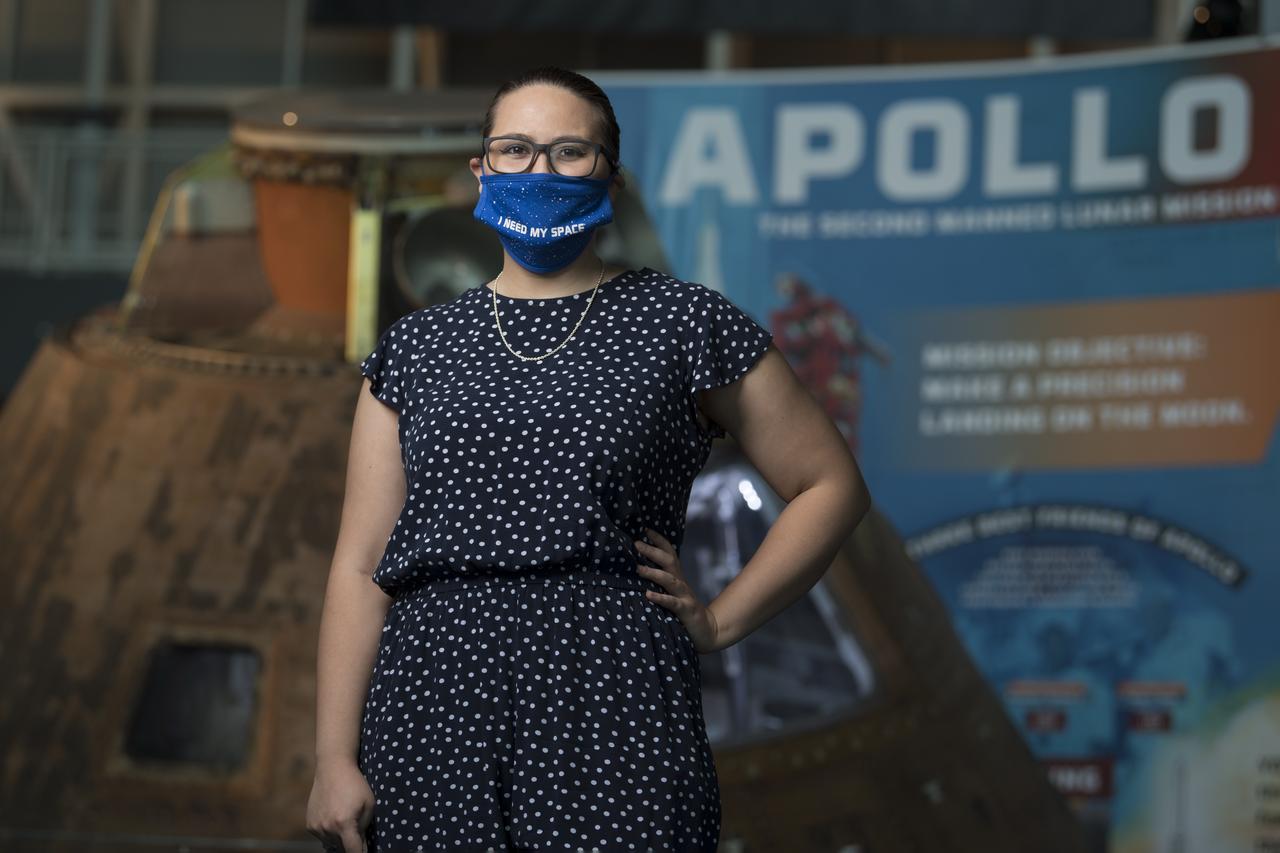
Portrait of Casey Denham in front of the Apollo 12 Command Module "Yankee Clipper" display at the Virginia Air and Space Center in Hampton, Virginia. Due to the COVID-19 pandemic, masks were mandated by Governor Northam in Virginia in public settings. This was for the faces of NASA project. "Now my whole family likes to brag that they have a rocket scientist daughter who works at NASA.” — Casey Denham, Pathways Intern, Langley Research Center
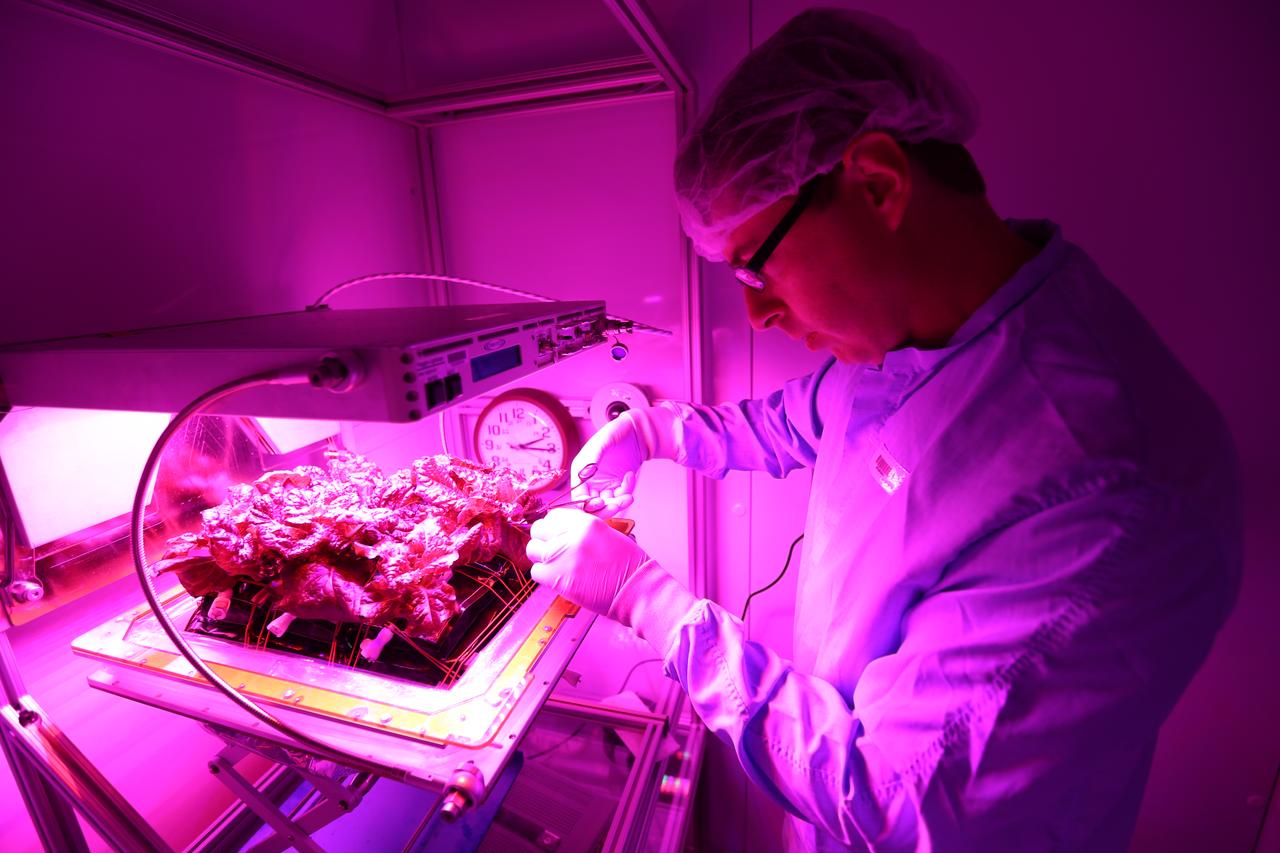
Inside the Veggie flight laboratory in the Space Station Processing Facility at NASA’s Kennedy Space Center in Florida, Matthew Romeyn, a NASA Pathways intern from the University of Edinburgh in Scotland, harvests a portion of the 'Outredgeous' red romaine lettuce from the Veg-03 ground control unit. The purpose of the ground Veggie system is to provide a control group to compare against the lettuce grown in orbit on the International Space Station. Veg-03 will continue NASA’s deep space plant growth research to benefit the Earth and the agency’s journey to Mars.
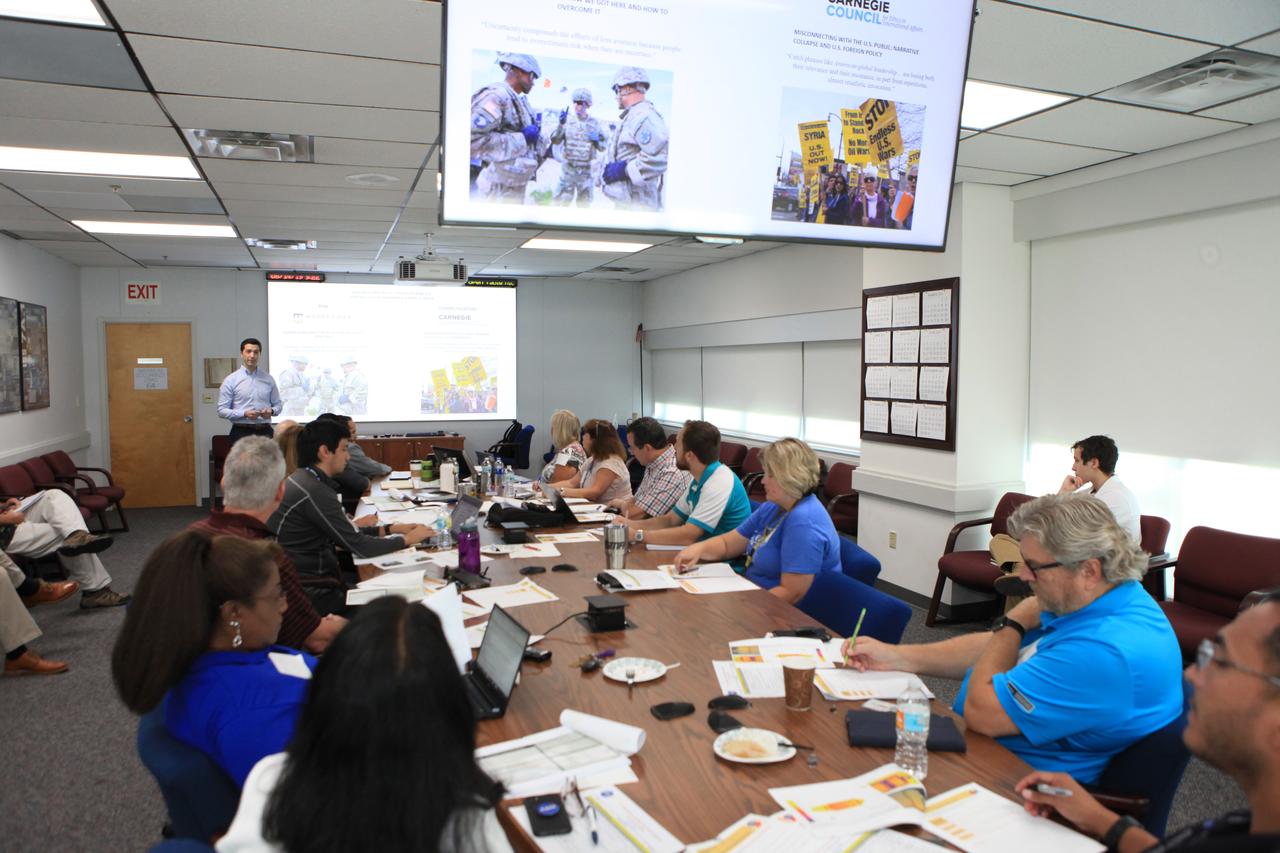
Pathways intern Douglas Jackson presents his proposal to a panel of judges during the “Innovation Without Boundaries” event held inside the Space Station Processing Facility at Kennedy Space Center in Florida on June 14, 2019. A number of Kennedy employees presented their proposals as part of the Chief Technologist Innovation Call. Participants had five minutes to present their innovative idea for the chance to receive an award of up to $500 for ideas with little-to-no cost that would make a significant impact.
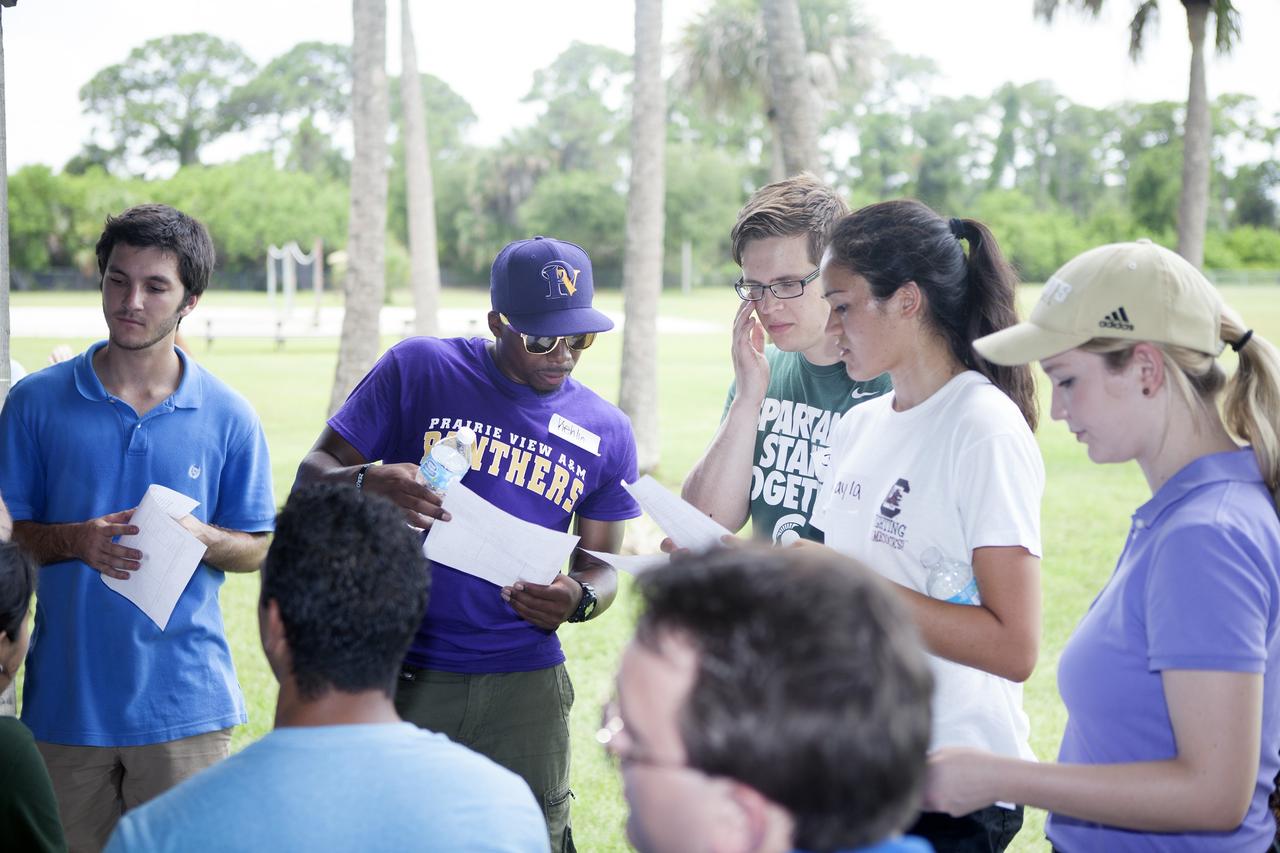
CAPE CANAVERAL, Fla. – Kennedy Space Center Pathways and summer intern students participate in a team building exercise at the KARS Park I facility near the center. High school, undergraduate and graduate students also received advice on leadership skills and working together from Kennedy's senior management, including Center Director Bob Cabana and Associate Director Kelvin Manning. About 160 students are working and gaining experience in many of the directorates and programs during their time at Kennedy. Photo credit: NASA/Daniel Casper
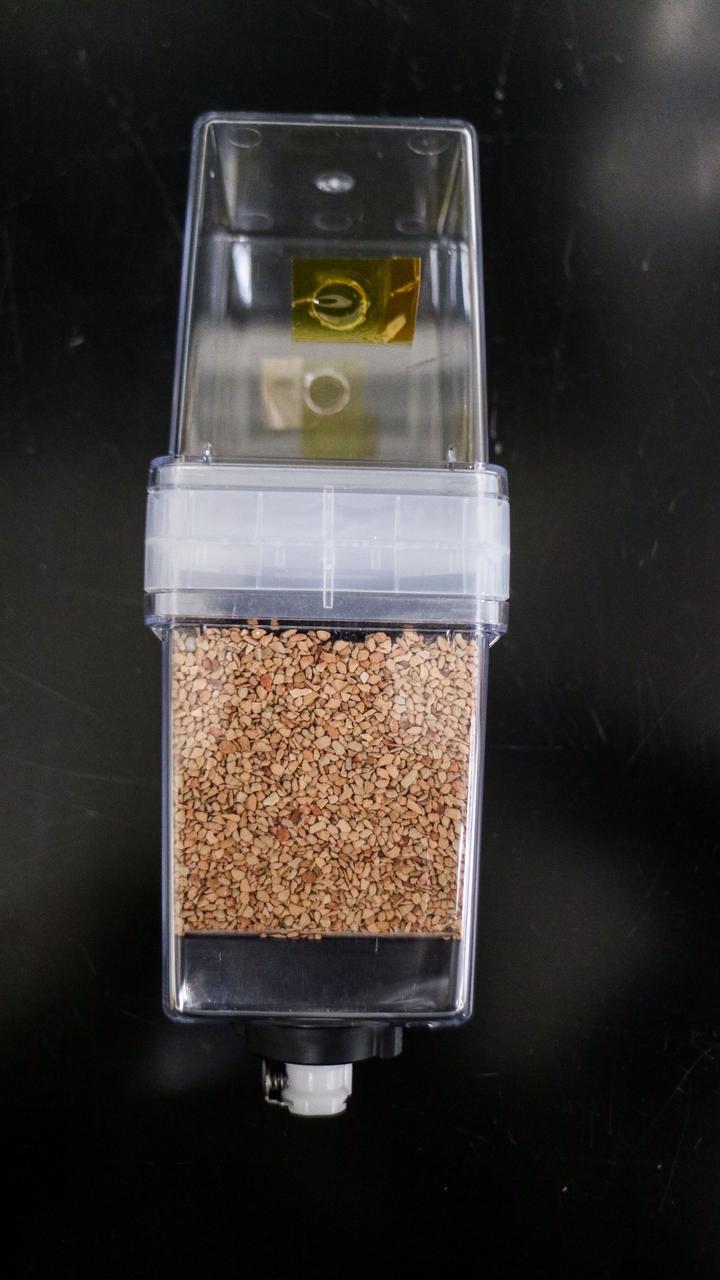
jsc2024e016232 (9/20/2023) --- Plant Growth System (PGS) that is used for the C4 Photosynthesis in Space (C4 Space) (APEX-09) investigation. APEX-09 observes two plant species with differing mechanisms for capturing CO2 during photosynthesis. Researchers hope to gain understanding of photosynthesis in space and examine how microgravity affects different plants and their unique metabolic pathways. Image courtesy of Dr. Handakumbura.
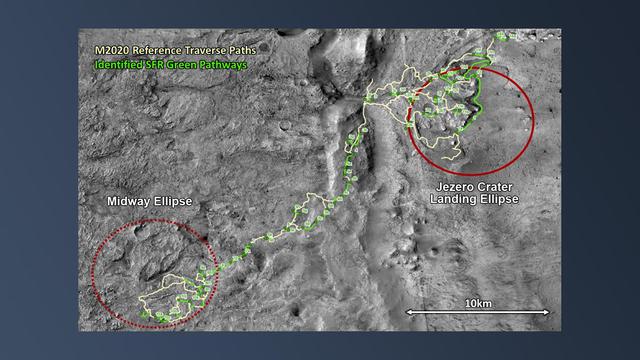
After the NASA Mars 2020 Perseverance rover mission has collected pristine samples of Mars rock and regolith (broken rock and dust) and deposited them inside collection tubes, they will be dropped off at strategic locations (called "depots") along the rover's driving route. This will be the first phase of the Mars Sample Return campaign. In the late 2020's, NASA and ESA (European Space Agency) will send the Sample Retrieval Lander (SRL) mission to Mars to collect those sample tubes from the surface. To accomplish this, the lander will make a pinpoint landing near Perseverance's driving route and dispatch its Sample Fetch Rover (SFR) that will then drive to retrieve the sample tubes. This map shows possible driving routes (yellow lines) for Perseverance at Jezero Crater and the potential locations where the depots might be located. The green lines show possible Sample Fetch Rover pathways that can access these depot locations. The large number of possible SRL landing locations and SFR traverse pathways is indicative of the high degree of resiliency inherent in the overall Mars Sample Return architecture. https://photojournal.jpl.nasa.gov/catalog/PIA24165
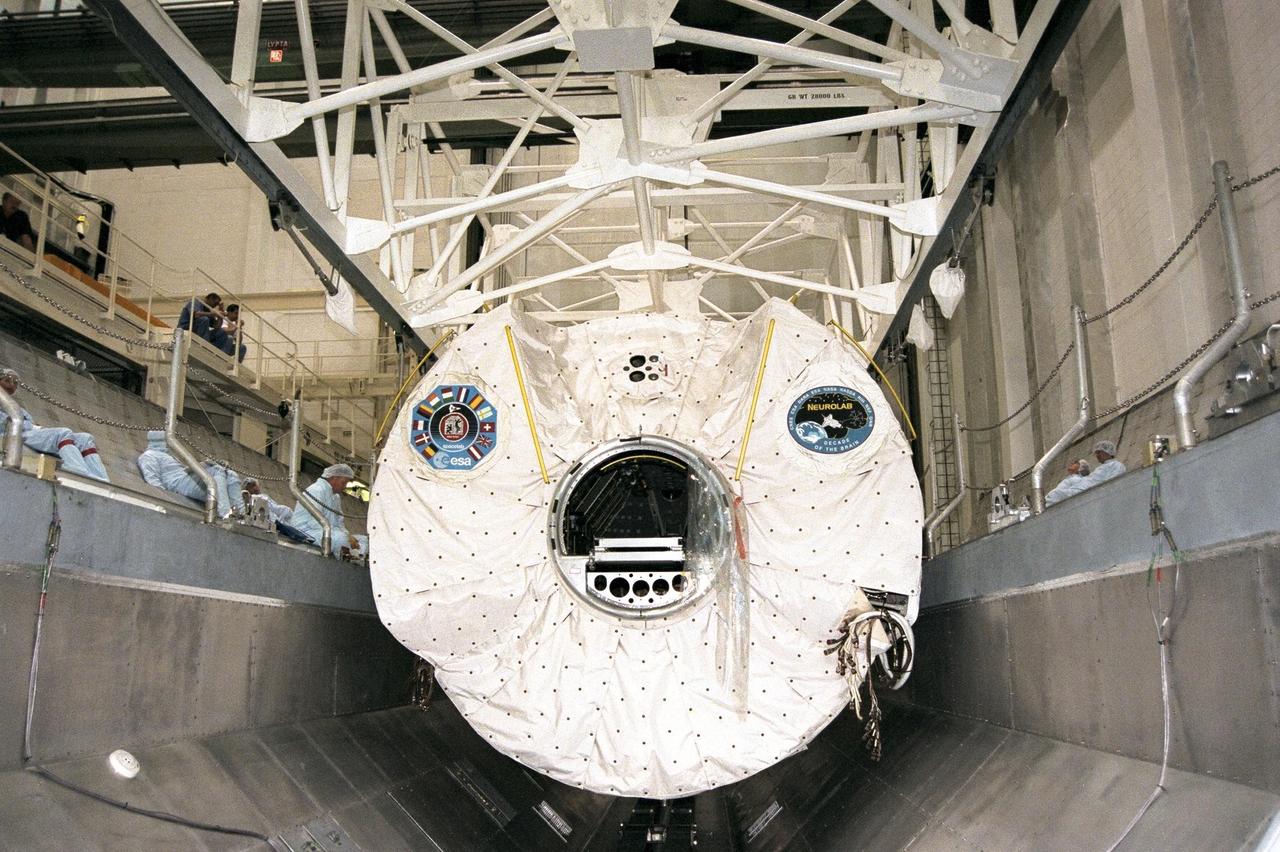
KENNEDY SPACE CENTER, FLA. -- The STS-90 Neurolab payload is lowered into its payload canister in KSC's Operations and Checkout Building. Investigations during the Neurolab mission will focus on the effects of microgravity on the nervous system. Specifically, experiments will study the adaptation of the vestibular system, the central nervous system, and the pathways that control the ability to sense location in the absence of gravity, as well as the effect of microgravity on a developing nervous system. The crew of STS-90, slated for launch in April, will include Commander Richard Searfoss, Pilot Scott Altman, Mission Specialists Richard Linnehan, Dafydd (Dave) Williams, M.D., and Kathryn (Kay) Hire, and Payload Specialists Jay Buckey, M.D., and James Pawelczyk, Ph.D
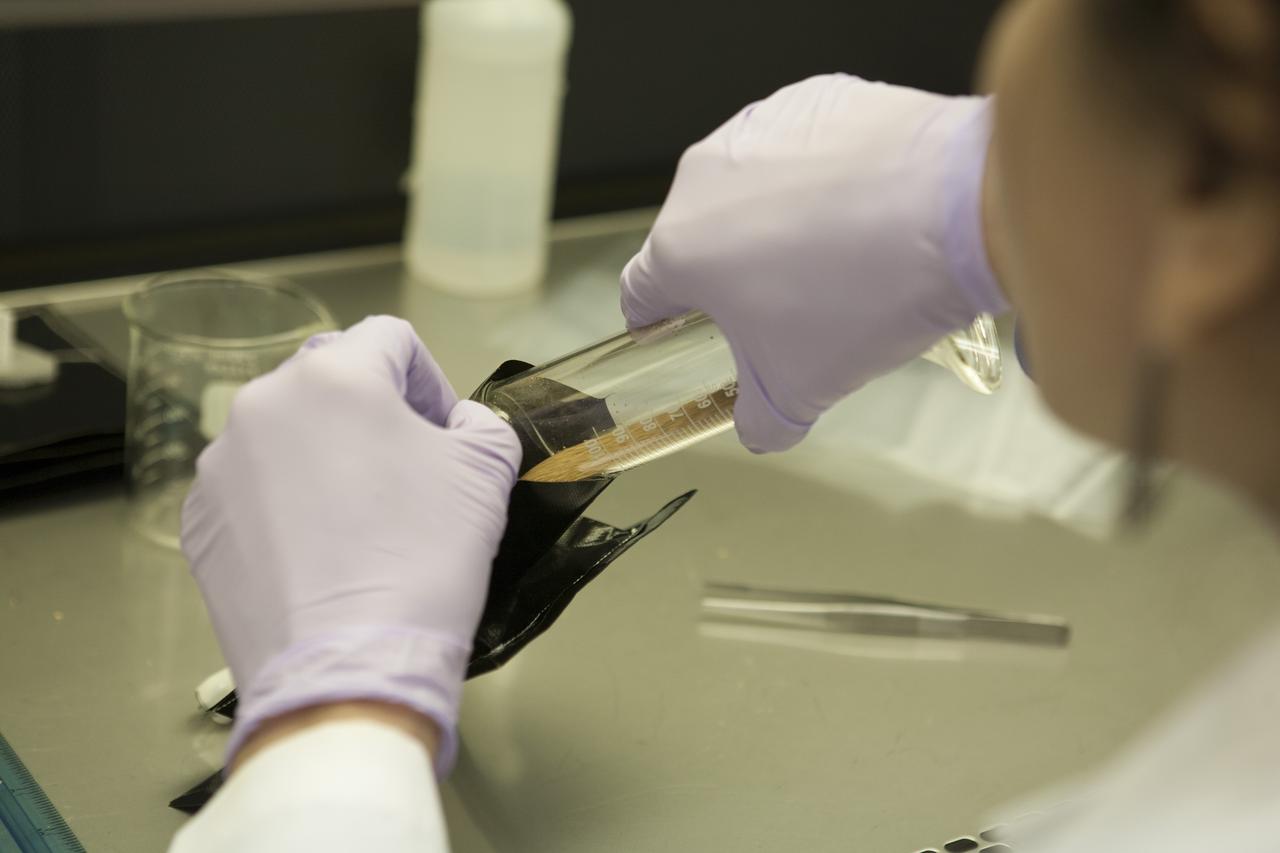
Inside a laboratory in the Space Station Processing Facility at NASA’s Kennedy Space Center in Florida, research scientists prepare the plant pillows for the Veg-03 experiment that will be delivered to the International Space Station aboard the eighth SpaceX Dragon commercial resupply mission. Matt Romeyn, a NASA pathways intern, inserts a measured amount of calcined clay, or space dirt, into one of the plant pillows. The Veg-03 plant pillows will contain ‘Tokyo Bekana’ cabbage seeds and lettuce seeds for NASA’s third Veggie plant growth system experiment. The experiment will continue NASA’s deep space plant growth research to benefit the Earth and the agency’s journey to Mars.
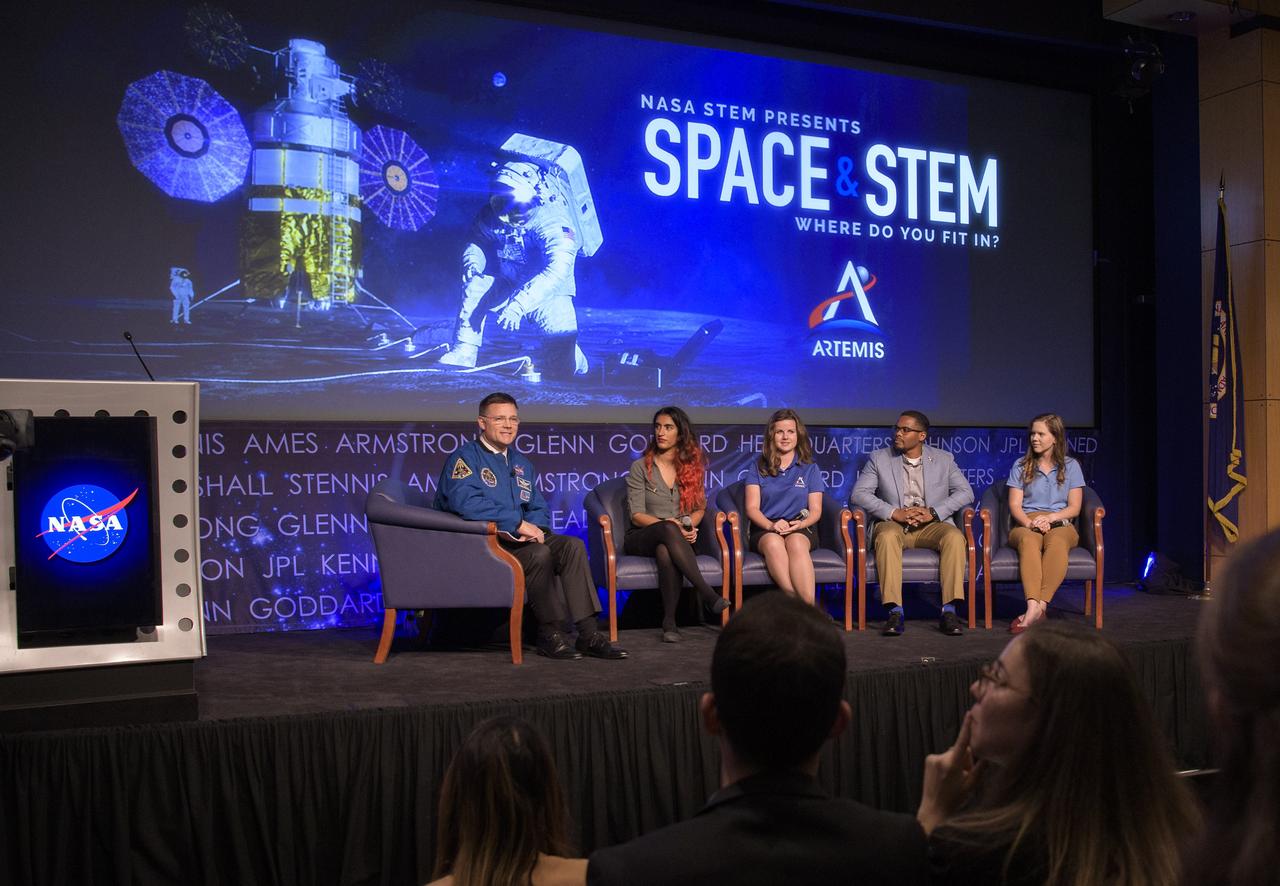
NASA astronaut Doug Wheelock, left, is joined by a panel of young professionals from NASA centers across the country: Farah Alibay, a systems engineer working on the Mars 2020 rover at NASA’s Jet Propulsion Laboratory, Alexis Vance, a Pathways student engineering trainee at NASA’s Johnson Space Center, Victor Joel Cabezas Tapia, a Navigation, Guidance, and Control Engineer at NASA’s Marshall Space Flight Center, and Breanne Stichler, a mechanical engineer in the Crawlers, Transporters and Structures group at NASA’s Kennedy Space Center, during an interactive STEM discussion with students attending the 70th International Astronautical Congress, Wednesday, Oct. 23, 2019, at NASA Headquarters in Washington. Photo Credit: (NASA/Joel Kowsky)
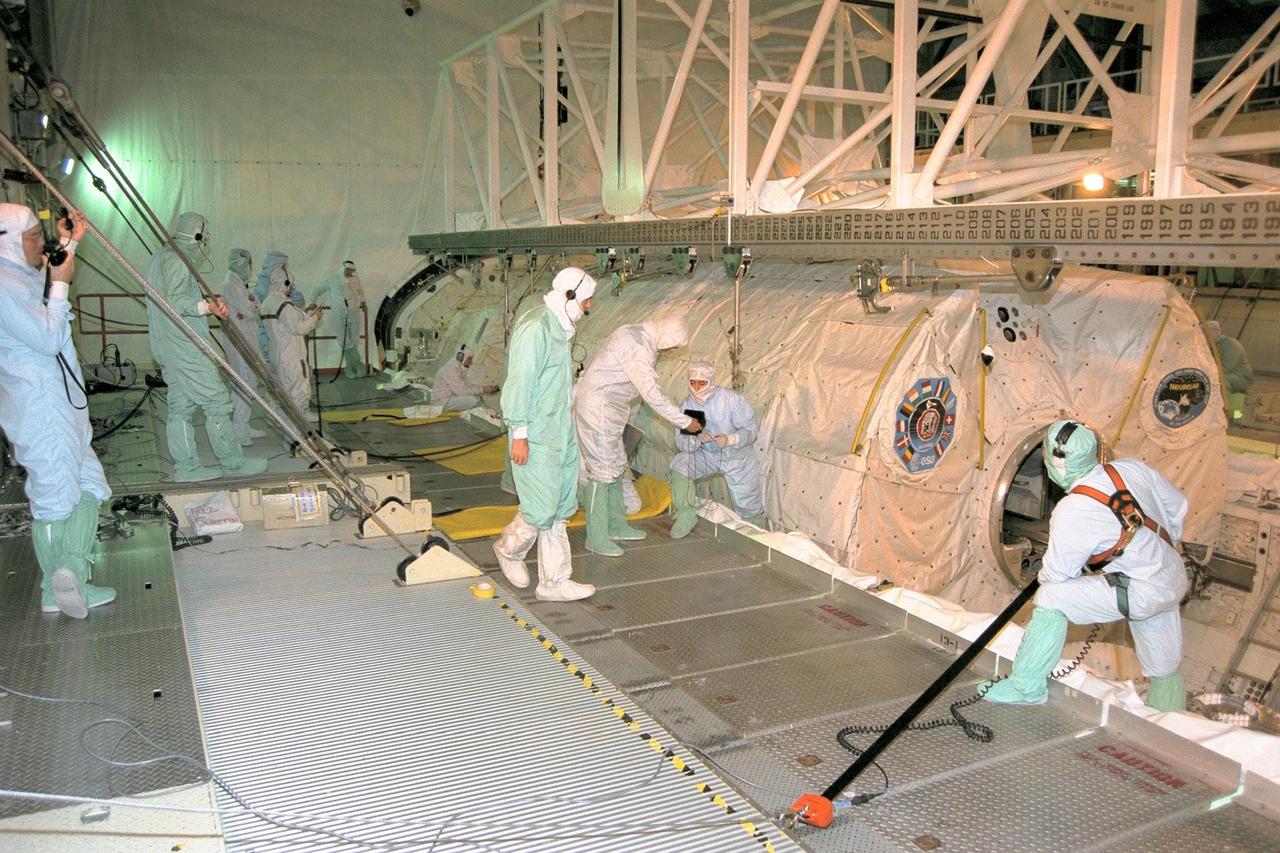
The STS-90 Neurolab payload is positioned into the cargo bay of Space Shuttle Columbia today in Orbiter Processing Facility bay 3. Investigations during the Neurolab mission will focus on the effects of microgravity on the nervous system. Specifically, experiments will study the adaptation of the vestibular system, the central nervous system, and the pathways that control the ability to sense location in the absence of gravity, as well as the effect of microgravity on a developing nervous system. The crew of STS-90, slated for launch in April, will include Commander Richard Searfoss, Pilot Scott Altman, Mission Specialists Richard Linnehan, Dafydd (Dave) Williams, M.D., and Kathryn (Kay) Hire, and Payload Specialists Jay Buckey, M.D., and James Pawelczyk, Ph.D
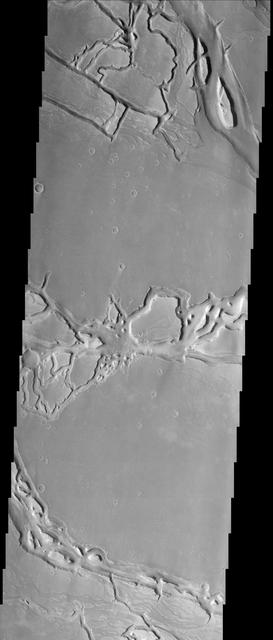
The force of moving water from a flood carved these teardrop-shaped islands within Granicus Valles. The orientation of the islands can be used as an indicator of the direction the water flowed. In this case, the water flowed primarily towards the upper left of the image. The image also contains many narrow sinuous channels. Geologists can determine that the floods occurred before a later tectonic event in the region. This event caused the crust to fracture into numerous blocks and fissures (grabens). Many fissures can be seen cutting across the former flood pathways. http://photojournal.jpl.nasa.gov/catalog/PIA04037
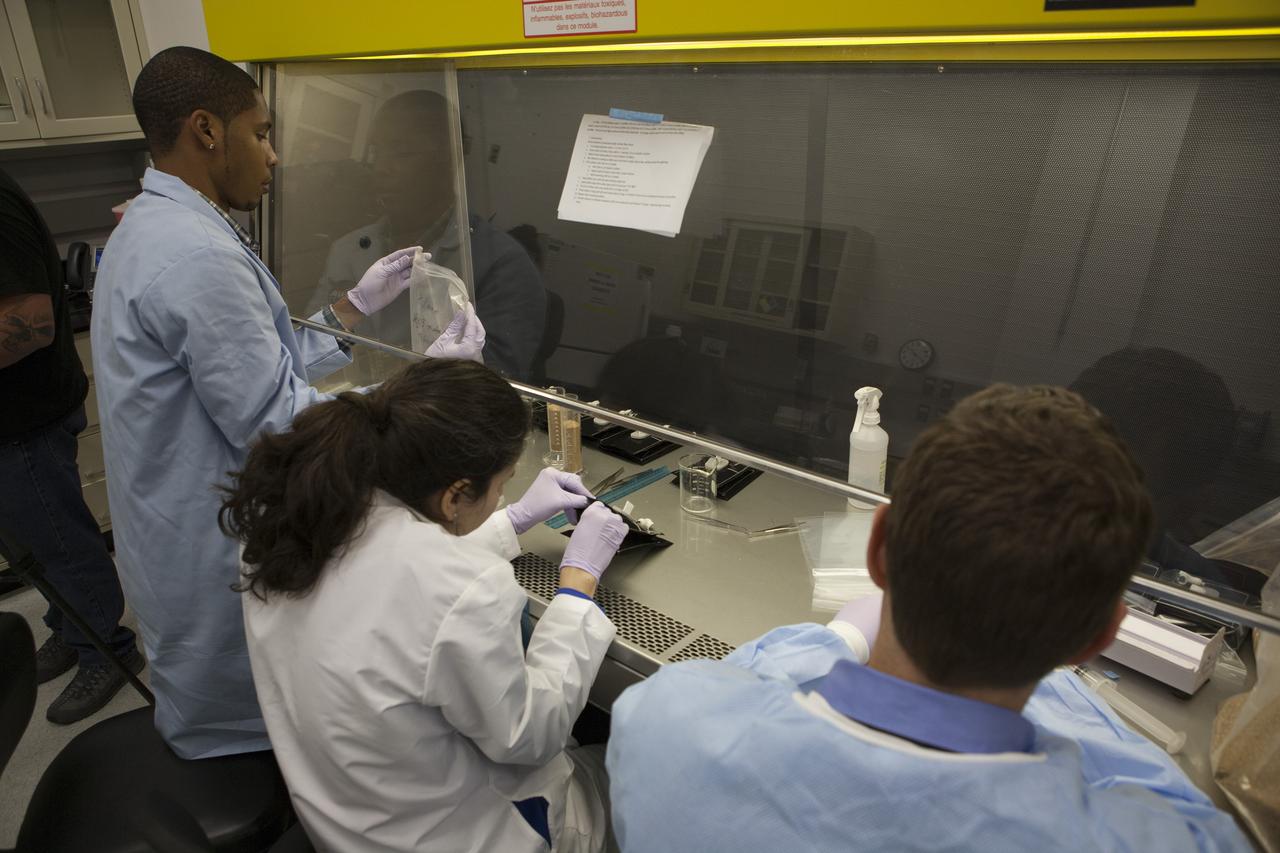
Inside a laboratory in the Space Station Processing Facility at NASA’s Kennedy Space Center in Florida, research scientists prepare the plant pillows for the Veg-03 experiment that will be delivered to the International Space Station aboard the eighth SpaceX Dragon commercial resupply mission. From left, are Matt Romeyn, NASA pathways intern; Dr. Gioia Massa, NASA payload scientist for Veggie; and Dr. Mathew Mickens, a post-doctoral researcher. The Veg-03 plant pillows will contain ‘Tokyo Bekana’ cabbage seeds and lettuce seeds for NASA’s third Veggie plant growth system experiment. The experiment will continue NASA’s deep space plant growth research to benefit the Earth and the agency’s journey to Mars.

KENNEDY SPACE CENTER, FLA. -- Technicians gather around the STS-90 Neurolab payload during weight and center-of-gravity measurements in KSC's Operations and Checkout Building. Investigations during the Neurolab mission will focus on the effects of microgravity on the nervous system. Specifically, experiments will study the adaptation of the vestibular system, the central nervous system, and the pathways that control the ability to sense location in the absence of gravity, as well as the effect of microgravity on a developing nervous system. The crew of STS-90, slated for launch in April, will include Commander Richard Searfoss, Pilot Scott Altman, Mission Specialists Richard Linnehan, Dafydd (Dave) Williams, M.D., and Kathryn (Kay) Hire, and Payload Specialists Jay Buckey, M.D., and James Pawelczyk, Ph.D
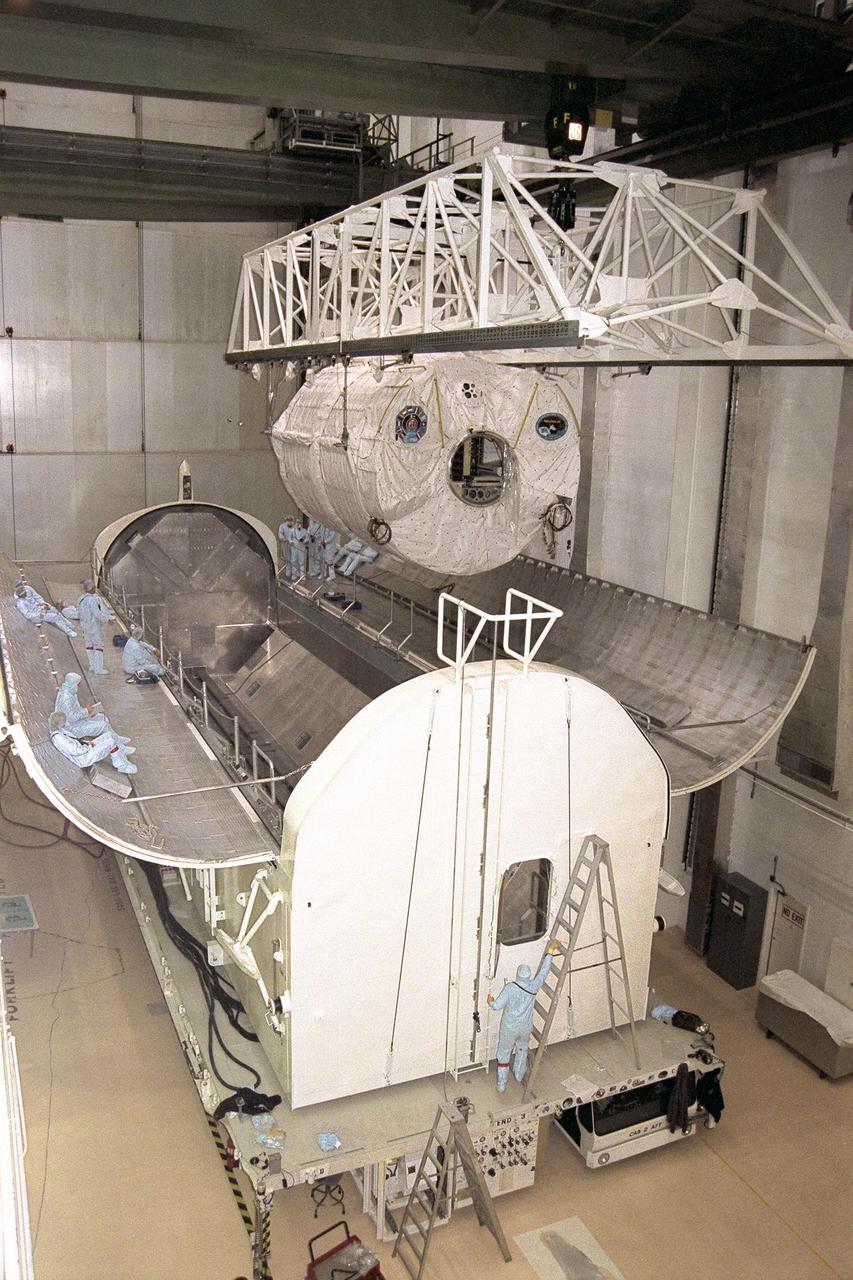
KENNEDY SPACE CENTER, FLA. -- The STS-90 Neurolab payload is lowered into its payload canister in KSC's Operations and Checkout Building. Investigations during the Neurolab mission will focus on the effects of microgravity on the nervous system. Specifically, experiments will study the adaptation of the vestibular system, the central nervous system, and the pathways that control the ability to sense location in the absence of gravity, as well as the effect of microgravity on a developing nervous system. The crew of STS-90, slated for launch in April, will include Commander Richard Searfoss, Pilot Scott Altman, Mission Specialists Richard Linnehan, Dafydd (Dave) Williams, M.D., and Kathryn (Kay) Hire, and Payload Specialists Jay Buckey, M.D., and James Pawelczyk, Ph.D

The STS-90 Neurolab payload is lowered into position into the cargo bay of Space Shuttle Columbia today in Orbiter Processing Facility bay 3. Investigations during the Neurolab mission will focus on the effects of microgravity on the nervous system. Specifically, experiments will study the adaptation of the vestibular system, the central nervous system, and the pathways that control the ability to sense location in the absence of gravity, as well as the effect of microgravity on a developing nervous system. The crew of STS-90, slated for launch in April, will include Commander Richard Searfoss, Pilot Scott Altman, Mission Specialists Richard Linnehan, Dafydd (Dave) Williams, M.D., and Kathryn (Kay) Hire, and Payload Specialists Jay Buckey, M.D., and James Pawelczyk, Ph.D
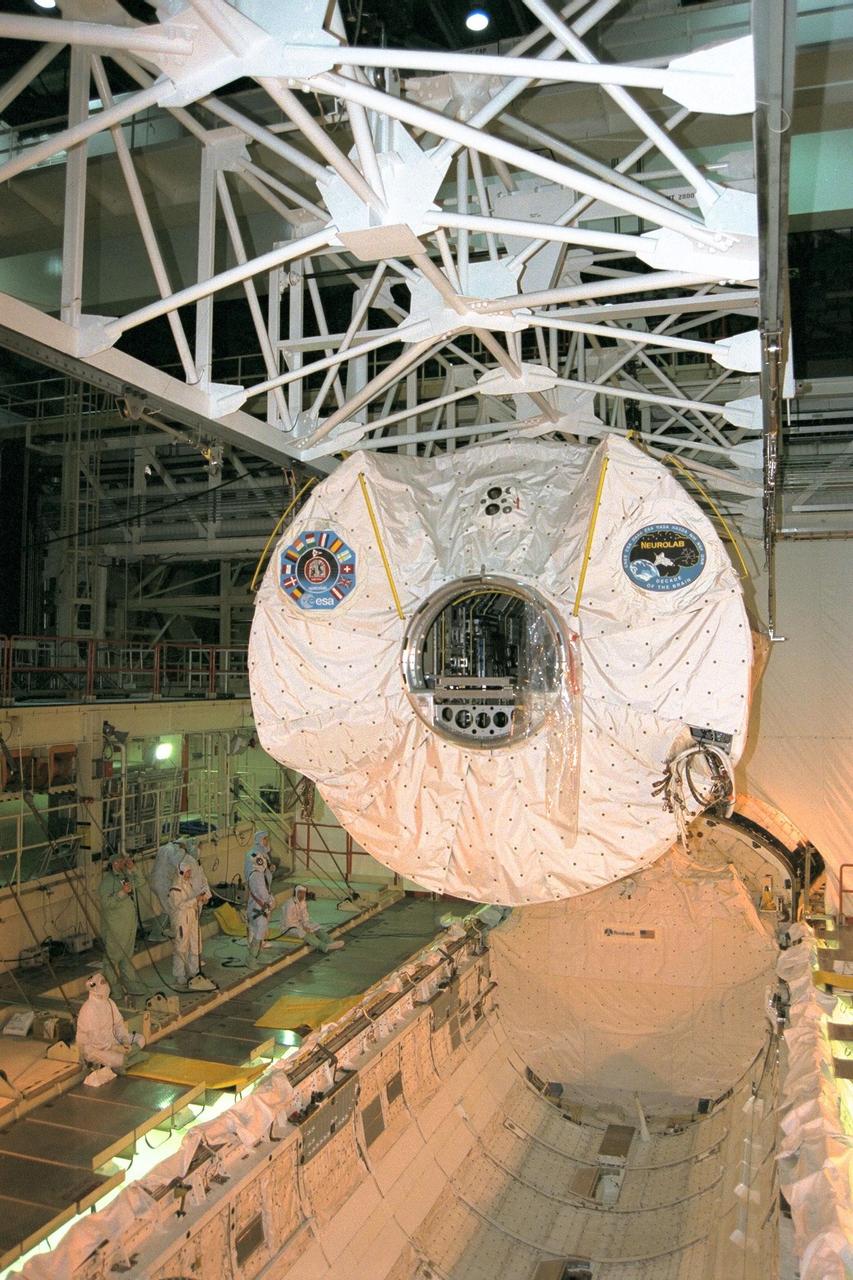
The STS-90 Neurolab payload is lowered into position into the cargo bay of Space Shuttle Columbia today in Orbiter Processing Facility bay 3. Investigations during the Neurolab mission will focus on the effects of microgravity on the nervous system. Specifically, experiments will study the adaptation of the vestibular system, the central nervous system, and the pathways that control the ability to sense location in the absence of gravity, as well as the effect of microgravity on a developing nervous system. The crew of STS-90, slated for launch in April, will include Commander Richard Searfoss, Pilot Scott Altman, Mission Specialists Richard Linnehan, Dafydd (Dave) Williams, M.D., and Kathryn (Kay) Hire, and Payload Specialists Jay Buckey, M.D., and James Pawelczyk, Ph.D
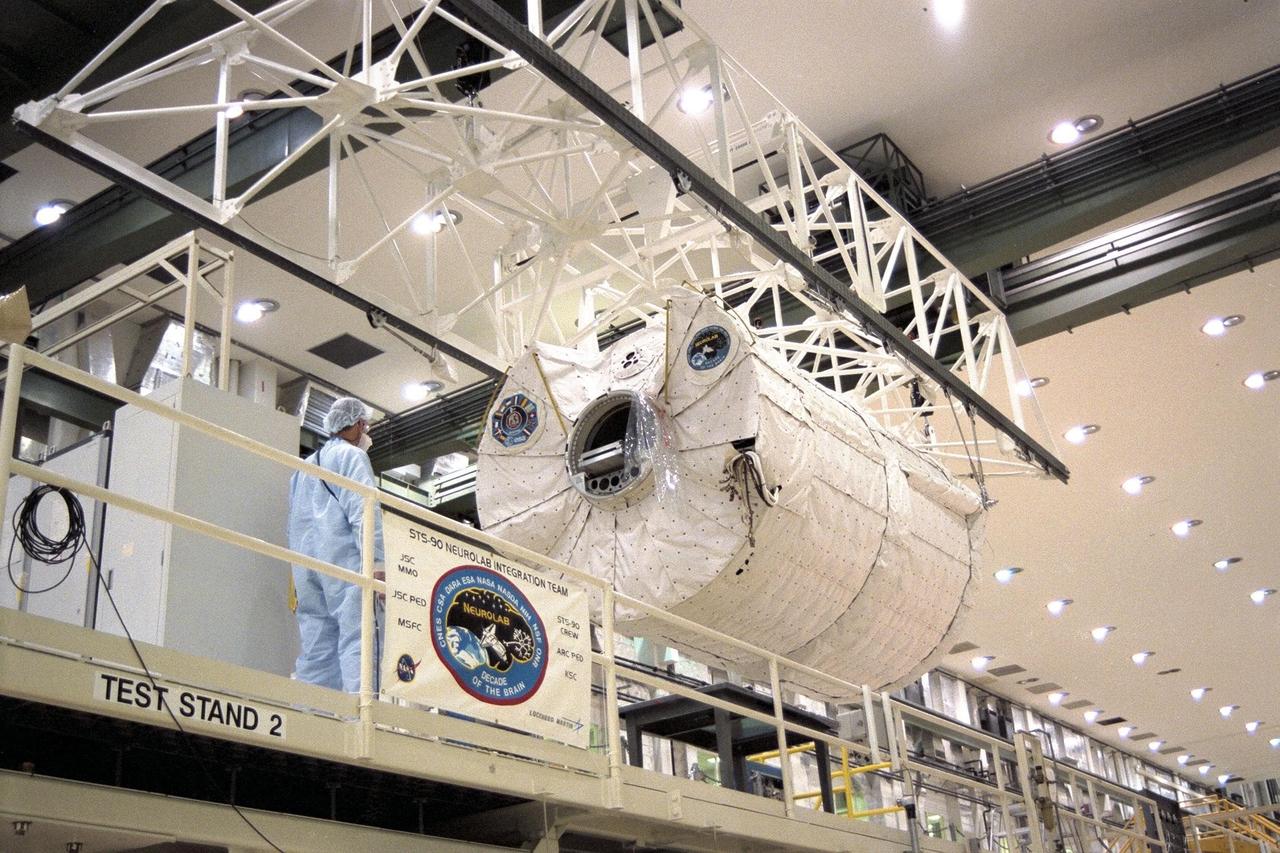
KENNEDY SPACE CENTER, FLA. -- A technician looks at the STS-90 Neurolab payload as it is moved from its test stand in KSC's Operations and Checkout Building. Investigations during the Neurolab mission will focus on the effects of microgravity on the nervous system. Specifically, experiments will study the adaptation of the vestibular system, the central nervous system, and the pathways that control the ability to sense location in the absence of gravity, as well as the effect of microgravity on a developing nervous system. The crew of STS-90, slated for launch in April, will include Commander Richard Searfoss, Pilot Scott Altman, Mission Specialists Richard Linnehan, Dafydd (Dave) Williams, M.D., and Kathryn (Kay) Hire, and Payload Specialists Jay Buckey, M.D., and James Pawelczyk, Ph.D
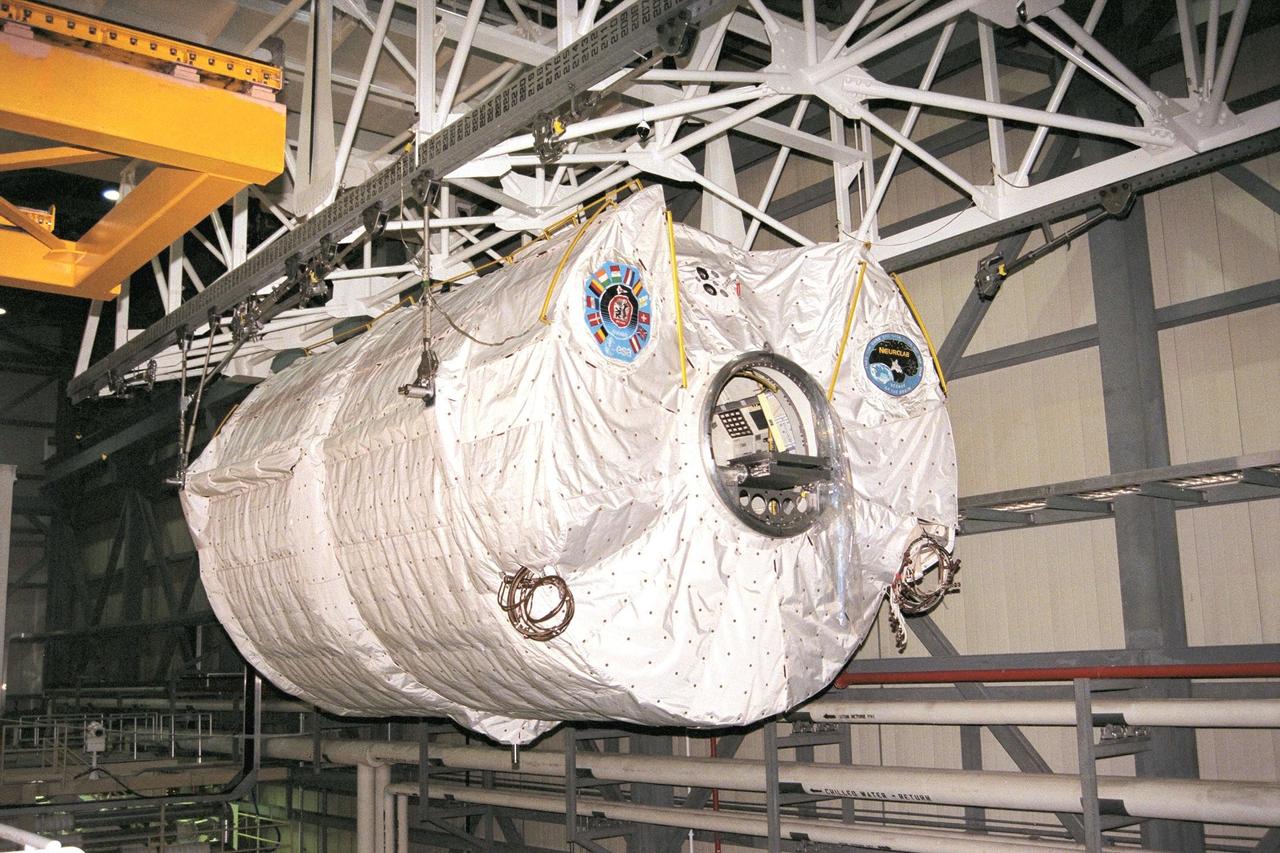
The STS-90 Neurolab payload is prepared to be positioned into the cargo bay of Space Shuttle Columbia today in Orbiter Processing Facility bay 3. Investigations during the Neurolab mission will focus on the effects of microgravity on the nervous system. Specifically, experiments will study the adaptation of the vestibular system, the central nervous system, and the pathways that control the ability to sense location in the absence of gravity, as well as the effect of microgravity on a developing nervous system. The crew of STS-90, slated for launch in April, will include Commander Richard Searfoss, Pilot Scott Altman, Mission Specialists Richard Linnehan, Dafydd (Dave) Williams, M.D., and Kathryn (Kay) Hire, and Payload Specialists Jay Buckey, M.D., and James Pawelczyk, Ph.D
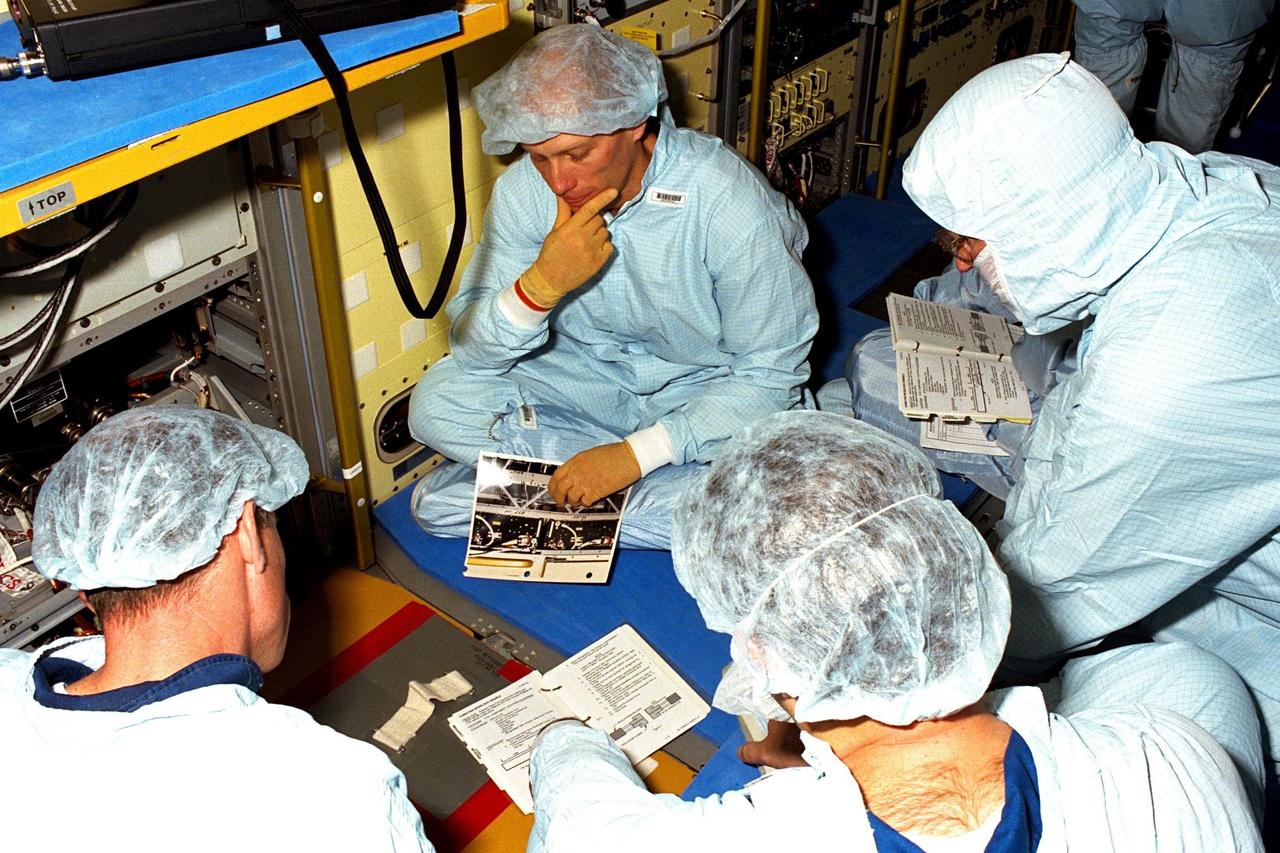
STS-90 crew members study manuals and drawings for the mission's Neurolab payload during the Crew Equipment Interface Test (CEIT) in Kennedy Space Center's (KSC's) Operations and Checkout Building, where the payload is undergoing processing. The CEIT gives astronauts an opportunity to get a hands-on look at the payloads with which they will be working on-orbit. STS-90 is scheduled to launch aboard the Shuttle Columbia from KSC on April 2. Investigations during the Neurolab mission will focus on the effects of microgravity on the nervous system. Specifically, experiments will study the adaptation of the vestibular system, the central nervous system, and the pathways that control the ability to sense location in the absence of gravity, as well as the effect of microgravity on a developing nervous system
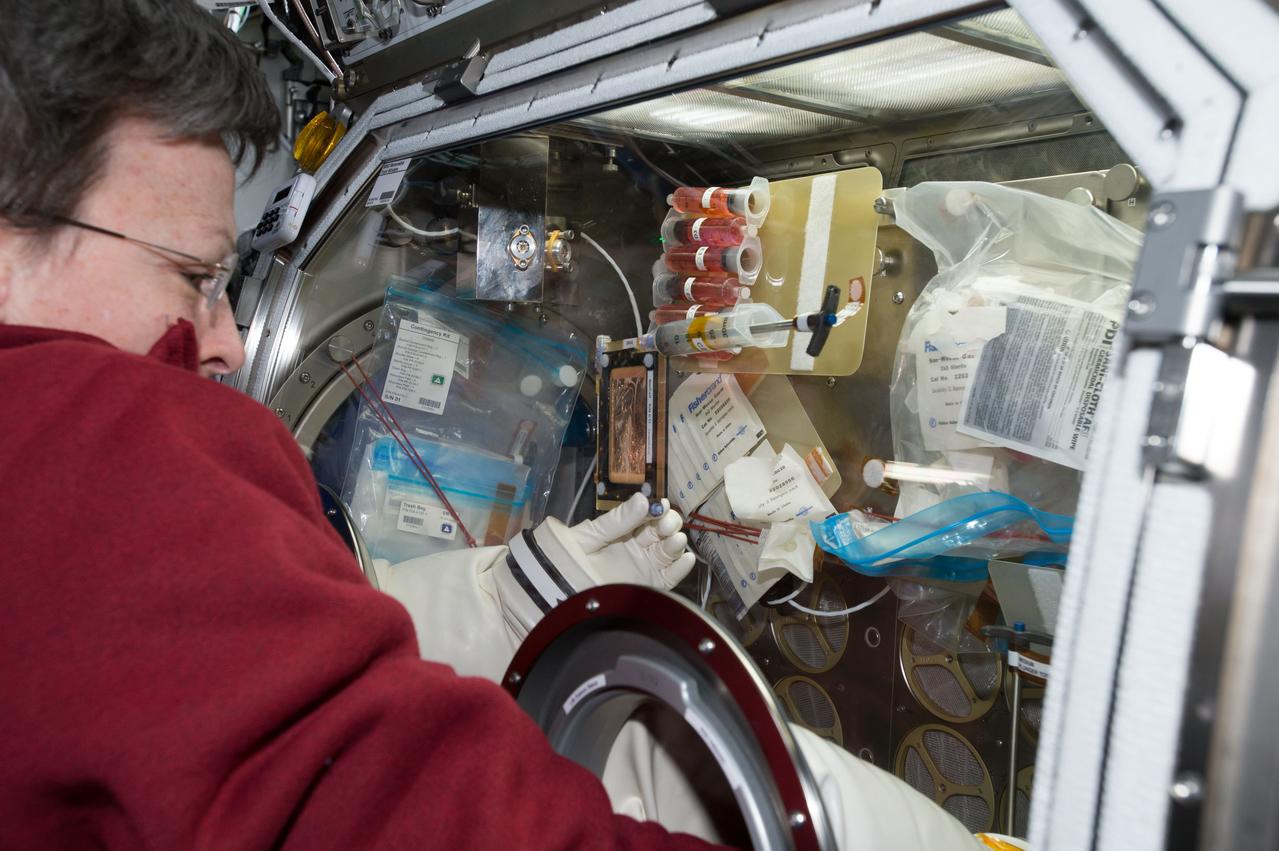
iss051e036121 (5/3/2017) --- An over-the-shoulder look at Commander Peggy Whitson working inside the Microgravity Sciences Glovebox (MSG) to change the media in the BioCell for the OsteoOmics experiment. Image was taken in the Destiny U.S. Laboratory. Gravitational Regulation of Osteoblast Genomics and Metabolism (OsteoOmics) aims to validate if magnetic levitation is a reasonable simulation of orbital free fall by measuring biological endpoints, such as signaling pathways and gene expression in osteoblast and osteoclast cells. Cells are exposed to a microgravity environment and ground based cells are exposed to magnetic levitation. If the validation is successful, then ground-based magnetic levitation will be an important ground-based tool to investigate the effect of gravitational force on biological systems.
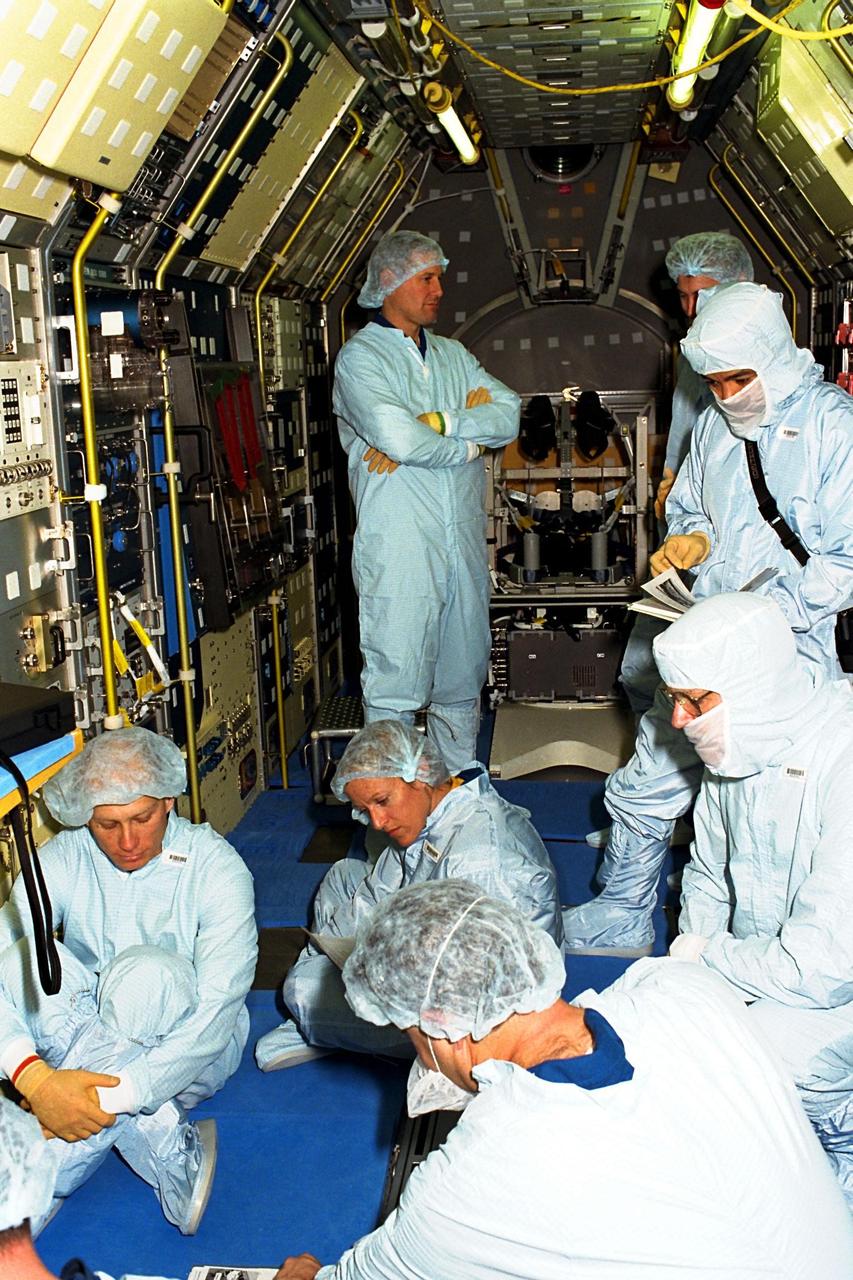
STS-90 crew members check out the inside of the module for the mission's Neurolab payload during the Crew Equipment Interface Test (CEIT) in Kennedy Space Center's (KSC's) Operations and Checkout Building, where the payload is undergoing processing. The CEIT gives astronauts an opportunity to get a hands-on look at the payloads with which they will be working on-orbit. STS-90 is scheduled to launch aboard the Shuttle Columbia from KSC on April 2. Investigations during the Neurolab mission will focus on the effects of microgravity on the nervous system. Specifically, experiments will study the adaptation of the vestibular system, the central nervous system, and the pathways that control the ability to sense location in the absence of gravity, as well as the effect of microgravity on a developing nervous system
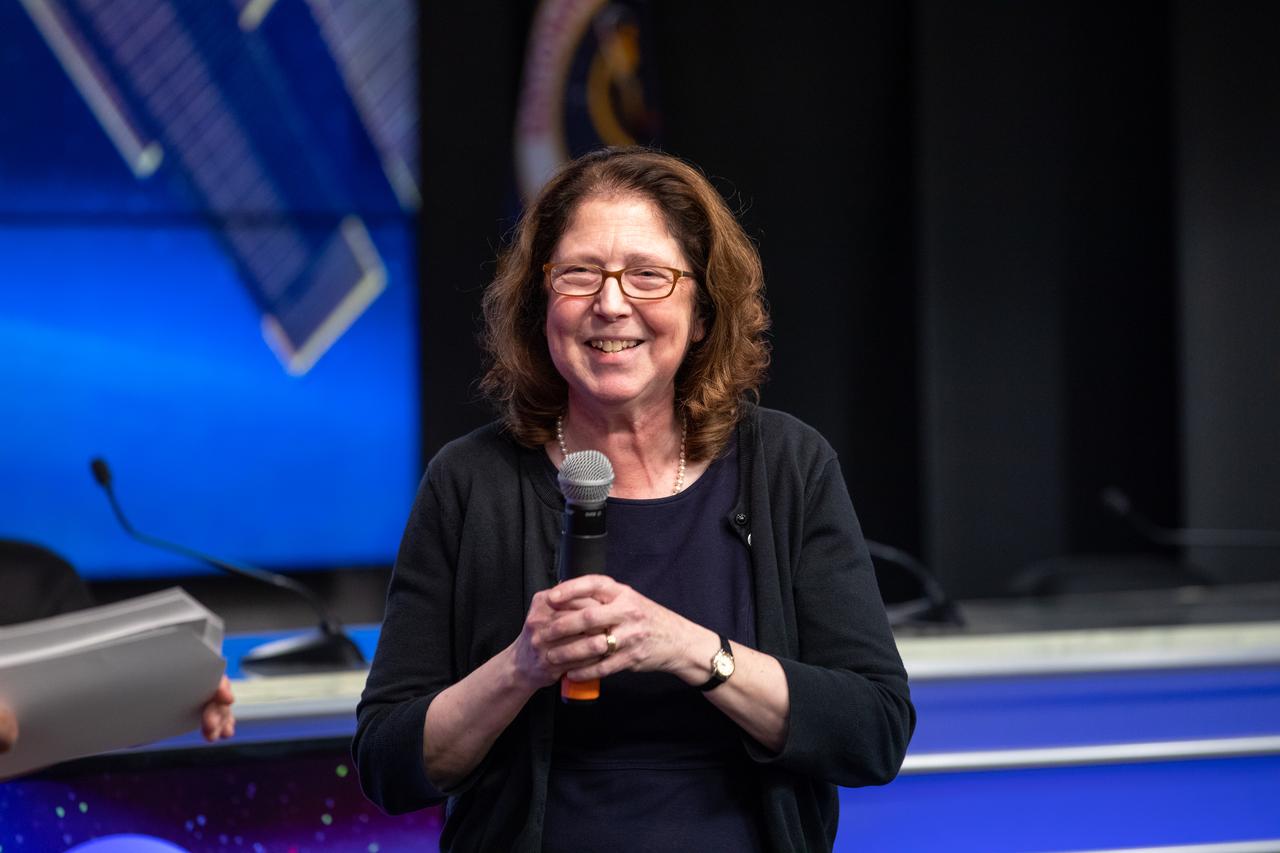
A What’s On Board Briefing for SpaceX’s 19th Commercial Resupply Services (CRS-19) mission for NASA to the International Space Station took place on Dec. 3, 2019, at the agency’s Kennedy Space Center in Florida. Emily Germain-Lee, professor at the University of Connecticut School of Medicine and chief of endocrinology and diabetes, Connecticut Children’s Medical Center, discussed her on molecular signaling pathways that influence muscle degradation to prevent skeletal muscle and bone loss during spaceflight, and enhance recovery following return to Earth. The SpaceX Falcon 9 rocket and Dragon cargo module are scheduled to launch on Dec. 4, 2019, from Space Launch Complex 40 on Cape Canaveral Air Force Station in Florida.
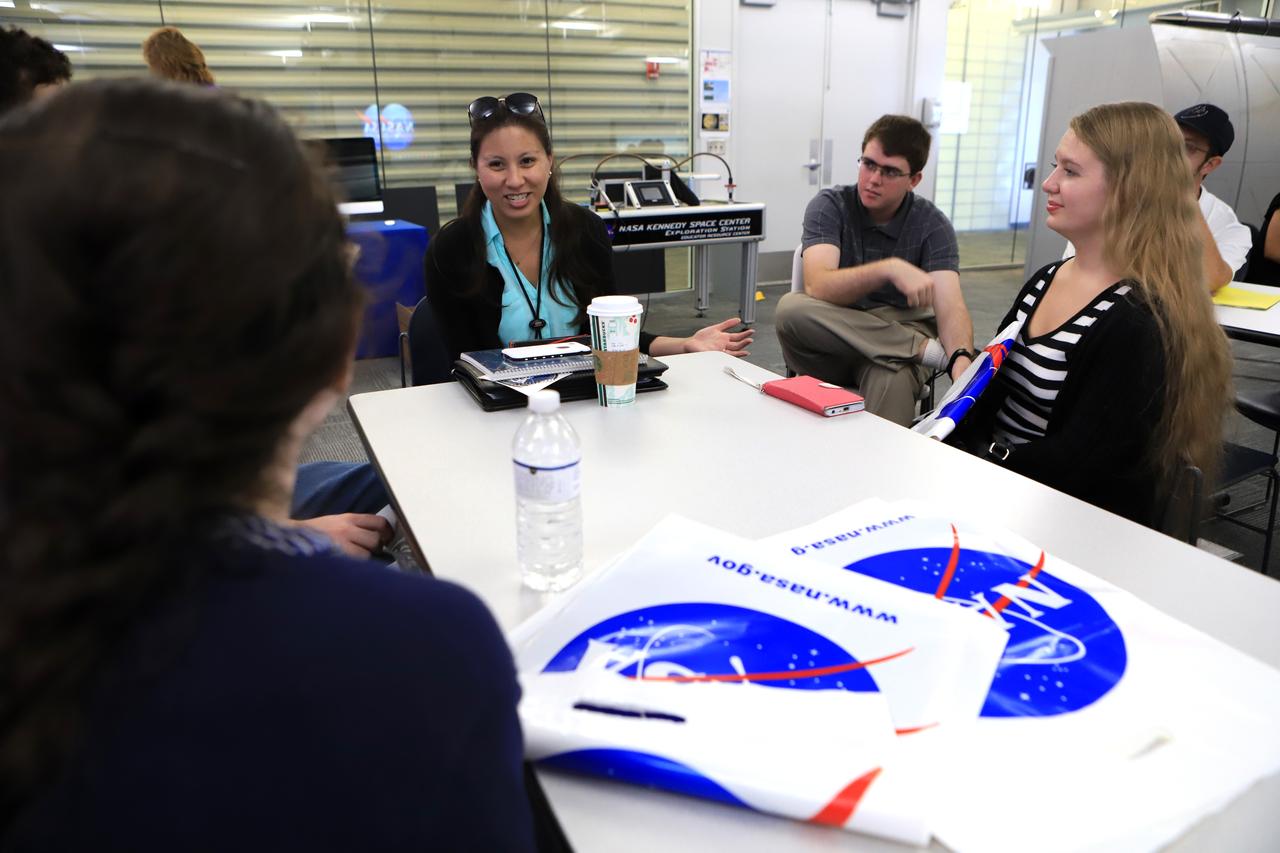
Jo Pereira, center, deputy Human Resources Integration and Pathways Program supervisor, speaks to students from Brevard County high schools during a panel discussion session at the NASA Kennedy Space Center Visitor Complex in Florida, on Nov. 7, 2018. The high school seniors were invited to Kennedy Space Center for a tour of facilities, lunch and a roundtable discussion with engineers, scientists and business experts at the center. The 2018 Brevard Top Scholars event was hosted by the center's Academic Engagement Office to honor the top three scholars of the 2018-2019 graduating student class from each of Brevard County’s public high schools. The students received a personalized certificate of recognition at the end of the day.
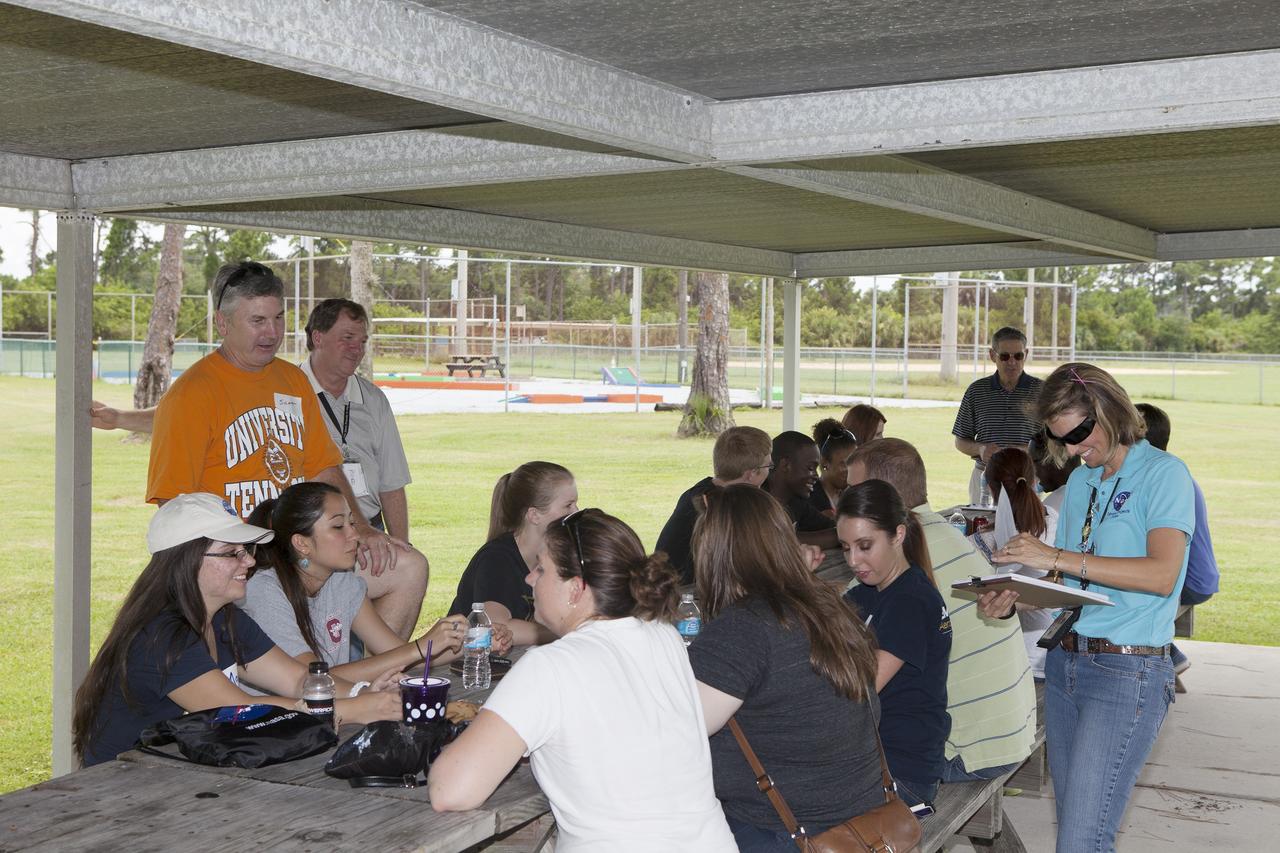
CAPE CANAVERAL, Fla. – Kennedy Space Center Pathways and summer intern students participate in a team building exercise at the KARS Park I facility near the center. High school, undergraduate and graduate students received advice on leadership skills and working together from Kennedy's senior management. At far right is Kennedy's Center Director Bob Cabana, and at left in the orange shirt is Scott Colloredo, director of Center Planning and Development. About 160 students are working and gaining experience in many of the directorates and programs during their time at Kennedy. Photo credit: NASA/Daniel Casper
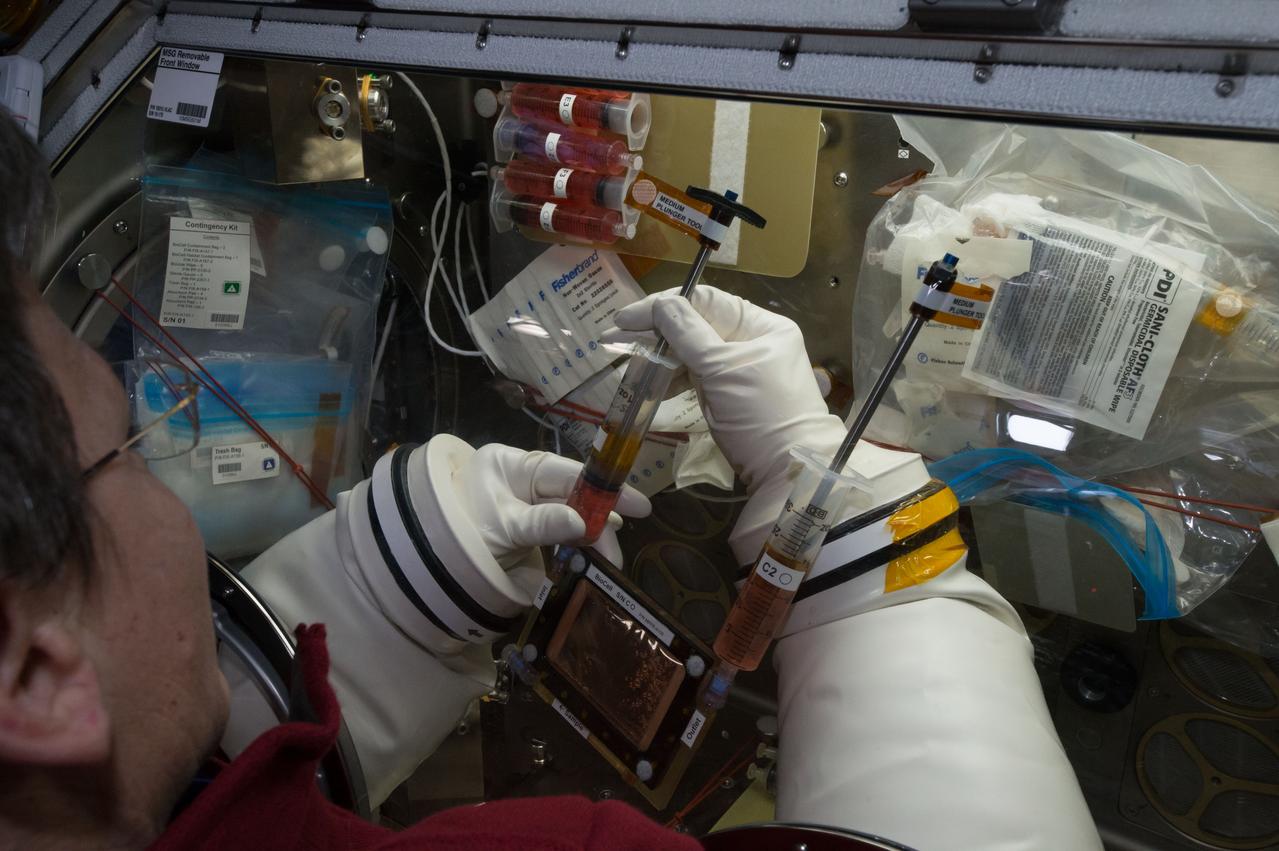
iss051e036140 (5/3/2017) --- A view inside the Microgravity Sciences Glovebox (MSG) where Commander Peggy Whitson works to change the media in a BioCell for the OsteoOmics experiment. Image was taken in the Destiny U.S. Laboratory. Gravitational Regulation of Osteoblast Genomics and Metabolism (OsteoOmics) aims to validate if magnetic levitation is a reasonable simulation of orbital free fall by measuring biological endpoints, such as signaling pathways and gene expression in osteoblast and osteoclast cells. Cells are exposed to a microgravity environment and ground based cells are exposed to magnetic levitation. If the validation is successful, then ground-based magnetic levitation will be an important ground-based tool to investigate the effect of gravitational force on biological systems.
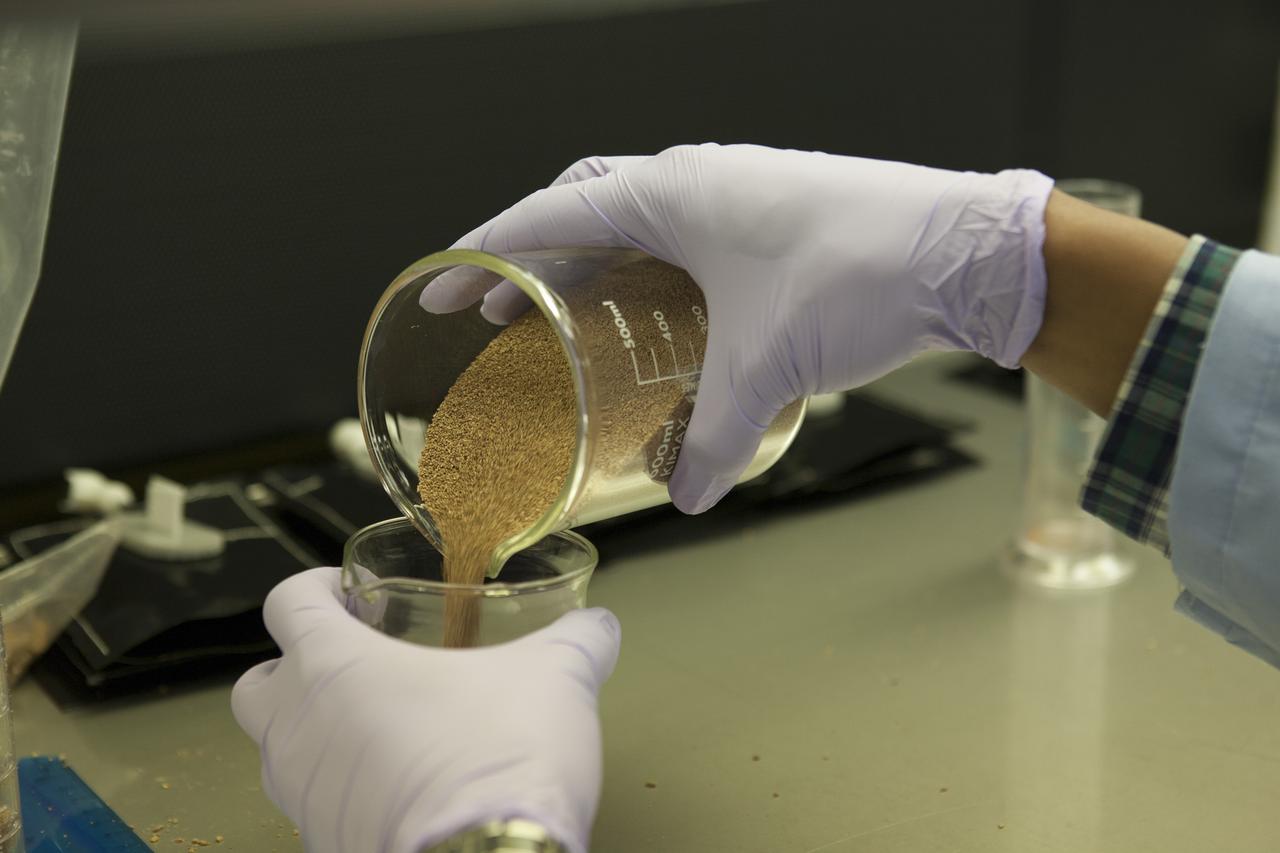
Inside a laboratory in the Space Station Processing Facility at NASA’s Kennedy Space Center in Florida, research scientists prepare the plant pillows for the Veg-03 experiment that will be delivered to the International Space Station aboard the eighth SpaceX Dragon commercial resupply mission. Matt Romeyn, a NASA pathways intern, measures out the calcined clay, or space dirt, for one of the plant pillows. The Veg-03 plant pillows will contain ‘Tokyo Bekana’ cabbage seeds and lettuce seeds for NASA’s third Veggie plant growth system experiment. The experiment will continue NASA’s deep space plant growth research to benefit the Earth and the agency’s journey to Mars.
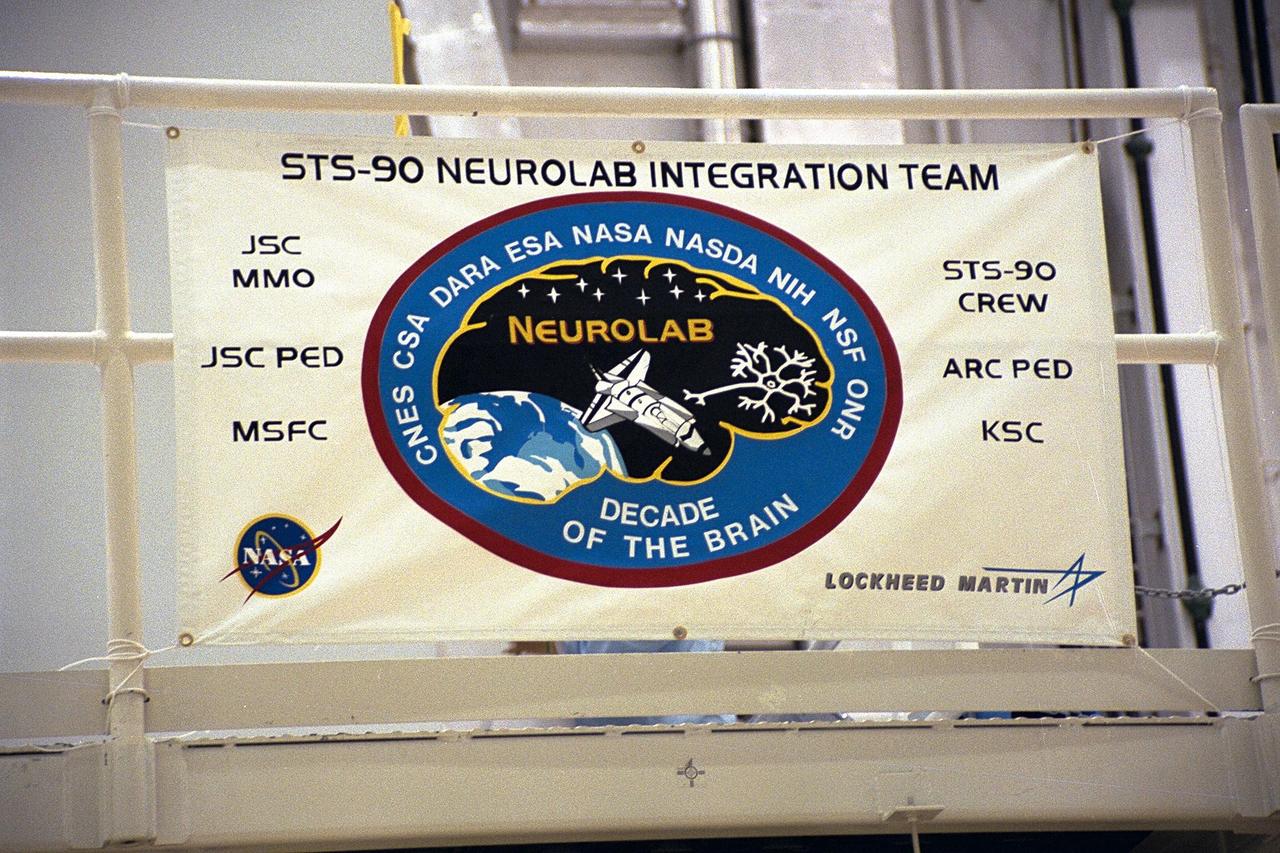
The Neurolab payload for STS-90, scheduled to launch aboard the Shuttle Columbia from Kennedy Space Center (KSC) on April 2, 1998, undergoes further processing in the Operations and Checkout Building at KSC. Investigations during the Neurolab mission will focus on the effects of microgravity on the nervous system. Specifically, experiments will study the adaptation of the vestibular system, the central nervous system, and the pathways that control the ability to sense location in the absence of gravity, as well as the effect of microgravity on a developing nervous system. The crew of STS-90 will include Commander Richard Searfoss, Pilot Scott Altman, Mission Specialists Richard Linnehan, Dafydd (Dave) Williams, M.D., and Kathryn (Kay) Hire, and Payload Specialists Jay Buckey, M.D., and James Pawelczyk, Ph.D

The Neurolab payload for STS-90, scheduled to launch aboard the Shuttle Columbia from Kennedy Space Center (KSC) on April 2, 1998, is ready for processing after being placed in its workstand in the Operations and Checkout Building at KSC. Investigations during the Neurolab mission will focus on the effects of microgravity on the nervous system. Specifically, experiments will study the adaptation of the vestibular system, the central nervous system, and the pathways that control the ability to sense location in the absence of gravity, as well as the effect of microgravity on a developing nervous system. The crew of STS-90 will include Commander Richard Searfoss, Pilot Scott Altman, Mission Specialists Richard Linnehan, Dafydd (Dave) Williams, M.D., and Kathryn (Kay) Hire, and Payload Specialists Jay Buckey, M.D., and James Pawelczyk, Ph.D
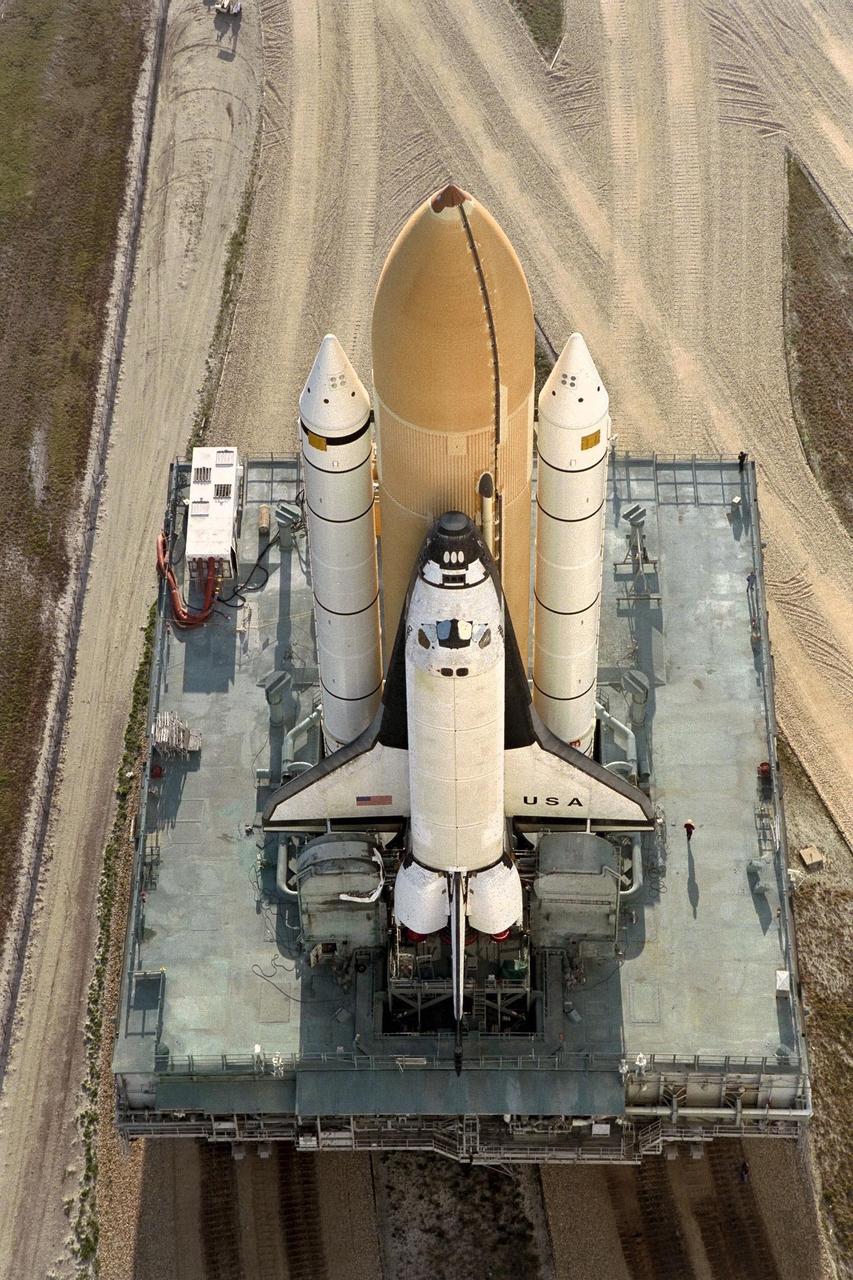
KENNEDY SPACE CENTER, FLA. -- The Space Shuttle Columbia continues its morning rollout from the Vehicle Assembly Building to Launch Pad 39B in preparation for the STS-90 mission. The Neurolab experiments are the primary payload on this nearly 17-day space flight. Investigations during the Neurolab mission will focus on the effects of microgravity on the nervous system. Specifically, experiments will study the adaptation of the vestibular system, the central nervous system, and the pathways that control the ability to sense location in the absence of gravity, as well as the effect of microgravity on a developing nervous system. The crew of STS-90, slated for launch April 16 at 2:19 p.m. EDT, includes Commander Richard Searfoss, Pilot Scott Altman, Mission Specialists Richard Linnehan, Dafydd (Dave) Williams, M.D., and Kathryn (Kay) Hire, and Payload Specialists Jay Buckey, M.D., and James Pawelczyk, Ph.D