
NASA Inspector General Paul Martin is seen during a Senate Subcommittee on Space, Science, and Competitiveness hearing titled "Examining the Future of the International Space Station: Administration Perspectives" Wednesday, May 16, 2018 in the Russell Senate Office Building on Capitol Hill in Washington. Photo Credit: (NASA/Joel Kowsky)
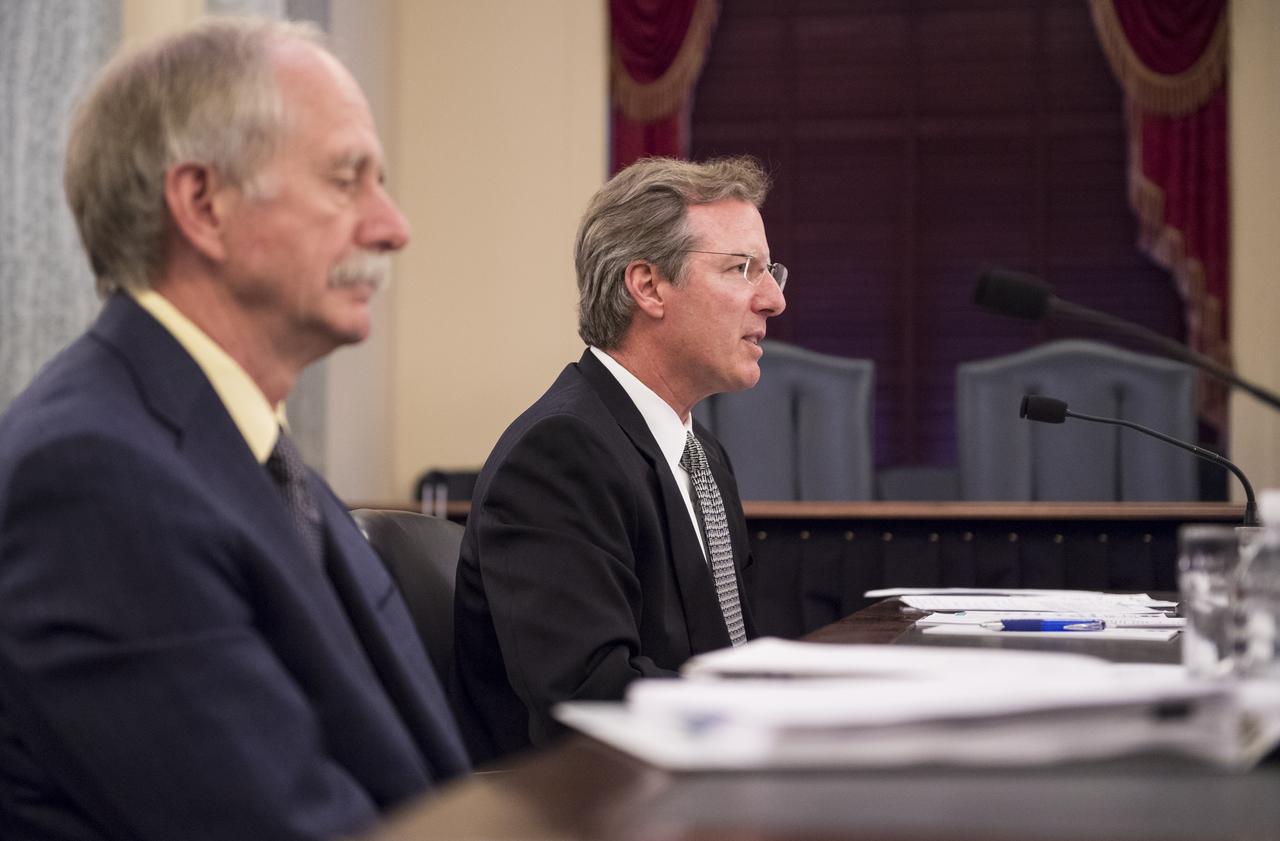
NASA Inspector General Paul Martin testifies during a Senate Subcommittee on Space, Science, and Competitiveness hearing titled "Examining the Future of the International Space Station: Administration Perspectives" held on Wednesday, May 16, 2018 in the Russell Senate Office Building on Capitol Hill in Washington. Photo Credit: (NASA/Joel Kowsky)
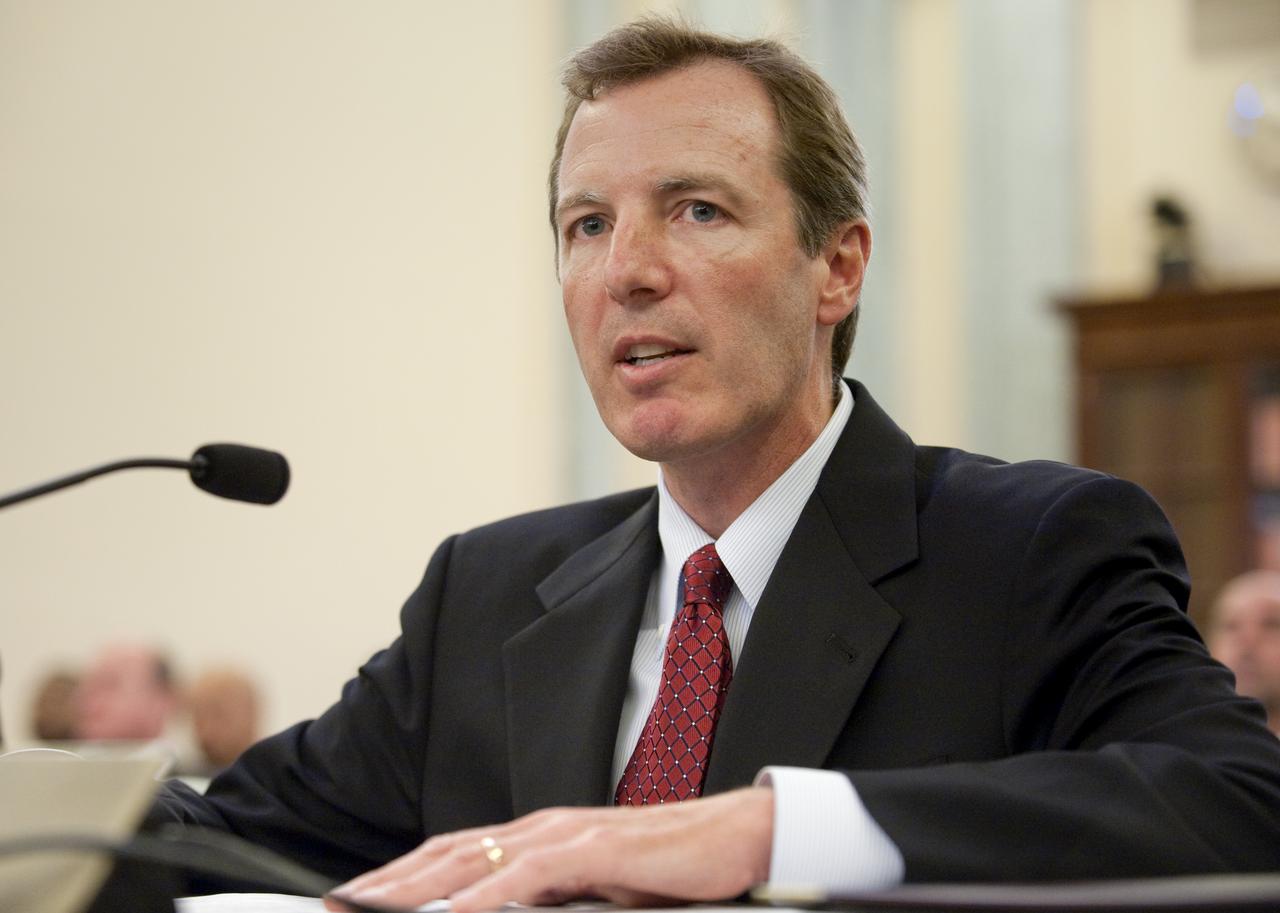
Paul K. Martin, nominee for Inspector General for NASA, answers questions during his confirmation hearing in front of the Senate Committee on Commerce, Science and Transportation, Thursday, Oct. 15, 2009, on Capitol Hill in Washington. Photo Credit: (NASA/Paul E. Alers)
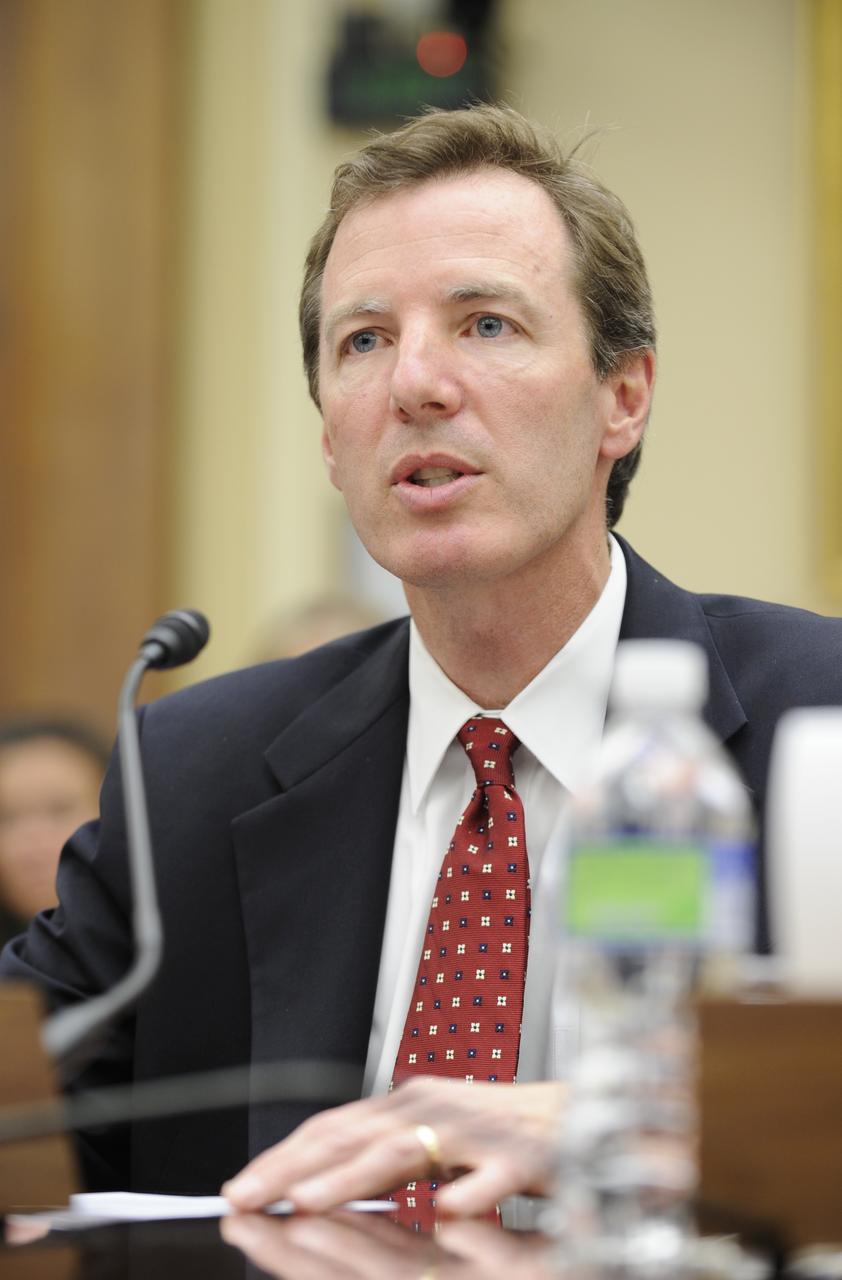
Paul Martin, Inspector General for NASA, testifies during a Joint Hearing before the House Committee on Science and Technology, Transportation and Infrastructure Committee, Subcommittee on Investigations and Oversight, Thursday, Dec. 3, 2009, on Capitol Hill in Washington. Photo Credit: (NASA/Bill Ingalls)
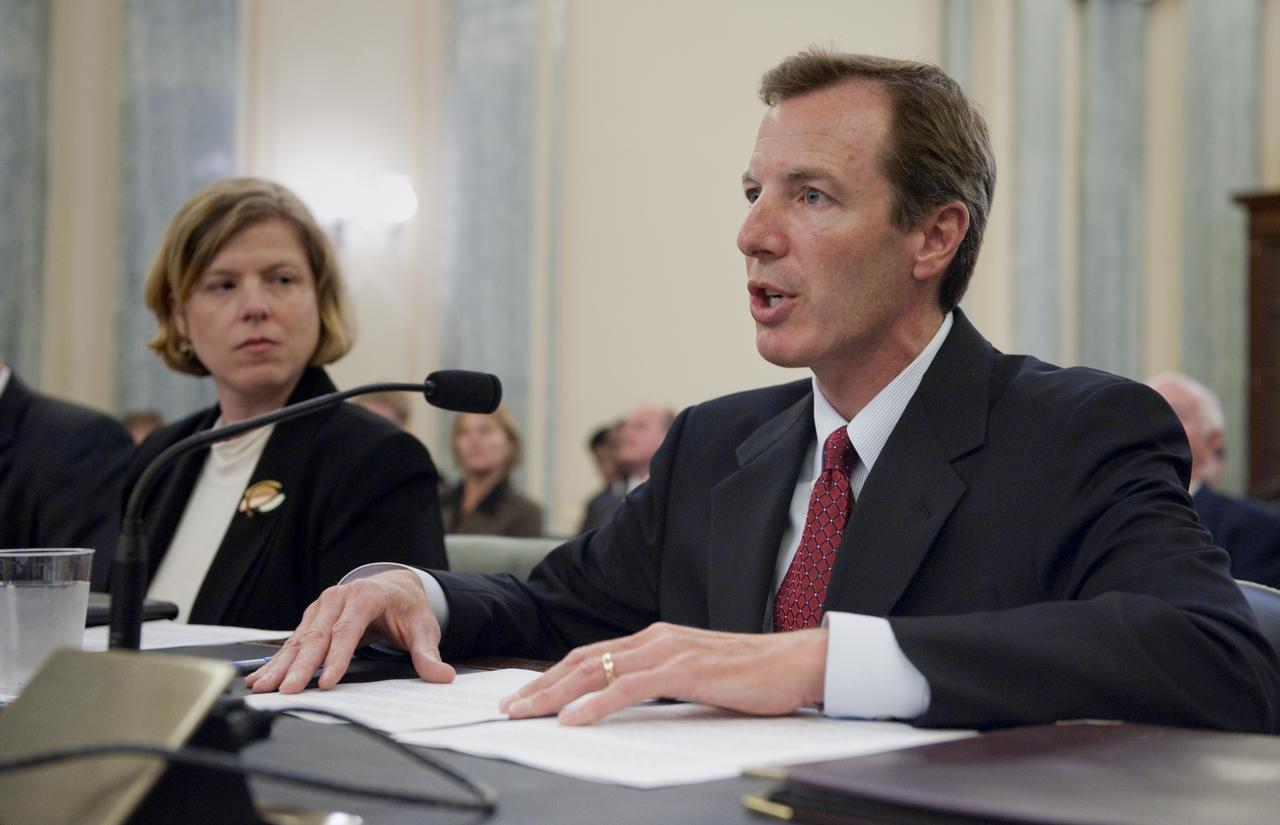
Paul K. Martin, nominee for Inspector General at NASA, right, answers questions during his confirmation hearing in front of the Senate Committee on Commerce, Science and Transportation, Thursday, Oct. 15, 2009, on Capitol Hill in Washington. At left is Dr. Elizabeth M. Robinson, nominee for Chief Financial Officer for NASA. Photo Credit: (NASA/Paul E. Alers)
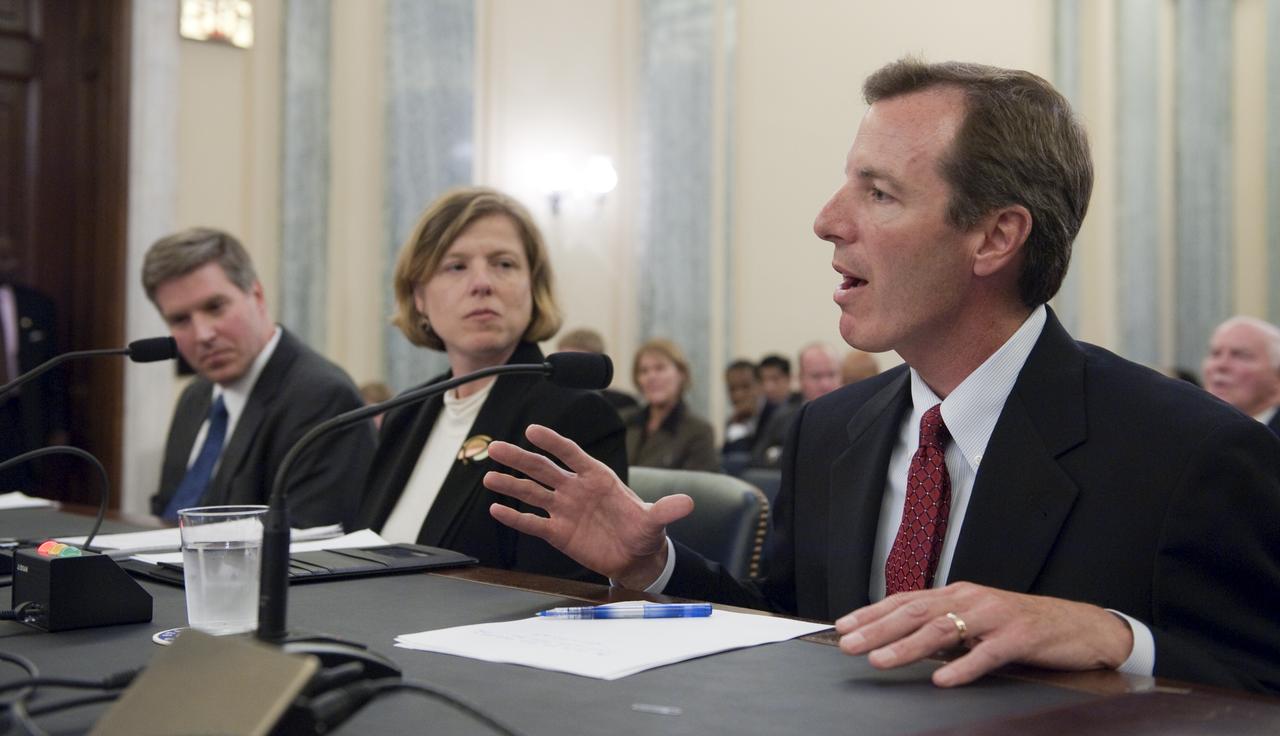
Paul K. Martin, nominee for Inspector General at NASA, far right, answers questions during his confirmation hearing in front of the Senate Committee on Commerce, Science and Transportation, Thursday, Oct. 15, 2009, on Capitol Hill in Washington. Looking on are Dr. Elizabeth M. Robinson, nominee for Chief Financial Officer for NASA, center, and Dr. Patrick Gallagher, nominee to be Assistant Secretary of the Transportation Security Administration at the U.S. Department of Commerce. Photo Credit: (NASA/Paul E. Alers)
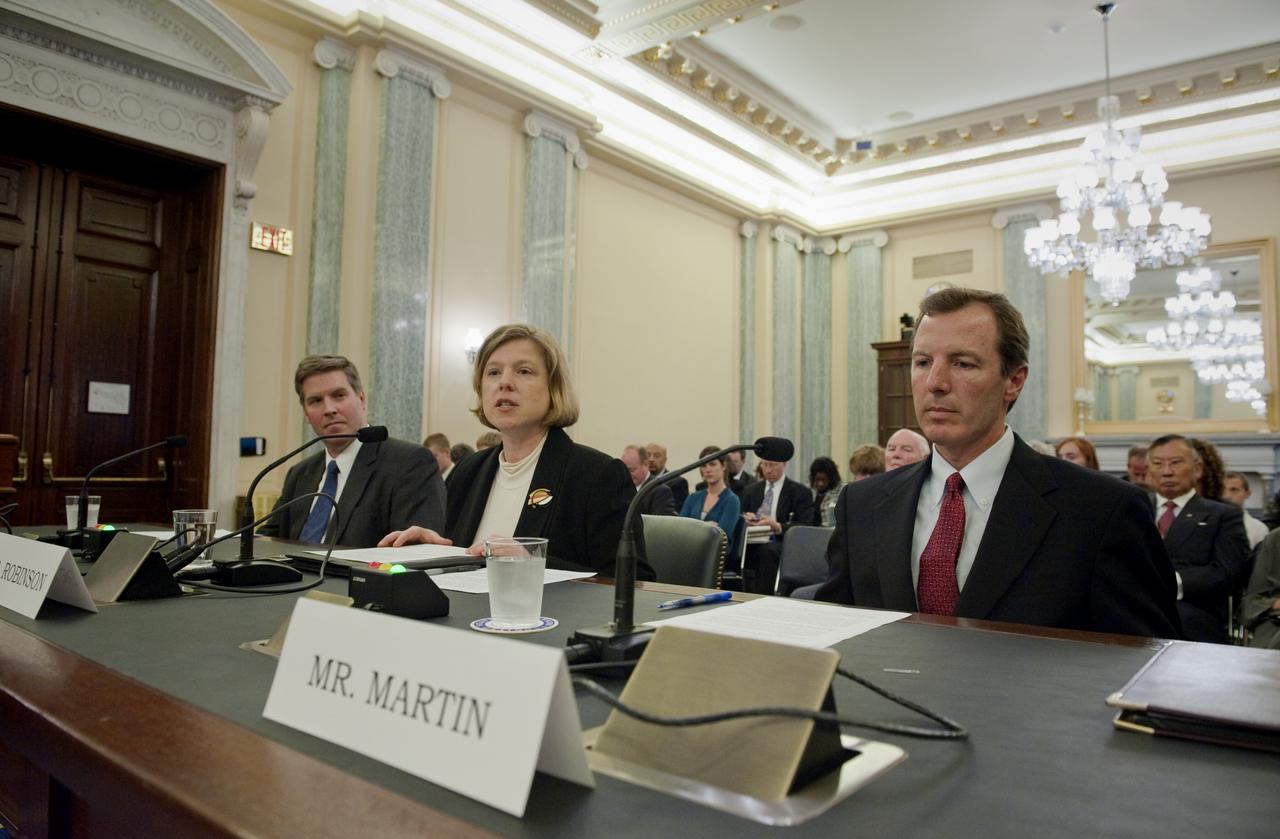
Dr. Elizabeth M. Robinson, nominee for Chief Financial Officer for NASA, center, answers questions during her confirmation hearing in front of the Senate Committee on Commerce, Science and Transportation, Thursday, Oct. 15, 2009, on Capitol Hill in Washington. Robinson is flanked by Dr. Patrick Gallagher, nominee to be Assistant Secretary of the Transportation Security Administration at the U.S. Department of Commerce, far left, and Paul K. Martin, nominee to be Inspector General at NASA. Photo Credit: (NASA/Paul E. Alers)
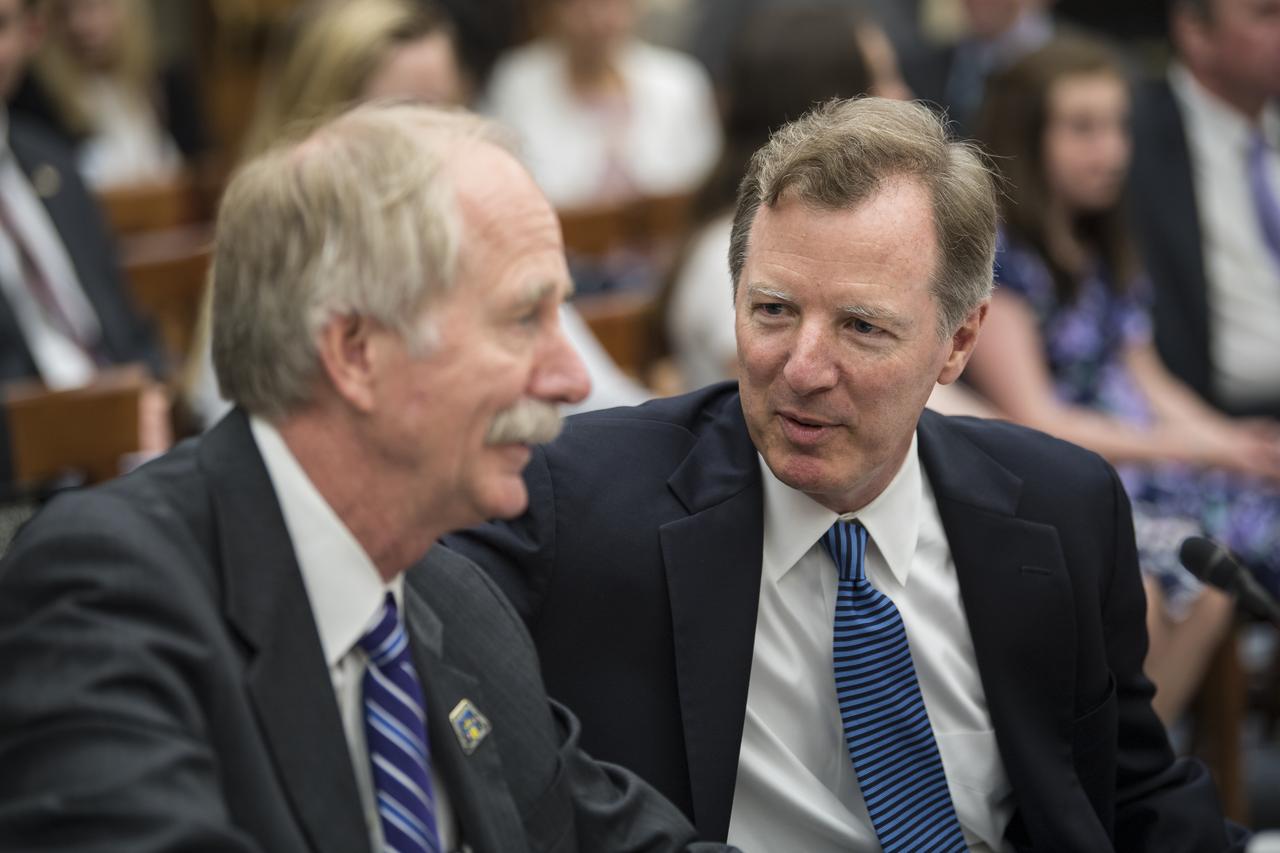
The Honorable Paul Martin, inspector general, NASA, speaks to Bill Gerstenmaier, associate administrator, Human Exploration and Operations, NASA, before they testify during a Space and Aeronautics Subcommittee of the House Science, Space, and Technology Committee hearing titled, “A Review of NASA’s Plans for the International Space Station and Future Activities in Low Earth Orbit," Wednesday, July 10, 2019 at the Rayburn House Office Building in Washington. Photo Credit: (NASA/Aubrey Gemignani)

The Honorable Paul Martin, inspector general, NASA, testifies during a Space and Aeronautics Subcommittee of the House Science, Space, and Technology Committee hearing titled, “A Review of NASA’s Plans for the International Space Station and Future Activities in Low Earth Orbit," Wednesday, July 10, 2019 at the Rayburn House Office Building in Washington. Photo Credit: (NASA/Aubrey Gemignani)
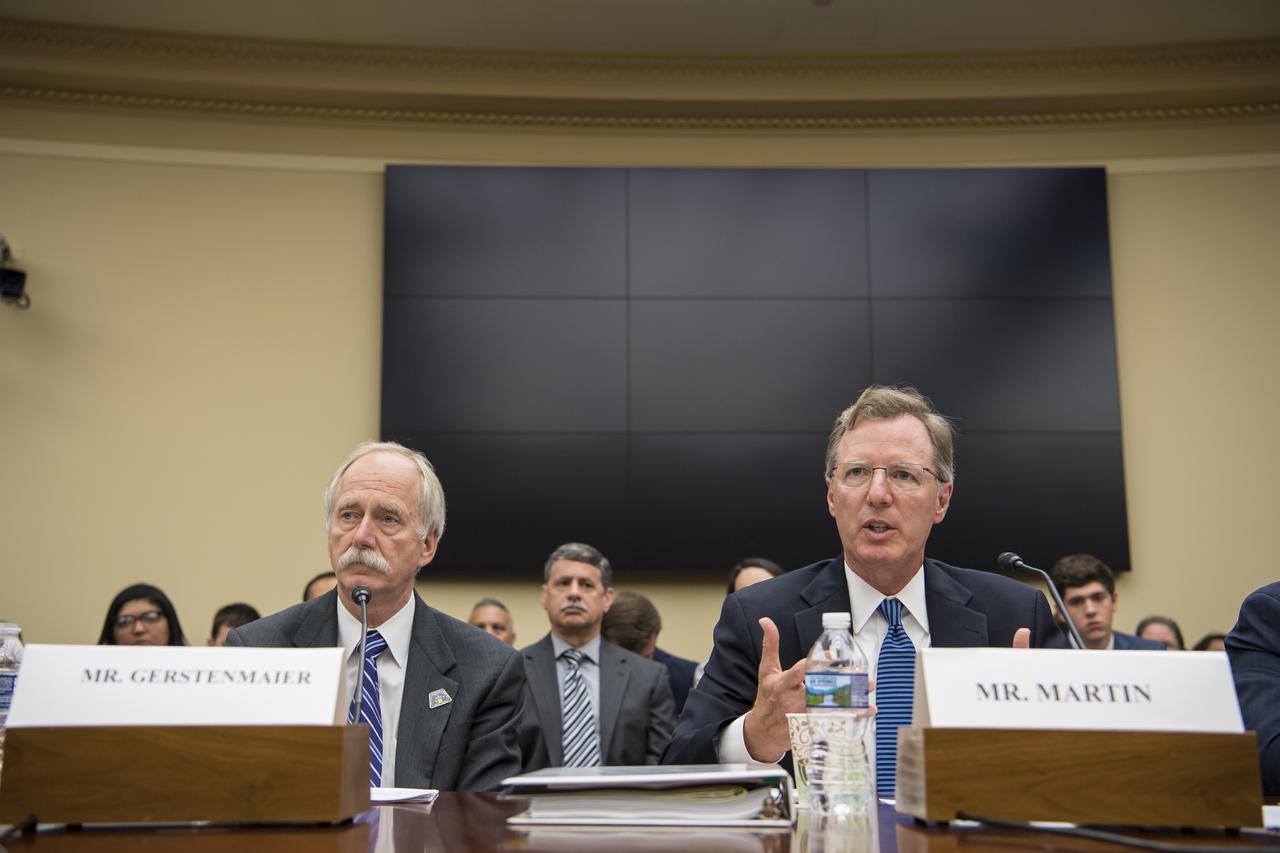
The Honorable Paul Martin, inspector general, NASA, testifies during a Space and Aeronautics Subcommittee of the House Science, Space, and Technology Committee hearing titled, “A Review of NASA’s Plans for the International Space Station and Future Activities in Low Earth Orbit," Wednesday, July 10, 2019 at the Rayburn House Office Building in Washington. Photo Credit: (NASA/Aubrey Gemignani)
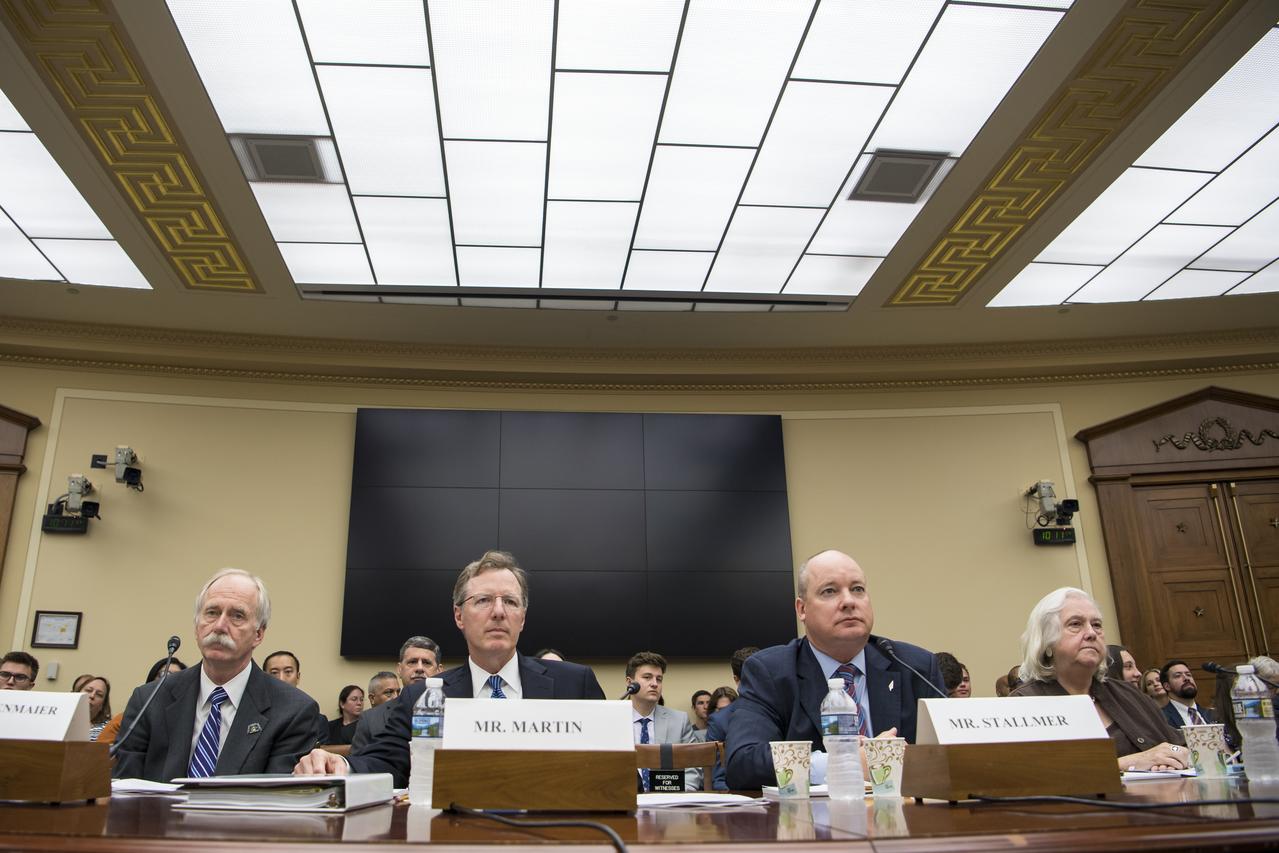
From left to right, NASA Associate Administrator, Human Exploration and Operations, Bill Gerstenmaier; NASA Inspector General, Paul Martin; Commercial Spaceflight Federation President, Eric Stallmer; and University of Mississippi Professor Emerita and Editor in Chief of the Journal of Space Law, Joanne Gabrynowicz testify during a Space and Aeronautics Subcommittee of the House Science, Space, and Technology Committee hearing titled, “A Review of NASA’s Plans for the International Space Station and Future Activities in Low Earth Orbit," Wednesday, July 10, 2019 at the Rayburn House Office Building in Washington. Photo Credit: (NASA/Aubrey Gemignani)
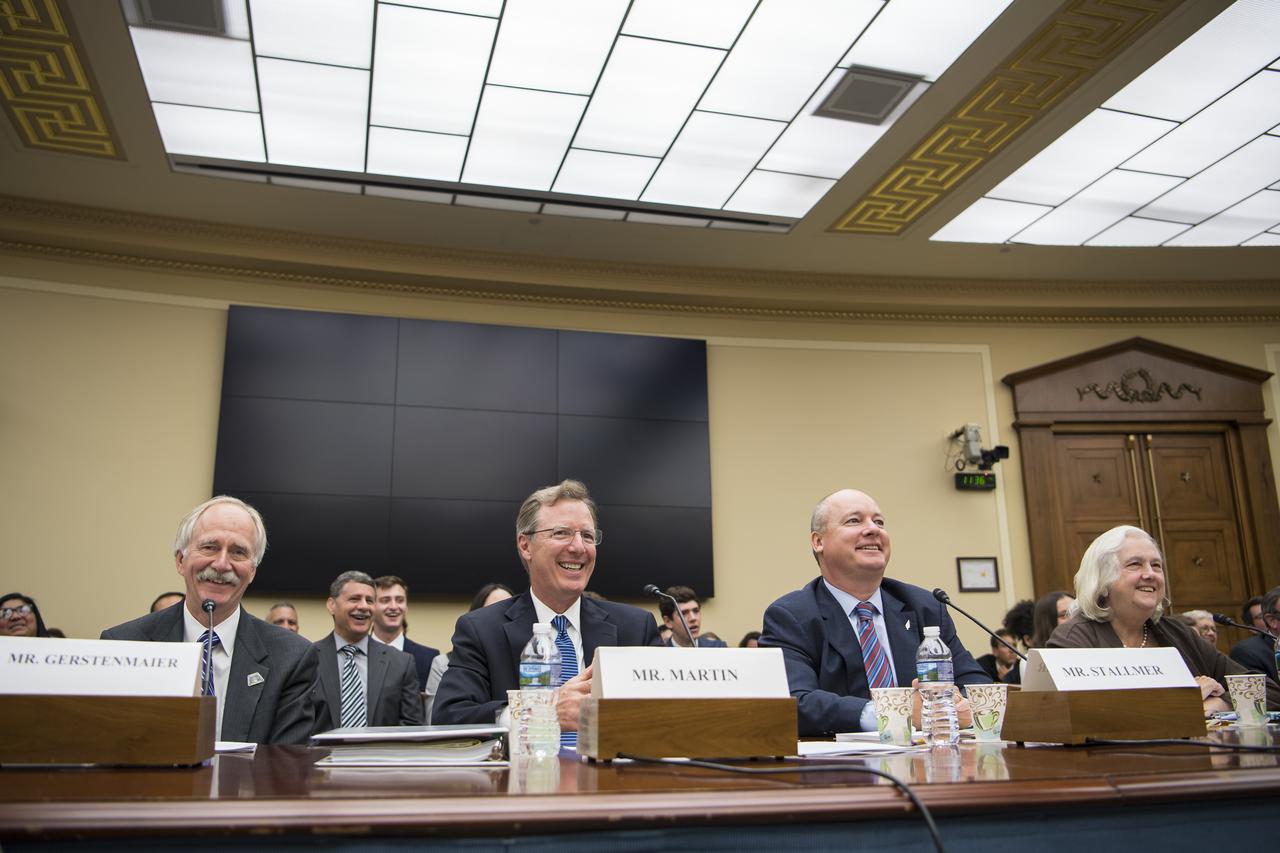
From left to right, NASA Associate Administrator, Human Exploration and Operations, Bill Gerstenmaier; NASA Inspector General, Paul Martin; Commercial Spaceflight Federation President, Eric Stallmer; and University of Mississippi Professor Emerita and Editor in Chief of the Journal of Space Law, Joanne Gabrynowicz react to a comment by Congressman Pete Olson (R-TX) during a Space and Aeronautics Subcommittee of the House Science, Space, and Technology Committee hearing titled, “A Review of NASA’s Plans for the International Space Station and Future Activities in Low Earth Orbit," Wednesday, July 10, 2019 at the Rayburn House Office Building in Washington. Photo Credit: (NASA/Aubrey Gemignani)
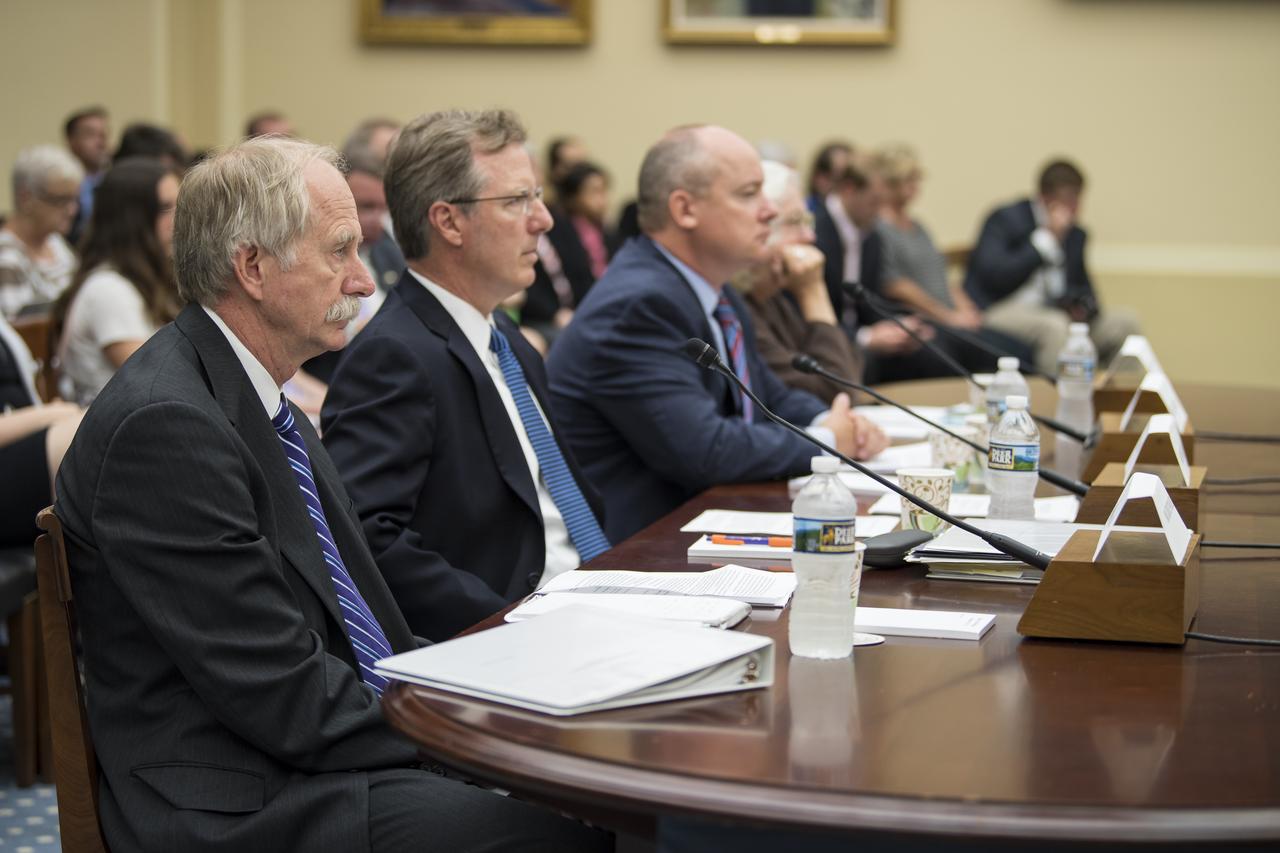
From left to right, NASA Associate Administrator, Human Exploration and Operations, Bill Gerstenmaier; NASA Inspector General, Paul Martin; Commercial Spaceflight Federation President, Eric Stallmer; and University of Mississippi Professor Emerita and Editor in Chief of the Journal of Space Law, Joanne Gabrynowicz testify during a Space and Aeronautics Subcommittee of the House Science, Space, and Technology Committee hearing titled, “A Review of NASA’s Plans for the International Space Station and Future Activities in Low Earth Orbit," Wednesday, July 10, 2019 at the Rayburn House Office Building in Washington. Photo Credit: (NASA/Aubrey Gemignani)
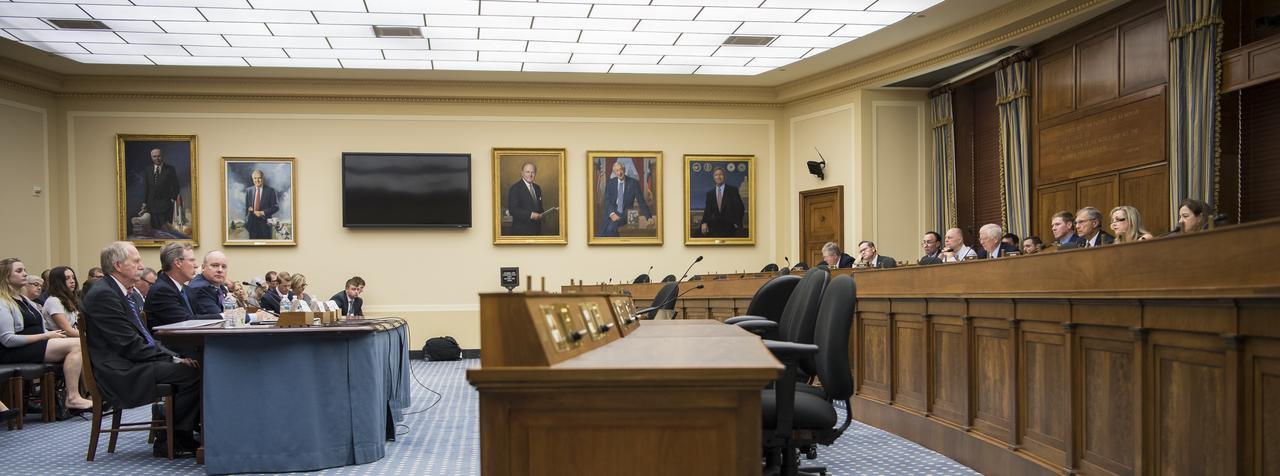
From left to right, NASA Associate Administrator, Human Exploration and Operations, Bill Gerstenmaier; NASA Inspector General, Paul Martin; Commercial Spaceflight Federation President, Eric Stallmer; and University of Mississippi Professor Emerita and Editor in Chief of the Journal of Space Law, Joanne Gabrynowicz testify during a Space and Aeronautics Subcommittee of the House Science, Space, and Technology Committee hearing titled, “A Review of NASA’s Plans for the International Space Station and Future Activities in Low Earth Orbit," Wednesday, July 10, 2019 at the Rayburn House Office Building in Washington. Photo Credit: (NASA/Aubrey Gemignani)
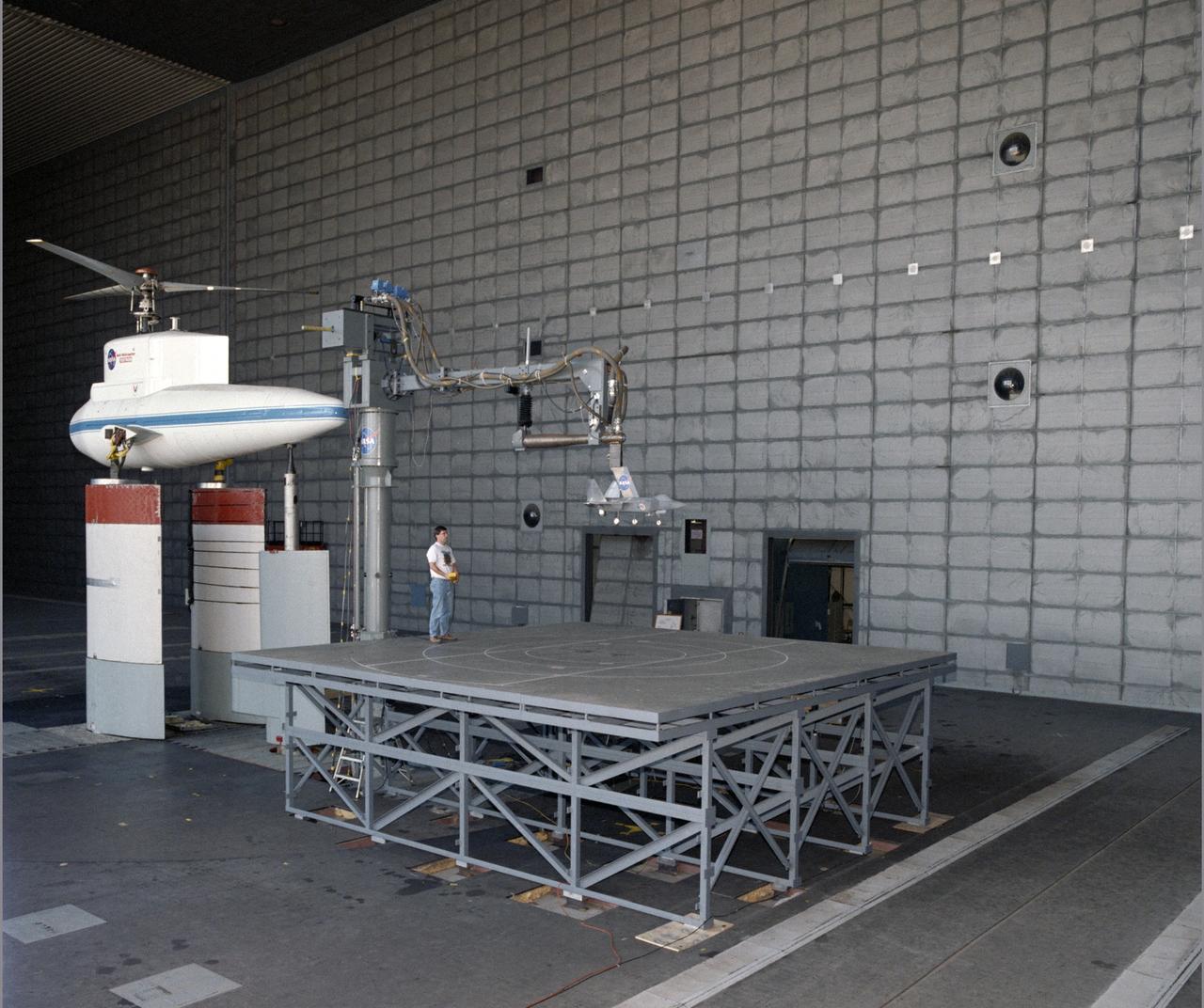
Lockheed Martin Joint Strike Fighter (JSF) model LM-80-2, jet effects test 80x120ft. w.t. Test-80-0029 with Paul Askins
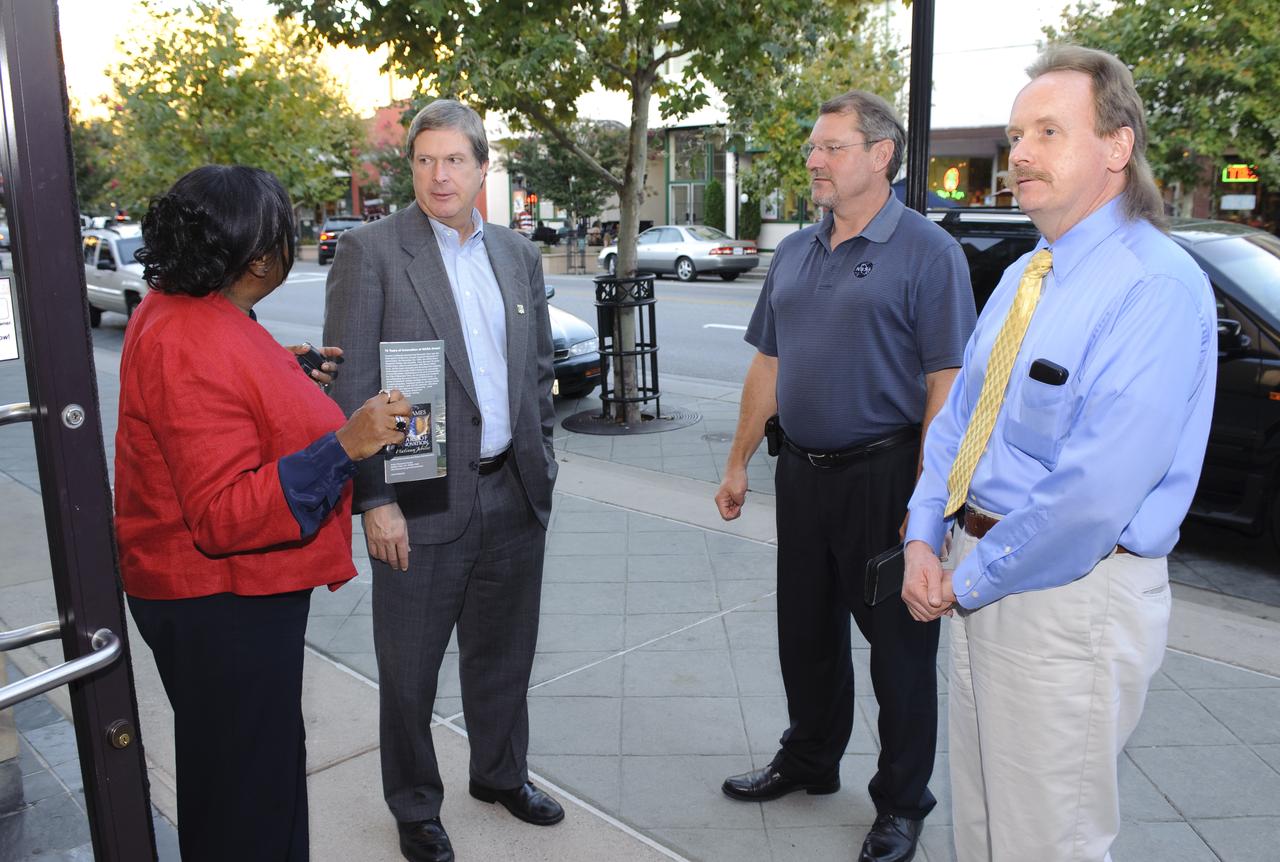
Ames 70 Year Anniversary Exhibit in downtown Mountain View, California. Grand Opening at Meyer Appliance, Castro Street. From Left to right Sheila Johnson, Gary Martin, Paul McKim and Michael Bicay outside of Meyer Appliance before opening.
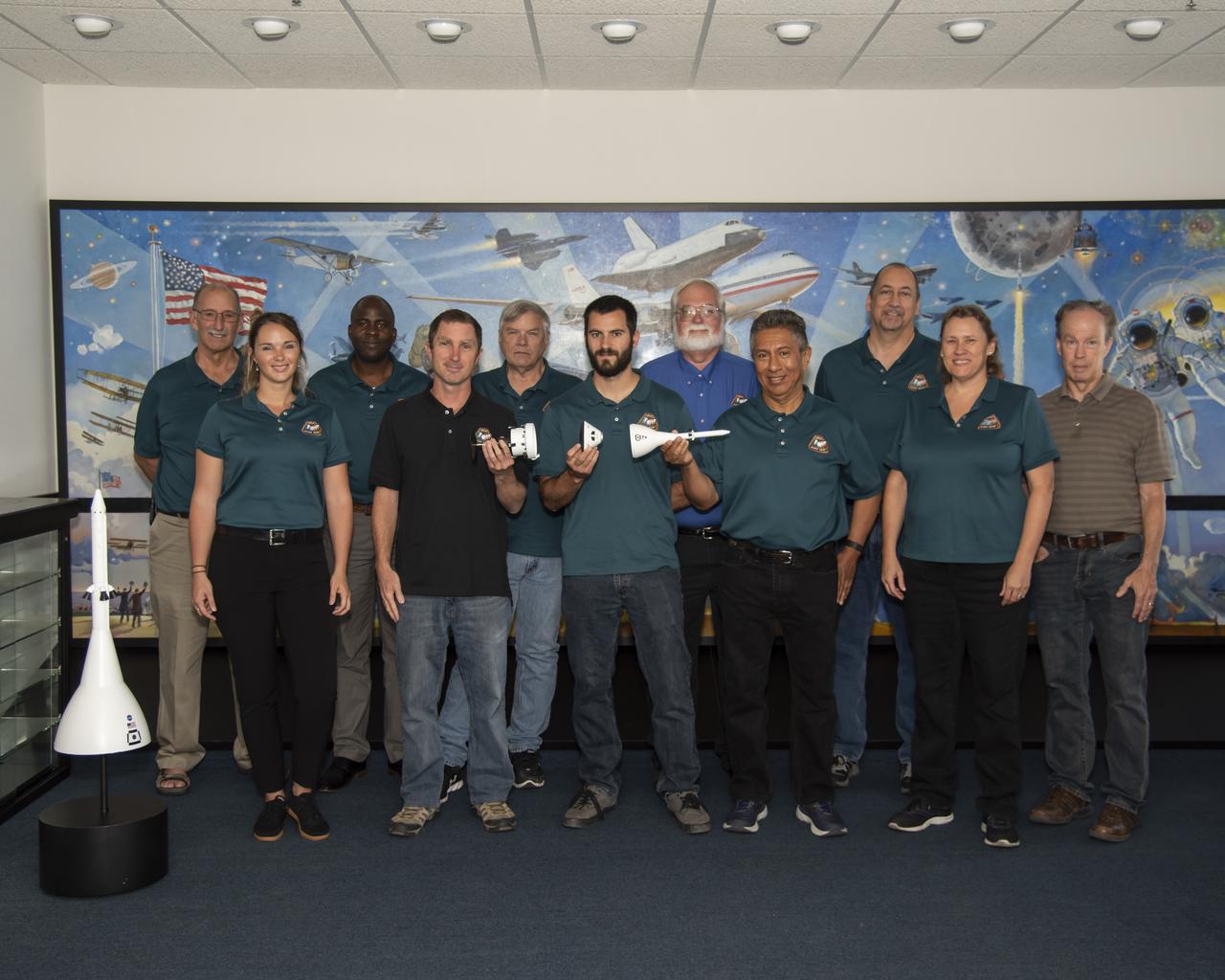
Members of the NASA Armstrong Flight Research Center Ascent Abort-2 management and engineering team contributed to the AA-2 launch at Cape Canaveral in Florida July 2, 2019. From left are Gary Martin, Rose Blomquist, Ernest Mwajagu, Lucas Moxey, Leo Gross, Jeff Sutherland, Chuck Rogers, Joe Hernandez, David Dowdell, Jeri Myers and Dan Nolan. Additional engineering team members include Paul Aristo, Bob Clark and Nikki Martin. Team members hold elements of the stack that was launched to show how the separation ring, crew module and Launch Abort System fit together.
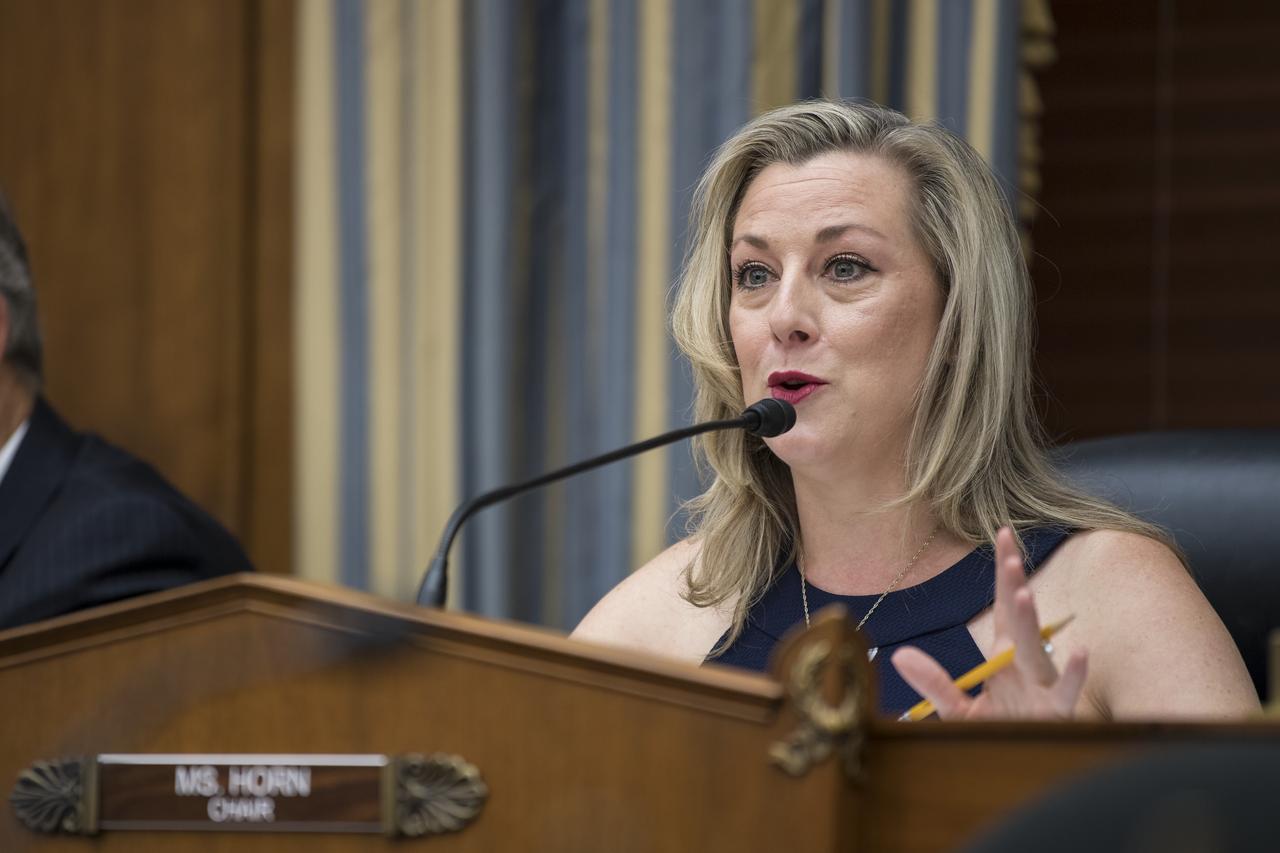
Chair of the Space and Aeronautics Subcommittee, Kendra Horn, D-Okla., speaks during a House Science, Space, and Technology Committee hearing titled, “A Review of NASA’s Plans for the International Space Station and Future Activities in Low Earth Orbit," where NASA Associate Administrator, Human Exploration and Operations, Bill Gerstenmaier, and NASA Inspector General, Paul Martin testified, Wednesday, July 10, 2019 at the Rayburn House Office Building in Washington. Photo Credit: (NASA/Aubrey Gemignani)
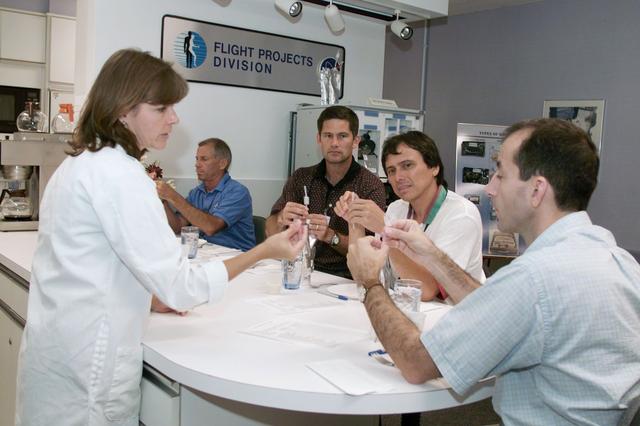
JSC2001-E-25712 (27 August 2001) --- The STS-111 crewmembers are briefed by dietitian Gloria Mongan with Lockheed Martin Space Operations during food testing in the Flight Projects Division Laboratory at the Johnson Space Center (JSC). From back to front are astronauts Kenneth D. Cockrell and Paul S. Lockhart, mission commander and pilot, respectively, and Franklin R. Chang-Diaz and Philippe Perrin, both mission specialists. Perrin represents CNES, the French Space Agency.
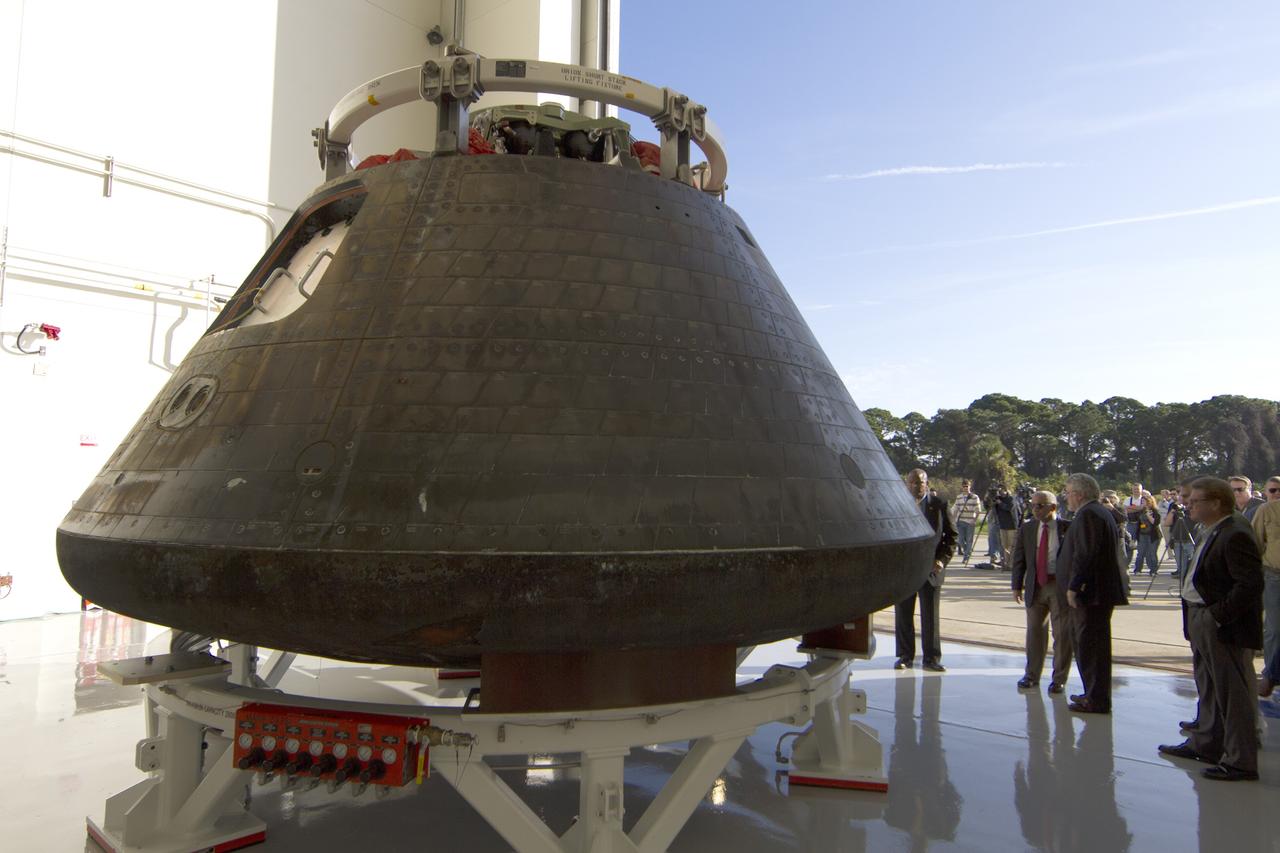
CAPE CANAVERAL, Fla. -- NASA Administrator Charlie Bolden, third from right, looked over the agency's Orion spacecraft this morning for the first time since it returned to Kennedy Space Center following the successful Orion flight test on Dec. 5. At far right is Jules Schneider, Lockheed Martin manager. Standing near Bolden is Paul Cooper, a Lockheed Martin manager. At far left is Kennedy Space Center Associate Director Kelvin Manning. Bearing the marks of a spacecraft that has returned to Earth through a searing plunge into the atmosphere, Orion is perched on a pedestal inside the Launch Abort System Facility at Kennedy where it is going through post-mission processing. Although the spacecraft Bolden looked over did not fly with a crew aboard during the flight test, Orion is designed to carry astronauts into deep space in the future setting NASA and the nation firmly on the journey to Mars. Photo credit: NASA/Cory Huston
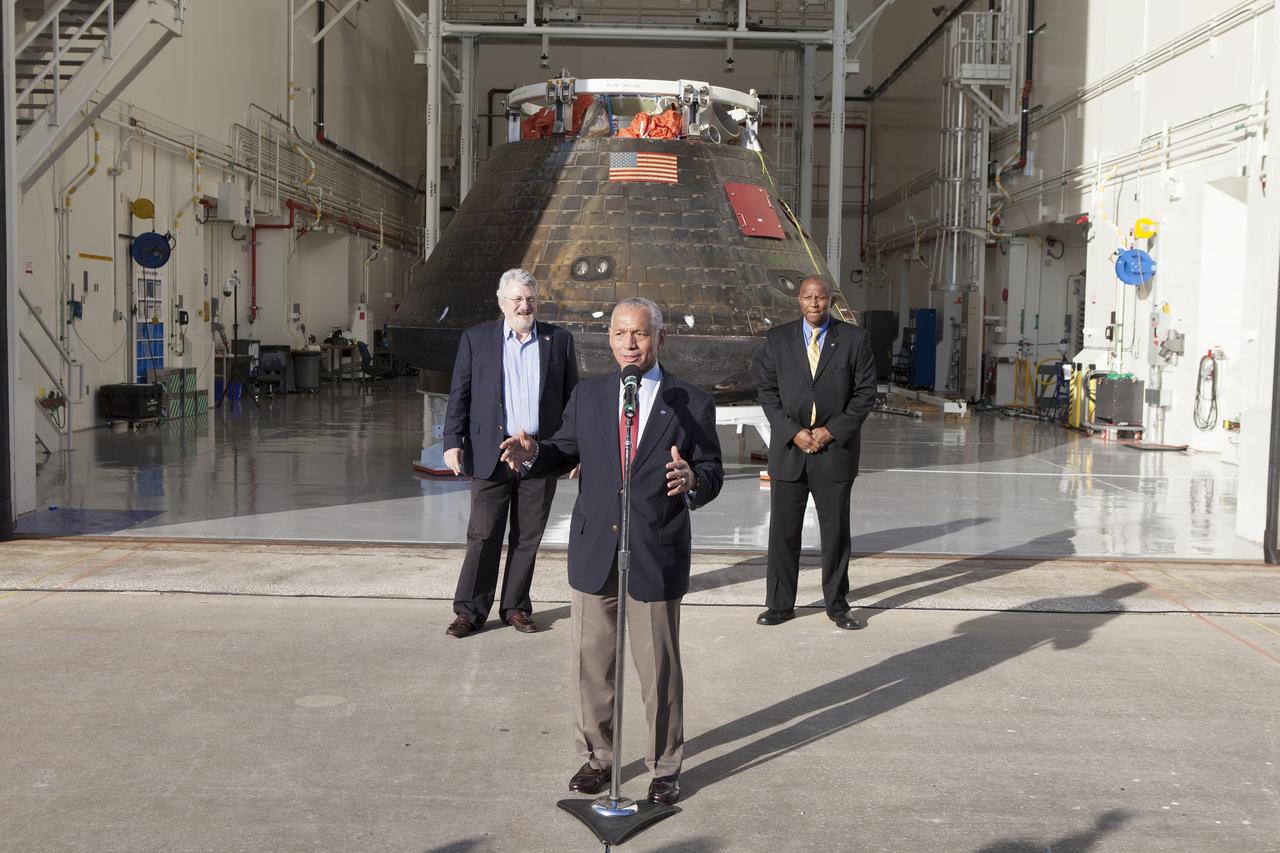
CAPE CANAVERAL, Fla. -- NASA Administrator Charlie Bolden looked over the agency's Orion spacecraft this morning for the first time since it returned to Kennedy Space Center following the successful Orion flight test on Dec. 5. At right is Kennedy Space Center Associate Director Kelvin Manning. At left is Paul Cooper, a Lockheed Martin manager. Bearing the marks of a spacecraft that has returned to Earth through a searing plunge into the atmosphere, Orion is perched on a pedestal inside the Launch Abort System Facility at Kennedy where it is going through post-mission processing. Although the spacecraft Bolden looked over did not fly with a crew aboard during the flight test, Orion is designed to carry astronauts into deep space in the future setting NASA and the nation firmly on the journey to Mars. Photo credit: NASA/Cory Huston
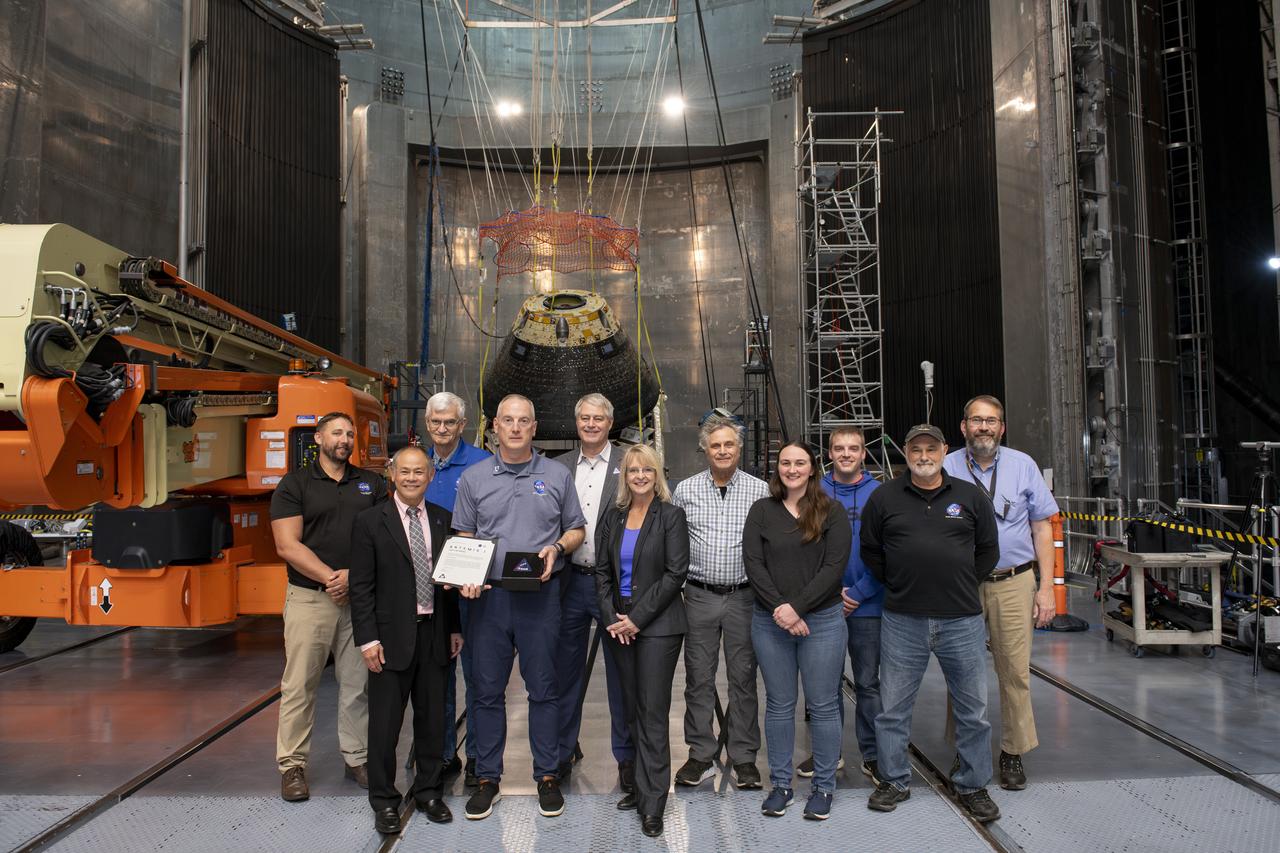
Employees supporting Artemis were invited to attend an appreciation event, “The Road to the Moon,” at Armstrong Test Facility in Sandusky, Ohio. Lockheed Martin presented an article flown on Artemis I to Robert Overy. Pictured from left to right: John Zang, Pho Nguyen, General David Stringer, Robert Overy, Paul Anderson, Debbie Korth, Aaron Horz, Emma Gaerke, Benjamin, Michael Henry and Mark Cmar. On Thursday, Nov. 21, please join NASA employees and support service contractors for Artemis Friends and Family Day. Employees had the opportunity to hear from center leadership and see the Orion module that flew around the Moon and back during 2022’s Artemis I mission. Experts have subjected the spacecraft to extreme conditions in Armstrong’s test facilities. This significant testing is slated to wrap up in December, and we want to give you a chance to see the capsule before the conclusion of the test campaign. Photo Credit: (NASA/Sara Lowthian-Hanna)
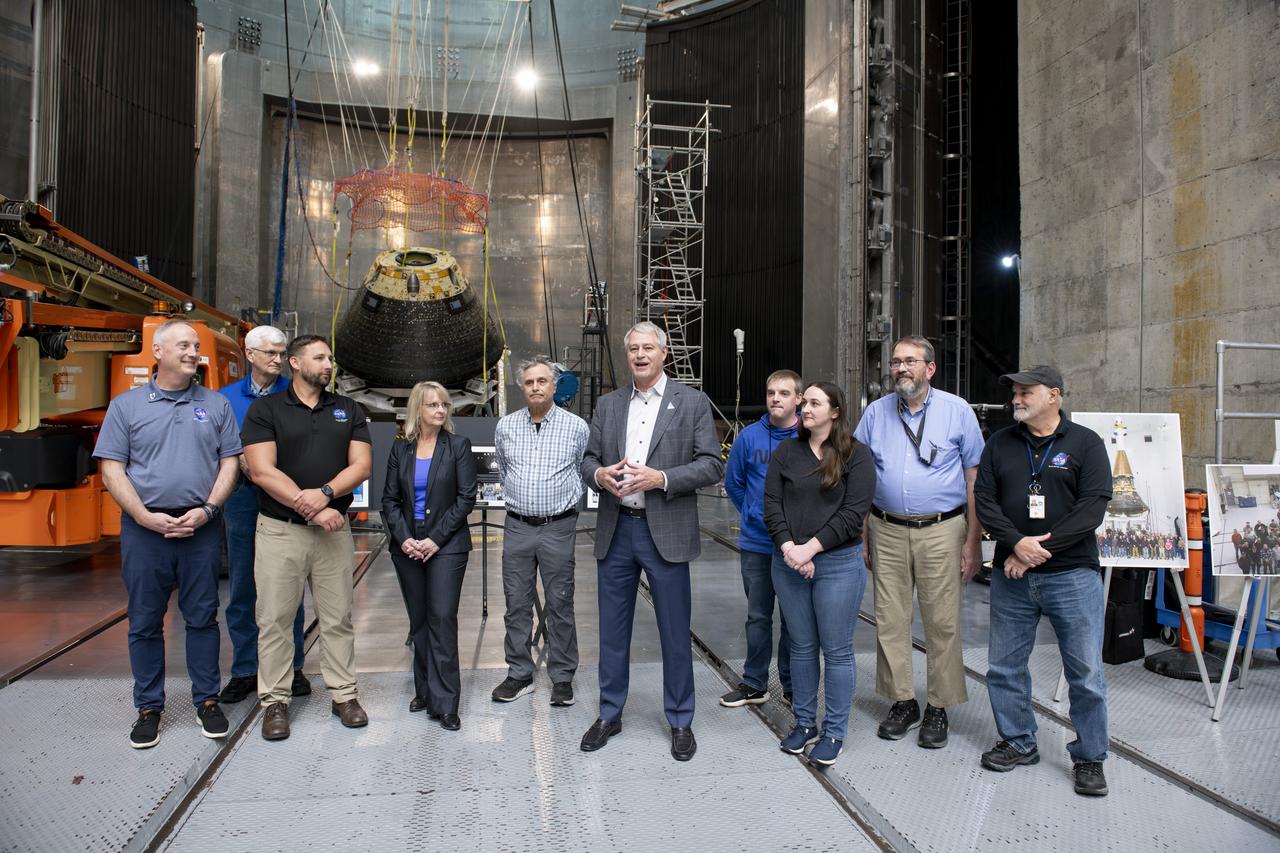
Employees supporting Artemis were invited to attend an appreciation event, “The Road to the Moon,” at Armstrong Test Facility in Sandusky, Ohio. Lockheed Martin presented an article flown on Artemis I to Robert Overy. Pictured from left to right: Robert Overy, General David Stringer, John Zang, Debbie Korth, Aaron Horz, Paul Anderson, Benjamin, Emma Gaerke, Mark Cmar and Michael Henry. On Thursday, Nov. 21, please join NASA employees and support service contractors for Artemis Friends and Family Day. Employees had the opportunity to hear from center leadership and see the Orion module that flew around the Moon and back during 2022’s Artemis I mission. Experts have subjected the spacecraft to extreme conditions in Armstrong’s test facilities. This significant testing is slated to wrap up in December, and we want to give you a chance to see the capsule before the conclusion of the test campaign. Photo Credit: (NASA/Sara Lowthian-Hanna)
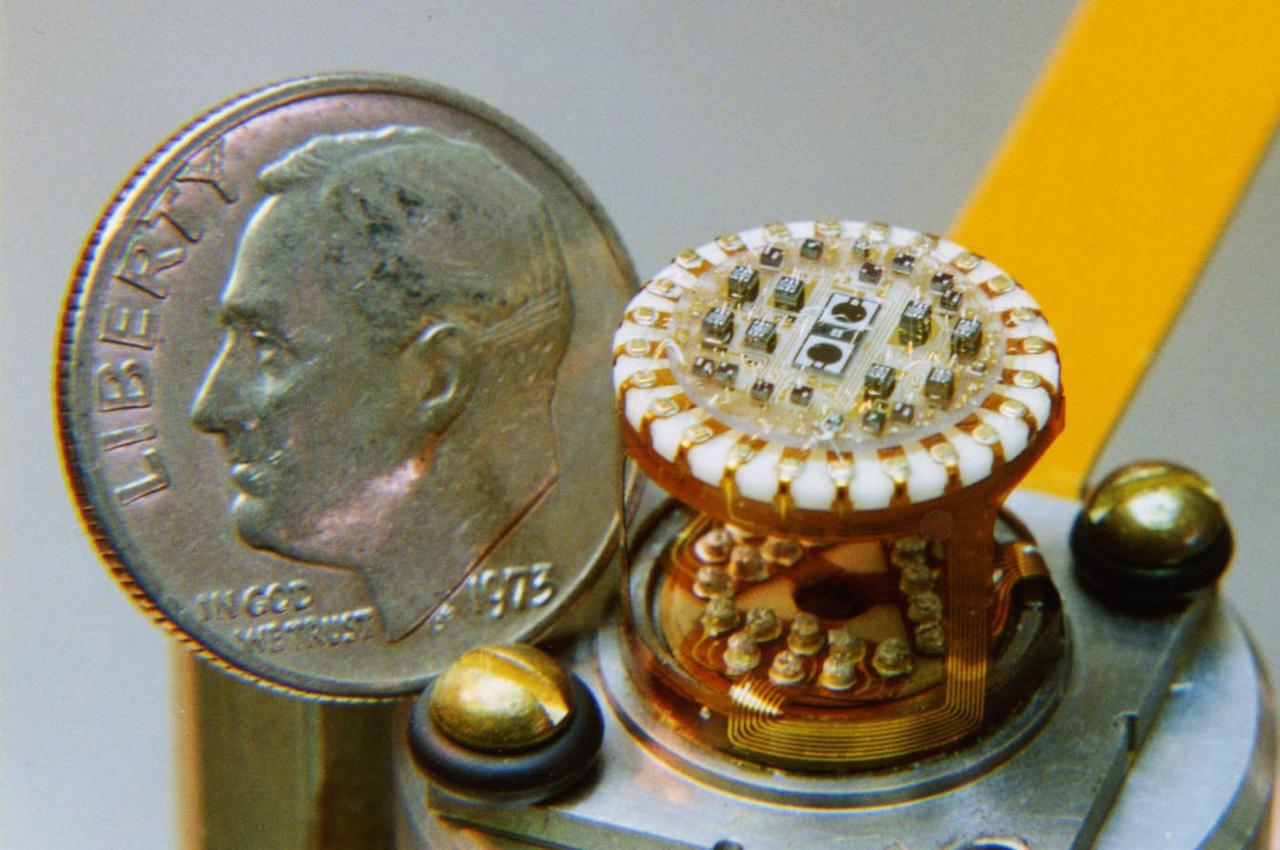
In this photo, the Gravity Probe B (GP-B) detector mount assembly is shown in comparison to the size of a dime. The assembly is used to detect exactly how much starlight is coming through different beams from the beam splitter in the telescope. The measurements from the tiny chips inside are what keeps GP-B aimed at the guide star. The GP-B is the relativity experiment developed at Stanford University to test two extraordinary predictions of Albert Einstein’s general theory of relativity. The experiment will measure, very precisely, the expected tiny changes in the direction of the spin axes of four gyroscopes contained in an Earth-orbiting satellite at a 400-mile altitude. So free are the gyroscopes from disturbance that they will provide an almost perfect space-time reference system. They will measure how space and time are very slightly warped by the presence of the Earth, and, more profoundly, how the Earth’s rotation very slightly drags space-time around with it. These effects, though small for the Earth, have far-reaching implications for the nature of matter and the structure of the Universe. GP-B is among the most thoroughly researched programs ever undertaken by NASA. This is the story of a scientific quest in which physicists and engineers have collaborated closely over many years. Inspired by their quest, they have invented a whole range of technologies that are already enlivening other branches of science and engineering. Launched April 20, 2004 , the GP-B program was managed for NASA by the Marshall Space Flight Center. Development of the GP-B is the responsibility of Stanford University along with major subcontractor Lockheed Martin Corporation. (Image credit to Paul Ehrensberger, Stanford University.)