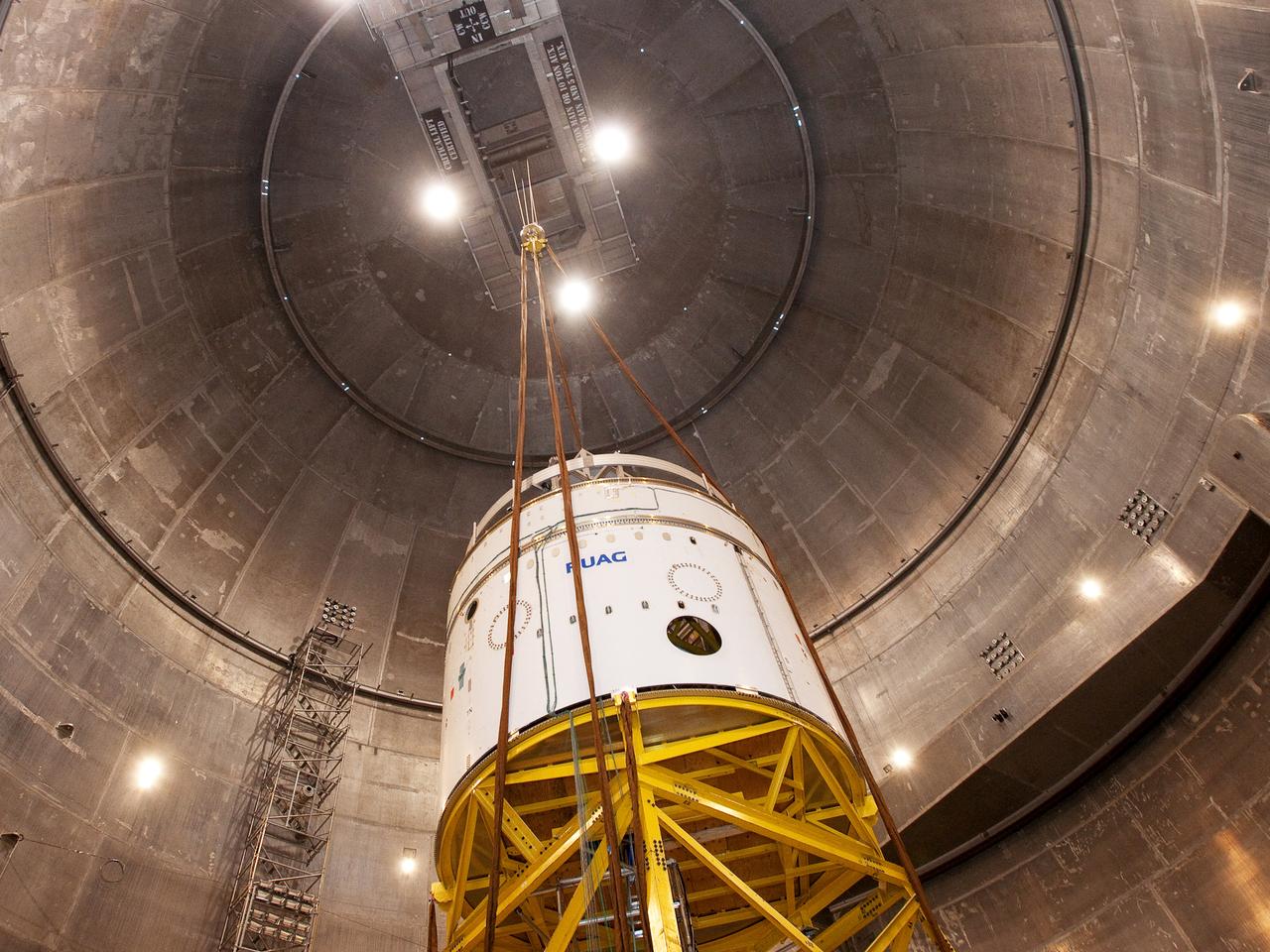
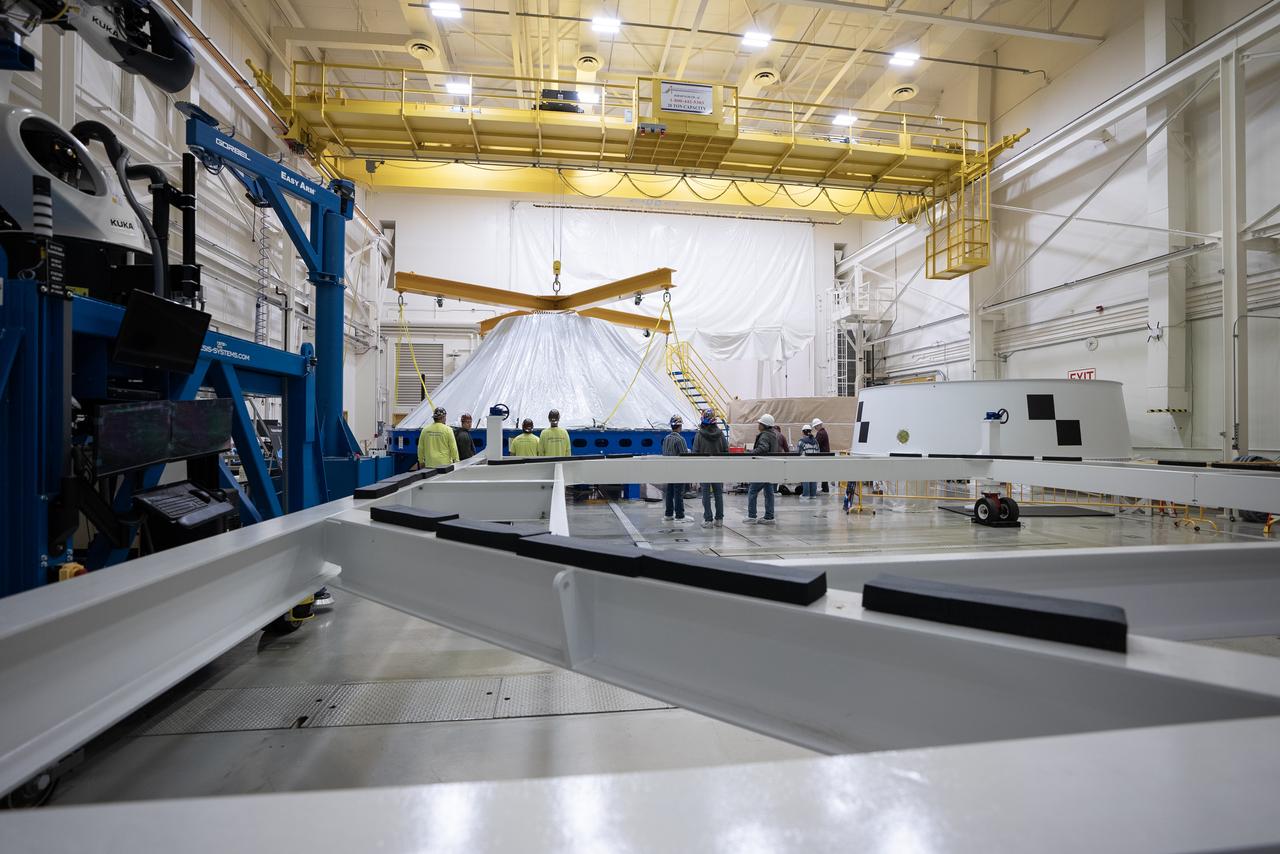
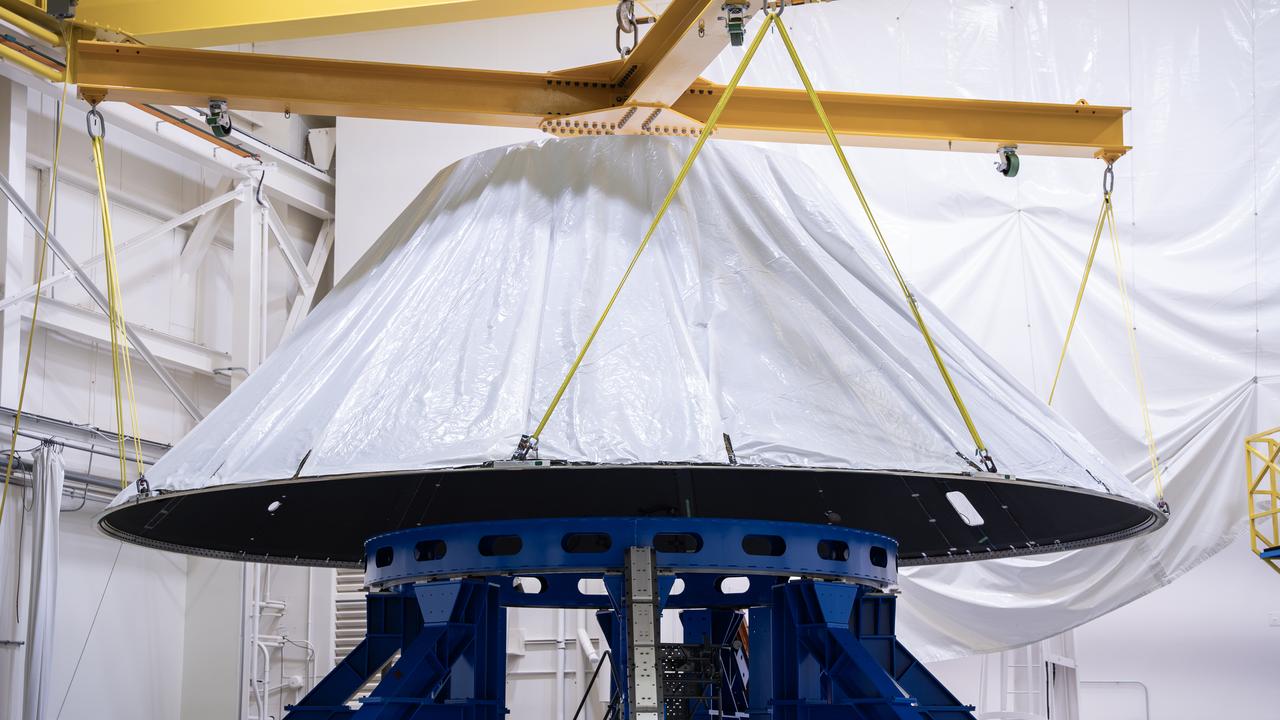
NASA Glenn conducted a test on the Ariane 5 Payload Fairing at Plum Brook’s Space Power Facility (SPF). The test was to qualify a new horizontal pyrotechnic separation system, which blew the two fairing halves apart and away from the payload during flight.

Dwight Mosby, Payload Operations Mission Division Manager, welcomes scientists and engineers from around the world as they participate in the annual Payload Operations and Integration Working Group meeting held Oct. 20-21. The event offers payload developers, investigators and project managers the opportunity to coordinate processes and schedules and to review the status of scientific payloads currently on or soon launching to the International Space Station. The gathering, hosted by NASA Marshall’s Payload Operations and Integration Center, was held virtually. The POIC is mission control for science on the International Space Station.
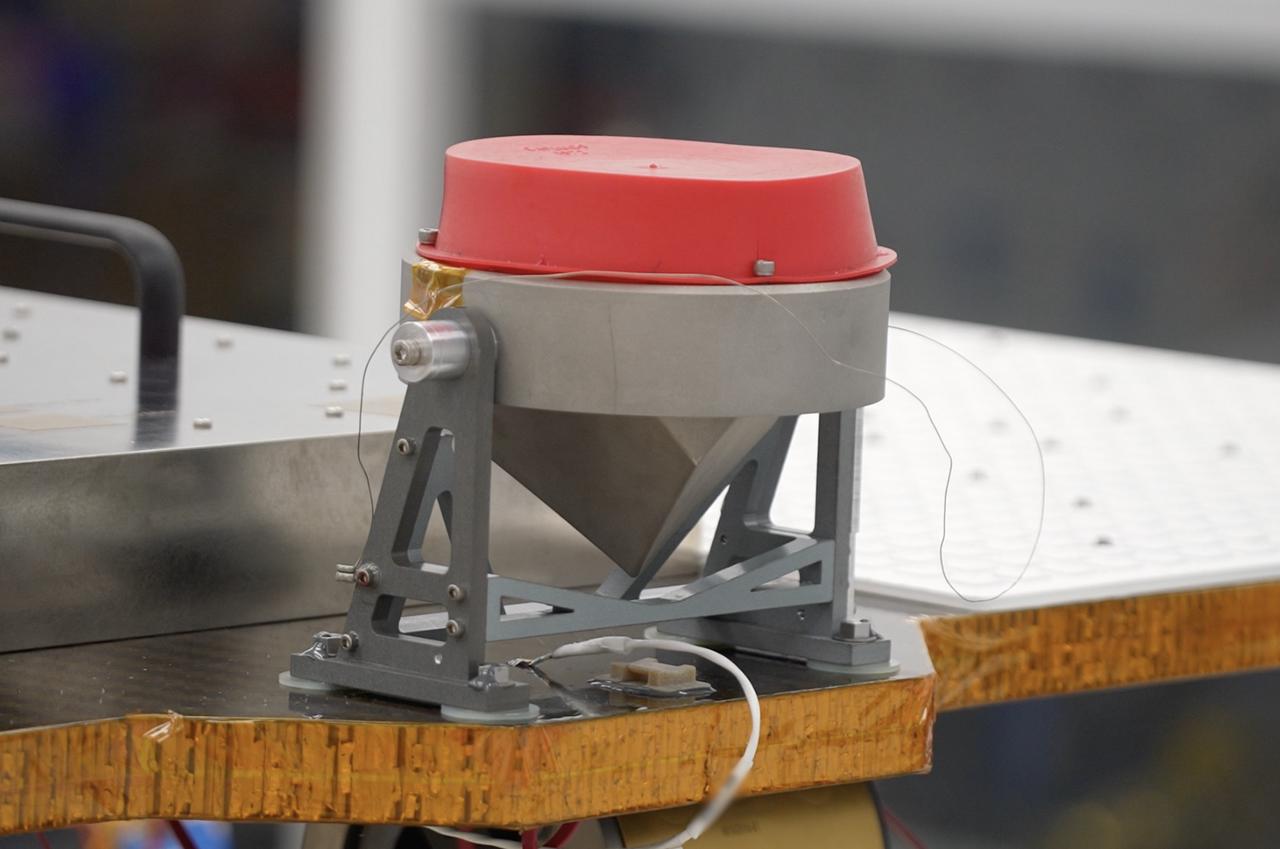
A science instrument flying aboard the next delivery for NASA’s CLPS (Commercial Lunar Payload Services) initiative is expected to significantly expand our knowledge of the Moon. Next Generation Lunar Retroreflector, or NGLR-1, is one of 10 payloads set to be carried to the Moon by the Blue Ghost 1 lunar lander in 2025. Developed by the University of Maryland in College Park, NGLR-1 is designed to reflect very short laser pulses from Earth-based lunar laser ranging observatories using a retroreflector, or a mirror designed to reflect the incoming light back in the same incoming direction. Investigations and demonstrations, such as NGLR-1, launched on CLPS flights will help NASA study Earth’s nearest neighbor under Artemis and pave the way for future crewed missions on the Moon. NASA’s Marshall Space Flight Center in Huntsville, Alabama, manages the development for seven of the 10 CLPS payloads that will be carried on Firefly’s Blue Ghost lunar lander.
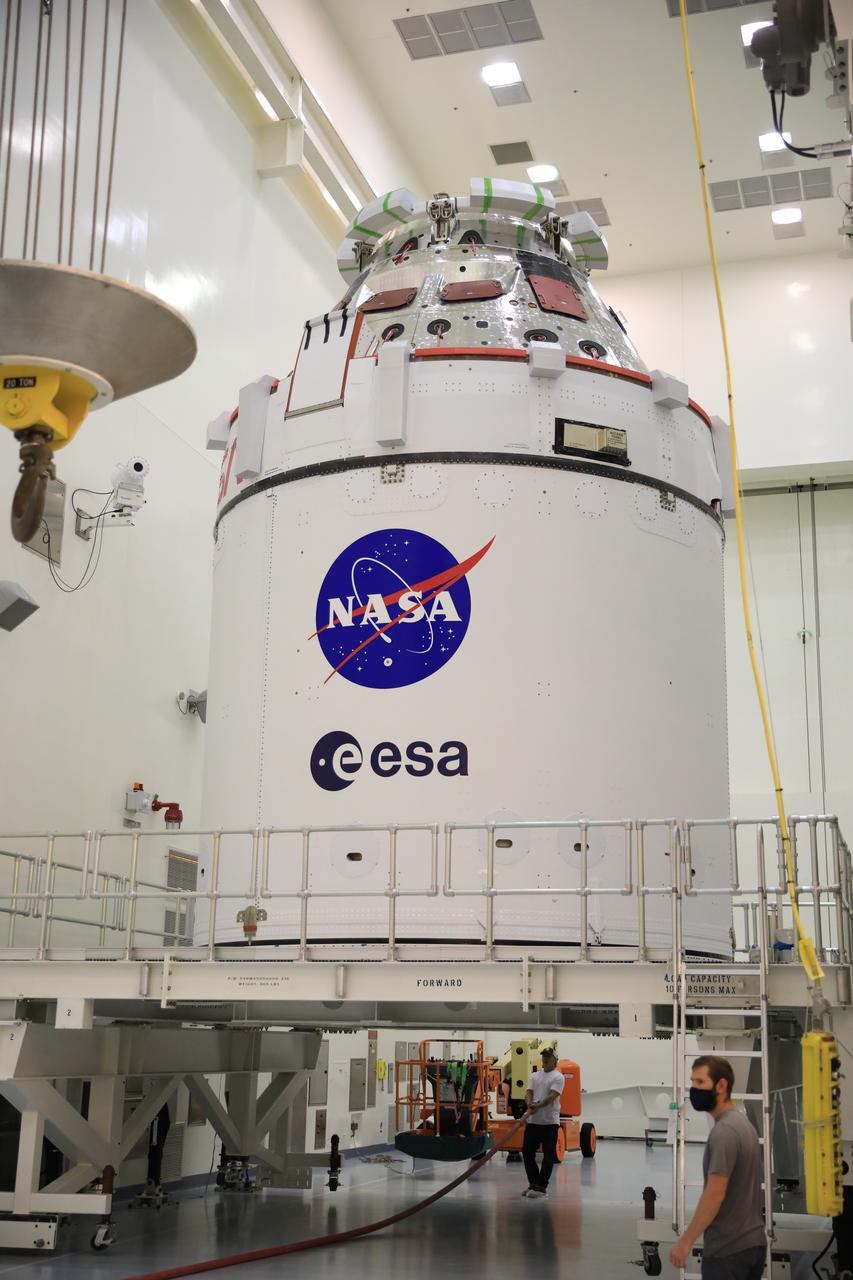
Fueling and servicing checks on the Orion spacecraft for the Artemis I mission are completed inside Kennedy Space Center’s Multi-Payload Processing Facility on July 8, 2021. The capsule will be transported to the Florida spaceport’s Launch Abort System Facility, where teams with Exploration Ground Systems and contractor Jacobs will work to add parts of the launch abort system onto the spacecraft. Launching later this year, Artemis I will be a test of the Orion spacecraft and SLS rocket as an integrated system ahead of crewed flights to the Moon.
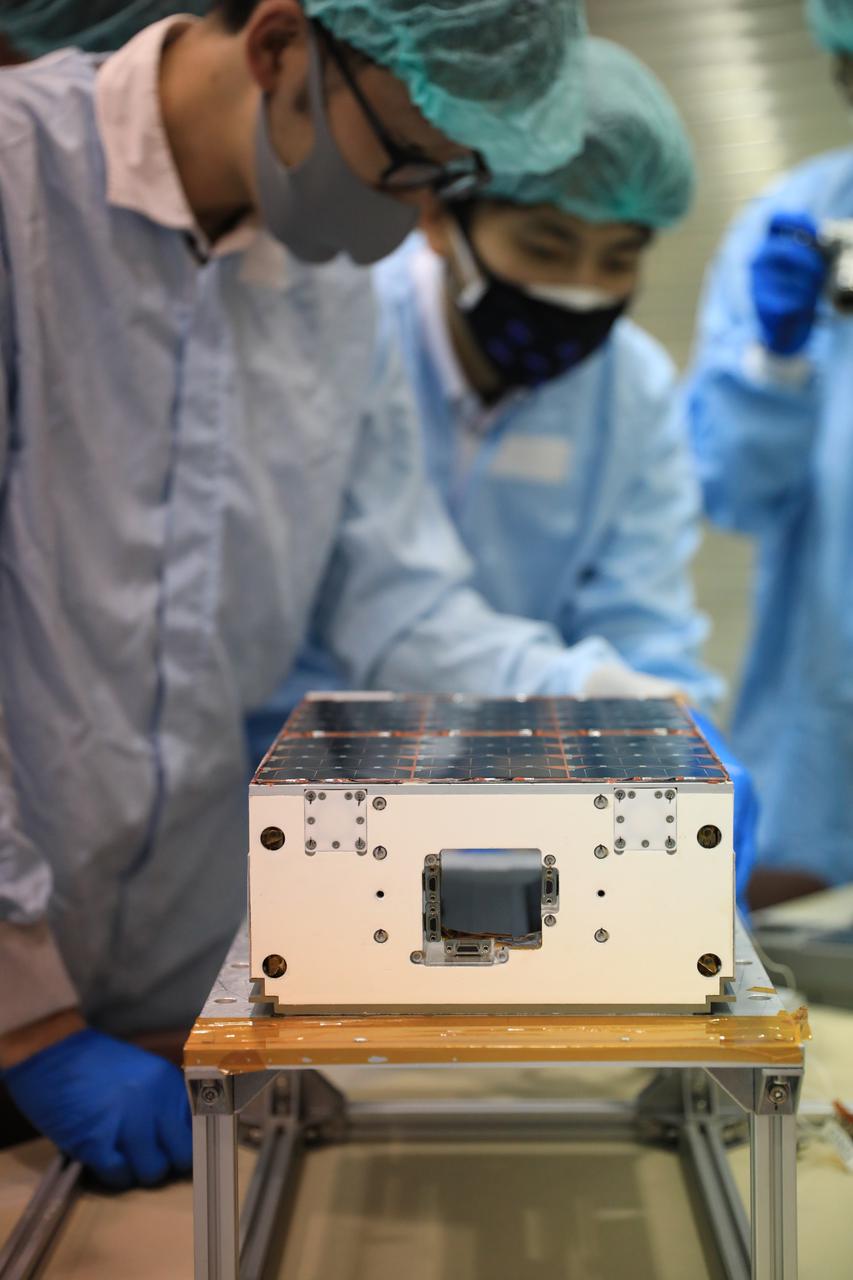
Teams worked on the final processing of their payloads that will fly aboard Artemis I. Housed within the Orion stage adapter, the satellites – called CubeSats – are roughly the size of a large shoe box and weigh no more than 30 pounds. Despite their small size, they enable science and technology experiments that may enhance our understanding of the deep space environment, expand our knowledge of the Moon, and demonstrate new technologies that could be used on future missions.
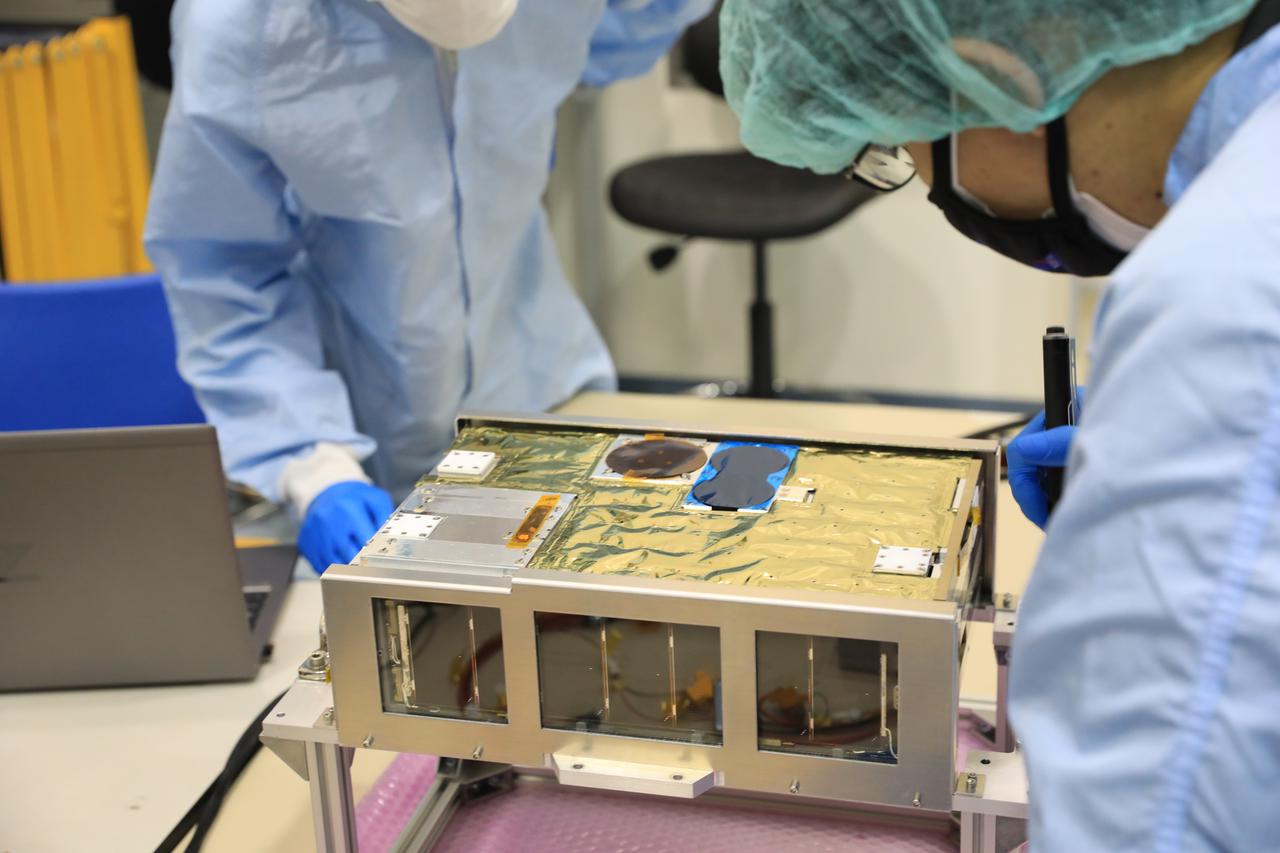
Teams worked on the final processing of their payloads that will fly aboard Artemis I. Housed within the Orion stage adapter, the satellites – called CubeSats – are roughly the size of a large shoe box and weigh no more than 30 pounds. Despite their small size, they enable science and technology experiments that may enhance our understanding of the deep space environment, expand our knowledge of the Moon, and demonstrate new technologies that could be used on future missions.
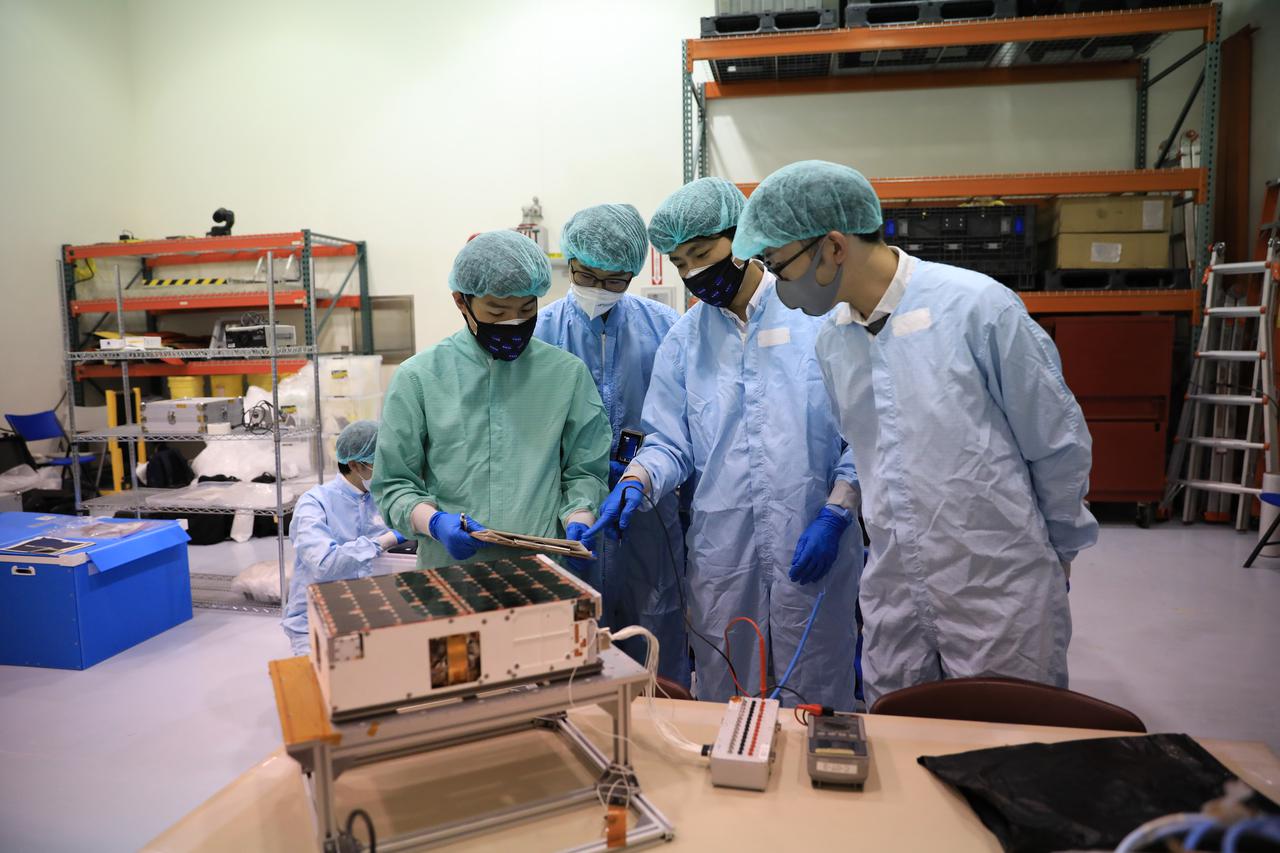
Teams worked on the final processing of their payloads that will fly aboard Artemis I. Housed within the Orion stage adapter, the satellites – called CubeSats – are roughly the size of a large shoe box and weigh no more than 30 pounds. Despite their small size, they enable science and technology experiments that may enhance our understanding of the deep space environment, expand our knowledge of the Moon, and demonstrate new technologies that could be used on future missions.
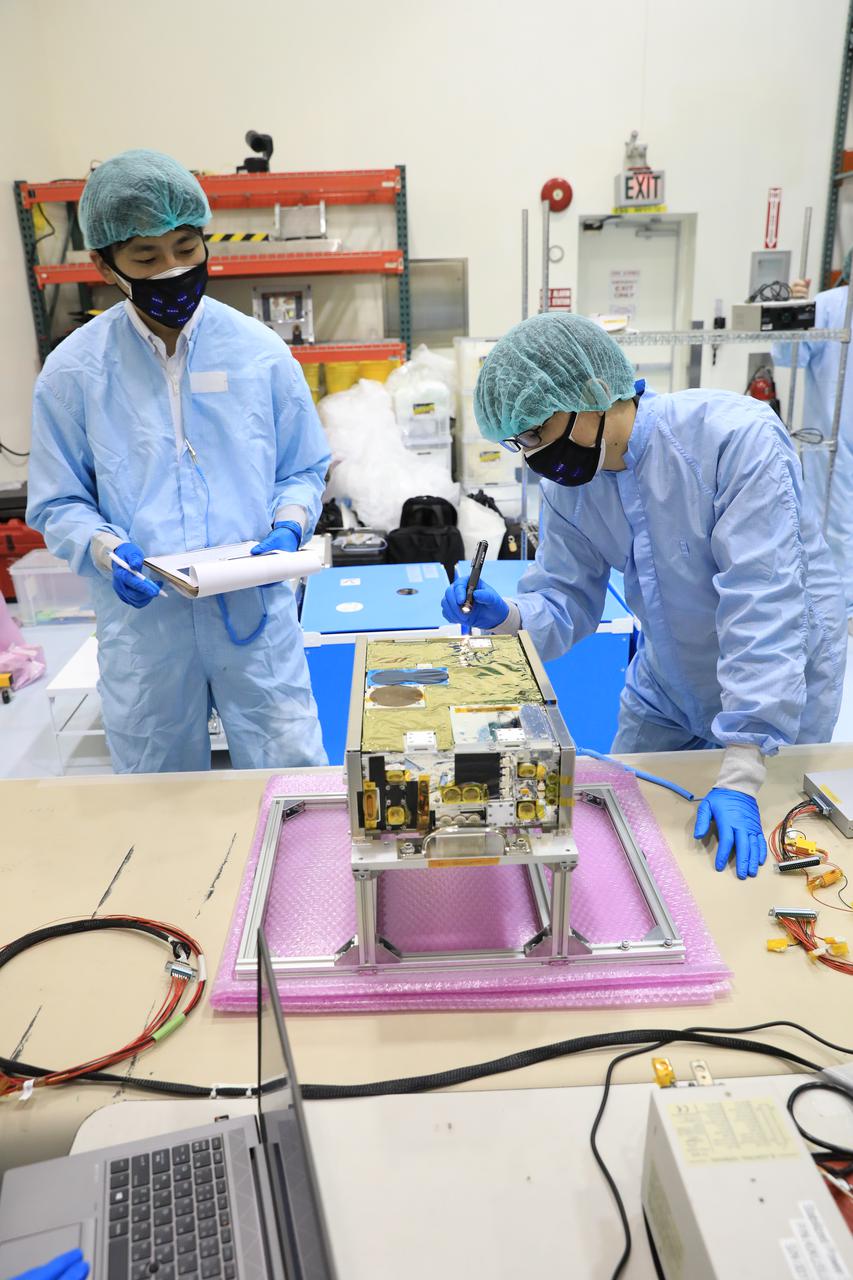
Teams worked on the final processing of their payloads that will fly aboard Artemis I. Housed within the Orion stage adapter, the satellites – called CubeSats – are roughly the size of a large shoe box and weigh no more than 30 pounds. Despite their small size, they enable science and technology experiments that may enhance our understanding of the deep space environment, expand our knowledge of the Moon, and demonstrate new technologies that could be used on future missions.
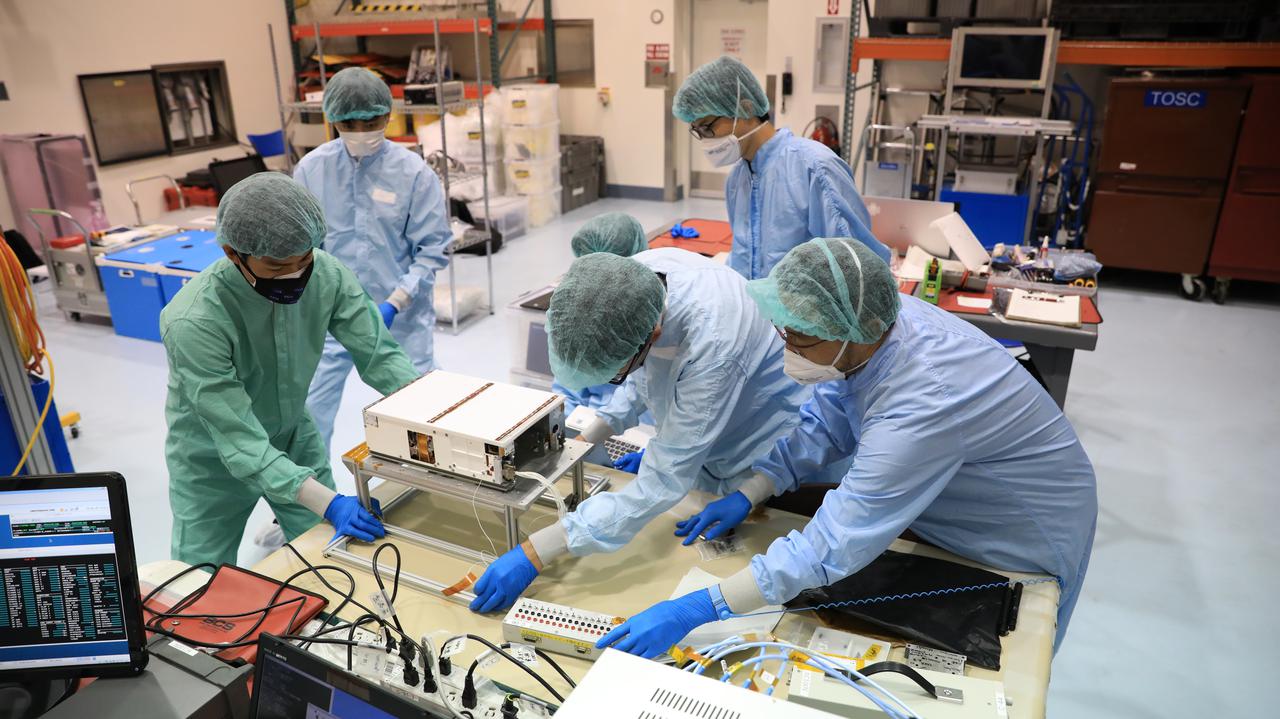
Teams worked on the final processing of their payloads that will fly aboard Artemis I. Housed within the Orion stage adapter, the satellites – called CubeSats – are roughly the size of a large shoe box and weigh no more than 30 pounds. Despite their small size, they enable science and technology experiments that may enhance our understanding of the deep space environment, expand our knowledge of the Moon, and demonstrate new technologies that could be used on future missions.
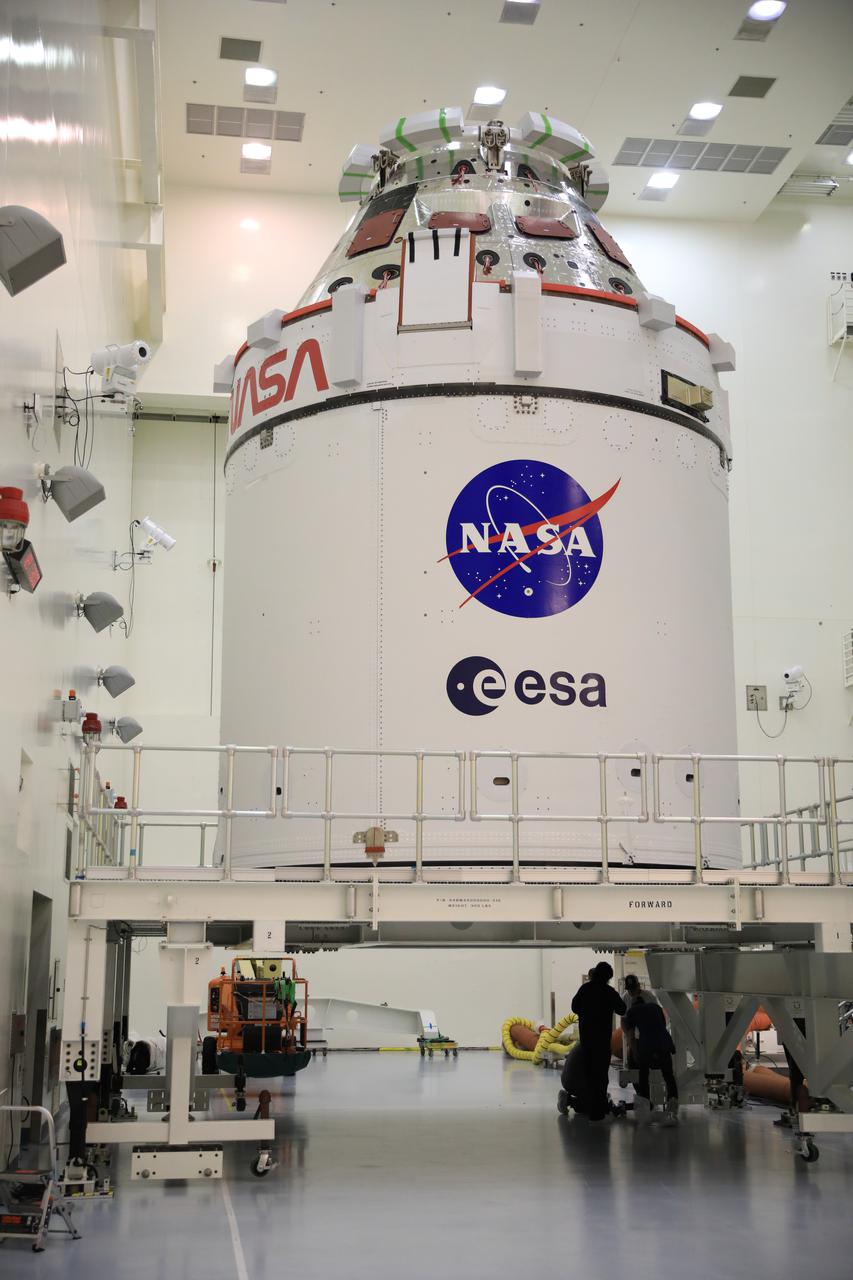
Fueling and servicing checks on the Orion spacecraft for the Artemis I mission are completed inside Kennedy Space Center’s Multi-Payload Processing Facility on July 8, 2021. The capsule will be transported to the Florida spaceport’s Launch Abort System Facility, where teams with Exploration Ground Systems and contractor Jacobs will work to add parts of the launch abort system onto the spacecraft. Launching later this year, Artemis I will be a test of the Orion spacecraft and SLS rocket as an integrated system ahead of crewed flights to the Moon.
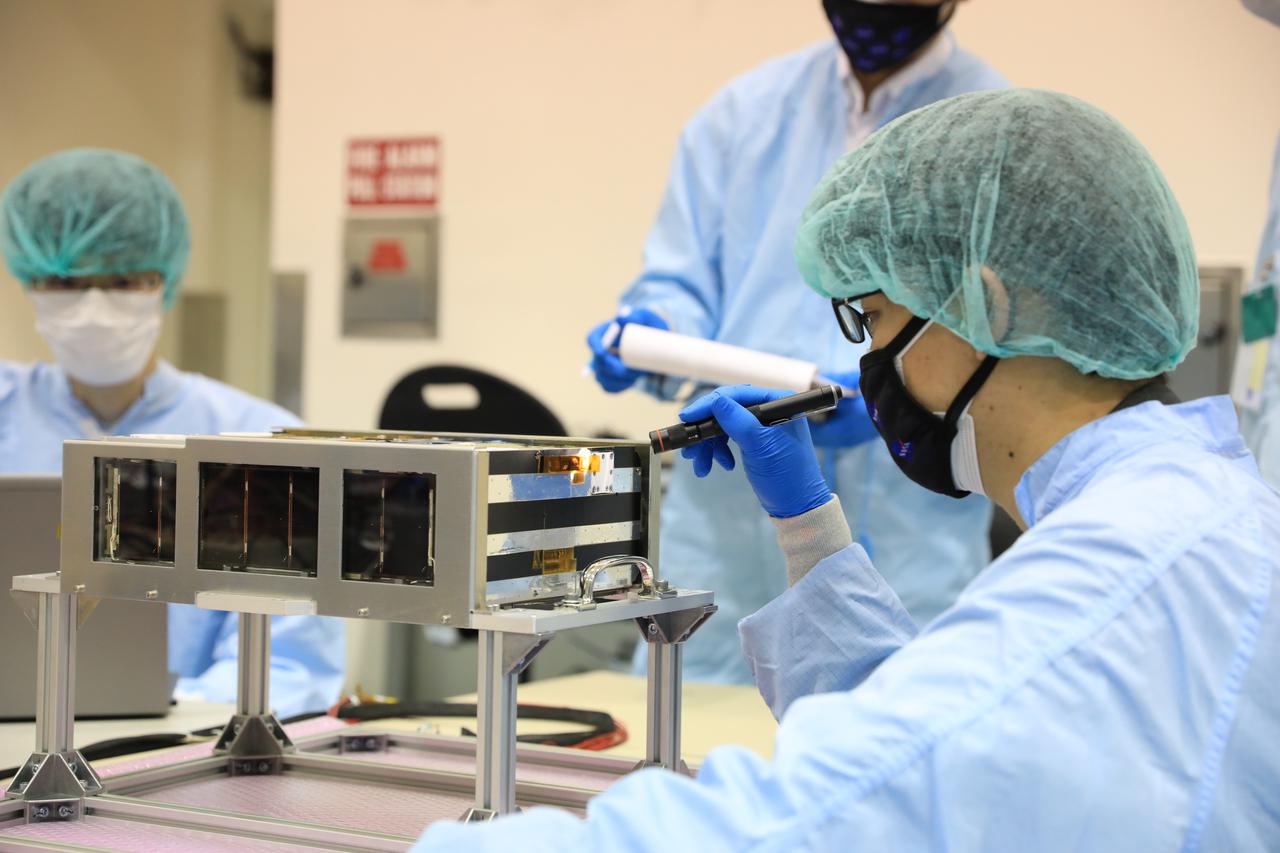
Teams worked on the final processing of their payloads that will fly aboard Artemis I. Housed within the Orion stage adapter, the satellites – called CubeSats – are roughly the size of a large shoe box and weigh no more than 30 pounds. Despite their small size, they enable science and technology experiments that may enhance our understanding of the deep space environment, expand our knowledge of the Moon, and demonstrate new technologies that could be used on future missions.
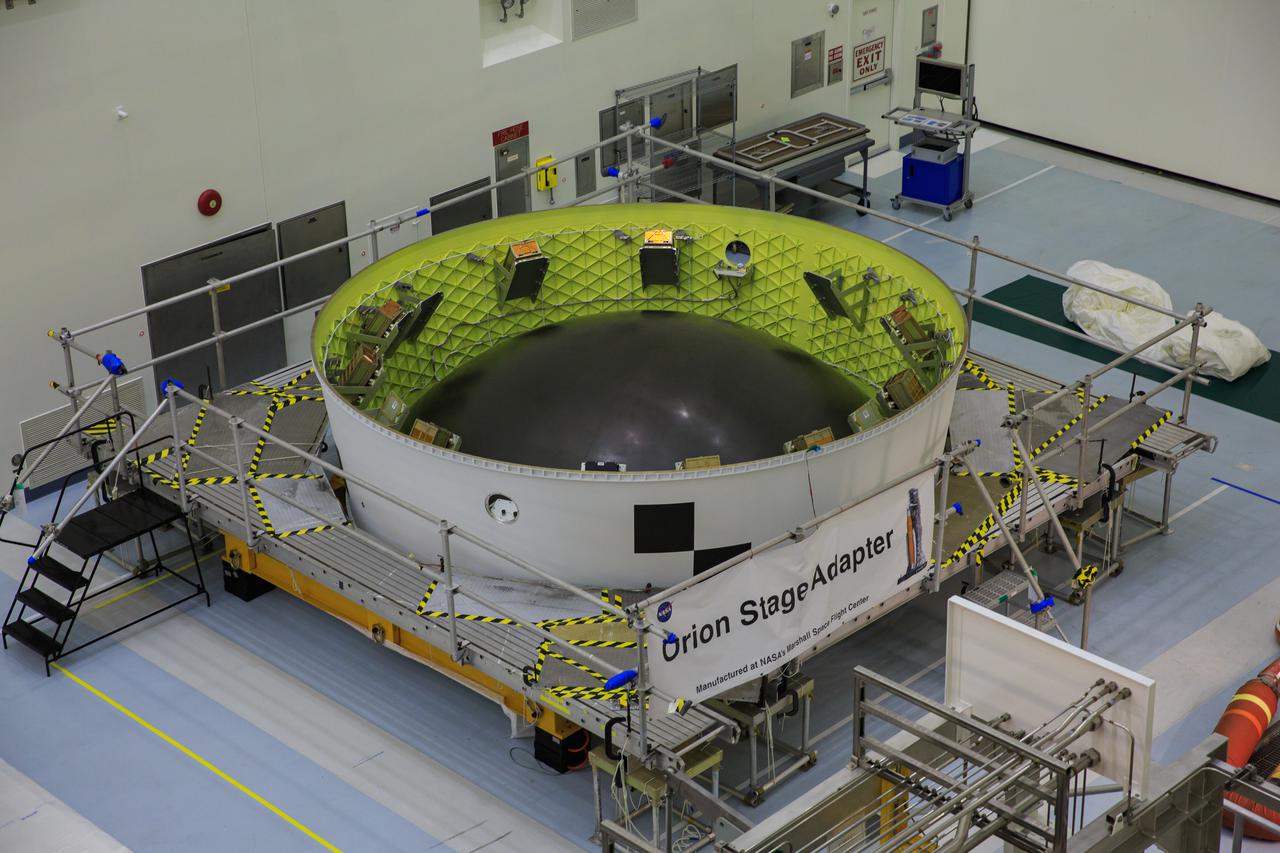
Small satellites, called CubeSats, are shown secured inside NASA’s Orion stage adapter at NASA’s Kennedy Space Center in Florida on Aug. 5, 2021. Technicians from Exploration Ground Systems and Jacobs teams are working with developers of the shoebox-sized secondary payloads as they undergo final processing. The ring-shaped stage adapter will be connected to the Space Launch System’s Interim Cryogenic Propulsion Stage, and the Orion spacecraft will be secured on top. The CubeSats will conduct a variety of science experiments and technology demonstrations that will expand our knowledge of the lunar surface during the Artemis I mission.

Small satellites, called CubeSats, are shown secured inside NASA’s Orion stage adapter at NASA’s Kennedy Space Center in Florida on Aug. 5, 2021. Technicians from Exploration Ground Systems and Jacobs teams are working with developers of the shoebox-sized secondary payloads as they undergo final processing. The ring-shaped stage adapter will be connected to the Space Launch System’s Interim Cryogenic Propulsion Stage, and the Orion spacecraft will be secured on top. The CubeSats will conduct a variety of science experiments and technology demonstrations that will expand our knowledge of the lunar surface during the Artemis I mission.
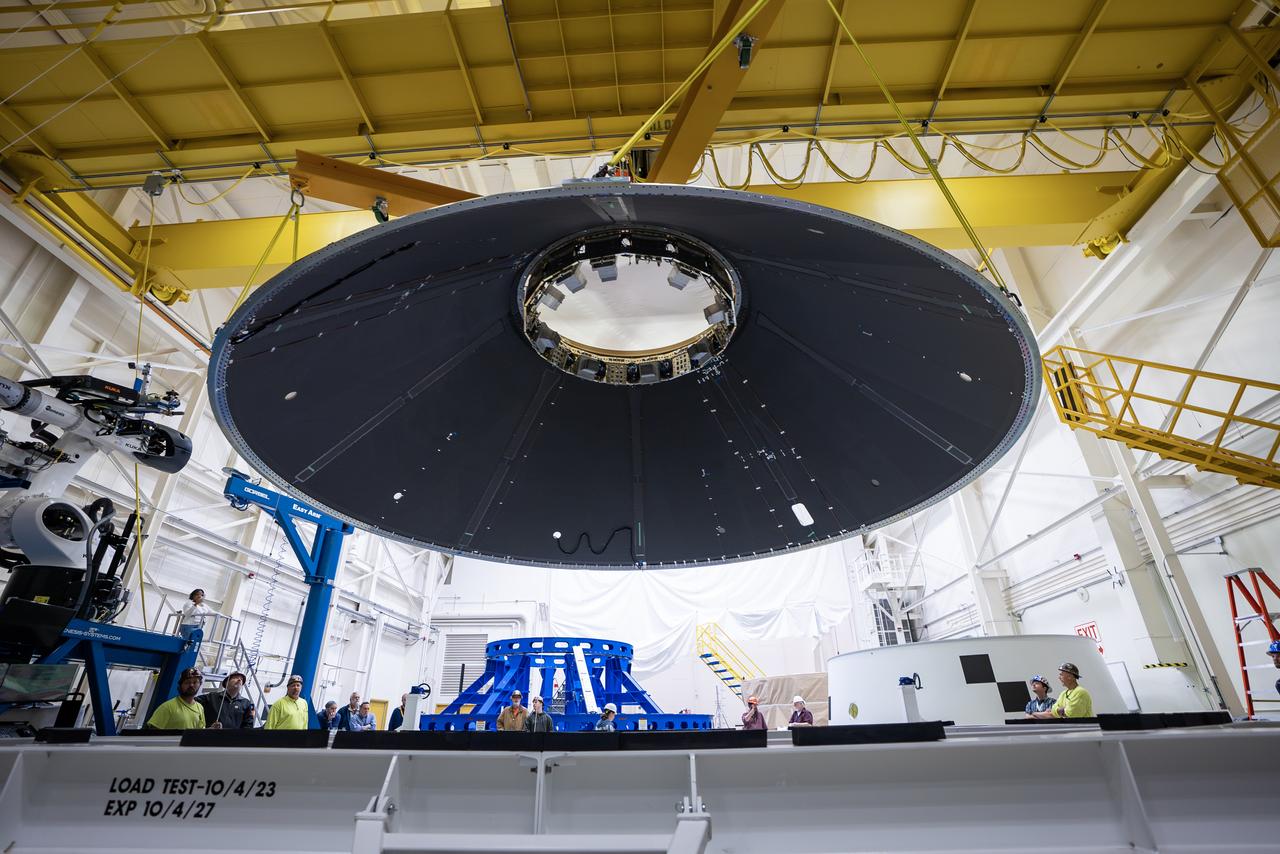
These photos and videos show how NASA manufactured and prepared to transport the payload adapter in February inside Building 4708 at NASA’s Marshall Space Flight Center in Huntsville, Alabama. Prior to moving the hardware for testing, teams installed the New Explorations Secondary Transport component, called the NEST, into the top of the engineering development unit. The NEST component will allow the hardware to hold a series of secondary payloads, or small satellites. The cone-shaped payload adapter is about 8.5 feet tall and features two metal rings and eight composite panels. The adapter, which will debut on NASA’s Artemis IV mission, is an evolution from the Orion stage adapter used in the Block 1 configuration of the rocket for the first three Artemis missions. It will be housed inside the universal stage adapter atop the rocket’s more powerful in-space stage, called the exploration upper stage. The payload adapter, like the launch vehicle stage adapter and the Orion stage adapter, is fully manufactured and tested at Marshall, which manages the SLS Program. NASA is working to land the first woman, first person of color, and its first international partner astronaut on the Moon under Artemis. SLS is part of NASA’s backbone for deep space exploration, along with the Orion spacecraft and Gateway in orbit around the Moon and commercial human landing systems, next-generational spacesuits, and rovers on the lunar surface. SLS is the only rocket that can send Orion, astronauts, and supplies to the Moon in a single launch.
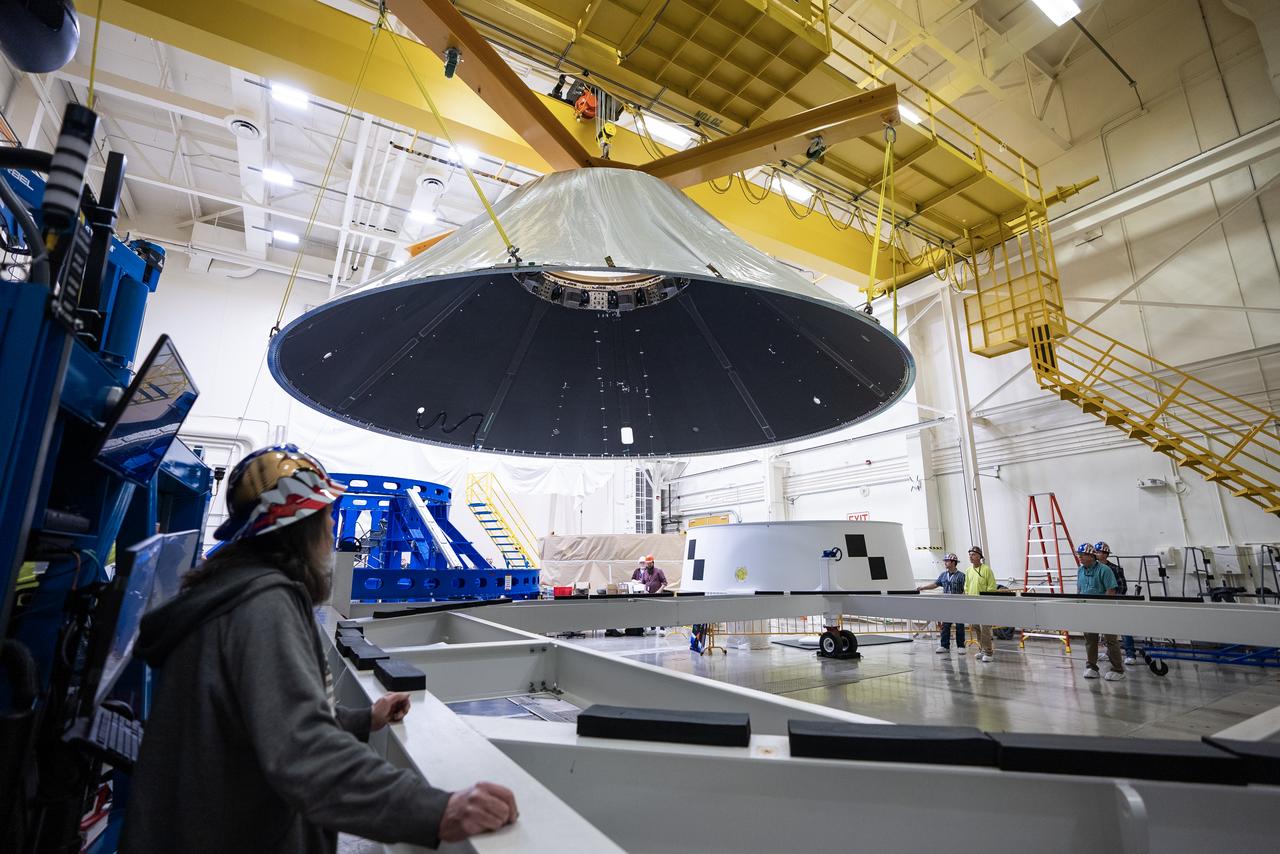
These photos and videos show how NASA manufactured and prepared to transport the payload adapter in February inside Building 4708 at NASA’s Marshall Space Flight Center in Huntsville, Alabama. Prior to moving the hardware for testing, teams installed the New Explorations Secondary Transport component, called the NEST, into the top of the engineering development unit. The NEST component will allow the hardware to hold a series of secondary payloads, or small satellites. The cone-shaped payload adapter is about 8.5 feet tall and features two metal rings and eight composite panels. The adapter, which will debut on NASA’s Artemis IV mission, is an evolution from the Orion stage adapter used in the Block 1 configuration of the rocket for the first three Artemis missions. It will be housed inside the universal stage adapter atop the rocket’s more powerful in-space stage, called the exploration upper stage. The payload adapter, like the launch vehicle stage adapter and the Orion stage adapter, is fully manufactured and tested at Marshall, which manages the SLS Program. NASA is working to land the first woman, first person of color, and its first international partner astronaut on the Moon under Artemis. SLS is part of NASA’s backbone for deep space exploration, along with the Orion spacecraft and Gateway in orbit around the Moon and commercial human landing systems, next-generational spacesuits, and rovers on the lunar surface. SLS is the only rocket that can send Orion, astronauts, and supplies to the Moon in a single launch.
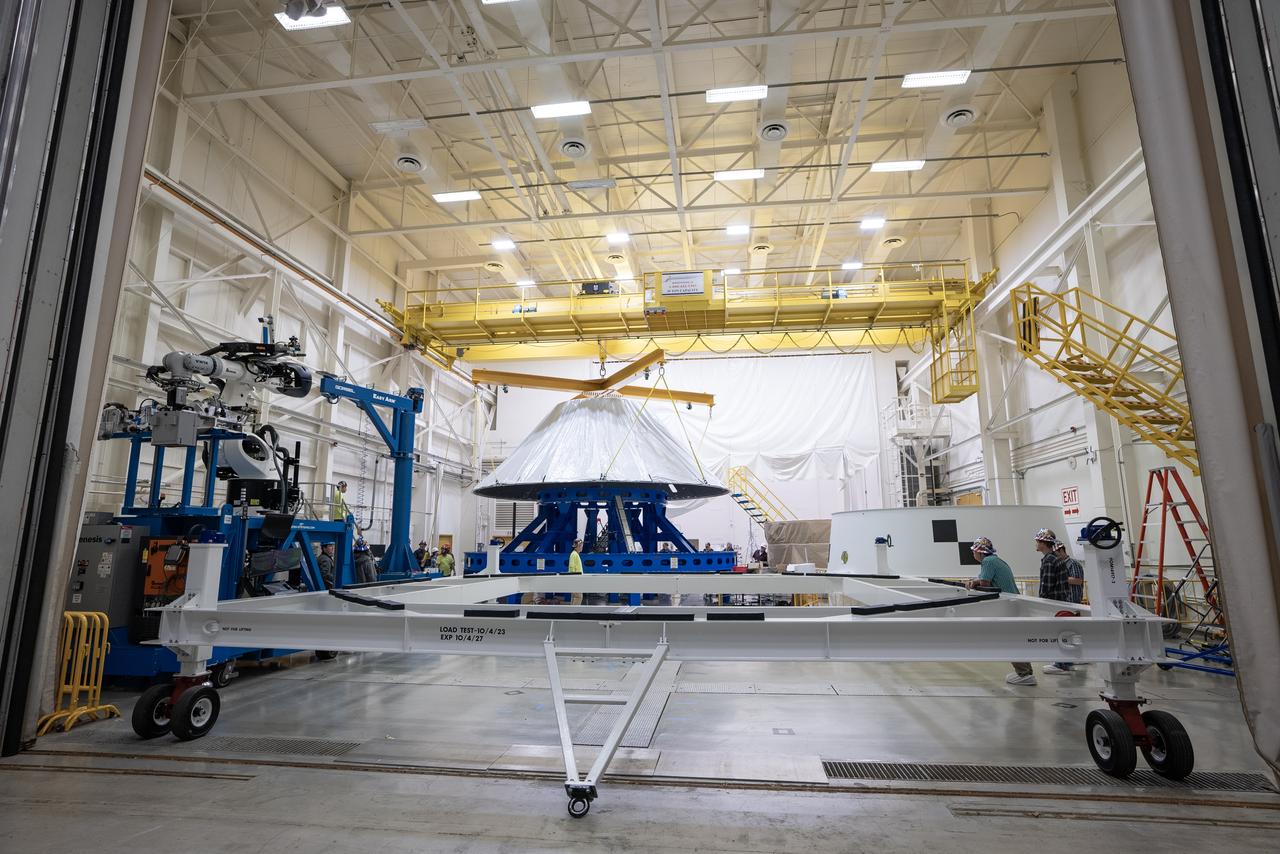
These photos and videos show how NASA manufactured and prepared to transport the payload adapter in February inside Building 4708 at NASA’s Marshall Space Flight Center in Huntsville, Alabama. Prior to moving the hardware for testing, teams installed the New Explorations Secondary Transport component, called the NEST, into the top of the engineering development unit. The NEST component will allow the hardware to hold a series of secondary payloads, or small satellites. The cone-shaped payload adapter is about 8.5 feet tall and features two metal rings and eight composite panels. The adapter, which will debut on NASA’s Artemis IV mission, is an evolution from the Orion stage adapter used in the Block 1 configuration of the rocket for the first three Artemis missions. It will be housed inside the universal stage adapter atop the rocket’s more powerful in-space stage, called the exploration upper stage. The payload adapter, like the launch vehicle stage adapter and the Orion stage adapter, is fully manufactured and tested at Marshall, which manages the SLS Program. NASA is working to land the first woman, first person of color, and its first international partner astronaut on the Moon under Artemis. SLS is part of NASA’s backbone for deep space exploration, along with the Orion spacecraft and Gateway in orbit around the Moon and commercial human landing systems, next-generational spacesuits, and rovers on the lunar surface. SLS is the only rocket that can send Orion, astronauts, and supplies to the Moon in a single launch.
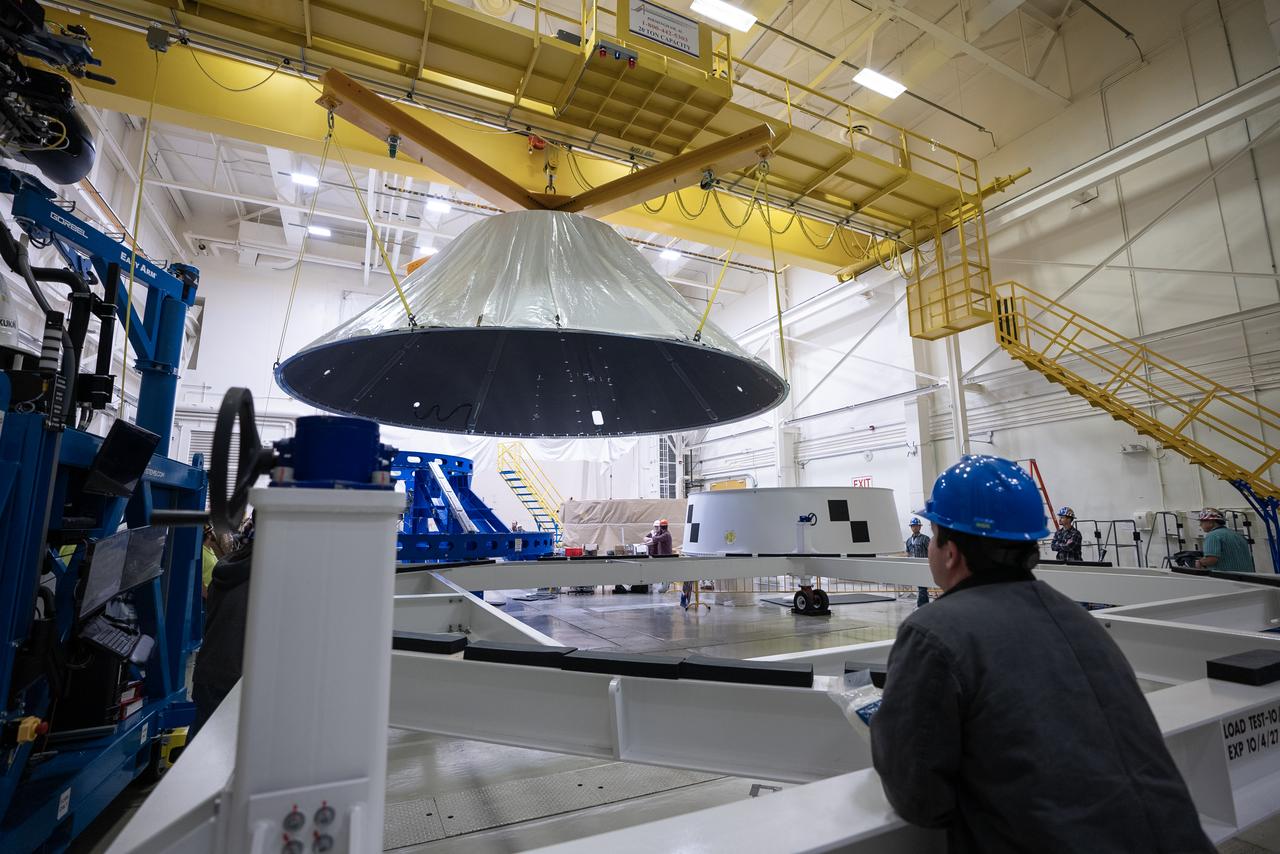
These photos and videos show how NASA manufactured and prepared to transport the payload adapter in February inside Building 4708 at NASA’s Marshall Space Flight Center in Huntsville, Alabama. Prior to moving the hardware for testing, teams installed the New Explorations Secondary Transport component, called the NEST, into the top of the engineering development unit. The NEST component will allow the hardware to hold a series of secondary payloads, or small satellites. The cone-shaped payload adapter is about 8.5 feet tall and features two metal rings and eight composite panels. The adapter, which will debut on NASA’s Artemis IV mission, is an evolution from the Orion stage adapter used in the Block 1 configuration of the rocket for the first three Artemis missions. It will be housed inside the universal stage adapter atop the rocket’s more powerful in-space stage, called the exploration upper stage. The payload adapter, like the launch vehicle stage adapter and the Orion stage adapter, is fully manufactured and tested at Marshall, which manages the SLS Program. NASA is working to land the first woman, first person of color, and its first international partner astronaut on the Moon under Artemis. SLS is part of NASA’s backbone for deep space exploration, along with the Orion spacecraft and Gateway in orbit around the Moon and commercial human landing systems, next-generational spacesuits, and rovers on the lunar surface. SLS is the only rocket that can send Orion, astronauts, and supplies to the Moon in a single launch.
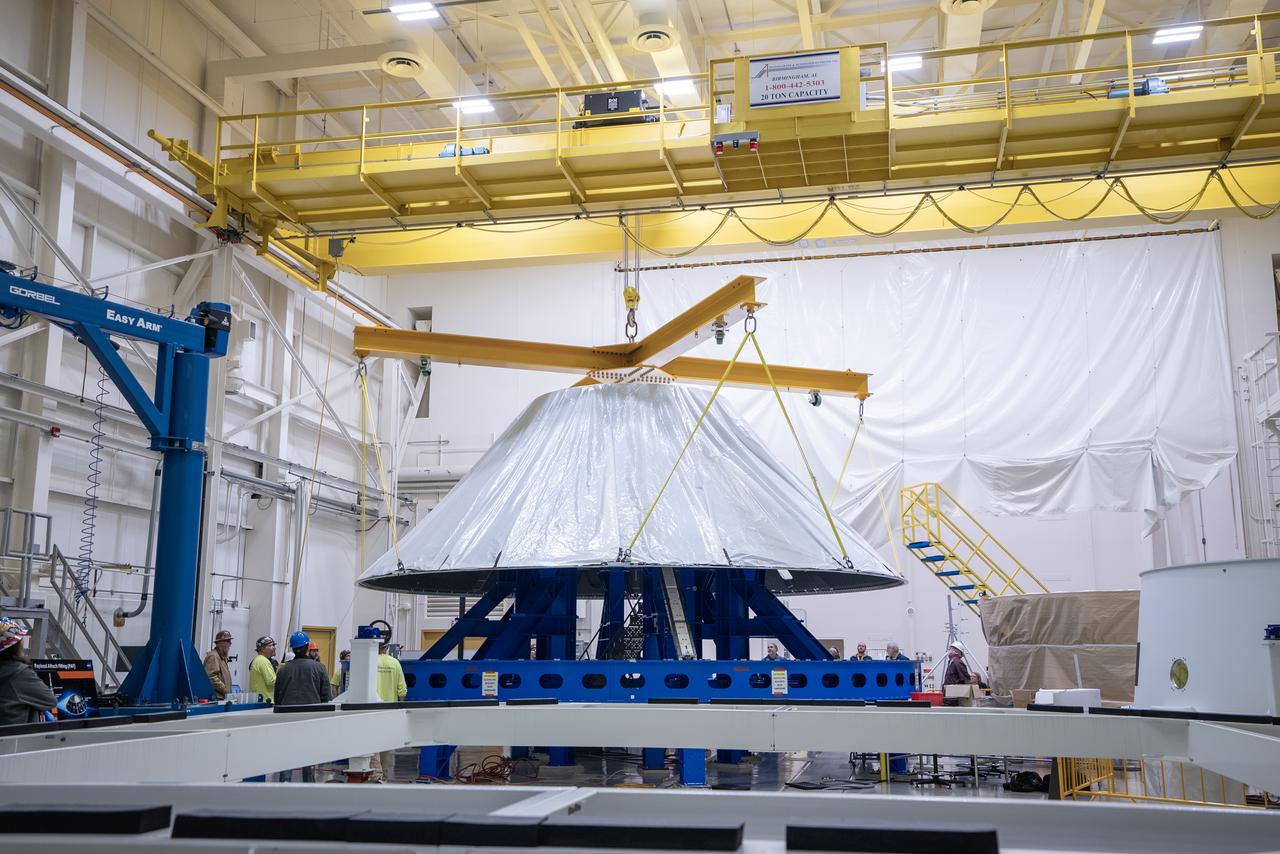
These photos and videos show how NASA manufactured and prepared to transport the payload adapter in February inside Building 4708 at NASA’s Marshall Space Flight Center in Huntsville, Alabama. Prior to moving the hardware for testing, teams installed the New Explorations Secondary Transport component, called the NEST, into the top of the engineering development unit. The NEST component will allow the hardware to hold a series of secondary payloads, or small satellites. The cone-shaped payload adapter is about 8.5 feet tall and features two metal rings and eight composite panels. The adapter, which will debut on NASA’s Artemis IV mission, is an evolution from the Orion stage adapter used in the Block 1 configuration of the rocket for the first three Artemis missions. It will be housed inside the universal stage adapter atop the rocket’s more powerful in-space stage, called the exploration upper stage. The payload adapter, like the launch vehicle stage adapter and the Orion stage adapter, is fully manufactured and tested at Marshall, which manages the SLS Program. NASA is working to land the first woman, first person of color, and its first international partner astronaut on the Moon under Artemis. SLS is part of NASA’s backbone for deep space exploration, along with the Orion spacecraft and Gateway in orbit around the Moon and commercial human landing systems, next-generational spacesuits, and rovers on the lunar surface. SLS is the only rocket that can send Orion, astronauts, and supplies to the Moon in a single launch.
These photos and videos show how NASA manufactured and prepared to transport the payload adapter in February inside Building 4708 at NASA’s Marshall Space Flight Center in Huntsville, Alabama. Prior to moving the hardware for testing, teams installed the New Explorations Secondary Transport component, called the NEST, into the top of the engineering development unit. The NEST component will allow the hardware to hold a series of secondary payloads, or small satellites. The cone-shaped payload adapter is about 8.5 feet tall and features two metal rings and eight composite panels. The adapter, which will debut on NASA’s Artemis IV mission, is an evolution from the Orion stage adapter used in the Block 1 configuration of the rocket for the first three Artemis missions. It will be housed inside the universal stage adapter atop the rocket’s more powerful in-space stage, called the exploration upper stage. The payload adapter, like the launch vehicle stage adapter and the Orion stage adapter, is fully manufactured and tested at Marshall, which manages the SLS Program. NASA is working to land the first woman, first person of color, and its first international partner astronaut on the Moon under Artemis. SLS is part of NASA’s backbone for deep space exploration, along with the Orion spacecraft and Gateway in orbit around the Moon and commercial human landing systems, next-generational spacesuits, and rovers on the lunar surface. SLS is the only rocket that can send Orion, astronauts, and supplies to the Moon in a single launch.
These photos and videos show how NASA manufactured and prepared to transport the payload adapter in February inside Building 4708 at NASA’s Marshall Space Flight Center in Huntsville, Alabama. Prior to moving the hardware for testing, teams installed the New Explorations Secondary Transport component, called the NEST, into the top of the engineering development unit. The NEST component will allow the hardware to hold a series of secondary payloads, or small satellites. The cone-shaped payload adapter is about 8.5 feet tall and features two metal rings and eight composite panels. The adapter, which will debut on NASA’s Artemis IV mission, is an evolution from the Orion stage adapter used in the Block 1 configuration of the rocket for the first three Artemis missions. It will be housed inside the universal stage adapter atop the rocket’s more powerful in-space stage, called the exploration upper stage. The payload adapter, like the launch vehicle stage adapter and the Orion stage adapter, is fully manufactured and tested at Marshall, which manages the SLS Program. NASA is working to land the first woman, first person of color, and its first international partner astronaut on the Moon under Artemis. SLS is part of NASA’s backbone for deep space exploration, along with the Orion spacecraft and Gateway in orbit around the Moon and commercial human landing systems, next-generational spacesuits, and rovers on the lunar surface. SLS is the only rocket that can send Orion, astronauts, and supplies to the Moon in a single launch.
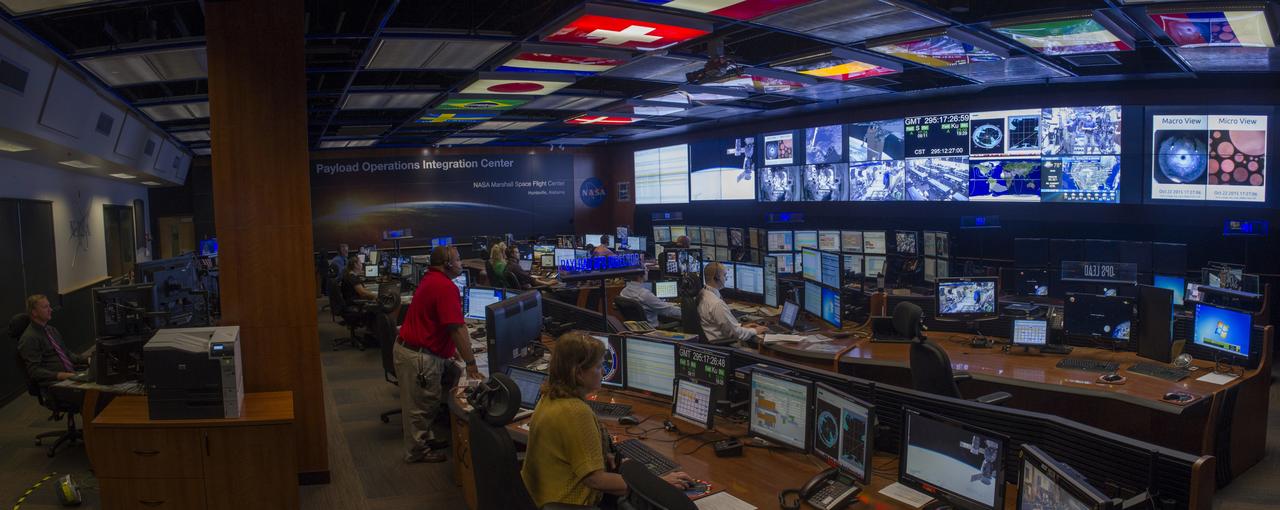
PANORAMIC VIEW OF PAYLOAD OPERATIONS INTEGRATION CENTER, PCA1, BLDG. 4663…UPDATED 10/21/15
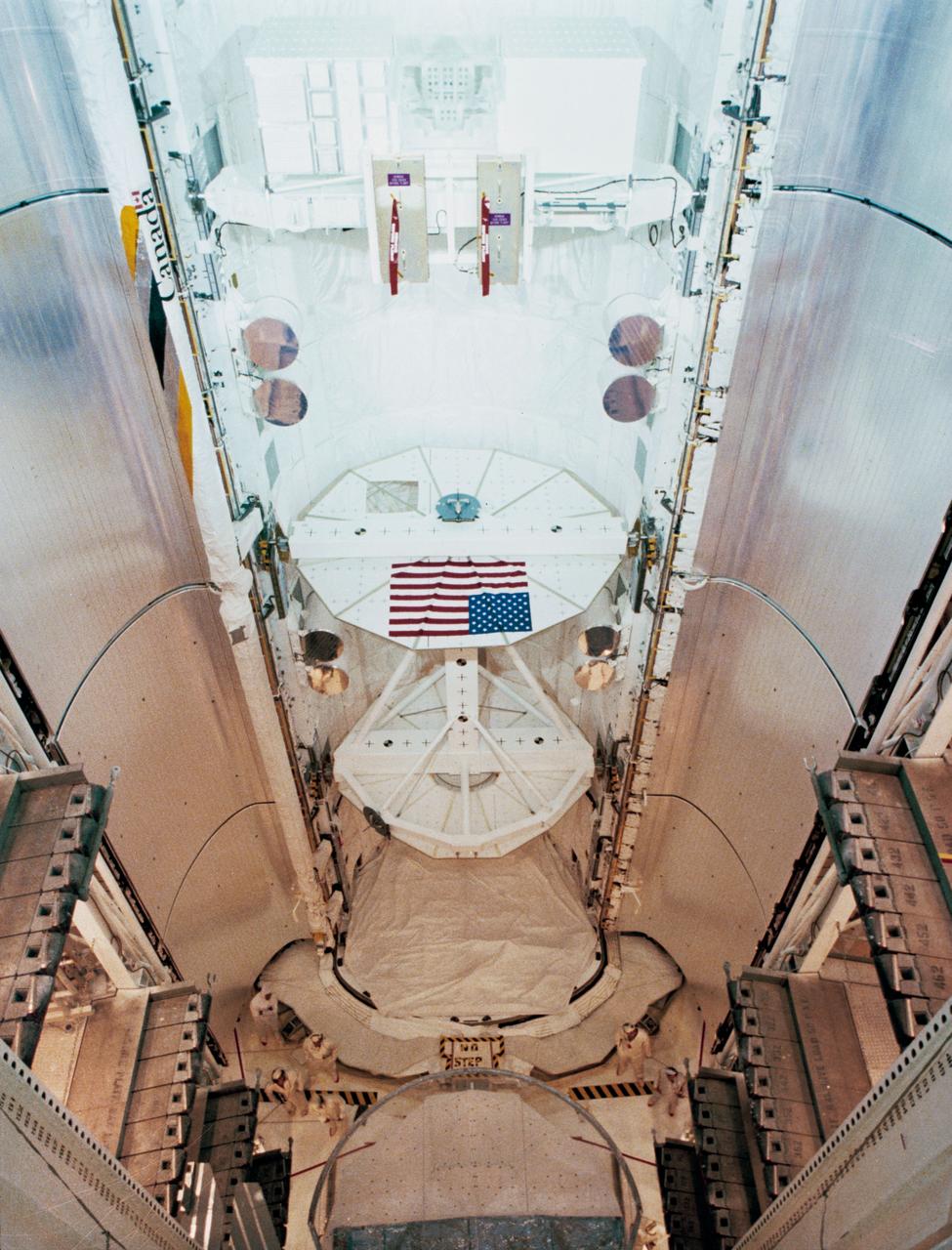
View of the Payload Flight Test Article (PFTA) installed into Challenger's cargo bay in the Payload Changeout Room at Pad 39A at the Kennedy Space Center (KSC). The American flag is visible on one side of the PFTA in the cargo bay. The Kennedy Space Center alternative photo number is KSC-108-83PC-566.
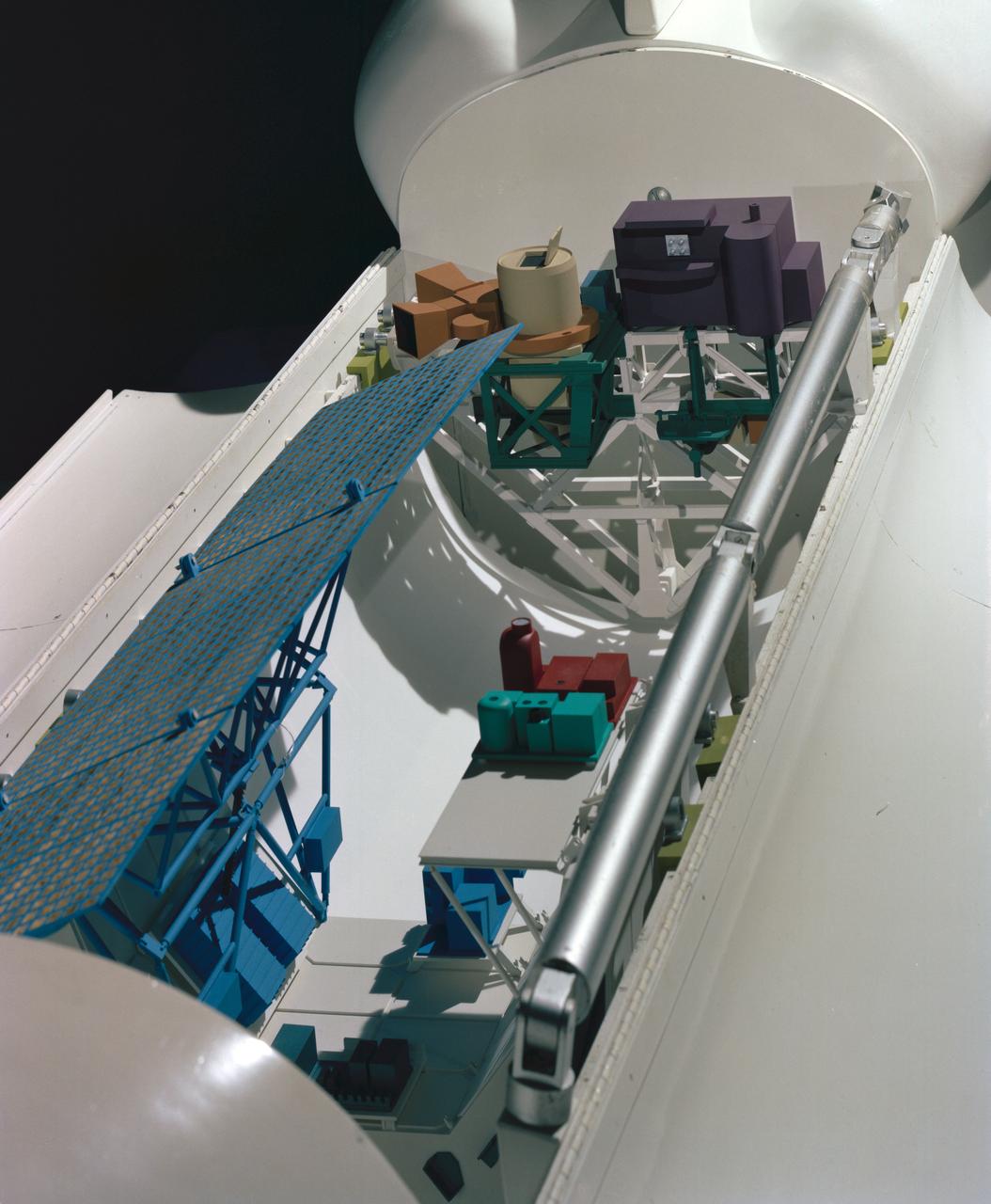
Model showing OSTA-3 and other payloads in the open shuttle orbiter cargo bay.
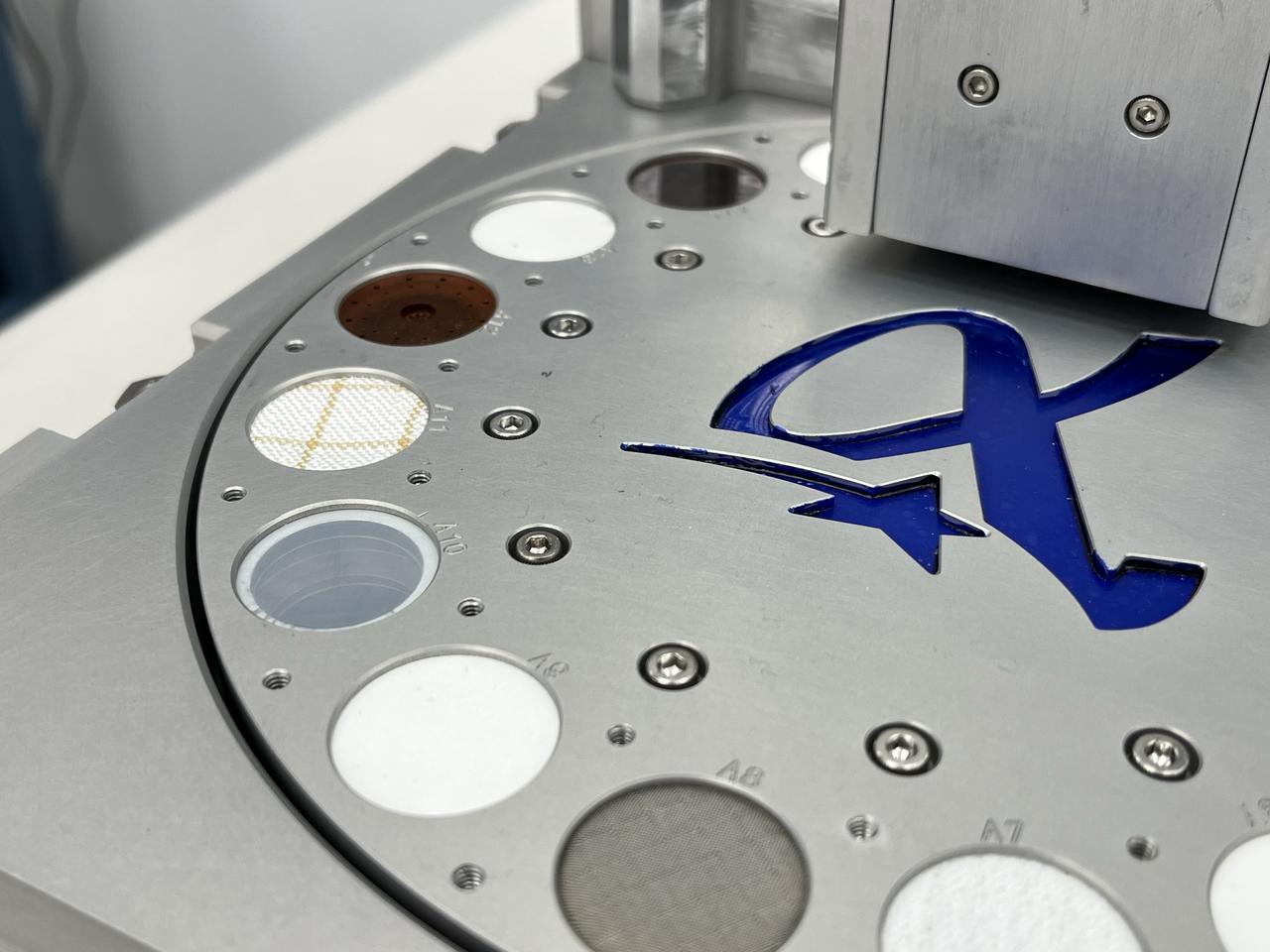
A science instrument flying aboard the next delivery for NASA’s CLPS (Commercial Lunar Payload Services) initiative is planning to study how different materials react to the lunar environment. Regolith Adherence Characterization, or RAC, is one of 10 payloads set to be carried to the Moon by the Blue Ghost 1 lunar lander in 2025. Developed by Aegis Aerospace, RAC’s wheels feature a series of different sample materials, helping researchers to better understand how lunar dust repels or attaches to each. Investigations and demonstrations, such as RAC, launched on CLPS flights will help NASA study Earth’s nearest neighbor under Artemis and pave the way for future crewed missions on the Moon. NASA’s Marshall Space Flight Center in Huntsville, Alabama, manages the development for seven of the 10 CLPS payloads that will be carried on Firefly’s Blue Ghost lunar lander.
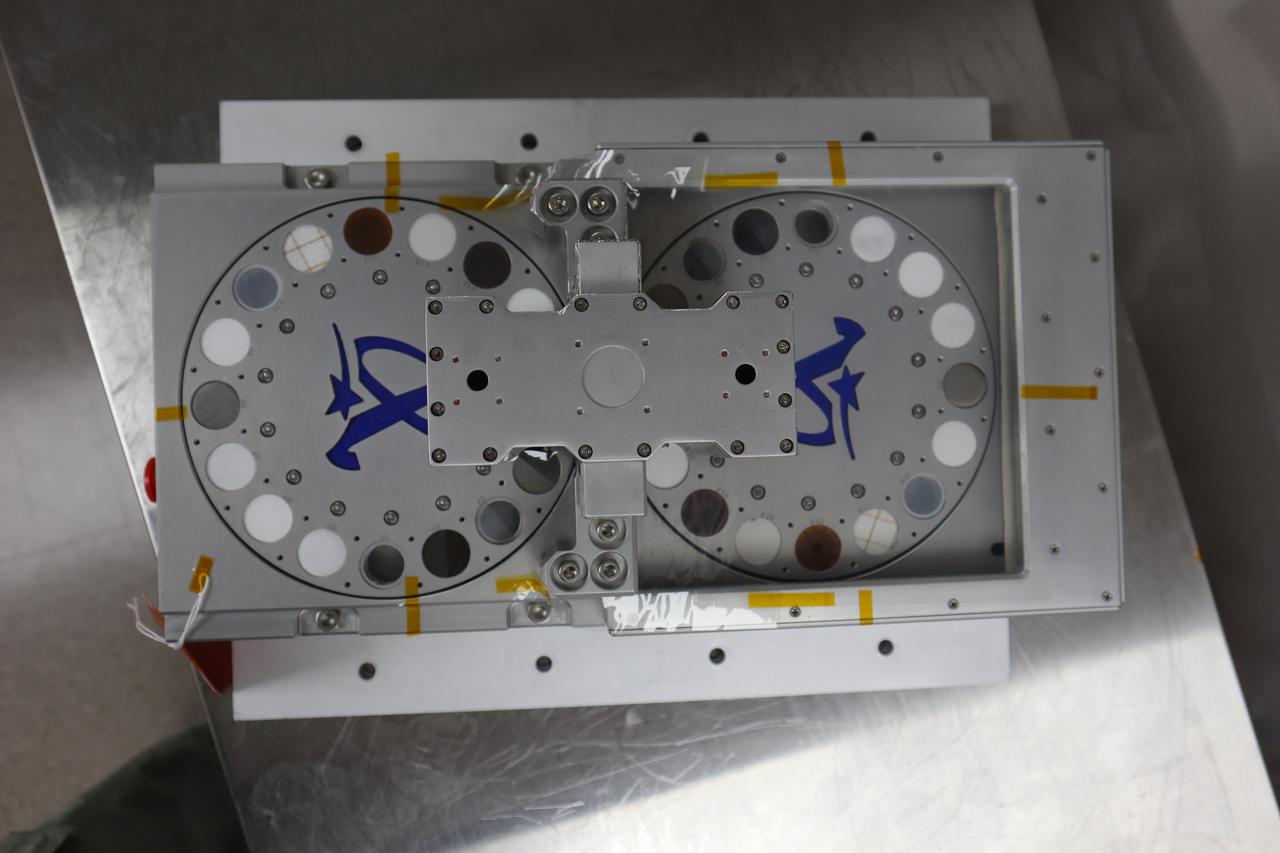
A science instrument flying aboard the next delivery for NASA’s CLPS (Commercial Lunar Payload Services) initiative is planning to study how different materials react to the lunar environment. Regolith Adherence Characterization, or RAC, is one of 10 payloads set to be carried to the Moon by the Blue Ghost 1 lunar lander in 2025. Developed by Aegis Aerospace, RAC’s wheels feature a series of different sample materials, helping researchers to better understand how lunar dust repels or attaches to each. Investigations and demonstrations, such as RAC, launched on CLPS flights will help NASA study Earth’s nearest neighbor under Artemis and pave the way for future crewed missions on the Moon. NASA’s Marshall Space Flight Center in Huntsville, Alabama, manages the development for seven of the 10 CLPS payloads that will be carried on Firefly’s Blue Ghost lunar lander.
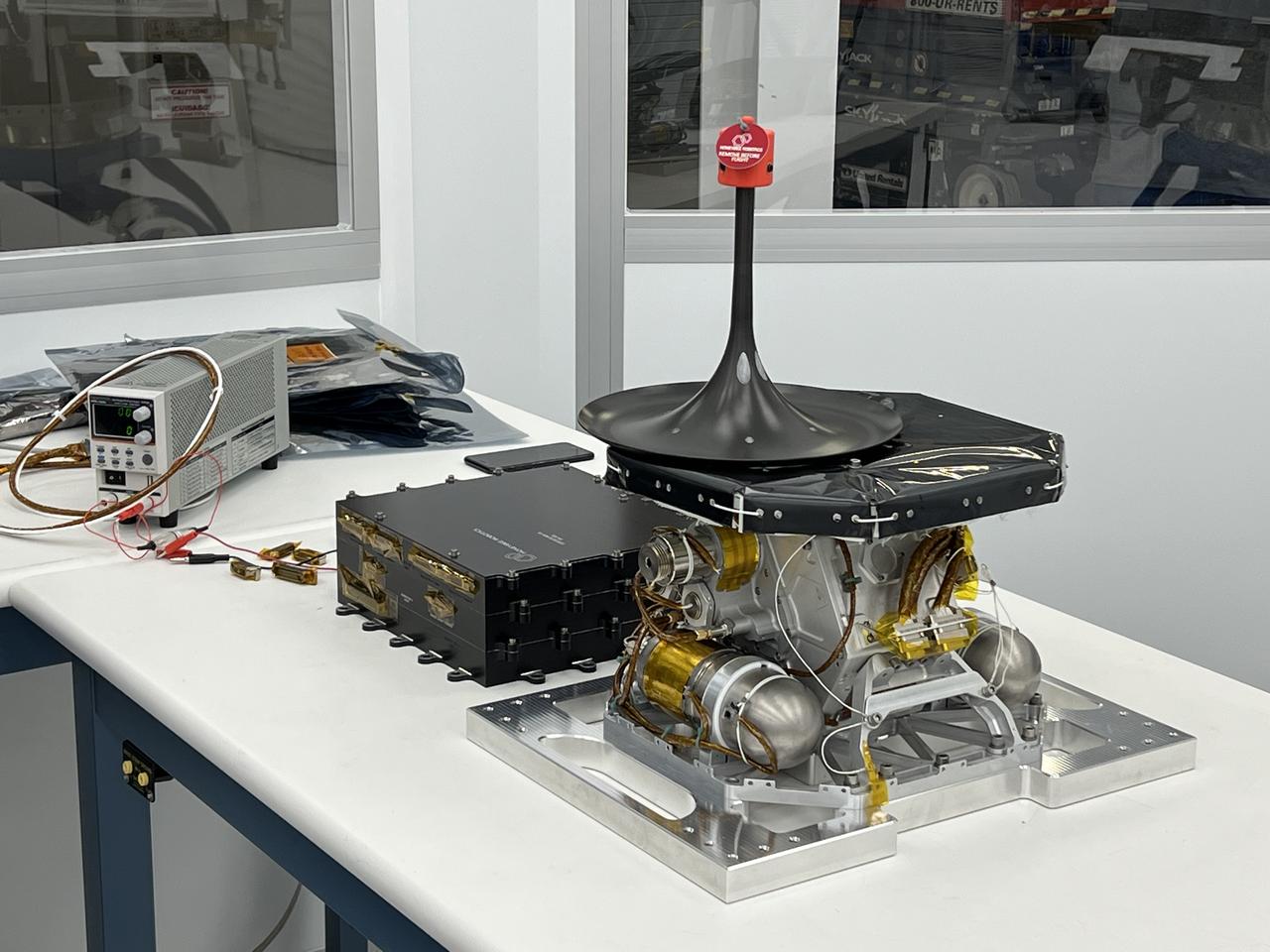
A science instrument flying aboard the next delivery for NASA’s CLPS (Commercial Lunar Payload Services) initiative could help improve our understanding of the Moon. The Lunar Instrumentation for Subsurface Thermal Exploration with Rapidity, or LISTER, is one of 10 payloads set to be carried to the Moon by the Blue Ghost 1 lunar lander in 2025. Developed jointly by Texas Tech University and Honeybee Robotics, LISTER’s planned mission is to measure the flow of heat from the Moon’s interior using a specialized drill. Investigations and demonstrations, such as LISTER, launched on CLPS flights will help NASA study Earth’s nearest neighbor under Artemis and pave the way for future crewed missions on the Moon. NASA’s Marshall Space Flight Center in Huntsville, Alabama, manages the development and operations for seven of the 10 CLPS payloads that will be carried on Firefly’s Blue Ghost lunar lander.
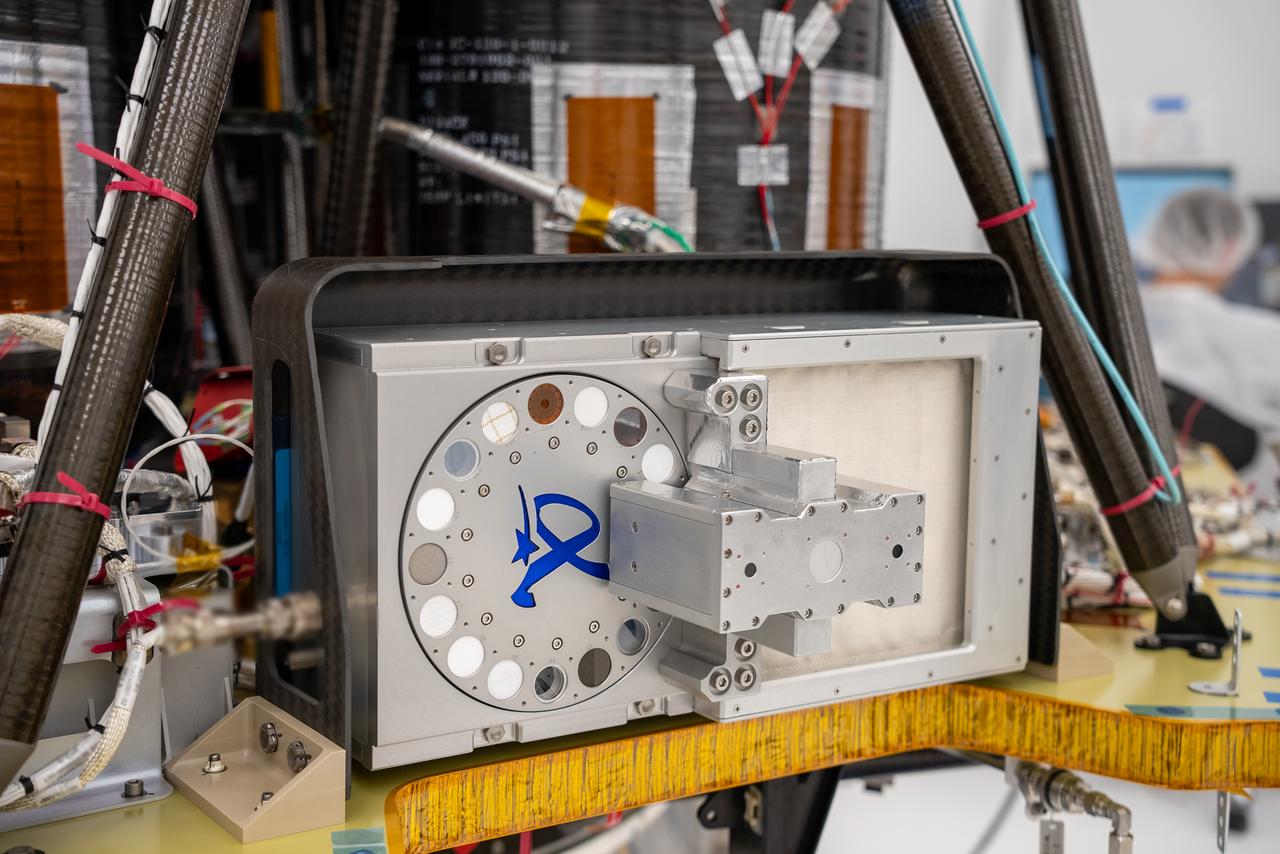
A science instrument flying aboard the next delivery for NASA’s CLPS (Commercial Lunar Payload Services) initiative is planning to study how different materials react to the lunar environment. Regolith Adherence Characterization, or RAC, is one of 10 payloads set to be carried to the Moon by the Blue Ghost 1 lunar lander in 2025. Developed by Aegis Aerospace, RAC’s wheels feature a series of different sample materials, helping researchers to better understand how lunar dust repels or attaches to each. Investigations and demonstrations, such as RAC, launched on CLPS flights will help NASA study Earth’s nearest neighbor under Artemis and pave the way for future crewed missions on the Moon. NASA’s Marshall Space Flight Center in Huntsville, Alabama, manages the development for seven of the 10 CLPS payloads that will be carried on Firefly’s Blue Ghost lunar lander.
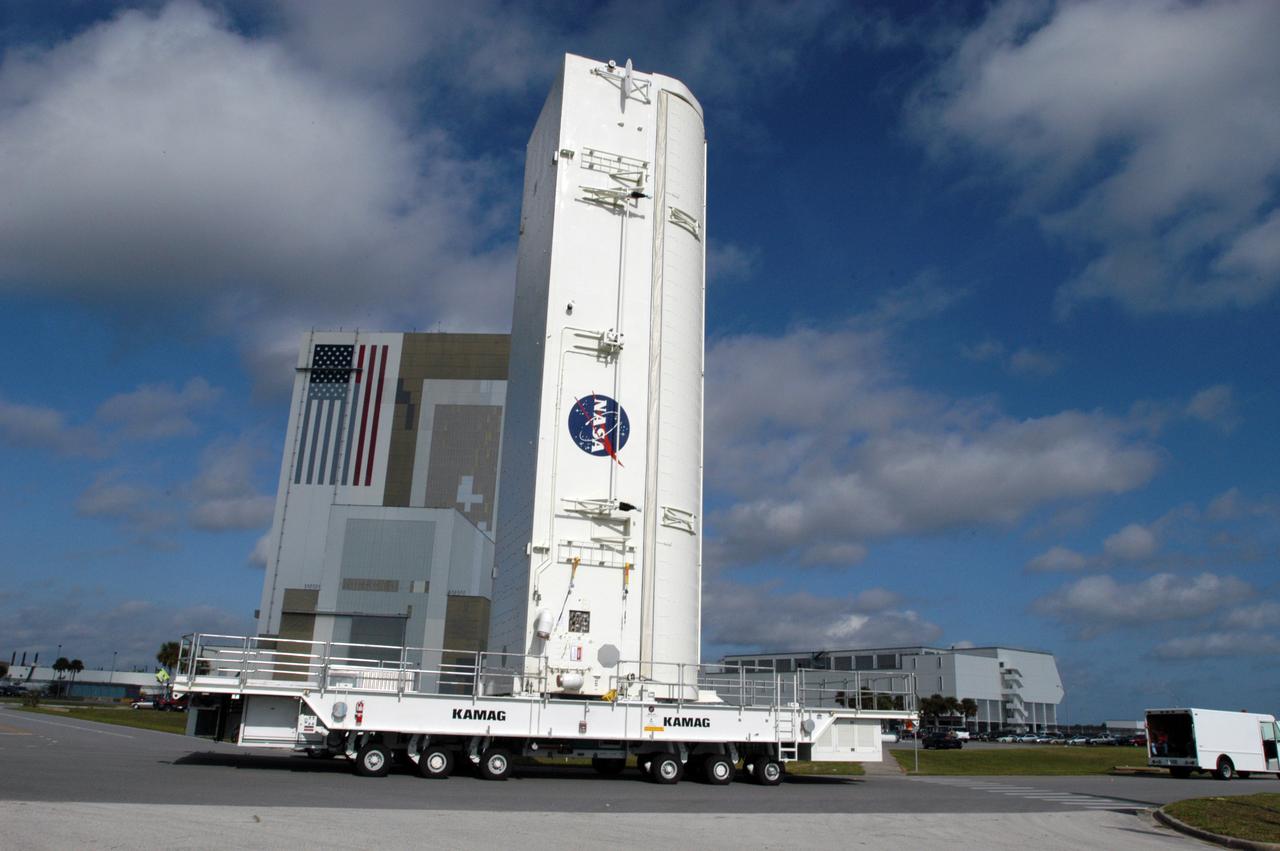
This payload canister is being transported to Launch Pad 39A for a "fit check." At a later date, the canister will be used to transport to the pad the S3/S4 solar arrays that are the payload for mission STS-117. The mission will launch on Space Shuttle Atlantis for the 21st flight to the International Space Station, and the crew of six will continue the construction of station with the installation of the arrays. The launch of Atlantis is targeted for March 16.
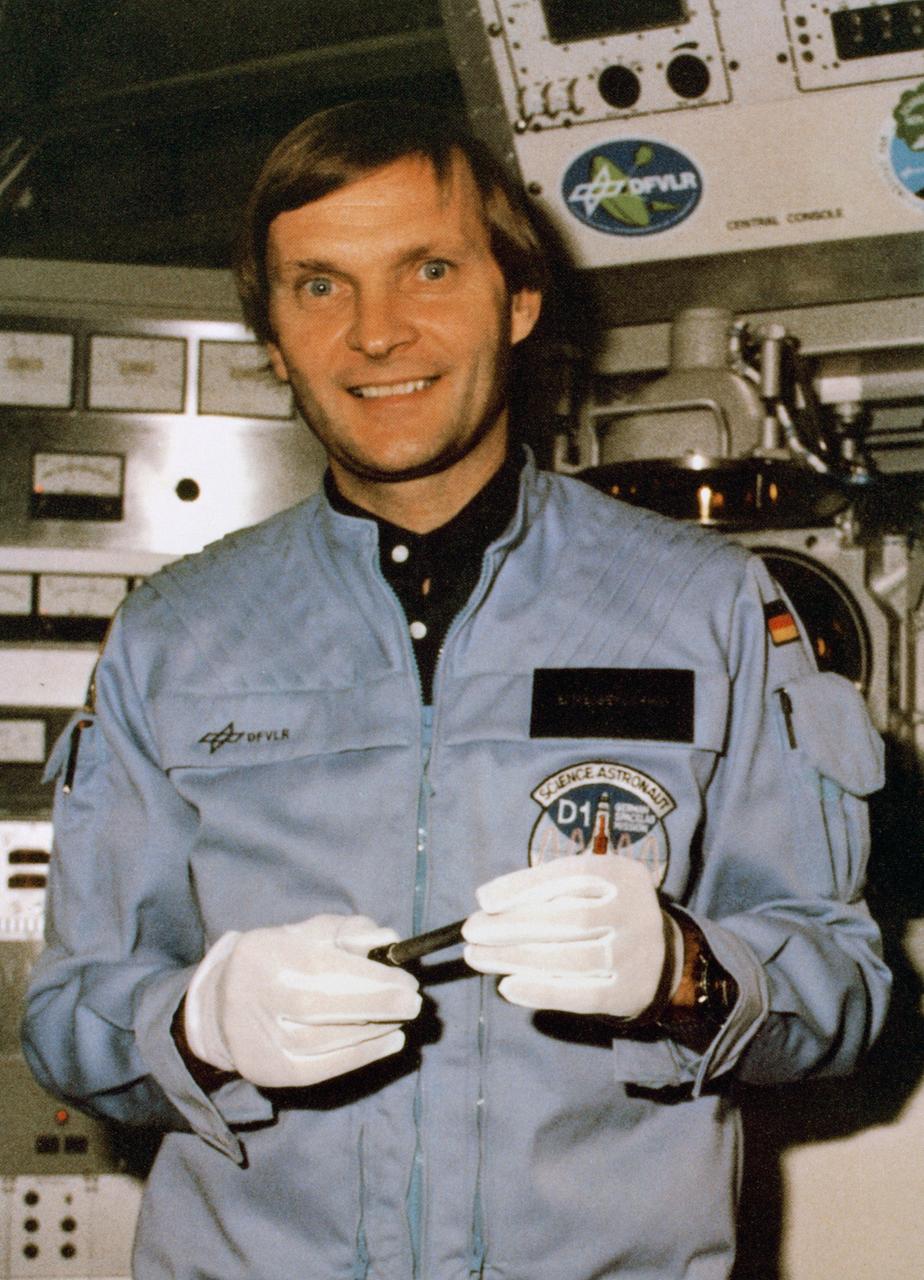
S84-47034 (Nov 1984) --- Astronaut Ernst Messerschmid, payload specialist, D-1 German Spacelab mission.

STS-8 payload flight test article (PFTA) shown prior to shipment to Kennedy Space Center (KSC). The PFTA is designed to simulate the larger cargos scheduled for later flights.
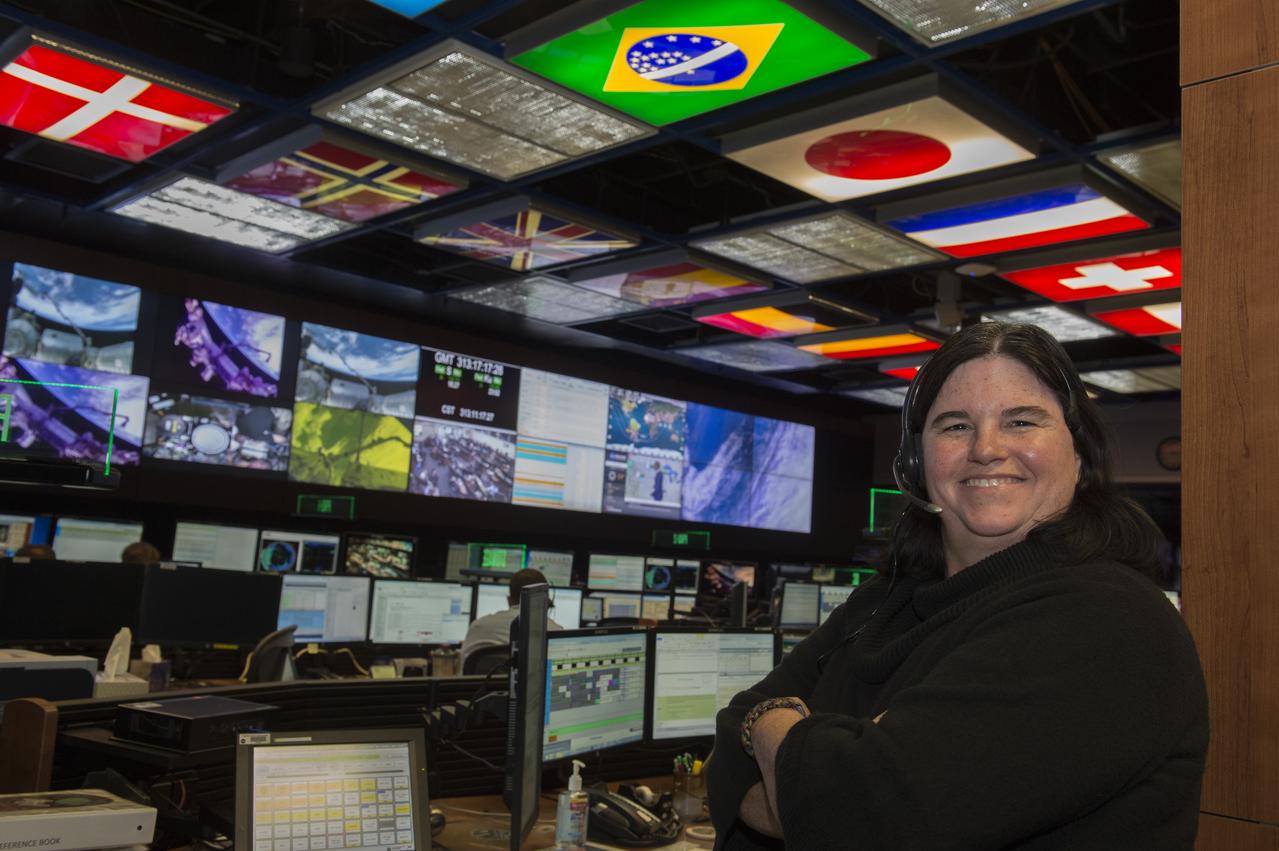
Penny Pettigrew is an International Space Station Payload Communications Manager, or PAYCOM, in the Payload Operations Integration Center at NASA's Marshall Space Flight Center in Huntsville, Alabama.

STS066-129-005 (3-14 Nov 1994) --- Clouds over the Atlantic Ocean serve as the backdrop for this 70mm scene of the Atmospheric Laboratory for Applications and Science (ATLAS-3) payload in the cargo bay of the Earth-orbiting Space Shuttle Atlantis. Crew members onboard Atlantis were astronauts Donald R. McMonagle, Curtis L. Brown, Jr., Ellen Ochoa, Scott E. Parazynski and Joseph R. Tanner, along with Jean-François Clervoy of the European Space Agency (ESA). The six astronauts spent 11-days in Earth-orbit in support of the Atmospheric Laboratory for Applications and Science (ATLAS-3) mission.
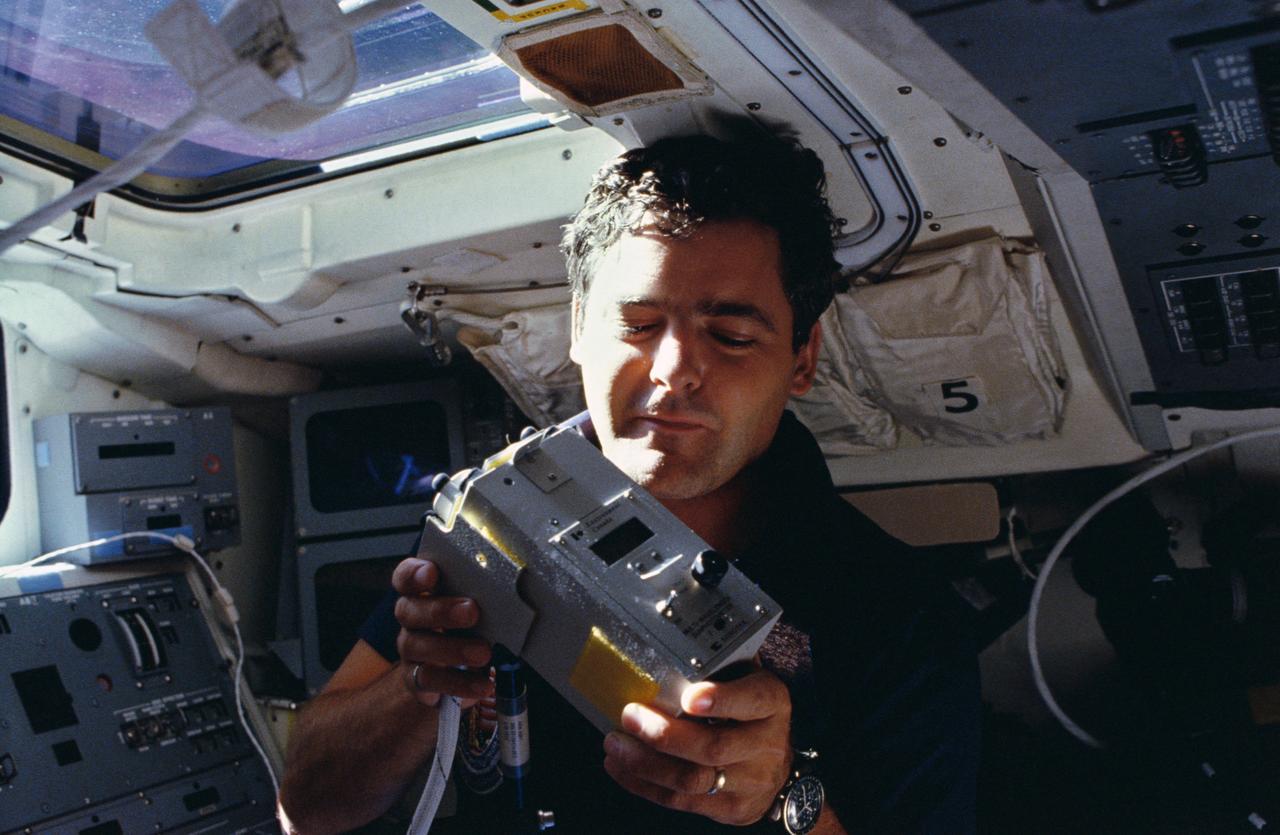
Payload specialist Marc Garneau displays a Canadian made Sunphotometer, part of a package of experiments which he is concentrating on during this mission. He is sitting on the Challenger's flight deck at the aft station.
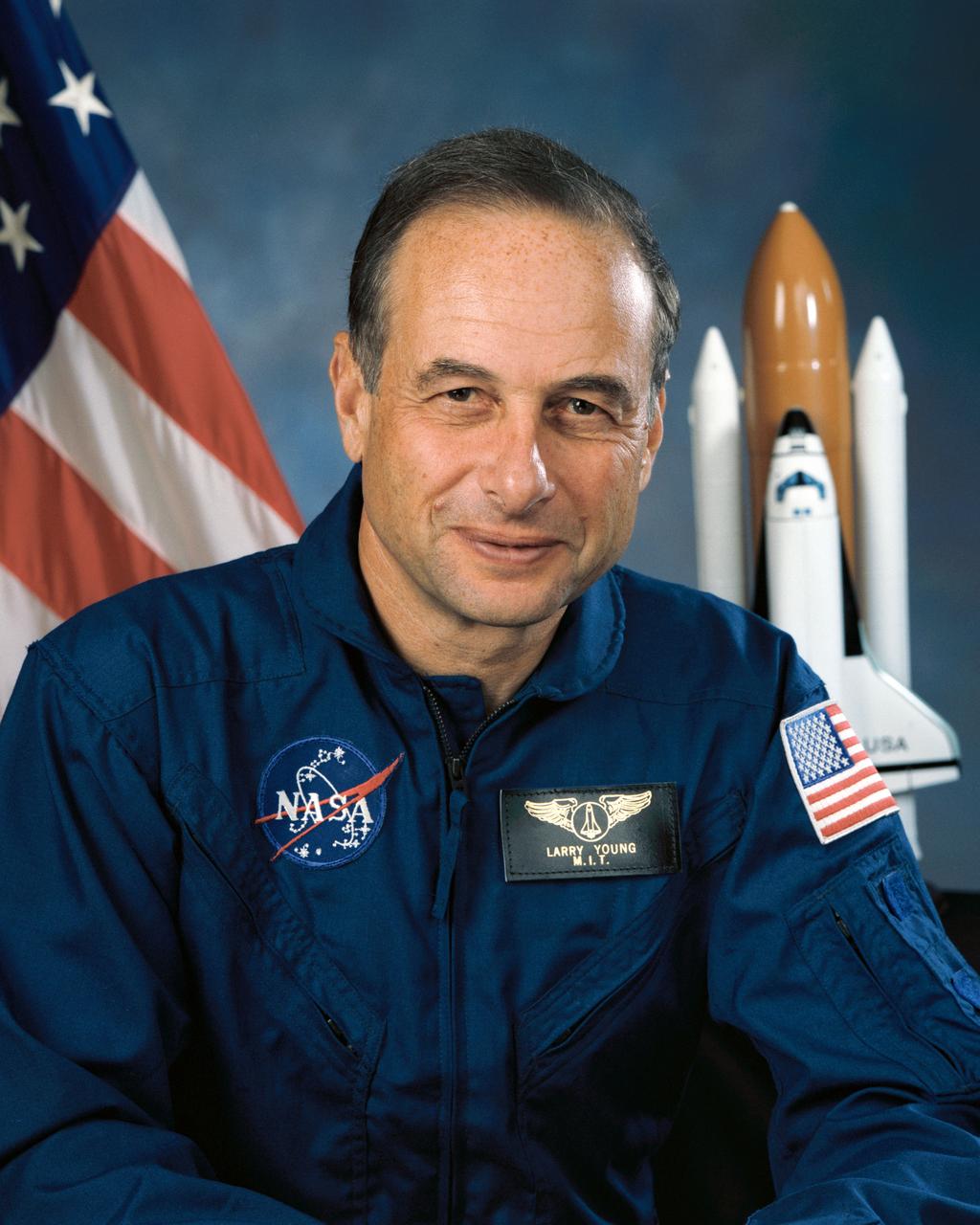
S92-49243 (November 1992) --- Astronaut Laurence Young, Sc. D., Massachusetts Institute of Technology, payload specialist
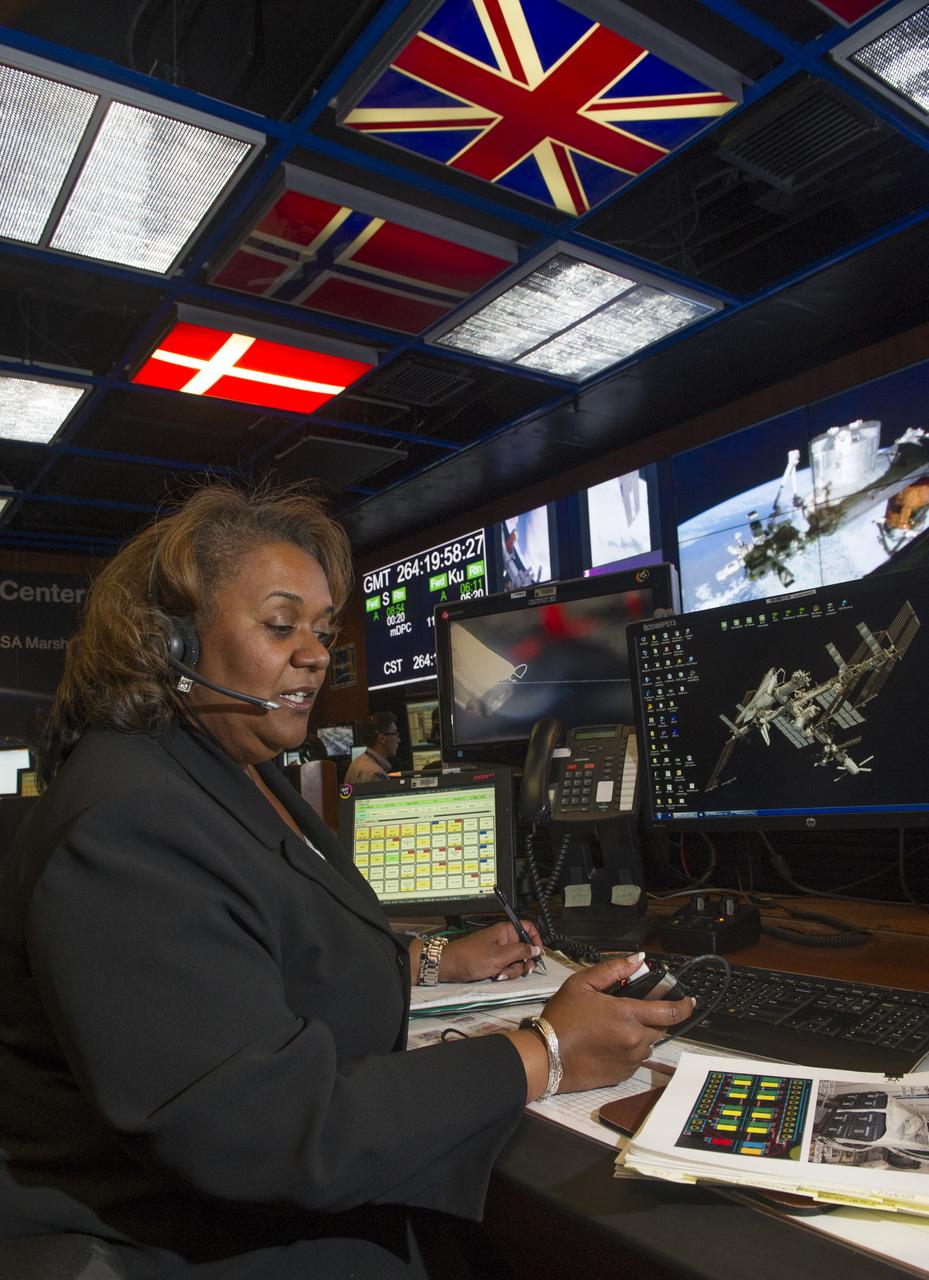
LYBREASE WOODARD ON CONSOLE AT PAYLOAD OPERATIONS CONTROL CENTER FOR FORBES MAGAZINE ARTICLE

Matthew Mullin and Bobby Meazell, Orbital ATK/Columbia Scientific Balloon Facility technicians, conduct compatibility testing on NASA Langley Research Center’s Radiation Dosimetry Experiment payload Wednesday, Sept. 9, at Fort Sumner, N.M. The successful compatibility test was a key milestone in ensuring the flight readiness of RaD-X, which is scheduled to launch on an 11-million-cubic-foot NASA scientific balloon no earlier than Friday, Sept. 11, from the agency’s balloon launching facility in Fort Sumner. RaD-X will measure cosmic ray energy at two separate altitude regions in the stratosphere—above 110,000 feet and between 69,000 to 88,500 feet. The data is key to confirming Langley’s Nowcast of Atmospheric Ionizing Radiation for Aviation Safety (NAIRAS) model, which is a physics-based model that determines solar radiation and galactic cosmic ray exposure globally in real-time. The NAIRAS modeling tool will be used to help enhance aircraft safety as well as safety procedures for the International Space Station. In addition to the primary payload, 100 small student experiments will fly on the RaD-X mission as part of the Cubes in Space program. The program provides 11- to 18-year-old middle and high school students a no-cost opportunity to design and compete to launch an experiment into space or into the near-space environment. The cubes measure just 4 centimeters by 4 centimeters. NASA’s scientific balloons offer low-cost, near-space access for scientific payloads weighing up to 8,000 pounds for conducting scientific investigations in fields such as astrophysics, heliophysics and atmospheric research. NASA’s Wallops Flight Facility in Virginia manages the agency’s scientific balloon program with 10 to 15 flights each year from launch sites worldwide. Orbital ATK provides program management, mission planning, engineering services and field operations for NASA’s scientific balloon program. The program is executed from the Columbia Scientific Balloon Facility in Palestine, Texas. The Columbia team has launched more than 1,700 scientific balloons in over 35 years of operation. Anyone may track the progress of the Fort Sumner flights, which includes a map showing the balloon’s real-time location, at: <a href="http://towerfts.csbf.nasa.gov/" rel="nofollow">towerfts.csbf.nasa.gov/</a> For more information on the balloon program, see: <a href="http://www.nasa.gov/scientificballoons" rel="nofollow">www.nasa.gov/scientificballoons</a> <b><a href="http://www.nasa.gov/audience/formedia/features/MP_Photo_Guidelines.html" rel="nofollow">NASA image use policy.</a></b> <b><a href="http://www.nasa.gov/centers/goddard/home/index.html" rel="nofollow">NASA Goddard Space Flight Center</a></b> enables NASA’s mission through four scientific endeavors: Earth Science, Heliophysics, Solar System Exploration, and Astrophysics. Goddard plays a leading role in NASA’s accomplishments by contributing compelling scientific knowledge to advance the Agency’s mission. <b>Follow us on <a href="http://twitter.com/NASAGoddardPix" rel="nofollow">Twitter</a></b> <b>Like us on <a href="http://www.facebook.com/pages/Greenbelt-MD/NASA-Goddard/395013845897?ref=tsd" rel="nofollow">Facebook</a></b> <b>Find us on <a href="http://instagrid.me/nasagoddard/?vm=grid" rel="nofollow">Instagram</a></b>
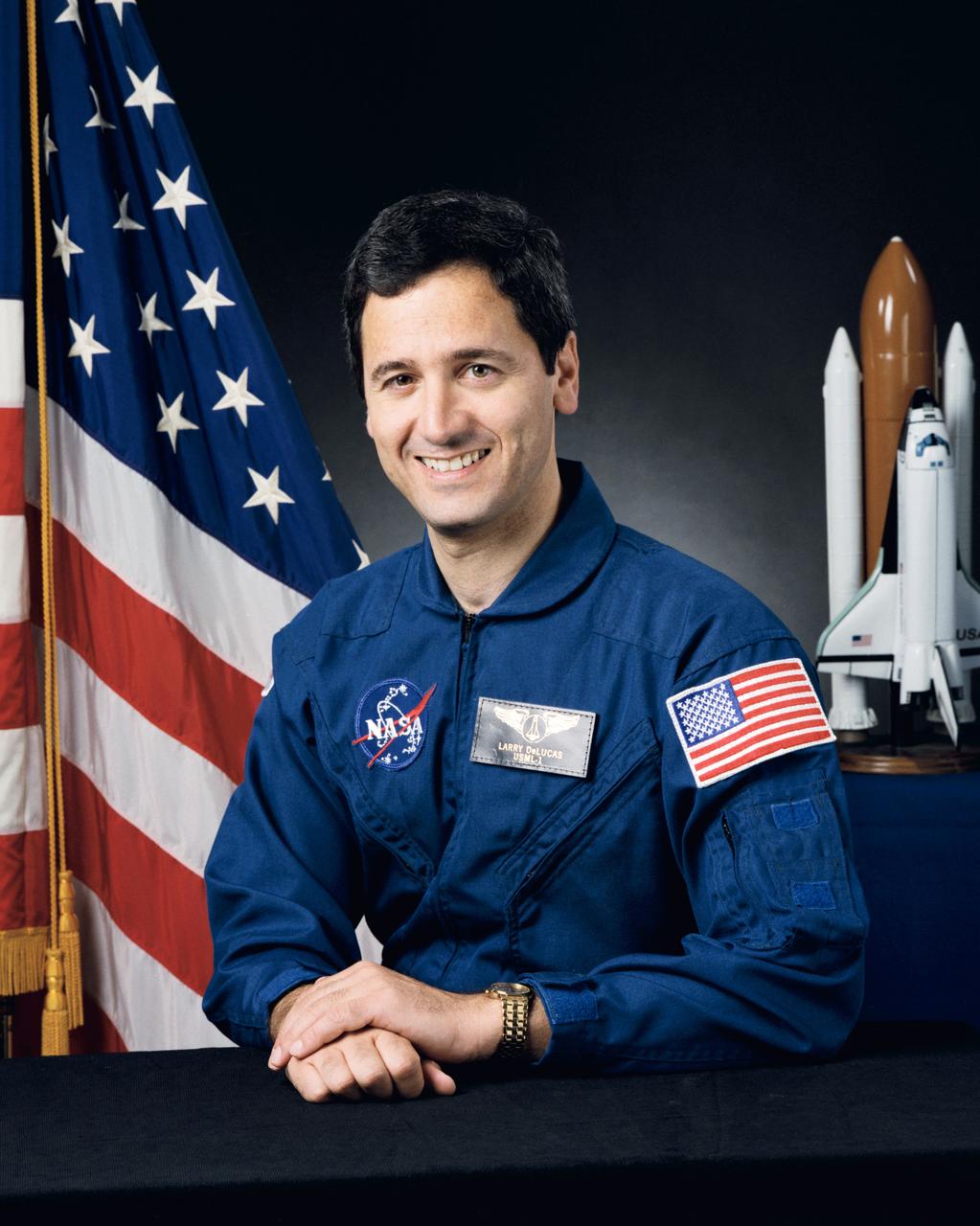
S91-41413 (July 1991) --- Payload specialist Lawrence J. DeLucas, Ph.D.
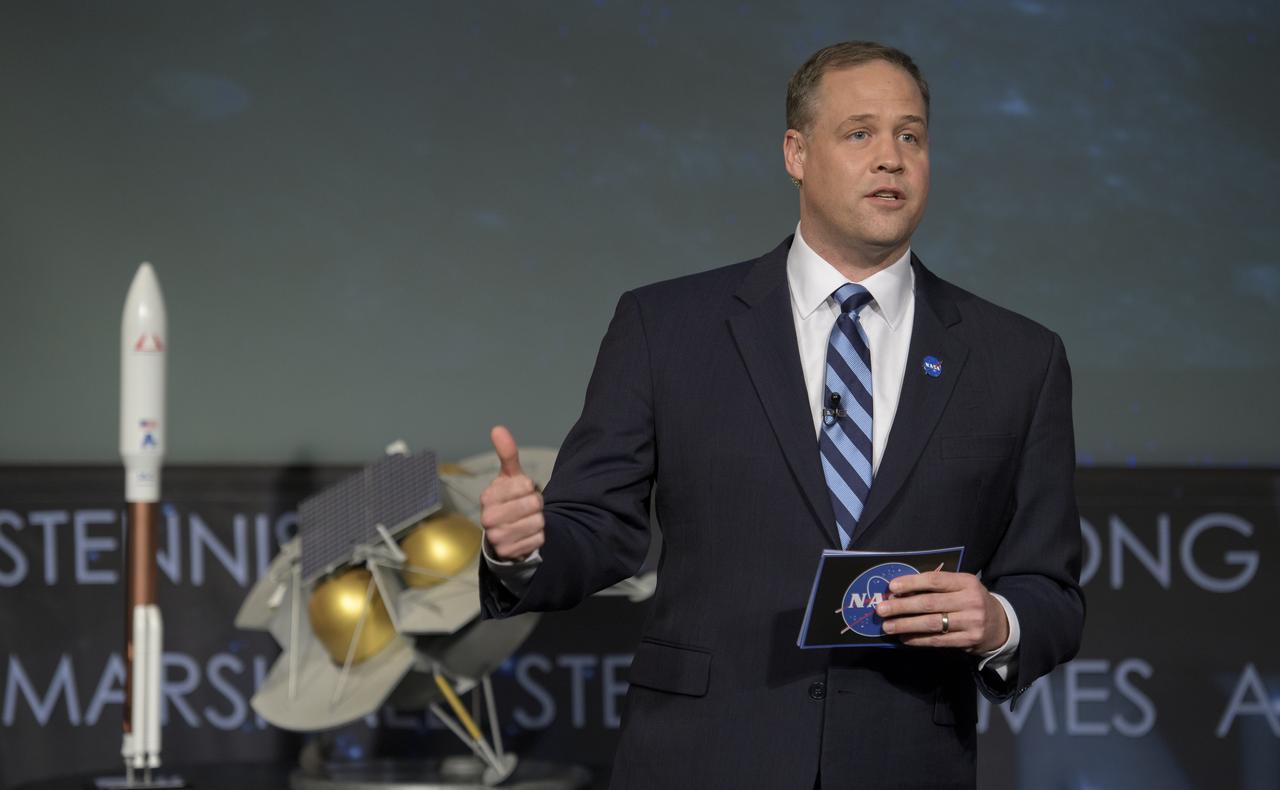
NASA Administrator Jim Bridenstine announces the nine U.S. companies that are eligible to bid on NASA delivery services to the lunar surface through Commercial Lunar Payload Services (CLPS) contracts, Thursday, Nov. 29, 2018 at NASA Headquarters in Washington. The companies will be able to bid on delivering science and technology payloads for NASA, including payload integration and operations, launching from Earth and landing on the surface of the Moon. NASA expects to be one of many customers that will use these commercial landing services. Photo Credit: (NASA/Bill Ingalls)
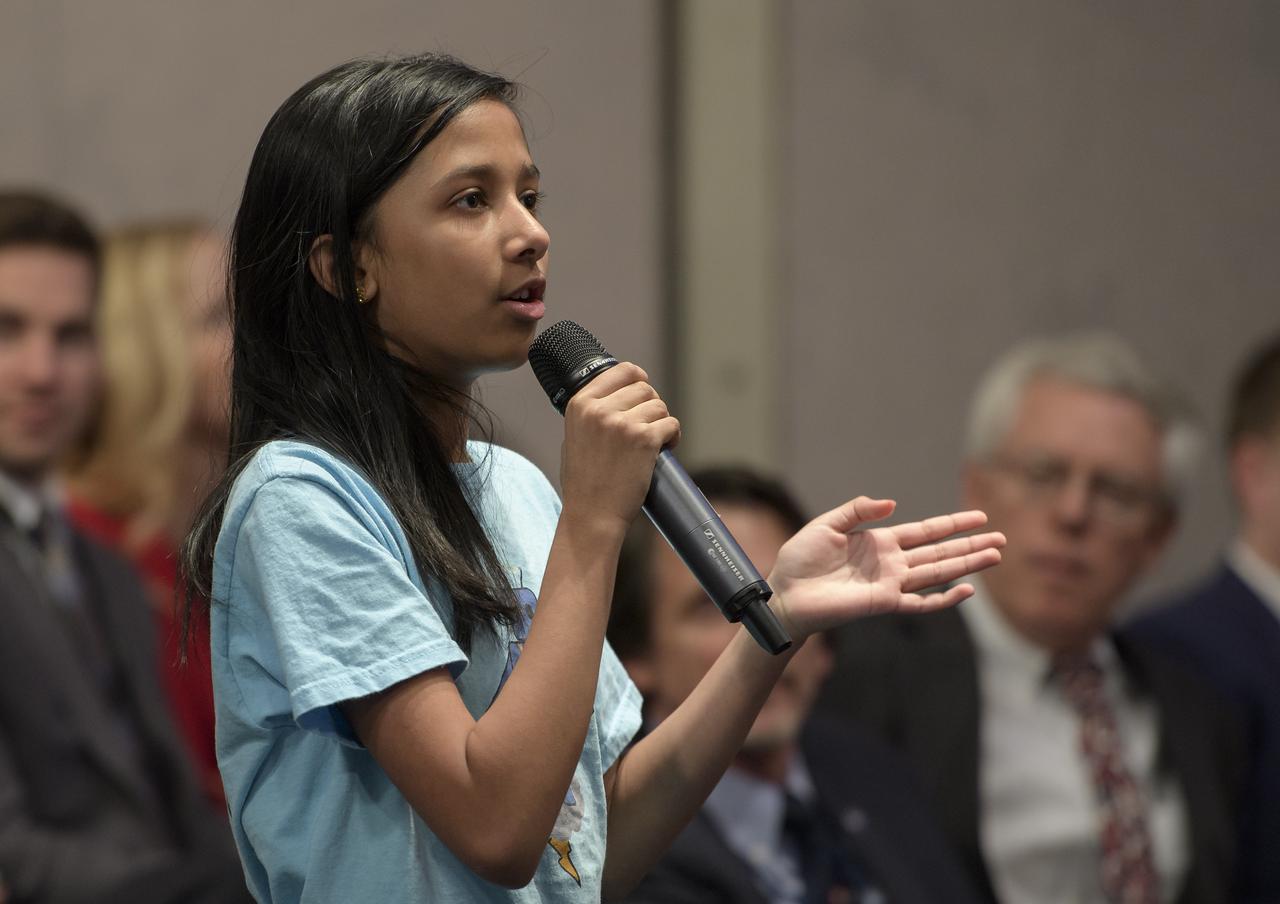
A Cascades Thunderbots "Robotics for Youth" team member from Sterling, Virginia asks a question during an Commercial Lunar Payload Services (CLPS) announcement, Thursday, Nov. 29, 2018 at NASA Headquarters in Washington. Nine companies will be able to bid on delivering science and technology payloads for NASA, including payload integration and operations, launching from Earth and landing on the surface of the Moon. NASA expects to be one of many customers that will use these commercial landing services. Photo Credit: (NASA/Bill Ingalls)
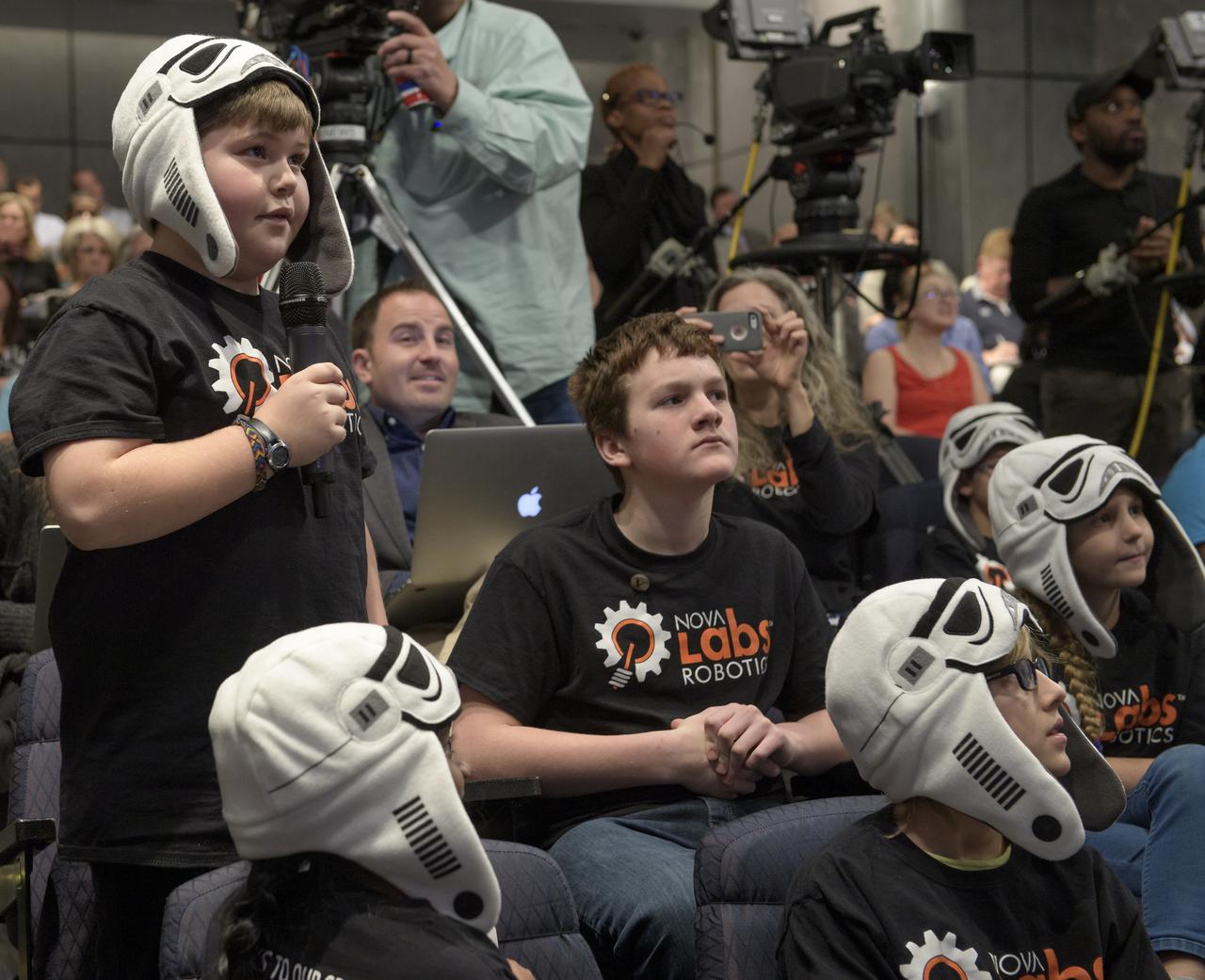
A Nova Labs Robotics "BrainStorm Troopers" team member from Reston, Virginia asks a question during an Commercial Lunar Payload Services (CLPS) announcement, Thursday, Nov. 29, 2018 at NASA Headquarters in Washington. Nine companies will be able to bid on delivering science and technology payloads for NASA, including payload integration and operations, launching from Earth and landing on the surface of the Moon. NASA expects to be one of many customers that will use these commercial landing services. Photo Credit: (NASA/Bill Ingalls)
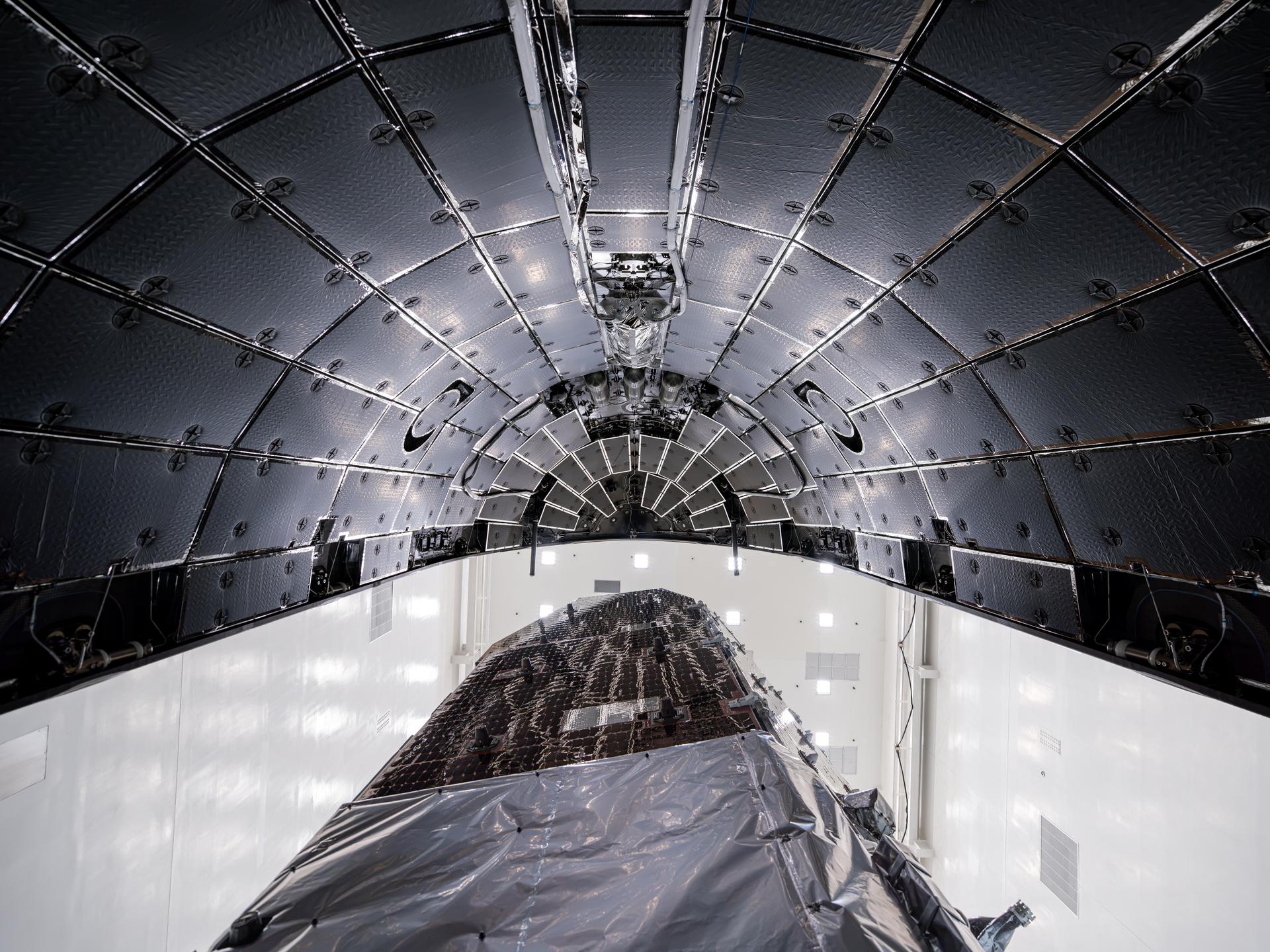
Teams inside the Payload Hazardous Servicing Facility at NASA’s Kennedy Space Center in Florida encapsulate the agency’s Nancy Grace Roman Space Telescope within the payload fairing on Friday, Aug. 21, 2026, ahead of mating to a SpaceX Falcon Heavy rocket. Encapsulation shields the spacecraft during rollout, ascent, and the early phases of flight. Roman will investigate dark energy and dark matter, conduct a statistical census of planetary systems, and enable a broad range of additional astrophysics research. Liftoff from Launch Complex 39A at Kennedy is targeted for no earlier than Sunday, Aug. 30, 2026.
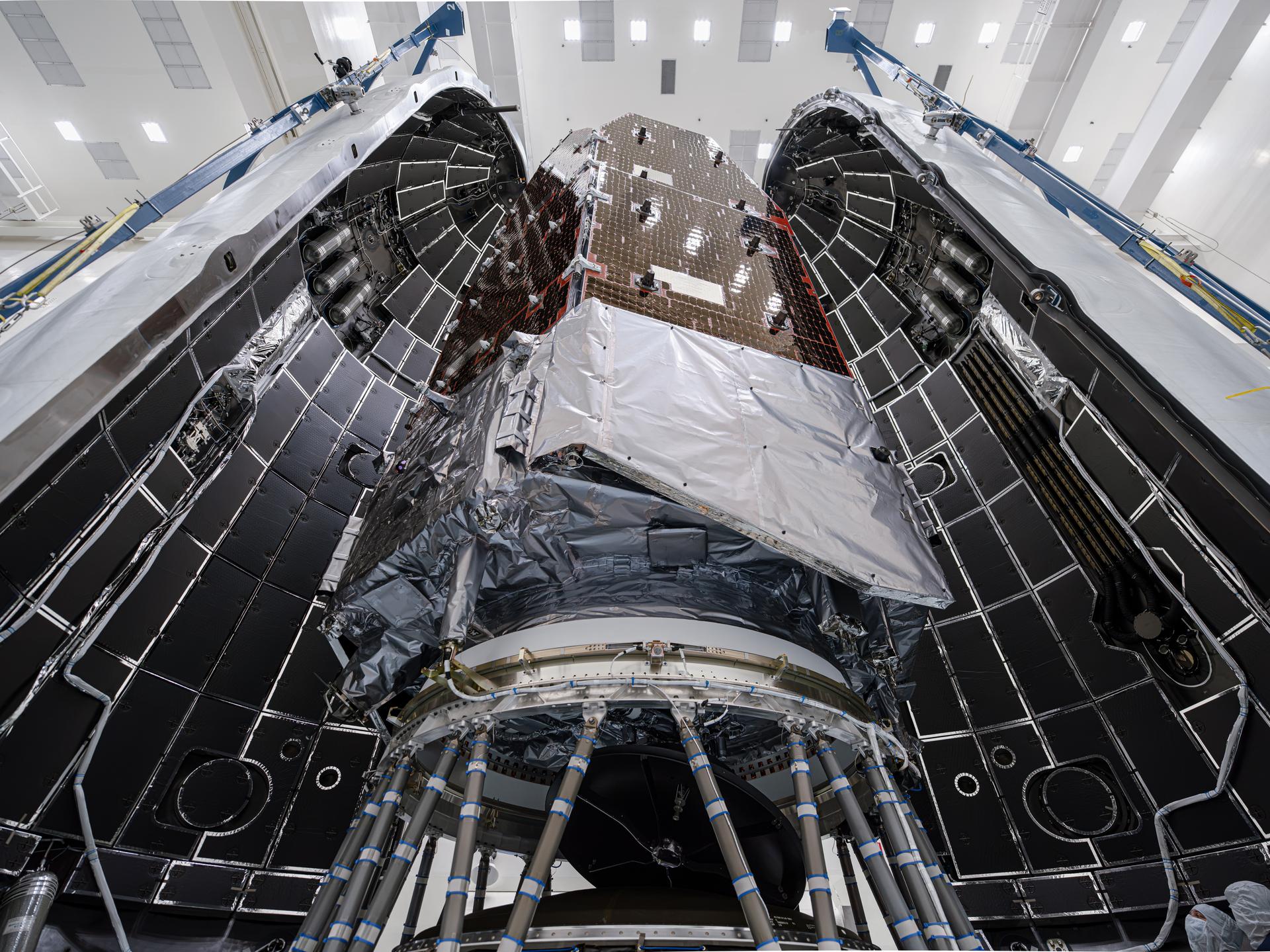
Teams inside the Payload Hazardous Servicing Facility at NASA’s Kennedy Space Center in Florida encapsulate the agency’s Nancy Grace Roman Space Telescope within the payload fairing on Friday, Aug. 21, 2026, ahead of mating to a SpaceX Falcon Heavy rocket. Encapsulation shields the spacecraft during rollout, ascent, and the early phases of flight. Roman will investigate dark energy and dark matter, conduct a statistical census of planetary systems, and enable a broad range of additional astrophysics research. Liftoff from Launch Complex 39A at Kennedy is targeted for no earlier than Sunday, Aug. 30, 2026.
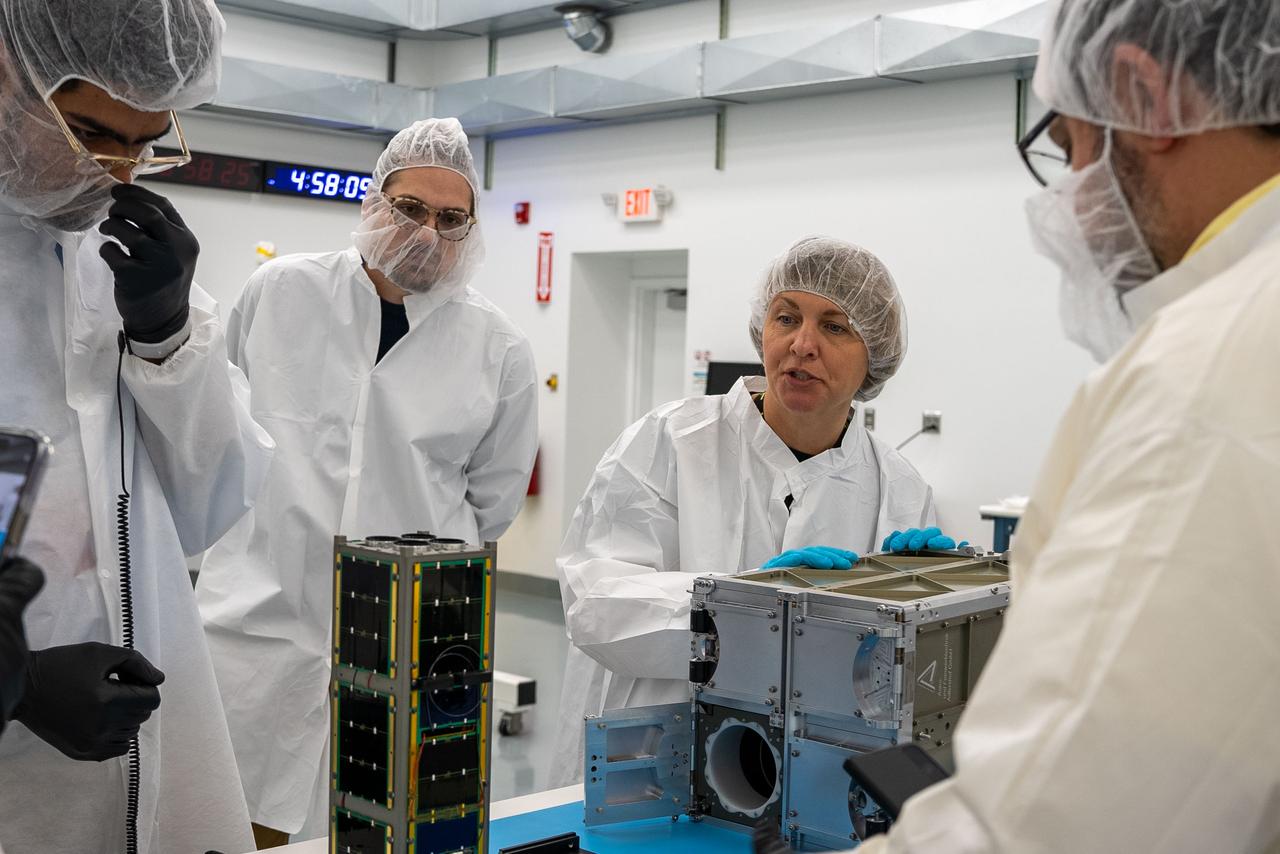
Technicians from the University of Maine prepare CubeSat MESAT-1 for integration at Firefly’s Payload Processing Facility at Vandenberg Space Force Base, California on Monday, April 22, 2024. MESAT-1, along with seven other payloads, will be integrated into a Firefly Aerospace Alpha rocket for NASA’s Educational Launch of Nanosatellites (ELaNa) 43 mission as part of the agency’s CubeSat Launch Initiative and Firefly’s Venture-Class Launch Services Demonstration 2 contract.
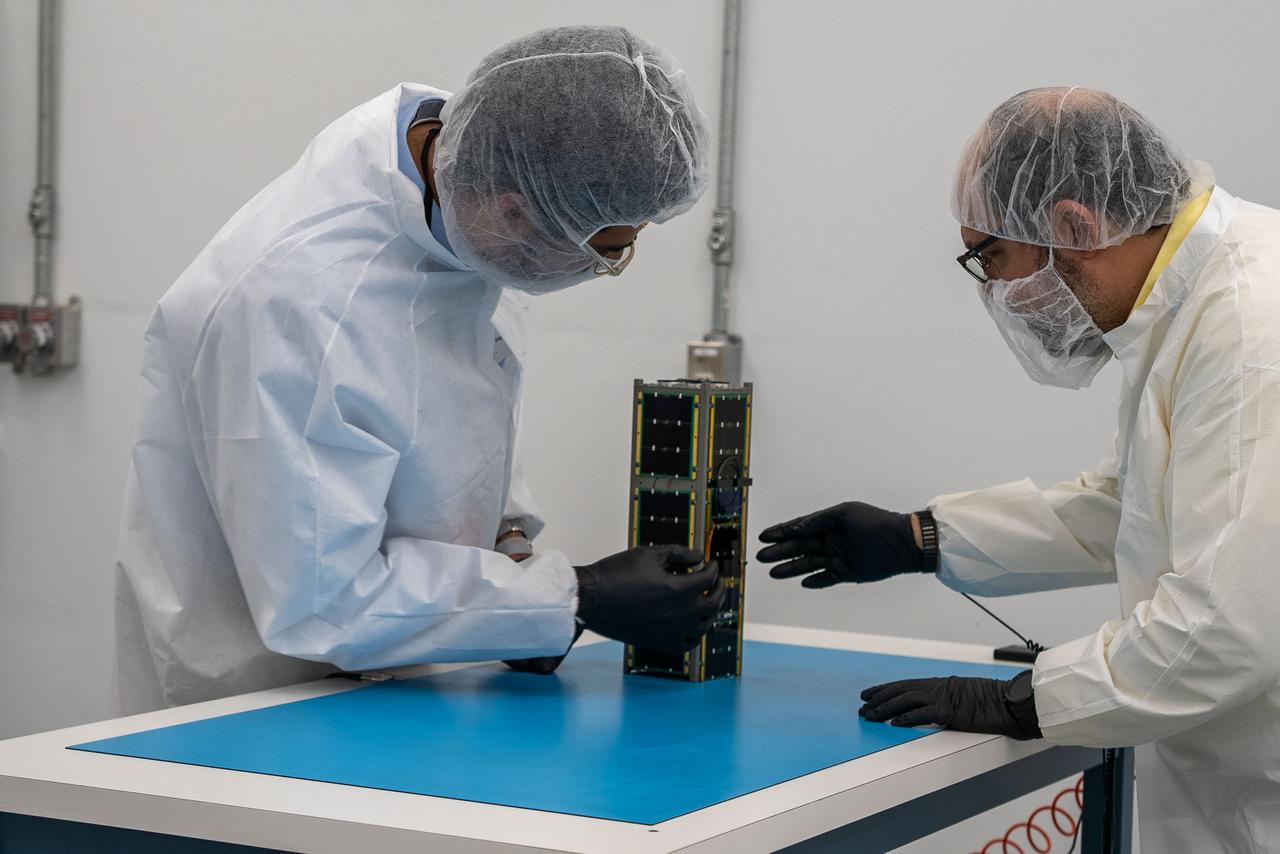
Technicians from the University of Maine prepare CubeSat MESAT-1 for integration at Firefly’s Payload Processing Facility at Vandenberg Space Force Base, California on Monday, April 22, 2024. MESAT-1, along with seven other payloads, will be integrated into a Firefly Aerospace Alpha rocket for NASA’s Educational Launch of Nanosatellites (ELaNa) 43 mission as part of the agency’s CubeSat Launch Initiative and Firefly’s Venture-Class Launch Services Demonstration 2 contract.
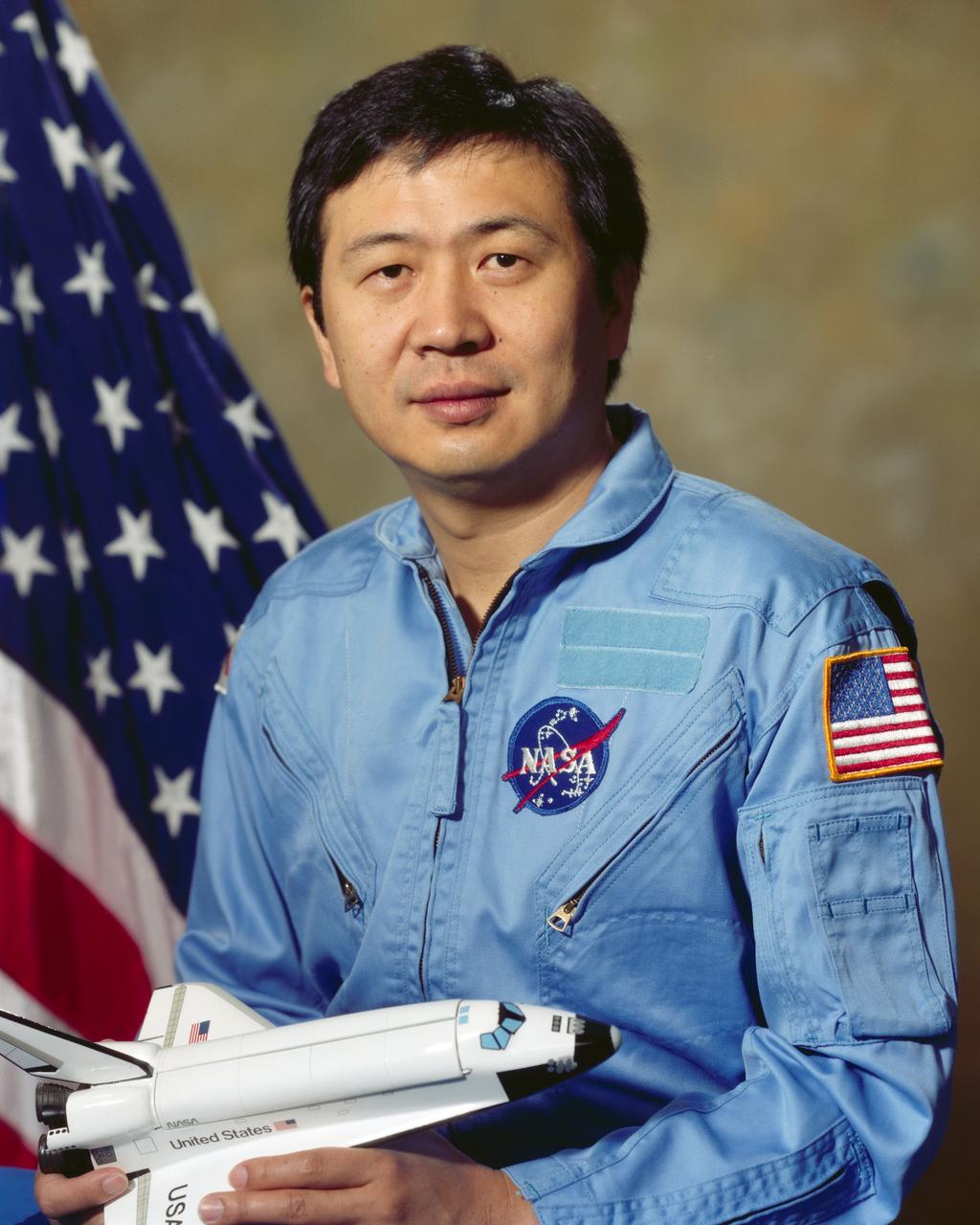
S84-36141 (20 June 1984) --- Astronaut Taylor E. Wang, payload specialist.
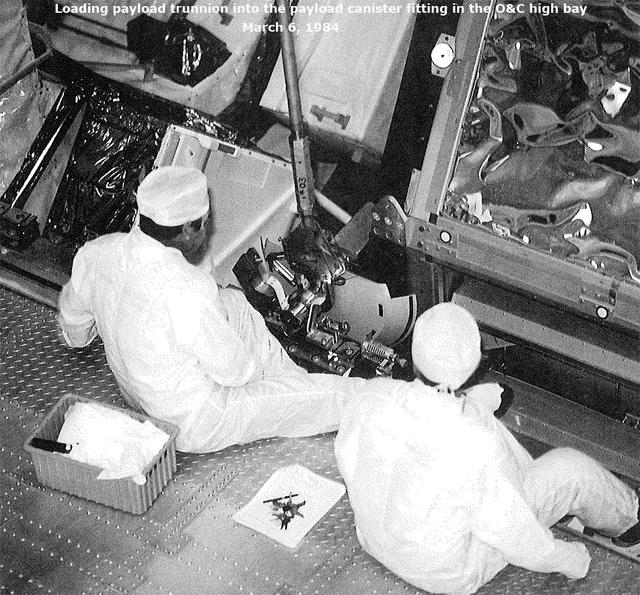
Loading payload trunnion into the payload canister fitting in the O&C high bay, March 6, 1984
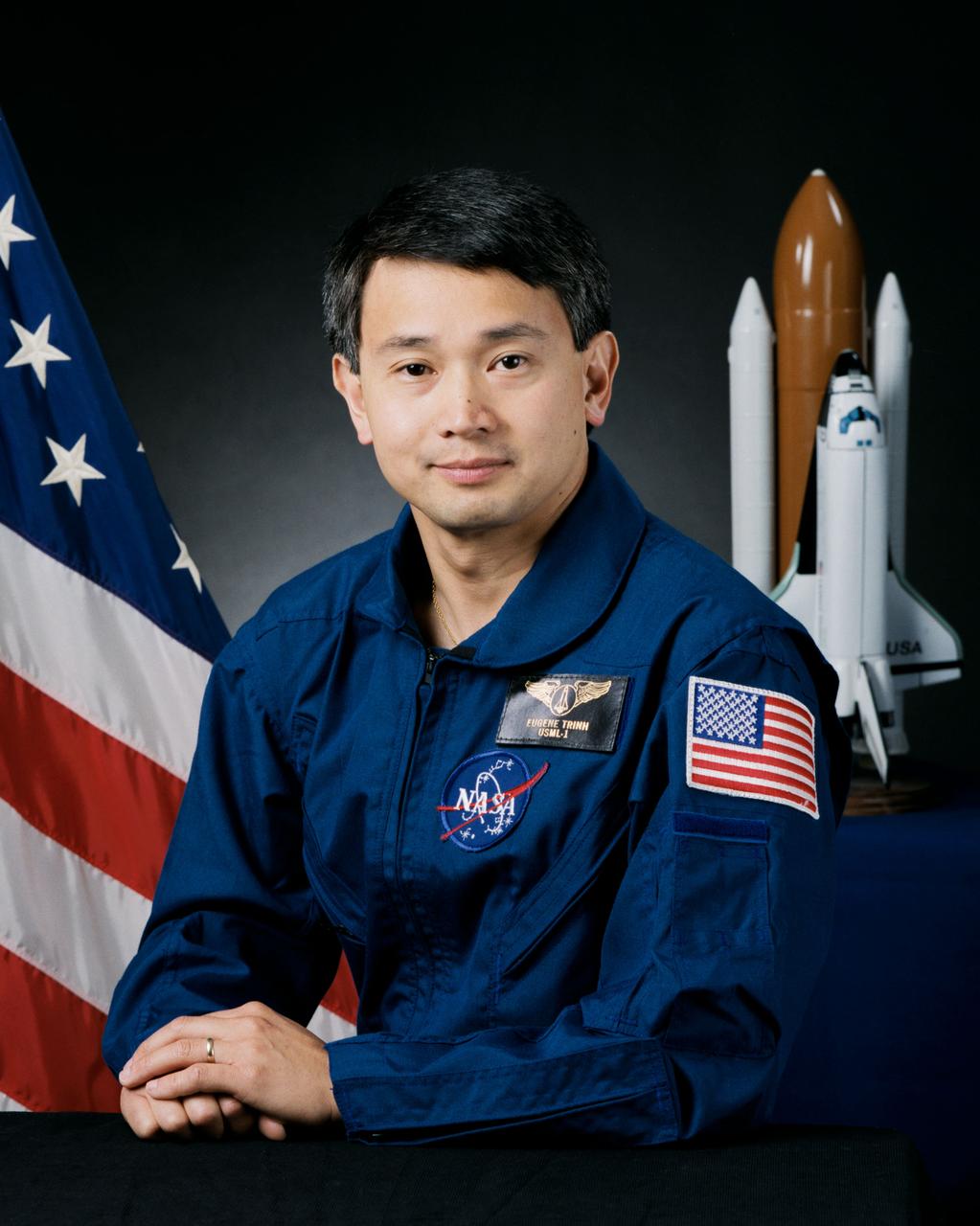
S91-46260 (1991) --- Astronaut Eugene H. Trinh, STS-50 USML payload specialist.
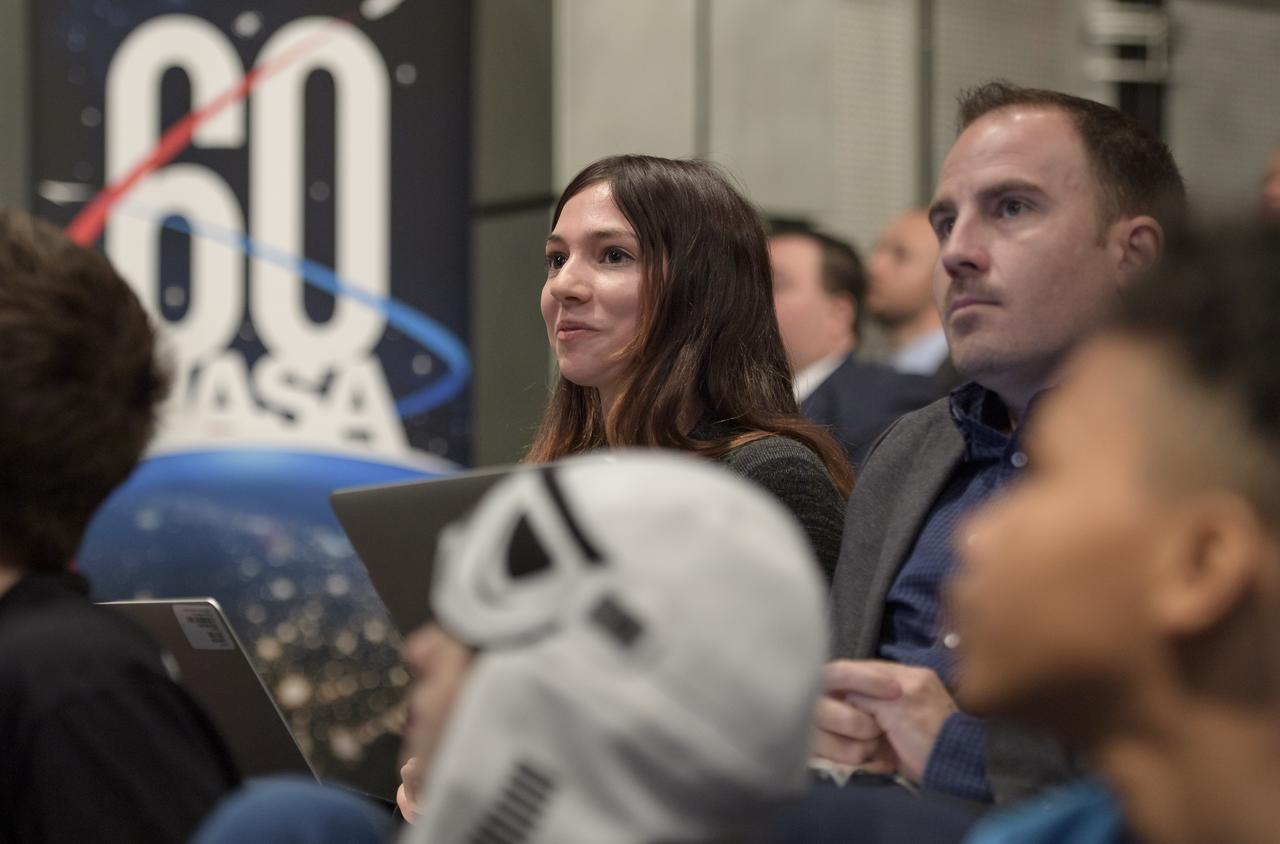
Thalia Patrinos, and Jason Townsend from NASA's Social Media Teamm monitor questions coming in from social media during an event where nine U.S. companies where named as eligible to bid on NASA delivery services to the lunar surface through Commercial Lunar Payload Services (CLPS) contracts, Thursday, Nov. 29, 2018 at NASA Headquarters in Washington. The companies will be able to bid on delivering science and technology payloads for NASA, including payload integration and operations, launching from Earth and landing on the surface of the Moon. NASA expects to be one of many customers that will use these commercial landing services. Photo Credit: (NASA/Bill Ingalls)
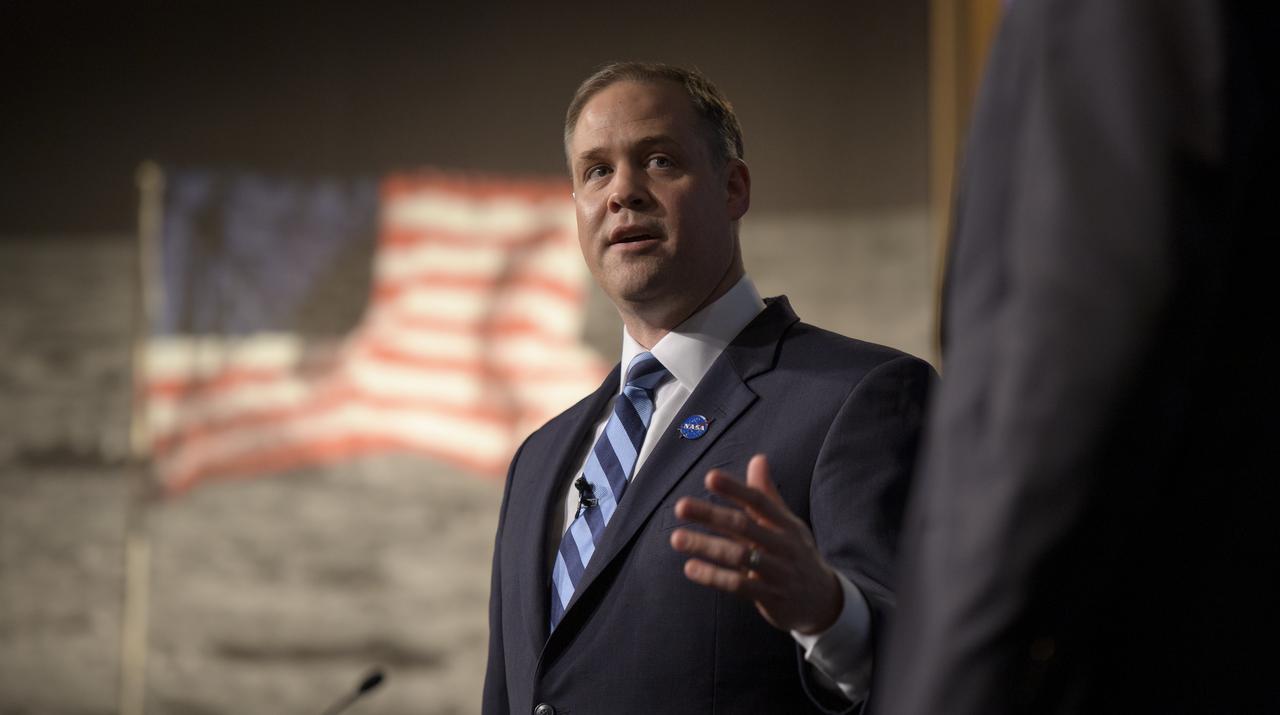
NASA Administrator Jim Bridenstine answers questions during an event where nine U.S. companies where named as eligible to bid on NASA delivery services to the lunar surface through Commercial Lunar Payload Services (CLPS) contracts, Thursday, Nov. 29, 2018 at NASA Headquarters in Washington. The companies will be able to bid on delivering science and technology payloads for NASA, including payload integration and operations, launching from Earth and landing on the surface of the Moon. NASA expects to be one of many customers that will use these commercial landing services. Photo Credit: (NASA/Bill Ingalls)
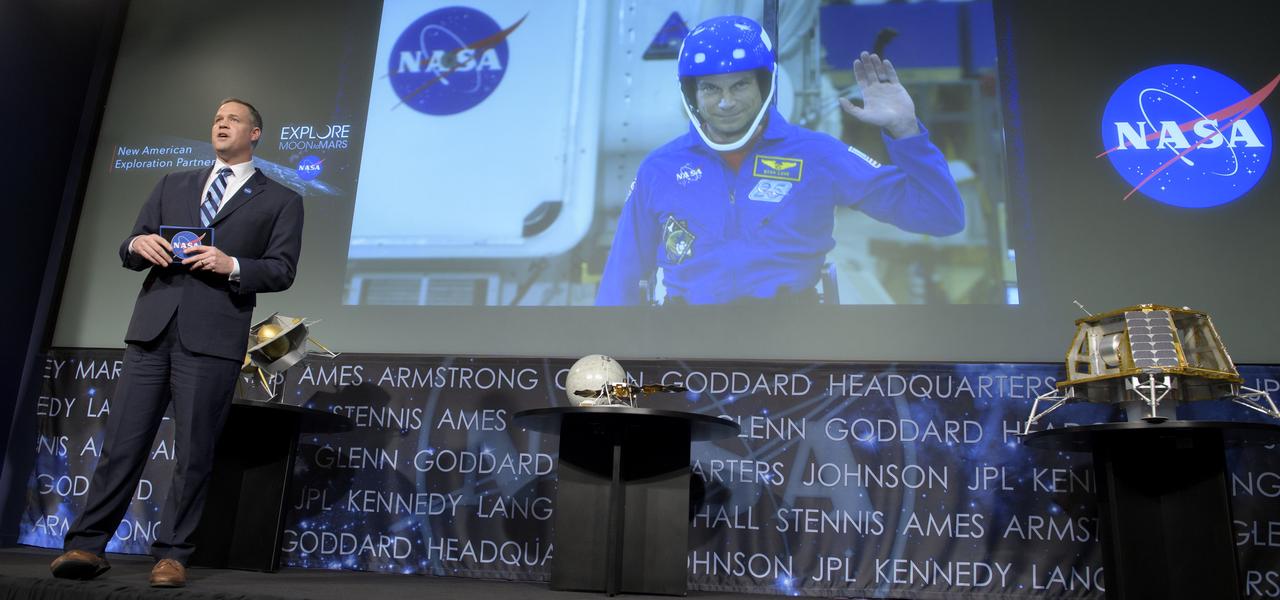
NASA Administrator Jim Bridenstine talks via satellite with NASA astronaut Stan Love from NASA’s Johnson Space Center in Houston during an event where it was announced that nine U.S. companies are eligible to bid on NASA delivery services to the lunar surface through Commercial Lunar Payload Services (CLPS) contracts, Thursday, Nov. 29, 2018 at NASA Headquarters in Washington. The companies will be able to bid on delivering science and technology payloads for NASA, including payload integration and operations, launching from Earth and landing on the surface of the Moon. NASA expects to be one of many customers that will use these commercial landing services. Photo Credit: (NASA/Bill Ingalls)
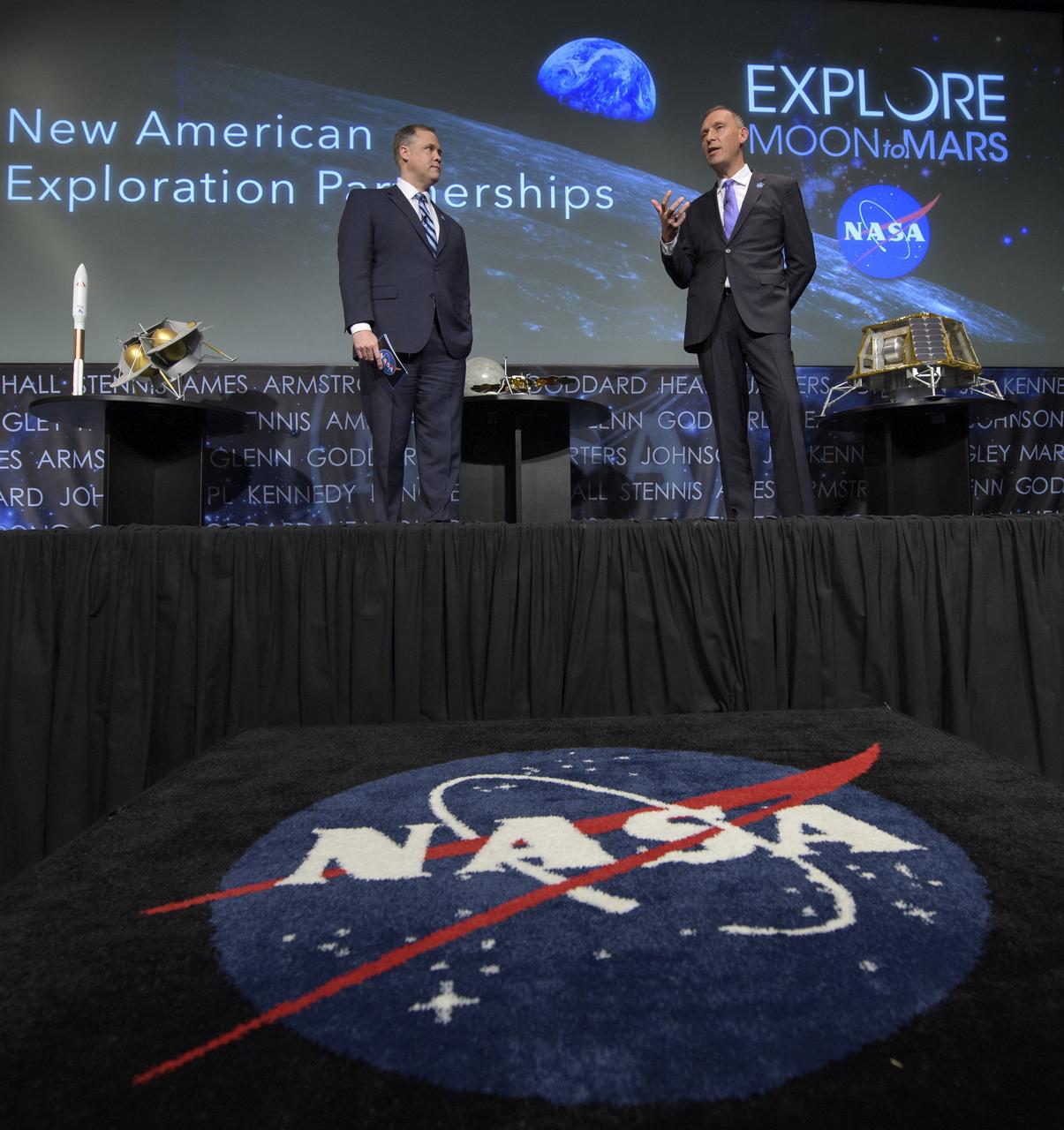
NASA Administrator Jim Bridenstine, left, and NASA Associate Administrator for the Science Mission Directorate, Thomas Zurbuchen, answer questions during an event where nine U.S. companies where named as eligible to bid on NASA delivery services to the lunar surface through Commercial Lunar Payload Services (CLPS) contracts, Thursday, Nov. 29, 2018 at NASA Headquarters in Washington. The companies will be able to bid on delivering science and technology payloads for NASA, including payload integration and operations, launching from Earth and landing on the surface of the Moon. NASA expects to be one of many customers that will use these commercial landing services. Photo Credit: (NASA/Bill Ingalls)
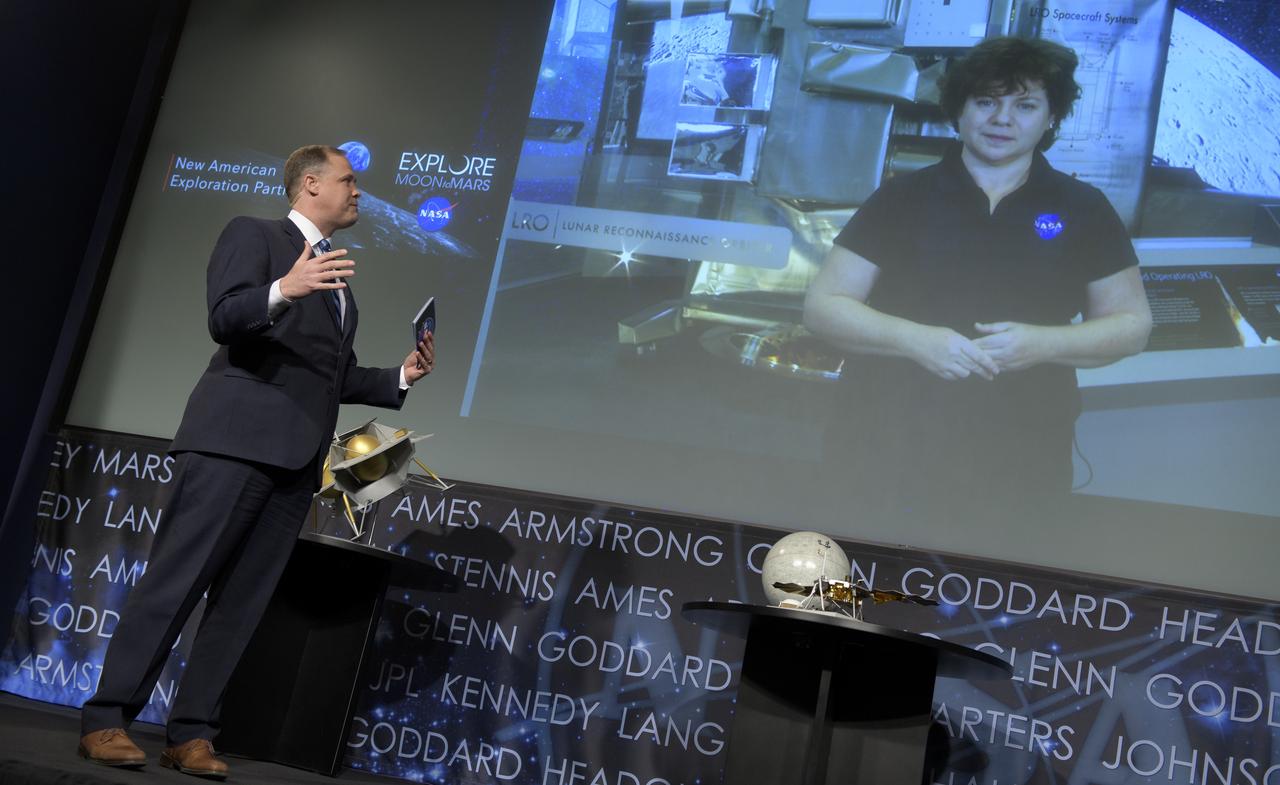
NASA Administrator Jim Bridenstine talks with Barbara Cohen, associate project scientist for the Lunar Reconnaissance Orbiter at NASA’s Goddard Space Flight Center in Greenbelt, Maryland during a event where it was announced that nine U.S. companies are eligible to bid on NASA delivery services to the lunar surface through Commercial Lunar Payload Services (CLPS) contracts, Thursday, Nov. 29, 2018 at NASA Headquarters in Washington. The companies will be able to bid on delivering science and technology payloads for NASA, including payload integration and operations, launching from Earth and landing on the surface of the Moon. NASA expects to be one of many customers that will use these commercial landing services. Photo Credit: (NASA/Bill Ingalls)
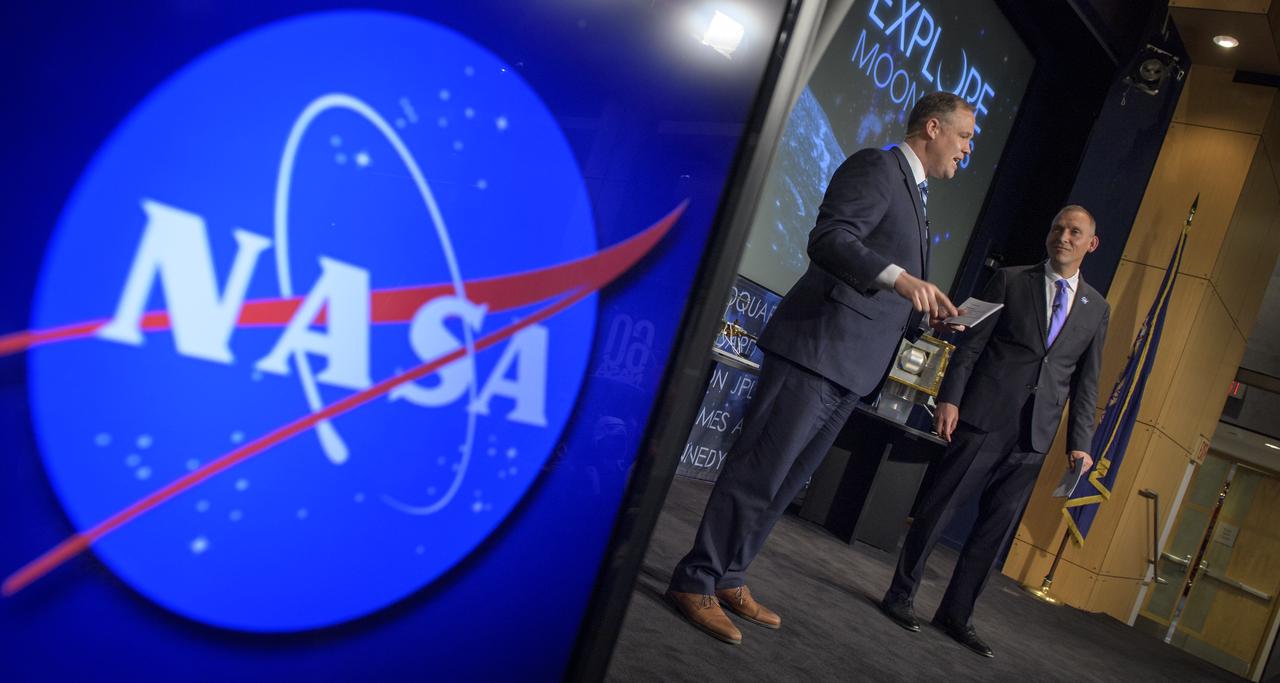
NASA Administrator Jim Bridenstine, left, and NASA Associate Administrator for the Science Mission Directorate, Thomas Zurbuchen, answer questions during an event where nine U.S. companies where named as eligible to bid on NASA delivery services to the lunar surface through Commercial Lunar Payload Services (CLPS) contracts, Thursday, Nov. 29, 2018 at NASA Headquarters in Washington. The companies will be able to bid on delivering science and technology payloads for NASA, including payload integration and operations, launching from Earth and landing on the surface of the Moon. NASA expects to be one of many customers that will use these commercial landing services. Photo Credit: (NASA/Bill Ingalls)
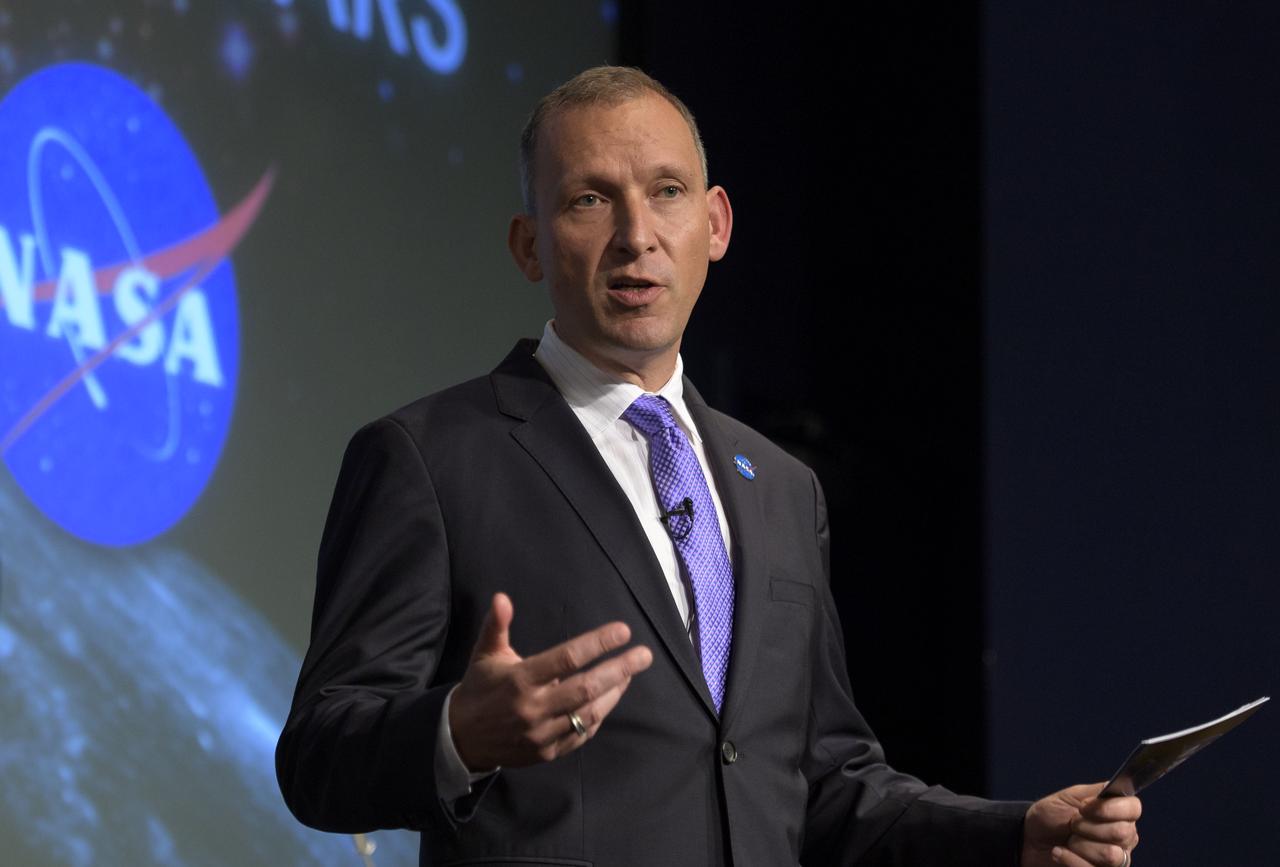
NASA Associate Administrator for the Science Mission Directorate, Thomas Zurbuchen, answers questions during an event where nine U.S. companies where named as eligible to bid on NASA delivery services to the lunar surface through Commercial Lunar Payload Services (CLPS) contracts, Thursday, Nov. 29, 2018 at NASA Headquarters in Washington. The companies will be able to bid on delivering science and technology payloads for NASA, including payload integration and operations, launching from Earth and landing on the surface of the Moon. NASA expects to be one of many customers that will use these commercial landing services. Photo Credit: (NASA/Bill Ingalls)
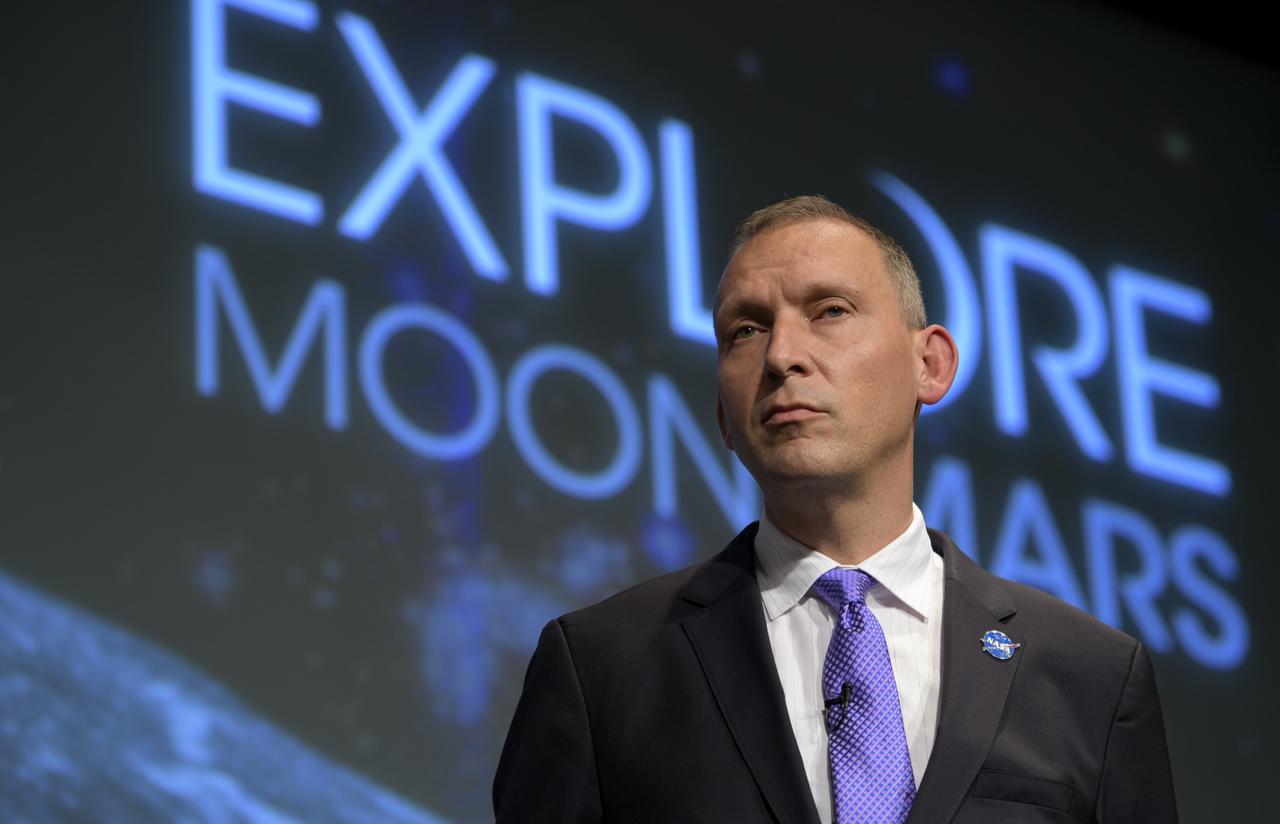
NASA Associate Administrator for the Science Mission Directorate, Thomas Zurbuchen, answers questions during an event where nine U.S. companies where named as eligible to bid on NASA delivery services to the lunar surface through Commercial Lunar Payload Services (CLPS) contracts, Thursday, Nov. 29, 2018 at NASA Headquarters in Washington. The companies will be able to bid on delivering science and technology payloads for NASA, including payload integration and operations, launching from Earth and landing on the surface of the Moon. NASA expects to be one of many customers that will use these commercial landing services. Photo Credit: (NASA/Bill Ingalls)
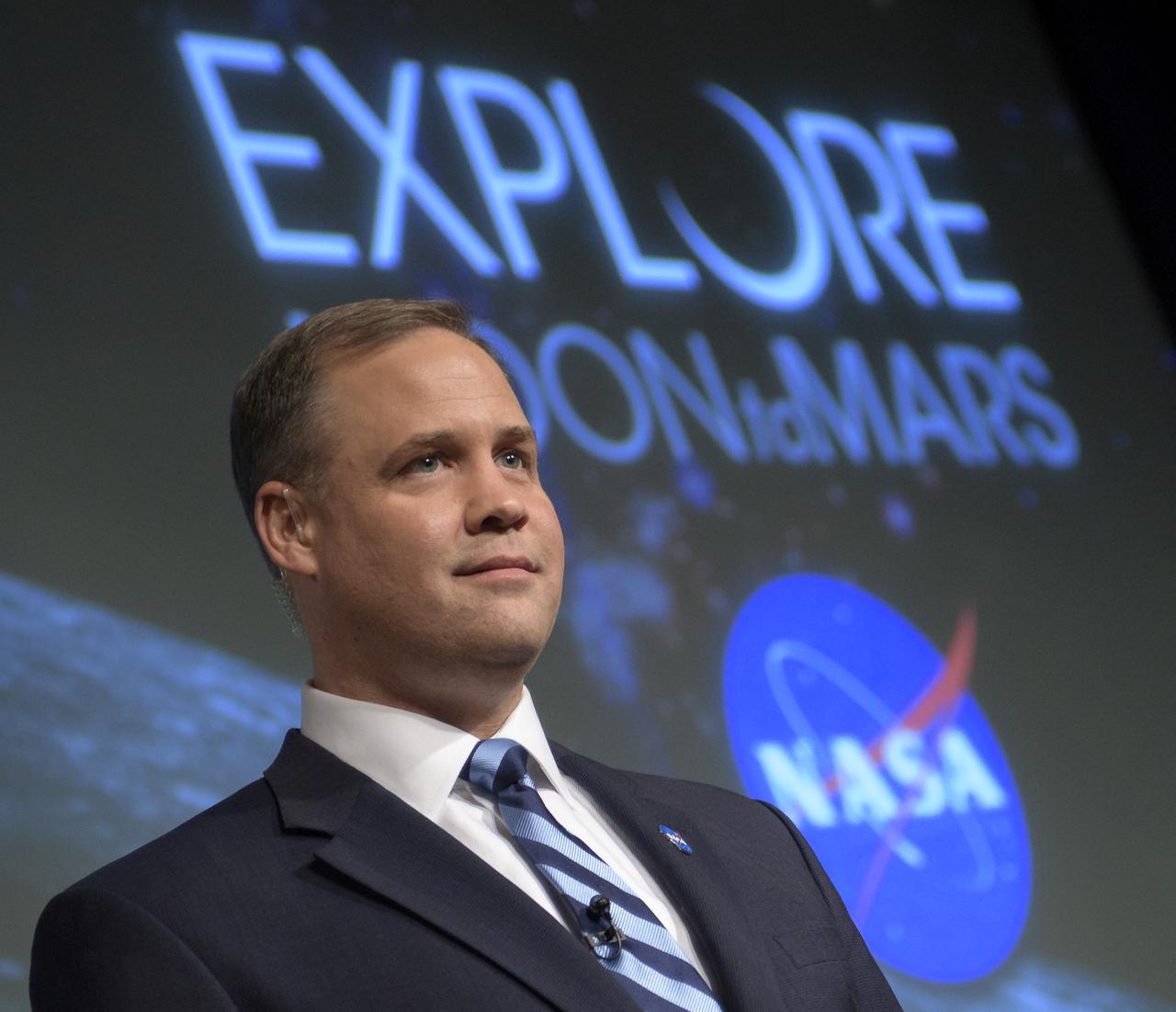
NASA Administrator Jim Bridenstine answers questions during an event where nine U.S. companies where named as eligible to bid on NASA delivery services to the lunar surface through Commercial Lunar Payload Services (CLPS) contracts, Thursday, Nov. 29, 2018 at NASA Headquarters in Washington. The companies will be able to bid on delivering science and technology payloads for NASA, including payload integration and operations, launching from Earth and landing on the surface of the Moon. NASA expects to be one of many customers that will use these commercial landing services. Photo Credit: (NASA/Bill Ingalls)
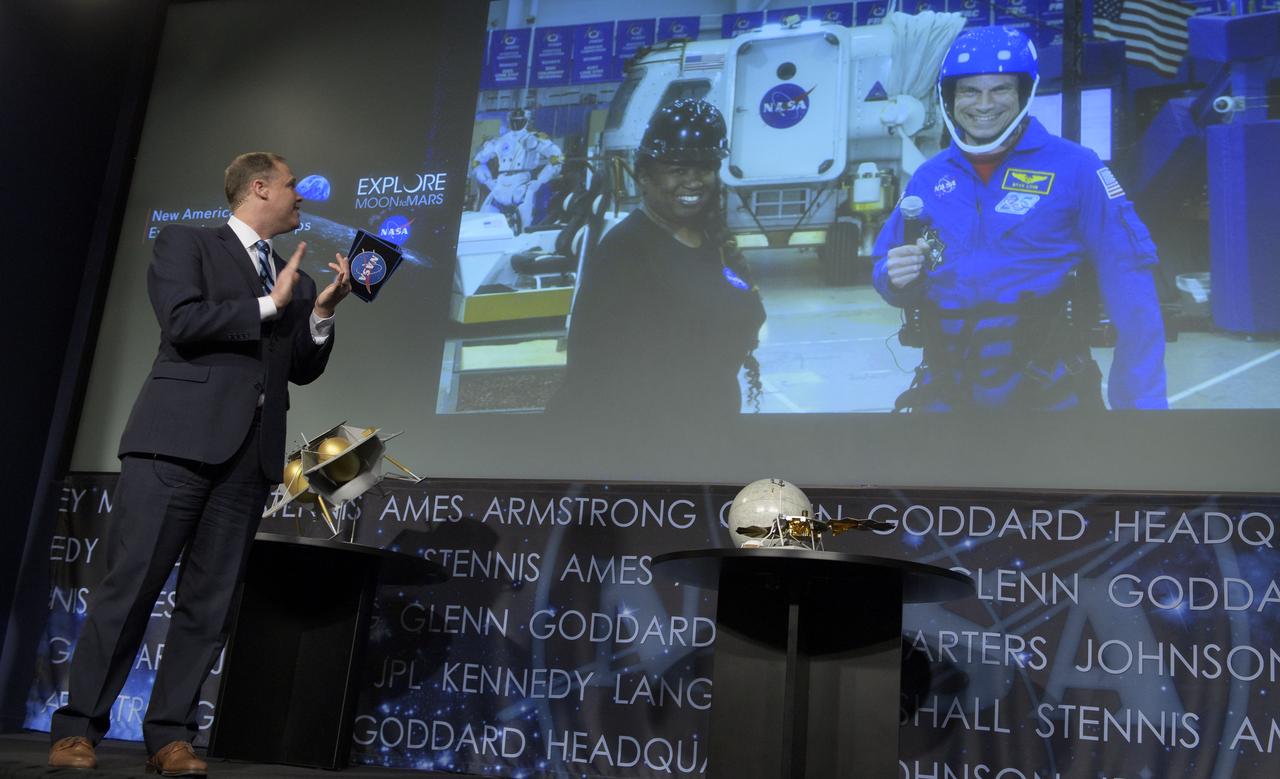
NASA Administrator Jim Bridenstine talks via satellite with Andrea Mosie, Apollo sample laboratory manager, and NASA astronaut Stan Love from NASA’s Johnson Space Center in Houston during a event where it was announced that nine U.S. companies are eligible to bid on NASA delivery services to the lunar surface through Commercial Lunar Payload Services (CLPS) contracts, Thursday, Nov. 29, 2018 at NASA Headquarters in Washington. The companies will be able to bid on delivering science and technology payloads for NASA, including payload integration and operations, launching from Earth and landing on the surface of the Moon. NASA expects to be one of many customers that will use these commercial landing services. Photo Credit: (NASA/Bill Ingalls)
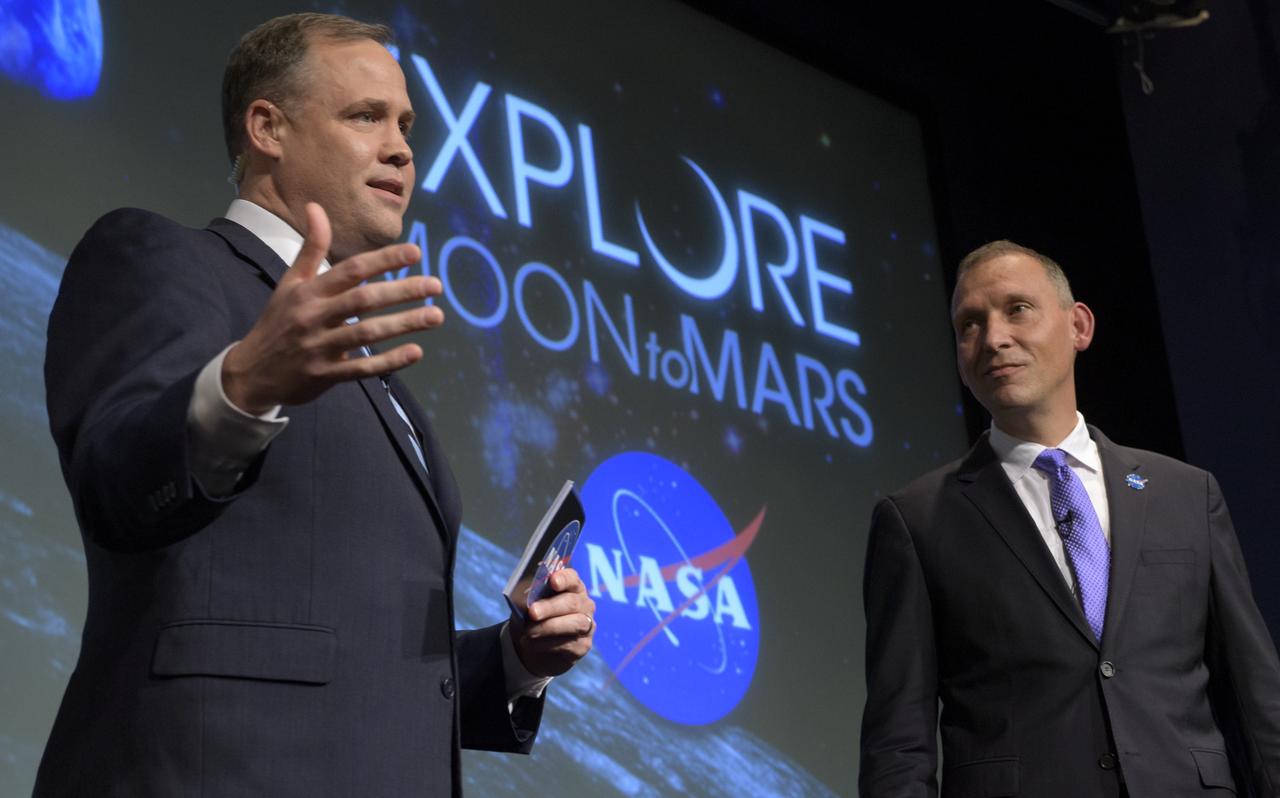
NASA Administrator Jim Bridenstine, left, and NASA Associate Administrator for the Science Mission Directorate, Thomas Zurbuchen, answer questions during an event where nine U.S. companies where named as eligible to bid on NASA delivery services to the lunar surface through Commercial Lunar Payload Services (CLPS) contracts, Thursday, Nov. 29, 2018 at NASA Headquarters in Washington. The companies will be able to bid on delivering science and technology payloads for NASA, including payload integration and operations, launching from Earth and landing on the surface of the Moon. NASA expects to be one of many customers that will use these commercial landing services. Photo Credit: (NASA/Bill Ingalls)
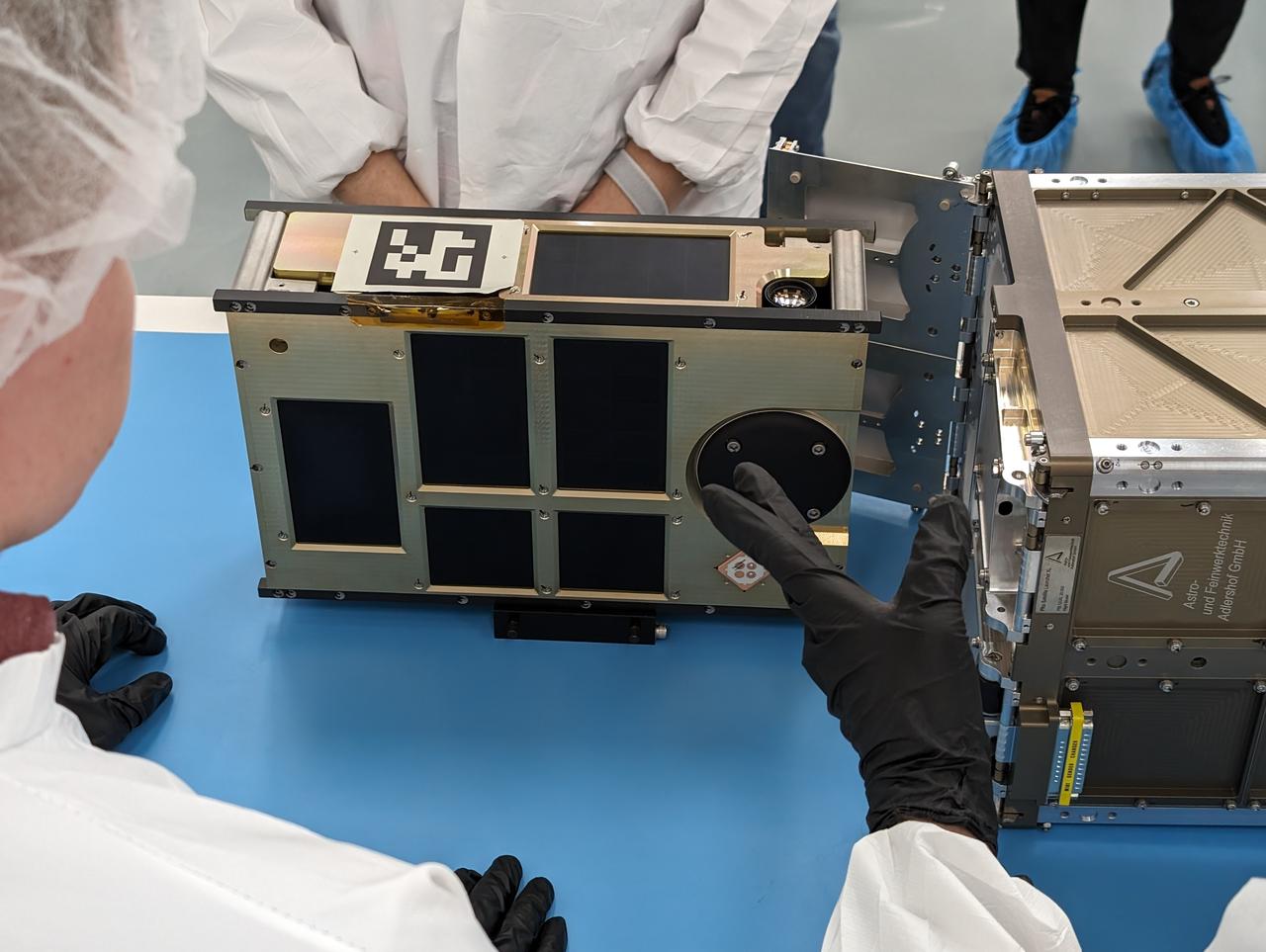
NASA and Firefly Aerospace engineers review the integration plan for the agency’s CubeSat R5 Spacecraft 4 (R5-S4) at Firefly Aerospace’s Payload Processing Facility at Vandenberg Space Force Base, California on Wednesday, April 24, 2024. The spacecraft will soon be integrated for launch aboard the company’s Alpha rocket, as part of launch services provided for NASA's CubeSat Launch Initiative and Educational Launch of Nanosatellites 43 mission in support of the agency ’s Venture-Class Launch Services Demonstration 2 contract.
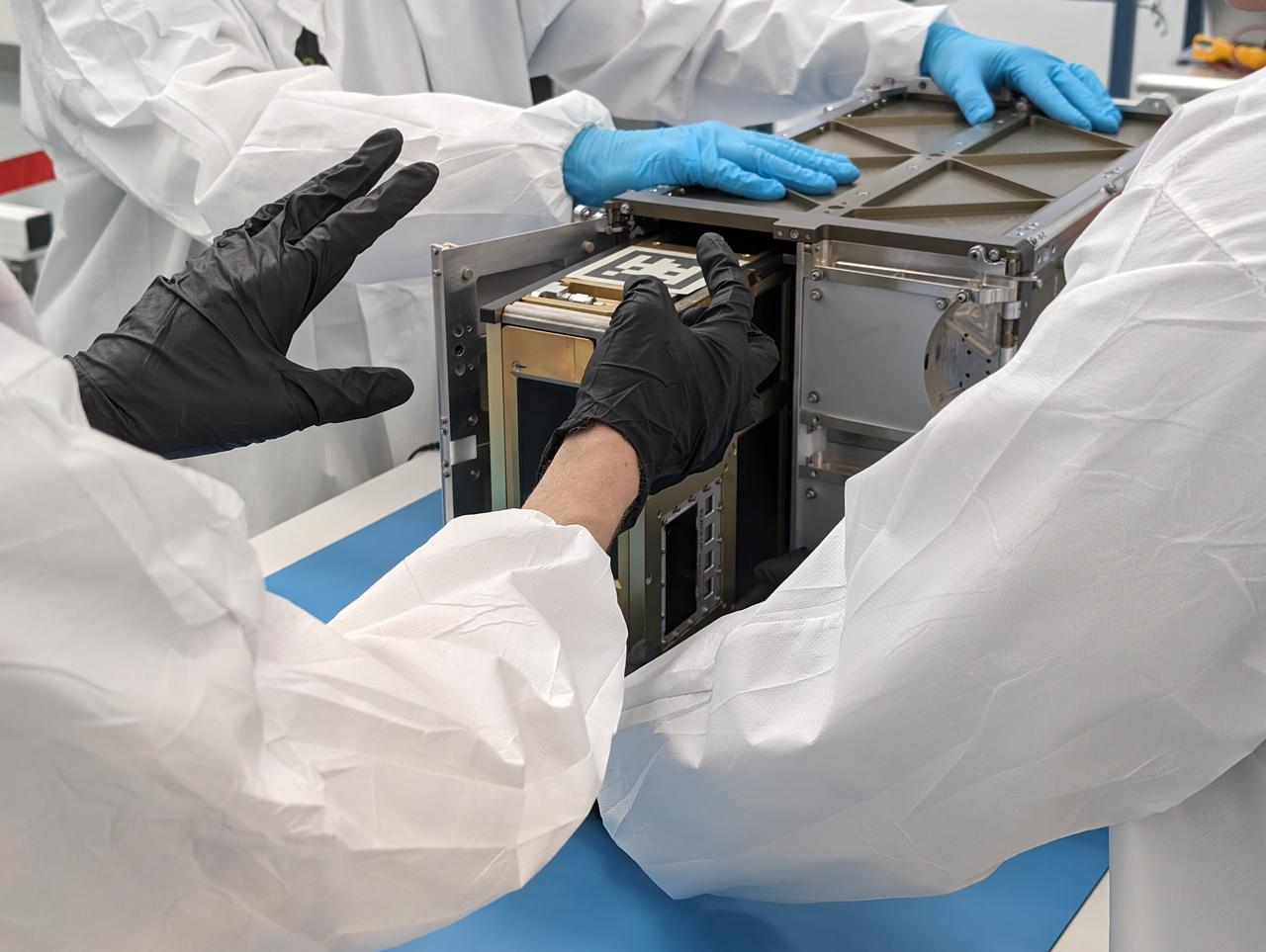
A NASA engineer installs the agency’s CubeSat R5 Spacecraft 4 (R5-S4) into the dispenser at Firefly Aerospace's Payload Processing Facility at Vandenberg Space Force Base, California on Wednesday, April 24, 2024. The spacecraft will soon be integrated for launch aboard the company’s Alpha rocket, as part of launch services provided for NASA's CubeSat Launch Initiative and Educational Launch of Nanosatellites 43 mission in support of the agency ’s Venture-Class Launch Services Demonstration 2 contract.
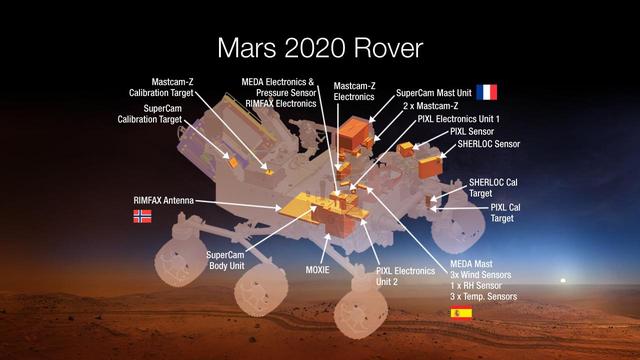
This diagram shows components of the investigations payload for NASA Mars 2020 rover mission.
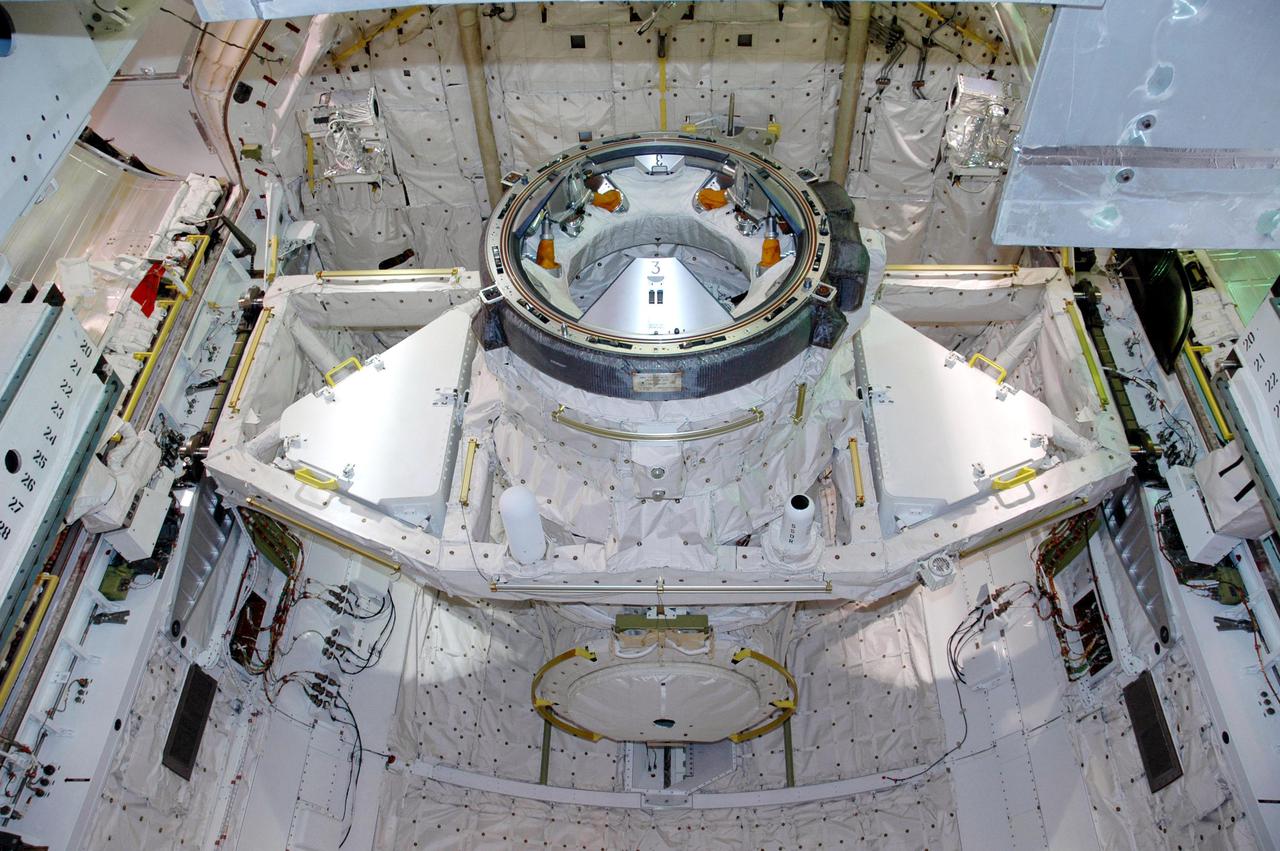
KENNEDY SPACE CENTER, FLA. - In the Payload Changeout Room on Launch Pad 39B, the payloads for Return to Flight mission STS-114 are being transferred to Discovery’s payload bay. Seen here is the airlock, already installed in the payload bay. Payloads being installed are a Control Moment Gyro, the Thermal Protection System Detailed Test Objective box, which is placed on the Lightweight Multi-Purpose Experiment Support Structure Carrier, External Stowage Platform 2 and Multi-Purpose Logistics Module Raffaello. Already installed in the payload bay are the airlock, the Canadarm 2, or Shuttle arm, and the Orbiter Boom Sensor System. The launch window for mission STS-114 extends from July 13 to July 31.
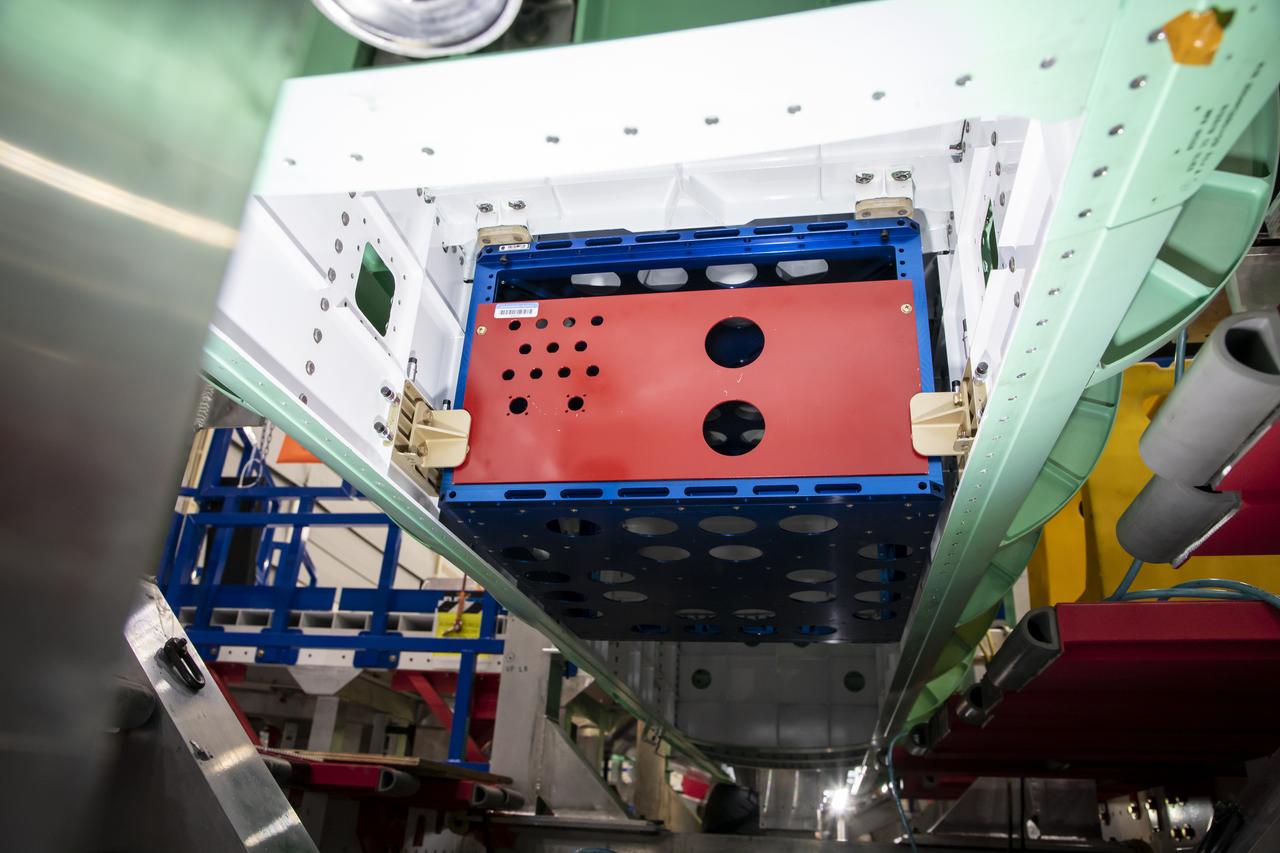
Lockheed Martin Photography By Garry Tice 1011 Lockheed Way, Palmdale, Ca. 93599 Event: NASA Payload Pallet XVS Mock-Up Date: 7/01/2020 Additional Info:
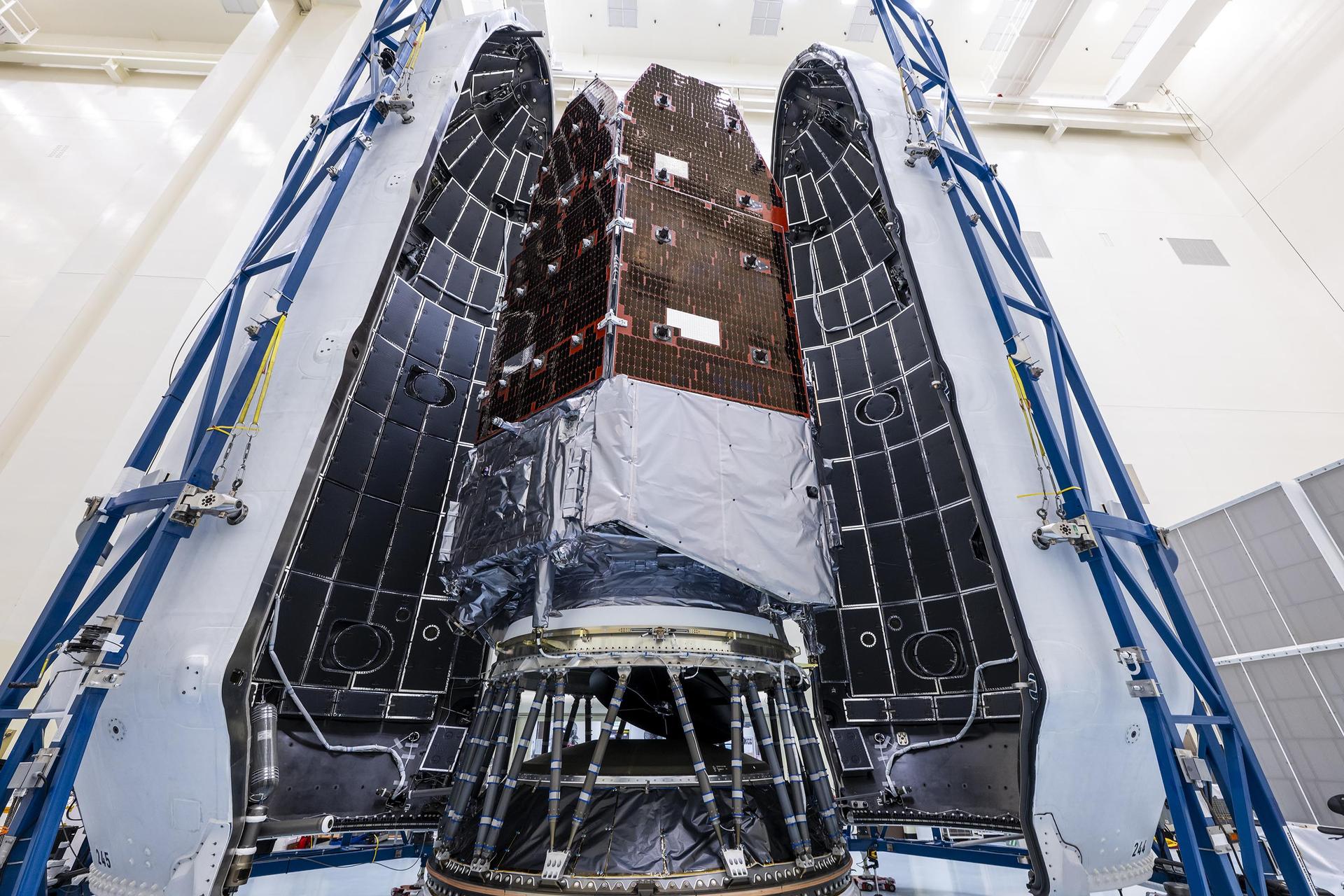
Teams inside the Payload Hazardous Servicing Facility at NASA’s Kennedy Space Center in Florida encapsulate the agency’s Nancy Grace Roman Space Telescope within the payload fairing on Friday, Aug. 21, 2026, ahead of mating to a SpaceX Falcon Heavy rocket. Encapsulation shields the spacecraft during rollout, ascent, and the early phases of flight. Roman will investigate dark energy and dark matter, conduct a statistical census of planetary systems, and enable a broad range of additional astrophysics research. Liftoff from Launch Complex 39A at Kennedy is targeted for no earlier than Sunday, Aug. 30, 2026.
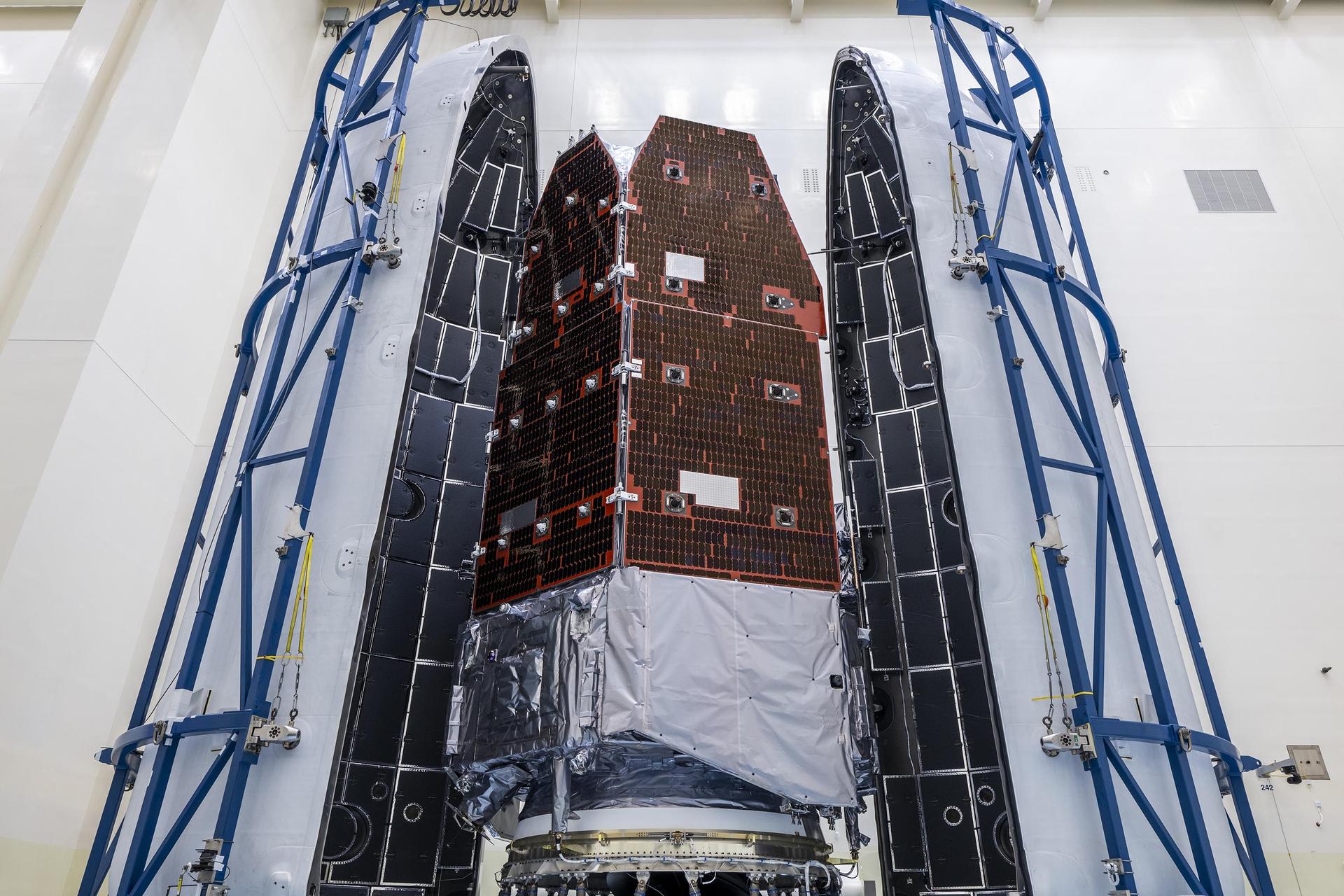
Teams inside the Payload Hazardous Servicing Facility at NASA’s Kennedy Space Center in Florida encapsulate the agency’s Nancy Grace Roman Space Telescope within the payload fairing on Friday, Aug. 21, 2026, ahead of mating to a SpaceX Falcon Heavy rocket. Encapsulation shields the spacecraft during rollout, ascent, and the early phases of flight. Roman will investigate dark energy and dark matter, conduct a statistical census of planetary systems, and enable a broad range of additional astrophysics research. Liftoff from Launch Complex 39A at Kennedy is targeted for no earlier than Sunday, Aug. 30, 2026.
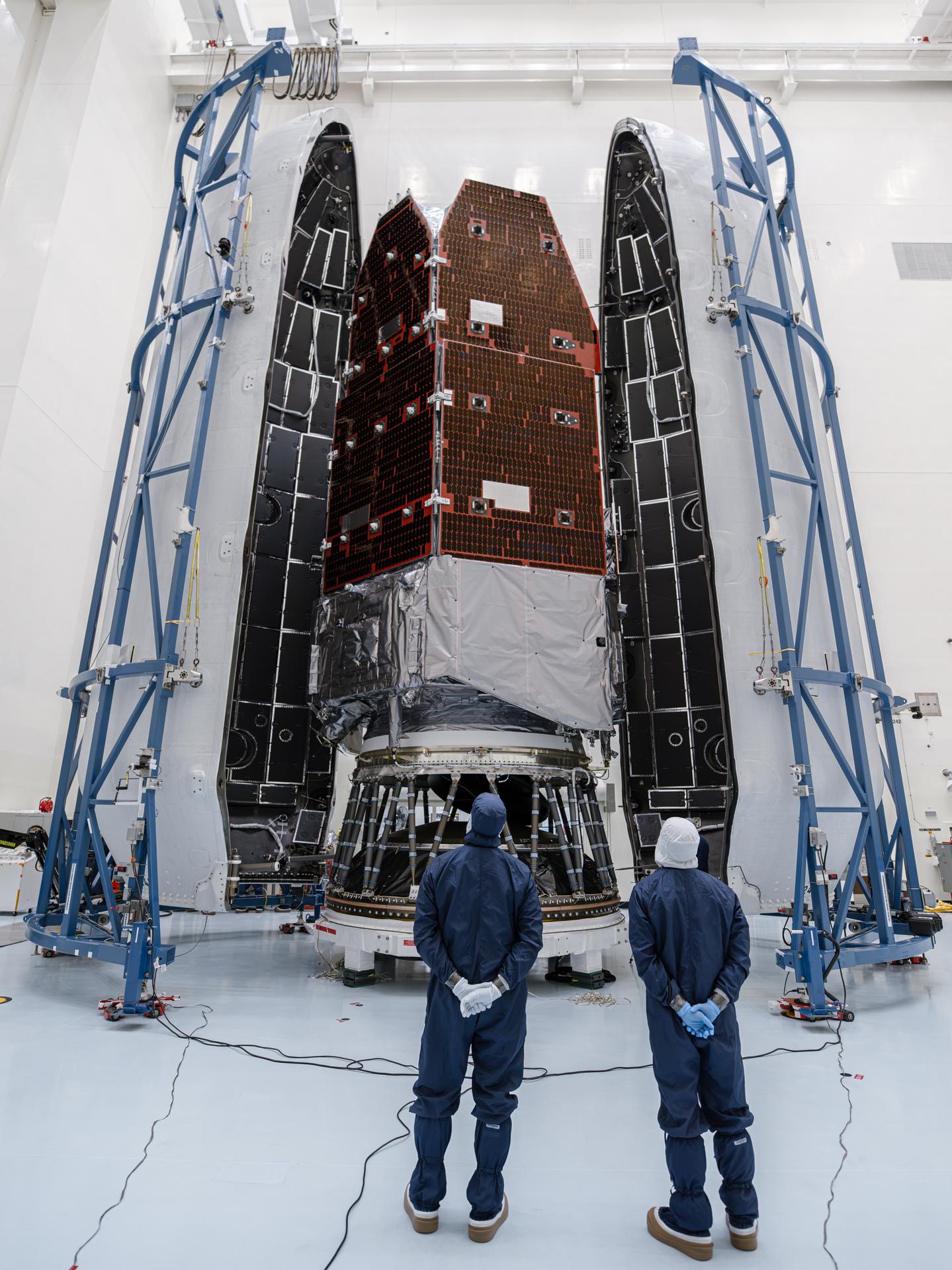
Teams inside the Payload Hazardous Servicing Facility at NASA’s Kennedy Space Center in Florida encapsulate the agency’s Nancy Grace Roman Space Telescope within the payload fairing on Friday, Aug. 21, 2026, ahead of mating to a SpaceX Falcon Heavy rocket. Encapsulation shields the spacecraft during rollout, ascent, and the early phases of flight. Roman will investigate dark energy and dark matter, conduct a statistical census of planetary systems, and enable a broad range of additional astrophysics research. Liftoff from Launch Complex 39A at Kennedy is targeted for no earlier than Sunday, Aug. 30, 2026.
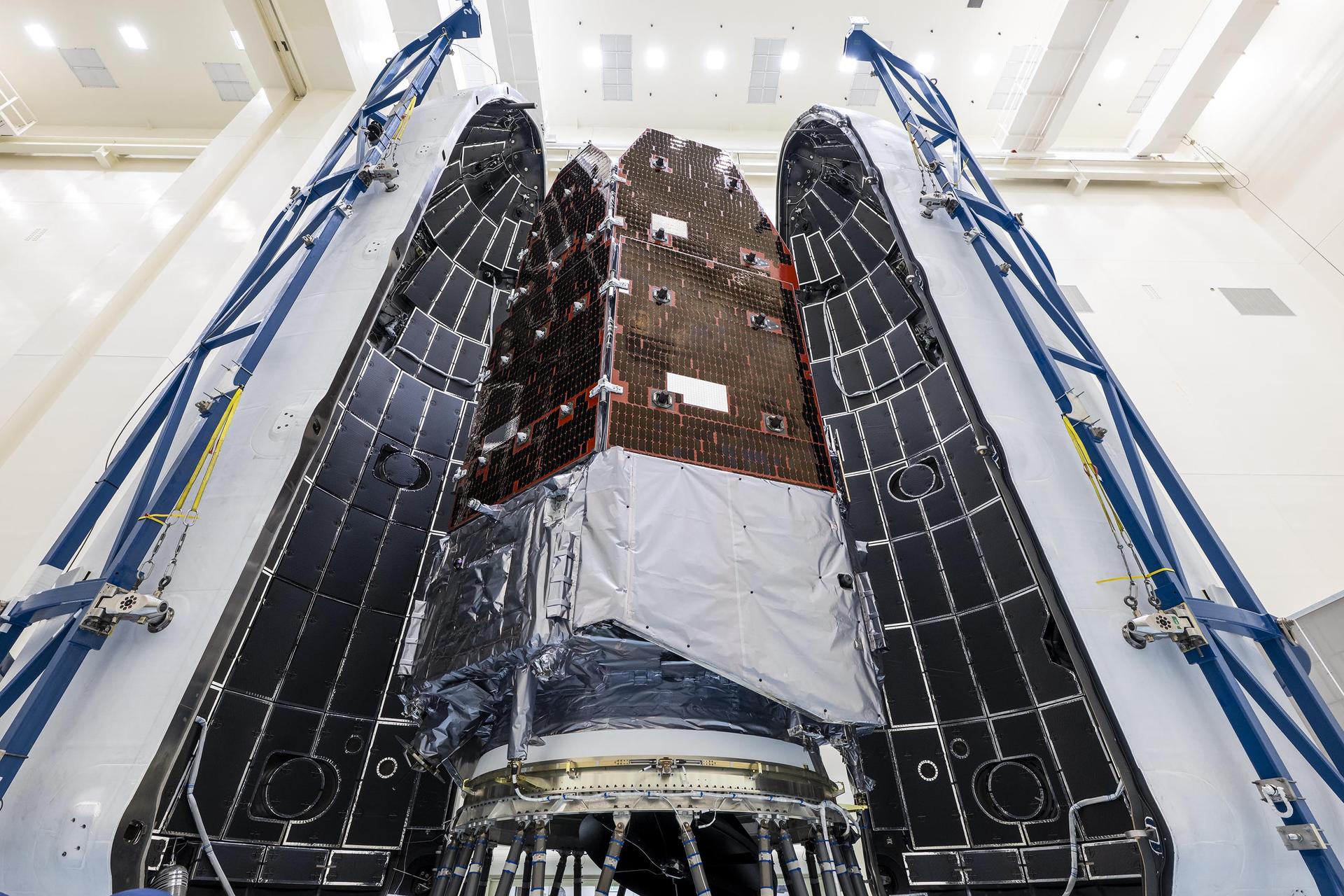
Teams inside the Payload Hazardous Servicing Facility at NASA’s Kennedy Space Center in Florida encapsulate the agency’s Nancy Grace Roman Space Telescope within the payload fairing on Friday, Aug. 21, 2026, ahead of mating to a SpaceX Falcon Heavy rocket. Encapsulation shields the spacecraft during rollout, ascent, and the early phases of flight. Roman will investigate dark energy and dark matter, conduct a statistical census of planetary systems, and enable a broad range of additional astrophysics research. Liftoff from Launch Complex 39A at Kennedy is targeted for no earlier than Sunday, Aug. 30, 2026.
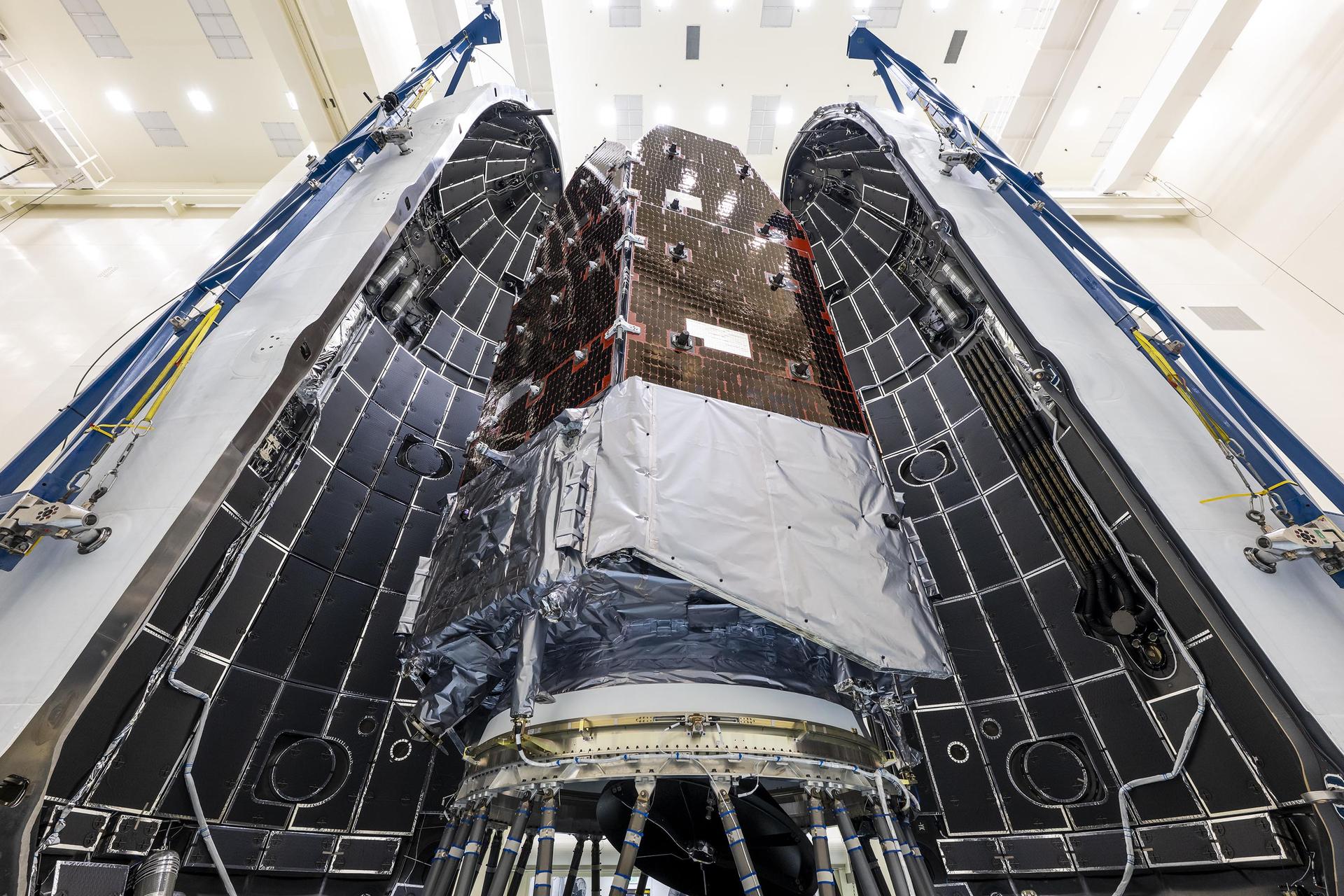
Teams inside the Payload Hazardous Servicing Facility at NASA’s Kennedy Space Center in Florida encapsulate the agency’s Nancy Grace Roman Space Telescope within the payload fairing on Friday, Aug. 21, 2026, ahead of mating to a SpaceX Falcon Heavy rocket. Encapsulation shields the spacecraft during rollout, ascent, and the early phases of flight. Roman will investigate dark energy and dark matter, conduct a statistical census of planetary systems, and enable a broad range of additional astrophysics research. Liftoff from Launch Complex 39A at Kennedy is targeted for no earlier than Sunday, Aug. 30, 2026.
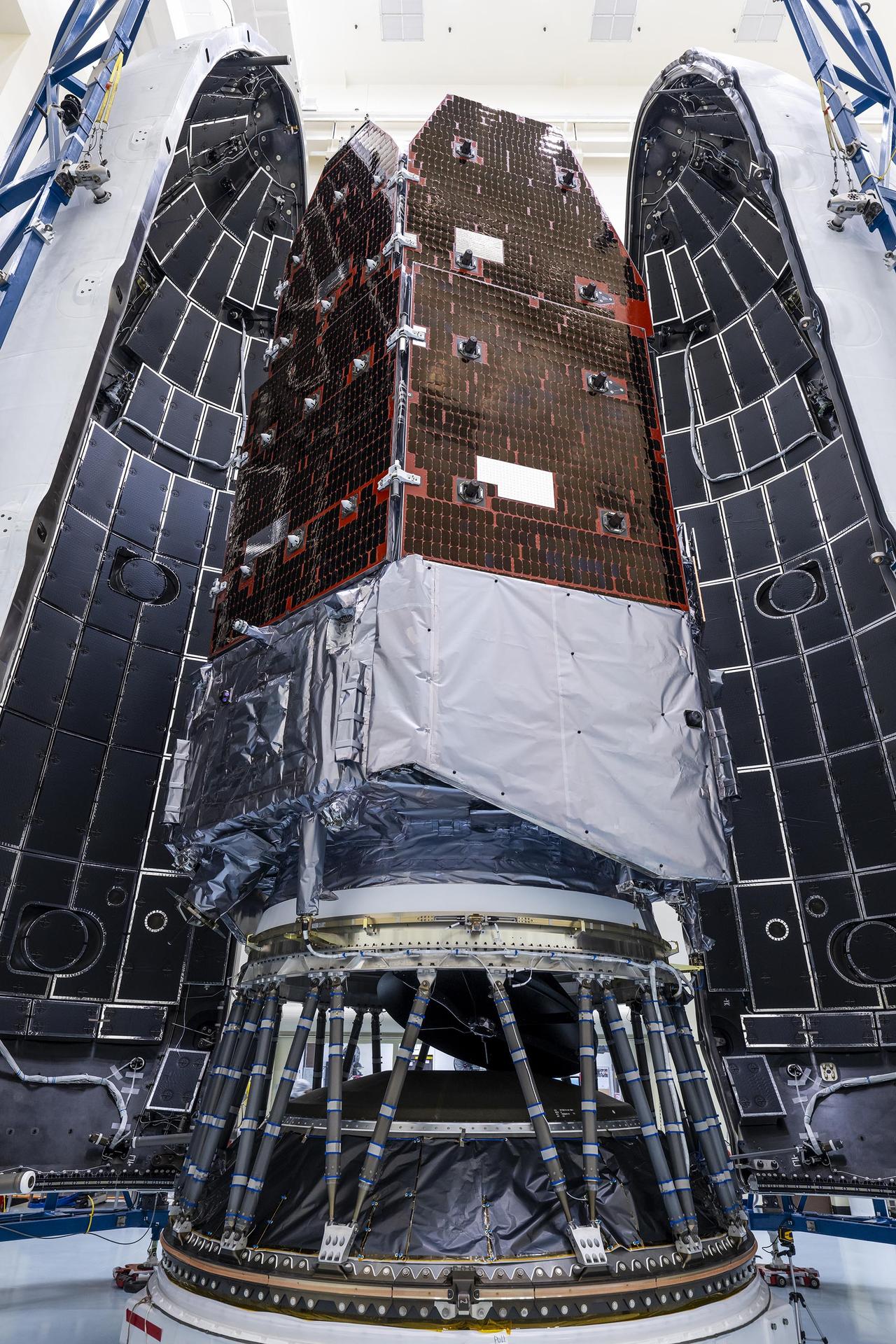
Teams inside the Payload Hazardous Servicing Facility at NASA’s Kennedy Space Center in Florida encapsulate the agency’s Nancy Grace Roman Space Telescope within the payload fairing on Friday, Aug. 21, 2026, ahead of mating to a SpaceX Falcon Heavy rocket. Encapsulation shields the spacecraft during rollout, ascent, and the early phases of flight. Roman will investigate dark energy and dark matter, conduct a statistical census of planetary systems, and enable a broad range of additional astrophysics research. Liftoff from Launch Complex 39A at Kennedy is targeted for no earlier than Sunday, Aug. 30, 2026.
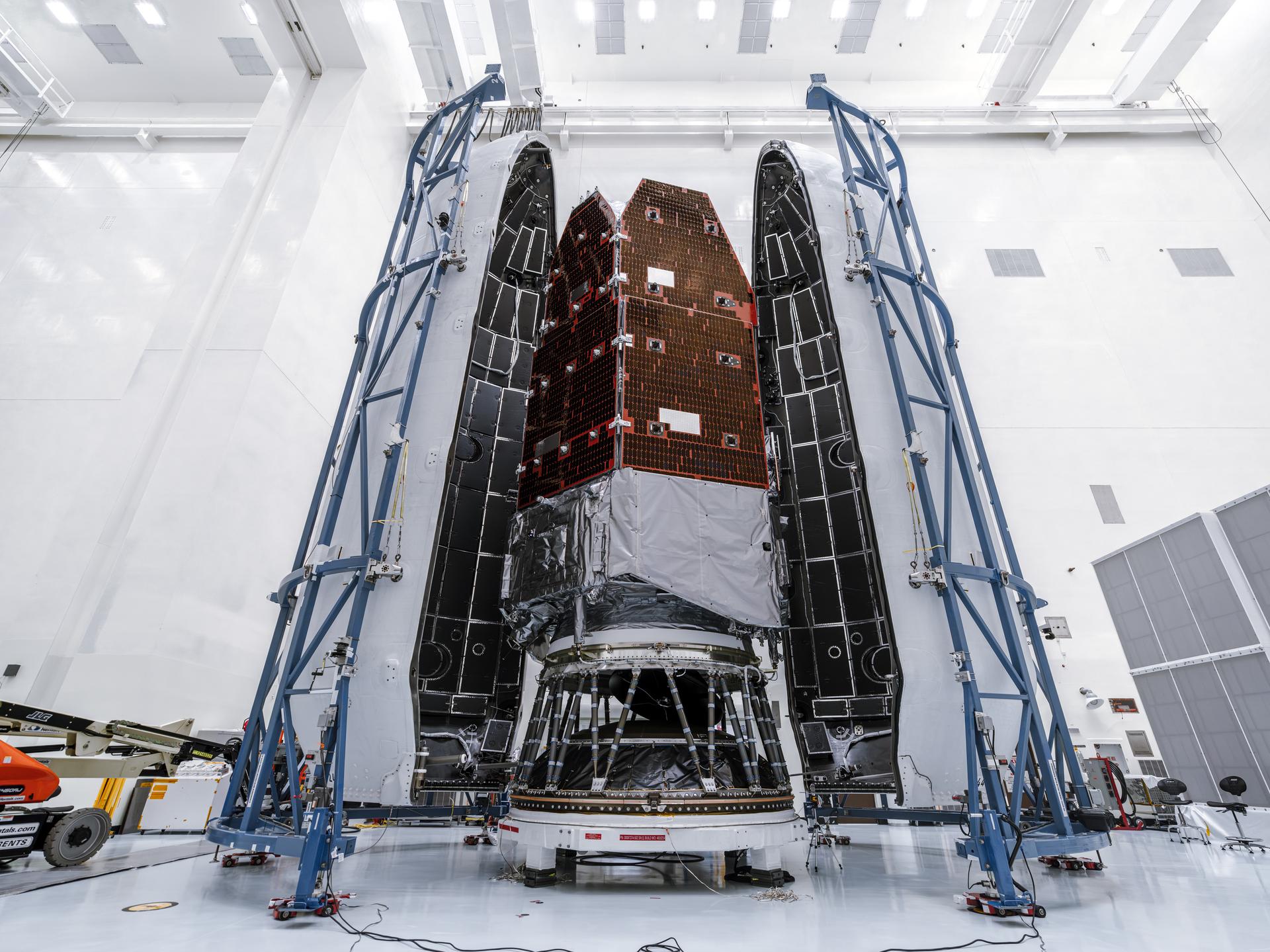
Teams inside the Payload Hazardous Servicing Facility at NASA’s Kennedy Space Center in Florida encapsulate the agency’s Nancy Grace Roman Space Telescope within the payload fairing on Friday, Aug. 21, 2026, ahead of mating to a SpaceX Falcon Heavy rocket. Encapsulation shields the spacecraft during rollout, ascent, and the early phases of flight. Roman will investigate dark energy and dark matter, conduct a statistical census of planetary systems, and enable a broad range of additional astrophysics research. Liftoff from Launch Complex 39A at Kennedy is targeted for no earlier than Sunday, Aug. 30, 2026.
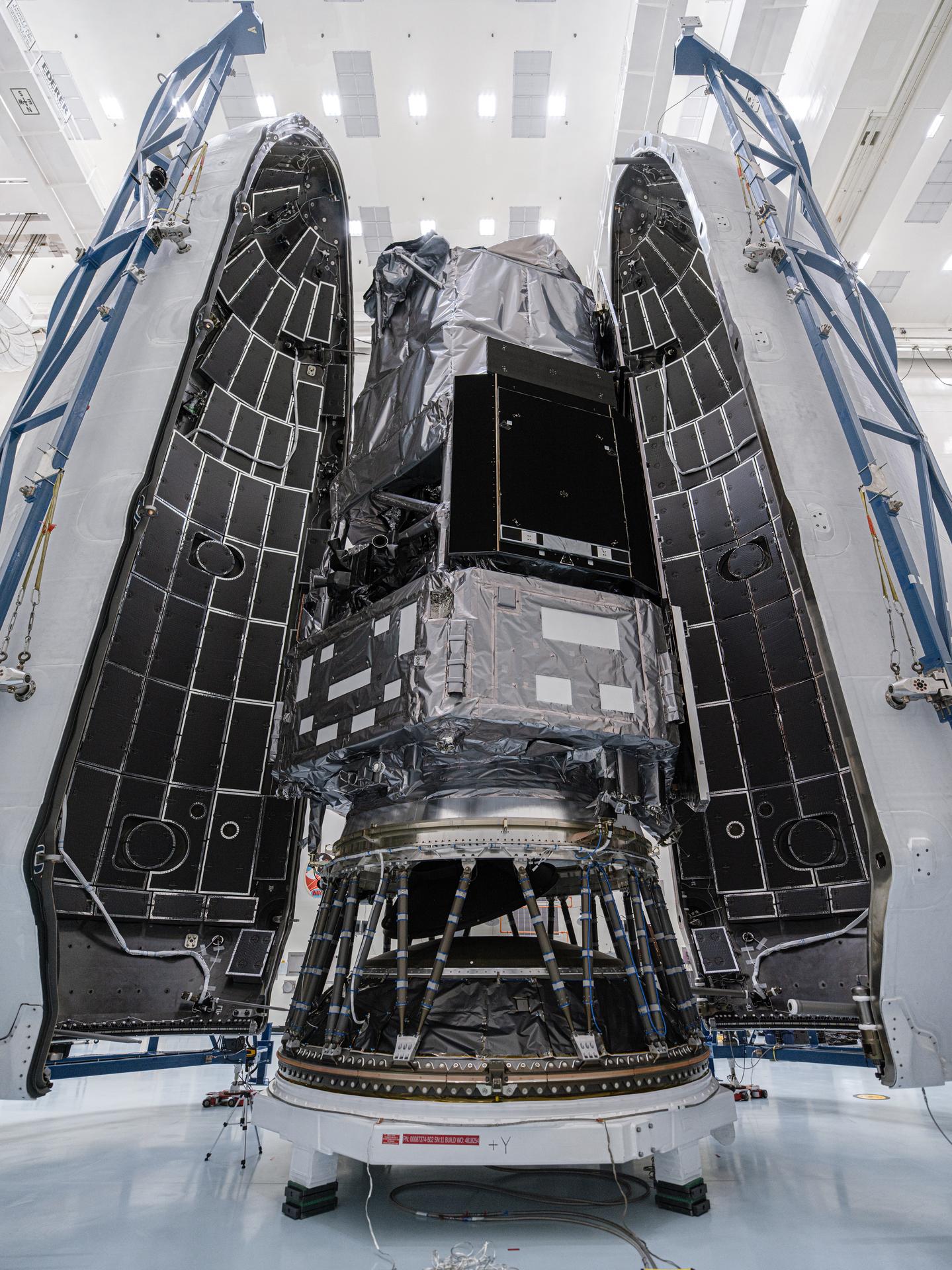
Teams inside the Payload Hazardous Servicing Facility at NASA’s Kennedy Space Center in Florida encapsulate the agency’s Nancy Grace Roman Space Telescope within the payload fairing on Friday, Aug. 21, 2026, ahead of mating to a SpaceX Falcon Heavy rocket. Encapsulation shields the spacecraft during rollout, ascent, and the early phases of flight. Roman will investigate dark energy and dark matter, conduct a statistical census of planetary systems, and enable a broad range of additional astrophysics research. Liftoff from Launch Complex 39A at Kennedy is targeted for no earlier than Sunday, Aug. 30, 2026.
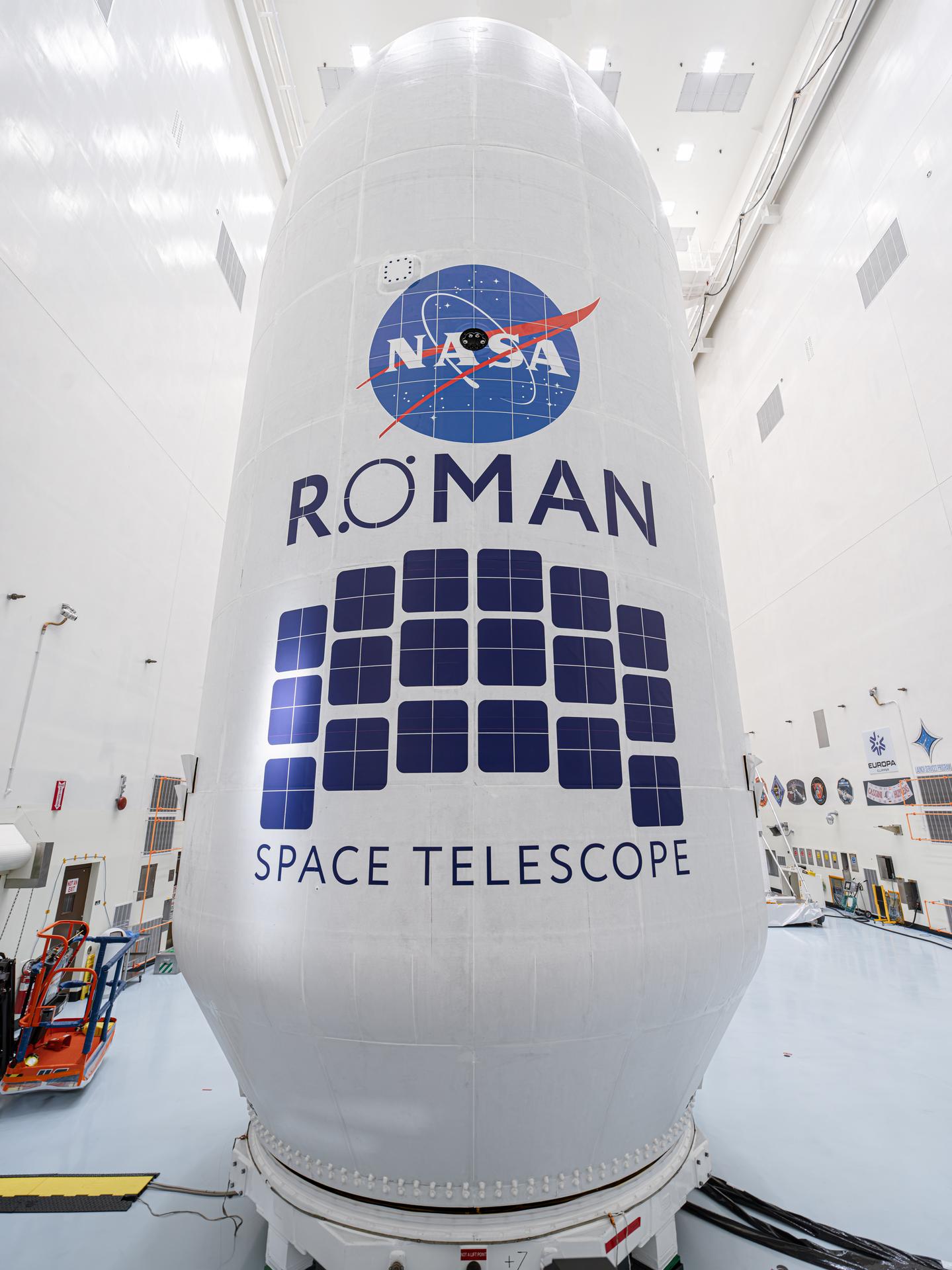
NASA’s Nancy Grace Roman Space Telescope is photographed after encapsulation inside its payload fairing in the Payload Hazardous Servicing Facility at NASA’s Kennedy Space Center in Florida on Monday, Aug. 24, 2026, ahead of mating to a SpaceX Falcon Heavy rocket. Encapsulation shields the spacecraft during rollout, ascent, and the early phases of flight. Roman will investigate dark energy and dark matter, conduct a statistical census of planetary systems, and enable a broad range of additional astrophysics research. Liftoff from Launch Complex 39A at Kennedy is targeted for no earlier than Sunday, Aug. 30, 2026.
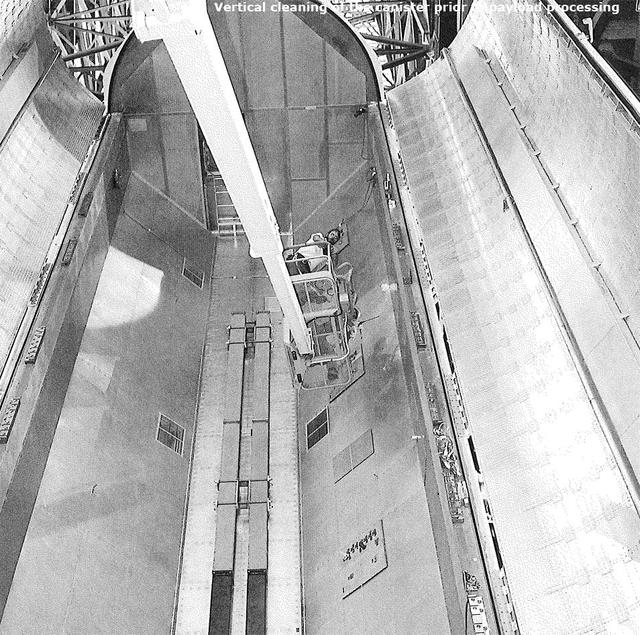
Vertical cleaning of the canister prior to payload processing
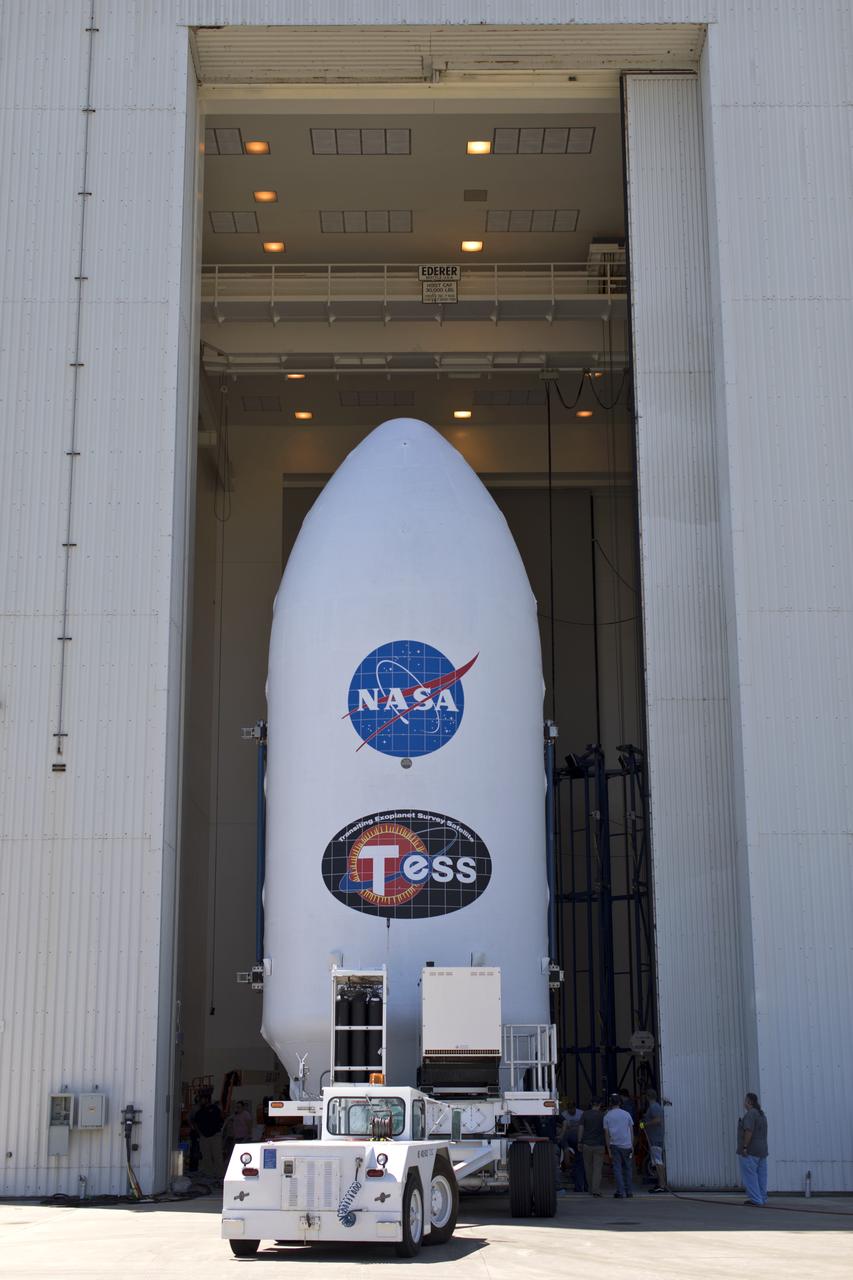
The payload fairing for NASA's Transiting Exoplanet Survey Satellite (TESS) is moved inside the Payload Hazardous Servicing Facility at the agency's Kennedy Space Center in Florida. Inside the facility, TESS will be encapsulated in the payload fairing. The satellite is scheduled to launch atop a SpaceX Falcon 9 rocket from Space Launch Complex 40 at Cape Canaveral Air Force Station on April 16. The satellite is the next step in NASA's search for planets outside our solar system, known as exoplanets. TESS is a NASA Astrophysics Explorer mission led and operated by MIT in Cambridge, Massachusetts, and managed by NASA’s Goddard Space Flight Center in Greenbelt, Maryland. Dr. George Ricker of MIT’s Kavli Institute for Astrophysics and Space Research serves as principal investigator for the mission. Additional partners include Orbital ATK, NASA’s Ames Research Center, the Harvard-Smithsonian Center for Astrophysics and the Space Telescope Science Institute. More than a dozen universities, research institutes and observatories worldwide are participants in the mission. NASA’s Launch Services Program is responsible for launch management.
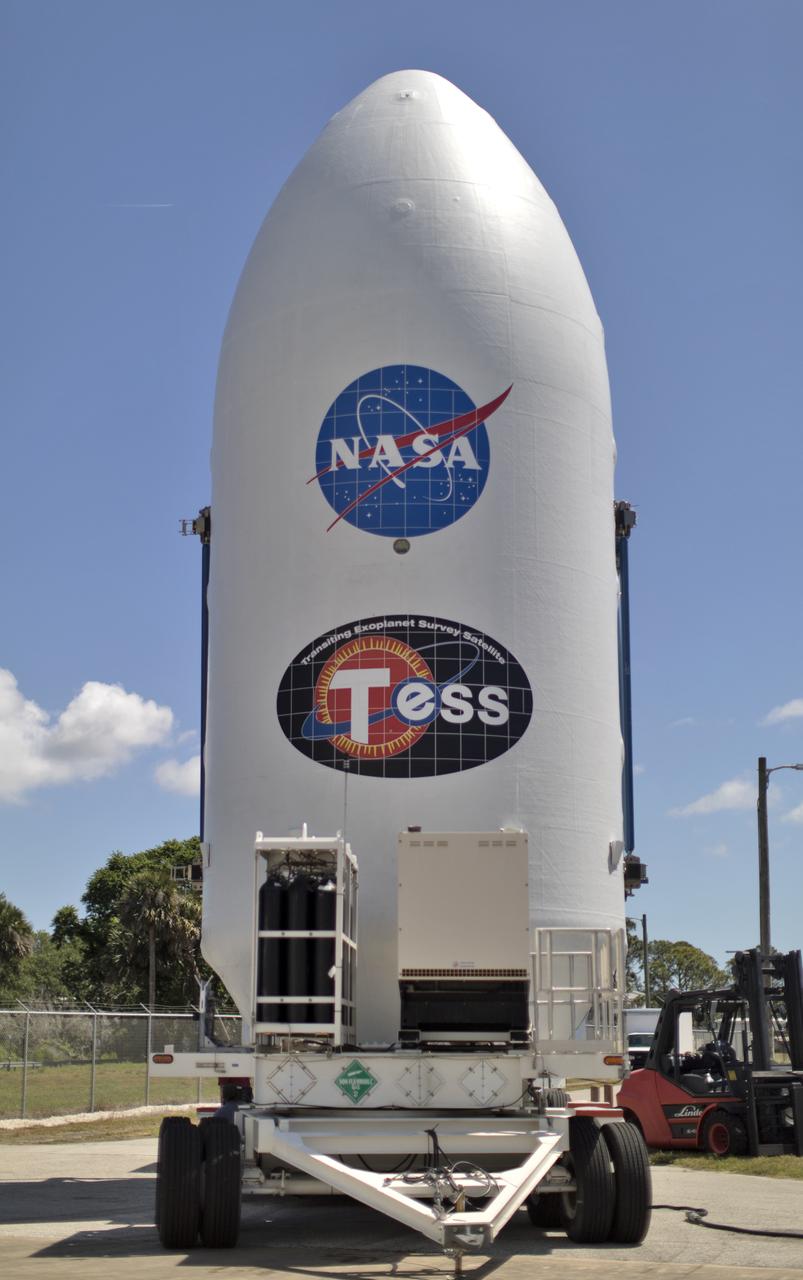
The payload fairing for NASA's Transiting Exoplanet Survey Satellite (TESS) is being prepared for the move to the Payload Hazardous Servicing Facility at the agency's Kennedy Space Center in Florida. Inside the facility, TESS will be encapsulated in the payload fairing. The satellite is scheduled to launch atop a SpaceX Falcon 9 rocket from Space Launch Complex 40 at Cape Canaveral Air Force Station on April 16. The satellite is the next step in NASA's search for planets outside our solar system, known as exoplanets. TESS is a NASA Astrophysics Explorer mission led and operated by MIT in Cambridge, Massachusetts, and managed by NASA’s Goddard Space Flight Center in Greenbelt, Maryland. Dr. George Ricker of MIT’s Kavli Institute for Astrophysics and Space Research serves as principal investigator for the mission. Additional partners include Orbital ATK, NASA’s Ames Research Center, the Harvard-Smithsonian Center for Astrophysics and the Space Telescope Science Institute. More than a dozen universities, research institutes and observatories worldwide are participants in the mission. NASA’s Launch Services Program is responsible for launch management.

The payload fairing for NASA's Transiting Exoplanet Survey Satellite (TESS) is moved inside the Payload Hazardous Servicing Facility at the agency's Kennedy Space Center in Florida. Inside the facility, TESS will be encapsulated in the payload fairing. The satellite is scheduled to launch atop a SpaceX Falcon 9 rocket from Space Launch Complex 40 at Cape Canaveral Air Force Station on April 16. The satellite is the next step in NASA's search for planets outside our solar system, known as exoplanets. TESS is a NASA Astrophysics Explorer mission led and operated by MIT in Cambridge, Massachusetts, and managed by NASA’s Goddard Space Flight Center in Greenbelt, Maryland. Dr. George Ricker of MIT’s Kavli Institute for Astrophysics and Space Research serves as principal investigator for the mission. Additional partners include Orbital ATK, NASA’s Ames Research Center, the Harvard-Smithsonian Center for Astrophysics and the Space Telescope Science Institute. More than a dozen universities, research institutes and observatories worldwide are participants in the mission. NASA’s Launch Services Program is responsible for launch management.
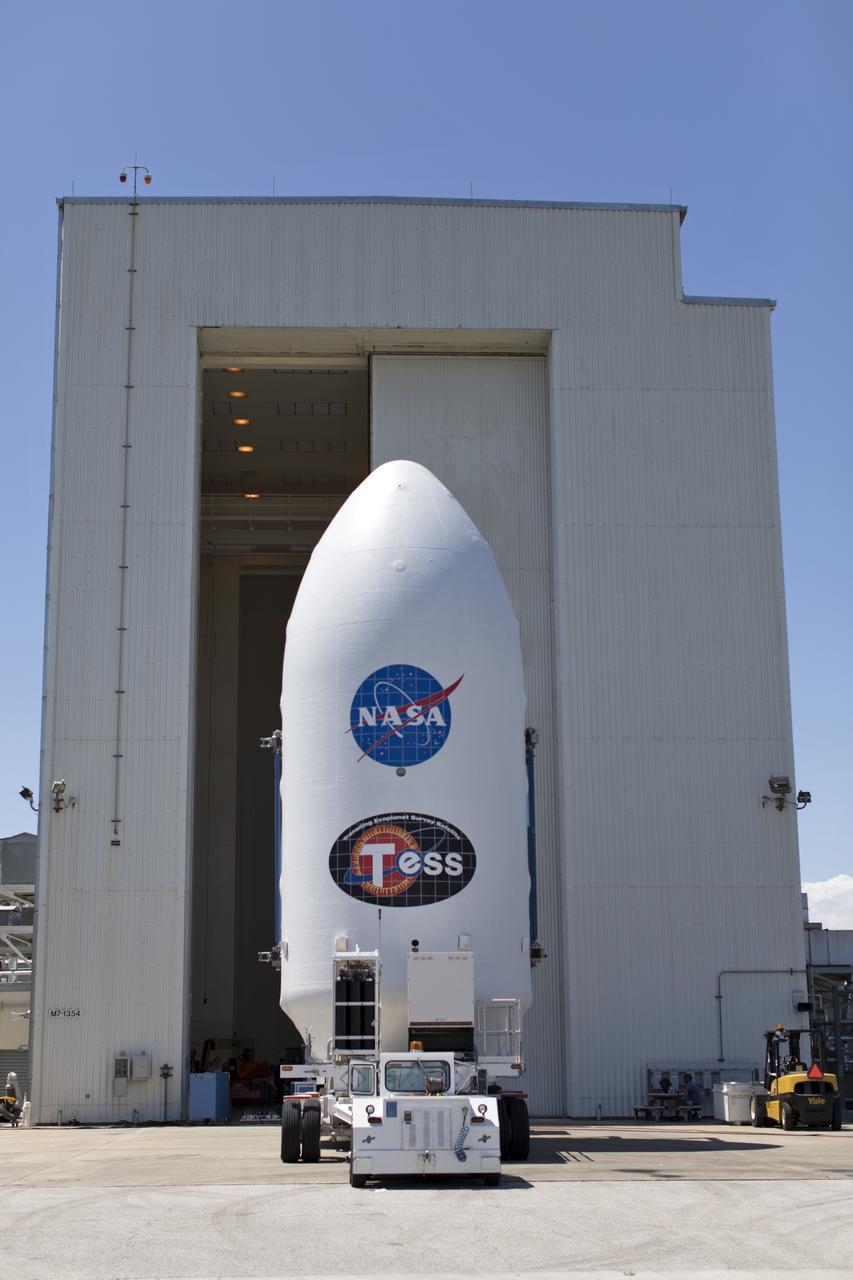
The payload fairing for NASA's Transiting Exoplanet Survey Satellite (TESS) is moved to the entrance of the Payload Hazardous Servicing Facility at the agency's Kennedy Space Center in Florida. Inside the facility, TESS will be encapsulated in the payload fairing. The satellite is scheduled to launch atop a SpaceX Falcon 9 rocket from Space Launch Complex 40 at Cape Canaveral Air Force Station on April 16. The satellite is the next step in NASA's search for planets outside our solar system, known as exoplanets. TESS is a NASA Astrophysics Explorer mission led and operated by MIT in Cambridge, Massachusetts, and managed by NASA’s Goddard Space Flight Center in Greenbelt, Maryland. Dr. George Ricker of MIT’s Kavli Institute for Astrophysics and Space Research serves as principal investigator for the mission. Additional partners include Orbital ATK, NASA’s Ames Research Center, the Harvard-Smithsonian Center for Astrophysics and the Space Telescope Science Institute. More than a dozen universities, research institutes and observatories worldwide are participants in the mission. NASA’s Launch Services Program is responsible for launch management.
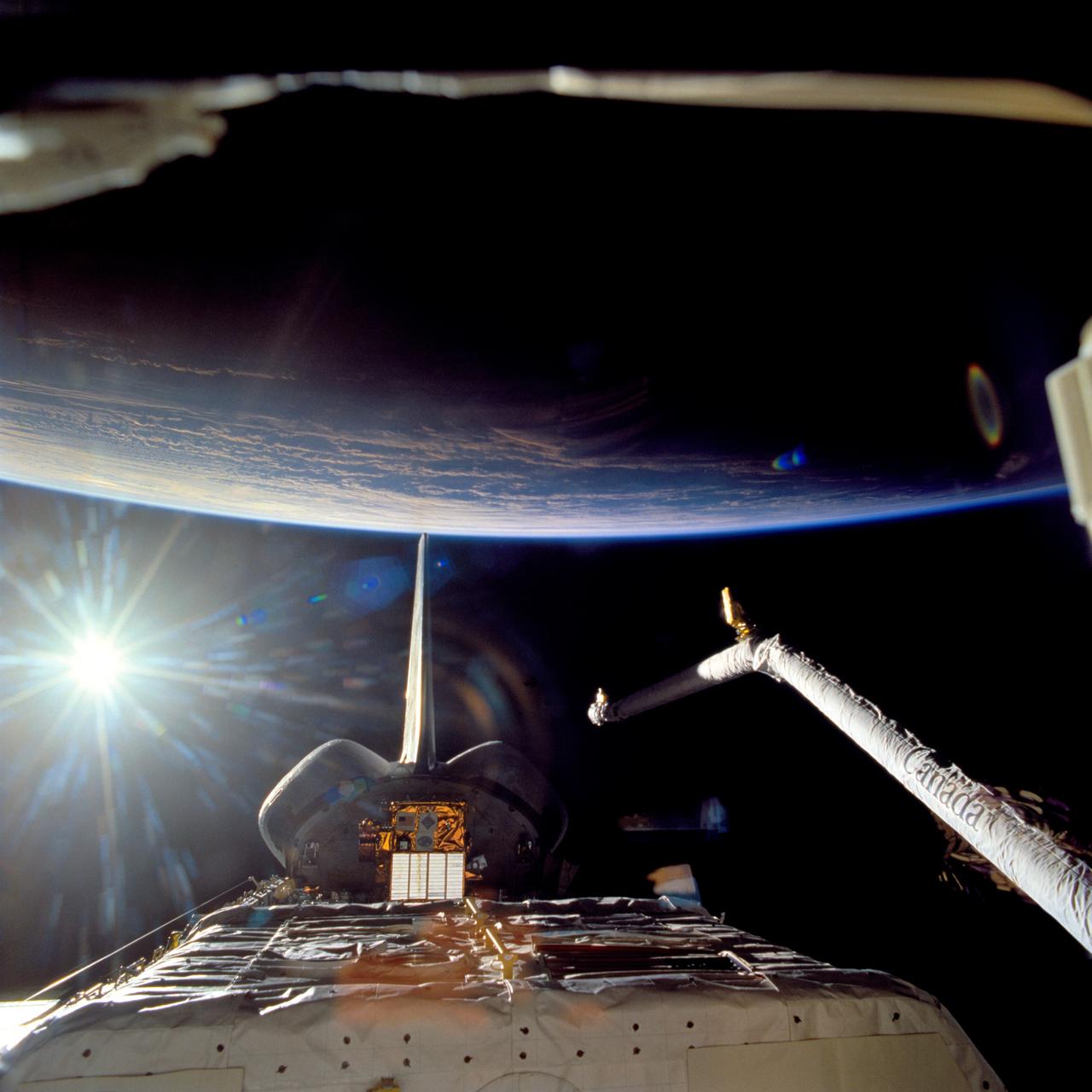
STS063-716-025 (9 Feb. 1995) --- In tail-to Earth mode, the Space Shuttle Discovery is backdropped against dark space, Sunburst and massive clouds over the ocean. The Spartan 204 is visible in the cargo bay. This is one of 16 still photographs released by the NASA Johnson Space Center (JSC) Public Affairs Office (PAO) on February 14, 1995. Onboard Discovery were astronauts James D. Wetherbee, mission commander; Eileen M. Collins, pilot; Bernard A. Harris, Jr., payload commander; mission specialists C. Michael Foale, Janice E. Voss, and cosmonaut Vladimir G. Titov.
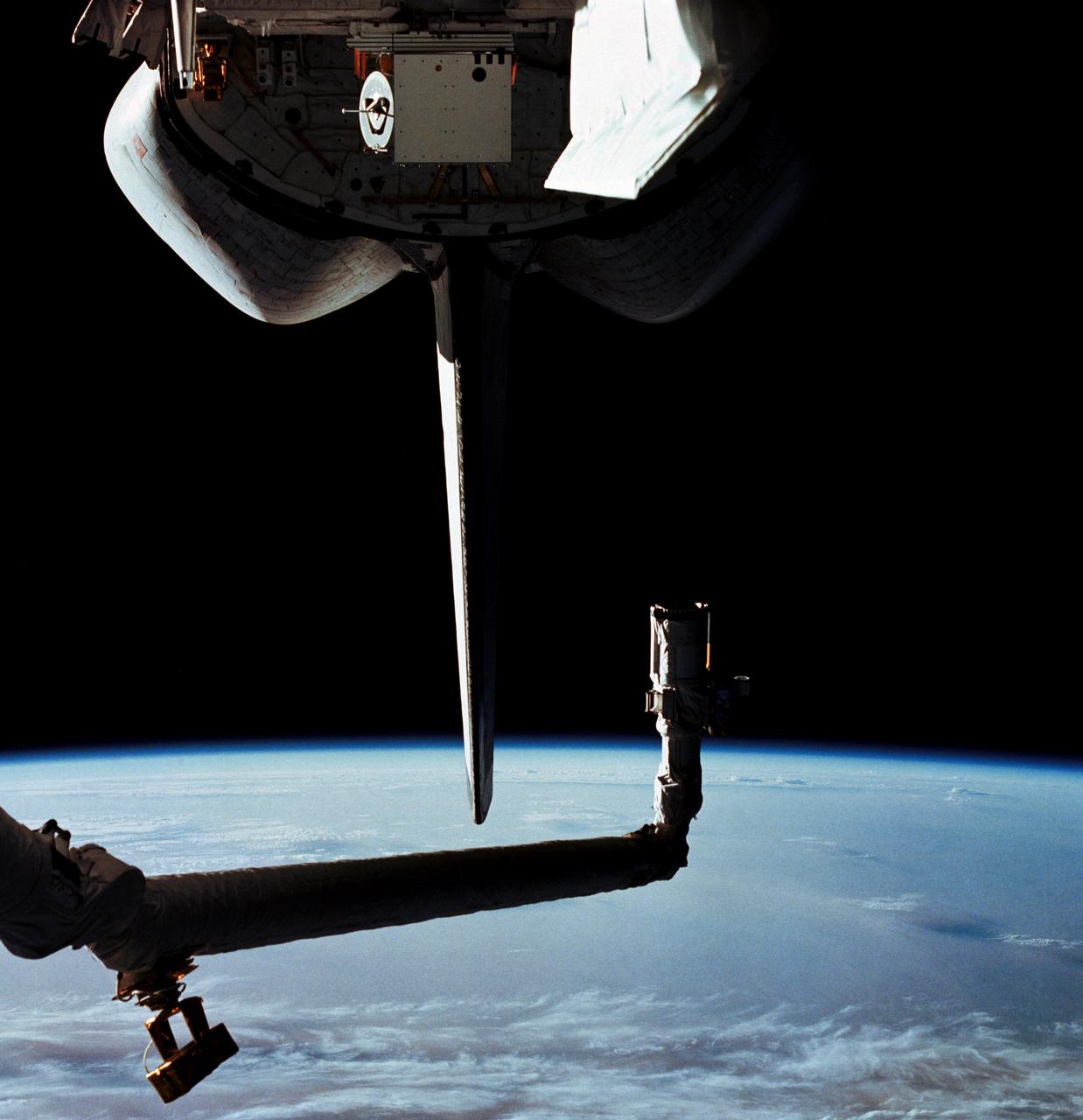
STS002-12-833 (13 Nov. 1981) --- Clouds over Earth and black sky form the background for this unique photograph from the space shuttle Columbia in Earth orbit. The photograph was shot through the aft flight deck windows viewing the cargo bay. Part of the scientific payload of the Office of Space and Terrestrial Applications (OSTA-1) is visible in the open cargo bay. The astronauts inside Columbia's cabin were remotely operating the Canadian-built remote manipulator system (RMS). Note television cameras on its elbow and wrist pieces. Photo credit: NASA
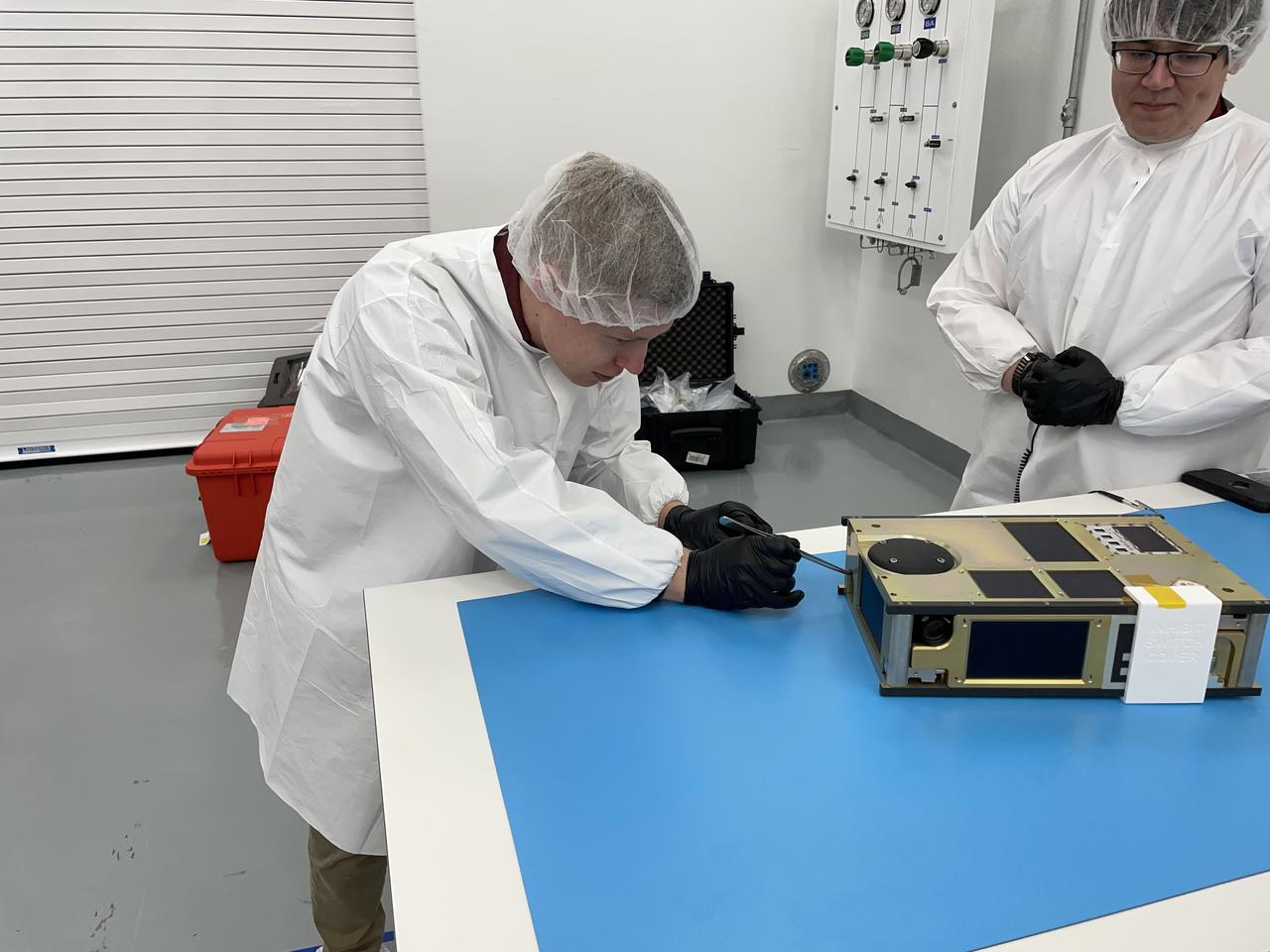
From left, NASA engineer James Berck removes the foreign object debris (FOD) cover from the relative navigation camera on the agency’s CubeSat R5 Spacecraft 4 (R5-S4) while NASA engineer Jacob Nunez-Kearny observes, at Firefly Aerospace’s Payload Processing Facility at Vandenberg Space Force Base, California on Wednesday, April 24, 2024. The spacecraft will soon be integrated for launch aboard the company’s Alpha rocket, as part of launch services provided for NASA's CubeSat Launch Initiative and Educational Launch of Nanosatellites 43 mission in support of the agency ’s Venture-Class Launch Services Demonstration 2 contract.
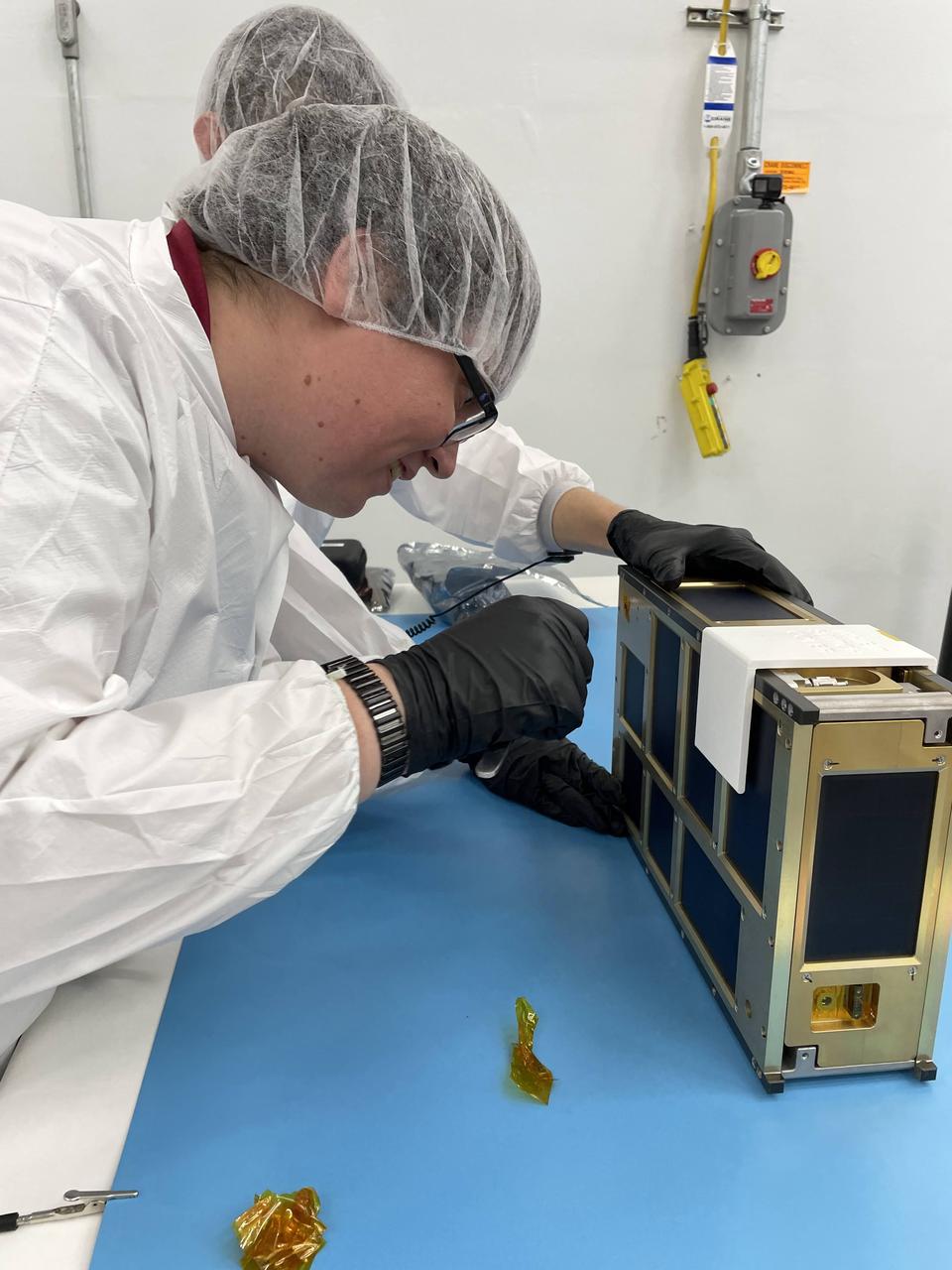
NASA engineer Jacob Nunez-Kearny removes the foreign object debris (FOD) cover from the propulsion system on the agency’s CubeSat R5 Spacecraft 4 (R5-S4) at Firefly Aerospace’s Payload Processing Facility at Vandenberg Space Force Base, California on Wednesday, April 24, 2024. The spacecraft will soon be integrated for launch aboard the company’s Alpha rocket, as part of launch services provided for NASA's CubeSat Launch Initiative and Educational Launch of Nanosatellites 43 mission in support of the agency ’s Venture-Class Launch Services Demonstration 2 contract .

From left, Firefly mission manager Marcy Mabry observes NASA engineer James Berck install the agency’s CubeSat R5 Spacecraft 4 (R5-S4) into the dispenser at Firefly Aerospace’s Payload Processing Facility at Vandenberg Space Force Base, California on Wednesday, April 24, 2024. The spacecraft will soon be integrated for launch aboard the company’s Alpha rocket, as part of launch services provided for NASA's CubeSat Launch Initiative and Educational Launch of Nanosatellites 43 mission in support of the agency ’s Venture-Class Launch Services Demonstration 2 contract.
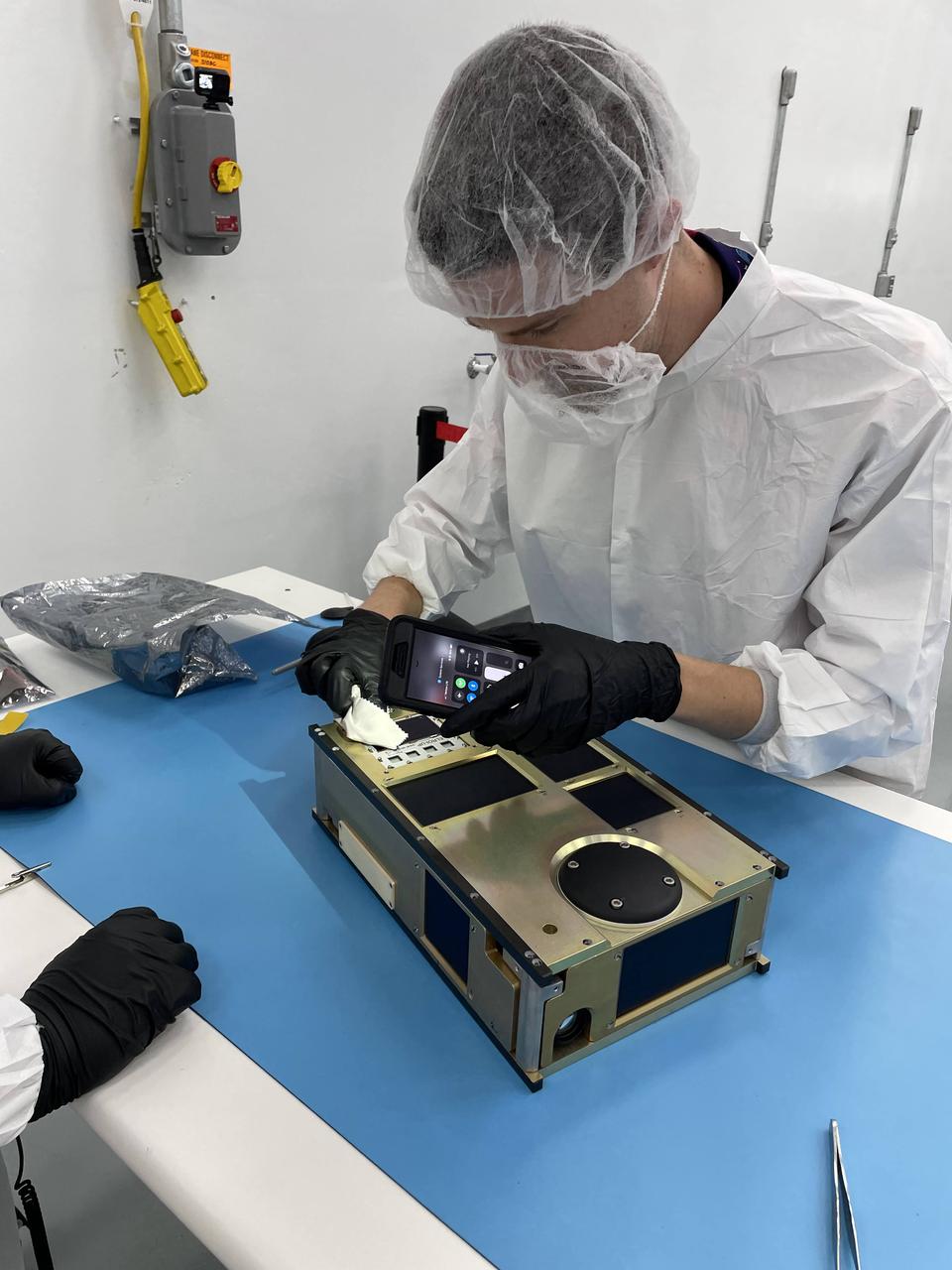
NASA engineer Sam Pedrotty performs final cleaning of Los Alamos National Laboratory’s (LANL’s) Extremely Low Resource Optical Identifier (ELROI) on the agency’s CubeSat R5 Spacecraft 4 (R5-S4) at Firefly Aerospace’s Payload Processing Facility at Vandenberg Space Force Base, California on Wednesday, April 24, 2024. The spacecraft will soon be integrated for launch aboard the company’s Alpha rocket, as part of launch services provided for NASA's CubeSat Launch Initiative and Educational Launch of Nanosatellites 43 mission in support of the agency ’s Venture-Class Launch Services Demonstration 2 contract.
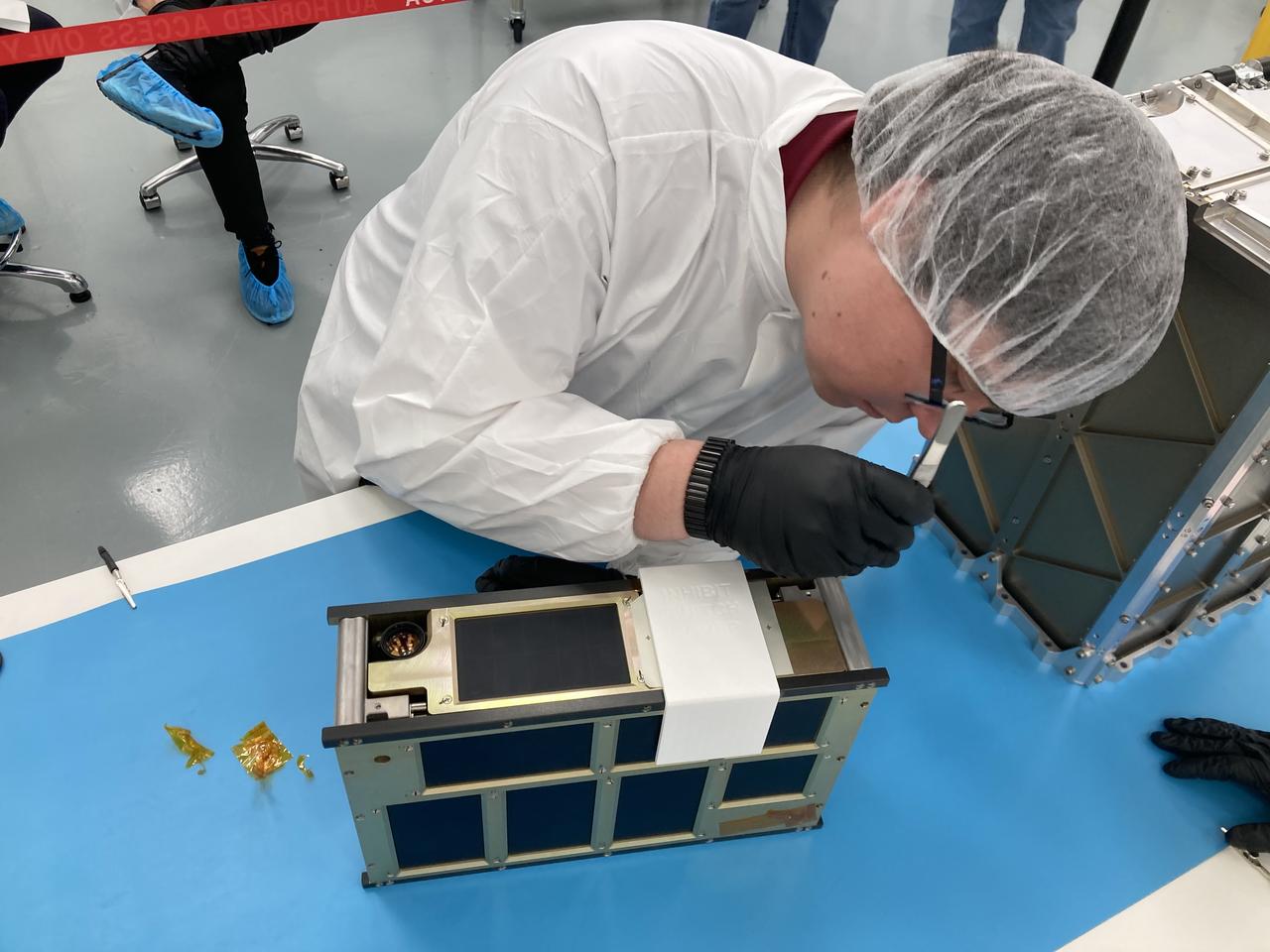
NASA engineer Jacob Nunez-Kearny removes foreign object debris (FOD) cover from the propulsion system on the agency’s CubeSat R5 Spacecraft 4 (R5-S4) at Firefly Aerospace’s Payload Processing Facility at Vandenberg Space Force Base, California on Wednesday, April 24, 2024. The spacecraft will soon be integrated for launch aboard the company’s Alpha rocket, as part of launch services provided for NASA's CubeSat Launch Initiative and Educational Launch of Nanosatellites 43 mission in support of the agency ’s Venture-Class Launch Services Demonstration 2 contract.
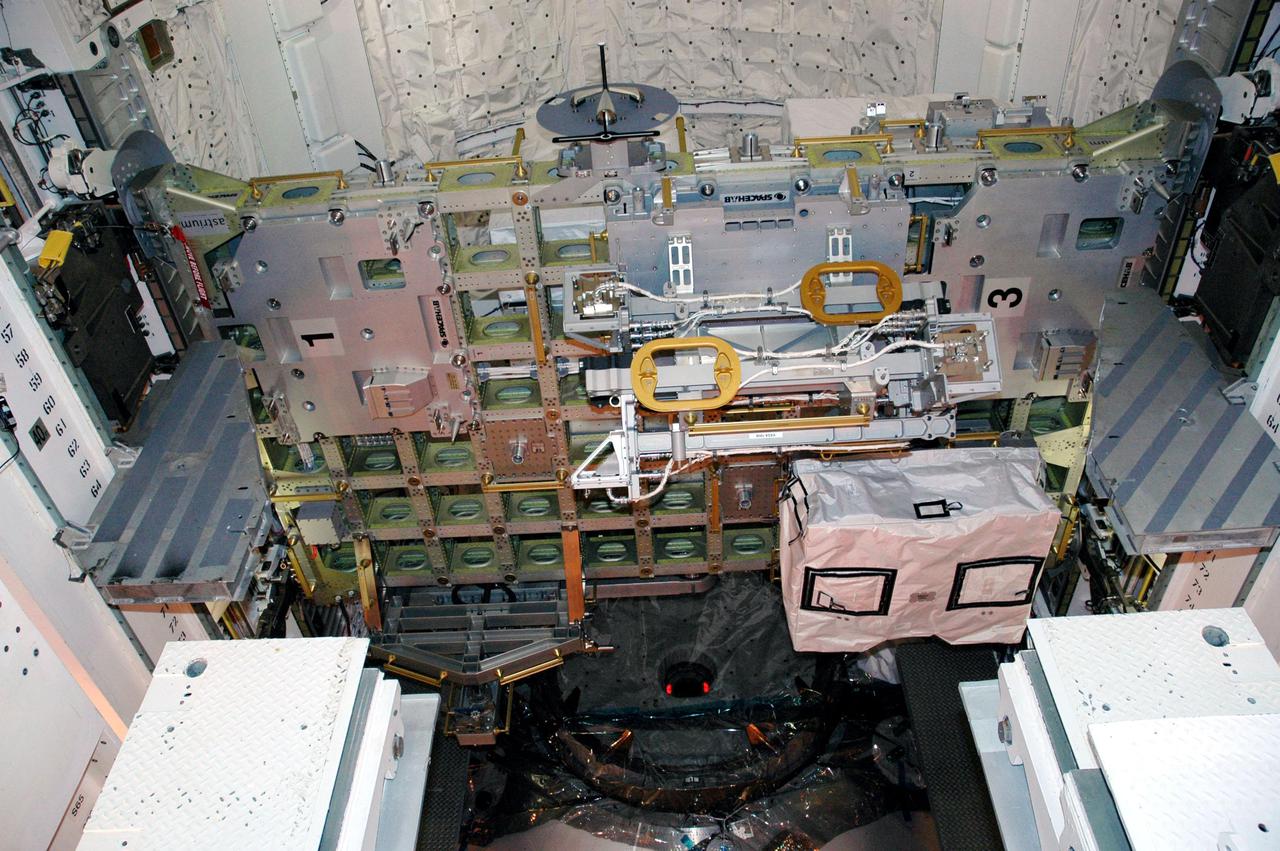
KENNEDY SPACE CENTER, FLA. - In the Payload Changeout Room on Launch Pad 39B, the payloads for Return to Flight mission STS-114 are being transferred to Discovery’s payload bay. Seen here is the External Stowage Platform 2. Other payloads includes a Control Moment Gyro and the Thermal Protection System Detailed Test Objective box, which is placed on the Lightweight Multi-Purpose Experiment Support Structure Carrier, and Multi-Purpose Logistics Module Raffaello. Already installed in the payload bay are the airlock, the Canadarm 2, or Shuttle arm, and the Orbiter Boom Sensor System. The launch window for mission STS-114 extends from July 13 to July 31.
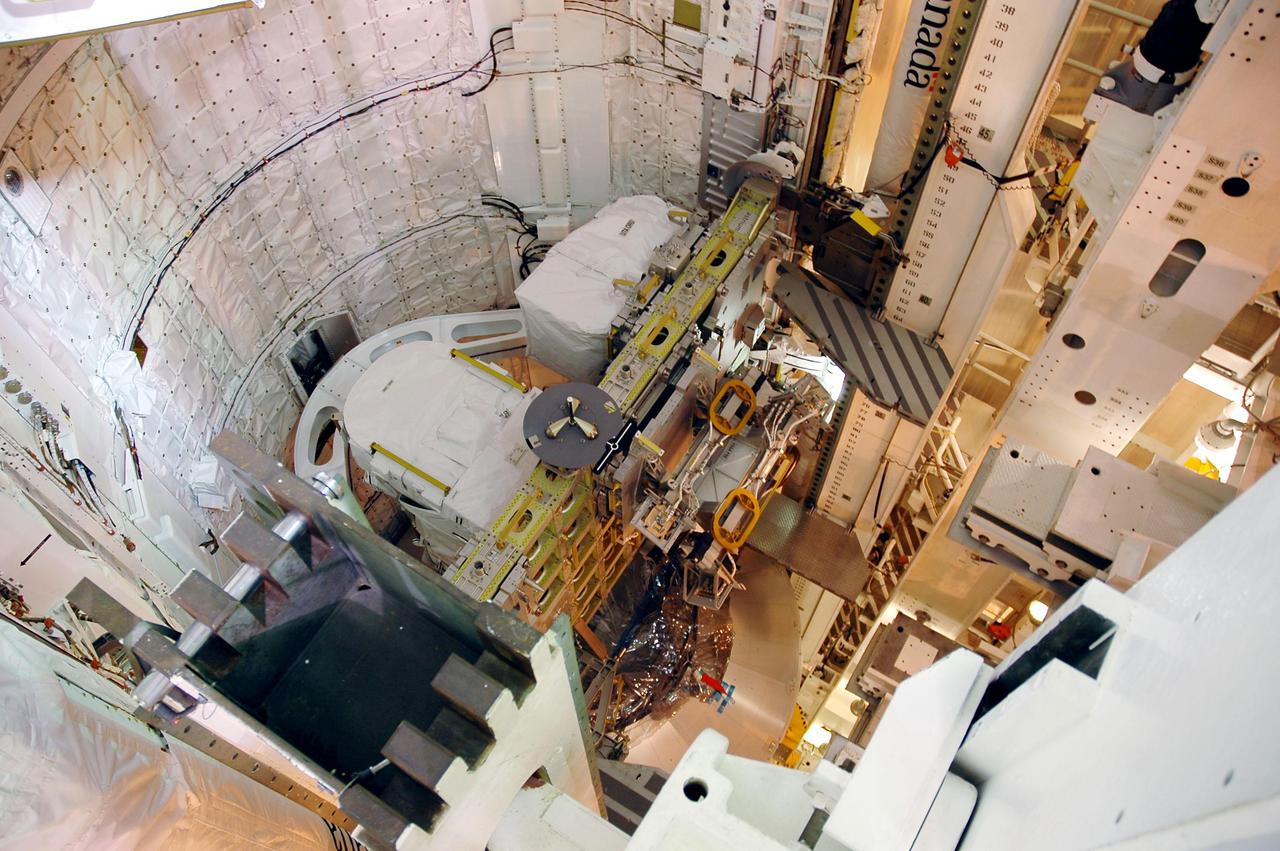
KENNEDY SPACE CENTER, FLA. - In the Payload Changeout Room on Launch Pad 39B, the payloads for Return to Flight mission STS-114 are being transferred to Discovery’s payload bay. The payloads include a Control Moment Gyro, the Thermal Protection System Detailed Test Objective box, which is placed on the Lightweight Multi-Purpose Experiment Support Structure Carrier, the External Stowage Platform 2, and Multi-Purpose Logistics Module Raffaello. Already installed in the payload bay are the airlock, the Canadarm 2, or Shuttle arm, and the Orbiter Boom Sensor System. The launch window for mission STS-114 extends from July 13 to July 31.

Orbiter payload canister being raised into the PCR at Launch Pad 39A - 1980
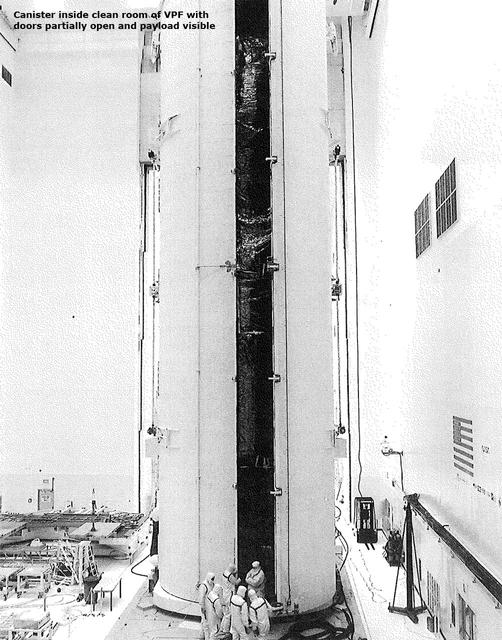
Canister inside the clean room of VPF with doors partially open and payload visible
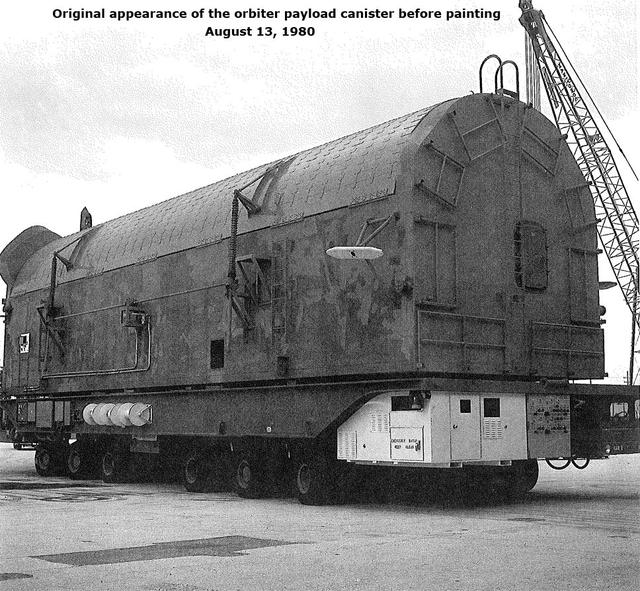
Original appearance of the orbiter payload canister before painting, August 13, 1980
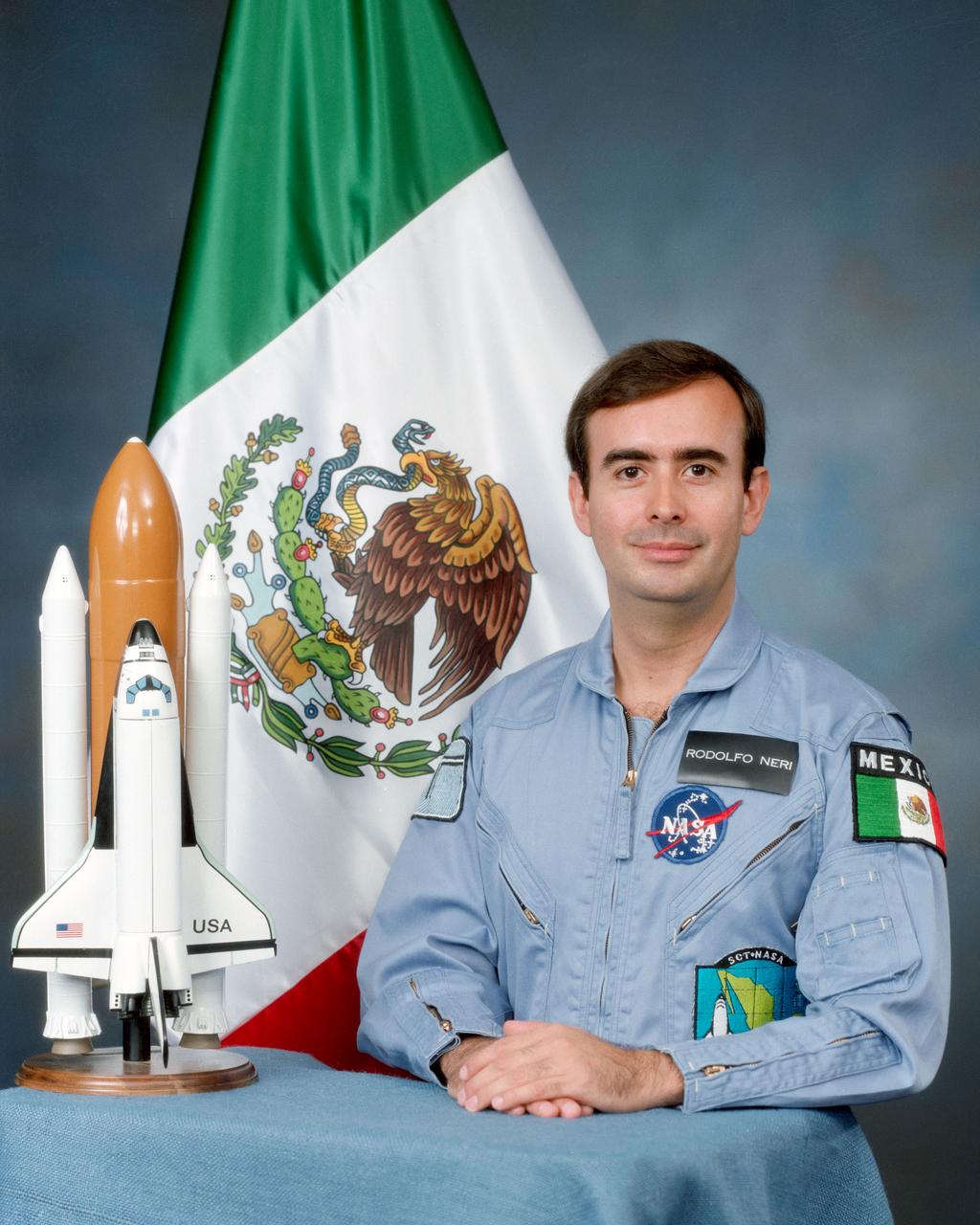
S85-39865 (4 Sept 1985) --- Astronaut Rodolfo Neri, payload specialist
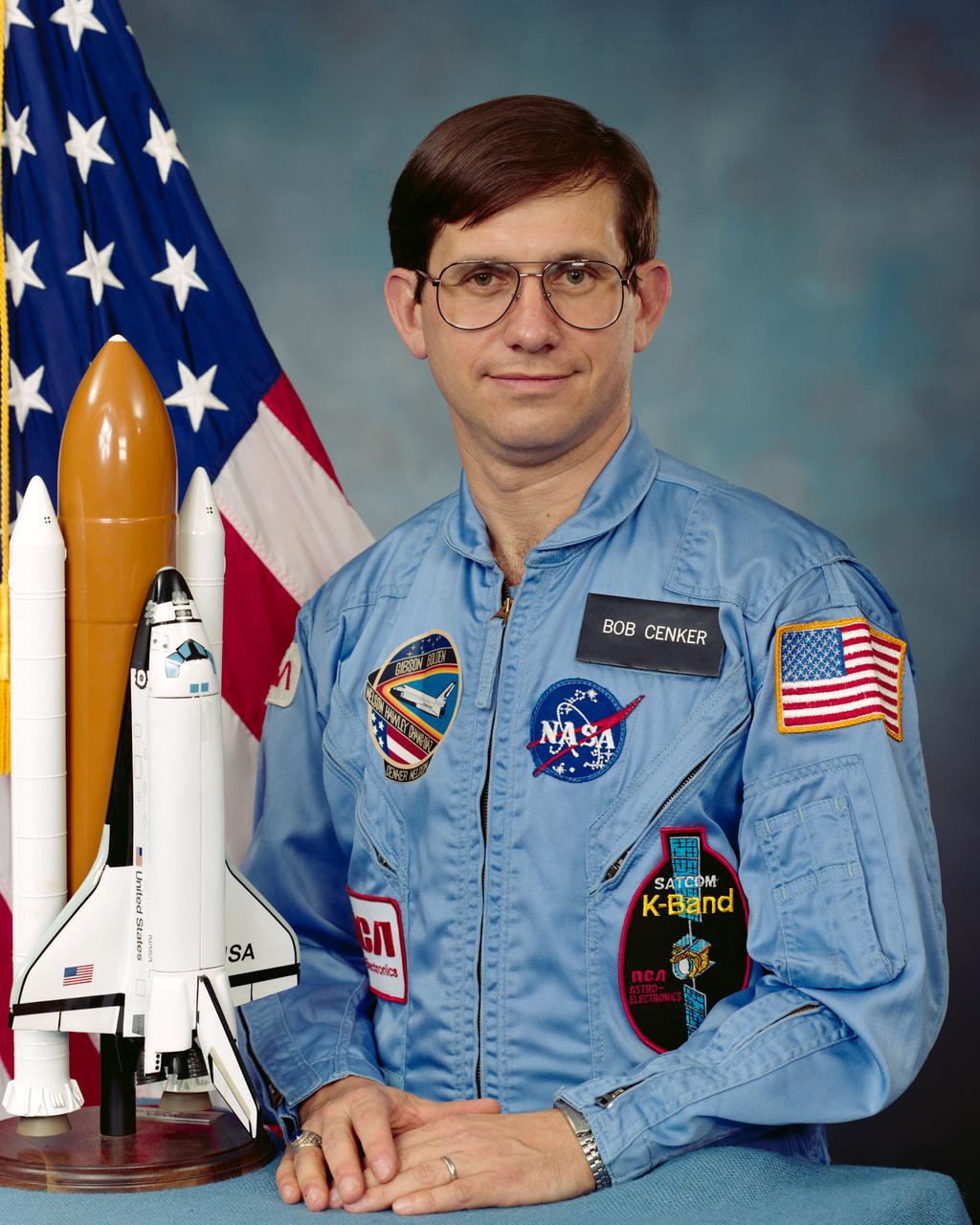
S85-45499 (2 Dec 1985) --- Payload specialist Robert J. Cenker.
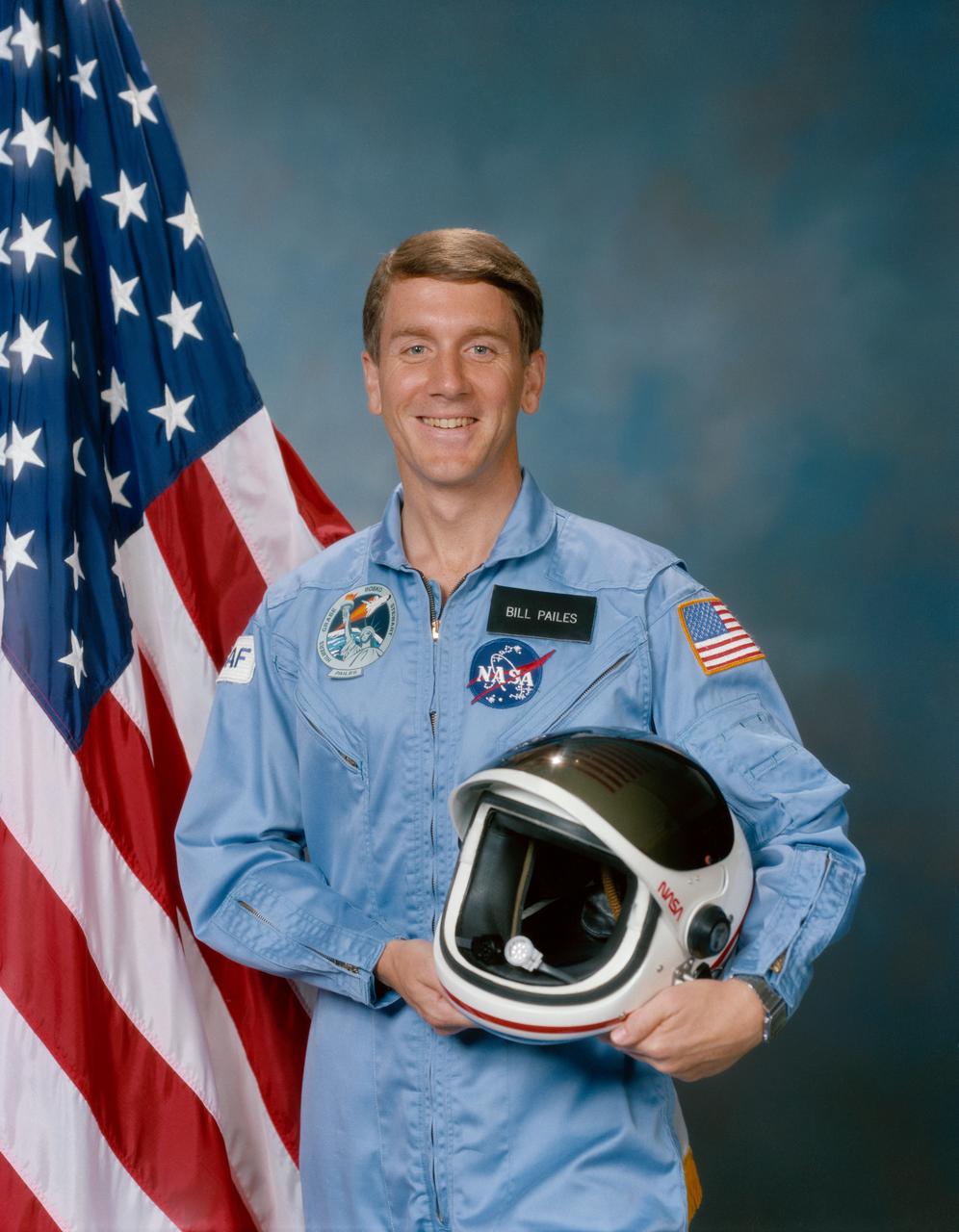
S85-39868 (1985) --- William A. Pailes (Major USAF), Payload specialist on 51J.
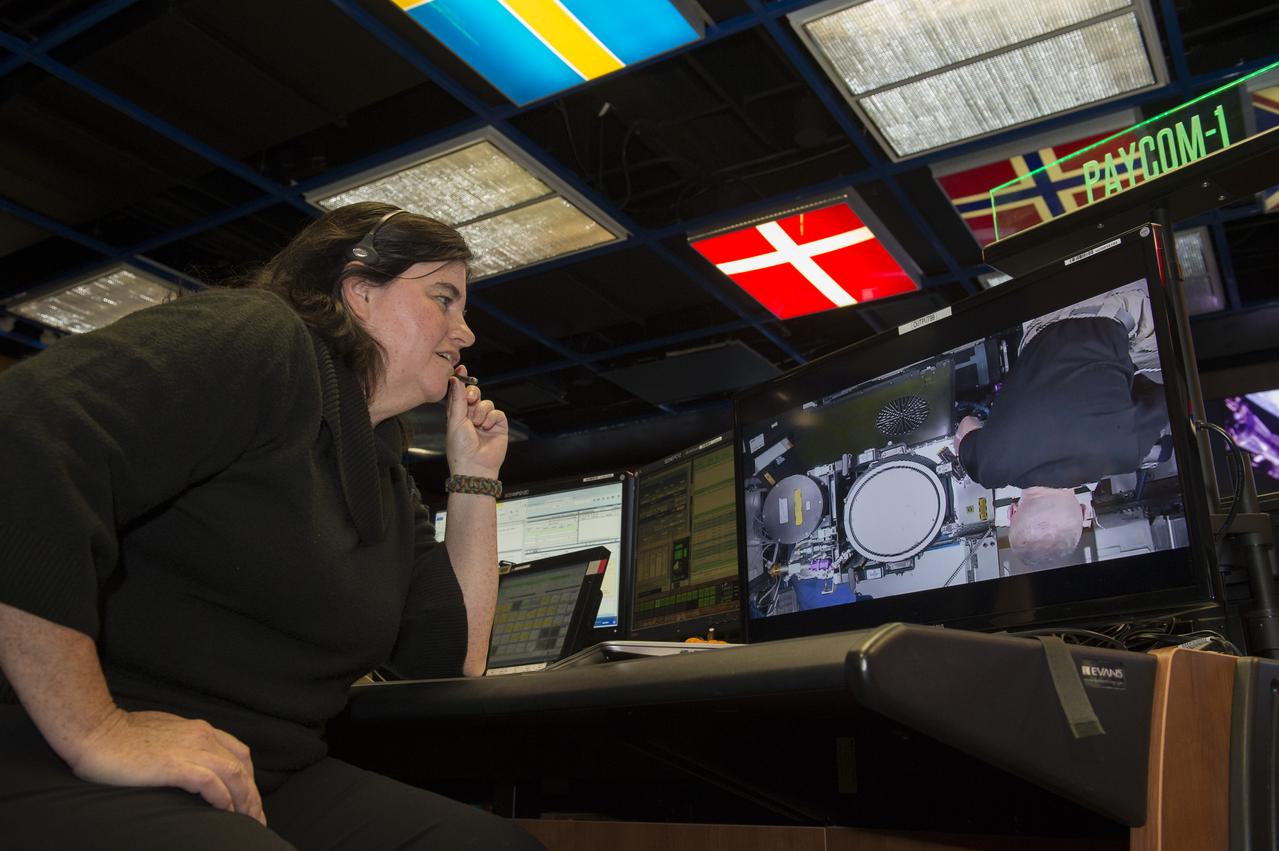
Penny Pettigrew chats in real time with a space station crew member conducting an experiment in microgravity some 250 miles overhead. The Payload Operations Integration Center cadre monitor science communications on station 24 hours a day, seven days a week, 365 days per year.
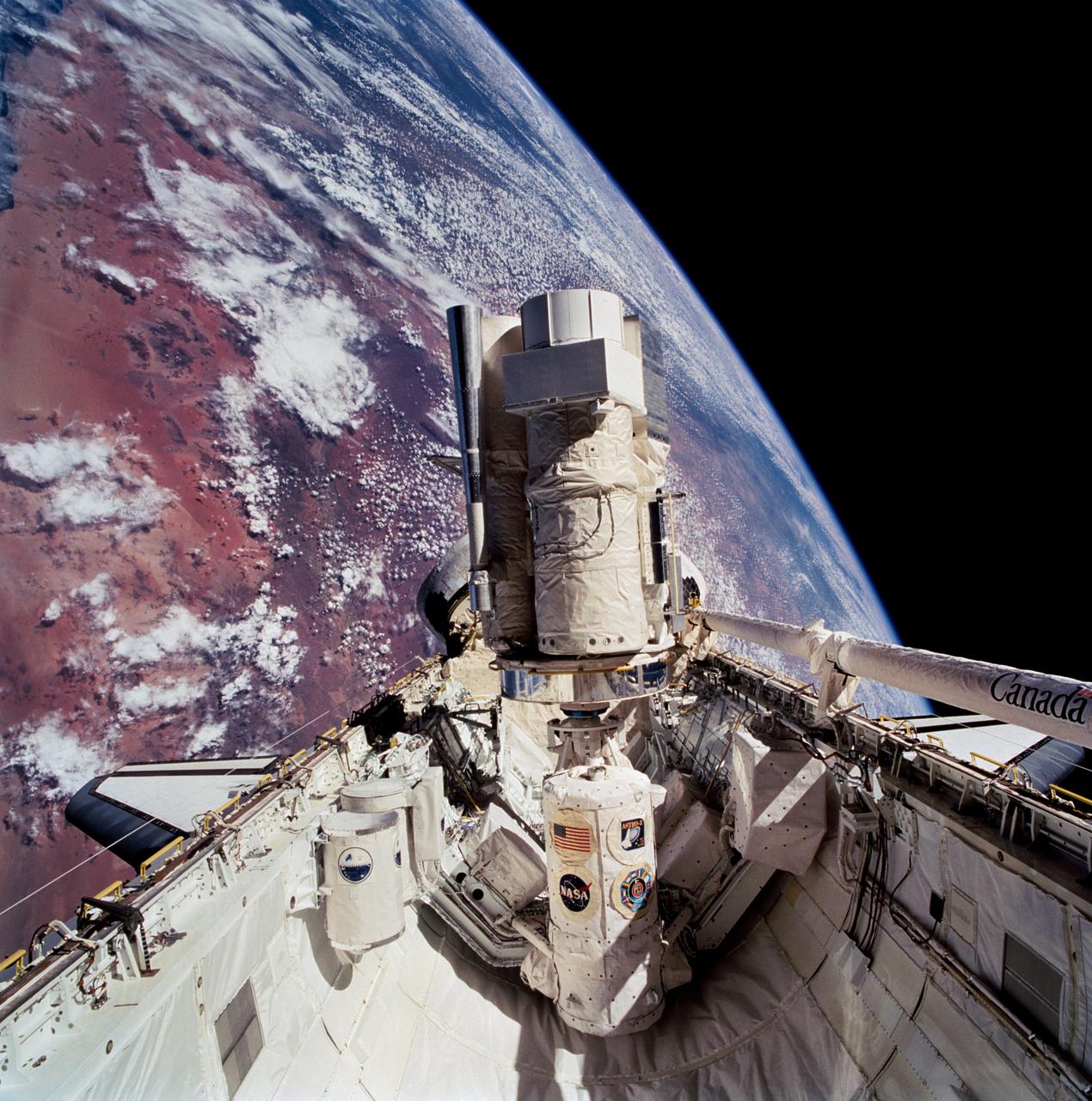
STS067-713-072 (2-18 March 1995) --- This 70mm cargo bay scene, backdropped against a desert area of Namibia, typifies the view that daily greeted the Astro-2 crew members during their almost 17-days aboard the Space Shuttle Endeavour. Positioned on the Spacelab pallet amidst other hardware, the Astro-2 payload is in its operational mode. Visible here are the Instrument Pointing System (IPS), Hopkins Ultraviolet Telescope (HUT), Star Tracker (ST), Ultraviolet Imaging Telescope (UIT), Wisconsin Ultraviolet Photo-Polarimeter Experiment (WUPPE), and Integrated Radiator System (IRS). At this angle, the Optical Sensor Package (OPS) is not seen. The Igloo, which supports the package of experiments, is in center foreground. Two Get-Away Special (GAS) canisters are in lower left foreground. The Extended Duration Orbiter (EDO) pallet, located aft of the cargo bay, is obscured by the Astro-2 payload. The Endeavour was 190 nautical miles above Earth.
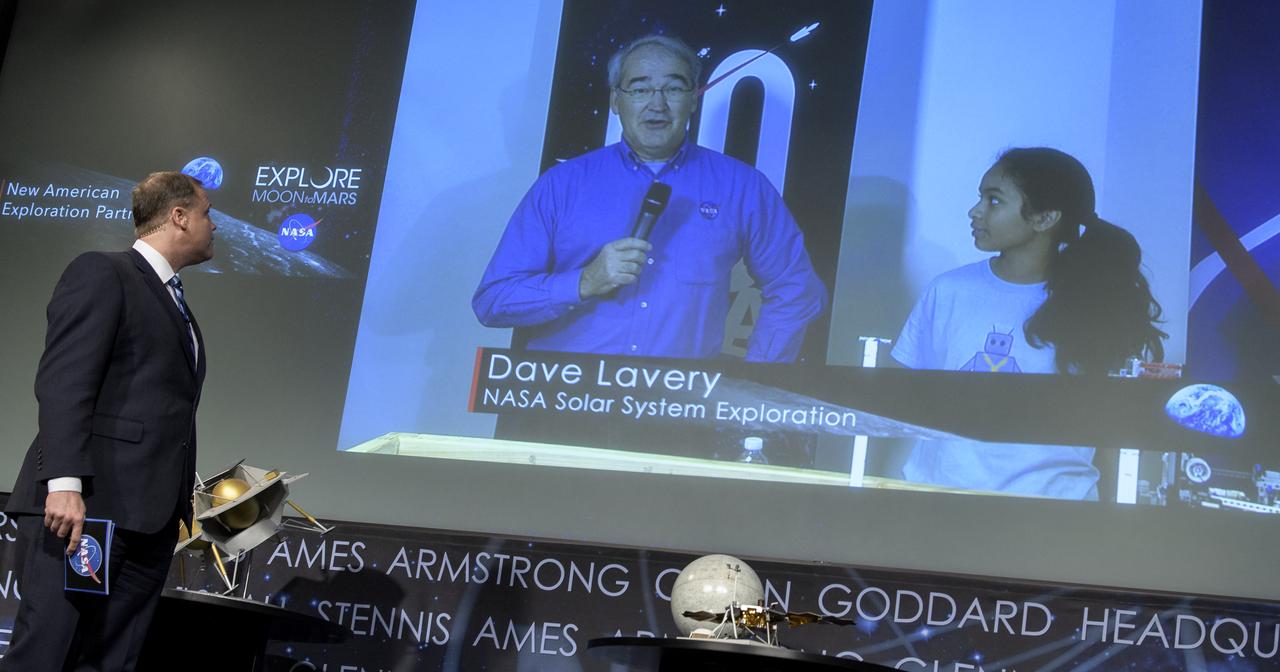
NASA Administrator Jim Bridenstine talks with Dave Lavery, Program Executive for Solar System Exploration, and Dishaa Bhat, 14, from Mary Henderson Middle School in Falls Church, Virginia, during a event where it was announced that nine U.S. companies are eligible to bid on NASA delivery services to the lunar surface through Commercial Lunar Payload Services (CLPS) contracts, Thursday, Nov. 29, 2018 at NASA Headquarters in Washington. The companies will be able to bid on delivering science and technology payloads for NASA, including payload integration and operations, launching from Earth and landing on the surface of the Moon. NASA expects to be one of many customers that will use these commercial landing services. Photo Credit: (NASA/Bill Ingalls)
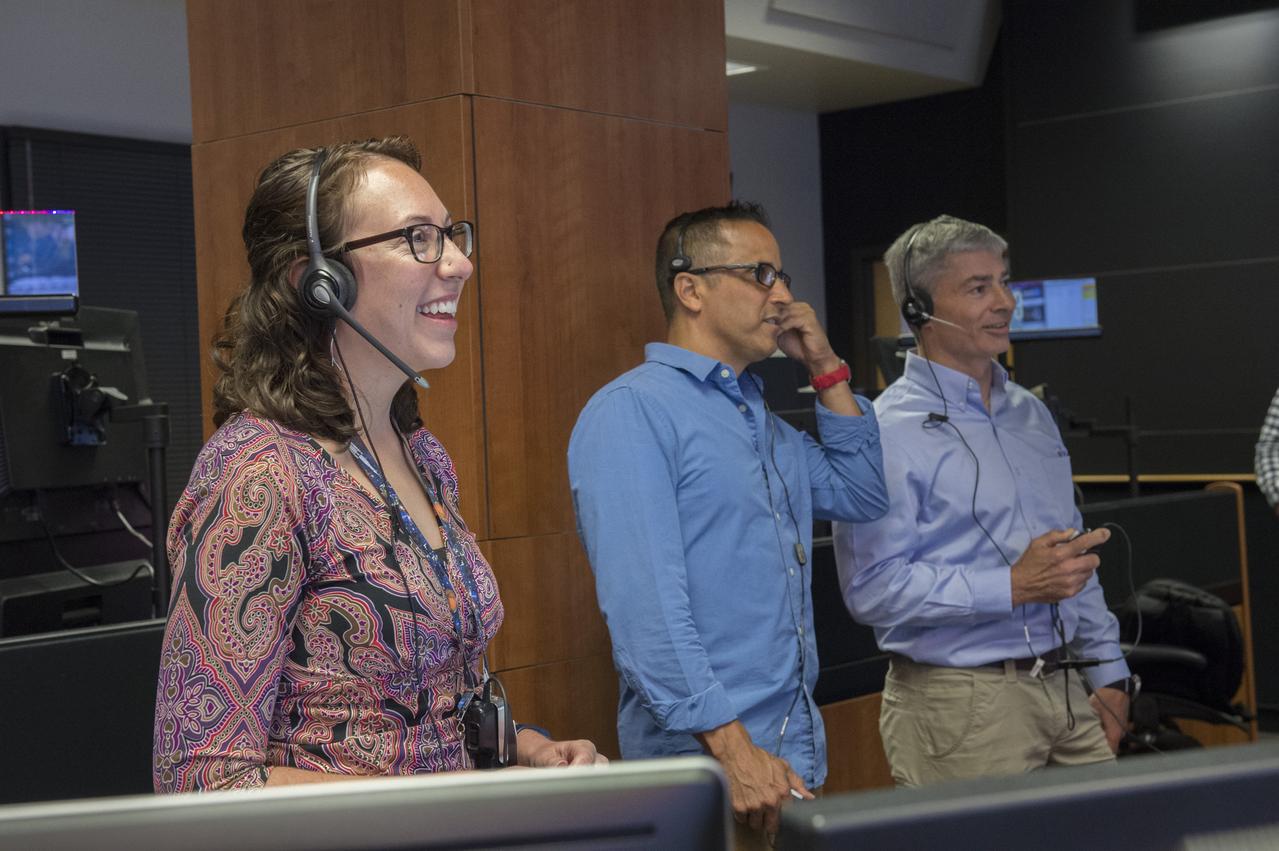
Stephanie Shelton, a payload communications manager at NASA's Marshall Space Flight Center, joins NASA astronauts Joe Acaba and Mark Vande Hei for a call to the onboard crew of the International Space Station. Vande Hei and Acaba visited Marshall April 11 for their honorary Expedition 54 plaque hanging ceremony and to provide valuable feedback of their on-orbit science investigations with the Payload Operations and Integration Center team..
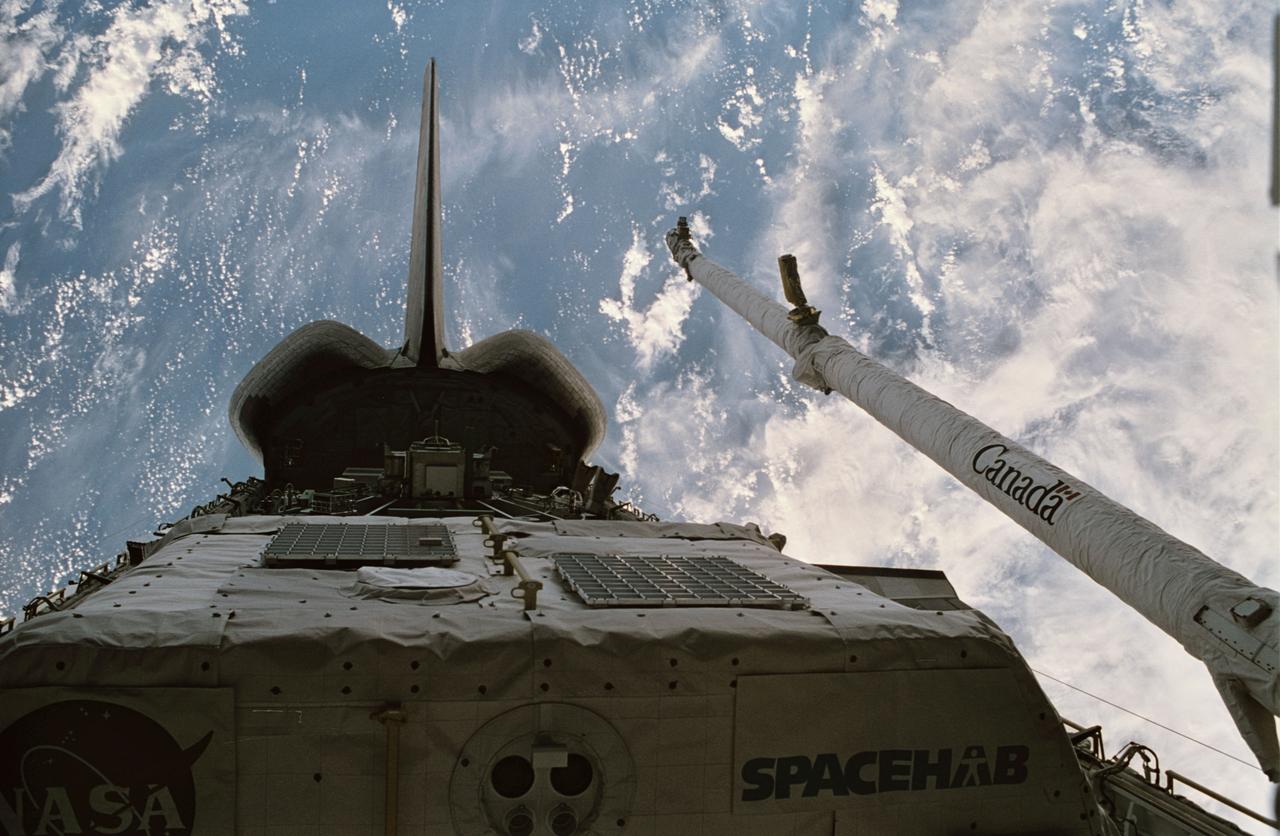
STS060-15-003 (3-11 Feb 1994) --- This 35mm frame shows the major payloads of the Space Shuttle Discovery's STS-60 mission, backdropped against clouds over the Atlantic Ocean. In the foreground is the SPACEHAB module, with the Wake Shield Facility (WSF) partially visible in its berthed position near the Orbital Maneuvering System (OMS) pods and the vertical stabilizer. Television cameras on the Remote Manipulator System (RMS) were being used for a survey of the cargo. Five NASA astronauts and a Russian cosmonaut went on to spend eight days in Earth orbit in support of the mission.
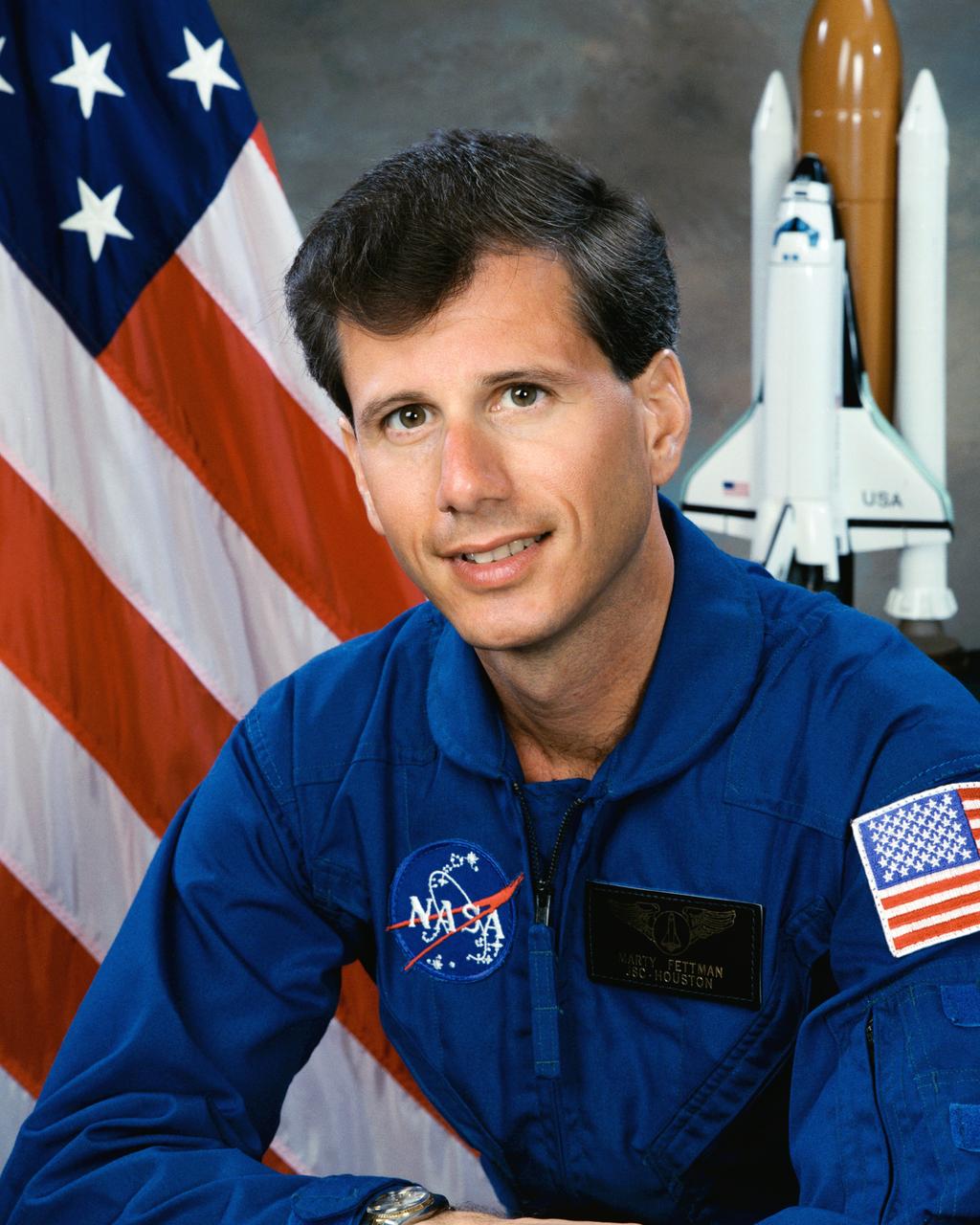
S92-48423 (October 1992) --- Astronaut Martin J. Fettman, payload specialist.

Canister open in VPF. Payload for STS-5, SBS-3, & Anik C-3, being loaded into the canister
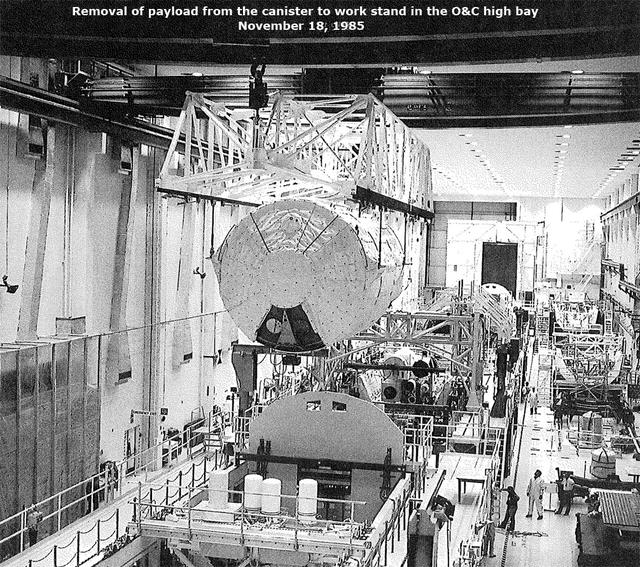
Removal of payload from the canister to work stand in the O&C high bay, November 18, 1985