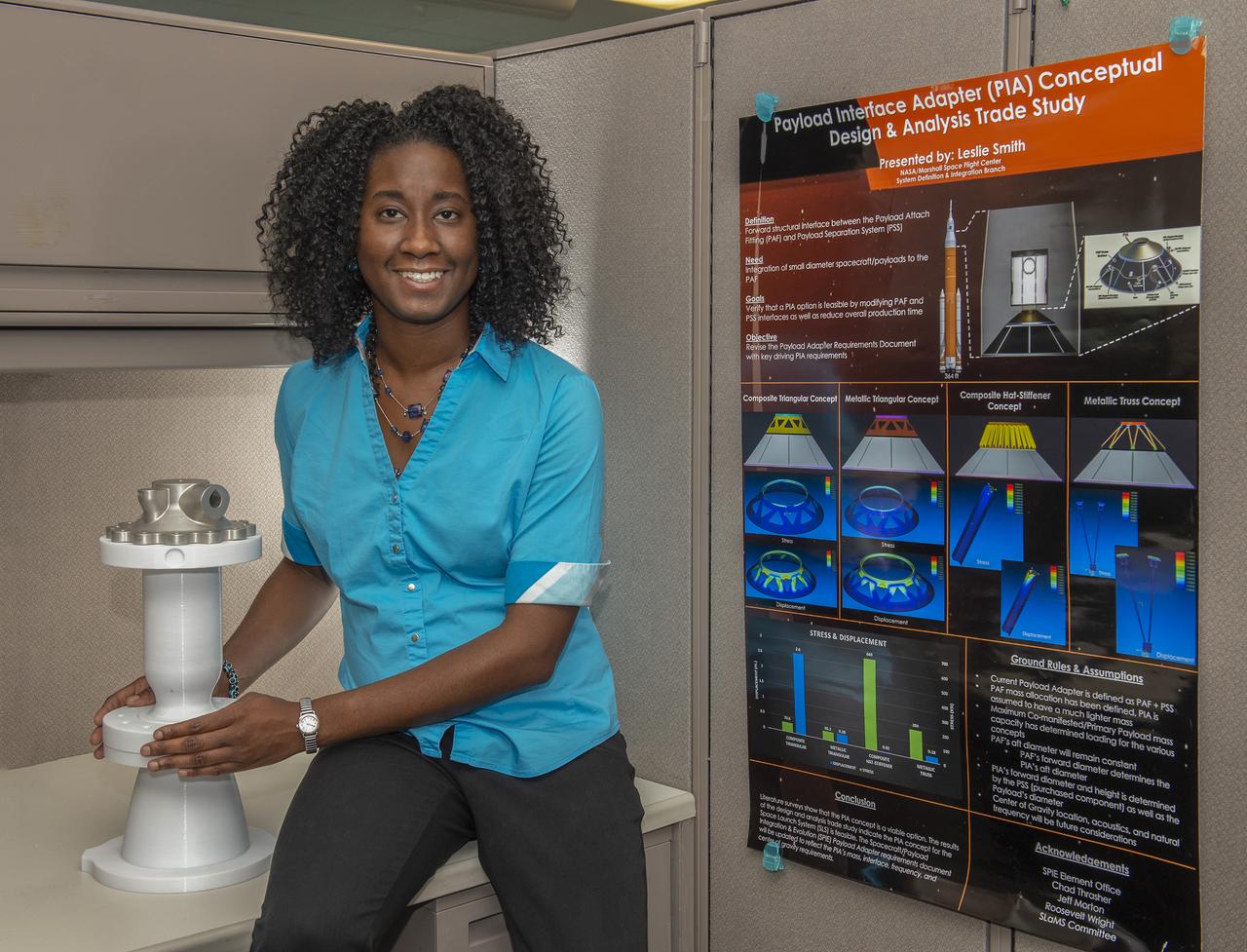
Leslie Smith, Systems Engineer, poses with an additive manufactured small combustion chamber, and poster she designed, of the Payload Interface Adapter (PIA) trade study that depicts four different concepts. The PIA is vital in helping transport various payloads to Beyond Earth Orbit.
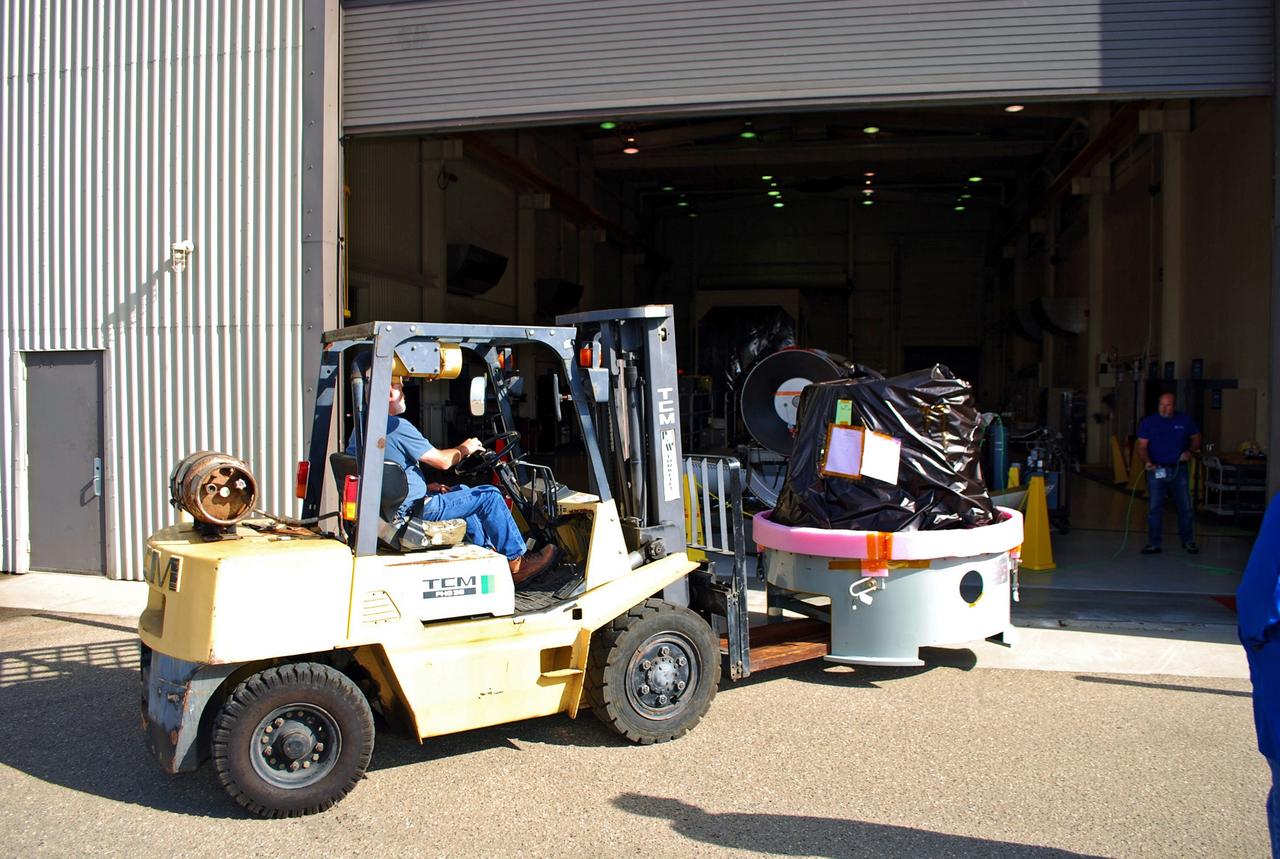
VANDENBERG AIR FORCE BASE, Calif. -- At Vandenberg Air Force Base in California, a worker user a Hyster lift moves the payload cone for NASA's Glory mission into VAFB's payload processing facility. The payload cone is an adapter that interfaces the Taurus XL rocket with the spacecraft. A four-stage Taurus XL rocket will carry Glory into low Earth orbit. Once Glory reaches orbit, it will collect data on the properties of aerosols and black carbon. It also will help scientists understand how the sun's irradiance affects Earth's climate. Launch is scheduled for 2:09 a.m. PST Nov. 22. For information, visit www.nasa.gov/glory. Photo credit: NASA/Randy Beaudoin, VAFB
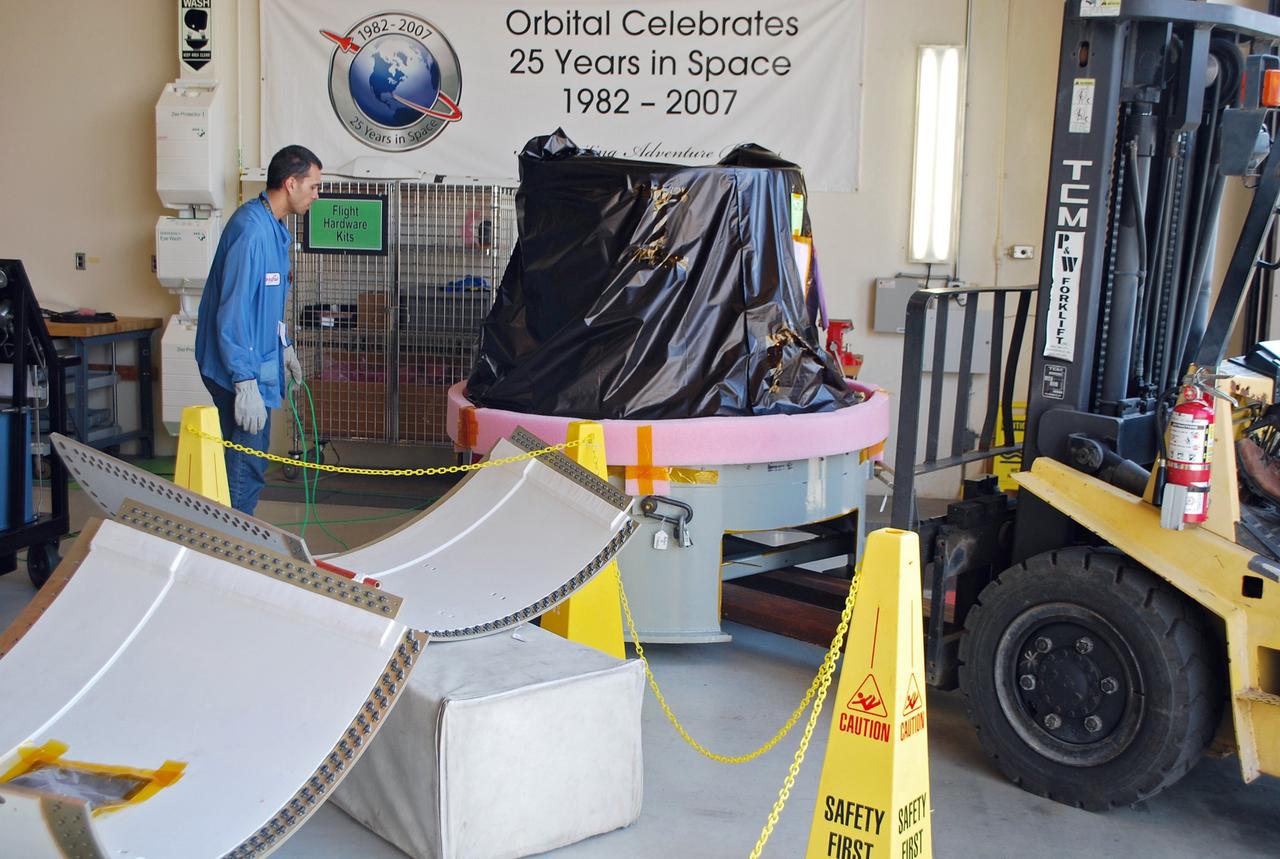
VANDENBERG AIR FORCE BASE, Calif. -- At Vandenberg Air Force Base in California, the payload cone is lowered onto the floor of VAFB's payload processing facility for NASA's Glory mission. The payload cone is an adapter that interfaces the Taurus XL rocket with the spacecraft. A four-stage Taurus XL rocket will carry Glory into low Earth orbit. Once Glory reaches orbit, it will collect data on the properties of aerosols and black carbon. It also will help scientists understand how the sun's irradiance affects Earth's climate. Launch is scheduled for 2:09 a.m. PST Nov. 22. For information, visit www.nasa.gov/glory. Photo credit: NASA/Randy Beaudoin, VAFB
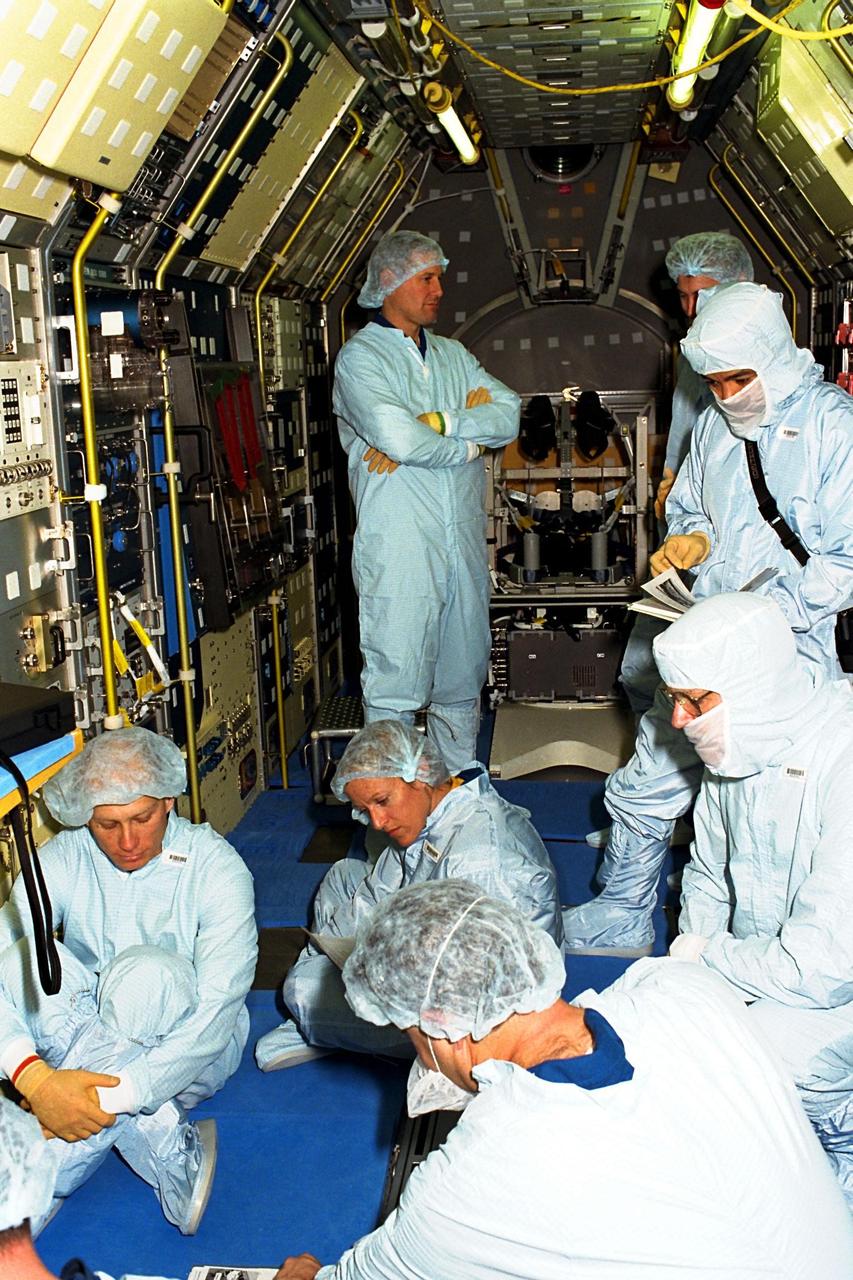
STS-90 crew members check out the inside of the module for the mission's Neurolab payload during the Crew Equipment Interface Test (CEIT) in Kennedy Space Center's (KSC's) Operations and Checkout Building, where the payload is undergoing processing. The CEIT gives astronauts an opportunity to get a hands-on look at the payloads with which they will be working on-orbit. STS-90 is scheduled to launch aboard the Shuttle Columbia from KSC on April 2. Investigations during the Neurolab mission will focus on the effects of microgravity on the nervous system. Specifically, experiments will study the adaptation of the vestibular system, the central nervous system, and the pathways that control the ability to sense location in the absence of gravity, as well as the effect of microgravity on a developing nervous system
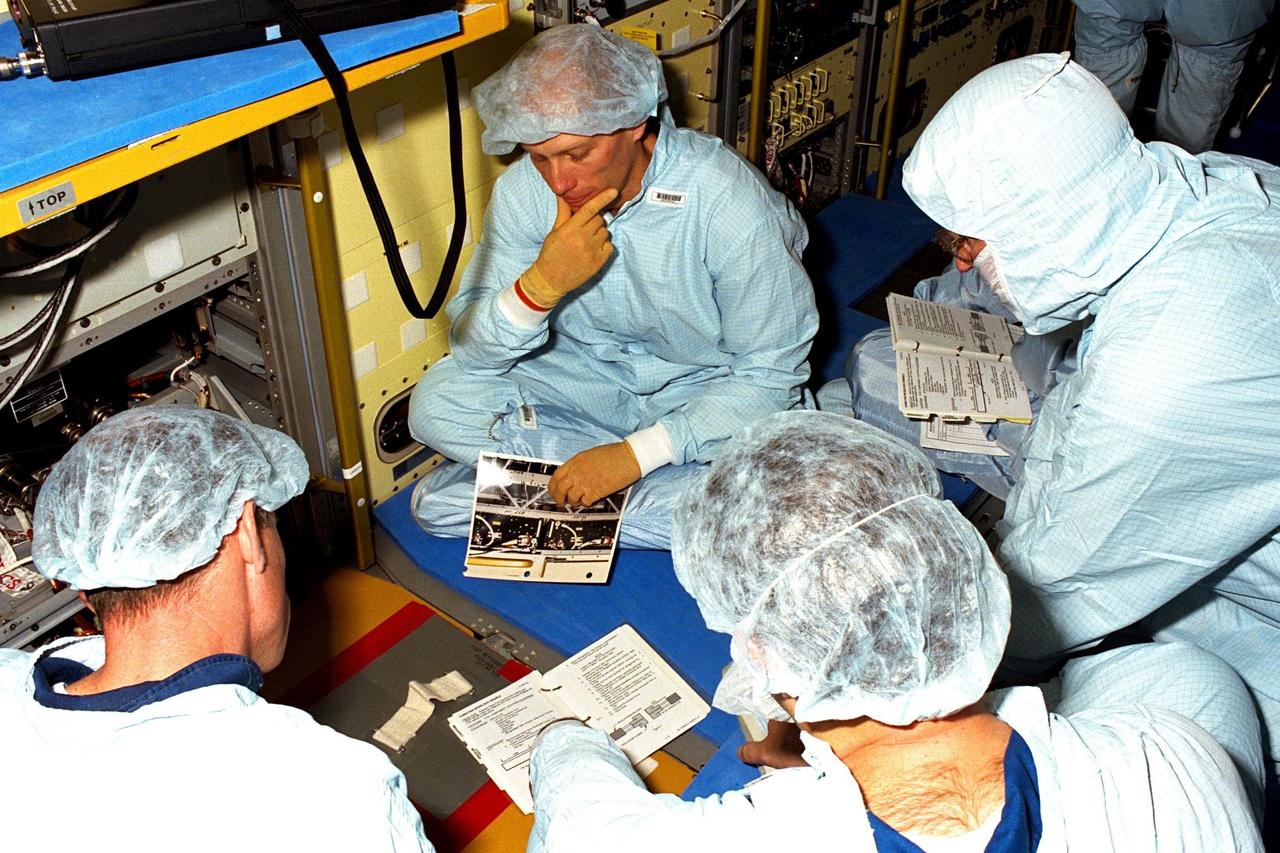
STS-90 crew members study manuals and drawings for the mission's Neurolab payload during the Crew Equipment Interface Test (CEIT) in Kennedy Space Center's (KSC's) Operations and Checkout Building, where the payload is undergoing processing. The CEIT gives astronauts an opportunity to get a hands-on look at the payloads with which they will be working on-orbit. STS-90 is scheduled to launch aboard the Shuttle Columbia from KSC on April 2. Investigations during the Neurolab mission will focus on the effects of microgravity on the nervous system. Specifically, experiments will study the adaptation of the vestibular system, the central nervous system, and the pathways that control the ability to sense location in the absence of gravity, as well as the effect of microgravity on a developing nervous system
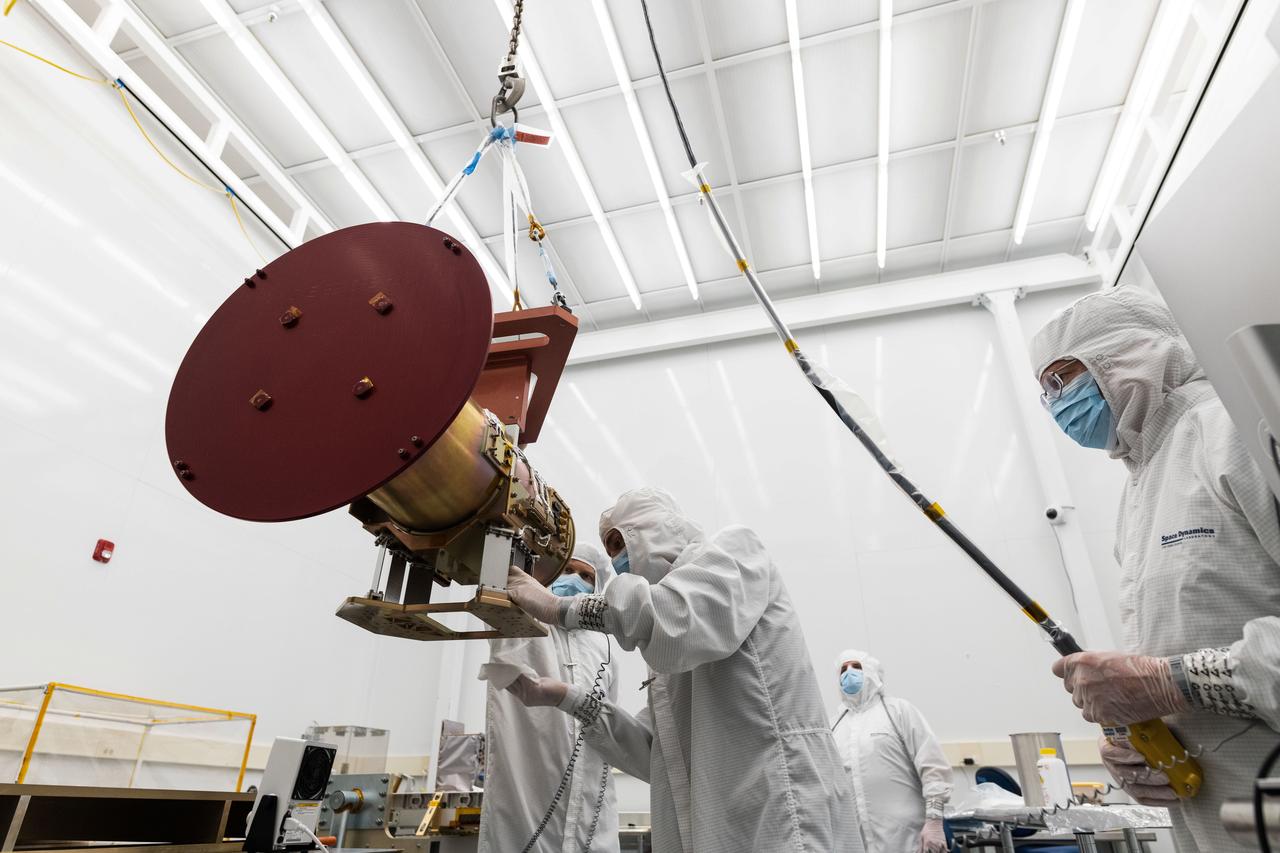
jsc2023e055879 (11/9/2022) --- Space Dynamics Laboratory (SDL) employees ensure the Opto-Mechanical Assembly interface to the flight EXPRESS Payload Adapter is clean before mounting. The Atmospheric Waves Experiment (AWE) examines the global distribution of small-scale atmospheric gravity waves (AGWs) and how they move through the upper atmosphere, vary with season and geographic location, and contribute to space weather. Image courtesy of SDL/Allison Bills.
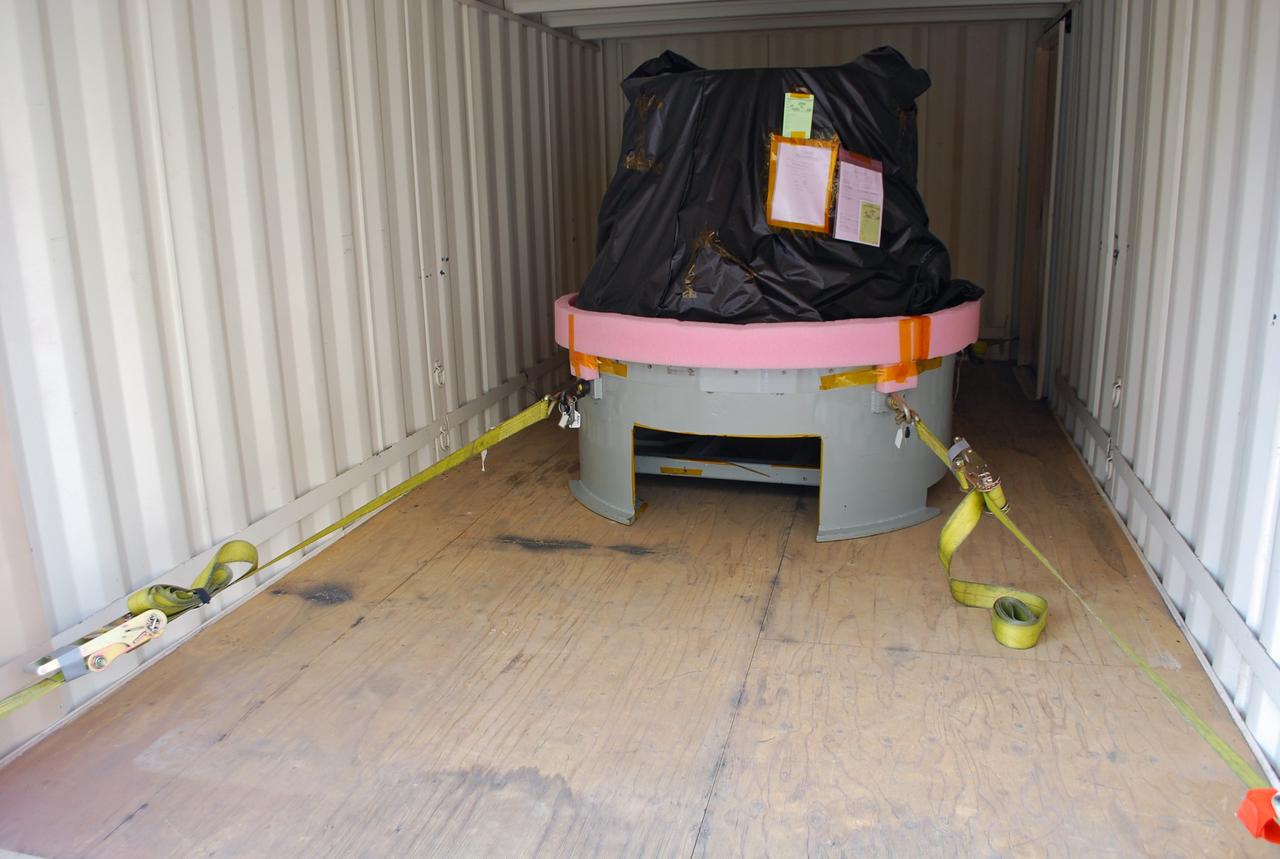
VANDENBERG AIR FORCE BASE, Calif. -- At Vandenberg Air Force Base in California, the payload cone for NASA's Glory mission is pictures secured inside its cargo carrier. The payload cone is an adapter that interfaces the Taurus XL rocket with the spacecraft. A four-stage Taurus XL rocket will carry Glory into low Earth orbit. Once Glory reaches orbit, it will collect data on the properties of aerosols and black carbon. It also will help scientists understand how the sun's irradiance affects Earth's climate. Launch is scheduled for 2:09 a.m. PST Nov. 22. For information, visit www.nasa.gov/glory. Photo credit: NASA/Randy Beaudoin, VAFB
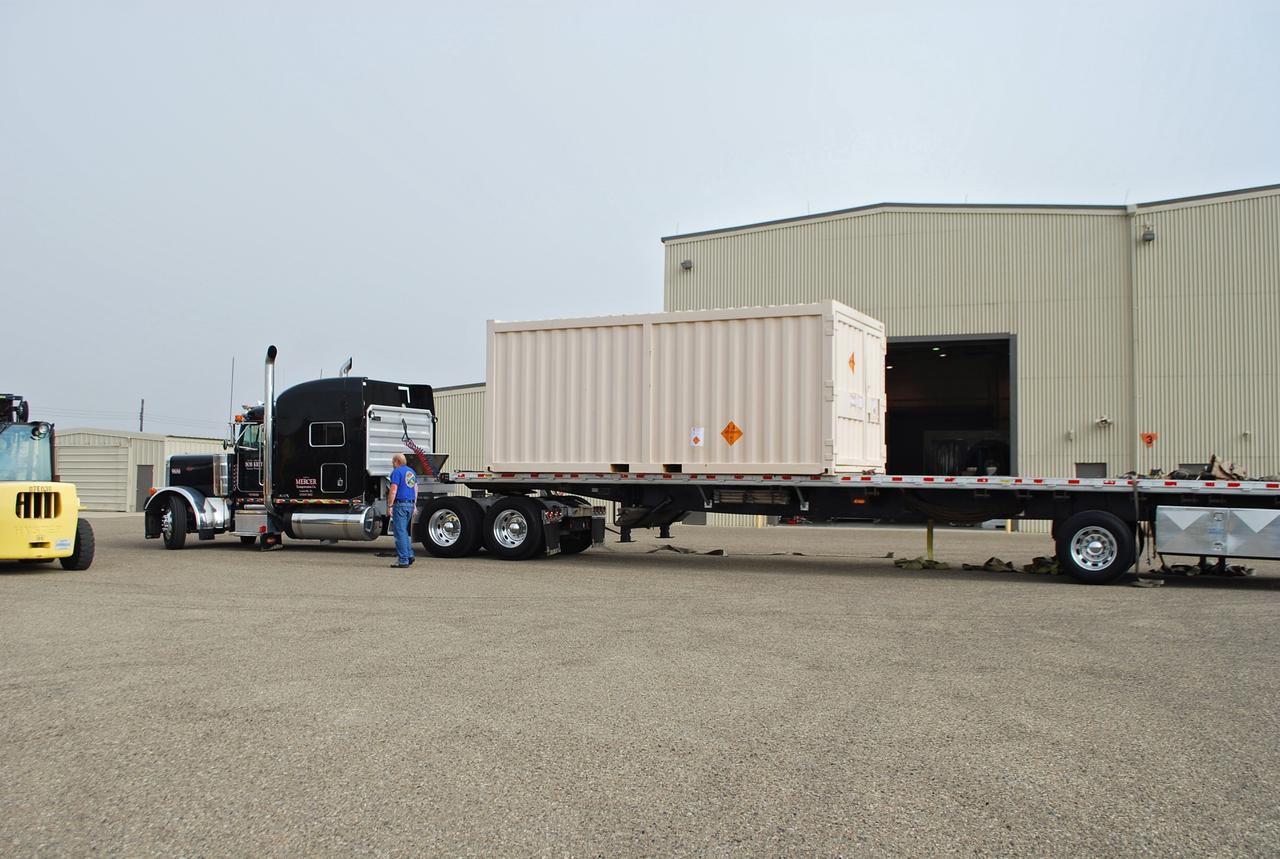
VANDENBERG AIR FORCE BASE, Calif. -- At Vandenberg Air Force Base in California, workers are preparing to unload a payload cone for NASA's Glory mission. The payload cone is an adapter that interfaces the Taurus XL rocket with the spacecraft. A four-stage Taurus XL rocket will carry Glory into low Earth orbit. Once Glory reaches orbit, it will collect data on the properties of aerosols and black carbon. It also will help scientists understand how the sun's irradiance affects Earth's climate. Launch is scheduled for 2:09 a.m. PST Nov. 22. For information, visit www.nasa.gov/glory. Photo credit: NASA/Randy Beaudoin, VAFB
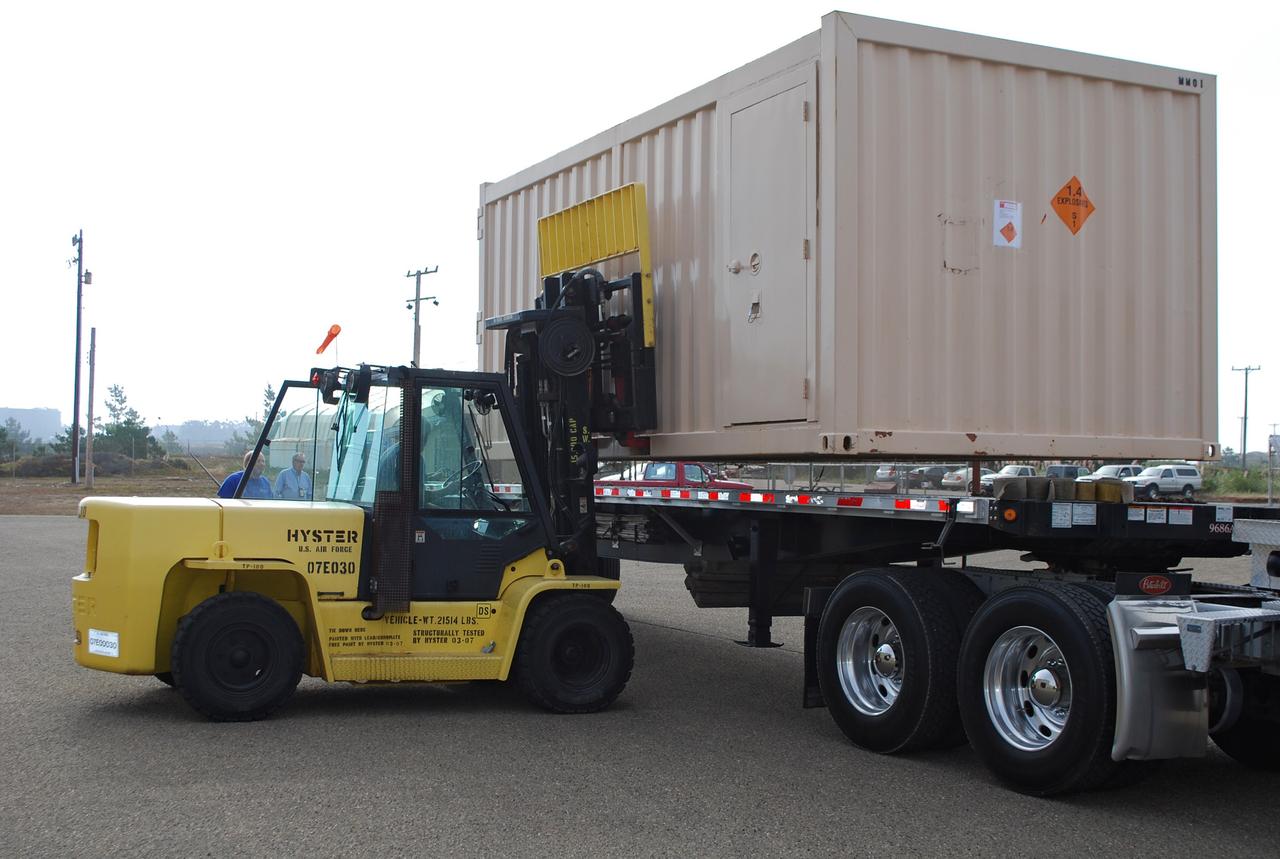
VANDENBERG AIR FORCE BASE, Calif. -- At Vandenberg Air Force Base in California, workers are preparing to unload a payload cone for NASA's Glory mission. The payload cone is an adapter that interfaces the Taurus XL rocket with the spacecraft. A four-stage Taurus XL rocket will carry Glory into low Earth orbit. Once Glory reaches orbit, it will collect data on the properties of aerosols and black carbon. It also will help scientists understand how the sun's irradiance affects Earth's climate. Launch is scheduled for 2:09 a.m. PST Nov. 22. For information, visit www.nasa.gov/glory. Photo credit: NASA/Randy Beaudoin, VAFB
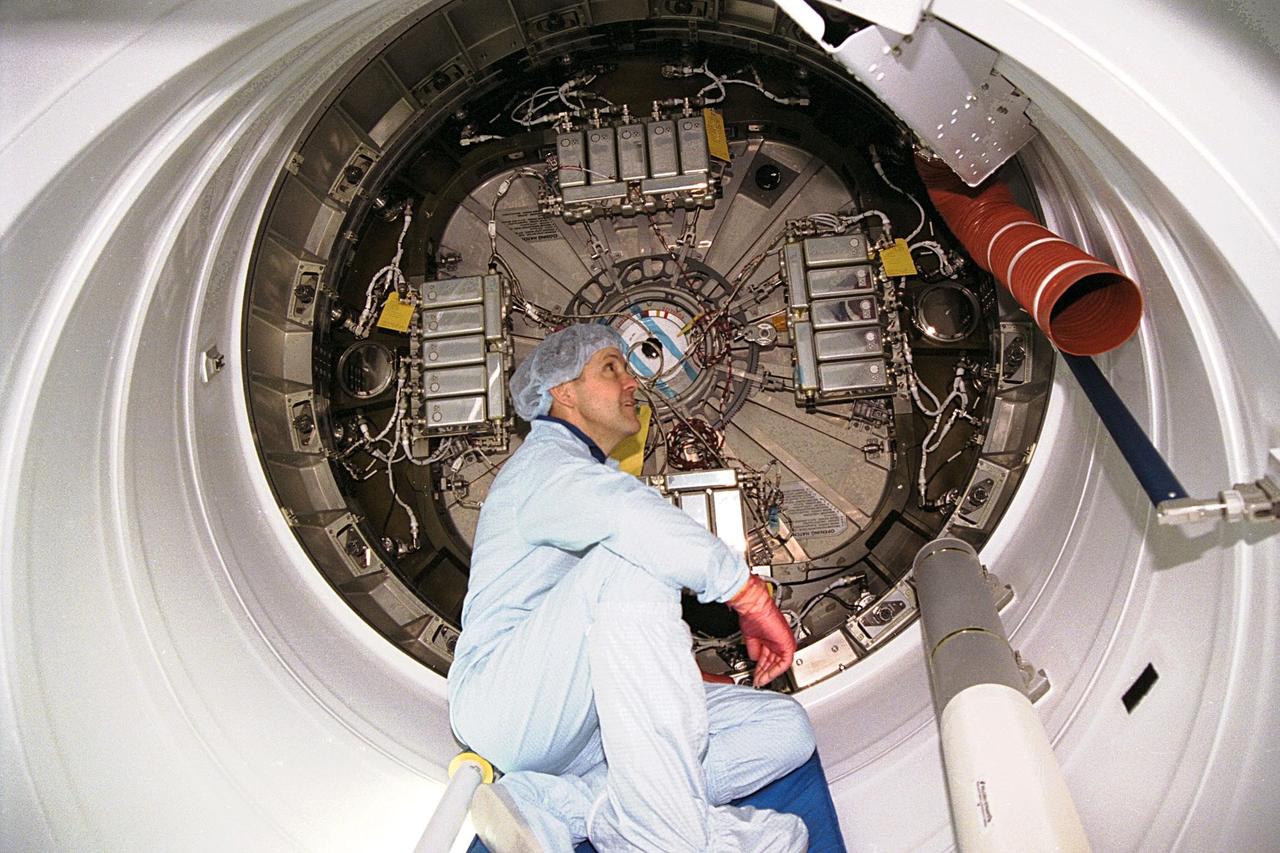
KENNEDY SPACE CENTER, FLA. -- Commander Bob Cabana participates in the Crew Equipment Interface Test (CEIT) for STS-88 in KSC's Space Station Processing Facility. The CEIT gives astronauts an opportunity to get a hands-on look at the payloads with which they will be working on-orbit. Here, Cabana sits inside the Pressurized Mating Adapter-1 (PMA-1) for a close-up look at some of the connecting ducts and wires. Node 1 of the International Space Station (ISS) is behind him. STS-88, the first ISS assembly flight, is targeted for launch in July 1998 aboard Space Shuttle Endeavour
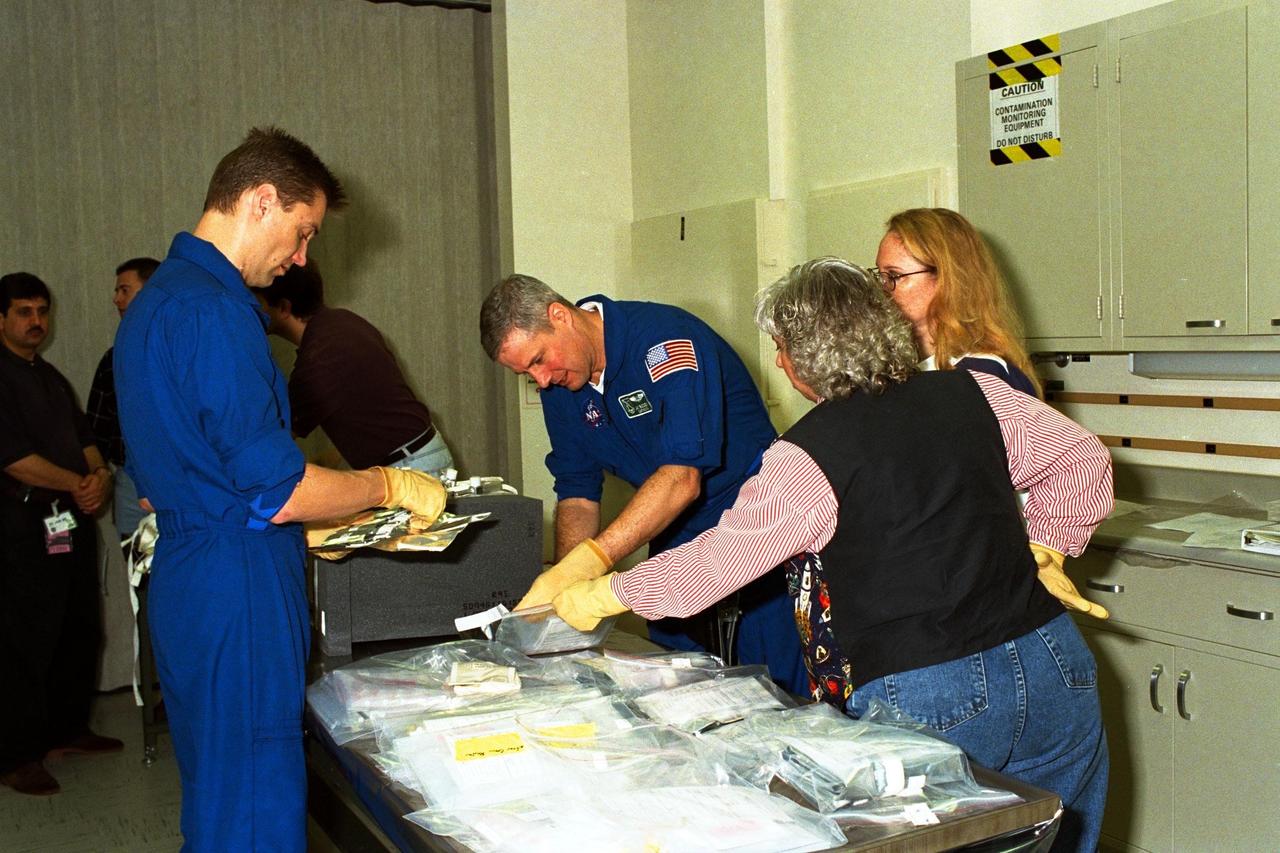
STS-90 Payload Specialists James Pawelczyk, Ph.D. (at left), and Jay Buckey Jr., M.D., examine items to be used during the Crew Equipment Interface Test (CEIT) in Kennedy Space Center's (KSC's) Operations and Checkout Building, where the Neurolab payload is undergoing processing. The CEIT gives astronauts an opportunity to get a hands-on look at the payloads with which they will be working on-orbit. STS-90 is scheduled to launch aboard the Shuttle Columbia from KSC on April 2. Investigations during the Neurolab mission will focus on the effects of microgravity on the nervous system. Specifically, experiments will study the adaptation of the vestibular system, the central nervous system, and the pathways that control the ability to sense location in the absence of gravity, as well as the effect of microgravity on a developing nervous system
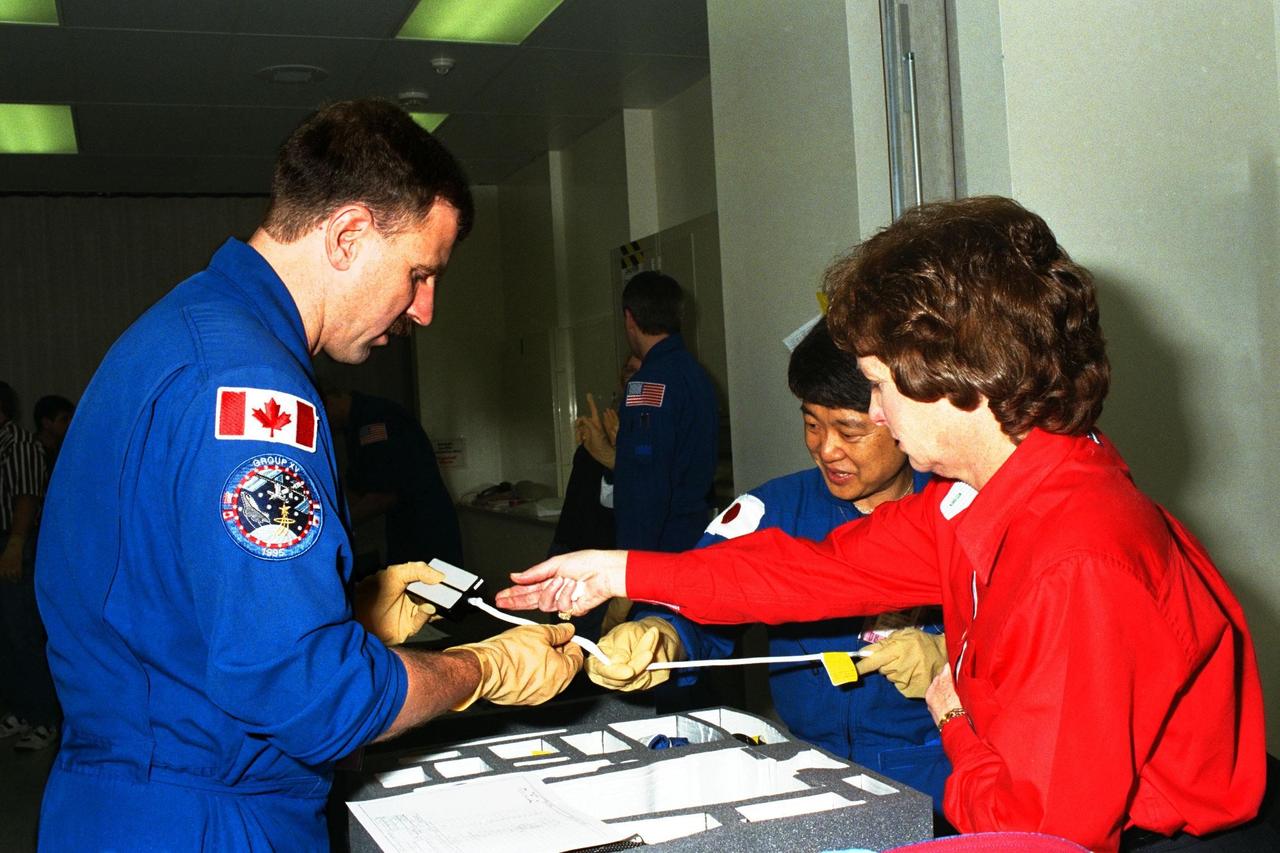
STS-90 Mission Specialist Dafydd "Dave" Rhys Williams, M.D., with the Canadian Space Agency, and back-up Payload Specialist Chiaki Mukai, M.D., Ph.D., with the National Space Development Agency of Japan, examine items to be used during the Crew Equipment Interface Test (CEIT) in Kennedy Space Center's (KSC's) Operations and Checkout Building, where the Neurolab payload is undergoing processing. The CEIT gives astronauts an opportunity to get a hands-on look at the payloads with which they will be working on-orbit. STS-90 is scheduled to launch aboard the Shuttle Columbia from KSC on April 2. Investigations during the Neurolab mission will focus on the effects of microgravity on the nervous system. Specifically, experiments will study the adaptation of the vestibular system, the central nervous system, and the pathways that control the ability to sense location in the absence of gravity, as well as the effect of microgravity on a developing nervous system
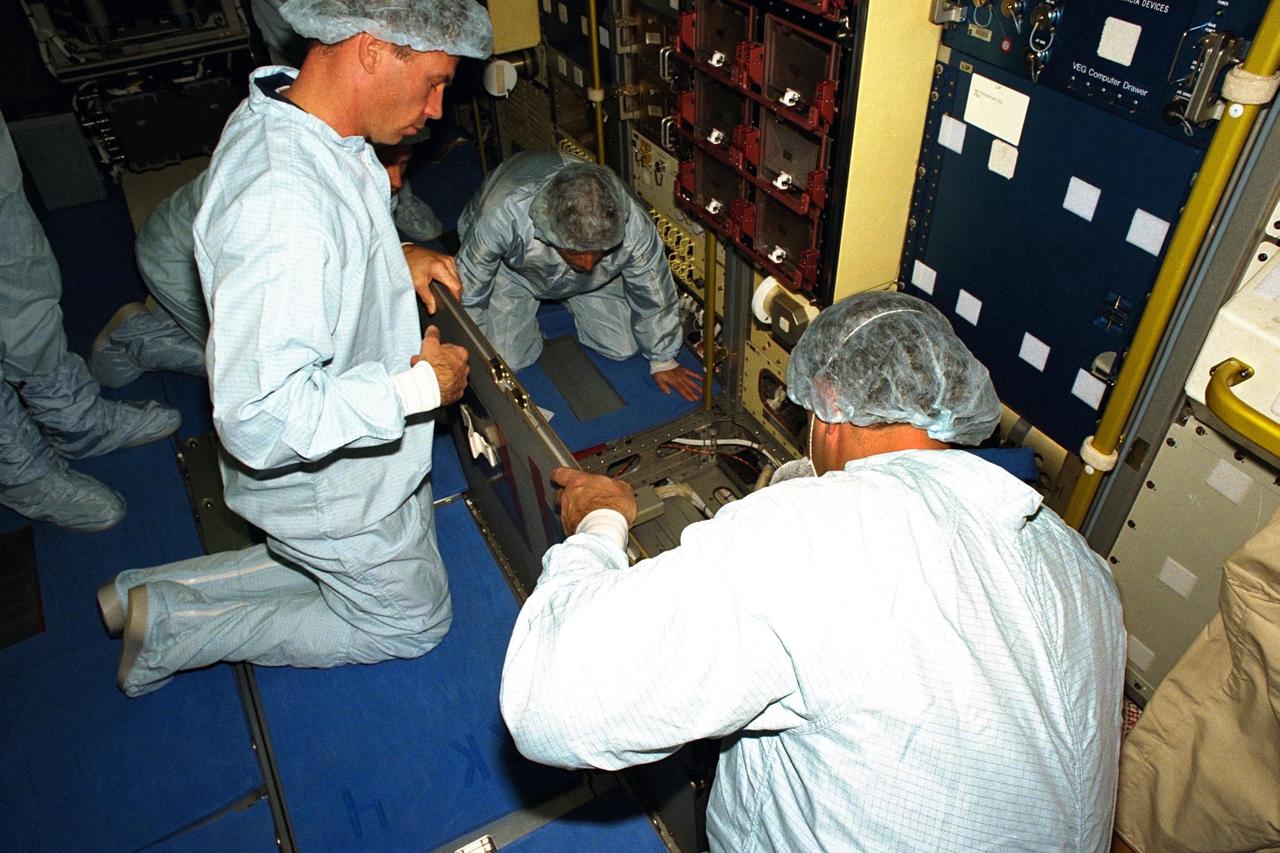
STS-90 Payload Specialist James Pawelczyk, Ph.D., holds up a panel as one of the items used during the Crew Equipment Interface Test (CEIT) in Kennedy Space Center's (KSC's) Operations and Checkout Building, where the Neurolab payload is undergoing processing. The CEIT gives astronauts an opportunity to get a hands-on look at the payloads with which they will be working on-orbit. STS-90 is scheduled to launch aboard the Shuttle Columbia from KSC on April 2. Investigations during the Neurolab mission will focus on the effects of microgravity on the nervous system. Specifically, experiments will study the adaptation of the vestibular system, the central nervous system, and the pathways that control the ability to sense location in the absence of gravity, as well as the effect of microgravity on a developing nervous system
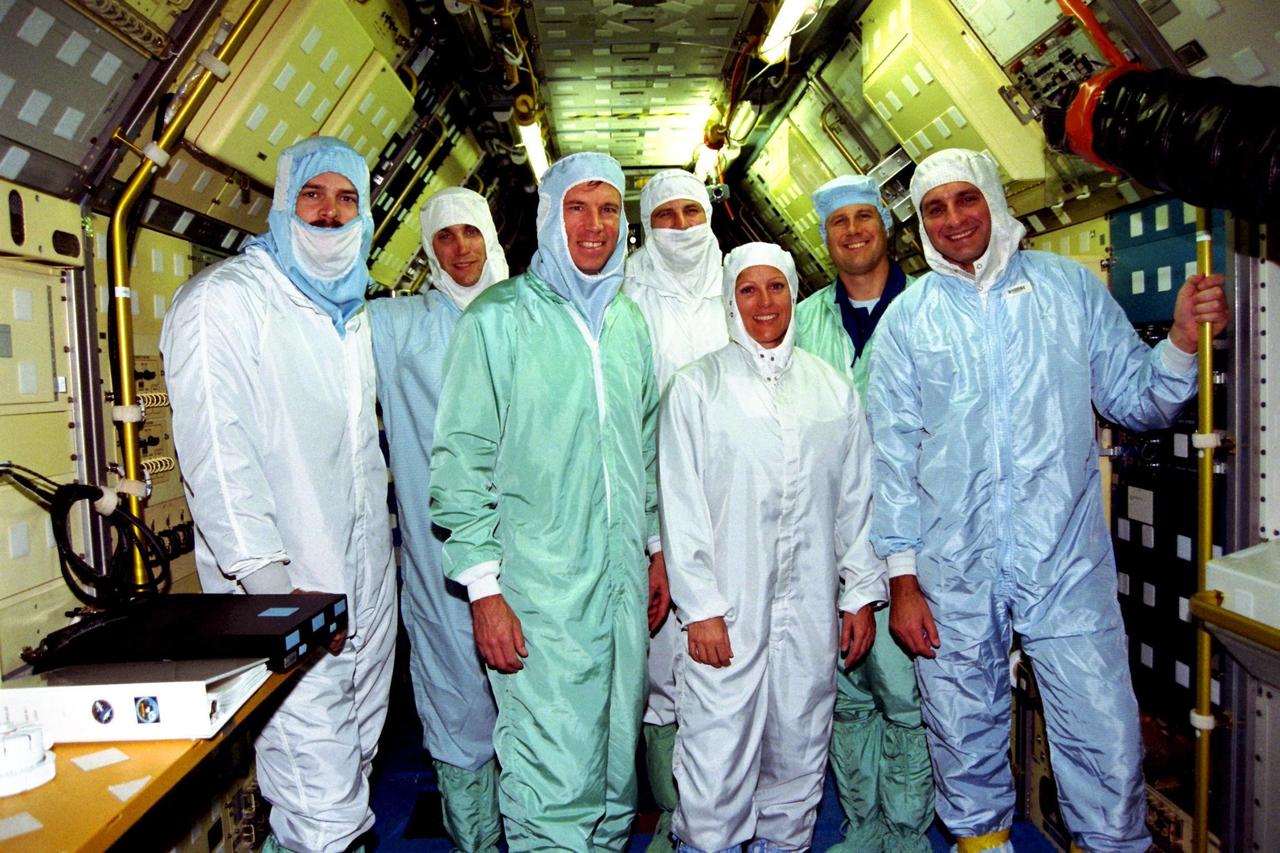
Members of the STS-90 crew participate in the Crew Equipment Interface Test (CEIT) in Kennedy Space Center's Orbiter Processing Facility Bay 3. The CEIT gives astronauts an opportunity to get a hands-on look at the payloads with which they will be working on-orbit. Investigations during the STS-90 Neurolab mission will focus on the effects of microgravity on the nervous system. Specifically, experiments will study the adaptation of the vestibular system, the central nervous system, and the pathways that control the ability to sense location in the absence of gravity, as well as the effect of microgravity on a developing nervous system. The crew of STS-90, slated for launch in April, are, left to right, Pilot Scott Altman; Payload Specialist James Pawelczyk, Ph.D.; Commander Richard Searfoss; Mission Specialists Dafydd (Dave) Williams, M.D., and Kathryn (Kay) Hire; Payload Specialist Jay Buckey, M.D.; and Mission Specialist Richard Linnehan
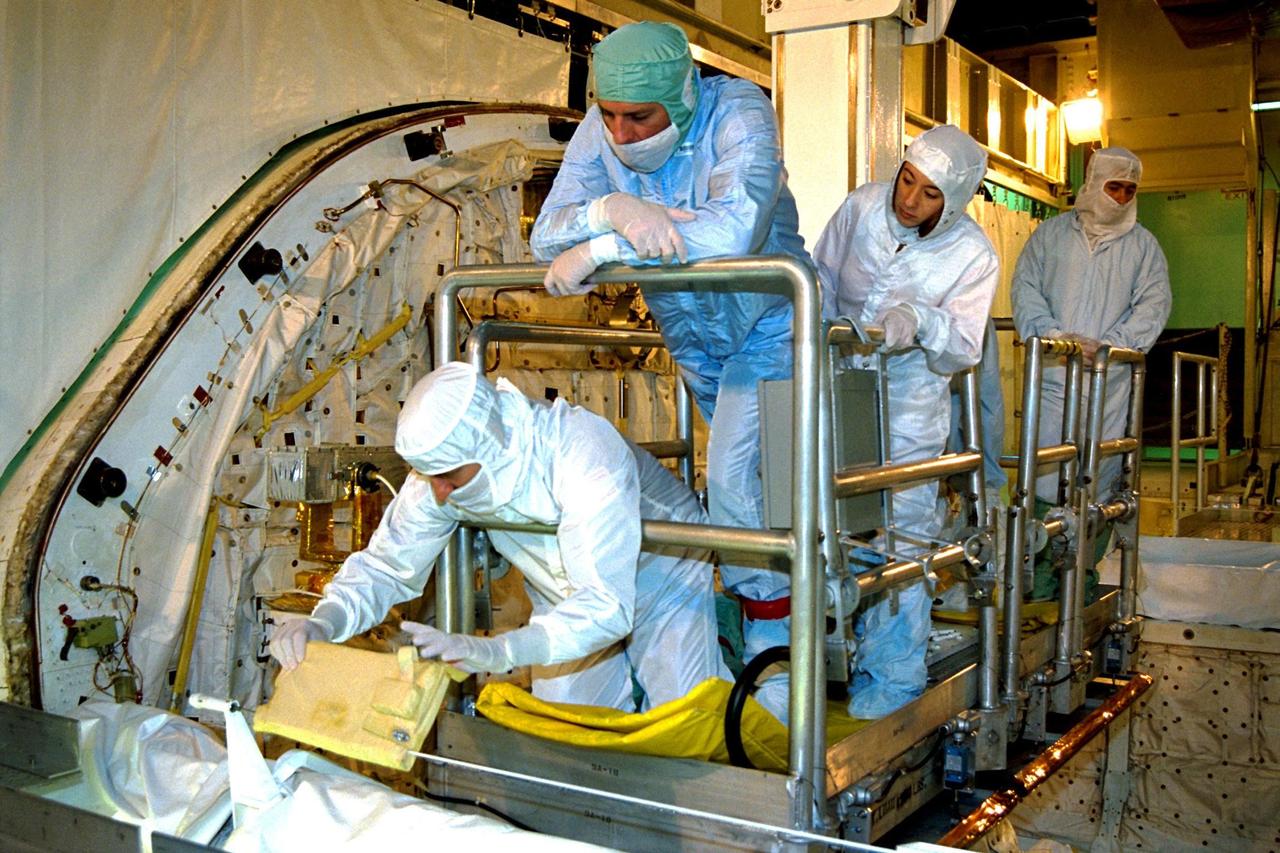
Members of the STS-90 crew participate in the Crew Equipment Interface Test (CEIT) in Kennedy Space Center's Orbiter Processing Facility Bay 3. The CEIT gives astronauts an opportunity to get a hands-on look at the payloads with which they will be working on-orbit. Investigations during the STS-90 Neurolab mission will focus on the effects of microgravity on the nervous system. Specifically, experiments will study the adaptation of the vestibular system, the central nervous system, and the pathways that control the ability to sense location in the absence of gravity, as well as the effect of microgravity on a developing nervous system. The crew of STS-90, slated for launch in April, will include Commander Richard Searfoss, Pilot Scott Altman, Mission Specialists Richard Linnehan, Dafydd (Dave) Williams, M.D., and Kathryn (Kay) Hire, and Payload Specialists Jay Buckey, M.D., and James Pawelczyk, Ph.D
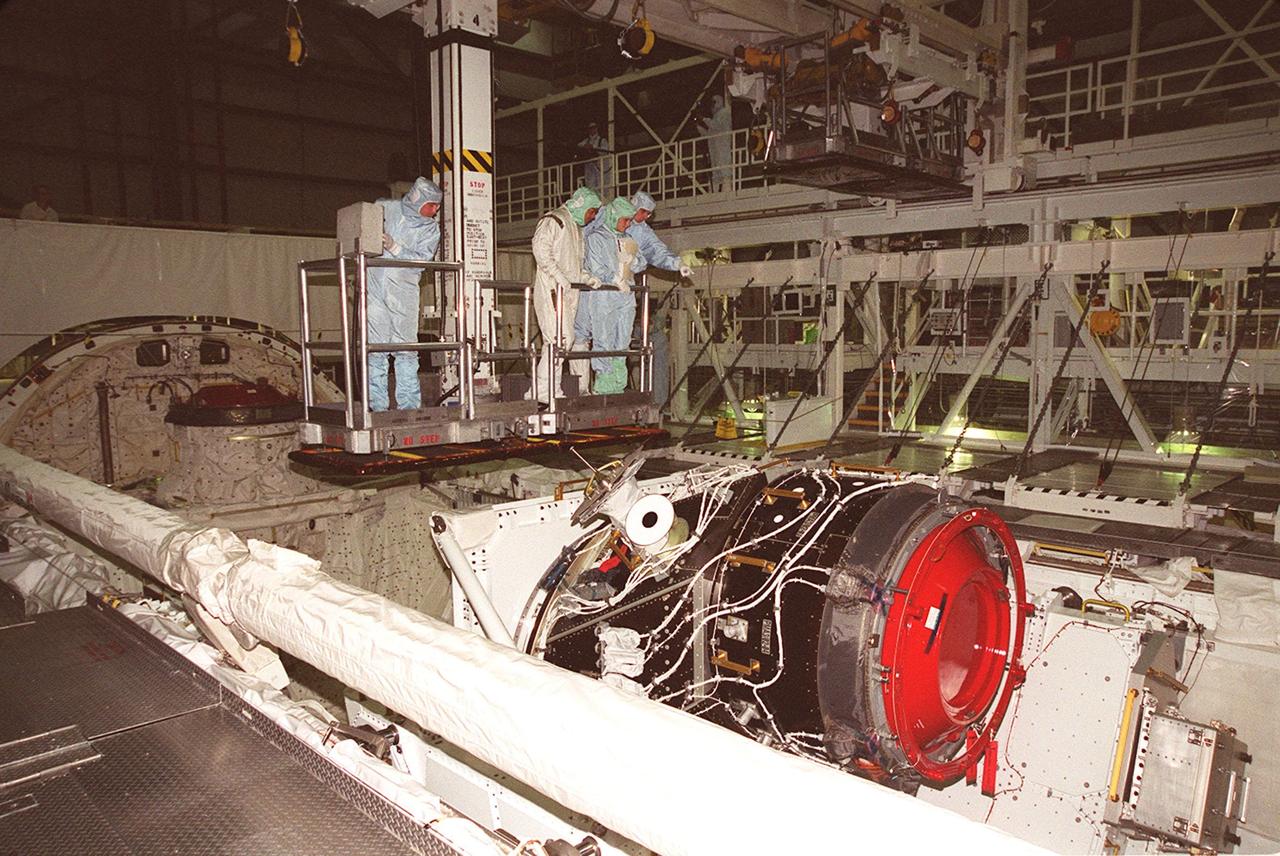
KENNEDY SPACE CENTER, FLA. -- In Orbiter Processing Facility bay 1, members of the STS-92 crew take part in Crew Equipment Interface Test (CEIT) activities. Being lowered into the payload bay of Discovery for a closer look at the payload are Mission Specialists Leroy Chiao (second from left) and Bill McArthur (far right), accompanied by Boeing workers. In the foreground is the Pressurized Mating Adapter-3 (PMA-3). Other crew members taking part in the CEIT are Commander Brian Duffy, Pilot Pam Melroy, and Mission Specialists Koichi Wakata, Jeff Wisoff and Michael Lopez-Alegria. STS-92 is scheduled to launch Oct. 5 on Shuttle Discovery from Launch Pad 39A on the fifth flight to the International Space Station. Discovery will carry the Integrated Truss Structure (ITS) Z1, the PMA-3, Ku-band Communications System, and Control Moment Gyros (CMGs)
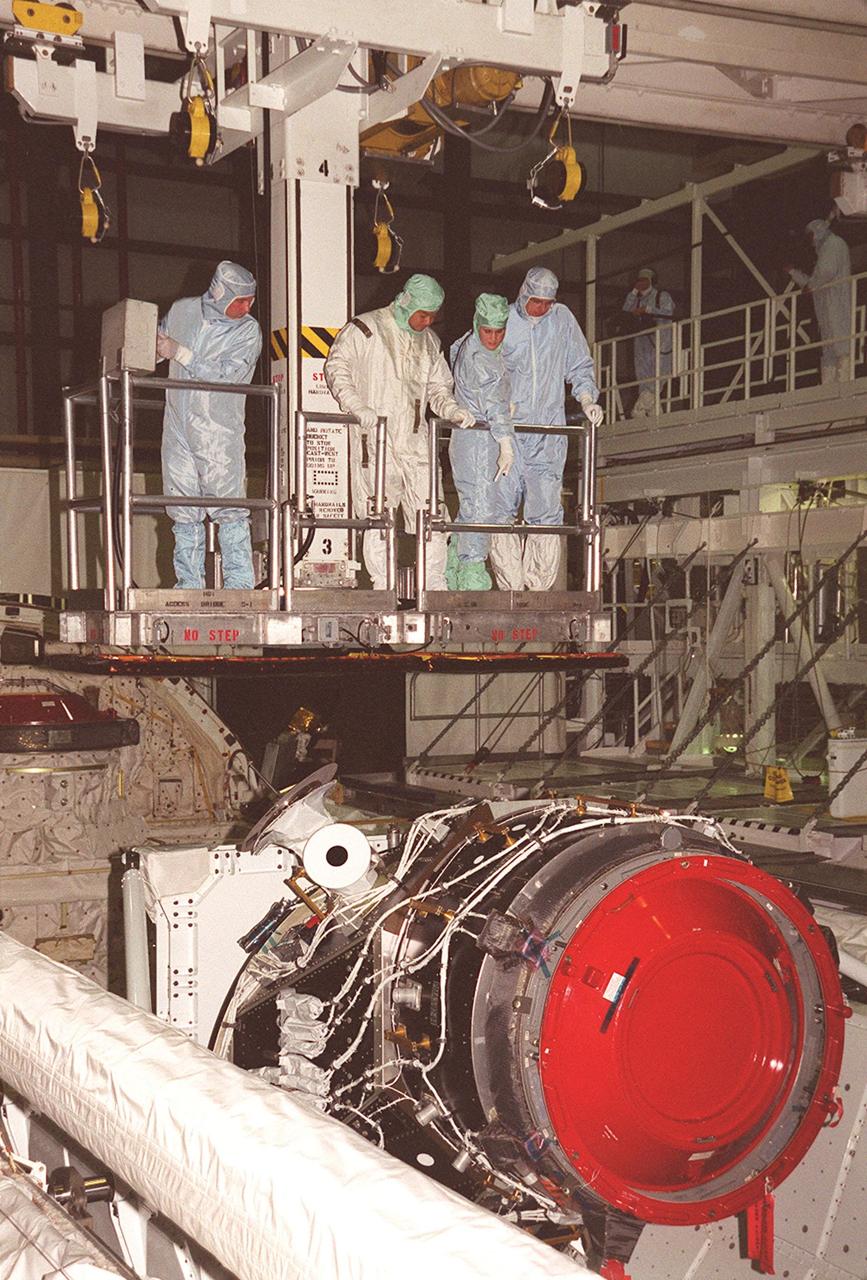
KENNEDY SPACE CENTER, FLA. -- Being lowered into the payload bay of Discovery for a closer look at the payload are STS-92 Mission Specialists Leroy Chiao (second from left) and Bill McArthur (far right), accompanied by Boeing workers. In the foreground is the Pressurized Mating Adapter-3. They and other crew members Commander Brian Duffy, Pilot Pam Melroy and Mission Specialists Koichi Wakata, Jeff Wisoff and Michael Lopez-Alegria are taking part in Crew Equipment Interface Test activities. STS-92 is scheduled to launch Oct. 5 on Shuttle Discovery from Launch Pad 39A on the fifth flight to the International Space Station. Discovery will carry the Integrated Truss Structure (ITS) Z1, the PMA-3, Ku-band Communications System, and Control Moment Gyros (CMGs)
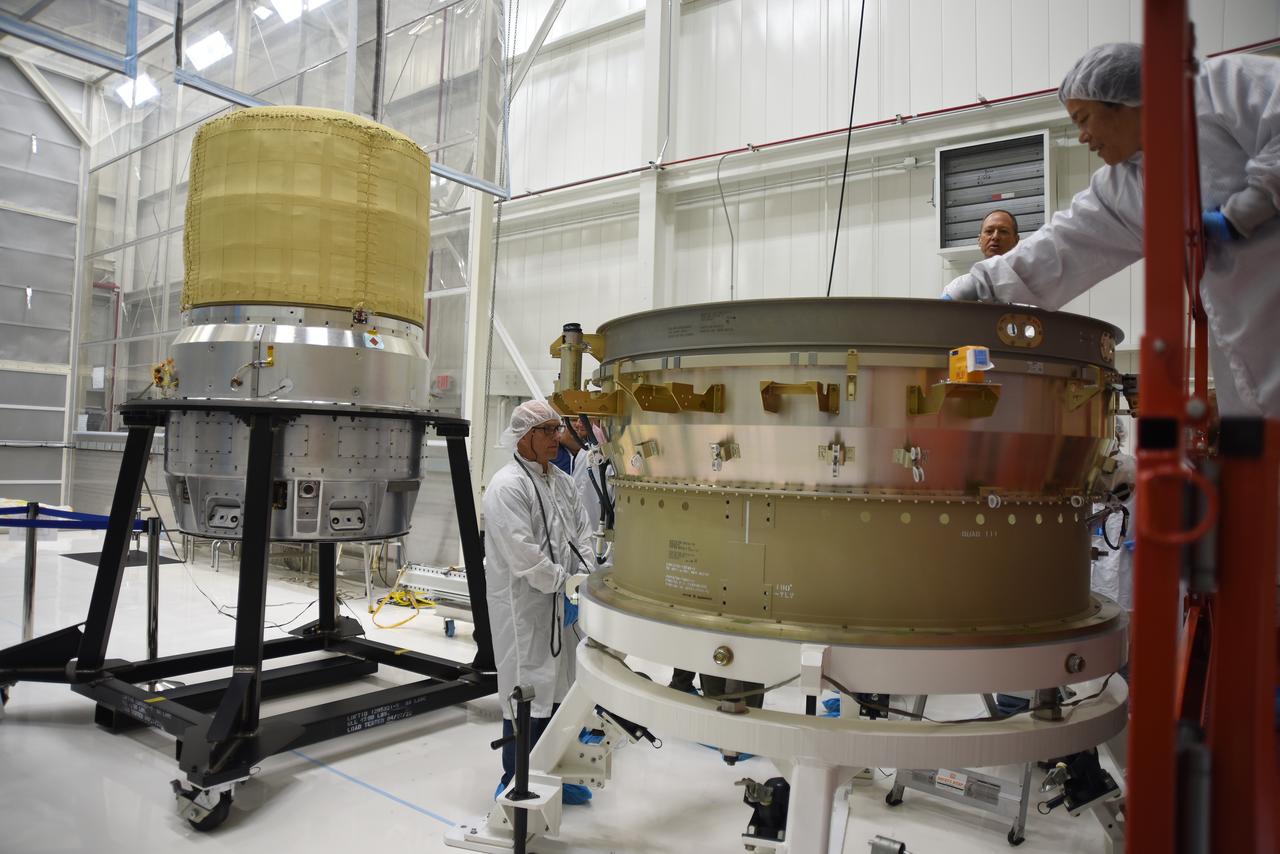
Technicians prepare the Low-Earth Orbit Flight Test of an Inflatable Decelerator (LOFTID) re-entry payload adapter interface ring for mating to the re-entry vehicle as part of launch preparations occurring inside Building 836 at Vandenberg Space Force Base (VSFB) in California on Sept. 7, 2022. LOFTID is the secondary payload on NASA and the National Oceanic and Atmospheric Administration’s (NOAA) Joint Polar Satellite System-2 (JPSS-2) satellite mission. JPSS-2 is the third satellite in the Joint Polar Satellite System series. It is scheduled to lift off from VSFB on Nov. 1 from Space Launch Complex-3. JPSS-2, which will be renamed NOAA-21 after reaching orbit, will join a constellation of JPSS satellites that orbit from the North to the South pole, circling Earth 14 times a day and providing a full view of the entire globe twice daily.
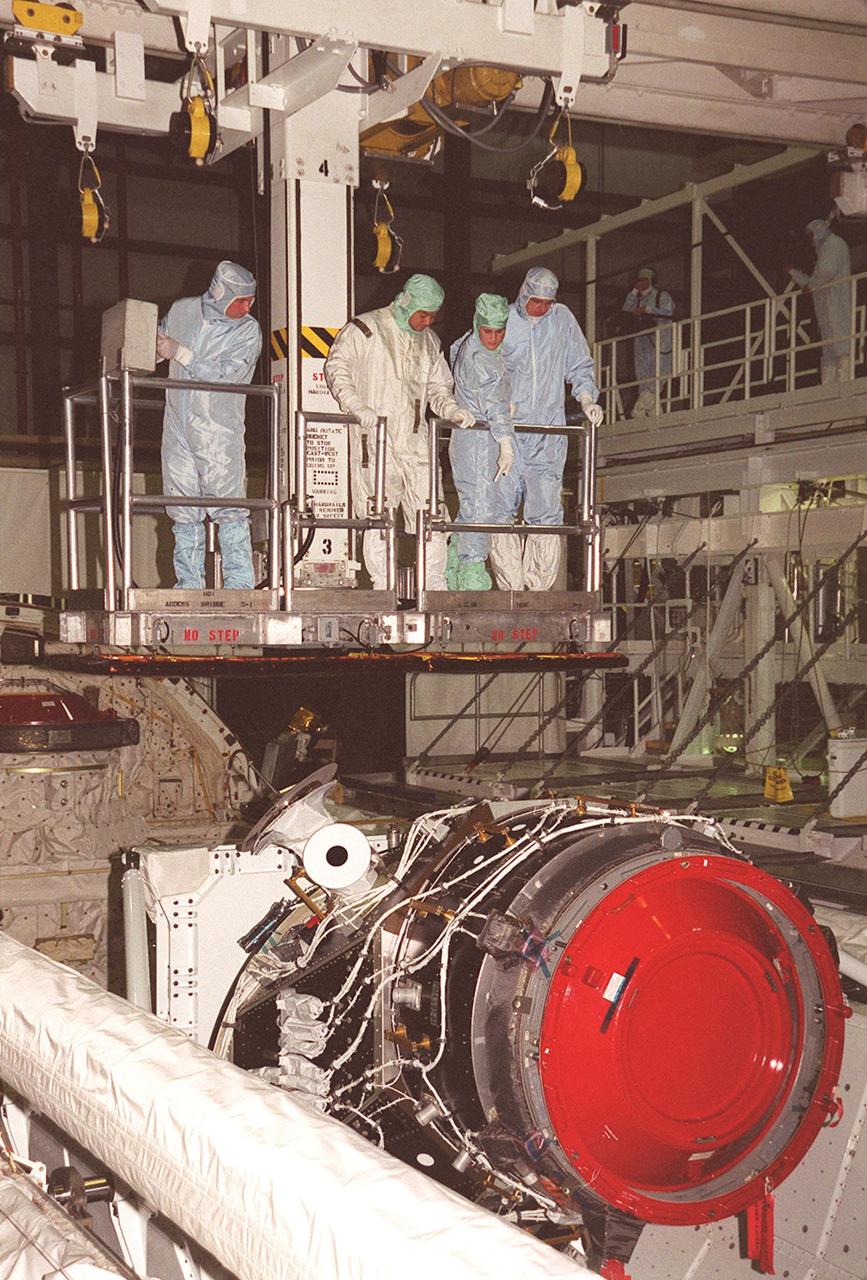
KENNEDY SPACE CENTER, FLA. -- Being lowered into the payload bay of Discovery for a closer look at the payload are STS-92 Mission Specialists Leroy Chiao (second from left) and Bill McArthur (far right), accompanied by Boeing workers. In the foreground is the Pressurized Mating Adapter-3. They and other crew members Commander Brian Duffy, Pilot Pam Melroy and Mission Specialists Koichi Wakata, Jeff Wisoff and Michael Lopez-Alegria are taking part in Crew Equipment Interface Test activities. STS-92 is scheduled to launch Oct. 5 on Shuttle Discovery from Launch Pad 39A on the fifth flight to the International Space Station. Discovery will carry the Integrated Truss Structure (ITS) Z1, the PMA-3, Ku-band Communications System, and Control Moment Gyros (CMGs)
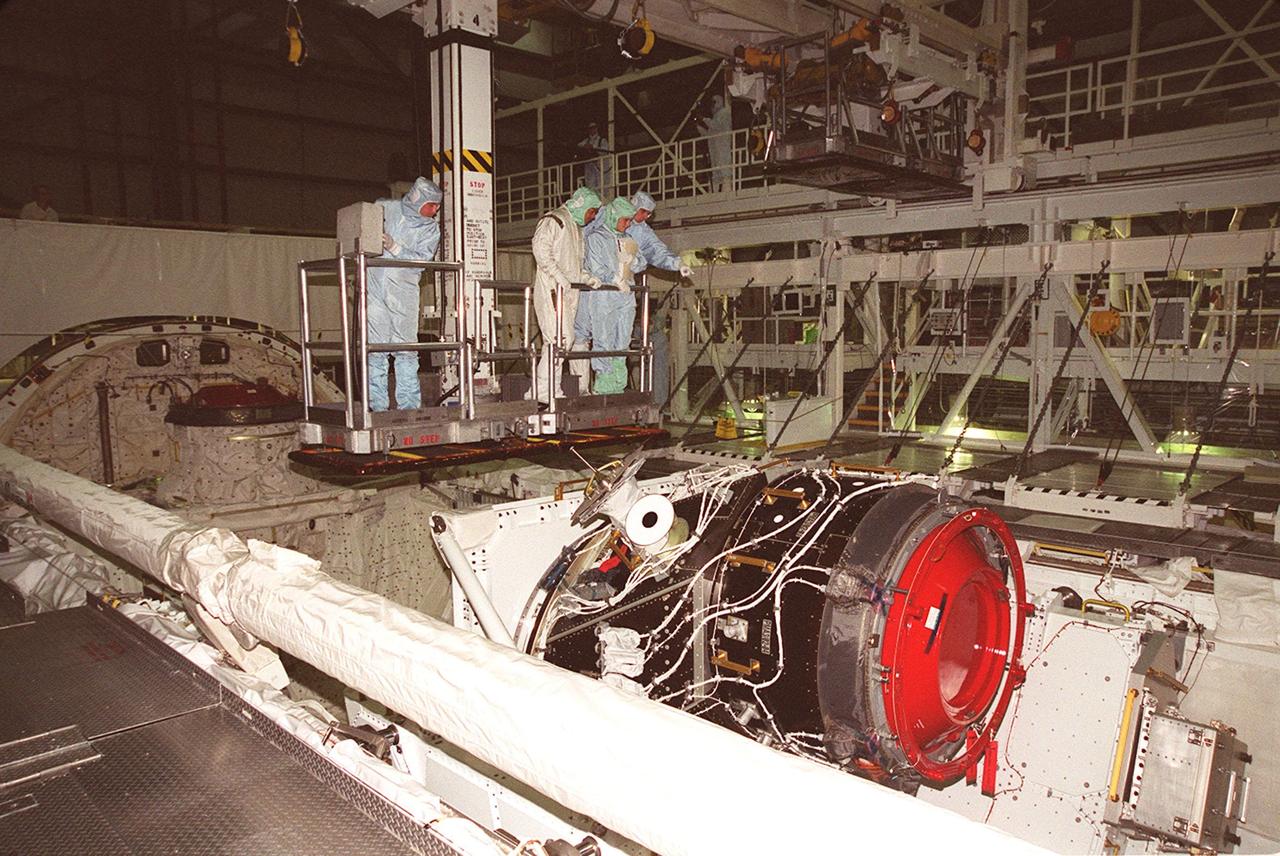
KENNEDY SPACE CENTER, FLA. -- In Orbiter Processing Facility bay 1, members of the STS-92 crew take part in Crew Equipment Interface Test (CEIT) activities. Being lowered into the payload bay of Discovery for a closer look at the payload are Mission Specialists Leroy Chiao (second from left) and Bill McArthur (far right), accompanied by Boeing workers. In the foreground is the Pressurized Mating Adapter-3 (PMA-3). Other crew members taking part in the CEIT are Commander Brian Duffy, Pilot Pam Melroy, and Mission Specialists Koichi Wakata, Jeff Wisoff and Michael Lopez-Alegria. STS-92 is scheduled to launch Oct. 5 on Shuttle Discovery from Launch Pad 39A on the fifth flight to the International Space Station. Discovery will carry the Integrated Truss Structure (ITS) Z1, the PMA-3, Ku-band Communications System, and Control Moment Gyros (CMGs)
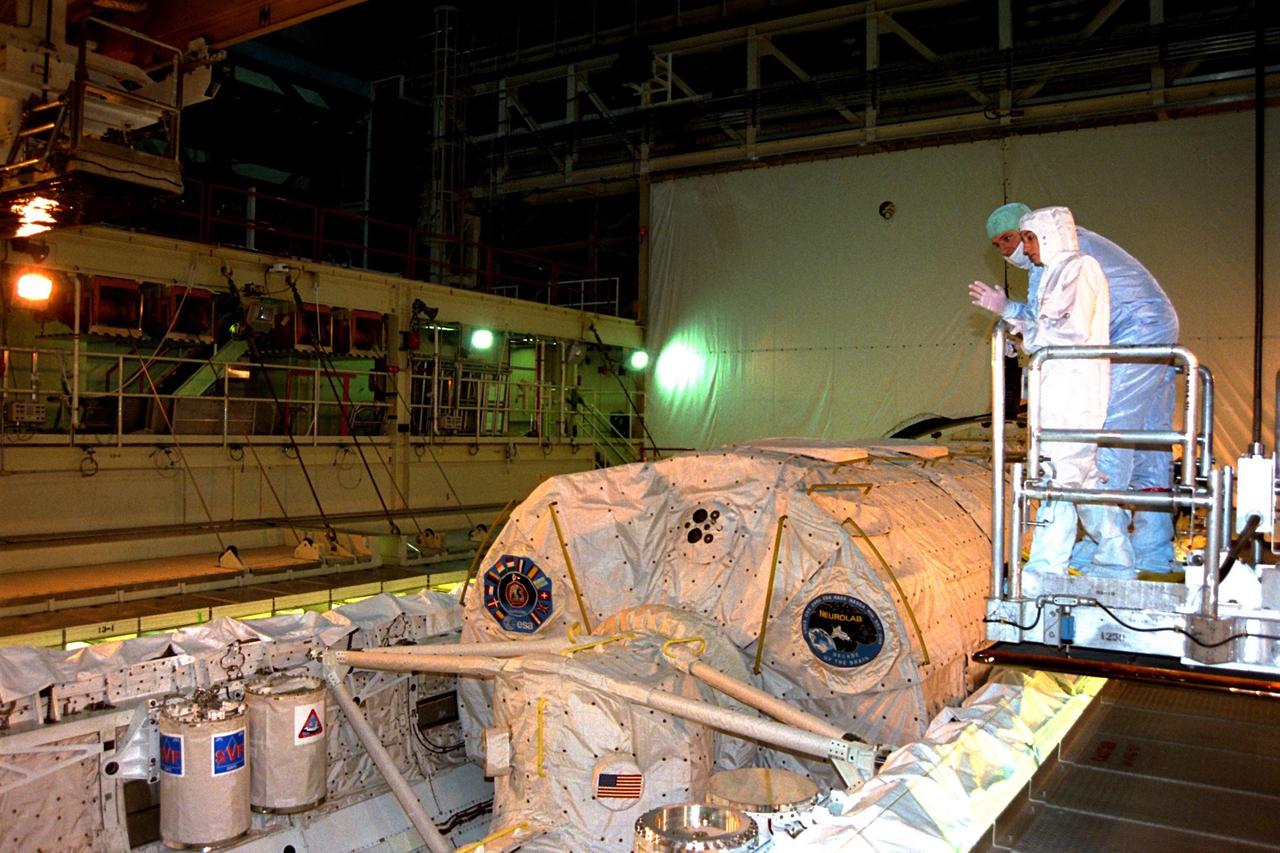
Stacie Greene, an extravehicular activity trainer from Johnson Space Center, discusses the STS-90 Neurolab mission with Mission Specialist Richard Linnehan overlooking Columbia's payload bay. The crew of STS-90 participated in the Crew Equipment Interface Test (CEIT) in Kennedy Space Center's Orbiter Processing Facility Bay 3. The CEIT gives astronauts an opportunity to get a hands-on look at the payloads with which they will be working on-orbit. Investigations during the STS-90 Neurolab mission will focus on the effects of microgravity on the nervous system. Specifically, experiments will study the adaptation of the vestibular system, the central nervous system, and the pathways that control the ability to sense location in the absence of gravity, as well as the effect of microgravity on a developing nervous system. STS-90 is scheduled for launch on April 16 at 2:19 p.m. EDT
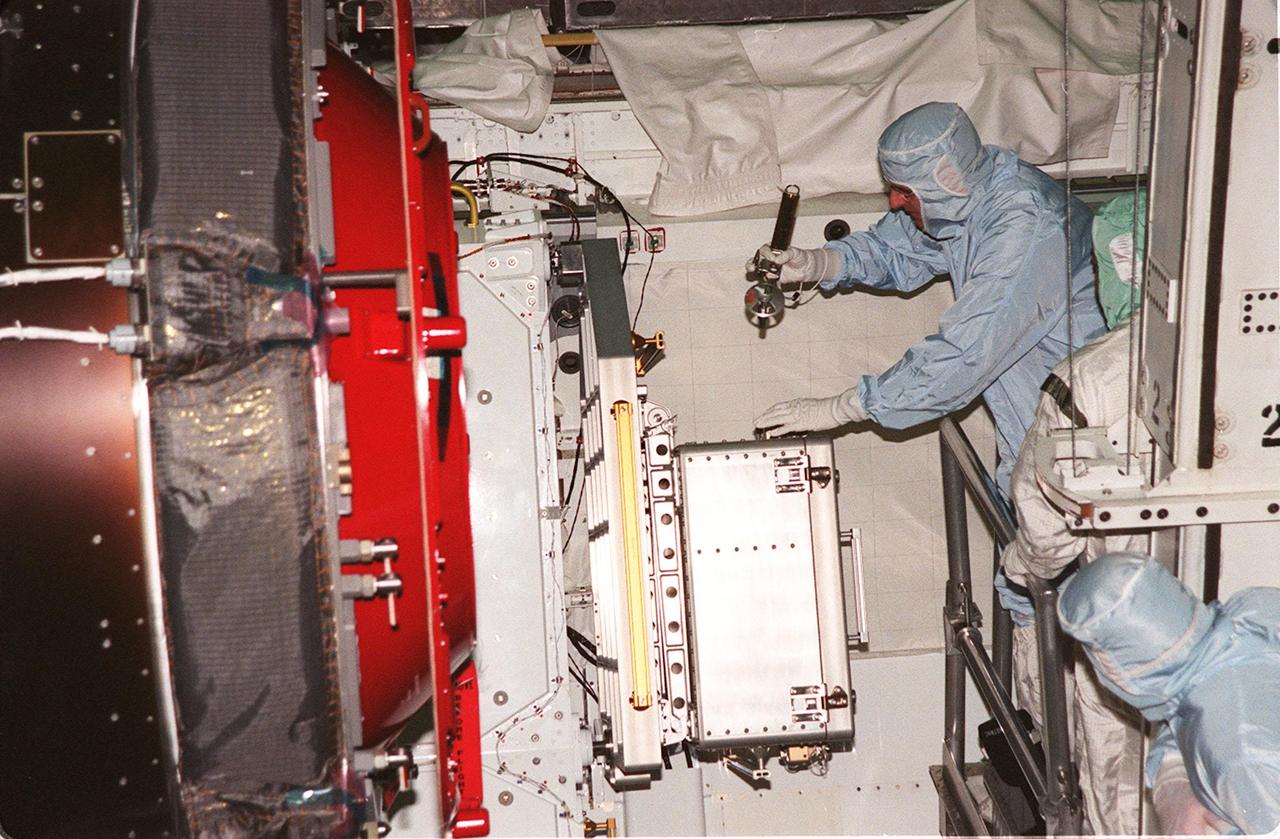
KENNEDY SPACE CENTER, FLA. -- STS-92 Mission Specialist Bill McArthur (with tool in hand) gets a close look at the Pressurized Mating Adapter-3 in the payload bay of orbiter Discovery. He and other crew members Commander Brian Duffy, Pilot Pam Melroy and Mission Specialists Koichi Wakata, Leroy Chiao, Jeff Wisoff, and Michael Lopez-Alegria are at KSC to take part in Crew Equipment Interface Test activities. Discovery is in the Orbiter Processing Facility bay 1. STS-92 is scheduled to launch Oct. 5 on Shuttle Discovery from Launch Pad 39A on the fifth flight to the International Space Station. Discovery will carry the Integrated Truss Structure (ITS) Z1, the PMA-3, Ku-band Communications System, and Control Moment Gyros (CMGs)
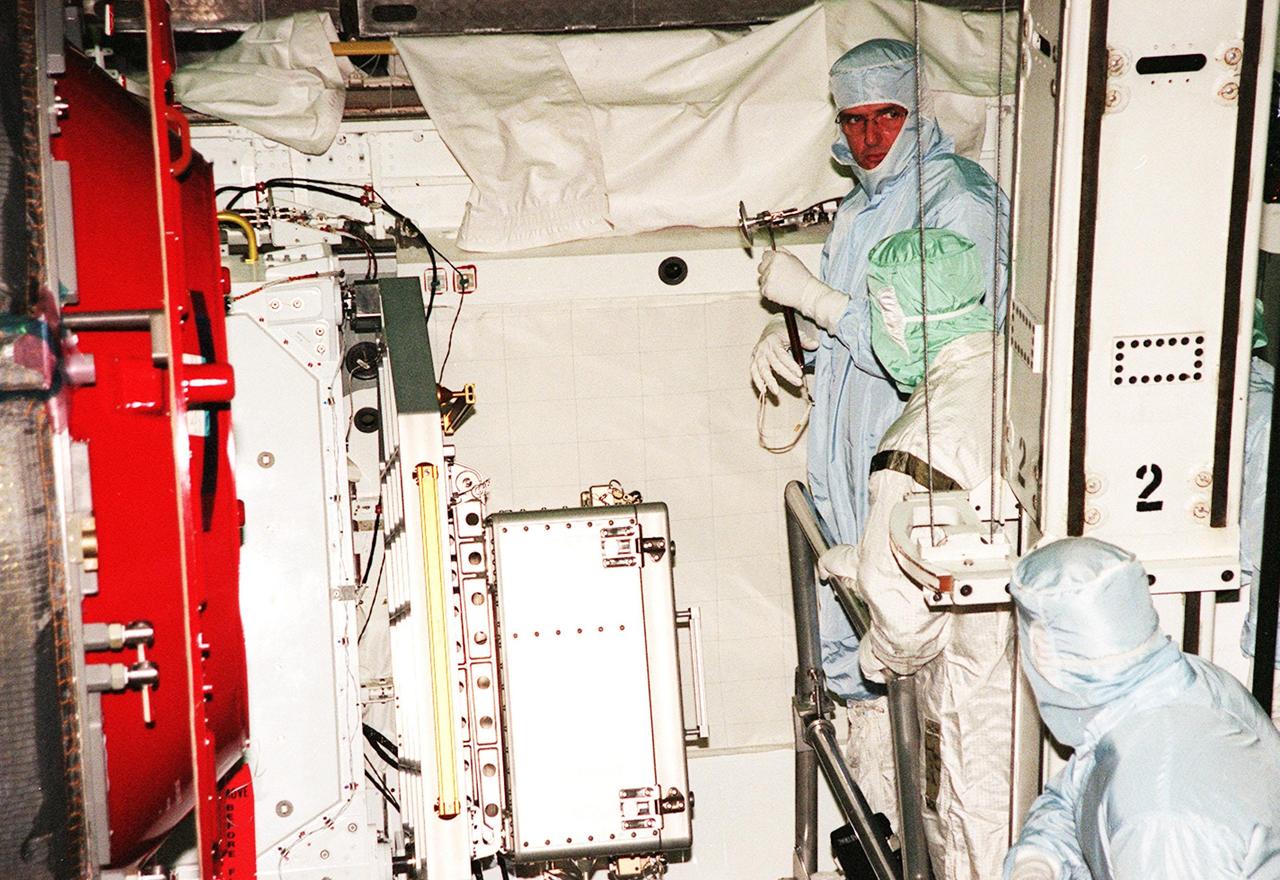
KENNEDY SPACE CENTER, FLA. -- STS-92 Mission Specialist Bill McArthur (with tool in hand) gets a close look at the Pressurized Mating Adapter-3 (PMA-3) in the payload bay of orbiter Discovery. He and other crew members Commander Brian Duffy, Pilot Pam Melroy and Mission Specialists Koichi Wakata, Leroy Chiao, Jeff Wisoff, and Michael Lopez-Alegria are at KSC to take part in Crew Equipment Interface Test activities. Discovery is in the Orbiter Processing Facility bay 1. STS-92 is scheduled to launch Oct. 5 on Shuttle Discovery from Launch Pad 39A on the fifth flight to the International Space Station. Discovery will carry the Integrated Truss Structure (ITS) Z1, the PMA-3, Ku-band Communications System, and Control Moment Gyros (CMGs
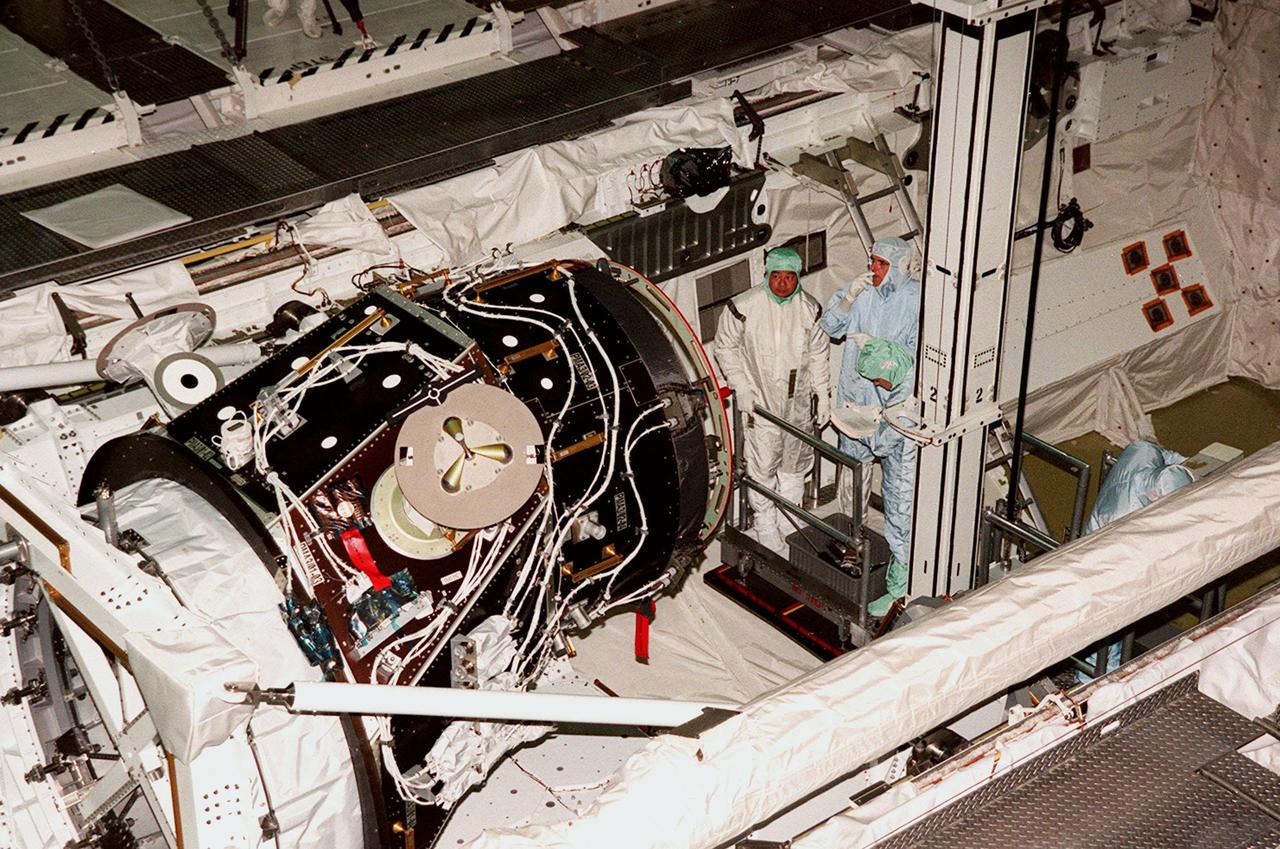
KENNEDY SPACE CENTER, FLA. -- On a platform inside the payload bay of Discovery, STS-92 Mission Specialists Leroy Chiao and Bill McArthur take a close look at Pressurized Mating Adapter-3 (PMA-3). They and other crew members Commander Brian Duffy, Pilot Pam Melroy and Mission Specialists Koichi Wakata, Jeff Wisoff, and Michael Lopez-Alegria are at KSC to take part in Crew Equipment Interface Test activities. Discovery is in the Orbiter Processing Facility bay 1. STS-92 is scheduled to launch Oct. 5 on Shuttle Discovery from Launch Pad 39A on the fifth flight to the International Space Station. Discovery will carry the Integrated Truss Structure (ITS) Z1, the PMA-3, Ku-band Communications System, and Control Moment Gyros (CMGs)
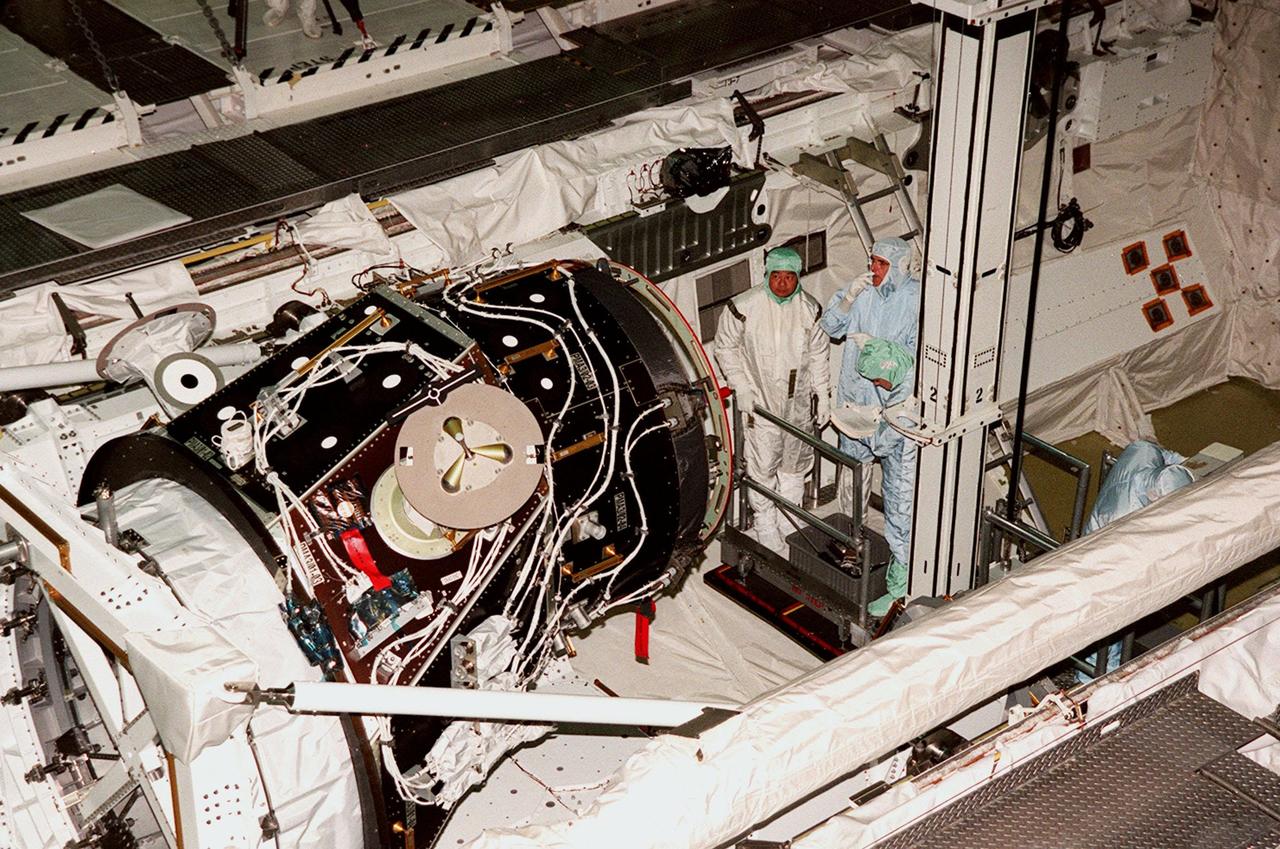
KENNEDY SPACE CENTER, FLA. -- On a platform inside the payload bay of Discovery, STS-92 Mission Specialists Leroy Chiao and Bill McArthur take a close look at Pressurized Mating Adapter-3 (PMA-3). They and other crew members Commander Brian Duffy, Pilot Pam Melroy and Mission Specialists Koichi Wakata, Jeff Wisoff, and Michael Lopez-Alegria are at KSC to take part in Crew Equipment Interface Test activities. Discovery is in the Orbiter Processing Facility bay 1. STS-92 is scheduled to launch Oct. 5 on Shuttle Discovery from Launch Pad 39A on the fifth flight to the International Space Station. Discovery will carry the Integrated Truss Structure (ITS) Z1, the PMA-3, Ku-band Communications System, and Control Moment Gyros (CMGs)
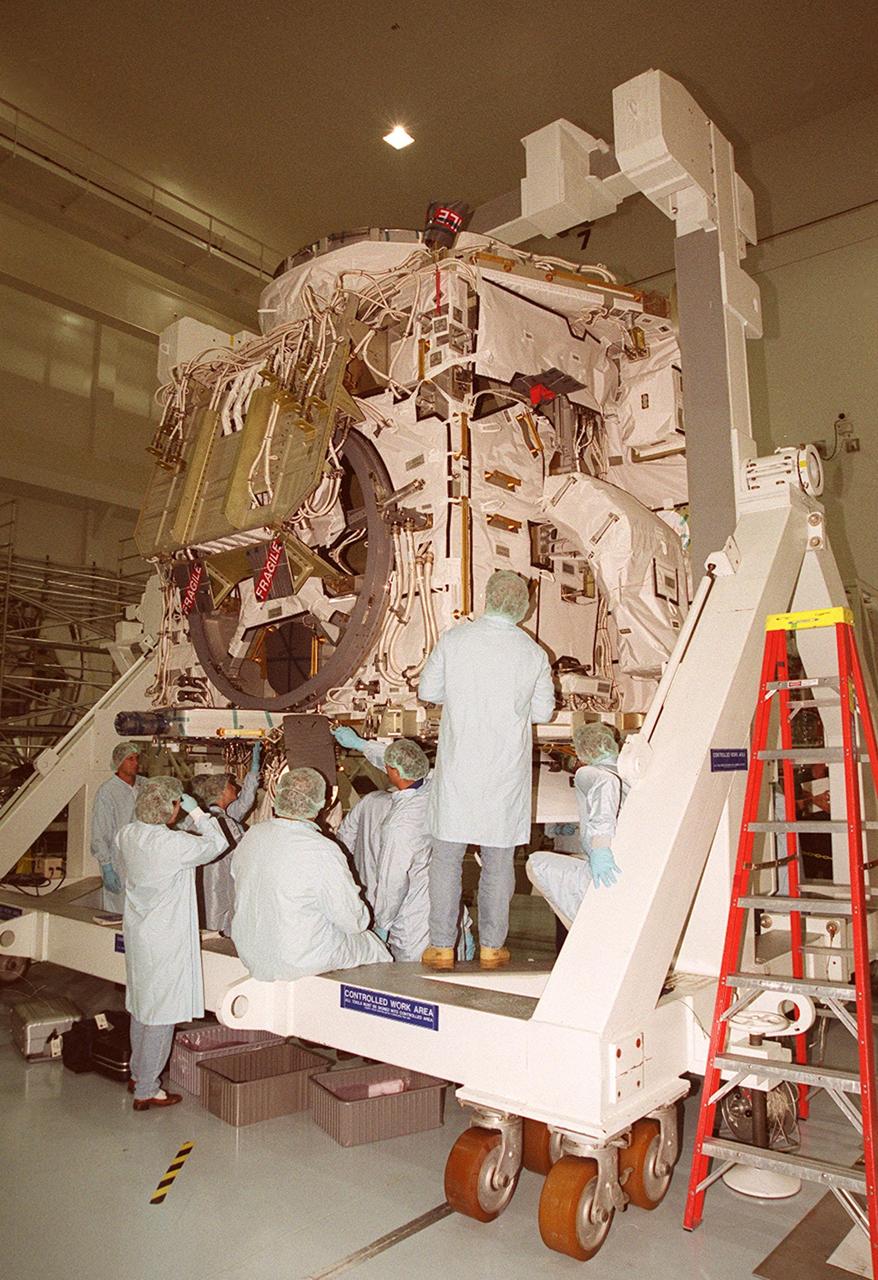
The STS-92 astronaut team study the the Zenith-1 (Z-1) Truss during the Crew Equipment Interface Test. The Z-1 Truss was officially presented to NASA by The Boeing Co. on the Space Station Processing Facility floor on July 31. The truss is the cornerstone truss of the International Space Station and is scheduled to fly in Space Shuttle Discovery's payload pay on STS-92 targeted for launch Oct. 5, 2000. The Z-1 is considered a cornerstone truss because it carries critical components of the Station's attitude, communications, thermal and power control systems as well as four control moment gyros, high and low gain antenna systems, and two plasma contactor units used to disperse electrical charge build-ups. The Z-1 truss and a Pressurized Mating Adapter (PMA-3), also flying to the Station on the same mission, will be the first major U.S. elements flown to the ISS aboard the Shuttle since the launch of the Unity element in December 1998
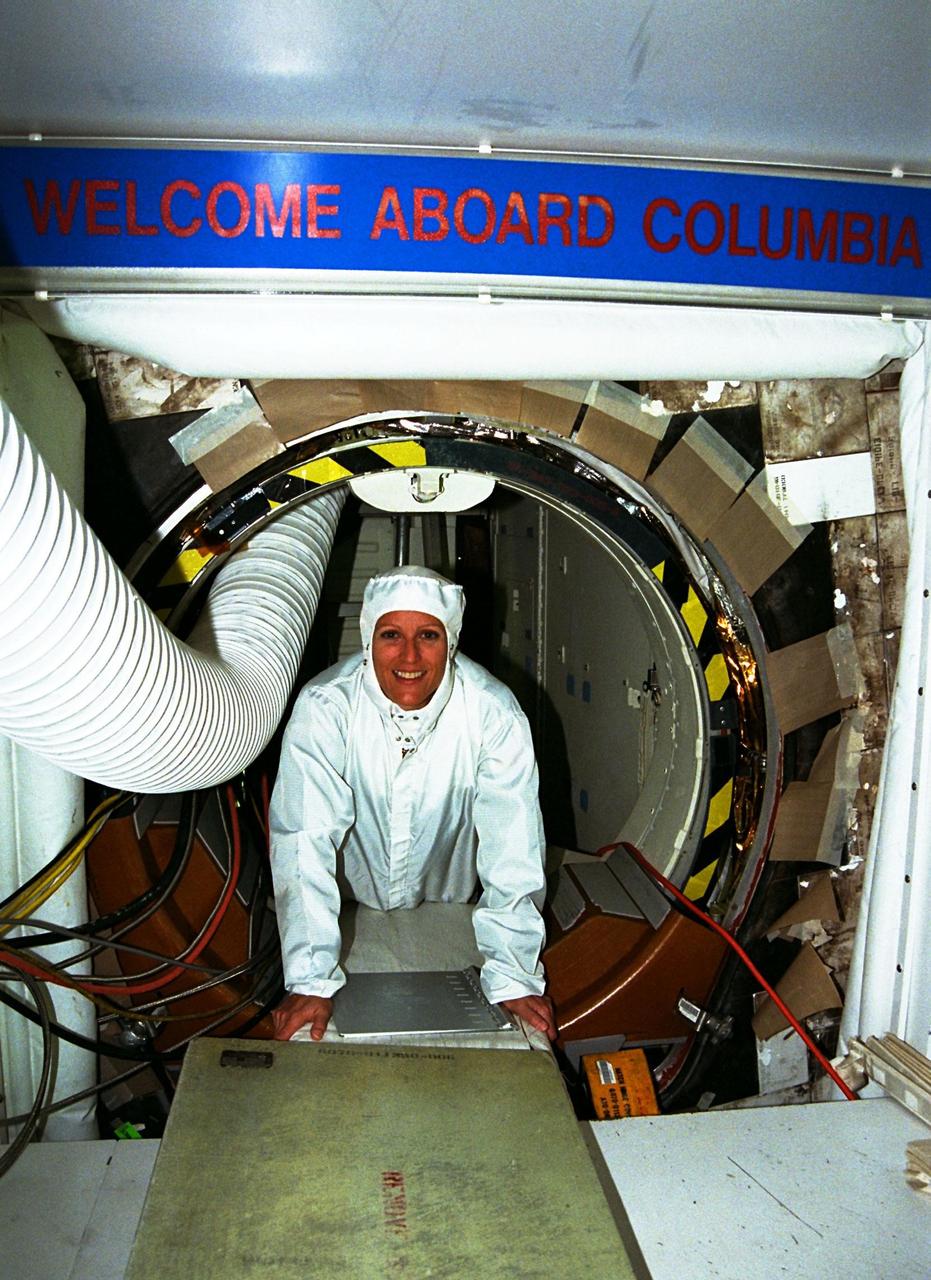
STS-90 Mission Specialist Kathryn (Kay) Hire enjoys the crawl between Columbia and the white room that allows access to the orbiter. The crew of STS-90 recently participated in the Crew Equipment Interface Test (CEIT) in Kennedy Space Center's Orbiter Processing Facility Bay 3. The CEIT gives astronauts an opportunity to get a hands-on look at the payloads with which they will be working on-orbit. Investigations during the STS-90 Neurolab mission will focus on the effects of microgravity on the nervous system. Specifically, experiments will study the adaptation of the vestibular system, the central nervous system, and the pathways that control the ability to sense location in the absence of gravity, as well as the effect of microgravity on a developing nervous system. STS-90, which will be Hire's first Shuttle flight, is scheduled for launch on April 16 at 2:19 p.m. EDT
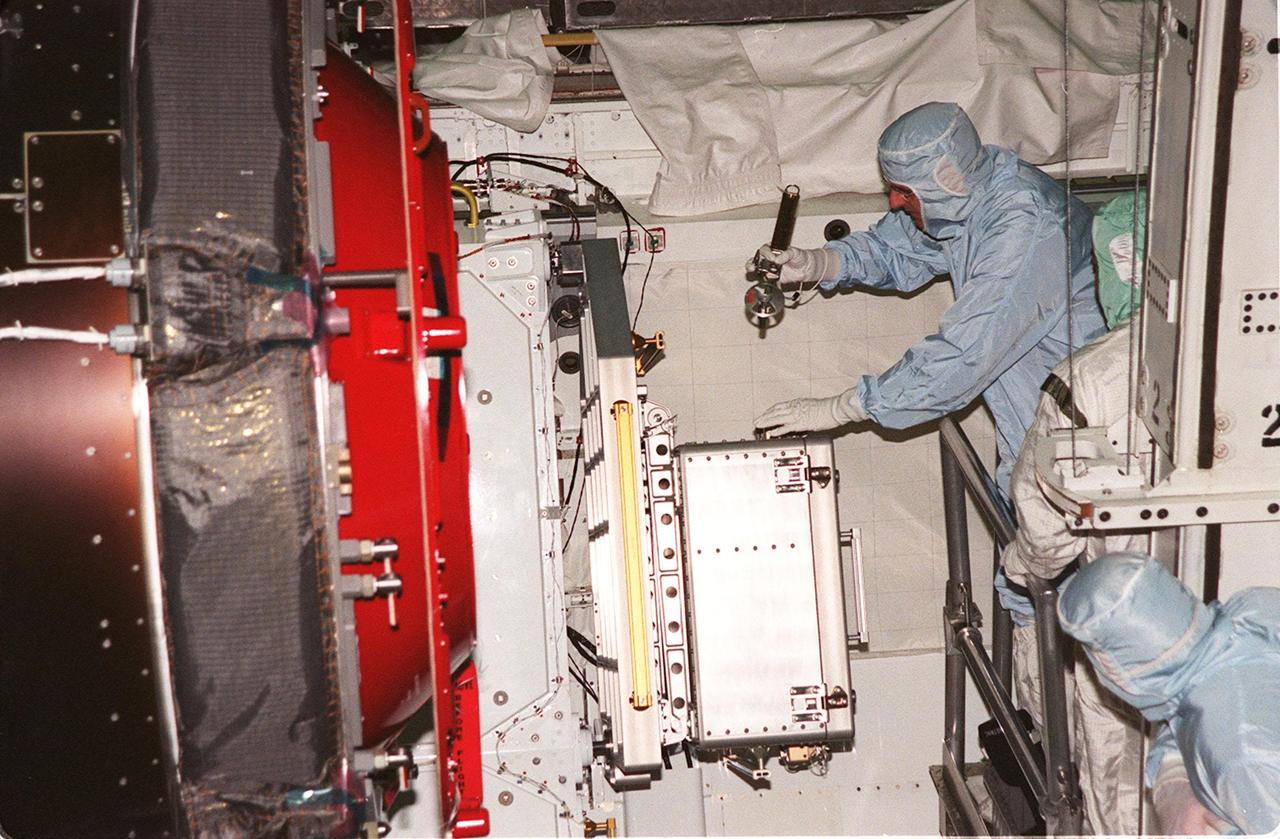
KENNEDY SPACE CENTER, FLA. -- STS-92 Mission Specialist Bill McArthur (with tool in hand) gets a close look at the Pressurized Mating Adapter-3 in the payload bay of orbiter Discovery. He and other crew members Commander Brian Duffy, Pilot Pam Melroy and Mission Specialists Koichi Wakata, Leroy Chiao, Jeff Wisoff, and Michael Lopez-Alegria are at KSC to take part in Crew Equipment Interface Test activities. Discovery is in the Orbiter Processing Facility bay 1. STS-92 is scheduled to launch Oct. 5 on Shuttle Discovery from Launch Pad 39A on the fifth flight to the International Space Station. Discovery will carry the Integrated Truss Structure (ITS) Z1, the PMA-3, Ku-band Communications System, and Control Moment Gyros (CMGs)
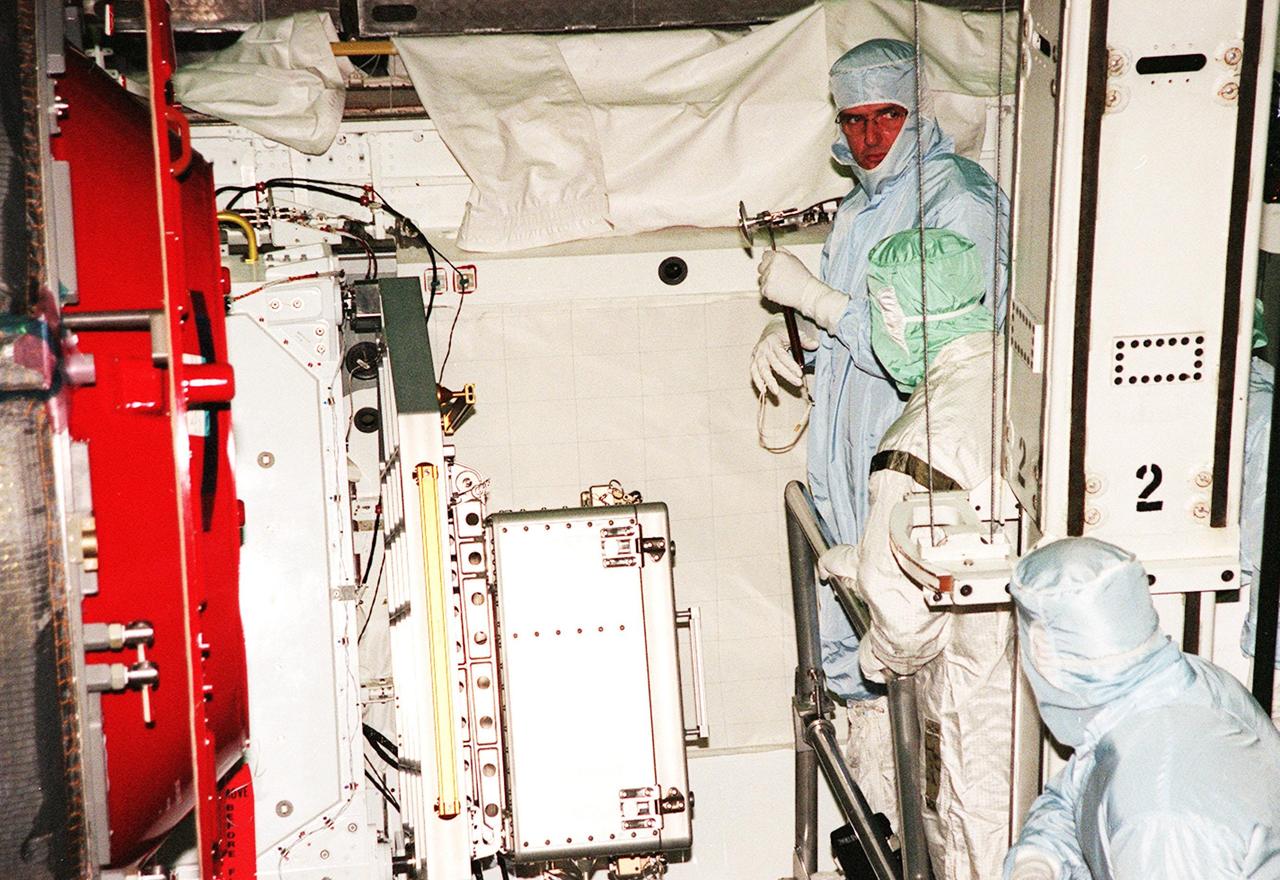
KENNEDY SPACE CENTER, FLA. -- STS-92 Mission Specialist Bill McArthur (with tool in hand) gets a close look at the Pressurized Mating Adapter-3 (PMA-3) in the payload bay of orbiter Discovery. He and other crew members Commander Brian Duffy, Pilot Pam Melroy and Mission Specialists Koichi Wakata, Leroy Chiao, Jeff Wisoff, and Michael Lopez-Alegria are at KSC to take part in Crew Equipment Interface Test activities. Discovery is in the Orbiter Processing Facility bay 1. STS-92 is scheduled to launch Oct. 5 on Shuttle Discovery from Launch Pad 39A on the fifth flight to the International Space Station. Discovery will carry the Integrated Truss Structure (ITS) Z1, the PMA-3, Ku-band Communications System, and Control Moment Gyros (CMGs
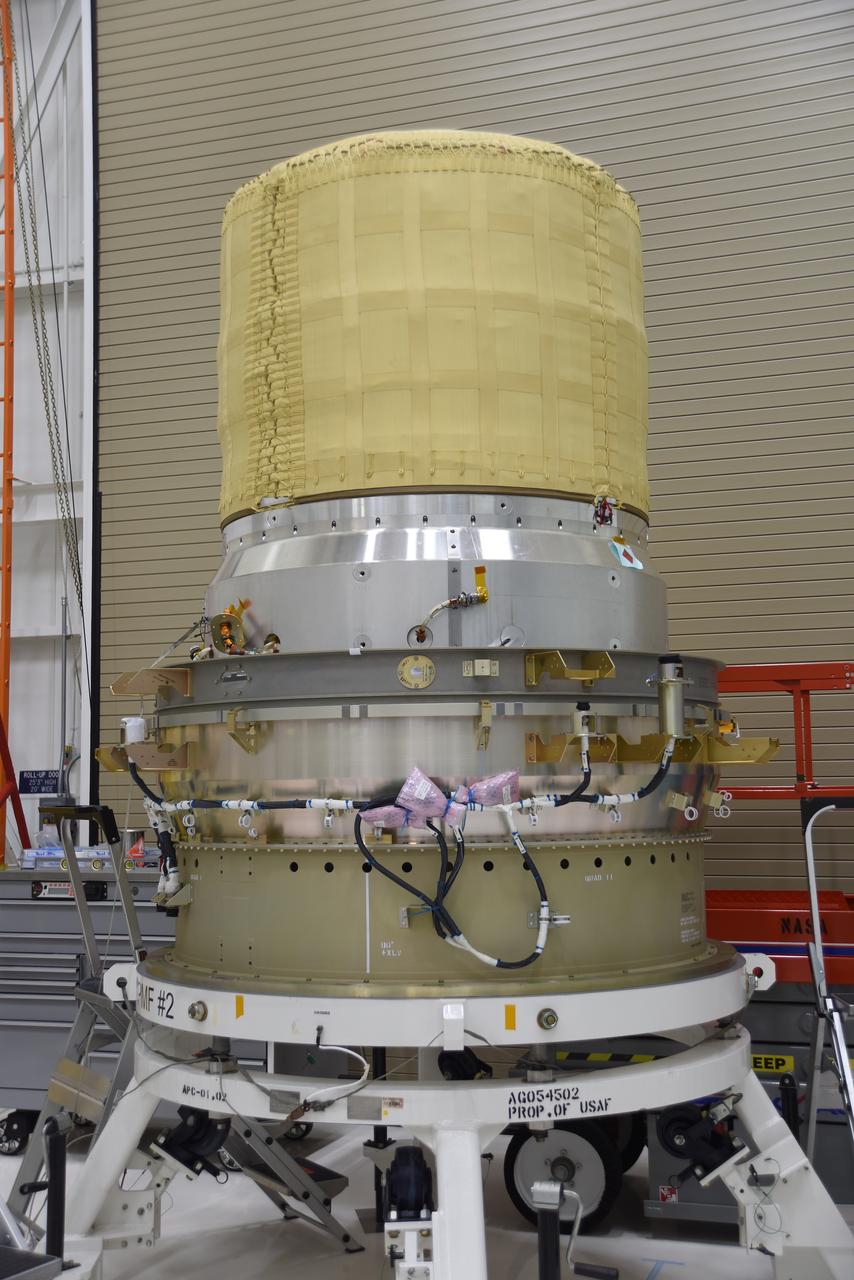
The re-entry vehicle for the Low-Earth Orbit Flight Test of an Inflatable Decelerator (LOFTID) is now mated to the re-entry vehicle payload adapter interface ring and secured on a work stand as part of launch preparations inside Building 836 at Vandenberg Space Force Base (VSFB) in California on Sept. 7, 2022. LOFTID is the secondary payload on NASA and the National Oceanic and Atmospheric Administration’s (NOAA) Joint Polar Satellite System-2 (JPSS-2) satellite mission. JPSS-2 is the third satellite in the Joint Polar Satellite System series. It is scheduled to lift off from VSFB on Nov. 1 from Space Launch Complex-3. JPSS-2, which will be renamed NOAA-21 after reaching orbit, will join a constellation of JPSS satellites that orbit from the North to the South pole, circling Earth 14 times a day and providing a full view of the entire globe twice daily. LOFTID will demonstrate inflatable heat shield technology that could enable a variety of proposed NASA missions to destinations such as Mars, Venus, and Titan, as well as returning heavier payloads from low-Earth orbit.
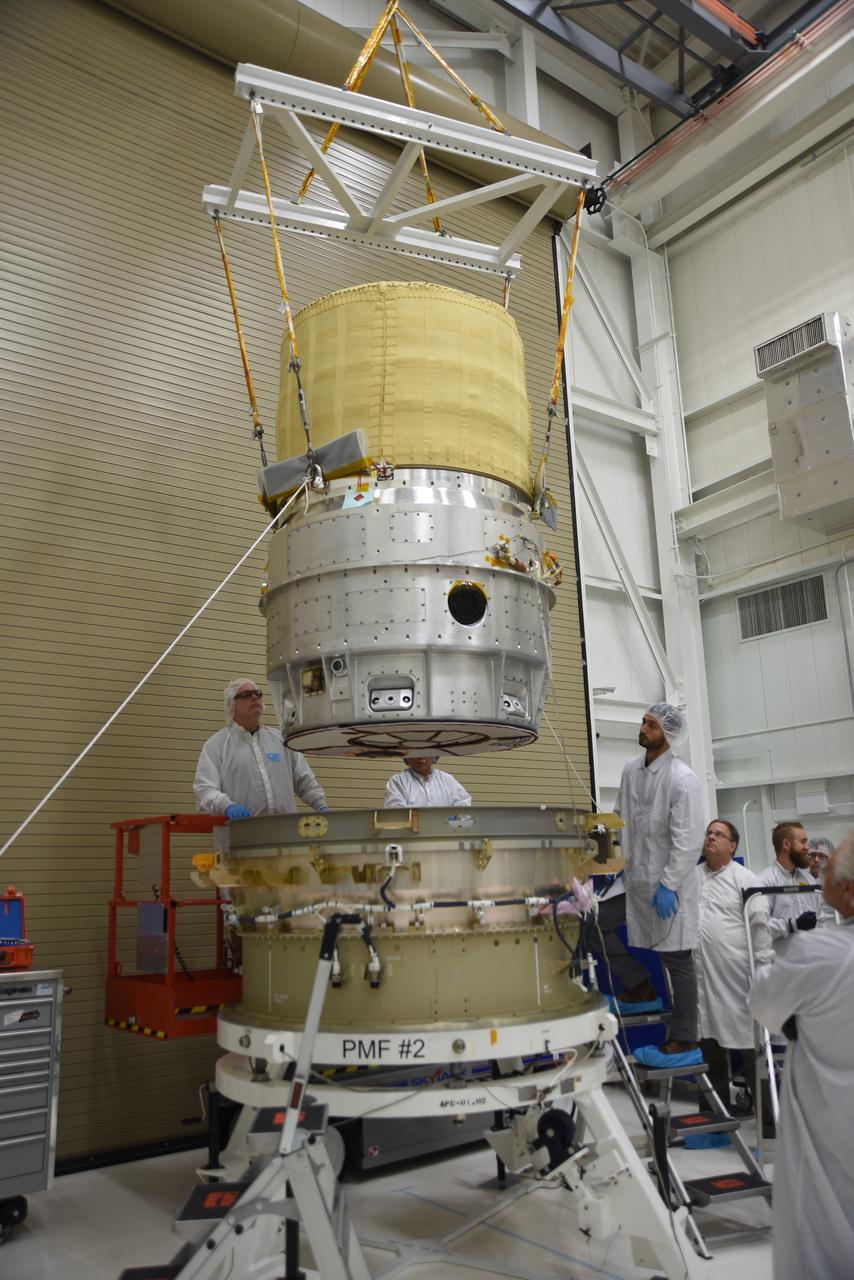
Technicians use a crane to lower the re-entry vehicle for the Low-Earth Orbit Flight Test of an Inflatable Decelerator (LOFTID) into the re-entry vehicle payload adapter interface ring as part of launch preparations inside Building 836 at Vandenberg Space Force Base (VSFB) in California on Sept. 7, 2022. LOFTID is the secondary payload on NASA and the National Oceanic and Atmospheric Administration’s (NOAA) Joint Polar Satellite System-2 (JPSS-2) satellite mission. JPSS-2 is the third satellite in the Joint Polar Satellite System series. It is scheduled to lift off from VSFB on Nov. 1 from Space Launch Complex-3. JPSS-2, which will be renamed NOAA-21 after reaching orbit, will join a constellation of JPSS satellites that orbit from the North to the South pole, circling Earth 14 times a day and providing a full view of the entire globe twice daily. LOFTID will demonstrate inflatable heat shield technology that could enable a variety of proposed NASA missions to destinations such as Mars, Venus, and Titan, as well as returning heavier payloads from low-Earth orbit.
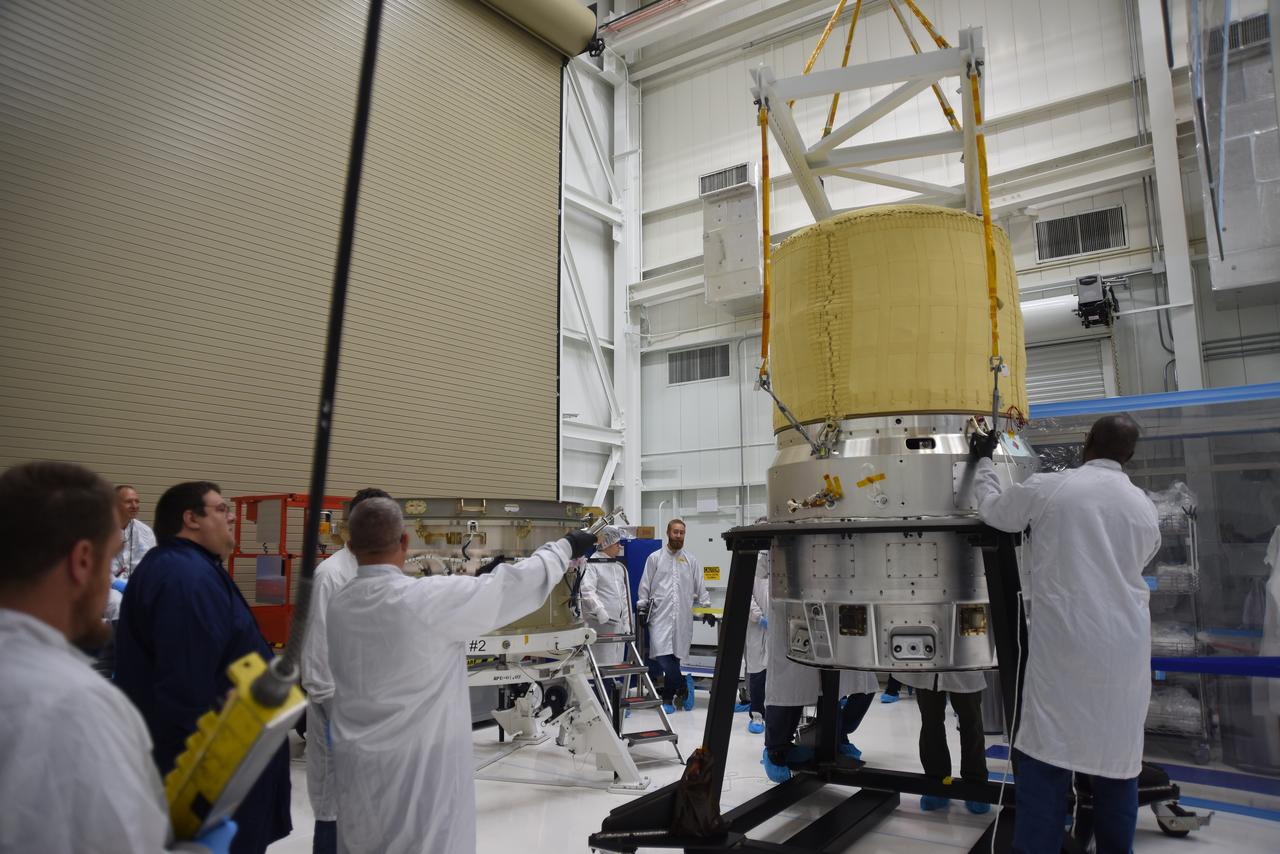
Technicians use a crane to lift the re-entry vehicle for the Low-Earth Orbit Flight Test of an Inflatable Decelerator (LOFTID) for mating to the re-entry vehicle payload adapter interface ring as part of launch preparations inside Building 836 at Vandenberg Space Force Base (VSFB) in California on Sept. 7, 2022. LOFTID is the secondary payload on NASA and the National Oceanic and Atmospheric Administration’s (NOAA) Joint Polar Satellite System-2 (JPSS-2) satellite mission. JPSS-2 is the third satellite in the Joint Polar Satellite System series. It is scheduled to lift off from VSFB on Nov. 1 from Space Launch Complex-3. JPSS-2, which will be renamed NOAA-21 after reaching orbit, will join a constellation of JPSS satellites that orbit from the North to the South pole, circling Earth 14 times a day and providing a full view of the entire globe twice daily. The LOFTID is dedicated to the memory of Bernard Kutter. LOFTID will demonstrate inflatable heat shield technology that could enable a variety of proposed NASA missions to destinations such as Mars, Venus, and Titan, as well as returning heavier payloads from low-Earth orbit.
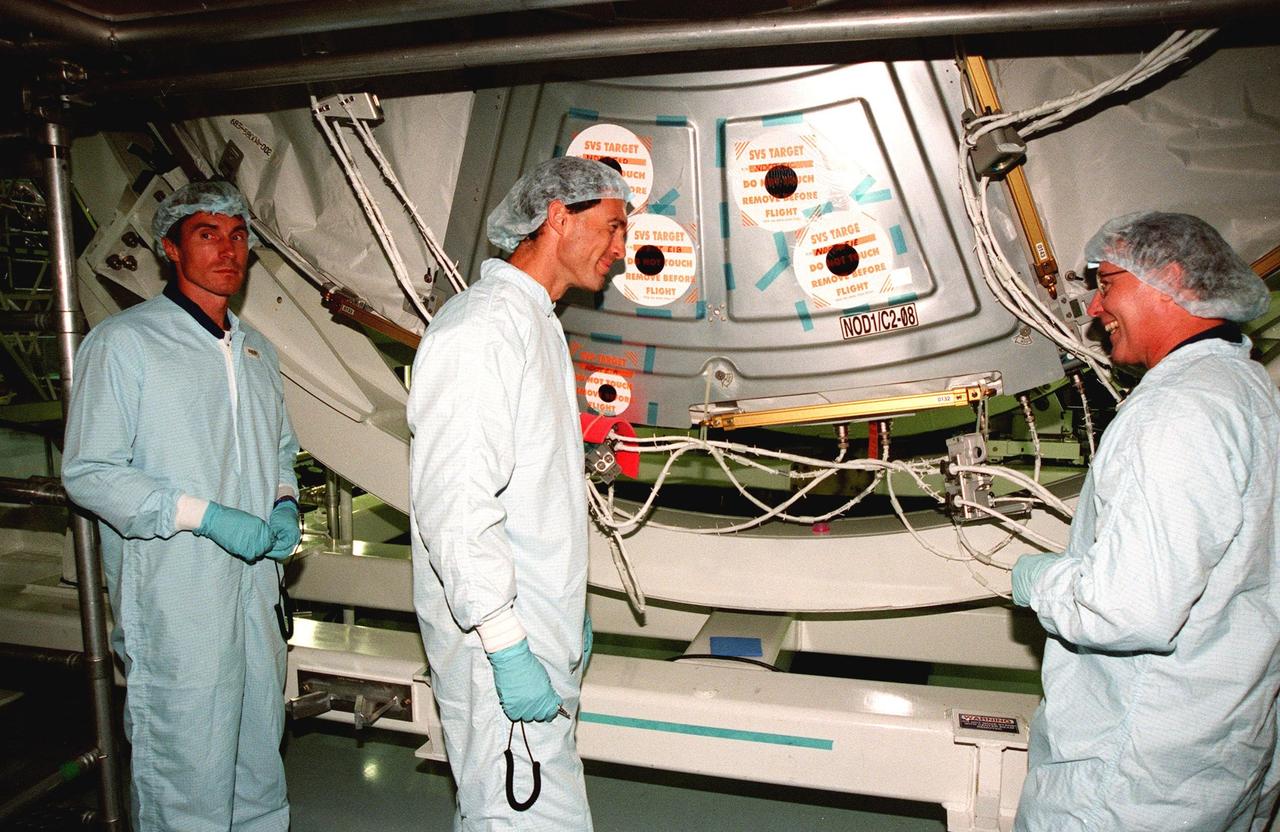
KENNEDY SPACE CENTER, FLA. -- In the Space Station Processing Facility, STS-88 Mission Specialists Sergei Krikalev (left), a Russian cosmonaut; James H. Newman (center); and Jerry L. Ross conduct a sharp-edge inspection of the Unity connecting module, which is the primary payload on their upcoming mission. The STS-88 crew members are participating in a Crew Equipment Interface Test (CEIT), familiarizing themselves with the orbiter's midbody and crew compartments. Targeted for liftoff on Dec. 3, 1998, STS-88 will be the first Space Shuttle launch for assembly of the International Space Station (ISS). The primary payload is the Unity connecting module which will be mated to the Russian-built Zarya control module, expected to be already on orbit after a November launch from Russia. The first major U.S.-built component of ISS, Unity will serve as a connecting passageway to living and working areas of the space station. Unity has two attached pressurized mating adapters (PMAs) and one stowage rack installed inside. PMA-1 provides the permanent connection point between Unity and Zarya; PMA-2 will serve as a Space Shuttle docking port. Zarya is a self-supporting active vehicle, providing propulsive control capability and power during the early assembly stages. It also has fuel storage capability
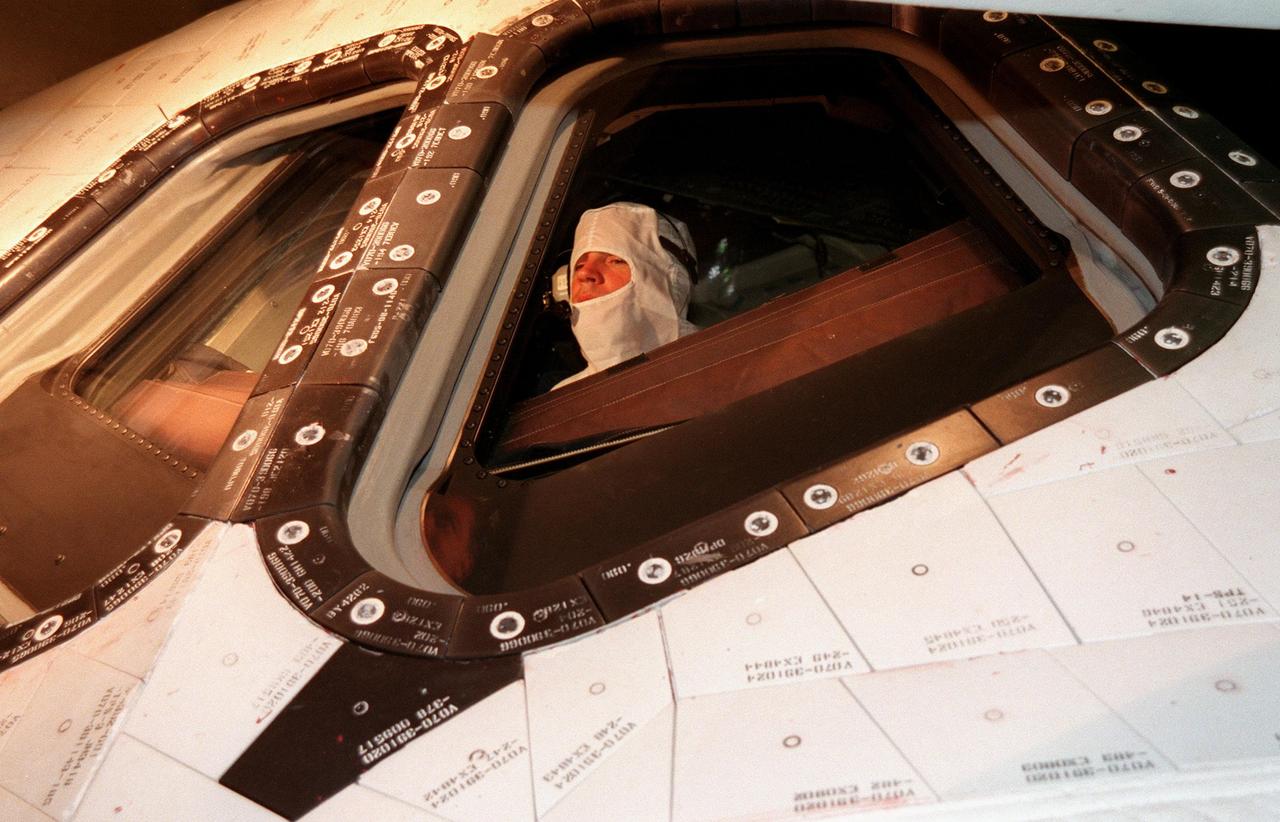
KENNEDY SPACE CENTER, FLA. -- In the Orbiter Processing Facility Bay 1, STS-88 Pilot Frederick W. Sturckow makes a visual inspection of windows on the Space Shuttle orbiter Endeavour. The STS-88 crew members are participating in a Crew Equipment Interface Test (CEIT), familiarizing themselves with the orbiter's midbody and crew compartments. Targeted for launch on Dec. 3, 1998, STS-88 will be the first Space Shuttle launch for assembly of the International Space Station (ISS). The primary payload is the Unity connecting module which will be mated to the Russian-built Zarya control module, expected to be already on orbit after a November launch from Russia. The first major U.S.-built component of ISS, Unity will serve as a connecting passageway to living and working areas of the space station. Unity has two attached pressurized mating adapters (PMAs) and one stowage rack installed inside. PMA-1 provides the permanent connection point between Unity and Zarya; PMA-2 will serve as a Space Shuttle docking port. Zarya is a self-supporting active vehicle, providing propulsive control capability and power during the early assembly stages. It also has fuel storage capability
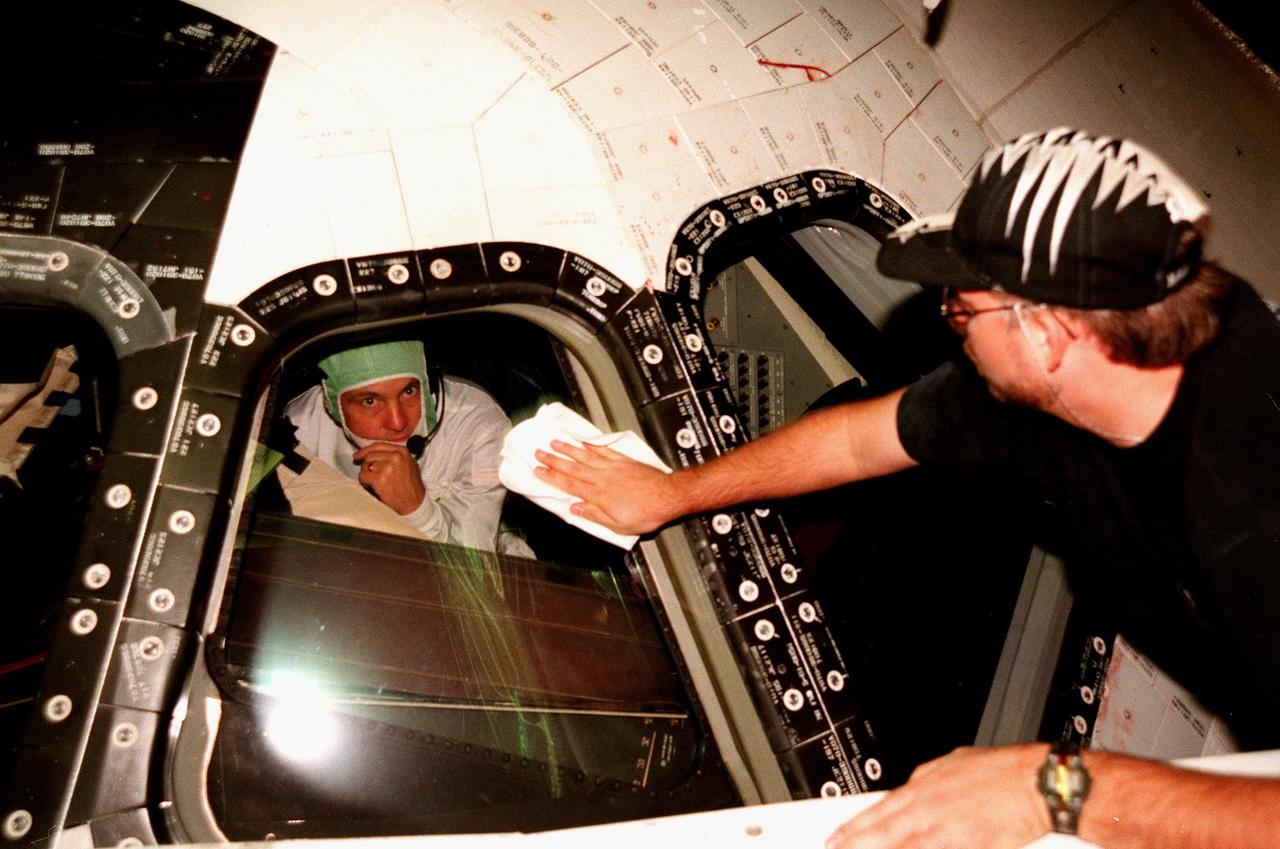
KENNEDY SPACE CENTER, FLA. -- In the Orbiter Processing Facility Bay 1, STS-88 Commander Robert D. Cabana watches from inside Space Shuttle orbiter Endeavour as worker Tracey Hackett cleans the outside of a window. The STS-88 crew members are participating in a Crew Equipment Interface Test (CEIT), familiarizing themselves with the orbiter's midbody and crew compartments. Targeted for liftoff on Dec. 3, 1998, STS-88 will be the first Space Shuttle launch for assembly of the International Space Station (ISS). The primary payload is the Unity connecting module which will be mated to the Russian-built Zarya control module, expected to be already on orbit after a November launch from Russia. The first major U.S.-built component of ISS, Unity will serve as a connecting passageway to living and working areas of the space station. Unity has two attached pressurized mating adapters (PMAs) and one stowage rack installed inside. PMA-1 provides the permanent connection point between Unity and Zarya; PMA-2 will serve as a Space Shuttle docking port. Zarya is a self-supporting active vehicle, providing propulsive control capability and power during the early assembly stages. It also has fuel storage capability
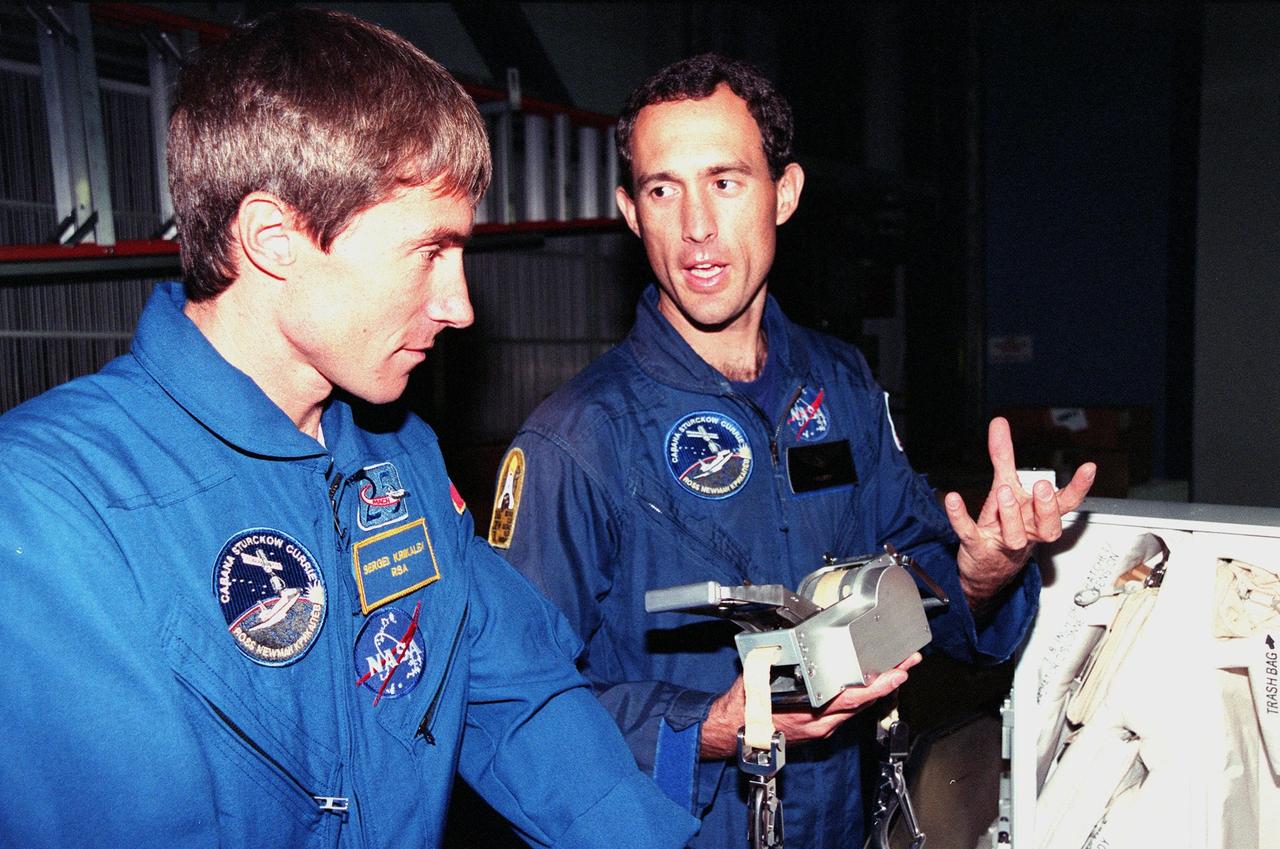
KENNEDY SPACE CENTER, FLA. -- Inside the Orbiter Processing Facility Bay 1, STS-88 Mission Specialists Sergei Krikalev (left), a Russian cosmonaut; and James H. Newman look over equipment for their upcoming flight. The STS-88 crew members are participating in a Crew Equipment Interface Test (CEIT), familiarizing themselves with the orbiter's midbody and crew compartments. Targeted for liftoff on Dec. 3, 1998, STS-88 will be the first Space Shuttle launch for assembly of the International Space Station (ISS). The primary payload is the Unity connecting module which will be mated to the Russian-built Zarya control module, expected to be already on orbit after a November launch from Russia. The first major U.S.-built component of ISS, Unity will serve as a connecting passageway to living and working areas of the space station. Unity has two attached pressurized mating adapters (PMAs) and one stowage rack installed inside. PMA-1 provides the permanent connection point between Unity and Zarya; PMA-2 will serve as a Space Shuttle docking port. Zarya is a self-supporting active vehicle, providing propulsive control capability and power during the early assembly stages. It also has fuel storage capability
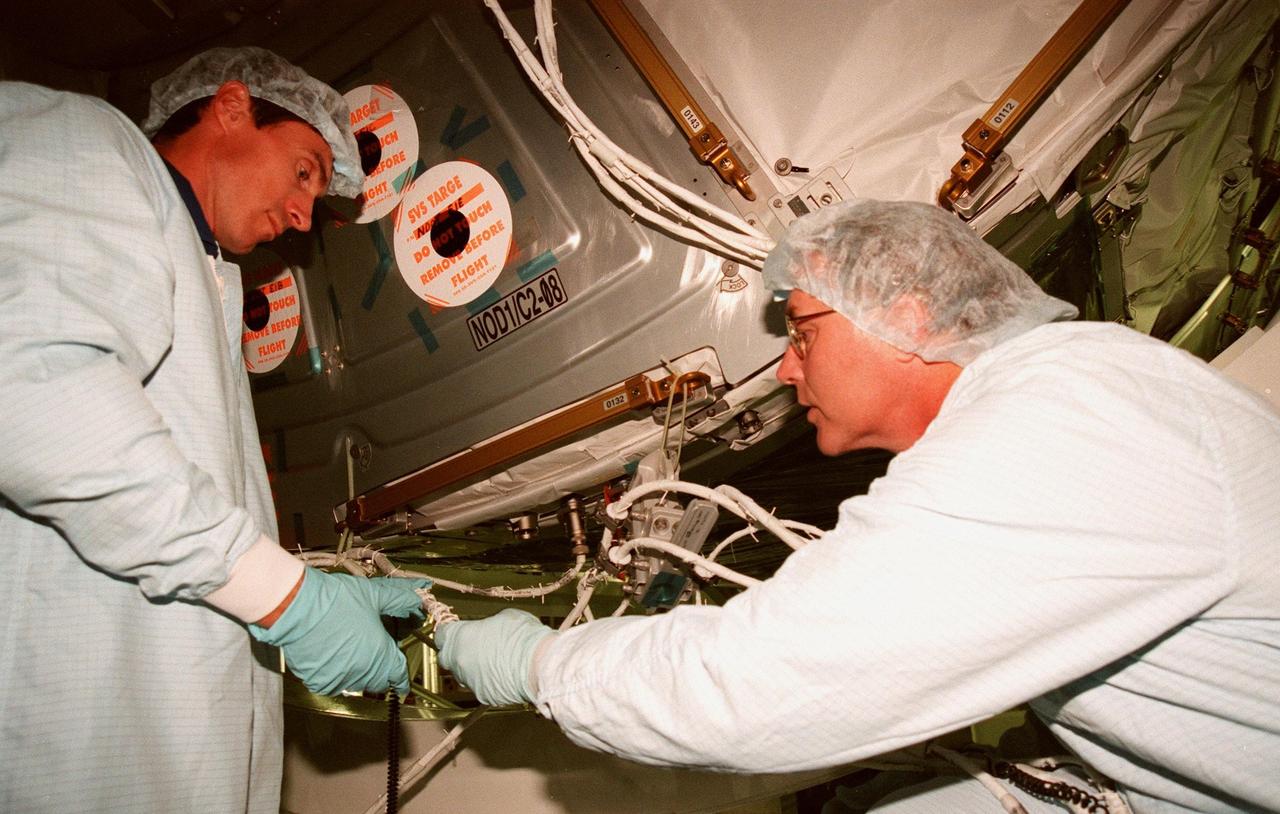
KENNEDY SPACE CENTER, FLA. -- In the Space Station Processing Facility, STS-88 Mission Specialists Sergei Krikalev, a Russian cosmonaut, and Jerry L. Ross check out equipment on the Unity connecting module, primary payload on the mission. The STS-88 crew members are participating in a Crew Equipment Interface Test (CEIT), familiarizing themselves with the orbiter's midbody and crew compartments. Scheduled for launch on Dec. 3, 1998, STS-88 will be the first Space Shuttle launch for the International Space Station. The Unity connecting module will be mated to the Russian-built Zarya control module, already on orbit after a November launch. Unity will have two Pressurized Mating Adapters (PMAs) attached and 1 stowage rack installed inside. PMA-1 will connect U.S. and Russian elements; PMA-2 will provide a Shuttle docking location. Eventually, Unity's six ports will provide connecting points for the Z1 truss exterior framework, U.S. lab, airlock, cupola, Node 3, and the Multi-Purpose Logistics Module, as well as the control module. Zarya is a self-supporting active vehicle, providing propulsive control capability and power through the early assembly stages. It provides fuel storage capability and a rendezvous and docking capability to the Service Module
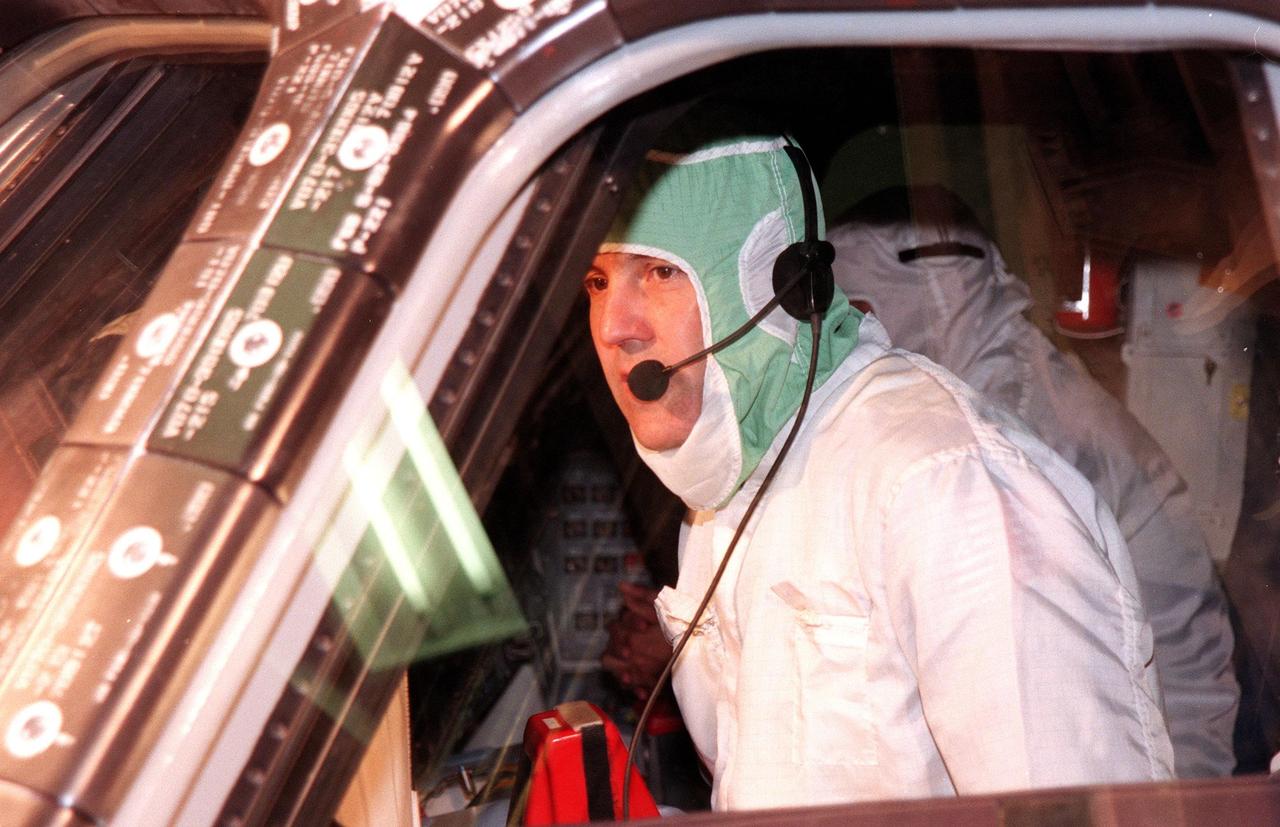
KENNEDY SPACE CENTER, FLA. -- In the Orbiter Processing Facility Bay 1, STS-88 Commander Robert D. Cabana makes a visual inspection of the windows on Space Shuttle orbiter Endeavour. The STS-88 crew members are participating in a Crew Equipment Interface Test (CEIT), familiarizing themselves with the orbiter's midbody and crew compartments. Targeted for liftoff on Dec. 3, 1998, STS-88 will be the first Space Shuttle launch for assembly of the International Space Station (ISS). The primary payload is the Unity connecting module which will be mated to the Russian-built Zarya control module, expected to be already on orbit after a November launch from Russia. The first major U.S.-built component of ISS, Unity will serve as a connecting passageway to living and working areas of the space station. Unity has two attached pressurized mating adapters (PMAs) and one stowage rack installed inside. PMA-1 provides the permanent connection point between Unity and Zarya; PMA-2 will serve as a Space Shuttle docking port. Zarya is a self-supporting active vehicle, providing propulsive control capability and power during the early assembly stages. It also has fuel storage capability
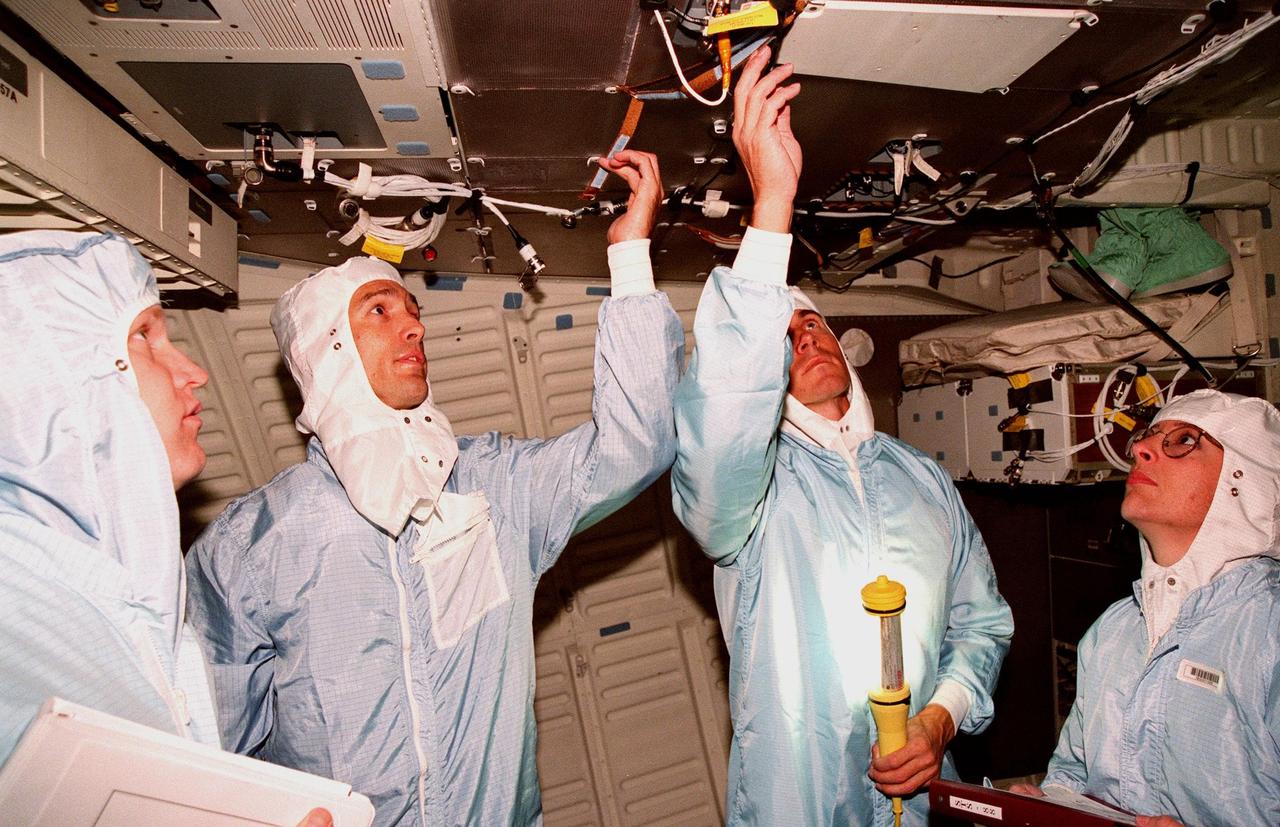
KENNEDY SPACE CENTER, FLA. -- Inside Space Shuttle orbiter Endeavour in the Orbiter Processing Facility Bay 1, workers James Neilhouse (left) and Melissa Groening (right) watch while STS-88 Mission Specialists James H. Newman (second from left) and Sergei Krikalev, a Russian cosmonaut, check overhead equipment. STS-88 crew members are participating in a Crew Equipment Interface Test (CEIT), familiarizing themselves with the orbiter's midbody and crew compartments. Targeted for liftoff on Dec. 3, 1998, STS-88 will be the first Space Shuttle launch for assembly of the International Space Station (ISS). The primary payload is the Unity connecting module which will be mated to the Russian-built Zarya control module, expected to be already on orbit after a November launch from Russia. The first major U.S.-built component of ISS, Unity will serve as a connecting passageway to living and working areas of the space station. Unity has two attached pressurized mating adapters (PMAs) and one stowage rack installed inside. PMA-1 provides the permanent connection point between Unity and Zarya; PMA-2 will serve as a Space Shuttle docking port. Zarya is a self-supporting active vehicle, providing propulsive control capability and power during the early assembly stages. It also has fuel storage capability.
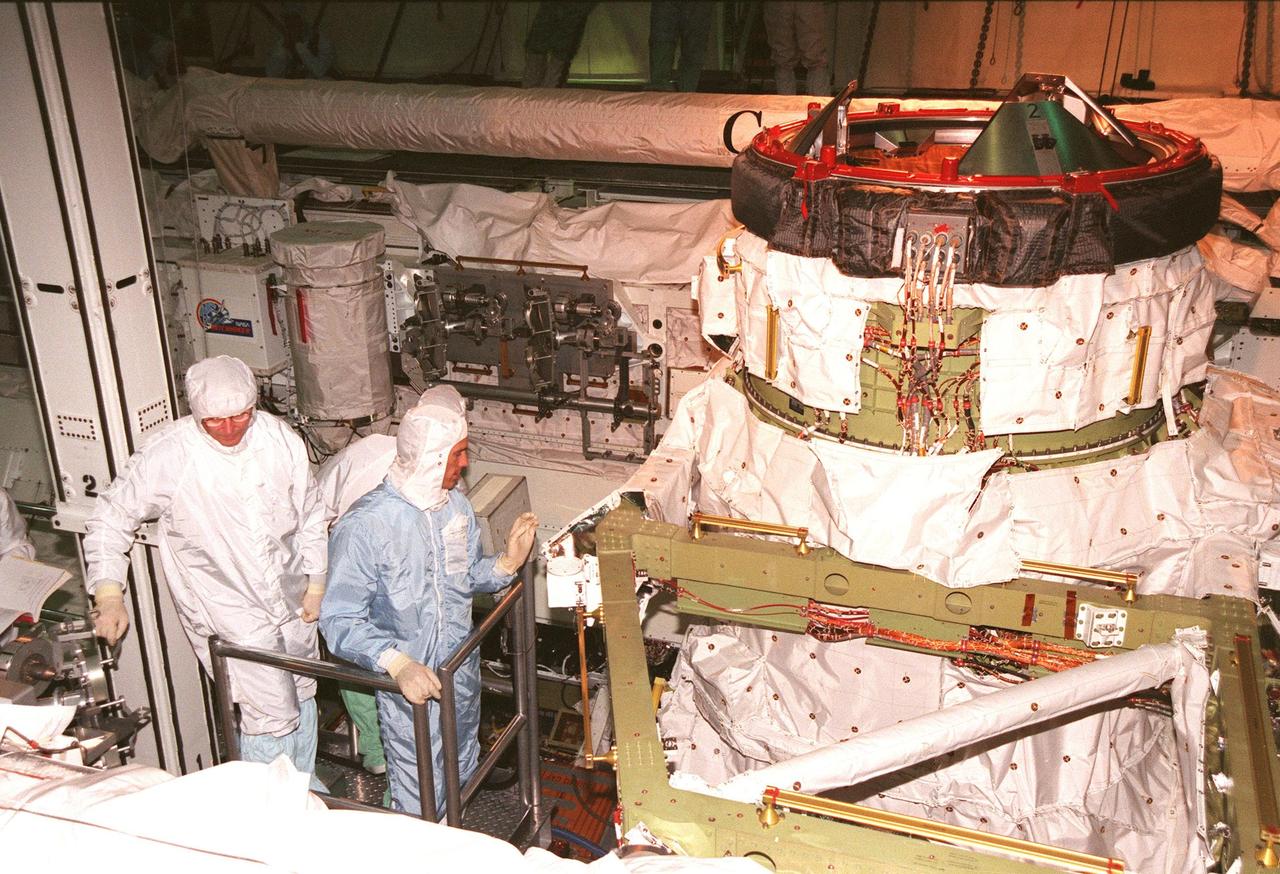
KENNEDY SPACE CENTER, FLA. -- Inside the payload bay of orbiter Endeavour in the Orbiter Processing Facility Bay 1, STS-88 Mission Specialists Jerry L. Ross (left) and James H. Newman (right foreground) get a close look at the Orbiter Docking System. The STS-88 crew members are participating in a Crew Equipment Interface Test (CEIT), familiarizing themselves with the orbiter's midbody and crew compartments. Targeted for liftoff on Dec. 3, 1998, STS-88 will be the first Space Shuttle launch for assembly of the International Space Station (ISS). The primary payload is the Unity connecting module which will be mated to the Russian-built Zarya control module, expected to be already on orbit after a November launch from Russia. While on orbit during STS-88, Unity will be latched atop the Orbiter Docking System in the forward section of Endeavour's payload bay for the mating of the two modules. After the mating, Ross and Newman are scheduled to perform three spacewalks to connect power, data and utility lines and install exterior equipment. The first major U.S.-built component of ISS, Unity will serve as a connecting passageway to living and working areas of the space station. Unity has two attached pressurized mating adapters (PMAs) and one stowage rack installed inside. PMA-1 provides the permanent connection point between Unity and Zarya; PMA-2 will serve as a Space Shuttle docking port. Zarya is a self-supporting active vehicle, providing propulsive control capability and power during the early assembly stages. It also has fuel storage capability
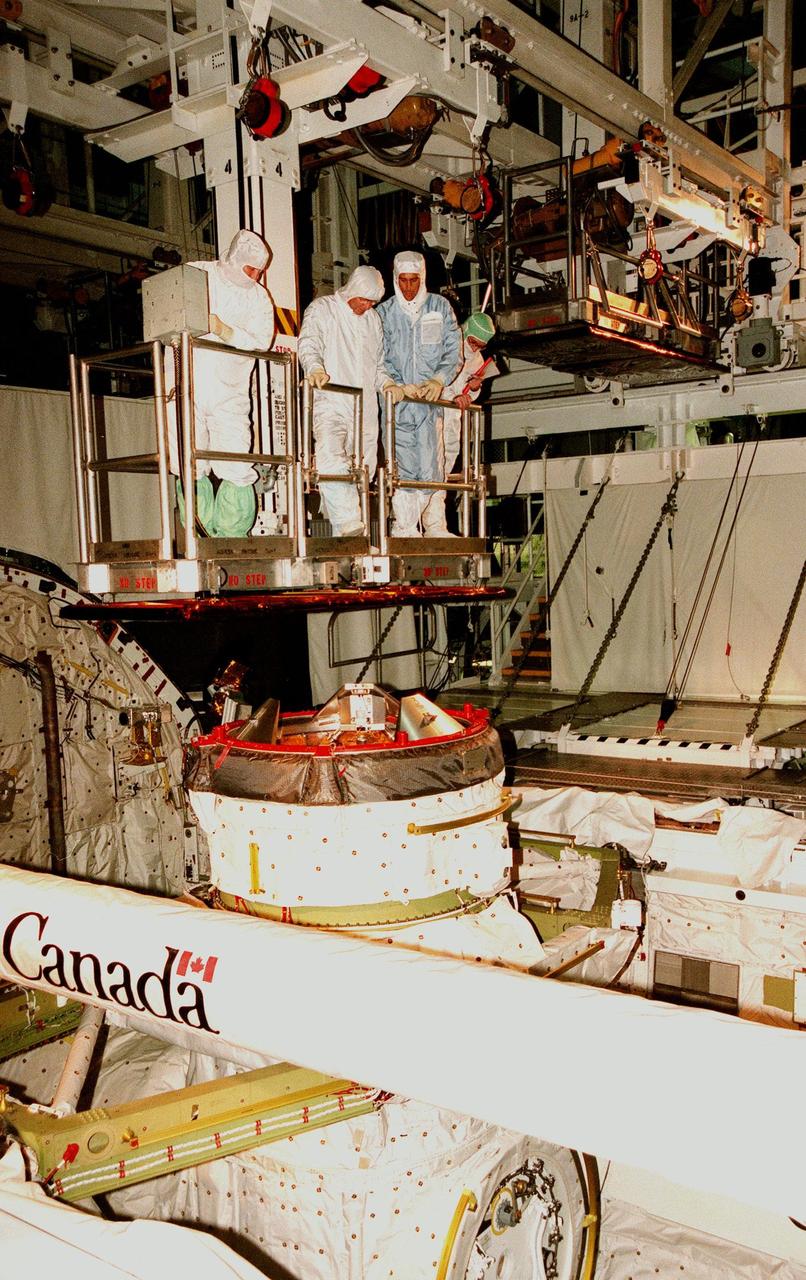
KENNEDY SPACE CENTER, FLA. -- As the bucket operator (left) lowers them into the open payload bay of the orbiter Endeavour, STS-88 Mission Specialists Jerry L. Ross (second from left) and James H. Newman (second from right) do a sharp-edge inspection. At their right is Wayne Wedlake, with United Space Alliance at Johnson Space Center. Below them is the Orbiter Docking System, the remote manipulator system arm and a tunnel into the payload bay. The STS-88 crew members are participating in a Crew Equipment Interface Test (CEIT), familiarizing themselves with the orbiter's midbody and crew compartments. Targeted for liftoff on Dec. 3, 1998, STS-88 will be the first Space Shuttle launch for assembly of the International Space Station (ISS). The primary payload is the Unity connecting module which will be mated to the Russian-built Zarya control module, expected to be already on orbit after a November launch from Russia. After the mating, Ross and Newman are scheduled to perform three spacewalks to connect power, data and utility lines and install exterior equipment. The first major U.S.-built component of ISS, Unity will serve as a connecting passageway to living and working areas of the space station. Unity has two attached pressurized mating adapters (PMAs) and one stowage rack installed inside. PMA-1 provides the permanent connection point between Unity and Zarya; PMA-2 will serve as a Space Shuttle docking port. Zarya is a self-supporting active vehicle, providing propulsive control capability and power during the early assembly stages. It also has fuel storage capability
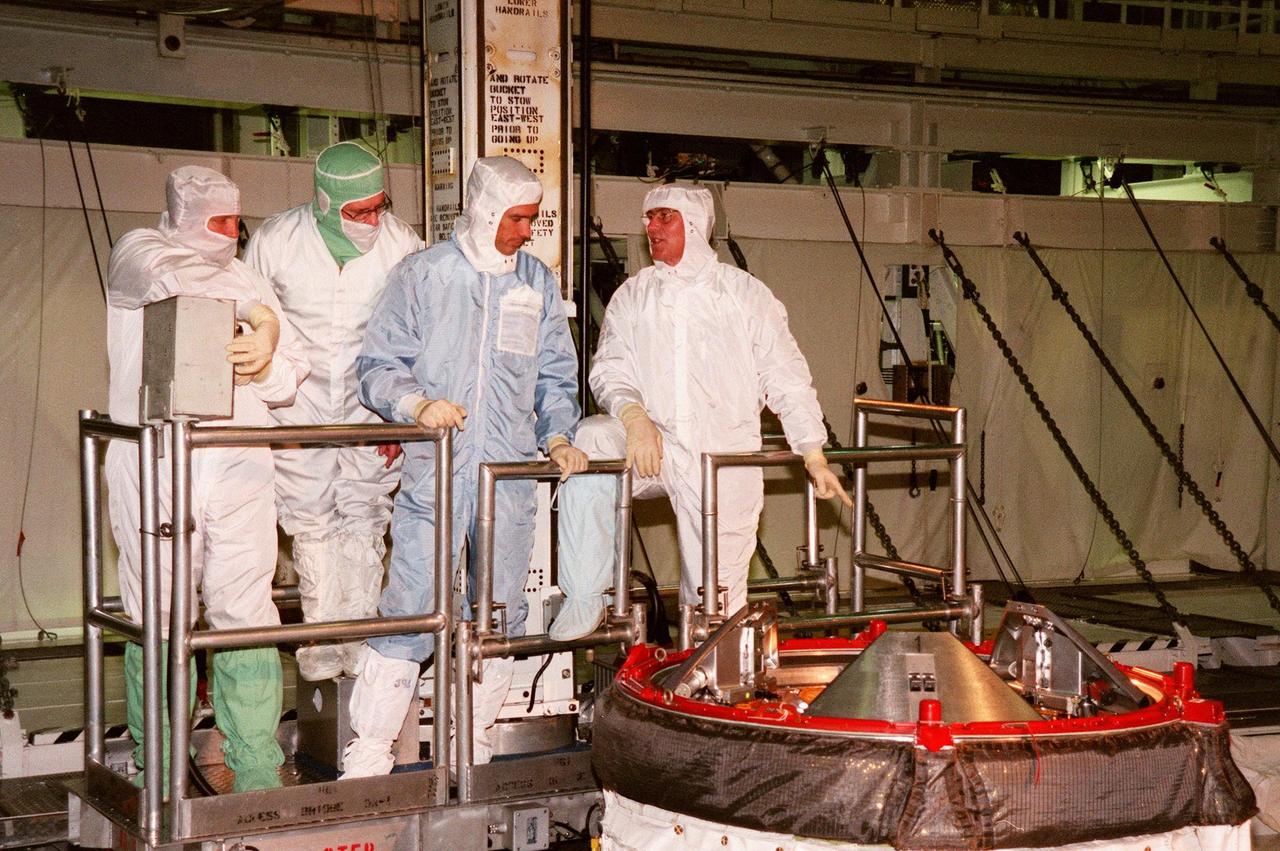
KENNEDY SPACE CENTER, FLA. -- Lowered on a movable work platform or bucket inside the payload bay of orbiter Endeavour, STS-88 Mission Specialists Jerry L. Ross (far right) and James H. Newman (second from right) get a close look at the Orbiter Docking System. At left is the bucket operator and Wayne Wedlake, with United Space Alliance at Johnson Space Center. The STS-88 crew members are in Orbiter Processing Facility Bay 1 to participate in a Crew Equipment Interface Test (CEIT) to familiarize themselves with the orbiter's midbody and crew compartments. Targeted for liftoff on Dec. 3, 1998, STS-88 will be the first Space Shuttle launch for assembly of the International Space Station (ISS). The primary payload is the Unity connecting module which will be mated to the Russian-built Zarya control module, expected to be already on orbit after a November launch from Russia. While on orbit during STS-88, Unity will be latched atop the Orbiter Docking System in the forward section of Endeavour's payload bay for the mating of the two modules. After the mating, Ross and Newman are scheduled to perform three spacewalks to connect power, data and utility lines and install exterior equipment. The first major U.S.-built component of ISS, Unity will serve as a connecting passageway to living and working areas of the space station. Unity has two attached pressurized mating adapters (PMAs) and one stowage rack installed inside. PMA-1 provides the permanent connection point between Unity and Zarya; PMA-2 will serve as a Space Shuttle docking port. Zarya is a self-supporting active vehicle, providing propulsive control capability and power during the early assembly stages. It also has fuel storage capability
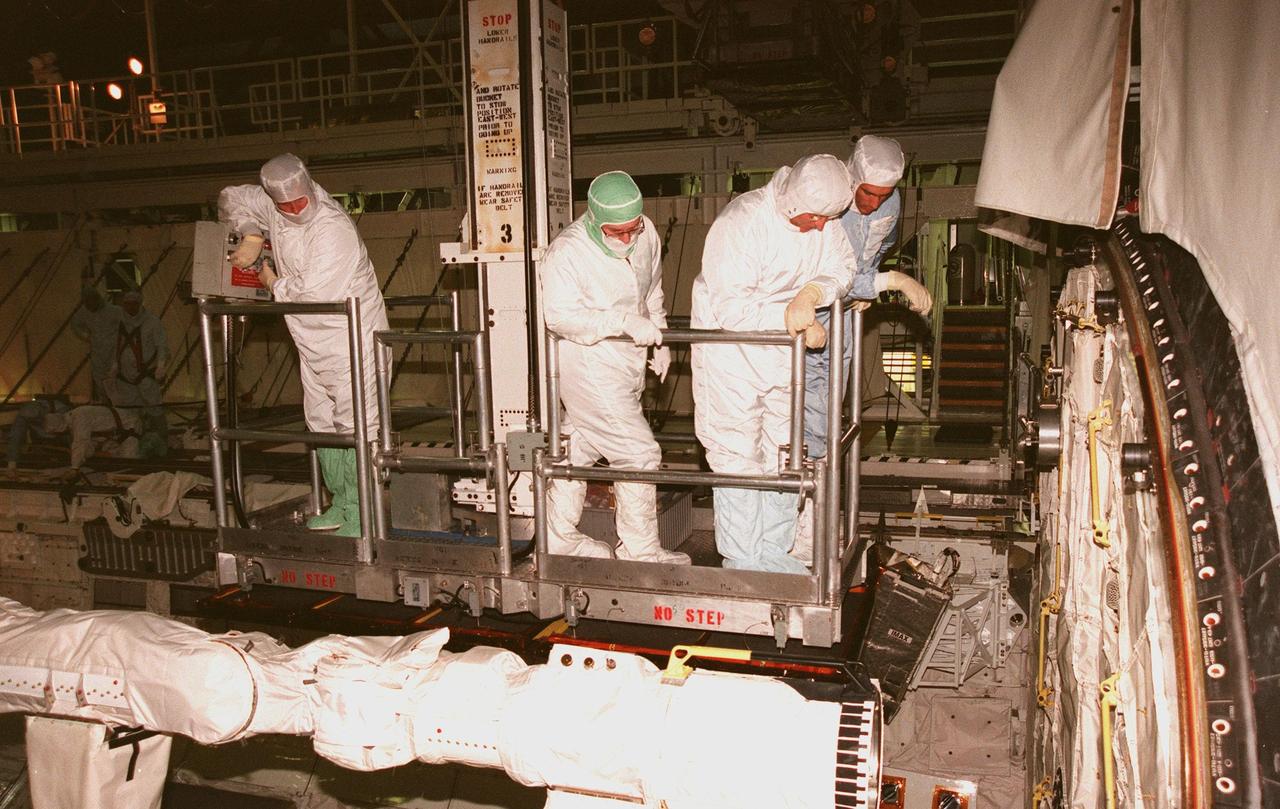
KENNEDY SPACE CENTER, FLA. -- Inside the payload bay of Space Shuttle orbiter Endeavour, workers and STS-88 crew members on a movable work platform or bucket move closer to the rear of the orbiter's crew compartment. While Endeavour is being prepared for flight inside Orbiter Processing Facility Bay 1, the STS-88 crew members are participating in a Crew Equipment Interface Test (CEIT) to familiarize themselves with the orbiter's midbody and crew compartments. A KSC worker (left) maneuvers the platform to give Mission Specialists Jerry L. Ross and James H. Newman (right) a closer look. Looking on is Wayne Wedlake of United Space Alliance at Johnson Space Center. Targeted for liftoff on Dec. 3, 1998, STS-88 will be the first Space Shuttle launch for assembly of the International Space Station (ISS). The primary payload is the Unity connecting module which will be mated to the Russian-built Zarya control module, expected to be already on orbit after a November launch from Russia. After the mating, Ross and Newman are scheduled to perform three spacewalks to connect power, data and utility lines and install exterior equipment. The first major U.S.-built component of ISS, Unity will serve as a connecting passageway to living and working areas of the space station. Unity has two attached pressurized mating adapters (PMAs) and one stowage rack installed inside. PMA-1 provides the permanent connection point between Unity and Zarya; PMA-2 will serve as a Space Shuttle docking port. Zarya is a self-supporting active vehicle, providing propulsive control capability and power during the early assembly stages. It also has fuel storage capability
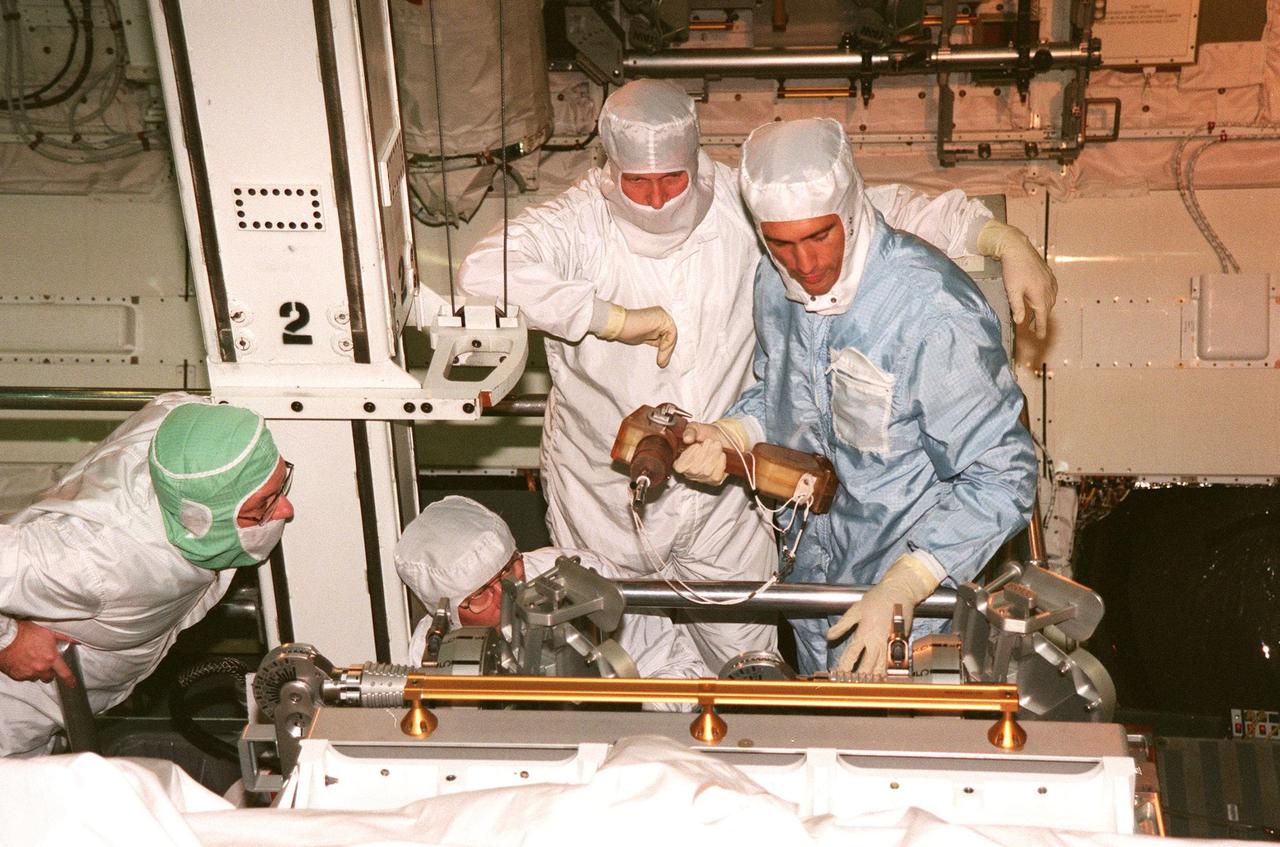
KENNEDY SPACE CENTER, FLA. -- Inside the payload bay of Space Shuttle orbiter Endeavour in Orbiter Processing Facility Bay 1, STS-88 Mission Specialists Jerry L. Ross (crouching at left) and James H. Newman (far right) get a close look at equipment. Looking on is Wayne Wedlake (far left), with United Space Alliance at Johnson Space Center, and a KSC worker (behind Newman) who is operating the movable work platform or bucket. The STS-88 crew members are participating in a Crew Equipment Interface Test (CEIT), familiarizing themselves with the orbiter's midbody and crew compartments. Targeted for liftoff on Dec. 3, 1998, STS-88 will be the first Space Shuttle launch for assembly of the International Space Station (ISS). The primary payload is the Unity connecting module which will be mated to the Russian-built Zarya control module, expected to be already on orbit after a November launch from Russia. After the mating, Ross and Newman are scheduled to perform three spacewalks to connect power, data and utility lines and install exterior equipment. The first major U.S.-built component of ISS, Unity will serve as a connecting passageway to living and working areas of the space station. Unity has two attached pressurized mating adapters (PMAs) and one stowage rack installed inside. PMA-1 provides the permanent connection point between Unity and Zarya; PMA-2 will serve as a Space Shuttle docking port. Zarya is a self-supporting active vehicle, providing propulsive control capability and power during the early assembly stages. It also has fuel storage capability

KENNEDY SPACE CENTER, FLA. -- Clad in their blue flight suits, STS-88 Mission Specialists (from left) Sergei Krikalev, a cosmonaut from Russia; Jerry L. Ross; and James H. Newman examine equipment from a toolbox that will be on the Space Shuttle Endeavour during their flight. Talking to Ross is Wayne Wedlake of United Space Alliance at Johnson Space Center, while Henry Thacker (facing camera), of Flight Crew Systems at KSC, looks on. Launch of mission STS-88 is targeted for Dec. 3, 1998. The STS-88 crew members are participating in a Crew Equipment Interface Test (CEIT) in the Orbiter Processing Facility Bay 1 to familiarize themselves with the orbiter's midbody and crew compartments. STS-88 will be the first Space Shuttle launch for assembly of the International Space Station (ISS). The primary payload is the Unity connecting module which will be mated to the Russian-built Zarya control module, expected to be already on orbit after a November launch from Russia. The first major U.S.-built component of ISS, Unity will serve as a connecting passageway to living and working areas of the space station. Unity has two attached pressurized mating adapters (PMAs) and one stowage rack installed inside. PMA-1 provides the permanent connection point between Unity and Zarya; PMA-2 will serve as a Space Shuttle docking port. Zarya is a self-supporting active vehicle, providing propulsive control capability and power during the early assembly stages. It also has fuel storage capability
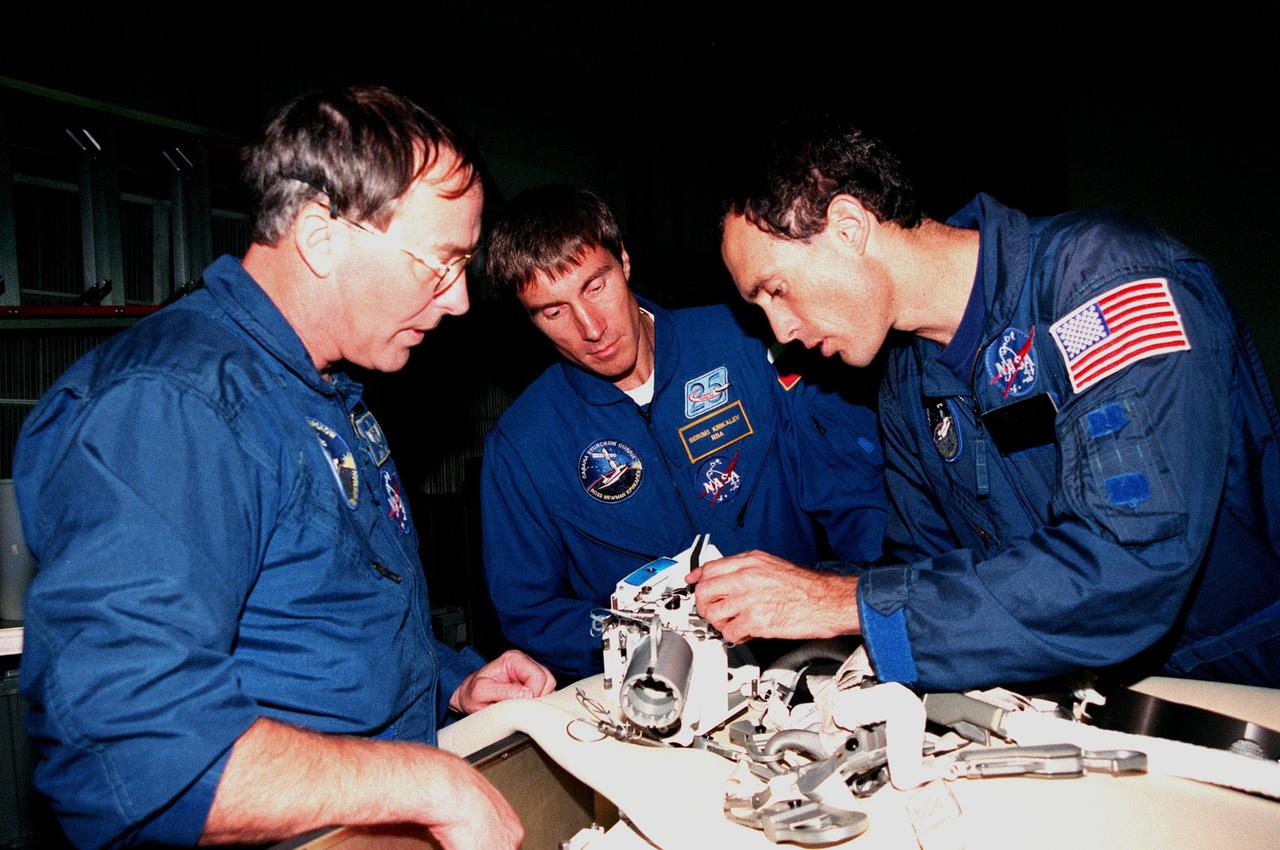
KENNEDY SPACE CENTER, FLA. -- In the Orbiter Processing Facility Bay 1, STS-88 Mission Specialists (left to right) Jerry L. Ross; Sergei Krikalev, a cosmonaut from Russia; and James H. Newman examine equipment that will be on the Space Shuttle Endeavour during their upcoming flight. Launch of Mission STS-88 is targeted for Dec. 3, 1998. The STS-88 crew members are participating in a Crew Equipment Interface Test (CEIT), familiarizing themselves with the orbiter's midbody and crew compartments. Other crew members are Commander Robert D. Cabana, Pilot Frederick W. "Rick" Sturckow and Mission Specialist Nancy J. Currie. STS-88 will be the first Space Shuttle launch for assembly of the International Space Station (ISS). The primary payload is the Unity connecting module which will be mated to the Russian-built Zarya control module, expected to be already on orbit after a November launch from Russia. The first major U.S.-built component of ISS, Unity will serve as a connecting passageway to living and working areas of the space station. Unity has two attached pressurized mating adapters (PMAs) and one stowage rack installed inside. PMA-1 provides the permanent connection point between Unity and Zarya; PMA-2 will serve as a Space Shuttle docking port. Zarya is a self-supporting active vehicle, providing propulsive control capability and power during the early assembly stages. It also has fuel storage capability
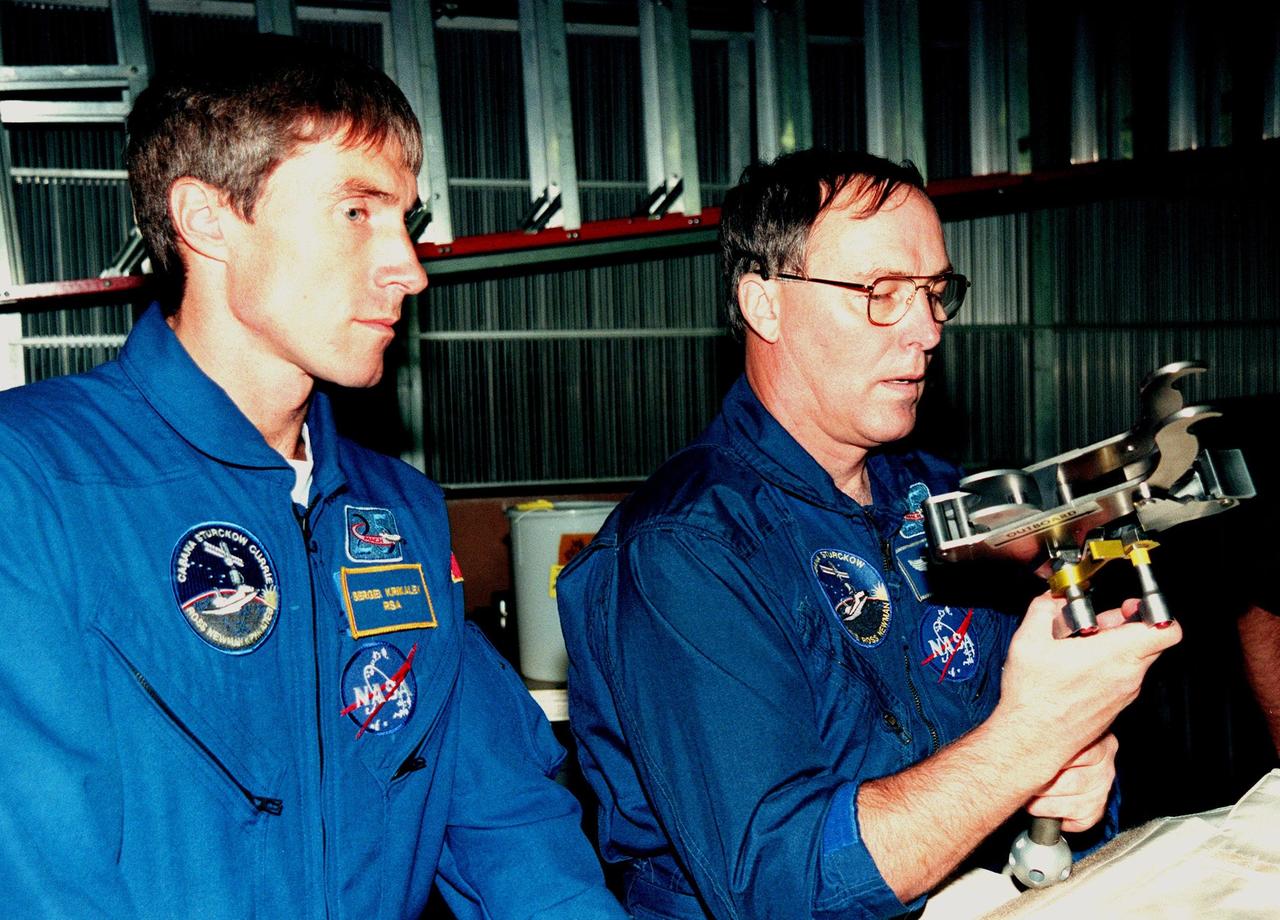
KENNEDY SPACE CENTER, FLA. -- In the Orbiter Processing Facility Bay 1, STS-88 Mission Specialists Sergei Krikalev (left), a cosmonaut from Russia; and Jerry L. Ross examine equipment that will be aboard Space Shuttle Endeavour. Launch of mission STS-88 is targeted for Dec. 3, 1998. The STS-88 crew members are participating in a Crew Equipment Interface Test (CEIT), familiarizing themselves with the orbiter's midbody and crew compartments. Other crew members are Commander Robert D. Cabana, Pilot Frederick W. "Rick" Sturckow and Mission Specialists Nancy J. Currie and James H. Newman. STS-88 will be the first Space Shuttle launch for assembly of the International Space Station (ISS). The primary payload is the Unity connecting module which will be mated to the Russian-built Zarya control module, expected to be already on orbit after a November launch from Russia. The first major U.S.-built component of ISS, Unity will serve as a connecting passageway to living and working areas of the space station. Unity has two attached pressurized mating adapters (PMAs) and one stowage rack installed inside. PMA-1 provides the permanent connection point between Unity and Zarya; PMA-2 will serve as a Space Shuttle docking port. Zarya is a self-supporting active vehicle, providing propulsive control capability and power during the early assembly stages. It also has fuel storage capability