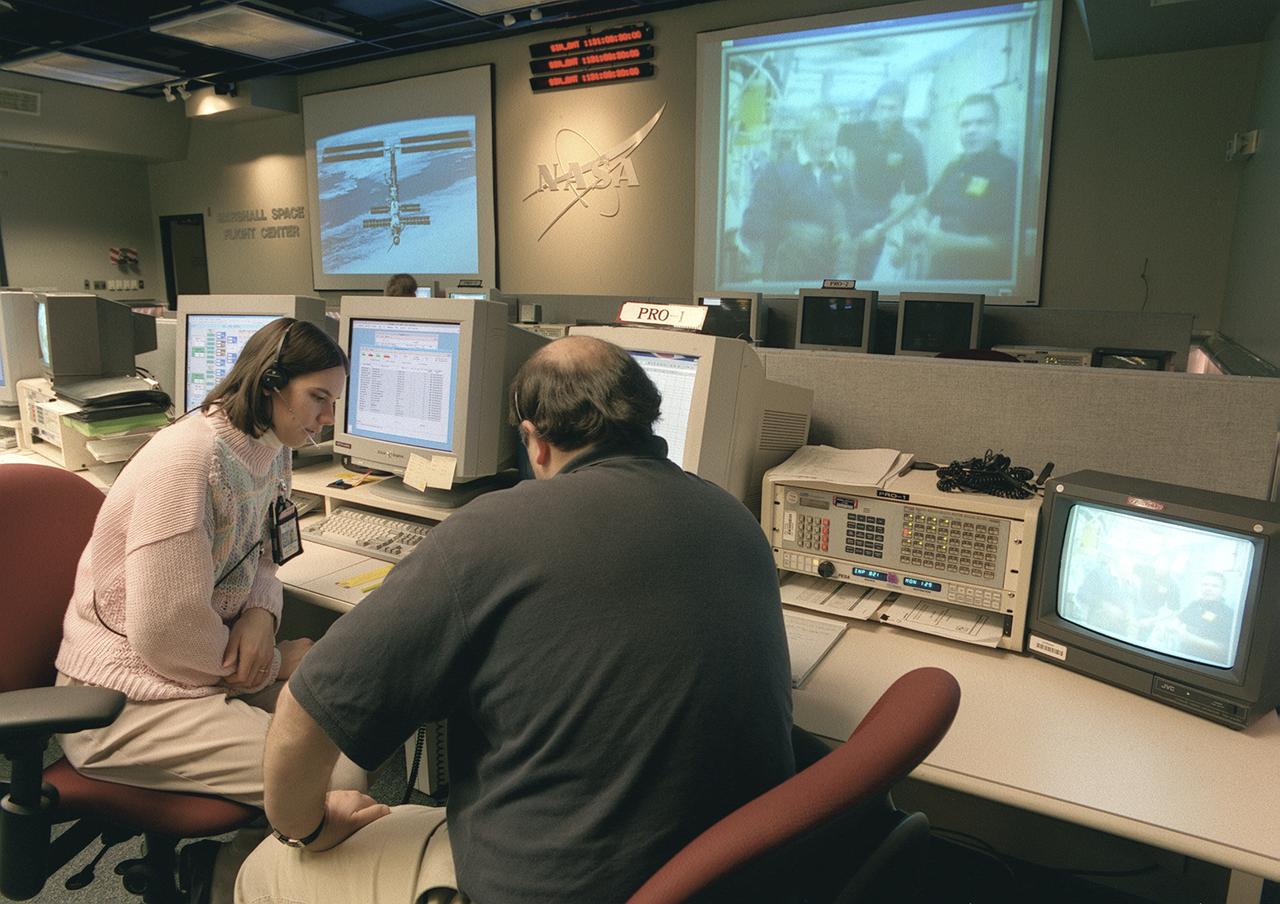
The Payload Operations Center (POC) is the science command post for the International Space Station (ISS). Located at NASA's Marshall Space Flight Center in Huntsville, Alabama, it is the focal point for American and international science activities aboard the ISS. The POC's unique capabilities allow science experts and researchers around the world to perform cutting-edge science in the unique microgravity environment of space. The POC is staffed around the clock by shifts of payload flight controllers. At any given time, 8 to 10 flight controllers are on consoles operating, plarning for, and controlling various systems and payloads. This photograph shows a Payload Rack Officer (PRO) at a work station. The PRO is linked by a computer to all payload racks aboard the ISS. The PRO monitors and configures the resources and environment for science experiments including EXPRESS Racks, multiple-payload racks designed for commercial payloads.
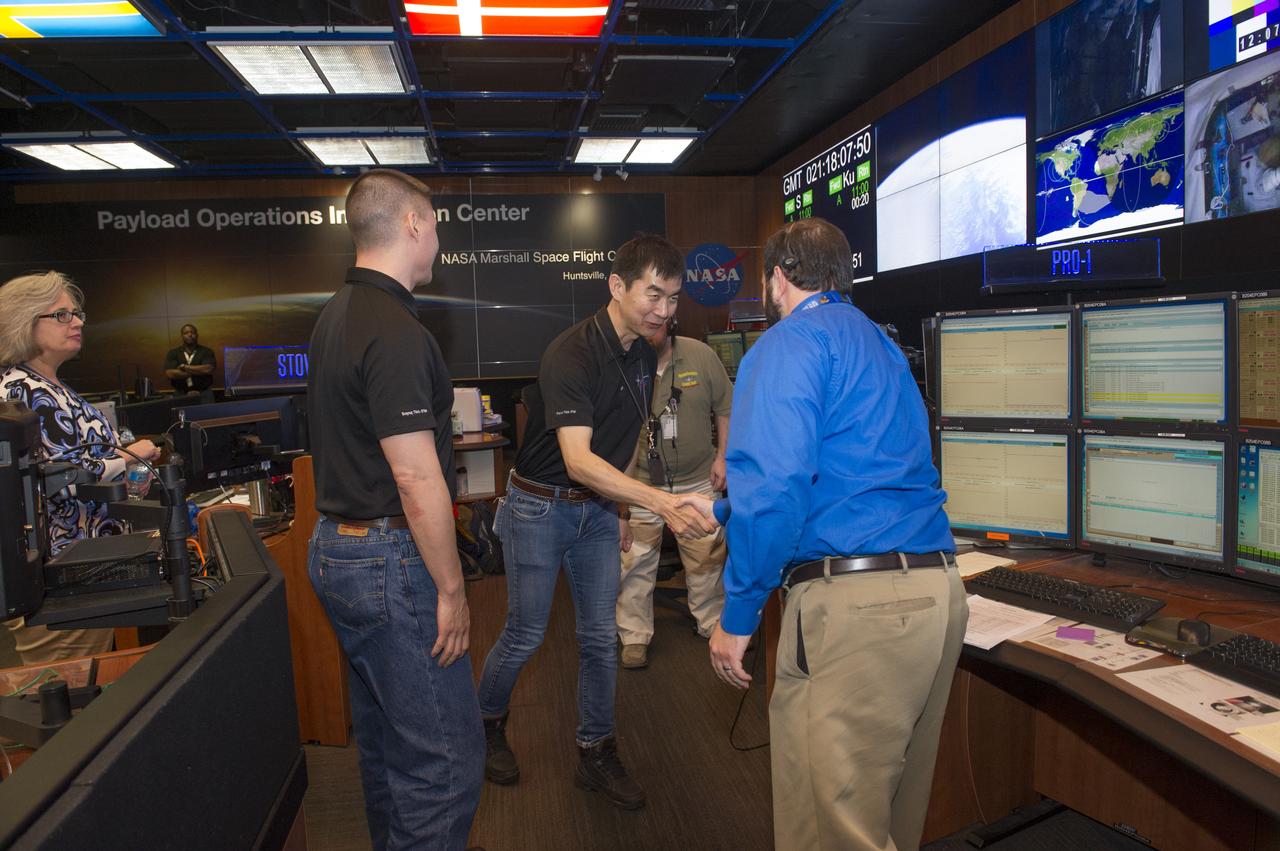
ASTRONAUT KIMIYA YUI SHAKES HANDS WITH PAYLOAD RACK OFFICER ROBERT TRIMBLE
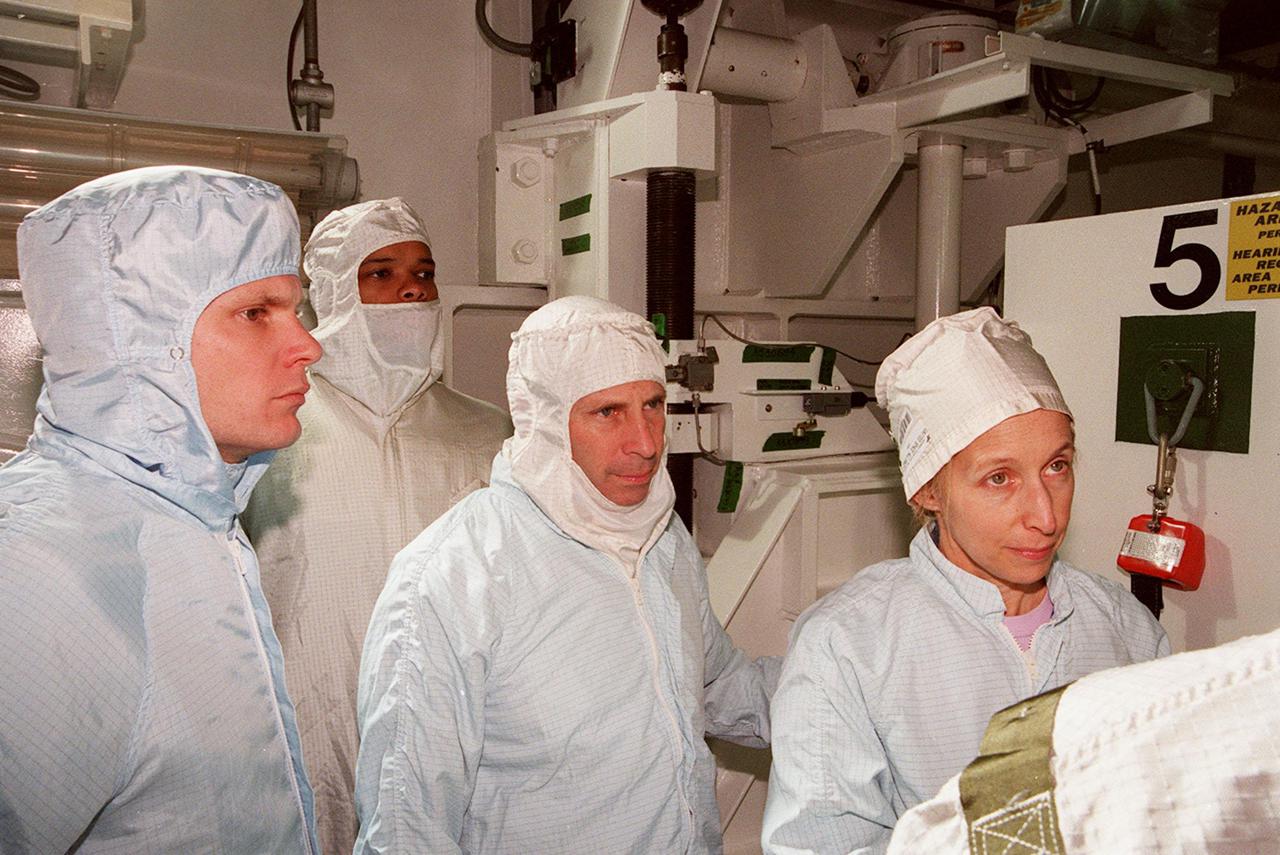
KENNEDY SPACE CENTER, FLA. -- Along with Scott Thurston (left), of the VITT office, members of the STS-98 crew Mission Specialist Robert Curbeam, Commander Ken Cockrell and Mission Specialist Marsha Ivins are in Atlantis’ payload bay to check out their mission payload, the U.S. Lab Destiny. The crew is at KSC for Terminal Countdown Demonstration Test activities, which also include a simulated launch countdown. A key element in the construction of the International Space Station, Destiny is a pressurized module designed to accommodate pressurized payloads. It has a capacity of 24 rack locations. Payload racks will occupy 13 locations especially designed to support experiments. The module already has five system racks installed inside. Launch of STS-98 on its 11-day mission is scheduled for Jan. 19 at 2:11 a.m. EST
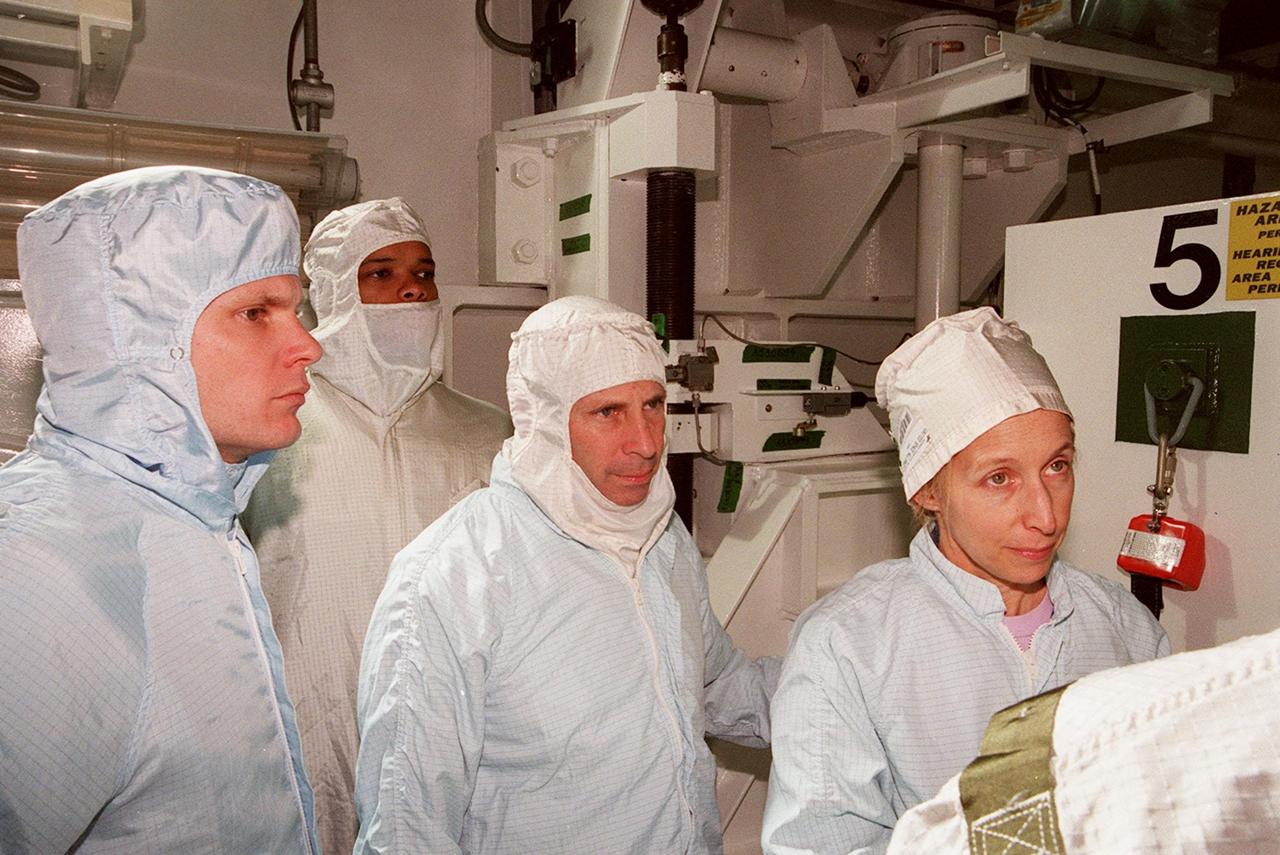
KENNEDY SPACE CENTER, FLA. -- Along with Scott Thurston (left), of the VITT office, members of the STS-98 crew Mission Specialist Robert Curbeam, Commander Ken Cockrell and Mission Specialist Marsha Ivins are in Atlantis’ payload bay to check out their mission payload, the U.S. Lab Destiny. The crew is at KSC for Terminal Countdown Demonstration Test activities, which also include a simulated launch countdown. A key element in the construction of the International Space Station, Destiny is a pressurized module designed to accommodate pressurized payloads. It has a capacity of 24 rack locations. Payload racks will occupy 13 locations especially designed to support experiments. The module already has five system racks installed inside. Launch of STS-98 on its 11-day mission is scheduled for Jan. 19 at 2:11 a.m. EST
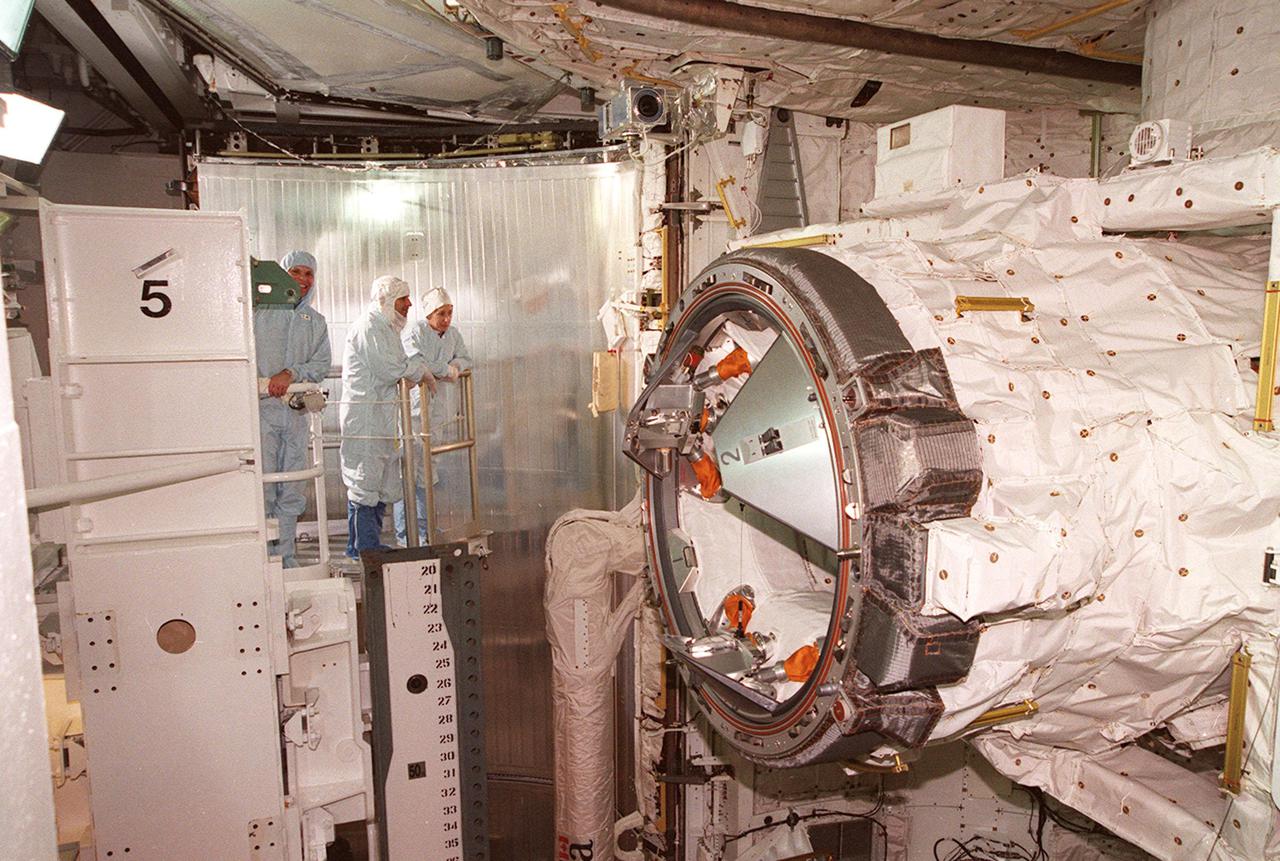
KENNEDY SPACE CENTER, FLA. -- Members of the STS-98 crew, along with Scott Thurston (left), with the VITT office, check out the U.S. Lab Destiny in the payload bay of the orbiter Atlantis. Wearing white caps are Commander Ken Cockrell (center) and Mission Specialist Marsha Ivins (right). The crew is at KSC for Terminal Countdown Demonstration Test activities, which include a simulated launch countdown. Destiny, a key element in the construction of the International Space Station, is a pressurized module designed to accommodate pressurized payloads. It has a capacity of 24 rack locations. Payload racks will occupy 13 locations especially designed to support experiments. The module already has five system racks installed inside. Launch of STS-98 on its 11-day mission is scheduled for Jan. 19 at 2:11 a.m. EST
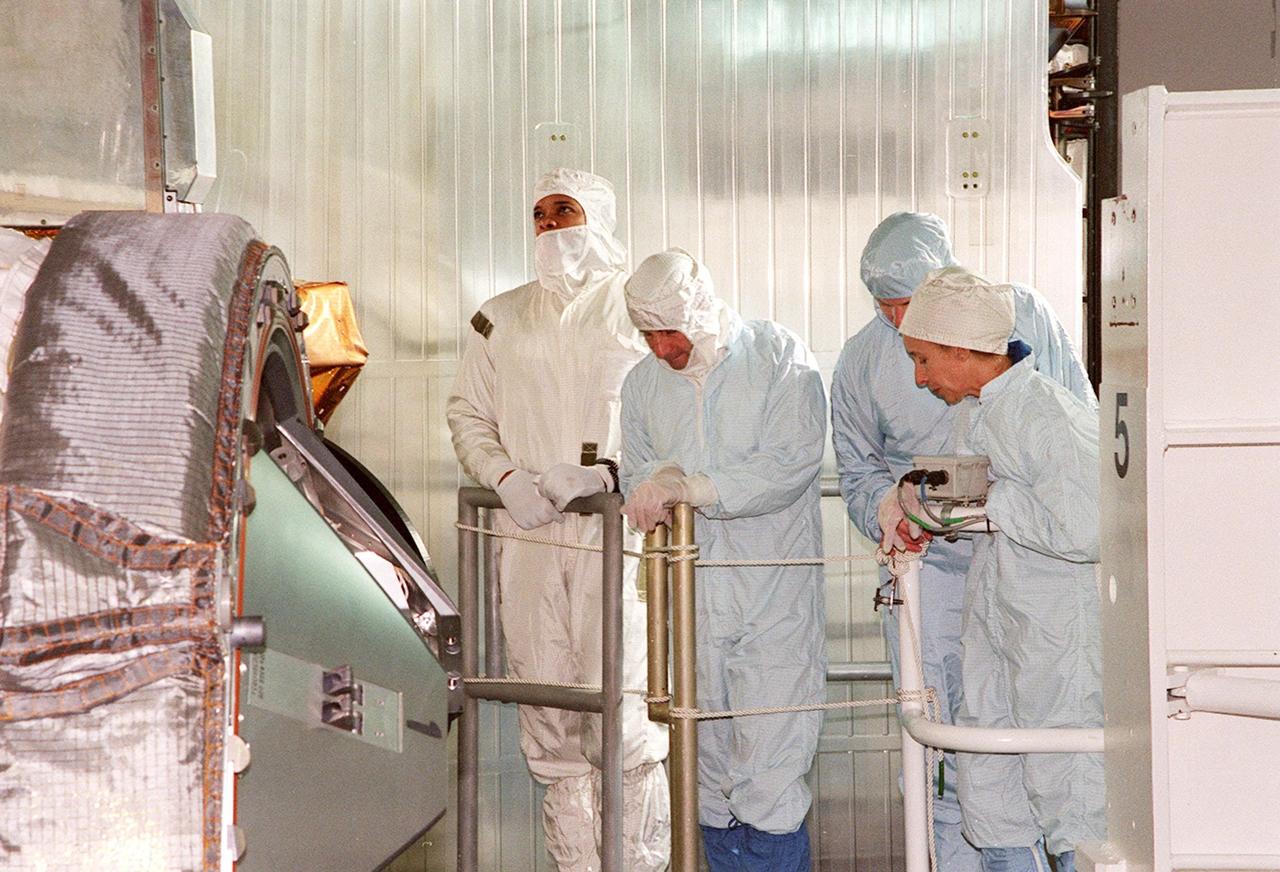
KENNEDY SPACE CENTER, FLA. -- STS-98 Mission Specialist Robert Curbeam (left), Commander Ken Cockrell (center) and Mission Specialist Marsha Ivins (right) look over the U.S. Lab Destiny in the payload bay of the orbiter Atlantis. Behind Ivins is Scott Thurston, of the VITT office. The crew is at KSC for Terminal Countdown Demonstration Test activities, which also include a simulated launch countdown. A key element in the construction of the International Space Station, Destiny is a pressurized module designed to accommodate pressurized payloads. It has a capacity of 24 rack locations. Payload racks will occupy 13 locations especially designed to support experiments. The module already has five system racks installed inside. Launch of STS-98 on its 11-day mission is scheduled for Jan. 19 at 2:11 a.m. EST
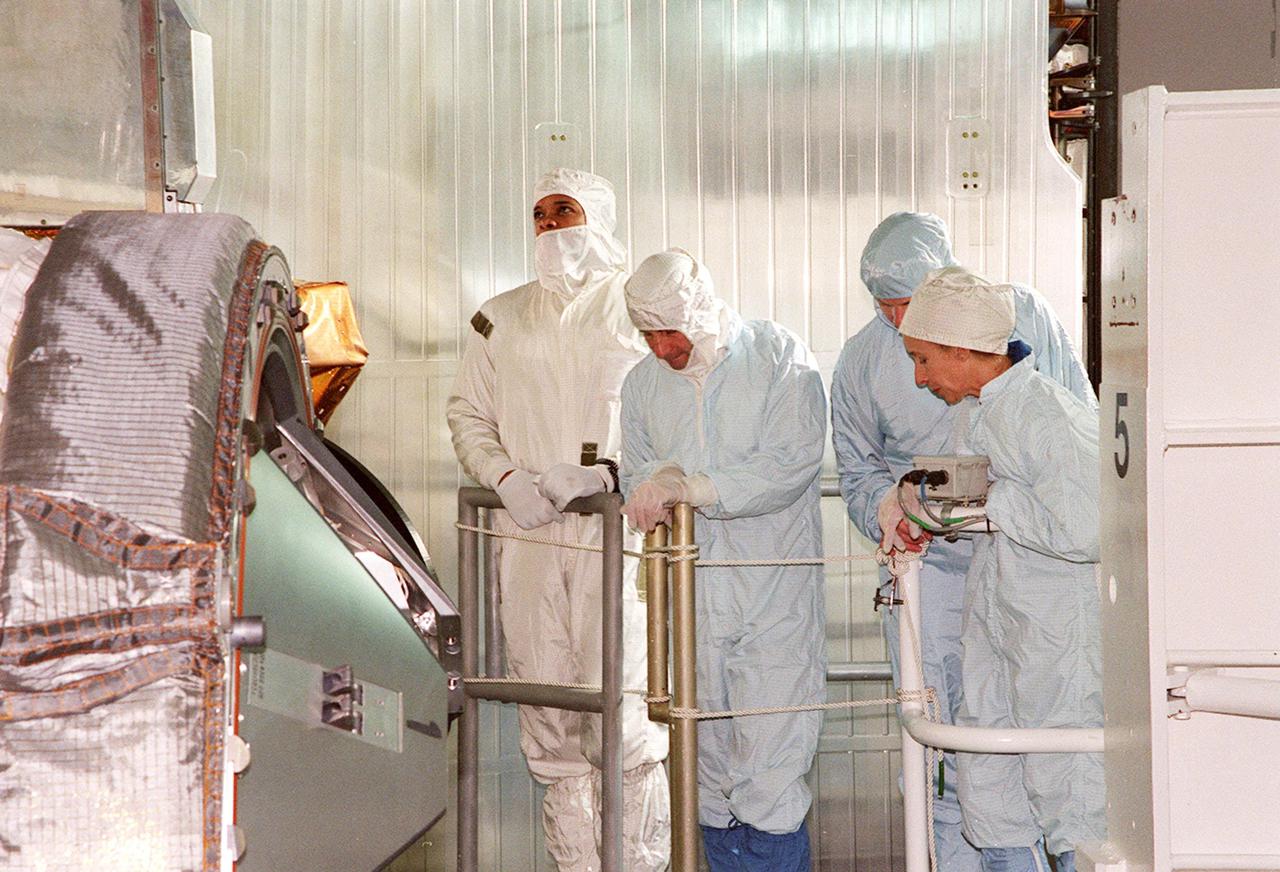
KENNEDY SPACE CENTER, FLA. -- STS-98 Mission Specialist Robert Curbeam (left), Commander Ken Cockrell (center) and Mission Specialist Marsha Ivins (right) look over the U.S. Lab Destiny in the payload bay of the orbiter Atlantis. Behind Ivins is Scott Thurston, of the VITT office. The crew is at KSC for Terminal Countdown Demonstration Test activities, which also include a simulated launch countdown. A key element in the construction of the International Space Station, Destiny is a pressurized module designed to accommodate pressurized payloads. It has a capacity of 24 rack locations. Payload racks will occupy 13 locations especially designed to support experiments. The module already has five system racks installed inside. Launch of STS-98 on its 11-day mission is scheduled for Jan. 19 at 2:11 a.m. EST
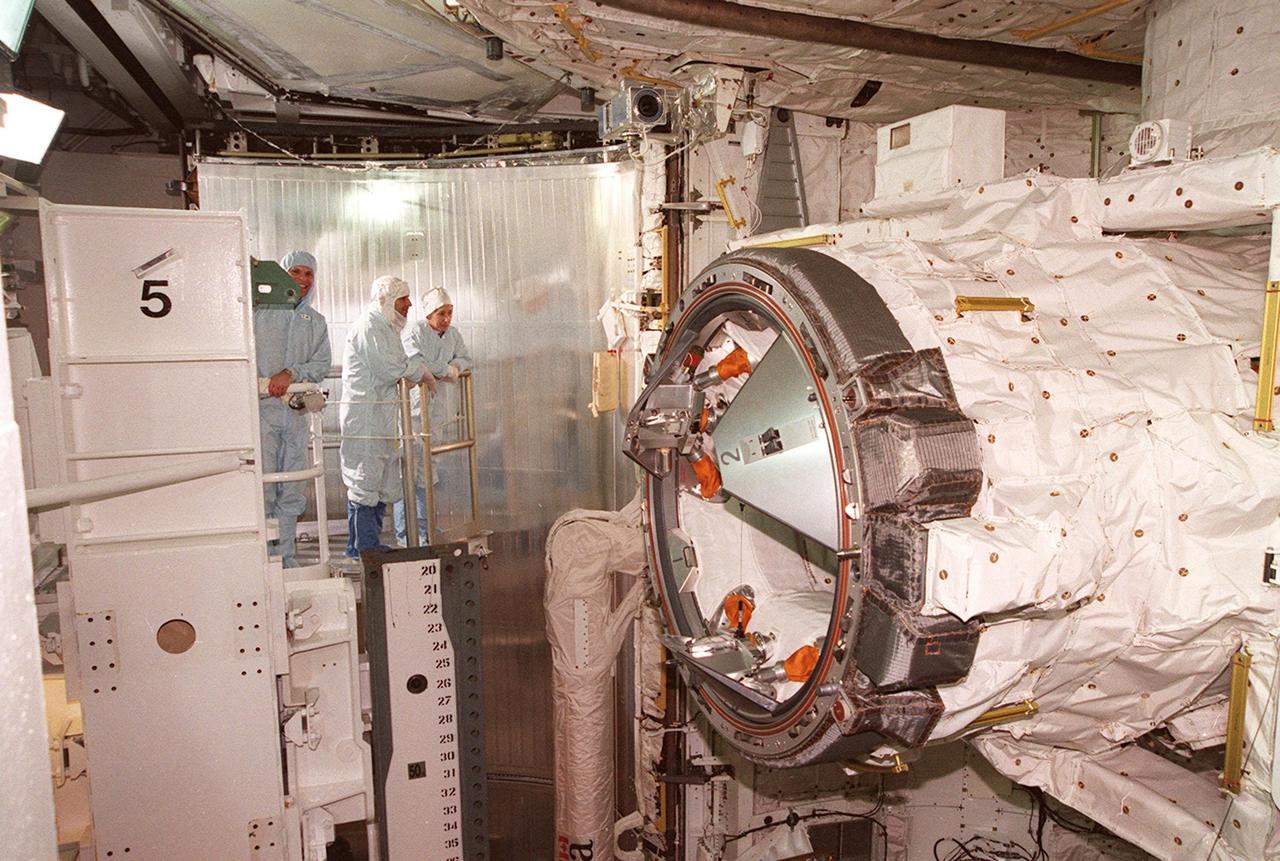
KENNEDY SPACE CENTER, FLA. -- Members of the STS-98 crew, along with Scott Thurston (left), with the VITT office, check out the U.S. Lab Destiny in the payload bay of the orbiter Atlantis. Wearing white caps are Commander Ken Cockrell (center) and Mission Specialist Marsha Ivins (right). The crew is at KSC for Terminal Countdown Demonstration Test activities, which include a simulated launch countdown. Destiny, a key element in the construction of the International Space Station, is a pressurized module designed to accommodate pressurized payloads. It has a capacity of 24 rack locations. Payload racks will occupy 13 locations especially designed to support experiments. The module already has five system racks installed inside. Launch of STS-98 on its 11-day mission is scheduled for Jan. 19 at 2:11 a.m. EST
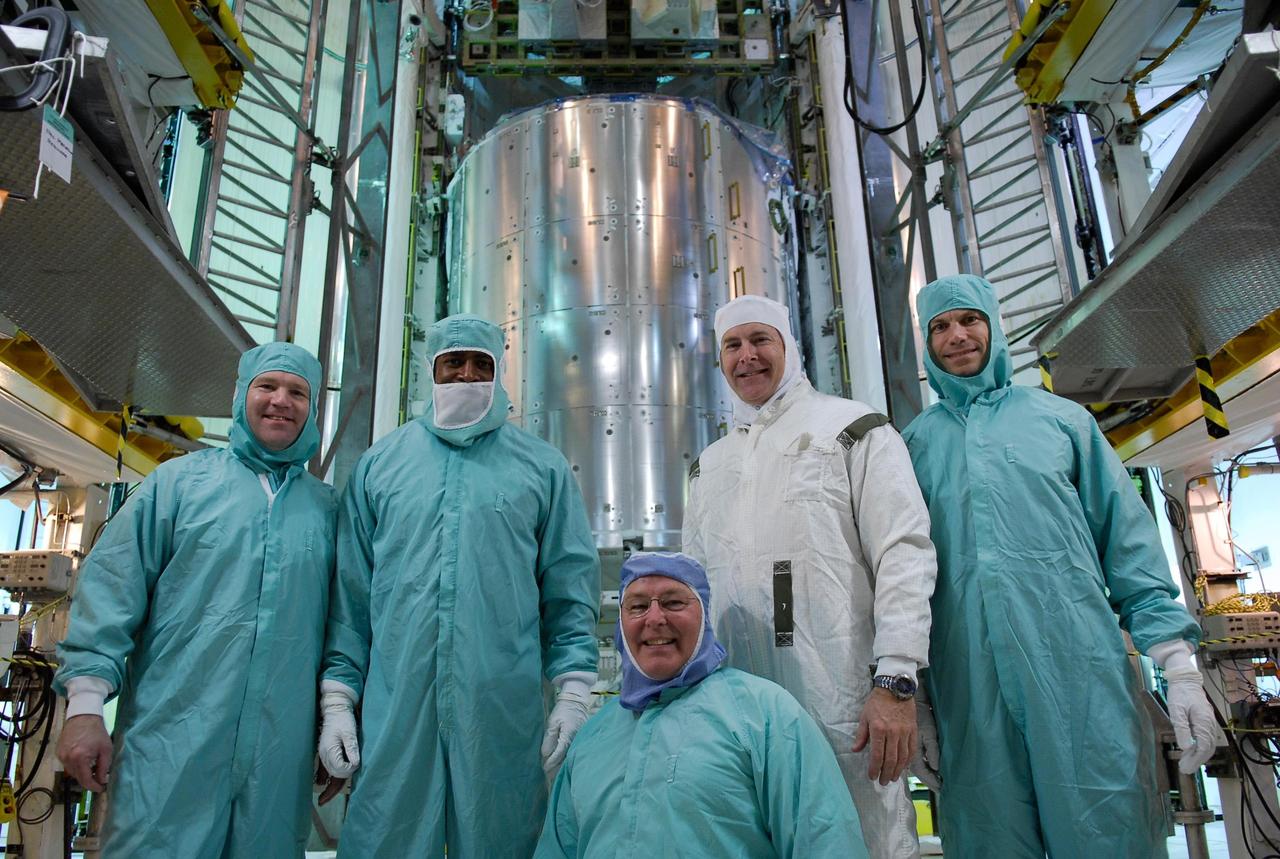
KENNEDY SPACE CENTER, FLA. -- At Launch Pad 39A, members of the space shuttle Atlantis STS-122 crew pose for a photo in front of the Columbus module during terminal countdown demonstration test, or TCDT, activities. Columbus was installed in the orbiter's payload bay on Nov. 11. From left, in clean room attire, are Commander Steve Frick; Mission Specialist Leland Melvin; former astronaut Jerry Ross, kneeling, chief of the Vehicle Integration Test Office at NASA Johnson Space Center; Pilot Alan Poindexter; and Mission Specialist Stanley Love. The TCDT provides astronauts and ground crews with equipment familiarization, emergency egress training and a simulated launch countdown. On mission STS-122, Atlantis will deliver the Columbus module to the International Space Station. The European Space Agency's largest single contribution to the station, Columbus is a multifunctional, pressurized laboratory that will be permanently attached to U.S. Node 2, called Harmony. The module is approximately 23 feet long and 15 feet wide, allowing it to hold 10 large racks of experiments. The laboratory will expand the research facilities aboard the station, providing crew members and scientists from around the world the ability to conduct a variety of experiments in the physical, materials and life sciences. Launch is targeted for Dec. 6. Photo credit: NASA/Kim Shiflett
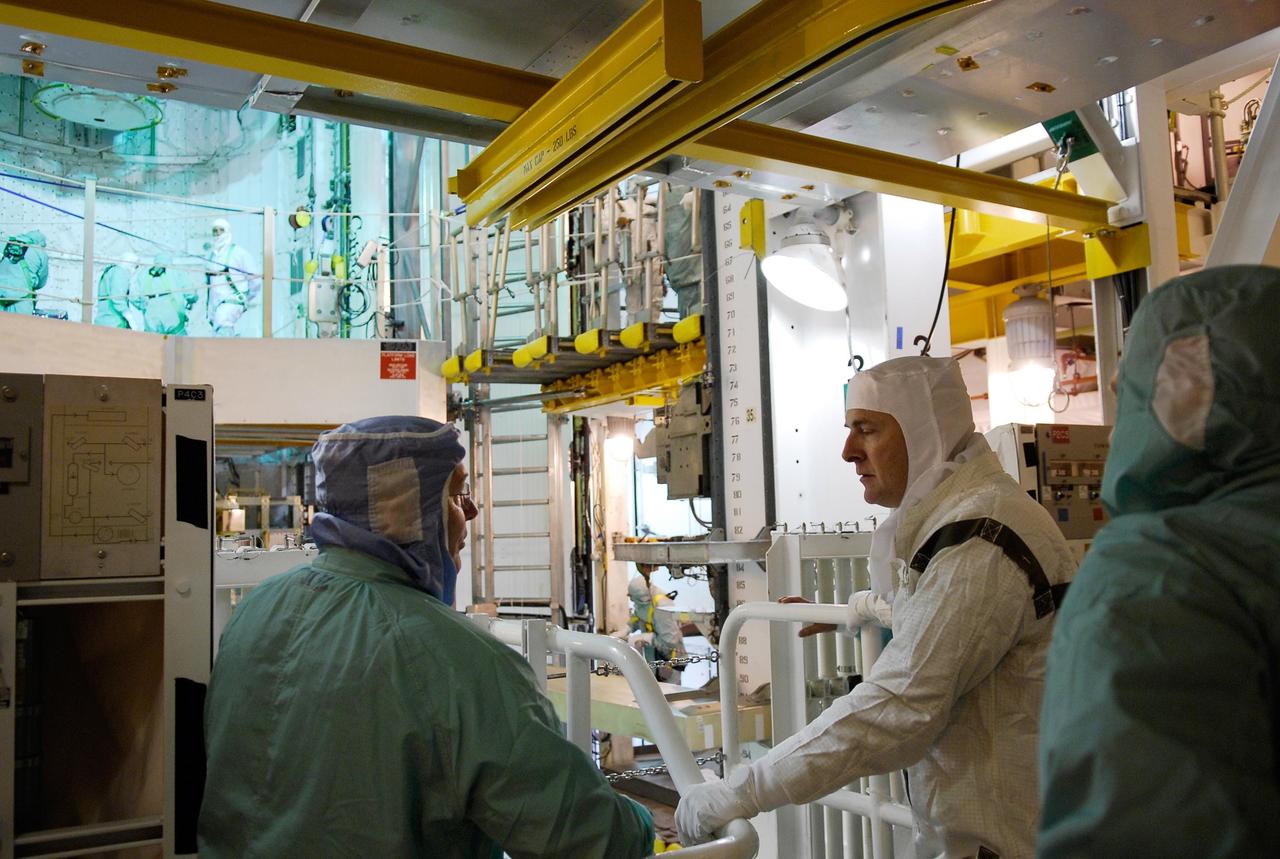
KENNEDY SPACE CENTER, FLA. -- At Launch Pad 39A, members of the space shuttle Atlantis STS-122 crew view the Columbus module during terminal countdown demonstration test, or TCDT, activities. Columbus was installed in the orbiter's payload bay on Nov. 11. From left, in clean room attire, are former astronaut Jerry Ross, chief of the Vehicle Integration Test Office at NASA Johnson Space Center, Pilot Alan Poindexter and Commander Steve Frick. The TCDT provides astronauts and ground crews with equipment familiarization, emergency egress training and a simulated launch countdown. On mission STS-122, Atlantis will deliver the Columbus module to the International Space Station. The European Space Agency's largest single contribution to the station, Columbus is a multifunctional, pressurized laboratory that will be permanently attached to U.S. Node 2, called Harmony. The module is approximately 23 feet long and 15 feet wide, allowing it to hold 10 large racks of experiments. The laboratory will expand the research facilities aboard the station, providing crew members and scientists from around the world the ability to conduct a variety of experiments in the physical, materials and life sciences. Launch is targeted for Dec. 6. Photo credit: NASA/Kim Shiflett