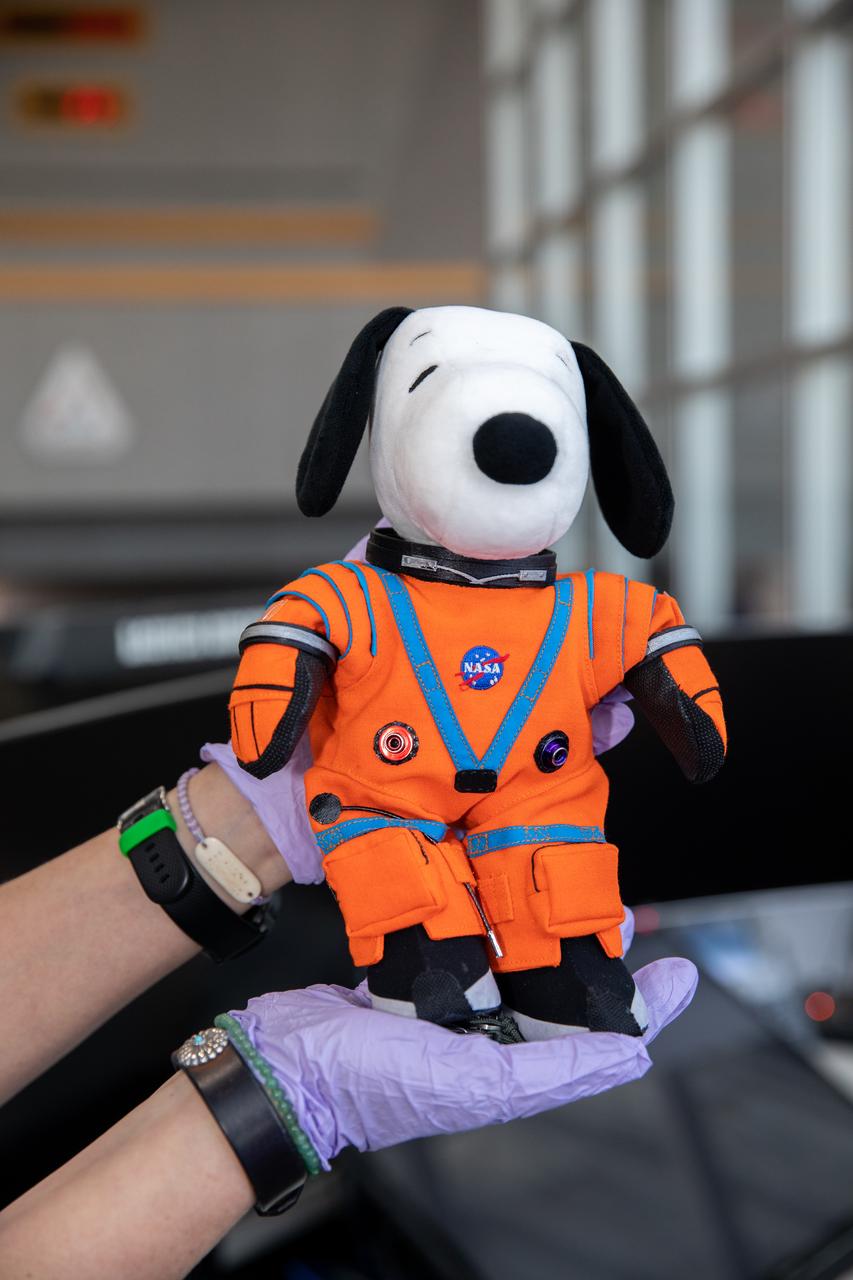
Snoopy is officially handed over to Melissa Menta, senior vice president with Peanuts Worldwide LLC, inside Launch Control Center Firing Room 1 at NASA’s Kennedy Space Center in Florida on Jan. 18, 2023. Snoopy served as the zero-gravity indicator during the Artemis I mission. Snoopy was secured inside Orion during the mission, a journey beyond the Moon and back to prepare for crewed missions to the Moon. Artemis I launched atop the Space Launch System rocket on Nov. 16, 2022 from Kennedy’s Launch Complex 39B. Orion returned to Earth for a splashdown in the Pacific Ocean on Dec. 11, 2022 after traveling more than 1.4 million miles. NASA has held an association with Snoopy since the Apollo Era – the character has contributed to the excitement for NASA human spaceflight missions, helping inspire generations to dream big, and is a symbol of NASA’s safety culture and mission success.
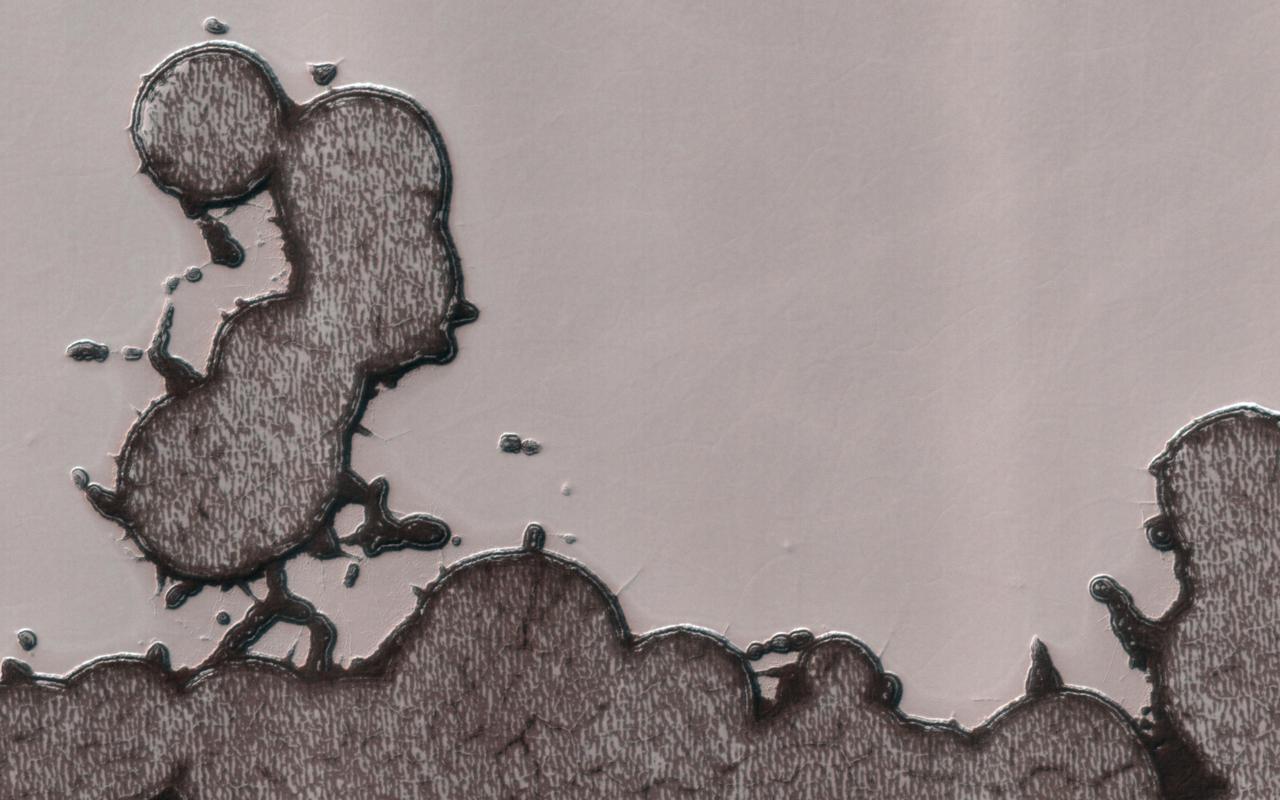
The south polar residual cap is constantly changing as carbon dioxide sublimates from steep slopes, enlarging pits, and condenses on flat areas, filling pits. Sometimes the strange landscape produces something that looks familiar, like the mascot of a certain peanut company, who recently died in a commercial, and was "creamated" according to "Saturday Night Live." At least, he still has Mars. https://photojournal.jpl.nasa.gov/catalog/PIA24617
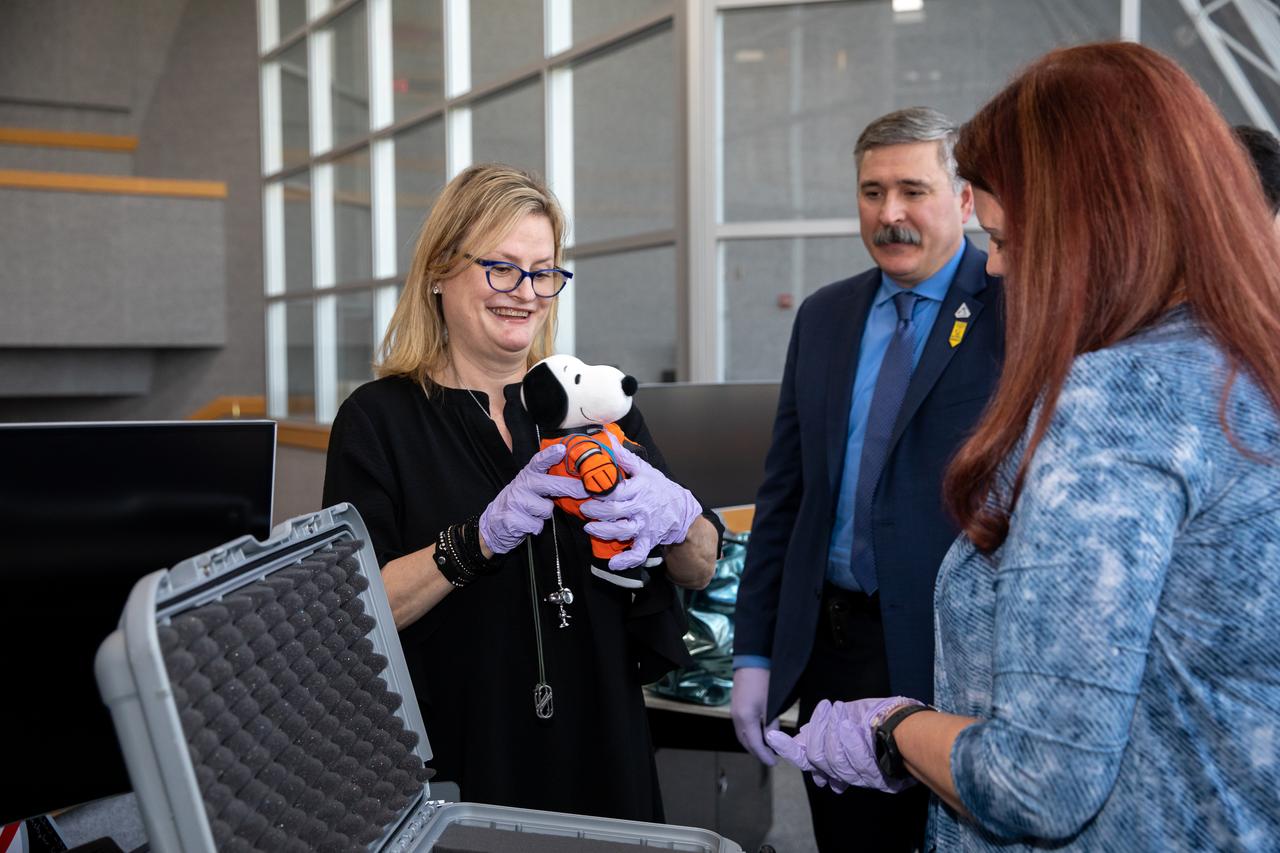
Melissa Menta, at left, senior vice president with Peanuts Worldwide LLC, accepts Snoopy during an official handover from Artemis Launch Director Charlie Blackwell-Thompson inside Launch Control Center Firing Room 1 at NASA’s Kennedy Space Center in Florida on Jan. 18, 2023. To the left of Charlie is Mike Sarafin, Artemis I mission manager. Snoopy served as the zero-gravity indicator during the Artemis I mission. Snoopy was secured inside Orion during the mission, a journey beyond the Moon and back to prepare for crewed missions to the Moon. Artemis I launched atop the Space Launch System rocket on Nov. 16, 2022 from Kennedy’s Launch Complex 39B. Orion returned to Earth for a splashdown in the Pacific Ocean on Dec. 11, 2022 after traveling more than 1.4 million miles. NASA has held an association with Snoopy since the Apollo Era – the character has contributed to the excitement for NASA human spaceflight missions, helping inspire generations to dream big, and is a symbol of NASA’s safety culture and mission success.
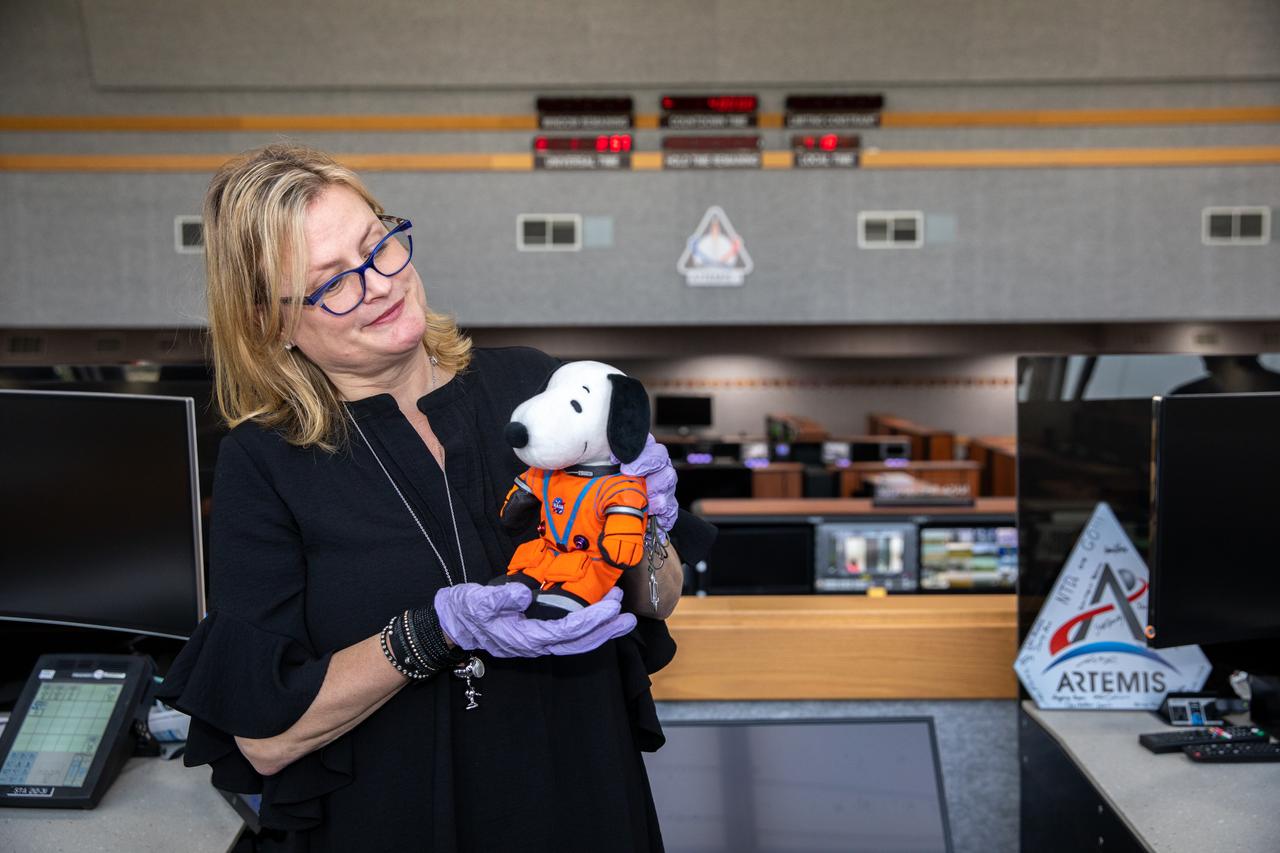
Melissa Menta, senior vice president with Peanuts Worldwide LLC, accepts Snoopy during an official handover from Artemis Launch Director Charlie Blackwell-Thompson inside Launch Control Center Firing Room 1 at NASA’s Kennedy Space Center in Florida on Jan. 18, 2023. Snoopy served as the zero-gravity indicator during the Artemis I mission. Snoopy was secured inside Orion during the mission, a journey beyond the Moon and back to prepare for crewed missions to the Moon. Artemis I launched atop the Space Launch System rocket on Nov. 16, 2022 from Kennedy’s Launch Complex 39B. Orion returned to Earth for a splashdown in the Pacific Ocean on Dec. 11, 2022 after traveling more than 1.4 million miles. NASA has held an association with Snoopy since the Apollo Era – the character has contributed to the excitement for NASA human spaceflight missions, helping inspire generations to dream big, and is a symbol of NASA’s safety culture and mission success.
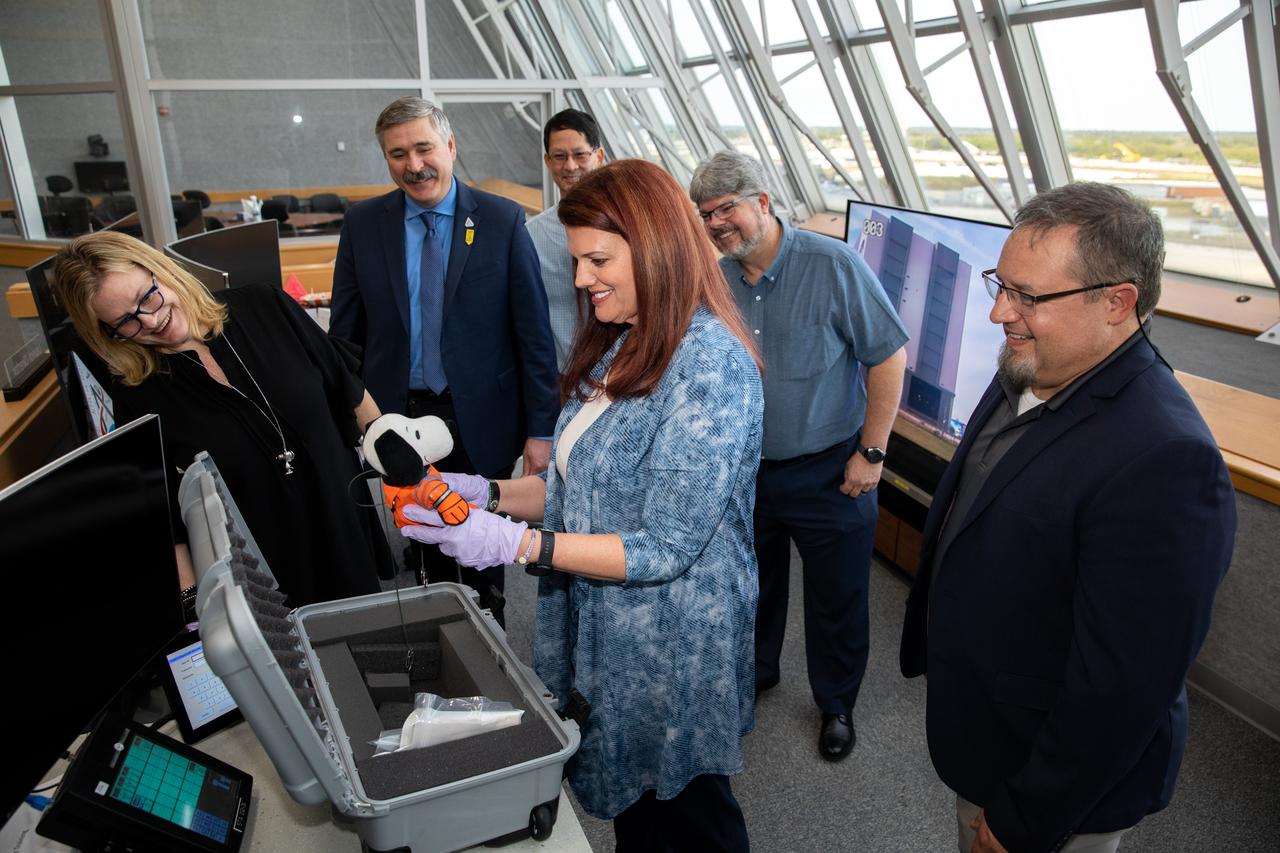
Artemis Launch Director Charlie Blackwell-Thompson, in the center, performs the official turnover of Snoopy to Melissa Menta, far left, senior vice president with Peanuts Worldwide LLC, inside Launch Control Center Firing Room 1 at NASA’s Kennedy Space Center in Florida on Jan. 18, 2023. From left, behind Charlie are Mike Sarafin, Artemis I mission manager; Glenn Chin, deputy manager, Orion Production Operations Office, Exploration Ground Systems; Kevin Ash, payload and flight crew equipment project lead with Jacobs; and Joe LeBlanc, Orion payload and cargo manager with Lockheed Martin. Snoopy served as the zero-gravity indicator during the Artemis I mission. Snoopy was secured inside Orion during the mission, a journey beyond the Moon and back to prepare for crewed missions to the Moon. Artemis I launched atop the Space Launch System rocket on Nov. 16, 2022 from Kennedy’s Launch Complex 39B. Orion returned to Earth for a splashdown in the Pacific Ocean on Dec. 11, 2022 after traveling more than 1.4 million miles. NASA has held an association with Snoopy since the Apollo Era – the character has contributed to the excitement for NASA human spaceflight missions, helping inspire generations to dream big, and is a symbol of NASA’s safety culture and mission success.
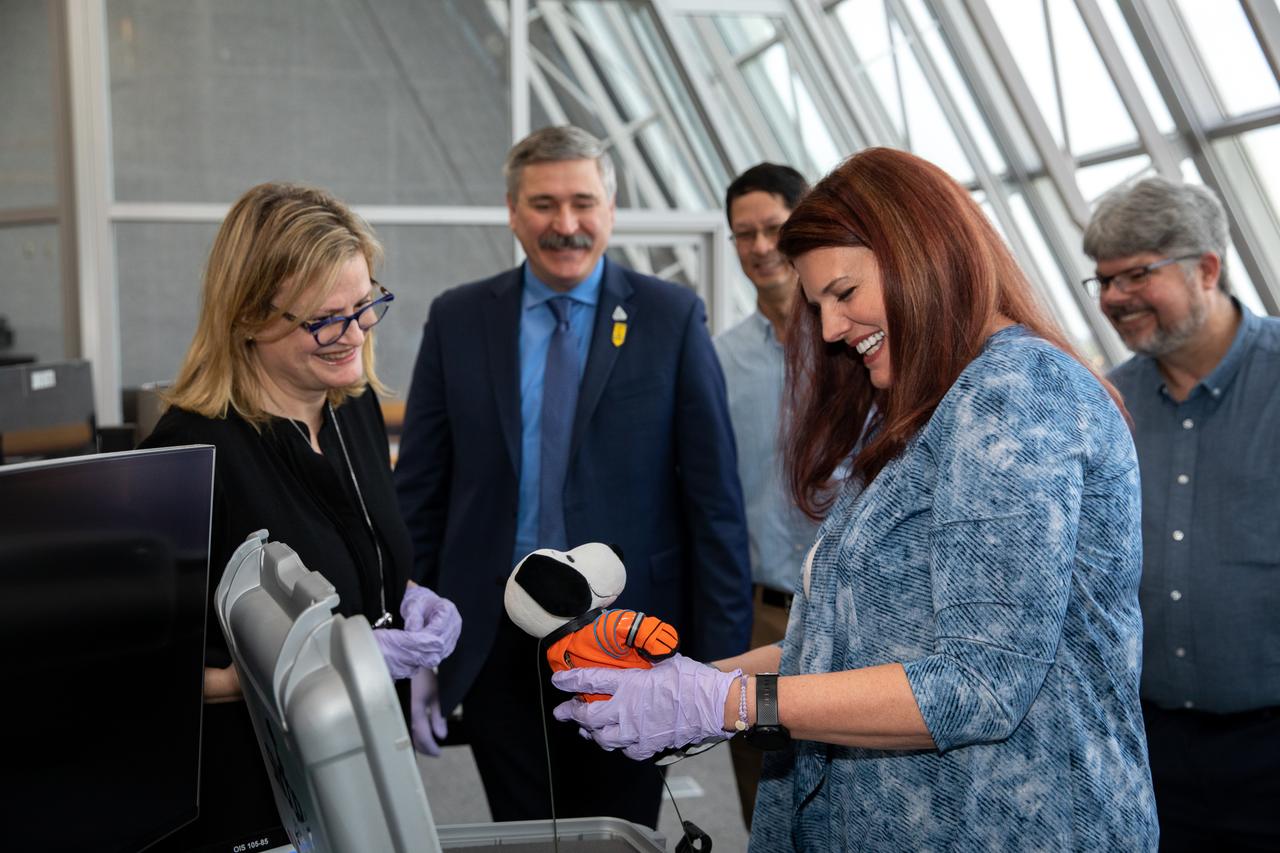
Artemis Launch Director Charlie Blackwell-Thompson, in the center, performs the official turnover of Snoopy to Melissa Menta, far left, senior vice president with Peanuts Worldwide LLC, inside Launch Control Center Firing Room 1 at NASA’s Kennedy Space Center in Florida on Jan. 18, 2023. From left, behind Charlie are Mike Sarafin, Artemis I mission manager; Glenn Chin, deputy manager, Orion Production Operations Office, Exploration Ground Systems; and Kevin Ash, payload and flight crew equipment project lead with Jacobs. Snoopy served as the zero-gravity indicator during the Artemis I mission. Snoopy was secured inside Orion during the mission, a journey beyond the Moon and back to prepare for crewed missions to the Moon. Artemis I launched atop the Space Launch System rocket on Nov. 16, 2022 from Kennedy’s Launch Complex 39B. Orion returned to Earth for a splashdown in the Pacific Ocean on Dec. 11, 2022 after traveling more than 1.4 million miles. NASA has held an association with Snoopy since the Apollo Era – the character has contributed to the excitement for NASA human spaceflight missions, helping inspire generations to dream big, and is a symbol of NASA’s safety culture and mission success.
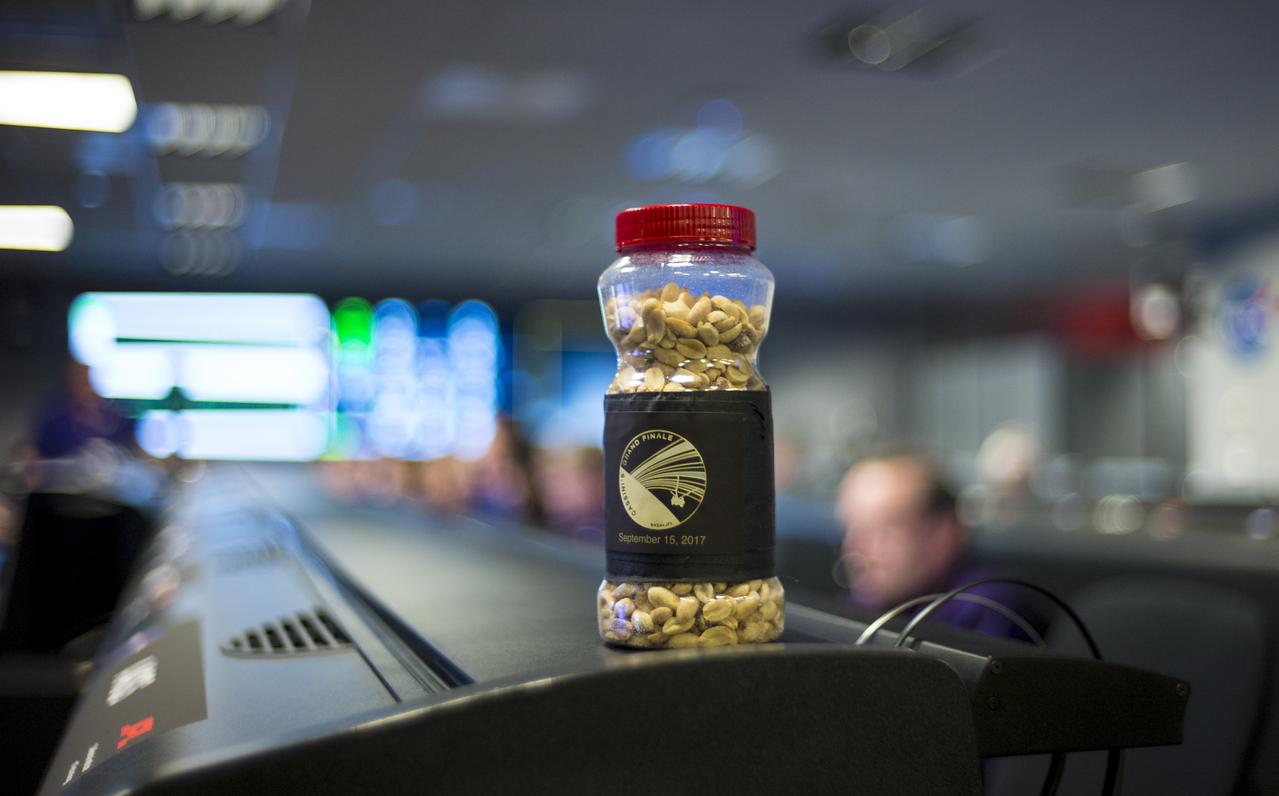
A jar of peanuts is seen sitting on a console in mission control of the Space Flight Operations Center as the Cassini mission team await the final downlink of the spacecraft's data recorder, Thursday, Sept. 14, 2017 at NASA's Jet Propulsion Laboratory in Pasadena, California. Since its arrival in 2004, the Cassini-Huygens mission has been a discovery machine, revolutionizing our knowledge of the Saturn system and captivating us with data and images never before obtained with such detail and clarity. On Sept. 15, 2017, operators will deliberately plunge the spacecraft into Saturn, as Cassini gathered science until the end. The “plunge” ensures Saturn’s moons will remain pristine for future exploration. During Cassini’s final days, mission team members from all around the world gathered at NASA’s Jet Propulsion Laboratory, Pasadena, California, to celebrate the achievements of this historic mission. Photo Credit: (NASA/Joel Kowsky)

Mars InSight team members share good-luck peanuts as they monitor the status of the lander prior to it touching down on Mars, Monday, Nov. 26, 2018 inside the Mission Support Area at NASA's Jet Propulsion Laboratory in Pasadena, California. InSight, short for Interior Exploration using Seismic Investigations, Geodesy and Heat Transport, is a Mars lander designed to study the "inner space" of Mars: its crust, mantle, and core. Photo Credit: (NASA/Bill Ingalls)
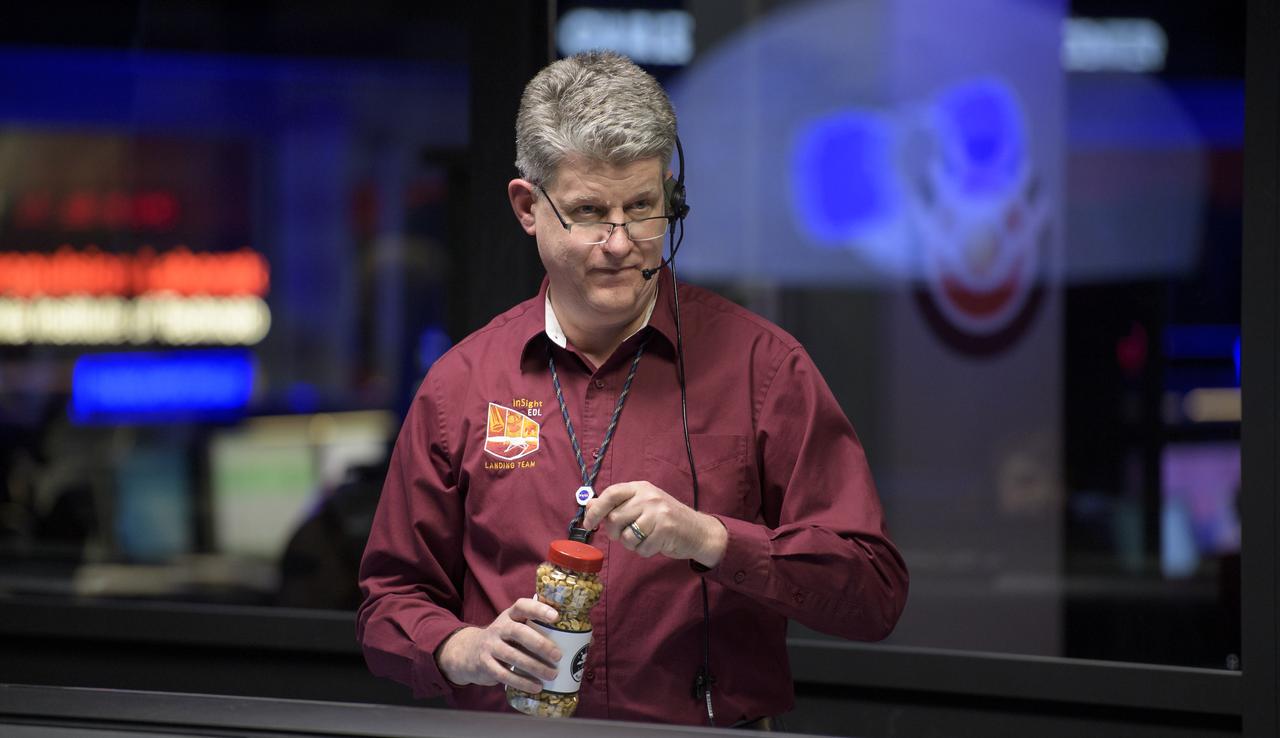
Rob Grover, EDL Phase Lead, NASA JPL, holds a jar of good-luck peanuts as he and other Mars InSight team members monitor the status of the lander prior to it touching down on Mars, Monday, Nov. 26, 2018 inside the Mission Support Area at NASA's Jet Propulsion Laboratory in Pasadena, California. InSight, short for Interior Exploration using Seismic Investigations, Geodesy and Heat Transport, is a Mars lander designed to study the "inner space" of Mars: its crust, mantle, and core. Photo Credit: (NASA/Bill Ingalls)
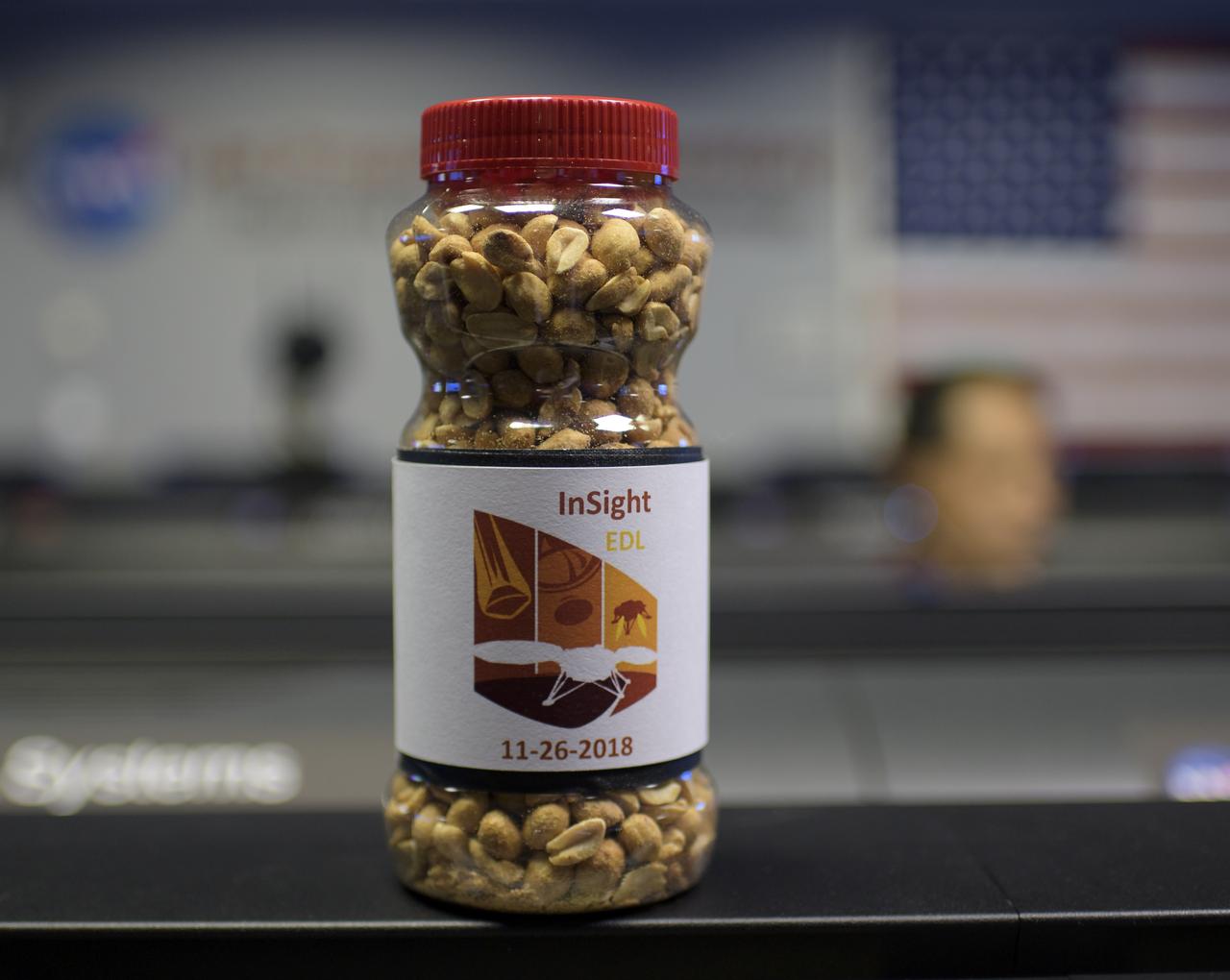
A jar of nuts is seen inside the Mission Control Area (MSA) where teams are starting to gather for the Mars InSight landing, Monday, Nov. 26, 2018 inside the Mission Support Area at NASA's Jet Propulsion Laboratory in Pasadena, California. Good-luck peanuts made their first appearance at the Jet Propulsion Laboratory's Space Flight Operations Facility in 1964 during the Ranger 7 mission. InSight, short for Interior Exploration using Seismic Investigations, Geodesy and Heat Transport, is a Mars lander designed to study the "inner space" of Mars: its crust, mantle, and core. Photo Credit: (NASA/Bill Ingalls)
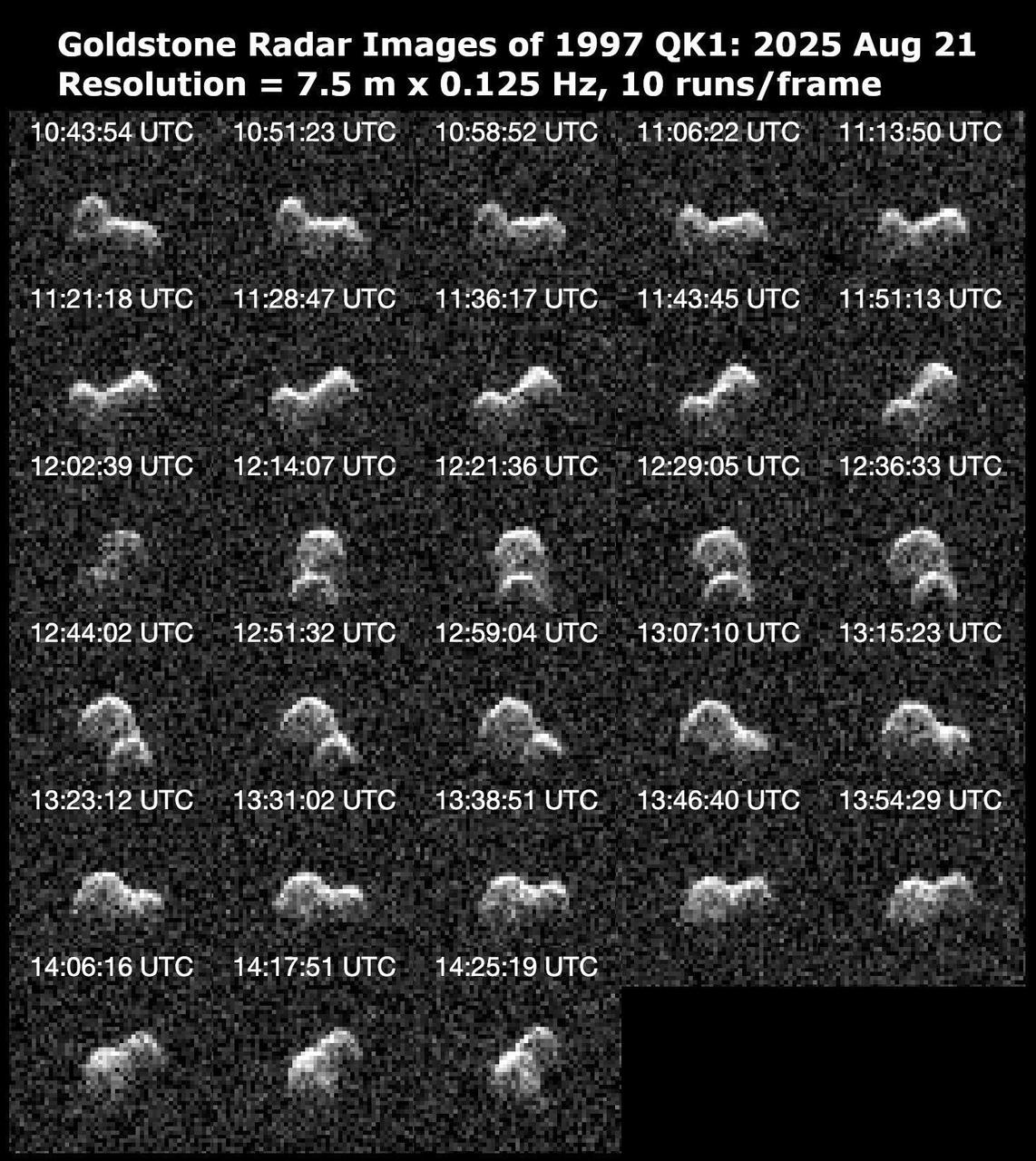
Asteroid 1997 QK1 is shown to be an elongated, peanut-shaped near-Earth object in this series of 28 radar images obtained by the Deep Space Network's Goldstone Solar System Radar on Aug. 21, 2025. The asteroid is about 660 feet (200 meters) long and completes one rotation every 4.8 hours. It passed closest to our planet on the day before these observations were made at a distance of about 1.9 million miles (3 million kilometers), or within eight times the distance between Earth and the Moon. The 2025 flyby is the closest that 1997 QK1 has approached to Earth in more than 350 years. Prior to the recent Goldstone observations, very little was known about the asteroid. These observations resolve surface features down to a resolution of about 25 feet (7.5 meters) and reveal that the object has two rounded lobes that are connected, with one lobe twice the size of the other. Both lobes appear to have concavities that are tens of meters deep. Asteroid 1997 QK1 is likely a "contact binary," one of dozens of such objects imaged by Goldstone. At least 15% of near-Earth asteroids larger than about 660 feet (200 meters) have a contact binary shape. The asteroid is classified as potentially hazardous, but it does not pose a hazard to Earth for the foreseeable future. These Goldstone measurements have greatly reduced the uncertainties in the asteroid's distance from Earth and in its future motion for many decades. The Goldstone Solar System Radar Group is supported by NASA's Near-Earth Object Observations Program within the Planetary Defense Coordination Office at the agency's headquarters in Washington. Managed by NASA's Jet Propulsion Laboratory, the Deep Space Network receives programmatic oversight from Space Communications and Navigation program office within the Space Operations Mission Directorate, also at NASA Headquarters. https://photojournal.jpl.nasa.gov/catalog/PIA26588
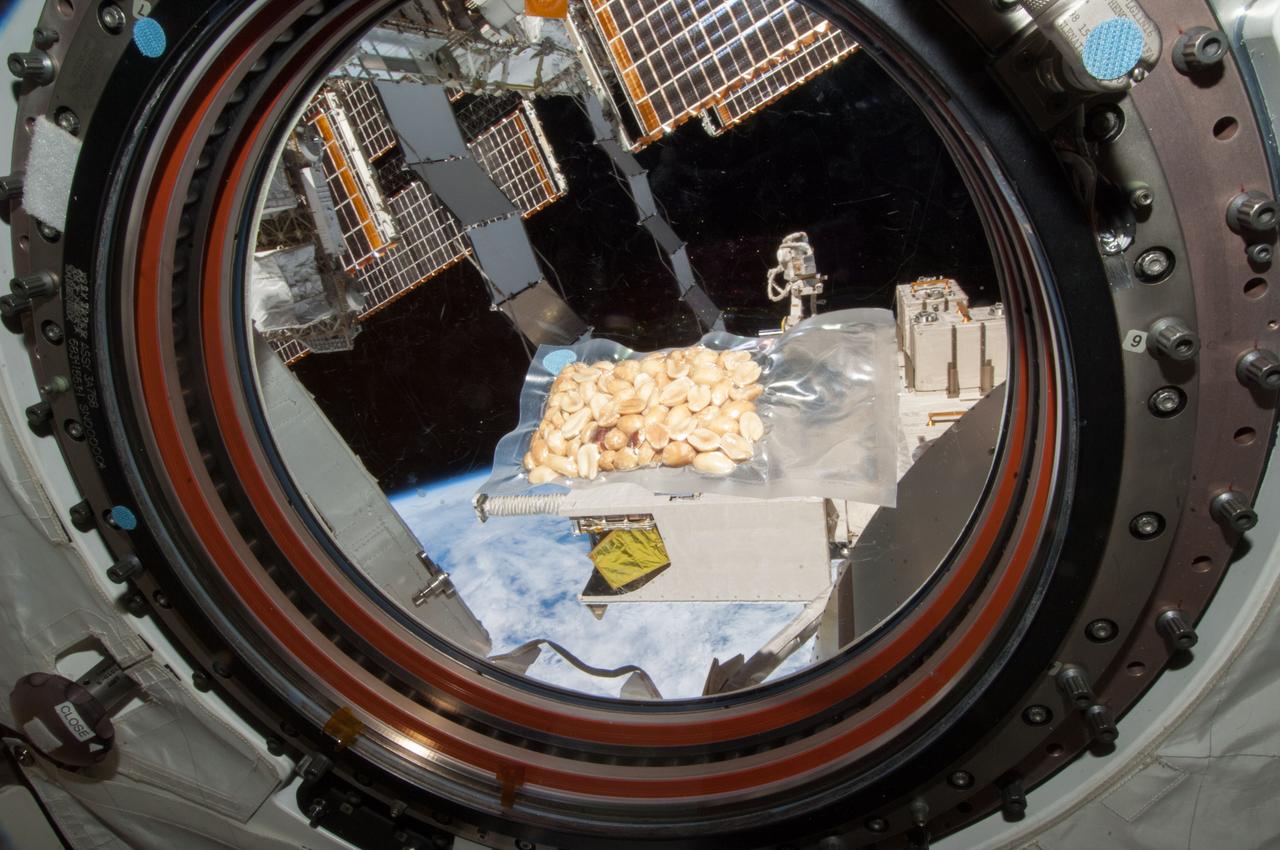
Peanuts in JPM. Image was released by astronaut on Twitter.
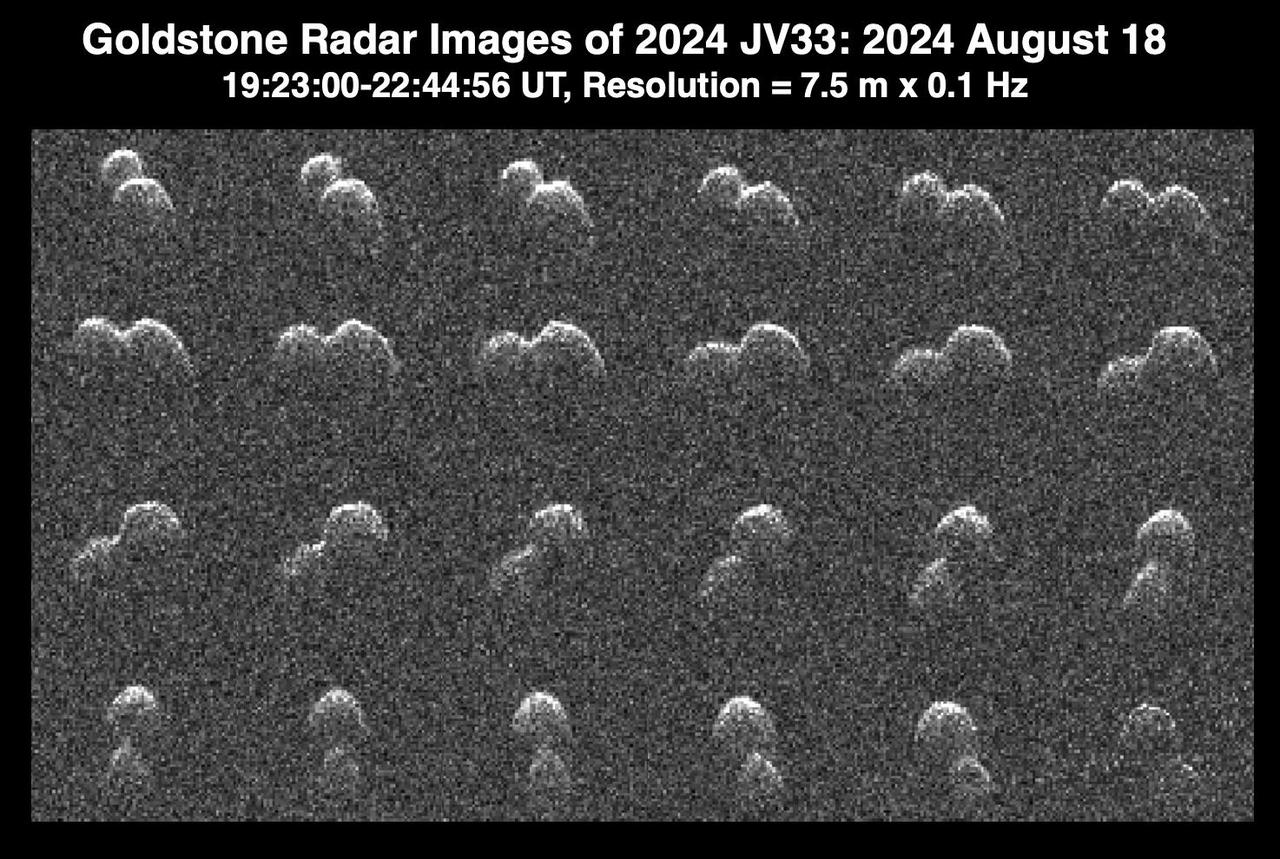
This series of radar images obtained by the Goldstone Solar System Radar near Barstow, California, on Aug. 18, 2024, shows the asteroid 2024 JV33 shortly before its close approach with Earth. The images were captured when the asteroid was at a distance of 2.8 million miles (4.6 million kilometers), about 12 times the distance between the Moon and Earth. Discovered by the NASA-funded Catalina Sky Survey in Tucson, Arizona, on May 4, the near-Earth asteroid's shape resembles that of a peanut – with two rounded lobes, one lobe larger than the other. Scientists used the radar images to determine that it is about 980 feet (300 meters) long and that its length is about double its width. Asteroid 2024 JV33 rotates once every seven hours. Radar is the principal technique for discovering such asteroids, which are called contact binaries. Dozens of them have been imaged by Goldstone, which is part of NASA's Deep Space Network. At least 14% of near-Earth asteroids larger than about 660 feet (200 meters) have a contact binary shape. Asteroid 2024 JV33 has an elongated orbit similar to that of many comets that are strongly influenced by the gravity of Jupiter. While no comet-like activity has been observed, the possibility remains that the asteroid may be an inactive cometary nucleus. The asteroid is classified as potentially hazardous, but it does not pose a hazard to Earth for the foreseeable future. These Goldstone measurements have greatly reduced the uncertainties in the asteroid's distance from Earth and in its future motion for many decades. https://photojournal.jpl.nasa.gov/catalog/PIA26389
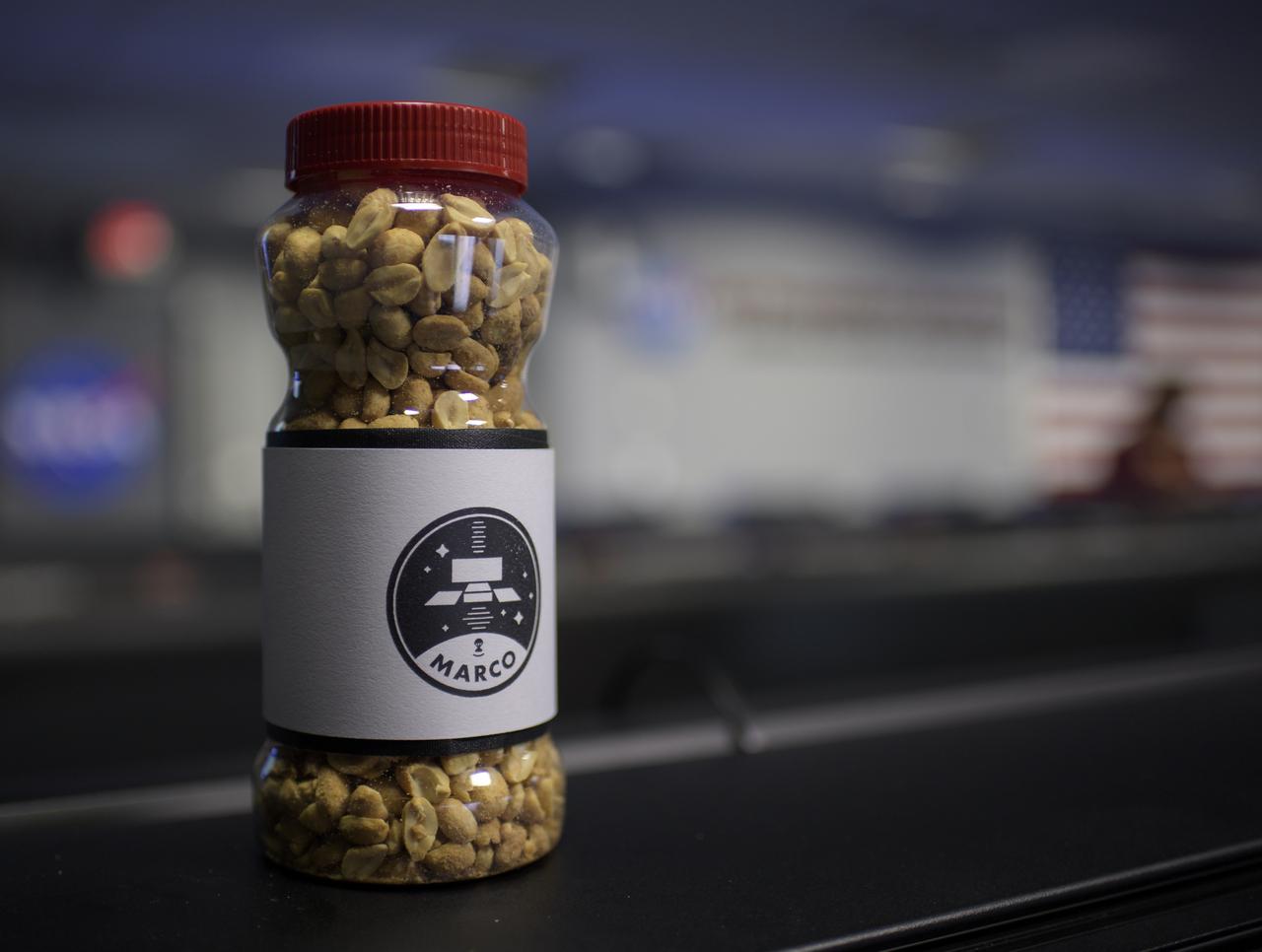
A jar of nuts with the Mars Cube One (MarCO) logo is seen inside the Mission Control Area (MSA) where teams are starting to gather for the Mars InSight landing, Monday, Nov. 26, 2018 inside the Mission Support Area at NASA's Jet Propulsion Laboratory in Pasadena, California. Good-luck peanuts made their first appearance at the Jet Propulsion Laboratory's Space Flight Operations Facility in 1964 during the Ranger 7 mission. InSight, short for Interior Exploration using Seismic Investigations, Geodesy and Heat Transport, is a Mars lander designed to study the "inner space" of Mars: its crust, mantle, and core. Photo Credit: (NASA/Bill Ingalls)
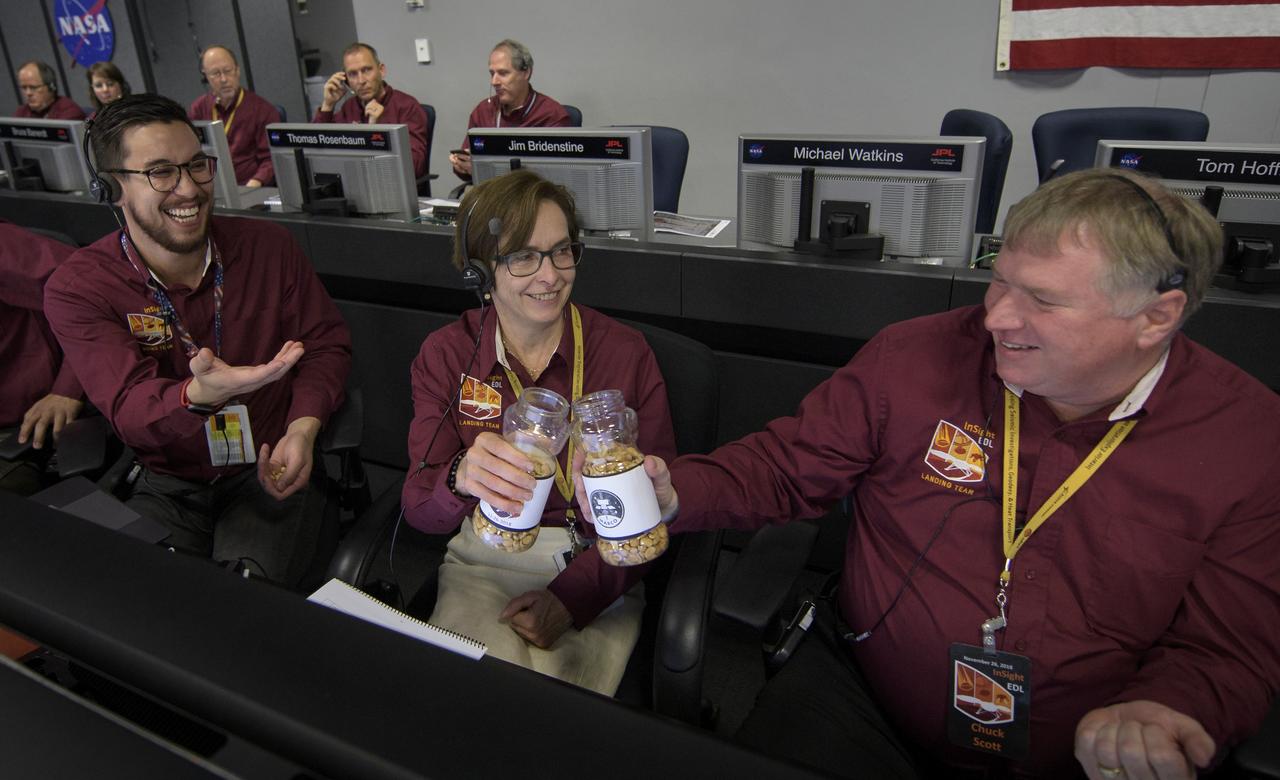
Sue Smrekar, InSight deputy principal investigator, NASA JPL, center, and Charles Scott, InSight Deputy Project Manager, NASA JPL, say cheers with two jars of good-luck peanuts as Thomas Thammasuckdi, Software Systems Engineer, NASA JPL, left, looks on, Monday, Nov. 26, 2018 inside the Mission Support Area at NASA's Jet Propulsion Laboratory in Pasadena, California. InSight, short for Interior Exploration using Seismic Investigations, Geodesy and Heat Transport, is a Mars lander designed to study the "inner space" of Mars: its crust, mantle, and core. Photo Credit: (NASA/Bill Ingalls)

Photo of Astronaut Karen Nyber,Expedition 36 flight engineer,with a snack of peanut butter and chocolate sandwiched between two waffles. Photo taken in the Node 1 module. Also sent as Twitter message.
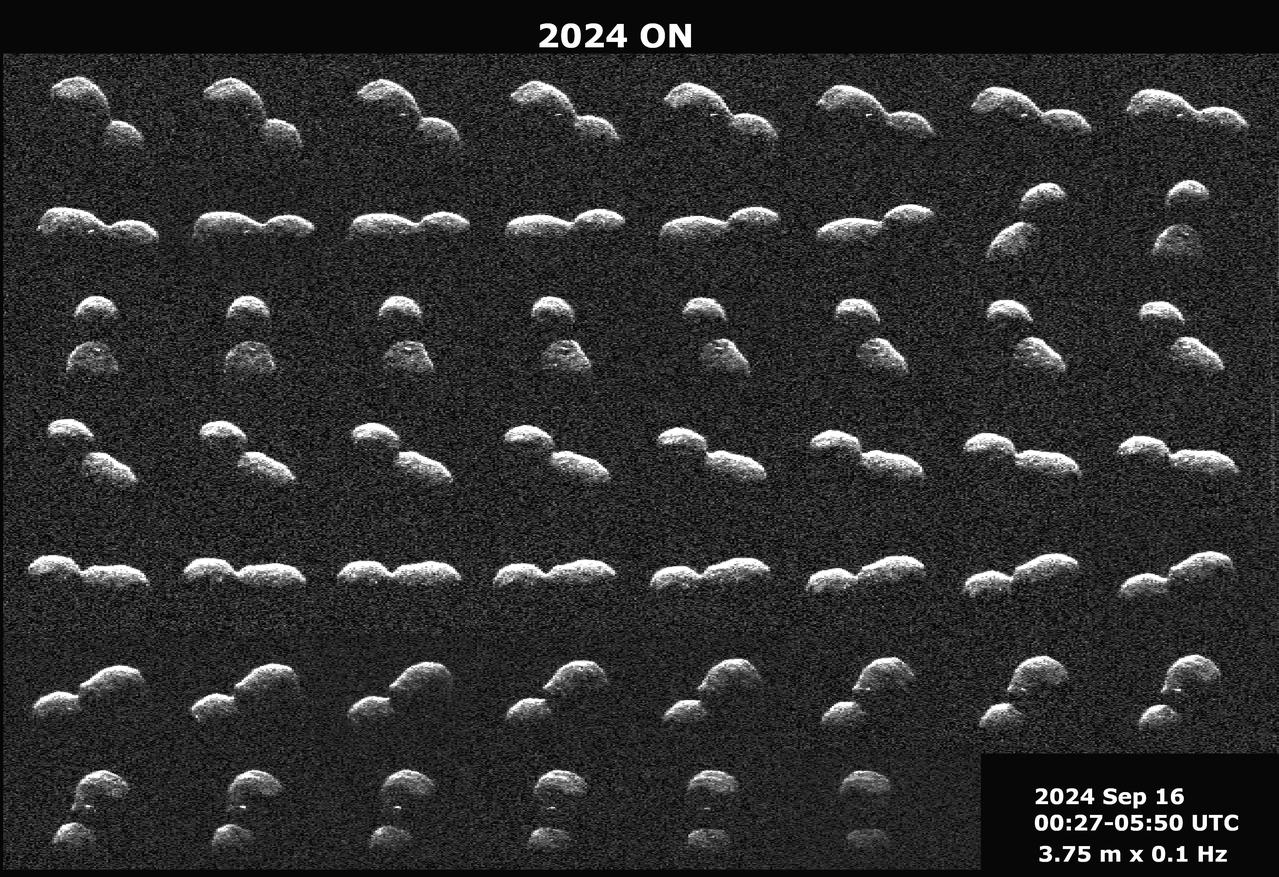
This series of radar images obtained by the Deep Space Network's Goldstone Solar System Radar near Barstow, California, on Sept. 16, 2024, shows the near-Earth asteroid 2024 ON a day before its close approach with our planet. The asteroid passed Earth at a distance of 620,000 miles (1 million kilometers) – about 2.6 times the distance between the Moon and Earth. Discovered by the NASA-funded Asteroid Terrestrial-impact Last Alert System (ATLAS) on Mauna Loa in Hawaii on July 27, the near-Earth asteroid's shape resembles that of a peanut. Like the asteroid 2024 JV33 that made close approach with Earth a month earlier, 2024 ON is likely a contact binary, with two rounded lobes separated by a pronounced neck, one lobe about 50% larger than the other. The radar images determined that it is about 1150 feet (350 meters) long. Features larger than 12.3 feet (3.75 meters) across can be seen on the surface. Bright radar spots on the asteroid's surface likely indicate large boulders. The images show about 90% of one rotation over the course of about six hours. Radar is the principal technique for discovering contact binaries, dozens of which have been imaged by planetary radar. At least 14% of near-Earth asteroids larger than about 200 meters (660 feet) have a contact binary shape. This asteroid is classified as potentially hazardous, but it does not pose a hazard to Earth for the foreseeable future. These Goldstone measurements have allowed scientists to greatly reduce the uncertainties in the asteroid's distance from Earth and in its future motion for many decades. Animation available at https://photojournal.jpl.nasa.gov/catalog/PIA26451
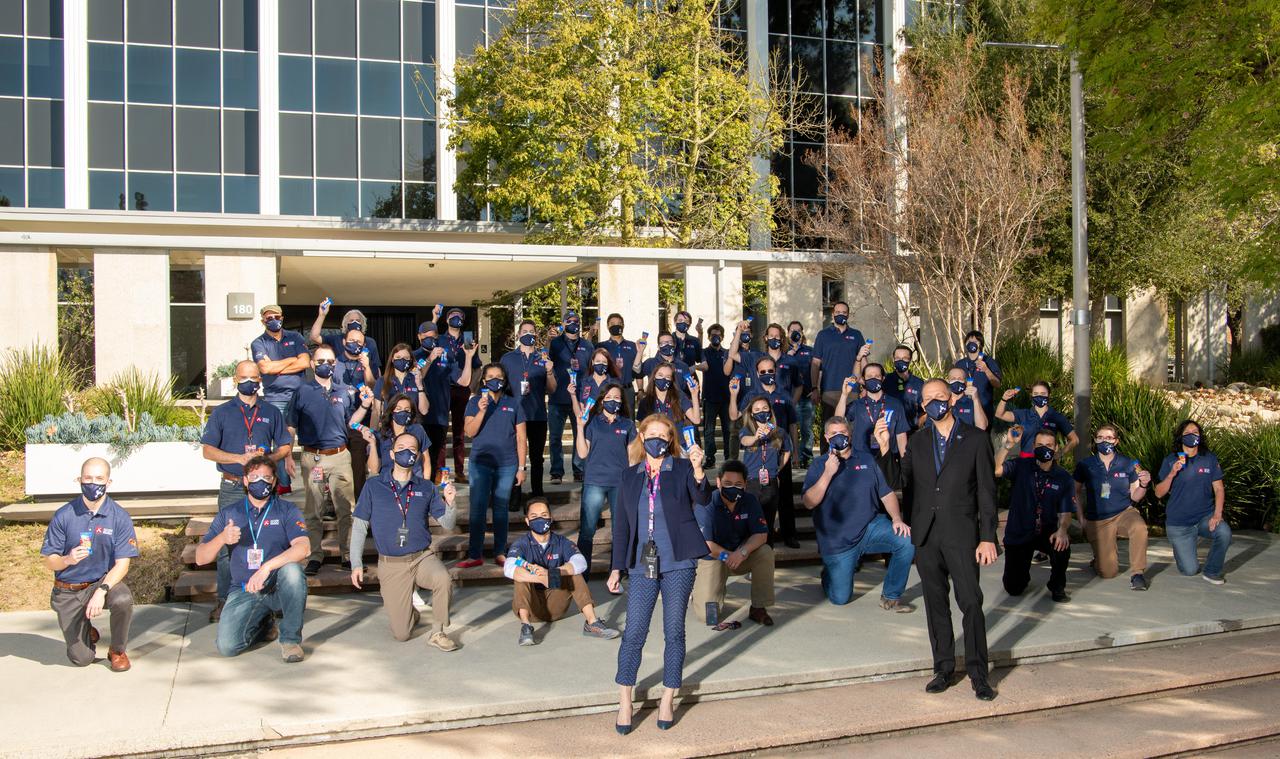
Before NASA's Mars Perseverance rover landed on Mars on Feb. 18, 2021, the entry, descent, and landing team posed at the agency's Jet Propulsion Laboratory in Southern California with individual bags of traditional "lucky peanuts." Eating peanuts before major mission events is a longstanding tradition at JPL. In the foreground are (left to right) NASA Planetary Science Division Director Lori Glaze and NASA Science Mission Directorate Associate Administrator Thomas Zurbuchen. A key objective for Perseverance's mission on Mars is astrobiology, including the search for signs of ancient microbial life. The rover will characterize the planet's geology and past climate, pave the way for human exploration of the Red Planet, and be the first mission to collect and cache Martian rock and regolith (broken rock and dust). Subsequent NASA missions, in cooperation with ESA (European Space Agency), would send spacecraft to Mars to collect these sealed samples from the surface and return them to Earth for in-depth analysis. The Mars 2020 mission is part of a larger program that includes missions to the Moon as a way to prepare for human exploration of the Red Planet. https://photojournal.jpl.nasa.gov/catalog/PIA23724
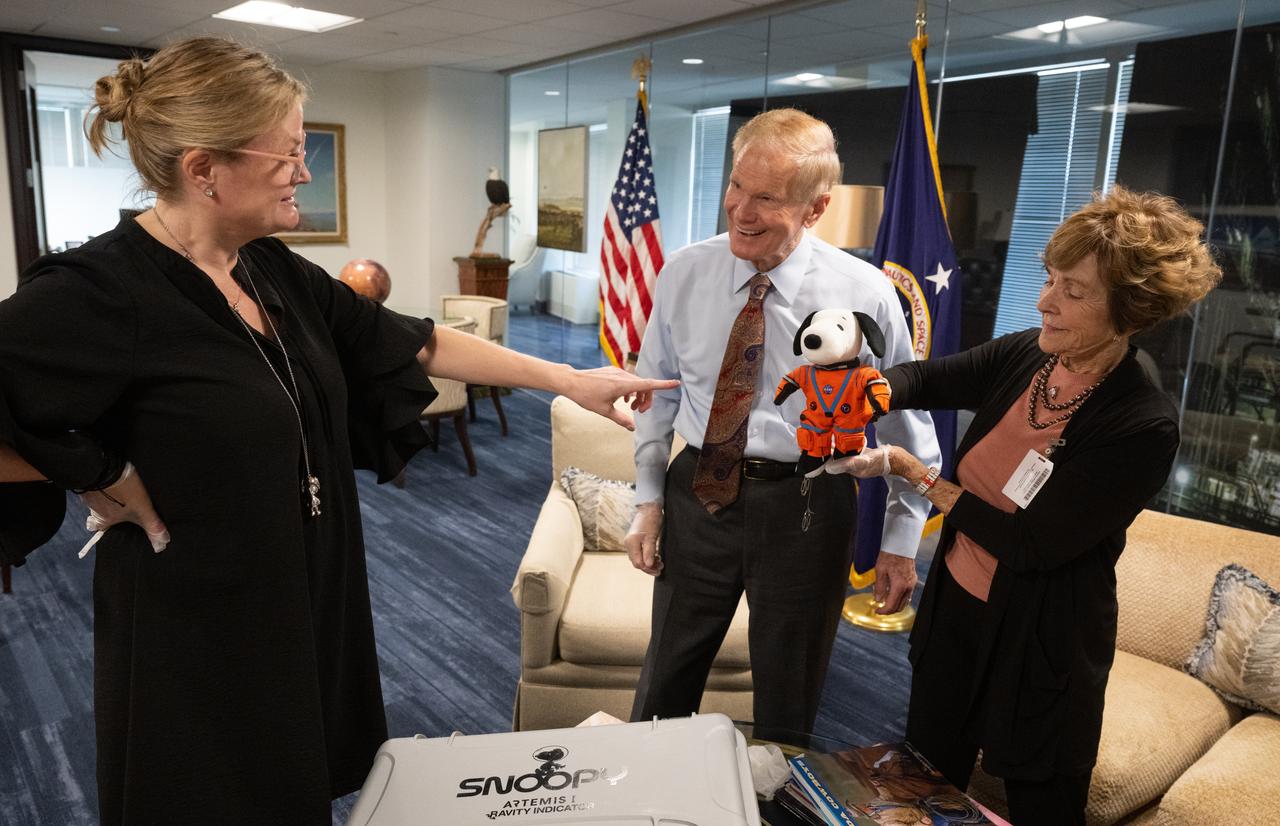
Melissa Menta, executive vice president at Peanuts Worldwide, left, NASA Administrator Bill Nelson, center, and Jeannie Schulz, widow of Peanuts gang creator Charles M. Schulz, left, holding the Artemis I Snoopy zero gravity indicator, are seen, Wednesday, April 5, 2023, during a visit to the Mary W. Jackson NASA Headquarters building in Washington. Schulz awarded a NASA Exceptional Achievement Medal by Administrator Nelson at an “Our Blue Planet” concert at the John F. Kennedy Center for the Performing Arts. Snoopy rode along as the zero gravity indicator on NASA’s Artemis I mission as part of a partnership with the agency and continues to help NASA inspire kids of all ages to follow along with Artemis missions. As part of the visit, Schulz showed the flown Artemis I Snoopy zero gravity indicator before it goes to its final home for display at the Schulz Museum in Santa Rosa, California. Photo Credit: (NASA/Joel Kowsky)
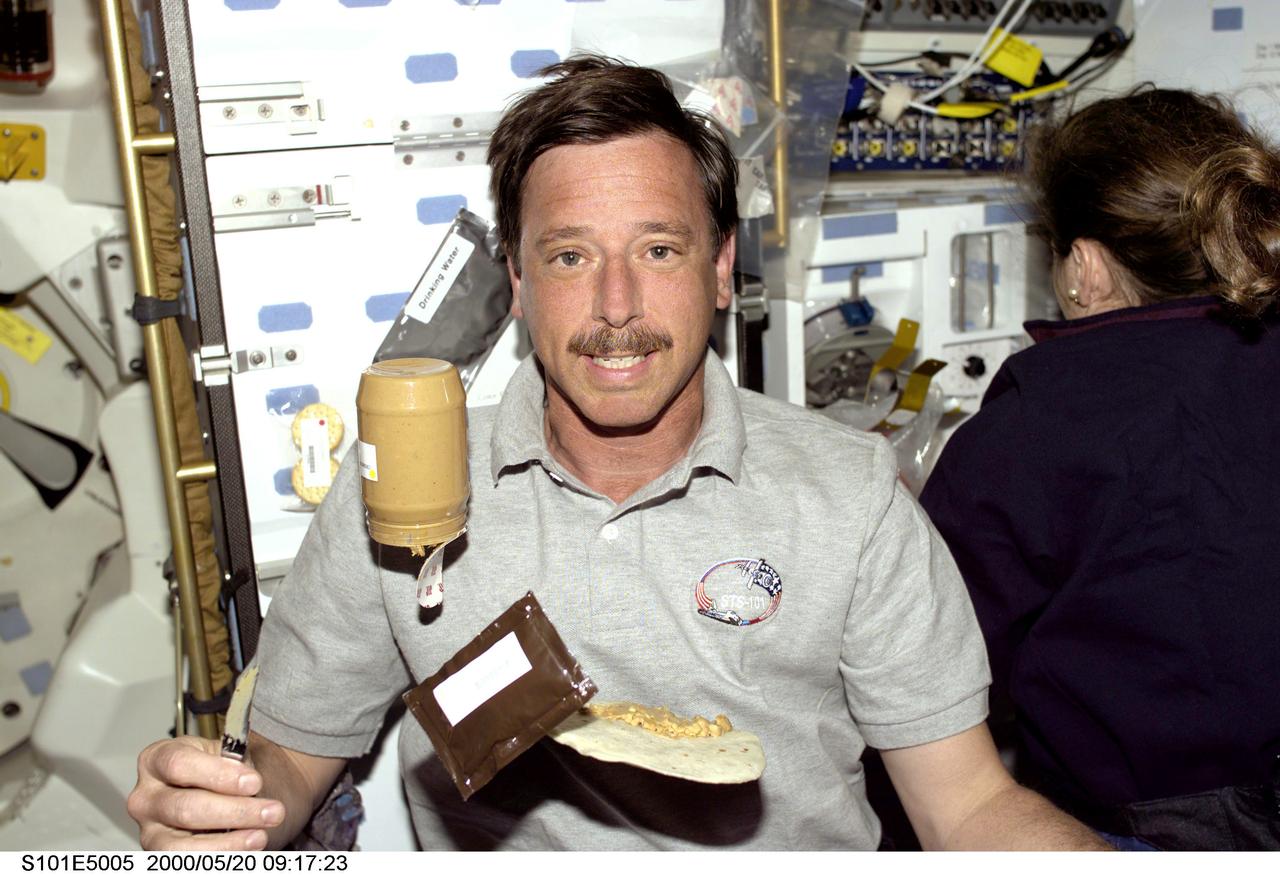
NASA JSC Electronic Imagery
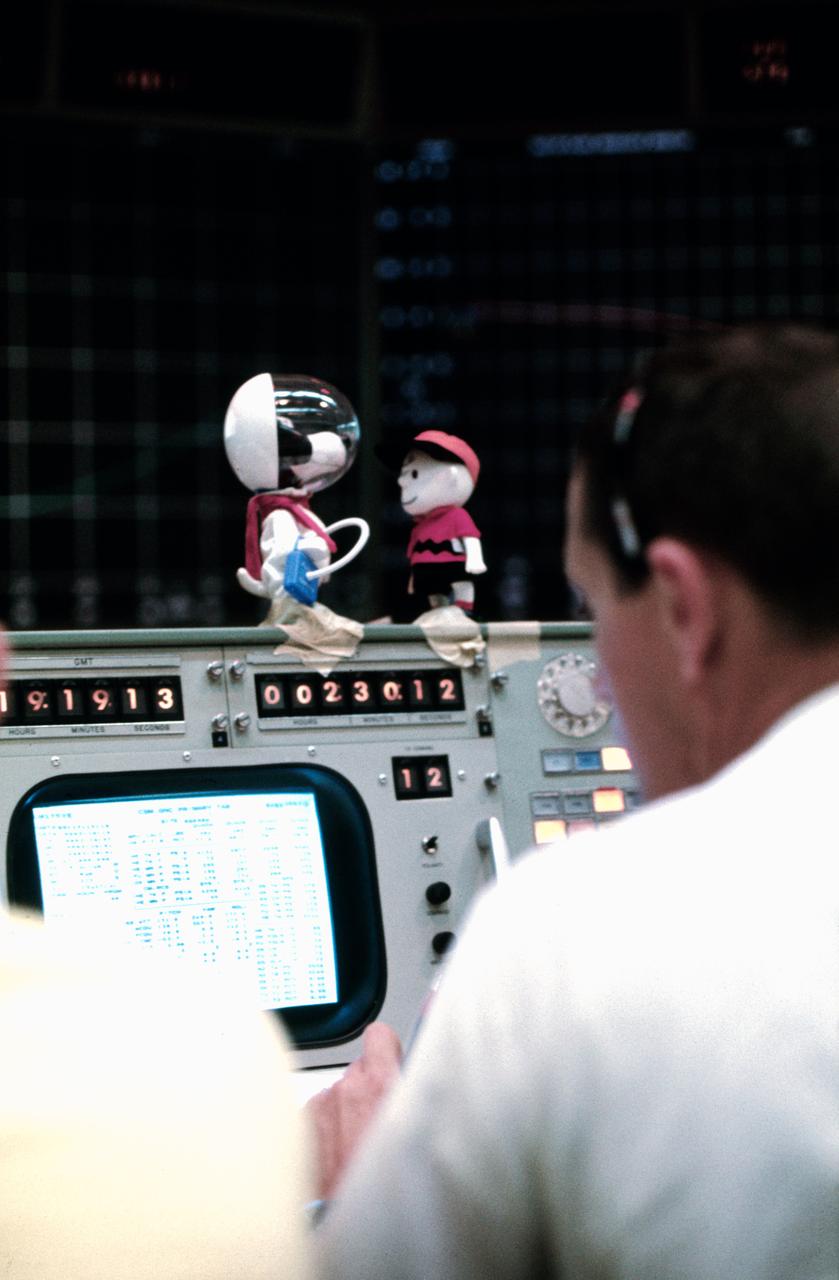
S69-34314 (18 May 1969) --- Replicas of Snoopy and Charlie Brown, the two characters from Charles Schulz's syndicated comic strip, "Peanuts," decorate the top of a console in the Mission Operations Control Room in the Mission Control Center, Building 30, on the first day of the Apollo 10 lunar orbit mission. During lunar orbit operations, the Lunar Module will be called ?Snoopy? when it is separated from the Command and Service Modules. The code words for the Command Module will be ?Charlie Brown?.
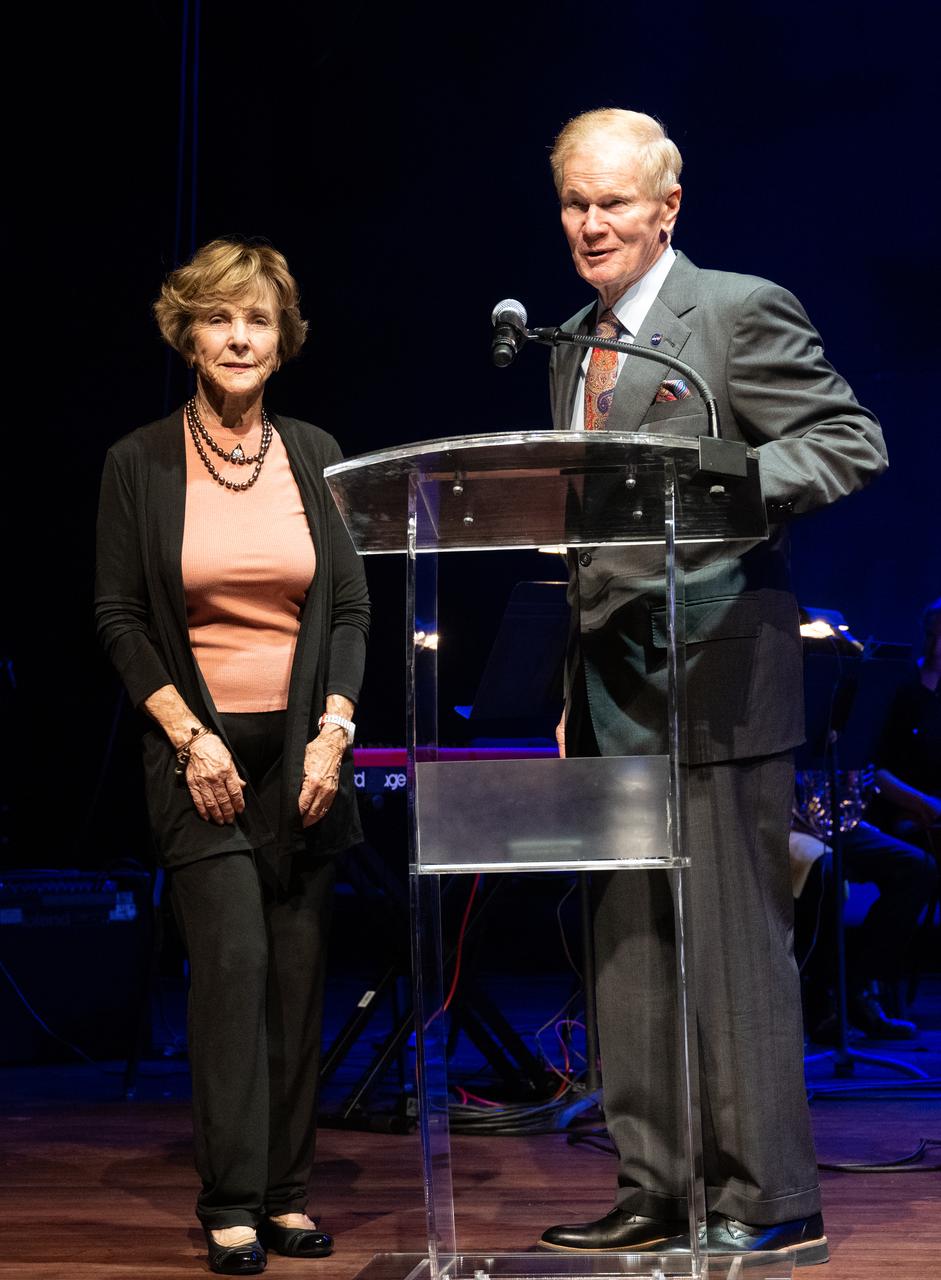
NASA Administrator Bill Nelson, right, and Jeannie Schulz, widow of Peanuts gang creator Charles M. Schulz, left, are seen, Wednesday, April 5, 2023, Our Blue Planet concert at the John F. Kennedy Center for the Performing Arts in Washington. Snoopy rode along as the zero gravity indicator on NASA’s Artemis I mission as part of a partnership with the agency and continues to help NASA inspire kids of all ages to follow along with Artemis missions. Photo Credit: (NASA/Joel Kowsky)
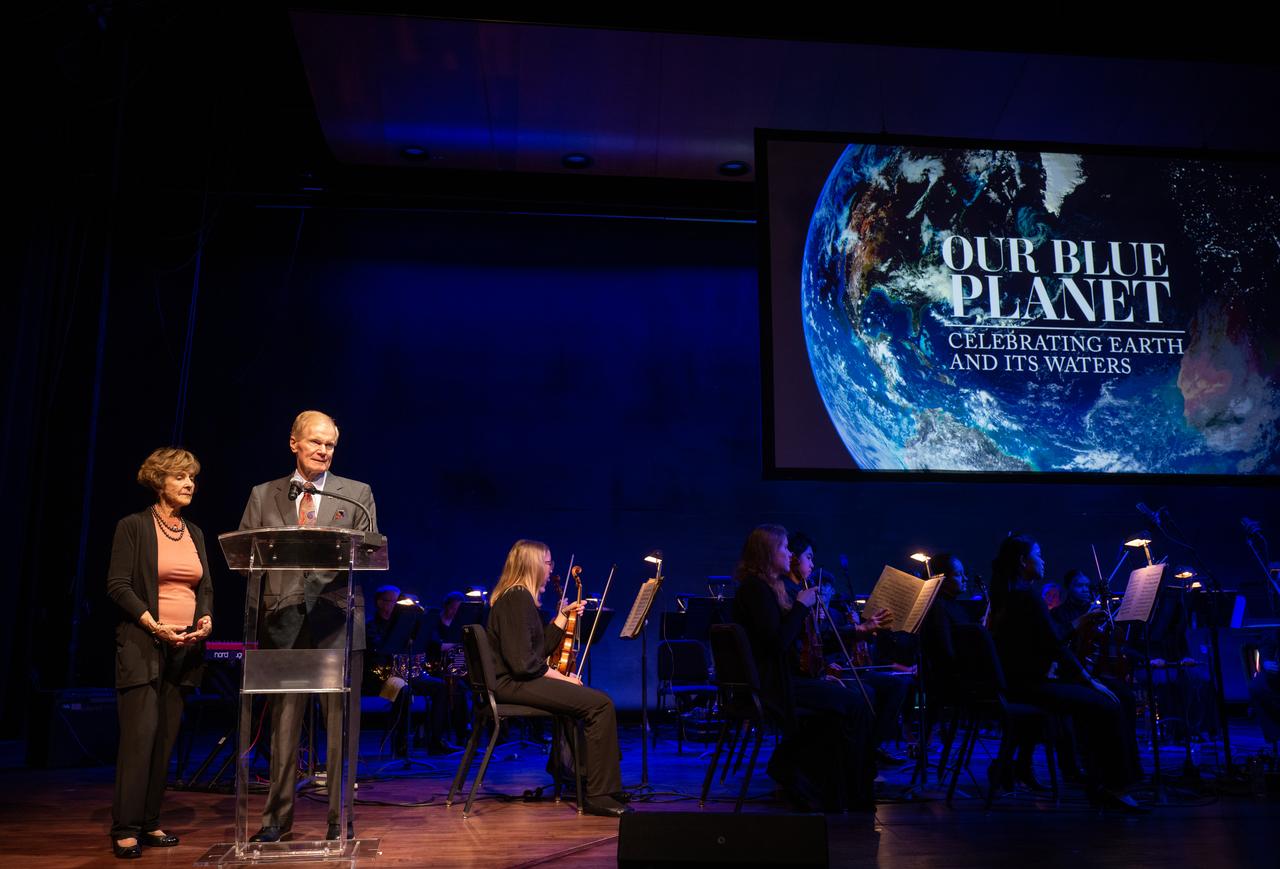
NASA Administrator Bill Nelson, right, and Jeannie Schulz, widow of Peanuts gang creator Charles M. Schulz, left, are seen, Wednesday, April 5, 2023, Our Blue Planet concert at the John F. Kennedy Center for the Performing Arts in Washington. Snoopy rode along as the zero gravity indicator on NASA’s Artemis I mission as part of a partnership with the agency and continues to help NASA inspire kids of all ages to follow along with Artemis missions. Photo Credit: (NASA/Joel Kowsky)
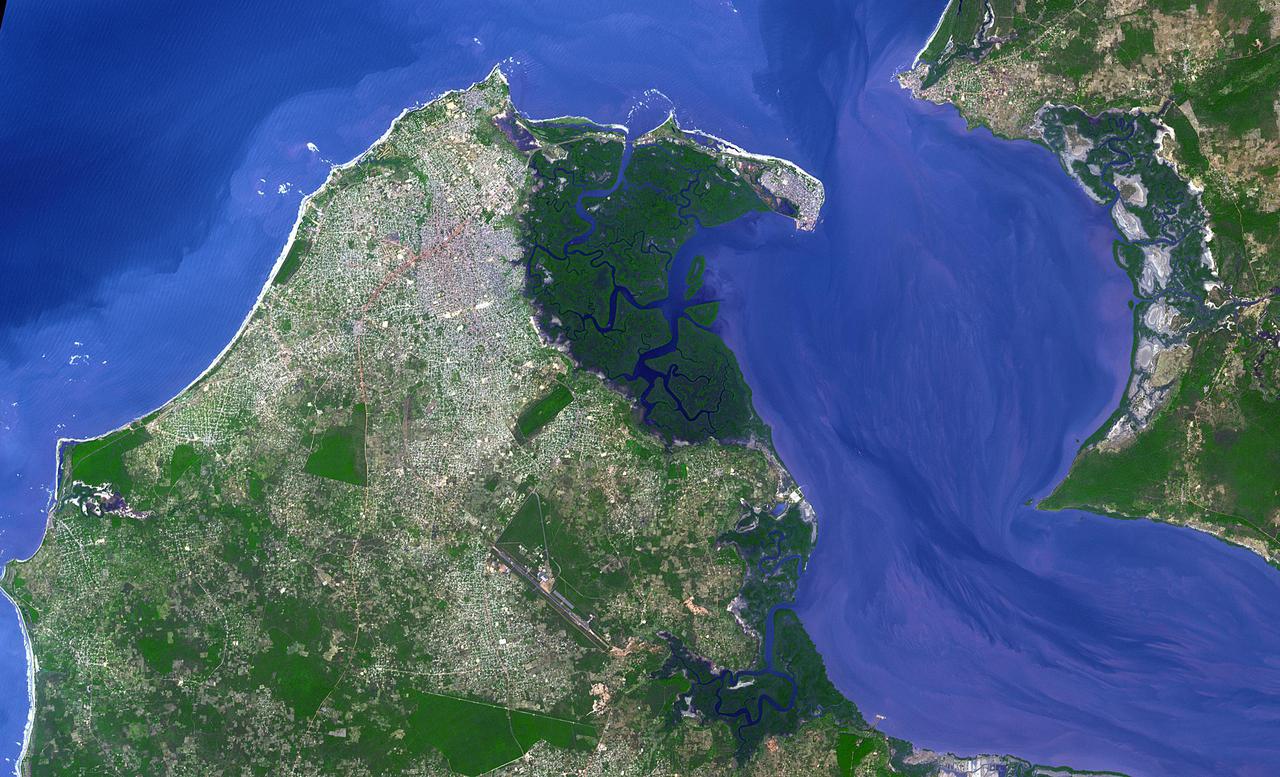
Banjul is the capital of The Gambia; it is located on St. Mary's Island, where the Gambia River enters the Atlantic Ocean in western Africa. The small city is surrounded by mangroves and water; it is connected to the rest of the country by ferries and a bridge. Peanut processing is the country's principal industry (Wikipedia). The image was acquired December 17, 2009, covers an area of 27.4 by 43.2 km, and is located at 13.5 degrees north, 16.6 degrees west. https://photojournal.jpl.nasa.gov/catalog/PIA24416
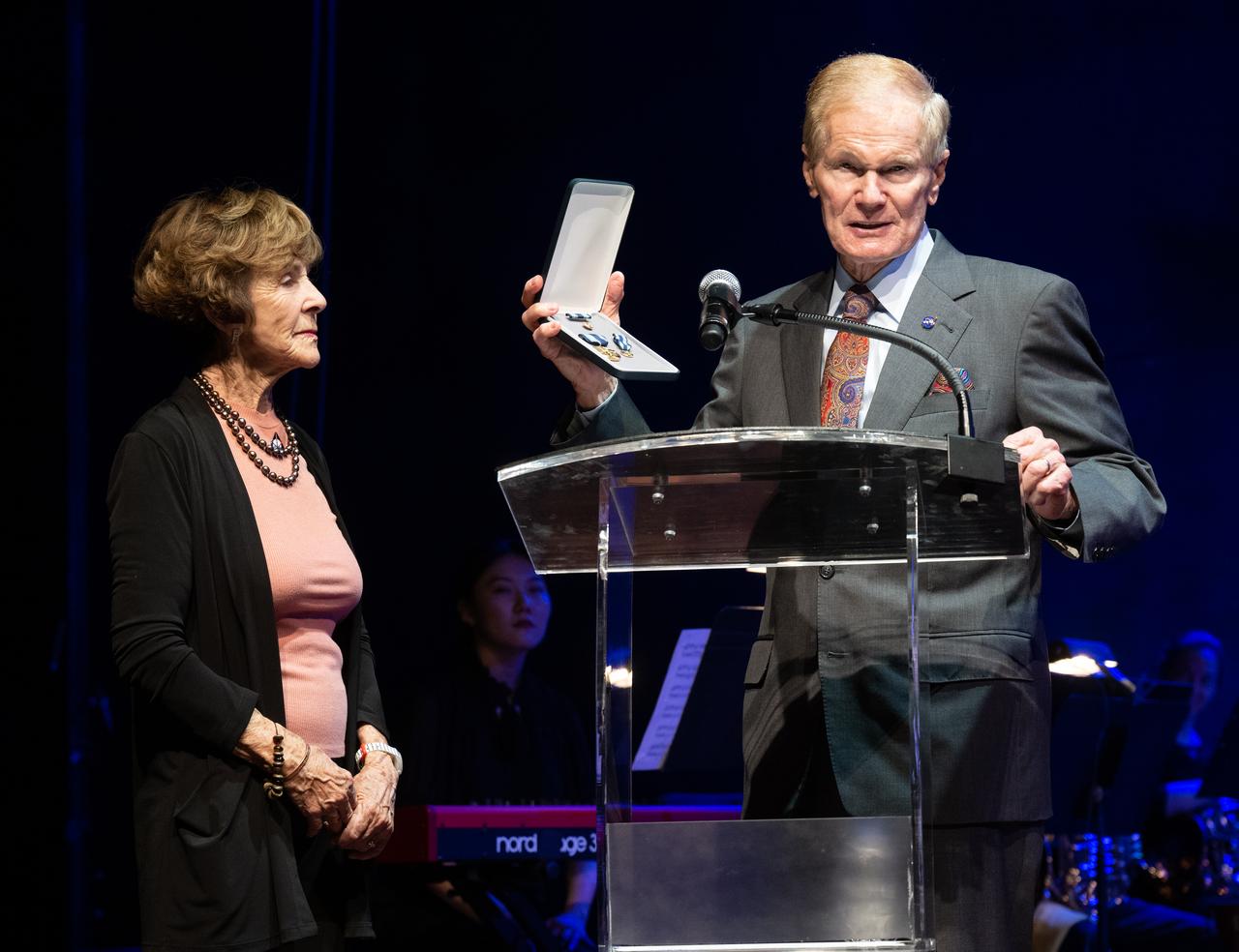
NASA Administrator Bill Nelson, right, presents Jeannie Schulz, widow of Peanuts gang creator Charles M. Schulz, with a NASA Exceptional Achievement Medal, Wednesday, April 5, 2023, at the “Our Blue Planet” concert at the John F. Kennedy Center for the Performing Arts in Washington. Snoopy rode along as the zero gravity indicator on NASA’s Artemis I mission as part of a partnership with the agency and continues to help NASA inspire kids of all ages to follow along with Artemis missions. Photo Credit: (NASA/Joel Kowsky)
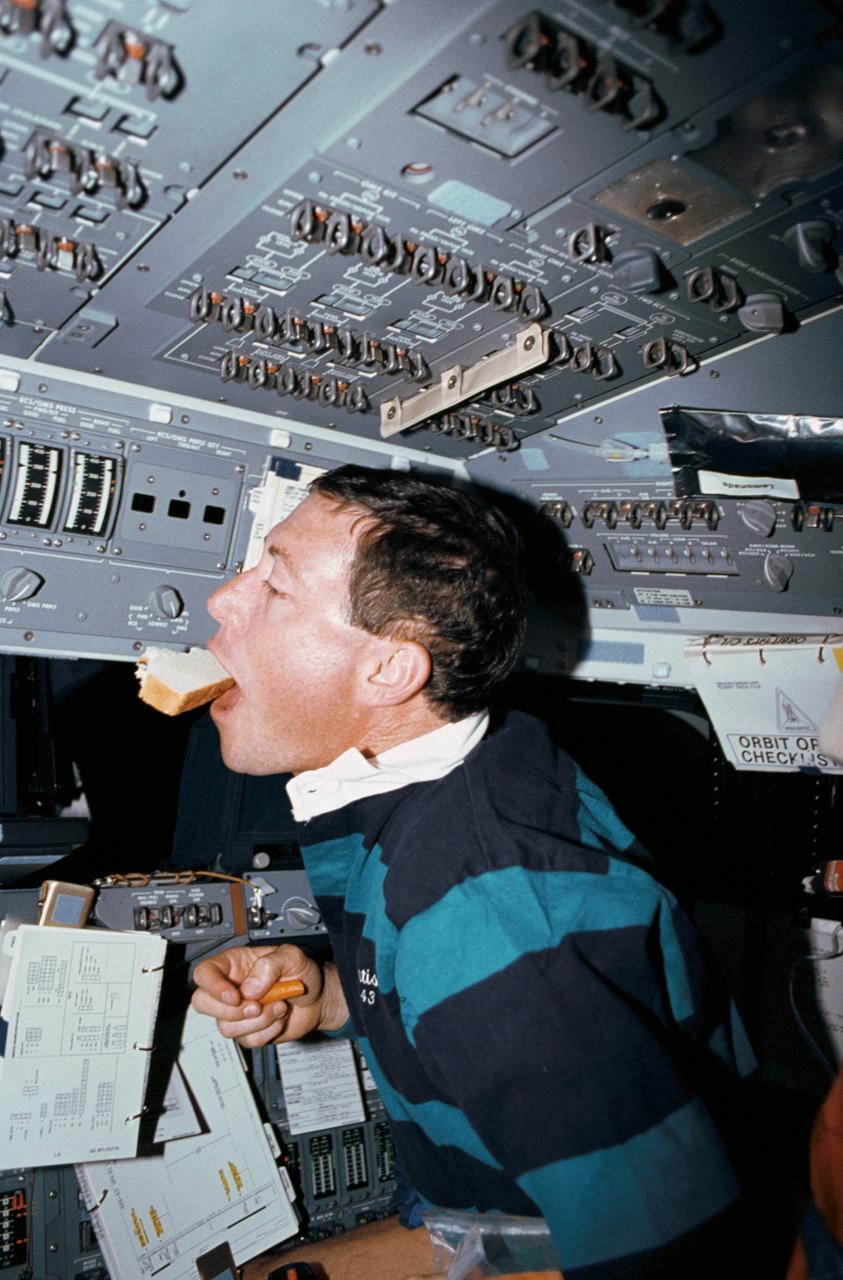
STS043-02-020 (2-11 Aug. 1991) --- Astronaut Michael A. Baker, STS-43 pilot, seated at the forward flight deck pilot station controls of the Space Shuttle Atlantis, eats a free-floating peanut butter and jelly sandwich while holding a carrot. Surrounding Baker are procedural checklists, control panels, and windows. A lemonade drink bag is velcroed to overhead panel.
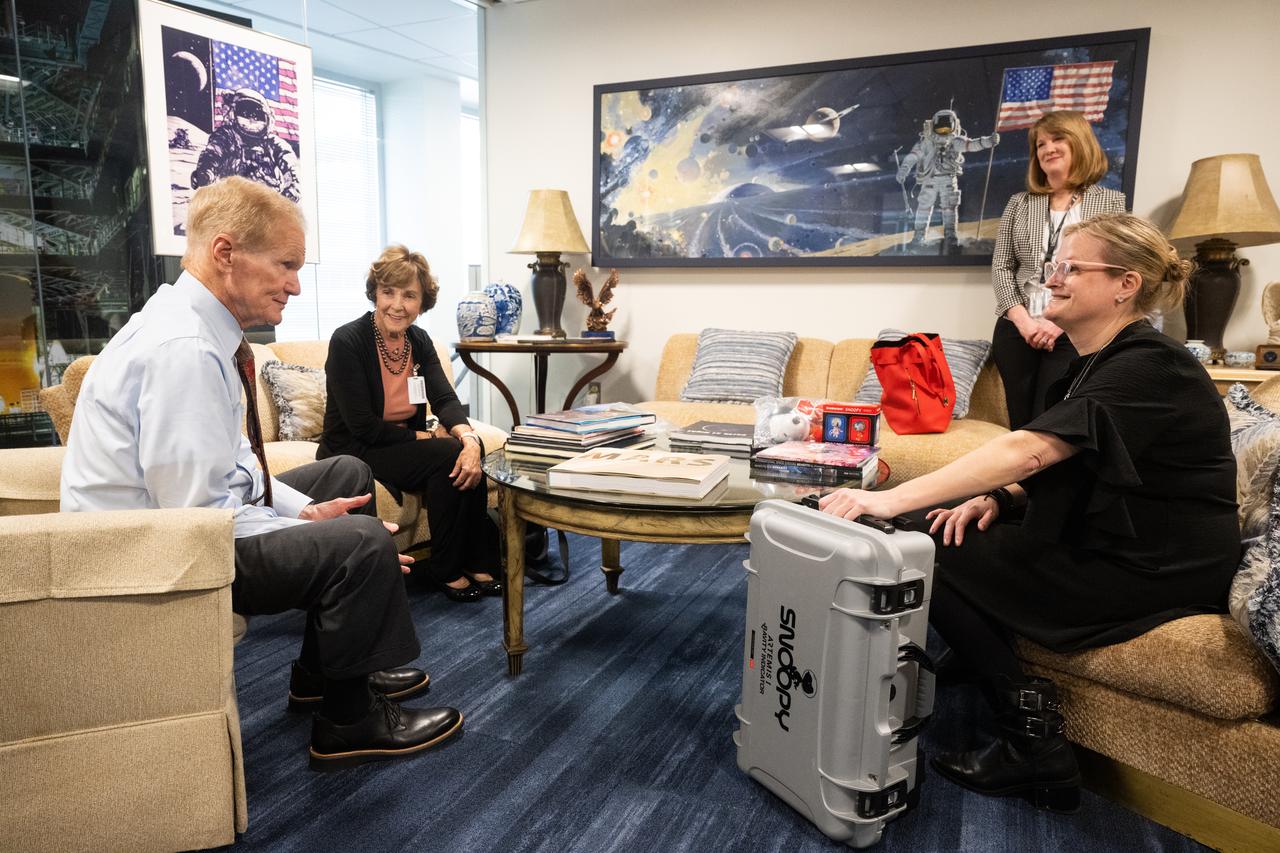
NASA Administrator Bill Nelson, left, Jeannie Schulz, widow of Peanuts gang creator Charles M. Schulz, second from left, Maureen O’Brien, manager of strategic alliances at NASA Headquarters, second from right, and Melissa Menta, executive vice president at Peanuts Worldwide, right, are seen Wednesday, April 5, 2023, at the Mary W. Jackson NASA Headquarters building in Washington. Schulz was awarded a NASA Exceptional Achievement Medal by Administrator Nelson at an Our Blue Planet concert at the Kennedy Center for the Performing Arts. Snoopy rode along as the zero gravity indicator on NASA’s Artemis I mission as part of a partnership with the agency and continues to help NASA inspire kids of all ages to follow along with Artemis missions. As part of the visit, Schulz showed the flown Artemis I Snoopy zero gravity indicator before it goes to its final home for display at the Schulz Museum in Santa Rosa, California. Photo Credit: (NASA/Joel Kowsky)
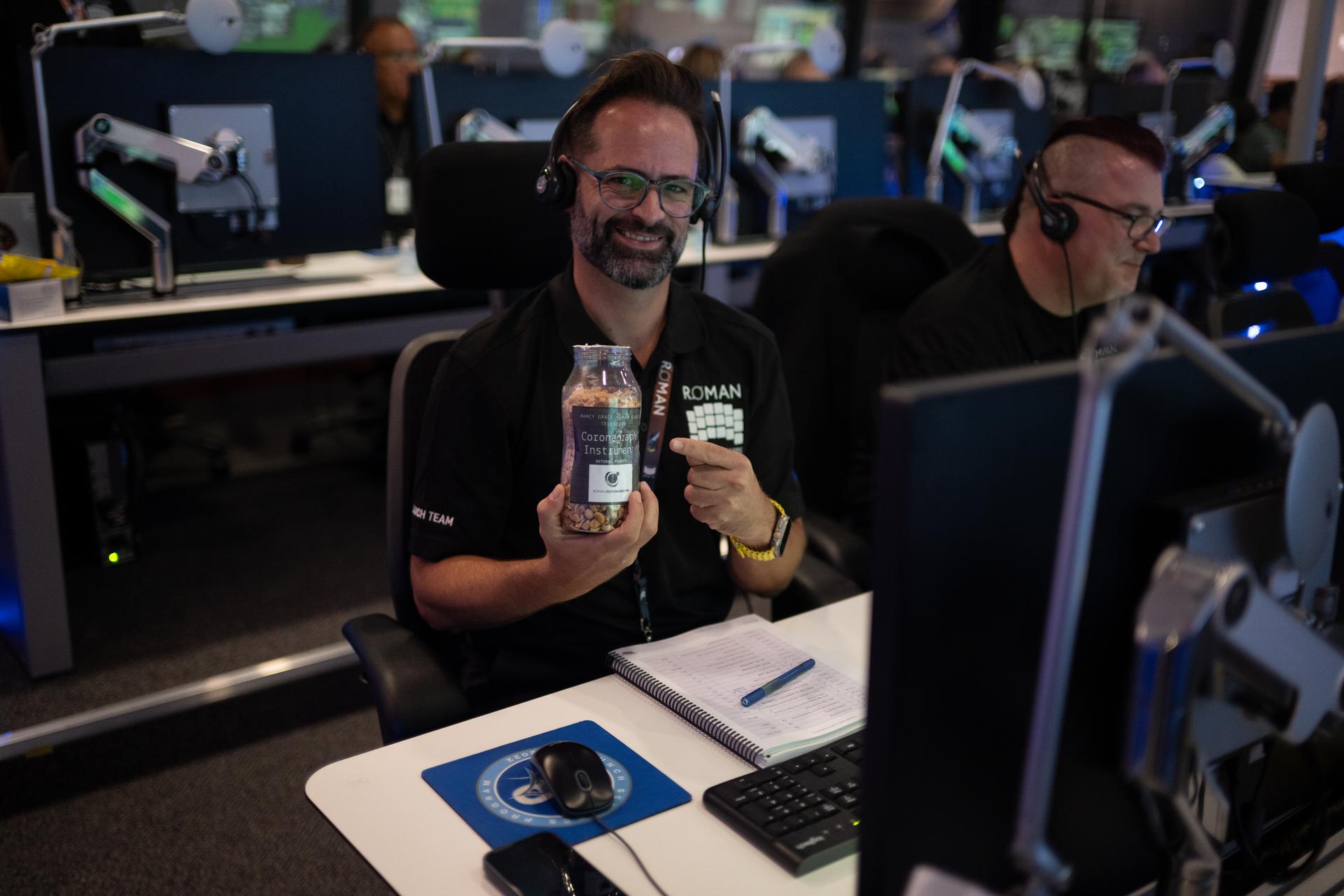
Dr. Lucas Paganini, program executive for the Nancy Grace Roman Telescope in the Astrophysics Division of NASA’s Science Mission Directorate, holds a jar of lucky peanuts, as teams monitor the countdown inside Hangar AE at Cape Canaveral Space Force Station for the launch of a SpaceX Falcon Heavy rocket with NASA’S Nancy Grace Roman Space Telescope from Launch Complex 39A at NASA’s Kennedy Space Center, Sunday, Aug. 30, 2026, in Florida. Roman will investigate dark energy and dark matter, conduct a statistical census of planetary systems, and enable a broad range of additional astrophysics research. Launch occurred at 7:26 a.m. EDT. Photo Credit (NASA/Joel Kowsky)
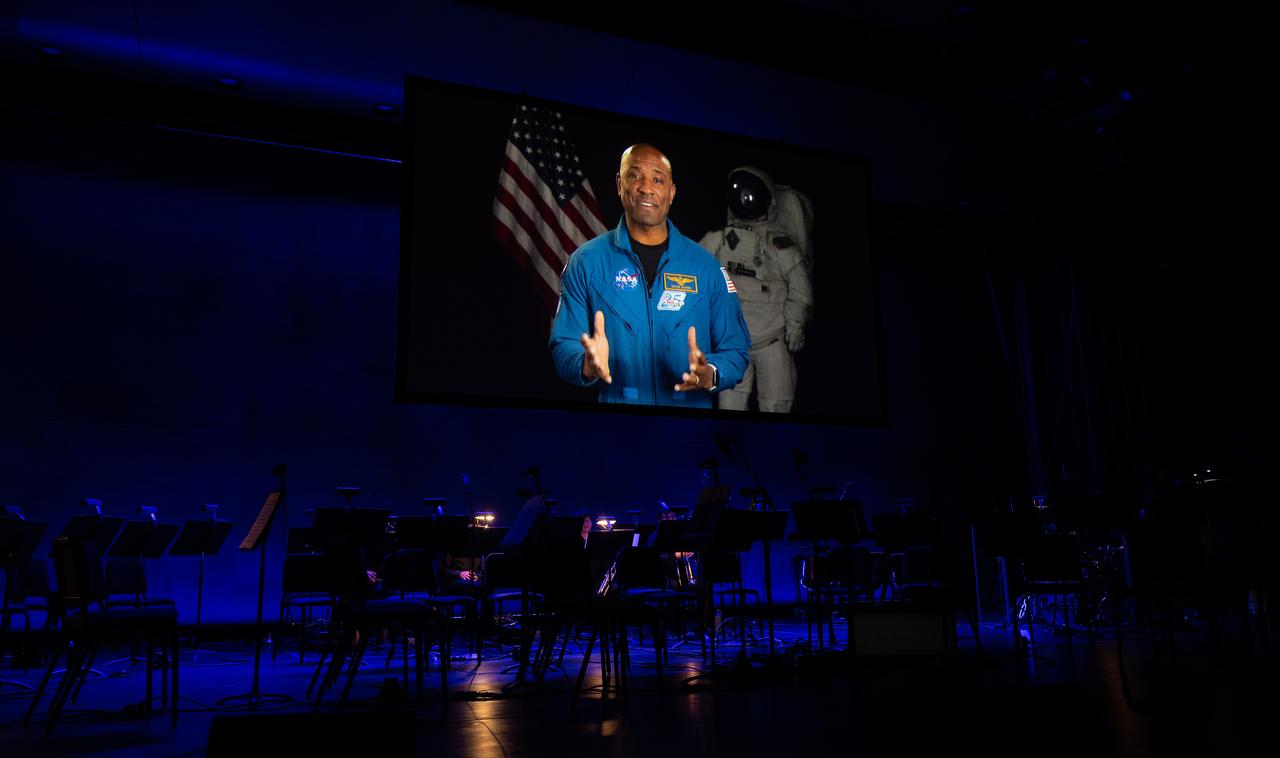
NASA astronaut Victor Glover is seen on screen in a video, Wednesday, April 5, 2023, during the “Our Blue Planet” concert at the John F. Kennedy Center for the Performing Arts in Washington. Jeannie Schulz, widow of Peanuts gang creator Charles M. Schulz, was awarded a NASA Exceptional Achievement Medal by NASA Administrator Bill Nelson at the concert. Snoopy rode along as the zero gravity indicator on NASA’s Artemis I mission as part of a partnership with the agency and continues to help NASA inspire kids of all ages to follow along with Artemis missions. Photo Credit: (NASA/Joel Kowsky)

Emil de Cou conducts the Catholic University Orchestra, Wednesday, April 5, 2023, during the “Our Blue Planet” concert at the John F. Kennedy Center for the Performing Arts in Washington. Jeannie Schulz, widow of Peanuts gang creator Charles M. Schulz, was awarded a NASA Exceptional Achievement Medal by NASA Administrator Bill Nelson at the concert. Snoopy rode along as the zero gravity indicator on NASA’s Artemis I mission as part of a partnership with the agency and continues to help NASA inspire kids of all ages to follow along with Artemis missions. Photo Credit: (NASA/Joel Kowsky)
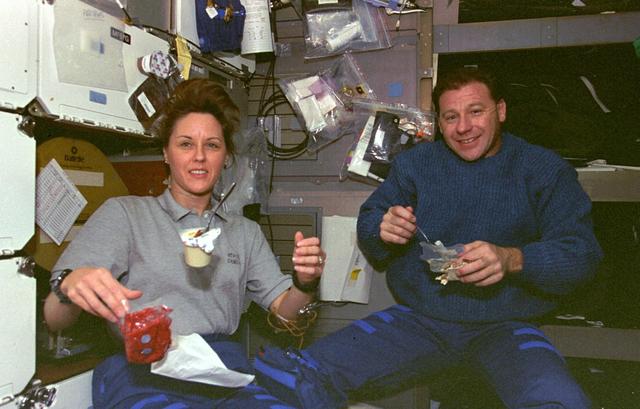
STS073-356-024 (20 October - 5 November 1995) --- Payload specialist Albert Sacco Jr. joins astronaut Kathryn C. Thornton, payload commander, for mealtime on the middeck of the Earth-orbiting Space Shuttle Columbia. Thornton is about to open a packet of strawberries, while a can of vanilla pudding floats before her. Sacco is about to grab a spoonful of rice pilaf while holding a peanut butter and jelly sandwich on a tortilla. The two were joined by five other crewmembers in support of 16-days' in-space research in support of the United States Microgravity Laboratory (USML-2) mission.

Emil de Cou and the Catholic University Orchestra are seen Wednesday, April 5, 2023, during the “Our Blue Planet” concert at the John F. Kennedy Center for the Performing Arts in Washington. Jeannie Schulz, widow of Peanuts gang creator Charles M. Schulz, was awarded a NASA Exceptional Achievement Medal by NASA Administrator Bill Nelson at the concert. Snoopy rode along as the zero gravity indicator on NASA’s Artemis I mission as part of a partnership with the agency and continues to help NASA inspire kids of all ages to follow along with Artemis missions. Photo Credit: (NASA/Joel Kowsky)
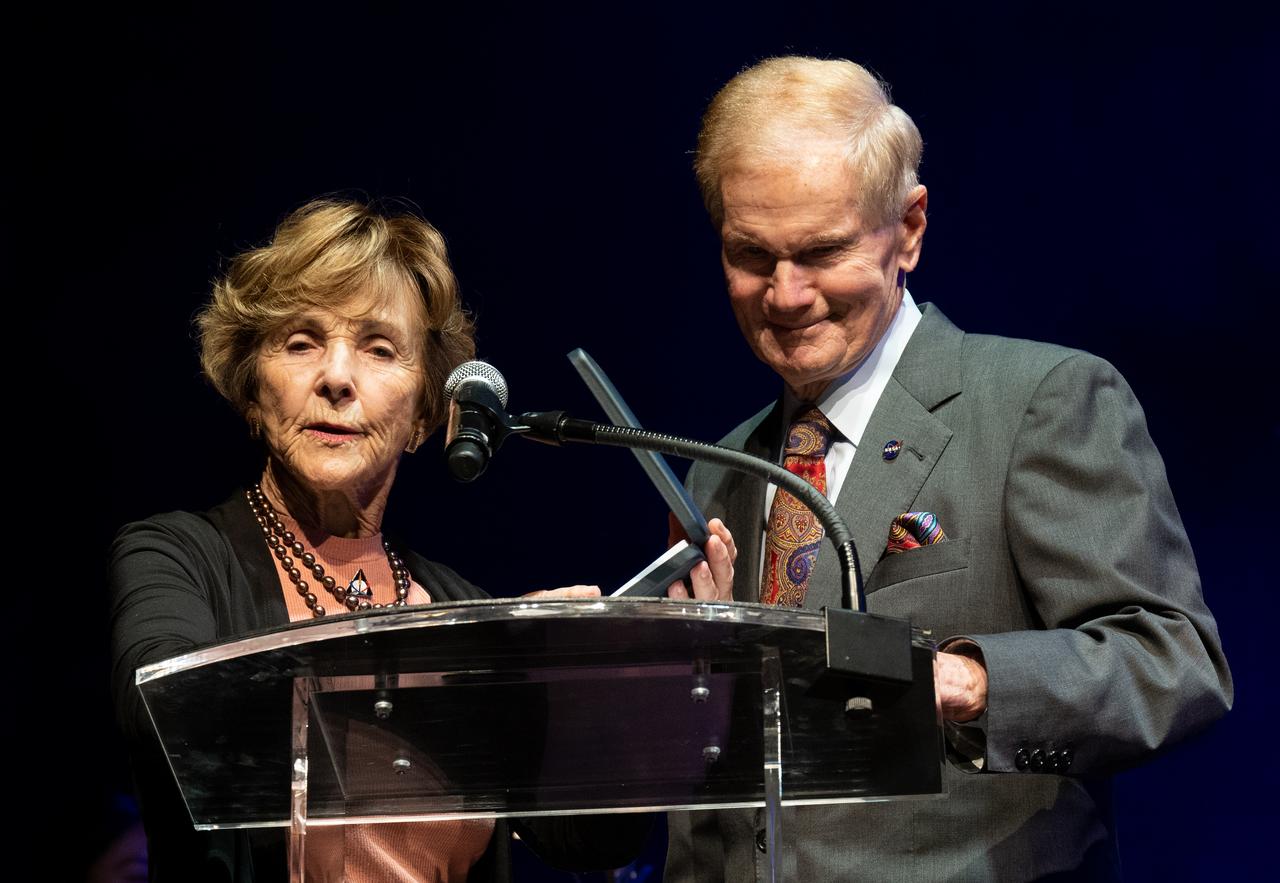
Jeannie Schulz, widow of Peanuts gang creator Charles M. Schulz, left, speaks after being presented with a NASA Exceptional Achievement Medal by NASA Administrator Bill Nelson, Wednesday, April 5, 2023, at the “Our Blue Planet” concert at the John F. Kennedy Center for the Performing Arts in Washington. Snoopy rode along as the zero gravity indicator on NASA’s Artemis I mission as part of a partnership with the agency and continues to help NASA inspire kids of all ages to follow along with Artemis missions. Photo Credit: (NASA/Joel Kowsky)

Howard University’s Afro Blue perform, Wednesday, April 5, 2023, during the “Our Blue Planet” concert at the John F. Kennedy Center for the Performing Arts in Washington. Jeannie Schulz, widow of Peanuts gang creator Charles M. Schulz, was awarded a NASA Exceptional Achievement Medal by NASA Administrator Bill Nelson at the concert. Snoopy rode along as the zero gravity indicator on NASA’s Artemis I mission as part of a partnership with the agency and continues to help NASA inspire kids of all ages to follow along with Artemis missions. Photo Credit: (NASA/Joel Kowsky)
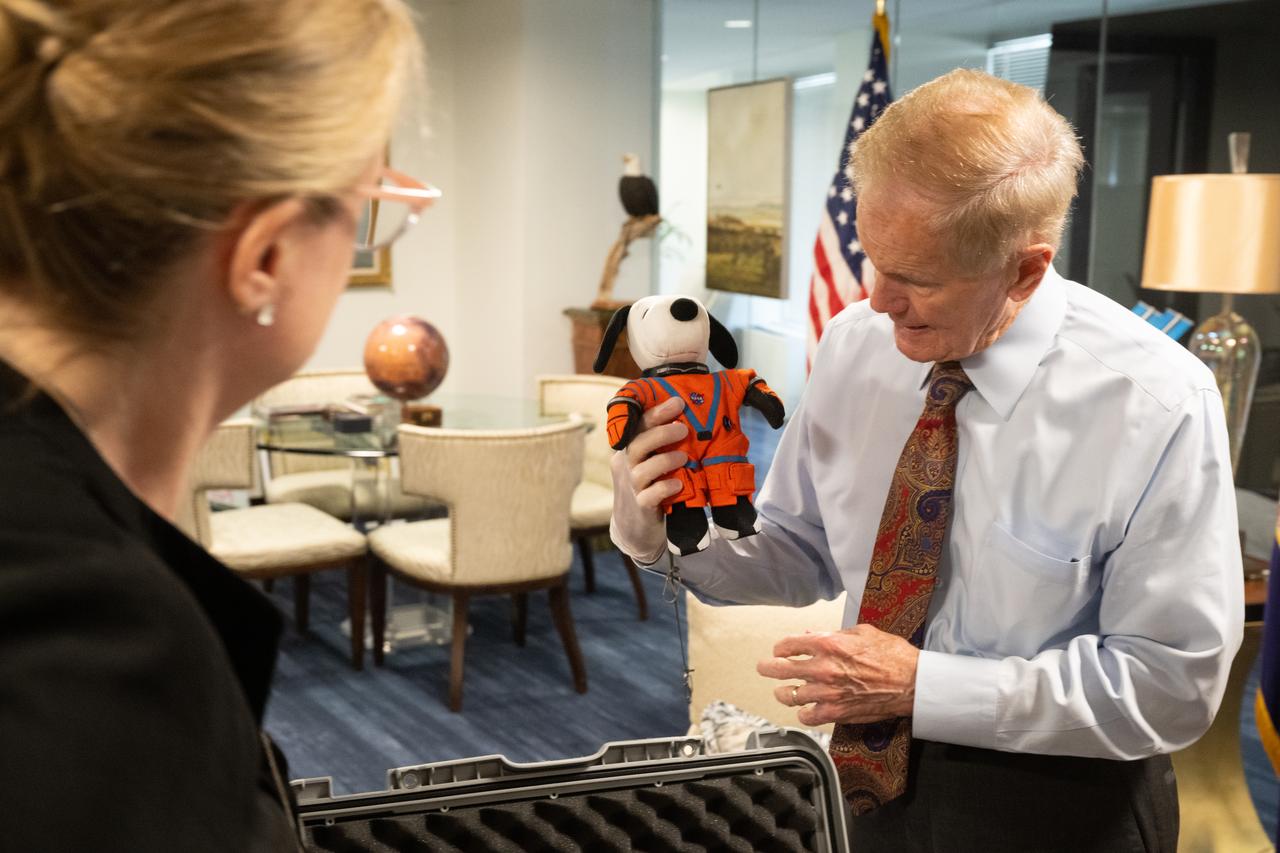
NASA Administrator Bill Nelson, holding the Artemis I Snoopy zero gravity indicator, is seen during a visit with Jeannie Schulz, widow of Peanuts gang creator Charles M. Schulz, Wednesday, April 5, 2023, at the Mary W. Jackson NASA Headquarters building in Washington. Schulz awarded a NASA Exceptional Achievement Medal by Administrator Nelson at an “Our Blue Planet” concert at the John F. Kennedy Center for the Performing Arts. Snoopy rode along as the zero gravity indicator on NASA’s Artemis I mission as part of a partnership with the agency and continues to help NASA inspire kids of all ages to follow along with Artemis missions. As part of the visit, Schulz showed the flown Artemis I Snoopy zero gravity indicator before it goes to its final home for display at the Schulz Museum in Santa Rosa, California. Photo Credit: (NASA/Joel Kowsky)
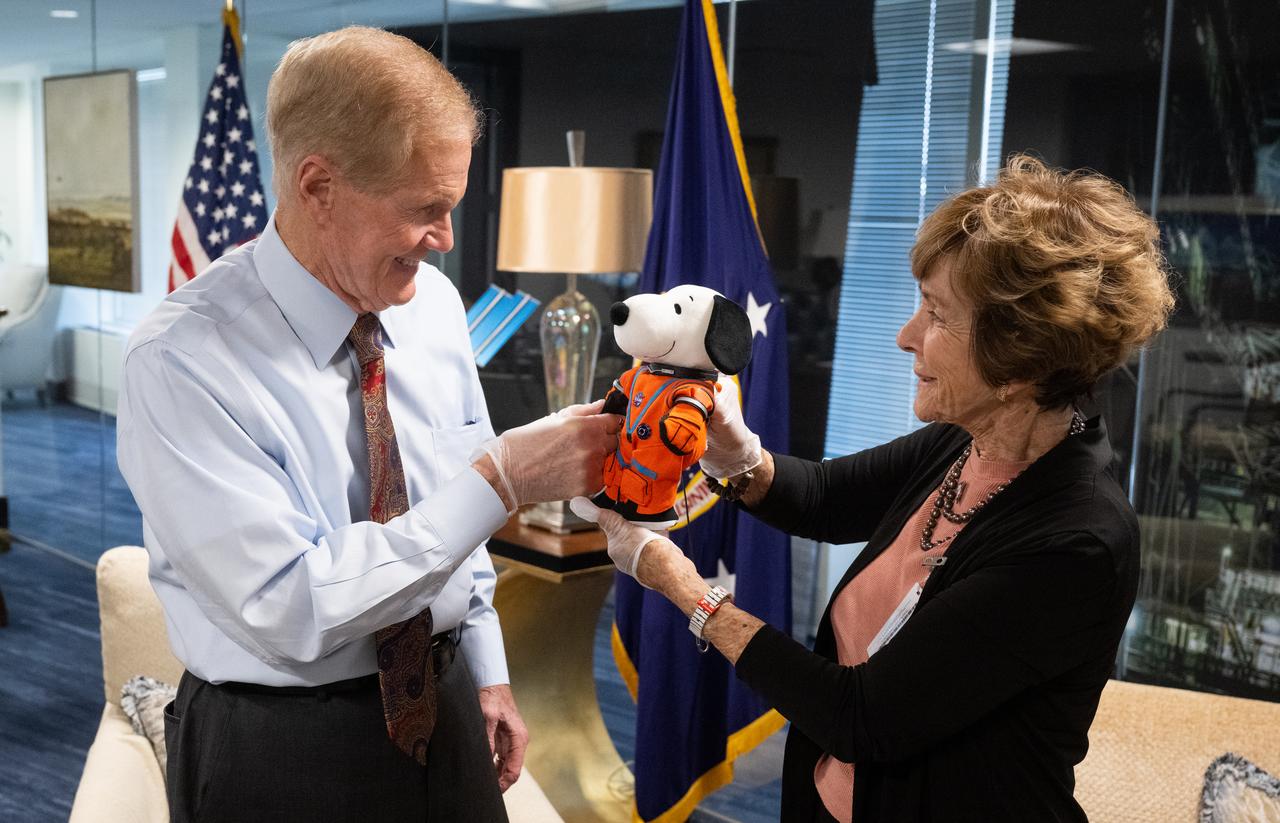
NASA Administrator Bill Nelson, left, is seen with Jeannie Schulz, widow of Peanuts gang creator Charles M. Schulz, right, holding the Artemis I Snoopy zero gravity indicator, Wednesday, April 5, 2023, during a visit to the Mary W. Jackson NASA Headquarters building in Washington. Schulz awarded a NASA Exceptional Achievement Medal by Administrator Nelson at an “Our Blue Planet” concert at the John F. Kennedy Center for the Performing Arts. Snoopy rode along as the zero gravity indicator on NASA’s Artemis I mission as part of a partnership with the agency and continues to help NASA inspire kids of all ages to follow along with Artemis missions. As part of the visit, Schulz showed the flown Artemis I Snoopy zero gravity indicator before it goes to its final home for display at the Schulz Museum in Santa Rosa, California. Photo Credit: (NASA/Joel Kowsky)
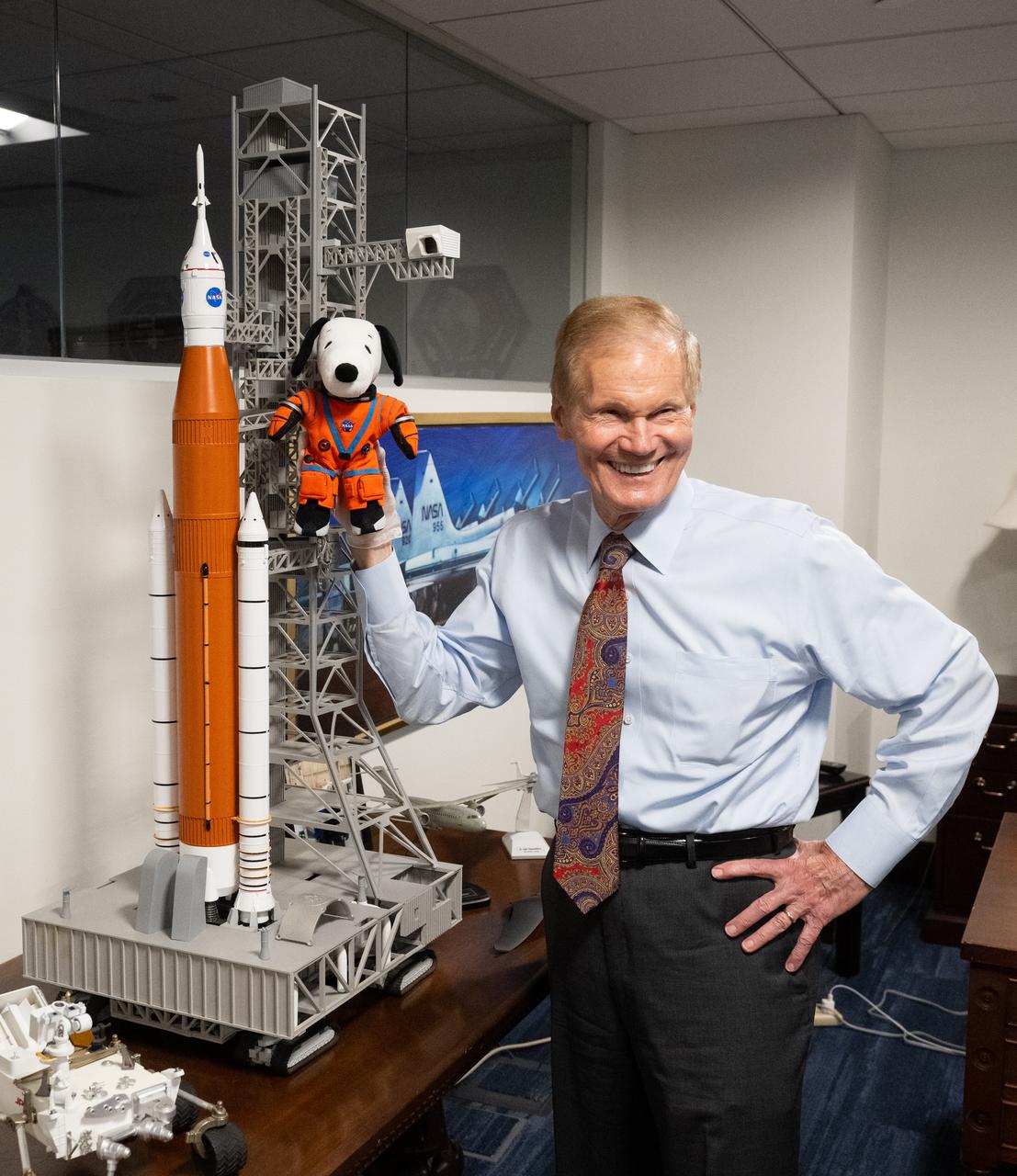
NASA Administrator Bill Nelson, holding the Artemis I Snoopy zero gravity indicator, is seen during a visit with Jeannie Schulz, widow of Peanuts gang creator Charles M. Schulz, Wednesday, April 5, 2023, at the Mary W. Jackson NASA Headquarters building in Washington. Schulz awarded a NASA Exceptional Achievement Medal by Administrator Nelson at an “Our Blue Planet” concert at the John F. Kennedy Center for the Performing Arts. Snoopy rode along as the zero gravity indicator on NASA’s Artemis I mission as part of a partnership with the agency and continues to help NASA inspire kids of all ages to follow along with Artemis missions. As part of the visit, Schulz showed the flown Artemis I Snoopy zero gravity indicator before it goes to its final home for display at the Schulz Museum in Santa Rosa, California. Photo Credit: (NASA/Joel Kowsky)
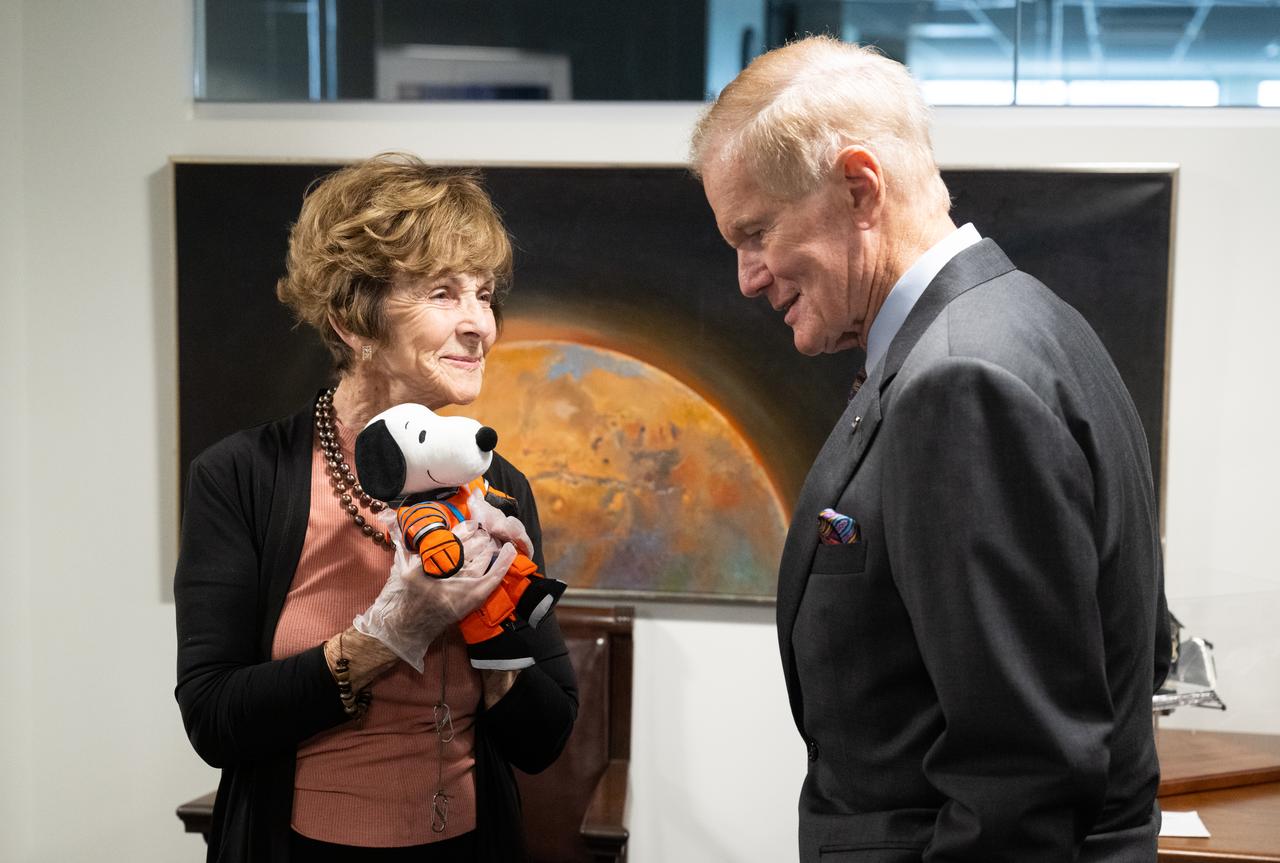
NASA Administrator Bill Nelson, right, is seen with Jeannie Schulz, widow of Peanuts gang creator Charles M. Schulz, left, holding the Artemis I Snoopy zero gravity indicator, Wednesday, April 5, 2023, during a visit to the Mary W. Jackson NASA Headquarters building in Washington. Schulz awarded a NASA Exceptional Achievement Medal by Administrator Nelson at an “Our Blue Planet” concert at the John F. Kennedy Center for the Performing Arts. Snoopy rode along as the zero gravity indicator on NASA’s Artemis I mission as part of a partnership with the agency and continues to help NASA inspire kids of all ages to follow along with Artemis missions. As part of the visit, Schulz showed the flown Artemis I Snoopy zero gravity indicator before it goes to its final home for display at the Schulz Museum in Santa Rosa, California. Photo Credit: (NASA/Joel Kowsky)
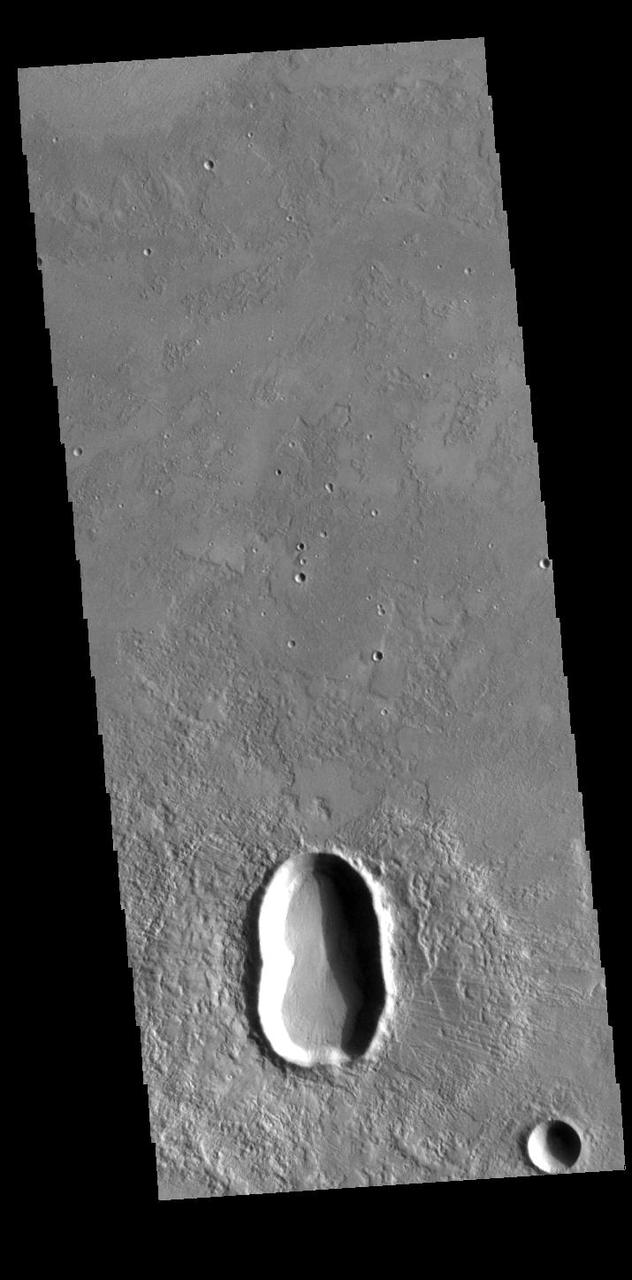
This unnamed crater in Utopia Planitia is shaped like a peanut shell, with an indentation in the crater rim at the middle of the crater. It is likely that this crater was created by a dual impact. In a dual (or double) impact the incoming meteor is broken into two or more pieces which impact together into the surface. This type of impact often has a unique ejecta blanket shape, pinched at the center making a butterfly shape, and a pronounced inner rim jutting out at the center. The ejecta blanket in this case does not show the butterfly shape, and the middle rim is on slightly visible on the left side of the crater. These irregularities may indicate the the meteor pieces were still very close together when they hit the surface. Orbit Number: 95144 Latitude: 31.6611 Longitude: 128.303 Instrument: VIS Captured: 2023-05-27 11:12 https://photojournal.jpl.nasa.gov/catalog/PIA26261
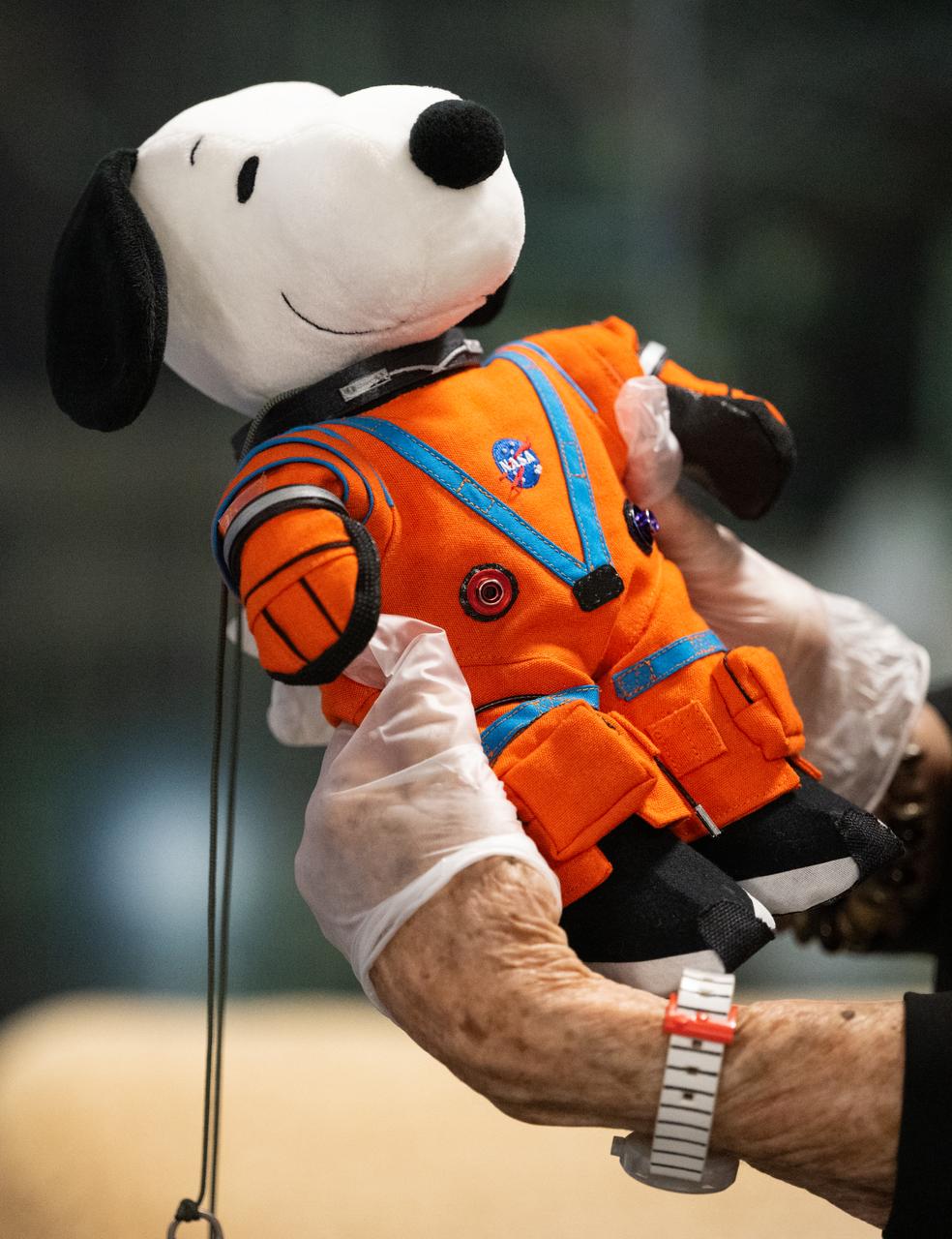
Jeannie Schulz, widow of Peanuts gang creator Charles M. Schulz, holds the Artemis I Snoopy zero gravity indicator, Wednesday, April 5, 2023, during visit to the Mary W. Jackson NASA Headquarters building in Washington. Schulz was awarded a NASA Exceptional Achievement Medal by Administrator Nelson at an Our Blue Planet concert at the Kennedy Center for the Performing Arts. Snoopy rode along as the zero gravity indicator on NASA’s Artemis I mission as part of a partnership with the agency and continues to help NASA inspire kids of all ages to follow along with Artemis missions. As part of the visit, Schulz showed the flown Artemis I Snoopy zero gravity indicator before it goes to its final home for display at the Schulz Museum in Santa Rosa, California. Photo Credit: (NASA/Joel Kowsky)
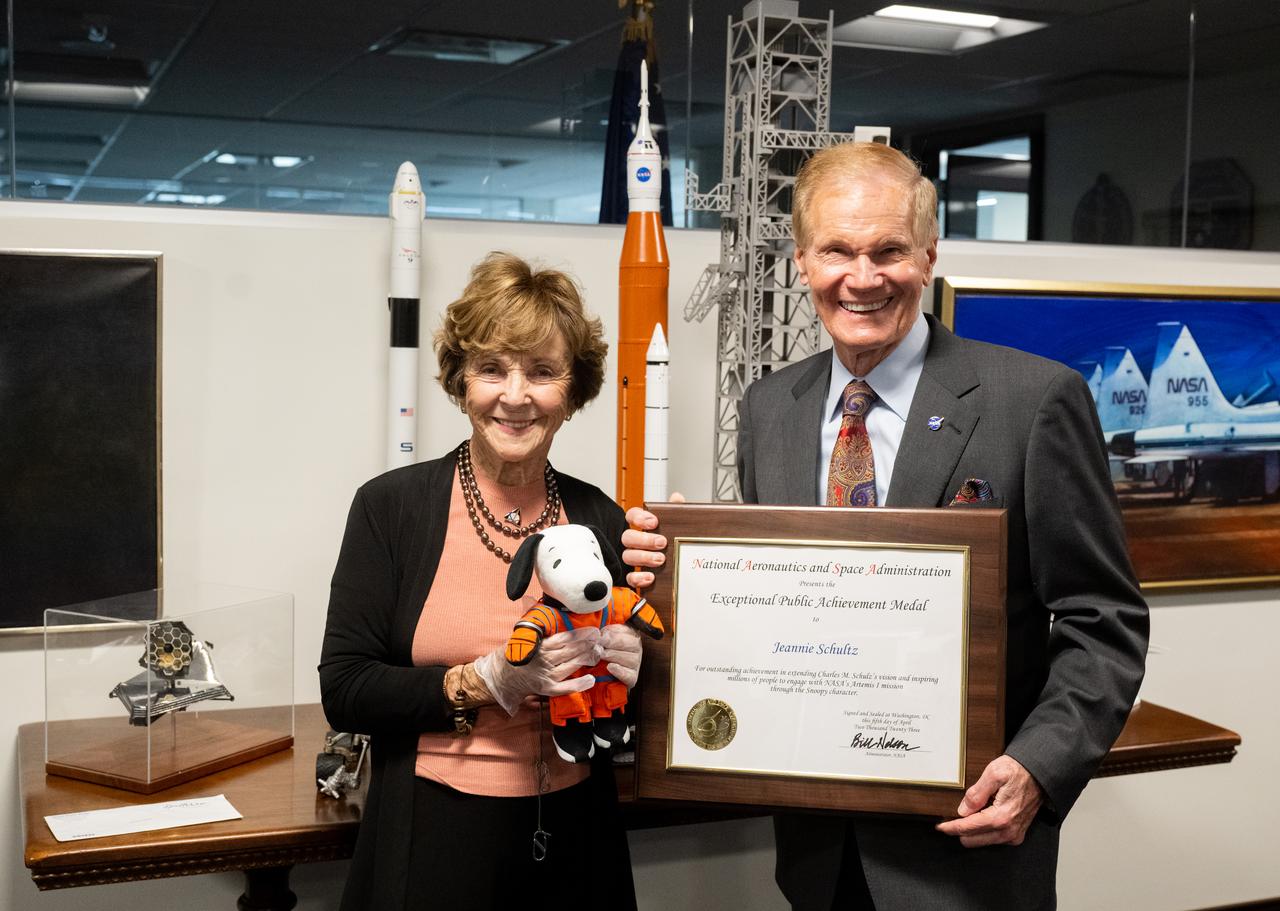
NASA Administrator Bill Nelson, right, and Jeannie Schulz, widow of Peanuts gang creator Charles M. Schulz, holding the Artemis I Snoopy zero gravity indicator, left, pose for a picture with the NASA Exceptional Achievement Medal plaque, Wednesday, April 5, 2023, at the Mary W. Jackson NASA Headquarters building in Washington. Schulz was awarded a NASA Exceptional Achievement Medal by Administrator Nelson at an “Our Blue Planet” concert at the John F. Kennedy Center for the Performing Arts. Snoopy rode along as the zero gravity indicator on NASA’s Artemis I mission as part of a partnership with the agency and continues to help NASA inspire kids of all ages to follow along with Artemis missions. As part of the visit, Schulz showed the flown Artemis I Snoopy zero gravity indicator before it goes to its final home for display at the Schulz Museum in Santa Rosa, California. Photo Credit: (NASA/Joel Kowsky)
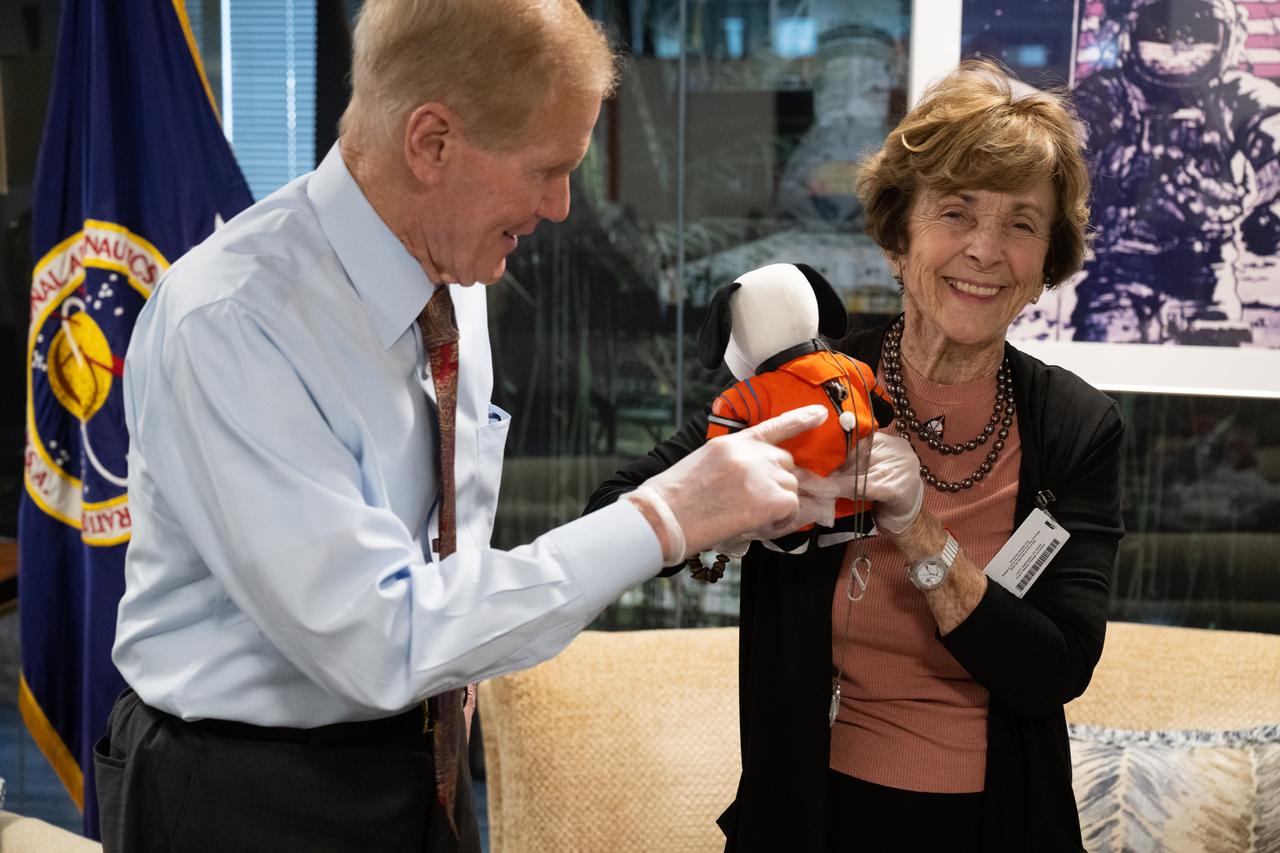
NASA Administrator Bill Nelson, left, is seen with Jeannie Schulz, widow of Peanuts gang creator Charles M. Schulz, right, holding the Artemis I Snoopy zero gravity indicator, Wednesday, April 5, 2023, during a visit to the Mary W. Jackson NASA Headquarters building in Washington. Schulz awarded a NASA Exceptional Achievement Medal by Administrator Nelson at an “Our Blue Planet” concert at the John F. Kennedy Center for the Performing Arts. Snoopy rode along as the zero gravity indicator on NASA’s Artemis I mission as part of a partnership with the agency and continues to help NASA inspire kids of all ages to follow along with Artemis missions. As part of the visit, Schulz showed the flown Artemis I Snoopy zero gravity indicator before it goes to its final home for display at the Schulz Museum in Santa Rosa, California. Photo Credit: (NASA/Joel Kowsky)
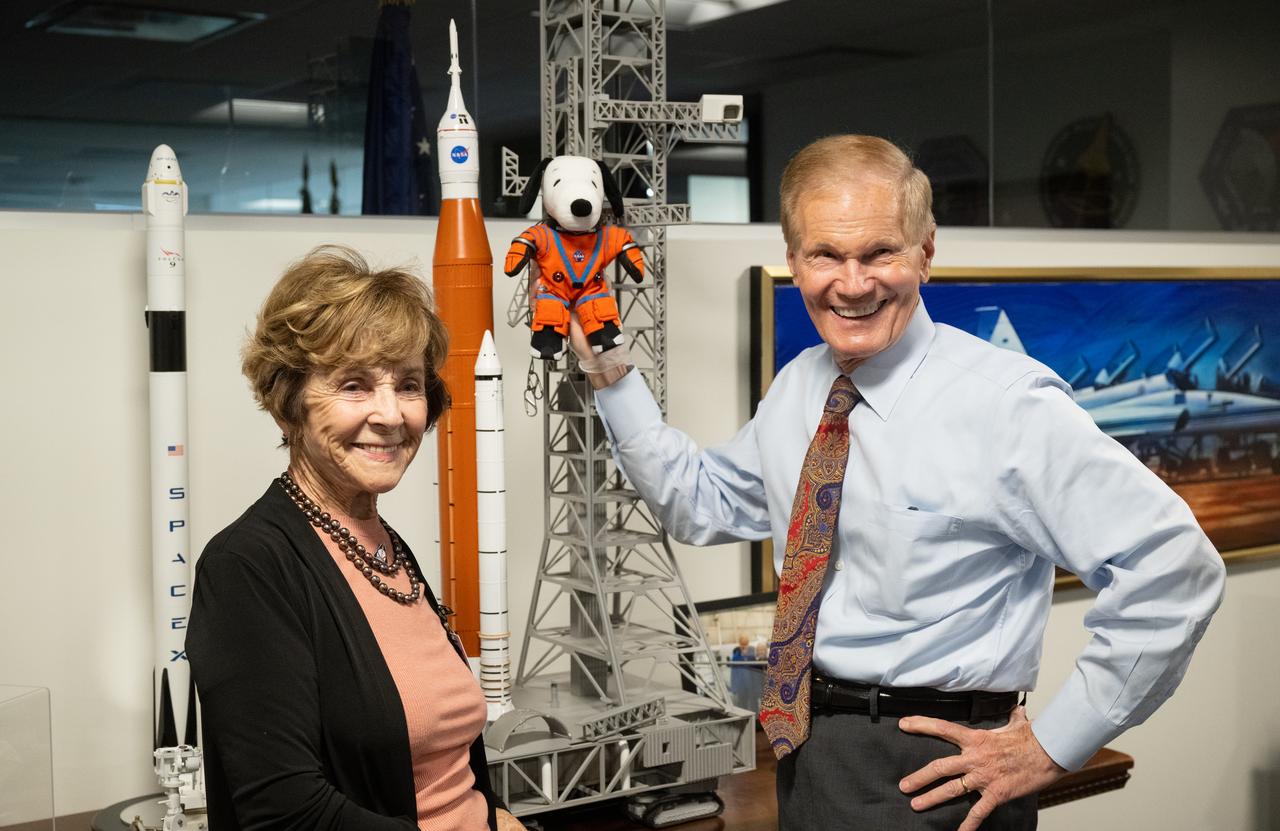
NASA Administrator Bill Nelson, right, holding the Artemis I Snoopy zero gravity indicator, is seen with Jeannie Schulz, widow of Peanuts gang creator Charles M. Schulz, left, Wednesday, April 5, 2023, during a visit to the Mary W. Jackson NASA Headquarters building in Washington. Schulz awarded a NASA Exceptional Achievement Medal by Administrator Nelson at an “Our Blue Planet” concert at the John F. Kennedy Center for the Performing Arts. Snoopy rode along as the zero gravity indicator on NASA’s Artemis I mission as part of a partnership with the agency and continues to help NASA inspire kids of all ages to follow along with Artemis missions. As part of the visit, Schulz showed the flown Artemis I Snoopy zero gravity indicator before it goes to its final home for display at the Schulz Museum in Santa Rosa, California. Photo Credit: (NASA/Joel Kowsky)

“We did science fair projects in eighth grade. So my dad and I designed an experiment to look at what cooking oil is best for cooking popcorn. Now you go to science fairs and you see this experiment everywhere. But in 1989, it was like, ‘wow, a kid who knows the scientific method!’ “I made a lot of popcorn. My poor brothers had to eat it all. I measured volume popped and how many kernels were left unpopped. But I also measured the taste factor. For example, cooking popcorn in peanut oil actually has good yield but it doesn’t taste good. “In high school, I had this chemistry teacher named Carol Palmer. I’ll never forget her. The science fairs were really important to her. She had partnerships with laboratories in town, and through this program, I got to go to a stainless steel foundry. “Do you know what paper machines are like? Picture giant rolls, like the size of an 18-wheeler truckbed. This place made those things. This was the early 90s, so we were just starting to recycle paper. But the machines had begun falling apart because of all the corrosive chemicals added to the mix to remove ink. I was simulating that process in the laboratory through different experiments. And I won two years in a row at the state-level science fair: I won first prize in electrochemistry and I won first prize in chemistry. “It was all because of this teacher. And to be honest, I wouldn’t have known that materials science was a thing or that I should study it if I hadn’t had that opportunity. It really put me on course.” Kathleen Boggs, Systems and Technology Demonstration Manager in the International Space Station Division of the Human Exploration and Operations Mission Directorate, Thursday, March 5, 2020, at NASA Headquarters in Washington, DC. Photo Credit: (NASA/Joel Kowsky)
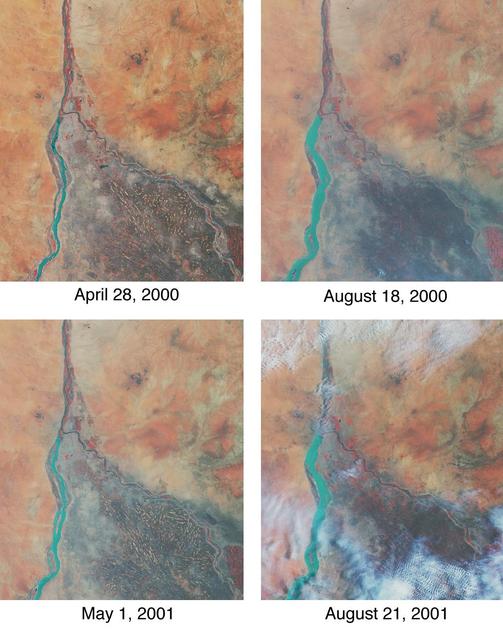
Throughout history, the rising and falling waters of the mighty Nile River have directly impacted the lives of the people who live along its banks. These images of the area around Sudan's capital city of Khartoum capture the river's dynamic nature. Acquired by the Multi-angle Imaging SpectroRadiometer's nadir (vertical-viewing) camera, they display the extent of the Nile waters before and after the onset of the rainy seasons of 2000 (top pair) and 2001 (bottom pair). The images are displayed in "false color," using the camera's near-infrared, green, and blue bands. With this particular spectral combination, water appears in shades of blue and turquoise, and highly vegetated areas show up as bright red. Originating in Uganda and Ethiopia, respectively, the waters of the White Nile (western branch) and Blue Nile (eastern branch) converge at Khartoum (about half-way between image center and the left-hand side), and continue to flow northward as the Great Nile. Although the most obvious feature in these images is the increased width of the White Nile between spring and summer, careful inspection shows that the Great Nile is at its widest in August 2001 (note in particular the area between the clouds near the top of this panel). Heavy rains in the Blue Nile catchment area of the Ethiopian highlands led to a rapid overflow of the river's floodwaters into the main stream of the Great Nile, leading to extensive flooding, the worst effects of which occurred north of Khartoum. According to the Food and Agriculture Organization of the United Nations, tens of thousands of people have fled their homes, and the number of people in need of urgent food assistance in Sudan, estimated at three million earlier in the year, was likely to increase with the onset of these floods. South of the confluence of the White Nile and the Blue Nile, the area of a cross-hatched appearance is the irrigated plain of El Gezira. The Gezira irrigation scheme uses water from the Makwar Dam (now called the Sennar Dam), located across the Blue Nile south of Khartoum. Among the main agricultural products of this region are cotton, millet, peanuts and fodder crops. Overall prospects for Sudan's 2001 grain crop were already poor prior to the flooding due to a late start of the rainy season in parts of the country. Following two consecutive years of serious drought, precipitation arrived too late to save the grain harvest that normally begins in late August. Lower harvests for the past two years coupled with depletion of stocks have led to a rise in cereal prices, reducing access to food for the Sudan's poorer citizens, already suffering from the effects of Africa's longest running civil war. Each of these images represents an area of about 130 kilometers x 150 kilometers. The data were obtained during Terra orbits 1922, 3553, 7281, and 8912. http://photojournal.jpl.nasa.gov/catalog/PIA03420