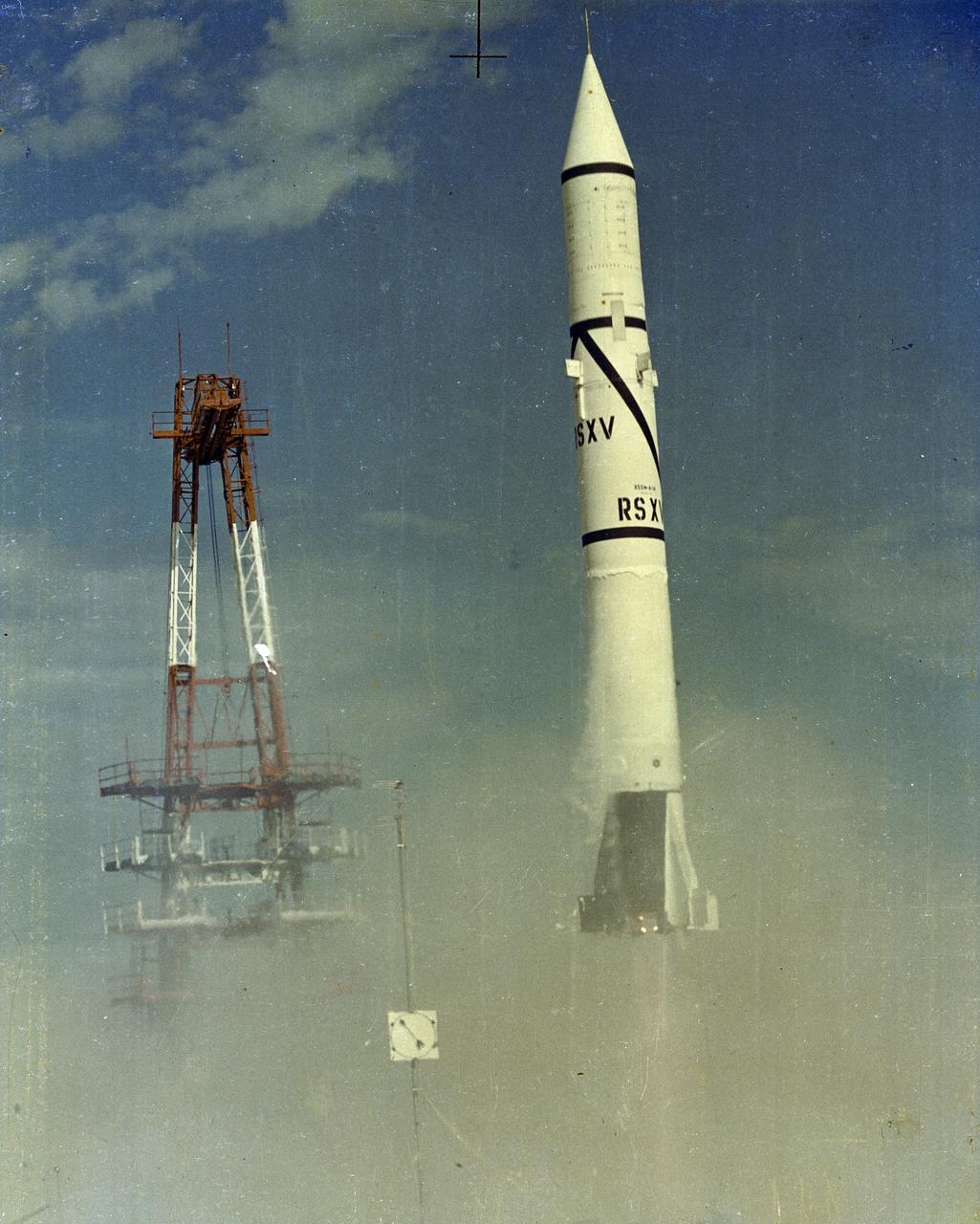
The first Redstone was fired at Cape Canaveral, Florida on August 20, 1953. Redstone was the first major rocket development program for United States by the Peenemuende group led by Dr. Wernher von Braun. The Redstone launch photographed here, from November 17, 1954, was the fifth launch of a Redstone rocket.
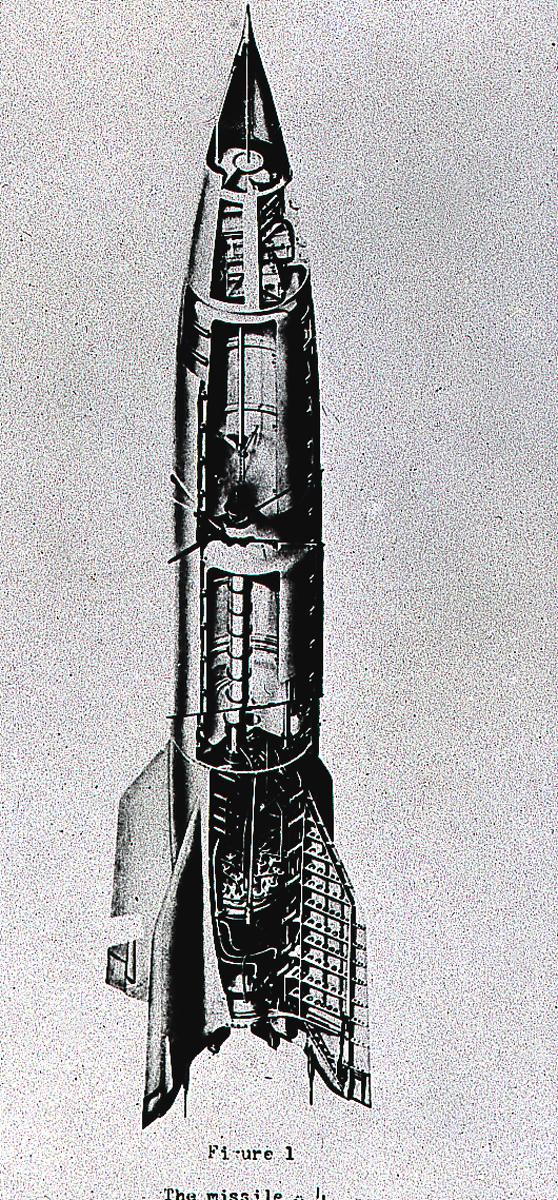
The cutaway drawing of the A-4 (Aggregate-4) rocket. Later renamed the V-2 (Vengeance Weapon-2), The rocket was developed by Dr. Wernher von Braun and the German rocket team at Peenemuende, Germany on the Baltic Sea. At the end of World War II, the team of German engineers and scientists came to the United States and continued rocket research for the Army at Fort Bliss, Texas, and Redstone Arsenal in Huntsville, Alabama.
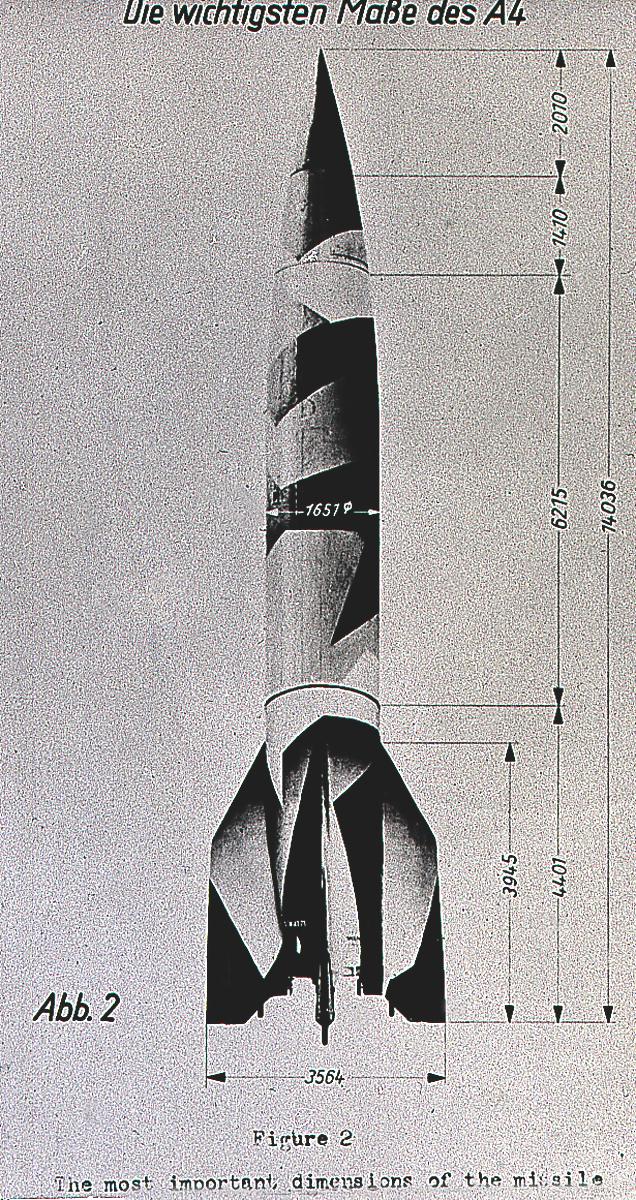
This drawing illustrates the vital dimensions of the A-4 (Aggregate-4). Later renamed the V-2 (Vengeance Weapon-2), the rocket was developed by Dr. Wernher von Braun and the German rocket team at Peenemuende, Germany on the Baltic Sea. At the end of World War II, the team of German engineers and scientists came to the United States and continued rocket research for the Army at Fort Bliss, Texas, and Redstone Arsenal in Huntsville, Alabama.
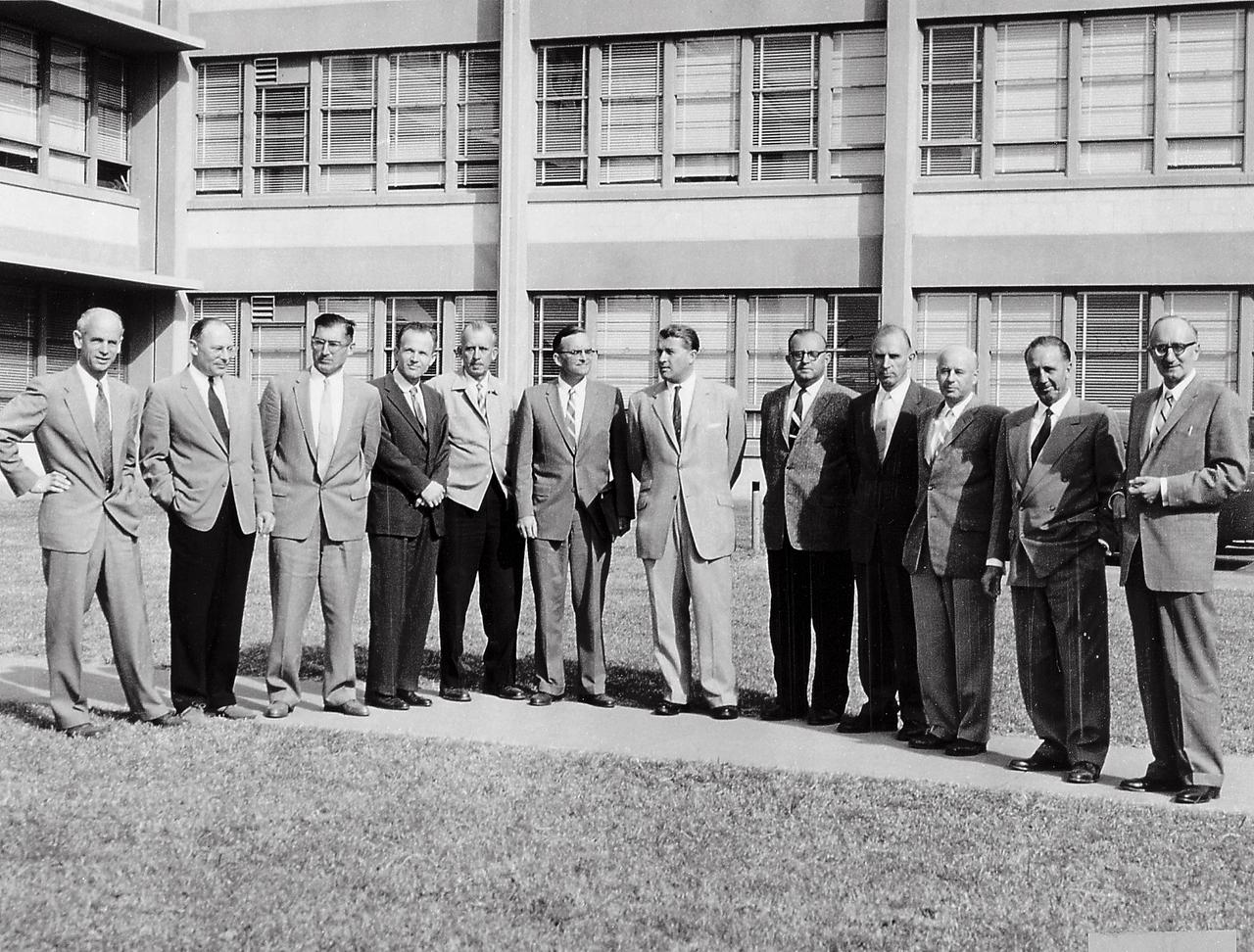
Twelve scientific specialists of the Peenemuende team at the front of Building 4488, Redstone Arsenal, Huntsville, Alabama. They led the Army's space efforts at ABMA before transfer of the team to National Aeronautic and Space Administration (NASA), George C. Marshall Space Flight Center (MSFC). (Left to right) Dr. Ernst Stuhlinger, Director, Research Projects Office; Dr. Helmut Hoelzer, Director, Computation Laboratory: Karl L. Heimburg, Director, Test Laboratory; Dr. Ernst Geissler, Director, Aeroballistics Laboratory; Erich W. Neubert, Director, Systems Analysis Reliability Laboratory; Dr. Walter Haeussermarn, Director, Guidance and Control Laboratory; Dr. Wernher von Braun, Director Development Operations Division; William A. Mrazek, Director, Structures and Mechanics Laboratory; Hans Hueter, Director, System Support Equipment Laboratory;Eberhard Rees, Deputy Director, Development Operations Division; Dr. Kurt Debus, Director Missile Firing Laboratory; Hans H. Maus, Director, Fabrication and Assembly Engineering Laboratory
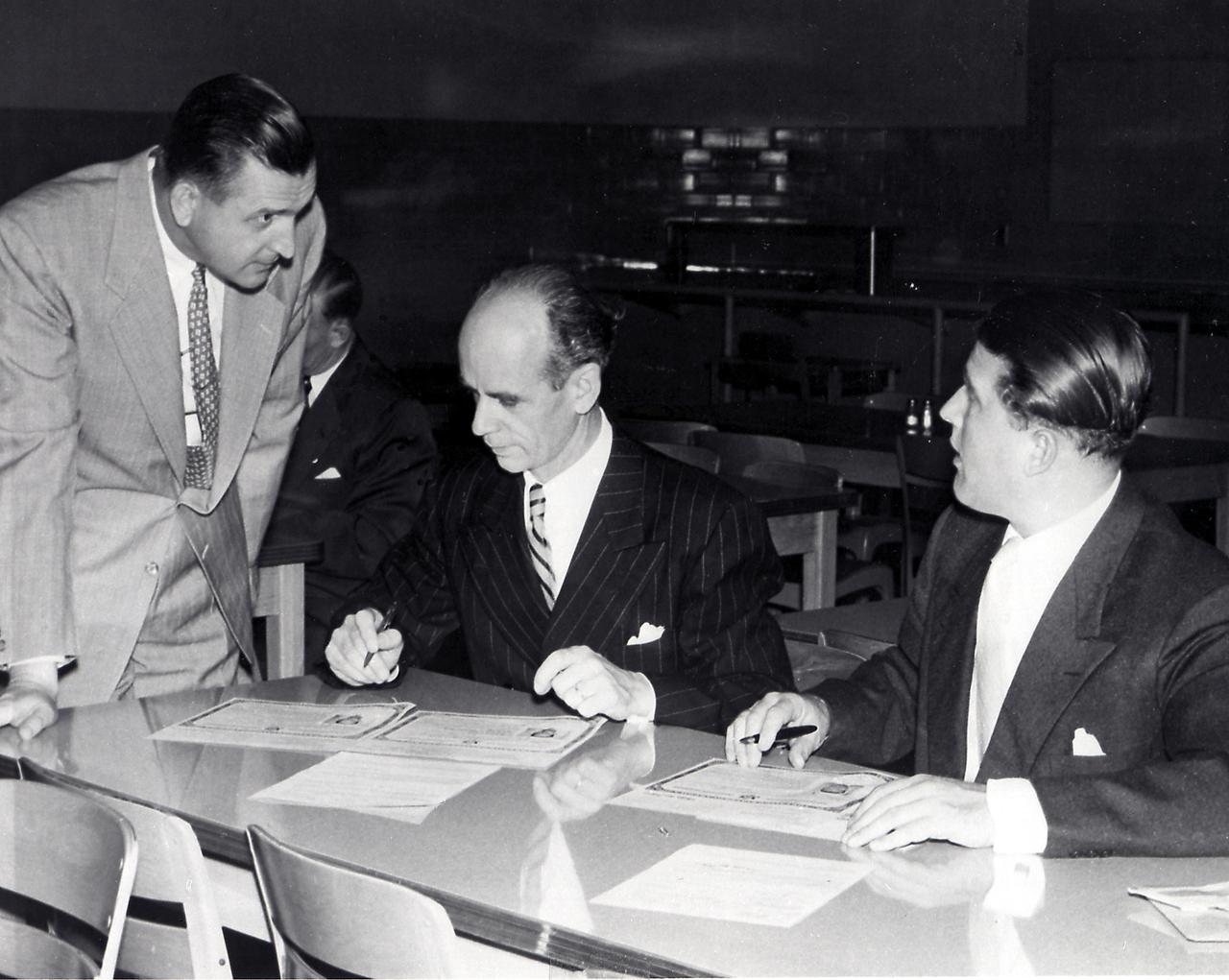
The members of the Peenemuende team and their family members were awarded the United States citizenship on April 14, 1955. Pictured here is Dr. Ernst Stuhlinger (middle) and Dr. Wernher von Braun signing U.S. citizenship certificates. Martin Schilling is at left.
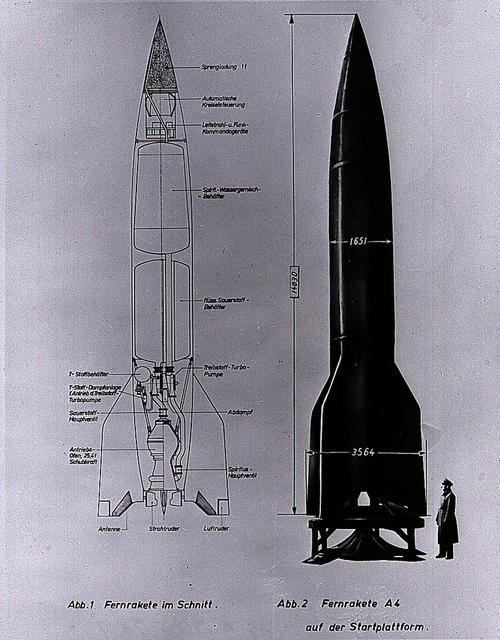
This German cutaway drawing of the Aggregate-4 (A-4) illustrates the dimensions and internal workings of the rocket. Later renamed the V-2, the rocket was developed by Dr. Wernher von Braun and the German Rocket Team at Peenemuende on the Baltic Sea. At the end of World War II, the team of German engineers and scientists came to the United States to work for the Army at Fort Bliss, Texas, and Redstone Arsenal in Huntsville, Alabama.
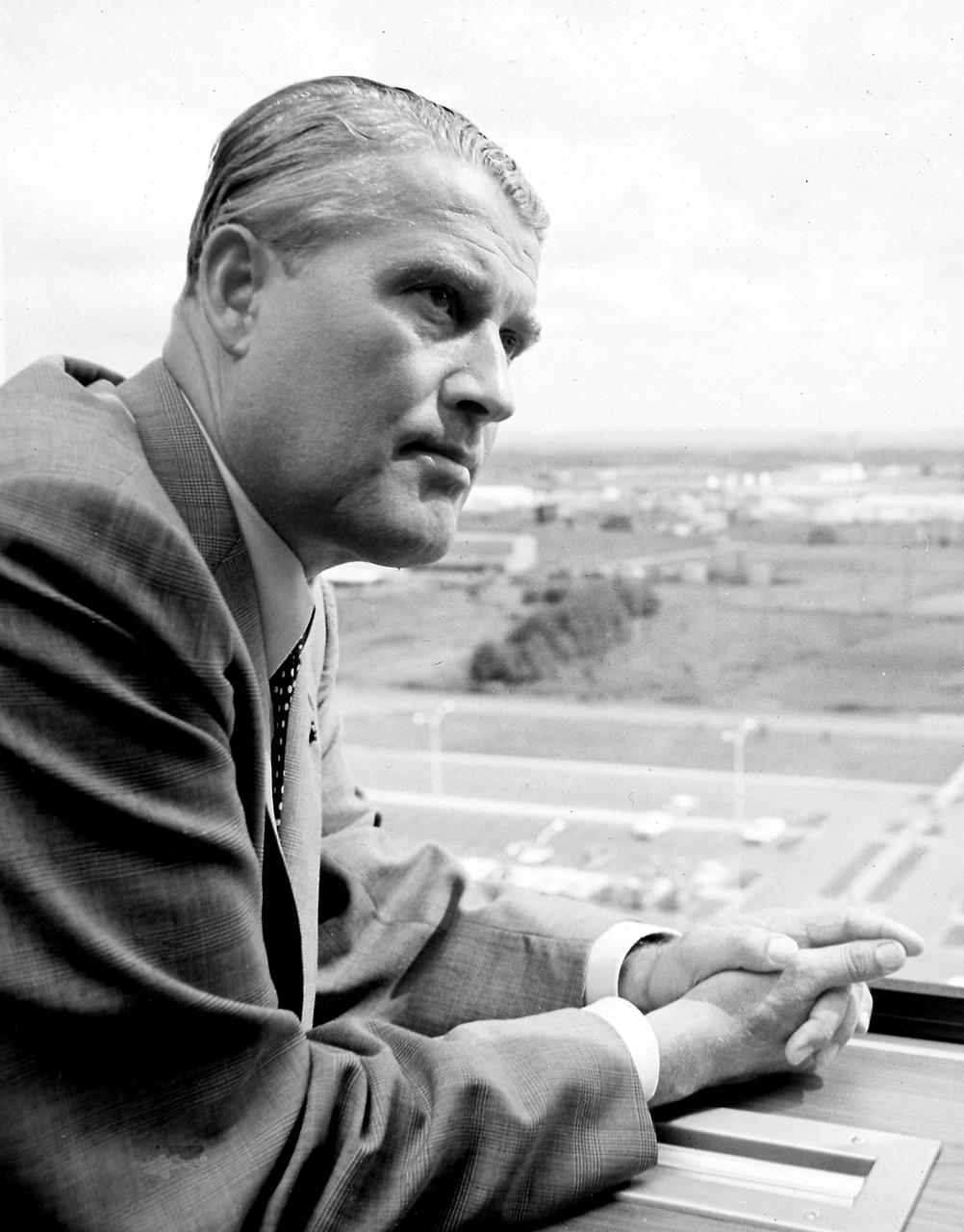
Dr. von Braun is looking out from a 10th floor window of building 4200 at the Marshall Space Flight Center (MSFC). He was the first Center Director and served as the Director from July 1960 through February 1970. Following World War II, Dr. von Braun and his German colleagues arrived in the United States under the Project Paperclip (American acquisition of German rocket experts) to continue their rocket development work. In 1950, von Braun and his German Rocket Team (also called the Peenemuende Team) were transferred from Ft. Bliss, Texas to Huntsville, Alabama to work for the Army's rocket program at Redstone Arsenal and later, NASA's Marshall Space Flight Center (MSFC). Under Dr. von Braun's leadership, MSFC developed the Saturn V launch vehicle, which placed the first men, two American astronauts, on the Moon. Wernher von Braun's life was dedicated to expanding man's knowledge through the exploration of space.
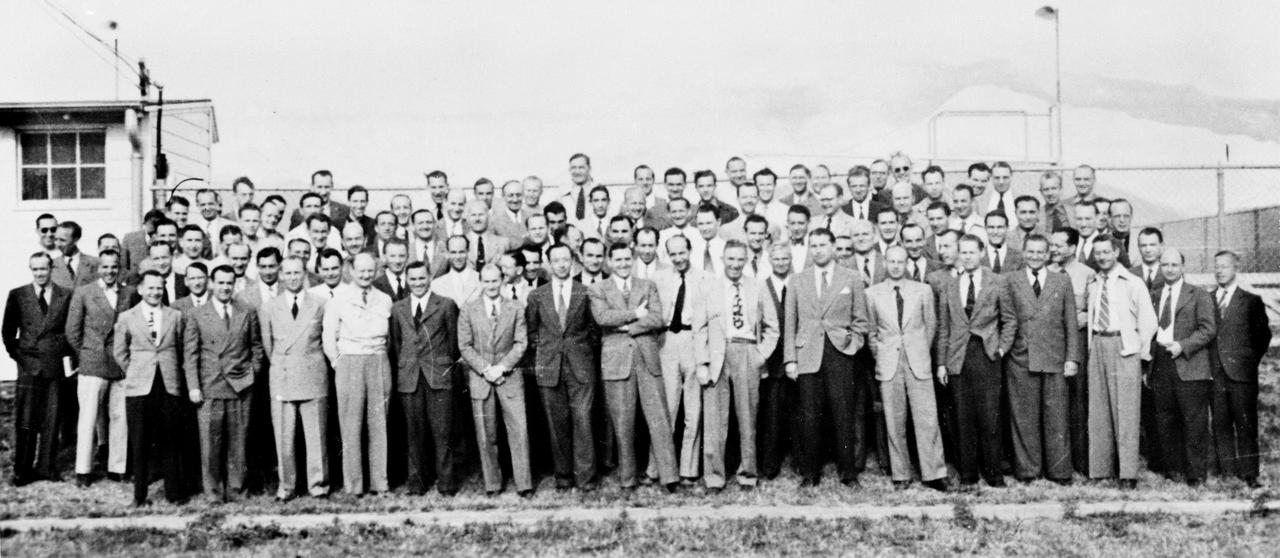
The German Rocket Team, also known as the Von Braun Rocket Team, poses for a group photograph at Fort Bliss, Texas. After World War II ended in 1945, Dr. Wernher von Braun led some 120 of his Peenemuende Colleagues, who developed the V-2 rocket for the German military during the War, to the United Sttes under a contract to the U.S. Army Corps as part of Operation Paperclip. During the following five years the team worked on high altitude firings of the captured V-2 rockets at the White Sands Missile Range in New Mexico, and a guided missile development unit at Fort Bliss, Texas. In April 1950, the group was transferred to the Army Ballistic Missile Agency (ABMA) at Redstone Arsenal in Huntsville, Alabama, and continued to work on the development of the guided missiles for the U.S. Army until transferring to a newly established field center of the National Aeronautic and Space Administration (NASA), George C. Marshall Space Flight Center (MSFC).