
Peg Luce, deputy director of the Heliophysics Division of NASA's Science Mission Directorate, is introduced during opening ceremonies at the Indianapolis Motor Speedway ahead of the total solar eclipse, Monday, April 8, 2024, in Indianapolis, Ind. A total solar eclipse swept across a narrow portion of the North American continent from Mexico’s Pacific coast to the Atlantic coast of Newfoundland, Canada. A partial solar eclipse was visible across the entire North American continent along with parts of Central America and Europe. Photo Credit: (NASA/Joel Kowsky)

Danny Milisavljevic, associate professor of Physics and Astronomy at Purdue University, speaks to attendees at the Indianapolis Motor Speedway during a panel discussion along with Peg Luce, deputy director of the Heliophysics Division of NASA's Science Mission Directorate, Jane Rigby, senior project scientist for NASA's James Webb Space Telescope, and Asal Naseri, program executive in the Heliophysics Division of NASA's Science Mission Directorate, about the James Webb Space Telescope ahead of the total solar eclipse, Monday, April 8, 2024, in Indianapolis, Ind. A total solar eclipse swept across a narrow portion of the North American continent from Mexico’s Pacific coast to the Atlantic coast of Newfoundland, Canada. A partial solar eclipse was visible across the entire North American continent along with parts of Central America and Europe. Photo Credit: (NASA/Joel Kowsky)

Peg Luce, deputy director of the Heliophysics Division of NASA's Science Mission Directorate, left, asks of question of Jane Rigby, senior project scientist for NASA's James Webb Space Telescope, Danny Milisavljevic, associate professor of Physics and Astronomy at Purdue University, and Asal Naseri, program executive in the Heliophysics Division of NASA's Science Mission Directorate, as they speak to attendees at the Indianapolis Motor Speedway during a panel discussion about the James Webb Space Telescope ahead of the total solar eclipse, Monday, April 8, 2024, in Indianapolis, Ind. A total solar eclipse swept across a narrow portion of the North American continent from Mexico’s Pacific coast to the Atlantic coast of Newfoundland, Canada. A partial solar eclipse was visible across the entire North American continent along with parts of Central America and Europe. Photo Credit: (NASA/Joel Kowsky)
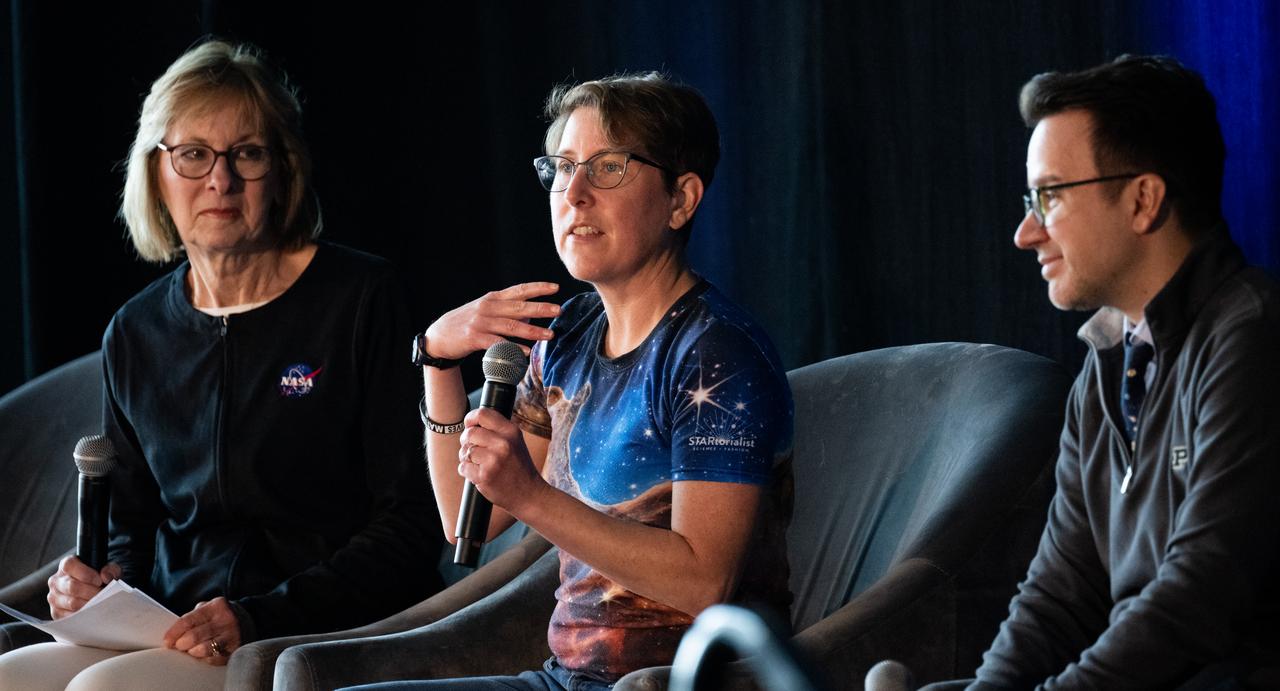
Jane Rigby, senior project scientist for NASA's James Webb Space Telescope, center, is seen alongside Peg Luce, deputy director of the Heliophysics Division of NASA's Science Mission Directorate, left, and Danny Milisavljevic, associate professor of Physics and Astronomy at Purdue University, as she speaks to attendees at the Indianapolis Motor Speedway during a panel discussion about the James Webb Space Telescope ahead of the total solar eclipse, Monday, April 8, 2024, in Indianapolis, Ind. A total solar eclipse swept across a narrow portion of the North American continent from Mexico’s Pacific coast to the Atlantic coast of Newfoundland, Canada. A partial solar eclipse was visible across the entire North American continent along with parts of Central America and Europe. Photo Credit: (NASA/Joel Kowsky)
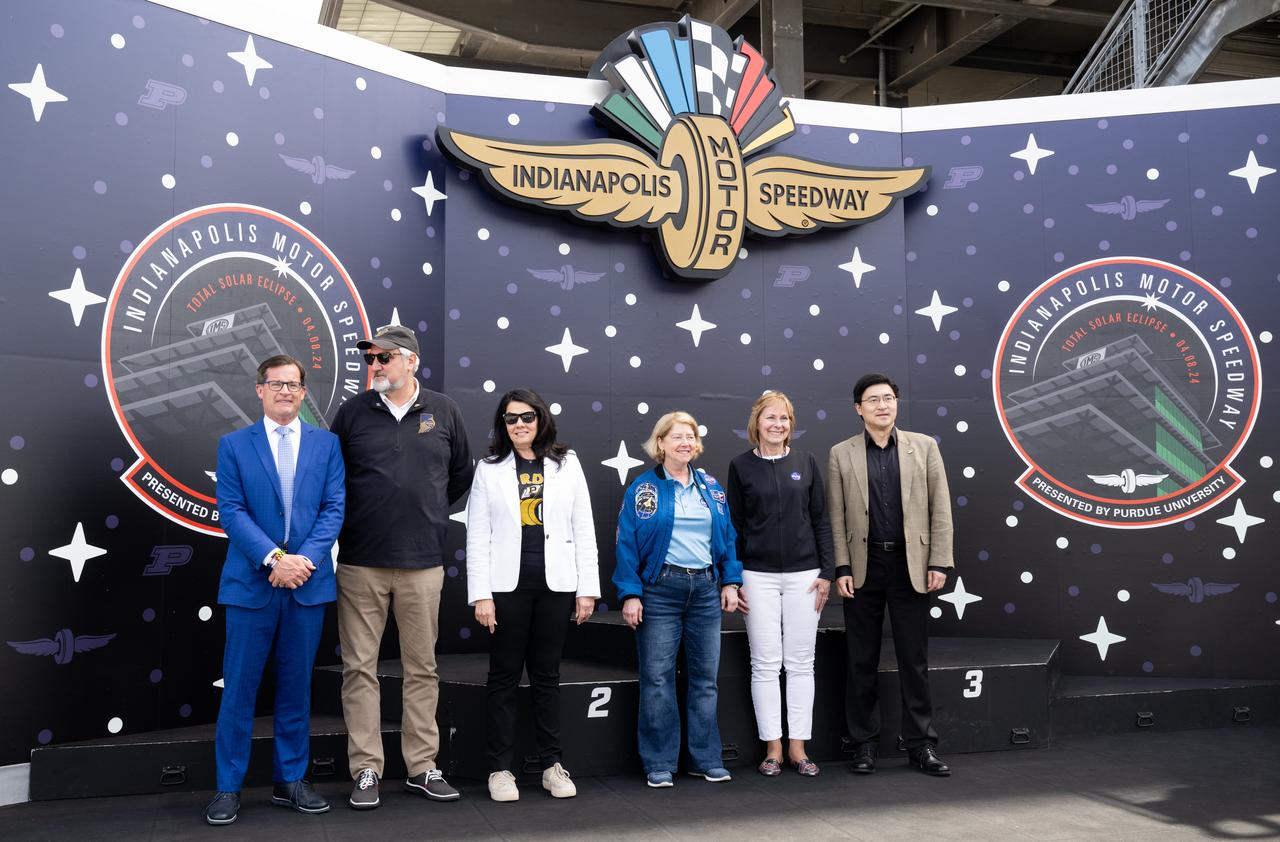
Doug Boles, Indianapolis Motor Speedway President, left, Indiana Gov. Eric Holcomb, Janet Holcomb, Indiana’s First Lady, NASA Deputy Administrator Pam Melroy, Peg Luce, deputy director of the Heliophysics Division of NASA's Science Mission Directorate, and Mung Chiang, President of Purdue University are seen during opening ceremonies at the Indianapolis Motor Speedway ahead of the total solar eclipse, Monday, April 8, 2024, in Indianapolis, Ind. A total solar eclipse swept across a narrow portion of the North American continent from Mexico’s Pacific coast to the Atlantic coast of Newfoundland, Canada. A partial solar eclipse was visible across the entire North American continent along with parts of Central America and Europe. Photo Credit: (NASA/Joel Kowsky)