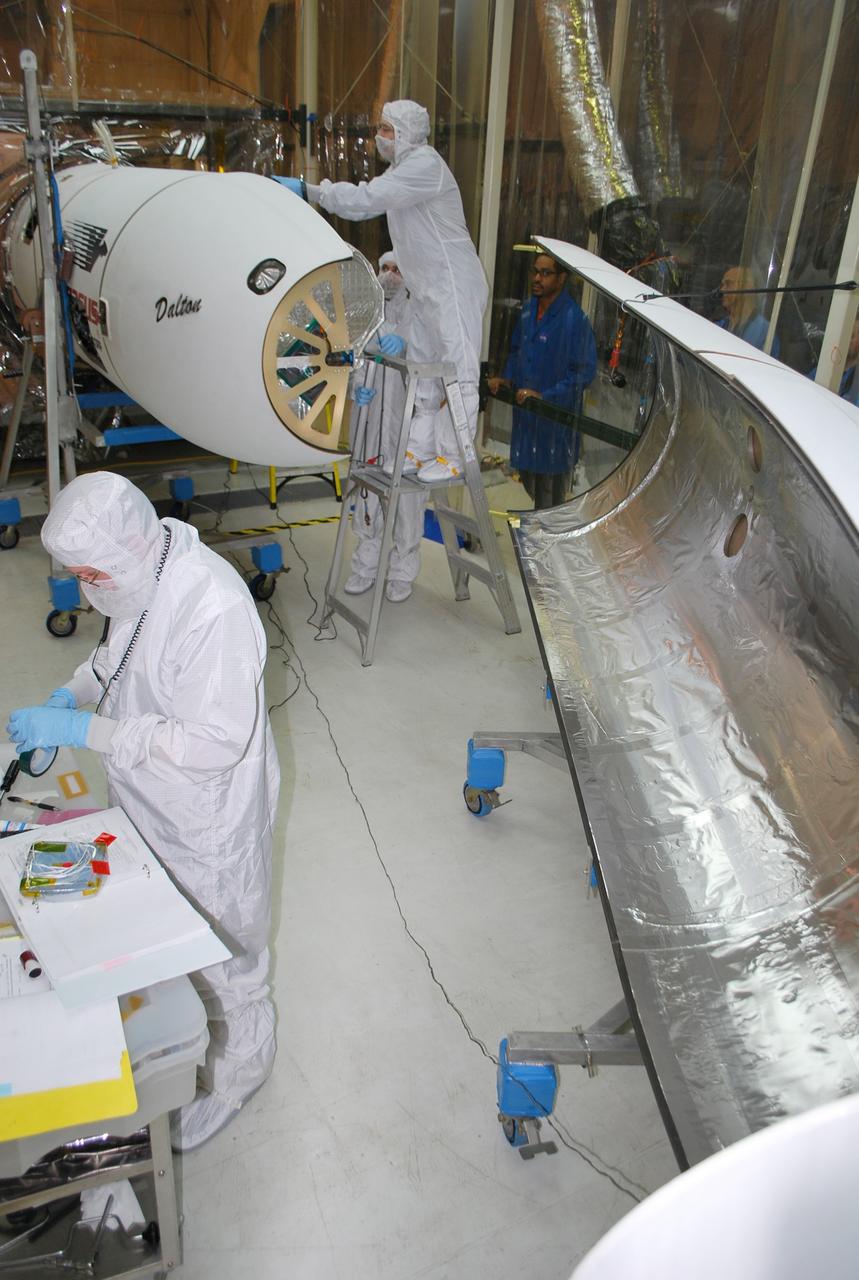
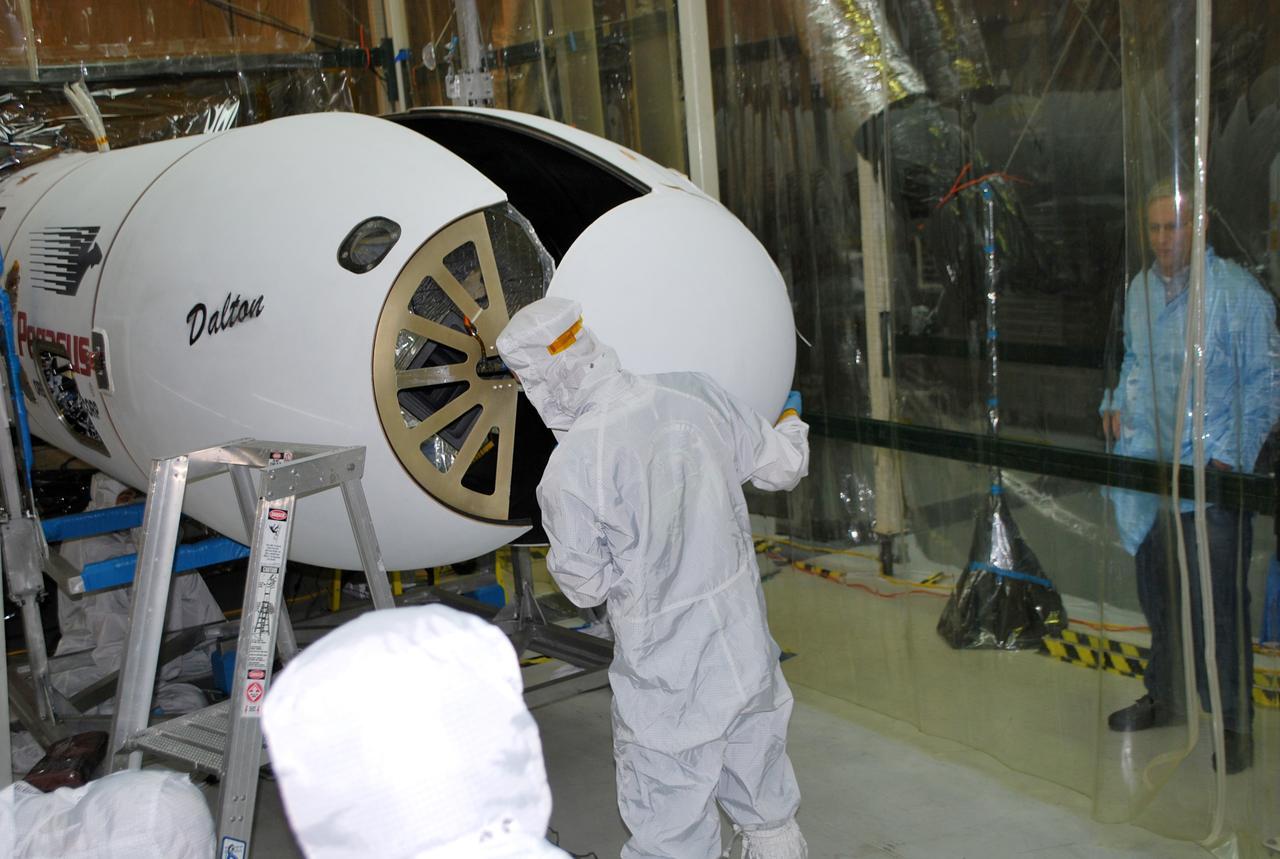
VANDENBERG AFB, Calif. – Technicians install one half of the payload fairing over the NuSTAR spacecraft as they continue to process the spacecraft and its Pegasus rocket for launch. The second half of the fairing stands ready for installation. NuSTAR stands for Nuclear Spectroscopic Telescope Array. Photo credit: NASA/Randy Beaudoin
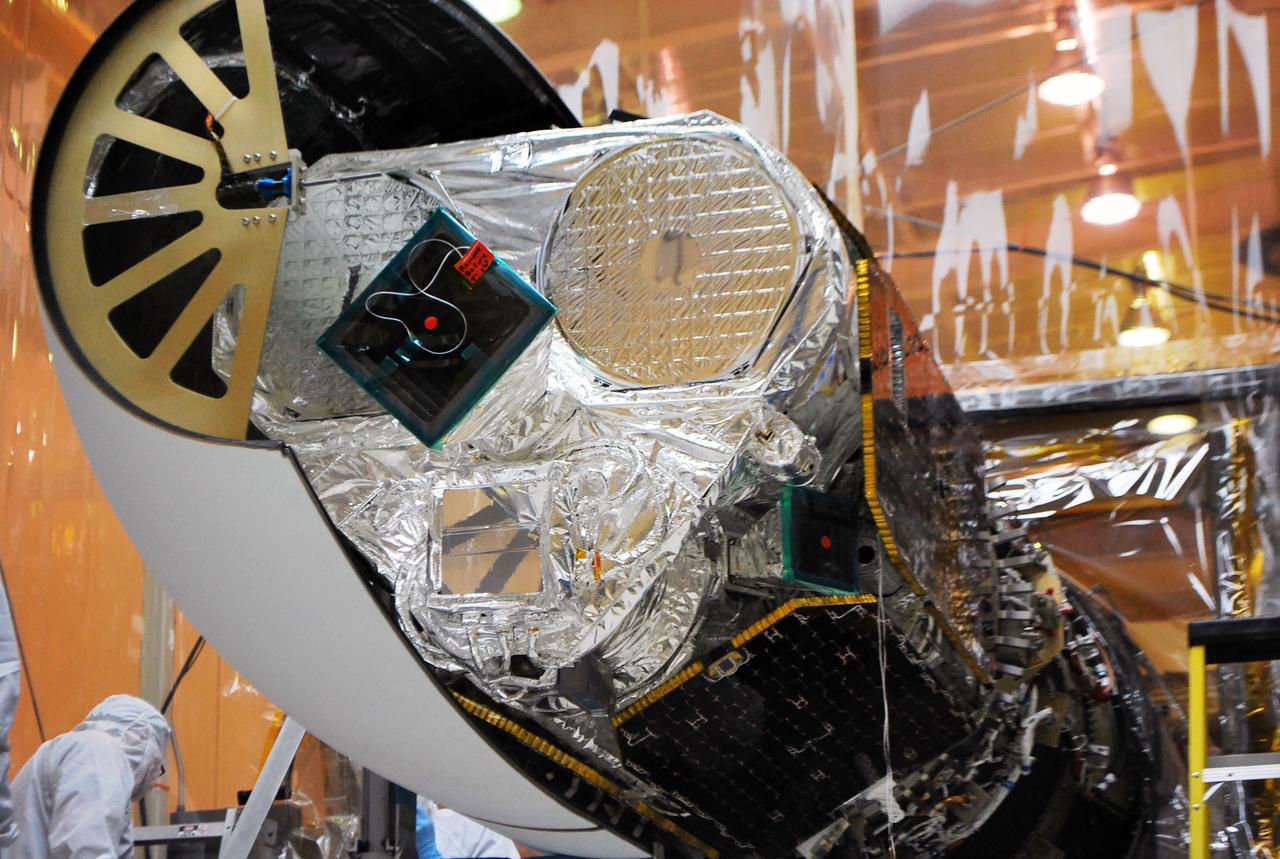
VANDENBERG AFB, Calif. – Technicians install one half of the payload fairing over the NuSTAR spacecraft as they continue to process the spacecraft and its Pegasus rocket for launch. NuSTAR stands for Nuclear Spectroscopic Telescope Array. Photo credit: NASA/Randy Beaudoin
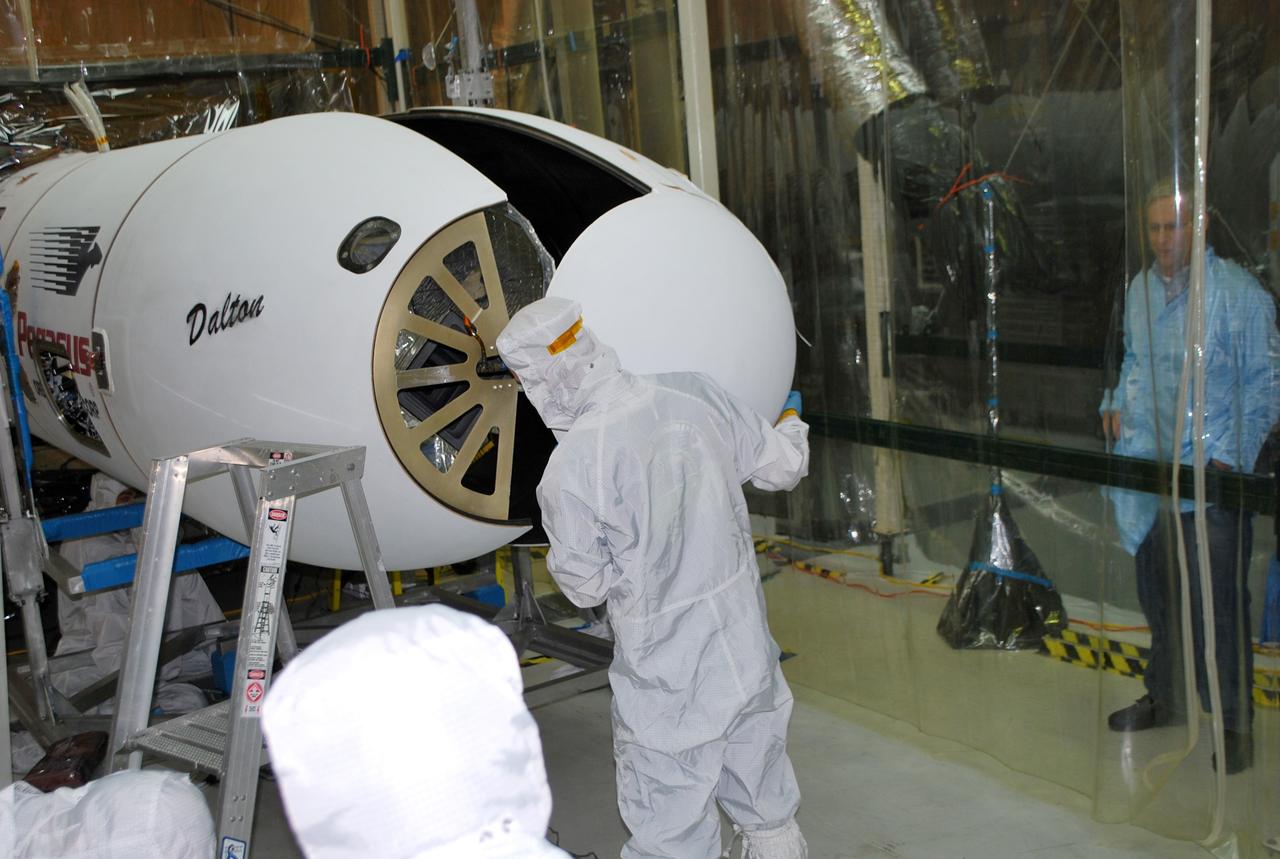
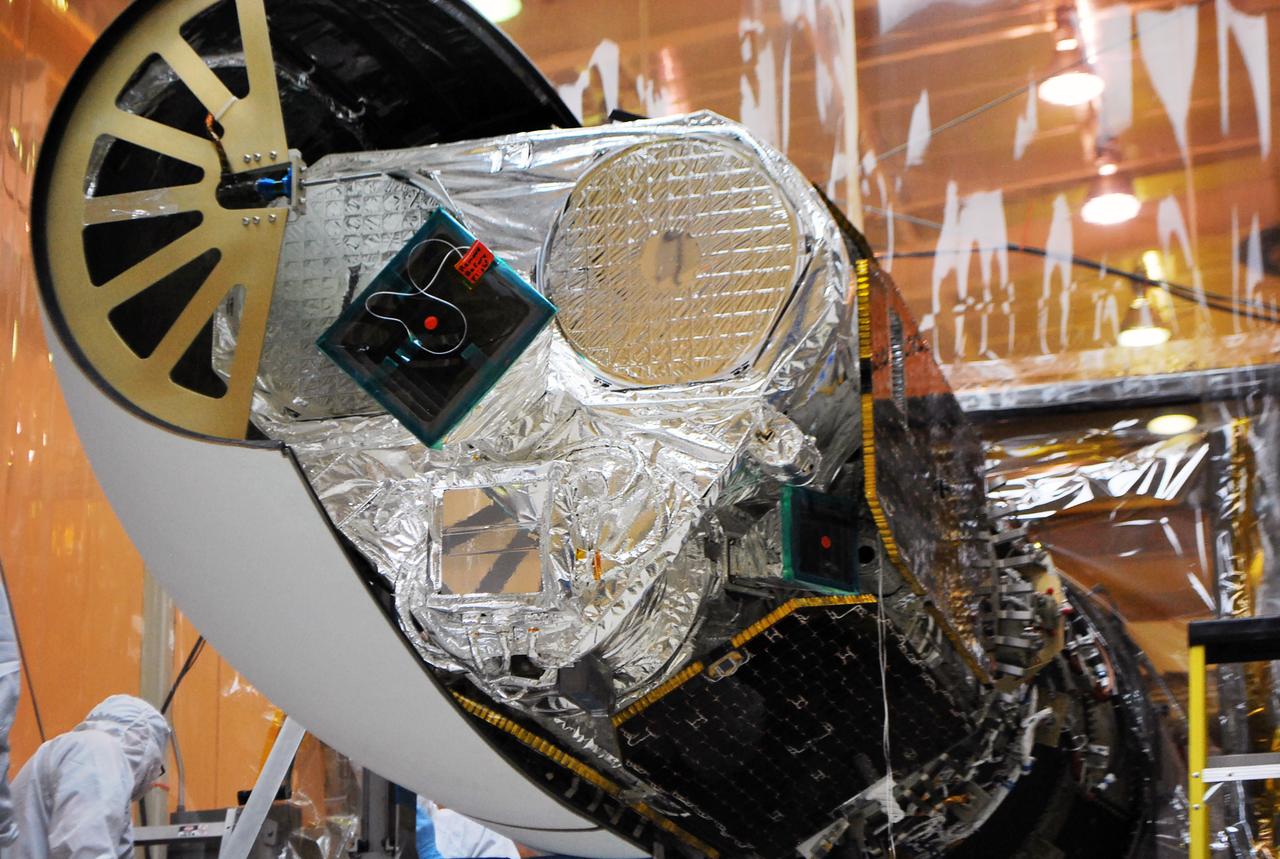
VANDENBERG AFB, Calif. – Technicians install the second half of the payload fairing over the NuSTAR spacecraft as they continue to process the spacecraft and its Pegasus rocket for launch. NuSTAR stands for Nuclear Spectroscopic Telescope Array. Photo credit: NASA/Randy Beaudoin
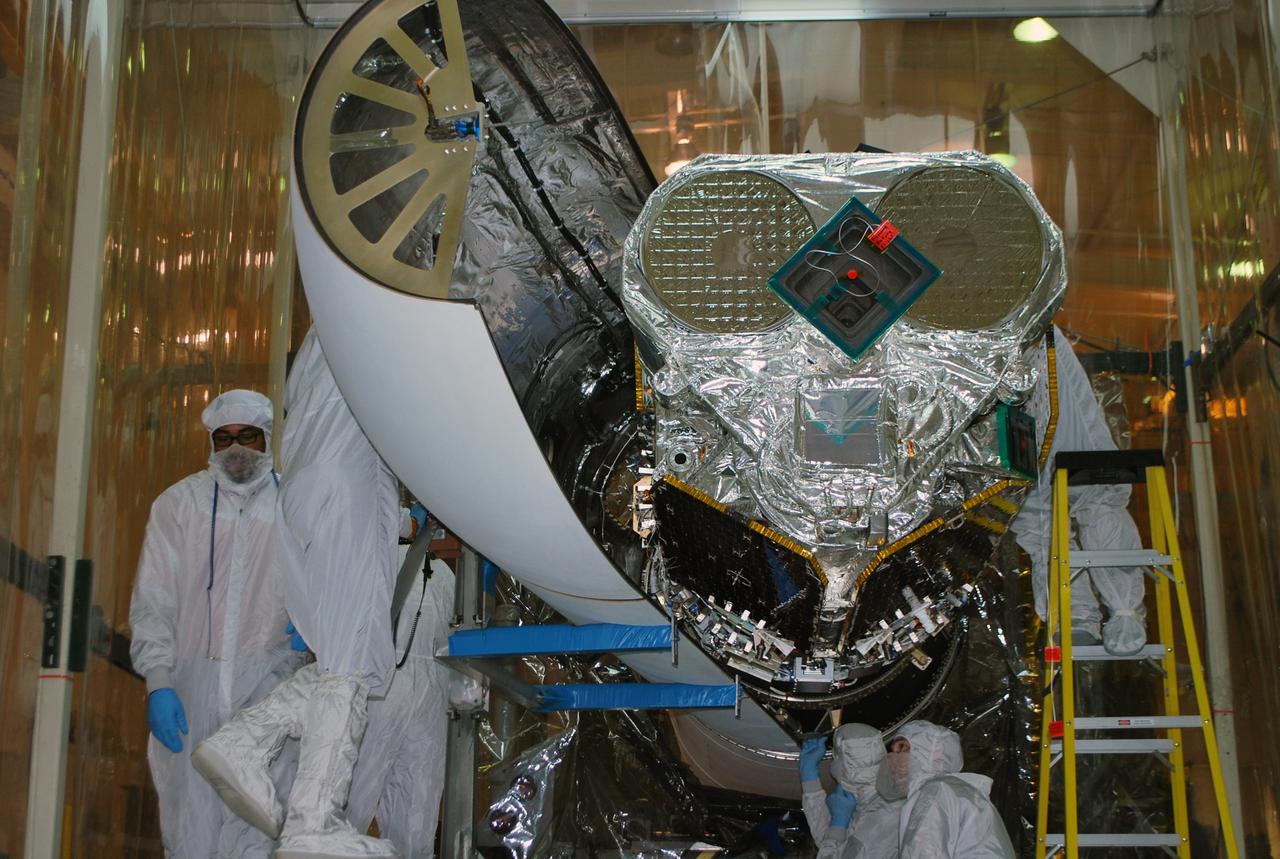
VANDENBERG AFB, Calif. – Technicians install one half of the payload fairing over the NuSTAR spacecraft as they continue to process the spacecraft and its Pegasus rocket for launch. NuSTAR stands for Nuclear Spectroscopic Telescope Array. Photo credit: NASA/Randy Beaudoin
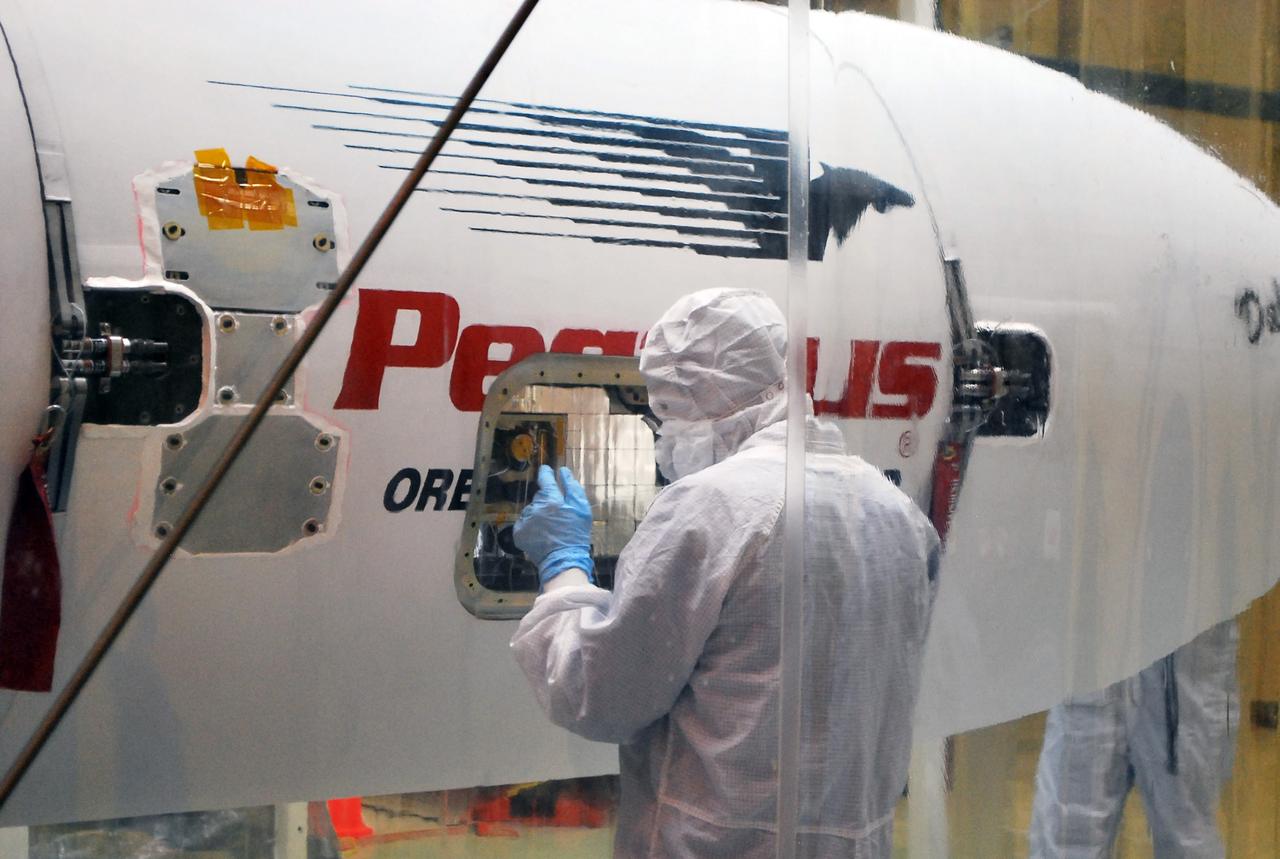
VANDENBERG AFB, Calif. – A technicians checks the installation of the payload fairing over the NuSTAR spacecraft as processing continues for the spacecraft and its Pegasus rocket for launch. NuSTAR stands for Nuclear Spectroscopic Telescope Array. Photo credit: NASA/Randy Beaudoin
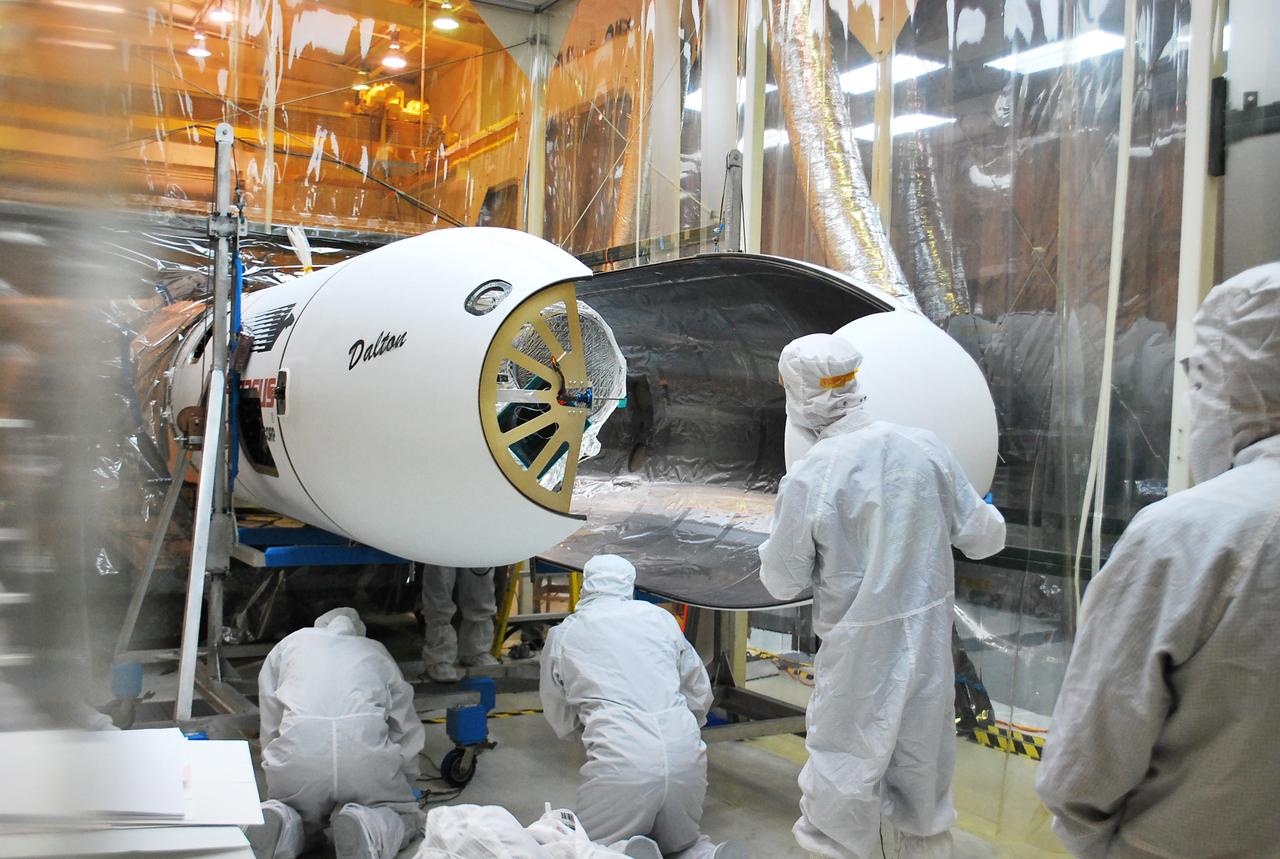
VANDENBERG AFB, Calif. – Technicians install the second half of the payload fairing over the NuSTAR spacecraft as they continue to process the spacecraft and its Pegasus rocket for launch. NuSTAR stands for Nuclear Spectroscopic Telescope Array. Photo credit: NASA/Randy Beaudoin
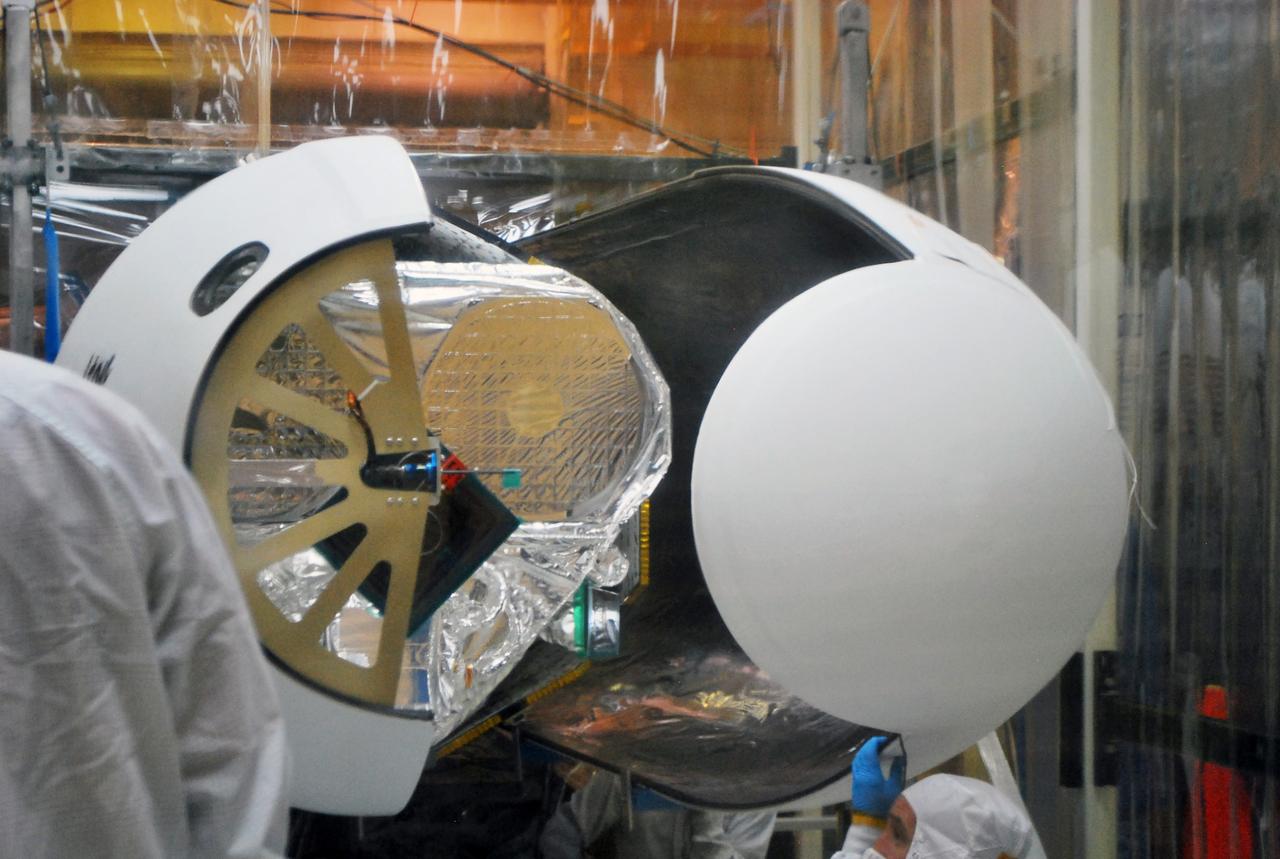
VANDENBERG AFB, Calif. – Technicians install the second half of the payload fairing over the NuSTAR spacecraft as they continue to process the spacecraft and its Pegasus rocket for launch. NuSTAR stands for Nuclear Spectroscopic Telescope Array. Photo credit: NASA/Randy Beaudoin
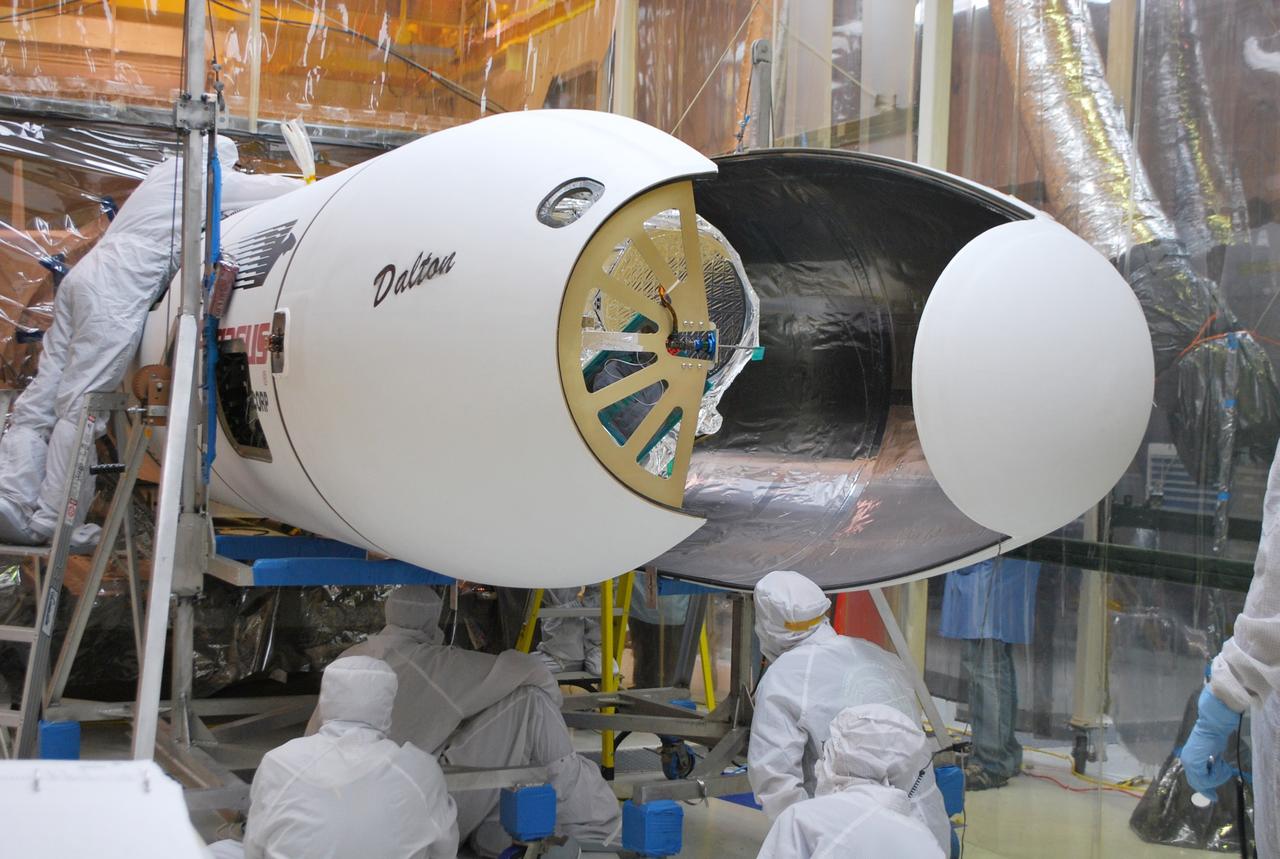
VANDENBERG AFB, Calif. – Technicians install the second half of the payload fairing over the NuSTAR spacecraft as they continue to process the spacecraft and its Pegasus rocket for launch. NuSTAR stands for Nuclear Spectroscopic Telescope Array. Photo credit: NASA/Randy Beaudoin
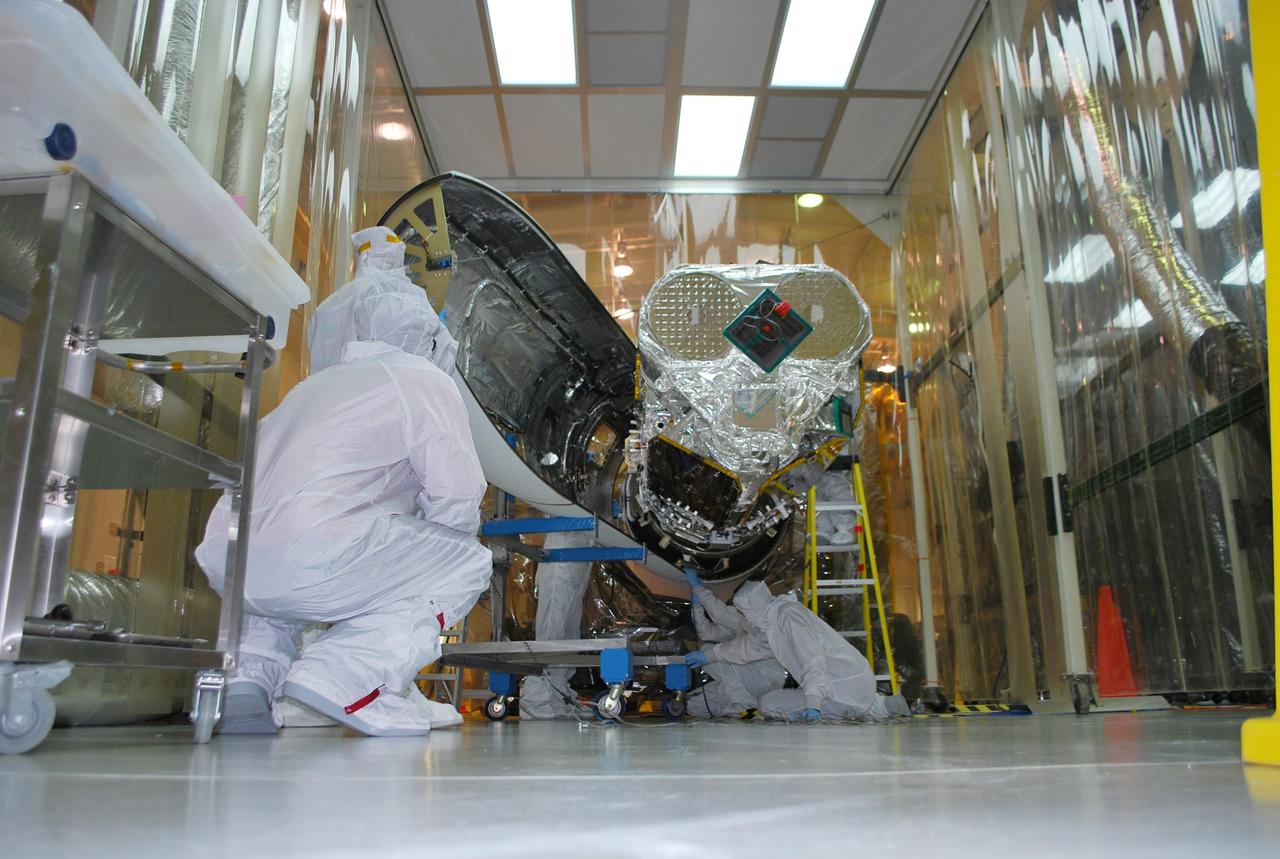
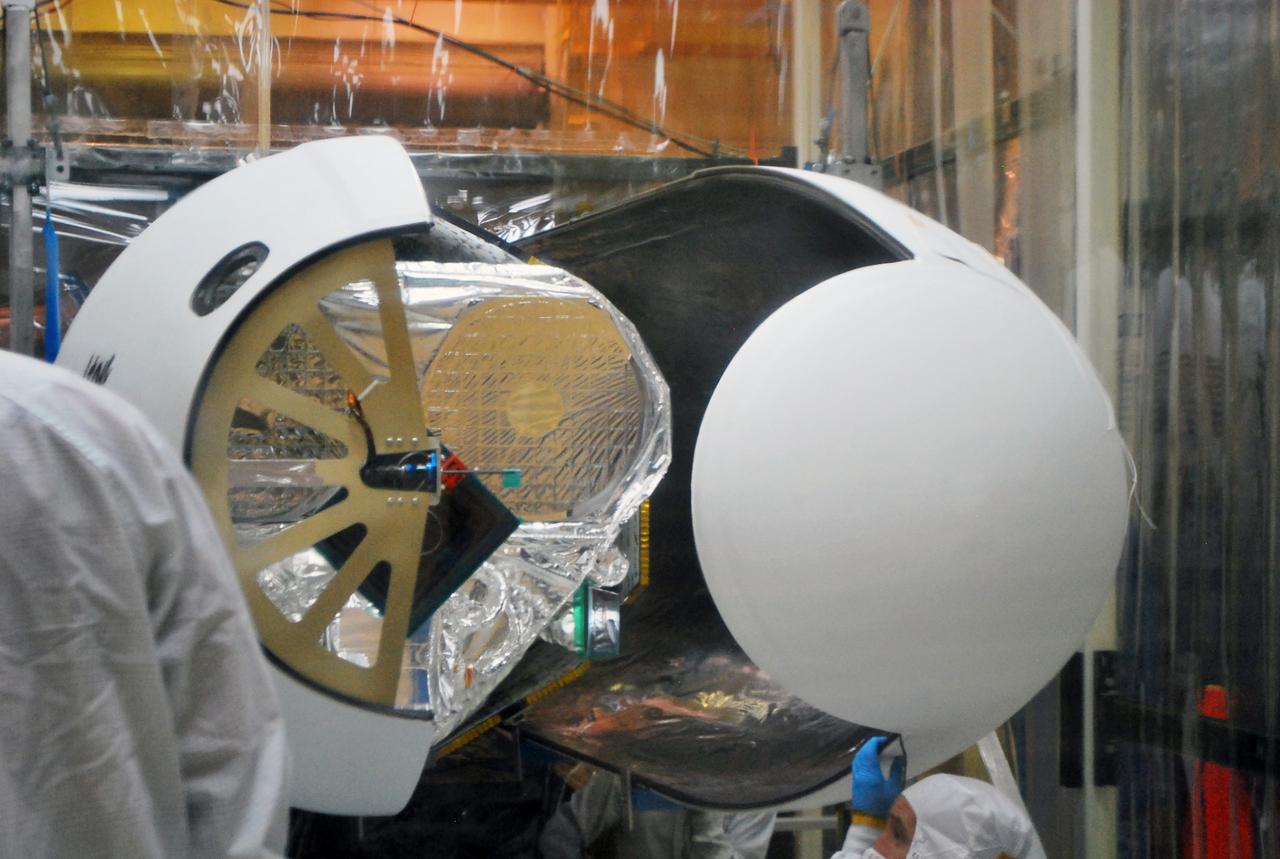
VANDENBERG AFB, Calif. – Technicians install one half of the payload fairing over the NuSTAR spacecraft as they continue to process the spacecraft and its Pegasus rocket for launch. NuSTAR stands for Nuclear Spectroscopic Telescope Array. Photo credit: NASA/Randy Beaudoin
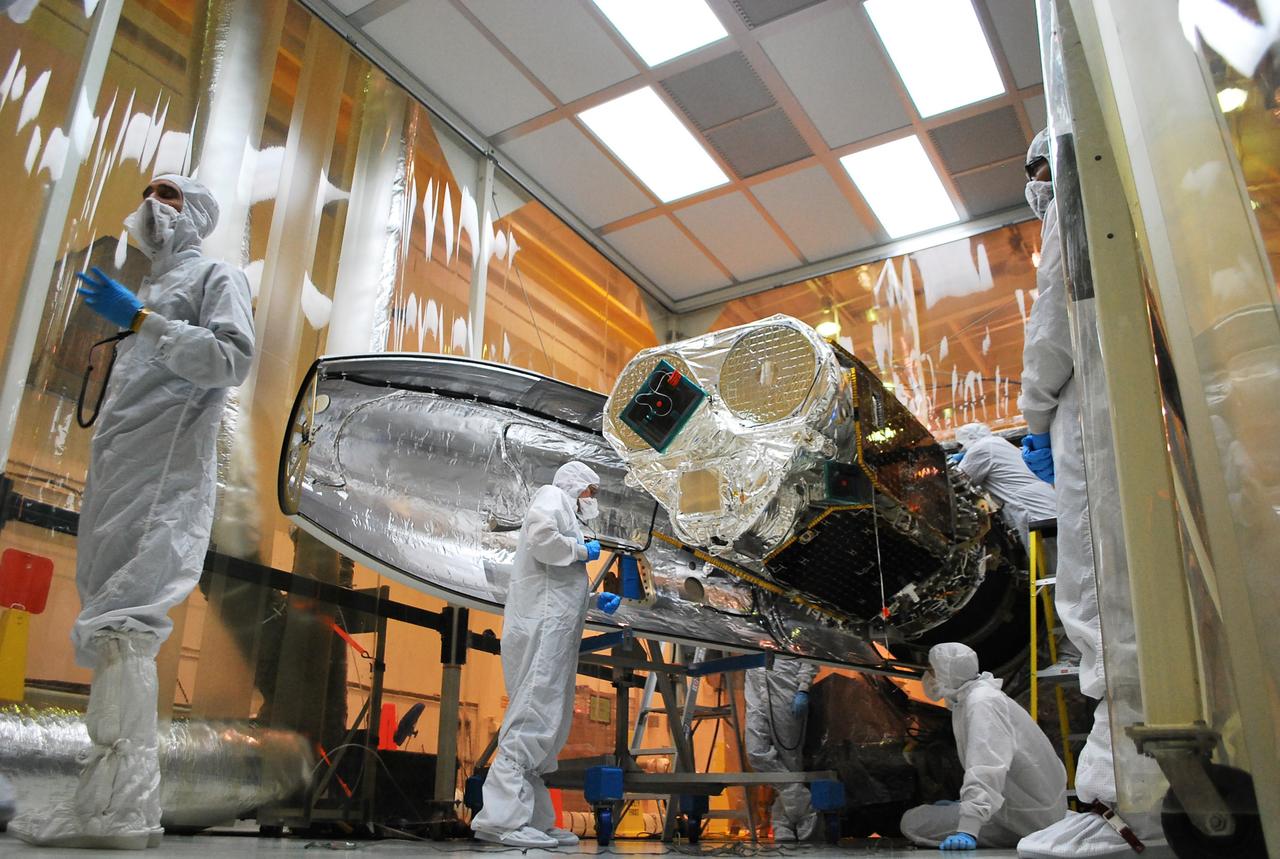
VANDENBERG AFB, Calif. – Technicians install one half of the payload fairing over the NuSTAR spacecraft as they continue to process the spacecraft and its Pegasus rocket for launch. NuSTAR stands for Nuclear Spectroscopic Telescope Array. Photo credit: NASA/Randy Beaudoin
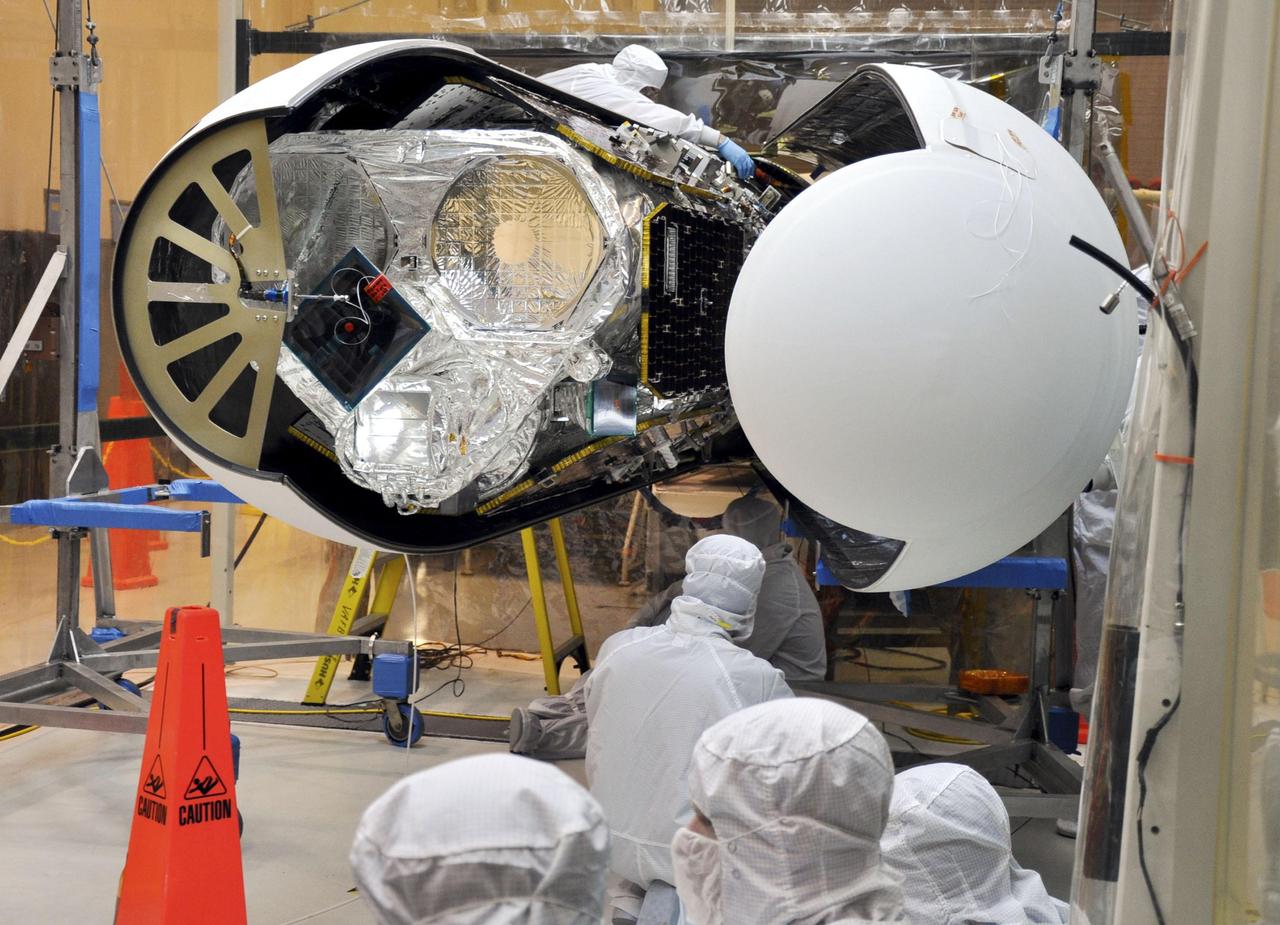
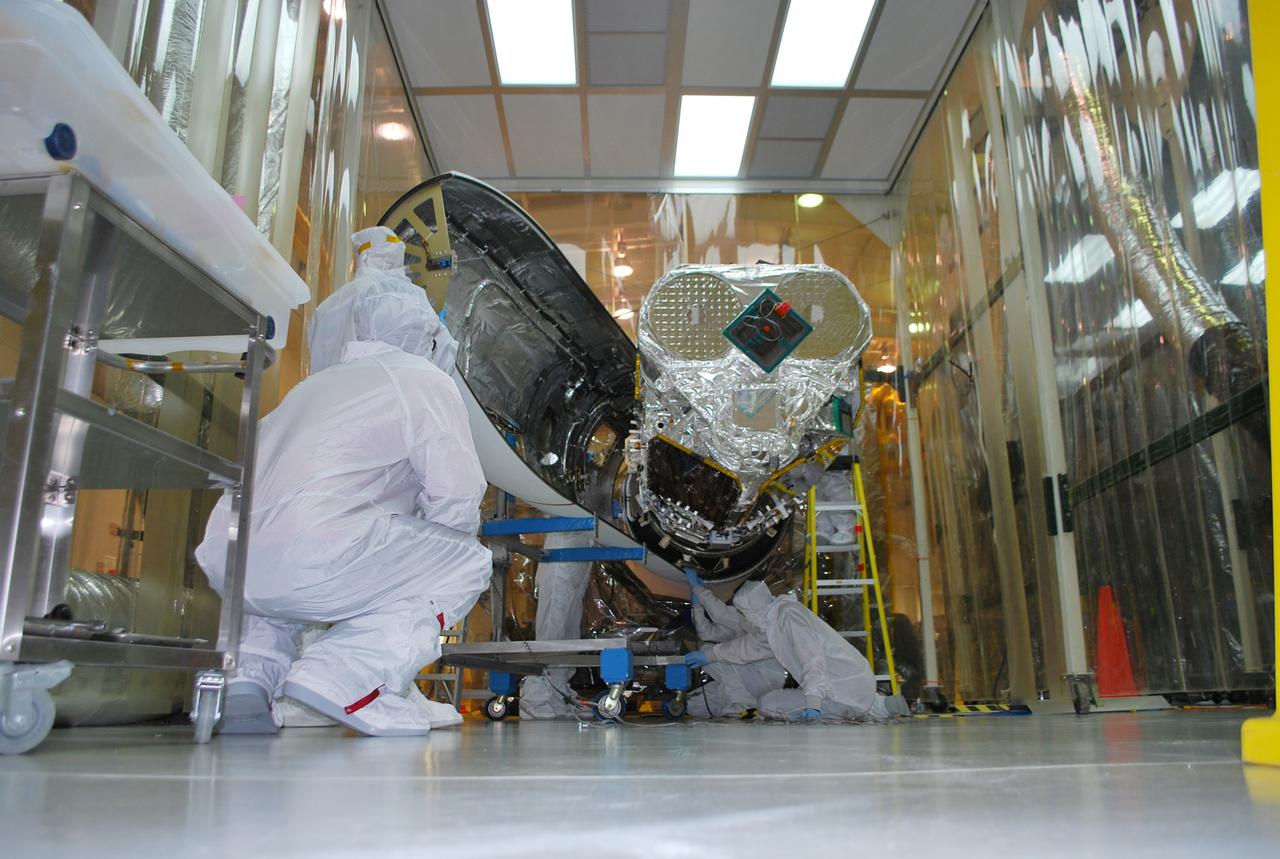
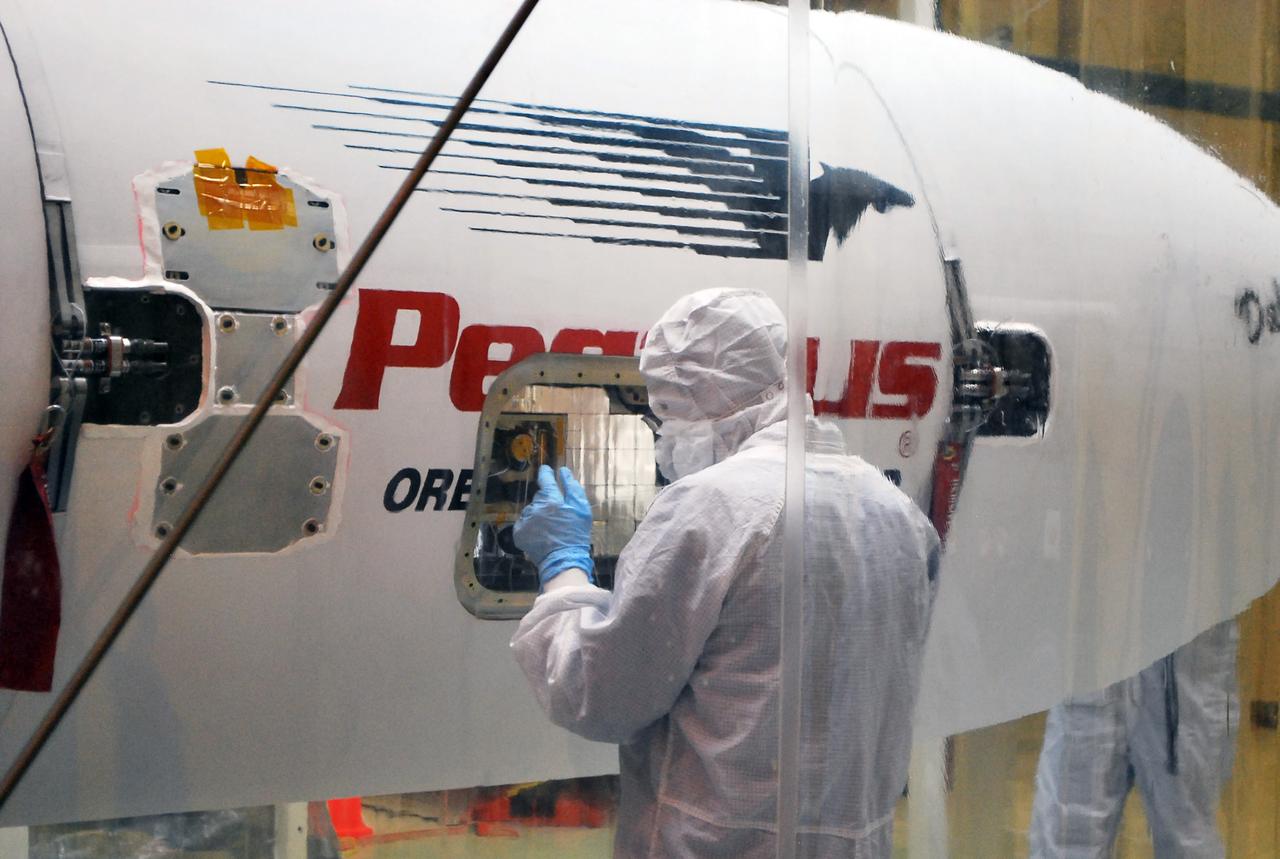
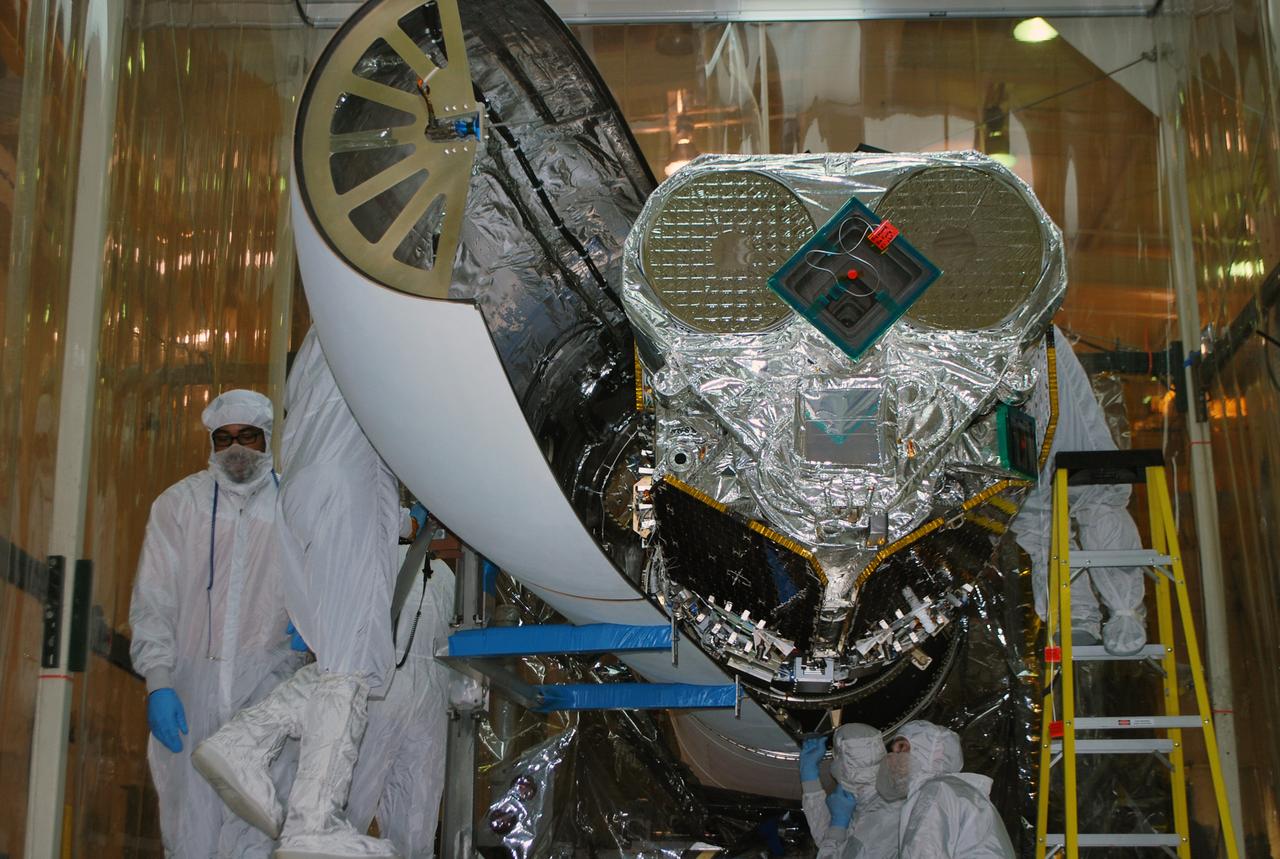
An Orbital Sciences technician completes final checks of NASA Nuclear Spectroscopic Telescope Array, or NuSTAR, before the Pegasus payload fairing is secured around it.
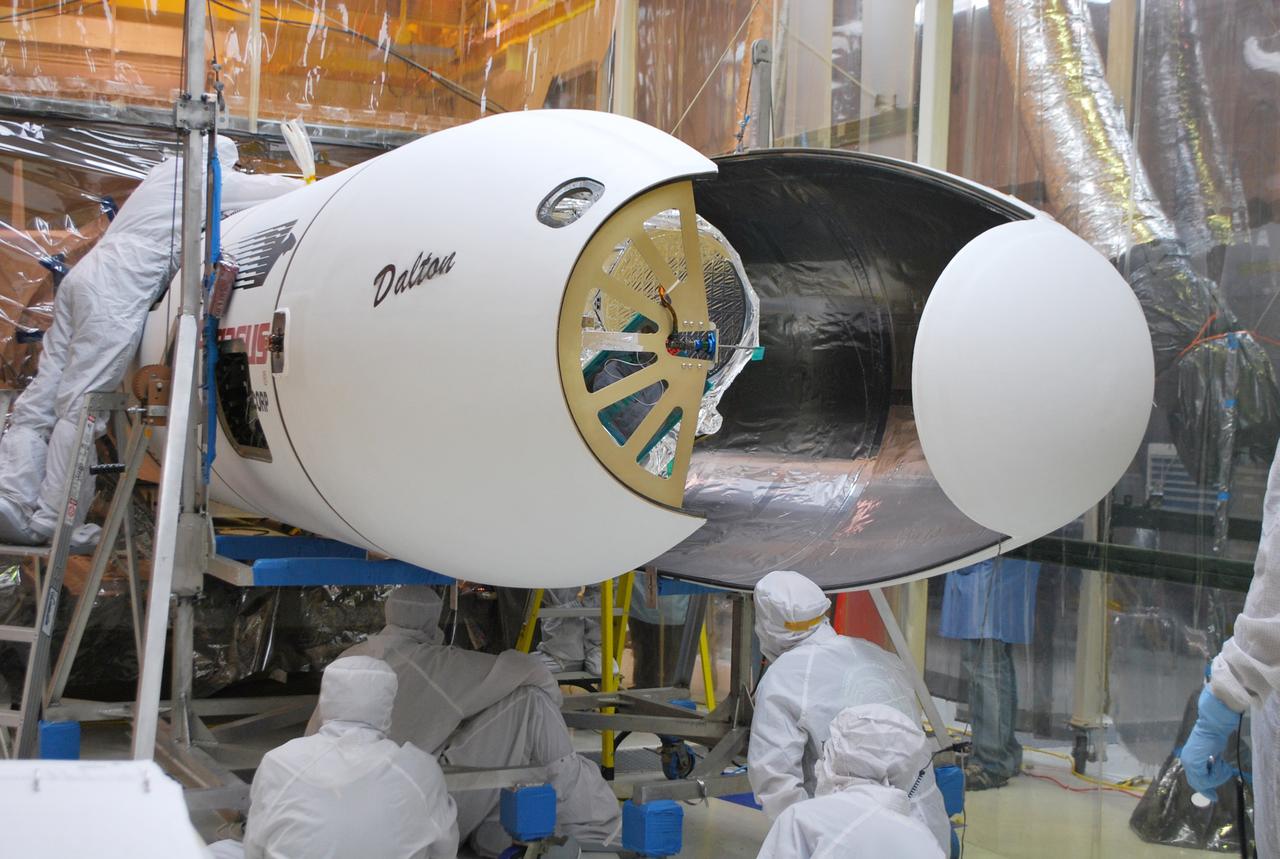
NUSTAR/Pegasus Fairing Installation
NUSTAR/Pegasus Fairing Installation
NUSTAR/Pegasus Fairing Installation
NUSTAR/Pegasus Fairing Installation
NUSTAR/Pegasus Fairing Installation
NUSTAR/Pegasus Fairing Installation
NUSTAR/Pegasus Fairing Installation
NUSTAR/Pegasus Fairing Installation
NUSTAR/Pegasus Fairing Installation
NUSTAR/Pegasus Fairing Installation
PEGASUS NUSTAR, Fairing Halves and Starboard Fairing Move to Cleanroom
PEGASUS NUSTAR, Fairing Halves and Starboard Fairing Move to Cleanroom
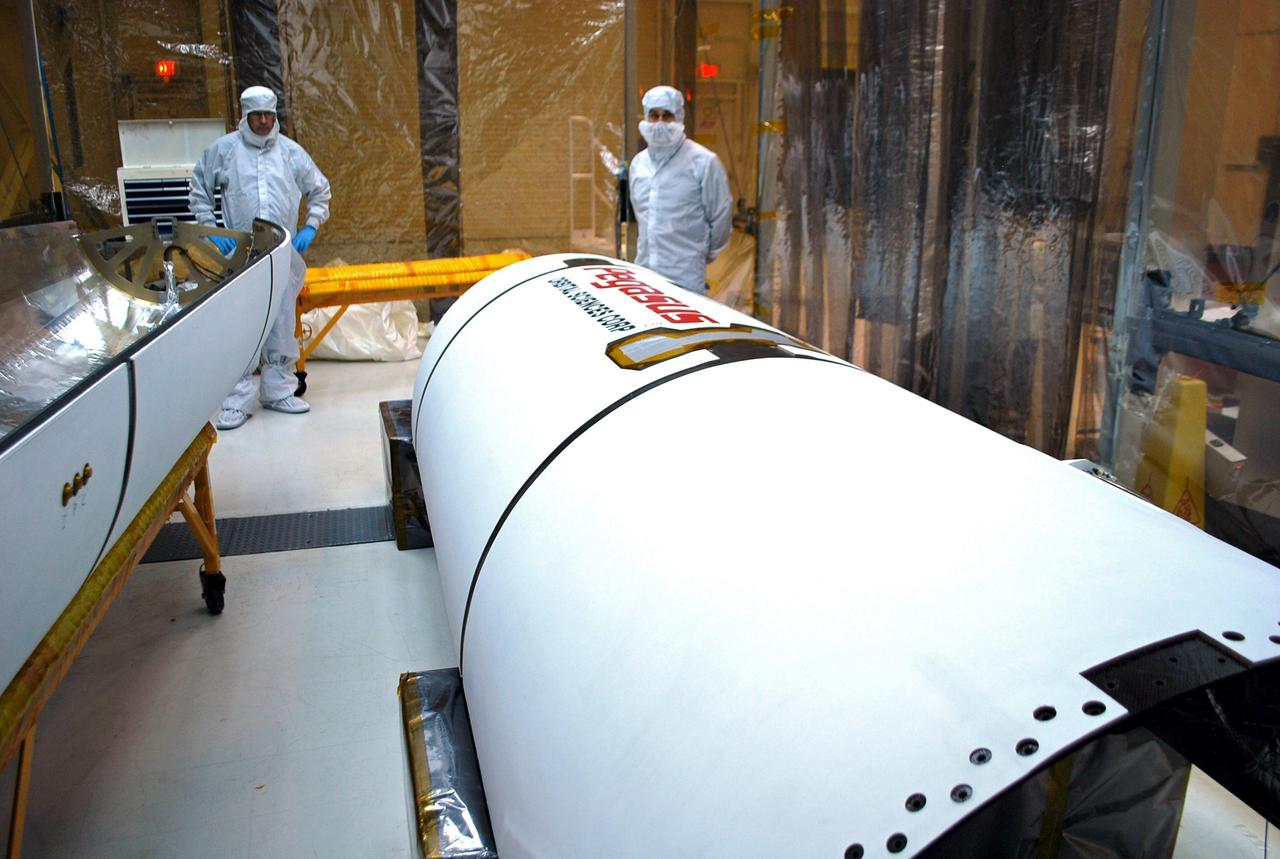
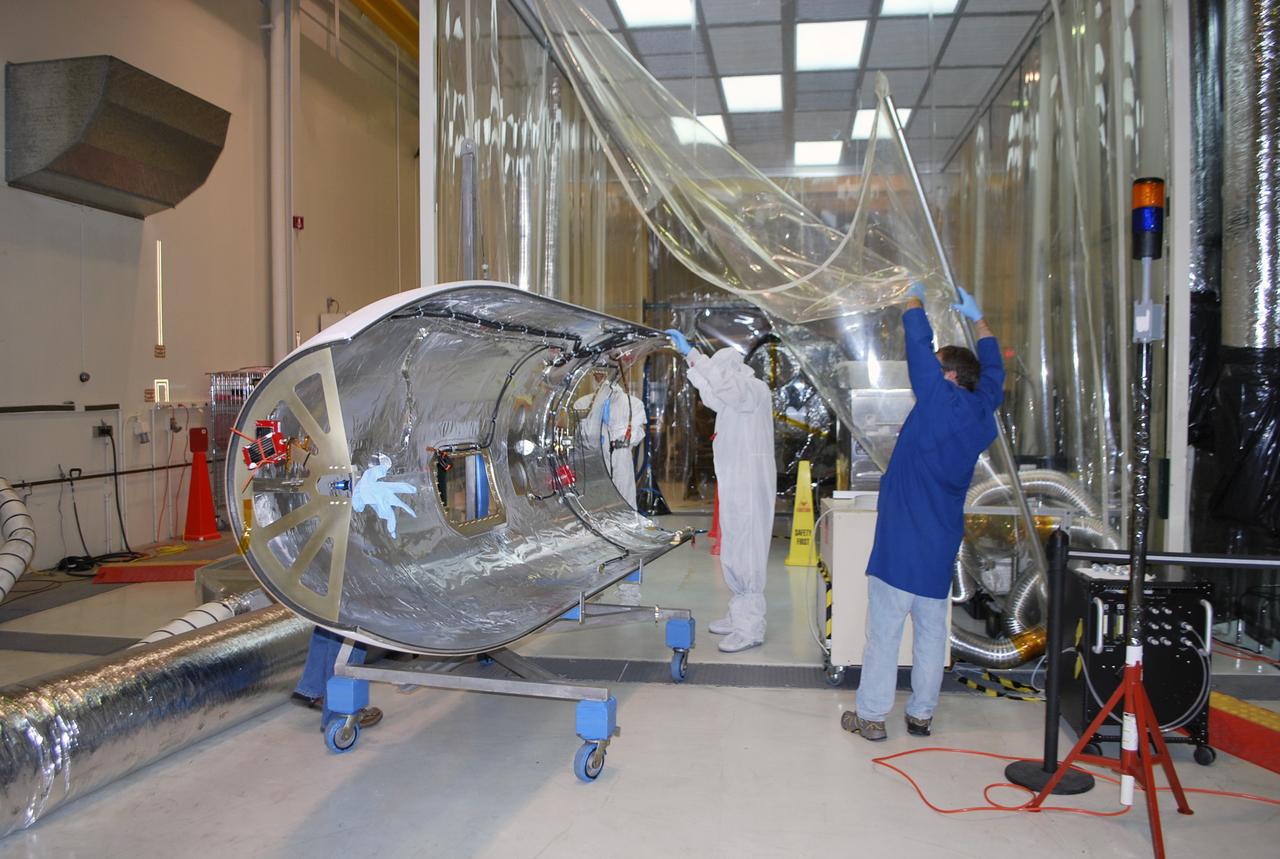
VANDENBERG AIR FORCE BASE, Calif. – In an environmental enclosure in processing facility 1555 at Vandenberg Air Force Base in California, twin segments of a Pegasus payload fairing for NASA's Nuclear Spectroscopic Telescope Array (NuSTAR) mission are cleaned and inspected before the spacecraft is encapsulated. The fairing will protect the spacecraft from the heat and aerodynamic pressure generated during ascent to orbit aboard an Orbital Sciences Pegasus XL rocket in March. Once processing of the rocket and spacecraft are completed at Vandenberg, they will be flown aboard an L-1011 carrier aircraft to the Ronald Reagan Ballistic Missile Defense Test Site on the Pacific Ocean’s Kwajalein Atoll for launch. NuSTAR, a high-energy x-ray telescope, will conduct a census for black holes, map radioactive material in young supernovae remnants, and study the origins of cosmic rays and the extreme physics around collapsed stars. For more information, visit http://www.nasa.gov/nustar. Photo credit: NASA/Randy Beaudoin, VAFB
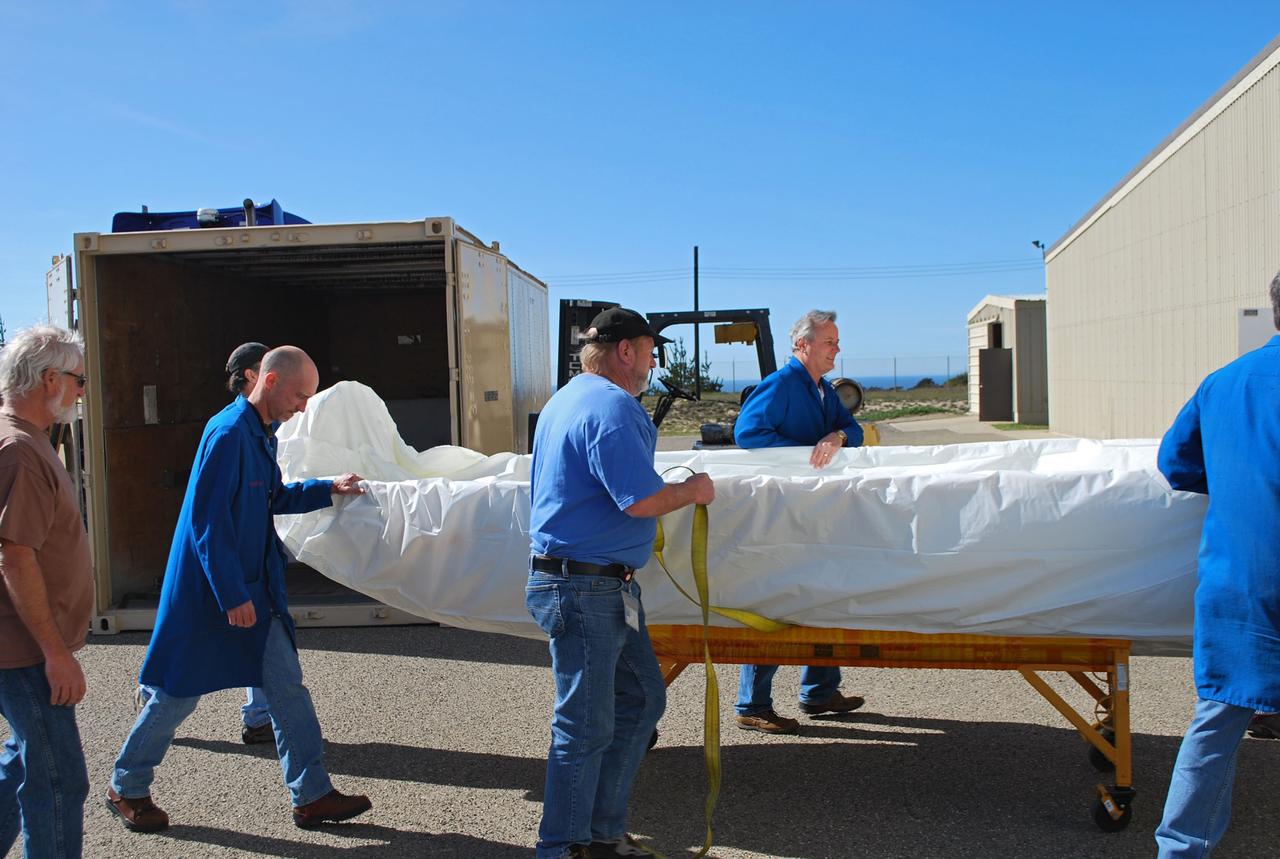
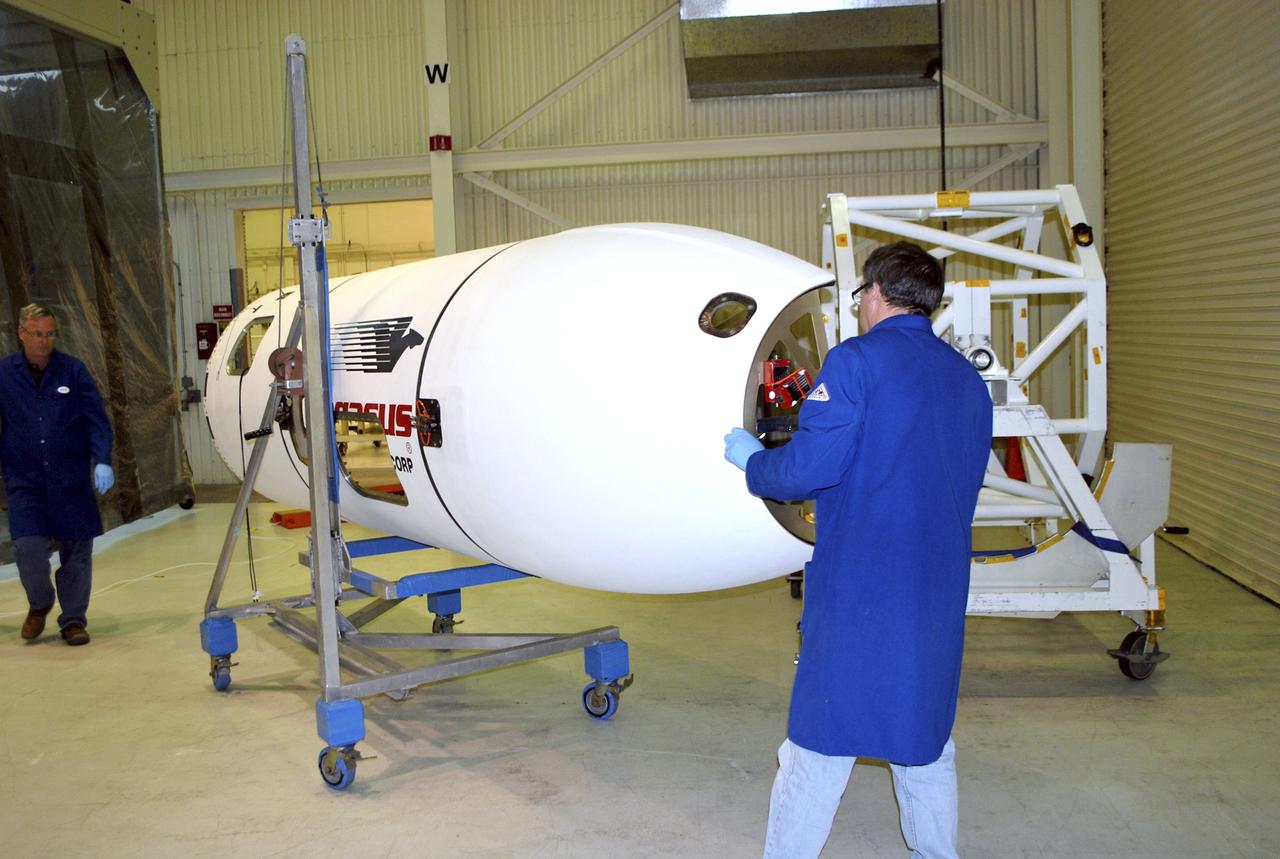
VANDENBERG AIR FORCE BASE, Calif. -- Workers unload the two halves that make up the Pegasus XL rocket's fairing that will protect the NuSTAR spacecraft during launch. Inside Orbital Science's processing facility, the fairing halves will be unwrapped and processed in a clean room environmental enclosure. The Pegasus is set to launch NASA's NuSTAR spacecraft. Once the rocket and spacecraft are processed at Vandenberg, they will be flown on the Orbital Sciences’ L-1011 carrier aircraft to the Ronald Reagan Ballistic Missile Defense Test Site at the Pacific Ocean’s Kwajalein Atoll for launch. The high-energy x-ray telescope will conduct a census for black holes, map radioactive material in young supernovae remnants, and study the origins of cosmic rays and the extreme physics around collapsed stars. For more information, visit science.nasa.gov/missions/nustar/. Photo credit: NASA/Randy Beaudoin, VAFB
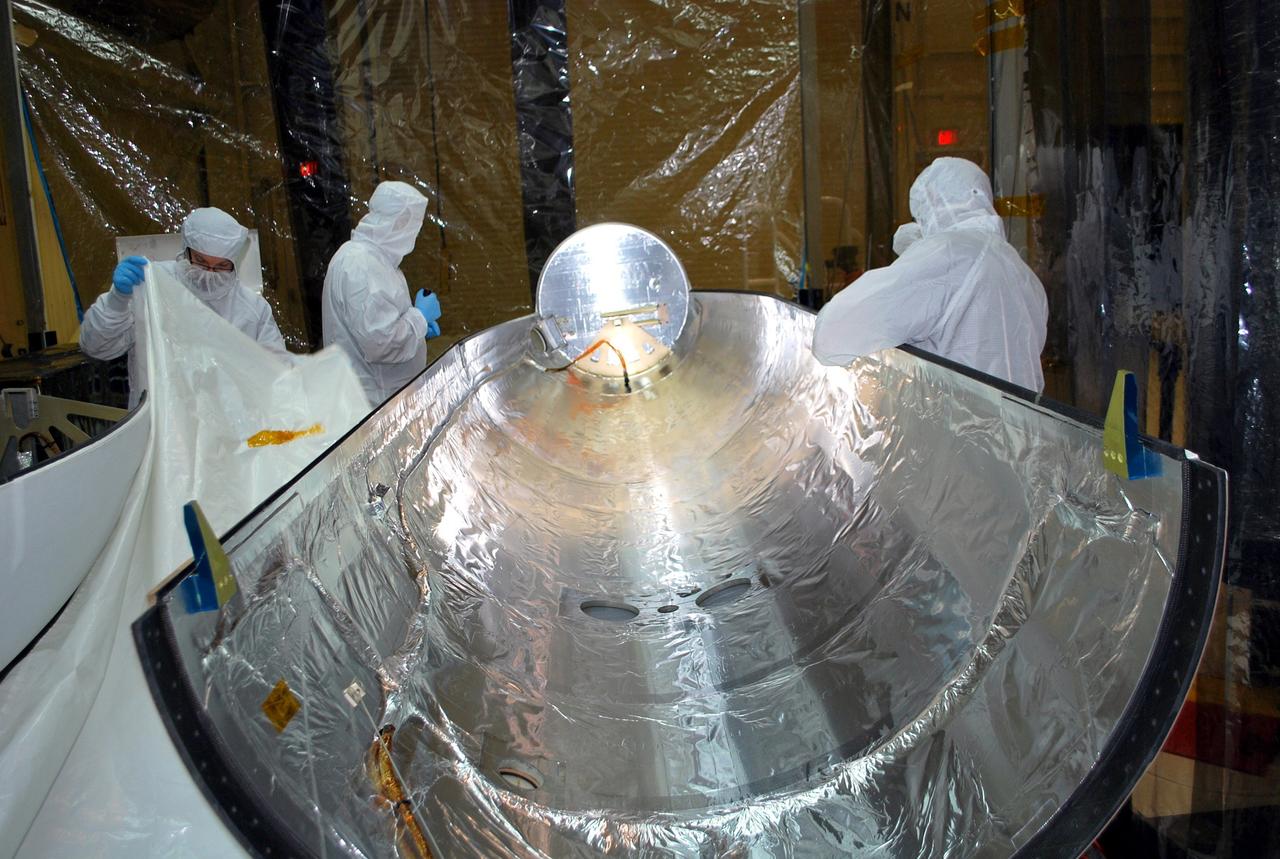
VANDENBERG AIR FORCE BASE, Calif. – In an environmental enclosure in processing facility 1555 at Vandenberg Air Force Base in California, cleaning and inspection of half of a Pegasus payload fairing for NASA's Nuclear Spectroscopic Telescope Array (NuSTAR) mission is under way. The fairing will protect the spacecraft from the heat and aerodynamic pressure generated during ascent to orbit aboard an Orbital Sciences Pegasus XL rocket in March. Once processing of the rocket and spacecraft are completed at Vandenberg, they will be flown aboard an L-1011 carrier aircraft to the Ronald Reagan Ballistic Missile Defense Test Site on the Pacific Ocean’s Kwajalein Atoll for launch. NuSTAR, a high-energy x-ray telescope, will conduct a census for black holes, map radioactive material in young supernovae remnants, and study the origins of cosmic rays and the extreme physics around collapsed stars. For more information, visit http://www.nasa.gov/nustar. Photo credit: NASA/Randy Beaudoin, VAFB
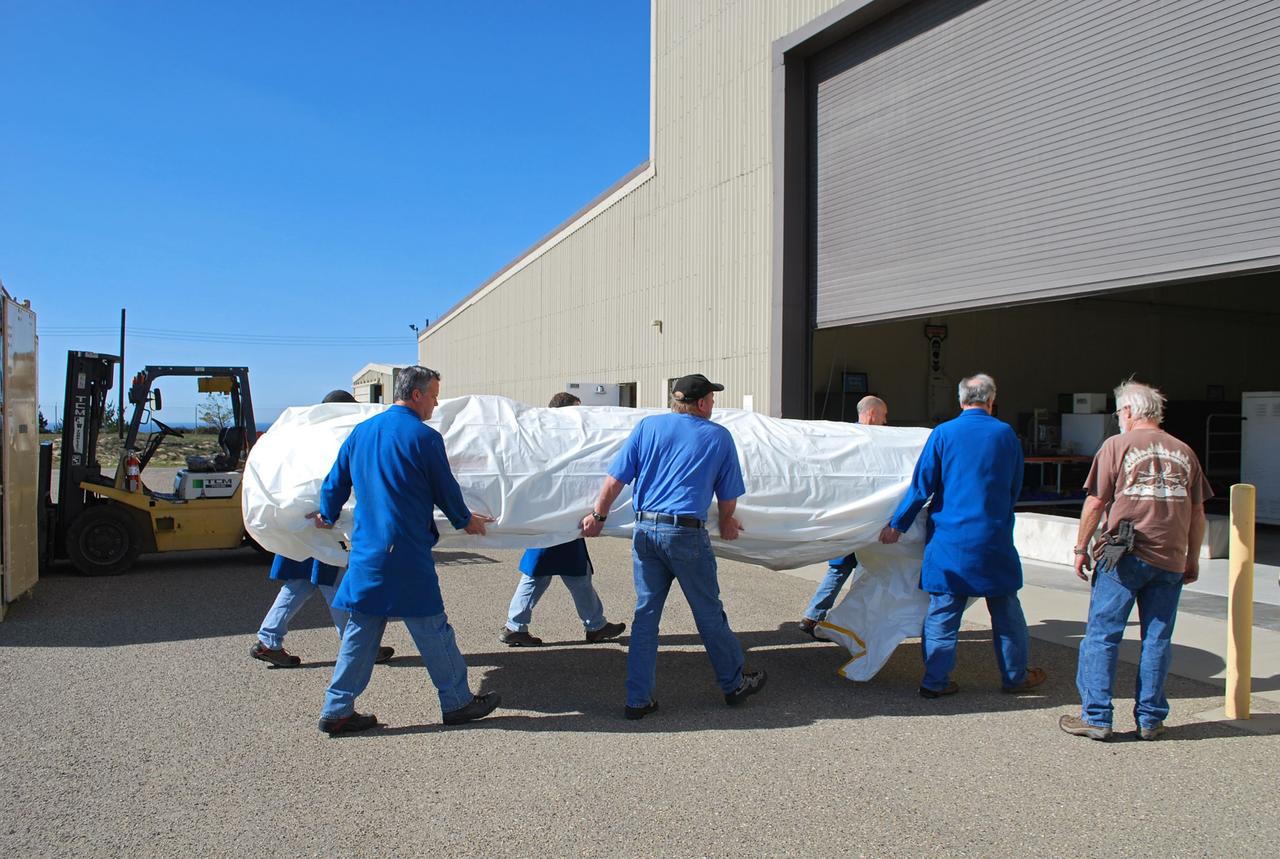
VANDENBERG AIR FORCE BASE, Calif. -- Workers unload the two halves that make up the Pegasus XL rocket's fairing that will protect the NuSTAR spacecraft during launch. Inside Orbital Science's processing facility, the fairing halves will be unwrapped and processed in a clean room environmental enclosure. The Pegasus is set to launch NASA's NuSTAR spacecraft. Once the rocket and spacecraft are processed at Vandenberg, they will be flown on the Orbital Sciences’ L-1011 carrier aircraft to the Ronald Reagan Ballistic Missile Defense Test Site at the Pacific Ocean’s Kwajalein Atoll for launch. The high-energy x-ray telescope will conduct a census for black holes, map radioactive material in young supernovae remnants, and study the origins of cosmic rays and the extreme physics around collapsed stars. For more information, visit science.nasa.gov/missions/nustar/. Photo credit: NASA/Randy Beaudoin, VAFB
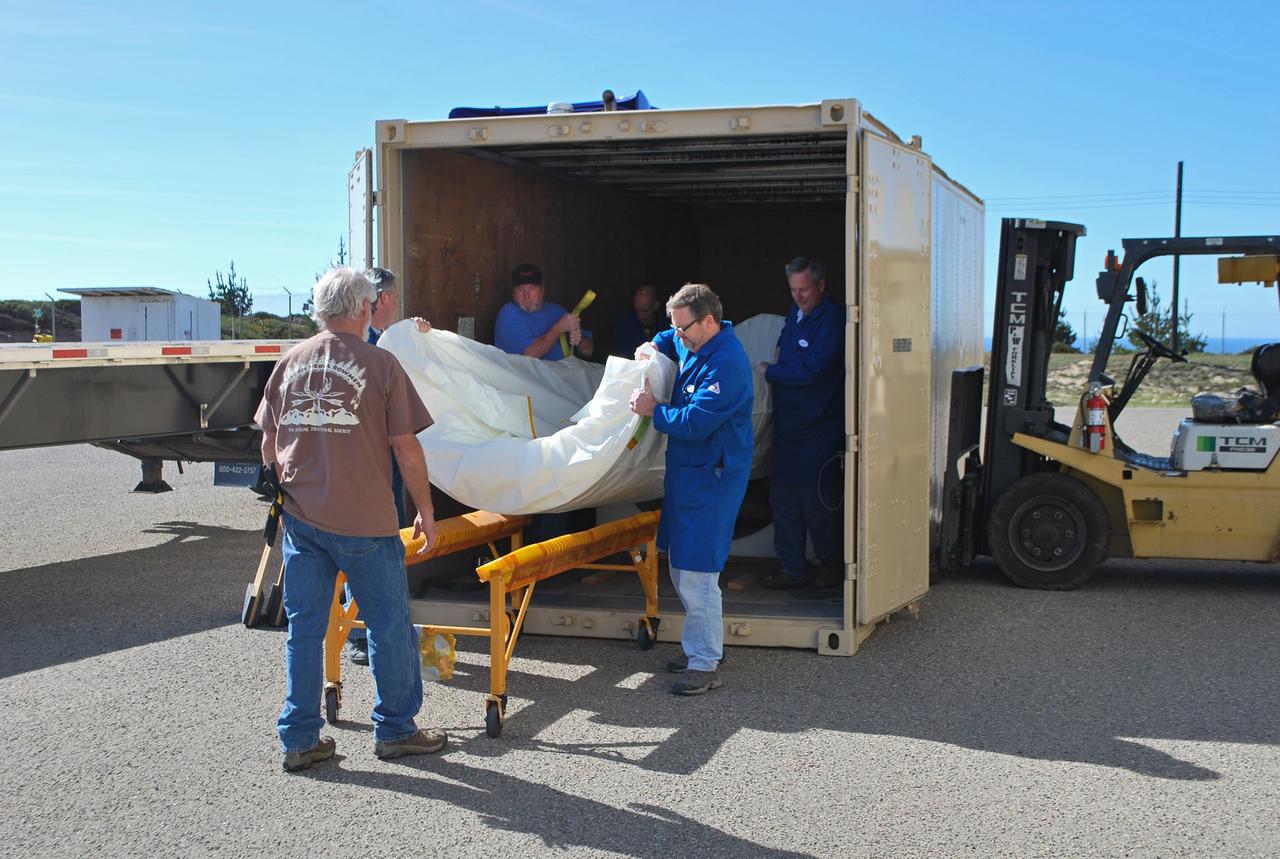
VANDENBERG AIR FORCE BASE, Calif. -- Workers unload the two halves that make up the Pegasus XL rocket's fairing that will protect the NuSTAR spacecraft during launch. Inside Orbital Science's processing facility, the fairing halves will be unwrapped and processed in a clean room environmental enclosure. The Pegasus is set to launch NASA's NuSTAR spacecraft. Once the rocket and spacecraft are processed at Vandenberg, they will be flown on the Orbital Sciences’ L-1011 carrier aircraft to the Ronald Reagan Ballistic Missile Defense Test Site at the Pacific Ocean’s Kwajalein Atoll for launch. The high-energy x-ray telescope will conduct a census for black holes, map radioactive material in young supernovae remnants, and study the origins of cosmic rays and the extreme physics around collapsed stars. For more information, visit science.nasa.gov/missions/nustar/. Photo credit: NASA/Randy Beaudoin, VAFB
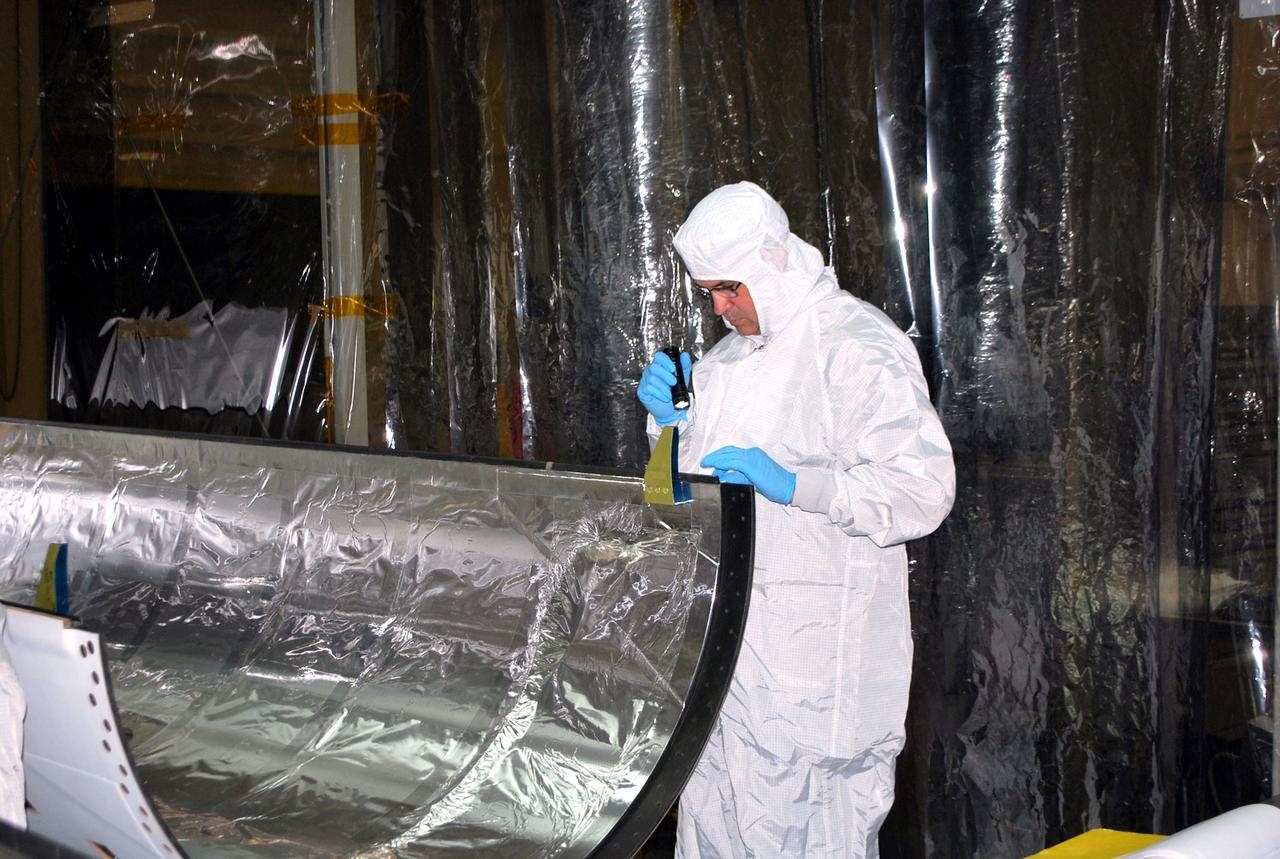
VANDENBERG AIR FORCE BASE, Calif. – In an environmental enclosure in processing facility 1555 at Vandenberg Air Force Base in California, a spacecraft technician inspects half of a Pegasus payload fairing for NASA's Nuclear Spectroscopic Telescope Array (NuSTAR) mission. The fairing will protect the spacecraft from the heat and aerodynamic pressure generated during ascent to orbit aboard an Orbital Sciences Pegasus XL rocket in March. Once processing of the rocket and spacecraft are completed at Vandenberg, they will be flown aboard an L-1011 carrier aircraft to the Ronald Reagan Ballistic Missile Defense Test Site on the Pacific Ocean’s Kwajalein Atoll for launch. NuSTAR, a high-energy x-ray telescope, will conduct a census for black holes, map radioactive material in young supernovae remnants, and study the origins of cosmic rays and the extreme physics around collapsed stars. For more information, visit http://www.nasa.gov/nustar. Photo credit: NASA/Randy Beaudoin, VAFB
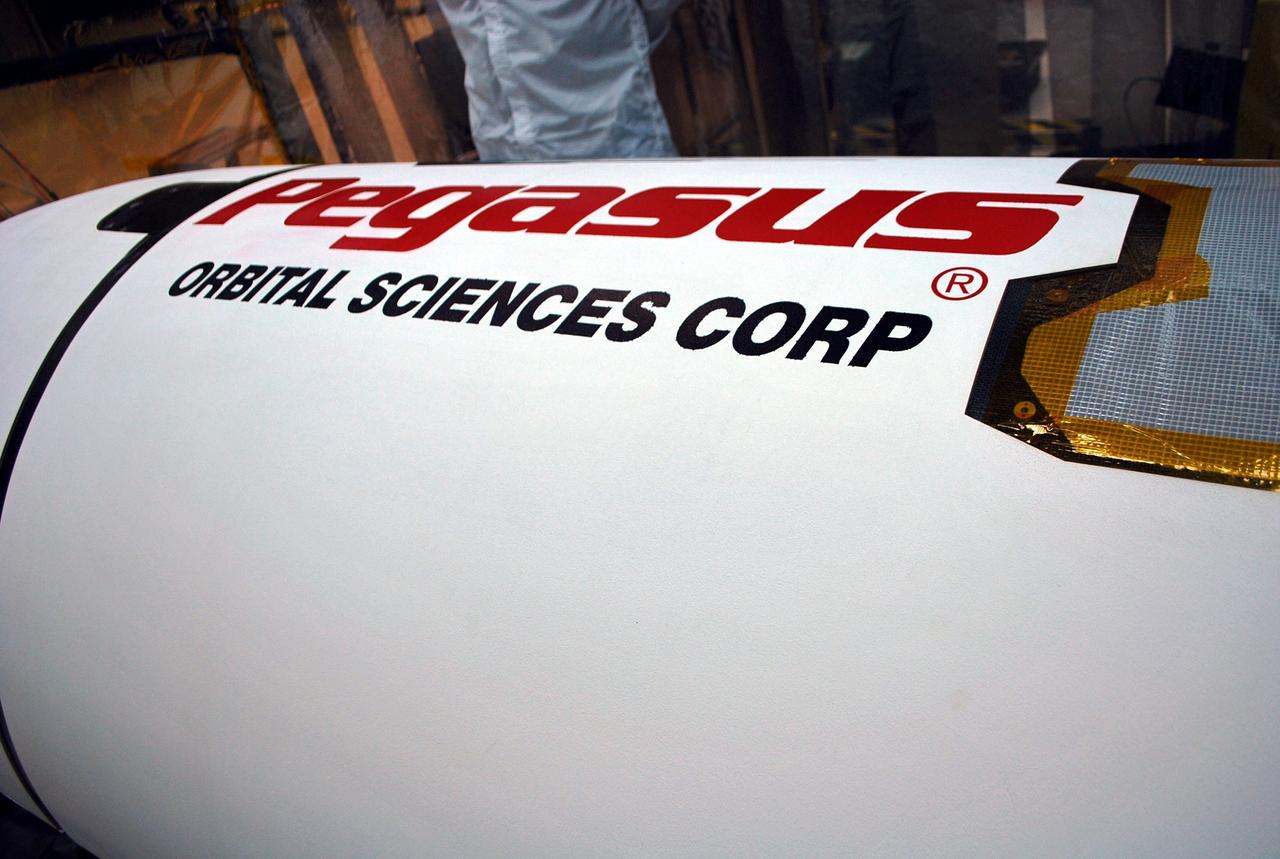
VANDENBERG AIR FORCE BASE, Calif. – In processing facility 1555 at Vandenberg Air Force Base in California, segments of a Pegasus payload fairing for NASA's Nuclear Spectroscopic Telescope Array (NuSTAR) mission have been cleaned and inspected, a milestone in launch preparations. The fairing will protect the spacecraft from the heat and aerodynamic pressure generated during ascent to orbit aboard an Orbital Sciences Pegasus XL rocket in March. Once processing of the rocket and spacecraft are completed at Vandenberg, they will be flown aboard an L-1011 carrier aircraft to the Ronald Reagan Ballistic Missile Defense Test Site on the Pacific Ocean’s Kwajalein Atoll for launch. NuSTAR, a high-energy x-ray telescope, will conduct a census for black holes, map radioactive material in young supernovae remnants, and study the origins of cosmic rays and the extreme physics around collapsed stars. For more information, visit http://www.nasa.gov/nustar. Photo credit: NASA/Randy Beaudoin, VAFB
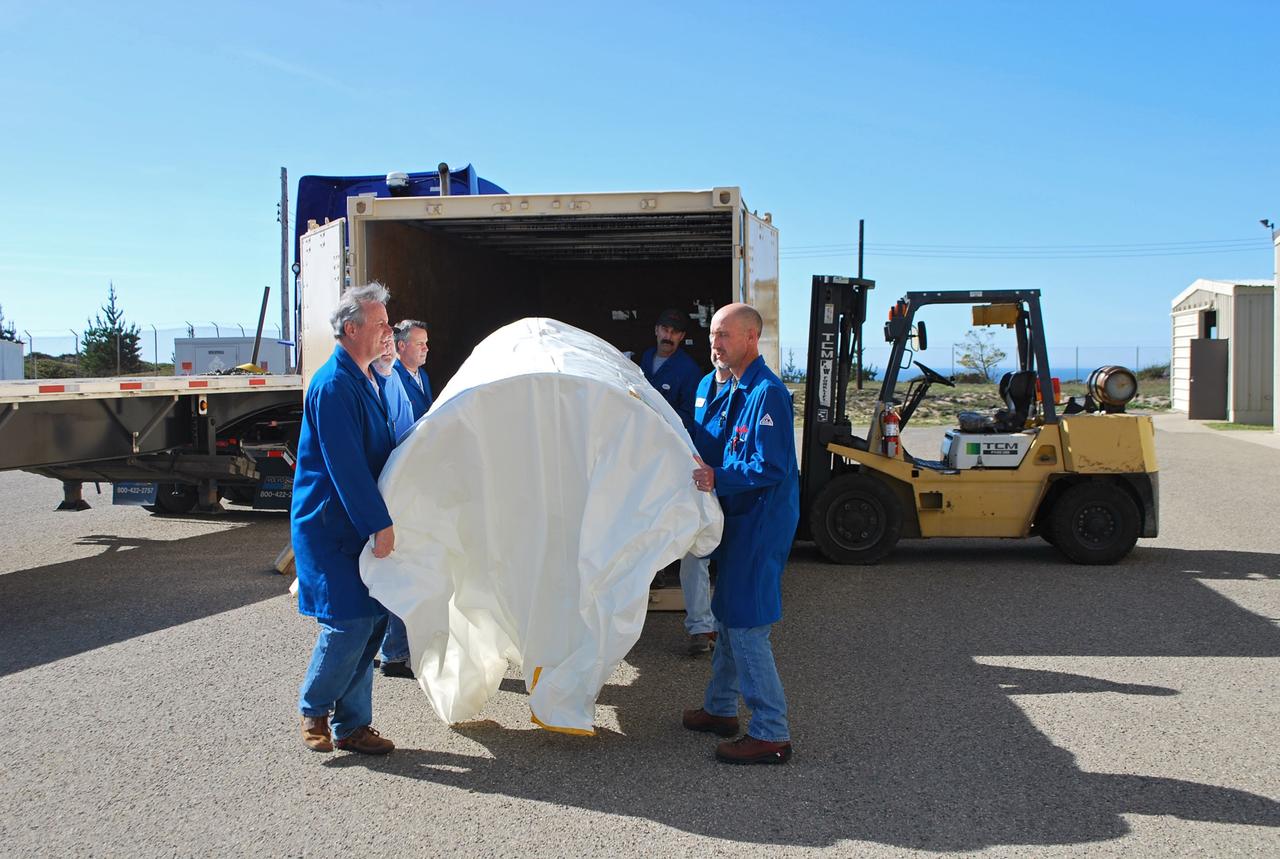
VANDENBERG AIR FORCE BASE, Calif. -- Workers unload the two halves that make up the Pegasus XL rocket's fairing that will protect the NuSTAR spacecraft during launch. Inside Orbital Science's processing facility, the fairing halves will be unwrapped and processed in a clean room environmental enclosure. The Pegasus is set to launch NASA's NuSTAR spacecraft. Once the rocket and spacecraft are processed at Vandenberg, they will be flown on the Orbital Sciences’ L-1011 carrier aircraft to the Ronald Reagan Ballistic Missile Defense Test Site at the Pacific Ocean’s Kwajalein Atoll for launch. The high-energy x-ray telescope will conduct a census for black holes, map radioactive material in young supernovae remnants, and study the origins of cosmic rays and the extreme physics around collapsed stars. For more information, visit science.nasa.gov/missions/nustar/. Photo credit: NASA/Randy Beaudoin, VAFB

VANDENBERG AIR FORCE BASE, Calif. – Inside the Orbital Sciences processing facility at Vandenberg Air Force Base in California, teamwork by Orbital’s technicians ensures that the Pegasus payload fairing is properly installed around NASA's Nuclear Spectroscopic Telescope Array, or NuSTAR. On Feb. 17, NuSTAR was mated to its Pegasus XL rocket, which is positioned behind the spacecraft outside the environmental enclosure. The fairing will protect the spacecraft from the heat and aerodynamic pressure generated during ascent to orbit. Encapsulation of NuSTAR in its fairing is a significant prelaunch milestone. After processing of the rocket and spacecraft are complete, they will be flown on Orbital's L-1011 carrier aircraft from Vandenberg to the Ronald Reagan Ballistic Missile Defense Test Site on the Pacific Ocean’s Kwajalein Atoll for launch in March. The high-energy x-ray telescope will conduct a census of black holes, map radioactive material in young supernovae remnants, and study the origins of cosmic rays and the extreme physics around collapsed stars. For more information, visit http://www.nasa.gov/nustar. Photo credit: NASA/Randy Beaudoin, VAFB
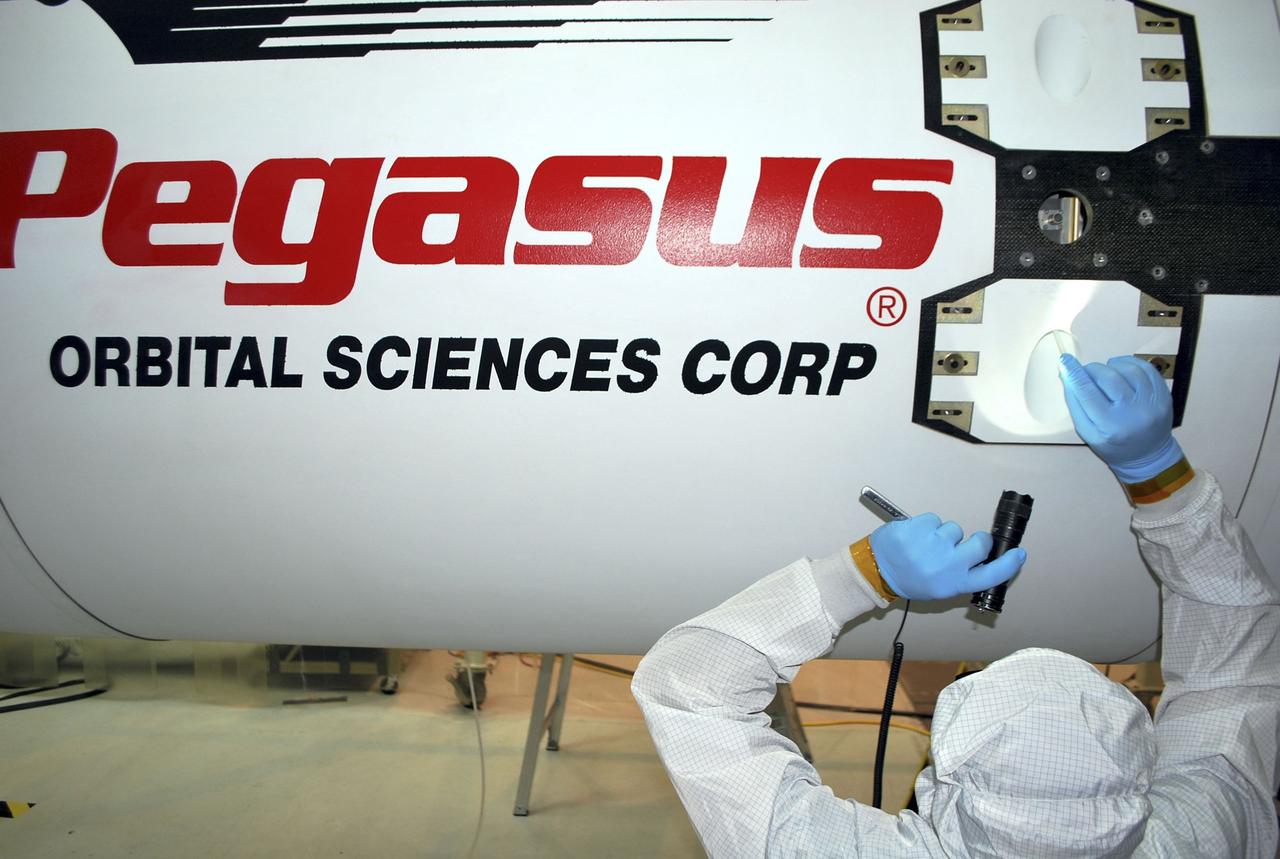
VANDENBERG AIR FORCE BASE, Calif. – Inside the Orbital Sciences processing facility at Vandenberg Air Force Base in California, an Orbital technician secures the Pegasus payload fairing around NASA's Nuclear Spectroscopic Telescope Array, or NuSTAR, completing the two-day process. On Feb. 17, NuSTAR was mated to its Pegasus XL rocket, which is positioned behind the spacecraft outside the environmental enclosure. The fairing will protect the spacecraft from the heat and aerodynamic pressure generated during ascent to orbit. Encapsulation of NuSTAR in its fairing is a significant prelaunch milestone. After processing of the rocket and spacecraft are complete, they will be flown on Orbital's L-1011 carrier aircraft from Vandenberg to the Ronald Reagan Ballistic Missile Defense Test Site on the Pacific Ocean’s Kwajalein Atoll for launch in March. The high-energy x-ray telescope will conduct a census of black holes, map radioactive material in young supernovae remnants, and study the origins of cosmic rays and the extreme physics around collapsed stars. For more information, visit http://www.nasa.gov/nustar. Photo credit: NASA/Randy Beaudoin, VAFB
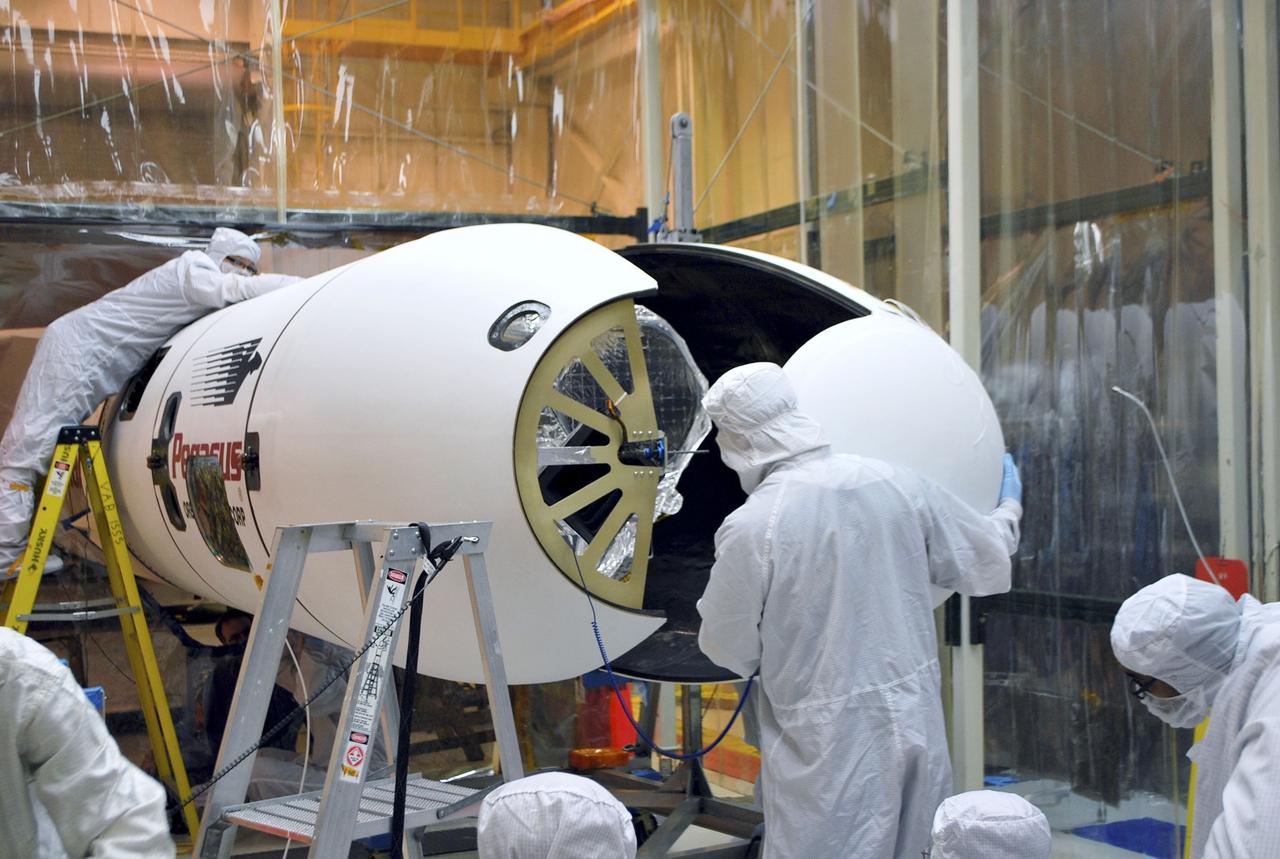
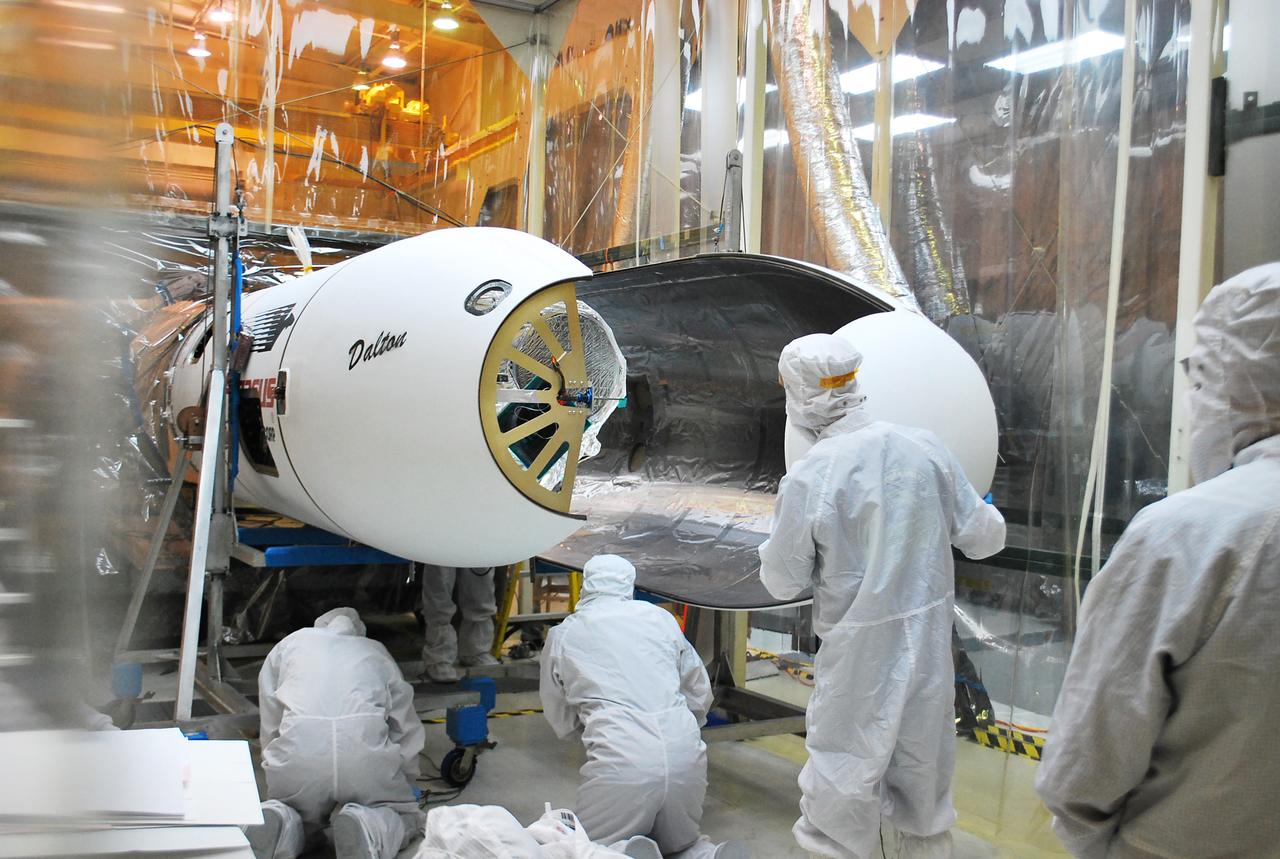
VANDENBERG AIR FORCE BASE, Calif. – Inside the Orbital Sciences processing facility at Vandenberg Air Force Base in California, the installation of the Pegasus payload fairing around NASA's Nuclear Spectroscopic Telescope Array, or NuSTAR, is in progress. On Feb. 17, NuSTAR was mated to its Pegasus XL rocket, which is positioned behind the spacecraft outside the environmental enclosure. The fairing will protect the spacecraft from the heat and aerodynamic pressure generated during ascent to orbit. Encapsulation of NuSTAR in its fairing is a significant prelaunch milestone. After processing of the rocket and spacecraft are complete, they will be flown on Orbital's L-1011 carrier aircraft from Vandenberg to the Ronald Reagan Ballistic Missile Defense Test Site on the Pacific Ocean’s Kwajalein Atoll for launch in March. The high-energy x-ray telescope will conduct a census of black holes, map radioactive material in young supernovae remnants, and study the origins of cosmic rays and the extreme physics around collapsed stars. For more information, visit http://www.nasa.gov/nustar. Photo credit: NASA/Randy Beaudoin, VAFB

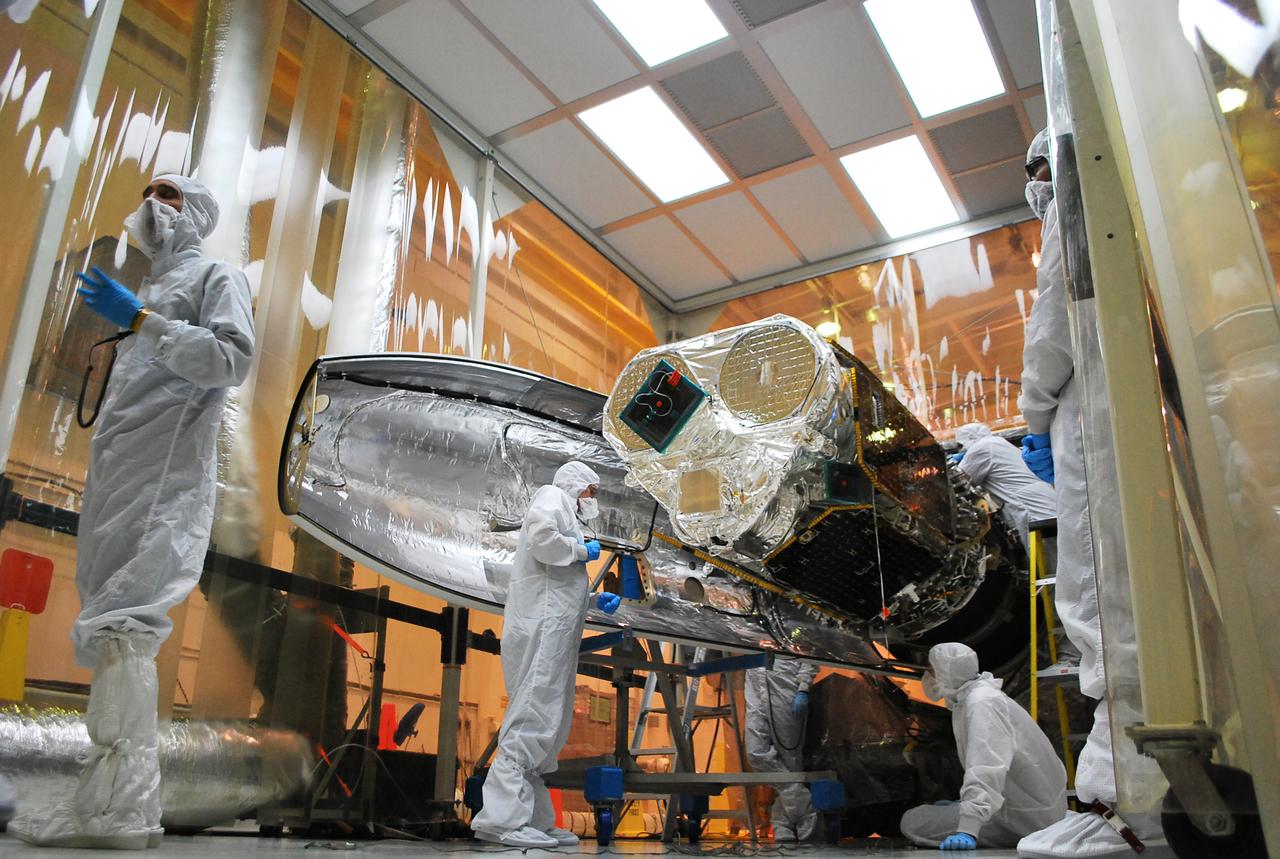
VANDENBERG AIR FORCE BASE, Calif. – Inside the Orbital Sciences processing facility at Vandenberg Air Force Base in California, Orbital’s technicians closely monitor the sections of the Pegasus payload fairing before they are secured around NASA's Nuclear Spectroscopic Telescope Array, or NuSTAR. On Feb. 17, NuSTAR was mated to its Pegasus XL rocket, which is positioned behind the spacecraft outside the environmental enclosure. The fairing will protect the spacecraft from the heat and aerodynamic pressure generated during ascent to orbit. Encapsulation of NuSTAR in its fairing is a significant prelaunch milestone. After processing of the rocket and spacecraft are complete, they will be flown on Orbital's L-1011 carrier aircraft from Vandenberg to the Ronald Reagan Ballistic Missile Defense Test Site on the Pacific Ocean’s Kwajalein Atoll for launch in March. The high-energy x-ray telescope will conduct a census of black holes, map radioactive material in young supernovae remnants, and study the origins of cosmic rays and the extreme physics around collapsed stars. For more information, visit http://www.nasa.gov/nustar. Photo credit: NASA/Randy Beaudoin, VAFB
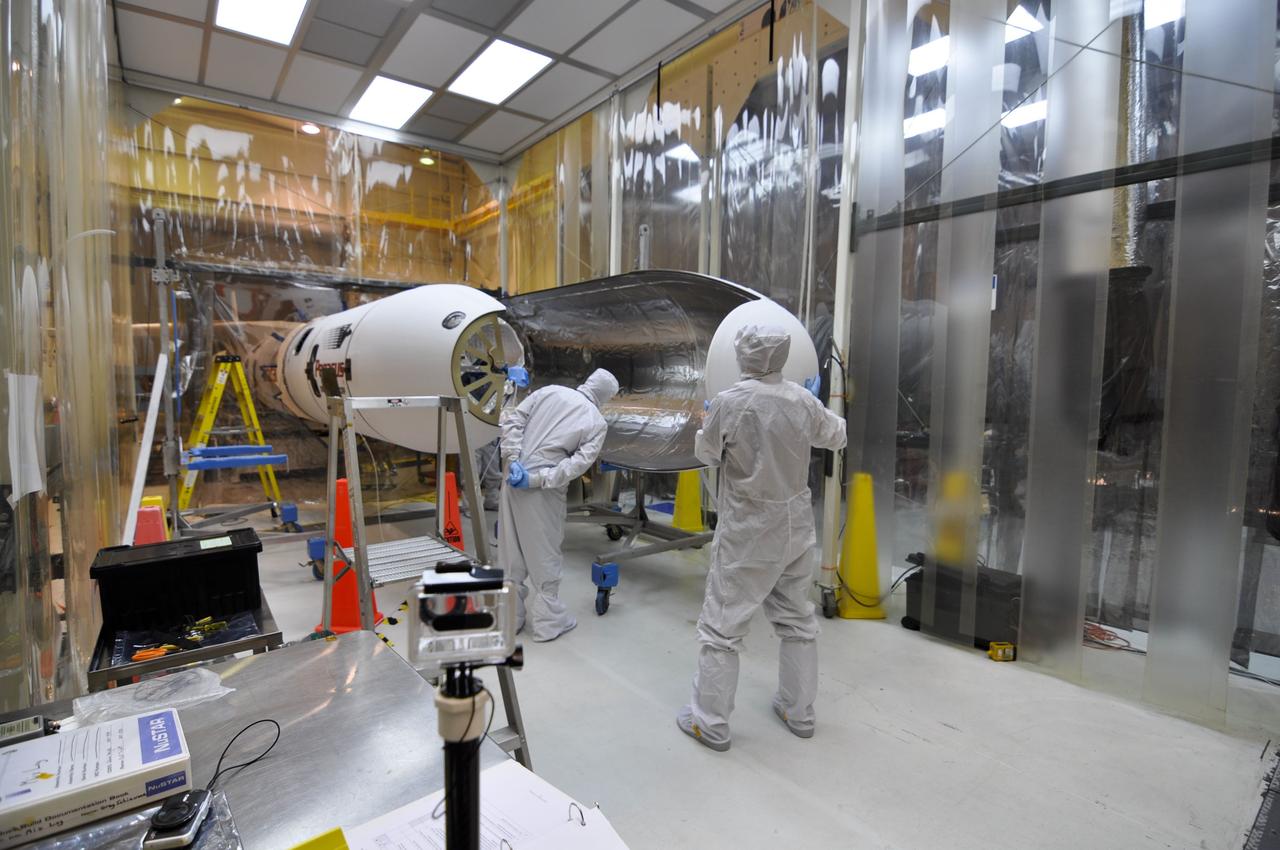
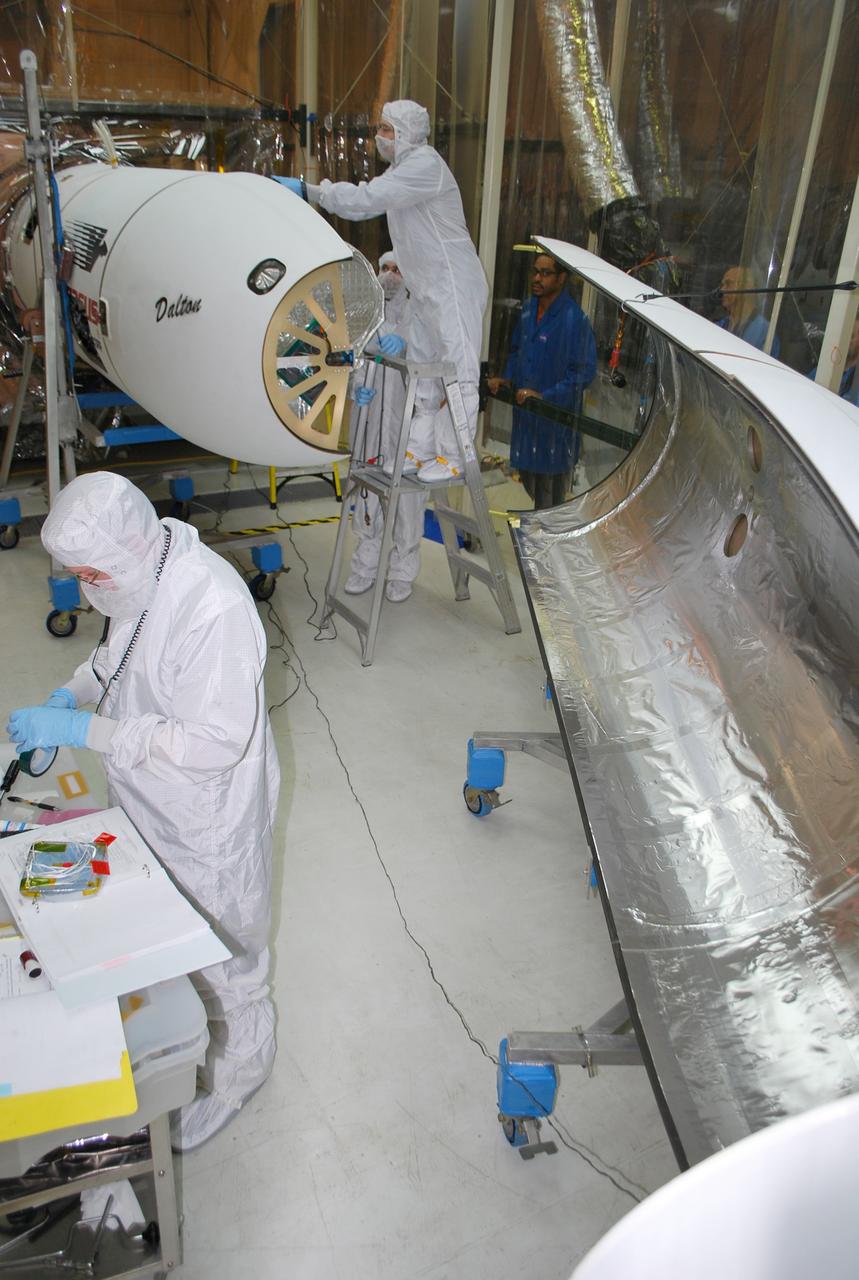
VANDENBERG AIR FORCE BASE, Calif. – Orbital Sciences technicians move the second section of the Pegasus payload fairing toward NASA's Nuclear Spectroscopic Telescope Array, or NuSTAR, inside the Orbital Sciences processing facility at Vandenberg Air Force Base in California. NuSTAR already is mated to its Pegasus XL rocket, which is positioned outside the environmental enclosure, at left. Encapsulation of NuSTAR in its fairing is a significant prelaunch milestone. The fairing will protect the spacecraft from the heat and aerodynamic pressure generated during ascent to orbit. After processing of the rocket and spacecraft are complete, they will be flown on Orbital's L-1011 carrier aircraft from Vandenberg to the Ronald Reagan Ballistic Missile Defense Test Site on the Pacific Ocean’s Kwajalein Atoll for launch in March. The high-energy x-ray telescope will conduct a census of black holes, map radioactive material in young supernovae remnants, and study the origins of cosmic rays and the extreme physics around collapsed stars. For more information, visit http://www.nasa.gov/nustar. Photo credit: NASA/Randy Beaudoin, VAFB
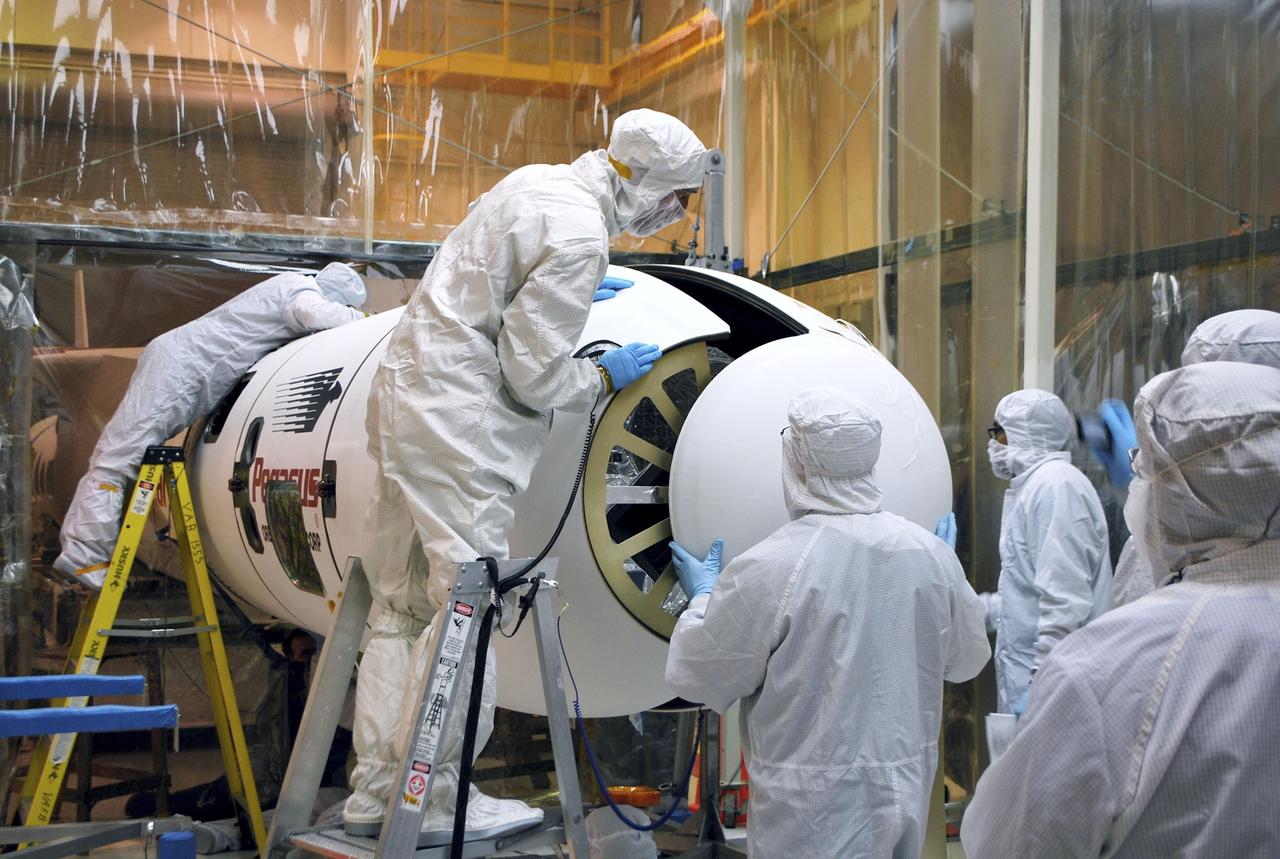
VANDENBERG AIR FORCE BASE, Calif. – Inside the Orbital Sciences processing facility at Vandenberg Air Force Base in California, Orbital’s technicians align the sections of the Pegasus payload fairing around NASA's Nuclear Spectroscopic Telescope Array, or NuSTAR. On Feb. 17, NuSTAR was mated to its Pegasus XL rocket, which is positioned behind the spacecraft outside the environmental enclosure. The fairing will protect the spacecraft from the heat and aerodynamic pressure generated during ascent to orbit. Encapsulation of NuSTAR in its fairing is a significant prelaunch milestone. After processing of the rocket and spacecraft are complete, they will be flown on Orbital's L-1011 carrier aircraft from Vandenberg to the Ronald Reagan Ballistic Missile Defense Test Site on the Pacific Ocean’s Kwajalein Atoll for launch in March. The high-energy x-ray telescope will conduct a census of black holes, map radioactive material in young supernovae remnants, and study the origins of cosmic rays and the extreme physics around collapsed stars. For more information, visit http://www.nasa.gov/nustar. Photo credit: NASA/Randy Beaudoin, VAFB
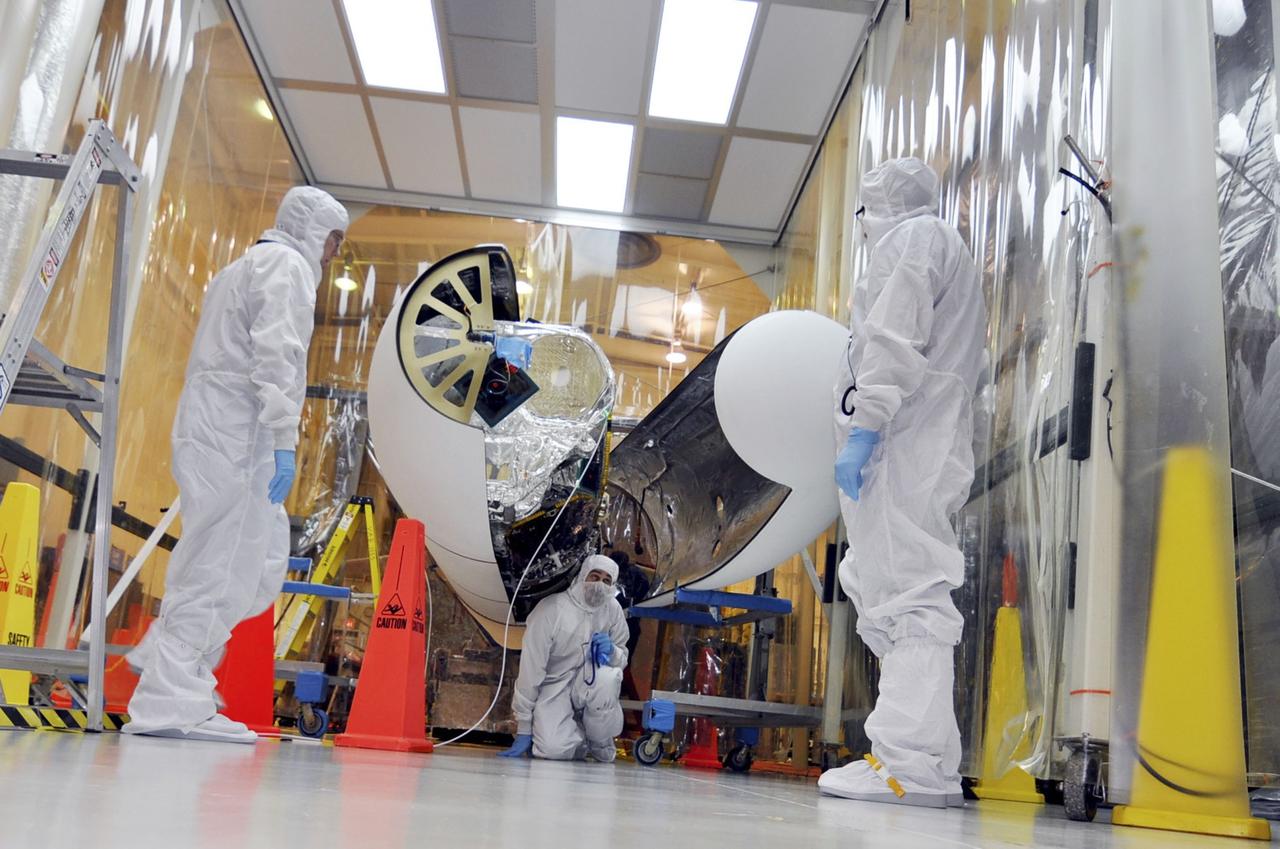
VANDENBERG AIR FORCE BASE, Calif. – Orbital Sciences technicians closely monitor the second section of the Pegasus payload fairing before it is secured around NASA's Nuclear Spectroscopic Telescope Array, or NuSTAR, inside the Orbital Sciences processing facility at Vandenberg Air Force Base in California. NuSTAR already is mated to its Pegasus XL rocket, which is positioned behind the spacecraft outside the environmental enclosure. Encapsulation of NuSTAR in its fairing is a significant prelaunch milestone. The fairing will protect the spacecraft from the heat and aerodynamic pressure generated during ascent to orbit. After processing of the rocket and spacecraft are complete, they will be flown on Orbital's L-1011 carrier aircraft from Vandenberg to the Ronald Reagan Ballistic Missile Defense Test Site on the Pacific Ocean’s Kwajalein Atoll for launch in March. The high-energy x-ray telescope will conduct a census of black holes, map radioactive material in young supernovae remnants, and study the origins of cosmic rays and the extreme physics around collapsed stars. For more information, visit http://www.nasa.gov/nustar. Photo credit: NASA/Randy Beaudoin, VAFB
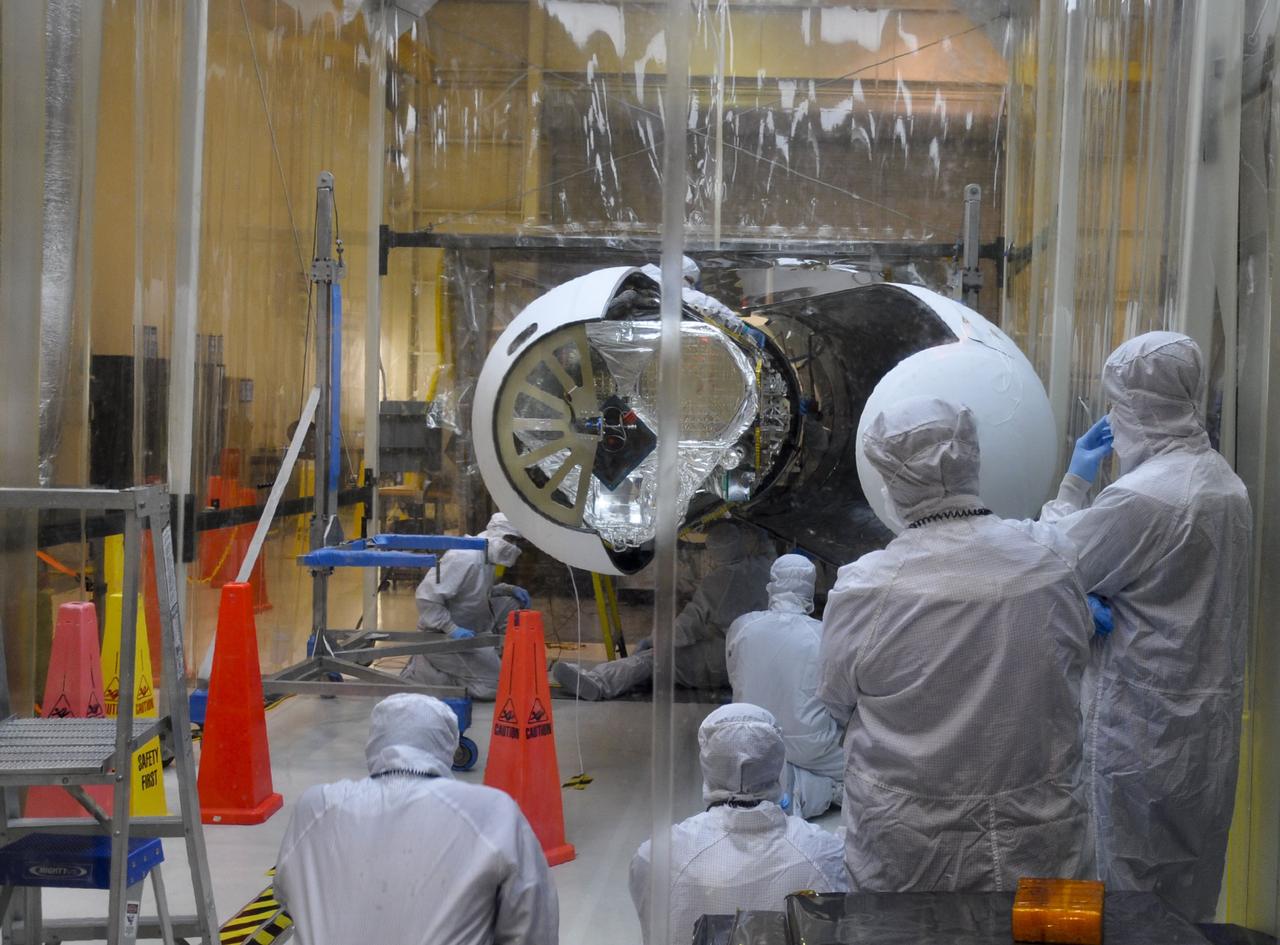
VANDENBERG AIR FORCE BASE, Calif. – Orbital Sciences technicians closely monitor the second section of the Pegasus payload fairing from every angle before it is secured around NASA's Nuclear Spectroscopic Telescope Array, or NuSTAR, inside the Orbital Sciences processing facility at Vandenberg Air Force Base in California. NuSTAR already is mated to its Pegasus XL rocket, which is positioned behind the spacecraft outside the environmental enclosure. Encapsulation of NuSTAR in its fairing is a significant prelaunch milestone. The fairing will protect the spacecraft from the heat and aerodynamic pressure generated during ascent to orbit. After processing of the rocket and spacecraft are complete, they will be flown on Orbital's L-1011 carrier aircraft from Vandenberg to the Ronald Reagan Ballistic Missile Defense Test Site on the Pacific Ocean’s Kwajalein Atoll for launch in March. The high-energy x-ray telescope will conduct a census of black holes, map radioactive material in young supernovae remnants, and study the origins of cosmic rays and the extreme physics around collapsed stars. For more information, visit http://www.nasa.gov/nustar. Photo credit: NASA/Randy Beaudoin, VAFB
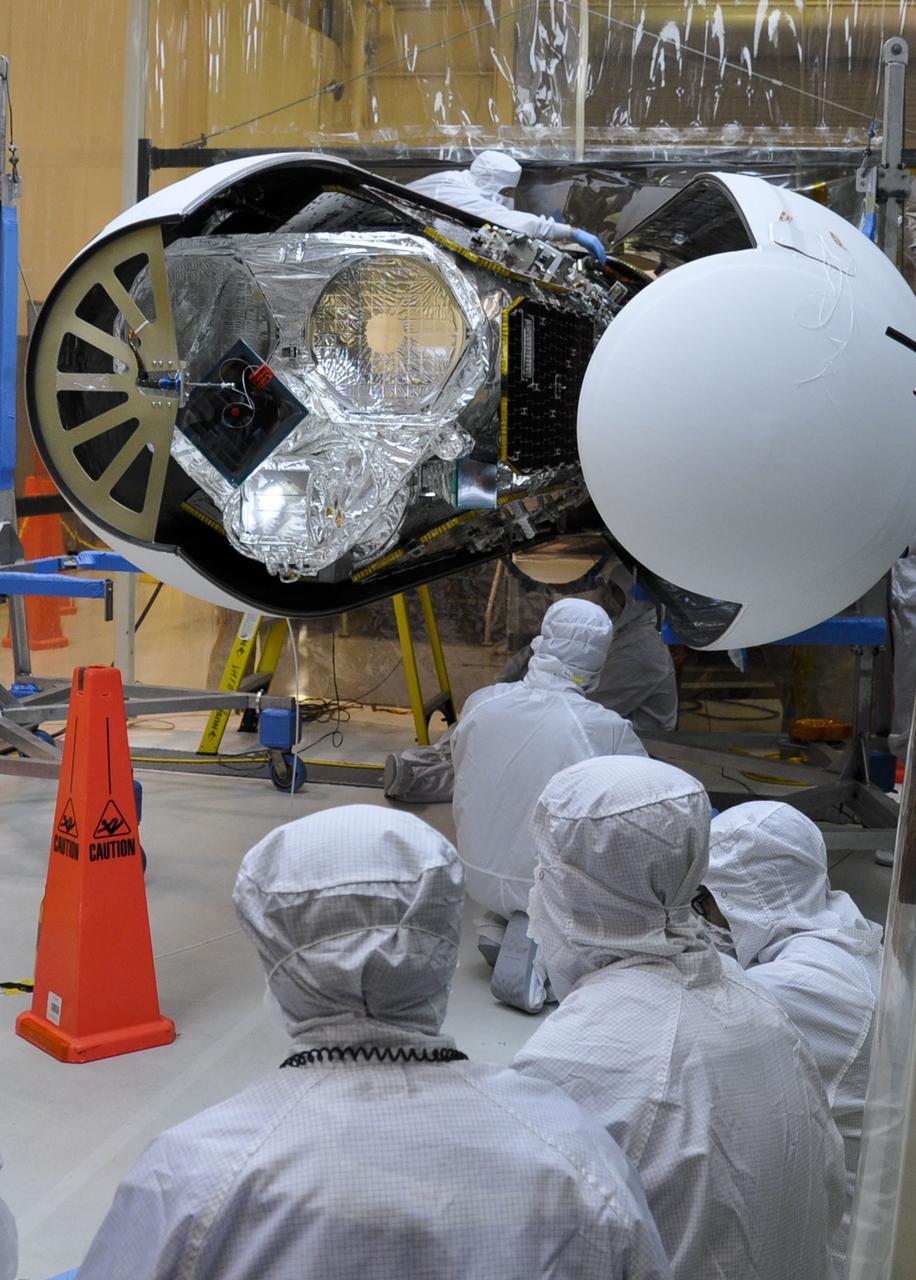
VANDENBERG AIR FORCE BASE, Calif. – An Orbital Sciences technician ensures that NASA's Nuclear Spectroscopic Telescope Array, or NuSTAR, is ready for its Pegasus payload fairing to be secured around it inside the Orbital Sciences processing facility at Vandenberg Air Force Base in California. NuSTAR already is mated to its Pegasus XL rocket, which is positioned behind the spacecraft outside the environmental enclosure. Encapsulation of NuSTAR in its fairing is a significant prelaunch milestone. The fairing will protect the spacecraft from the heat and aerodynamic pressure generated during ascent to orbit. After processing of the rocket and spacecraft are complete, they will be flown on Orbital's L-1011 carrier aircraft from Vandenberg to the Ronald Reagan Ballistic Missile Defense Test Site on the Pacific Ocean’s Kwajalein Atoll for launch in March. The high-energy x-ray telescope will conduct a census of black holes, map radioactive material in young supernovae remnants, and study the origins of cosmic rays and the extreme physics around collapsed stars. For more information, visit http://www.nasa.gov/nustar. Photo credit: NASA/Randy Beaudoin, VAFB
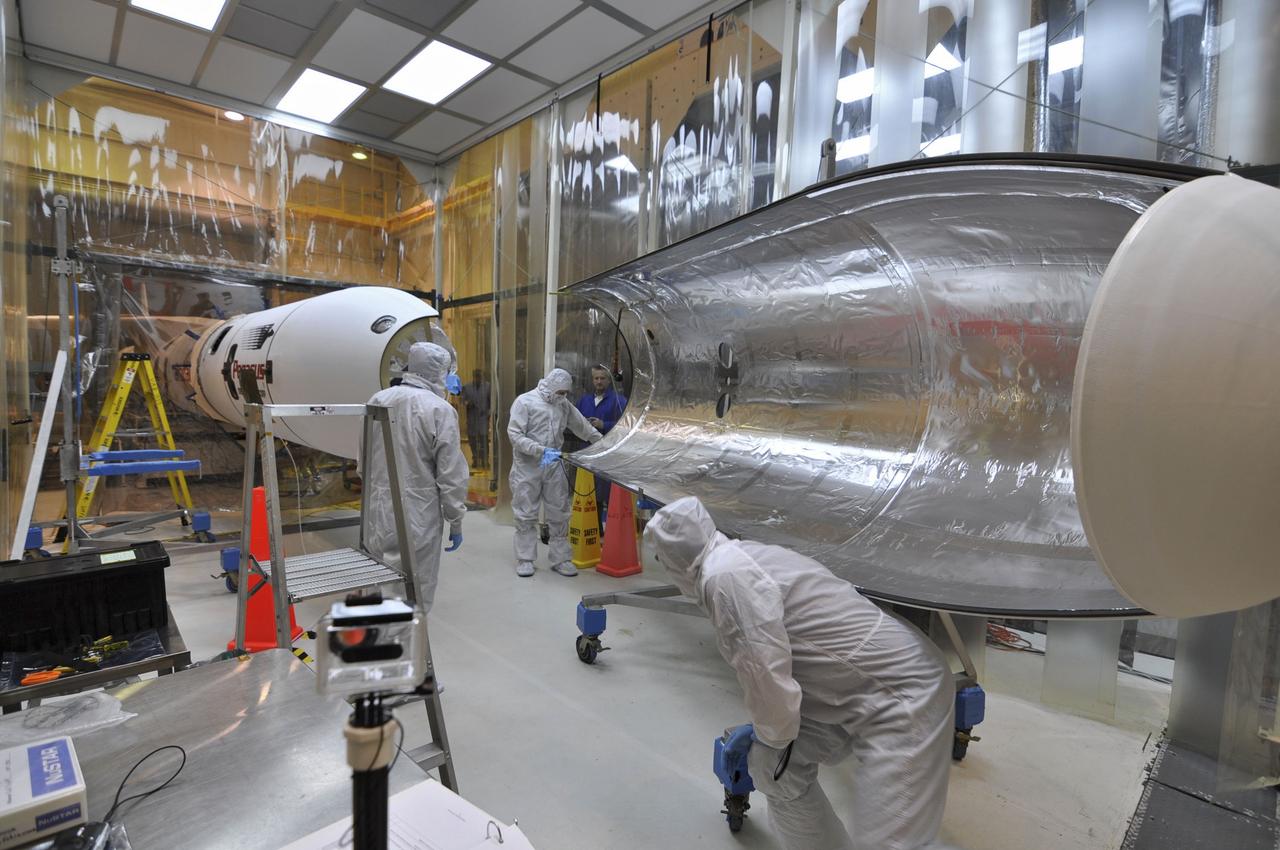
VANDENBERG AIR FORCE BASE, Calif. –The installation of the second section of the Pegasus payload fairing around NASA's Nuclear Spectroscopic Telescope Array, or NuSTAR, is in progress inside the Orbital Sciences processing facility at Vandenberg Air Force Base in California. NuSTAR already is mated to its Pegasus XL rocket, which is positioned outside the environmental enclosure, at left. Encapsulation of NuSTAR in its fairing is a significant prelaunch milestone. The fairing will protect the spacecraft from the heat and aerodynamic pressure generated during ascent to orbit. After processing of the rocket and spacecraft are complete, they will be flown on Orbital's L-1011 carrier aircraft from Vandenberg to the Ronald Reagan Ballistic Missile Defense Test Site on the Pacific Ocean’s Kwajalein Atoll for launch in March. The high-energy x-ray telescope will conduct a census of black holes, map radioactive material in young supernovae remnants, and study the origins of cosmic rays and the extreme physics around collapsed stars. For more information, visit http://www.nasa.gov/nustar. Photo credit: NASA/Randy Beaudoin, VAFB
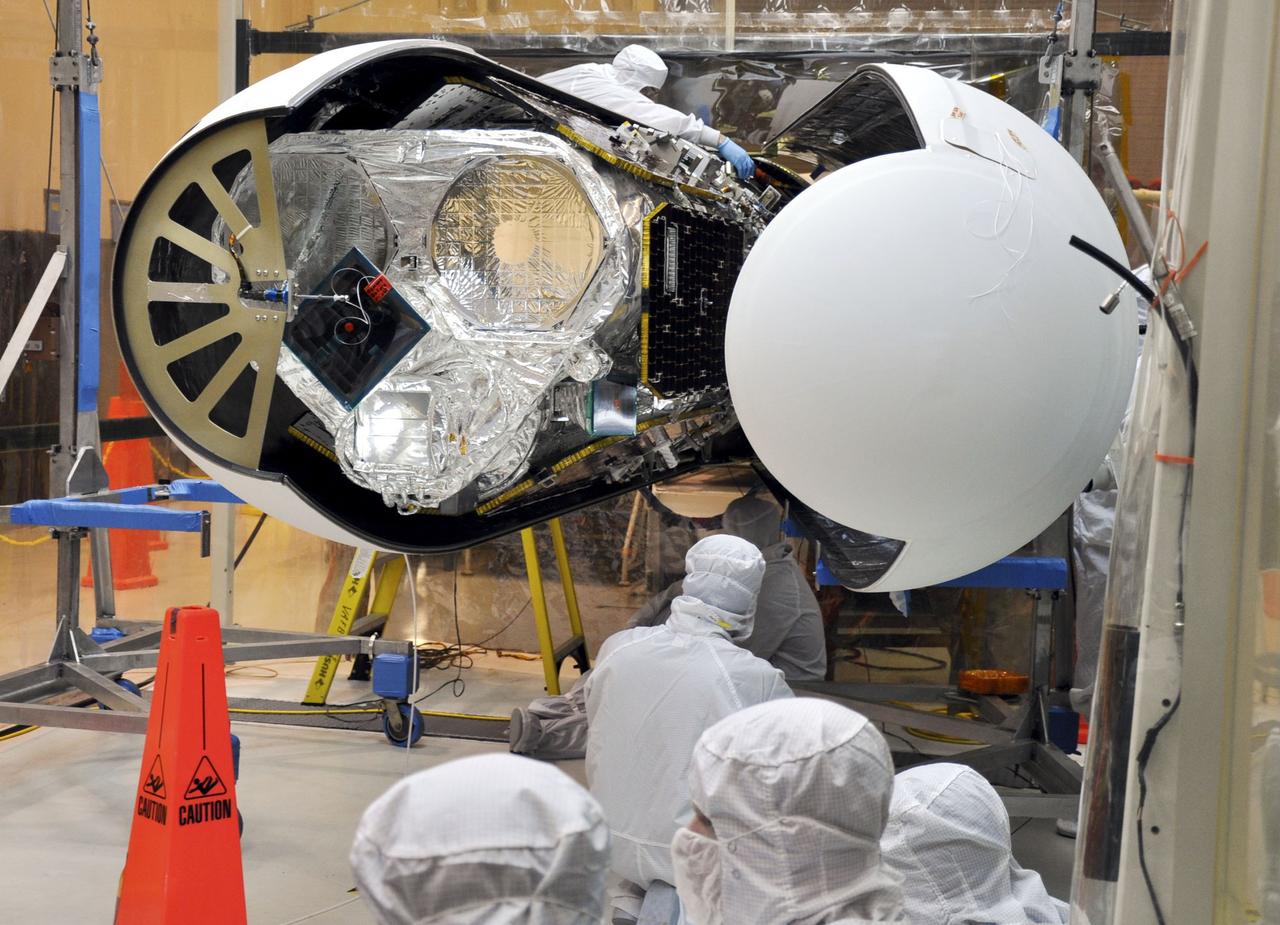
VANDENBERG AIR FORCE BASE, Calif. – An Orbital Sciences technician completes final checks of NASA's Nuclear Spectroscopic Telescope Array, or NuSTAR, inside the Orbital Sciences processing facility at Vandenberg Air Force Base in California before the Pegasus payload fairing is secured around it. NuSTAR already is mated to its Pegasus XL rocket, which is positioned behind the spacecraft outside the environmental enclosure. Encapsulation of NuSTAR in its fairing is a significant prelaunch milestone. The fairing will protect the spacecraft from the heat and aerodynamic pressure generated during ascent to orbit. After processing of the rocket and spacecraft are complete, they will be flown on Orbital's L-1011 carrier aircraft from Vandenberg to the Ronald Reagan Ballistic Missile Defense Test Site on the Pacific Ocean’s Kwajalein Atoll for launch in March. The high-energy x-ray telescope will conduct a census of black holes, map radioactive material in young supernovae remnants, and study the origins of cosmic rays and the extreme physics around collapsed stars. For more information, visit http://www.nasa.gov/nustar. Photo credit: NASA/Randy Beaudoin, VAFB
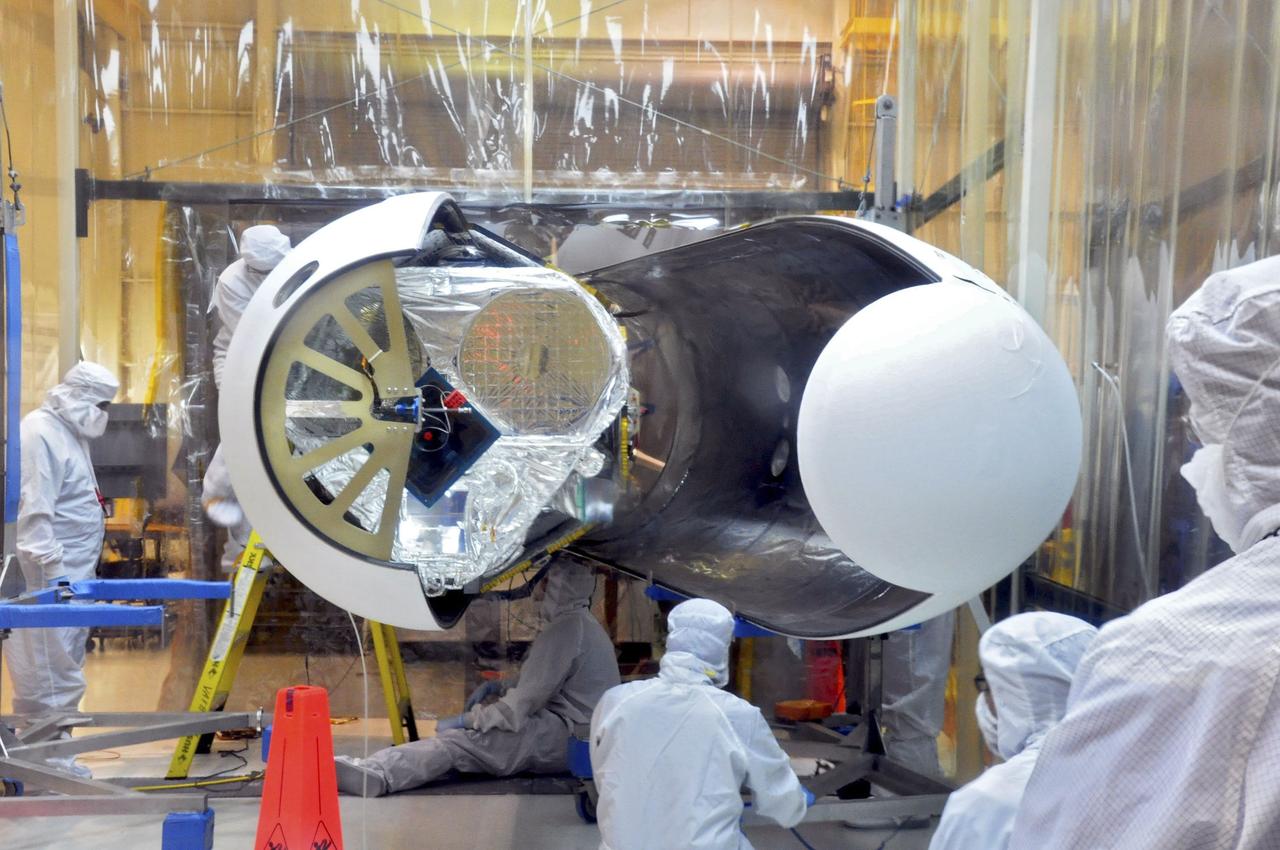
VANDENBERG AIR FORCE BASE, Calif. – Orbital Sciences technicians complete final checks of NASA's Nuclear Spectroscopic Telescope Array, or NuSTAR, inside the Orbital Sciences processing facility at Vandenberg Air Force Base in California before the Pegasus payload fairing is secured around it. NuSTAR already is mated to its Pegasus XL rocket, which is positioned behind the spacecraft outside the environmental enclosure. Encapsulation of NuSTAR in its fairing is a significant prelaunch milestone. The fairing will protect the spacecraft from the heat and aerodynamic pressure generated during ascent to orbit. After processing of the rocket and spacecraft are complete, they will be flown on Orbital's L-1011 carrier aircraft from Vandenberg to the Ronald Reagan Ballistic Missile Defense Test Site on the Pacific Ocean’s Kwajalein Atoll for launch in March. The high-energy x-ray telescope will conduct a census of black holes, map radioactive material in young supernovae remnants, and study the origins of cosmic rays and the extreme physics around collapsed stars. For more information, visit http://www.nasa.gov/nustar. Photo credit: NASA/Randy Beaudoin, VAFB
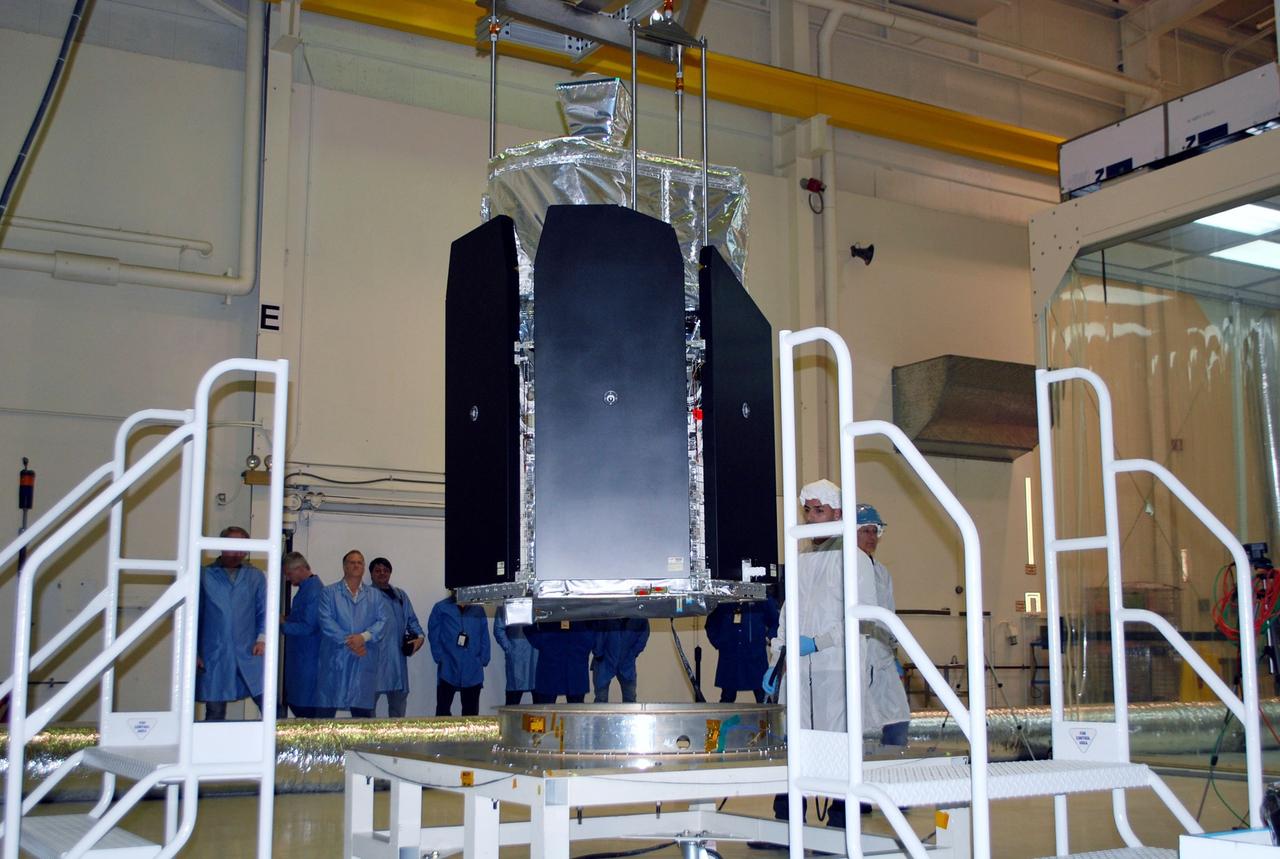
VANDENBERG AIR FORCE BASE, Calif. – In processing facility 1555 at Vandenberg Air Force Base in California, NASA's Nuclear Spectroscopic Telescope Array (NuSTAR) is lifted from its workstand during preparations to install it on a Pegasus fairing separation ring. A Pegasus XL rocket is being prepared to launch NuSTAR into space in March. Once processing of the rocket and spacecraft are completed at Vandenberg, they will be flown on the Orbital Sciences’ L-1011 carrier aircraft to the Ronald Reagan Ballistic Missile Defense Test Site at the Pacific Ocean’s Kwajalein Atoll for launch. NuSTAR, a high-energy x-ray telescope, will conduct a census for black holes, map radioactive material in young supernovae remnants, and study the origins of cosmic rays and the extreme physics around collapsed stars. For more information, visit http://www.nasa.gov/nustar. Photo credit: NASA/Randy Beaudoin, VAFB
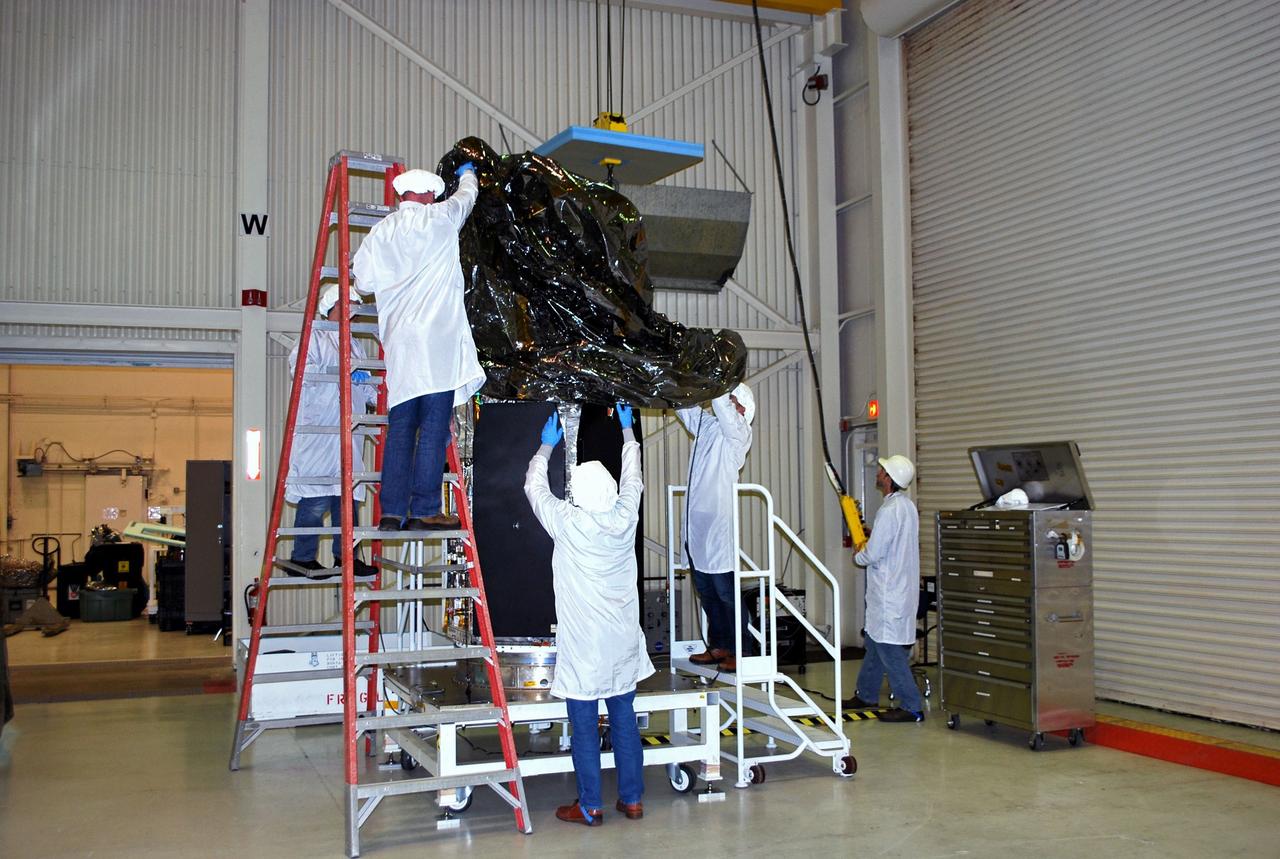
VANDENBERG AIR FORCE BASE, Calif. – In processing facility 1555 at Vandenberg Air Force Base in California, spacecraft technicians cover NASA's Nuclear Spectroscopic Telescope Array (NuSTAR) with a protective shroud following its installation on a Pegasus fairing separation ring. A Pegasus XL rocket is being prepared to launch NuSTAR into space in March. Once processing of the rocket and spacecraft are completed at Vandenberg, they will be flown on the Orbital Sciences’ L-1011 carrier aircraft to the Ronald Reagan Ballistic Missile Defense Test Site at the Pacific Ocean’s Kwajalein Atoll for launch. NuSTAR, a high-energy x-ray telescope, will conduct a census for black holes, map radioactive material in young supernovae remnants, and study the origins of cosmic rays and the extreme physics around collapsed stars. For more information, visit http://www.nasa.gov/nustar. Photo credit: NASA/Randy Beaudoin, VAFB
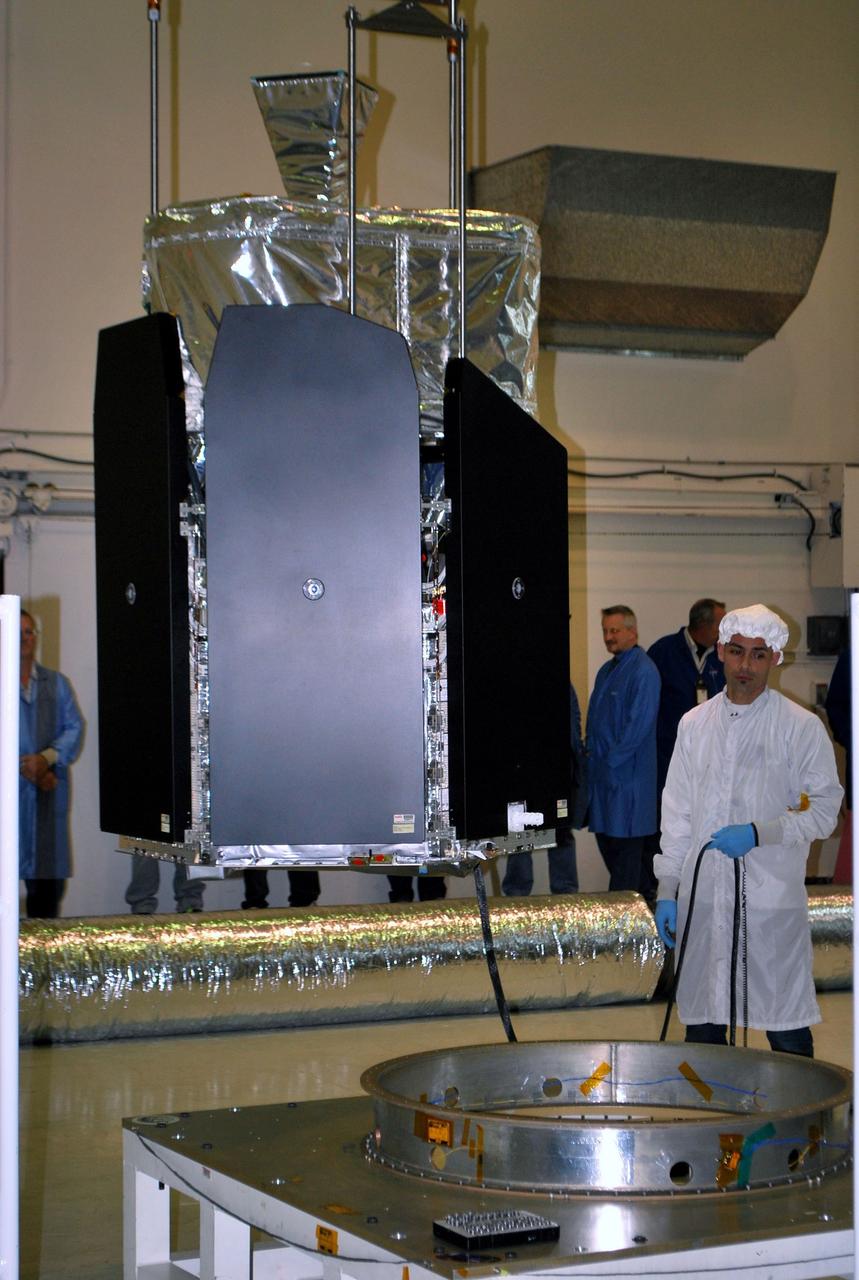
VANDENBERG AIR FORCE BASE, Calif. – In processing facility 1555 at Vandenberg Air Force Base in California, a spacecraft technician monitors NASA's Nuclear Spectroscopic Telescope Array (NuSTAR), suspended from the ceiling near its workstand, during preparations to install it on a Pegasus fairing separation ring. A Pegasus XL rocket is being prepared to launch NuSTAR into space in March. Once processing of the rocket and spacecraft are completed at Vandenberg, they will be flown on the Orbital Sciences’ L-1011 carrier aircraft to the Ronald Reagan Ballistic Missile Defense Test Site at the Pacific Ocean’s Kwajalein Atoll for launch. NuSTAR, a high-energy x-ray telescope, will conduct a census for black holes, map radioactive material in young supernovae remnants, and study the origins of cosmic rays and the extreme physics around collapsed stars. For more information, visit http://www.nasa.gov/nustar. Photo credit: NASA/Randy Beaudoin, VAFB
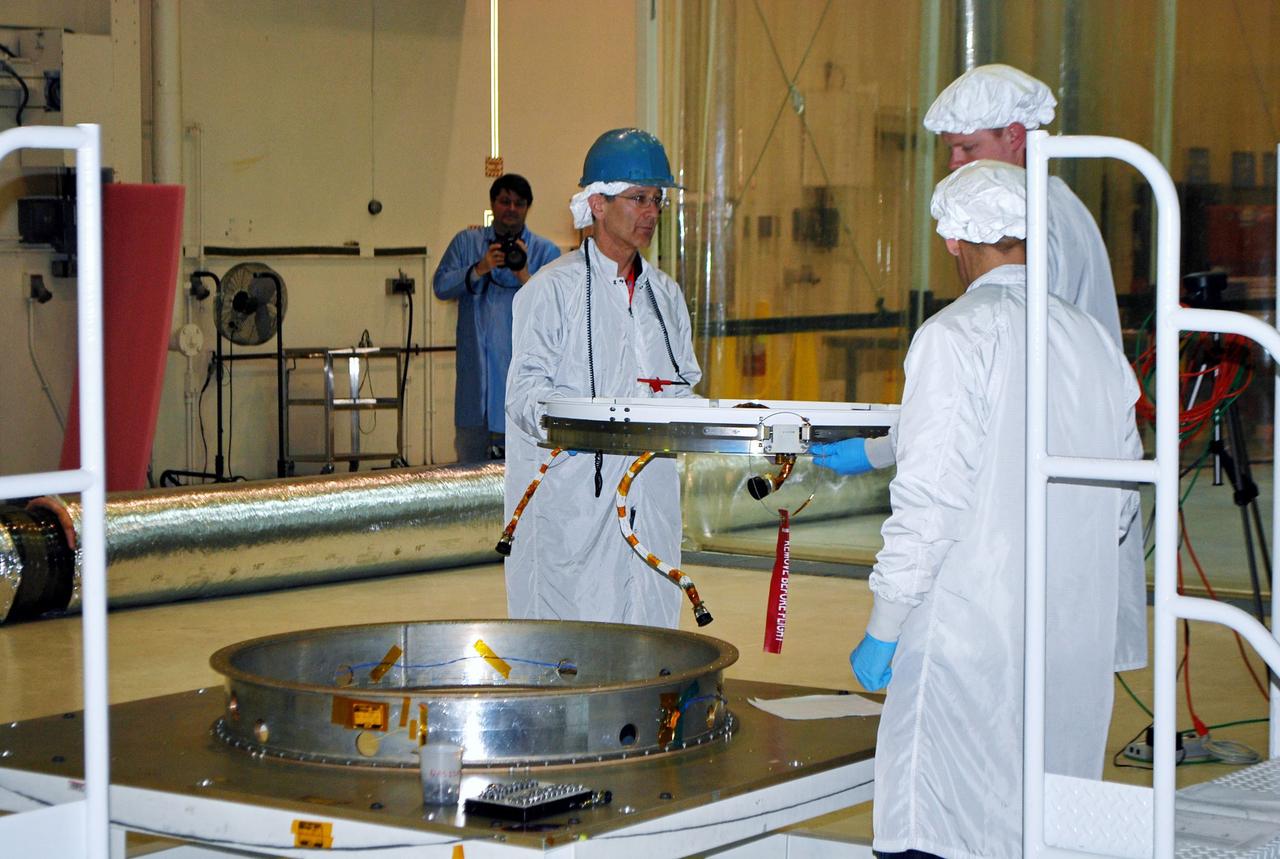
VANDENBERG AIR FORCE BASE, Calif. – In processing facility 1555 at Vandenberg Air Force Base in California, spacecraft technicians move a Pegasus fairing separation ring toward the workstand for NASA's Nuclear Spectroscopic Telescope Array (NuSTAR). A Pegasus XL rocket is being prepared to launch NuSTAR into space in March. Once processing of the rocket and spacecraft are completed at Vandenberg, they will be flown on the Orbital Sciences’ L-1011 carrier aircraft to the Ronald Reagan Ballistic Missile Defense Test Site at the Pacific Ocean’s Kwajalein Atoll for launch. NuSTAR, a high-energy x-ray telescope, will conduct a census for black holes, map radioactive material in young supernovae remnants, and study the origins of cosmic rays and the extreme physics around collapsed stars. For more information, visit http://www.nasa.gov/nustar. Photo credit: NASA/Randy Beaudoin, VAFB
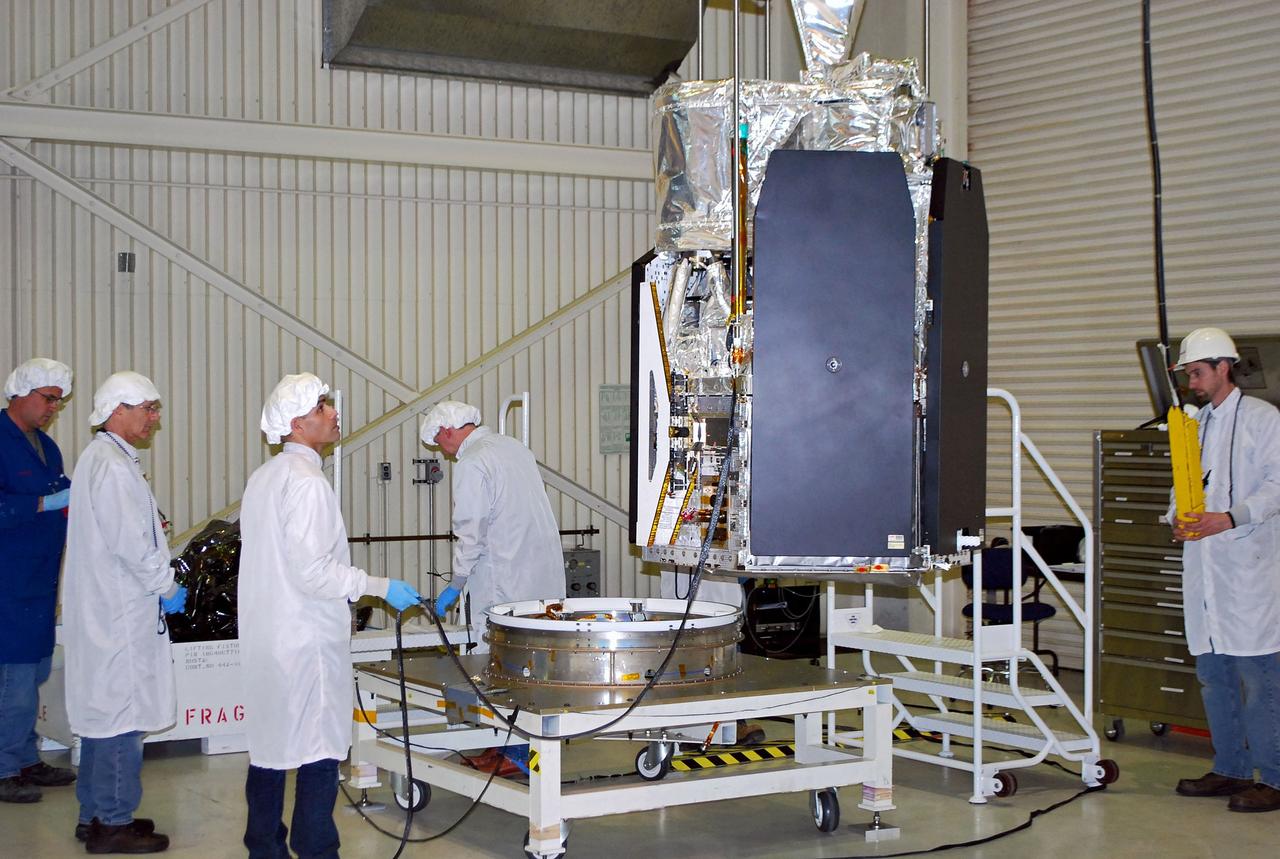
VANDENBERG AIR FORCE BASE, Calif. – In processing facility 1555 at Vandenberg Air Force Base in California, spacecraft technicians move NASA's Nuclear Spectroscopic Telescope Array (NuSTAR) toward the Pegasus fairing separation ring in place on its workstand. A Pegasus XL rocket is being prepared to launch NuSTAR into space in March. Once processing of the rocket and spacecraft are completed at Vandenberg, they will be flown on the Orbital Sciences’ L-1011 carrier aircraft to the Ronald Reagan Ballistic Missile Defense Test Site at the Pacific Ocean’s Kwajalein Atoll for launch. NuSTAR, a high-energy x-ray telescope, will conduct a census for black holes, map radioactive material in young supernovae remnants, and study the origins of cosmic rays and the extreme physics around collapsed stars. For more information, visit http://www.nasa.gov/nustar. Photo credit: NASA/Randy Beaudoin, VAFB
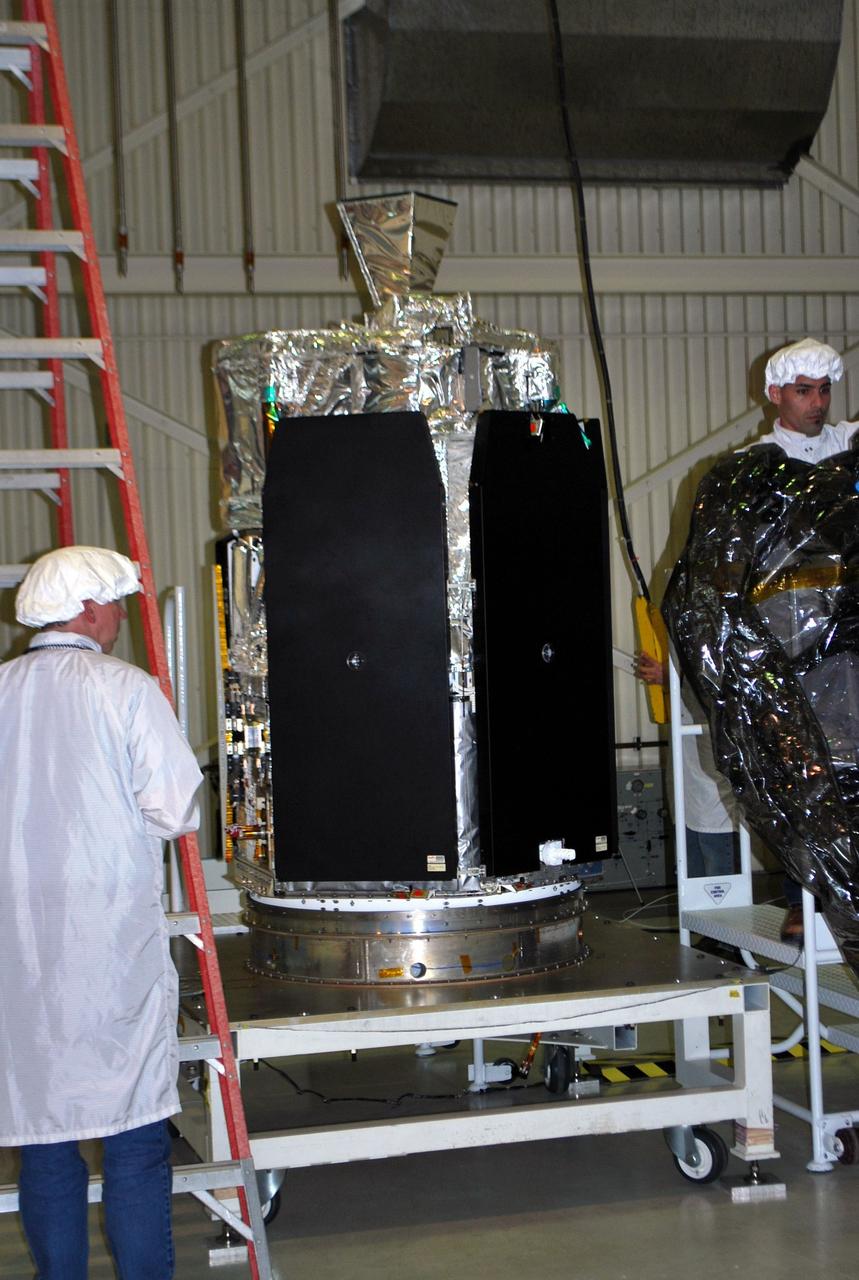
VANDENBERG AIR FORCE BASE, Calif. – In processing facility 1555 at Vandenberg Air Force Base in California, NASA's Nuclear Spectroscopic Telescope Array (NuSTAR) is secured to a Pegasus fairing separation ring, positioned on its workstand. A Pegasus XL rocket is being prepared to launch NuSTAR into space in March. Once processing of the rocket and spacecraft are completed at Vandenberg, they will be flown on the Orbital Sciences’ L-1011 carrier aircraft to the Ronald Reagan Ballistic Missile Defense Test Site at the Pacific Ocean’s Kwajalein Atoll for launch. NuSTAR, a high-energy x-ray telescope, will conduct a census for black holes, map radioactive material in young supernovae remnants, and study the origins of cosmic rays and the extreme physics around collapsed stars. For more information, visit http://www.nasa.gov/nustar. Photo credit: NASA/Randy Beaudoin, VAFB
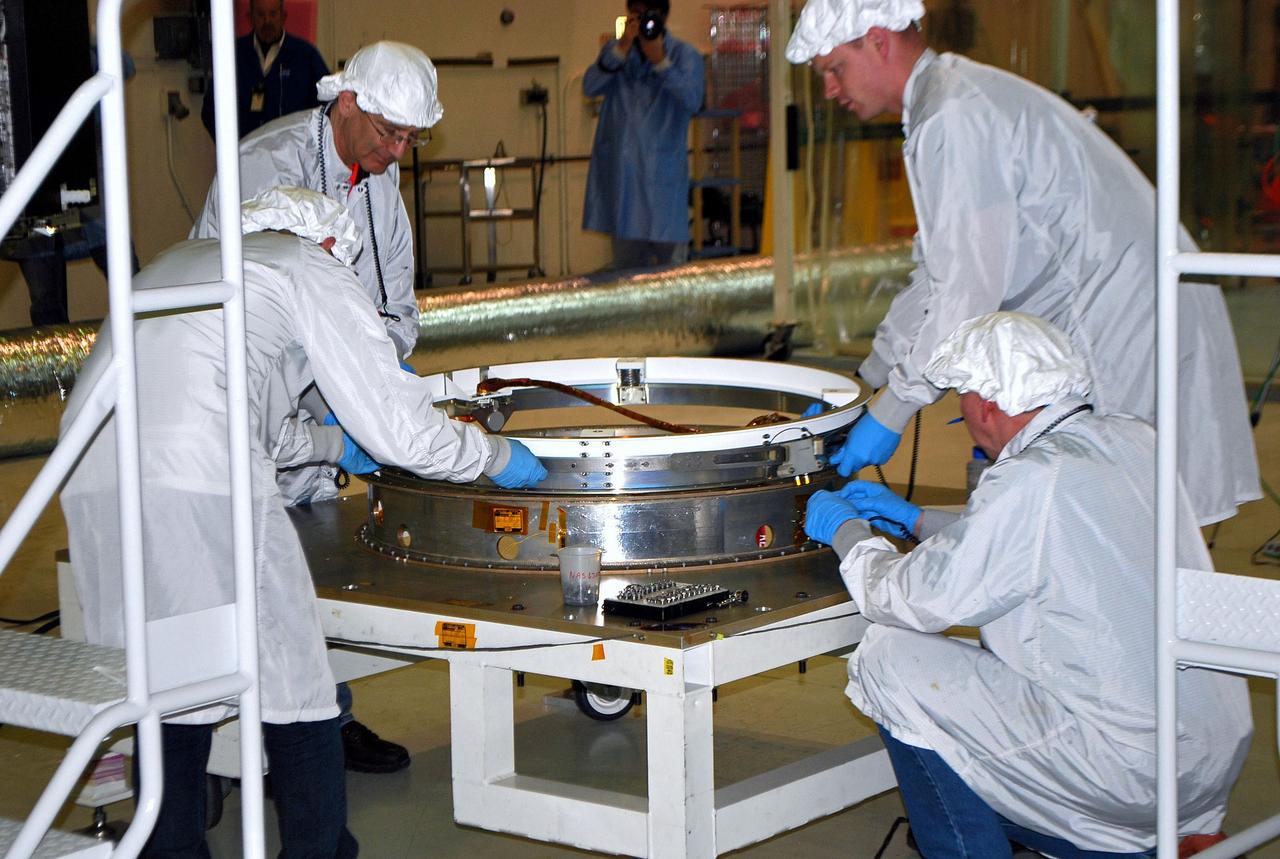
VANDENBERG AIR FORCE BASE, Calif. – In processing facility 1555 at Vandenberg Air Force Base in California, spacecraft technicians position a Pegasus fairing separation ring on the workstand for NASA's Nuclear Spectroscopic Telescope Array (NuSTAR). A Pegasus XL rocket is being prepared to launch NuSTAR into space in March. Once processing of the rocket and spacecraft are completed at Vandenberg, they will be flown on the Orbital Sciences’ L-1011 carrier aircraft to the Ronald Reagan Ballistic Missile Defense Test Site at the Pacific Ocean’s Kwajalein Atoll for launch. NuSTAR, a high-energy x-ray telescope, will conduct a census for black holes, map radioactive material in young supernovae remnants, and study the origins of cosmic rays and the extreme physics around collapsed stars. For more information, visit http://www.nasa.gov/nustar. Photo credit: NASA/Randy Beaudoin, VAFB
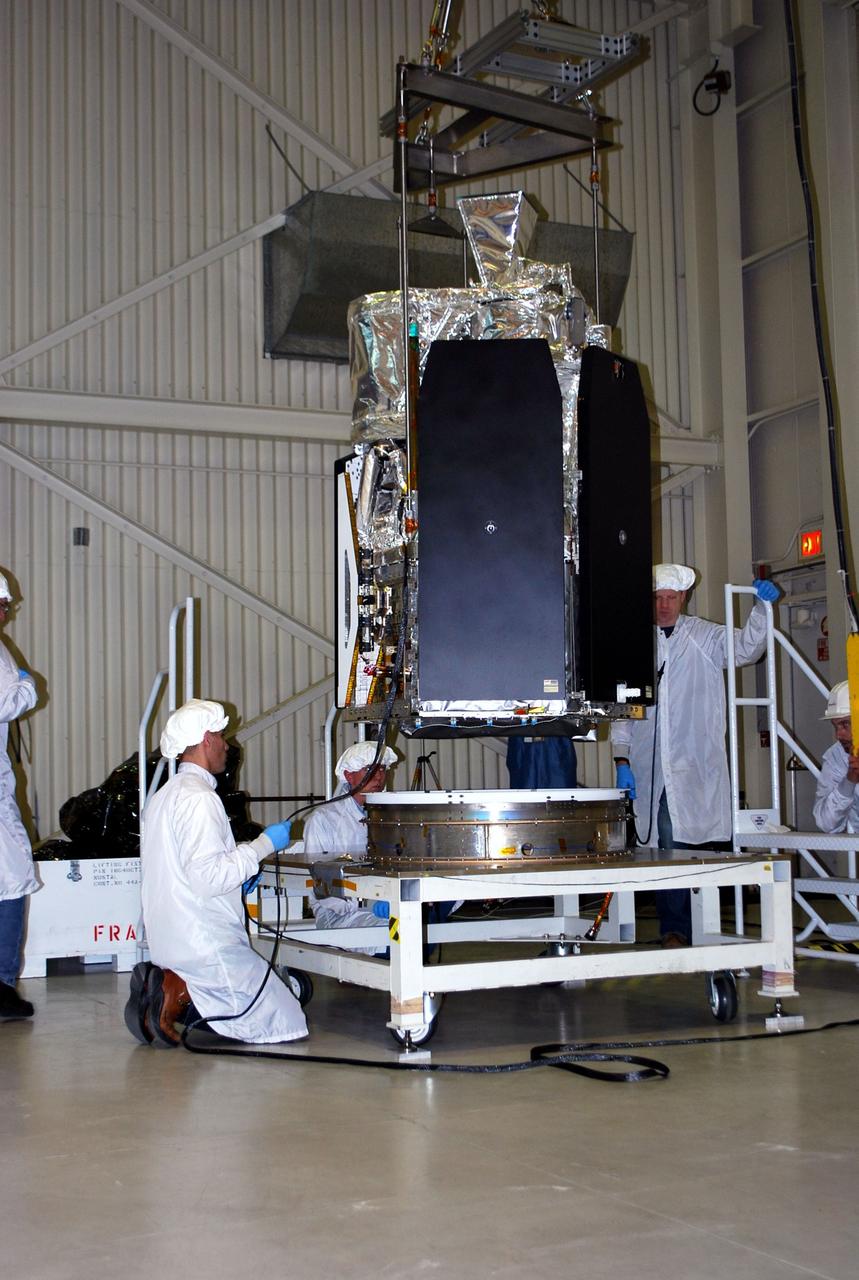
VANDENBERG AIR FORCE BASE, Calif. – In processing facility 1555 at Vandenberg Air Force Base in California, spacecraft technicians lower NASA's Nuclear Spectroscopic Telescope Array (NuSTAR) toward the Pegasus fairing separation ring positioned on its workstand. A Pegasus XL rocket is being prepared to launch NuSTAR into space in March. Once processing of the rocket and spacecraft are completed at Vandenberg, they will be flown on the Orbital Sciences’ L-1011 carrier aircraft to the Ronald Reagan Ballistic Missile Defense Test Site at the Pacific Ocean’s Kwajalein Atoll for launch. NuSTAR, a high-energy x-ray telescope, will conduct a census for black holes, map radioactive material in young supernovae remnants, and study the origins of cosmic rays and the extreme physics around collapsed stars. For more information, visit http://www.nasa.gov/nustar. Photo credit: NASA/Randy Beaudoin, VAFB
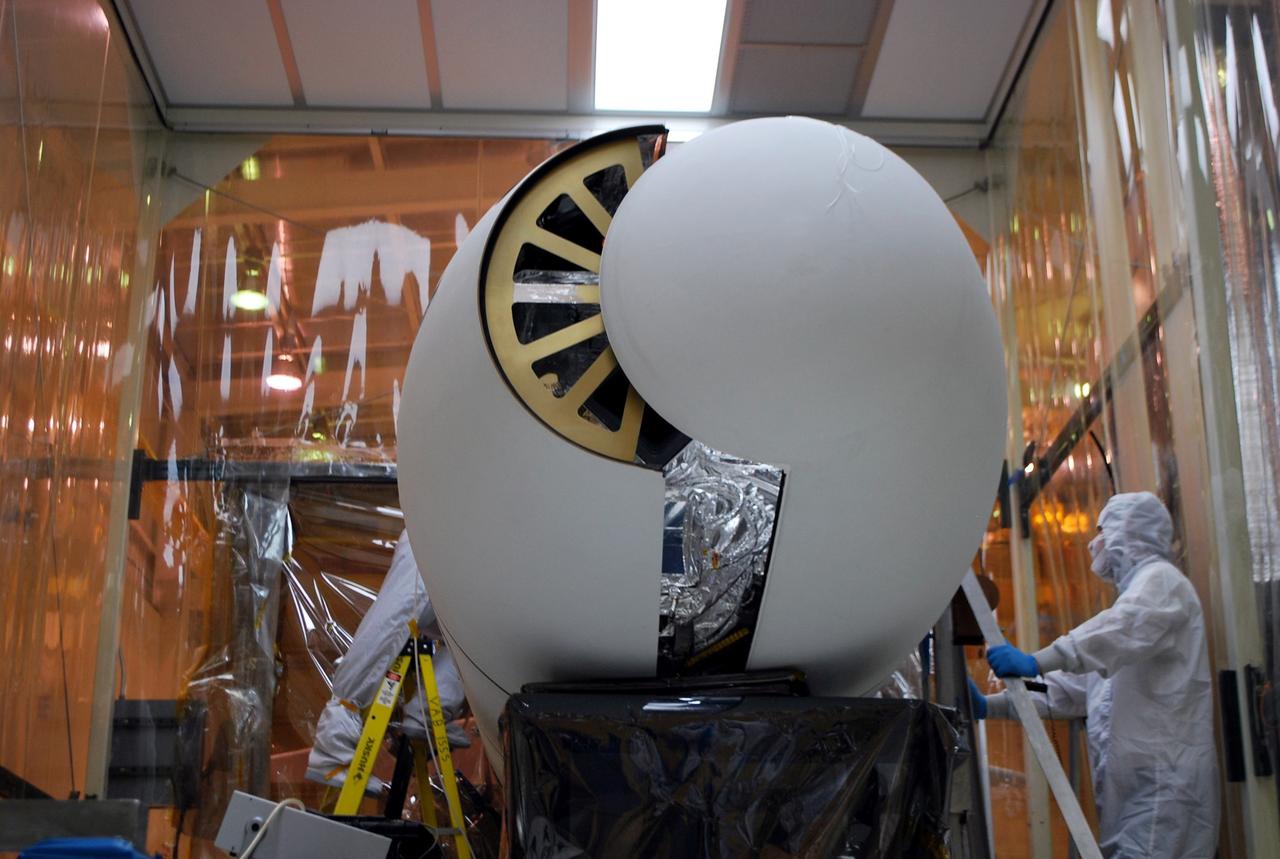
VANDENBERG AIR FORCE BASE, Calif. – The Pegasus payload fairing opens during operations to remove the fairing from around NASA’s Nuclear Spectroscopic Telescope Array, or NuSTAR, in Orbital Sciences’ hangar on Vandenberg Air Force Base in California. Access to the spacecraft is needed for compatibility testing to verify communication with a tracking station in Hawaii. With the change in the launch timeframe to June, this station will be needed to support launch. After processing of Orbital’s Pegasus XL rocket and the spacecraft are complete, they will be flown on Orbital's L-1011 carrier aircraft from Vandenberg to the Ronald Reagan Ballistic Missile Defense Test Site on the Pacific Ocean’s Kwajalein Atoll for launch. The high-energy X-ray telescope will conduct a census of black holes, map radioactive material in young supernovae remnants, and study the origins of cosmic rays and the extreme physics around collapsed stars. For more information, visit http://www.nasa.gov/nustar. Photo credit: NASA/Randy Beaudoin, VAFB
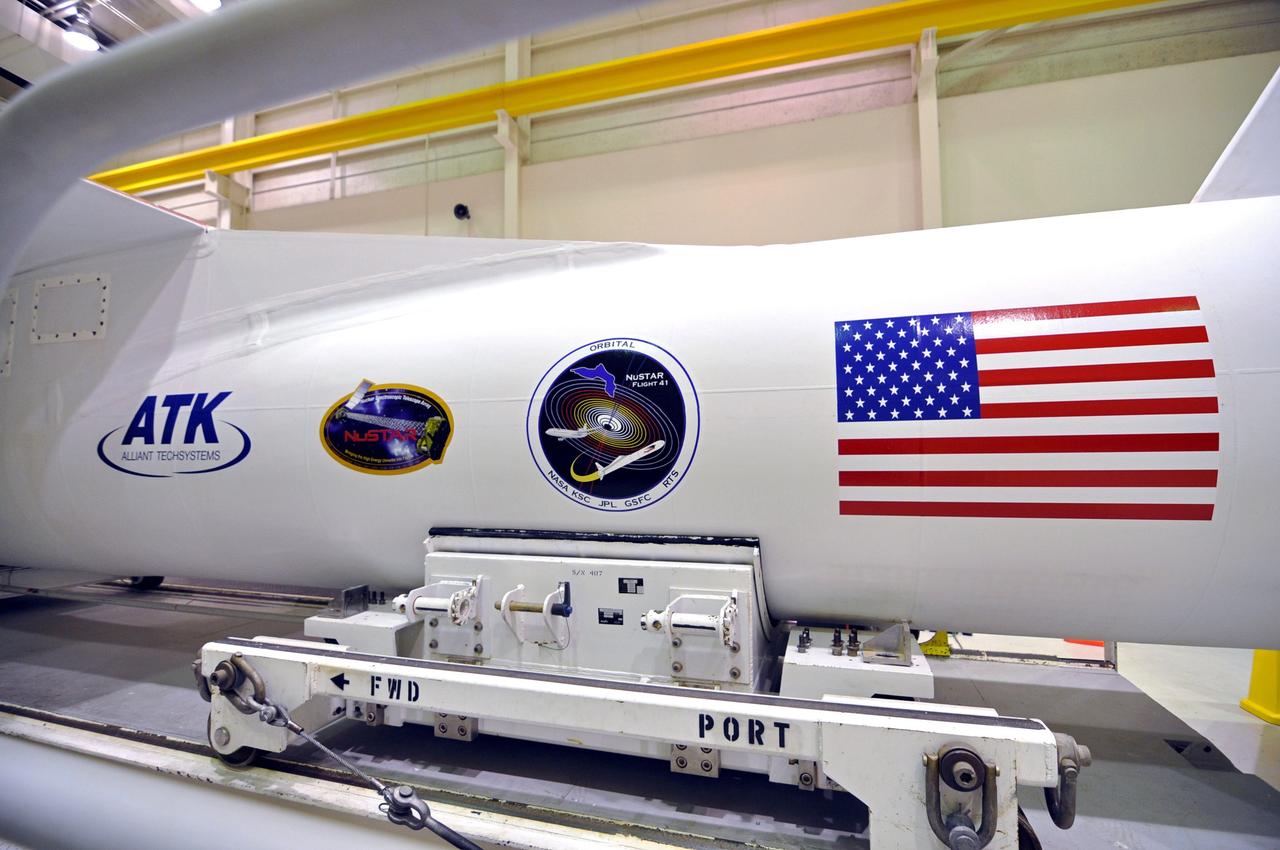
VANDENBERG AIR FORCE BASE, Calif. – Inside the Orbital Sciences processing facility at Vandenberg Air Force Base in California, preparations to launch NASA's Nuclear Spectroscopic Telescope Array, or NuSTAR, are nearly complete. The spacecraft has been mated with its Pegasus XL rocket and enclosed in the Pegasus payload fairing. The fairing will protect the spacecraft from the heat and aerodynamic pressure generated during the rocket’s ascent to orbit. After processing of the rocket and spacecraft are complete, they will be flown on Orbital's L-1011 carrier aircraft from Vandenberg to the Ronald Reagan Ballistic Missile Defense Test Site on the Pacific Ocean’s Kwajalein Atoll for launch in March. The high-energy X-ray telescope will conduct a census of black holes, map radioactive material in young supernovae remnants, and study the origins of cosmic rays and the extreme physics around collapsed stars. For more information, visit http://www.nasa.gov/nustar. Photo credit: NASA/Randy Beaudoin, VAFB
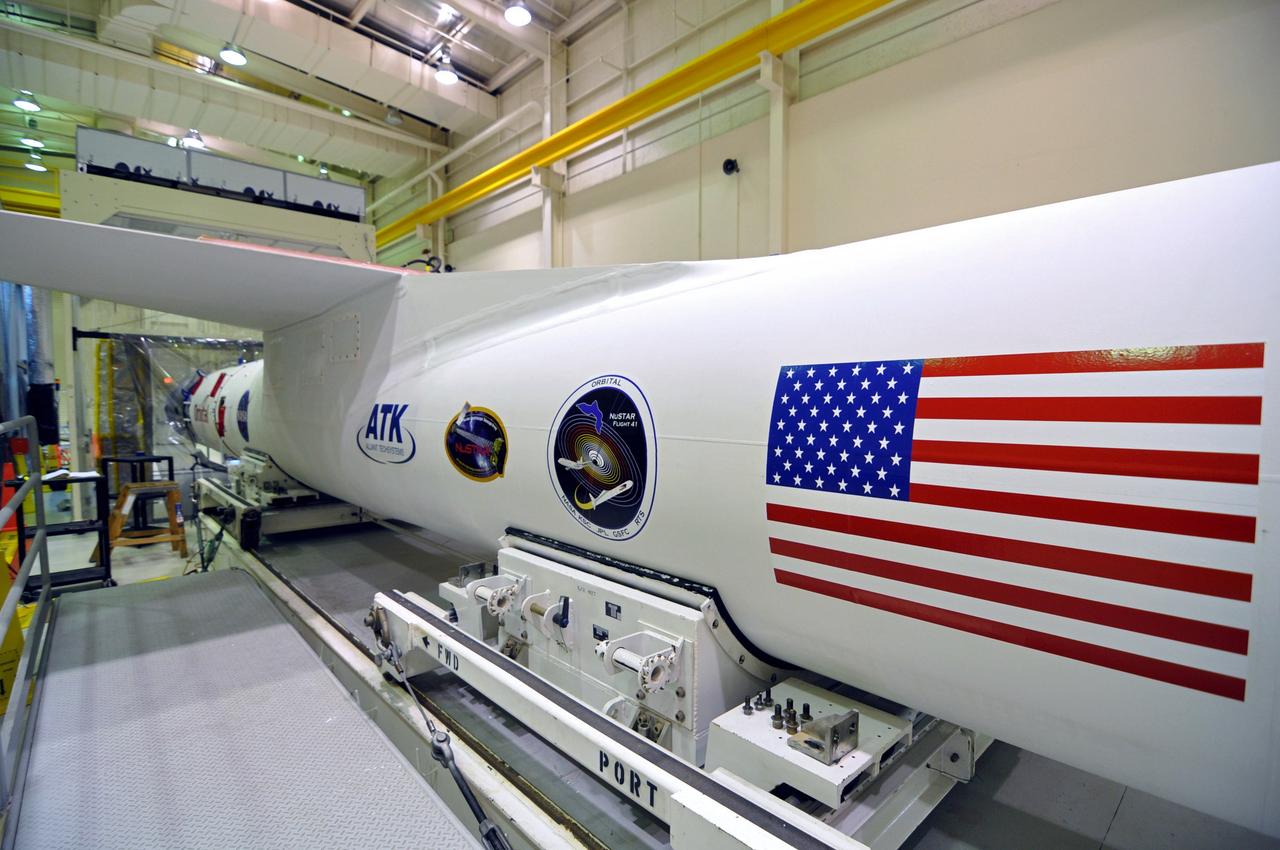
VANDENBERG AIR FORCE BASE, Calif. – Inside the Orbital Sciences processing facility at Vandenberg Air Force Base in California, NASA's Nuclear Spectroscopic Telescope Array, or NuSTAR, awaits launch. The spacecraft has been mated with its Pegasus XL rocket and enclosed in the Pegasus payload fairing on the forward end of the rocket, at left. The fairing will protect the spacecraft from the heat and aerodynamic pressure generated during the rocket’s ascent to orbit. After processing of the rocket and spacecraft are complete, they will be flown on Orbital's L-1011 carrier aircraft from Vandenberg to the Ronald Reagan Ballistic Missile Defense Test Site on the Pacific Ocean’s Kwajalein Atoll for launch in March. The high-energy X-ray telescope will conduct a census of black holes, map radioactive material in young supernovae remnants, and study the origins of cosmic rays and the extreme physics around collapsed stars. For more information, visit http://www.nasa.gov/nustar. Photo credit: NASA/Randy Beaudoin, VAFB
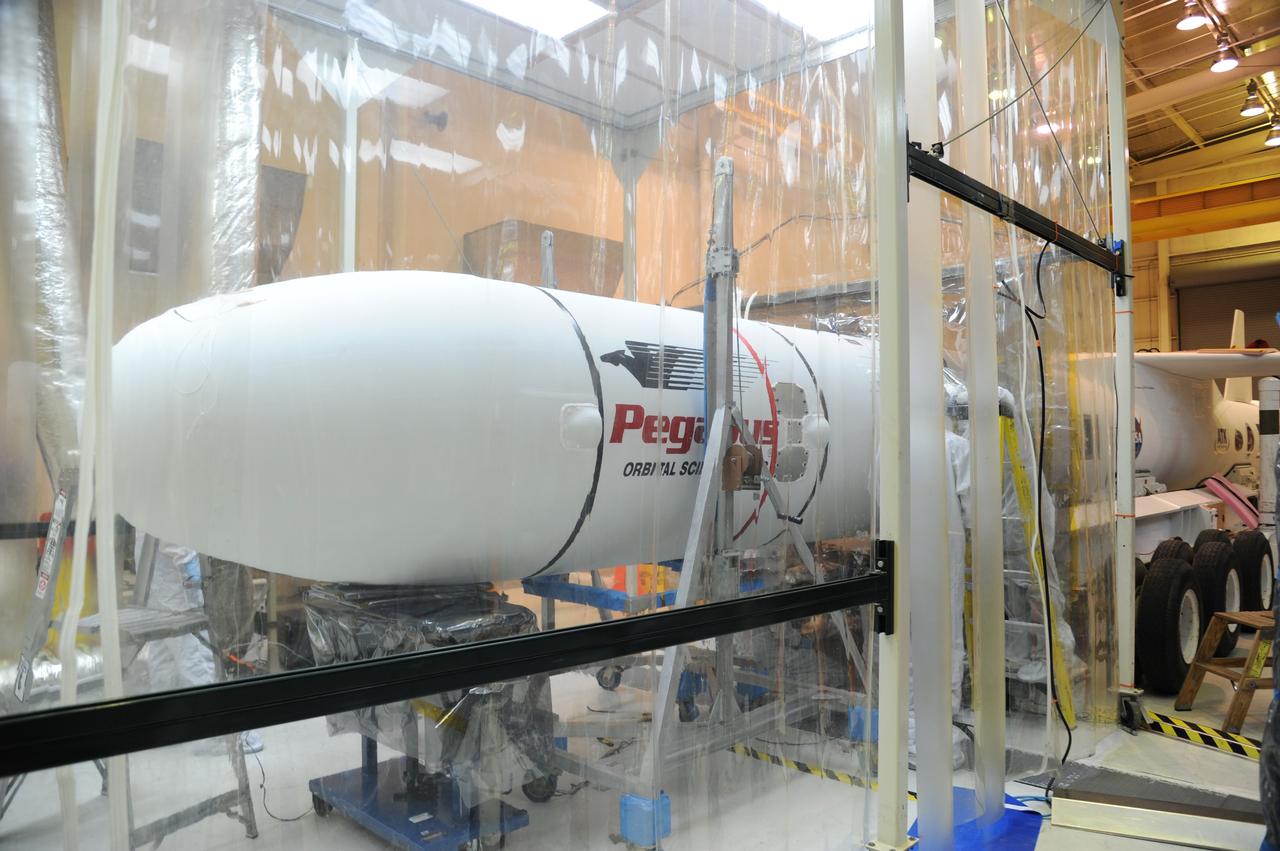
VANDENBERG AIR FORCE BASE, Calif. – In Orbital Sciences’ hangar on Vandenberg Air Force Base in California, the Pegasus fairing has been reinstalled around NASA’s Nuclear Spectroscopic Telescope Array, or NuSTAR. NuSTAR is mated to Orbital’s Pegasus XL rocket, extending outside the environmental enclosure, at right. Access to the spacecraft was needed for compatibility testing to verify communication with a tracking station in Hawaii. With the change in the launch timeframe to June, this station will be needed to support launch. After processing of Orbital’s Pegasus XL rocket and the spacecraft is complete, they will be flown on Orbital's L-1011 carrier aircraft from Vandenberg, to the U.S. Army's Ronald Reagan Ballistic Missile Defense Test Site on Kwajalein Atoll, part of the Marshall Islands in the Pacific Ocean. The Pegasus, mated to its NuSTAR payload, will be launched from the carrier aircraft 117 nautical miles south of Kwajalein at latitude 6.75 degrees north of the equator. The high-energy X-ray telescope will conduct a census of black holes, map radioactive material in young supernovae remnants, and study the origins of cosmic rays and the extreme physics around collapsed stars. Launch is scheduled for June 13. For more information, visit http://www.nasa.gov/nustar. Photo credit: U.S. Air Force 30th Space Wing/Aaron Taubman, VAFB
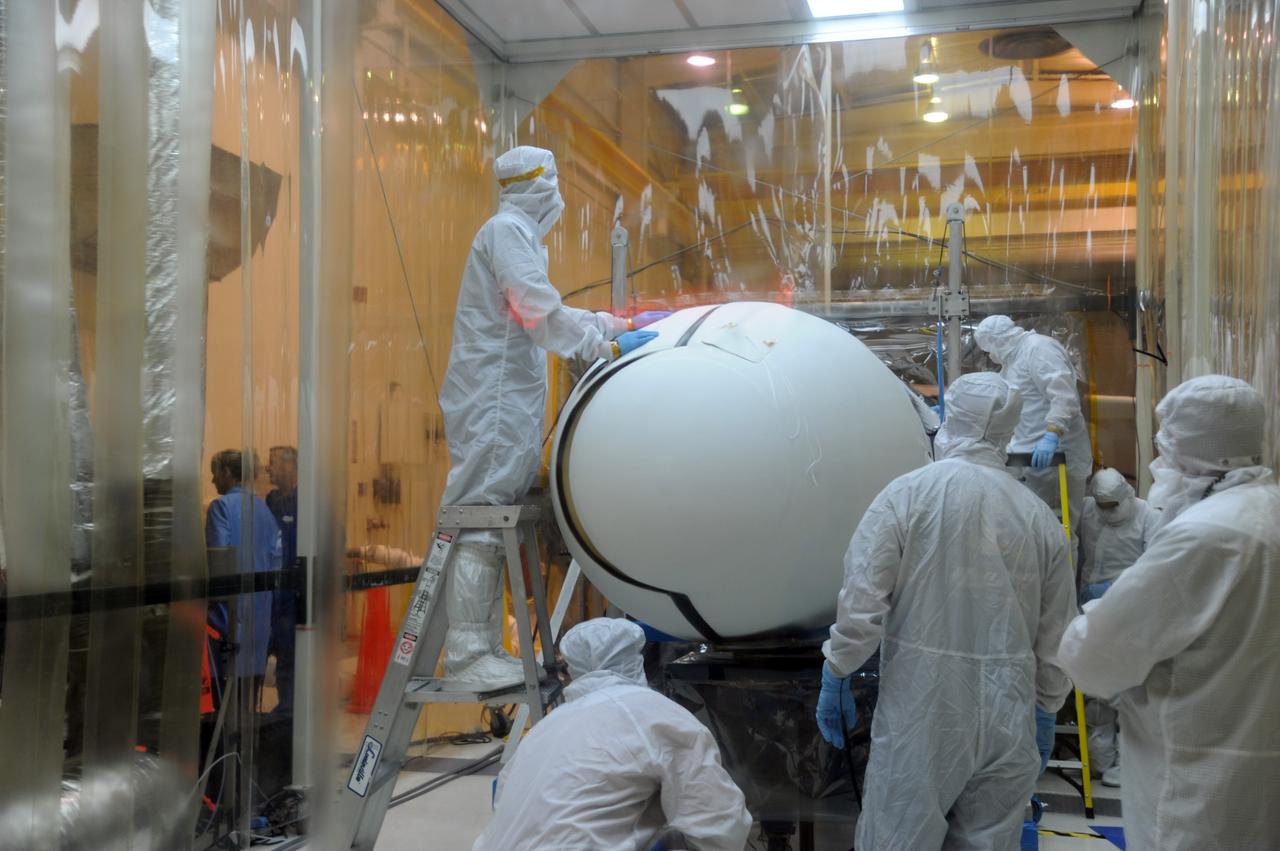
VANDENBERG AIR FORCE BASE, Calif. – In Orbital Sciences’ hangar on Vandenberg Air Force Base in California, NASA’s Nuclear Spectroscopic Telescope Array, or NuSTAR, is hidden from sight as the Pegasus fairing closes around it during the fairing’s reinstallation. Access to the spacecraft was needed for compatibility testing to verify communication with a tracking station in Hawaii. With the change in the launch timeframe to June, this station will be needed to support launch. After processing of Orbital’s Pegasus XL rocket and the spacecraft is complete, they will be flown on Orbital's L-1011 carrier aircraft from Vandenberg, to the U.S. Army's Ronald Reagan Ballistic Missile Defense Test Site on Kwajalein Atoll, part of the Marshall Islands in the Pacific Ocean. The Pegasus, mated to its NuSTAR payload, will be launched from the carrier aircraft 117 nautical miles south of Kwajalein at latitude 6.75 degrees north of the equator. The high-energy X-ray telescope will conduct a census of black holes, map radioactive material in young supernovae remnants, and study the origins of cosmic rays and the extreme physics around collapsed stars. Launch is scheduled for June 13. For more information, visit http://www.nasa.gov/nustar. Photo credit: U.S. Air Force 30th Space Wing/Aaron Taubman, VAFB
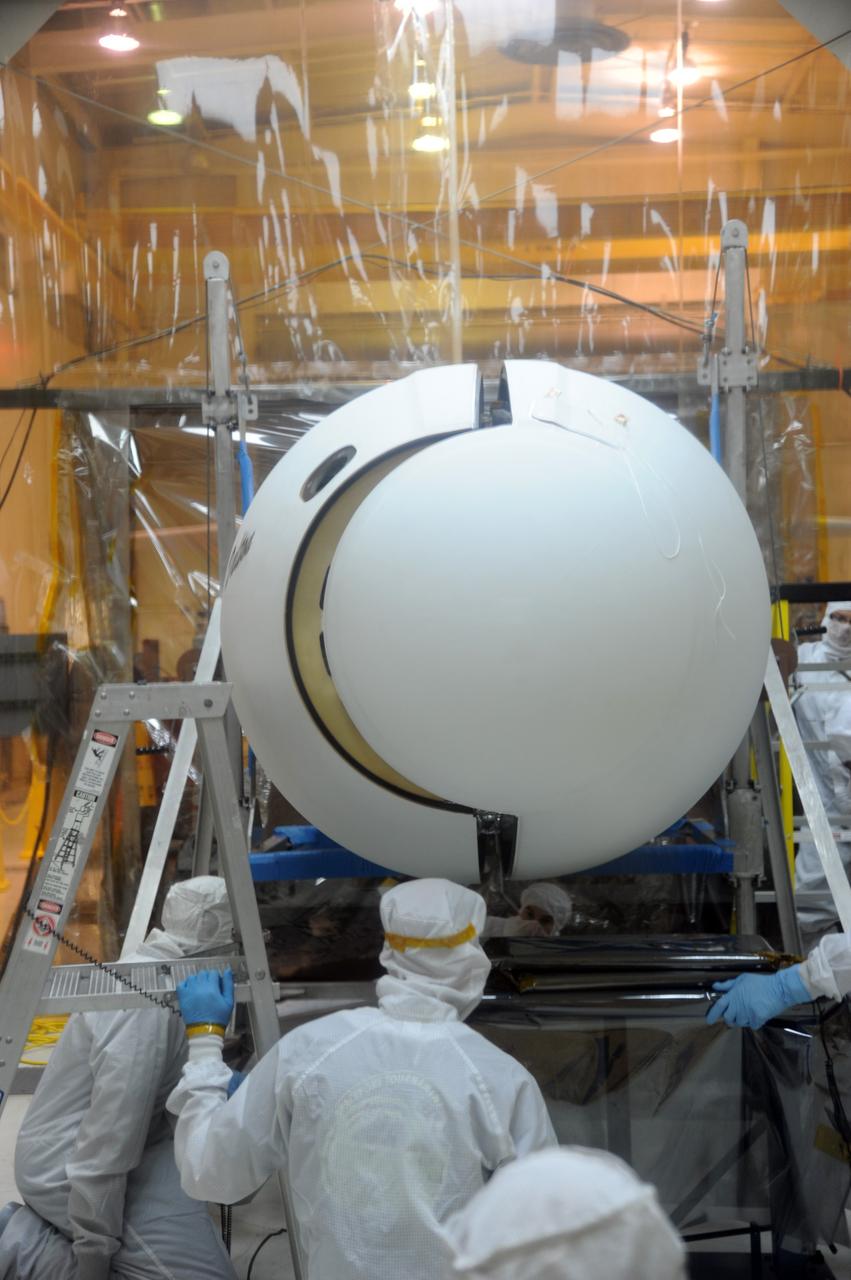
VANDENBERG AIR FORCE BASE, Calif. – In Orbital Sciences’ hangar on Vandenberg Air Force Base in California, the Pegasus fairing closes around NASA’s Nuclear Spectroscopic Telescope Array, or NuSTAR, during operations to reinstall the fairing. Access to the spacecraft was needed for compatibility testing to verify communication with a tracking station in Hawaii. With the change in the launch timeframe to June, this station will be needed to support launch. After processing of Orbital’s Pegasus XL rocket and the spacecraft is complete, they will be flown on Orbital's L-1011 carrier aircraft from Vandenberg, to the U.S. Army's Ronald Reagan Ballistic Missile Defense Test Site on Kwajalein Atoll, part of the Marshall Islands in the Pacific Ocean. The Pegasus, mated to its NuSTAR payload, will be launched from the carrier aircraft 117 nautical miles south of Kwajalein at latitude 6.75 degrees north of the equator. The high-energy X-ray telescope will conduct a census of black holes, map radioactive material in young supernovae remnants, and study the origins of cosmic rays and the extreme physics around collapsed stars. Launch is scheduled for June 13. For more information, visit http://www.nasa.gov/nustar. Photo credit: U.S. Air Force 30th Space Wing/Aaron Taubman, VAFB
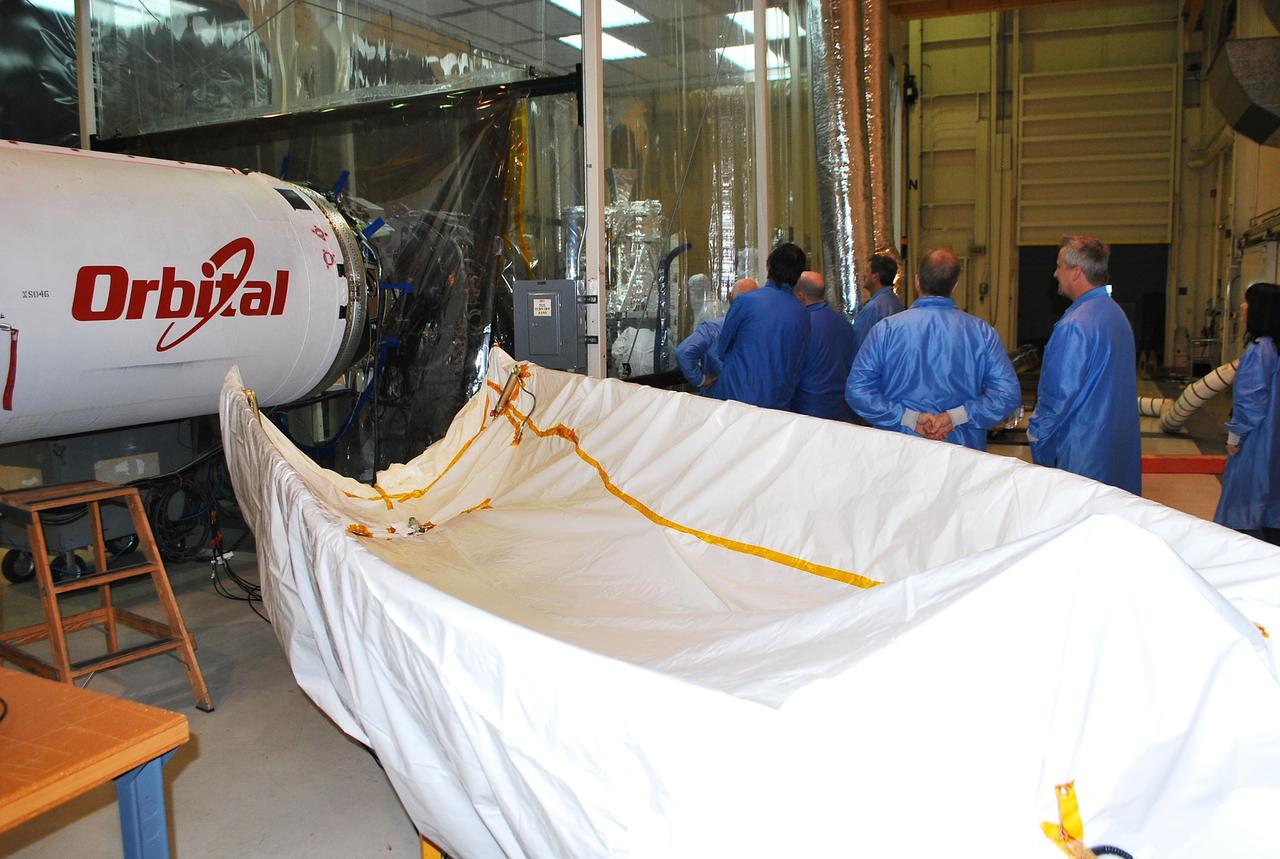
VANDENBERG AIR FORCE BASE, Calif. -- With the Pegasus XL rocket and fairing inside Orbital Science's processing facility at Vandenberg Air Force Base in California, technicians watch the NuSTAR solar array test from inside a clean room environmental enclosure. The Pegasus will launch NASA's Nuclear Spectroscopic Telescope Array NuSTAR into space. After the rocket and spacecraft are processed at Vandenberg, they will be flown on the Orbital Sciences’ L-1011 carrier aircraft to the Ronald Reagan Ballistic Missile Defense Test Site at the Pacific Ocean’s Kwajalein Atoll for launch. The high-energy x-ray telescope will conduct a census for black holes, map radioactive material in young supernovae remnants, and study the origins of cosmic rays and the extreme physics around collapsed stars. For more information, visit science.nasa.gov/missions/nustar/. Photo credit: NASA/Randy Beaudoin, VAFB
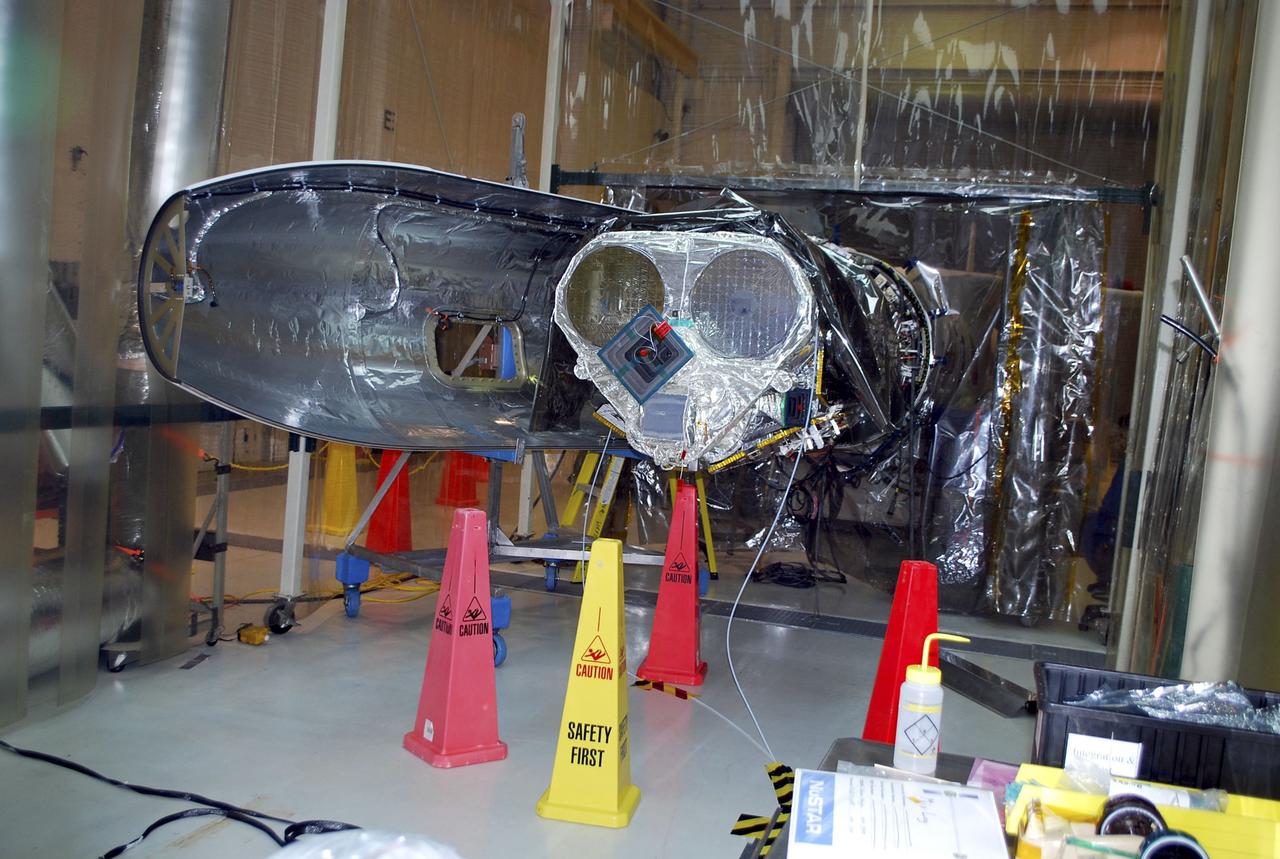
VANDENBERG AIR FORCE BASE, Calif. -- NASA's Nuclear Spectroscopic Telescope Array NuSTAR spacecraft is wrapped in its protective cover and half of its payload fairing is behind it in processing facility 1555 at Vandenberg Air Force Base in California. Technicians are performing fairing closeout work in preparation for fairing installation around the spacecraft, which is scheduled to begin March 2. The cover protecting NuSTAR's delicate instruments will be removed prior to the fairing installation. The fairing will protect the spacecraft from the heat and aerodynamic pressure generated during ascent to orbit aboard an Orbital Sciences Pegasus XL rocket. After processing of the rocket and spacecraft are complete, they will be flown on Orbital's L-1011 carrier aircraft from Vandenberg to the Ronald Reagan Ballistic Missile Defense Test Site on the Pacific Ocean’s Kwajalein Atoll for launch. The high-energy X-ray telescope will conduct a census of black holes, map radioactive material in young supernovae remnants, and study the origins of cosmic rays and the extreme physics around collapsed stars. For more information, visit http://www.nasa.gov/nustar. Photo credit: NASA/Randy Beaudoin, VAFB
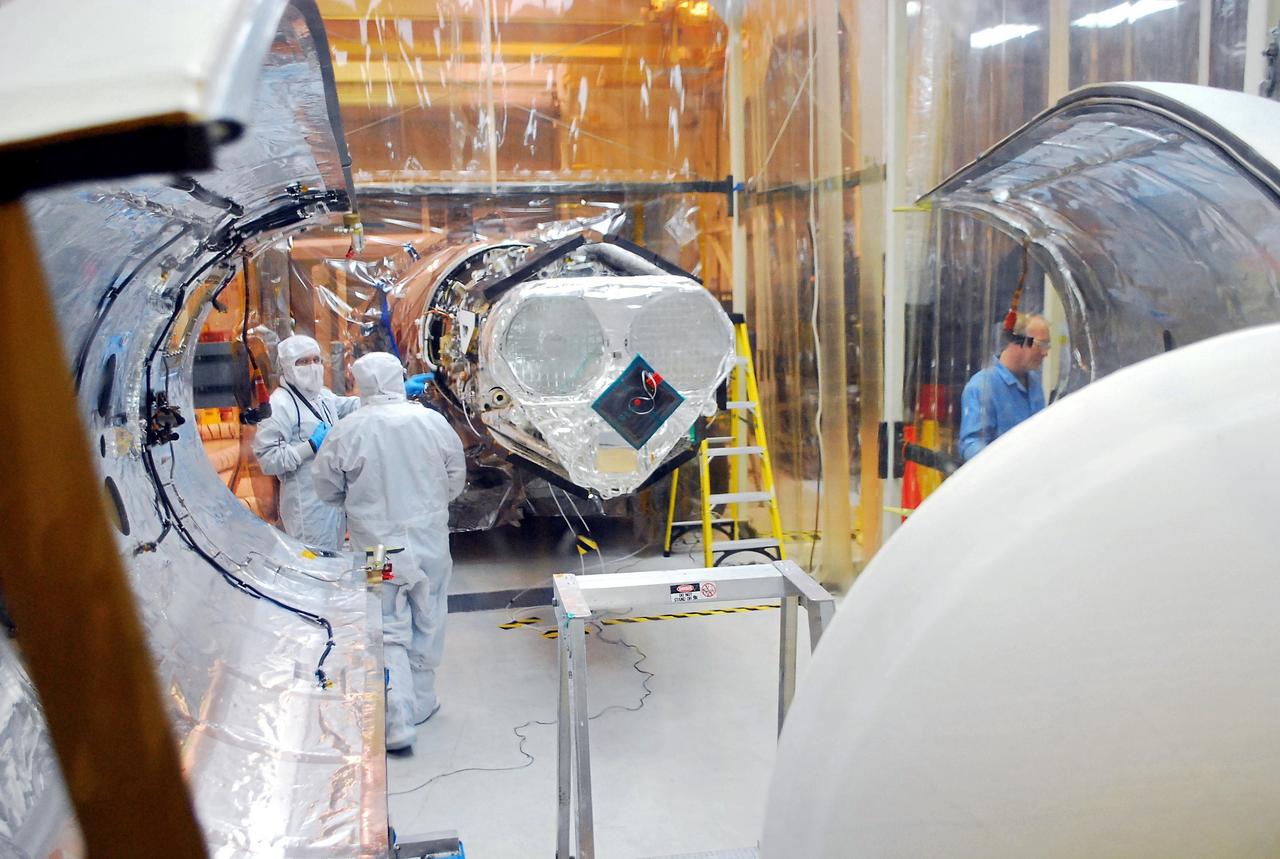
VANDENBERG AIR FORCE BASE, Calif. – Orbital Sciences’ Pegasus XL rocket is viewed over the Pegasus payload fairing, positioned part in and part out of the environmental enclosure in Orbital’s hangar on Vandenberg Air Force Base in California. Half of the Pegasus fairing has been removed from around NASA’s Nuclear Spectroscopic Telescope Array, or NuSTAR. Access to the spacecraft is needed for compatibility testing to verify communication with a tracking station in Hawaii. With the change in the launch timeframe to June, this station will be needed to support launch. After processing of Orbital’s Pegasus XL rocket and the spacecraft are complete, they will be flown on Orbital's L-1011 carrier aircraft from Vandenberg to the Ronald Reagan Ballistic Missile Defense Test Site on the Pacific Ocean’s Kwajalein Atoll for launch. The high-energy X-ray telescope will conduct a census of black holes, map radioactive material in young supernovae remnants, and study the origins of cosmic rays and the extreme physics around collapsed stars. For more information, visit http://www.nasa.gov/nustar. Photo credit: NASA/Randy Beaudoin, VAFB
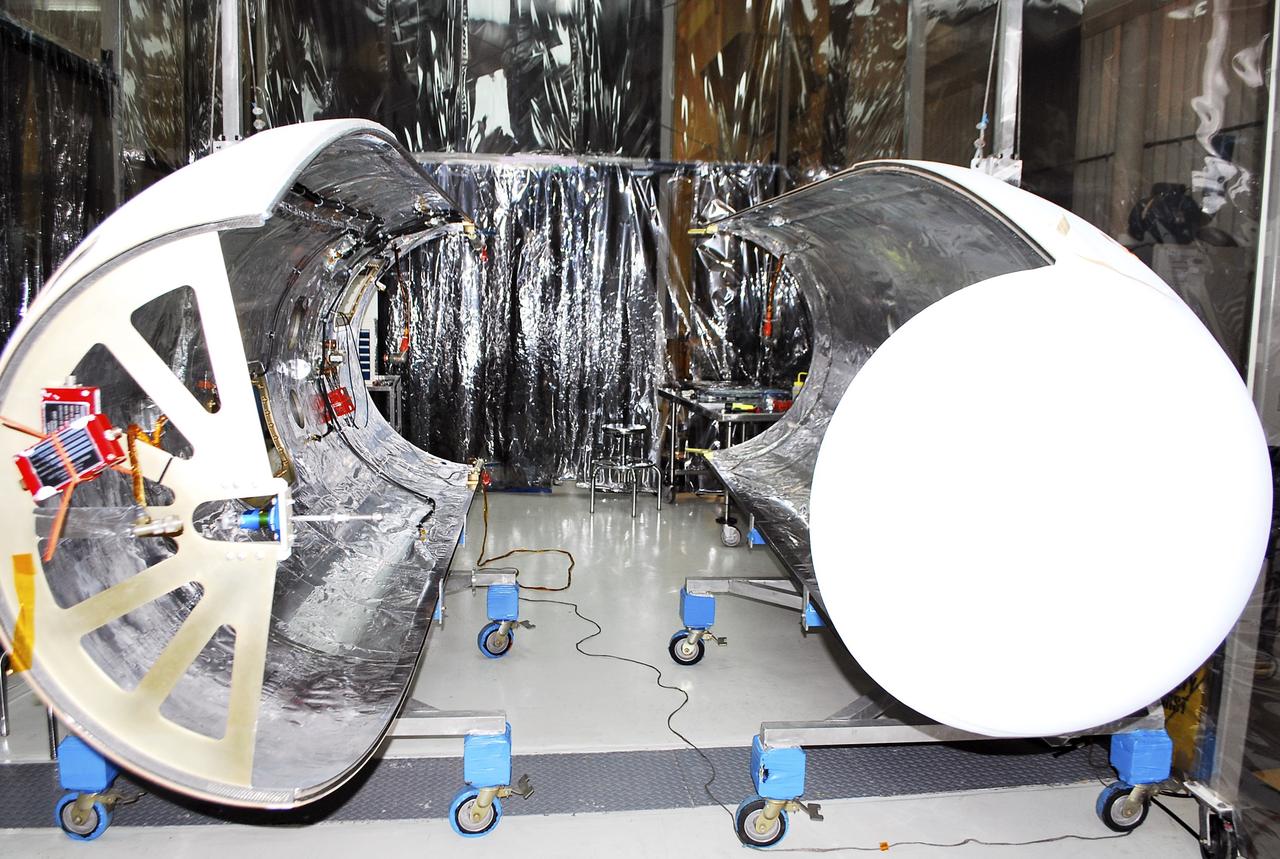
VANDENBERG AIR FORCE BASE, Calif. – The fairing for NASA's Nuclear Spectroscopic Telescope Array, or NuSTAR, awaits processing in an environmental enclosure inside the Orbital Sciences processing facility at Vandenberg Air Force Base in California. The fairing will enclose and protect the spacecraft from the heat and aerodynamic pressure generated during ascent to orbit aboard an Orbital Sciences Pegasus XL rocket. After processing of the rocket and spacecraft are complete, they will be flown on Orbital's L-1011 carrier aircraft from Vandenberg to the Ronald Reagan Ballistic Missile Defense Test Site on the Pacific Ocean’s Kwajalein Atoll for launch in March. The high-energy x-ray telescope will conduct a census of black holes, map radioactive material in young supernovae remnants, and study the origins of cosmic rays and the extreme physics around collapsed stars. For more information, visit http://www.nasa.gov/nustar. Photo credit: NASA/Randy Beaudoin, VAFB
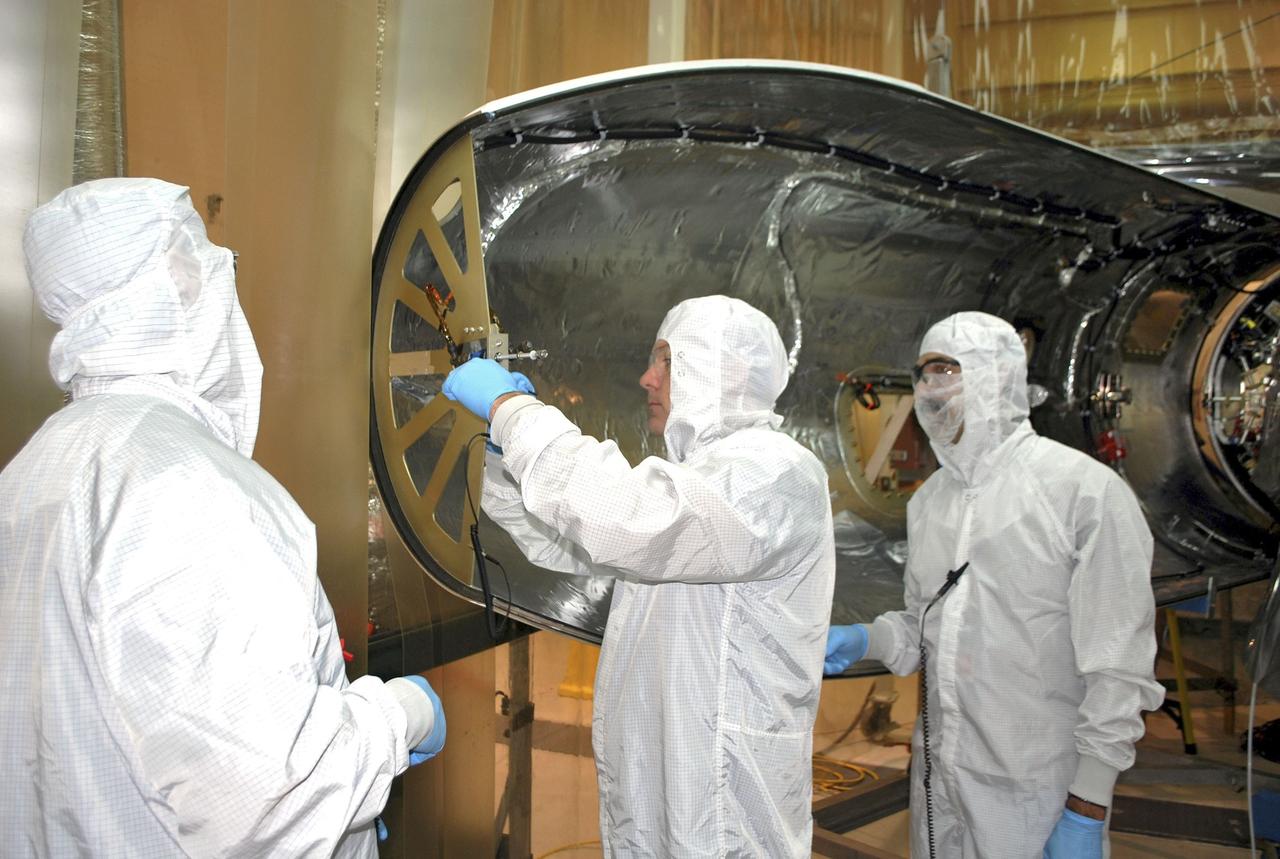
VANDENBERG AIR FORCE BASE, Calif. -- In an environmental enclosure in processing facility 1555 at Vandenberg Air Force Base in California, Orbital Sciences technicians are performing fairing closeouts for NASA's Nuclear Spectroscopic Telescope Array NuSTAR spacecraft. The fairing will protect the spacecraft from the heat and aerodynamic pressure generated during ascent to orbit aboard an Orbital Sciences Pegasus XL rocket. After processing of the rocket and spacecraft are complete, they will be flown on Orbital's L-1011 carrier aircraft from Vandenberg to the Ronald Reagan Ballistic Missile Defense Test Site on the Pacific Ocean’s Kwajalein Atoll for launch. The high-energy X-ray telescope will conduct a census of black holes, map radioactive material in young supernovae remnants, and study the origins of cosmic rays and the extreme physics around collapsed stars. For more information, visit http://www.nasa.gov/nustar. Photo credit: NASA/Randy Beaudoin, VAFB
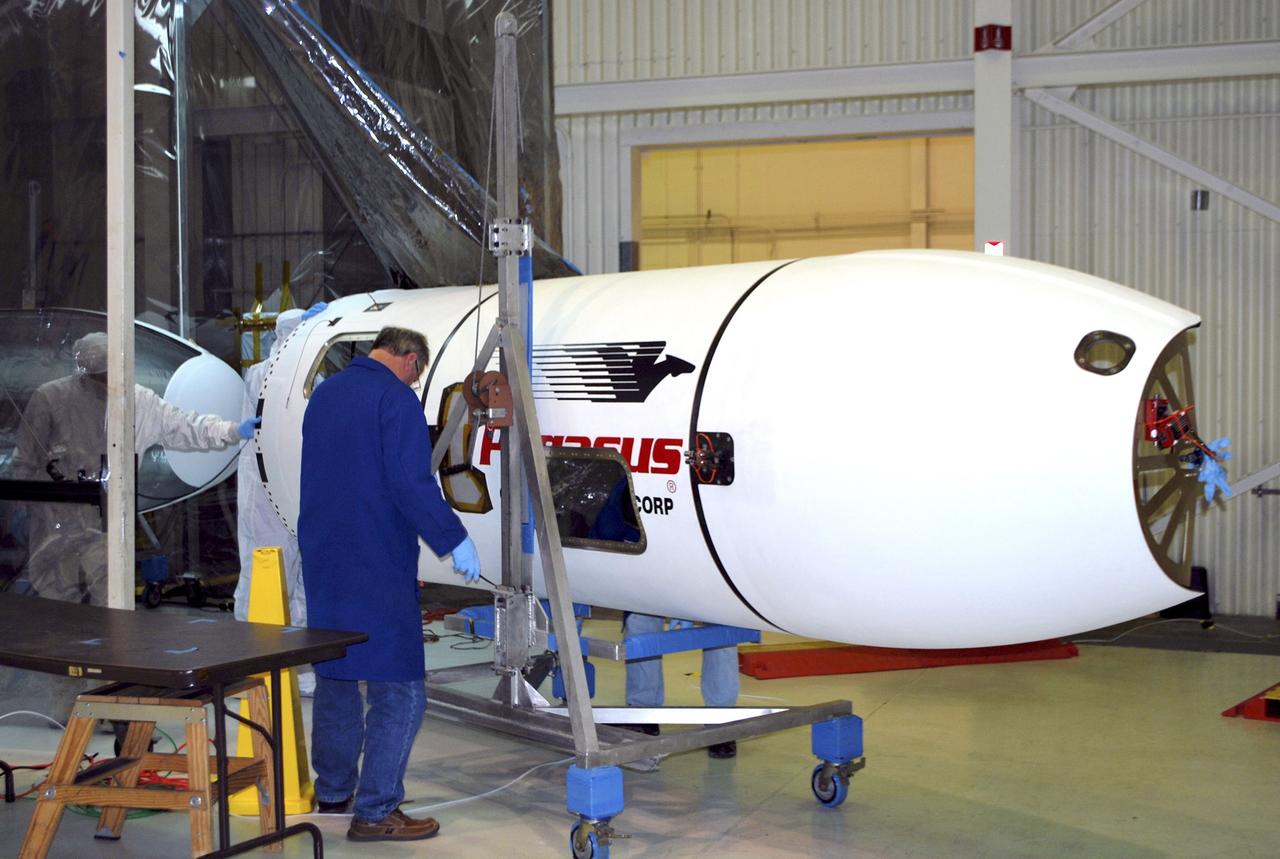
VANDENBERG AIR FORCE BASE, Calif. – A technician rolls a section of the fairing for NASA's Nuclear Spectroscopic Telescope Array, or NuSTAR, out of an environmental enclosure inside the Orbital Sciences processing facility at Vandenberg Air Force Base in California toward the facility’s clean room. The fairing will enclose and protect the spacecraft from the heat and aerodynamic pressure generated during ascent to orbit aboard an Orbital Sciences Pegasus XL rocket. After processing of the rocket and spacecraft are complete, they will be flown on Orbital's L-1011 carrier aircraft from Vandenberg to the Ronald Reagan Ballistic Missile Defense Test Site on the Pacific Ocean’s Kwajalein Atoll for launch in March. The high-energy x-ray telescope will conduct a census of black holes, map radioactive material in young supernovae remnants, and study the origins of cosmic rays and the extreme physics around collapsed stars. For more information, visit http://www.nasa.gov/nustar. Photo credit: NASA/Randy Beaudoin, VAFB
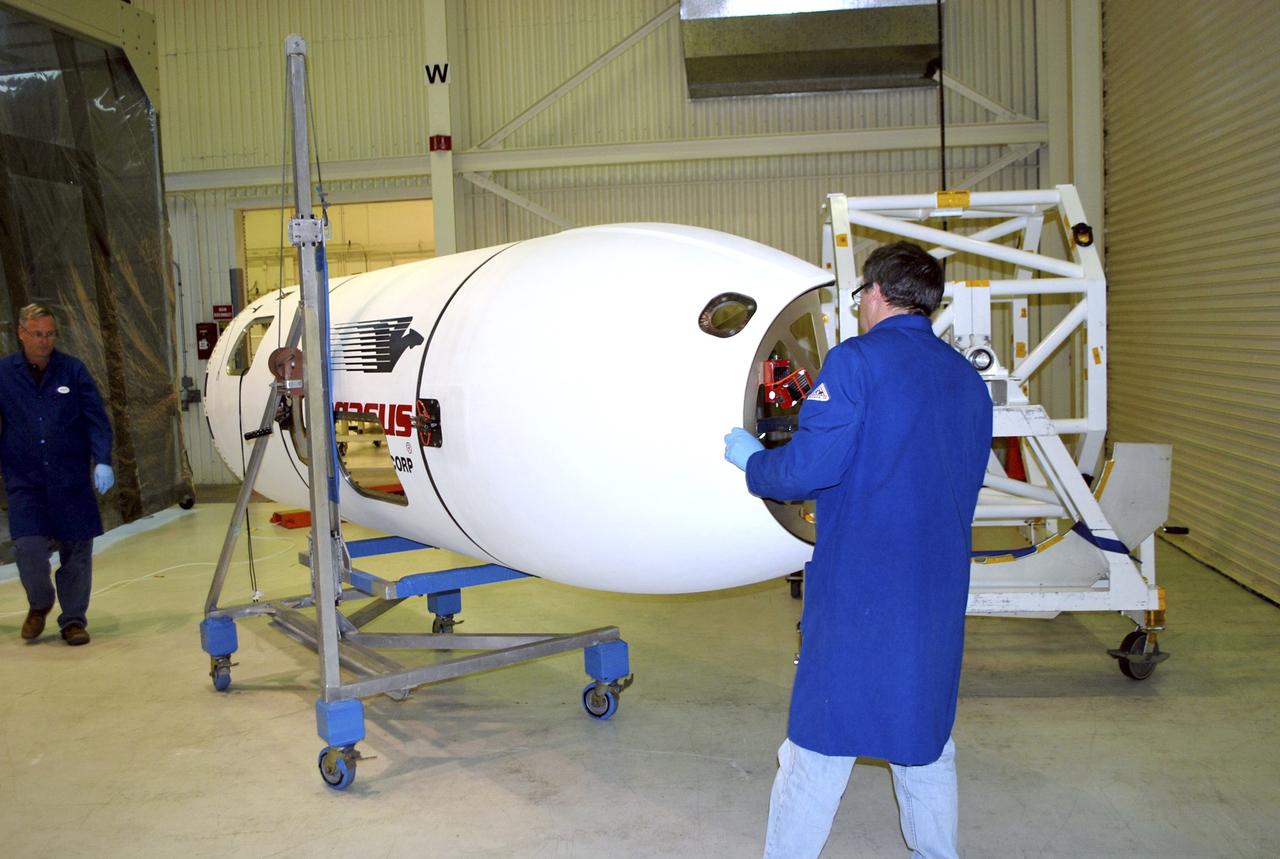
VANDENBERG AIR FORCE BASE, Calif. – A technician rolls a section of the fairing for NASA's Nuclear Spectroscopic Telescope Array, or NuSTAR, toward the clean room of the Orbital Sciences processing facility at Vandenberg Air Force Base in California. The fairing will enclose and protect the spacecraft from the heat and aerodynamic pressure generated during ascent to orbit aboard an Orbital Sciences Pegasus XL rocket. After processing of the rocket and spacecraft are complete, they will be flown on Orbital's L-1011 carrier aircraft from Vandenberg to the Ronald Reagan Ballistic Missile Defense Test Site on the Pacific Ocean’s Kwajalein Atoll for launch in March. The high-energy x-ray telescope will conduct a census of black holes, map radioactive material in young supernovae remnants, and study the origins of cosmic rays and the extreme physics around collapsed stars. For more information, visit http://www.nasa.gov/nustar. Photo credit: NASA/Randy Beaudoin, VAFB
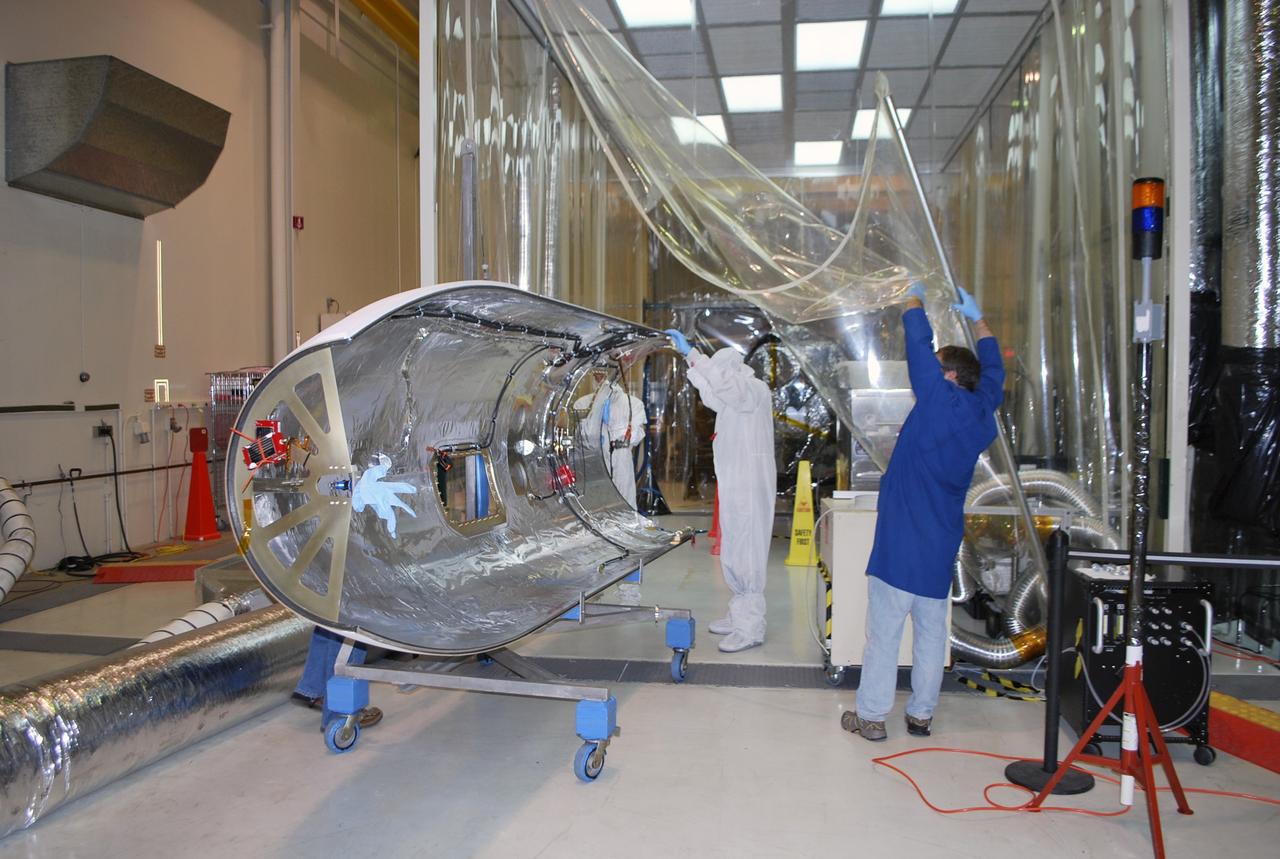
VANDENBERG AIR FORCE BASE, Calif. – Teamwork is required to transfer a section of the fairing for NASA's Nuclear Spectroscopic Telescope Array, or NuSTAR, into the clean room of the Orbital Sciences processing facility at Vandenberg Air Force Base in California. The fairing will enclose and protect the spacecraft from the heat and aerodynamic pressure generated during ascent to orbit aboard an Orbital Sciences Pegasus XL rocket. After processing of the rocket and spacecraft are complete, they will be flown on Orbital's L-1011 carrier aircraft from Vandenberg to the Ronald Reagan Ballistic Missile Defense Test Site on the Pacific Ocean’s Kwajalein Atoll for launch in March. The high-energy x-ray telescope will conduct a census of black holes, map radioactive material in young supernovae remnants, and study the origins of cosmic rays and the extreme physics around collapsed stars. For more information, visit http://www.nasa.gov/nustar. Photo credit: NASA/Randy Beaudoin, VAFB
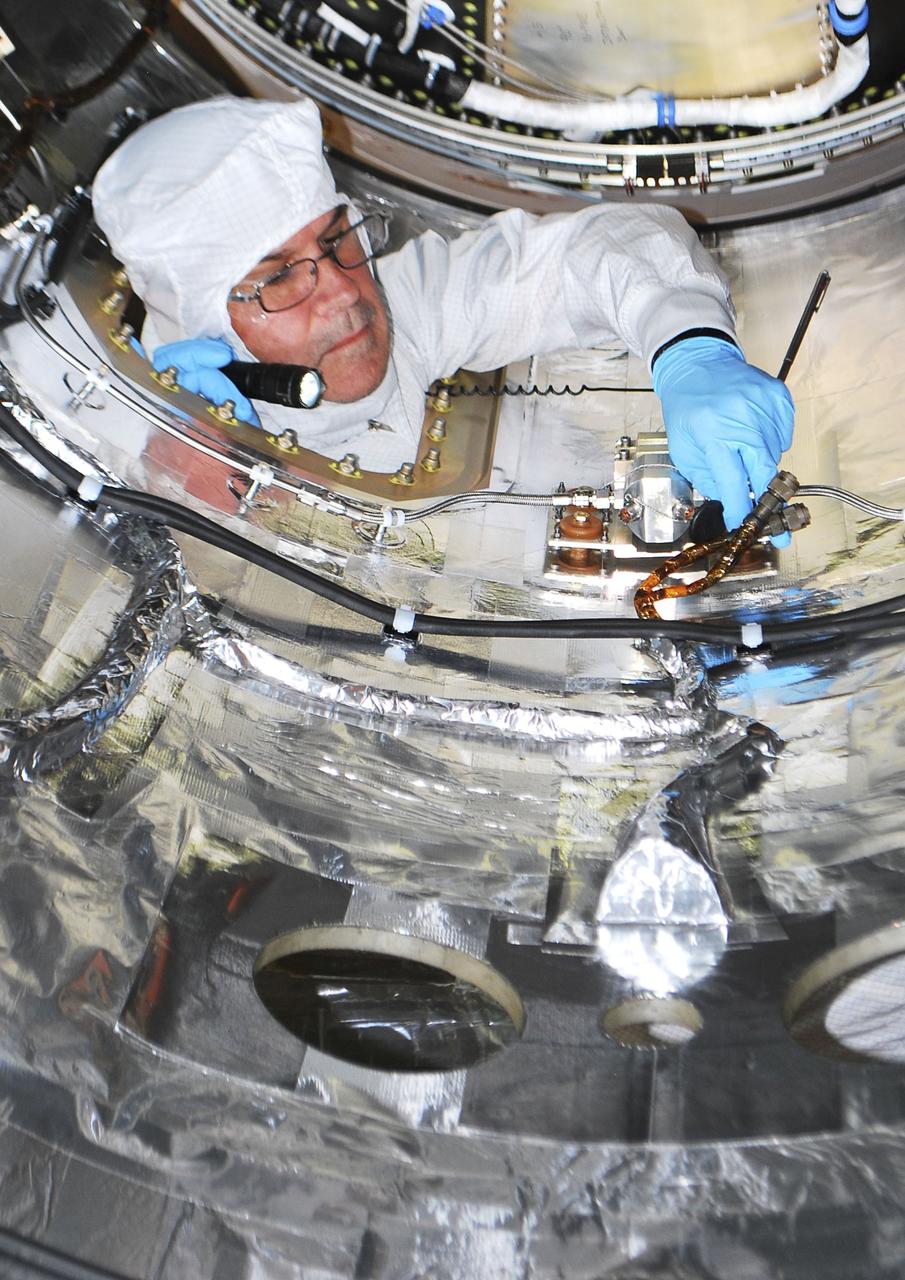
VANDENBERG AIR FORCE BASE, Calif. -- An Orbital Sciences technician is performing closeout work inside the fairing that will be installed around NASA's Nuclear Spectroscopic Telescope Array NuSTAR spacecraft in processing facility 1555 at Vandenberg Air Force Base in California. The fairing will protect the spacecraft from the heat and aerodynamic pressure generated during ascent to orbit aboard an Orbital Sciences Pegasus XL rocket. After processing of the rocket and spacecraft are complete, they will be flown on Orbital's L-1011 carrier aircraft from Vandenberg to the Ronald Reagan Ballistic Missile Defense Test Site on the Pacific Ocean’s Kwajalein Atoll for launch. The high-energy X-ray telescope will conduct a census of black holes, map radioactive material in young supernovae remnants, and study the origins of cosmic rays and the extreme physics around collapsed stars. For more information, visit http://www.nasa.gov/nustar. Photo credit: NASA/Randy Beaudoin, VAFB
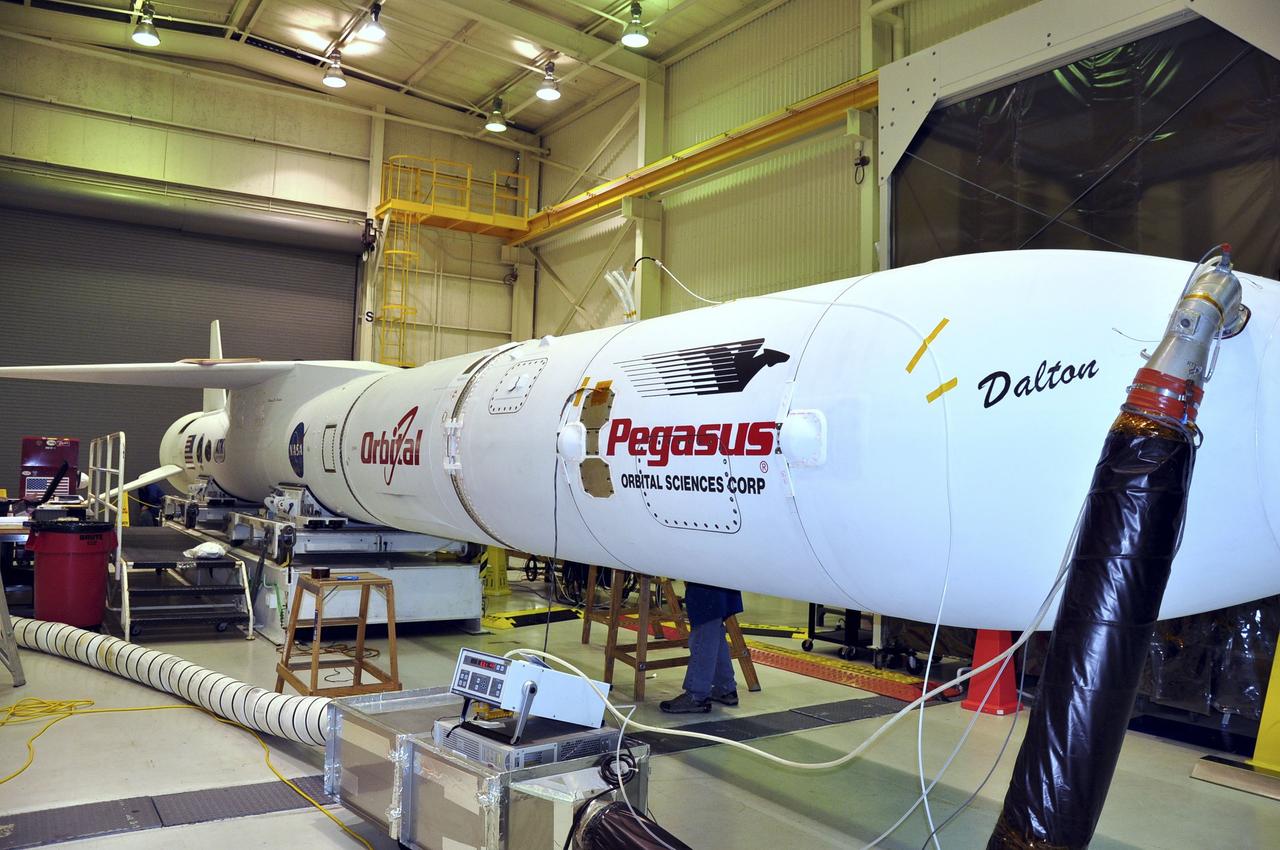
VANDENBERG AIR FORCE BASE, Calif. – Inside the Orbital Sciences processing facility at Vandenberg Air Force Base in California, NASA's Nuclear Spectroscopic Telescope Array, or NuSTAR, awaits rollout for mating to the L-1011 Orbital carrier aircraft. Previously, the spacecraft was mated with its Pegasus XL rocket and enclosed in the Pegasus payload fairing. Cool, dry air is being pumped into the fairing through a purge line to maintain the proper environment for the spacecraft in the confined space. The fairing will protect the spacecraft from the heat and aerodynamic pressure generated during the rocket’s ascent to orbit. After processing of the rocket and spacecraft are complete, they will be flown on Orbital's L-1011 carrier aircraft from Vandenberg to the Ronald Reagan Ballistic Missile Defense Test Site on the Pacific Ocean’s Kwajalein Atoll for launch in March. The high-energy x-ray telescope will conduct a census of black holes, map radioactive material in young supernovae remnants, and study the origins of cosmic rays and the extreme physics around collapsed stars. For more information, visit http://www.nasa.gov/nustar. Photo credit: NASA/Randy Beaudoin, VAFB

VANDENBERG AIR FORCE BASE, Calif. – Inside the Orbital Sciences processing facility at Vandenberg Air Force Base in California, preparations to launch NASA's Nuclear Spectroscopic Telescope Array, or NuSTAR, are nearly complete. The spacecraft has been mated with its Pegasus XL rocket and enclosed in the Pegasus payload fairing. Cool, dry air is being pumped into the fairing through a purge line to maintain the proper environment for the spacecraft in the confined space. The fairing will protect the spacecraft from the heat and aerodynamic pressure generated during the rocket’s ascent to orbit. After processing of the rocket and spacecraft are complete, they will be flown on Orbital's L-1011 carrier aircraft from Vandenberg to the Ronald Reagan Ballistic Missile Defense Test Site on the Pacific Ocean’s Kwajalein Atoll for launch in March. The high-energy x-ray telescope will conduct a census of black holes, map radioactive material in young supernovae remnants, and study the origins of cosmic rays and the extreme physics around collapsed stars. For more information, visit http://www.nasa.gov/nustar. Photo credit: NASA/Randy Beaudoin, VAFB
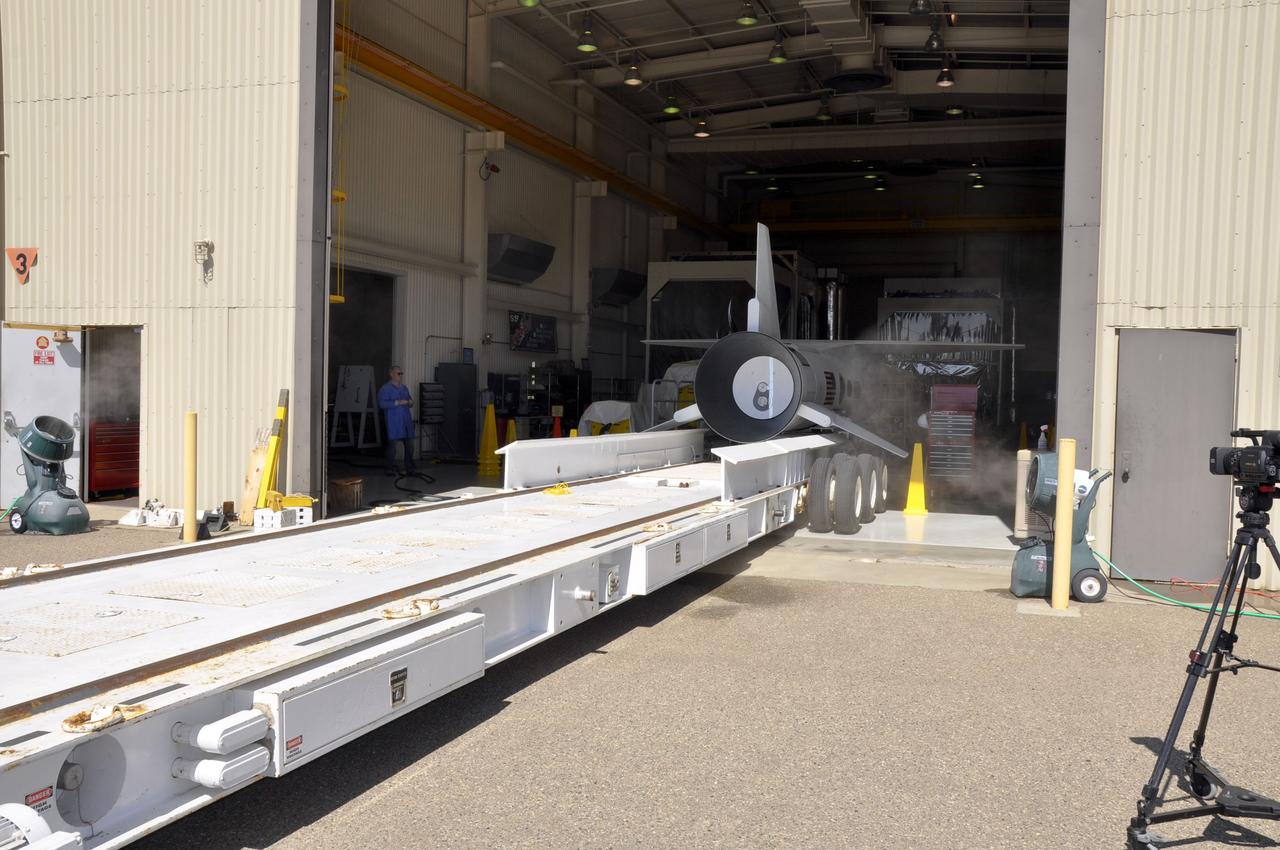
VANDENBERG AIR FORCE BASE, Calif. – Preparations are under way to transfer an Orbital Sciences Pegasus XL rocket onto the transporter in Orbital’s hangar at Vandenberg Air Force Base in California. The rocket has been mated to NASA's Nuclear Spectroscopic Telescope Array, or NuSTAR, encapsulated in the Pegasus payload fairing. The transporter will move them to the runway ramp where they will be attached to the underside of Orbital’s L-1011 carrier aircraft. The aircraft will fly the pair from Vandenberg to the Ronald Reagan Ballistic Missile Defense Test Site on the Pacific Ocean’s Kwajalein Atoll for launch. A revised launch date will be set at the Flight Readiness Review, planned for later this week. The high-energy X-ray telescope will conduct a census of black holes, map radioactive material in young supernovae remnants, and study the origins of cosmic rays and the extreme physics around collapsed stars. For more information, visit http://www.nasa.gov/nustar. Photo credit: NASA/Randy Beaudoin, VAFB

VANDENBERG AIR FORCE BASE, Calif. – The transporter for the Orbital Sciences Pegasus XL rocket juts through the open door of Orbital’s hangar at Vandenberg Air Force Base in California. The rocket is mated to NASA's Nuclear Spectroscopic Telescope Array, or NuSTAR, encapsulated in the Pegasus payload fairing. The transporter will move them to the runway ramp where they will be attached to the underside of Orbital’s L-1011 carrier aircraft. The aircraft will fly the pair from Vandenberg to the Ronald Reagan Ballistic Missile Defense Test Site on the Pacific Ocean’s Kwajalein Atoll for launch. A revised launch date will be set at the Flight Readiness Review, planned for later this week. The high-energy X-ray telescope will conduct a census of black holes, map radioactive material in young supernovae remnants, and study the origins of cosmic rays and the extreme physics around collapsed stars. For more information, visit http://www.nasa.gov/nustar. Photo credit: NASA/Randy Beaudoin, VAFB
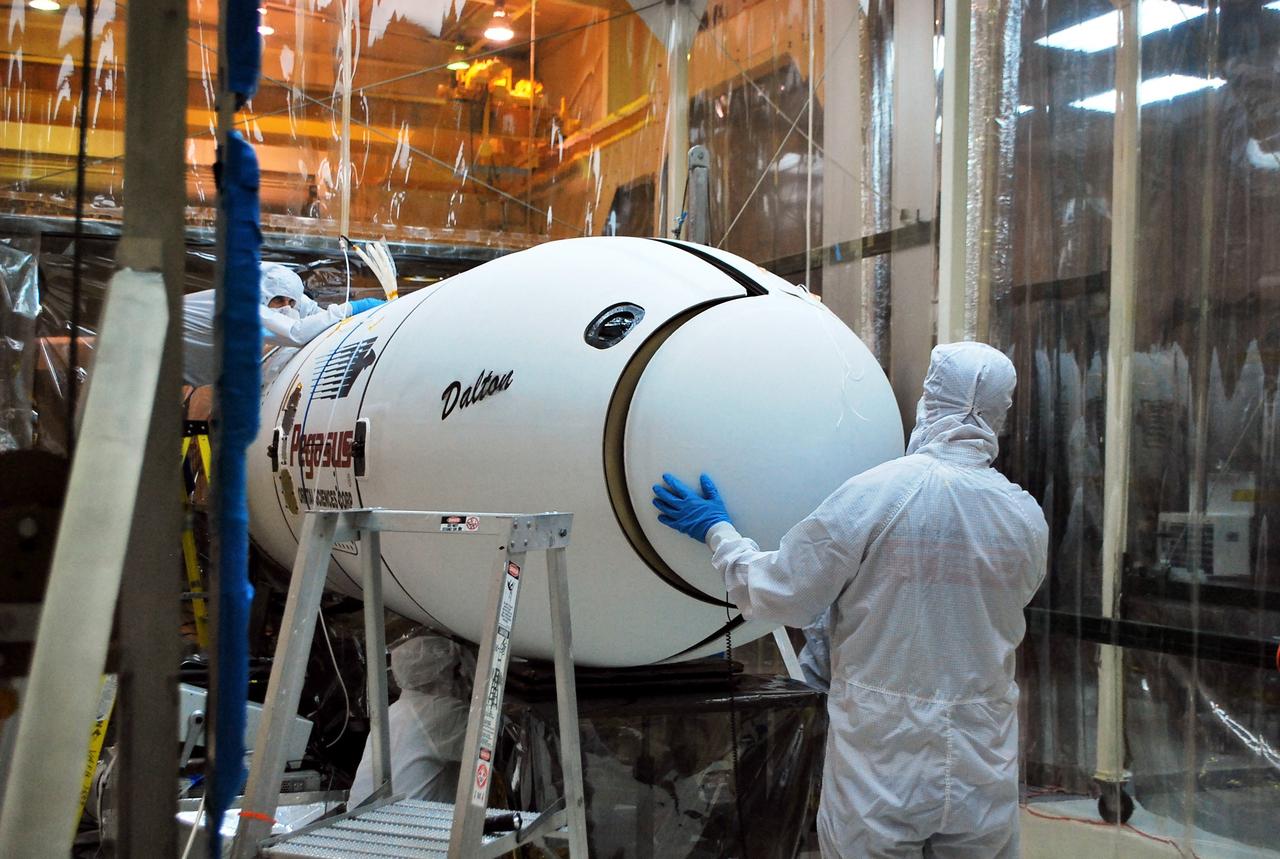
VANDENBERG AIR FORCE BASE, Calif. – Preparations are under way to remove the Pegasus payload fairing from around NASA’s Nuclear Spectroscopic Telescope Array, or NuSTAR, in Orbital Sciences’ hangar on Vandenberg Air Force Base in California. Access to the spacecraft is needed for compatibility testing to verify communication with a tracking station in Hawaii. With the change in the launch timeframe to June, this station will be needed to support launch. After processing of Orbital’s Pegasus XL rocket and the spacecraft are complete, they will be flown on Orbital's L-1011 carrier aircraft from Vandenberg to the Ronald Reagan Ballistic Missile Defense Test Site on the Pacific Ocean’s Kwajalein Atoll for launch. The high-energy X-ray telescope will conduct a census of black holes, map radioactive material in young supernovae remnants, and study the origins of cosmic rays and the extreme physics around collapsed stars. For more information, visit http://www.nasa.gov/nustar. Photo credit: NASA/Randy Beaudoin, VAFB
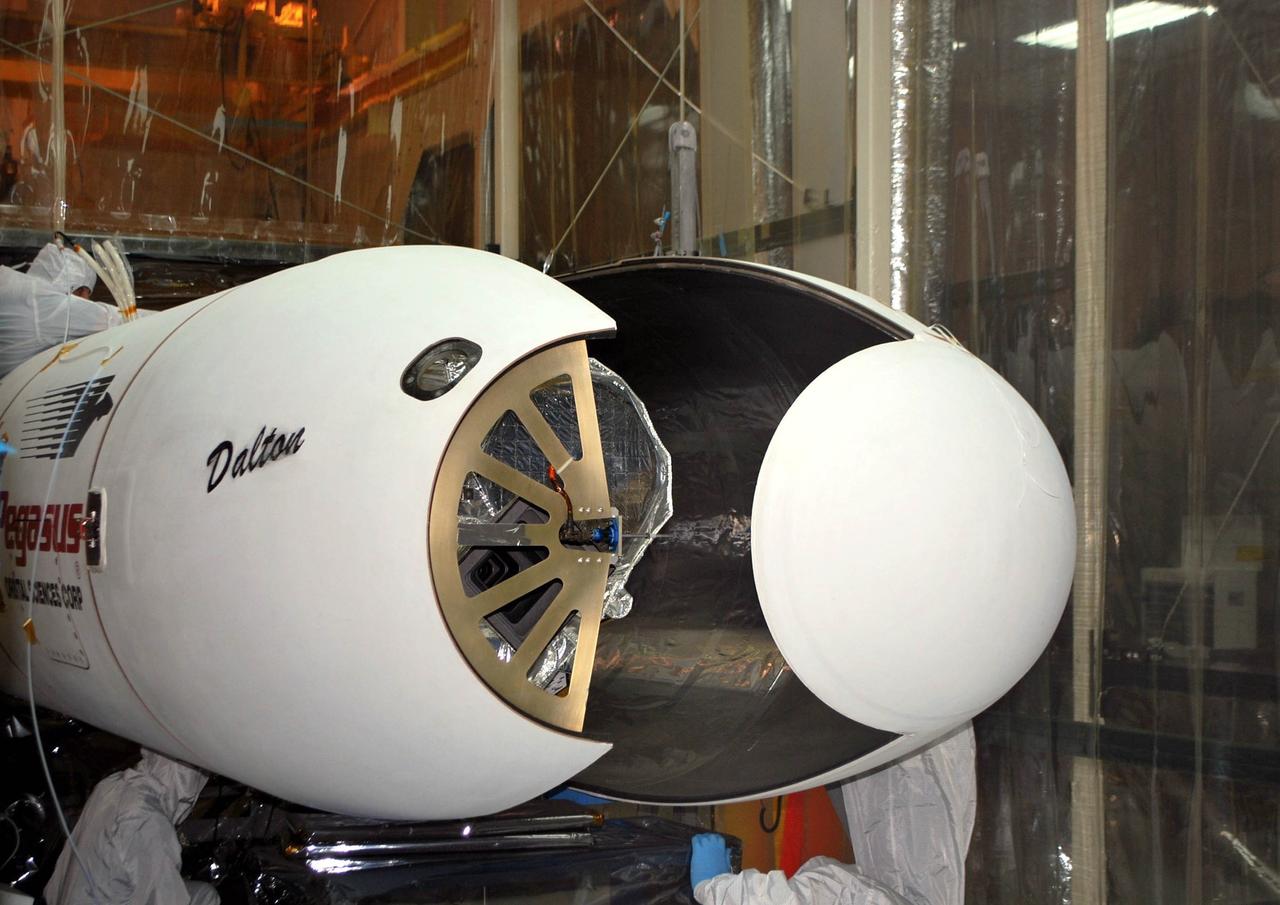
VANDENBERG AIR FORCE BASE, Calif. – The Pegasus payload fairing has been opened to reveal NASA’s Nuclear Spectroscopic Telescope Array, or NuSTAR, in Orbital Sciences’ hangar on Vandenberg Air Force Base in California. Access to the spacecraft is needed for compatibility testing to verify communication with a tracking station in Hawaii. With the change in the launch timeframe to June, this station will be needed to support launch. After processing of Orbital’s Pegasus XL rocket and the spacecraft are complete, they will be flown on Orbital's L-1011 carrier aircraft from Vandenberg to the Ronald Reagan Ballistic Missile Defense Test Site on the Pacific Ocean’s Kwajalein Atoll for launch. The high-energy X-ray telescope will conduct a census of black holes, map radioactive material in young supernovae remnants, and study the origins of cosmic rays and the extreme physics around collapsed stars. For more information, visit http://www.nasa.gov/nustar. Photo credit: NASA/Randy Beaudoin, VAFB
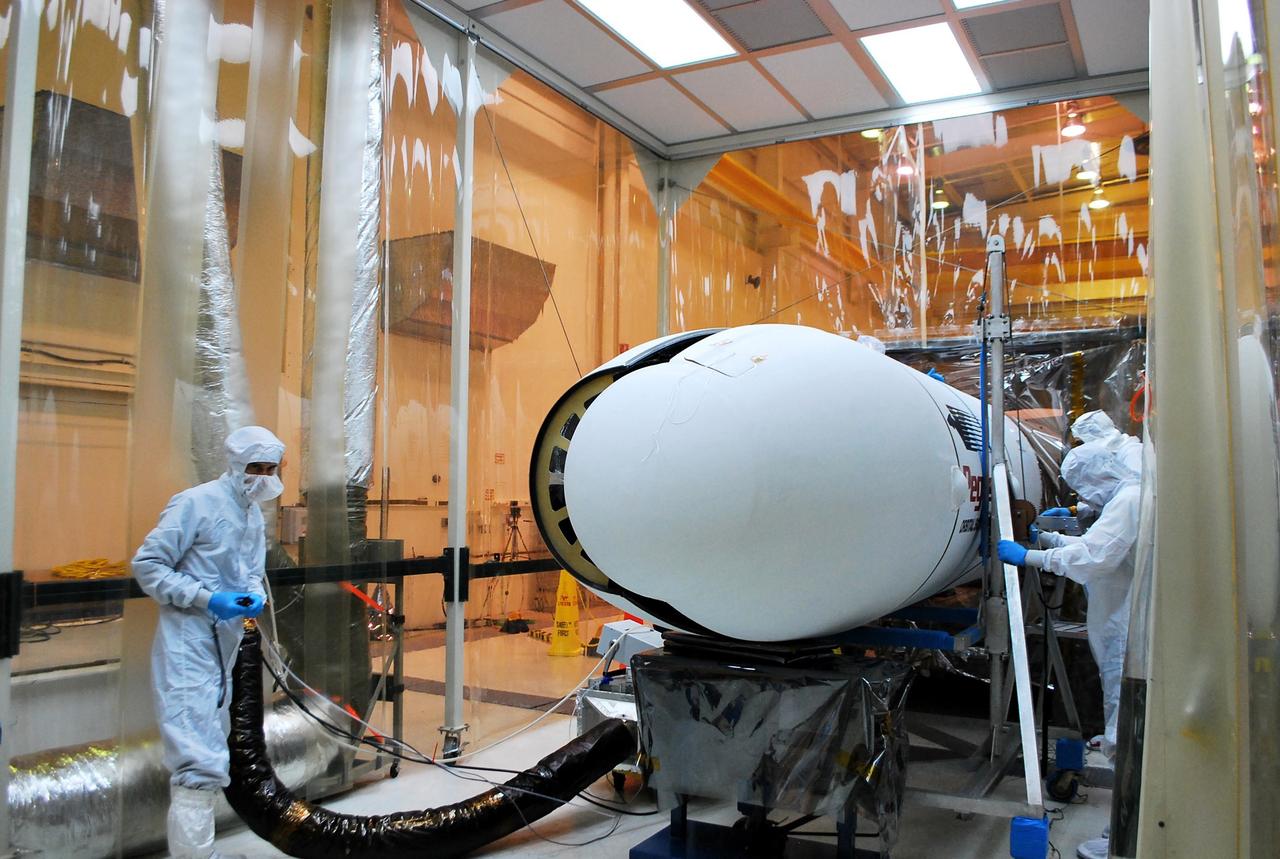
VANDENBERG AIR FORCE BASE, Calif. – Half of the Pegasus payload fairing begins to move from around NASA’s Nuclear Spectroscopic Telescope Array, or NuSTAR, in Orbital Sciences’ hangar on Vandenberg Air Force Base in California. Access to the spacecraft is needed for compatibility testing to verify communication with a tracking station in Hawaii. With the change in the launch timeframe to June, this station will be needed to support launch. After processing of Orbital’s Pegasus XL rocket and the spacecraft are complete, they will be flown on Orbital's L-1011 carrier aircraft from Vandenberg to the Ronald Reagan Ballistic Missile Defense Test Site on the Pacific Ocean’s Kwajalein Atoll for launch. The high-energy X-ray telescope will conduct a census of black holes, map radioactive material in young supernovae remnants, and study the origins of cosmic rays and the extreme physics around collapsed stars. For more information, visit http://www.nasa.gov/nustar. Photo credit: NASA/Randy Beaudoin, VAFB
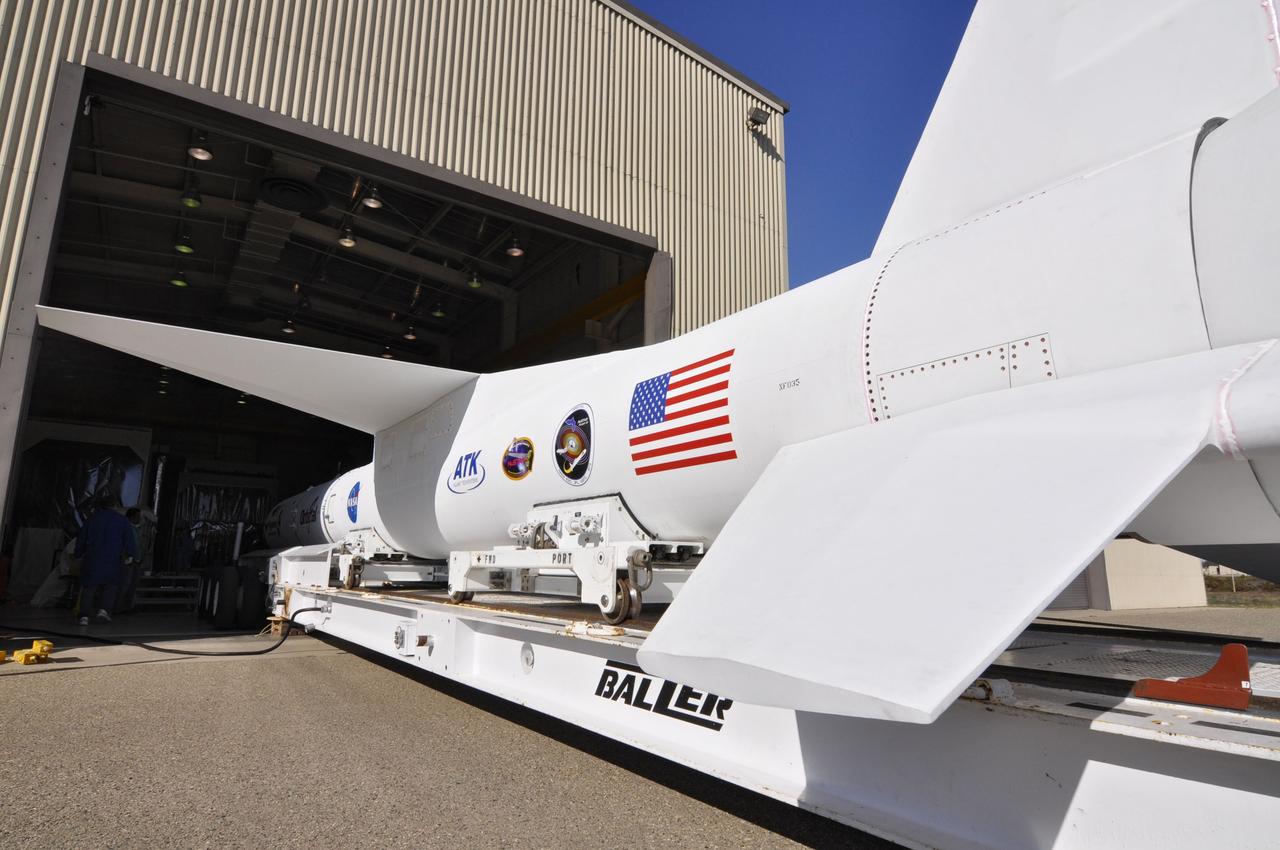
VANDENBERG AIR FORCE BASE, Calif. – The transporter for the Orbital Sciences Pegasus XL rocket rolls into the sunlight outside Orbital’s hangar at Vandenberg Air Force Base in California. The rocket is mated to NASA's Nuclear Spectroscopic Telescope Array, or NuSTAR, encapsulated in the Pegasus payload fairing. The transporter will move them to the runway ramp where they will be attached to the underside of Orbital’s L-1011 carrier aircraft. The aircraft will fly the pair from Vandenberg to the Ronald Reagan Ballistic Missile Defense Test Site on the Pacific Ocean’s Kwajalein Atoll for launch. A revised launch date will be set at the Flight Readiness Review, planned for later this week. The high-energy X-ray telescope will conduct a census of black holes, map radioactive material in young supernovae remnants, and study the origins of cosmic rays and the extreme physics around collapsed stars. For more information, visit http://www.nasa.gov/nustar. Photo credit: NASA/Randy Beaudoin, VAFB
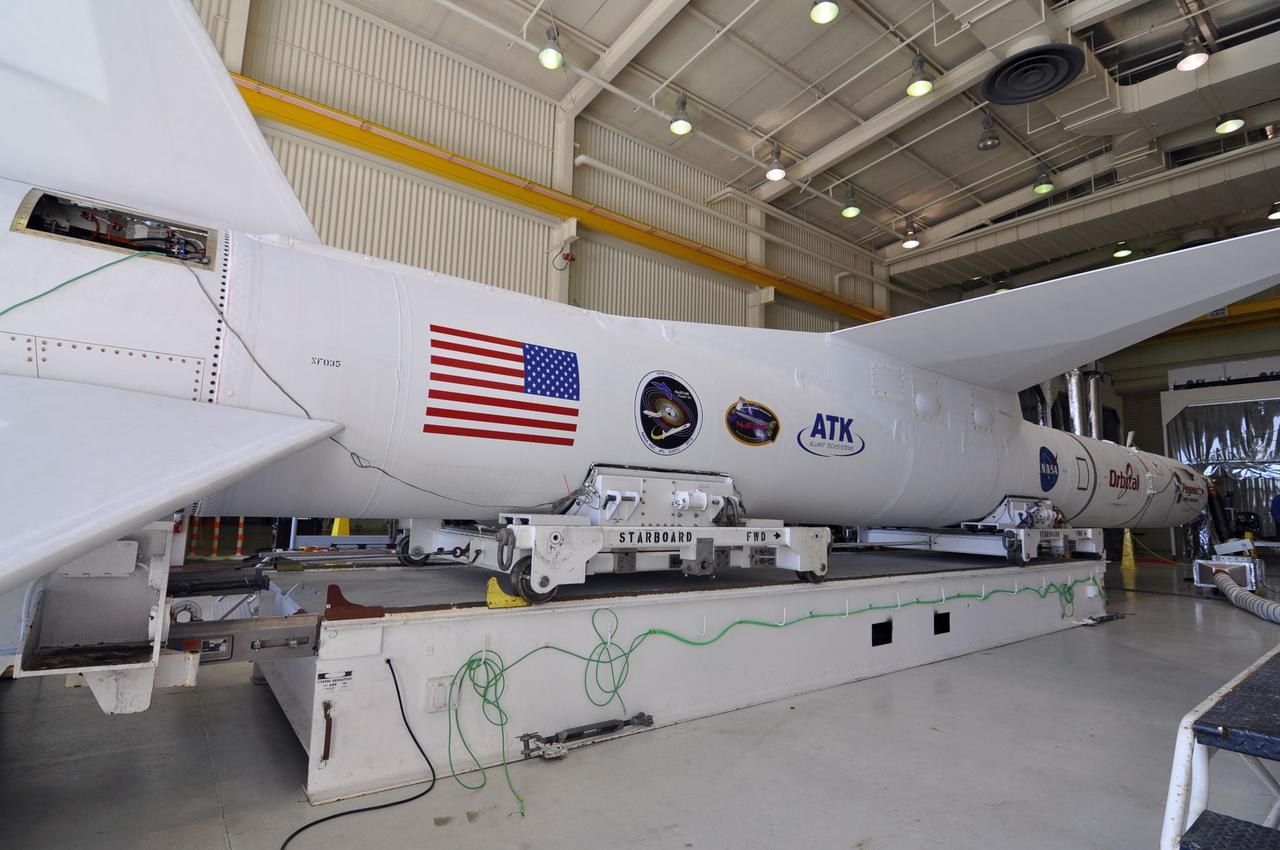
VANDENBERG AIR FORCE BASE, Calif. – An Orbital Sciences Pegasus XL rocket rests on the transporter in Orbital’s hangar at Vandenberg Air Force Base in California. The rocket has been mated to NASA's Nuclear Spectroscopic Telescope Array, or NuSTAR, encapsulated in a Pegasus payload fairing. The transporter will move them to the runway ramp where they will be attached to the underside of Orbital’s L-1011 carrier aircraft. The aircraft will fly the pair from Vandenberg to the Ronald Reagan Ballistic Missile Defense Test Site on the Pacific Ocean’s Kwajalein Atoll for launch. A revised launch date will be set at the Flight Readiness Review, planned for later this week. The high-energy X-ray telescope will conduct a census of black holes, map radioactive material in young supernovae remnants, and study the origins of cosmic rays and the extreme physics around collapsed stars. For more information, visit http://www.nasa.gov/nustar. Photo credit: NASA/Randy Beaudoin, VAFB
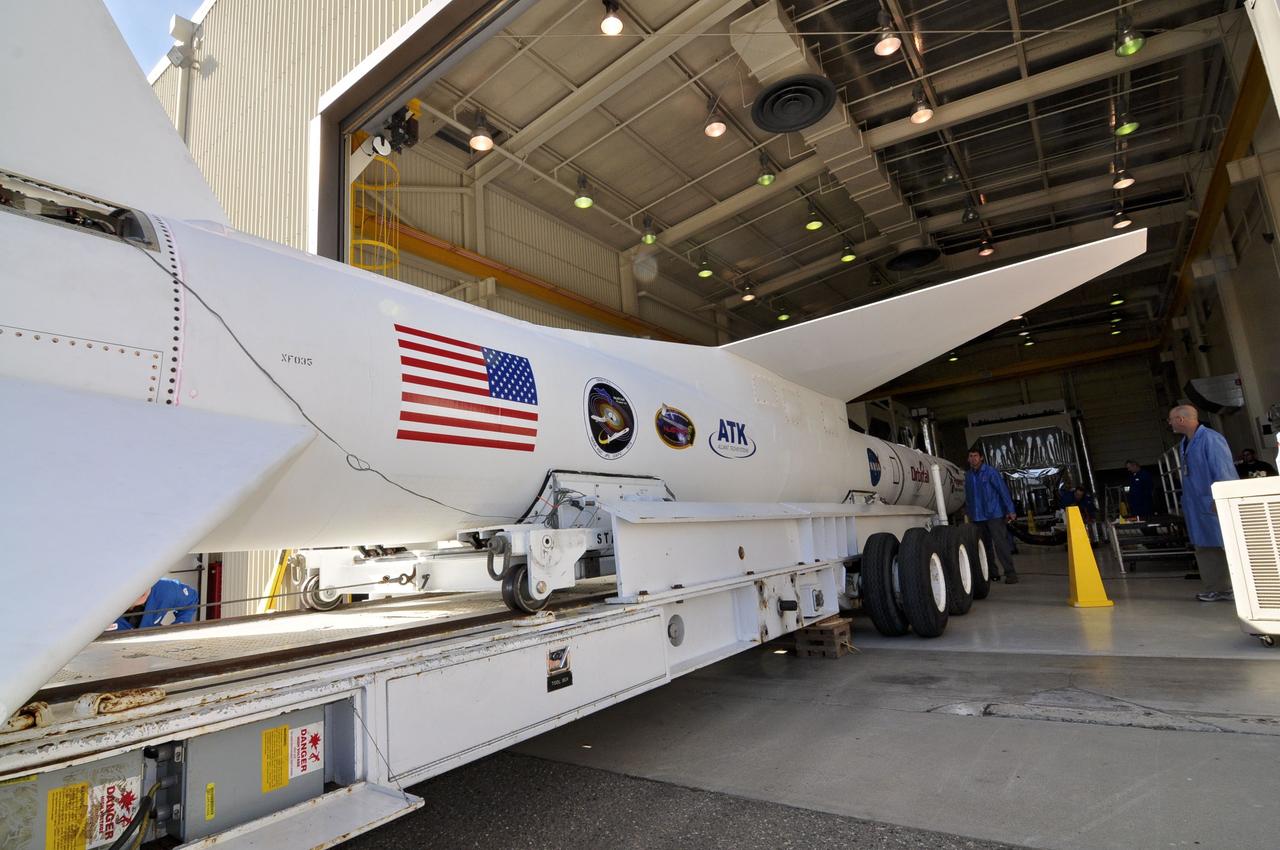
VANDENBERG AIR FORCE BASE, Calif. – The transporter for the Orbital Sciences Pegasus XL rocket moves through the open door of Orbital’s hangar at Vandenberg Air Force Base in California. The rocket is mated to NASA's Nuclear Spectroscopic Telescope Array, or NuSTAR, encapsulated in the Pegasus payload fairing. The transporter will move them to the runway ramp where they will be attached to the underside of Orbital’s L-1011 carrier aircraft. The aircraft will fly the pair from Vandenberg to the Ronald Reagan Ballistic Missile Defense Test Site on the Pacific Ocean’s Kwajalein Atoll for launch. A revised launch date will be set at the Flight Readiness Review, planned for later this week. The high-energy X-ray telescope will conduct a census of black holes, map radioactive material in young supernovae remnants, and study the origins of cosmic rays and the extreme physics around collapsed stars. For more information, visit http://www.nasa.gov/nustar. Photo credit: NASA/Randy Beaudoin, VAFB
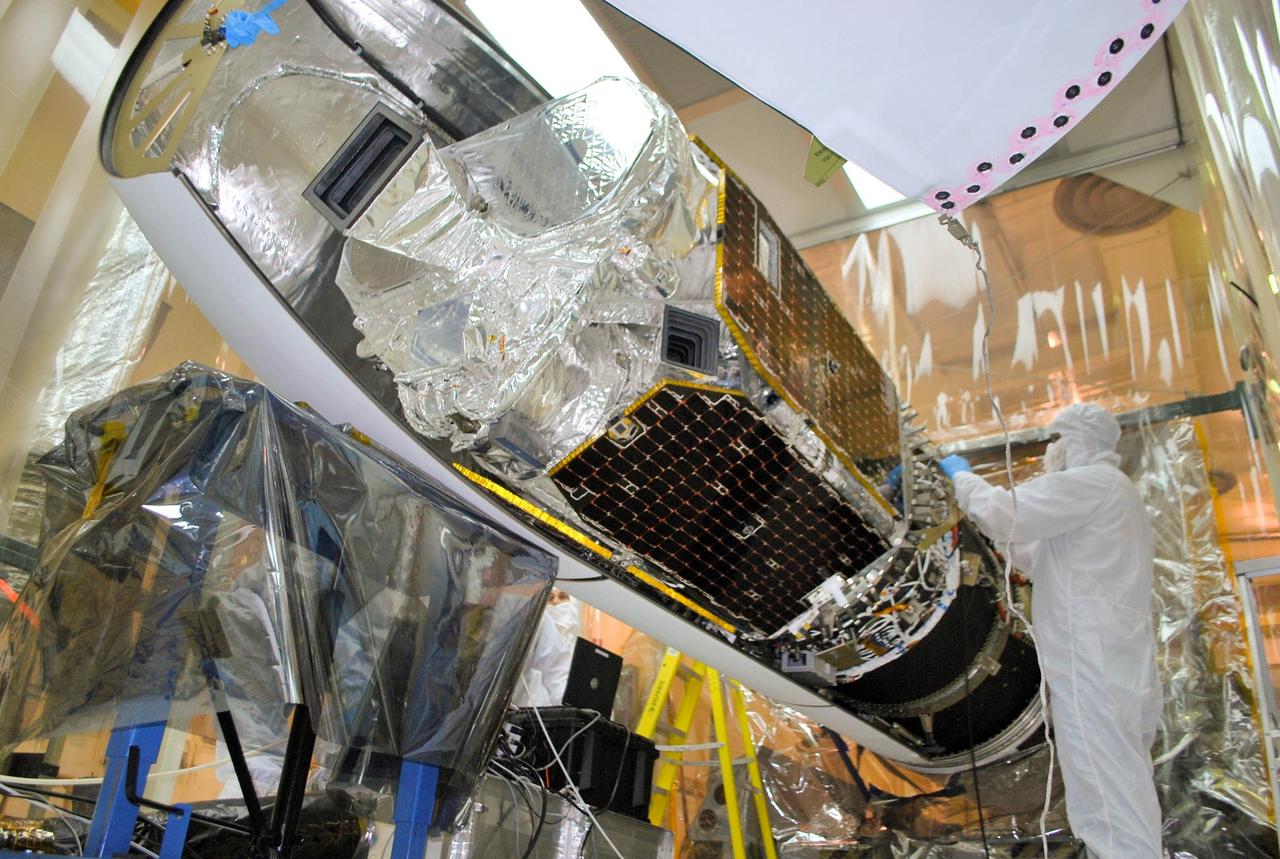
VANDENBERG AIR FORCE BASE, Calif. – NASA’s Nuclear Spectroscopic Telescope Array, or NuSTAR, is in view following the removal of half of the Pegasus payload fairing in Orbital Sciences’ hangar on Vandenberg Air Force Base in California. Access to the spacecraft is needed for compatibility testing to verify communication with a tracking station in Hawaii. With the change in the launch timeframe to June, this station will be needed to support launch. After processing of Orbital’s Pegasus XL rocket and the spacecraft are complete, they will be flown on Orbital's L-1011 carrier aircraft from Vandenberg to the Ronald Reagan Ballistic Missile Defense Test Site on the Pacific Ocean’s Kwajalein Atoll for launch. The high-energy X-ray telescope will conduct a census of black holes, map radioactive material in young supernovae remnants, and study the origins of cosmic rays and the extreme physics around collapsed stars. For more information, visit http://www.nasa.gov/nustar. Photo credit: NASA/Randy Beaudoin, VAFB

VANDENBERG AIR FORCE BASE, Calif. – Orbital Sciences’ spacecraft technicians guide half of the Pegasus payload fairing away from NASA’s Nuclear Spectroscopic Telescope Array, or NuSTAR, in Orbital’s hangar on Vandenberg Air Force Base in California. Access to the spacecraft is needed for compatibility testing to verify communication with a tracking station in Hawaii. With the change in the launch timeframe to June, this station will be needed to support launch. After processing of Orbital’s Pegasus XL rocket and the spacecraft are complete, they will be flown on Orbital's L-1011 carrier aircraft from Vandenberg to the Ronald Reagan Ballistic Missile Defense Test Site on the Pacific Ocean’s Kwajalein Atoll for launch. The high-energy X-ray telescope will conduct a census of black holes, map radioactive material in young supernovae remnants, and study the origins of cosmic rays and the extreme physics around collapsed stars. For more information, visit http://www.nasa.gov/nustar. Photo credit: NASA/Randy Beaudoin, VAFB
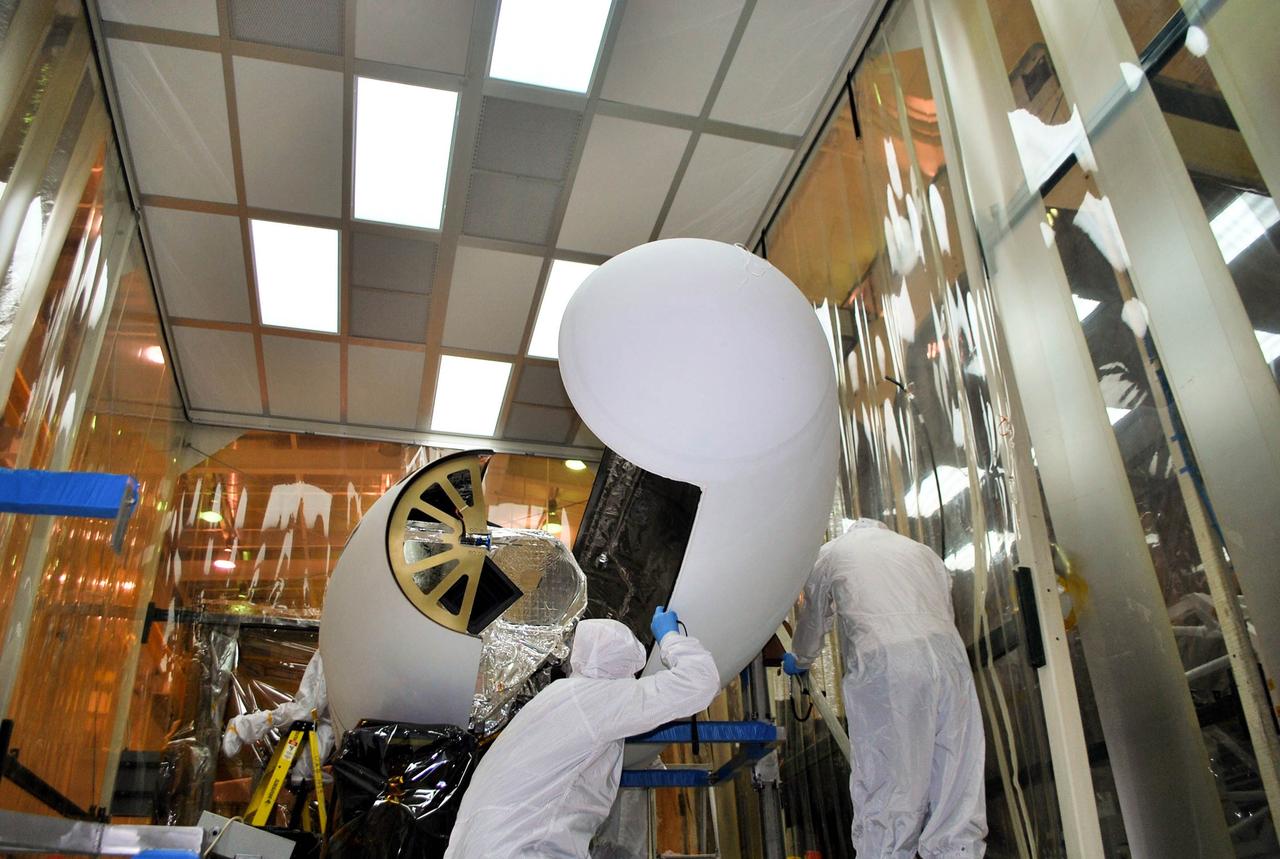
VANDENBERG AIR FORCE BASE, Calif. – Orbital Sciences’ spacecraft technicians guide half of the Pegasus payload fairing away from NASA’s Nuclear Spectroscopic Telescope Array, or NuSTAR, in Orbital’s hangar on Vandenberg Air Force Base in California. Access to the spacecraft is needed for compatibility testing to verify communication with a tracking station in Hawaii. With the change in the launch timeframe to June, this station will be needed to support launch. After processing of Orbital’s Pegasus XL rocket and the spacecraft are complete, they will be flown on Orbital's L-1011 carrier aircraft from Vandenberg to the Ronald Reagan Ballistic Missile Defense Test Site on the Pacific Ocean’s Kwajalein Atoll for launch. The high-energy X-ray telescope will conduct a census of black holes, map radioactive material in young supernovae remnants, and study the origins of cosmic rays and the extreme physics around collapsed stars. For more information, visit http://www.nasa.gov/nustar. Photo credit: NASA/Randy Beaudoin, VAFB
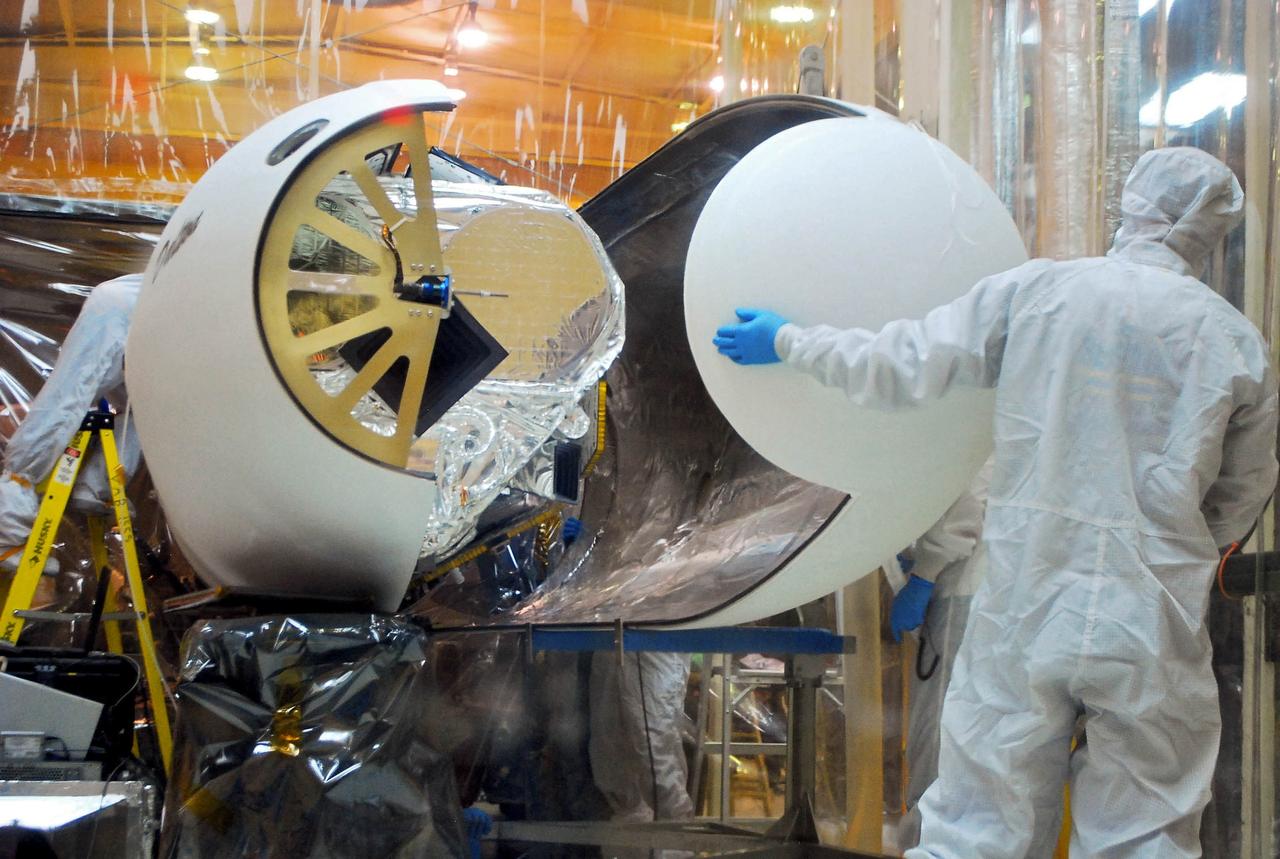
VANDENBERG AIR FORCE BASE, Calif. – An Orbital Sciences’ spacecraft technician monitors the Pegasus payload fairing as it is rotated from around NASA’s Nuclear Spectroscopic Telescope Array, or NuSTAR, in Orbital’s hangar on Vandenberg Air Force Base in California. Access to the spacecraft is needed for compatibility testing to verify communication with a tracking station in Hawaii. With the change in the launch timeframe to June, this station will be needed to support launch. After processing of Orbital’s Pegasus XL rocket and the spacecraft are complete, they will be flown on Orbital's L-1011 carrier aircraft from Vandenberg to the Ronald Reagan Ballistic Missile Defense Test Site on the Pacific Ocean’s Kwajalein Atoll for launch. The high-energy X-ray telescope will conduct a census of black holes, map radioactive material in young supernovae remnants, and study the origins of cosmic rays and the extreme physics around collapsed stars. For more information, visit http://www.nasa.gov/nustar. Photo credit: NASA/Randy Beaudoin, VAFB
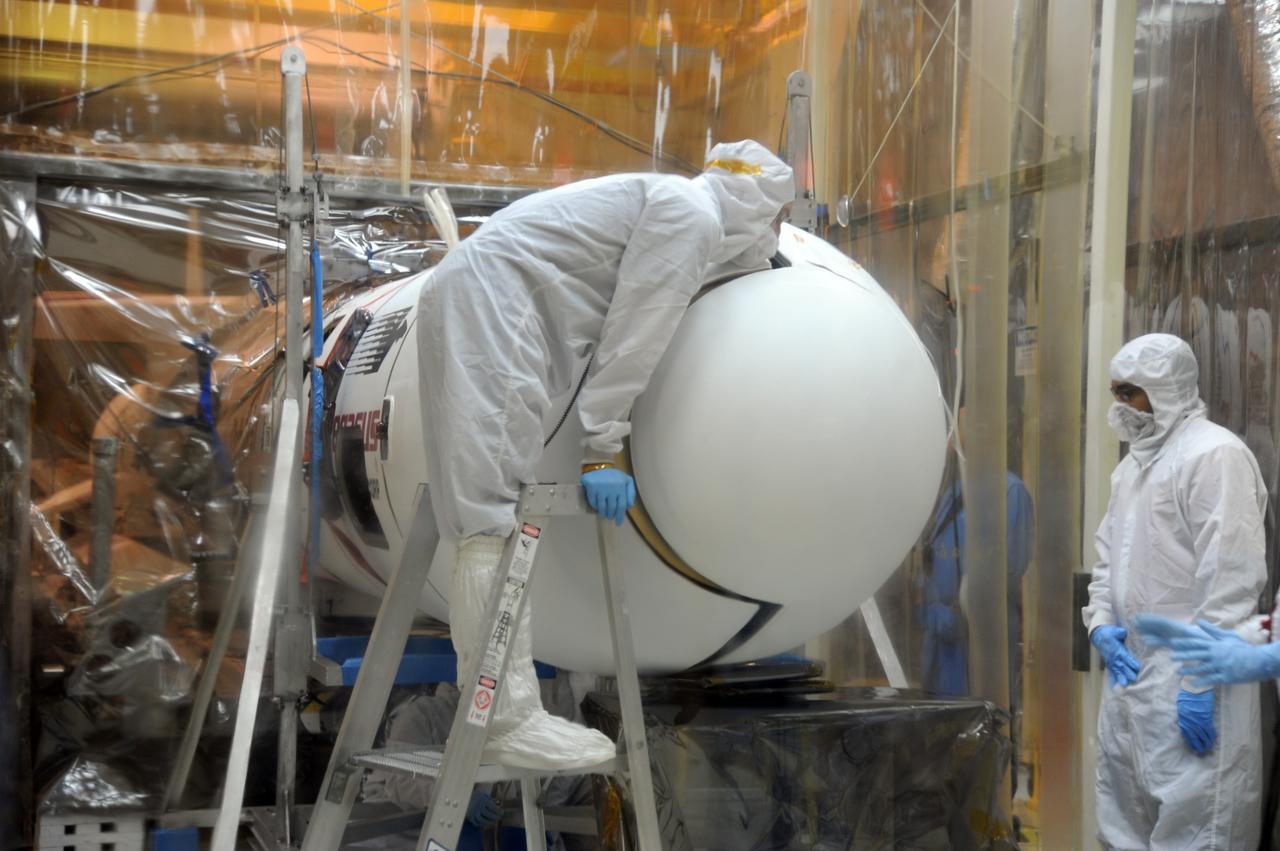
VANDENBERG AIR FORCE BASE, Calif. – In Orbital Sciences’ hangar on Vandenberg Air Force Base in California, a technician secures the Pegasus fairing around NASA’s Nuclear Spectroscopic Telescope Array, or NuSTAR. Access to the spacecraft was needed for compatibility testing to verify communication with a tracking station in Hawaii. With the change in the launch timeframe to June, this station will be needed to support launch. After processing of Orbital’s Pegasus XL rocket and the spacecraft is complete, they will be flown on Orbital's L-1011 carrier aircraft from Vandenberg, to the U.S. Army's Ronald Reagan Ballistic Missile Defense Test Site on Kwajalein Atoll, part of the Marshall Islands in the Pacific Ocean. The Pegasus, mated to its NuSTAR payload, will be launched from the carrier aircraft 117 nautical miles south of Kwajalein at latitude 6.75 degrees north of the equator. The high-energy X-ray telescope will conduct a census of black holes, map radioactive material in young supernovae remnants, and study the origins of cosmic rays and the extreme physics around collapsed stars. Launch is scheduled for June 13. For more information, visit http://www.nasa.gov/nustar. Photo credit: U.S. Air Force 30th Space Wing/Aaron Taubman, VAFB
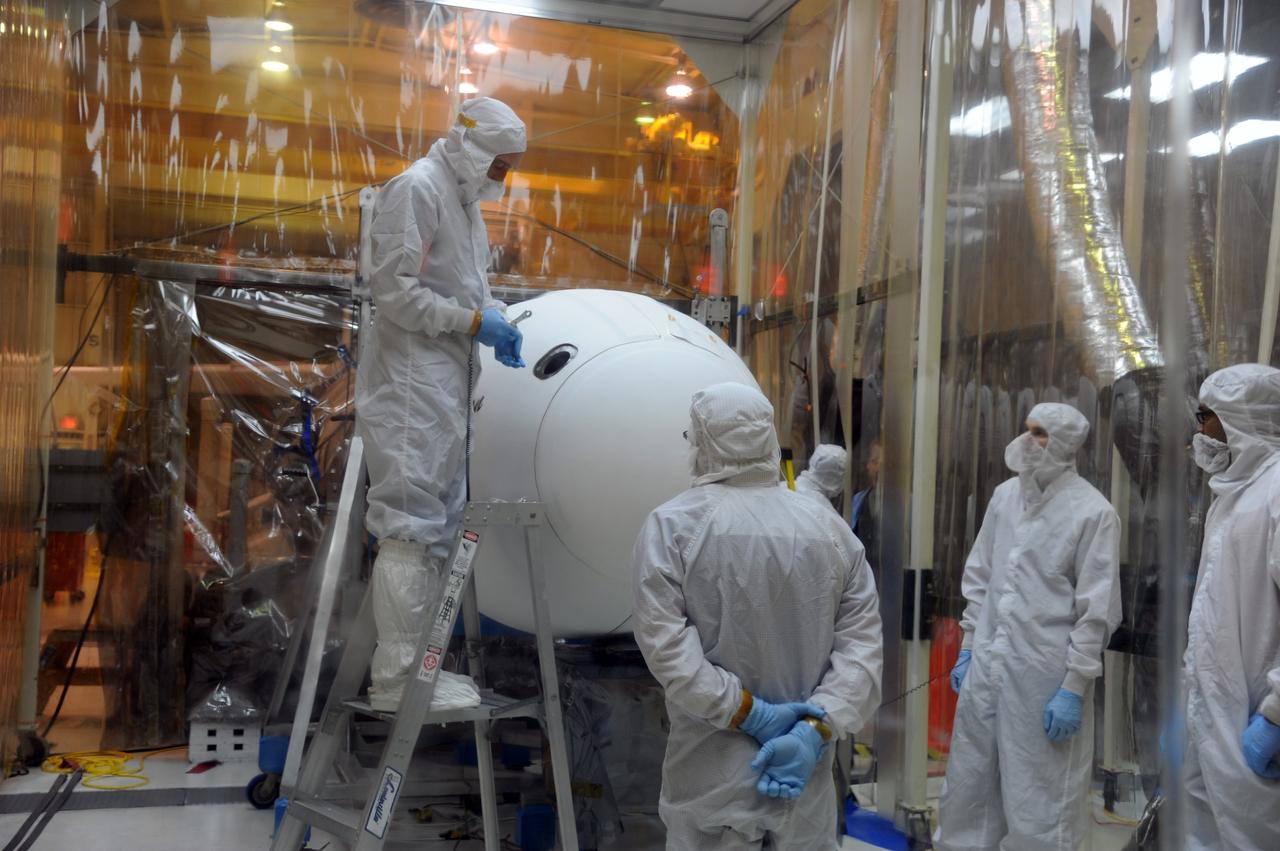
VANDENBERG AIR FORCE BASE, Calif. – In Orbital Sciences’ hangar on Vandenberg Air Force Base in California, the Pegasus fairing has been secured around NASA’s Nuclear Spectroscopic Telescope Array, or NuSTAR. Access to the spacecraft was needed for compatibility testing to verify communication with a tracking station in Hawaii. With the change in the launch timeframe to June, this station will be needed to support launch. After processing of Orbital’s Pegasus XL rocket and the spacecraft is complete, they will be flown on Orbital's L-1011 carrier aircraft from Vandenberg, to the U.S. Army's Ronald Reagan Ballistic Missile Defense Test Site on Kwajalein Atoll, part of the Marshall Islands in the Pacific Ocean. The Pegasus, mated to its NuSTAR payload, will be launched from the carrier aircraft 117 nautical miles south of Kwajalein at latitude 6.75 degrees north of the equator. The high-energy X-ray telescope will conduct a census of black holes, map radioactive material in young supernovae remnants, and study the origins of cosmic rays and the extreme physics around collapsed stars. Launch is scheduled for June 13. For more information, visit http://www.nasa.gov/nustar. Photo credit: U.S. Air Force 30th Space Wing/Aaron Taubman, VAFB
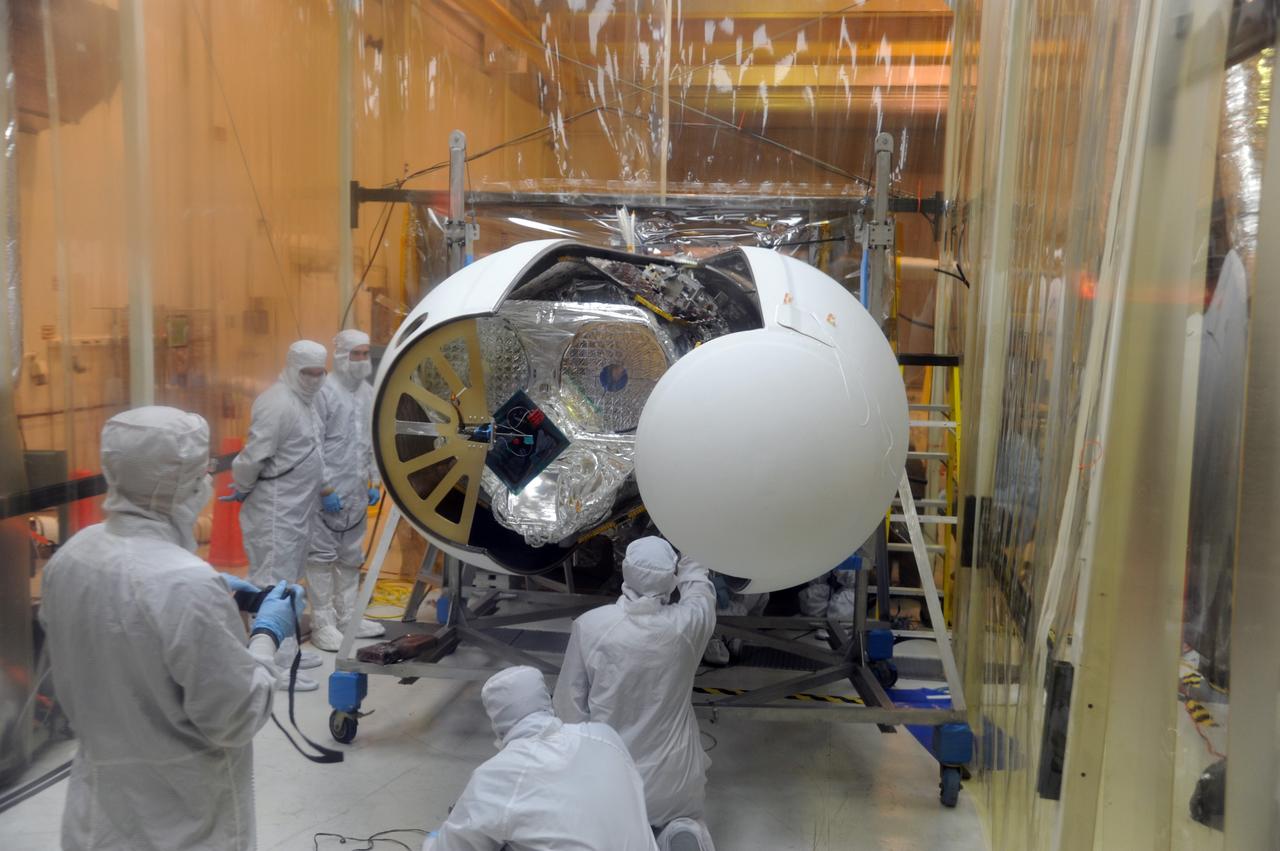
VANDENBERG AIR FORCE BASE, Calif. – In Orbital Sciences’ hangar on Vandenberg Air Force Base in California, technicians align half of the Pegasus fairing before it is reinstalled around NASA’s Nuclear Spectroscopic Telescope Array, or NuSTAR. Access to the spacecraft was needed for compatibility testing to verify communication with a tracking station in Hawaii. With the change in the launch timeframe to June, this station will be needed to support launch. After processing of Orbital’s Pegasus XL rocket and the spacecraft is complete, they will be flown on Orbital's L-1011 carrier aircraft from Vandenberg, to the U.S. Army's Ronald Reagan Ballistic Missile Defense Test Site on Kwajalein Atoll, part of the Marshall Islands in the Pacific Ocean. The Pegasus, mated to its NuSTAR payload, will be launched from the carrier aircraft 117 nautical miles south of Kwajalein at latitude 6.75 degrees north of the equator. The high-energy X-ray telescope will conduct a census of black holes, map radioactive material in young supernovae remnants, and study the origins of cosmic rays and the extreme physics around collapsed stars. Launch is scheduled for June 13. For more information, visit http://www.nasa.gov/nustar. Photo credit: U.S. Air Force 30th Space Wing/Aaron Taubman, VAFB
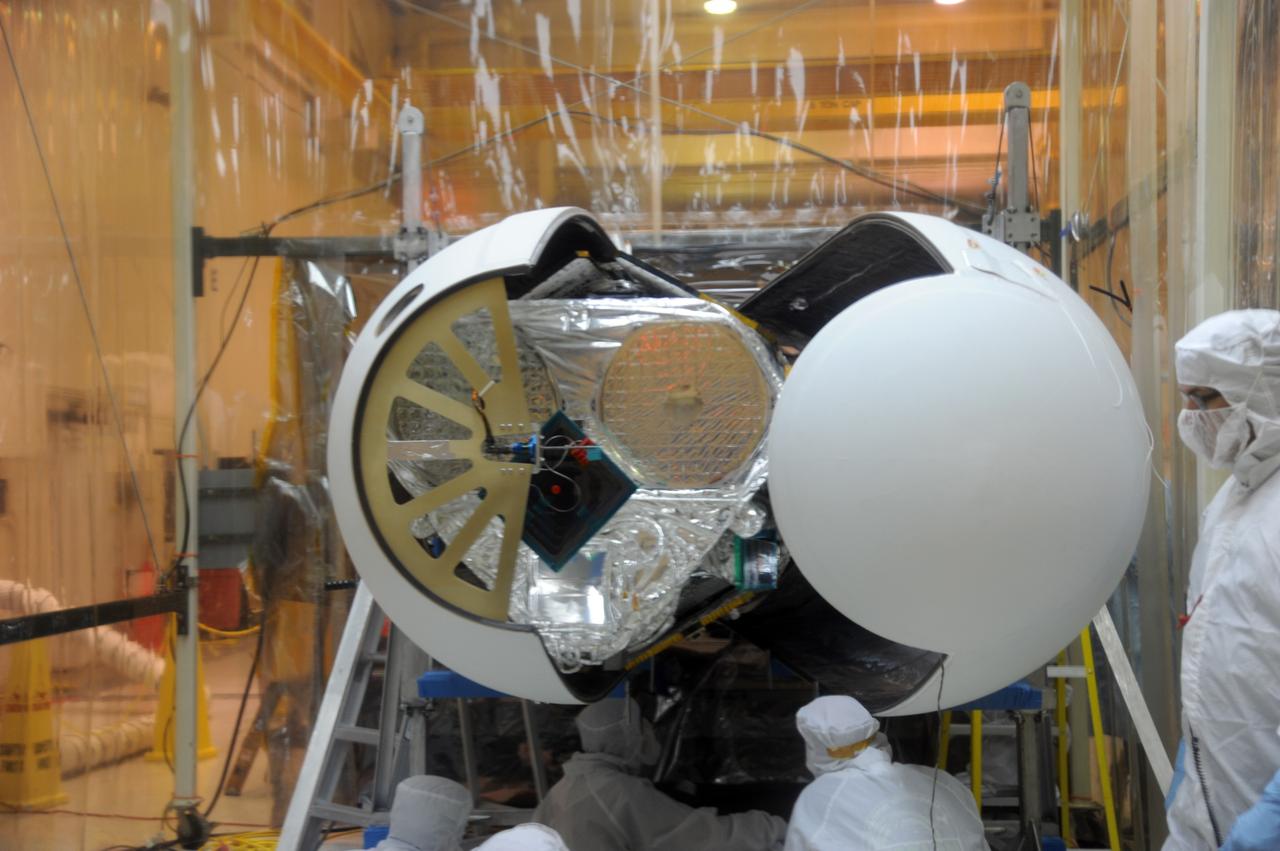
VANDENBERG AIR FORCE BASE, Calif. – In Orbital Sciences’ hangar on Vandenberg Air Force Base in California, half of the Pegasus fairing has been reinstalled around NASA’s Nuclear Spectroscopic Telescope Array, or NuSTAR, as technicians align the other half. Access to the spacecraft was needed for compatibility testing to verify communication with a tracking station in Hawaii. With the change in the launch timeframe to June, this station will be needed to support launch. After processing of Orbital’s Pegasus XL rocket and the spacecraft is complete, they will be flown on Orbital's L-1011 carrier aircraft from Vandenberg, to the U.S. Army's Ronald Reagan Ballistic Missile Defense Test Site on Kwajalein Atoll, part of the Marshall Islands in the Pacific Ocean. The Pegasus, mated to its NuSTAR payload, will be launched from the carrier aircraft 117 nautical miles south of Kwajalein at latitude 6.75 degrees north of the equator. The high-energy X-ray telescope will conduct a census of black holes, map radioactive material in young supernovae remnants, and study the origins of cosmic rays and the extreme physics around collapsed stars. Launch is scheduled for June 13. For more information, visit http://www.nasa.gov/nustar. Photo credit: U.S. Air Force 30th Space Wing/Aaron Taubman, VAFB
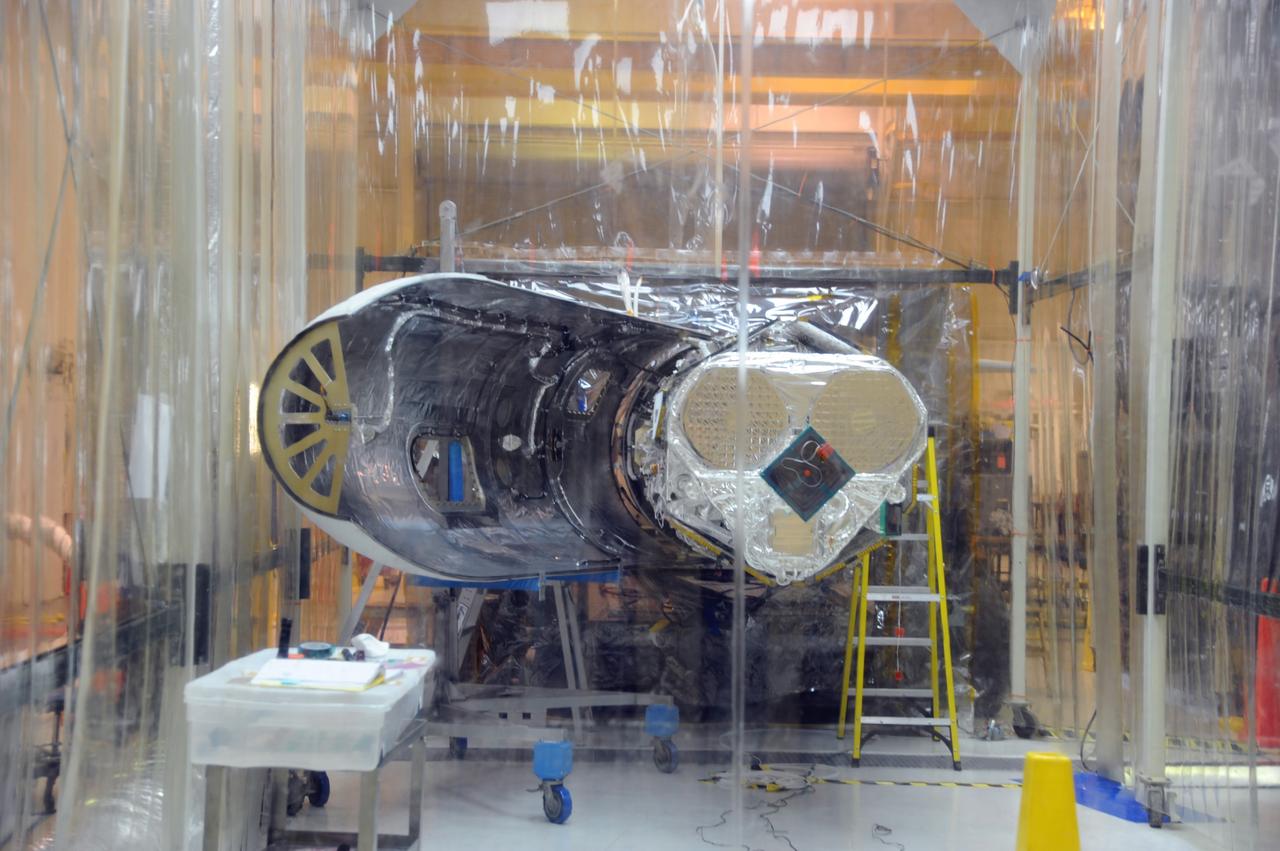
VANDENBERG AIR FORCE BASE, Calif. – Preparations are under way in Orbital Sciences’ hangar on Vandenberg Air Force Base in California to reinstall the Pegasus fairing around NASA’s Nuclear Spectroscopic Telescope Array, or NuSTAR. Access to the spacecraft was needed for compatibility testing to verify communication with a tracking station in Hawaii. With the change in the launch timeframe to June, this station will be needed to support launch. After processing of Orbital’s Pegasus XL rocket and the spacecraft is complete, they will be flown on Orbital's L-1011 carrier aircraft from Vandenberg, to the U.S. Army's Ronald Reagan Ballistic Missile Defense Test Site on Kwajalein Atoll, part of the Marshall Islands in the Pacific Ocean. The Pegasus, mated to its NuSTAR payload, will be launched from the carrier aircraft 117 nautical miles south of Kwajalein at latitude 6.75 degrees north of the equator. The high-energy X-ray telescope will conduct a census of black holes, map radioactive material in young supernovae remnants, and study the origins of cosmic rays and the extreme physics around collapsed stars. Launch is scheduled for June 13. For more information, visit http://www.nasa.gov/nustar. Photo credit: U.S. Air Force 30th Space Wing/Aaron Taubman, VAFB
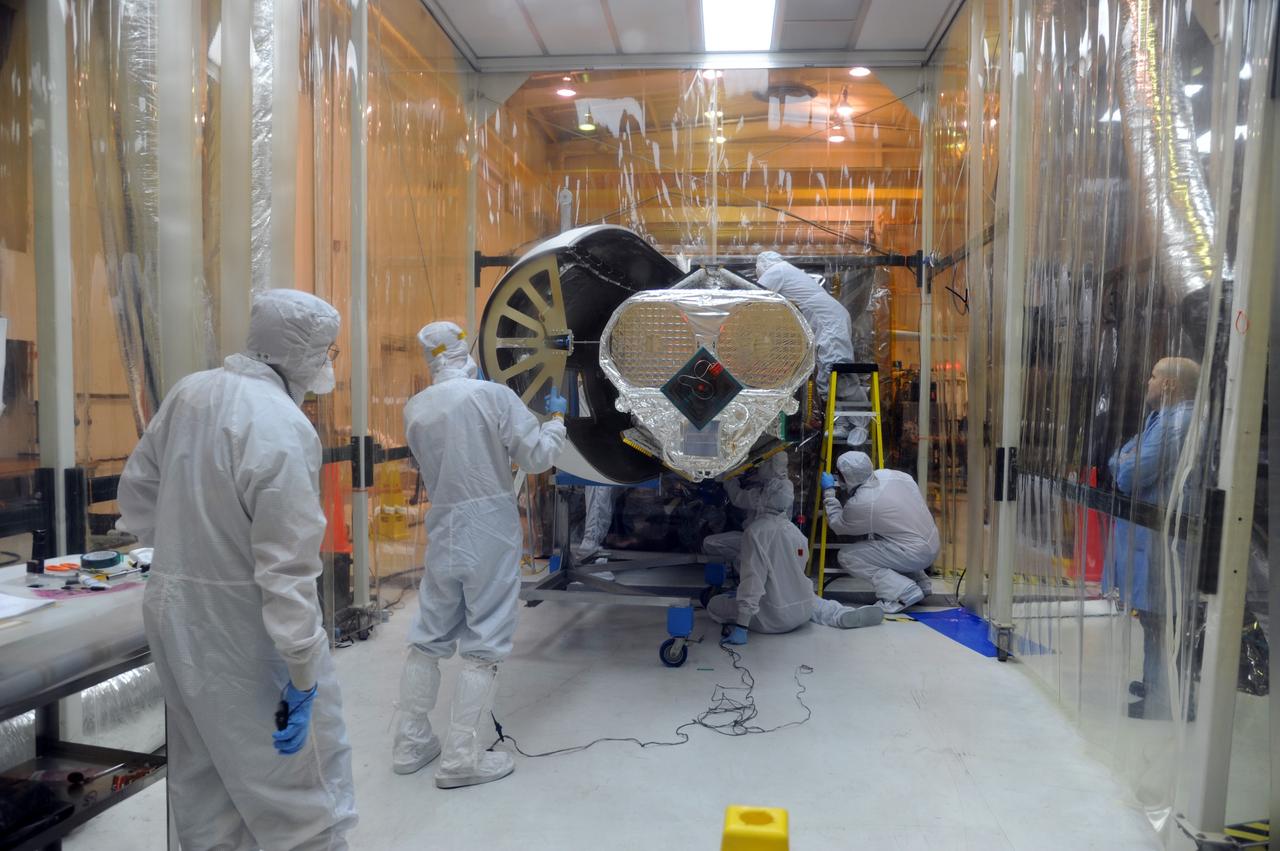
VANDENBERG AIR FORCE BASE, Calif. – In Orbital Sciences’ hangar on Vandenberg Air Force Base in California, technicians reinstall half of the Pegasus fairing around NASA’s Nuclear Spectroscopic Telescope Array, or NuSTAR, protected in an environmental enclosure. Access to the spacecraft was needed for compatibility testing to verify communication with a tracking station in Hawaii. With the change in the launch timeframe to June, this station will be needed to support launch. After processing of Orbital’s Pegasus XL rocket and the spacecraft is complete, they will be flown on Orbital's L-1011 carrier aircraft from Vandenberg, to the U.S. Army's Ronald Reagan Ballistic Missile Defense Test Site on Kwajalein Atoll, part of the Marshall Islands in the Pacific Ocean. The Pegasus, mated to its NuSTAR payload, will be launched from the carrier aircraft 117 nautical miles south of Kwajalein at latitude 6.75 degrees north of the equator. The high-energy X-ray telescope will conduct a census of black holes, map radioactive material in young supernovae remnants, and study the origins of cosmic rays and the extreme physics around collapsed stars. Launch is scheduled for June 13. For more information, visit http://www.nasa.gov/nustar. Photo credit: U.S. Air Force 30th Space Wing/Aaron Taubman, VAFB

VANDENBERG AIR FORCE BASE, Calif. – Preparations are under way in Orbital Sciences’ hangar on Vandenberg Air Force Base in California to reinstall the Pegasus fairing around NASA’s Nuclear Spectroscopic Telescope Array, or NuSTAR. Access to the spacecraft was needed for compatibility testing to verify communication with a tracking station in Hawaii. With the change in the launch timeframe to June, this station will be needed to support launch. After processing of Orbital’s Pegasus XL rocket and the spacecraft is complete, they will be flown on Orbital's L-1011 carrier aircraft from Vandenberg, to the U.S. Army's Ronald Reagan Ballistic Missile Defense Test Site on Kwajalein Atoll, part of the Marshall Islands in the Pacific Ocean. The Pegasus, mated to its NuSTAR payload, will be launched from the carrier aircraft 117 nautical miles south of Kwajalein at latitude 6.75 degrees north of the equator. The high-energy X-ray telescope will conduct a census of black holes, map radioactive material in young supernovae remnants, and study the origins of cosmic rays and the extreme physics around collapsed stars. Launch is scheduled for June 13. For more information, visit http://www.nasa.gov/nustar. Photo credit: U.S. Air Force 30th Space Wing/Aaron Taubman, VAFB
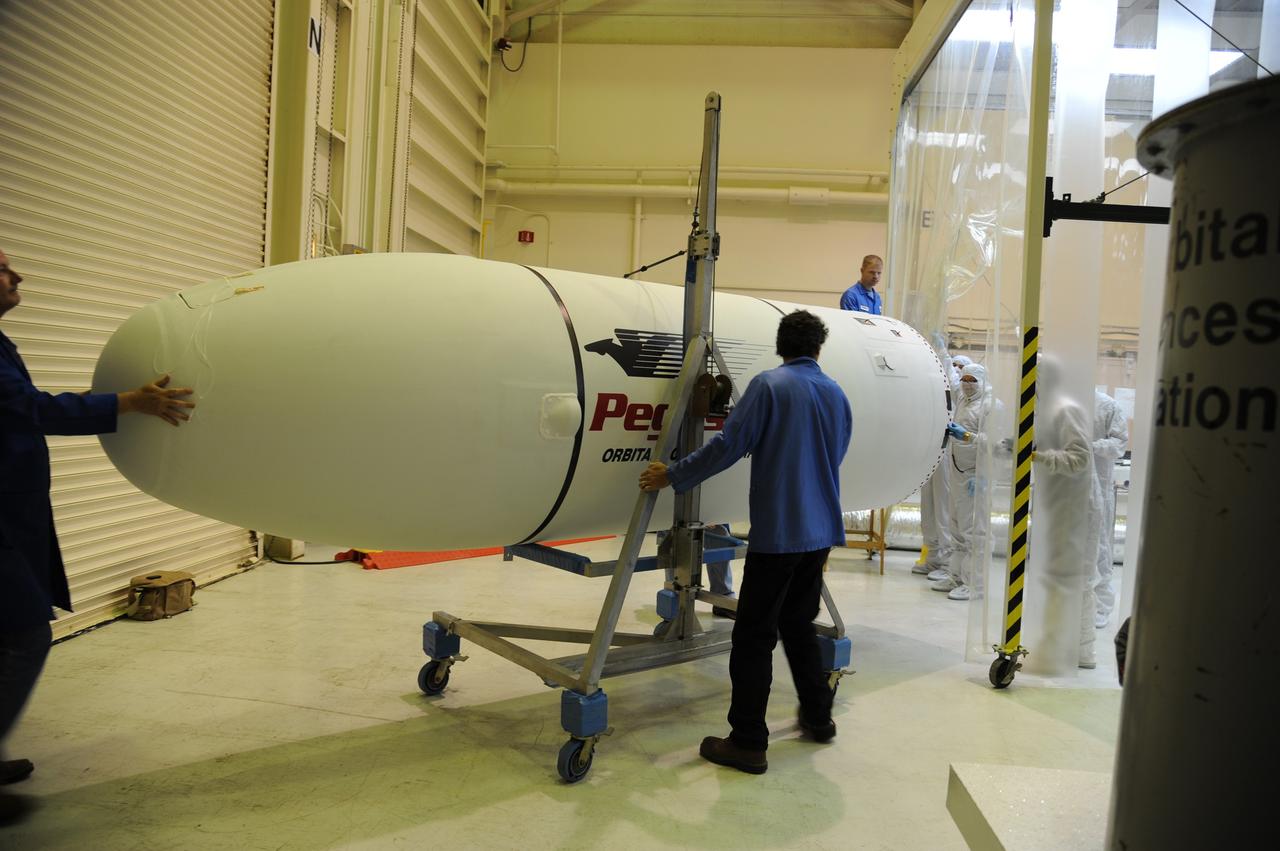
VANDENBERG AIR FORCE BASE, Calif. – In Orbital Sciences’ hangar on Vandenberg Air Force Base in California, technicians roll the second half of the Pegasus fairing into an environmental enclosure for reinstallation around NASA’s Nuclear Spectroscopic Telescope Array, or NuSTAR. Access to the spacecraft was needed for compatibility testing to verify communication with a tracking station in Hawaii. With the change in the launch timeframe to June, this station will be needed to support launch. After processing of Orbital’s Pegasus XL rocket and the spacecraft is complete, they will be flown on Orbital's L-1011 carrier aircraft from Vandenberg, to the U.S. Army's Ronald Reagan Ballistic Missile Defense Test Site on Kwajalein Atoll, part of the Marshall Islands in the Pacific Ocean. The Pegasus, mated to its NuSTAR payload, will be launched from the carrier aircraft 117 nautical miles south of Kwajalein at latitude 6.75 degrees north of the equator. The high-energy X-ray telescope will conduct a census of black holes, map radioactive material in young supernovae remnants, and study the origins of cosmic rays and the extreme physics around collapsed stars. Launch is scheduled for June 13. For more information, visit http://www.nasa.gov/nustar. Photo credit: U.S. Air Force 30th Space Wing/Aaron Taubman, VAFB
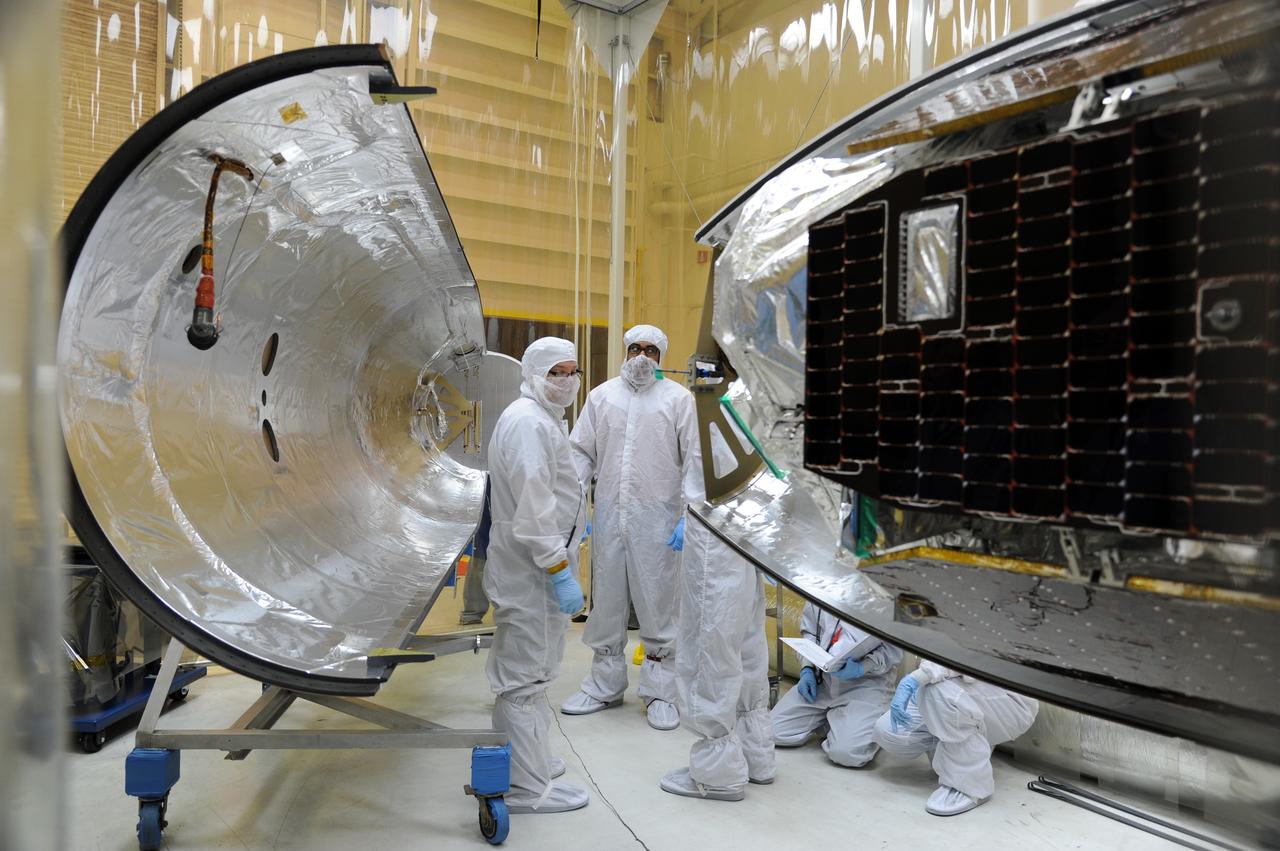
VANDENBERG AIR FORCE BASE, Calif. – In Orbital Sciences’ hangar on Vandenberg Air Force Base in California, technicians have reinstalled half of the Pegasus fairing around NASA’s Nuclear Spectroscopic Telescope Array, or NuSTAR, and prepare to reinstall the other half. Access to the spacecraft was needed for compatibility testing to verify communication with a tracking station in Hawaii. With the change in the launch timeframe to June, this station will be needed to support launch. After processing of Orbital’s Pegasus XL rocket and the spacecraft is complete, they will be flown on Orbital's L-1011 carrier aircraft from Vandenberg, to the U.S. Army's Ronald Reagan Ballistic Missile Defense Test Site on Kwajalein Atoll, part of the Marshall Islands in the Pacific Ocean. The Pegasus, mated to its NuSTAR payload, will be launched from the carrier aircraft 117 nautical miles south of Kwajalein at latitude 6.75 degrees north of the equator. The high-energy X-ray telescope will conduct a census of black holes, map radioactive material in young supernovae remnants, and study the origins of cosmic rays and the extreme physics around collapsed stars. Launch is scheduled for June 13. For more information, visit http://www.nasa.gov/nustar. Photo credit: U.S. Air Force 30th Space Wing/Aaron Taubman, VAFB
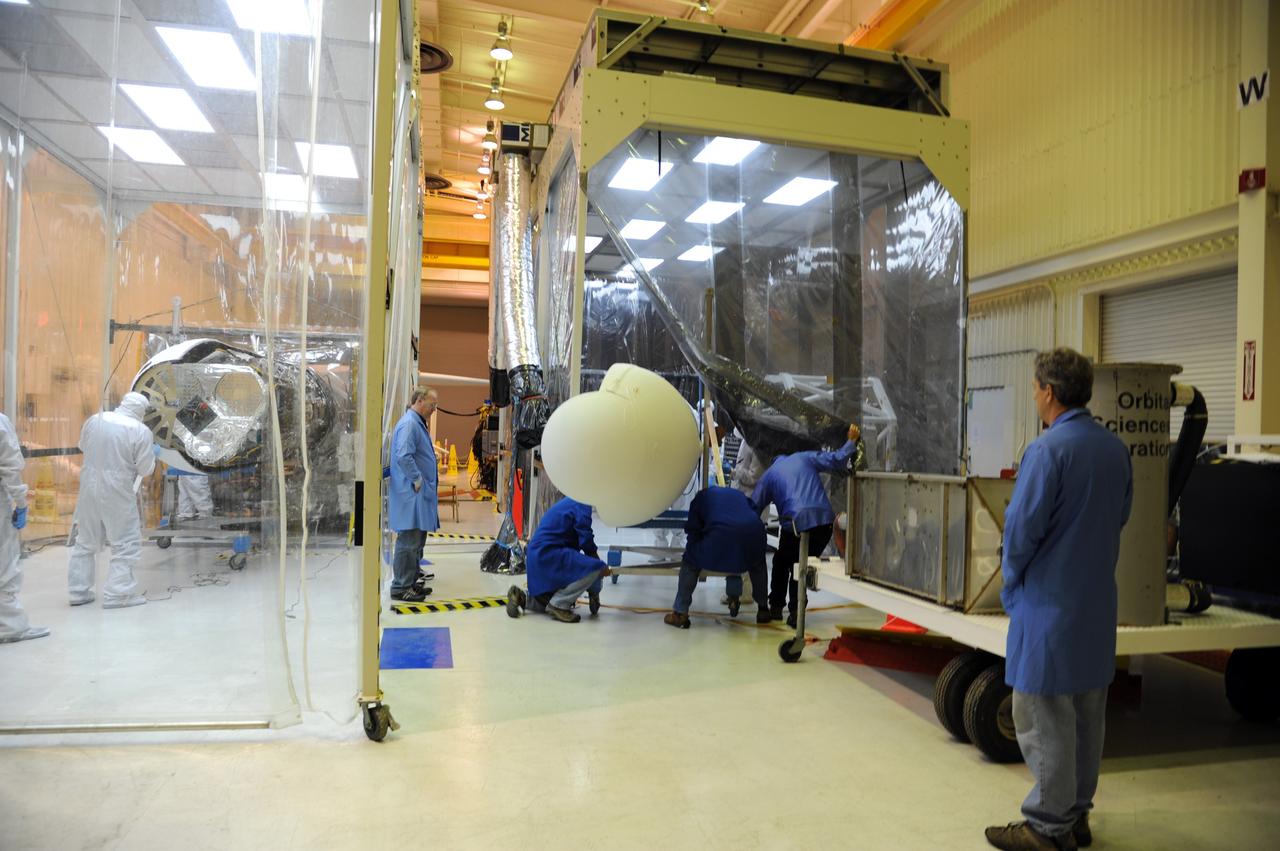
VANDENBERG AIR FORCE BASE, Calif. – In Orbital Sciences’ hangar on Vandenberg Air Force Base in California, technicians prepare to roll the second half of the Pegasus fairing into in an environmental enclosure for reinstallation around NASA’s Nuclear Spectroscopic Telescope Array, or NuSTAR. Access to the spacecraft was needed for compatibility testing to verify communication with a tracking station in Hawaii. With the change in the launch timeframe to June, this station will be needed to support launch. After processing of Orbital’s Pegasus XL rocket and the spacecraft is complete, they will be flown on Orbital's L-1011 carrier aircraft from Vandenberg, to the U.S. Army's Ronald Reagan Ballistic Missile Defense Test Site on Kwajalein Atoll, part of the Marshall Islands in the Pacific Ocean. The Pegasus, mated to its NuSTAR payload, will be launched from the carrier aircraft 117 nautical miles south of Kwajalein at latitude 6.75 degrees north of the equator. The high-energy X-ray telescope will conduct a census of black holes, map radioactive material in young supernovae remnants, and study the origins of cosmic rays and the extreme physics around collapsed stars. Launch is scheduled for June 13. For more information, visit http://www.nasa.gov/nustar. Photo credit: U.S. Air Force 30th Space Wing/Aaron Taubman, VAFB
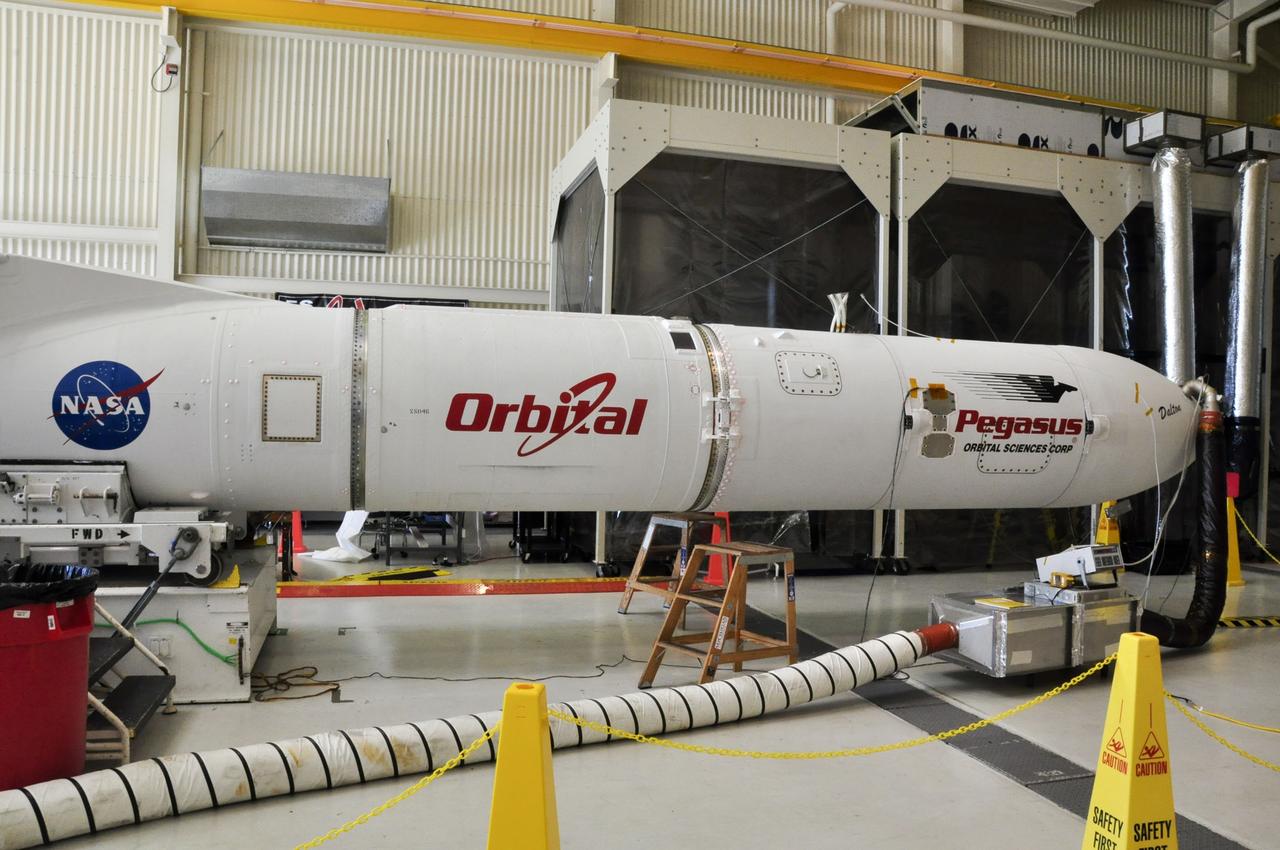
VANDENBERG AIR FORCE BASE, Calif. – Operations begin to transfer an Orbital Sciences Pegasus XL rocket onto the transporter in Orbital’s hangar at Vandenberg Air Force Base in California. The rocket has been mated to NASA's Nuclear Spectroscopic Telescope Array, or NuSTAR, encapsulated in the Pegasus payload fairing. Cool, dry air is being pumped into the fairing through a purge line to maintain the proper environment for the spacecraft in the confined space. The transporter will move them to the runway ramp where they will be attached to the underside of Orbital’s L-1011 carrier aircraft. The aircraft will fly the pair from Vandenberg to the Ronald Reagan Ballistic Missile Defense Test Site on the Pacific Ocean’s Kwajalein Atoll for launch. A revised launch date will be set at the Flight Readiness Review, planned for later this week. The high-energy X-ray telescope will conduct a census of black holes, map radioactive material in young supernovae remnants, and study the origins of cosmic rays and the extreme physics around collapsed stars. For more information, visit http://www.nasa.gov/nustar. Photo credit: NASA/Randy Beaudoin, VAFB
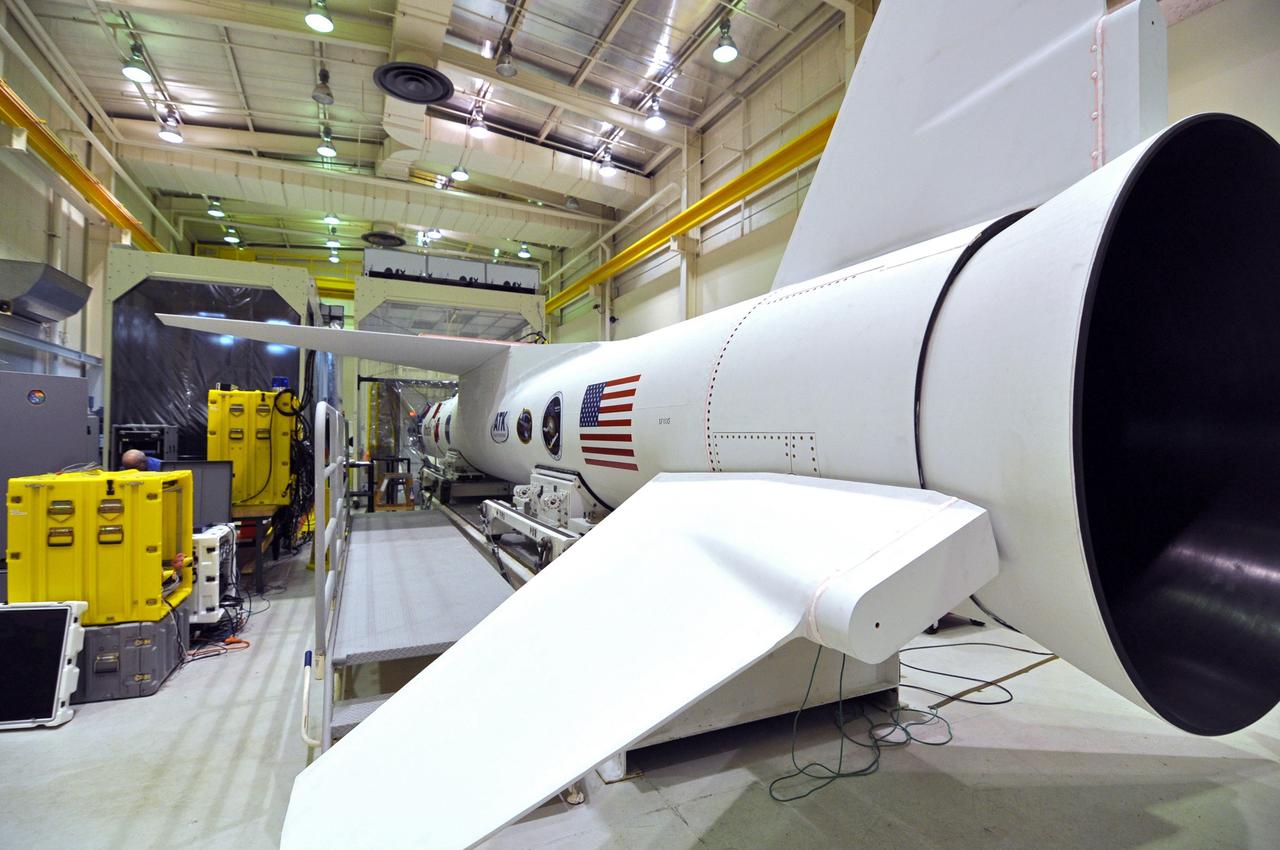
VANDENBERG AIR FORCE BASE, Calif. – Inside the Orbital Sciences processing facility at Vandenberg Air Force Base in California, processing of Orbital’s Pegasus XL rocket slated to launch NASA's Nuclear Spectroscopic Telescope Array, or NuSTAR, is nearly complete. The spacecraft has been mated with the rocket and enclosed in the Pegasus payload fairing on the forward end of the rocket, at center. The fairing will protect the spacecraft from the heat and aerodynamic pressure generated during the rocket’s ascent to orbit. After processing of the rocket and spacecraft are complete, they will be flown on Orbital's L-1011 carrier aircraft from Vandenberg to the Ronald Reagan Ballistic Missile Defense Test Site on the Pacific Ocean’s Kwajalein Atoll for launch in March. The high-energy X-ray telescope will conduct a census of black holes, map radioactive material in young supernovae remnants, and study the origins of cosmic rays and the extreme physics around collapsed stars. For more information, visit http://www.nasa.gov/nustar. Photo credit: NASA/Randy Beaudoin, VAFB
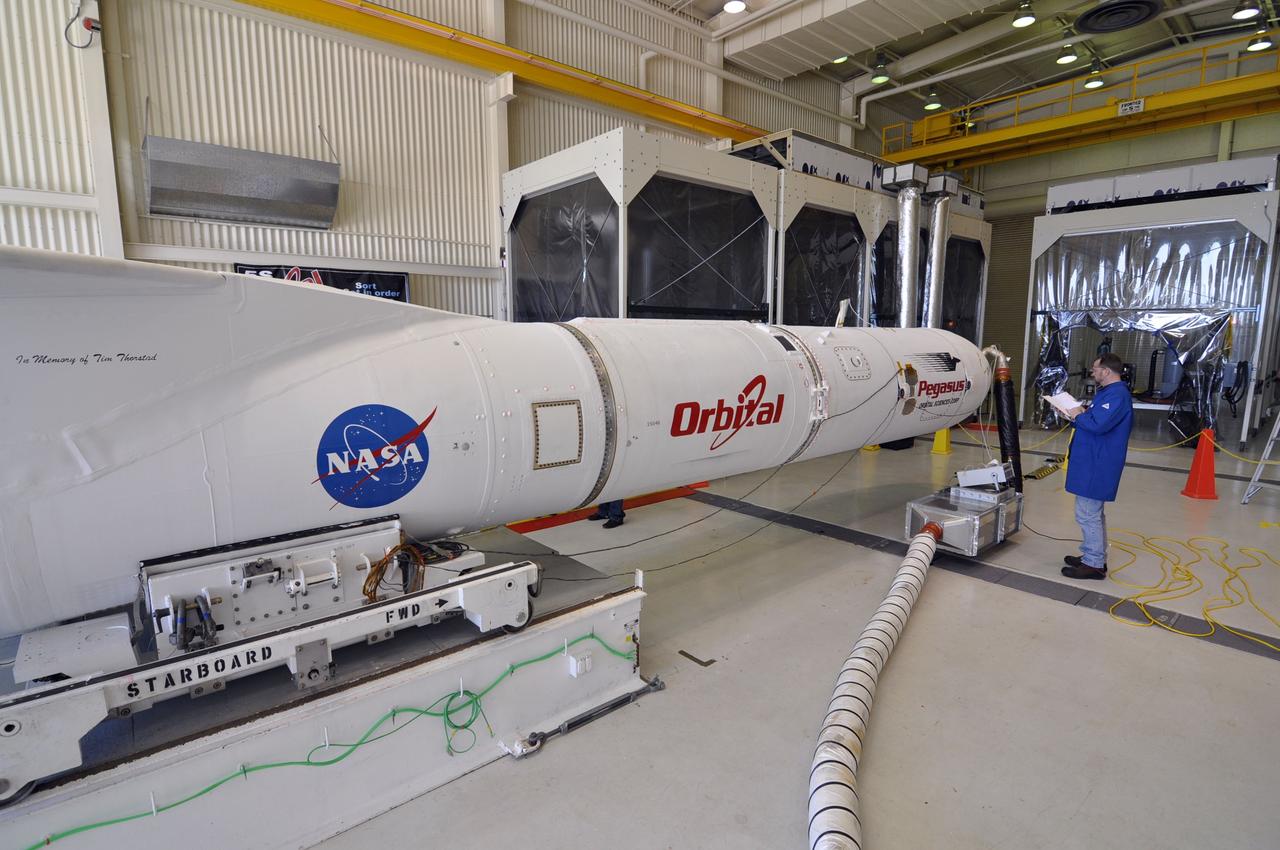
VANDENBERG AIR FORCE BASE, Calif. – In Orbital Science’s hangar at Vandenberg Air Force Base in California, an Orbital technician consults documentation to ensure that all steps in the transfer of an Pegasus XL rocket onto the transporter are properly executed. The rocket is mated to NASA's Nuclear Spectroscopic Telescope Array, or NuSTAR, telescope, encapsulated in the Pegasus payload fairing. Cool, dry air is being pumped into the fairing through a purge line to maintain the proper environment for the spacecraft in the confined space. The transporter will move them to the runway ramp where they will be attached to the underside of Orbital’s L-1011 carrier aircraft. The aircraft will fly the pair from Vandenberg to the Ronald Reagan Ballistic Missile Defense Test Site on the Pacific Ocean’s Kwajalein Atoll for launch. A revised launch date will be set at the Flight Readiness Review, planned for later this week. The high-energy X-ray telescope will conduct a census of black holes, map radioactive material in young supernovae remnants, and study the origins of cosmic rays and the extreme physics around collapsed stars. For more information, visit http://www.nasa.gov/nustar. Photo credit: NASA/Randy Beaudoin, VAFB
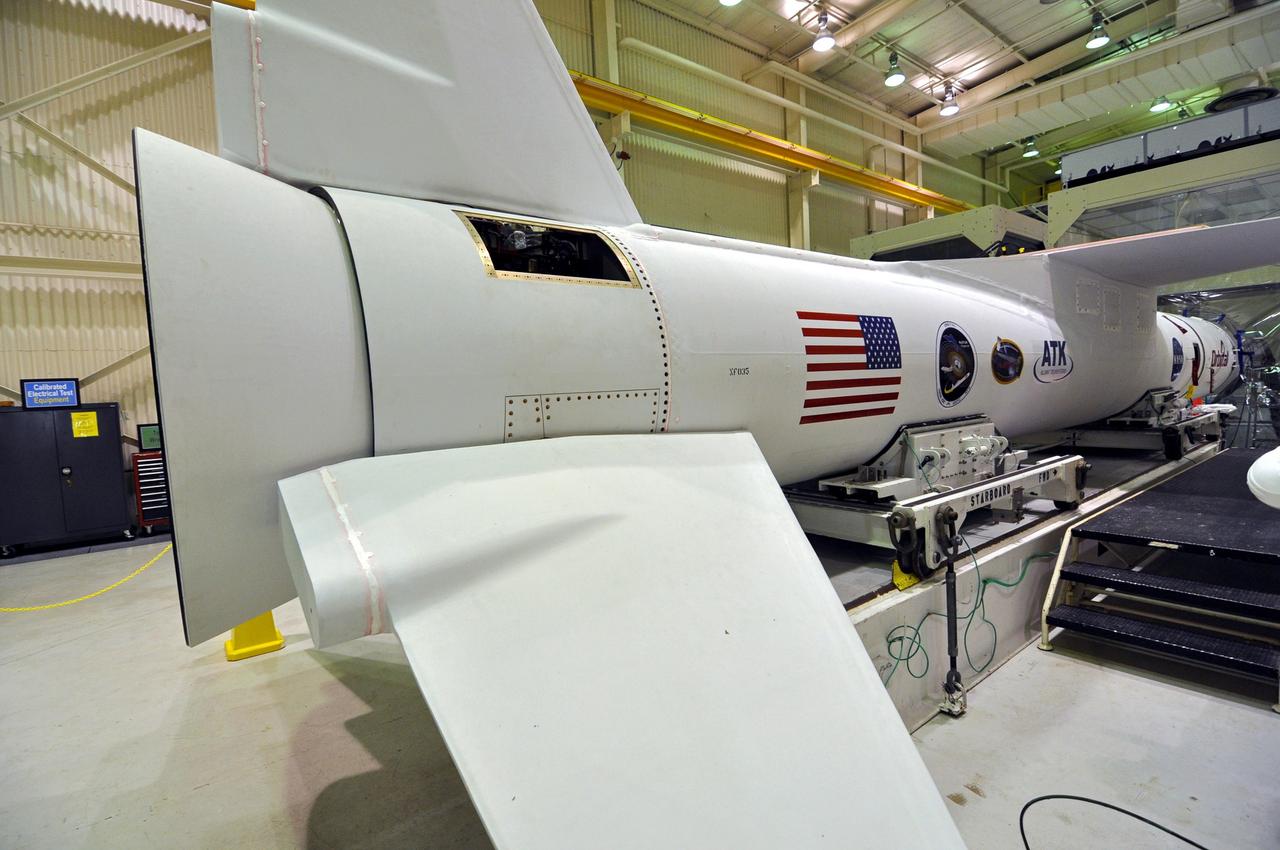
VANDENBERG AIR FORCE BASE, Calif. – Inside the Orbital Sciences processing facility at Vandenberg Air Force Base in California, Orbital’s Pegasus XL rocket awaits launch. The rocket has been mated with NASA's Nuclear Spectroscopic Telescope Array, or NuSTAR, and the spacecraft enclosed in the Pegasus payload fairing on the forward end of the rocket, at right. The fairing will protect the spacecraft from the heat and aerodynamic pressure generated during the rocket’s ascent to orbit. After processing of the rocket and spacecraft are complete, they will be flown on Orbital's L-1011 carrier aircraft from Vandenberg to the Ronald Reagan Ballistic Missile Defense Test Site on the Pacific Ocean’s Kwajalein Atoll for launch in March. The high-energy X-ray telescope will conduct a census of black holes, map radioactive material in young supernovae remnants, and study the origins of cosmic rays and the extreme physics around collapsed stars. For more information, visit http://www.nasa.gov/nustar. Photo credit: NASA/Randy Beaudoin, VAFB
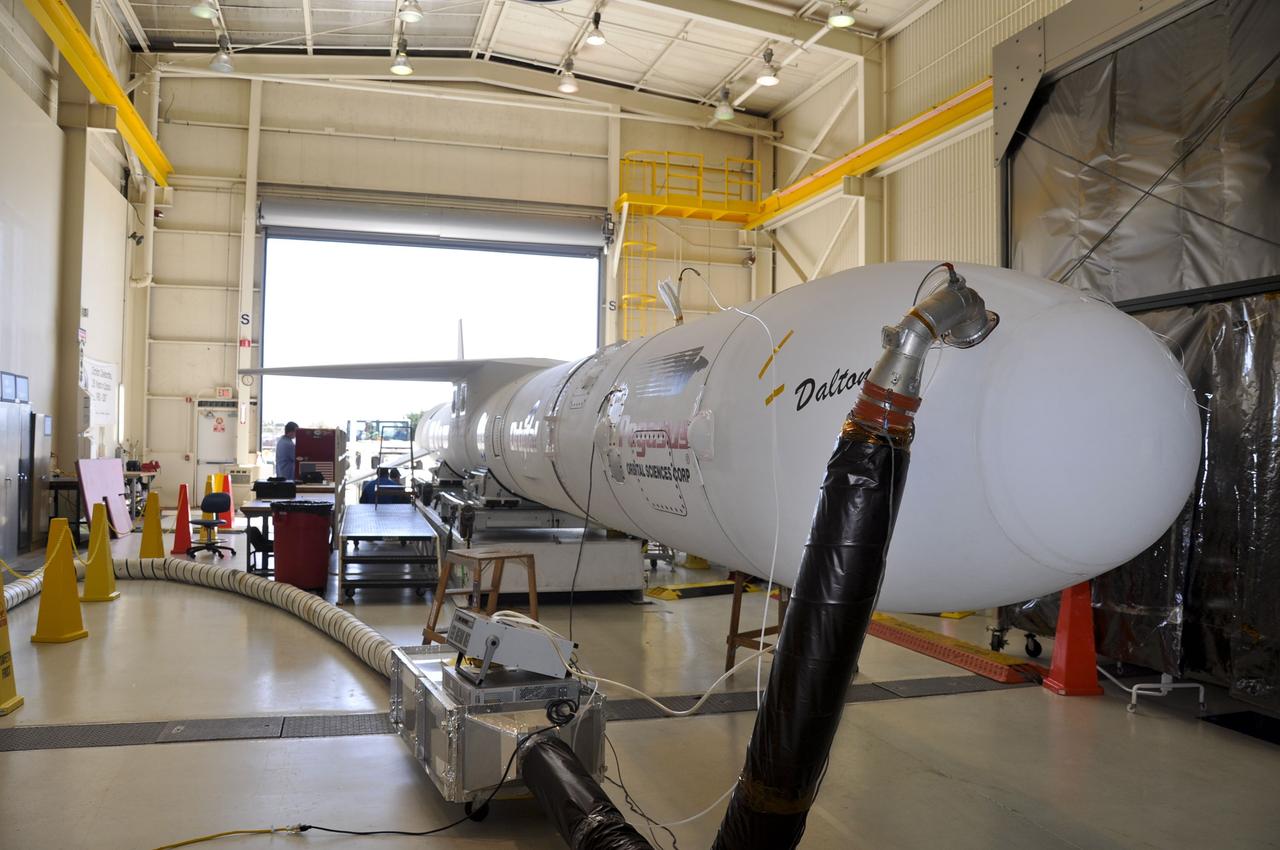
VANDENBERG AIR FORCE BASE, Calif. – Operations are in work to transfer an Orbital Sciences Pegasus XL rocket onto the transporter in Orbital’s hangar at Vandenberg Air Force Base in California. The rocket has been mated to NASA's Nuclear Spectroscopic Telescope Array, or NuSTAR, encapsulated in the Pegasus payload fairing. Cool, dry air is being pumped into the fairing through a purge line to maintain the proper environment for the spacecraft in the confined space. The transporter will move them to the runway ramp where they will be attached to the underside of Orbital’s L-1011 carrier aircraft. The aircraft will fly the pair from Vandenberg to the Ronald Reagan Ballistic Missile Defense Test Site on the Pacific Ocean’s Kwajalein Atoll for launch. A revised launch date will be set at the Flight Readiness Review, planned for later this week. The high-energy X-ray telescope will conduct a census of black holes, map radioactive material in young supernovae remnants, and study the origins of cosmic rays and the extreme physics around collapsed stars. For more information, visit http://www.nasa.gov/nustar. Photo credit: NASA/Randy Beaudoin, VAFB
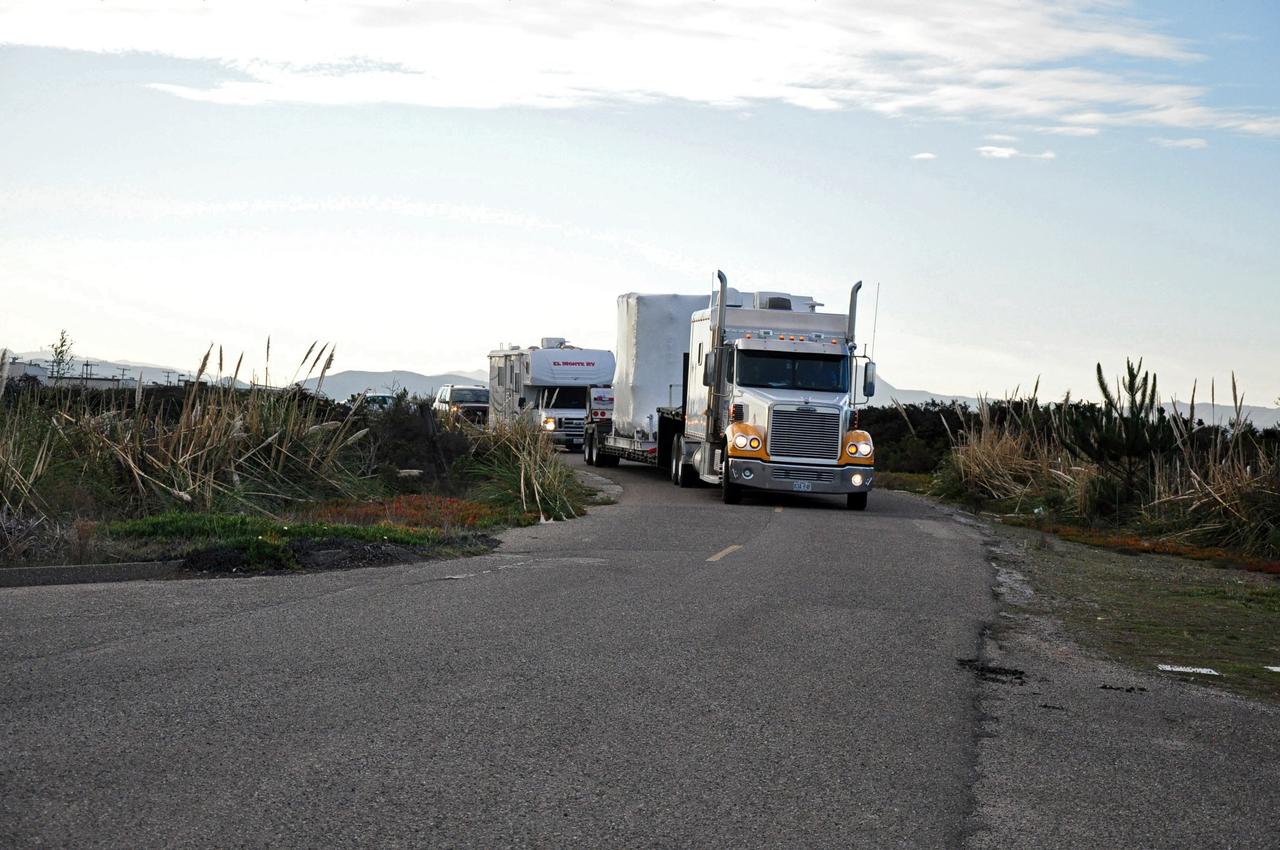
VANDENBERG AIR FORCE BASE, Calif. -- NASA's Nuclear Spectroscopic Telescope Array (NuSTAR), enclosed in an environmentally controlled shipping container, is delivered by tractor-trailer to processing facility 1555 at Vandenberg Air Force Base (VAFB) in California. The spacecraft arrived at 7:52 a.m. PST after a cross-country trip from Orbital Sciences' manufacturing plant in Dulles, Va., which began Jan. 24. The spacecraft will be offloaded into the processing hangar, joining the Pegasus XL rocket that is set to carry it to space. After NuSTAR is removed from its shipping container, checkout and other processing activity will begin. The spacecraft will be integrated with the Pegasus in mid-February and encapsulation in the vehicle fairing will follow. After processing is completed, the rocket and spacecraft will be flown on Orbital's L-1011 carrier aircraft to the Ronald Reagan Ballistic Missile Defense Test Site at the Pacific Ocean's Kwajalein Atoll for launch in March. The high-energy x-ray telescope will conduct a census for black holes, map radioactive material in young supernovae remnants, and study the origins of cosmic rays and the extreme physics around collapsed stars. For more information, visit http://www.nasa.gov/nustar. Photo credit: NASA/Randy Beaudoin, VAFB
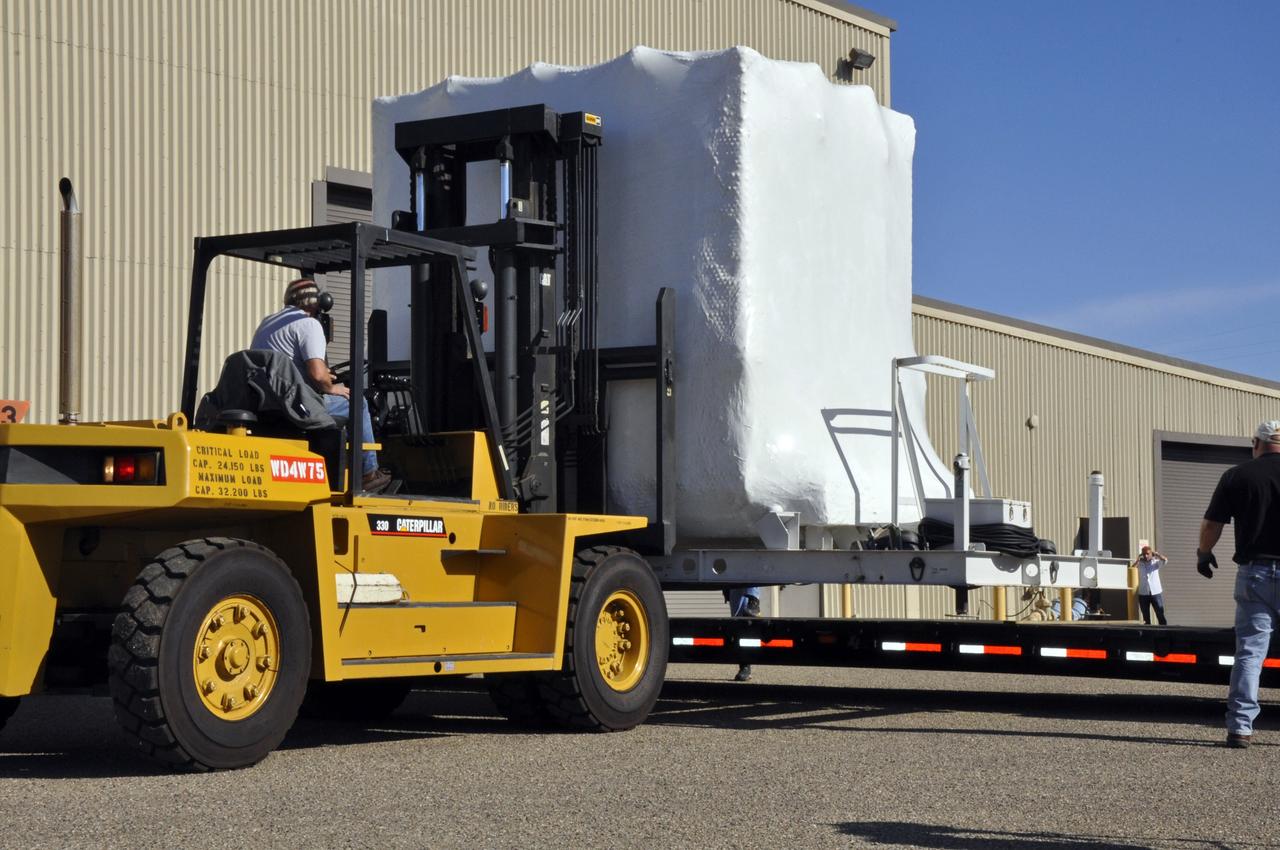
VANDENBERG AIR FORCE BASE, Calif. -- A forklift is enlisted to transfer NASA's Nuclear Spectroscopic Telescope Array (NuSTAR), enclosed in an environmentally controlled shipping container, from the tractor-trailer on which it arrived into the airlock of processing facility 1555 at Vandenberg Air Force Base (VAFB) in California. The spacecraft arrived at 7:52 a.m. PST after a cross-country trip from Orbital Sciences' manufacturing plant in Dulles, Va., which began Jan. 24. The spacecraft will be offloaded into the processing hangar, joining the Pegasus XL rocket that is set to carry it to space. After NuSTAR is removed from its shipping container, checkout and other processing activity will begin. The spacecraft will be integrated with the Pegasus in mid-February and encapsulation in the vehicle fairing will follow. After processing is completed, the rocket and spacecraft will be flown on Orbital's L-1011 carrier aircraft to the Ronald Reagan Ballistic Missile Defense Test Site at the Pacific Ocean's Kwajalein Atoll for launch in March. The high-energy x-ray telescope will conduct a census for black holes, map radioactive material in young supernovae remnants, and study the origins of cosmic rays and the extreme physics around collapsed stars. For more information, visit http://www.nasa.gov/nustar. Photo credit: NASA/Randy Beaudoin, VAFB

VANDENBERG AIR FORCE BASE, Calif. -- In the airlock of processing facility 1555 at Vandenberg Air Force Base (VAFB) in California, workers attach a lifting fixture to NASA's Nuclear Spectroscopic Telescope Array (NuSTAR) during preparations to hoist it from its shipping container. The spacecraft arrived at VAFB Jan. 27 after a cross-country trip which began from Orbital Sciences' manufacturing plant in Dulles, Va., on Jan. 24. Next, NuSTAR will be transferred from the airlock into the processing hangar, joining the Pegasus XL rocket that is set to carry it to space. After checkout and other processing activities are complete, the spacecraft will be integrated with the Pegasus in mid-February and encapsulation in the vehicle fairing will follow. The rocket and spacecraft then will be flown on Orbital's L-1011 carrier aircraft to the Ronald Reagan Ballistic Missile Defense Test Site at the Pacific Ocean's Kwajalein Atoll for launch in March. The high-energy X-ray telescope will conduct a census for black holes, map radioactive material in young supernovae remnants, and study the origins of cosmic rays and the extreme physics around collapsed stars. For more information, visit http://www.nasa.gov/nustar. Photo credit: NASA/Randy Beaudoin, VAFB
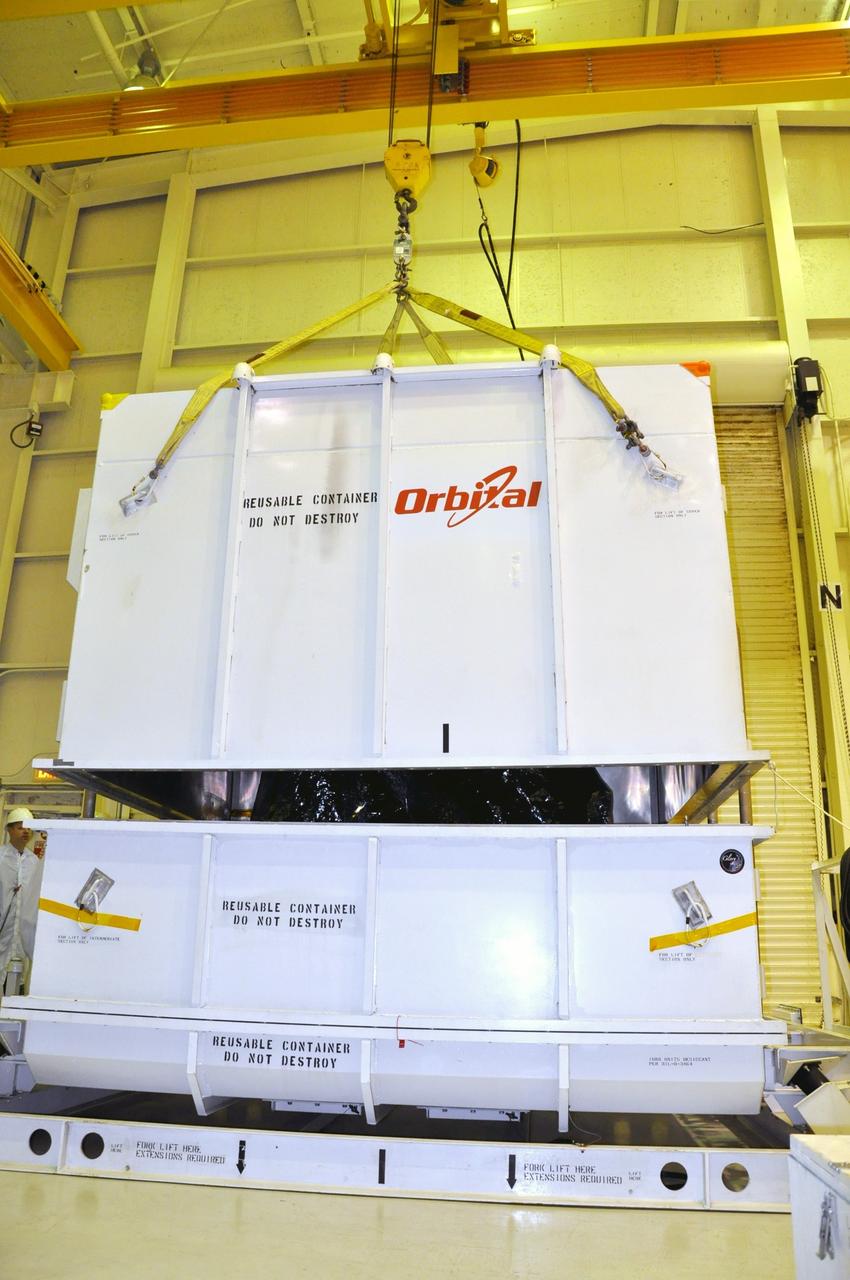
VANDENBERG AIR FORCE BASE, Calif. -- In the airlock of processing facility 1555 at Vandenberg Air Force Base (VAFB) in California, a crane lifts half of the environmentally controlled shipping container, providing a glimpse of NASA's Nuclear Spectroscopic Telescope Array (NuSTAR). The spacecraft arrived at VAFB Jan. 27 after a cross-country trip which began from Orbital Sciences' manufacturing plant in Dulles, Va., on Jan. 24. Next, NuSTAR will be transferred from the airlock into the processing hangar, joining the Pegasus XL rocket that is set to carry it to space. After checkout and other processing activities are complete, the spacecraft will be integrated with the Pegasus in mid-February and encapsulation in the vehicle fairing will follow. The rocket and spacecraft then will be flown on Orbital's L-1011 carrier aircraft to the Ronald Reagan Ballistic Missile Defense Test Site at the Pacific Ocean's Kwajalein Atoll for launch in March. The high-energy X-ray telescope will conduct a census for black holes, map radioactive material in young supernovae remnants, and study the origins of cosmic rays and the extreme physics around collapsed stars. For more information, visit http://www.nasa.gov/nustar. Photo credit: NASA/Randy Beaudoin, VAFB
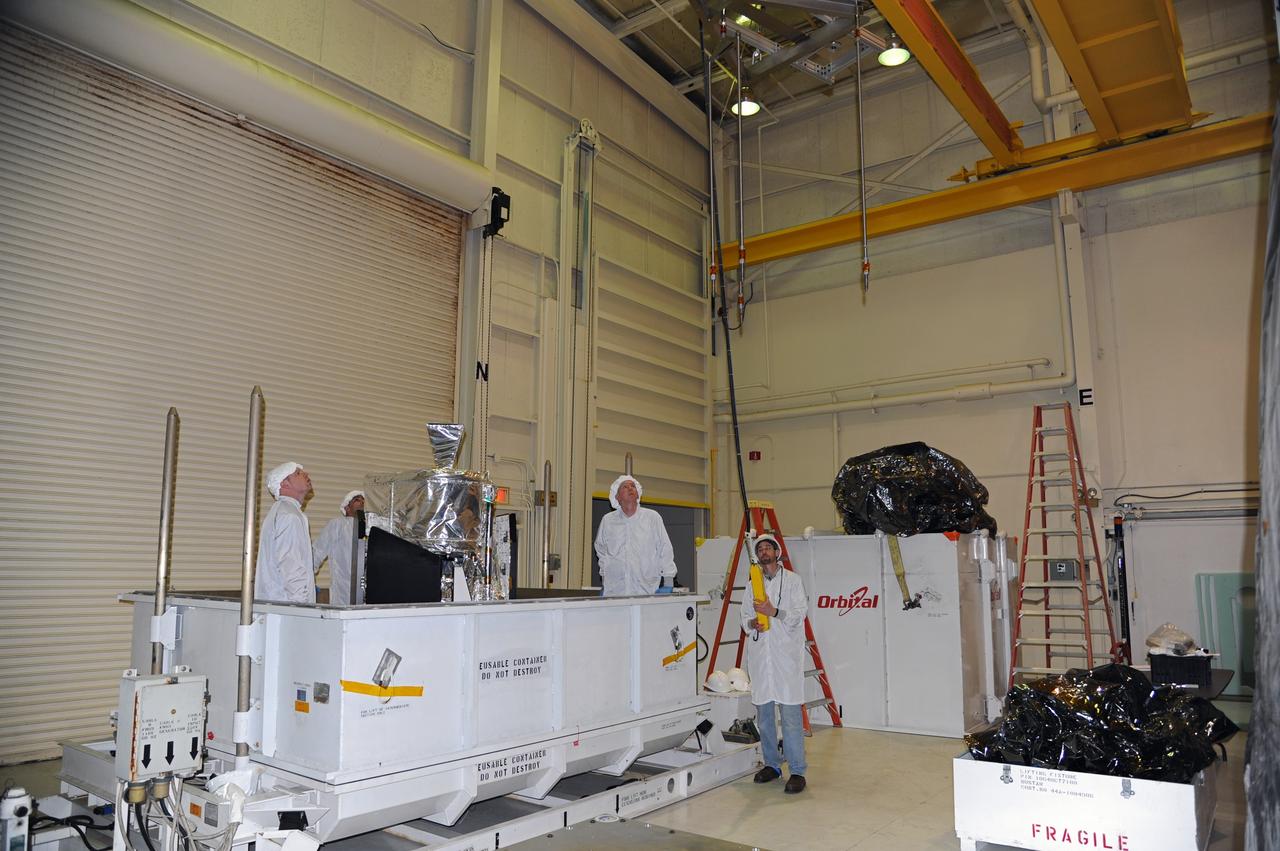
VANDENBERG AIR FORCE BASE, Calif. -- In the airlock of processing facility 1555 at Vandenberg Air Force Base (VAFB) in California, workers position a lifting fixture toward NASA's Nuclear Spectroscopic Telescope Array (NuSTAR) during preparations to hoist it from its shipping container. The spacecraft arrived at VAFB Jan. 27 after a cross-country trip which began from Orbital Sciences' manufacturing plant in Dulles, Va., on Jan. 24. Next, NuSTAR will be transferred from the airlock into the processing hangar, joining the Pegasus XL rocket that is set to carry it to space. After checkout and other processing activities are complete, the spacecraft will be integrated with the Pegasus in mid-February and encapsulation in the vehicle fairing will follow. The rocket and spacecraft then will be flown on Orbital's L-1011 carrier aircraft to the Ronald Reagan Ballistic Missile Defense Test Site at the Pacific Ocean's Kwajalein Atoll for launch in March. The high-energy X-ray telescope will conduct a census for black holes, map radioactive material in young supernovae remnants, and study the origins of cosmic rays and the extreme physics around collapsed stars. For more information, visit http://www.nasa.gov/nustar. Photo credit: NASA/Randy Beaudoin, VAFB