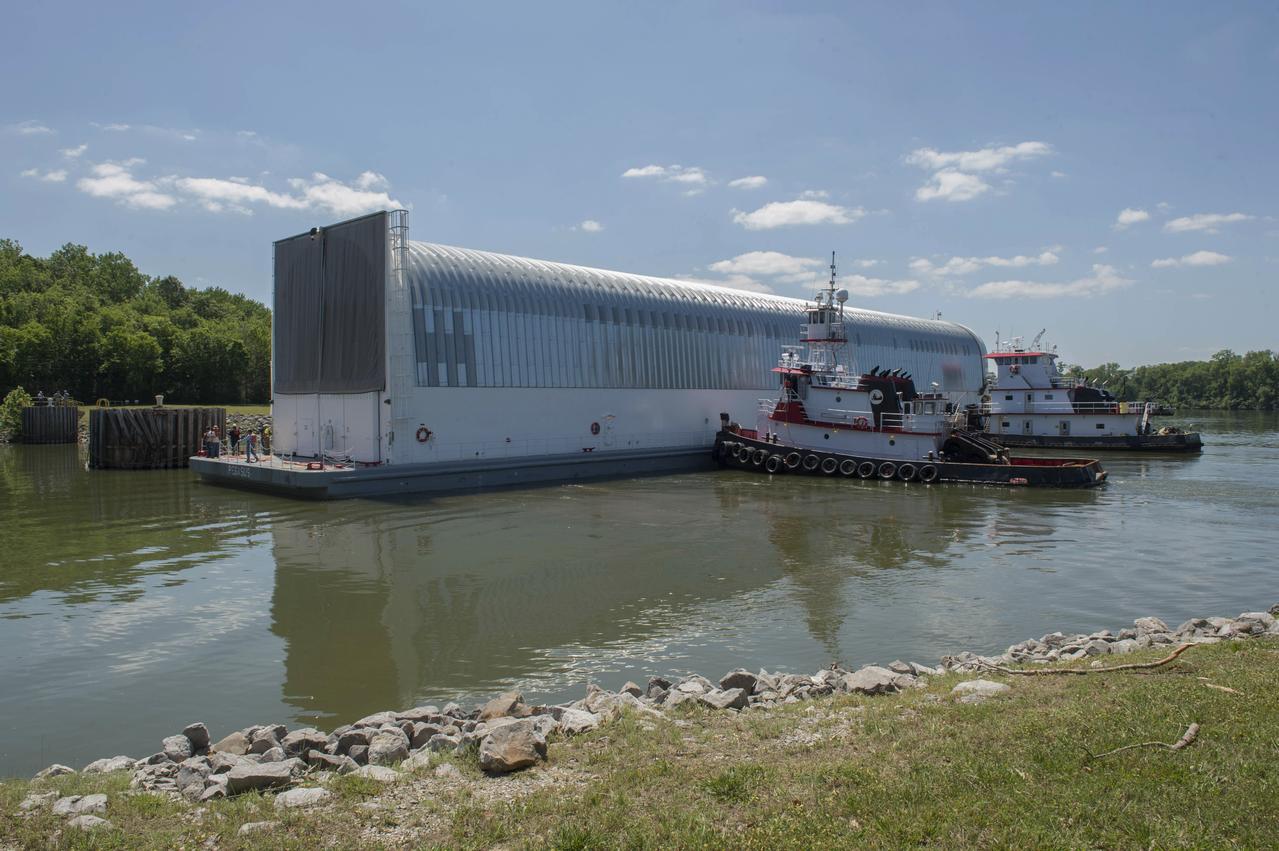
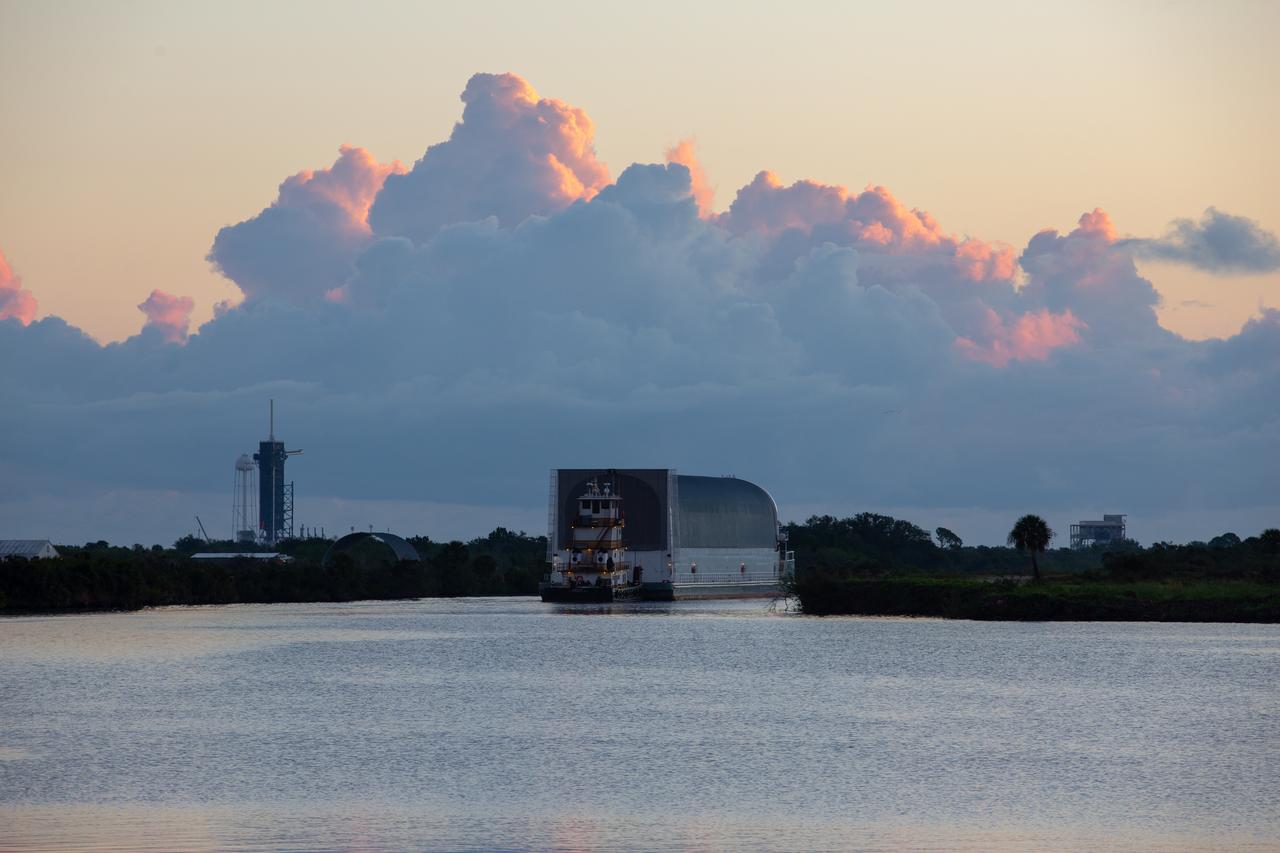
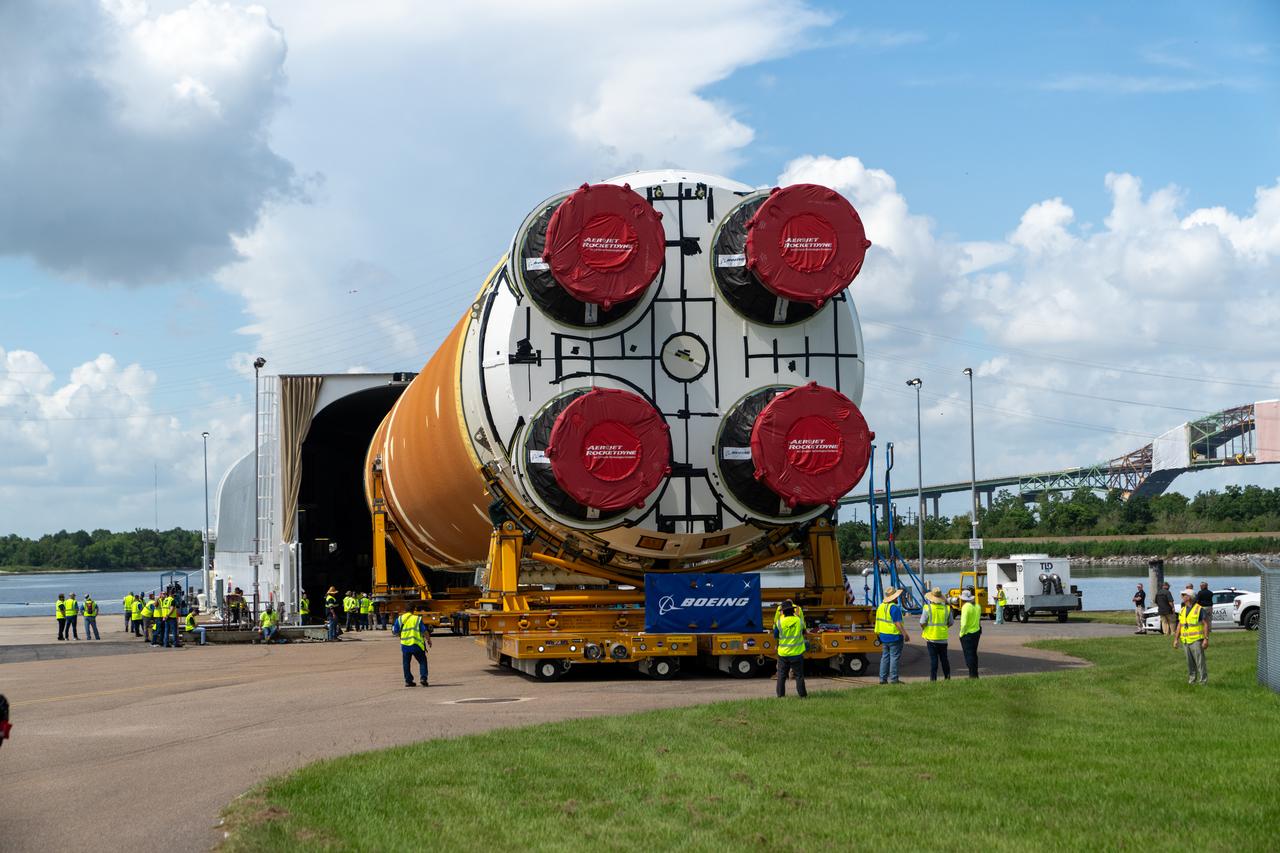
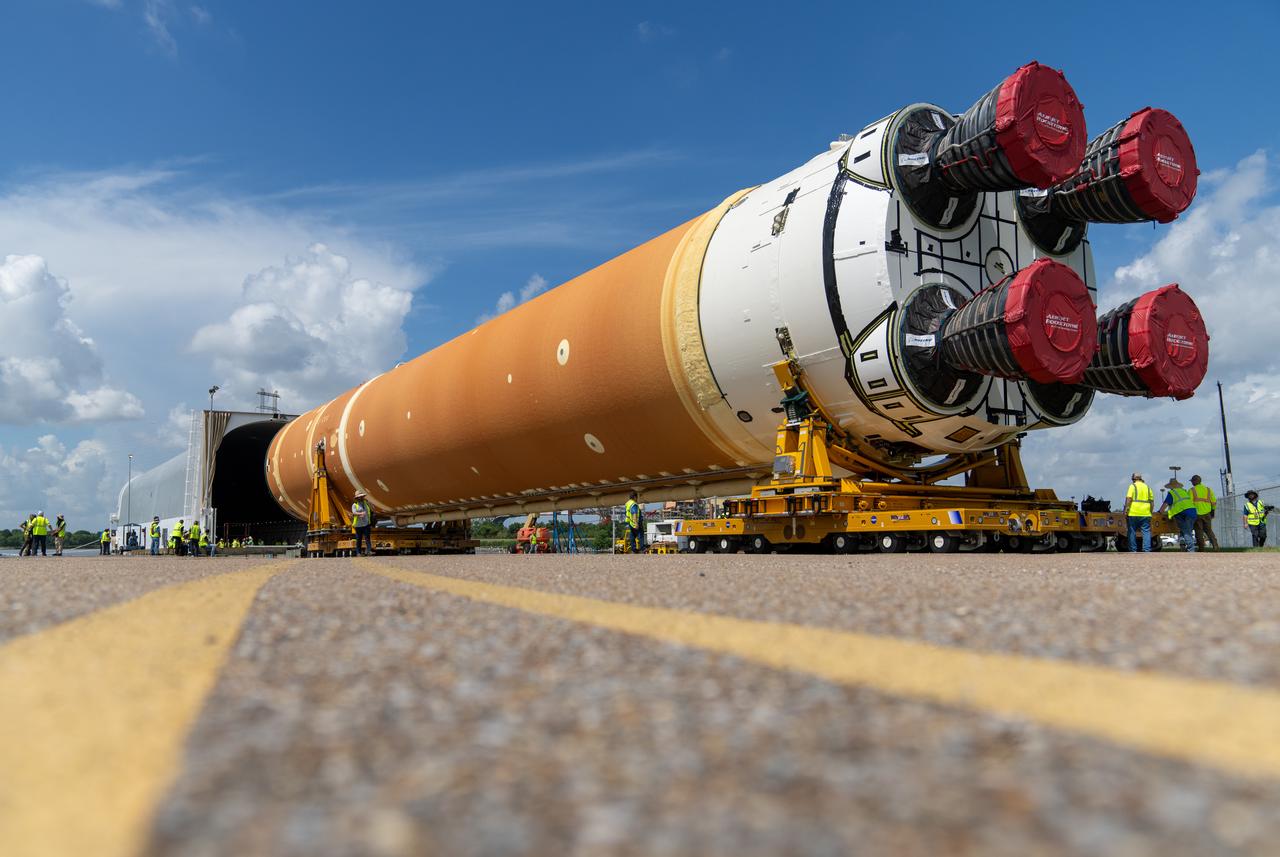
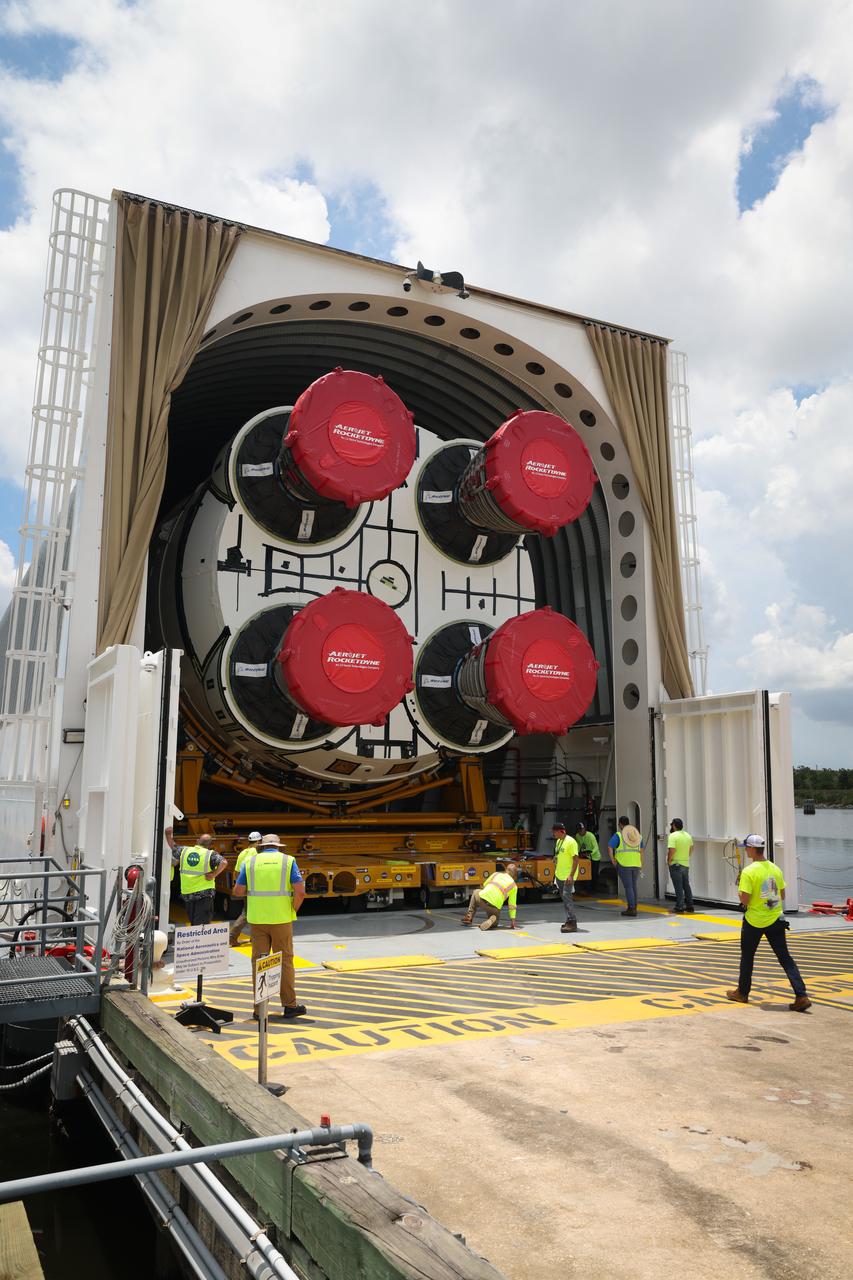
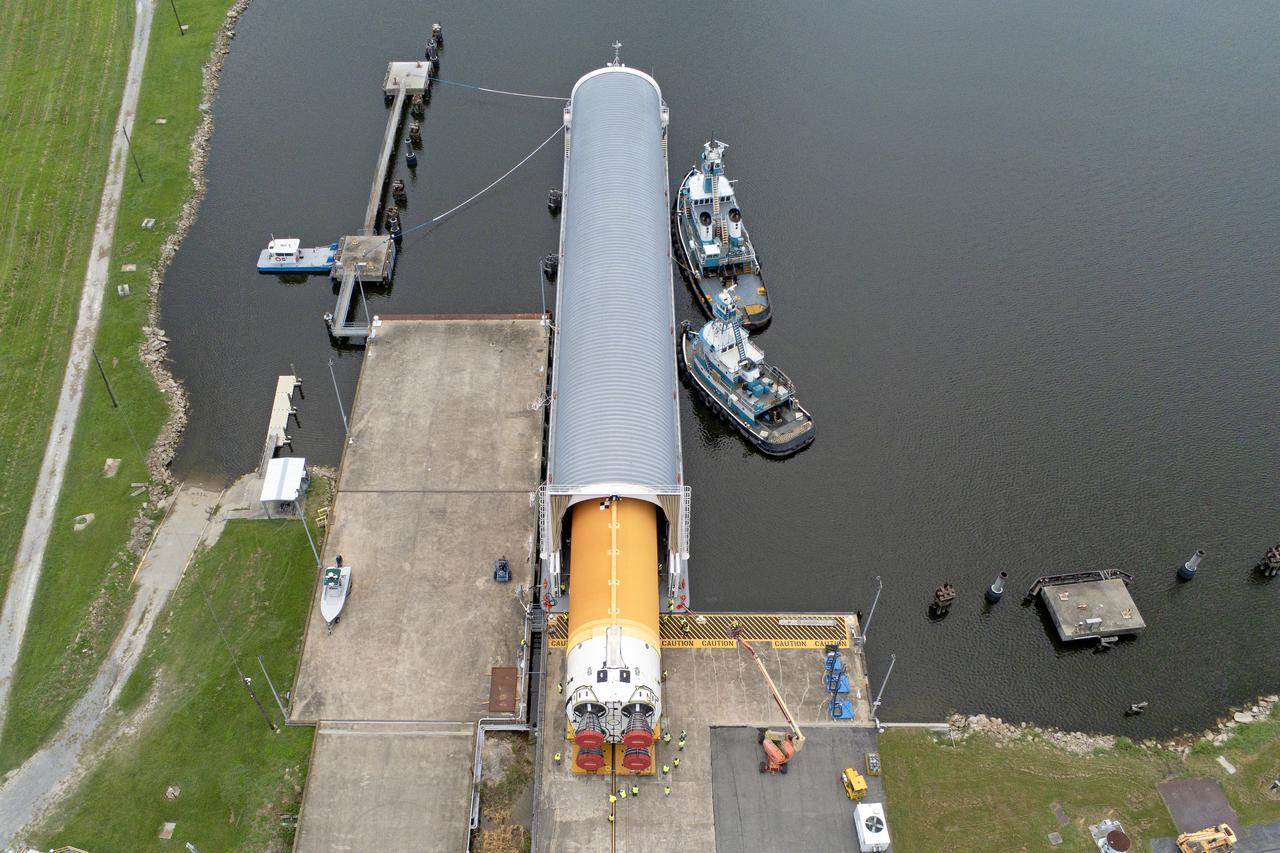
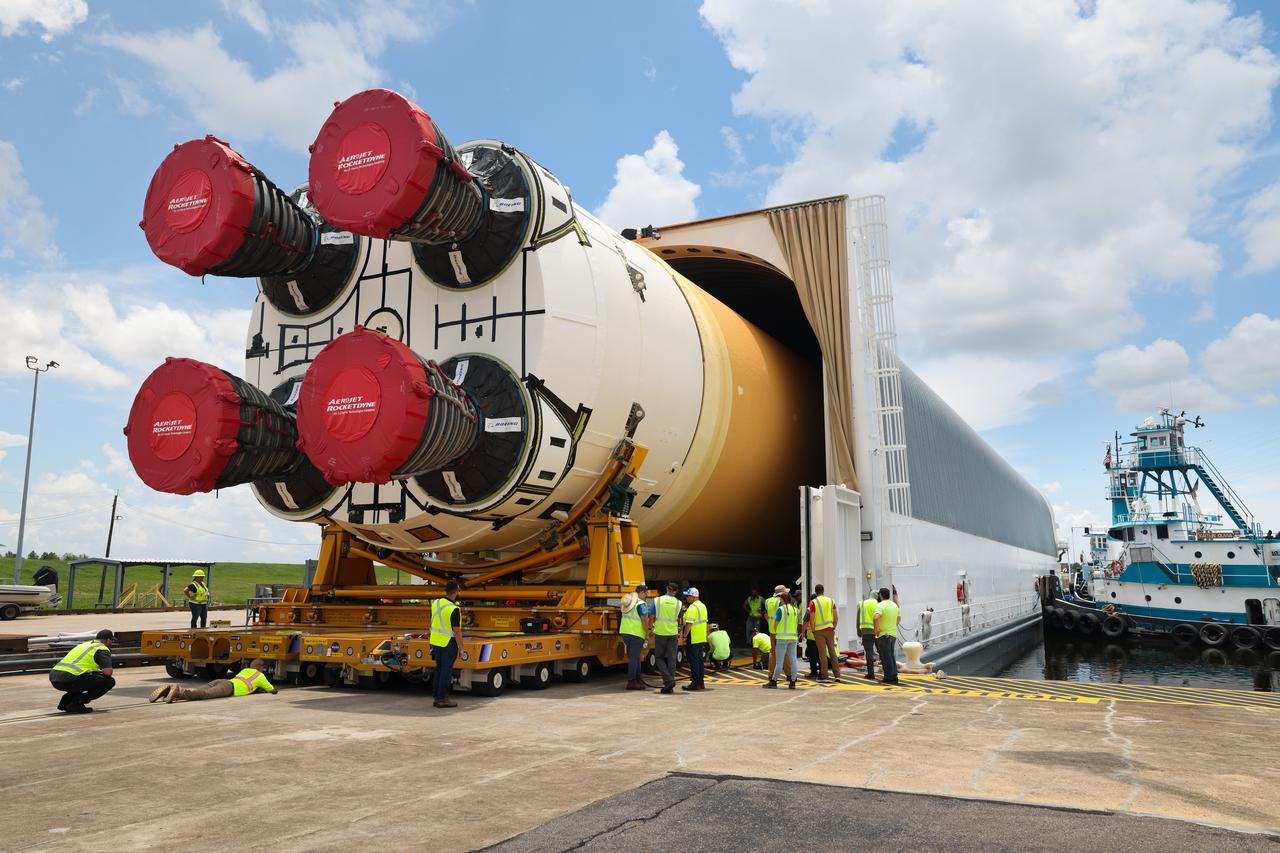
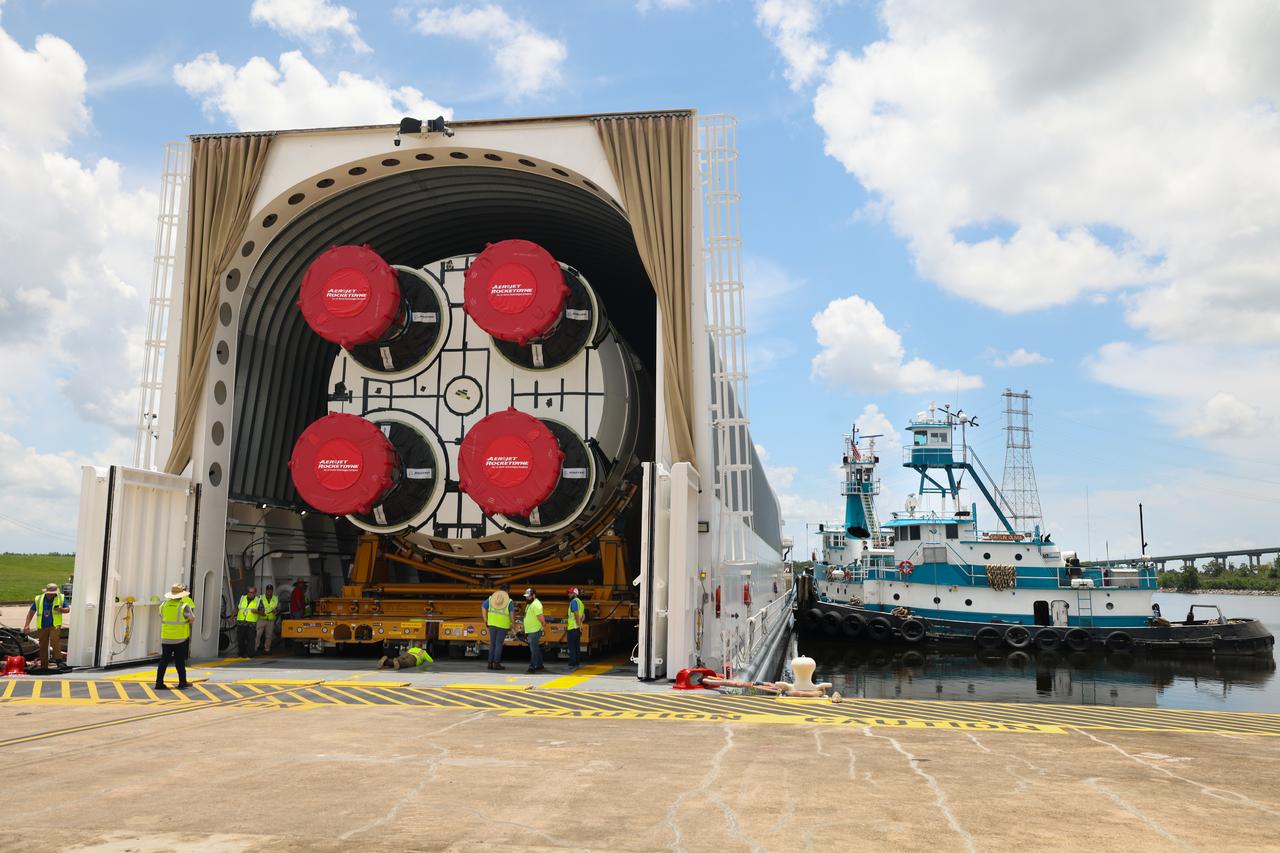
NASA’s barge, Pegasus, approaches the barge dock on Redstone Arsenal, home to the Marshall Space Flight Center. Pegasus is transporting the RS-25 engine core stage test article from the Michoud Assembly Facility to Marshall for structural testing.
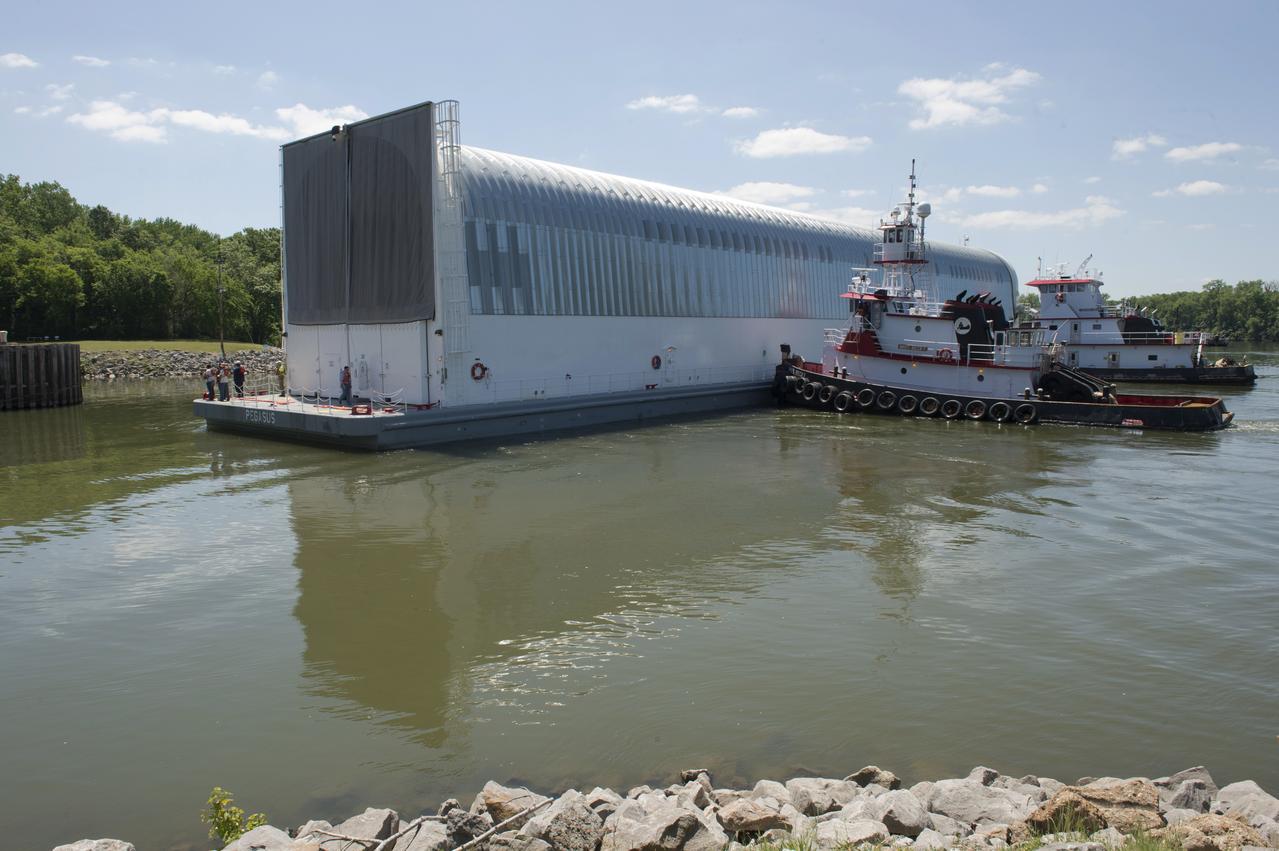
NASA’s barge, Pegasus, approaches the barge dock on Redstone Arsenal, home to the Marshall Space Flight Center. Pegasus is transporting the RS-25 engine core stage test article from the Michoud Assembly Facility to Marshall for structural testing.
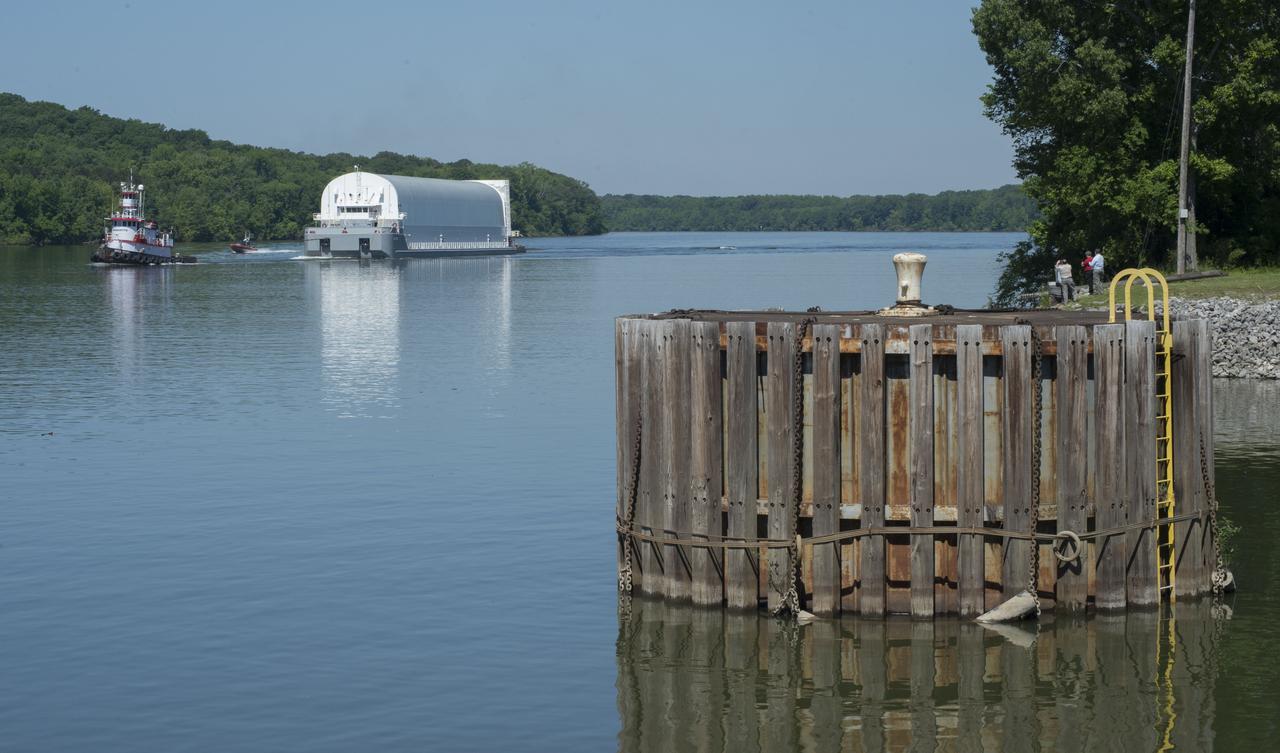
NASA’s barge, Pegasus, approaches the barge dock on Redstone Arsenal, home to the Marshall Space Flight Center. Pegasus is transporting the RS-25 engine core stage test article from the Michoud Assembly Facility to Marshall for structural testing.
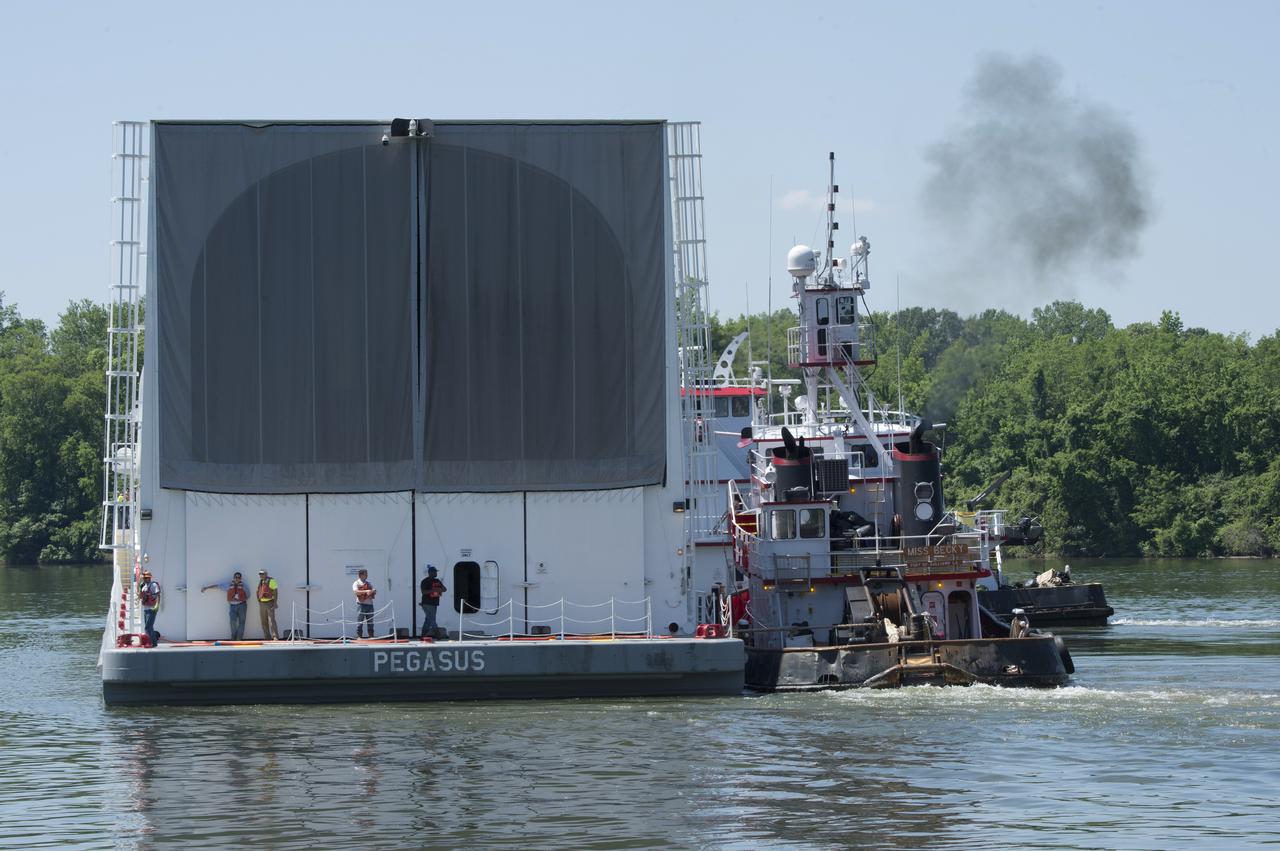
NASA’s barge, Pegasus, approaches the barge dock on Redstone Arsenal, home to the Marshall Space Flight Center. Pegasus is transporting the RS-25 engine core stage test article from the Michoud Assembly Facility to Marshall for structural testing.
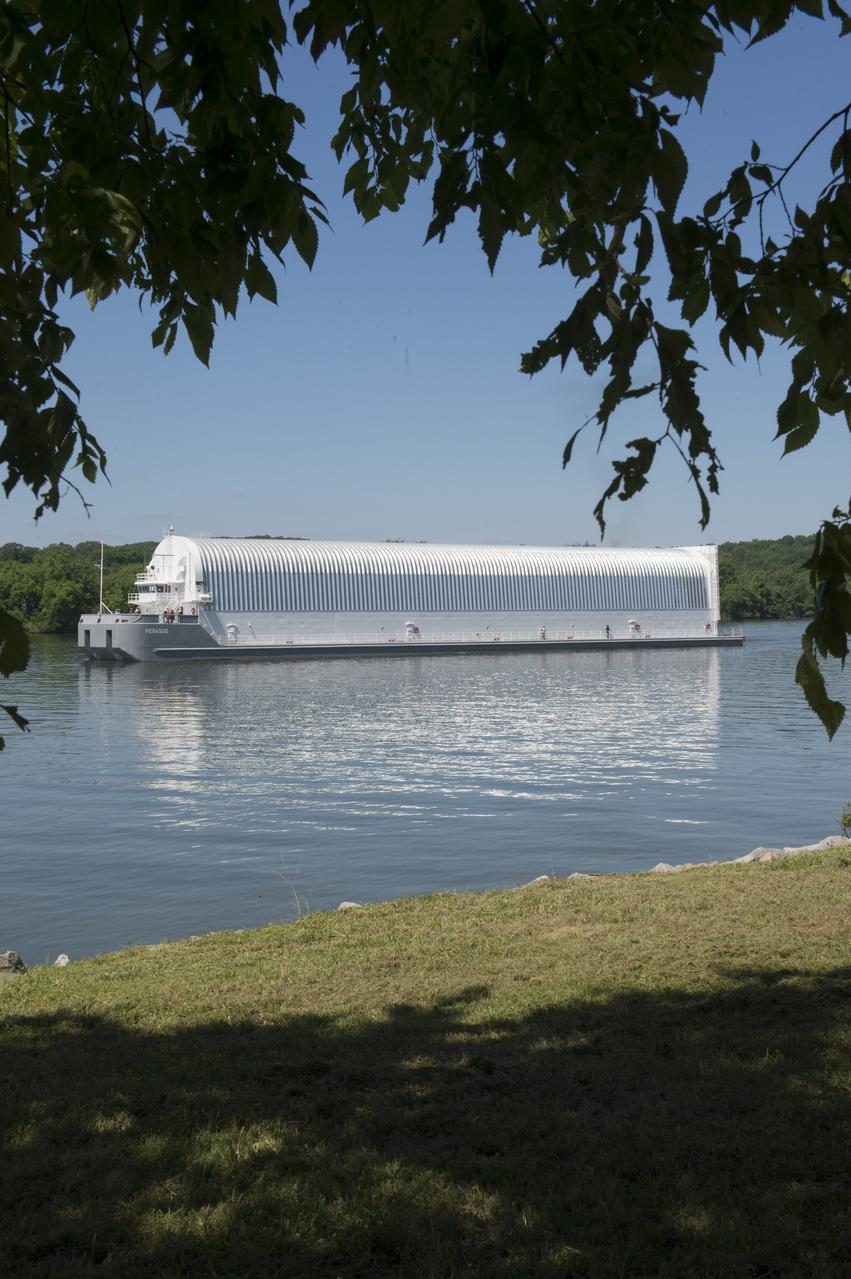
NASA’s barge, Pegasus, approaches the barge dock on Redstone Arsenal, home to the Marshall Space Flight Center. Pegasus is transporting the RS-25 engine core stage test article from the Michoud Assembly Facility to Marshall for structural testing.
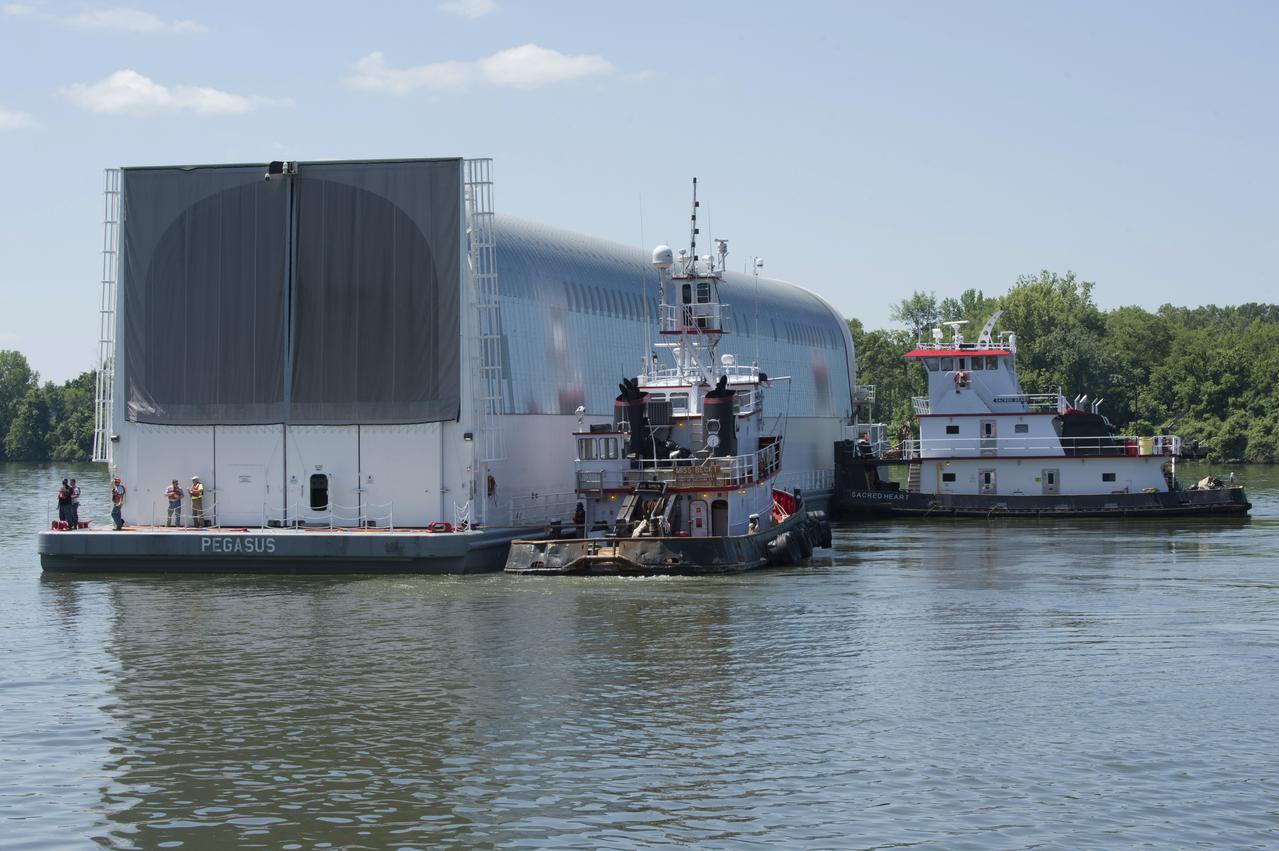
NASA’s barge, Pegasus, approaches the barge dock on Redstone Arsenal, home to the Marshall Space Flight Center. Pegasus is transporting the RS-25 engine core stage test article from the Michoud Assembly Facility to Marshall for structural testing.
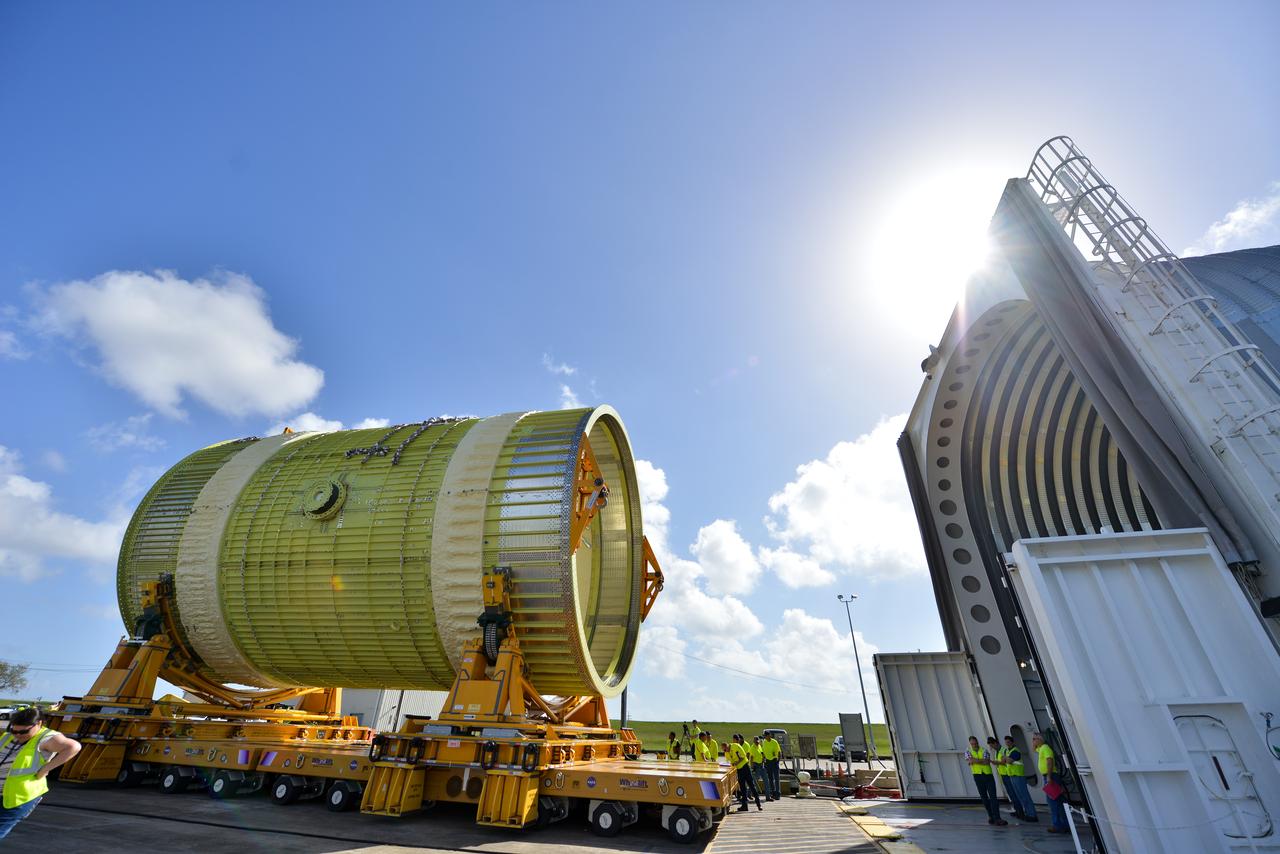
Intertank STA on Pegasus Barge
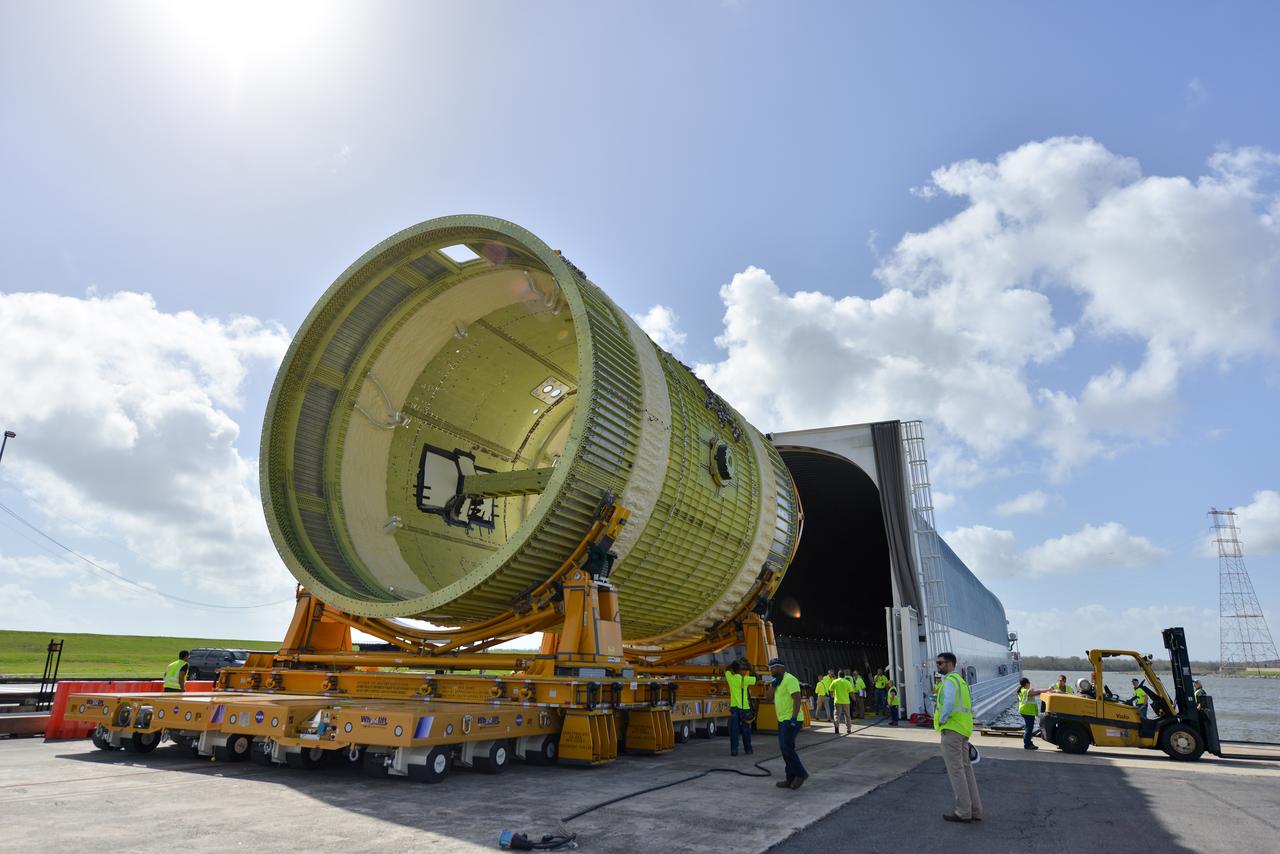
Intertank STA on Pegasus Barge
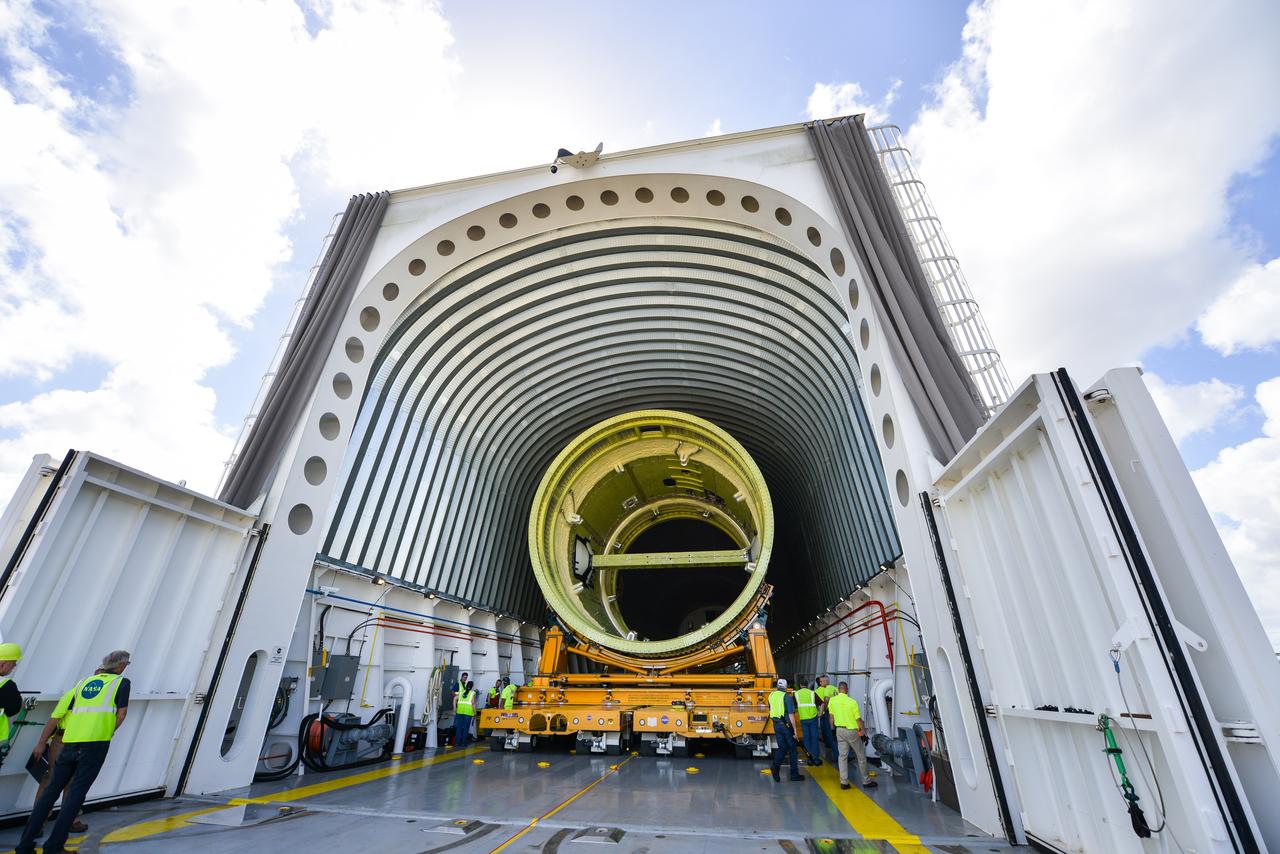
Intertank STA on board the Pegasus Barge.
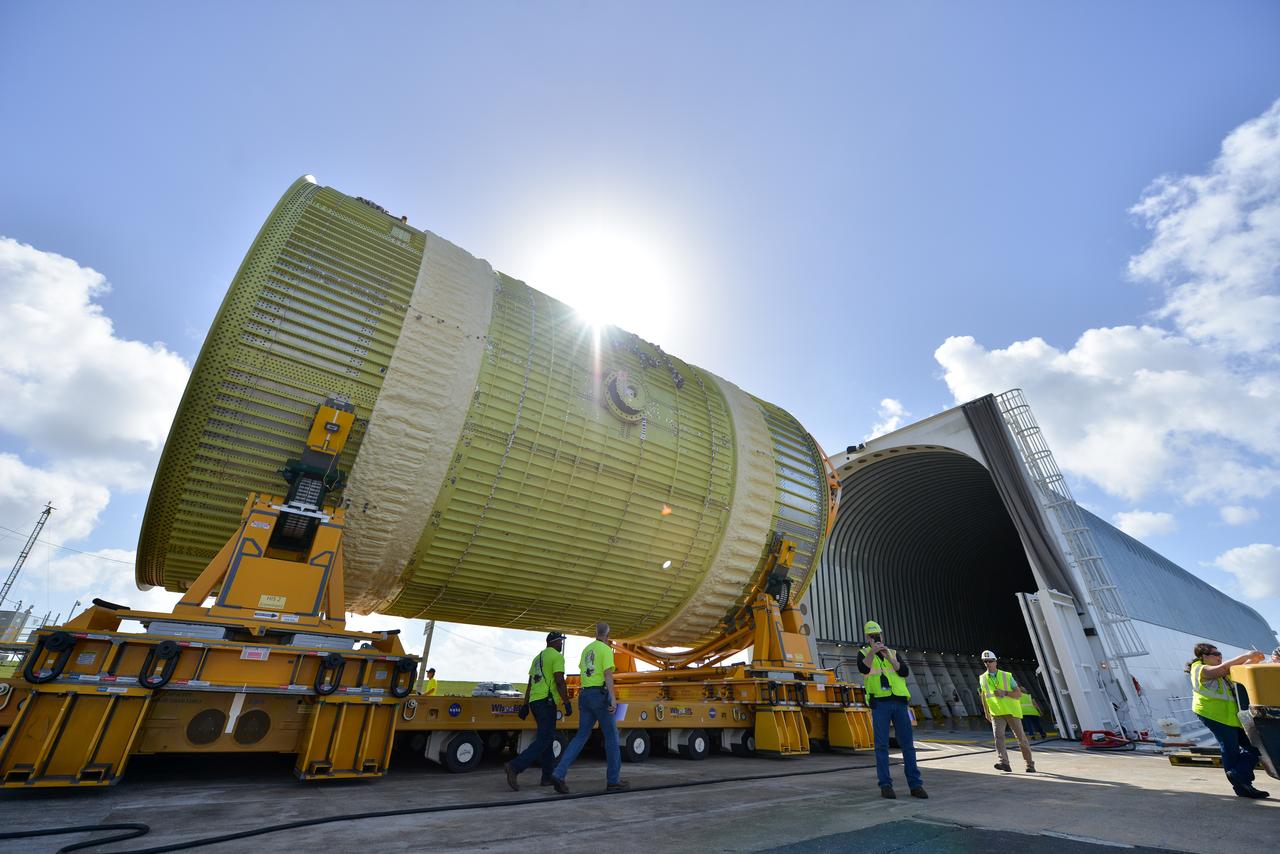
Intertank STA is prepped prior to being loaded on the NASA Barge, Pegasus.
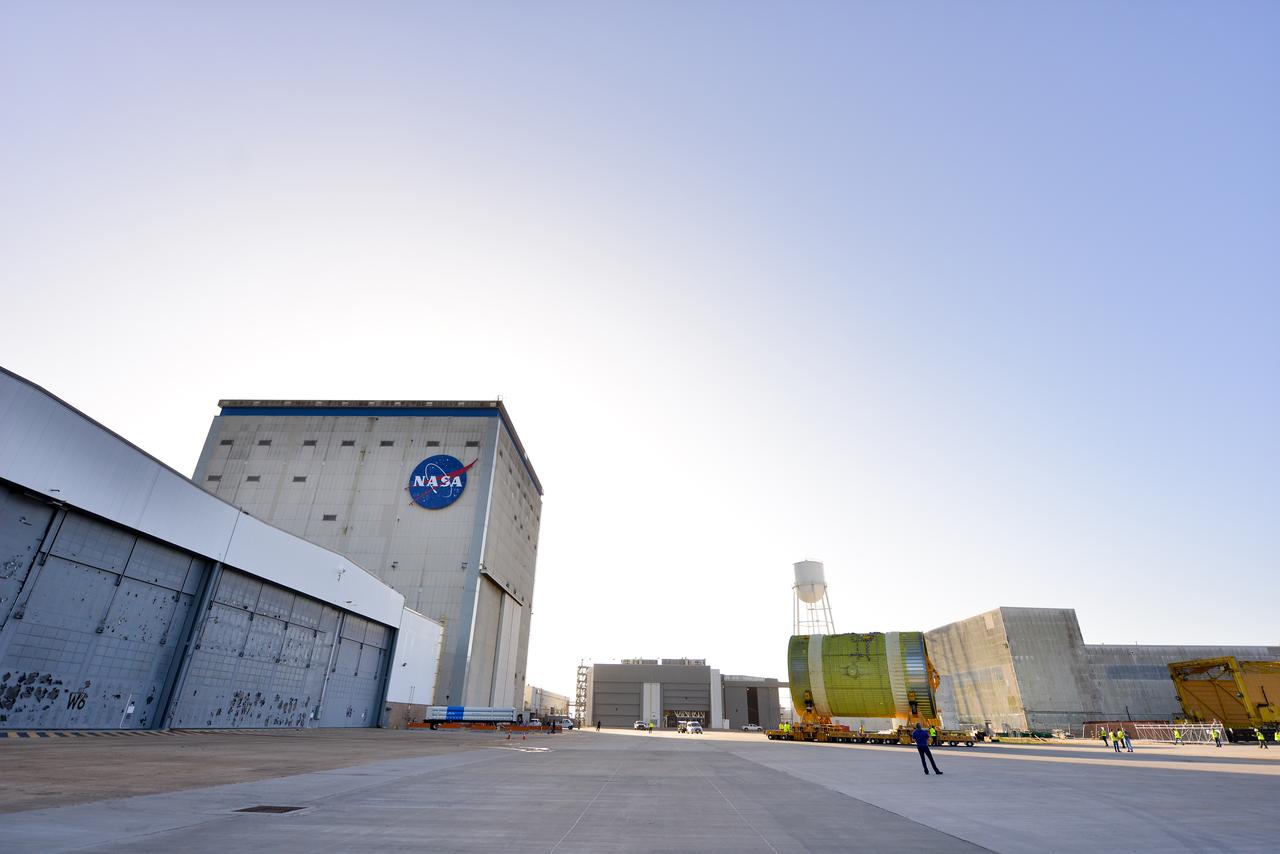
Intertank STA on way to Pegasus Barge
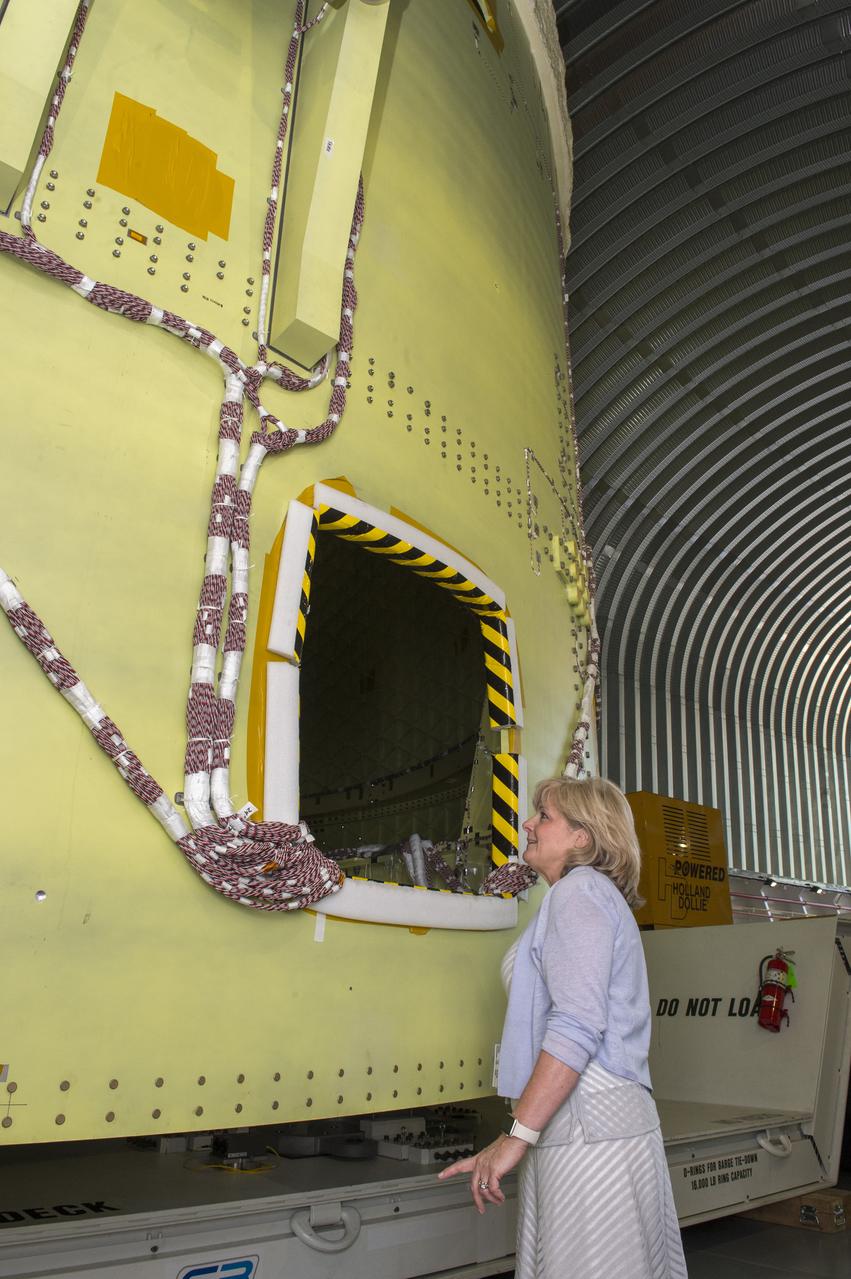
MSFC Deputy Director Jody Singer closely examines the RS-25 engine core stage test article aboard the NASA barge Pegasus.
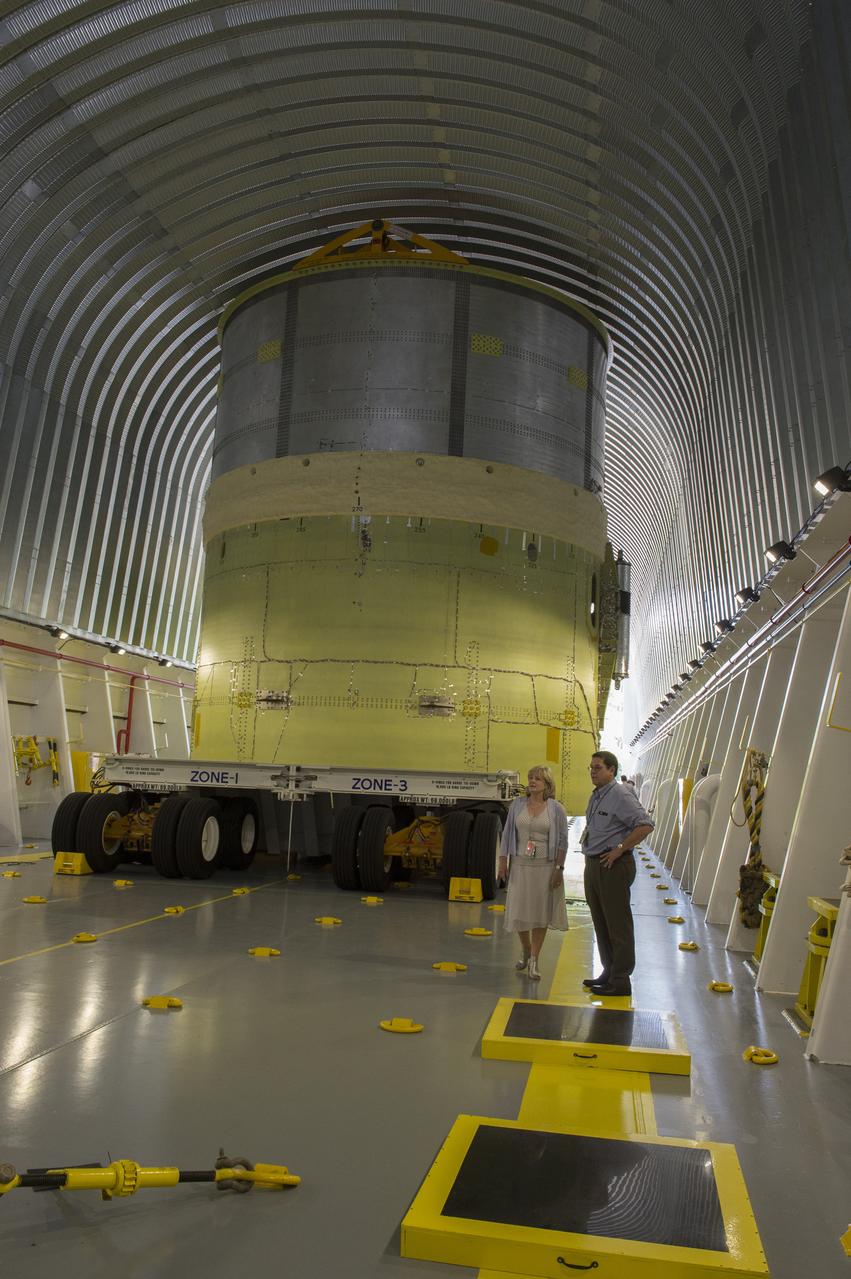
MSFC Deputy Director Jody Singer and Center Operations Manager Roy Malone examine the interior of the transportation barge Pegasus with the RS-25 engine core stage test article in the background.
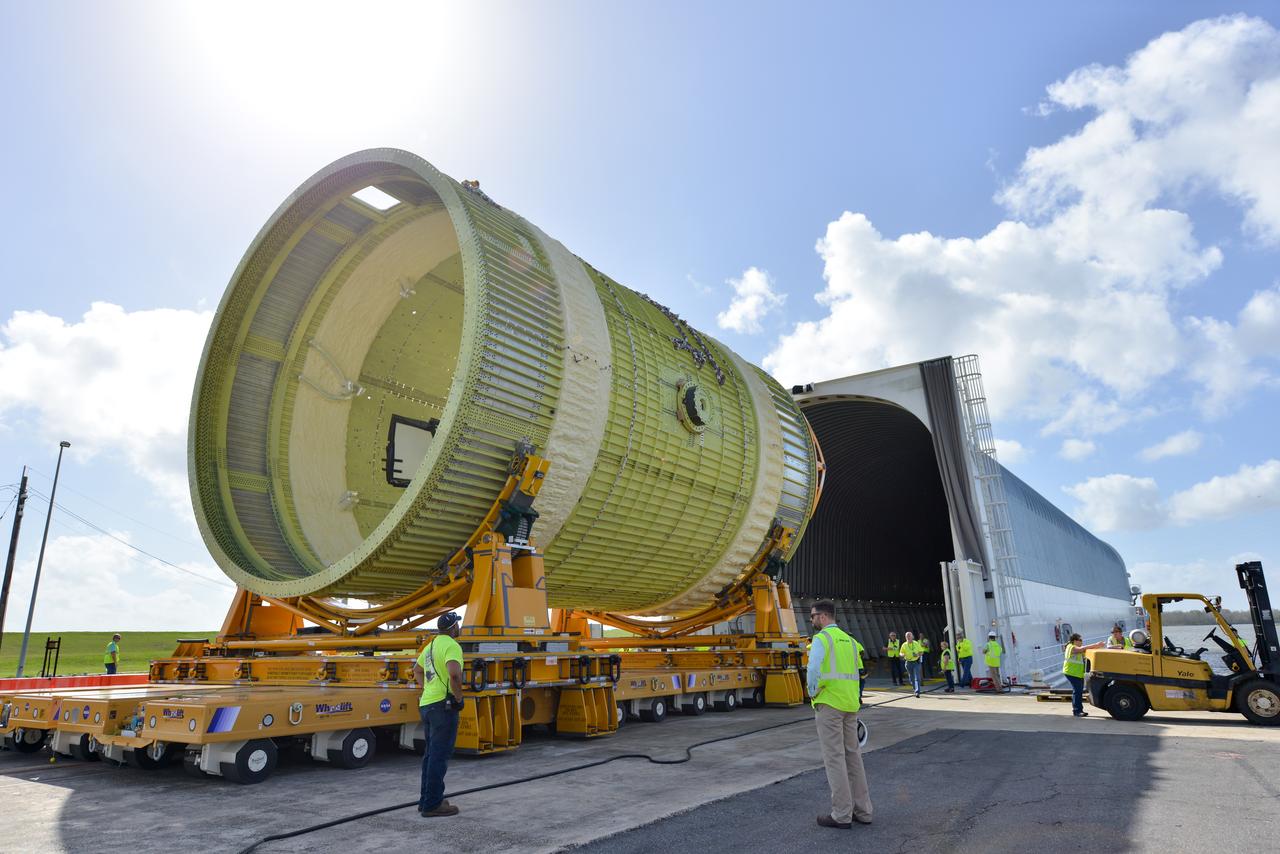
Intertank STA awaits loading onto the Pegasus Barge
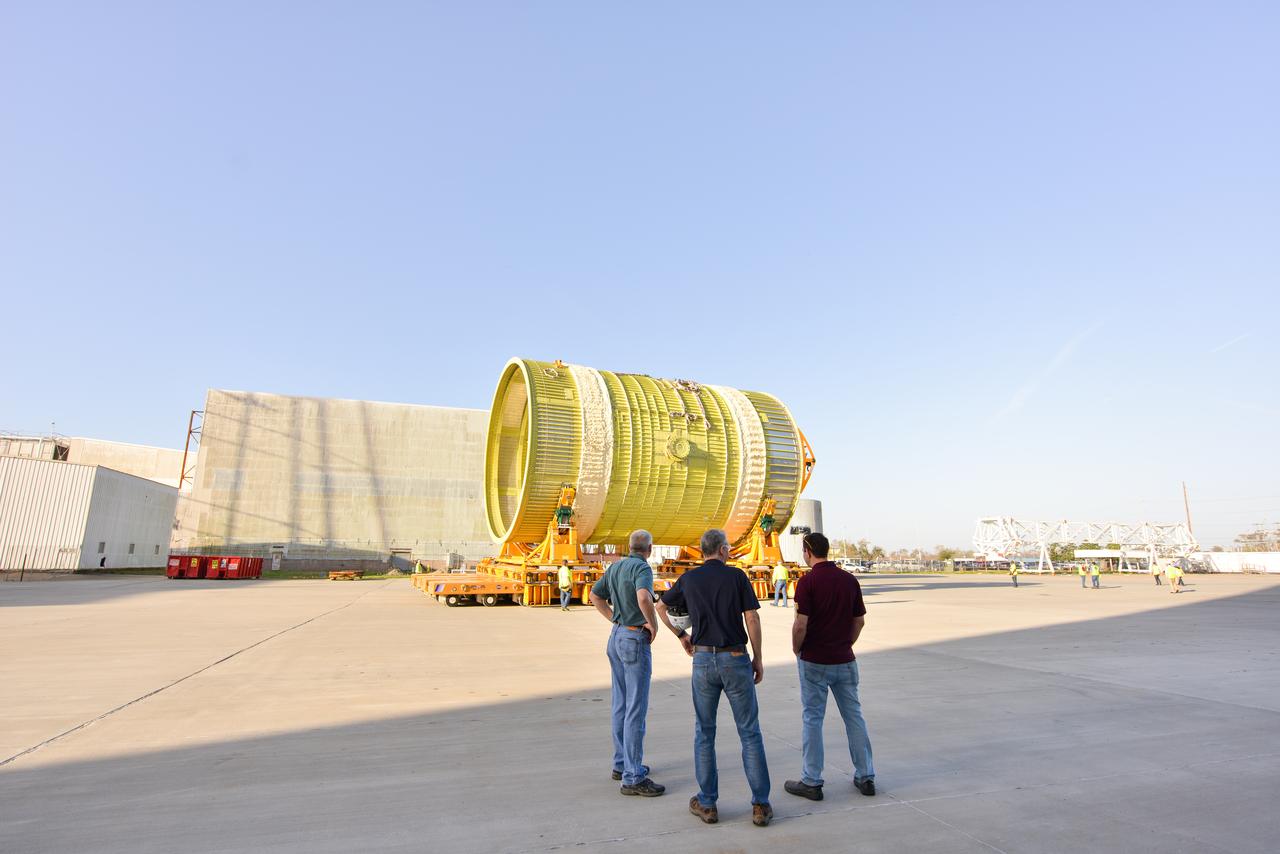
Intertank STA en route to Pegasus Barge
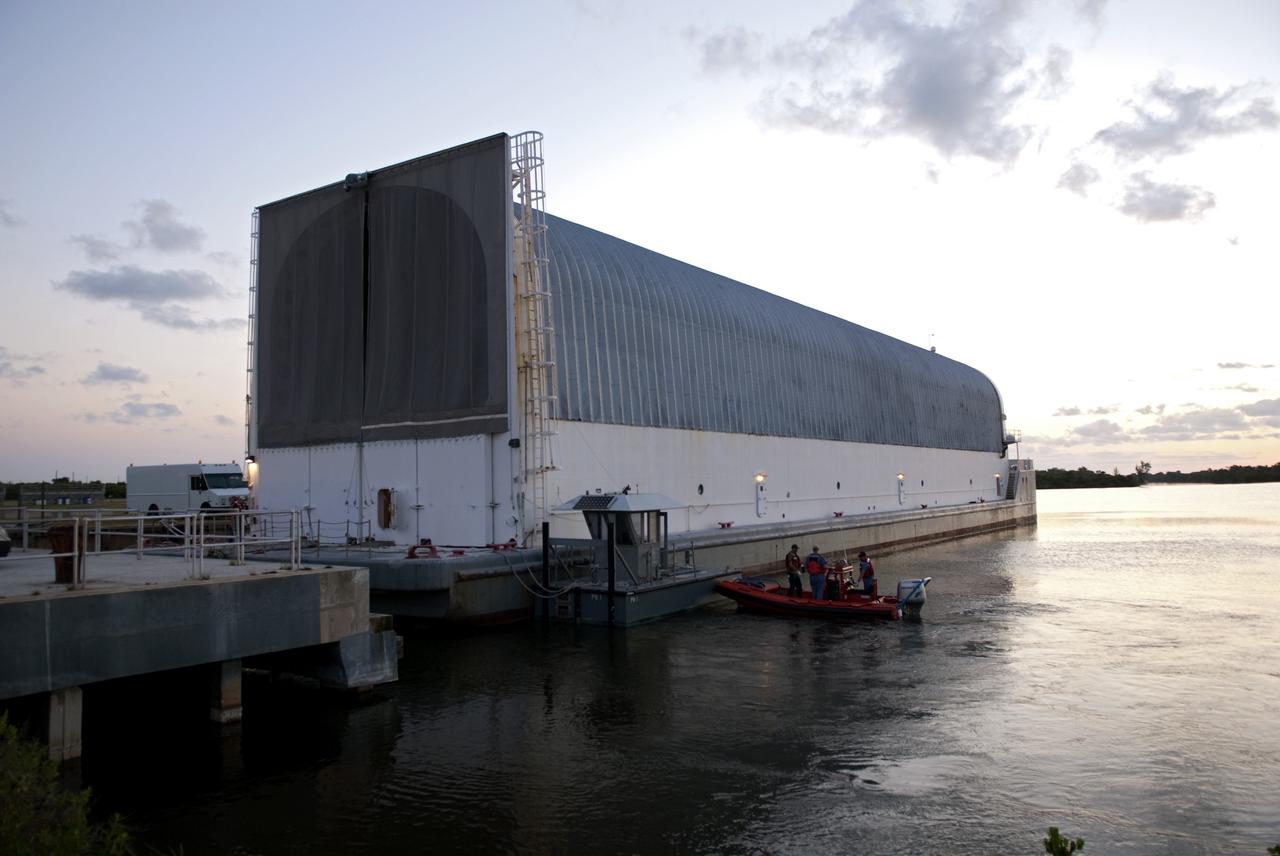
CAPE CANAVERAL, Fla. -- Workers in a skiff prepare the Pegasus Barge floating in the Launch Complex 39 area Turn Basin at NASA's Kennedy Space Center in Florida, for its move from the dock to a more secure mooring area. The barge is 266 ft long and 50 ft wide and has been used by the Space Shuttle Program to transport external fuel tanks over 900 miles of inland and open ocean waterways from the Michoud Assembly Facility in Louisiana to Kennedy. Photo credit: NASA/Jim Grossmann
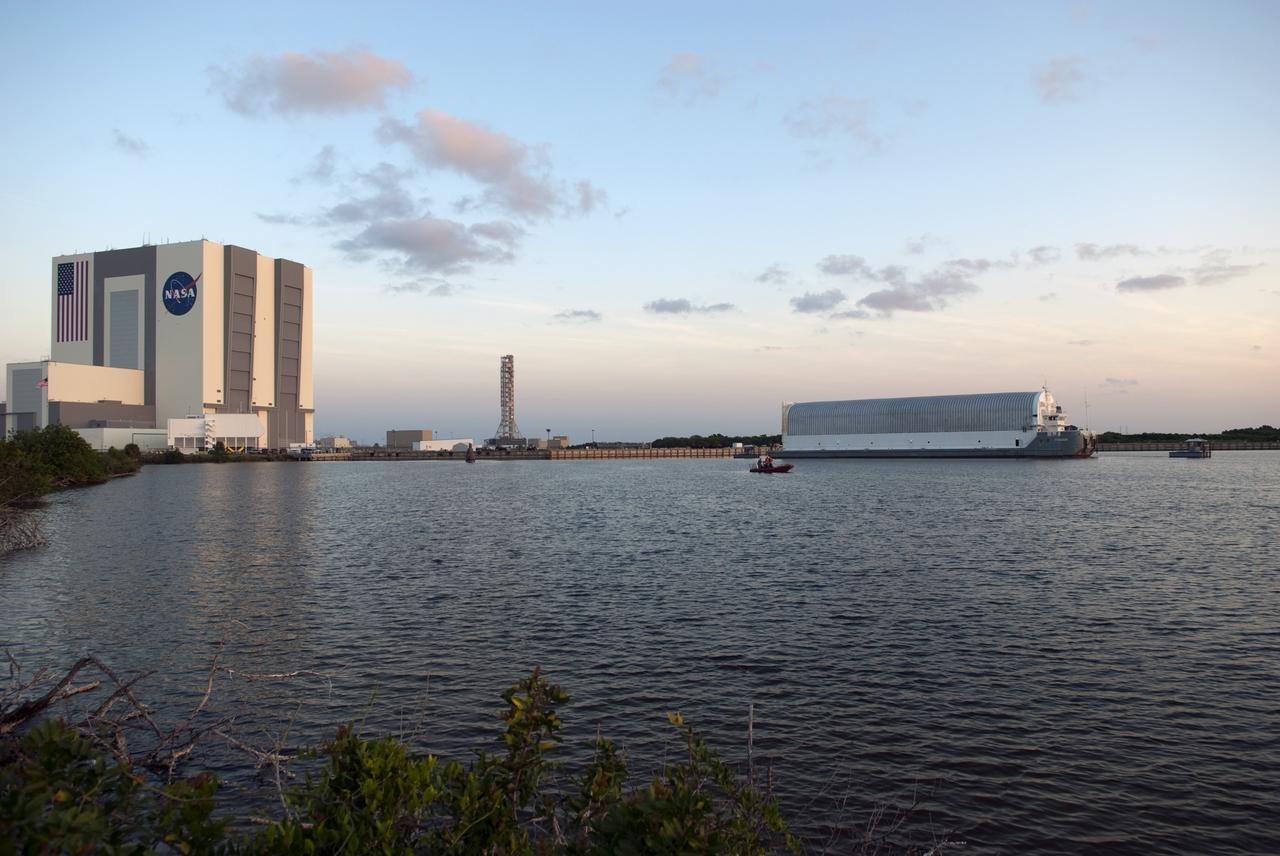
CAPE CANAVERAL, Fla. -- As the sun rises over the Vehicle Assembly Building at NASA's Kennedy Space Center in Florida, tugboats tow the Pegasus Barge from the dock in the Turn Basin to a more secure mooring area. The barge is 266 ft long and 50 ft wide and has been used by the Space Shuttle Program to transport external fuel tanks over 900 miles of inland and open ocean waterways from the Michoud Assembly Facility in Louisiana to Kennedy. Photo credit: NASA/Jim Grossmann
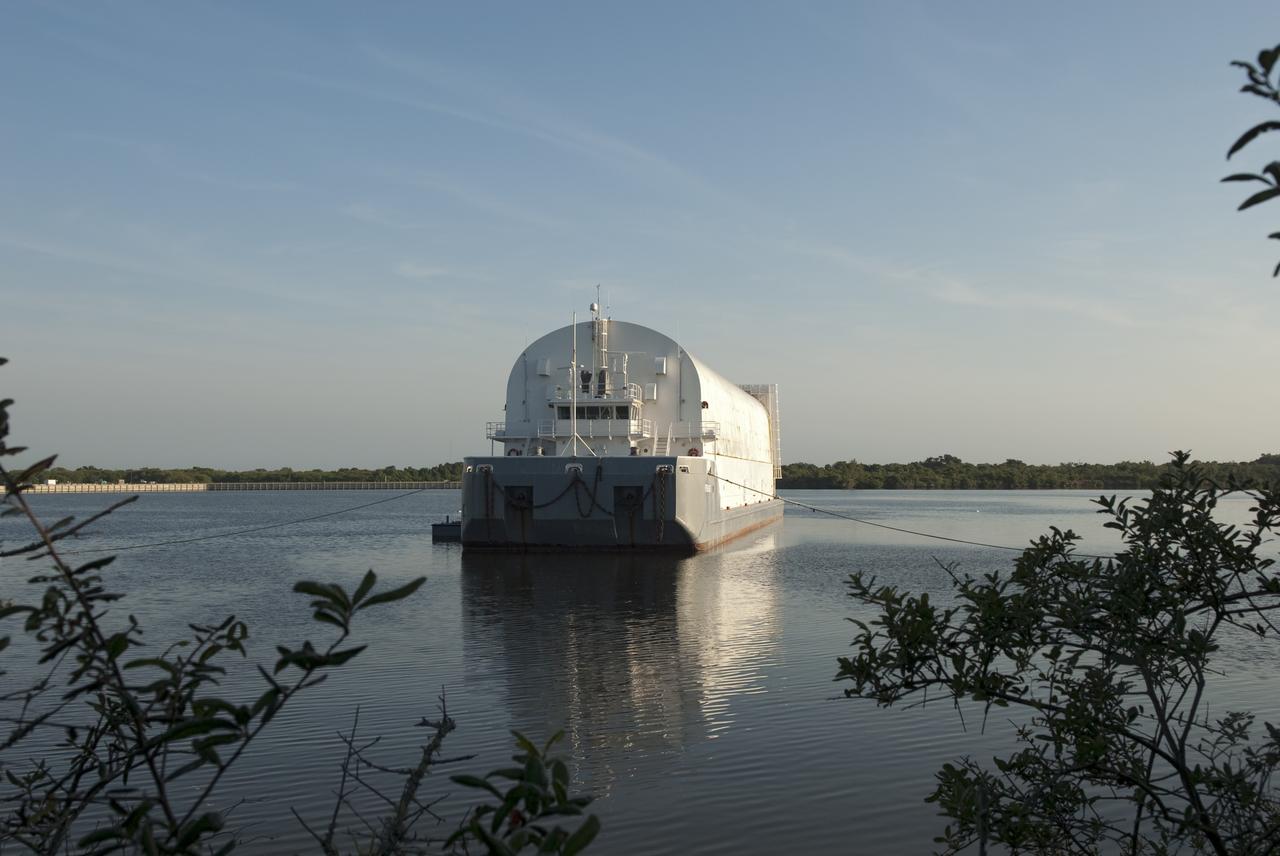
CAPE CANAVERAL, Fla. -- Tugboats in the Turn Basin in the Launch Complex 39 area at NASA's Kennedy Space Center in Florida have towed the Pegasus Barge from the dock to a more secure mooring area. The barge is 266 ft long and 50 ft wide and has been used by the Space Shuttle Program to transport external fuel tanks over 900 miles of inland and open ocean waterways from the Michoud Assembly Facility in Louisiana to Kennedy. Photo credit: NASA/Jim Grossmann
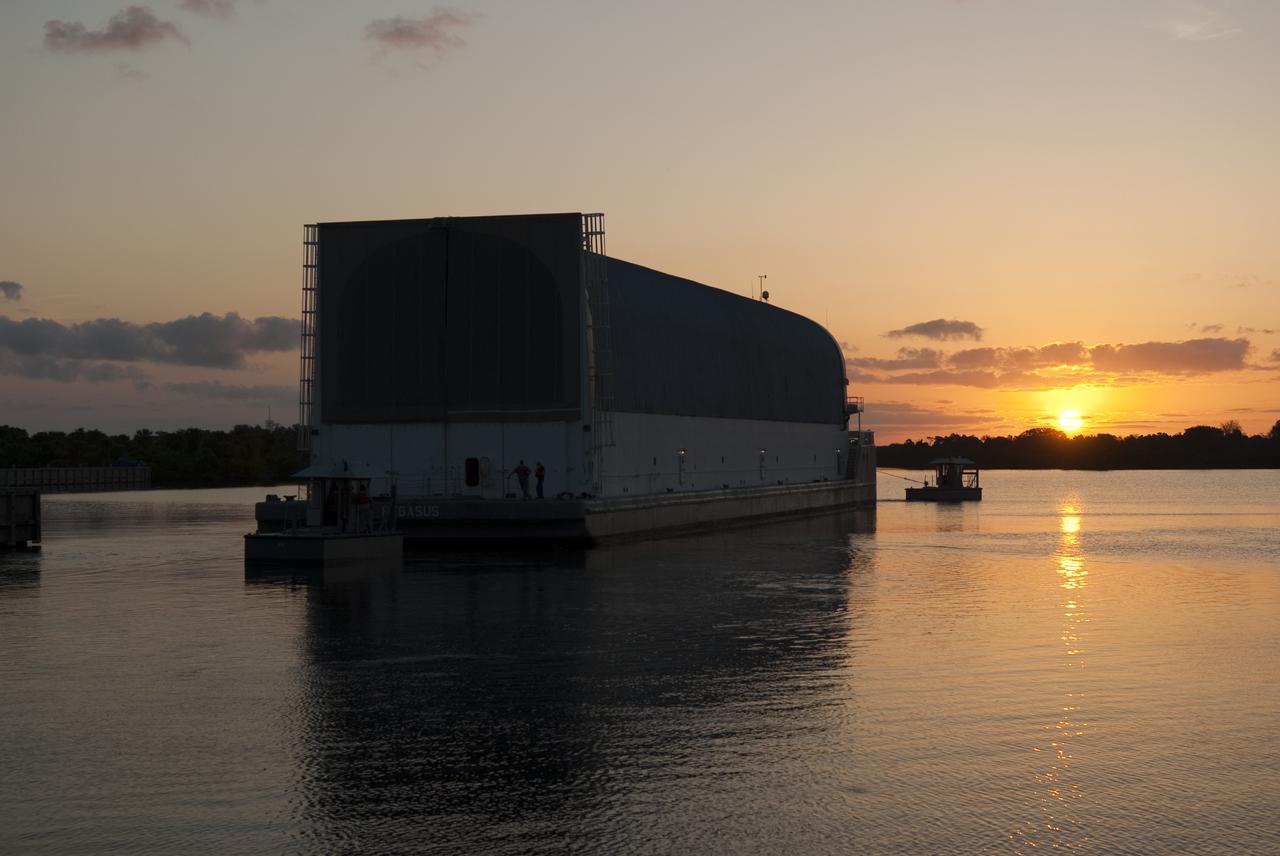
CAPE CANAVERAL, Fla. -- The morning sun rises over the Pegasus Barge floating in the Launch Complex 39 area Turn Basin at NASA's Kennedy Space Center in Florida, as it is being towed from the dock to a more secure mooring area. The barge is 266 ft long and 50 ft wide and has been used by the Space Shuttle Program to transport external fuel tanks over 900 miles of inland and open ocean waterways from the Michoud Assembly Facility in Louisiana to Kennedy. Photo credit: Jim Grossmann

CAPE CANAVERAL, Fla. -- With the Vehicle Assembly Building in the background the Pegasus Barge is moored in a secure area of the Turn Basin in the Launch Complex 39 area at NASA's Kennedy Space Center in Florida. The barge is 266 ft long and 50 ft wide and has been used by the Space Shuttle Program to transport external fuel tanks over 900 miles of inland and open ocean waterways from the Michoud Assembly Facility in Louisiana to Kennedy. Photo credit: NASA/Jim Grossmann

CAPE CANAVERAL, Fla. -- At sunrise, tugboats in the Turn Basin in the Launch Complex 39 area at NASA's Kennedy Space Center in Florida are towing the Pegasus Barge from the dock to a more secure mooring area. The barge is 266 ft long and 50 ft wide and has been used by the Space Shuttle Program to transport external fuel tanks over 900 miles of inland and open ocean waterways from the Michoud Assembly Facility in Louisiana to Kennedy. Photo credit: NASA/Jim Grossmann
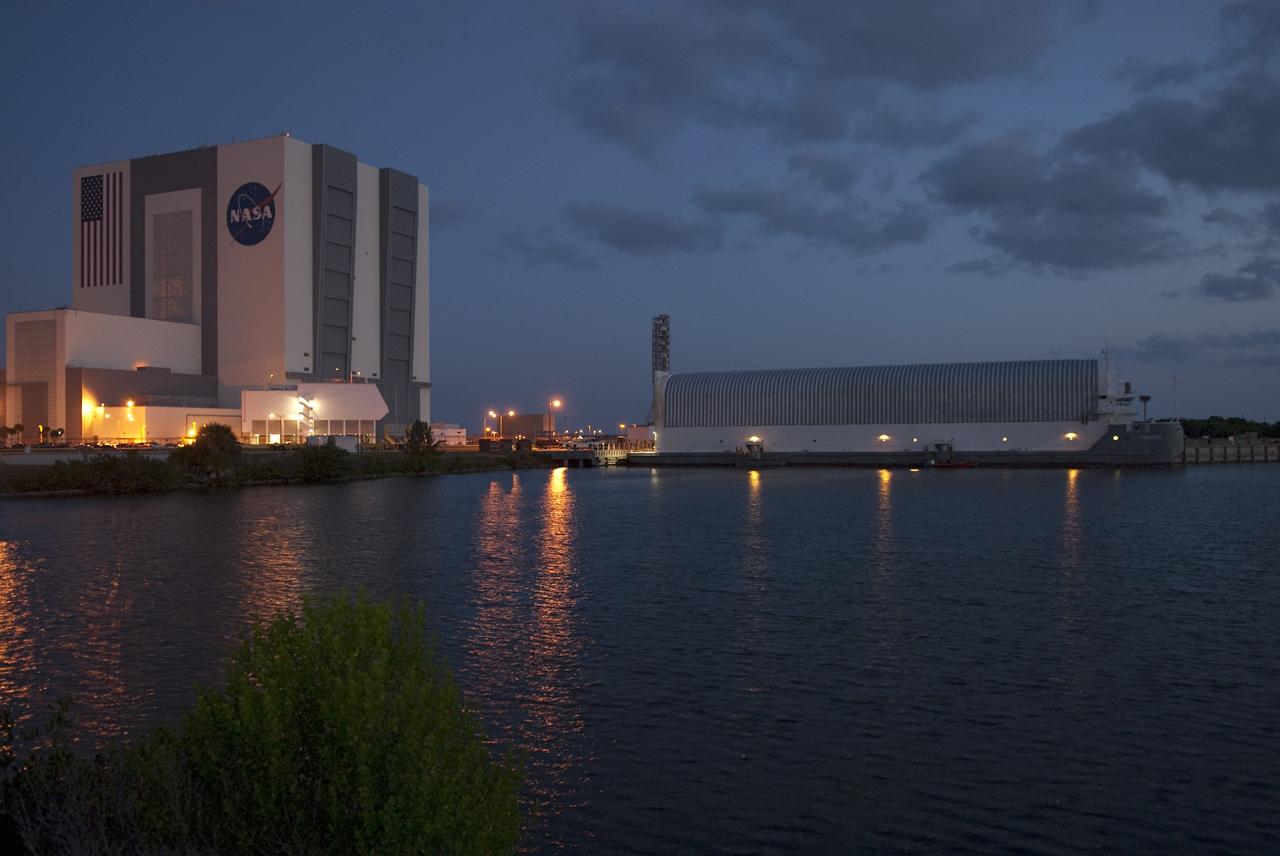
CAPE CANAVERAL, Fla. -- Viewed from across the Turn Basin in the Launch Complex 39 area at NASA's Kennedy Space Center in Florida, the Pegasus Barge is bathed in lights. The barge is being prepared to be towed from the dock to a more secure mooring area. The barge is 266 ft long and 50 ft wide and has been used by the Space Shuttle Program to transport external fuel tanks over 900 miles of inland and open ocean waterways from the Michoud Assembly Facility in Louisiana to Kennedy. Photo credit: NASA/Jim Grossmann
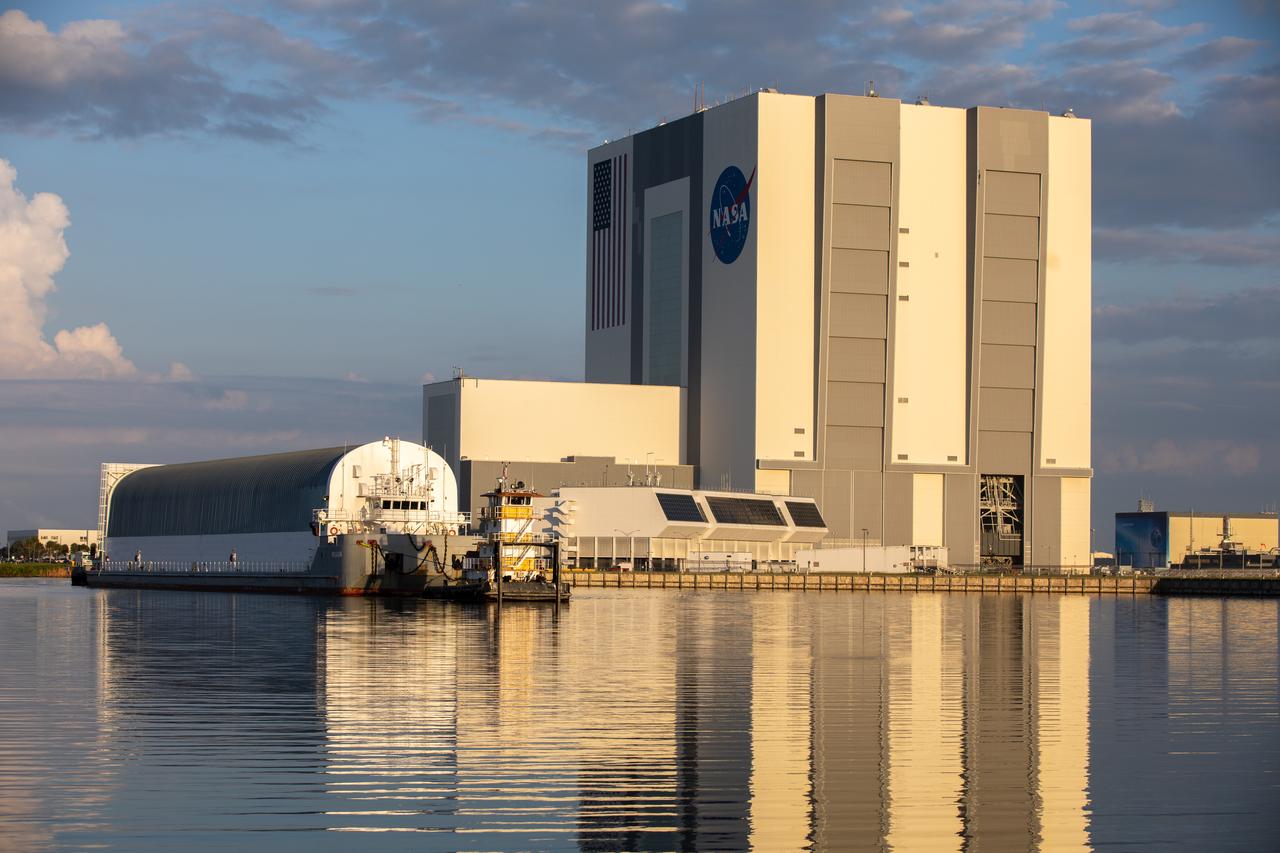
NASA’s Pegasus barge departs from the agency’s Kennedy Space Center in Florida on Aug. 4, 2020, for its trip to NASA’s Michoud Assembly Facility in Louisiana. The Pegasus barge arrived at Kennedy on July 29, delivering the launch vehicle stage adapter (LVSA) for the agency’s Space Launch System (SLS) rocket – the most powerful rocket NASA has ever built, providing the muscle necessary to get to the Moon and eventually to Mars. In the background is the Vehicle Assembly Building, where the LVSA – hardware that will connect the core stage of the rocket to the upper stage – is now undergoing processing. The next time the Pegasus barge returns to Kennedy, it will be carrying the SLS core stage – the final piece of the rocket that needs to be delivered ahead of the Artemis I launch.
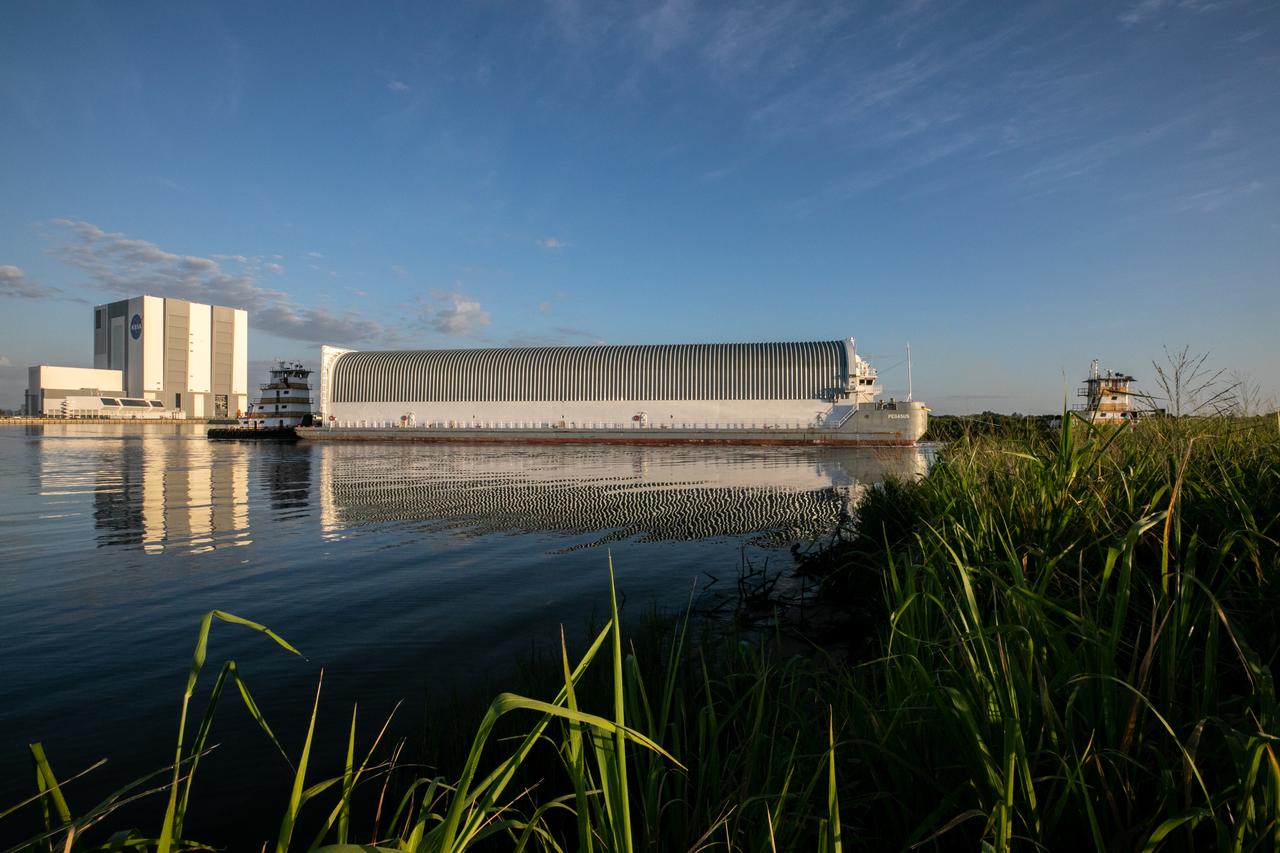
NASA’s Pegasus barge departs from the agency’s Kennedy Space Center in Florida on Aug. 4, 2020, for its trip to NASA’s Michoud Assembly Facility in Louisiana. The Pegasus barge arrived at Kennedy on July 29, delivering the launch vehicle stage adapter (LVSA) for the agency’s Space Launch System (SLS) rocket – the most powerful rocket NASA has ever built, providing the muscle necessary to get to the Moon and eventually to Mars. In the background is the Vehicle Assembly Building, where the LVSA – hardware that will connect the core stage of the rocket to the upper stage – is now undergoing processing. The next time the Pegasus barge returns to Kennedy, it will be carrying the SLS core stage – the final piece of the rocket that needs to be delivered ahead of the Artemis I launch.
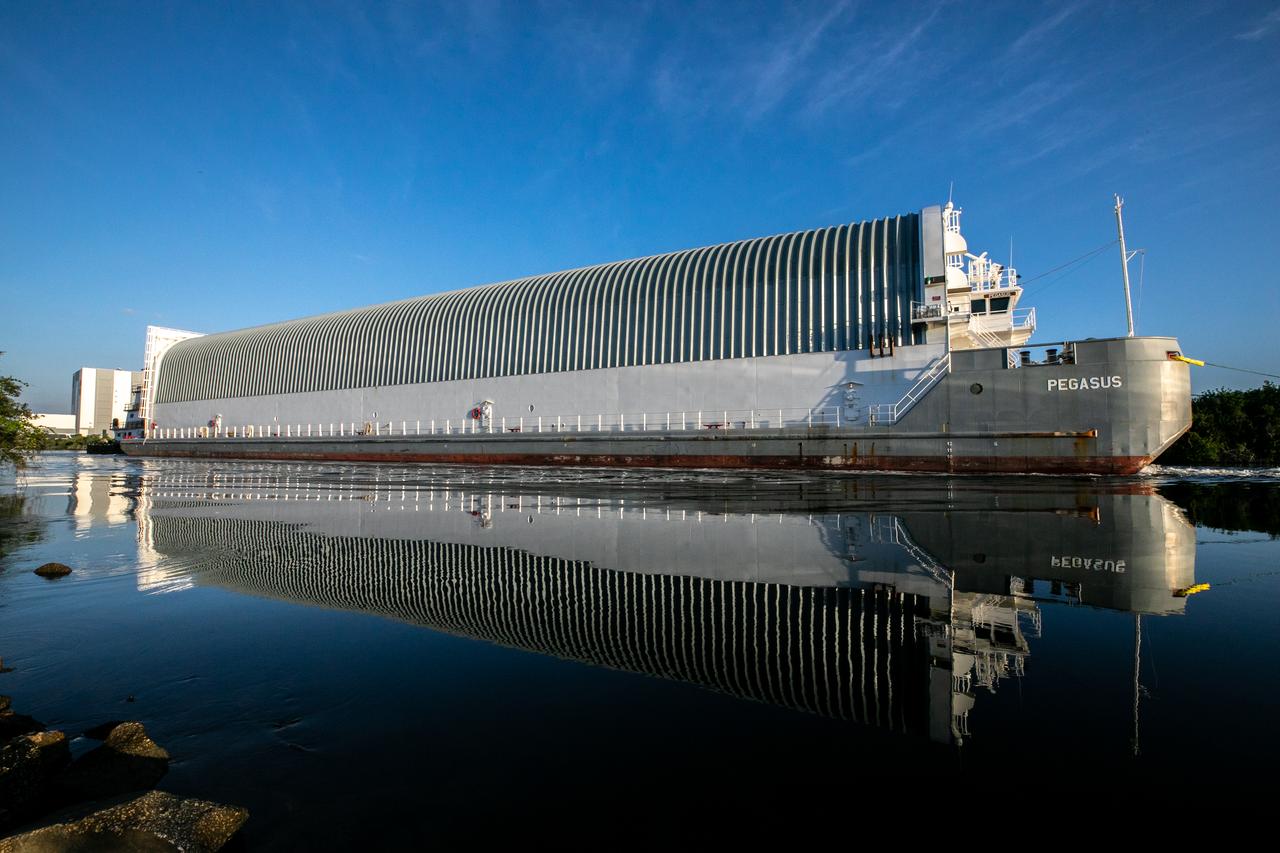
NASA’s Pegasus barge departs from the agency’s Kennedy Space Center in Florida on Aug. 4, 2020, for its trip to NASA’s Michoud Assembly Facility in Louisiana. The Pegasus barge arrived at Kennedy on July 29, delivering the launch vehicle stage adapter (LVSA) for the agency’s Space Launch System (SLS) rocket – the most powerful rocket NASA has ever built, providing the muscle necessary to get to the Moon and eventually to Mars. In the background is the Vehicle Assembly Building, where the LVSA – hardware that will connect the core stage of the rocket to the upper stage – is now undergoing processing. The next time the Pegasus barge returns to Kennedy, it will be carrying the SLS core stage – the final piece of the rocket that needs to be delivered ahead of the Artemis I launch.
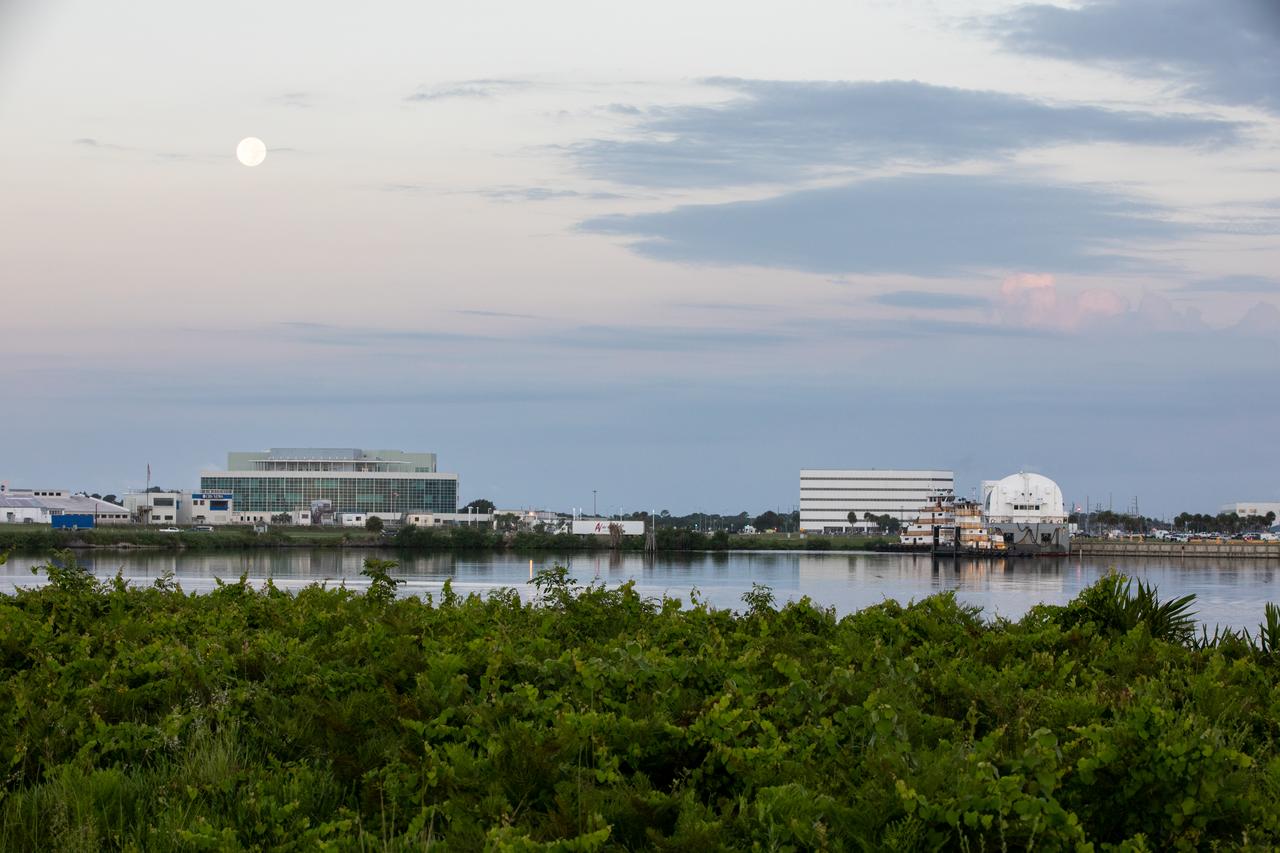
NASA’s Pegasus barge, seen off toward the right, prepares to depart from the agency’s Kennedy Space Center in Florida on Aug. 4, 2020, for its trip to NASA’s Michoud Assembly Facility in Louisiana. The Pegasus barge arrived at Kennedy on July 29, delivering the launch vehicle stage adapter (LVSA) for the agency’s Space Launch System (SLS) rocket – the most powerful rocket NASA has ever built, providing the muscle necessary to get to the Moon and eventually to Mars. The LVSA – now undergoing processing inside the Vehicle Assembly Building – will connect the core stage of the rocket to the upper stage. The next time the Pegasus barge returns to Kennedy, it will be carrying the SLS core stage – the final piece of the rocket that needs to be delivered ahead of the Artemis I launch.
NASA’s Pegasus barge, with the 212-foot-long Space Launch System (SLS) rocket core stage pathfinder secured inside, departs the Launch Complex 39 turn basin wharf at NASA’s Kennedy Space Center in Florida on Oct. 31, 2019. The core stage pathfinder is a full-scale mock-up of the rocket's core stage. It was used by the Exploration Ground Systems Program and their contractor, Jacobs, to practice offloading, moving and stacking maneuvers inside the Vehicle Assembly Building, using important ground support equipment to train employees and certify all the equipment works properly. The pathfinder was at Kennedy for about a month. The barge with the pathfinder will make the trek back to NASA's Michoud Assembly Facility in Louisiana.
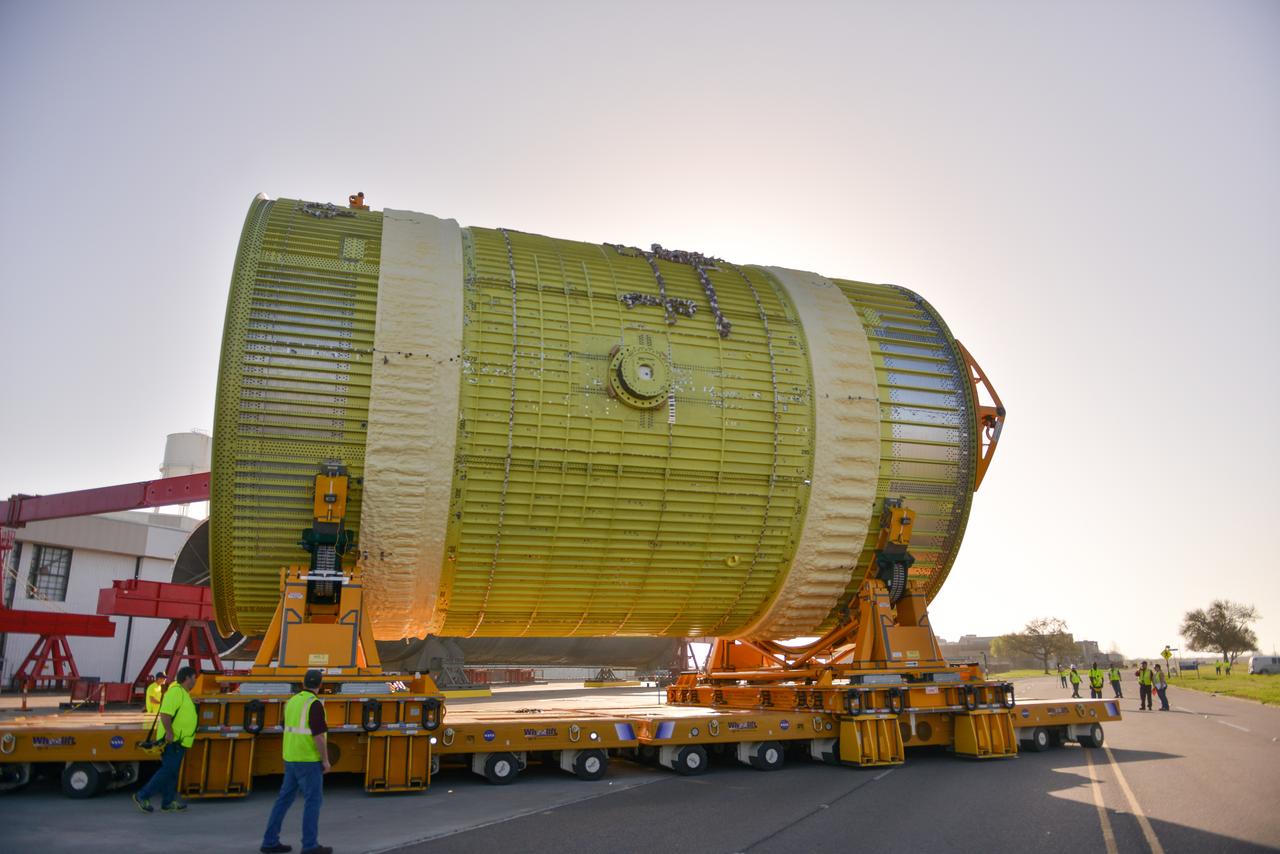
Intertank STA heading to the Pegasus Barge
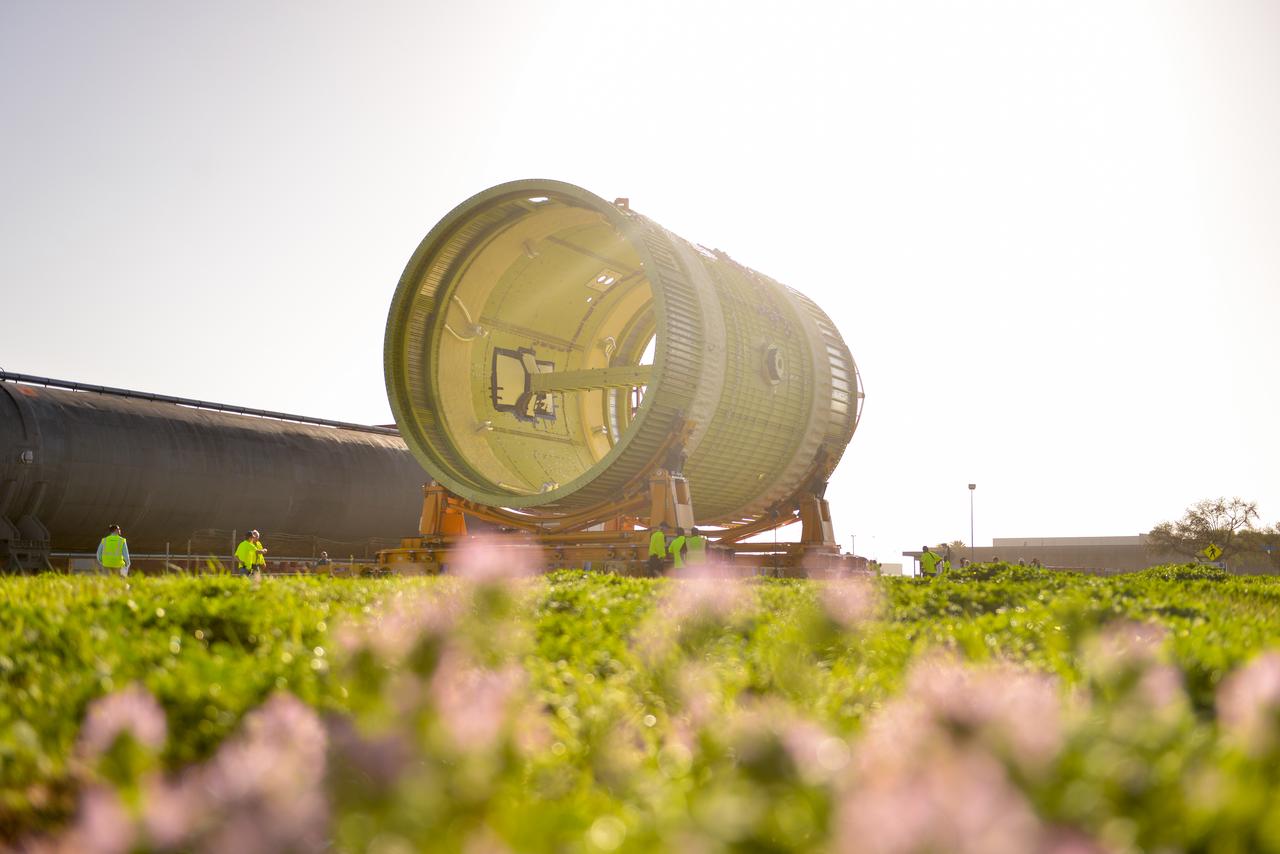
Intertank STA on way to the Pegasus Barge.
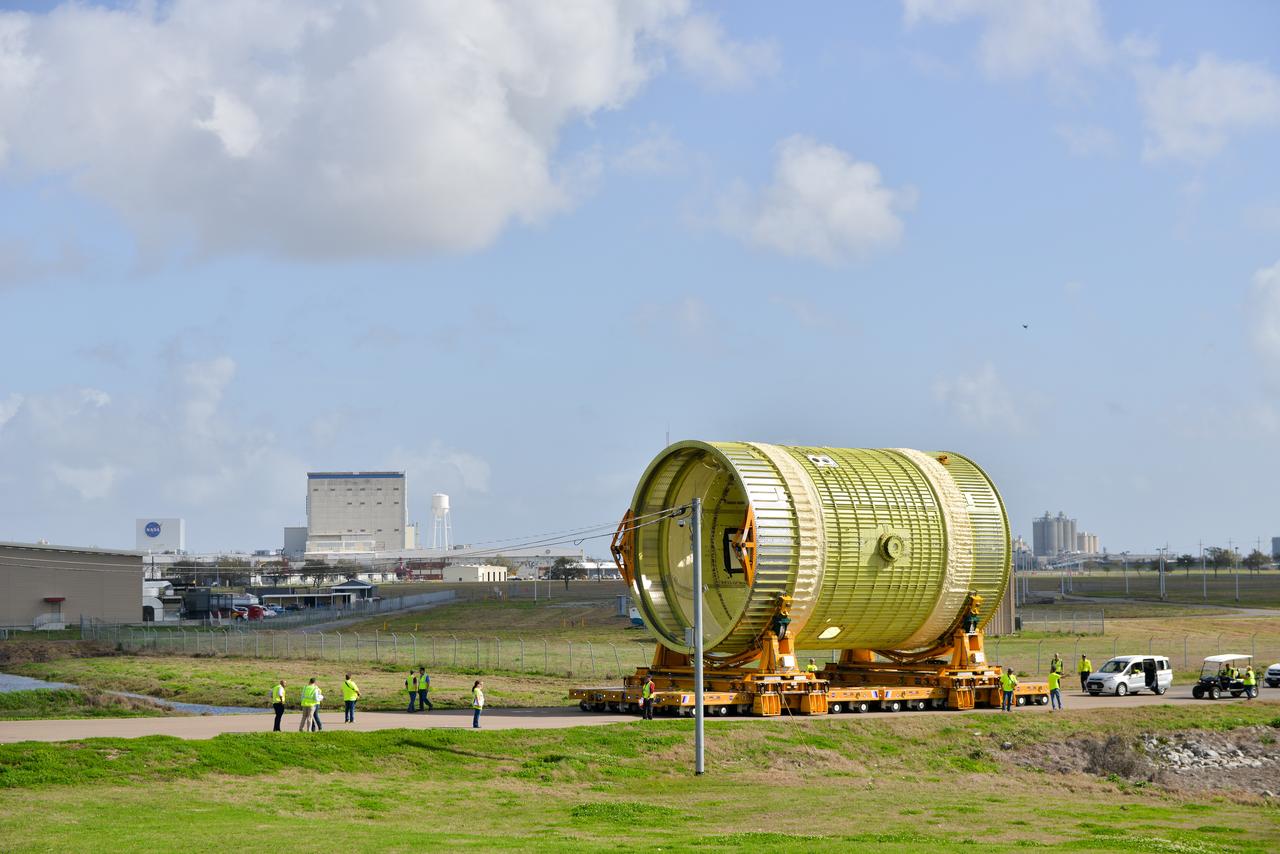
Intertank STA en route to the Barge, Pegasus.
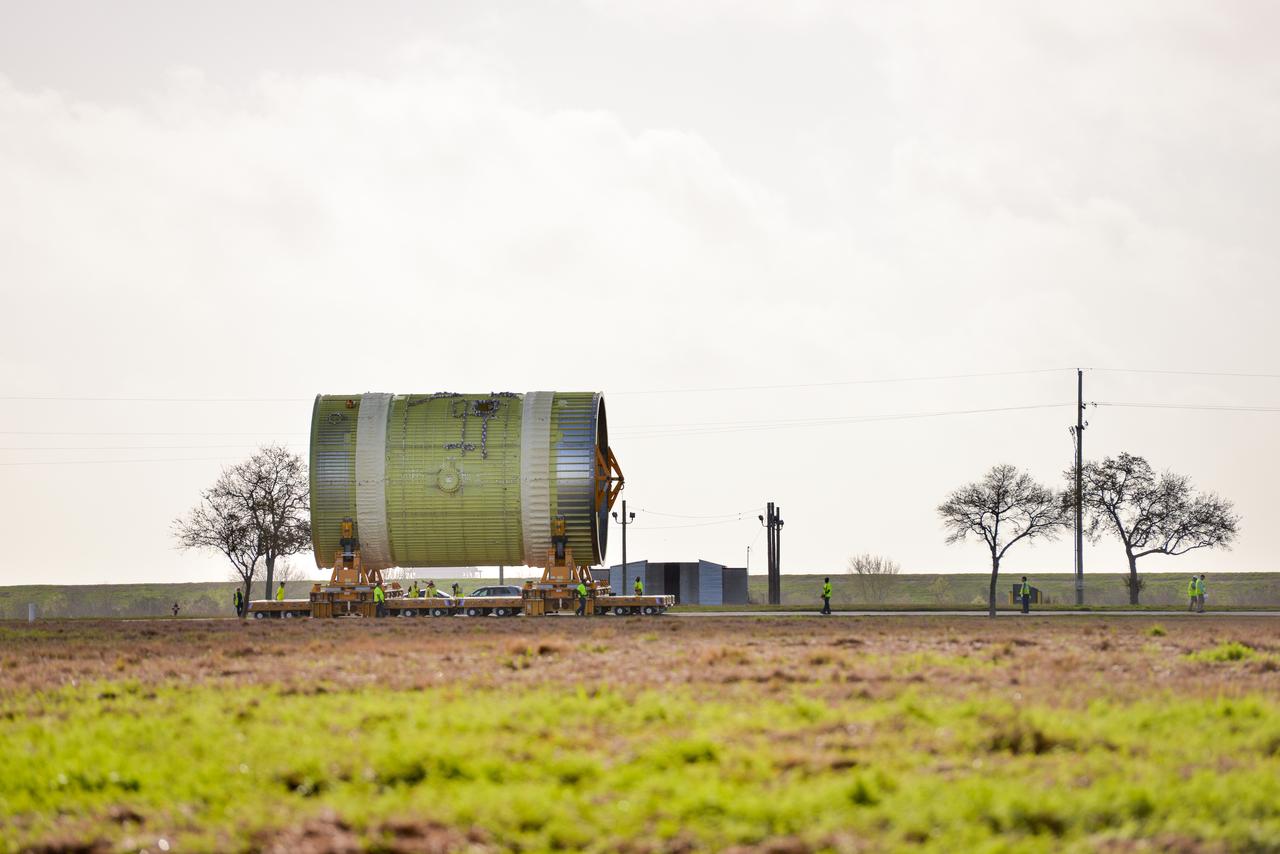
Intertank STA en route to the NASA Barge, Pegasus.
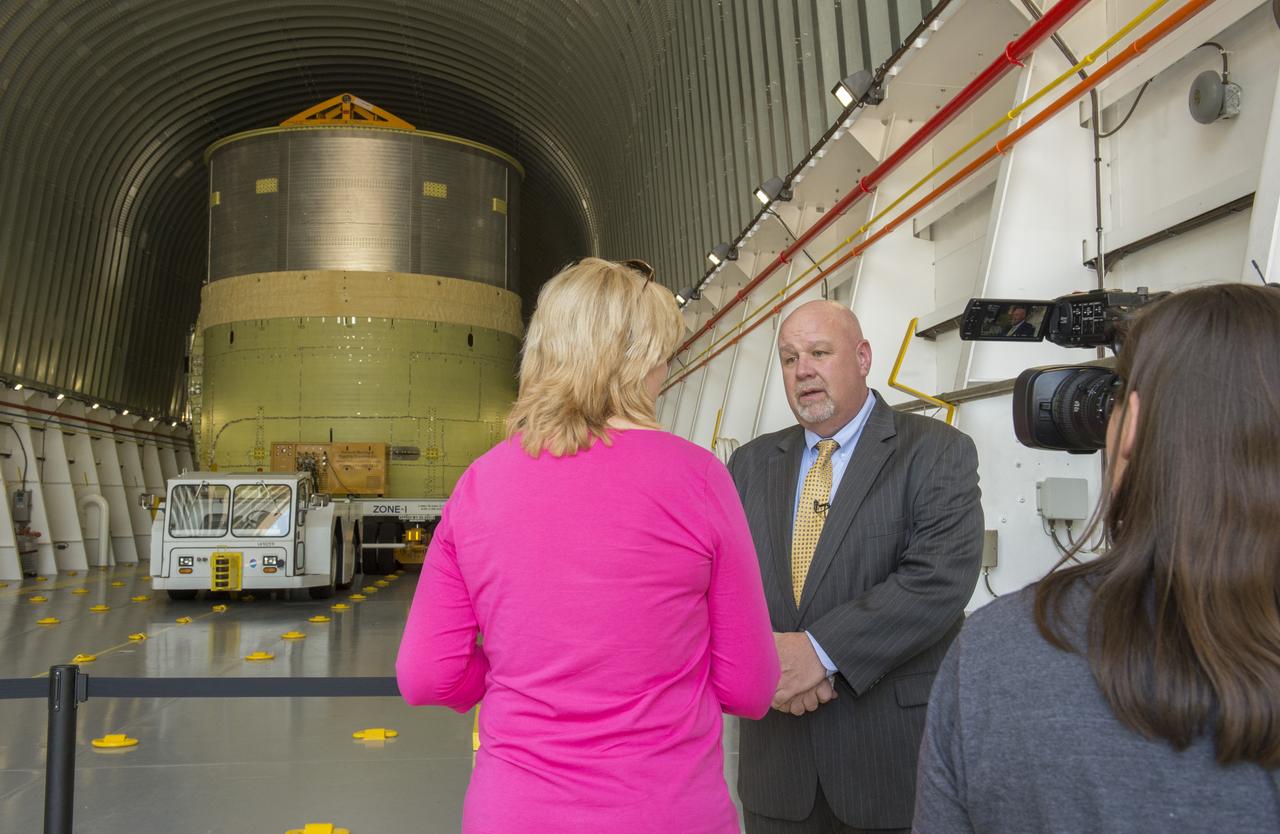
The interior of the NASA transportation barge with the RS-25 engine core stage test article. SLS manager John Honeycutt is interviewed by the local media.
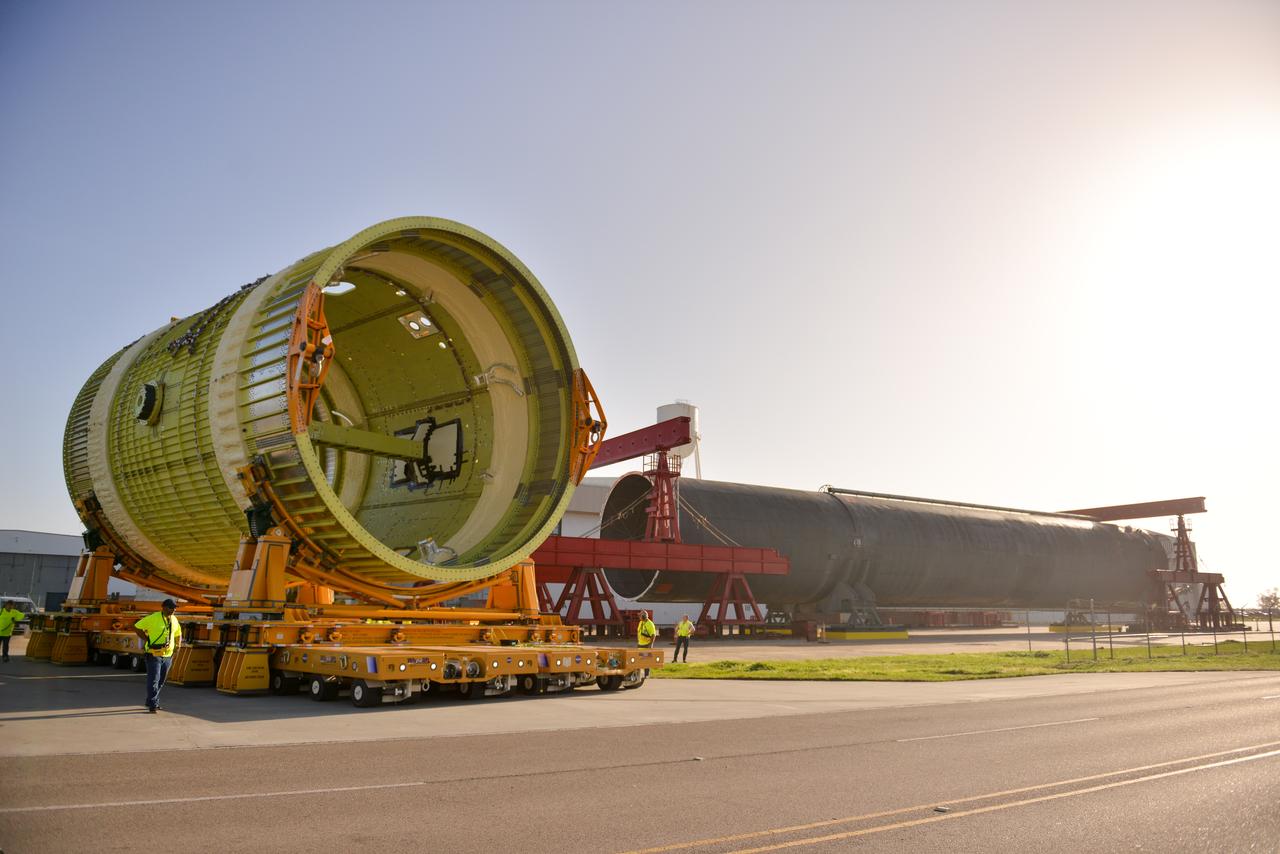
Intertank STA passes the Core Stage Pathfinder on it's way to the Pegasus Barge.
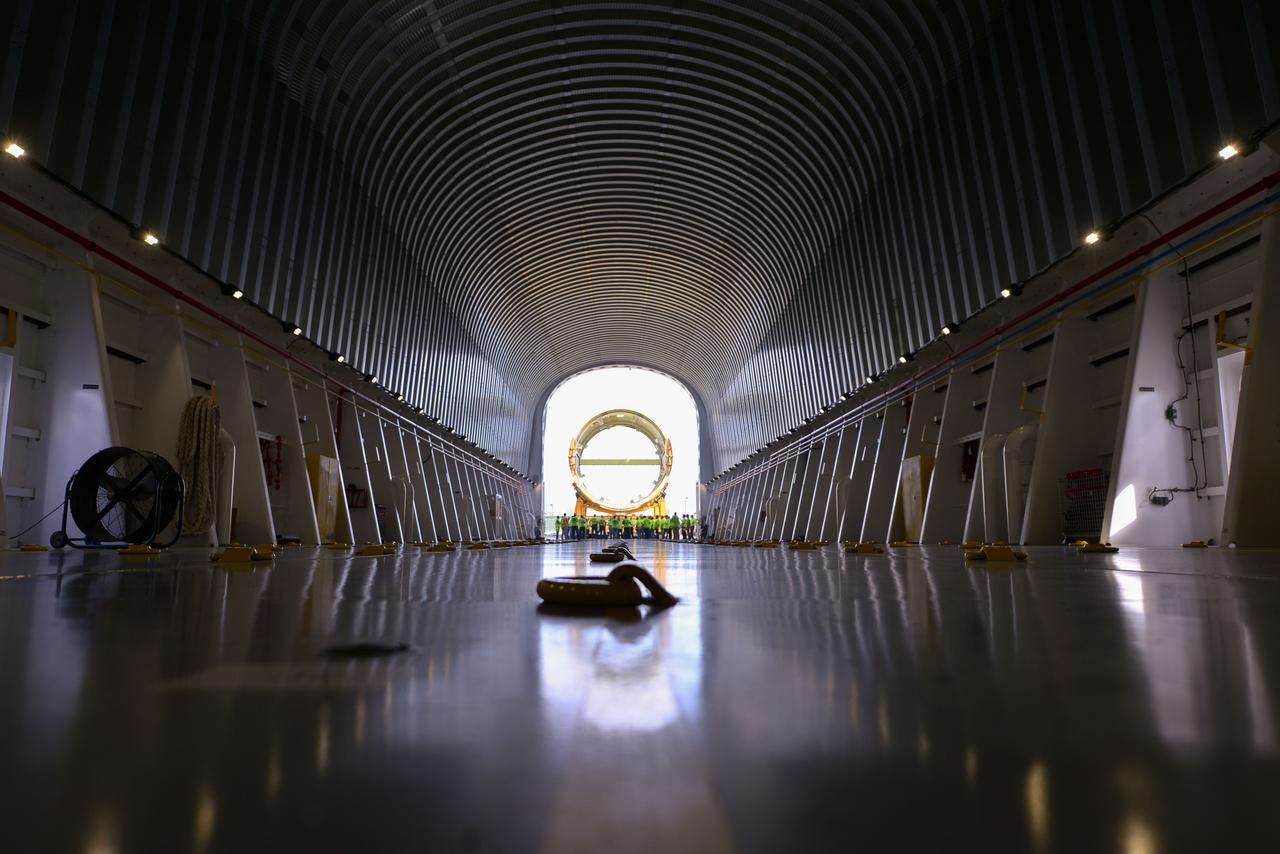
The S3 Move Crew holds a team tag up prior to loading the Intertank STA on the Pegasus Barge.
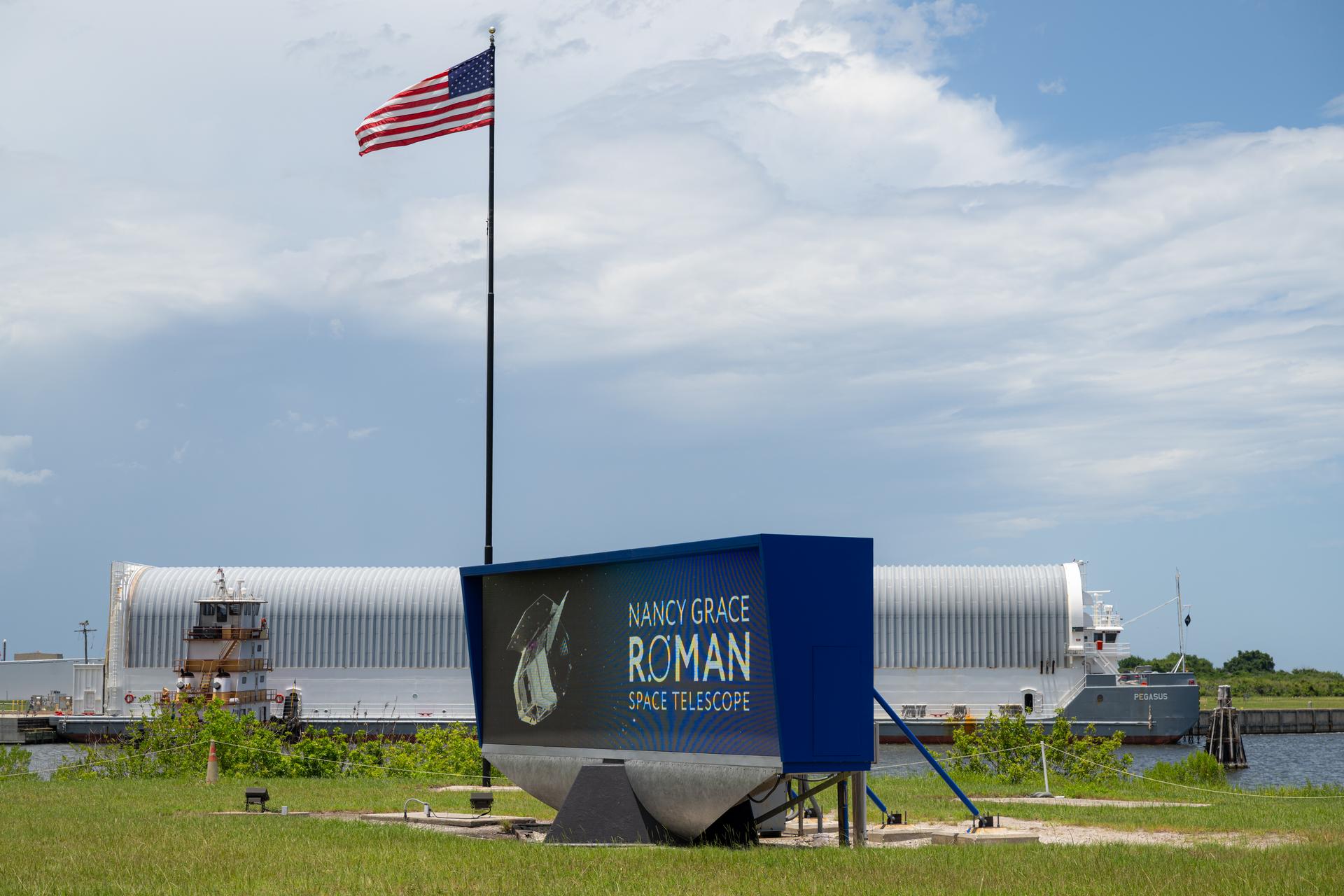
NASA’s Pegasus barge is seen, Sunday, June 21, at NASA’s Kennedy Space Center in Florida. The Pegasus barge delivered NASA’s Nancy Grace Roman Space Telescope and a weather cover for the Artemis III SLS (Space Launch System) rocket core stage to Kennedy. Photo Credit: (NASA/John Kraus)
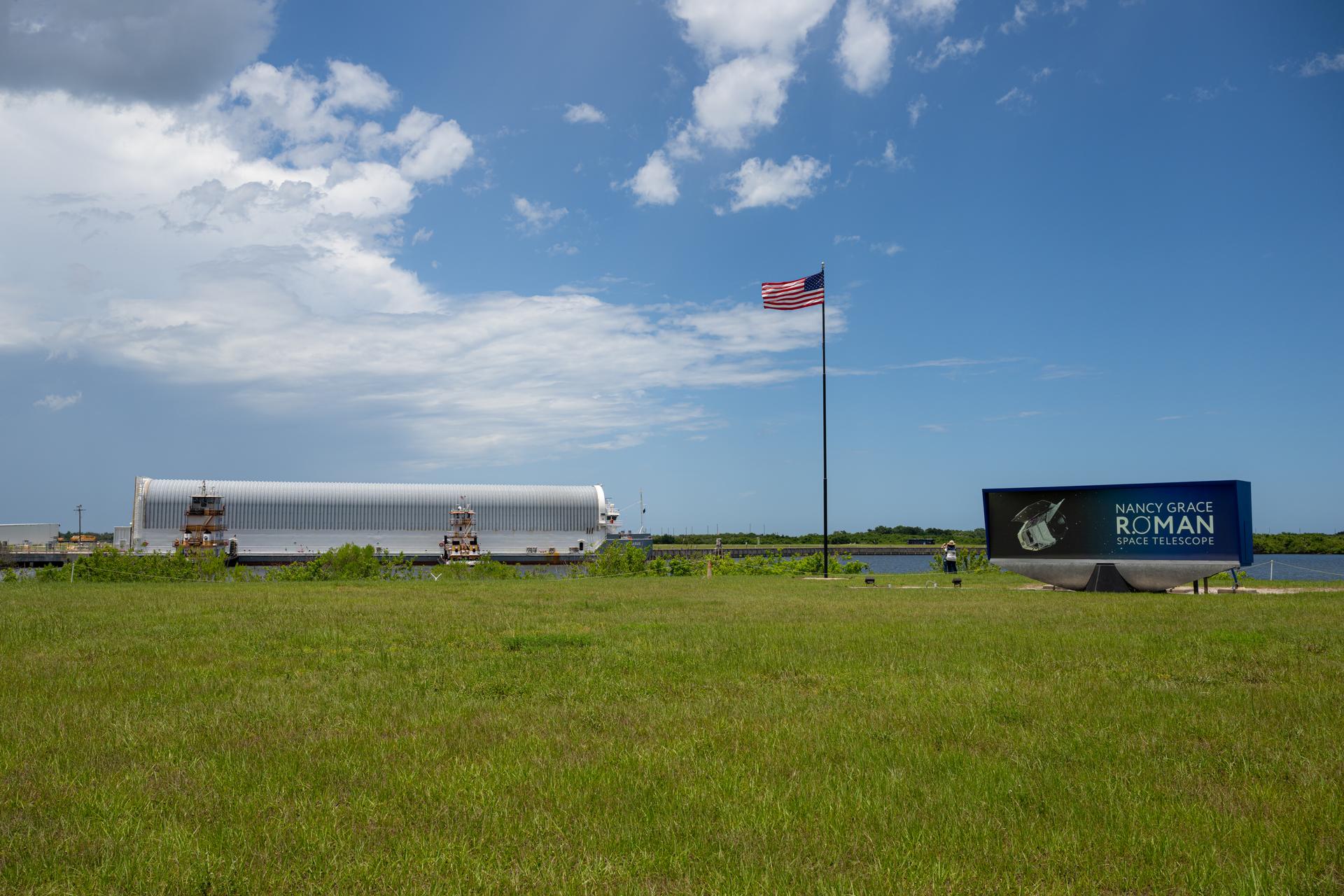
NASA’s Pegasus barge is seen, Sunday, June 21, at NASA’s Kennedy Space Center in Florida. The Pegasus barge delivered NASA’s Nancy Grace Roman Space Telescope and a weather cover for the Artemis III SLS (Space Launch System) rocket core stage to Kennedy. Photo Credit: (NASA/John Kraus)
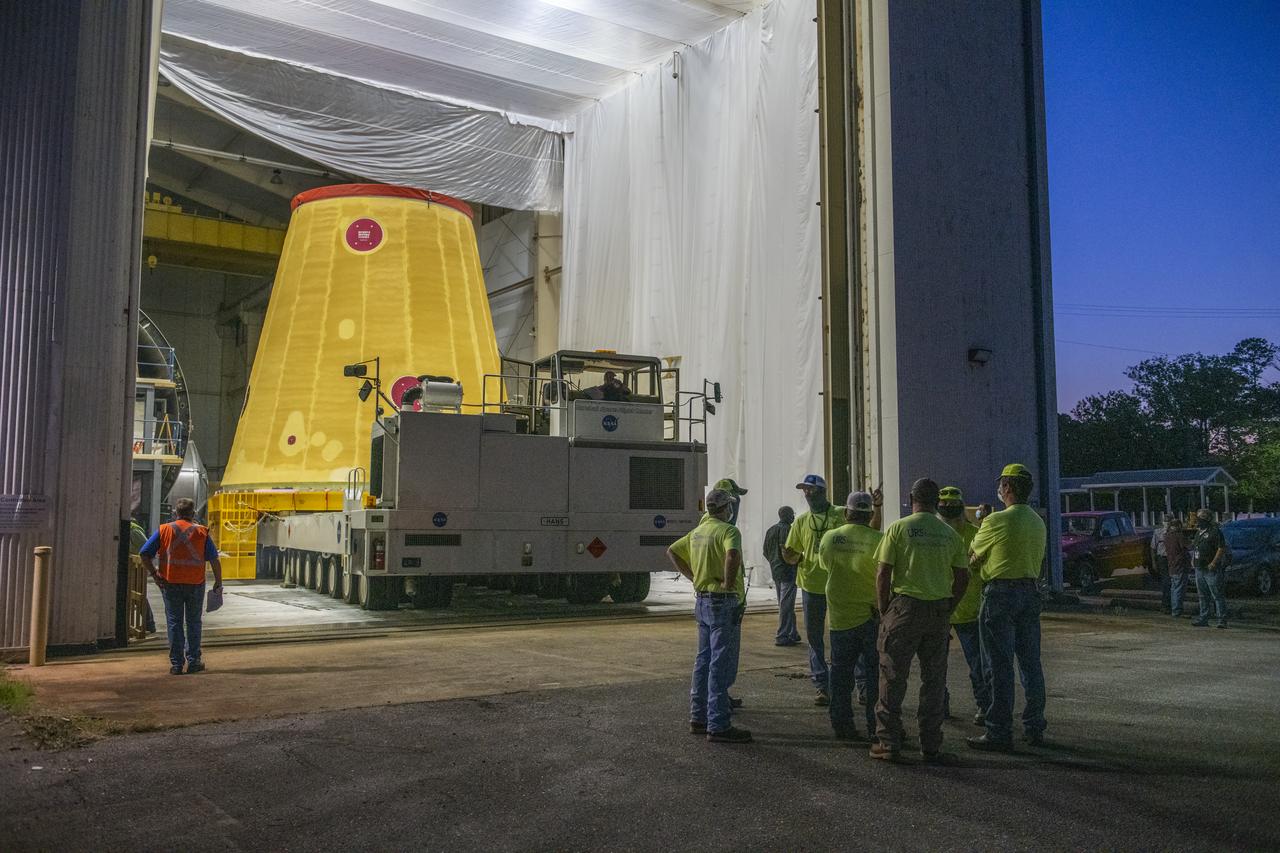
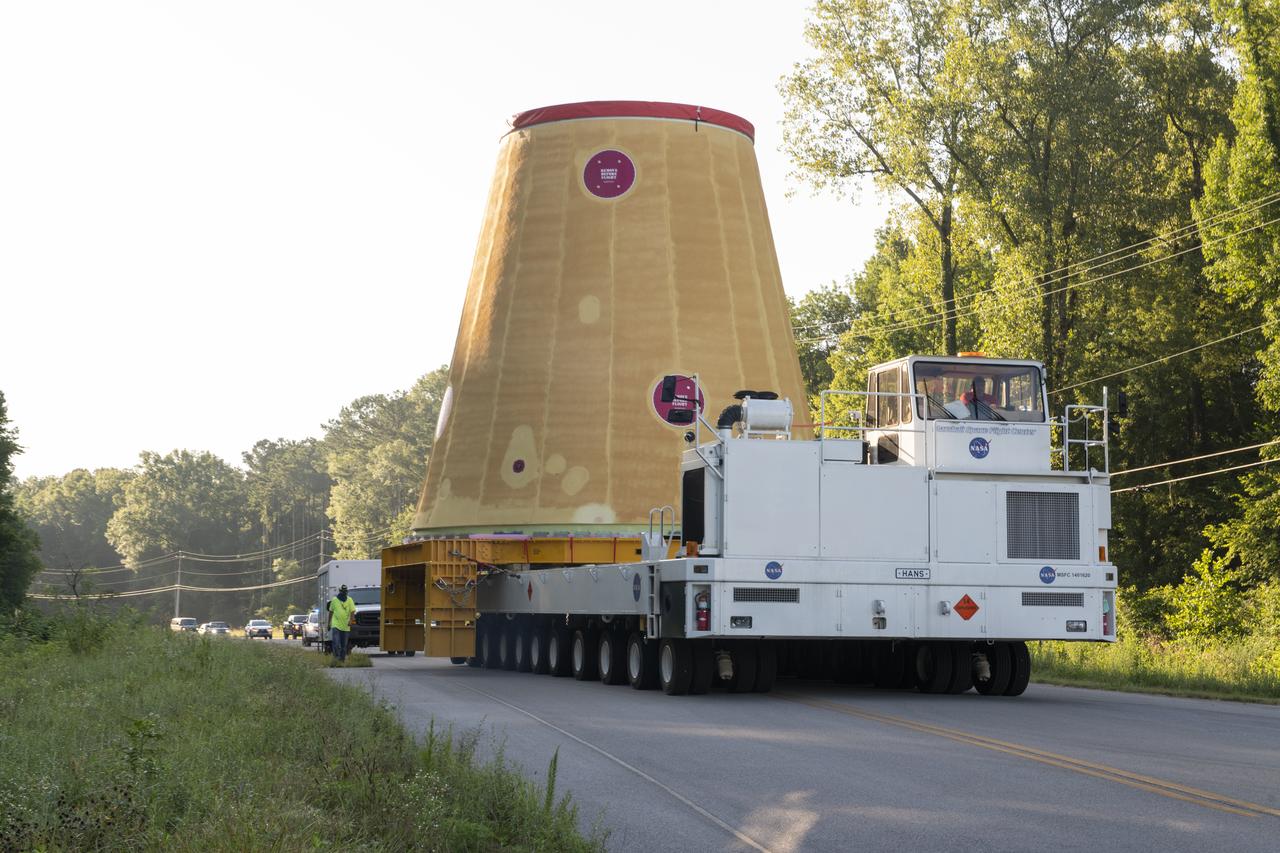
The move team loads the launch vehicle stage adapter, part of the agency’s new Space Launch System (SLS) rocket, on NASA’s Pegasus barge at NASA’s Marshall Space Flight Center in Huntsville, Alabama, July 17. The launch vehicle stage adapter, which connects the rocket’s 212-foot-tall core stage to the rocket’s upper stage, is being shipped to NASA’s Kennedy Space Center in Florida for Artemis I launch preparations. This is the final piece of Artemis I SLS rocket hardware built at Marshall to be delivered to Kennedy. Only the SLS core stage, currently in final testing at Stennis Space Center near Bay St. Louis, Mississippi, remains to be shipped to Kennedy on Pegasus. NASA is working to land the first woman and the next man on the Moon by 2024. SLS, along with Orion, the human landing system, and the Gateway in orbit around the Moon are NASA’s backbone for a new generation of deep space exploration.
The move team loads the launch vehicle stage adapter, part of the agency’s new Space Launch System (SLS) rocket, on NASA’s Pegasus barge at NASA’s Marshall Space Flight Center in Huntsville, Alabama, July 17. The launch vehicle stage adapter, which connects the rocket’s 212-foot-tall core stage to the rocket’s upper stage, is being shipped to NASA’s Kennedy Space Center in Florida for Artemis I launch preparations. This is the final piece of Artemis I SLS rocket hardware built at Marshall to be delivered to Kennedy. Only the SLS core stage, currently in final testing at Stennis Space Center near Bay St. Louis, Mississippi, remains to be shipped to Kennedy on Pegasus. NASA is working to land the first woman and the next man on the Moon by 2024. SLS, along with Orion, the human landing system, and the Gateway in orbit around the Moon are NASA’s backbone for a new generation of deep space exploration.
The move team loads the launch vehicle stage adapter, part of the agency’s new Space Launch System (SLS) rocket, on NASA’s Pegasus barge at NASA’s Marshall Space Flight Center in Huntsville, Alabama, July 17. The launch vehicle stage adapter, which connects the rocket’s 212-foot-tall core stage to the rocket’s upper stage, is being shipped to NASA’s Kennedy Space Center in Florida for Artemis I launch preparations. This is the final piece of Artemis I SLS rocket hardware built at Marshall to be delivered to Kennedy. Only the SLS core stage, currently in final testing at Stennis Space Center near Bay St. Louis, Mississippi, remains to be shipped to Kennedy on Pegasus. NASA is working to land the first woman and the next man on the Moon by 2024. SLS, along with Orion, the human landing system, and the Gateway in orbit around the Moon are NASA’s backbone for a new generation of deep space exploration.
The move team loads the launch vehicle stage adapter, part of the agency’s new Space Launch System (SLS) rocket, on NASA’s Pegasus barge at NASA’s Marshall Space Flight Center in Huntsville, Alabama, July 17. The launch vehicle stage adapter, which connects the rocket’s 212-foot-tall core stage to the rocket’s upper stage, is being shipped to NASA’s Kennedy Space Center in Florida for Artemis I launch preparations. This is the final piece of Artemis I SLS rocket hardware built at Marshall to be delivered to Kennedy. Only the SLS core stage, currently in final testing at Stennis Space Center near Bay St. Louis, Mississippi, remains to be shipped to Kennedy on Pegasus. NASA is working to land the first woman and the next man on the Moon by 2024. SLS, along with Orion, the human landing system, and the Gateway in orbit around the Moon are NASA’s backbone for a new generation of deep space exploration.
The move team loads the launch vehicle stage adapter, part of the agency’s new Space Launch System (SLS) rocket, on NASA’s Pegasus barge at NASA’s Marshall Space Flight Center in Huntsville, Alabama, July 17. The launch vehicle stage adapter, which connects the rocket’s 212-foot-tall core stage to the rocket’s upper stage, is being shipped to NASA’s Kennedy Space Center in Florida for Artemis I launch preparations. This is the final piece of Artemis I SLS rocket hardware built at Marshall to be delivered to Kennedy. Only the SLS core stage, currently in final testing at Stennis Space Center near Bay St. Louis, Mississippi, remains to be shipped to Kennedy on Pegasus. NASA is working to land the first woman and the next man on the Moon by 2024. SLS, along with Orion, the human landing system, and the Gateway in orbit around the Moon are NASA’s backbone for a new generation of deep space exploration.
The move team loads the launch vehicle stage adapter, part of the agency’s new Space Launch System (SLS) rocket, on NASA’s Pegasus barge at NASA’s Marshall Space Flight Center in Huntsville, Alabama, July 17. The launch vehicle stage adapter, which connects the rocket’s 212-foot-tall core stage to the rocket’s upper stage, is being shipped to NASA’s Kennedy Space Center in Florida for Artemis I launch preparations. This is the final piece of Artemis I SLS rocket hardware built at Marshall to be delivered to Kennedy. Only the SLS core stage, currently in final testing at Stennis Space Center near Bay St. Louis, Mississippi, remains to be shipped to Kennedy on Pegasus. NASA is working to land the first woman and the next man on the Moon by 2024. SLS, along with Orion, the human landing system, and the Gateway in orbit around the Moon are NASA’s backbone for a new generation of deep space exploration.
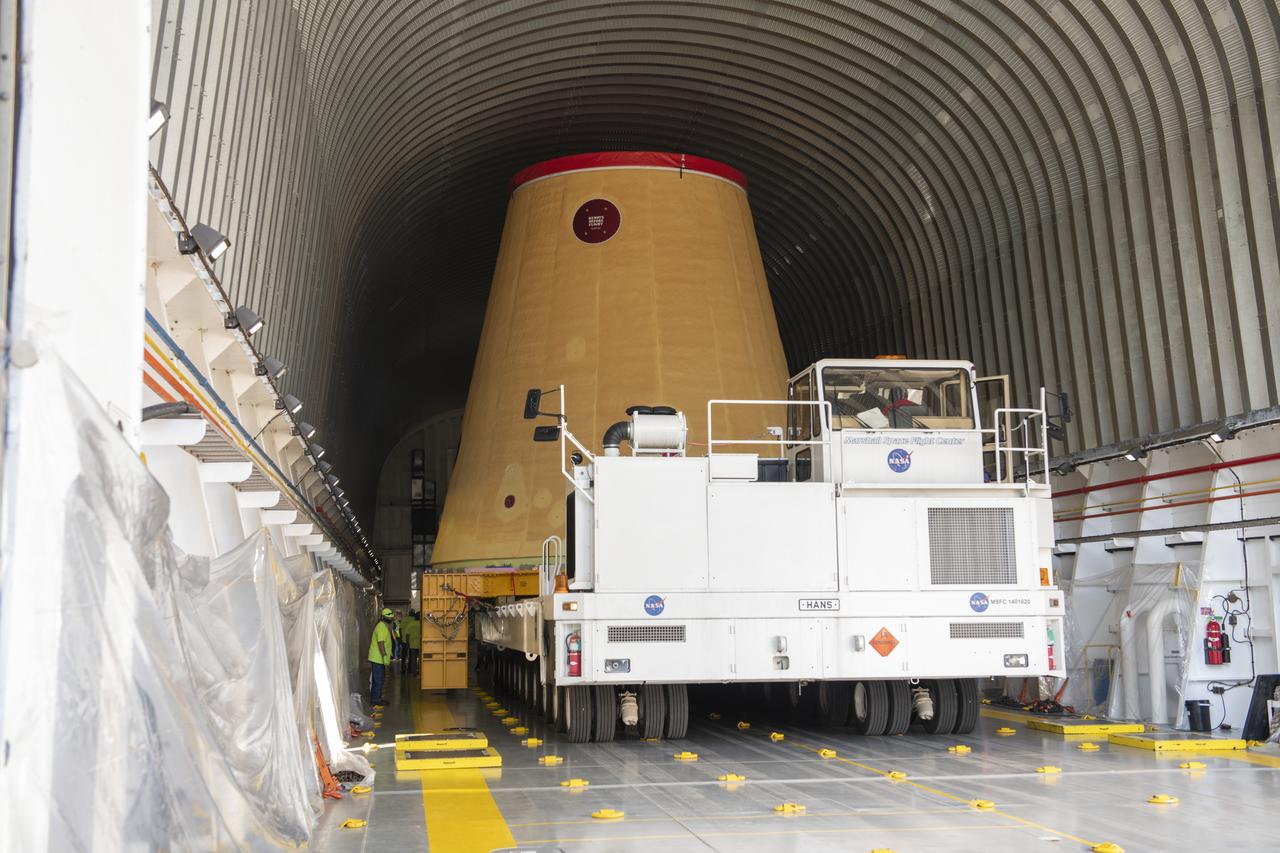
The move team loads the launch vehicle stage adapter, part of the agency’s new Space Launch System (SLS) rocket, on NASA’s Pegasus barge at NASA’s Marshall Space Flight Center in Huntsville, Alabama, July 17. The launch vehicle stage adapter, which connects the rocket’s 212-foot-tall core stage to the rocket’s upper stage, is being shipped to NASA’s Kennedy Space Center in Florida for Artemis I launch preparations. This is the final piece of Artemis I SLS rocket hardware built at Marshall to be delivered to Kennedy. Only the SLS core stage, currently in final testing at Stennis Space Center near Bay St. Louis, Mississippi, remains to be shipped to Kennedy on Pegasus. NASA is working to land the first woman and the next man on the Moon by 2024. SLS, along with Orion, the human landing system, and the Gateway in orbit around the Moon are NASA’s backbone for a new generation of deep space exploration.
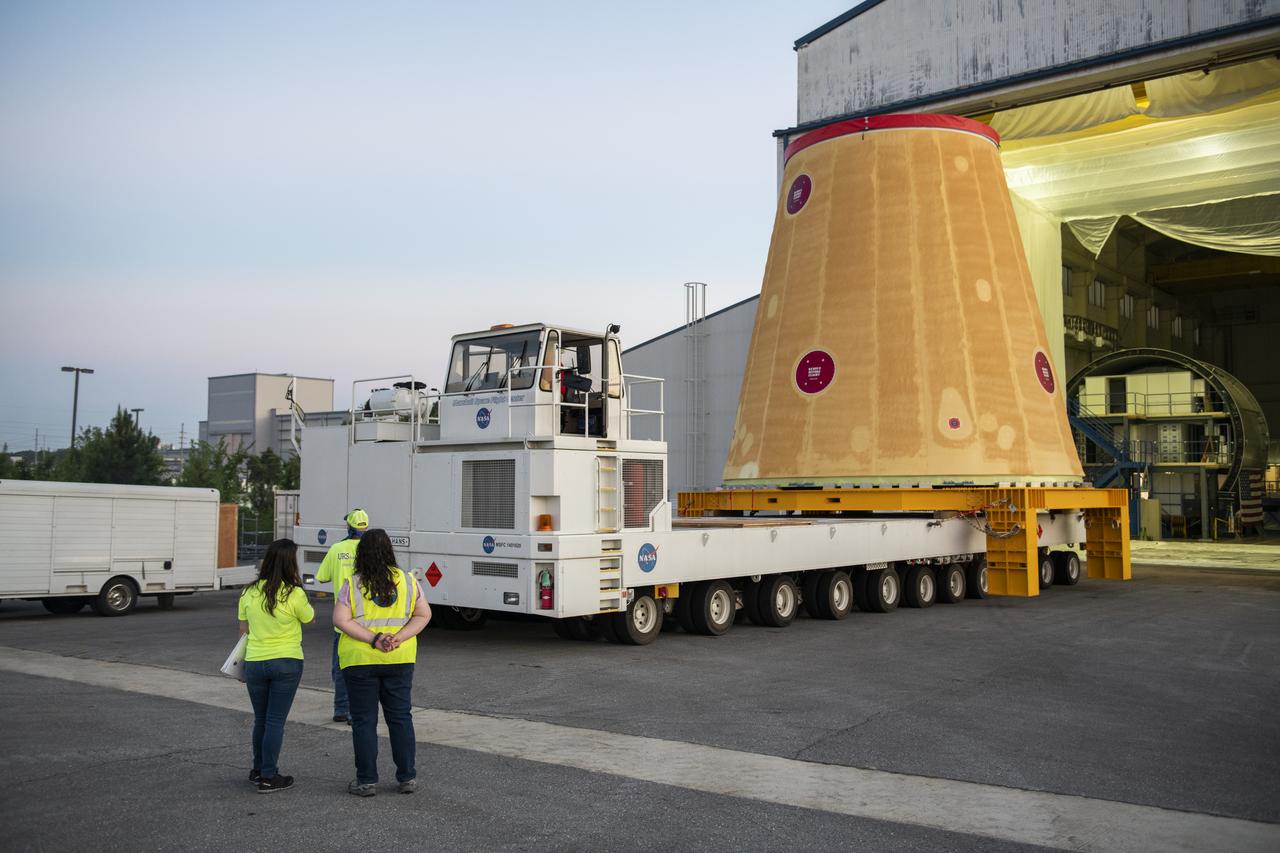
The move team loads the launch vehicle stage adapter, part of the agency’s new Space Launch System (SLS) rocket, on NASA’s Pegasus barge at NASA’s Marshall Space Flight Center in Huntsville, Alabama, July 17. The launch vehicle stage adapter, which connects the rocket’s 212-foot-tall core stage to the rocket’s upper stage, is being shipped to NASA’s Kennedy Space Center in Florida for Artemis I launch preparations. This is the final piece of Artemis I SLS rocket hardware built at Marshall to be delivered to Kennedy. Only the SLS core stage, currently in final testing at Stennis Space Center near Bay St. Louis, Mississippi, remains to be shipped to Kennedy on Pegasus. NASA is working to land the first woman and the next man on the Moon by 2024. SLS, along with Orion, the human landing system, and the Gateway in orbit around the Moon are NASA’s backbone for a new generation of deep space exploration.
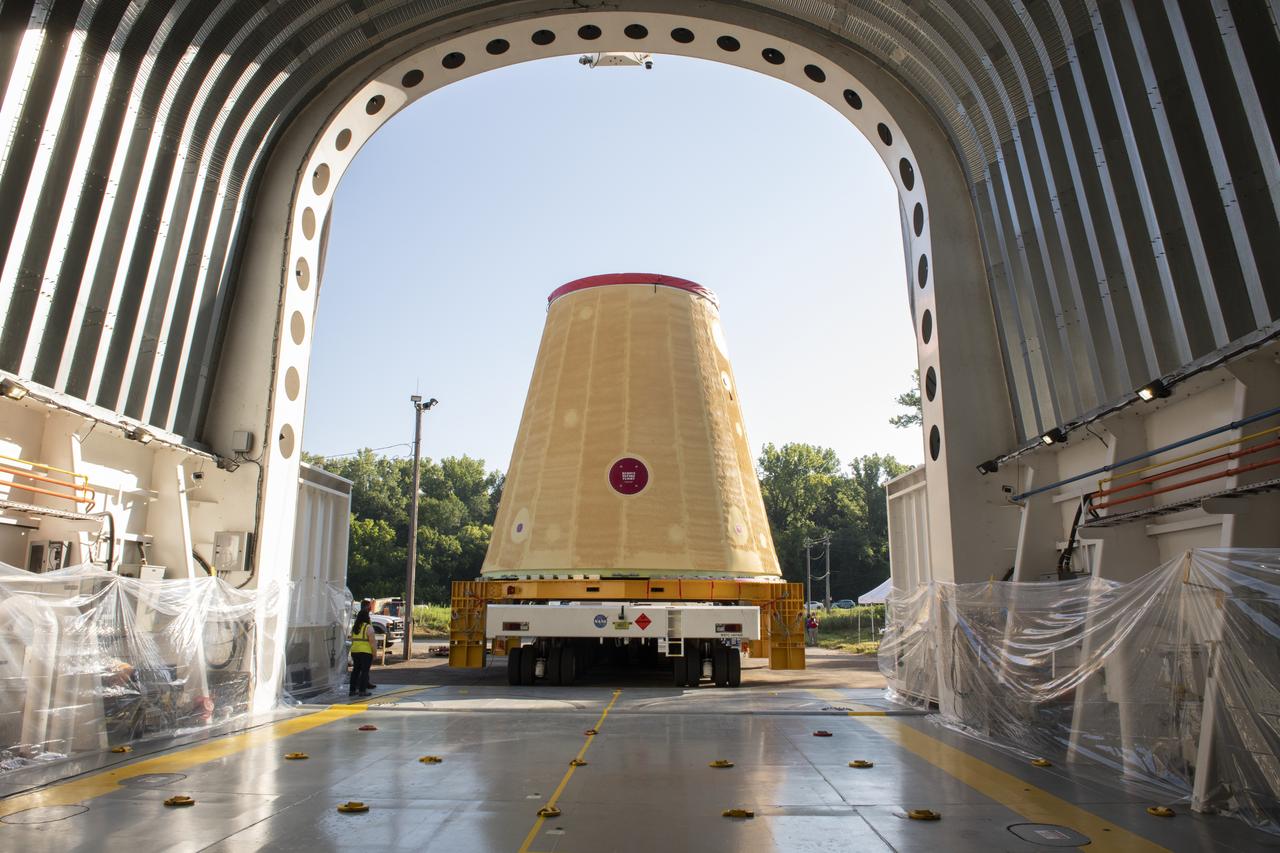
The move team loads the launch vehicle stage adapter, part of the agency’s new Space Launch System (SLS) rocket, on NASA’s Pegasus barge at NASA’s Marshall Space Flight Center in Huntsville, Alabama, July 17. The launch vehicle stage adapter, which connects the rocket’s 212-foot-tall core stage to the rocket’s upper stage, is being shipped to NASA’s Kennedy Space Center in Florida for Artemis I launch preparations. This is the final piece of Artemis I SLS rocket hardware built at Marshall to be delivered to Kennedy. Only the SLS core stage, currently in final testing at Stennis Space Center near Bay St. Louis, Mississippi, remains to be shipped to Kennedy on Pegasus. NASA is working to land the first woman and the next man on the Moon by 2024. SLS, along with Orion, the human landing system, and the Gateway in orbit around the Moon are NASA’s backbone for a new generation of deep space exploration.
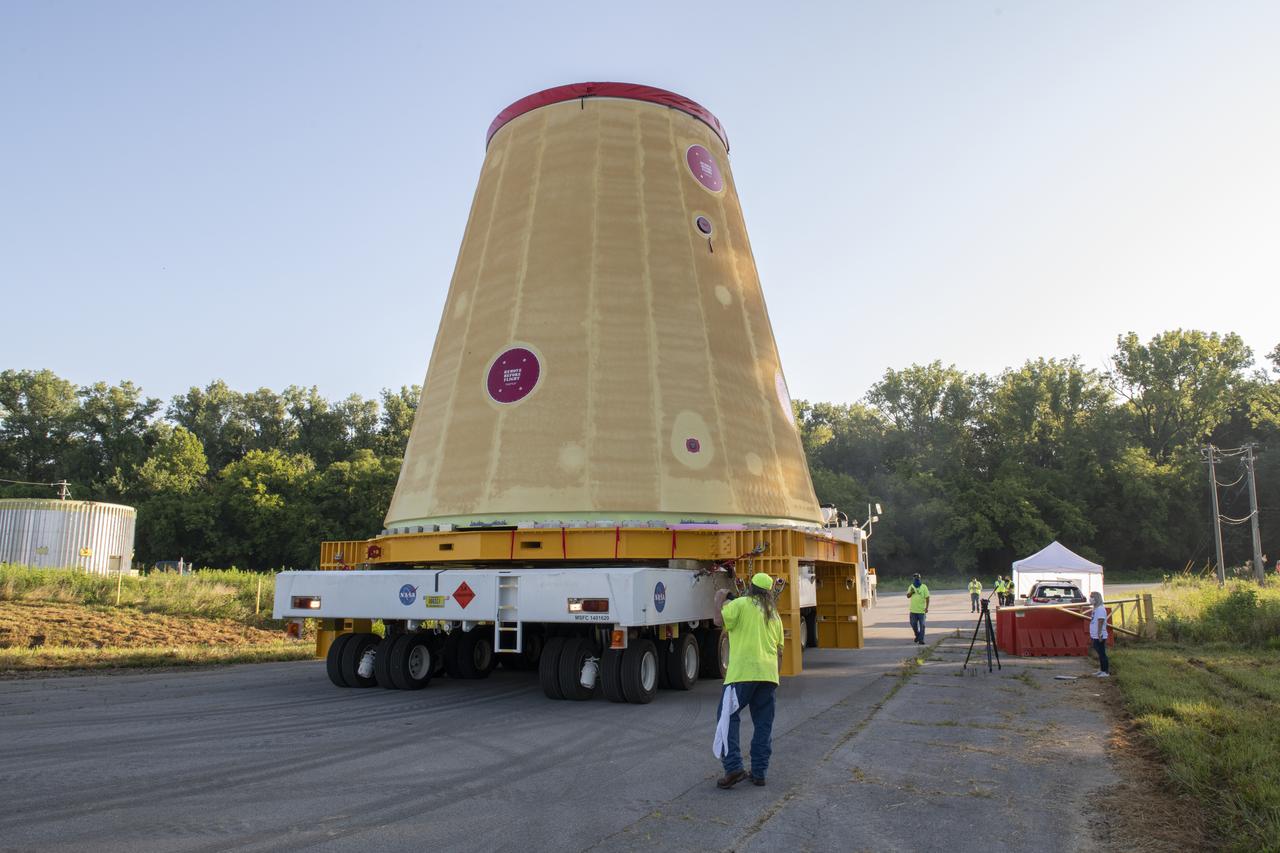
The move team loads the launch vehicle stage adapter, part of the agency’s new Space Launch System (SLS) rocket, on NASA’s Pegasus barge at NASA’s Marshall Space Flight Center in Huntsville, Alabama, July 17. The launch vehicle stage adapter, which connects the rocket’s 212-foot-tall core stage to the rocket’s upper stage, is being shipped to NASA’s Kennedy Space Center in Florida for Artemis I launch preparations. This is the final piece of Artemis I SLS rocket hardware built at Marshall to be delivered to Kennedy. Only the SLS core stage, currently in final testing at Stennis Space Center near Bay St. Louis, Mississippi, remains to be shipped to Kennedy on Pegasus. NASA is working to land the first woman and the next man on the Moon by 2024. SLS, along with Orion, the human landing system, and the Gateway in orbit around the Moon are NASA’s backbone for a new generation of deep space exploration.
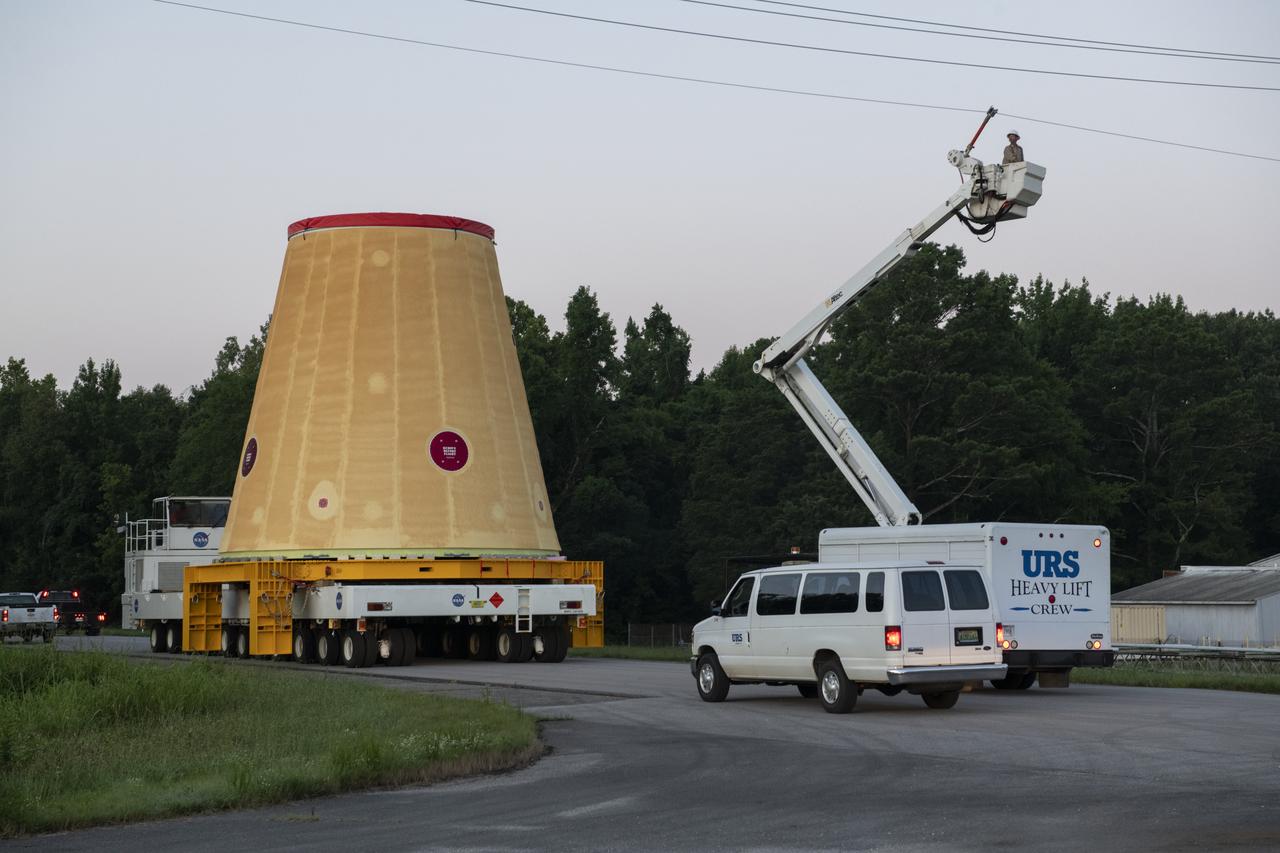
The move team loads the launch vehicle stage adapter, part of the agency’s new Space Launch System (SLS) rocket, on NASA’s Pegasus barge at NASA’s Marshall Space Flight Center in Huntsville, Alabama, July 17. The launch vehicle stage adapter, which connects the rocket’s 212-foot-tall core stage to the rocket’s upper stage, is being shipped to NASA’s Kennedy Space Center in Florida for Artemis I launch preparations. This is the final piece of Artemis I SLS rocket hardware built at Marshall to be delivered to Kennedy. Only the SLS core stage, currently in final testing at Stennis Space Center near Bay St. Louis, Mississippi, remains to be shipped to Kennedy on Pegasus. NASA is working to land the first woman and the next man on the Moon by 2024. SLS, along with Orion, the human landing system, and the Gateway in orbit around the Moon are NASA’s backbone for a new generation of deep space exploration.
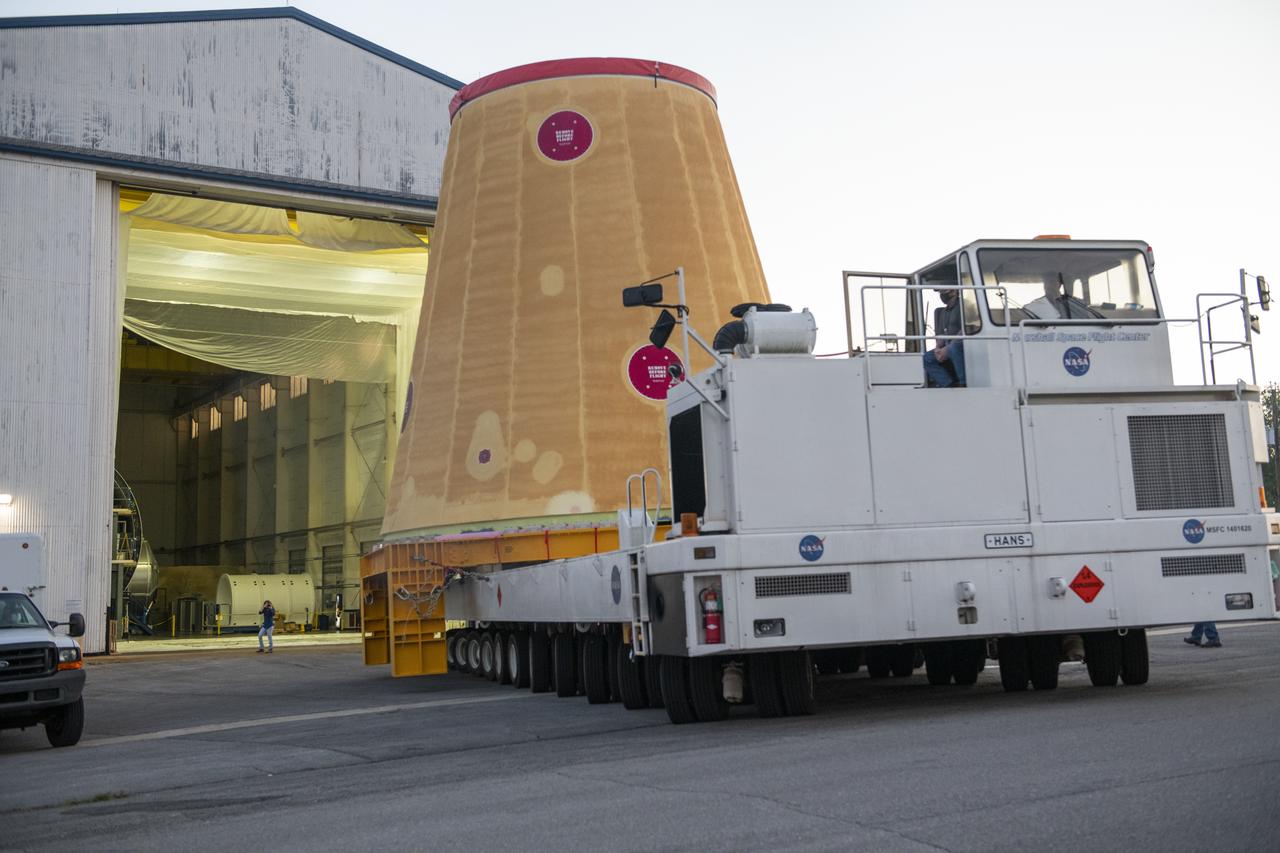
The move team loads the launch vehicle stage adapter, part of the agency’s new Space Launch System (SLS) rocket, on NASA’s Pegasus barge at NASA’s Marshall Space Flight Center in Huntsville, Alabama, July 17. The launch vehicle stage adapter, which connects the rocket’s 212-foot-tall core stage to the rocket’s upper stage, is being shipped to NASA’s Kennedy Space Center in Florida for Artemis I launch preparations. This is the final piece of Artemis I SLS rocket hardware built at Marshall to be delivered to Kennedy. Only the SLS core stage, currently in final testing at Stennis Space Center near Bay St. Louis, Mississippi, remains to be shipped to Kennedy on Pegasus. NASA is working to land the first woman and the next man on the Moon by 2024. SLS, along with Orion, the human landing system, and the Gateway in orbit around the Moon are NASA’s backbone for a new generation of deep space exploration.
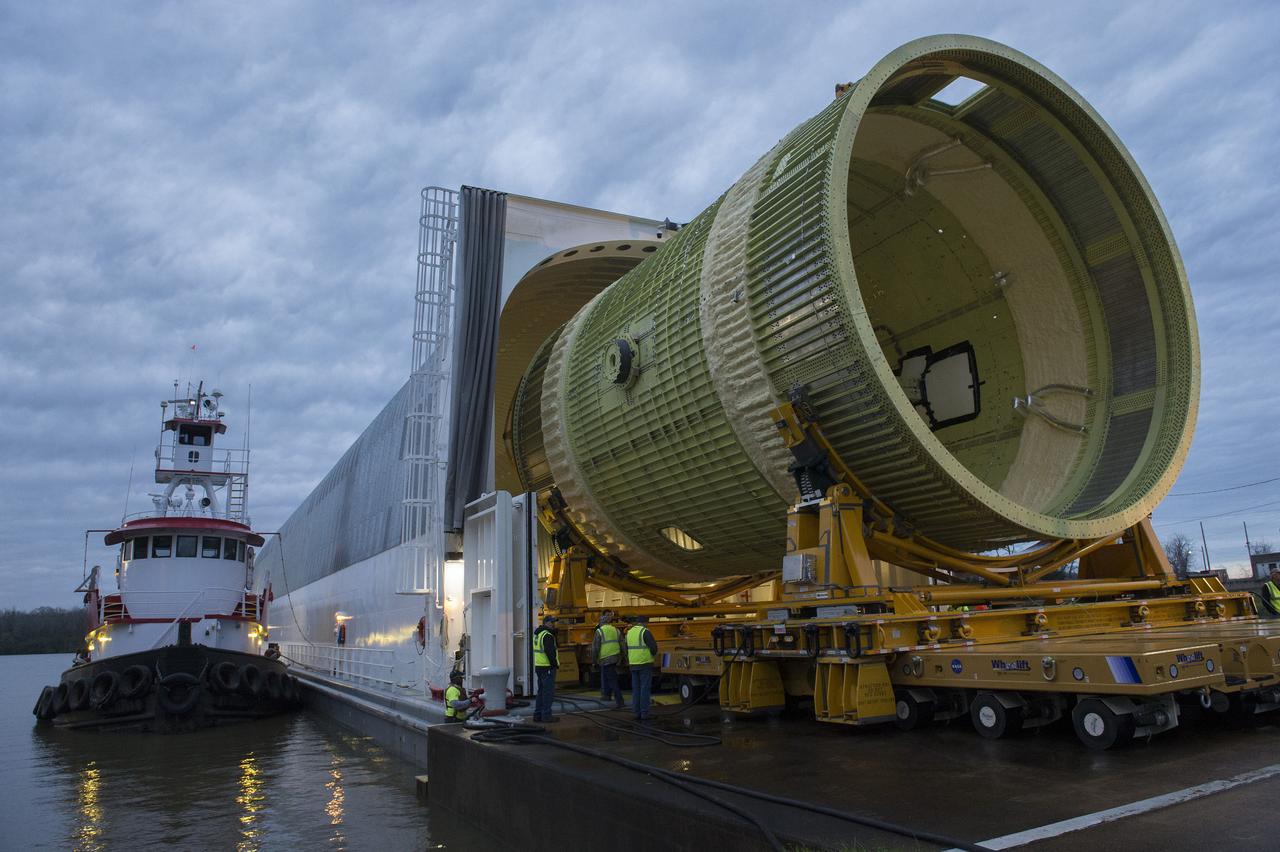
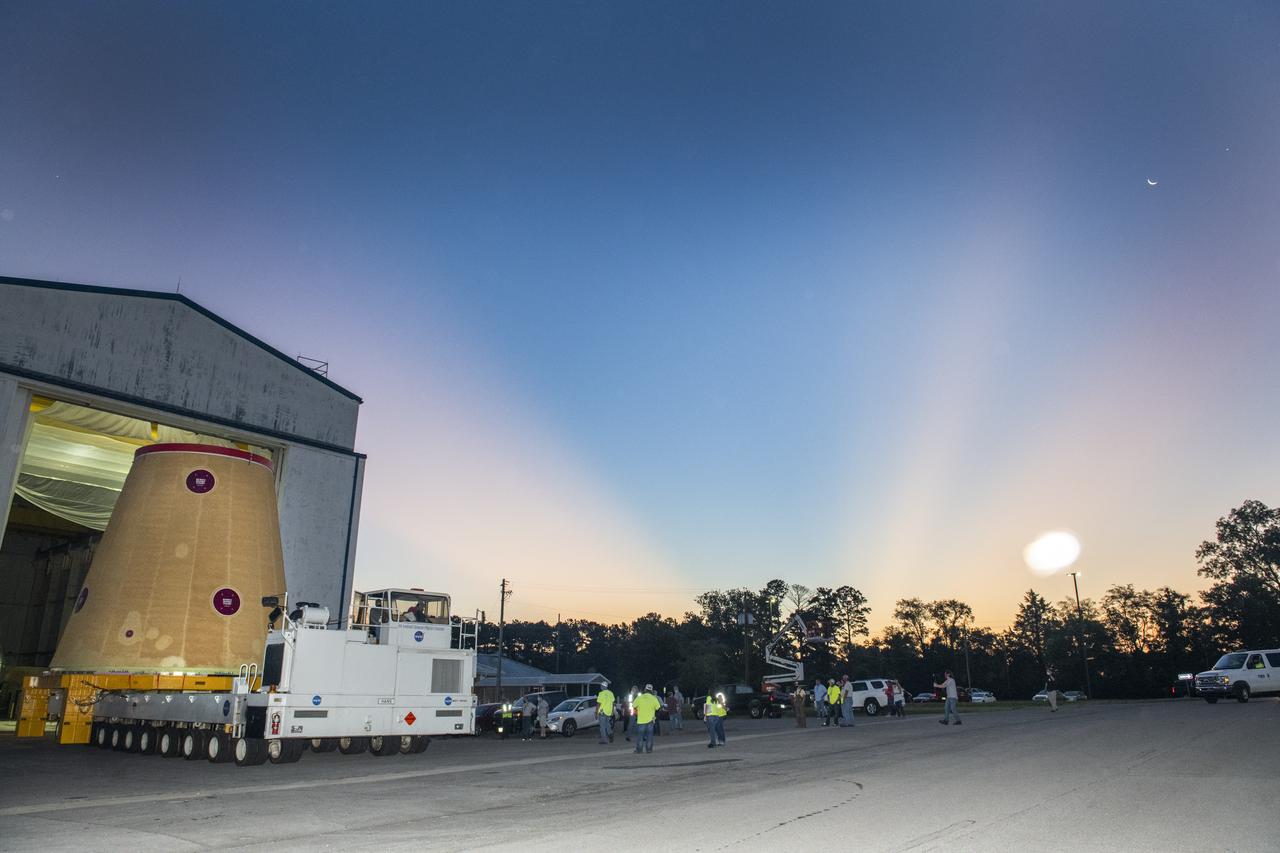
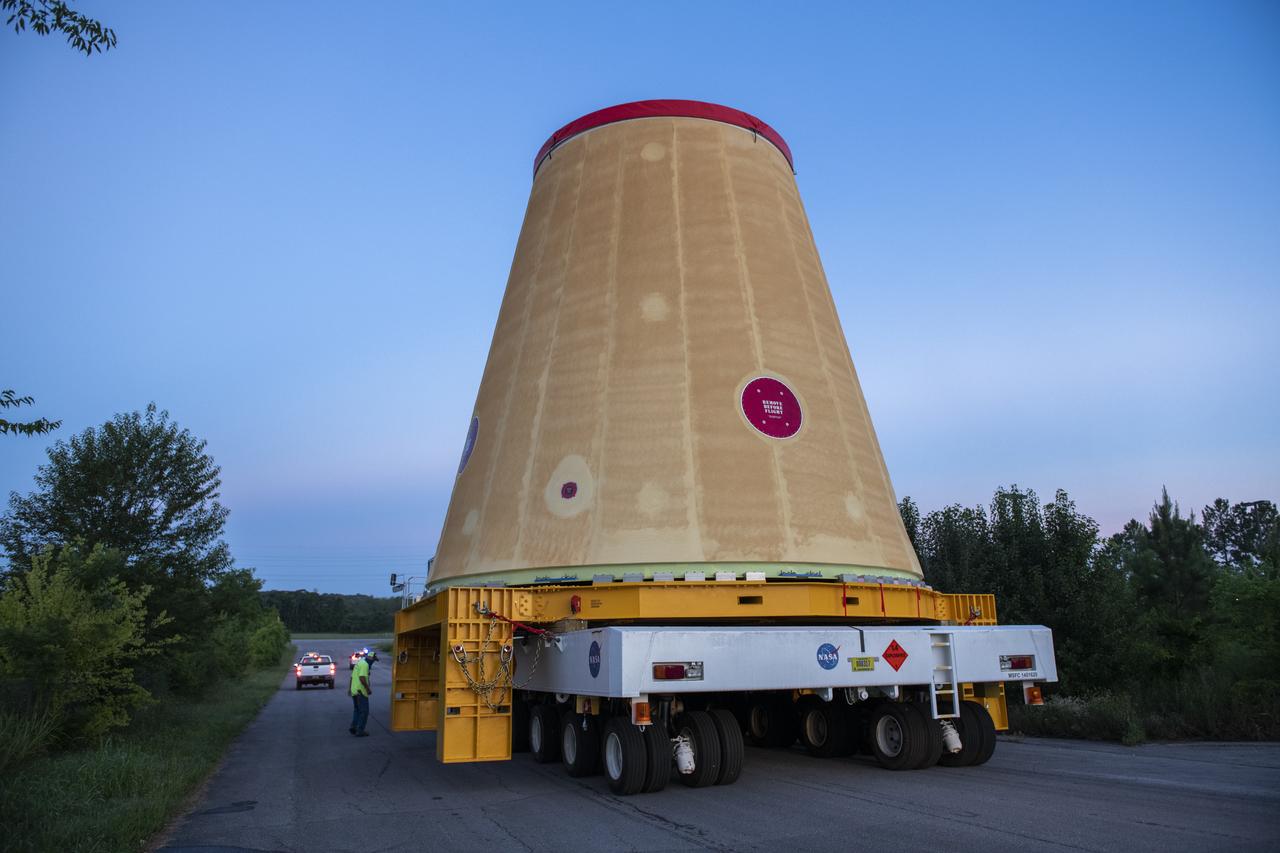
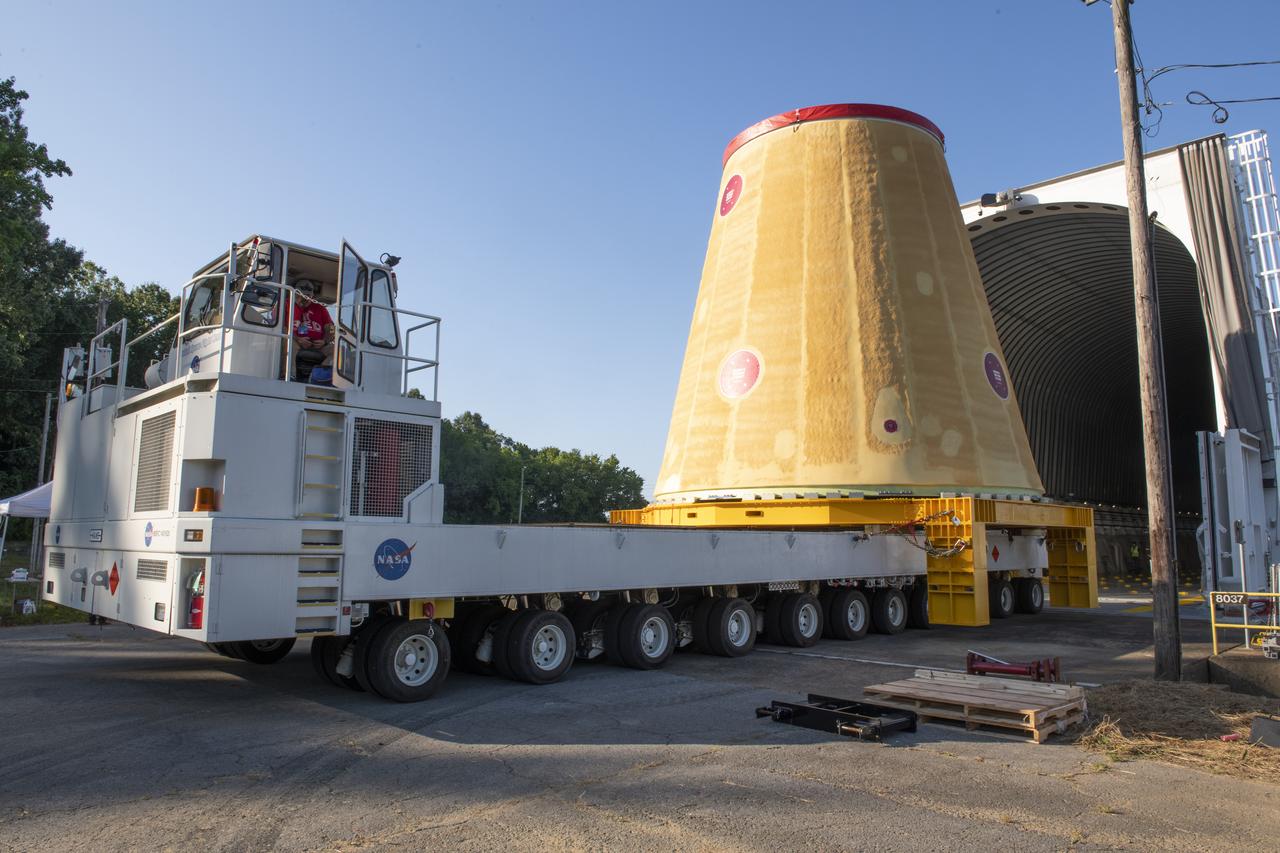
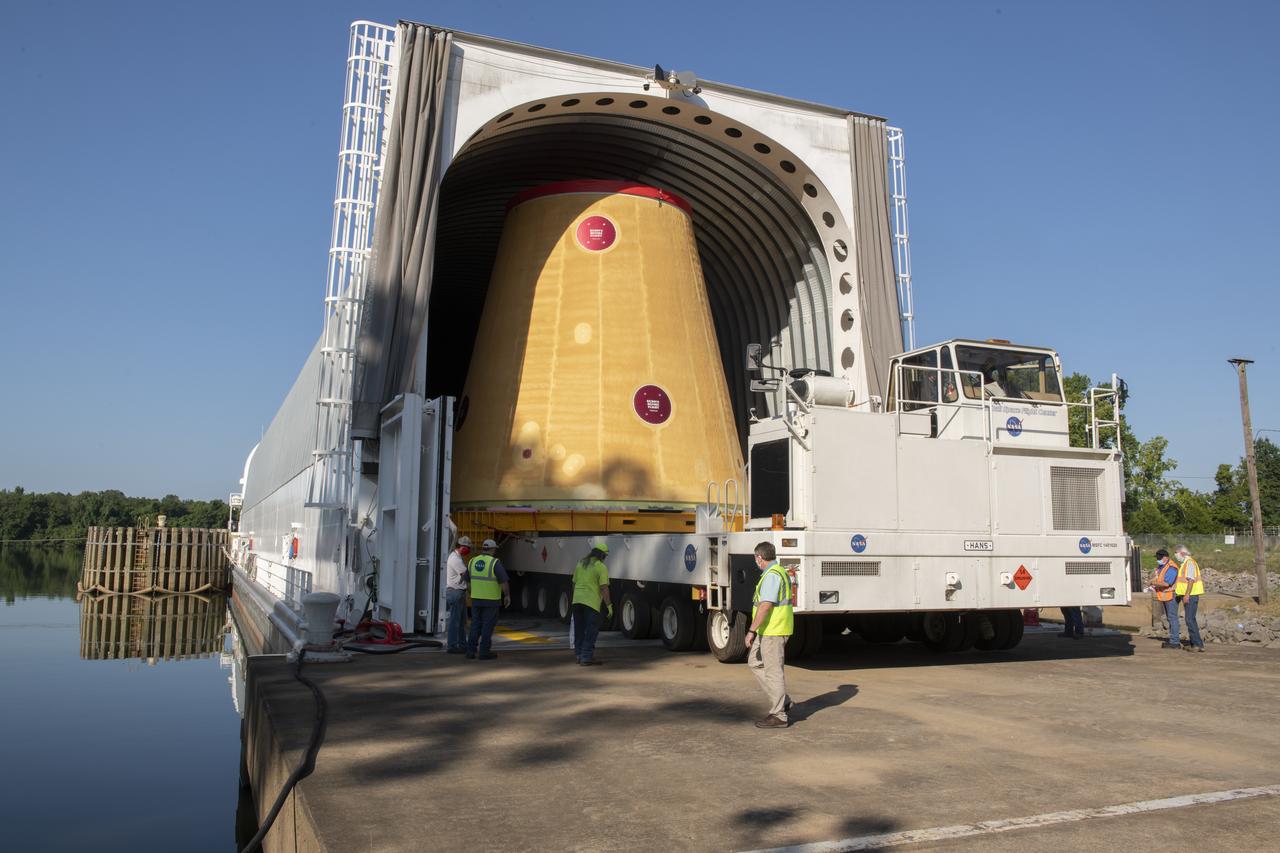
The SLS Stages Intertank Structural Test Assembly (STA) is rolling off the NASA Pegasus Barge at the MSFC Dock enroute to the MSFC 4619 Load Test Annex test facility for qualification testing. STA emerges from Barge Pegasus.
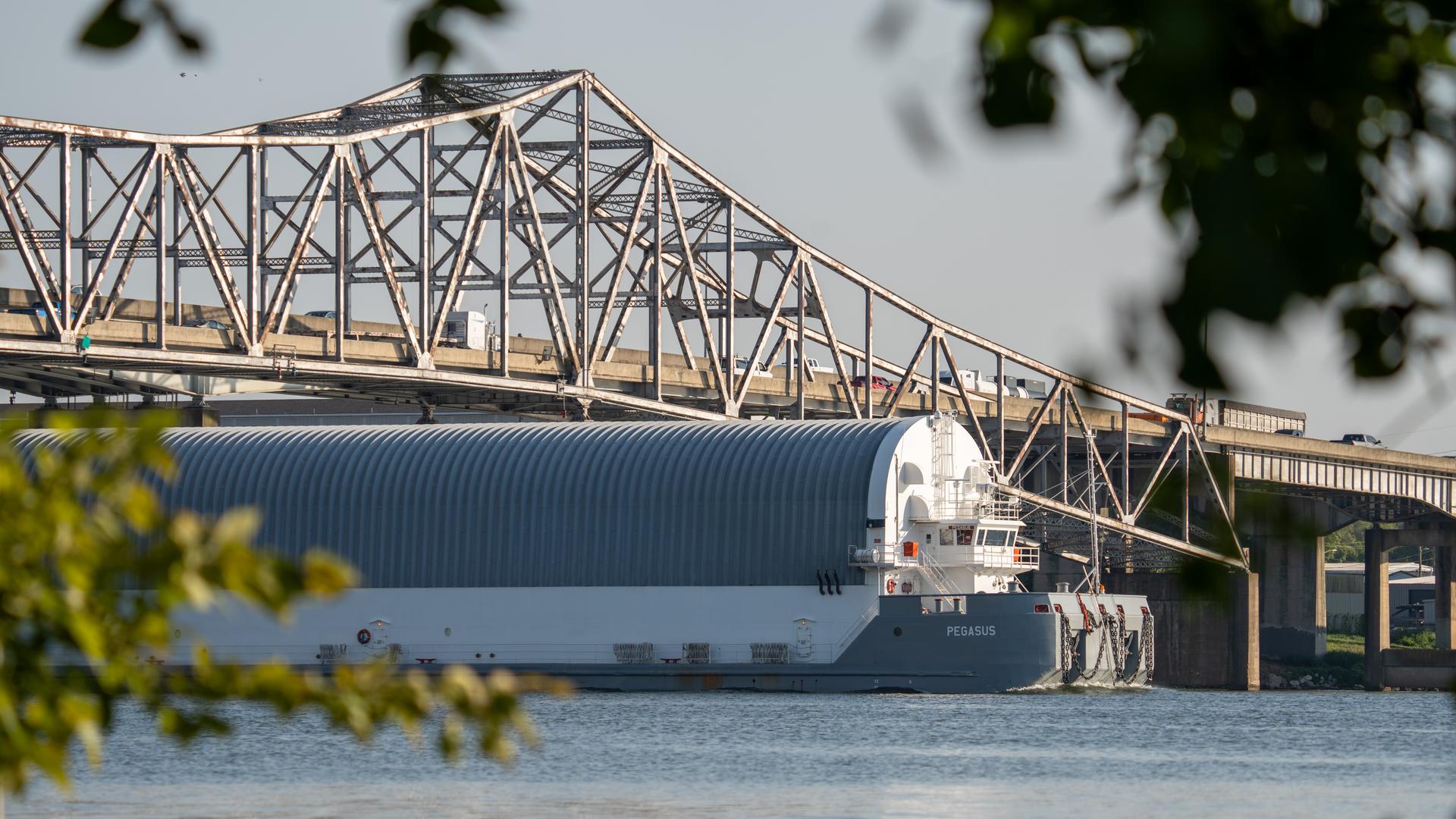
NASA’s Pegasus barge, ferrying the launch vehicle stage adapter for NASA’s SLS (Space Launch System) rocket, departed the agency’s Marshall Space Flight Center in Huntsville, Alabama, Aug. 21, passing through nearby Decatur. The cone-shaped adapter is part of the SLS rocket that will power Artemis II mission, the first crewed flight of the agency’s Artemis campaign. The barge will stop briefly at NASA’s Michoud Assembly Facility in New Orleans to pick up additional hardware elements for Artemis III and Artemis IV before heading to the agency’s Kennedy Space Center in Florida, where the adapter will be readied for stacking and launch preparations.
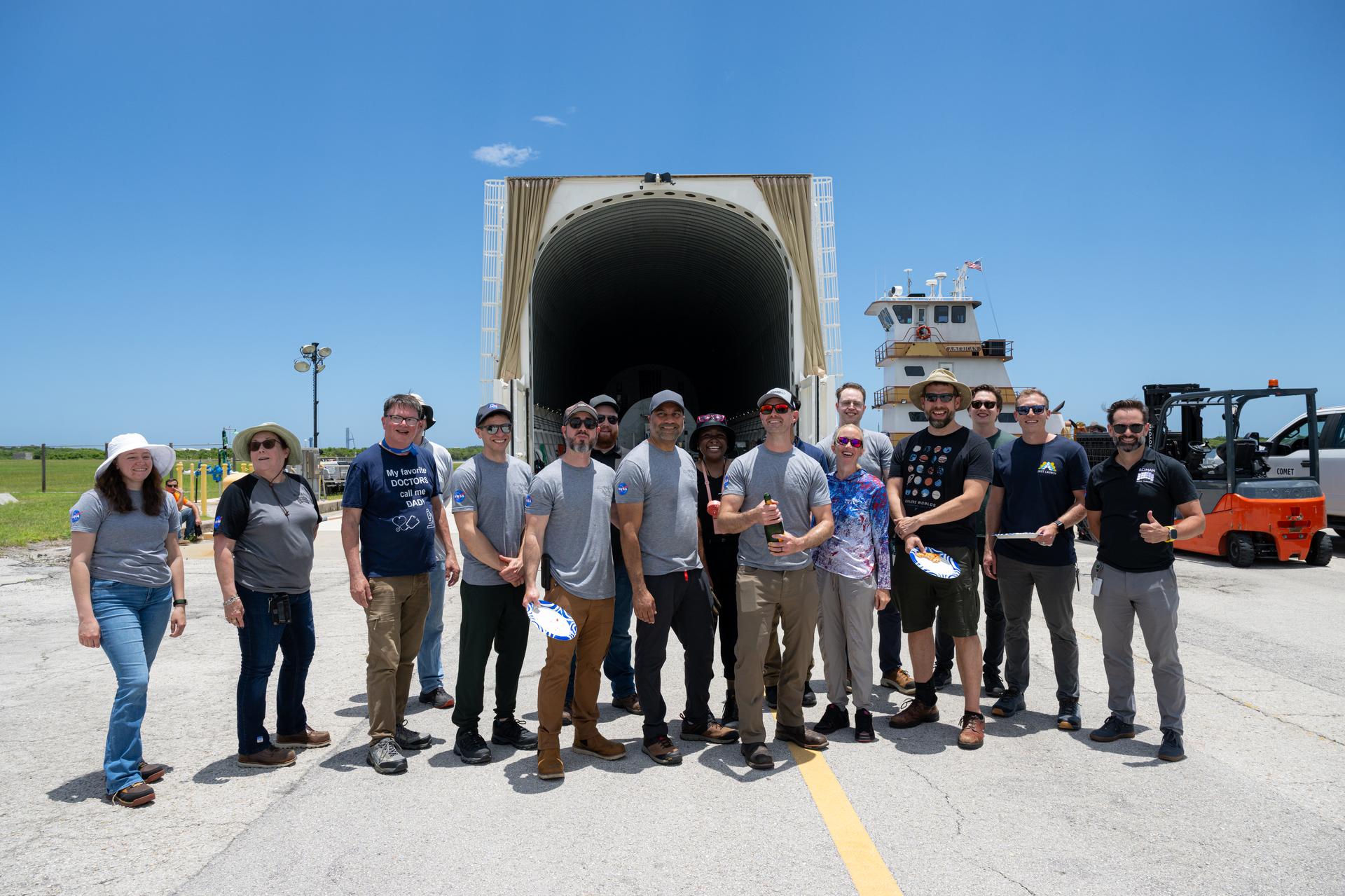
Members of the Nancy Grace Roman Space Telescope transport team pose for a photograph with NASA’s Pegasus barge, Sunday, June 21, at NASA’s Kennedy Space Center in Florida. The Pegasus barge delivered NASA’s Nancy Grace Roman Space Telescope and a weather cover for the Artemis III SLS (Space Launch System) rocket core stage to Kennedy. Photo Credit: (NASA/John Kraus)
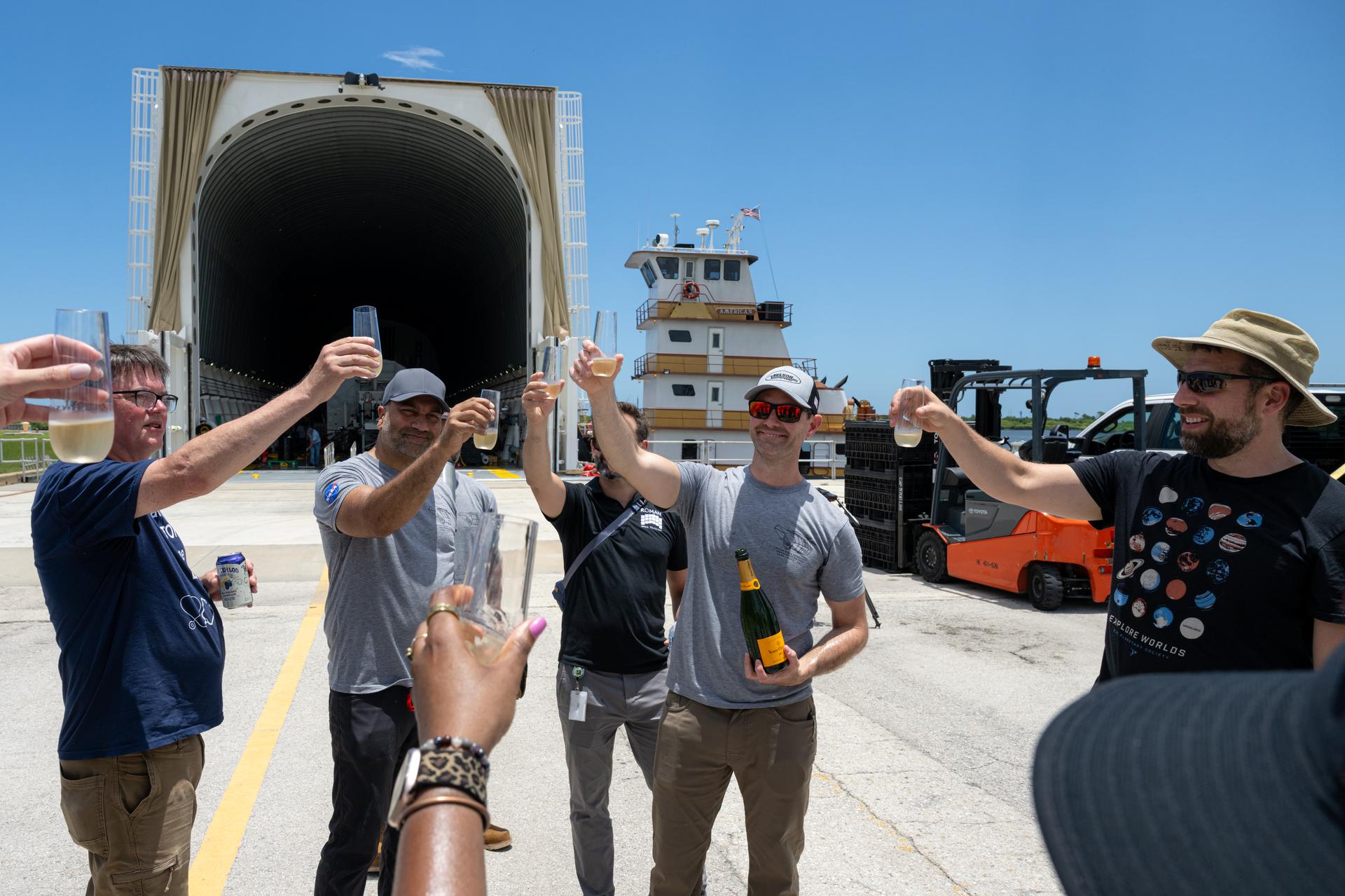
Members of the Nancy Grace Roman Space Telescope transport team celebrate with a toast following the arrival of NASA’s Pegasus barge, Sunday, June 21, at NASA’s Kennedy Space Center in Florida. The Pegasus barge delivered NASA’s Nancy Grace Roman Space Telescope and a weather cover for the Artemis III SLS (Space Launch System) rocket core stage to Kennedy. Photo Credit: (NASA/John Kraus)
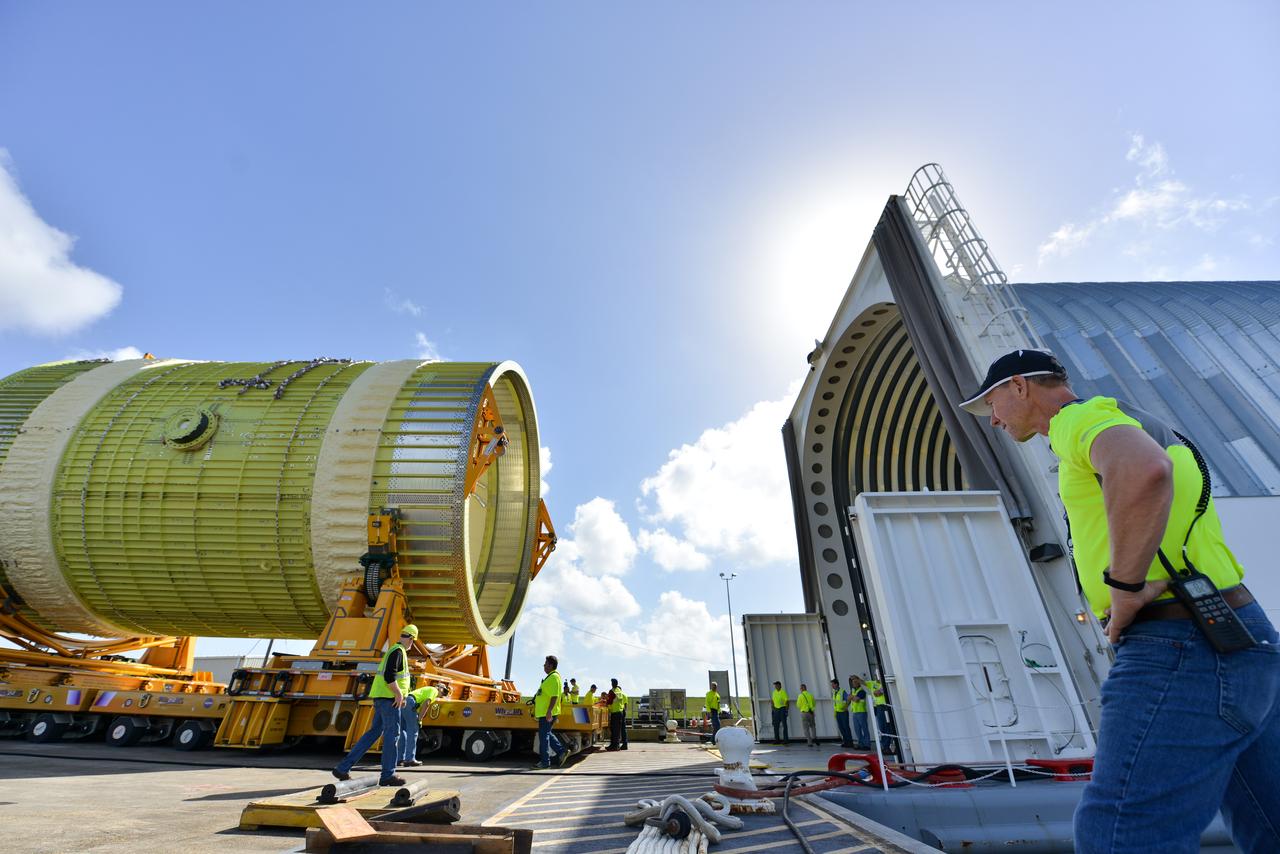
Pegasus Engineer watches the preparations before the move crew loads the Intertank STA on board.
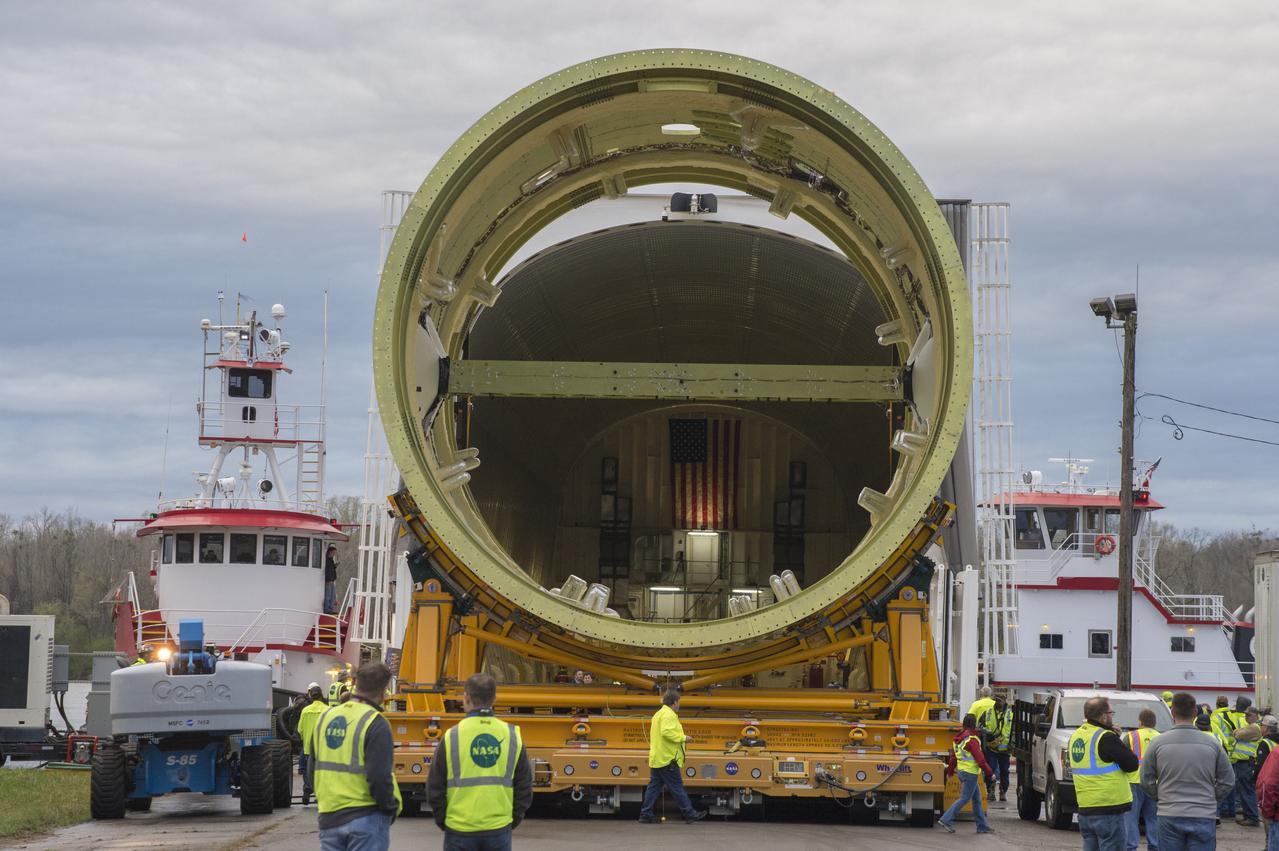
The SLS Stages Intertank Structural Test Assembly (STA) is rolling off the NASA Pegasus Barge at the MSFC Dock enroute to the MSFC 4619 Load Test Annex test facility for qualification testing. STA hardware completely free of barge and flanked by tug boats.

NASA's Pegasus barge arrived at Stennis Space Center on Nov. 16, delivering space shuttle main engine ground support equipment to the south Mississippi facility. Stennis tested every main engine used on all 135 space shuttle flights.
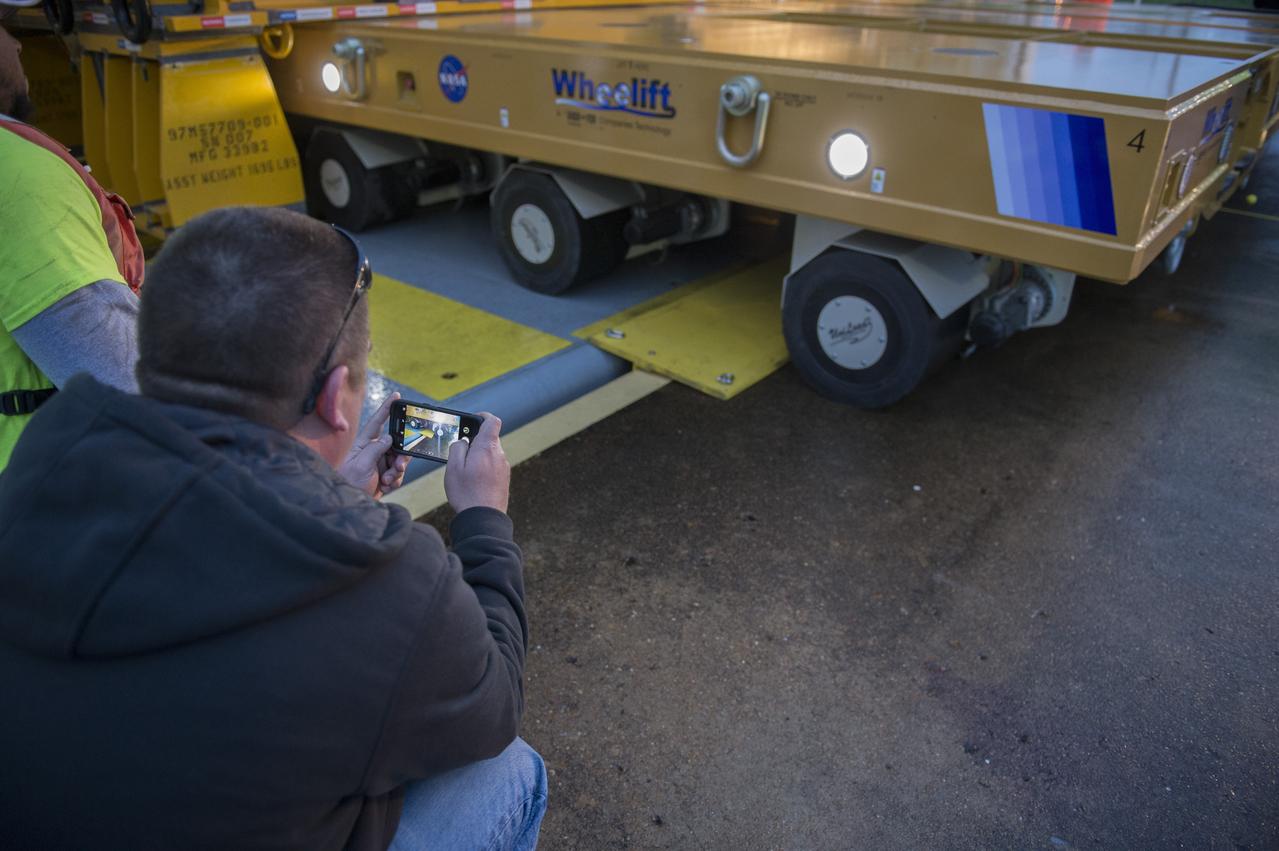
The SLS Stages Intertank Structural Test Assembly (STA) is rolling off the NASA Pegasus Barge at the MSFC Dock enroute to the MSFC 4619 Load Test Annex test facility for qualification testing
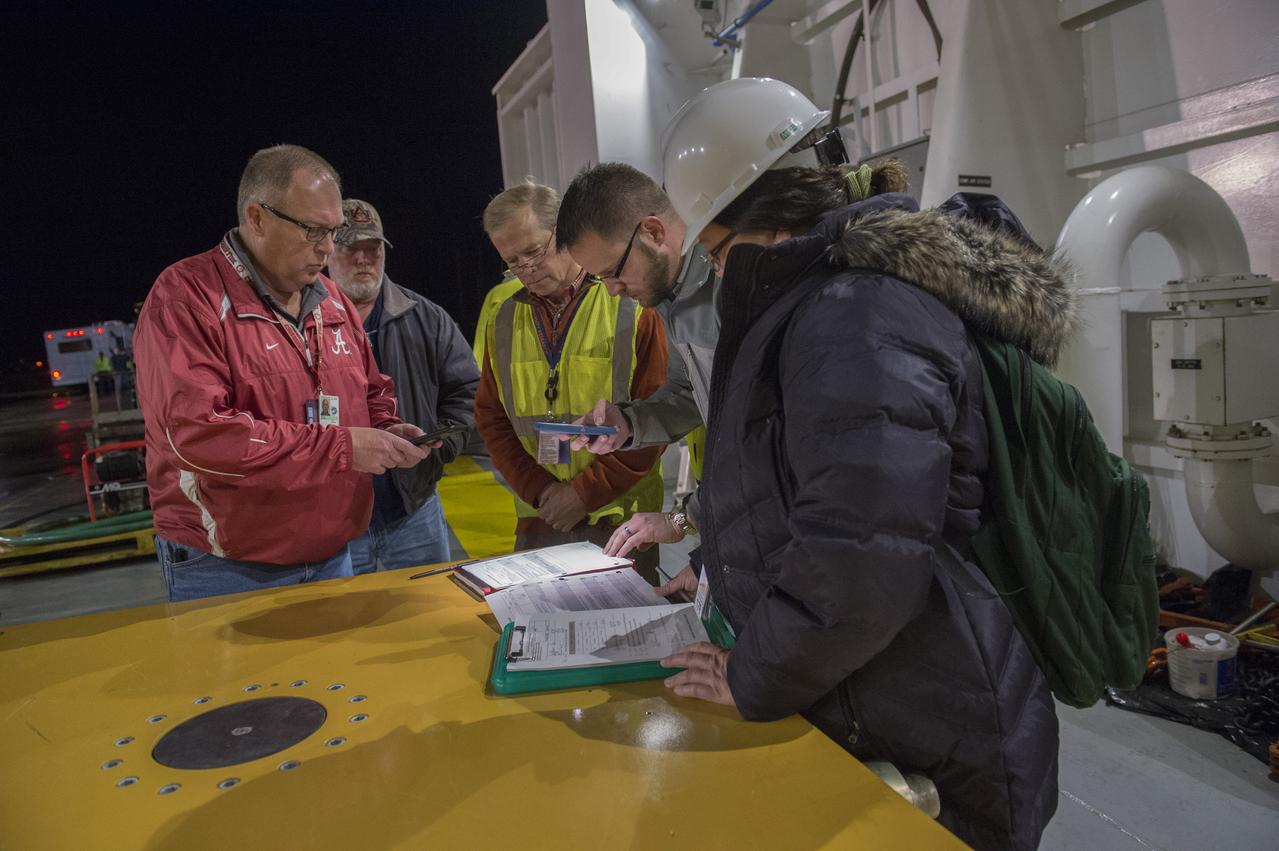
The SLS Stages Intertank Structural Test Assembly (STA) is rolling off the NASA Pegasus Barge at the MSFC Dock enroute to the MSFC 4619 Load Test Annex test facility for qualification testing
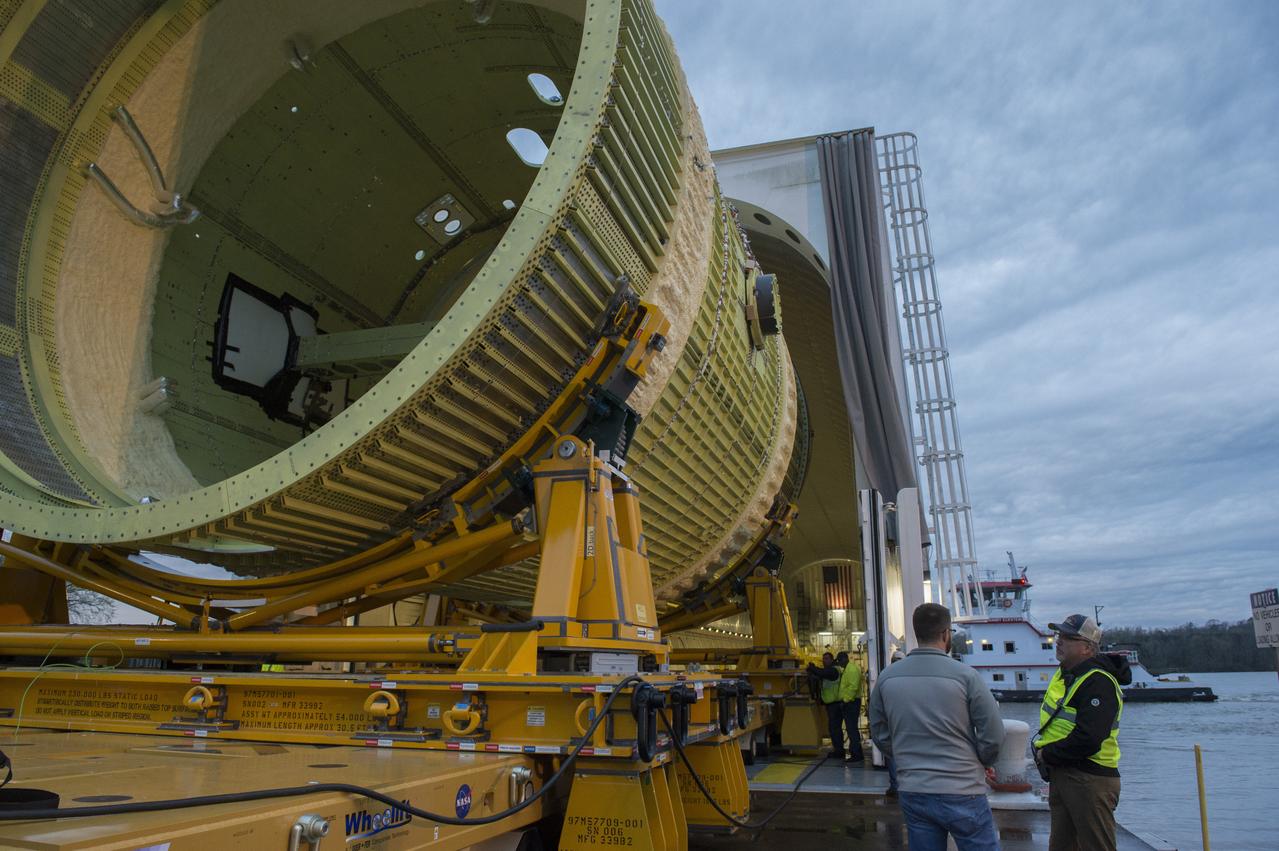
The SLS Stages Intertank Structural Test Assembly (STA) is rolling off the NASA Pegasus Barge at the MSFC Dock enroute to the MSFC 4619 Load Test Annex test facility for qualification testing
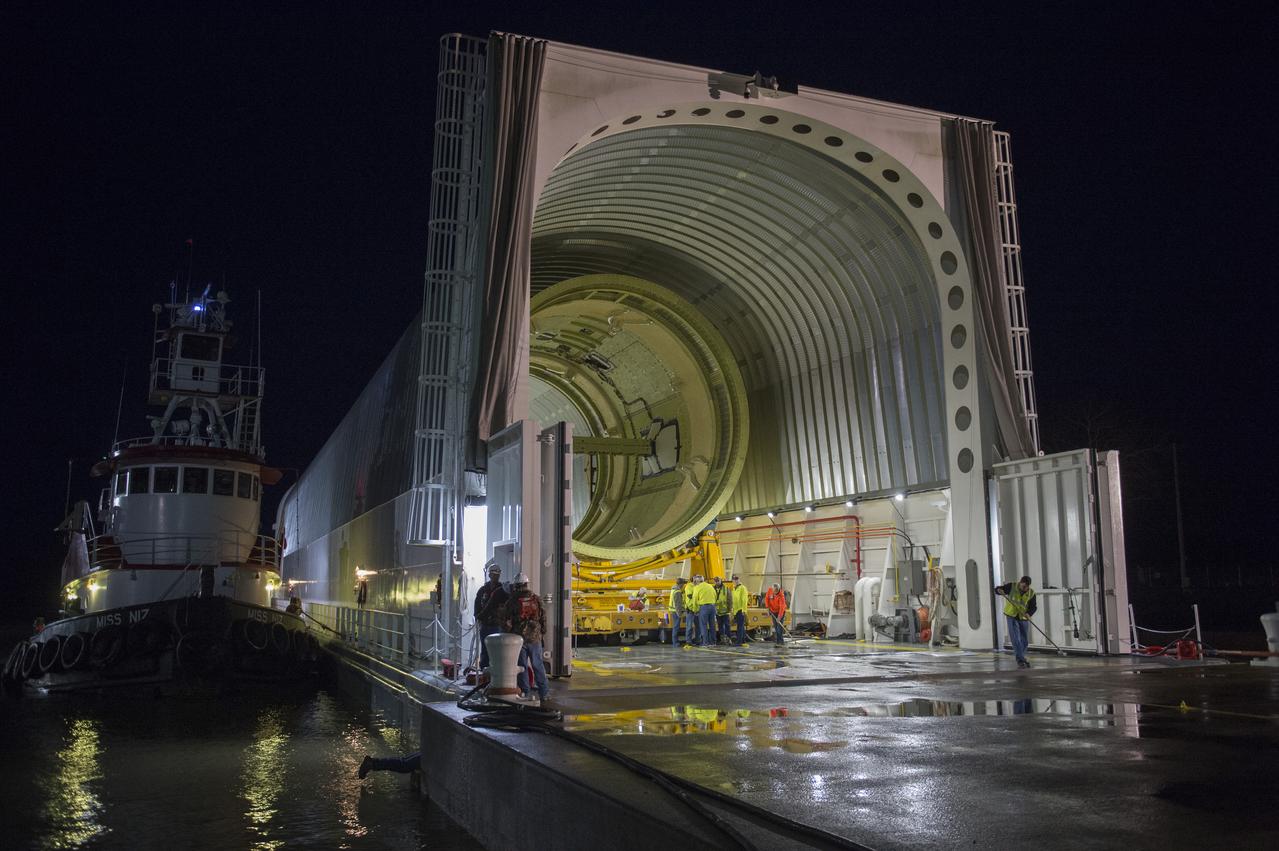
The SLS Stages Intertank Structural Test Assembly (STA) is rolling off the NASA Pegasus Barge at the MSFC Dock enroute to the MSFC 4619 Load Test Annex test facility for qualification testing
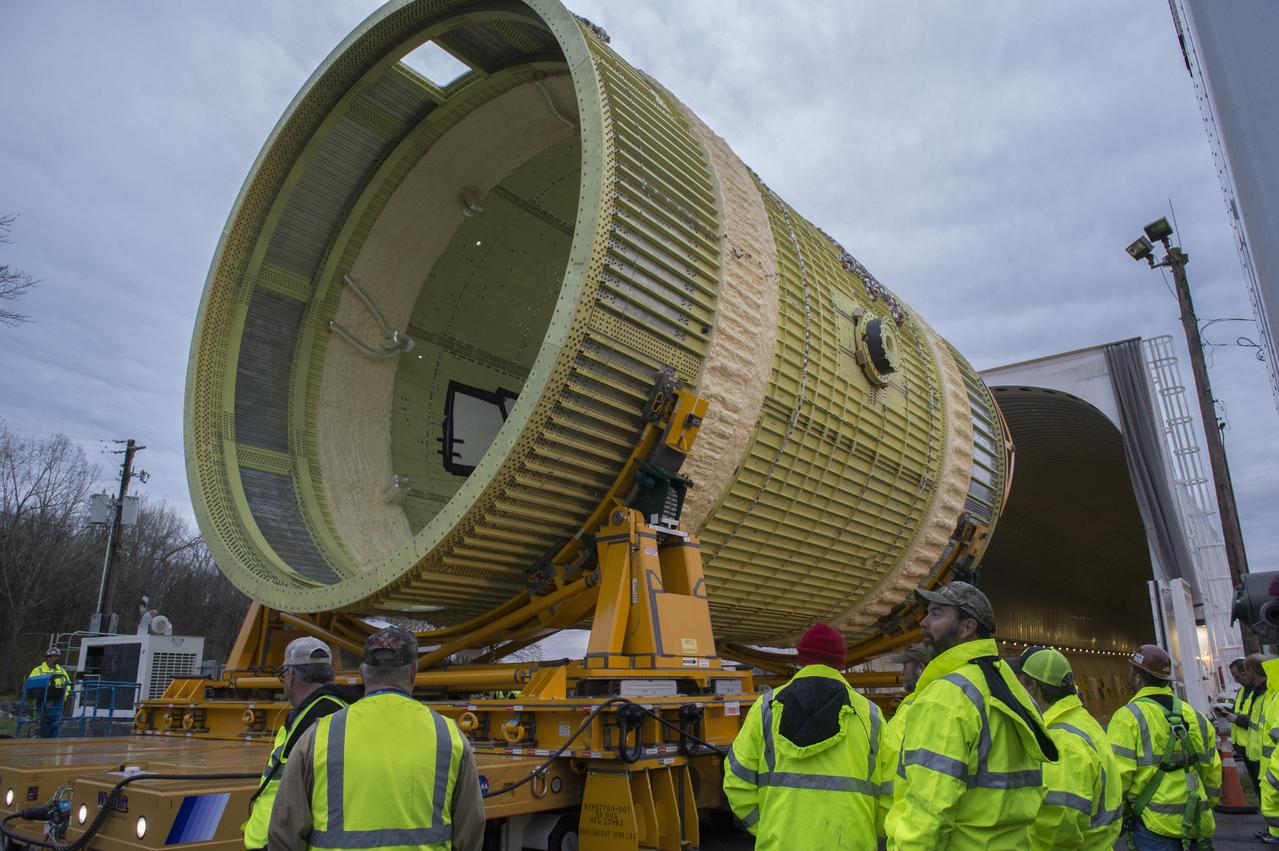
The SLS Stages Intertank Structural Test Assembly (STA) is rolling off the NASA Pegasus Barge at the MSFC Dock enroute to the MSFC 4619 Load Test Annex test facility for qualification testing
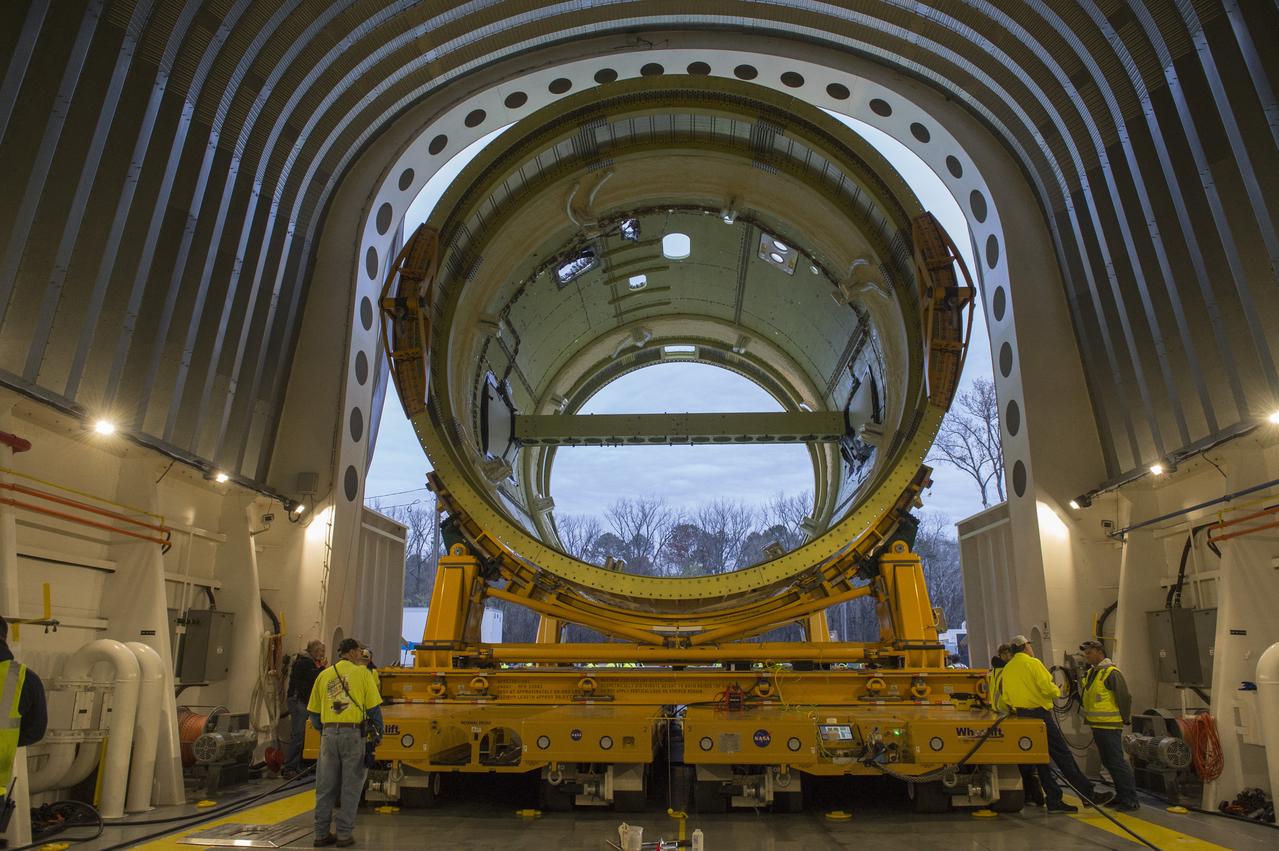
The SLS Stages Intertank Structural Test Assembly (STA) is rolling off the NASA Pegasus Barge at the MSFC Dock enroute to the MSFC 4619 Load Test Annex test facility for qualification testing
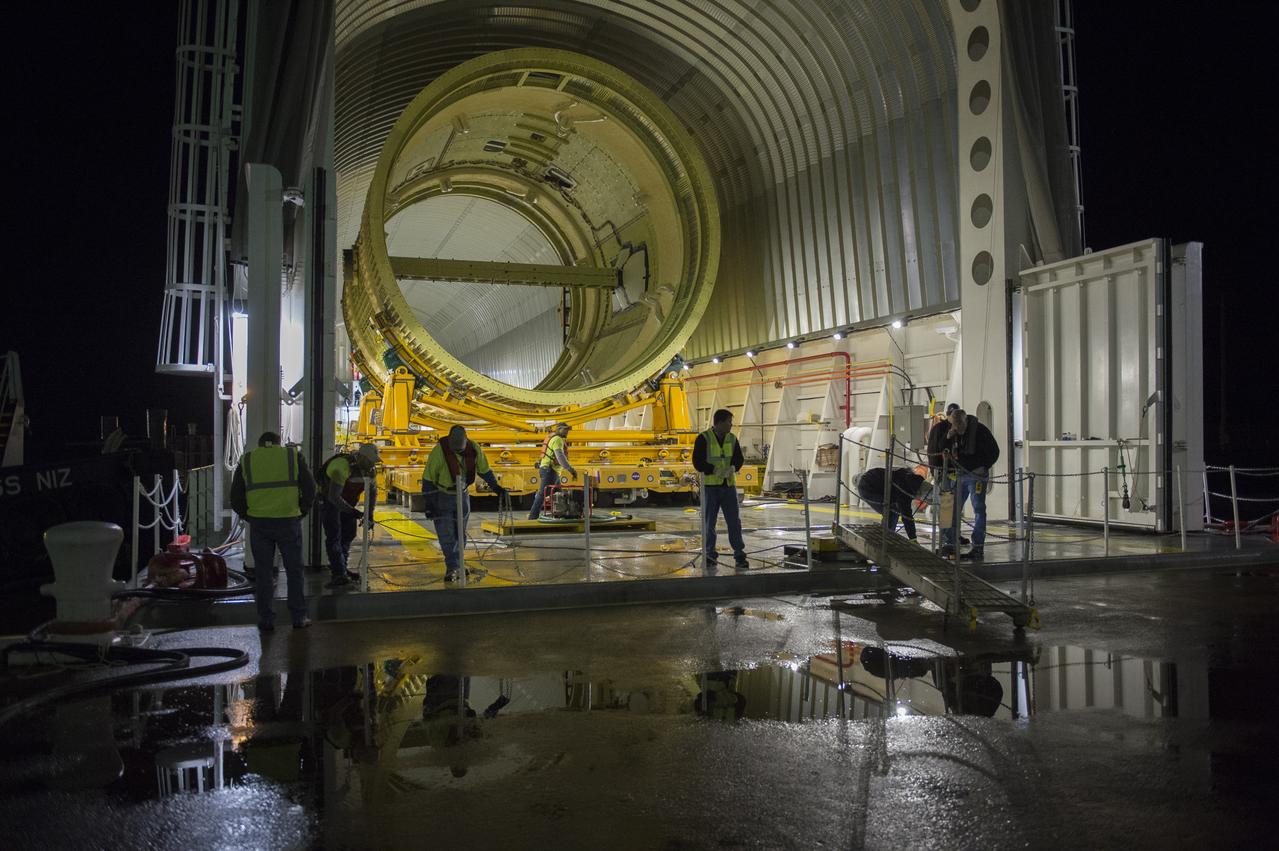
The SLS Stages Intertank Structural Test Assembly (STA) is rolling off the NASA Pegasus Barge at the MSFC Dock enroute to the MSFC 4619 Load Test Annex test facility for qualification testing
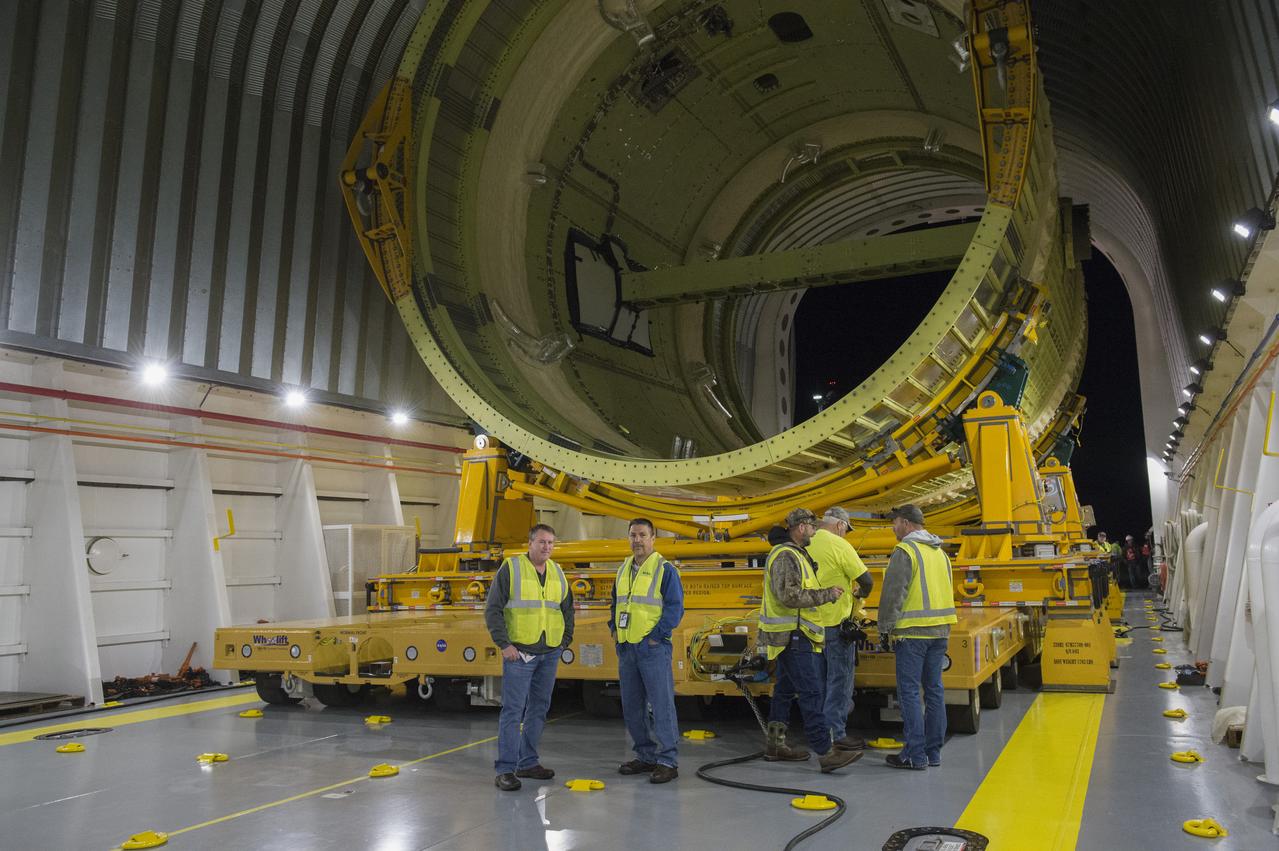
The SLS Stages Intertank Structural Test Assembly (STA) is rolling off the NASA Pegasus Barge at the MSFC Dock enroute to the MSFC 4619 Load Test Annex test facility for qualification testing
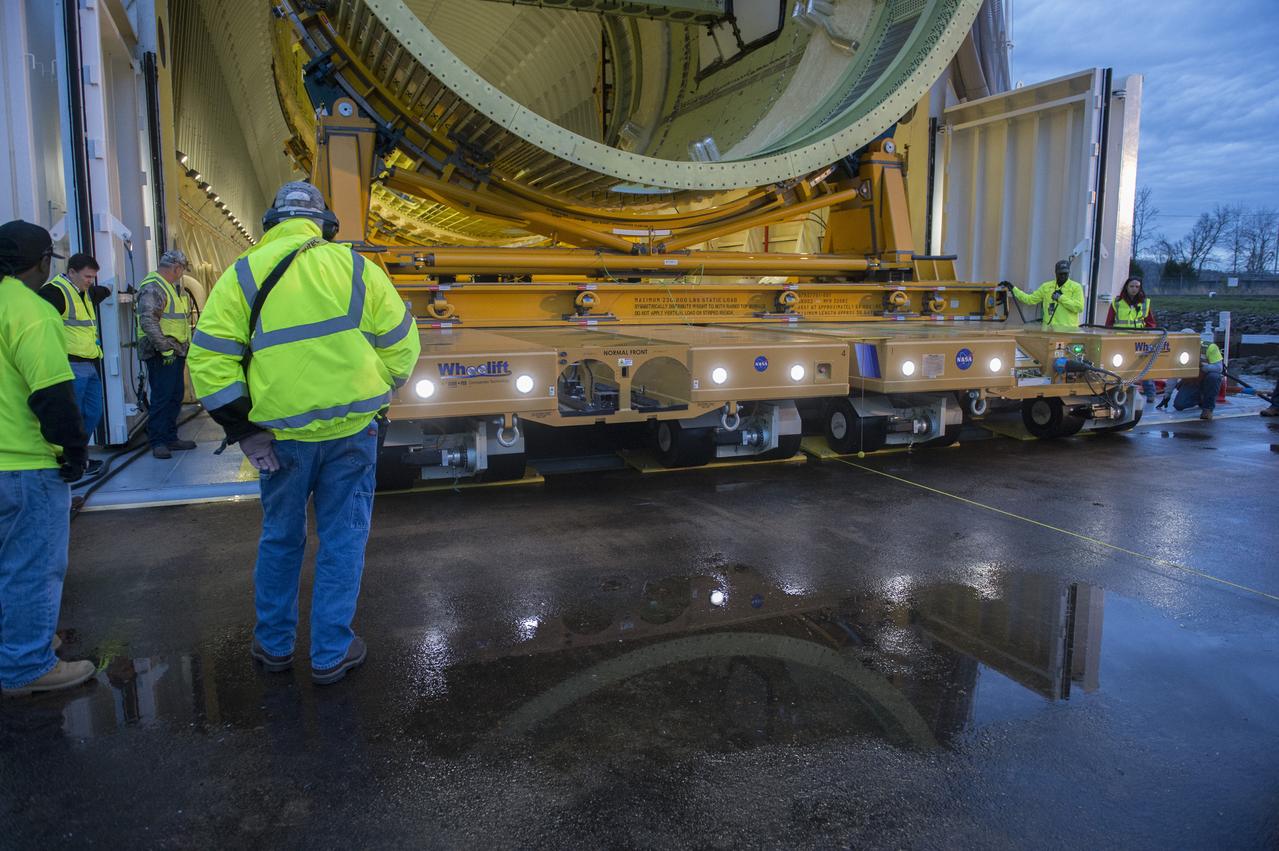
The SLS Stages Intertank Structural Test Assembly (STA) is rolling off the NASA Pegasus Barge at the MSFC Dock enroute to the MSFC 4619 Load Test Annex test facility for qualification testing
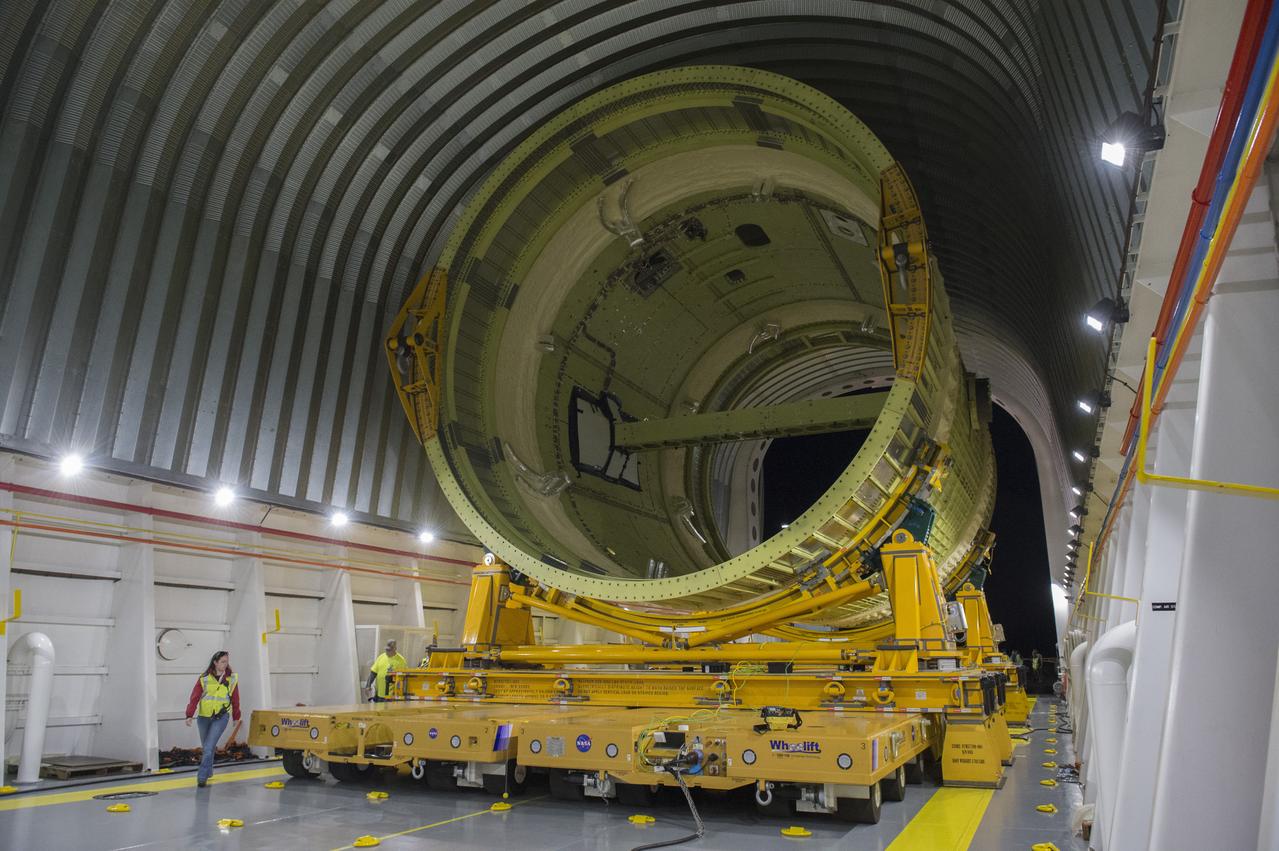
The SLS Stages Intertank Structural Test Assembly (STA) is rolling off the NASA Pegasus Barge at the MSFC Dock enroute to the MSFC 4619 Load Test Annex test facility for qualification testing
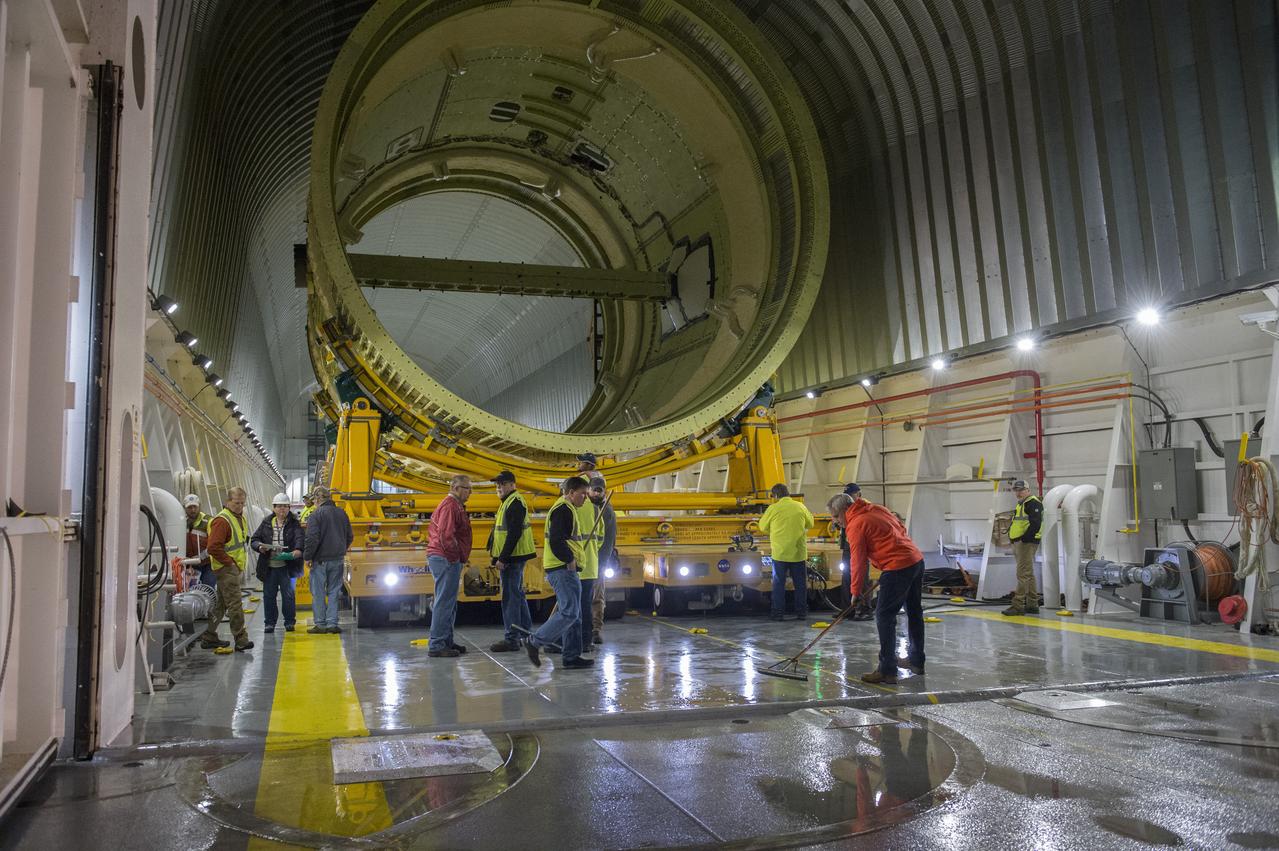
The SLS Stages Intertank Structural Test Assembly (STA) is rolling off the NASA Pegasus Barge at the MSFC Dock enroute to the MSFC 4619 Load Test Annex test facility for qualification testing
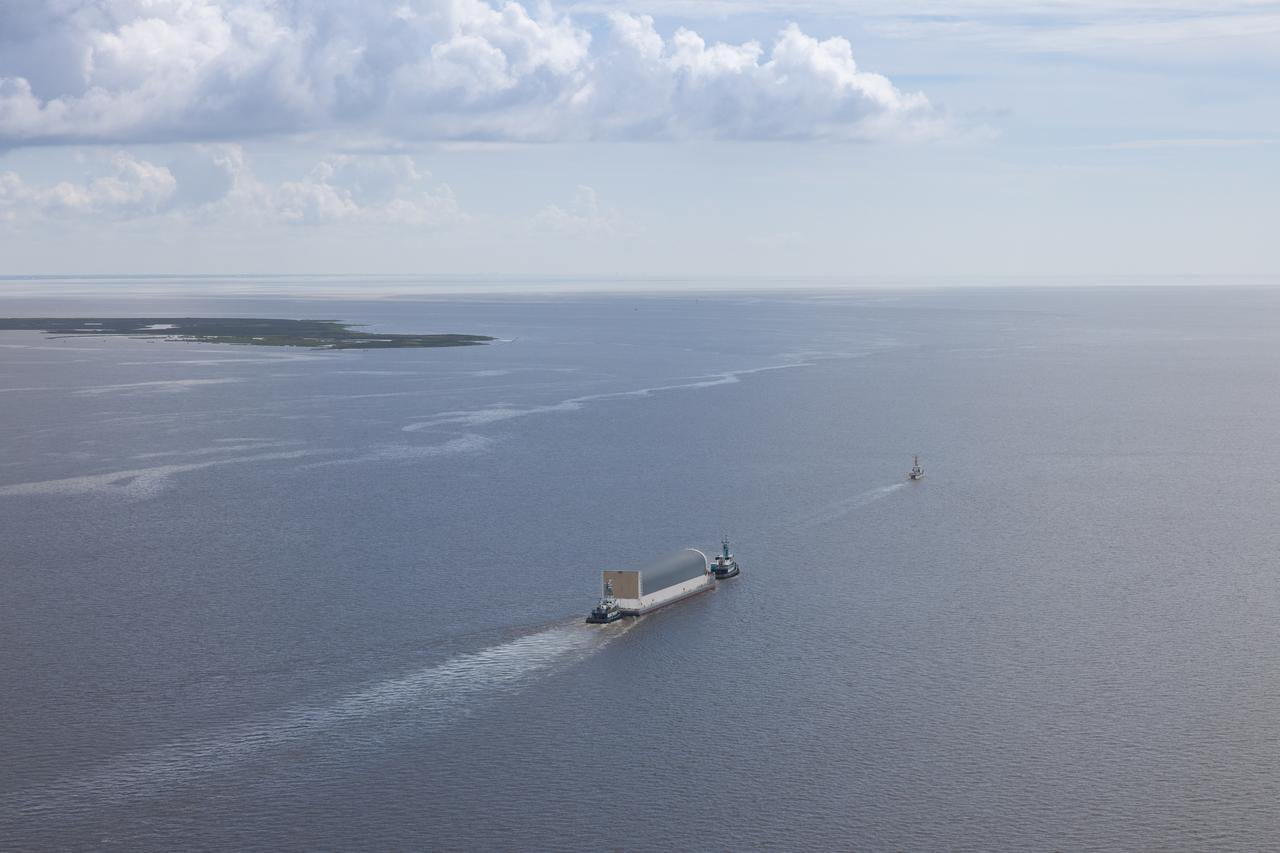
NASA photographers Evan Deroche and Brandon Hancock joined the U.S. Coast Guard in an HH-60 Jayhawk helicopter to capture aerial views of NASA’s Pegasus barge just after it departed NASA’s Michoud Assembly Facility in New Orleans July 17 with the core stage of NASA’s SLS (Space Launch System) rocket for Artemis II. These photos and videos show the barge as it traveled down the Intracoastal Waterway to the Gulf of Mexico. Pegasus ferried the Artemis II core stage more than 900 miles to NASA’s Kennedy Space Center in Florida. It arrived with the flight hardware July 22. The barge is maintained at NASA’s Michoud Assembly Facility in New Orleans, where the core stage is fully manufactured. NASA is working to land the first woman, first person of color, and its first international partner astronaut on the Moon under Artemis. SLS is part of NASA’s backbone for deep space exploration, along with the Orion spacecraft, supporting ground systems, advanced spacesuits and rovers, the Gateway in orbit around the Moon, and commercial human landing systems. SLS is the only rocket that can send Orion, astronauts, and supplies to the Moon in a single launch.
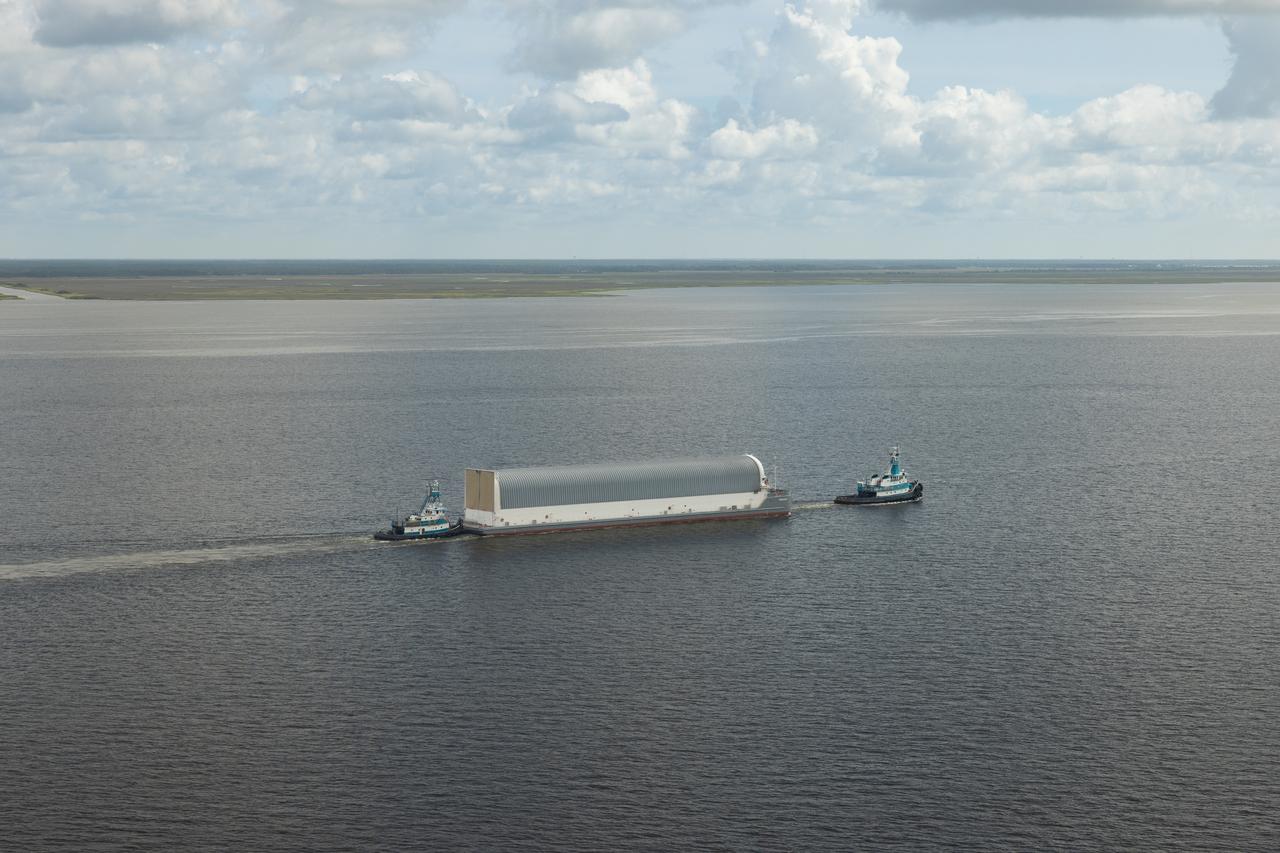
NASA photographers Evan Deroche and Brandon Hancock joined the U.S. Coast Guard in an HH-60 Jayhawk helicopter to capture aerial views of NASA’s Pegasus barge just after it departed NASA’s Michoud Assembly Facility in New Orleans July 17 with the core stage of NASA’s SLS (Space Launch System) rocket for Artemis II. These photos and videos show the barge as it traveled down the Intracoastal Waterway to the Gulf of Mexico. Pegasus ferried the Artemis II core stage more than 900 miles to NASA’s Kennedy Space Center in Florida. It arrived with the flight hardware July 22. The barge is maintained at NASA’s Michoud Assembly Facility in New Orleans, where the core stage is fully manufactured. NASA is working to land the first woman, first person of color, and its first international partner astronaut on the Moon under Artemis. SLS is part of NASA’s backbone for deep space exploration, along with the Orion spacecraft, supporting ground systems, advanced spacesuits and rovers, the Gateway in orbit around the Moon, and commercial human landing systems. SLS is the only rocket that can send Orion, astronauts, and supplies to the Moon in a single launch.
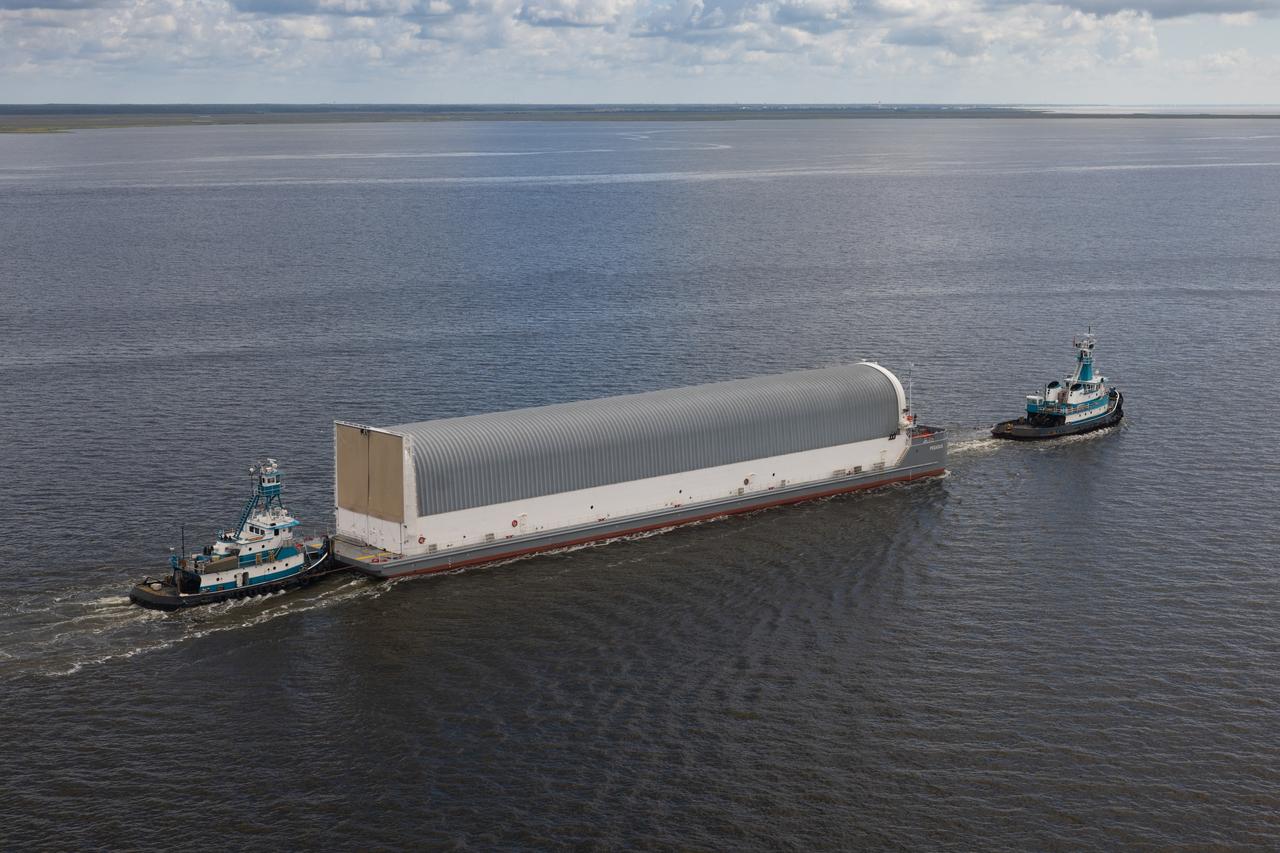
NASA photographers Evan Deroche and Brandon Hancock joined the U.S. Coast Guard in an HH-60 Jayhawk helicopter to capture aerial views of NASA’s Pegasus barge just after it departed NASA’s Michoud Assembly Facility in New Orleans July 17 with the core stage of NASA’s SLS (Space Launch System) rocket for Artemis II. These photos and videos show the barge as it traveled down the Intracoastal Waterway to the Gulf of Mexico. Pegasus ferried the Artemis II core stage more than 900 miles to NASA’s Kennedy Space Center in Florida. It arrived with the flight hardware July 22. The barge is maintained at NASA’s Michoud Assembly Facility in New Orleans, where the core stage is fully manufactured. NASA is working to land the first woman, first person of color, and its first international partner astronaut on the Moon under Artemis. SLS is part of NASA’s backbone for deep space exploration, along with the Orion spacecraft, supporting ground systems, advanced spacesuits and rovers, the Gateway in orbit around the Moon, and commercial human landing systems. SLS is the only rocket that can send Orion, astronauts, and supplies to the Moon in a single launch.
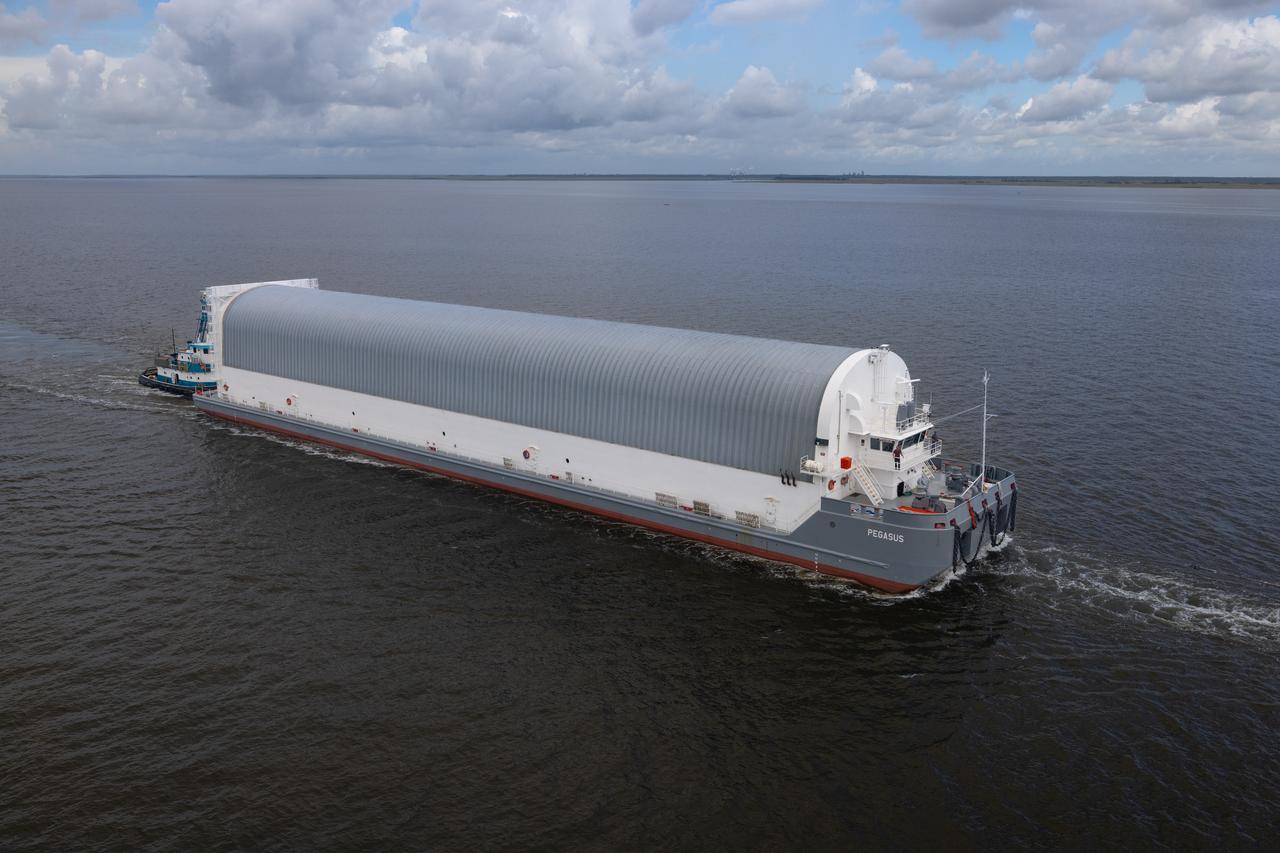
NASA photographers Evan Deroche and Brandon Hancock joined the U.S. Coast Guard in an HH-60 Jayhawk helicopter to capture aerial views of NASA’s Pegasus barge just after it departed NASA’s Michoud Assembly Facility in New Orleans July 17 with the core stage of NASA’s SLS (Space Launch System) rocket for Artemis II. These photos and videos show the barge as it traveled down the Intracoastal Waterway to the Gulf of Mexico. Pegasus ferried the Artemis II core stage more than 900 miles to NASA’s Kennedy Space Center in Florida. It arrived with the flight hardware July 22. The barge is maintained at NASA’s Michoud Assembly Facility in New Orleans, where the core stage is fully manufactured. NASA is working to land the first woman, first person of color, and its first international partner astronaut on the Moon under Artemis. SLS is part of NASA’s backbone for deep space exploration, along with the Orion spacecraft, supporting ground systems, advanced spacesuits and rovers, the Gateway in orbit around the Moon, and commercial human landing systems. SLS is the only rocket that can send Orion, astronauts, and supplies to the Moon in a single launch.
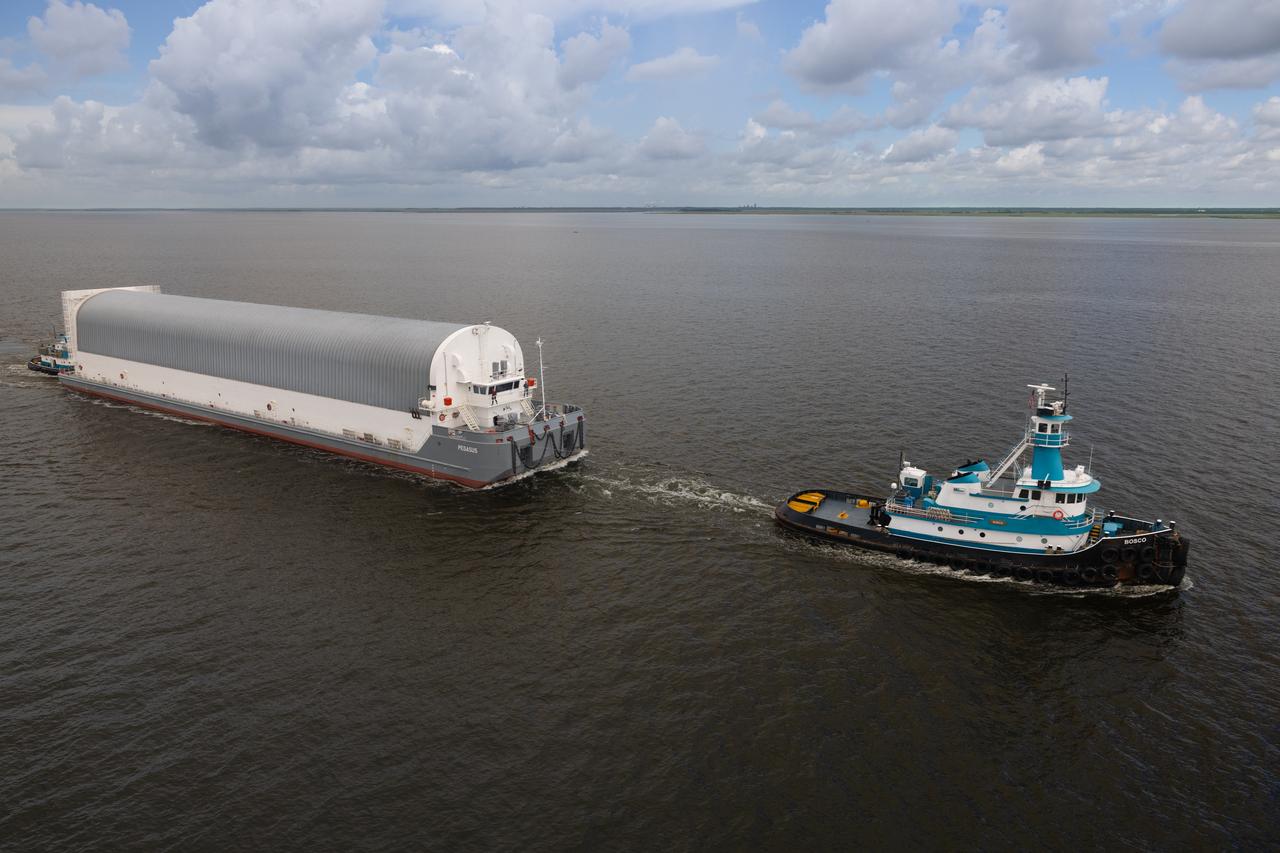
NASA photographers Evan Deroche and Brandon Hancock joined the U.S. Coast Guard in an HH-60 Jayhawk helicopter to capture aerial views of NASA’s Pegasus barge just after it departed NASA’s Michoud Assembly Facility in New Orleans July 17 with the core stage of NASA’s SLS (Space Launch System) rocket for Artemis II. These photos and videos show the barge as it traveled down the Intracoastal Waterway to the Gulf of Mexico. Pegasus ferried the Artemis II core stage more than 900 miles to NASA’s Kennedy Space Center in Florida. It arrived with the flight hardware July 22. The barge is maintained at NASA’s Michoud Assembly Facility in New Orleans, where the core stage is fully manufactured. NASA is working to land the first woman, first person of color, and its first international partner astronaut on the Moon under Artemis. SLS is part of NASA’s backbone for deep space exploration, along with the Orion spacecraft, supporting ground systems, advanced spacesuits and rovers, the Gateway in orbit around the Moon, and commercial human landing systems. SLS is the only rocket that can send Orion, astronauts, and supplies to the Moon in a single launch.
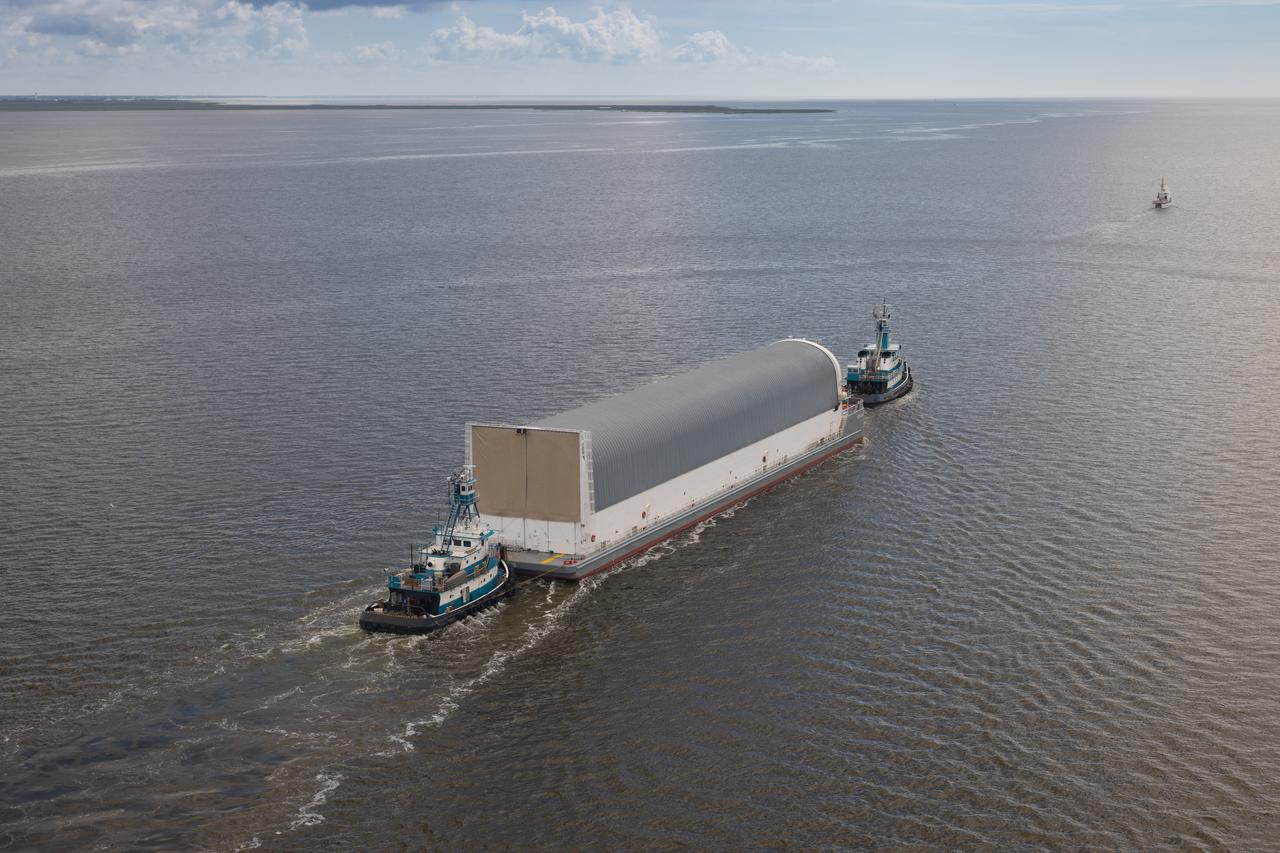
NASA photographers Evan Deroche and Brandon Hancock joined the U.S. Coast Guard in an HH-60 Jayhawk helicopter to capture aerial views of NASA’s Pegasus barge just after it departed NASA’s Michoud Assembly Facility in New Orleans July 17 with the core stage of NASA’s SLS (Space Launch System) rocket for Artemis II. These photos and videos show the barge as it traveled down the Intracoastal Waterway to the Gulf of Mexico. Pegasus ferried the Artemis II core stage more than 900 miles to NASA’s Kennedy Space Center in Florida. It arrived with the flight hardware July 22. The barge is maintained at NASA’s Michoud Assembly Facility in New Orleans, where the core stage is fully manufactured. NASA is working to land the first woman, first person of color, and its first international partner astronaut on the Moon under Artemis. SLS is part of NASA’s backbone for deep space exploration, along with the Orion spacecraft, supporting ground systems, advanced spacesuits and rovers, the Gateway in orbit around the Moon, and commercial human landing systems. SLS is the only rocket that can send Orion, astronauts, and supplies to the Moon in a single launch.
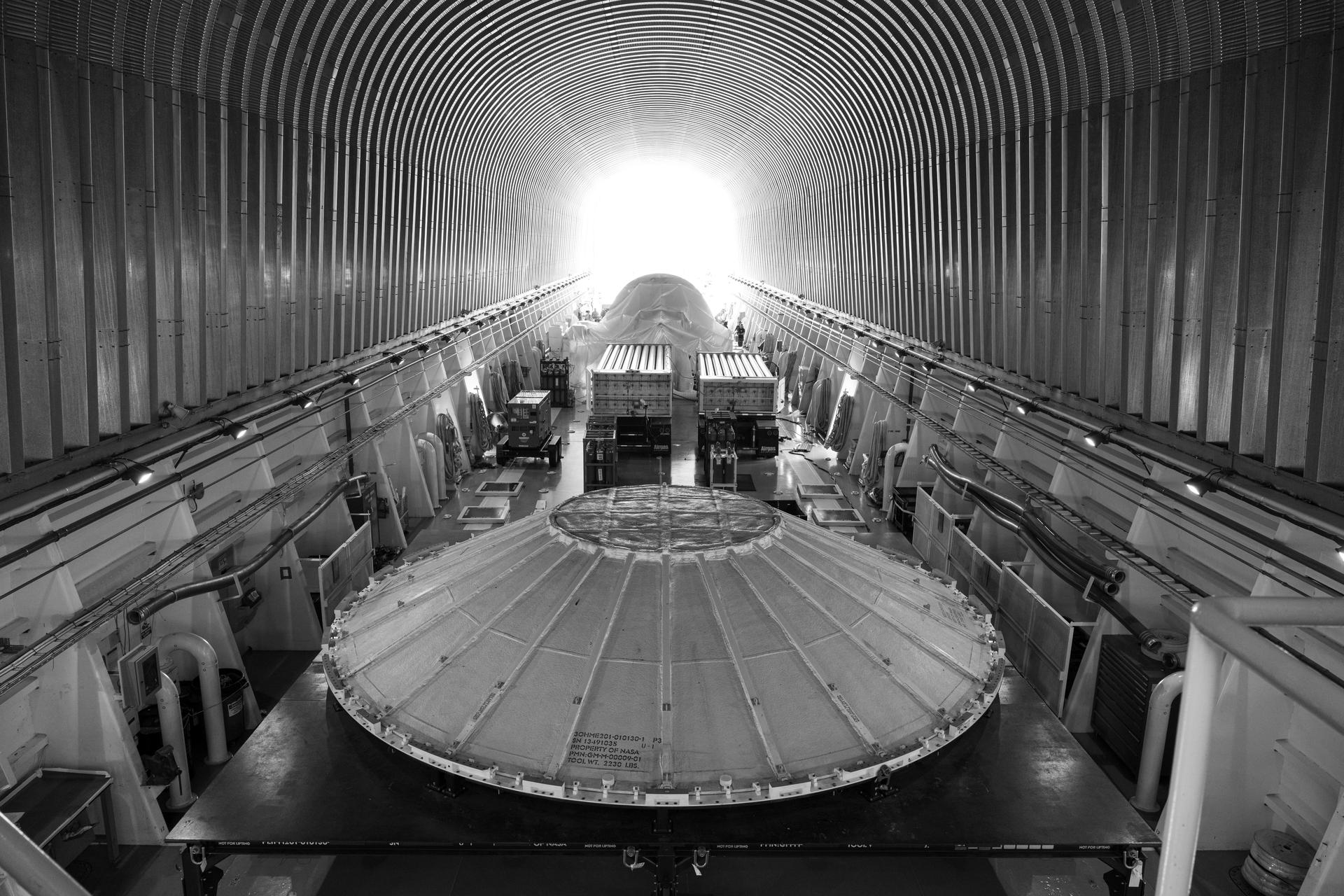
An interior view of NASA’s Pegasus barge, carrying a weather cover for Artemis III SLS (Space Launch System) rocket core stage and NASA’s Nancy Grace Roman Telescope, is seen, Sunday, June 21, at NASA’s Kennedy Space Center in Florida. Photo Credit: (NASA/John Kraus)
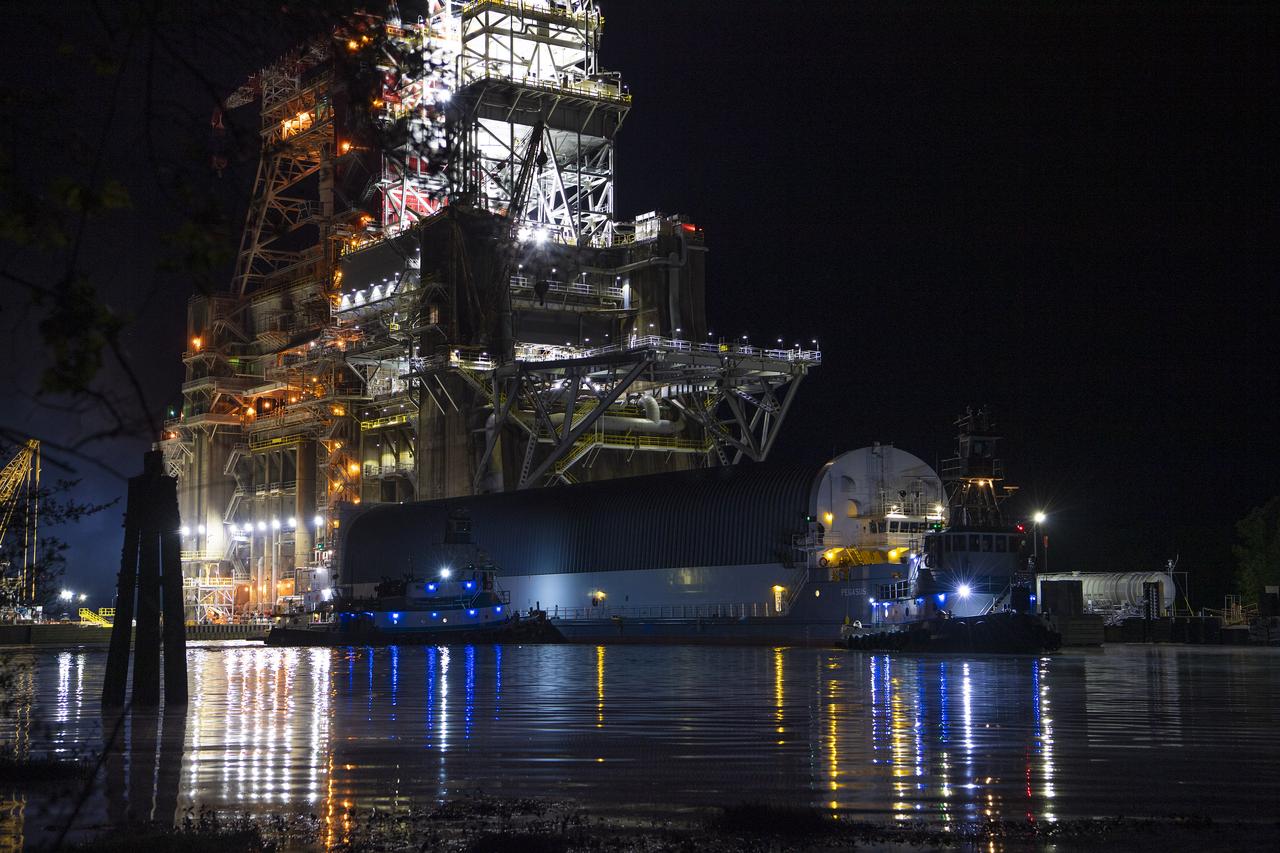
After a series of successful tests conducted the B-2 Test Stand at Stennis Space Center, NASA’s Space Launch System (SLS) core stage was loaded on the Pegasus barge and departed the test stand in the early morning hours of April 22, 2021, beginning its journey to Kennedy Space Center.

These images and videos show team members at Michoud Assembly Facility loading the first core stage that will help launch the first crewed flight of NASA’s SLS (Space Launch System) rocket for the agency’s Artemis II mission onto the Pegasus barge on Tuesday, July 16, 2024. The barge will ferry the core stage on a 900-mile journey from the agency’s Michoud Assembly Facility in New Orleans to its Kennedy Space Center in Florida. The core stage for the SLS mega rocket is the largest stage NASA has ever produced. At 212 feet tall, the stage consists of five major elements, including two huge propellant tanks that collectively hold more than 733,000 gallons of super chilled liquid propellant to feed four RS-25 engines at its base. During launch and flight, the stage will operate for just over eight minutes, producing more than 2 million pounds of thrust to help send a crew of four astronauts inside NASA’s Orion spacecraft onward to the Moon. All the major structures for every SLS core stage are fully manufactured at NASA Michoud. NASA is working to land the first woman, first person of color, and its first international partner astronaut on the Moon under Artemis. SLS is part of NASA’s backbone for deep space exploration, along with the Orion spacecraft and Gateway in orbit around the Moon and commercial human landing systems, next-generation space, next-generational spacesuits, and rovers on the lunar surface. SLS is the only rocket that can send Orion, astronauts, and supplies to the Moon in a single launch.
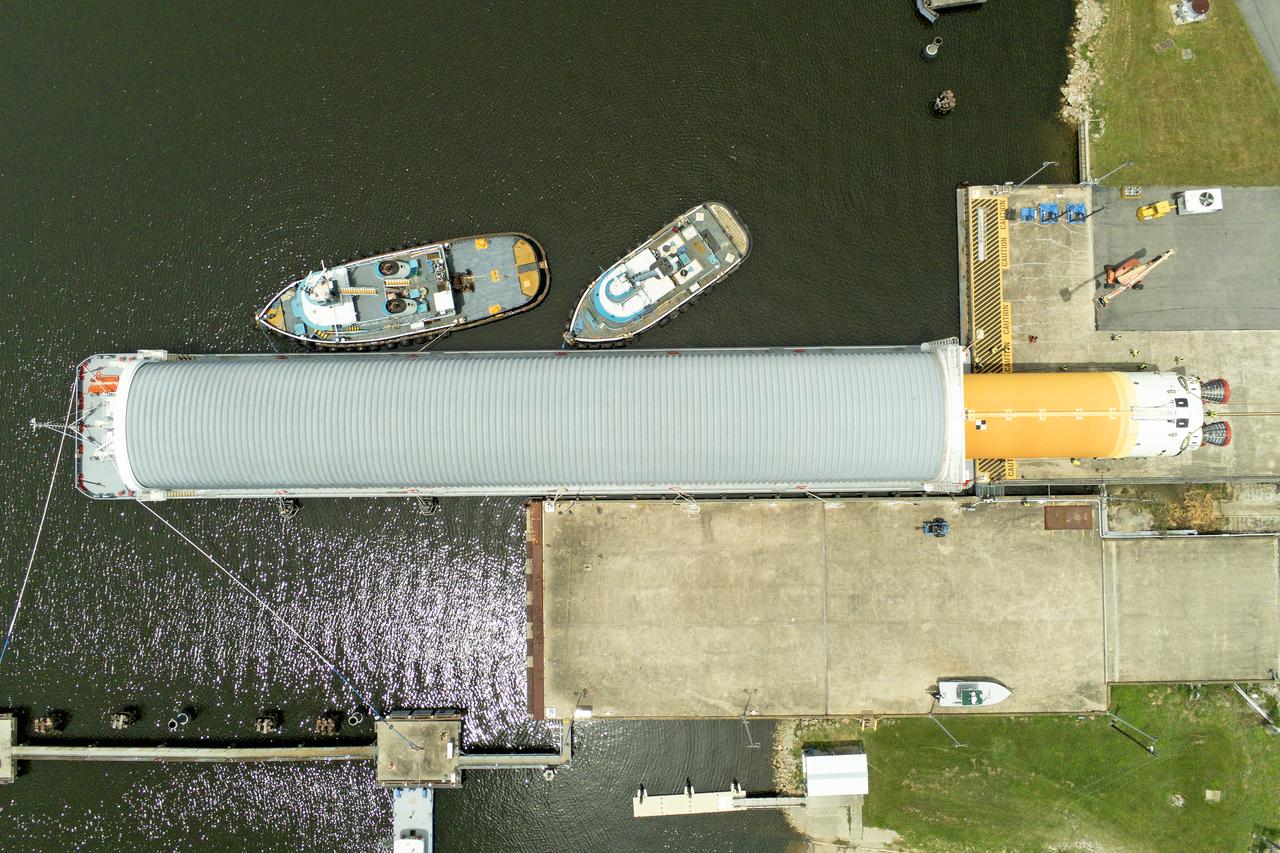
These images and videos show team members at Michoud Assembly Facility loading the first core stage that will help launch the first crewed flight of NASA’s SLS (Space Launch System) rocket for the agency’s Artemis II mission onto the Pegasus barge on Tuesday, July 16, 2024. The barge will ferry the core stage on a 900-mile journey from the agency’s Michoud Assembly Facility in New Orleans to its Kennedy Space Center in Florida. The core stage for the SLS mega rocket is the largest stage NASA has ever produced. At 212 feet tall, the stage consists of five major elements, including two huge propellant tanks that collectively hold more than 733,000 gallons of super chilled liquid propellant to feed four RS-25 engines at its base. During launch and flight, the stage will operate for just over eight minutes, producing more than 2 million pounds of thrust to help send a crew of four astronauts inside NASA’s Orion spacecraft onward to the Moon. All the major structures for every SLS core stage are fully manufactured at NASA Michoud. NASA is working to land the first woman, first person of color, and its first international partner astronaut on the Moon under Artemis. SLS is part of NASA’s backbone for deep space exploration, along with the Orion spacecraft and Gateway in orbit around the Moon and commercial human landing systems, next-generation space, next-generational spacesuits, and rovers on the lunar surface. SLS is the only rocket that can send Orion, astronauts, and supplies to the Moon in a single launch.
These images and videos show team members at Michoud Assembly Facility loading the first core stage that will help launch the first crewed flight of NASA’s SLS (Space Launch System) rocket for the agency’s Artemis II mission onto the Pegasus barge on Tuesday, July 16, 2024. The barge will ferry the core stage on a 900-mile journey from the agency’s Michoud Assembly Facility in New Orleans to its Kennedy Space Center in Florida. The core stage for the SLS mega rocket is the largest stage NASA has ever produced. At 212 feet tall, the stage consists of five major elements, including two huge propellant tanks that collectively hold more than 733,000 gallons of super chilled liquid propellant to feed four RS-25 engines at its base. During launch and flight, the stage will operate for just over eight minutes, producing more than 2 million pounds of thrust to help send a crew of four astronauts inside NASA’s Orion spacecraft onward to the Moon. All the major structures for every SLS core stage are fully manufactured at NASA Michoud. NASA is working to land the first woman, first person of color, and its first international partner astronaut on the Moon under Artemis. SLS is part of NASA’s backbone for deep space exploration, along with the Orion spacecraft and Gateway in orbit around the Moon and commercial human landing systems, next-generation space, next-generational spacesuits, and rovers on the lunar surface. SLS is the only rocket that can send Orion, astronauts, and supplies to the Moon in a single launch.
These images and videos show team members at Michoud Assembly Facility loading the first core stage that will help launch the first crewed flight of NASA’s SLS (Space Launch System) rocket for the agency’s Artemis II mission onto the Pegasus barge on Tuesday, July 16, 2024. The barge will ferry the core stage on a 900-mile journey from the agency’s Michoud Assembly Facility in New Orleans to its Kennedy Space Center in Florida. The core stage for the SLS mega rocket is the largest stage NASA has ever produced. At 212 feet tall, the stage consists of five major elements, including two huge propellant tanks that collectively hold more than 733,000 gallons of super chilled liquid propellant to feed four RS-25 engines at its base. During launch and flight, the stage will operate for just over eight minutes, producing more than 2 million pounds of thrust to help send a crew of four astronauts inside NASA’s Orion spacecraft onward to the Moon. All the major structures for every SLS core stage are fully manufactured at NASA Michoud. NASA is working to land the first woman, first person of color, and its first international partner astronaut on the Moon under Artemis. SLS is part of NASA’s backbone for deep space exploration, along with the Orion spacecraft and Gateway in orbit around the Moon and commercial human landing systems, next-generation space, next-generational spacesuits, and rovers on the lunar surface. SLS is the only rocket that can send Orion, astronauts, and supplies to the Moon in a single launch.
These images and videos show team members at Michoud Assembly Facility loading the first core stage that will help launch the first crewed flight of NASA’s SLS (Space Launch System) rocket for the agency’s Artemis II mission onto the Pegasus barge on Tuesday, July 16, 2024. The barge will ferry the core stage on a 900-mile journey from the agency’s Michoud Assembly Facility in New Orleans to its Kennedy Space Center in Florida. The core stage for the SLS mega rocket is the largest stage NASA has ever produced. At 212 feet tall, the stage consists of five major elements, including two huge propellant tanks that collectively hold more than 733,000 gallons of super chilled liquid propellant to feed four RS-25 engines at its base. During launch and flight, the stage will operate for just over eight minutes, producing more than 2 million pounds of thrust to help send a crew of four astronauts inside NASA’s Orion spacecraft onward to the Moon. All the major structures for every SLS core stage are fully manufactured at NASA Michoud. NASA is working to land the first woman, first person of color, and its first international partner astronaut on the Moon under Artemis. SLS is part of NASA’s backbone for deep space exploration, along with the Orion spacecraft and Gateway in orbit around the Moon and commercial human landing systems, next-generation space, next-generational spacesuits, and rovers on the lunar surface. SLS is the only rocket that can send Orion, astronauts, and supplies to the Moon in a single launch.
These images and videos show team members at Michoud Assembly Facility loading the first core stage that will help launch the first crewed flight of NASA’s SLS (Space Launch System) rocket for the agency’s Artemis II mission onto the Pegasus barge on Tuesday, July 16, 2024. The barge will ferry the core stage on a 900-mile journey from the agency’s Michoud Assembly Facility in New Orleans to its Kennedy Space Center in Florida. The core stage for the SLS mega rocket is the largest stage NASA has ever produced. At 212 feet tall, the stage consists of five major elements, including two huge propellant tanks that collectively hold more than 733,000 gallons of super chilled liquid propellant to feed four RS-25 engines at its base. During launch and flight, the stage will operate for just over eight minutes, producing more than 2 million pounds of thrust to help send a crew of four astronauts inside NASA’s Orion spacecraft onward to the Moon. All the major structures for every SLS core stage are fully manufactured at NASA Michoud. NASA is working to land the first woman, first person of color, and its first international partner astronaut on the Moon under Artemis. SLS is part of NASA’s backbone for deep space exploration, along with the Orion spacecraft and Gateway in orbit around the Moon and commercial human landing systems, next-generation space, next-generational spacesuits, and rovers on the lunar surface. SLS is the only rocket that can send Orion, astronauts, and supplies to the Moon in a single launch.
These images and videos show team members at Michoud Assembly Facility loading the first core stage that will help launch the first crewed flight of NASA’s SLS (Space Launch System) rocket for the agency’s Artemis II mission onto the Pegasus barge on Tuesday, July 16, 2024. The barge will ferry the core stage on a 900-mile journey from the agency’s Michoud Assembly Facility in New Orleans to its Kennedy Space Center in Florida. The core stage for the SLS mega rocket is the largest stage NASA has ever produced. At 212 feet tall, the stage consists of five major elements, including two huge propellant tanks that collectively hold more than 733,000 gallons of super chilled liquid propellant to feed four RS-25 engines at its base. During launch and flight, the stage will operate for just over eight minutes, producing more than 2 million pounds of thrust to help send a crew of four astronauts inside NASA’s Orion spacecraft onward to the Moon. All the major structures for every SLS core stage are fully manufactured at NASA Michoud. NASA is working to land the first woman, first person of color, and its first international partner astronaut on the Moon under Artemis. SLS is part of NASA’s backbone for deep space exploration, along with the Orion spacecraft and Gateway in orbit around the Moon and commercial human landing systems, next-generation space, next-generational spacesuits, and rovers on the lunar surface. SLS is the only rocket that can send Orion, astronauts, and supplies to the Moon in a single launch.

These images and videos show team members at Michoud Assembly Facility loading the first core stage that will help launch the first crewed flight of NASA’s SLS (Space Launch System) rocket for the agency’s Artemis II mission onto the Pegasus barge on Tuesday, July 16, 2024. The barge will ferry the core stage on a 900-mile journey from the agency’s Michoud Assembly Facility in New Orleans to its Kennedy Space Center in Florida. The core stage for the SLS mega rocket is the largest stage NASA has ever produced. At 212 feet tall, the stage consists of five major elements, including two huge propellant tanks that collectively hold more than 733,000 gallons of super chilled liquid propellant to feed four RS-25 engines at its base. During launch and flight, the stage will operate for just over eight minutes, producing more than 2 million pounds of thrust to help send a crew of four astronauts inside NASA’s Orion spacecraft onward to the Moon. All the major structures for every SLS core stage are fully manufactured at NASA Michoud. NASA is working to land the first woman, first person of color, and its first international partner astronaut on the Moon under Artemis. SLS is part of NASA’s backbone for deep space exploration, along with the Orion spacecraft and Gateway in orbit around the Moon and commercial human landing systems, next-generation space, next-generational spacesuits, and rovers on the lunar surface. SLS is the only rocket that can send Orion, astronauts, and supplies to the Moon in a single launch.
These images and videos show team members at Michoud Assembly Facility loading the first core stage that will help launch the first crewed flight of NASA’s SLS (Space Launch System) rocket for the agency’s Artemis II mission onto the Pegasus barge on Tuesday, July 16, 2024. The barge will ferry the core stage on a 900-mile journey from the agency’s Michoud Assembly Facility in New Orleans to its Kennedy Space Center in Florida. The core stage for the SLS mega rocket is the largest stage NASA has ever produced. At 212 feet tall, the stage consists of five major elements, including two huge propellant tanks that collectively hold more than 733,000 gallons of super chilled liquid propellant to feed four RS-25 engines at its base. During launch and flight, the stage will operate for just over eight minutes, producing more than 2 million pounds of thrust to help send a crew of four astronauts inside NASA’s Orion spacecraft onward to the Moon. All the major structures for every SLS core stage are fully manufactured at NASA Michoud. NASA is working to land the first woman, first person of color, and its first international partner astronaut on the Moon under Artemis. SLS is part of NASA’s backbone for deep space exploration, along with the Orion spacecraft and Gateway in orbit around the Moon and commercial human landing systems, next-generation space, next-generational spacesuits, and rovers on the lunar surface. SLS is the only rocket that can send Orion, astronauts, and supplies to the Moon in a single launch.
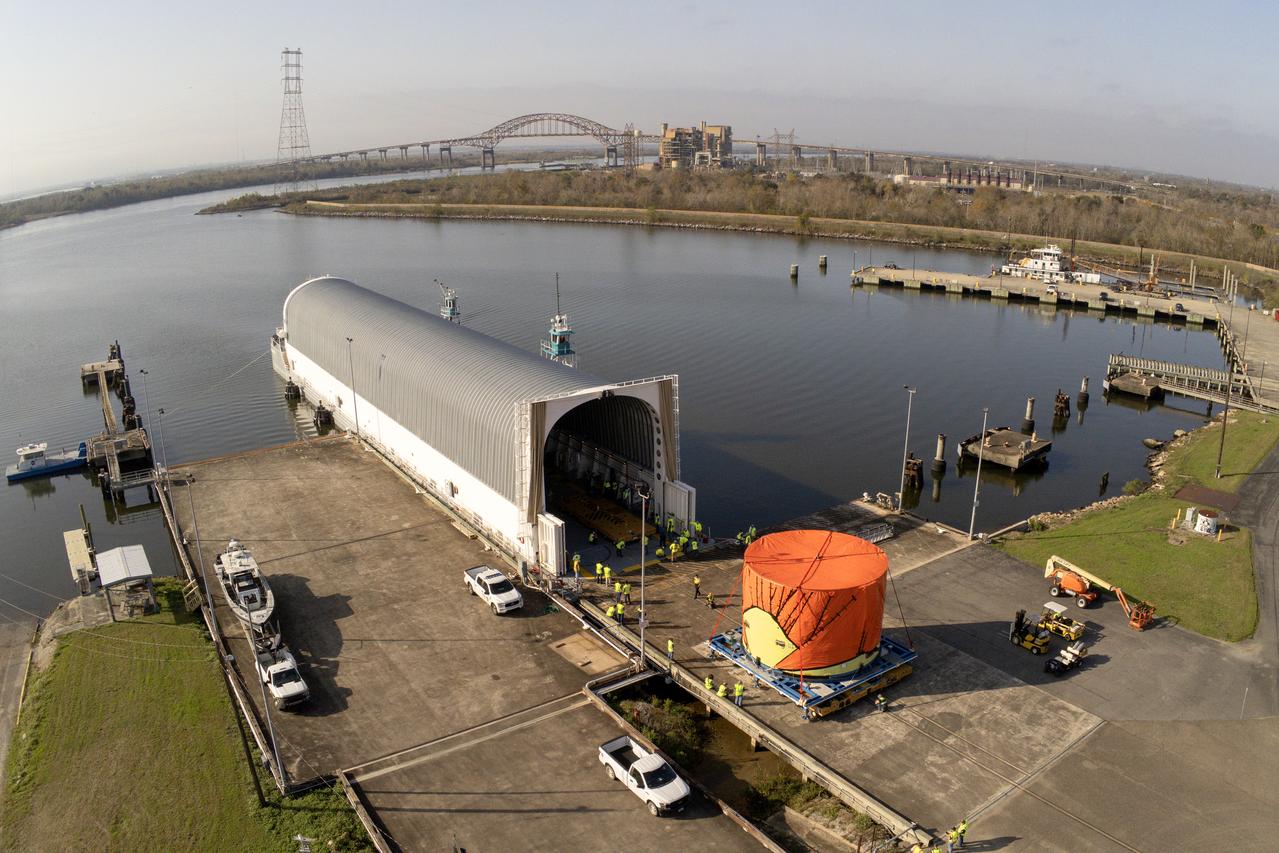
Teams at NASA’s Michoud Assembly Facility in New Orleans move the engine section flight hardware to the agency’s Pegasus barge on Sunday, December 4, 2022. The barge will ferry the engine section of NASA’s Space Launch System (SLS) rocket for Artemis III to the agency’s Kennedy Space Center in Florida. Once there, teams at Kennedy will finish outfitting the engine section, which comprises the tail-end of the rocket’s 212-foot-tall core stage, before integrating it to the rest of the stage. Beginning with production for Artemis III, NASA and core stage lead contractor Boeing will use Michoud, where the SLS core stages are currently manufactured, to produce and outfit the core stage’s five elements, and available space at Kennedy for final assembly and integration. Image credit: NASA/Michael DeMocker
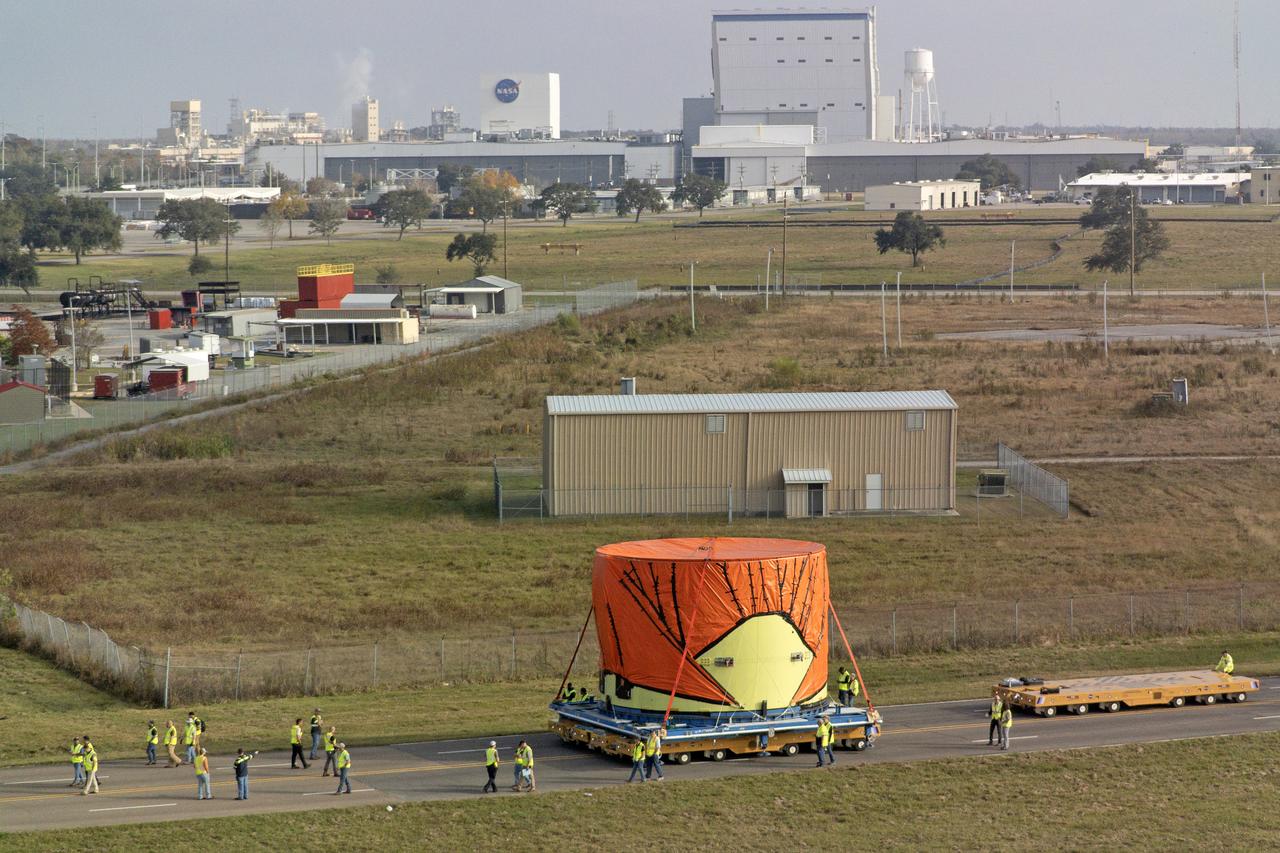
Teams at NASA’s Michoud Assembly Facility in New Orleans move the engine section flight hardware to the agency’s Pegasus barge on Sunday, December 4, 2022. The barge will ferry the engine section of NASA’s Space Launch System (SLS) rocket for Artemis III to the agency’s Kennedy Space Center in Florida. Once there, teams at Kennedy will finish outfitting the engine section, which comprises the tail-end of the rocket’s 212-foot-tall core stage, before integrating it to the rest of the stage. Beginning with production for Artemis III, NASA and core stage lead contractor Boeing will use Michoud, where the SLS core stages are currently manufactured, to produce and outfit the core stage’s five elements, and available space at Kennedy for final assembly and integration. Image credit: NASA/Michael DeMocker
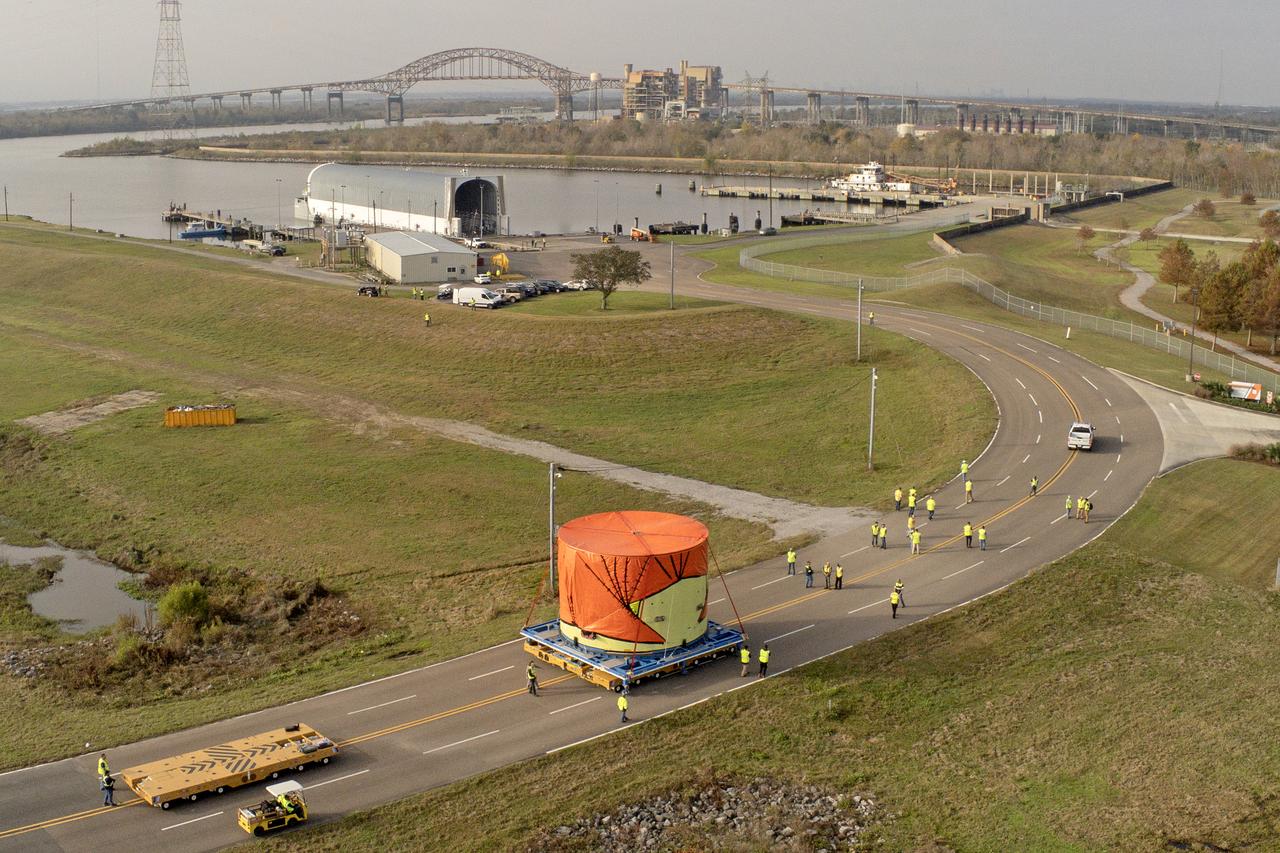
Teams at NASA’s Michoud Assembly Facility in New Orleans move the engine section flight hardware to the agency’s Pegasus barge on Sunday, December 4, 2022. The barge will ferry the engine section of NASA’s Space Launch System (SLS) rocket for Artemis III to the agency’s Kennedy Space Center in Florida. Once there, teams at Kennedy will finish outfitting the engine section, which comprises the tail-end of the rocket’s 212-foot-tall core stage, before integrating it to the rest of the stage. Beginning with production for Artemis III, NASA and core stage lead contractor Boeing will use Michoud, where the SLS core stages are currently manufactured, to produce and outfit the core stage’s five elements, and available space at Kennedy for final assembly and integration. Image credit: NASA/Michael DeMocker
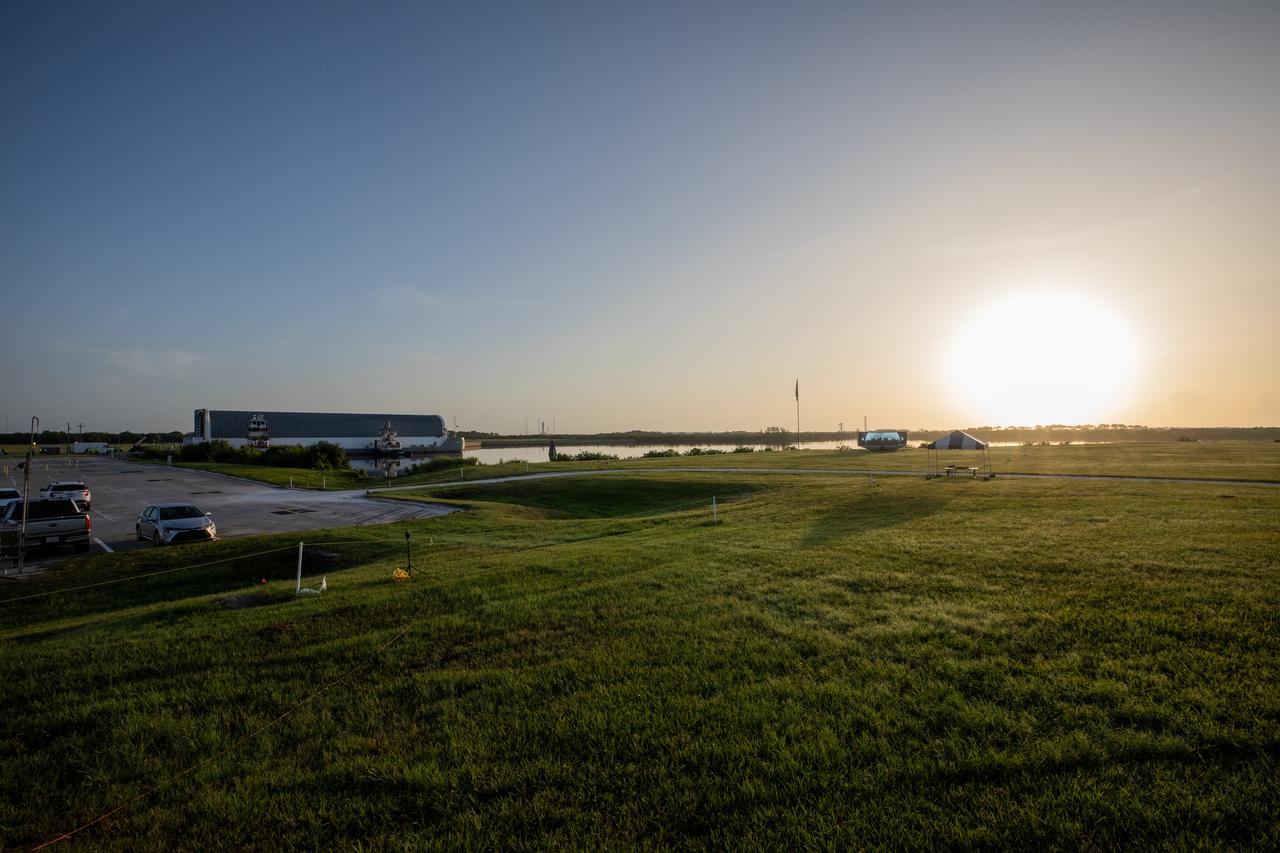
The sun rises over NASA’s Pegasus barge, carrying the agency’s massive SLS (Space Launch System) core stage, at NASA’s Kennedy Space Center Complex 39 turn basin wharf in Florida on Wednesday, July 24, 2024, after journeying from the agency’s Michoud Assembly Facility in New Orleans. The core stage is the next piece of Artemis hardware to arrive at the spaceport and will be offloaded and moved to NASA Kennedy’s Vehicle Assembly Building, where it will be prepared for integration ahead of the Artemis II launch.
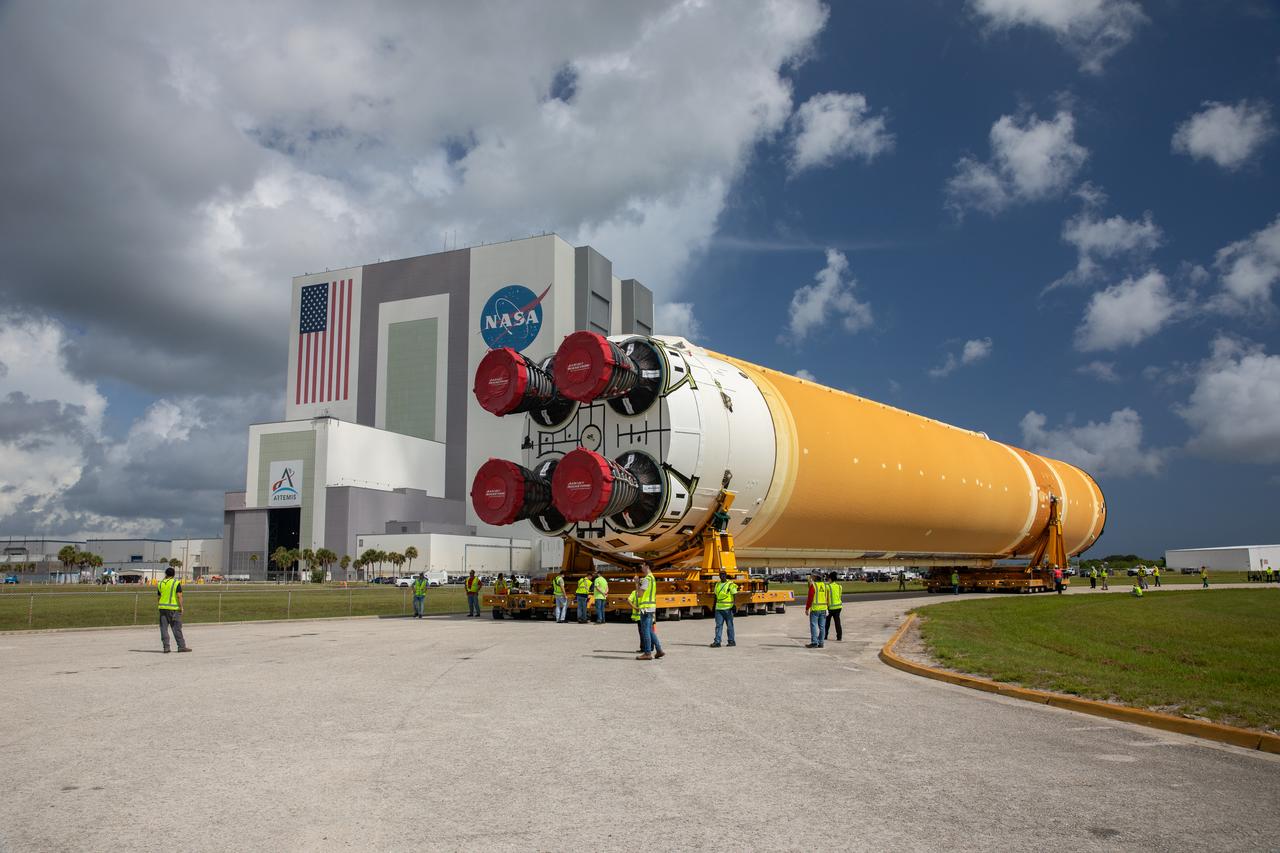
After completing its journey from NASA’s Michoud Assembly Facility in New Orleans aboard the Pegasus barge, teams with Exploration Ground Systems (EGS) transport the agency’s powerful SLS (Space Launch System) core stage to Kennedy Space Center’s Vehicle Assembly Building in Florida on Wednesday, July 24, 2024. Once inside, SLS will be prepared for integration atop the mobile launcher ahead of the Artemis II launch.
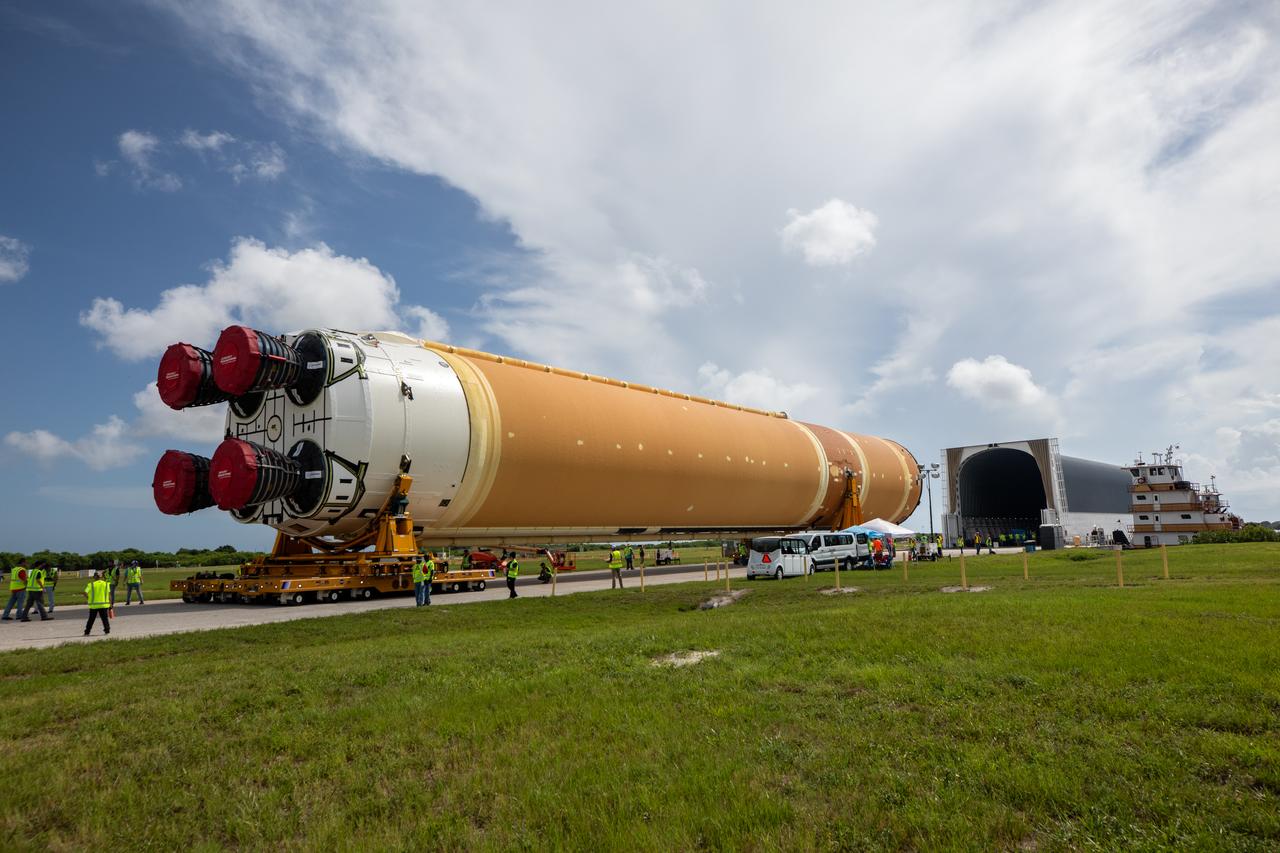
After completing its journey from NASA’s Michoud Assembly Facility in New Orleans aboard the Pegasus barge, teams with Exploration Ground Systems (EGS) transport the agency’s powerful SLS (Space Launch System) core stage to NASA’s Kennedy Space Center’s Vehicle Assembly Building in Florida on Wednesday, July 24, 2024. Once inside, SLS will be prepared for integration atop the mobile launcher ahead of the Artemis II launch.
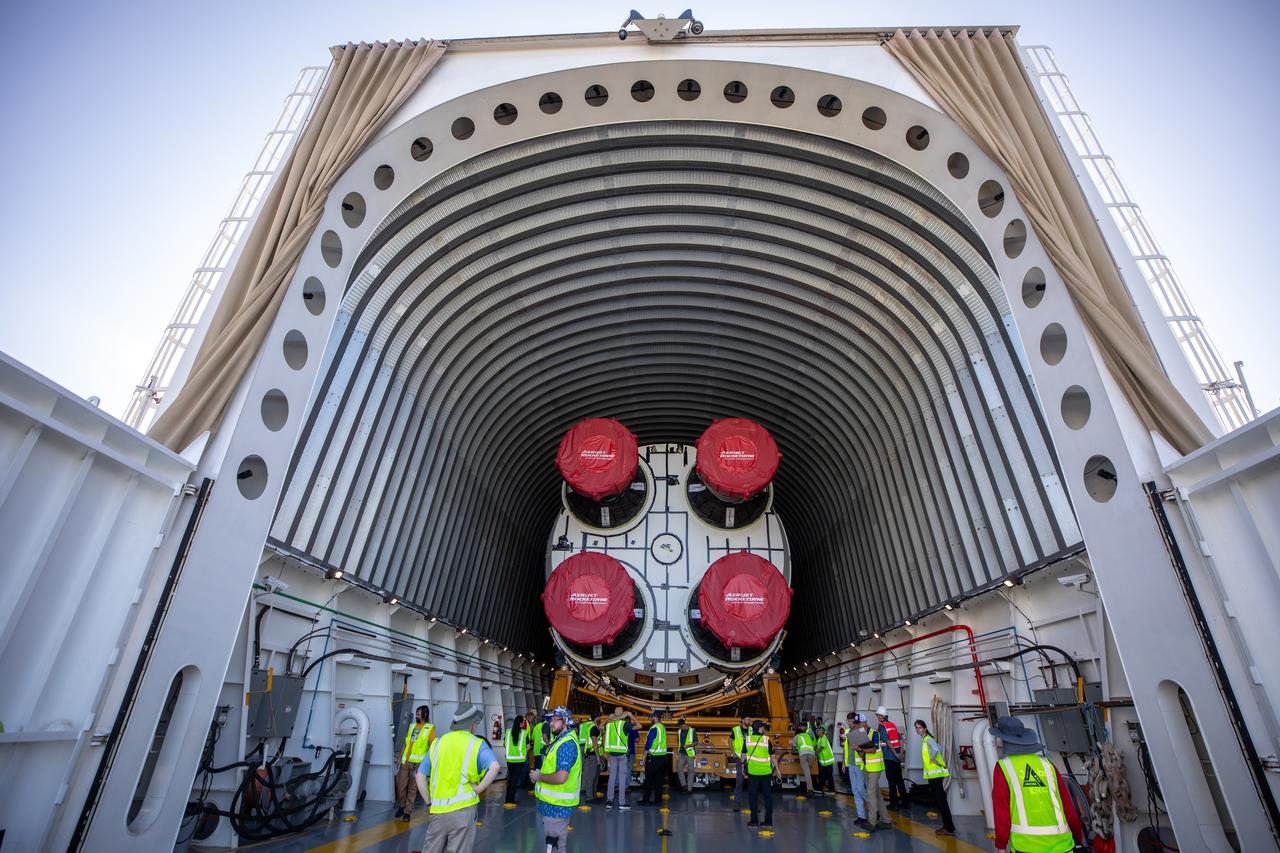
NASA’s massive 212-foot long SLS (Space Launch System) core stage is offloaded from the agency’s Pegasus Barge on Wednesday, July 24 2024, after arriving at NASA’s Kennedy Space Center in Florida. Teams with Exploration Ground Systems (EGS) will transfer the rocket stage to the spaceport’s Vehicle Assembly Building to prepare it for integration atop the mobile launcher ahead of the Artemis II launch.
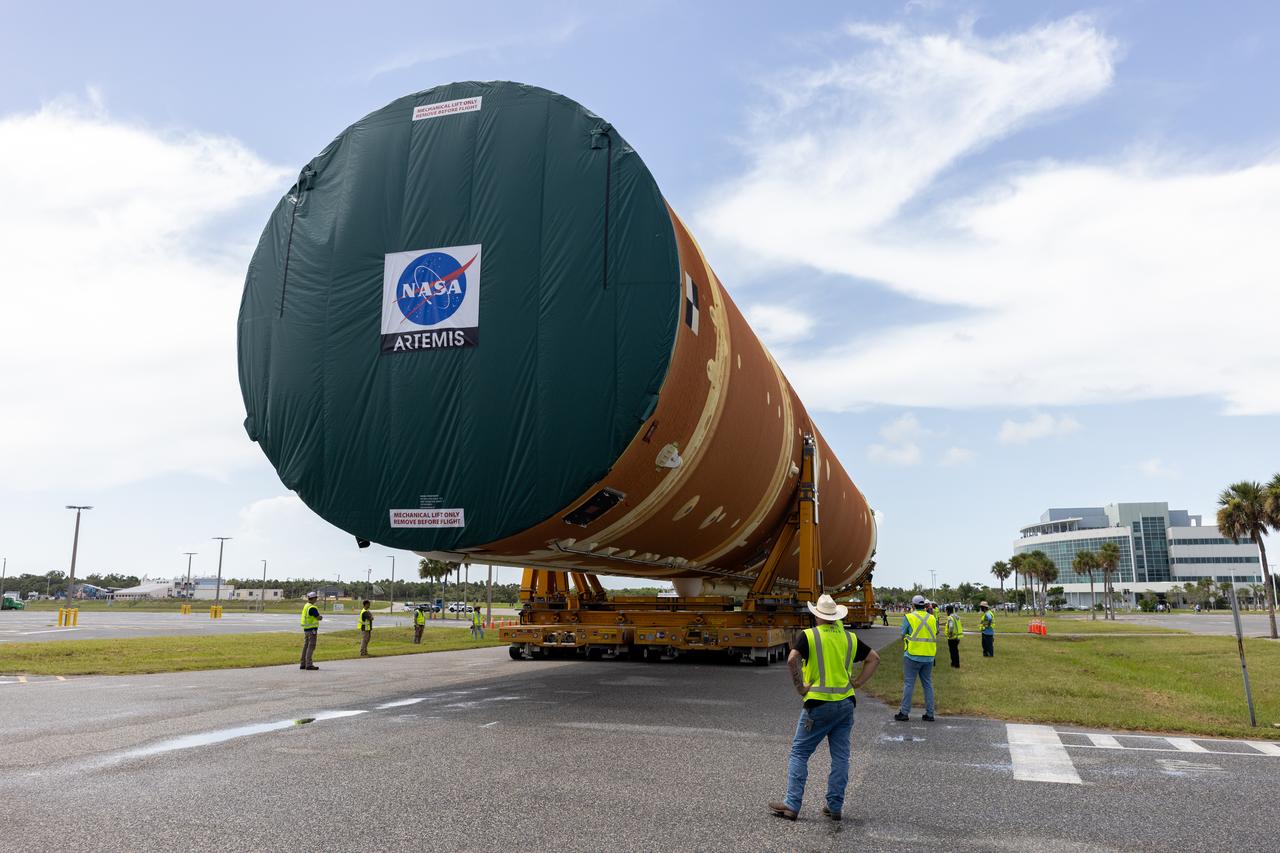
After completing its journey from NASA’s Michoud Assembly Facility in New Orleans aboard the Pegasus barge, teams with Exploration Ground Systems (EGS) transport the agency’s powerful SLS (Space Launch System) core stage to NASA’s Kennedy Space Center’s Vehicle Assembly Building in Florida on Wednesday, July 24, 2024. Once inside, SLS will be prepared for integration atop the mobile launcher ahead of the Artemis II launch.

After completing its journey from NASA’s Michoud Assembly Facility in New Orleans aboard the Pegasus barge, teams with Exploration Ground Systems (EGS) transport the agency’s powerful SLS (Space Launch System) core stage to NASA’s Kennedy Space Center’s Vehicle Assembly Building in Florida on Wednesday, July 24, 2024. Once inside, SLS will be prepared for integration atop the mobile launcher ahead of the Artemis II launch.
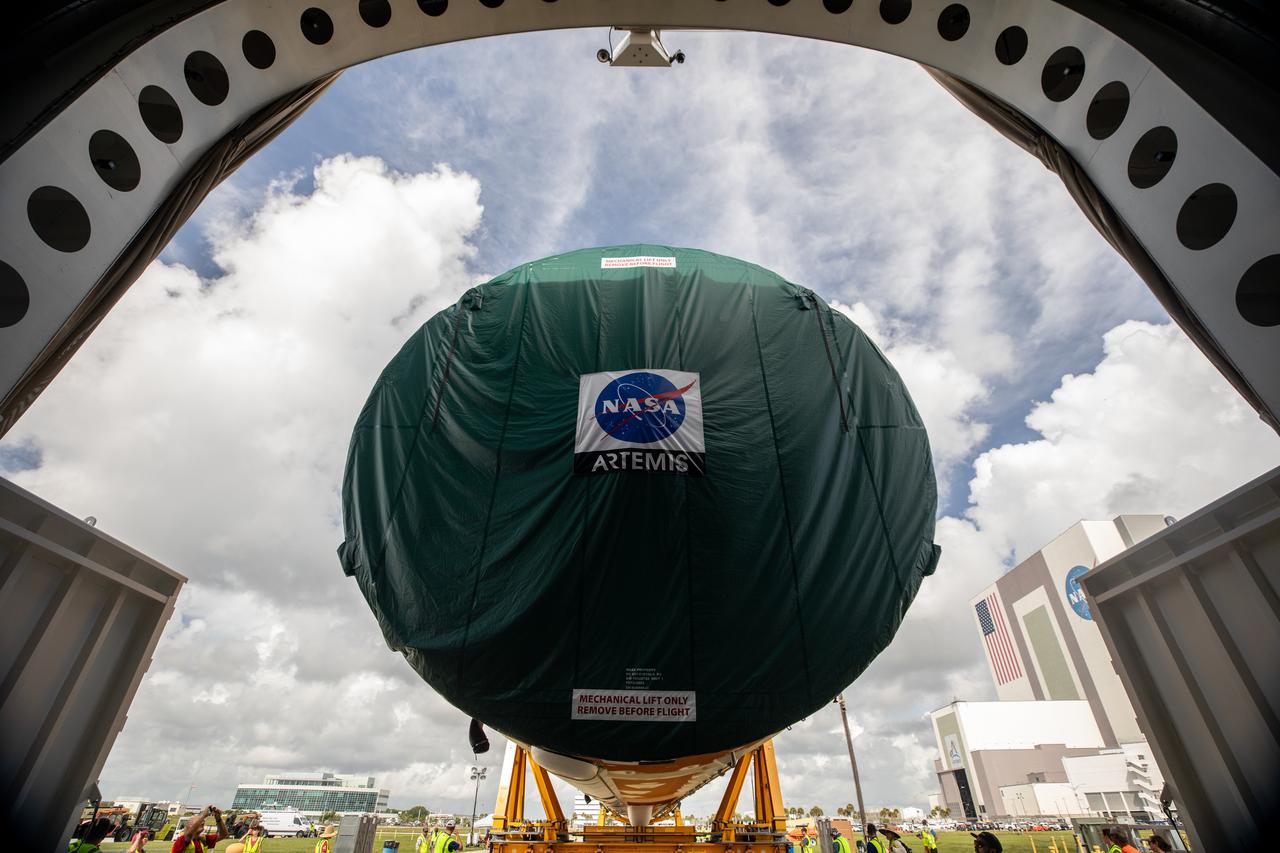
NASA’s massive 212-foot long SLS (Space Launch System) core stage is offloaded from the agency’s Pegasus Barge on Wednesday, July 24, 2024, after arriving at NASA’s Kennedy Space Center in Florida. Teams with Exploration Ground Systems (EGS) will transfer the rocket stage to the spaceport’s Vehicle Assembly Building to prepare it for integration atop the mobile launcher ahead of the Artemis II launch.
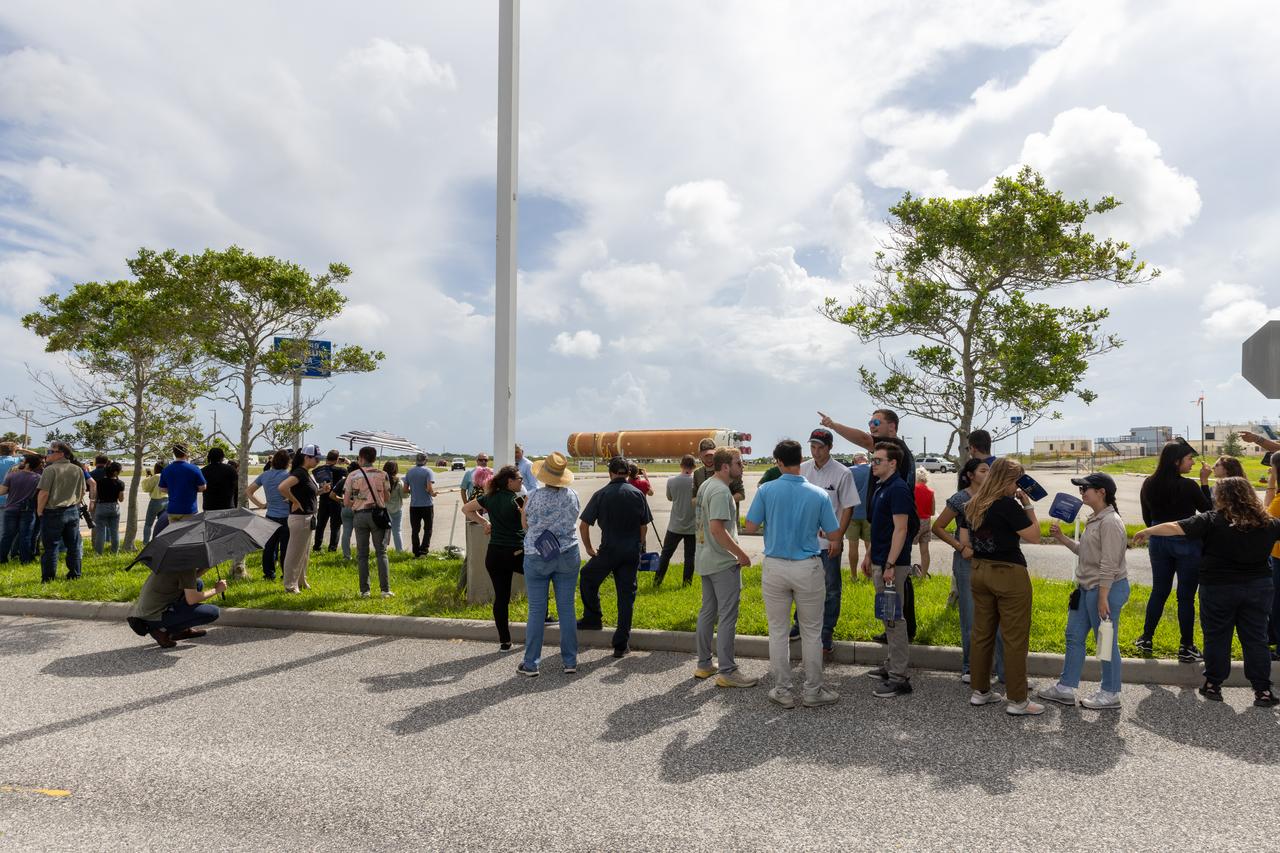
Employees from NASA’s Kennedy Space Center in Florida watch as teams with Exploration Ground Systems (EGS) transport the agency’s powerful SLS (Space Launch System) core stage to the spaceport’s Vehicle Assembly Building on Wednesday, July 24, 2024. The 212-foot-long rocket stage completed its journey from NASA’s Michoud Assembly Facility in New Orleans aboard the Pegasus barge the previous day. Once inside, SLS will be prepared for integration atop the mobile launcher ahead of the Artemis II launch.
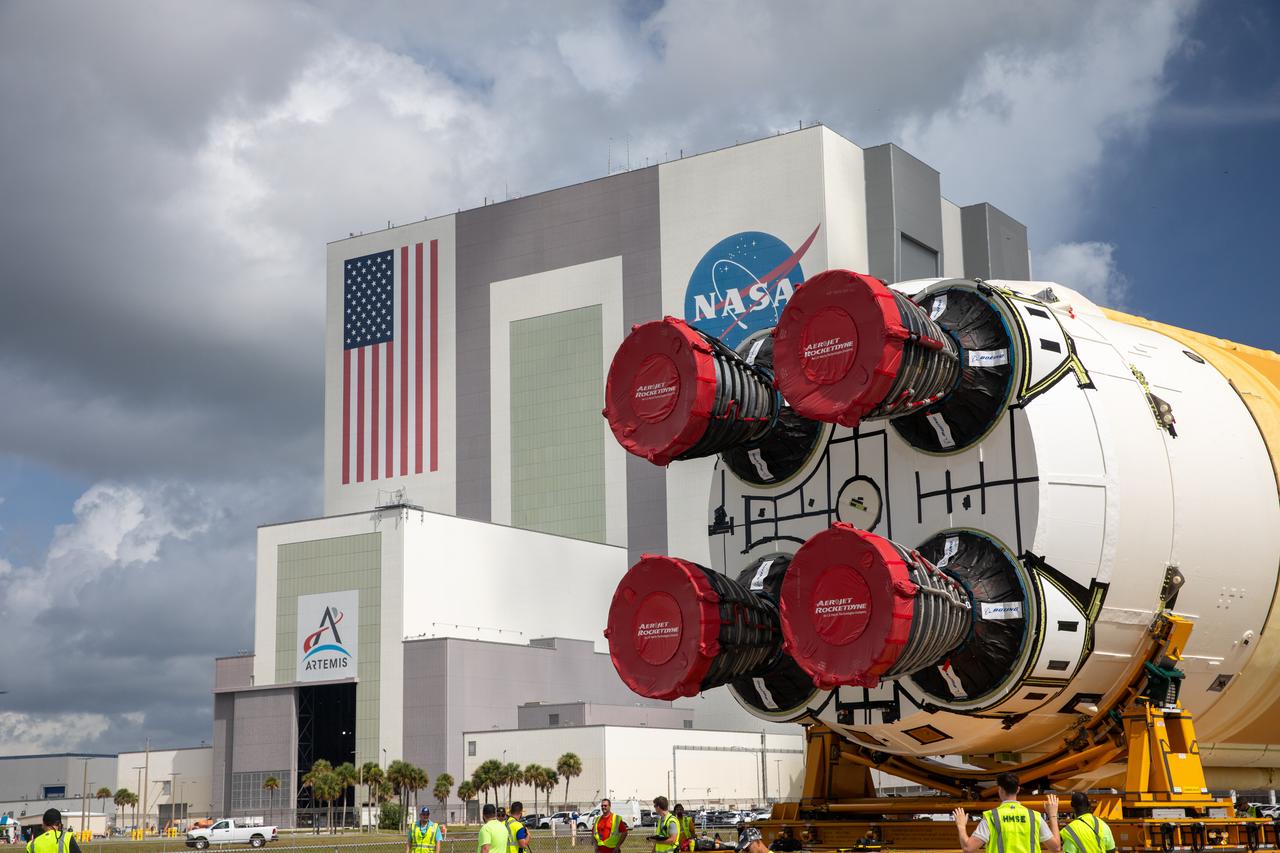
After completing its journey from NASA’s Michoud Assembly Facility in New Orleans aboard the Pegasus barge, teams with Exploration Ground Systems (EGS) transport the agency’s powerful SLS (Space Launch System) core stage to Kennedy Space Center’s Vehicle Assembly Building in Florida on Wednesday, July 24, 2024. Once inside, SLS will be prepared for integration atop the mobile launcher ahead of the Artemis II launch.
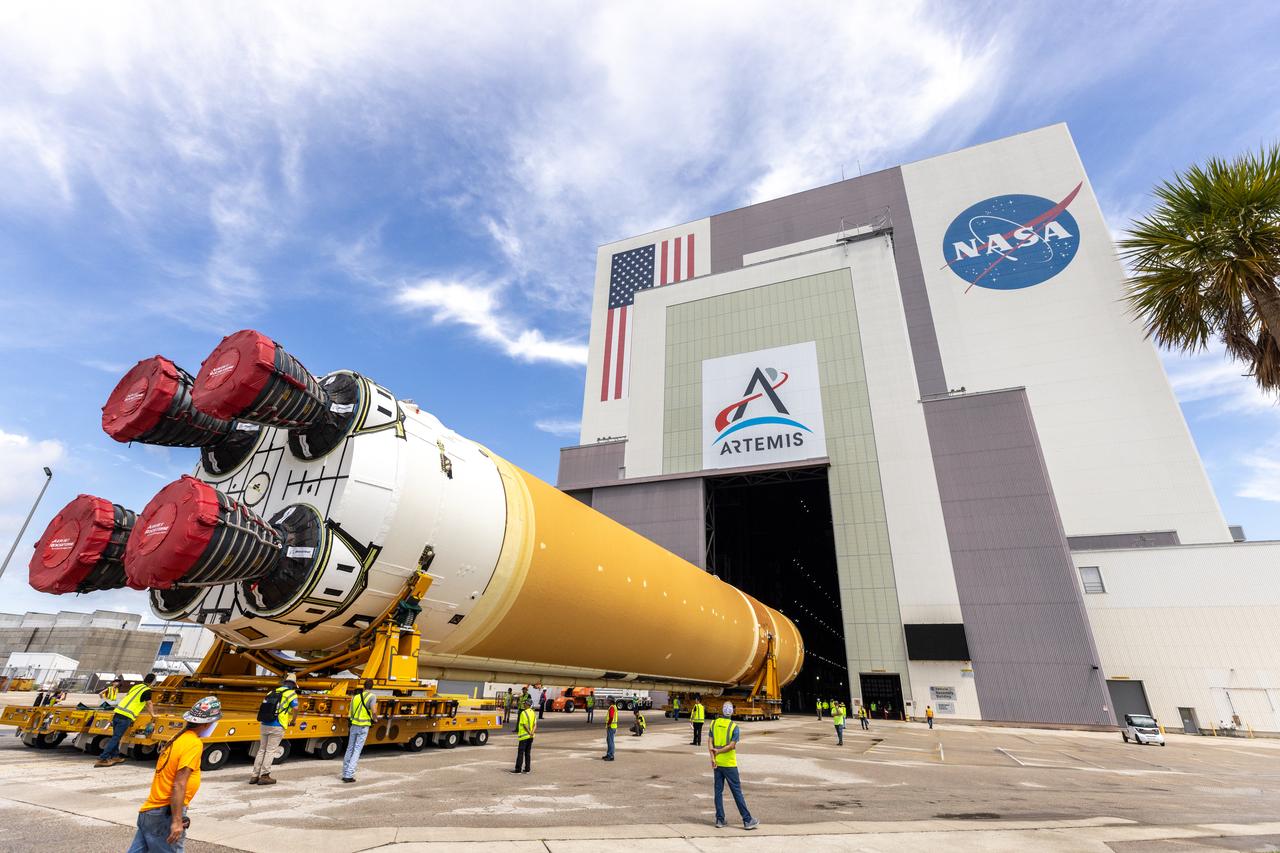
After completing its journey from NASA’s Michoud Assembly Facility in New Orleans aboard the Pegasus barge, teams with Exploration Ground Systems (EGS) transport the agency’s powerful SLS (Space Launch System) core stage to NASA’s Kennedy Space Center’s Vehicle Assembly Building in Florida on Wednesday, July 24, 2024. Once inside, SLS will be prepared for integration atop the mobile launcher ahead of the Artemis II launch.
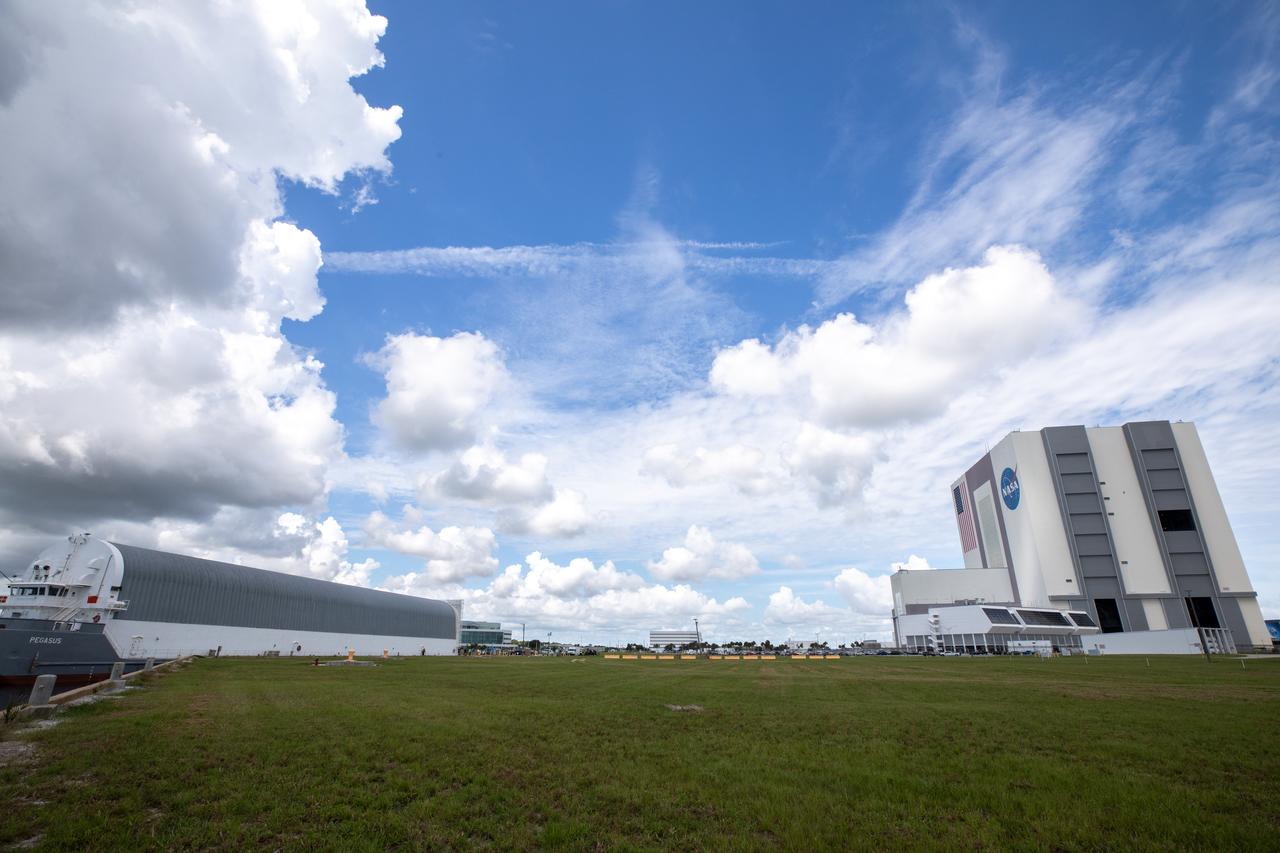
NASA’s Pegasus barge, carrying the agency’s massive SLS (Space Launch System) core stage, arrives at NASA’s Kennedy Space Center Complex 39 turn basin wharf in Florida on Tuesday, July 23, 2024, after journeying from the agency’s Michoud Assembly Facility in New Orleans. The core stage is the next piece of Artemis hardware to arrive at the spaceport and will be offloaded and moved to NASA Kennedy’s Vehicle Assembly Building, where it will be prepared for integration ahead of the Artemis II launch.
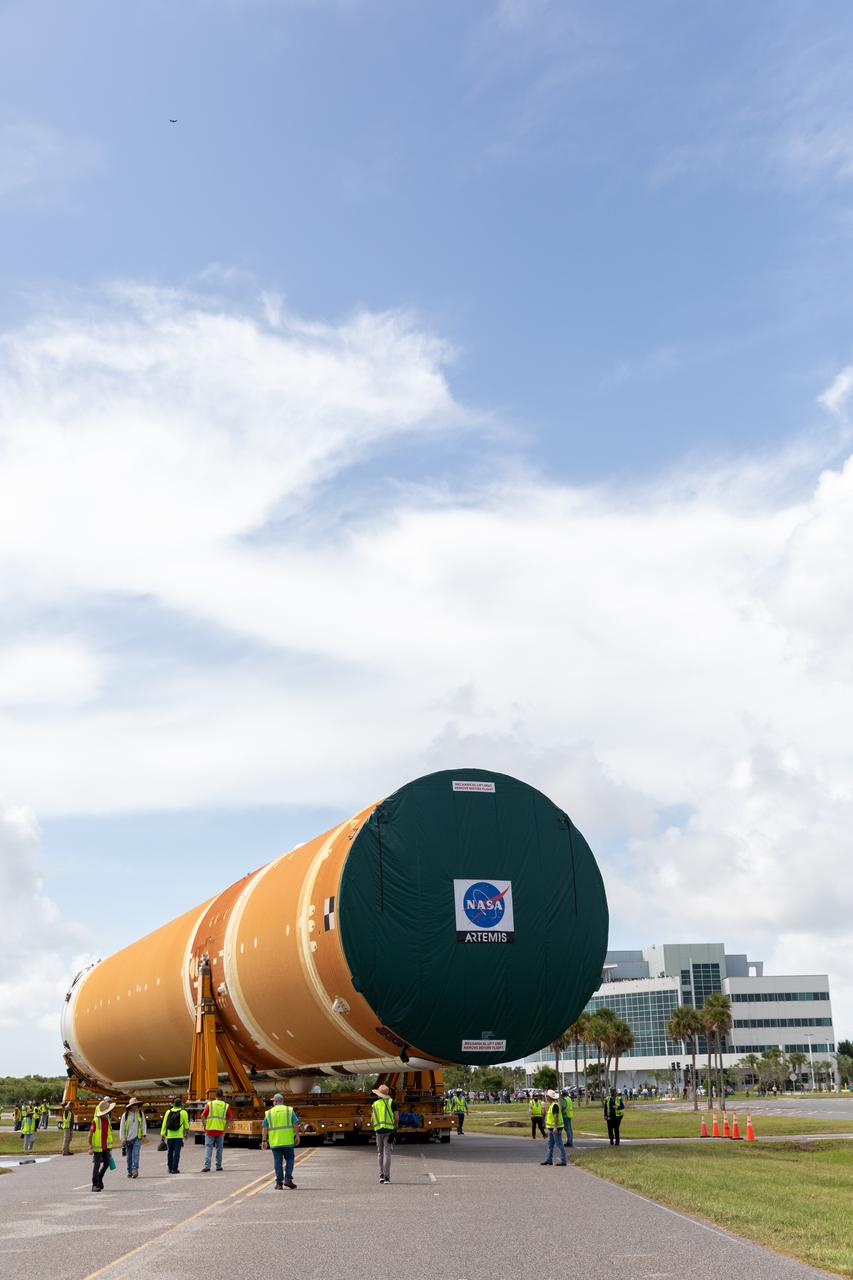
After completing its journey from NASA’s Michoud Assembly Facility in New Orleans aboard the Pegasus barge, teams with Exploration Ground Systems (EGS) transport the agency’s powerful SLS (Space Launch System) core stage to NASA’s Kennedy Space Center’s Vehicle Assembly Building in Florida on Wednesday, July 24, 2024. Once inside, SLS will be prepared for integration atop the mobile launcher ahead of the Artemis II launch.
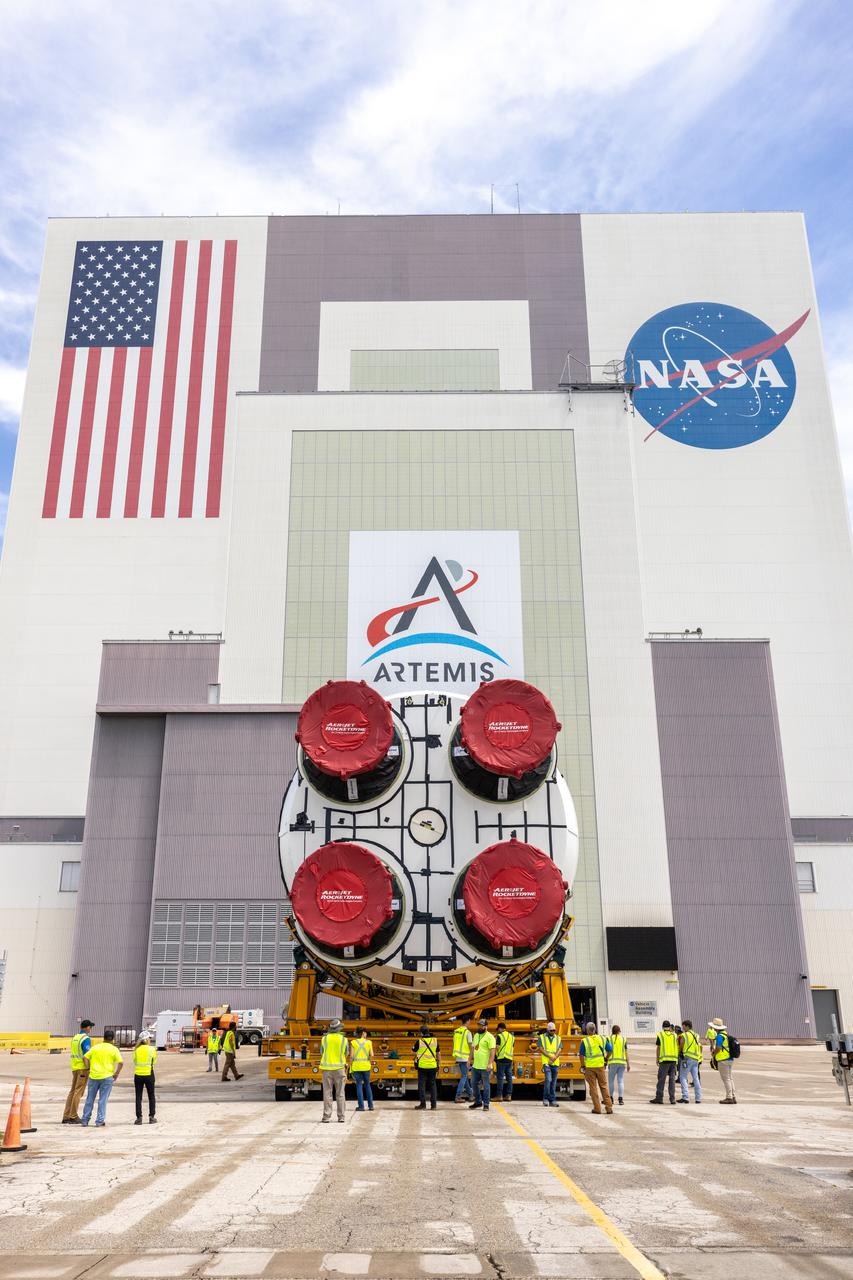
After completing its journey from NASA’s Michoud Assembly Facility in New Orleans aboard the Pegasus barge, teams with Exploration Ground Systems (EGS) transport the agency’s powerful SLS (Space Launch System) core stage to NASA’s Kennedy Space Center’s Vehicle Assembly Building in Florida on Wednesday, July 24, 2024. Once inside, SLS will be prepared for integration atop the mobile launcher ahead of the Artemis II launch.
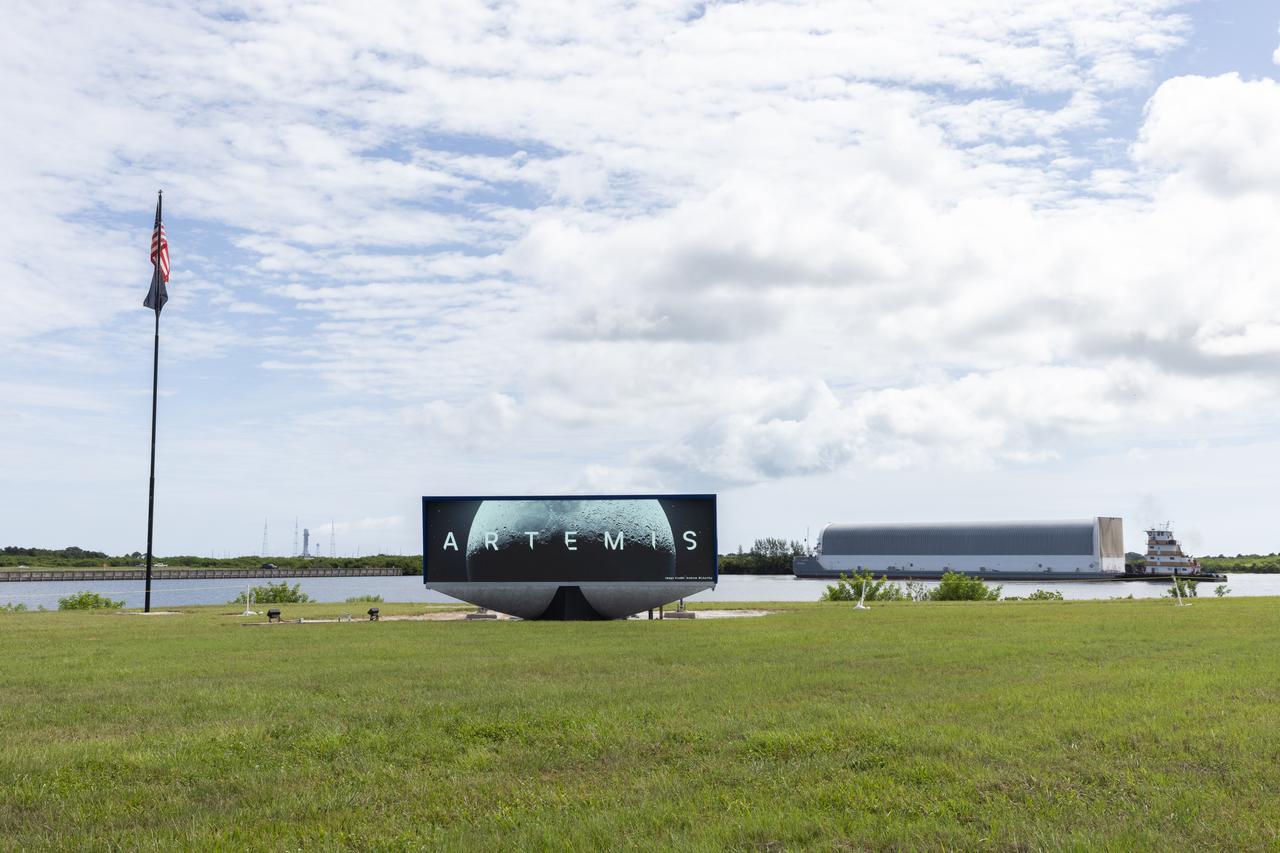
Behind the iconic countdown clock at NASA’s Kennedy Space Center in Florida, the agency’s Pegasus barge completes its 900-mile journey from NASA’s Michoud Assembly Facility in New Orleans carrying the powerful SLS (Space Launch System) core stage on Tuesday, July 23, 2024. Teams with Exploration Ground Systems (EGS) will offload the rocket stage and transfer it to the spaceport’s Vehicle Assembly Building to prepare it for integration atop the mobile launcher ahead of the Artemis II launch.