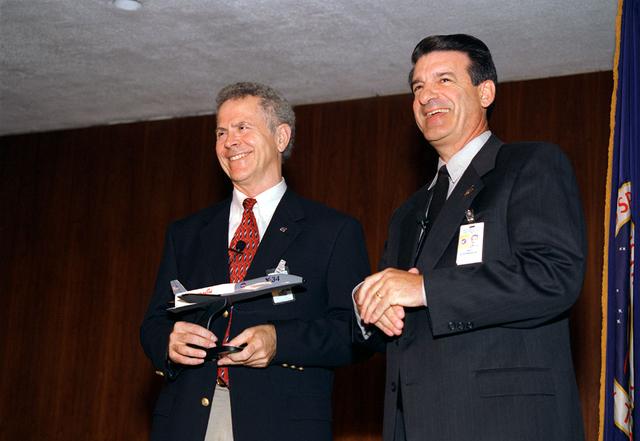
Author of Rocket Boys Homer Hickam, Jr. (left) and Marshall Space Flight Center Director Art Stephenson during a conference at Morris Auditorium. Homer Hickam worked at MSFC during the Apollo project years. As a young man, Mr. Hickam always dreamed of becoming a rocket scientist and following in the footsteps fo Wernher von Braun. Years later he would see his dream realized and had written Rocket Boys commemorating his life and the people at MSFC.
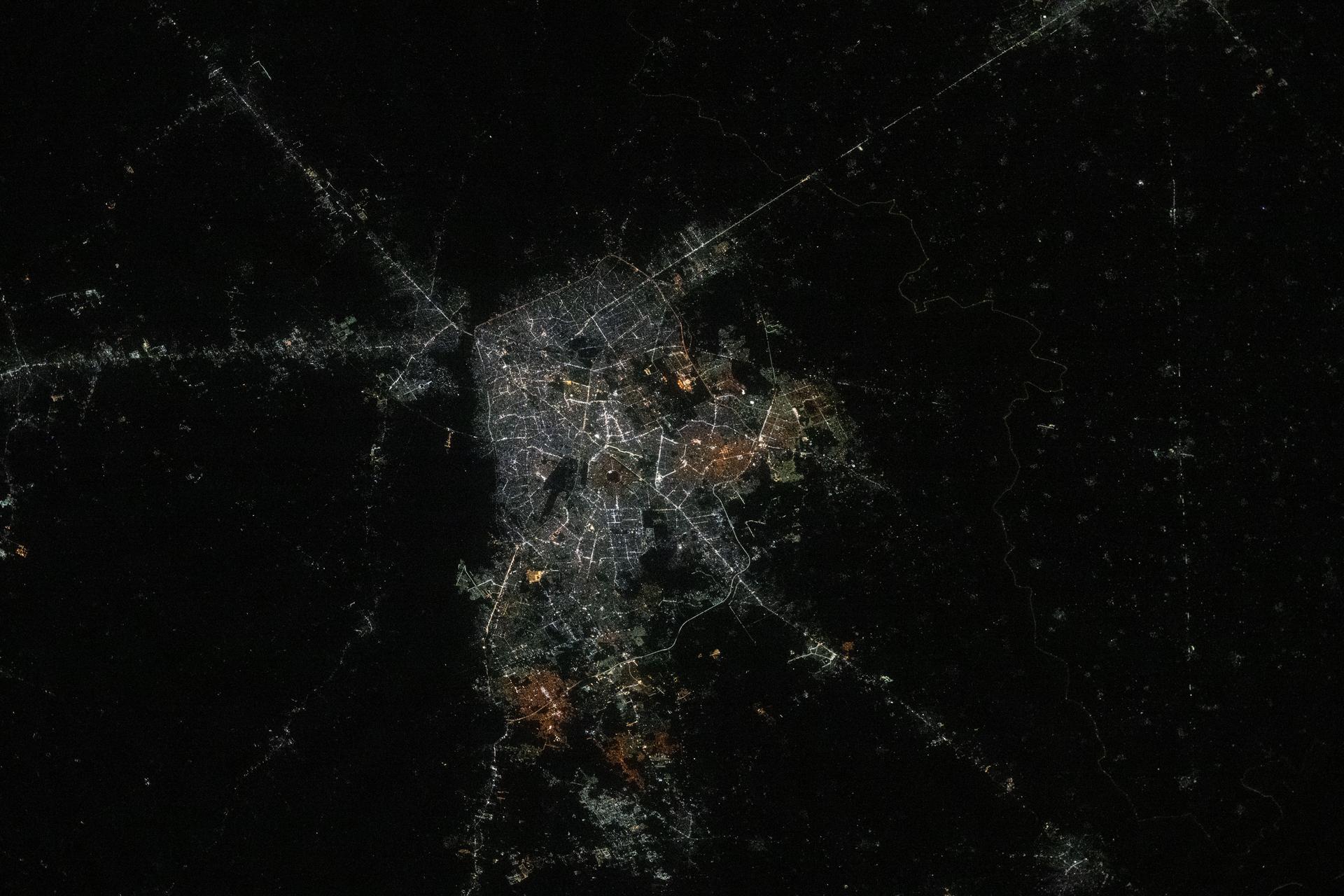
iss073e0763605 (Sept. 21, 2025) --- Lahore, Pakistan, home to approximately 14.8 million people and the country’s second-most populous metropolitan area after Karachi, is pictured from the International Space Station as it orbited 261 miles above Earth at approximately 10:23 p.m. local time.
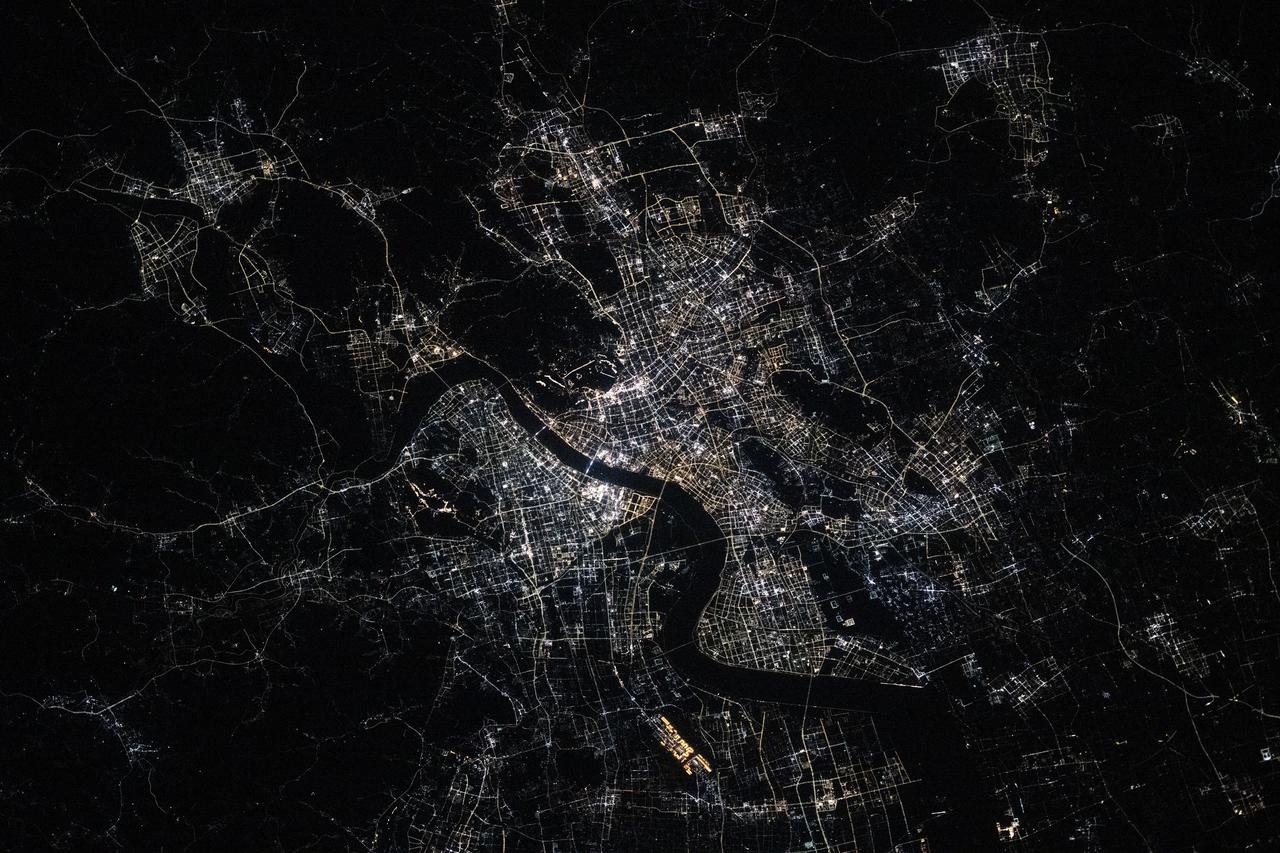
iss073e0420079 (July 3, 2025) --- Hangzhou, China—home to approximately 13 million people and the southern end of the Grand Canal, the longest artificial river in the world—glows in this nighttime view from the International Space Station. The canal stretches over 1,200 miles from its starting point in Beijing. This photograph was taken at approximately 9:55 p.m. local time while the station was orbiting 259 miles above Earth.

In support of NASA's 50th Anniversary, hundreds of NASA government and contractor employees dressed in red, white, and blue gathered to form a giant "50" on the back ramp at NASA's Dryden Flight Research Center.
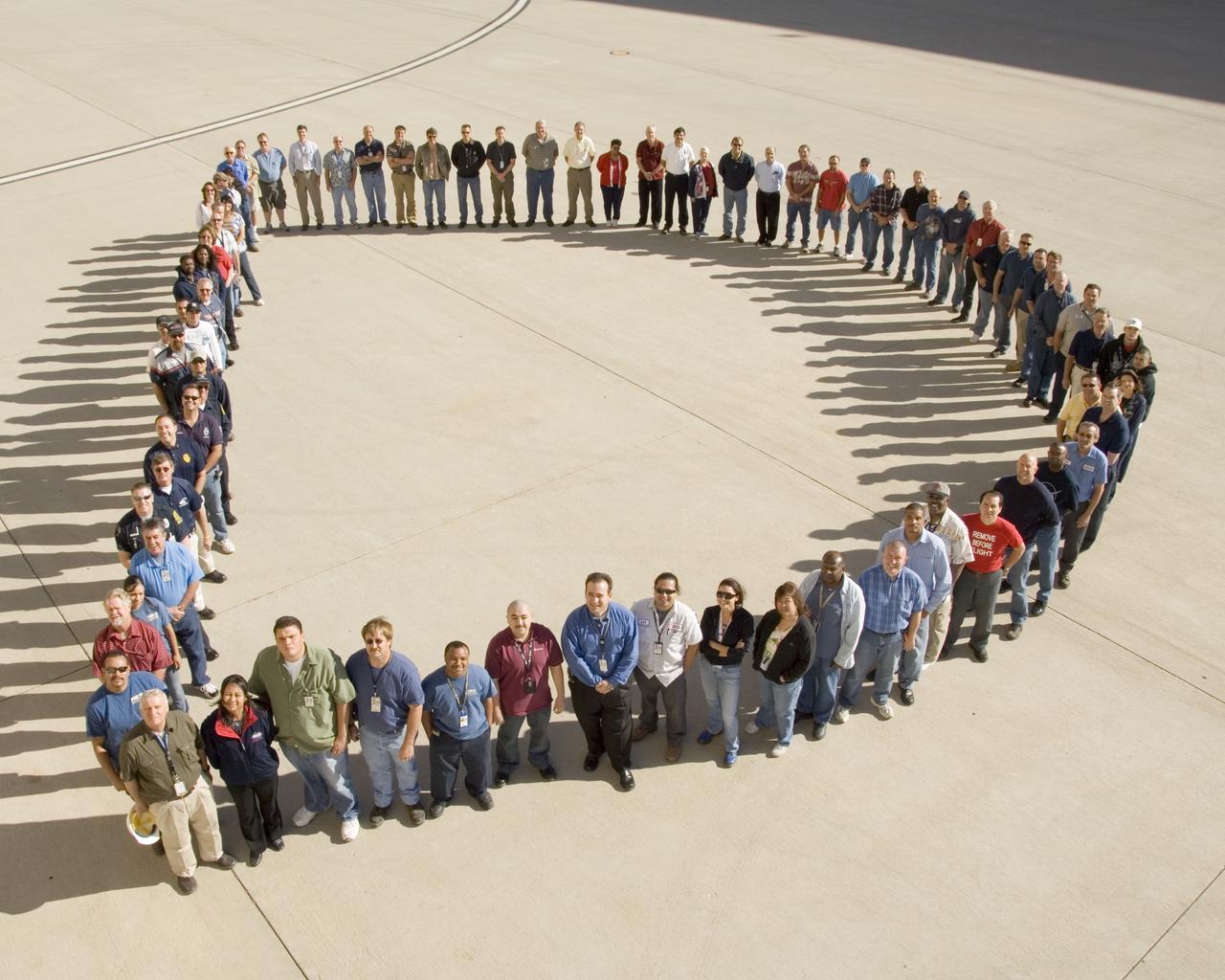
To support NASA's 50th Anniversary, NASA government and contractor employees gathered to form a giant "D" outside the Dryden Aircraft Operations Facility
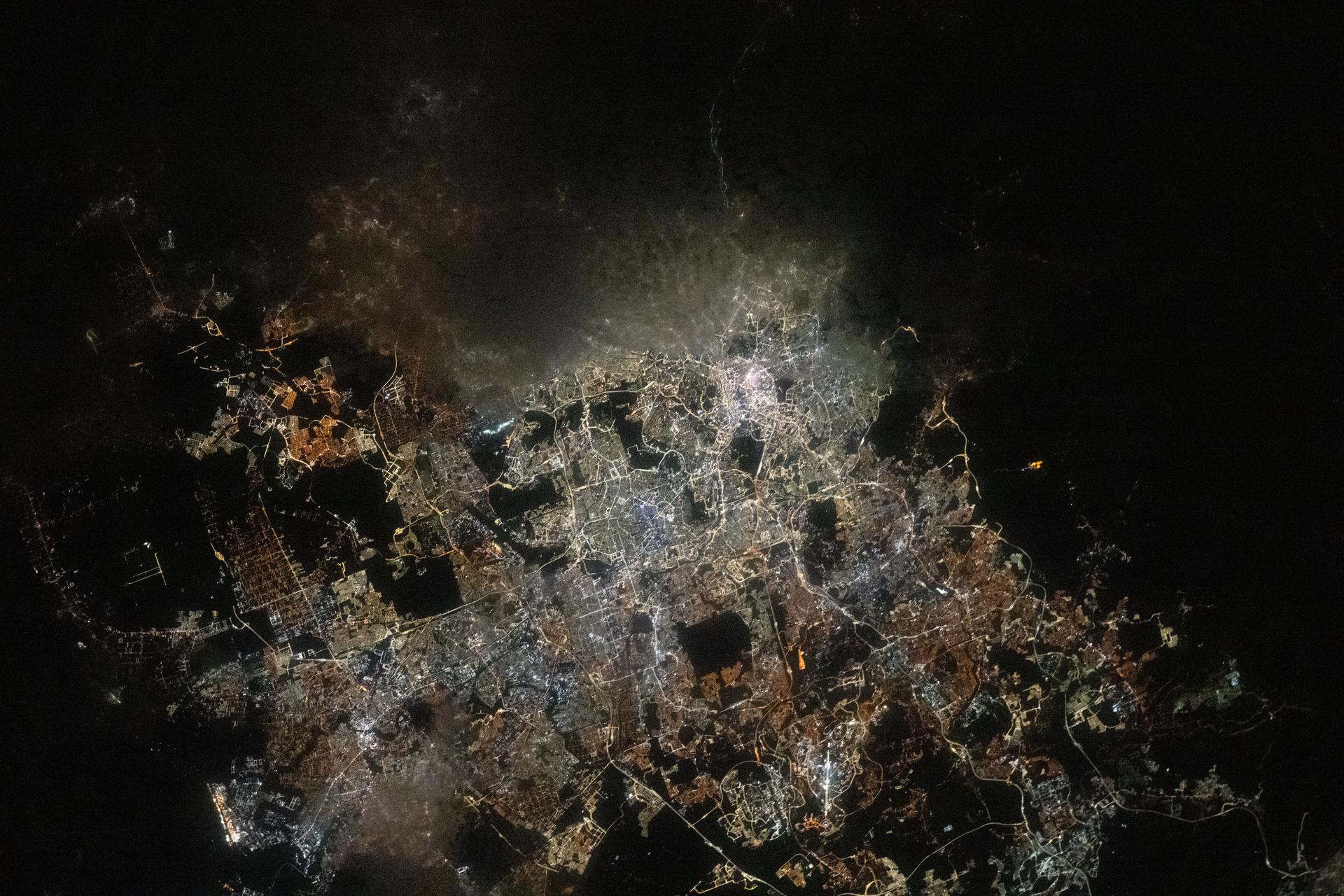
iss073e0763824 (Sept. 21, 2025) --- The Greater Kuala Lumpur area of Malaysia, home to approximately 9.1 million people, is pictured from the International Space Station as it orbited 260 miles above Earth at approximately 3:33 a.m. local time. Dark patches scattered throughout the urban landscape mark nature preserves and parks, many of which feature dams, waterfalls, and hiking trails.
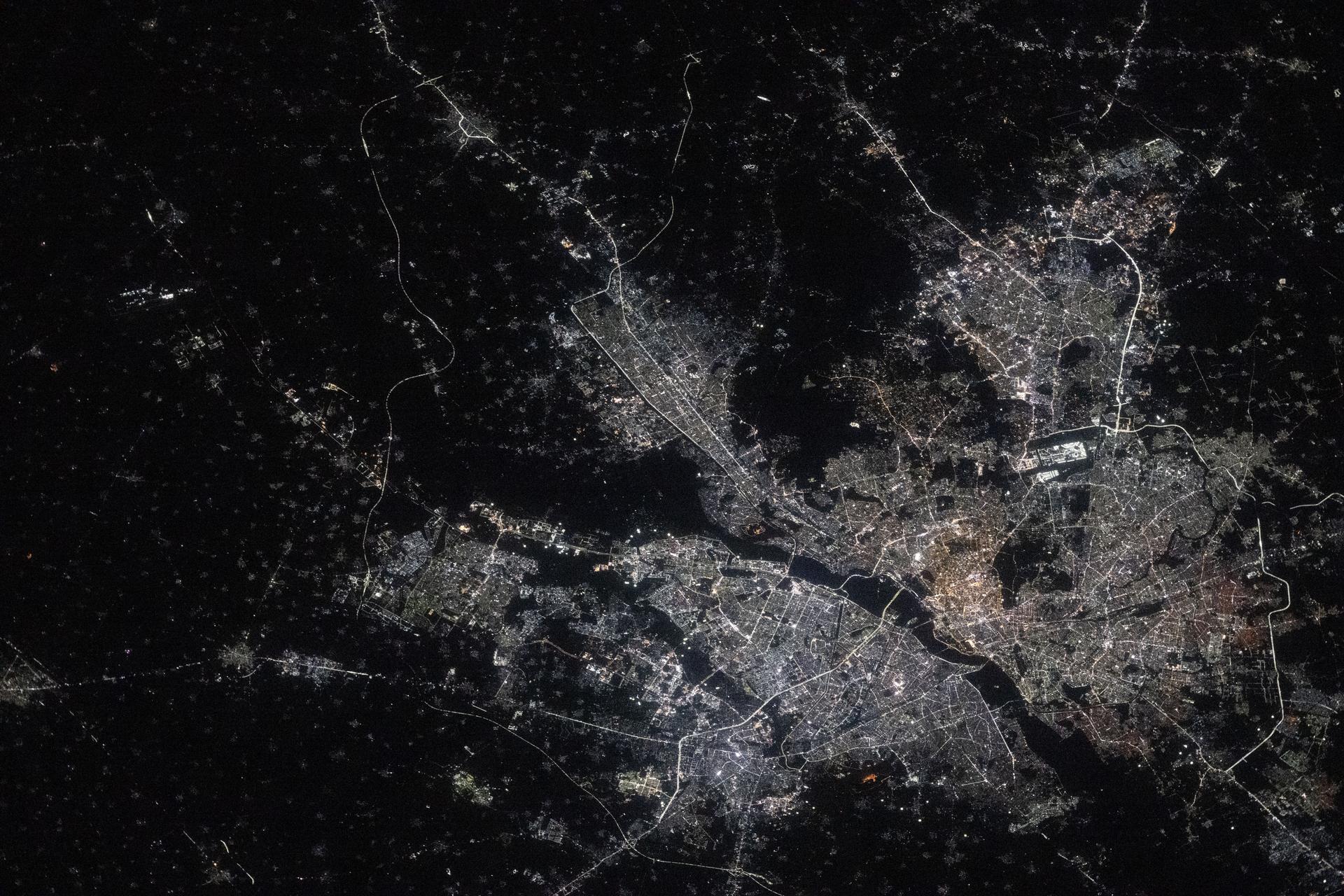
iss073e0763646 (Sept. 21, 2025) --- India’s National Capital Territory of Delhi, home to approximately 34.67 million people, is the second-largest metropolitan area in the world after Tokyo. This nighttime view from the International Space Station, taken at approximately 10:54 p.m. local time, shows the city split by the Yamuna River. The bright rectangular area near the right center marks Indira Gandhi International Airport, one of the busiest aviation hubs in South Asia.

work order 153425 Solar Eclipse at JPL 21 Aug, 2017 photog: Dutch Slager

Consoles in the Radiological Control Center at NASA's Kennedy Space Center are seen during ceremonies to name the facility in honor of Randy Scott. A professional health physicist of more than 40 years, Scott served as the Florida spaceport's Radiation Protection Officer for 14 years until his death June 17, 2016. Located in the Neil Armstrong Operations and Checkout building, the Randall E. Scott Radiological Control Center is staffed by technical and radiological experts from NASA, the U.S. Department of Energy, the U.S. Air Force 45th Space Wing and the state of Florida. The group performs data collection and assessment functions supporting launch site and field data collection activities.

Family members of Randy Scott gather in the Radiological Control Center at NASA's Kennedy Space Center following ceremonies to name the facility in his honor. A professional health physicist of more than 40 years, Scott served as the Florida spaceport's Radiation Protection Officer for 14 years until his death June 17, 2016.
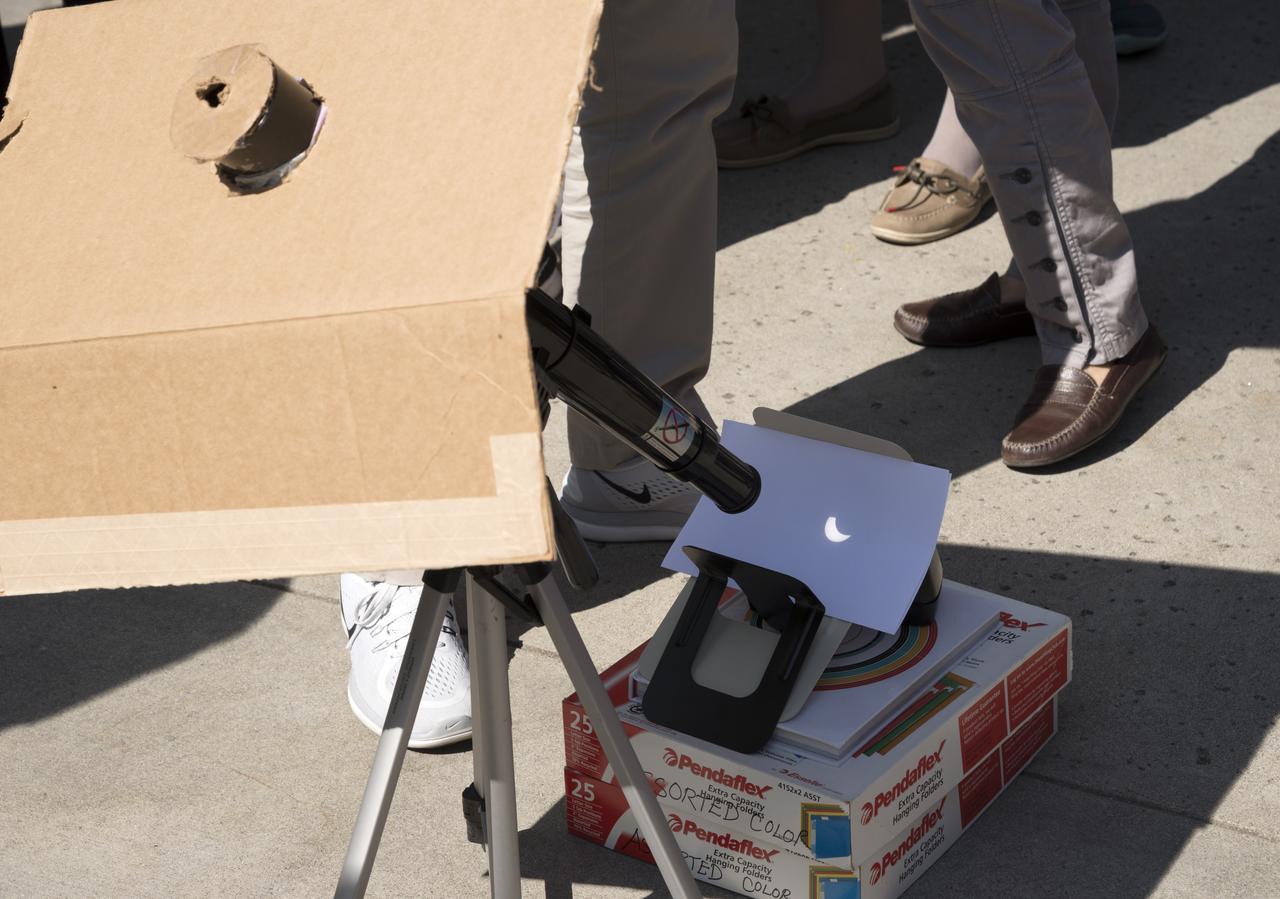
work order 153425 Solar Eclipse at JPL 21 Aug, 2017 photog: Dutch Slager

Nancy Bray, director of Spaceport Integration and Services at NASA's Kennedy Space Center, left, is joined by Myrna Scott, center, and Dr. David Tipton, chief of Aerospace Medicine and Occupational Health, in cutting a ceremonial ribbon dedicating the Randal E. Scott Radiological Control Center at the Florida spaceport. Myrna Scott is the widow of Randy Scott, who was a professional health physicist of more than 40 years. He served as the Florida spaceport's Radiation Protection Officer for 14 years until his death June 17, 2016.

A portion of the Radiological Control Center at NASA's Kennedy Space Center is seen during ceremonies to name the facility in honor of Randy Scott. A professional health physicist of more than 40 years, Scott served as the Florida spaceport's Radiation Protection Officer for 14 years until his death June 17, 2016. Located in the Neil Armstrong Operations and Checkout building, the Randall E. Scott Radiological Control Center is staffed by technical and radiological experts from NASA, the U.S. Department of Energy, the U.S. Air Force 45th Space Wing and the state of Florida. The group performs data collection and assessment functions supporting launch site and field data collection activities.
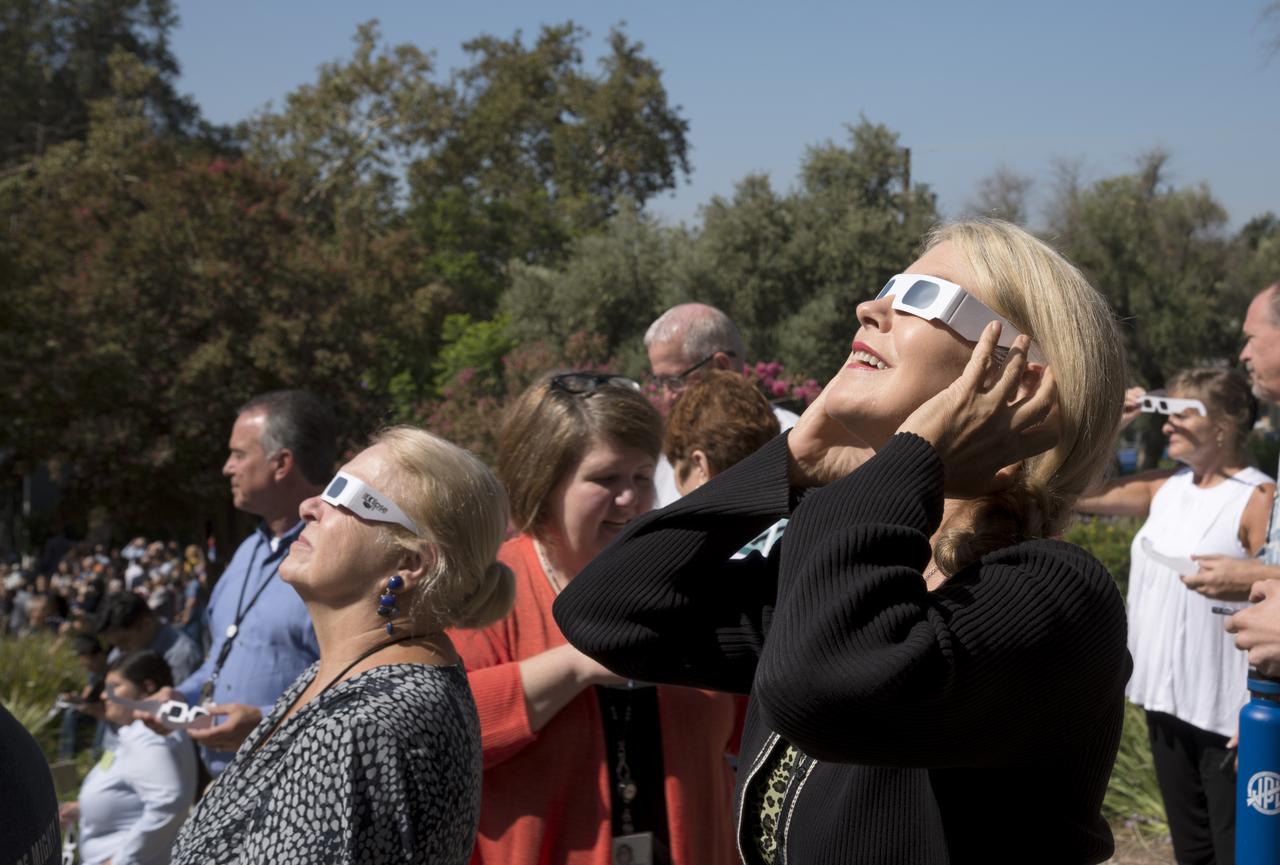
work order 153425 Solar Eclipse at JPL 21 Aug, 2017 Katie Armstrong photog: Dutch Slager

Nancy Bray, director of Spaceport Integration and Services at NASA's Kennedy Space Center, left, is joined by Myrna Scott, center, and Dr. David Tipton, chief of Aerospace Medicine and Occupational Health, in cutting a ceremonial ribbon dedicating the Randal E. Scott Radiological Control Center at the Florida spaceport. Myrna Scott is the widow of Randy Scott, who was a professional health physicist of more than 40 years. He served as the Florida spaceport's Radiation Protection Officer for 14 years until his death June 17, 2016.

Nancy Bray, director of Spaceport Integration and Services at NASA's Kennedy Space Center, left, is joined by Myrna Scott, center, and Dr. David Tipton, chief of Aerospace Medicine and Occupational Health, in cutting a ceremonial ribbon dedicating the Randal E. Scott Radiological Control Center at the Florida spaceport. Myrna Scott is the widow of Randy Scott, who was a professional health physicist of more than 40 years. He served as the Florida spaceport's Radiation Protection Officer for 14 years until his death June 17, 2016.
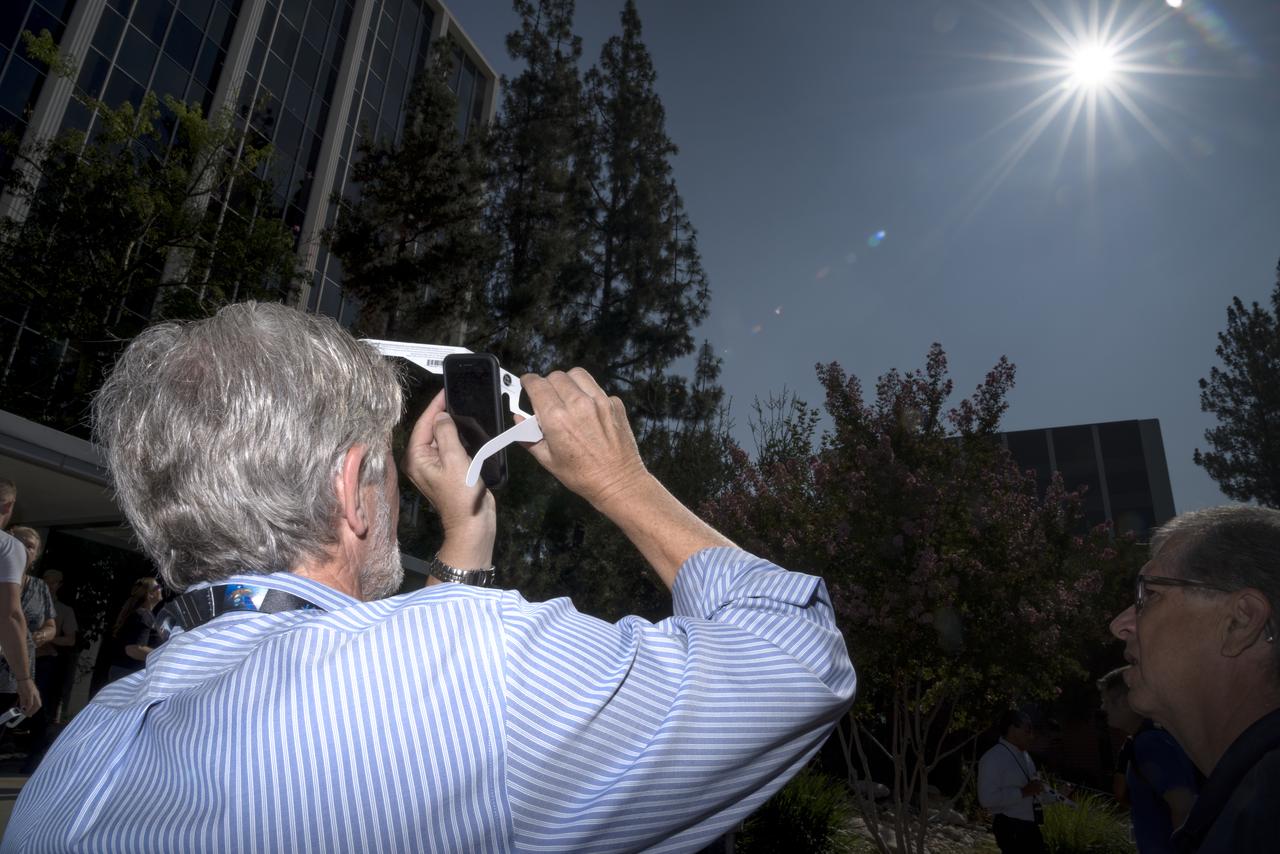
work order 153425 Solar Eclipse at JPL 21 Aug, 2017 Jim Graf photog: Dutch Slager

Myrna Scott holds a replica of the emblem noting that the Radiological Control Center at NASA's Kennedy Space Center has been named in honor of her husband, Randy Scott who died last year. A ceremony honored the extensive contributions of Randy Scott. A professional health physicist of more than 40 years, Scott served as the Florida spaceport's Radiation Protection Officer for 14 years until his death June 17, 2016.

work order 153425 Solar Eclipse at JPL 21 Aug, 2017 Jim Rinaldi, Jim Graf photog: Dutch Slager

Space Center, presents Myrna Scott, widow of Randy Scott, with a replica of the emblem noting that the spaceport's Radiological Control Center has been named in honor of her husband who died last year. The ceremony in the center's Radiological Control Center honored the extensive contributions of Randy Scott. A professional health physicist of more than 40 years, Scott served as the Florida spaceport's Radiation Protection Officer for 14 years until his death June 17, 2016.

A Mars Science Laboratory cap is displayed in the Randall E. Scott Radiological Control Center at NASA's Kennedy Space Center. The facility was recently named in honor of Randy Scott, a professional health physicist of more than 40 years. He served as the Florida spaceport's Radiation Protection Officer for 14 years until his death June 17, 2016. Launched Nov. 26, 2011, the Mars Science Laboratory with the Curiosity lander was powered by a radioisotope thermalelectric generator. Located in the Neil Armstrong Operations and Checkout building, the Randall E. Scott Radiological Control Center is staffed by technical and radiological experts from NASA, the U.S. Department of Energy, the U.S. Air Force 45th Space Wing and the state of Florida. The group performs data collection and assessment functions supporting launch site and field data collection activities during launces involving plutonium-powered spacecraft such as the Mars Science Laboratory.

Nancy Bray, director of Spaceport Integration and Services at NASA's Kennedy Space Center, speaks during ceremonies to name the Radiological Control Center in honor for Randy Scott. A professional health physicist of more than 40 years, Scott served as the Florida spaceport's Radiation Protection Officer for 14 years until his death June 17, 2016.

With the theme of “Mission, People, Partners,” NASA’s Marshall Space Flight Center Director Jody Singer outlined how the center’s priorities align with the agency’s strategic plan in the first Marshall Association luncheon of the year March 14 in the Activities Building. The Marshall Association offers opportunities to network and share ideas with colleagues and members of the Marshall community. The Marshall Association offers opportunities to network and share ideas with colleagues and members of the Marshall community. Membership is open to NASA employees, retirees, contractors and community members. Membership dues support the annual scholarship program and other events throughout the year.
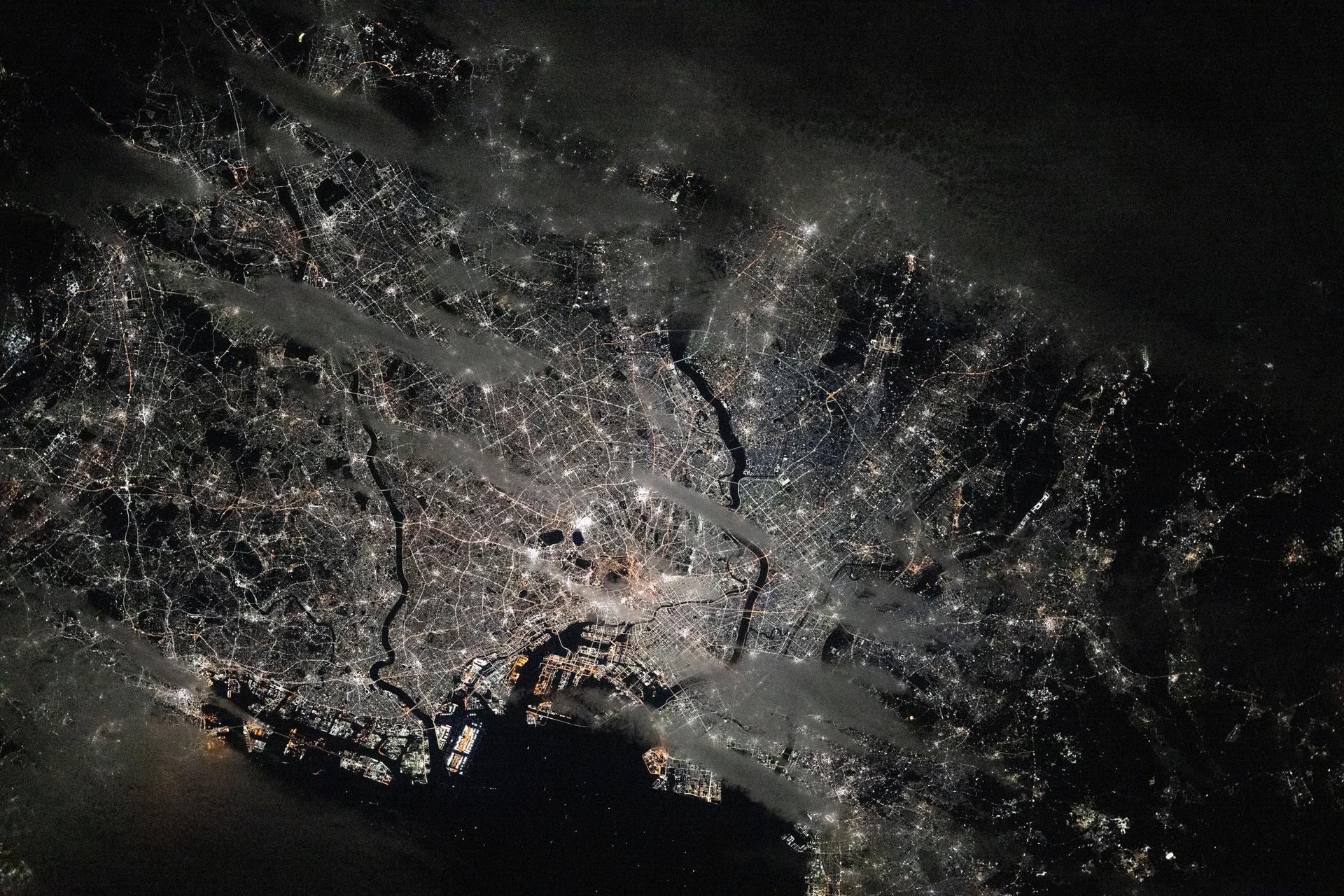
iss073e0918643 (Oct. 18, 2025) --- Tokyo, Japan, and its surrounding suburbs along Tokyo Bay light up the night, with stops along major rail lines glittering like pearls. The Greater Tokyo Area—the world’s most populated urban center with over 39 million people—is pictured at approximately 4 a.m. local time from the International Space Station as it orbited 262 miles above the island nation.
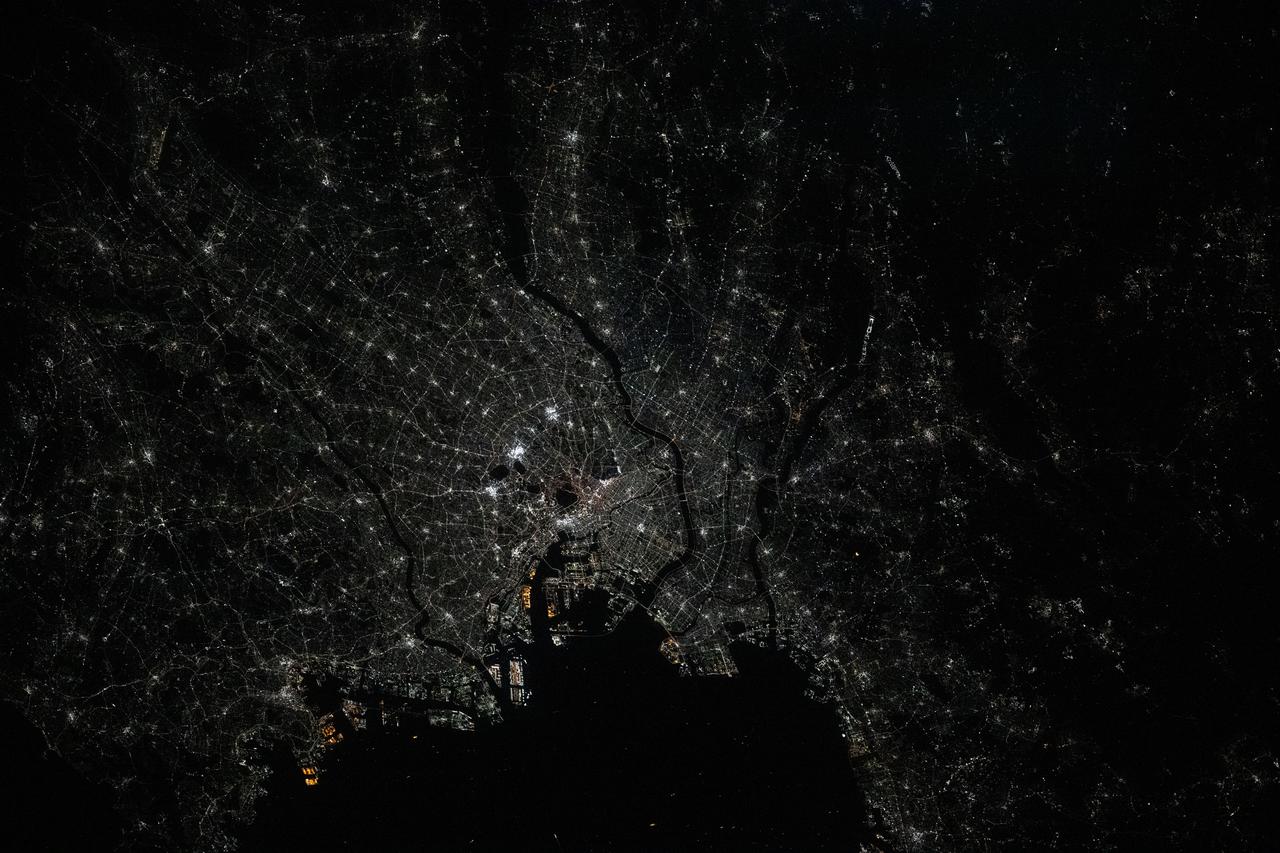
iss073e0548147 (Aug. 26, 2025) --- Tokyo, Japan, and its surrounding suburbs—the world’s most populous metropolitan area with about 39.1 million people—are pictured at approximately 1 a.m. local time from the International Space Station as it orbited 262 miles above. Visible landmarks include Haneda Airport on Tokyo Bay (lower center) and the Imperial Palace (the dark area at center) in the heart of downtown Tokyo. Credit: JAXA (Japan Aerospace Exploration Agency)
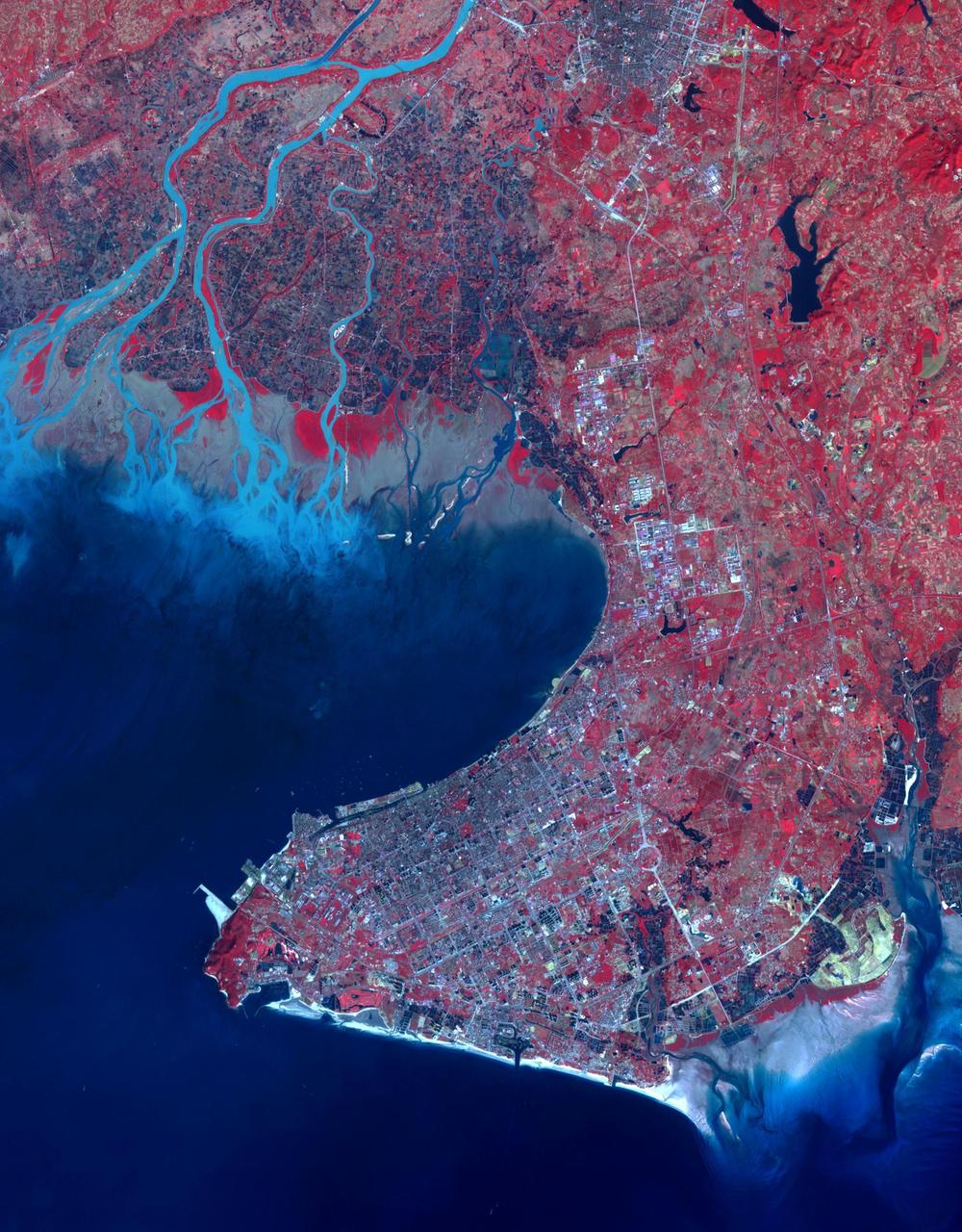
This image from NASA Terra spacecraft shows Beihai, a city in the south of Guangxi, People republic of China.

Prior to the commencement of Apollo 11th's 30th arniversary festivities at Marshall Space Flight Center, visiting Saturn astronauts take a tour of the Center. Pictured are (L/R): Dick Gordon, Owen Garriott and Edgar Mitchell
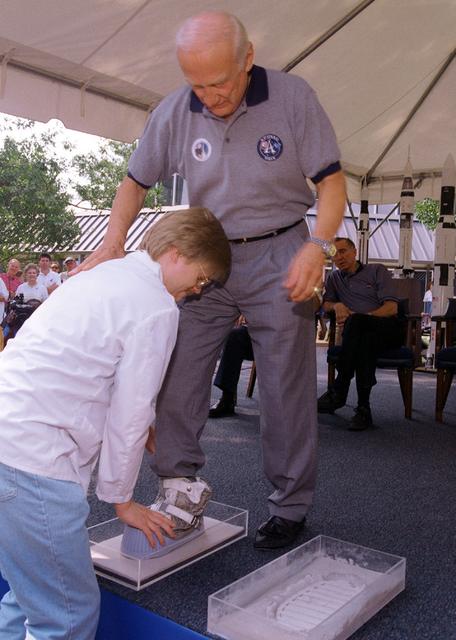
Apollo 11 Astronaut Buzz Aldrin has his footprints casted during the dedication ceremony of the rocket fountain at Building 4200 at Marshall Space Flight Center. The casts of Aldrin's footprints will be placed in the newly constructed Von Braun courtyard representing the accomplishments of the Apollo 11 lunar landing.
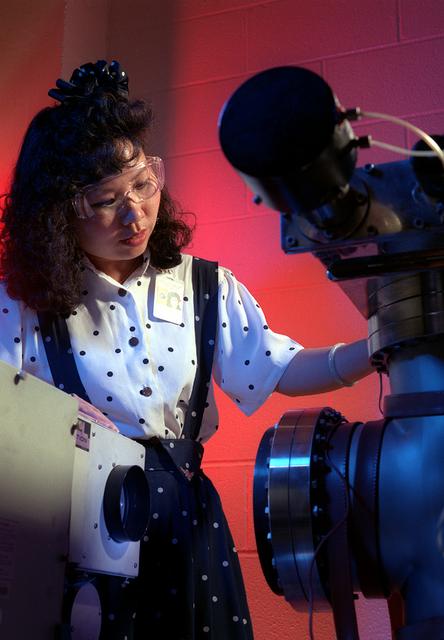
A pigment (phthalocyanine) is studied at the Marshall Materials and Processes Lab. The pigment has the ability to protect spacecraft against the harmful effects of the Sun's ultraviolet rays, and to increase the efficiency and life of solar cells.
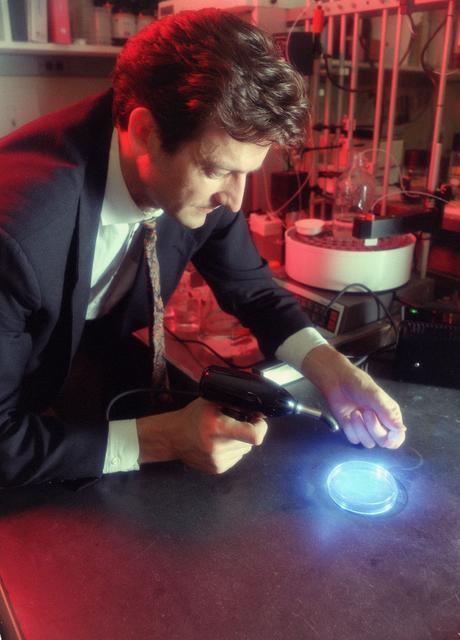
Scientists at MSFC have been studying the properties of Aerogel for several years. Aerogel, the lightest solid known to man, has displayed a high quality for insulation. Because of its smoky countenance it has yet to be used as an insulation on windows, but has been used to insulate the walls of houses and engine compartments in cars. It was also used in the space program as insulating material on the rover Sojourner, aboard the Mars Pathfinder. MSFC is one of the many research facilities conducting experiments to unlock the smoky properties of aerogel and make it a clear substance. MSFC researchers believe that by taking this research to space, they can resolve the problem of making aerogel transparent enough to see through. So far, recent space experiments have been encouraging. The samples produced in microgravity indicate a change in the microstructure of the material as compared to ground samples. MSFC scientists continue to study the effects of microgravity on Aerogel as their research is space continues.
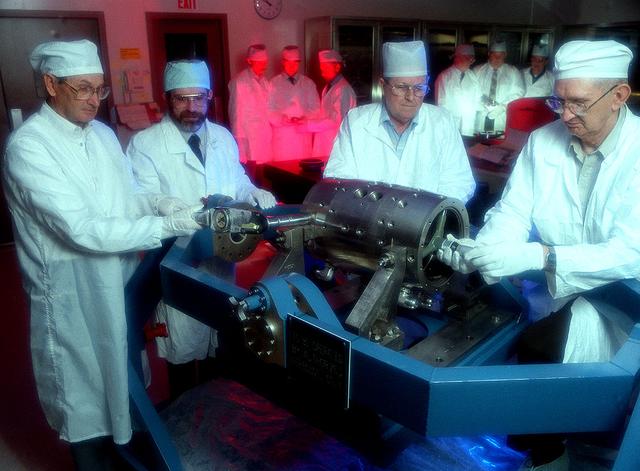
Test of bearing and seal materials in order to develop improved life bearing designs for operating in liquid turbomachinery.
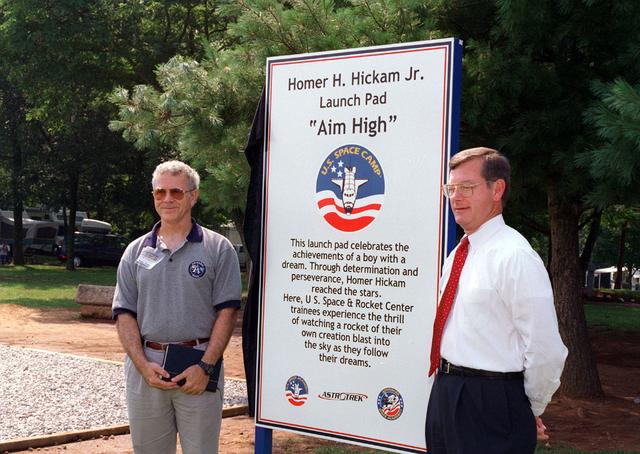
Noted author and previous Marshall Space Flight Center employee Mr. Homer Hickam Jr. poses in front of a placque commemorating his achievement in realizing his dreams of becoming a rocket scientist. The dedication site is located at the U. S. Space and Rocket Center in Huntsville, AL, and is used by amature rocket builders attending the Space Camp to launch their self-made rockets like Mr. Hickam did as a youth growing up in rural West Virginia. Posing with Mr. Hickam is the Madison County Commissioner Mr. Mike Gillispie.
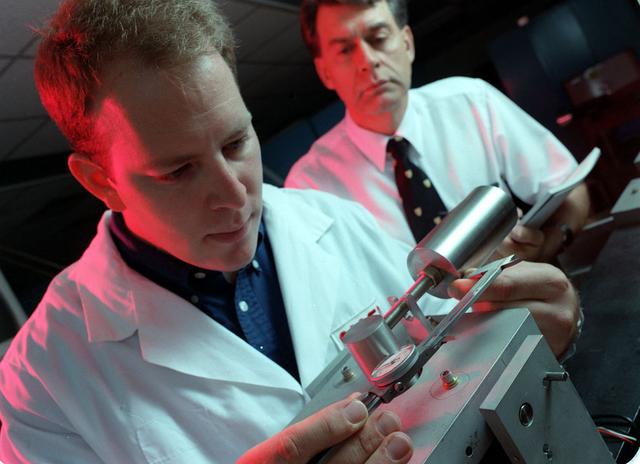
Marshall researchers, in the Astrionics lab, study rotating unbalanced mass devices. These require less power, and are lighter than current devices used for scanning images, a slice at a time. They have a wide range of space-based applications.
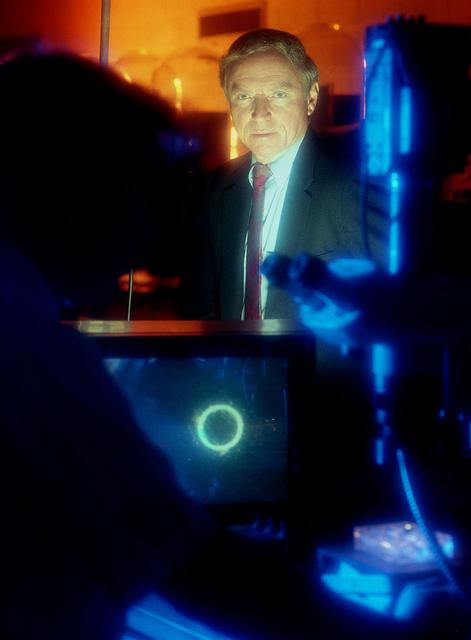
Test of bearing and seal materials in order to develop improved life bearing designs for operating in liquid turbomachinery.
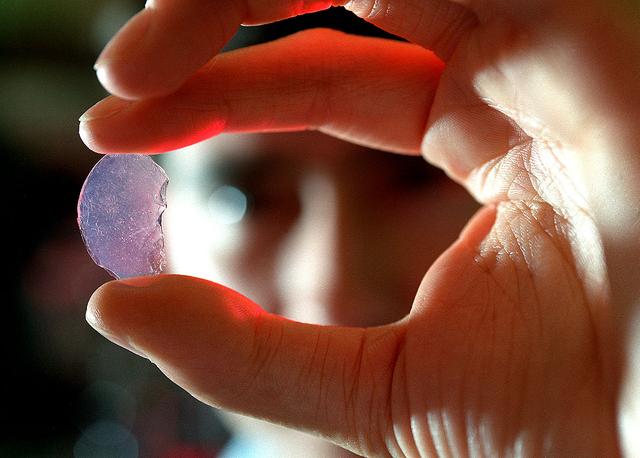
Sceintist at Marshall Space Flight Center have been studying the properties of Aerogel for several years. Aerogel, the lightest solid known to man, has displayed a high quality for insulation. Because of its smoky countenance, it has yet to be used as an insulation on windows, but has been used in the space program on the rover Sojourner, and has been used as insulation in the walls of houses and in automobile engine compartments. MSFC is one of the many research facilities conducting experiments to unlock the smoky properties of Aerogel and make it a clear substance. Recent experimentations in microgravity have resulted in the microstructure of the material. Research on these changes is being continued.
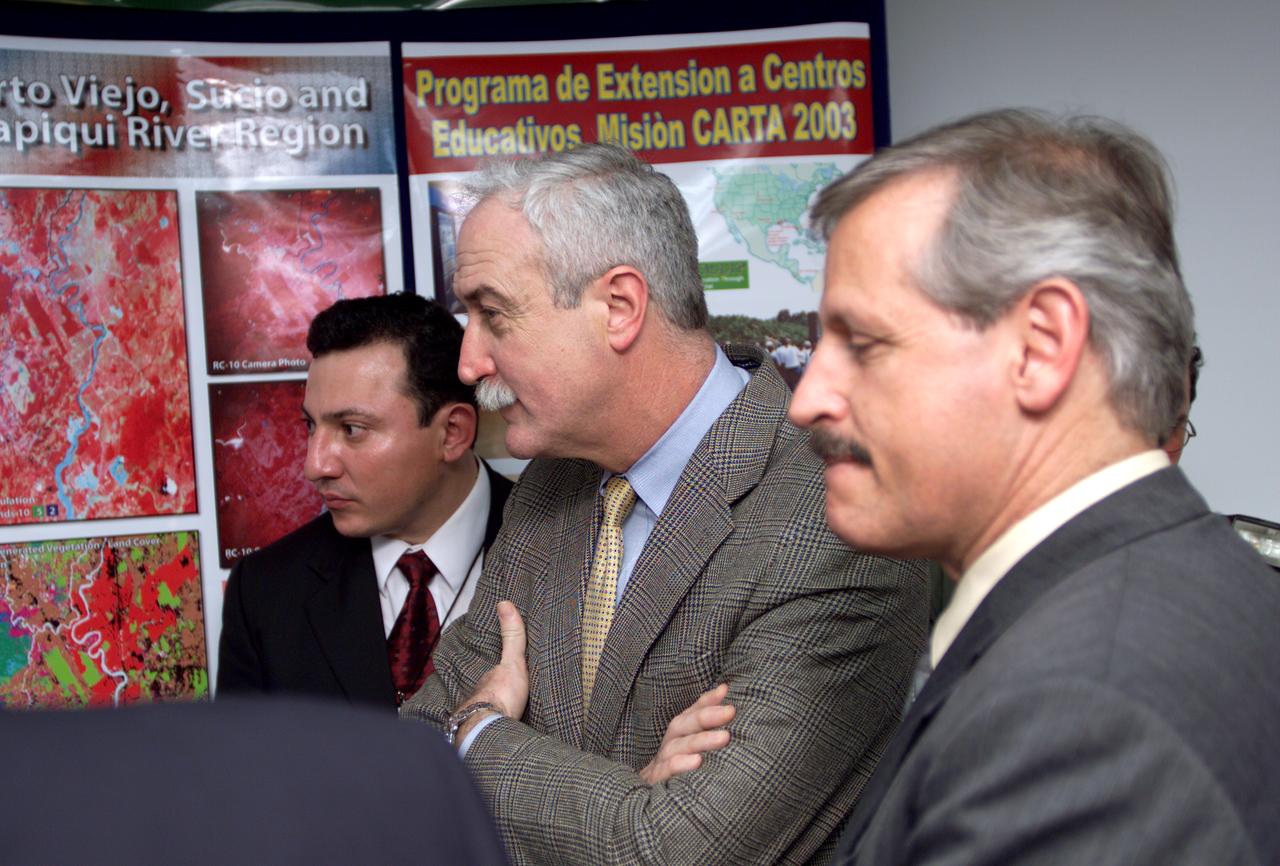
L-R; Jorge Andres Diaz, Director of the Costa Rican National Hangar for Airborne Research division of the National Center for High Technology(CENAT); NASA Administrator Sean O'Keefe; and Fernando Gutierrez, Costa Rican Minister of Science and Technology(MICIT), viewing posters showing how NASA activities have made an impact on Costa Rican people. Mr. O'Keefe was in Costa Rica to participate in the AirSAR 2004 Mesoamerica campaign, which used NASA DFRC's DC-8 airborne laboratory aircraft. AirSAR 2004 is a three-week expedition by an international team of scientists that will use an all-weather imaging tool, called the Airborne Synthetic Aperture Radar (AirSAR), in a mission ranging from the tropical rain forests of Central America to frigid Antarctica.
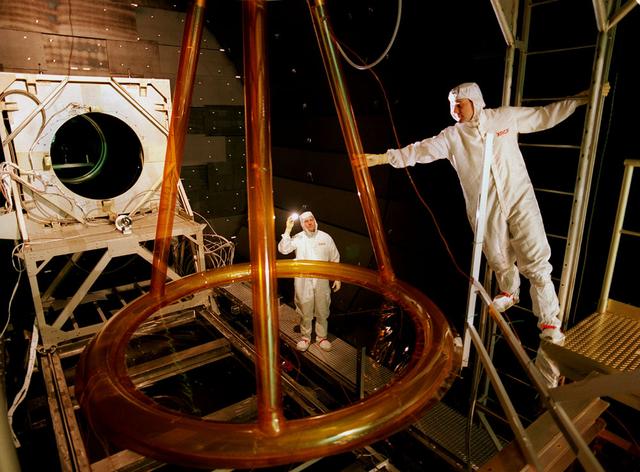
The Shooting Star Experiment (SSE) is designed to develop and demonstrate the technology required to focus the sun's energy and use the energy for inexpensive space Propulsion Research. Pictured is an engineering model (Pathfinder III) of the Shooting Star Experiment (SSE). This model was used to test and characterize the motion and deformation of the structure caused by thermal effects. In this photograph, alignment targets are being placed on the engineering model so that a theodolite (alignment telescope) could be used to accurately measure the deformation and deflections of the engineering model under extreme conditions, such as the coldness of deep space and the hotness of the sun as well as vacuum. This thermal vacuum test was performed at the X-Ray Calibration Facility because of the size of the test article and the capabilities of the facility to simulate in-orbit conditions
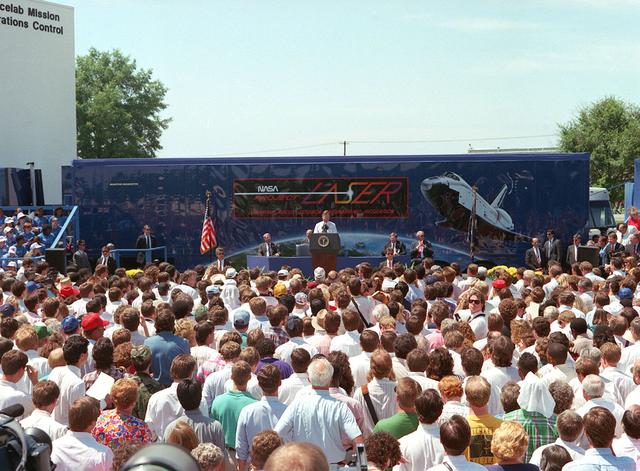
President George Bush delivers an address to Marshall Space Flight Center (MSFC) employees during his visit to the center. President Bush gave NASA employees an objective to send missions back to the moon to stay then continue on to Mars, referring to the Space Station project.
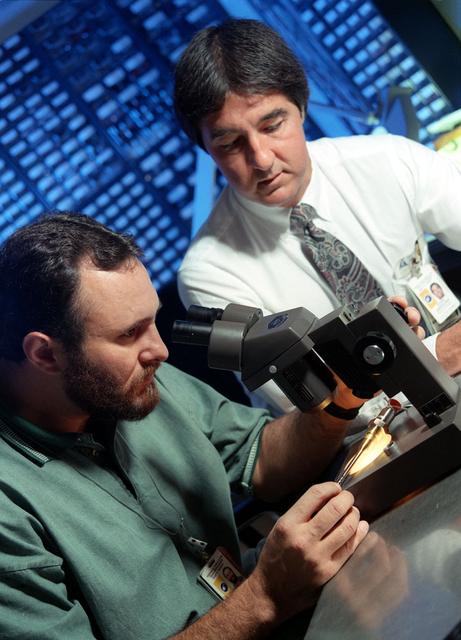
A rugged, highly accurate, low-temperature sensor is developed by NASA researchers. A new sensor allows accurate, quick low-temperature measurements in rugged environments. This is especially useful in piping with very cold liquids under high pressure, and high flow rate conditions.
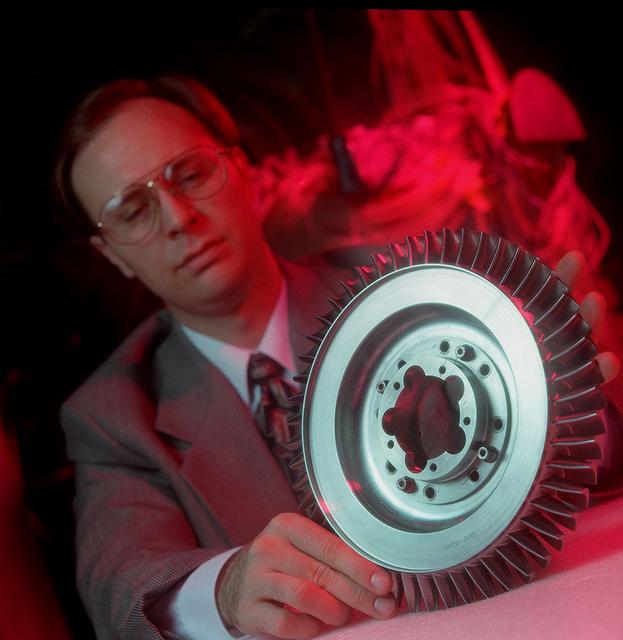
A NASA scientist displays Space Shuttle Main Engine (SSME) turbine component which underwent air flow tests at Marshall's Structures and Dynamics Lab. Such studies could improve efficiency of aircraft engines, and lower operational costs.

Retired Marshall scientist, Jeanette Scissum-Mickens, was honored by Alabama Governor Kay Ivey at the Alabama Historically Black Colleges and Universities Roundtable Discussion: Minority Women in STEM event held at the University of Alabama A&M in Huntsville, Alabama. Scissum-Mickens was honored as the “Hidden Figure of Alabama A&M.” She was the first African-American mathematician hired by Marshall in 1964.
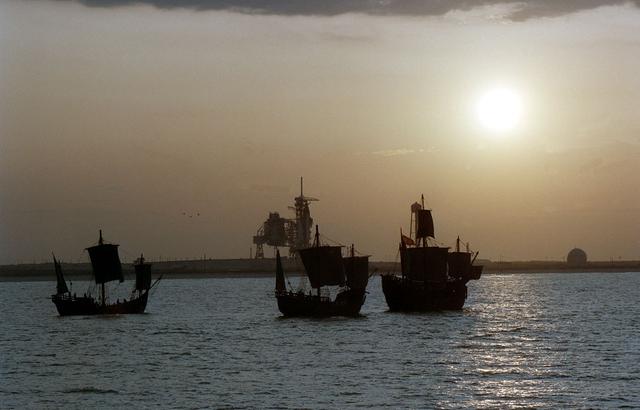
On the 500th arniversary of Christopher Columbus' discovery of the New World, replicas of his three ships sailed past the launch pad at the Kennedy Space Center (KSC) while the space shuttle Columbia sat poised for lift off.
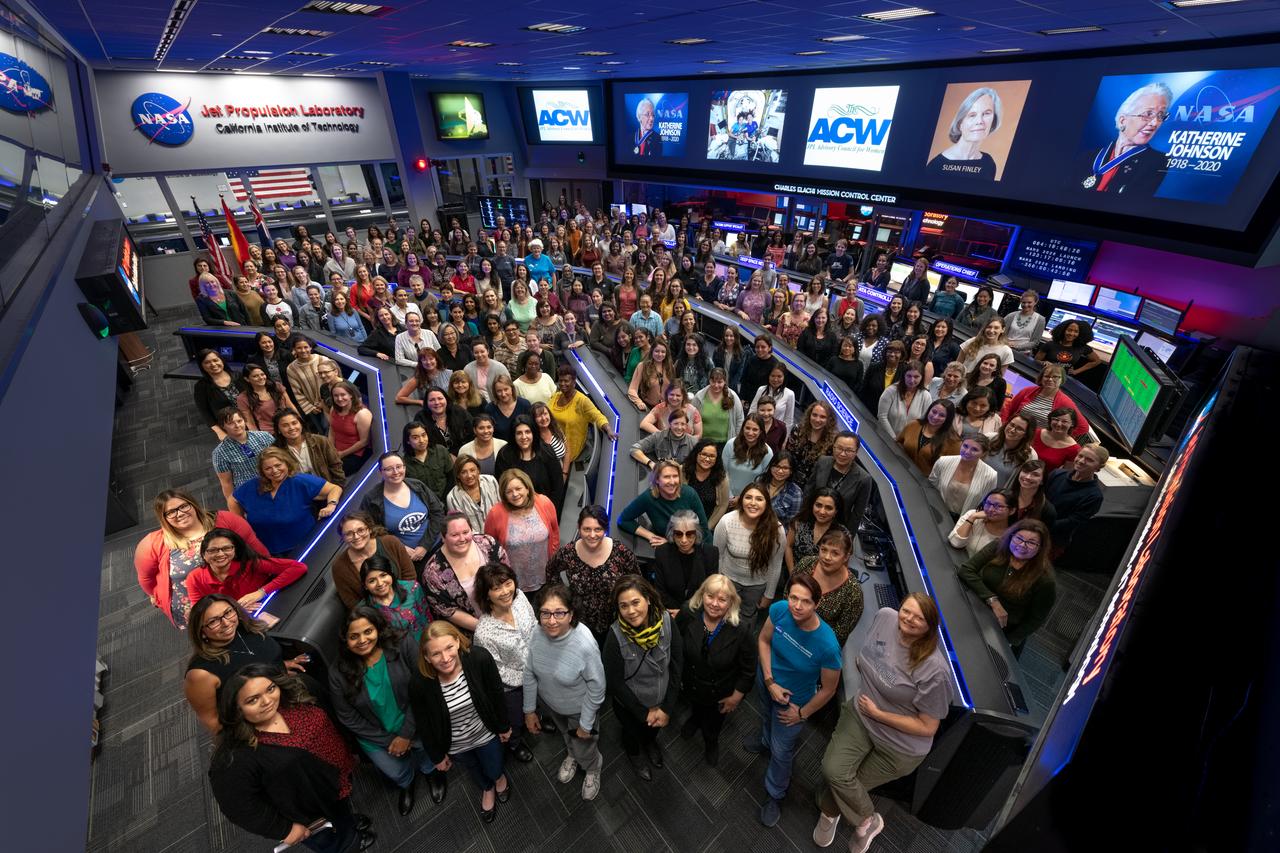
In honor of Women’s History Month, the Advisory Council for Women (ACW) organized a "Women of JPL" group photo shoot in the Space Flight Operations Facility on March 4, 2020. Credit: NASA-JPL/Caltech
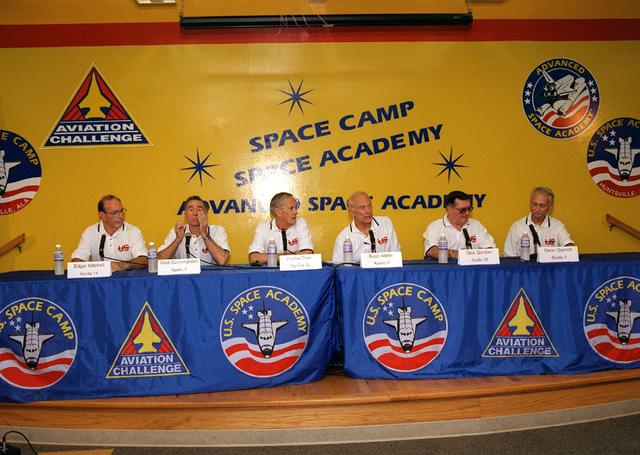
Marking the occasion of the Apollo 11 30th Anniversary, members of the Apollo and Saturn astronaut programs attended festivities at Marshall Space Flight Center in Huntsville, AL. A press conference was held at the U. S. Space and Rocket Center for the visiting astronauts. Pictured are (L/R): Edgar Mitchell, Walt Cunningham, Charlie Duke, Buzz Aldrin, Dick Gordon and Owen Garriott.
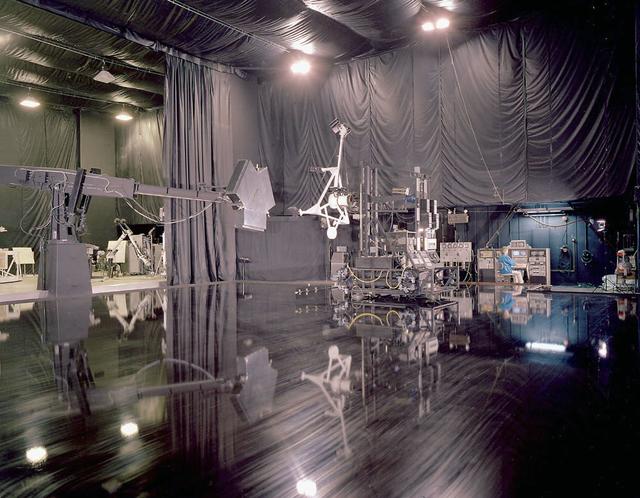
Marshall employees conduct tests on the simulated rendezvous docking mechanism (SRDM)as depicted in this photo of the flat floor area in building 4619.
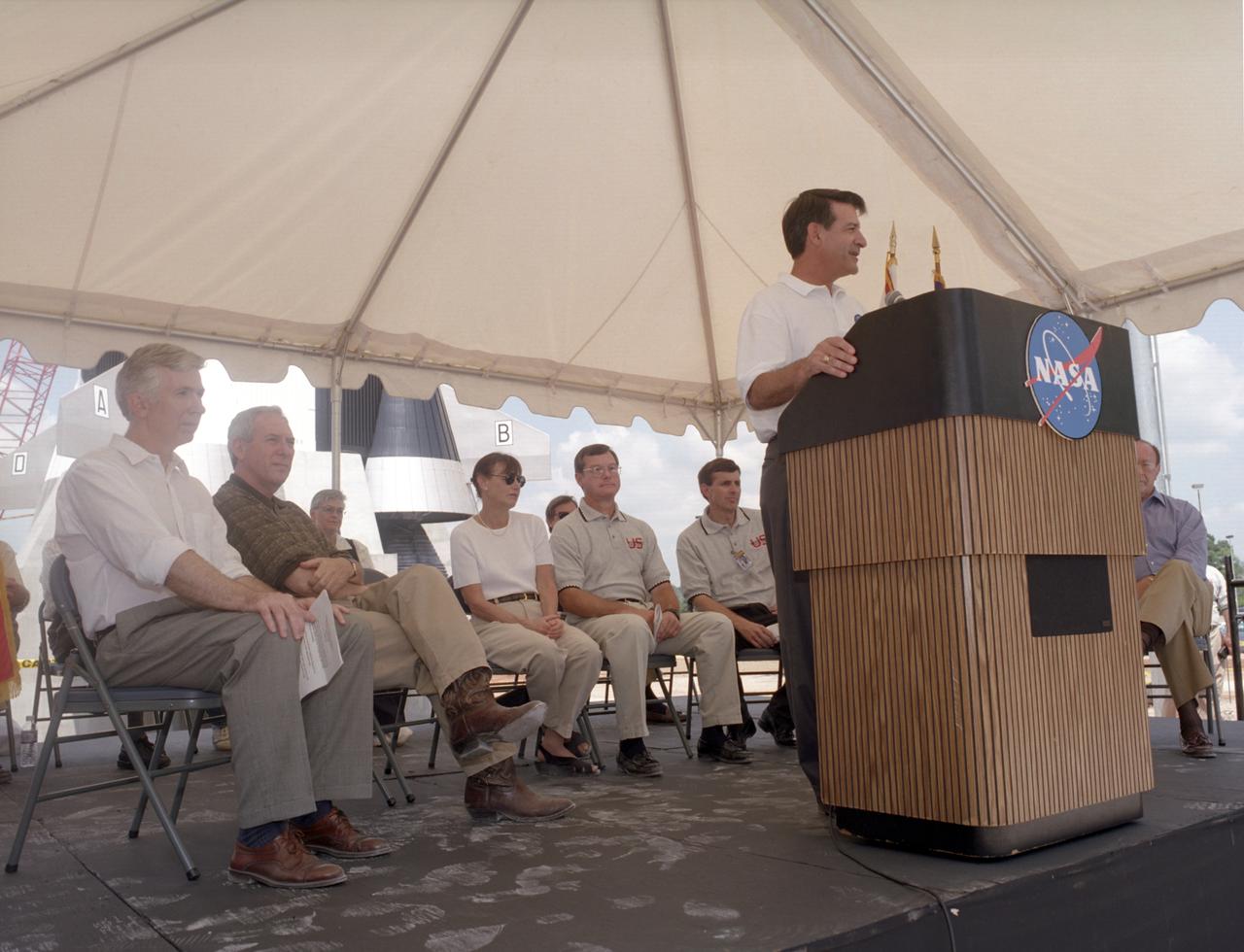
A replica of the Saturn V rocket that propelled man from the confines of Earth's gravity to the surface of the Moon was built on the grounds of the U. S. Space and Rocket Center in Huntsville, AL. in time for the 30th arniversary celebration of that historic occasion. Marshall Space Flight Center and its team of German rocket scientists headed by Dr. Wernher von Braun were responsible for the design and development of the Saturn V rocket. Pictured are MSFC's current Center Director Art Stephenson, Alabama Congressman Bud Cramer, and NASA Administrator Dan Goldin during the dedication ceremony.
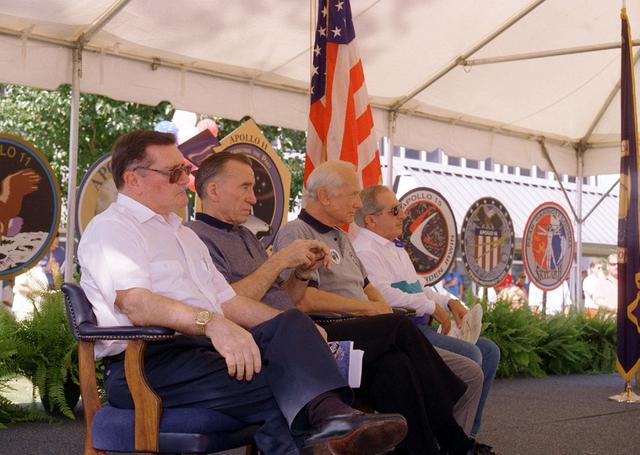
Outside of Building 4200 at Marshall Space Flight Center, a courtyard was constructed in memory of Dr. Wernher von Braun and his contributions to the U. S. Space program. In the middle of the courtyard a fountain was built. The fountain was made operational prior to the 30th arniversary celebration of the Apollo 11 lunar landing. Attending the dedication ceremony were visiting Apollo astronauts and NASA's Safety and Assurance Director Rothenberg.
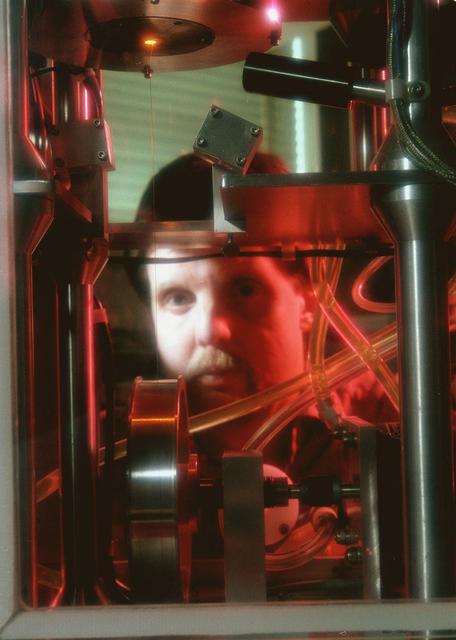
Scientists at Marshall's Materials and Processes Lab are pulling glass fibers from simulated lunar soil. This technology could lead to the building of thermally protected lunar buildings made of materials already there.
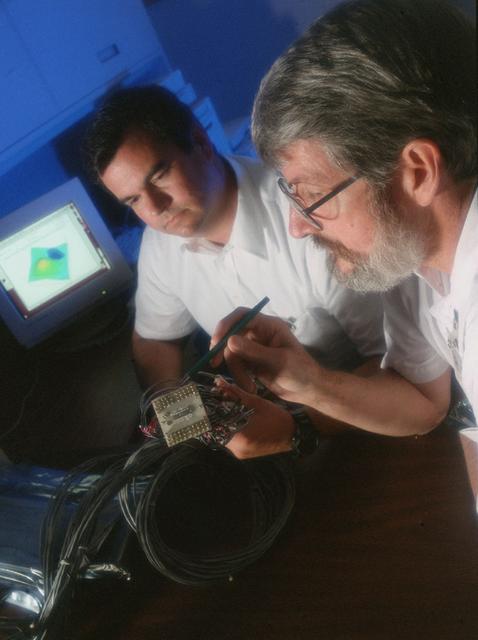
Researchers at Marshall's Space Science Laboratory successfully demonstrate that linear arrays of Hall probes can be constructed in high Hall coefficient films and used to digitally image magnetic fields. This research is beneficial to visually imaging any magnetic field.
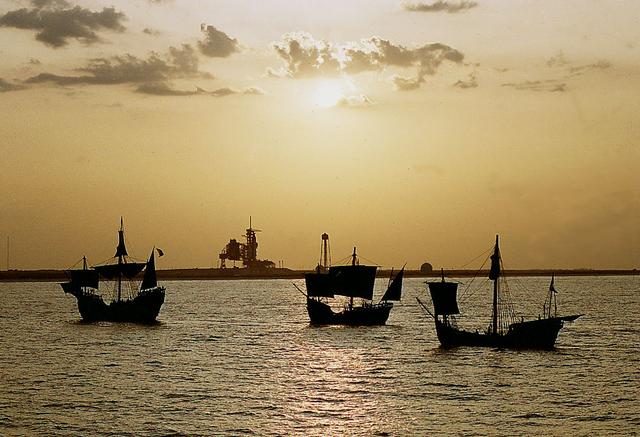
On the 500th arniversary of Christopher Columbus' discovery of the New World, replicas of his three ships sailed past the launch pad at the Kennedy Space Center (KSC) while the space shuttle Columbia sat poised for lift off.

A replica of the Saturn V rocket that propelled man from the confines of Earth's gravity to the surface of the Moon was built on the grounds of the U. S. Space and Rocket Center in Huntsville, AL. in time for the 30th arniversary celebration of that historic occasion. Marshall Space Flight Center and its team of German rocket scientists headed by Dr. Wernher von Braun were responsible for the design and development of the Saturn V rocket. Pictured are MSFC's current Center Director Art Stephenson, Alabama Congressman Bud Cramer, NASA Administrator Dan Goldin, and director of the U. S. Space and Rocket Center Mike Wing during the dedication ceremony.
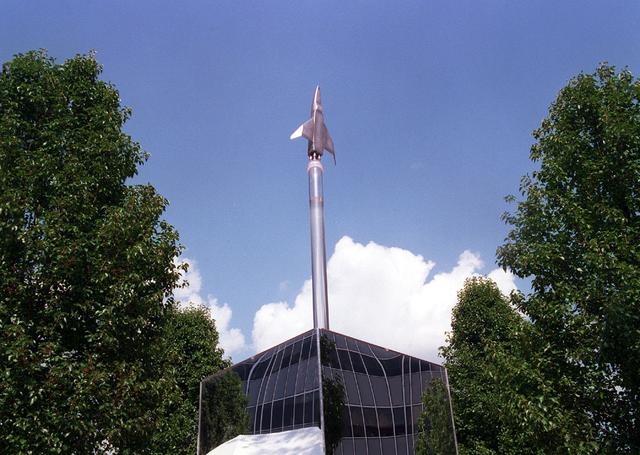
A fountain representing a rocket launch was dedicated in the Von Braun courtyard outside of Building 4200 at Marshall Space Flight Center during the weekend celebrating the 30th arniversary of the Apollo 11 lunar landing. On hand for the festivities were many of the Saturn and Apollo astronauts.
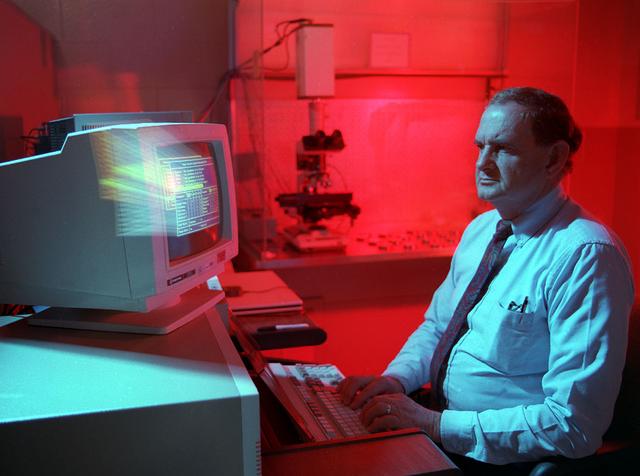
A NASA scientist operates the image analyzer to determine if telescope mirrors have become contaminated in the Materials and Processes lab at Marshall.
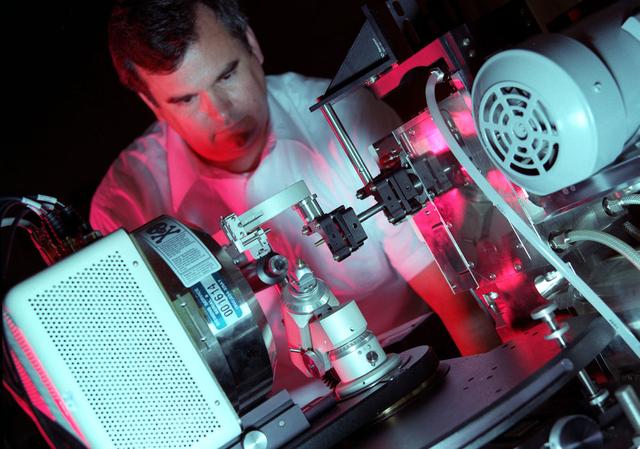
NASA scientist, in the Space Sciences lab at Marshall, works with capillary optics that generate more intense X-rays than conventional sources. This capability is useful in studying the structure of important proteins.
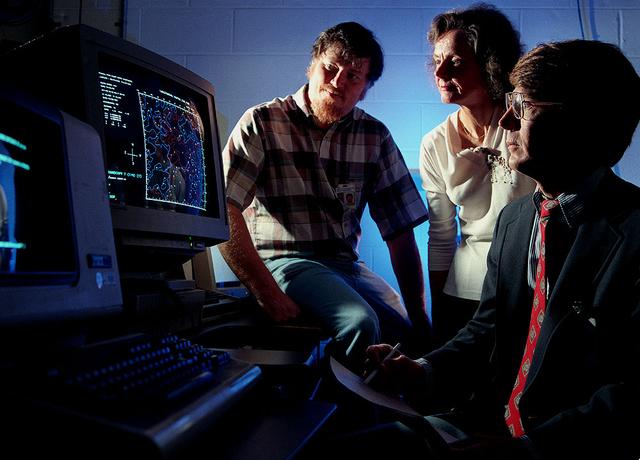
Solar Vector Magnetograph is used to predict solar flares, and other activities associated with sun spots. This research provides new understanding about weather on the Earth, and solar-related conditions in orbit.
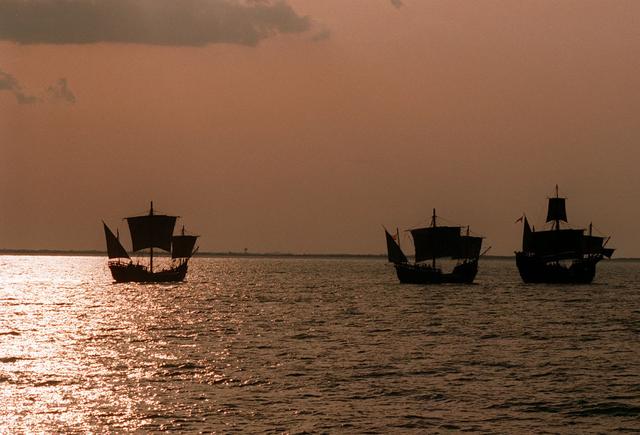
On the 500th arniversary of Christopher Columbus' discovery of the New World, replicas of his three ships sailed past the launch pad at the Kennedy Space Center (KSC) while the space shuttle Columbia sat poised for lift off.
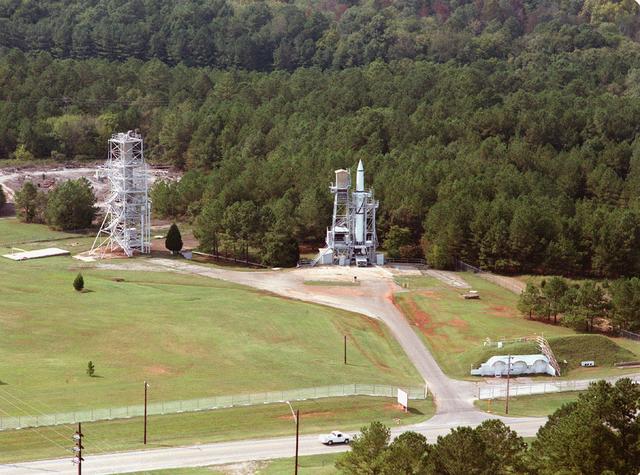
The Redstone Test Stand, shown here, was used throughout the 1950s to test the Redstone missionile, including the modified Redstone that launched America's first astronaut, Alan Shepard. The U. S. Department of the Interior's Park Services designated the Test Stand as a National Historic Landmark January 22, 1986.
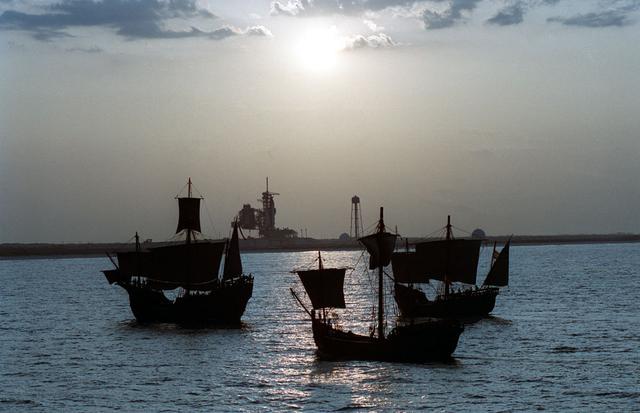
On the 500th arniversary of Christopher Columbus' discovery of the New World, replicas of his three ships sailed past the launch pad at the Kennedy Space Center (KSC) while the space shuttle Columbia sat poised for lift off.
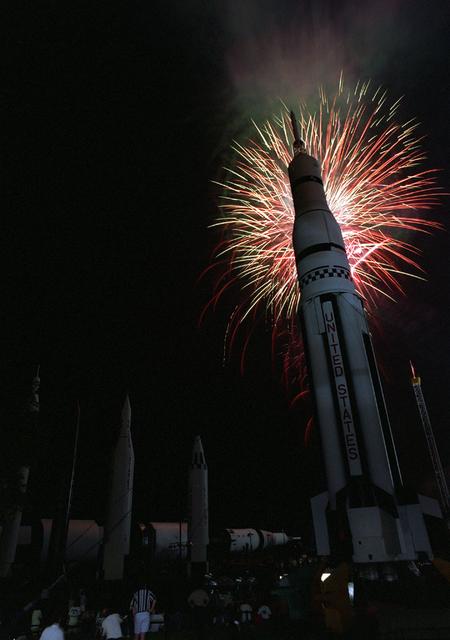
The evening skies over the U. S. Space and Rocket Center in Huntsville, AL burst into life as members of the Huntsville community gathered to celebrate the 30th arniversary of the Lunar Landing. Commerating this historical achievement for NASA and the US Space Program, a replica of the original Saturn V rocket was built on the grounds of the U. S. Space and Rocket Center in Huntsville, AL. On the evening of the anniversary thousands of onlookers cheered as fireworks lit up the night sky behind the massive Saturn V rocket.
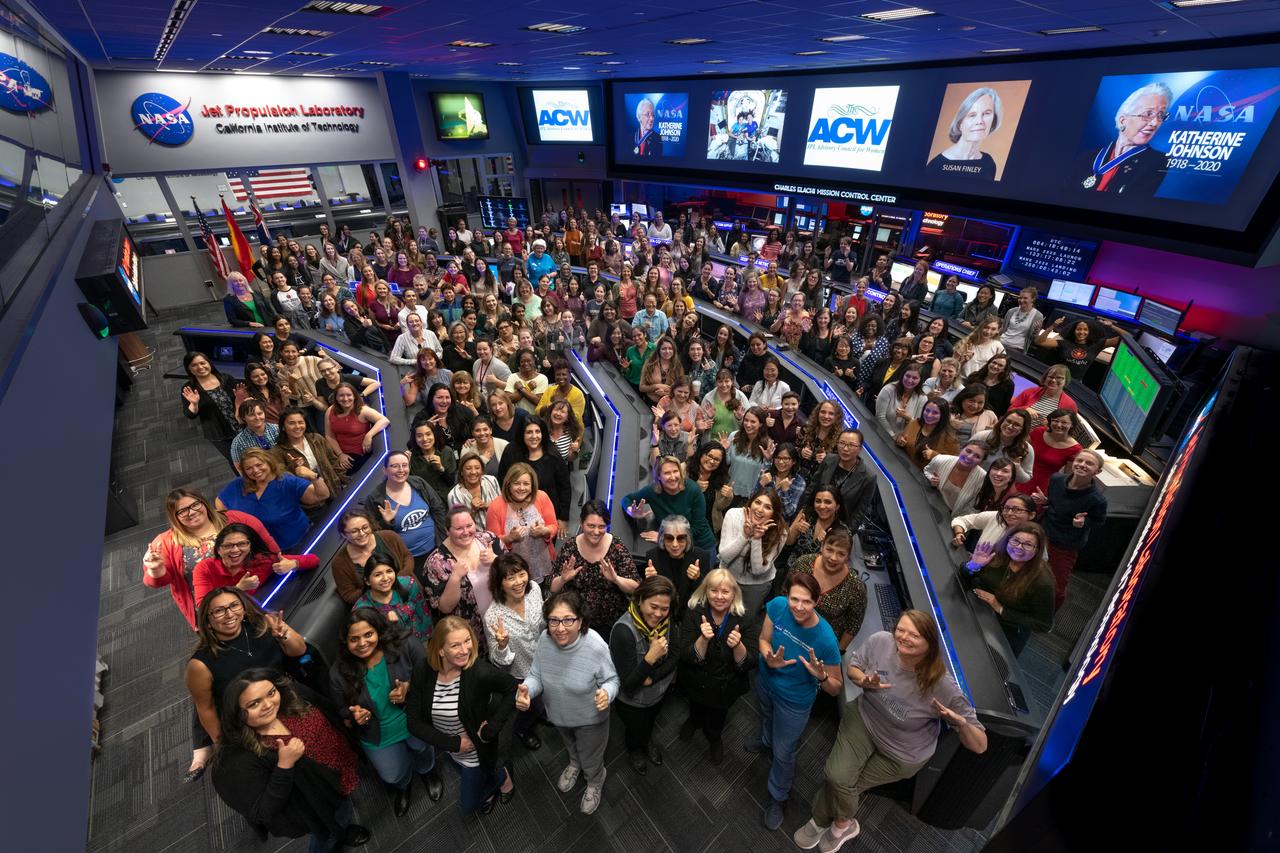
In honor of Women’s History Month, the Advisory Council for Women (ACW) organized a "Women of JPL" group photo shoot in the Space Flight Operations Facility on March 4, 2020. Credit: NASA-JPL/Caltech
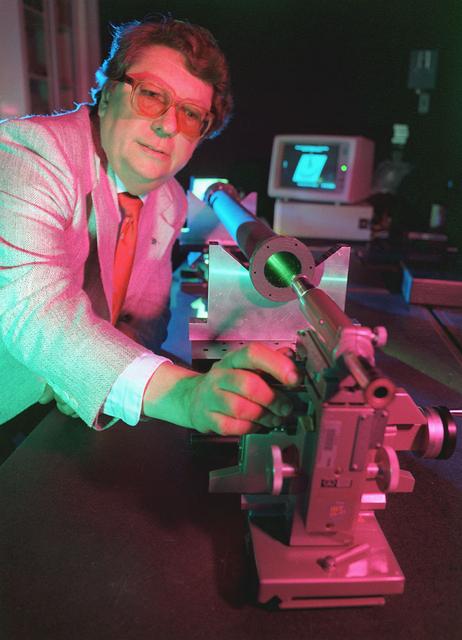
Marshall's 1992 Inventor of the Year demonstrates his multi-layer water window imaging x-ray microscope.
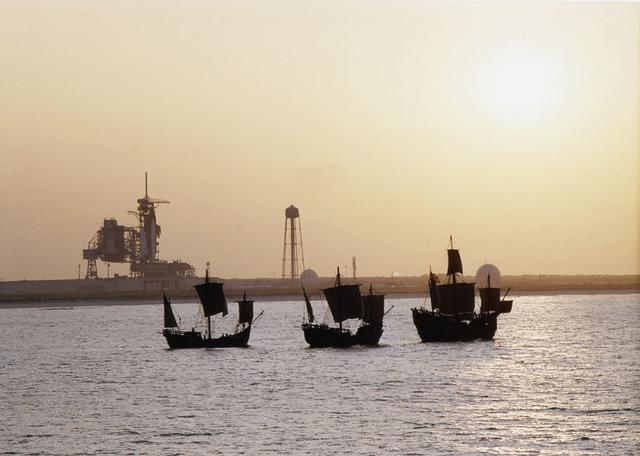
On the 500th arniversary of Christopher Columbus' discovery of the New World, replicas of his three ships sailed past the launch pad at the Kennedy Space Center (KSC) while the space shuttle Columbia sat poised for lift off.
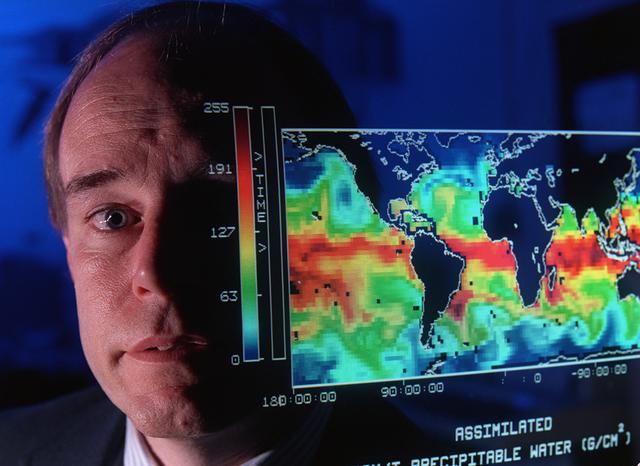
This map shows the presence of water vapor over global oceans. The imagery was produced by combining Special Sensor Microwave Imager measurements and computer models. This data will help scientists better understand how weather systems move water vapor from the tropics toward the poles producing precipitation.
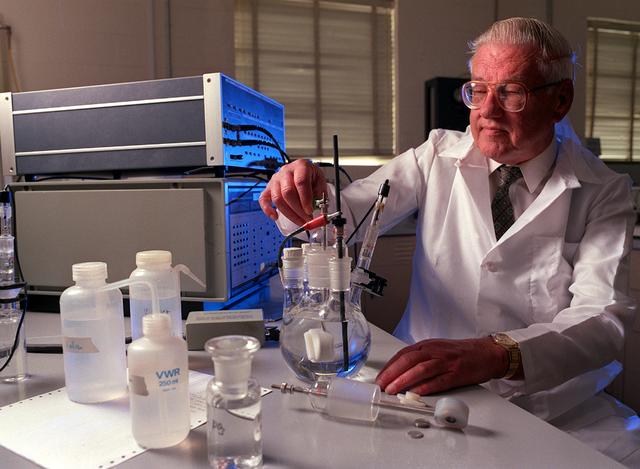
Marshall researcher studies hydrogen diffusion and corrosion effects on metals.
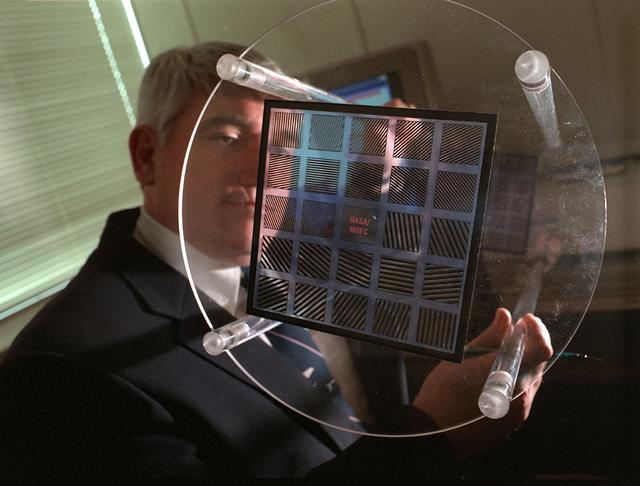
Marshall's wirner of a Research Technology Award, worked with the Fourier telescope. This project has developed new technology with the aid of today's advanced computers by allowing an object to be x-rayed using an absorption pattern, then sending this data to the computer where it calculates the data into pixels which inturn develops an image. This new technology is being used in fields like astronomy, astrophysics and medicine.
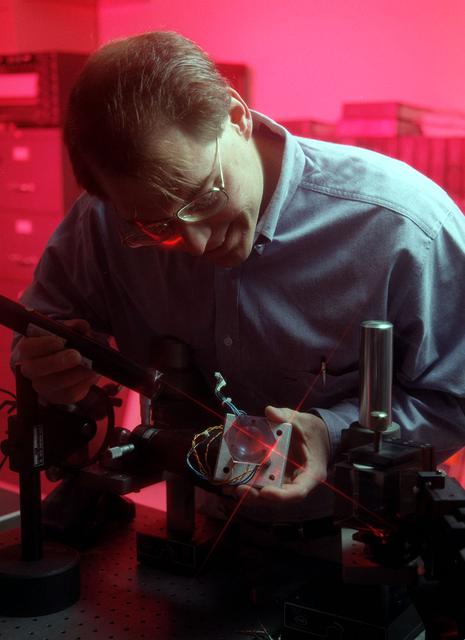
The SELENE Optics project was designed to send powerful laser beams into space to repower satellites and to recharge their batteries, as well as sending laser beams to the moon for the same purpose instead of relying on solar power. This project also was intended to be used for repowering extended space flights.
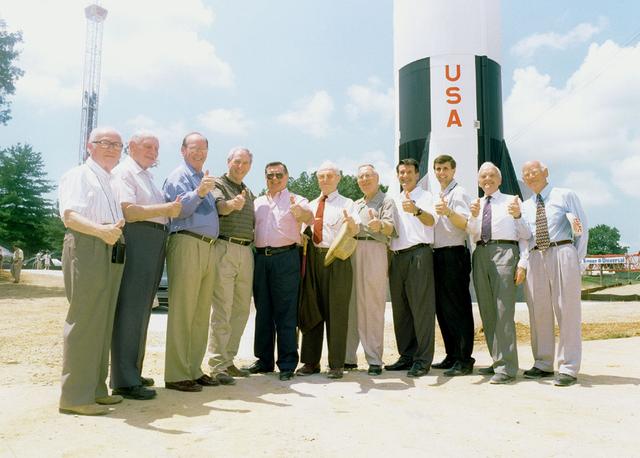
Members of the original Von Braun german rocket team participate in the Saturn V replica didication ceremony at the U. S. Space and Rocket Center in Huntsville, AL. Pictured are (L/R): Walter Jacobi, Konrad Dannenberg, Apollo 14's Edgar Mitchell, NASA Administrator Dan Goldin, Apollo 12's Dick Gordon, Gerhard Reisig, Werner Dahm, MSFC Director Art Stephenson, Director of the U. S. Space and Rocket Center Mike Wing, Walter Haeusserman, and Ernst Stuhlinger.
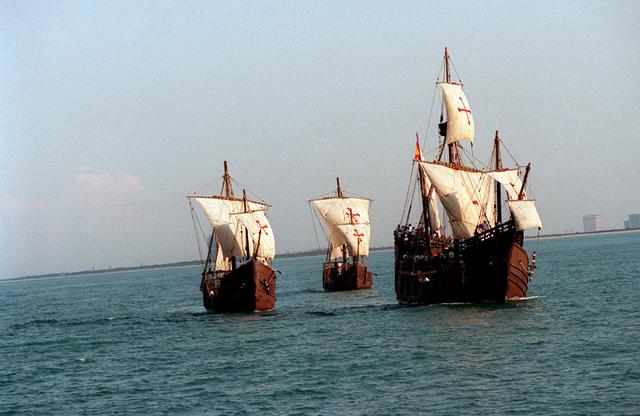
On the 500th arniversary of Christopher Columbus' discovery of the New World, replicas of his three ships sailed past the launch pad at the Kennedy Space Center (KSC) while the space shuttle Columbia sat poised for lift off.
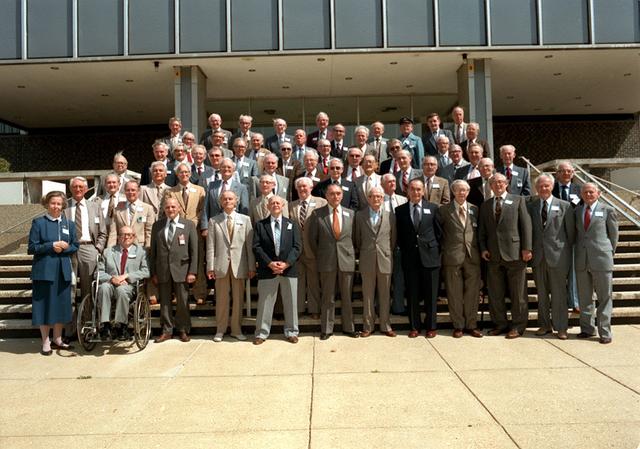
The Peenemunde Rocket Team reunited on the steps of Marshall Space Flight Center's (MSFC) Headquarter Building 4200 for a reunion. The Peenemunde Rocket team were first assembled in Germany prior to World War II. They came to the United States at the end of the War and became the nucleus of the United States Army's rocket program.

The Andromeda Galaxy, also known as M31 since it is the 31st object on Messier's list of diffuse sky objects, is the nearest large galaxy to our own Milky Way galaxy. Our galaxy is thought to look much like Andromeda, but it is about four times as massive as the Milky Way. Together these two galaxies dominate the Local Group of galaxies. The diffused light from Andromeda is caused by hundreds of billions of stars that compose it. The several distinct stars that surround Andromeda's image are actually stars in our galaxy that are well in front of the background object. Andromeda is so distant that it takes approximately two millions years for light to reach us from there.
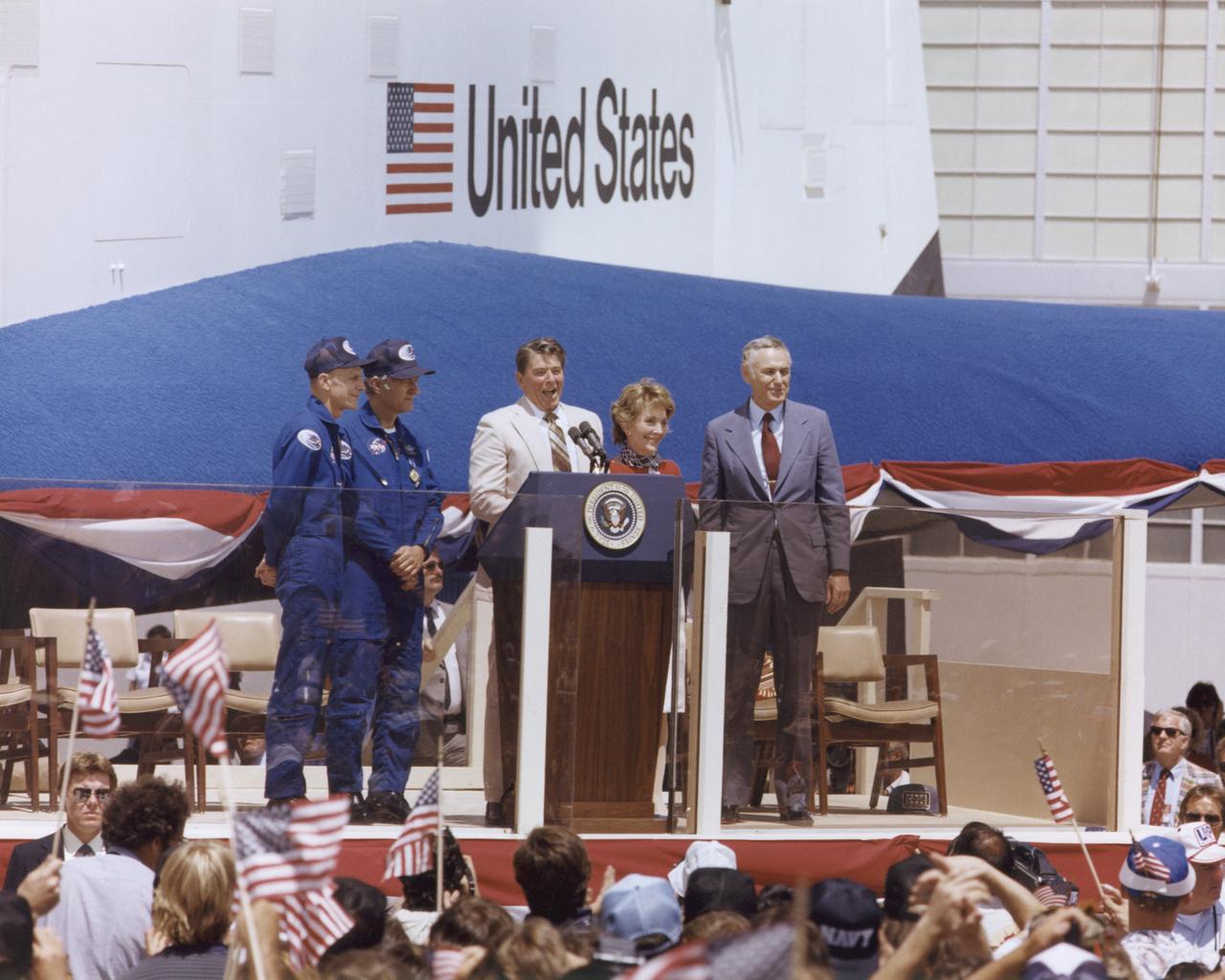
President Ronald Reagan speaks to a crowd of more than 45,000 people at NASA's Dryden Flight Research Center following the landing of STS-4 on July 4, 1982. To the right of the President are Mrs. Reagan and NASA Administrator James M. Beggs. To the left are STS-4 Columbia astronauts Thomas K. Mattingly and Henry W. Hartsfield, Jr. Prototype Space Shuttle Enterprise is in the background.
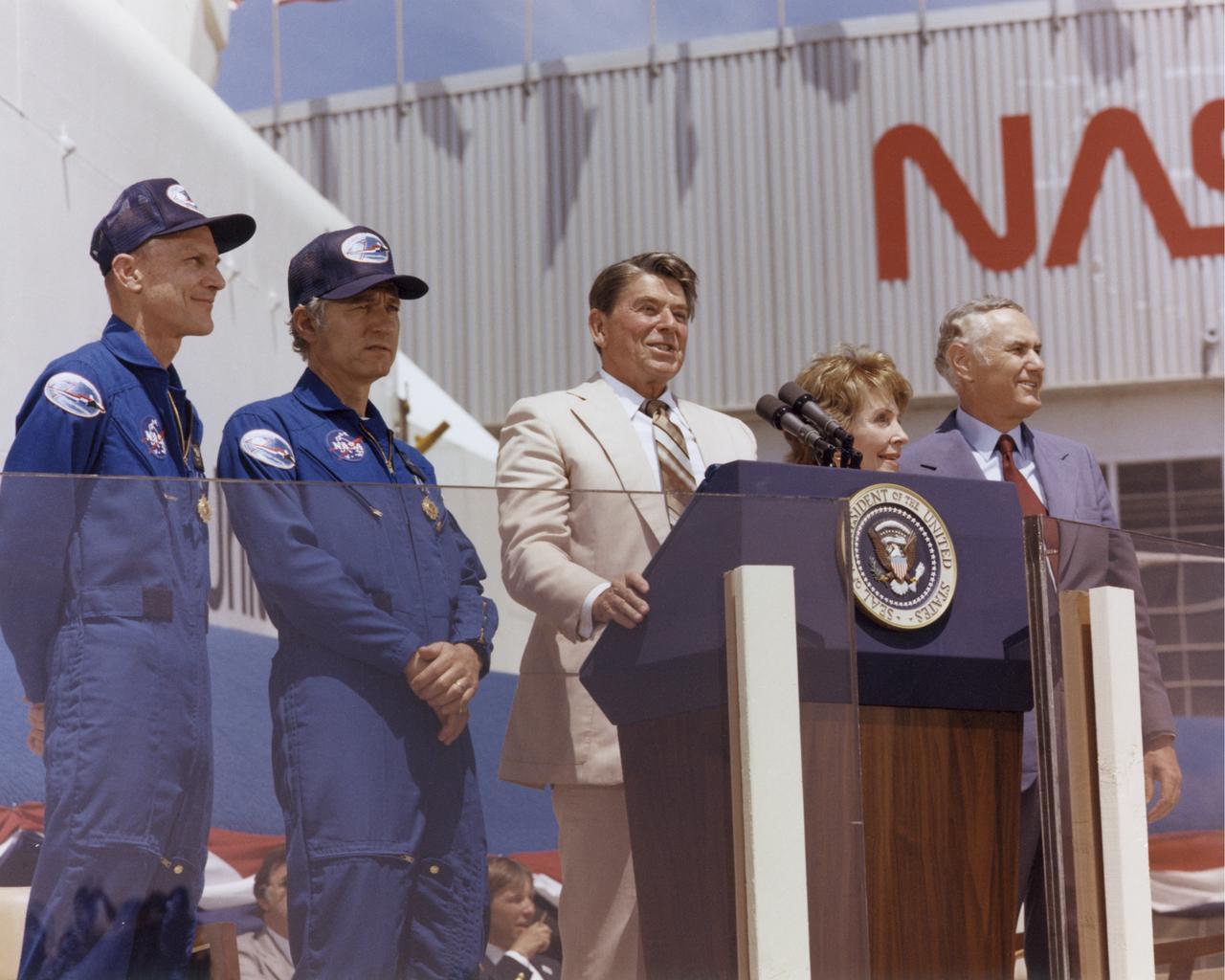
President Ronald Reagan speaks to a crowd of more than 45,000 people at NASA's Dryden Flight Research Center following the landing of STS-4 on July 4, 1982. To the right of the President are Mrs. Reagan and NASA Administrator James M. Beggs. To the left are STS-4 Columbia astronauts Thomas K. Mattingly and Henry W. Hartsfield, Jr. Prototype Space Shuttle Enterprise is in the background.
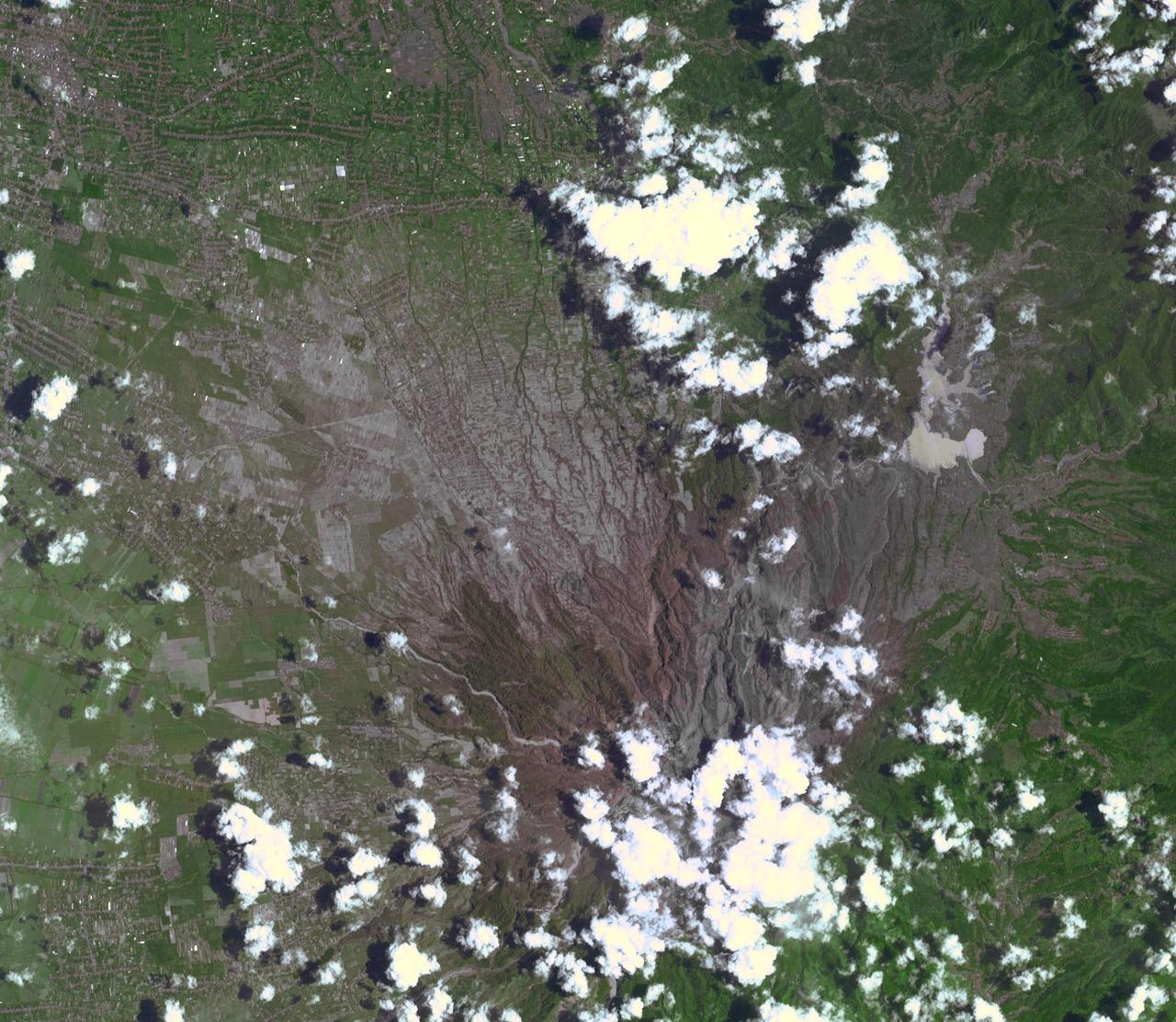
On Feb. 13, 2014, violent eruption of Kelud stratovolcano in Java, Indonesia sent volcanic ash covering an area of 70,000 square miles, prompting the evacuation of tens of thousands of people. This image is from NASA Terra spacecraft.
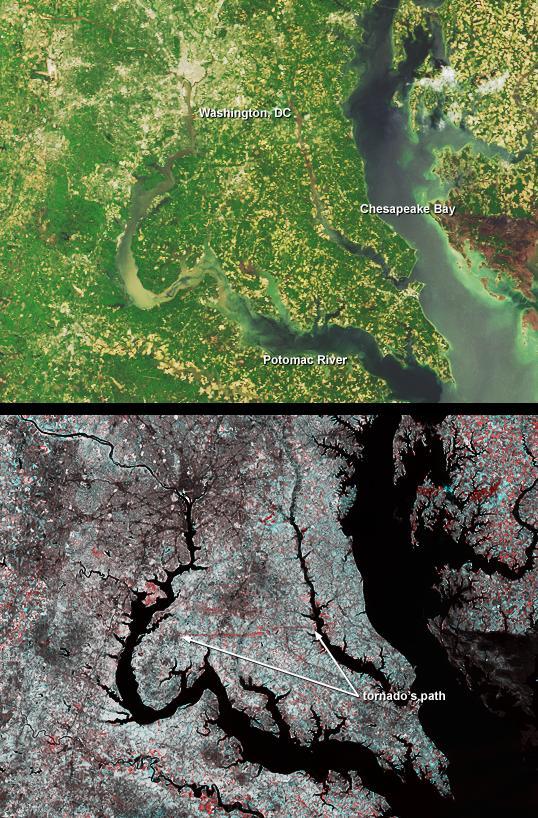
A category F4 tornado tore through La Plata, Maryland on April 28, 2002, killing 5 and injuring more than 100 people. This image from NASA Terra satellite was acquired on May 1, 2002.
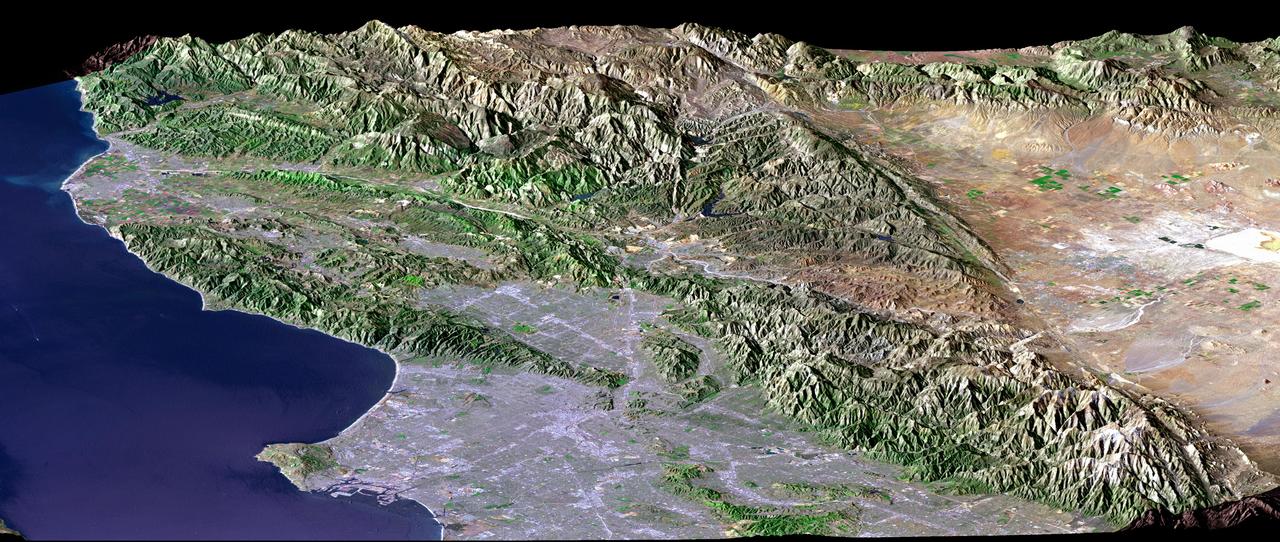
Los Angeles, Calif., is one of the world largest metropolitan areas with a population of about 15 million people. The urban areas mostly cover the coastal plains and lie within the inland valleys.
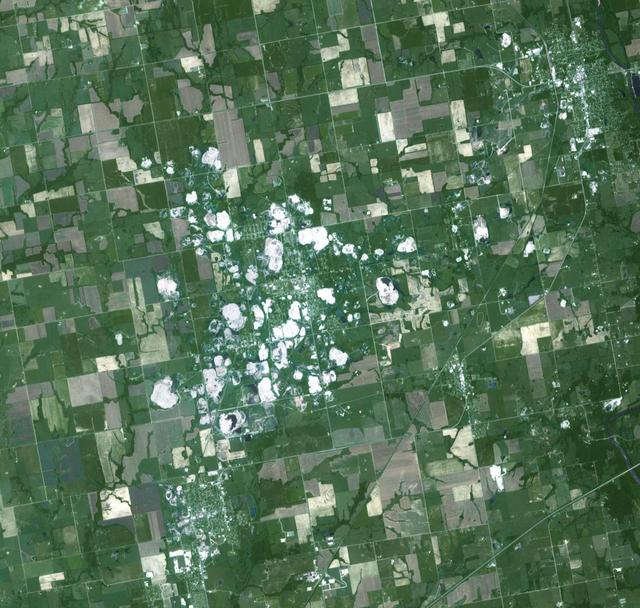
NASA Terra spacecraft acquired this image of Picher, Oklahoma which once boasted 20,000 people in this mining town in northeast Oklahoma. Now, after a 2009 tornado, and a federal cleanup program, the town is a modern-day ghost town.
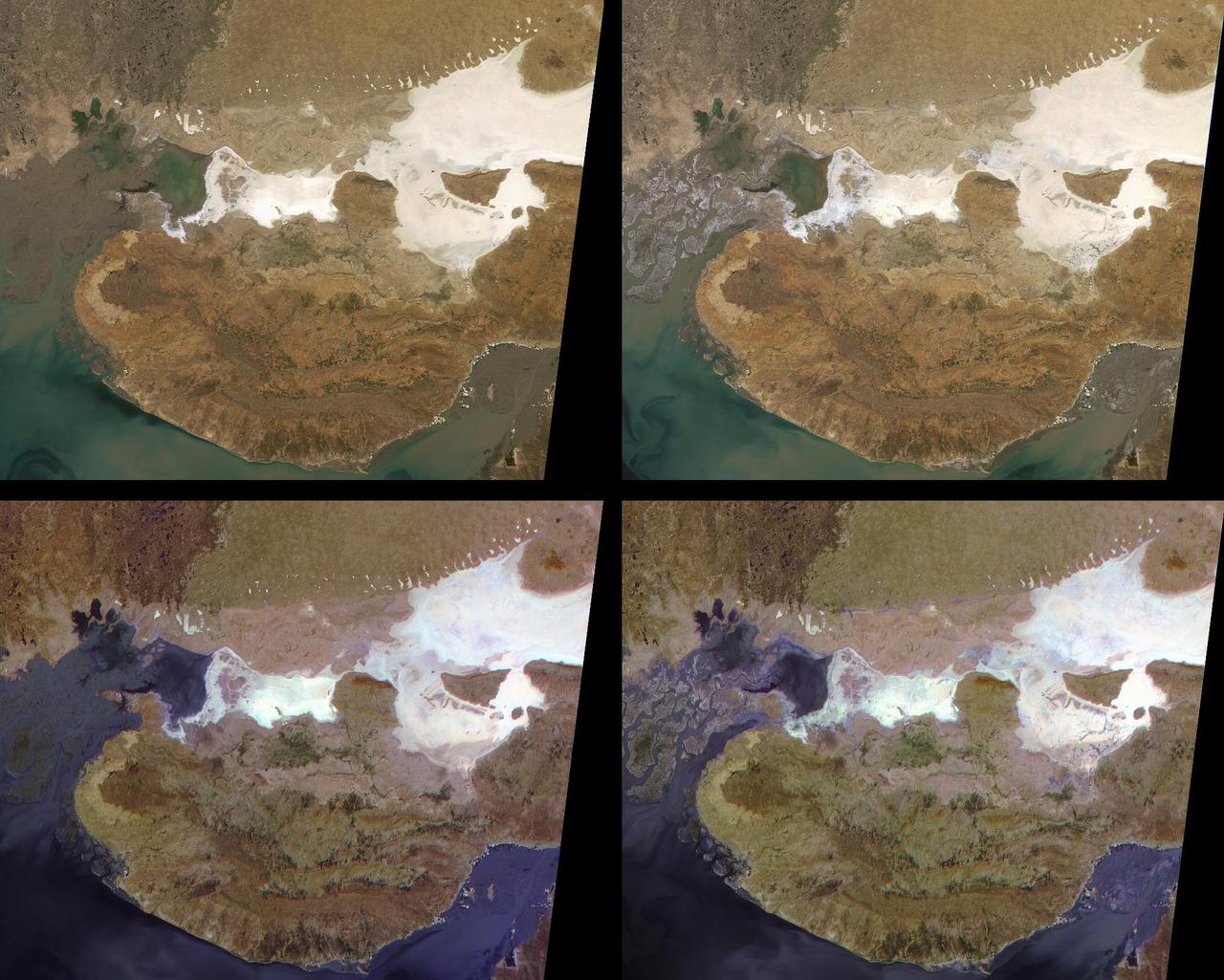
This image from NASA Terra satellite shows the Kachchh region in the Gujarat province of western India. On January 26, 2001, a magnitude 7.7 earthquake devastated this area, killing 20,000 people and destroying buildings, dams, and port facilities.
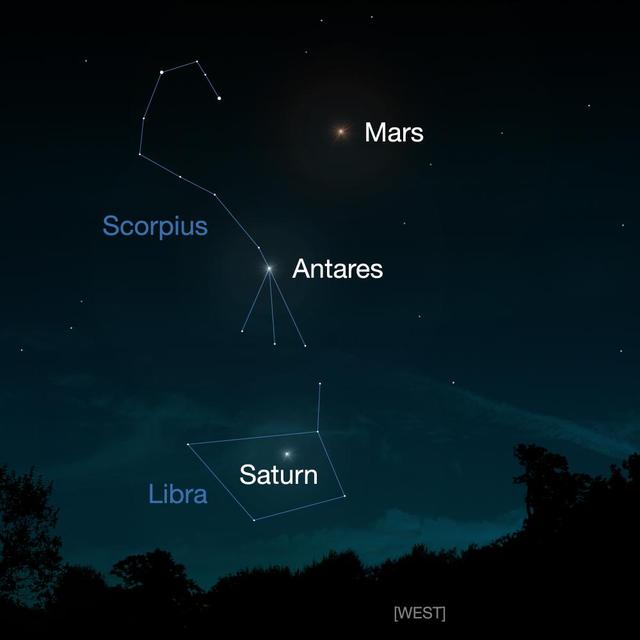
Comet Siding Spring will have a close approach to Mars on Oct. 19, 2014. This artist concept shows people in the Southern Hemisphere where to look for Mars in the night sky. Mars and the comet may be visible with binoculars.
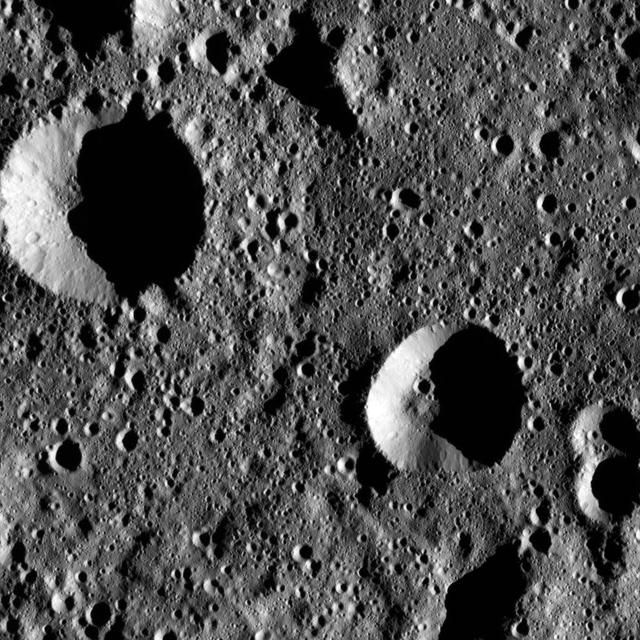
This image from NASA Dawn spacecraft shows terrain within Chaminuka Crater on Ceres. Chaminuka was named for the spirit who provides rains during times of drought, according to the legends of the Shona people of Zimbabwe.
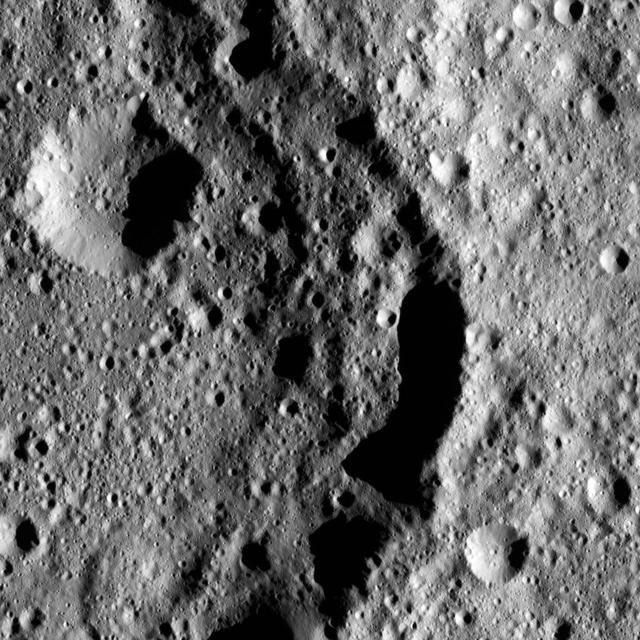
Omonga Crater on Ceres was named for a rice spirit who dwells in the moon, according to legends of the Mori people of the Indonesian island of Sulawesi. NASA Dawnspacecraft spotted Omonga from above the surface.
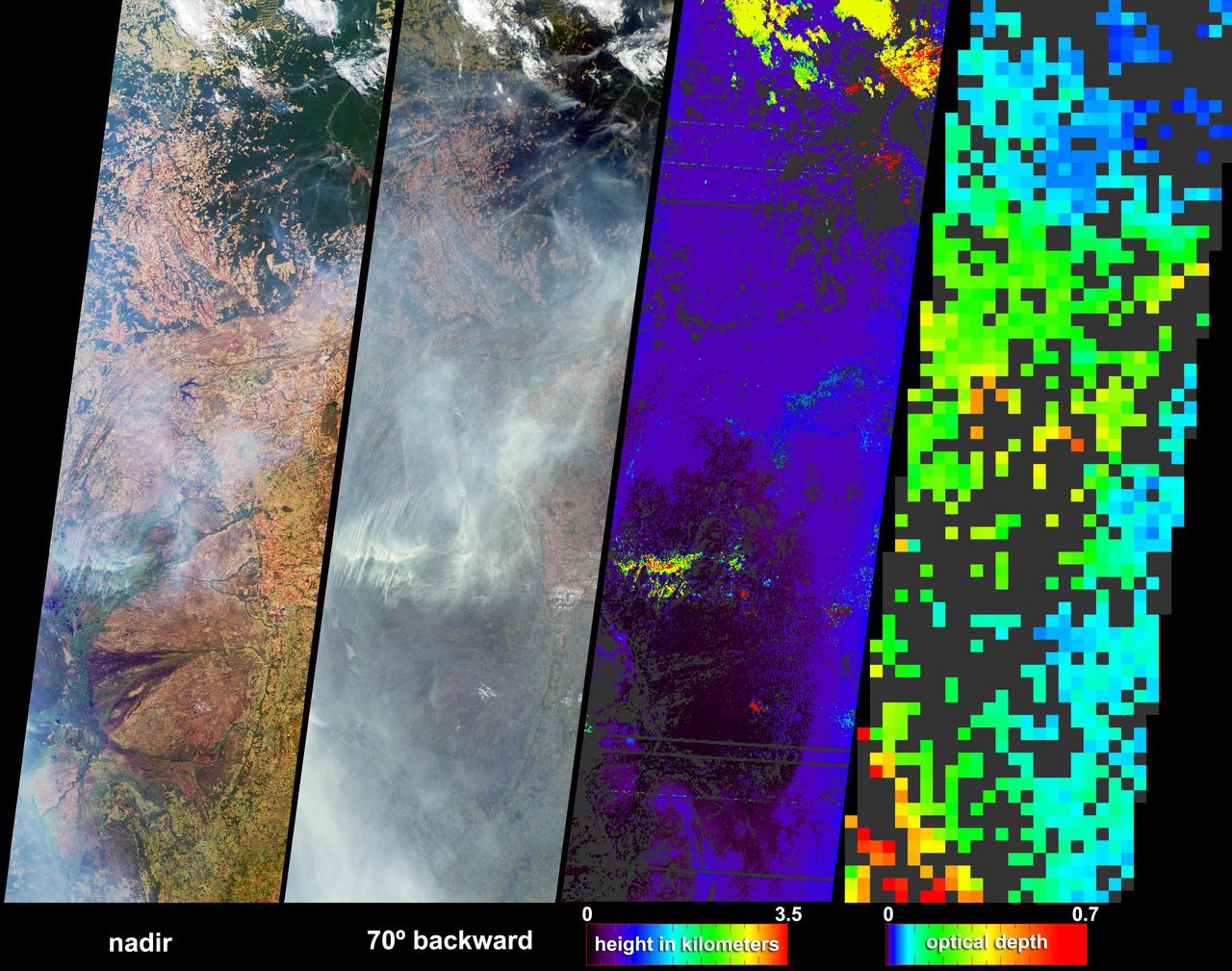
Numerous fires occurred near the headwaters of the Xingu River and the Xingu Indigenous Peoples Reserve in Mato Grosso, Brazil, during late June and early July, 2004, as seen by NASA Terra spacecraft.
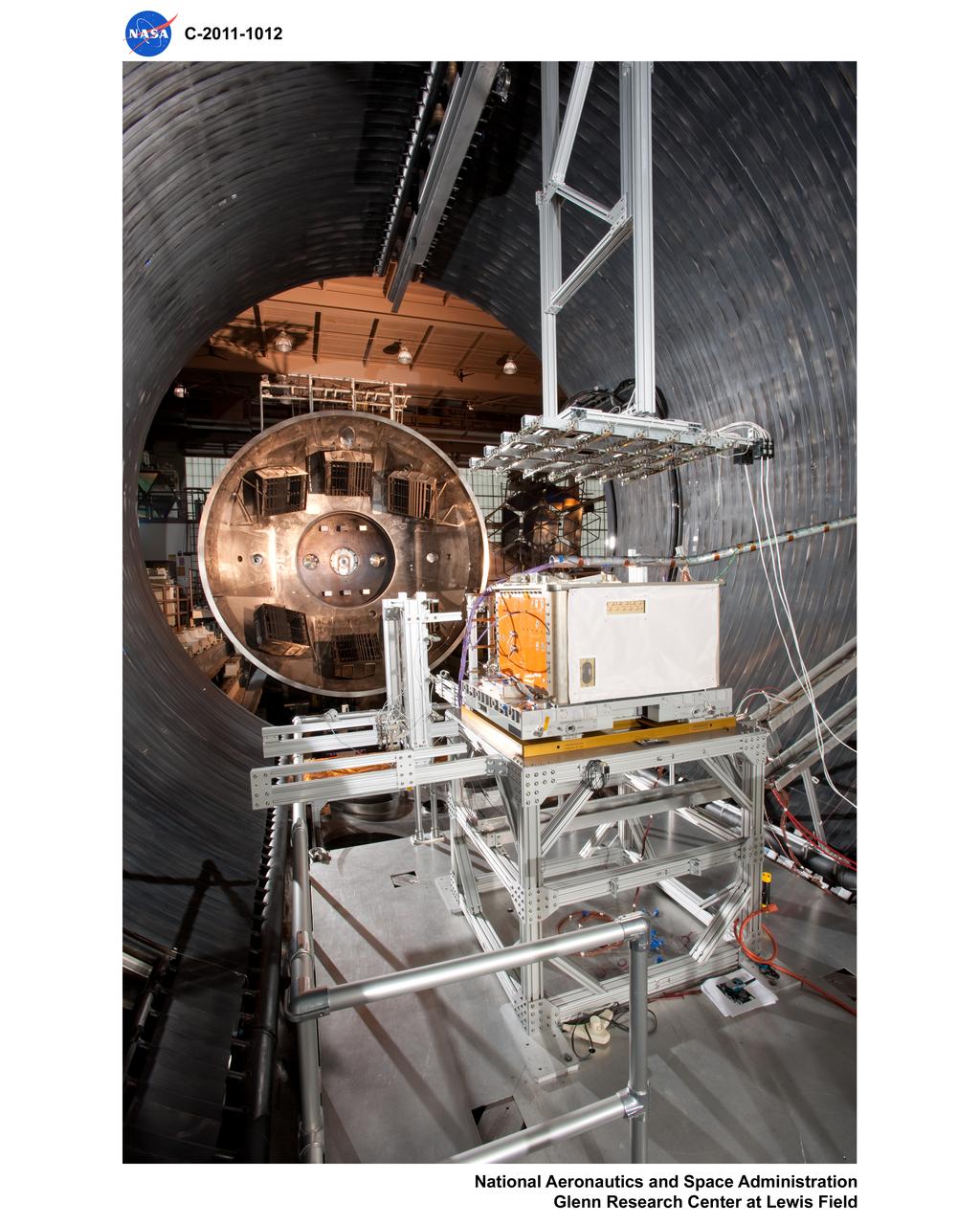
Flight hardware inside the tank, with and without people
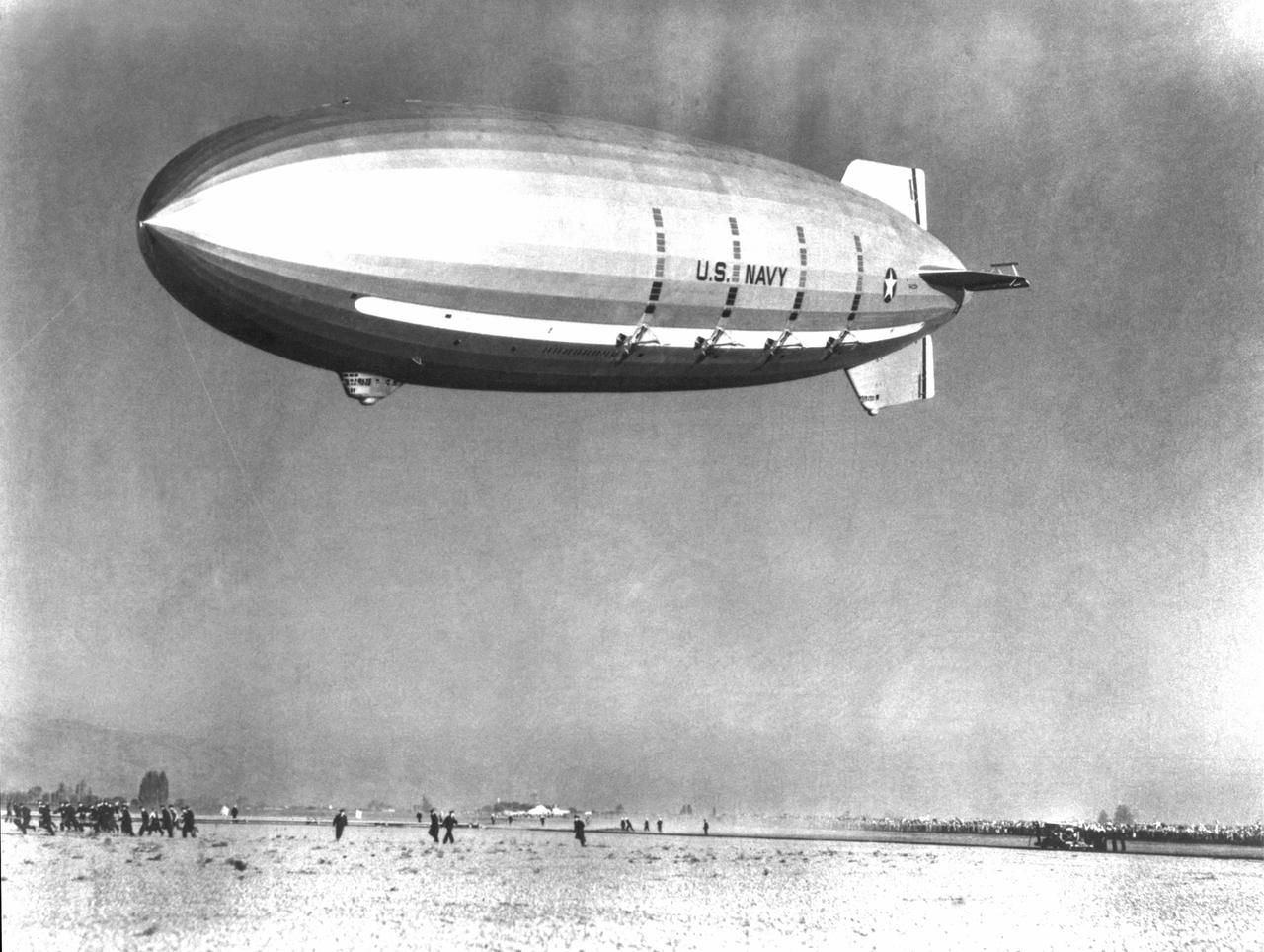
Dirigible returns to Moffett as people watch (1933)
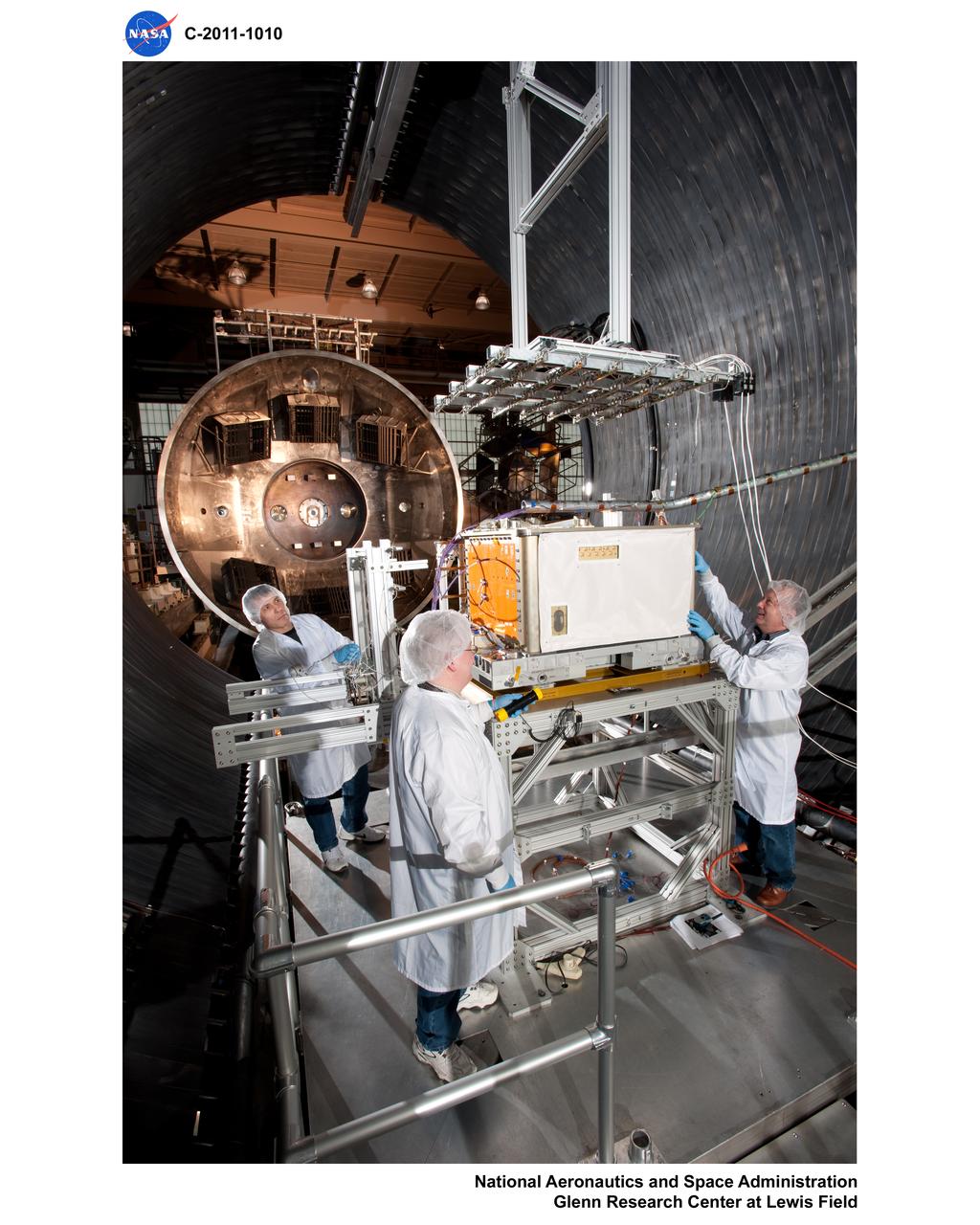
Flight hardware inside the tank, with and without people
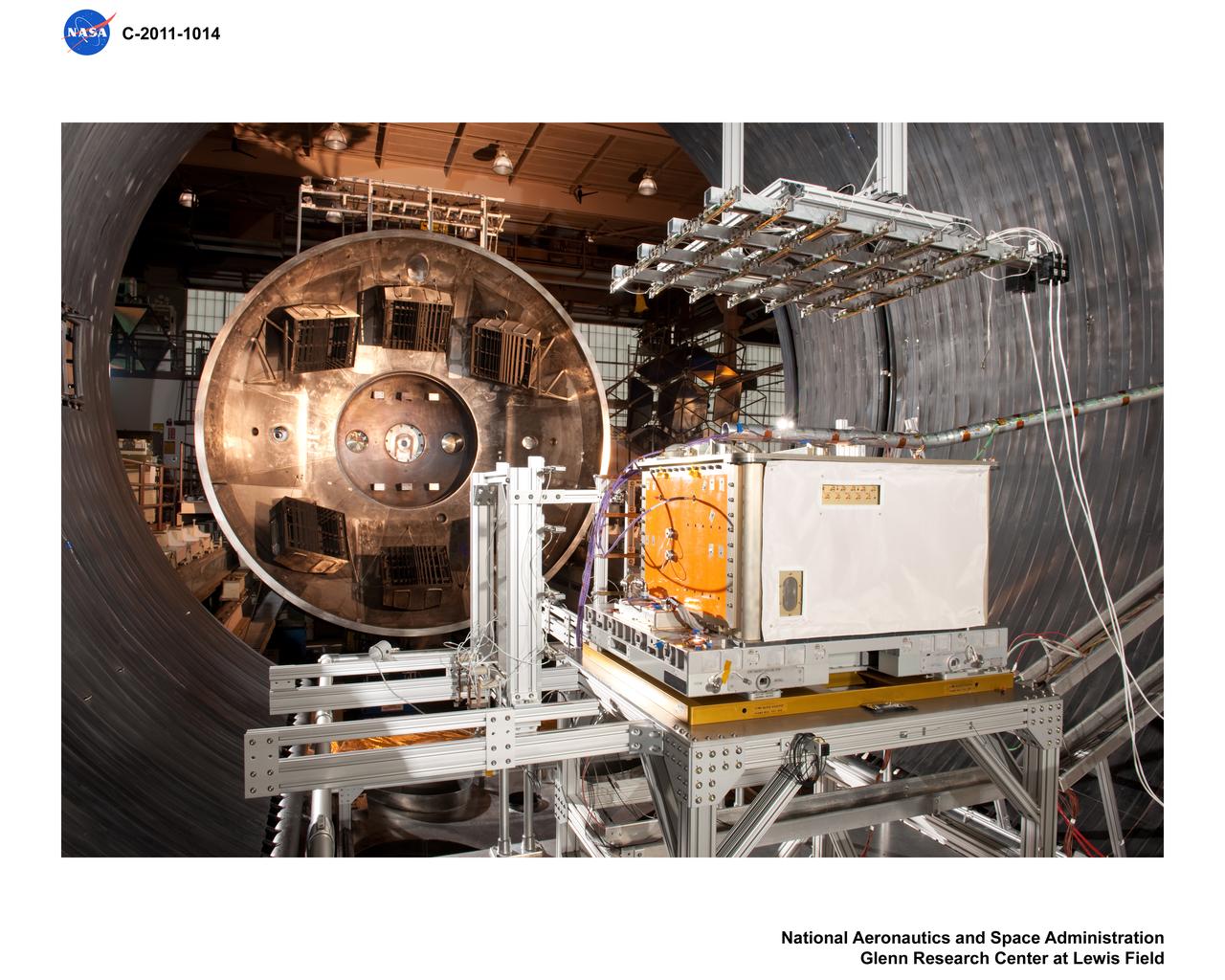
Flight hardware inside the tank, with and without people
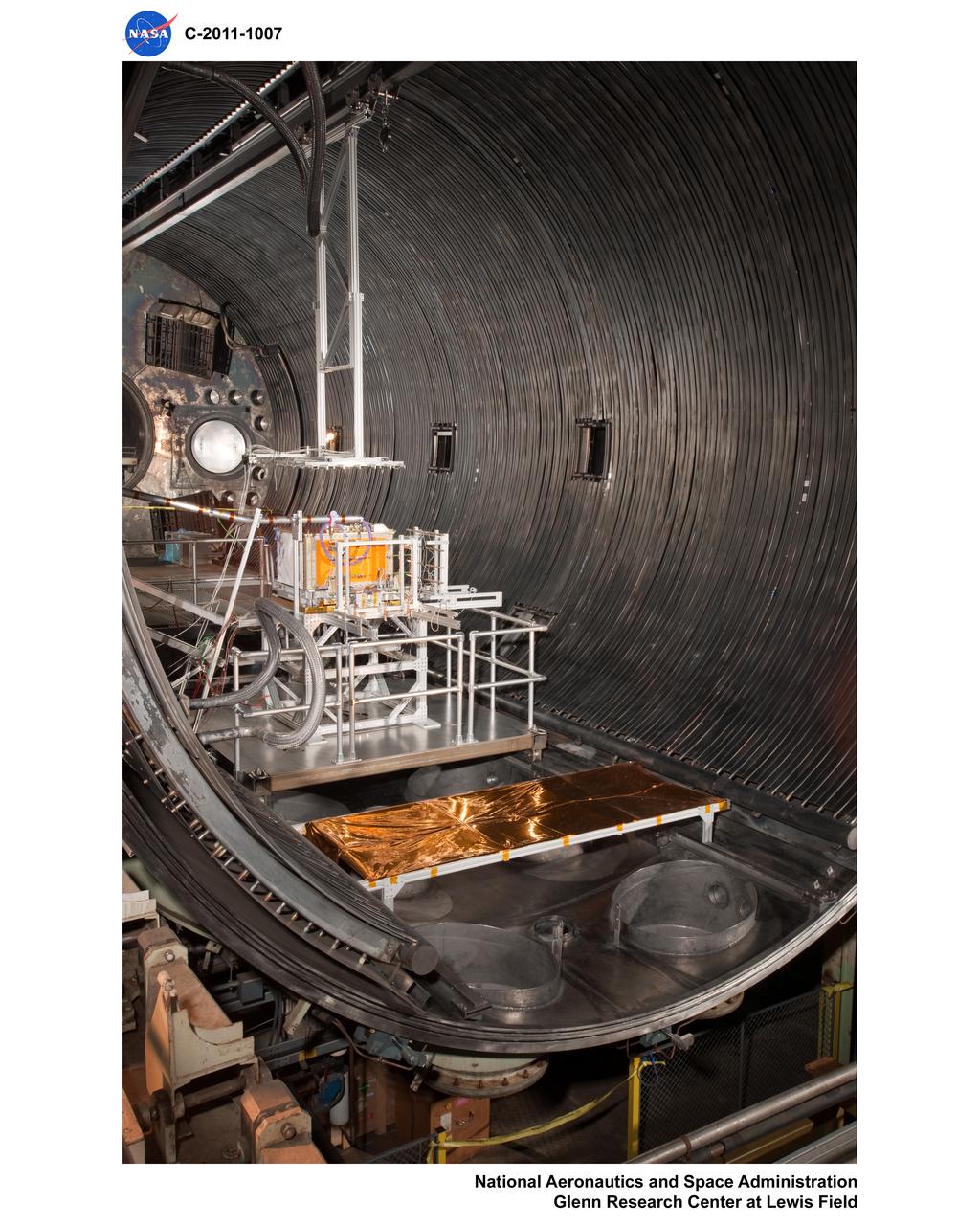
Flight hardware inside the tank, with and without people
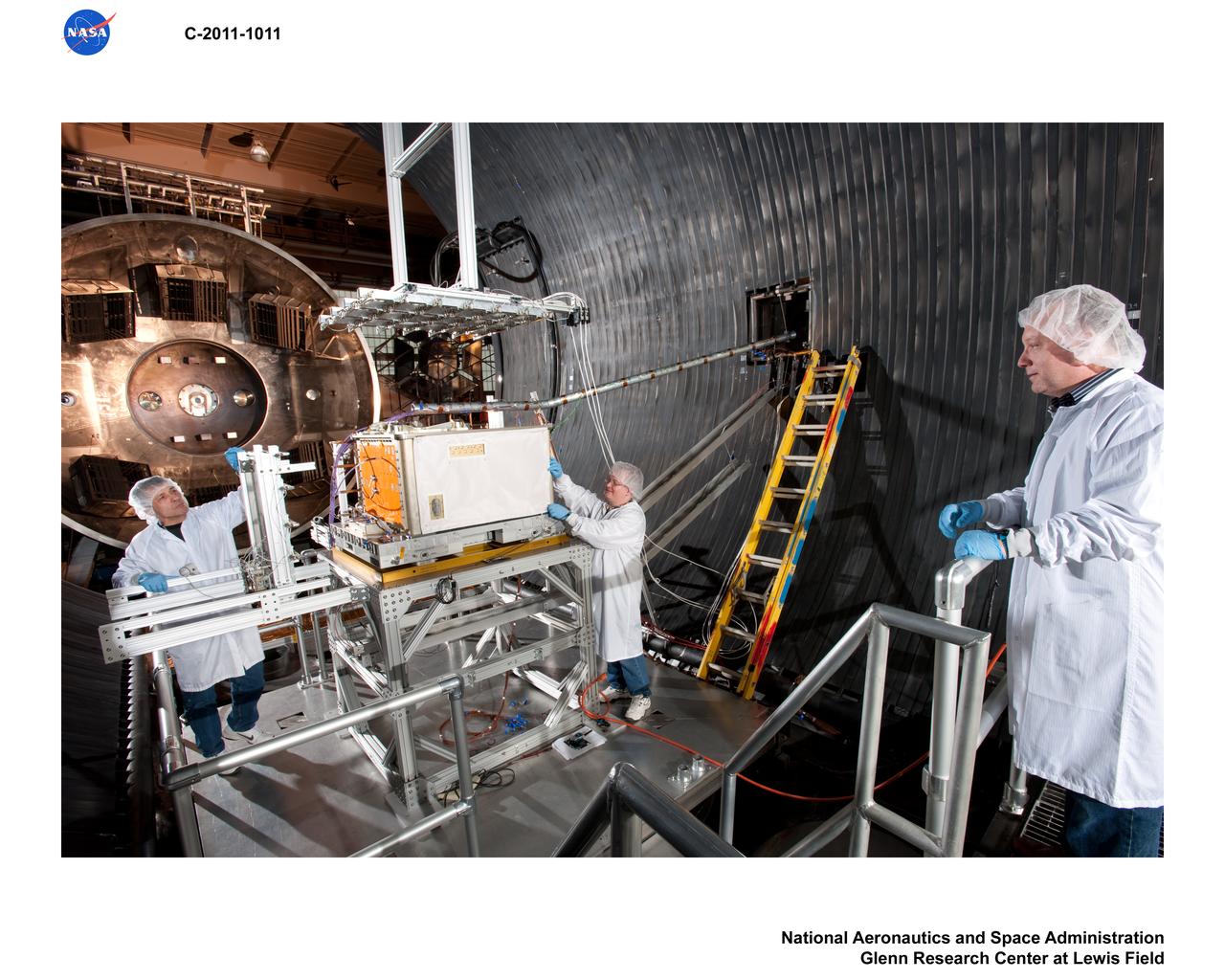
Flight hardware inside the tank, with and without people
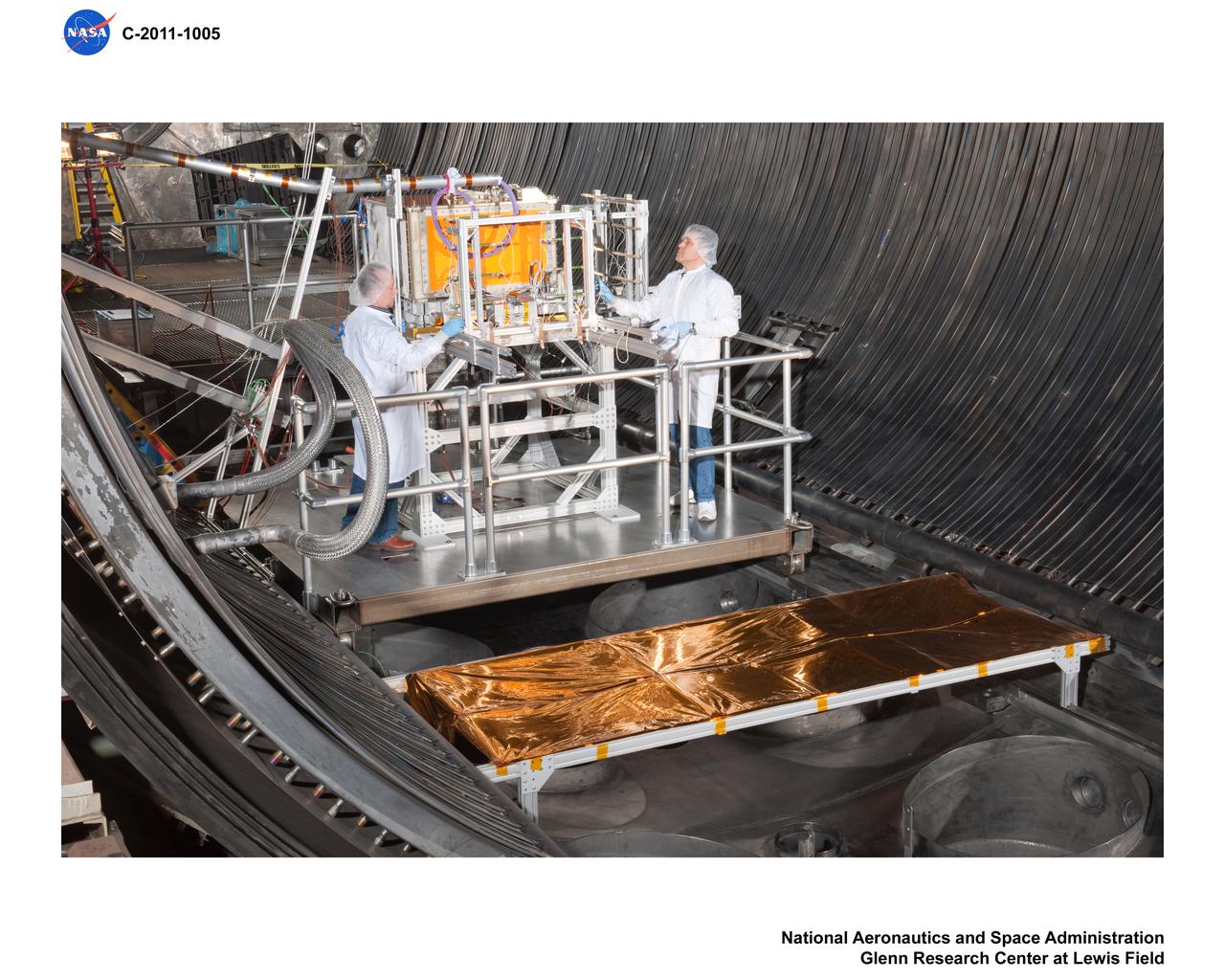
Flight hardware inside the tank, with and without people
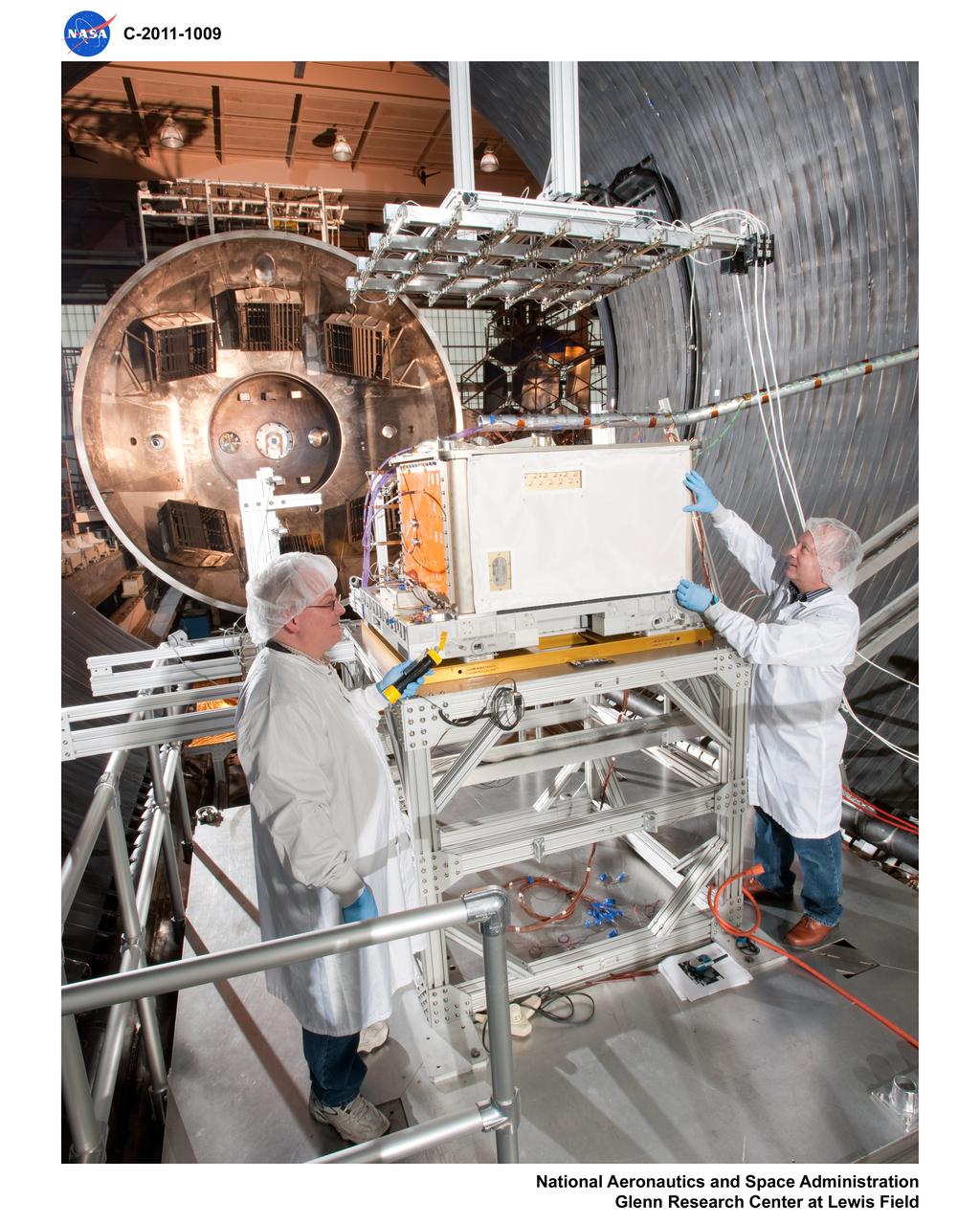
Flight hardware inside the tank, with and without people
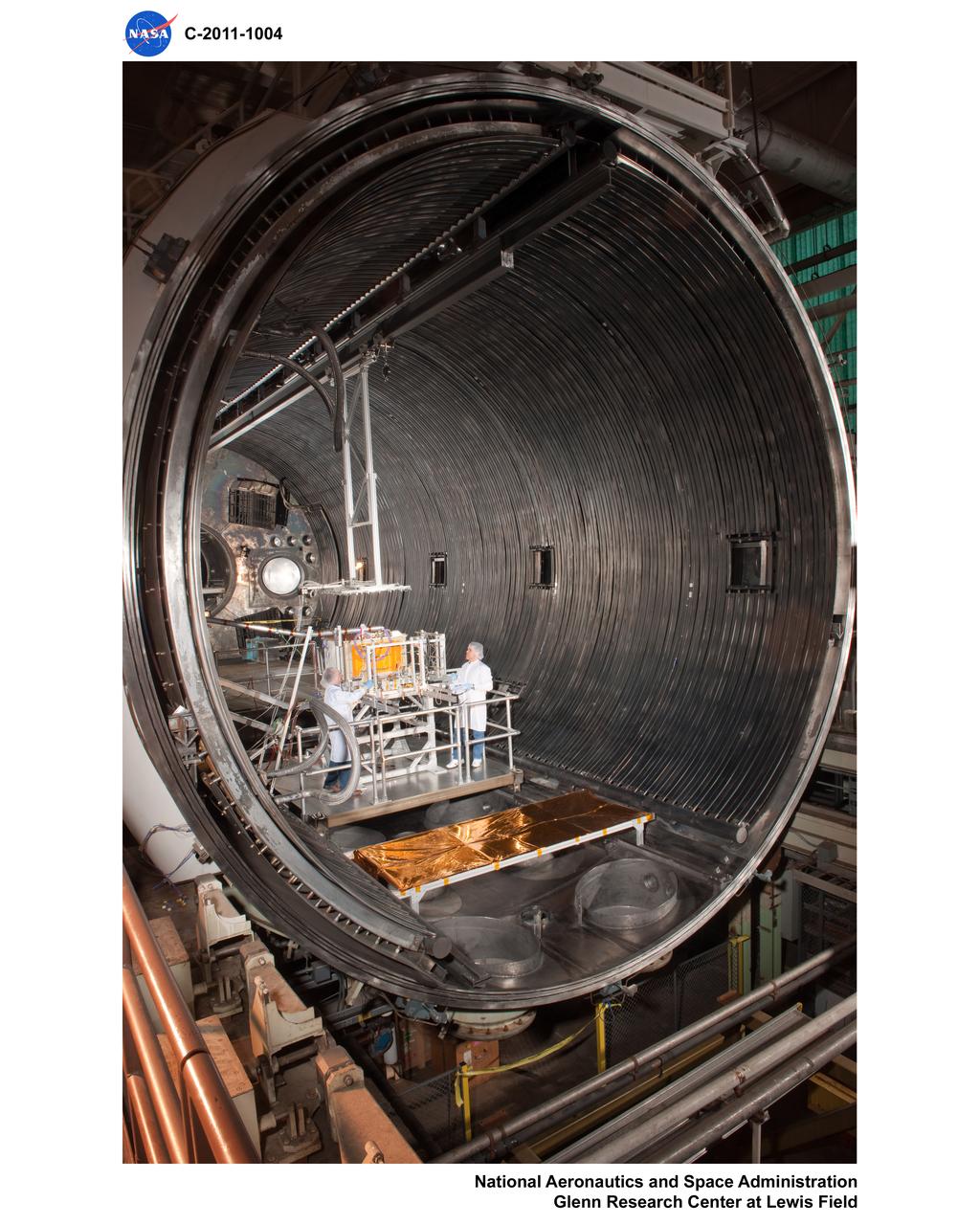
Flight hardware inside the tank, with and without people
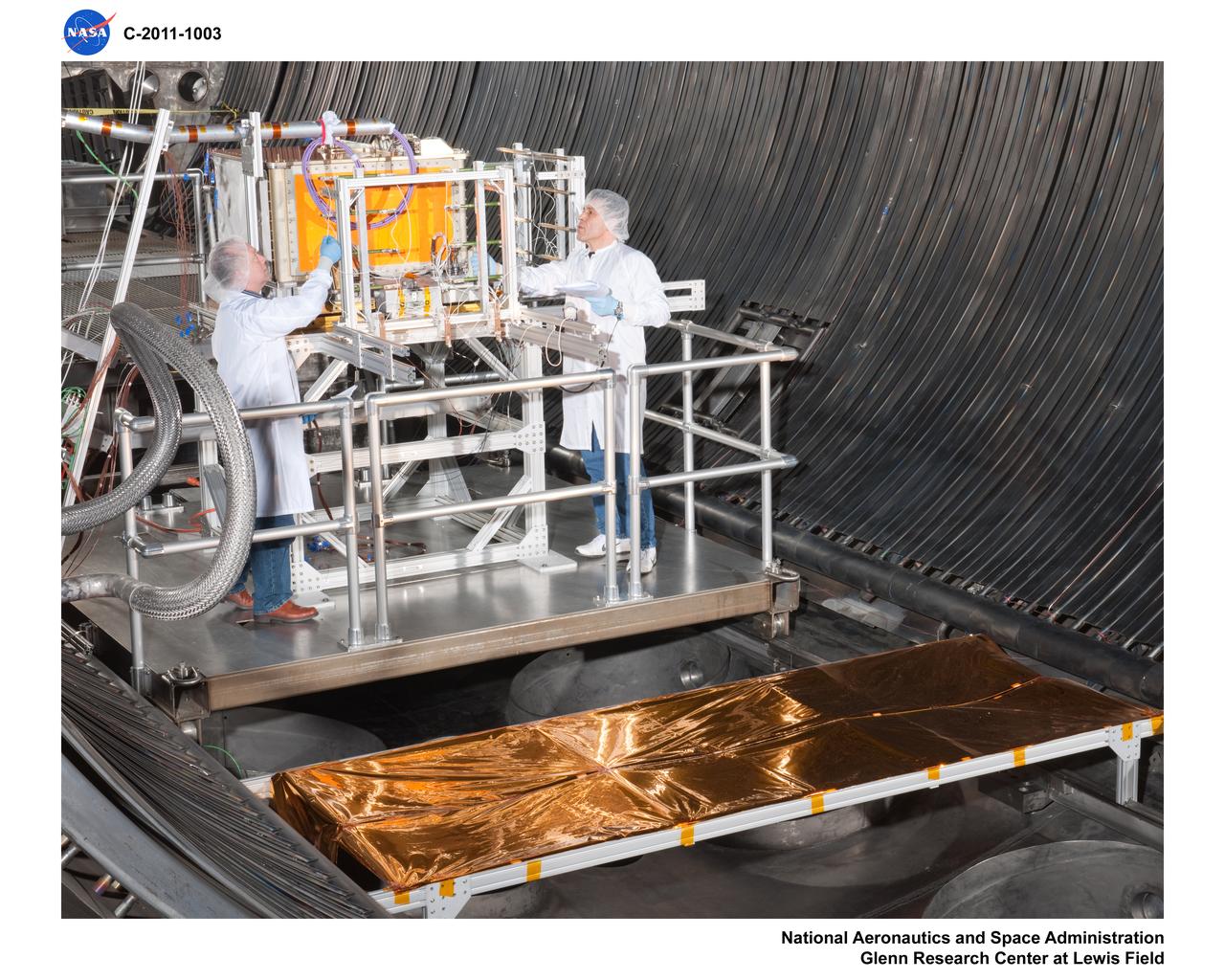
Flight hardware inside the tank, with and without people
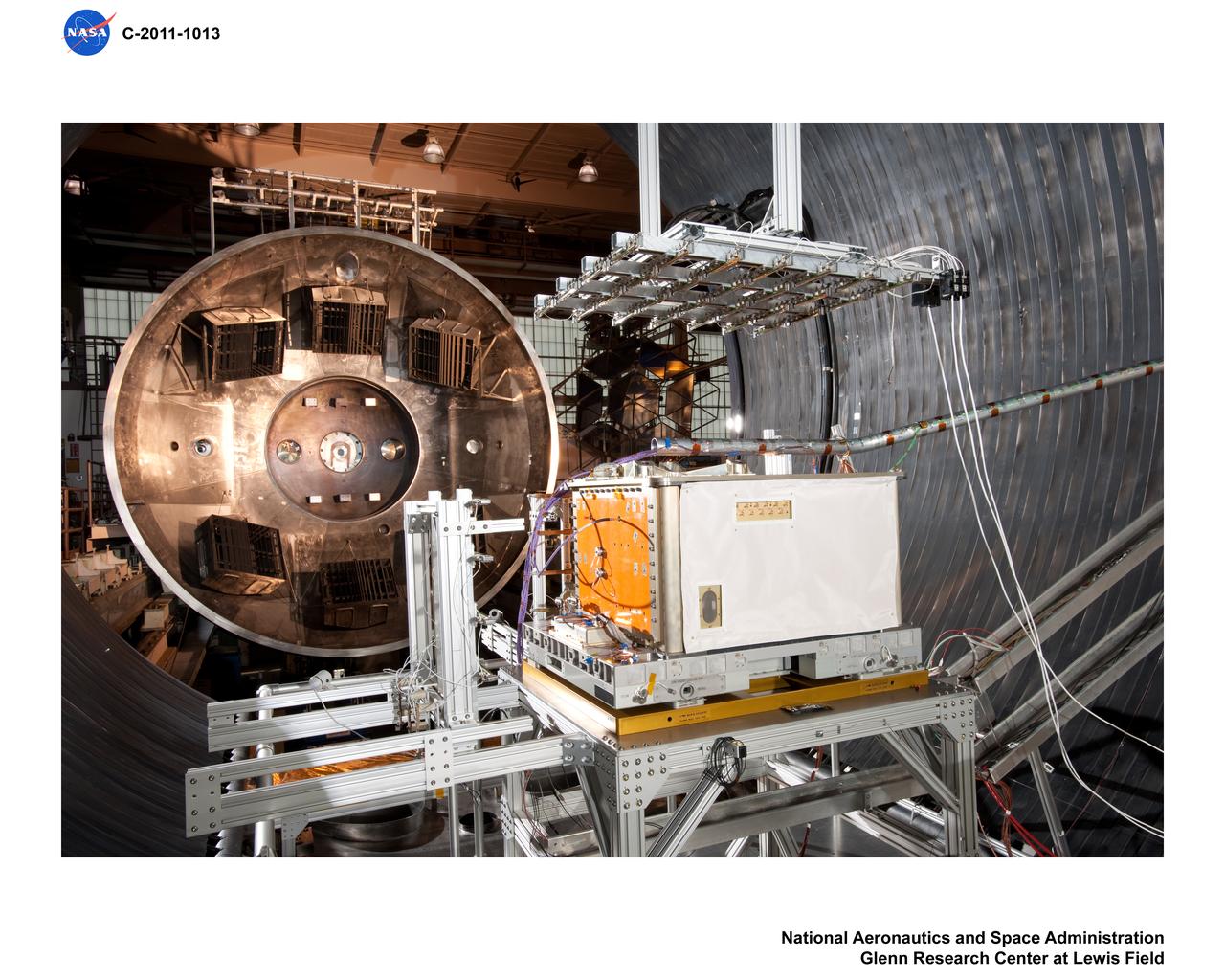
Flight hardware inside the tank, with and without people
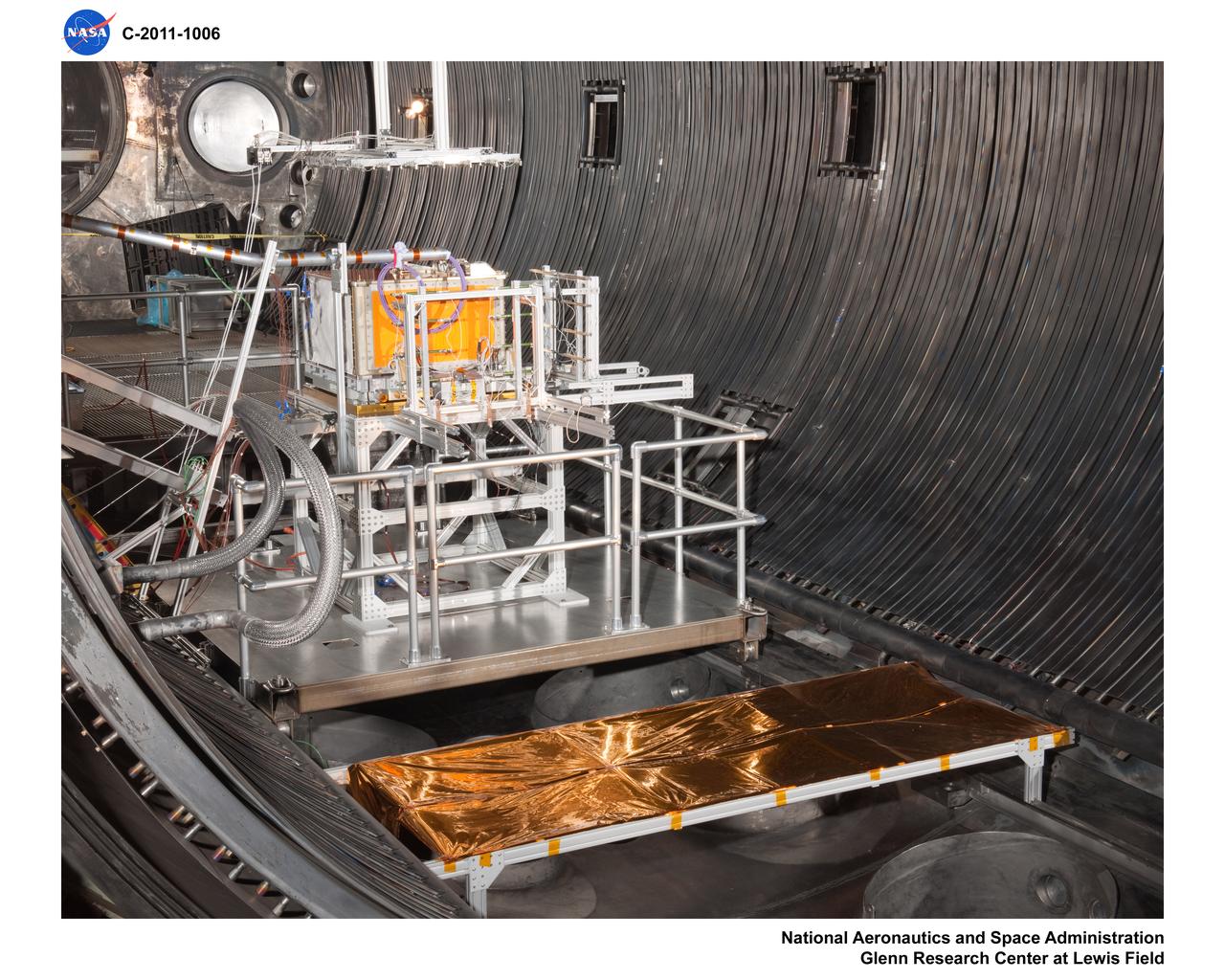
Flight hardware inside the tank, with and without people
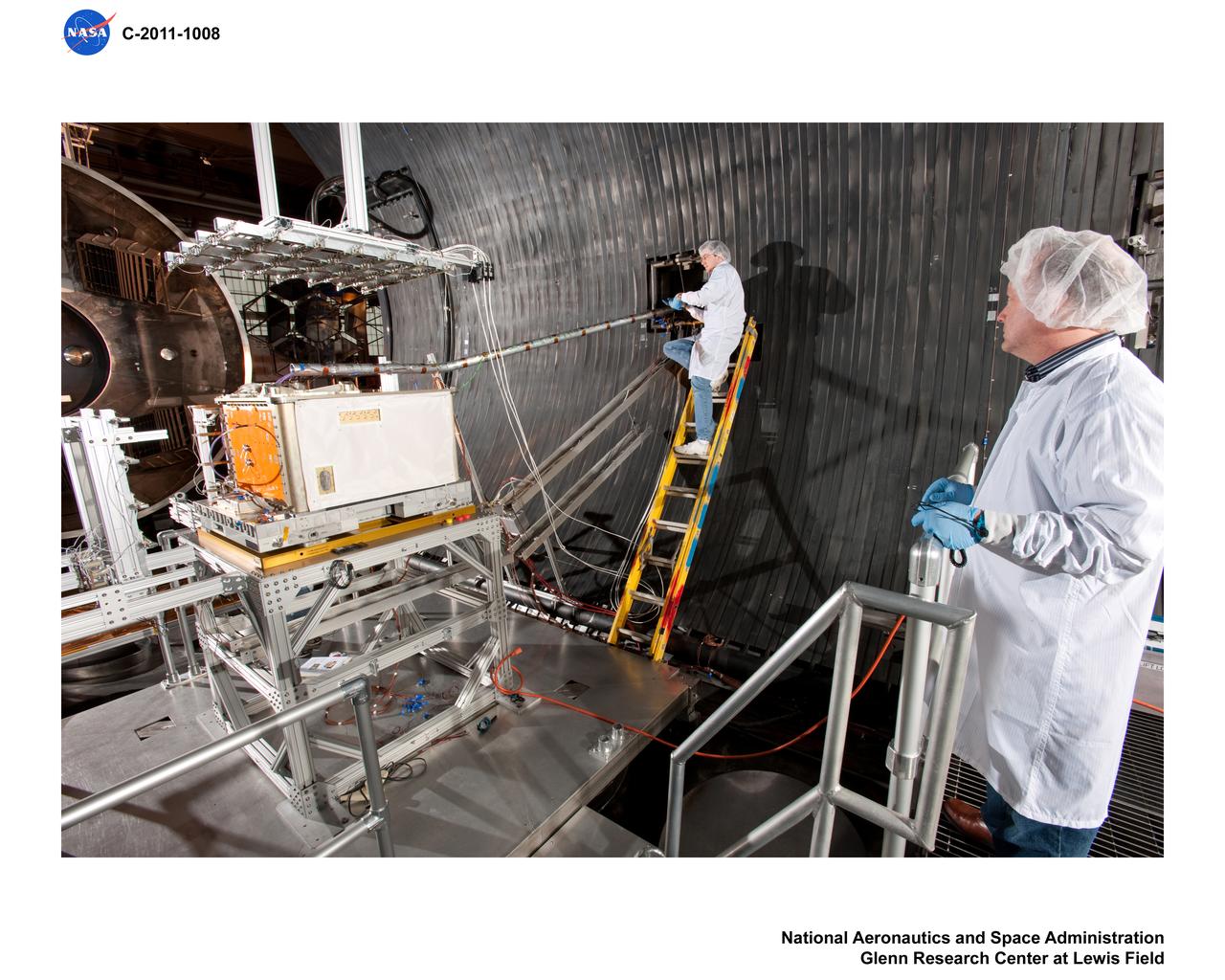
Flight hardware inside the tank, with and without people
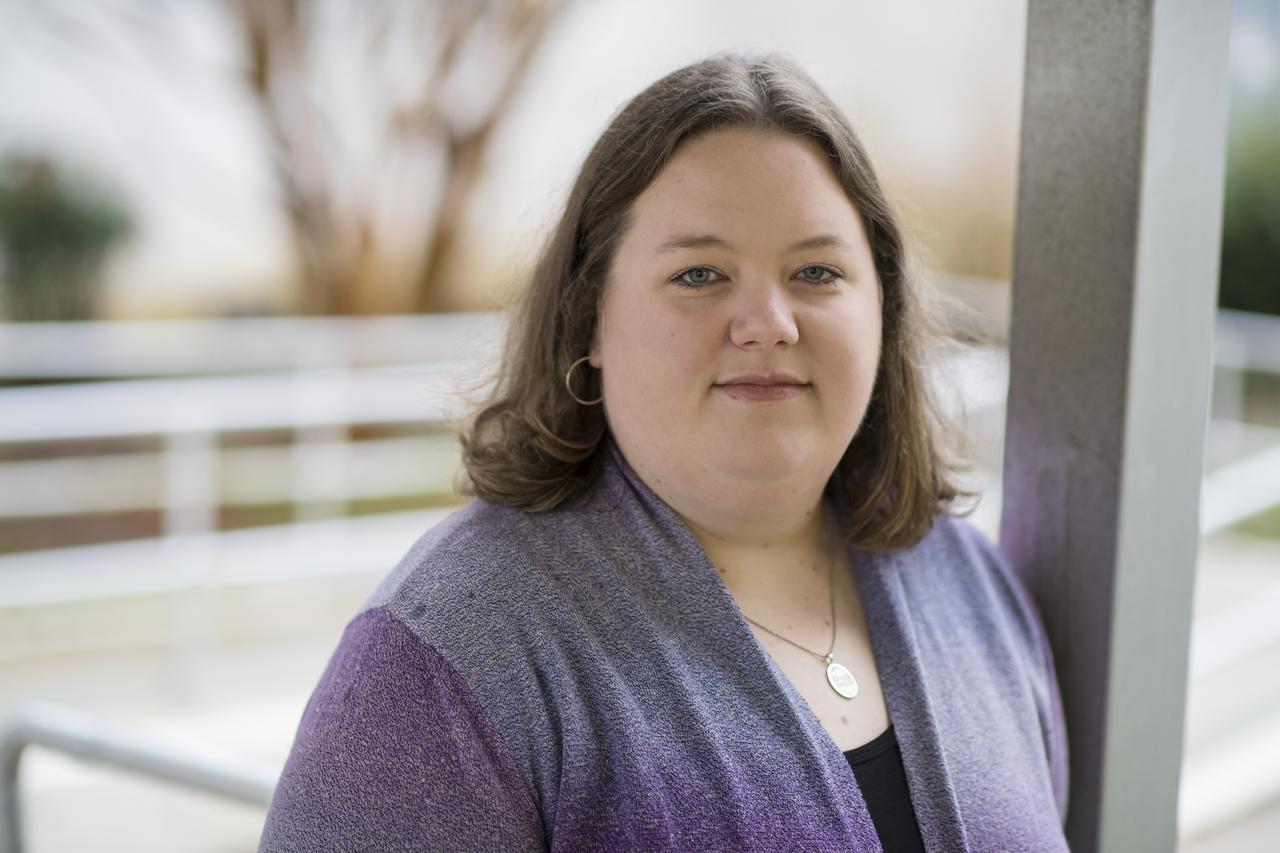
NASA Wallops Flight Facility Public Affairs Specialist, Rebecca Hudson, Thursday, Feb. 6, 2020 at Wallops Flight Facility in Virginia. “What I really think stands out the most is when you go to a launch and you see people who have never seen one before. Some people get so emotional, they cry. It’s so energizing to see people get that excited. For me, every single time we launch a rocket —whether it be a sounding rocket or something as big as an Antares rocket or anything in between — all the hard work and long hours, all that leading up to it… you kind of forget it as soon as you see that emotion that people are experiencing. I always think about that as I drive home at night: “Do you know how many people we made happy today?” And so I think that is important — no matter what we do here, whether it’s my job or the test director’s or the administrator’s or all points in between — everybody’s got something to contribute. You ask little kids what their big dream is, and it’s not uncommon to hear “astronaut.” It’s not uncommon to hear they want to fly in a spaceship. That’s not uncommon. But we’re doing that. We’re making dreams for people.” Photo Credit: (NASA/Aubrey Gemignani)

Expedition 68 crewmembers train for emergency scenarios in the Space Vehicle Mockup Facility at NASA's Johnson Space Center in Houston before their International Space Station mission. People photographed include: Koichi Wakata, Nicole Mann, Anna Kikina, Josh Cassada, Sergey Prokopyev, Dmitri Petelin, and Frank Rubio. Credit: NASA/James Blair.
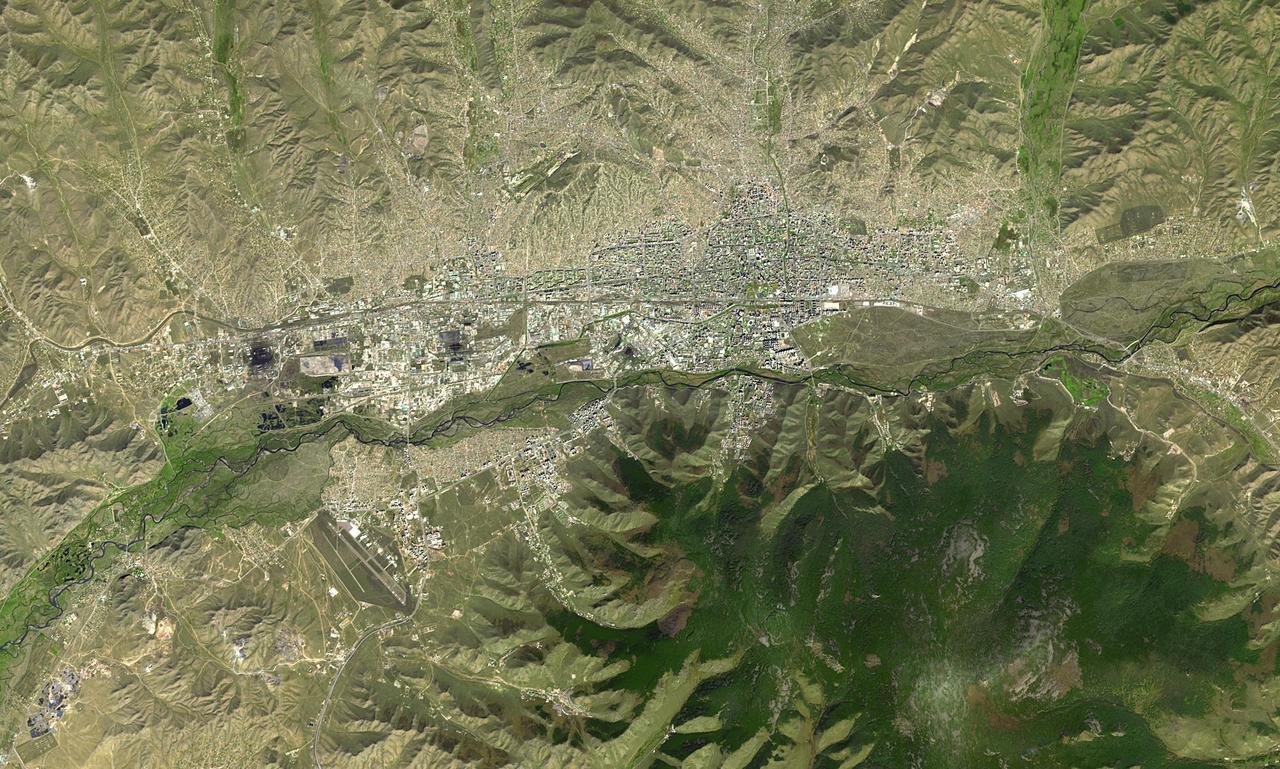
Ulaanbaatar is the capital of Mongolia, and is home to over half the country's population of about 3 million people. Human habitation dates back more than 300,000 years. The city is located along the Tuul River Valley. Due to its location deep in the interior of Asia, and its high elevation, Ulaanbaatar is the coldest national capital in the world. The image was acquired September 19, 2022, covers an area of 21.2 by 36.6 km, and is located at 47.9 degrees north, 106.9 degrees east. https://photojournal.jpl.nasa.gov/catalog/PIA26289
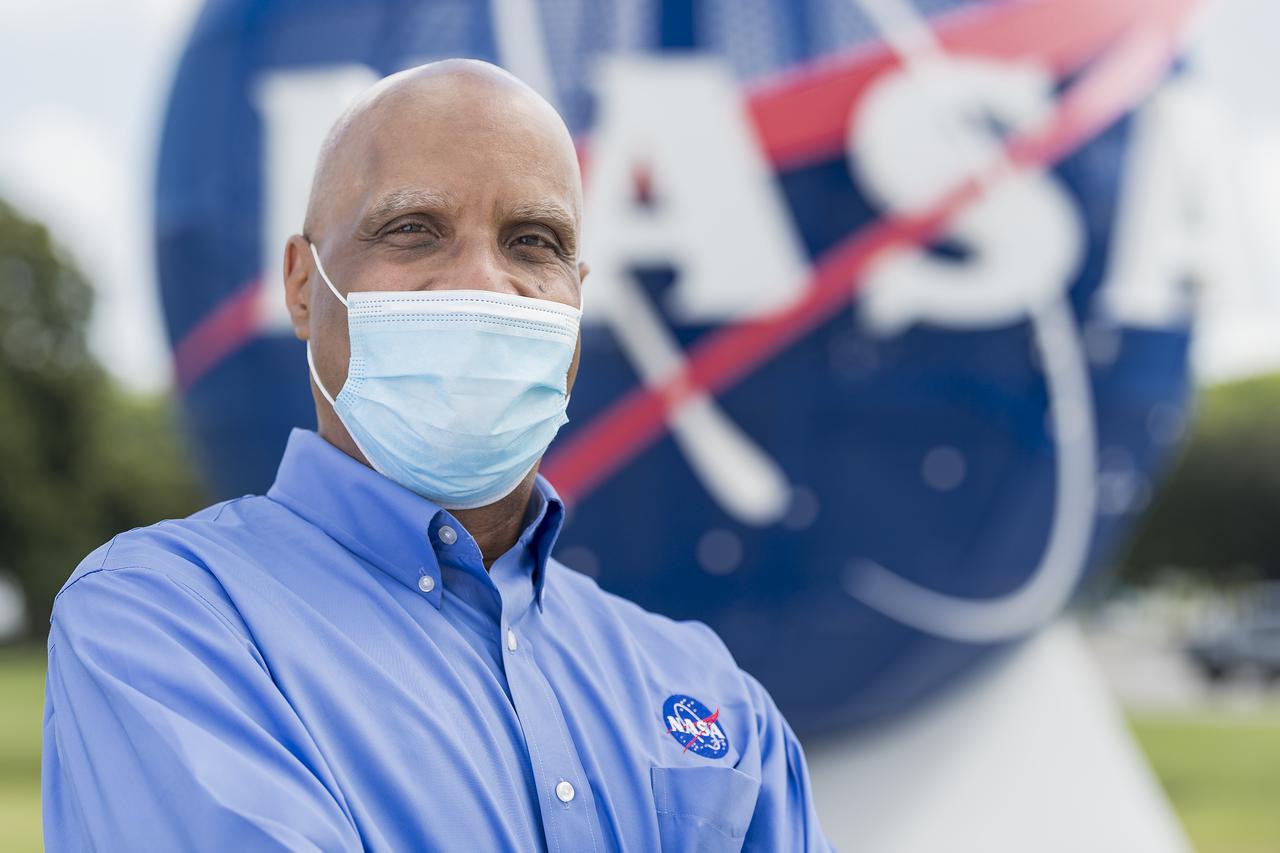
Portrait of Robin "Rob" Lee of the Office of Diversity & Equal Opp. Branch, in front of NASA Langley's "Meatball." The portrait was done for Thalia Patrinos at NASA Headquarters as part of "Faces of NASA" project. Due to the COVID-19 pandemic, masks were mandated by Governor Northam in Virginia in public settings. "Well, little did I know, even at a young age, he instilled in me the importance of seeing people for people. And being able to help people and being able to meet them in their time of need. And that carried me throughout my entire life. Even still today.” — Robin Lee, Director of Office of Diversity and Equal Opportunity, Langley Research Center

Representatives of the state of Alabama, academia, and industry listen and take part in a panel discussion led by NASA Marshall Space Flight Center's Ruth Jones as part of the first Alabama Historically Black Colleges and Universities Roundtable Discussion. The event focused on drawing more minorities, specifically women, into academic fields and careers in science, technology, engineering and mathematics.
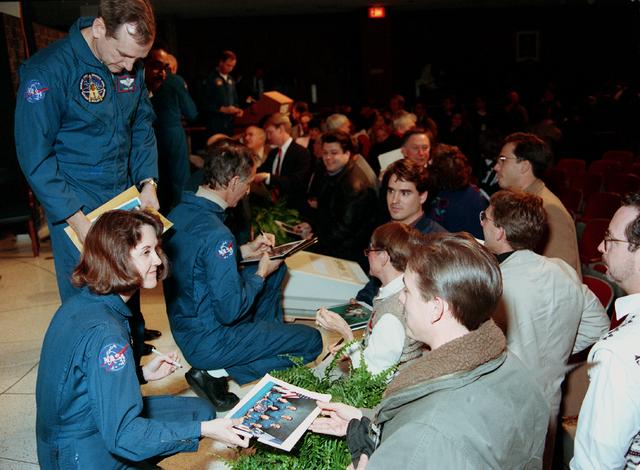
STS-61 astronauts Kathryn Thornton, Jeffrey Hoffman and Thomas Akers (standing) sign autographs in Marshall Space Flight Center's Morris Auditorium, January 19, 1994. Space Shuttle crews traditionally visited NASA field centers following each mission to present mission highlights and recognize employees who made contributions to the Shuttle program. Many of the techniques used during the STS-61 Hubble Space Telescope Servicing mission were rehearsed at the Center's Neutral Buoyancy Simulator.