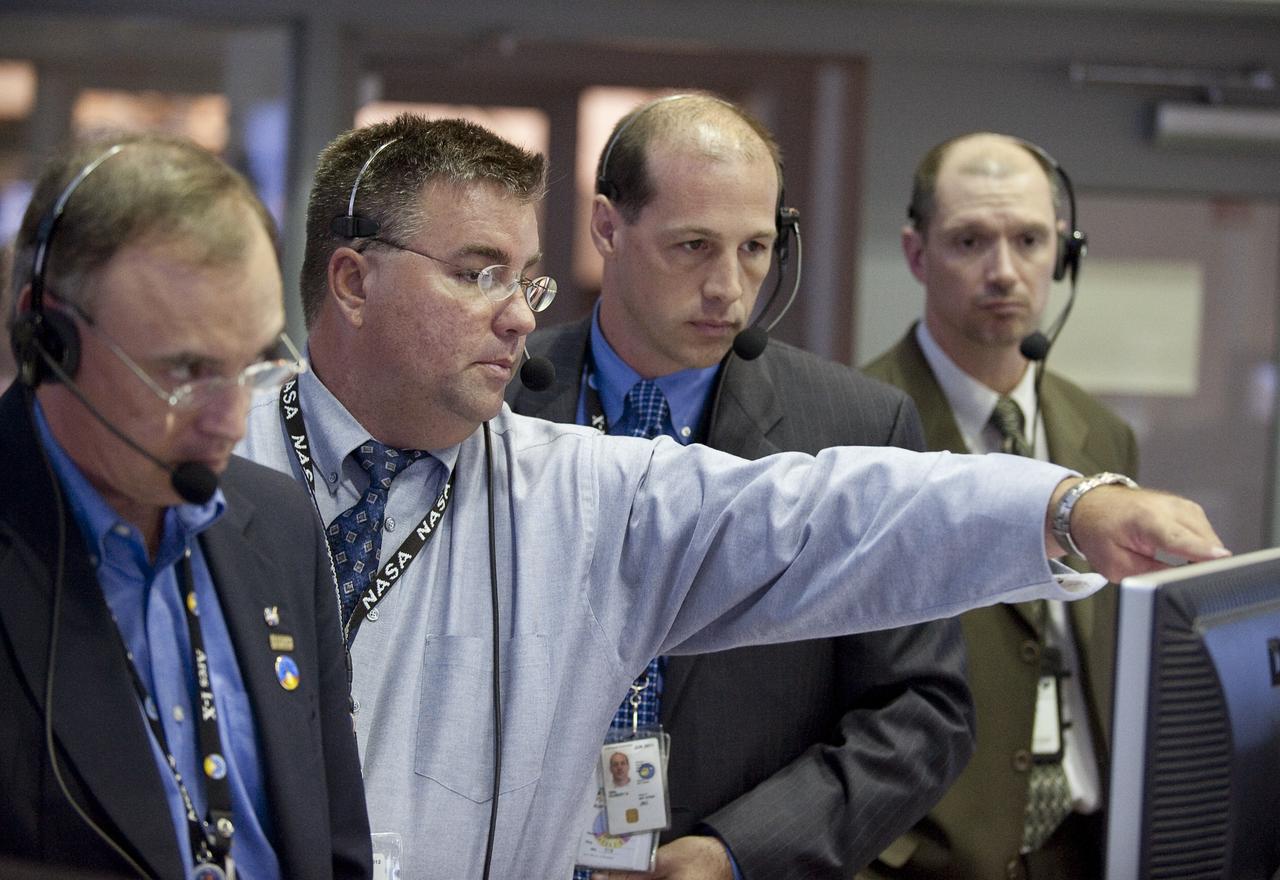
Mission managers, from left, NASA Constellation Program manager Jeff Hanley, Ares I-X Launch Director Ed Mango, Ares I-X mission manager Bob Ess, Ground Operations Manager Philip "Pepper" Phillips, review the latest data in Firing Room One of the Launch Control Center (LCC) at the Kennedy Space Center during the launch countdown of the Ares I-X rocket in Cape Canaveral, Fla., Tuesday, Oct. 27, 2009. The flight test of Ares I-X will provide NASA with an early opportunity to test and prove flight characteristics, hardware, facilities and ground operations associated with the Ares I. Photo Credit: (NASA/Bill Ingalls)
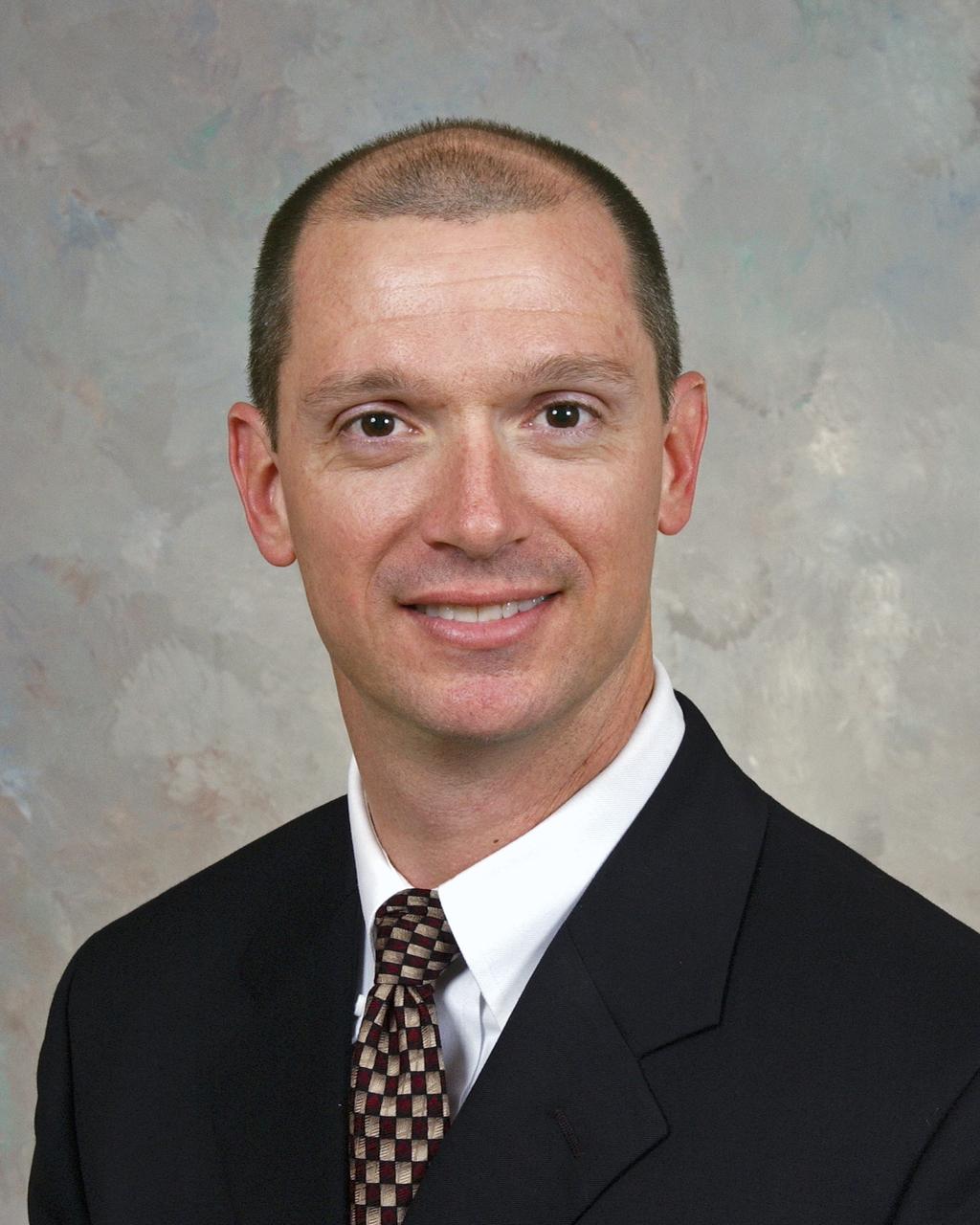
CAPE CANAVERAL, Fla. -- Official portrait of Pepper E. Phillips, Director of the Constellation Project Office.
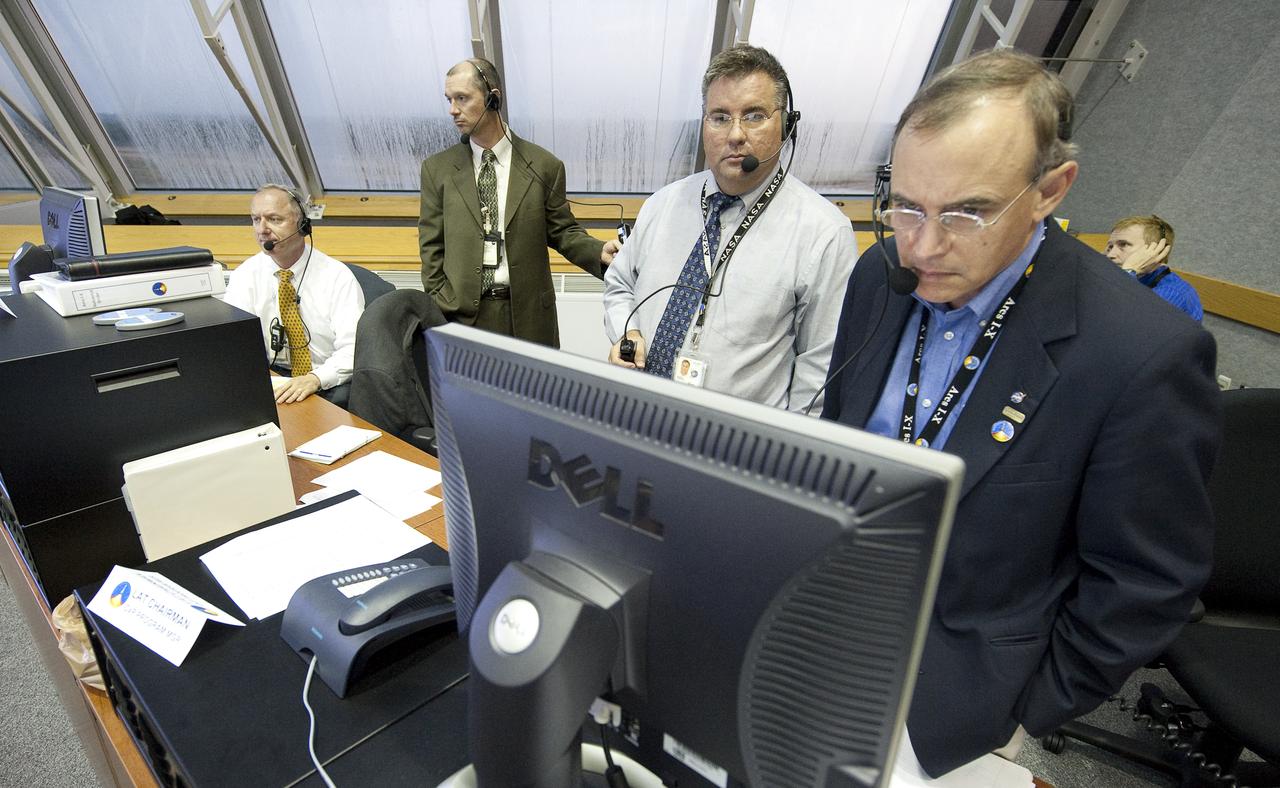
Mission managers, from left, NASA Ares I-X Assistant Launch Director Pete Nickolenko, Ground Operations Manager Philip "Pepper" Phillips, Ares I-X Launch Director Ed Mango, and Constellation Program manager Jeff Hanley review the latest weather radar from Firing Room One of the Launch Control Center (LCC) at the Kennedy Space Center during the launch countdown of the Ares I-X rocket in Cape Canaveral, Fla., Tuesday, Oct. 27, 2009. The flight test of Ares I-X will provide NASA with an early opportunity to test and prove flight characteristics, hardware, facilities and ground operations associated with the Ares I. Photo Credit: (NASA/Bill Ingalls)
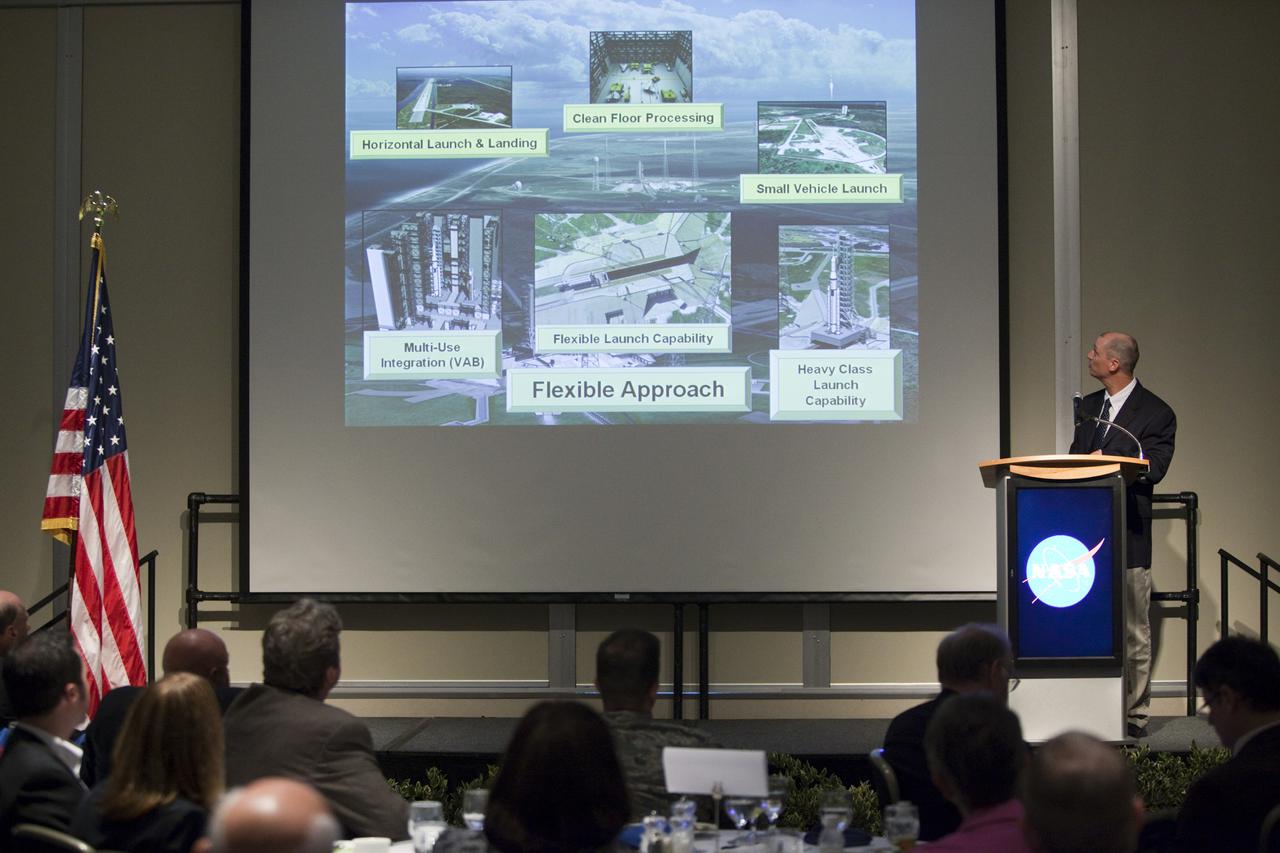
CAPE CANAVERAL, Fla. – Pepper Phillips, NASA’s 21st Century Ground Systems Program Office manager at Kennedy Space Center, addresses guests at the annual Community Leaders Breakfast held in the Debus Center at Kennedy's Visitor Complex in Florida. Community leaders, business executives, educators, community organizers and state and local government officials heard NASA Administrator Charlie Bolden, Kennedy Space Center Director Bob Cabana, and other senior Kennedy managers provide an overview of the future of the space center. Photo credit: NASA_Dimitri Gerondidakis
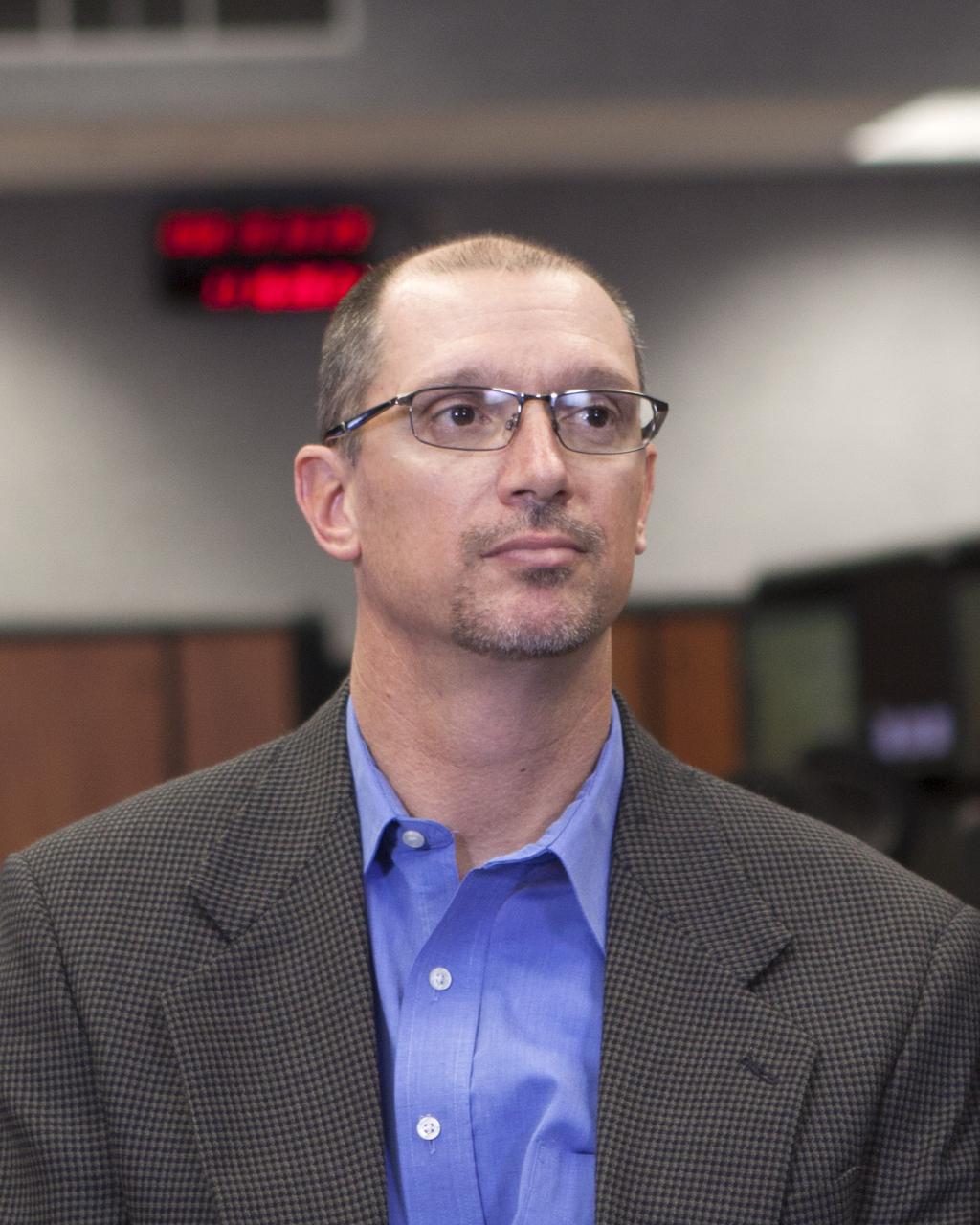
CAPE CANAVERAL, Fla. – Pepper Phillips, Ground Systems Development and Operations program manager, takes part in a briefing inside the Young-Crippen Firing Room at NASA's Kennedy Space Center in Florida. NASA officials discussed the goals and expectations for a September 2014 flight test called Exploration Flight Test-1 or EFT-1 as part of the agency's goal of launching astronauts into deep space. Photo credit: NASA/Jim Grossmann
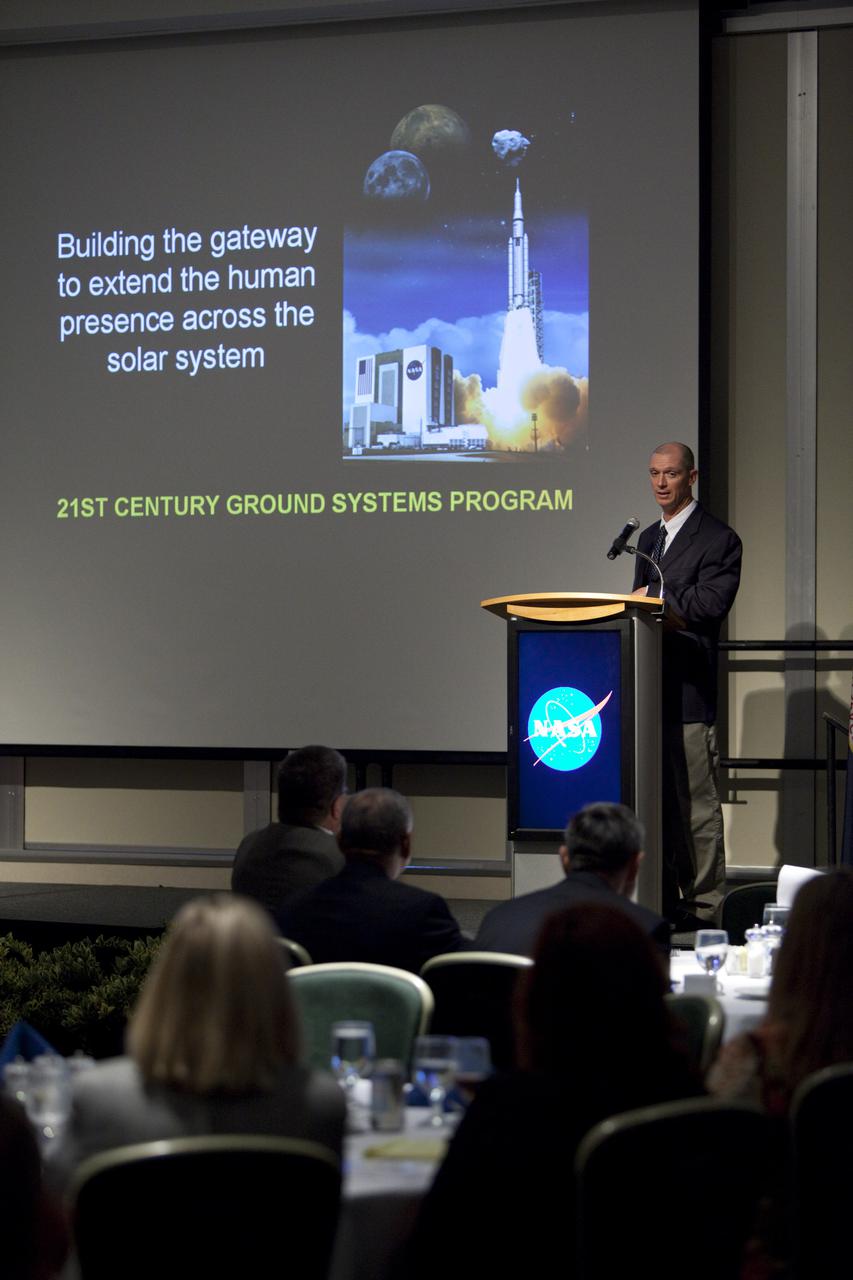
CAPE CANAVERAL, Fla. – Pepper Phillips, NASA’s 21st Century Ground Systems Program Office manager at Kennedy Space Center, addresses guests at the annual Community Leaders Breakfast held in the Debus Center at Kennedy's Visitor Complex in Florida. Community leaders, business executives, educators, community organizers and state and local government officials heard NASA Administrator Charlie Bolden, Kennedy Space Center Director Bob Cabana, and other senior Kennedy managers provide an overview of the future of the space center. Photo credit: NASA_Dimitri Gerondidakis
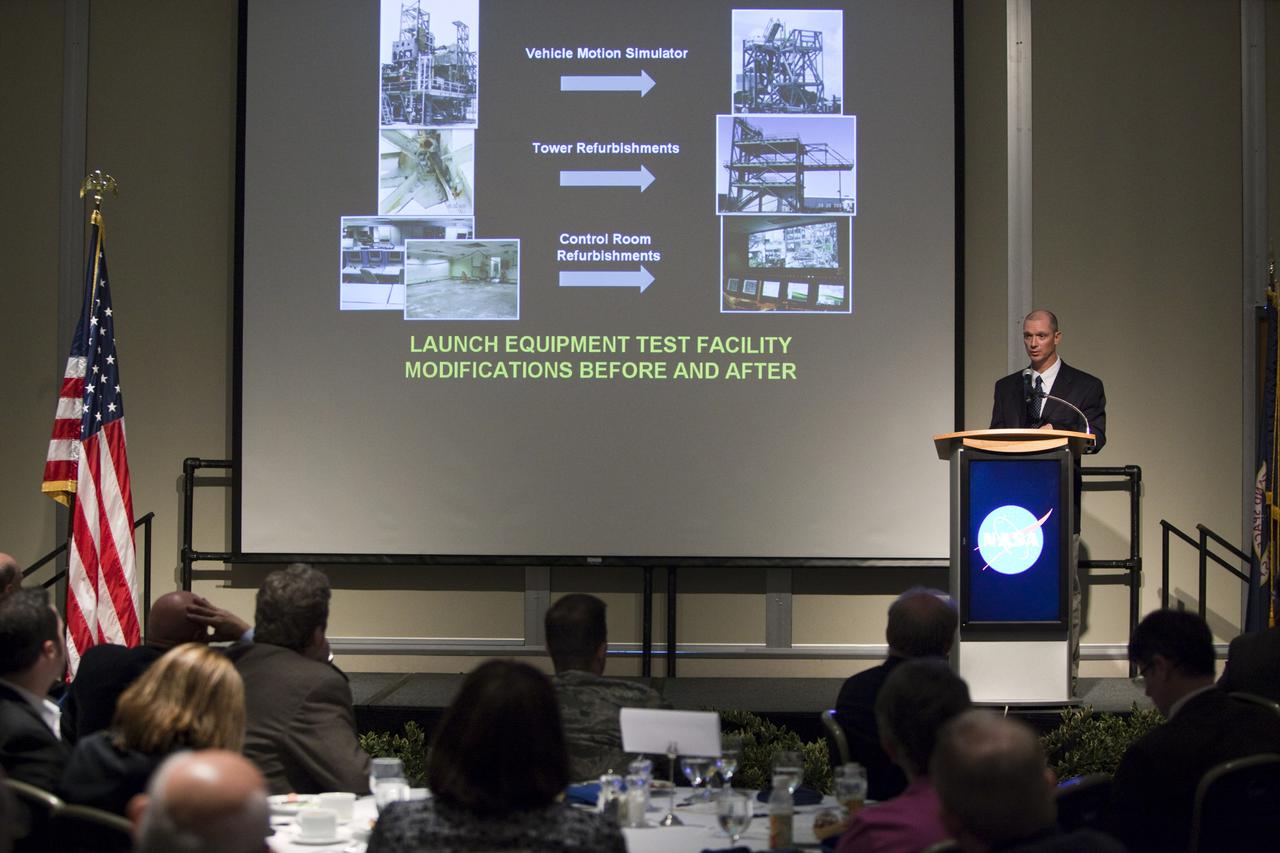
CAPE CANAVERAL, Fla. – Pepper Phillips, NASA’s 21st Century Ground Systems Program Office manager at Kennedy Space Center, addresses guests at the annual Community Leaders Breakfast held in the Debus Center at Kennedy's Visitor Complex in Florida. Community leaders, business executives, educators, community organizers and state and local government officials heard NASA Administrator Charlie Bolden, Kennedy Space Center Director Bob Cabana, and other senior Kennedy managers provide an overview of the future of the space center. Photo credit: NASA_Dimitri Gerondidakis
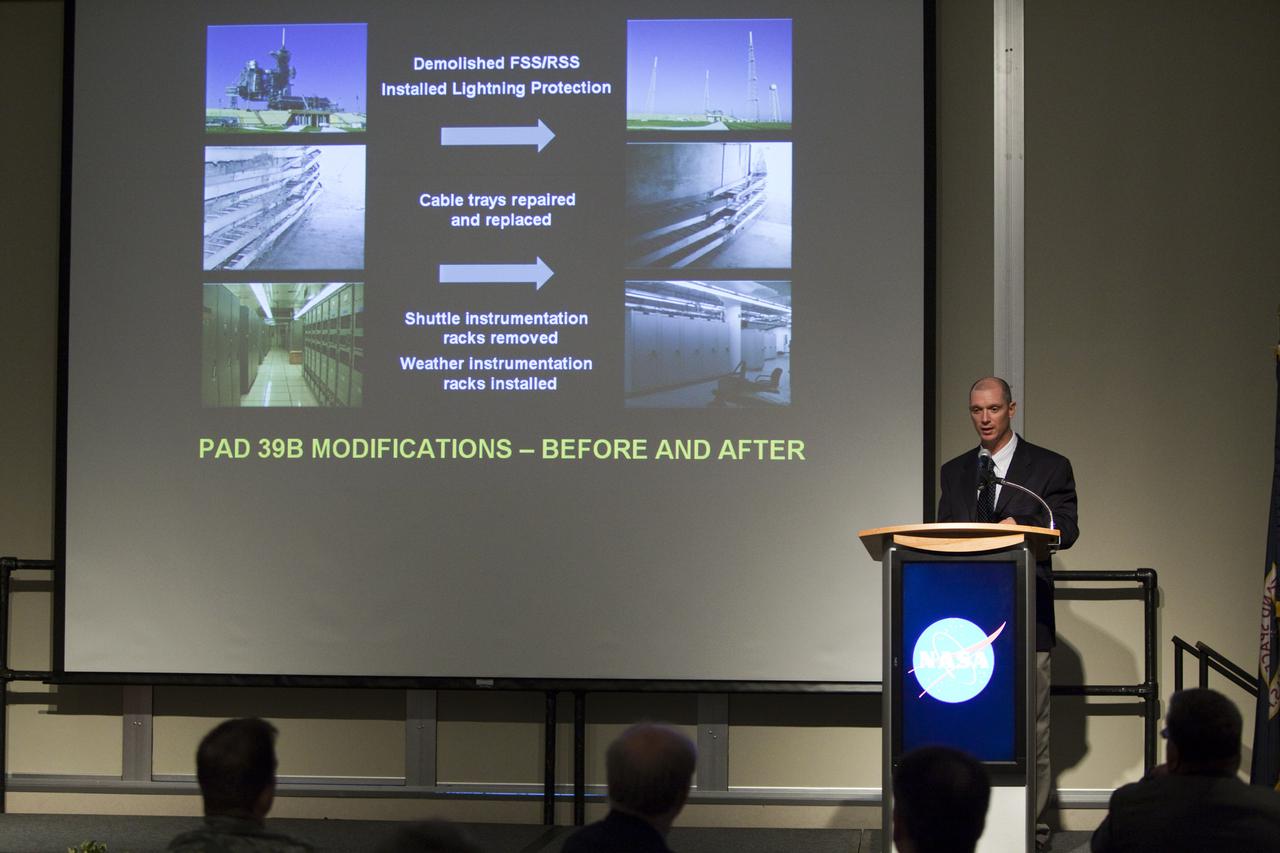
CAPE CANAVERAL, Fla. – Pepper Phillips, NASA’s 21st Century Ground Systems Program Office manager at Kennedy Space Center, addresses guests at the annual Community Leaders Breakfast held in the Debus Center at Kennedy's Visitor Complex in Florida. Community leaders, business executives, educators, community organizers and state and local government officials heard NASA Administrator Charlie Bolden, Kennedy Space Center Director Bob Cabana, and other senior Kennedy managers provide an overview of the future of the space center. Photo credit: NASA_Dimitri Gerondidakis
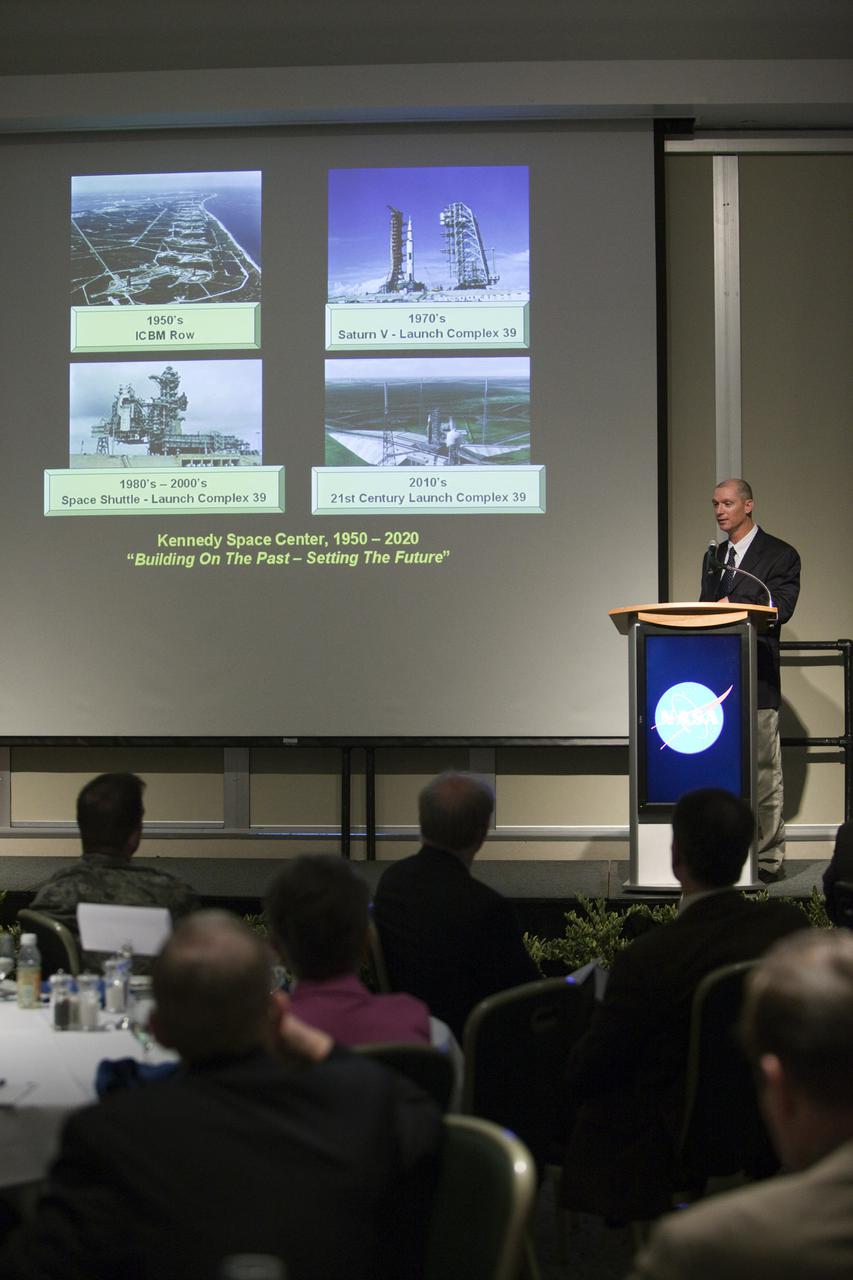
CAPE CANAVERAL, Fla. – Pepper Phillips, NASA’s 21st Century Ground Systems Program Office manager at Kennedy Space Center, addresses guests at the annual Community Leaders Breakfast held in the Debus Center at Kennedy's Visitor Complex in Florida. Community leaders, business executives, educators, community organizers and state and local government officials heard NASA Administrator Charlie Bolden, Kennedy Space Center Director Bob Cabana, and other senior Kennedy managers provide an overview of the future of the space center. Photo credit: NASA_Dimitri Gerondidakis
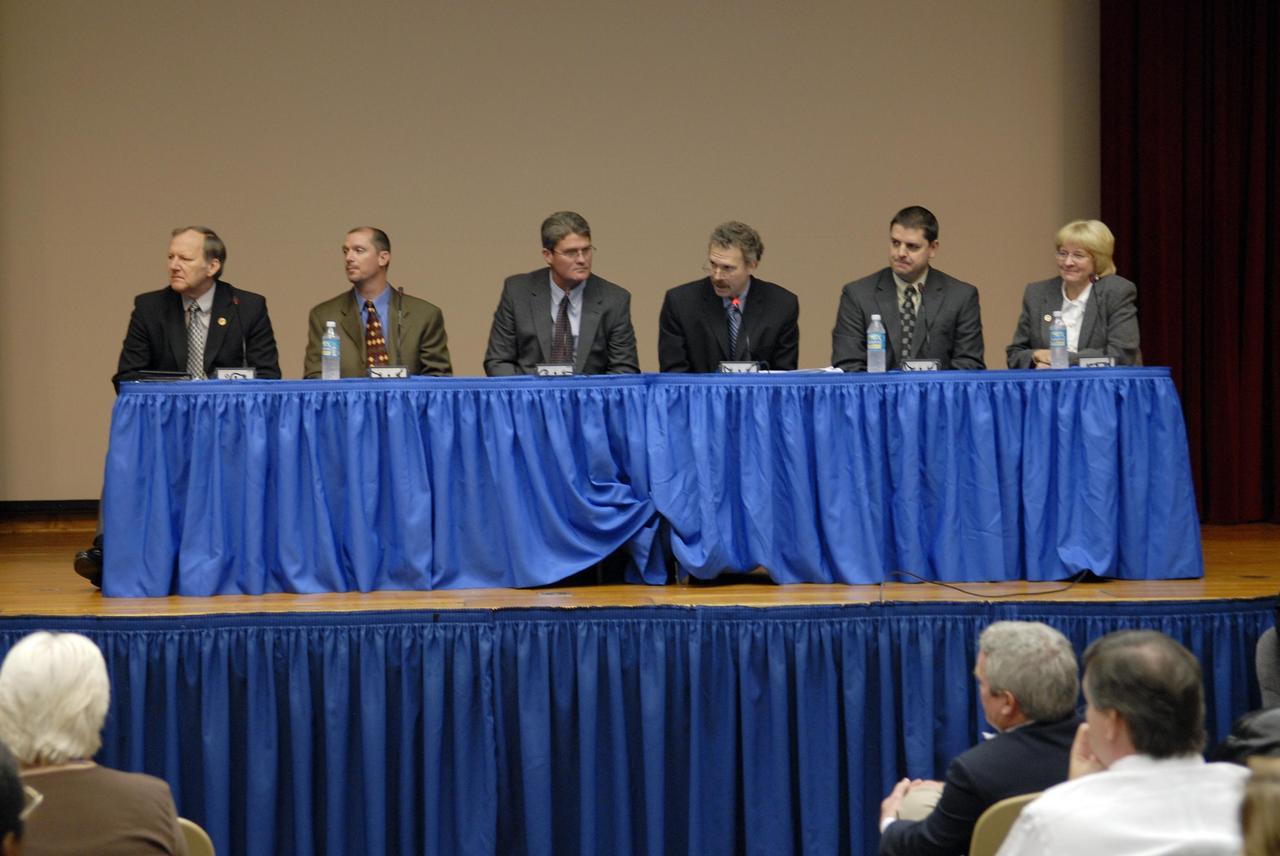
KENNEDY SPACE CENTER, FLA. -- Participants in the all-hands meeting respond to questions from the audience. Topics discussed included the year ahead at KSC. Seated at the table (from left) are Steve Francois, manager of Launch Services Program; Pepper Phillips, deputy director of the Constellation Program office; Parsons; Russ Romanella, director of the ISS & Spacecraft Processing Directorate; Jeff Angermeier, chief of the Project Control office in the Launch Vehicle Processing Directorate; and Shannon Bartell, director of NASA Safety and Mission Assurance. Photo credit: NASA/Kim Shiflett
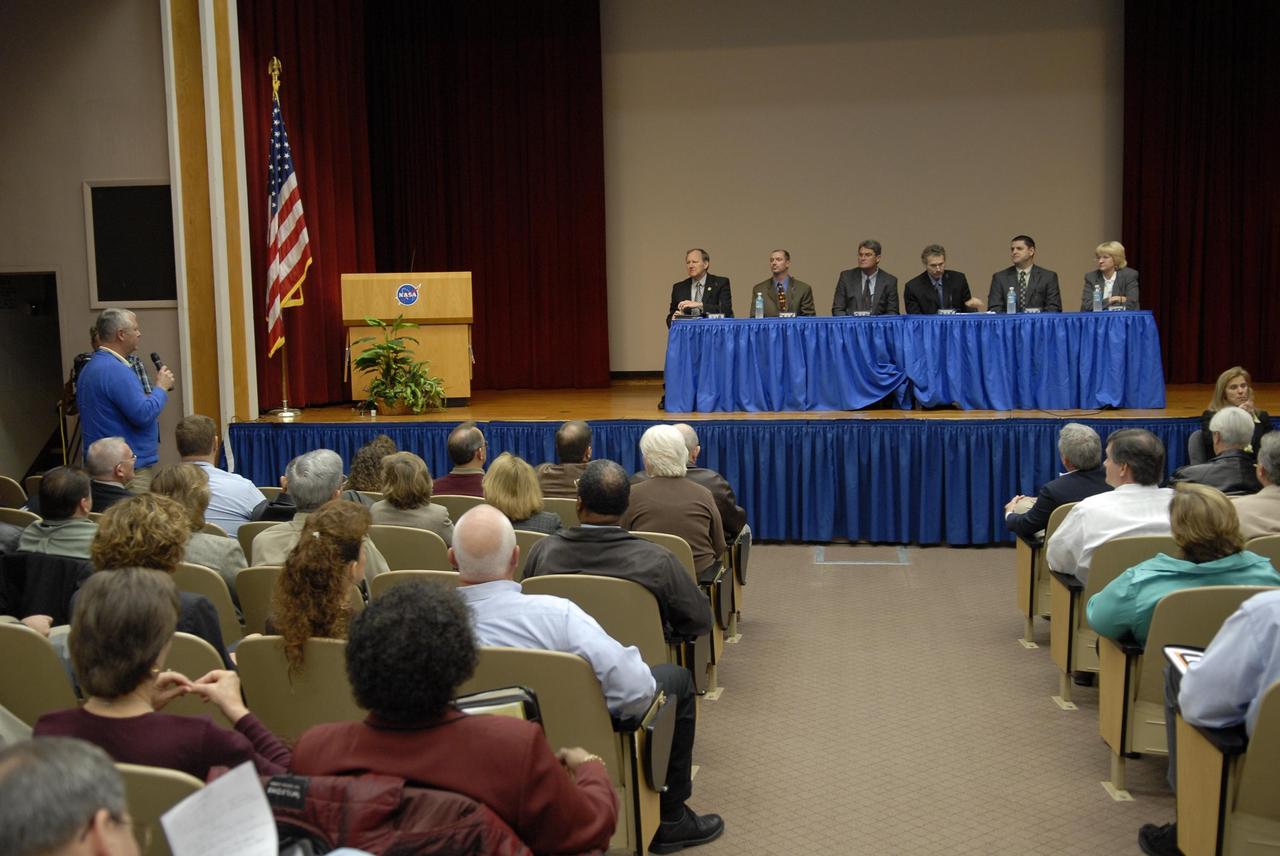
KENNEDY SPACE CENTER, FLA. -- During an all-hands meeting led by Center Director Bill Parsons (center left at the table), an employee asks for more information. Topics discussed included the year ahead at KSC. At the table on stage (from left) are Steve Francois, manager of Launch Services Program; Pepper Phillips, deputy director of the Constellation Program office; Parsons; Russ Romanella, director of the ISS & Spacecraft Processing Directorate; Jeff Angermeier, chief of the Project Control office in the Launch Vehicle Processing Directorate; and Shannon Bartell, director of NASA Safety and Mission Assurance. Photo credit: NASA/Kim Shiflett
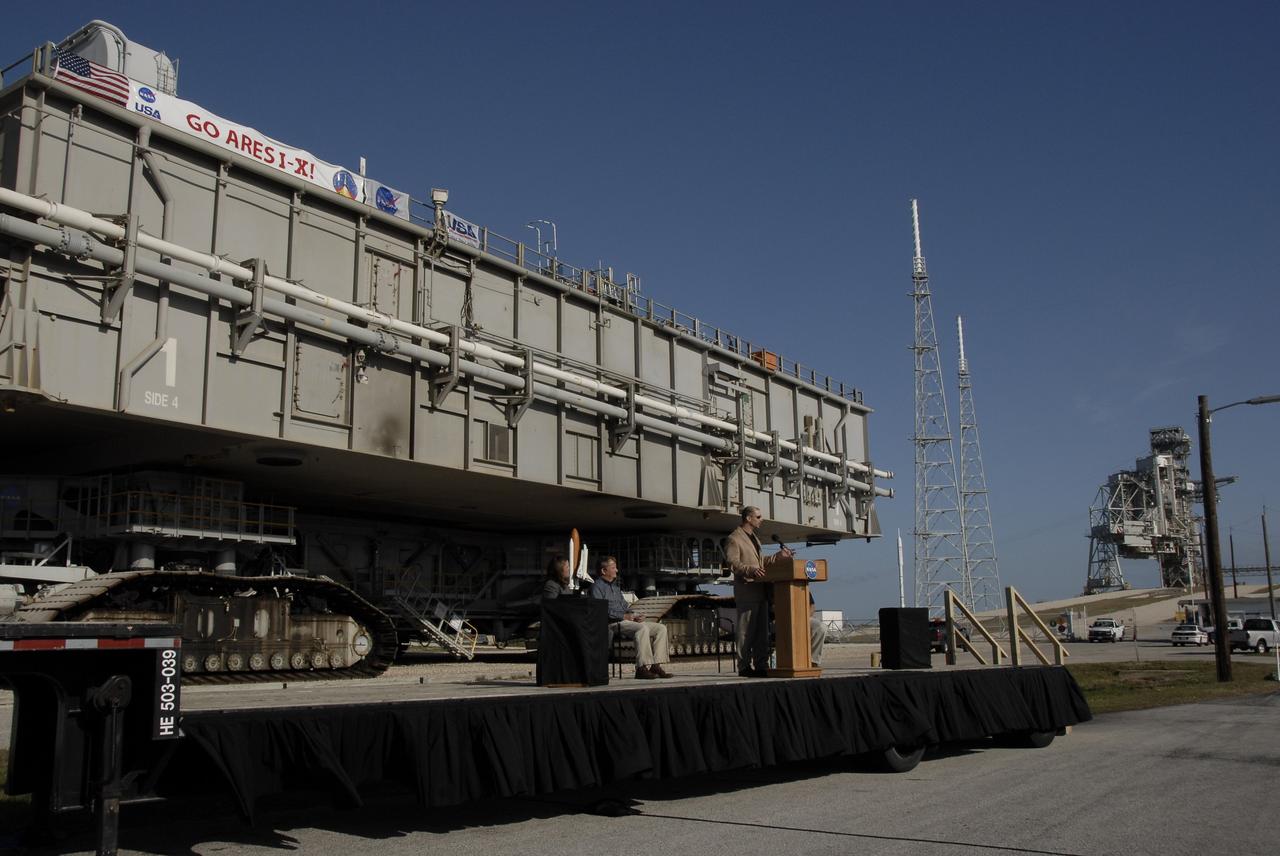
CAPE CANAVERAL, Fla. – Near Launch Pad 39B at NASA's Kennedy Space Center in Florida, Director of the Constellation Project Office Pepper E. Phillips speaks to employees and media during the handover ceremony for Mobile Launcher Platform-1. Marking the handover is the change of banner on the platform behind him. On the stage and also participating in the ceremony are Director of Launch Vehicle Processing Rita Willcoxon , Shuttle Launch Director Mike Leinbach, and Manager of MLP Operations with United Space Alliance Brett Raulerson. The platform is being transferred from NASA's Space Shuttle Program to the Constellation Program for the Ares I-X flight test targeted for this summer. Constructed in 1964, the mobile launchers used in Apollo/Saturn operations were modified for use in shuttle operations. With cranes, umbilical towers and swing arms removed, the mobile launchers were renamed Mobile Launcher Platforms, or MLPs. Photo credit: NASA/Kim Shiflett
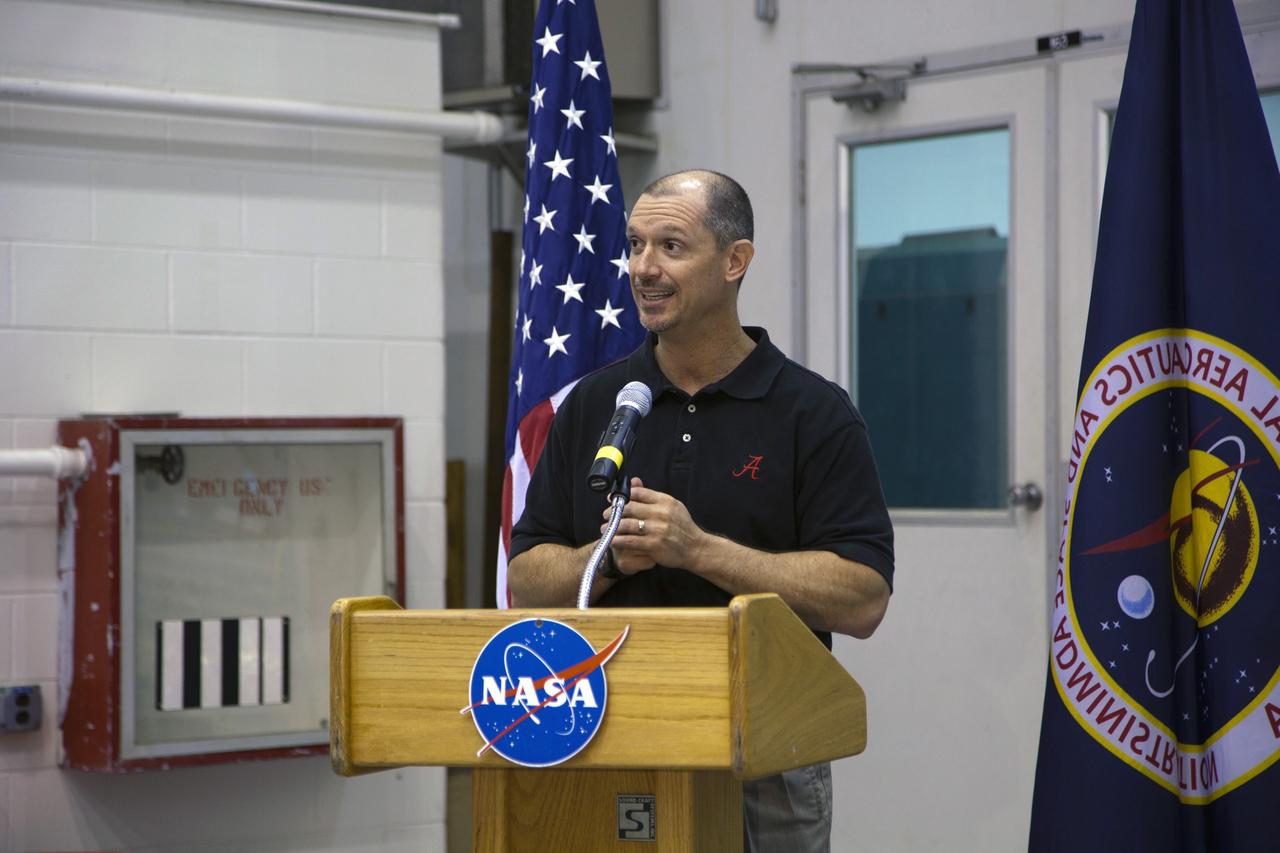
CAPE CANAVERAL, Fla. -- At NASA's Kennedy Space Center in Florida, Director of the center's Constellation Project Office Pepper Phillips talks to workers at the Launch Equipment Test Facility (LETF), which recently underwent a $35 million comprehensive upgrade that lasted four years. The LETF was established in the 1970s to support the qualification of the Space Shuttle Program’s umbilical and T-0 mechanisms. Throughout the years, it has supported the development of systems for shuttle and the International Space Station, Delta and Atlas rockets, and various research and development programs. The LETF has unique capabilities to evolve into a versatile test and development area that supports a wide spectrum of programs. For information on NASA's future plans, visit www.nasa.gov. Photo credit: NASA/Dimitri Gerondidakis
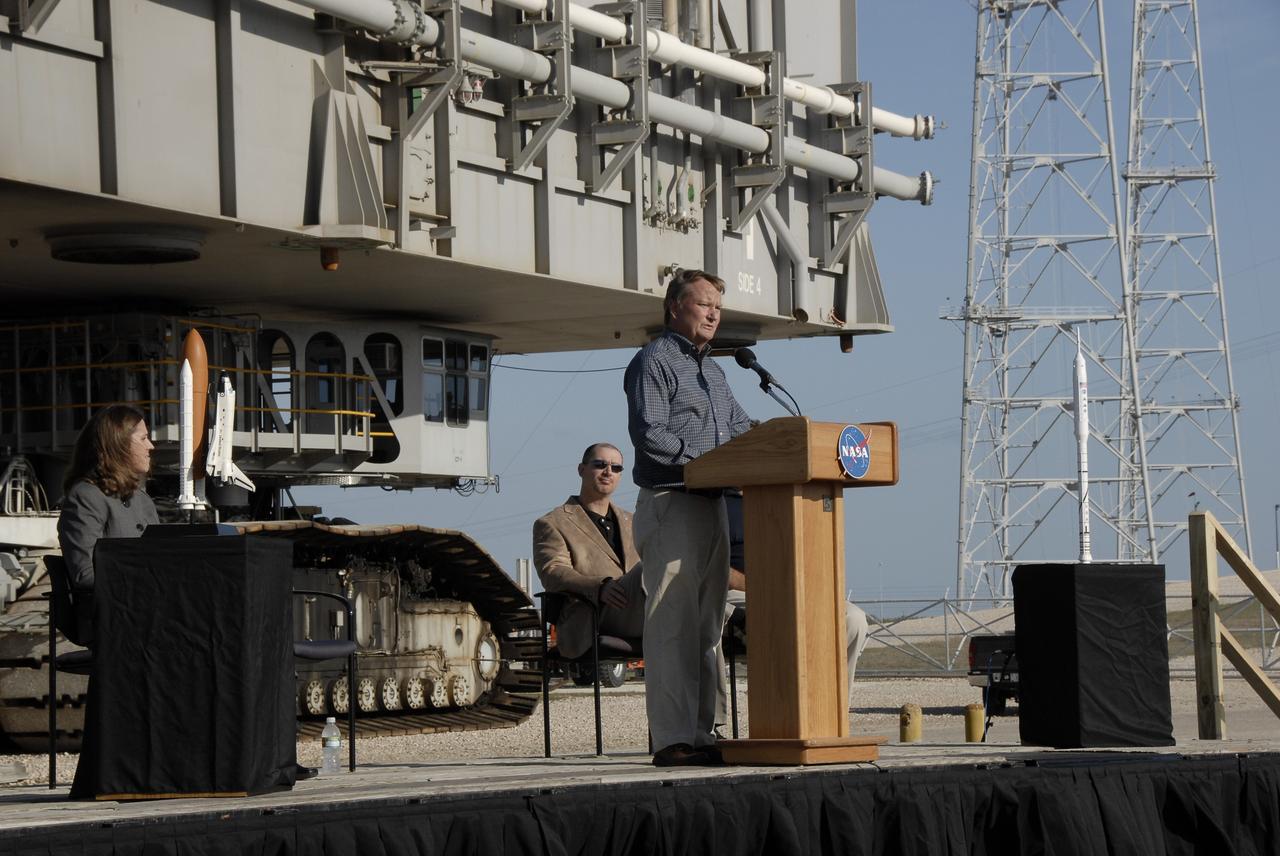
CAPE CANAVERAL, Fla. – Near Launch Pad 39B at NASA's Kennedy Space Center in Florida, Shuttle Launch Director Mike Leinbach speaks to the employees and media during the handover ceremony for Mobile Launcher Platform-1. The platform is being transferred from NASA's Space Shuttle Program to the Constellation Program for the Ares I-X flight test targeted for this summer. Also participating in the ceremony are (left) Rita Willcoxon, director of Launch Vehicle Processing at Kennedy, (right) Pepper E. Phillips, director of the Constellation Project Office, and (not visible) Brett Raulerson, manager of MLP Operations with United Space Alliance. Constructed in 1964, the mobile launchers used in Apollo/Saturn operations were modified for use in shuttle operations. With cranes, umbilical towers and swing arms removed, the mobile launchers were renamed Mobile Launcher Platforms, or MLPs. Photo credit: NASA/Kim Shiflett
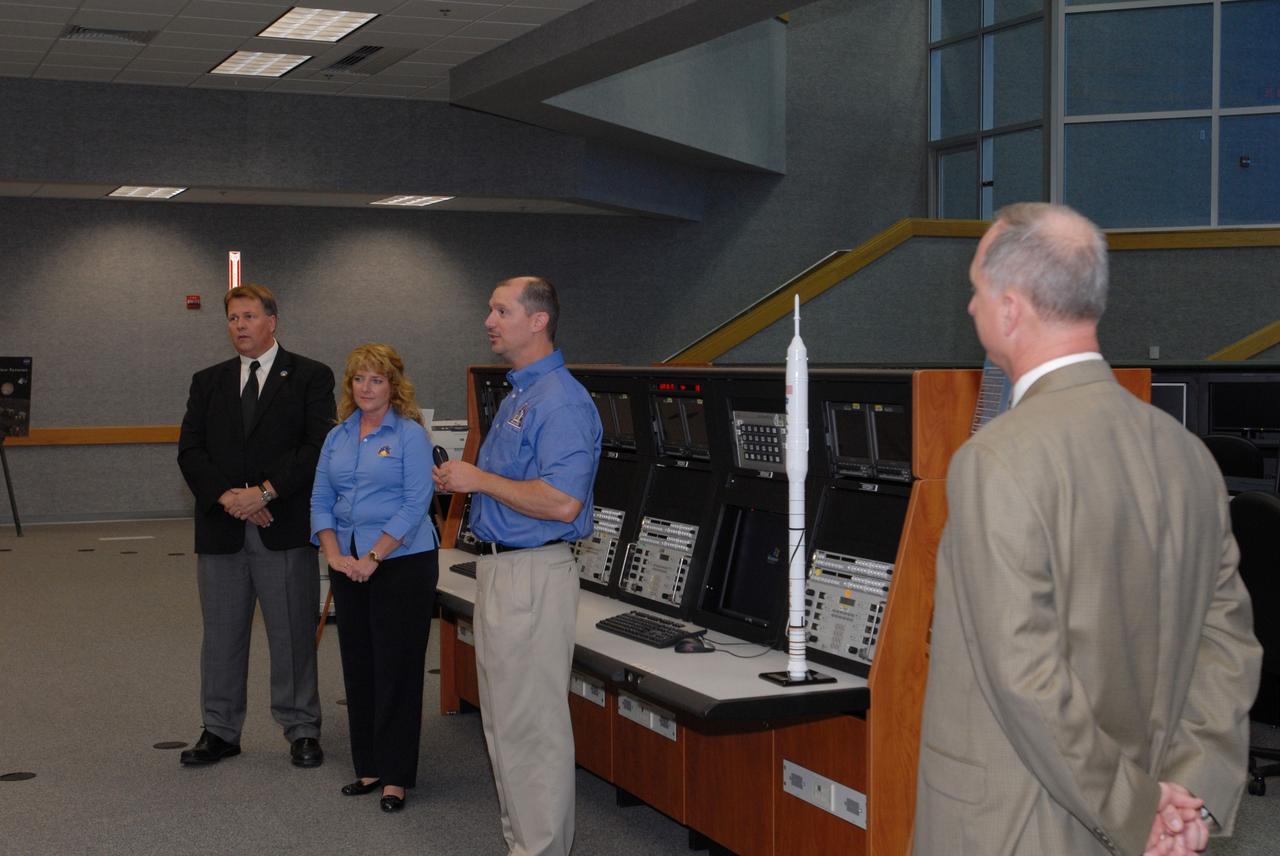
CAPE CANAVERAL, Fla. – At a media event in Firing Room 1 of the Launch Control Center, NASA management talk about the Ares I-X being assembled at NASA's Kennedy Space Center in Florida. From left are Shuttle Test Director Jeff Spaulding, Deputy Mission Manager Carol Scott, Constellation Projects Office Director Pepper Phillips and Chief of the NASA Launch and Landing Division Pete Nickolenko. The upper stage simulators will be used in the test flight identified as Ares I-X in 2009. The segments will simulate the mass and the outer mold line and will be more than 100 feet of the total vehicle height of 327 feet. The simulator comprises 11 segments that are approximately 18 feet in diameter. Most of the segments will be approximately 10 feet high, ranging in weight from 18,000 to 60,000 pounds, for a total of approximately 450,000 pounds. Photo credit: NASA/Jim Grossmann
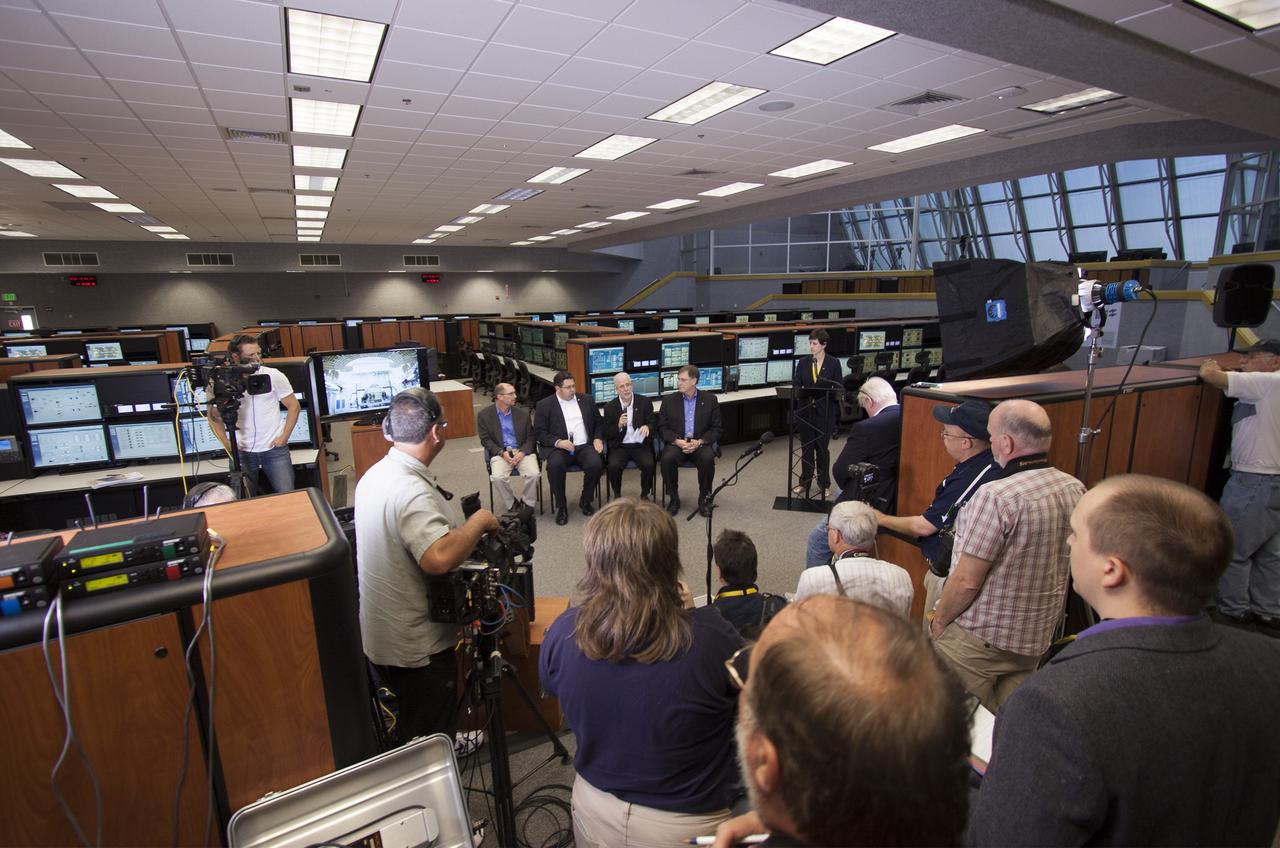
CAPE CANAVERAL, Fla. – NASA officials detail progress toward a September 2014 flight test called Exploration Flight Test-1 or EFT-1 as part of the agency's goal of launching astronauts into deep space. Speaking inside the Young-Crippen Firing Room at NASA's Kennedy Space Center in Florida, the officials discussed the goals and expectations for EFT-1 with news media. Seated, facing the camera from left to right are Pepper Phillips, Ground Systems Development and Operations program manager, Todd May, Space Launch System program manager, Mark Geyer, Orion program manager and Dan Dumbacher, deputy associate administrator for the Exploration Systems Development Division. Standing is Rachel Kraft, a public affairs officer from NASA Headquarters in Washington D.C. Photo credit: NASA/Jim Grossmann
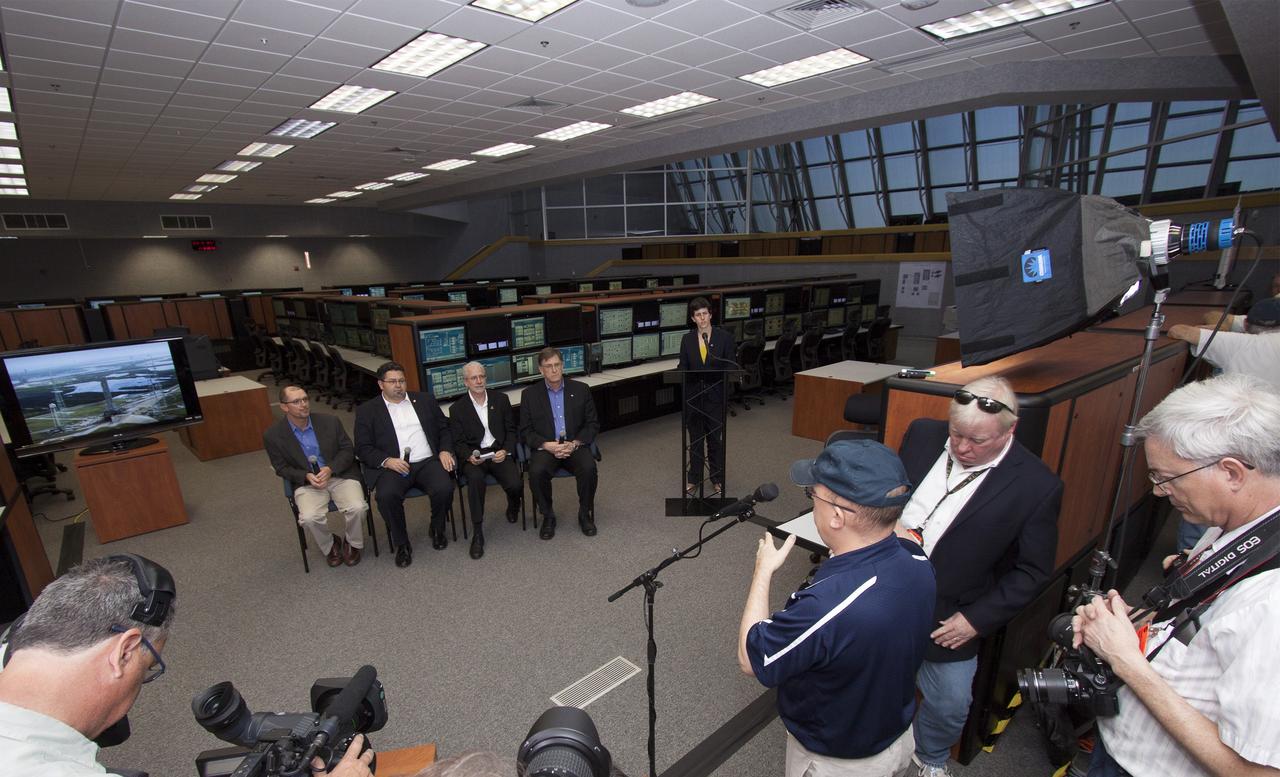
CAPE CANAVERAL, Fla. – NASA officials detail progress toward a September 2014 flight test called Exploration Flight Test-1 or EFT-1 as part of the agency's goal of launching astronauts into deep space. Speaking inside the Young-Crippen Firing Room at NASA's Kennedy Space Center in Florida, the officials discussed the goals and expectations for EFT-1 with news media. Seated, facing the camera from left to right are Pepper Phillips, Ground Systems and Development program manager, Todd May, Space Launch System program manager, Mark Geyer, Orion program manager and Dan Dumbacher, deputy associate administrator for the Exploration Systems Development Division. Standing is Rachel Kraft, a public affairs officer from NASA Headquarters in Washington D.C. Photo credit: NASA/Jim Grossmann
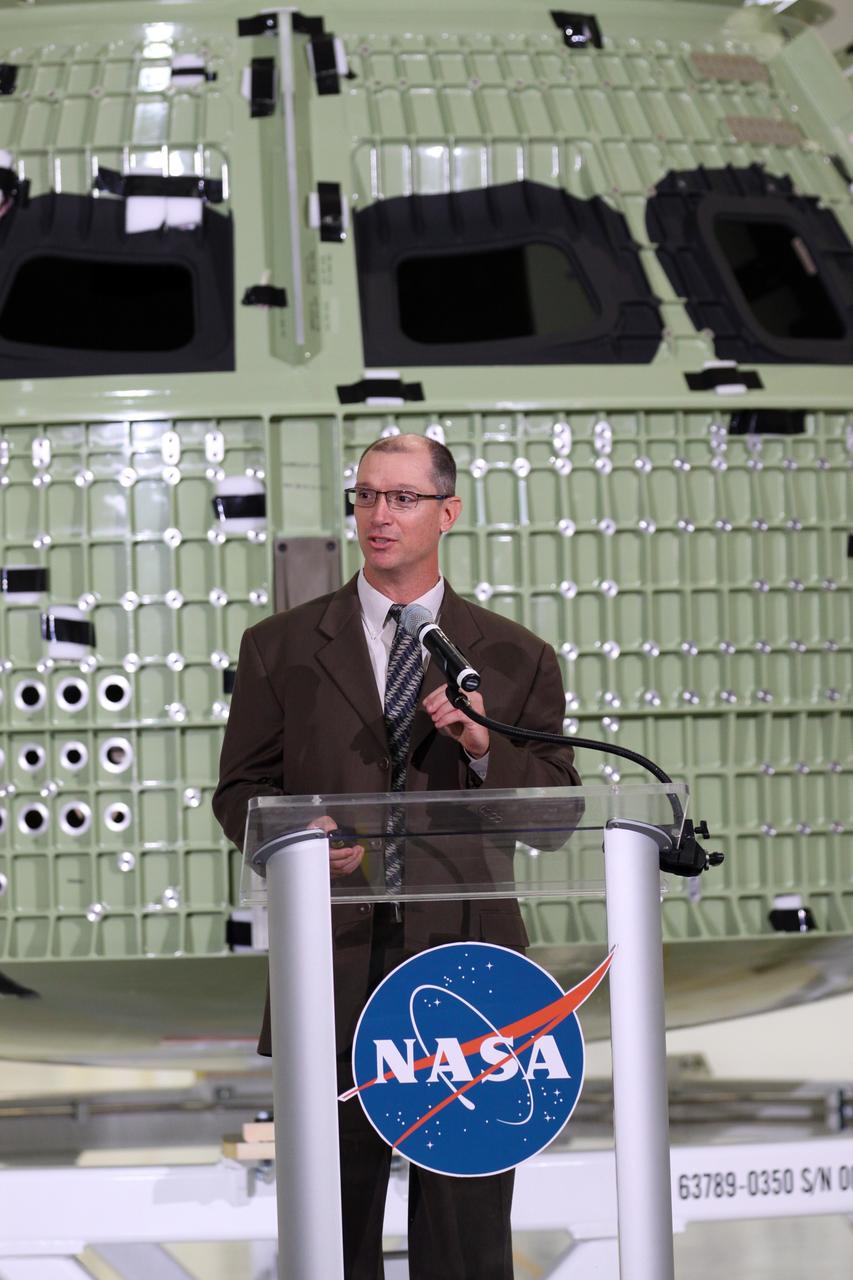
CAPE CANAVERAL, Fla. – Pepper Phillips, program manager for NASA's Ground Systems Development and Operations, addresses the audience assembled in Kennedy Space Center's Operations and Checkout Building high bay for an event marking the arrival of NASA's first space-bound Orion capsule in Florida. Slated for Exploration Flight Test-1, an uncrewed mission planned for 2014, the capsule will travel farther into space than any human spacecraft has gone in more than 40 years. The capsule was shipped to Kennedy from NASA's Michoud Assembly Facility in New Orleans where the crew module pressure vessel was built. The Orion production team will prepare the module for flight at Kennedy by installing heat-shielding thermal protection systems, avionics and other subsystems. For more information, visit http://www.nasa.gov/orion. Photo credit: NASA/Kim Shiflett
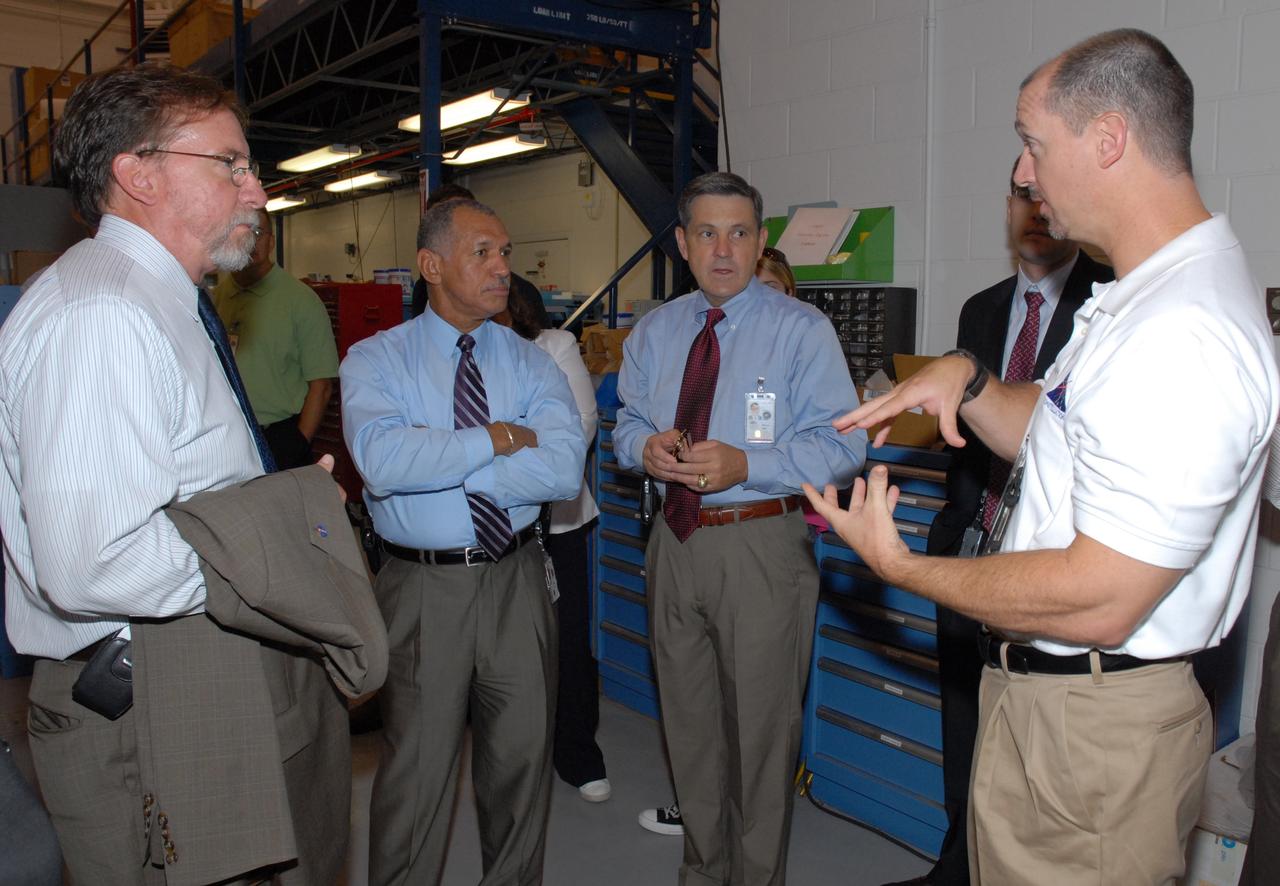
CAPE CANAVERAL, Fla. – In the Launch Equipment Test Facility at NASA's Kennedy Space Center in Florida, NASA Administrator Charles Bolden (second from left) gets information from Director of the Constellation Projects Office Pepper Phillips after the umbilical demonstration for Constellation test equipment. At left is Acting Associate Administrator of Exploration Systems Doug Cook; at right of Bolden is Center Director Bob Cabana. Bolden is touring several facilities at Kennedy involved with NASA's Constellation Program. Bolden also was at Kennedy for several events, including the landing of space shuttle Endeavour's STS-127 mission and the signing of the joint NASA-Japan Aerospace Exploration Agency agreement defining the terms of cooperation between the agencies on the Global Precipitation Measurement, or GPM, mission. Photo credit: NASA/Kim Shiflett
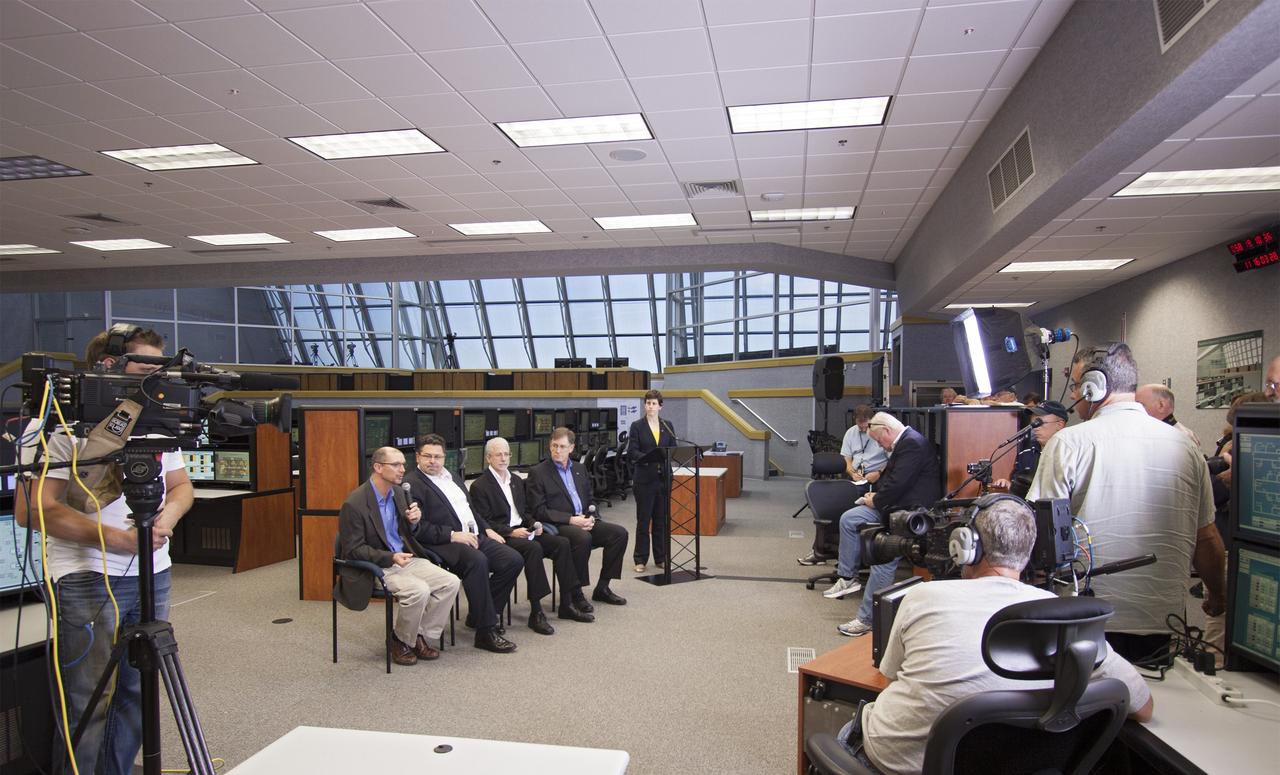
CAPE CANAVERAL, Fla. – NASA officials detail progress toward a September 2014 flight test called Exploration Flight Test-1 or EFT-1 as part of the agency's goal of launching astronauts into deep space. Speaking inside the Young-Crippen Firing Room at NASA's Kennedy Space Center in Florida, the officials discussed the goals and expectations for EFT-1 with news media. Seated, facing the camera from left to right are Pepper Phillips, Ground Systems Development and Operations program manager, Todd May, Space Launch System program manager, Mark Geyer, Orion program manager and Dan Dumbacher, deputy associate administrator for the Exploration Systems Development Division. Standing is Rachel Kraft, a public affairs officer from NASA Headquarters in Washington D.C. Photo credit: NASA/Jim Grossmann
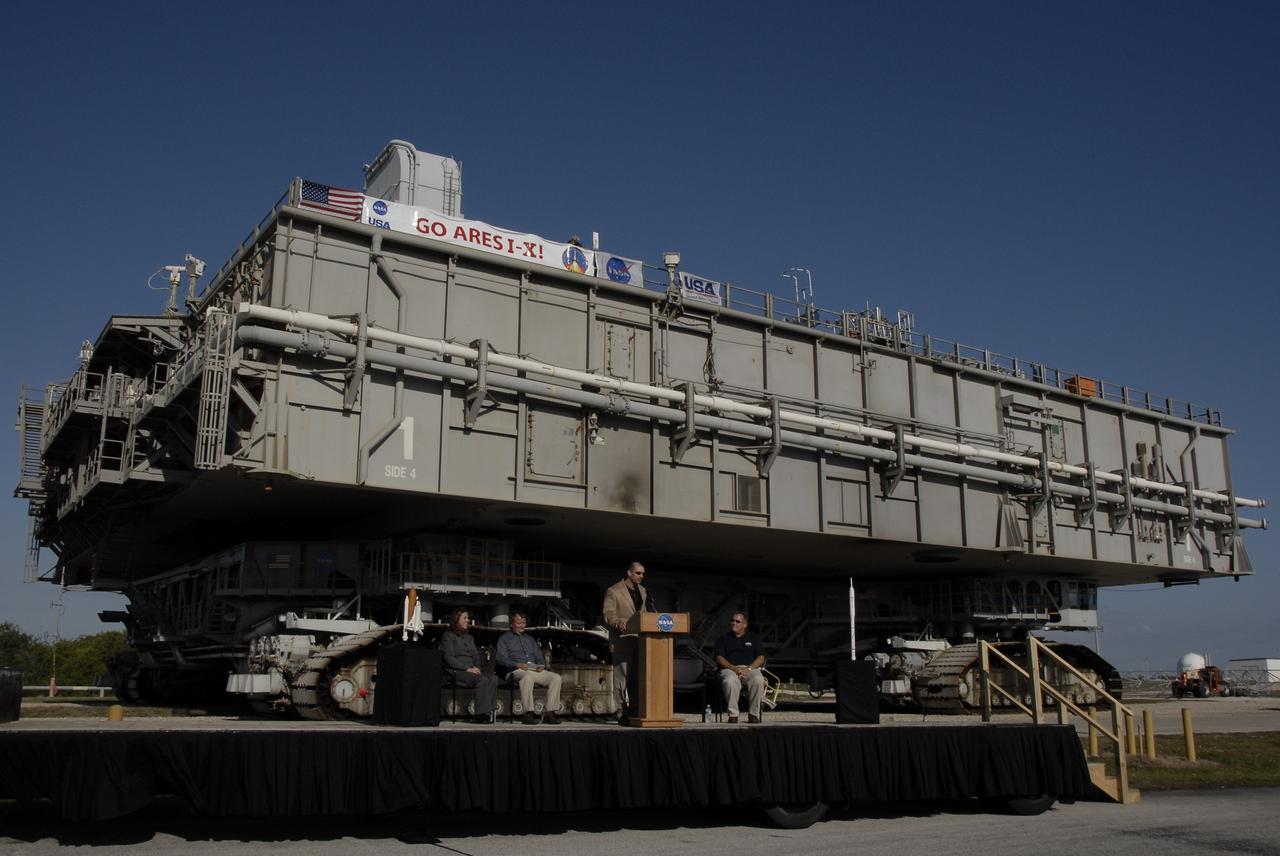
CAPE CANAVERAL, Fla. – Near Launch Pad 39B at NASA's Kennedy Space Center in Florida, Director of the Constellation Project Office Pepper E. Phillips speaks to employees and media during the handover ceremony for Mobile Launcher Platform-1. Marking the handover is the change of banner on the platform behind him. On the stage and also participating in the ceremony are Director of Launch Vehicle Processing Rita Willcoxon , Shuttle Launch Director Mike Leinbach, and Manager of MLP Operations with United Space Alliance Brett Raulerson. The platform is being transferred from NASA's Space Shuttle Program to the Constellation Program for the Ares I-X flight test targeted for this summer. Constructed in 1964, the mobile launchers used in Apollo/Saturn operations were modified for use in shuttle operations. With cranes, umbilical towers and swing arms removed, the mobile launchers were renamed Mobile Launcher Platforms, or MLPs. Photo credit: NASA/Kim Shiflett
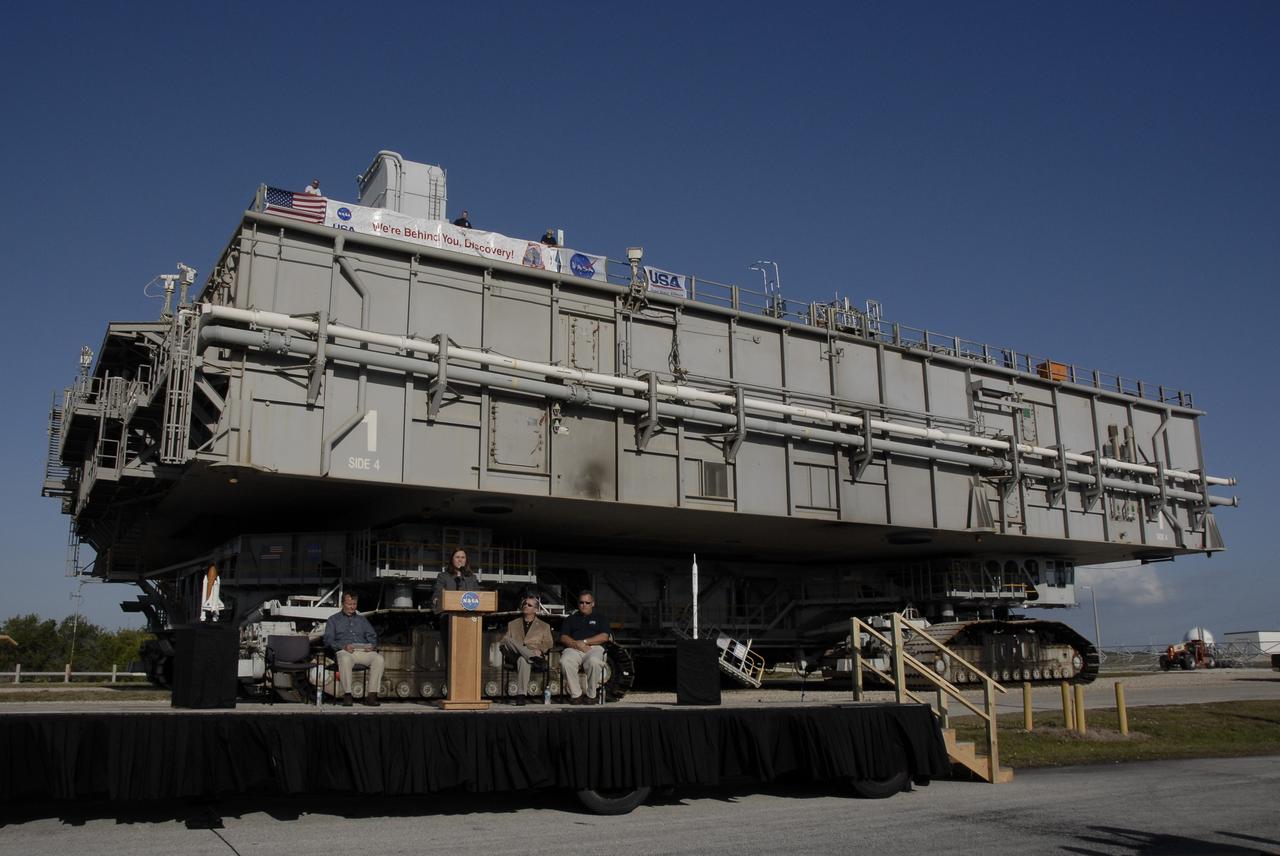
CAPE CANAVERAL, Fla. – NASA's Kennedy Space Center management host a ceremony near Launch Pad 39B to mark the handover of Mobile Launcher Platform-1 (behind them) from NASA's Space Shuttle Program to the Constellation Program for the Ares I-X flight test targeted for this summer. Seated are (left) Shuttle Launch Director Mike Leinbach and (right) Pepper E. Phillips, director of the Constellation Project Office, and Brett Raulerson, manager of MLP Operations with United Space Alliance. At the podium is Rita Willcoxon, director of Launch Vehicle Processing at Kennedy. Constructed in 1964, the mobile launchers used in Apollo/Saturn operations were modified for use in shuttle operations. With cranes, umbilical towers and swing arms removed, the mobile launchers were renamed Mobile Launcher Platforms, or MLPs. Photo credit: NASA/Kim Shiflett
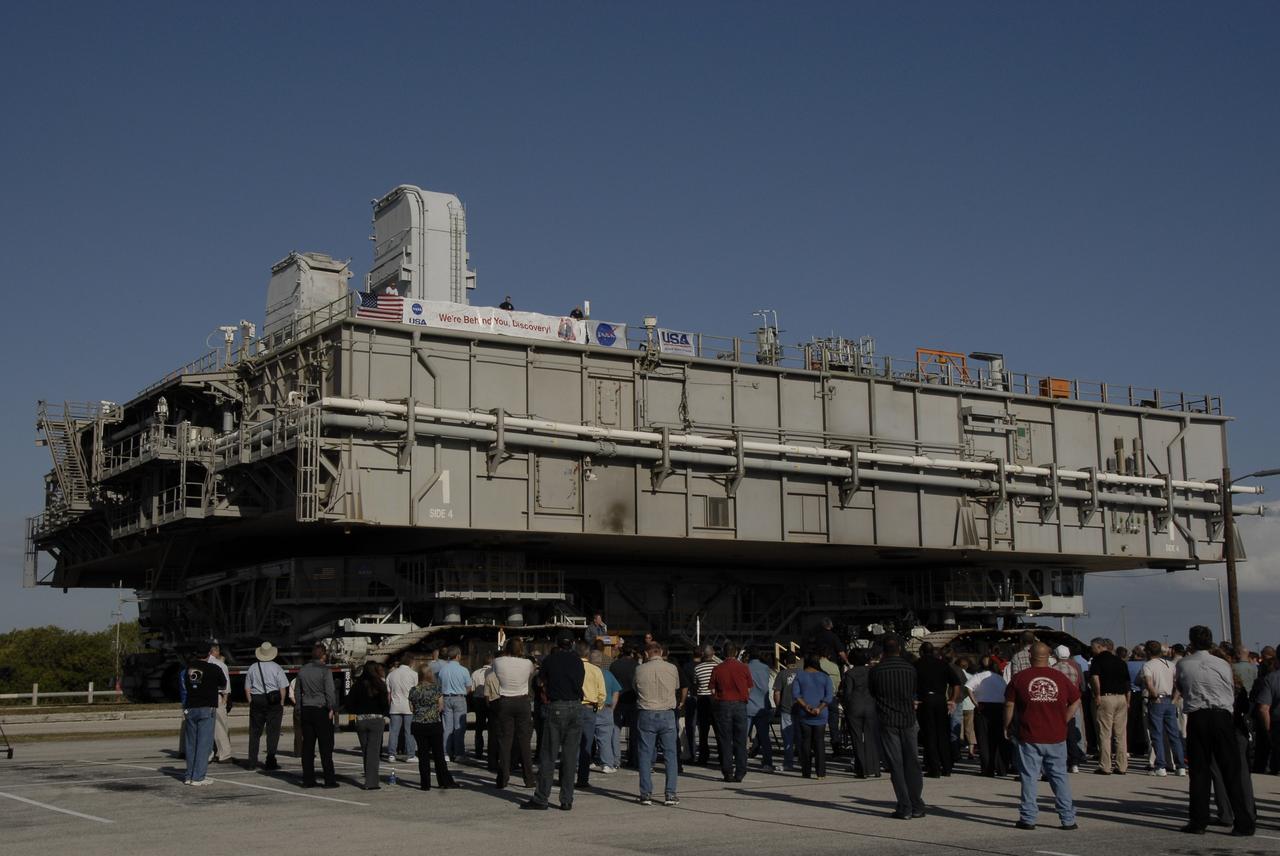
CAPE CANAVERAL, Fla. – Near Launch Pad 39B at NASA's Kennedy Space Center in Florida, employees and media gather listen to Shuttle Launch Director Mike Leinbach during the handover ceremony for Mobile Launcher Platform-1. The platform is being transferred from NASA's Space Shuttle Program to the Constellation Program for the Ares I-X flight test targeted for this summer. Also participating in the ceremony are Rita Willcoxon, director of Launch Vehicle Processing at Kennedy, Pepper E. Phillips, director of the Constellation Project Office, and Brett Raulerson, manager of MLP Operations with United Space Alliance. Constructed in 1964, the mobile launchers used in Apollo/Saturn operations were modified for use in shuttle operations. With cranes, umbilical towers and swing arms removed, the mobile launchers were renamed Mobile Launcher Platforms, or MLPs. Photo credit: NASA/Kim Shiflett
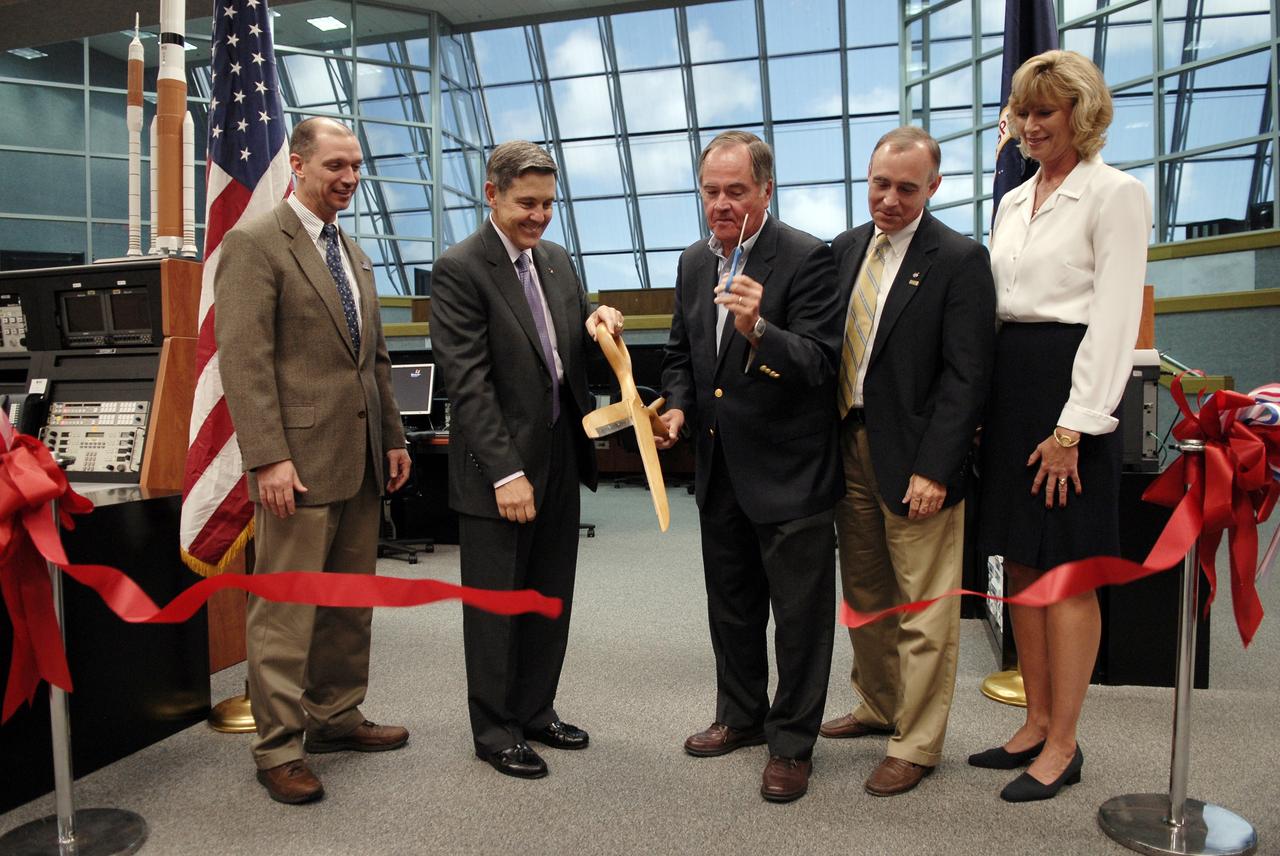
CAPE CANAVERAL, Fla. – This ribbon cutting officially turns over NASA Kennedy Space Center's Launch Control Center Firing Room 1 from the Space Shuttle Program to the Constellation Program. Participating are (from left) Pepper Phillips, director of the Constellation Project Office at Kennedy; Bob Cabana, Kennedy's director; Robert Crippen, former astronaut; Jeff Hanley, manager of the Constellation Program at NASA's Johnson Space Center; and Nancy Bray, deputy director of Center Operations at Kennedy. The room has undergone demolition and construction and been outfitted with consoles for the upcoming Ares I-X rocket flight test targeted for launch on Oct. 27. As the center of launch operations at Kennedy since the Apollo Program, the Launch Control Center, or LCC, has played a central role in NASA's human spaceflight programs. Firing Room 1 was the first operational firing room constructed. From this room, controllers launched the first Saturn V, the first crewed flight of Saturn V, the first crewed mission to the moon and the first space shuttle. Firing Room 1 will continue this tradition of firsts when controllers launch the Constellation Program's first flight test. Also, this firing room will be the center of operations for the upcoming Ares I and Orion operations. Photo credit: NASA/Kim Shiflett

CAPE CANAVERAL, Fla. -- NASA managers at NASA's Kennedy Space Center in Florida show off the Florida Project of the Year trophies that the crawlerway system evaluation team received from the American Society of Civil Engineers (ASCE). From left are Michael Benik, director of Center Operations; Pepper Phillips, manager of the 21st Century Ground Systems Program Office; and Russell Romanella, associate director for Engineering and Technical Operations. The Cape Canaveral branch of the ASCE nominated the team for its project, the Crawlerway Evaluation to Support a Heavy-Lift Program. The crawlerway is a 130-foot-wide, specialty-built roadway between Kennedy's Vehicle Assembly Building (VAB), where rockets and spacecraft are prepared for flight, and Launch Pad 39A and 39B. The team's more than two-year evaluation confirmed the crawlerway system would be able to support the weight of moving the agency's future heavy-lift rockets and potential commercial vehicles from the VAB to the launch pads. The award honors the team's outstanding engineering efforts in research, design, construction and management, recognizing the complexity of multi-agency coordination and cost-effective engineering advances. For more information on the American Society of Civil Engineers, visit: http://www.asce.org. Photo credit: NASA/Kim Shiflett
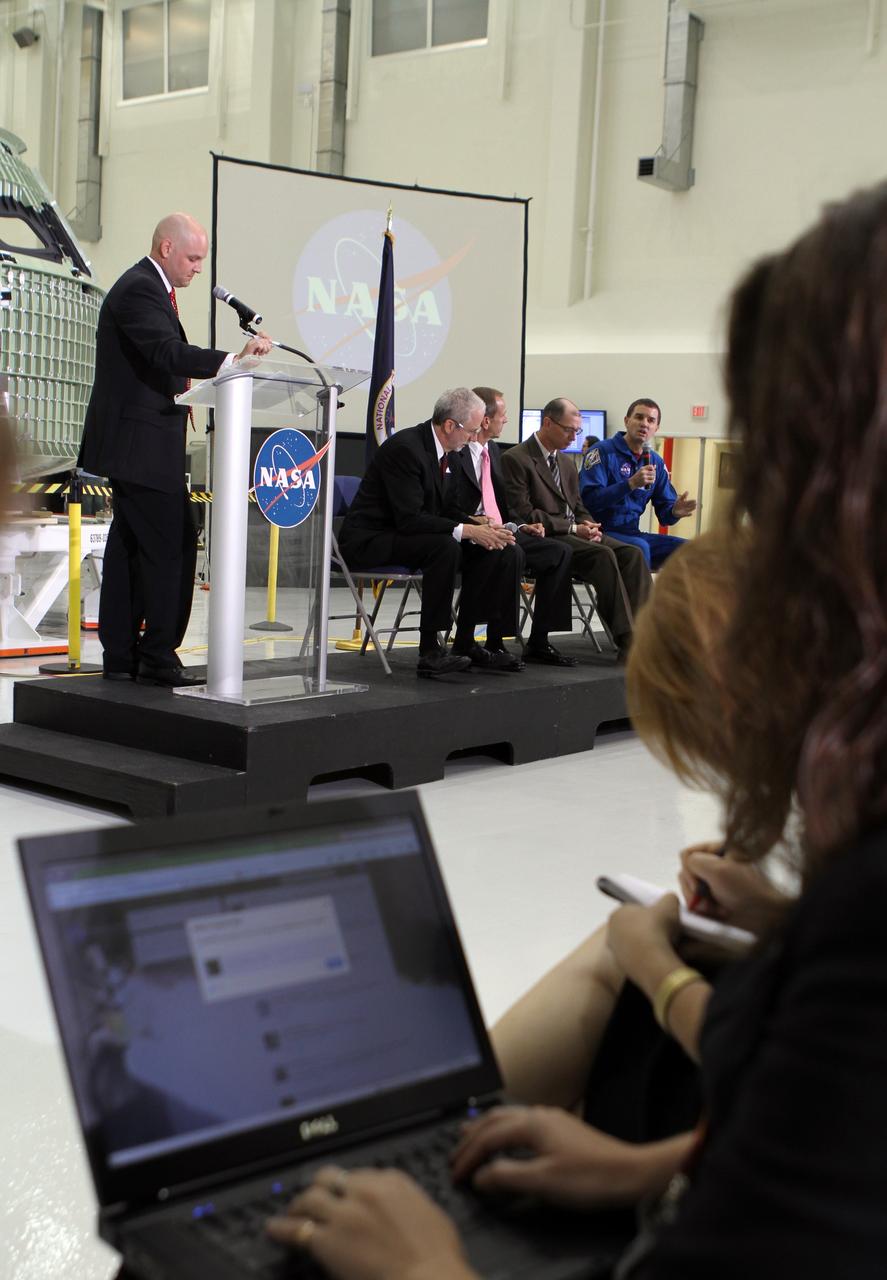
CAPE CANAVERAL, Fla. – NASA astronaut Rex Walheim, far right, addresses an participants during a NASA social question and answer session. The group is assembled in Kennedy Space Center's Operations and Checkout Building high bay for an event marking the arrival of NASA's first space-bound Orion capsule in Florida. At the podium is Trent Perrotto of NASA Public Affairs. Joining Perrotto on stage, from the left, are Mark Geyer, Orion program manager David Beaman, NASA Space Launch System spacecraft and payload integration manager Pepper Phillips, program manager for NASA's Ground Systems Development and Operations and Walheim. The tweeters will share their experiences with followers through the social networking site Twitter. Slated for Exploration Flight Test-1, an uncrewed mission planned for 2014, the capsule will travel farther into space than any human spacecraft has gone in more than 40 years. NASA's Michoud Assembly Facility in New Orleans built the crew module pressure vessel. The Orion production team will prepare the module for flight by installing heat-shielding thermal protection systems, avionics and other subsystems. For more information, visit http://www.nasa.gov/orion Photo credit: NASA/Kim Shiflett
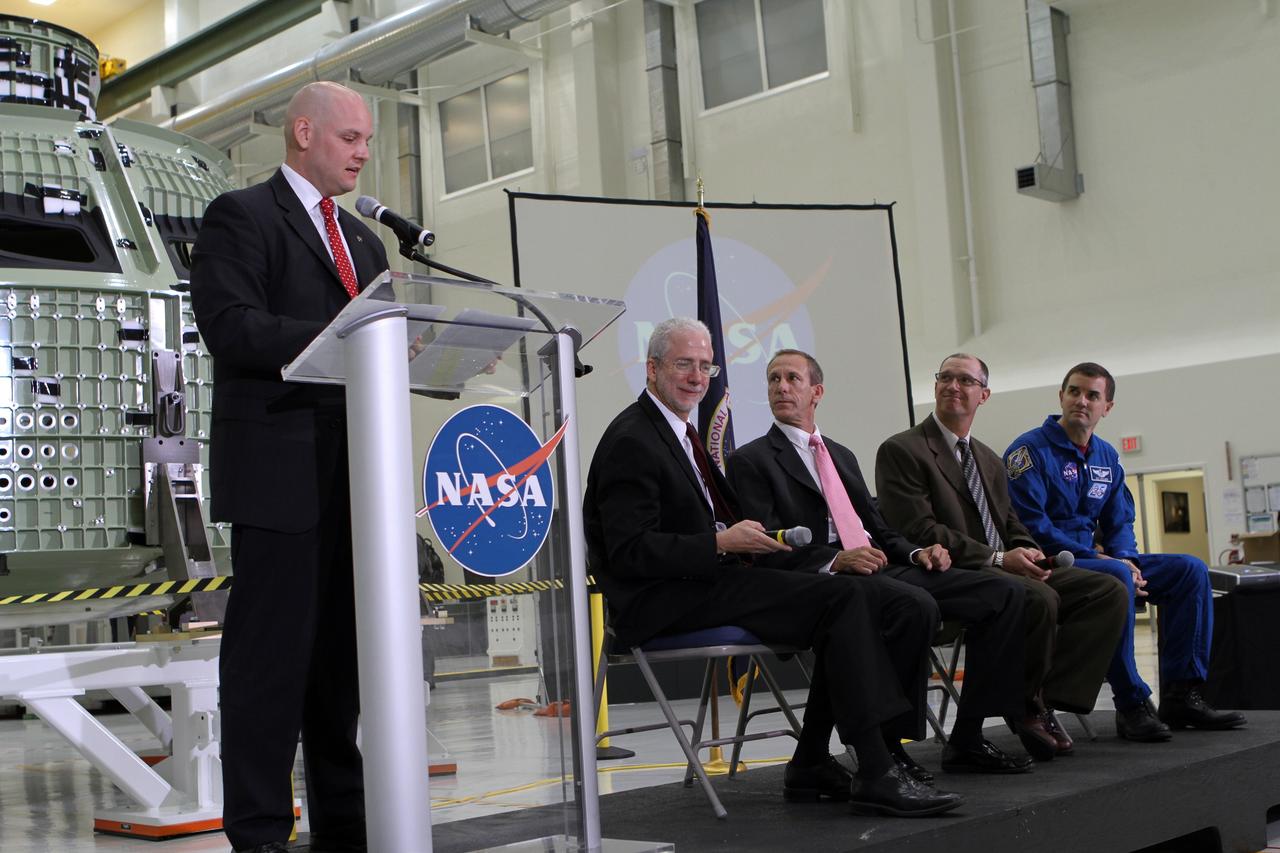
CAPE CANAVERAL, Fla. – Trent Perrotto of NASA Public Affairs addresses an audience of participants during a NASA social question and answer session. The group is assembled in Kennedy Space Center's Operations and Checkout Building high bay for an event marking the arrival of NASA's first space-bound Orion capsule in Florida. Joining Perrotto on stage, from the left, are Mark Geyer, Orion program manager David Beaman, NASA Space Launch System spacecraft and payload integration manager Pepper Phillips, program manager for NASA's Ground Systems Development and Operations and NASA astronaut Rex Walheim. The tweeters will share their experiences with followers through the social networking site Twitter. Slated for Exploration Flight Test-1, an uncrewed mission planned for 2014, the capsule will travel farther into space than any human spacecraft has gone in more than 40 years. NASA's Michoud Assembly Facility in New Orleans built the crew module pressure vessel. The Orion production team will prepare the module for flight by installing heat-shielding thermal protection systems, avionics and other subsystems. For more information, visit http://www.nasa.gov/orion Photo credit: NASA/Kim Shiflett
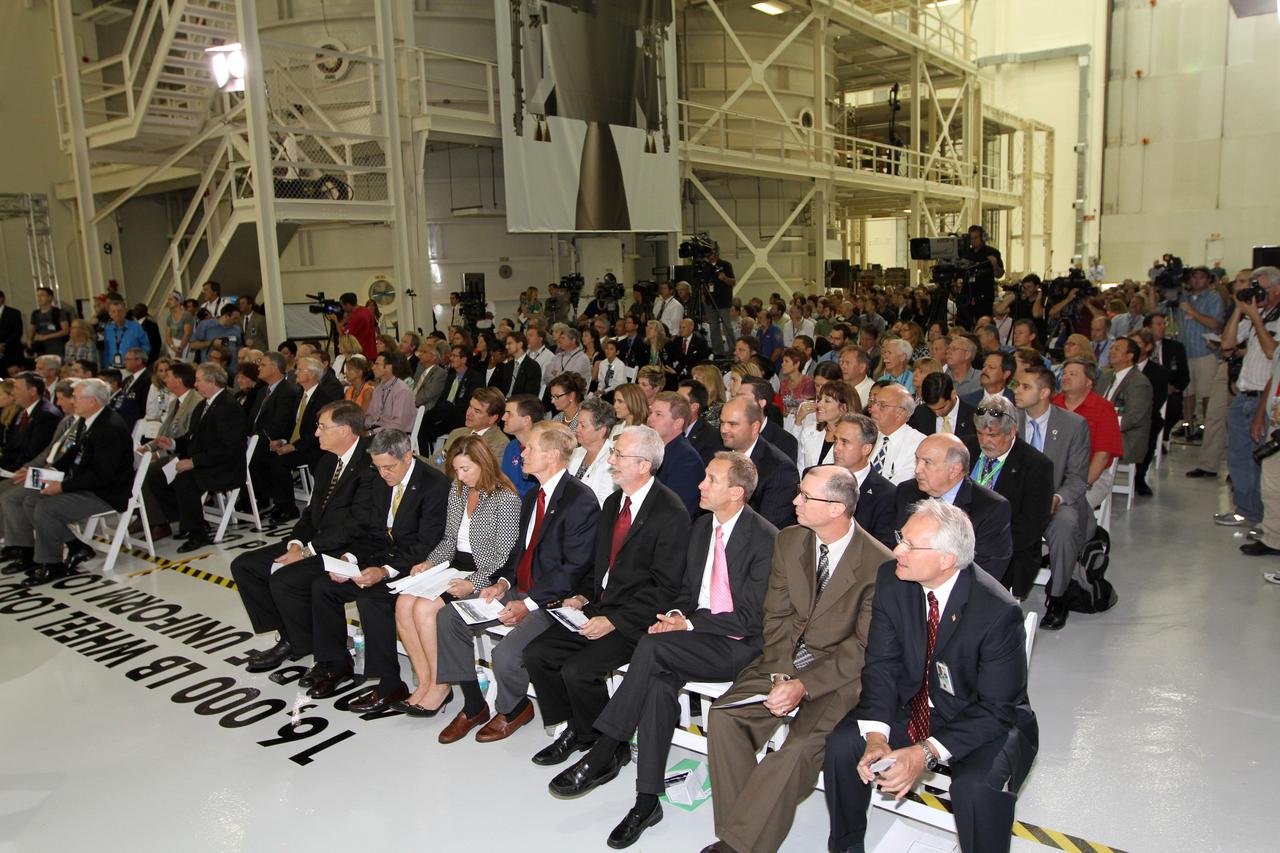
CAPE CANAVERAL, Fla. – Distinguished speakers are seated in the front row in Kennedy Space Center's Operations and Checkout Building high bay for an event marking the arrival of NASA's first space-bound Orion capsule in Florida. From left are Dan Dumbacher, NASA deputy associate administrator for Exploration Systems Development, NASA Kennedy Space Center Director Robert Cabana, NASA Deputy Administrator Lori Garver, U.S. Senator Bill Nelson, Mark Geyer, Orion program manager, David Beaman, NASA Space Launch System spacecraft and payload integration manager, Pepper Phillips, program manager for NASA's Ground Systems Development and Operations, and John Karas, vice president and general manager of Human Spaceflight for Lockheed Martin Space Systems. Slated for Exploration Flight Test-1, an uncrewed mission planned for 2014, the capsule will travel farther into space than any human spacecraft has gone in more than 40 years. The capsule was shipped to Kennedy from NASA's Michoud Assembly Facility in New Orleans where the crew module pressure vessel was built. The Orion production team will prepare the module for flight at Kennedy by installing heat-shielding thermal protection systems, avionics and other subsystems. For more information, visit http://www.nasa.gov/orion. Photo credit: NASA/Kim Shiflett
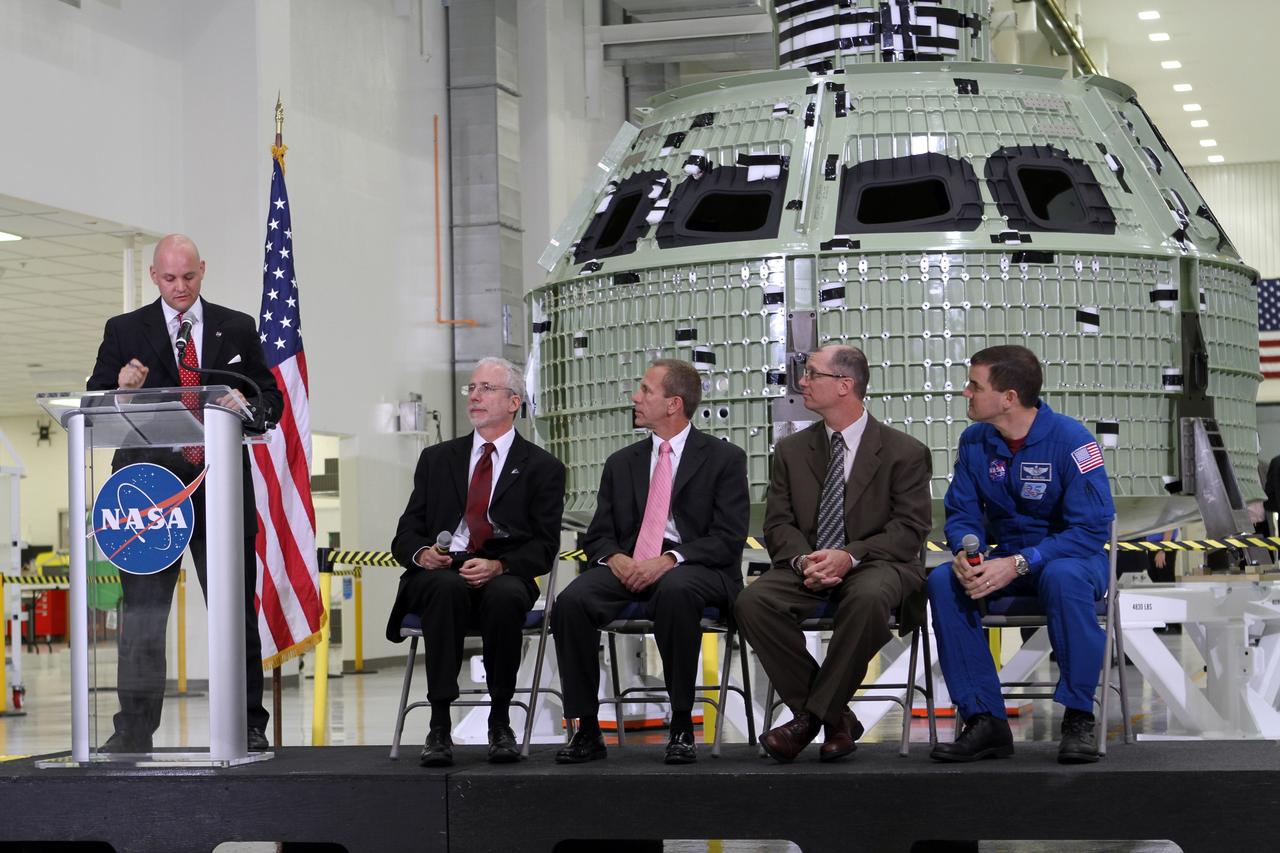
CAPE CANAVERAL, Fla. – Trent Perrotto of NASA Public Affairs addresses an audience of participants during a NASA social question and answer session. The group is assembled in Kennedy Space Center's Operations and Checkout Building high bay for an event marking the arrival of NASA's first space-bound Orion capsule in Florida. Joining Perrotto on stage, from the left, are Mark Geyer, Orion program manager David Beaman, NASA Space Launch System spacecraft and payload integration manager Pepper Phillips, program manager for NASA's Ground Systems Development and Operations and NASA astronaut Rex Walheim. The tweeters will share their experiences with followers through the social networking site Twitter. Slated for Exploration Flight Test-1, an uncrewed mission planned for 2014, the capsule will travel farther into space than any human spacecraft has gone in more than 40 years. NASA's Michoud Assembly Facility in New Orleans built the crew module pressure vessel. The Orion production team will prepare the module for flight by installing heat-shielding thermal protection systems, avionics and other subsystems. For more information, visit http://www.nasa.gov/orion Photo credit: NASA/Kim Shiflett