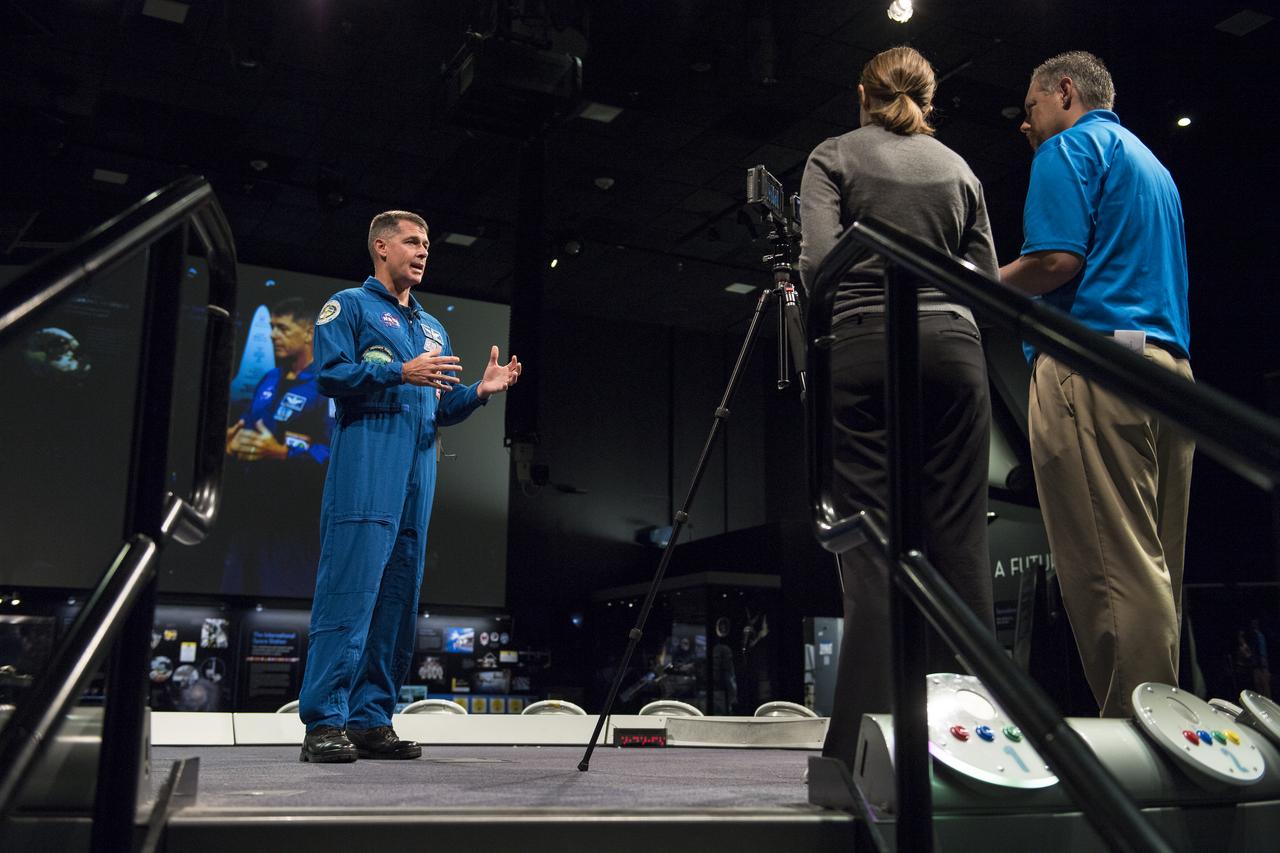
NASA astronaut Shane Kimbrough participates in a live broadcast on Periscope about his time onboard the International Space Station (ISS) during Expeditions 49/50, Tuesday, September 12, 2017 at Smithsonian's National Air and Space Museum in Washington. During Expedition 50, Kimbrough completed four spacewalks for a total of 39 hours outside the ISS, and concluded his 173-day mission when he landed in a remote area near the town of Zhezkazgan, Kazakhstan in April 2017. Photo Credit: (NASA/Aubrey Gemignani)
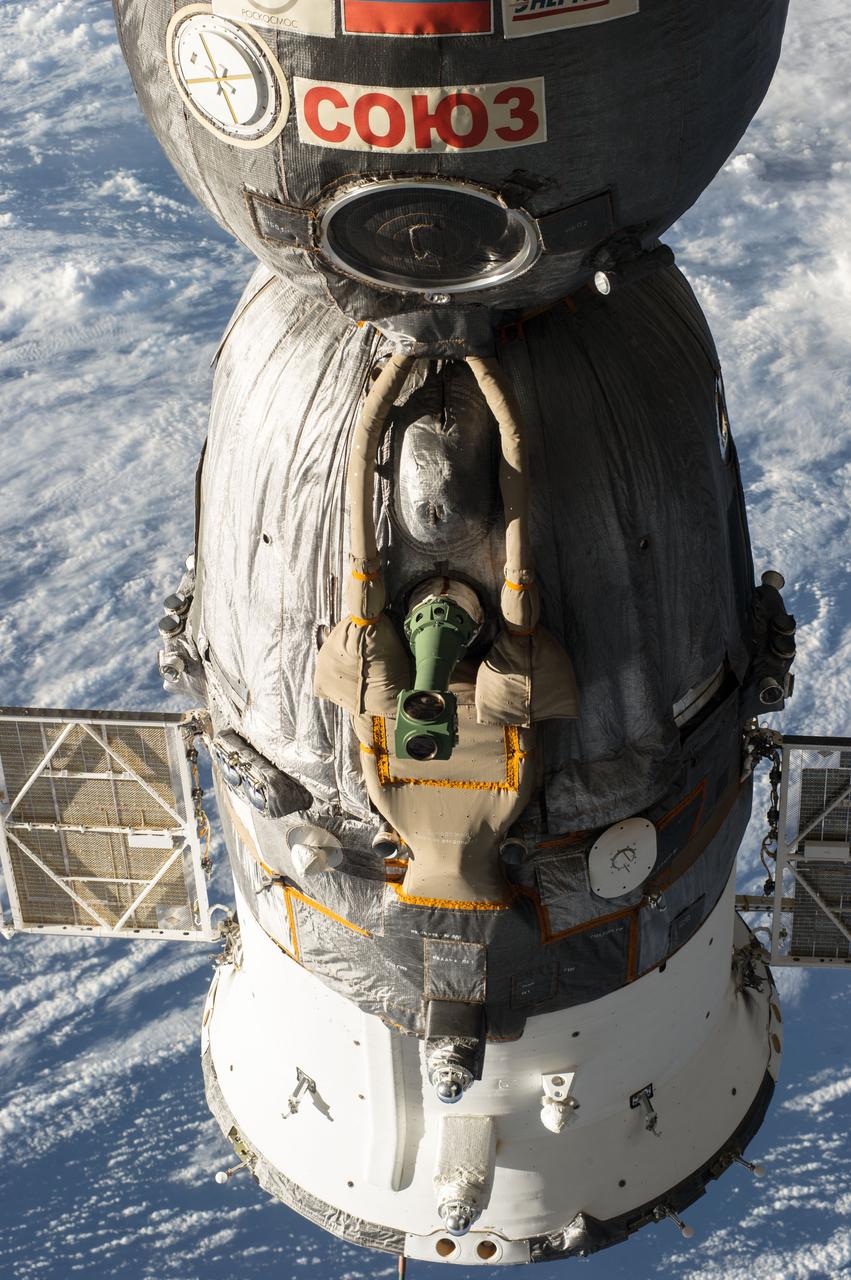
ISS039-E-019122 (5 May 2014) --– A Russian Soyuz spacecraft is seen docked to the International Space Station, as photographed by one of the Expedition 39 crew members aboard the orbital outpost. The Soyuz's periscope is in the center of the vehicle.
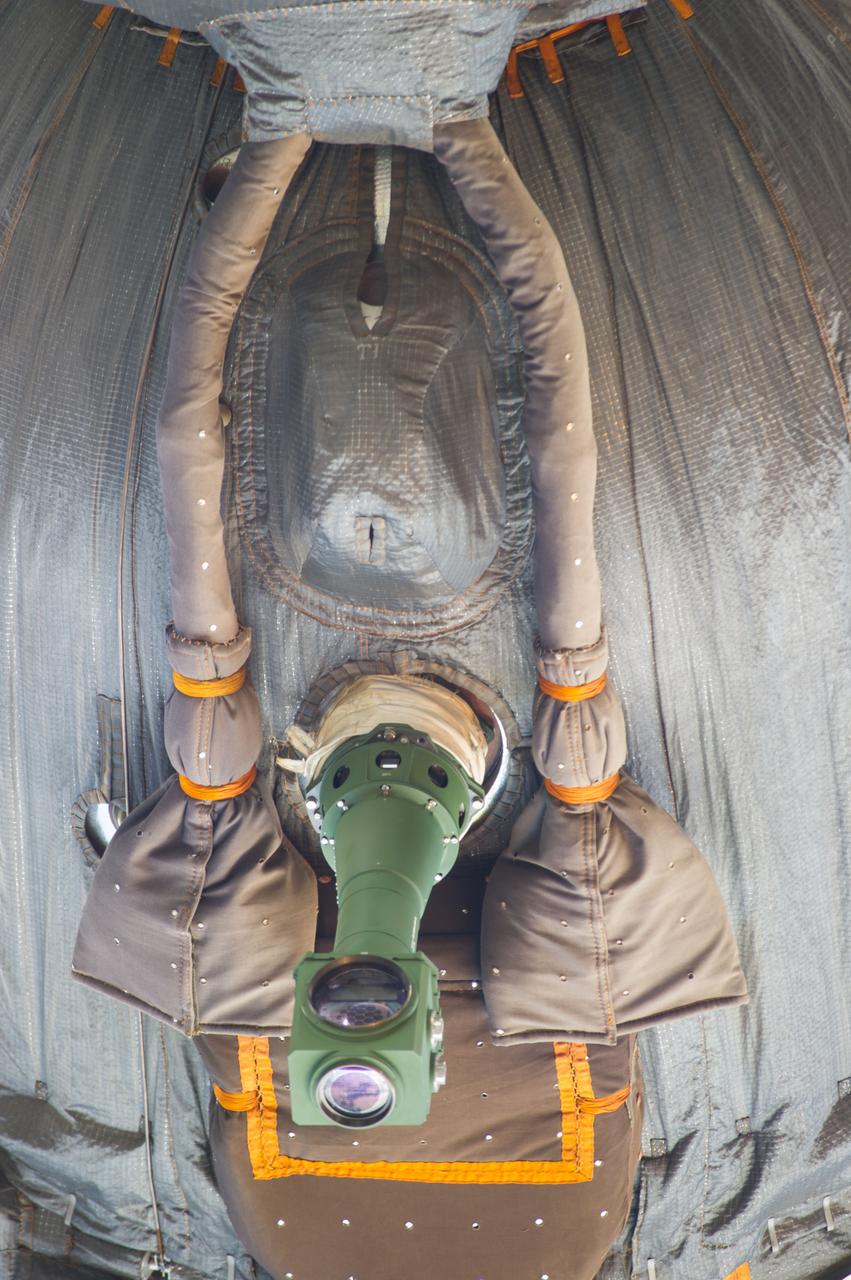
ISS040-E-007424 (4 June 2014) --- A close-up view of the Soyuz 39 (TMA-13M) docked to the Rassvet Mini-Research Module 1 (MRM-1) of the International Space Station is photographed by an Expedition 40 crew member on the station. Visible at bottom is the periscope used to assist in docking.
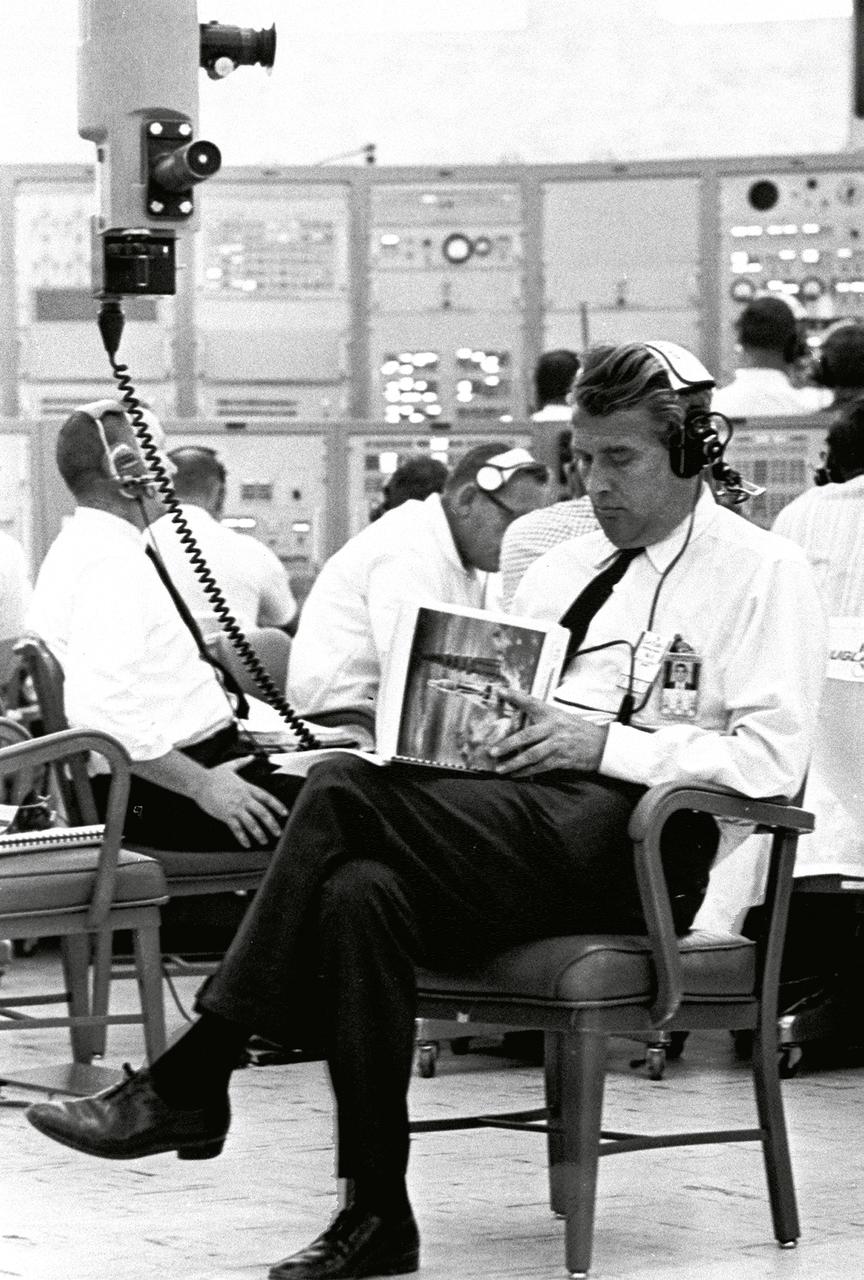
Marshall Space Flight Center (MSFC) Director Wernher von Braun, seated near a periscope in Kennedy Space Center's Blockhouse 34, on May 28, 1964, looks over a flight manual while awaiting the launch of SA-6, the sixth Saturn I flight. Also known as Apollo Mission A-101, the launch marked the first flight of an Apollo spacecraft with a Saturn launch vehicle.
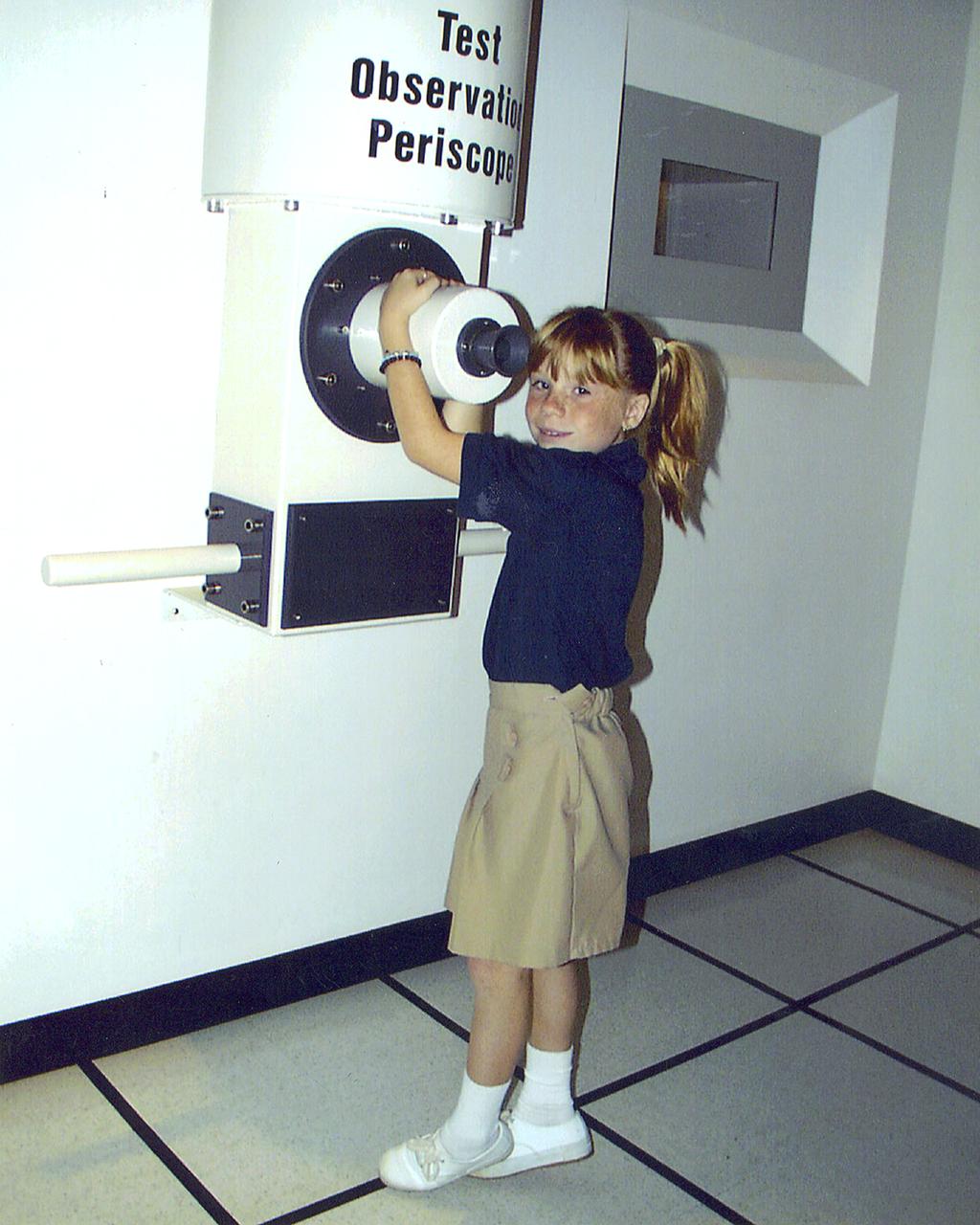
At the test observation periscope in the Test Control Center exhibit in StenniSphere at the John C. Stennis Space Center in Hancock County, Miss., visitors can observe a test of a Space Shuttle Main Engine exactly as test engineers might see it during a real engine test. The Test Control Center exhibit exactly simulates not only the test control environment, but also the procedure of testing a rocket engine. Designed to entertain while educating, StenniSphere includes informative dispays and exhibits from NASA's lead center for rocket propulsion and remote sensing applications. StenniSphere is open free of charge from 9 a.m. to 5 p.m. daily.
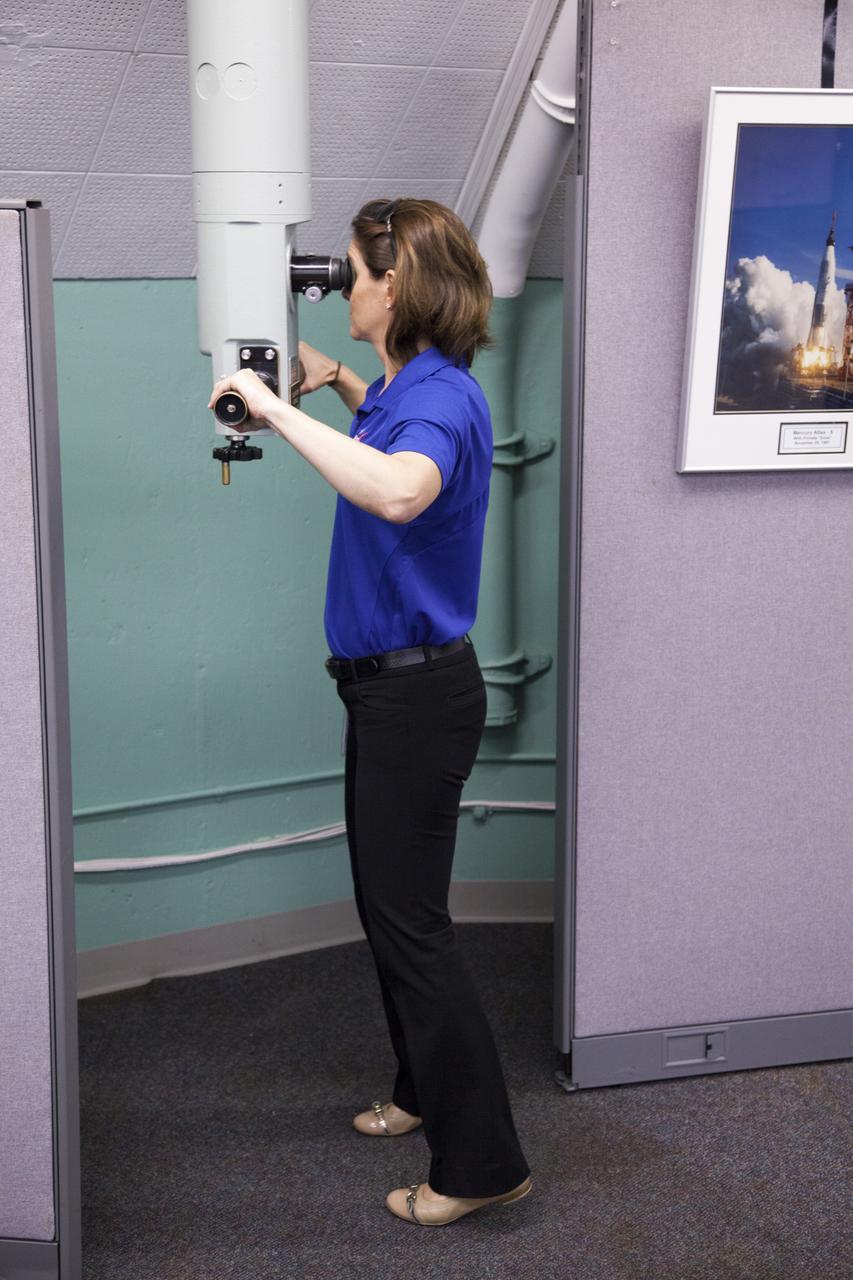
CAPE CANAVERAL, Fla. – NASA astronaut candidate Nicole Mann uses a periscope inside the blockhouse at Complex 14 at Cape Canaveral Air Force Station in Florida, adjacent to NASA's Kennedy Space Center. Complex 14 served as the launch pad for Mercury astronaut John Glenn when he lifted off in 1962 to orbit the Earth, becoming the first American to do so. The astronaut class of 2013 was selected by NASA after an extensive year-and-a-half search. The new group will help the agency push the boundaries of exploration and travel to new destinations in the solar system. To learn more about the astronaut class of 2013, visit: http://www.nasa.gov/astronauts/2013astroclass.html Photo credit: NASA/Frankie Martin
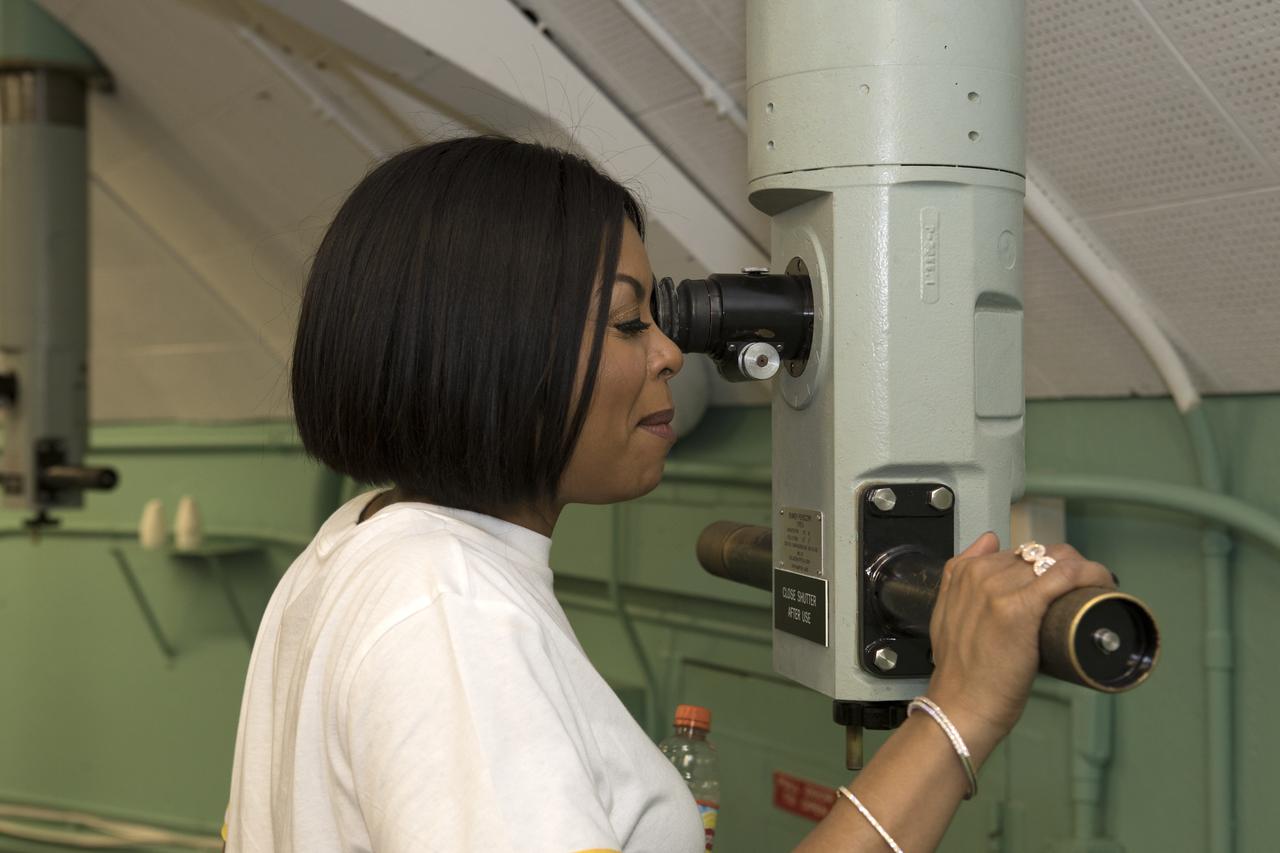
Taraji P. Henson, who portrays Katherine Johnson in the upcoming motion picture "Hidden Figures," looks through a periscope in the blockhouse at Launch Pad 14 at Cape Canaveral Air Force Station. The pad which was the location of the launch of John Glenn and three other astronauts who flew orbital missions during Project Mercury. The movie is based on the book of the same title, by Margot Lee Shetterly. It chronicles the lives of Katherine Johnson, Dorothy Vaughan and Mary Jackson, three African-American women who worked for NASA as human "computers.” Their mathematical calculations were crucial to the success of Project Mercury missions including Glenn’s orbital flight aboard Friendship 7 in 1962. The film is due in theaters in January 2017.
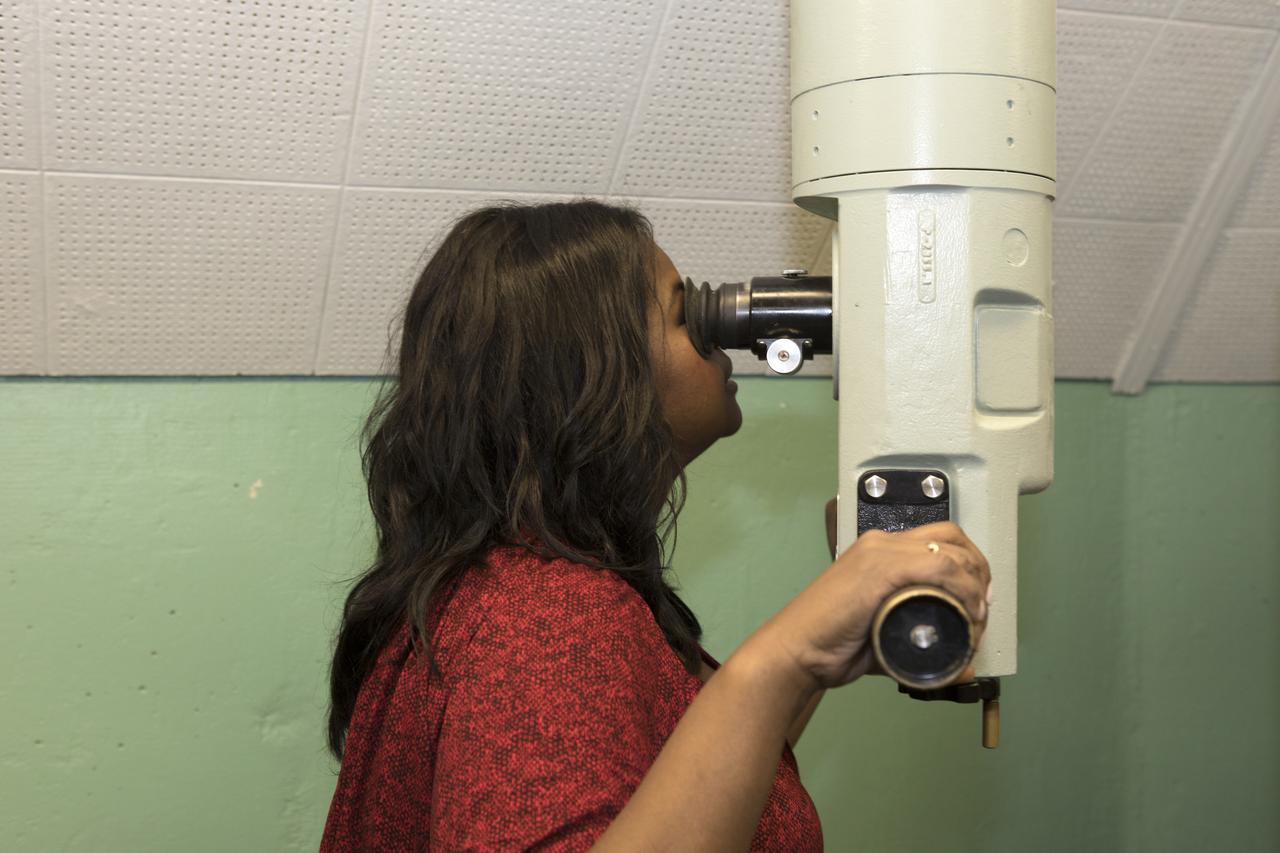
Octavia Spencer, who portrays Dorothy Vaughan in the upcoming motion picture "Hidden Figures," looks through a periscope in the blockhouse at Launch Pad 14 at Cape Canaveral Air Force Station. The pad which was the location of the launch of John Glenn and three other astronauts who flew orbital missions during Project Mercury. The movie is based on the book of the same title, by Margot Lee Shetterly. It chronicles the lives of Katherine Johnson, Dorothy Vaughan and Mary Jackson, three African-American women who worked for NASA as human "computers.” Their mathematical calculations were crucial to the success of Project Mercury missions including Glenn’s orbital flight aboard Friendship 7 in 1962. The film is due in theaters in January 2017.
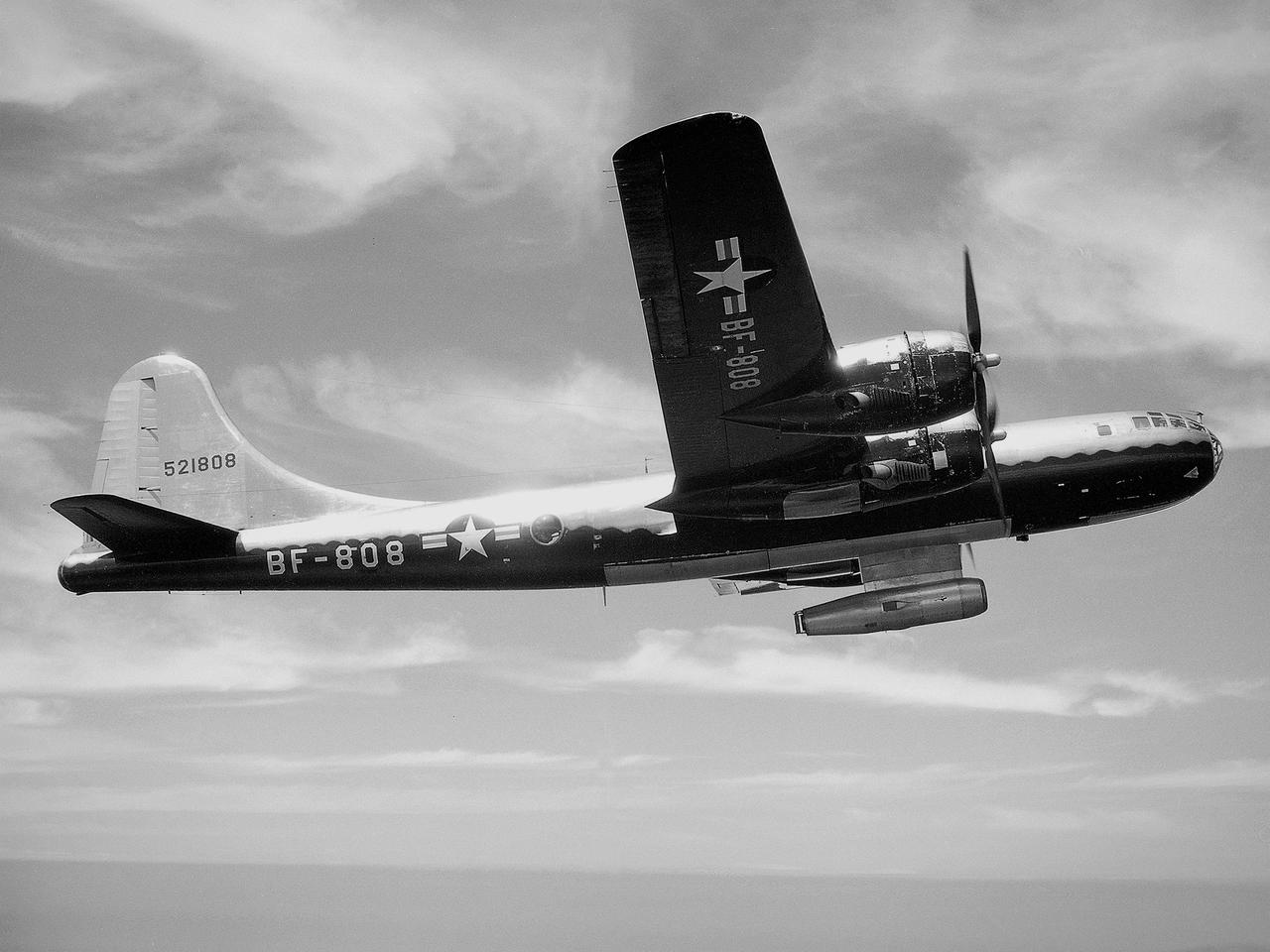
The NACA’s Lewis Flight Propulsion Laboratory used a Boeing B‒29 Superfortress as a testbed for ramjet investigations in the late 1940s. Lewis researchers conducted a wide variety of studies on ramjets to determine basic the operational data necessary to design missiles. Extensive wind tunnel and test stand studies were augmented by actual flight tests. Lewis engineers modified this B‒29 so that the ramjet could be stored in the bomb bay. Once the aircraft reached the desired altitude and speed, a mechanical arm suspended the ramjet 52 inches below the bomb bay. The ramjet’s angle-of-attack could be independently adjusted, and a periscope permitted a view of the test article from inside the aircraft. Researchers took measurements in free-stream conditions at speeds up to Mach 0.51 and at altitudes ranging from 5,000 to 30,000 feet. They then shut the ramjet down and retracted it into the aircraft. The researchers first determined that 14,000 feet was the maximum altitude at which the engine could be ignited by spark. They used flares to start the engine at altitudes up to 30,000 feet. They were able to determine maximum combustion efficiencies, response time to changes in fuel flow, and minimum fuel-air ratios. Overall the ramjet operated well at all speeds and altitudes.
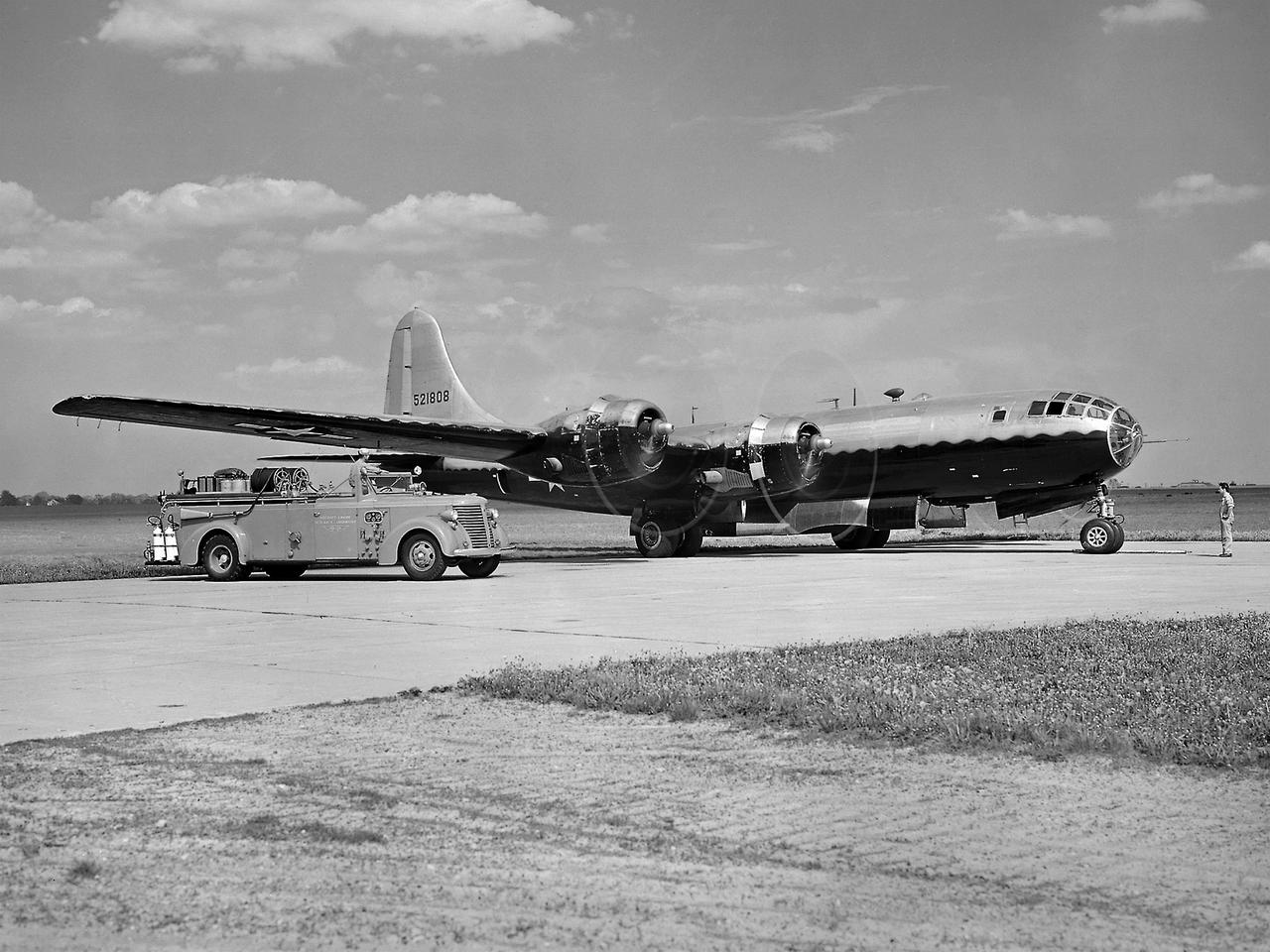
The NACA’s Lewis Flight Propulsion Laboratory used a Boeing B-29 Superfortress as a testbed for ramjet investigations in the late 1940s. NACA Lewis conducted a wide variety of studies on ramjets to determine basic operational data necessary to design missiles. This information included the relationship between combustion chamber and inlet pressure and temperature, velocity of the fuel-air ratio to the ignition characteristics, and combustion efficiency. Although wind tunnel and test stand studies were important first steps in determining these factors, actual flight tests were required. Lewis engineers modified the B-29 so that the ramjet could be stored in the bomb bay. Once the aircraft reached the desired altitude and speed the ramjet was suspended 52 inches below the bomb bay. The ramjet’s angle-of-attack could be independently adjusted, and a periscope permitted a view of the test article from inside the aircraft. Measurements were taken in free-stream conditions between 5,000 and 30,000 feet. The test flights, which began in April 1947, were flown at speeds up to Mach 0.51 and altitudes of 5,000 to 30,000 feet. The researchers first determined that 14,000 feet was the maximum altitude at which the engine could be ignited by spark. Flares were used to start the engine at altitudes up to 30,000 feet. Overall the ramjet operated well at all speeds and altitudes. Significant changes in fuel flow were successful at lower altitudes, but produced combustion blowout above 20,000 feet.

Engineers are checking to make sure that MIRI is precisely positioned with the ISIM as it slides into position. They have to make sure it's installed exactly where it needs to be within the width of a thin human hair. Visible is MIRI's pickoff mirror, which is the protrusion on the right side of the instrument that looks like a periscope on its side. This is where MIRI grabs light coming from the telescope optics. Also visible is the silver-colored base of MIRI's cryocooled shield, already installed on the ISIM structure and with a hole in it for MIRI's pickoff mirror. MIRI itself has special silver-colored blanketing around it as insulation to keep it at its proper cryogenic temperature during operation. Photo Credit: NASA/Chris Gunn; Text Credit: NASA/Laura Betz ---- Engineers worked meticulously to implant the James Webb Space Telescope's Mid-Infrared Instrument into the ISIM, or Integrated Science Instrument Module, in the cleanroom at NASA's Goddard Space Flight Center in Greenbelt, Md. As the successor to NASA's Hubble Space Telescope, the Webb telescope will be the most powerful space telescope ever built. It will observe the most distant objects in the universe, provide images of the first galaxies formed and see unexplored planets around distant stars. For more information, visit: <a href="http://www.jwst.nasa.gov" rel="nofollow">www.jwst.nasa.gov</a> <b><a href="http://www.nasa.gov/audience/formedia/features/MP_Photo_Guidelines.html" rel="nofollow">NASA image use policy.</a></b> <b><a href="http://www.nasa.gov/centers/goddard/home/index.html" rel="nofollow">NASA Goddard Space Flight Center</a></b> enables NASA’s mission through four scientific endeavors: Earth Science, Heliophysics, Solar System Exploration, and Astrophysics. Goddard plays a leading role in NASA’s accomplishments by contributing compelling scientific knowledge to advance the Agency’s mission. <b>Follow us on <a href="http://twitter.com/NASA_GoddardPix" rel="nofollow">Twitter</a></b> <b>Like us on <a href="http://www.facebook.com/pages/Greenbelt-MD/NASA-Goddard/395013845897?ref=tsd" rel="nofollow">Facebook</a></b> <b>Find us on <a href="http://instagram.com/nasagoddard?vm=grid" rel="nofollow">Instagram</a></b>