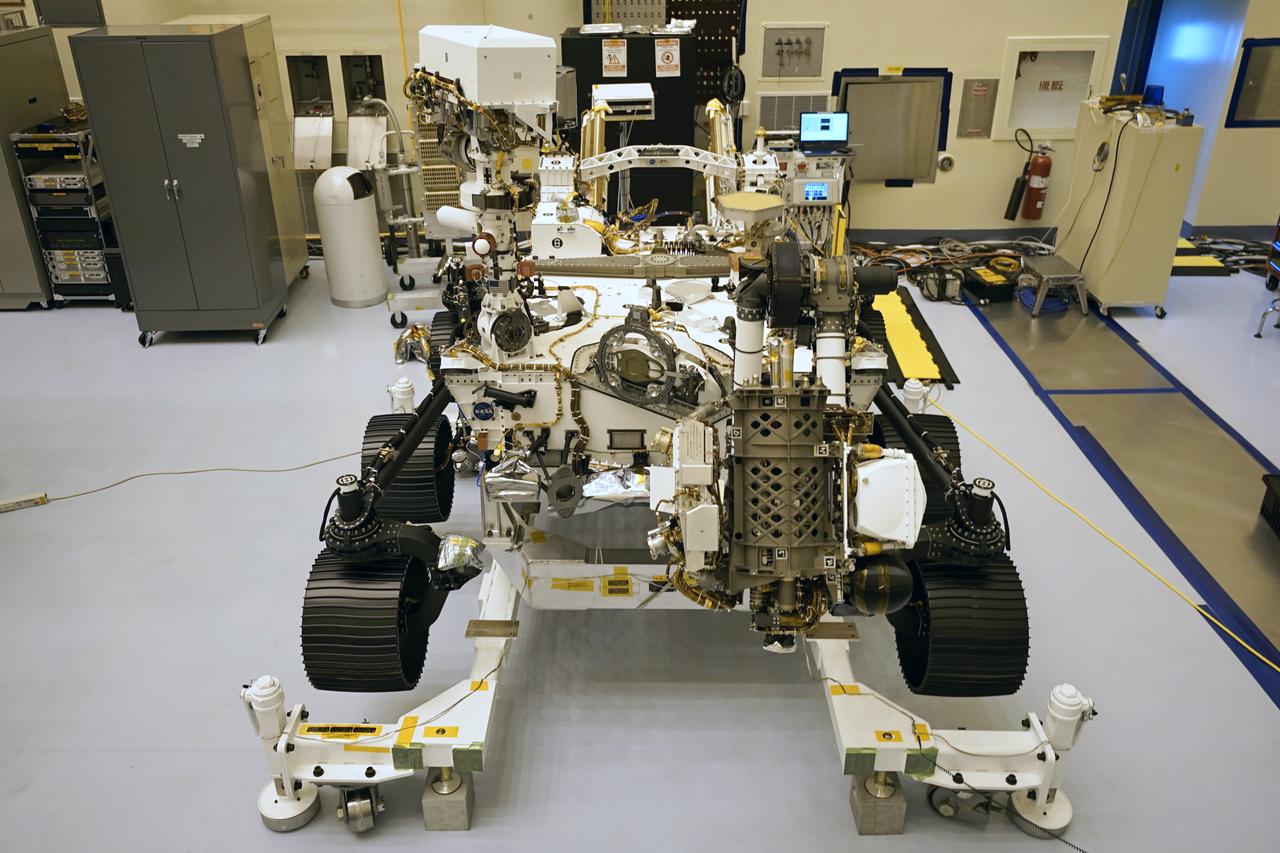
The “Send Your Name to Mars” logo is installed on the Mars Perseverance rover on March 16, 2020, inside the Payload Hazardous Servicing Facility at NASA’s Kennedy Space Center in Florida. When the rover lands on the Red Planet on Feb. 18, 2021, it will be carrying the names of more than 10 million people throughout the world. Those names were etched onto a microchip, which was placed aboard Perseverance. Liftoff aboard a United Launch Alliance Atlas V 541 rocket is targeted for mid-July from Cape Canaveral Air Force Station. NASA’s Launch Services Program based at Kennedy is managing the launch.
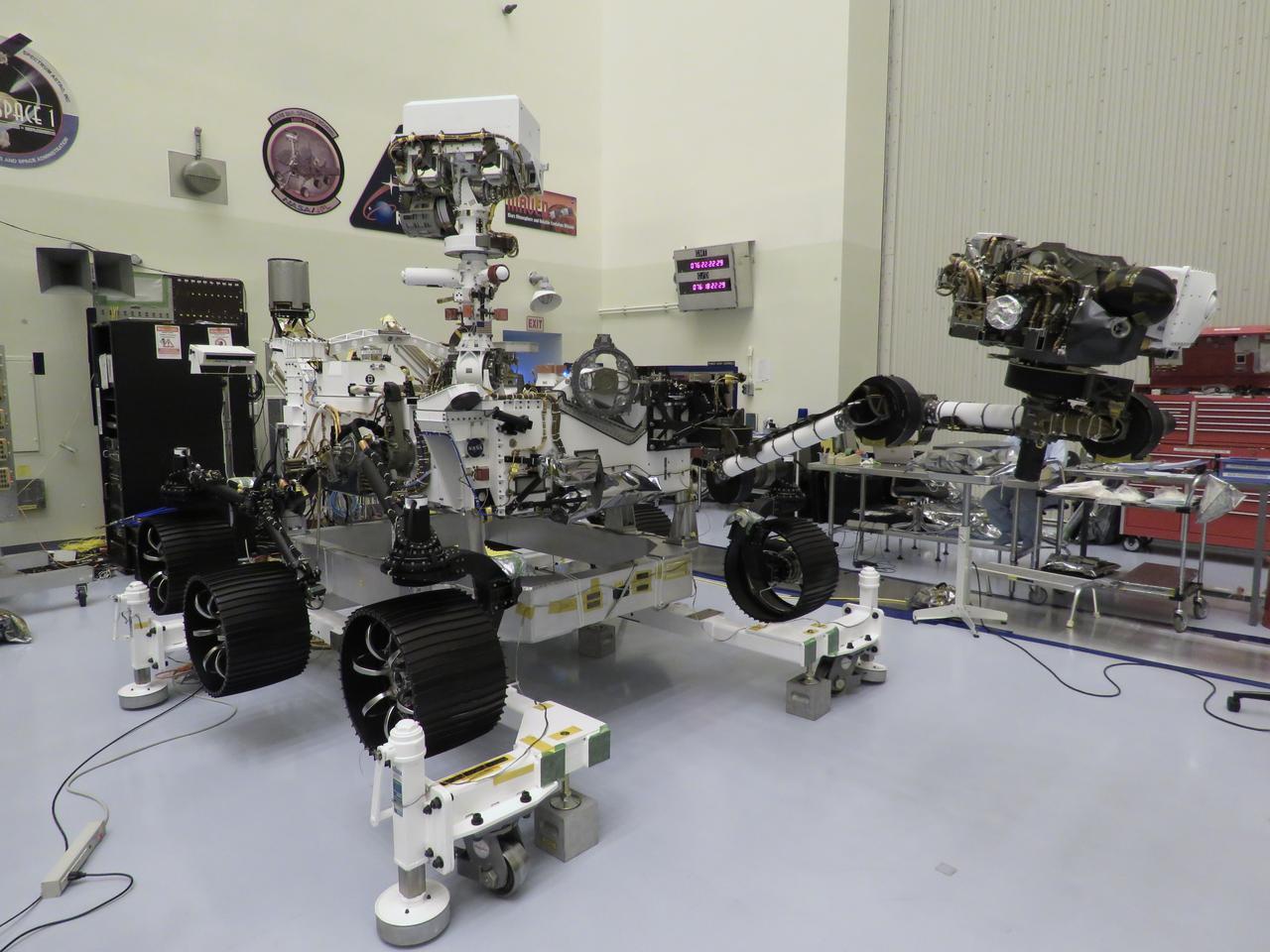
The “Send Your Name to Mars” logo is installed on the Mars Perseverance rover on March 16, 2020, inside the Payload Hazardous Servicing Facility at NASA’s Kennedy Space Center in Florida. When the rover lands on the Red Planet on Feb. 18, 2021, it will be carrying the names of more than 10 million people throughout the world. Those names were etched onto a microchip, which was placed aboard Perseverance. Liftoff aboard a United Launch Alliance Atlas V 541 rocket is targeted for mid-July from Cape Canaveral Air Force Station. NASA’s Launch Services Program based at Kennedy is managing the launch.
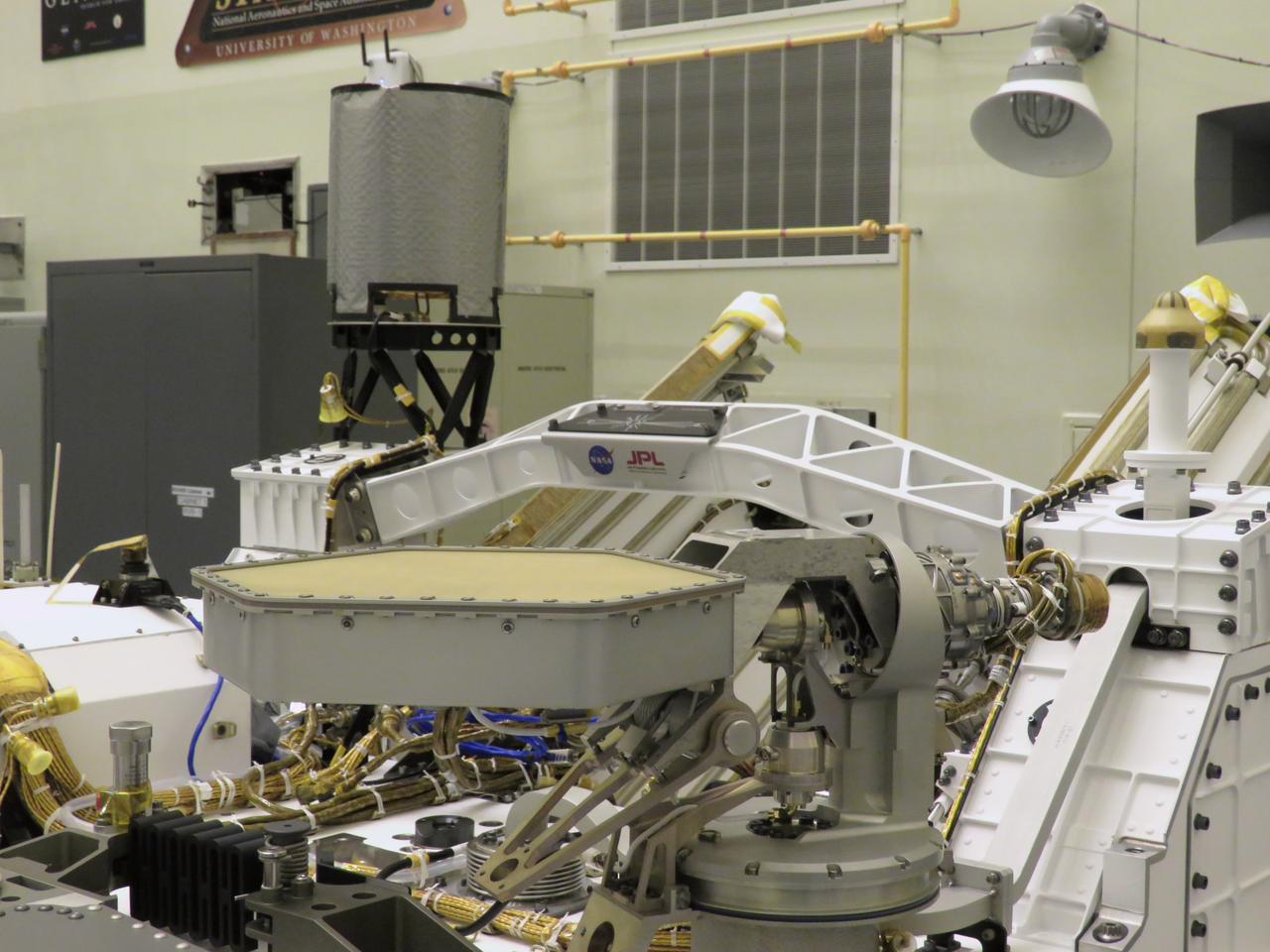
The “Send Your Name to Mars” logo is installed on the Mars Perseverance rover on March 16, 2020, inside the Payload Hazardous Servicing Facility at NASA’s Kennedy Space Center in Florida. When the rover lands on the Red Planet on Feb. 18, 2021, it will be carrying the names of more than 10 million people throughout the world. Those names were etched onto a microchip, which was placed aboard Perseverance. Liftoff aboard a United Launch Alliance Atlas V 541 rocket is targeted for mid-July from Cape Canaveral Air Force Station. NASA’s Launch Services Program based at Kennedy is managing the launch.

The “Send Your Name to Mars” logo is installed on the Mars Perseverance rover on March 16, 2020, inside the Payload Hazardous Servicing Facility at NASA’s Kennedy Space Center in Florida. When the rover lands on the Red Planet on Feb. 18, 2021, it will be carrying the names of more than 10 million people throughout the world. Those names were etched onto a microchip, which was placed aboard Perseverance. Liftoff aboard a United Launch Alliance Atlas V 541 rocket is targeted for mid-July from Cape Canaveral Air Force Station. NASA’s Launch Services Program based at Kennedy is managing the launch.
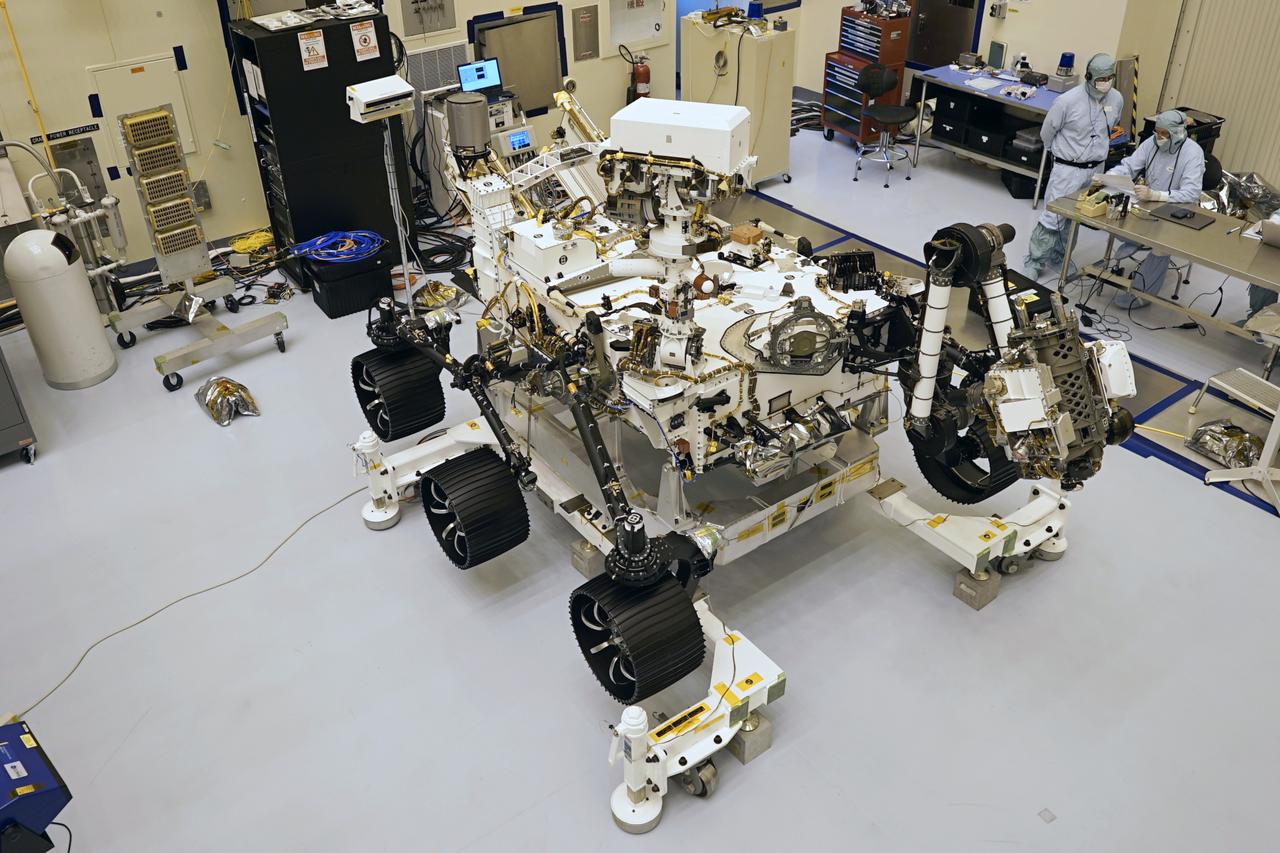
The “Send Your Name to Mars” logo is installed on the Mars Perseverance rover on March 16, 2020, inside the Payload Hazardous Servicing Facility at NASA’s Kennedy Space Center in Florida. When the rover lands on the Red Planet on Feb. 18, 2021, it will be carrying the names of more than 10 million people throughout the world. Those names were etched onto a microchip, which was placed aboard Perseverance. Liftoff aboard a United Launch Alliance Atlas V 541 rocket is targeted for mid-July from Cape Canaveral Air Force Station. NASA’s Launch Services Program based at Kennedy is managing the launch.The “Send Your Name to Mars” logo is installed on the Mars Perseverance rover on March 16, 2020, inside the Payload Hazardous Servicing Facility at NASA’s Kennedy Space Center in Florida. When the rover lands on the Red Planet on Feb. 18, 2021, it will be carrying the names of more than 10 million people throughout the world. Those names were etched onto a microchip, which was placed aboard Perseverance. Liftoff aboard a United Launch Alliance Atlas V 541 rocket is targeted for mid-July from Cape Canaveral Air Force Station. NASA’s Launch Services Program based at Kennedy is managing the launch.
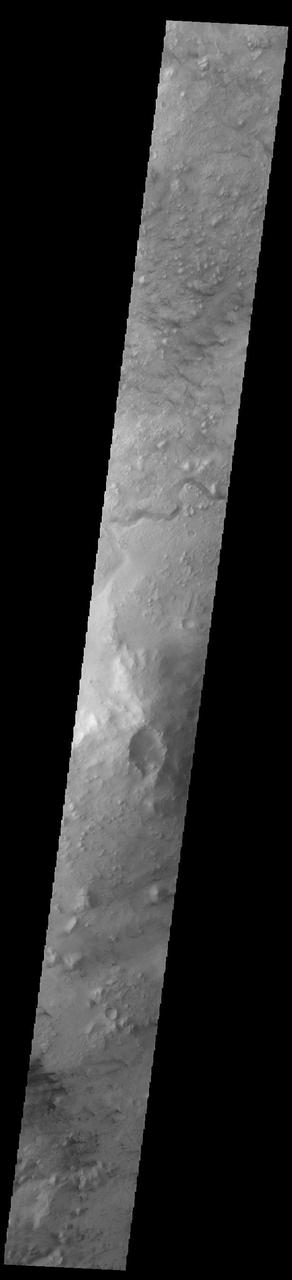
Today's VIS image shows part of the northeastern rim of Jezero Crater. The Perserverance Rover is located on the northwestern part of the crater – near a delta deposit formed by the influx of silt laden water into the crater at a time during Mars' past that was wetter. The crater most likely hosted a lake for a period of time. The channel in the center of this image was formed by the flow of water exiting the crater. Orbit Number: 93804 Latitude: 18.3721 Longitude: 78.2125 Instrument: VIS Captured: 2023-02-06 03:55 https://photojournal.jpl.nasa.gov/catalog/PIA25903
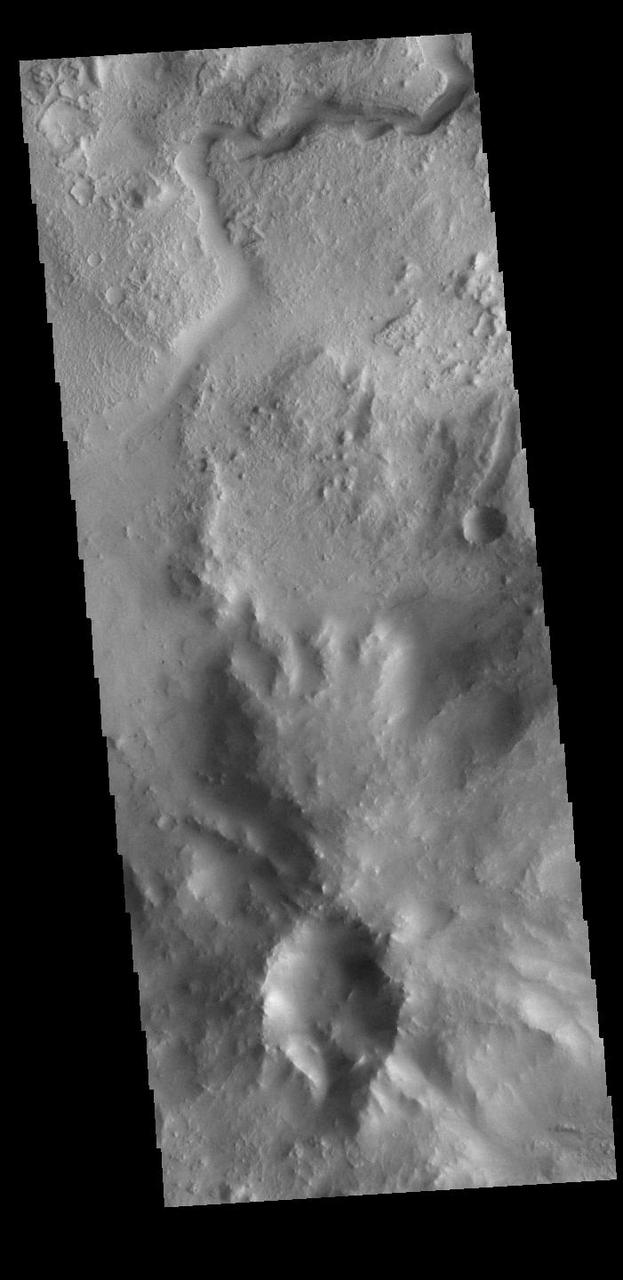
Today's VIS image shows part of the northeastern portion of Jezero Crater. The Perserverance Rover is located on the northwestern part of the crater – near a delta deposit formed by the influx of silt laden water into the crater at a time during Mars' past that was wetter. The crater most likely hosted a lake for a period of time. The channel at the top of this image was formed by the flow of water exiting the crater. Orbit Number: 89206 Latitude: 18.3845 Longitude: 78.1952 Instrument: VIS Captured: 2022-01-23 12:45 https://photojournal.jpl.nasa.gov/catalog/PIA25350
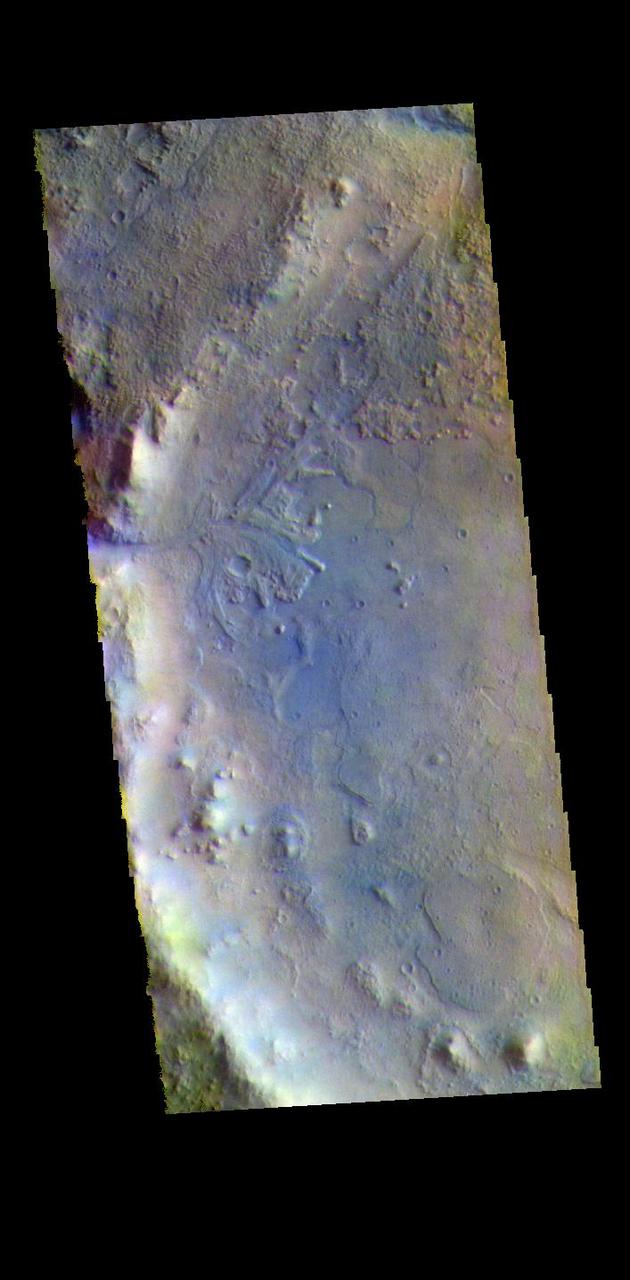
The THEMIS VIS camera contains 5 filters. The data from different filters can be combined in multiple ways to create a false color image. These false color images may reveal subtle variations of the surface not easily identified in a single band image. Today's false color image shows the western half of Jezero Crater. The Perserverance Rover is located in this part of the crater – near the delta deposit formed by the influx of silt laden water into the crater at a time during Mars' past that was wetter. The crater most likely hosted a lake for a period of time. Jezero Crater is 47km (29 miles) in diameter. The THEMIS VIS camera is capable of capturing color images of the Martian surface using five different color filters. In this mode of operation, the spatial resolution and coverage of the image must be reduced to accommodate the additional data volume produced from using multiple filters. To make a color image, three of the five filter images (each in grayscale) are selected. Each is contrast enhanced and then converted to a red, green, or blue intensity image. These three images are then combined to produce a full color, single image. Because the THEMIS color filters don't span the full range of colors seen by the human eye, a color THEMIS image does not represent true color. Also, because each single-filter image is contrast enhanced before inclusion in the three-color image, the apparent color variation of the scene is exaggerated. Nevertheless, the color variation that does appear is representative of some change in color, however subtle, in the actual scene. Note that the long edges of THEMIS color images typically contain color artifacts that do not represent surface variation. Orbit Number: 95046 Latitude: 18.449 Longitude: 77.436 Instrument: VIS Captured: 2023-05-19 09:28 https://photojournal.jpl.nasa.gov/catalog/PIA26140

A Martian dust devil can be seen consuming a smaller one in this short video made of images taken by one of the navigation cameras aboard NASA's Perseverance Mars rover on Jan. 25, 2025, the 1,398th day, or sol, of the mission. When the rover snapped these images from about 0.6 miles (1 kilometer) away, the larger dust devil was approximately 210 feet (65 meters) wide, at least 1,300 feet (400 meters) tall, and moving about 2 mph (1 meter per second) to the west-northwest. The smaller dust devil trailing behind (also in the foreground) was roughly 16 feet (5 meters) wide, about the same height, and traveling a bit fast as it was sucked into the larger whirlwind. Perseverance recorded the scene as it explored the western rim of Mars' Jezero Crater at a location called "Witch Hazel Hill." Two other dust devils can be seen in the left and center background of image. The video, which has been enhanced in order to show maximal detail, was speeded up 30 times. It is composed of 21 frames taken about 6 seconds apart. A key objective for Perseverance's mission on Mars is astrobiology, including the search for signs of ancient microbial life. The rover will characterize the planet's geology and past climate, pave the way for human exploration of the Red Planet, and be the first mission to collect and cache Martian rock and regolith. NASA's Mars Sample Return Program, in cooperation with ESA (European Space Agency), is designed to send spacecraft to Mars to collect these sealed samples from the surface and return them to Earth for in-depth analysis. The Mars 2020 Perseverance mission is part of NASA's Mars Exploration Program (MEP) portfolio and the agency's Moon to Mars exploration approach, which includes Artemis missions to the Moon that will help prepare for human exploration of the Red Planet. Animation available at https://photojournal.jpl.nasa.gov/catalog/PIA26528
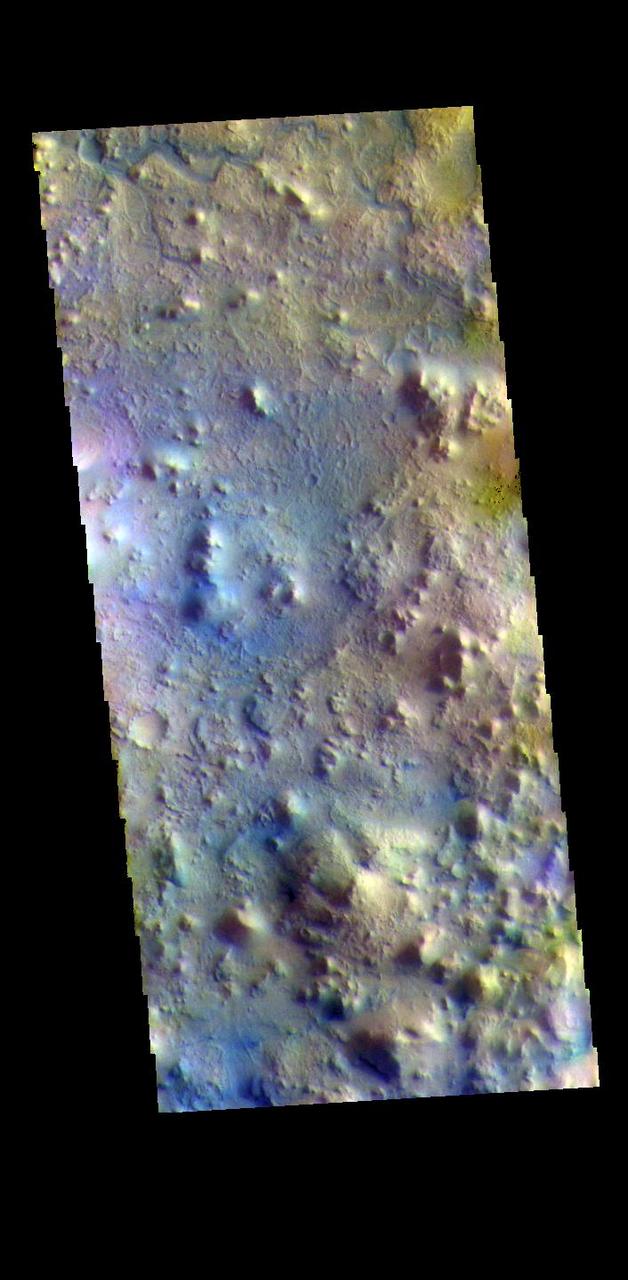
The THEMIS VIS camera contains 5 filters. The data from different filters can be combined in multiple ways to create a false color image. These false color images may reveal subtle variations of the surface not easily identified in a single band image. Today's false color image shows part of Terra Sabaea, in the region between Nili Fossae and Isidis Planitia. This image is located just east of Jezero Crater, the home of the Mars 2020 rover (Perserverance) and its little helicopter buddy (Ingenuity). The THEMIS VIS camera is capable of capturing color images of the Martian surface using five different color filters. In this mode of operation, the spatial resolution and coverage of the image must be reduced to accommodate the additional data volume produced from using multiple filters. To make a color image, three of the five filter images (each in grayscale) are selected. Each is contrast enhanced and then converted to a red, green, or blue intensity image. These three images are then combined to produce a full color, single image. Because the THEMIS color filters don't span the full range of colors seen by the human eye, a color THEMIS image does not represent true color. Also, because each single-filter image is contrast enhanced before inclusion in the three-color image, the apparent color variation of the scene is exaggerated. Nevertheless, the color variation that does appear is representative of some change in color, however subtle, in the actual scene. Note that the long edges of THEMIS color images typically contain color artifacts that do not represent surface variation. Orbit Number: 95021 Latitude: 18.3774 Longitude: 78.6869 Instrument: VIS Captured: 2023-05-17 08:04 https://photojournal.jpl.nasa.gov/catalog/PIA26138