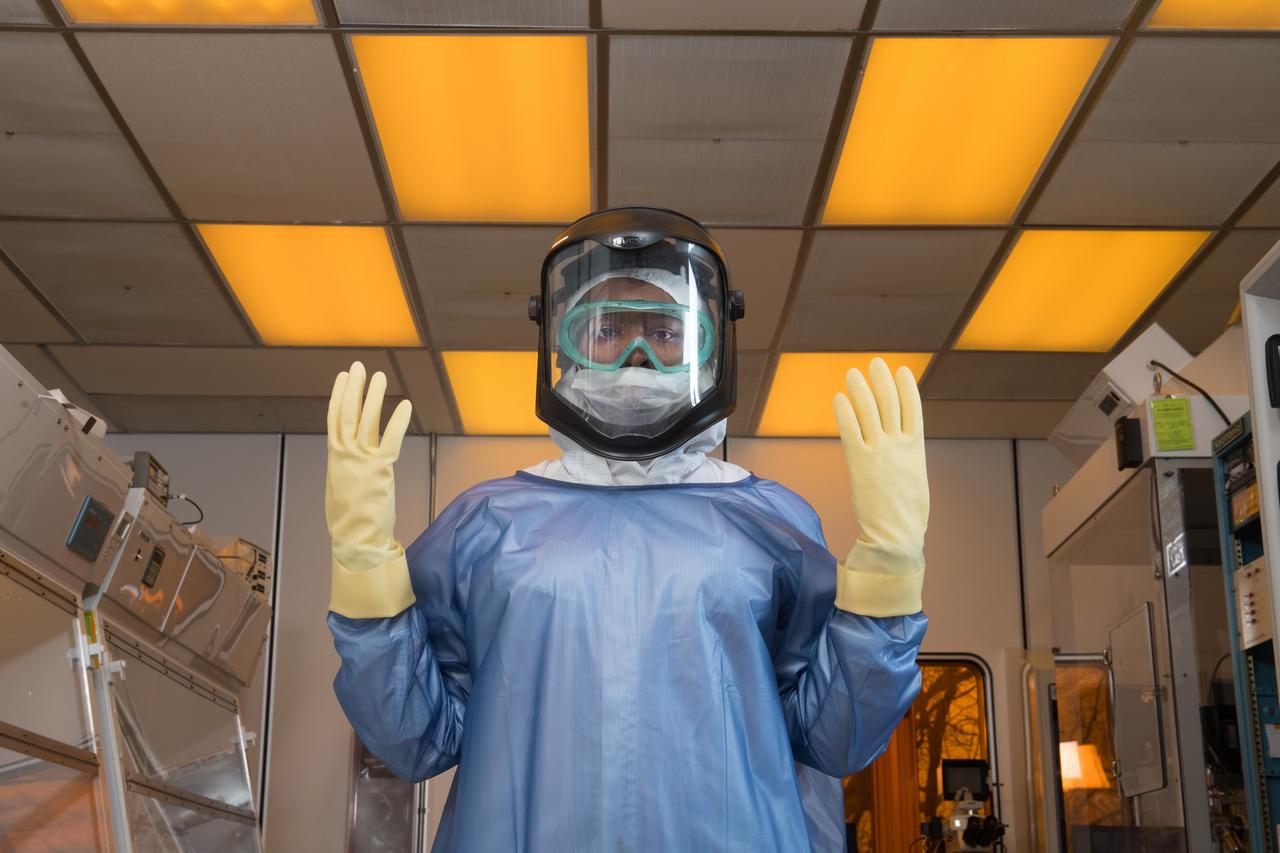
Laboratory researcher suits up for work in a research clean room. Personal Protective Equipment, PPE, Portait Series
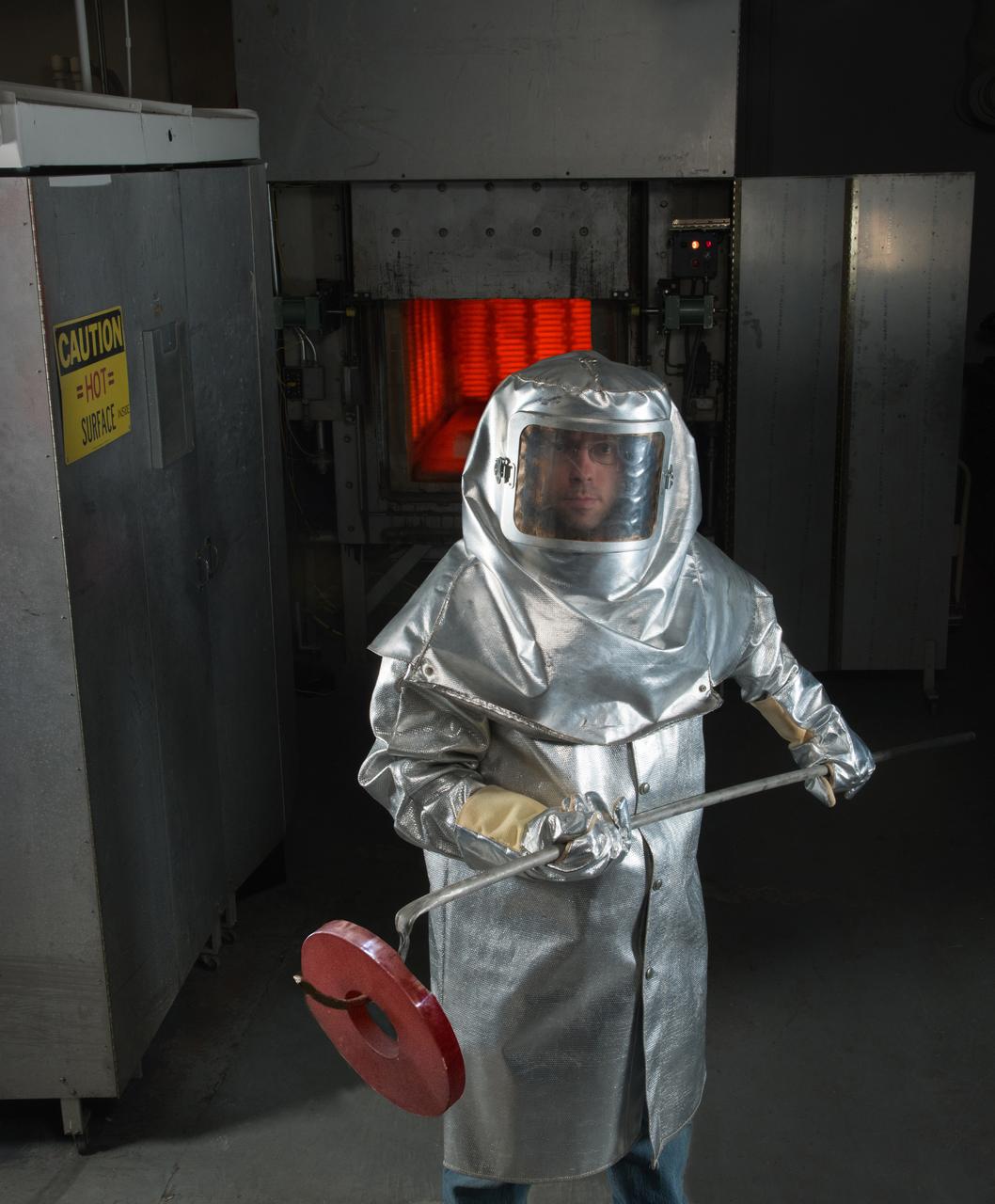
Personal Protective Equipment, PPE, Portrait Series, Welch_503059, Shape memory alloys, Shape memory alloy, Welch-Bey-503059, Glen Bigelow,
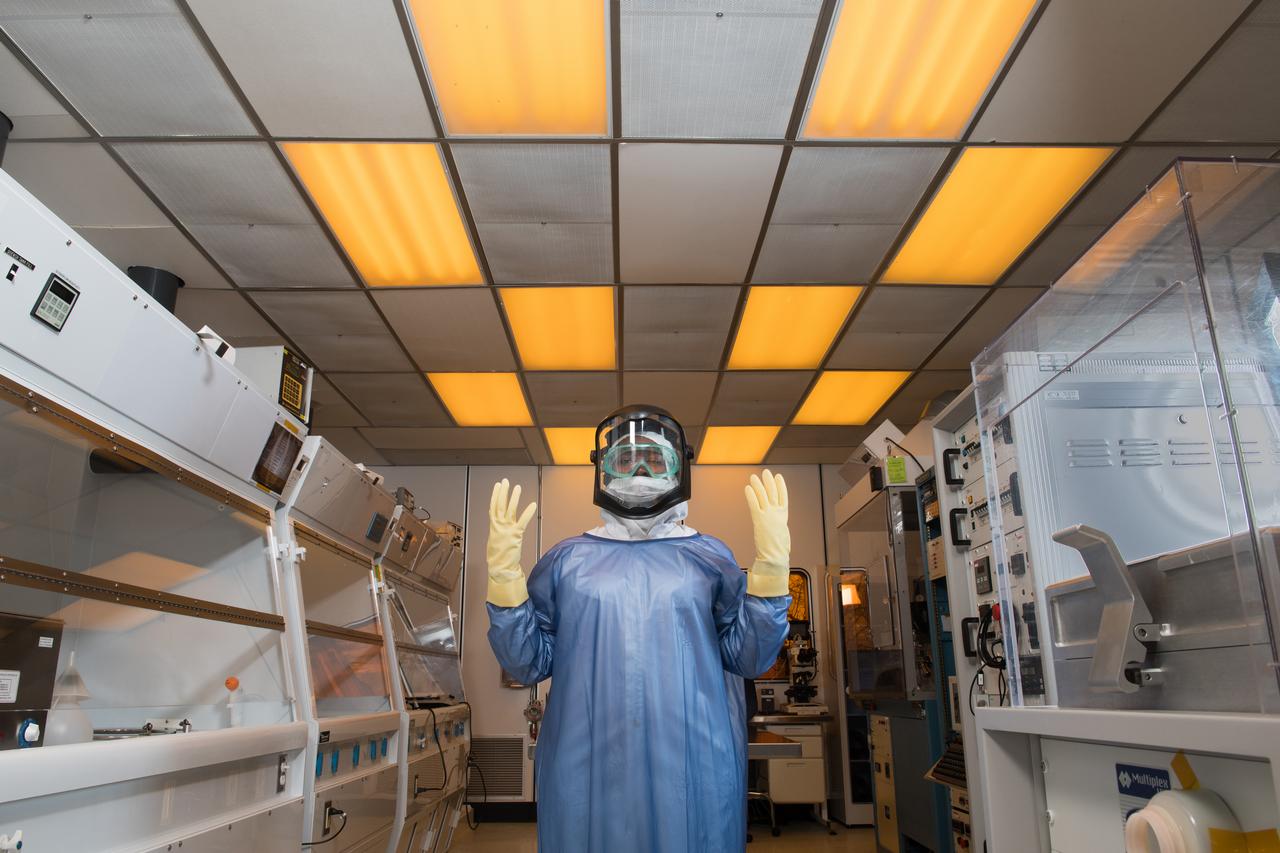
Laboratory Researcher suits up for work in a research clean room. Personal Protective Equipment, PPE, Portait Series
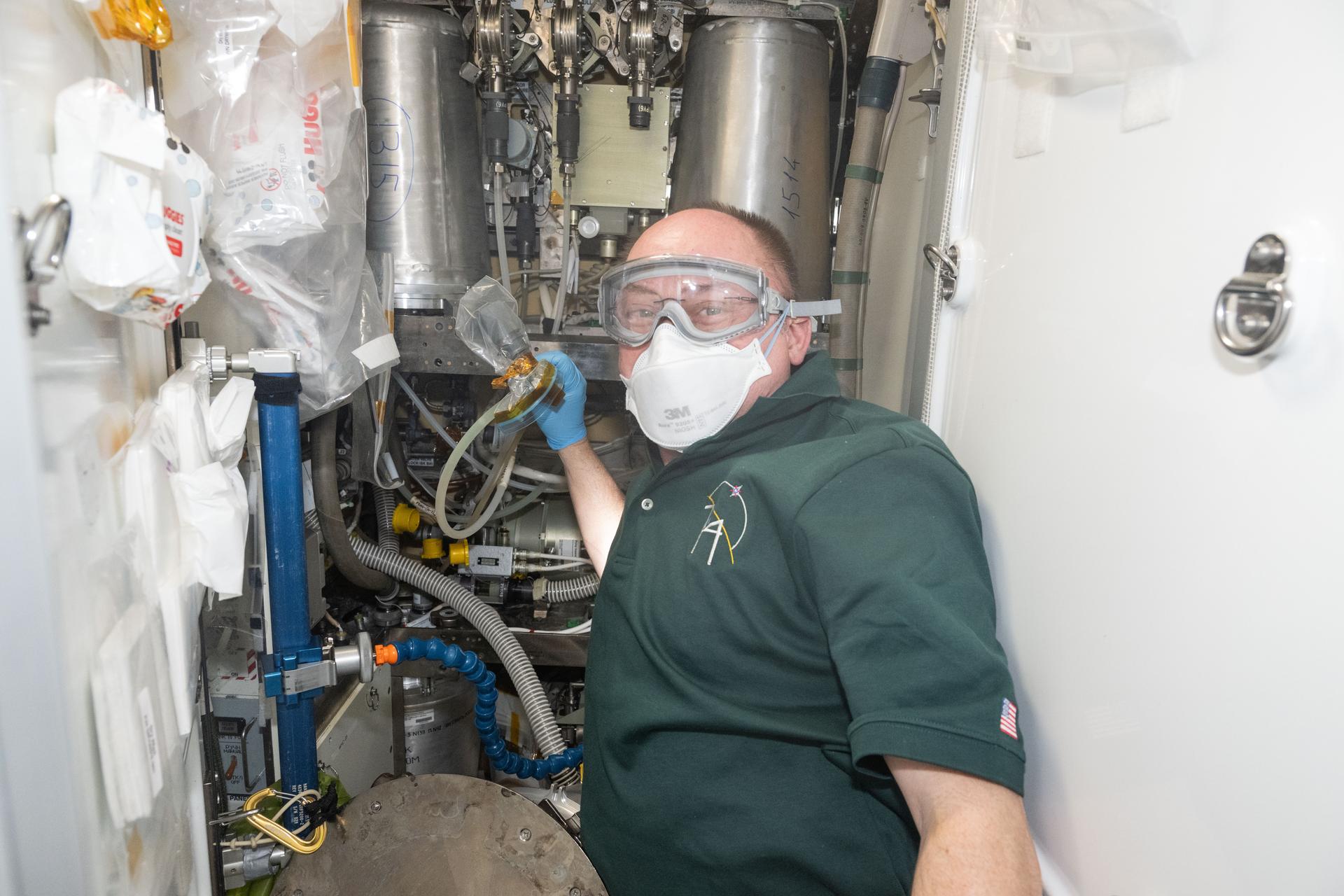
iss074e0000027 (Dec. 10, 2025) --- NASA astronaut and Expedition 74 Commander Mike Fincke wears personal protective equipment while working inside the Tranquility module replacing orbital plumbing components on the waste and hygiene compartment, the International Space Station’s restroom.
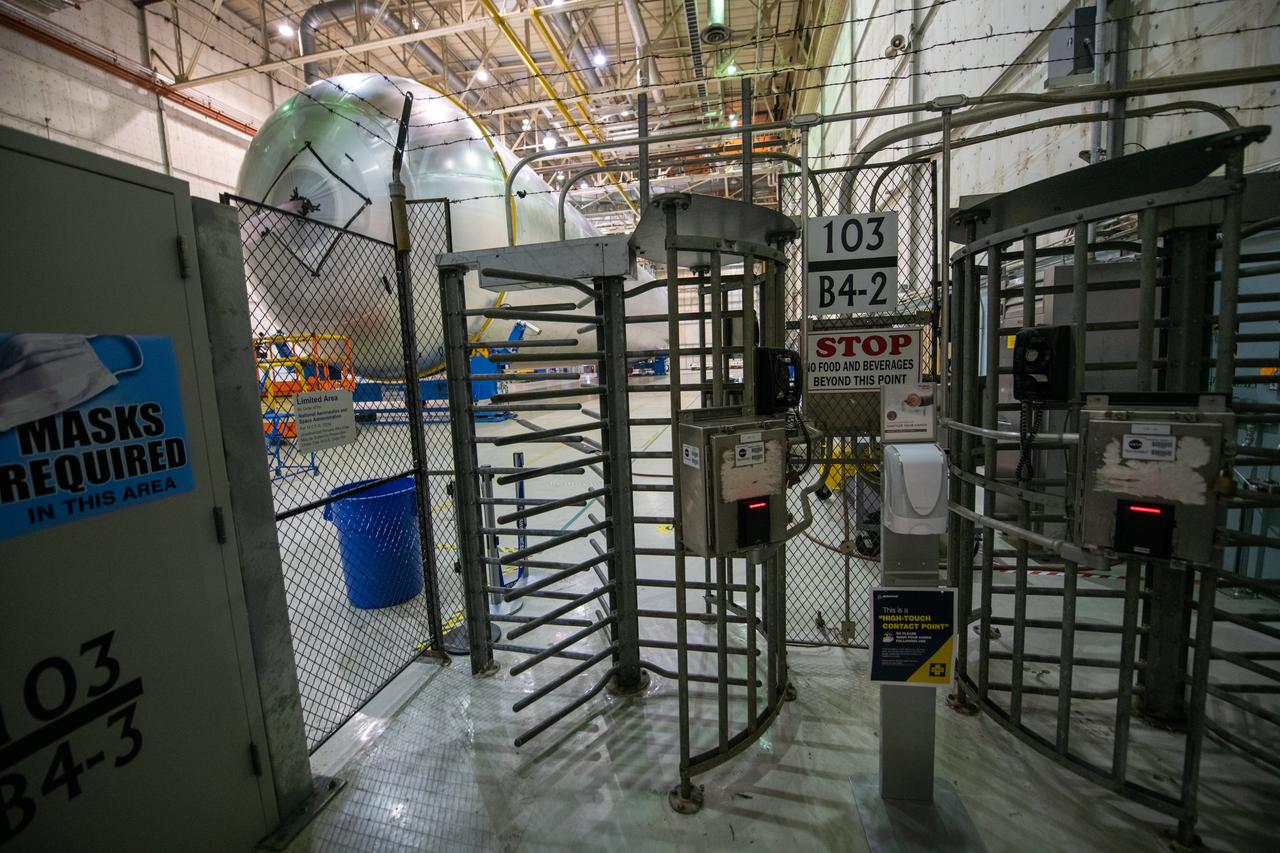
Employees wear personal protective gear at Michoud Assembly Facility as the facility transitioned to Stage 3 of NASA’s Framework for Return To On-Site Work. Employees wear the appropriate personal protective equipment (PPE) and/or cloth face coverings as required for assigned tasks. Access to the facility is limited to authorized personnel working on mission-critical tasks that must be conducted onsite. Mission-critical tasks include slowly and methodically resuming Space Launch System (SLS) Core Stage and Orion production activities, particularly critical path deliverables to support the Artemis Program, at a pace that limits personnel and follows federal guidelines for social distancing and use of personal protective equipment such as face masks. For more information about SLS, visit nasa.gov/sls.
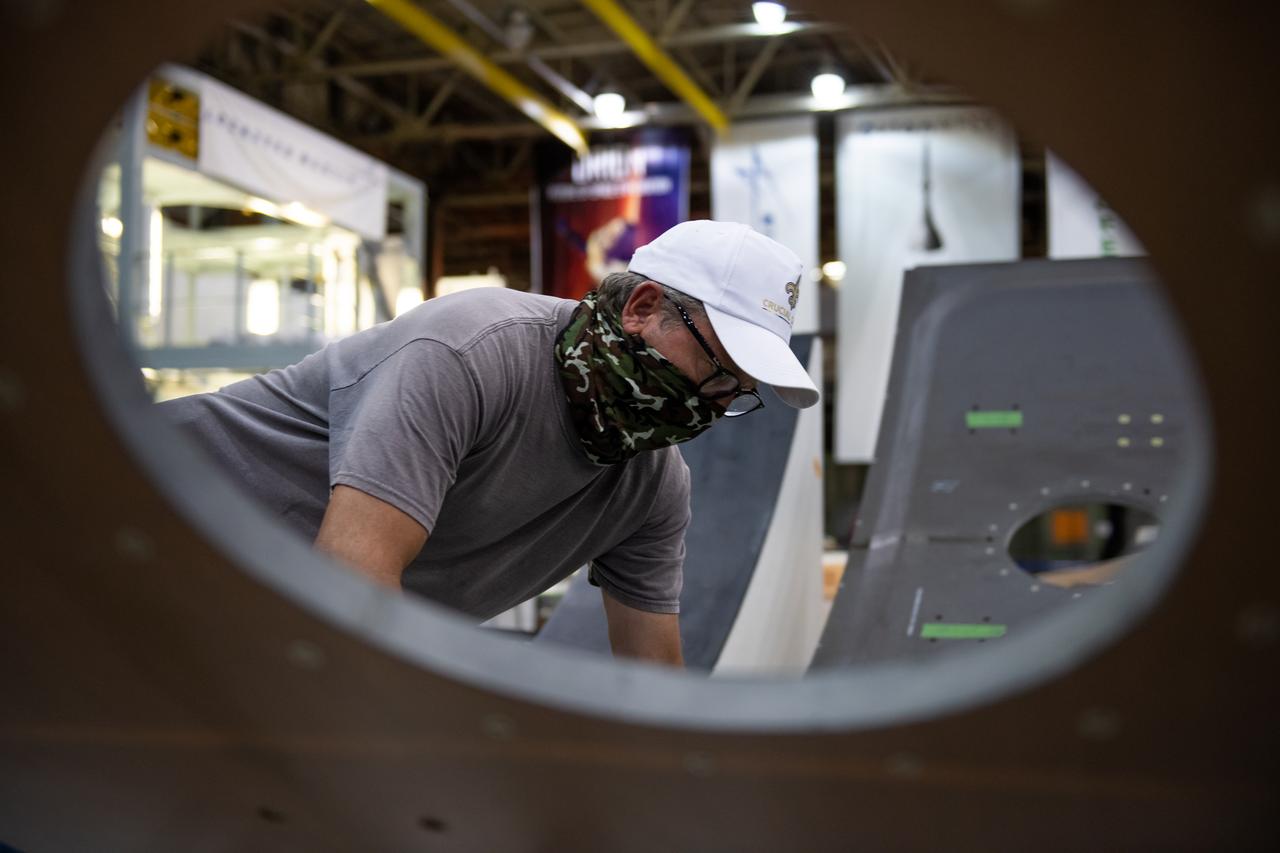
Employees wear personal protective gear at Michoud Assembly Facility as the facility transitioned to Stage 3 of NASA’s Framework for Return To On-Site Work. Employees wear the appropriate personal protective equipment (PPE) and/or cloth face coverings as required for assigned tasks. Access to the facility is limited to authorized personnel working on mission-critical tasks that must be conducted onsite. Mission-critical tasks include slowly and methodically resuming Space Launch System (SLS) Core Stage and Orion production activities, particularly critical path deliverables to support the Artemis Program, at a pace that limits personnel and follows federal guidelines for social distancing and use of personal protective equipment such as face masks. For more information about SLS, visit nasa.gov/sls.
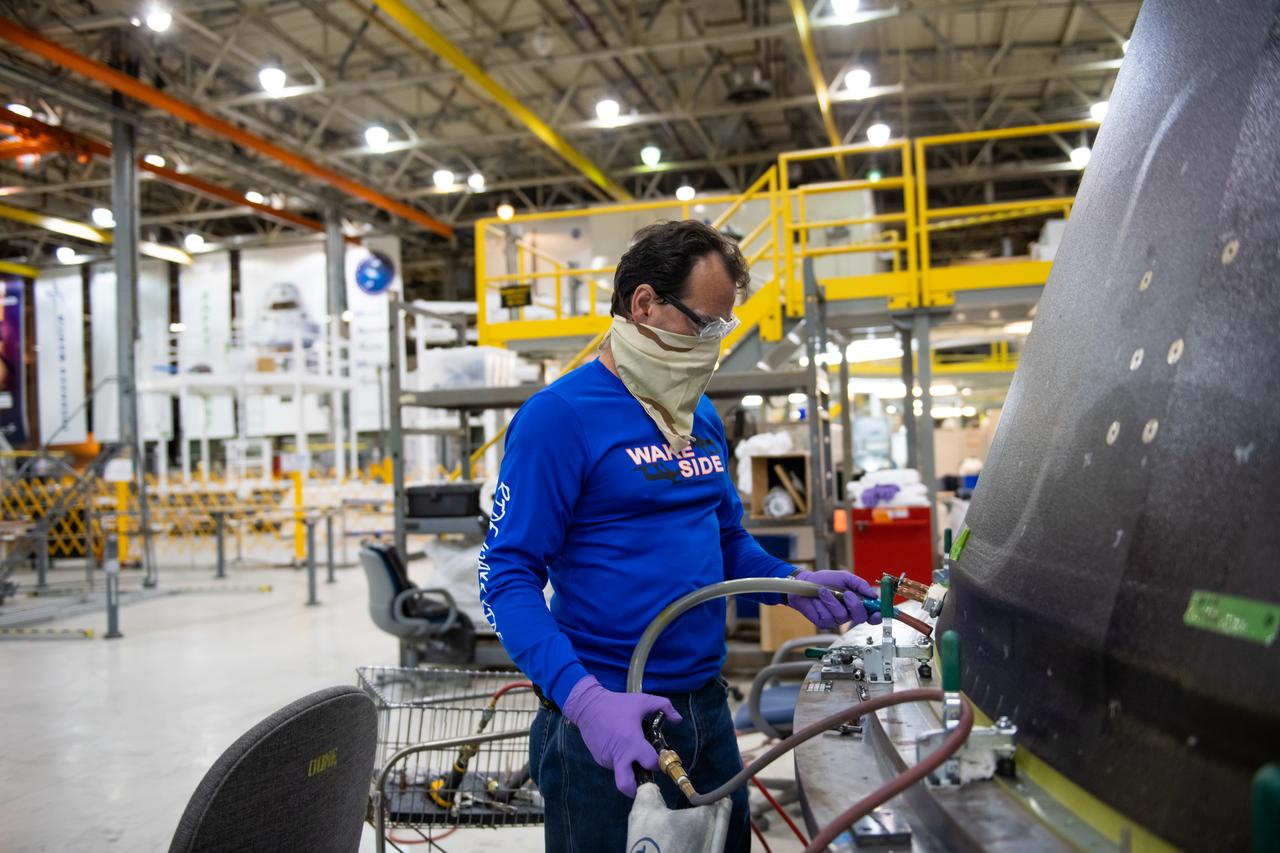
Employees wear personal protective gear at Michoud Assembly Facility as the facility transitioned to Stage 3 of NASA’s Framework for Return To On-Site Work. Employees wear the appropriate personal protective equipment (PPE) and/or cloth face coverings as required for assigned tasks. Access to the facility is limited to authorized personnel working on mission-critical tasks that must be conducted onsite. Mission-critical tasks include slowly and methodically resuming Space Launch System (SLS) Core Stage and Orion production activities, particularly critical path deliverables to support the Artemis Program, at a pace that limits personnel and follows federal guidelines for social distancing and use of personal protective equipment such as face masks. For more information about SLS, visit nasa.gov/sls.
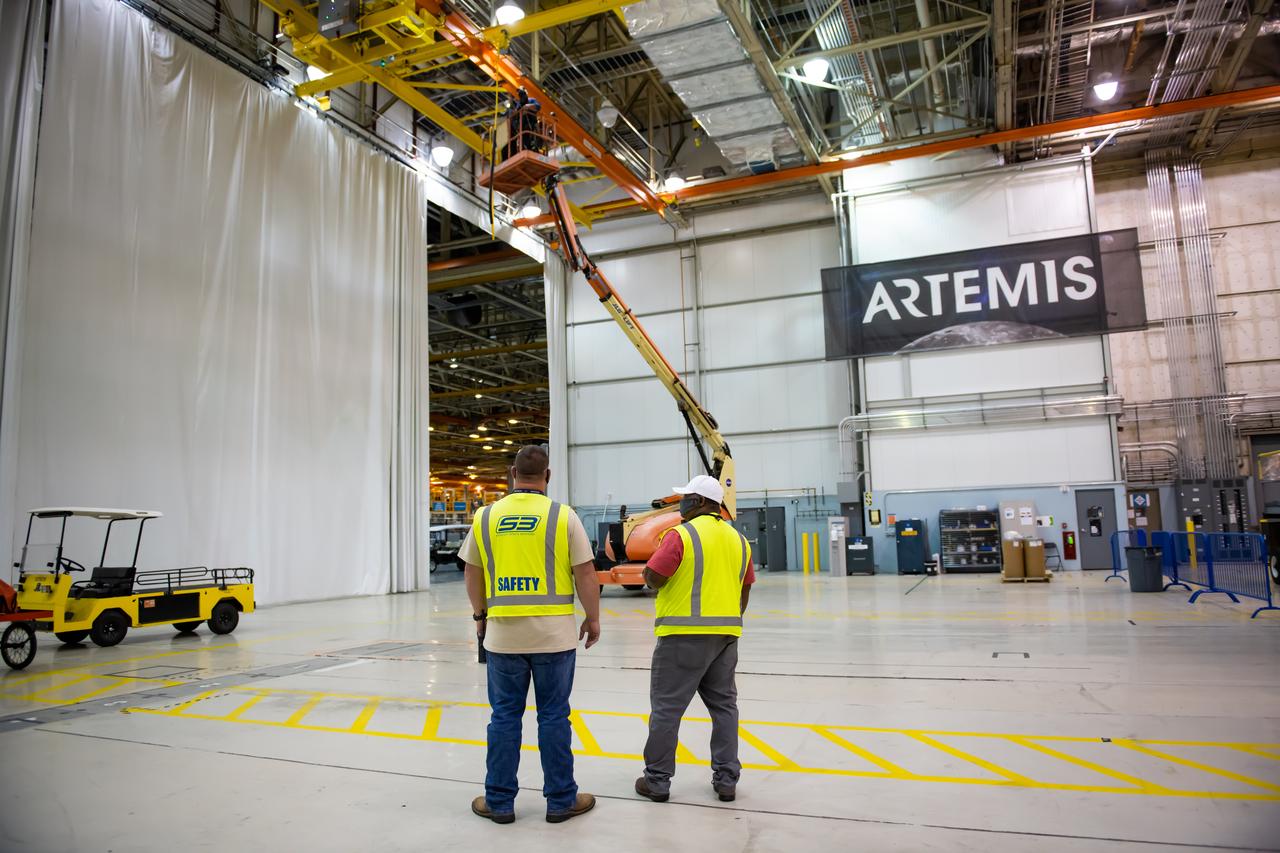
Employees wear personal protective gear at Michoud Assembly Facility as the facility transitioned to Stage 3 of NASA’s Framework for Return To On-Site Work. Employees wear the appropriate personal protective equipment (PPE) and/or cloth face coverings as required for assigned tasks. Access to the facility is limited to authorized personnel working on mission-critical tasks that must be conducted onsite. Mission-critical tasks include slowly and methodically resuming Space Launch System (SLS) Core Stage and Orion production activities, particularly critical path deliverables to support the Artemis Program, at a pace that limits personnel and follows federal guidelines for social distancing and use of personal protective equipment such as face masks. For more information about SLS, visit nasa.gov/sls.
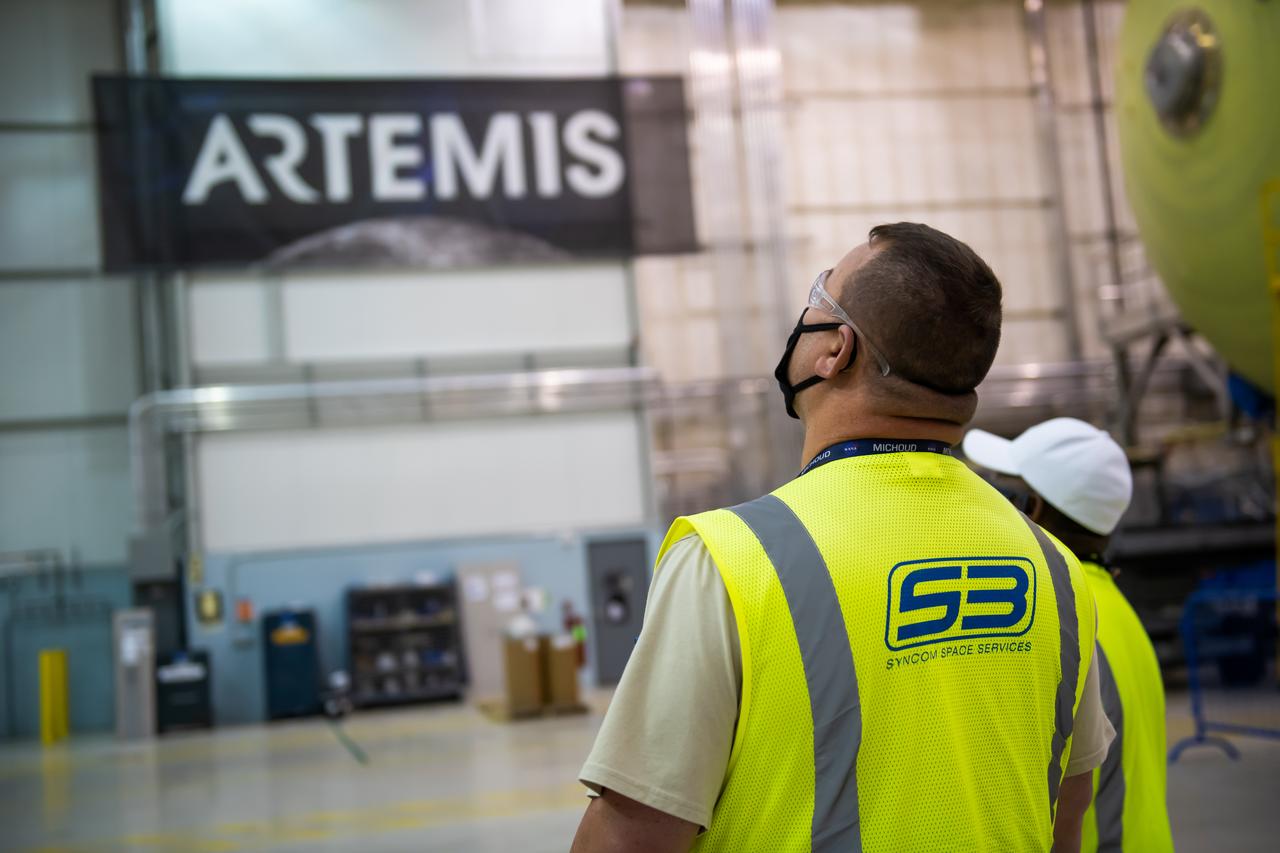
Employees wear personal protective gear at Michoud Assembly Facility as the facility transitioned to Stage 3 of NASA’s Framework for Return To On-Site Work. Employees wear the appropriate personal protective equipment (PPE) and/or cloth face coverings as required for assigned tasks. Access to the facility is limited to authorized personnel working on mission-critical tasks that must be conducted onsite. Mission-critical tasks include slowly and methodically resuming Space Launch System (SLS) Core Stage and Orion production activities, particularly critical path deliverables to support the Artemis Program, at a pace that limits personnel and follows federal guidelines for social distancing and use of personal protective equipment such as face masks. For more information about SLS, visit nasa.gov/sls.
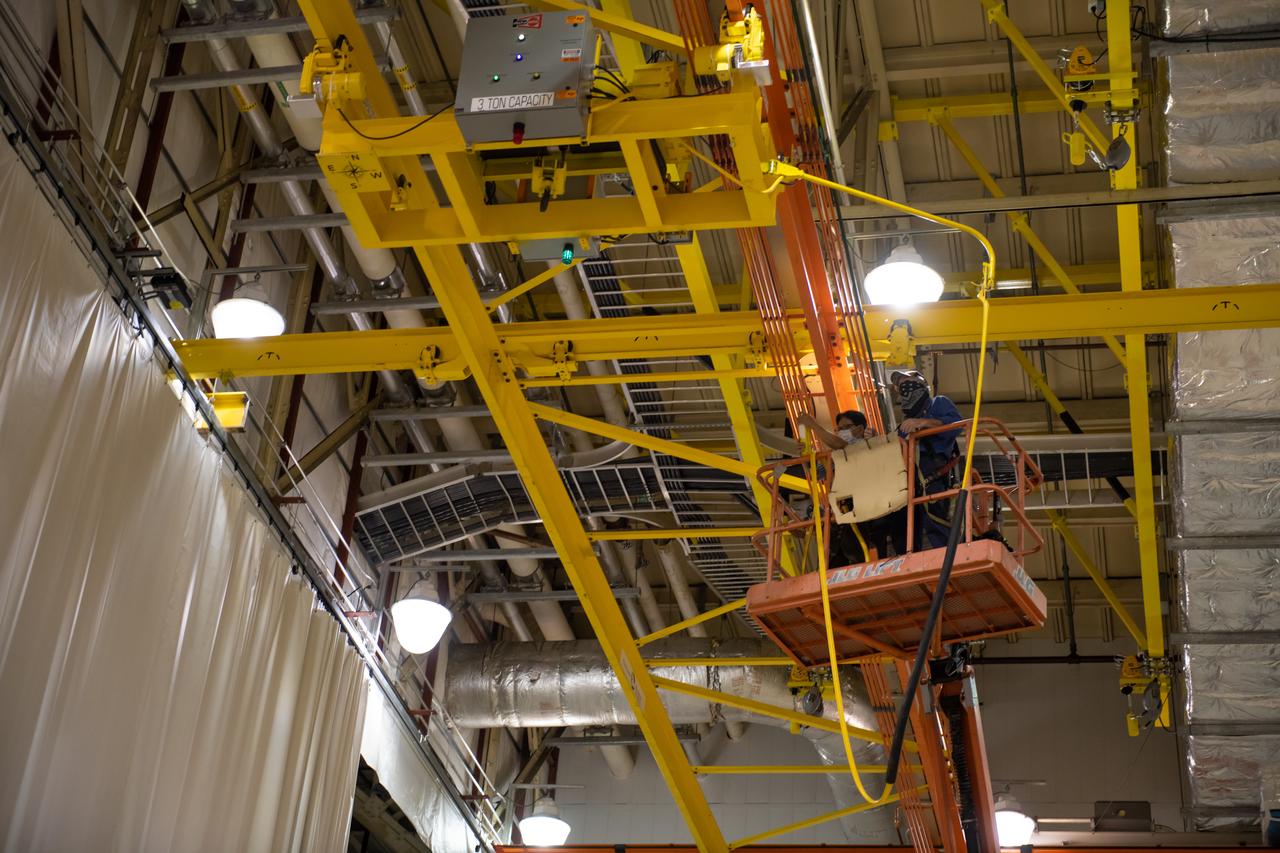
Employees wear personal protective gear at Michoud Assembly Facility as the facility transitioned to Stage 3 of NASA’s Framework for Return To On-Site Work. Employees wear the appropriate personal protective equipment (PPE) and/or cloth face coverings as required for assigned tasks. Access to the facility is limited to authorized personnel working on mission-critical tasks that must be conducted onsite. Mission-critical tasks include slowly and methodically resuming Space Launch System (SLS) Core Stage and Orion production activities, particularly critical path deliverables to support the Artemis Program, at a pace that limits personnel and follows federal guidelines for social distancing and use of personal protective equipment such as face masks. For more information about SLS, visit nasa.gov/sls.
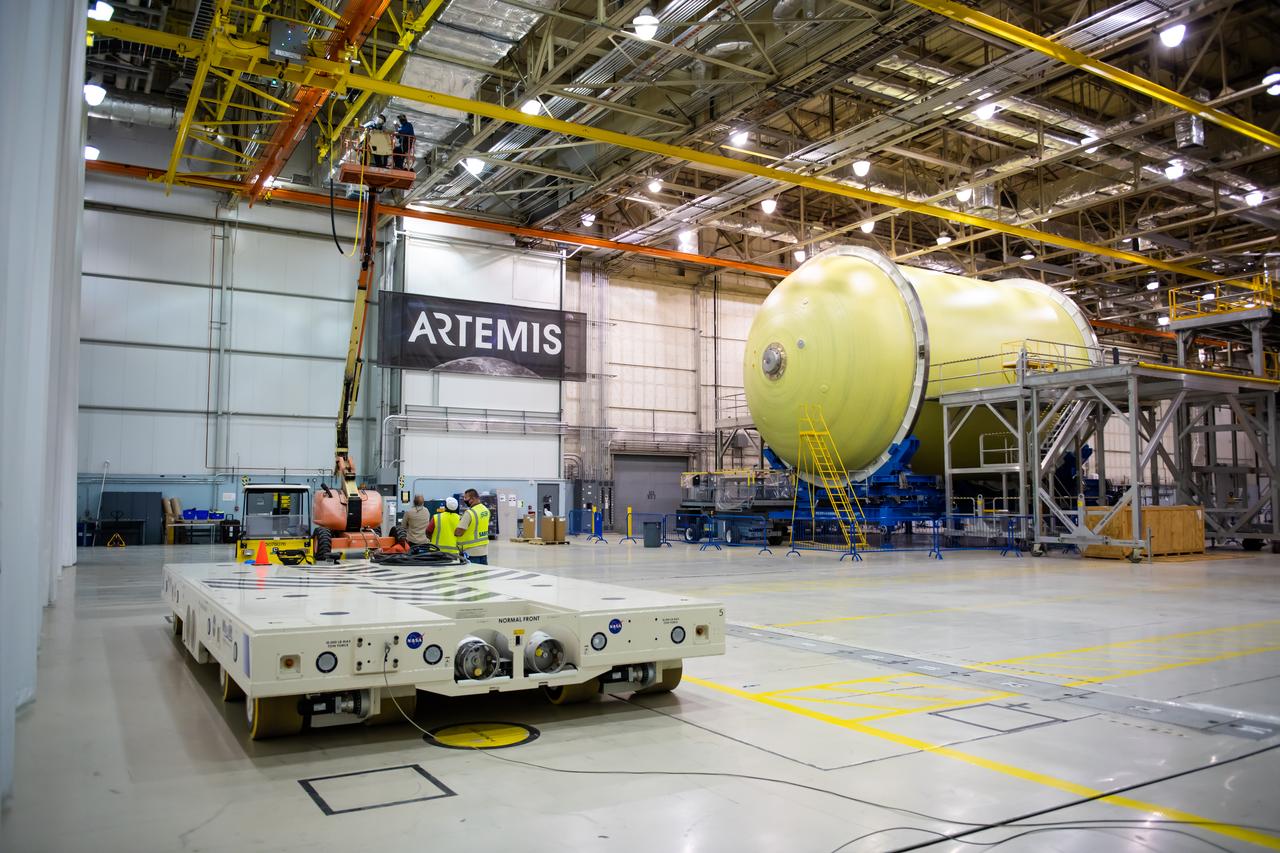
Employees wear personal protective gear at Michoud Assembly Facility as the facility transitioned to Stage 3 of NASA’s Framework for Return To On-Site Work. Employees wear the appropriate personal protective equipment (PPE) and/or cloth face coverings as required for assigned tasks. Access to the facility is limited to authorized personnel working on mission-critical tasks that must be conducted onsite. Mission-critical tasks include slowly and methodically resuming Space Launch System (SLS) Core Stage and Orion production activities, particularly critical path deliverables to support the Artemis Program, at a pace that limits personnel and follows federal guidelines for social distancing and use of personal protective equipment such as face masks. For more information about SLS, visit nasa.gov/sls.
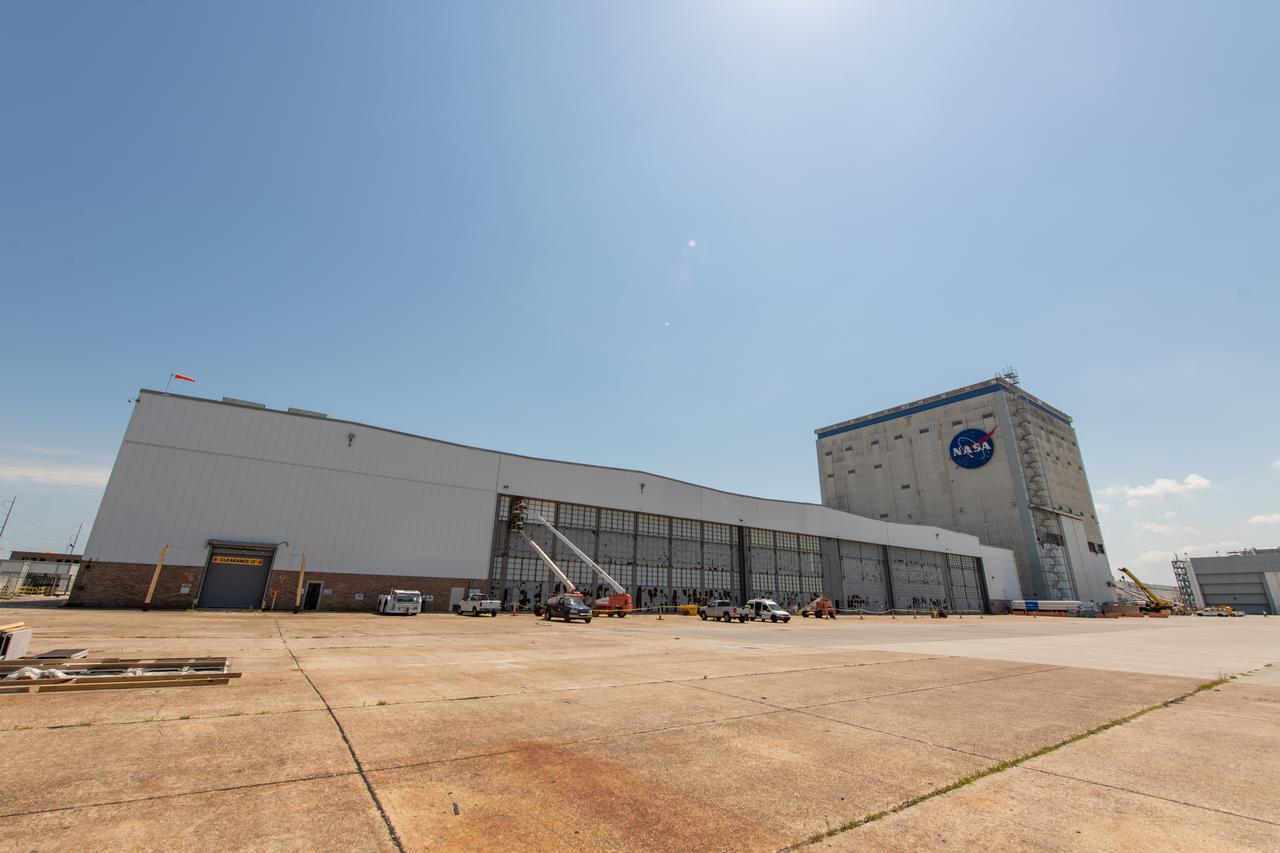
Employees wear personal protective gear at Michoud Assembly Facility as the facility transitioned to Stage 3 of NASA’s Framework for Return To On-Site Work. Employees wear the appropriate personal protective equipment (PPE) and/or cloth face coverings as required for assigned tasks. Access to the facility is limited to authorized personnel working on mission-critical tasks that must be conducted onsite. Mission-critical tasks include slowly and methodically resuming Space Launch System (SLS) Core Stage and Orion production activities, particularly critical path deliverables to support the Artemis Program, at a pace that limits personnel and follows federal guidelines for social distancing and use of personal protective equipment such as face masks. For more information about SLS, visit nasa.gov/sls.
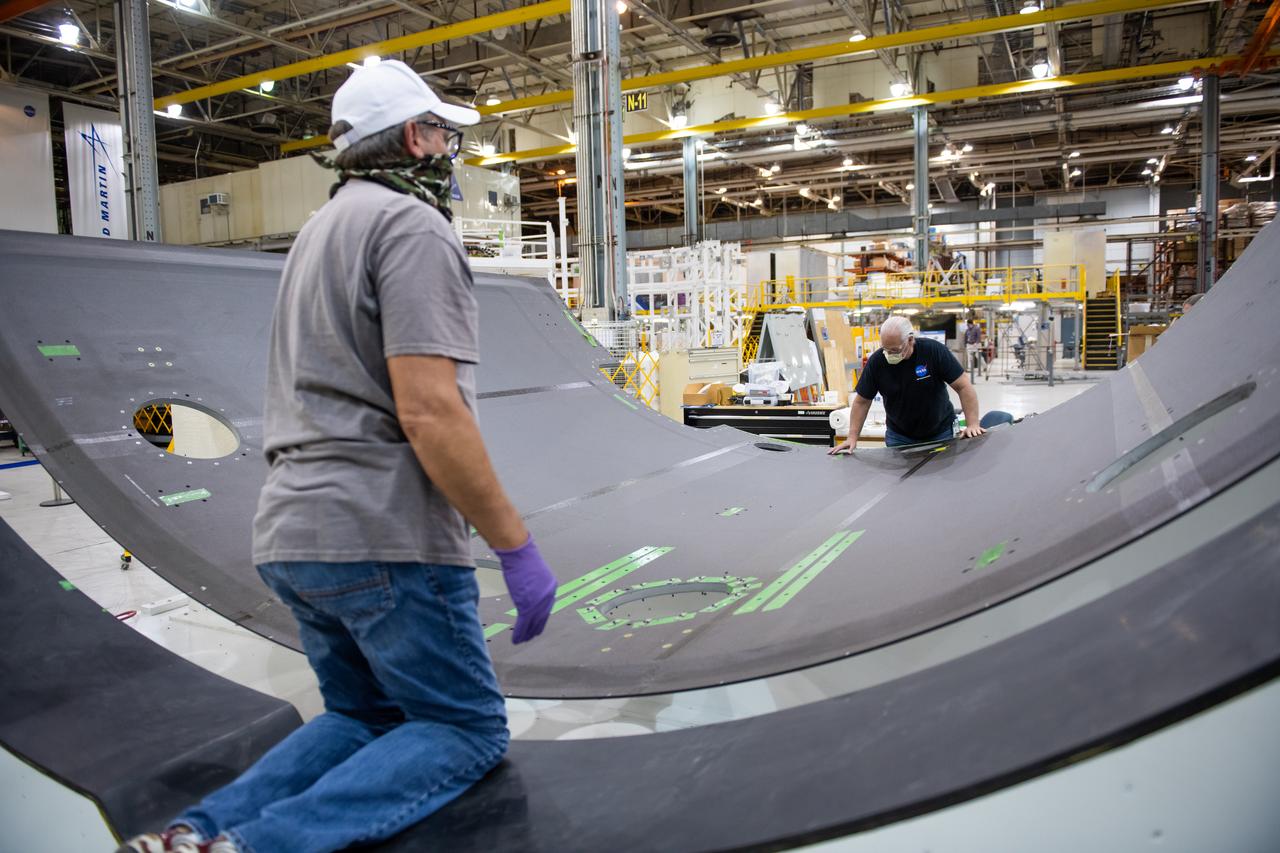
Employees wear personal protective gear at Michoud Assembly Facility as the facility transitioned to Stage 3 of NASA’s Framework for Return To On-Site Work. Employees wear the appropriate personal protective equipment (PPE) and/or cloth face coverings as required for assigned tasks. Access to the facility is limited to authorized personnel working on mission-critical tasks that must be conducted onsite. Mission-critical tasks include slowly and methodically resuming Space Launch System (SLS) Core Stage and Orion production activities, particularly critical path deliverables to support the Artemis Program, at a pace that limits personnel and follows federal guidelines for social distancing and use of personal protective equipment such as face masks. For more information about SLS, visit nasa.gov/sls.
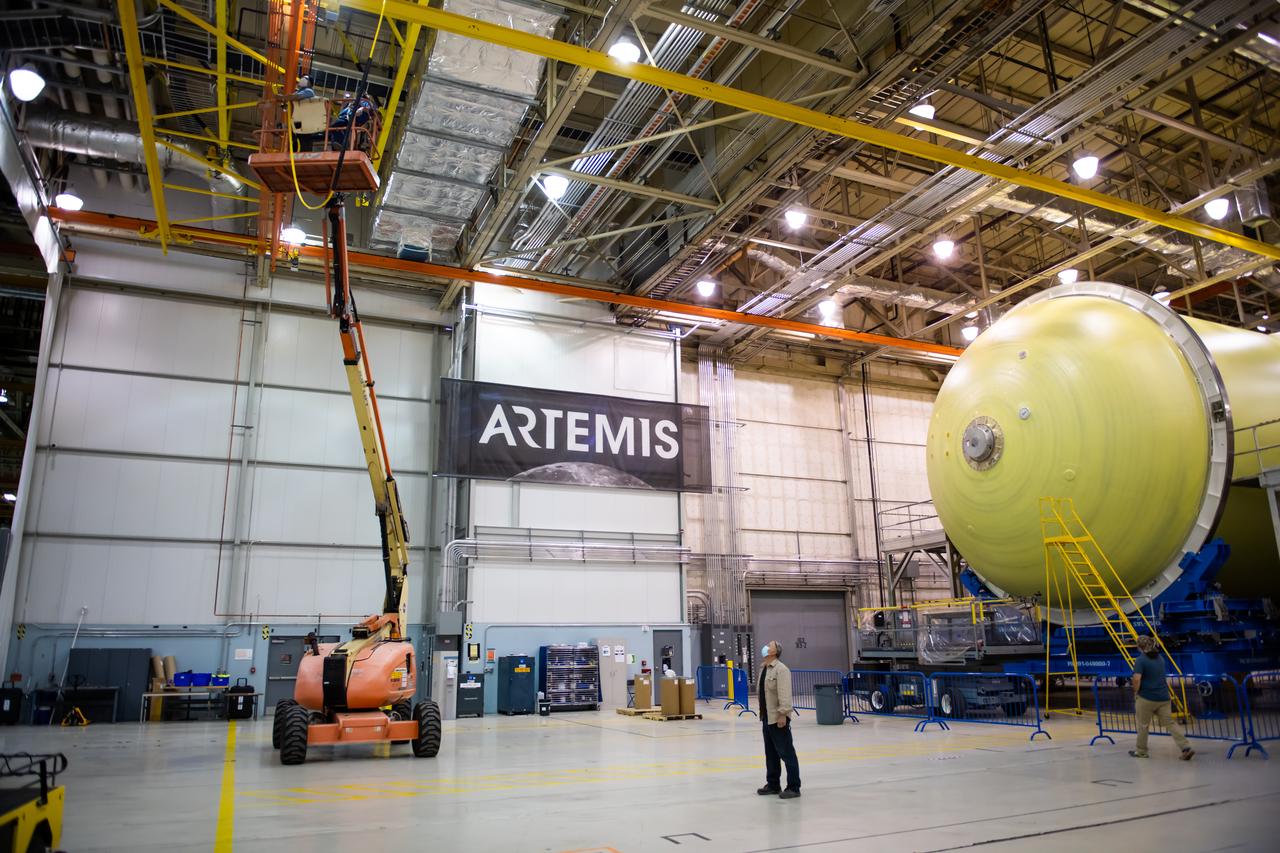
Employees wear personal protective gear at Michoud Assembly Facility as the facility transitioned to Stage 3 of NASA’s Framework for Return To On-Site Work. Employees wear the appropriate personal protective equipment (PPE) and/or cloth face coverings as required for assigned tasks. Access to the facility is limited to authorized personnel working on mission-critical tasks that must be conducted onsite. Mission-critical tasks include slowly and methodically resuming Space Launch System (SLS) Core Stage and Orion production activities, particularly critical path deliverables to support the Artemis Program, at a pace that limits personnel and follows federal guidelines for social distancing and use of personal protective equipment such as face masks. For more information about SLS, visit nasa.gov/sls.
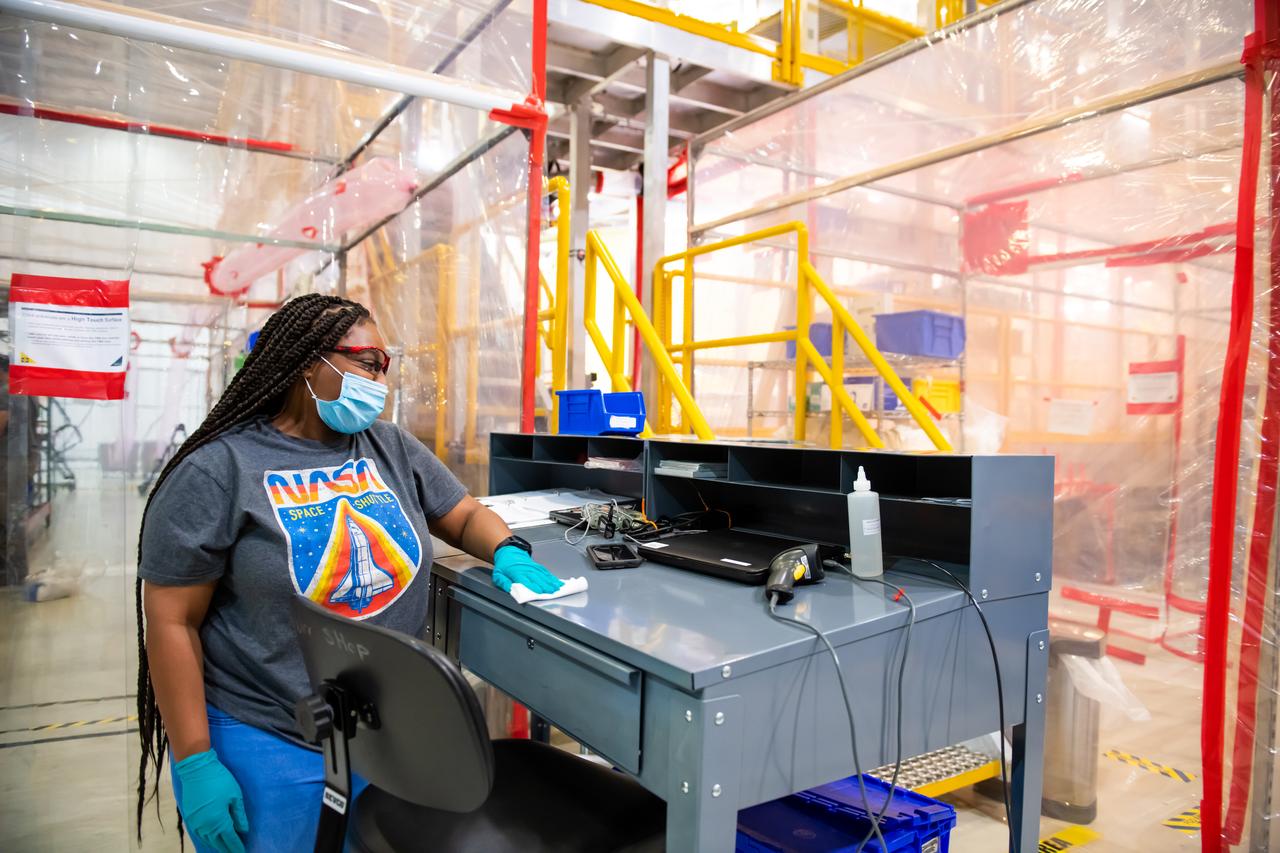
Employees wear personal protective gear at Michoud Assembly Facility as the facility transitioned to Stage 3 of NASA’s Framework for Return To On-Site Work. Employees wear the appropriate personal protective equipment (PPE) and/or cloth face coverings as required for assigned tasks. Access to the facility is limited to authorized personnel working on mission-critical tasks that must be conducted onsite. Mission-critical tasks include slowly and methodically resuming Space Launch System (SLS) Core Stage and Orion production activities, particularly critical path deliverables to support the Artemis Program, at a pace that limits personnel and follows federal guidelines for social distancing and use of personal protective equipment such as face masks. For more information about SLS, visit nasa.gov/sls.
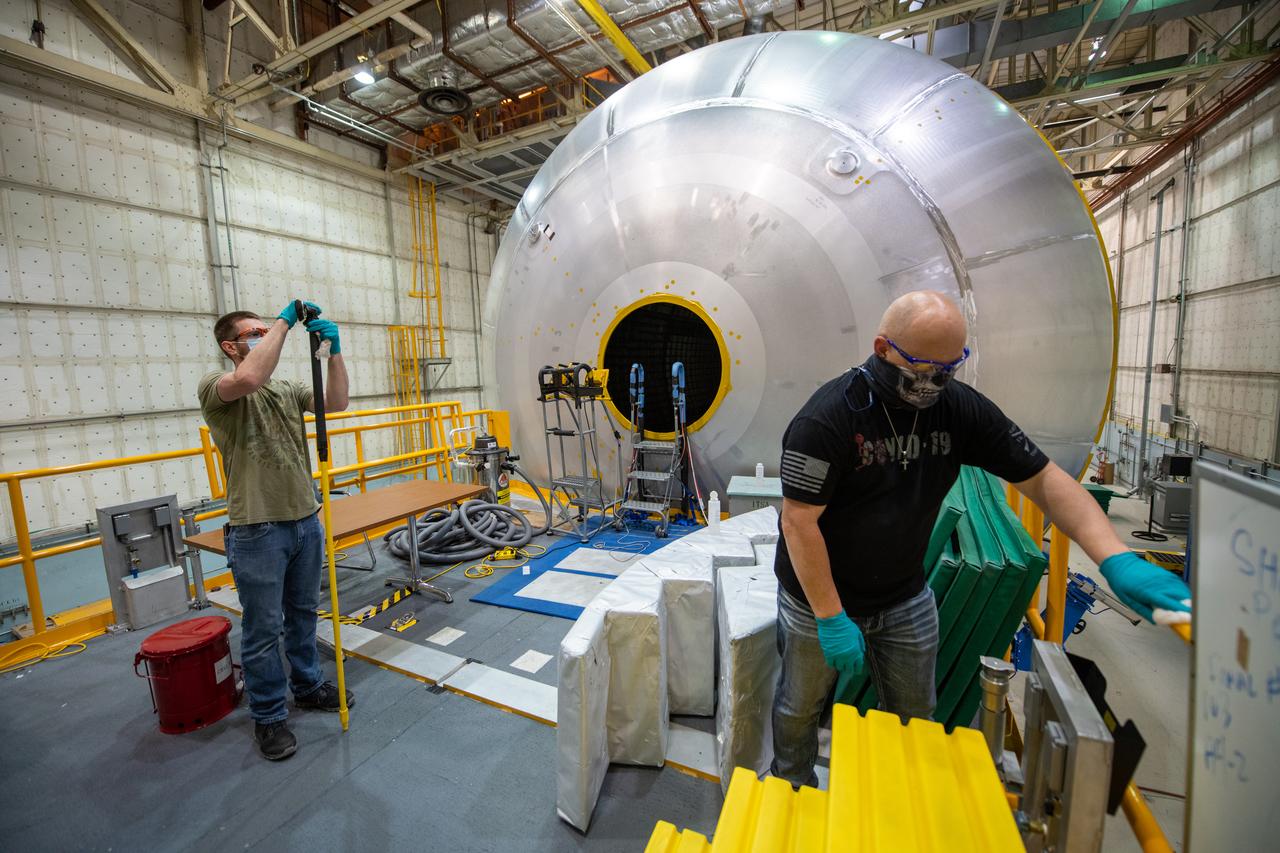
Employees wear personal protective gear at Michoud Assembly Facility as the facility transitioned to Stage 3 of NASA’s Framework for Return To On-Site Work. Employees wear the appropriate personal protective equipment (PPE) and/or cloth face coverings as required for assigned tasks. Access to the facility is limited to authorized personnel working on mission-critical tasks that must be conducted onsite. Mission-critical tasks include slowly and methodically resuming Space Launch System (SLS) Core Stage and Orion production activities, particularly critical path deliverables to support the Artemis Program, at a pace that limits personnel and follows federal guidelines for social distancing and use of personal protective equipment such as face masks. For more information about SLS, visit nasa.gov/sls.
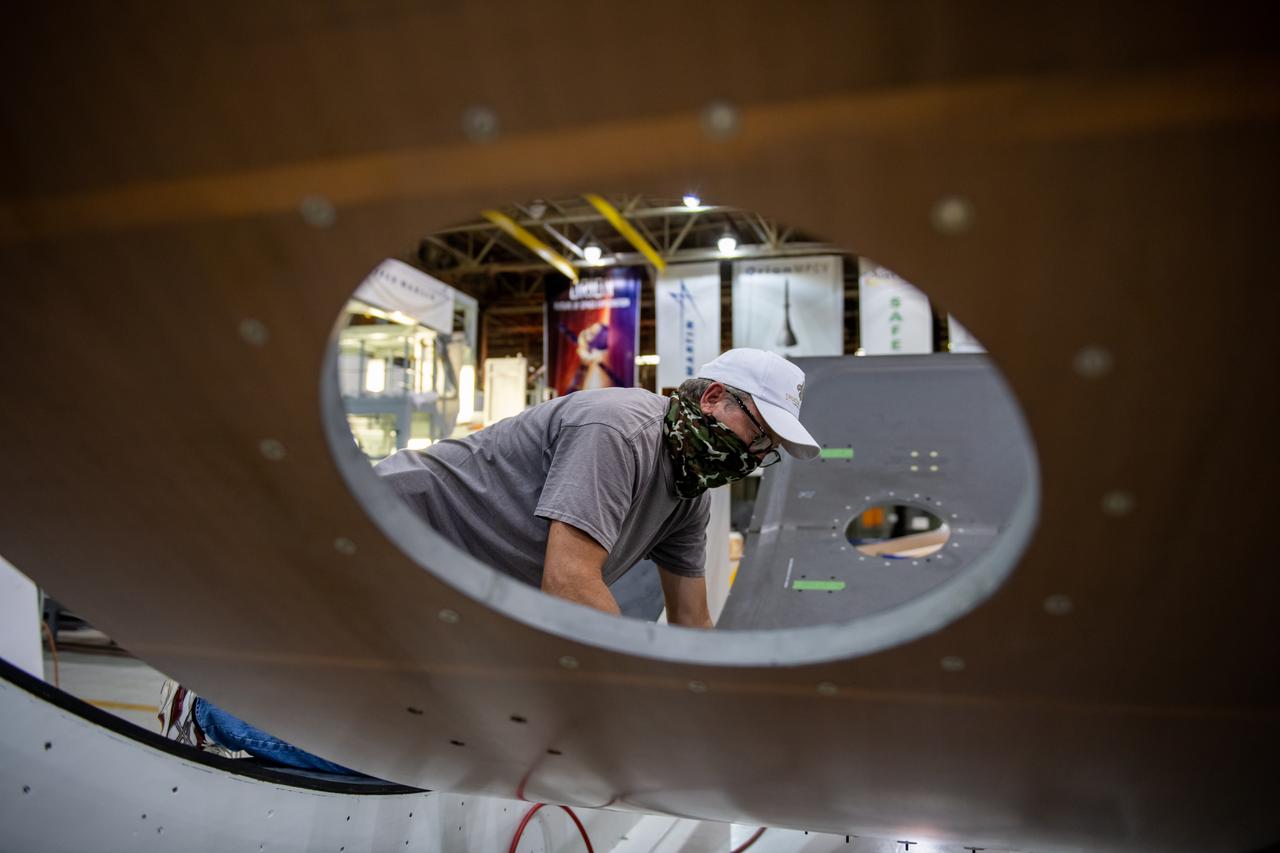
Employees wear personal protective gear at Michoud Assembly Facility as the facility transitioned to Stage 3 of NASA’s Framework for Return To On-Site Work. Employees wear the appropriate personal protective equipment (PPE) and/or cloth face coverings as required for assigned tasks. Access to the facility is limited to authorized personnel working on mission-critical tasks that must be conducted onsite. Mission-critical tasks include slowly and methodically resuming Space Launch System (SLS) Core Stage and Orion production activities, particularly critical path deliverables to support the Artemis Program, at a pace that limits personnel and follows federal guidelines for social distancing and use of personal protective equipment such as face masks. For more information about SLS, visit nasa.gov/sls.
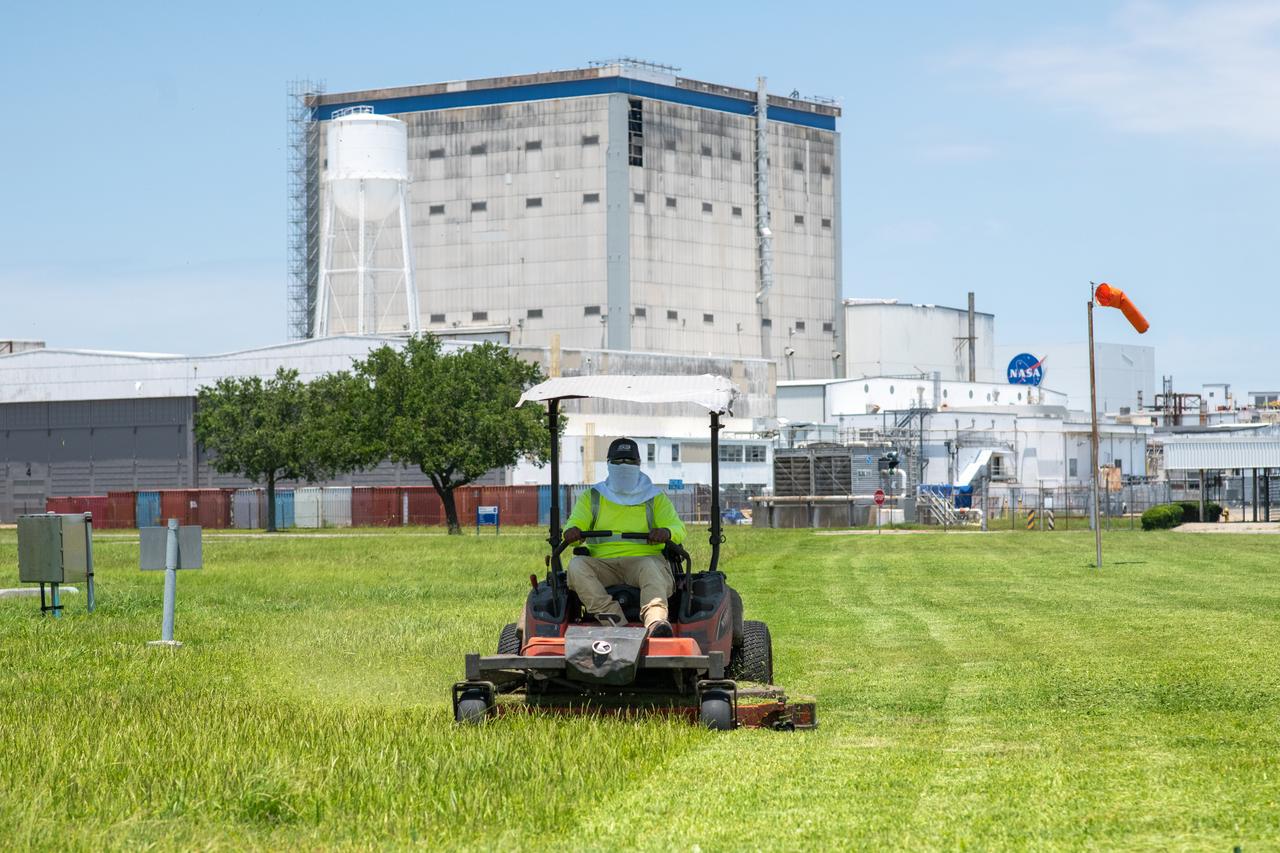
Employees wear personal protective gear at Michoud Assembly Facility as the facility transitioned to Stage 3 of NASA’s Framework for Return To On-Site Work. Employees wear the appropriate personal protective equipment (PPE) and/or cloth face coverings as required for assigned tasks. Access to the facility is limited to authorized personnel working on mission-critical tasks that must be conducted onsite. Mission-critical tasks include slowly and methodically resuming Space Launch System (SLS) Core Stage and Orion production activities, particularly critical path deliverables to support the Artemis Program, at a pace that limits personnel and follows federal guidelines for social distancing and use of personal protective equipment such as face masks. For more information about SLS, visit nasa.gov/sls.
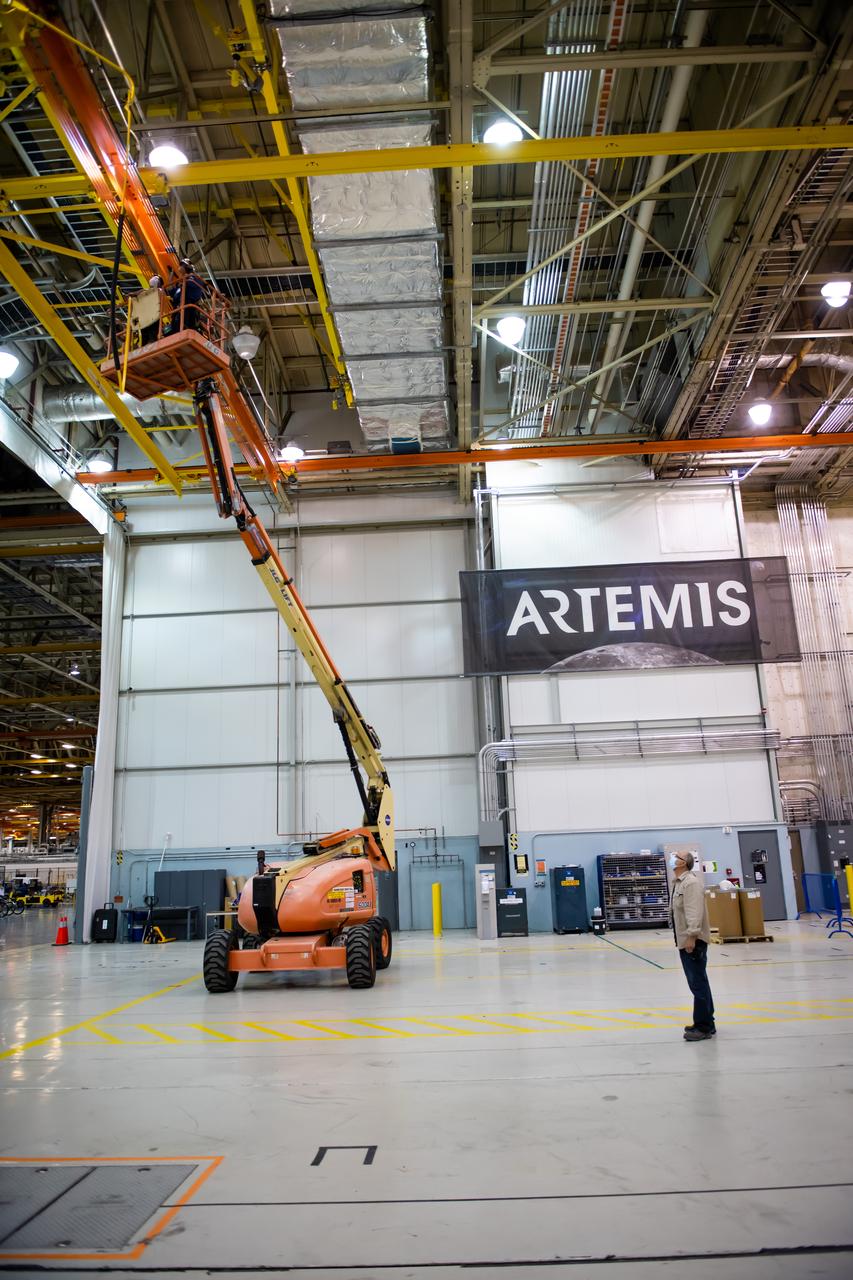
Employees wear personal protective gear at Michoud Assembly Facility as the facility transitioned to Stage 3 of NASA’s Framework for Return To On-Site Work. Employees wear the appropriate personal protective equipment (PPE) and/or cloth face coverings as required for assigned tasks. Access to the facility is limited to authorized personnel working on mission-critical tasks that must be conducted onsite. Mission-critical tasks include slowly and methodically resuming Space Launch System (SLS) Core Stage and Orion production activities, particularly critical path deliverables to support the Artemis Program, at a pace that limits personnel and follows federal guidelines for social distancing and use of personal protective equipment such as face masks. For more information about SLS, visit nasa.gov/sls.
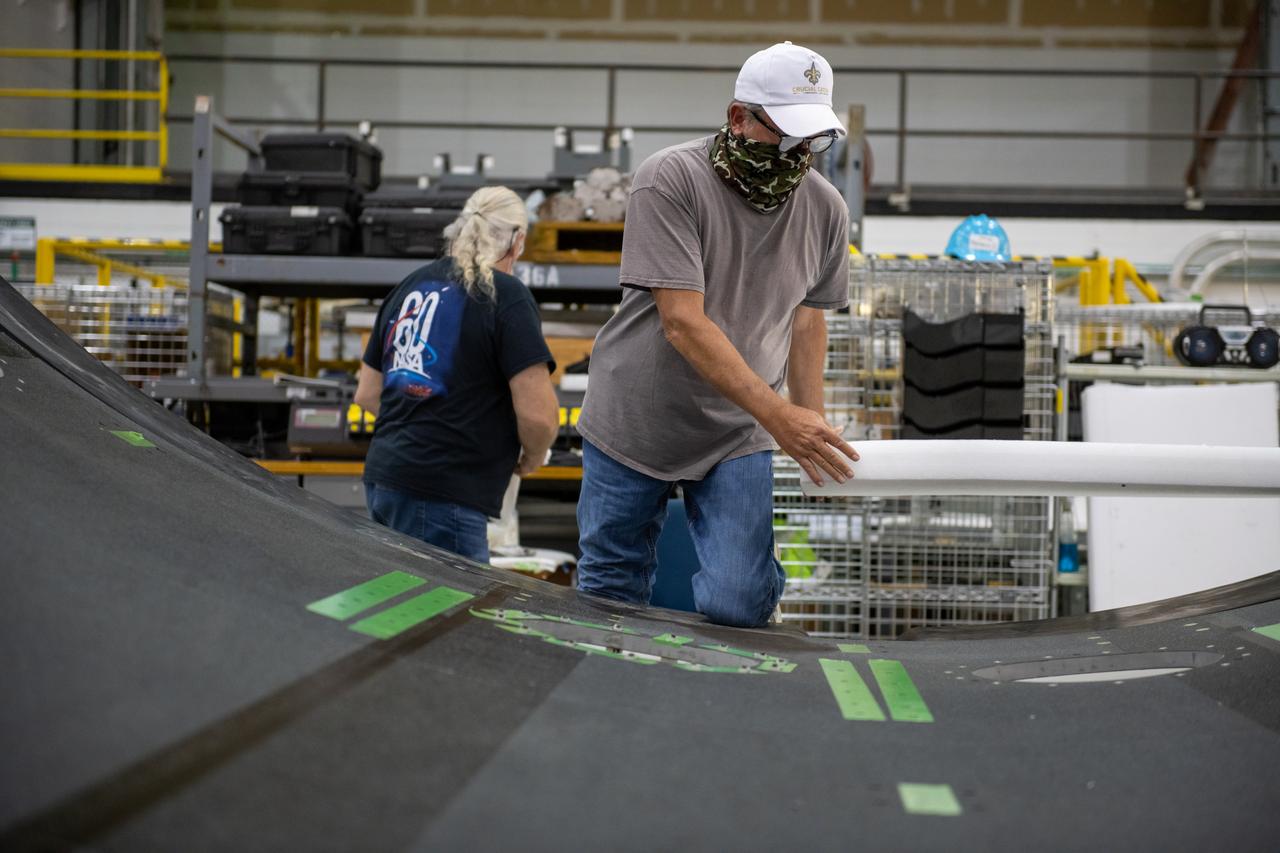
Employees wear personal protective gear at Michoud Assembly Facility as the facility transitioned to Stage 3 of NASA’s Framework for Return To On-Site Work. Employees wear the appropriate personal protective equipment (PPE) and/or cloth face coverings as required for assigned tasks. Access to the facility is limited to authorized personnel working on mission-critical tasks that must be conducted onsite. Mission-critical tasks include slowly and methodically resuming Space Launch System (SLS) Core Stage and Orion production activities, particularly critical path deliverables to support the Artemis Program, at a pace that limits personnel and follows federal guidelines for social distancing and use of personal protective equipment such as face masks. For more information about SLS, visit nasa.gov/sls.
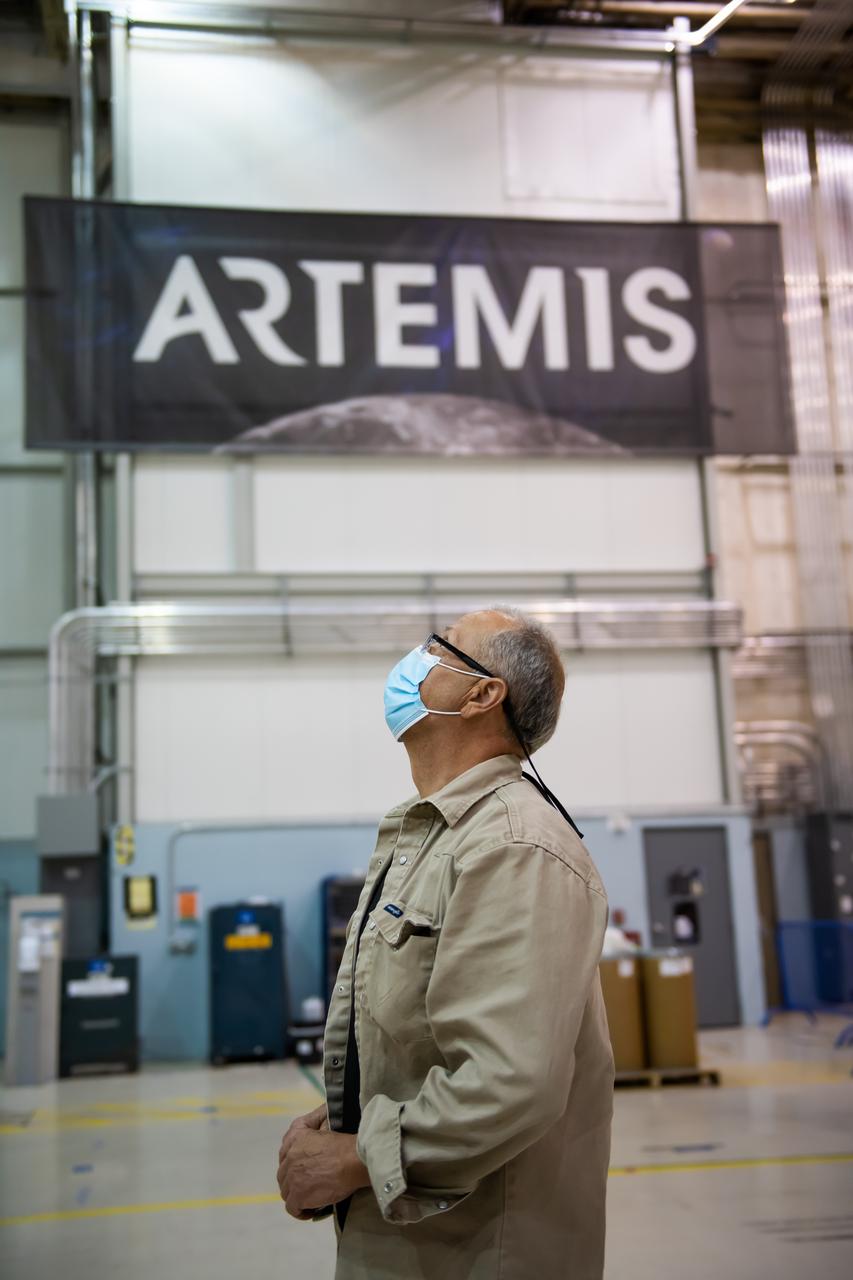
Employees wear personal protective gear at Michoud Assembly Facility as the facility transitioned to Stage 3 of NASA’s Framework for Return To On-Site Work. Employees wear the appropriate personal protective equipment (PPE) and/or cloth face coverings as required for assigned tasks. Access to the facility is limited to authorized personnel working on mission-critical tasks that must be conducted onsite. Mission-critical tasks include slowly and methodically resuming Space Launch System (SLS) Core Stage and Orion production activities, particularly critical path deliverables to support the Artemis Program, at a pace that limits personnel and follows federal guidelines for social distancing and use of personal protective equipment such as face masks. For more information about SLS, visit nasa.gov/sls.
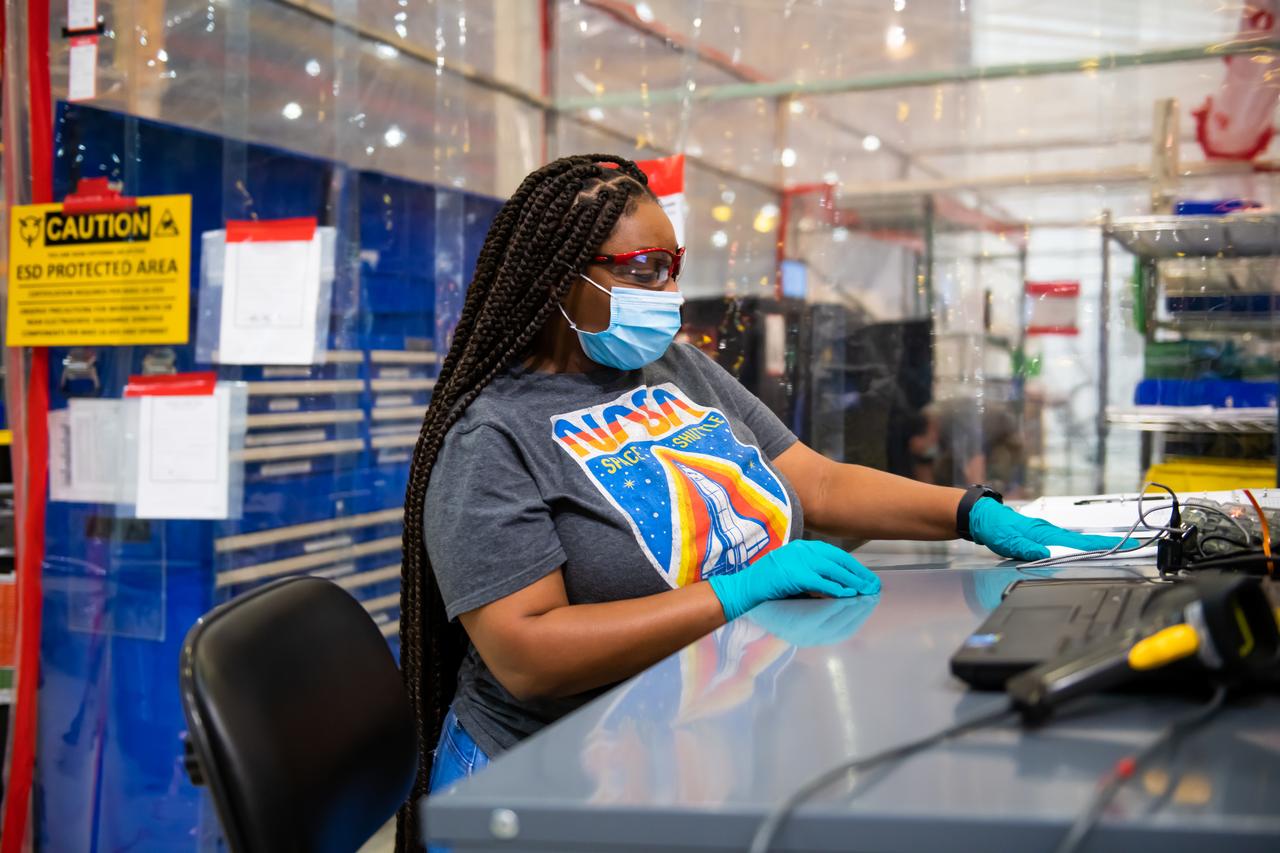
Employees wear personal protective gear at Michoud Assembly Facility as the facility transitioned to Stage 3 of NASA’s Framework for Return To On-Site Work. Employees wear the appropriate personal protective equipment (PPE) and/or cloth face coverings as required for assigned tasks. Access to the facility is limited to authorized personnel working on mission-critical tasks that must be conducted onsite. Mission-critical tasks include slowly and methodically resuming Space Launch System (SLS) Core Stage and Orion production activities, particularly critical path deliverables to support the Artemis Program, at a pace that limits personnel and follows federal guidelines for social distancing and use of personal protective equipment such as face masks. For more information about SLS, visit nasa.gov/sls.
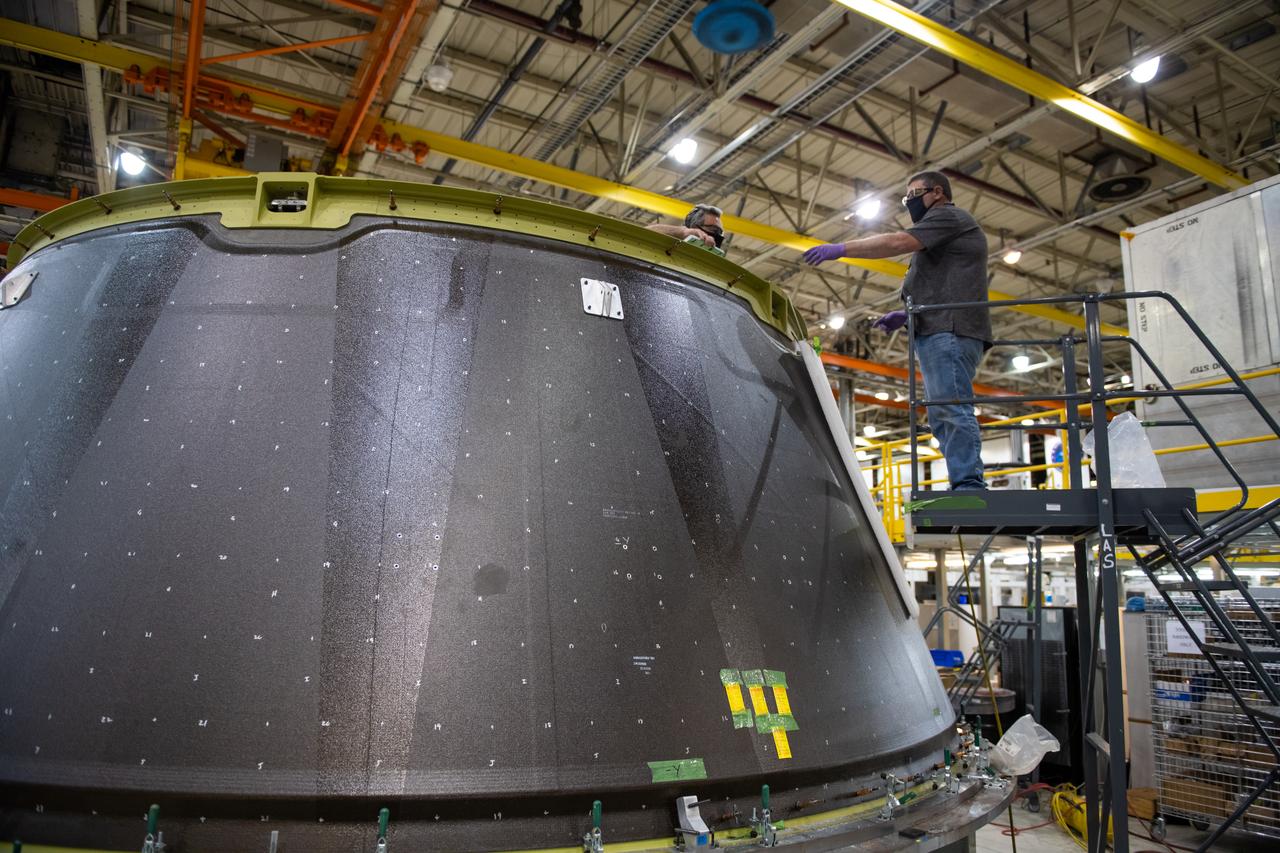
Employees wear personal protective gear at Michoud Assembly Facility as the facility transitioned to Stage 3 of NASA’s Framework for Return To On-Site Work. Employees wear the appropriate personal protective equipment (PPE) and/or cloth face coverings as required for assigned tasks. Access to the facility is limited to authorized personnel working on mission-critical tasks that must be conducted onsite. Mission-critical tasks include slowly and methodically resuming Space Launch System (SLS) Core Stage and Orion production activities, particularly critical path deliverables to support the Artemis Program, at a pace that limits personnel and follows federal guidelines for social distancing and use of personal protective equipment such as face masks. For more information about SLS, visit nasa.gov/sls.
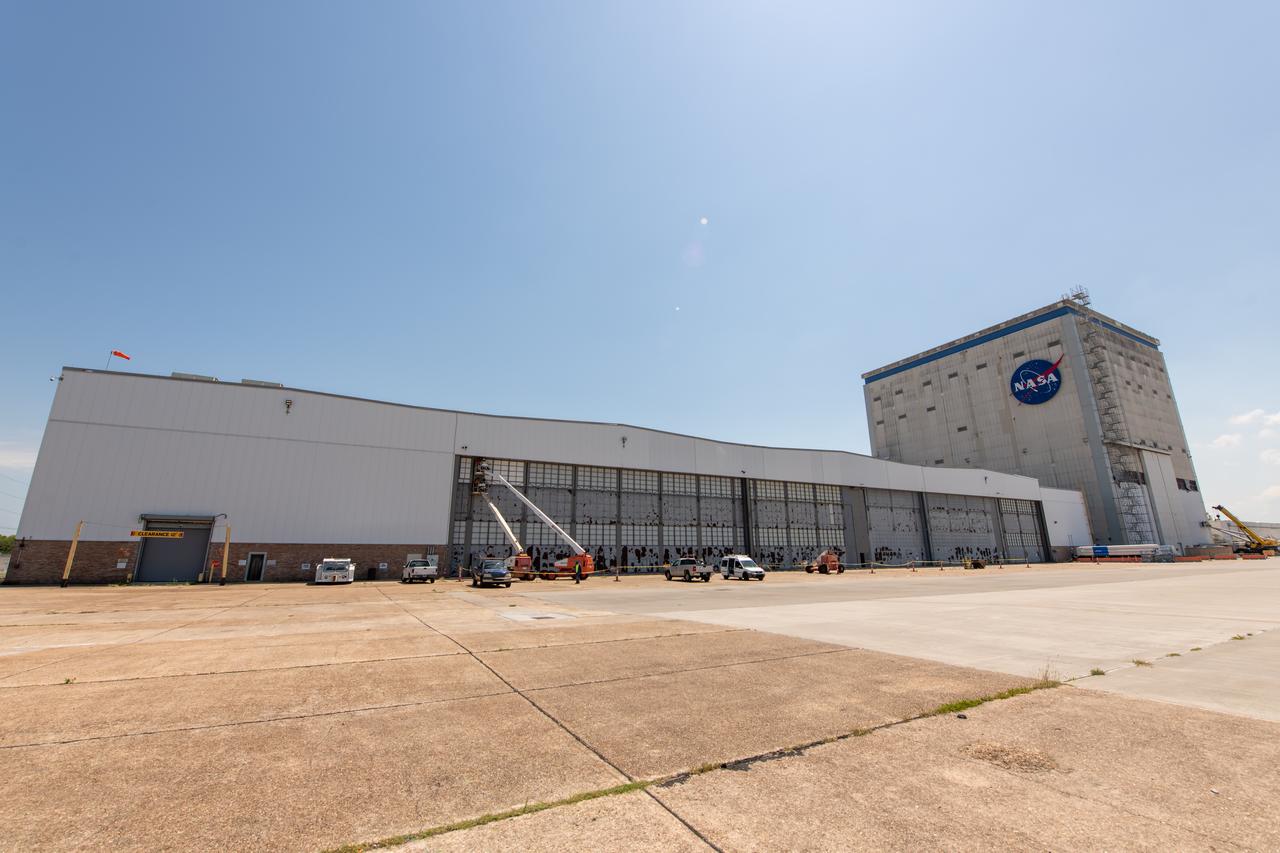
Employees wear personal protective gear at Michoud Assembly Facility as the facility transitioned to Stage 3 of NASA’s Framework for Return To On-Site Work. Employees wear the appropriate personal protective equipment (PPE) and/or cloth face coverings as required for assigned tasks. Access to the facility is limited to authorized personnel working on mission-critical tasks that must be conducted onsite. Mission-critical tasks include slowly and methodically resuming Space Launch System (SLS) Core Stage and Orion production activities, particularly critical path deliverables to support the Artemis Program, at a pace that limits personnel and follows federal guidelines for social distancing and use of personal protective equipment such as face masks. For more information about SLS, visit nasa.gov/sls.
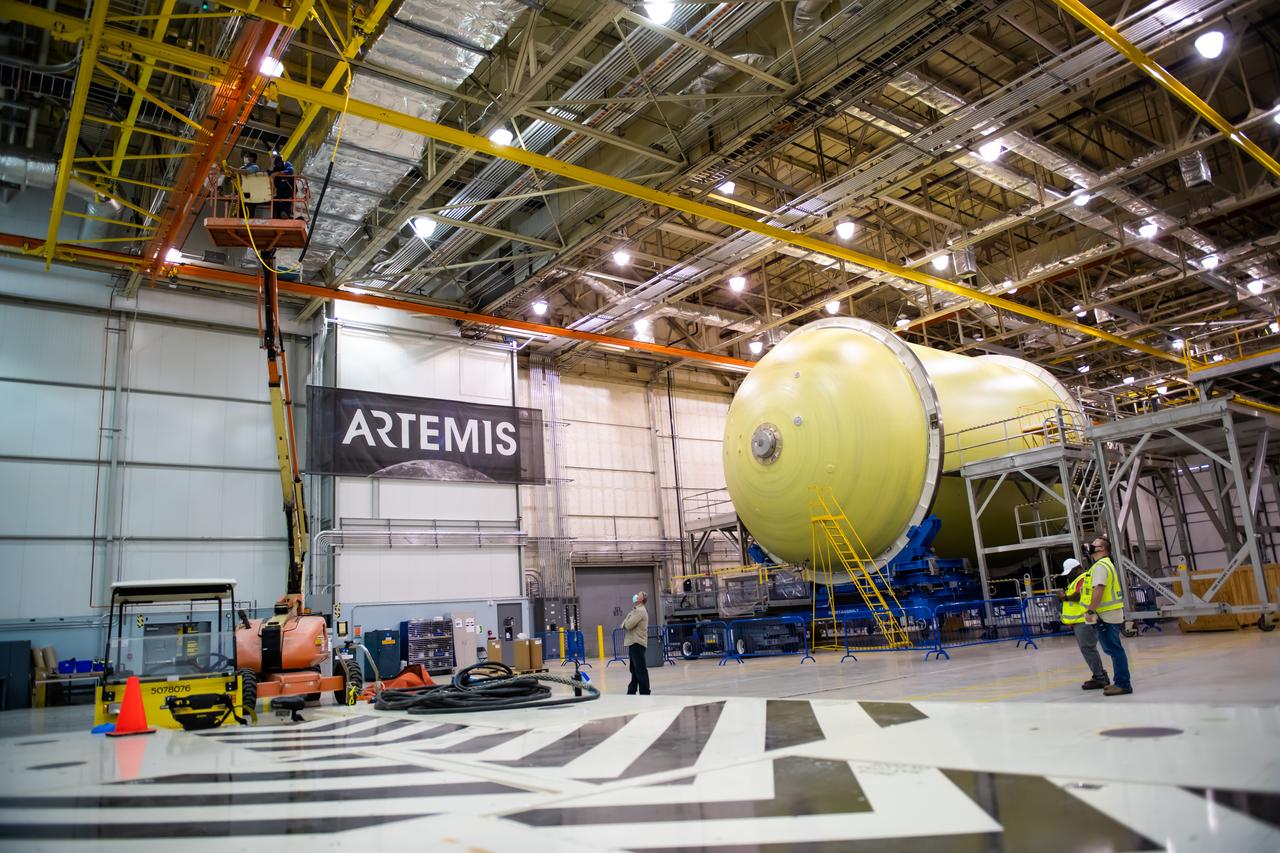
Employees wear personal protective gear at Michoud Assembly Facility as the facility transitioned to Stage 3 of NASA’s Framework for Return To On-Site Work. Employees wear the appropriate personal protective equipment (PPE) and/or cloth face coverings as required for assigned tasks. Access to the facility is limited to authorized personnel working on mission-critical tasks that must be conducted onsite. Mission-critical tasks include slowly and methodically resuming Space Launch System (SLS) Core Stage and Orion production activities, particularly critical path deliverables to support the Artemis Program, at a pace that limits personnel and follows federal guidelines for social distancing and use of personal protective equipment such as face masks. For more information about SLS, visit nasa.gov/sls.
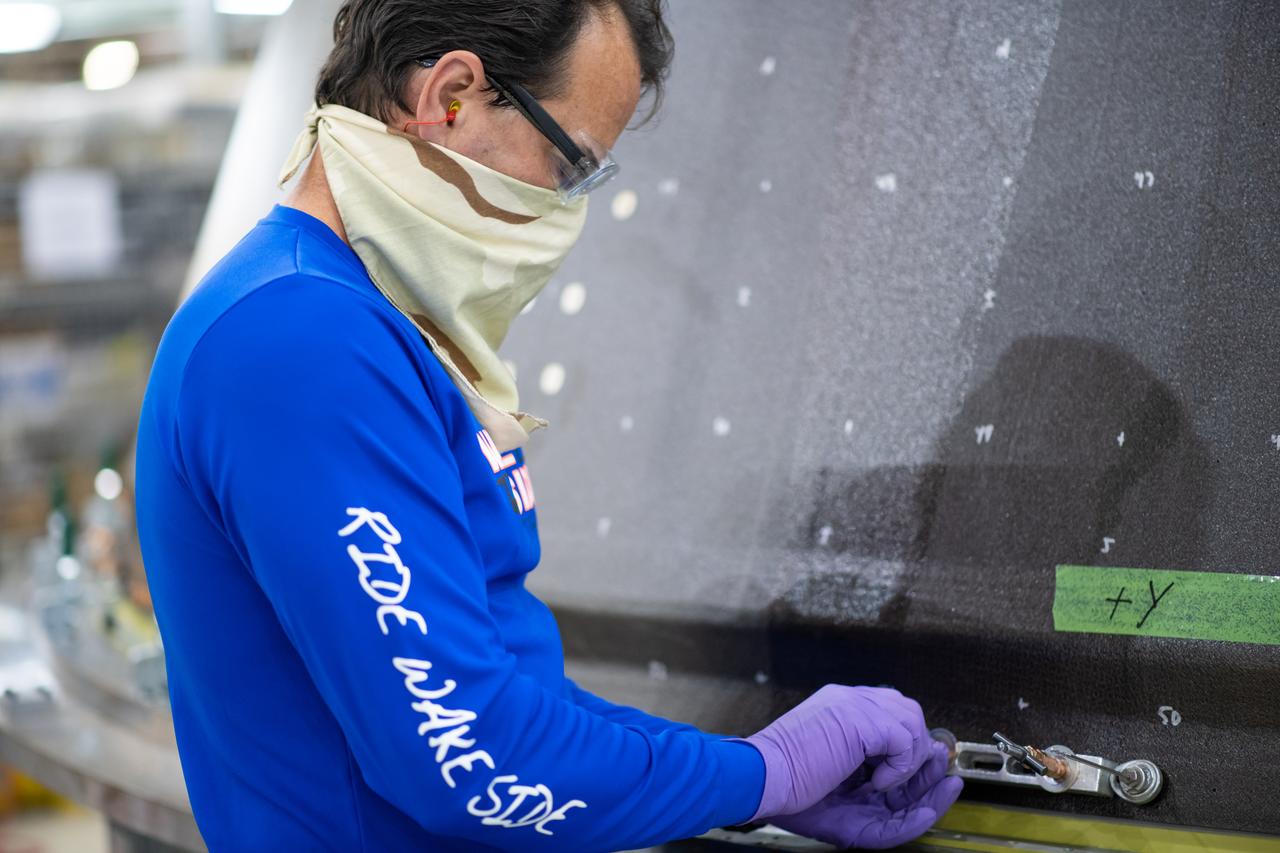
Employees wear personal protective gear at Michoud Assembly Facility as the facility transitioned to Stage 3 of NASA’s Framework for Return To On-Site Work. Employees wear the appropriate personal protective equipment (PPE) and/or cloth face coverings as required for assigned tasks. Access to the facility is limited to authorized personnel working on mission-critical tasks that must be conducted onsite. Mission-critical tasks include slowly and methodically resuming Space Launch System (SLS) Core Stage and Orion production activities, particularly critical path deliverables to support the Artemis Program, at a pace that limits personnel and follows federal guidelines for social distancing and use of personal protective equipment such as face masks. For more information about SLS, visit nasa.gov/sls.
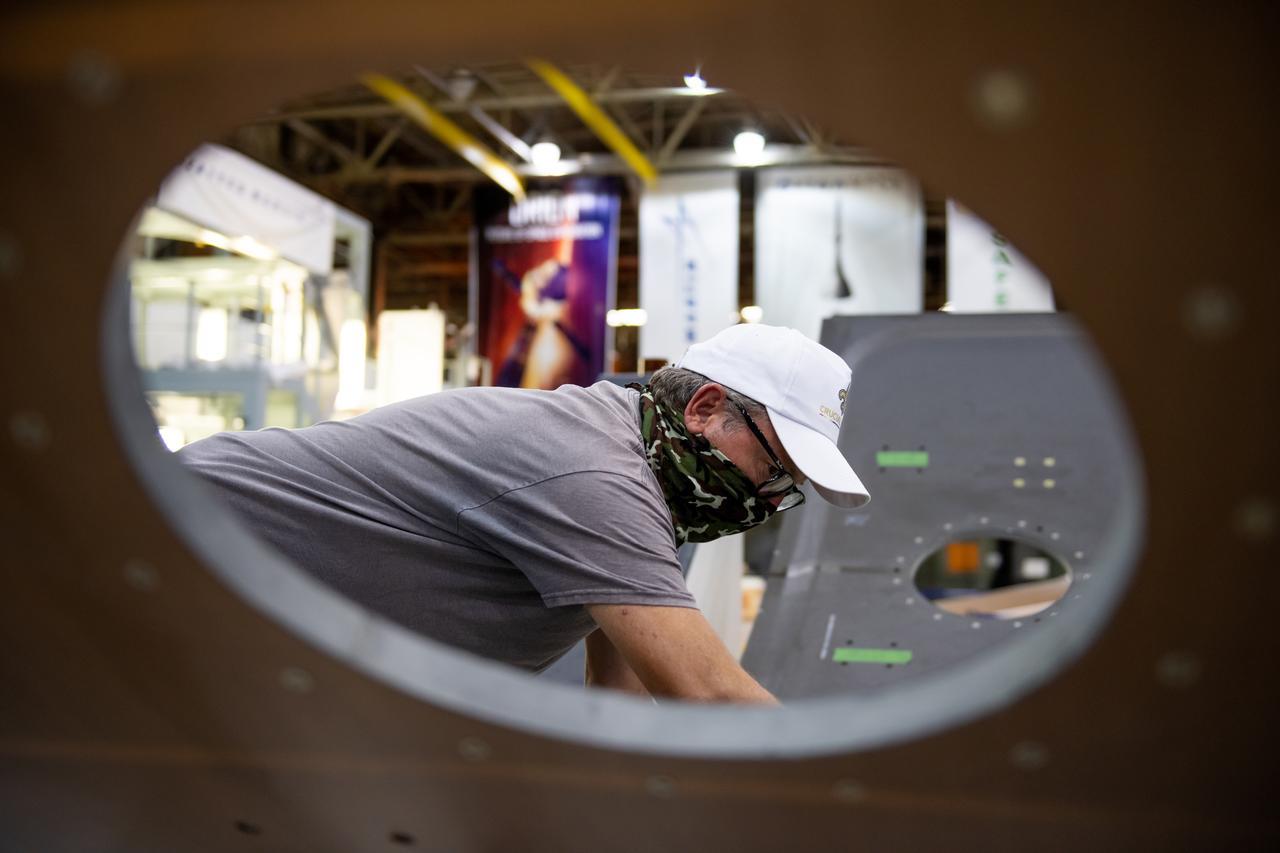
Employees wear personal protective gear at Michoud Assembly Facility as the facility transitioned to Stage 3 of NASA’s Framework for Return To On-Site Work. Employees wear the appropriate personal protective equipment (PPE) and/or cloth face coverings as required for assigned tasks. Access to the facility is limited to authorized personnel working on mission-critical tasks that must be conducted onsite. Mission-critical tasks include slowly and methodically resuming Space Launch System (SLS) Core Stage and Orion production activities, particularly critical path deliverables to support the Artemis Program, at a pace that limits personnel and follows federal guidelines for social distancing and use of personal protective equipment such as face masks. For more information about SLS, visit nasa.gov/sls.
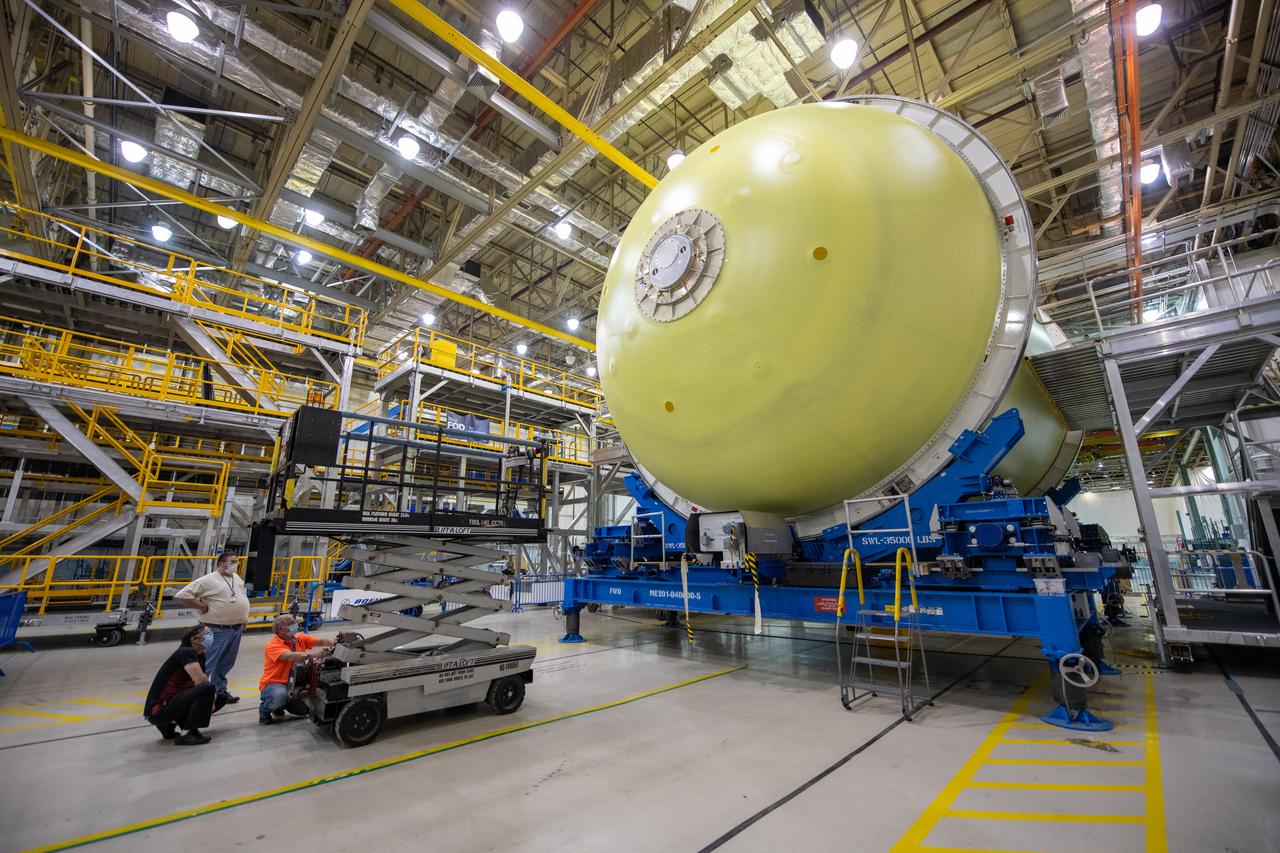
Employees wear personal protective gear at Michoud Assembly Facility as the facility transitioned to Stage 3 of NASA’s Framework for Return To On-Site Work. Employees wear the appropriate personal protective equipment (PPE) and/or cloth face coverings as required for assigned tasks. Access to the facility is limited to authorized personnel working on mission-critical tasks that must be conducted onsite. Mission-critical tasks include slowly and methodically resuming Space Launch System (SLS) Core Stage and Orion production activities, particularly critical path deliverables to support the Artemis Program, at a pace that limits personnel and follows federal guidelines for social distancing and use of personal protective equipment such as face masks. For more information about SLS, visit nasa.gov/sls.
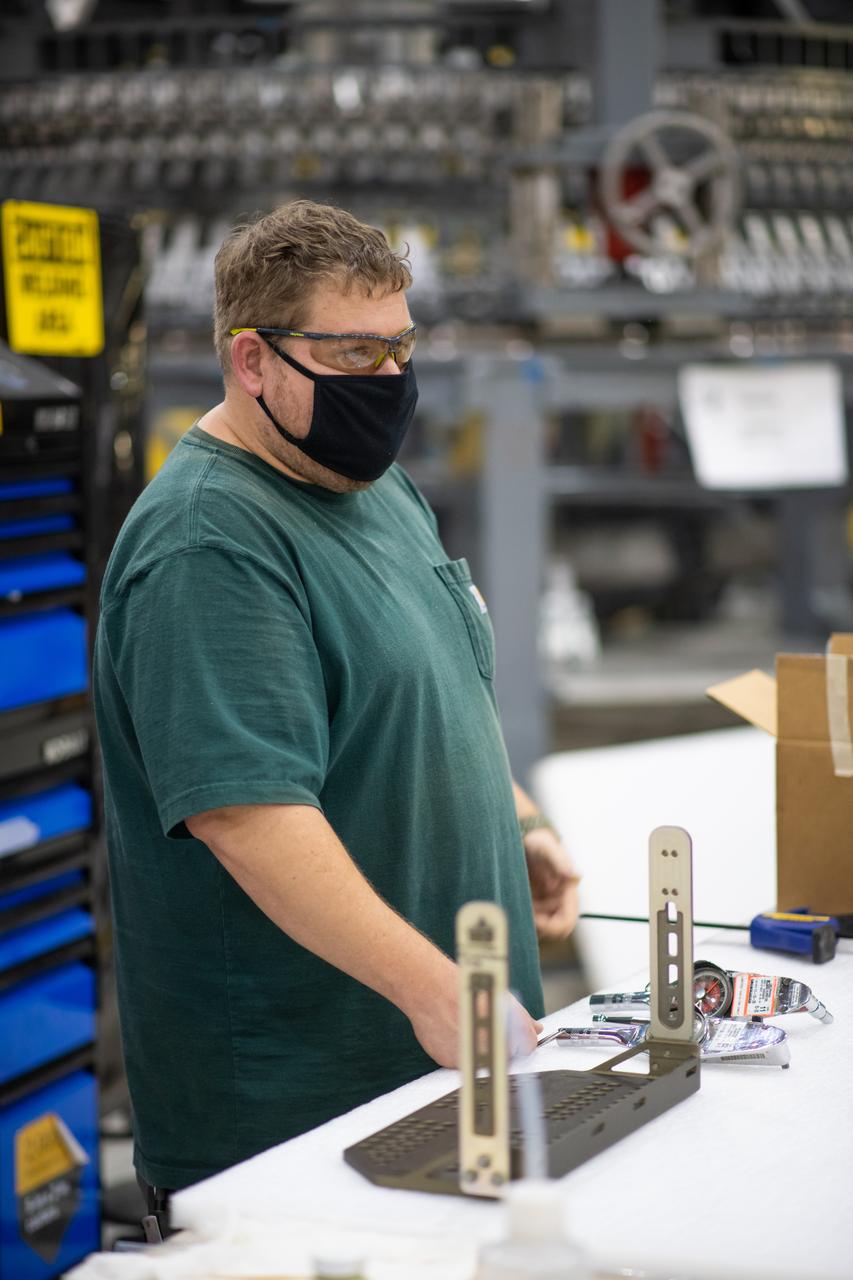
Employees wear personal protective gear at Michoud Assembly Facility as the facility transitioned to Stage 3 of NASA’s Framework for Return To On-Site Work. Employees wear the appropriate personal protective equipment (PPE) and/or cloth face coverings as required for assigned tasks. Access to the facility is limited to authorized personnel working on mission-critical tasks that must be conducted onsite. Mission-critical tasks include slowly and methodically resuming Space Launch System (SLS) Core Stage and Orion production activities, particularly critical path deliverables to support the Artemis Program, at a pace that limits personnel and follows federal guidelines for social distancing and use of personal protective equipment such as face masks. For more information about SLS, visit nasa.gov/sls.
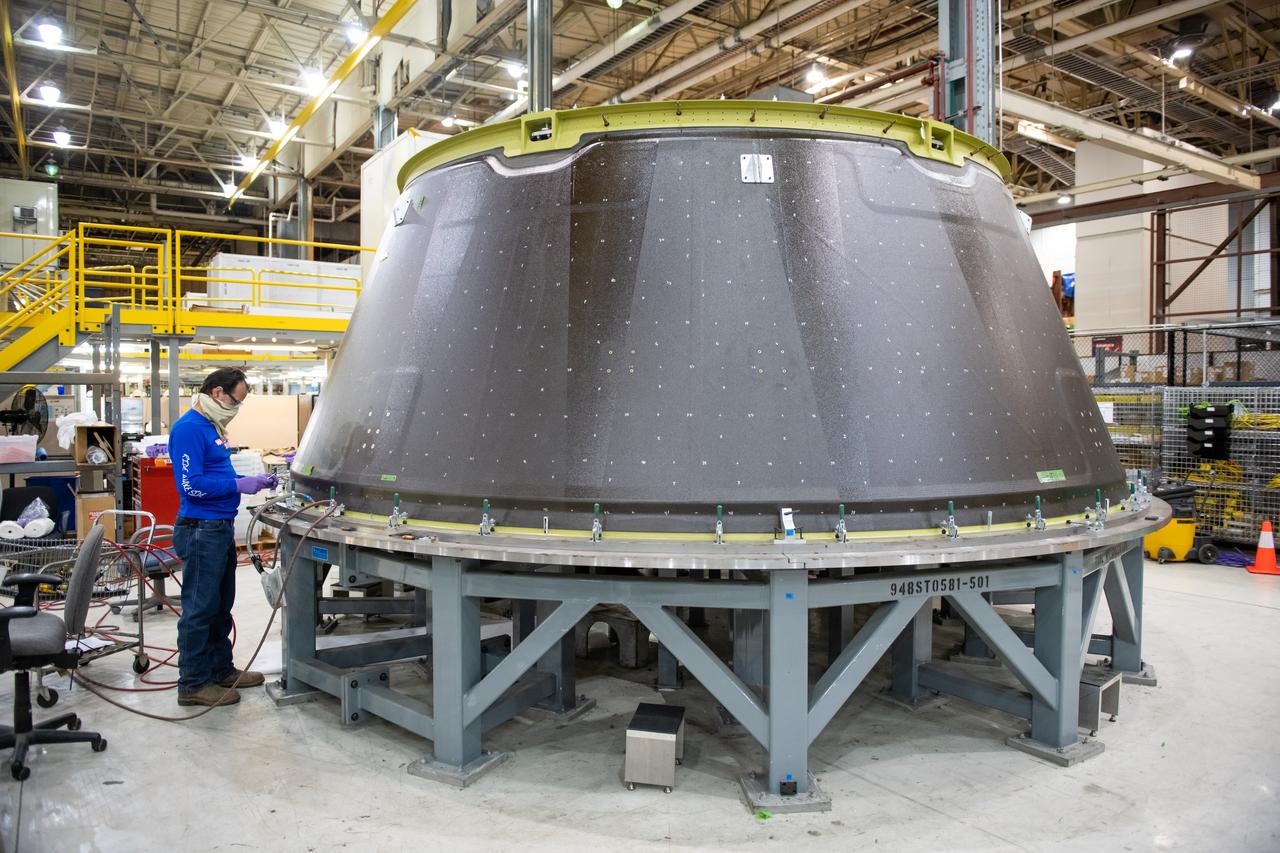
Employees wear personal protective gear at Michoud Assembly Facility as the facility transitioned to Stage 3 of NASA’s Framework for Return To On-Site Work. Employees wear the appropriate personal protective equipment (PPE) and/or cloth face coverings as required for assigned tasks. Access to the facility is limited to authorized personnel working on mission-critical tasks that must be conducted onsite. Mission-critical tasks include slowly and methodically resuming Space Launch System (SLS) Core Stage and Orion production activities, particularly critical path deliverables to support the Artemis Program, at a pace that limits personnel and follows federal guidelines for social distancing and use of personal protective equipment such as face masks. For more information about SLS, visit nasa.gov/sls.
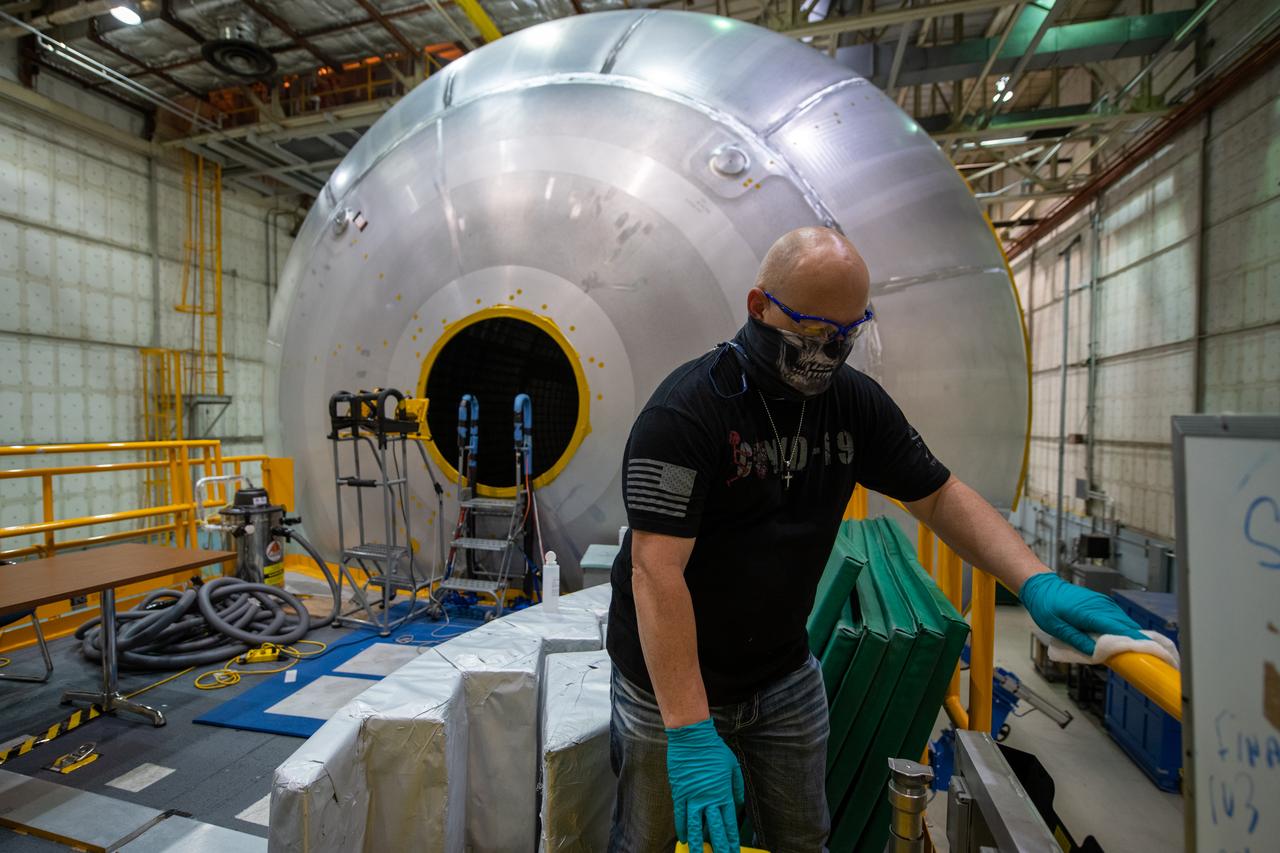
Employees wear personal protective gear at Michoud Assembly Facility as the facility transitioned to Stage 3 of NASA’s Framework for Return To On-Site Work. Employees wear the appropriate personal protective equipment (PPE) and/or cloth face coverings as required for assigned tasks. Access to the facility is limited to authorized personnel working on mission-critical tasks that must be conducted onsite. Mission-critical tasks include slowly and methodically resuming Space Launch System (SLS) Core Stage and Orion production activities, particularly critical path deliverables to support the Artemis Program, at a pace that limits personnel and follows federal guidelines for social distancing and use of personal protective equipment such as face masks. For more information about SLS, visit nasa.gov/sls.
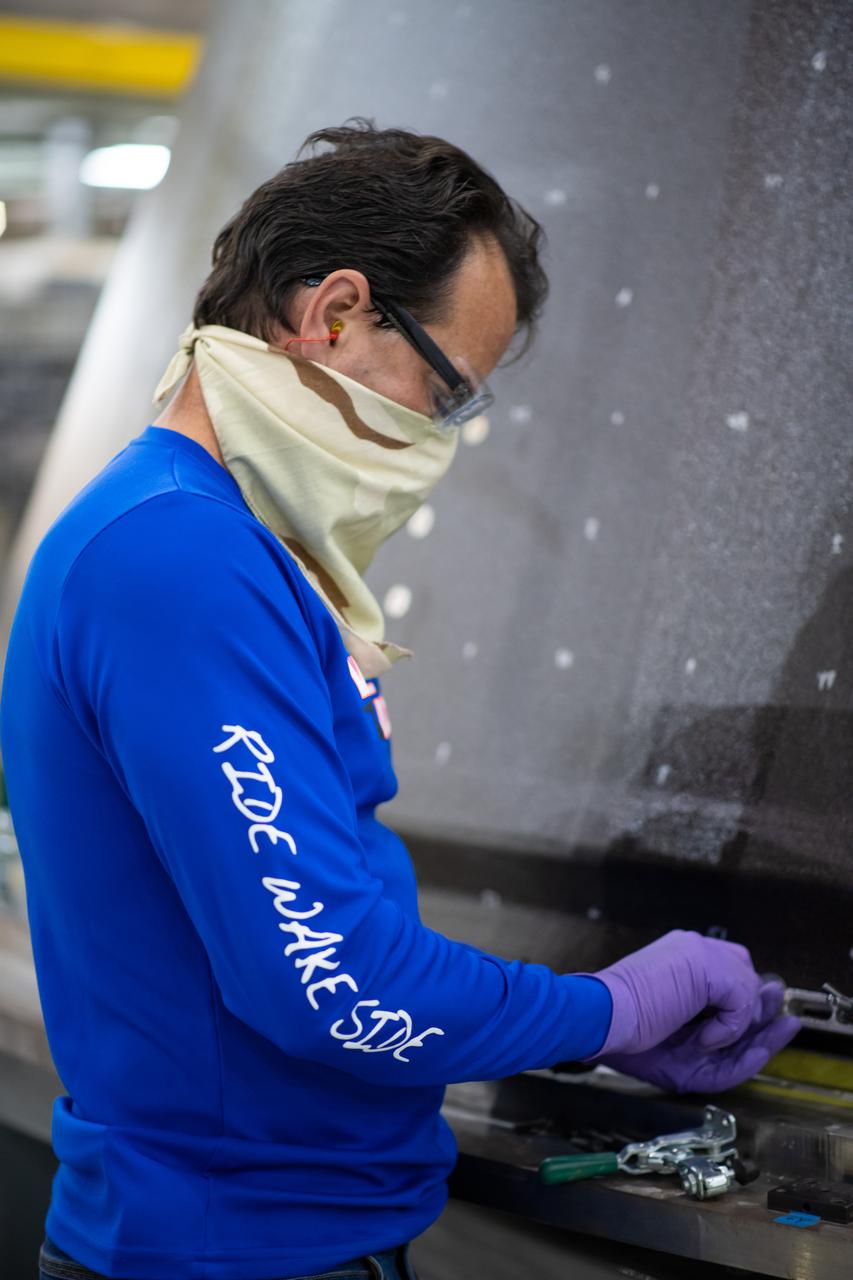
Employees wear personal protective gear at Michoud Assembly Facility as the facility transitioned to Stage 3 of NASA’s Framework for Return To On-Site Work. Employees wear the appropriate personal protective equipment (PPE) and/or cloth face coverings as required for assigned tasks. Access to the facility is limited to authorized personnel working on mission-critical tasks that must be conducted onsite. Mission-critical tasks include slowly and methodically resuming Space Launch System (SLS) Core Stage and Orion production activities, particularly critical path deliverables to support the Artemis Program, at a pace that limits personnel and follows federal guidelines for social distancing and use of personal protective equipment such as face masks. For more information about SLS, visit nasa.gov/sls.
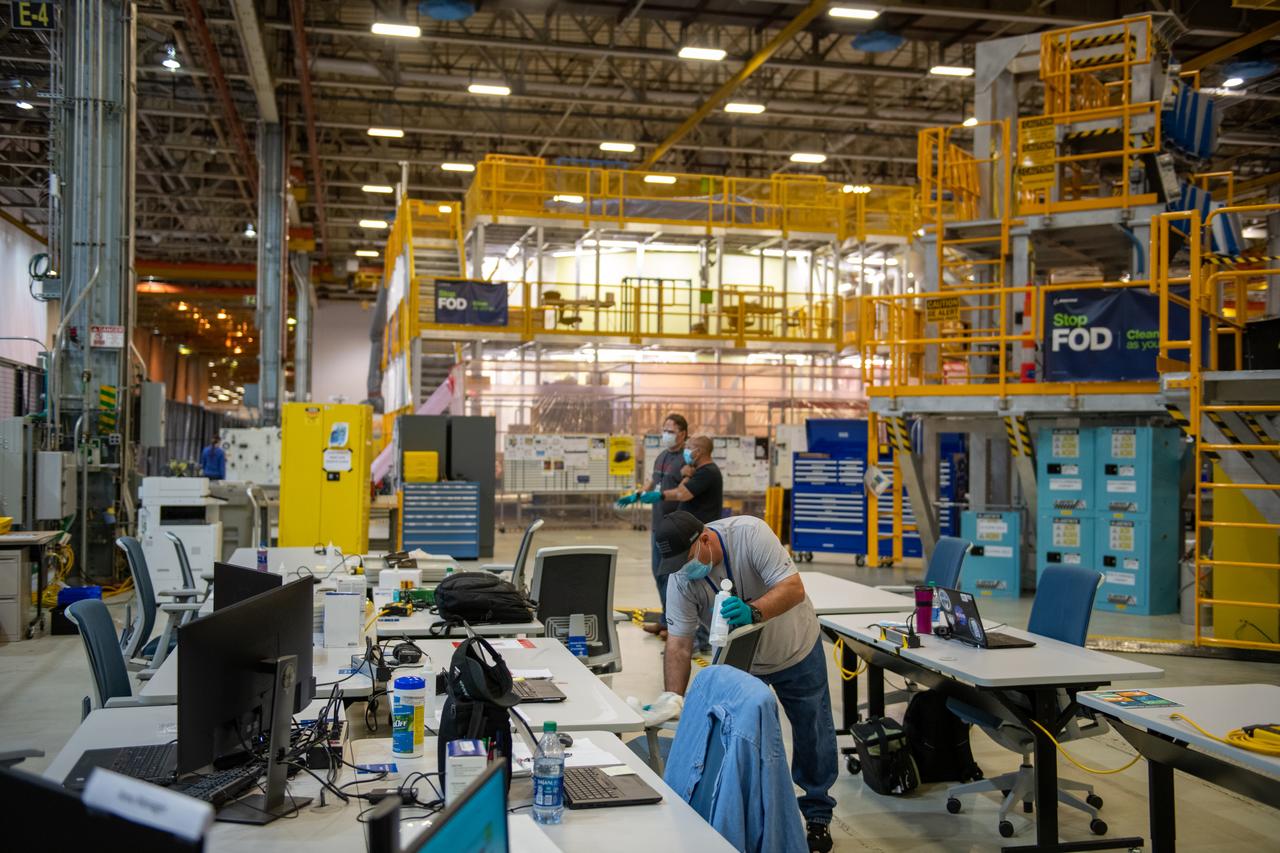
Employees wear personal protective gear at Michoud Assembly Facility as the facility transitioned to Stage 3 of NASA’s Framework for Return To On-Site Work. Employees wear the appropriate personal protective equipment (PPE) and/or cloth face coverings as required for assigned tasks. Access to the facility is limited to authorized personnel working on mission-critical tasks that must be conducted onsite. Mission-critical tasks include slowly and methodically resuming Space Launch System (SLS) Core Stage and Orion production activities, particularly critical path deliverables to support the Artemis Program, at a pace that limits personnel and follows federal guidelines for social distancing and use of personal protective equipment such as face masks. For more information about SLS, visit nasa.gov/sls.
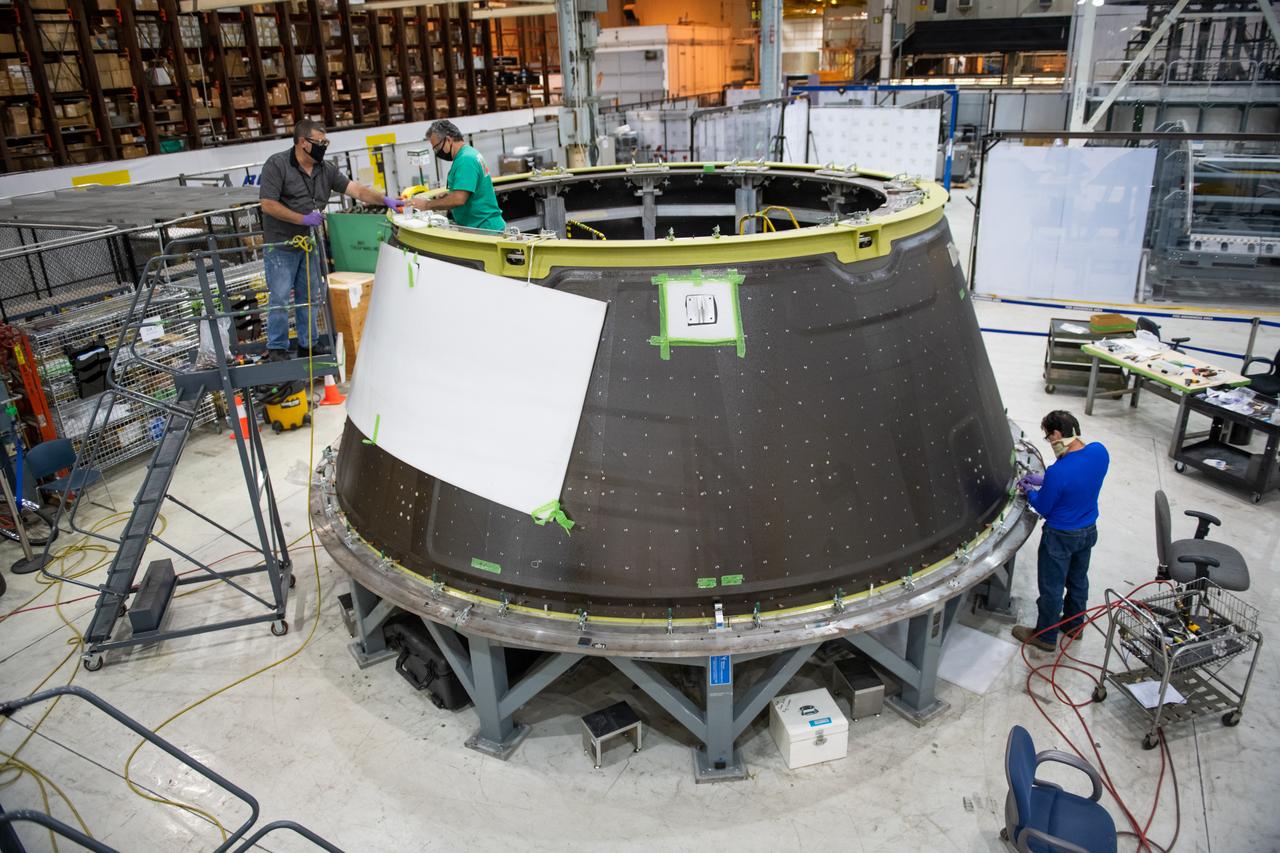
Employees wear personal protective gear at Michoud Assembly Facility as the facility transitioned to Stage 3 of NASA’s Framework for Return To On-Site Work. Employees wear the appropriate personal protective equipment (PPE) and/or cloth face coverings as required for assigned tasks. Access to the facility is limited to authorized personnel working on mission-critical tasks that must be conducted onsite. Mission-critical tasks include slowly and methodically resuming Space Launch System (SLS) Core Stage and Orion production activities, particularly critical path deliverables to support the Artemis Program, at a pace that limits personnel and follows federal guidelines for social distancing and use of personal protective equipment such as face masks. For more information about SLS, visit nasa.gov/sls.
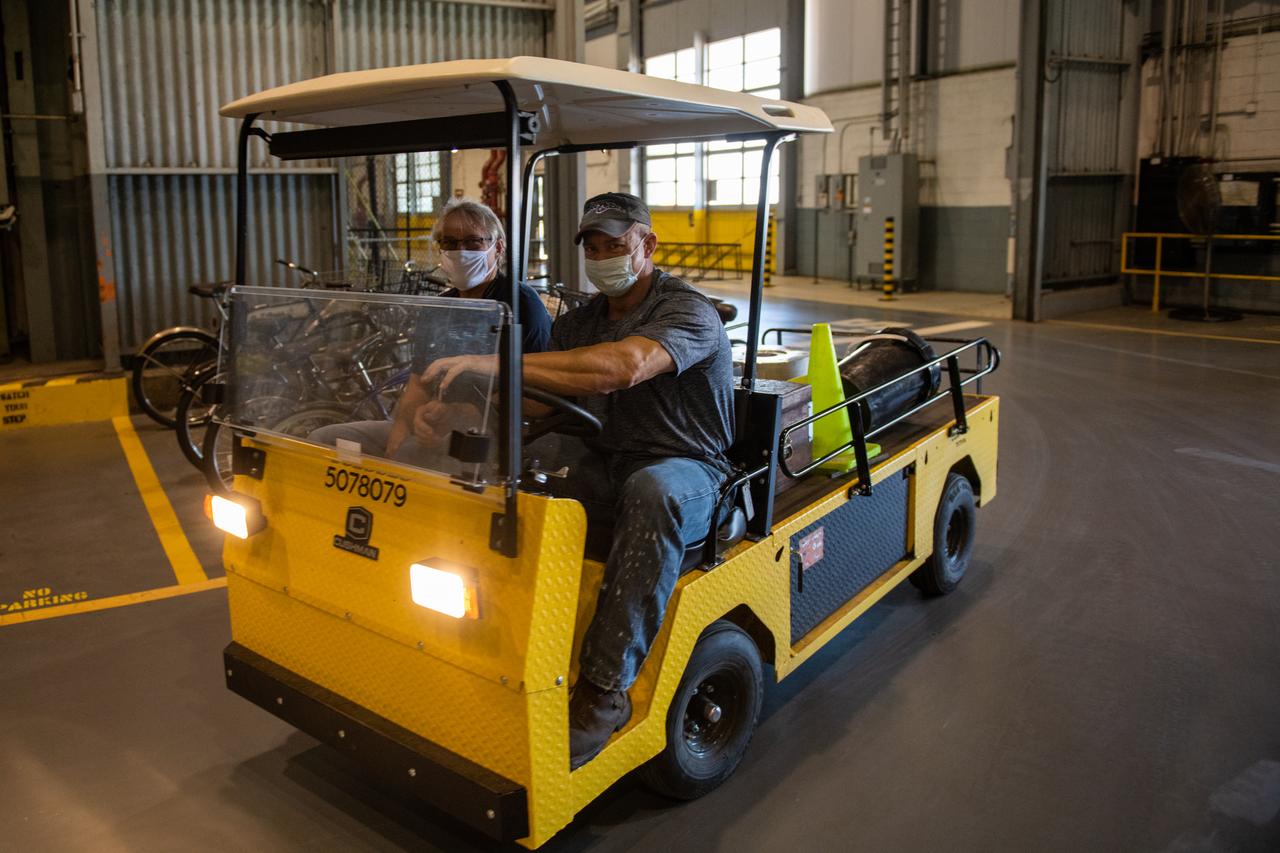
This photo includes two employees wearing personal protective gear at Michoud Assembly Facility as the facility transitioned to Stage 3 of NASA’s Framework for Return To On-Site Work. Employees wear the appropriate personal protective equipment (PPE) and/or cloth face coverings as required for assigned tasks. Every team member who goes on-site brings their own cloth face covering and wears it when social distancing is not possible, such as in a shared vehicle when working inside the large factory. Michoud Assembly Facility is made up of multiple buildings, the largest of which is more than 38 acres under one roof. Wearing a facemask is mandatory for common areas where social distancing is difficult to achieve. Access to the facility is limited to authorized personnel working on mission-critical tasks that must be conducted onsite. Mission-critical tasks include slowly and methodically resuming Space Launch System (SLS) Core Stage and Orion production activities, particularly critical path deliverables to support the Artemis Program, at a pace that limits personnel and follows federal guidelines for social distancing and use of personal protective equipment such as face masks. For more information about SLS, visit nasa.gov/sls.

iss070e090105 (Feb. 8, 2024) --- NASA astronaut and Expedition 70 Flight Engineer Loral O'Hara wears personal protective equipment during scieintific maintenance duties aboard the International Space Station's Destiny laboratory module.
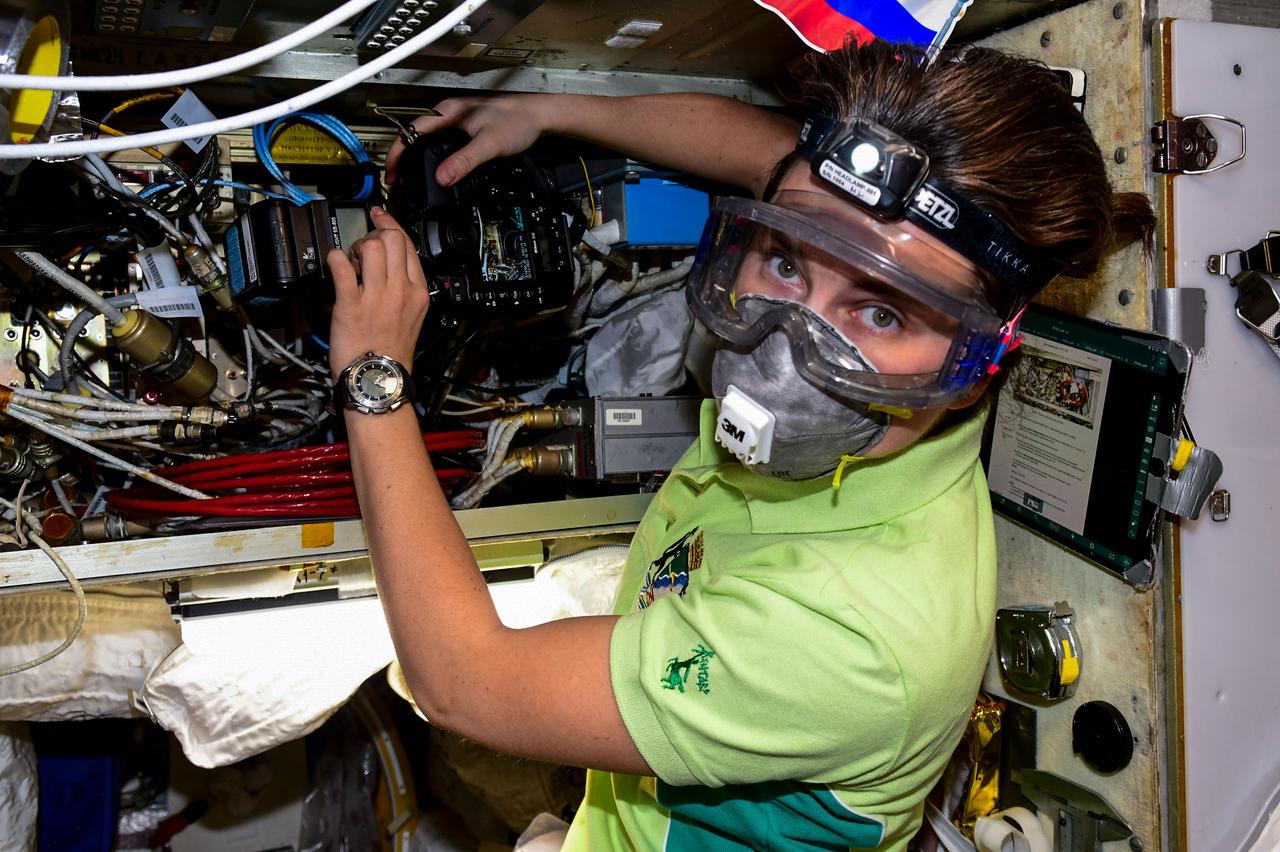
iss068e032401 (Dec. 22, 2023) --- Roscosmos cosmonaut and Expedition 68 Flight Engineer conducts communications and electronics maintenance while wearing personal protective equipment aboard the International Space Station.
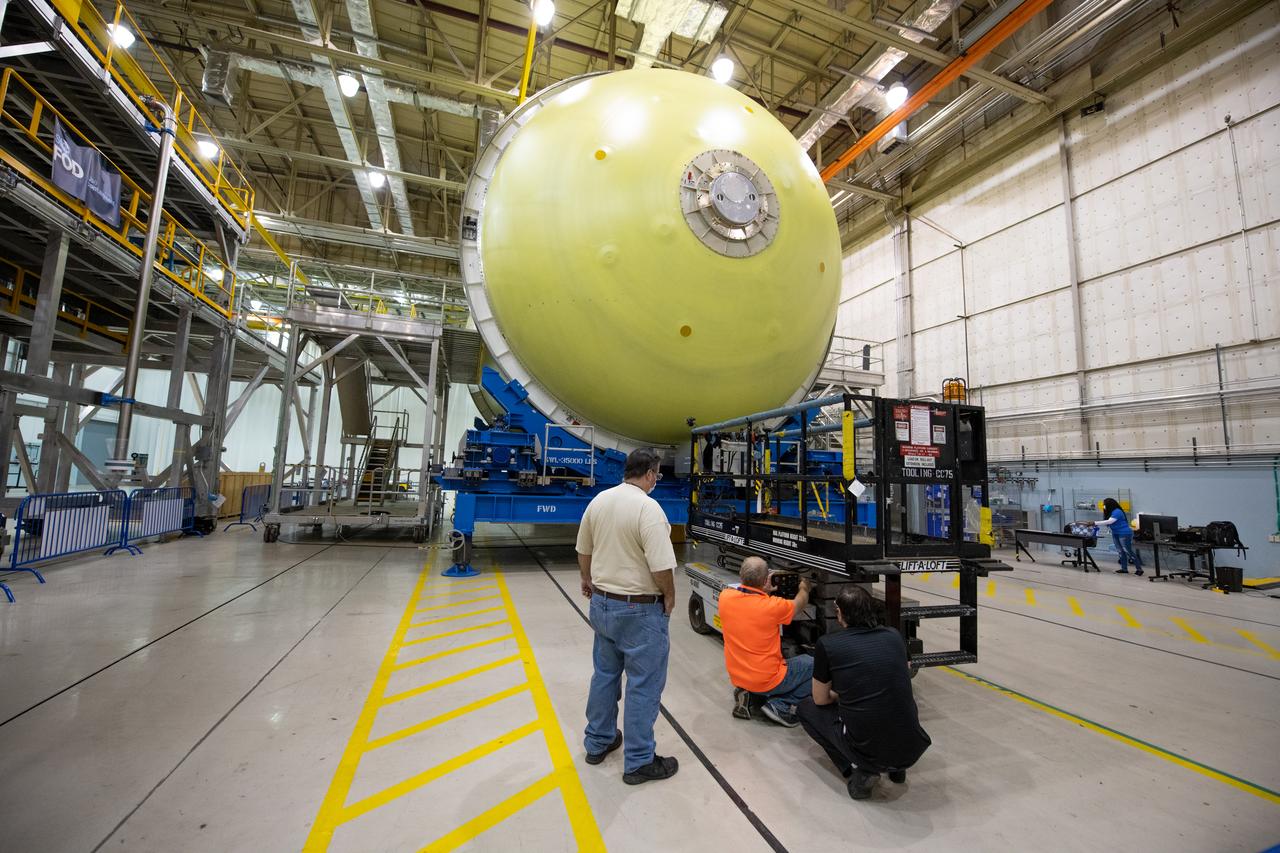
Employees wear personal protective gear at Michoud Assembly Facility as the facility transitioned to Stage 3 of NASA’s Framework for Return To On-Site Work. Employees wear the appropriate personal protective equipment (PPE) and/or cloth face coverings as required for assigned tasks. Access to the facility is limited to authorized personnel working on mission-critical tasks that must be conducted onsite. Mission-critical tasks include slowly and methodically resuming Space Launch System (SLS) Core Stage and Orion production activities, particularly critical path deliverables to support the Artemis Program, at a pace that limits personnel and follows federal guidelines for social distancing and use of personal protective equipment such as face masks. For more information about SLS, visit nasa.gov/sls.
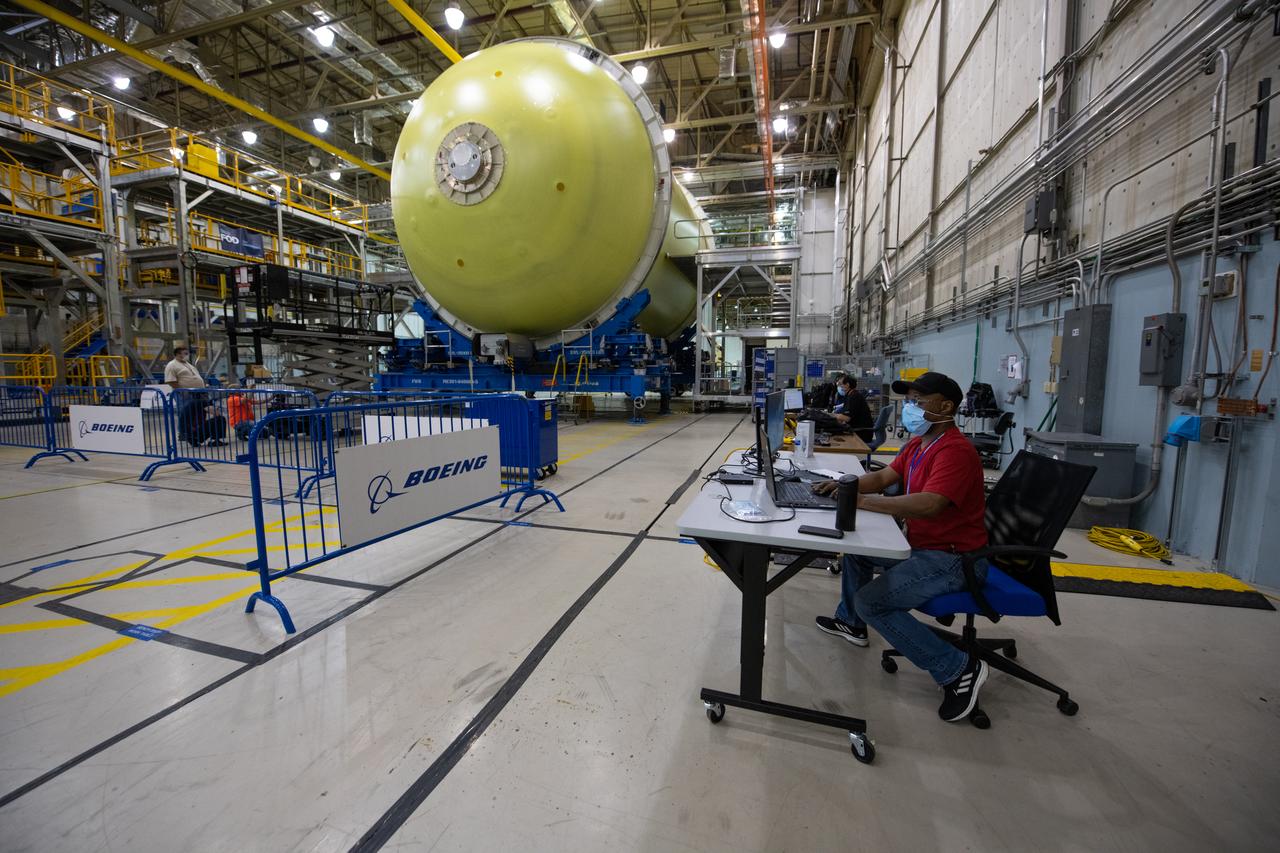
Employees wear personal protective gear at Michoud Assembly Facility as the facility transitioned to Stage 3 of NASA’s Framework for Return To On-Site Work. Employees wear the appropriate personal protective equipment (PPE) and/or cloth face coverings as required for assigned tasks. Access to the facility is limited to authorized personnel working on mission-critical tasks that must be conducted onsite. Mission-critical tasks include slowly and methodically resuming Space Launch System (SLS) Core Stage and Orion production activities, particularly critical path deliverables to support the Artemis Program, at a pace that limits personnel and follows federal guidelines for social distancing and use of personal protective equipment such as face masks. For more information about SLS, visit nasa.gov/sls.
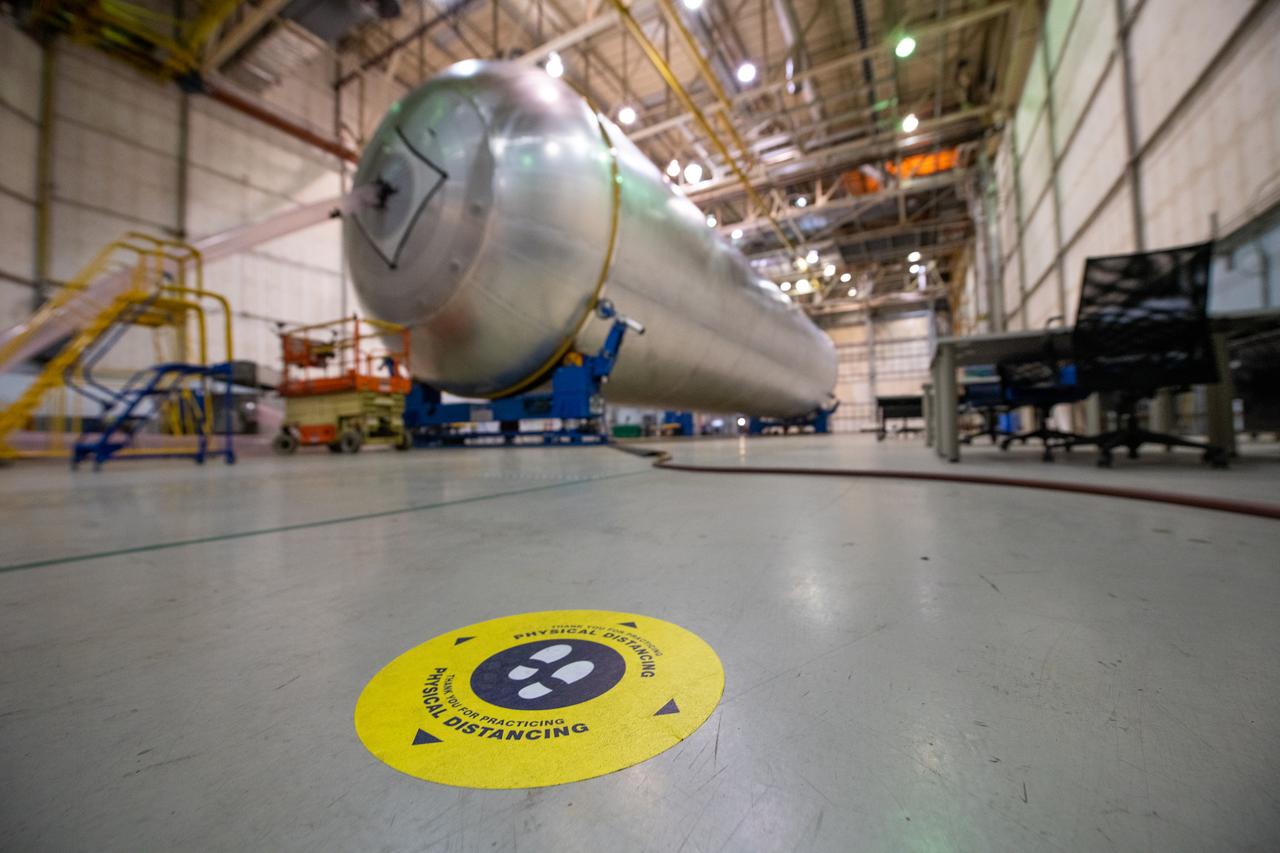
Employees wear personal protective gear at Michoud Assembly Facility as the facility transitioned to Stage 3 of NASA’s Framework for Return To On-Site Work. Employees wear the appropriate personal protective equipment (PPE) and/or cloth face coverings as required for assigned tasks. Access to the facility is limited to authorized personnel working on mission-critical tasks that must be conducted onsite. Mission-critical tasks include slowly and methodically resuming Space Launch System (SLS) Core Stage and Orion production activities, particularly critical path deliverables to support the Artemis Program, at a pace that limits personnel and follows federal guidelines for social distancing and use of personal protective equipment such as face masks. For more information about SLS, visit nasa.gov/sls.
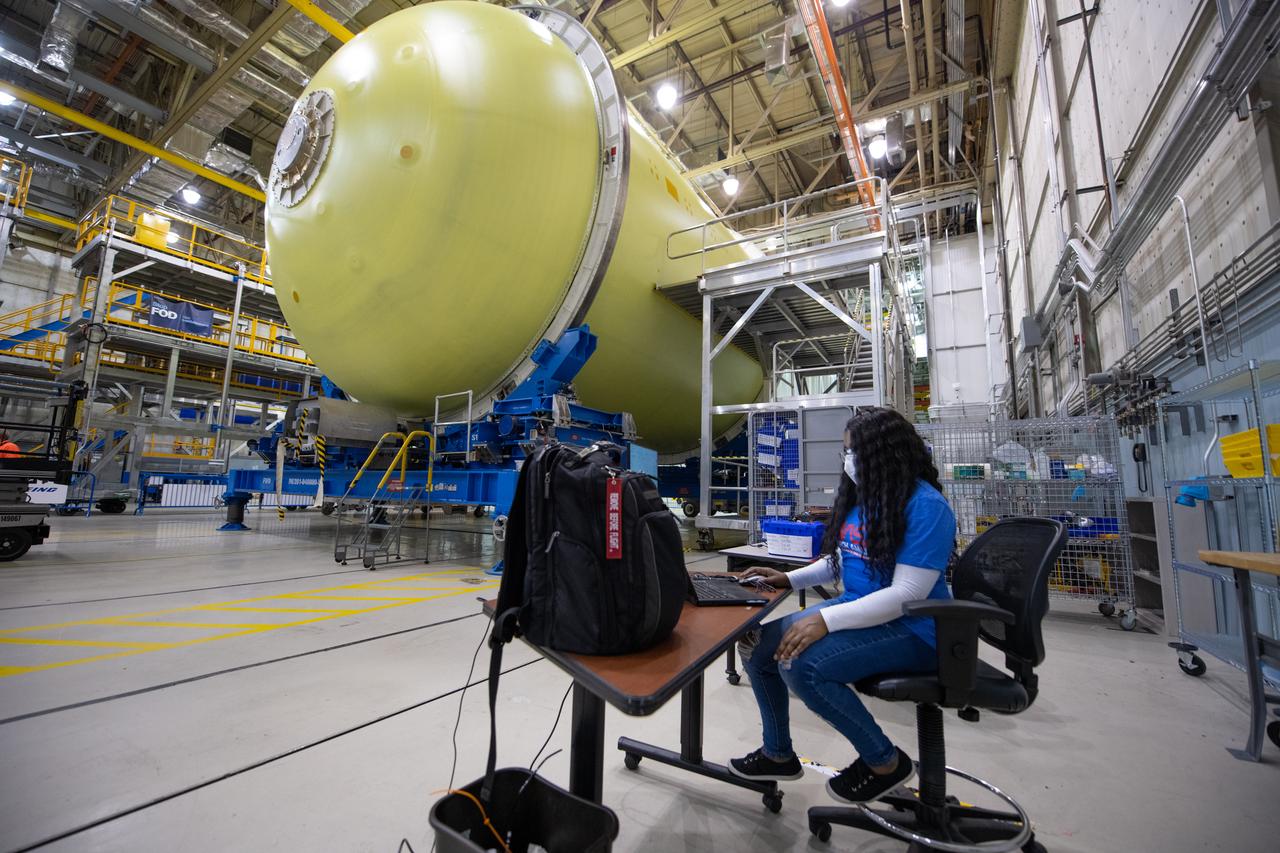
Employees wear personal protective gear at Michoud Assembly Facility as the facility transitioned to Stage 3 of NASA’s Framework for Return To On-Site Work. Employees wear the appropriate personal protective equipment (PPE) and/or cloth face coverings as required for assigned tasks. Access to the facility is limited to authorized personnel working on mission-critical tasks that must be conducted onsite. Mission-critical tasks include slowly and methodically resuming Space Launch System (SLS) Core Stage and Orion production activities, particularly critical path deliverables to support the Artemis Program, at a pace that limits personnel and follows federal guidelines for social distancing and use of personal protective equipment such as face masks. For more information about SLS, visit nasa.gov/sls.
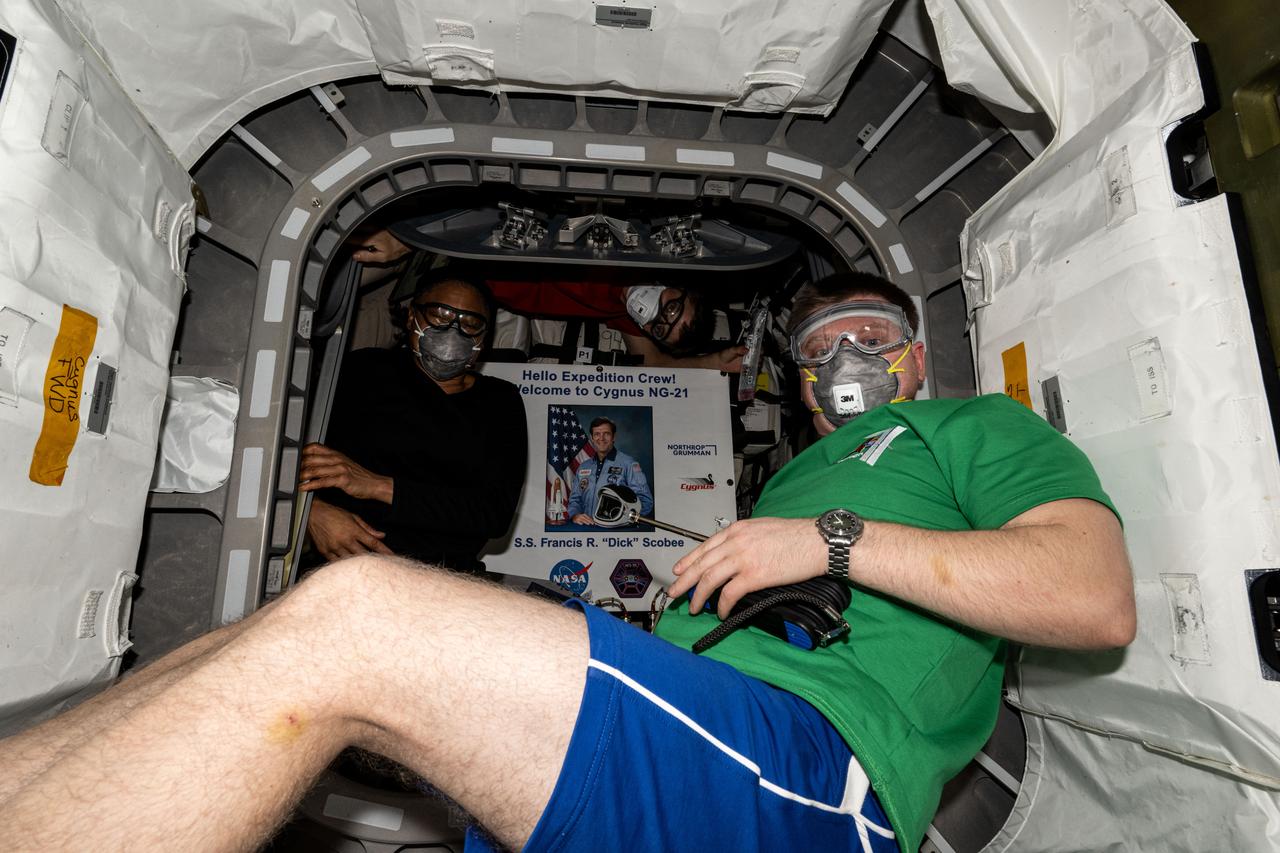
iss071e462164 (Aug. 6, 2024) --- NASA astronauts (from left) Jeanette Epps and Matthew Dominick, both Expedition 71 Flight Engineers, are pictured wearing personal protective equipment (PPE) shortly after entering the Northrop Grumman Cygnus space freighter. Inside Cygnus is a poster of former NASA astronaut Francis R. "Dick" Scobee for whom the spacecraft is named after. The duo was wearing PPE after opening the hatch and entering the vehicle to protect against potential dust or debris that may have dislodged during Cygnus' launch and ascent to space.
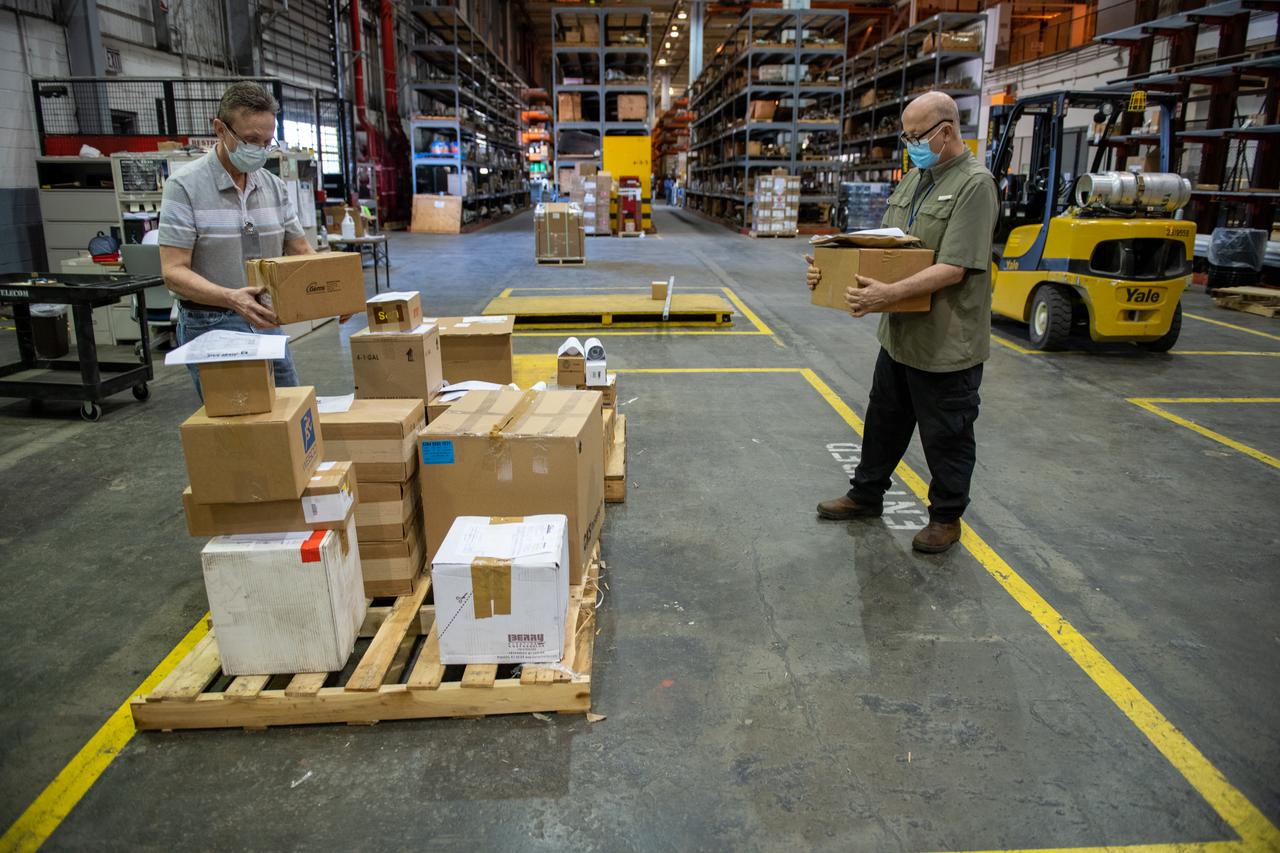
This photo includes two employees wearing personal protective gear in the shipping and receiving area of Michoud Assembly Facility during the Stage 3 transition of NASA’s Framework for Return To On-Site Work. Wearing a facemask is mandatory for common areas where social distancing is difficult to achieve. Access to the facility is limited to authorized personnel working on mission-critical tasks that must be conducted onsite. Employees at Michoud Assembly Facility in New Orleans will slowly and methodically resume Space Launch System (SLS) Core Stage and Orion Spacecraft production and assembly activities at a pace that limits personnel and follows federal guidelines for social distancing and use of personal protective equipment such as face masks. For more information about SLS, visit nasa.gov/sls.
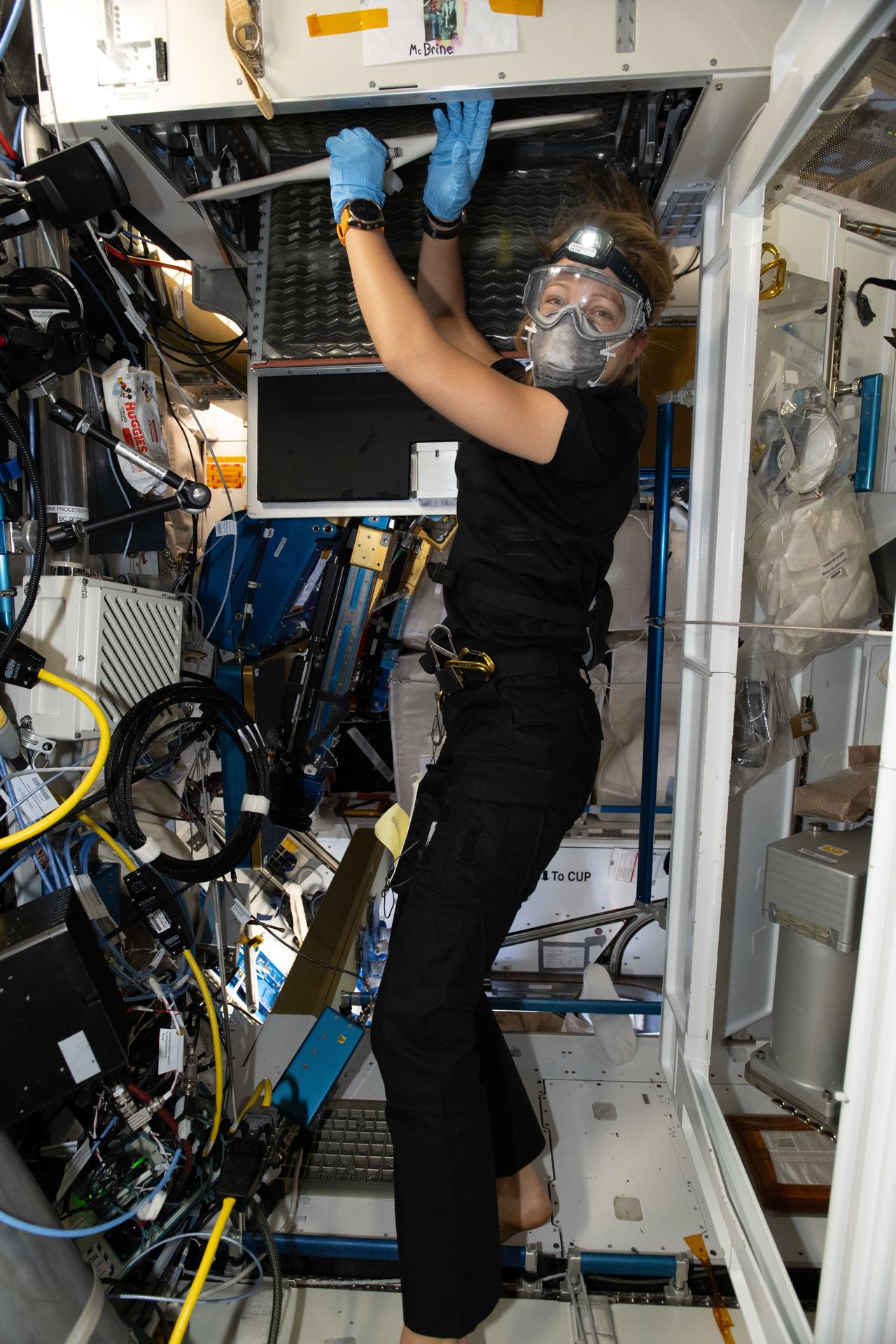
iss074e0319380 (Feb. 19, 2026) --- ESA (European Space Agency) astronaut and Expedition 74 Flight Engineer Sophie Adenot wears personal protective equipment and conducts orbital plumbing maintenance inside the International Space Station's Tranquility module. Credit: ESA/Sophie Adenot
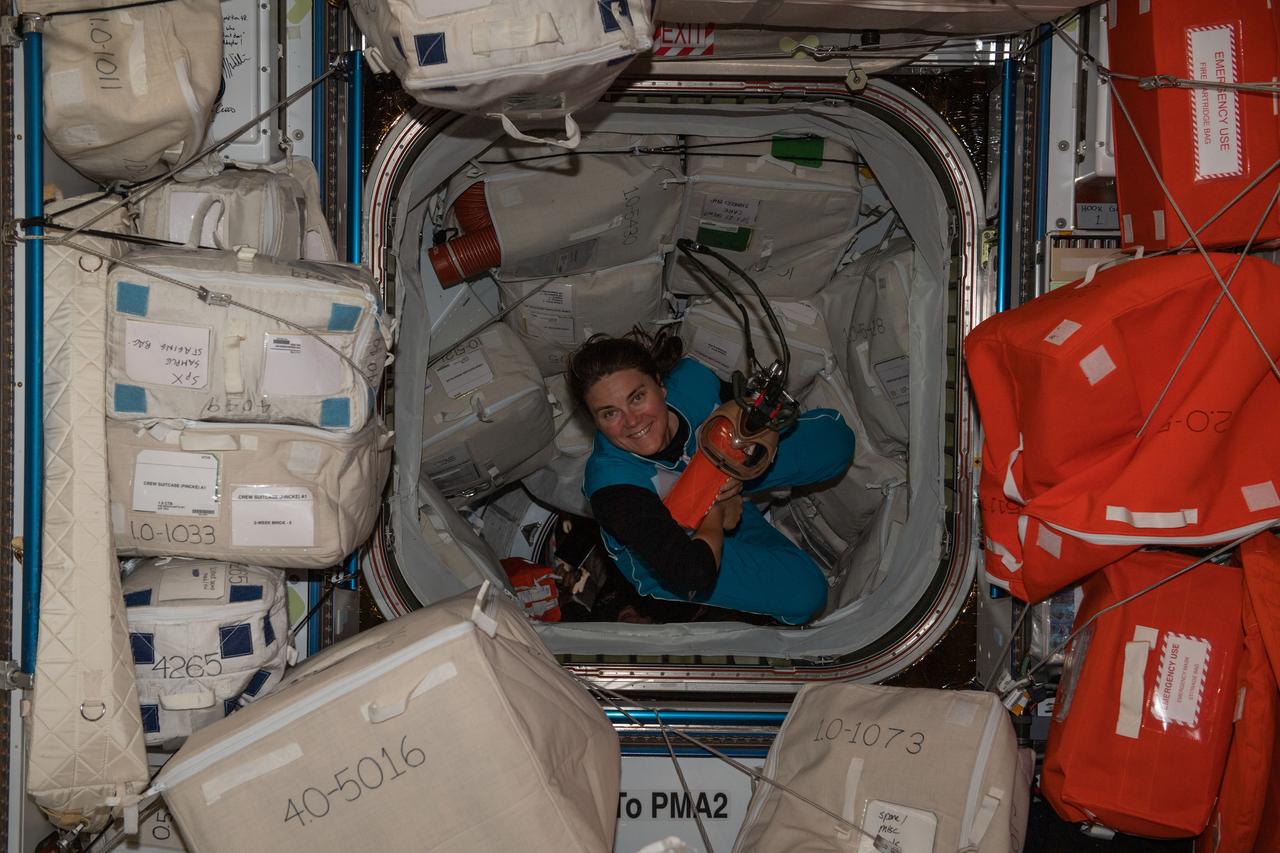
iss068e020521 (Nov. 3, 2022) --- Roscosmos cosmonaut and Expedition 68 Flight Engineer Anna Kikina is pictured carrying personal protective equipment inside the Harmony module's forward-facing international docking adapter where the SpaceX Dragon Endeavour crew ship is docked.
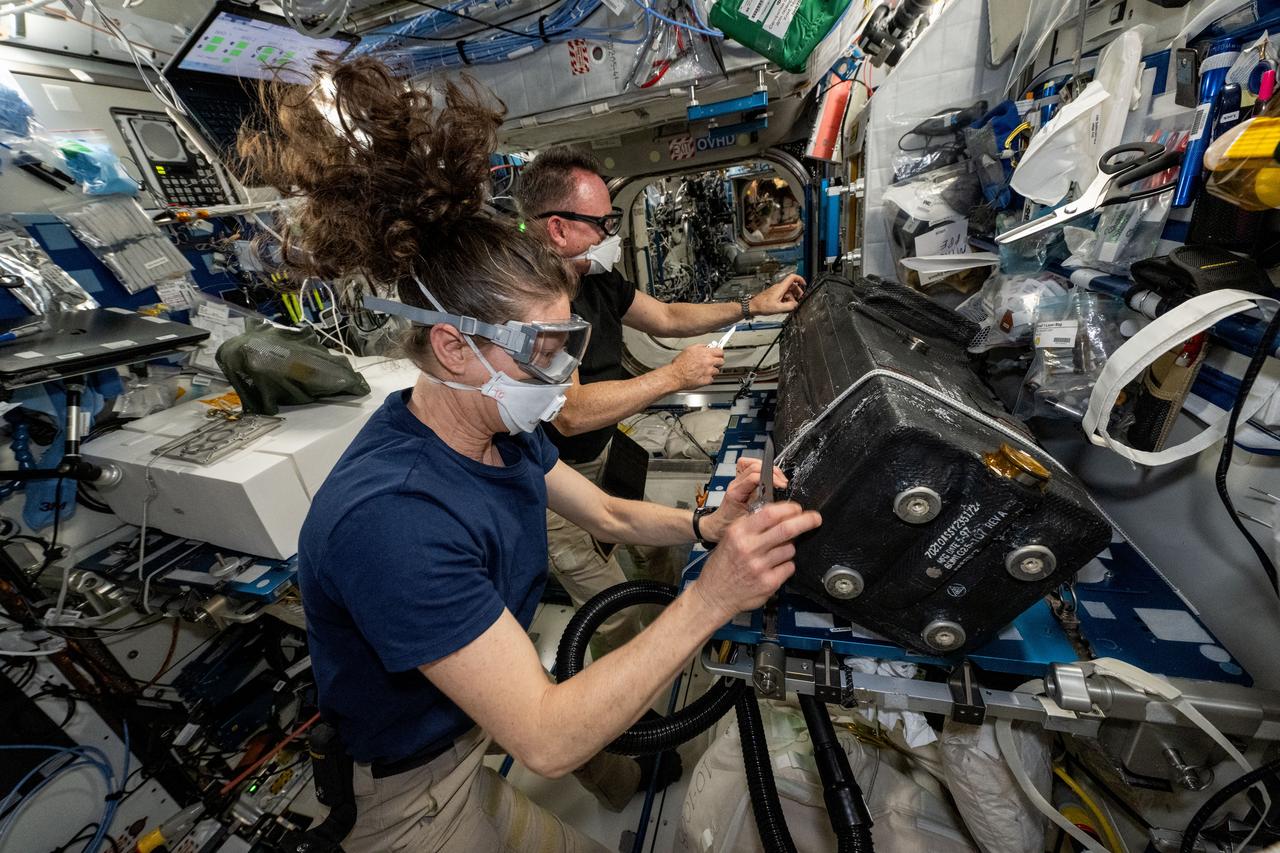
iss071e580478 (Aug. 29, 2024) --- NASA astronauts Tracy C. Dyson (foreground) and Butch Wilmore wear personal protective equipment and clean the inside of the carbon dioxide removal assembly that is part of the International Space Station’s Air Revitalization System located inside the Tranquility module.
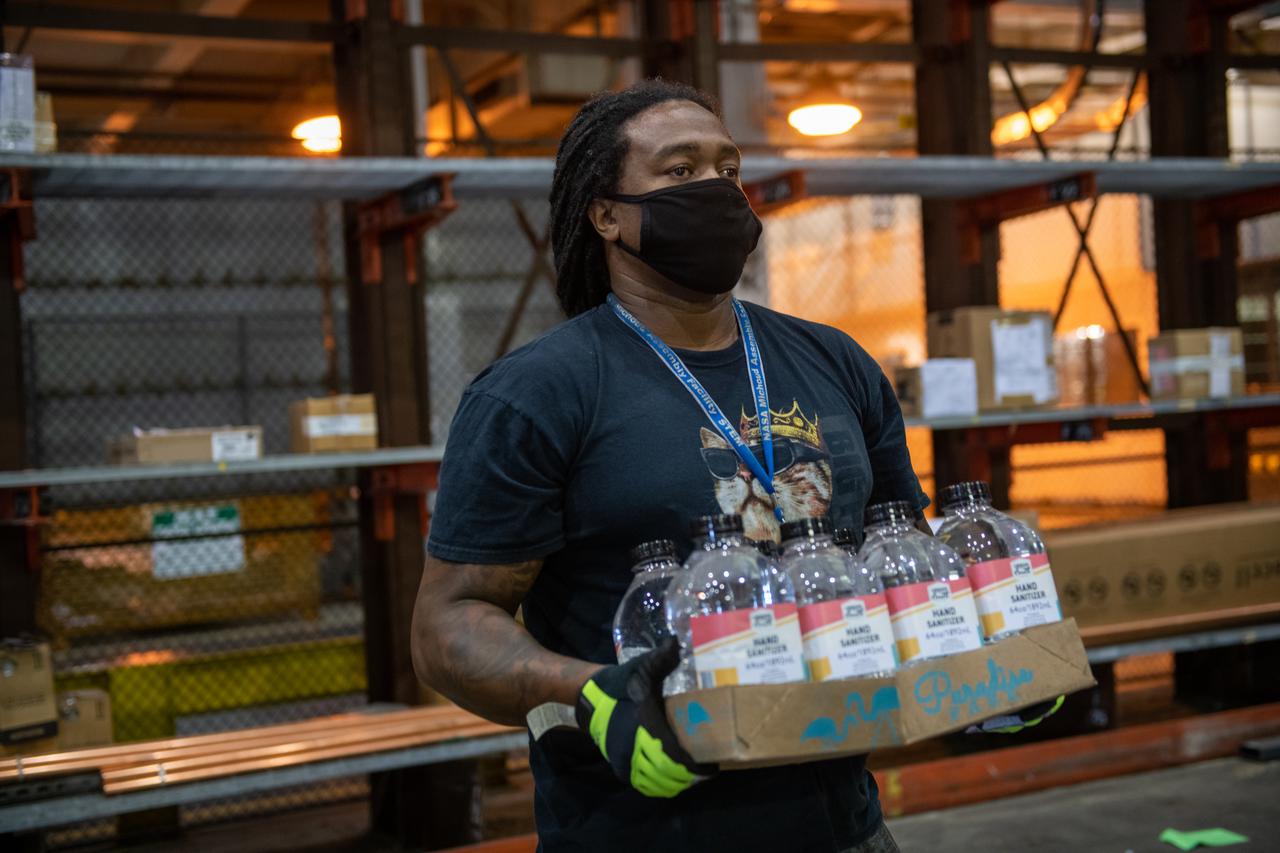
This photo includes two employees wearing personal protective gear in the shipping and receiving area of Michoud Assembly Facility during the Stage 3 transition of NASA’s Framework for Return To On-Site Work. Wearing a facemask is mandatory for common areas where social distancing is difficult to achieve. Access to the facility is limited to authorized personnel working on mission-critical tasks that must be conducted onsite. Employees at Michoud Assembly Facility in New Orleans will slowly and methodically resume Space Launch System (SLS) Core Stage and Orion Spacecraft production and assembly activities at a pace that limits personnel and follows federal guidelines for social distancing and use of personal protective equipment such as face masks. For more information about SLS, visit nasa.gov/sls.
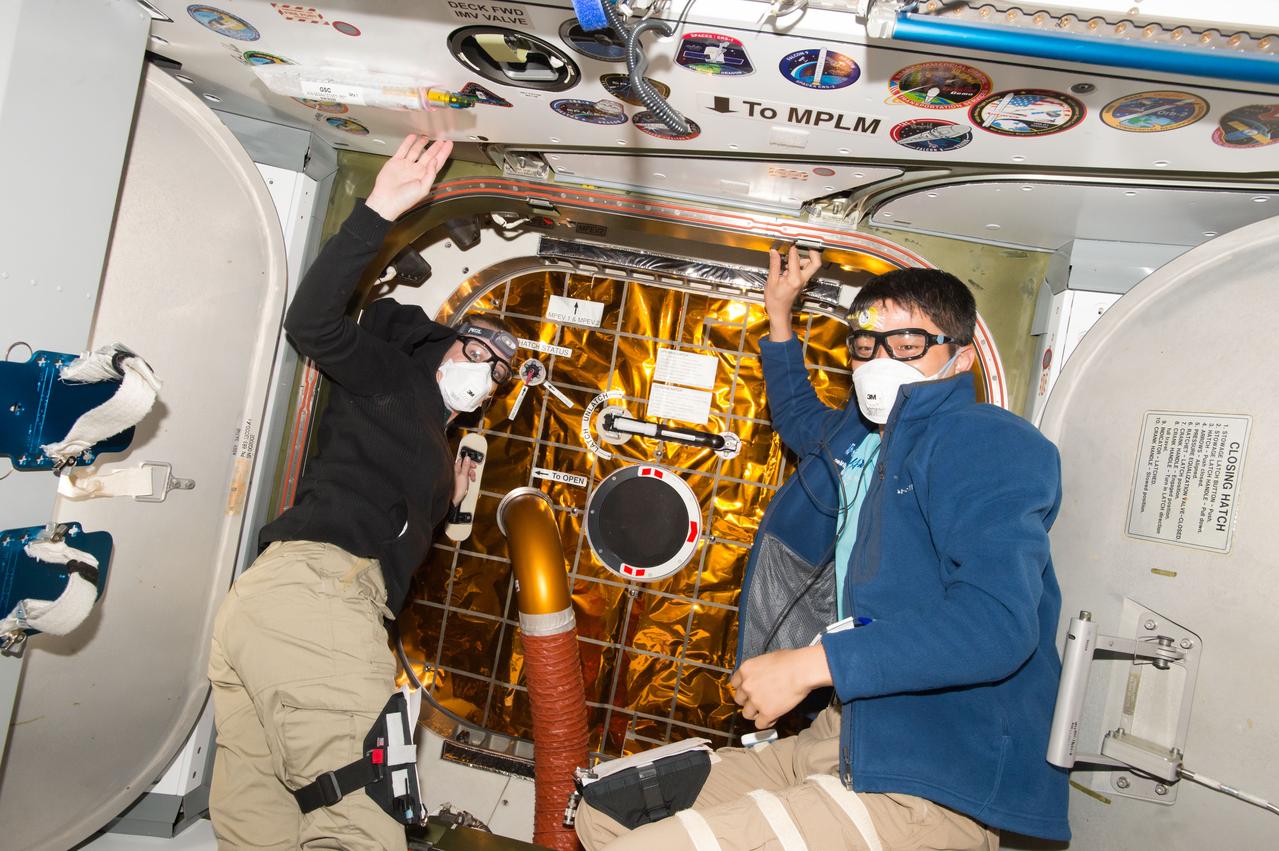
ISS048e042291 (07/20/2016) --- NASA astronaut Kate Rubins (left) and JAXA astronaut Takuya Onishi (right) prepare to open the hatch to SpaceX’s Dragon cargo spacecraft. The vehicle delivered nearly 5,000 pounds of supplies, hardware and experiments to the Expedition 48 crew. It is standard procedure for crew members to wear personal protective equipment, including masks, goggles and sometimes gloves, when entering recently arrived spacecraft. This protects them from any potential debris that may have been shaken loose during the launch and ascent phases of the flight to orbit.
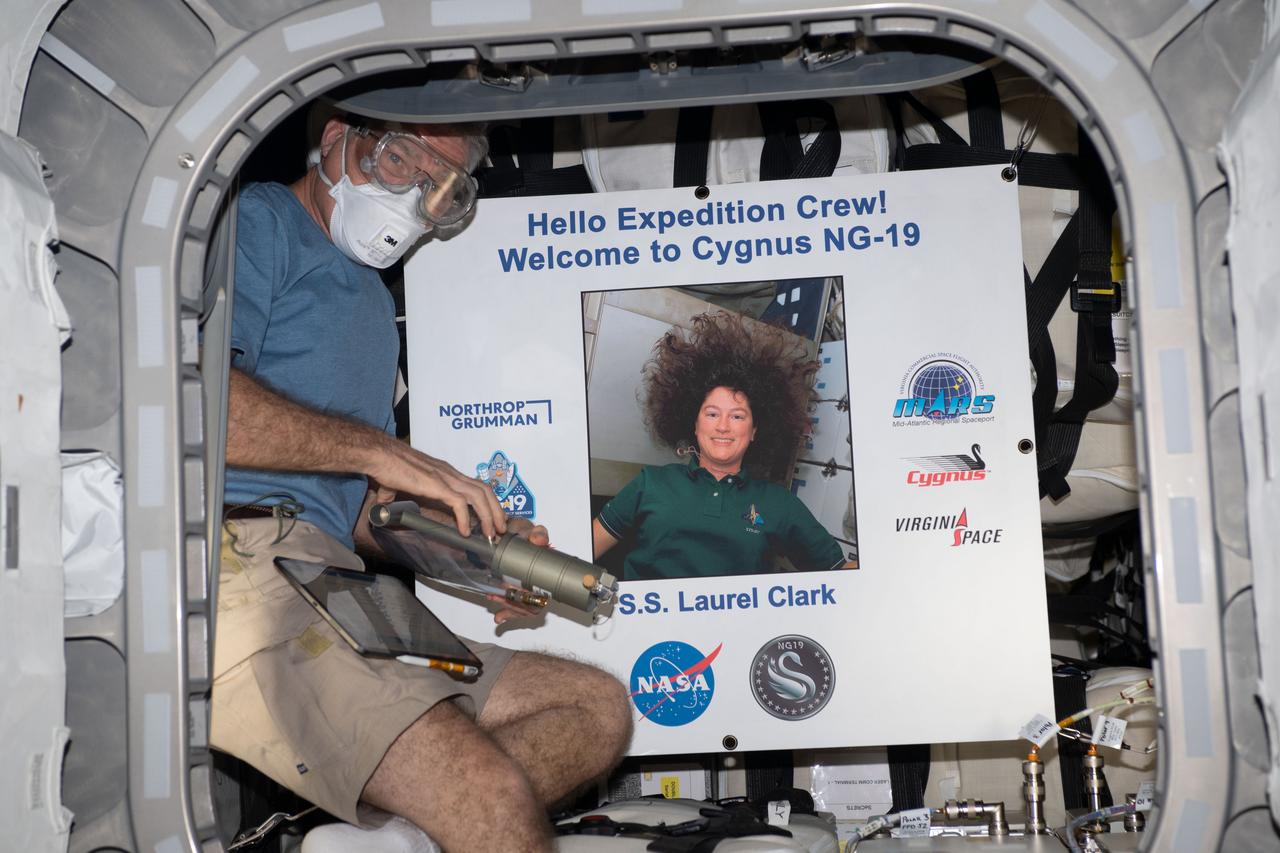
iss069e054159 (Aug. 4, 2023) --- NASA astronaut and Expedition 69 Flight Engineer Stephen Bowen wears personal protective equipment (PPE) shortly after entering the Northrop Grumman Cygnus space freighter. The PPE protects an astronaut from eye contact with and breathing in any dust or debris that may have dislodged during the spacecraft's ascent to orbit. Bowen poses with a portrait of NASA astronaut Laurel Clark, whom the Cygnus cargo craft is named after, who perished aboard space shuttle Columbia during its return to Earth on Feb. 1, 2003.
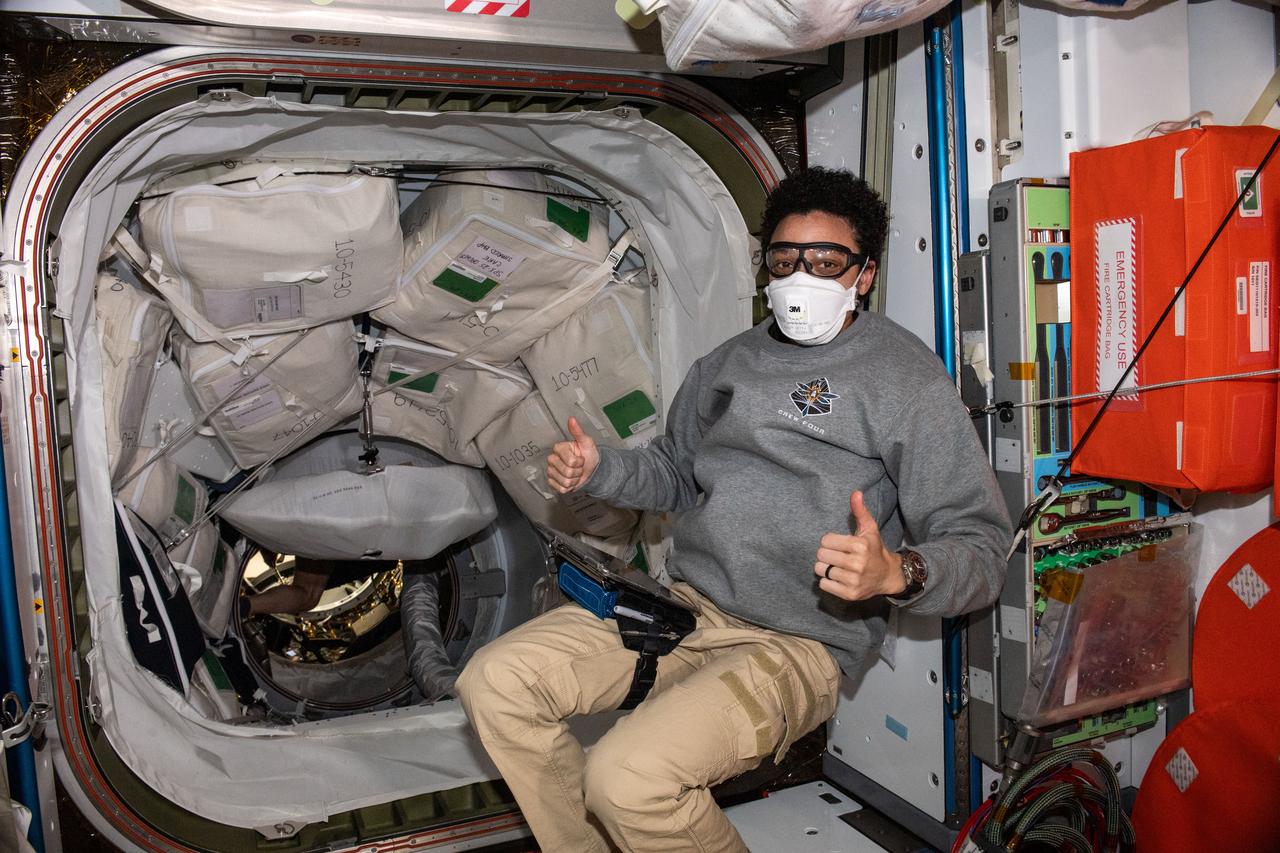
iss067e205449 (July 16, 2022) --- Expedition 67 Flight Engineer and NASA astronaut Jessica Watkins wears personal protective equipment (PPE) as a precaution before entering the SpaceX Dragon resupply ship a couple of hours after it docked to the Harmony module's forward port on the International Space Station. The PPE prevents a crew member from inadvertently coming in contact with dust and other atmospheric particles that may have dislodged inside the vehicle during its launch and ascent into Earth orbit.
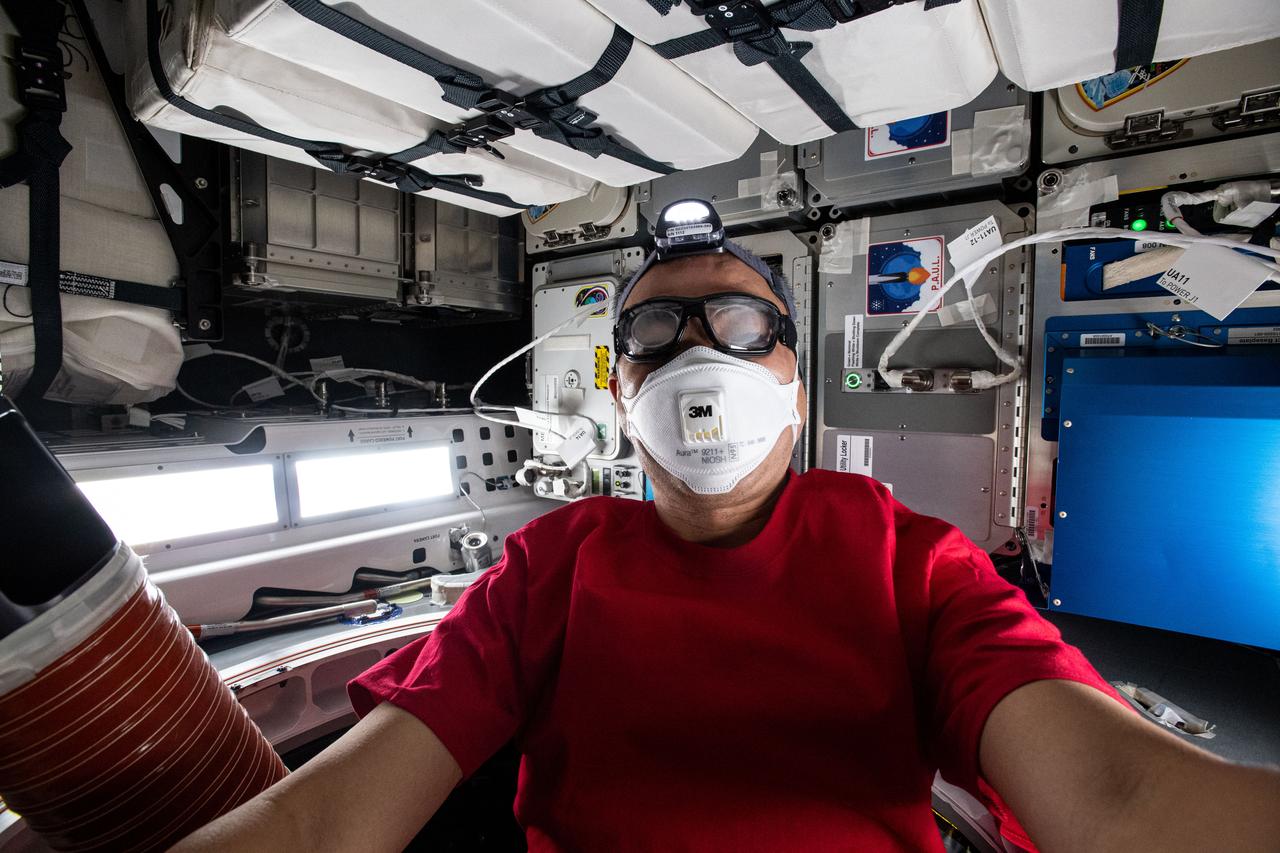
iss064e011228 (Dec. 7, 2020) --- JAXA astronaut Sochi Noguchi is pictured inside the newly arrived SpaceX Cargo Dragon vehicle wearing personal protective equipment. Safety goggles and masks are required when a crew member opens the hatch and enters a new spacecraft for the first time due to dust and debris that may have been dislodged during the ascent to space.
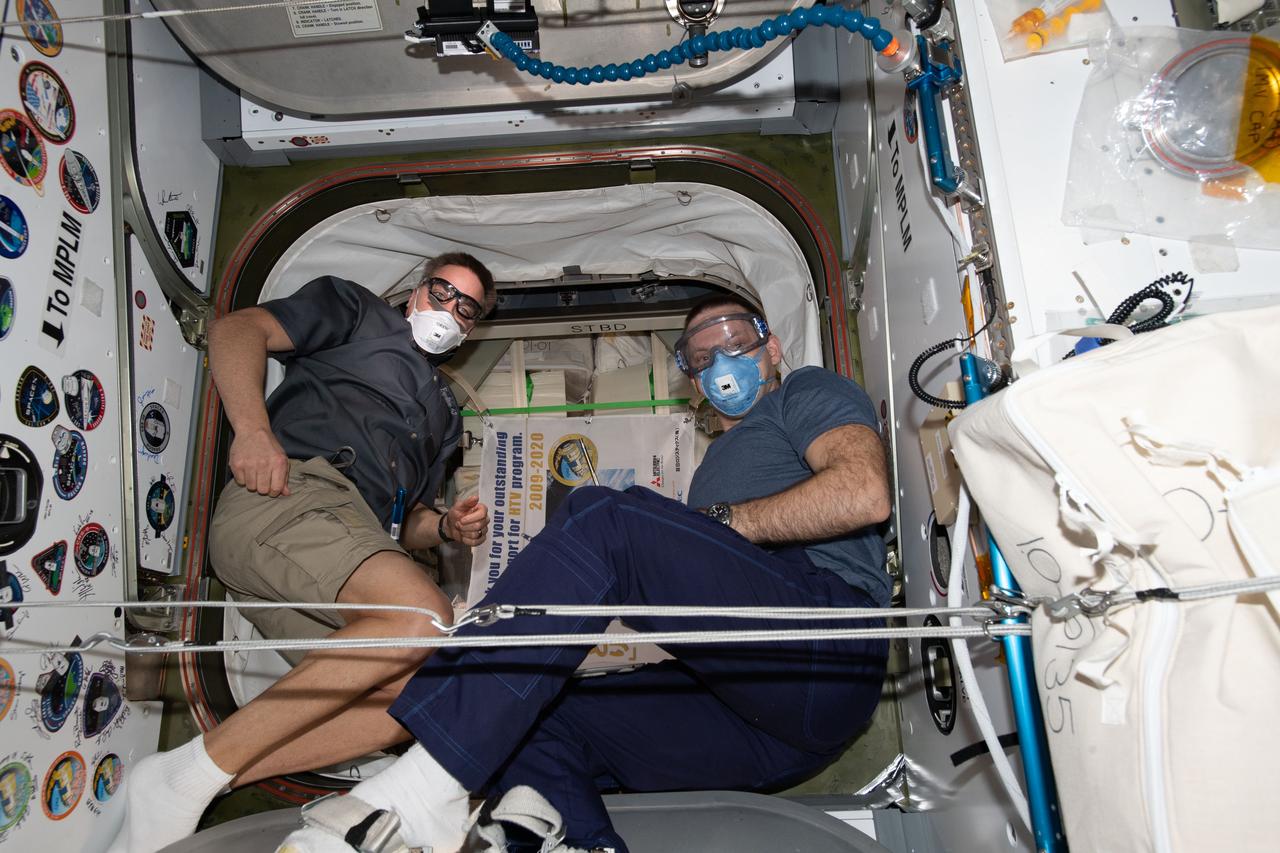
iss063e015430 (May 25, 2020) --- Expedition 63 crew members (from left) Chris Cassidy and Ivan Vagner wear personal protective equipment (PPE) before opening the hatch and entering Japan's resupply ship, the H-II Transfer Vehicle-9 (HTV-9). The PPE is necessary before entering a newly-arrived cargo craft to prevent dust and other irritants that may have become dislodged during the spacecraft's launch from entering the airways and the eyes.
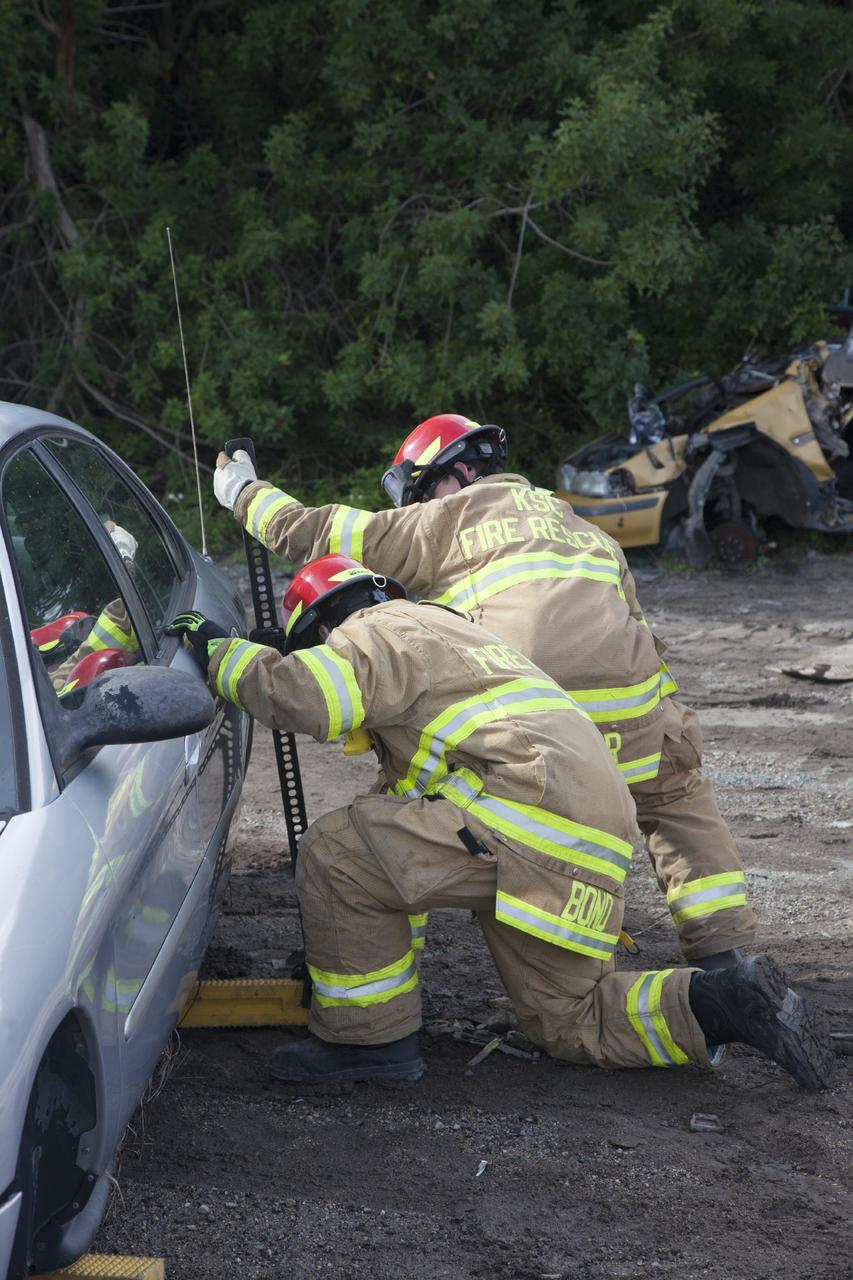
CAPE CANAVERAL, Fla. – Special Rescue Operations firefighters with NASA Fire Rescue Services in the Protective Services Office at NASA’s Kennedy Space Center in Florida practice vehicle extrication training at an auto salvage yard near the center. Two firefighters insert blocks under the vehicle to stabilize it. They will use the Jaws of Life on the vehicle to simulate the rescue of a trapped and injured person. Other rescue equipment includes axes, tools to punch through and clear away the windshield and windows and a hydraulic cutting tool that is used to remove the roof of a car. Kennedy’s firefighters recently achieved Pro Board Certification in aerial fire truck operations. With the completion of vehicle extrication and Jaws of Life training, the Protective Services Office is one step closer to achieving certification in vehicle machinery extrication. Kennedy’s firefighters are with G4S Government Solutions Inc., on the Kennedy Protective Services Contract. Photo credit: NASA/Daniel Casper
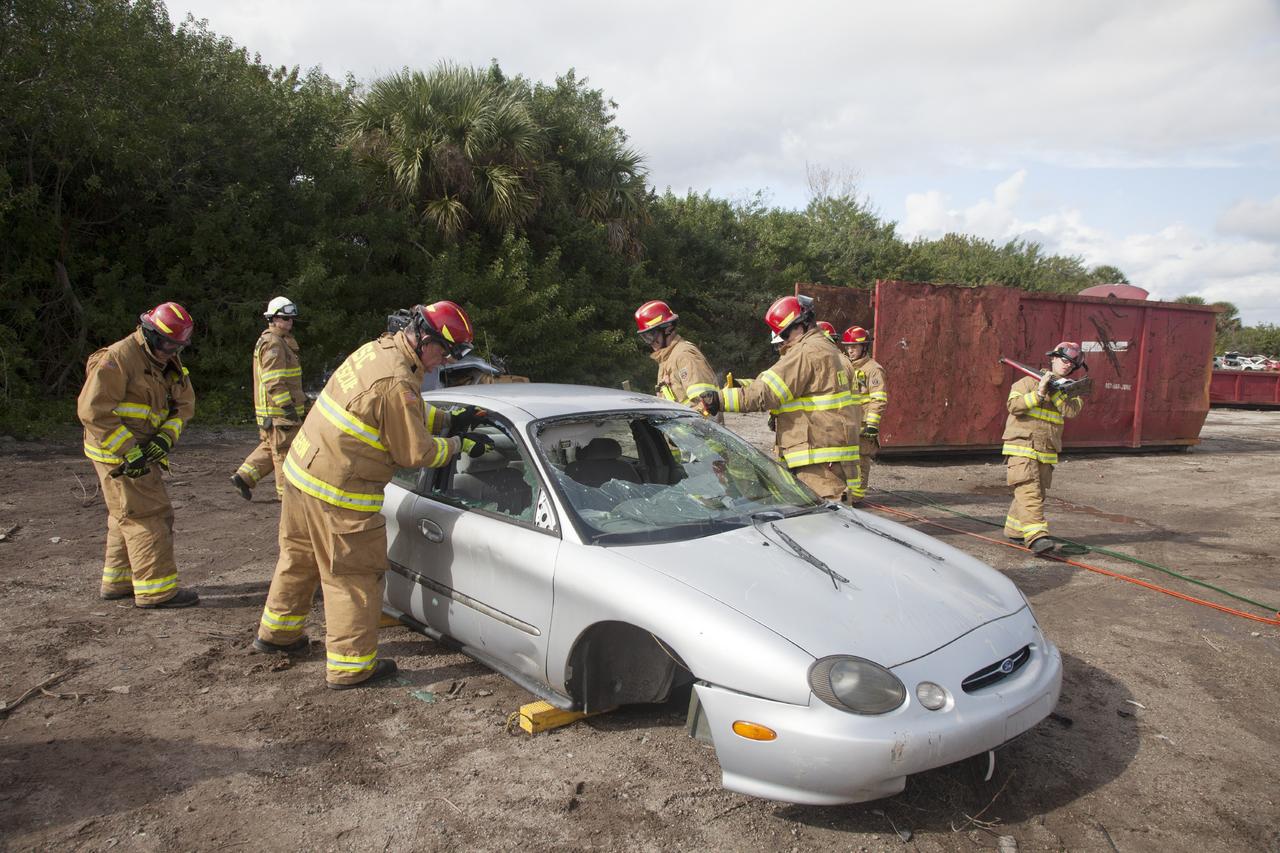
CAPE CANAVERAL, Fla. – Special Rescue Operations firefighters with NASA Fire Rescue Services in the Protective Services Office at NASA’s Kennedy Space Center in Florida practice vehicle extrication training at an auto salvage yard near the center. Stabilizing blocks have been placed underneath the car. Firefighters practiced knocking out the windshield and windows with axes and other tools. They will use the Jaws of Life on the vehicle to simulate the rescue of a trapped and injured person. Other rescue equipment includes a hydraulic cutting tool that is used to remove the roof of a car. Kennedy’s firefighters recently achieved Pro Board Certification in aerial fire truck operations. With the completion of vehicle extrication and Jaws of Life training, the Protective Services Office is one step closer to achieving certification in vehicle machinery extrication. Kennedy’s firefighters are with G4S Government Solutions Inc., on the Kennedy Protective Services Contract. Photo credit: NASA/Daniel Casper
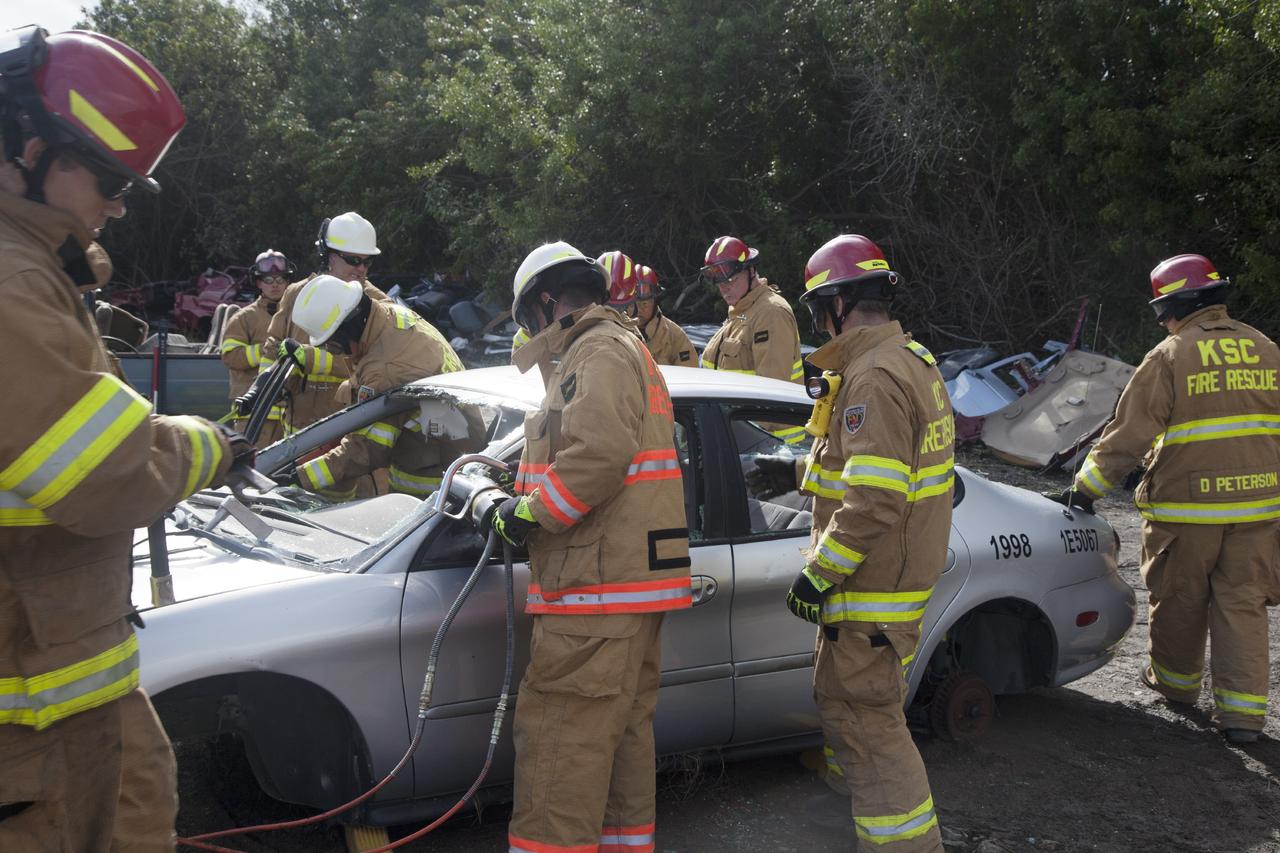
CAPE CANAVERAL, Fla. – Special Rescue Operations firefighters with NASA Fire Rescue Services in the Protective Services Office at NASA’s Kennedy Space Center in Florida practice vehicle extrication training at an auto salvage yard near the center. A firefighter uses a special hydraulic tool to cut through a section of the car to remove the roof, while other firefighters clear the windows and prepare to use the Jaws of Life to simulate the rescue of a trapped and injured person. Other rescue equipment being used includes axes and tools to punch through and clear away windshields and windows. Kennedy’s firefighters recently achieved Pro Board Certification in aerial fire truck operations. With the completion of vehicle extrication and Jaws of Life training, the Protective Services Office is one step closer to achieving certification in vehicle machinery extrication. Kennedy’s firefighters are with G4S Government Solutions Inc., on the Kennedy Protective Services Contract. Photo credit: NASA/Daniel Casper
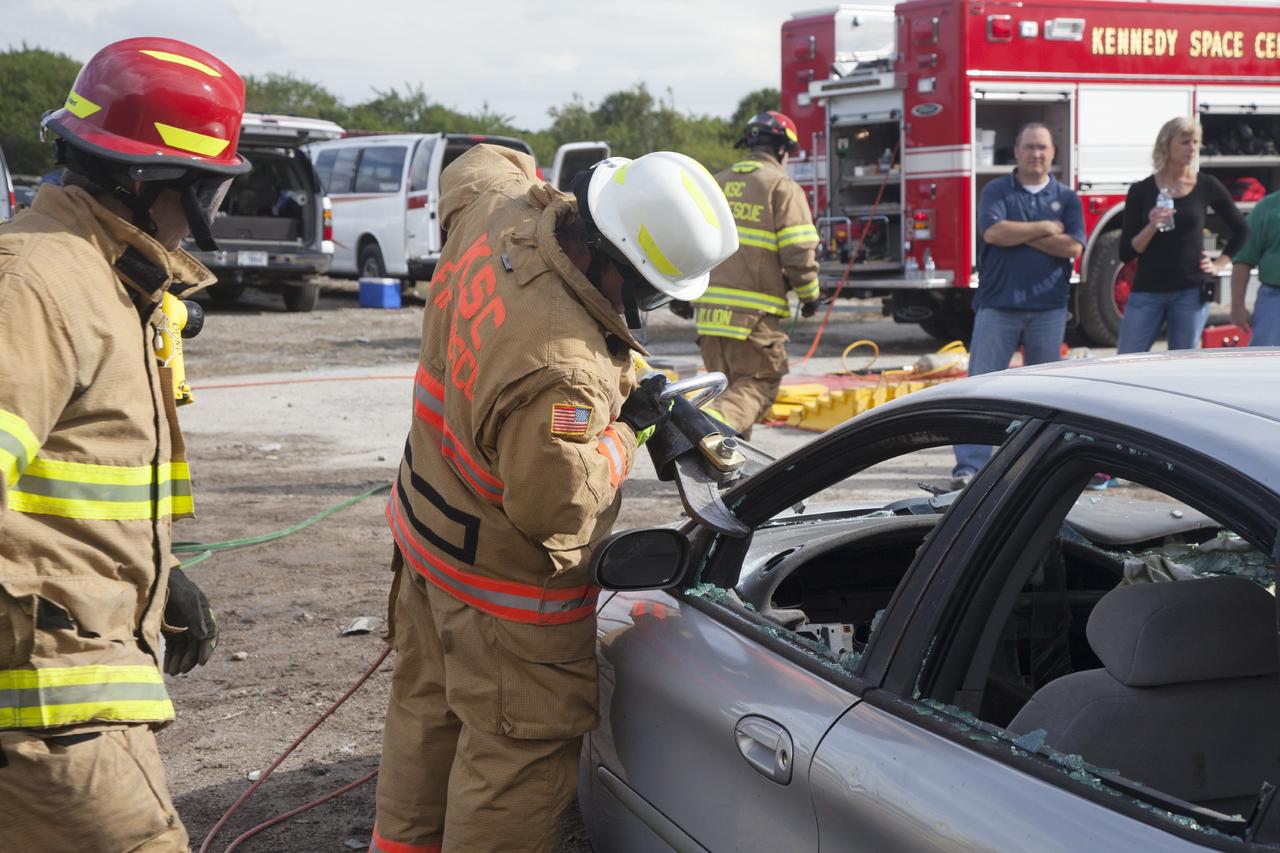
CAPE CANAVERAL, Fla. – Special Rescue Operations firefighters with NASA Fire Rescue Services in the Protective Services Office at NASA’s Kennedy Space Center in Florida practice vehicle extrication training at an auto salvage yard near the center. A firefighter uses a special hydraulic tool to cut through the vehicle in order to remove the roof. They will use the Jaws of Life on the vehicle to simulate the rescue of a trapped and injured person. Other rescue equipment includes axes and tools to punch through and clear away windshields and windows. Kennedy’s firefighters recently achieved Pro Board Certification in aerial fire truck operations. With the completion of vehicle extrication and Jaws of Life training, the Protective Services Office is one step closer to achieving certification in vehicle machinery extrication. Kennedy’s firefighters are with G4S Government Solutions Inc., on the Kennedy Protective Services Contract. Photo credit: NASA/Daniel Casper
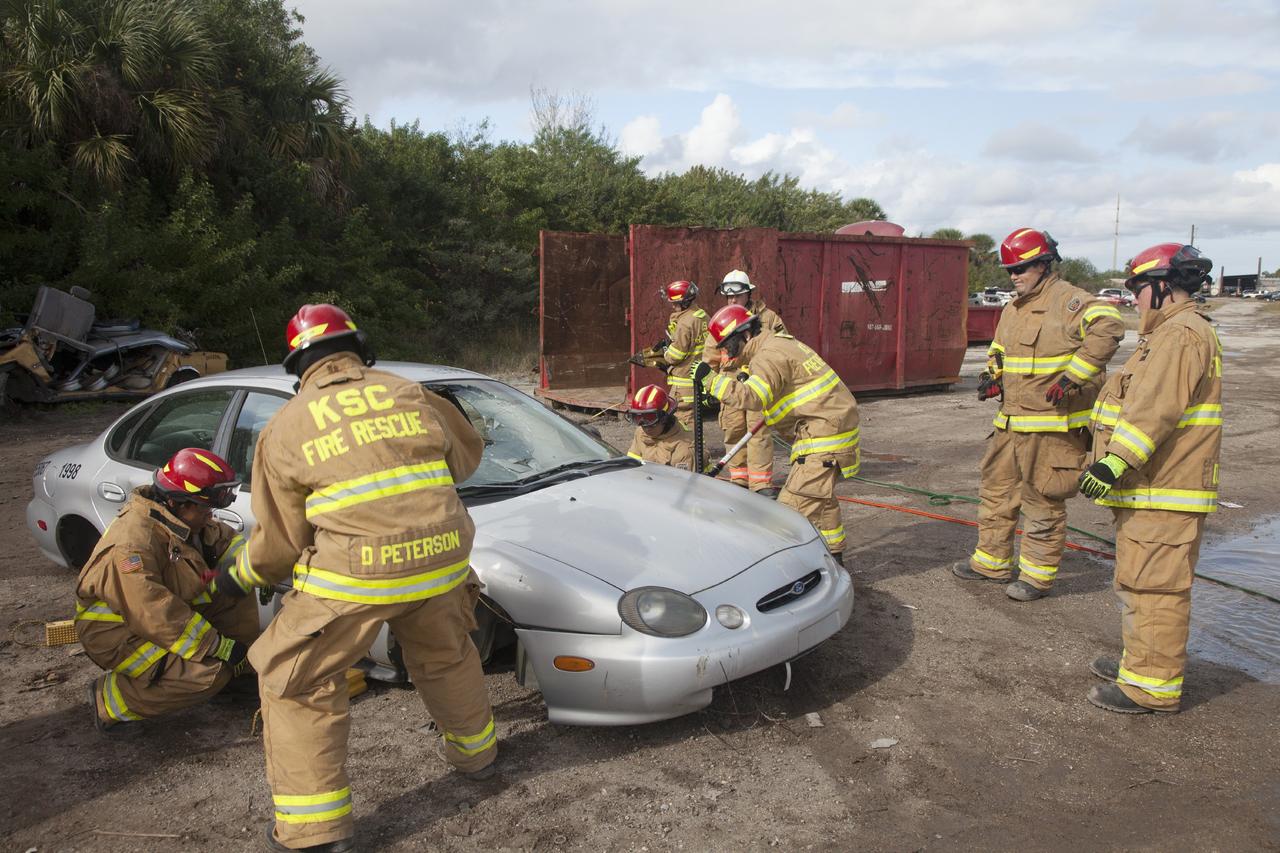
CAPE CANAVERAL, Fla. – Special Rescue Operations firefighters with NASA Fire Rescue Services in the Protective Services Office at NASA’s Kennedy Space Center in Florida practice vehicle extrication training at an auto salvage yard near the center. The firefighters used the Jaws of Life on the vehicle to simulate the rescue of a trapped and injured person. Other equipment used includes axes, tools to punch through and clear away the windshield and windows and a hydraulic cutting tool that is used to remove the roof of a car. Kennedy’s firefighters recently achieved Pro Board Certification in aerial fire truck operations. With the completion of vehicle extrication and Jaws of Life training, the Protective Services Office is one step closer to achieving certification in vehicle machinery extrication. Kennedy’s firefighters are with G4S Government Solutions Inc., on the Kennedy Protective Services Contract. Photo credit: NASA/Daniel Casper
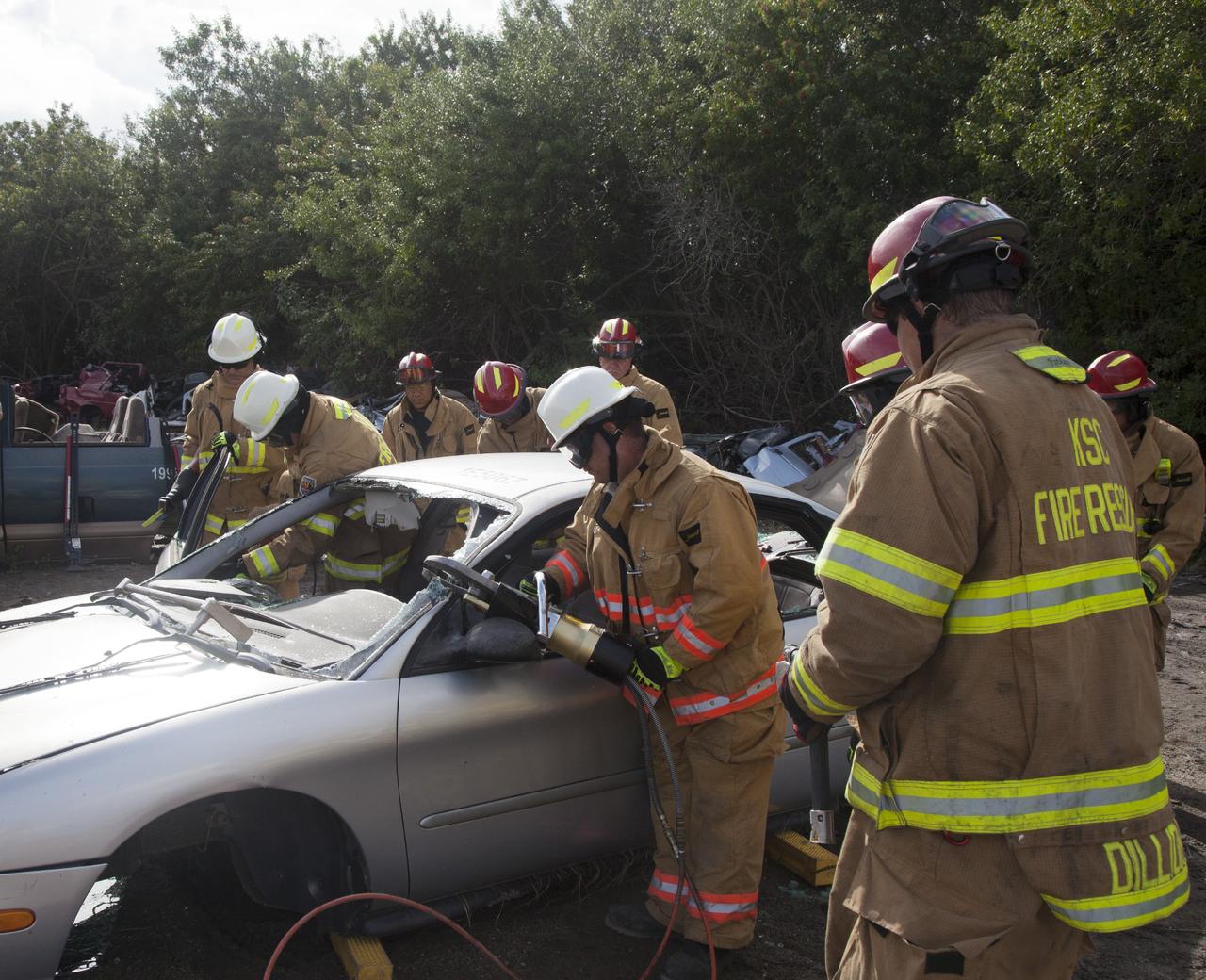
CAPE CANAVERAL, Fla. – Special Rescue Operations firefighters with NASA Fire Rescue Services in the Protective Services Office at NASA’s Kennedy Space Center in Florida practice vehicle extrication training at an auto salvage yard near the center. A firefighter uses a special hydraulic tool to cut through a section of the car to remove the roof, while other firefighters clear the windows and prepare to use the Jaws of Life to simulate the rescue of a trapped and injured person. Other rescue equipment being used includes axes and tools to punch through and clear away windshields and windows. Kennedy’s firefighters recently achieved Pro Board Certification in aerial fire truck operations. With the completion of vehicle extrication and Jaws of Life training, the Protective Services Office is one step closer to achieving certification in vehicle machinery extrication. Kennedy’s firefighters are with G4S Government Solutions Inc., on the Kennedy Protective Services Contract. Photo credit: NASA/Daniel Casper
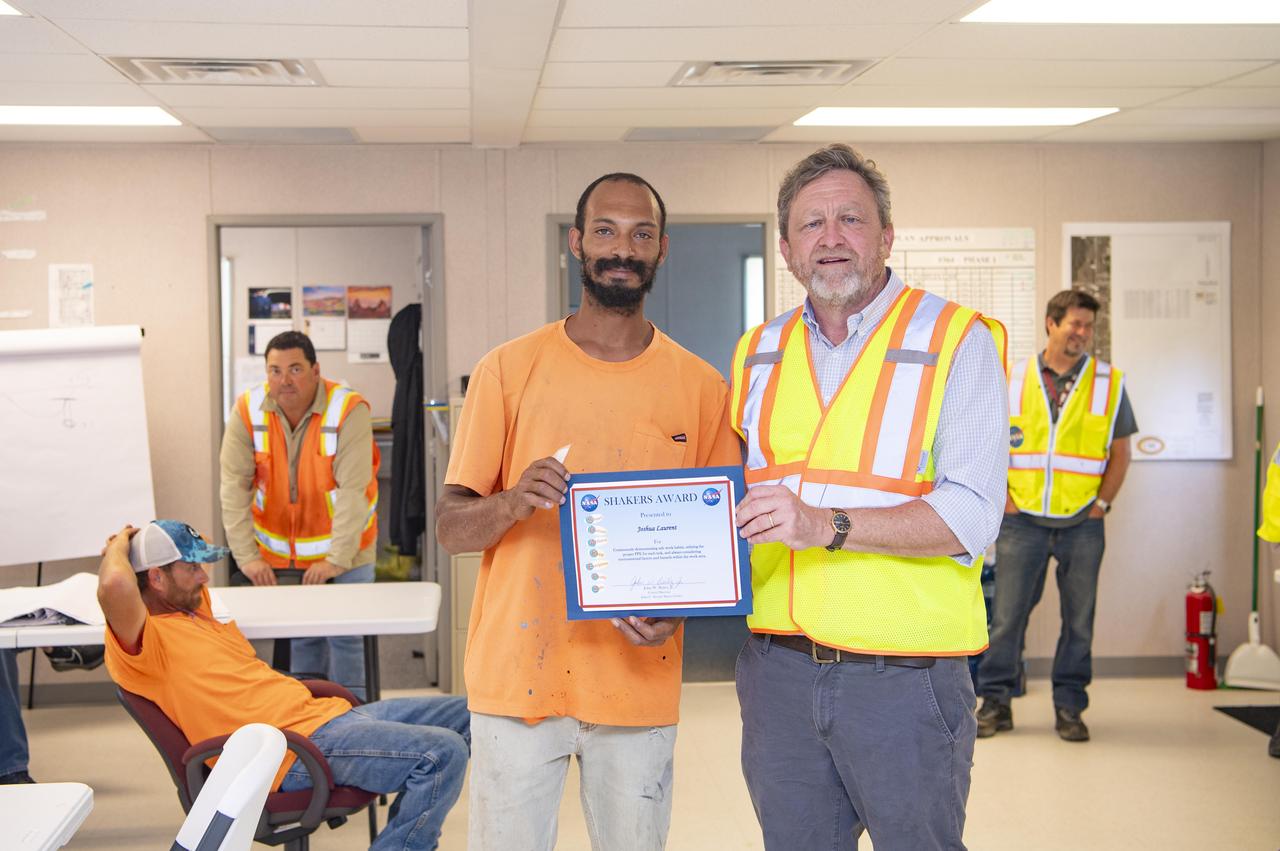
Joshua Laurent, an employee with Civil Works Contracting, is presented a NASA SHAKERS (Smart Human Actions Keep Everyone Really Safe) Award from NASA Stennis Associate Director Rodney McKellip on May 8. Laurent, left, received the award for continuously demonstrating safe work habits, utilizing the proper personal protective equipment for each task, and always considering environmental factors and hazards within the work area while working on the NASA Stennis potable water system. NASA’s constant attention to safety, one of the agency’s five core values, is the cornerstone for mission success.
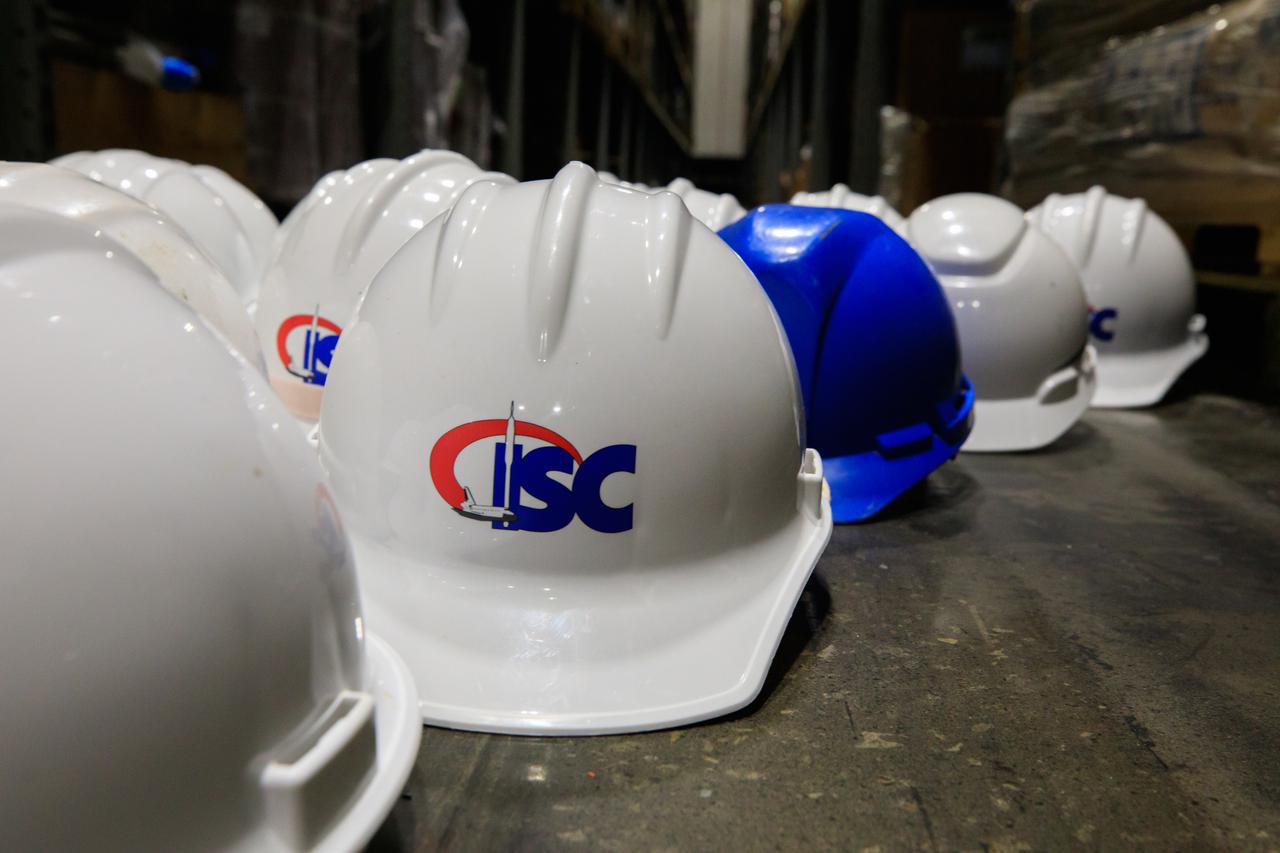
The Test and Operations Support Contract (TOSC) Kimberly-Clark RightCycle program team of April Smith and An Huynh recently earned a Fiscal Year 2021 Sustainable Environment Awareness (SEA) Award Citation. The Kennedy Space Center employees received the honor in SEA’s Waste Management category. Personal Protective Equipment (PPE) is being replaced with Kimberly-Clark brand, where possible, as collection containers are placed in all applicable TOSC facilities at Kennedy. All supplier PPE is collected, placed in a container, and shipped back to the company to be recycled into usable products.

iss072e145408 (Nov. 5, 2024) --- Expedition 72 Commander Suni Williams (left) from NASA and Flight Engineer Aleksandr Gorbunov from Roscosmos wear personal protective equipment shortly after the hatches opened to the newly arrived SpaceX Dragon cargo spacecraft. Crew members wear facemasks and eye shields when entering a cargo craft for the first time to shield against potential dust or debris that may have dislodged during the spacecraft's ascent to orbit. Dragon had automatically docked to the International Space Station's forward port on the Harmony module just over two hours before this photograph was taken.
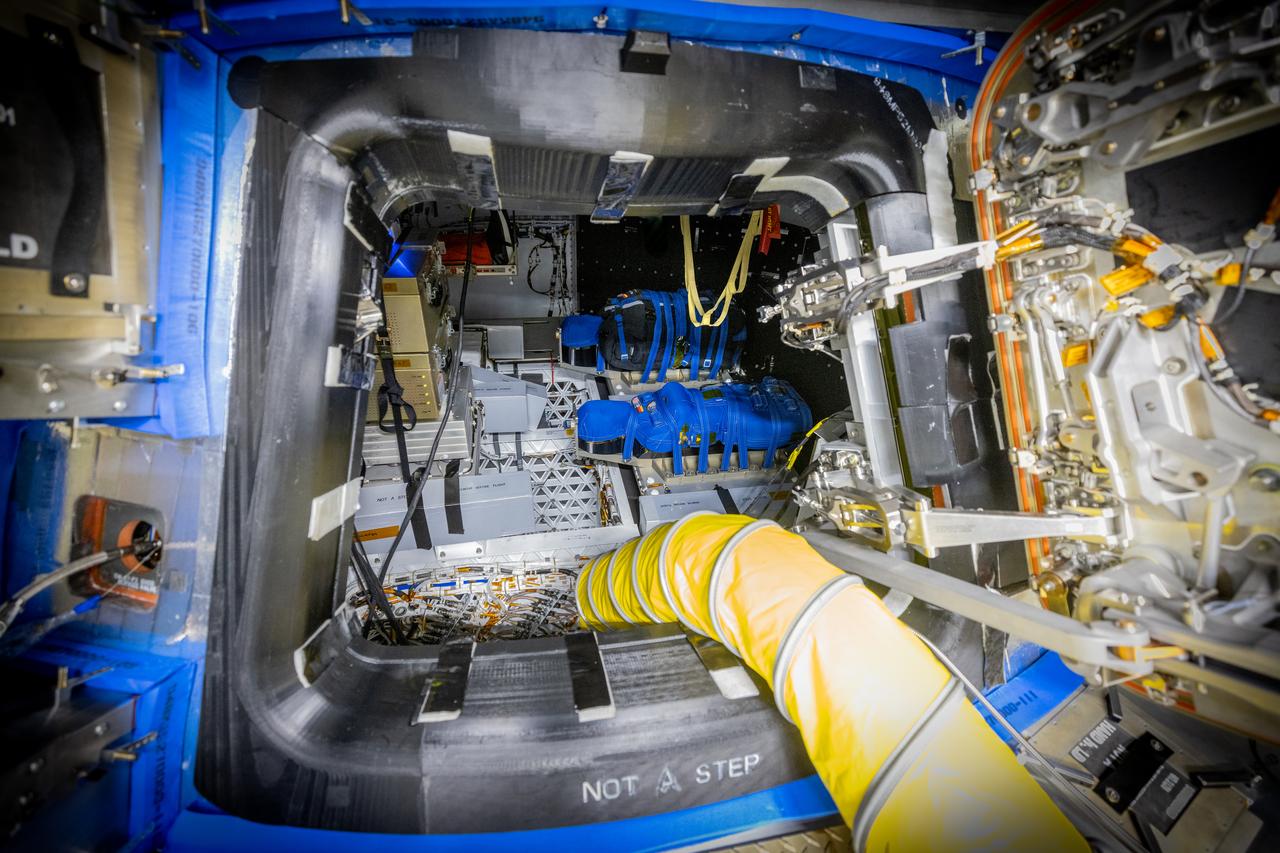
Two manikins are installed in the passenger seats inside the Artemis I Orion crew module atop the Space Launch System rocket in High Bay 3 of the Vehicle Assembly Building at NASA’s Kennedy Space Center in Florida on Aug. 8, 2022. As part of the Matroshka AstroRad Radiation Experiment (MARE) investigation, the two female manikins – Helga and Zohar – are equipped with radiation detectors, while Zohar also wears a radiation protection vest, to determine the radiation risk on its way to the Moon. Artemis I will provide a foundation for human deep space exploration and demonstrate NASA’s capability to extend human presence to the Moon and beyond. The primary goal of Artemis I is to thoroughly test the Space Launch System rocket and Orion spacecraft’s integrated systems before crewed missions. Under Artemis, NASA aims to land the first woman and first person of color on the Moon and establish sustainable lunar exploration.
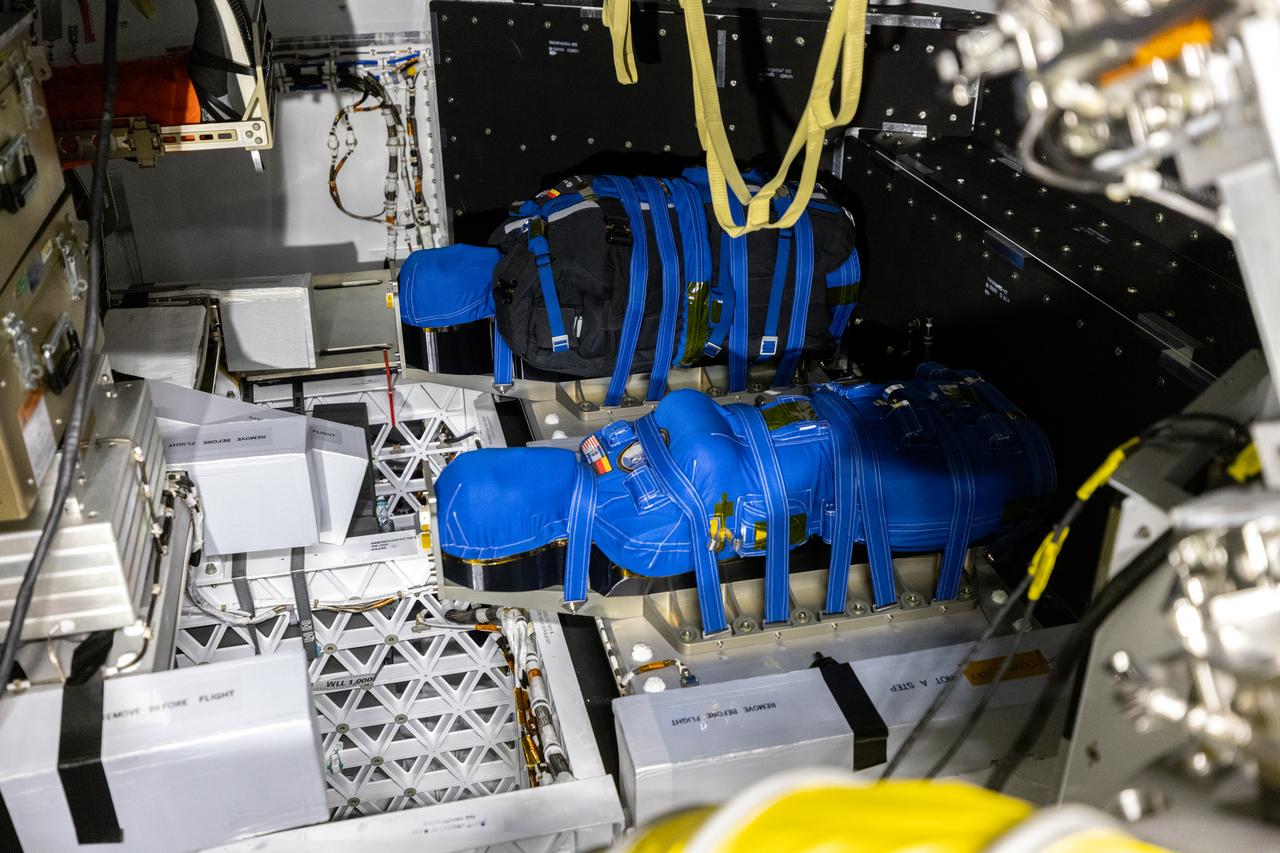
Two manikins are installed in the passenger seats inside the Artemis I Orion crew module atop the Space Launch System rocket in High Bay 3 of the Vehicle Assembly Building at NASA’s Kennedy Space Center in Florida on Aug. 8, 2022. As part of the Matroshka AstroRad Radiation Experiment (MARE) investigation, the two female manikins – Helga and Zohar – are equipped with radiation detectors, while Zohar also wears a radiation protection vest, to determine the radiation risk on its way to the Moon. Artemis I will provide a foundation for human deep space exploration and demonstrate NASA’s capability to extend human presence to the Moon and beyond. The primary goal of Artemis I is to thoroughly test the Space Launch System rocket and Orion spacecraft’s integrated systems before crewed missions. Under Artemis, NASA aims to land the first woman and first person of color on the Moon and establish sustainable lunar exploration.
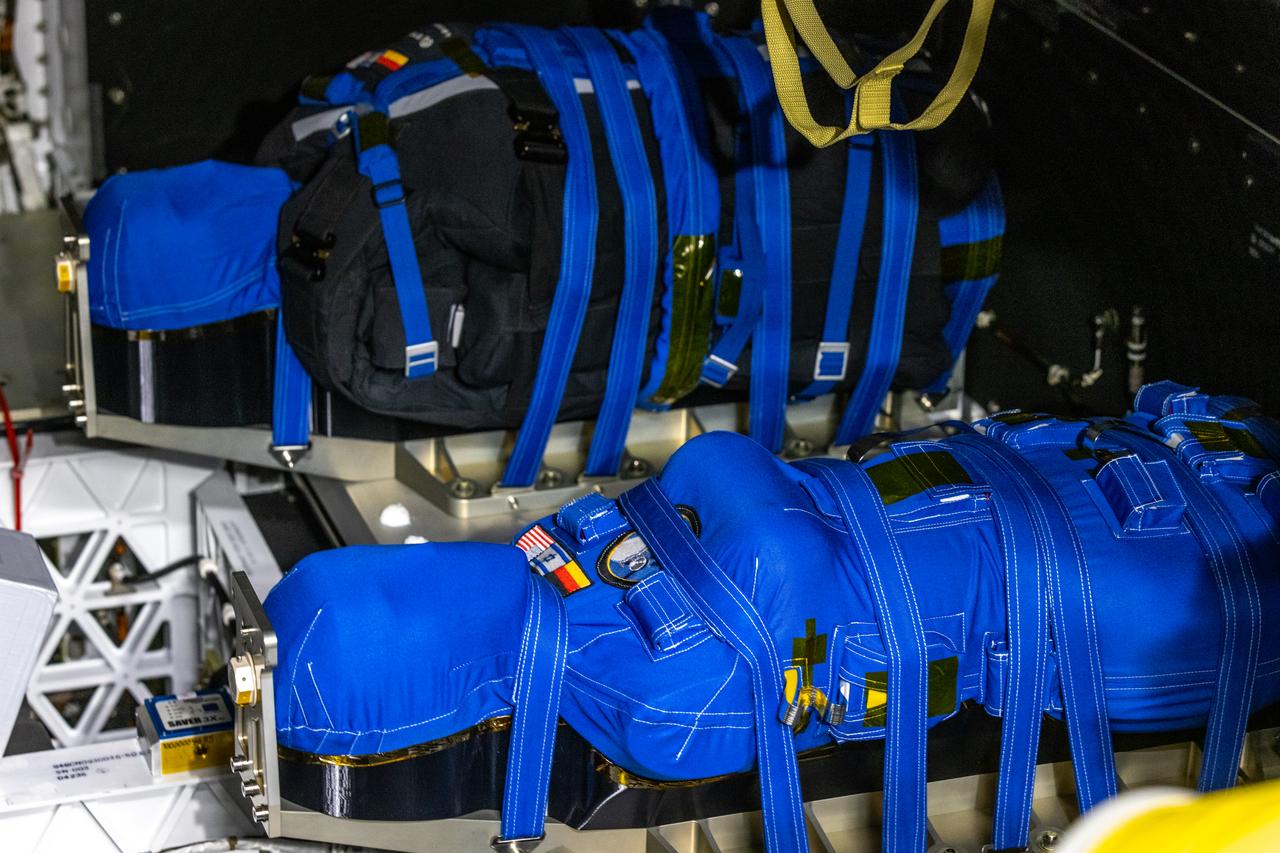
Two manikins are installed in the passenger seats inside the Artemis I Orion crew module atop the Space Launch System rocket in High Bay 3 of the Vehicle Assembly Building at NASA’s Kennedy Space Center in Florida on Aug. 8, 2022. As part of the Matroshka AstroRad Radiation Experiment (MARE) investigation, the two female manikins – Helga and Zohar – are equipped with radiation detectors, while Zohar also wears a radiation protection vest, to determine the radiation risk on its way to the Moon. Artemis I will provide a foundation for human deep space exploration and demonstrate NASA’s capability to extend human presence to the Moon and beyond. The primary goal of Artemis I is to thoroughly test the Space Launch System rocket and Orion spacecraft’s integrated systems before crewed missions. Under Artemis, NASA aims to land the first woman and first person of color on the Moon and establish sustainable lunar exploration.
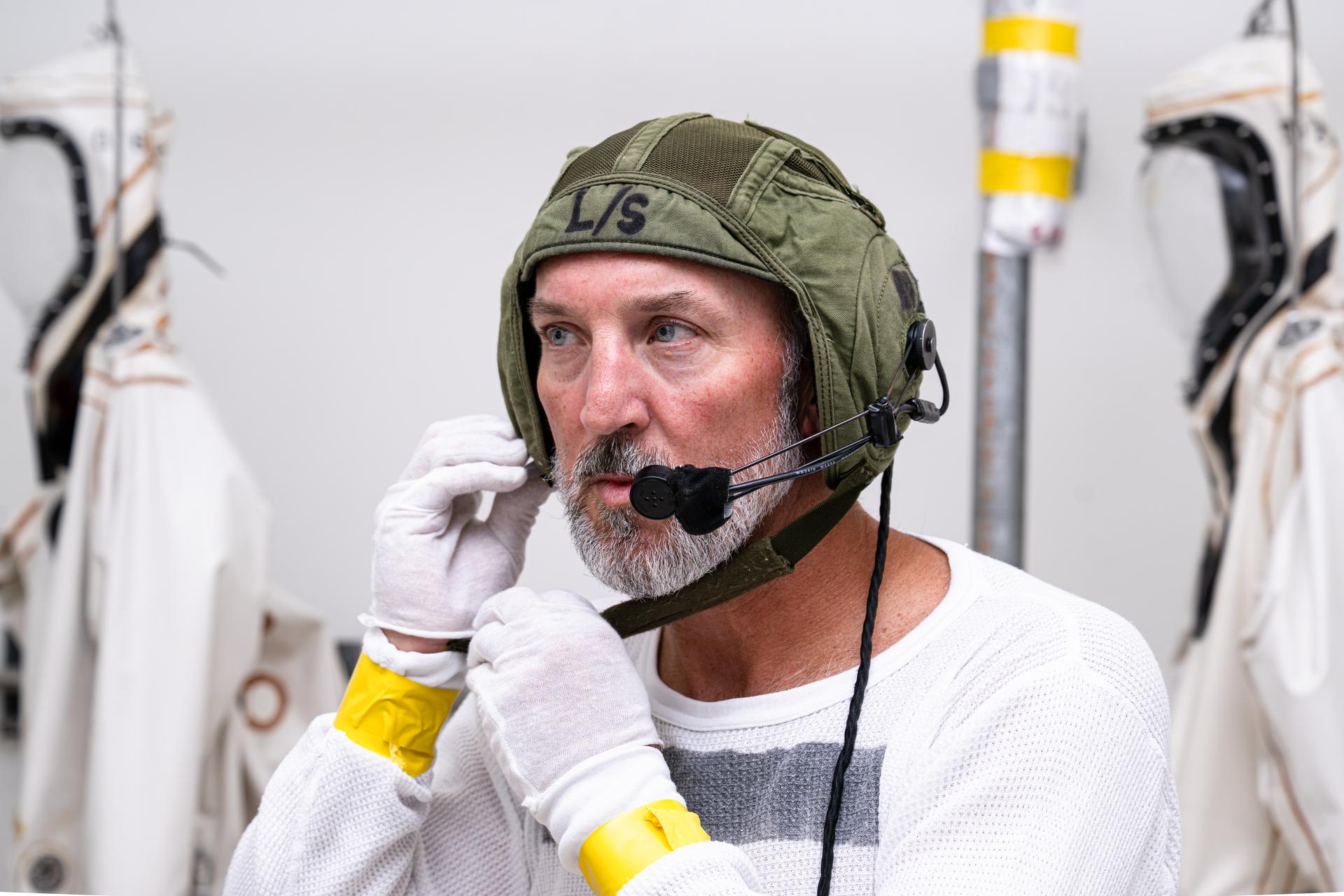
Ryan Renehan, technician, wears a Self-Contained Atmospheric Protective Ensemble (SCAPE) suit as he prepares to perform propellant loading operations inside the Payload Hazardous Servicing Facility at NASA’s Kennedy Space Center in Florida Thursday, July 23, 2026. With fuel tanks capable of carrying about 290 gallons (roughly 1,100 liters) of hydrazine – a monopropellant not requiring a second chemical to combust – Roman’s primary mission is to settle essential questions about dark energy, exoplanets, and infrared astrophysics by conducting wide-field surveys that explore the universe’s structure, evolution, and composition. Liftoff atop a SpaceX Falcon Heavy rocket from NASA Kennedy’s Launch Complex 39A is targeted no earlier than Sunday, Aug. 30, 2026.
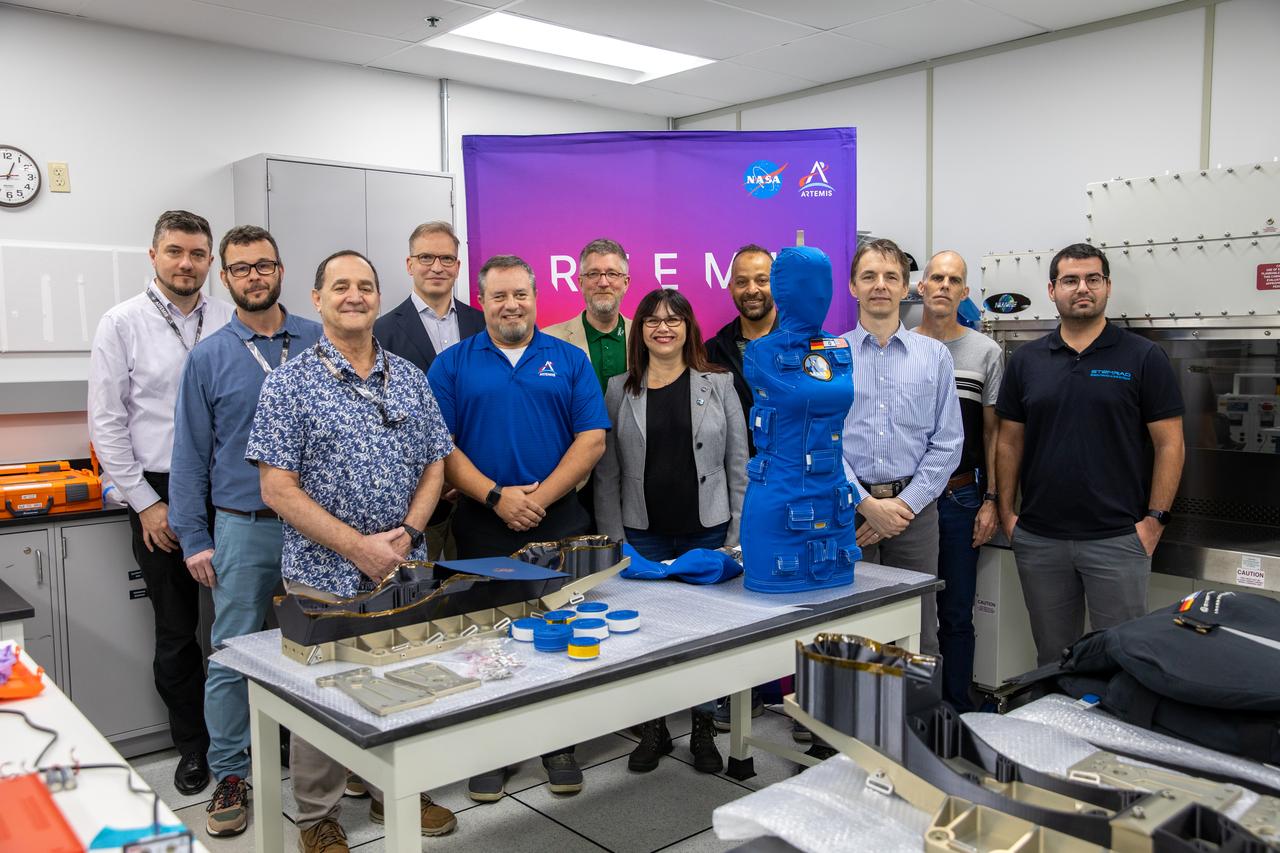
After a 25-day flight beyond the Moon and back inside the Artemis I Orion crew module, two manikins undergo post-flight payload inspections by teams from NASA, Lockheed Martin, AstroRad and the German Space Agency inside the Space Station Processing Facility at Kennedy Space Center in Florida on Jan. 17, 2023. As part of the Matroshka AstroRad Radiation Experiment (MARE) investigation, the two female manikins – Helga and Zohar – were equipped with radiation detectors. Zohar also wore a radiation protection vest, to determine the radiation risk during the Artemis I mission and potentially reduce exposure during future missions with astronauts. Artemis I Orion launched atop the Space Launch System (SLS) rocket from Kennedy’s Launch Complex 39B on Nov. 16, 2022, at 1:47 a.m. EST. During the flight, Orion flew farther than any spacecraft built for humans has ever flown, paving the way for human deep space exploration and demonstrating NASA’s commitment and capability to extend human presence to the Moon and beyond. The primary goal of Artemis I was to thoroughly test the SLS and Orion spacecraft’s integrated systems before crewed missions. Under Artemis, NASA aims to land the first woman and first person of color on the Moon and establish sustainable lunar exploration.
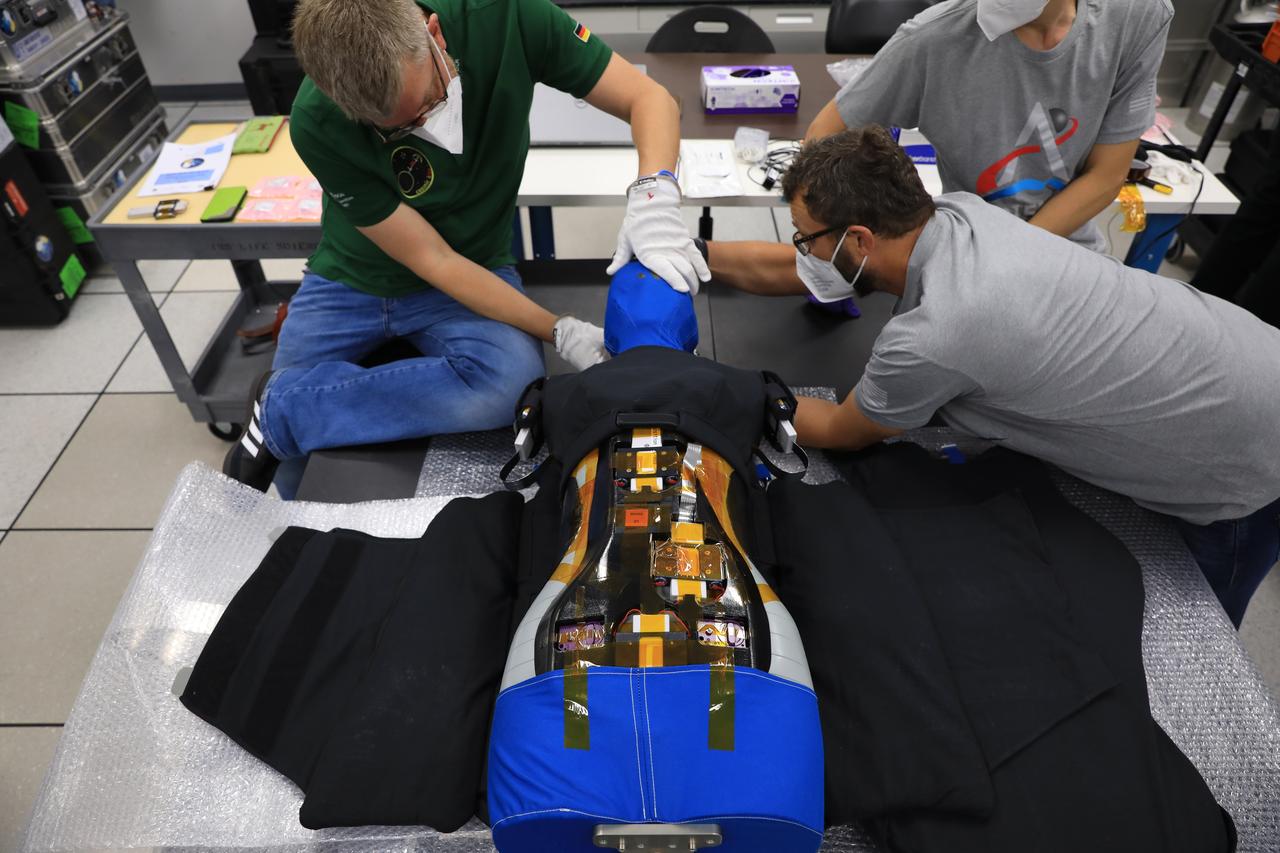
In preparation for the Artemis I flight test, teams at NASA’s Kennedy Space Center in Florida prepare the Matroshka AstroRad Radiation Experiment (MARE) investigation on Aug. 5, 2022. MARE will fly on Artemis I and features two manikins, called phantoms – Helga and Zohar – equipped with radiation detectors to determine the radiation risk on its way to the Moon. The phantoms will be seated as passengers in the Orion crew module, with Zohar also wearing the experimental AstroRad radiation protection vest. The MARE experiment is part of an agreement between NASA, the Israel Space Agency, and the German Aerospace Center. Artemis I will provide a foundation for human deep space exploration and demonstrate NASA’s capability to extend human presence to the Moon and beyond. The primary goal of Artemis I is to thoroughly test the Space Launch System rocket and Orion spacecraft’s integrated systems before crewed missions. Under Artemis, NASA aims to land the first woman and first person of color on the Moon and establish sustainable lunar exploration.
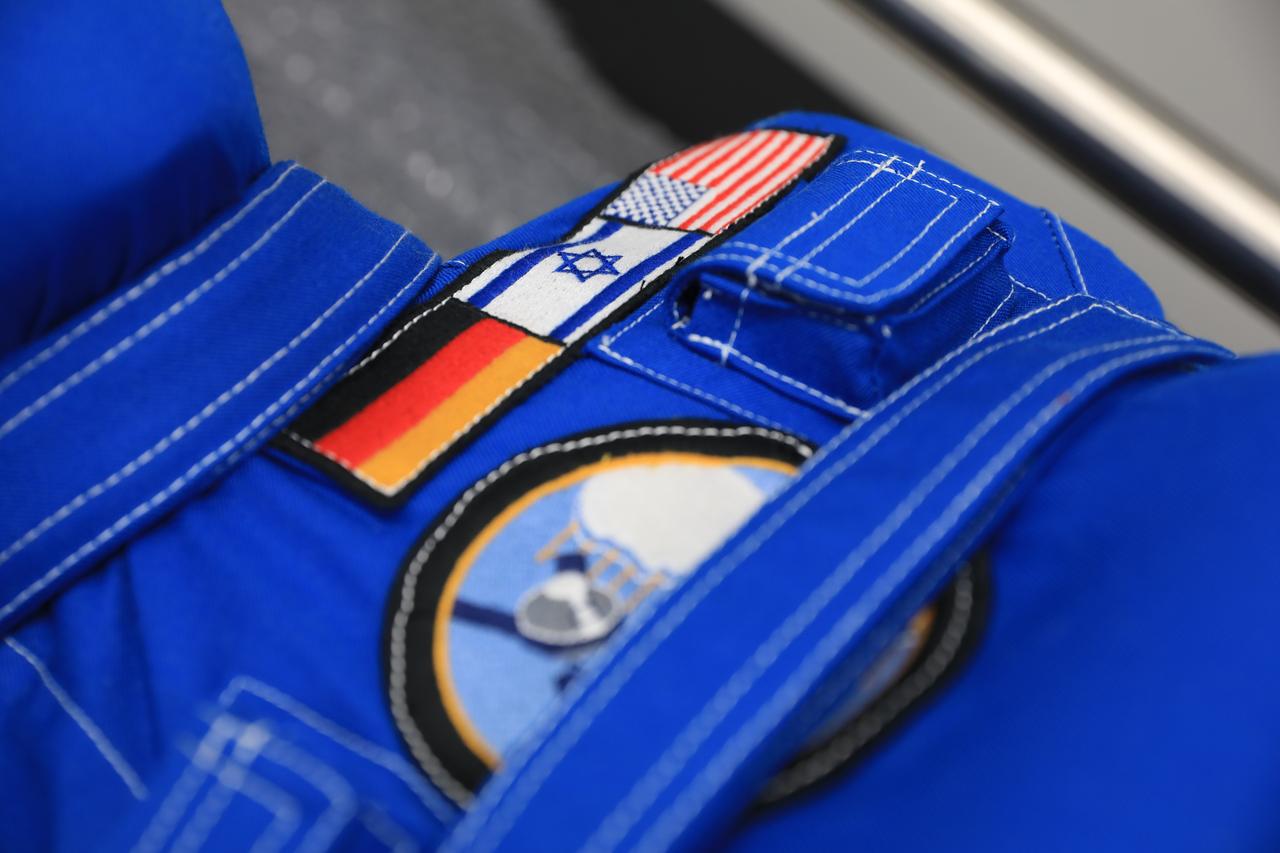
In preparation for the Artemis I flight test, teams at NASA’s Kennedy Space Center in Florida prepare two manikins, called phantoms, as part of the Matroshka AstroRad Radiation Experiment (MARE) investigation on Aug. 4, 2022. The two female phantoms – Helga and Zohar – will fly aboard the Orion crew module during Artemis I. Each will be equipped with radiation detectors, with Zohar also wearing a radiation protection vest, to determine the radiation risk on its way to the Moon. The MARE experiment is part of an agreement between NASA, the Israel Space Agency, and the German Aerospace Center. Artemis I will provide a foundation for human deep space exploration and demonstrate NASA’s capability to extend human presence to the Moon and beyond. The primary goal of Artemis I is to thoroughly test the Space Launch System rocket and Orion spacecraft’s integrated systems before crewed missions. Under Artemis, NASA aims to land the first woman and first person of color on the Moon and establish sustainable lunar exploration.
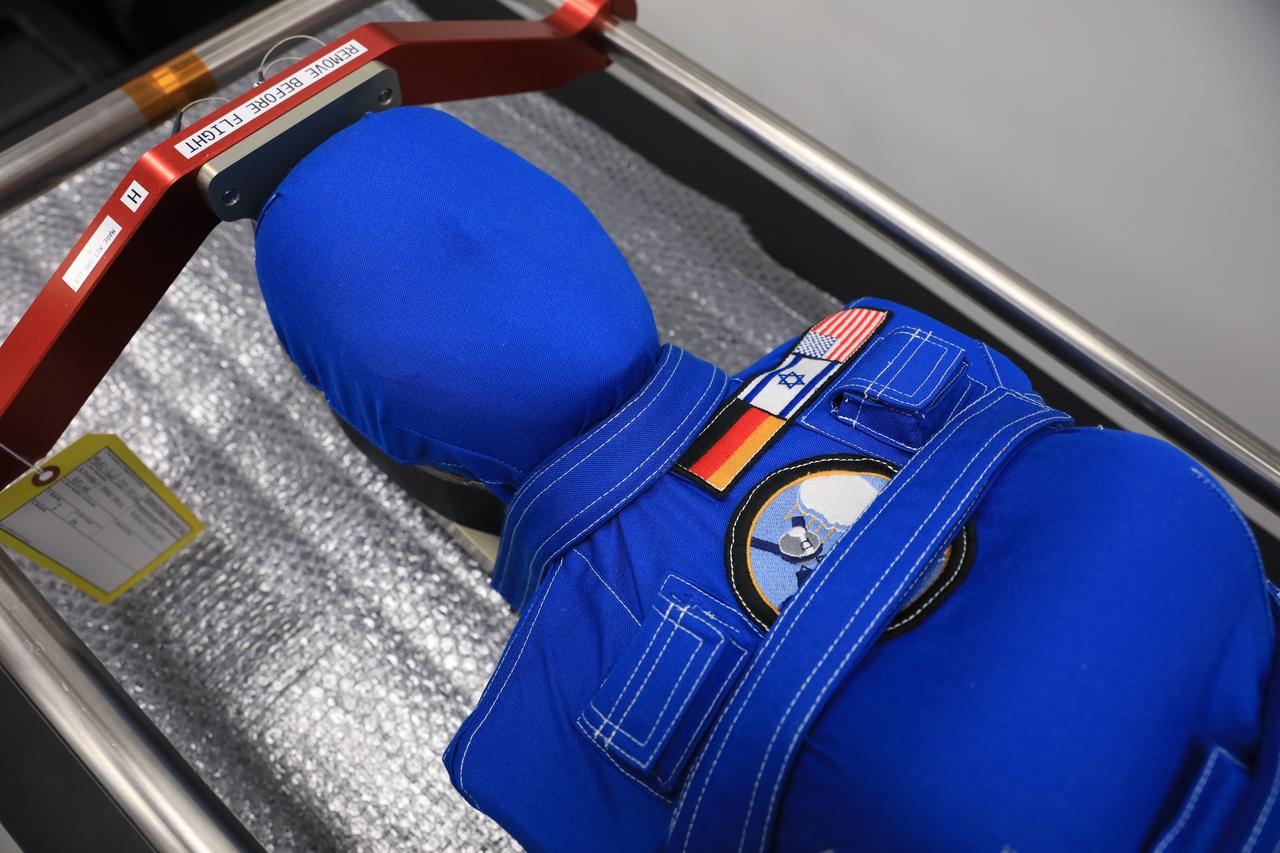
In preparation for the Artemis I flight test, teams at NASA’s Kennedy Space Center in Florida prepare two manikins, called phantoms, as part of the Matroshka AstroRad Radiation Experiment (MARE) investigation on Aug. 4, 2022. The two female phantoms – Helga and Zohar – will fly aboard the Orion crew module during Artemis I. Each will be equipped with radiation detectors, with Zohar also wearing a radiation protection vest, to determine the radiation risk on its way to the Moon. The MARE experiment is part of an agreement between NASA, the Israel Space Agency, and the German Aerospace Center. Artemis I will provide a foundation for human deep space exploration and demonstrate NASA’s capability to extend human presence to the Moon and beyond. The primary goal of Artemis I is to thoroughly test the Space Launch System rocket and Orion spacecraft’s integrated systems before crewed missions. Under Artemis, NASA aims to land the first woman and first person of color on the Moon and establish sustainable lunar exploration.
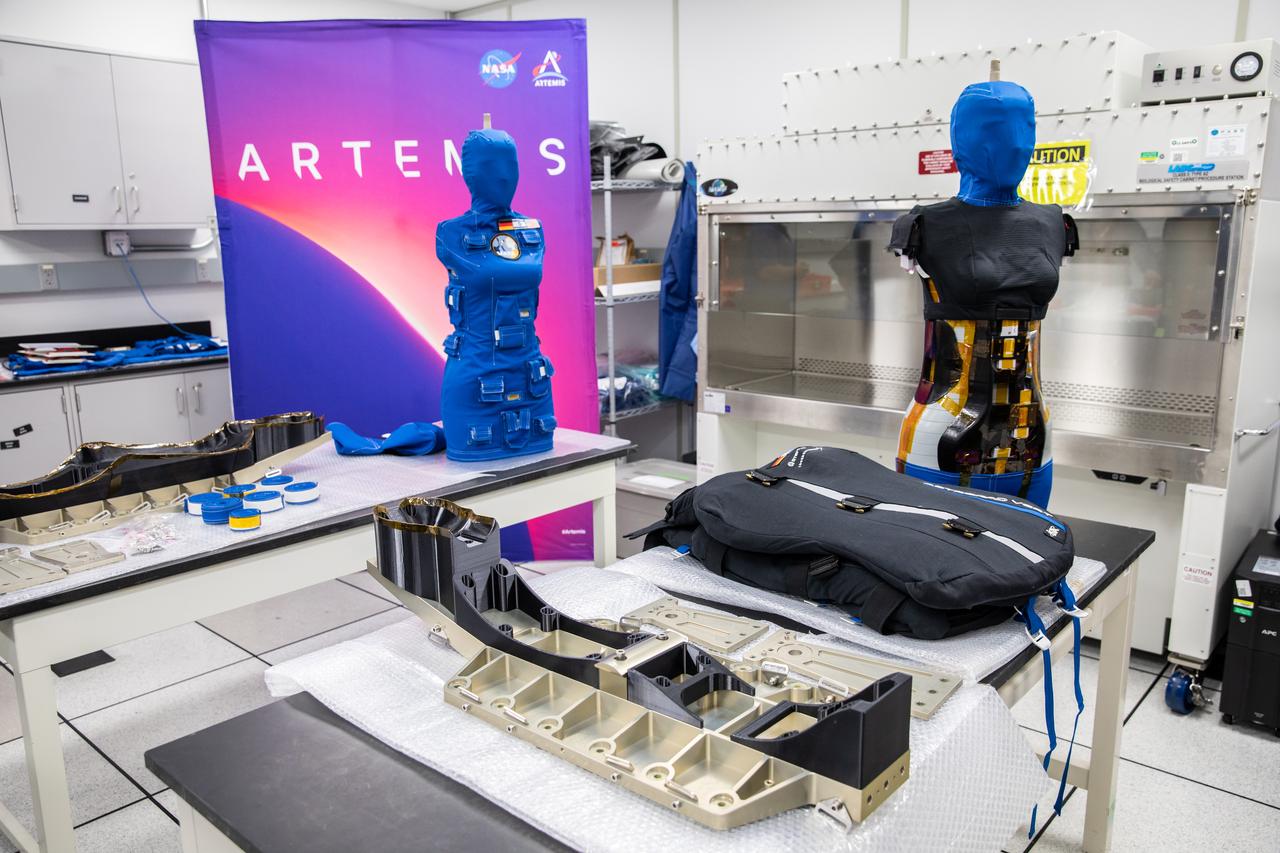
After a 25-day flight beyond the Moon and back inside the Artemis I Orion crew module, two manikins undergo post-flight payload inspections inside the Space Station Processing Facility at Kennedy Space Center in Florida on Jan. 11, 2023. As part of the Matroshka AstroRad Radiation Experiment (MARE) investigation, the two female manikins – Helga and Zohar – were equipped with radiation detectors. Zohar also wore a radiation protection vest, to determine the radiation risk during the Artemis I mission and potentially reduce exposure during future missions with astronauts. The detectors will be removed at Kennedy and the torsos will return to teams at the German Space Agency for further analysis. Artemis I Orion launched atop the Space Launch System (SLS) rocket from Kennedy’s Launch Complex 39B on Nov. 16, 2022, at 1:47 a.m. EST. During the flight, Orion flew farther than any spacecraft built for humans has ever flown, paving the way for human deep space exploration and demonstrating NASA’s commitment and capability to extend human presence to the Moon and beyond. The primary goal of Artemis I was to thoroughly test the SLS and Orion spacecraft’s integrated systems before crewed missions. Under Artemis, NASA aims to land the first woman and first person of color on the Moon and establish sustainable lunar exploration.
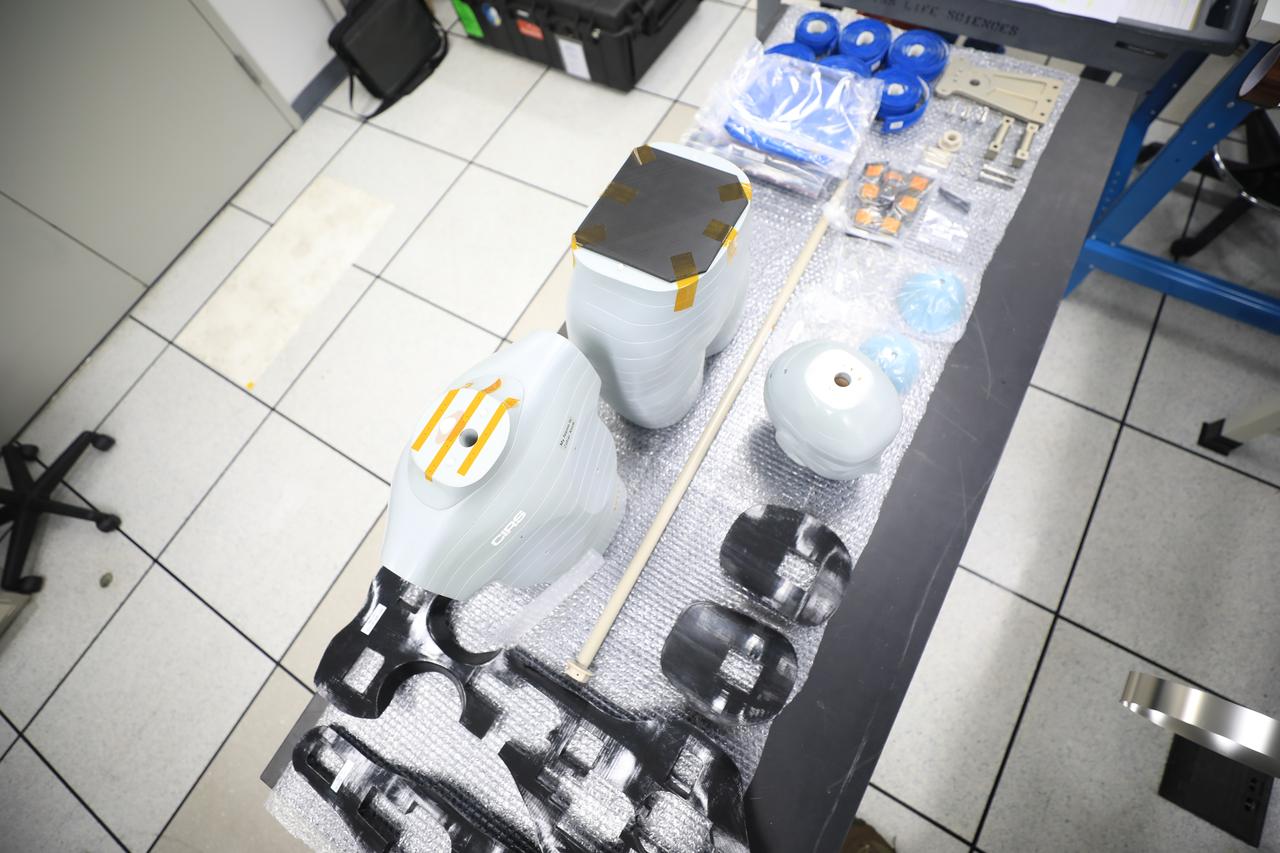
In preparation for the Artemis I flight test, teams at NASA’s Kennedy Space Center in Florida prepare two manikins, called phantoms, as part of the Matroshka AstroRad Radiation Experiment (MARE) investigation on Aug. 4, 2022. The two female phantoms – Helga and Zohar – will fly aboard the Orion crew module during Artemis I. Each will be equipped with radiation detectors, with Zohar also wearing a radiation protection vest, to determine the radiation risk on its way to the Moon. The MARE experiment is part of an agreement between NASA, the Israel Space Agency, and the German Aerospace Center. Artemis I will provide a foundation for human deep space exploration and demonstrate NASA’s capability to extend human presence to the Moon and beyond. The primary goal of Artemis I is to thoroughly test the Space Launch System rocket and Orion spacecraft’s integrated systems before crewed missions. Under Artemis, NASA aims to land the first woman and first person of color on the Moon and establish sustainable lunar exploration.
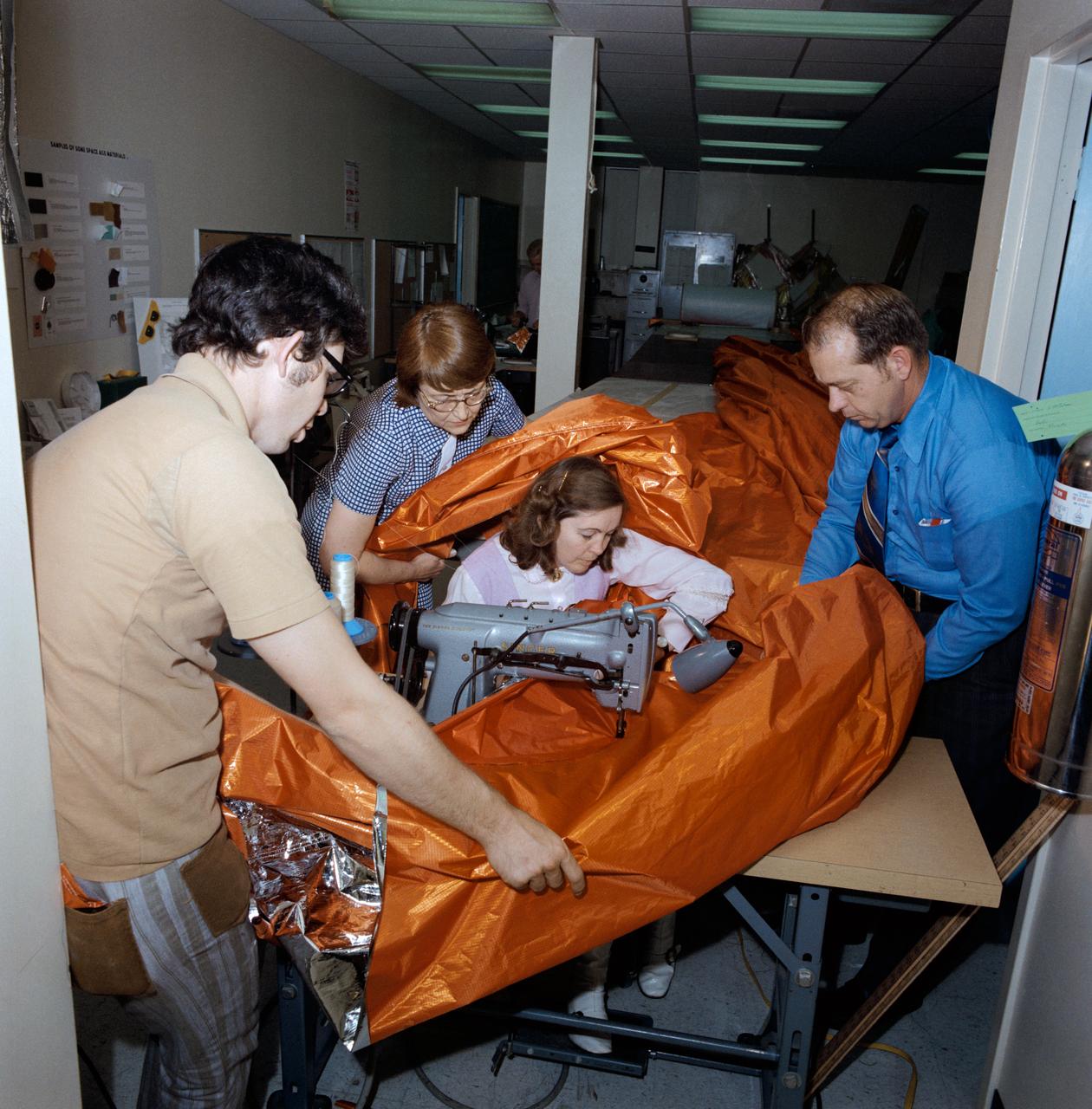
S73-26047 (18 May 1973) --- A sail-like sunshade for possible use as a sunscreen for the Skylab orbital workshop (OWS) is shown being fabricated in the GE Building across the street from the Johnson Space Center. Three persons assist the seamstress feed the material through the sewing machine. The three-layered shade will be composed of a top layer of aluminum Mylar, a middle layer of laminated nylon rip stop, and a bottom layer of thin nylon. Working on the sunshade, from left to right, are Dale Gentry, Elizabeth Gauldin, Alyene Baker and James H. Barnett Jr. Mrs. Baker, a GE employee, operates the double-needle sewing machine. Barnett is head of the Crew Equipment Development Section of JSC's Crew Systems Division. Mrs. Gauldin is also with the Crew Systems Division. Gentry works for GE. The work shown here is part of the crash program underway to prepare a protection device for Skylab to replace the original shield which was lost when the unmanned Skylab 1 launch took place on May 14, 1973. The improvised solar shield selected to be used will be carried to Earth orbit by the Skylab 2 crew, who will deploy it to shade part of the OWS from the hot rays of the sun. Loss of the original shield, as expected, has caused an overheating problem on the OWS. Photo credit: NASA
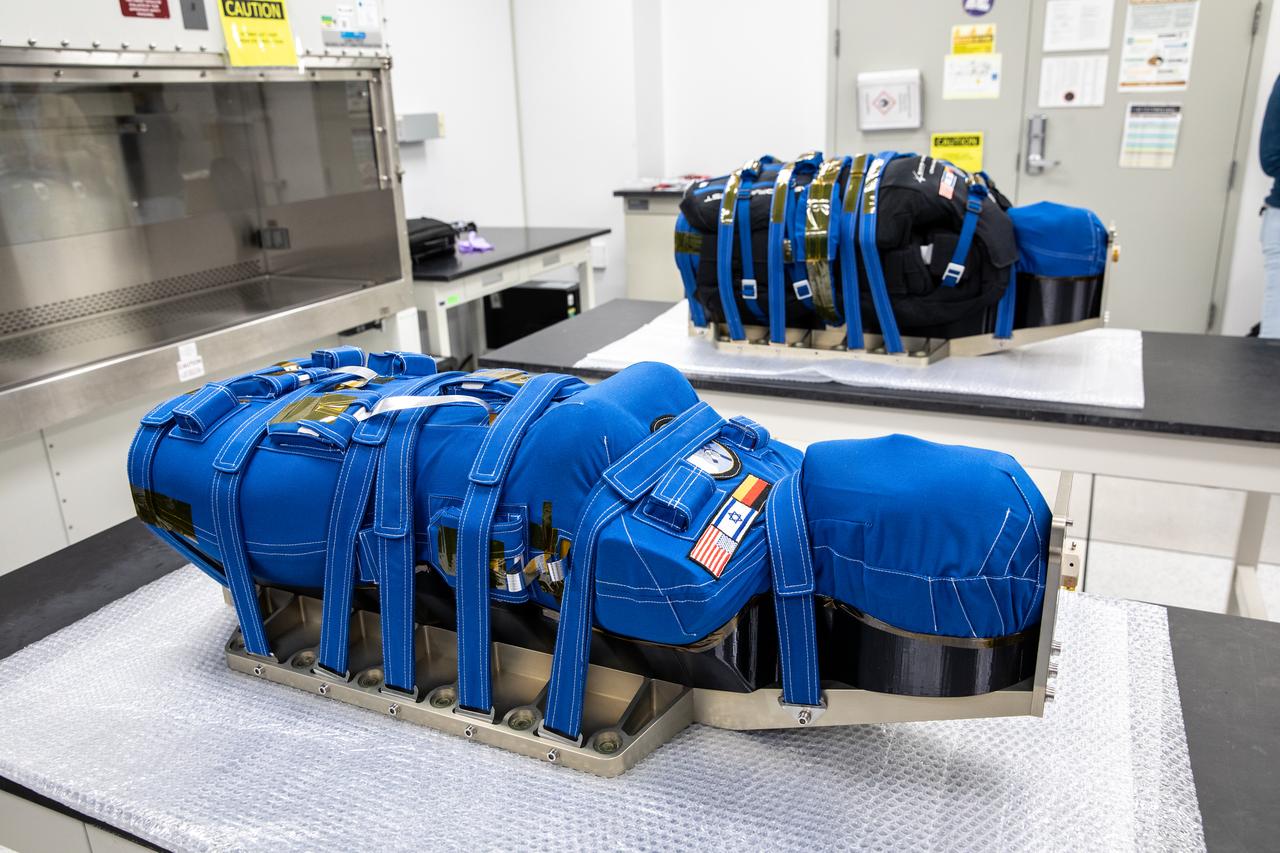
After a 25-day flight beyond the Moon and back inside the Artemis I Orion crew module, two manikins undergo post-flight payload inspections inside the Space Station Processing Facility at Kennedy Space Center in Florida on Jan. 11, 2023. As part of the Matroshka AstroRad Radiation Experiment (MARE) investigation, the two female manikins – Helga and Zohar – were equipped with radiation detectors. Zohar also wore a radiation protection vest, to determine the radiation risk during the Artemis I mission and potentially reduce exposure during future missions with astronauts. The detectors will be removed at Kennedy and the torsos will return to teams at the German Space Agency for further analysis. Artemis I Orion launched atop the Space Launch System (SLS) rocket from Kennedy’s Launch Complex 39B on Nov. 16, 2022, at 1:47 a.m. EST. During the flight, Orion flew farther than any spacecraft built for humans has ever flown, paving the way for human deep space exploration and demonstrating NASA’s commitment and capability to extend human presence to the Moon and beyond. The primary goal of Artemis I was to thoroughly test the SLS and Orion spacecraft’s integrated systems before crewed missions. Under Artemis, NASA aims to land the first woman and first person of color on the Moon and establish sustainable lunar exploration.
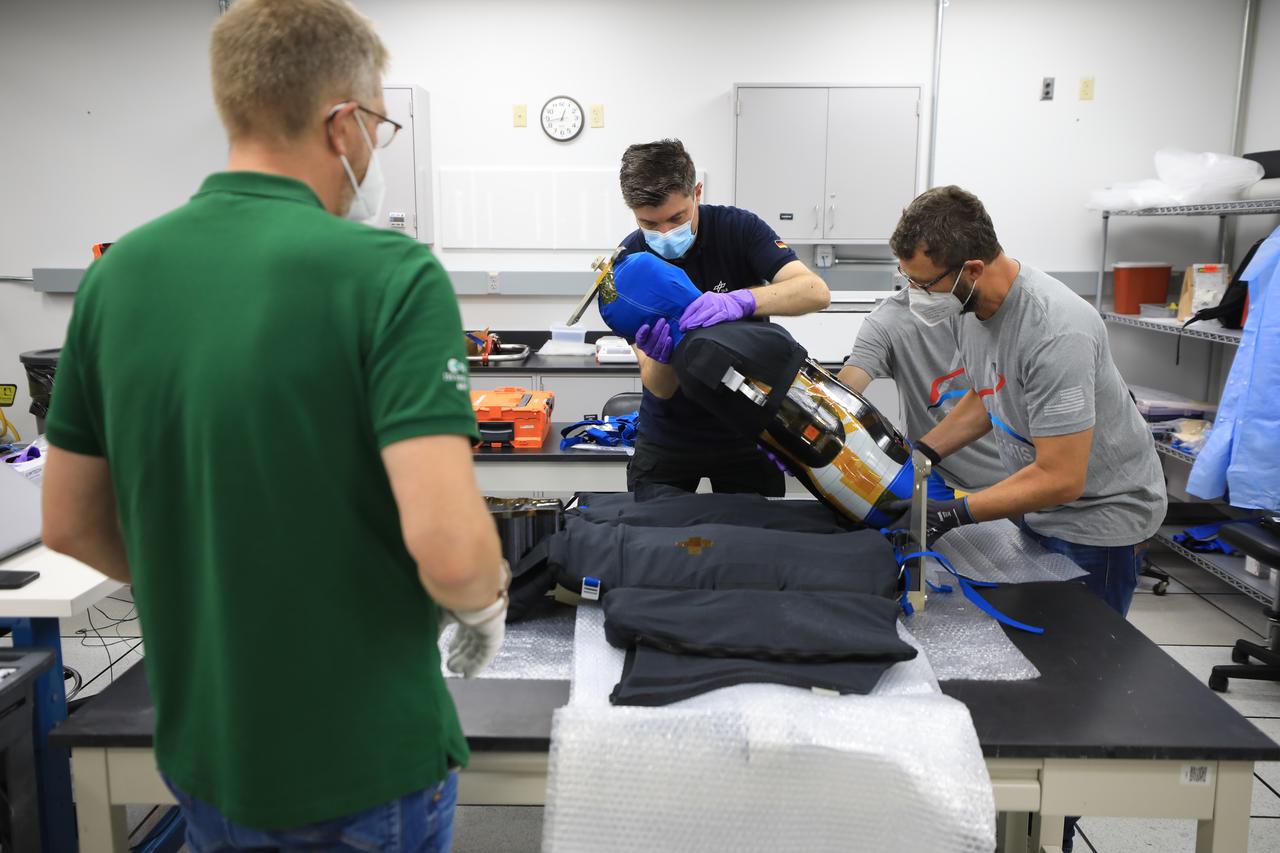
In preparation for the Artemis I flight test, teams at NASA’s Kennedy Space Center in Florida prepare the Matroshka AstroRad Radiation Experiment (MARE) investigation on Aug. 5, 2022. MARE will fly on Artemis I and features two manikins, called phantoms – Helga and Zohar – equipped with radiation detectors to determine the radiation risk on its way to the Moon. The phantoms will be seated as passengers in the Orion crew module, with Zohar also wearing the experimental AstroRad radiation protection vest. The MARE experiment is part of an agreement between NASA, the Israel Space Agency, and the German Aerospace Center. Artemis I will provide a foundation for human deep space exploration and demonstrate NASA’s capability to extend human presence to the Moon and beyond. The primary goal of Artemis I is to thoroughly test the Space Launch System rocket and Orion spacecraft’s integrated systems before crewed missions. Under Artemis, NASA aims to land the first woman and first person of color on the Moon and establish sustainable lunar exploration.
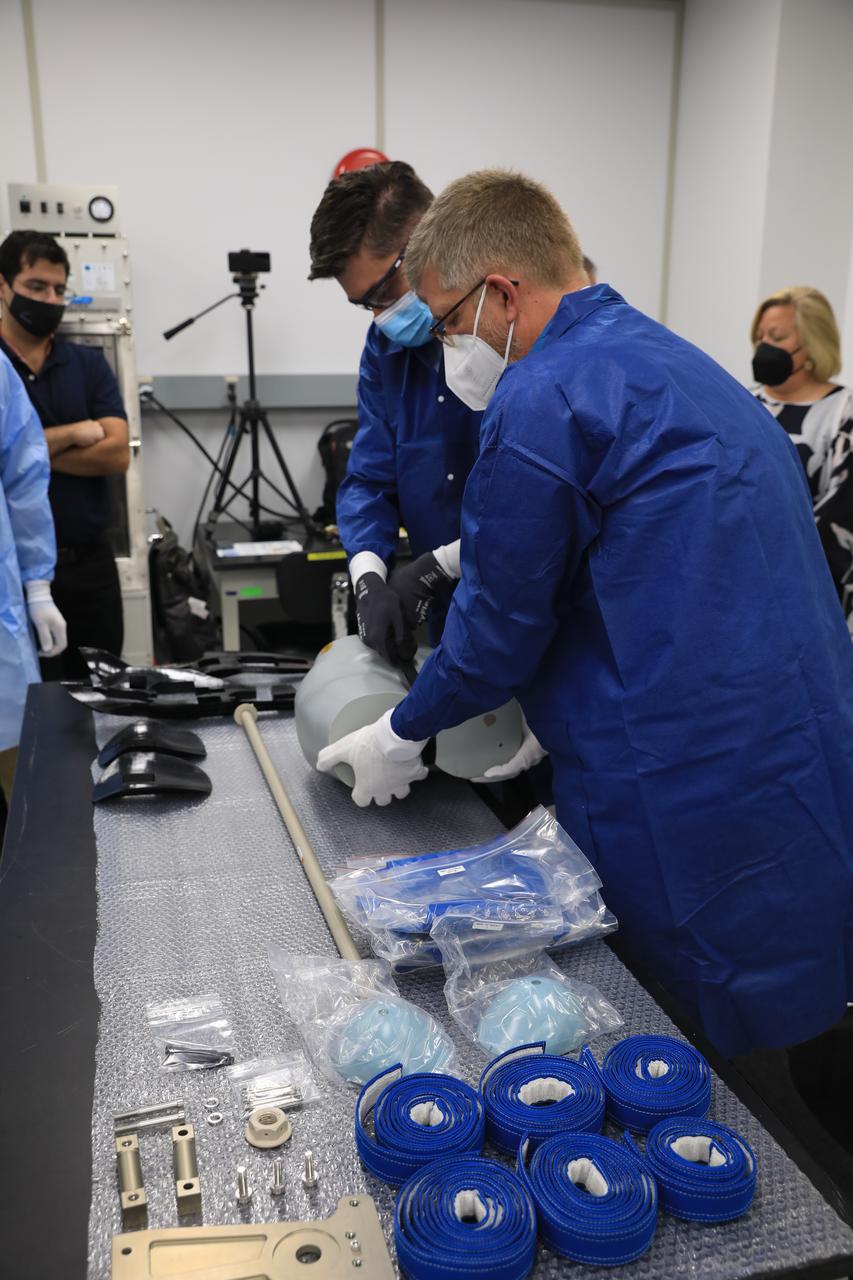
In preparation for the Artemis I flight test, teams at NASA’s Kennedy Space Center in Florida prepare two manikins, called phantoms, as part of the Matroshka AstroRad Radiation Experiment (MARE) investigation on Aug. 4, 2022. The two female phantoms – Helga and Zohar – will fly aboard the Orion crew module during Artemis I. Each will be equipped with radiation detectors, with Zohar also wearing a radiation protection vest, to determine the radiation risk on its way to the Moon. The MARE experiment is part of an agreement between NASA, the Israel Space Agency, and the German Aerospace Center. Artemis I will provide a foundation for human deep space exploration and demonstrate NASA’s capability to extend human presence to the Moon and beyond. The primary goal of Artemis I is to thoroughly test the Space Launch System rocket and Orion spacecraft’s integrated systems before crewed missions. Under Artemis, NASA aims to land the first woman and first person of color on the Moon and establish sustainable lunar exploration.
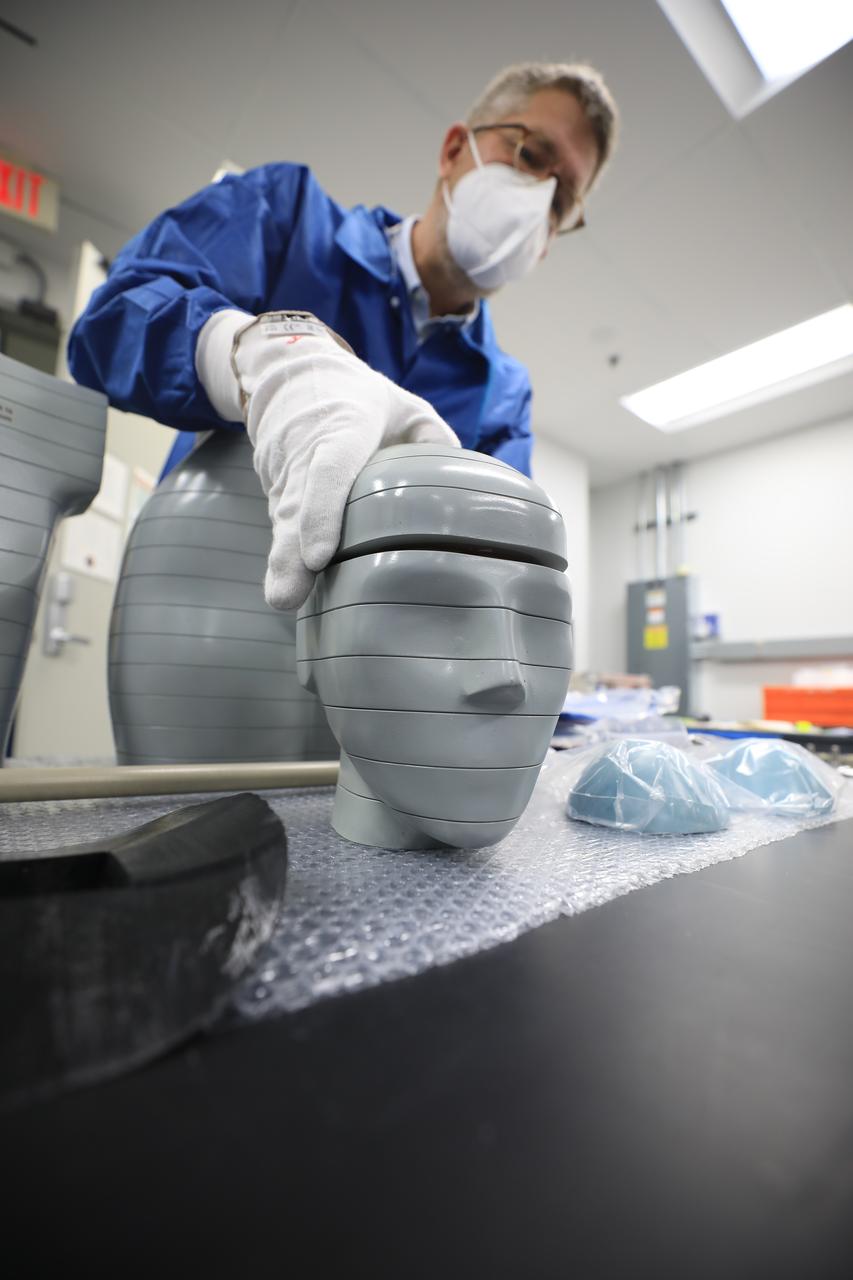
In preparation for the Artemis I flight test, teams at NASA’s Kennedy Space Center in Florida prepare two manikins, called phantoms, as part of the Matroshka AstroRad Radiation Experiment (MARE) investigation on Aug. 4, 2022. The two female phantoms – Helga and Zohar – will fly aboard the Orion crew module during Artemis I. Each will be equipped with radiation detectors, with Zohar also wearing a radiation protection vest, to determine the radiation risk on its way to the Moon. The MARE experiment is part of an agreement between NASA, the Israel Space Agency, and the German Aerospace Center. Artemis I will provide a foundation for human deep space exploration and demonstrate NASA’s capability to extend human presence to the Moon and beyond. The primary goal of Artemis I is to thoroughly test the Space Launch System rocket and Orion spacecraft’s integrated systems before crewed missions. Under Artemis, NASA aims to land the first woman and first person of color on the Moon and establish sustainable lunar exploration.
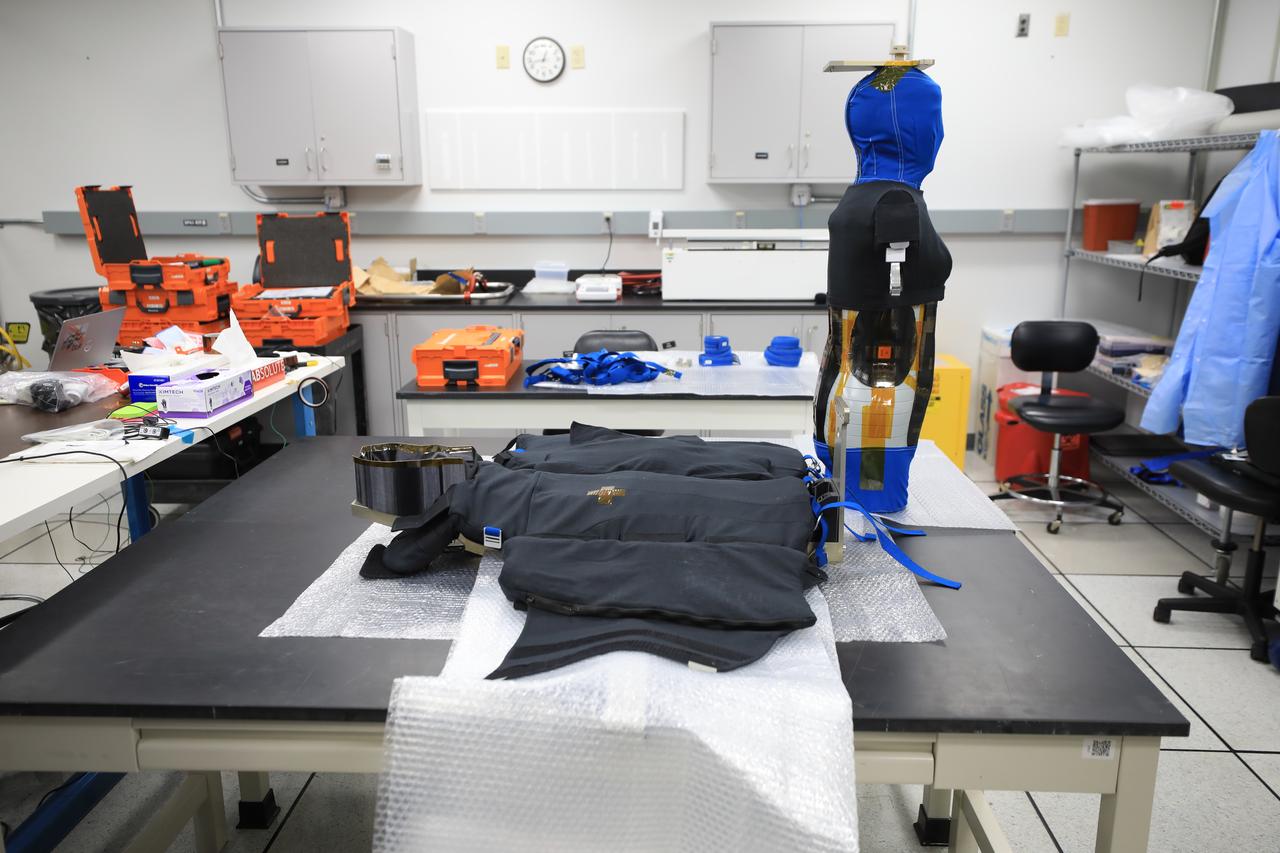
In preparation for the Artemis I flight test, teams at NASA’s Kennedy Space Center in Florida prepare the Matroshka AstroRad Radiation Experiment (MARE) investigation on Aug. 5, 2022. MARE will fly on Artemis I and features two manikins, called phantoms – Helga and Zohar – equipped with radiation detectors to determine the radiation risk on its way to the Moon. The phantoms will be seated as passengers in the Orion crew module, with Zohar also wearing the experimental AstroRad radiation protection vest. The MARE experiment is part of an agreement between NASA, the Israel Space Agency, and the German Aerospace Center. Artemis I will provide a foundation for human deep space exploration and demonstrate NASA’s capability to extend human presence to the Moon and beyond. The primary goal of Artemis I is to thoroughly test the Space Launch System rocket and Orion spacecraft’s integrated systems before crewed missions. Under Artemis, NASA aims to land the first woman and first person of color on the Moon and establish sustainable lunar exploration.
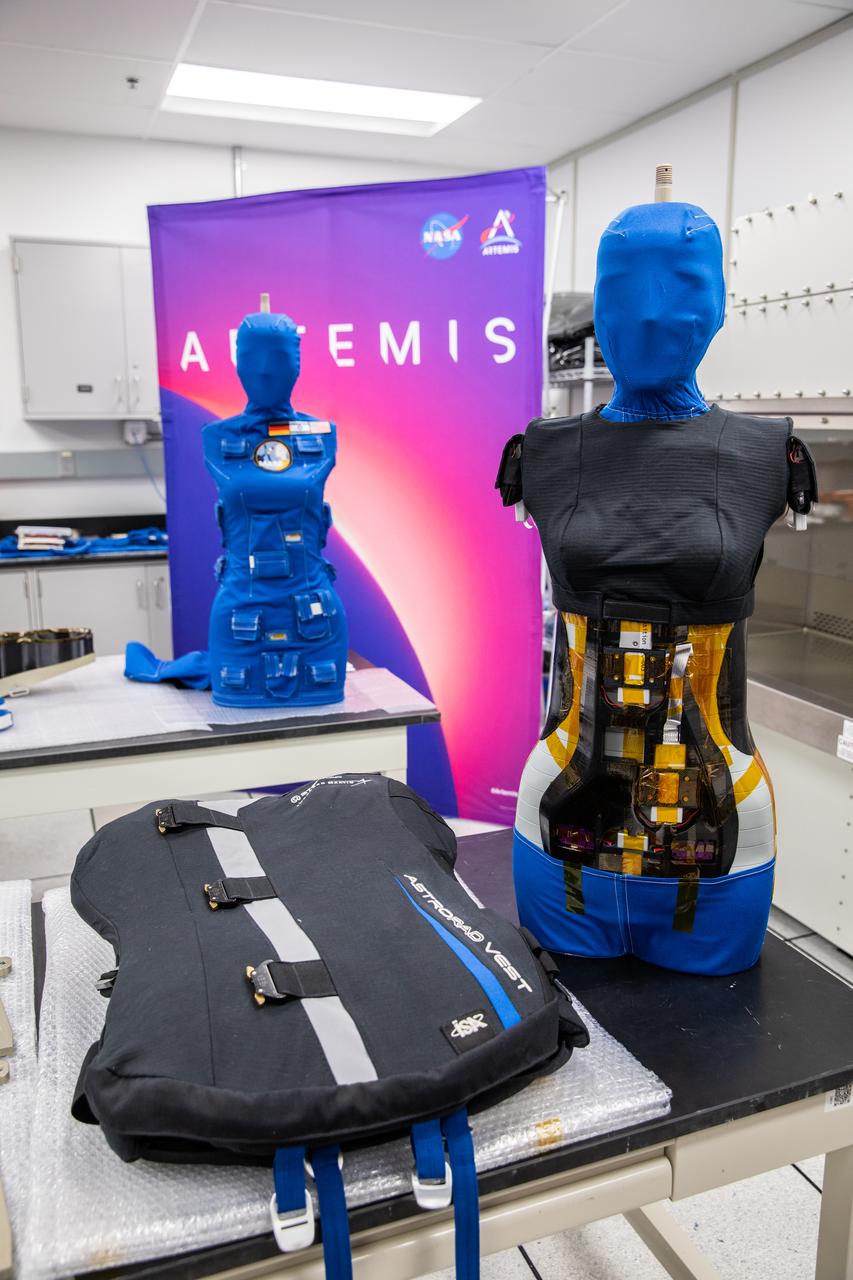
After a 25-day flight beyond the Moon and back inside the Artemis I Orion crew module, two manikins undergo post-flight payload inspections inside the Space Station Processing Facility at Kennedy Space Center in Florida on Jan. 11, 2023. As part of the Matroshka AstroRad Radiation Experiment (MARE) investigation, the two female manikins – Helga and Zohar – were equipped with radiation detectors. Zohar also wore a radiation protection vest, to determine the radiation risk during the Artemis I mission and potentially reduce exposure during future missions with astronauts. The detectors will be removed at Kennedy and the torsos will return to teams at the German Space Agency for further analysis. Artemis I Orion launched atop the Space Launch System (SLS) rocket from Kennedy’s Launch Complex 39B on Nov. 16, 2022, at 1:47 a.m. EST. During the flight, Orion flew farther than any spacecraft built for humans has ever flown, paving the way for human deep space exploration and demonstrating NASA’s commitment and capability to extend human presence to the Moon and beyond. The primary goal of Artemis I was to thoroughly test the SLS and Orion spacecraft’s integrated systems before crewed missions. Under Artemis, NASA aims to land the first woman and first person of color on the Moon and establish sustainable lunar exploration.
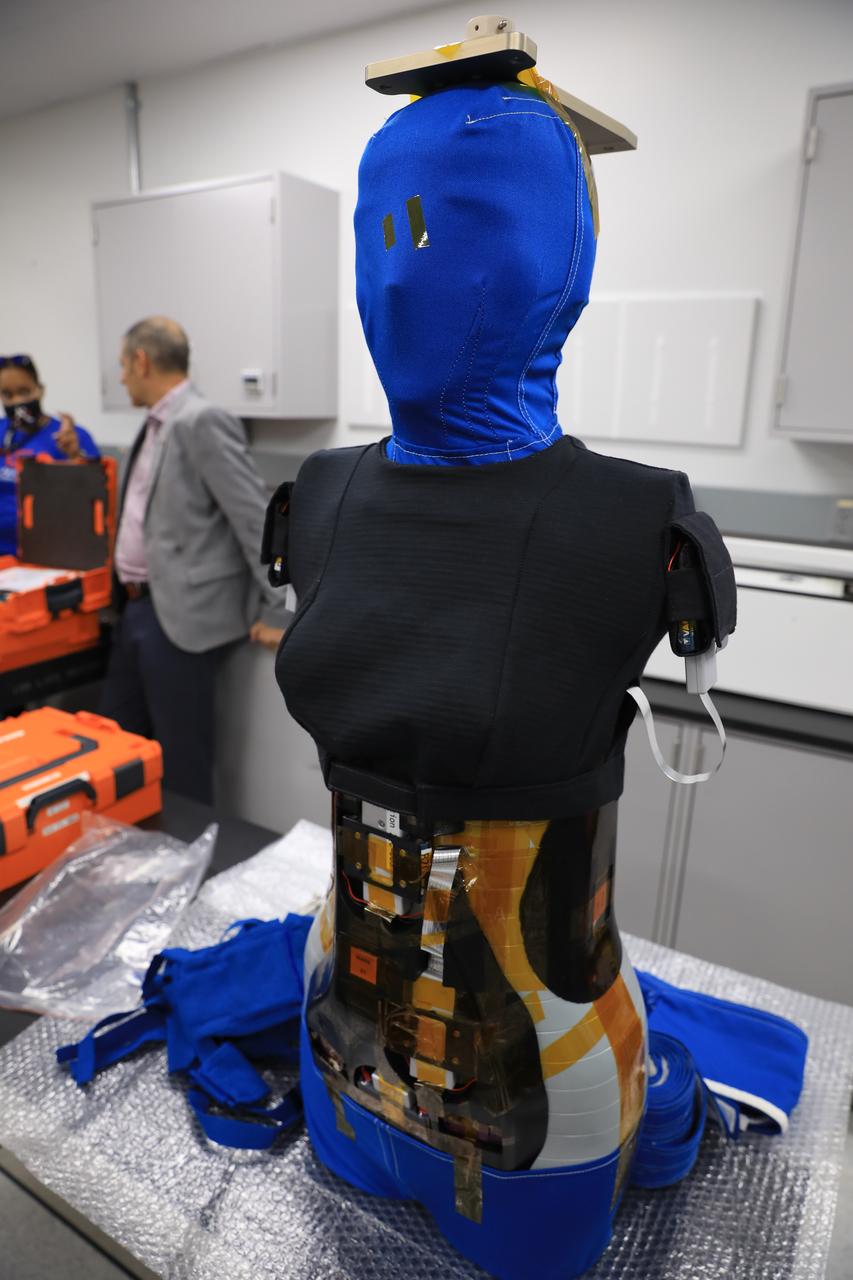
In preparation for the Artemis I flight test, teams at NASA’s Kennedy Space Center in Florida prepare the Matroshka AstroRad Radiation Experiment (MARE) investigation on Aug. 5, 2022. MARE will fly on Artemis I and features two manikins, called phantoms – Helga and Zohar – equipped with radiation detectors to determine the radiation risk on its way to the Moon. The phantoms will be seated as passengers in the Orion crew module, with Zohar also wearing the experimental AstroRad radiation protection vest. The MARE experiment is part of an agreement between NASA, the Israel Space Agency, and the German Aerospace Center. Artemis I will provide a foundation for human deep space exploration and demonstrate NASA’s capability to extend human presence to the Moon and beyond. The primary goal of Artemis I is to thoroughly test the Space Launch System rocket and Orion spacecraft’s integrated systems before crewed missions. Under Artemis, NASA aims to land the first woman and first person of color on the Moon and establish sustainable lunar exploration.
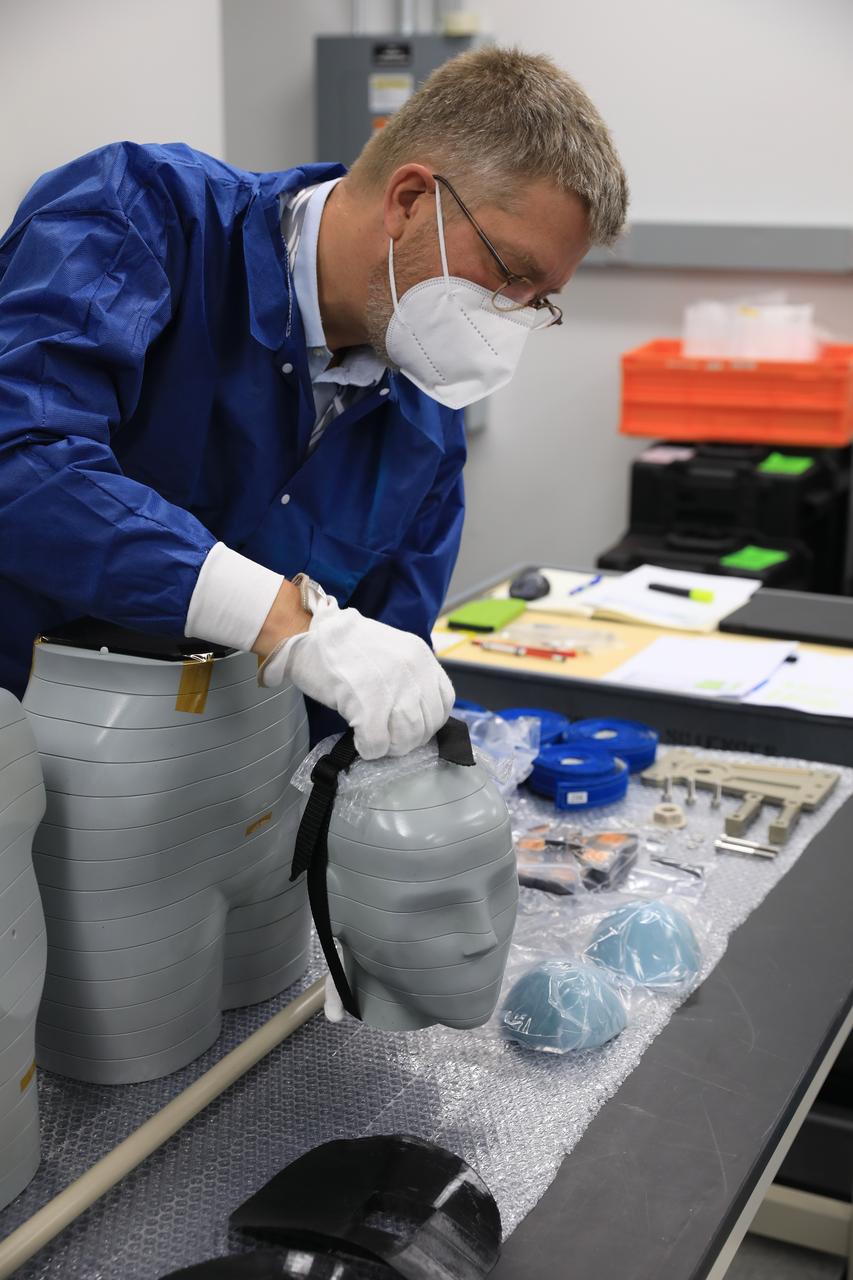
In preparation for the Artemis I flight test, teams at NASA’s Kennedy Space Center in Florida prepare two manikins, called phantoms, as part of the Matroshka AstroRad Radiation Experiment (MARE) investigation on Aug. 4, 2022. The two female phantoms – Helga and Zohar – will fly aboard the Orion crew module during Artemis I. Each will be equipped with radiation detectors, with Zohar also wearing a radiation protection vest, to determine the radiation risk on its way to the Moon. The MARE experiment is part of an agreement between NASA, the Israel Space Agency, and the German Aerospace Center. Artemis I will provide a foundation for human deep space exploration and demonstrate NASA’s capability to extend human presence to the Moon and beyond. The primary goal of Artemis I is to thoroughly test the Space Launch System rocket and Orion spacecraft’s integrated systems before crewed missions. Under Artemis, NASA aims to land the first woman and first person of color on the Moon and establish sustainable lunar exploration.
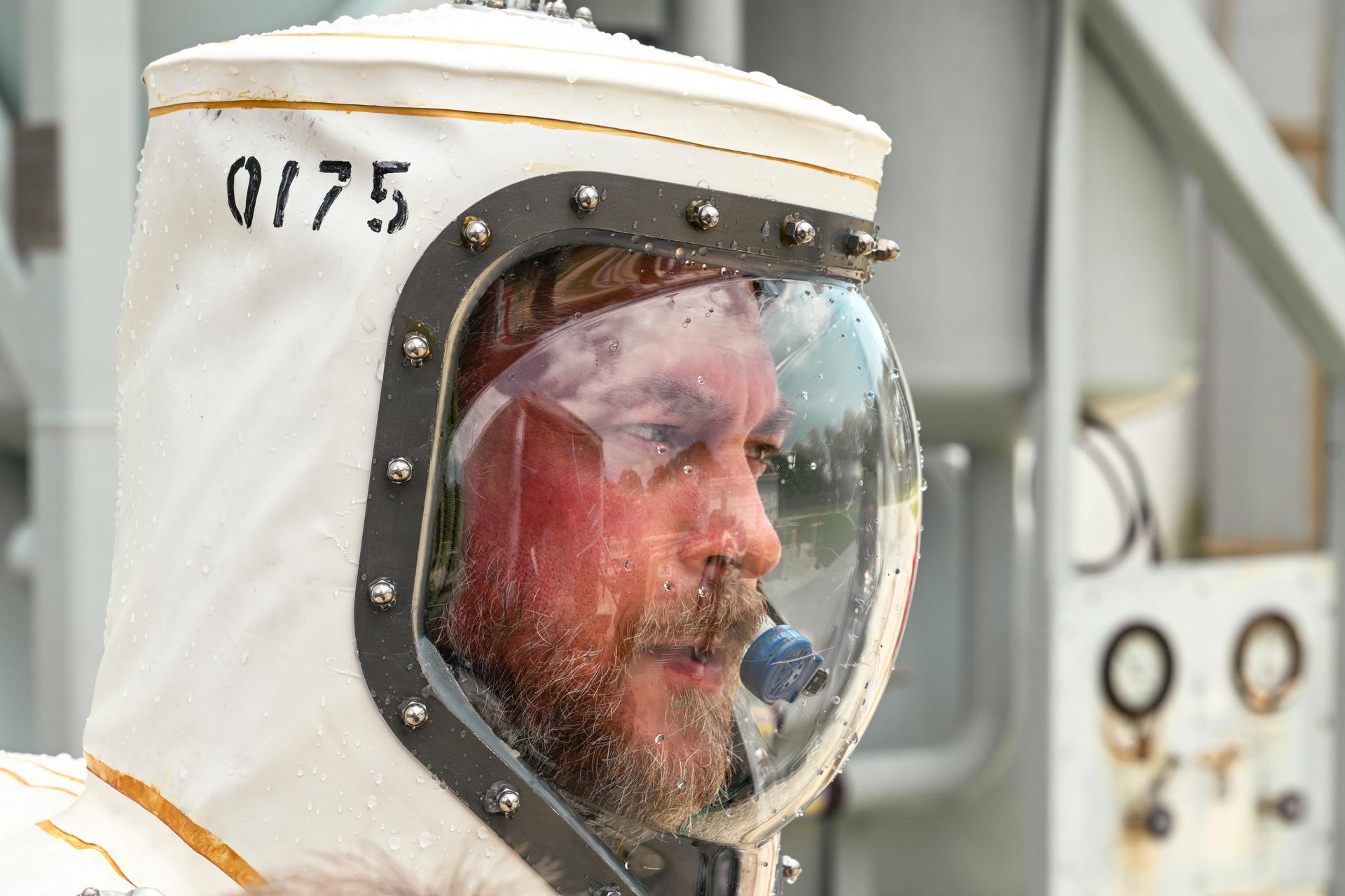
Billy Keim, a senior integration technician for NASA's Nancy Grace Roman Space Telescope wears a Self-Contained Atmospheric Protective Ensemble (SCAPE) suit as he prepares to perform propellant loading operations inside the Payload Hazardous Servicing Facility at NASA’s Kennedy Space Center in Florida Friday, July 24, 2026. With fuel tanks capable of carrying about 290 gallons (roughly 1,100 liters) of hydrazine – a monopropellant not requiring a second chemical to combust – Roman’s primary mission is to settle essential questions about dark energy, exoplanets, and infrared astrophysics by conducting wide-field surveys that explore the universe’s structure, evolution, and composition. Liftoff atop a SpaceX Falcon Heavy rocket from NASA Kennedy’s Launch Complex 39A is targeted no earlier than Sunday, Aug. 30, 2026.

After a 25-day flight inside the Artemis I Orion crew module beyond the Moon and back, Helga, one of two identical phantom torsos, is shown without a radiation detection vest while undergoing post-flight payload inspections inside the Space Station Processing Facility at Kennedy Space Center in Florida on Jan. 11, 2023. The detectors will be removed at Kennedy and the torsos will return to teams at the German Space Agency for further analysis. As part of the Matroshka AstroRad Radiation Experiment (MARE) investigation, two female manikins – Helga and Zohar – were equipped with radiation detectors, while Zohar also wore a radiation protection vest, to determine the radiation risk during the Artemis I mission and potentially reduce exposure during future missions with astronauts. Artemis I Orion launched atop the Space Launch System (SLS) rocket from Kennedy’s Launch Complex 39B on Nov. 16, 2022, at 1:47 a.m. EST. During the flight, Orion flew farther than any spacecraft built for humans has ever flown, paving the way for human deep space exploration and demonstrating NASA’s commitment and capability to extend human presence to the Moon and beyond. The primary goal of Artemis I was to thoroughly test the SLS and Orion spacecraft’s integrated systems before crewed missions. Under Artemis, NASA aims to land the first woman and first person of color on the Moon and establish sustainable lunar exploration.
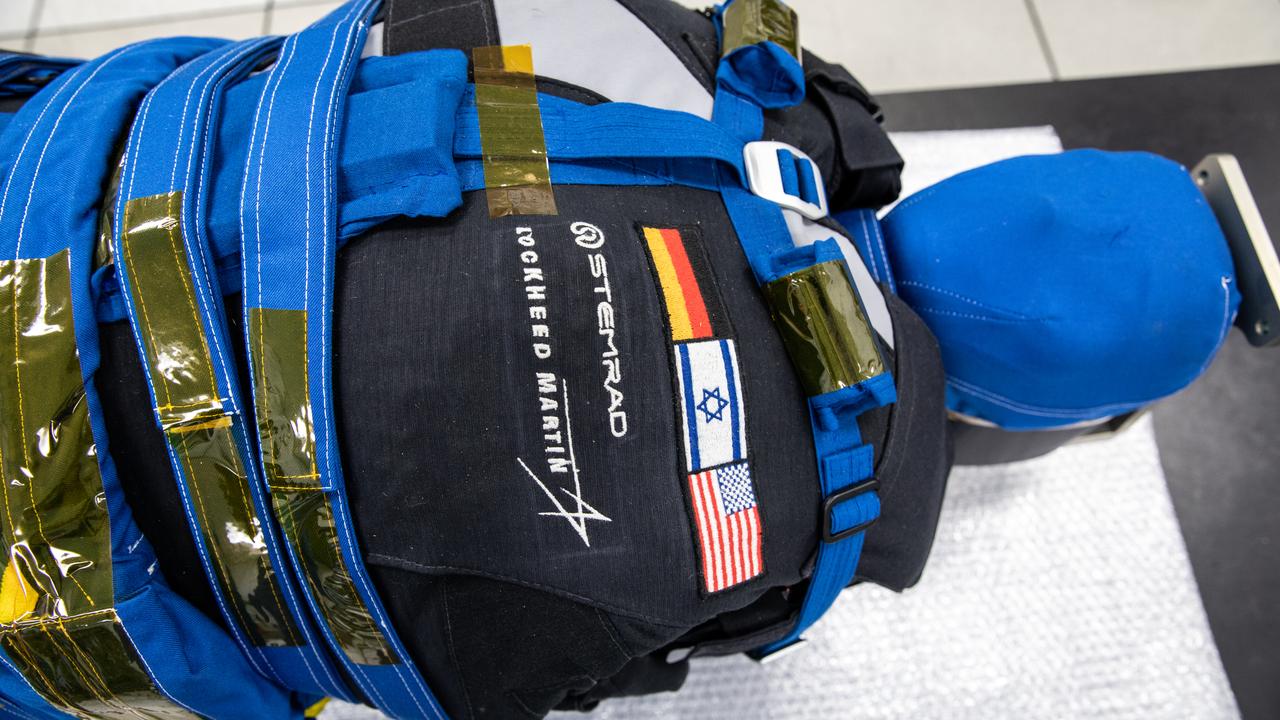
After a 25-day flight inside the Artemis I Orion crew module beyond the Moon and back, Helga, one of two identical phantom torsos, is shown without a radiation detection vest while undergoing post-flight payload inspections inside the Space Station Processing Facility at Kennedy Space Center in Florida on Jan. 11, 2023. The detectors will be removed at Kennedy and the torsos will return to teams at the German Space Agency for further analysis. As part of the Matroshka AstroRad Radiation Experiment (MARE) investigation, two female manikins – Helga and Zohar – were equipped with radiation detectors, while Zohar also wore a radiation protection vest, to determine the radiation risk during the Artemis I mission and potentially reduce exposure during future missions with astronauts. Artemis I Orion launched atop the Space Launch System (SLS) rocket from Kennedy’s Launch Complex 39B on Nov. 16, 2022, at 1:47 a.m. EST. During the flight, Orion flew farther than any spacecraft built for humans has ever flown, paving the way for human deep space exploration and demonstrating NASA’s commitment and capability to extend human presence to the Moon and beyond. The primary goal of Artemis I was to thoroughly test the SLS and Orion spacecraft’s integrated systems before crewed missions. Under Artemis, NASA aims to land the first woman and first person of color on the Moon and establish sustainable lunar exploration.
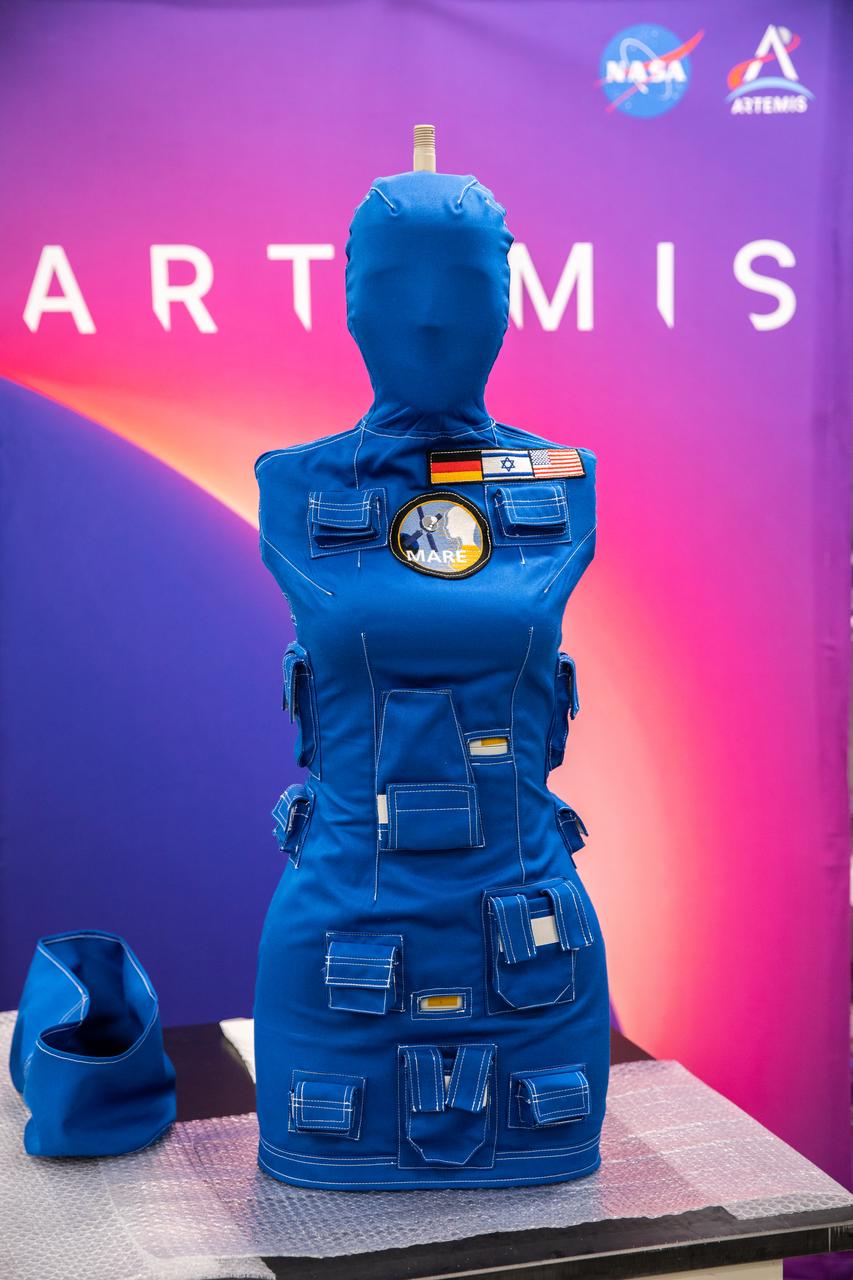
After a 25-day flight inside the Artemis I Orion crew module beyond the Moon and back, Helga, one of two identical phantom torsos, is shown without a radiation detection vest while undergoing post-flight payload inspections inside the Space Station Processing Facility at Kennedy Space Center in Florida on Jan. 11, 2023. The detectors will be removed at Kennedy and the torsos will return to teams at the German Space Agency for further analysis. As part of the Matroshka AstroRad Radiation Experiment (MARE) investigation, two female manikins – Helga and Zohar – were equipped with radiation detectors, while Zohar also wore a radiation protection vest, to determine the radiation risk during the Artemis I mission and potentially reduce exposure during future missions with astronauts. Artemis I Orion launched atop the Space Launch System (SLS) rocket from Kennedy’s Launch Complex 39B on Nov. 16, 2022, at 1:47 a.m. EST. During the flight, Orion flew farther than any spacecraft built for humans has ever flown, paving the way for human deep space exploration and demonstrating NASA’s commitment and capability to extend human presence to the Moon and beyond. The primary goal of Artemis I was to thoroughly test the SLS and Orion spacecraft’s integrated systems before crewed missions. Under Artemis, NASA aims to land the first woman and first person of color on the Moon and establish sustainable lunar exploration.
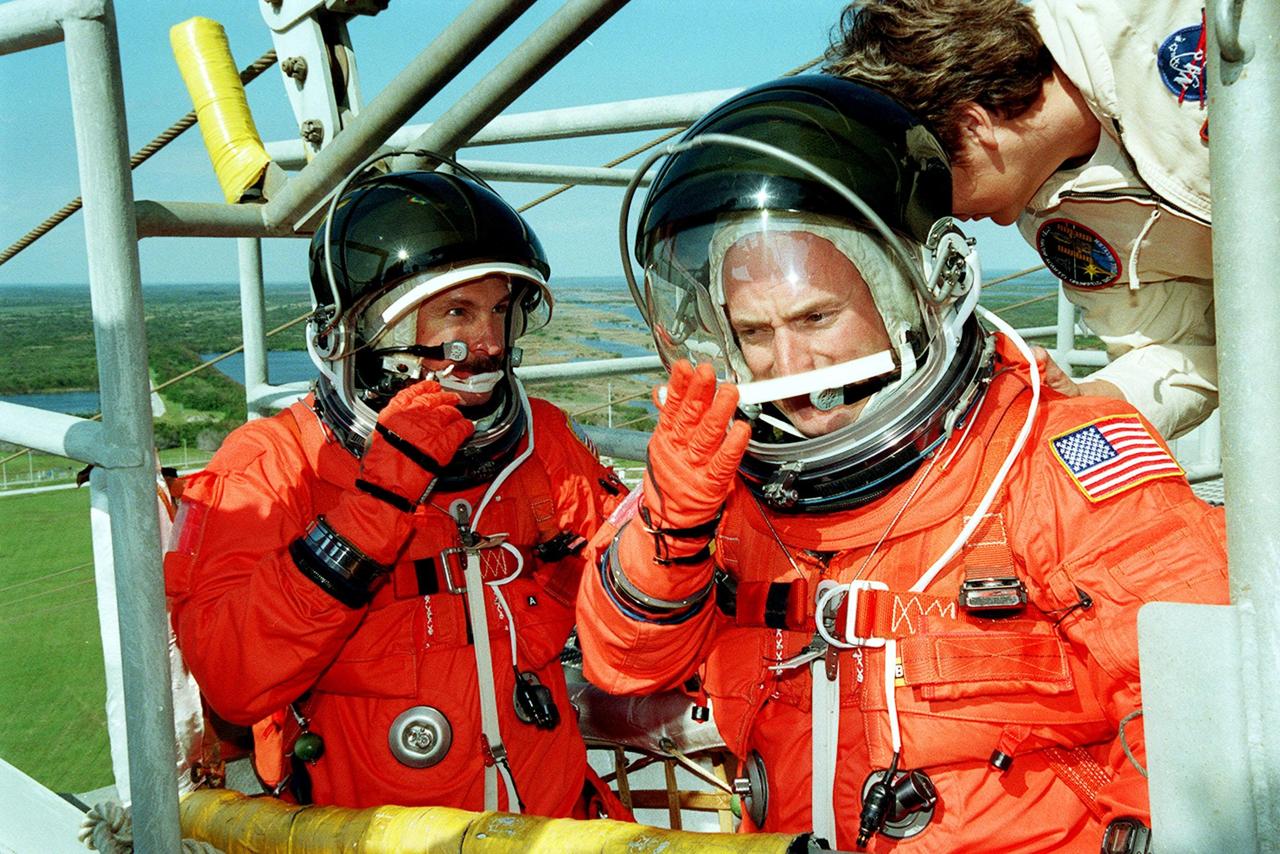
In the slidewire basket on Launch Pad 39B, STS-103 Commander Curtis L. Brown Jr. (left) and Pilot Scott J. Kelly (right) adjust their equipment. The baskets are part of the emergency egress system for persons in the Shuttle vehicle or on the Rotating Service Structure. Seven slidewires extend from the orbiter access arm, with a netted, flatbottom basket suspended from each wire. The other crew members are Mission Specialists Steven L. Smith, C. Michael Foale (Ph.D.), John M. Grunsfeld (Ph.D.), Claude Nicollier of Switzerland, with the European Space Agency (ESA), and Jean-François Clervoy of France, also with ESA.. The STS-103 crew are taking part in Terminal Countdown Demonstration Test (TCDT) activities in preparation for launch. The TCDT provides the crew with the emergency egress training, opportunities to inspect their mission payloads in the orbiter's payload bay, and simulated countdown exercises. STS-103 is a "call-up" mission due to the need to replace and repair portions of the Hubble Space Telescope, including the gyroscopes that allow the telescope to point at stars, galaxies and planets. The STS-103 crew will be replacing a Fine Guidance Sensor, an older computer with a new enhanced model, an older data tape recorder with a solid-state digital recorder, a failed spare transmitter with a new one, and degraded insulation on the telescope with new thermal insulation. The crew will also install a Battery Voltage/Temperature Improvement Kit to protect the spacecraft batteries from overcharging and overheating when the telescope goes into a safe mode. Four EVA's are planned to make the necessary repairs and replacements on the telescope. The mission is targeted for launch Dec. 6 at 2:37 a.m. EST