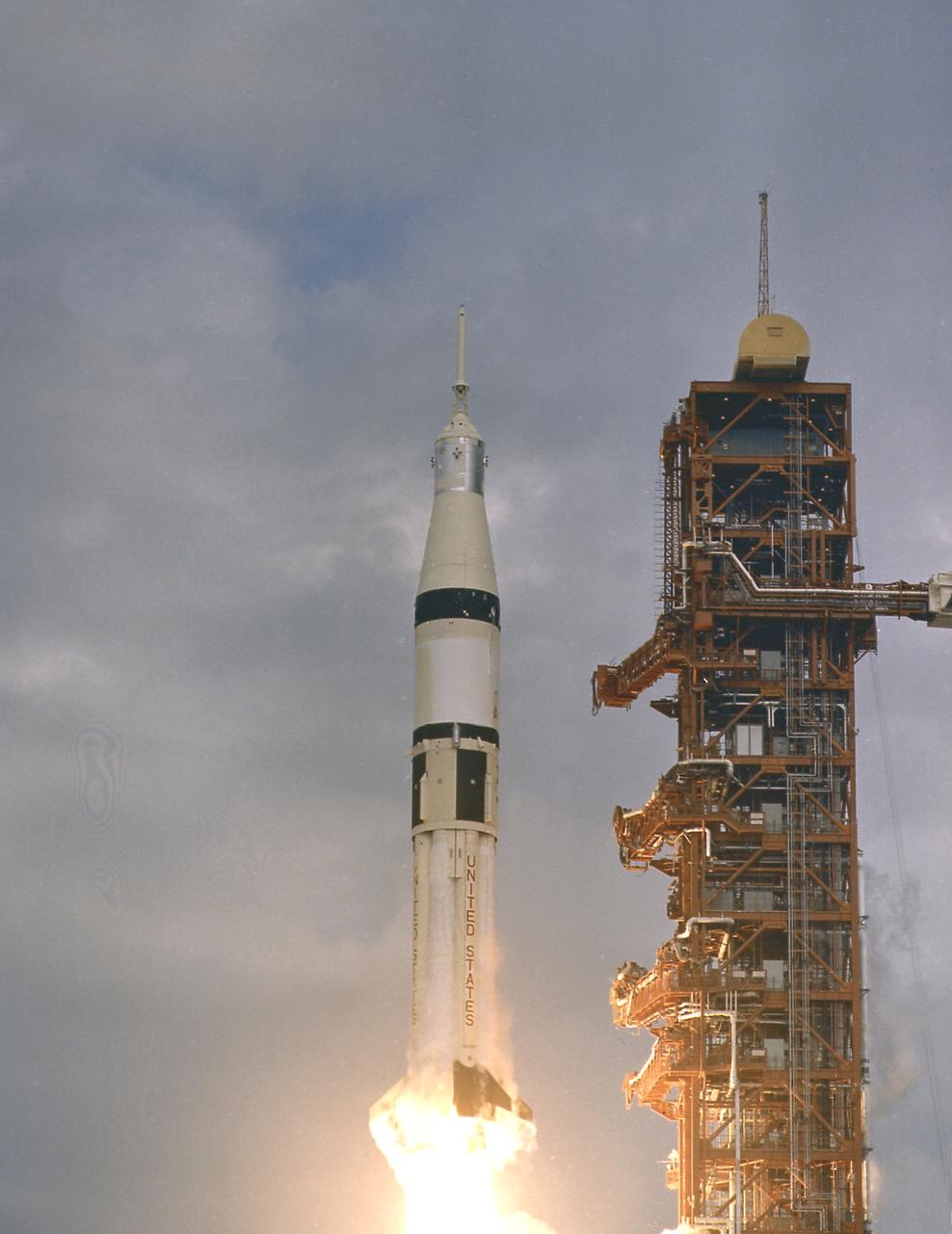
SA-206 lifts off from Kennedy Space Center's launch complex 39B, in Florida, on May 25, 1973, for the first manned Skylab mission (SL-2) with astronauts Pete Conrad, Joseph Kerwin, and Paul Weitz. The Saturn IB, developed under the direction of the Marshall Space Flight Center (MSFC), launched five manned Earth-orbital missions between 1968 and 1975: Apollo 7, Skylab 2, Skylab 3, Skylab 4, and the Apollo-Soyuz Test Project (ASTP).
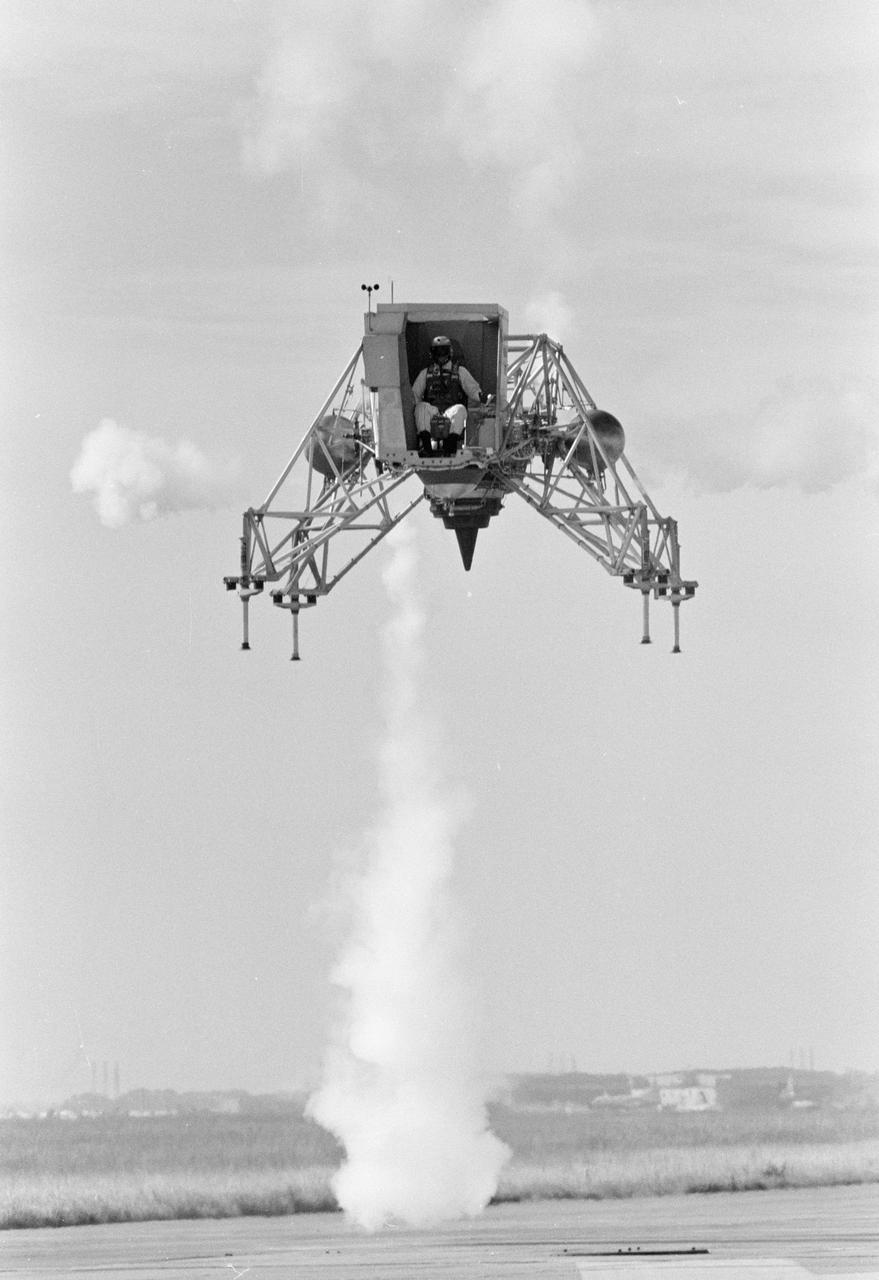
View of Apollo 12 CDR "Pete" Conrad during LLTV (Lunar Landing Training Vehicle) Fligh at Ellington AFB, for news release.
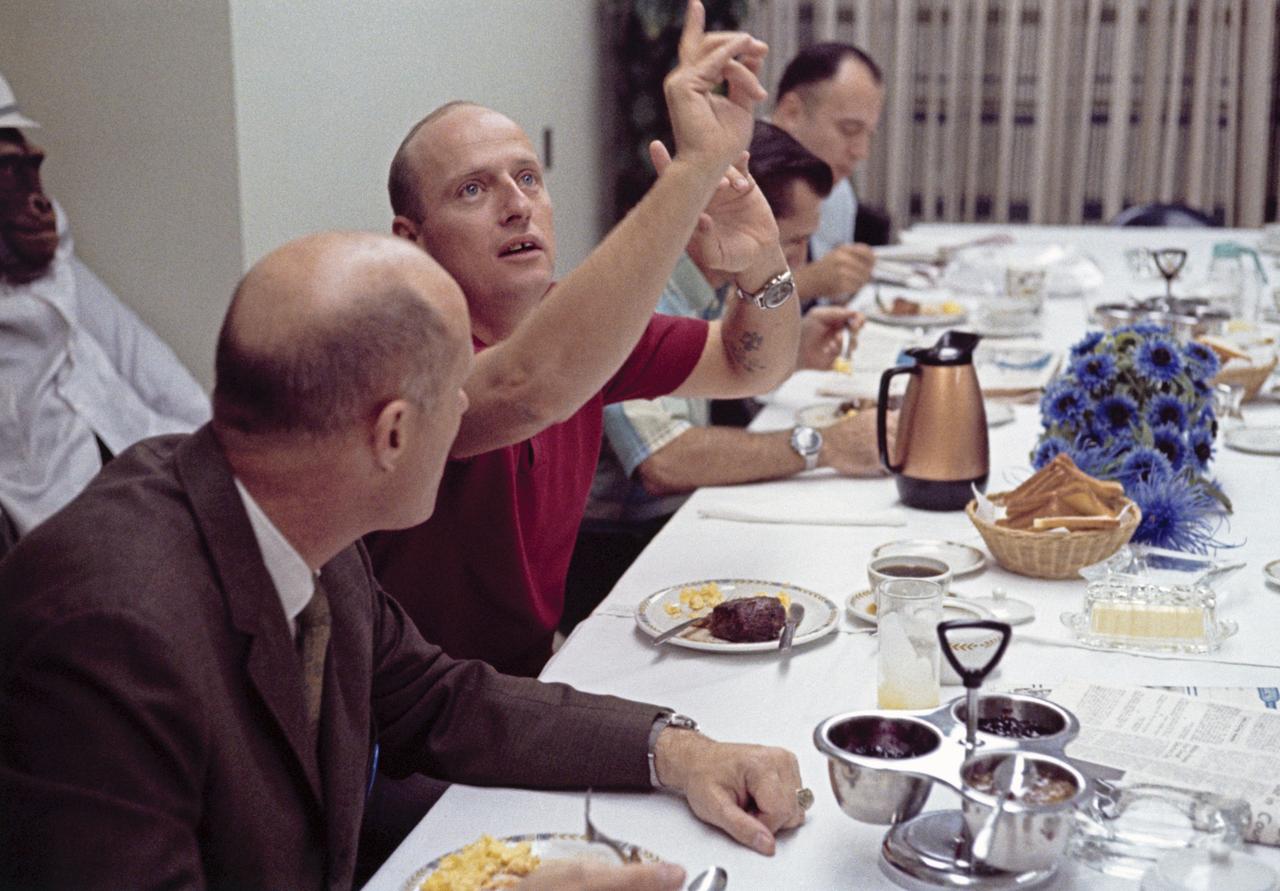
CAPE CANAVERAL, Fla. - Apollo 12 commander Charles "Pete" Conrad, in red shirt, talks during the breakfast on launch day Nov. 14, 1969. Photo credit: NASA
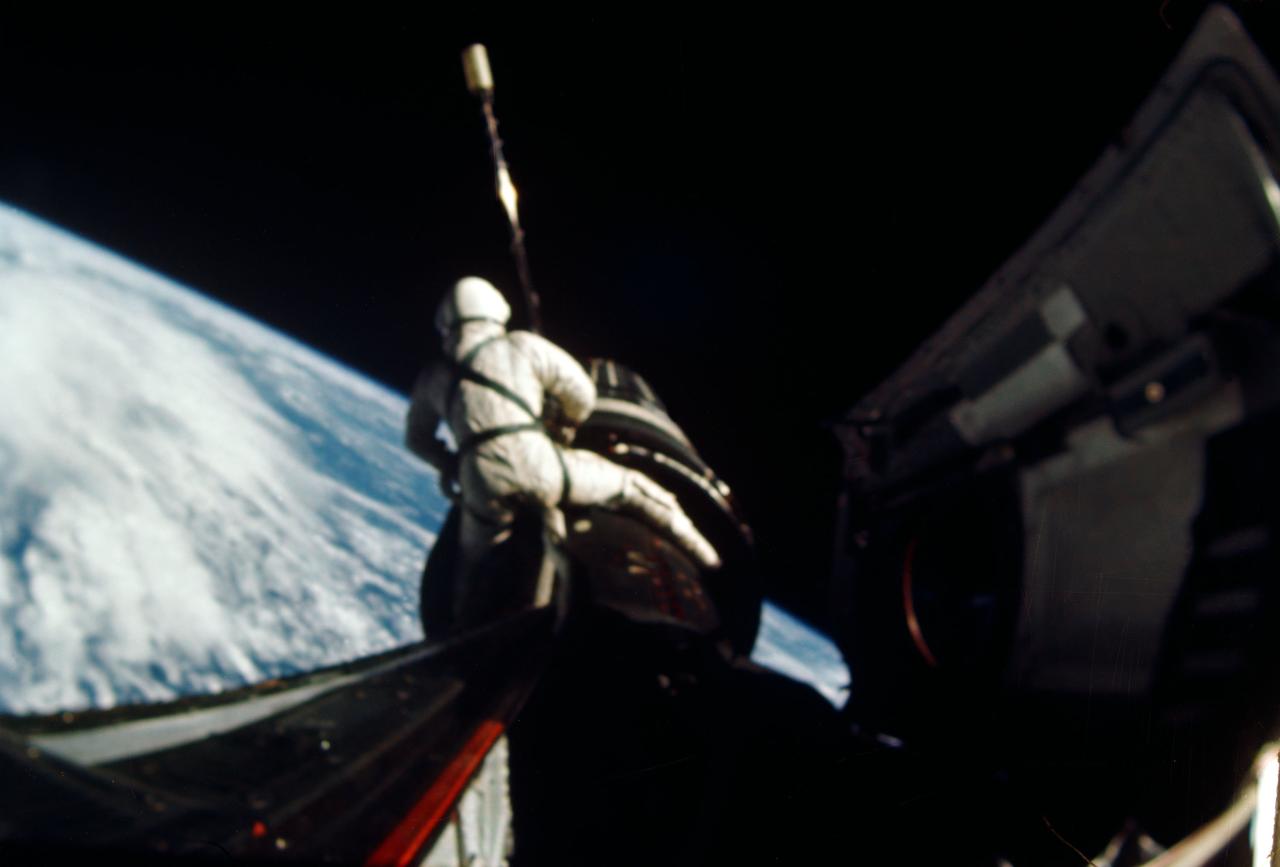
S66-54455 (13 Sept. 1966) --- Astronaut Richard F. Gordon Jr., Gemini-11 pilot, attaches a tether line from his spacecraft to the Agena Target Docking Vehicle (ATDV) during a spacewalk. This view was taken over the Atlantic Ocean at approximately 160 miles above Earth on Sept. 13, 1966. With the aid of the ATDV, Gordon and astronaut Charles (Pete) Conrad Jr., command pilot, set a new altitude record of 750 miles during the GT-11 mission. Photo credit: NASA
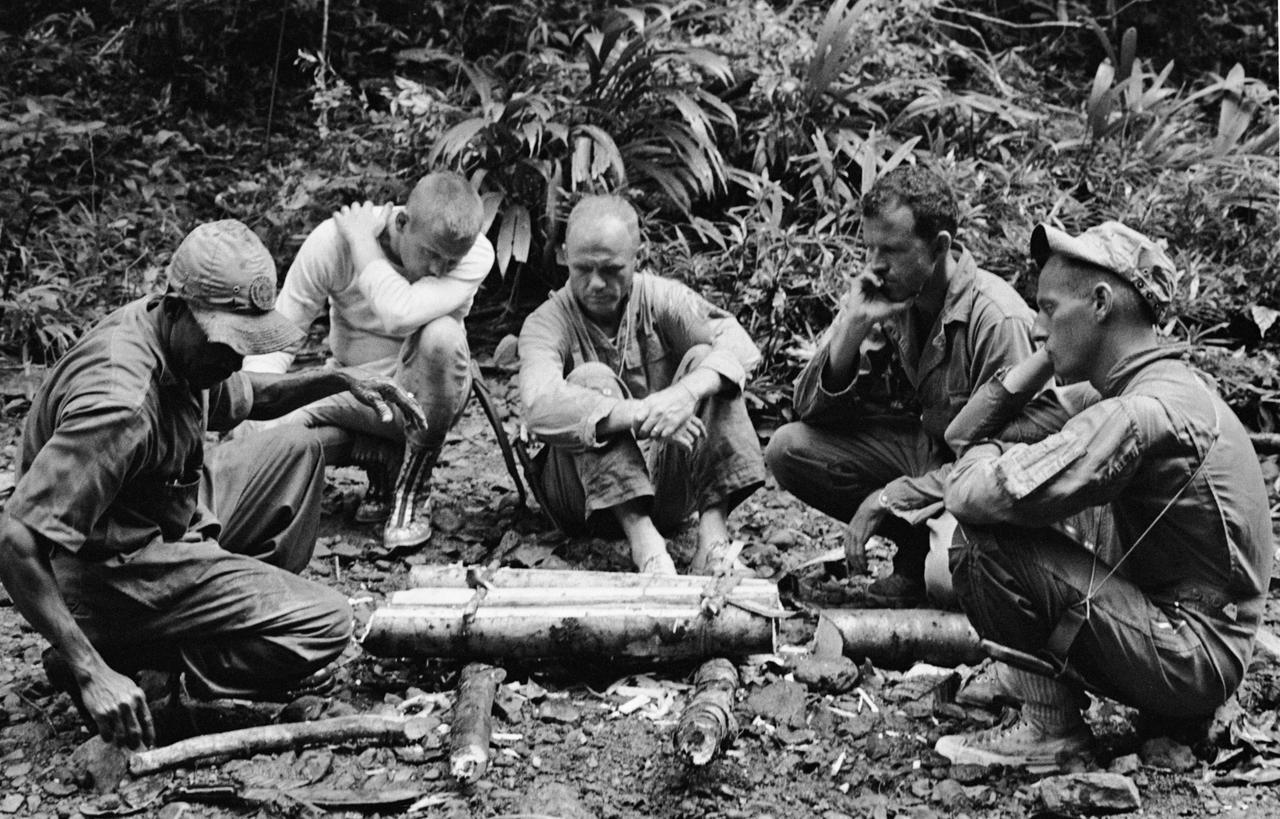
S63-08394 (3-6 June 1963) --- Some of NASA's sixteen astronauts participate in tropic survival training from June 3 through June 6, 1963, at Albrook Air Force Base, Canal Zone. From left to right are unidentified trainer, Neil Armstrong, John H. Glenn Jr., L. Gordon Cooper and Pete Conrad. Photo credit: NASA
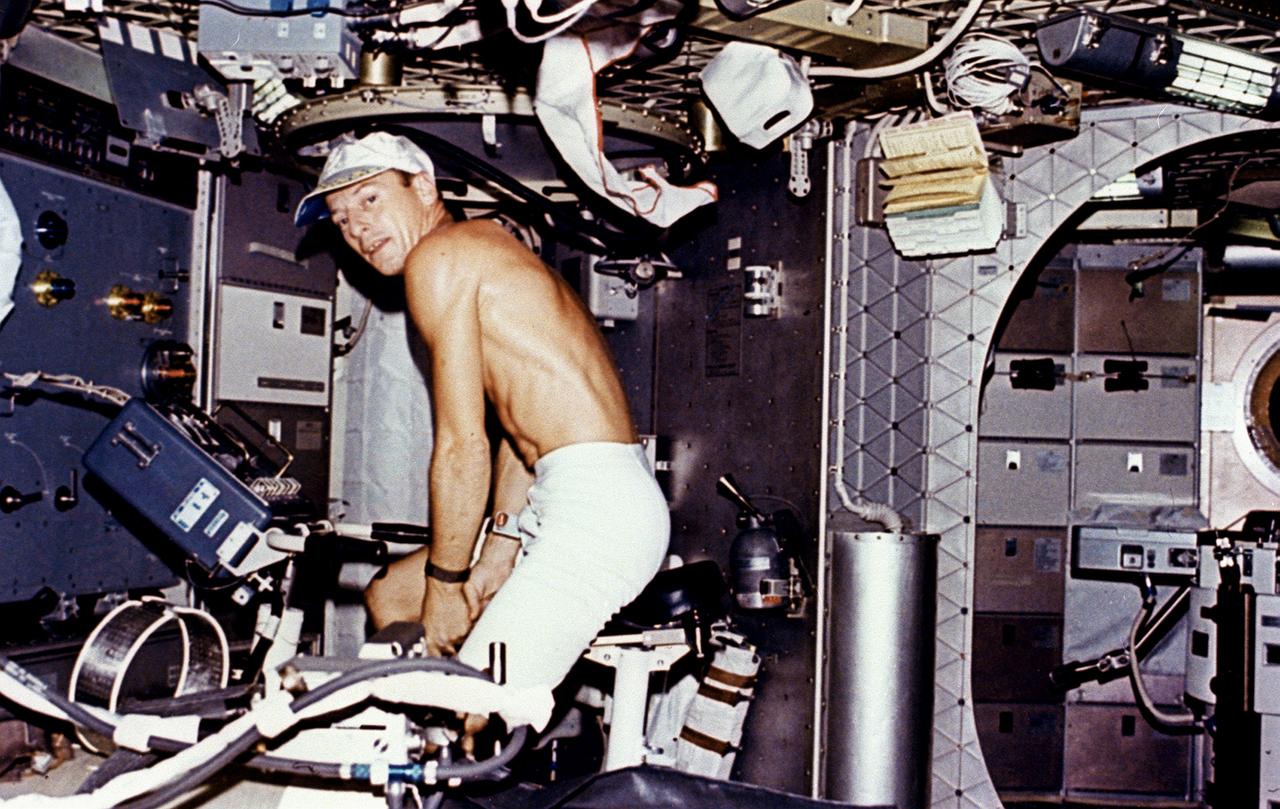
This Skylab-2 onboard photograph shows astronaut Charles "Pete" Conrad exercising on a stationary bicycle (ergometer) used for monitoring the metabolism of the astronauts. The ergometer was used to conduct both Vectorcardiogram experiment (M093) and Metabolic Activity experiment (M171). Experiment M093 was a medical evaluation designed to monitor changes in astronauts' cardiovascular systems, while Experiment M171 was to measure astronauts' metabolic changes during long-duration space missions.
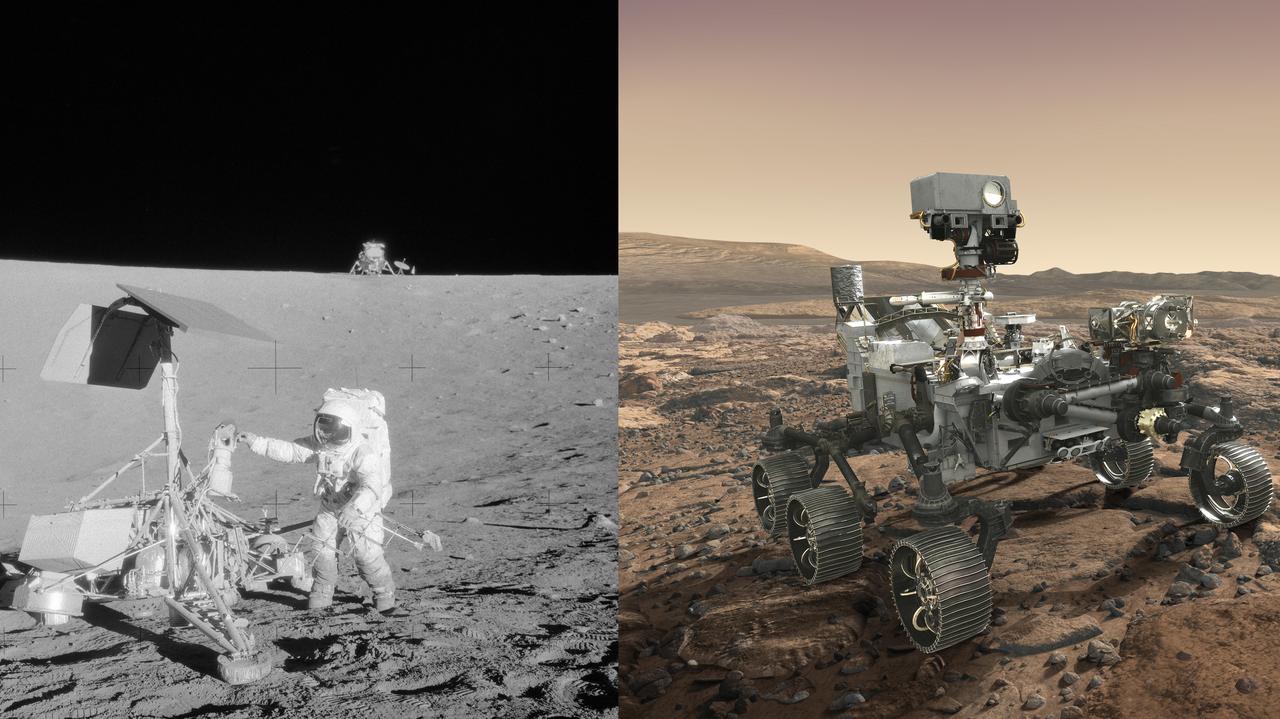
(Left) Apollo 12 astronaut Charles "Pete" Conrad Jr. stands beside NASA's Surveyor 3 spacecraft; the lunar module Intrepid can be seen in the distance. Apollo 12 landed on the Moon's Ocean of Storms on Nov. 20, 1969. (Right) Mars 2020 rover, seen here in an artist's concept, will make history's most accurate landing on a planetary body when it lands at Mars' Jezero Crater on Feb. 18, 2021. https://photojournal.jpl.nasa.gov/catalog/PIA23553
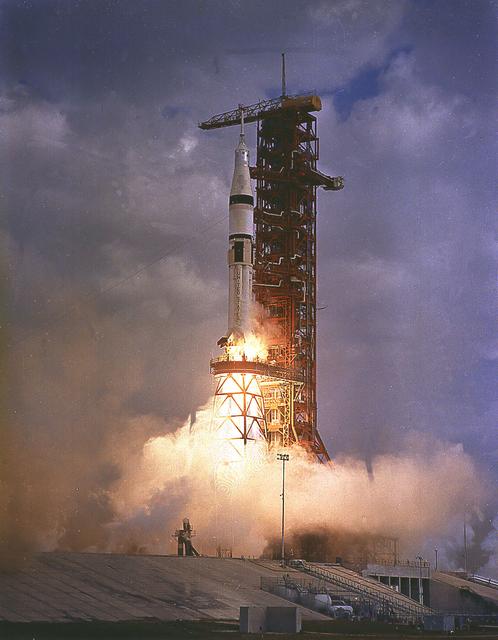
This is an image of the Saturn IB vehicle that lifted off on May 25, 1973, carrying the crew of the Skylab-2 (SL-2) mission. The Saturn IV launch vehicle was used to carry a crew of three astronauts to the Skylab. The SL-2 mission launched the first crew to the Skylab; astronauts Charles "Pete" Conrad, Joseph Kerwin and Paul Weitz. This crew made urgent repair work on the damaged Skylab to make it operational and habitable. The goals of the Skylab were to enrich our scientific knowledge of the Earth, the Sun, the stars, and cosmic space; to study the effects of weightlessness on living organisms, including man; to study the effects of the processing and manufacturing of materials utilizing the absence of gravity; and to conduct Earth resource observations. The duration of this mission was 28 days.

S65-28699 (17 Aug. 1965) --- Astronaut Charles Conrad Jr. (dark shirt), pilot for the Gemini-5 spaceflight, discusses x-rays with members of the medical team at Cape Kennedy. Left to right are Dr. Eugene Tubbs; astronaut Conrad; Dr. Charles A. Berry, chief, Center Medical Programs, Manned Spacecraft Center; and Dr. Robert Moser (seated), Medical Monitor with the U.S. Army.