Peering at Phoebe
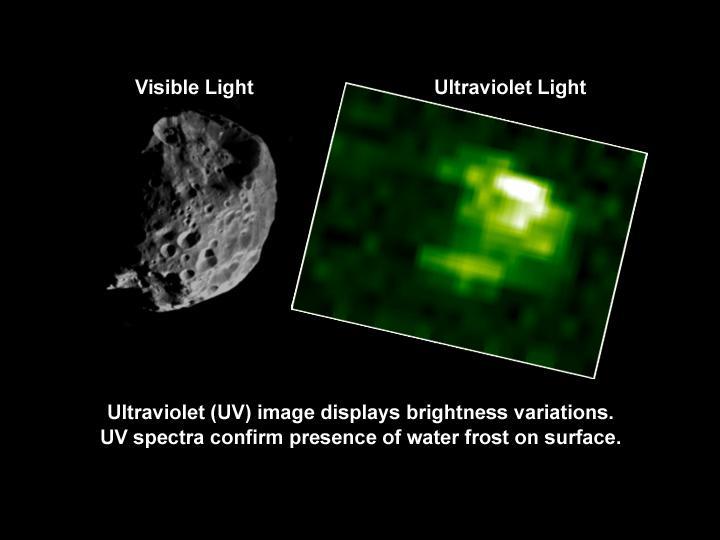
Phoebe in Ultraviolet
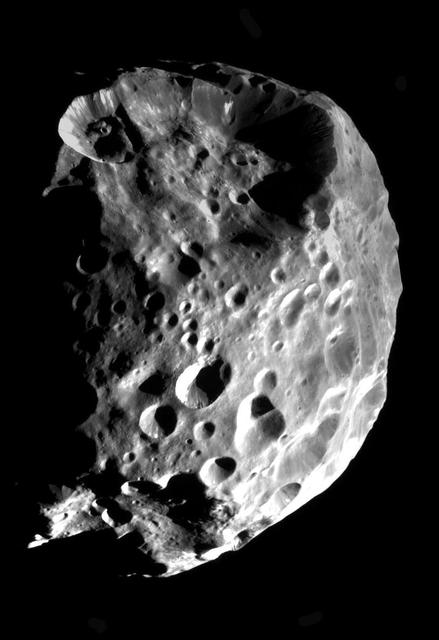
The Face of Phoebe
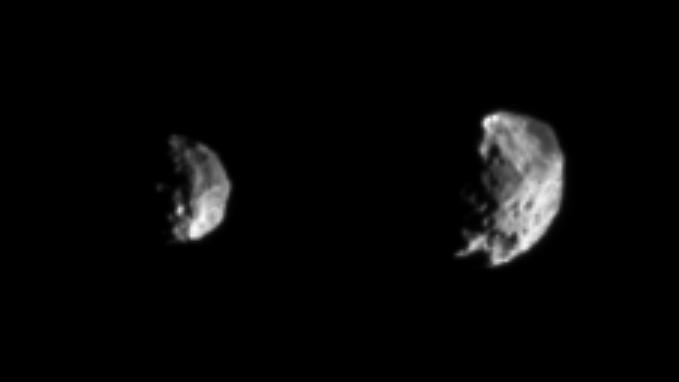
Countdown to Phoebe
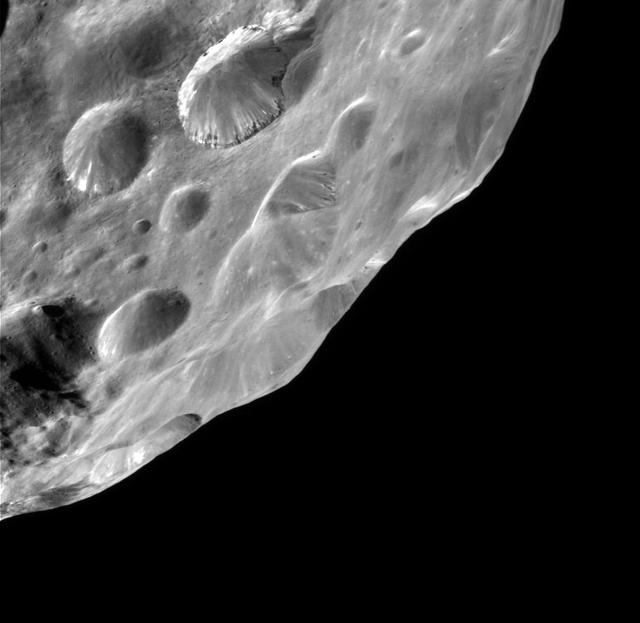
Phoebe Surprise
Saturn outer satellite - Phoebe
Saturn Outer Satellite, Phoebe
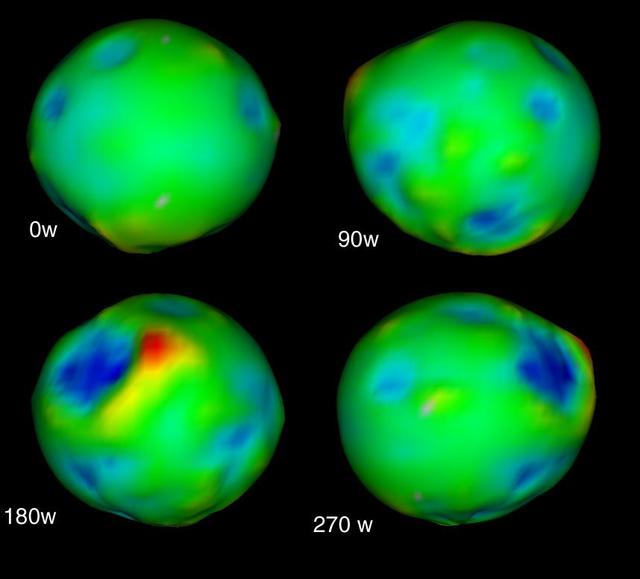
The True Shape of Phoebe
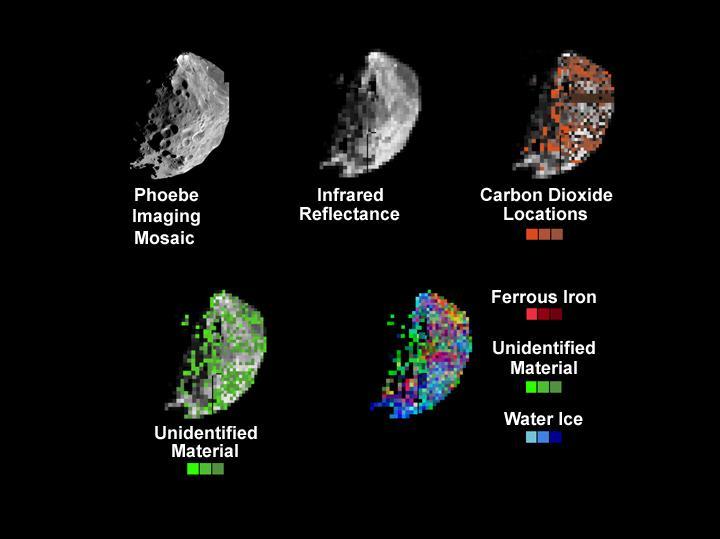
Phoebe Mineral Distribution
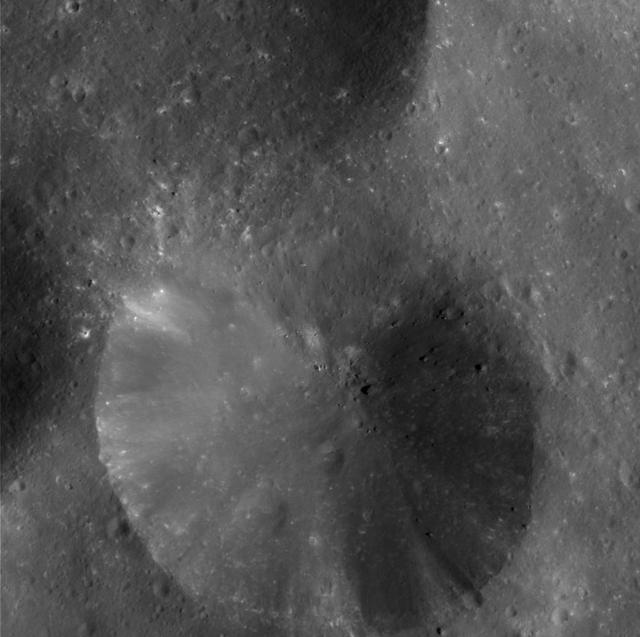
Crater Close-up on Phoebe
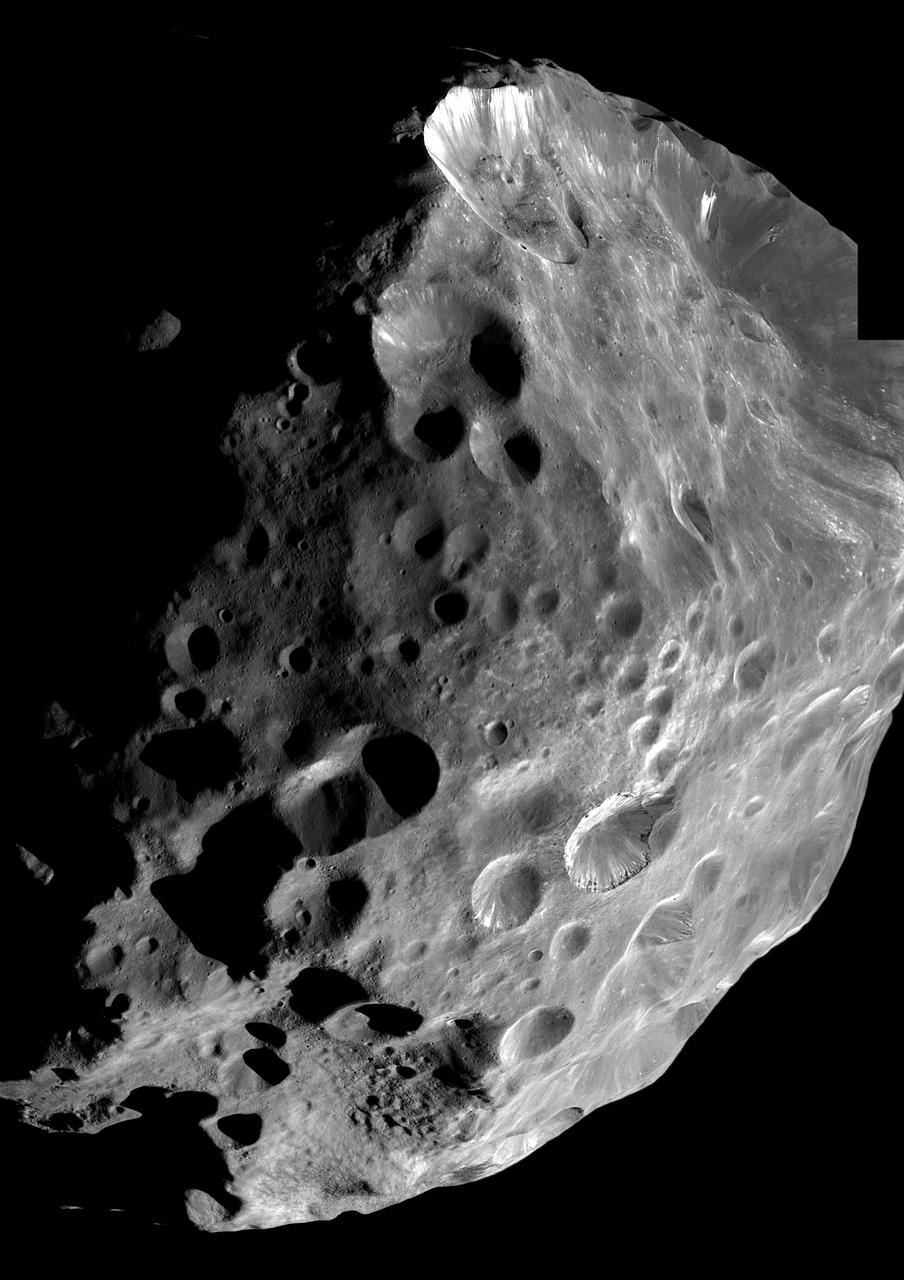
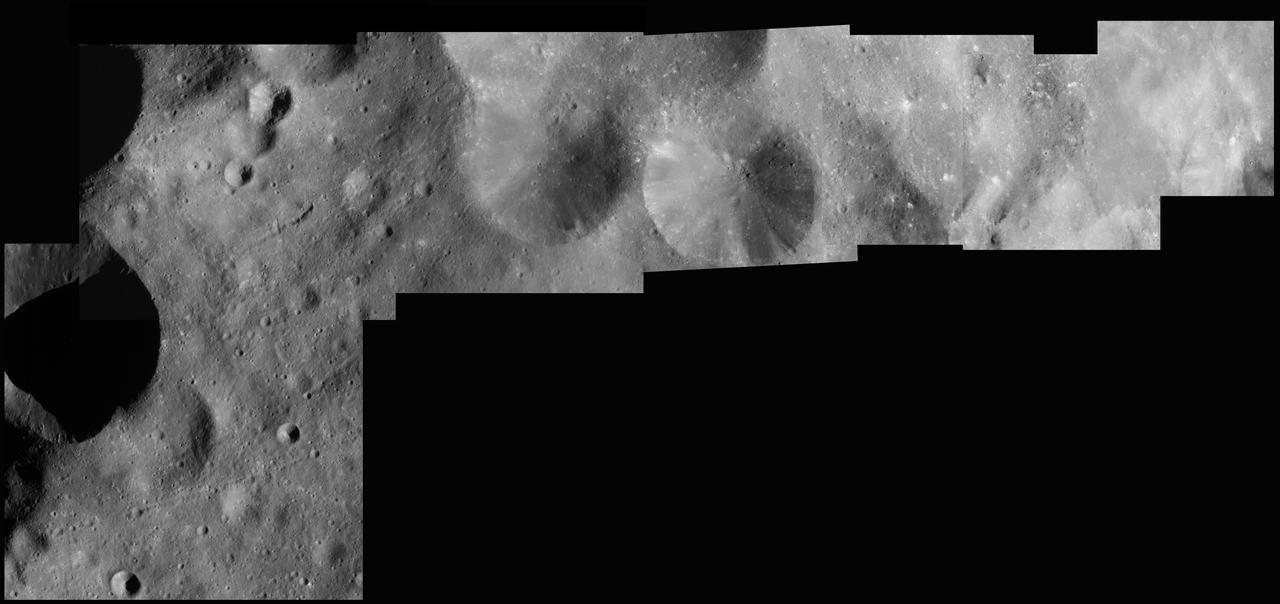
Phoebe Hi-Resolution Mosaic
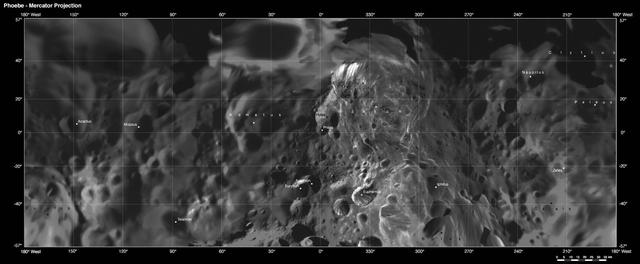
Phoebe: Cartographic Projections Mercator Projection
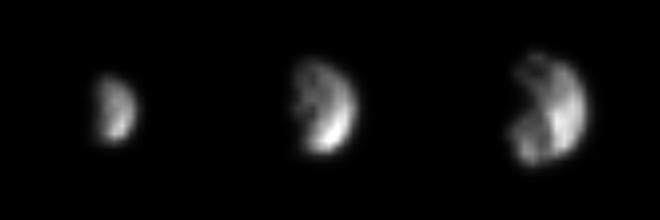
The Cassini spacecraft is closing in fast on its first target of observation in the Saturn system: the small, mysterious moon Phoebe, only 220 kilometers (137 miles) across. The three images shown here, the latest of which is twice as good as any image returned by the Voyager 2 spacecraft in 1981, were captured in the past week on approach to this outer moon of Saturn. Phoebe's surface is already showing a great deal of contrast, most likely indicative of topography, such as tall sunlit peaks and deep shadowy craters, as well as genuine variation in the reflectivity of its surface materials. Left to right, the three views were captured at a phase (Sun-Saturn-spacecraft) angle of 87 degrees between June 4 and June 7, from distances ranging from 4.1 million kilometers (2.6 million miles) to 2.5 million kilometers (1.5 million miles). The image scale ranges from 25 to 15 kilometers per pixel. Phoebe rotates once every nine hours and 16 minutes; each of these images shows a different region on Phoebe. Phoebe was the discovered in 1898. It has a very dark surface. Cassini's powerful cameras will provide the best-ever look at this moon on Friday, June 11, when the spacecraft will streak past Phoebe at a distance of only about 2,000 kilometers (1,240 miles) from the moon's surface. The current images, and the presence of large craters, promise a heavily cratered surface which will come into sharp view over the next few days when image scales should get as small as a few tens of meters. Phoebe orbits Saturn in a direction opposite to that of the larger interior Saturnian moons. Because of its small size and retrograde orbit Phoebe is believed to be a body from the distant outer solar system, perhaps one of the building blocks of the outer planets that were captured into orbit around Saturn. If true, the little moon will provide information about these primitive pieces of material. http://photojournal.jpl.nasa.gov/catalog/PIA06062
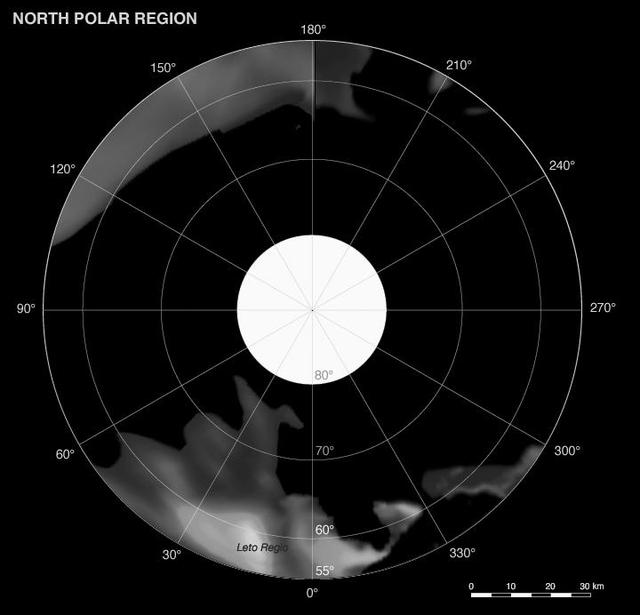
Phoebe: Cartographic Projections North Polar Map
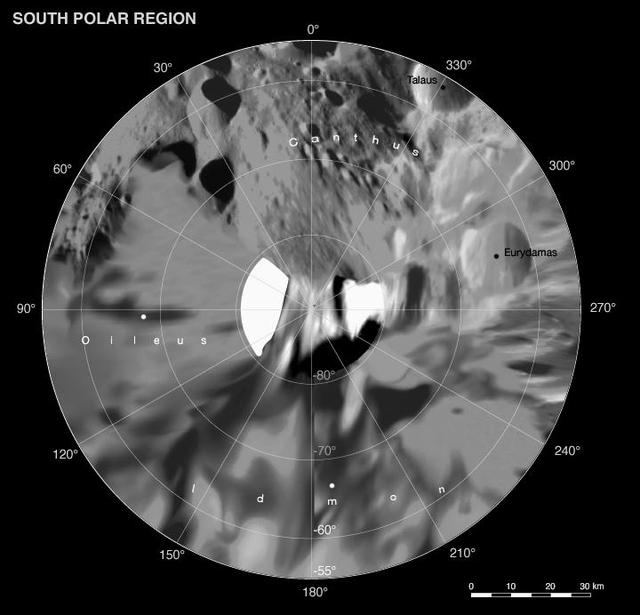
Phoebe: Cartographic Projections South Polar Map
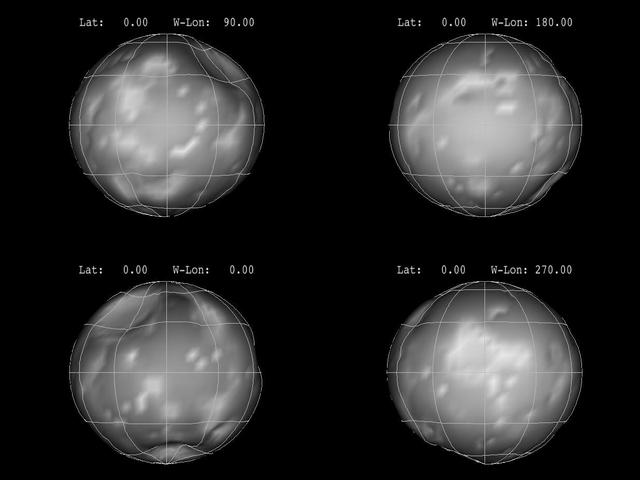
This panel of images shows the nearly spherical shape of Saturn moon Phoebe, as derived from imaging obtained from NASA Cassini spacecraft. Each image represents a 90-degree turn.
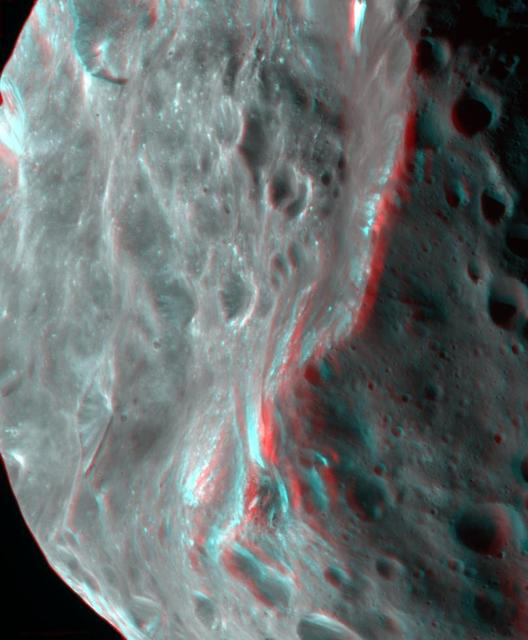
Phoebe violent, cratered past is evident in this 3D image of the tiny moon captured by NASA Cassini spacecraft. 3D glasses are necessary to view this image.
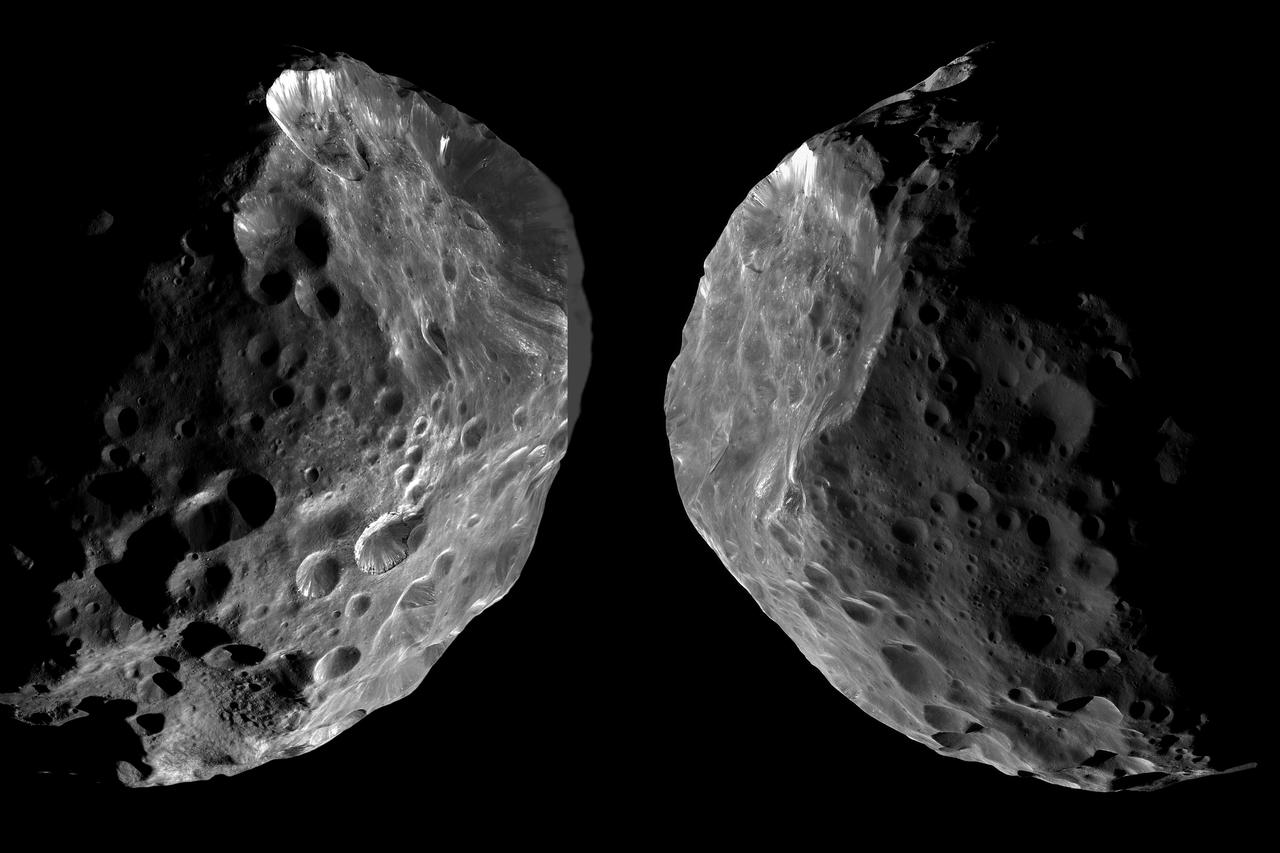
The image on the left shows Cassini view on approach to Phoebe, while the right shows the spacecraft departing perspective. As it entered the Saturn system, NASA Cassini spacecraft performed its first targeted flyby of one of the planet moons.
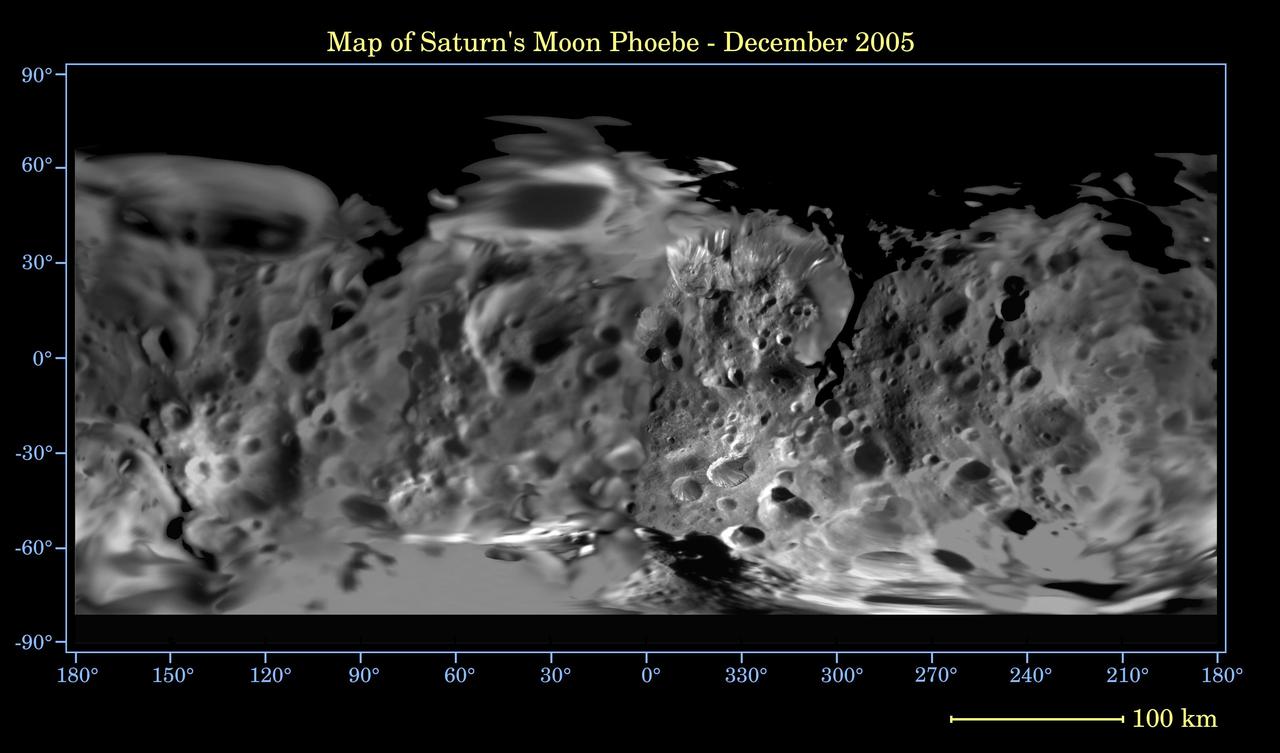
This global digital map of Saturn moon Phoebe was created using data taken during NASA Cassini spacecraft close flyby of the small moon in June 2004. The map is an equidistant projection and has a scale of 233 meters 764 feet per pixel
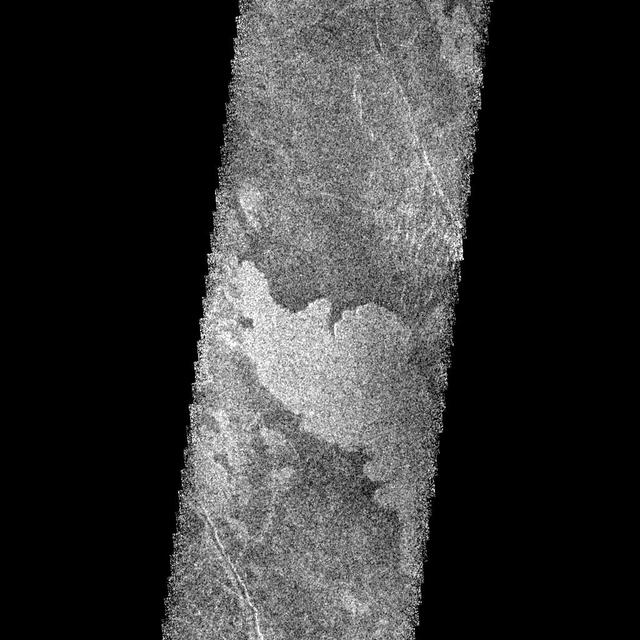
This radar image from NASA Magellan is of part of the Phoebe region of Venus. It is a mosaic of parts of revolutions 146 and 147 acquired in the first radar test on Aug. 16, 1990. http://photojournal.jpl.nasa.gov/catalog/PIA00212
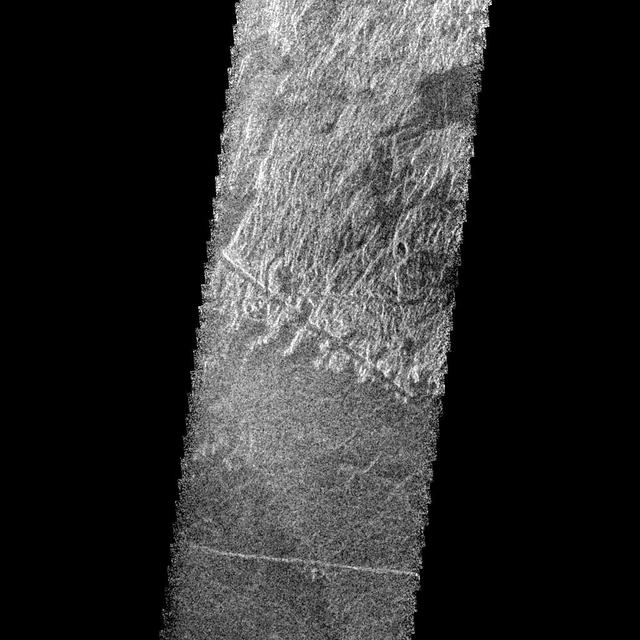
This radar image from NASA Magellan is of part of the Phoebe region of Venus. It is a mosaic of parts of revolutions 146 and 147 acquired in the first radar test on Aug. 16, 1990. http://photojournal.jpl.nasa.gov/catalog/PIA00211
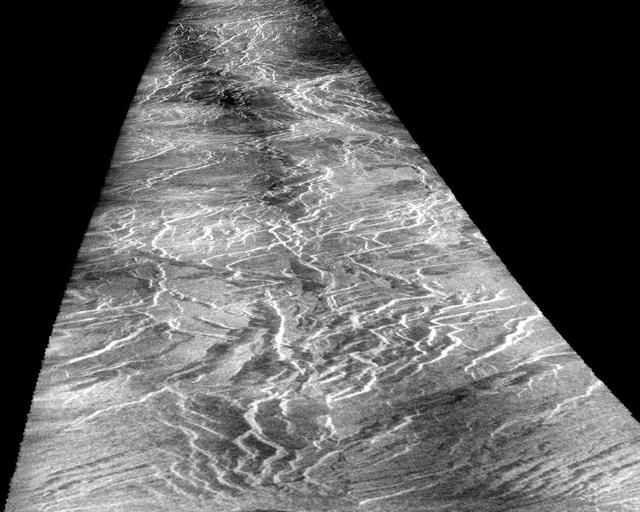
This view of the surface of Venus acquired by NASA Magellan spacecraft shows a geographically young region of lowland plains. The location is near the equator between two highland areas known as Asteria Regio and Phoebe Regio. http://photojournal.jpl.nasa.gov/catalog/PIA00237

Dr. Phoebe Cohen, Professor of Geosciences, Williams College, speaks on a panel at the “Ancient Earth, Alien Earths” Event at NASA Headquarters in Washington, DC Wednesday, August 20, 2014. The event was sponsored by NASA, the National Science Foundation (NSF), and the Smithsonian Institution and was moderated by Dr. David H. Grinspoon, Senior Scientist at the Planetary Science Institute. Six scientists discussed how research on early Earth could help guide our search for habitable planets orbiting other stars. Photo Credit: (NASA/Aubrey Gemignani)

This image covers part of the 150 kilometer (90 mile) wide, 1 to 1.5 kilometer (0.6 to 0.9 mile) deep valley, Devana Chasma. The image is a composite of the first two orbits recorded by NASA's Magellan spacecraft in August 1990 superimposed on Pioneer Venus topography. This image is located at the intersection of Devana Chasma and the Phoebe Regio upland. It covers a region approximately 525 by 525 kilometers (315 by 315 miles), centered 288 degrees east longitude on the equator. Devana Chasma consists of radar bright lineaments, interpreted to be fault scarps, oriented in a north-northeast direction. This part of the planet is thought to be an area where the crust is being stretched and pulled apart producing a rift valley, similar to the East African rift. http://photojournal.jpl.nasa.gov/catalog/PIA00464
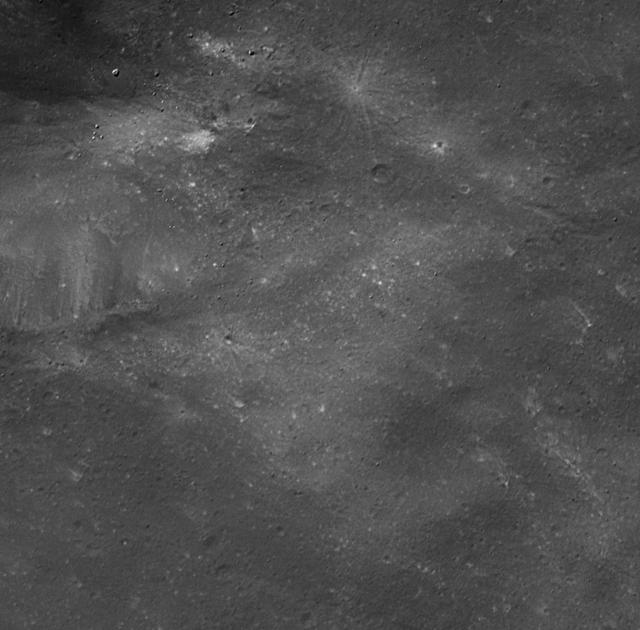
Dark Desolation
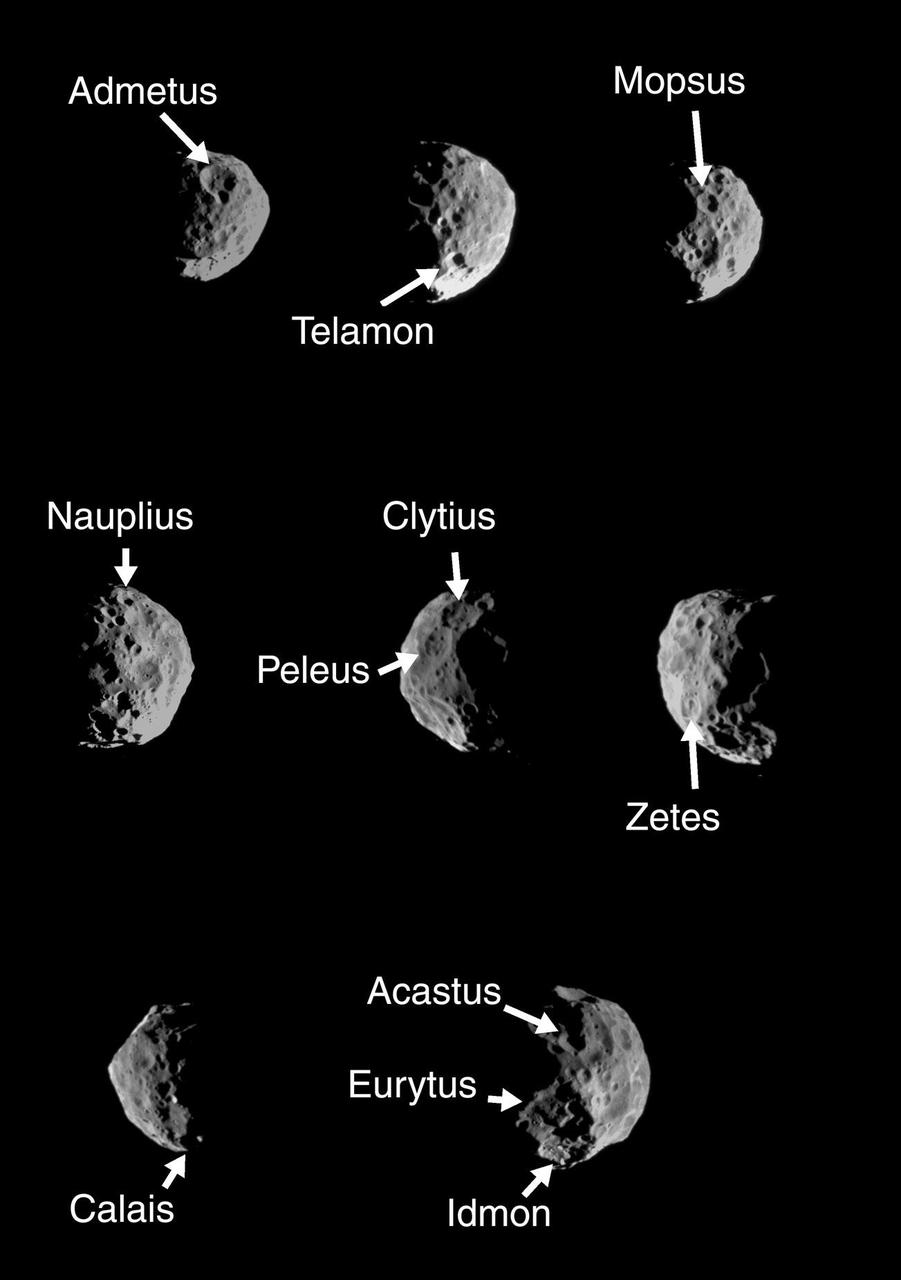
Phoebian Explorers 2
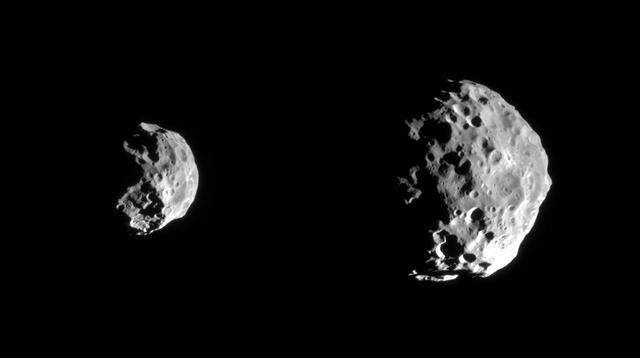
Battered Moon
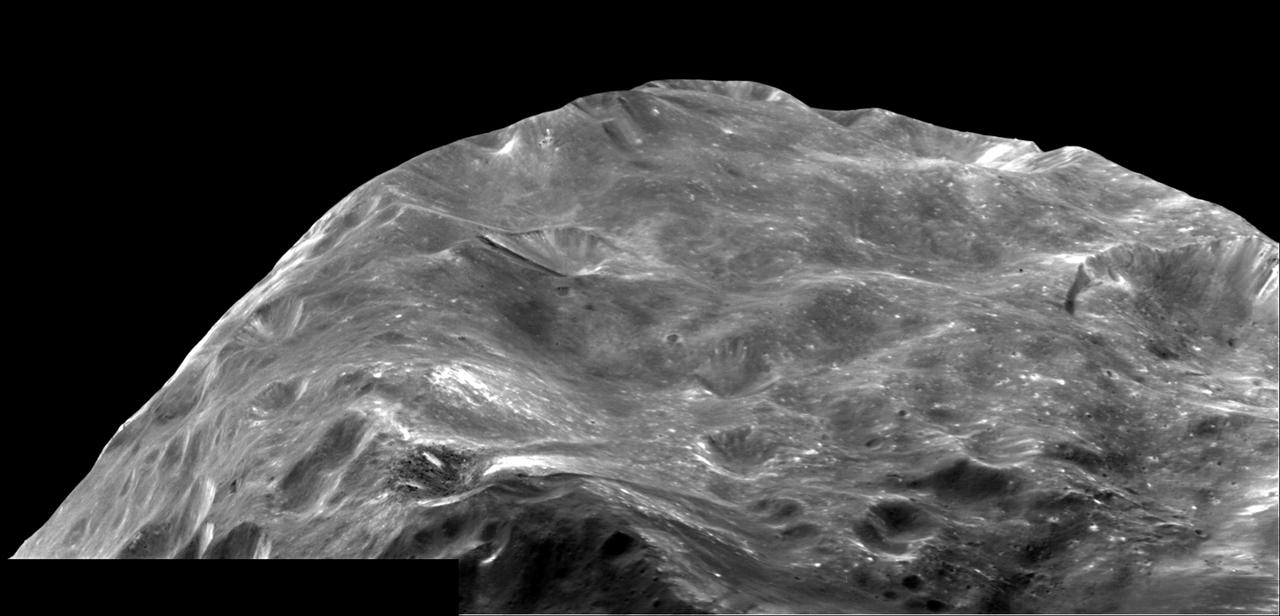
A View to the South
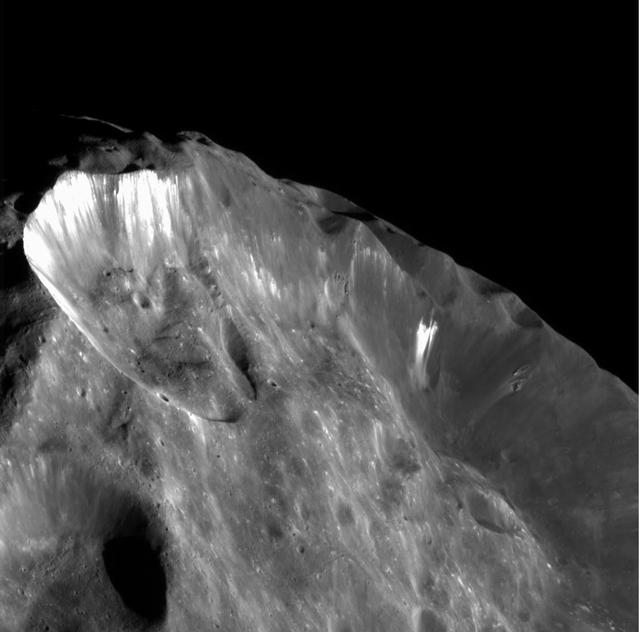
A Skyline View
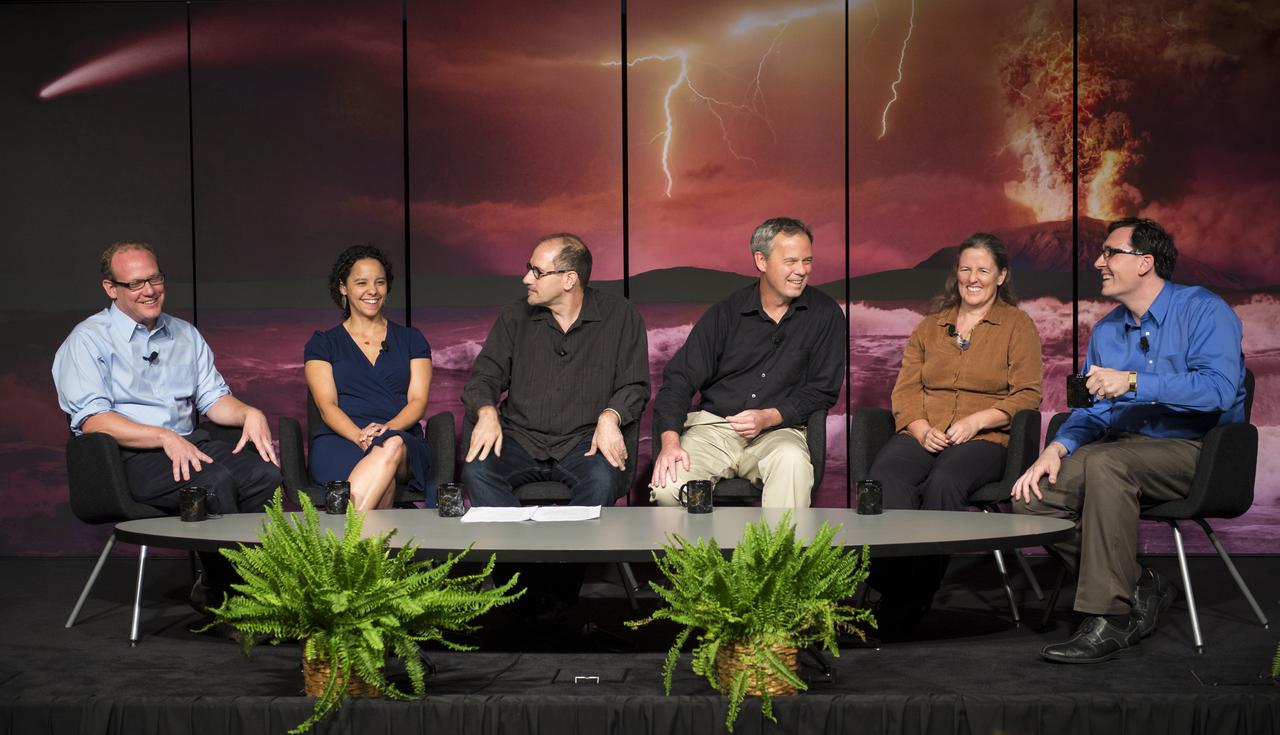
Panelists discuss how research on early Earth could help guide our search for habitable planets orbiting other stars at the “Ancient Earth, Alien Earths” Event at NASA Headquarters in Washington, DC Wednesday, August 20, 2014. The event was sponsored by NASA, the National Science Foundation (NSF), and the Smithsonian Institution and was moderated by Dr. David H. Grinspoon, Senior Scientist at the Planetary Science Institute. Photo Credit: (NASA/Aubrey Gemignani)

Panelists pose for a group photo at the “Ancient Earth, Alien Earths” Event at NASA Headquarters in Washington, DC Wednesday, August 20, 2014. The event was sponsored by NASA, the National Science Foundation (NSF), and the Smithsonian Institution and highlighted how research on early Earth could help guide our search for habitable planets orbiting other stars. Photo Credit: (NASA/Aubrey Gemignani)