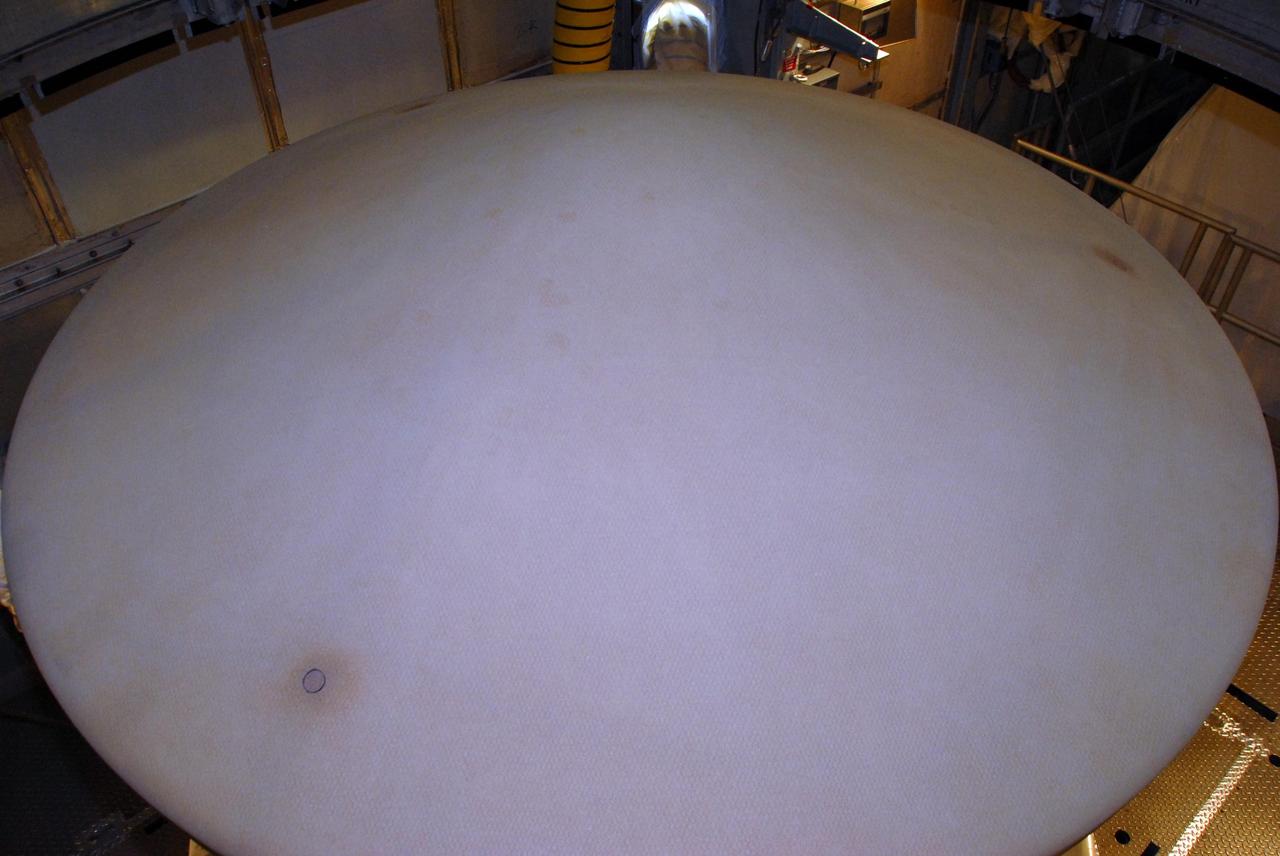
KENNEDY SPACE CENTER, FLA. -- The top of NASA's Phoenix Mars Lander can be seen inside the mobile service tower of Launch Pad 17-A at Cape Canaveral Air Force Station in Florida. Launch of Phoenix on the Delta II launch vehicle is scheduled for no earlier than Aug. 3. Phoenix will land in icy soils near the north polar permanent ice cap of Mars and explore the history of the water in these soils and any associated rocks, while monitoring polar climate. Landing on Mars is planned in May 2008 on arctic ground where a mission currently in orbit, Mars Odyssey, detected high concentrations of ice just beneath the top layer of soil. NASA/George Shelton
KENNEDY SPACE CENTER, FLA. -- Inside the mobile service tower of Launch Pad 17-A at Cape Canaveral Air Force Station in Florida, workers remove the container from NASA's Phoenix Mars Lander. Launch of Phoenix is scheduled to launch on the Delta II launch vehicle no earlier than Aug. 3. Phoenix will land in icy soils near the north polar permanent ice cap of Mars and explore the history of the water in these soils and any associated rocks, while monitoring polar climate. Landing on Mars is planned in May 2008 on arctic ground where a mission currently in orbit, Mars Odyssey, detected high concentrations of ice just beneath the top layer of soil. NASA/George Shelton
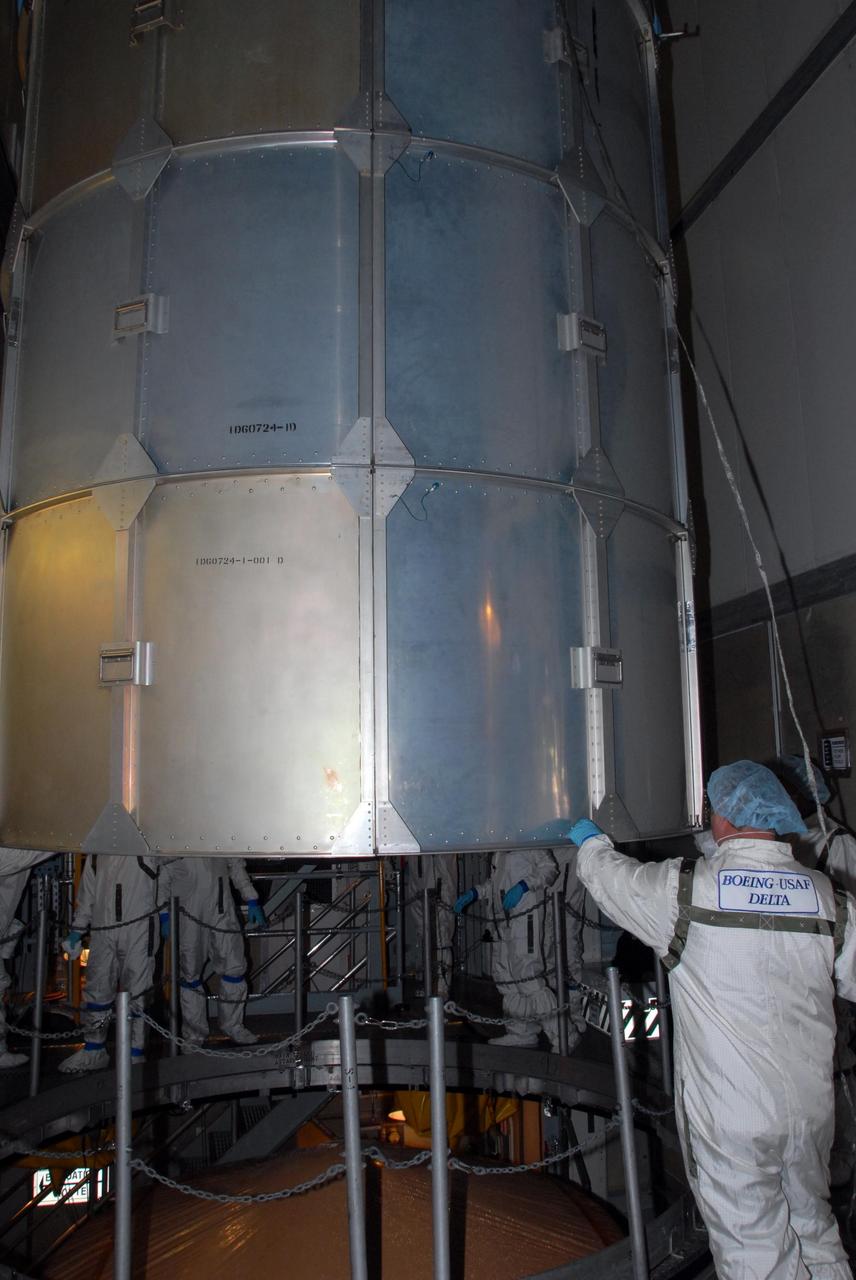
KENNEDY SPACE CENTER, FLA. -- Inside the mobile service tower of Launch Pad 17-A at Cape Canaveral Air Force Station in Florida, workers remove the container lid from NASA's Phoenix Mars Lander. Launch of Phoenix is scheduled to launch on the Delta II launch vehicle no earlier than Aug. 3. Phoenix will land in icy soils near the north polar permanent ice cap of Mars and explore the history of the water in these soils and any associated rocks, while monitoring polar climate. Landing on Mars is planned in May 2008 on arctic ground where a mission currently in orbit, Mars Odyssey, detected high concentrations of ice just beneath the top layer of soil. NASA/George Shelton
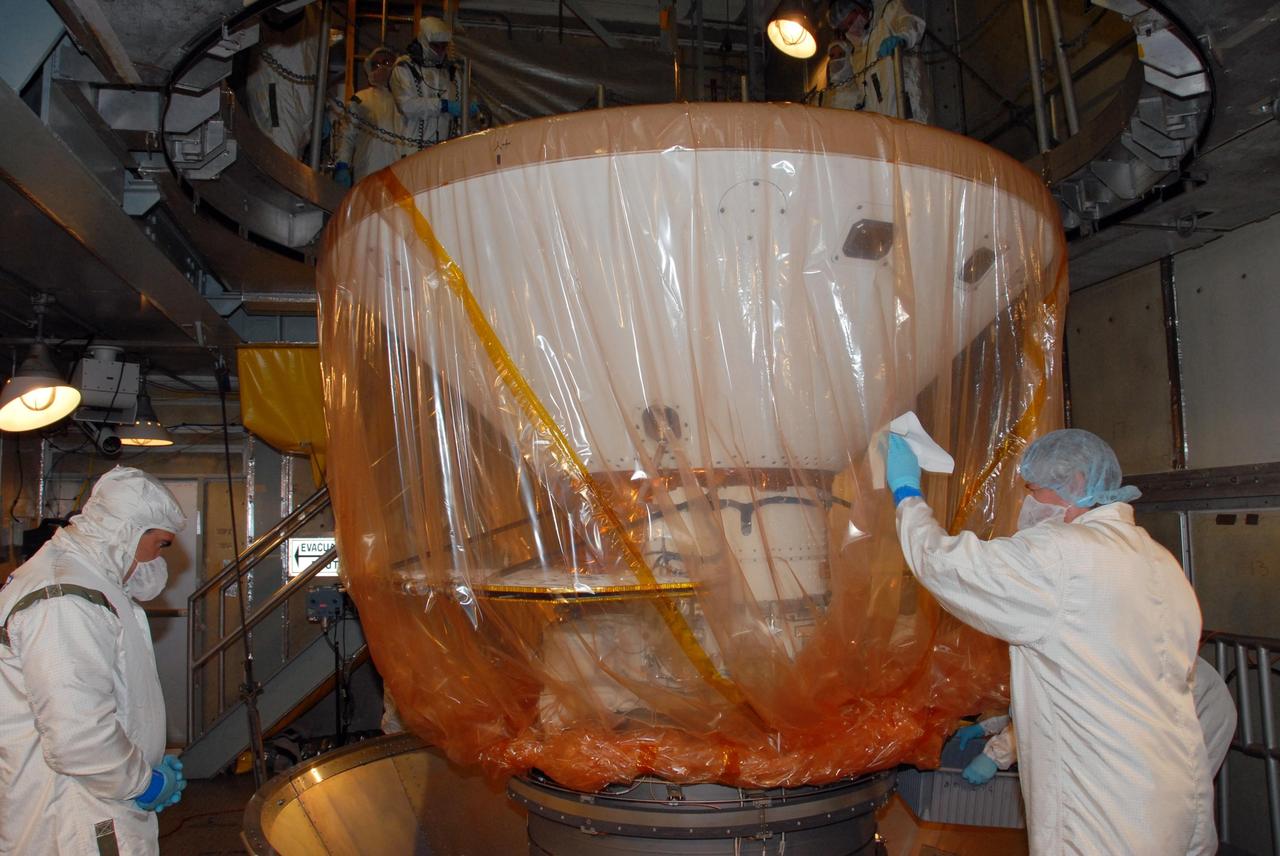
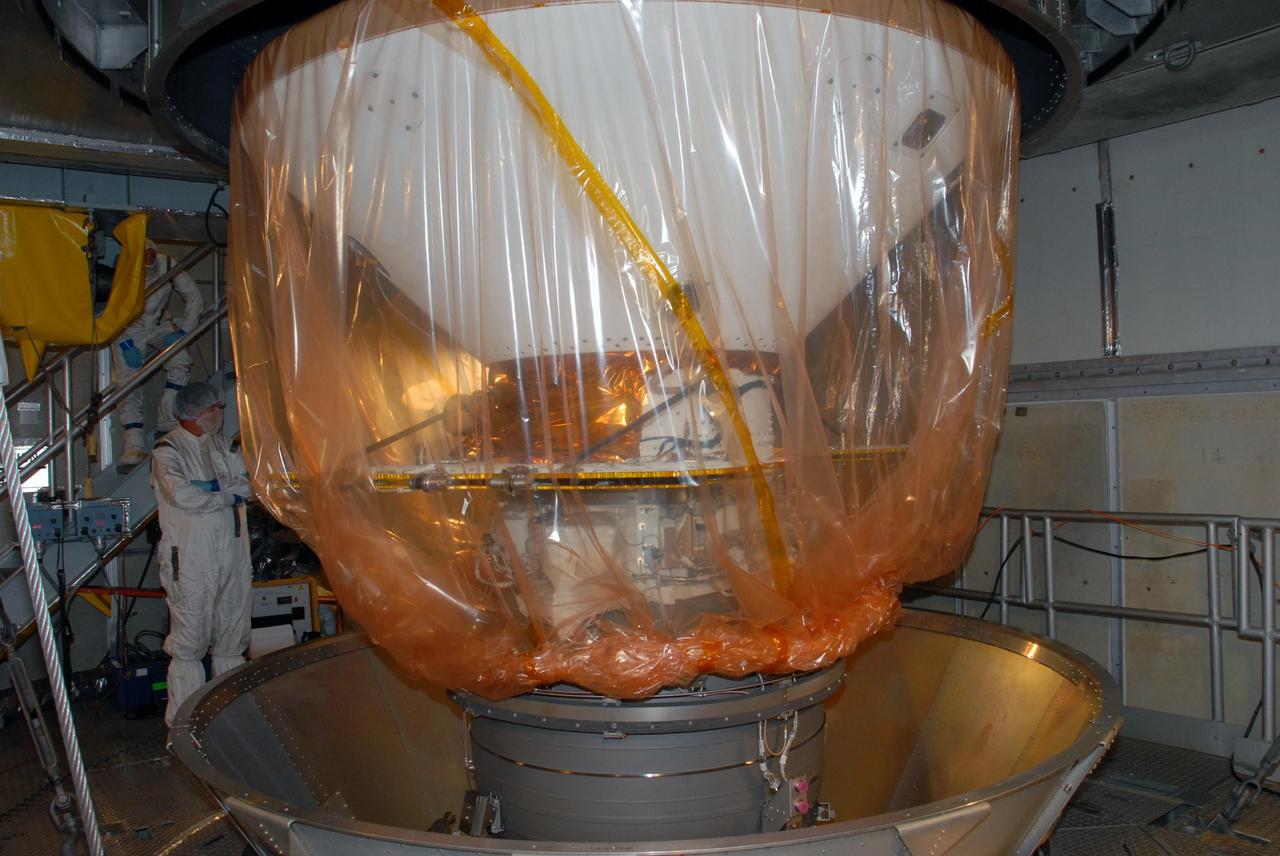
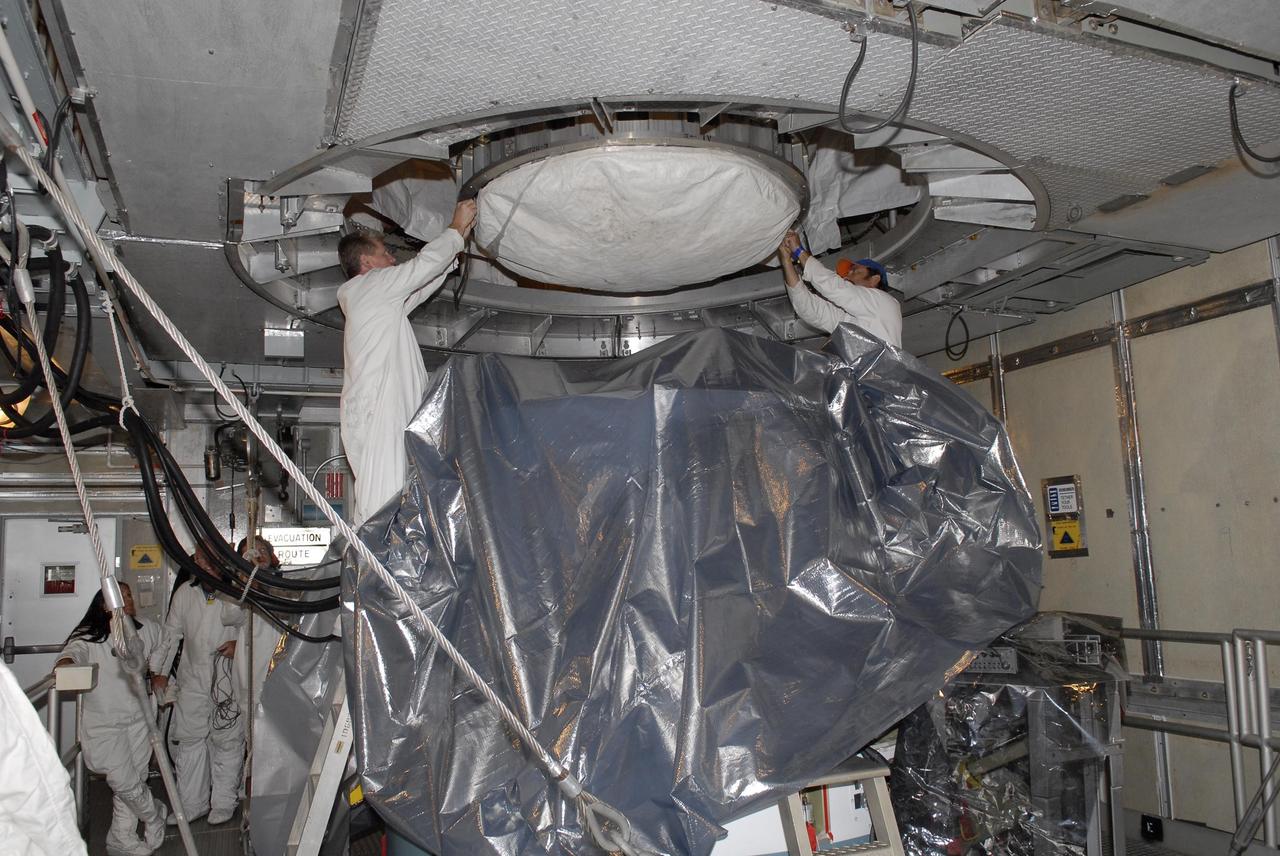
KENNEDY SPACE CENTER, FLA. -- Inside the mobile service tower of Launch Pad 17-A at Cape Canaveral Air Force Station in Florida, workers begin to remove the plastic covering from NASA's Phoenix Mars Lander. Phoenix is scheduled to launch on the Delta II launch vehicle no earlier than Aug. 3. Phoenix will land in icy soils near the north polar permanent ice cap of Mars and explore the history of the water in these soils and any associated rocks, while monitoring polar climate. Landing on Mars is planned in May 2008 on arctic ground where a mission currently in orbit, Mars Odyssey, detected high concentrations of ice just beneath the top layer of soil. NASA/George Shelton
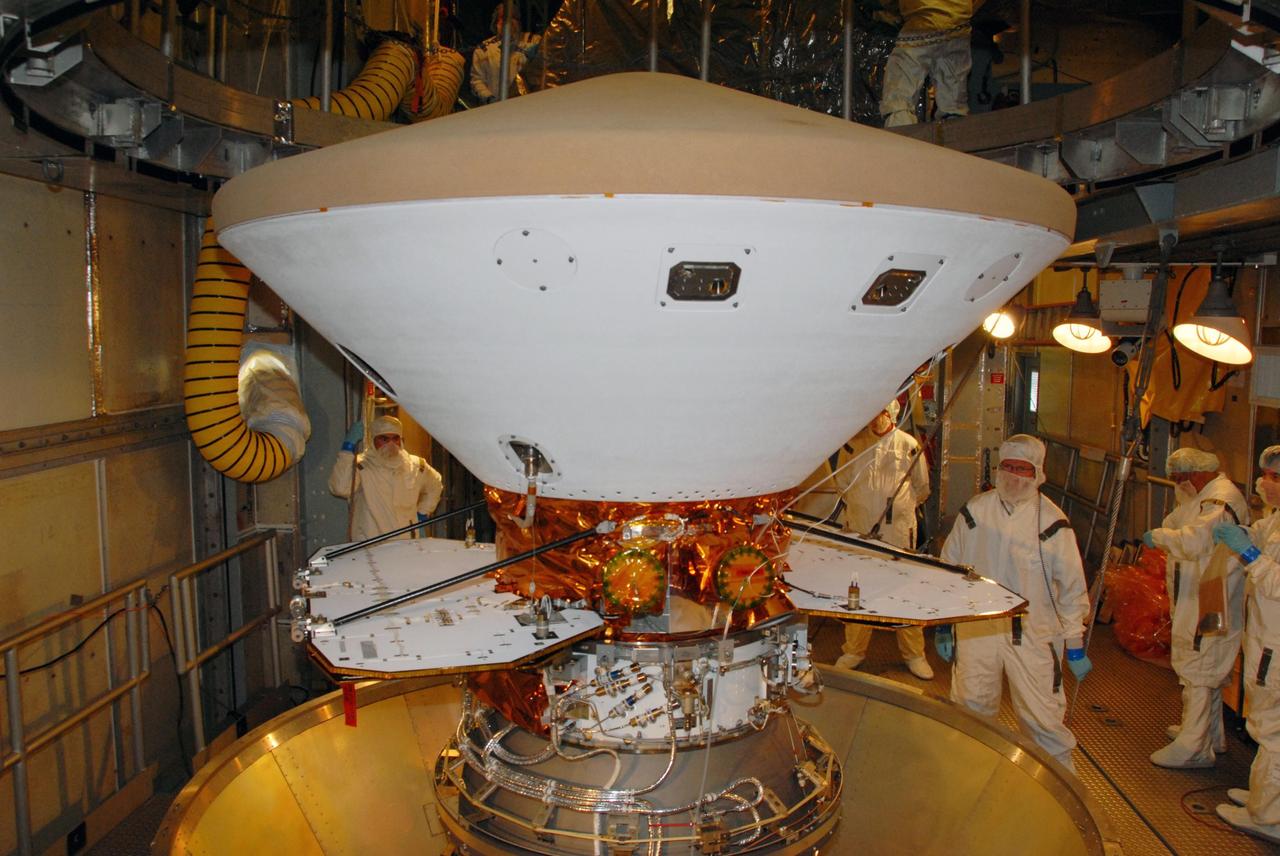
KENNEDY SPACE CENTER, FLA. -- NASA's Phoenix Mars Lander is revealed inside the mobile service tower of Launch Pad 17-A at Cape Canaveral Air Force Station in Florida, after workers removed the coverings protecting the spacecraft. Launch of Phoenix on a Delta II launch vehicle is scheduled for no earlier than Aug. 3. Phoenix will land in icy soils near the north polar permanent ice cap of Mars and explore the history of the water in these soils and any associated rocks, while monitoring polar climate. Landing on Mars is planned in May 2008 on arctic ground where a mission currently in orbit, Mars Odyssey, detected high concentrations of ice just beneath the top layer of soil. NASA/George Shelton
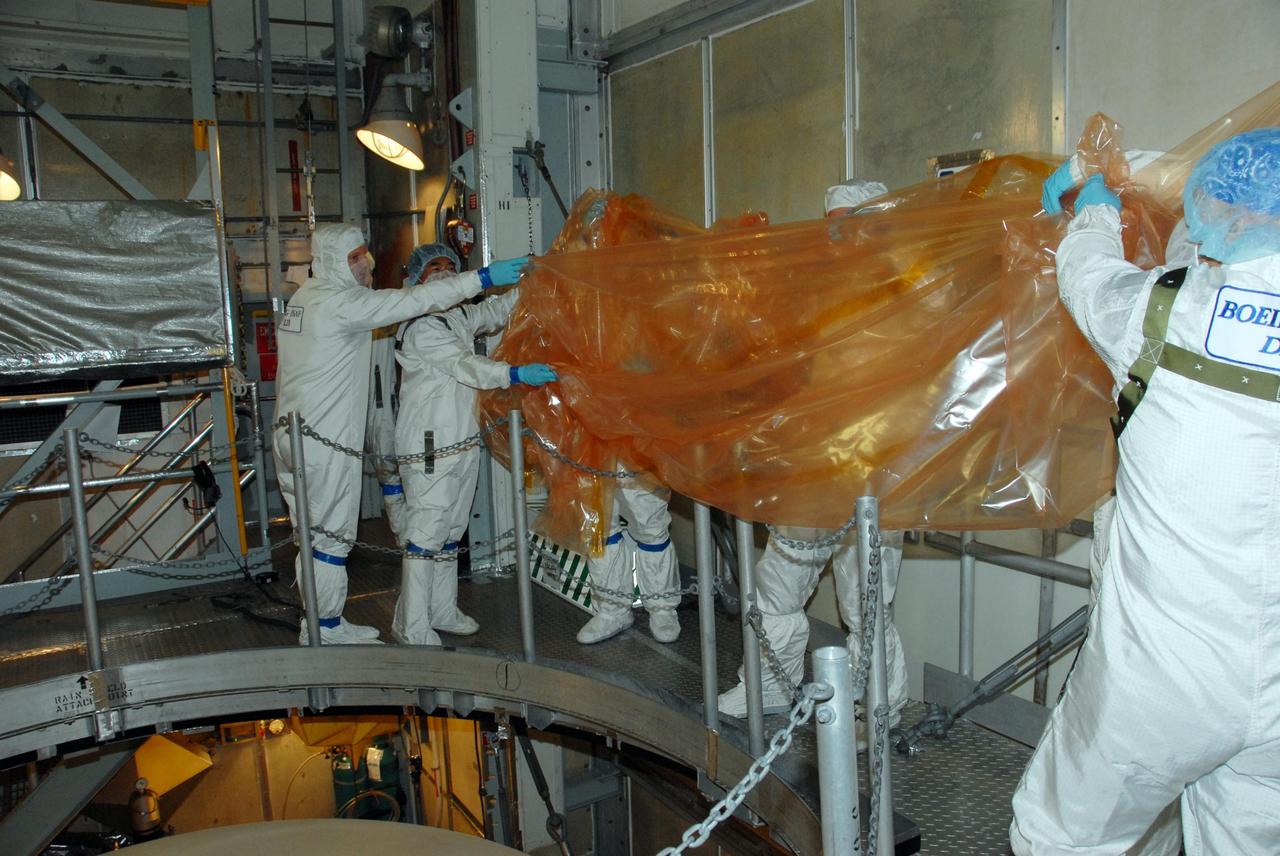
KENNEDY SPACE CENTER, FLA. -- Inside the mobile service tower of Launch Pad 17-A at Cape Canaveral Air Force Station in Florida, workers removed the plastic covering from NASA's Phoenix Mars Lander. Phoenix is scheduled to launch on the Delta II launch vehicle no earlier than Aug. 3. Phoenix will land in icy soils near the north polar permanent ice cap of Mars and explore the history of the water in these soils and any associated rocks, while monitoring polar climate. Landing on Mars is planned in May 2008 on arctic ground where a mission currently in orbit, Mars Odyssey, detected high concentrations of ice just beneath the top layer of soil. NASA/George Shelton
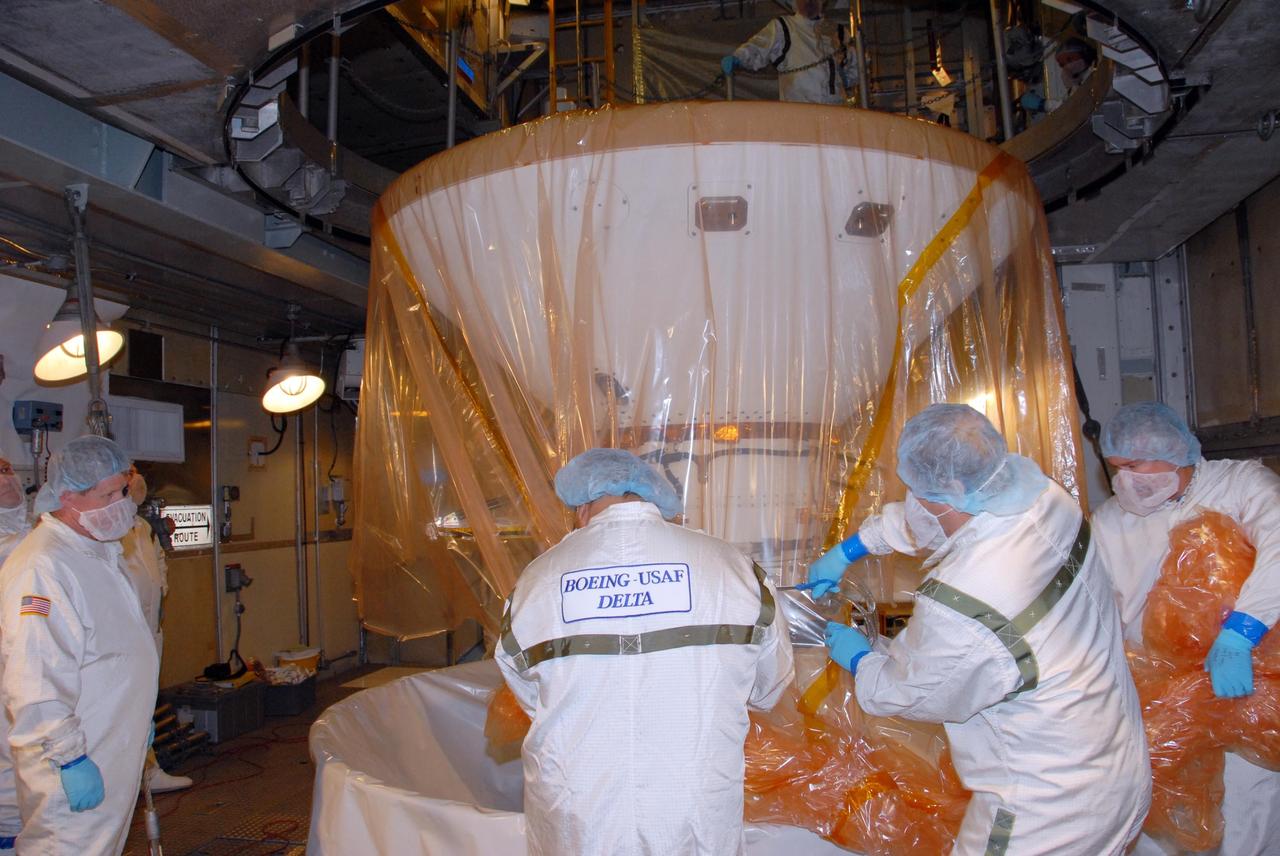
KENNEDY SPACE CENTER, FLA. -- Inside the mobile service tower of Launch Pad 17-A at Cape Canaveral Air Force Station in Florida, workers begin to remove the plastic covering from NASA's Phoenix Mars Lander. Phoenix is scheduled to launch on the Delta II launch vehicle no earlier than Aug. 3. Phoenix will land in icy soils near the north polar permanent ice cap of Mars and explore the history of the water in these soils and any associated rocks, while monitoring polar climate. Landing on Mars is planned in May 2008 on arctic ground where a mission currently in orbit, Mars Odyssey, detected high concentrations of ice just beneath the top layer of soil. NASA/George Shelton
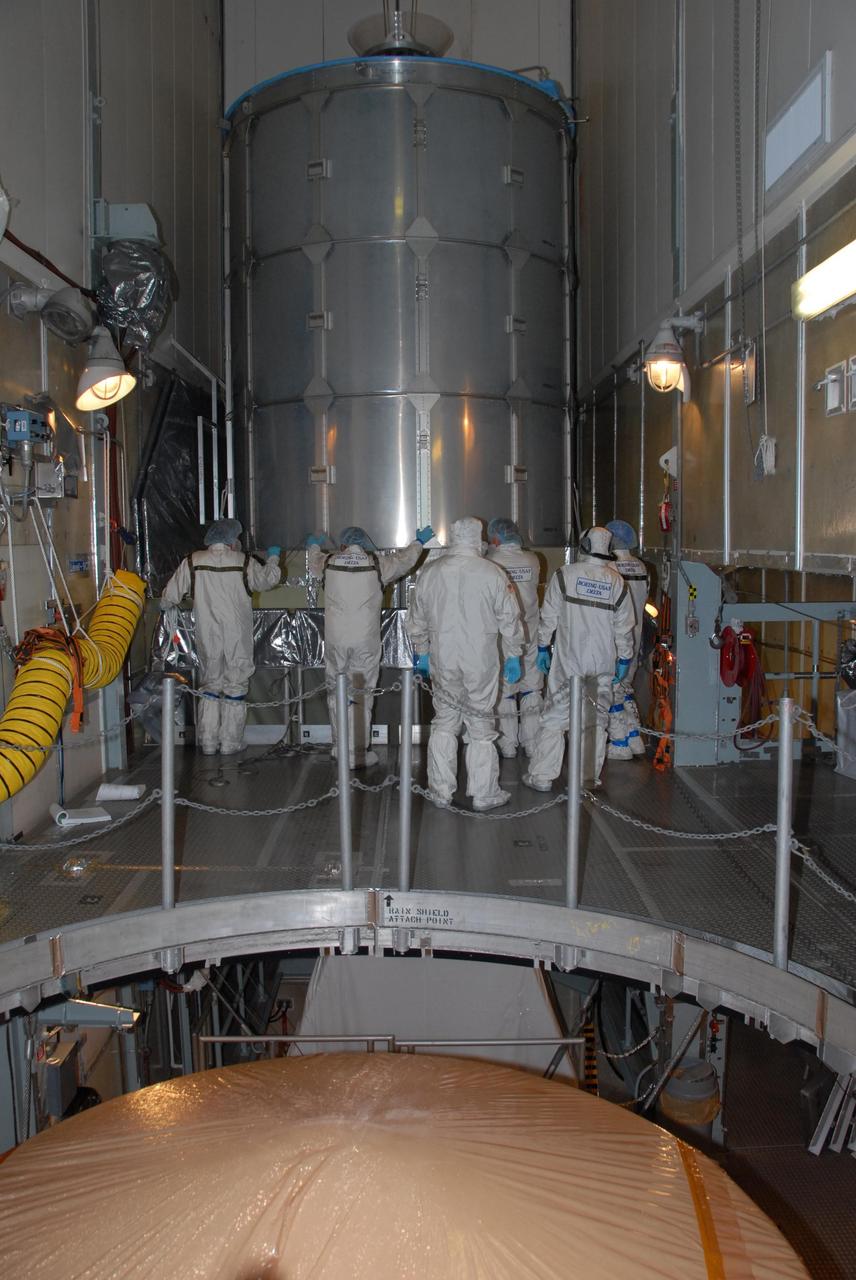
KENNEDY SPACE CENTER, FLA. -- Inside the mobile service tower of Launch Pad 17-A at Cape Canaveral Air Force Station in Florida, workers move the canister lid away from NASA's Phoenix Mars Lander, visible in the foreground. Phoenix is scheduled to launch on the Delta II launch vehicle no earlier than Aug. 3. Phoenix will land in icy soils near the north polar permanent ice cap of Mars and explore the history of the water in these soils and any associated rocks, while monitoring polar climate. Landing on Mars is planned in May 2008 on arctic ground where a mission currently in orbit, Mars Odyssey, detected high concentrations of ice just beneath the top layer of soil. NASA/George Shelton
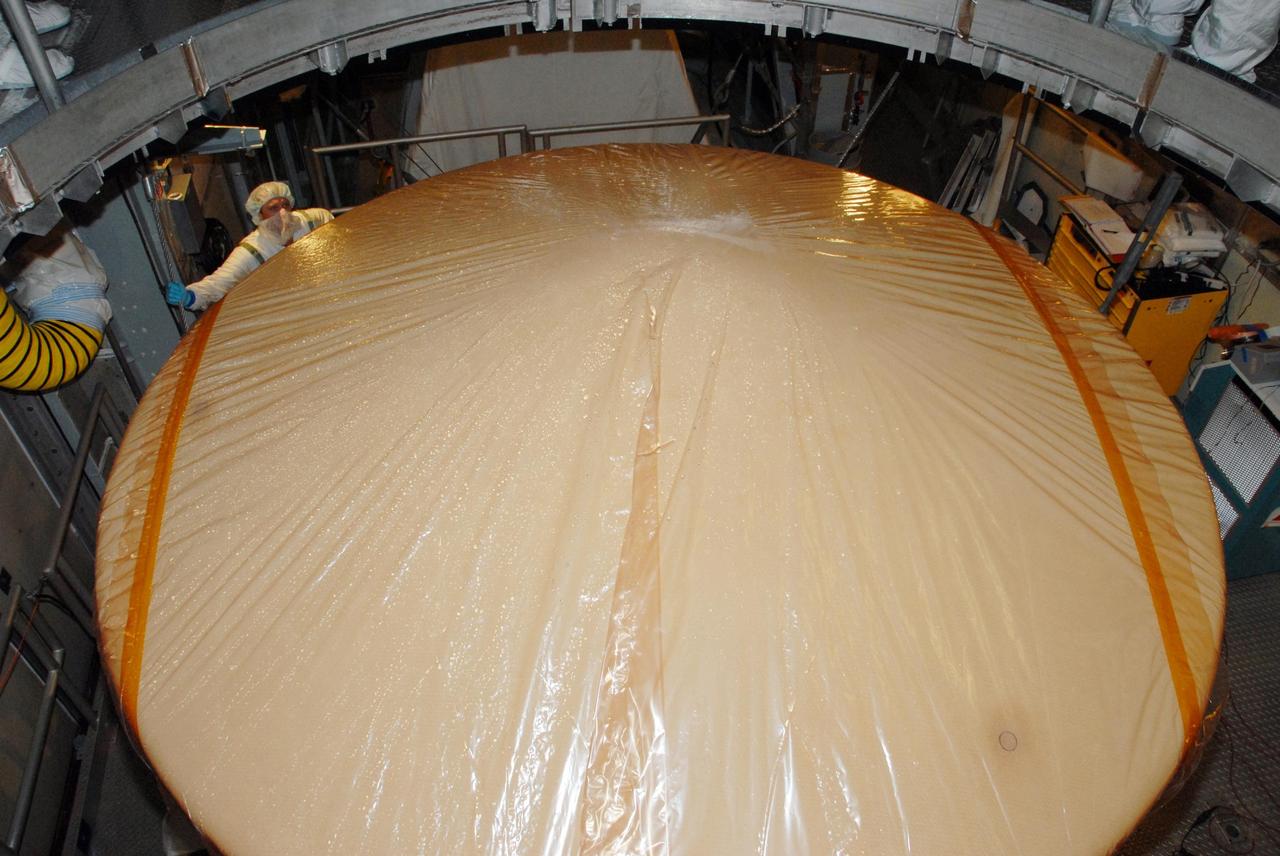
KENNEDY SPACE CENTER, FLA. -- Inside the mobile service tower of Launch Pad 17-A at Cape Canaveral Air Force Station in Florida, the top of NASA's Phoenix Mars Lander can be seen after workers removed the container lid. Phoenix is scheduled to launch on the Delta II launch vehicle no earlier than Aug. 3. Phoenix will land in icy soils near the north polar permanent ice cap of Mars and explore the history of the water in these soils and any associated rocks, while monitoring polar climate. Landing on Mars is planned in May 2008 on arctic ground where a mission currently in orbit, Mars Odyssey, detected high concentrations of ice just beneath the top layer of soil. NASA/George Shelton

KENNEDY SPACE CENTER, FLA. -- Inside the mobile service tower of Launch Pad 17-A at Cape Canaveral Air Force Station in Florida, workers begin to remove the container from NASA's Phoenix Mars Lander. Launch of Phoenix is scheduled to launch on the Delta II launch vehicle no earlier than Aug. 3. Phoenix will land in icy soils near the north polar permanent ice cap of Mars and explore the history of the water in these soils and any associated rocks, while monitoring polar climate. Landing on Mars is planned in May 2008 on arctic ground where a mission currently in orbit, Mars Odyssey, detected high concentrations of ice just beneath the top layer of soil. NASA/George Shelton
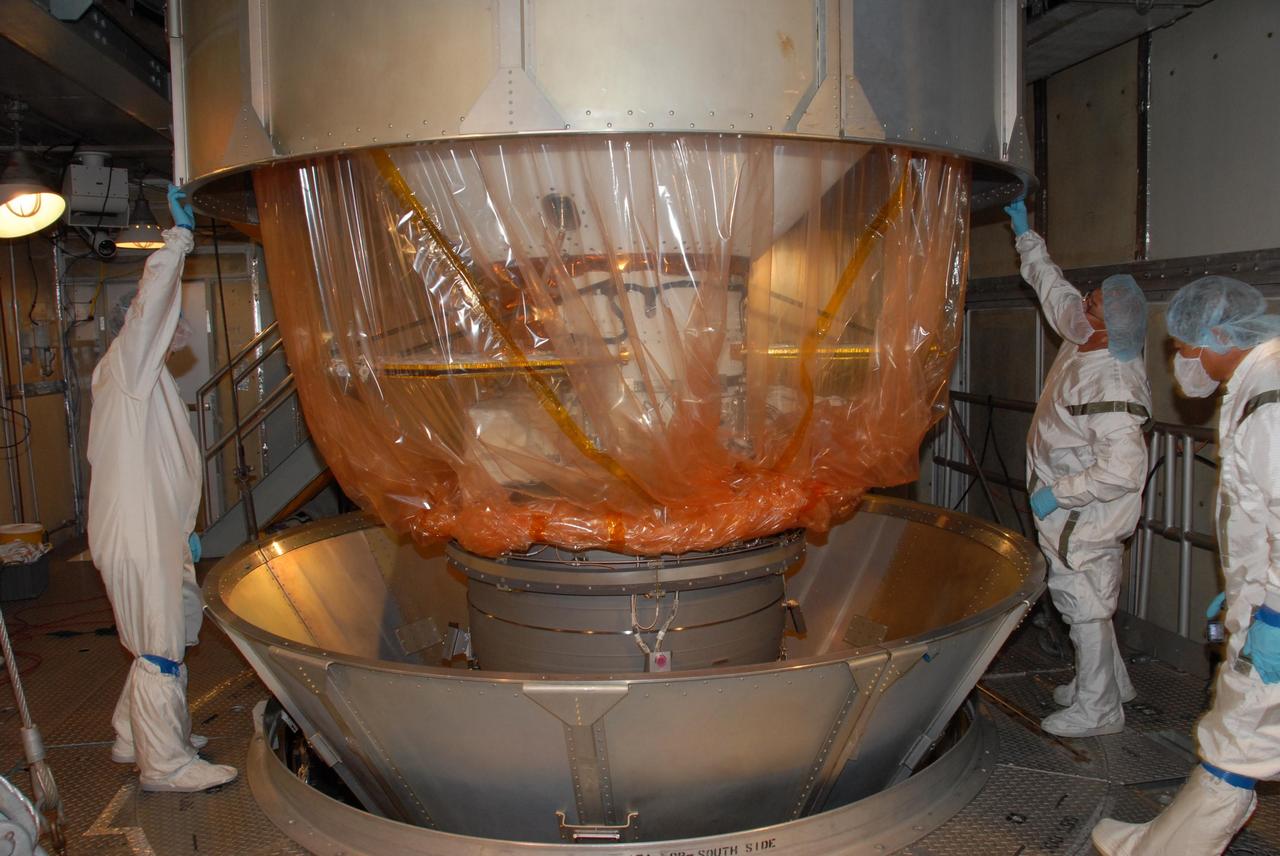
KENNEDY SPACE CENTER, FLA. -- Inside the mobile service tower of Launch Pad 17-A at Cape Canaveral Air Force Station in Florida, workers remove the container from NASA's Phoenix Mars Lander. Launch of Phoenix is scheduled to launch on the Delta II launch vehicle no earlier than Aug. 3. Phoenix will land in icy soils near the north polar permanent ice cap of Mars and explore the history of the water in these soils and any associated rocks, while monitoring polar climate. Landing on Mars is planned in May 2008 on arctic ground where a mission currently in orbit, Mars Odyssey, detected high concentrations of ice just beneath the top layer of soil. NASA/George Shelton
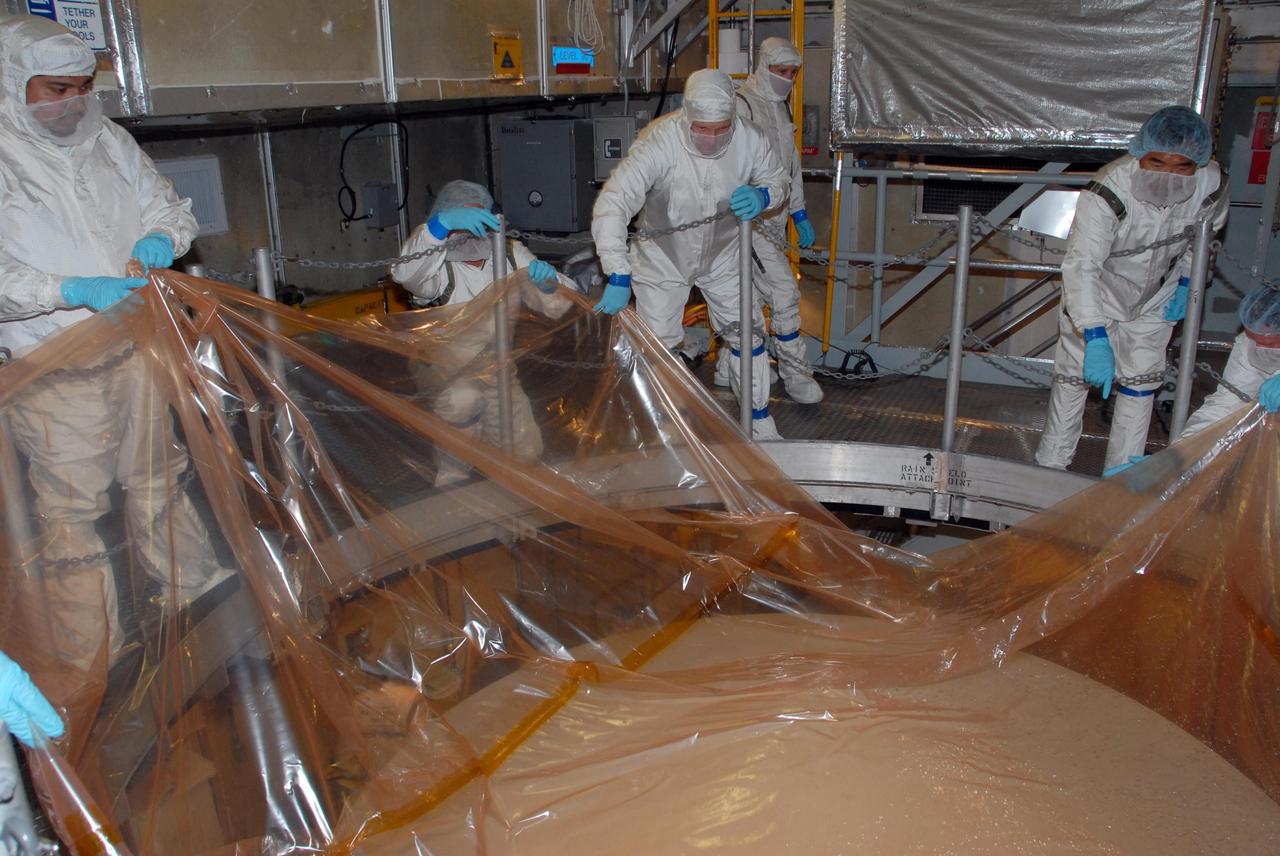
KENNEDY SPACE CENTER, FLA. -- Inside the mobile service tower of Launch Pad 17-A at Cape Canaveral Air Force Station in Florida, workers begin to remove the plastic covering from NASA's Phoenix Mars Lander. Phoenix is scheduled to launch on the Delta II launch vehicle no earlier than Aug. 3. Phoenix will land in icy soils near the north polar permanent ice cap of Mars and explore the history of the water in these soils and any associated rocks, while monitoring polar climate. Landing on Mars is planned in May 2008 on arctic ground where a mission currently in orbit, Mars Odyssey, detected high concentrations of ice just beneath the top layer of soil. NASA/George Shelton
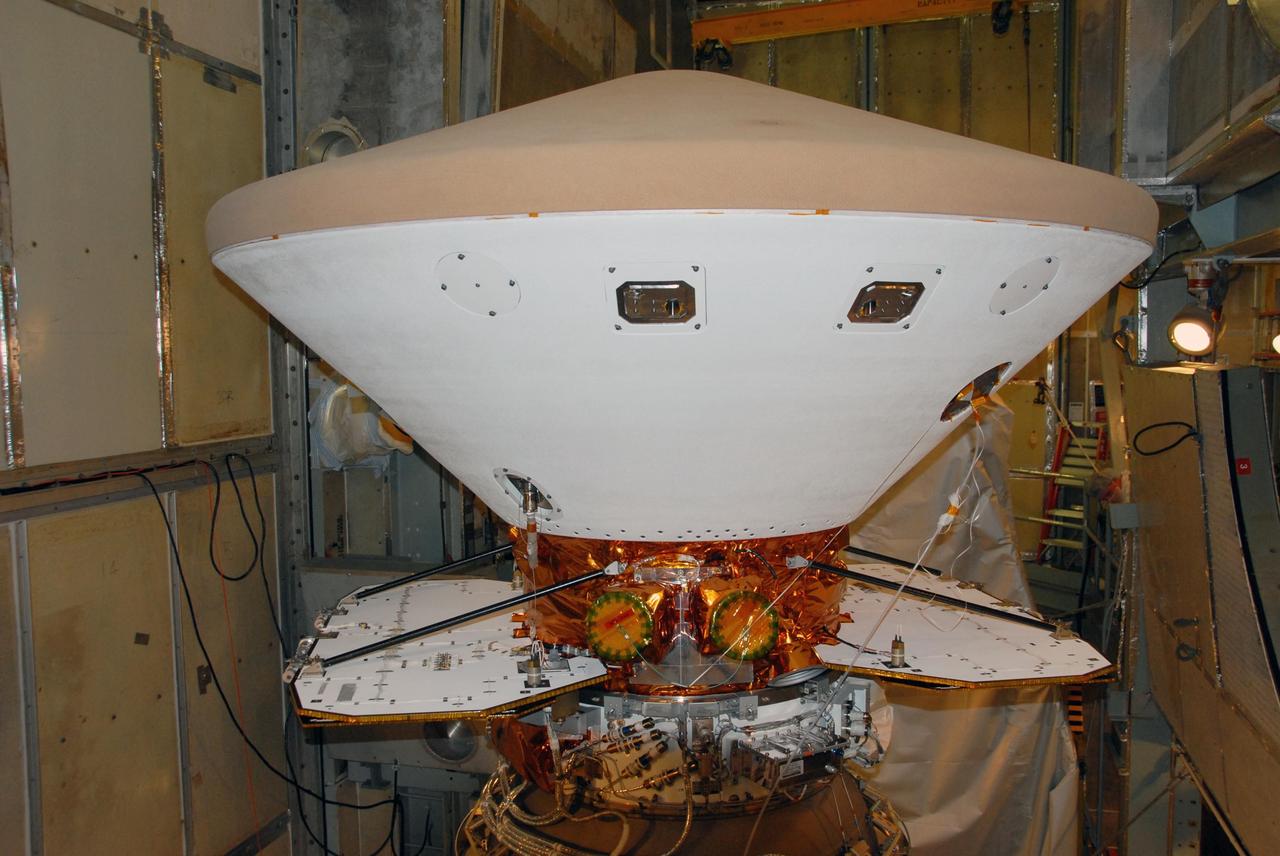
KENNEDY SPACE CENTER, FLA. -- On Launch Pad 17-A at Cape Canaveral Air Force Station, the Phoenix Mars Lander waits for he fairing installation. Phoenix is targeted for launch on Aug. 3 aboard a Delta II rocket. The fairing is a molded structure that fits flush with the outside surface of the Delta II upper stage booster and forms an aerodynamically smooth nose cone, protecting the spacecraft during launch and ascent. Phoenix will land in icy soils near the north polar, permanent ice cap of Mars and explore the history of the water in these soils and any associated rocks, while monitoring polar climate. Landing on Mars is planned in May 2008 on arctic ground where a mission currently in orbit, Mars Odyssey, has detected high concentrations of ice just beneath the top layer of soil. NASA/George Shelton
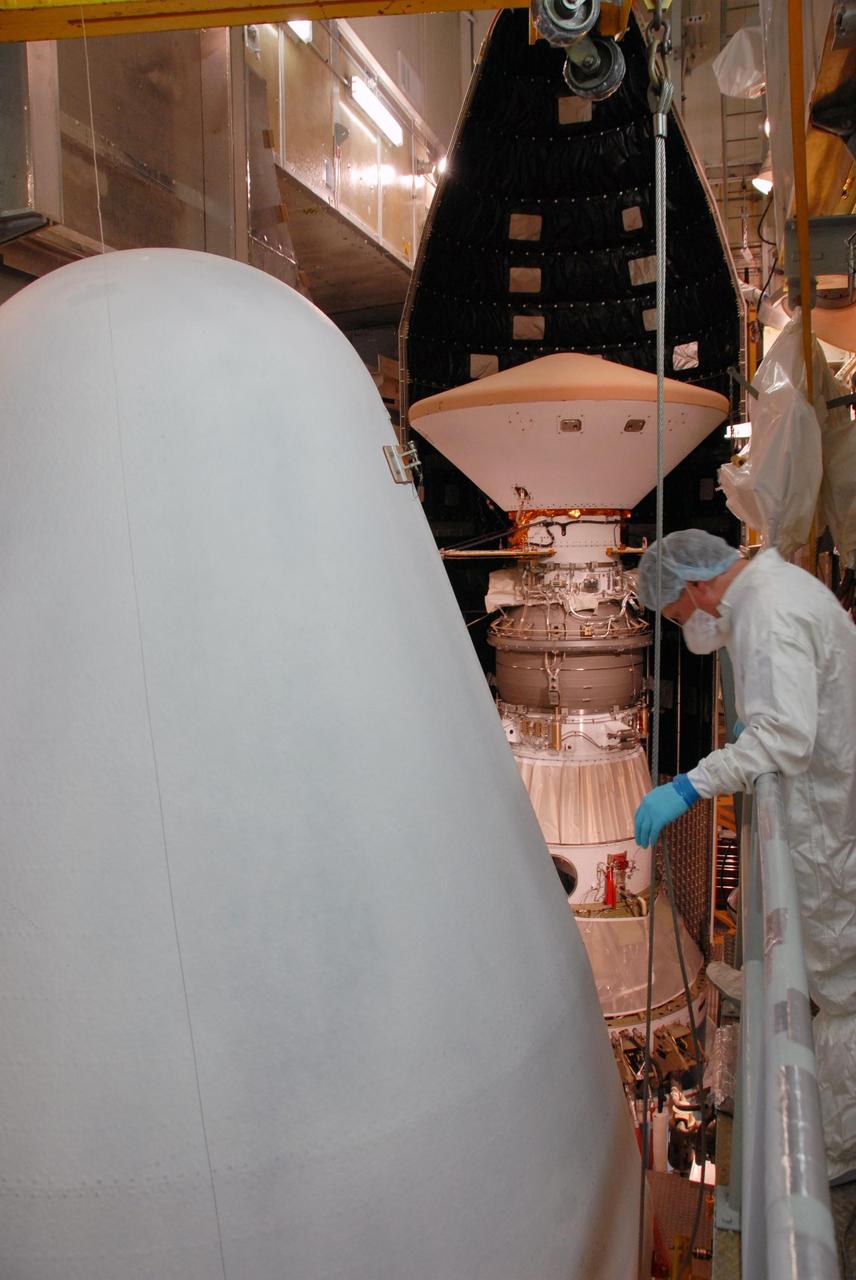
KENNEDY SPACE CENTER, FLA. -- On Launch Pad 17-A at Cape Canaveral Air Force Station, the second half of the fairing (in the foreground) moves toward the Phoenix Mars Lander for installation. Phoenix is targeted for launch on Aug. 3 aboard a Delta II rocket. The fairing is a molded structure that fits flush with the outside surface of the Delta II upper stage booster and forms an aerodynamically smooth nose cone, protecting the spacecraft during launch and ascent. Phoenix will land in icy soils near the north polar, permanent ice cap of Mars and explore the history of the water in these soils and any associated rocks, while monitoring polar climate. Landing on Mars is planned in May 2008 on arctic ground where a mission currently in orbit, Mars Odyssey, has detected high concentrations of ice just beneath the top layer of soil. NASA/George Shelton
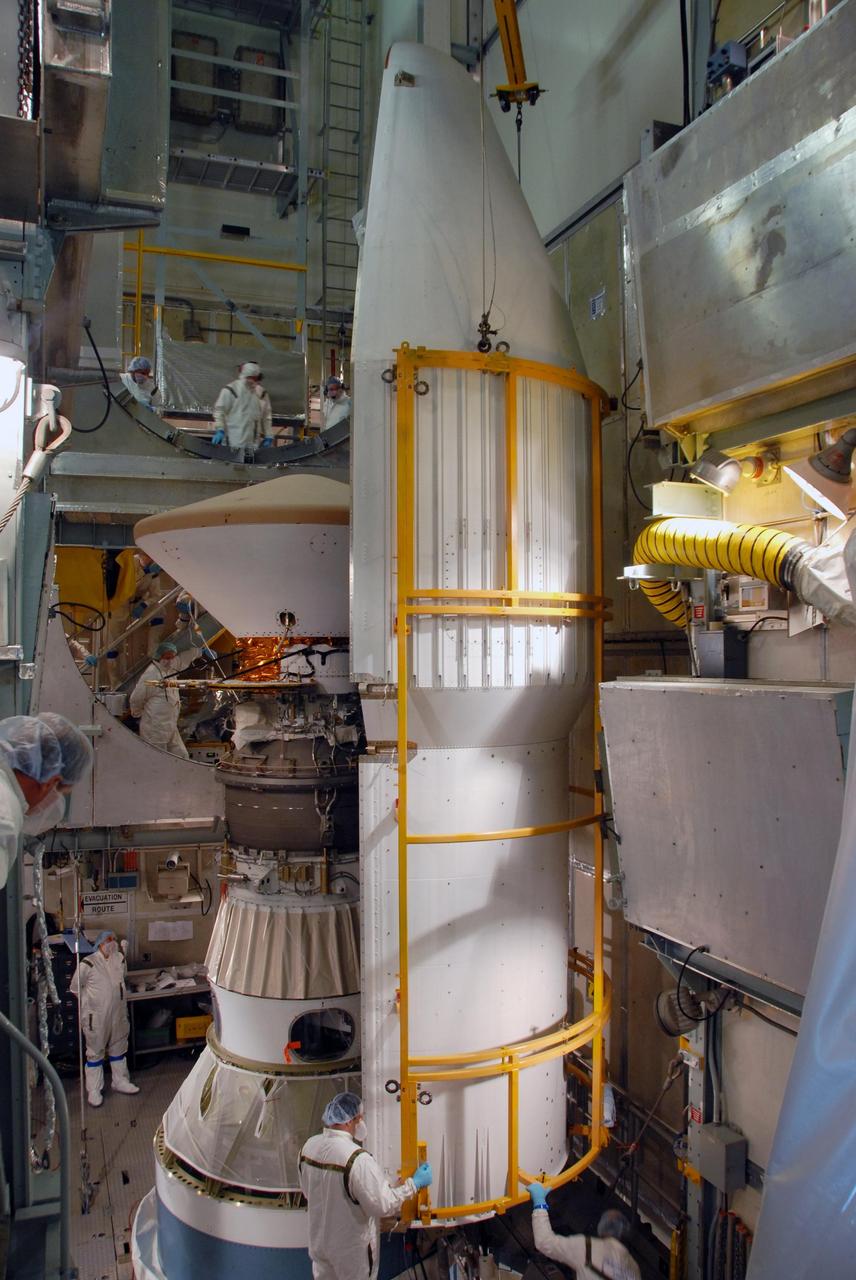
KENNEDY SPACE CENTER, FLA. -- On Launch Pad 17-A at Cape Canaveral Air Force Station, the first half of the fairing is moved toward the Phoenix Mars Lander for installation. Phoenix is targeted for launch on Aug. 3 aboard a Delta II rocket. The fairing is a molded structure that fits flush with the outside surface of the Delta II upper stage booster and forms an aerodynamically smooth nose cone, protecting the spacecraft during launch and ascent. Phoenix will land in icy soils near the north polar, permanent ice cap of Mars and explore the history of the water in these soils and any associated rocks, while monitoring polar climate. Landing on Mars is planned in May 2008 on arctic ground where a mission currently in orbit, Mars Odyssey, has detected high concentrations of ice just beneath the top layer of soil. NASA/George Shelton

KENNEDY SPACE CENTER, FLA. -- On Launch Pad 17-A at Cape Canaveral Air Force Station, the first half of the fairing is moved into place around the Phoenix Mars Lander for installation. Phoenix is targeted for launch on Aug. 3 aboard a Delta II rocket. The fairing is a molded structure that fits flush with the outside surface of the Delta II upper stage booster and forms an aerodynamically smooth nose cone, protecting the spacecraft during launch and ascent. Phoenix will land in icy soils near the north polar, permanent ice cap of Mars and explore the history of the water in these soils and any associated rocks, while monitoring polar climate. Landing on Mars is planned in May 2008 on arctic ground where a mission currently in orbit, Mars Odyssey, has detected high concentrations of ice just beneath the top layer of soil. NASA/George Shelton
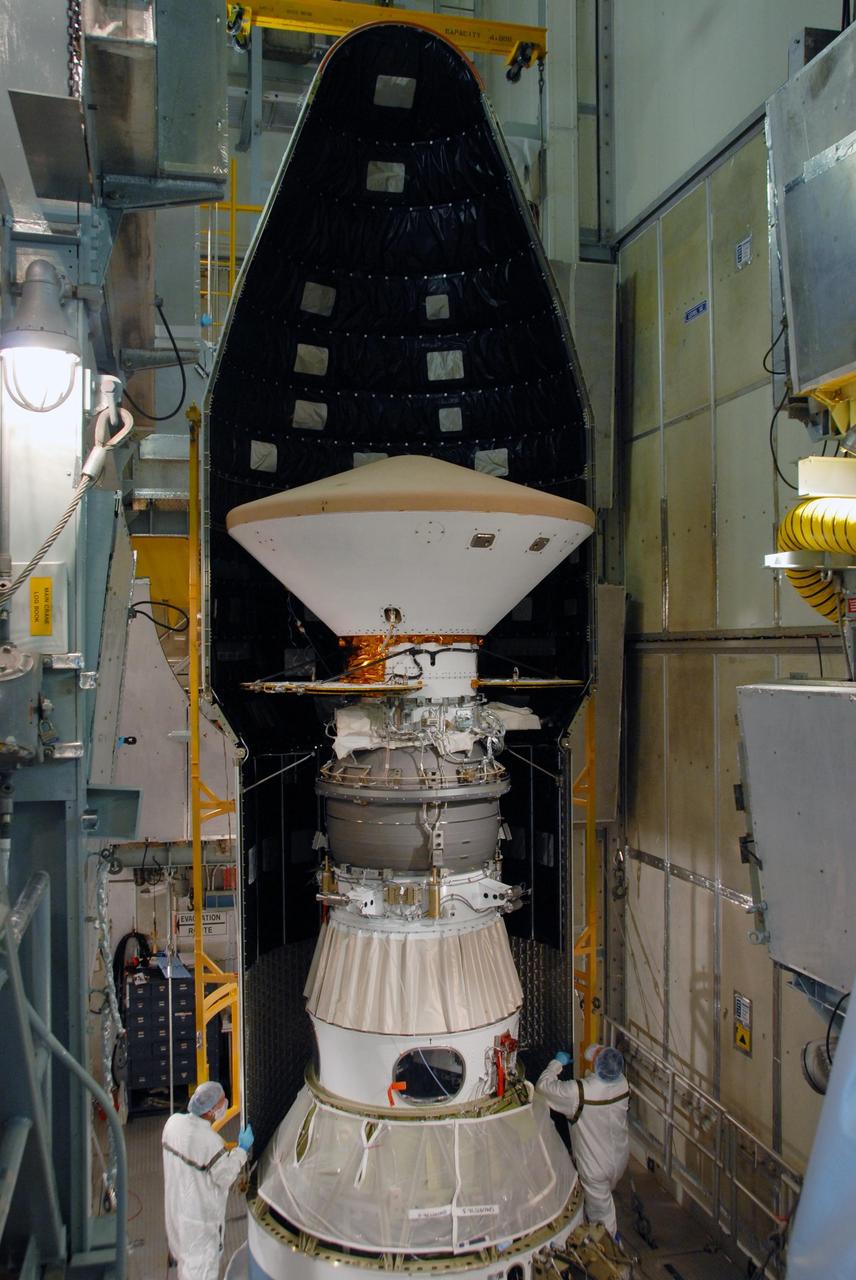
KENNEDY SPACE CENTER, FLA. -- On Launch Pad 17-A at Cape Canaveral Air Force Station, the first half of the fairing is moved into place around the Phoenix Mars Lander for installation. Phoenix is targeted for launch on Aug. 3 aboard a Delta II rocket. The fairing is a molded structure that fits flush with the outside surface of the Delta II upper stage booster and forms an aerodynamically smooth nose cone, protecting the spacecraft during launch and ascent. Phoenix will land in icy soils near the north polar, permanent ice cap of Mars and explore the history of the water in these soils and any associated rocks, while monitoring polar climate. Landing on Mars is planned in May 2008 on arctic ground where a mission currently in orbit, Mars Odyssey, has detected high concentrations of ice just beneath the top layer of soil. NASA/George Shelton
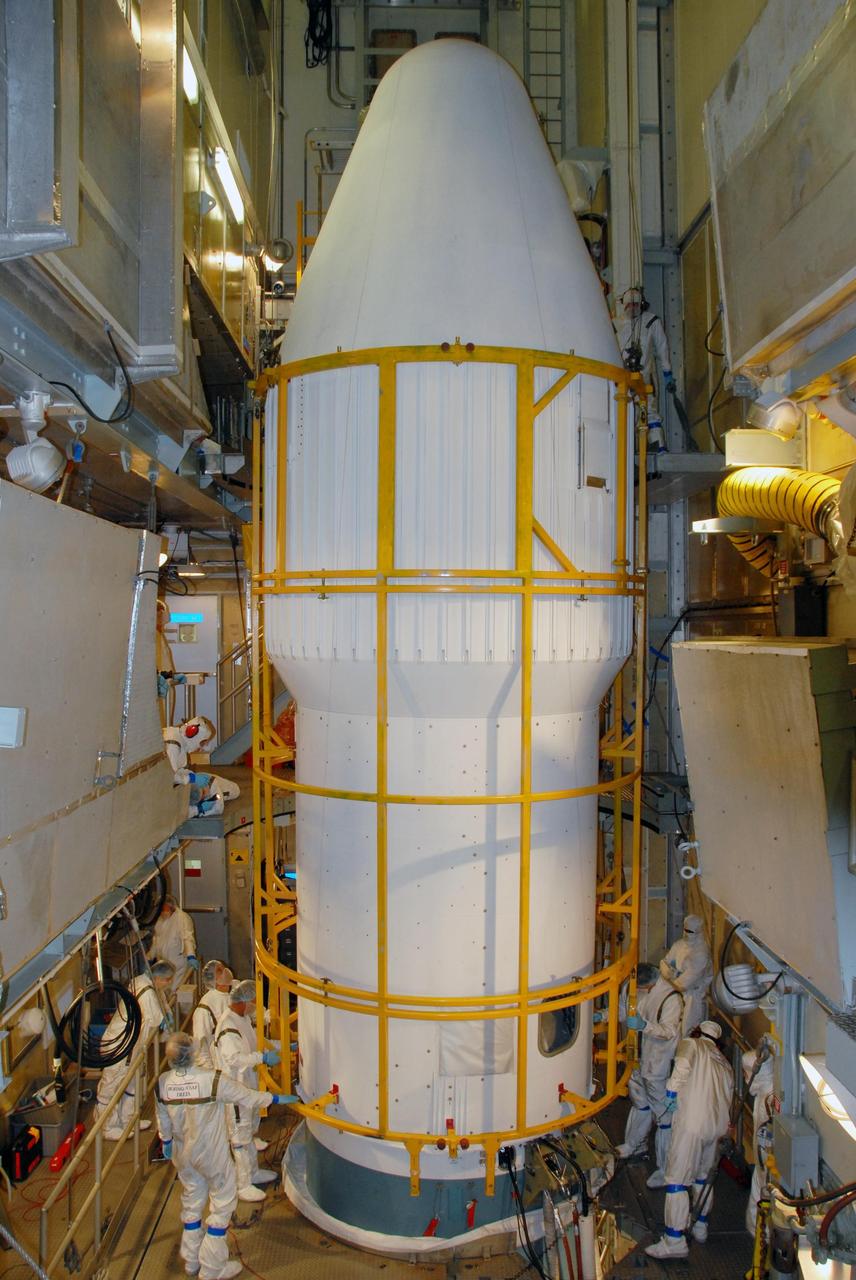
KENNEDY SPACE CENTER, FLA. -- On Launch Pad 17-A at Cape Canaveral Air Force Station, the two halves of the fairing come together for installation around the Phoenix Mars Lander. Phoenix is targeted for launch on Aug. 3 aboard a Delta II rocket. The fairing is a molded structure that fits flush with the outside surface of the Delta II upper stage booster and forms an aerodynamically smooth nose cone, protecting the spacecraft during launch and ascent. Phoenix will land in icy soils near the north polar, permanent ice cap of Mars and explore the history of the water in these soils and any associated rocks, while monitoring polar climate. Landing on Mars is planned in May 2008 on arctic ground where a mission currently in orbit, Mars Odyssey, has detected high concentrations of ice just beneath the top layer of soil. NASA/George Shelton
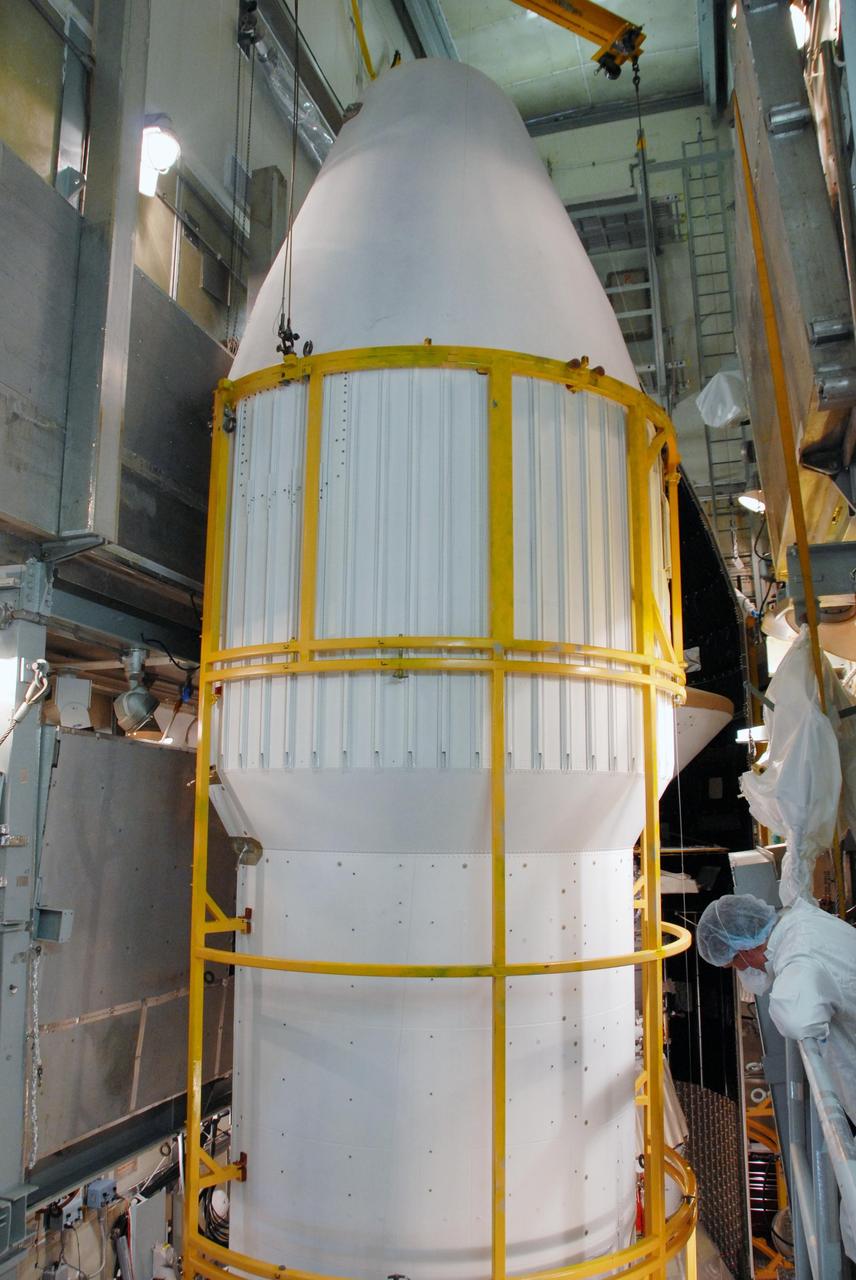
KENNEDY SPACE CENTER, FLA. -- On Launch Pad 17-A at Cape Canaveral Air Force Station, the second half of the fairing (in the foreground) moves closer to the Phoenix Mars Lander for installation toward the first half. Phoenix is targeted for launch on Aug. 3 aboard a Delta II rocket. The fairing is a molded structure that fits flush with the outside surface of the Delta II upper stage booster and forms an aerodynamically smooth nose cone, protecting the spacecraft during launch and ascent. Phoenix will land in icy soils near the north polar, permanent ice cap of Mars and explore the history of the water in these soils and any associated rocks, while monitoring polar climate. Landing on Mars is planned in May 2008 on arctic ground where a mission currently in orbit, Mars Odyssey, has detected high concentrations of ice just beneath the top layer of soil. NASA/George Shelton
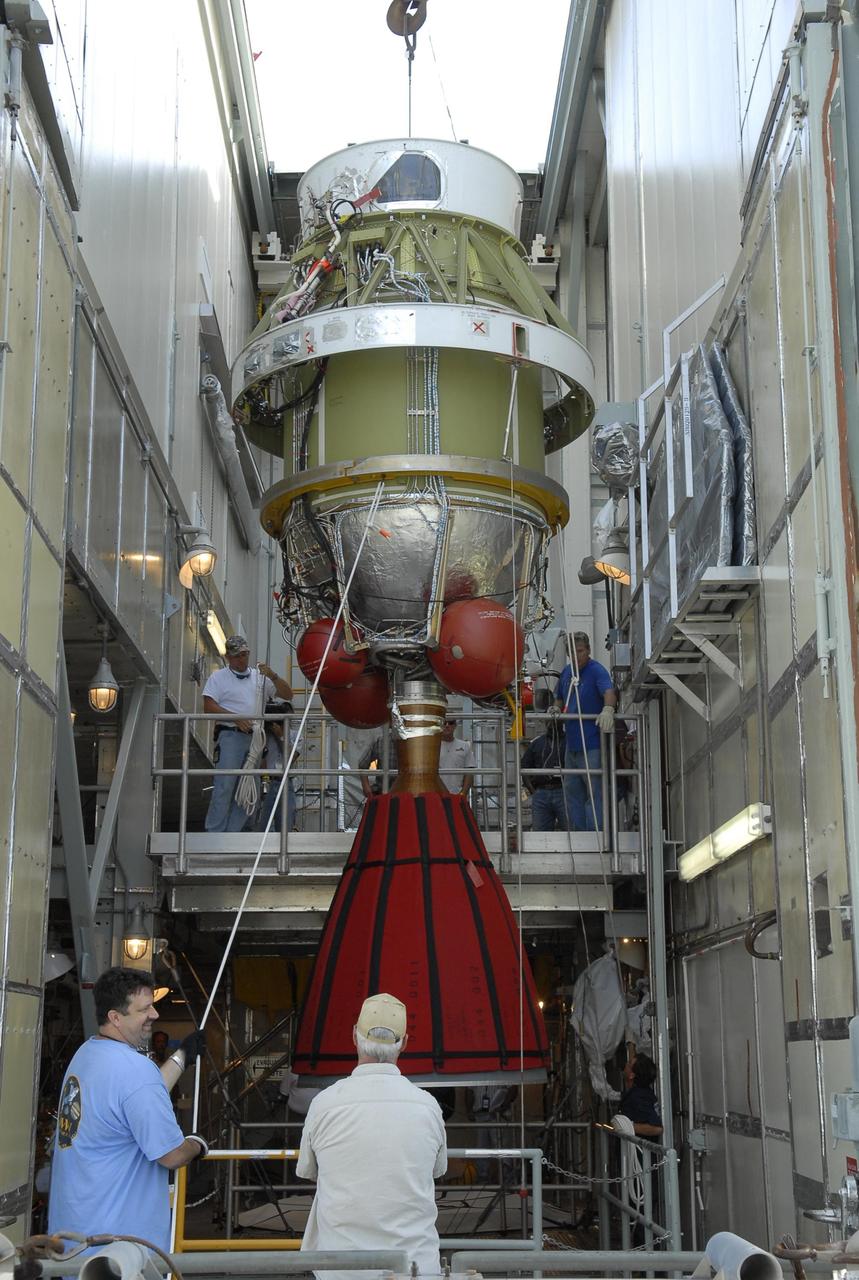
KENNEDY SPACE CENTER, FLA. -- On Launch Pad 17-A at Cape Canaveral Air Force Station, workers supervise the lowering of the second stage of the Delta II launch vehicle toward the Delta's first stage below. Phoenix is scheduled to launch Aug. 3. Phoenix will land in icy soils near the north polar permanent ice cap of Mars and explore the history of the water in these soils and any associated rocks, while monitoring polar climate. Landing on Mars is planned in May 2008 on arctic ground where a mission currently in orbit, Mars Odyssey, has detected high concentrations of ice just beneath the top layer of soil. Photo credit: NASA/Kim Shiflett
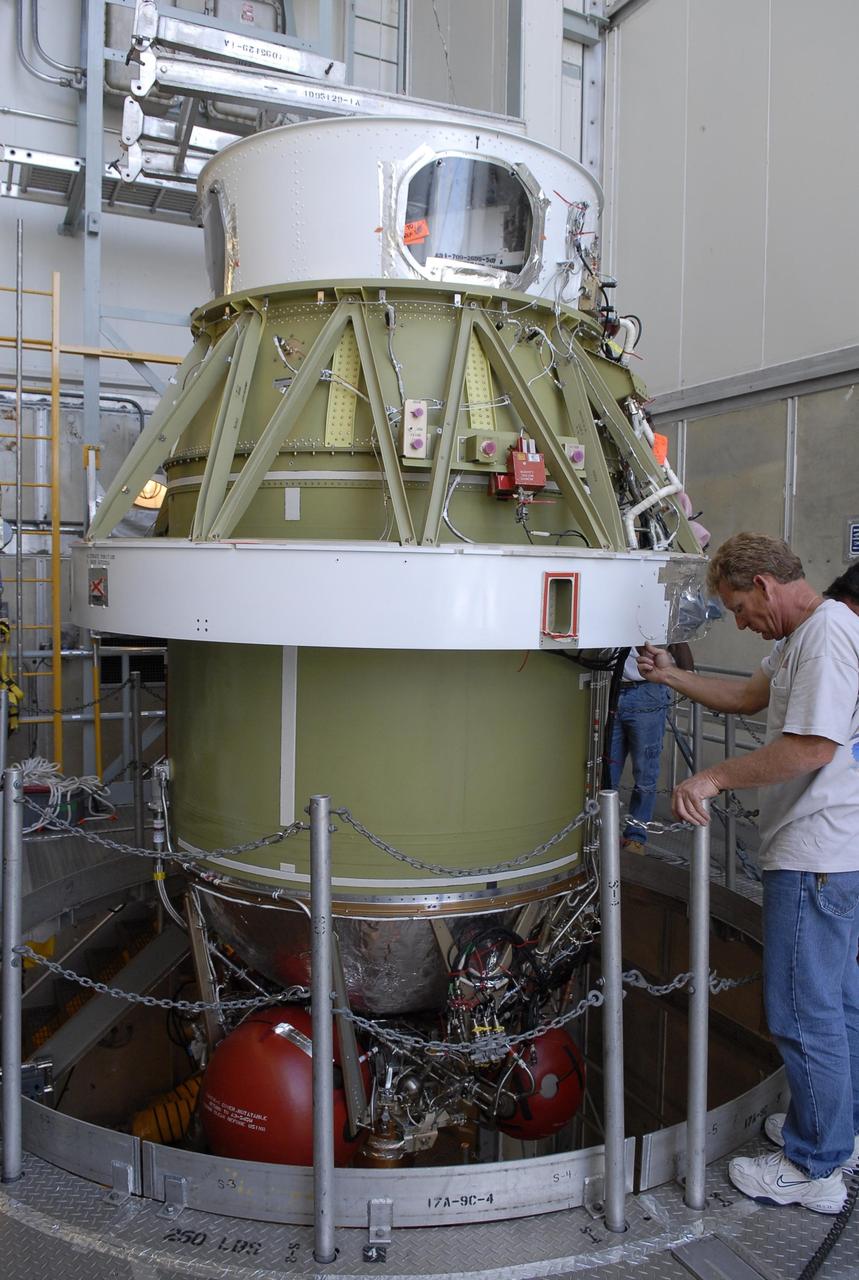
KENNEDY SPACE CENTER, FLA. -- On Launch Pad 17-A at Cape Canaveral Air Force Station, workers supervise the lowering of the second stage of the Delta II launch vehicle toward the Delta's first stage below. Phoenix is scheduled to launch Aug. 3. Phoenix will land in icy soils near the north polar permanent ice cap of Mars and explore the history of the water in these soils and any associated rocks, while monitoring polar climate. Landing on Mars is planned in May 2008 on arctic ground where a mission currently in orbit, Mars Odyssey, has detected high concentrations of ice just beneath the top layer of soil. Photo credit: NASA/Kim Shiflett

KENNEDY SPACE CENTER, FLA. -- On Launch Pad 17-A at Cape Canaveral Air Force Station, workers begin mating the second stage of the Delta II launch vehicle to the Delta first stage below. Phoenix is scheduled to launch Aug. 3. Phoenix will land in icy soils near the north polar permanent ice cap of Mars and explore the history of the water in these soils and any associated rocks, while monitoring polar climate. Landing on Mars is planned in May 2008 on arctic ground where a mission currently in orbit, Mars Odyssey, has detected high concentrations of ice just beneath the top layer of soil. Photo credit: NASA/Kim Shiflett
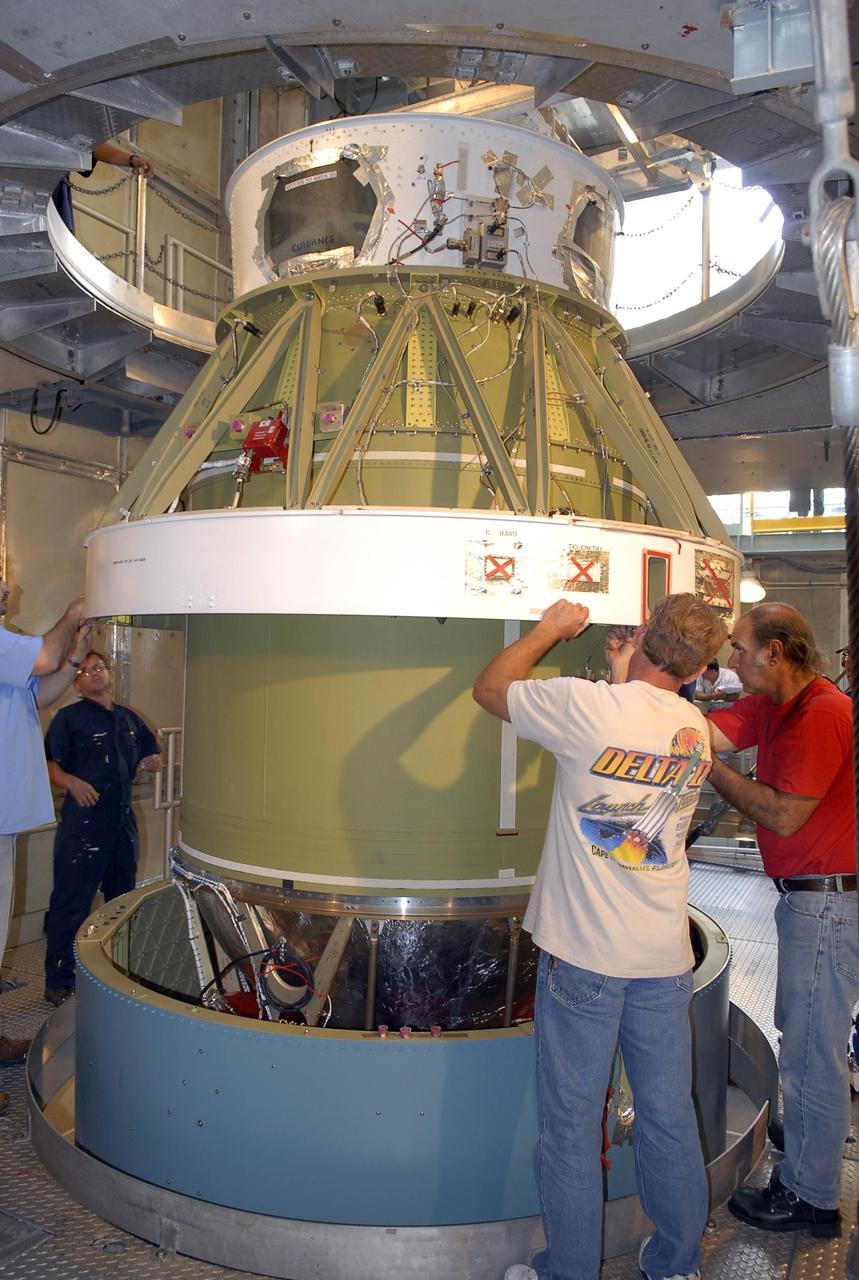
KENNEDY SPACE CENTER, FLA. -- On Launch Pad 17-A at Cape Canaveral Air Force Station, workers prepare the second stage of the Delta II launch vehicle to be mated to the Delta first stage below. Phoenix is scheduled to launch Aug. 3. Phoenix will land in icy soils near the north polar permanent ice cap of Mars and explore the history of the water in these soils and any associated rocks, while monitoring polar climate. Landing on Mars is planned in May 2008 on arctic ground where a mission currently in orbit, Mars Odyssey, has detected high concentrations of ice just beneath the top layer of soil. Photo credit: NASA/Kim Shiflett
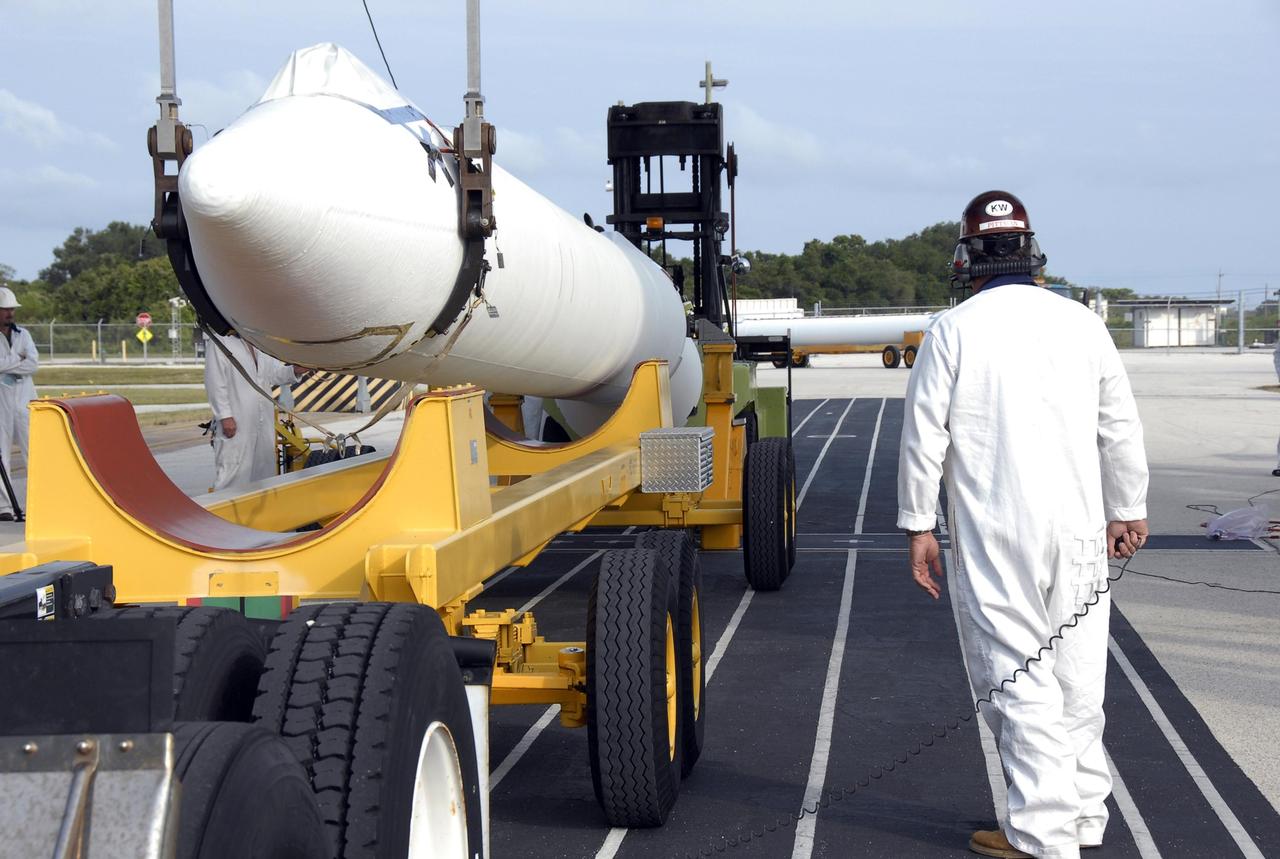
KENNEDY SPACE CENTER, FLA. -- On Pad 17-A at Cape Canaveral Air Force Station, the solid rocket booster is raised off its transporter. The SRB will be lifted into the mobile service tower for mating with the Delta II first stage. The Delta is the launch vehicle for the Phoenix Mars Lander spacecraft. Phoenix will land in icy soils near the north polar permanent ice cap of Mars and explore the history of the water in these soils and any associated rocks, while monitoring polar climate. Landing on Mars is planned in May 2008 on arctic ground where a mission currently in orbit, Mars Odyssey, has detected high concentrations of ice just beneath the top layer of soil. Phoenix is scheduled to launch Aug. 3. Photo credit: NASA/Kim Shiflett
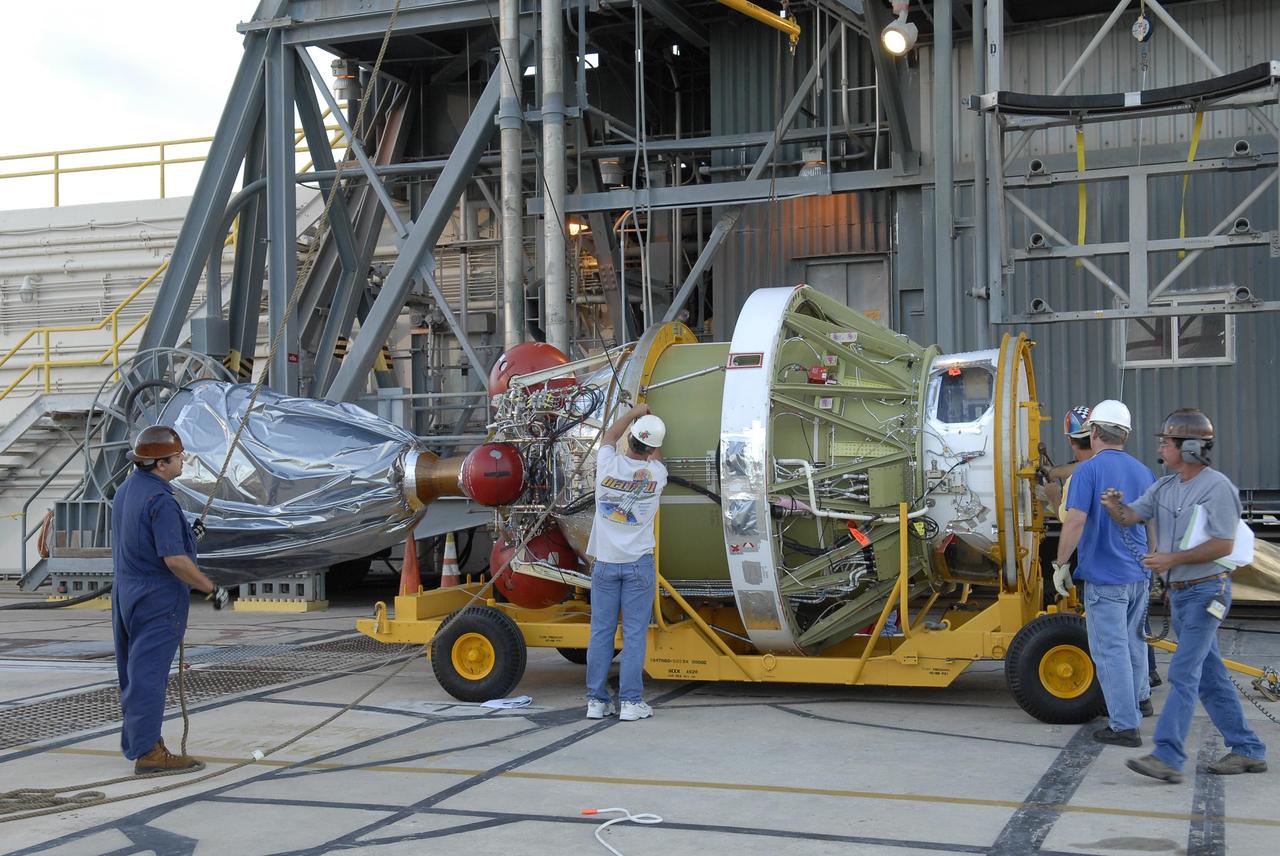
KENNEDY SPACE CENTER, FLA. -- The second stage of the Delta II launch vehicle for NASA's Phoenix Mars Lander arrives on Launch Pad 17-A at Cape Canaveral Air Force Station. The second stage will be lifted into the mobile service tower and mated with the Delta's first stage. The second stage will be lifted into the mobile service tower and mated with the first stage. Phoenix is scheduled to launch Aug. 3. Phoenix will land in icy soils near the north polar permanent ice cap of Mars and explore the history of the water in these soils and any associated rocks, while monitoring polar climate. Landing on Mars is planned in May 2008 on arctic ground where a mission currently in orbit, Mars Odyssey, has detected high concentrations of ice just beneath the top layer of soil. Photo credit: NASA/Kim Shiflett

KENNEDY SPACE CENTER, FLA. -- On Pad 17-A at Cape Canaveral Air Force Station, the Delta II first stage is rolling back to the mobile service tower for mating with the solid rocket boosters waiting there. The Delta is the launch vehicle for the Phoenix Mars Lander spacecraft. Phoenix will land in icy soils near the north polar permanent ice cap of Mars and explore the history of the water in these soils and any associated rocks, while monitoring polar climate. Landing on Mars is planned in May 2008 on arctic ground where a mission currently in orbit, Mars Odyssey, has detected high concentrations of ice just beneath the top layer of soil. Phoenix is scheduled to launch Aug. 3. Photo credit: NASA/Kim Shiflett
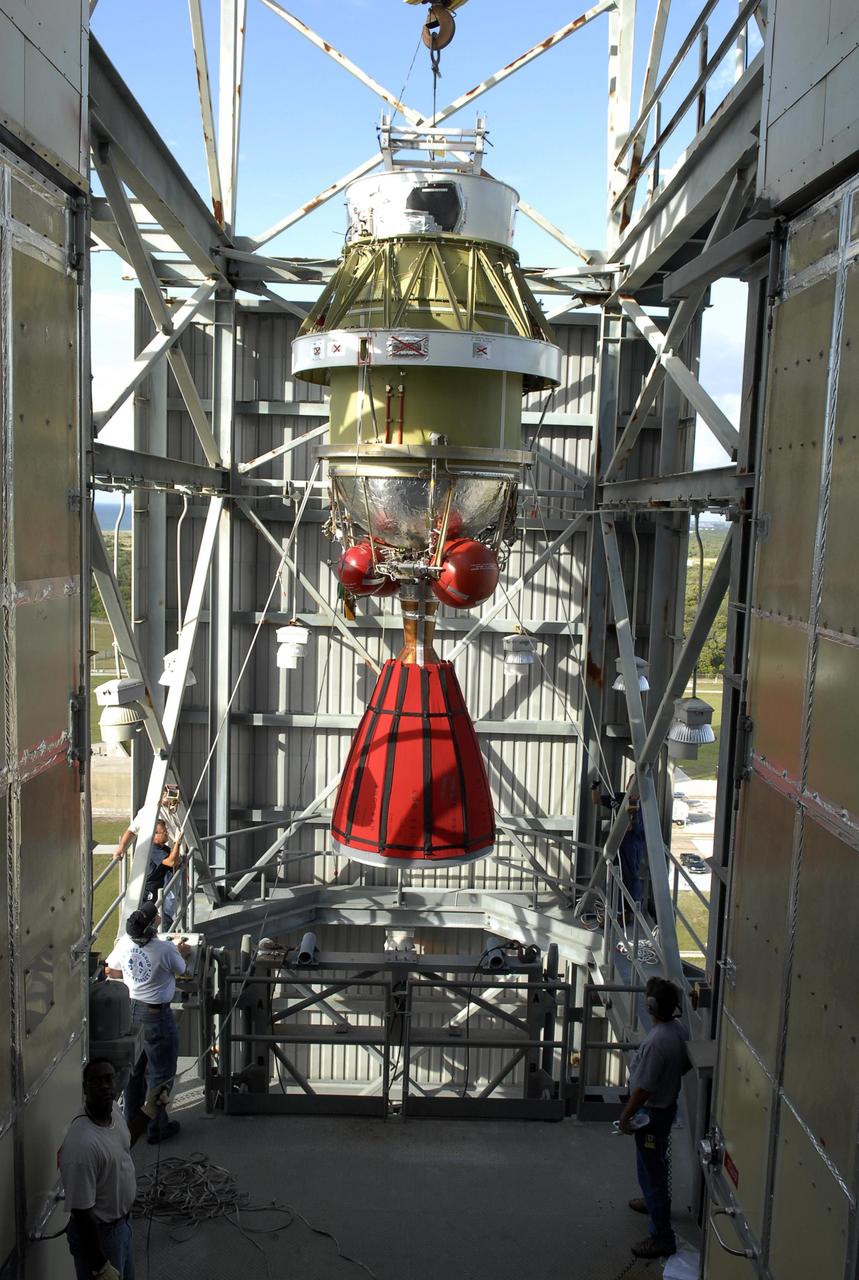
KENNEDY SPACE CENTER, FLA. -- On Launch Pad 17-A at Cape Canaveral Air Force Station, the second stage of the Delta II launch vehicle for NASA's Phoenix Mars Lander is moved into the mobile service tower. It will be lowered onto the Delta's first stage below for mating. Phoenix is scheduled to launch Aug. 3. Phoenix will land in icy soils near the north polar permanent ice cap of Mars and explore the history of the water in these soils and any associated rocks, while monitoring polar climate. Landing on Mars is planned in May 2008 on arctic ground where a mission currently in orbit, Mars Odyssey, has detected high concentrations of ice just beneath the top layer of soil. Photo credit: NASA/Kim Shiflett
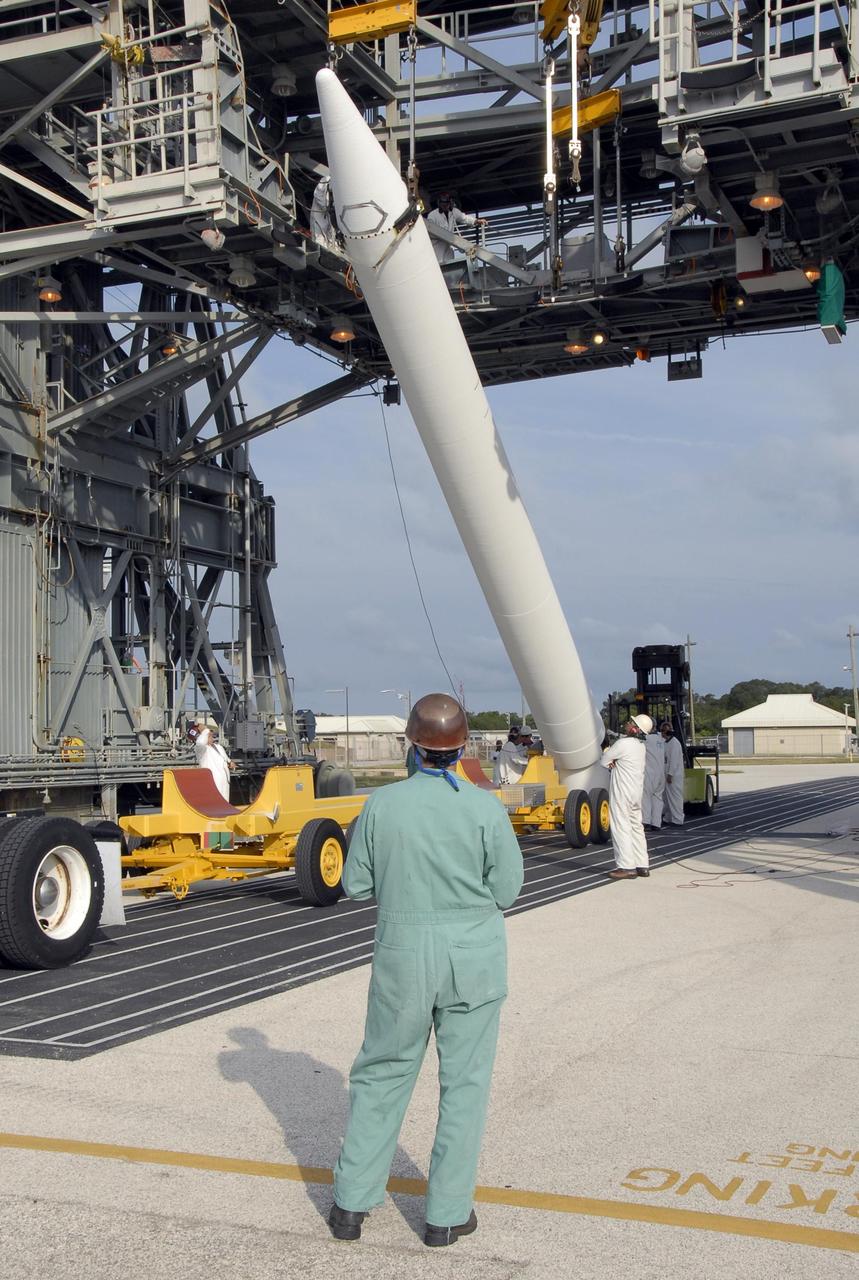
KENNEDY SPACE CENTER, FLA. -- On Pad 17-A at Cape Canaveral Air Force Station, the solid rocket booster is raised off its transporter. The SRB will be lifted into the mobile service tower for mating with the Delta II first stage. The Delta is the launch vehicle for the Phoenix Mars Lander spacecraft. Phoenix will land in icy soils near the north polar permanent ice cap of Mars and explore the history of the water in these soils and any associated rocks, while monitoring polar climate. Landing on Mars is planned in May 2008 on arctic ground where a mission currently in orbit, Mars Odyssey, has detected high concentrations of ice just beneath the top layer of soil. Phoenix is scheduled to launch Aug. 3. Photo credit: NASA/Kim Shiflett
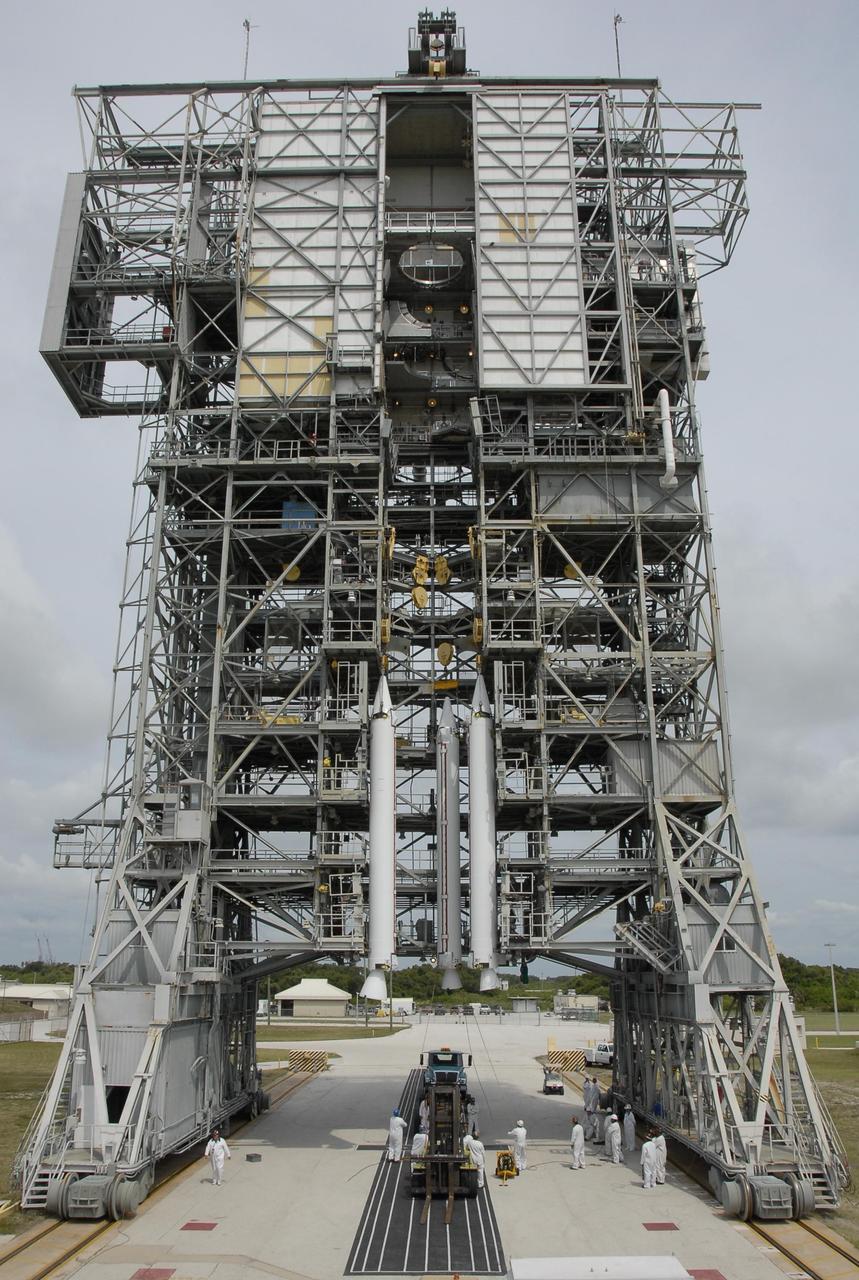
KENNEDY SPACE CENTER, FLA. -- On Pad 17-A at Cape Canaveral Air Force Station, three solid rocket boosters wait for the Delta II first stage to arrive at the mobile service tower. The SRBs will be mated with the Delta, which is the launch vehicle for the Phoenix Mars Lander spacecraft. Phoenix will land in icy soils near the north polar permanent ice cap of Mars and explore the history of the water in these soils and any associated rocks, while monitoring polar climate. Landing on Mars is planned in May 2008 on arctic ground where a mission currently in orbit, Mars Odyssey, has detected high concentrations of ice just beneath the top layer of soil. Phoenix is scheduled to launch Aug. 3. Photo credit: NASA/Kim Shiflett

KENNEDY SPACE CENTER, FLA. -- On Pad 17-A at Cape Canaveral Air Force Station, the first of nine solid rocket boosters arrives at the mobile service tower. The SRB will be lifted into the tower for mating with the Delta II first stage. The Delta is the launch vehicle for the Phoenix Mars Lander spacecraft. Phoenix will land in icy soils near the north polar permanent ice cap of Mars and explore the history of the water in these soils and any associated rocks, while monitoring polar climate. Landing on Mars is planned in May 2008 on arctic ground where a mission currently in orbit, Mars Odyssey, has detected high concentrations of ice just beneath the top layer of soil. Phoenix is scheduled to launch Aug. 3. Photo credit: NASA/Kim Shiflett
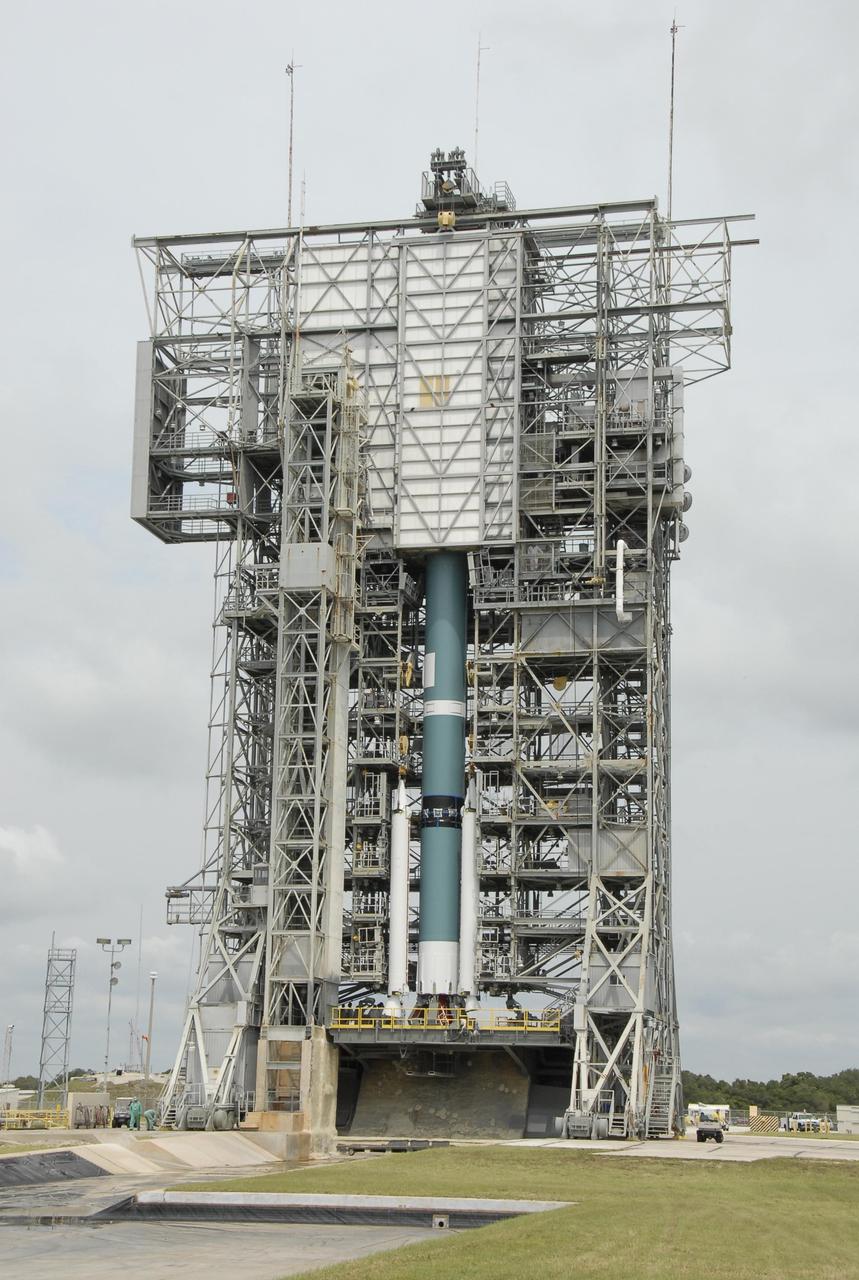
KENNEDY SPACE CENTER, FLA. -- On Pad 17-A at Cape Canaveral Air Force Station, three solid rocket boosters and the Delta II first stage are ready for mating inside the mobile service tower. The Delta is the launch vehicle for the Phoenix Mars Lander spacecraft. Phoenix will land in icy soils near the north polar permanent ice cap of Mars and explore the history of the water in these soils and any associated rocks, while monitoring polar climate. Landing on Mars is planned in May 2008 on arctic ground where a mission currently in orbit, Mars Odyssey, has detected high concentrations of ice just beneath the top layer of soil. Phoenix is scheduled to launch Aug. 3. Photo credit: NASA/Kim Shiflett
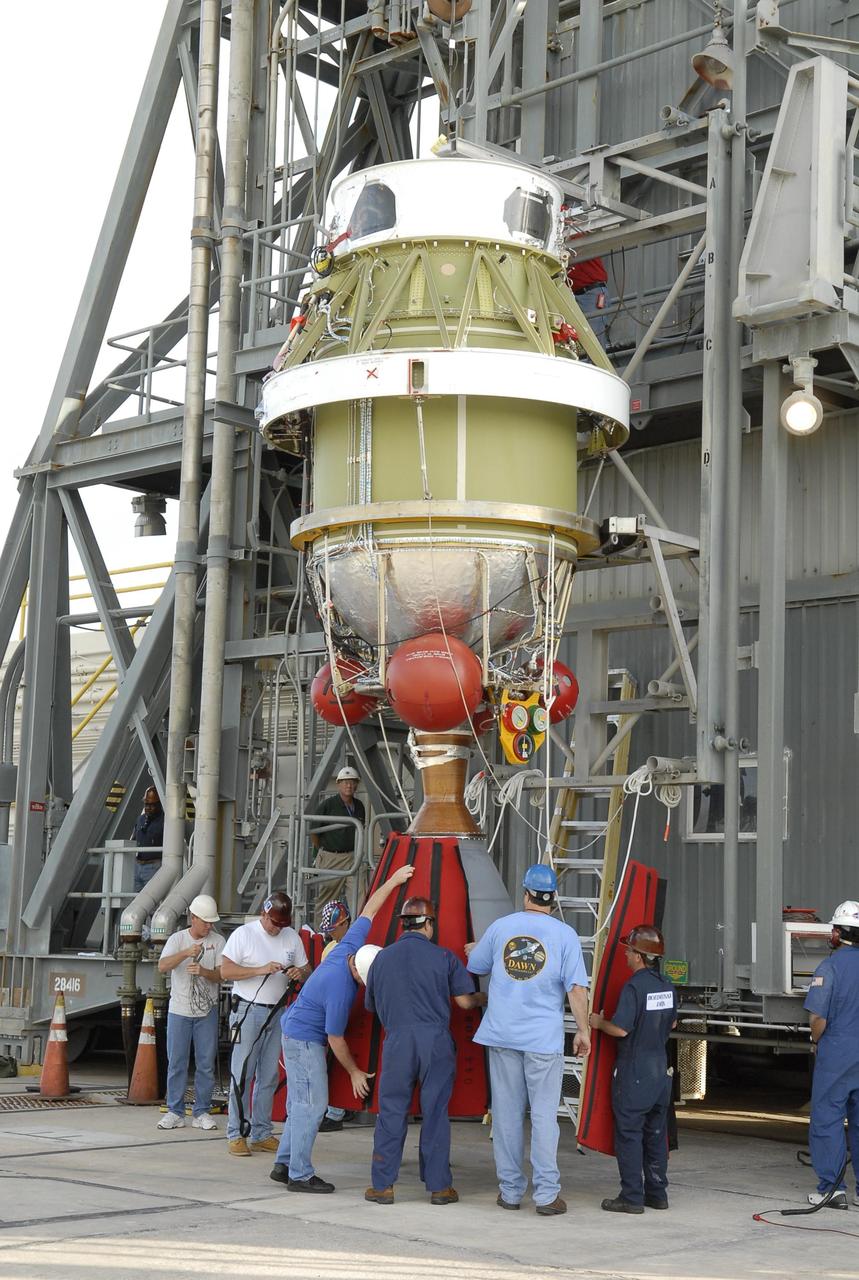
KENNEDY SPACE CENTER, FLA. -- On Launch Pad 17-A at Cape Canaveral Air Force Station, the second stage of the Delta II launch vehicle for NASA's Phoenix Mars Lander is suspended in front of the mobile service tower while workers place protective panels around the nozzle. The second stage will be lifted into the mobile service tower and mated with the Delta's first stage. Phoenix is scheduled to launch Aug. 3. Phoenix will land in icy soils near the north polar permanent ice cap of Mars and explore the history of the water in these soils and any associated rocks, while monitoring polar climate. Landing on Mars is planned in May 2008 on arctic ground where a mission currently in orbit, Mars Odyssey, has detected high concentrations of ice just beneath the top layer of soil. Photo credit: NASA/Kim Shiflett
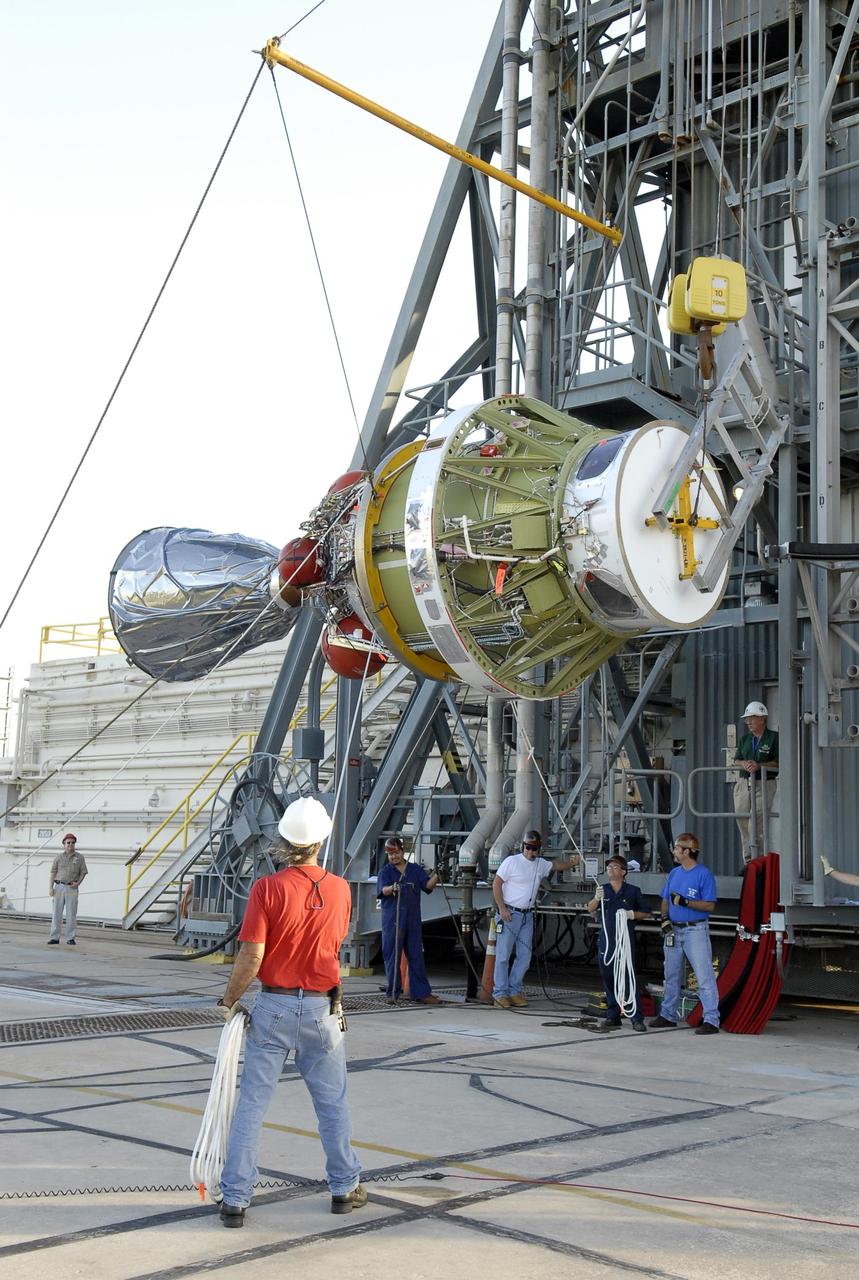
KENNEDY SPACE CENTER, FLA. -- On Launch Pad 17-A at Cape Canaveral Air Force Station, a crane lifts the second stage of the Delta II launch vehicle for NASA's Phoenix Mars Lander to go into the mobile service tower. The second stage will be lifted into the mobile service tower and mated with the Delta's first stage. Phoenix is scheduled to launch Aug. 3. Phoenix will land in icy soils near the north polar permanent ice cap of Mars and explore the history of the water in these soils and any associated rocks, while monitoring polar climate. Landing on Mars is planned in May 2008 on arctic ground where a mission currently in orbit, Mars Odyssey, has detected high concentrations of ice just beneath the top layer of soil. Photo credit: NASA/Kim Shiflett

KENNEDY SPACE CENTER, FLA. -- On Pad 17-A at Cape Canaveral Air Force Station, one solid rocket booster is lifted into the mobile service tower while another, below, is raised from its transporter. The SRBs will be mated with the Delta II first stage. The Delta is the launch vehicle for the Phoenix Mars Lander spacecraft. Phoenix will land in icy soils near the north polar permanent ice cap of Mars and explore the history of the water in these soils and any associated rocks, while monitoring polar climate. Landing on Mars is planned in May 2008 on arctic ground where a mission currently in orbit, Mars Odyssey, has detected high concentrations of ice just beneath the top layer of soil. Phoenix is scheduled to launch Aug. 3. Photo credit: NASA/Kim Shiflett
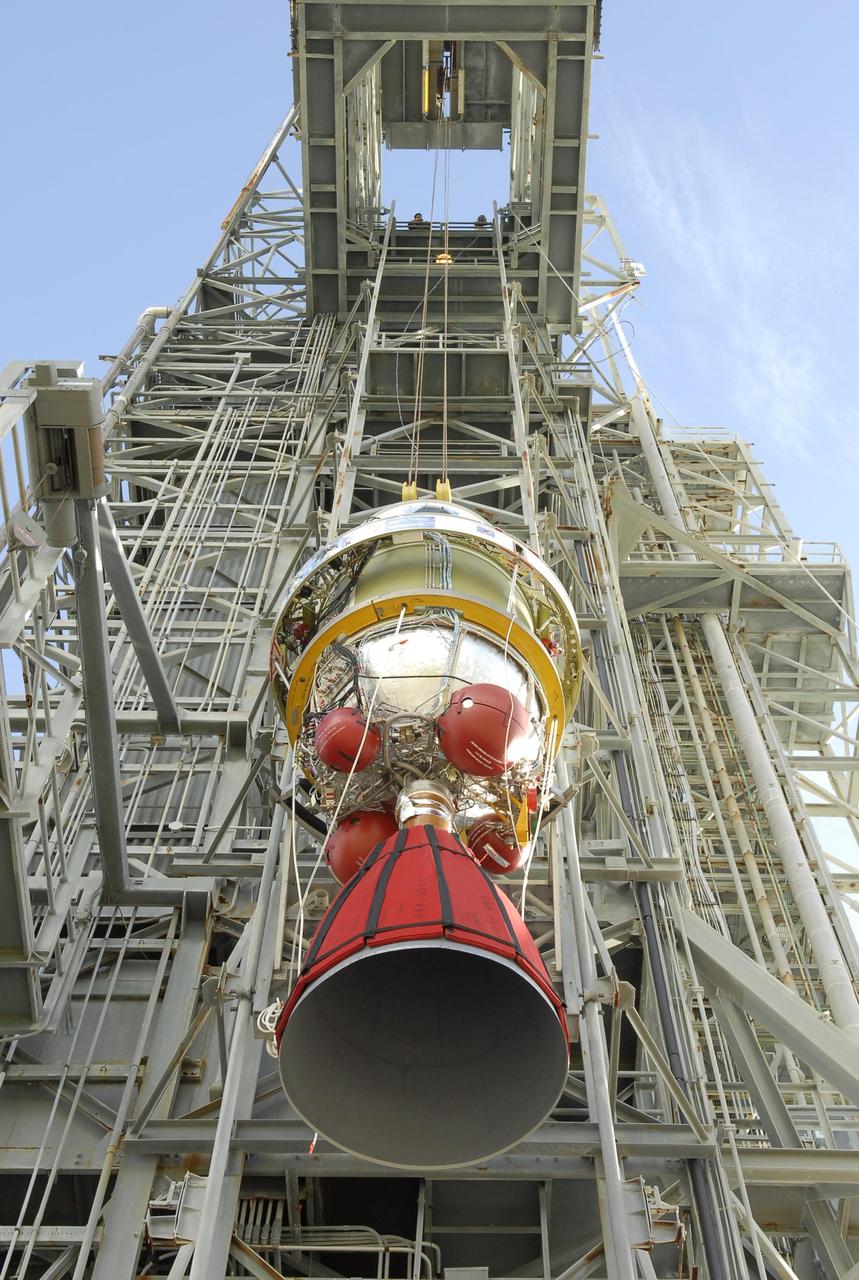
KENNEDY SPACE CENTER, FLA. -- Viewed from below, the second stage of the Delta II launch vehicle for NASA's Phoenix Mars Lander is lifted up the mobile service tower on Launch Pad 17-A at Cape Canaveral Air Force Station. The second stage will be moved into the tower and lowered for mating with the Delta's first stage. Phoenix is scheduled to launch Aug. 3. Phoenix will land in icy soils near the north polar permanent ice cap of Mars and explore the history of the water in these soils and any associated rocks, while monitoring polar climate. Landing on Mars is planned in May 2008 on arctic ground where a mission currently in orbit, Mars Odyssey, has detected high concentrations of ice just beneath the top layer of soil. Photo credit: NASA/Kim Shiflett
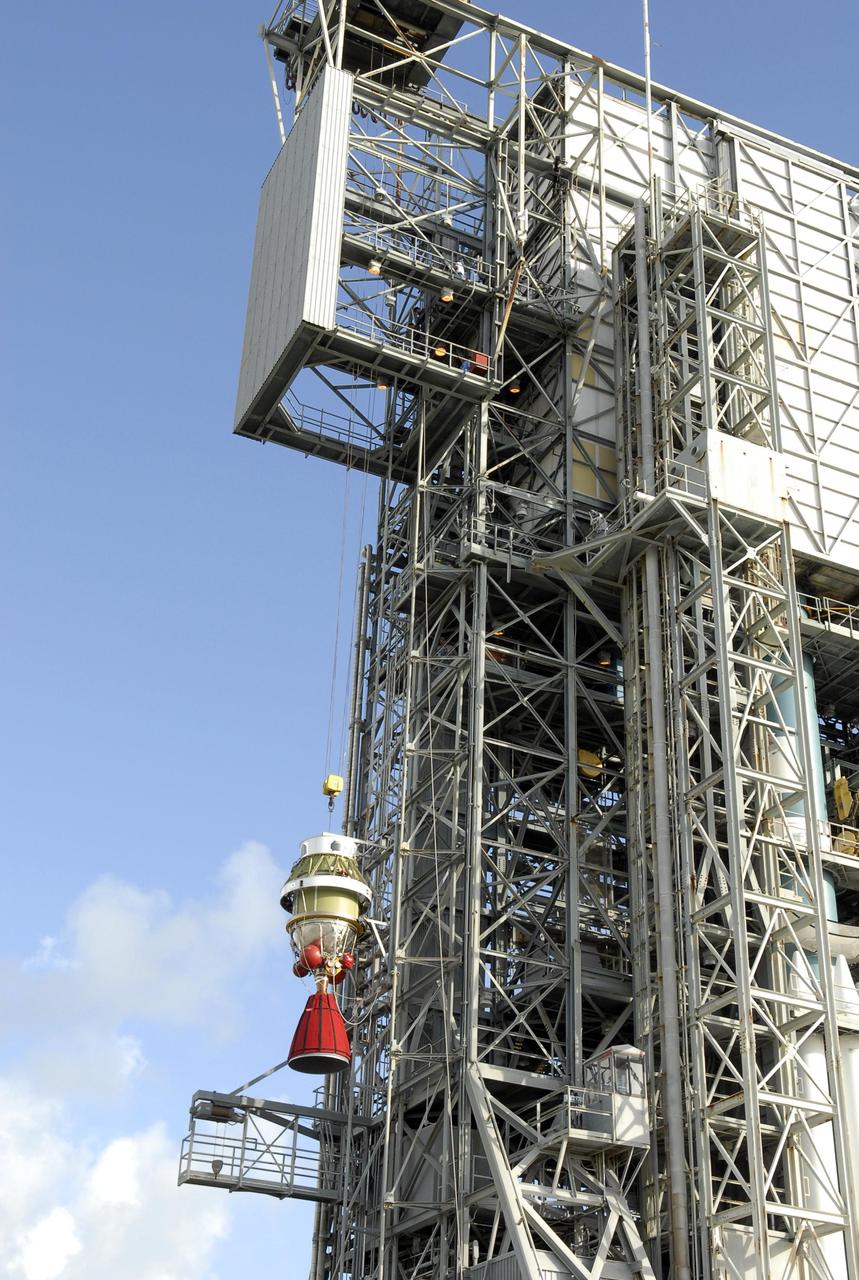
KENNEDY SPACE CENTER, FLA. -- The second stage of the Delta II launch vehicle for NASA's Phoenix Mars Lander is lifted up the mobile service tower on Launch Pad 17-A at Cape Canaveral Air Force Station. It will be moved into the tower and lowered for mating with the Delta's first stage. Phoenix is scheduled to launch Aug. 3. Phoenix will land in icy soils near the north polar permanent ice cap of Mars and explore the history of the water in these soils and any associated rocks, while monitoring polar climate. Landing on Mars is planned in May 2008 on arctic ground where a mission currently in orbit, Mars Odyssey, has detected high concentrations of ice just beneath the top layer of soil. Photo credit: NASA/Kim Shiflett

KENNEDY SPACE CENTER, FLA. -- On Pad 17-A at Cape Canaveral Air Force Station, one solid rocket booster is lifted into the mobile service tower while another, below, is raised from its transporter. The SRBs will be mated with the Delta II first stage. The Delta is the launch vehicle for the Phoenix Mars Lander spacecraft. Phoenix will land in icy soils near the north polar permanent ice cap of Mars and explore the history of the water in these soils and any associated rocks, while monitoring polar climate. Landing on Mars is planned in May 2008 on arctic ground where a mission currently in orbit, Mars Odyssey, has detected high concentrations of ice just beneath the top layer of soil. Phoenix is scheduled to launch Aug. 3. Photo credit: NASA/Kim Shiflett

KENNEDY SPACE CENTER, FLA. -- On Pad 17-A at Cape Canaveral Air Force Station, a third solid rocket booster is raised from its transporter to be lifted into the mobile service tower, where two others wait. The SRBs will be mated with the Delta II first stage. The Delta is the launch vehicle for the Phoenix Mars Lander spacecraft. Phoenix will land in icy soils near the north polar permanent ice cap of Mars and explore the history of the water in these soils and any associated rocks, while monitoring polar climate. Landing on Mars is planned in May 2008 on arctic ground where a mission currently in orbit, Mars Odyssey, has detected high concentrations of ice just beneath the top layer of soil. Phoenix is scheduled to launch Aug. 3. Photo credit: NASA/Kim Shiflett
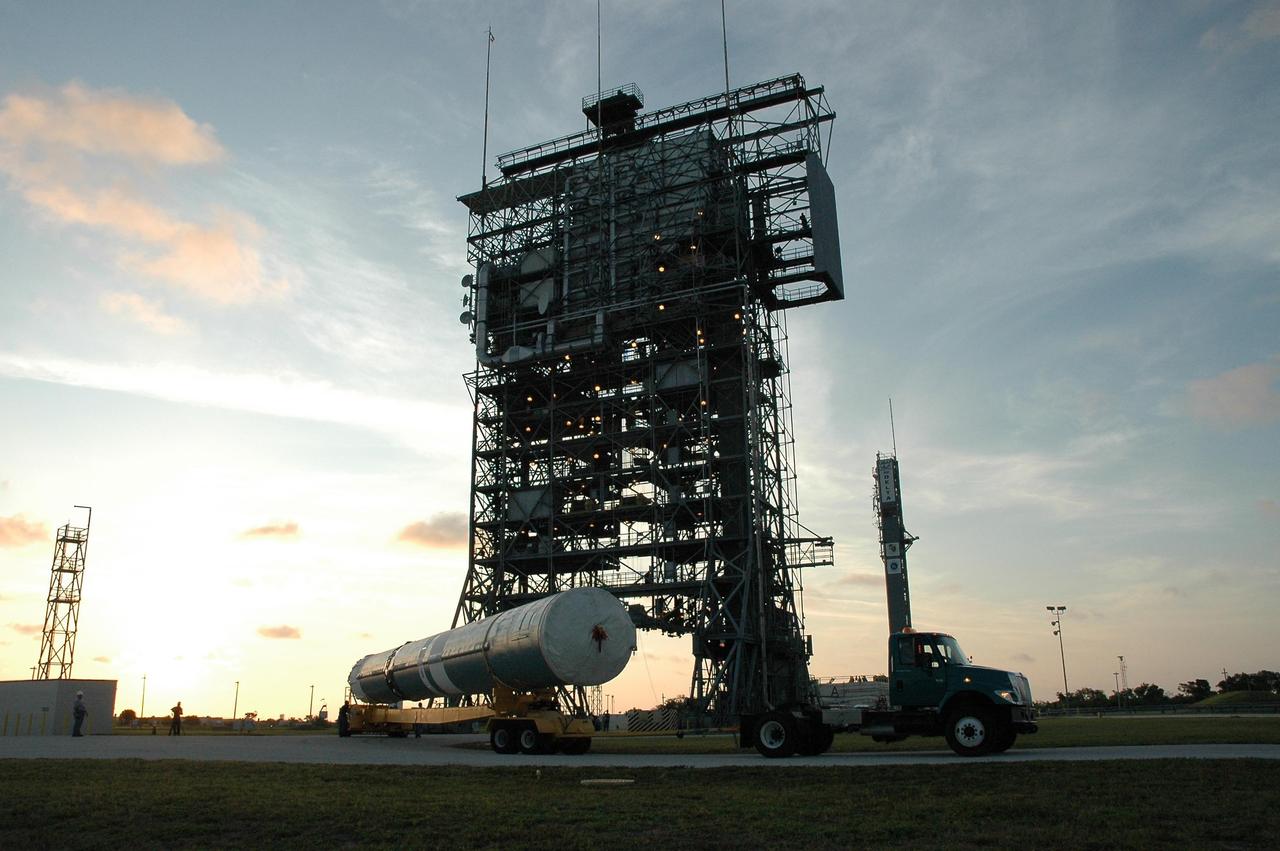
KENNEDY SPACE CENTER, FLA. -- The first stage of a Delta II rocket arrives on Launch Pad 17-A at Cape Canaveral Air Force Station. The rocket is the launch vehicle for the Phoenix spacecraft, targeted for launch on Aug. 3 heading for Mars. Phoenix will land in icy soils near the north polar permanent ice cap of Mars and explore the history of the water in these soils and any associated rocks, while monitoring polar climate. Landing on Mars is planned in May 2008 on arctic ground where a mission currently in orbit, Mars Odyssey, has detected high concentrations of ice just beneath the top layer of soil. Photo credit: NASA/Amanda Diller
KENNEDY SPACE CENTER, FLA. — Inside the mobile service tower on Launch Pad 17-A, the Phoenix Mars Lander is lowered toward the Delta II second stage for mating. Launch of NASA's Phoenix Mars Lander is scheduled for Aug. 3. There are two instantaneous launch times, 5:35:18 and 6:11:24 a.m. EDT. Phoenix will land in icy soils near the north polar permanent ice cap of Mars and explore the history of the water in these soils and any associated rocks, while monitoring polar climate. Landing on Mars is planned in May 2008 on arctic ground where a mission currently in orbit, Mars Odyssey, has detected high concentrations of ice just beneath the top layer of soil. NASA/George Shelton
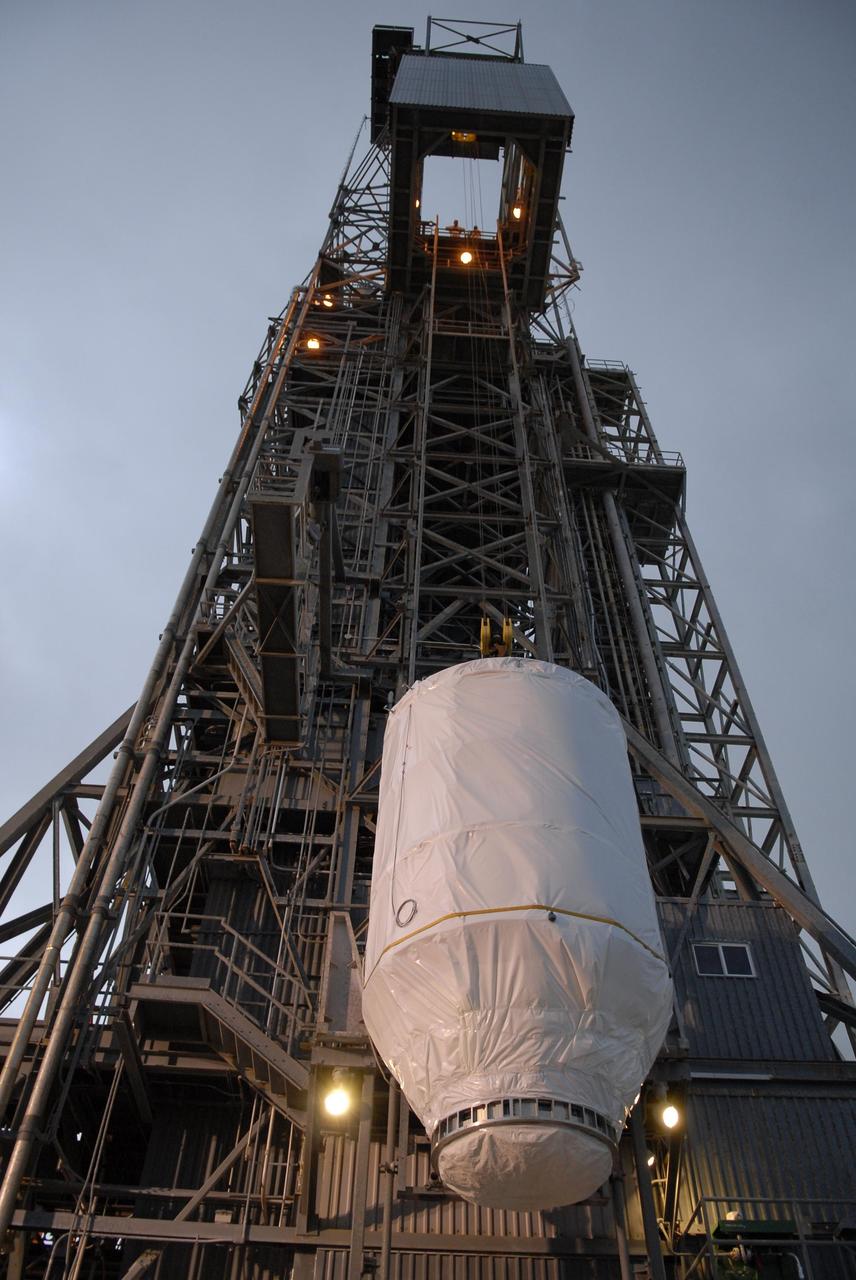
KENNEDY SPACE CENTER, FLA. — Attached to an overhead crane, the Phoenix Mars Lander is lifted up alongside the mobile service tower on Launch Pad 17-A at Cape Canaveral Air Force Station. Once inside the tower, the lander will be mated to the Delta II launch vehicle. Launch of NASA's Phoenix Mars Lander is scheduled for Aug. 3. There are two instantaneous launch times, 5:35:18 and 6:11:24 a.m. EDT. Phoenix will land in icy soils near the north polar permanent ice cap of Mars and explore the history of the water in these soils and any associated rocks, while monitoring polar climate. Landing on Mars is planned in May 2008 on arctic ground where a mission currently in orbit, Mars Odyssey, has detected high concentrations of ice just beneath the top layer of soil. NASA/George Shelton
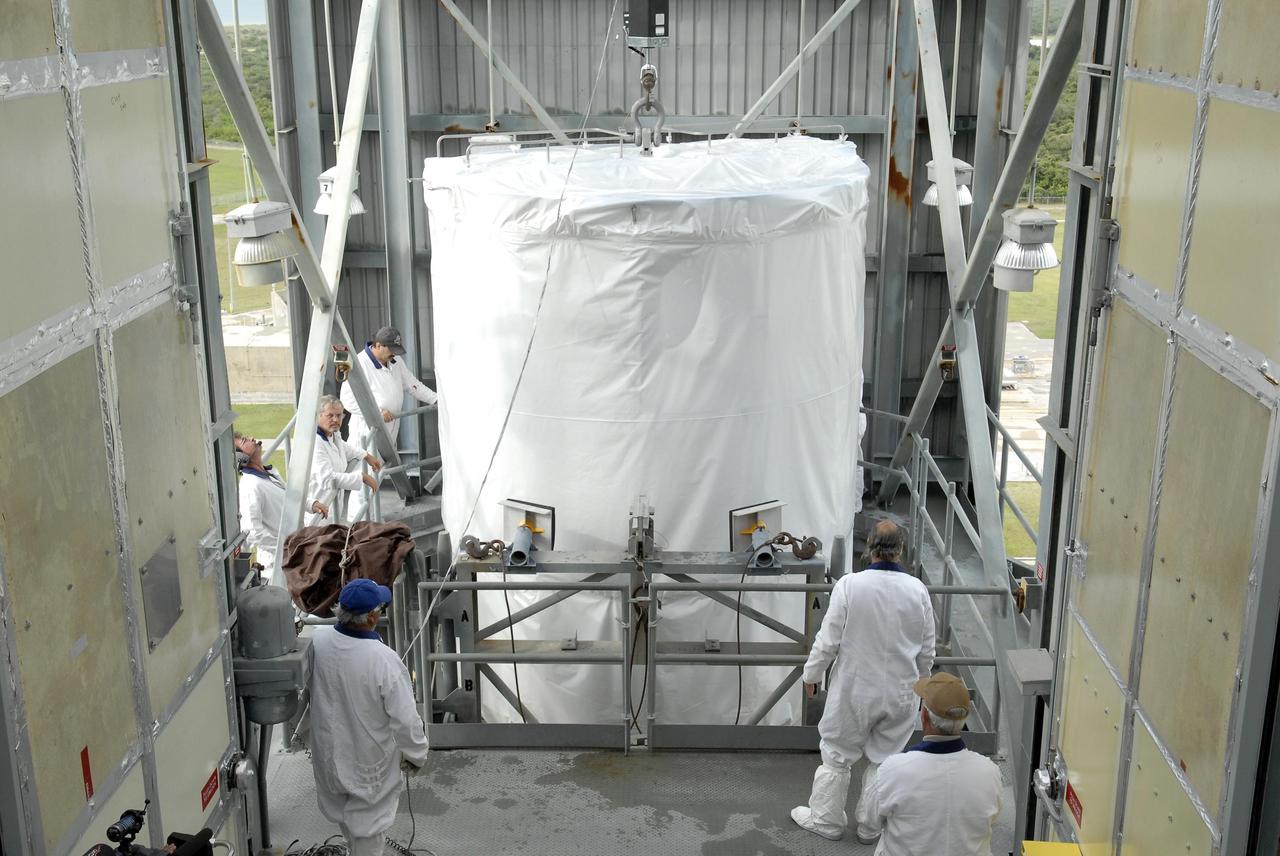
KENNEDY SPACE CENTER, FLA. — The Phoenix Mars Lander is lifted into the upper level of the mobile service tower on Launch Pad 17-A at Cape Canaveral Air Force Station. The lander will be mated to the Delta II launch vehicle. Launch of NASA's Phoenix Mars Lander is scheduled for Aug. 3. There are two instantaneous launch times, 5:35:18 and 6:11:24 a.m. EDT. Phoenix will land in icy soils near the north polar permanent ice cap of Mars and explore the history of the water in these soils and any associated rocks, while monitoring polar climate. Landing on Mars is planned in May 2008 on arctic ground where a mission currently in orbit, Mars Odyssey, has detected high concentrations of ice just beneath the top layer of soil. NASA/George Shelton
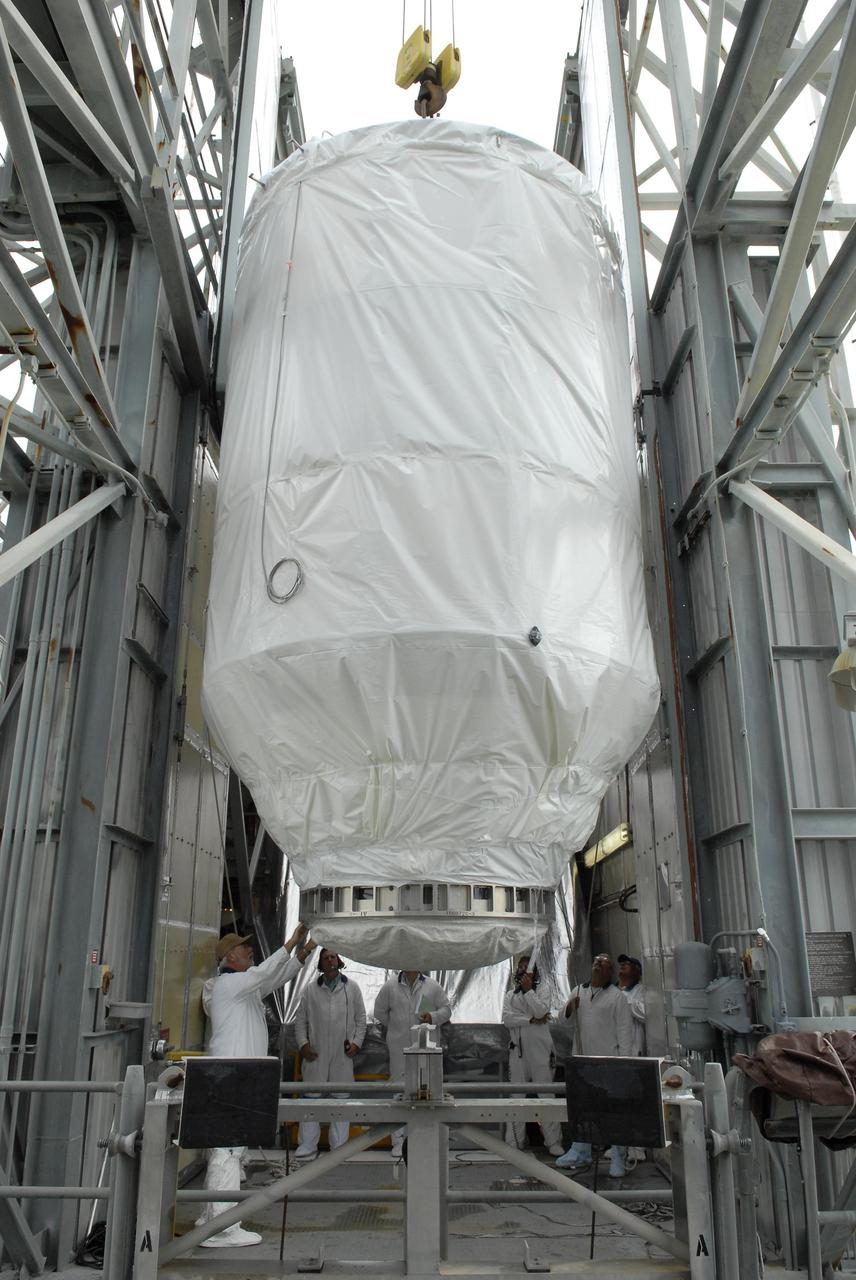
KENNEDY SPACE CENTER, FLA. — The Phoenix Mars Lander is moved inside the upper level of the mobile service tower on Launch Pad 17-A at Cape Canaveral Air Force Station. The lander will be mated to the Delta II launch vehicle. Launch of NASA's Phoenix Mars Lander is scheduled for Aug. 3. There are two instantaneous launch times, 5:35:18 and 6:11:24 a.m. EDT. Phoenix will land in icy soils near the north polar permanent ice cap of Mars and explore the history of the water in these soils and any associated rocks, while monitoring polar climate. Landing on Mars is planned in May 2008 on arctic ground where a mission currently in orbit, Mars Odyssey, has detected high concentrations of ice just beneath the top layer of soil. NASA/George Shelton
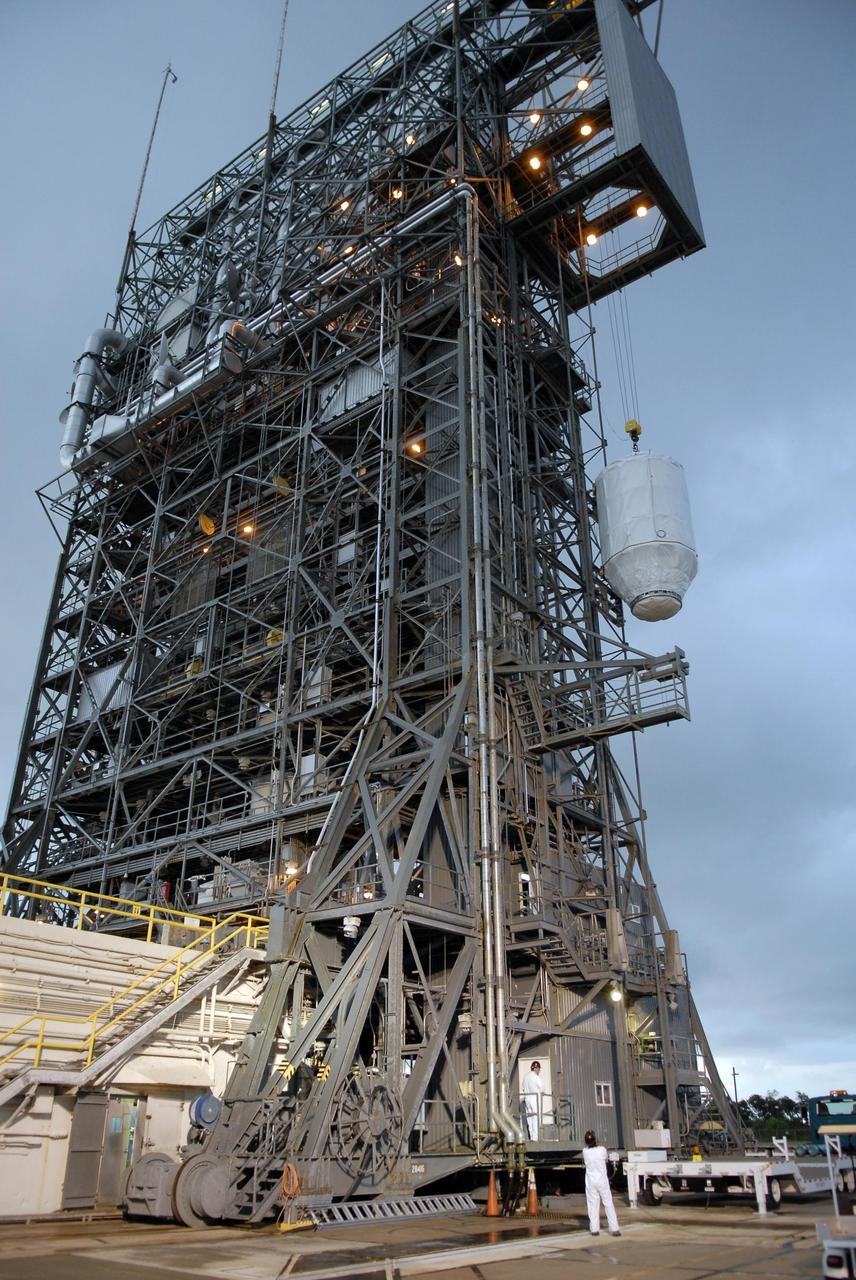
KENNEDY SPACE CENTER, FLA. — Attached to an overhead crane, the Phoenix Mars Lander is lifted up alongside the mobile service tower on Launch Pad 17-A at Cape Canaveral Air Force Station. Once inside the tower, the lander will be mated to the Delta II launch vehicle. Launch of NASA's Phoenix Mars Lander is scheduled for Aug. 3. There are two instantaneous launch times, 5:35:18 and 6:11:24 a.m. EDT. Phoenix will land in icy soils near the north polar permanent ice cap of Mars and explore the history of the water in these soils and any associated rocks, while monitoring polar climate. Landing on Mars is planned in May 2008 on arctic ground where a mission currently in orbit, Mars Odyssey, has detected high concentrations of ice just beneath the top layer of soil. NASA/George Shelton
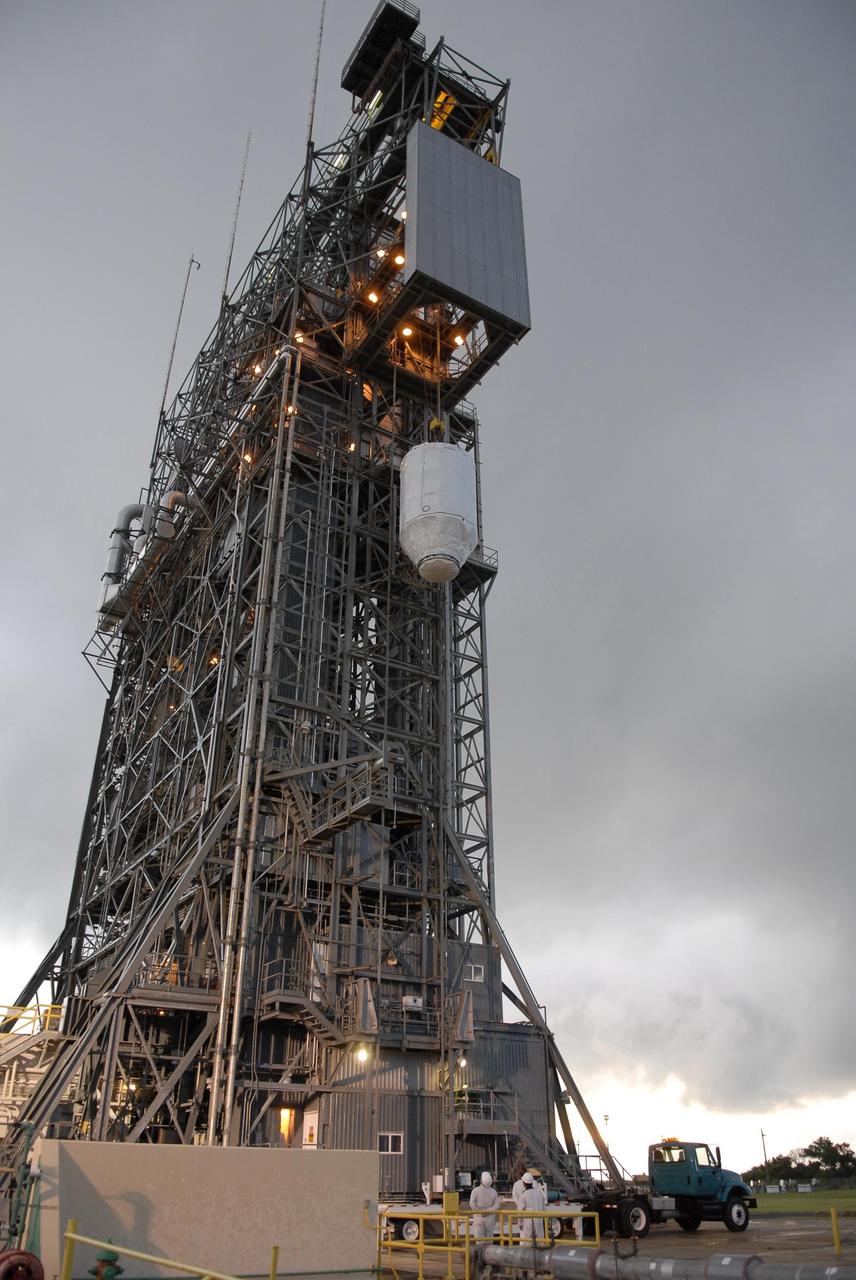
KENNEDY SPACE CENTER, FLA. — Attached to an overhead crane, the Phoenix Mars Lander nears the upper level of the mobile service tower on Launch Pad 17-A at Cape Canaveral Air Force Station. Once inside the tower, the lander will be mated to the Delta II launch vehicle. Launch of NASA's Phoenix Mars Lander is scheduled for Aug. 3. There are two instantaneous launch times, 5:35:18 and 6:11:24 a.m. EDT. Phoenix will land in icy soils near the north polar permanent ice cap of Mars and explore the history of the water in these soils and any associated rocks, while monitoring polar climate. Landing on Mars is planned in May 2008 on arctic ground where a mission currently in orbit, Mars Odyssey, has detected high concentrations of ice just beneath the top layer of soil. NASA/George Shelton
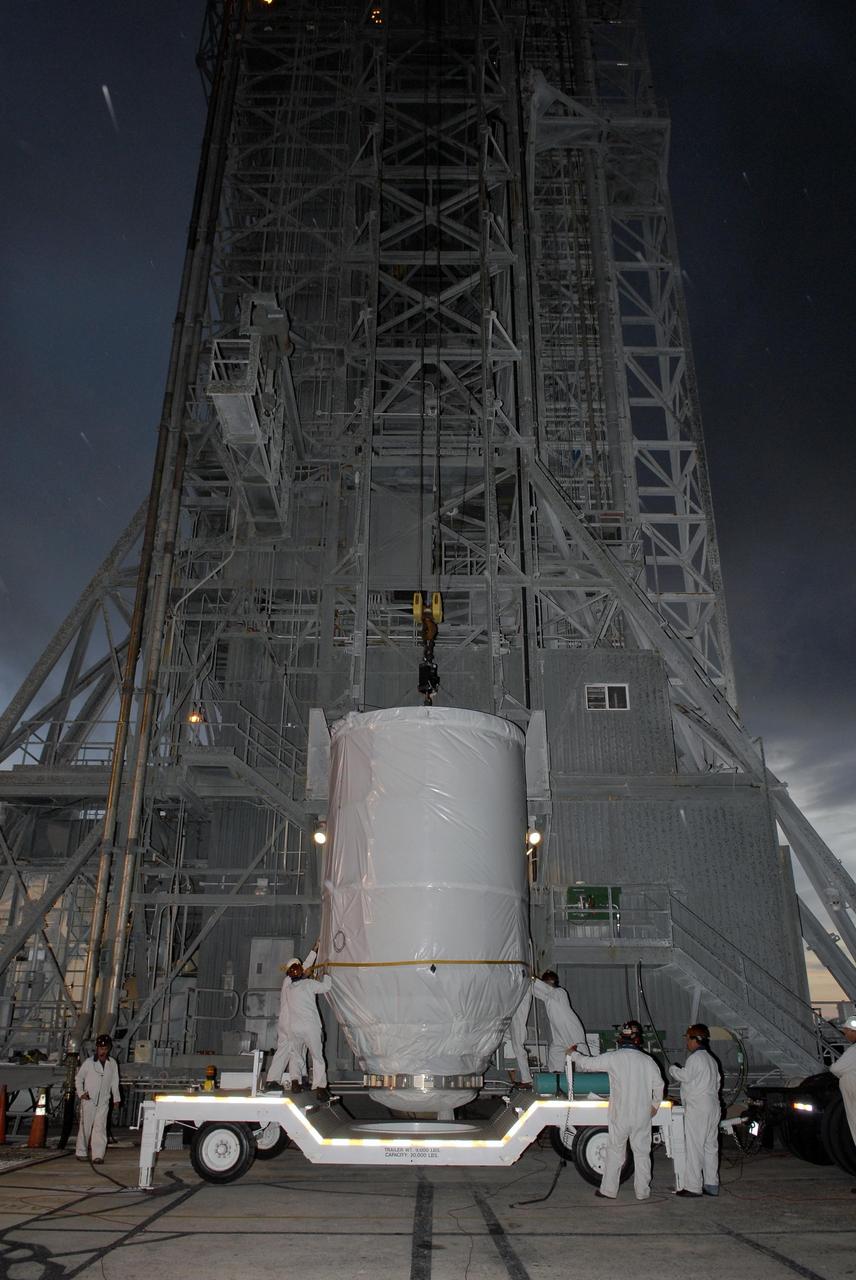
KENNEDY SPACE CENTER, FLA. — In front of the mobile service tower on Launch Pad 17-A at Cape Canaveral Air Force Station, workers attach an overhead crane to the Phoenix Mars Lander. The lander will be lifted up into the tower for mating to the Delta II launch vehicle. Launch of NASA's Phoenix Mars Lander is scheduled for Aug. 3. There are two instantaneous launch times, 5:35:18 and 6:11:24 a.m. EDT. Phoenix will land in icy soils near the north polar permanent ice cap of Mars and explore the history of the water in these soils and any associated rocks, while monitoring polar climate. Landing on Mars is planned in May 2008 on arctic ground where a mission currently in orbit, Mars Odyssey, has detected high concentrations of ice just beneath the top layer of soil. NASA/George Shelton
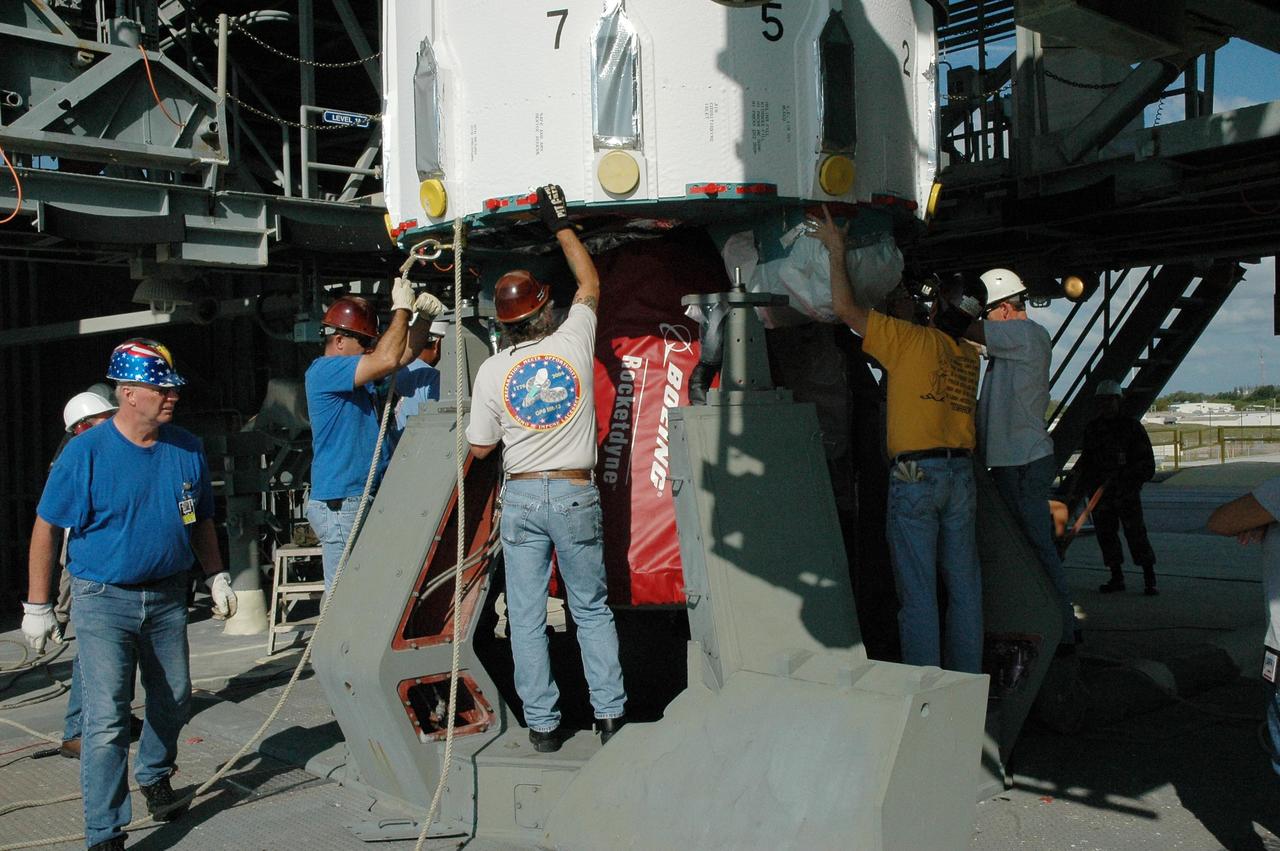
KENNEDY SPACE CENTER, FLA. -- On Launch Pad 17-A at Cape Canaveral Air Force Station, workers prepare the first stage of a Delta II rocket to be lifted up into the mobile service tower. The rocket is the launch vehicle for the Phoenix spacecraft, targeted for launch on Aug. 3 heading for Mars. Phoenix will land in icy soils near the north polar permanent ice cap of Mars and explore the history of the water in these soils and any associated rocks, while monitoring polar climate. Landing on Mars is planned in May 2008 on arctic ground where a mission currently in orbit, Mars Odyssey, has detected high concentrations of ice just beneath the top layer of soil. Photo credit: NASA/Amanda Diller

KENNEDY SPACE CENTER, FLA. -- On Launch Pad 17-A at Cape Canaveral Air Force Station, the first stage of a Delta II rocket is raised off the transporter beneath the mobile service tower. The rocket is the launch vehicle for the Phoenix spacecraft, targeted for launch on Aug. 3,heading for Mars. Phoenix will land in icy soils near the north polar permanent ice cap of Mars and explore the history of the water in these soils and any associated rocks, while monitoring polar climate. Landing on Mars is planned in May 2008 on arctic ground where a mission currently in orbit, Mars Odyssey, has detected high concentrations of ice just beneath the top layer of soil. Photo credit: NASA/Amanda Diller
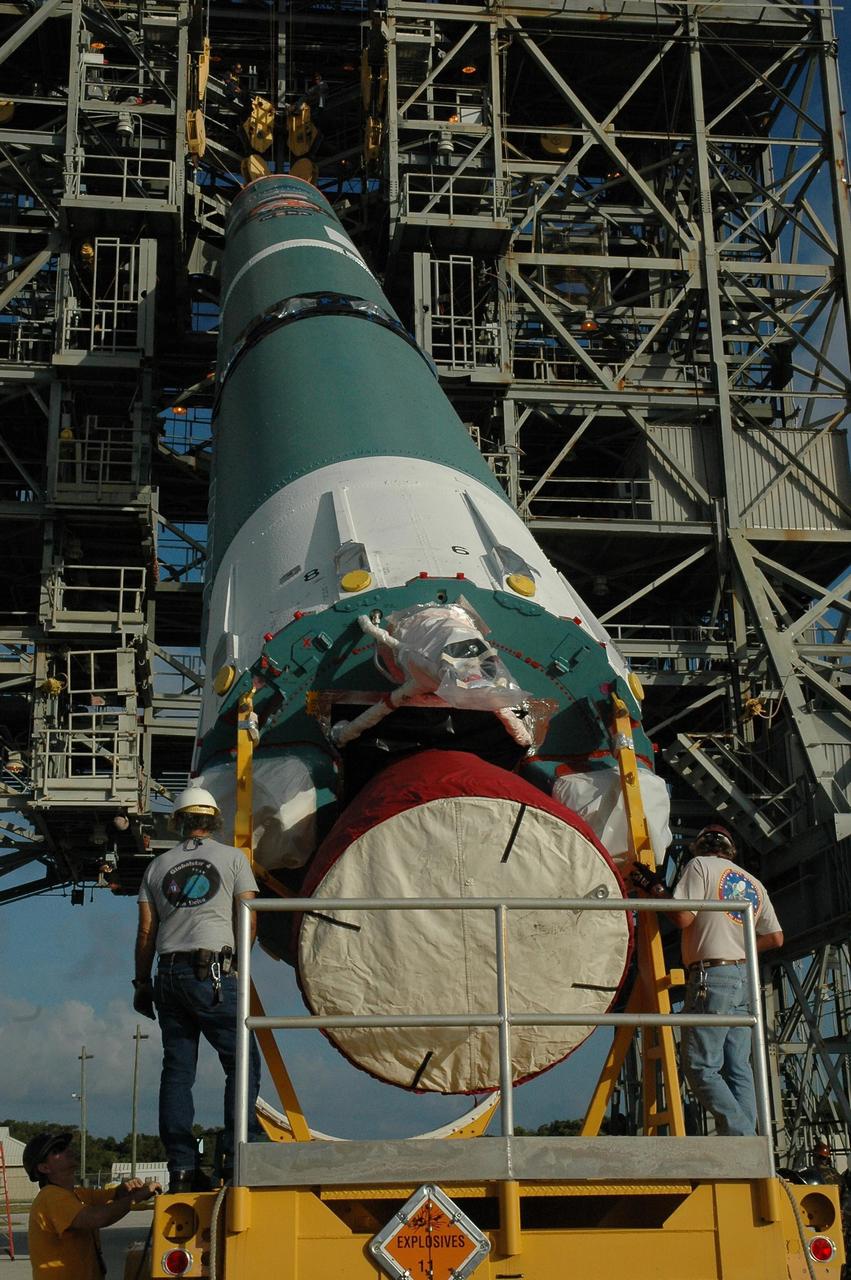
KENNEDY SPACE CENTER, FLA. -- On Launch Pad 17-A at Cape Canaveral Air Force Station, the first stage of a Delta II rocket is raised off the transporter beneath the mobile service tower. The rocket is the launch vehicle for the Phoenix spacecraft, targeted for launch on Aug. 3 heading for Mars. Phoenix will land in icy soils near the north polar permanent ice cap of Mars and explore the history of the water in these soils and any associated rocks, while monitoring polar climate. Landing on Mars is planned in May 2008 on arctic ground where a mission currently in orbit, Mars Odyssey, has detected high concentrations of ice just beneath the top layer of soil. Photo credit: NASA/Amanda Diller

KENNEDY SPACE CENTER, FLA. -- On Launch Pad 17-A at Cape Canaveral Air Force Station, the first stage of a Delta II rocket has been lifted into the mobile service tower. The rocket is the launch vehicle for the Phoenix spacecraft, targeted for launch on Aug. 3 heading for Mars. Phoenix will land in icy soils near the north polar permanent ice cap of Mars and explore the history of the water in these soils and any associated rocks, while monitoring polar climate. Landing on Mars is planned in May 2008 on arctic ground where a mission currently in orbit, Mars Odyssey, has detected high concentrations of ice just beneath the top layer of soil. Photo credit: NASA/Amanda Diller

KENNEDY SPACE CENTER, FLA. -- The truck and transporter carrying the first stage of a Delta II rocket pull beneath the mobile service tower on Launch Pad 17-A at Cape Canaveral Air Force Station. The rocket is the launch vehicle for the Phoenix spacecraft, targeted for launch on Aug. 3,heading for Mars. Phoenix will land in icy soils near the north polar permanent ice cap of Mars and explore the history of the water in these soils and any associated rocks, while monitoring polar climate. Landing on Mars is planned in May 2008 on arctic ground where a mission currently in orbit, Mars Odyssey, has detected high concentrations of ice just beneath the top layer of soil. Photo credit: NASA/Amanda Diller
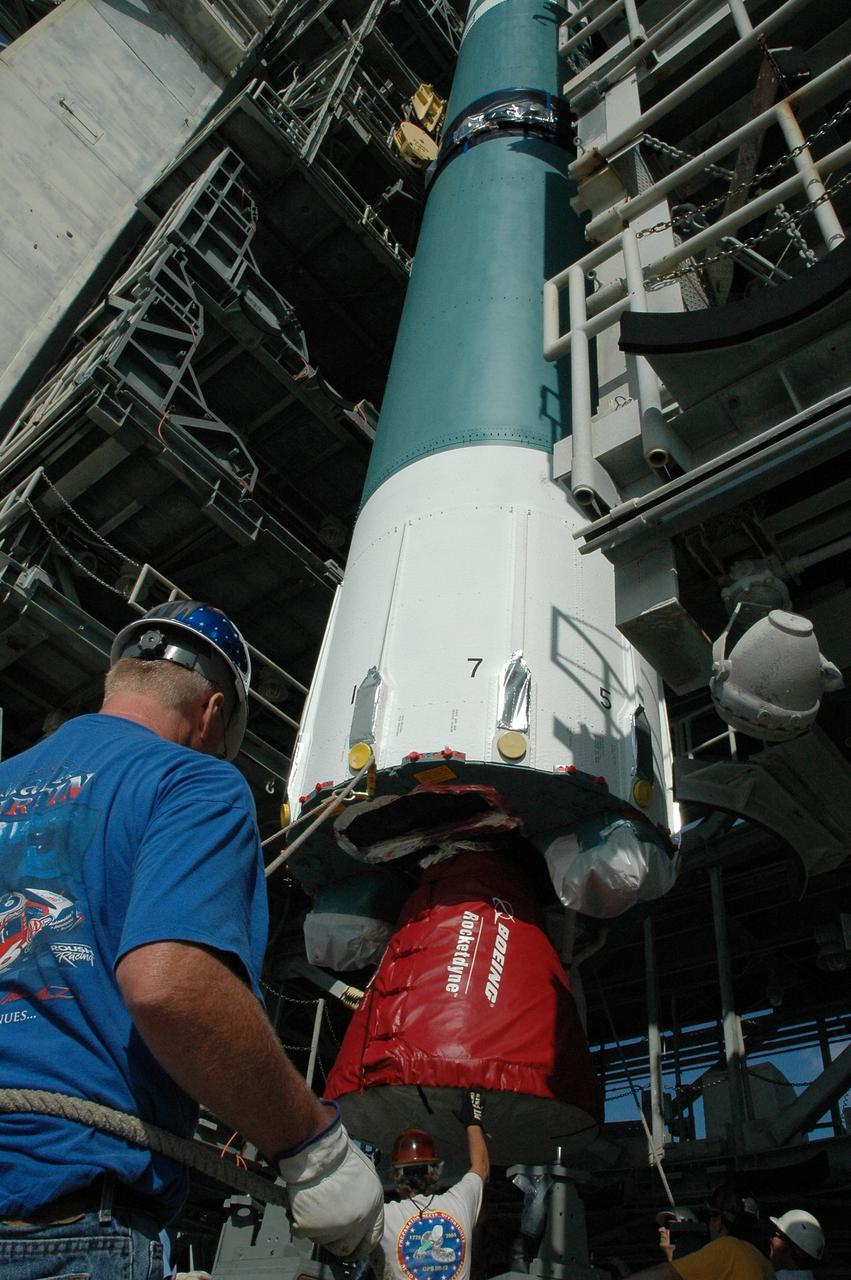
KENNEDY SPACE CENTER, FLA. -- On Launch Pad 17-A at Cape Canaveral Air Force Station, the first stage of a Delta II rocket is ready for lifting up into the mobile service tower. The rocket is the launch vehicle for the Phoenix spacecraft, targeted for launch on Aug. 3 heading for Mars. Phoenix will land in icy soils near the north polar permanent ice cap of Mars and explore the history of the water in these soils and any associated rocks, while monitoring polar climate. Landing on Mars is planned in May 2008 on arctic ground where a mission currently in orbit, Mars Odyssey, has detected high concentrations of ice just beneath the top layer of soil. Photo credit: NASA/Amanda Diller