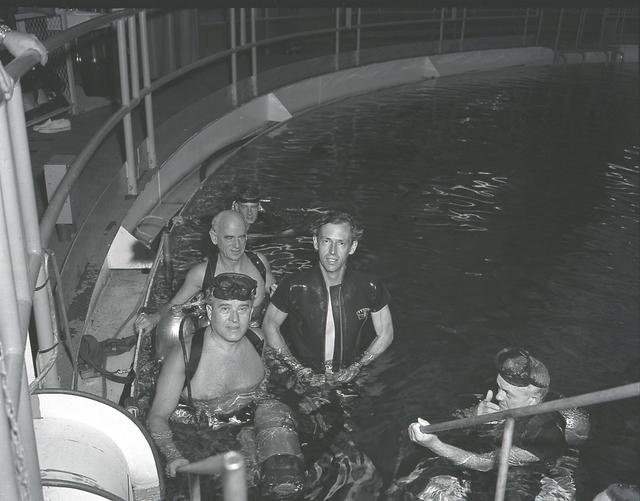
Dr. E. Stuhlinger, Dr. W. von Braun, and Dr. J. Piccard, along with others, take a swim in the Neutral Buoyancy Simulator (NBS) at the Marshall Space Flight Center. The NBS was instrumental in providing a zero-gravity environment where astronauts could practice tasks assigned for up coming space flights.

Scientists using New Horizons images of Pluto's surface to make 3-D topographic maps have discovered that two of Pluto's mountains, informally named Wright Mons and Piccard Mons, could possibly be ice volcanoes. The color is shown to depict changes in elevation, with blue indicating lower terrain and brown showing higher elevation; green terrains are at intermediate heights. http://photojournal.jpl.nasa.gov/catalog/PIA20050
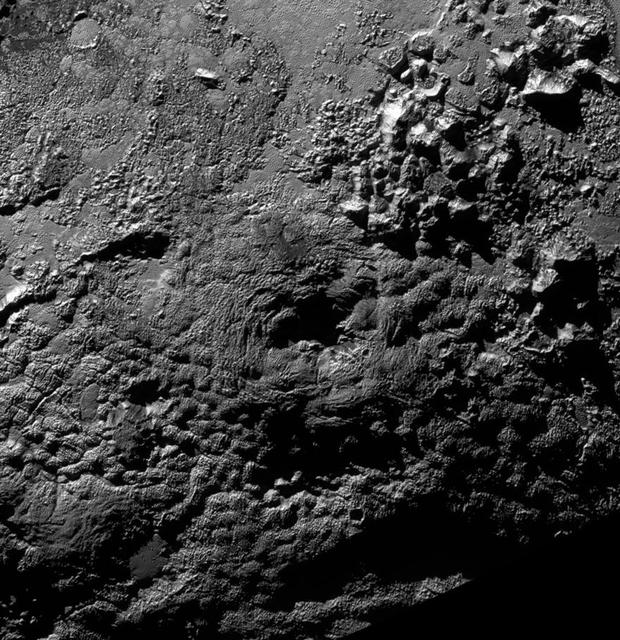
NASA New Horizons scientists believe that the informally named feature Wright Mons, located south of Sputnik Planum on Pluto, and another, Piccard Mons, could have been formed by the cryovolcanic eruption of ices from beneath Pluto surface. Sputnik Planum on Pluto, is an unusual feature that's about 100 miles (160 kilometers) wide and 13,000 feet (4 kilometers) high. It displays a summit depression (visible in the center of the image) that's approximately 35 miles (56 kilometers) across, with a distinctive hummocky texture on its sides. The rim of the summit depression also shows concentric fracturing. http://photojournal.jpl.nasa.gov/catalog/PIA20155
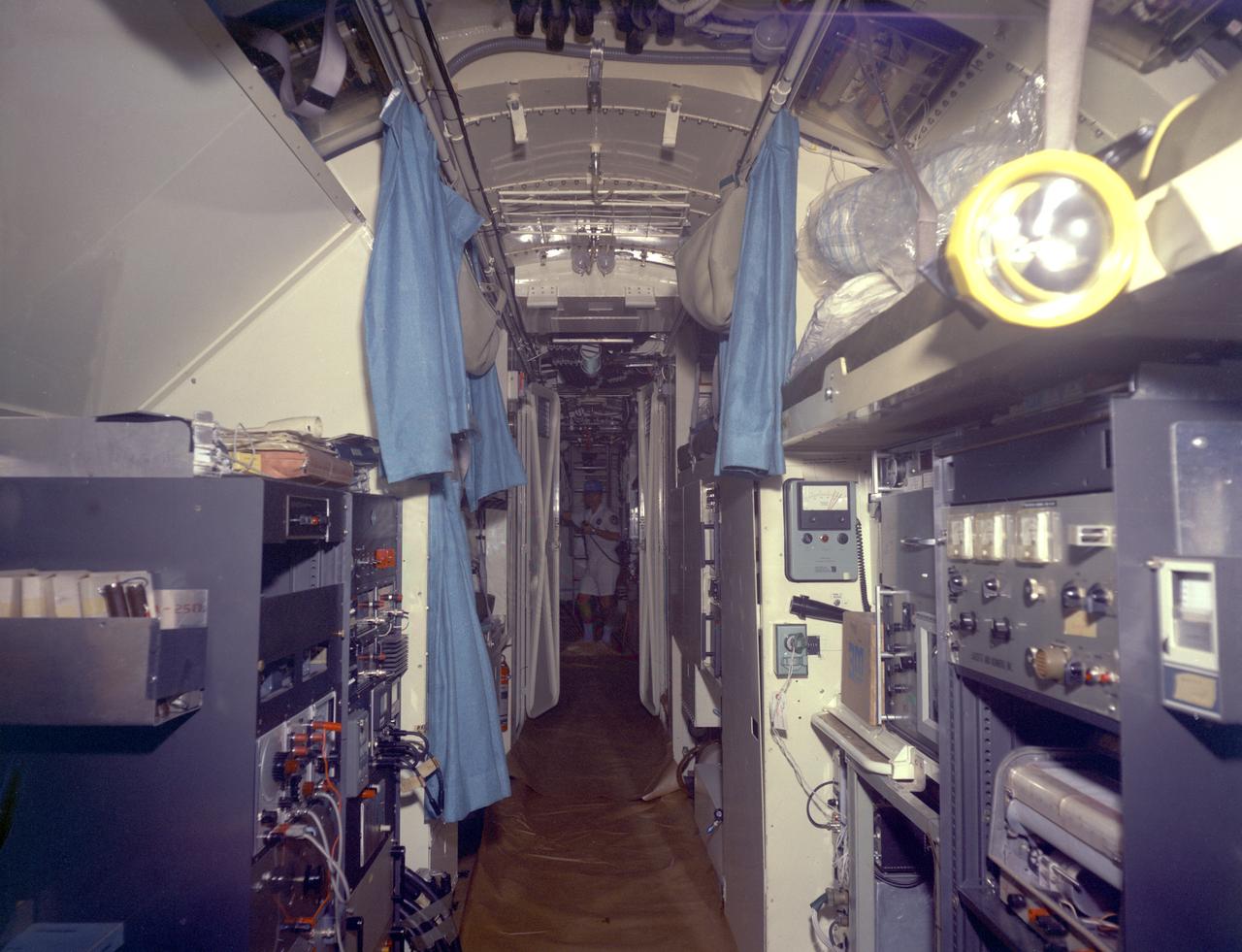
This is an interior view of the living quarters of the deep-sea research submarine "Ben Franklin." Named for American patriot and inventor Ben Franklin, who discovered the Gulf Steam, the 50-foot Ben Franklin was built between 1966 and 1968 in Switzerland for deep- ocean explorer Jacques Piccard and the Grumman Aircraft Engineering Corporation. The submersible made a famous 30-day drift dive off the East Coast of the United States and Canada in 1969 mapping the Gulf Stream's currents and sea life, and also made space exploration history by studying the behavior of aquanauts in a sealed, self-contained, self-sufficient capsule for NASA. On July 14, 1969, the Ben Franklin was towed to the high-velocity center of the Stream off the coast of Palm Beach, Florida. With a NASA observer on board, the sub descended to 1,000 feet off of Riviera Beach, Florida and drifted 1,400 miles north with the current for more than four weeks, reemerging near Maine. During the course of the dive, NASA conducted exhaustive analyses of virtually every aspect of onboard life. They measured sleep quality and patterns, sense of humor and behavioral shifts, physical reflexes, and the effect of a long-term routine on the crew. The submarine's record-shattering dive influenced the design of Apollo and Skylab missions and continued to guide NASA scientists as they devised future marned space-flight missions.
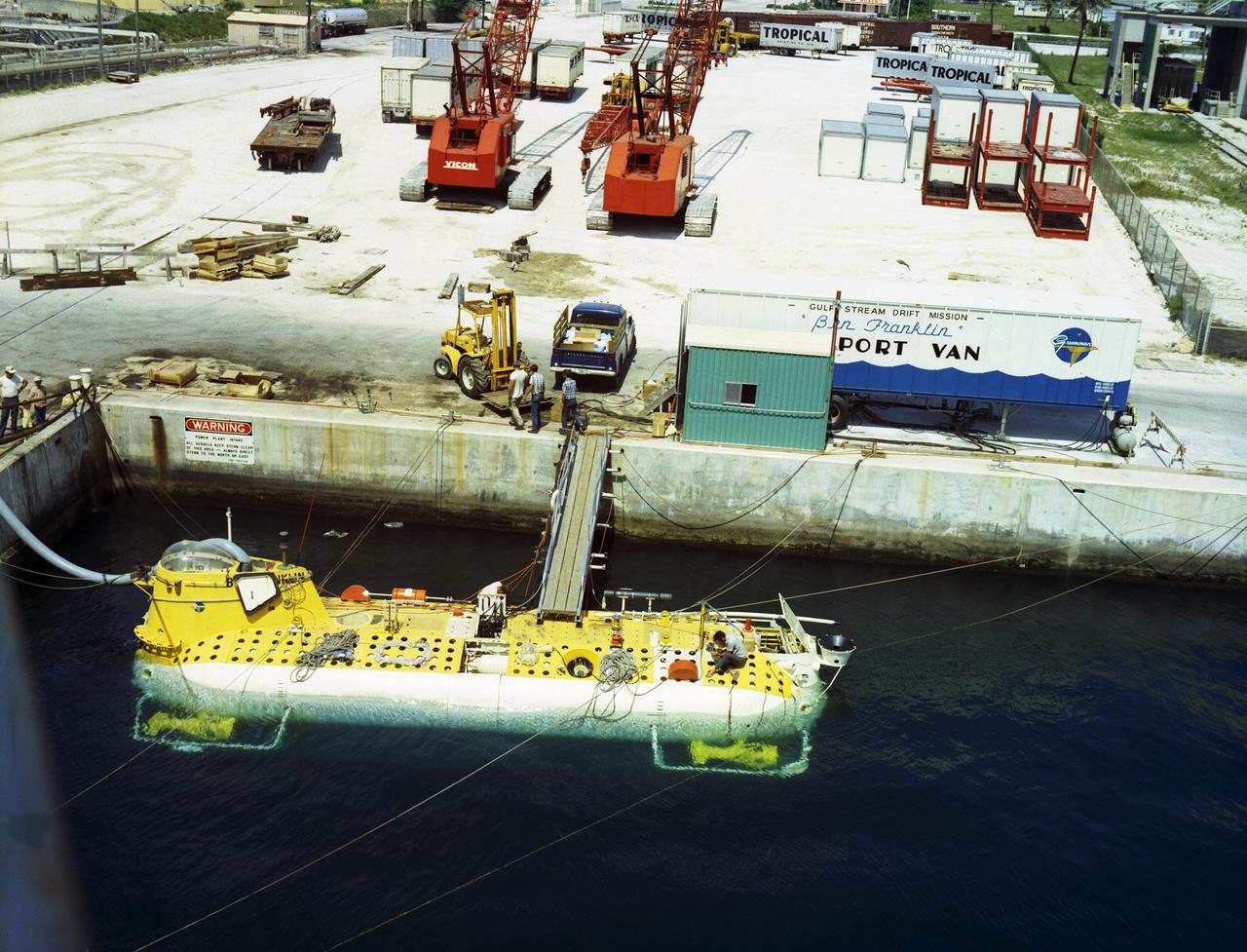
This is an aerial view of the deep-sea research submarine "Ben Franklin" at dock. Named for American patriot and inventor Ben Franklin, who discovered the Gulf Steam, the 50-foot Ben Franklin was built between 1966 and 1968 in Switzerland for deep-ocean explorer Jacques Piccard and the Grumman Aircraft Engineering Corporation. The submersible made a famous 30-day drift dive off the East Coast of the United States and Canada in 1969 mapping the Gulf Stream's currents and sea life, and also made space exploration history by studying the behavior of aquanauts in a sealed, self-contained, self-sufficient capsule for NASA. On July 14, 1969, the Ben Franklin was towed to the high-velocity center of the Stream off the coast of Palm Beach, Florida. With a NASA observer on board, the sub descended to 1,000 feet off of Riviera Beach, Florida and drifted 1,400 miles north with the current for more than four weeks, reemerging near Maine. During the course of the dive, NASA conducted exhaustive analyses of virtually every aspect of onboard life. They measured sleep quality and patterns, sense of humor and behavioral shifts, physical reflexes, and the effects of a long-term routine on the crew. The submarine's record-shattering dive influenced the design of Apollo and Skylab missions and continued to guide NASA scientists as they devised future marned space-flight missions.
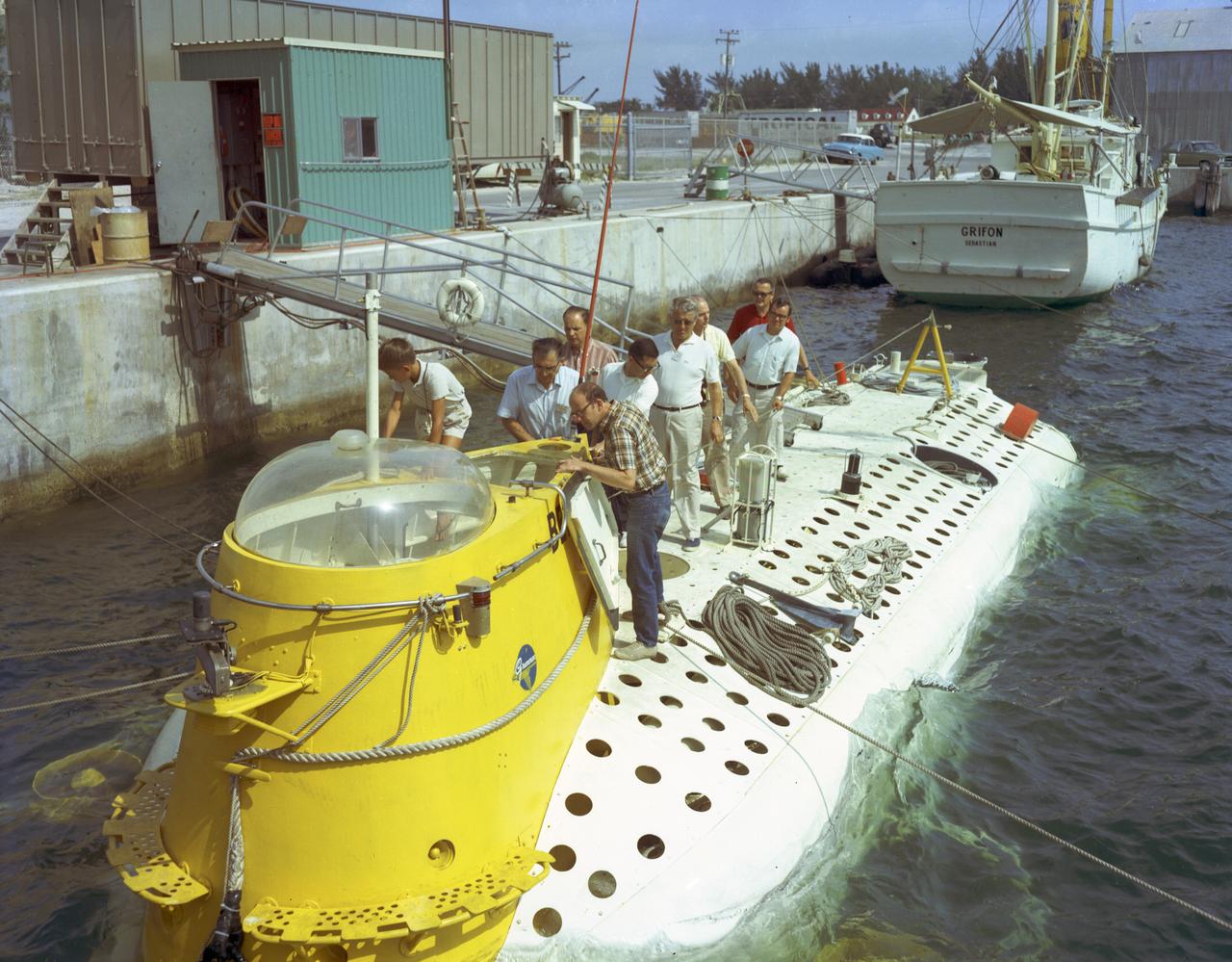
This photograph depicts Dr. von Braun (fourth from far right) and other NASA officials surveying the deep-sea research submarine "Ben Franklin." Named for American patriot and inventor Ben Franklin, who discovered the Gulf Steam, the 50-foot Ben Franklin was built between 1966 and 1968 in Switzerland for deep-ocean explorer Jacques Piccard and the Grumman Aircraft Engineering Corporation. The submersible made a famous 30-day drift dive off the East Coast of the United States and Canada in 1969 mapping the Gulf Stream's currents and sea life, and also made space exploration history by studying the behavior of aquanauts in a sealed, self-contained, self-sufficient capsule for NASA. On July 14, 1969, the Ben Franklin was towed to the high-velocity center of the Stream off the coast of Palm Beach, Florida. With a NASA observer on board, the sub descended to 1,000 feet off of Riviera Beach, Florida and drifted 1,400 miles north with the current for more than four weeks, reemerging near Maine. During the course of the dive, NASA conducted exhaustive analyses of virtually every aspect of onboard life. They measured sleep quality and patterns, sense of humor and behavioral shifts, physical reflexes, and the effects of a long-term routine on the crew. The submarine's record-shattering dive influenced the design of Apollo and Skylab missions and continued to guide NASA scientists as they devised future marned space-flight missions.
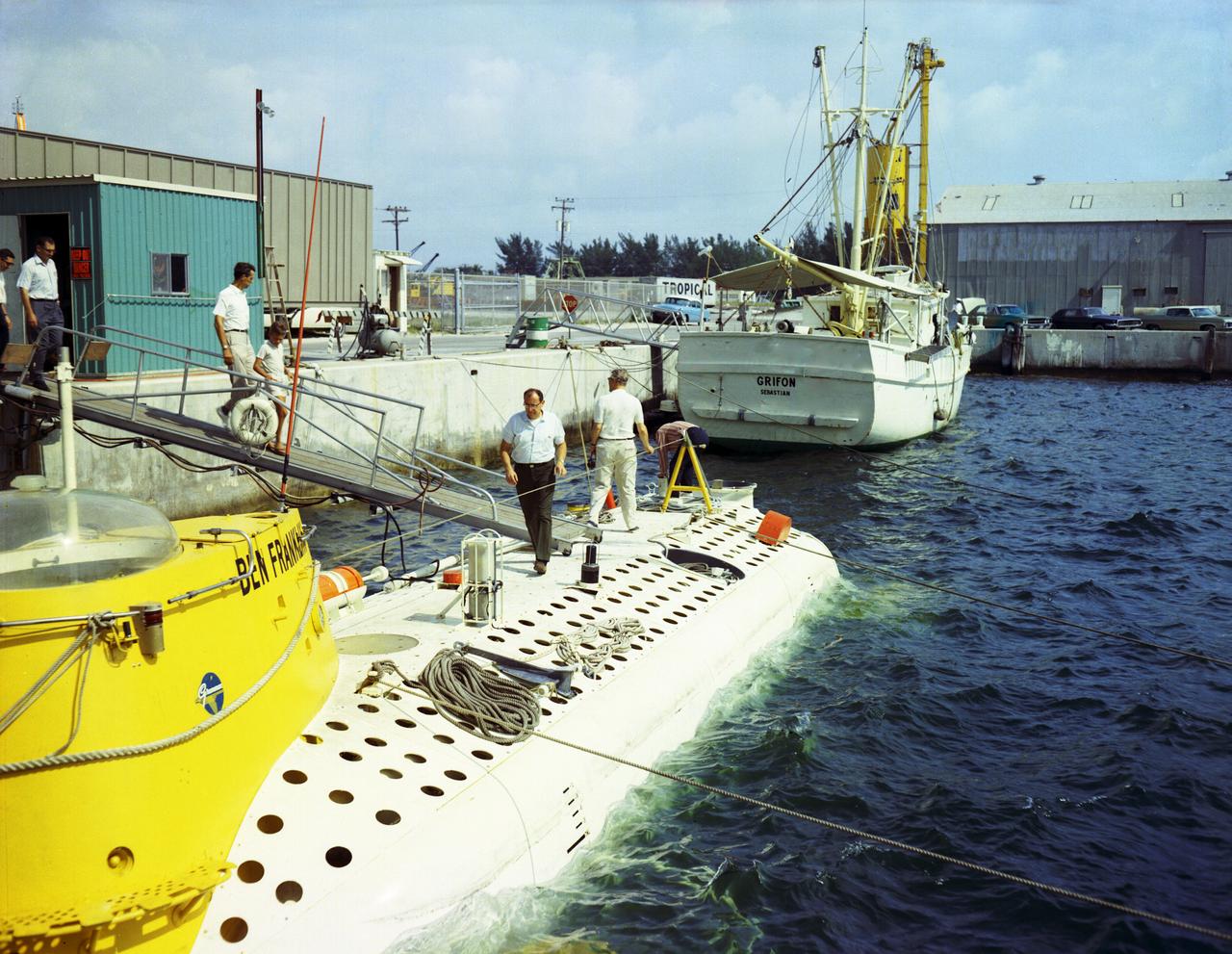
This photograph depicts Dr. von Braun (at right, showing his back) and other NASA officials surveying the deep-sea research submarine "Ben Franklin." Named for American patriot and inventor Ben Franklin, who discovered the Gulf Steam, the 50-foot Ben Franklin was built between 1966 and 1968 in Switzerland for deep-ocean explorer Jacques Piccard and the Grumman Aircraft Engineering Corporation. The submersible made a famous 30-day drift dive off the East Coast of the United States and Canada in 1969 mapping the Gulf Stream's currents and sea life, and also made space exploration history by studying the behavior of aquanauts in a sealed, self-contained, self-sufficient capsule for NASA. On July 14, 1969, the Ben Franklin was towed to the high-velocity center of the Stream off the coast of Palm Beach, Florida. With a NASA observer on board, the sub descended to 1,000 feet off of Riviera Beach, Florida and drifted 1,400 miles north with the current for more than four weeks, reemerging near Maine. During the course of the dive, NASA conducted exhaustive analyses of virtually every aspect of onboard life. They measured sleep quality and patterns, sense of humor and behavioral shifts, physical reflexes, and the effects of a long-term routine on the crew. The submarine's record-shattering dive influenced the design of Apollo and Skylab missions and continued to guide NASA scientists as they devised future marned space-flight missions.
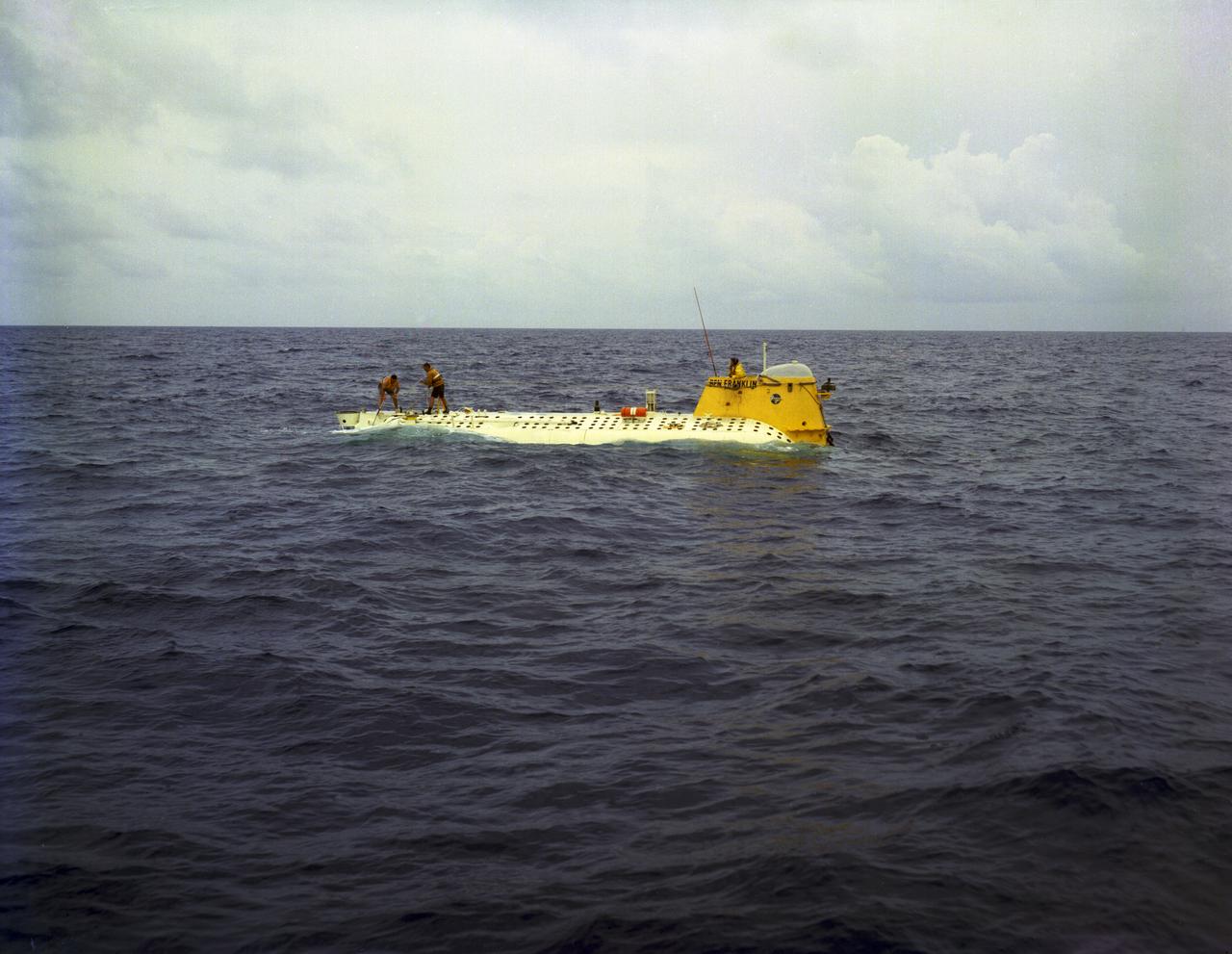
In this photograph, the deep-sea Research Submarine "Ben Franklin" drifts off the East Coast of the United States (U.S.) prior to submerging into the ocean. Named for American patriot and inventor Ben Franklin, who discovered the Gulf Steam, the 50-foot Ben Franklin was built between 1966 and 1968 in Switzerland for deep-ocean explorer Jacques Piccard and the Grumman Aircraft Engineering Corporation. The submersible made a famous 30-day drift dive off the East Coast of the United States and Canada in 1969 mapping the Gulf Stream's currents and sea life, and also made space exploration history by studying the behavior of aquanauts in a sealed, self-contained, self-sufficient capsule for NASA. On July 14, 1969, the Ben Franklin was towed to the high-velocity center of the Stream off the coast of Palm Beach, Florida. With a NASA observer on board, the sub descended to 1,000 feet off of Riviera Beach, Florida and drifted 1,400 miles north with the current for more than four weeks, reemerging near Maine. During the course of the dive, NASA conducted exhaustive analyses of virtually every aspect of onboard life. They measured sleep quality and patterns, sense of humor and behavioral shifts, physical reflexes, and the effects of a long-term routine on the crew. The submarine's record-shattering dive influenced the design of Apollo and Skylab missions and continued to guide NASA scientists as they devised future marned space-flight missions.