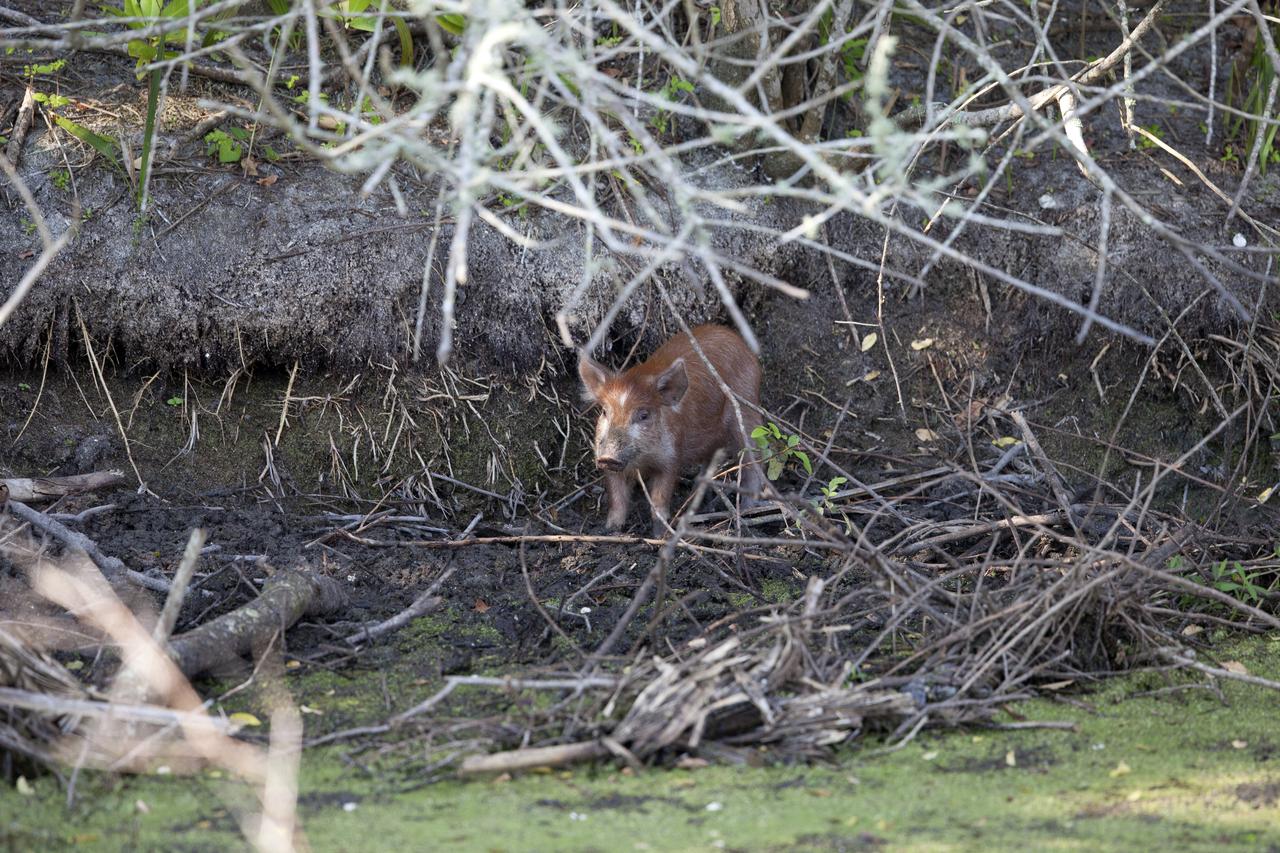
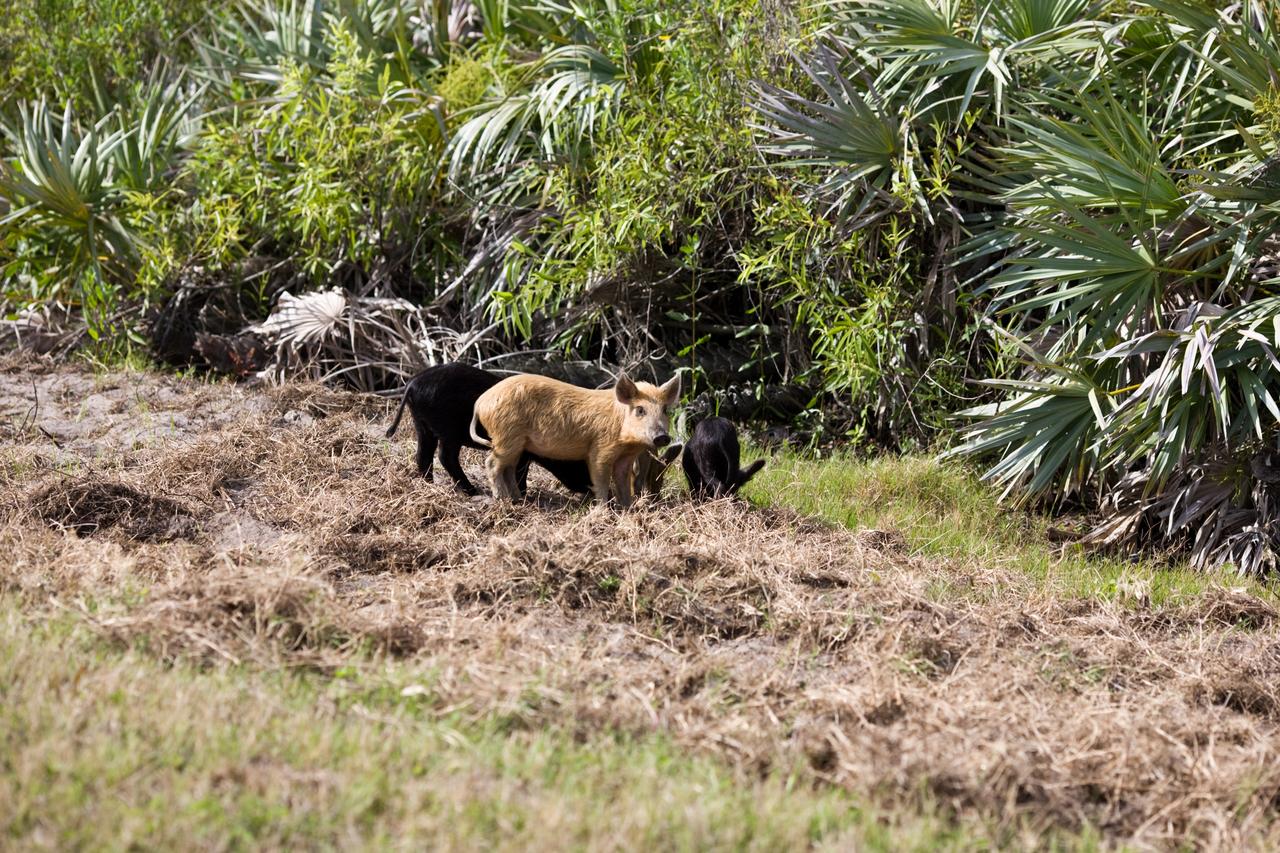
A baby pig stands in the underbrush near a bog at NASA's Kennedy Space Center in Florida. The center shares a border with the Merritt Island National Wildlife Refuge. More than 330 native and migratory bird species, 25 mammals, 117 fishes and 65 amphibians and reptiles call Kennedy and the wildlife refuge home.
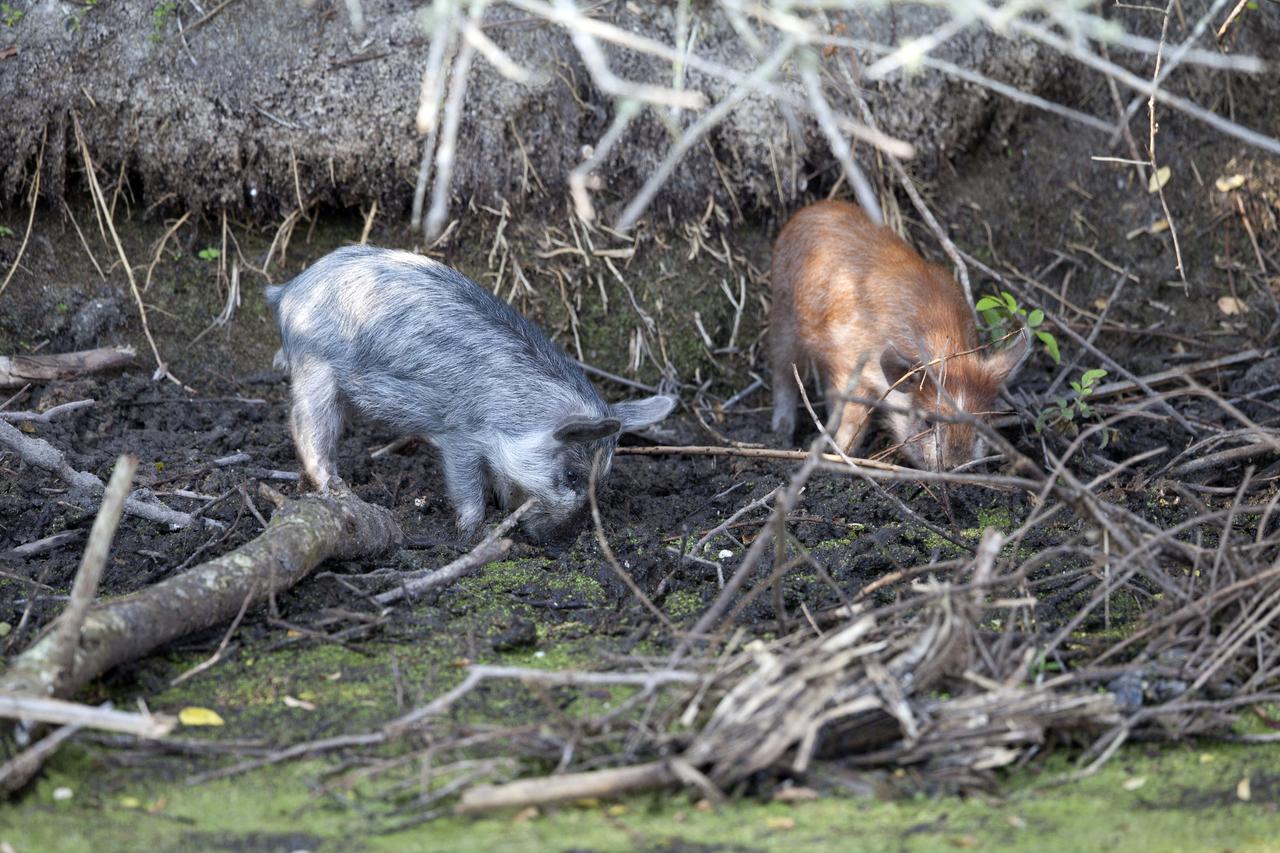
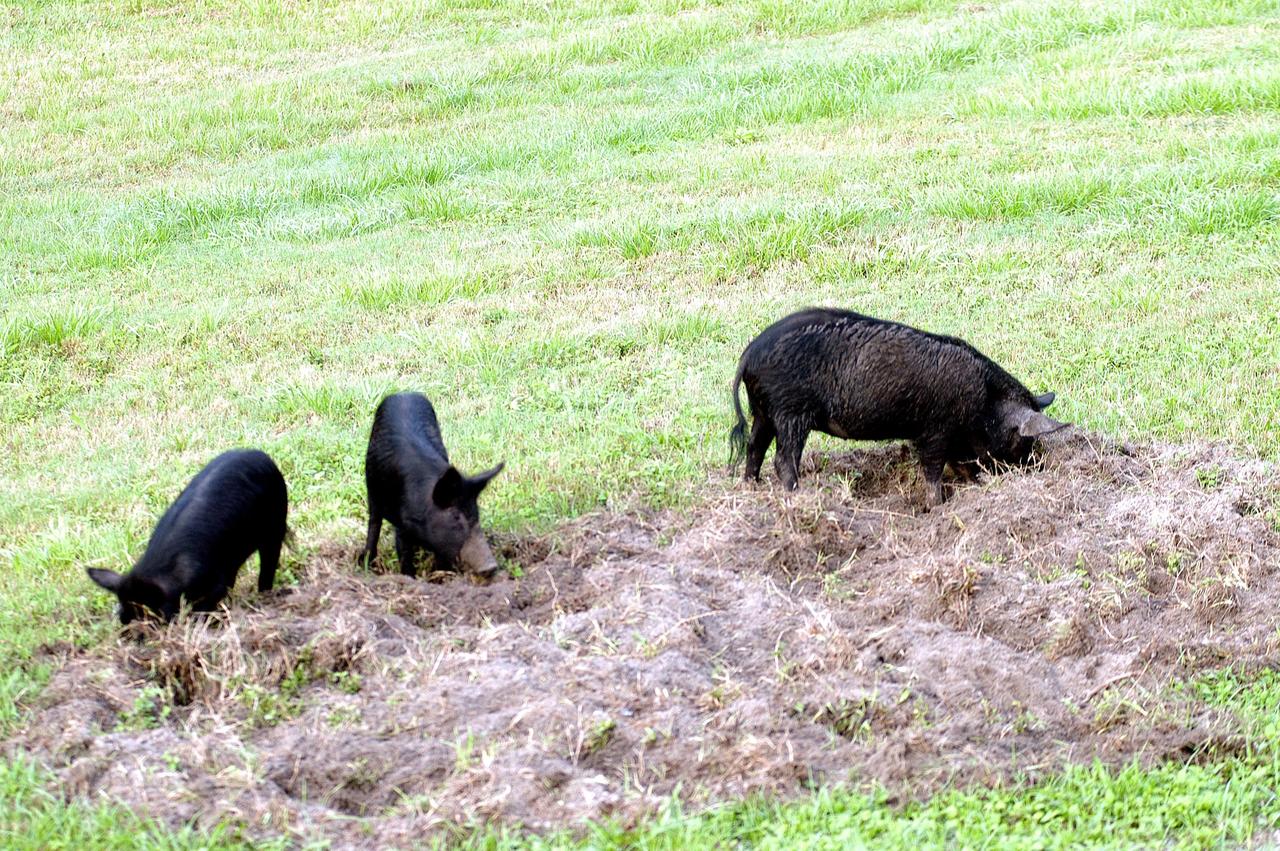
Two baby pigs dig in the underbrush at NASA's Kennedy Space Center in Florida. The center shares a border with the Merritt Island National Wildlife Refuge. More than 330 native and migratory bird species, 25 mammals, 117 fishes and 65 amphibians and reptiles call Kennedy and the wildlife refuge home.
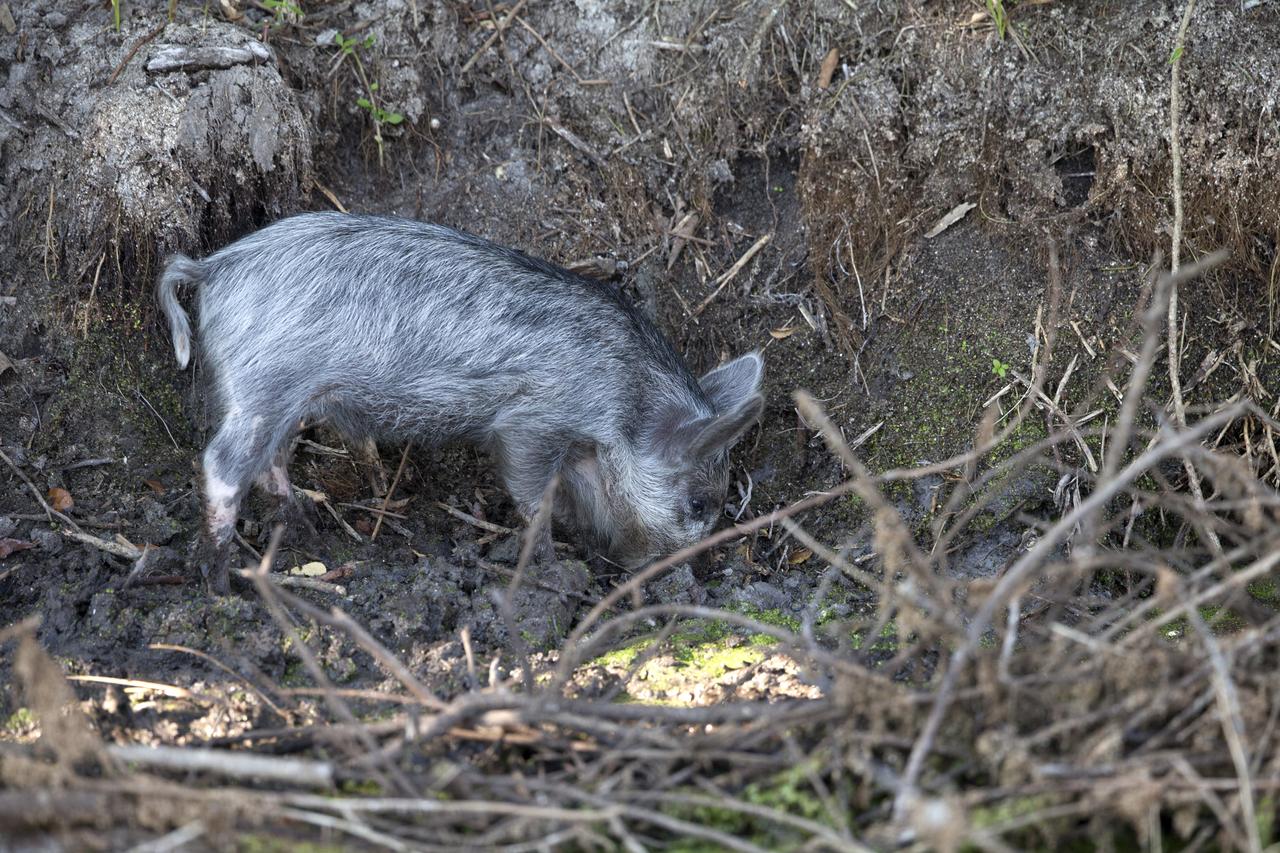
A baby pig digs in the underbrush at NASA's Kennedy Space Center in Florida. The center shares a border with the Merritt Island National Wildlife Refuge. More than 330 native and migratory bird species, 25 mammals, 117 fishes and 65 amphibians and reptiles call Kennedy and the wildlife refuge home.
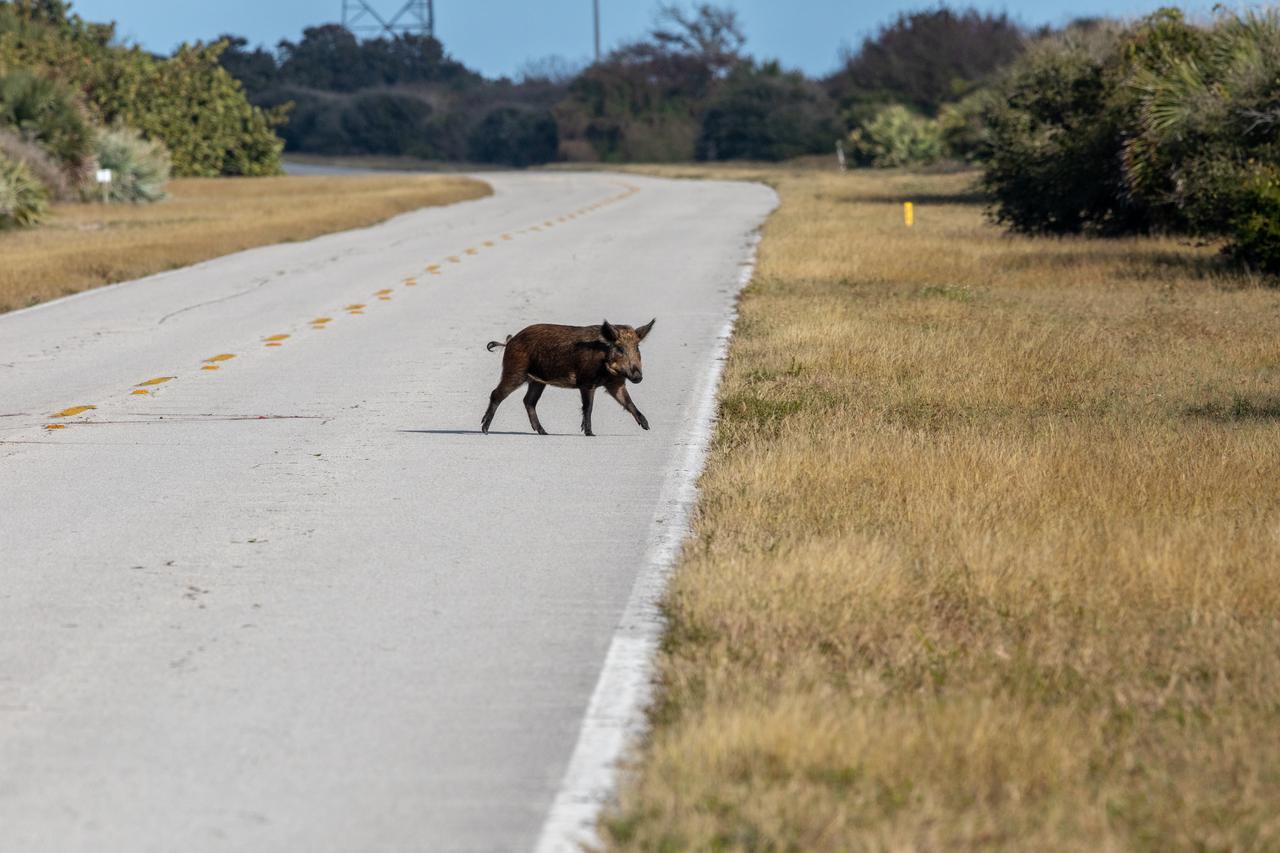
A wild pig crosses a roadway at NASA's Kennedy Space Center in Florida on Jan. 11, 2021. The center shares a border with the Merritt Island National Wildlife Refuge. More than 330 native and migratory bird species, 25 mammal, 117 fish and 65 amphibian and reptile species call Kennedy and the wildlife refuge home.
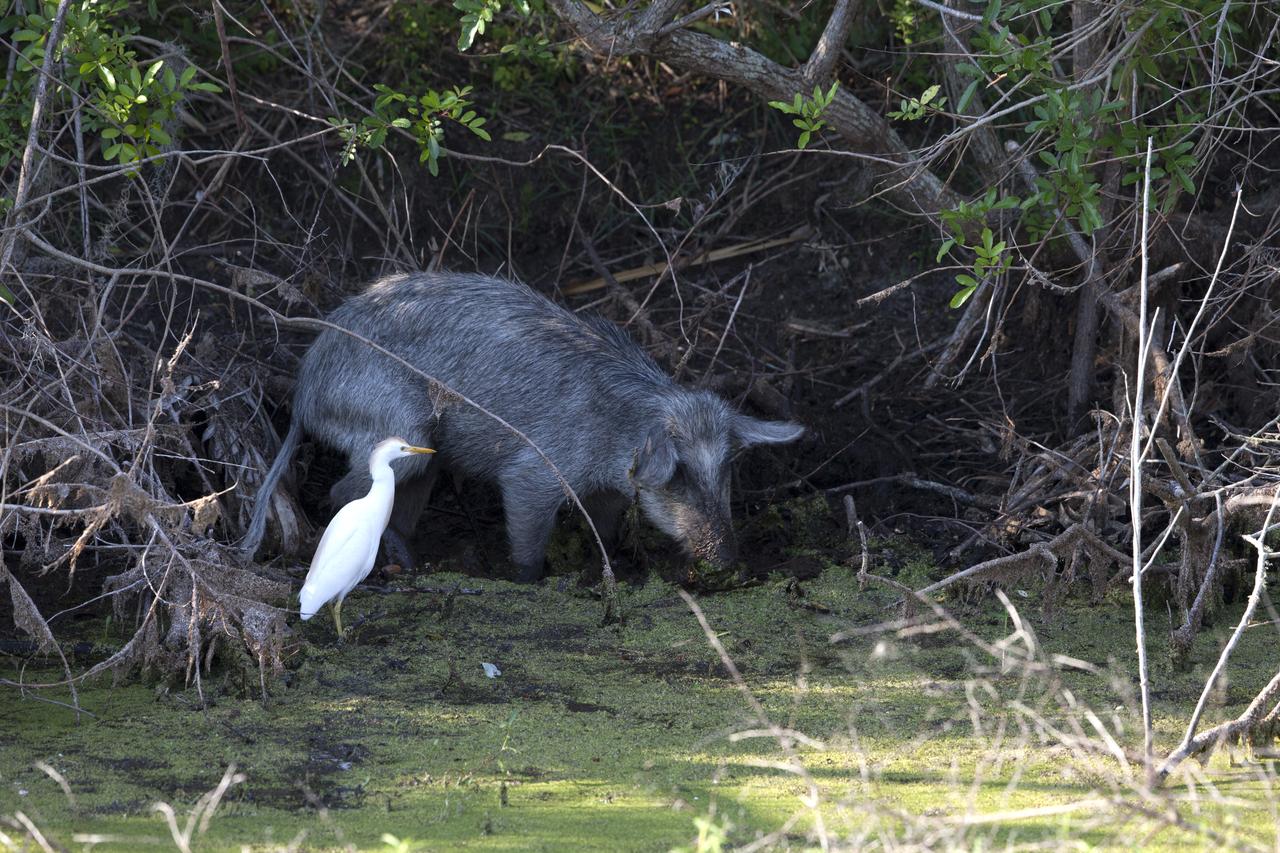
A wild pig finds food in the underbrush at NASA's Kennedy Space Center in Florida. The center shares a border with the Merritt Island National Wildlife Refuge. More than 330 native and migratory bird species, 25 mammals, 117 fishes and 65 amphibians and reptiles call Kennedy and the wildlife refuge home.
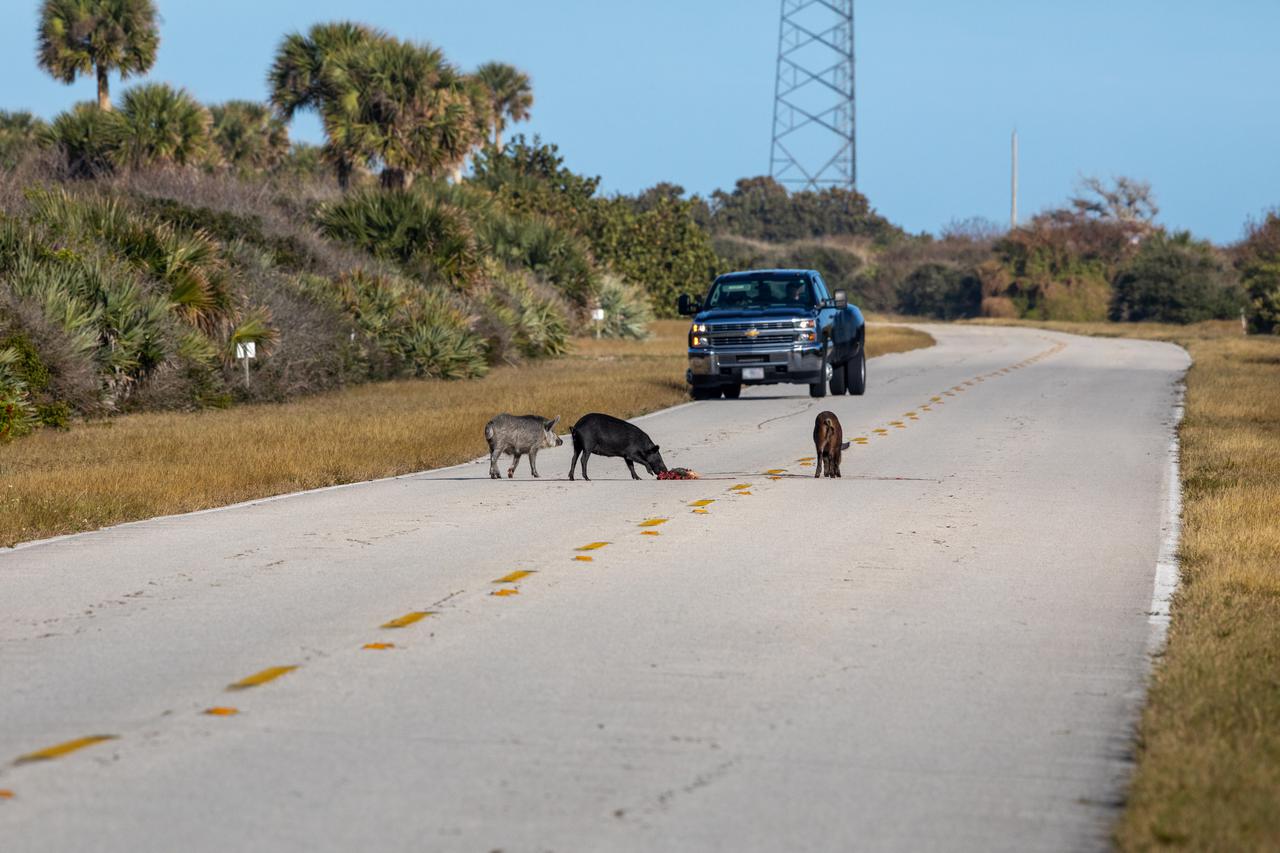
Wild pigs cross a roadway at NASA's Kennedy Space Center in Florida on Jan. 11, 2021. The center shares a border with the Merritt Island National Wildlife Refuge. More than 330 native and migratory bird species, 25 mammal, 117 fish and 65 amphibian and reptile species call Kennedy and the wildlife refuge home.
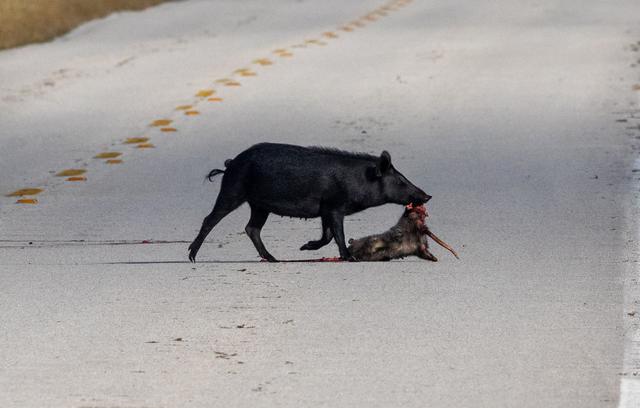
A wild pig is spotted with its prey on a roadway at NASA's Kennedy Space Center in Florida on Jan. 11, 2021. The center shares a border with the Merritt Island National Wildlife Refuge. More than 330 native and migratory bird species, 25 mammal, 117 fish and 65 amphibian and reptile species call Kennedy and the wildlife refuge home.
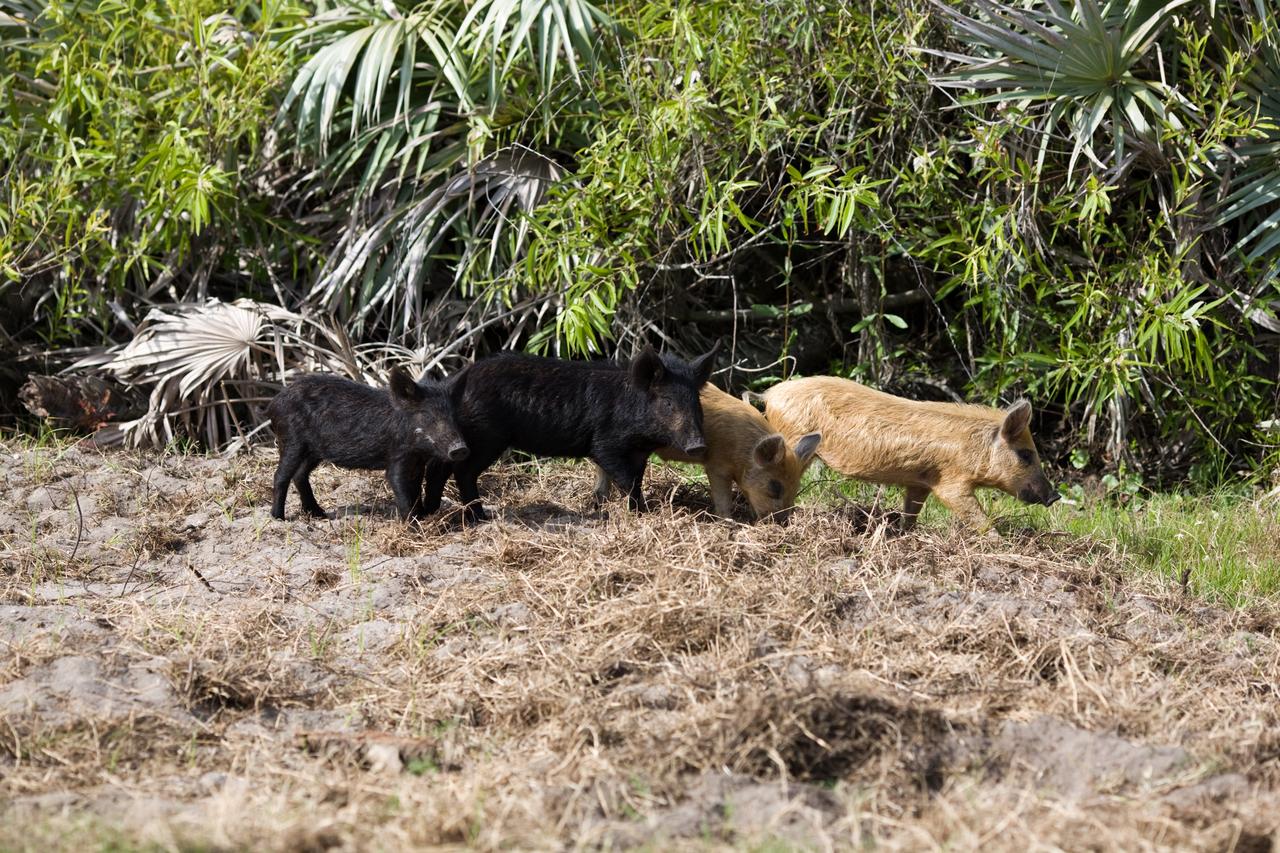
CAPE CANAVERAL, Fla. –– Wild pigs forage for food near a road through NASA's Kennedy Space Center in Florida. The wild pigs have flourished in the environs around Kennedy, which shares a border with the Merritt Island National Wildlife Refuge, without many predators other than panthers and humans. Pigs were introduced to Florida in the 1500s and are now found statewide in wooded areas close to water. Pigs are omnivores, foraging on the ground and rooting just beneath the surface, which damages the groundcover. Wild pigs eat almost anything that has nutritional value, including tubers, roots, shoots, acorns, fruits, berries, earthworms, amphibians, reptiles and rodents. Their appearance is similar to domestic hogs, but leaner, with a longer, narrower head and a coarser, denser coat. Females may have two litters per year. The piglets are weaned in a few weeks but remain with the mother for several months. Photo credit: NASA/Dimitri Gerondidakis
CAPE CANAVERAL, Fla. –– Wild pigs forage for food near a road through NASA's Kennedy Space Center in Florida. The wild pigs have flourished in the environs around Kennedy, which shares a border with the Merritt Island National Wildlife Refuge, without many predators other than panthers and humans. Pigs were introduced to Florida in the 1500s and are now found statewide in wooded areas close to water. Pigs are omnivores, foraging on the ground and rooting just beneath the surface, which damages the groundcover. Wild pigs eat almost anything that has nutritional value, including tubers, roots, shoots, acorns, fruits, berries, earthworms, amphibians, reptiles and rodents. Their appearance is similar to domestic hogs, but leaner, with a longer, narrower head and a coarser, denser coat. Females may have two litters per year. The piglets are weaned in a few weeks but remain with the mother for several months. Photo credit: NASA/Dimitri Gerondidakis
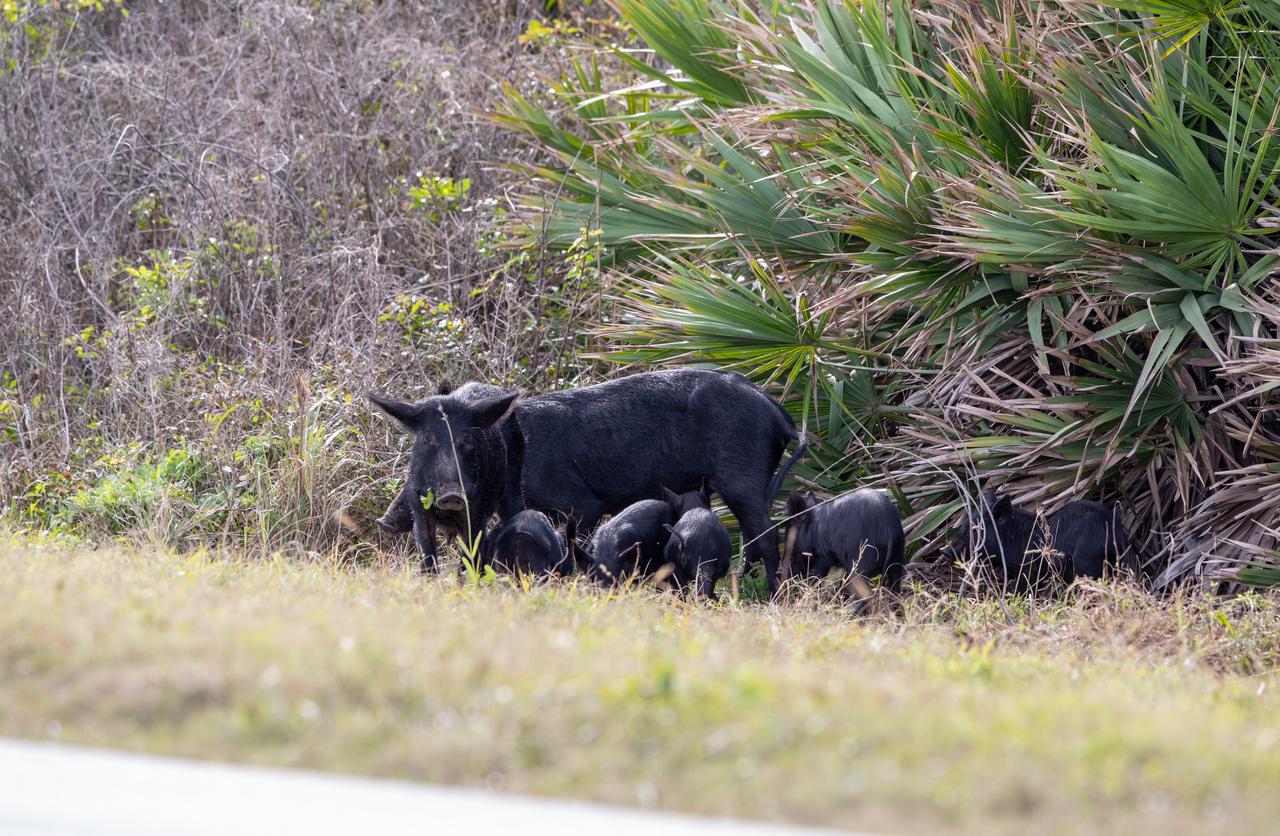
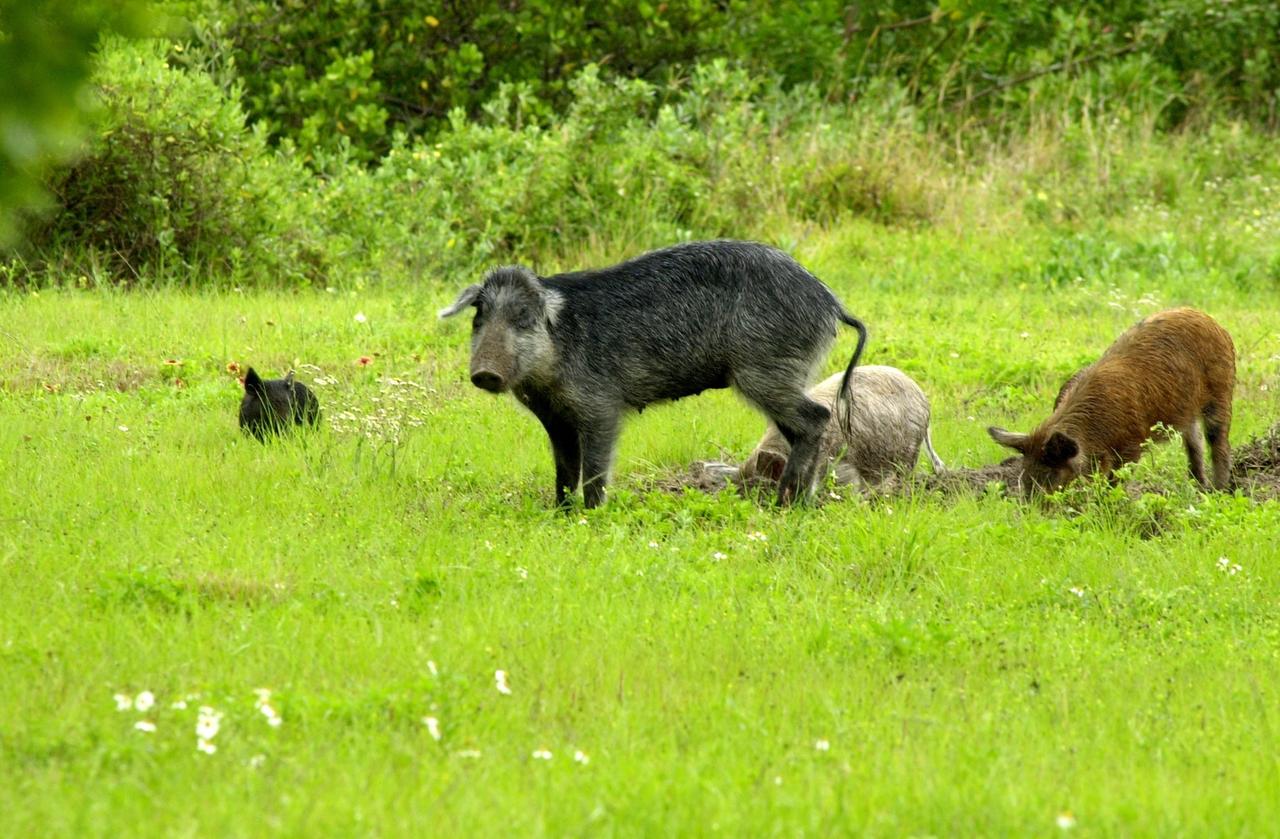
A family of wild hogs forages for food near the foliage at NASA’s Kennedy Space Center in Florida. Kennedy shares a border with the Merritt Island National Wildlife Refuge, spanning 140,000 acres of land, water, and marshes. More than 330 bird species, 117 species of fish, 68 amphibians and reptiles, and 31 different mammals call Kennedy and its surrounding borders home.
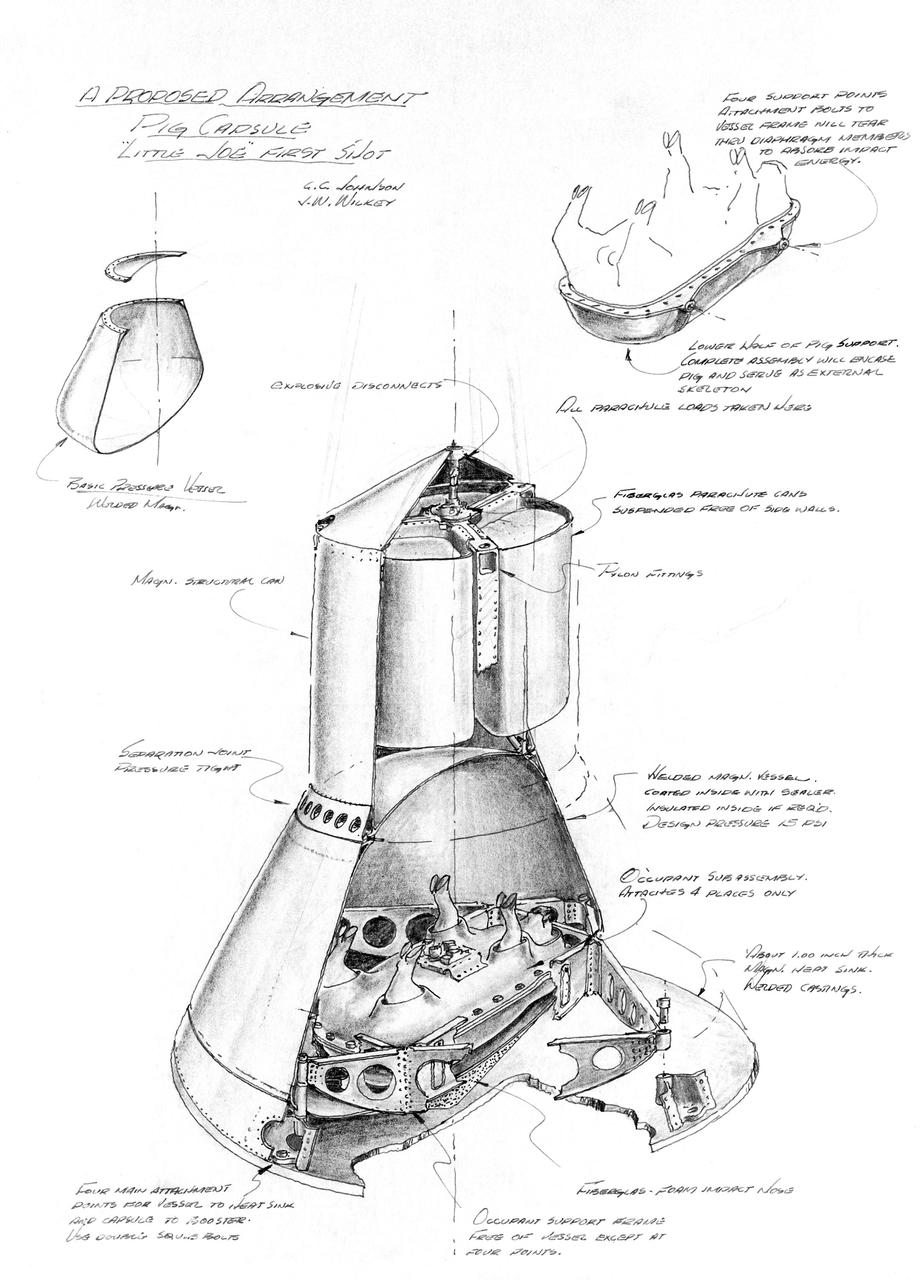
S63-19319 (October 1963) --- Pen and ink drawing of a proposed arrangement for a Pig Capsule in Little Joe capsule first shot. Photo credit: NASA
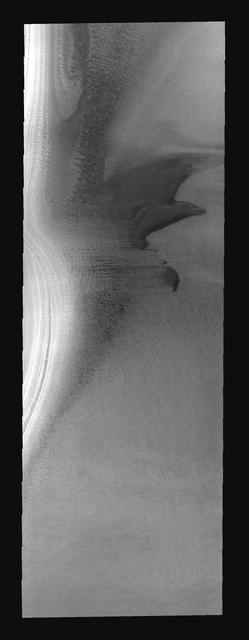
Back by popular demand: THEMIS ART IMAGE #71 Is it a pig oinking or dolphins jumping? These south polar dunes have an animal appearance
KENNEDY SPACE CENTER, FLA. -- Feral pigs dig for food on grounds near Kennedy Space Center. Not a native in the environment, the hogs are believed to be descendants from the pigs brought to Florida by the early Spanish explorers. Without many predators other than human, the pigs have flourished
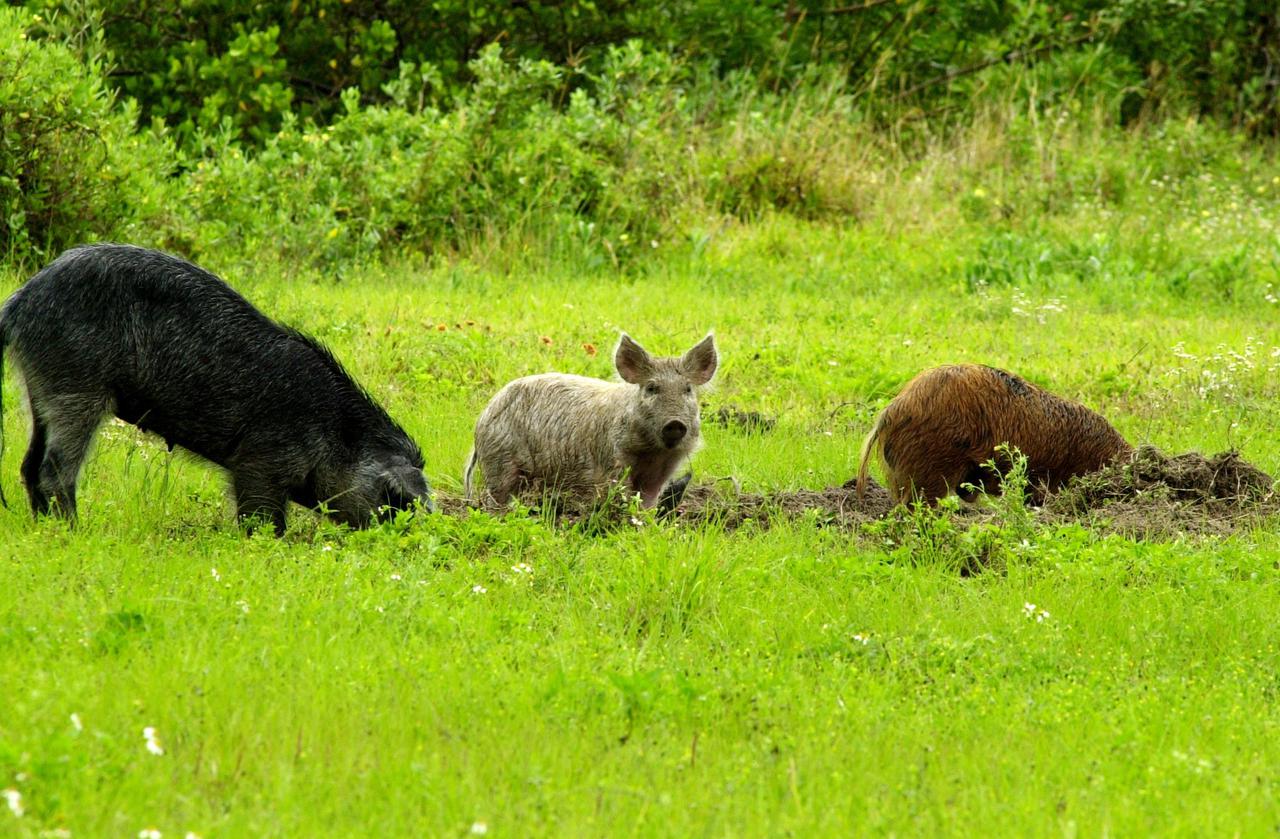
KENNEDY SPACE CENTER, FLA. -- Feral pigs dig for food on grounds near Kennedy Space Center. Not a native in the environment, the hogs are believed to be descendants from the pigs brought to Florida by the early Spanish explorers. Without many predators other than human, the pigs have flourished
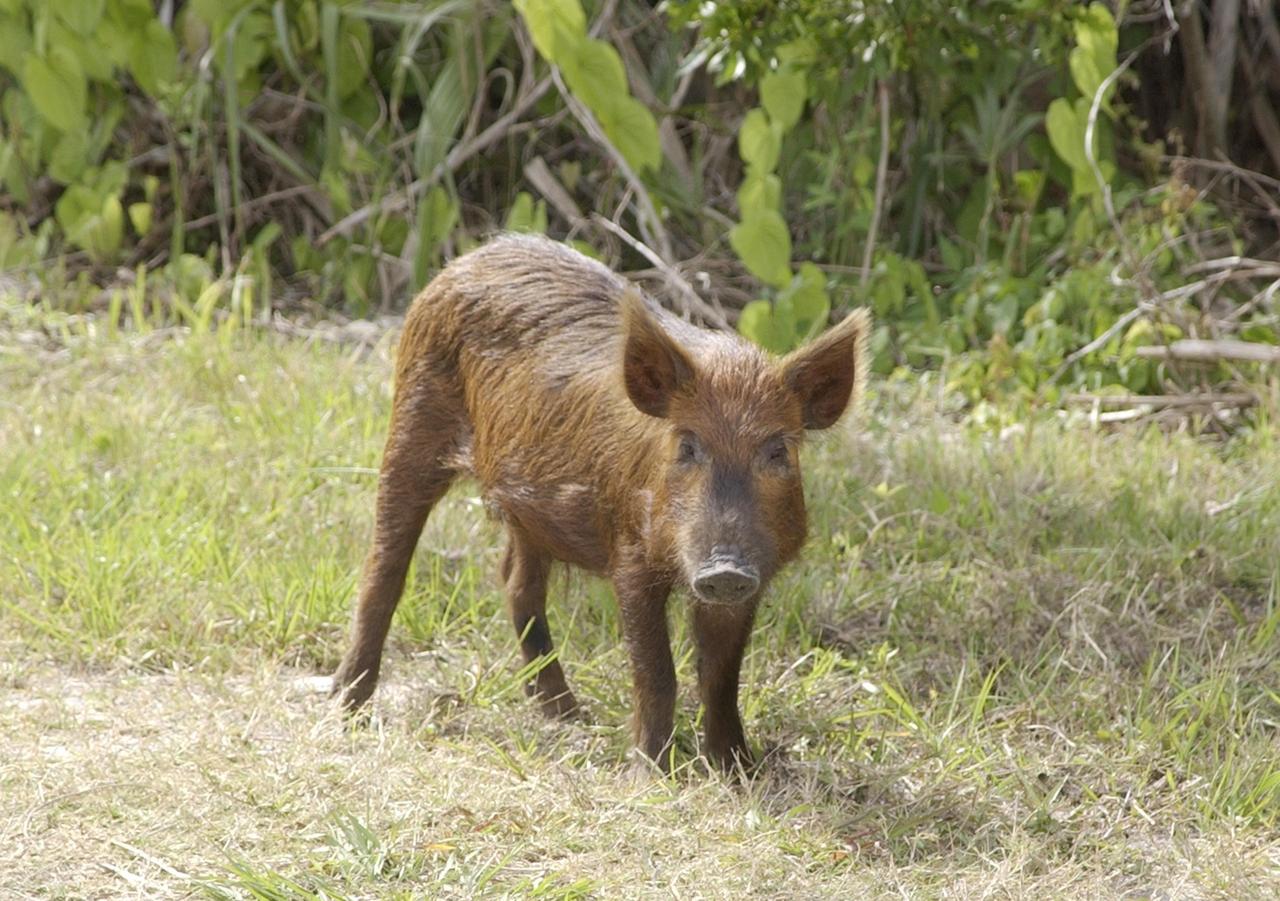
KENNEDY SPACE CENTER, FLA. - A wild pig is spotted near the KSC Press Site on its daily foraging rounds. Not a native in the environment, the pigs around KSC are believed to be descendants from those brought to Florida by the early Spanish explorers. Without many predators other than human, the pigs have flourished in the surrounding environs
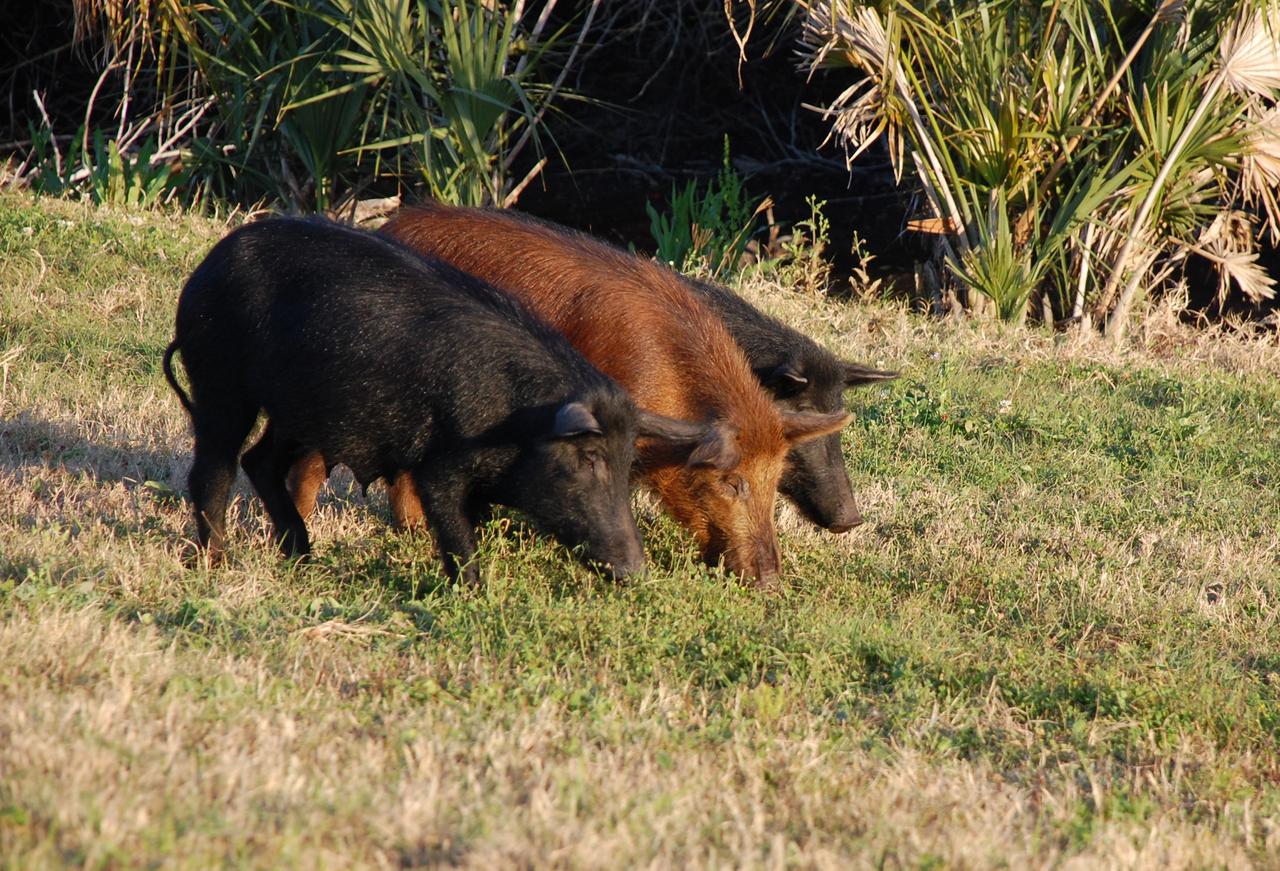
CAPE CANAVERAL, Fla. – – At NASA's Kennedy Space Center in Florida, adult wild pigs line up for their food hunt in the grassy field The wild pigs have flourished in the environs around Kennedy, which shares a border with the Merritt Island National Wildlife Refuge, without many predators other than panthers and humans. Pigs were introduced to Florida in the 1500s and are now found statewide in wooded areas close to water. Pigs are omnivores, foraging on the ground and rooting just beneath the surface, which damages the groundcover. Wild pigs eat almost anything that has nutritional value, including tubers, roots, shoots, acorns, fruits, berries, earthworms, amphibians, reptiles and rodents. Their appearance is similar to domestic hogs, but leaner, with a longer, narrower head and a coarser, denser coat. Females may have two litters per year. The piglets are weaned in a few weeks but remain with the mother for several months. Photo credit: NASA/Ben Smegelsky
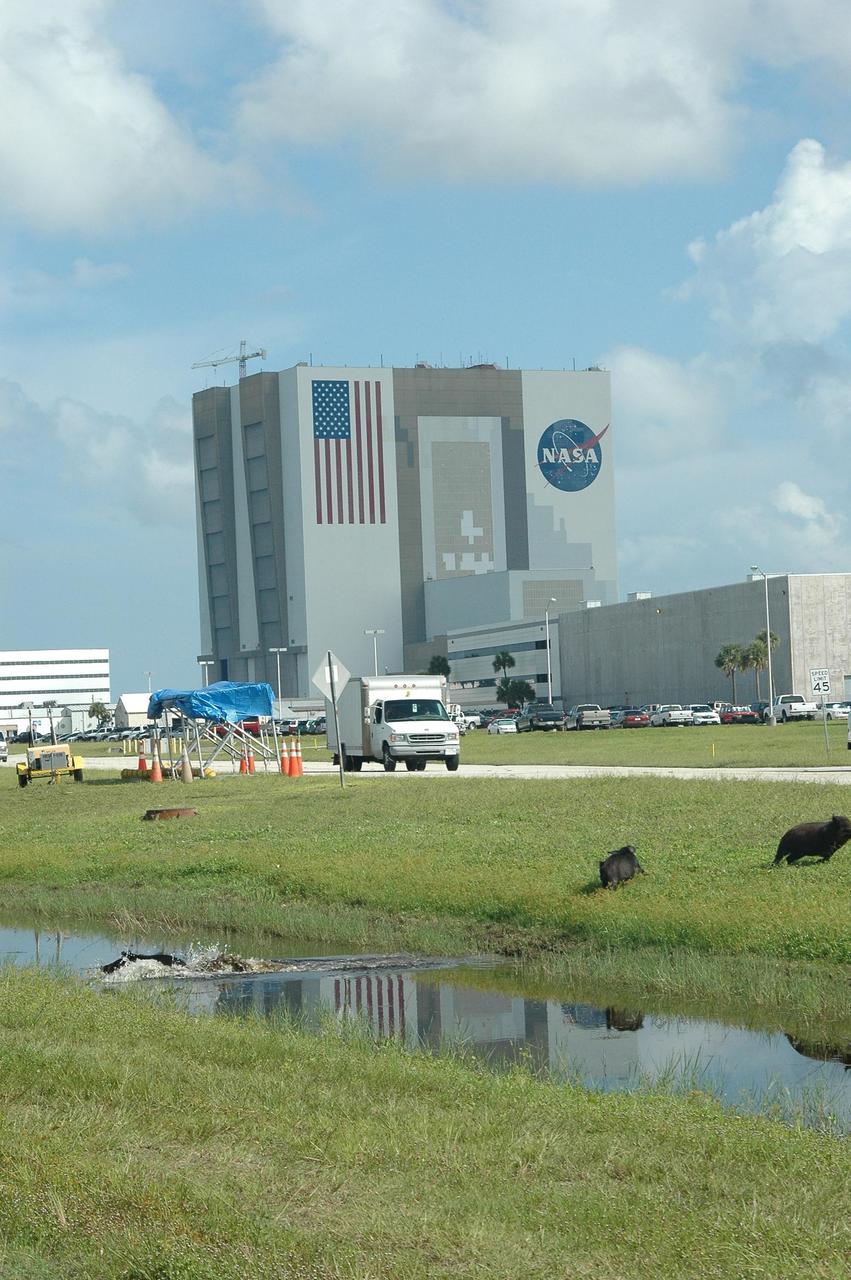
KENNEDY SPACE CENTER, FLA. - A wild pig splashes through a canal near NASA Kennedy Space Center’s Vehicle Assembly Building while its companions stay nearby on the bank. The wild pigs have flourished in the environs around KSC, which shares a border with the Merritt Island National Wildlife Refuge, without many predators other than panthers and humans. Pigs were introduced to Florida in the 1500s and are now found statewide in wooded areas close to water. Pigs are omnivores, foraging on the ground and rooting just beneath the surface, which damages the groundcover. Wild pigs eat almost anything that has nutritional value, including tubers, roots, shoots, acorns, fruits, berries, earthworms, amphibians, reptiles and rodents. Appearance is similar to domestic hogs, but leaner, with a longer, narrower head and a coarser, denser coat. Females may have two litters per year. The piglets are weaned in a few weeks but remain with the mother for several months.
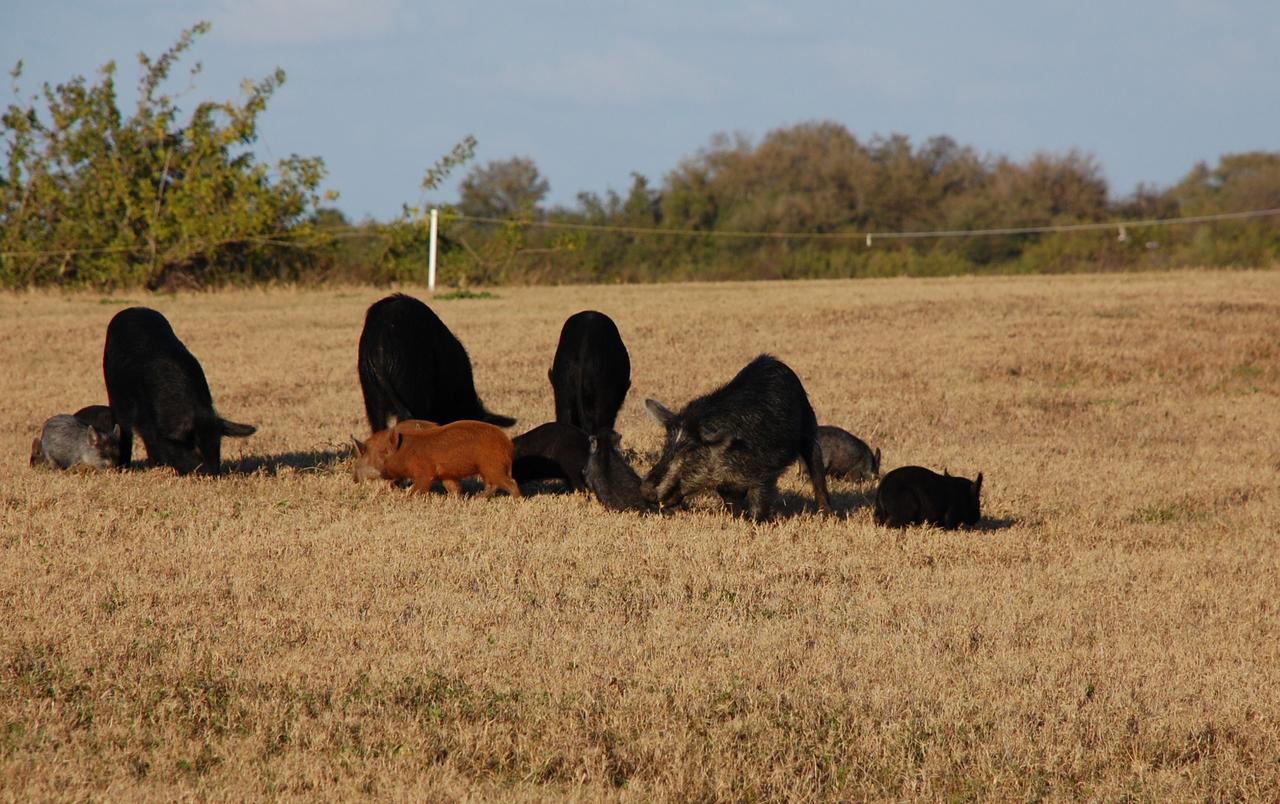
CAPE CANAVERAL, Fla. – At NASA's Kennedy Space Center in Florida, a family of wild pigs roots through the grass for food. The wild pigs have flourished in the environs around Kennedy, which shares a border with the Merritt Island National Wildlife Refuge, without many predators other than panthers and humans. Pigs were introduced to Florida in the 1500s and are now found statewide in wooded areas close to water. Pigs are omnivores, foraging on the ground and rooting just beneath the surface, which damages the groundcover. Wild pigs eat almost anything that has nutritional value, including tubers, roots, shoots, acorns, fruits, berries, earthworms, amphibians, reptiles and rodents. Their appearance is similar to domestic hogs, but leaner, with a longer, narrower head and a coarser, denser coat. Females may have two litters per year. The piglets are weaned in a few weeks but remain with the mother for several months. Photo credit: NASA/Ben Smegelsky
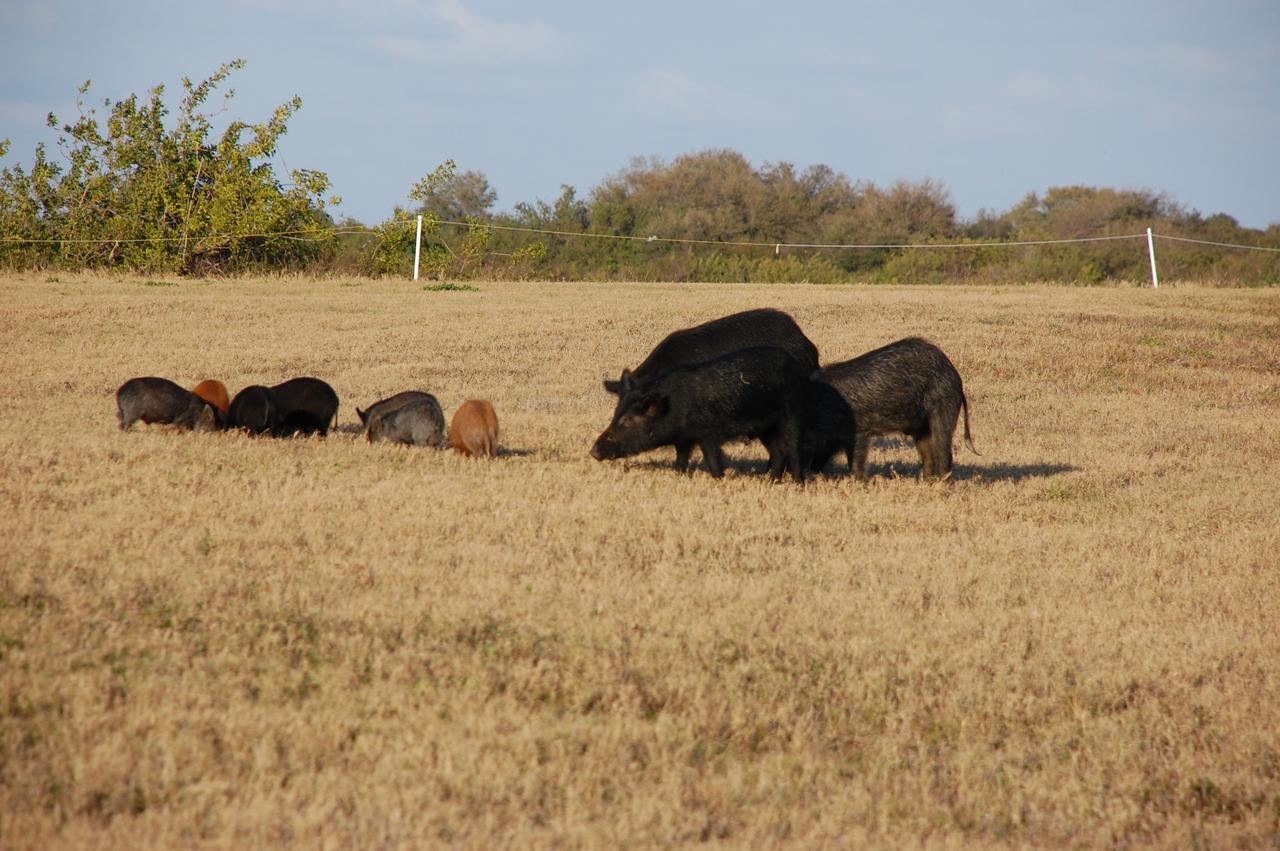
CAPE CANAVERAL, Fla. – At NASA's Kennedy Space Center in Florida, a family of wild pigs roots through the grass for food. The wild pigs have flourished in the environs around Kennedy, which shares a border with the Merritt Island National Wildlife Refuge, without many predators other than panthers and humans. Pigs were introduced to Florida in the 1500s and are now found statewide in wooded areas close to water. Pigs are omnivores, foraging on the ground and rooting just beneath the surface, which damages the groundcover. Wild pigs eat almost anything that has nutritional value, including tubers, roots, shoots, acorns, fruits, berries, earthworms, amphibians, reptiles and rodents. Their appearance is similar to domestic hogs, but leaner, with a longer, narrower head and a coarser, denser coat. Females may have two litters per year. The piglets are weaned in a few weeks but remain with the mother for several months. Photo credit: NASA/Ben Smegelsky
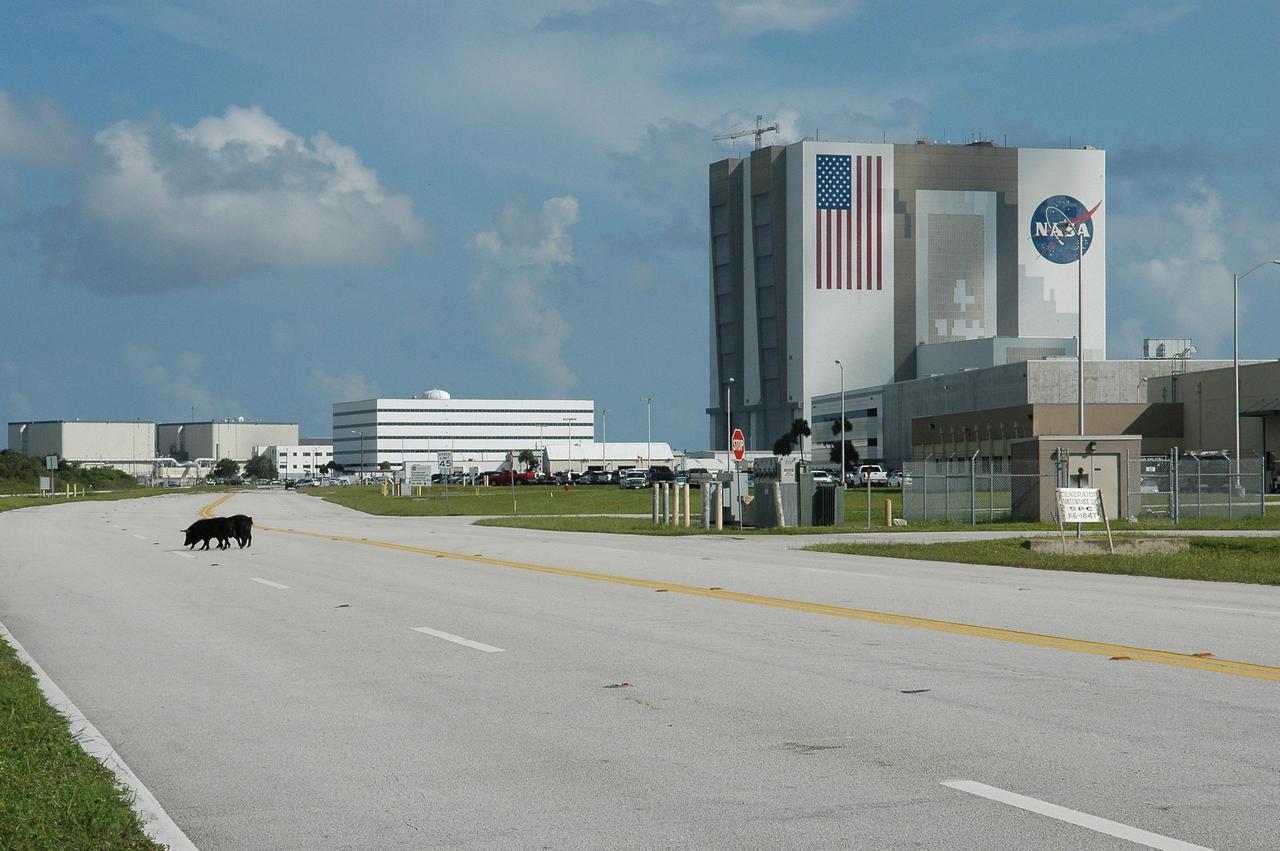
KENNEDY SPACE CENTER, FLA. - Out for a stroll on a sunny Florida day, a trio of wild pigs cross the road near NASA Kennedy Space Center’s Vehicle Assembly Building, in the background. The wild pigs have flourished in the environs around KSC, which shares a border with the Merritt Island National Wildlife Refuge, without many predators other than panthers and humans. Pigs were introduced to Florida in the 1500s and are now found statewide in wooded areas close to water. Pigs are omnivores, foraging on the ground and rooting just beneath the surface, which damages the groundcover. Wild pigs eat almost anything that has nutritional value, including tubers, roots, shoots, acorns, fruits, berries, earthworms, amphibians, reptiles and rodents. Appearance is similar to domestic hogs, but leaner, with a longer, narrower head and a coarser, denser coat. Females may have two litters per year. The piglets are weaned in a few weeks but remain with the mother for several months.
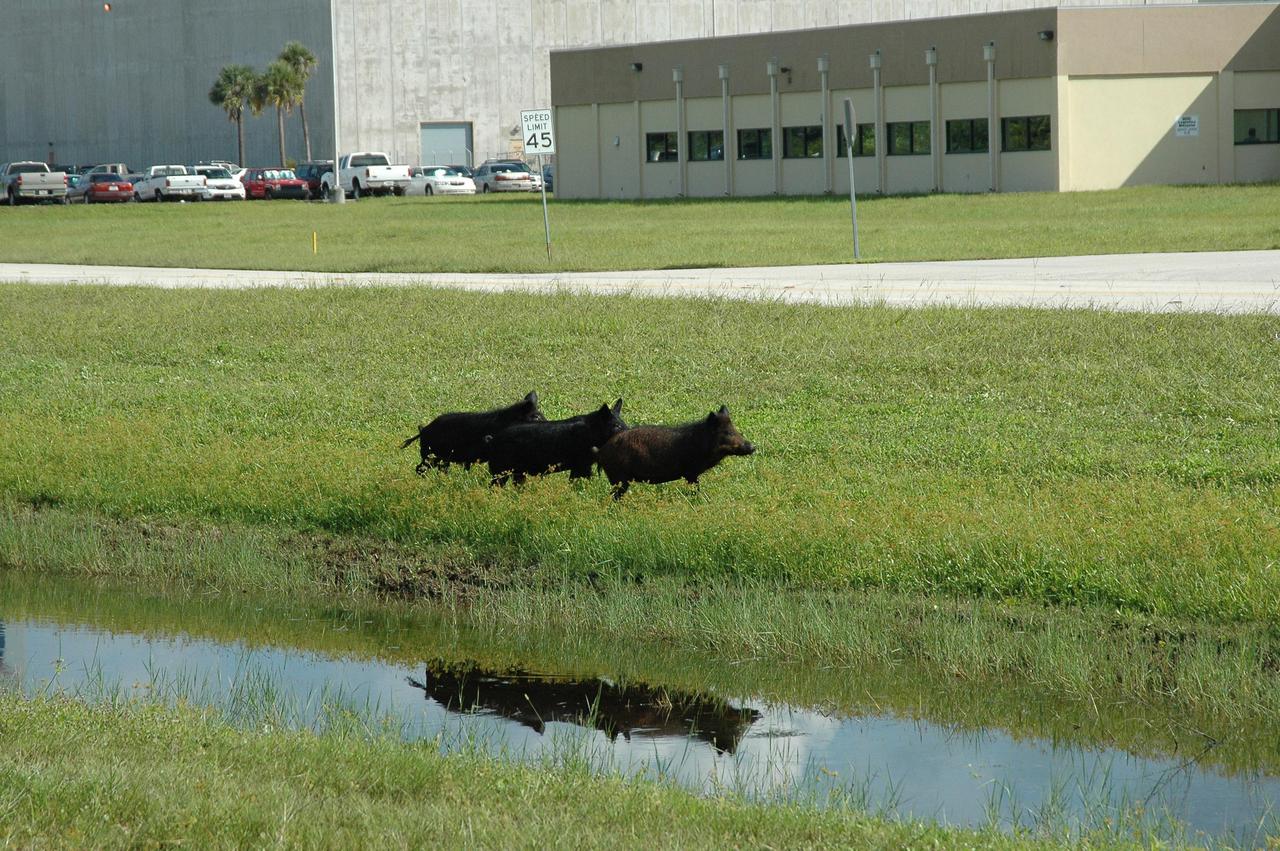
KENNEDY SPACE CENTER, FLA. - As if posing for the photographer, a trio of wild pigs pause during their stroll along a canal near NASA Kennedy Space Center’s Launch Control Center, in the background. The wild pigs have flourished in the environs around KSC, which shares a border with the Merritt Island National Wildlife Refuge, without many predators other than panthers and humans. Pigs were introduced to Florida in the 1500s and are now found statewide in wooded areas close to water. Pigs are omnivores, foraging on the ground and rooting just beneath the surface, which damages the groundcover. Wild pigs eat almost anything that has nutritional value, including tubers, roots, shoots, acorns, fruits, berries, earthworms, amphibians, reptiles and rodents. Appearance is similar to domestic hogs, but leaner, with a longer, narrower head and a coarser, denser coat. Females may have two litters per year. The piglets are weaned in a few weeks but remain with the mother for several months.
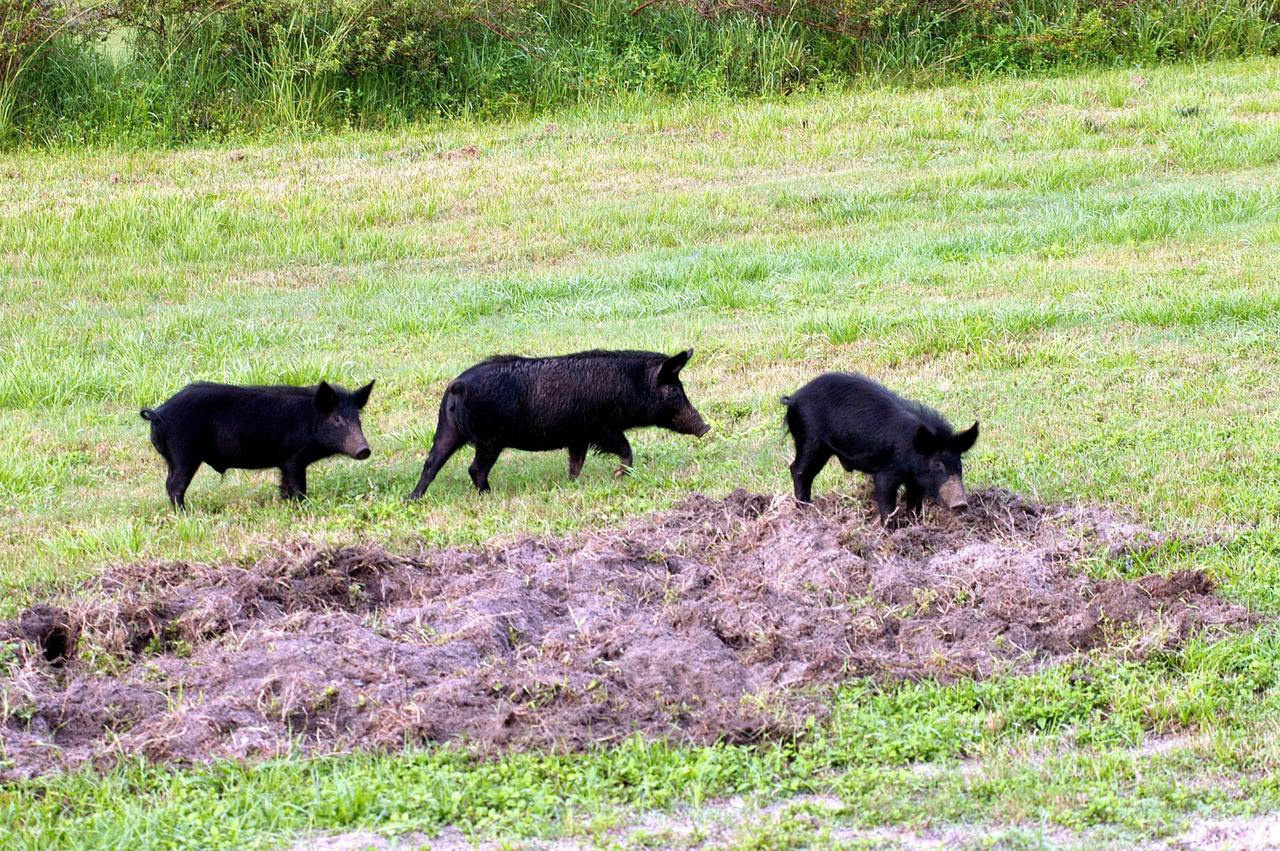
KENNEDY SPACE CENTER, FLA. - Three wild pigs - a mother and her two offspring - root for food in the grass near the NASA News Center at KSC. Feral pigs were introduced to Florida in the 1500s and are now found statewide in wooded areas close to water. The pigs have flourished in the environs around KSC, which shares a border with the Merritt Island National Wildlife Refuge, without many predators other than panthers and humans. Pigs are omnivores, foraging on the ground and rooting just beneath the surface, which damages the groundcover. Wild pigs eat almost anything that has nutritional value, including tubers, roots, shoots, acorns, fruits, berries, earthworms, amphibians, reptiles and rodents. Appearance is similar to domestic hogs, but leaner, with a longer, narrower head and a coarser, denser coat. Females may have two litters per year. The piglets are weaned in a few weeks but remain with the mother for several months.
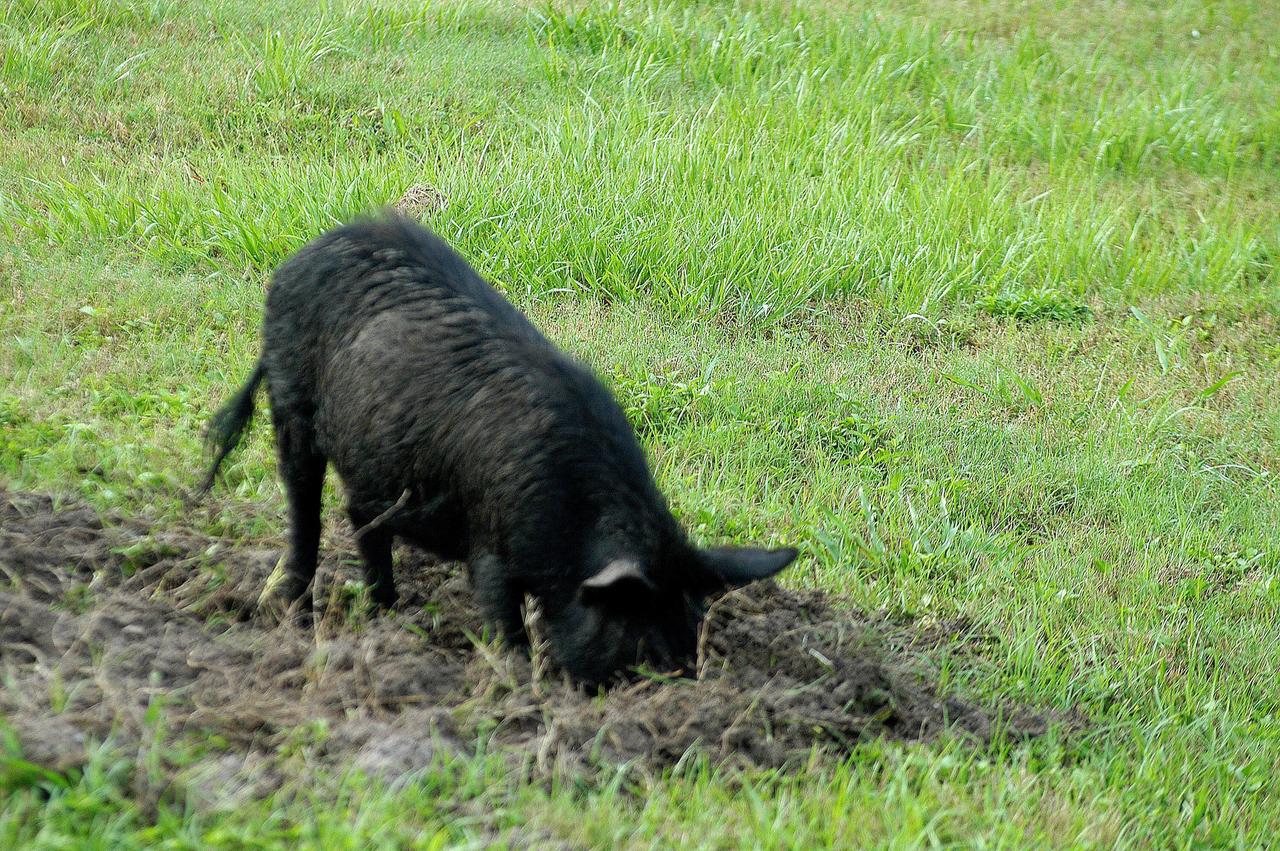
KENNEDY SPACE CENTER, FLA. - A young wild pig roots in the grass for food in an area near the NASA News Center at KSC. Feral pigs were introduced to Florida in the 1500s and are now found statewide in wooded areas close to water. The pigs have flourished in the environs around KSC, which shares a border with the Merritt Island National Wildlife Refuge, without many predators other than panthers and humans. Pigs are omnivores, foraging on the ground and rooting just beneath the surface, which damages the groundcover. Wild pigs eat almost anything that has nutritional value, including tubers, roots, shoots, acorns, fruits, berries, earthworms, amphibians, reptiles and rodents. Appearance is similar to domestic hogs, but leaner, with a longer, narrower head and a coarser, denser coat. Females may have two litters per year. The piglets are weaned in a few weeks but remain with the mother for several months.
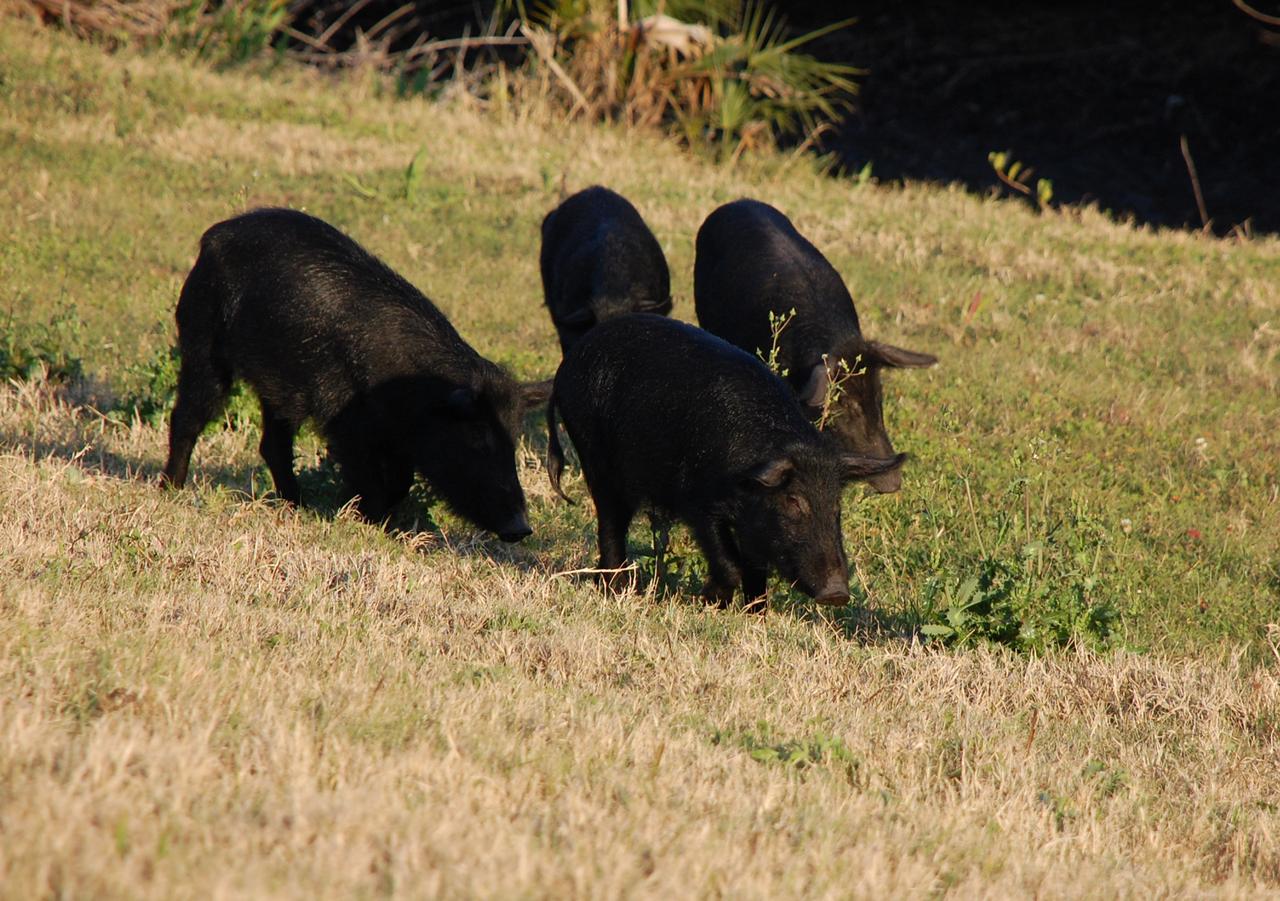
CAPE CANAVERAL, Fla. – At NASA's Kennedy Space Center in Florida, adult wild pigs hunt for food in the grassy field. The wild pigs have flourished in the environs around Kennedy, which shares a border with the Merritt Island National Wildlife Refuge, without many predators other than panthers and humans. Pigs were introduced to Florida in the 1500s and are now found statewide in wooded areas close to water. Pigs are omnivores, foraging on the ground and rooting just beneath the surface, which damages the groundcover. Wild pigs eat almost anything that has nutritional value, including tubers, roots, shoots, acorns, fruits, berries, earthworms, amphibians, reptiles and rodents. Their appearance is similar to domestic hogs, but leaner, with a longer, narrower head and a coarser, denser coat. Females may have two litters per year. The piglets are weaned in a few weeks but remain with the mother for several months. Photo credit: NASA/Ben Smegelsky
KENNEDY SPACE CENTER, FLA. - Three wild pigs - a mother and her two offspring - root for food in the grass near the NASA News Center at KSC. Feral pigs were introduced to Florida in the 1500s and are now found statewide in wooded areas close to water. The pigs have flourished in the environs around KSC, which shares a border with the Merritt Island National Wildlife Refuge, without many predators other than panthers and humans. Pigs are omnivores, foraging on the ground and rooting just beneath the surface, which damages the groundcover. Wild pigs eat almost anything that has nutritional value, including tubers, roots, shoots, acorns, fruits, berries, earthworms, amphibians, reptiles and rodents. Appearance is similar to domestic hogs, but leaner, with a longer, narrower head and a coarser, denser coat. Females may have two litters per year. The piglets are weaned in a few weeks but remain with the mother for several months.
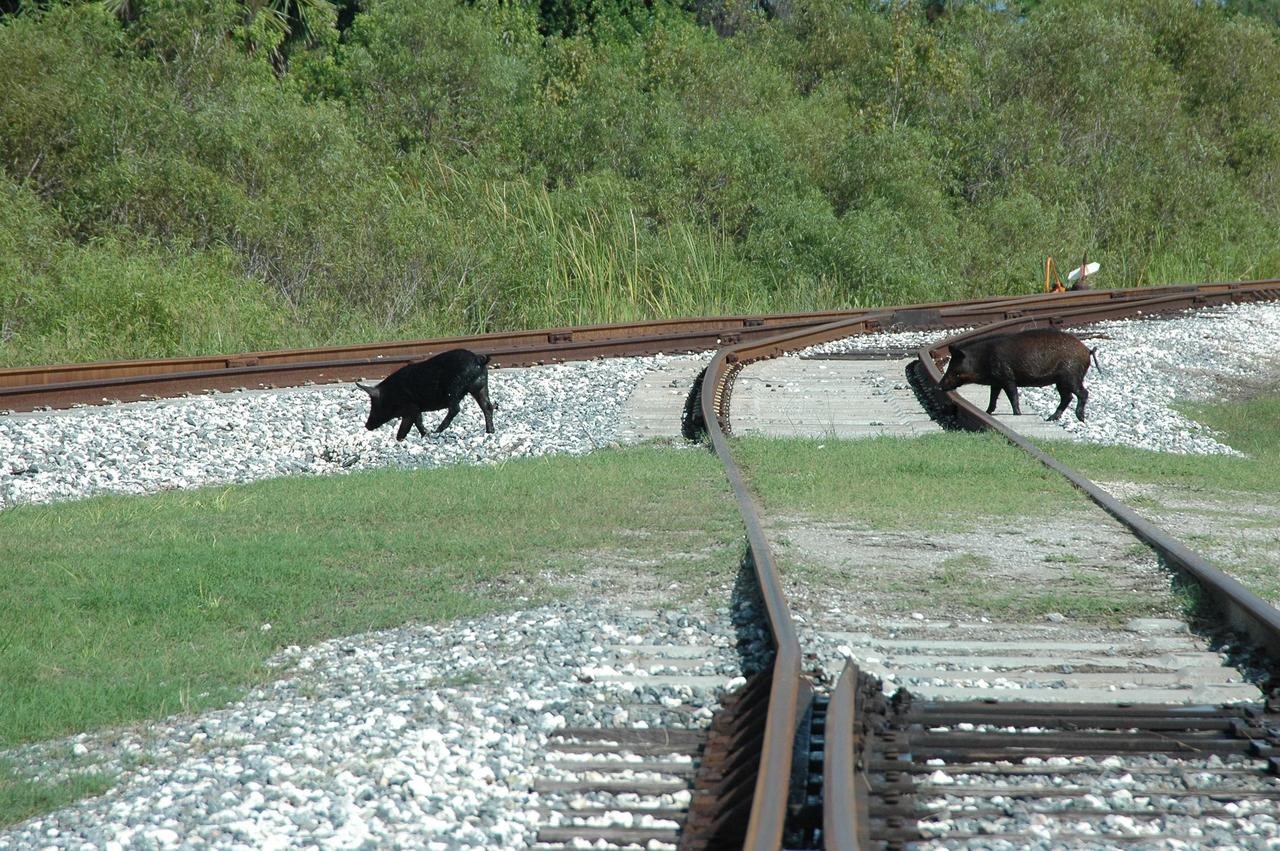
KENNEDY SPACE CENTER, FLA. - Two wild pigs cross railroad tracks on grounds at NASA Kennedy Space Center. The wild pigs have flourished in the environs around KSC, which shares a border with the Merritt Island National Wildlife Refuge, without many predators other than panthers and humans. Pigs were introduced to Florida in the 1500s and are now found statewide in wooded areas close to water. Pigs are omnivores, foraging on the ground and rooting just beneath the surface, which damages the groundcover. Wild pigs eat almost anything that has nutritional value, including tubers, roots, shoots, acorns, fruits, berries, earthworms, amphibians, reptiles and rodents. Appearance is similar to domestic hogs, but leaner, with a longer, narrower head and a coarser, denser coat. Females may have two litters per year. The piglets are weaned in a few weeks but remain with the mother for several months.
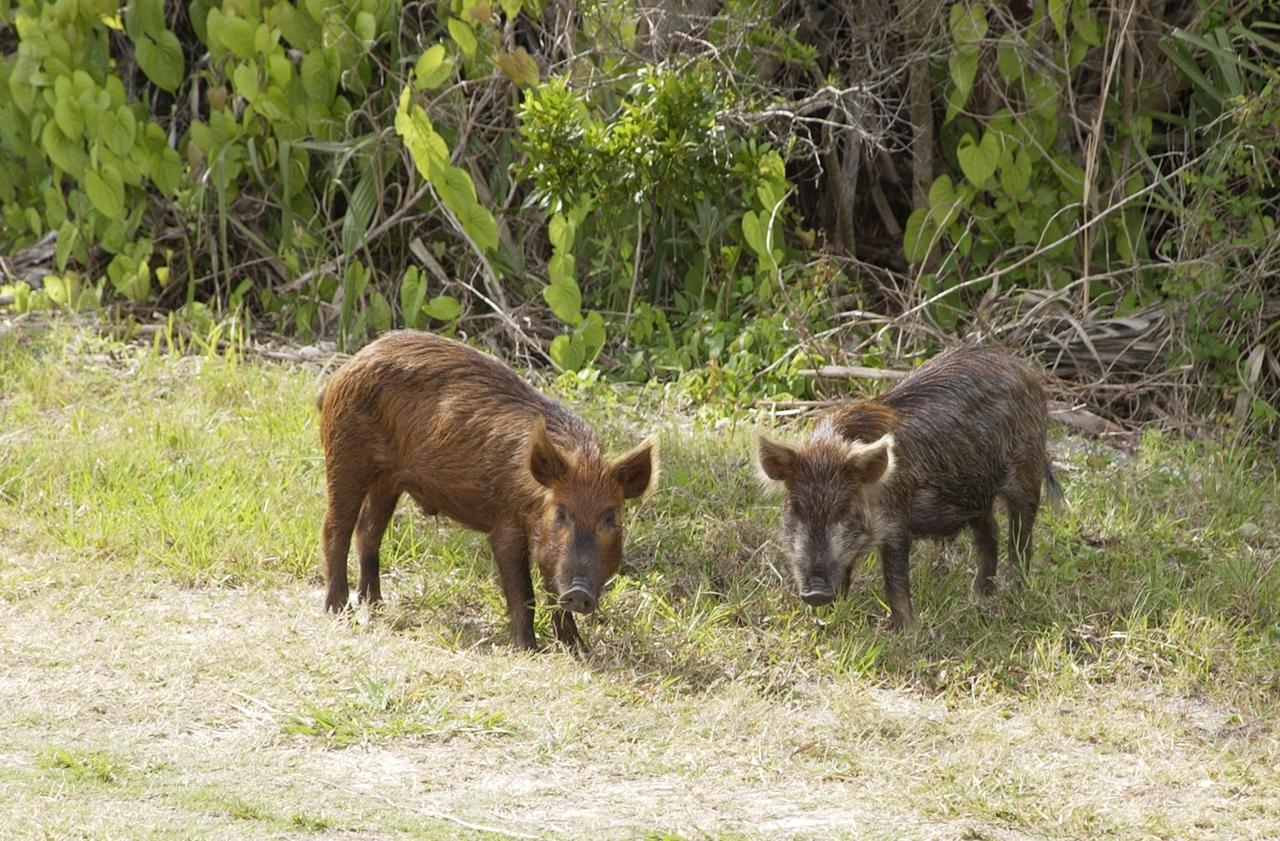
KENNEDY SPACE CENTER, FLA. - Wild pigs stop near the KSC Press Site in the Launch Complex 39 Area on their daily foraging rounds. Not a native in the environment, the pigs are believed to be descendants from those brought to Florida by the early Spanish explorers. Without many predators other than human, the pigs have flourished in the surrounding environs

CAPE CANAVERAL, Fla. – At NASA's Kennedy Space Center in Florida, a wild pig stops hunting for food to eye the photographer. This pig is part of a larger family in the area. The wild pigs have flourished in the environs around Kennedy, which shares a border with the Merritt Island National Wildlife Refuge, without many predators other than panthers and humans. Pigs were introduced to Florida in the 1500s and are now found statewide in wooded areas close to water. Pigs are omnivores, foraging on the ground and rooting just beneath the surface, which damages the groundcover. Wild pigs eat almost anything that has nutritional value, including tubers, roots, shoots, acorns, fruits, berries, earthworms, amphibians, reptiles and rodents. Their appearance is similar to domestic hogs, but leaner, with a longer, narrower head and a coarser, denser coat. Females may have two litters per year. The piglets are weaned in a few weeks but remain with the mother for several months. Photo credit: NASA/Ben Smegelsky
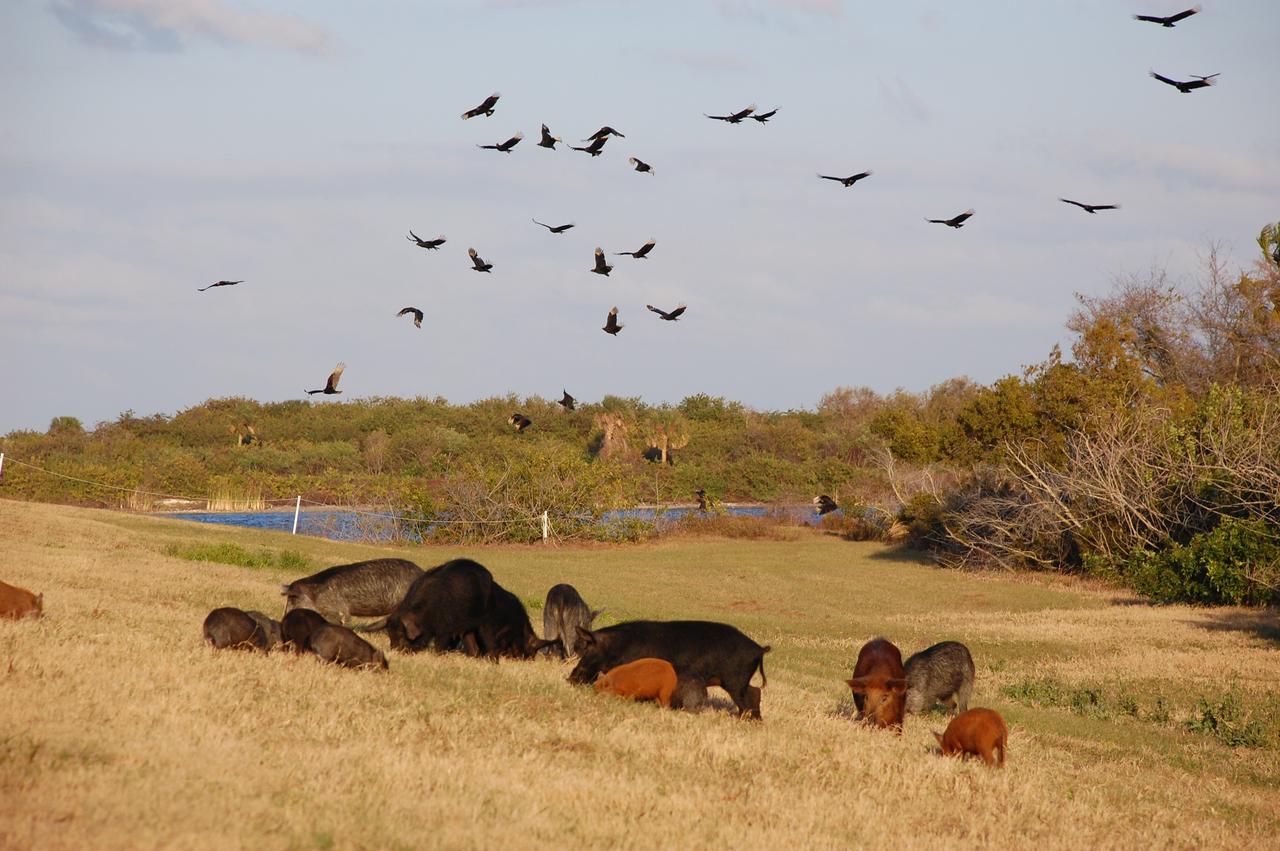
CAPE CANAVERAL, Fla. – At NASA's Kennedy Space Center in Florida, a family of wild pigs roots through the grass for food. Overhead, vultures circle, hunting for their share of food. The wild pigs have flourished in the environs around Kennedy, which shares a border with the Merritt Island National Wildlife Refuge, without many predators other than panthers and humans. Pigs were introduced to Florida in the 1500s and are now found statewide in wooded areas close to water. Pigs are omnivores, foraging on the ground and rooting just beneath the surface, which damages the groundcover. Wild pigs eat almost anything that has nutritional value, including tubers, roots, shoots, acorns, fruits, berries, earthworms, amphibians, reptiles and rodents. Their appearance is similar to domestic hogs, but leaner, with a longer, narrower head and a coarser, denser coat. Females may have two litters per year. The piglets are weaned in a few weeks but remain with the mother for several months. Photo credit: NASA/Ben Smegelsky
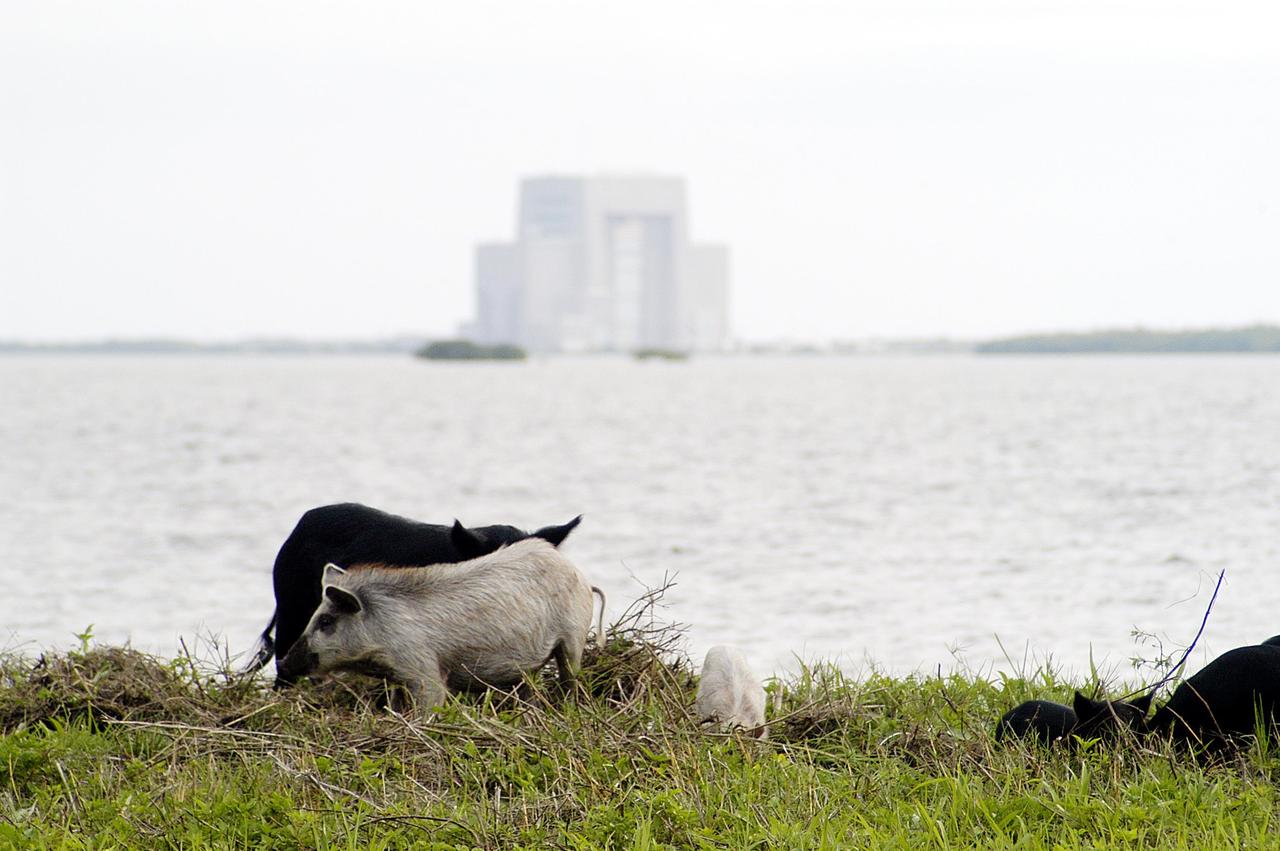
KENNEDY SPACE CENTER, Fla. - A small herd of wild pigs root for food along the bank of this body of water at Kennedy Space Center. Not a native in the environment, the pigs are believed to be descendants from those brought to Florida by the early Spanish explorers. Without many predators other than human, the pigs have flourished in the surrounding environs, primarily the Merritt Island National Wildlife Refuge, which shares a boundary with the Center. The Wildlife Refuge encompasses 92,000 acres that are a habitat for more than 331 species of birds, 31 mammals, 117 fishes, and 65 amphibians and reptiles. The marshes and open water of the refuge provide wintering areas for 23 species of migratory waterfowl, as well as a year-round home for great blue herons, great egrets, wood storks, cormorants, brown pelicans and other species of marsh and shore birds, plus a variety of insects.
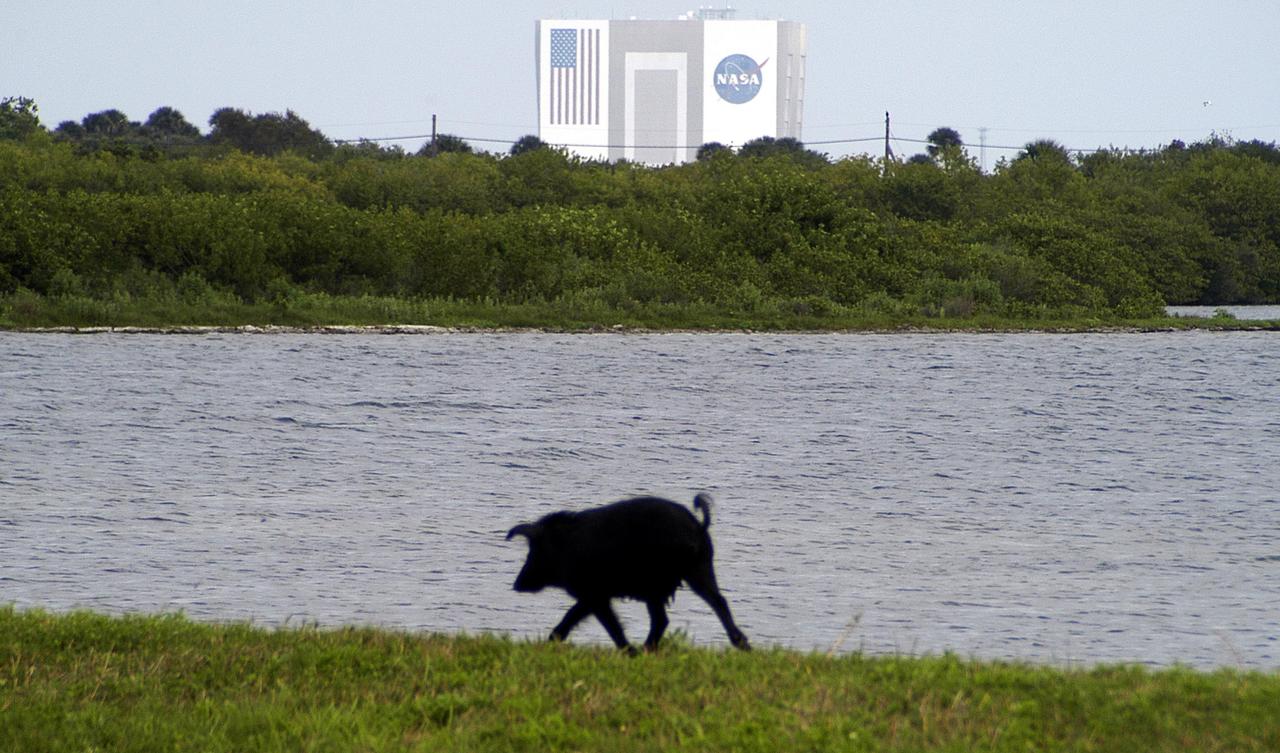
KENNEDY SPACE CENTER, Fla. - A lone wild pig travels the bank of a body of water near Kennedy Space Center. In the background is the 525-foot-high Vehicle Assembly Building. Not a native in the environment, the pigs are believed to be descendants from those brought to Florida by the early Spanish explorers. Without many predators other than human, the pigs have flourished in the surrounding environs, primarily the Merritt Island National Wildlife Refuge, which shares a boundary with the Center. The Wildlife Refuge encompasses 92,000 acres that are a habitat for more than 331 species of birds, 31 mammals, 117 fishes, and 65 amphibians and reptiles. The marshes and open water of the refuge provide wintering areas for 23 species of migratory waterfowl, as well as a year-round home for great blue herons, great egrets, wood storks, cormorants, brown pelicans and other species of marsh and shore birds, plus a variety of insects.
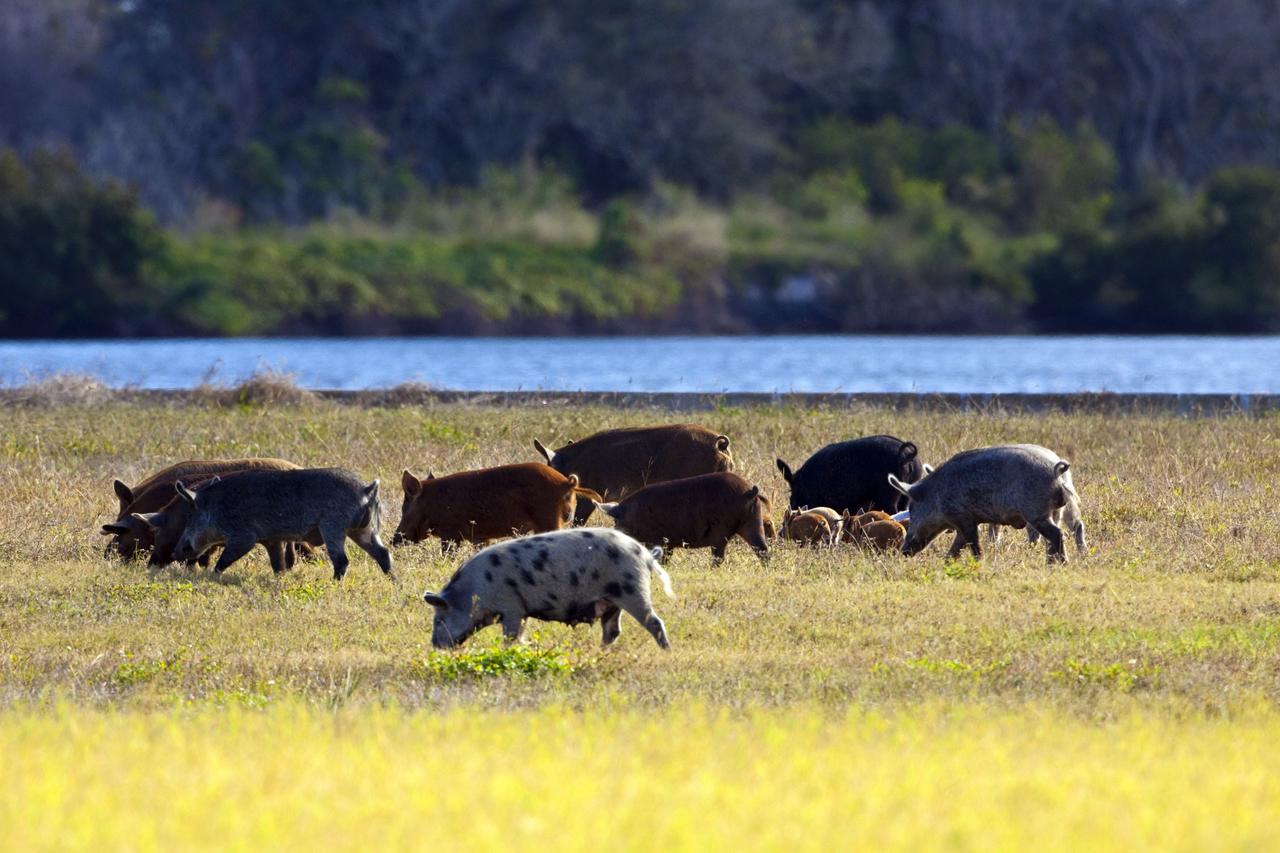
CAPE CANAVERAL, Fla. -- Several adult and baby wild pigs, in a variety of colors and patterns, graze in a grassy field at NASA's Kennedy Space Center in Florida. The wild pigs have flourished in the environs around Kennedy. The center shares a boundary with the Merritt Island National Wildlife Refuge, consisting of 140,000 acres. The refuge provides a wide variety of habitats -- coastal dunes, saltwater estuaries and marshes, freshwater impoundments, scrub, pine flatwoods, and hardwood hammocks -- that provide sanctuary for more than 1,500 species of plants and animals, including about 331 species of birds. Photo credit: NASA/Jim Grossmann
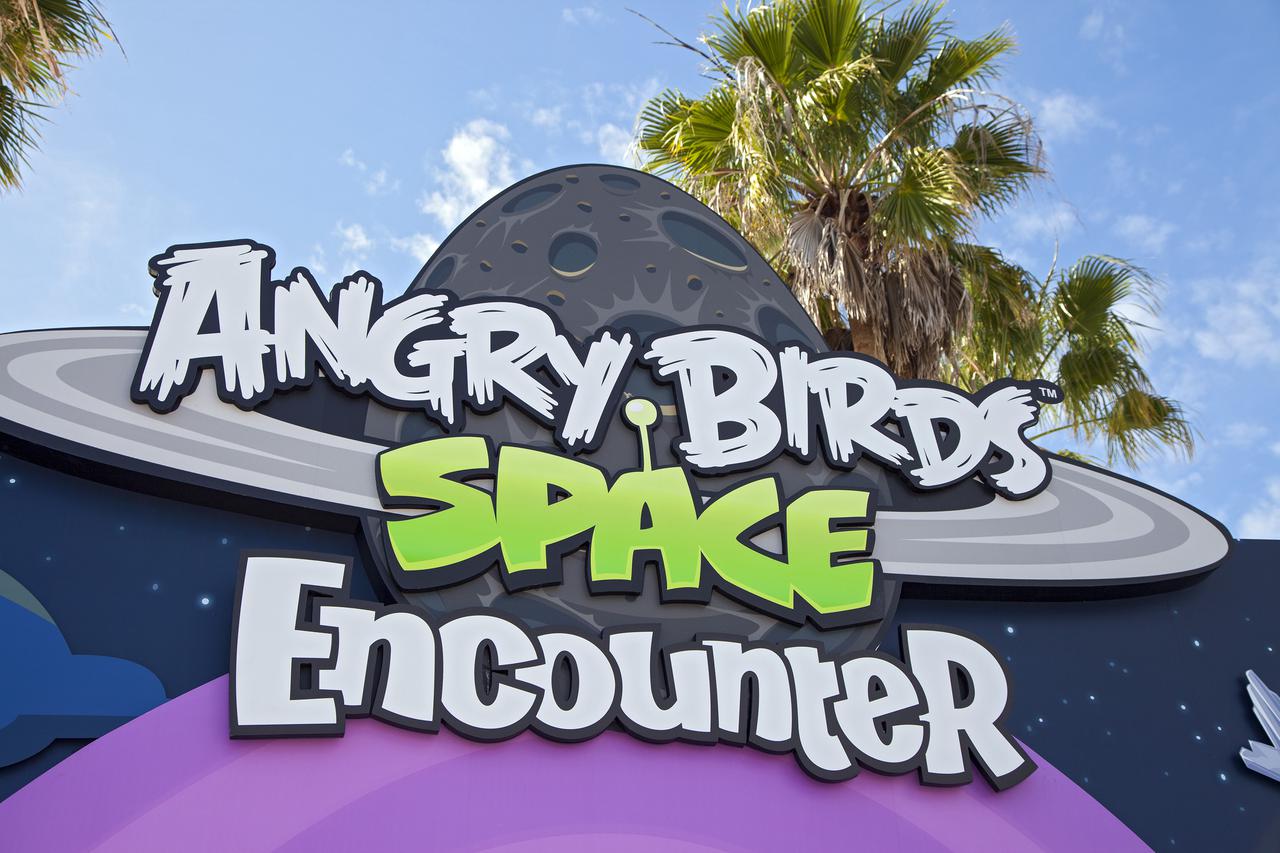
CAPE CANAVERAL, Fla. -- At NASA’s Kennedy Space Center Visitor Complex in Florida, a grand opening celebration was held for the new Angry Birds Space Encounter. Finland-based Rovio Entertainment, the creator of the Angry Birds Space game, partnered with Kennedy Space Center to bring the beloved characters to life. It is the first Angry Birds interactive exhibit in the United States designed for people of all ages. The 4,485-square-foot facility hosts the space adventures of the Angry Birds as they travel into an intergalactic wormhole, come face-to-face with Space Pigs and discover heroic superpowers. Six interactive stations are designed to encourage children in science, technology, engineering and mathematics fields of study. Photo credit: NASA_Kim Shiflett
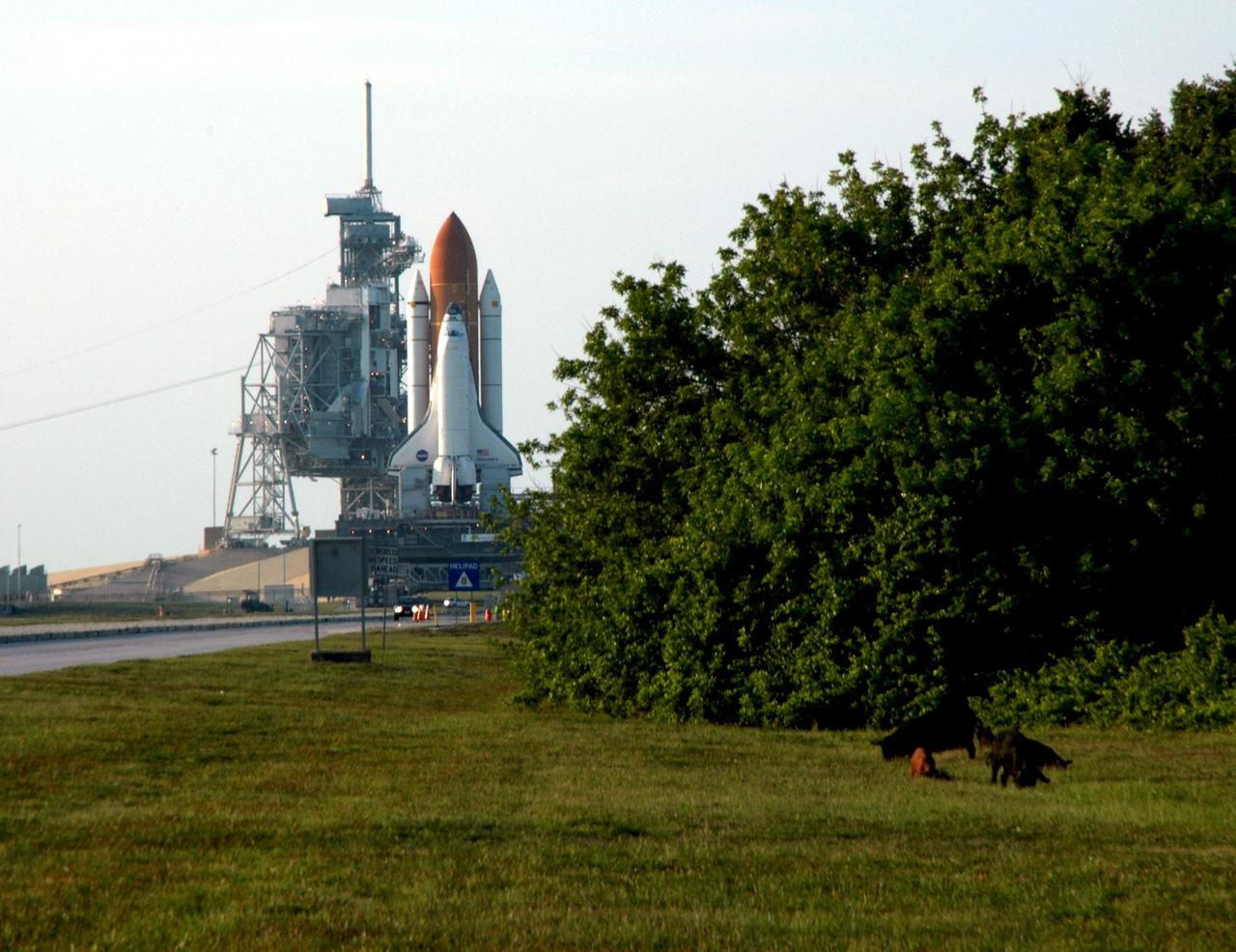
KENNEDY SPACE CENTER, FLA. -- Near Launch Pad 39B, wild pigs (at right) root for food near a stand of trees while Space Shuttle Discovery rolls out to the pad. The 4.2-mile journey from the Vehicle Assembly Building began at 12:45 p.m. EDT. The rollout is an important step before launch of Discovery on mission STS-121 to the International Space Station. Discovery's launch is targeted for July 1 in a launch window that extends to July 19. During the 12-day mission, Discovery's crew will test new hardware and techniques to improve shuttle safety, as well as deliver supplies and make repairs to the station. Photo credit: NASA/Ken Thornsley
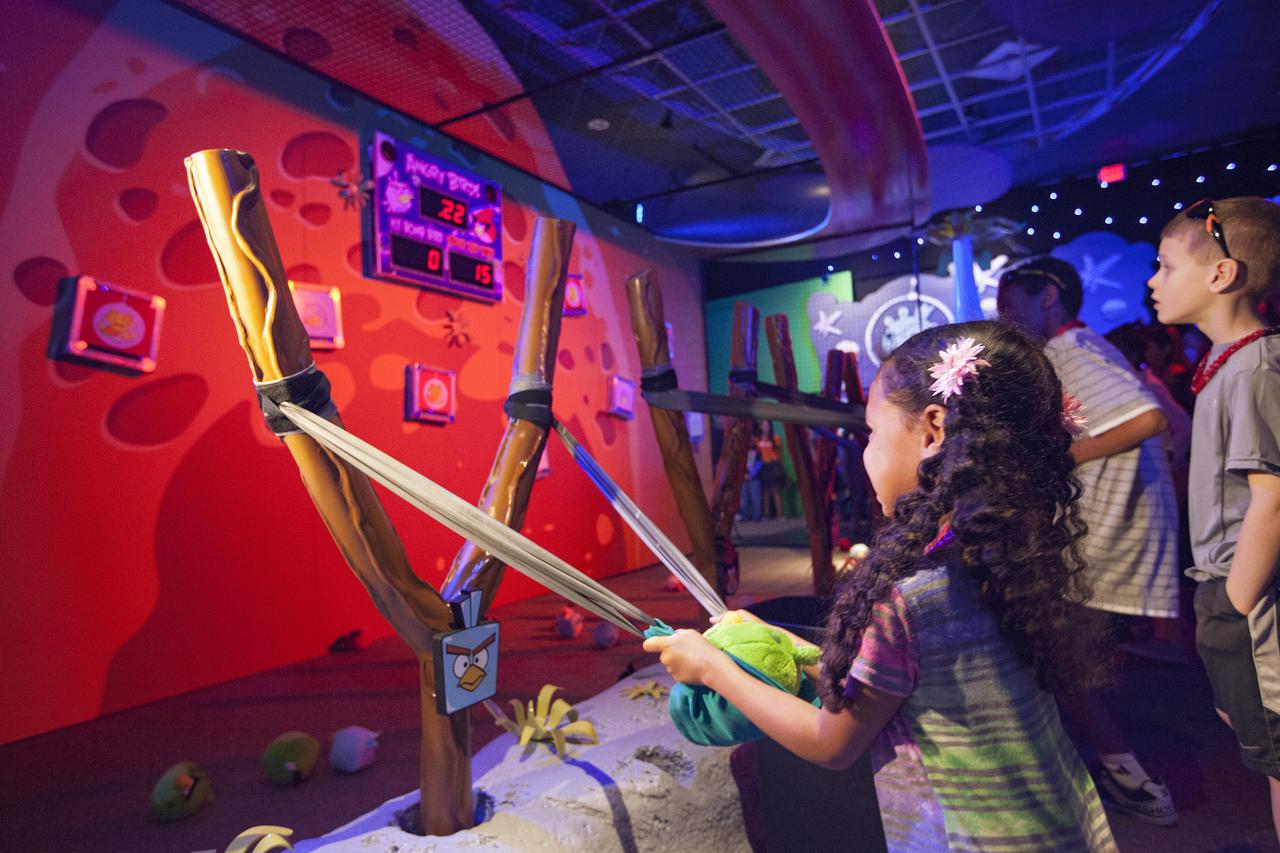
CAPE CANAVERAL, Fla. -- At NASA’s Kennedy Space Center Visitor Complex in Florida, children try out some of the interactive exhibits inside the new Angry Birds Space Encounter after the grand opening ceremony for the new attraction. Finland-based Rovio Entertainment, the creator of the Angry Birds Space game, partnered with Kennedy Space Center to bring the beloved characters to life. It is the first Angry Birds interactive exhibit in the United States designed for people of all ages. The 4,485-square-foot facility hosts the space adventures of the Angry Birds as they travel into an intergalactic wormhole, come face-to-face with Space Pigs and discover heroic superpowers. Six interactive stations are designed to encourage children in science, technology, engineering and mathematics fields of study. Photo credit: NASA_Kim Shiflett
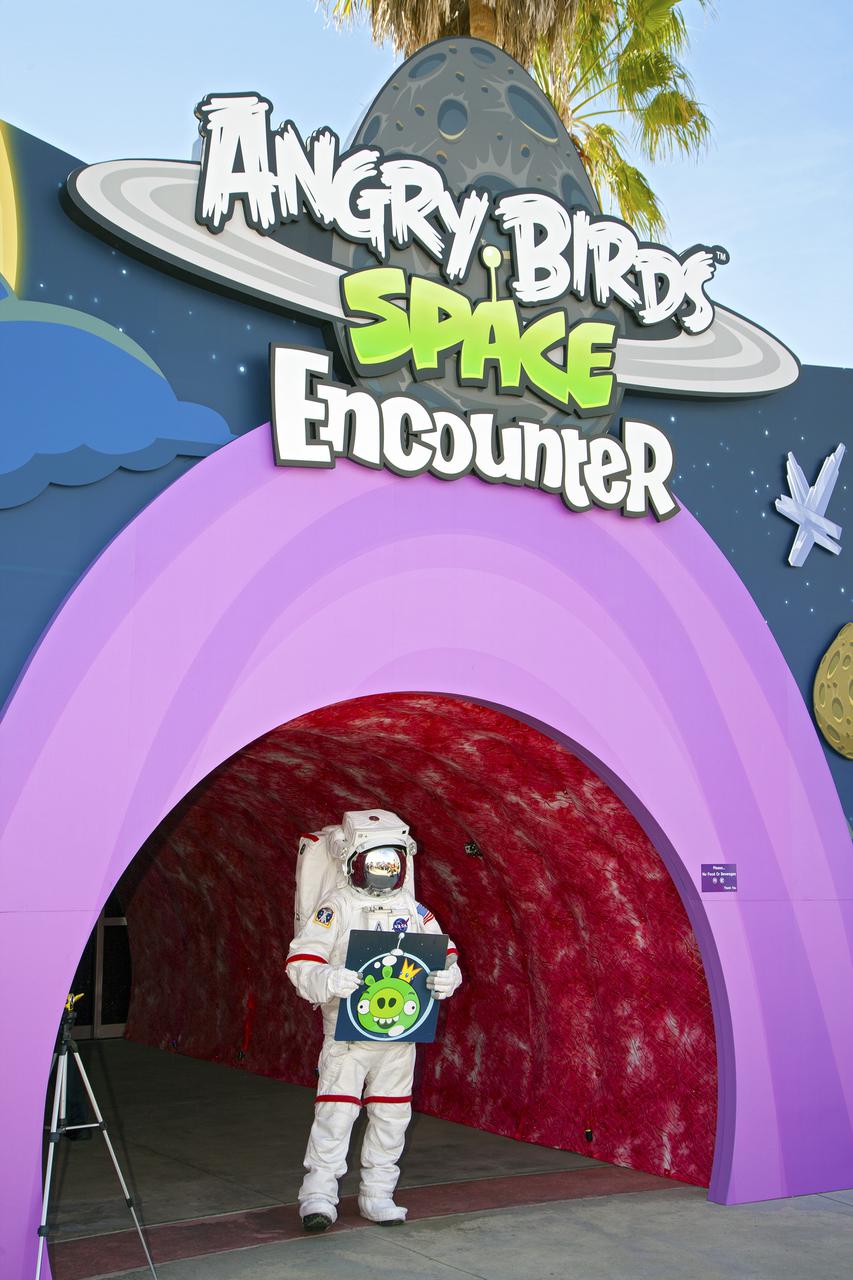
CAPE CANAVERAL, Fla. -- At NASA’s Kennedy Space Center Visitor Complex in Florida, the Spaceperson stands at the entrance of the new Angry Birds Space Encounter during the grand opening ceremony. Finland-based Rovio Entertainment, the creator of the Angry Birds Space game, partnered with Kennedy Space Center to bring the beloved characters to life. It is the first Angry Birds interactive exhibit in the United States designed for people of all ages. The 4,485-square-foot facility hosts the space adventures of the Angry Birds as they travel into an intergalactic wormhole, come face-to-face with Space Pigs and discover heroic superpowers. Six interactive stations are designed to encourage children in science, technology, engineering and mathematics fields of study. Photo credit: NASA_Kim Shiflett
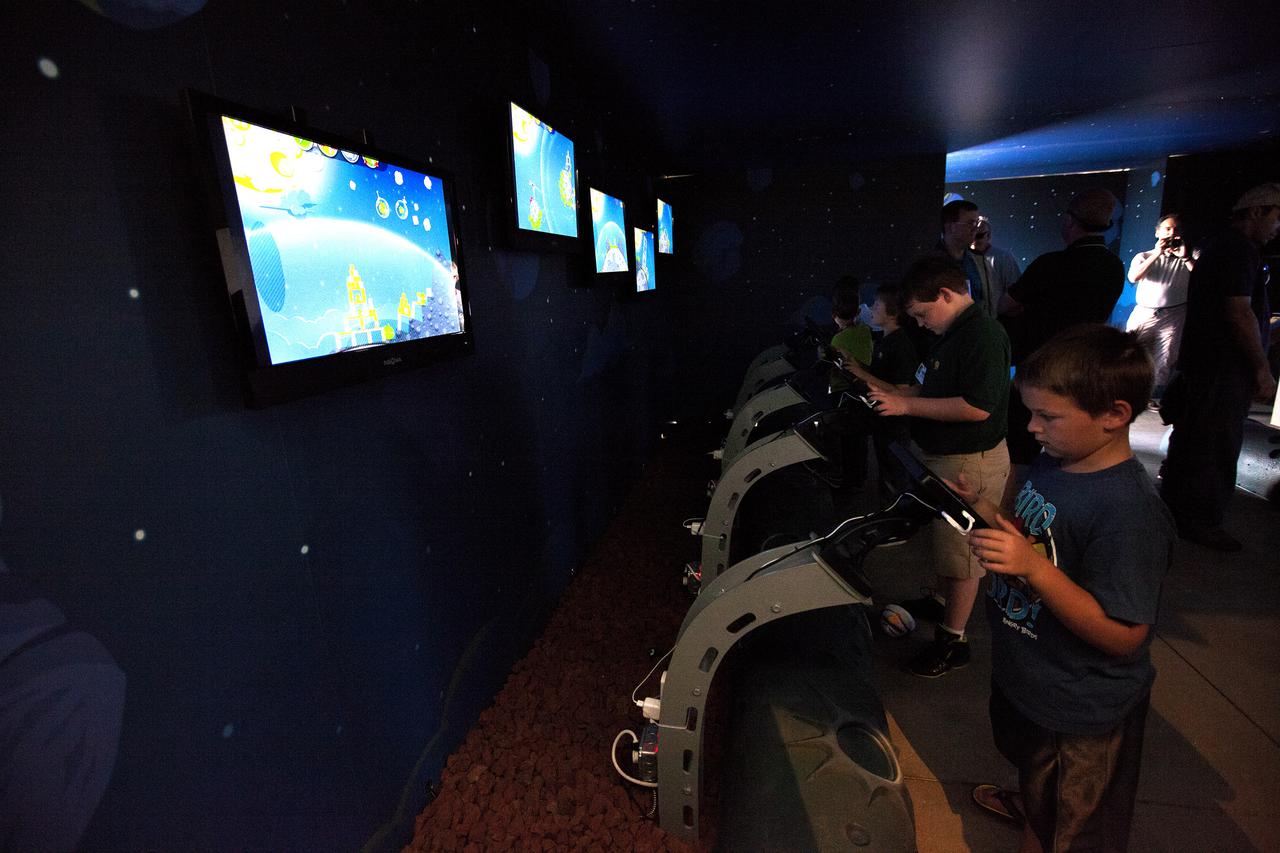
CAPE CANAVERAL, Fla. -- At NASA’s Kennedy Space Center Visitor Complex in Florida, children try out some of the interactive exhibits inside the new Angry Birds Space Encounter after the grand opening ceremony for the new attraction. Finland-based Rovio Entertainment, the creator of the Angry Birds Space game, partnered with Kennedy Space Center to bring the beloved characters to life. It is the first Angry Birds interactive exhibit in the United States designed for people of all ages. The 4,485-square-foot facility hosts the space adventures of the Angry Birds as they travel into an intergalactic wormhole, come face-to-face with Space Pigs and discover heroic superpowers. Six interactive stations are designed to encourage children in science, technology, engineering and mathematics fields of study. Photo credit: NASA_Kim Shiflett
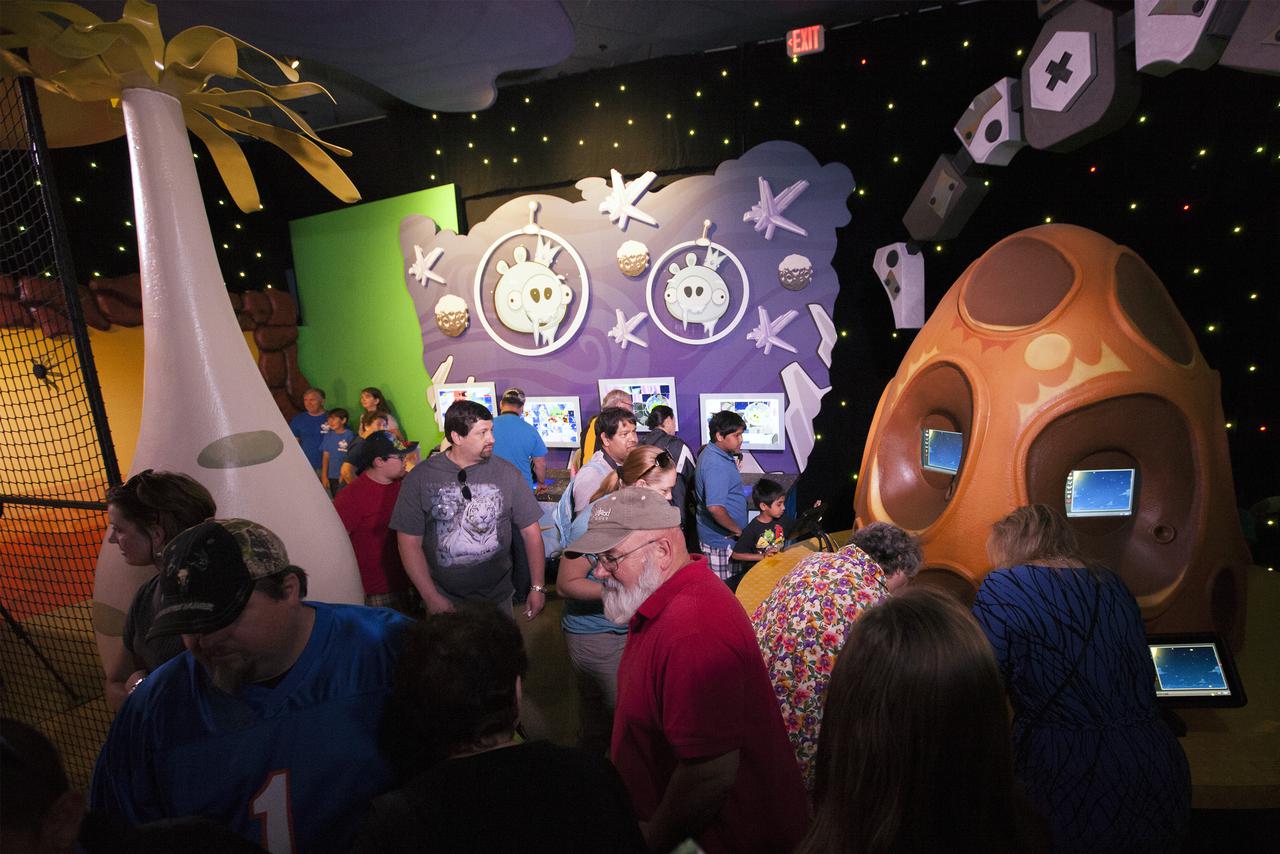
CAPE CANAVERAL, Fla. -- At NASA’s Kennedy Space Center Visitor Complex in Florida, visitors try out some of the interactive exhibits inside the Angry Birds Space Encounter after the grand opening ceremony for the new attraction. Finland-based Rovio Entertainment, the creator of the Angry Birds Space game, partnered with Kennedy Space Center to bring the beloved characters to life. It is the first Angry Birds interactive exhibit in the United States designed for people of all ages. The 4,485-square-foot facility hosts the space adventures of the Angry Birds as they travel into an intergalactic wormhole, come face-to-face with Space Pigs and discover heroic superpowers. Six interactive stations are designed to encourage children in science, technology, engineering and mathematics fields of study. Photo credit: NASA_Kim Shiflett
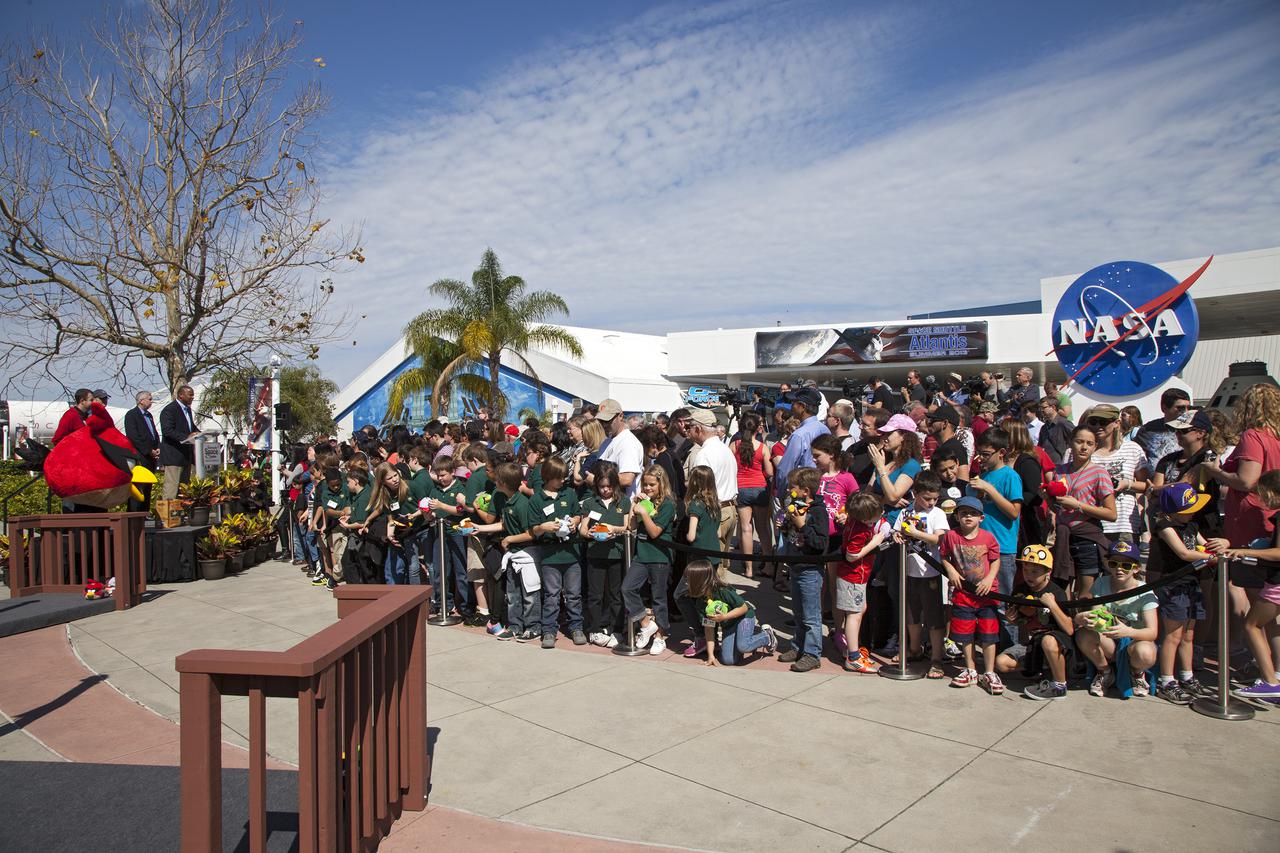
CAPE CANAVERAL, Fla. -- At NASA’s Kennedy Space Center Visitor Complex in Florida, Kelvin Manning, associate deputy director of Kennedy Space Center, speaks to visitors during the grand opening of the new Angry Birds Space Encounter. To Manning’s left is Red Bird, one of the Angry Bird Space characters. Finland-based Rovio Entertainment, the creator of the Angry Birds Space game, partnered with Kennedy Space Center to bring the beloved characters to life. It is the first Angry Birds interactive exhibit in the United States designed for people of all ages. The 4,485-square-foot facility hosts the space adventures of the Angry Birds as they travel into an intergalactic wormhole, come face-to-face with Space Pigs and discover heroic superpowers. Six interactive stations are designed to encourage children in science, technology, engineering and mathematics fields of study. Photo credit: NASA_Kim Shiflett
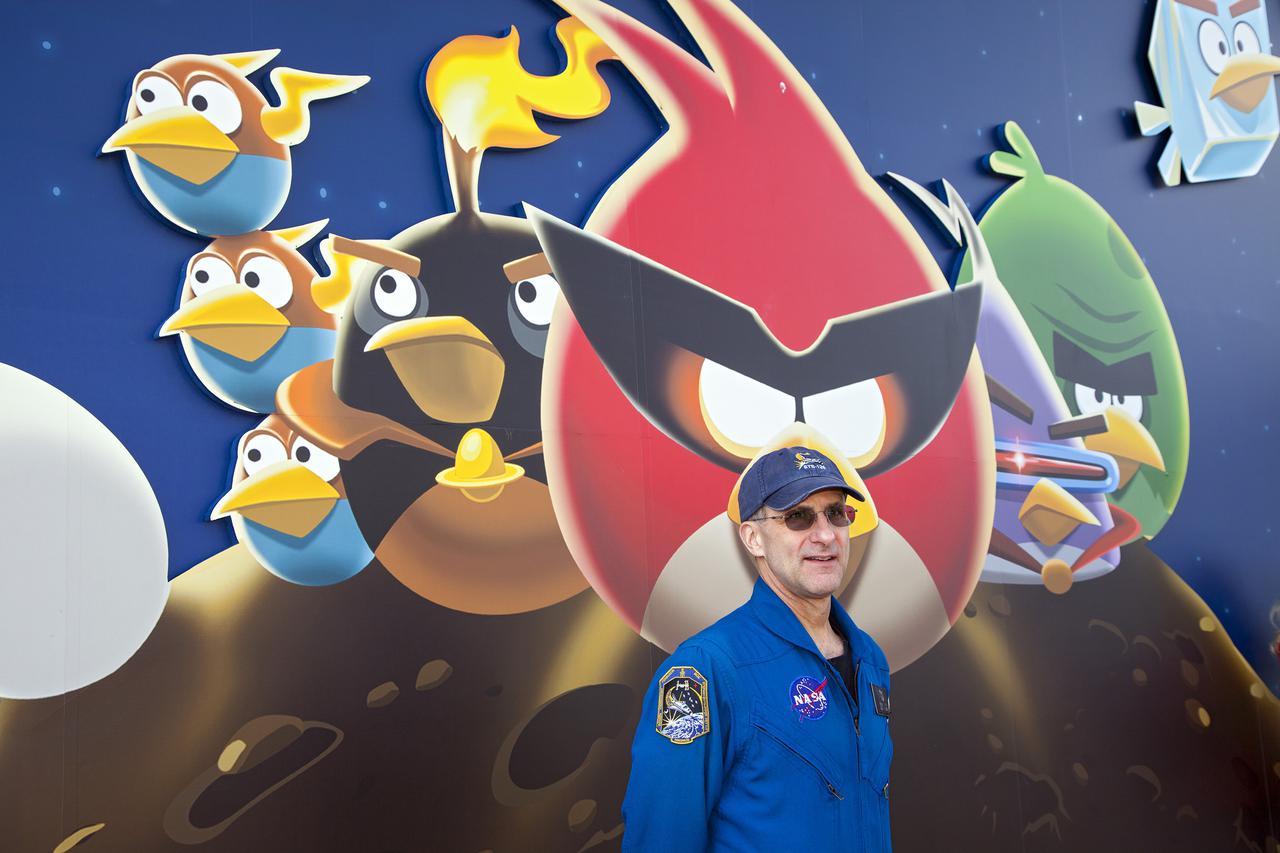
CAPE CANAVERAL, Fla. -- At NASA’s Kennedy Space Center Visitor Complex in Florida, NASA astronaut Don Pettit stands near the entrance to the new Angry Birds Space Encounter during the grand opening ceremony. Pettit spent a total of 12 months during two separate missions aboard the International Space Station and introduced Angry Birds Space while floating in zero gravity. Finland-based Rovio Entertainment, the creator of the Angry Birds Space game, partnered with Kennedy Space Center to bring the beloved characters to life. It is the first Angry Birds interactive exhibit in the United States designed for people of all ages. The 4,485-square-foot facility hosts the space adventures of the Angry Birds as they travel into an intergalactic wormhole, come face-to-face with Space Pigs and discover heroic superpowers. Six interactive stations are designed to encourage children in science, technology, engineering and mathematics fields of study. Photo credit: NASA_Kim Shiflett
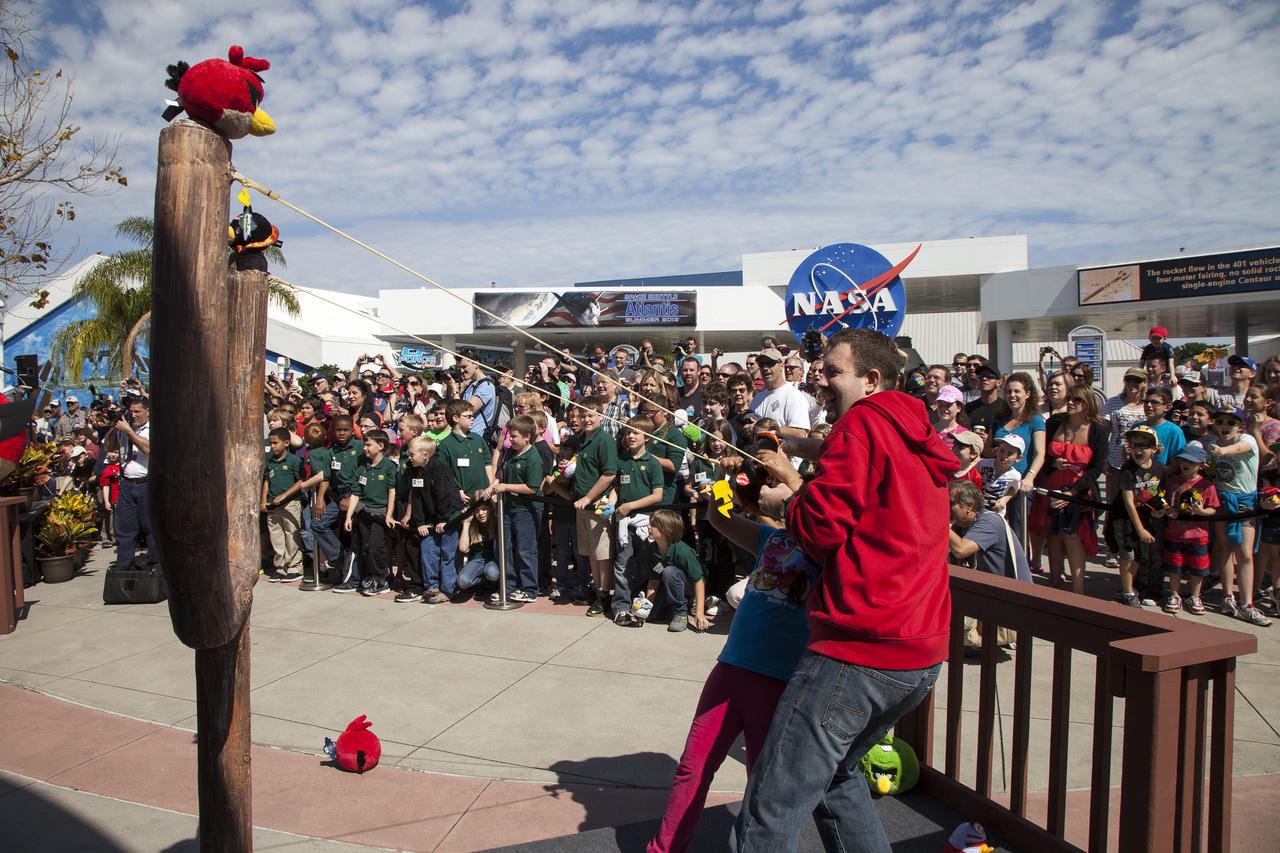
CAPE CANAVERAL, Fla. -- At NASA’s Kennedy Space Center Visitor Complex in Florida, Dan Mitchell, director of location-based entertainment for Rovio Entertainment, helps a child use a giant slingshot to launch a plush Angry Bird character during the grand opening of the new Angry Birds Space Encounter. Finland-based Rovio Entertainment, the creator of the Angry Birds Space game, partnered with Kennedy Space Center to bring the beloved characters to life. It is the first Angry Birds interactive exhibit in the United States designed for people of all ages. The 4,485-square-foot facility hosts the space adventures of the Angry Birds as they travel into an intergalactic wormhole, come face-to-face with Space Pigs and discover heroic superpowers. Six interactive stations are designed to encourage children in science, technology, engineering and mathematics fields of study. Photo credit: NASA_Kim Shiflett
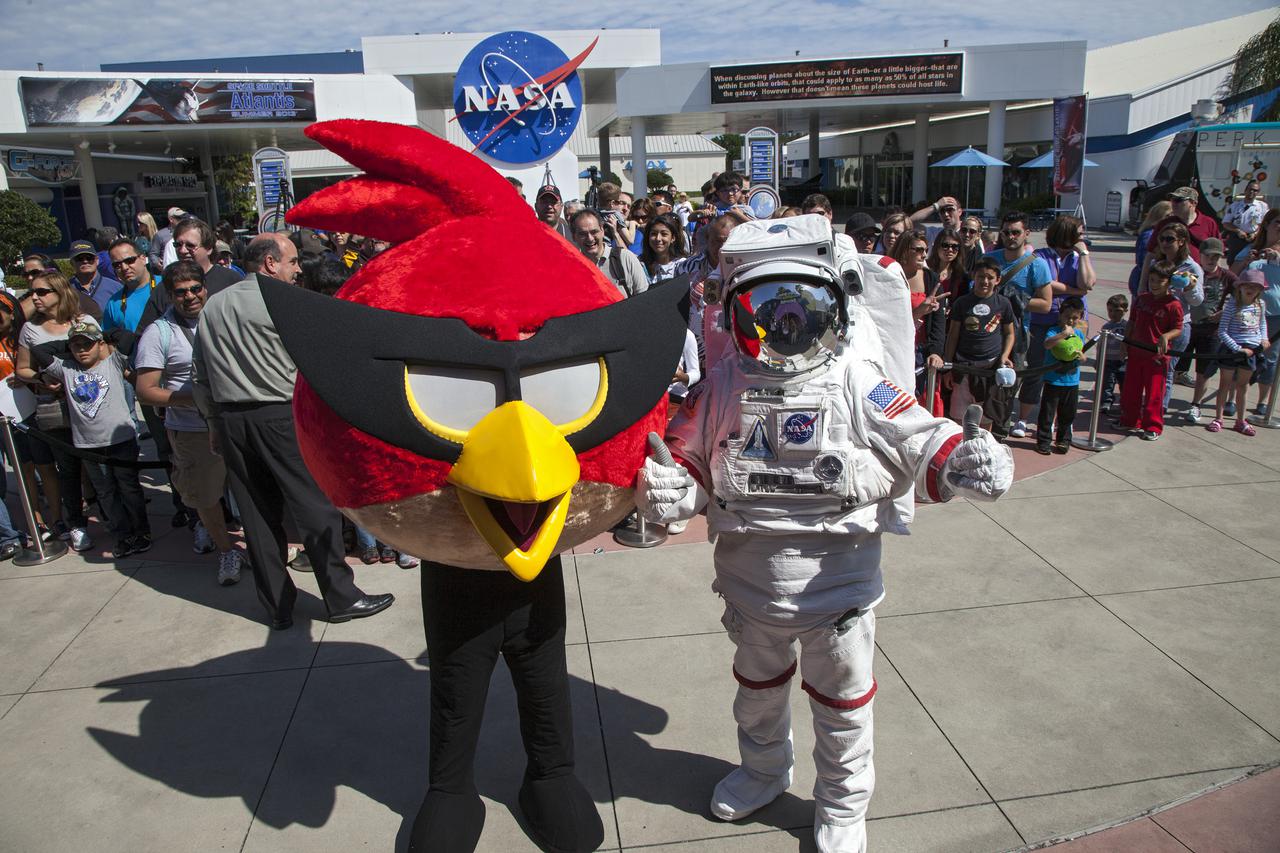
CAPE CANAVERAL, Fla. -- At NASA’s Kennedy Space Center Visitor Complex in Florida, the Spaceperson and Red Bird, one of the Angry Bird characters, welcome visitor to the Angry Birds Space Encounter grand opening ceremony. Finland-based Rovio Entertainment, the creator of the Angry Birds Space game, partnered with Kennedy Space Center to bring the beloved characters to life. It is the first Angry Birds interactive exhibit in the United States designed for people of all ages. The 4,485-square-foot facility hosts the space adventures of the Angry Birds as they travel into an intergalactic wormhole, come face-to-face with Space Pigs and discover heroic superpowers. Six interactive stations are designed to encourage children in science, technology, engineering and mathematics fields of study. Photo credit: NASA_Kim Shiflett
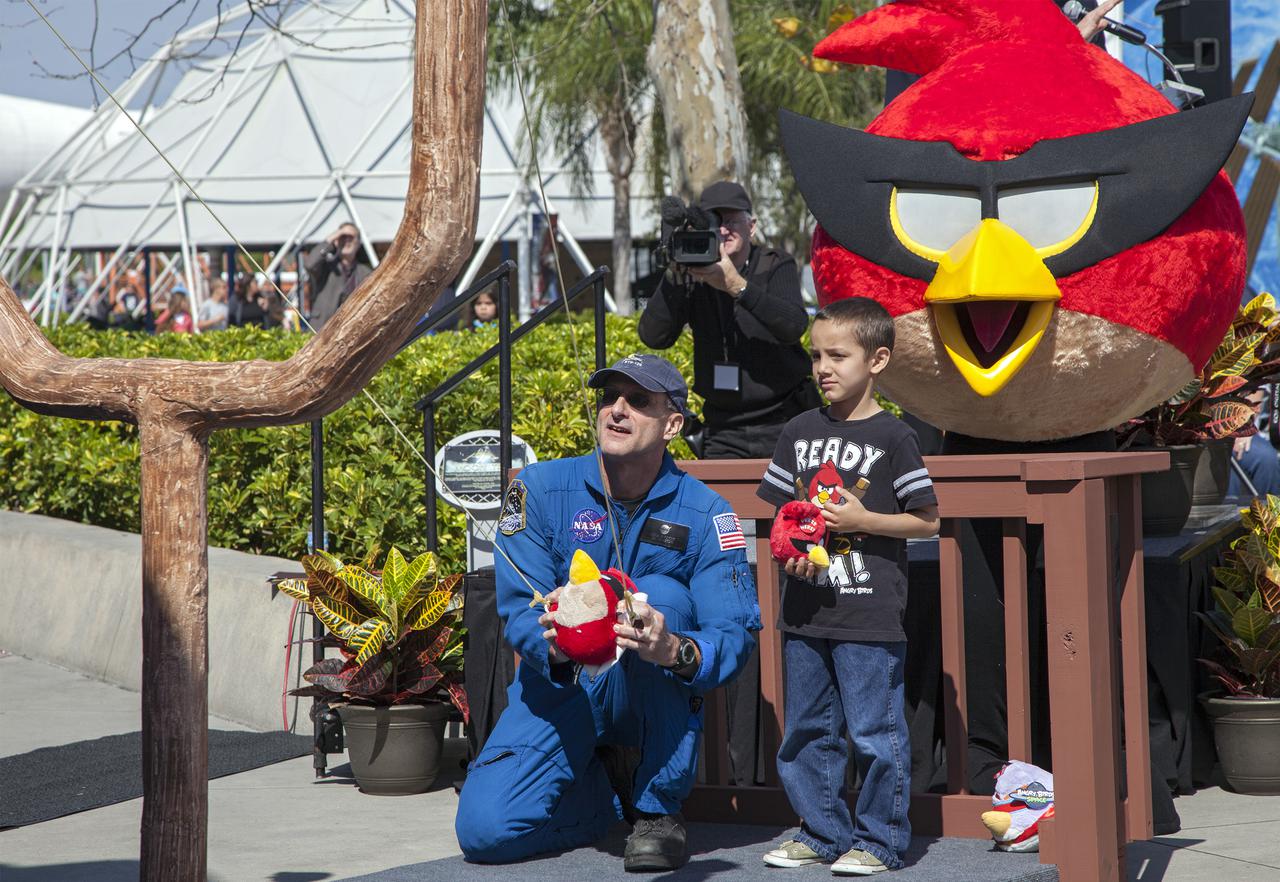
CAPE CANAVERAL, Fla. -- At NASA’s Kennedy Space Center Visitor Complex in Florida, NASA astronaut Don Pettit uses a giant slingshot to launch a plush Angry Bird character during the grand opening of the new Angry Birds Space Encounter. Standing behind Pettit is Red Bird, one of the Angry Bird characters. Finland-based Rovio Entertainment, the creator of the Angry Birds Space game, partnered with Kennedy Space Center to bring the beloved characters to life. It is the first Angry Birds interactive exhibit in the United States designed for people of all ages. The 4,485-square-foot facility hosts the space adventures of the Angry Birds as they travel into an intergalactic wormhole, come face-to-face with Space Pigs and discover heroic superpowers. Six interactive stations are designed to encourage children in science, technology, engineering and mathematics fields of study. Photo credit: NASA_Kim Shiflett
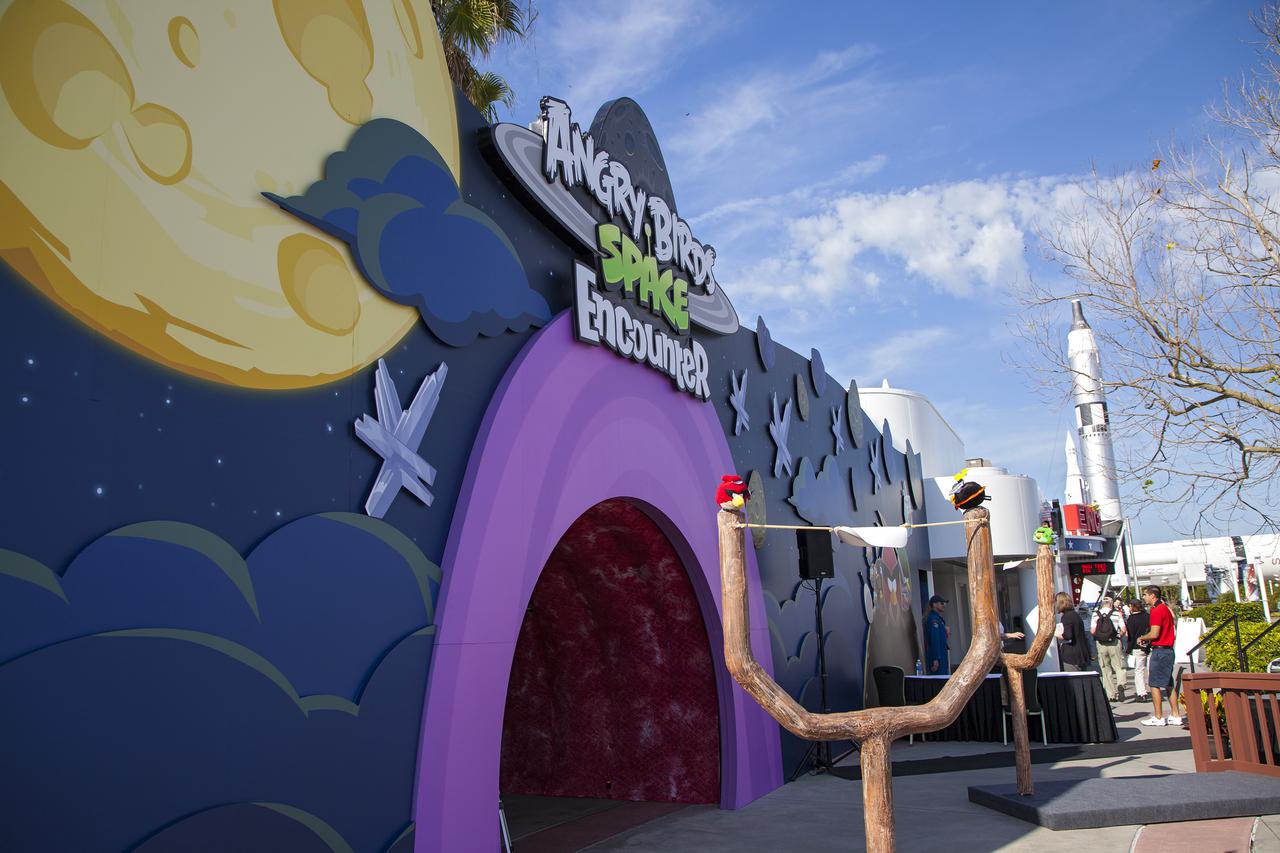
CAPE CANAVERAL, Fla. -- At NASA’s Kennedy Space Center Visitor Complex in Florida, the entrance to the new Angry Birds Space Encounter is seen before the grand opening celebration begins. Finland-based Rovio Entertainment, the creator of the Angry Birds Space game, partnered with Kennedy Space Center to bring the beloved characters to life. It is the first Angry Birds interactive exhibit in the United States designed for people of all ages. The 4,485-square-foot facility hosts the space adventures of the Angry Birds as they travel into an intergalactic wormhole, come face-to-face with Space Pigs and discover heroic superpowers. Six interactive stations are designed to encourage children in science, technology, engineering and mathematics fields of study. Photo credit: NASA_Kim Shiflett
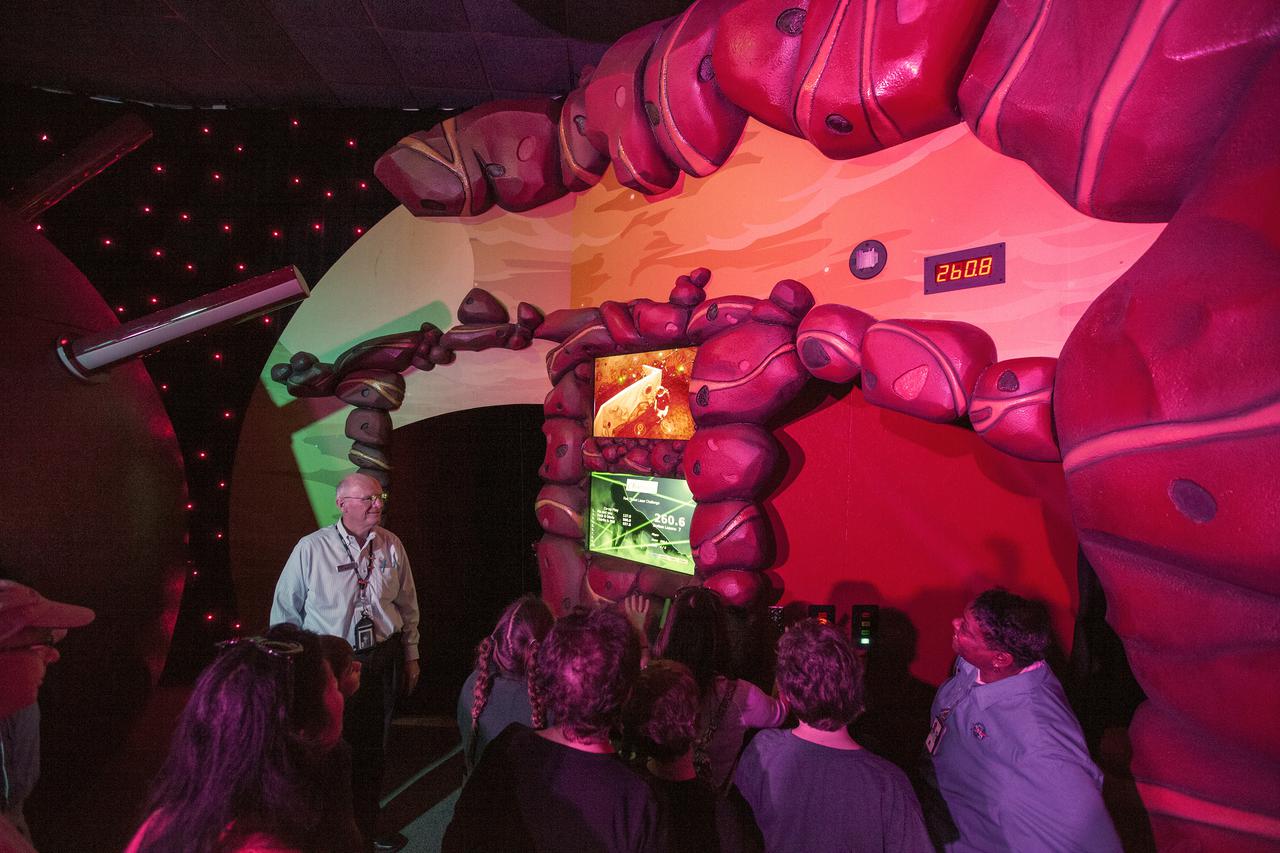
CAPE CANAVERAL, Fla. -- At NASA’s Kennedy Space Center Visitor Complex in Florida, children try out some of the interactive exhibits inside the new Angry Birds Space Encounter after the grand opening ceremony for the new attraction. Finland-based Rovio Entertainment, the creator of the Angry Birds Space game, partnered with Kennedy Space Center to bring the beloved characters to life. It is the first Angry Birds interactive exhibit in the United States designed for people of all ages. The 4,485-square-foot facility hosts the space adventures of the Angry Birds as they travel into an intergalactic wormhole, come face-to-face with Space Pigs and discover heroic superpowers. Six interactive stations are designed to encourage children in science, technology, engineering and mathematics fields of study. Photo credit: NASA_Kim Shiflett
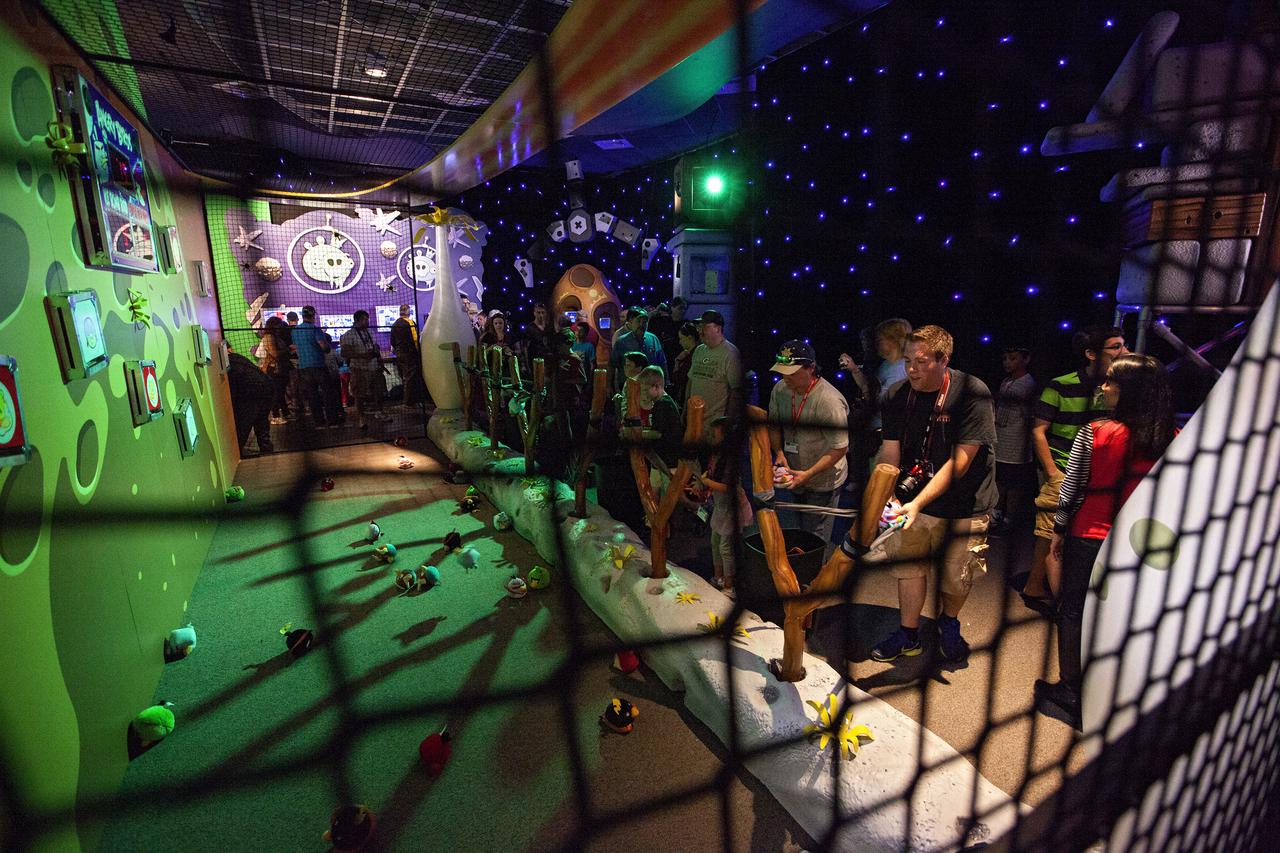
CAPE CANAVERAL, Fla. -- At NASA’s Kennedy Space Center Visitor Complex in Florida, visitors try out some of the interactive exhibits inside the Angry Birds Space Encounter after the grand opening ceremony for the new attraction. Finland-based Rovio Entertainment, the creator of the Angry Birds Space game, partnered with Kennedy Space Center to bring the beloved characters to life. It is the first Angry Birds interactive exhibit in the United States designed for people of all ages. The 4,485-square-foot facility hosts the space adventures of the Angry Birds as they travel into an intergalactic wormhole, come face-to-face with Space Pigs and discover heroic superpowers. Six interactive stations are designed to encourage children in science, technology, engineering and mathematics fields of study. Photo credit: NASA_Kim Shiflett
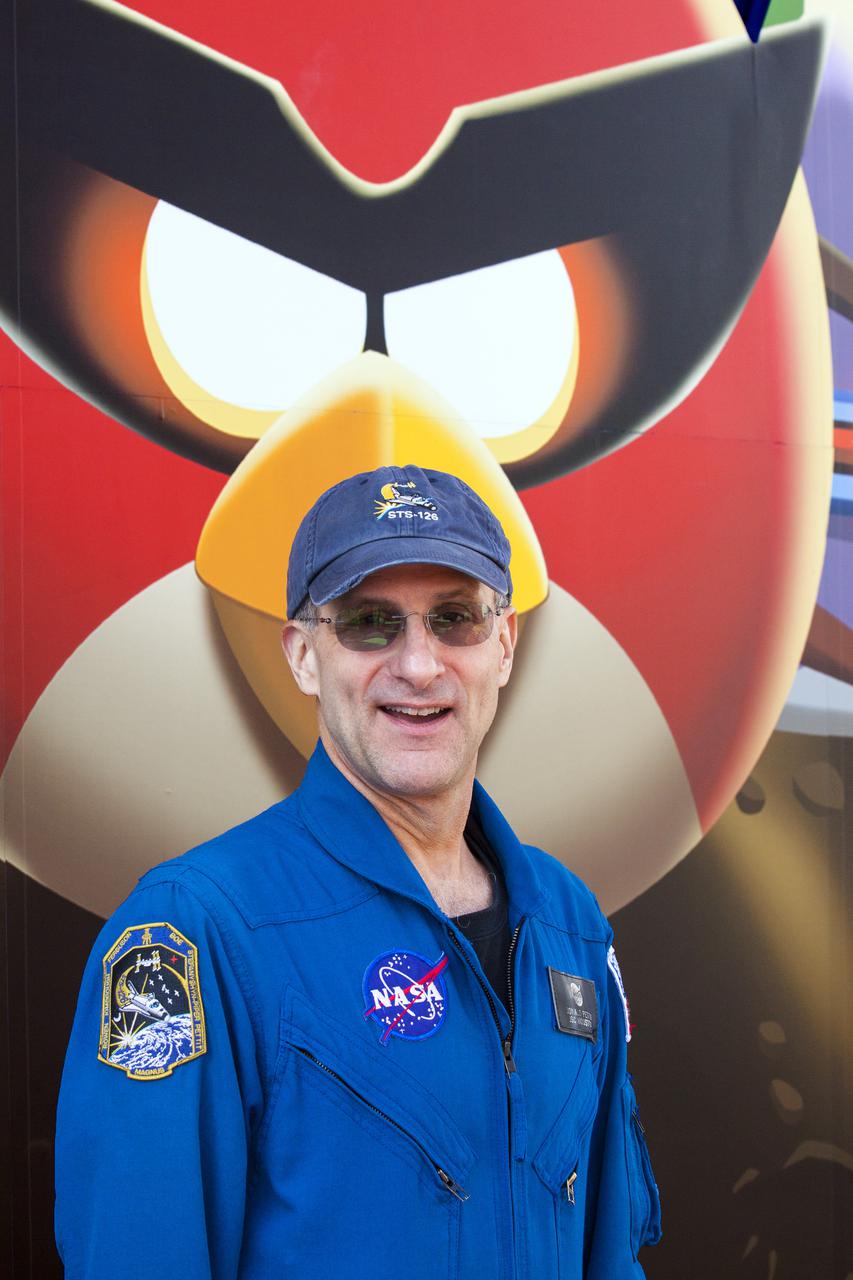
CAPE CANAVERAL, Fla. -- At NASA’s Kennedy Space Center Visitor Complex in Florida, NASA astronaut Don Pettit stands near the entrance to the new Angry Birds Space Encounter during the grand opening ceremony. Pettit spent a total of 12 months during two separate missions aboard the International Space Station and introduced Angry Birds Space while floating in zero gravity. Finland-based Rovio Entertainment, the creator of the Angry Birds Space game, partnered with Kennedy Space Center to bring the beloved characters to life. It is the first Angry Birds interactive exhibit in the United States designed for people of all ages. The 4,485-square-foot facility hosts the space adventures of the Angry Birds as they travel into an intergalactic wormhole, come face-to-face with Space Pigs and discover heroic superpowers. Six interactive stations are designed to encourage children in science, technology, engineering and mathematics fields of study. Photo credit: NASA_Kim Shiflett
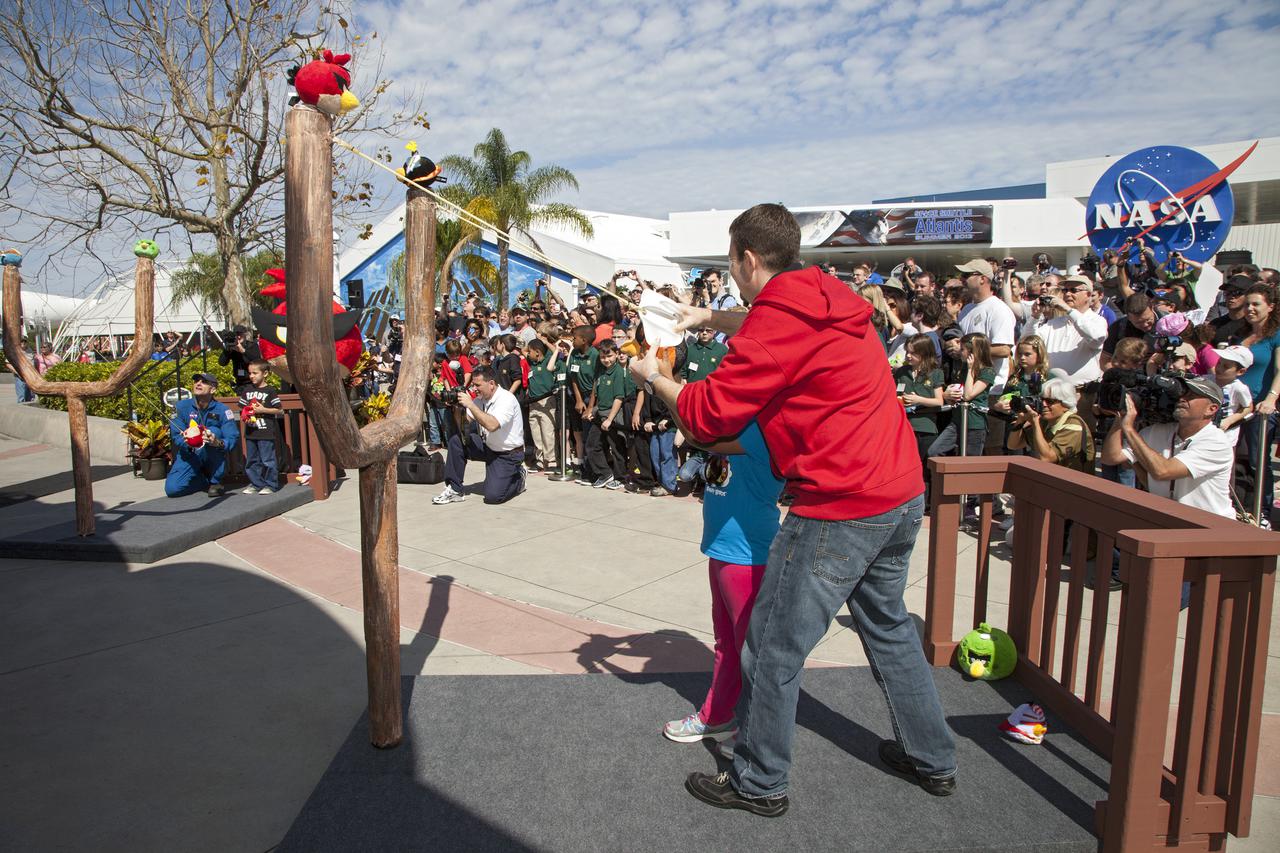
CAPE CANAVERAL, Fla. -- At NASA’s Kennedy Space Center Visitor Complex in Florida, Dan Mitchell, director of location-based entertainment for Rovio Entertainment, uses a giant slingshot to launch a plush Angry Bird character during the grand opening of the new Angry Birds Space Encounter. To Mitchell’s left is NASA astronaut Don Pettit. Finland-based Rovio Entertainment, the creator of the Angry Birds Space game, partnered with Kennedy Space Center to bring the beloved characters to life. It is the first Angry Birds interactive exhibit in the United States designed for people of all ages. The 4,485-square-foot facility hosts the space adventures of the Angry Birds as they travel into an intergalactic wormhole, come face-to-face with Space Pigs and discover heroic superpowers. Six interactive stations are designed to encourage children in science, technology, engineering and mathematics fields of study. Photo credit: NASA_Kim Shiflett
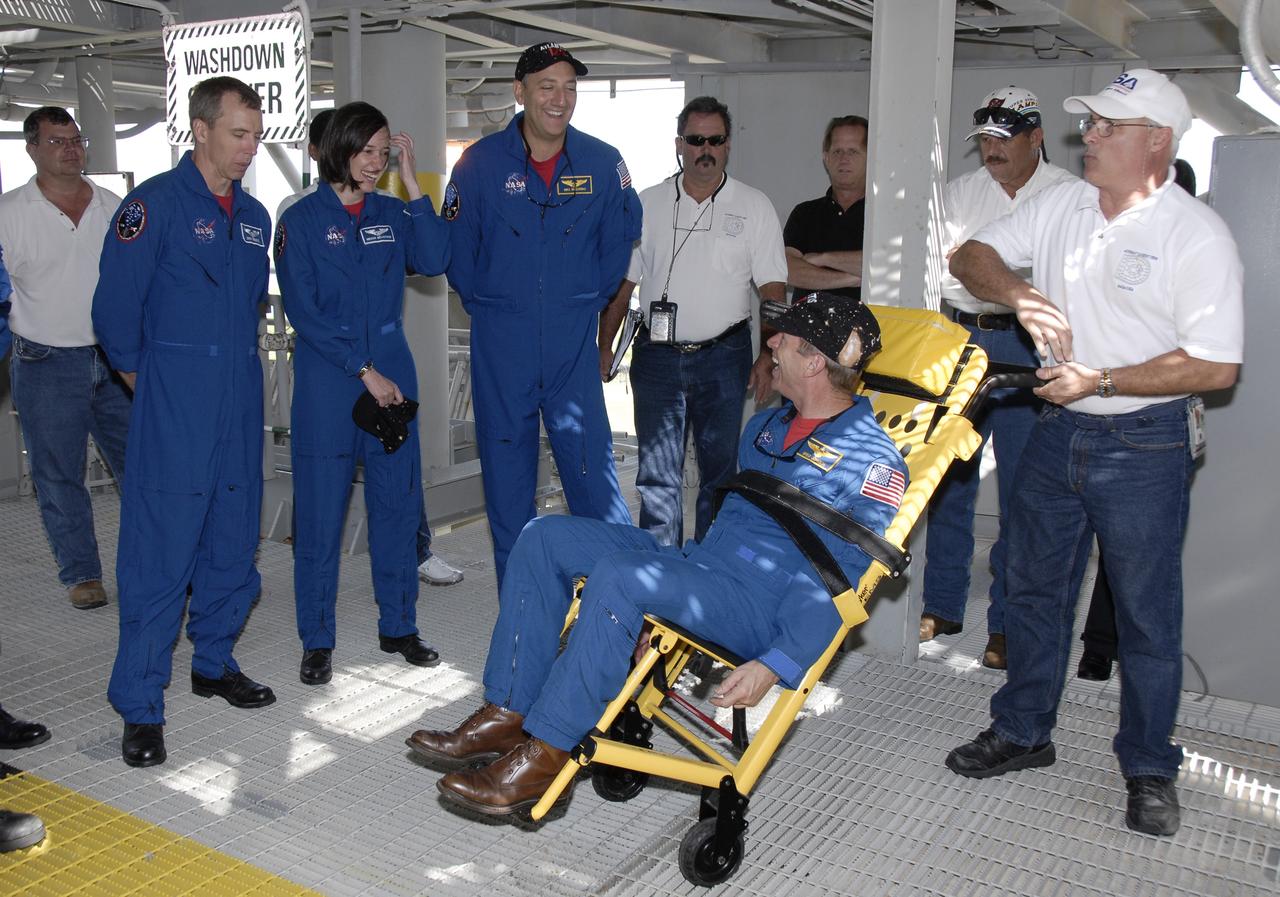
CAPE CANAVERAL, Fla. - STS-125 Pilot Gregory C. Johnson serves as a “guinea pig” to demonstrate emergency escape apparatus from the 195-foot level of the fixed service structure on Launch Pad 39A at NASA's Kennedy Space Center in Florida. Looking on are Mission Specialists Andrew Feustel, Megan McArthur and Mike Massimino. The crew is at Kennedy to take part in terminal countdown demonstration test, or TCDT, activities before launching on space shuttle Atlantis’ mission to service NASA’s Hubble Space Telescope. TCDT provides astronauts and ground crews with an opportunity to participate in various simulated countdown activities, including equipment familiarization, emergency training and a simulated launch countdown. Atlantis is targeted to launch Oct. 10. Photo credit: NASA/Kim Shiflett
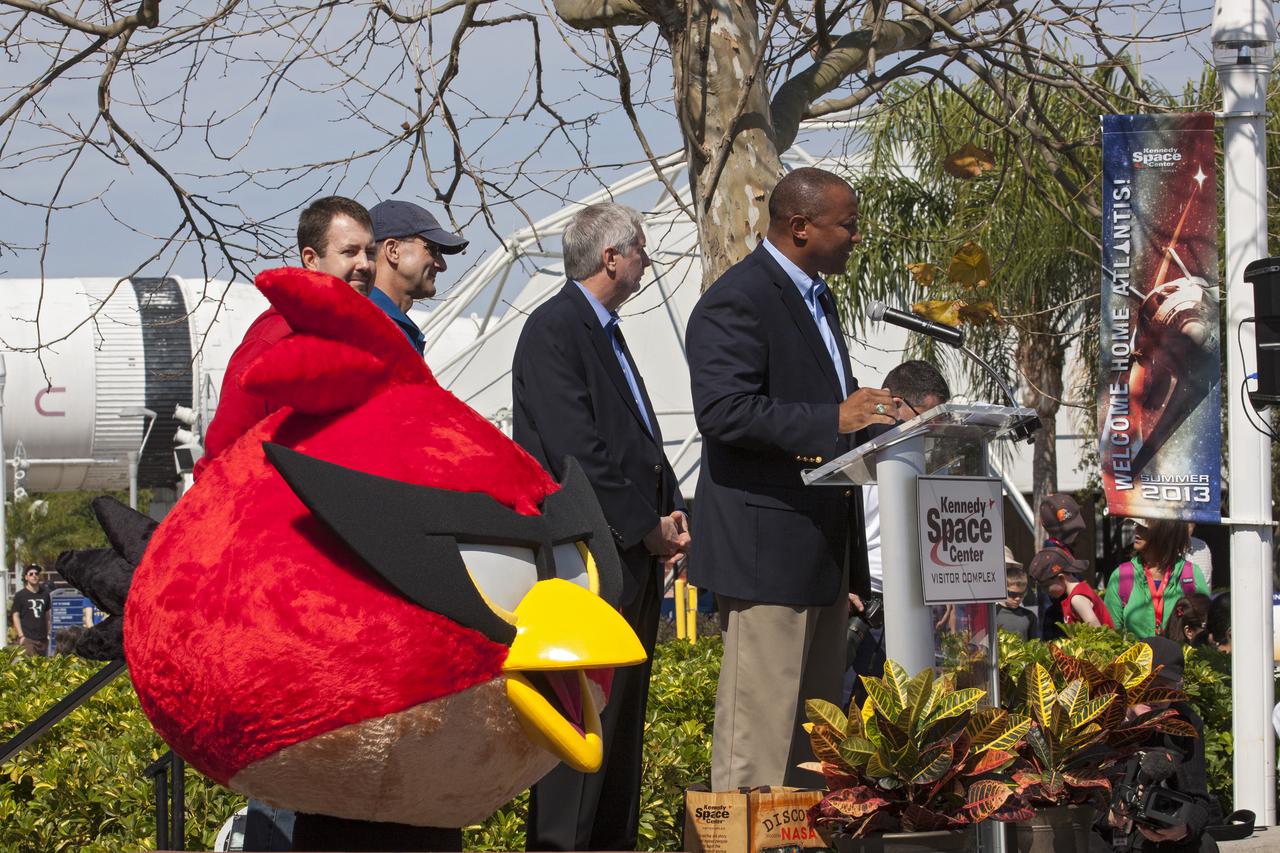
CAPE CANAVERAL, Fla. -- At NASA’s Kennedy Space Center Visitor Complex in Florida, Kelvin Manning, associate deputy director of Kennedy Space Center, speaks to visitors during the grand opening of the new Angry Birds Space Encounter. Standing behind Manning, from left are Dan Mitchell, director of location-based entertainment for Rovio Entertainment NASA astronaut Don Pettit and Bill Moore, chief operating officer with the KSC visitor complex. Also in the photo is Red Bird, one of the Angry Bird Space characters. Finland-based Rovio Entertainment, the creator of the Angry Birds Space game, partnered with Kennedy Space Center to bring the beloved characters to life. It is the first Angry Birds interactive exhibit in the United States designed for people of all ages. The 4,485-square-foot facility hosts the space adventures of the Angry Birds as they travel into an intergalactic wormhole, come face-to-face with Space Pigs and discover heroic superpowers. Six interactive stations are designed to encourage children in science, technology, engineering and mathematics fields of study. Photo credit: NASA_Kim Shiflett
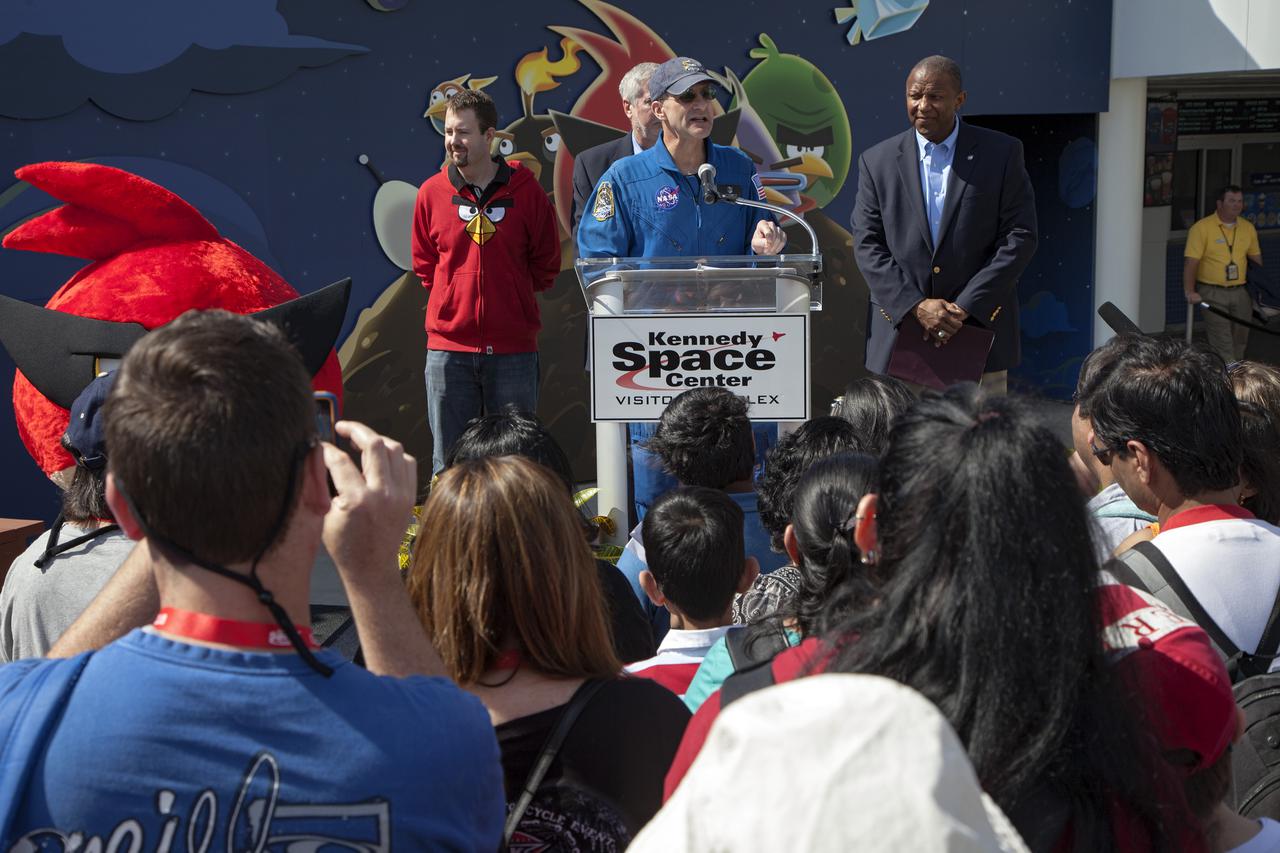
CAPE CANAVERAL, Fla. -- At NASA’s Kennedy Space Center Visitor Complex in Florida, NASA astronaut Don Pettit speaks to visitors during the grand opening of the new Angry Birds Space Encounter. Standing behind Pettit, from left are Dan Mitchell, director of location-based entertainment for Rovio Entertainment Bill Moore, chief operating officer with the KSC visitor complex and Kelvin Manning, associate deputy director of Kennedy Space Center. Also in the photo is Red Bird, one of the Angry Bird Space characters. Finland-based Rovio Entertainment, the creator of the Angry Birds Space game, partnered with Kennedy Space Center to bring the beloved characters to life. It is the first Angry Birds interactive exhibit in the United States designed for people of all ages. The 4,485-square-foot facility hosts the space adventures of the Angry Birds as they travel into an intergalactic wormhole, come face-to-face with Space Pigs and discover heroic superpowers. Six interactive stations are designed to encourage children in science, technology, engineering and mathematics fields of study. Photo credit: NASA_Kim Shiflett
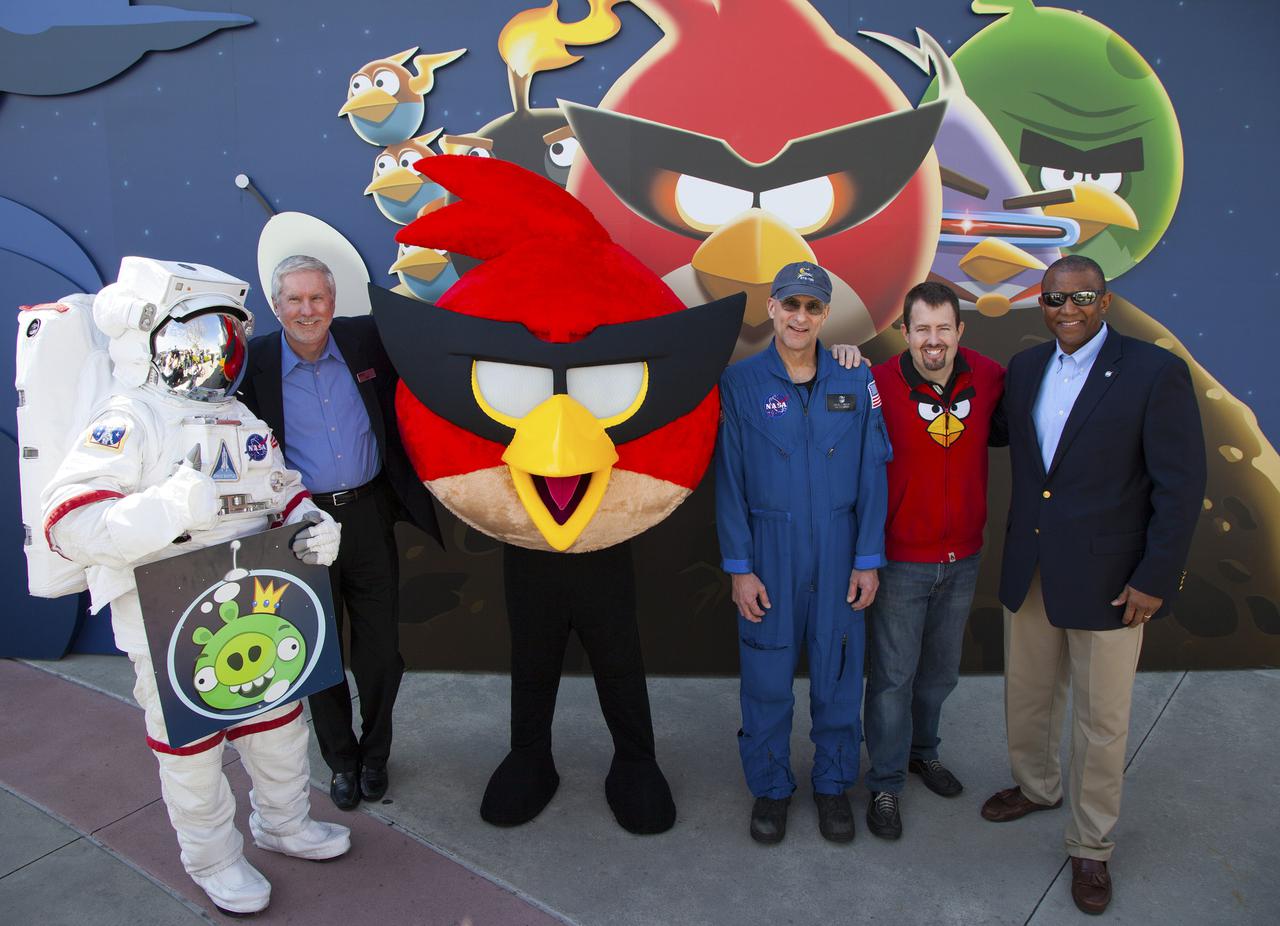
CAPE CANAVERAL, Fla. -- At NASA’s Kennedy Space Center Visitor Complex in Florida, the new Angry Birds Space Encounter was opened to visitors during a grand opening celebration. Helping to open the new attraction, from left are Spaceperson Bill Moore, chief operating officer of the KSC visitor complex Red Bird, one of the Angry Bird characters NASA astronaut Don Pettit Dan Mitchell, director of location-based entertainment for Rovio Entertainment and Kelvin Manning, associate deputy director of Kennedy Space Center. Finland-based Rovio Entertainment, the creator of the Angry Birds Space game, partnered with Kennedy Space Center to bring the beloved characters to life. It is the first Angry Birds interactive exhibit in the United States designed for people of all ages. The 4,485-square-foot facility hosts the space adventures of the Angry Birds as they travel into an intergalactic wormhole, come face-to-face with Space Pigs and discover heroic superpowers. Six interactive stations are designed to encourage children in science, technology, engineering and mathematics fields of study. Photo credit: NASA_Kim Shiflett
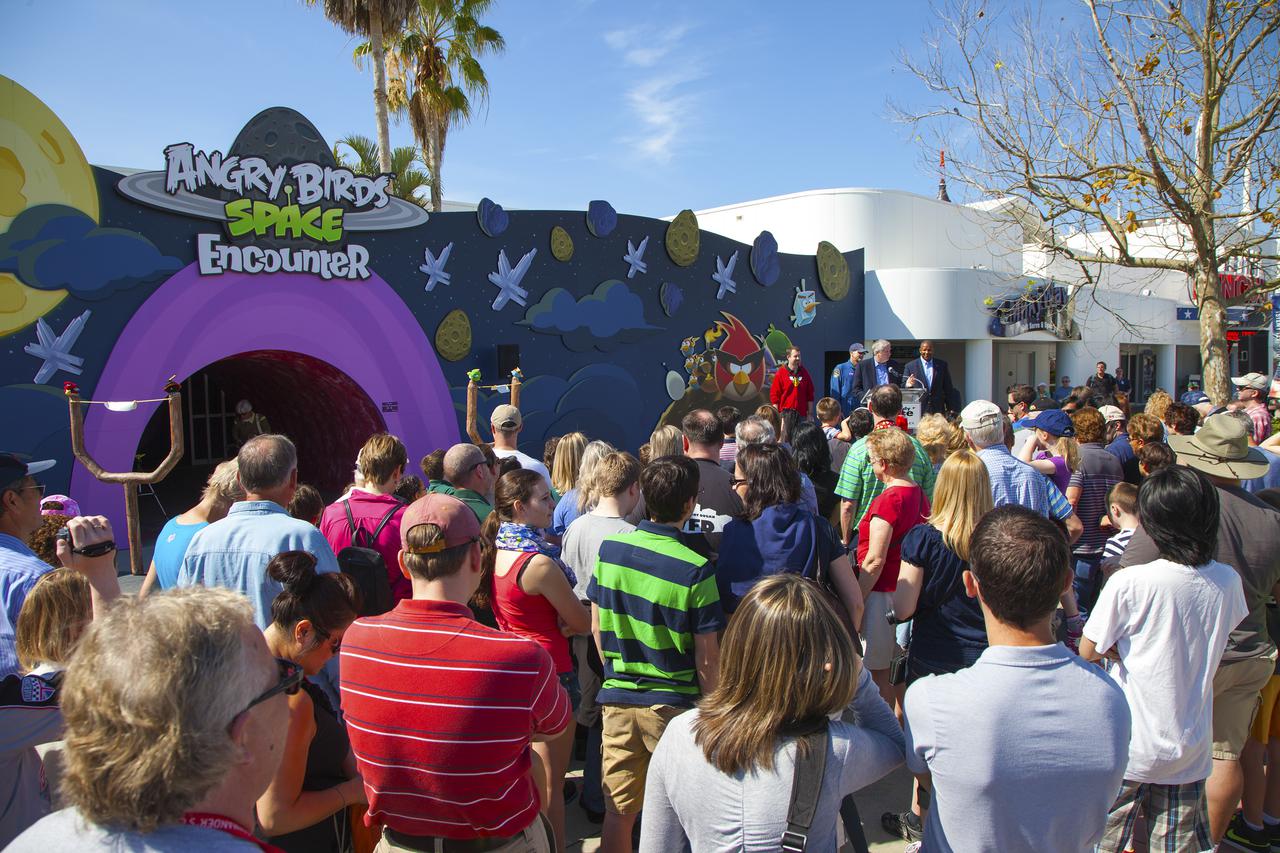
CAPE CANAVERAL, Fla. -- At NASA’s Kennedy Space Center Visitor Complex in Florida, a crowd of people gather for the grand opening of the new Angry Birds Space Encounter. On stage, from left are Dan Mitchell, director of location-based entertainment with Rovio Entertainment Bill Moore, chief operating officer with the KSC visitor complex and Kelvin Manning, associate deputy director of Kennedy Space Center. Standing behind Moore is NASA astronaut Don Pettit. Finland-based Rovio Entertainment, the creator of the Angry Birds Space game, partnered with Kennedy Space Center to bring the beloved characters to life. It is the first Angry Birds interactive exhibit in the United States designed for people of all ages. The 4,485-square-foot facility hosts the space adventures of the Angry Birds as they travel into an intergalactic wormhole, come face-to-face with Space Pigs and discover heroic superpowers. Six interactive stations are designed to encourage children in science, technology, engineering and mathematics fields of study. Photo credit: NASA_Kim Shiflett
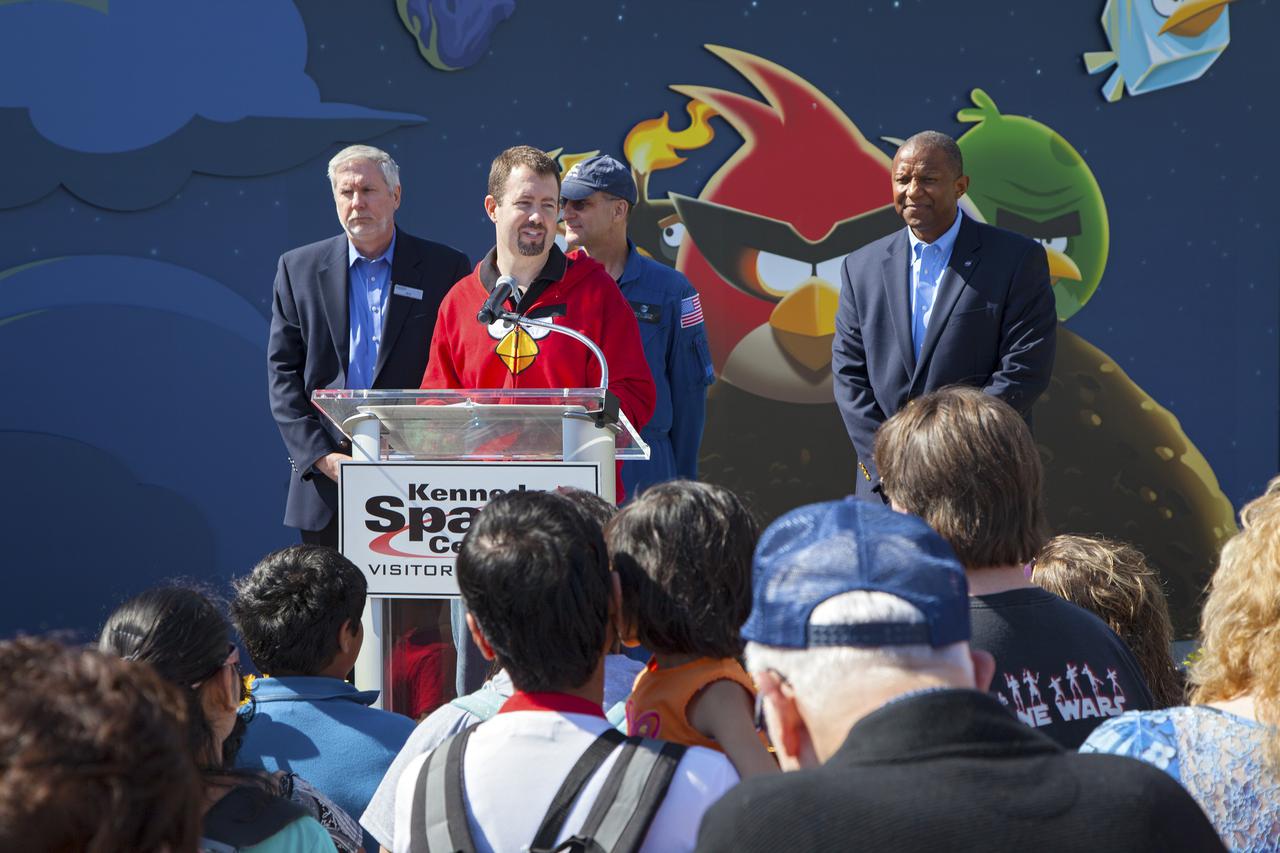
CAPE CANAVERAL, Fla. -- At NASA’s Kennedy Space Center Visitor Complex in Florida, Dan Mitchell, director of location-based entertainment for Rovio Entertainment, speaks to visitors during the grand opening of the new Angry Birds Space Encounter. Standing behind Mitchell, from left are Bill Moore, chief operating officer with the KSC visitor complex NASA astronaut Don Pettit and Kelvin Manning, associate deputy director of Kennedy Space Center. Finland-based Rovio Entertainment, the creator of the Angry Birds Space game, partnered with Kennedy Space Center to bring the beloved characters to life. It is the first Angry Birds interactive exhibit in the United States designed for people of all ages. The 4,485-square-foot facility hosts the space adventures of the Angry Birds as they travel into an intergalactic wormhole, come face-to-face with Space Pigs and discover heroic superpowers. Six interactive stations are designed to encourage children in science, technology, engineering and mathematics fields of study. Photo credit: NASA_Kim Shiflett
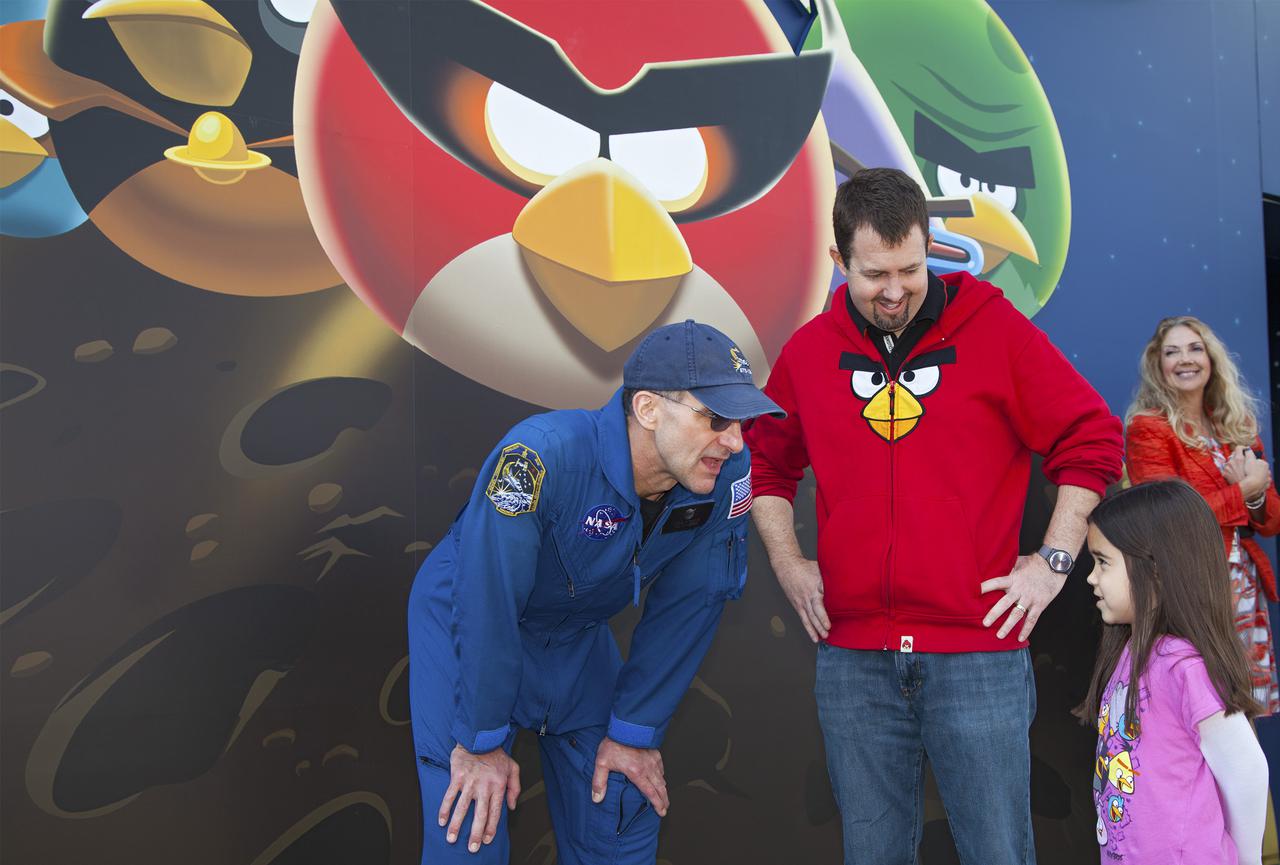
CAPE CANAVERAL, Fla. -- At NASA’s Kennedy Space Center Visitor Complex in Florida, NASA astronaut Don Pettit and Rovio Entertainment Director Dan Mitchell greet visitors near the entrance to the new Angry Birds Space Encounter during the grand opening ceremony. Pettit spent a total of 12 months during two separate missions aboard the International Space Station and introduced Angry Birds Space while floating in zero gravity. Finland-based Rovio Entertainment, the creator of the Angry Birds Space game, partnered with Kennedy Space Center to bring the beloved characters to life. It is the first Angry Birds interactive exhibit in the United States designed for people of all ages. The 4,485-square-foot facility hosts the space adventures of the Angry Birds as they travel into an intergalactic wormhole, come face-to-face with Space Pigs and discover heroic superpowers. Six interactive stations are designed to encourage children in science, technology, engineering and mathematics fields of study. Photo credit: NASA_Kim Shiflett

ISS038-E-036501 (28 Jan. 2014) --- This wide field-of-view image photographed by an Expedition 38 crew member on the International Space Station shows an east-west swath of the southwestern Indian Ocean. Two remote islands, part of the French Southern and Antarctic Lands, appear in the center of the image. Possession Island (right center) and East Island (center) are both only 18 kilometers long. A smaller island, Ile aux Cochons (Pigs Island), lies 100 kilometers to the west. Each island has set up V-shaped trains of waves, like bow waves, as the air flows over the islands from the west (right to left). The bow-wave patterns are overlaid on the low regional stratus (blanket) cloud that is so common in the southern Indian Ocean at 50 degrees south latitude. This view was taken from more than 400 kilometers above the sea surface and reveals relationships that could not be readily understood by someone standing on one of the islands. For example, larger and higher islands produce larger waves. So the largest are being generated by Possession Island (934 meters above sea level at the highest point), and East Island, versus much smaller waves developed downwind of the tiny Ile de Pingouins (340 meters above sea level high, invisible below the cloud deck). Other patterns also can be detected. Waves in an upper layer can be seen casting shadows onto a lower layer (lower left). In the top half of the image the waves are making thicker and thinner zones in the clouds of the lower layer. Wave trains from Possession Island and Ile aux Cochons are interacting in a cross-hatch pattern (center).
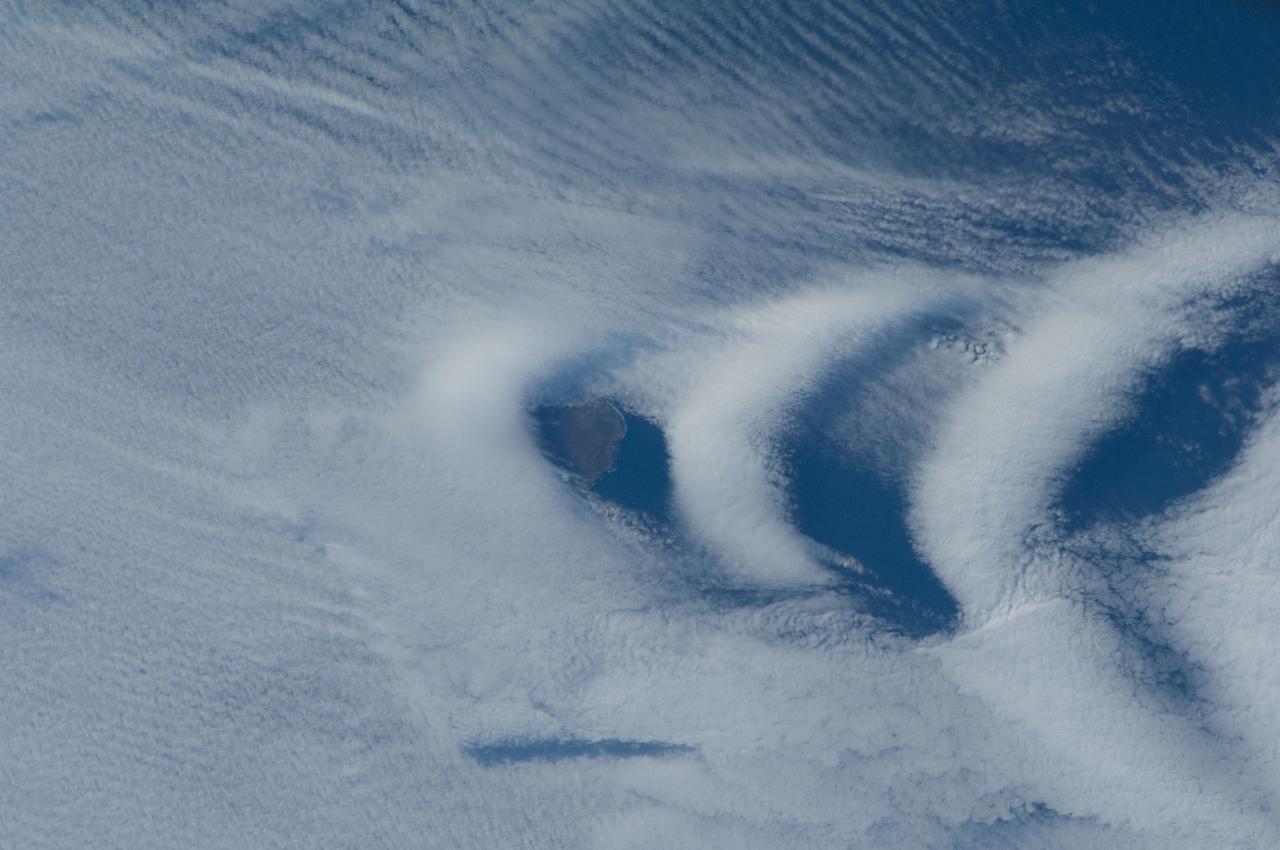
ISS030-E-193144 (25 March 2012) --- Wave clouds near Ile aux Cochons are featured in this image photographed by an Expedition 30 crew member on the International Space Station. This photograph illustrates the formation of wave clouds in the wake—or downwind side—of Ile aux Cochons (“Isle of Pigs”) located in the Southern Indian Ocean. The island is approximately located 3,000 kilometers southeast of the southern tip of the African continent and 2,300 kilometers northwest of Antarctica. The island itself, of which only a part of the eastern coastline is visible at center, is volcanic in origin with a summit elevation of 775 meters above sea level. According to scientists, the Ile aux Cochons stratovolcano is thought to have erupted within the last 12,000 years; however no historical activity has been recorded. The summit elevation is high enough for the land surface to interact with cloud layers and winds flowing past the island. Two major cloud layers are visible; a lower, more uniform layer consists of roughly parallel cloud “streets” that suggest a westerly flow pattern of air. When the air mass encounters the Ile aux Cochons, moisture-laden air rises and cools, causing more water vapor to condense into clouds. As the air mass passes over the summit of Ile aux Cochons and descends, it may encounter alternating moist and dry air layers, enabling the formation of the discontinuous chevron-shaped wave clouds in the wake of the island. While their appearance suggests that the clouds are forming in the wake of the island and moving eastwards, in fact it is the air mass that is moving, with clouds forming in regions of moist air and dissipating in dry regions. Ile aux Cochons is the westernmost of the islands that form the subantarctic Crozet Archipelago (part of the French Southern and Antarctic Lands). Accept for occasional research visits, the island is uninhabited. The island is an important breeding site for seabirds, including the world’s largest King Penguin colony.
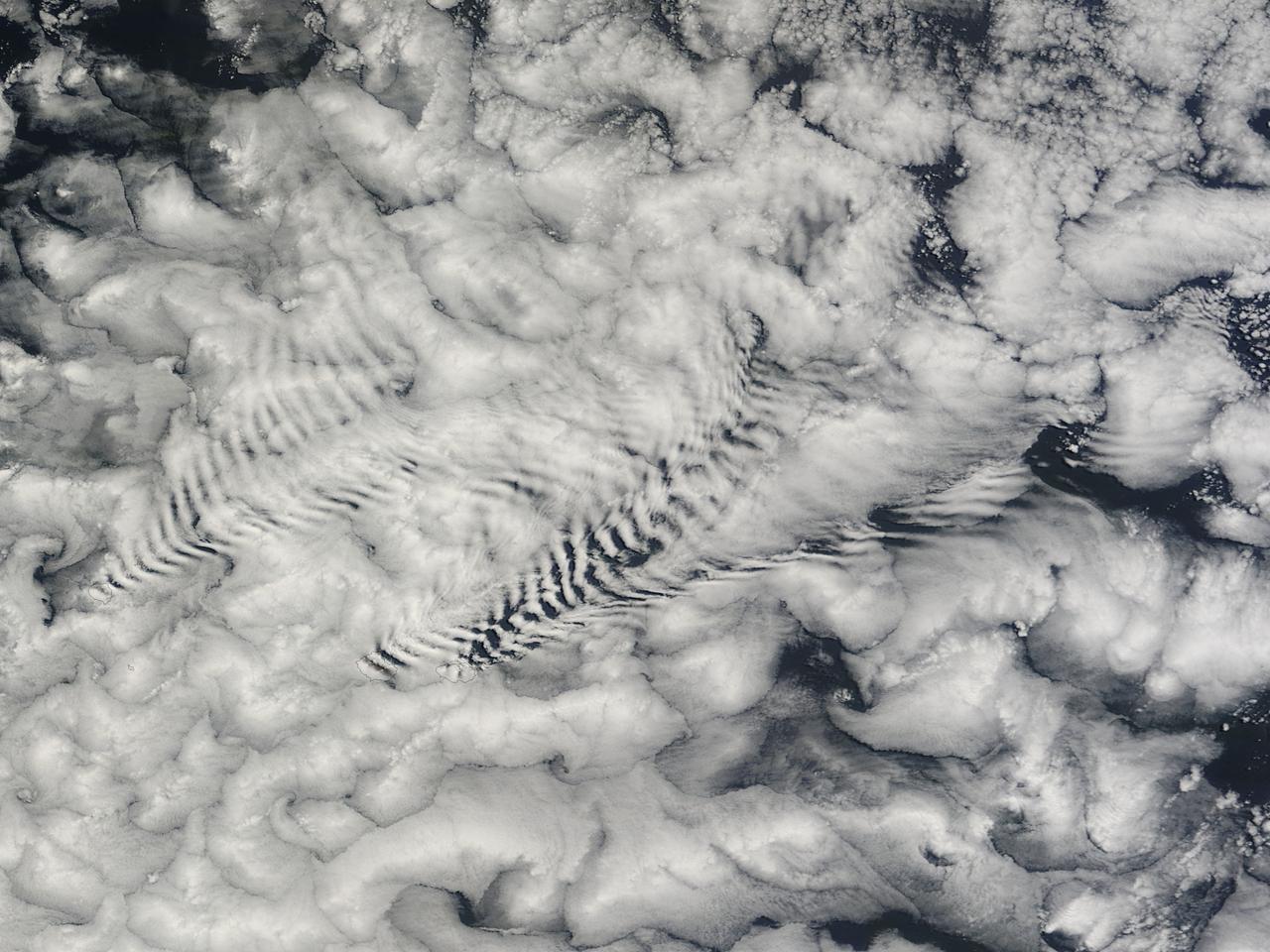
There are special places on Earth that sometimes write their personal signature in the clouds. The Crozet Islands are one such place, thanks to the tall volcanic peaks that grace the islands. When air flows around these tall peaks, it gets pushed around the islands as well as up and over the peak. The net effect of the flowing air flowing around the solid, tall peaks is much like the solid bow of a ship cutting through standing water. In each case v-shaped waves are formed behind the motion. In liquid, this is called a wake; in the atmosphere, when clouds are present or created, they are known as ship-wave-shaped clouds. The Moderate Resolution Imaging Spectroradiometer (MODIS) aboard NASA’s Terra satellite captured this true-color image as it passed over the Crozet Islands on November 26, 2014. Three distinct waves are seen behind the three largest islands. From west to east these are Pig Island, Possession Island and East Island. Credit: NASA/GSFC/Jeff Schmaltz/MODIS Land Rapid Response Team <b><a href="http://www.nasa.gov/audience/formedia/features/MP_Photo_Guidelines.html" rel="nofollow">NASA image use policy.</a></b> <b><a href="http://www.nasa.gov/centers/goddard/home/index.html" rel="nofollow">NASA Goddard Space Flight Center</a></b> enables NASA’s mission through four scientific endeavors: Earth Science, Heliophysics, Solar System Exploration, and Astrophysics. Goddard plays a leading role in NASA’s accomplishments by contributing compelling scientific knowledge to advance the Agency’s mission. <b>Follow us on <a href="http://twitter.com/NASAGoddardPix" rel="nofollow">Twitter</a></b> <b>Like us on <a href="http://www.facebook.com/pages/Greenbelt-MD/NASA-Goddard/395013845897?ref=tsd" rel="nofollow">Facebook</a></b> <b>Find us on <a href="http://instagram.com/nasagoddard?vm=grid" rel="nofollow">Instagram</a></b>