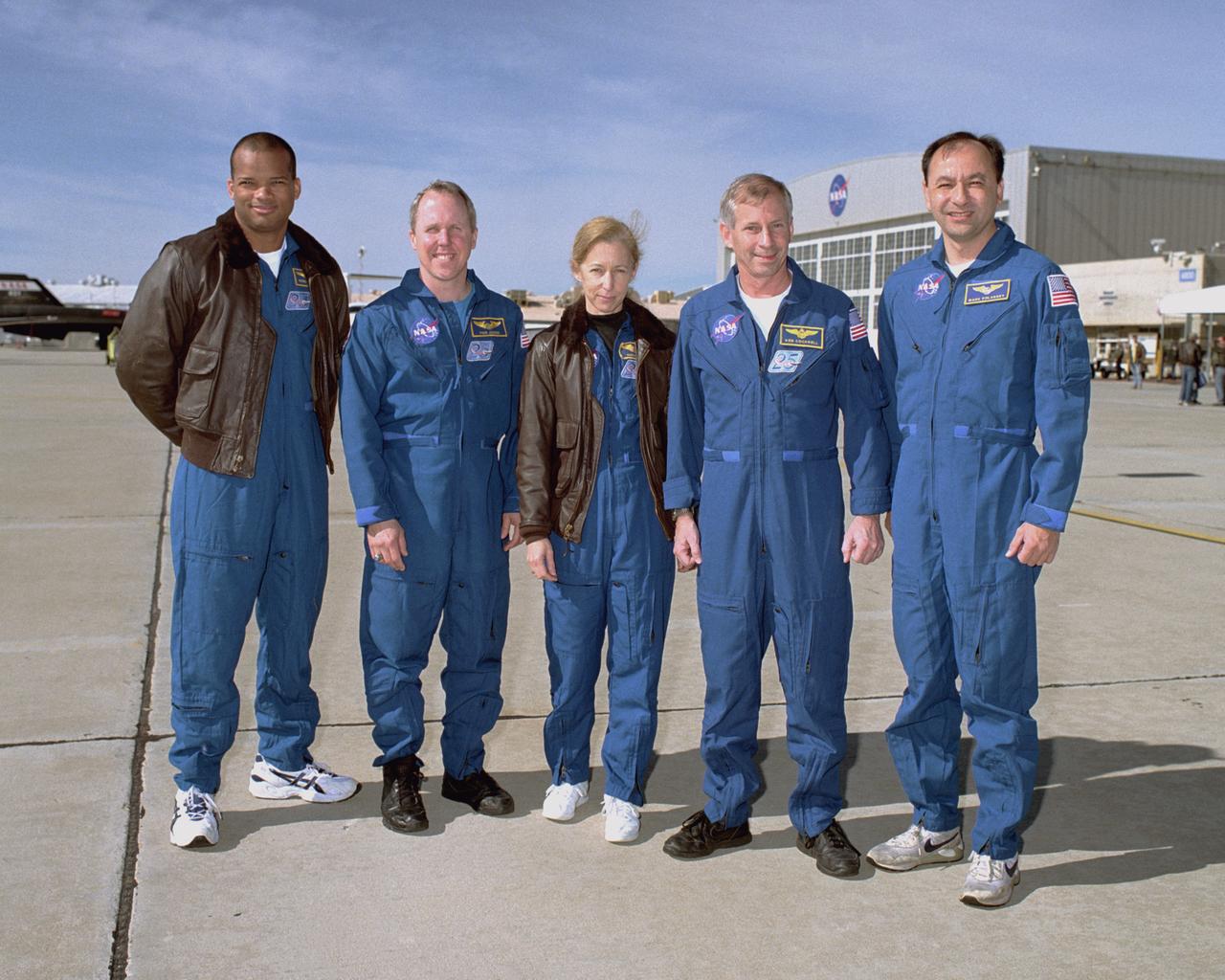
The crew of STS-98 poses for a group photo shortly before leaving NASA's Dryden Flight Research Center after a successful landing of the Space Shuttle Atlantis the day before. L to R: Mission Specialists Robert L. Curbeam, Thomas D. Jones, and Marsha S. Ivins, Commander Kenneth D. Cockrell, and Pilot Mark L. Polansky.
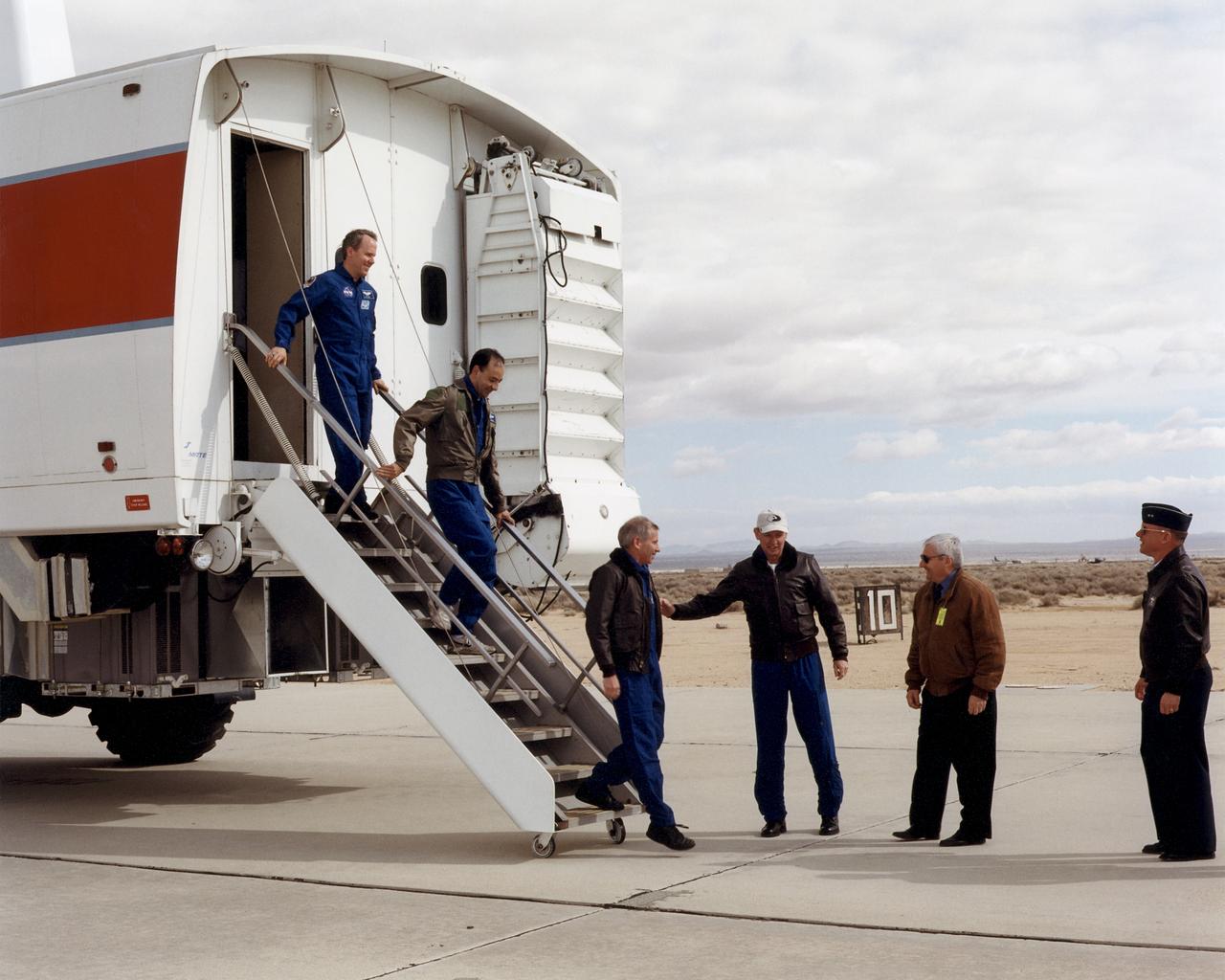
L to R: STS-98 Mission Specialist Thomas Jones, Pilot Mark Polansky, and Commander Kenneth Cockrell greet STS-92 Commander Brian Duffy, Dryden Center Director Kevin Petersen, and AFFTC Commander Major General Richard Reynolds after landing on the runway at Edwards Air Force Base, California, where NASA's Dryden Flight Research Center is located.
STS98-E-5015 (8 February 2001) --- Astronaut Mark L. Polansky, pilot, is pictured at the pilot's station on the flight deck of the Space Shuttle Atlantis during Flight Day 1. The scene was recorded with a digital still camera.
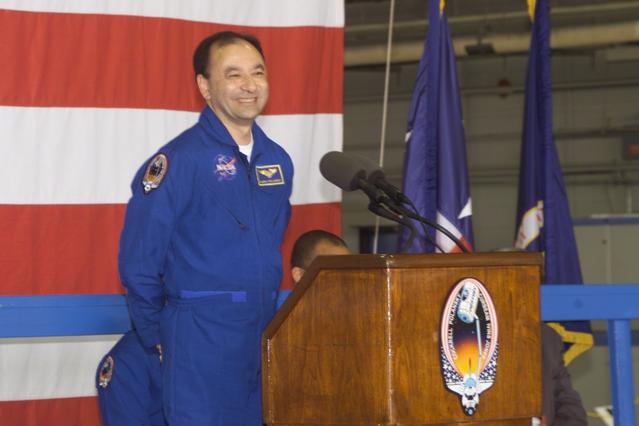
JSC2001-E-04807 (21 February 2001) --- Astronaut Mark L. Polansky, pilot, shares a few thoughts about his first space mission with well wishers on hand at the STS-98 crew's return at Ellington Field.
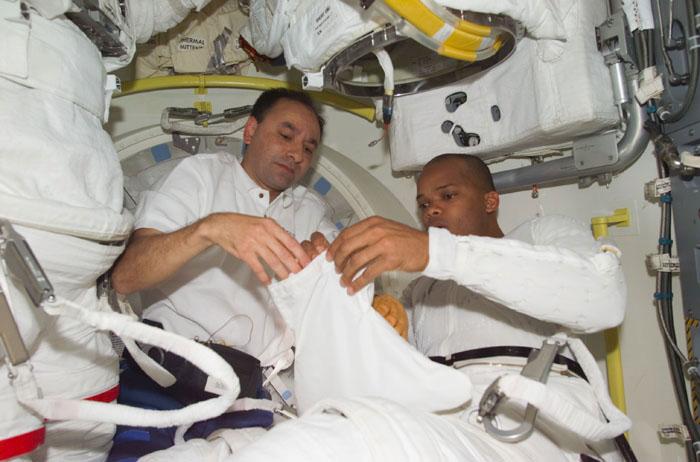
STS98-E-5179 (12 February 2001) --- Astronaut Robert L. Curbeam (right), STS-98 mission specialist, with the aid of astronaut Mark L. Polansky, pilot, dons his extravehicular mobility unit for the upcoming space walk on the International Space Station on February 12. This scene was recorded with a digital still camera.
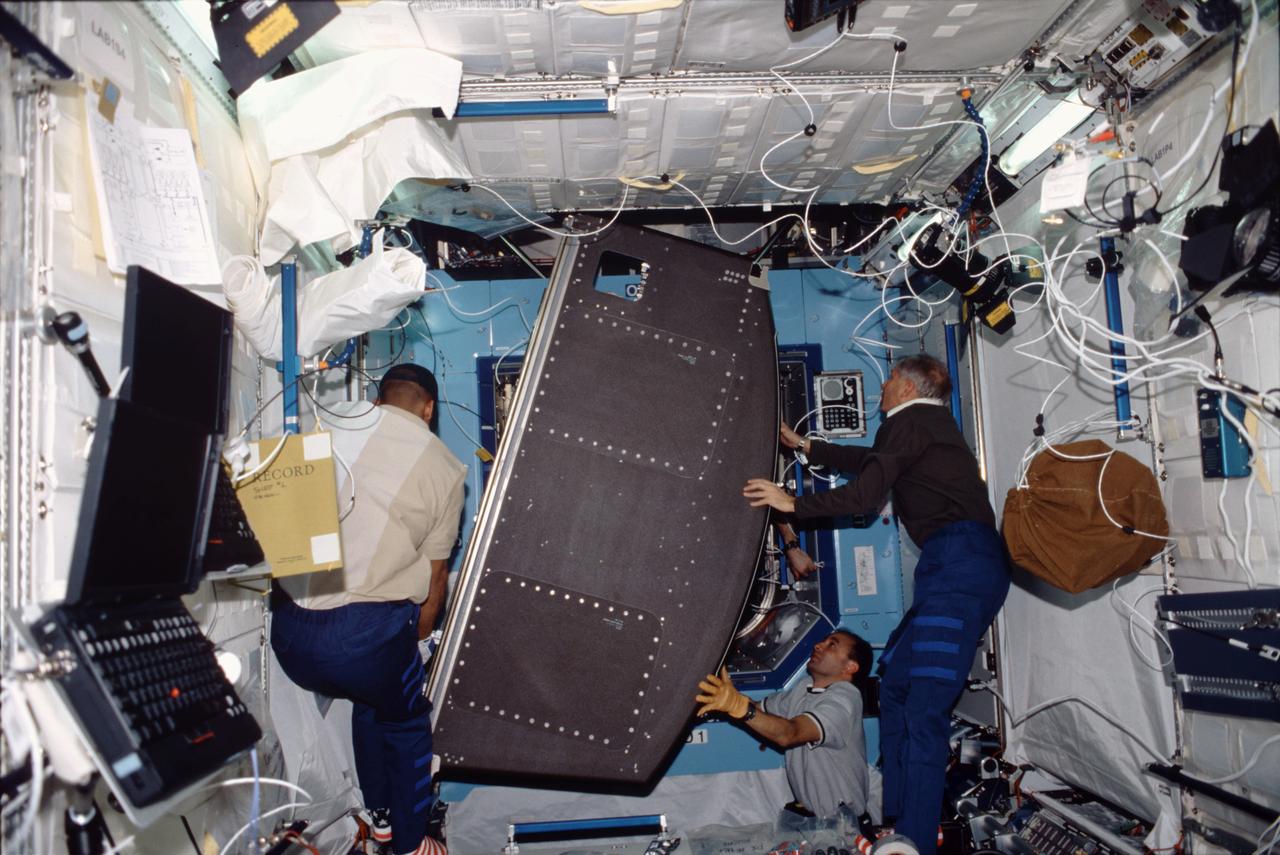
STS098-322-0001 (7-20 February 2001) --- Three STS-98 astronauts move a rack into position aboard the newly attached Destiny laboratory. From the left to right are astronauts Robert L. Curbeam, mission specialist; Mark L. Polansky, pilot; and Kenneth D. Cockrell, mission commander.
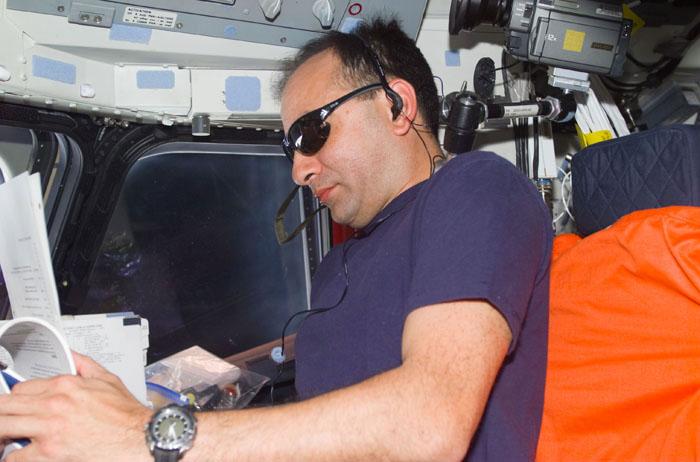
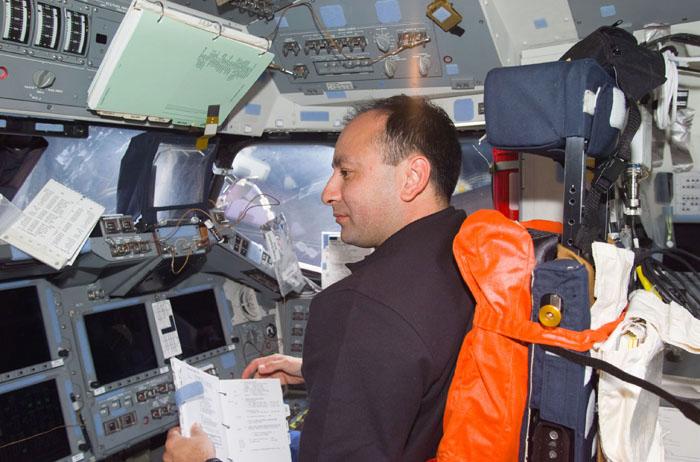
STS98-E-5203 (13 February 2001) --- Astronaut Mark L. Polansky, STS-98 pilot, checks out a detail in a flight plan at the pilot's station on the Space Shuttle Atlantis on February 13. This scene was recorded with a digital still camera.
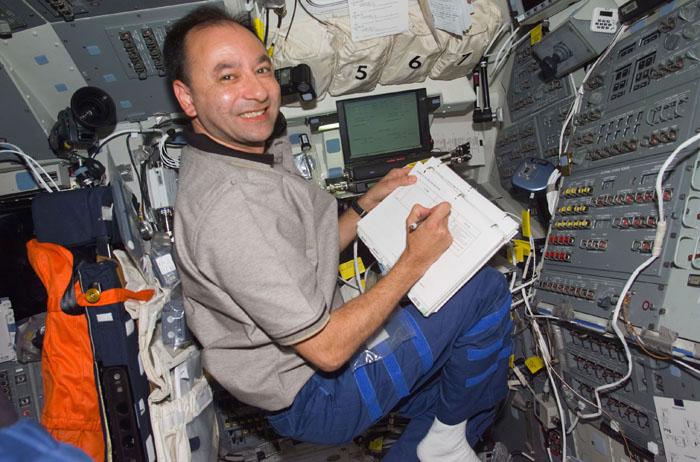
STS98-E-5084 (10 February 2001) --- Astronaut Mark L. Polansky, STS-98 pilot, takes notes on the aft flight deck of the Space Shuttle Atlantis. The scene was recorded with a digital still camera during Flight Day 4 activities.
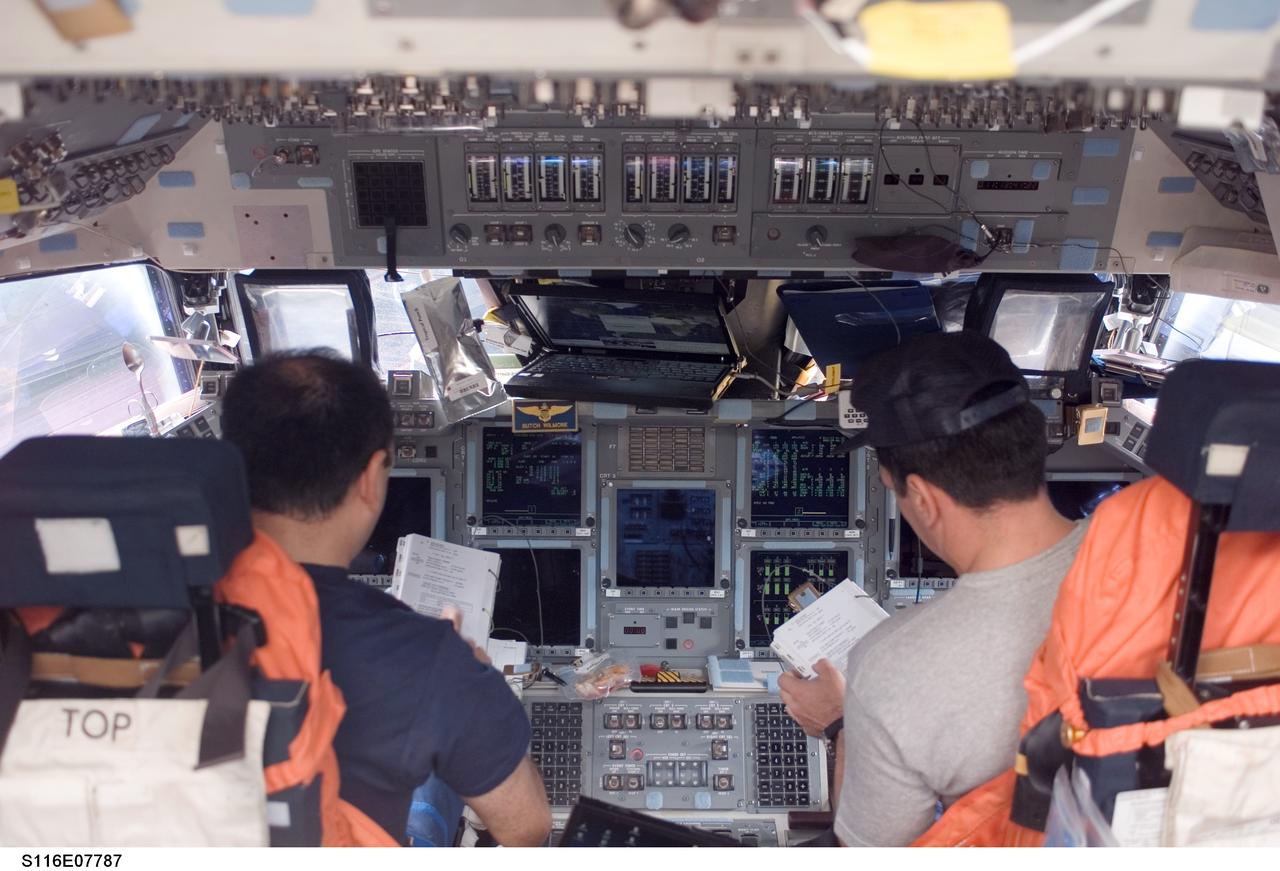
S116-E-07787 (21 Dec. 2006) --- Astronauts Mark L. Polansky (left) and William A. (Bill) Oefelein, STS-116 commander and pilot, respectively, look over procedures checklists on the forward flight deck of Space Shuttle Discovery during flight day 13 activities.
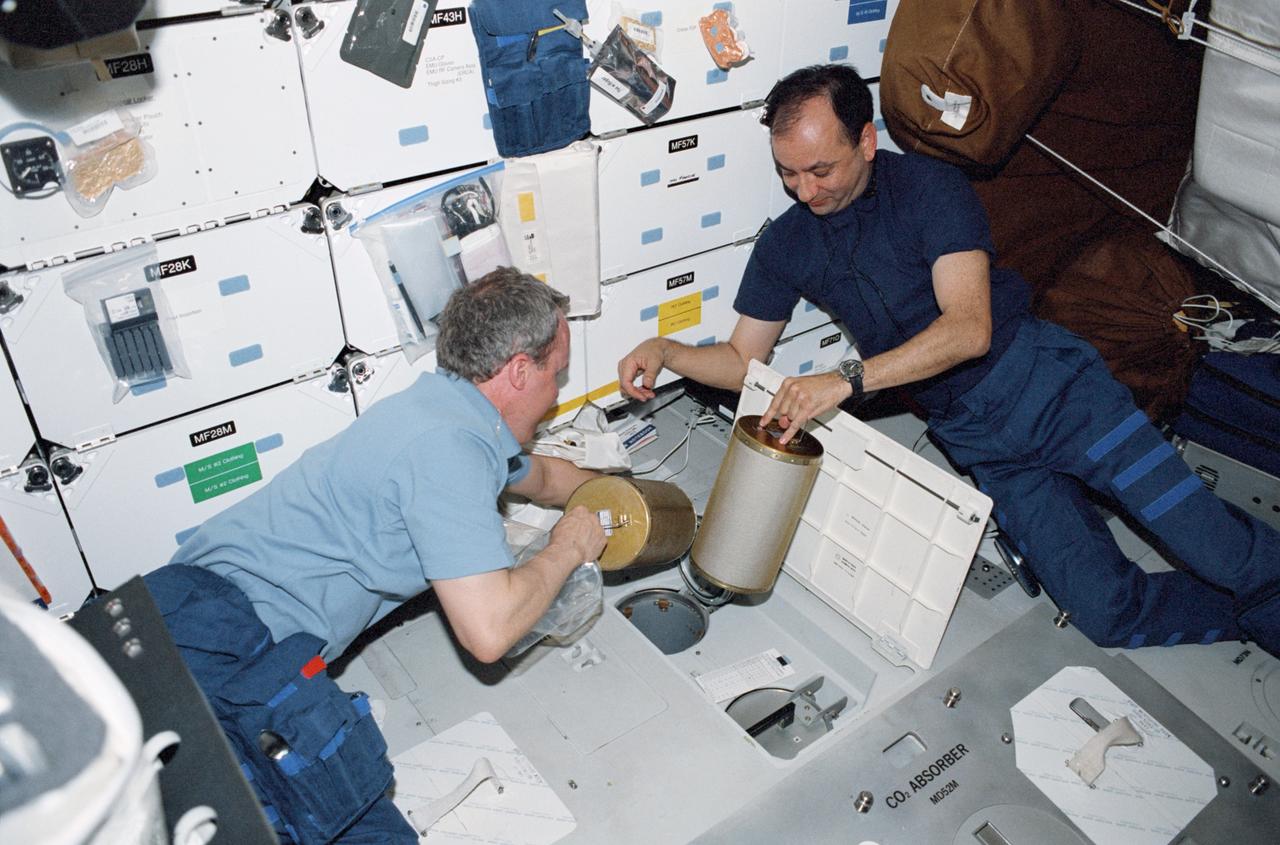
STS098-345-028 (7-20 February 2001) --- Astronauts Thomas D. Jones, mission specialist, and Mark L. Polansky, pilot, change out lithium hydroxide canisters on the mid deck of the Earth-orbiting Space Shuttle Atlantis.
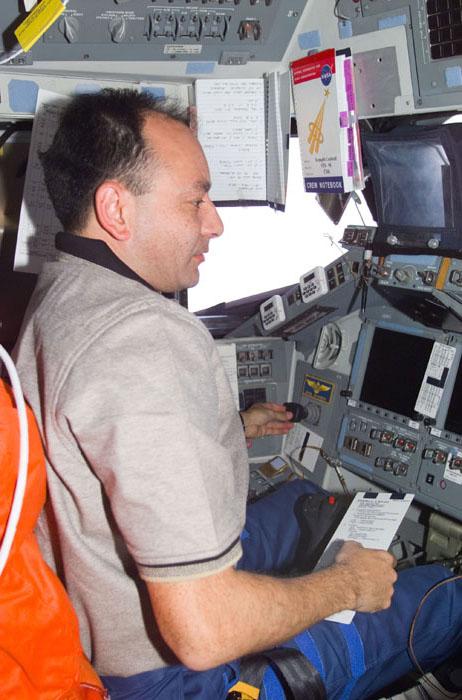
STS98-E-5024 (9 February 2001) --- Astronaut Mark L. Polansky, pilot, temporarily mans the commander's station on the flight deck of the Space Shuttle Atlantis during STS-98 Flight Day 2 maneuvers. The photograph was recorded with a digital still camera.
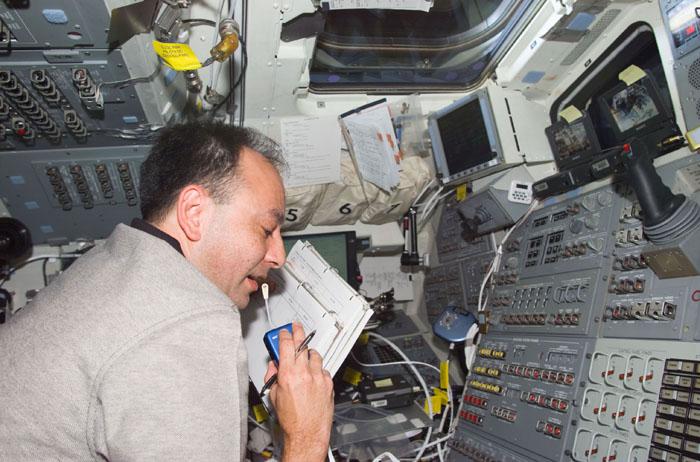
STS98-E-5086 (10 February 2001) --- Astronaut Mark L. Polansky, STS-98 pilot, communicates with ground controllers from his post at the aft flight deck controls on the Space Shuttle Atlantis. The scene was recorded with a digital still camera.
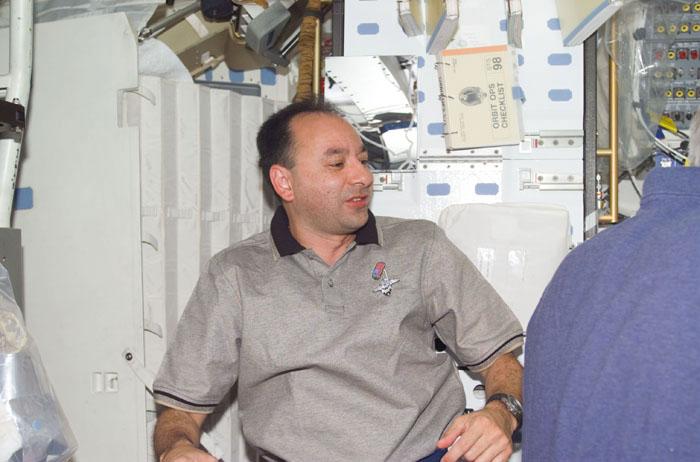
STS98-E-5016 (9 February 2001) --- Astronaut Mark L. Polansky, pilot for STS-98, is pictured on the mid deck of the Earth-orbiting Space Shuttle Atlantis prior to the start of a busy Flight Day 2 itinerary. The scene was recorded with a digital still camera.

STS98-E-5073 (10 February 2001) --- Astronauts Kenneth D. Cockrell (foreground), STS-98 mission commander, and Mark L. Polansky, pilot, share a mirror in order to shave their faces on the mid deck of the Space Shuttle Atlantis. The scene was recorded with a digital still camera.
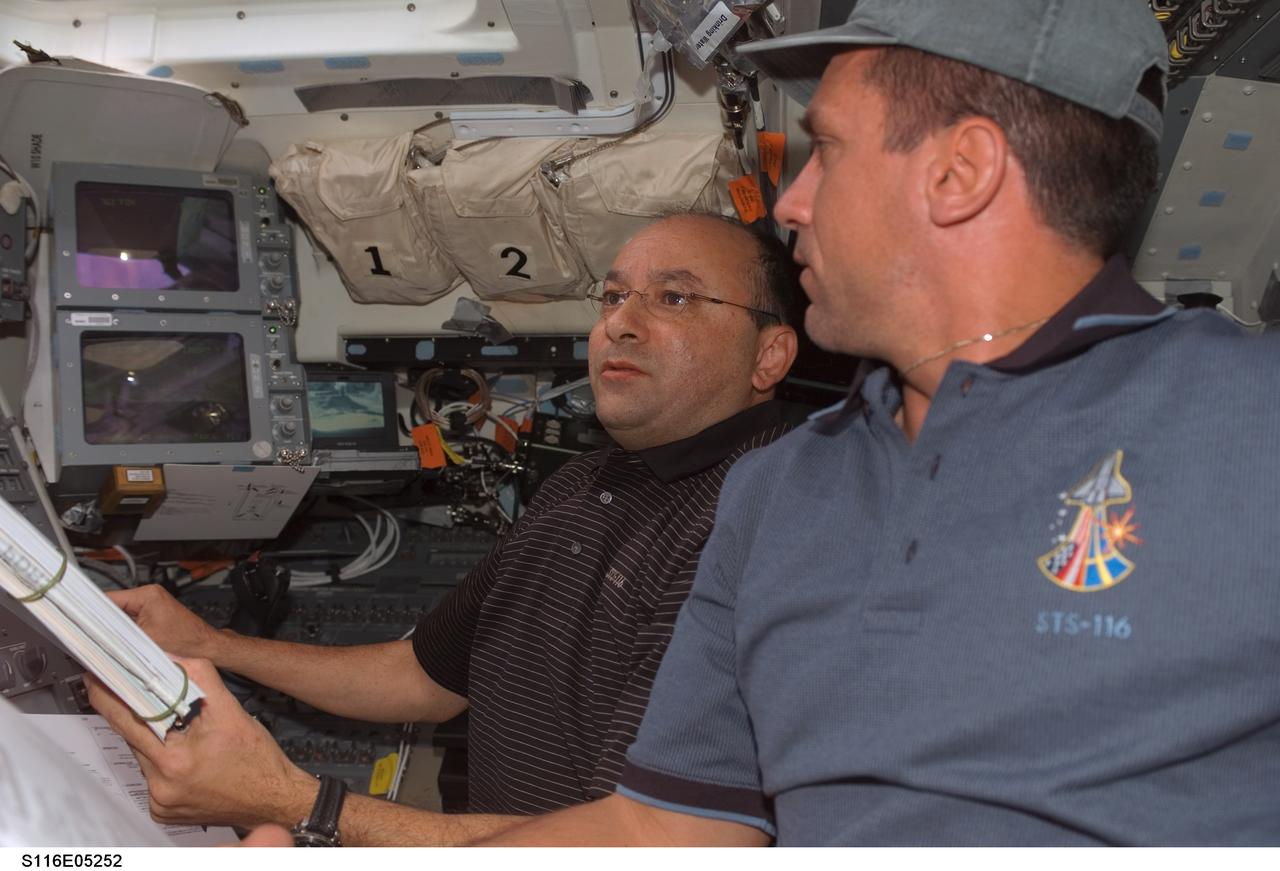
S116-E-05252 (10 Dec. 2006) --- Astronauts Mark L. Polansky (background) and William A. (Bill) Oefelein, STS-116 commander and pilot, respectively, look over procedures checklists on the flight deck of Space Shuttle Discovery during flight day two activities.
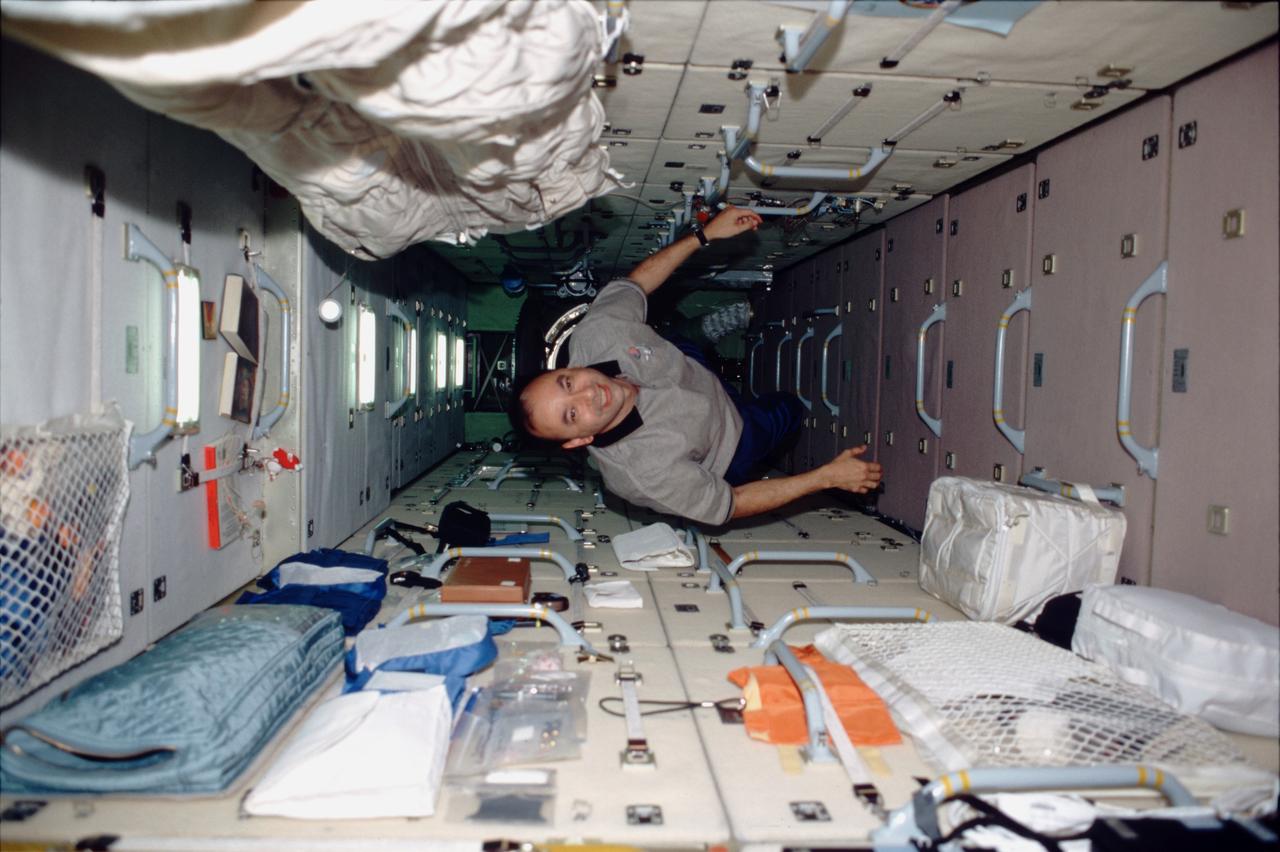
STS098-320-008 (7-20 February 2001) --- Astronaut Mark L. Polansky, STS-98 pilot, translates through the Zarya functional cargo block (FGB) while visiting and working aboard the International Space Station (ISS).
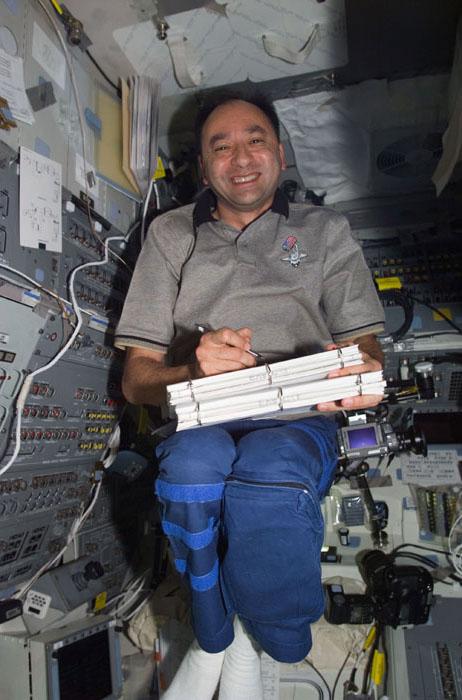
S98-E-5085 (10 February 2001) --- Astronaut Mark L. Polansky, STS-98 pilot, makes marginal notes on flight procedures tablets on the aft flight deck of the Space Shuttle Atlantis. The scene was recorded with a digital still camera during Flight Day 4 activities.
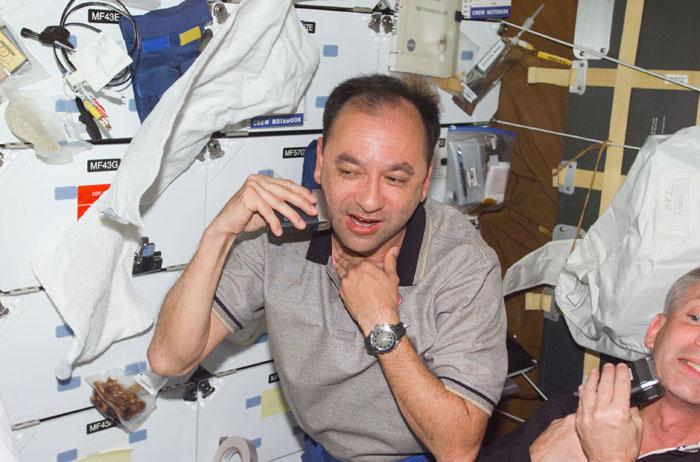
STS98-E-5071 (10 February 2001) --- Astronauts Mark L. Polansky, STS-98 pilot, and Kenneth D. Cockrell (partially visible at right), mission commander, shave their faces on the mid deck of the Space Shuttle Atlantis. The scene was recorded with a digital still camera.
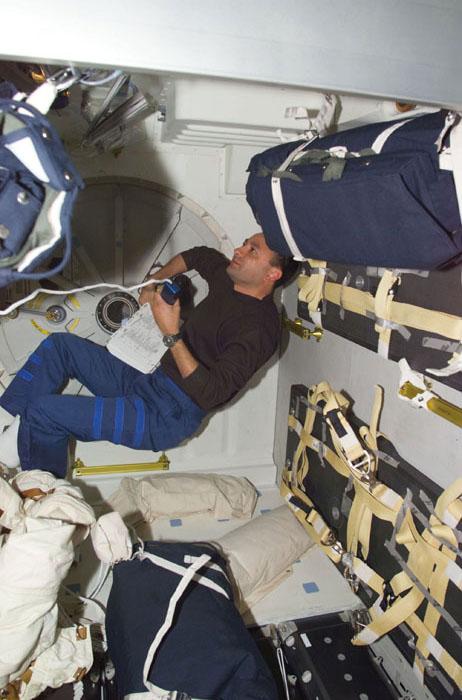
STS98-E-5088 (10 February 2001) --- Astronaut Mark L. Polansky, SS-98 pilot, communicates with ground controllers from the mid deck of the Space Shuttle Atlantis. Parts of at least two sleep stations are visible in the digital still camera's scene.
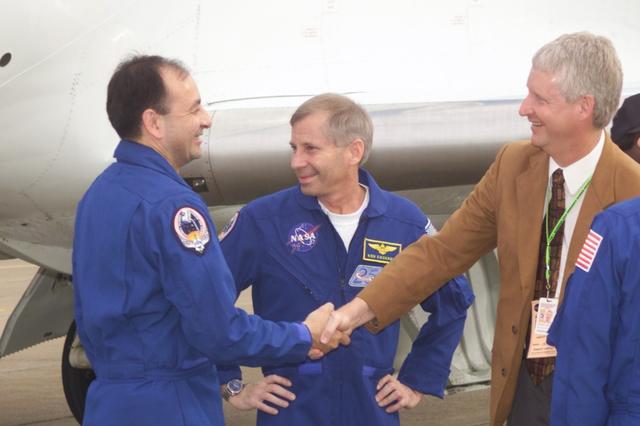
JSC2001-E-04804 (21 February 2001) --- Astronauts Mark L. Polansky (left) and Kenneth D. Cockrell (center), pilot and commander, respectively, for the STS-98 mission, are greeted by Steven A. Hawley of the Flight Crew Operations Directorate upon their return to Houston. The greetings took place prior to a welcoming ceremony at Ellington Field.
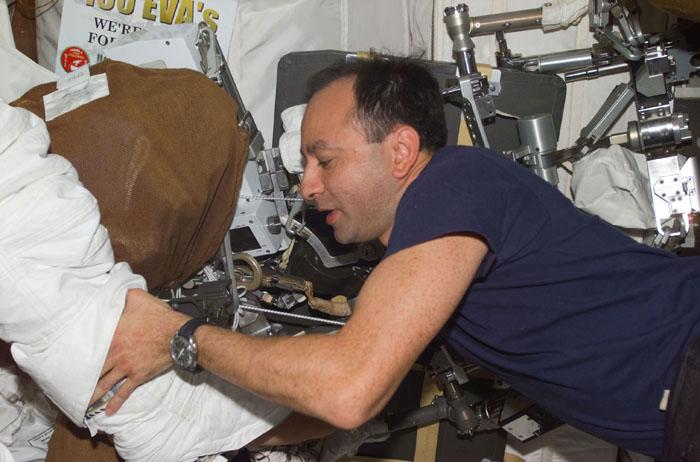
STS98-E-5220 (14 February 2001) --- Astronaut Mark L. Polansky, pilot, assists one of the STS-98 space walkers with his boot during suit donning aboard the Space Shuttle Atlantis. The scene was recorded with a digital still camera.
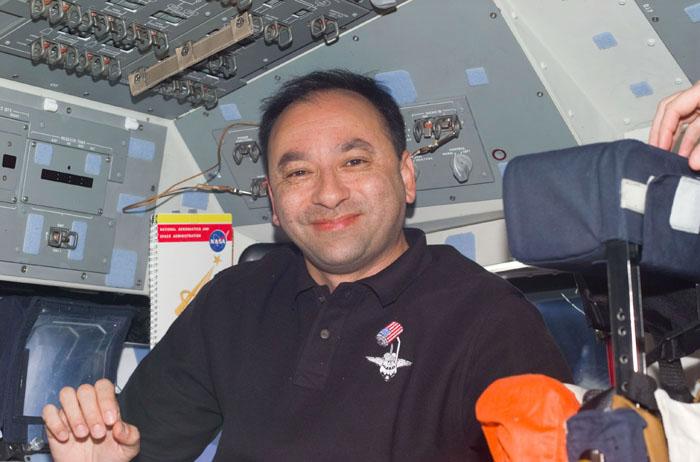
STS98-E-5002 (8 February 2001) -- Astronaut Mark L. Polansky, STS-98 pilot, is seen on the flight deck of the Earth-orbiting Space Shuttle Atlantis in one of the first digital still camera scenes to be down linked from the shuttle.
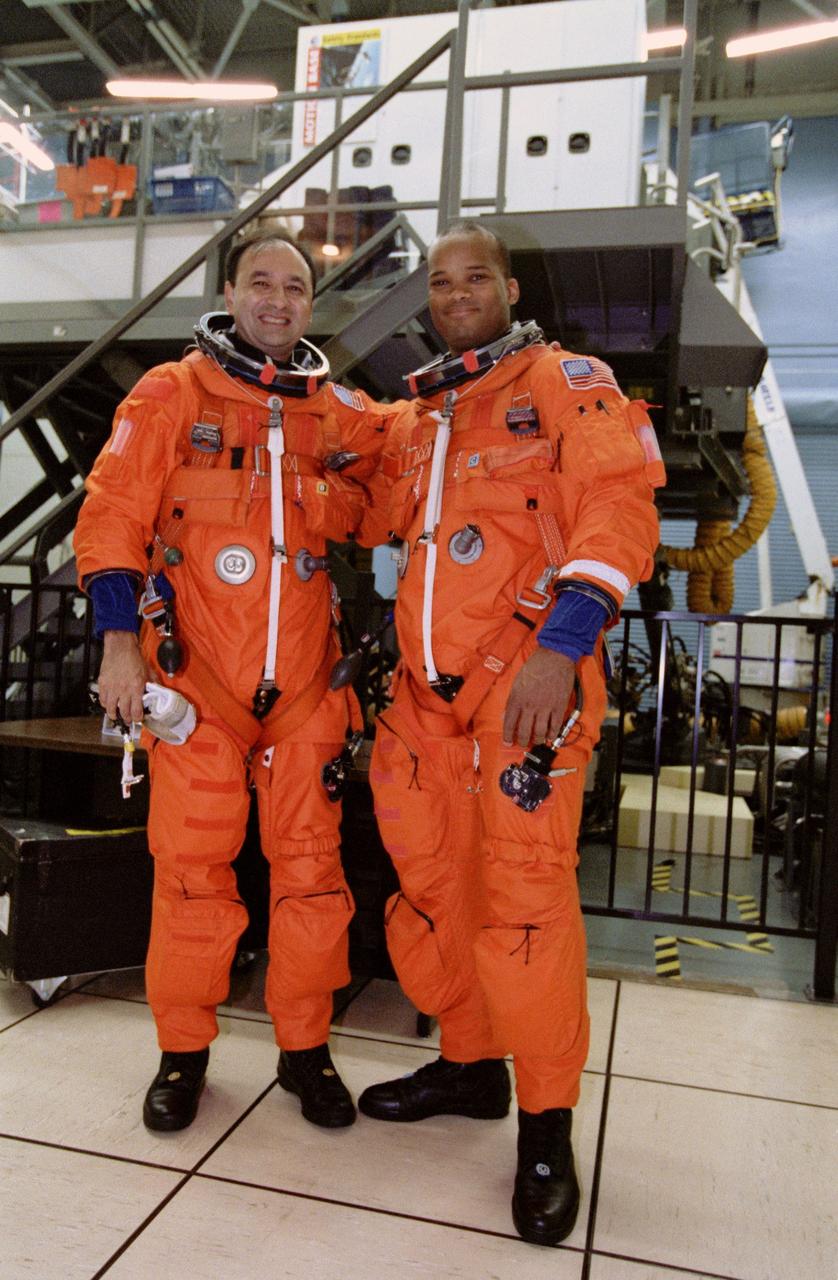
JSC2000-04778 (16 June 2000) --- Attired in training versions of the shuttle launch and entry garment, astronauts Mark Polansky (left) and Robert L. Curbeam take a break from a simulation exercise in the motion-base shuttle mission simulator (seen in the background) at the Johnson Space Center (JSC). Polansky is STS-98 pilot and Curbeam doubles as a mission specialist and flight engineer for the scheduled January 2000 5a mission to the International Space Station (ISS).
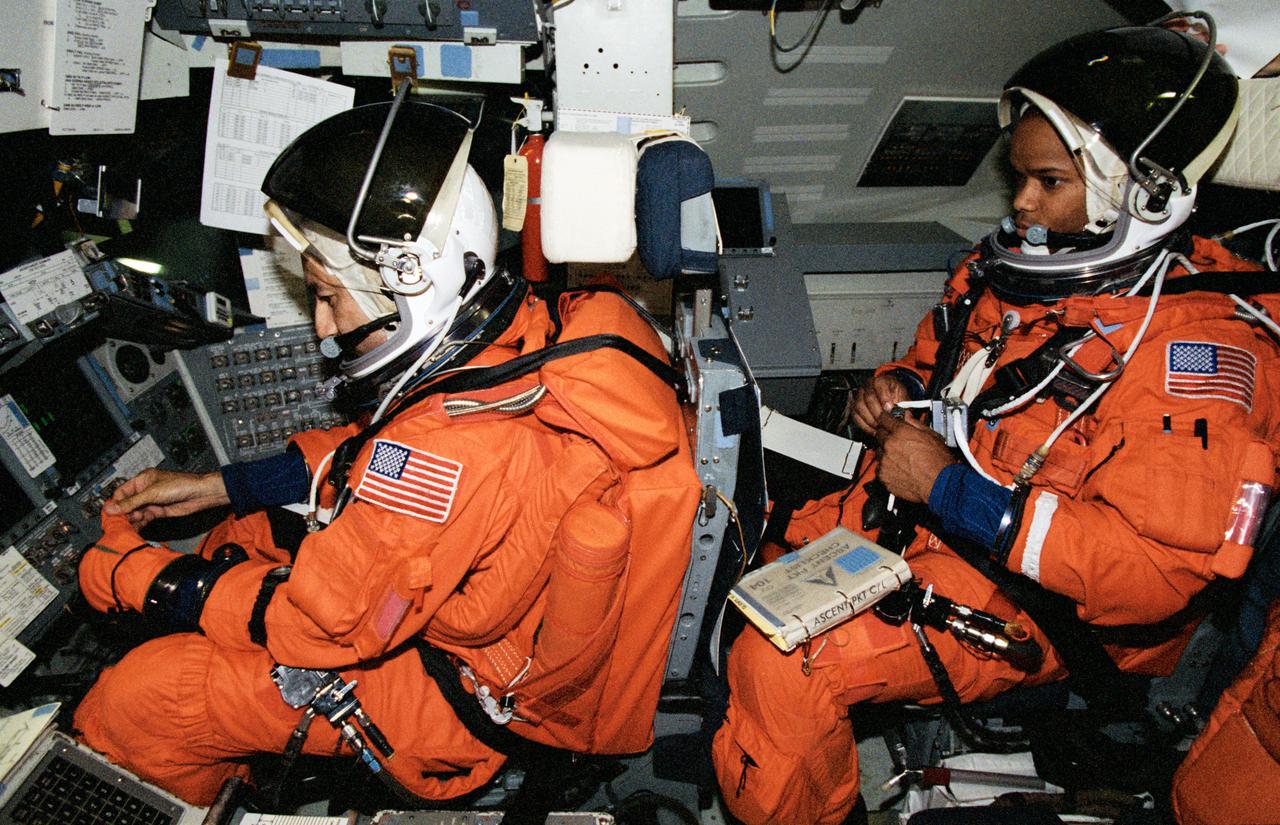
Photographic documentation showing STS-98 crewmembers engaging in preflight training in bldg. 5. Views include: STS-98 mission commander Kenneth D. Cockrell, wearing a Launch Entry Suit (LES) and a helmet, sits in the commanders station on the flight deck of the mobile-based Shuttle Mission Simulator (SMS) (04774); STS-98 pilot Mark L. Polansky, wearing LES and helmet, sits in the pilots station, with STS-98 Mission Specialist (MS) Robert L. Curbeam seated behind him on the flight deck (04775); Polansky in the pilots station (04776); Curbeam in a LES and wearing a Communications Carrier Assembly (CCA) (04777); Polansky and Curbeam pose, wearing LES and no helmets, in bldg. 5 (04778); Polansky, wearing a LES, fastens his CCA (04779); Cockrell, Polansky, Curbeam and STS-98 MS Marsha S. Ivins, wearing LES, sit in locker room (04780); Ivins and suit techs (04781); suit techs and Polansky (04782); suit techs and Cockrell (04783).
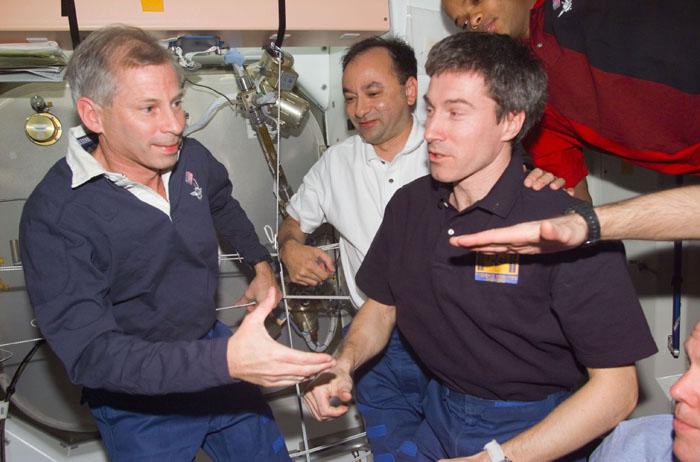
STS98-E-5295 (16 February 2001) --- Astronaut Kenneth D. Cockrell (left), STS-98 mission commander, participates in farewells with Expedition One crew members. Cosmonaut Sergei K. Krikalev (right foreground), Expedition One flight engineer, is one of three crew members who will stay behind for several weeks prior to return to Earth. Astronauts Mark L. Polansky, STS-98 pilot, and Robert L. Curbeam, mission specialist, are also pictured. The scene was recorded with a digital still camera.
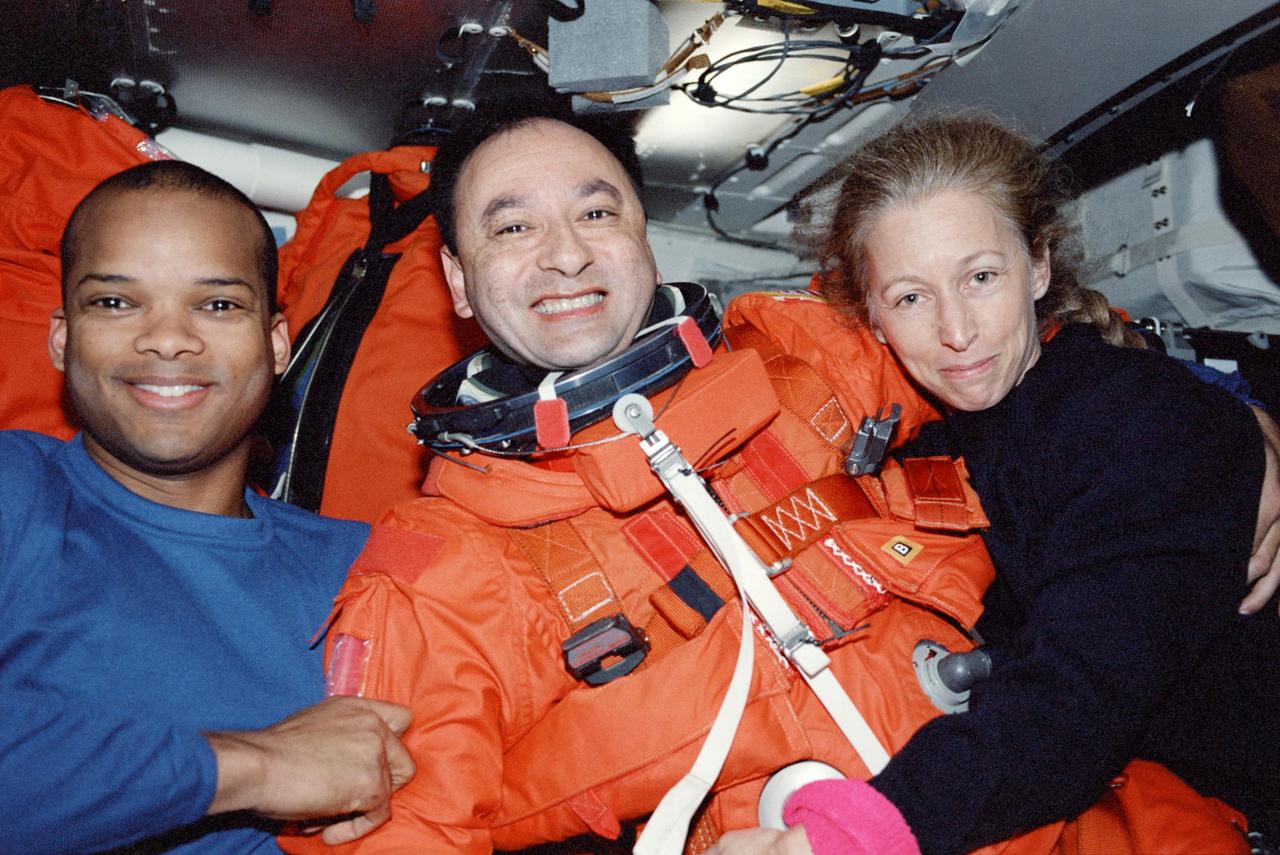
STS098-358-005 (7-20 February 2001) --- Astronauts Mark L. Polansky (center), pilot, Robert L. Curbeam, and Marsha S. Ivins, both mission specialists, paused for this photograph as they prepared to suit up in their full-pressure launch and entry suits on the mid deck of the Space Shuttle Atlantis during de-orbit preparations.
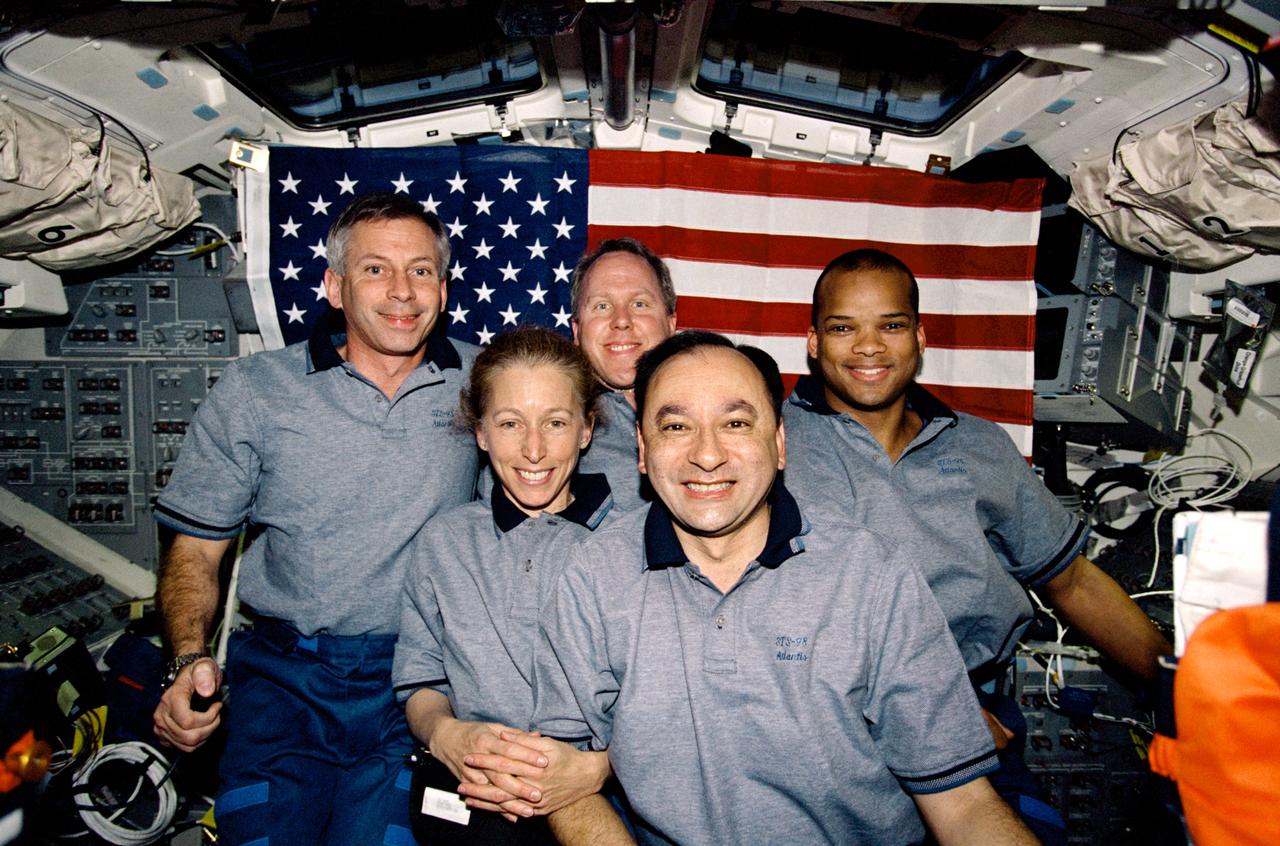
STS098-365-0034 (7-20 February 2001) --- The crew of the STS-98 mission poses for the traditional inflight portrait on the flight deck of the Space Shuttle Atlantis. From left are astronauts Kenneth D. Cockrell, mission commander; Marsha S. Ivins, mission specialist; Thomas D. Jones, mission specialist; Mark L. Polansky, pilot; and Robert L. Curbeam, mission specialist.
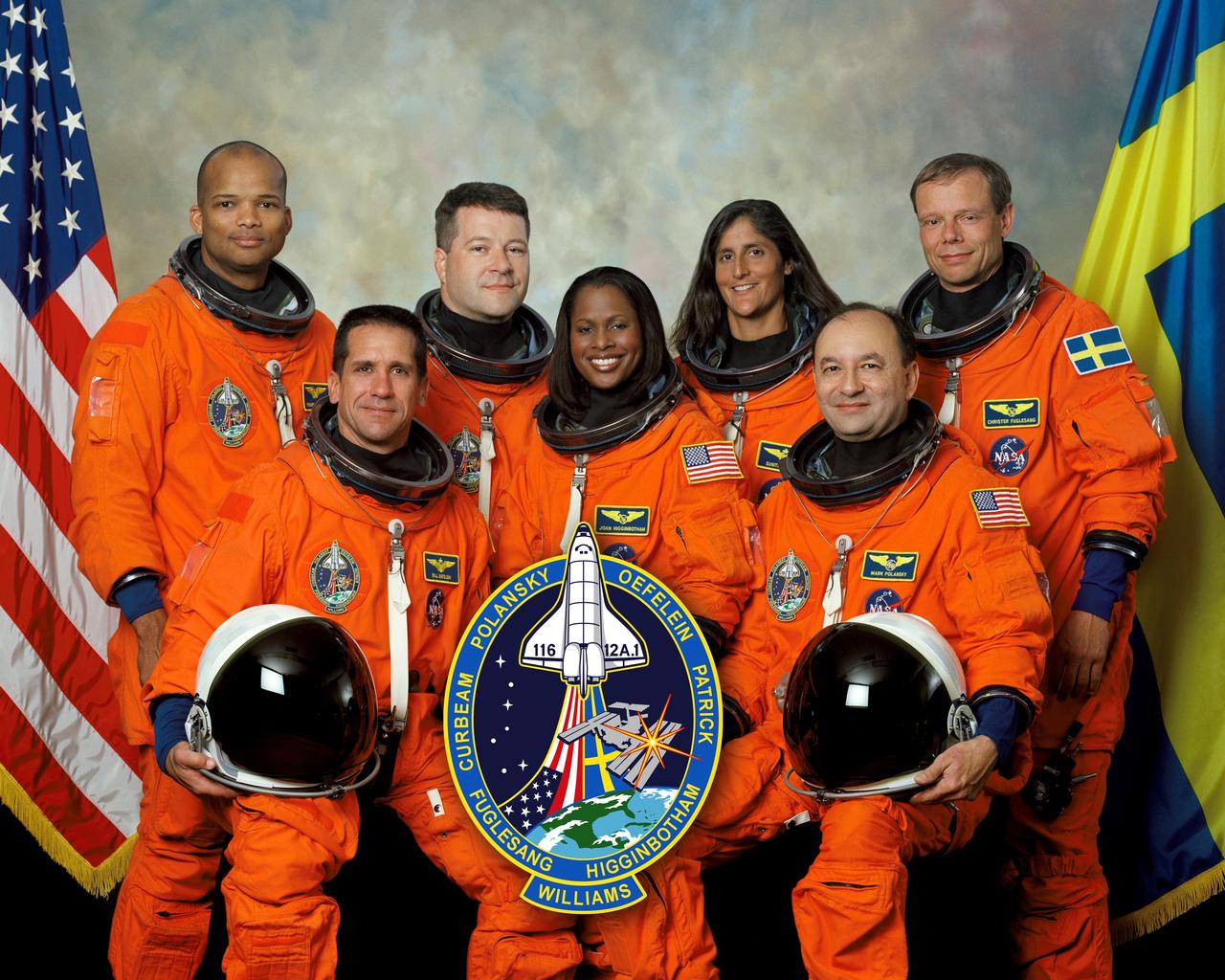
STS116-S-002 (21 July 2006) --- These seven astronauts take a break from training to pose for the STS-116 crew portrait. Scheduled to launch aboard the Space Shuttle Discovery are, front row (from the left), astronauts William A. Oefelein, pilot; Joan E. Higginbotham, mission specialist; and Mark L. Polansky, commander. On the back row (from the left) are astronauts Robert L. Curbeam, Nicholas J.M. Patrick, Sunita L. Williams and the European Space Agency's Christer Fuglesang, all mission specialists. Williams will join Expedition 14 in progress to serve as a flight engineer aboard the International Space Station. The crewmembers are attired in training versions of their shuttle launch and entry suits.
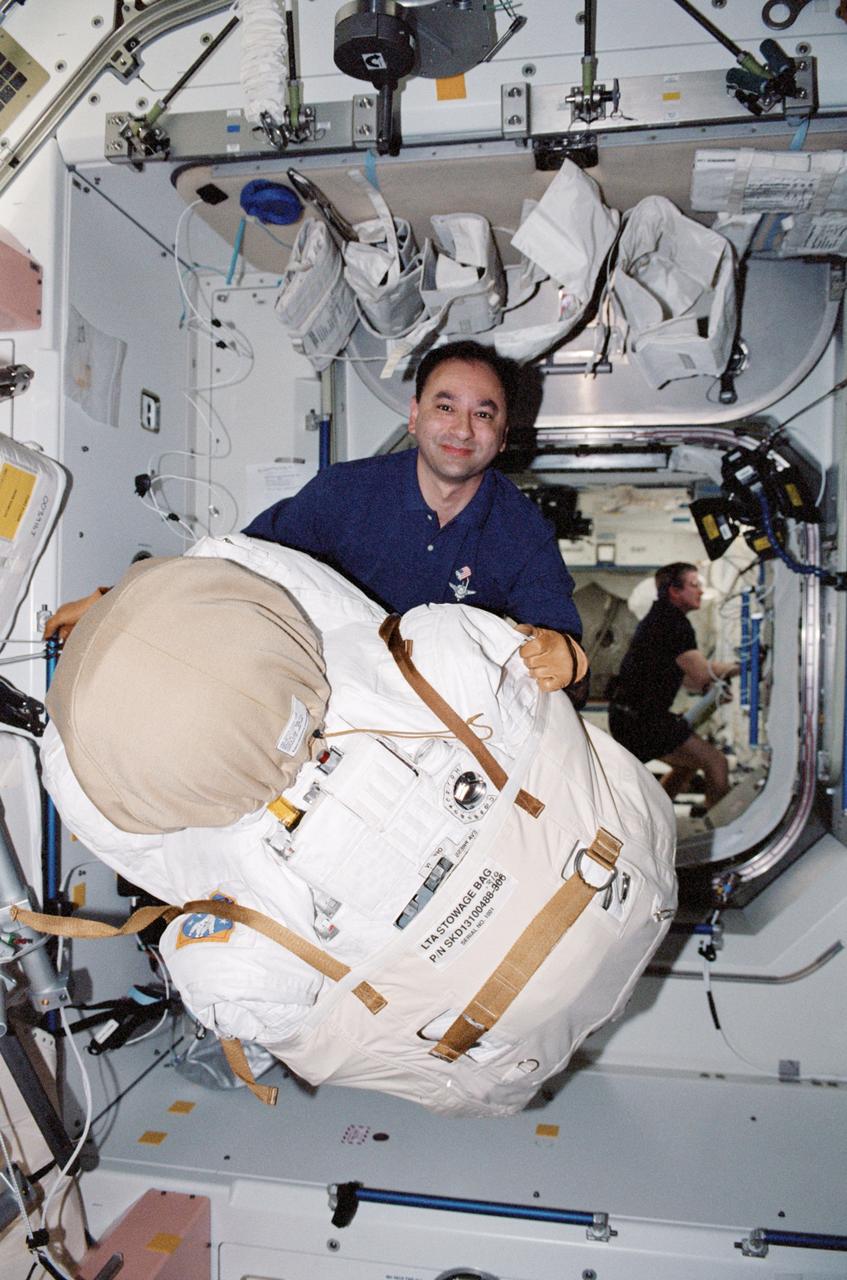
STS098-361-016 (7-20 February 2001) --- Astronaut Mark L. Polansky, STS-98 pilot, moves one of the Extravehicular Mobility Unit (EMU) space suits in its storage bag onboard the International Space Station (ISS). William M. (Bill) Shepherd, Expedition One mission commander, can be seen as he works in the background.
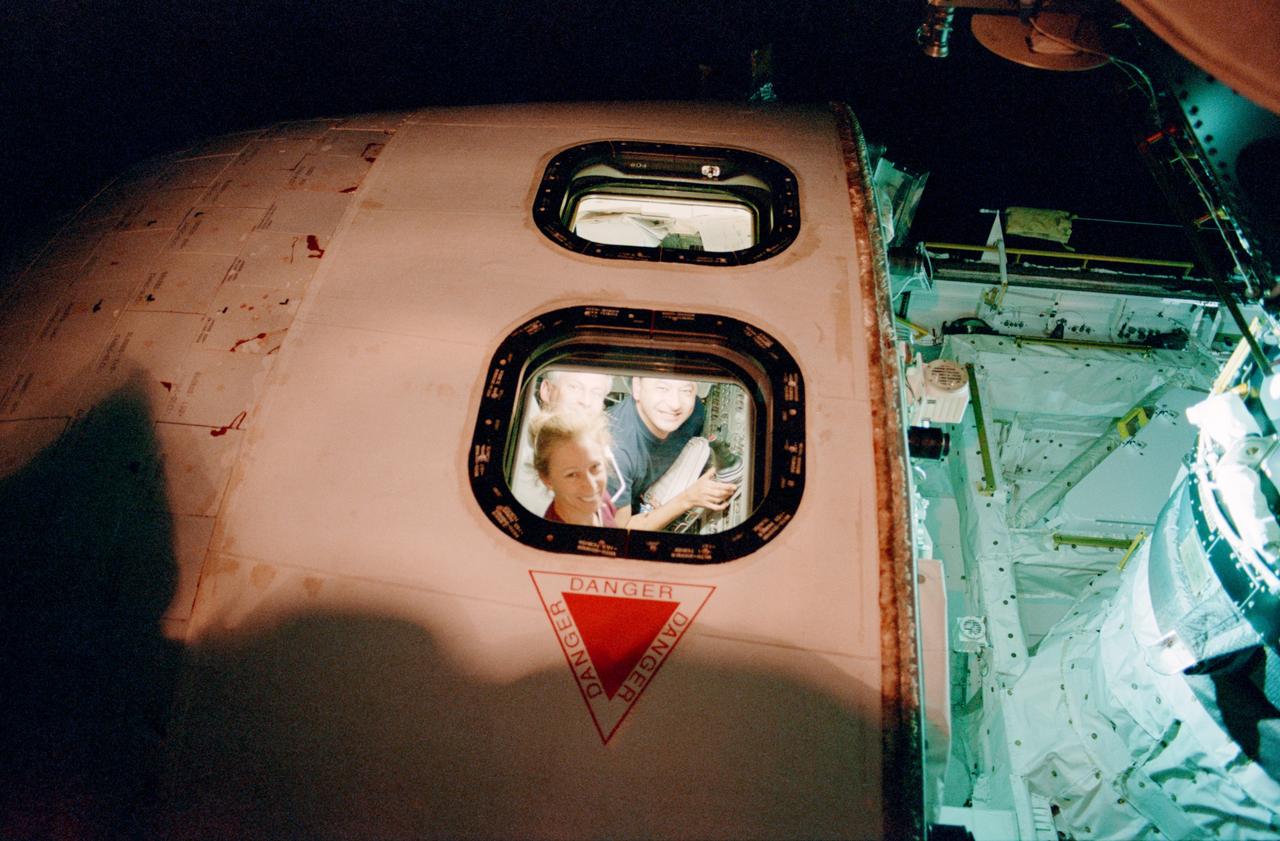
STS098-335-0028 (7-20 February 2001) --- From the aft flight deck of the Space Shuttle Atlantis, astronaut Marsha S. Ivins, STS-98 mission specialist, looks through an overhead window toward her space walking colleagues, who exposed this 35mm frame. Also visible in the window are astronauts Kenneth D. Cockrell and Mark L. Polansky, commander and pilot for the STS-98/5a mission.
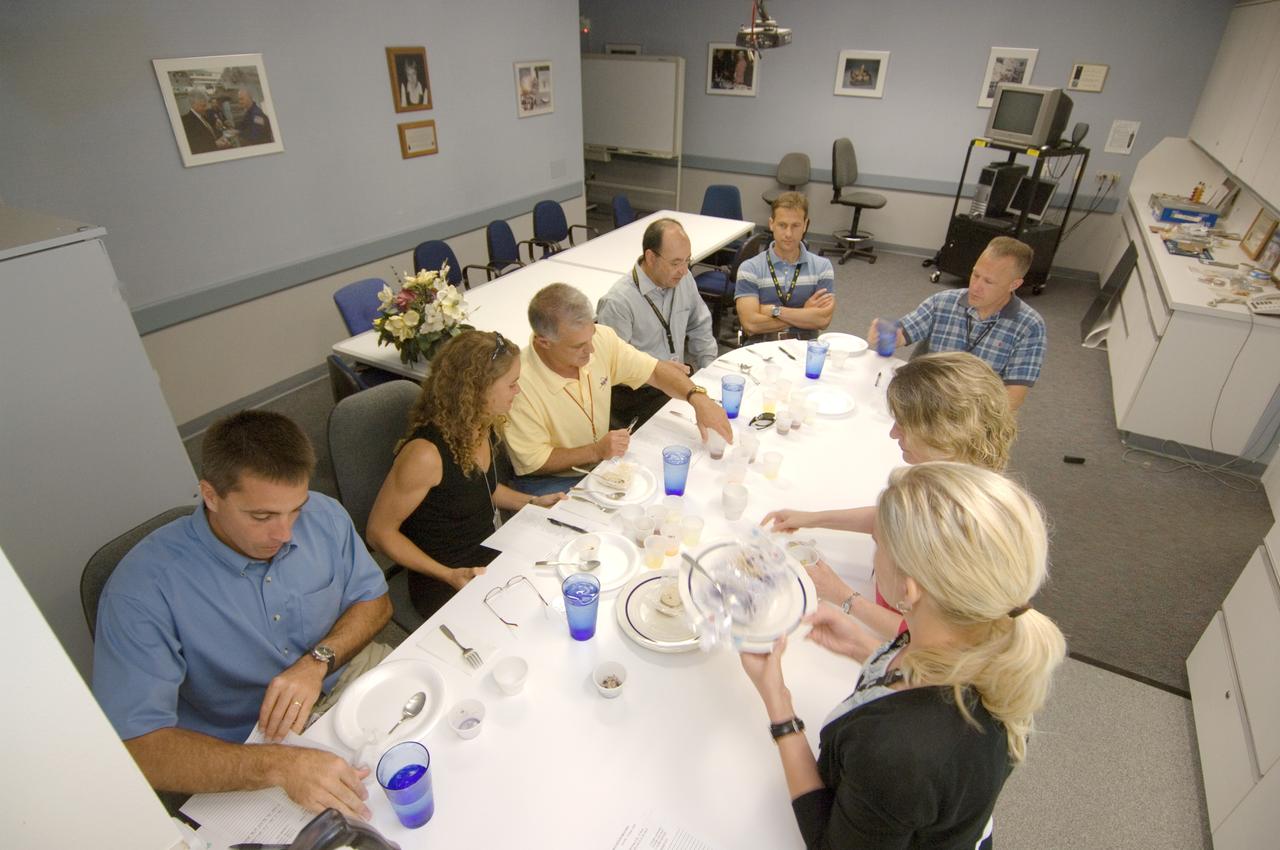
JSC2008-E-047936 (19 June 2008) --- STS-127 crewmembers participate in a food tasting session in the Flight Projects Division Laboratory at NASA's Johnson Space Center. Seated from the left are NASA astronaut Christopher J. Cassidy, Canadian Space Agency astronaut Julie Payette, NASA astronauts David A. Wolf, all mission specialists; Mark L. Polansky, commander; Thomas H. Marshburn, mission specialist; and Douglas G. Hurley, pilot. Dieticians (right foreground) assisted the crewmembers.
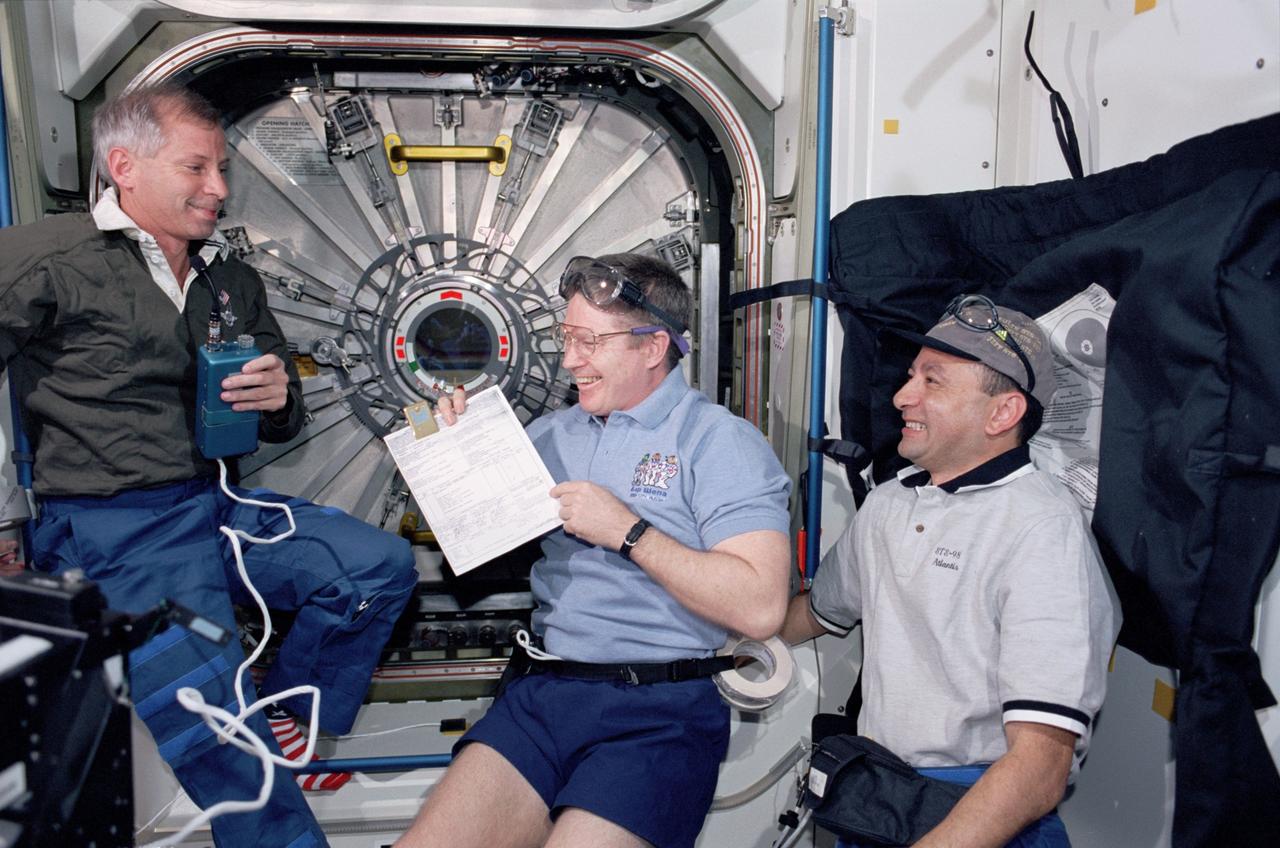
STS098-352-0019 (11 February 2001) --- Inside the Unity node, astronaut William M. (Bill) Shepherd (center), Expedition One commander, holds a document of receipt of the U.S. laboratory, called Destiny, as part of the International Space Station (ISS). Looking on are astronauts Kenneth D. Cockrell (left) and Mark L. Polansky, commander and pilot, respectively, for STS-98. The hatch to Destiny, not yet opened, is in the background.
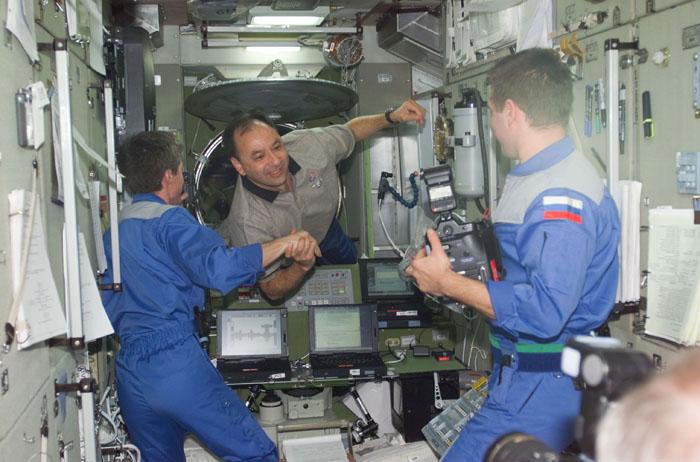
STS98-E-5056 (9 February 2001) --- Cosmonauts Sergei K. Krikalev (left), Expedition One flight engineer, and Yuri P. Gidzenko (left), Soyuz commander for the first station expedition crew, welcome astronaut Mark L. Polansky, STS-98 pilot, aboard the International Space Station. The scene was recorded with a digital still camera shortly after the hatches were opened on STS-98 Flight Day 3.
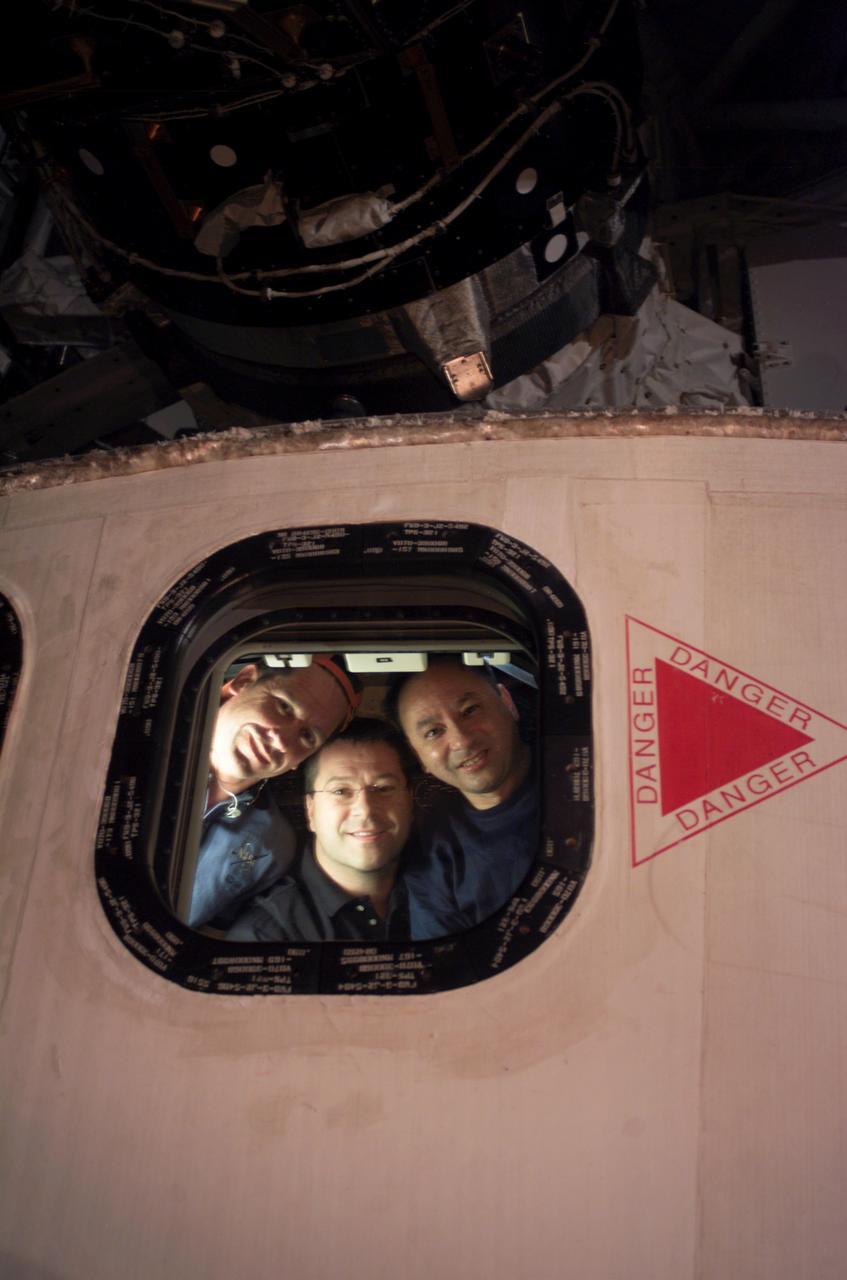
ISS014-E-09804 (14 Dec. 2006) --- From the aft flight deck on Space Shuttle Discovery, astronauts William A. (Bill) Oefelein (left), STS-116 pilot; Nicholas J. M. Patrick, mission specialist; and Mark L. Polansky, commander, look through an overhead window toward their spacewalking crewmembers, who captured the image during the mission's second of three planned sessions of extravehicular activity (EVA).
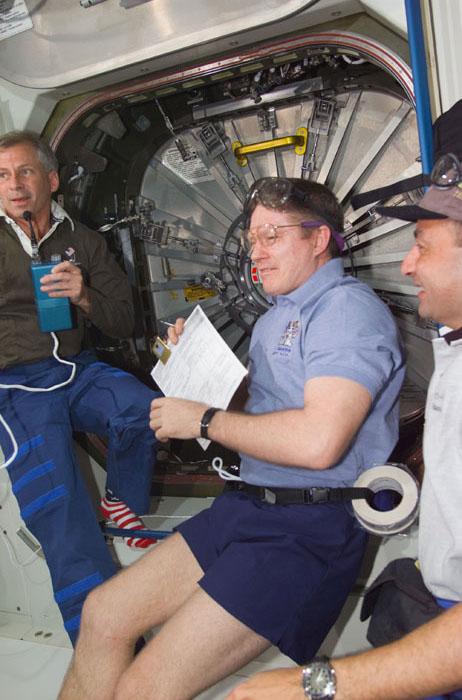
STS98-E-5127 (11 February 2001) --- Inside the Unity node, astronaut William M. (Bill) Shepherd (center), Expedition One commander, prepares to sign a document of receipt of the U.S. laboratory, called Destiny, as part of the International Space Station (ISS). Looking on are astronauts Kenneth D. Cockrell (left) and Mark L. Polansky, commander and pilot, respectively, for STS-98. The hatch to Destiny, not yet opened, is in the background. This scene was recorded with a digital still camera.
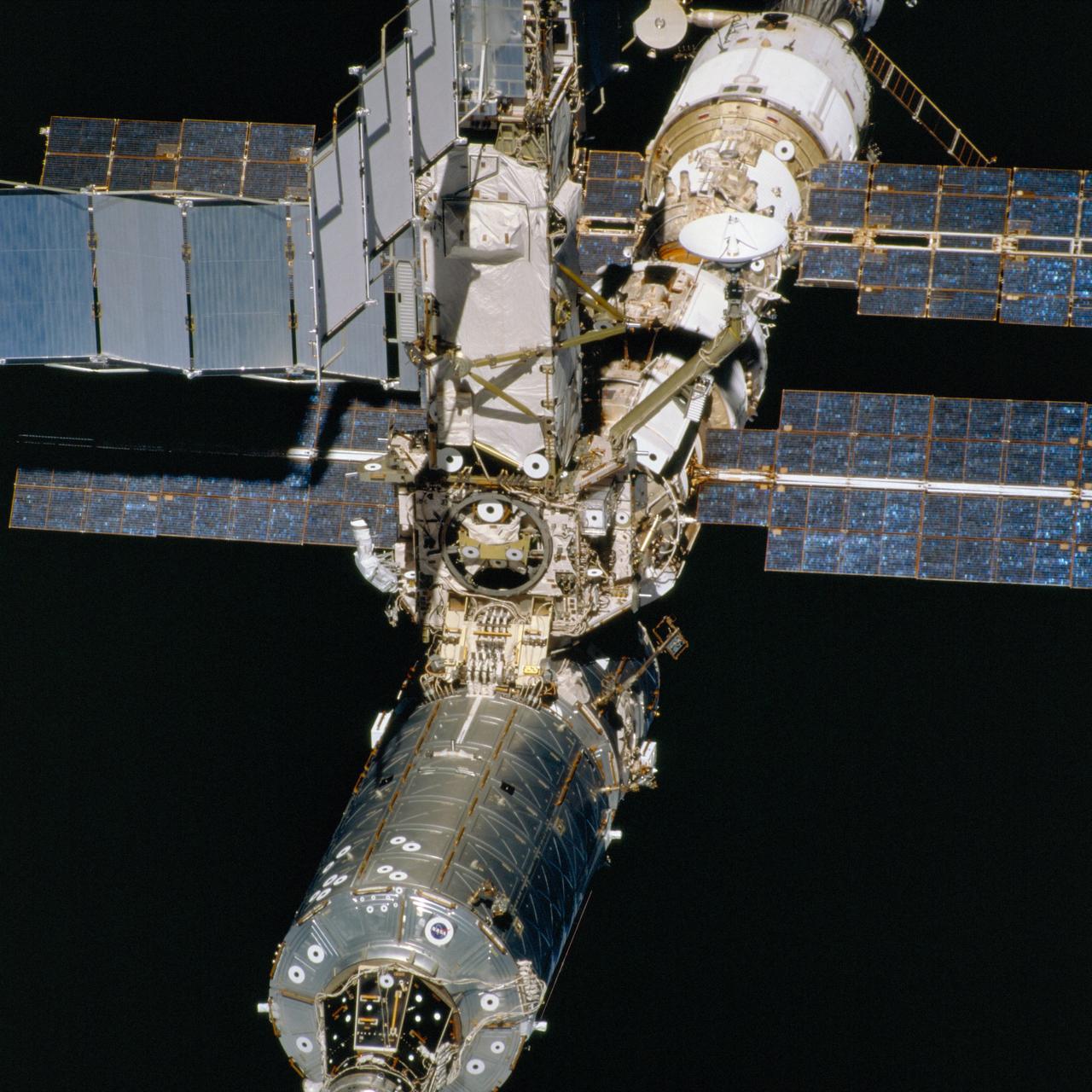
STS098-706-004 (16 February 2001) --- The International Space Station (ISS)is backdropped against the blackness of space in this medium-distance, 70mm frame, as photographed from the departing Space Shuttle Atlantis. The newly installed Destiny laboratory is in the left foreground. The crews of the Space Shuttle Atlantis and the International Space Station parted company at 8:06 a.m. (CST), Febraury 16, as astronaut Mark L. Polansky, pilot, flew the shuttle halfway around the station and its new Destiny laboratory before moving off.
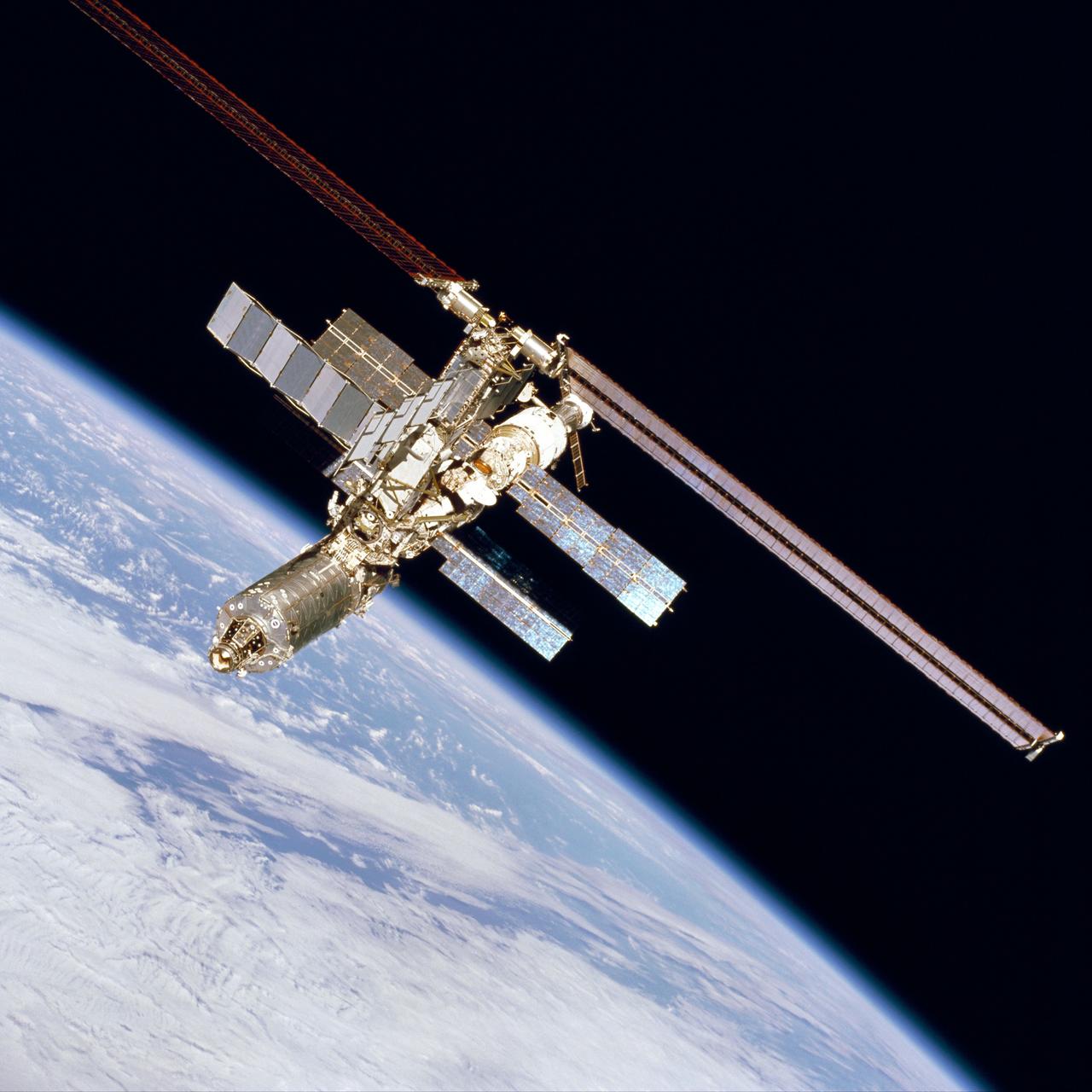
STS09-713a-004 (16 February 2001) --- With its new Destiny laboratory contrasted over a blue and white Earth, the International Space Station (ISS) was photographed by one of the STS-98 crew members aboard Atlantis following separation of the shuttle and the outpost at the end of several days of joint activities. The crews of Atlantis and the station parted company at 8:06 a.m. (CST), Feb. 16, as astronaut Mark L. Polansky, pilot, flew the shuttle halfway around the outpost and its new Destiny laboratory before moving off.
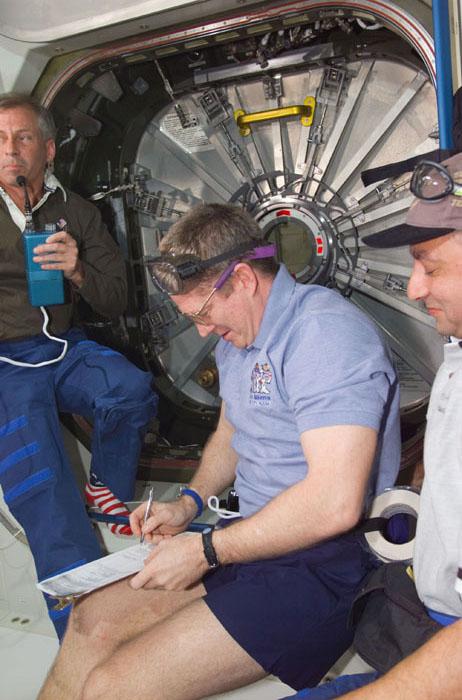
STS98-E-5125 (11 February 2001) --- Inside the Unity node, astronaut William M. (Bill) Shepherd (center), Expedition One commander, signs a document of receipt of the U.S. laboratory, called Destiny, as part of the International Space Station (ISS). Looking on are astronauts Kenneth D. Cockrell (left) and Mark L. Polansky, commander and pilot, respectively, for STS-98. The hatch to Destiny, not yet opened, is in the background. This scene was recorded with a digital still camera.
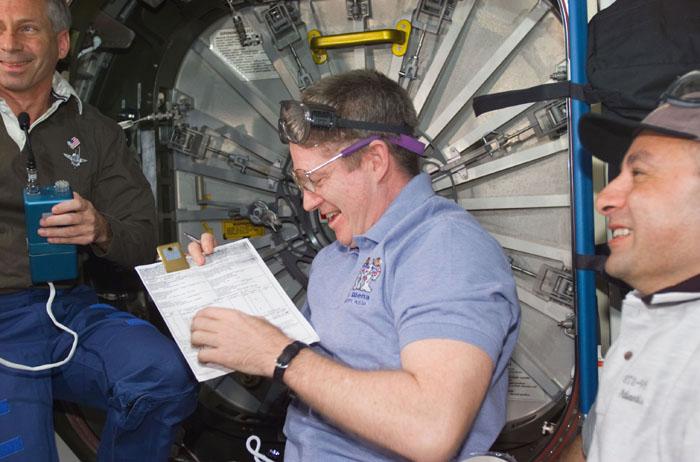
STS98-E-5129 (11 February 2001) --- Inside the Unity node, astronaut William M. (Bill) Shepherd (center), Expedition One commander, signs a document of receipt of the U.S. laboratory, called Destiny, as part of the International Space Station (ISS). Looking on are astronauts Kenneth D. Cockrell (left) and Mark L. Polansky, commander and pilot, respectively, for STS-98. The hatch to Destiny, not yet opened, is in the background. This scene was recorded with a digital still camera.
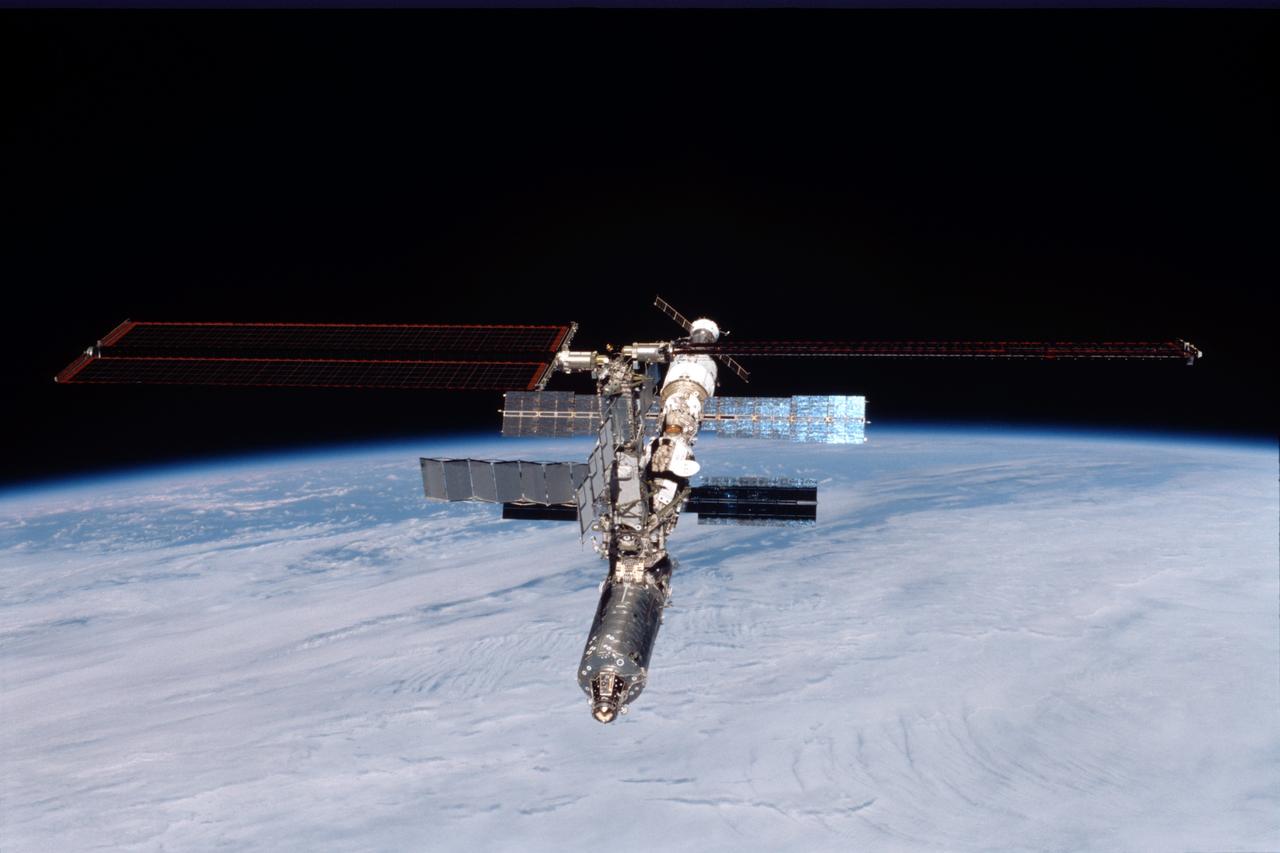
STS098-312-0025 (16 February 2001) --- Backdropped against heavy cloud cover, the International Space Station (ISS) was photographed with a 35mm camera by one of the astronauts onboard Atlantis. The crew of the station, onboard the outpost since early November 2000, is made up of astronaut William M. (Bill) Shepherd, mission commander; Yuri P. Gidzenko, Soyuz commander; and Sergei K. Krikalev, flight engineer. Krikalev and Gidzenko represent the Russian Aviation and Space Agency. On Atlantis were astronauts Kenneth D. Cockrell, mission commander; Mark L. Polansky, pilot; and Marsha S. Ivins, Robert L. Curbeam and Thomas D. Jones, all mission specialists. The shuttle and the station parted company at 8:06 a.m. (CST), Feb. 16, as Polansky flew the shuttle halfway around the outpost and its new Destiny laboratory before moving off.
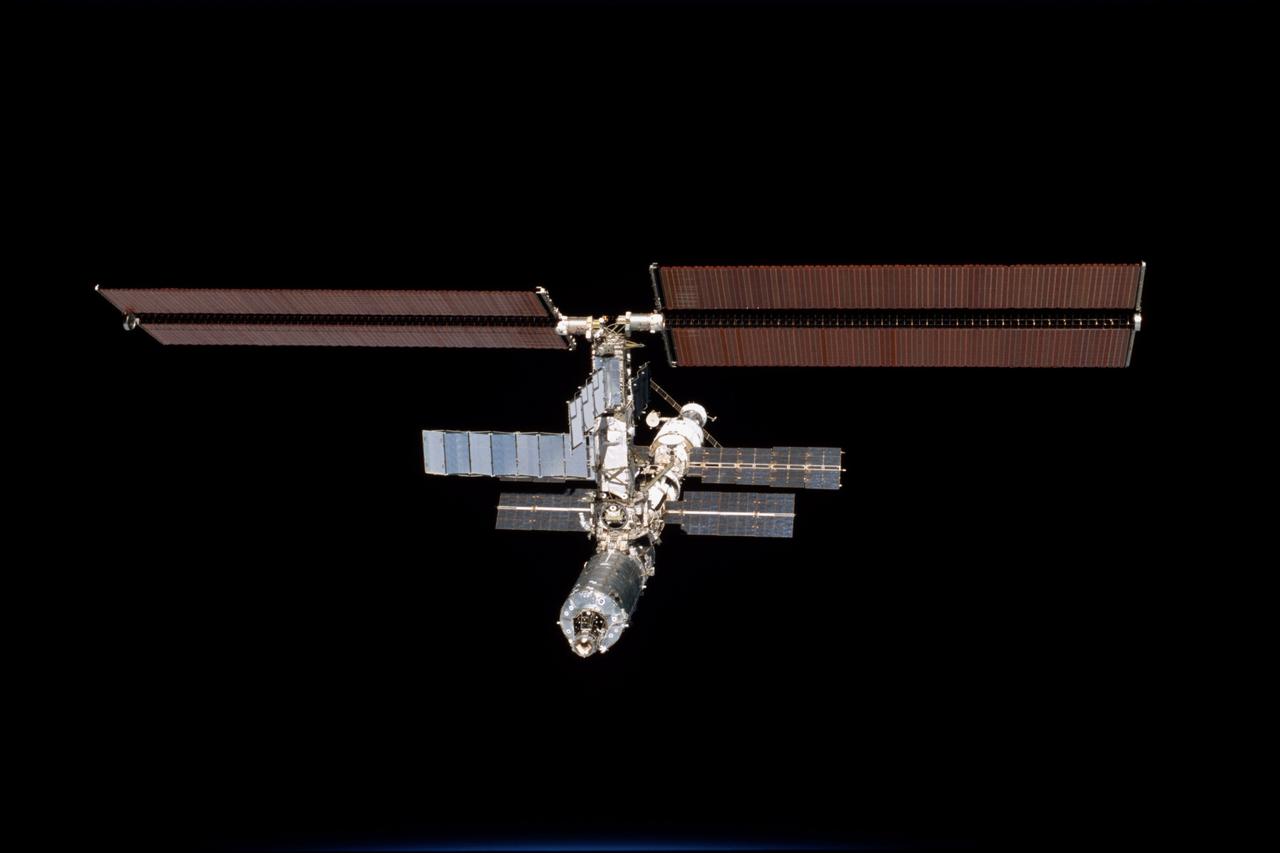
STS098-312-0020 (16 February 2001) --- Backdropped against the blackness of space, the International Space Station (ISS)was photographed with a 35mm camera by one of the astronauts onboard Atlantis. The crew of the station, onboard the outpost since early November 2000, is made up of astronaut William M. (Bill) Shepherd, mission commander; Yuri P. Gidzenko, Soyuz commander; and Sergei K. Krikalev, flight engineer. Krikalev and Gidzenko represent the Russian Aviation and Space Agency. On Atlantis were astronauts Kenneth D. Cockrell, mission commander; Mark L. Polansky, pilot; and Marsha S. Ivins, Robert L. Curbeam and Thomas D. Jones, all mission specialists. The shuttle and the station parted company at 8:06 a.m. (CST), Feb. 16, as Polansky flew the shuttle halfway around the outpost and its new Destiny laboratory before moving off.
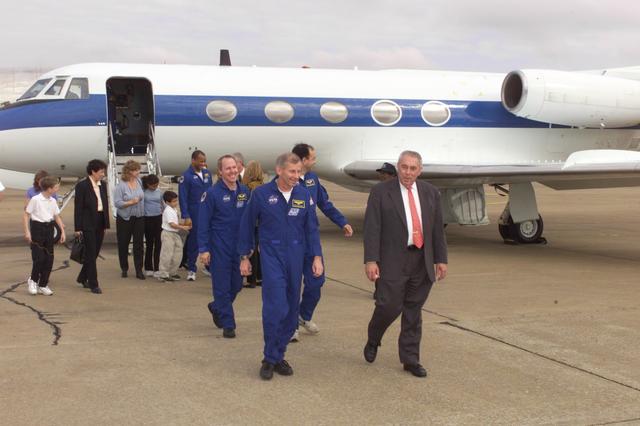
JSC2001-E-04805 (21 February 2001) --- JSC director George W.S. Abbey talks with the STS-98 crew members following the arrival of the Gulfstream Aircraft which transported the astronauts from their landing at Dryden Flight Research Center (DFRC) in Edwards, California. Pictured along side Mr. Abbey is astronaut Kenneth D. Cockrell, mission commander. Behind him (from the left distant background) are astronauts Robert L. Curbeam and Thomas D. Jones (both mission specialists) and Mark L. Polansky, pilot. Astronaut Marsha S. Ivins, mission specialist, is out of the frame.
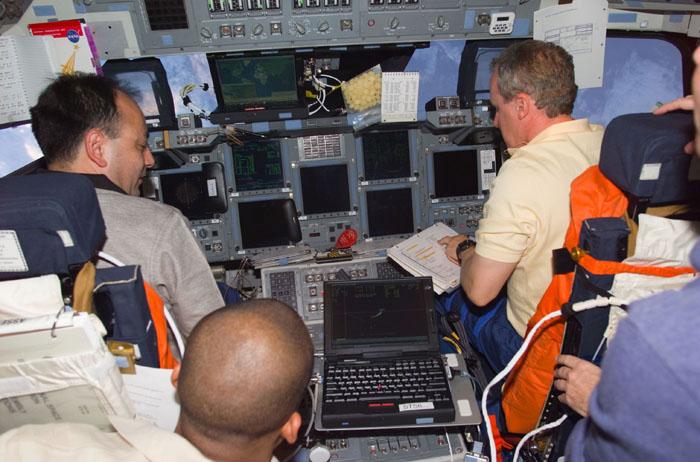
STS98-E-5030 (9 February 2001) --- Three members of the STS-98 crew prepare for rendezvous with the International Space Station (ISS). Astronaut Thomas D. Jones (right), mission specialist, temporarily mans the pilot's station on the flight deck of the Space Shuttle Atlantis. Astronaut Mark L. Polansky, left, sits at the commander's station for this maneuver. At lower left is Astronaut Robert L. Curbeam, mission specialist. Astronaut Kenneth D. Cockrell, mission commander, is just out of frame at right. The photograph was recorded with a digital still camera.
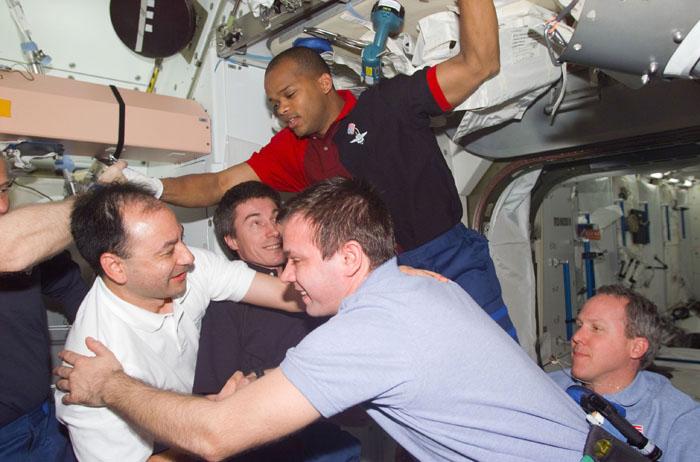
STS98-E-5297 (16 February 2001) --- Goodbyes are plentiful as five astronauts prepare to depart the International Space Station (ISS) and return to the Space Shuttle Atlantis. Cosmonauts Sergei K. Krikalev, Expedition One flight engineer; and Yuri P. Gidzenko, Soyuz commander for the station crew, appear in the center of the scene. They are surrounded by astronauts Mark L. Polansky, STS-98 pilot; and Robert L. Curbeam (top) and Thomas D. Jones, right, both shuttle mission specialists. The cosmonauts, along with astronaut William M. (Bill) Shepherd (out of frame), Expedition One commander, will stay aboard the outpost for several more weeks and return to Earth with the next shuttle visitors.
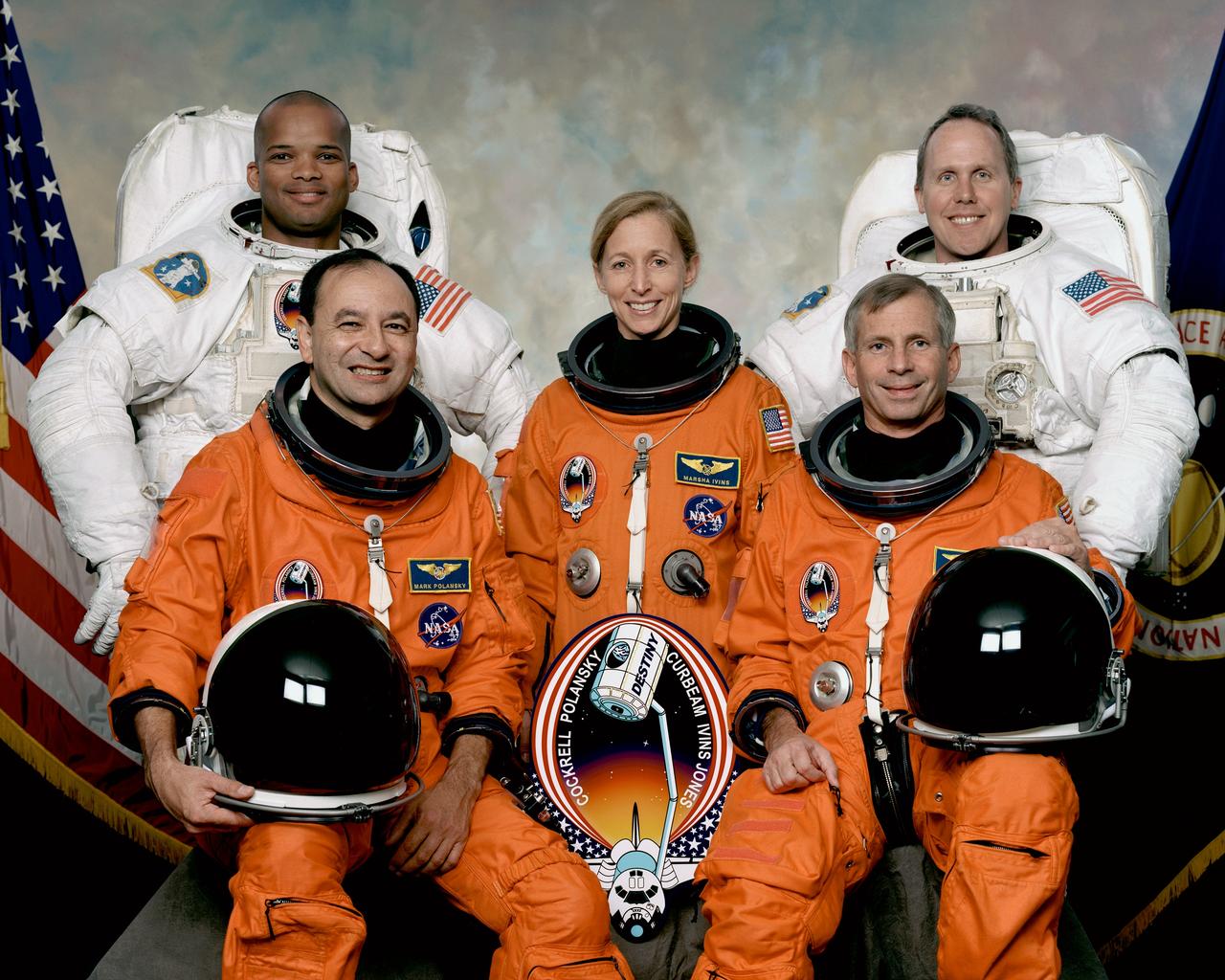
STS098-S-002 (December 2000) --- These five astronauts have been in training for the STS-98 mission, scheduled for launch aboard the Space Shuttle Atlantis in January of 2001. The crew is composed of astronauts Kenneth D. Cockrell (right front), mission commander; and Mark L. Polansky (left front), pilot; along with astronauts Marsha S. Ivins, Robert L. Curbeam, Jr., (left rear) and Thomas D. Jones (right rear), all mission specialists. Curbeam and Jones are the scheduled extravehicular activity (EVA) participants for the International Space Station's 5a mission.
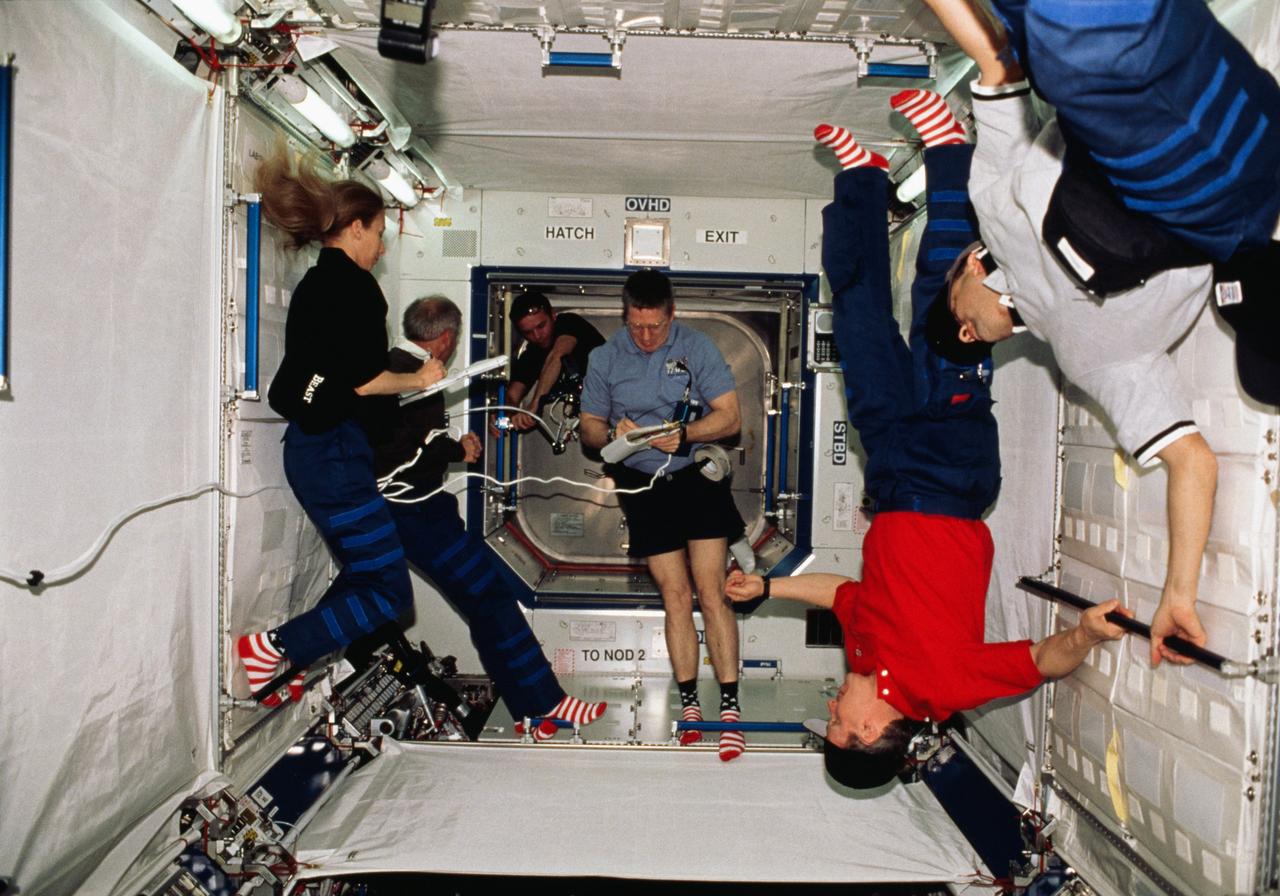
STS098-323-015 (7-20 February 2001) --- Astronauts and cosmonauts from the Expedition One and STS-98 crews are photographed in the newly-attached Destiny laboratory on the International Space Station (ISS). From the left are Marsha S. Ivins, mission specialist; Kenneth D. Cockrell, mission commander; Yuri P. Gidzenko, Expedition One Soyuz commander; William M. (Bill) Shepherd, Expedition One mission commander; Thomas D. Jones, mission specialist; and Mark L. Polansky, pilot. Out of view are Robert L. Curbeam, mission specialist, and Sergei K. Krikalev, Expedition One flight engineer. Gidzenko and Krikalev represent Rosaviakosmos.
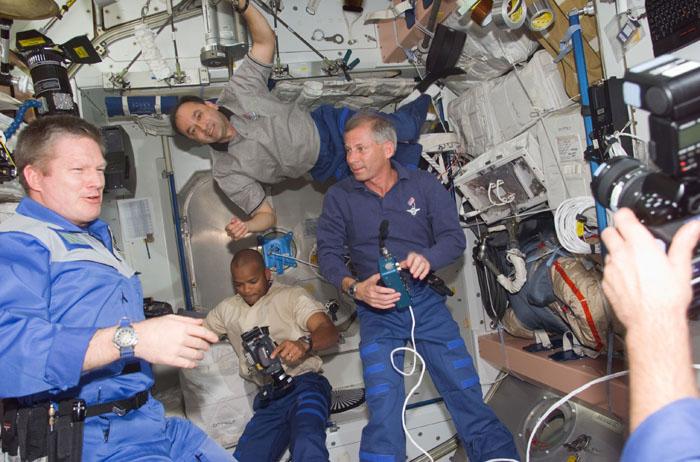
S98-E-5051 (9 February 2001) --- Astronaut William M. (Bill) Shepherd (left foreground), Expedition One commander, looks into the camera lens of a fellow crew member while three STS-98 visitors check out the International Space Station (ISS). Astronaut Kenneth D. Cockrell, STS-98 mission commander, is at right; astronaut Mark L. Polansky, pilot, floats above and behind the shuttle commander; and astronaut Robert L. Curbeam, mission specialist, inspects a camera at bottom center. This scene was recorded with a digital still camera.
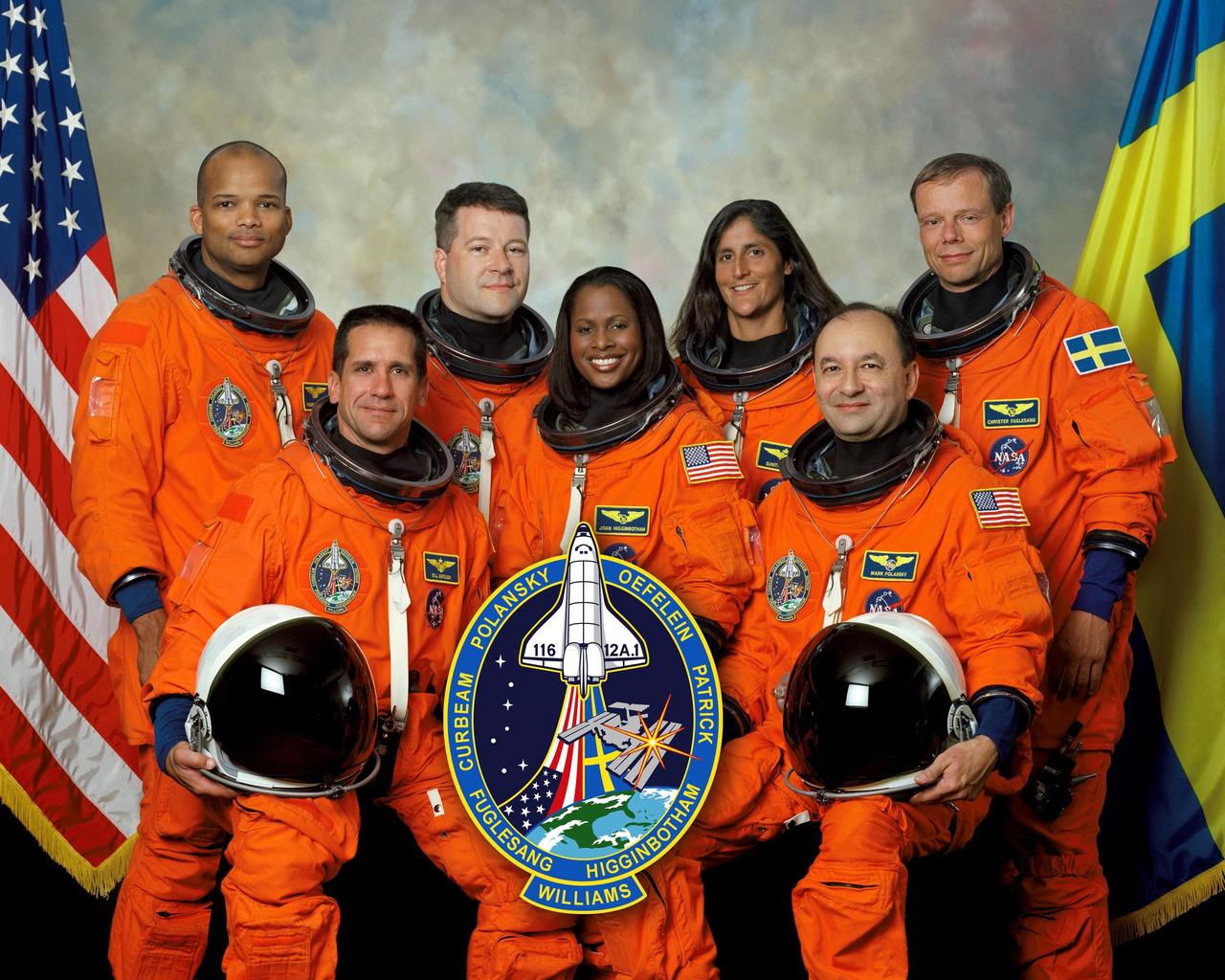
KENNEDY SPACE CENTER, FLA. - STS116-S-002 (21 July 2006) --- These seven astronauts take a break from training to pose for the STS-116 crew portrait. Scheduled to launch aboard the Space Shuttle Discovery are, front row (from the left), astronauts William A. Oefelein, pilot; Joan E. Higginbotham, mission specialist; and Mark L. Polansky, commander. On the back row (from the left) are astronauts Robert L. Curbeam, Nicholas J.M. Patrick, Sunita L. Williams and the European Space Agency's Christer Fuglesang, all mission specialists. Williams will join Expedition 14 in progress to serve as a flight engineer aboard the International Space Station. The crewmembers are attired in training versions of their shuttle launch and entry suits.
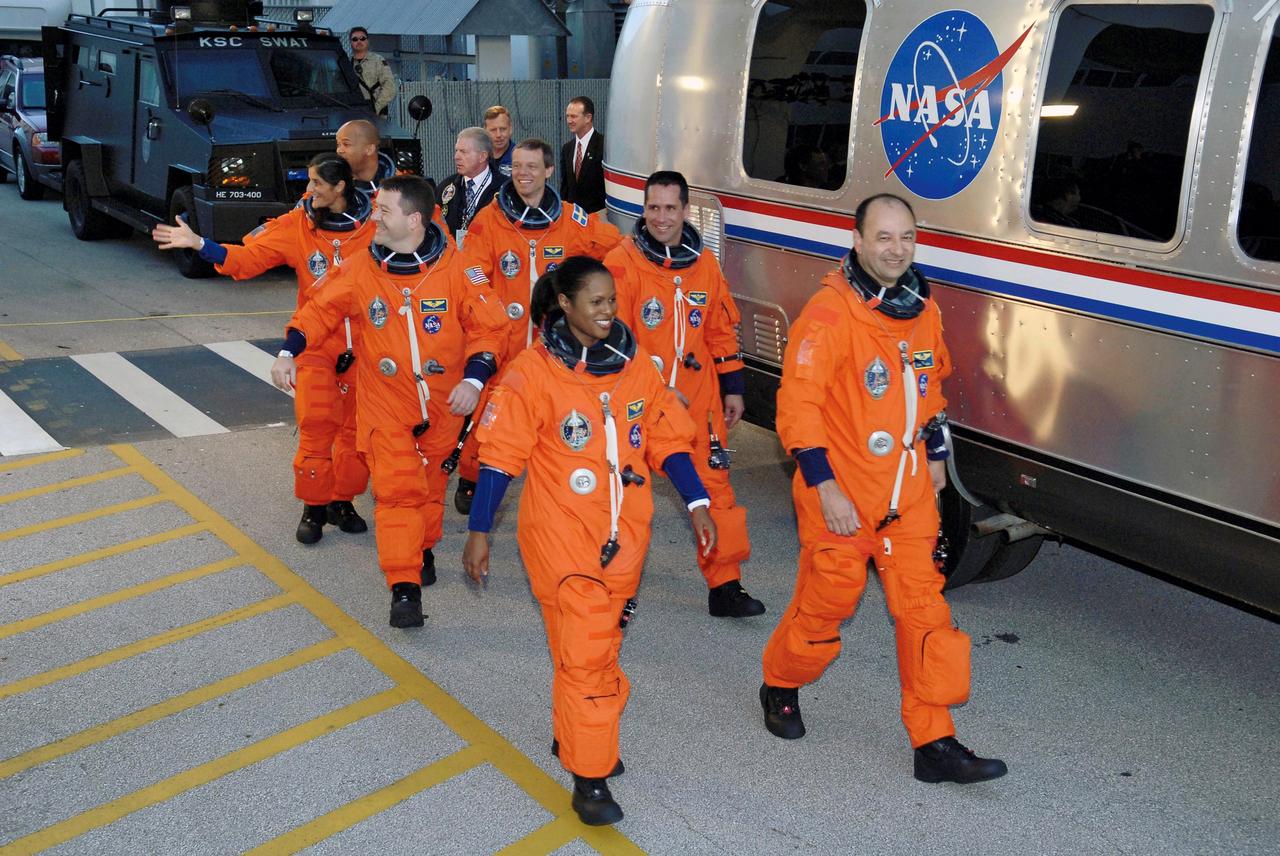
STS116-S-006 (9 Dec. 2006) --- After suiting up, the STS-116 crewmembers exit the Operations and Checkout Building to board the Astrovan, which will take them to launch pad 39B at Kennedy Space Center. On the right (front to back) are astronauts Mark L. Polansky, commander; William S. (Bill) Oefelein, pilot; and Christer Fuglesang, mission specialists representing the European Space Agency (ESA). On the left (front to back) are astronauts Joan E. Higginbotham, Nicholas J. M. Patrick, Sunita L. Williams and Robert L. Curbeam, Jr., all mission specialists. Discovery's seven-member crew will link up with the International Space Station on Monday, Dec. 11, to begin a complex, week-long stay that will rewire the outpost and increase its power supply. During three spacewalks and intricate choreography with ground controllers, the astronauts will bring electrical power on line generated by a giant solar array wing delivered to the station in September.
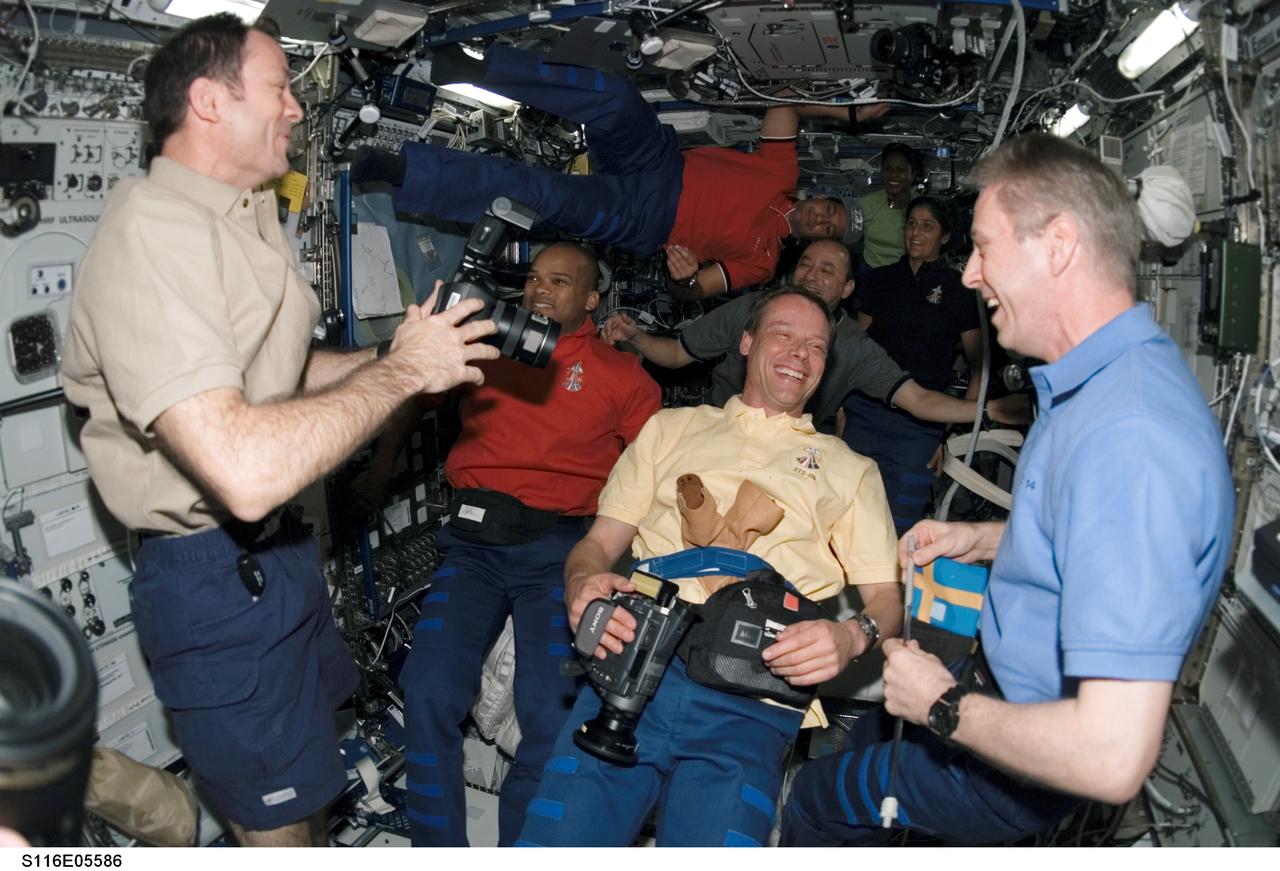
S116-E-05586 (11 Dec. 2006) --- The Space Shuttle Discovery and Expedition 14 crewmembers enjoy a light moment in the Destiny laboratory of the International Space Station following rendezvous and docking operations between the shuttle and station. Pictured in the foreground (left to right) are astronauts Michael E. Lopez-Alegria, Expedition 14 commander and NASA space station science officer; European Space Agency (ESA) astronauts Christer Fuglesang, STS-116 mission specialist; and Thomas Reiter, Expedition 14 flight engineer. Pictured in the background are astronauts Robert L. Curbeam, Jr., STS-116 mission specialist; Mark L. Polansky, STS-116 commander; William A. (Bill) Oefelein, STS-116 pilot; Joan E. Higginbotham and Sunita L. Williams, both STS-116 mission specialists.
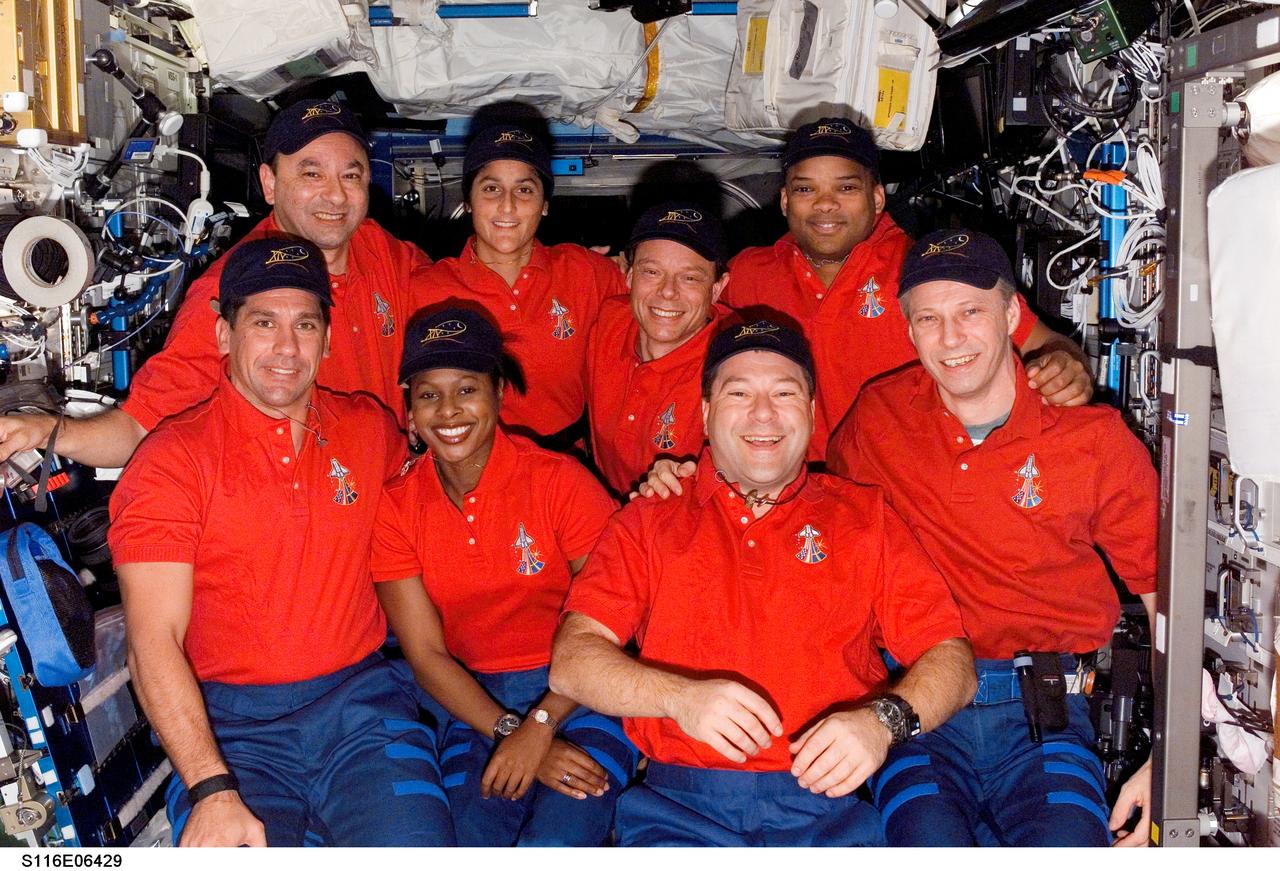
S116-E-06429 (15 Dec. 2006) --- The STS-116 crewmembers gather for a group portrait during a joint crew press conference in the Destiny laboratory of the International Space Station while Space Shuttle Discovery was docked with the station. From the left (front row) are astronauts William A. (Bill) Oefelein, pilot; Joan E. Higginbotham, Nicholas J. M. Patrick and European Space Agency (ESA) astronaut Thomas Reiter, mission specialists. From the left (back row) are astronauts Mark L. Polansky, commander; Sunita L. Williams, Expedition 14 flight engineer; European Space Agency (ESA) astronaut Christer Fuglesang and Robert L. Curbeam, Jr., mission specialists. Shortly after the two spacecraft docked on Dec. 11, Williams became a member of the station crew. At the same time, Reiter became a Discovery crewmember for his ride home, completing about six months in space.
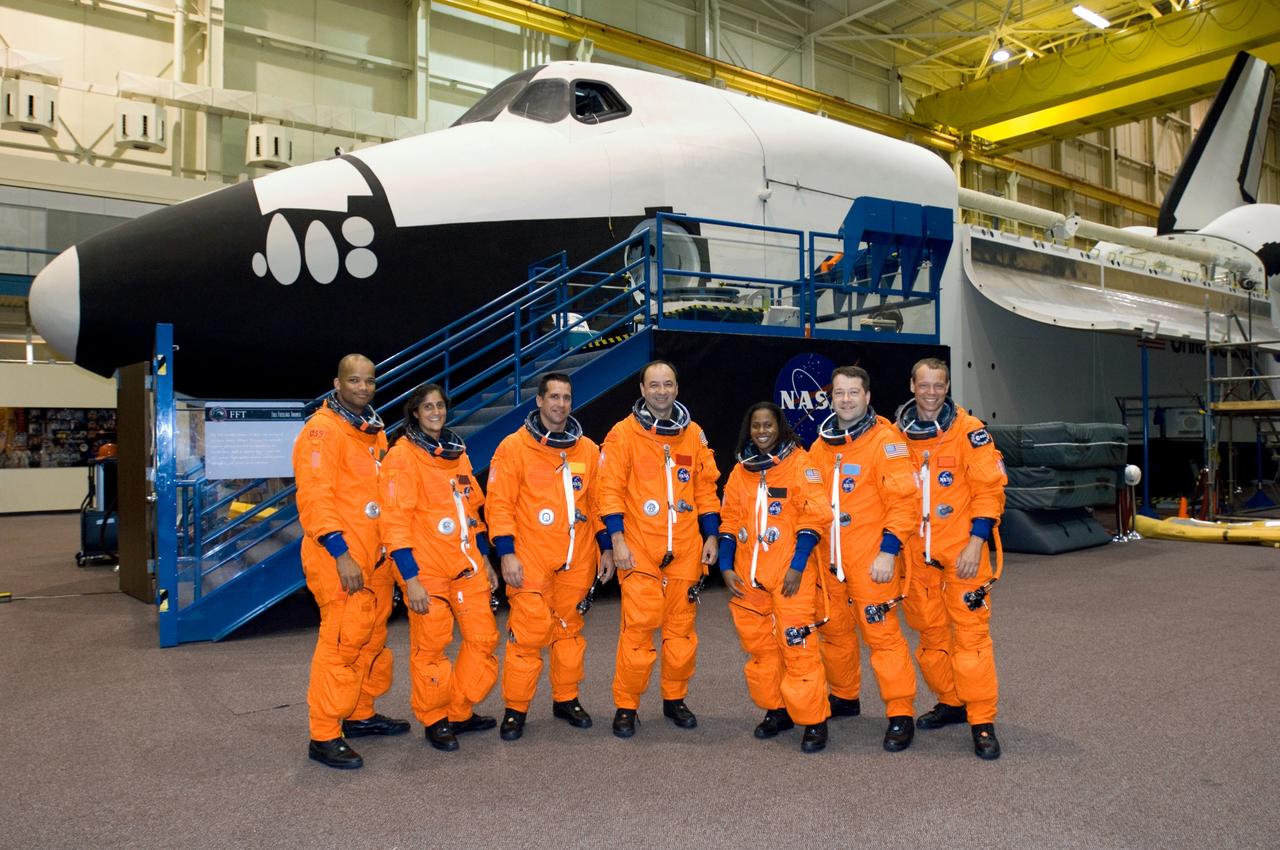
JSC2005-E-32783 (1 Aug. 2005) --- Attired in training versions of the shuttle launch and entry suit, the STS-116 crew and an Expedition 14 crewmember pose for a group photo prior to a training session in the Space Vehicle Mockup Facility at the Johnson Space Center. From the left are astronauts Robert L. Curbeam, mission specialist; Sunita L. Williams, Expedition 14 flight engineer; William A. Oefelein, pilot; Mark L. Polansky, commander; Joan E. Higginbotham, Nicholas J.M. Patrick and European Space Agency (ESA) astronaut Christer Fuglesang, all mission specialists. Williams will join Expedition 14 in progress and serve as a flight engineer after traveling to the station on space shuttle mission STS-116. The full fuselage trainer (FFT), which is a full-scale mockup of a shuttle, is visible in the background.
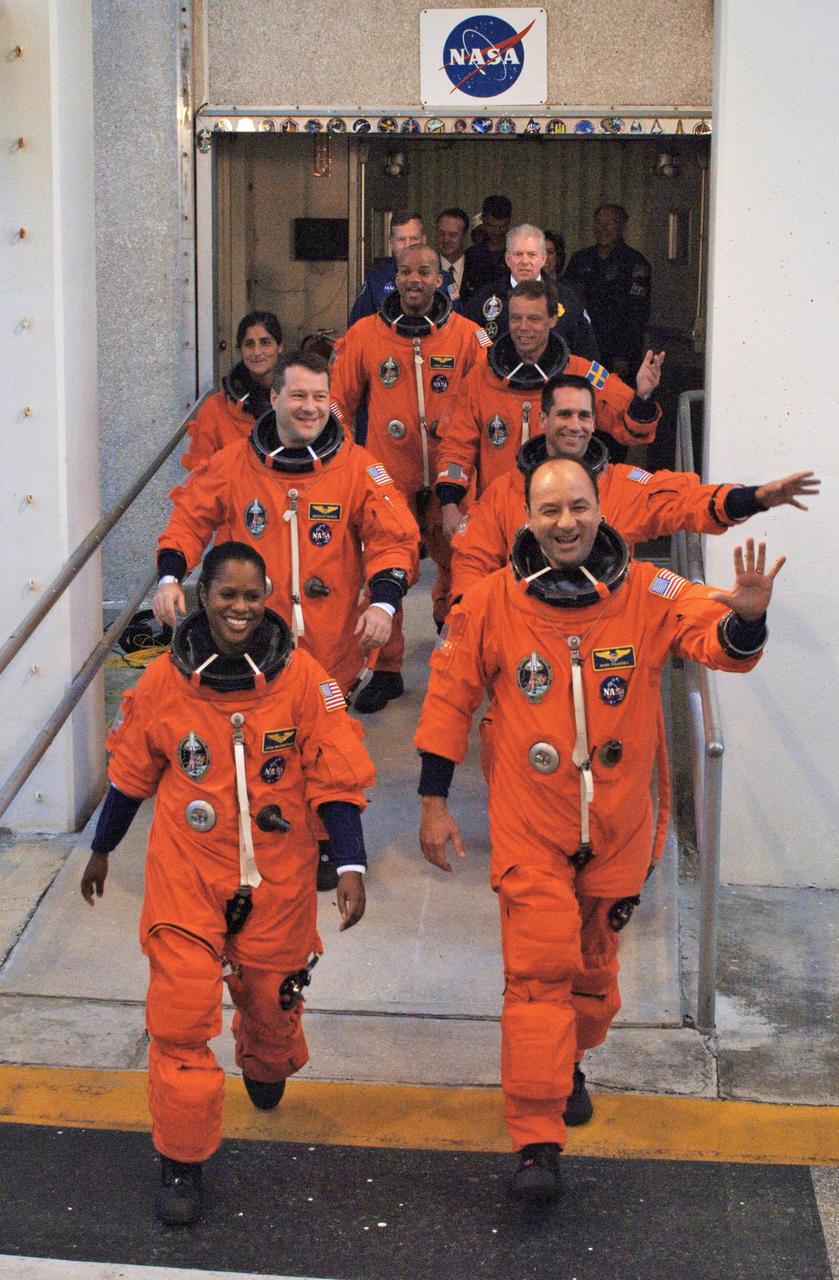
STS116-S-005 (9 Dec. 2006) --- After suiting up, the STS-116 crewmembers exit the Operations and Checkout Building to board the Astrovan, which will take them to launch pad 39B at Kennedy Space Center. On the right (front to back) are astronauts Mark L. Polansky, commander; William S. (Bill) Oefelein, pilot; and Christer Fuglesang, mission specialists representing the European Space Agency (ESA). On the left (front to back) are astronauts Joan E. Higginbotham, Nicholas J. M. Patrick, Sunita L. Williams and Robert L. Curbeam, Jr., all mission specialists. Discovery's seven-member crew will link up with the International Space Station on Monday, Dec. 11, to begin a complex, week-long stay that will rewire the outpost and increase its power supply. During three spacewalks and intricate choreography with ground controllers, the astronauts will bring electrical power on line generated by a giant solar array wing delivered to the station in September.
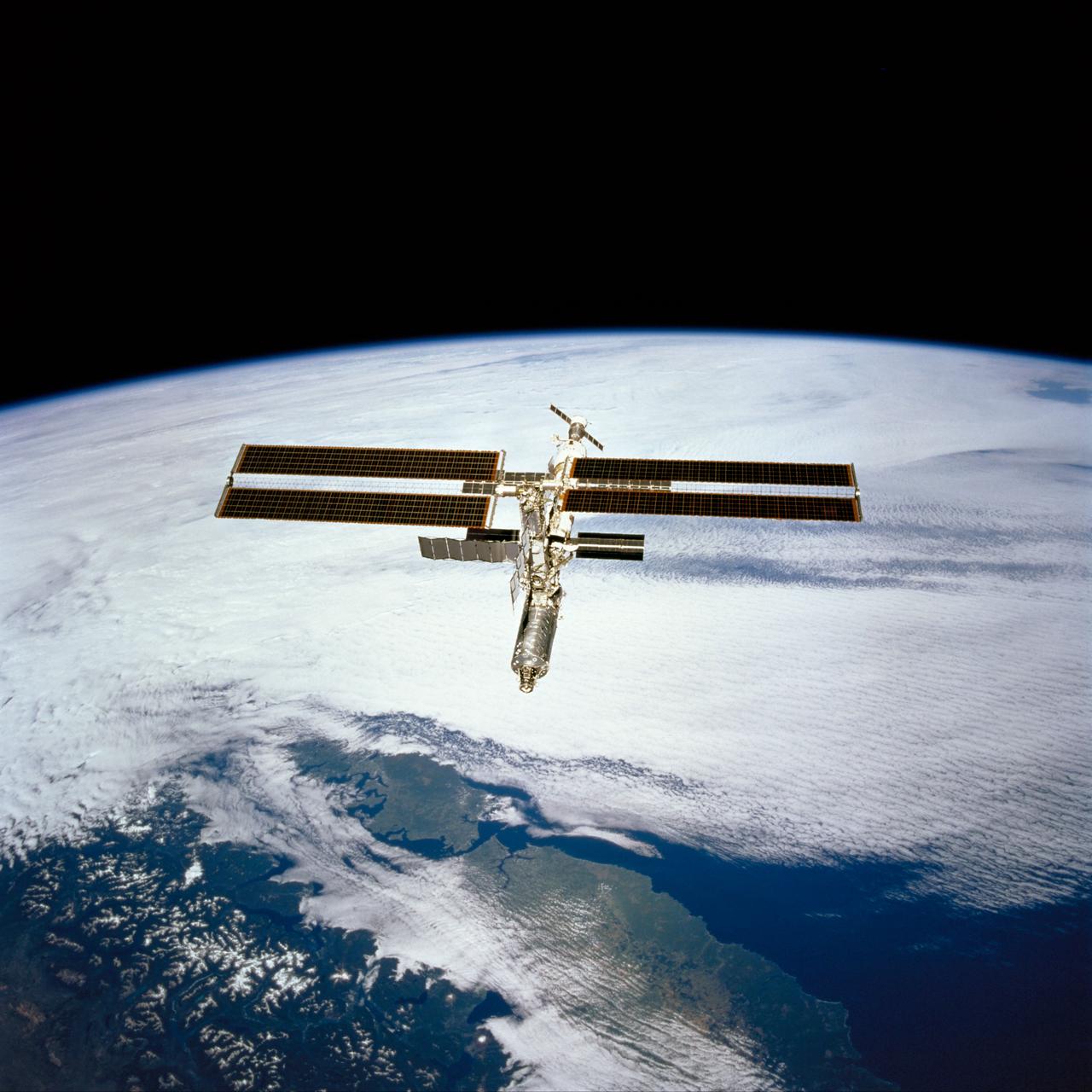
STS098-713a-016 (16 February 2001) --- The International Space Station is backdropped over clouds, water and land in South America. South central Chile shows up at bottom of the frame. Just below the Destiny laboratory, the Chacao Channel separates the large island of Chiloe from the mainland and connects the Gulf of Coronados on the Pacific side with the Gulf of Ancud southwest of the city of Puerto Montt. The crews of the Space Shuttle Atlantis and the International Space Station parted company at 8:06 a.m. (CST), February 16, as astronaut Mark L. Polansky, pilot, flew the shuttle halfway around the station and its new Destiny laboratory before moving off.
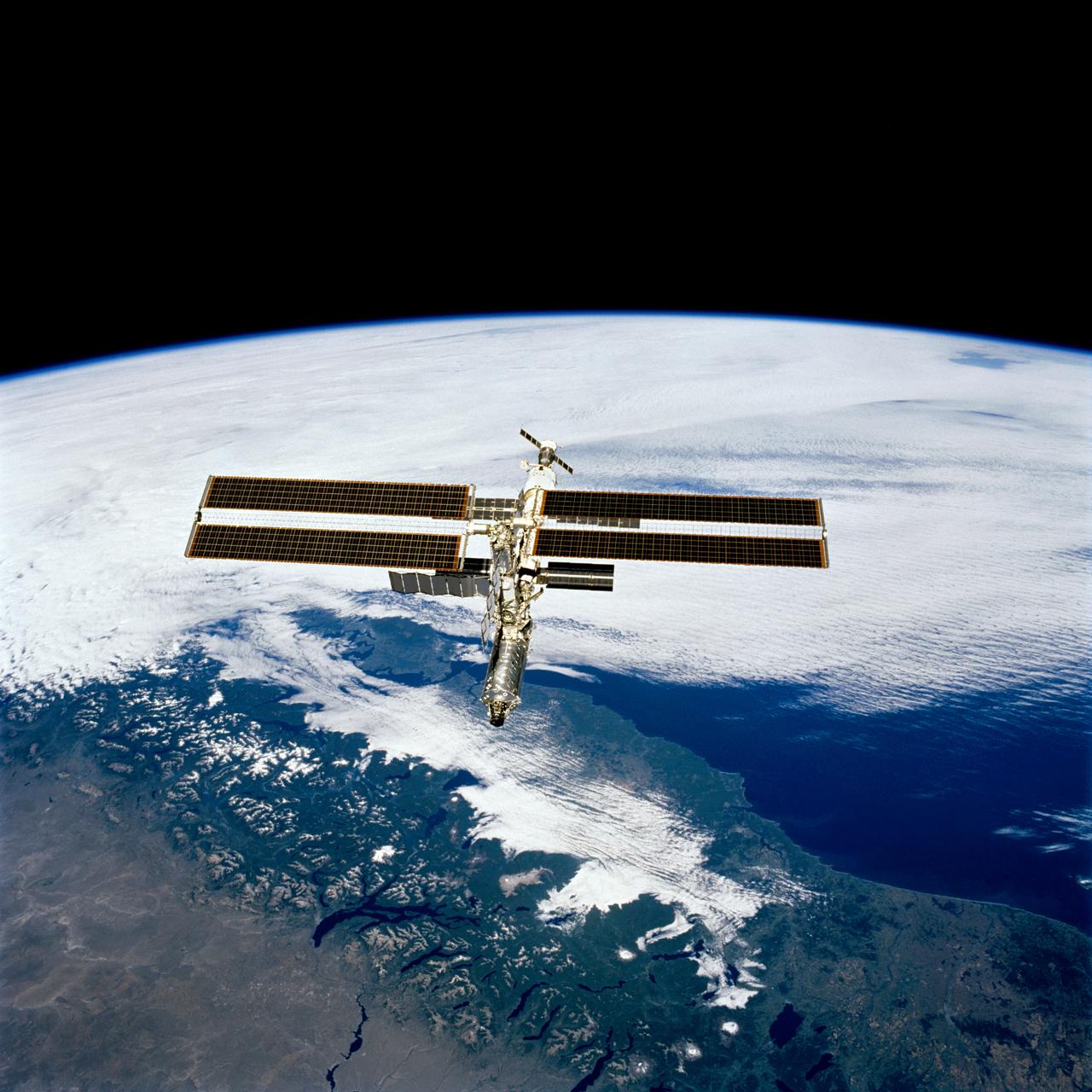
STS098-713a-019 (16 February 2001) --- The International Space Station is backdropped over clouds, water and land in South America. South central Chile shows up at bottom of the frame. Just below the Destiny laboratory, the Chacao Channel separates the large island of Chiloe from the mainland and connects the Gulf of Coronados on the Pacific side with the Gulf of Ancud southwest of the city of Puerto Montt. The crews of the Space Shuttle Atlantis and the International Space Station parted company at 8:06 a.m. (CST), February 16, as astronaut Mark L. Polansky, pilot, flew the shuttle halfway around the station and its new Destiny laboratory before moving off.
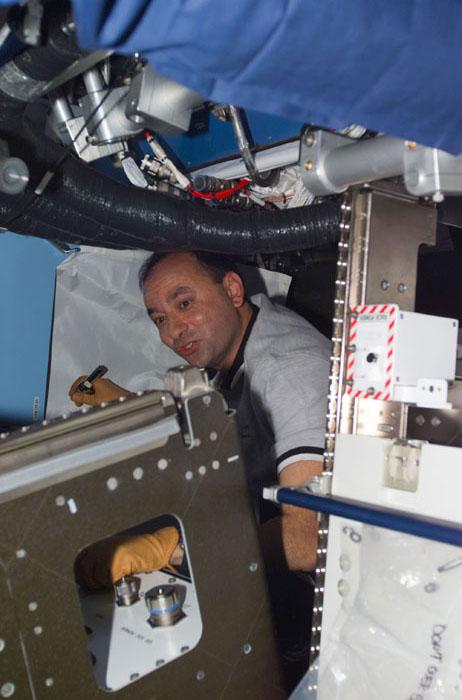
STS98-E-5159 (11 February 2001) --- Astronaut Mark L. Polansky, STS-98 pilot, works inside the newly attached Destiny laboratory onboard the International Space Station (ISS). After the Destiny hatch was opened early in the day, members of both the shuttle and station crews went to work quickly inside the new module, activating air systems, fire extinguishers, alarm systems, computers and internal communications. The crews also took some photos and continued equipment transfers from the shuttle to the station. The scene was taken with a digital still camera.
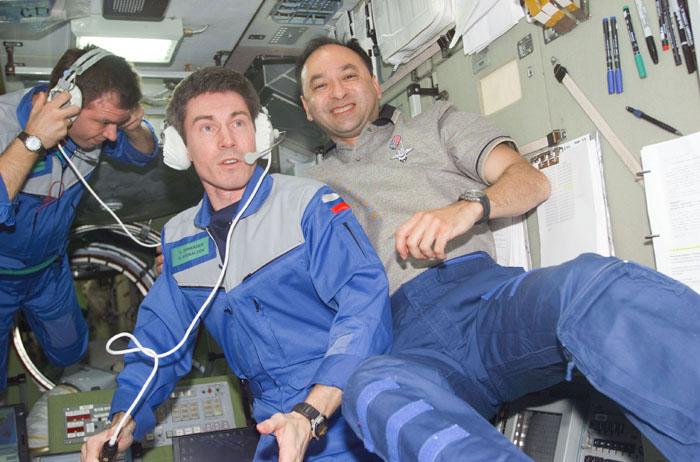
STS98-E-5061 (9 February 2001) --- Cosmonauts Sergei K. Krikalev (center), Expedition One flight engineer, and Yuri P. Gidzenko (left), Soyuz commander for the first station expedition crew, are pictured with astronaut Mark L. Polansky, STS-98 pilot, in the Zvezda Service Module of the International Space Station. The cosmonauts, who represent the Russian Aviation and Space Agency, are communicating with ground controllers in Russia. The scene was recorded with a digital still camera shortly after the outpost's hatches were opened on STS-98 Flight Day 3.
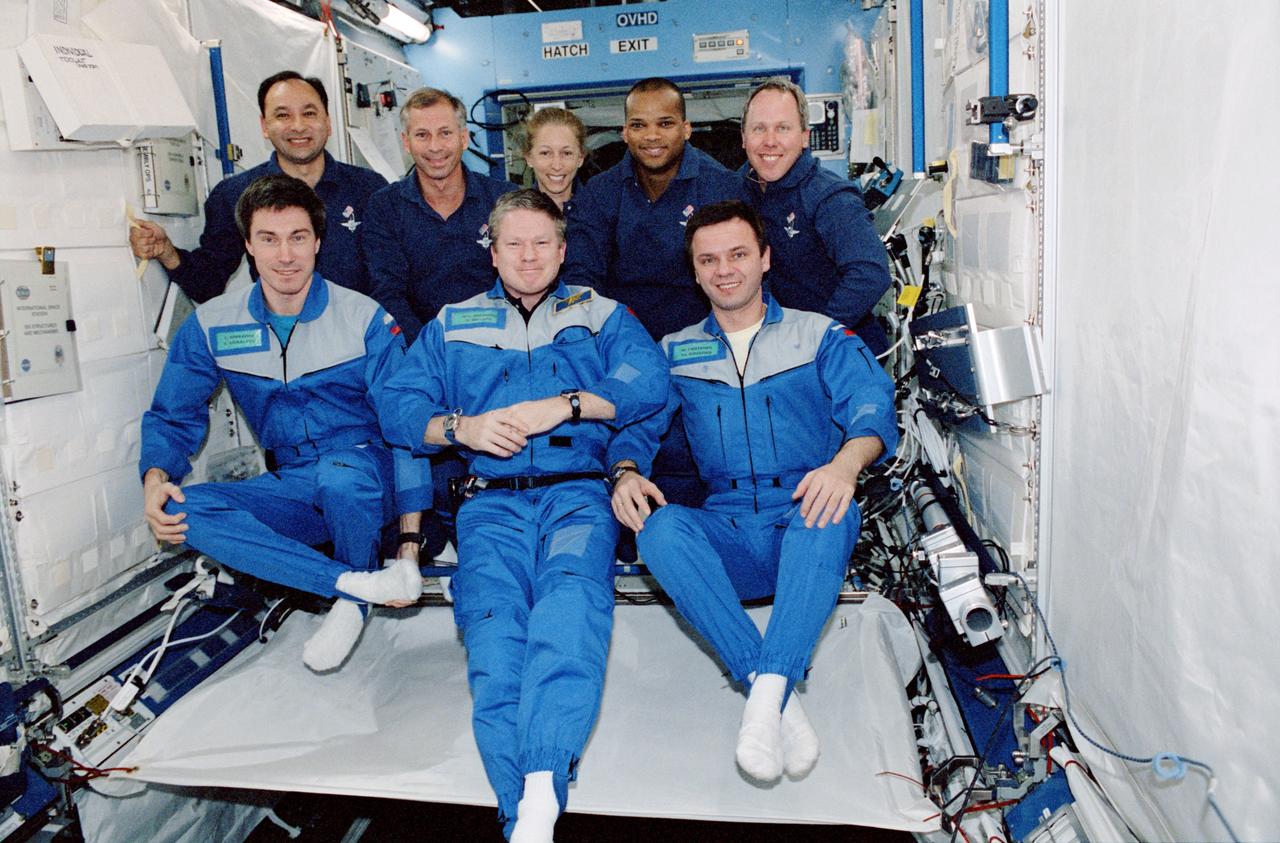
STS098-371-0019 (7-20 February 2001) --- The crews of the Space Shuttle Atlantis and International Space Station (ISS) interrupt work aboard the newly installed Destiny laboratory to pose for an in-flight joint group portrait. In front are (from the left) cosmonaut Sergei K. Krikalev, Expedition One flight engineer; astronaut William M. (Bill) Shepherd, Expedition One mission commander; and Yuri P. Gidzenko, Soyuz commander. The shuttle crew is made up of (from the left) astronauts Mark L. Polansky, pilot; Kenneth D. Cockrell, mission commander; and Marsha S. Ivins, Robert L. Curbeam and Thomas D. Jones, all mission specialists. Krikalev and Gidzenko represent the Russian Aviation and Space Agency.
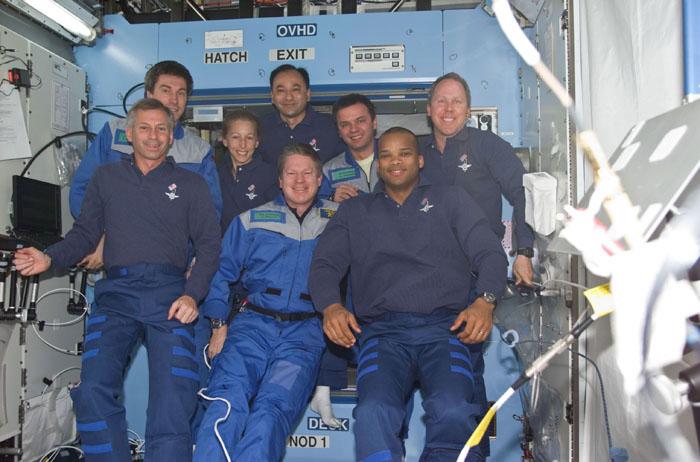
STS98-E-5276 (15 February 2001) --- Six NASA astronauts and two Russian cosmonauts pose for a group portrait representing both shuttle and station crews near the end of several days of joint work aboard the International Space Station (ISS). In front, from the left, are astronauts Kenneth D. Cockrell, STS-98 commander; William M. (Bill) Shepherd, Expedition One commander; and Robert L. Curbeam, STS-98 mission specialist. In the rear, from the left, are cosmonaut Sergei K. Krikalev, Expedition One flight engineer; astronaut Marsha S. Ivins, STS-98 mission specialist; astronaut Mark L. Polansky, shuttle pilot; cosmonaut Yuri P. Gidzenko, Soyuz commander for Expedition One; and astronaut Thomas D. Jones, shuttle mission specialist.
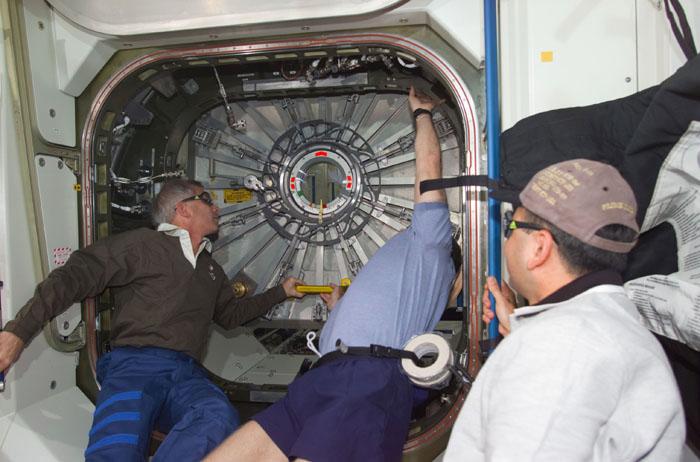
STS98-E-5131 (11 February 2001) --- The crews of Atlantis and the International Space Station open the Destiny laboratory on February 11 in this digital still camera view. From the left are astronauts Kenneth D. Cockrell, STS-98 commander; William M. (Bill) Shepherd, Expedition One commander; and Mark L. Polansky, STS-98 pilot. Later, the astronauts and cosmonauts spent the first full day of what are planned to be years of work ahead inside the orbiting science and command center. After Shepherd opened the Destiny hatch, he and Cockrell ventured inside at 8:38 a.m. (CST). As depicted in subsequent digital images in this series, members of both crews went to work quickly inside the new module, activating air systems, fire extinguishers, alarm systems, computers and internal communications. The crew also continued equipment transfers from the shuttle to the station.
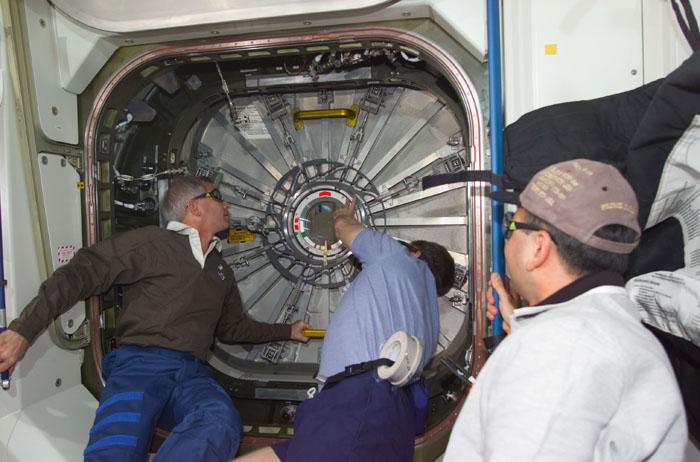
STS98-E-5130 (11 February 2001) --- The crews of Atlantis and the International Space Station open the Destiny laboratory on February 11 in this digital still camera view. From the left are astronauts Kenneth D. Cockrell, STS-98 commander; William M. (Bill) Shepherd, Expedition One commander; and Mark L. Polansky, STS-98 pilot. Later, the astronauts and cosmonauts spent the first full day of what are planned to be years of work ahead inside the orbiting science and command center. After Shepherd opened the Destiny hatch, he and Cockrell ventured inside at 8:38 a.m. (CST). As depicted in subsequent digital images in this series, members of both crews went to work quickly inside the new module, activating air systems, fire extinguishers, alarm systems, computers and internal communications. The crew also continued equipment transfers from the shuttle to the station.
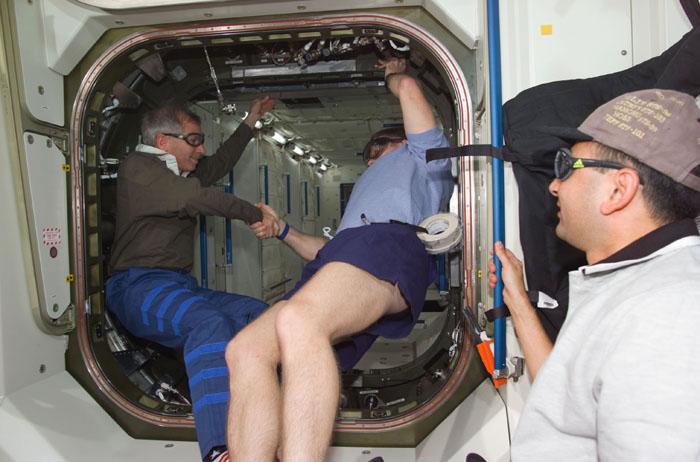
STS98-E-5133 (11 February 2001) --- The crew commanders of Atlantis and the International Space Station shake hands following the opening of the Destiny laboratory on February 11 in this digital still camera view. From the left are astronauts Kenneth D. Cockrell, STS-98 commander; William M. (Bill) Shepherd, Expedition One commander; and Mark L. Polansky, STS-98 pilot. Later, the astronauts and cosmonauts spent the first full day of what are planned to be years of work ahead inside the orbiting science and command center. After Shepherd opened the Destiny hatch, he and Cockrell ventured inside at 8:38 a.m. (CST). As depicted in subsequent digital images in this series, members of both crews went to work quickly inside the new module, activating air systems, fire extinguishers, alarm systems, computers and internal communications. The crew also continued equipment transfers from the shuttle to the station.
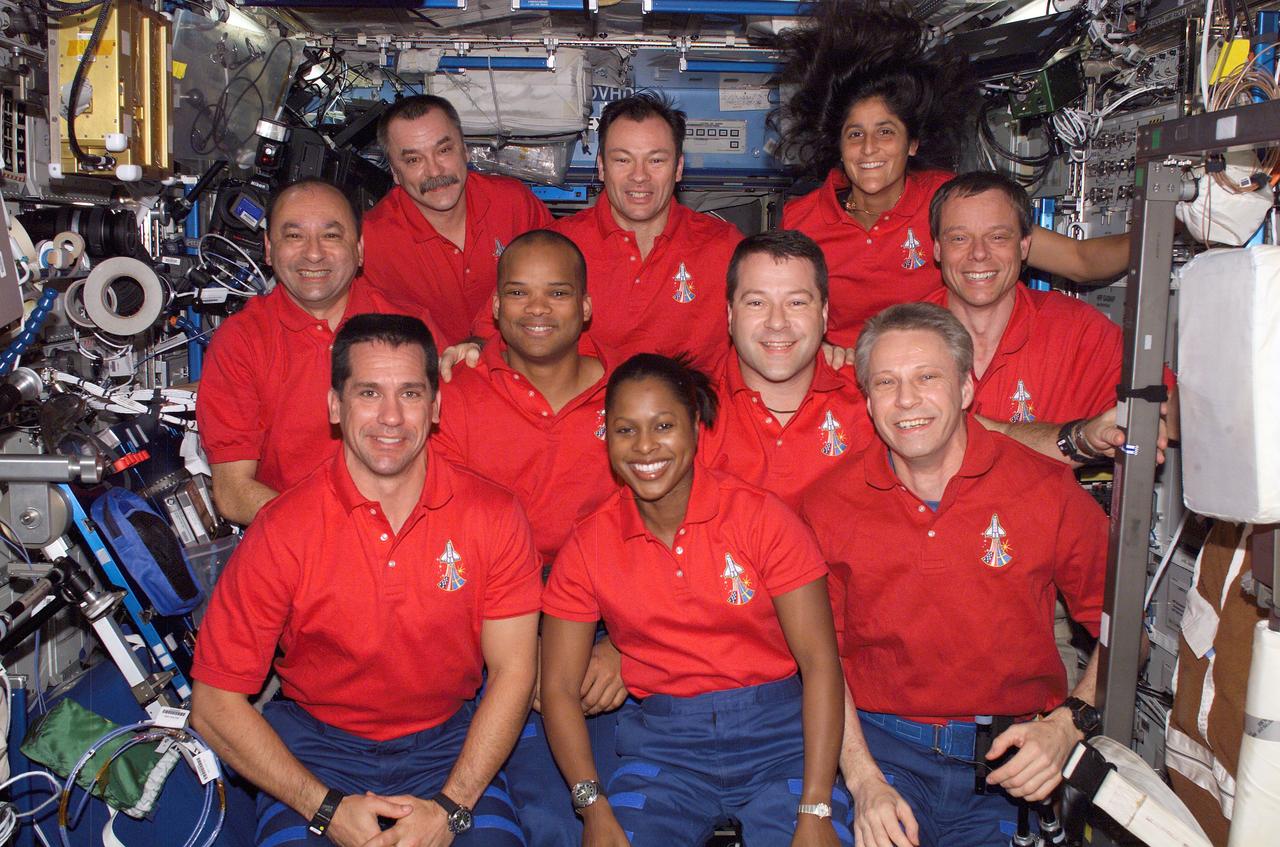
ISS014-E-10265 (19 Dec. 2006) --- The Expedition 14 and STS-116 crewmembers gather for a group portrait in the Destiny laboratory of the International Space Station while Space Shuttle Discovery was docked with the station. From the left (front row) are astronauts William A. (Bill) Oefelein, STS-116 pilot; Joan E. Higginbotham and the European Space Agency's (ESA) Thomas Reiter, both STS-116 mission specialists. From the left (center row) are astronauts Mark L. Polansky, STS-116 commander; Robert L. Curbeam Jr., Nicholas J. M. Patrick and European Space Agency's (ESA) Christer Fuglesang, all STS-116 mission specialists. From the left (back row) are cosmonaut Mikhail Tyurin, Expedition 14 flight engineer representing Russia's Federal Space Agency; astronauts Michael E. Lopez-Alegria, Expedition 14 commander and NASA space station science officer; and Sunita L. Williams, Expedition flight engineer. Shortly after the two spacecraft docked on Dec. 11, Williams became a member of the station crew. At the same time, Reiter became a Discovery crewmember for his ride home, completing about six months in space.
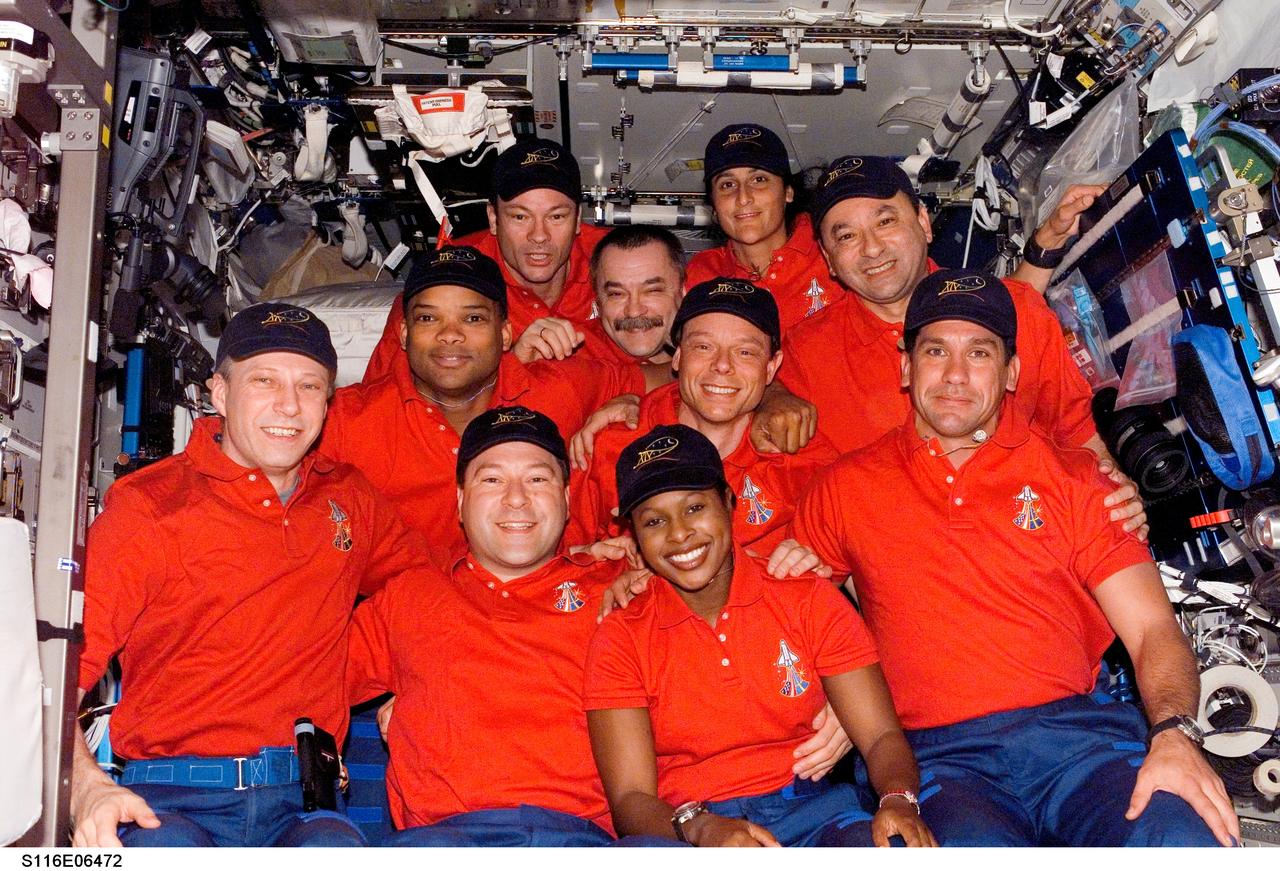
S116-E-06472 (15 Dec. 2006) --- The STS-116 and Expedition 14 crewmembers gather for a group portrait during a joint crew press conference in the Destiny laboratory of the International Space Station while Space Shuttle Discovery was docked with the station. From the left (front row) are European Space Agency (ESA) astronaut Thomas Reiter, Nicholas J. M. Patrick, Joan E. Higginbotham, all STS-116 mission specialists; and William A. (Bill) Oefelein, STS-116 pilot. From the left (center row) are astronaut Robert L. Curbeam, Jr., European Space Agency (ESA) astronaut Christer Fuglesang, STS-116 mission specialists; and astronaut Mark L. Polansky, STS-116 commander. From the left (back row) are astronaut Michael E. Lopez-Alegria, Expedition 14 commander and NASA space station science officer; cosmonaut Mikhail Tyurin, Expedition 14 flight engineer representing Russia's Federal Space Agency; and astronaut Sunita L. Williams, Expedition 14 flight engineer. Shortly after the two spacecraft docked on Dec. 11, Williams became a member of the station crew. At the same time, Reiter became a Discovery crewmember for his ride home, completing about six months in space.
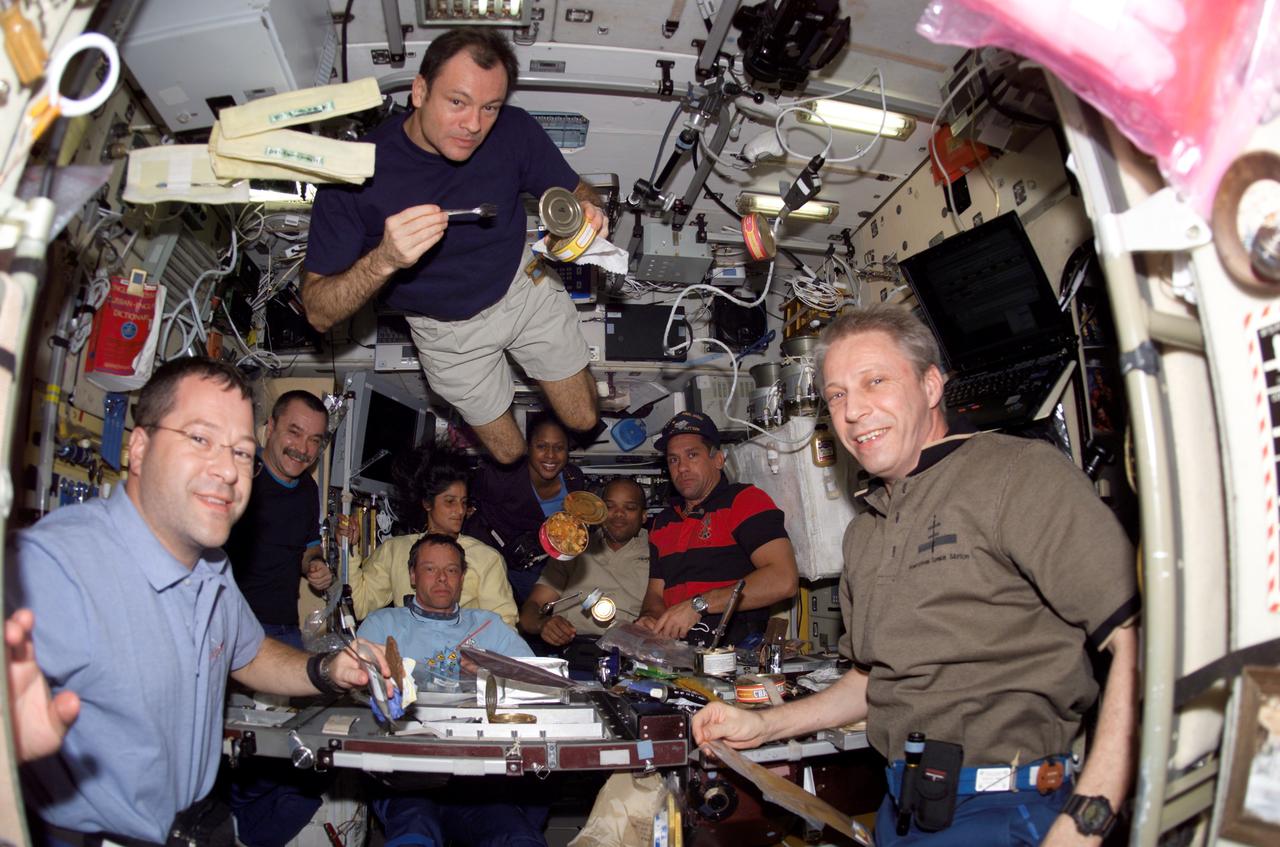
S116-E-06068 (13 Dec. 2006) --- The STS-116 and Expedition 14 crewmembers share a meal in the Zvezda Service Module of the International Space Station. Pictured in the foreground are astronauts Nicholas J. M. Patrick (left), STS-116 mission specialist; Michael E. Lopez-Alegria (center top), Expedition 14 commander and NASA space station science officer; and European Space Agency (ESA) astronaut Thomas Reiter (right), STS-116 mission specialist. Pictured in the background are cosmonaut Mikhail Tyurin (left), Expedition 14 flight engineer representing Russia's Federal Space Agency; European Space Agency (ESA) astronaut Christer Fuglesang, STS-116 mission specialist; Sunita L. Williams, Expedition 14 flight engineer; Joan E. Higginbotham, Robert L. Curbeam, Jr., both STS-116 mission specialists; and William A. (Bill) Oefelein, STS-116 pilot. Astronaut Mark L. Polansky, STS-116 commander, is out of frame.
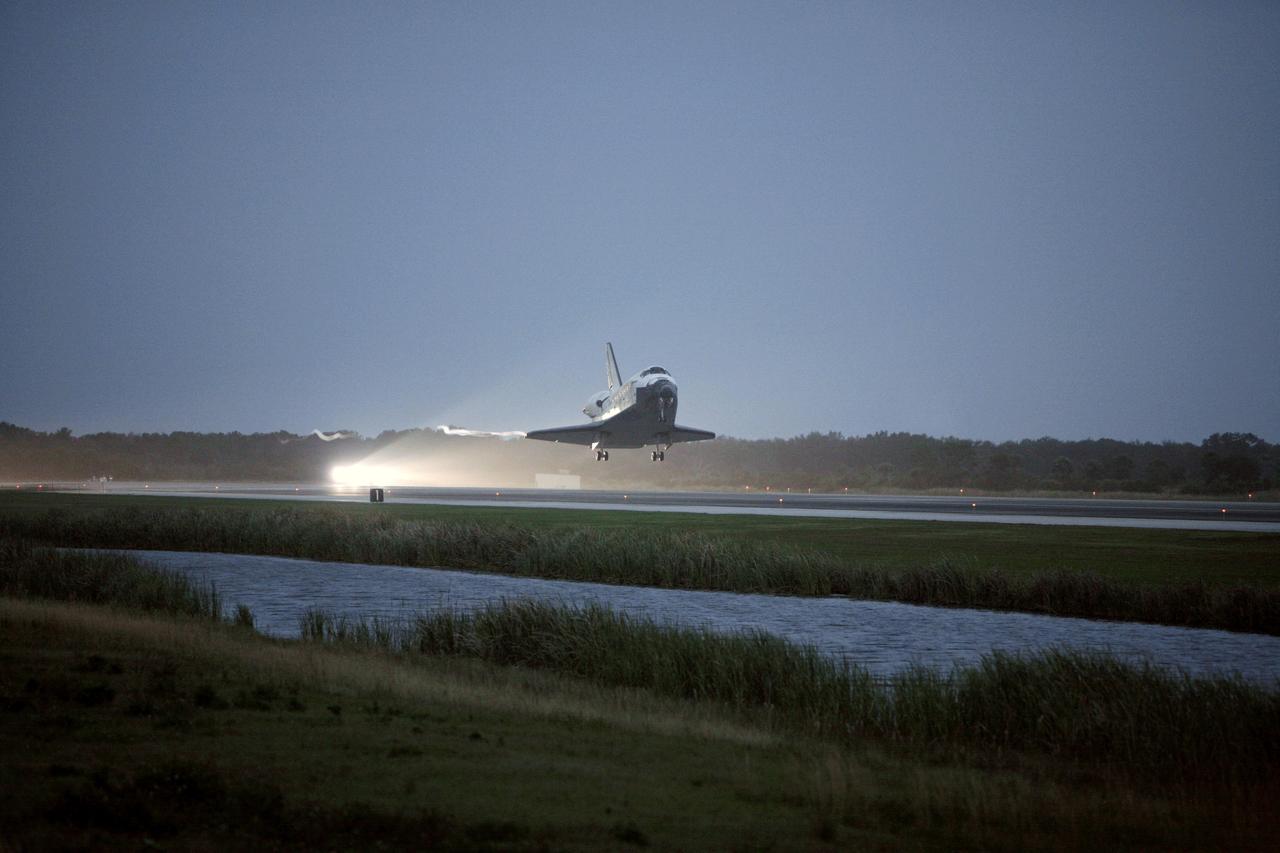
STS116-S-076 (22 Dec. 2006) --- Discovery approaches touchdown on Runway 15 at NASA Kennedy Space Center's Shuttle Landing Facility, concluding mission STS-116. Aboard are astronauts Mark L. Polansky, commander; William A. Oefelein, pilot; and Robert L. Curbeam Jr., Joan E. Higginbotham, Nicholas J.M. Patrick and European Space Agency astronauts Christer Fuglesang and Thomas Reiter--all mission specialists. Reiter is returning from a six-month stay on the International Space Station. During the mission, three spacewalks attached the P5 integrated truss structure to the station, and completed the rewiring of the orbiting laboratory's power system. A contingency spacewalk was added to retract a stubborn solar array. Main gear touchdown was at 5:32 p.m. (EST). Nose gear touchdown was at 5:32:12 p.m. and wheel stop was at 5:32:52 p.m. At touchdown -- nominally about 2,500 ft. beyond the runway threshold -- the orbiter is traveling at a speed ranging from 213 to 226 mph. Discovery traveled 5,330,000 miles, landing on orbit 204. Mission elapsed time was 12 days, 20 hours, 44 minutes and 16 seconds. This is the 64th landing at KSC.
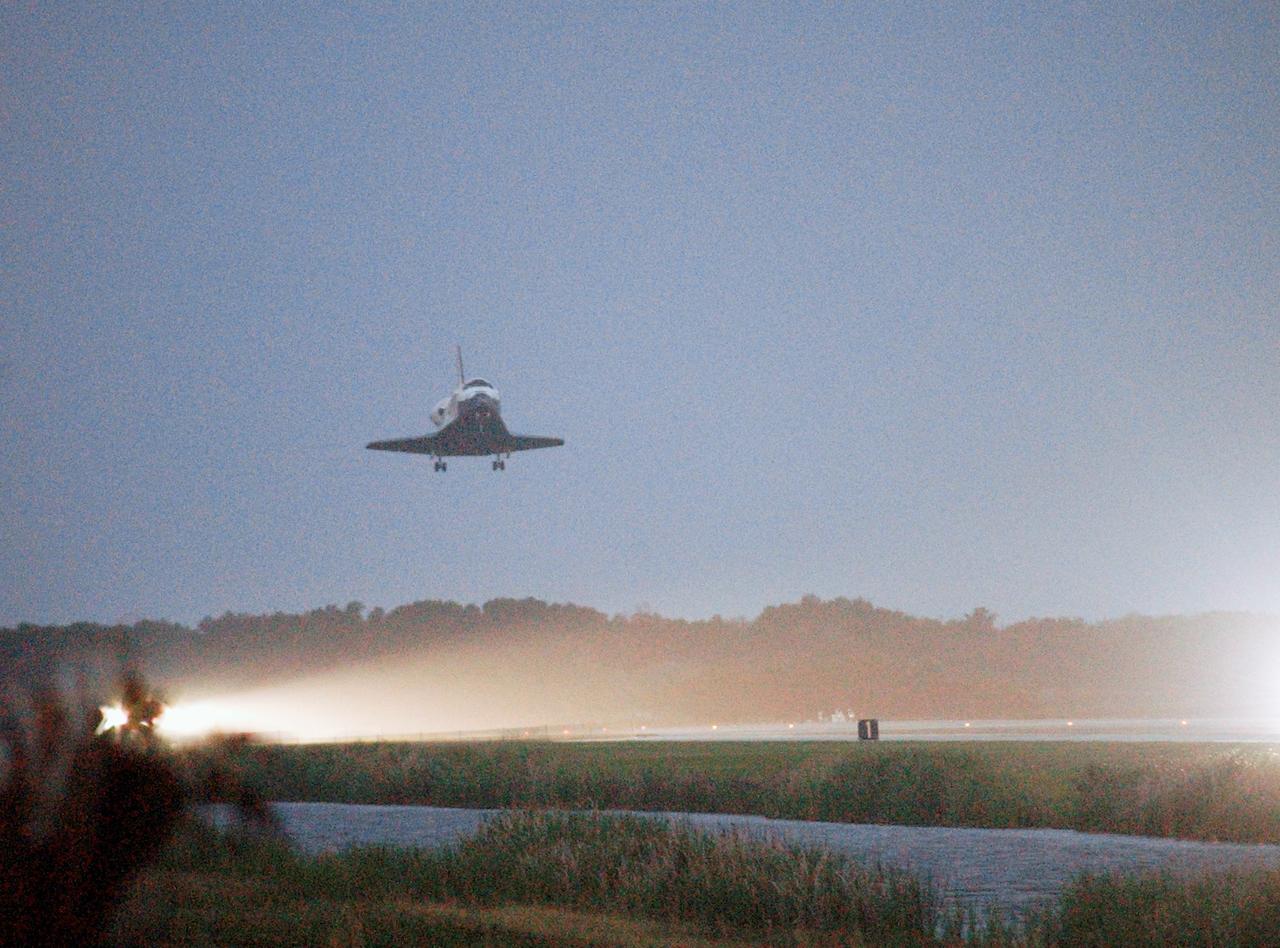
STS116-S-062 (22 Dec. 2006) --- A low angle view shows Discovery approaching Runway 15 at NASA Kennedy Space Center's Shuttle Landing Facility, concluding mission STS-116. Aboard are astronauts Mark L. Polansky, commander; William A. Oefelein, pilot; and Robert L. Curbeam Jr., Joan E. Higginbotham, Nicholas J.M. Patrick and European Space Agency astronauts Christer Fuglesang and Thomas Reiter--all mission specialists. Reiter is returning from a six-month stay on the International Space Station. During the mission, three spacewalks attached the P5 integrated truss structure to the station, and completed the rewiring of the orbiting laboratory's power system. A contingency spacewalk was added to retract a stubborn solar array. Main gear touchdown was at 5:32 p.m. (EST). Nose gear touchdown was at 5:32:12 p.m. and wheel stop was at 5:32:52 p.m. At touchdown -- nominally about 2,500 ft. beyond the runway threshold -- the orbiter is traveling at a speed ranging from 213 to 226 mph. Discovery traveled 5,330,000 miles, landing on orbit 204. Mission elapsed time was 12 days, 20 hours, 44 minutes and 16 seconds. This is the 64th landing at KSC.
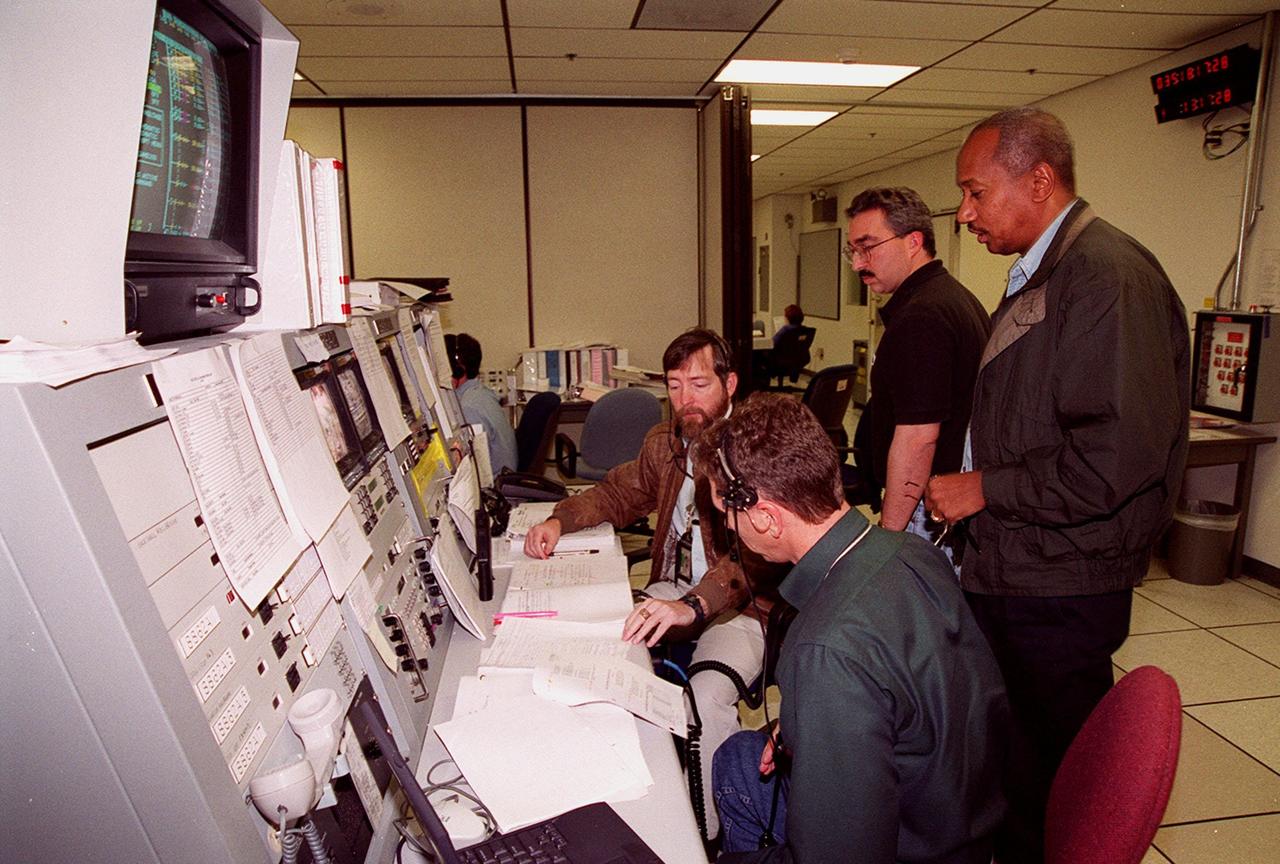
Workers in the Space Station Processing Facility control room check documentation during a Multi-Equipment Interface Test (MEIT) in the U.S. Lab Destiny. Members of the STS-98 crew are taking part in the MEIT checking out some of the equipment in the Lab. During the STS-98 mission, the crew will install the Lab on the station during a series of three space walks. The crew comprises five members: Commander Kenneth D. Cockrell, Pilot Mark L. Polansky, and Mission Specialists Robert L. Curbeam Jr., Thomas D. Jones (Ph.D.) and Marsha S. Ivins. The mission will provide the station with science research facilities and expand its power, life support and control capabilities. The U.S. Laboratory Module continues a long tradition of microgravity materials research, first conducted by Skylab and later Shuttle and Spacelab missions. Destiny is expected to be a major feature in future research, providing facilities for biotechnology, fluid physics, combustion, and life sciences research. The Lab is planned for launch aboard Space Shuttle Atlantis on the sixth ISS flight, currently targeted no earlier than Aug. 19, 2000
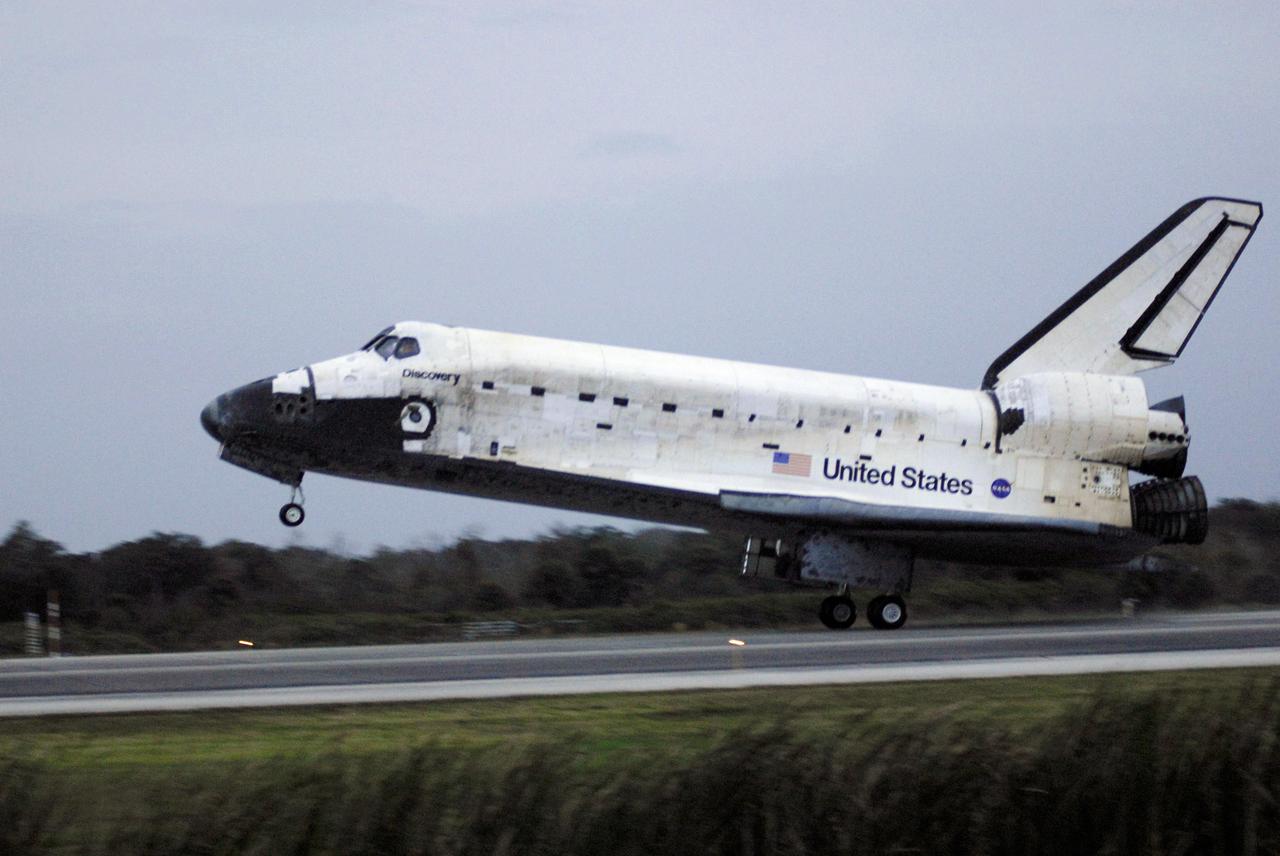
STS116-S-058 (22 Dec. 2006) --- As the sun sets, Discovery's main landing gear touches down on Runway 15 at NASA Kennedy Space Center's Shuttle Landing Facility, concluding mission STS-116. Aboard are astronauts Mark L. Polansky, commander; William A. Oefelein, pilot; and Robert L. Curbeam Jr., Joan E. Higginbotham, Nicholas J.M. Patrick and European Space Agency astronauts Christer Fuglesang and Thomas Reiter--all mission specialists. Reiter is returning from a six-month stay on the International Space Station. During the mission, three spacewalks attached the P5 integrated truss structure to the station, and completed the rewiring of the orbiting laboratory's power system. A contingency spacewalk was added to retract a stubborn solar array. Main gear touchdown was at 5:32 p.m. (EST). Nose gear touchdown was at 5:32:12 p.m. and wheel stop was at 5:32:52 p.m. At touchdown -- nominally about 2,500 ft. beyond the runway threshold -- the orbiter is traveling at a speed ranging from 213 to 226 mph. Discovery traveled 5,330,000 miles, landing on orbit 204. Mission elapsed time was 12 days, 20 hours, 44 minutes and 16 seconds. This is the 64th landing at KSC.
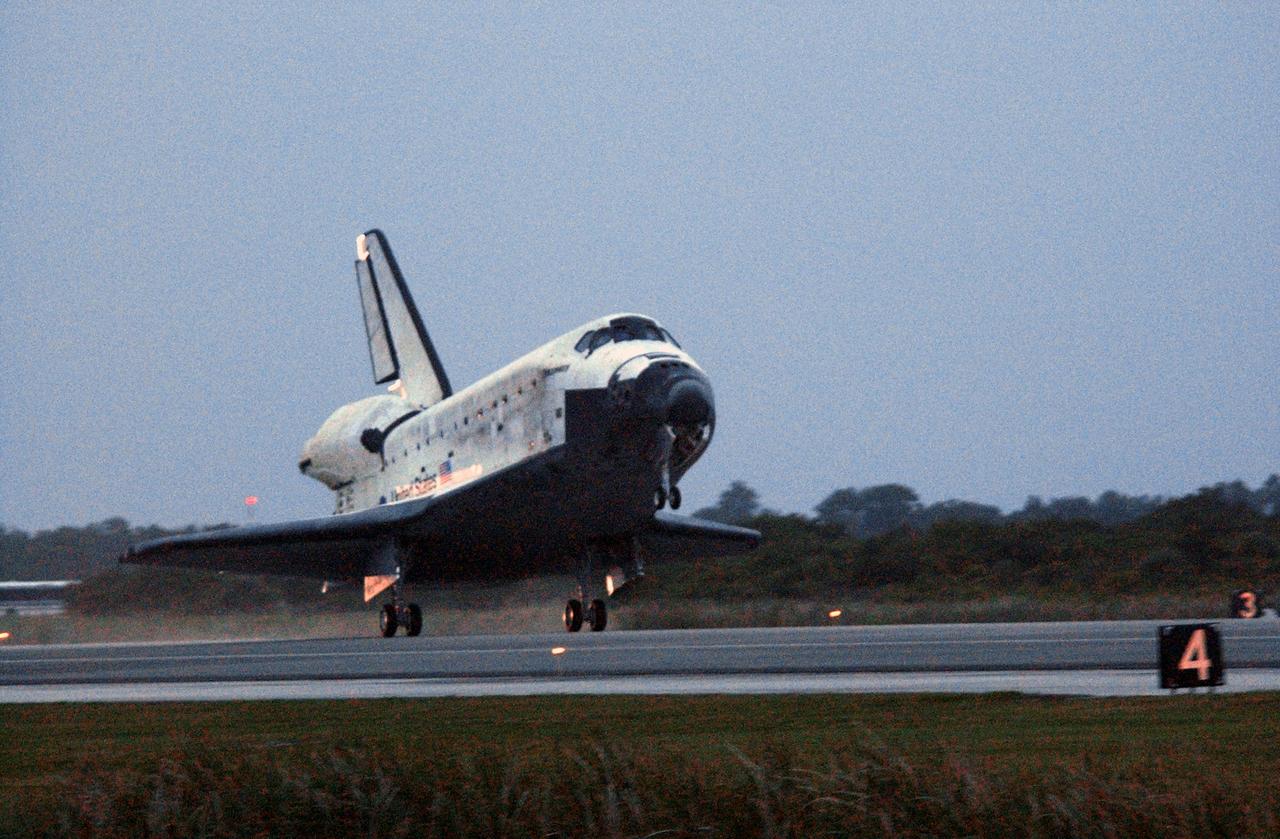
STS116-S-072 (22 Dec. 2006) --- As the sun sets, Discovery's main landing gear touches down on Runway 15 at NASA Kennedy Space Center's Shuttle Landing Facility, concluding mission STS-116. Aboard are astronauts Mark L. Polansky, commander; William A. Oefelein, pilot; and Robert L. Curbeam Jr., Joan E. Higginbotham, Nicholas J.M. Patrick and European Space Agency astronauts Christer Fuglesang and Thomas Reiter--all mission specialists. Reiter is returning from a six-month stay on the International Space Station. During the mission, three spacewalks attached the P5 integrated truss structure to the station, and completed the rewiring of the orbiting laboratory's power system. A contingency spacewalk was added to retract a stubborn solar array. Main gear touchdown was at 5:32 p.m. (EST). Nose gear touchdown was at 5:32:12 p.m. and wheel stop was at 5:32:52 p.m. At touchdown -- nominally about 2,500 ft. beyond the runway threshold -- the orbiter is traveling at a speed ranging from 213 to 226 mph. Discovery traveled 5,330,000 miles, landing on orbit 204. Mission elapsed time was 12 days, 20 hours, 44 minutes and 16 seconds. This is the 64th landing at KSC.
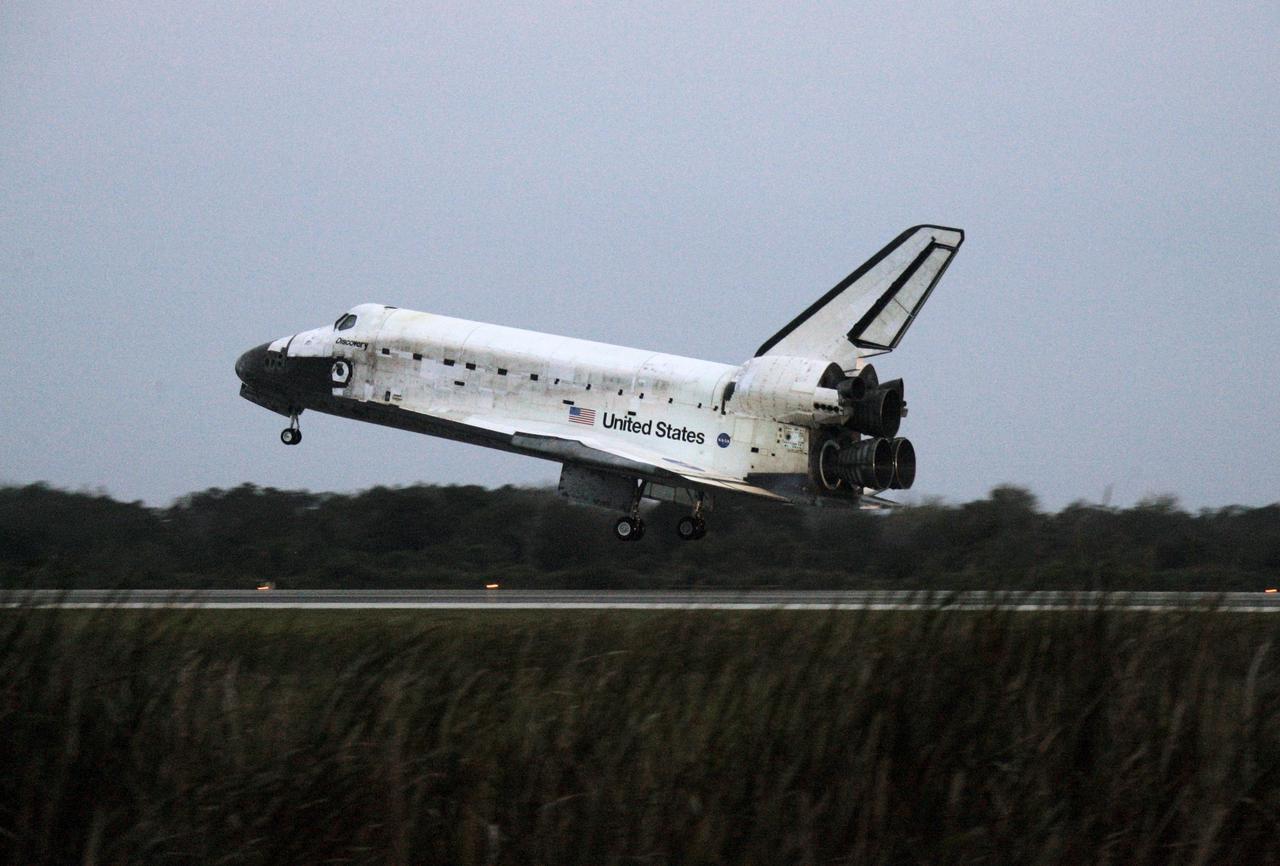
STS116-S-060 (22 Dec. 2006) --- Discovery's main landing gear is about to touch down on Runway 15 at NASA Kennedy Space Center's Shuttle Landing Facility, concluding mission STS-116. Aboard are astronauts Mark L. Polansky, commander; William A. Oefelein, pilot; and Robert L. Curbeam Jr., Joan E. Higginbotham, Nicholas J.M. Patrick and European Space Agency astronauts Christer Fuglesang and Thomas Reiter--all mission specialists. Reiter is returning from a six-month stay on the International Space Station. During the mission, three spacewalks attached the P5 integrated truss structure to the station, and completed the rewiring of the orbiting laboratory's power system. A contingency spacewalk was added to retract a stubborn solar array. Main gear touchdown was at 5:32 p.m. (EST). Nose gear touchdown was at 5:32:12 p.m. and wheel stop was at 5:32:52 p.m. At touchdown -- nominally about 2,500 ft. beyond the runway threshold -- the orbiter is traveling at a speed ranging from 213 to 226 mph. Discovery traveled 5,330,000 miles, landing on orbit 204. Mission elapsed time was 12 days, 20 hours, 44 minutes and 16 seconds. This is the 64th landing at KSC.
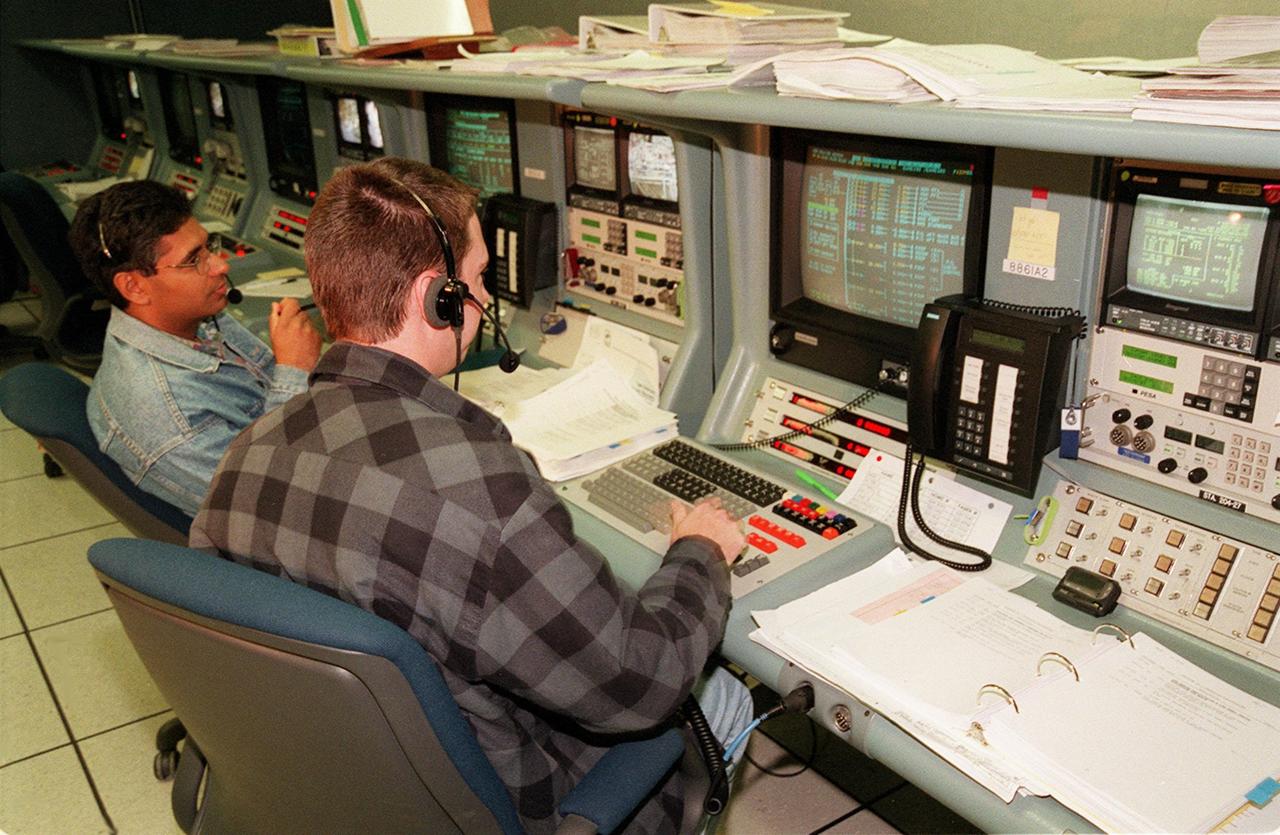
Workers in the Space Station Processing Facility control room monitor computers during a Multi-Equipment Interface Test (MEIT) in the U.S. Lab Destiny. Members of the STS-98 crew are taking part in the MEIT checking out some of the equipment in the Lab. During the STS-98 mission, the crew will install the Lab on the station during a series of three space walks. The crew comprises five members: Commander Kenneth D. Cockrell, Pilot Mark L. Polansky, and Mission Specialists Robert L. Curbeam Jr., Thomas D. Jones (Ph.D.) and Marsha S. Ivins. The mission will provide the station with science research facilities and expand its power, life support and control capabilities. The U.S. Laboratory Module continues a long tradition of microgravity materials research, first conducted by Skylab and later Shuttle and Spacelab missions. Destiny is expected to be a major feature in future research, providing facilities for biotechnology, fluid physics, combustion, and life sciences research. The Lab is planned for launch aboard Space Shuttle Atlantis on the sixth ISS flight, currently targeted no earlier than Aug. 19, 2000
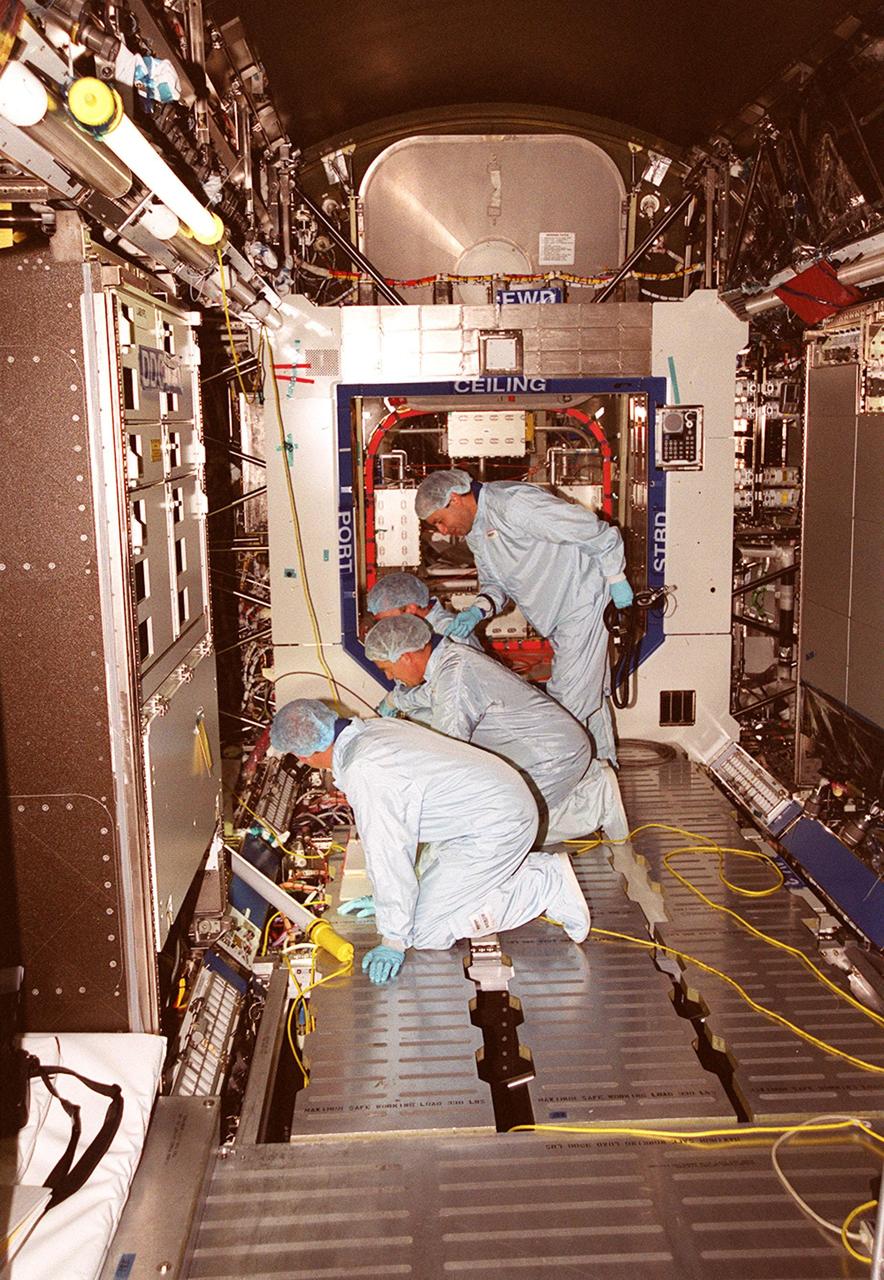
Members of the STS-98 crew check out equipment in the U.S. Lab Destiny during a Multi-Equipment Interface Test. During the mission, the crew will install the Lab in the International Space Station during a series of three space walks. The STS-98 mission will provide the station with science research facilities and expand its power, life support and control capabilities. The U.S. Laboratory Module continues a long tradition of microgravity materials research, first conducted by Skylab and later Shuttle and Spacelab missions. Destiny is expected to be a major feature in future research, providing facilities for biotechnology, fluid physics, combustion, and life sciences research. Making up the five-member crew on STS-98 are Commander Kenneth D. Cockrell, Pilot Mark L. Polansky, and Mission Specialists Robert L. Curbeam Jr., Thomas D. Jones (Ph.D.) and Marsha S. Ivins. The Lab is planned for launch aboard Space Shuttle Atlantis on the sixth ISS flight, currently targeted no earlier than Aug. 19, 2000
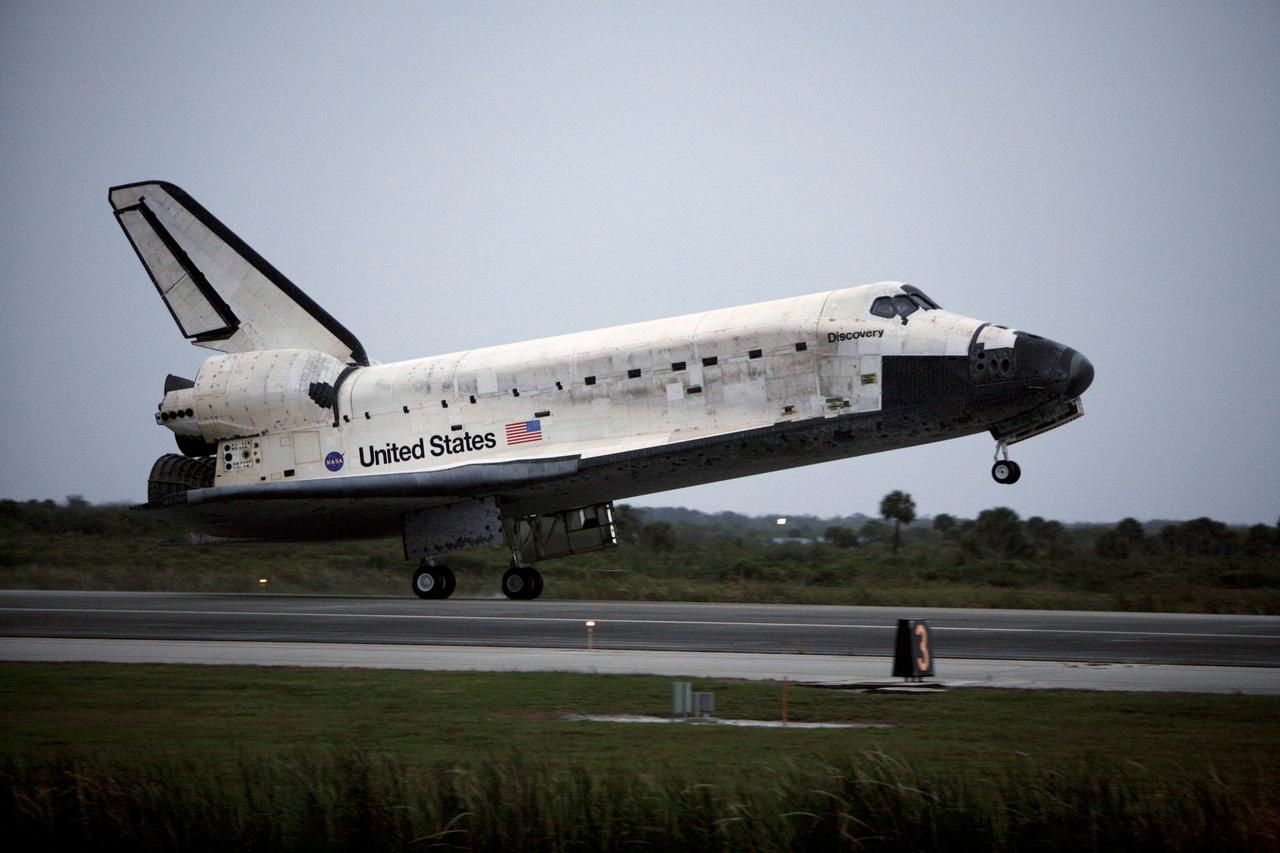
STS116-S-077 (22 Dec. 2006) --- As the sun sets, Discovery's main landing gear touches down on Runway 15 at NASA Kennedy Space Center's Shuttle Landing Facility, concluding mission STS-116. Aboard are astronauts Mark L. Polansky, commander; William A. Oefelein, pilot; and Robert L. Curbeam Jr., Joan E. Higginbotham, Nicholas J.M. Patrick and European Space Agency astronauts Christer Fuglesang and Thomas Reiter--all mission specialists. Reiter is returning from a six-month stay on the International Space Station. During the mission, three spacewalks attached the P5 integrated truss structure to the station, and completed the rewiring of the orbiting laboratory's power system. A contingency spacewalk was added to retract a stubborn solar array. Main gear touchdown was at 5:32 p.m. (EST). Nose gear touchdown was at 5:32:12 p.m. and wheel stop was at 5:32:52 p.m. At touchdown -- nominally about 2,500 ft. beyond the runway threshold -- the orbiter is traveling at a speed ranging from 213 to 226 mph. Discovery traveled 5,330,000 miles, landing on orbit 204. Mission elapsed time was 12 days, 20 hours, 44 minutes and 16 seconds. This is the 64th landing at KSC.
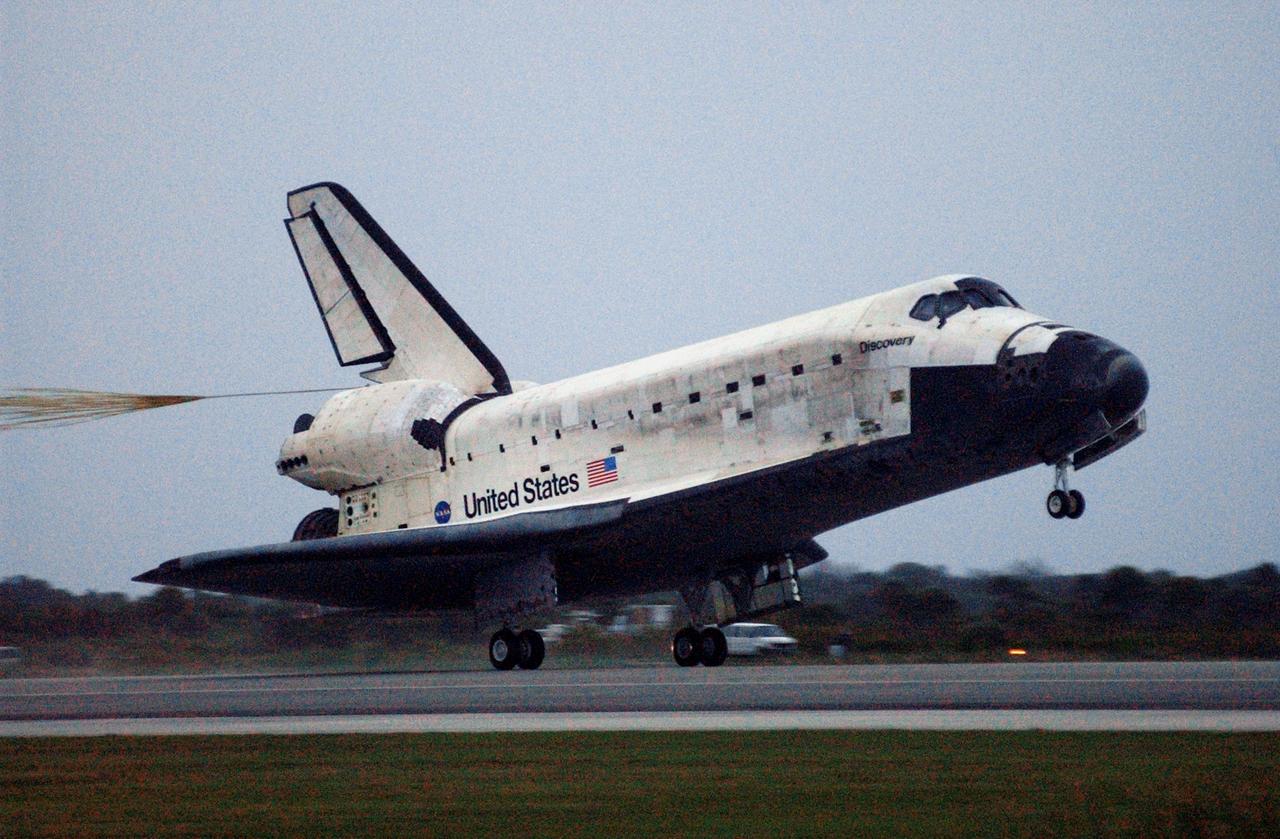
STS116-S-065 (22 Dec. 2006) --- Discovery's main landing gear touches down on Runway 15 at NASA Kennedy Space Center's Shuttle Landing Facility, concluding mission STS-116. Aboard are astronauts Mark L. Polansky, commander; William A. Oefelein, pilot; and Robert L. Curbeam Jr., Joan E. Higginbotham, Nicholas J.M. Patrick and European Space Agency astronauts Christer Fuglesang and Thomas Reiter--all mission specialists. Reiter is returning from a six-month stay on the International Space Station. During the mission, three spacewalks attached the P5 integrated truss structure to the station, and completed the rewiring of the orbiting laboratory's power system. A contingency spacewalk was added to retract a stubborn solar array. Main gear touchdown was at 5:32 p.m. (EST). Nose gear touchdown was at 5:32:12 p.m. and wheel stop was at 5:32:52 p.m. At touchdown -- nominally about 2,500 ft. beyond the runway threshold -- the orbiter is traveling at a speed ranging from 213 to 226 mph. Discovery traveled 5,330,000 miles, landing on orbit 204. Mission elapsed time was 12 days, 20 hours, 44 minutes and 16 seconds. This is the 64th landing at KSC.
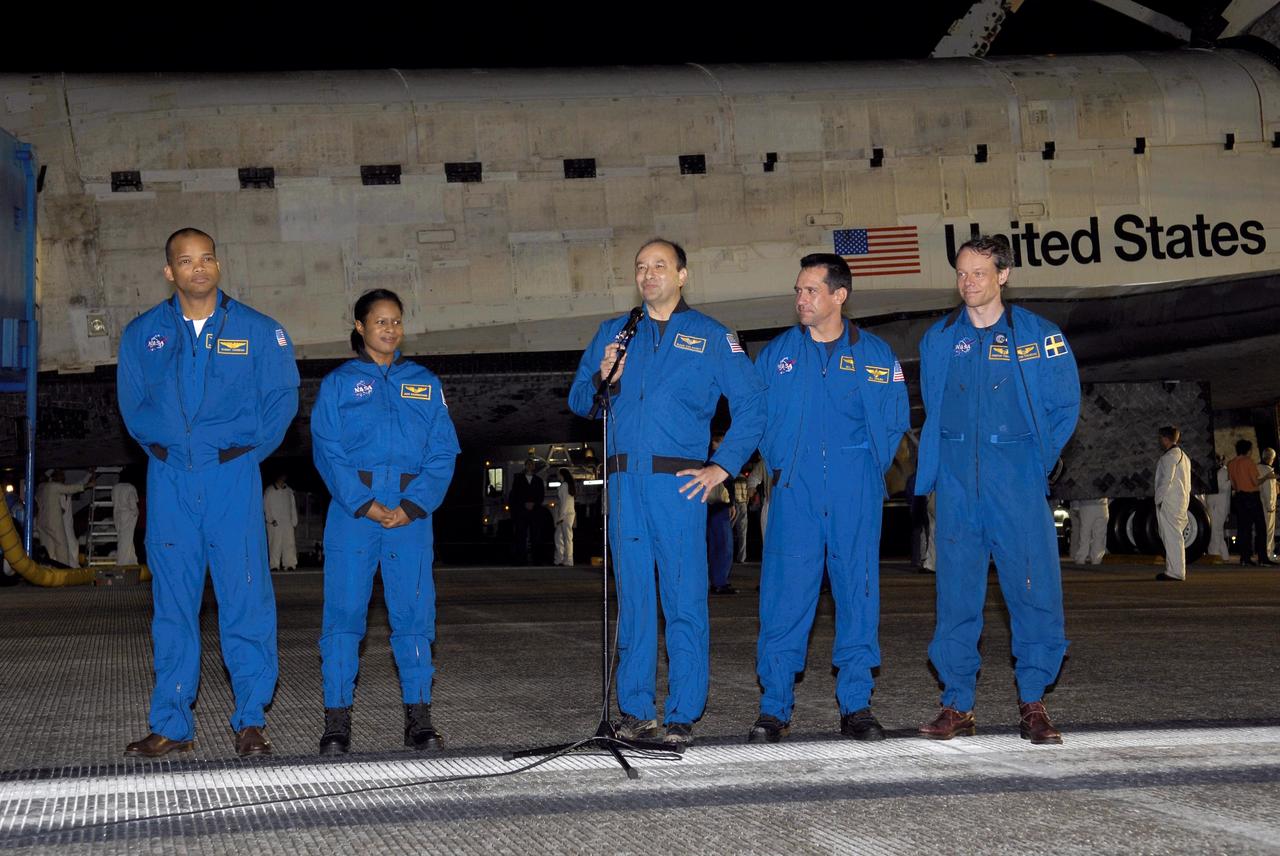
STS116-S-073 (22 Dec. 2006) --- Following the successful completion of a 13-day mission on Runway 15 at NASA Kennedy Space Center's Shuttle Landing Facility, crewmembers address those on hand to greet them. Mark L. Polansky, commander, stands at the microphone. William A. Oefelein, pilot, is at second right. Others, from the left, are astronauts Robert L. Curbeam Jr., Joan E. Higginbotham and European Space Agency astronaut Christer Fuglesang--all mission specialists. ESA astronaut Thomas Reiter, who is returning from a six-month stay on the International Space Station, and astronaut Nicholas J.M. Patrick, a mission specialist, are not pictured. During the mission, three spacewalks attached the P5 integrated truss structure to the station, and completed the rewiring of the orbiting laboratory's power system. A contingency spacewalk was added to retract a stubborn solar array. Main gear touchdown was at 5:32 p.m. (EST). Nose gear touchdown was at 5:32:12 p.m. and wheel stop was at 5:32:52 p.m. At touchdown -- nominally about 2,500 ft. beyond the runway threshold -- the orbiter is traveling at a speed ranging from 213 to 226 mph. Discovery traveled 5,330,000 miles, landing on orbit 204. Mission elapsed time was 12 days, 20 hours, 44 minutes and 16 seconds. This is the 64th landing at KSC.
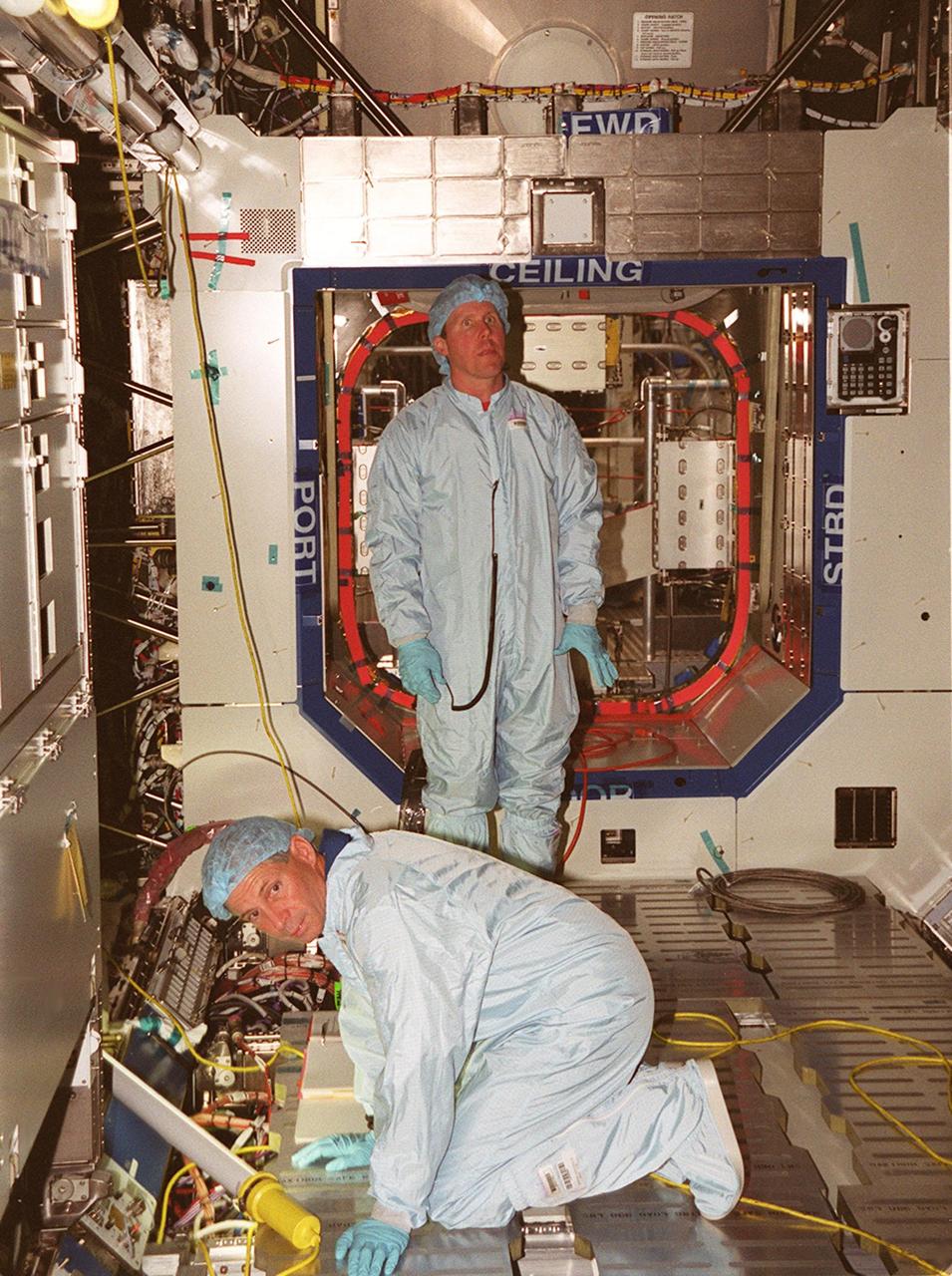
STS-98 Commander Kenneth D. Cockrell (left) and Mission Specialist Thomas D. Jones (Ph.D.) check out equipment in the U.S. Lab Destiny during a Multi-Equipment Interface Test. During the mission, Jones will help install the Lab on the International Space Station in a series of three space walks. The STS-98 mission will provide the station with science research facilities and expand its power, life support and control capabilities. The U.S. Laboratory Module continues a long tradition of microgravity materials research, first conducted by Skylab and later Shuttle and Spacelab missions. Destiny is expected to be a major feature in future research, providing facilities for biotechnology, fluid physics, combustion, and life sciences research. Others in the five-member crew on STS-98 are Pilot Mark L. Polansky, and Mission Specialists Robert L. Curbeam Jr. and Marsha S. Ivins. The Lab is planned for launch aboard Space Shuttle Atlantis on the sixth ISS flight, currently targeted no earlier than Aug. 19, 2000
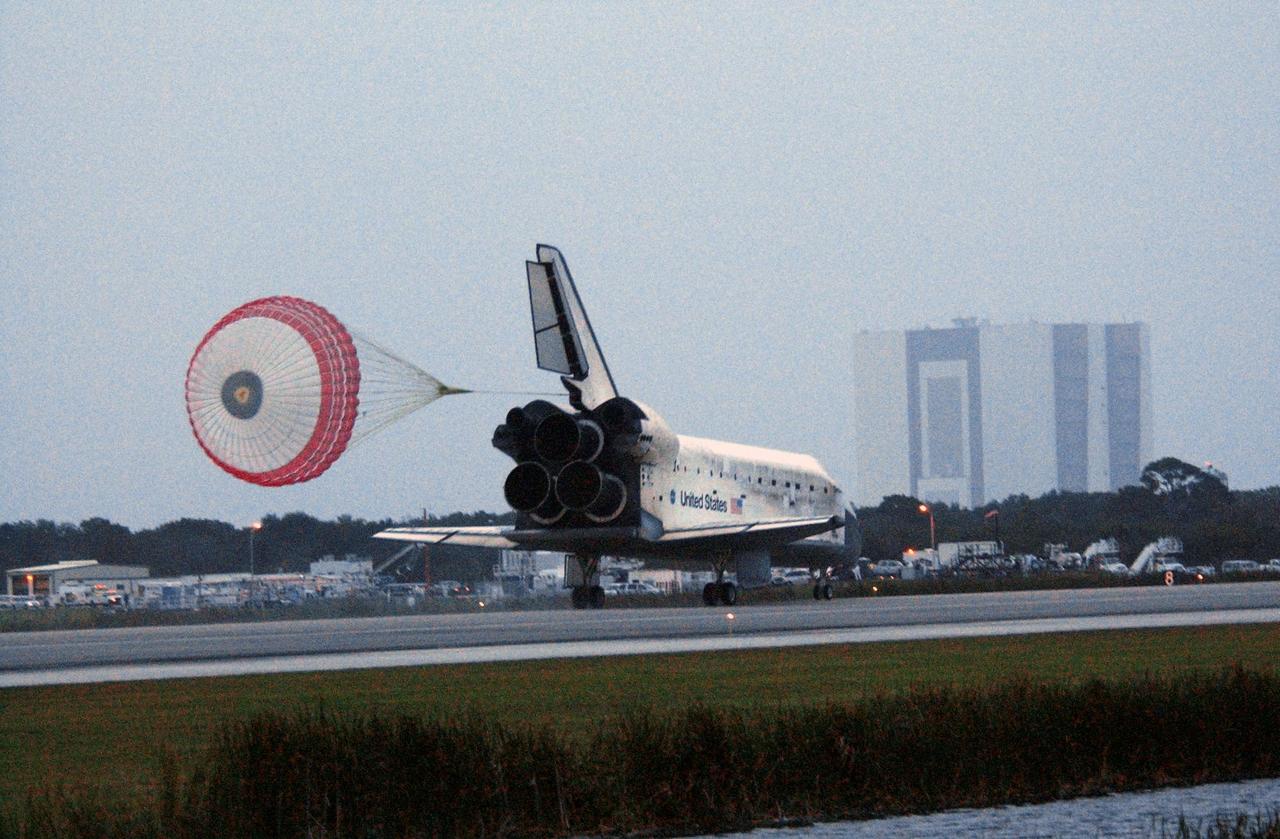
STS116-S-070 (22 Dec. 2006) --- Discovery's drag chute is fully deployed as the spacecraft rolls toward wheels stop on Runway 15 at NASA Kennedy Space Center's Shuttle Landing Facility , concluding mission STS-116. The Vehicle Assembly Building can be seen at far right. Aboard are astronauts Mark L. Polansky, commander; William A. Oefelein, pilot; and Robert L. Curbeam Jr., Joan E. Higginbotham, Nicholas J.M. Patrick and European Space Agency astronauts Christer Fuglesang and Thomas Reiter--all mission specialists. Reiter is returning from a six-month stay on the International Space Station. During the mission, three spacewalks attached the P5 integrated truss structure to the station, and completed the rewiring of the orbiting laboratory's power system. A contingency spacewalk was added to retract a stubborn solar array. Main gear touchdown was at 5:32 p.m. (EST). Nose gear touchdown was at 5:32:12 p.m. and wheel stop was at 5:32:52 p.m. At touchdown -- nominally about 2,500 ft. beyond the runway threshold -- the orbiter is traveling at a speed ranging from 213 to 226 mph. Discovery traveled 5,330,000 miles, landing on orbit 204. Mission elapsed time was 12 days, 20 hours, 44 minutes and 16 seconds. This is the 64th landing at KSC.
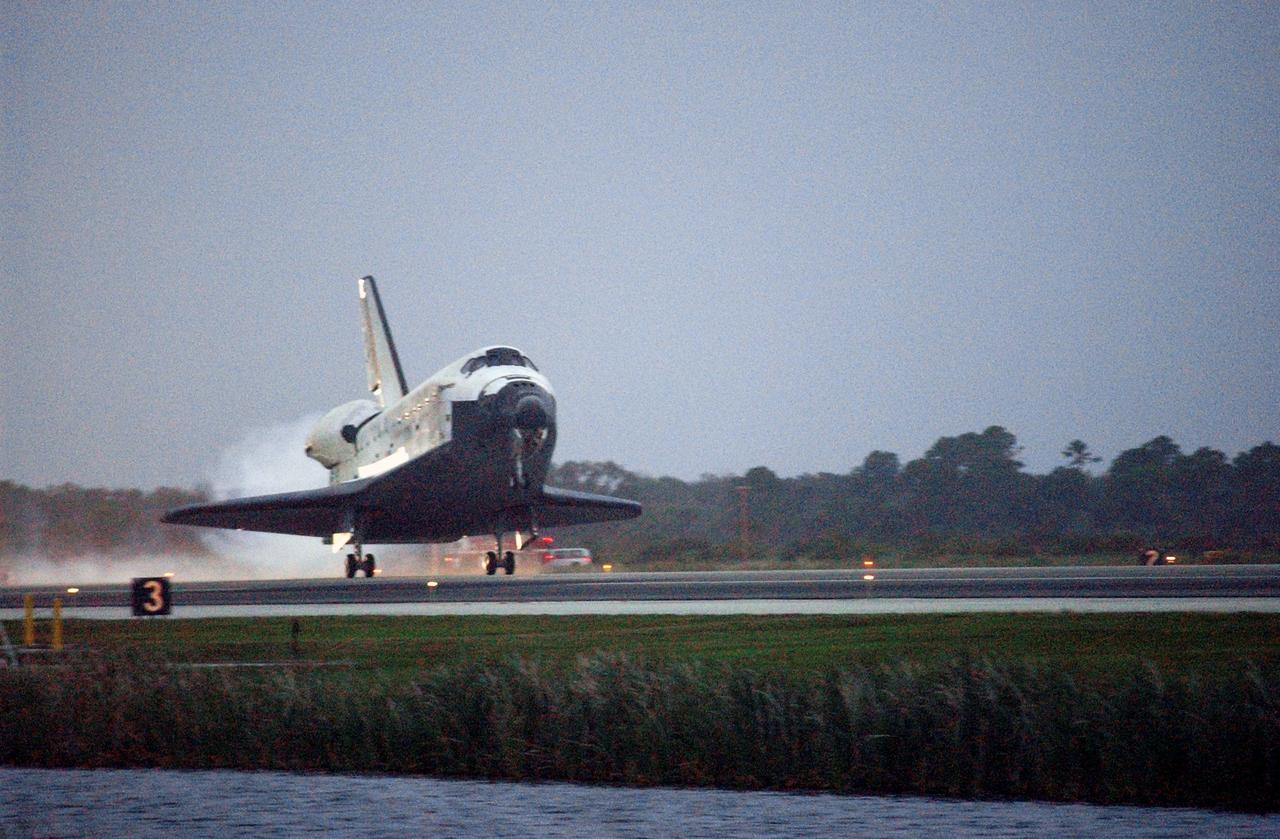
STS116-S-064 (22 Dec. 2006) --- Discovery's main landing gear touches down on Runway 15 at NASA Kennedy Space Center's Shuttle Landing Facility, concluding mission STS-116. Aboard are astronauts Mark L. Polansky, commander; William A. Oefelein, pilot; and Robert L. Curbeam Jr., Joan E. Higginbotham, Nicholas J.M. Patrick and European Space Agency astronauts Christer Fuglesang and Thomas Reiter--all mission specialists. Reiter is returning from a six-month stay on the International Space Station. During the mission, three spacewalks attached the P5 integrated truss structure to the station, and completed the rewiring of the orbiting laboratory's power system. A contingency spacewalk was added to retract a stubborn solar array. Main gear touchdown was at 5:32 p.m. (EST). Nose gear touchdown was at 5:32:12 p.m. and wheel stop was at 5:32:52 p.m. At touchdown -- nominally about 2,500 ft. beyond the runway threshold -- the orbiter is traveling at a speed ranging from 213 to 226 mph. Discovery traveled 5,330,000 miles, landing on orbit 204. Mission elapsed time was 12 days, 20 hours, 44 minutes and 16 seconds. This is the 64th landing at KSC.
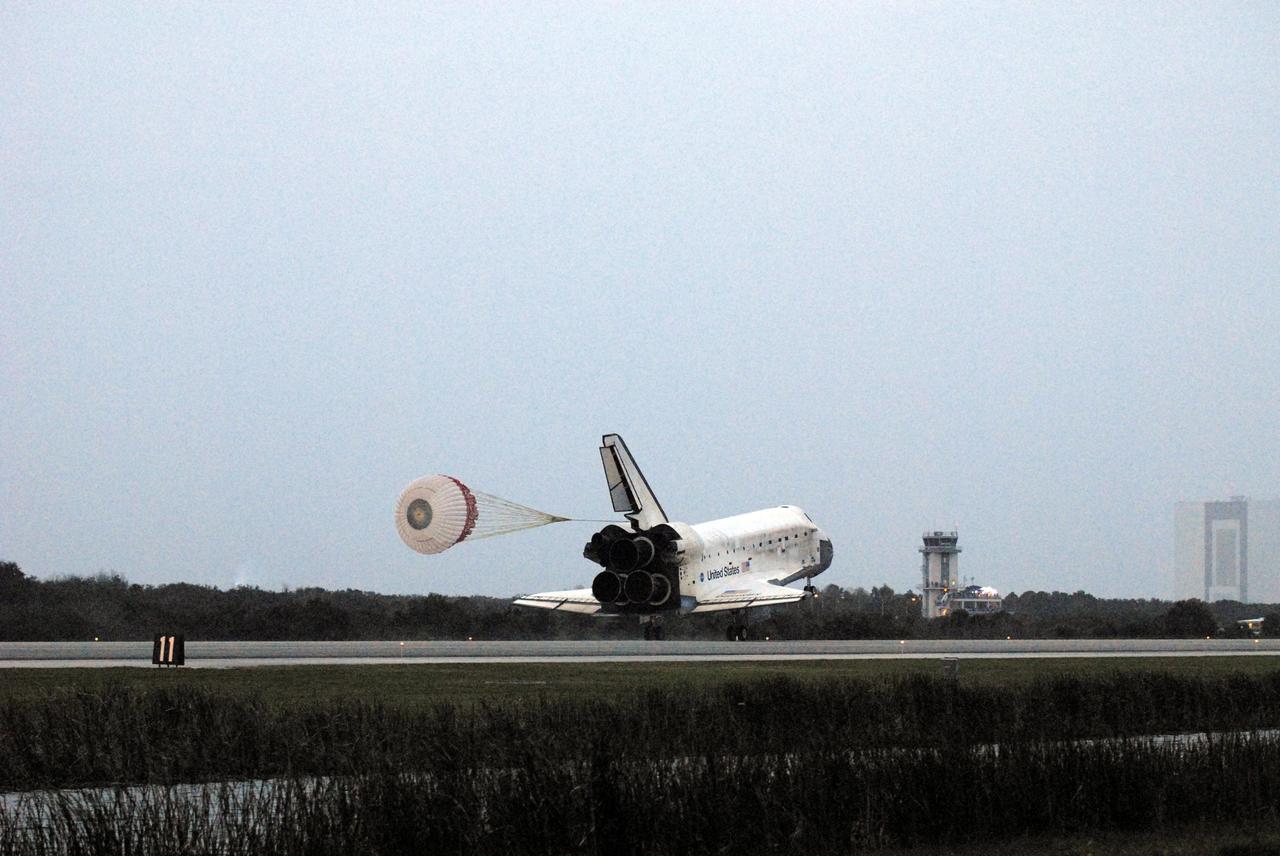
STS116-S-071 (22 Dec. 2006) --- Discovery's drag chute is fully deployed as the spacecraft rolls toward wheels stop on Runway 15 at NASA Kennedy Space Center's Shuttle Landing Facility , concluding mission STS-116. The Vehicle Assembly Building can be seen at far right. Aboard are astronauts Mark L. Polansky, commander; William A. Oefelein, pilot; and Robert L. Curbeam Jr., Joan E. Higginbotham, Nicholas J.M. Patrick and European Space Agency astronauts Christer Fuglesang and Thomas Reiter--all mission specialists. Reiter is returning from a six-month stay on the International Space Station. During the mission, three spacewalks attached the P5 integrated truss structure to the station, and completed the rewiring of the orbiting laboratory's power system. A contingency spacewalk was added to retract a stubborn solar array. Main gear touchdown was at 5:32 p.m. (EST). Nose gear touchdown was at 5:32:12 p.m. and wheel stop was at 5:32:52 p.m. At touchdown -- nominally about 2,500 ft. beyond the runway threshold -- the orbiter is traveling at a speed ranging from 213 to 226 mph. Discovery traveled 5,330,000 miles, landing on orbit 204. Mission elapsed time was 12 days, 20 hours, 44 minutes and 16 seconds. This is the 64th landing at KSC.
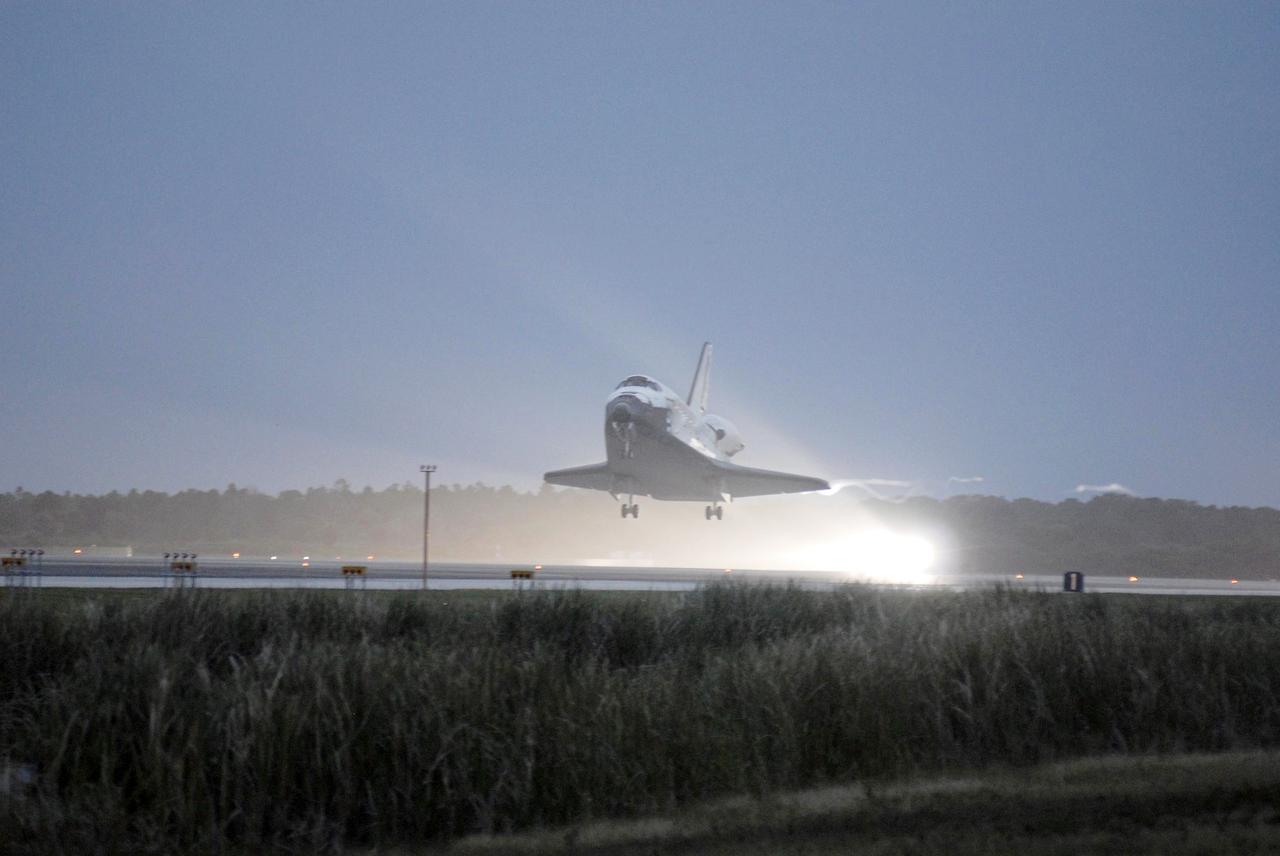
STS116-S-056 (22 Dec. 2006) --- Discovery approaches touchdown on Runway 15 at NASA Kennedy Space Center's Shuttle Landing Facility, concluding mission STS-116. Aboard are astronauts Mark L. Polansky, commander; William A. Oefelein, pilot; and Robert L. Curbeam Jr., Joan E. Higginbotham, Nicholas J.M. Patrick and European Space Agency astronauts Christer Fuglesang and Thomas Reiter--all mission specialists. Reiter is returning from a six-month stay on the International Space Station. During the mission, three spacewalks attached the P5 integrated truss structure to the station, and completed the rewiring of the orbiting laboratory's power system. A contingency spacewalk was added to retract a stubborn solar array. Main gear touchdown was at 5:32 p.m. (EST). Nose gear touchdown was at 5:32:12 p.m. and wheel stop was at 5:32:52 p.m. At touchdown -- nominally about 2,500 ft. beyond the runway threshold -- the orbiter is traveling at a speed ranging from 213 to 226 mph. Discovery traveled 5,330,000 miles, landing on orbit 204. Mission elapsed time was 12 days, 20 hours, 44 minutes and 16 seconds. This is the 64th landing at KSC.
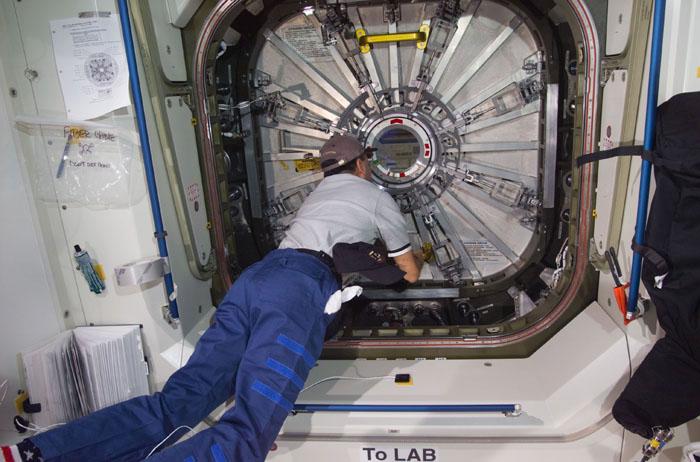
STS98-E-5115 (11 February 2001) --- This medium shot, photographed with a digital still camera, shows STS-98 pilot Mark L. Polansky looking through the observation port on Unity's closed hatch to the newly attached Destiny laboratory. The crews of Atlantis and the International Space Station opened the laboratory shortly after this photo was made on Feb. 11; and the astronauts and cosmonauts spent the first full day of what are planned to be years of work ahead inside the orbiting science and command center. Station commander William M. (Bill) Shepherd opened the Destiny hatch, and he and shuttle commander Kenneth D. Cockrell ventured inside at 8:38 a.m. (CST), Feb. 11. As depicted in subsequent digital images in this series, members of both crews went to work quickly inside the new module, activating air systems, fire extinguishers, alarm systems, computers and internal communications. The crew also continued equipment transfers from the shuttle to the station.
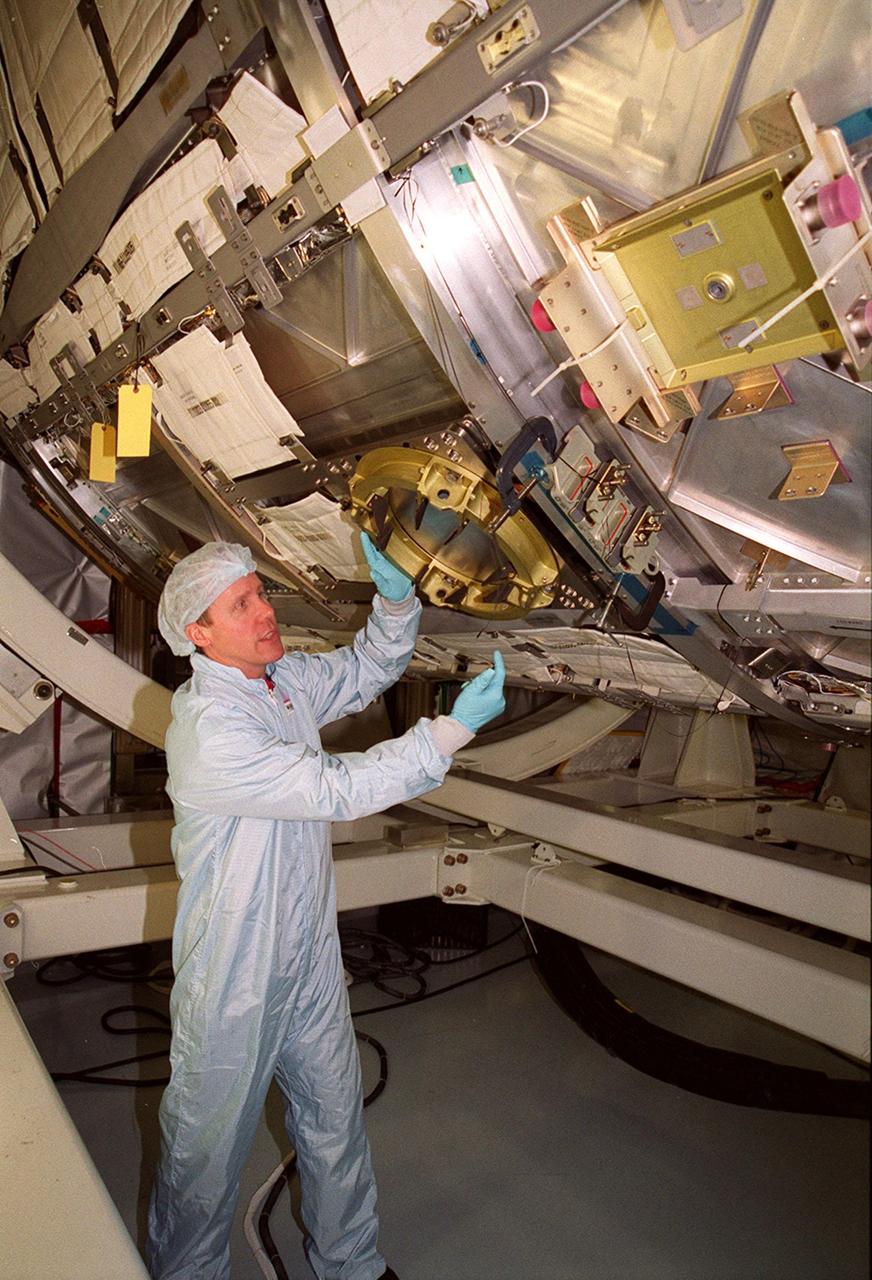
In the Space Station Processing Facility, STS-98 Mission Specialist Thomas D. Jones (Ph.D.) examines a power data grapple fixture outside the U.S. Lab Destiny. Jones is taking part in a Multi-Equipment Interface Test (MEIT), along with other crew members Commander Kenneth D. Cockrell and Pilot Mark Polansky. The remaining members of the crew (not present for the MEIT) are Mission Specialists Robert L. Curbeam Jr. and Marsha S. Ivins. During the STS-98 mission, the crew will install the Lab on the International Space Station during a series of three space walks. The grapple fixture will be the base of operations for the robotic arm on later flights The mission will provide the station with science research facilities and expand its power, life support and control capabilities. The U.S. Laboratory Module continues a long tradition of microgravity materials research, first conducted by Skylab and later Shuttle and Spacelab missions. Destiny is expected to be a major feature in future research, providing facilities for biotechnology, fluid physics, combustion, and life sciences research. The Lab is planned for launch aboard Space Shuttle Atlantis on the sixth ISS flight, currently targeted no earlier than Aug. 19, 2000
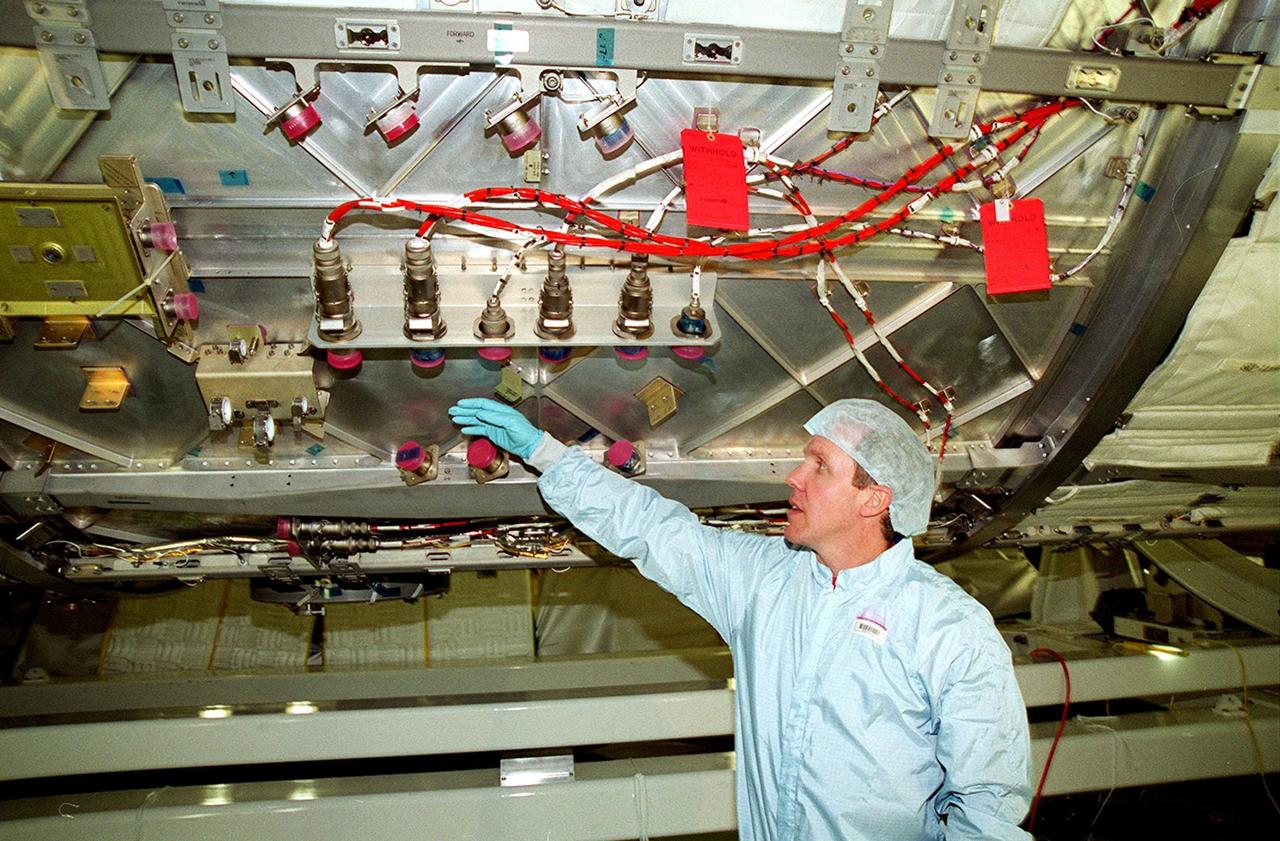
In the Space Station Processing Facility, STS-98 Mission Specialist Thomas D. Jones (Ph.D.) looks at electrical connections on the U.S. Lab Destiny as part of a Multi-Equipment Interface Test (MEIT). Other crew members taking part in the MEIT are Commander Kenneth D. Cockrell and Pilot Mark Polansky. The remaining members of the crew (not present for the MEIT) are Mission Specialists Robert L. Curbeam Jr. and Marsha S. Ivins. During the STS-98 mission, the crew will install the Lab on the International Space Station during a series of three space walks. The mission will provide the station with science research facilities and expand its power, life support and control capabilities. The U.S. Laboratory Module continues a long tradition of microgravity materials research, first conducted by Skylab and later Shuttle and Spacelab missions. Destiny is expected to be a major feature in future research, providing facilities for biotechnology, fluid physics, combustion, and life sciences research. The Lab is planned for launch aboard Space Shuttle Atlantis on the sixth ISS flight, currently targeted no earlier than Aug. 19, 2000
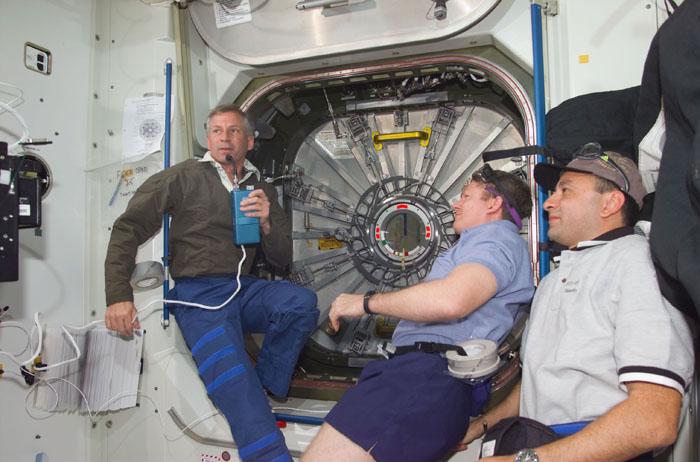
STS98-E-5123 (11 February 2001) --- This digital still camera shot shows STS-98 mission commander Kenneth D. Cockrell (from left), Expedition One commander William M. (Bill) Shepherd and STS-98 pilot Mark L. Polansky pausing at Unity's closed hatch to the newly attached Destiny laboratory. The crews of Atlantis and the International Space Station opened the laboratory shortly after this photo was made on Feb. 11; and the astronauts and cosmonauts spent the first full day of what are planned to be years of work ahead inside the orbiting science and command center. Shepherd opened the Destiny hatch, and he and shuttle commander Cockrell ventured inside at 8:38 a.m. (CST), Feb. 11. As depicted in subsequent digital images in this series, members of both crews went to work quickly inside the new module, activating air systems, fire extinguishers, alarm systems, computers and internal communications. The crew also continued equipment transfers from the shuttle to the station.
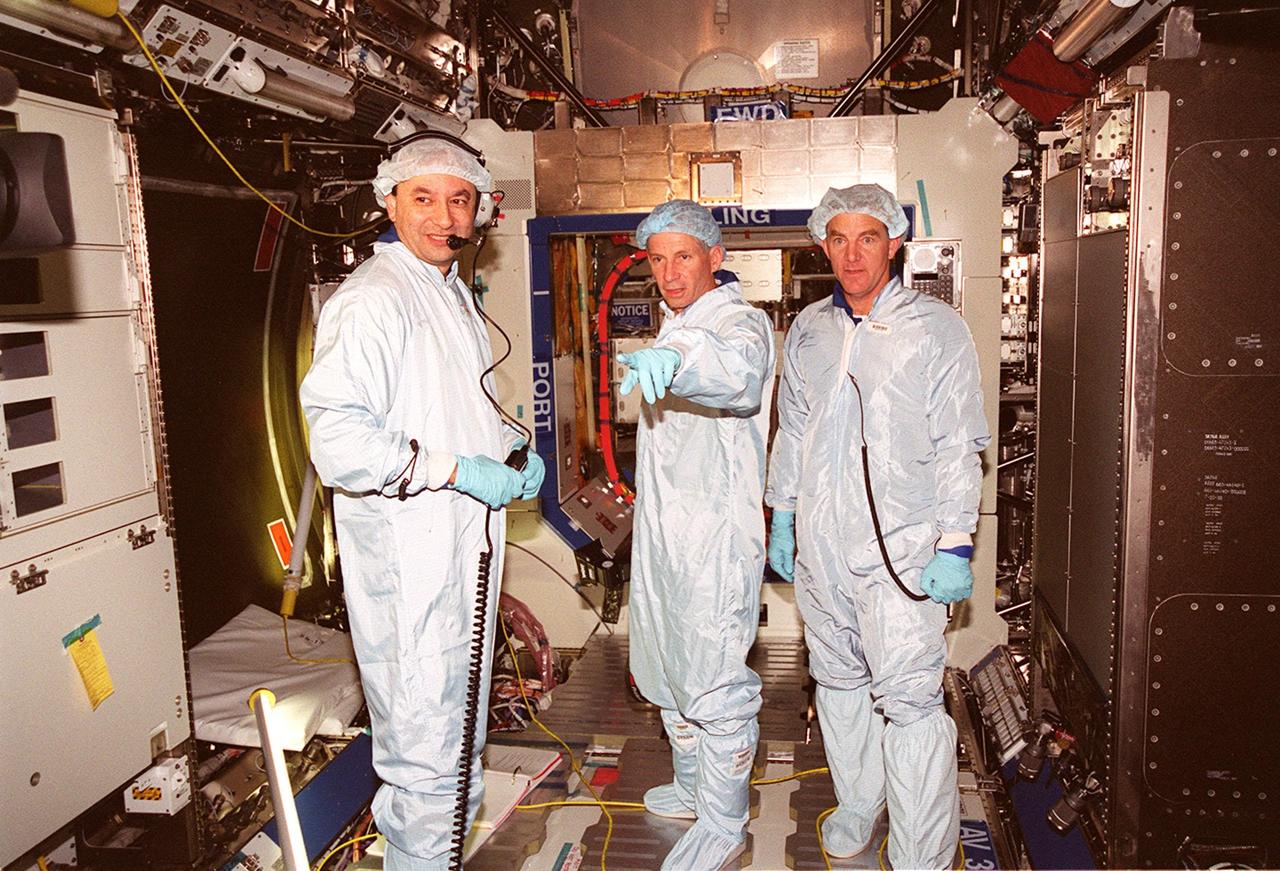
Looking over equipment inside the U.S. Lab Destiny as part of a Multi-Equipment Interface Test are STS-98 Pilot Mark Polansky (left) and Commander Kenneth D. Cockrell (center). They are joined by astronaut James Voss (right), who will be among the first crew to inhabit the International Space Station on a flight in late 2000. During the STS-98 mission, the crew will install the Lab on the station during a series of three space walks. The mission will provide the station with science research facilities and expand its power, life support and control capabilities. The U.S. Laboratory Module continues a long tradition of microgravity materials research, first conducted by Skylab and later Shuttle and Spacelab missions. Destiny is expected to be a major feature in future research, providing facilities for biotechnology, fluid physics, combustion, and life sciences research. Others in the five-member crew on STS-98 are Mission Specialists Robert L. Curbeam Jr., Thomas D. Jones (Ph.D.) and Marsha S. Ivins. The Lab is planned for launch aboard Space Shuttle Atlantis on the sixth ISS flight, currently targeted no earlier than Aug. 19, 2000
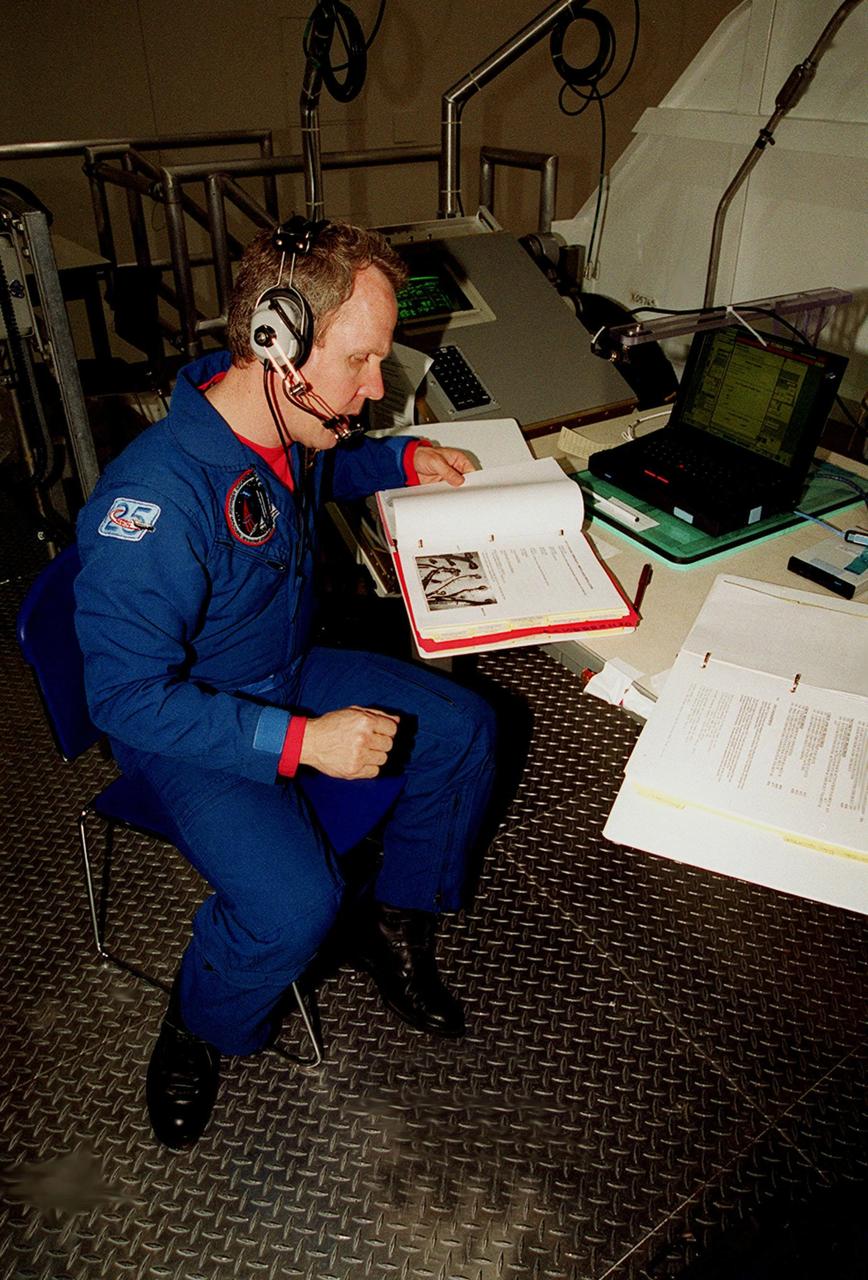
In the Space Station Processing Facility, STS-98 Mission Specialist Thomas D. Jones (Ph.D.) looks over documents as part of a Multi-Equipment Interface Test (MEIT) on the U.S. Lab Destiny. Other crew members taking part in the MEIT are Commander Kenneth D. Cockrell and Pilot Mark Polansky. The remaining members of the crew (not present for the MEIT) are and Mission Specialists Robert L. Curbeam Jr. and Marsha S. Ivins. During the STS-98 mission, the crew will install the Lab on the International Space Station during a series of three space walks. The mission will provide the station with science research facilities and expand its power, life support and control capabilities. The U.S. Laboratory Module continues a long tradition of microgravity materials research, first conducted by Skylab and later Shuttle and Spacelab missions. Destiny is expected to be a major feature in future research, providing facilities for biotechnology, fluid physics, combustion, and life sciences research. The Lab is planned for launch aboard Space Shuttle Atlantis on the sixth ISS flight, currently targeted no earlier than Aug. 19, 2000
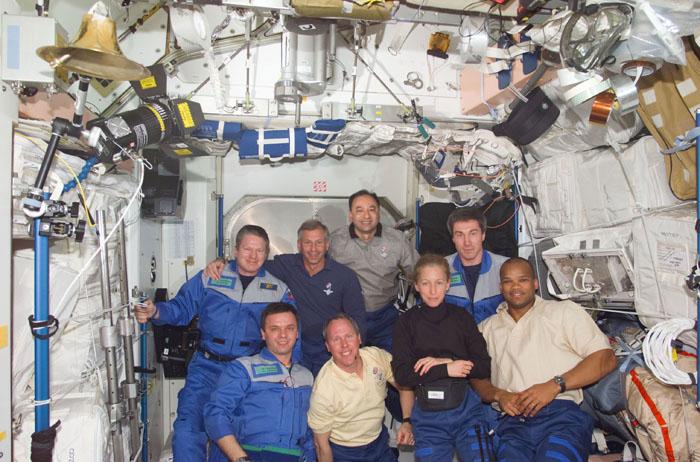
STS98-E-5053 (9 February 2001) --- The three-man Expedition One crew hosts its second group of visitors since beginning occupancy of the International Space Station in November of last year. A pre-set digital still camera was used to record the gathering. Wearing blue flight suits for the reunion are the station's first fulltime occupants--astronaut William M. (Bill) Shepherd (rear left), Expedition One commander;cosmonaut Yuri P. Gidzenko (front left), Soyuz commander; and cosmonaut Sergei K. Krikalev (rear right), flight engineer. Astronauts Kenneth D. Cockrell (second left, rear) and Mark L. Polansky (second right, rear) are STS-98 mission commander and pilot, respectively. Astronauts Thomas D. Jones, Marsha S. Ivins and Robert L. Curbeam--all mission specialists--are in front. Atlantis docked to the station on schedule at 10:51 a.m. (CST), Feb. 9 and the station and shuttle crews opened hatches between the spacecraft at 1:03 p.m., promptly beginning to unload supplies. The three-member station crew, on the eve of their 100th day aboard the outpost, greeted their first visitors in almost two months. The hatches were open for about four hours before they were closed in preparation for the first of three upcoming space walks, a six-hour sojourn scheduled for the following day from Atlantis by Jones and Curbeam.