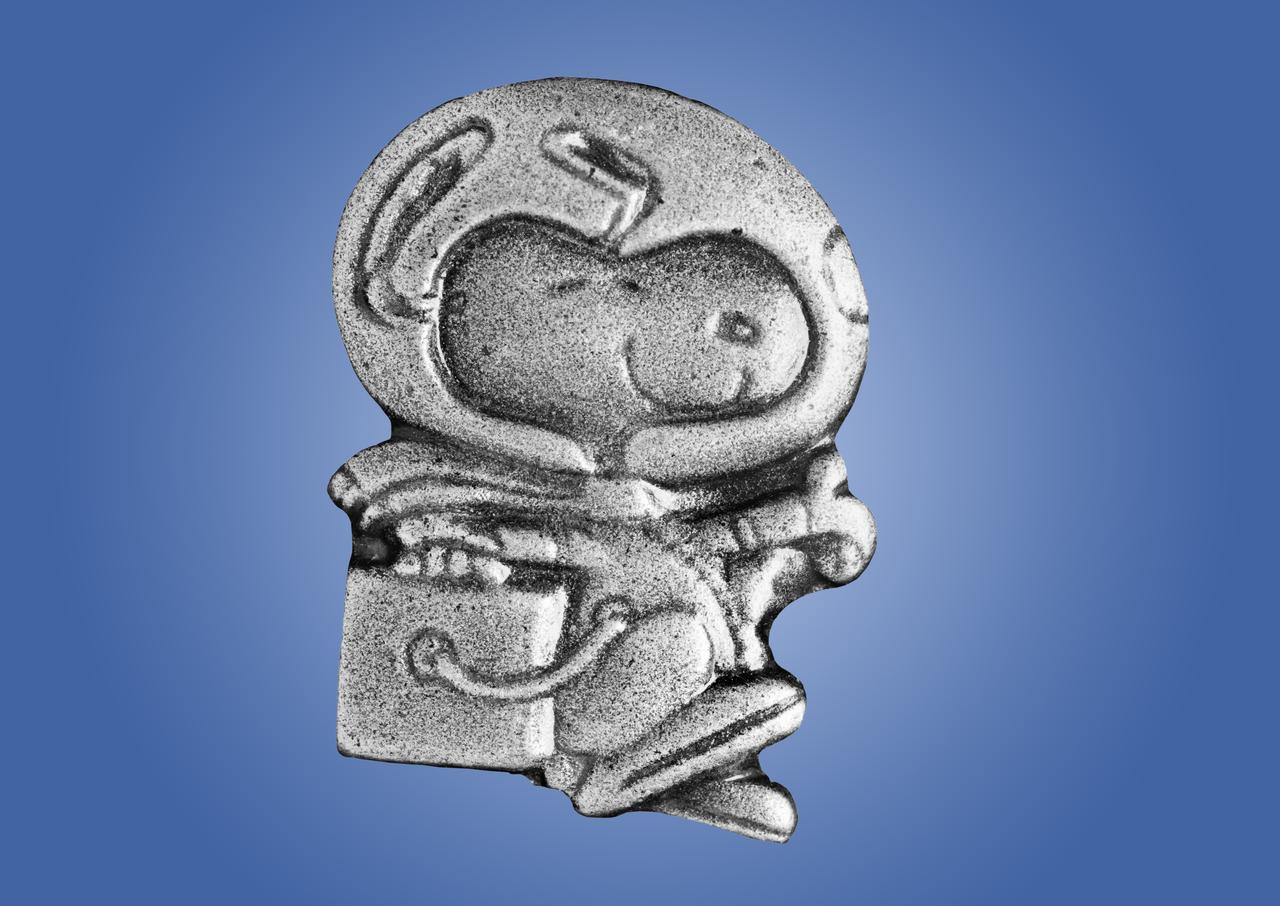
Silver Snoopy Pin
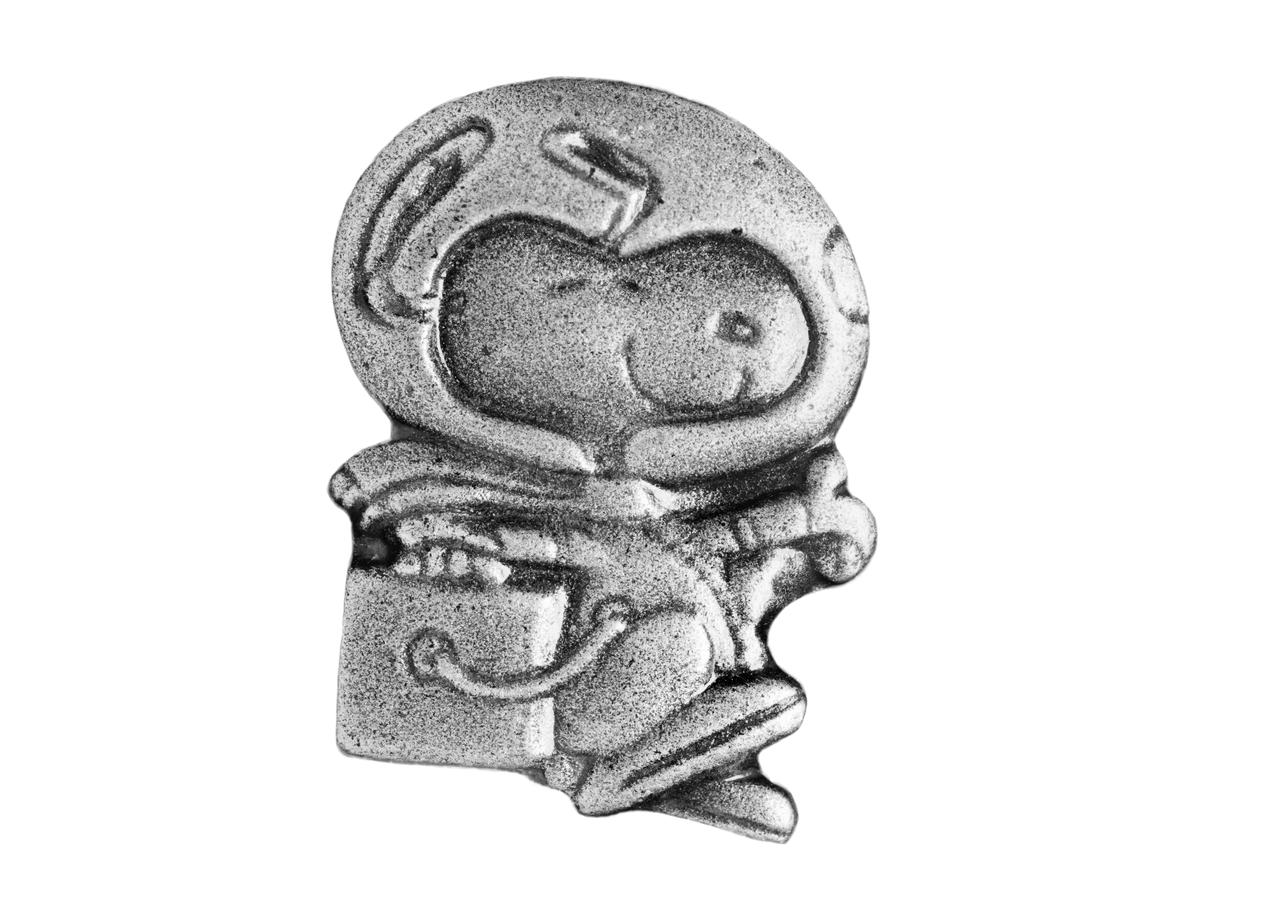
Silver Snoopy Pin

Silver Snoopy Pin
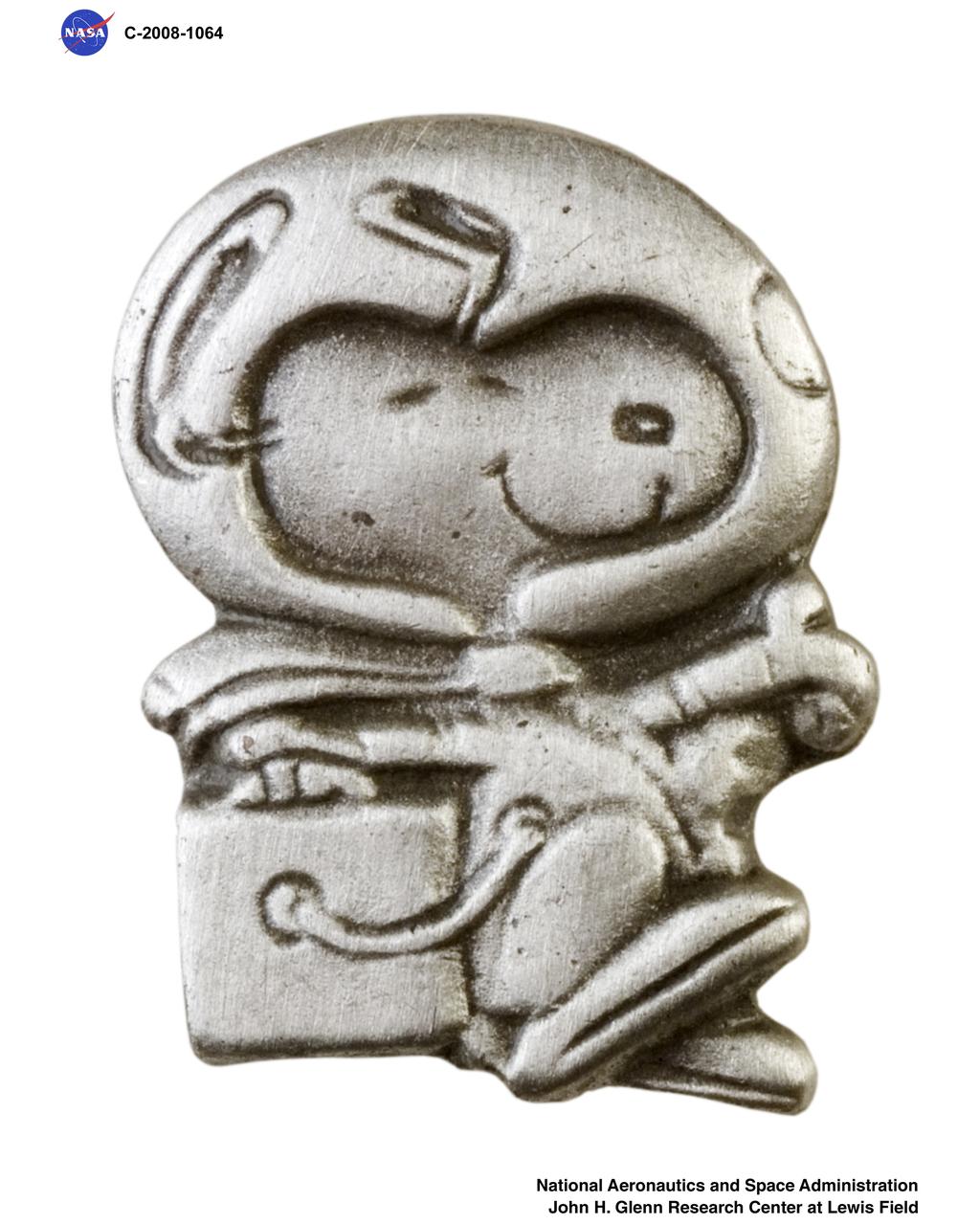
Silver Snoopy Pin
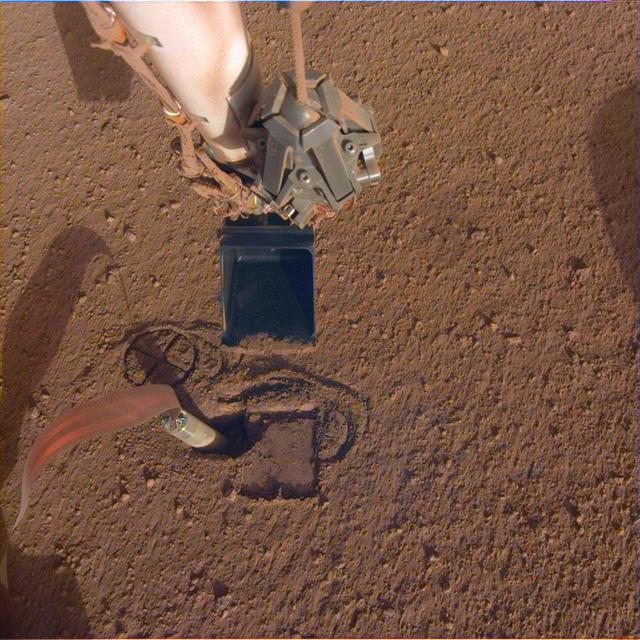
NASA InSight's robotic arm will use its scoop to pin the spacecraft's heat probe, or "mole," against the wall of its hole. The mole is part of an instrument formally called the Heat Flow and Physical Properties Package, or HP3, provided by the German Aerospace Center (DLR). Animation available at https://photojournal.jpl.nasa.gov/catalog/PIA23373
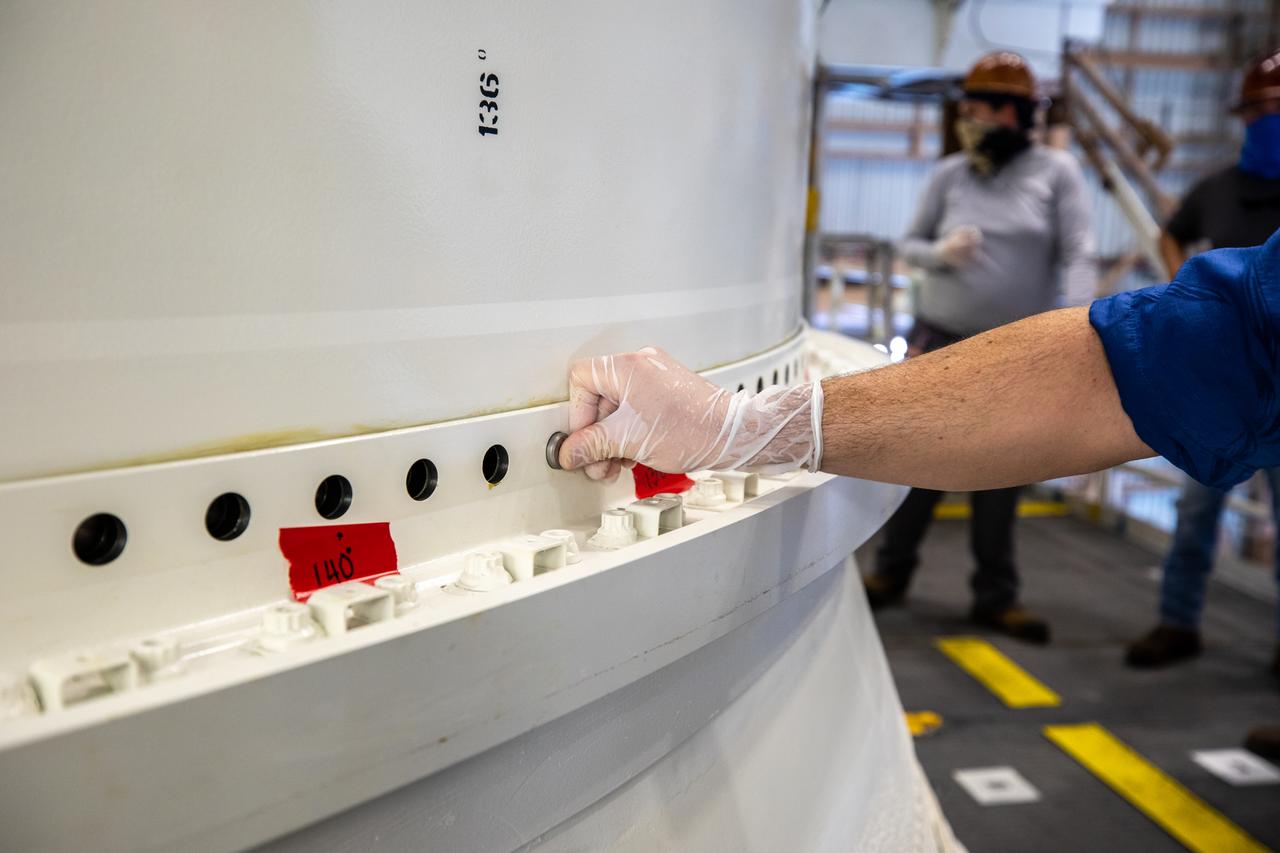
Inside the Rotation, Processing and Surge Facility at NASA’s Kennedy Space Center in Florida, Pablo Martinez, a handling, mechanical and structures engineer on the Jacobs Technology Inc. Test and Operations Support Contract, inserts the first of many pins that will secure the Space Launch System’s (SLS) right-hand motor segment to the rocket’s right-hand aft skirt. The right-hand motor segment is one of five segments that makes up one of two solid rocket boosters. Once the aft segments are mated to the two aft skirts, they will be moved to the Vehicle Assembly Building for stacking on the mobile launcher. Manufactured by Northrop Grumman in Utah, the twin boosters provide more than 75 percent of the total SLS thrust at launch. Under the Artemis program, NASA will land the first woman and the next man on the Moon by 2024. The first in a series of increasingly complex missions, Artemis I will test the Orion spacecraft and SLS as an integrated system ahead of crewed flights to the Moon.
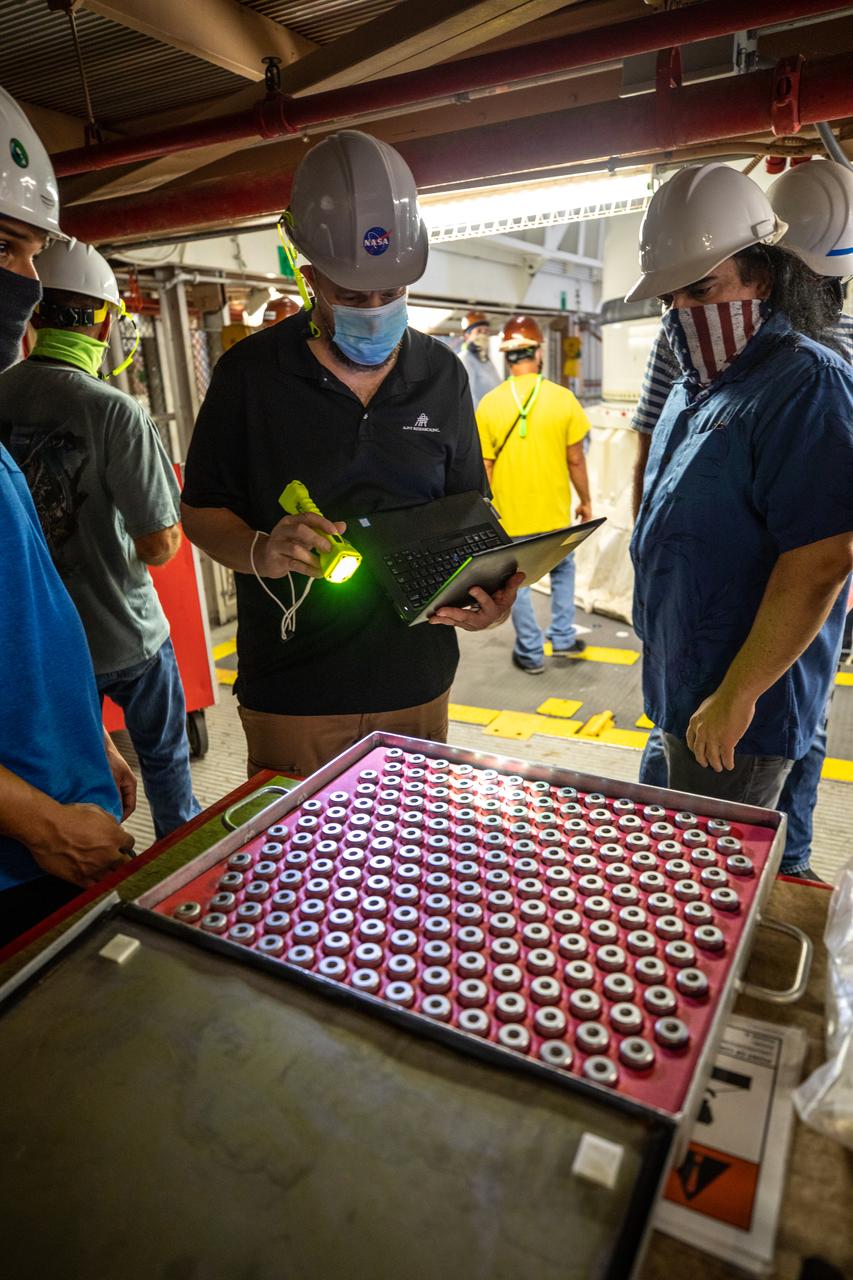
Inside the Rotation, Processing and Surge Facility at NASA’s Kennedy Space Center in Florida, technicians inspect the pins that will be used to secure the right-hand motor segment – one of five segments that make up one of two solid rocket boosters for the agency’s Space Launch System (SLS) – to the right-hand aft skirt on June 24, 2020. Once the aft segments are mated to the two aft skirts, they will be moved to the Vehicle Assembly Building for stacking on the mobile launcher. Manufactured by Northrop Grumman in Utah, the twin boosters provide more than 75 percent of the total SLS thrust at launch. Under the Artemis program, NASA will land the first woman and the next man on the Moon by 2024. The first in a series of increasingly complex missions, Artemis I will test the Orion spacecraft and SLS as an integrated system ahead of crewed flights to the Moon.
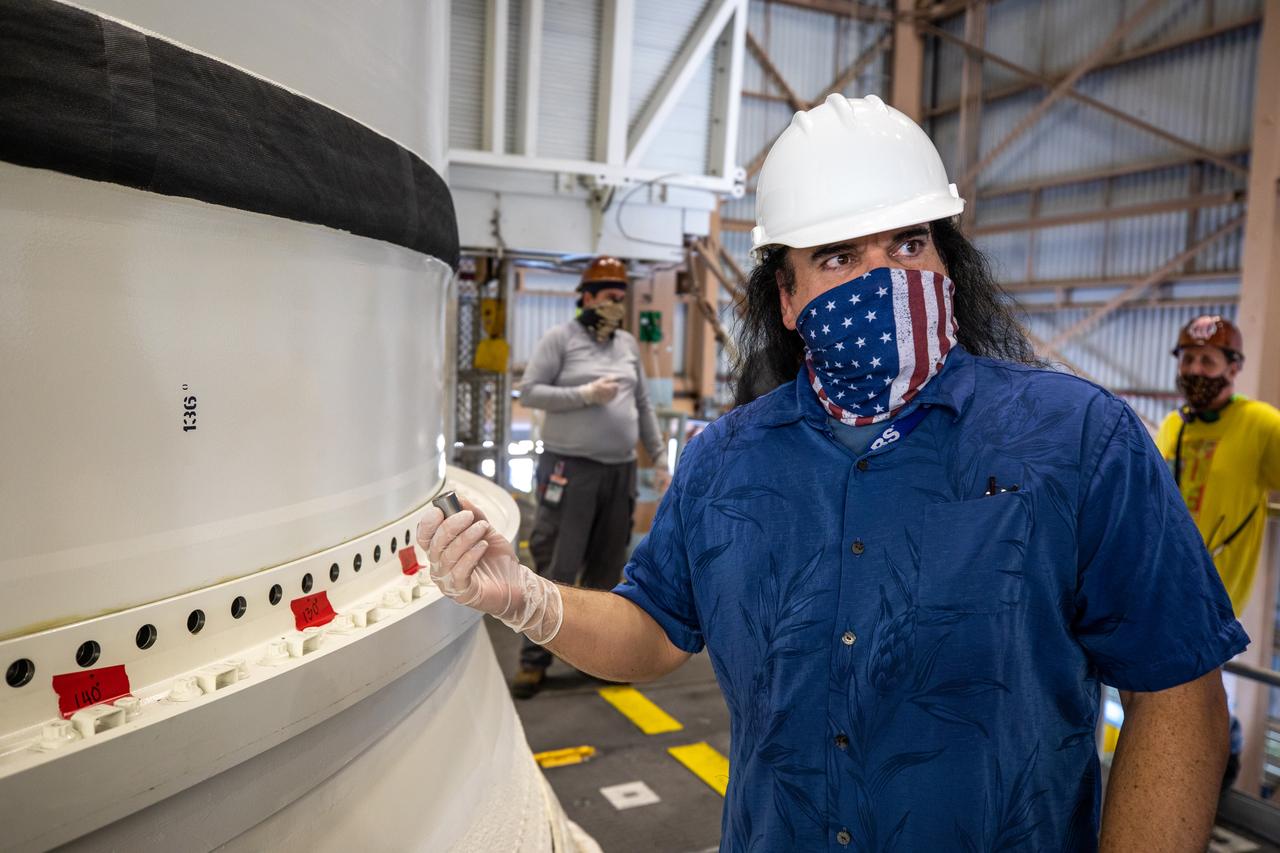
Inside the Rotation, Processing and Surge Facility at NASA’s Kennedy Space Center in Florida, Pablo Martinez, a handling, mechanical and structures engineer on the Jacobs Technology Inc. Test and Operations Support Contract, prepares to insert the first of many pins that will secure the Space Launch System’s (SLS) right-hand motor segment to the rocket’s right-hand aft skirt. The right-hand motor segment is one of five segments that makes up one of two solid rocket boosters. Once the aft segments are mated to the two aft skirts, they will be moved to the Vehicle Assembly Building for stacking on the mobile launcher. Manufactured by Northrop Grumman in Utah, the twin boosters provide more than 75 percent of the total SLS thrust at launch. Under the Artemis program, NASA will land the first woman and the next man on the Moon by 2024. The first in a series of increasingly complex missions, Artemis I will test the Orion spacecraft and SLS as an integrated system ahead of crewed flights to the Moon.
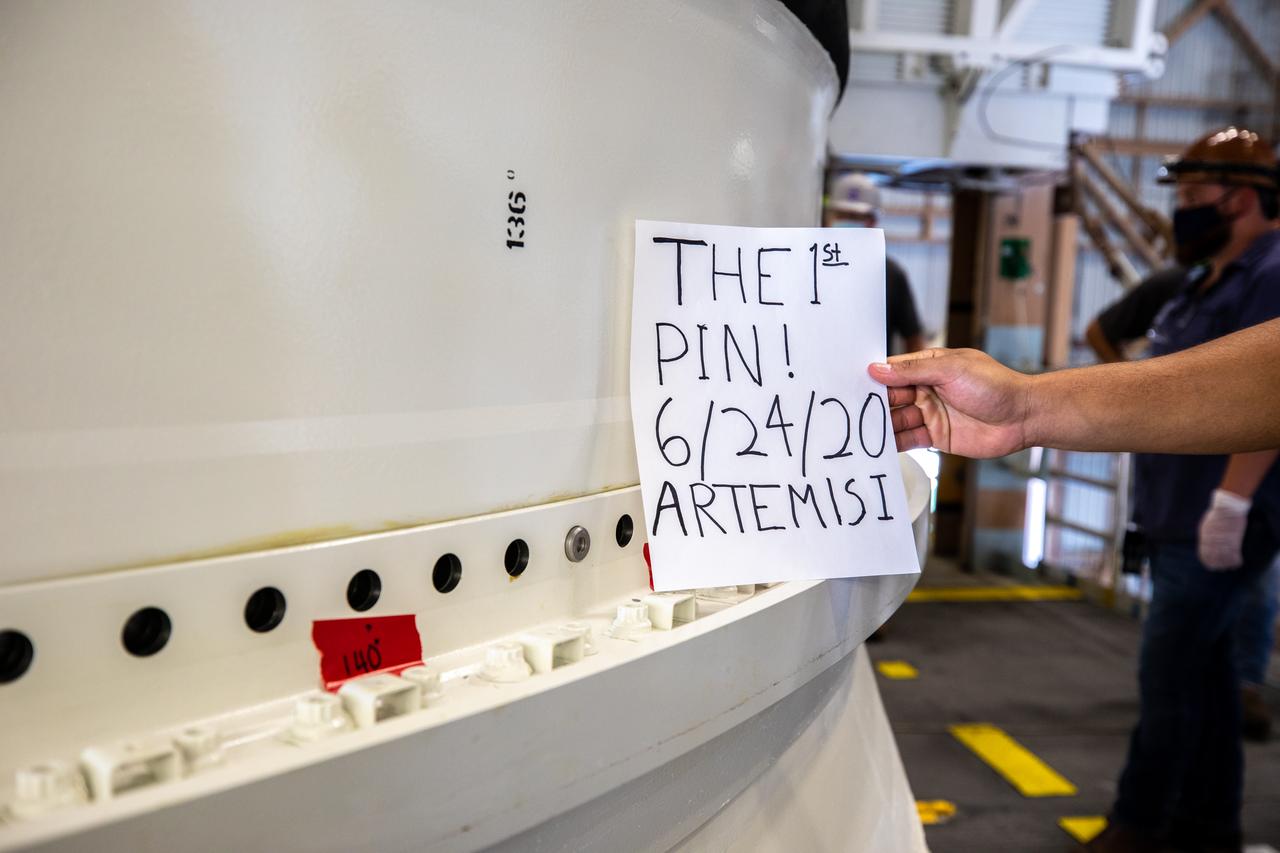
Inside the Rotation, Processing and Surge Facility at NASA’s Kennedy Space Center in Florida, the first of many pins that will secure the right-hand motor segment – one of five segments that make up one of two solid rocket boosters for the agency’s Space Launch System (SLS) – to the rocket’s right-hand aft skirt is inserted on June 24, 2020. Once the aft segments are mated to the two aft skirts, they will be moved to the Vehicle Assembly Building for stacking on the mobile launcher. Manufactured by Northrop Grumman in Utah, the twin boosters provide more than 75 percent of the total SLS thrust at launch. Under the Artemis program, NASA will land the first woman and the next man on the Moon by 2024. The first in a series of increasingly complex missions, Artemis I will test the Orion spacecraft and SLS as an integrated system ahead of crewed flights to the Moon.
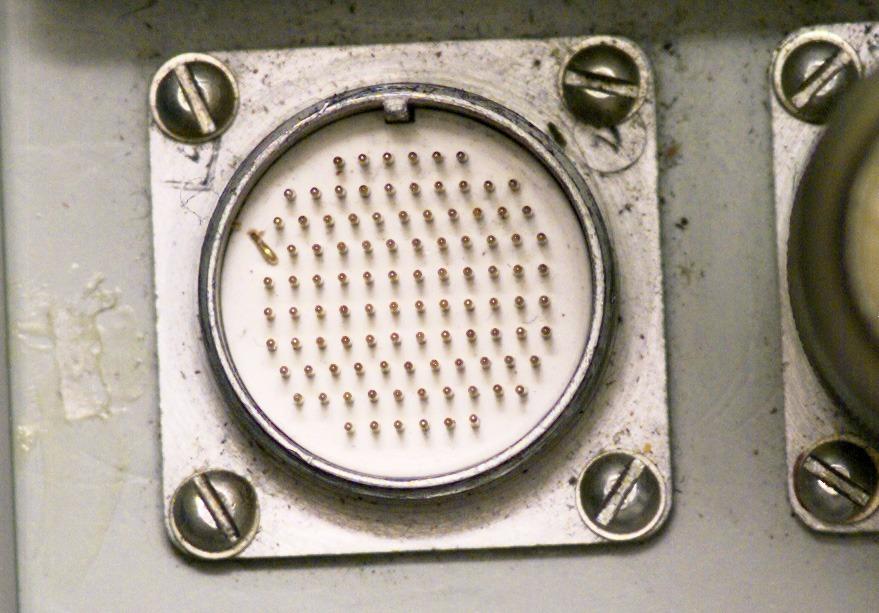
ISS01-E-5014 (26 November 2000) --- An electronic still camera's view of a bent pin on Service Module (SM) Battery Block 5 PTAB. This was installed on 2A.2b
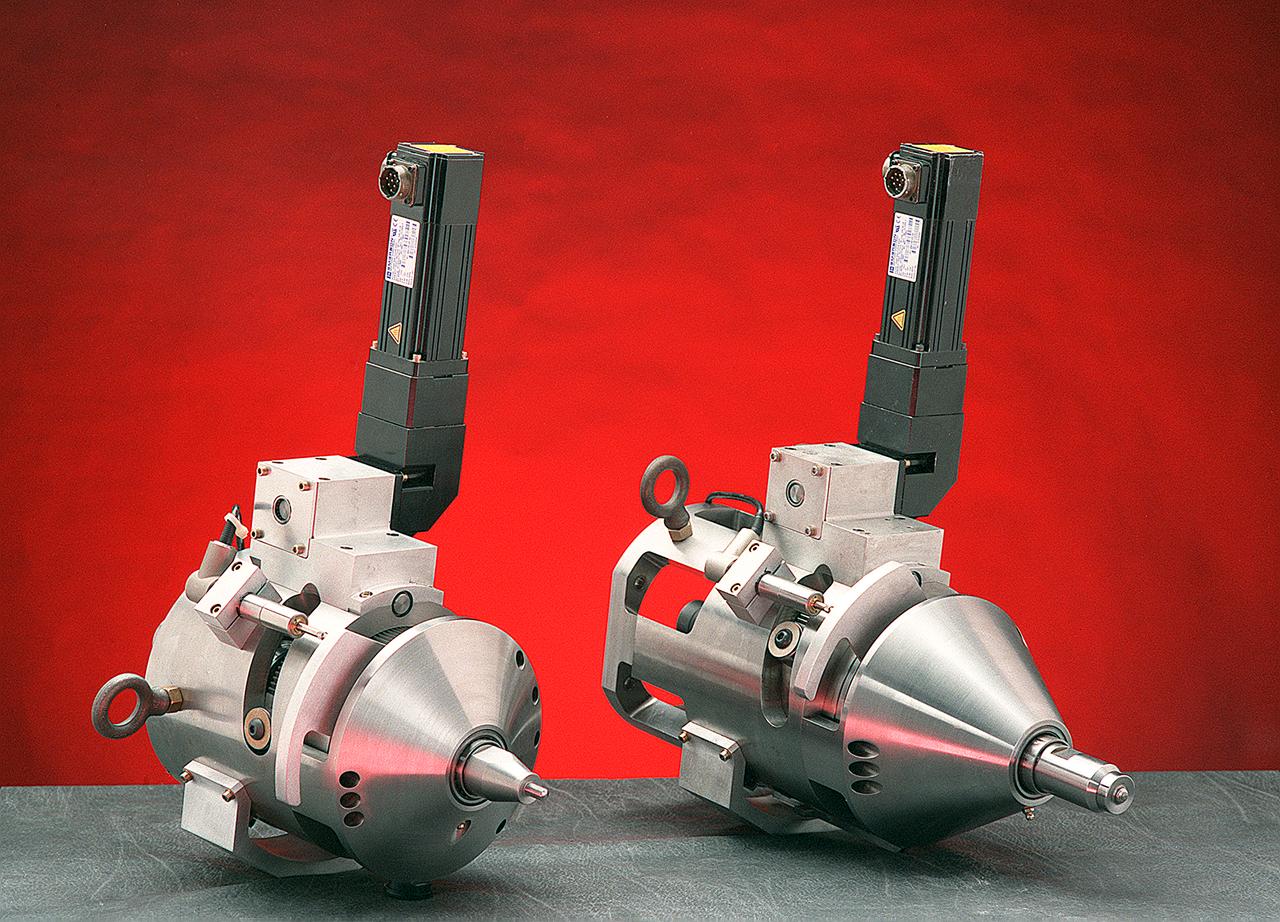
Two companies have successfully commercialized a specialized welding tool developed at the Marshall Space Flight Center (MSFC). Friction stir welding uses the high rotational speed of a tool and the resulting frictional heat created from contact to crush, "stir" together, and forge a bond between two metal alloys. It has had a major drawback, reliance on a single-piece pin tool. The pin is slowly plunged into the joint between two materials to be welded and rotated as high speed. At the end of the weld, the single-piece pin tool is retracted and leaves a "keyhole," something which is unacceptable when welding cylindrical objects such as drums, pipes and storage tanks. Another drawback is the requirement for different-length pin tools when welding materials of varying thickness. An engineer at the MSFC helped design an automatic retractable pin tool that uses a computer-controlled motor to automatically retract the pin into the shoulder of the tool at the end of the weld, preventing keyholes. This design allows the pin angle and length to be adjusted for changes in material thickness and results in a smooth hole closure at the end of the weld. Benefits of friction stir welding, using the MSFC retractable pin tool technology, include the following: The ability to weld a wide range of alloys, including previously unweldable and composite materials; provision of twice the fatigue resistance of fusion welds and no keyholes; minimization of material distortion; no creation of hazards such as welding fumes, radiation, high voltage, liquid metals, or arcing; automatic retraction of the pin at the end of the weld; and maintaining full penetration of the pin.
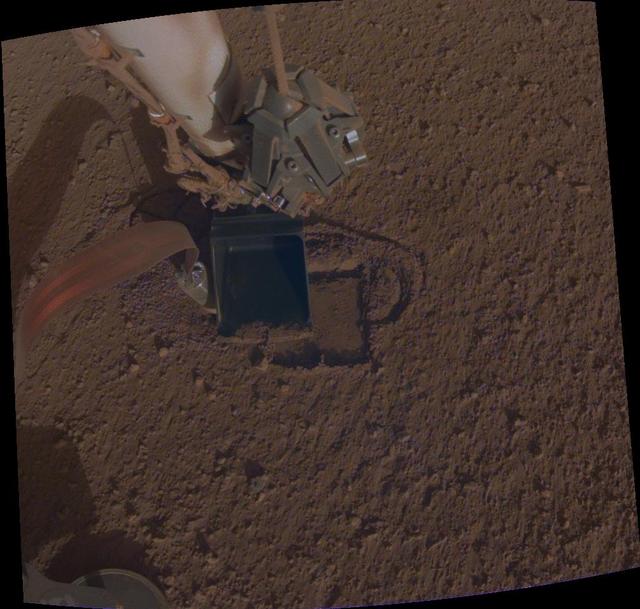
This animation shows NASA InSight's heat probe, or "mole," digging about a centimeter (half an inch) below the surface last week. Using a technique called "pinning," InSight recently pressed against the mole using a scoop on its robotic arm to help the self-hammering heat probe dig so that it can "take the temperature" of Mars. Animation available at https://photojournal.jpl.nasa.gov/catalog/PIA23379

This image shows what happened underneath NASA Phoenix Mars Lander Robotic Arm wrist on Sol 3. The pin that goes through the loop is what holds the wrist in place. The rotation of the wrist pops the pin free.

Inside the Rotation, Processing and Surge Facility at NASA’s Kennedy Space Center in Florida, the right-hand motor segment – one of five segments that make up one of two solid rocket boosters for the agency’s Space Launch System (SLS) – is mated to the rocket’s right-hand aft skirt on June 24, 2020. Once the aft segments are mated to the two aft skirts, they will be moved to the Vehicle Assembly Building for stacking on the mobile launcher. Manufactured by Northrop Grumman in Utah, the twin boosters provide more than 75 percent of the total SLS thrust at launch. Under the Artemis program, NASA will land the first woman and the next man on the Moon by 2024. The first in a series of increasingly complex missions, Artemis I will test the Orion spacecraft and SLS as an integrated system ahead of crewed flights to the Moon.

Inside the Rotation, Processing and Surge Facility at NASA’s Kennedy Space Center in Florida, technicians mate the right-hand motor segment – one of five segments that make up one of two solid rocket boosters for the agency’s Space Launch System (SLS) – to the rocket’s right-hand aft skirt on June 24, 2020. Once the aft segments are mated to the two aft skirts, they will be moved to the Vehicle Assembly Building for stacking on the mobile launcher. Manufactured by Northrop Grumman in Utah, the twin boosters provide more than 75 percent of the total SLS thrust at launch. Under the Artemis program, NASA will land the first woman and the next man on the Moon by 2024. The first in a series of increasingly complex missions, Artemis I will test the Orion spacecraft and SLS as an integrated system ahead of crewed flights to the Moon.
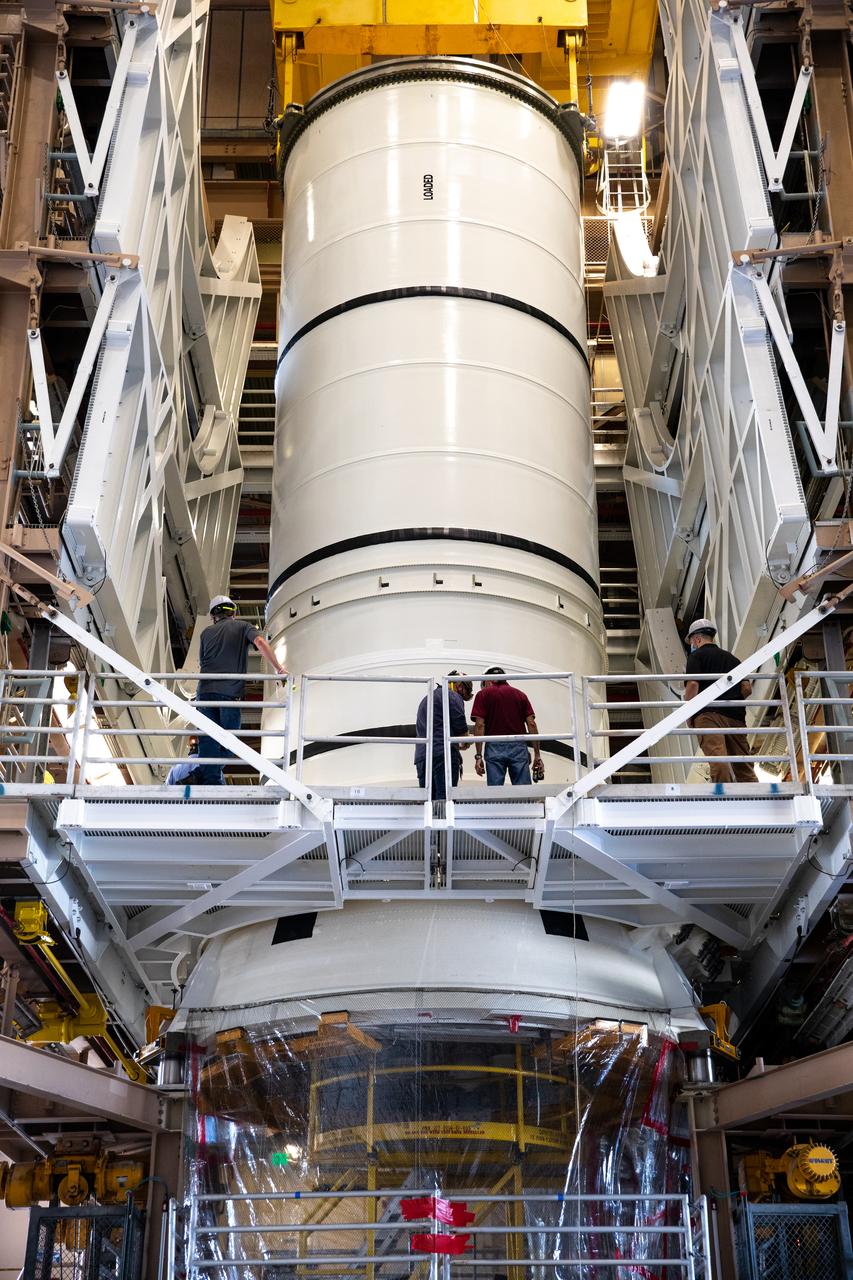
Inside the Rotation, Processing and Surge Facility at NASA’s Kennedy Space Center in Florida, the right-hand motor segment – one of five segments that make up one of two solid rocket boosters for the agency’s Space Launch System (SLS) – is mated to the rocket’s right-hand aft skirt on June 24, 2020. Once the aft segments are mated to the two aft skirts, they will be moved to the Vehicle Assembly Building for stacking on the mobile launcher. Manufactured by Northrop Grumman in Utah, the twin boosters provide more than 75 percent of the total SLS thrust at launch. Under the Artemis program, NASA will land the first woman and the next man on the Moon by 2024. The first in a series of increasingly complex missions, Artemis I will test the Orion spacecraft and SLS as an integrated system ahead of crewed flights to the Moon.
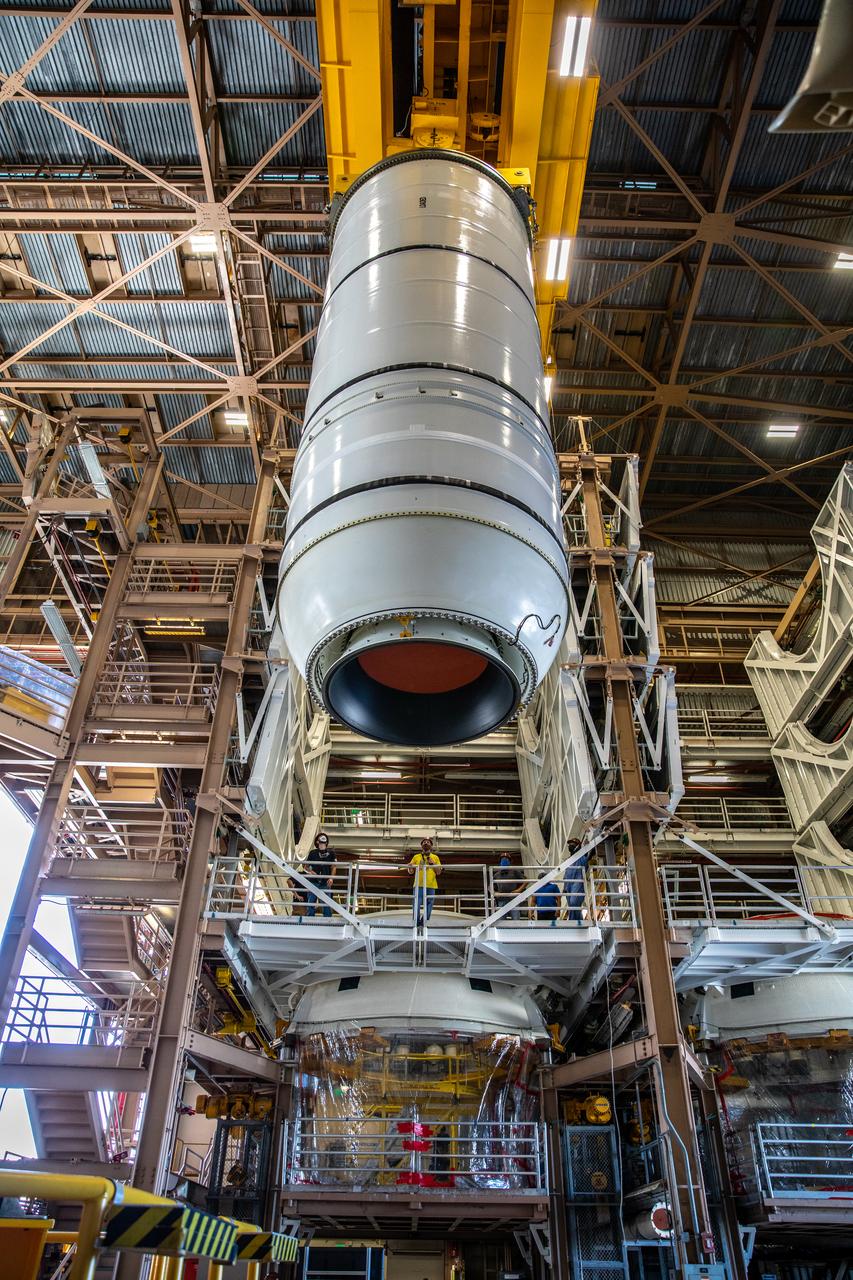
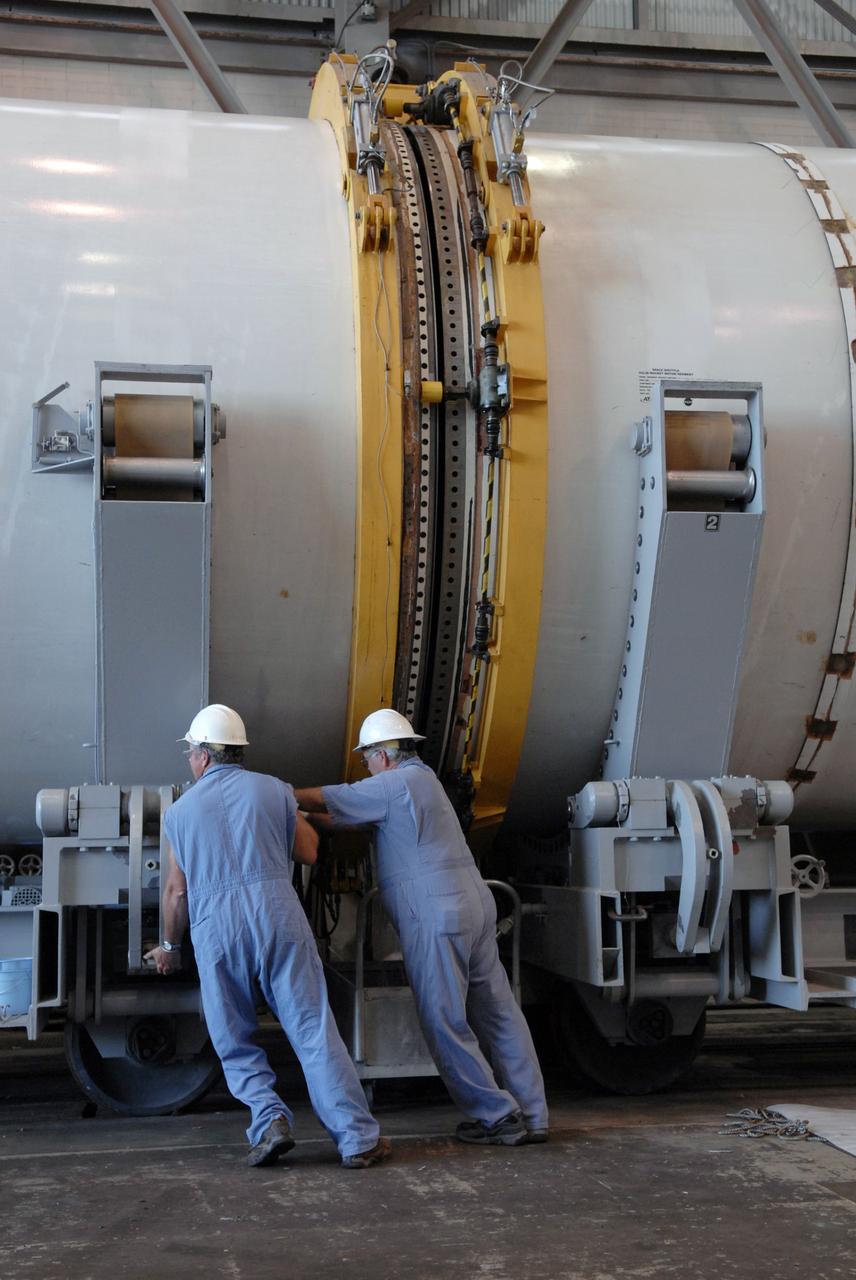
Inside the Rotation, Processing and Surge Facility at NASA’s Kennedy Space Center in Florida, technicians begin to mate the right-hand motor segment – one of five segments that make up one of two solid rocket boosters for the agency’s Space Launch System (SLS) – to the rocket’s right-hand aft skirt on June 24, 2020. Once the aft segments are mated to the two aft skirts, they will be moved to the Vehicle Assembly Building for stacking on the mobile launcher. Manufactured by Northrop Grumman in Utah, the twin boosters provide more than 75 percent of the total SLS thrust at launch. Under the Artemis program, NASA will land the first woman and the next man on the Moon by 2024. The first in a series of increasingly complex missions, Artemis I will test the Orion spacecraft and SLS as an integrated system ahead of crewed flights to the Moon.

Inside the Rotation, Processing and Surge Facility at NASA’s Kennedy Space Center in Florida, the right-hand motor segment – one of five segments that make up one of two solid rocket boosters for the agency’s Space Launch System (SLS) – is mated to the rocket’s right-hand aft skirt on June 24, 2020. Once the aft segments are mated to the two aft skirts, they will be moved to the Vehicle Assembly Building for stacking on the mobile launcher. Manufactured by Northrop Grumman in Utah, the twin boosters provide more than 75 percent of the total SLS thrust at launch. Under the Artemis program, NASA will land the first woman and the next man on the Moon by 2024. The first in a series of increasingly complex missions, Artemis I will test the Orion spacecraft and SLS as an integrated system ahead of crewed flights to the Moon.
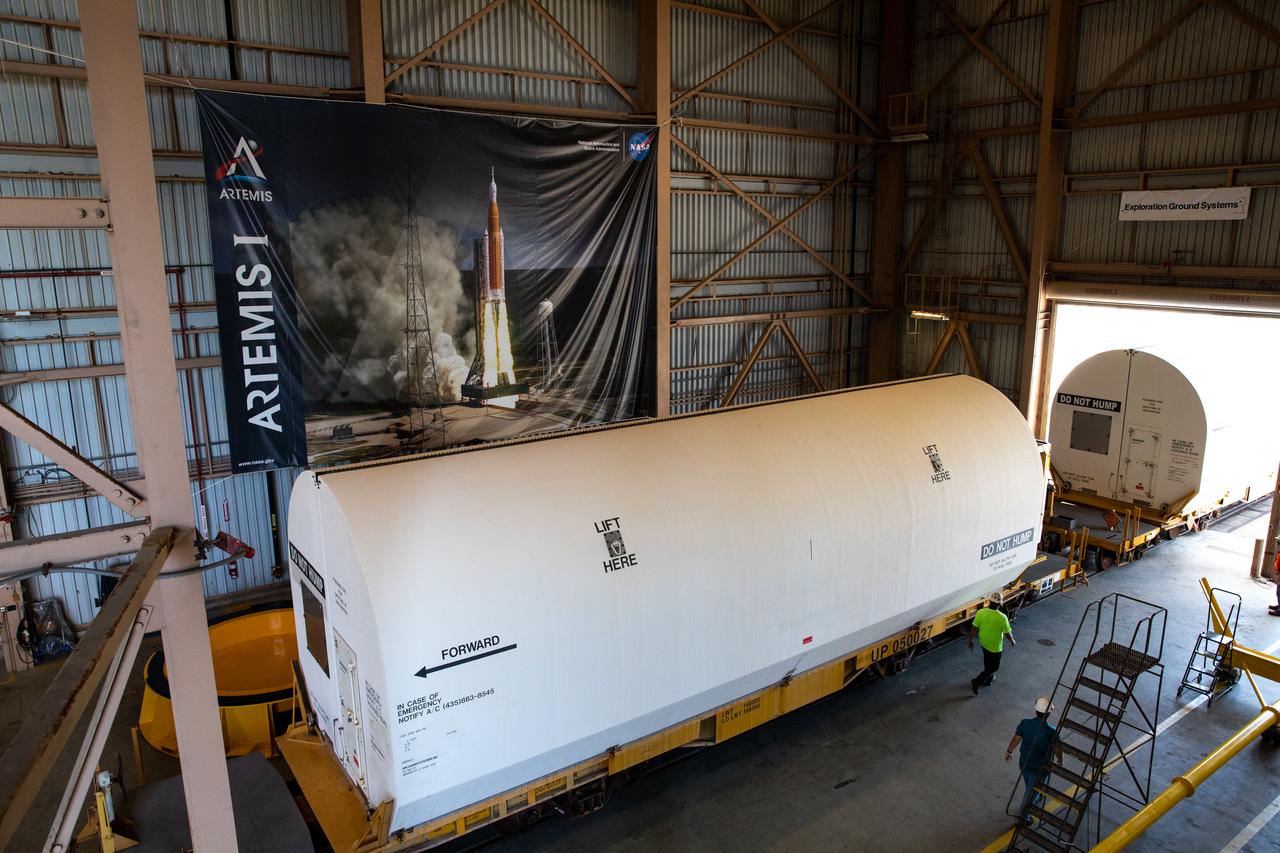
The shipping container that held the right-hand motor segment – one of five segments that make up one of two solid rocket boosters for the agency’s Space Launch System (SLS) – is photographed inside the Rotation, Processing and Surge Facility (RPSF) at NASA’s Kennedy Space Center in Florida on June 24, 2020. The boosters, manufactured by Northrop Grumman in Utah, recently arrived at Kennedy for processing ahead of the Artemis I launch. While in the RPSF, the booster aft segments will be mated to the rocket’s two aft skirts before they are moved to the Vehicle Assembly Building for stacking on the mobile launcher. Together, the twin boosters provide more than 75 percent of the total SLS thrust at launch. The first in a series of increasingly complex missions, Artemis I will test the Orion spacecraft and SLS as an integrated system ahead of crewed flights to the Moon.
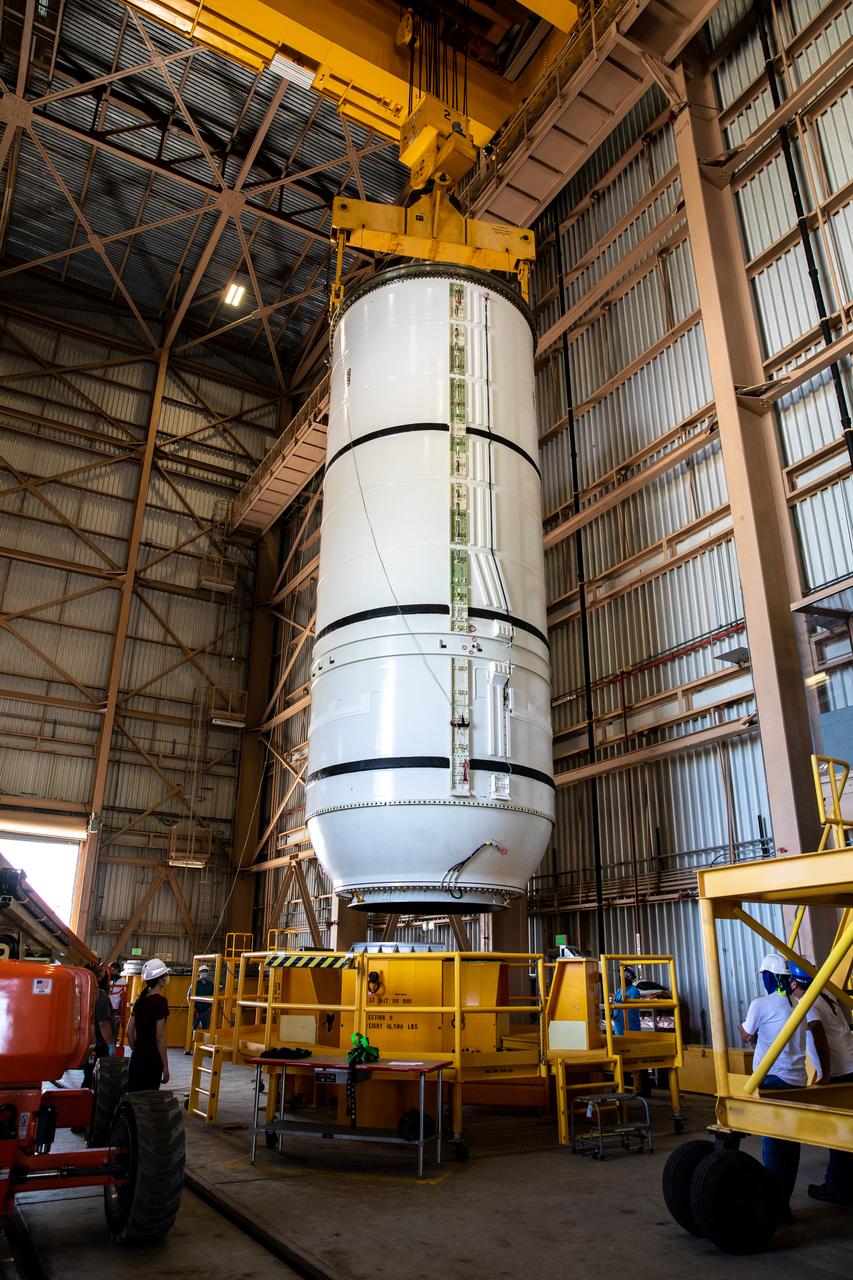
Inside the Rotation, Processing and Surge Facility at NASA’s Kennedy Space Center in Florida, technicians prepare to mate the right-hand motor segment – one of five segments that make up one of two solid rocket boosters for the agency’s Space Launch System (SLS) – to the rocket’s right-hand aft skirt on June 24, 2020. Once the booster aft segments are mated to the two aft skirts, they will be moved to the Vehicle Assembly Building for stacking on the mobile launcher. Manufactured by Northrop Grumman in Utah, the twin boosters provide more than 75 percent of the total SLS thrust at launch. Under the Artemis program, NASA will land the first woman and the next man on the Moon by 2024. The first in a series of increasingly complex missions, Artemis I will test the Orion spacecraft and SLS as an integrated system ahead of crewed flights to the Moon.

Inside the Rotation, Processing and Surge Facility at NASA’s Kennedy Space Center in Florida, the right-hand motor segment – one of five segments that make up one of two solid rocket boosters for the agency’s Space Launch System (SLS) – is mated to the rocket’s right-hand aft skirt on June 24, 2020. Once the aft segments are mated to the two aft skirts, they will be moved to the Vehicle Assembly Building for stacking on the mobile launcher. Manufactured by Northrop Grumman in Utah, the twin boosters provide more than 75 percent of the total SLS thrust at launch. Under the Artemis program, NASA will land the first woman and the next man on the Moon by 2024. The first in a series of increasingly complex missions, Artemis I will test the Orion spacecraft and SLS as an integrated system ahead of crewed flights to the Moon.
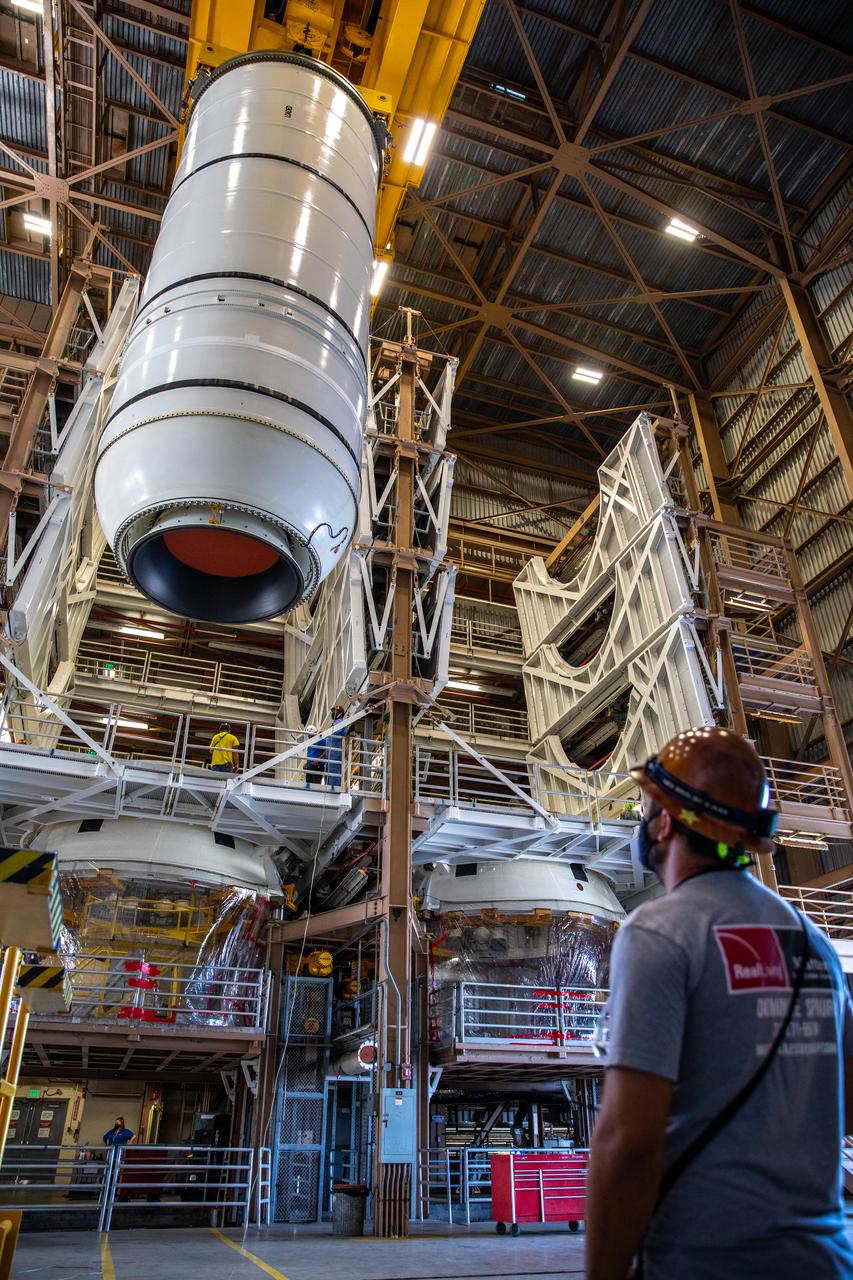
Inside the Rotation, Processing and Surge Facility at NASA’s Kennedy Space Center in Florida, technicians mate the right-hand motor segment – one of five segments that make up one of two solid rocket boosters for the agency’s Space Launch System (SLS) – to the rocket’s right-hand aft skirt on June 24, 2020. Once the aft segments are mated to the two aft skirts, they will be moved to the Vehicle Assembly Building for stacking on the mobile launcher. Manufactured by Northrop Grumman in Utah, the twin boosters provide more than 75 percent of the total SLS thrust at launch. Under the Artemis program, NASA will land the first woman and the next man on the Moon by 2024. The first in a series of increasingly complex missions, Artemis I will test the Orion spacecraft and SLS as an integrated system ahead of crewed flights to the Moon.
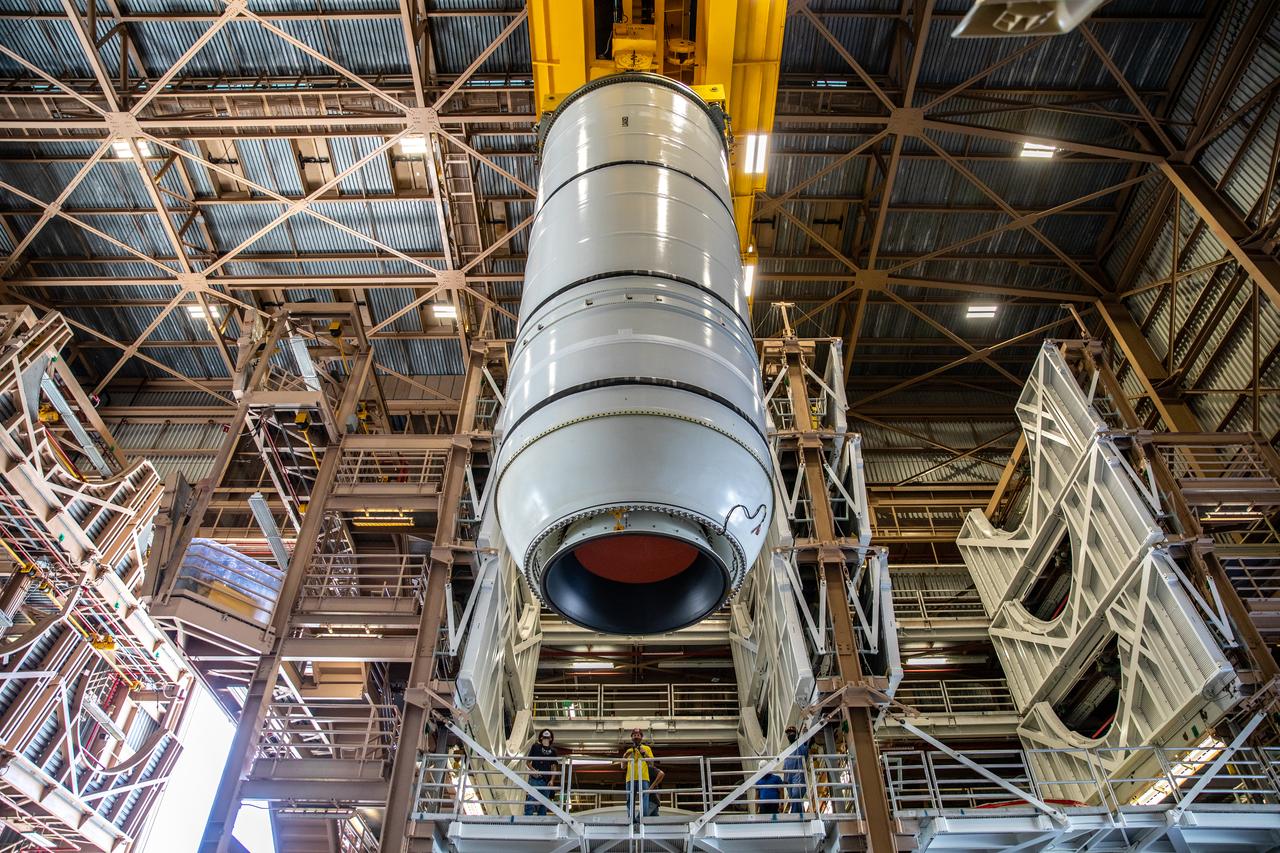
Inside the Rotation, Processing and Surge Facility at NASA’s Kennedy Space Center in Florida, technicians mate the right-hand motor segment – one of five segments that make up one of two solid rocket boosters for the agency’s Space Launch System (SLS) – to the rocket’s right-hand aft skirt on June 24, 2020. Once the aft segments are mated to the two aft skirts, they will be moved to the Vehicle Assembly Building for stacking on the mobile launcher. Manufactured by Northrop Grumman in Utah, the twin boosters provide more than 75 percent of the total SLS thrust at launch. Under the Artemis program, NASA will land the first woman and the next man on the Moon by 2024. The first in a series of increasingly complex missions, Artemis I will test the Orion spacecraft and SLS as an integrated system ahead of crewed flights to the Moon.
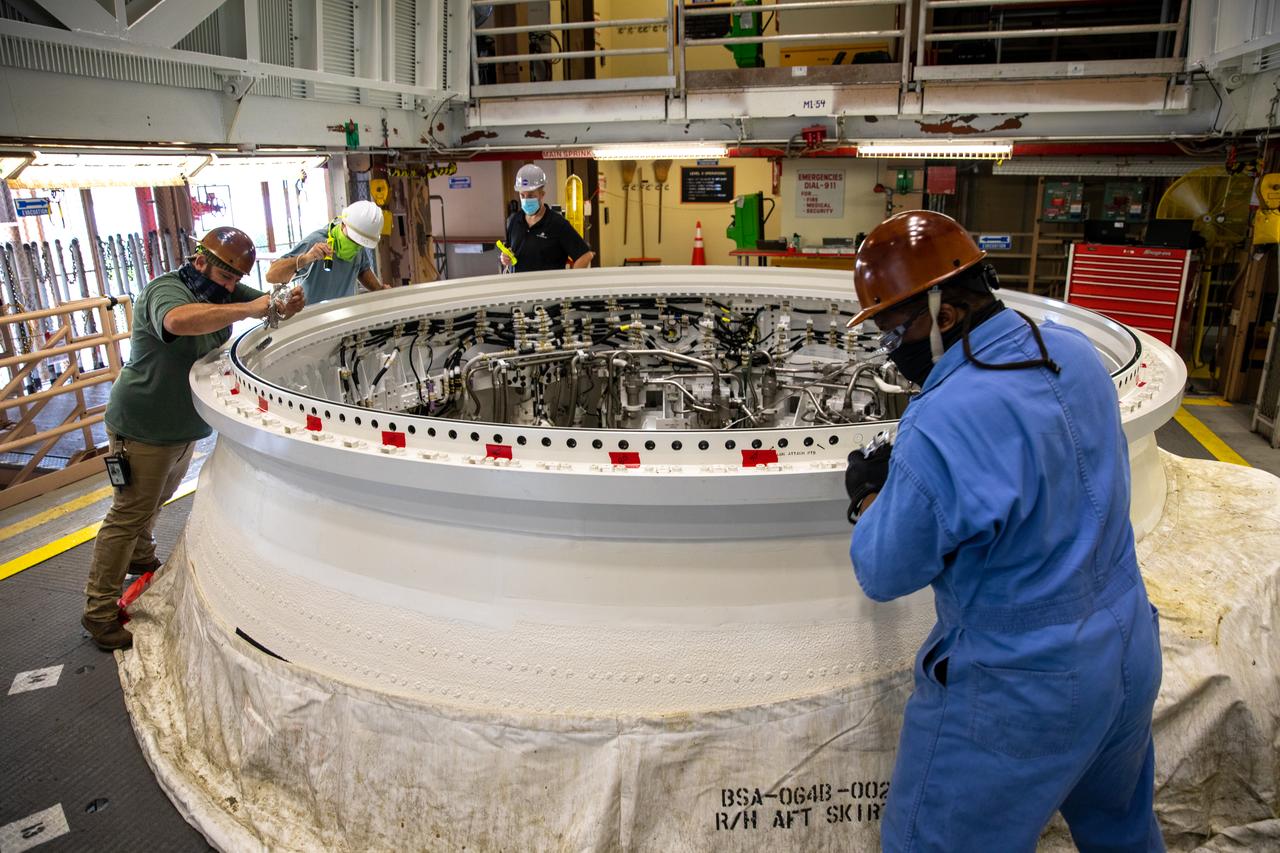
Inside the Rotation, Processing and Surge Facility at NASA’s Kennedy Space Center in Florida, technicians inspect the Space Launch System’s (SLS) right-hand aft skirt prior to mating it with the rocket’s right-hand motor segment – one of five segments that make up one of two solid rocket boosters – on June 24, 2020. Once the two aft skirts are mated to the aft segments, they will be moved to the Vehicle Assembly Building for stacking on the mobile launcher. Manufactured by Northrop Grumman in Utah, the twin boosters provide more than 75 percent of the total SLS thrust at launch. Under the Artemis program, NASA will land the first woman and the next man on the Moon by 2024. The first in a series of increasingly complex missions, Artemis I will test the Orion spacecraft and SLS as an integrated system ahead of crewed flights to the Moon.
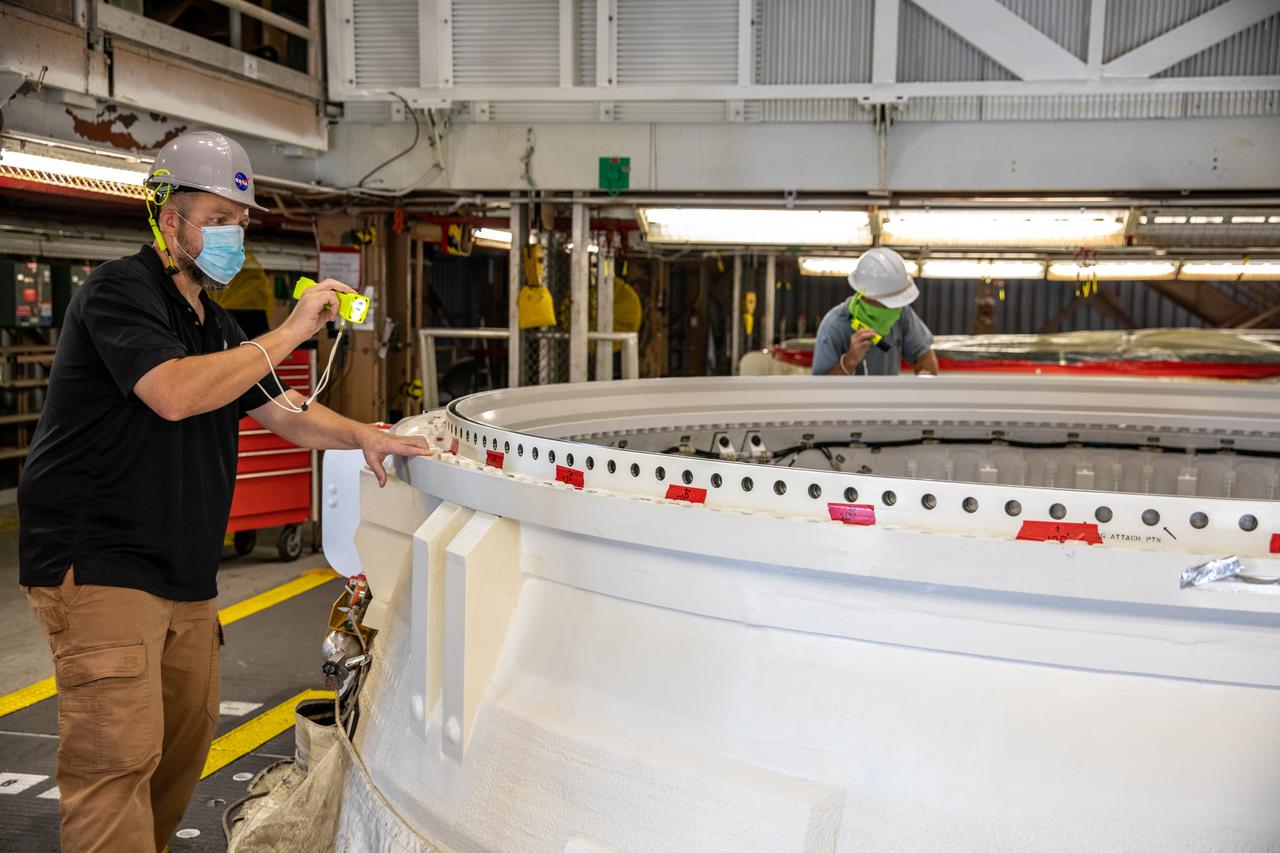
Brendan Deuble, a handling, mechanical and structures engineer on the Jacobs Technology Inc. Test and Operations Support Contract, inspects the Space Launch System’s (SLS) right-hand aft skirt inside the Rotation, Processing and Surge Facility (RPSF) at NASA’s Kennedy Space Center in Florida on June 24, 2020. While in the RPSF, the aft skirt will be mated with the rocket’s right-hand motor segment – one of five segments that make up one of two solid rocket boosters. Once the two aft skirts are mated with the aft segments, they will be moved to the Vehicle Assembly Building for stacking on the mobile launcher. Manufactured by Northrop Grumman in Utah, the twin boosters provide more than 75 percent of the total SLS thrust at launch. Under the Artemis program, NASA will land the first woman and the next man on the Moon by 2024. The first in a series of increasingly complex missions, Artemis I will test the Orion spacecraft and SLS as an integrated system ahead of crewed flights to the Moon.

Inside the Rotation, Processing and Surge Facility at NASA’s Kennedy Space Center in Florida, the right-hand motor segment – one of five segments that make up one of two solid rocket boosters for the agency’s Space Launch System (SLS) – is mated to the rocket’s right-hand aft skirt on June 24, 2020. Once the aft segments are mated to the two aft skirts, they will be moved to the Vehicle Assembly Building for stacking on the mobile launcher. Manufactured by Northrop Grumman in Utah, the twin boosters provide more than 75 percent of the total SLS thrust at launch. Under the Artemis program, NASA will land the first woman and the next man on the Moon by 2024. The first in a series of increasingly complex missions, Artemis I will test the Orion spacecraft and SLS as an integrated system ahead of crewed flights to the Moon.
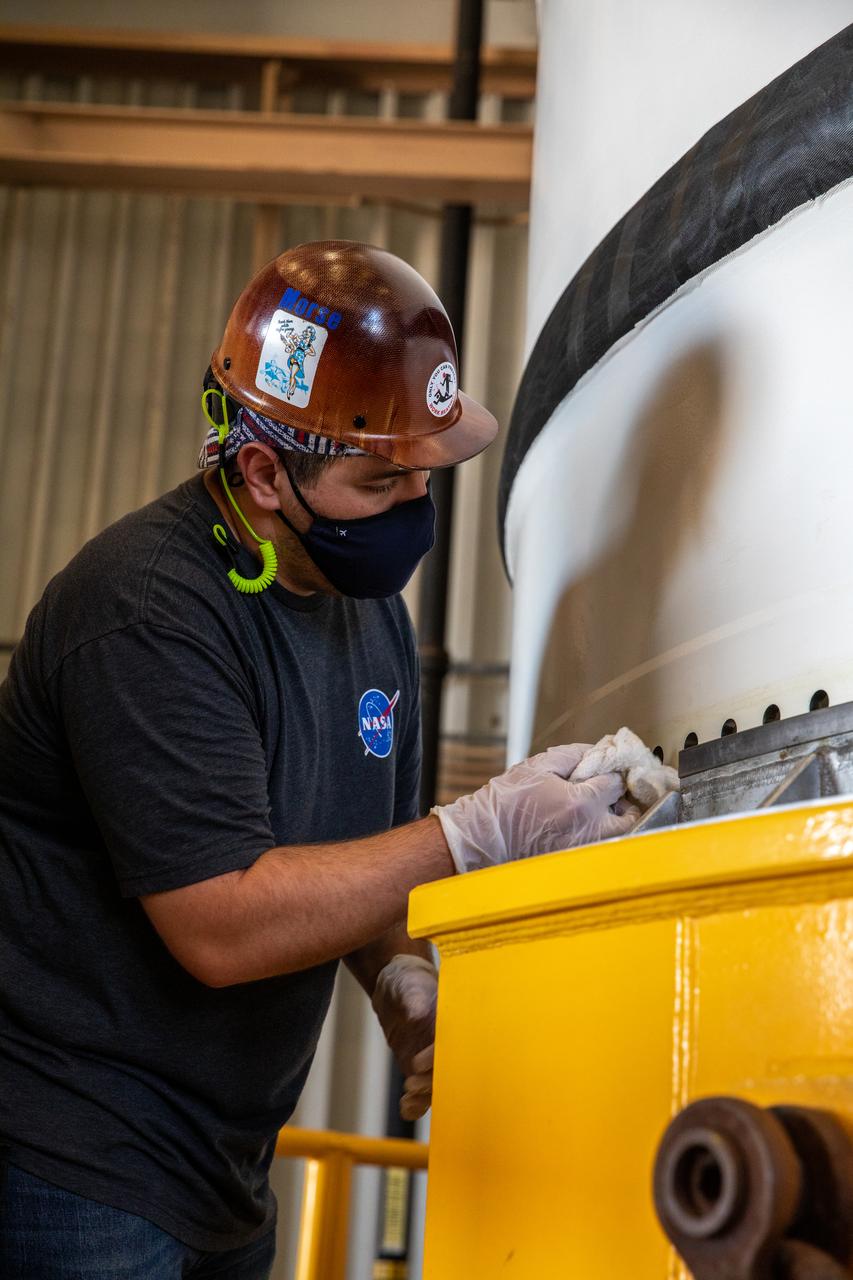
Inside the Rotation, Processing and Surge Facility at NASA’s Kennedy Space Center in Florida, a technician inspects and removes grease from the right-hand motor segment – one of five segments that make up one of two solid rocket boosters for the agency’s Space Launch System (SLS) – in preparation for mating to the rocket’s right-hand aft skirt on June 24, 2020. Once the booster aft segments are mated to the two aft skirts, they will be moved to the Vehicle Assembly Building for stacking on the mobile launcher. Manufactured by Northrop Grumman in Utah, the twin boosters provide more than 75 percent of the total SLS thrust at launch. Under the Artemis program, NASA will land the first woman and the next man on the Moon by 2024. The first in a series of increasingly complex missions, Artemis I will test the Orion spacecraft and SLS as an integrated system ahead of crewed flights to the Moon.
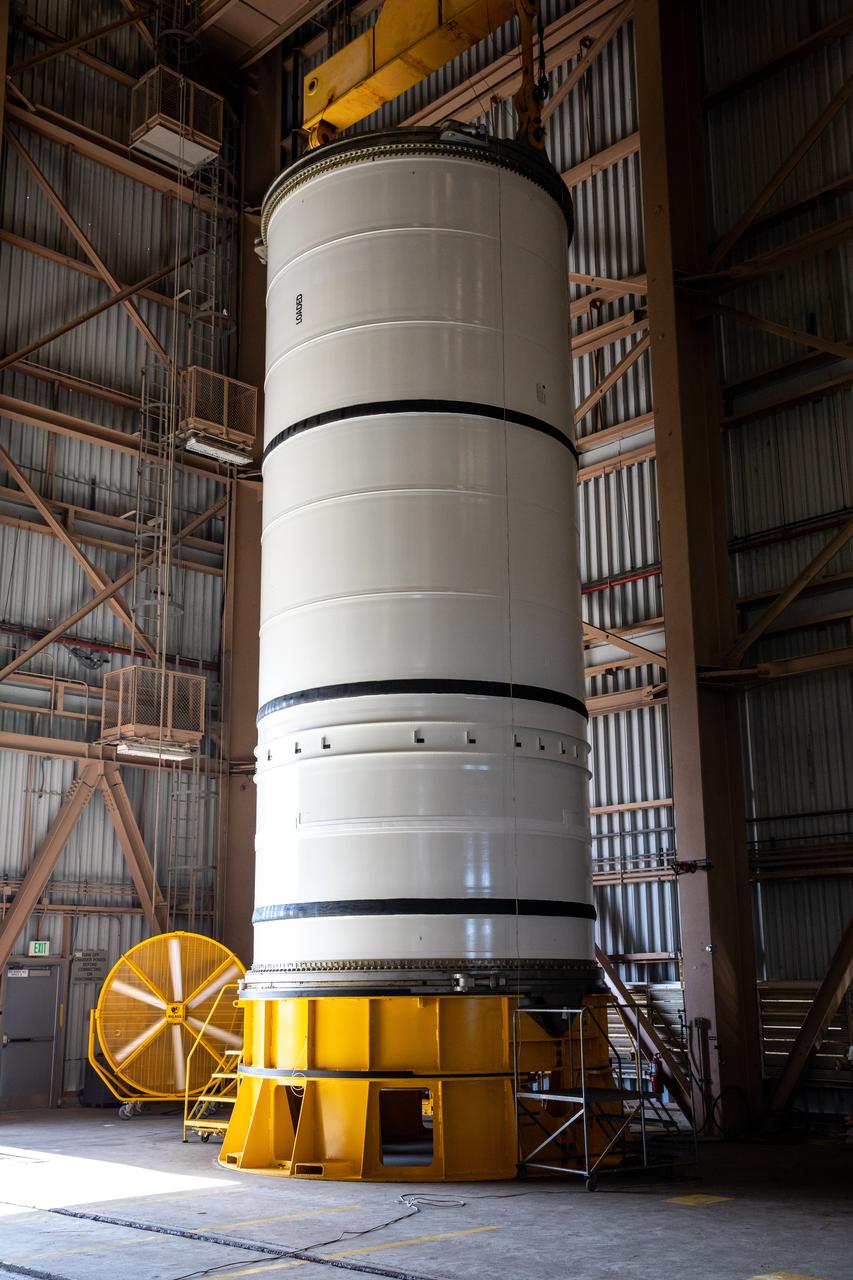
Inside the Rotation, Processing and Surge Facility at NASA’s Kennedy Space Center in Florida, the right-hand motor segment – one of five segments that make up one of two solid rocket boosters for the agency’s Space Launch System (SLS) – is prepped for mating to the rocket’s right-hand aft skirt on June 24, 2020. Once the booster aft segments are mated to the two aft skirts, they will be moved to the Vehicle Assembly Building for stacking on the mobile launcher. Manufactured by Northrop Grumman in Utah, the twin boosters provide more than 75 percent of the total SLS thrust at launch. Under the Artemis program, NASA will land the first woman and the next man on the Moon by 2024. The first in a series of increasingly complex missions, Artemis I will test the Orion spacecraft and SLS as an integrated system ahead of crewed flights to the Moon.
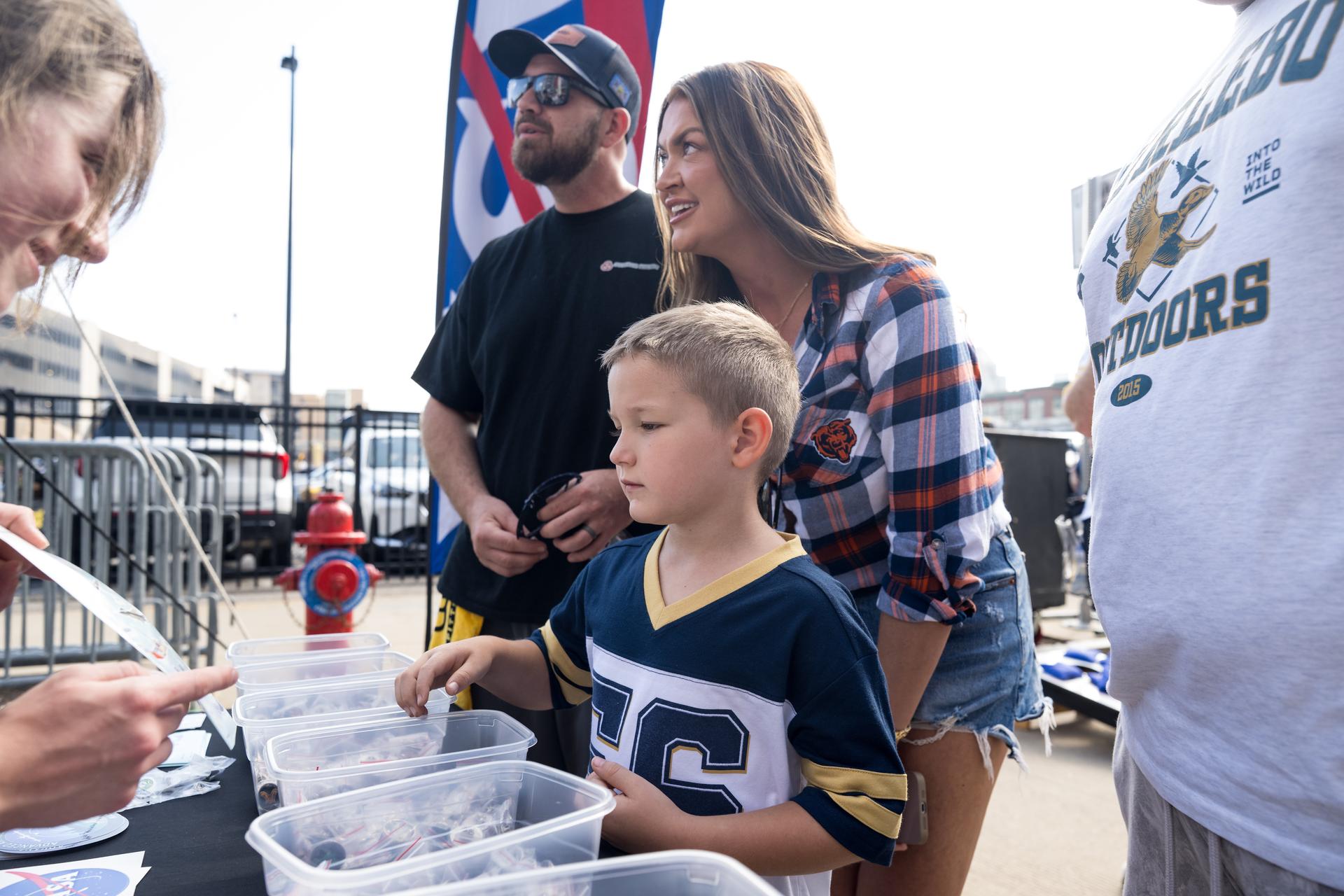
Fans collect NASA pins outside the NASA Experience Zone at an NFL game between the Pittsburgh Steelers and the Atlanta Falcons at Acrisure Stadium, Sunday, Sept. 13, 2026, in Pittsburgh, Pennsylvania. NASA’s engagement at NFL games is part of the agency's Inspiration Tour, aimed at strengthening connections between NASA and its partners and showcasing innovation in air and space in the lead up to the MAX POWER aerospace technology expo and airshow at the agency's Kennedy Space Center in early November. Photo Credit: (NASA/Aubrey Gemignani)
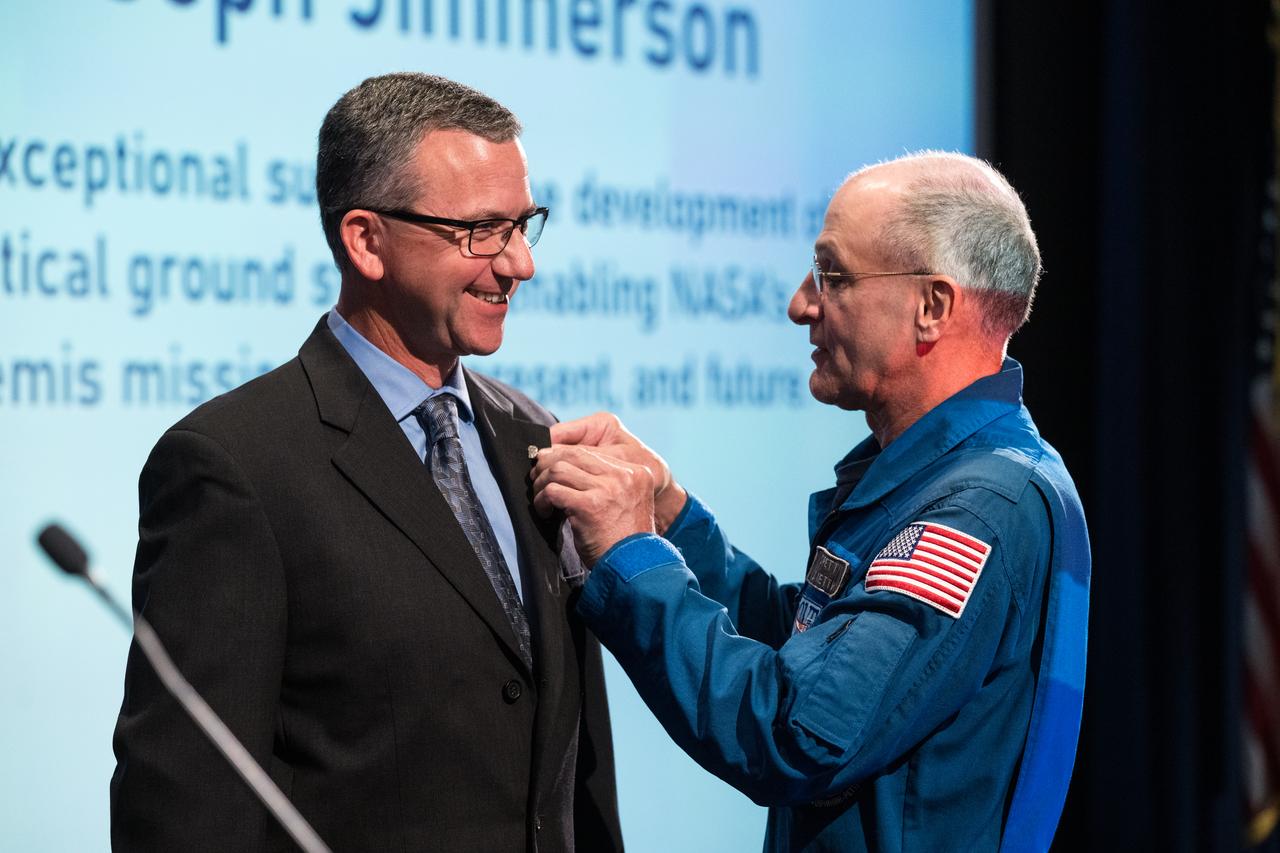
NASA astronaut Don Pettit presents NASA Range Operations Contract Engineer Manager at Wallops Flight Facility, Joseph Jimmerson, with a Silver Snoopy pin, Wednesday, Sept. 17, 2025, at NASA’s Goddard Space Flight Center in Greenbelt, Md. Pettit and Hague served as part of Expedition 72 onboard the International Space Station. Photo Credit: (NASA/Aubrey Gemignani)
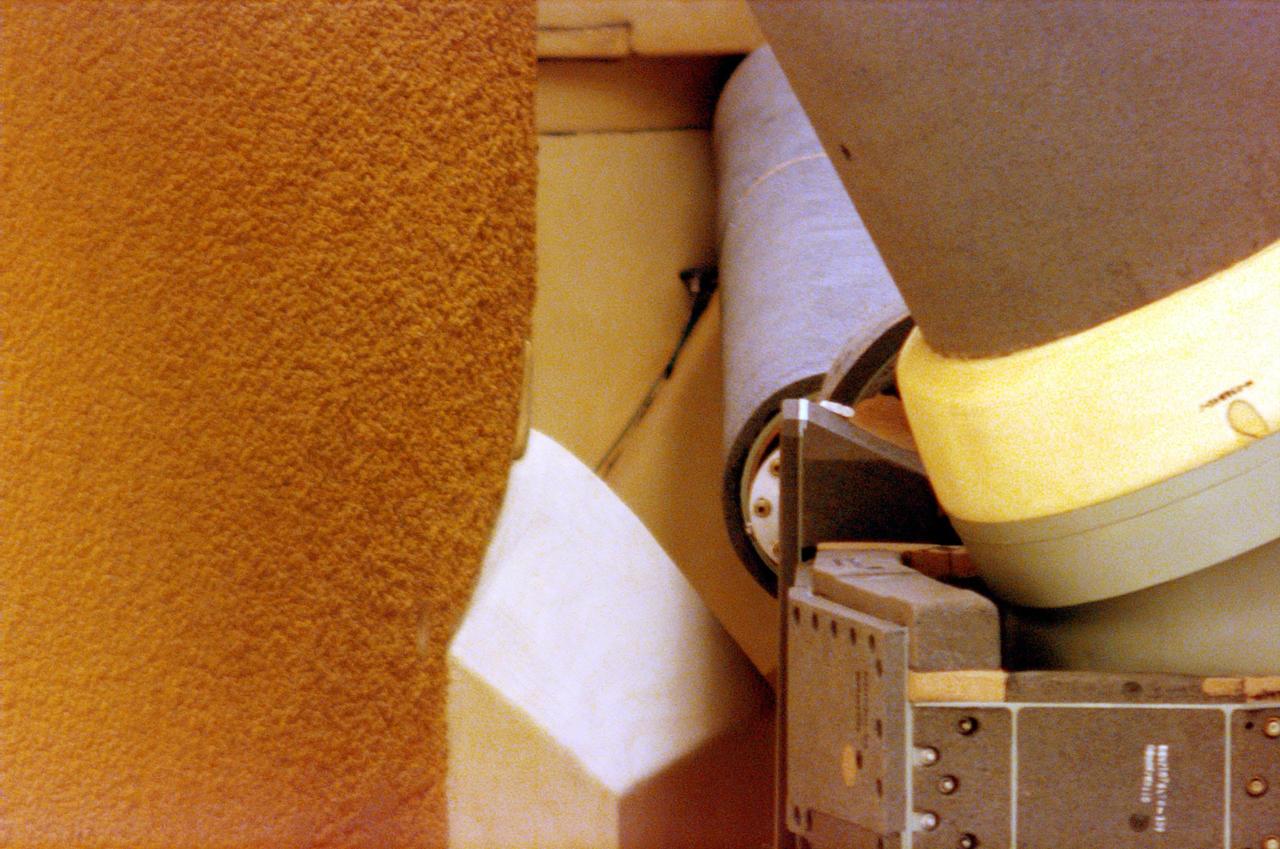
A locking pin can be seen in the background, almost as a shadow, next to the orbiter aft ET attachment. Locking pins are used to secure handrails on the platforms while work is being performed. The misplaced pin was noticed during an inspection prior to launch, causing the decision to scrub about 90 minutes before liftoff. Launch was rescheduled for Oct. 11 at 7:17 p.m
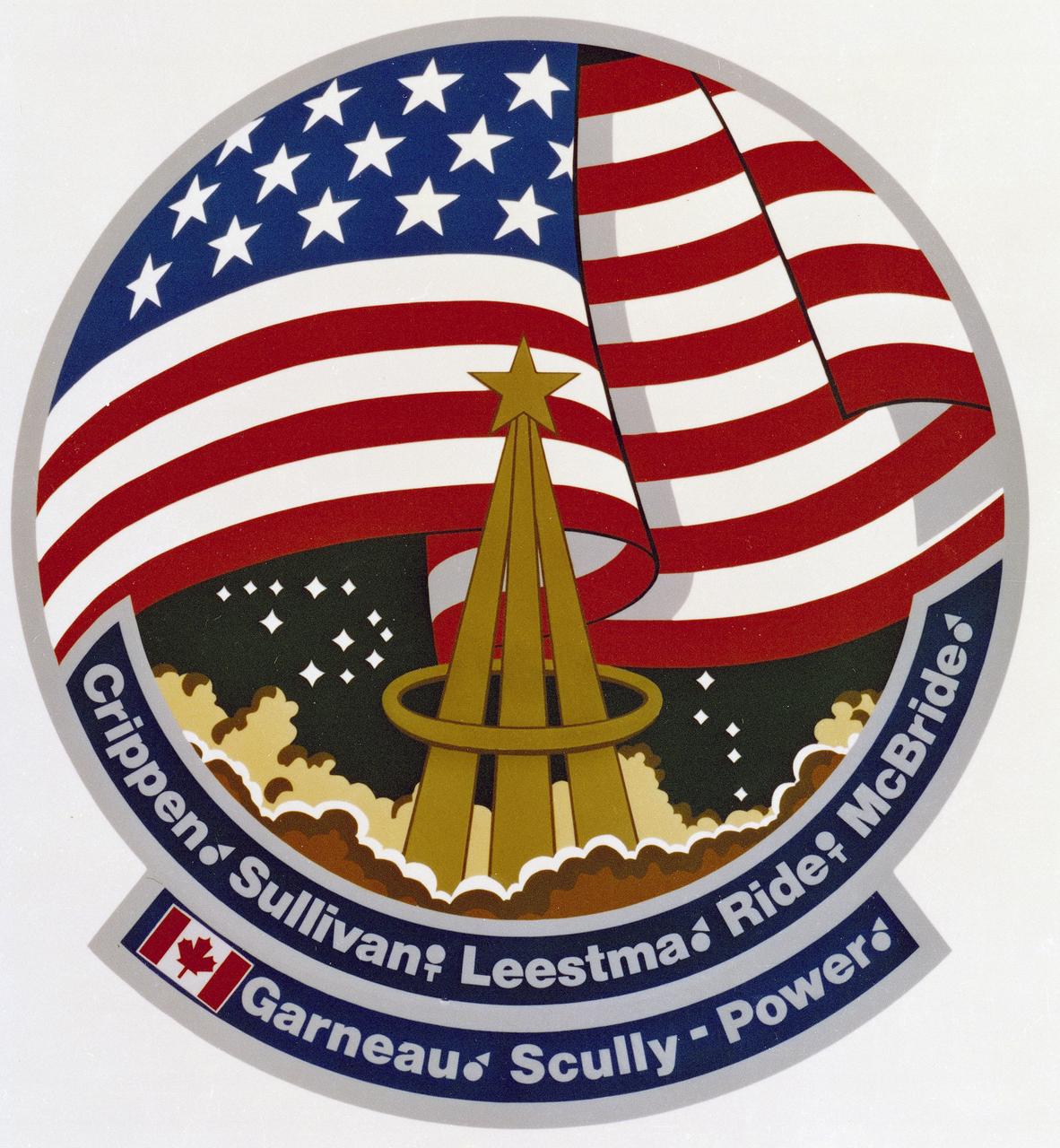
The 41-G mission insignia focuses on its seven crew members (first to exceed six), the U.S. Flag and the Unity symbol known as the astronaut pin. The pin design in center shows a trio of trajectories merging in infinite space, capped by a bright shining star and encircled by an elliptical wreath denoting orbital flight.
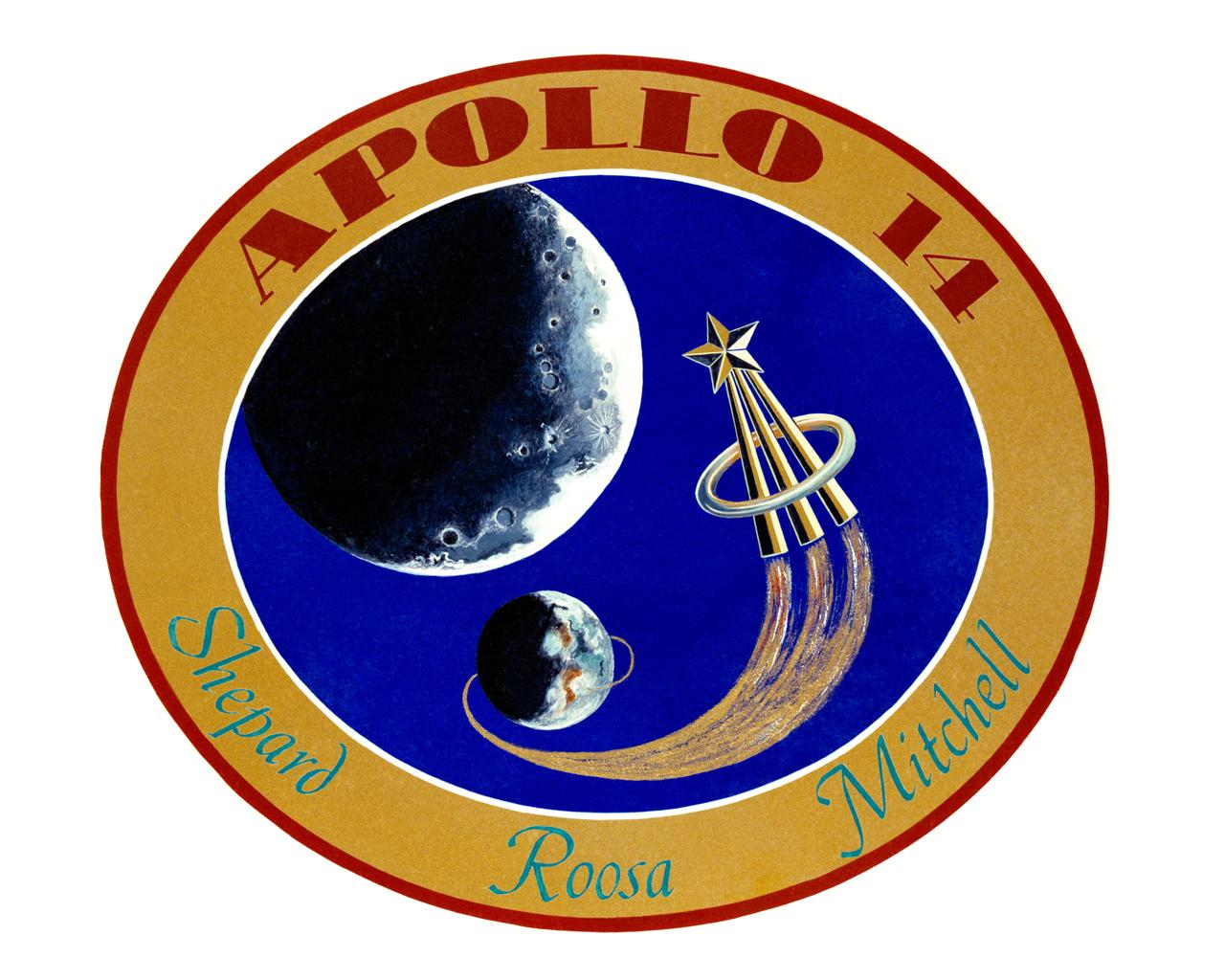
S70-17851 (September 1970) --- This is the Apollo 14 crew patch designed by astronauts Alan B. Shepard Jr., commander; Stuart A. Roosa, command module pilot; and Edgar D. Mitchell, lunar module pilot. It features the astronaut lapel pin approaching the moon and leaving a comet trail from the liftoff point on Earth. The pin design was adopted by the astronaut corps several years ago. Astronauts who have not yet flown in space wear silver pins. Those who have flown wear gold pins. The NASA insignia design for Apollo flights is reserved for use by the astronauts and for other official use as the NASA Administrator may authorize. Public availability has been approved only in the form of illustrations by the various news media. When and if there is any change in this policy, which we do not anticipate, it will be publicly announced.
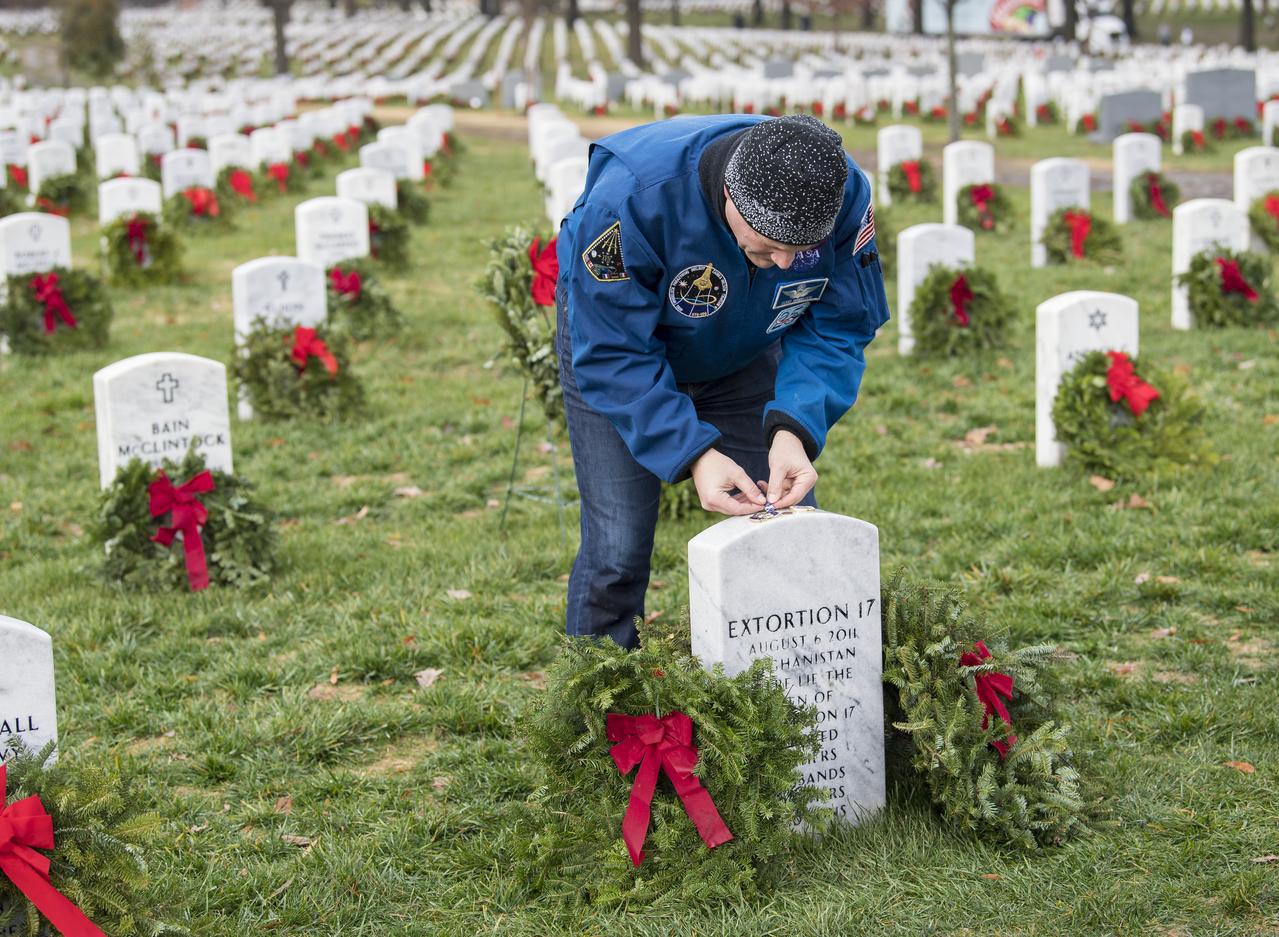
NASA astronaut Doug Wheelock leaves a NASA pin on the headstone of the Extortion 17, fellow service members who lost their lives during his tour of duty in Afghanistan, as part of National Wreaths Across America Day, Sat., Dec. 14, 2019 at Arlington National Cemetery in Arlington, Va. National Wreaths Across America Day is held annually to celebrate the lives of military veterans. Wheelock honored those who lost their lives in the quest for space exploration as well as fellow service members. Photo Credit: (NASA/Aubrey Gemignani)
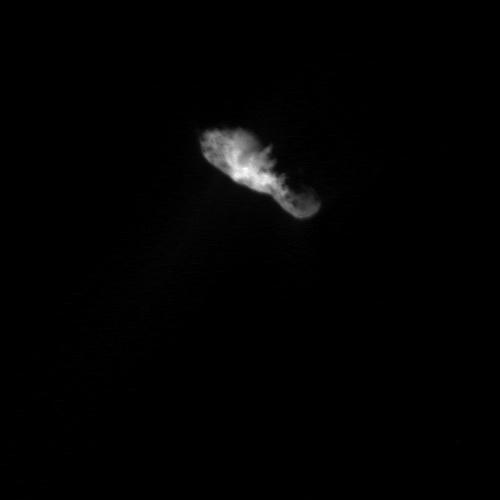
Sunlight illuminates the bowling-pin shaped nucleus from directly below comet Borrelly as seen by NASA Deep Space 1. At this distance, many features become vivid on the surface of the nucleus, including a jagged line between day and night on the comet.

NASA Administrator Sean O'Keefe comes to Ames for employee briefing and tour. Here he welcomes JASON kids to NASA while handing out patches and pins.
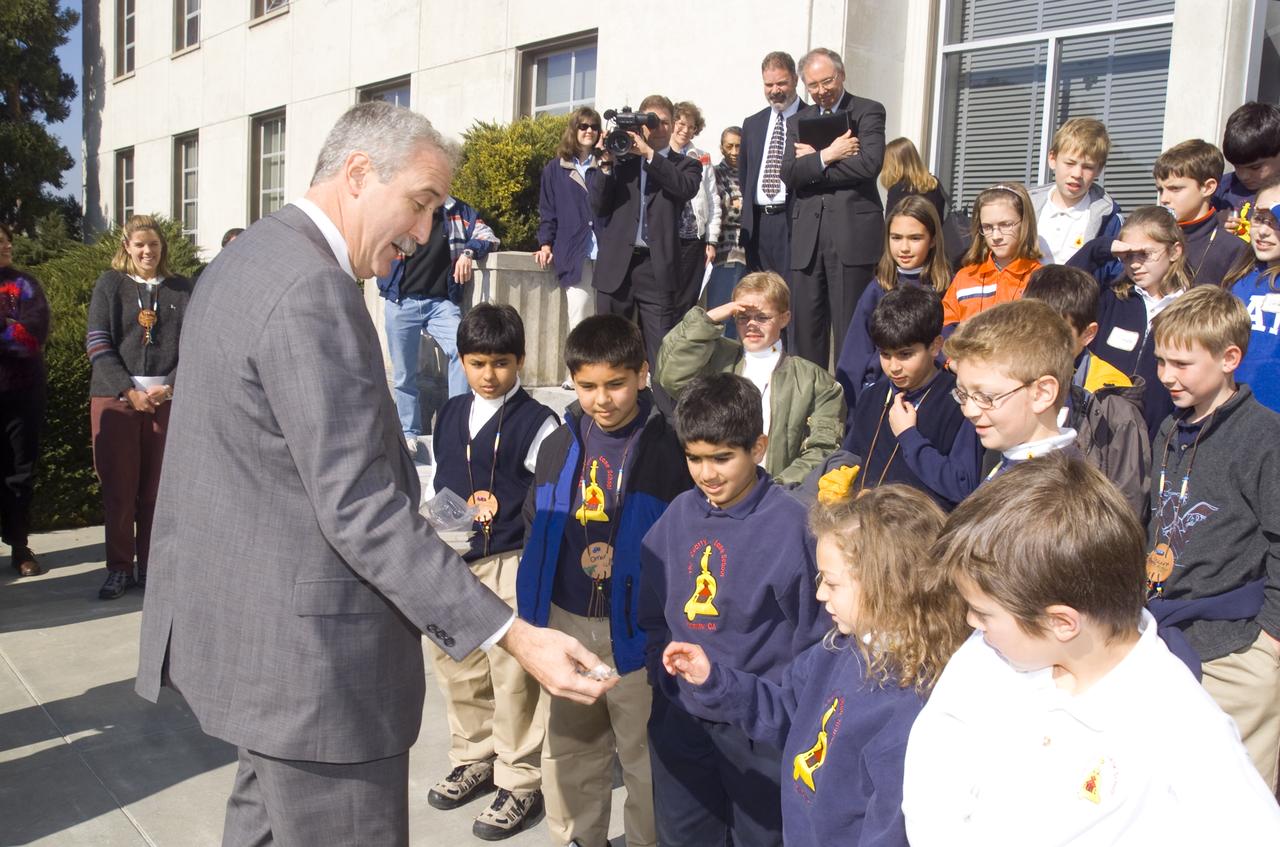
NASA Administrator Sean O'Keefe comes to Ames for employee briefing and tour. Here he welcomes JASON kids to NASA while handing out patches and pins.
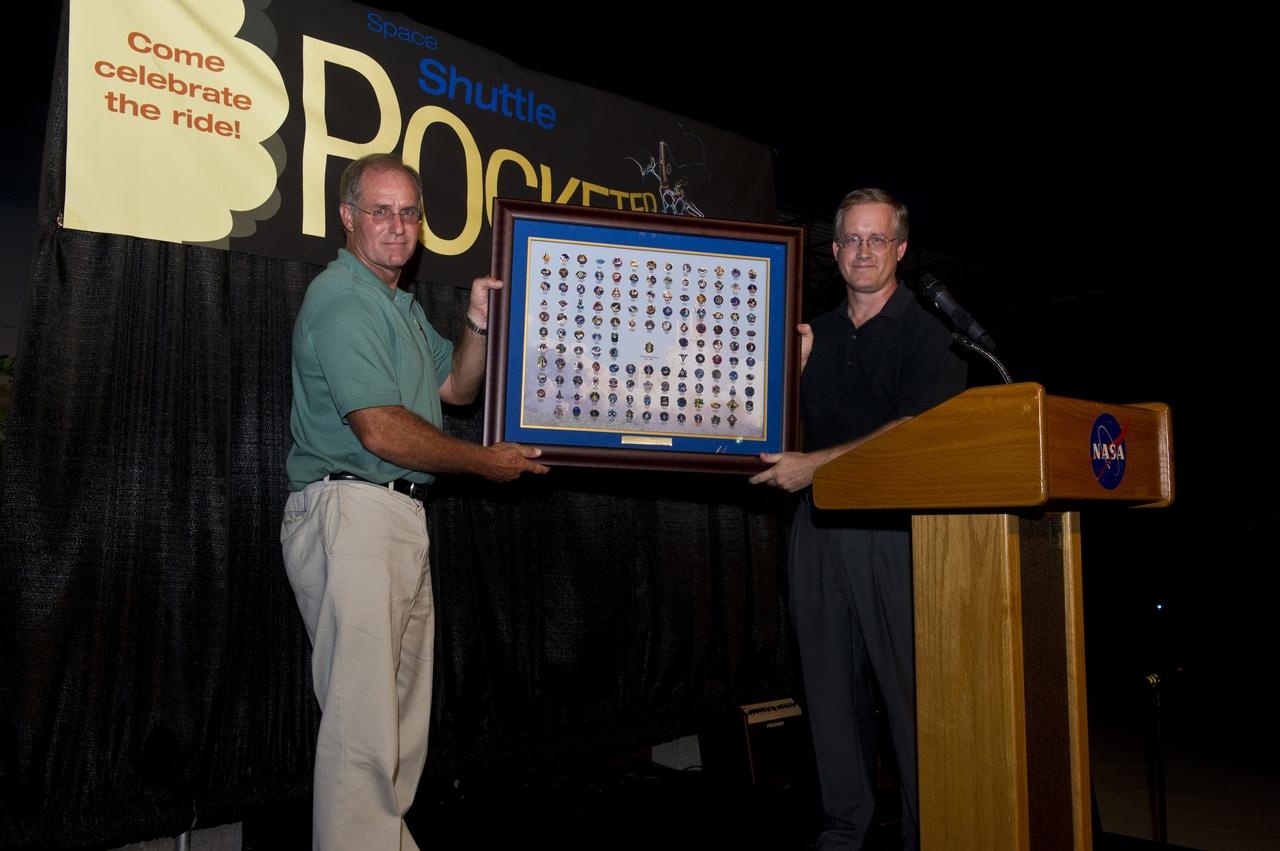
MARSHALL SHUTTLE PROPULSION OFFICE MANAGER STEVE CASH PRESENTS A MISSION PIN PLAQUE TO JOHN SHANNON, MANAGER OF THE SPACE SHUTTLE PROGRAM.
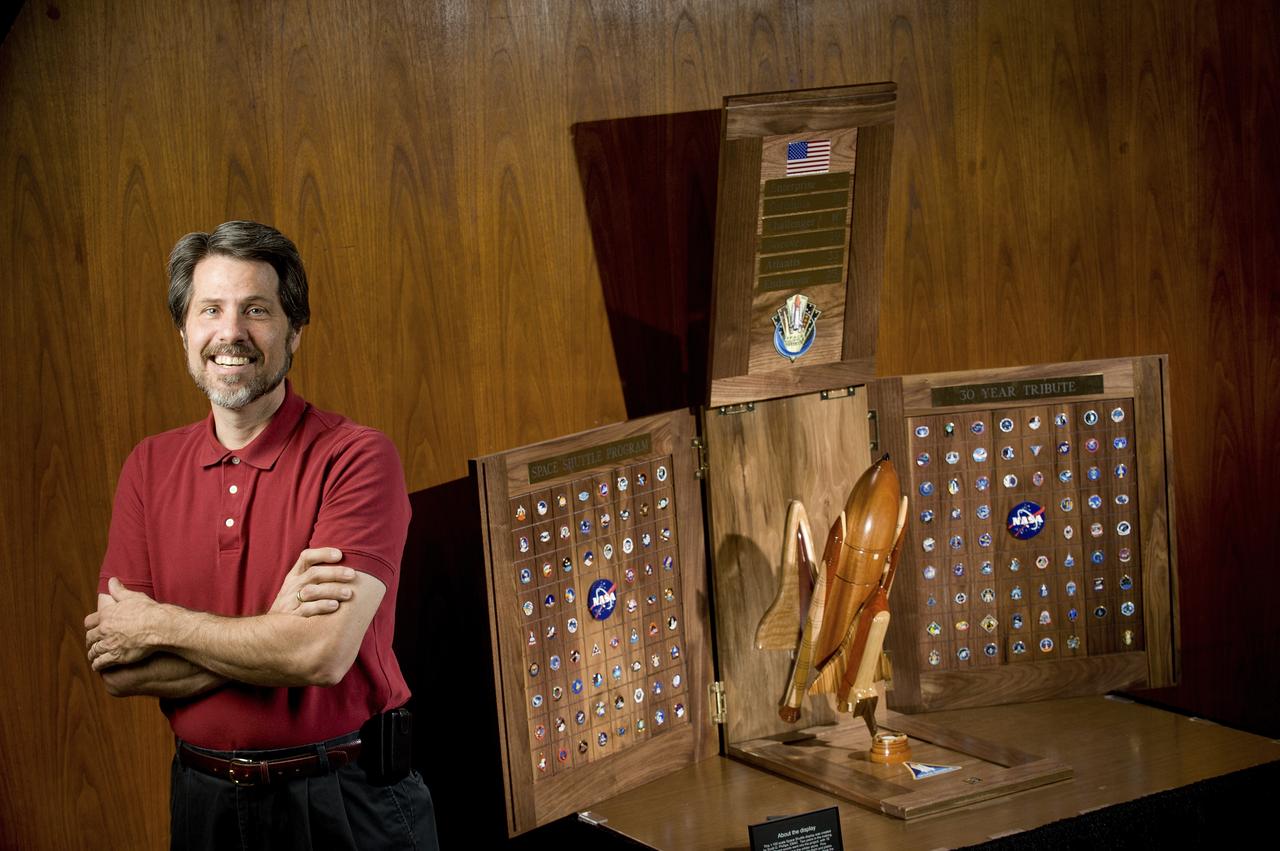
SCOTT PHILLIPS STANDS NEAR HIS LATEST WOODWORKING CREATION FEATURING A SHUTTLE MODEL AND ALL OF THE MISSION PINS FROM PREVIOUS LAUNCHES.
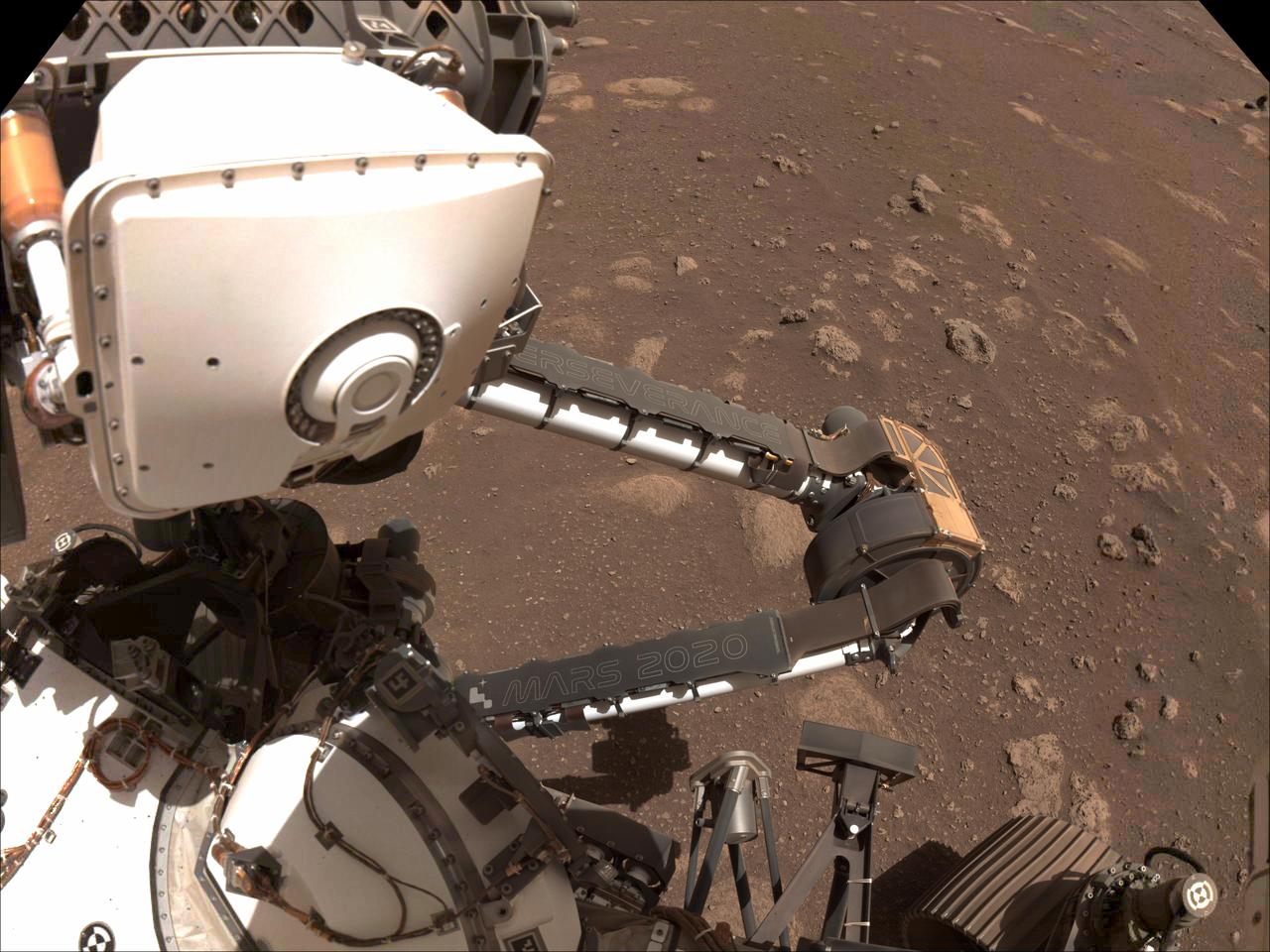
Two name plates mounted on the Mars Perseverance rover's robotic arm are visible in this composite image, made from photos taken by the rover's left Navcam on Sol 12 of its mission (March 2, 2021). The rover's name, "Perseverance," is inscribed on the plate attached to its forearm, and the mission name, "Mars 2020," is shown on its upper arm. Running vertically along the right side of the mission name plate is a string of 17 letters and numbers. These characters form a unique product identification number (PIN) similar to the Vehicle Identification Number (VIN) on vehicles on Earth, but signifying that this is an off-road vehicle. Issued in part by the Society of Automotive Engineers, a PIN or VIN number provides a unique vehicle identifier, while encoding information about the vehicle's characteristics and manufacture. Perseverance's PIN can be decoded to reveal clues about its destination, mission objective and power source. https://photojournal.jpl.nasa.gov/catalog/PIA24467
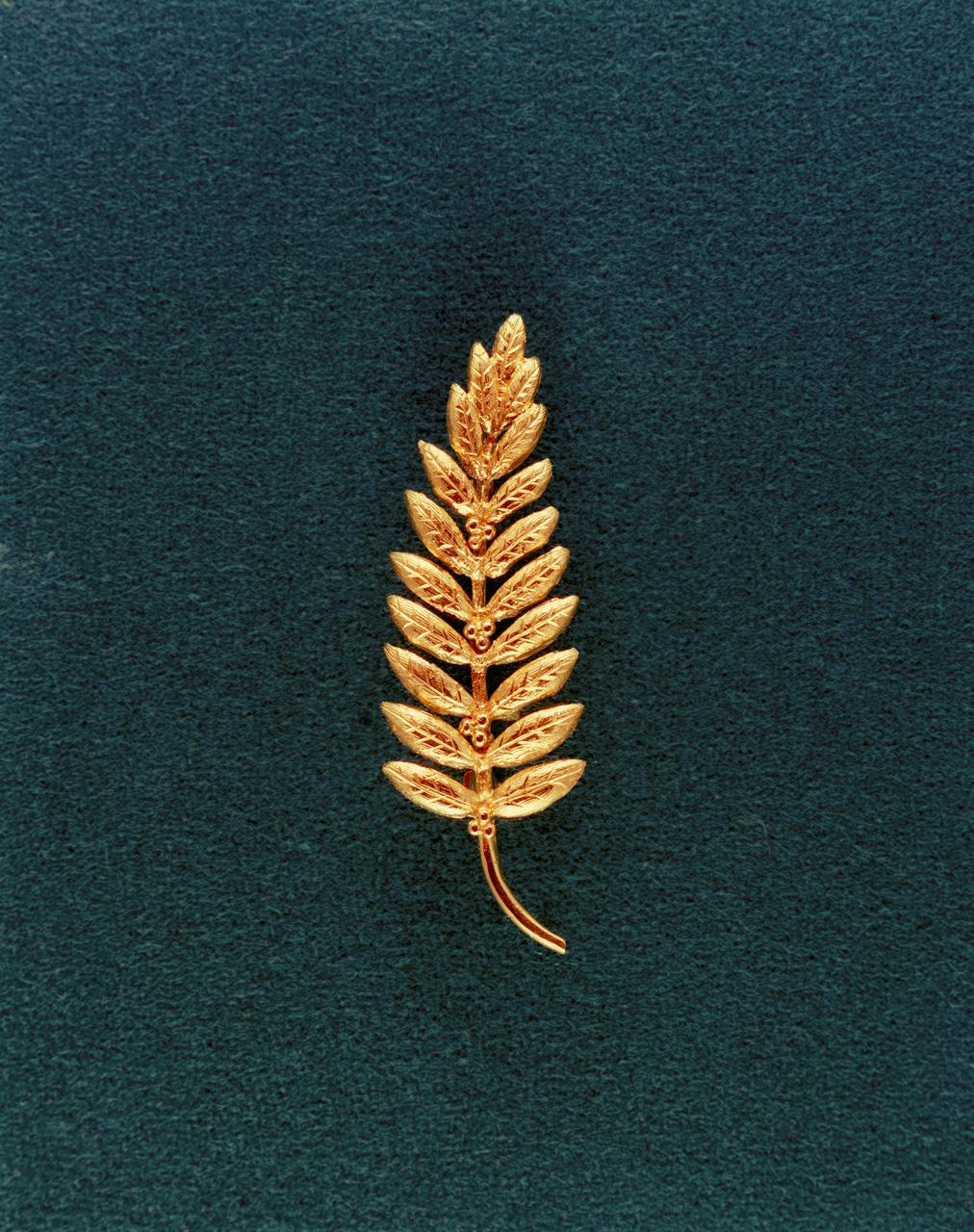
S69-40941 (July 1969) --- This picture is of the gold replica of an olive branch, the traditional symbol of peace, which was left on the moon's surface by Apollo 11 crewmembers. Astronaut Neil A. Armstrong, commander, was in charge of placing the small replica (less than half a foot in length) on the moon. The gesture represents a fresh wish for peace for all mankind.
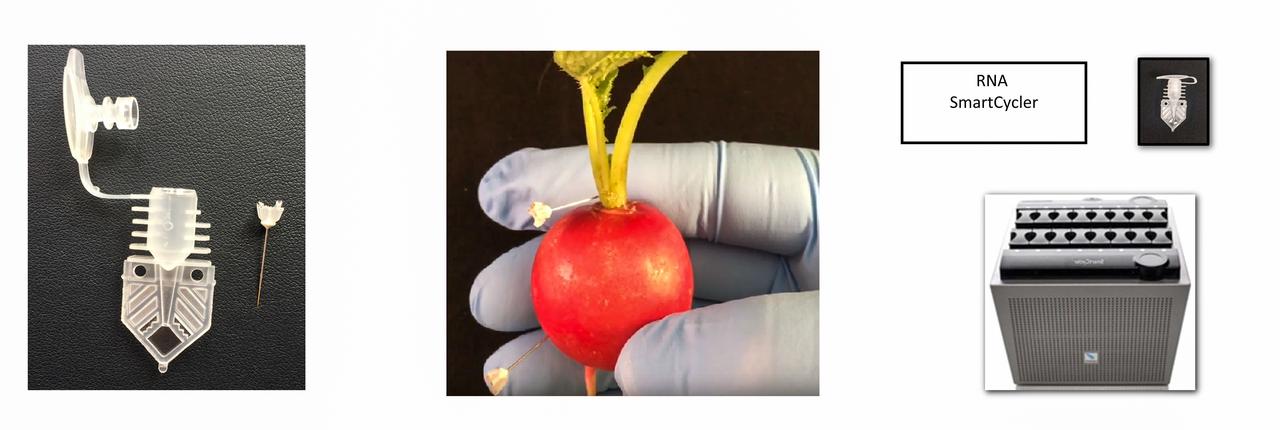
jsc2019e058183 (7/1/2019) --- Gene Sampler technology overview illustrating the direct purification and amplification of genetic material using RNA capture pins and the SmartCycler PCR instrument. Image courtesy of: Dr. Niel D. Crews
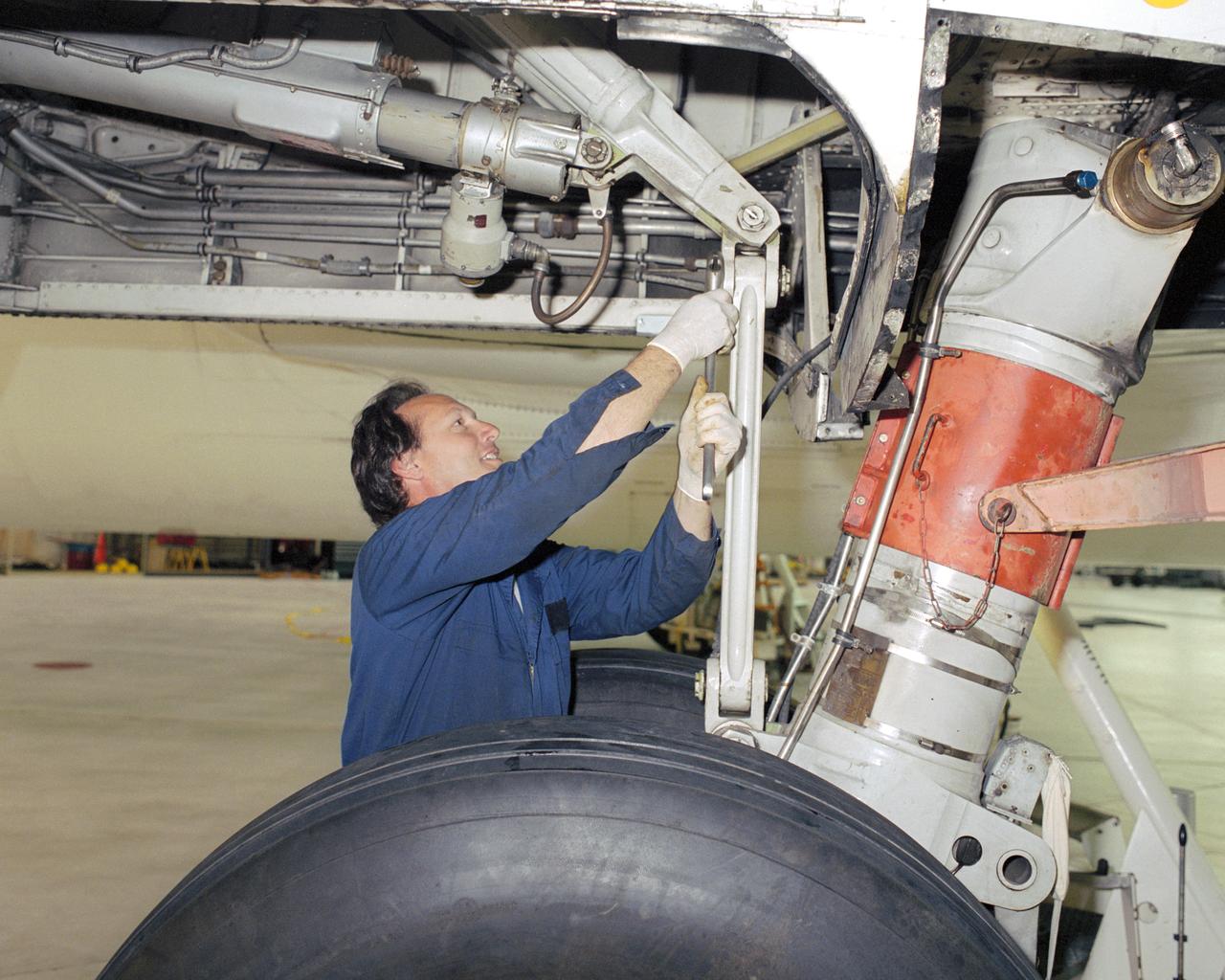
Assistant crew chief David Wyckoff applies some elbow grease to loosen a link pin during a landing gear changeout on NASA Johnson Space Center's Super Guppy.
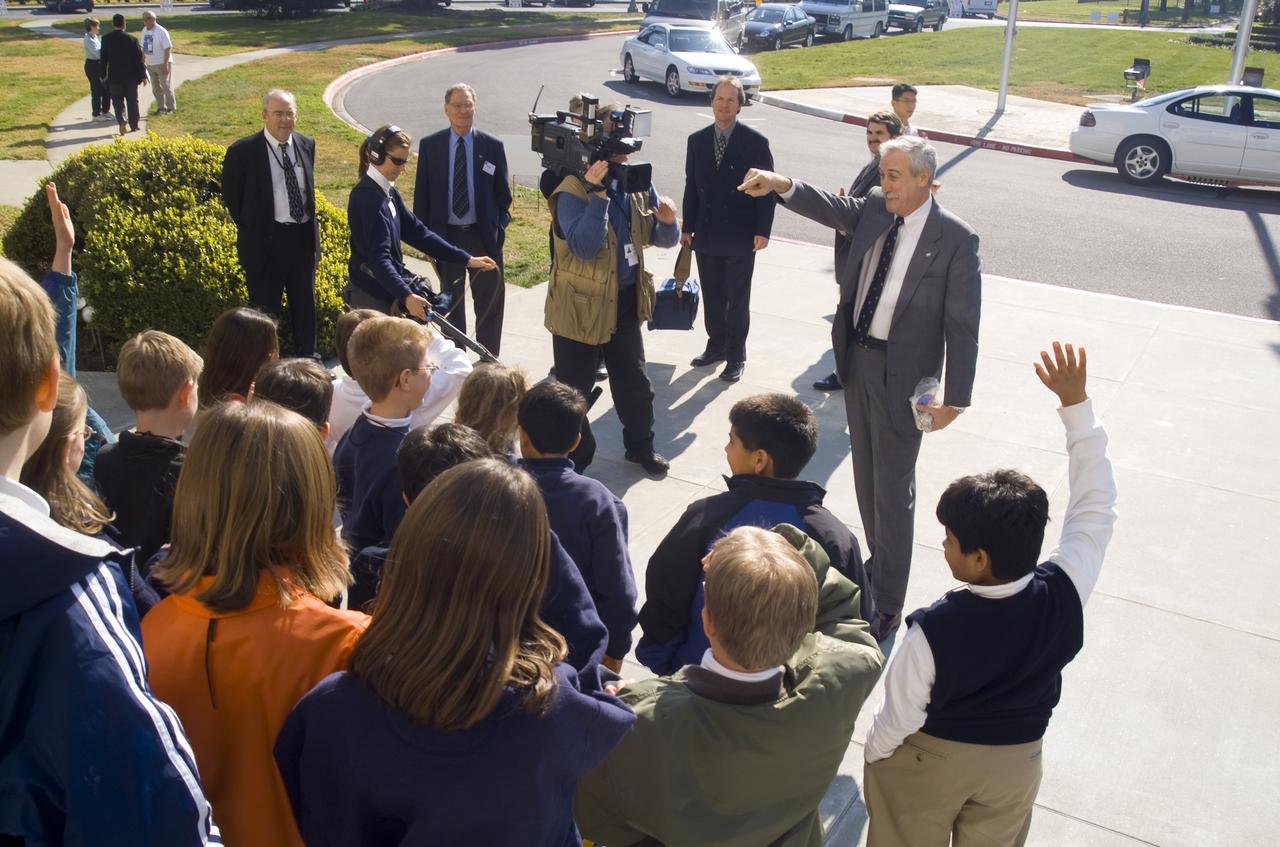
NASA Administrator Sean O'Keefe comes to Ames for employee briefing and tour. Here he welcomes JASON kids to NASA while handing out patches and pins. Tom Clausen and Donald James, Ames Education Office in background.
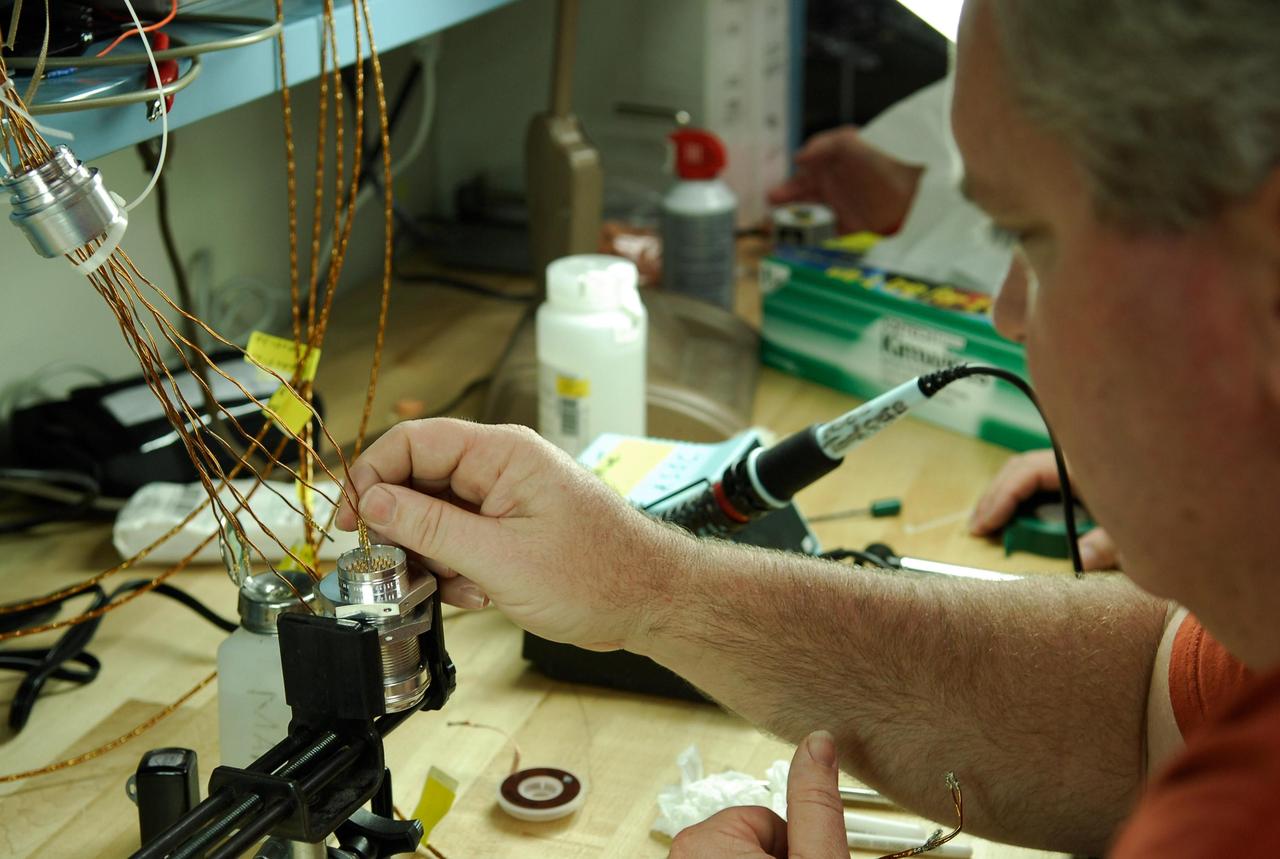
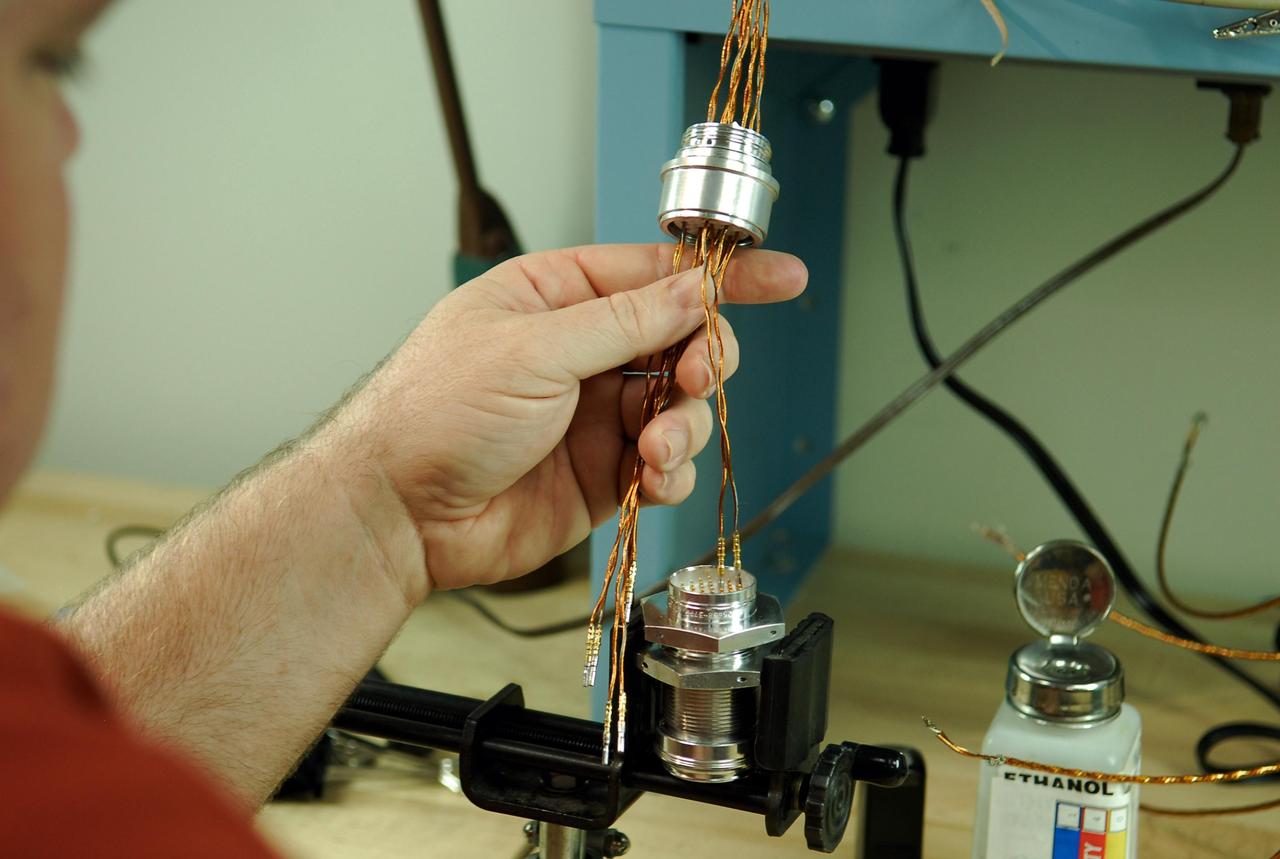
KENNEDY SPACE CENTER, FLA. -- At a lab at NASA's Kennedy Space Center, Bob Arp, an aerospace technician with the United Launch Alliance, inserts a wire from an electrical harness onto the pin of a replacement feed-through connector during preparations to solder the pins to the socket of the connector. The connector will be installed in the external fuel tank for space shuttle Atlantis' STS-122 mission. The technician performed this exacting task on the Centaur upper stage for Atlas and Titan launches in 1994 and was specifically chosen for the task. Soldering the connector pins and sockets together addresses the most likely cause of a problem in the engine cutoff sensor system, or ECO system. Some of the tank's ECO sensors failed during propellant tanking for launch attempts on Dec. 6 and Dec. 9. Results of a tanking test on Dec. 18 pointed to an open circuit in the feed-through connector wiring, which is located at the base of the tank. The feed-through connector passes the wires from the inside of the tank to the outside. After the soldering is completed and the connector is reinstalled, shuttle program managers will decide on how to proceed. The launch date for mission STS-122 is under review. Photo credit: NASA/Kim Shiflett
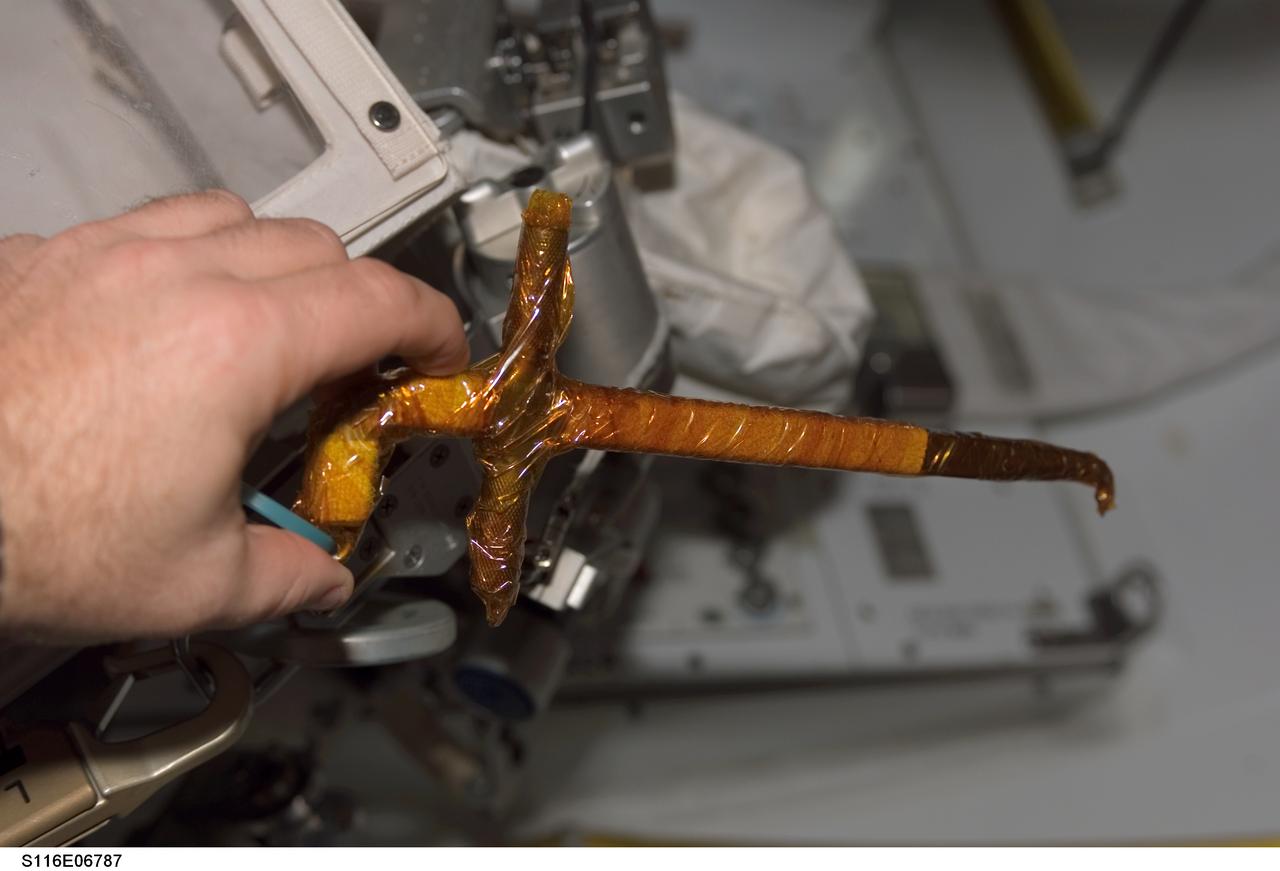
S116-E-06787 (18 Dec. 2006) --- A view of a loop-pin-puller wrapped in insulating tape onboard Space Shuttle Discovery, scheduled for use during STS-116 extravehicular activity (EVA) as construction resumes on the International Space Station.
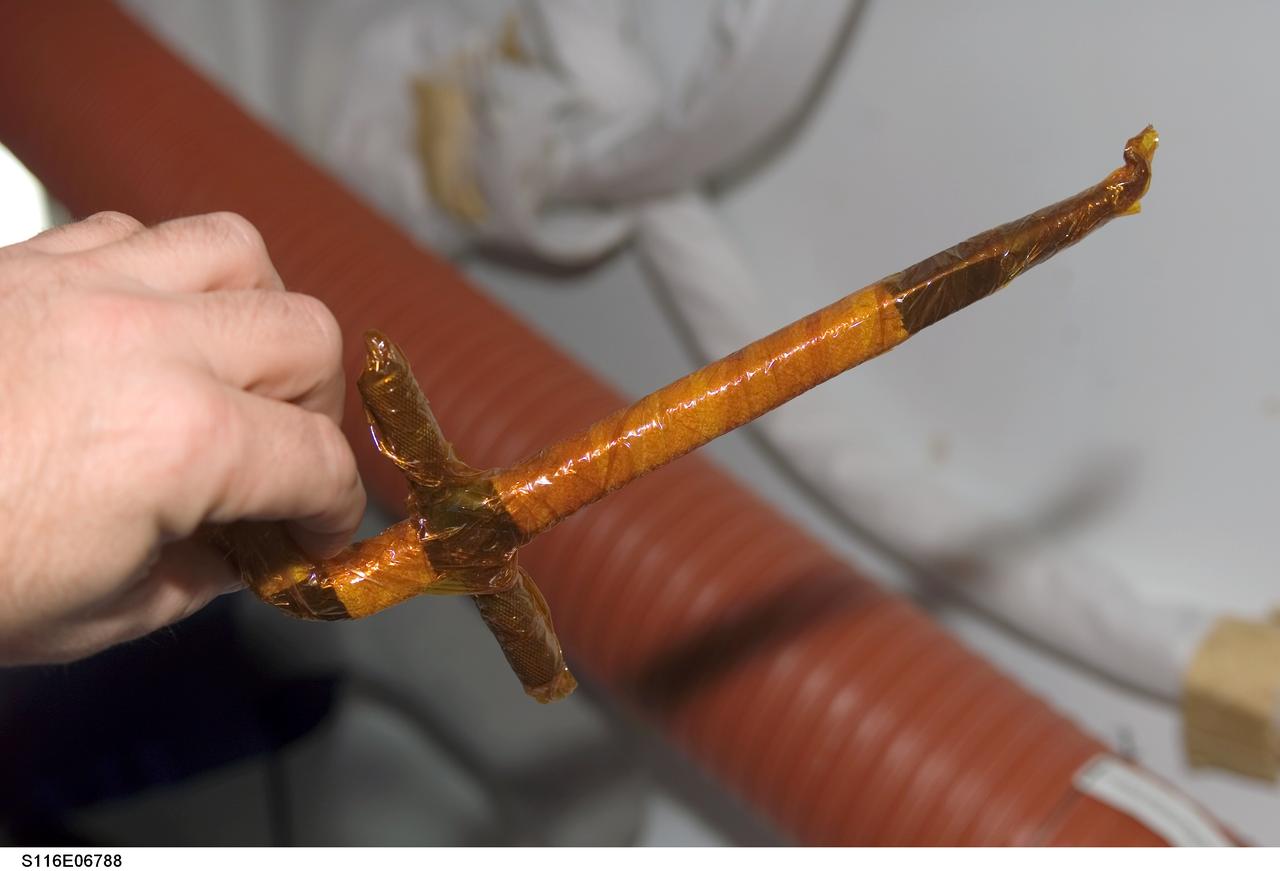
S116-E-06788 (18 Dec. 2006) --- A view of a loop-pin-puller wrapped in insulating tape onboard Space Shuttle Discovery, scheduled for use during STS-116 extravehicular activity (EVA) as construction resumes on the International Space Station.
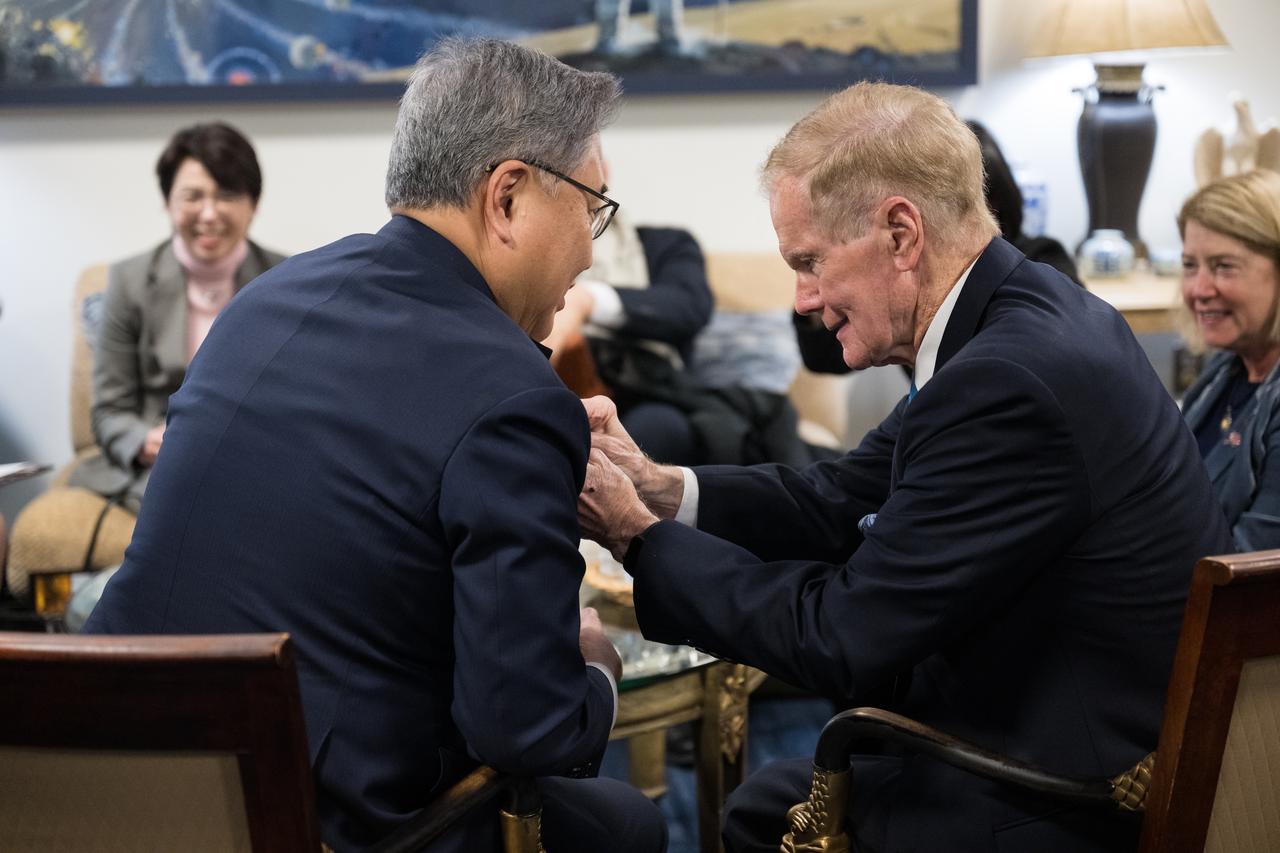
NASA Administrator Bill Nelson presents a NASA pin to the Republic of Korea Minister of Foreign Affairs, Jin Park, Thursday, Feb. 2, 2023 at the Mary W. Jackson NASA Headquarters building in Washington DC. Photo Credit: (NASA/Aubrey Gemignani)
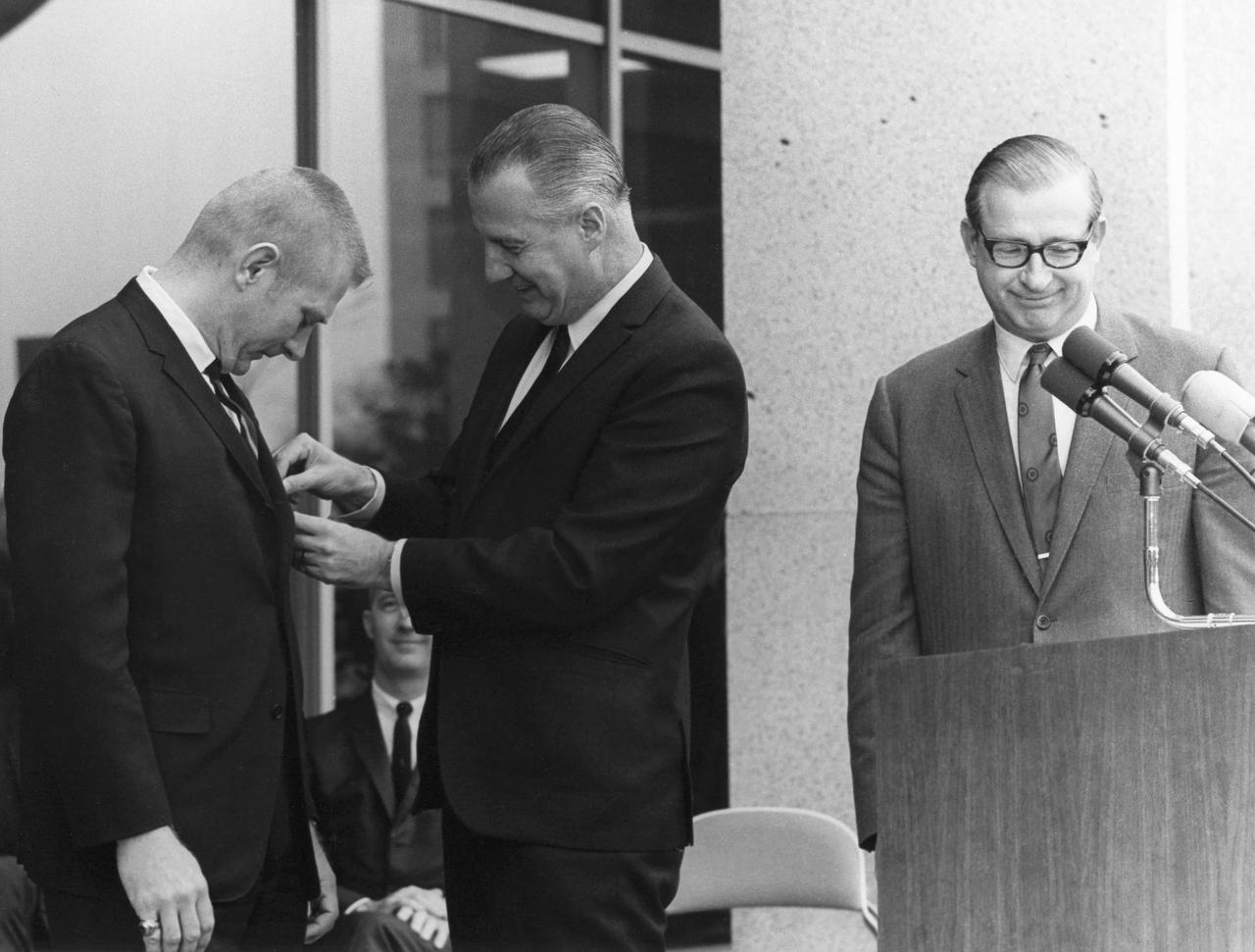
JSC2013-E-009914 (1969) -- Vice President Spiro Agnew pins Flight Director Eugene F. Kranz as NASA Administrator Thomas Paine and Apollo 9 Commander James A. McDivitt look on. Photo credit: NASA Hq. photo identification no. is 69-H-537
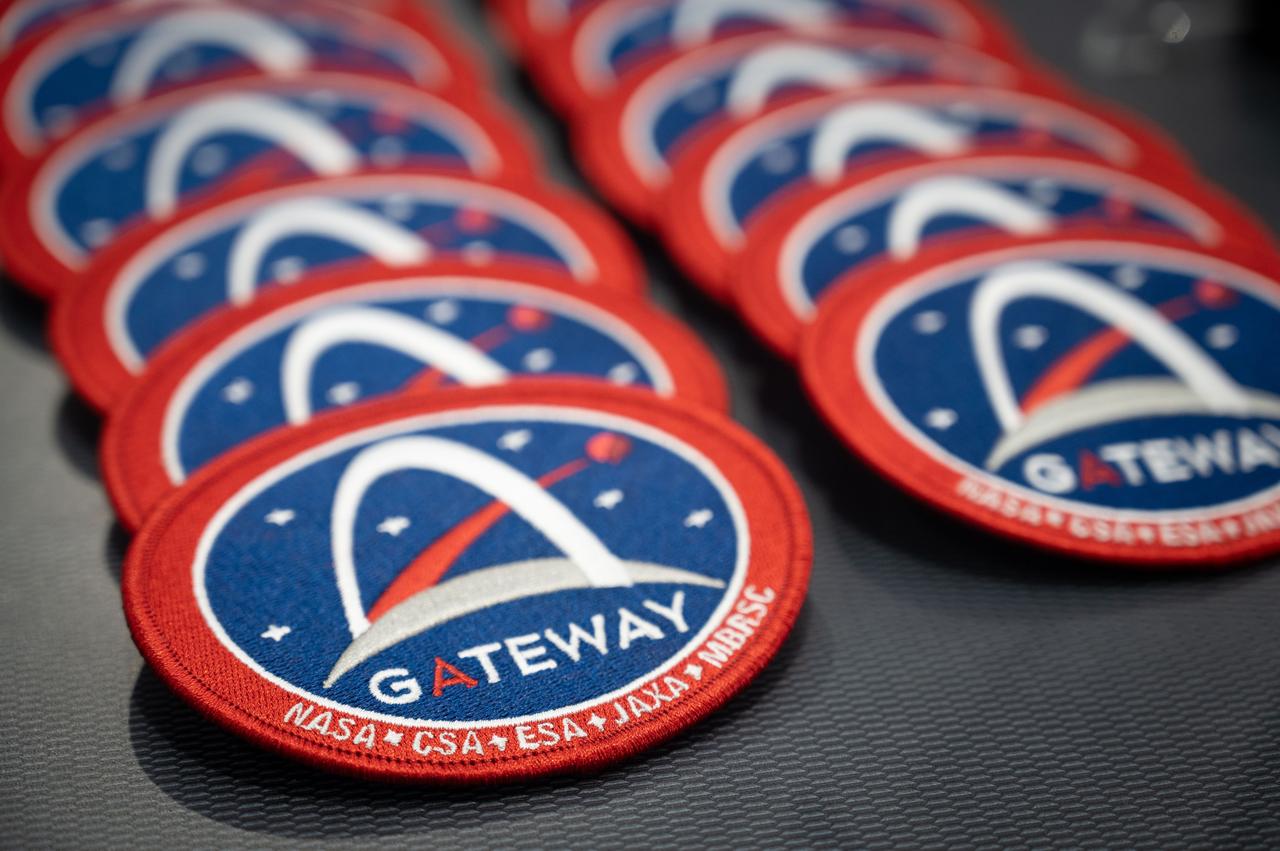
jsc2024e055761 (July 26, 2024) -- A display of Gateway patches at the NASA Pavilion during EAA AirVenture Oshkosh 2024. Gateway highlights at NASA’s exhibition space include a detailed 1:100th scale model of Gateway, a selfie station for Moon photos, and exclusive Gateway stickers, pins, and patches. Photo Credit: NASA/Andrew Carlsen
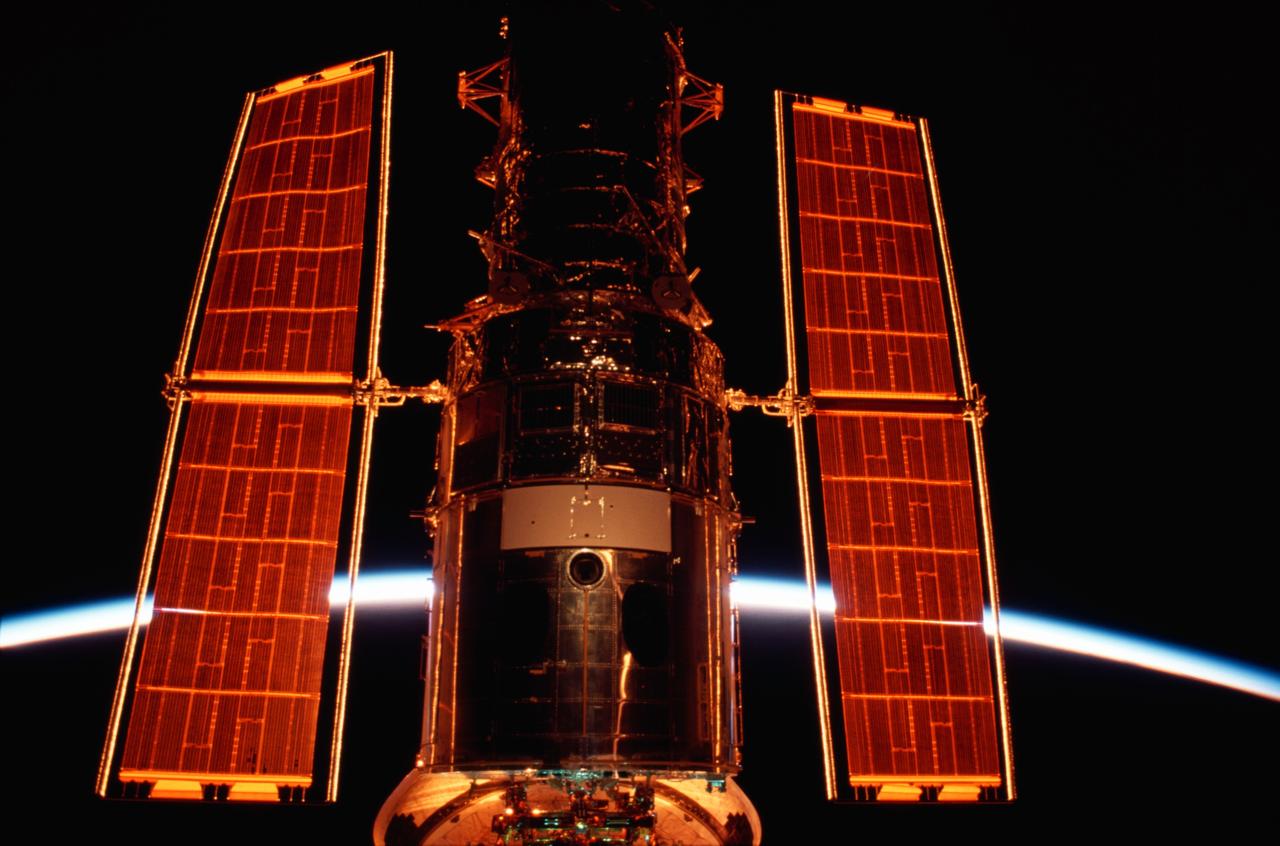
STS109-348-004 (3 March 2002) --- The Hubble Space Telescope (HST), with its normal routine temporarily interrupted, is berthed in the cargo bay of the Space Shuttle Columbia prior to a week of servicing and upgrading by the STS-109 astronaut crew. A thin blue line of airglow pin-points Earth's horizon at sunrise.
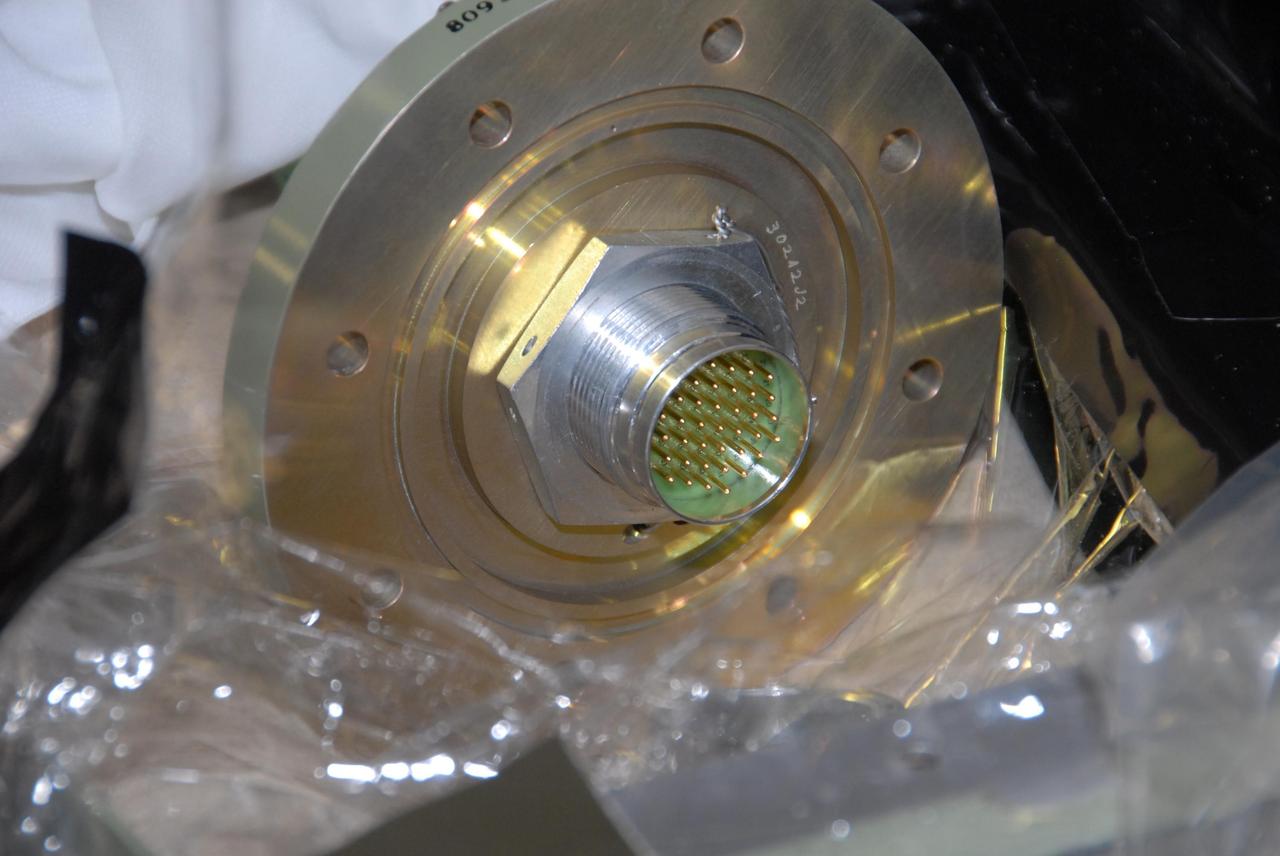
KENNEDY SPACE CENTER, FLA. -- This closeup of the replacement feed-through connector for the engine cutoff, or ECO, sensor system on space shuttle Atlantis shows the pins that were soldered at Kennedy. The feed-through connector passes the wires from the inside of the tank to the outside. Results of a tanking test on Dec. 18 pointed to an open circuit in the feed-through connector wiring, which is located at the base of the tank. The pins in the replacement connector have been precisely soldered to create a connection that allows sensors inside the tank to send signals to the computers onboard Atlantis. The work is being done on Launch Pad 39A. Space shuttle Atlantis is now targeted for launch on Feb. 7. Photo credit: NASA/George Shelton
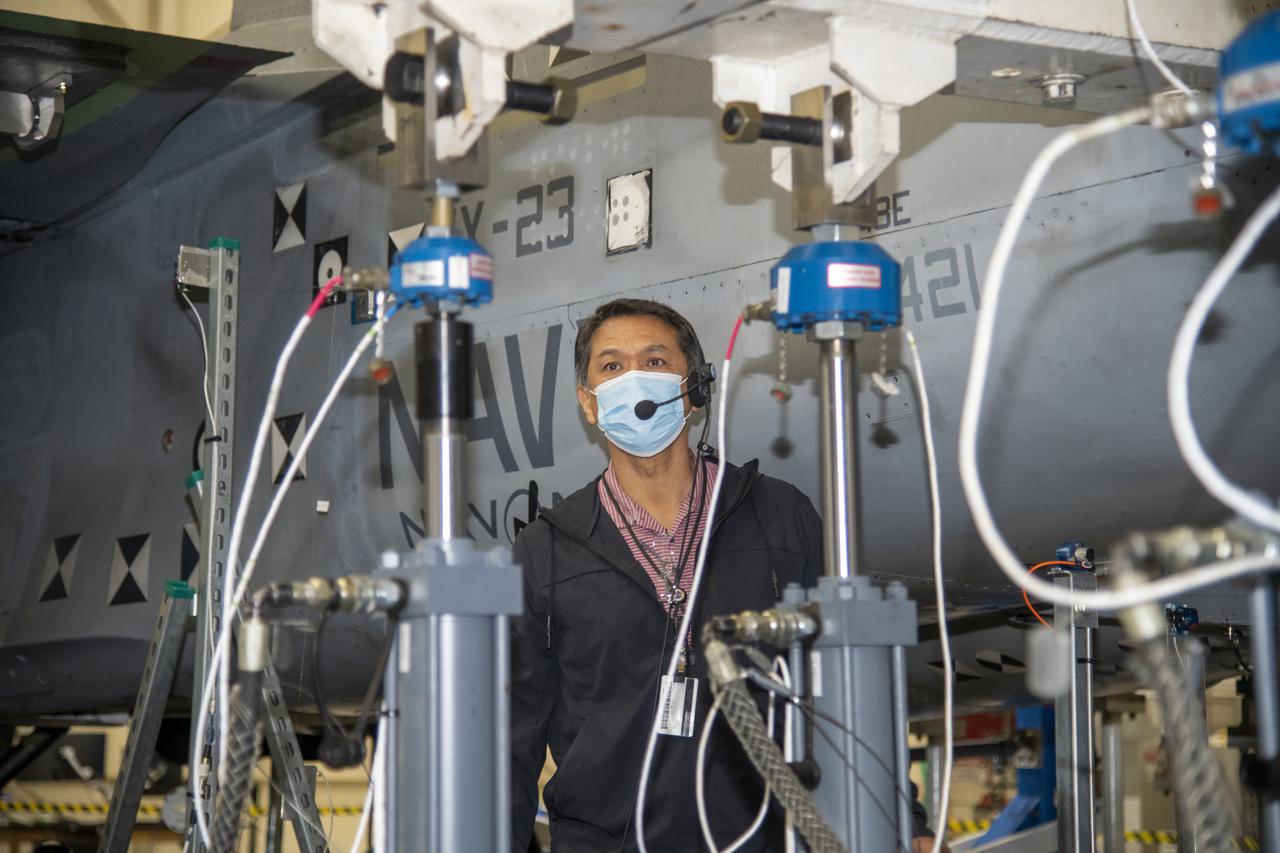
Larry Hudson does an inspection after the actuator on the F/A-18E from the Naval Air Systems Command (NAVAIR) in Patuxent River, Maryland, is pinned to the horizontal tail load test fixture. The aircraft is in NASA’s Armstrong Flight Research Center Flight Loads Laboratory in Edwards, California, for the center’s biggest load calibrations tests. This testing is needed before the aircraft can serve as a test vehicle for determining if it can safely manage maneuvers and proposed upgrades.
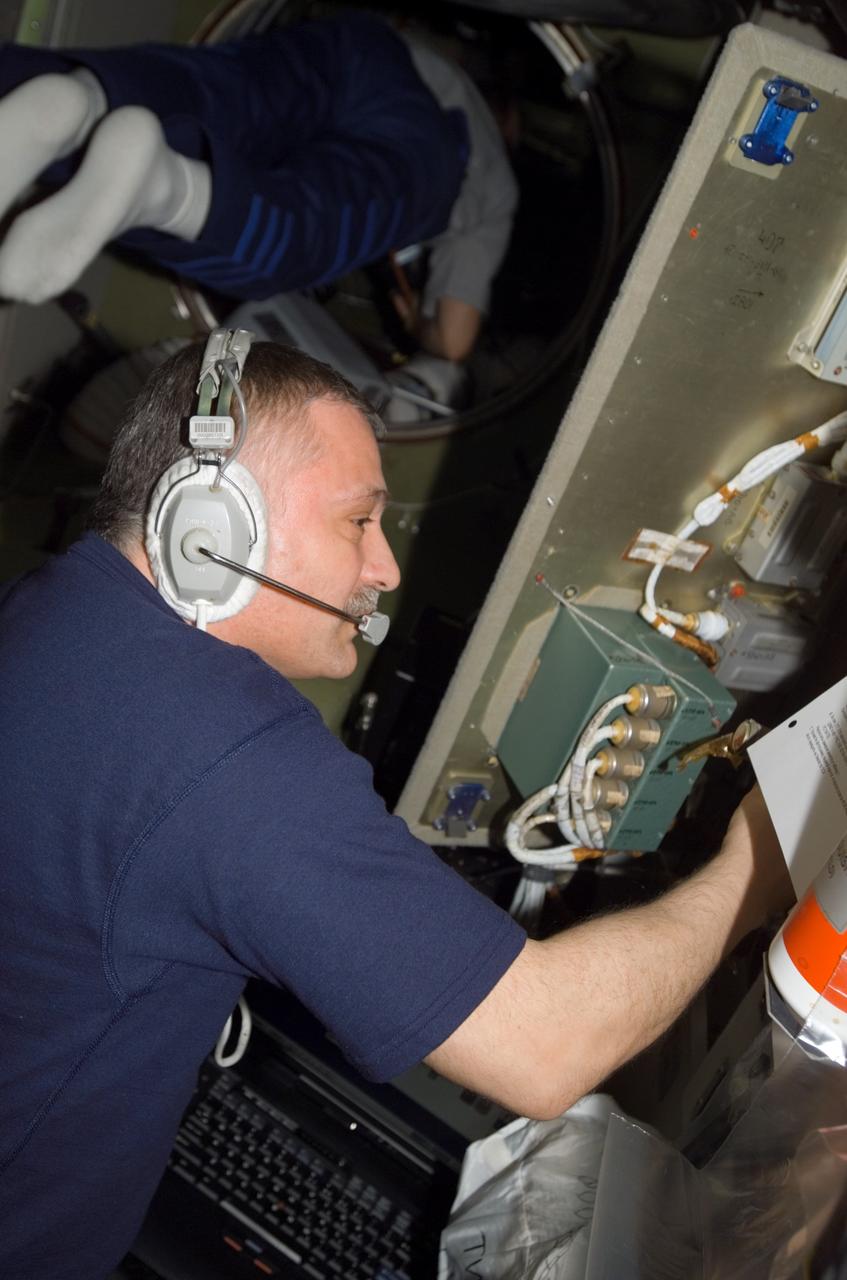
ISS015-E-17726 (6 July 2007) --- Cosmonaut Fyodor N. Yurchikhin, Expedition 15 commander representing Russia's Federal Space Agency, checks measurements of pin resistance on connectors de-mated from a command processing unit in the service module central computer-2 (SMCC-2) control circuit, which is located in the Zvezda Service Module of the International Space Station.
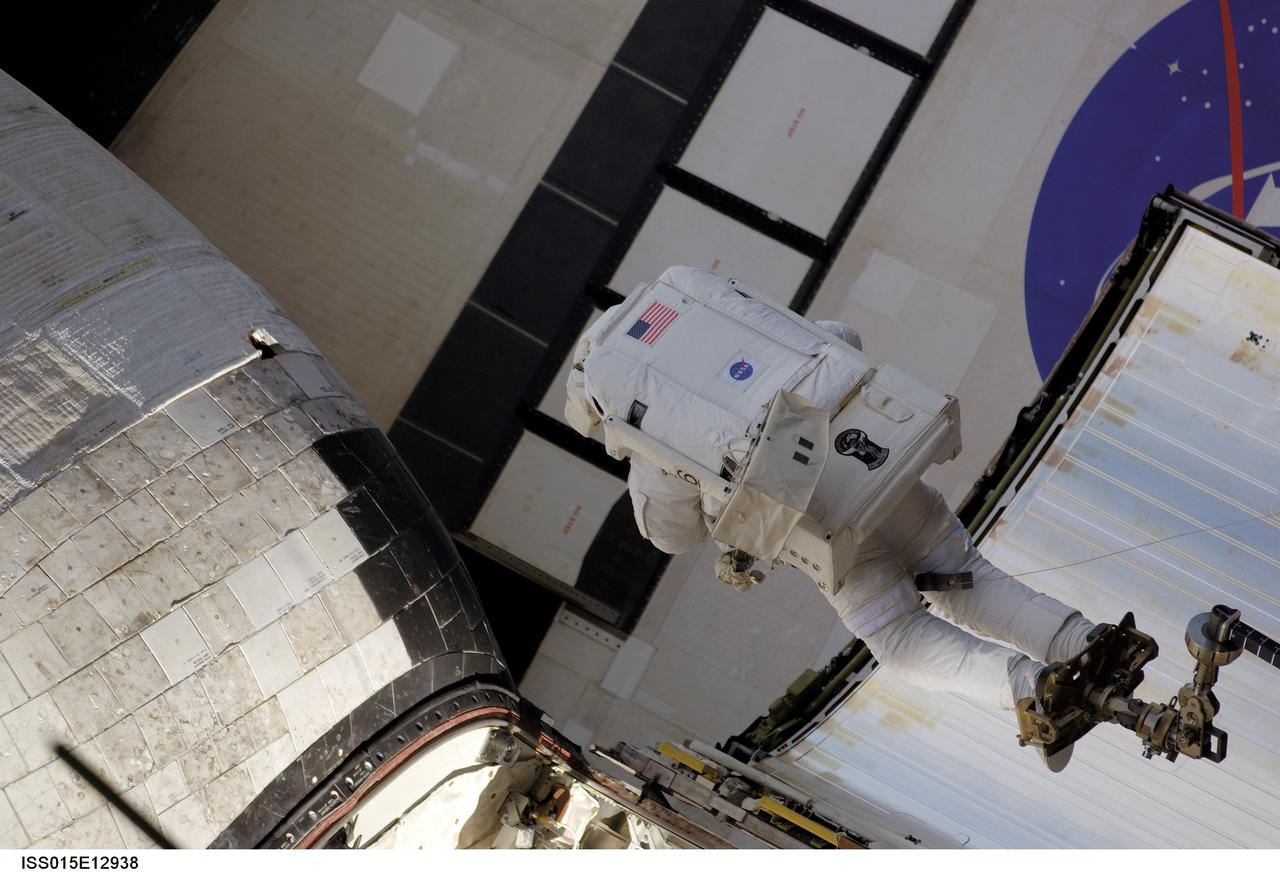
ISS015-E-12938 (15 June 2007) --- Anchored to a foot restraint on Space Shuttle Atlantis' remote manipulator system (RMS) robotic arm, astronaut John "Danny" Olivas, STS-117 mission specialist, moves toward Atlantis' port orbital maneuvering system (OMS) pod that was damaged during the shuttle's climb to orbit. During the repair, Olivas pushed the turned up portion of the thermal blanket back into position, used a medical stapler to secure the layers of the blanket, and pinned it in place against adjacent thermal tile.
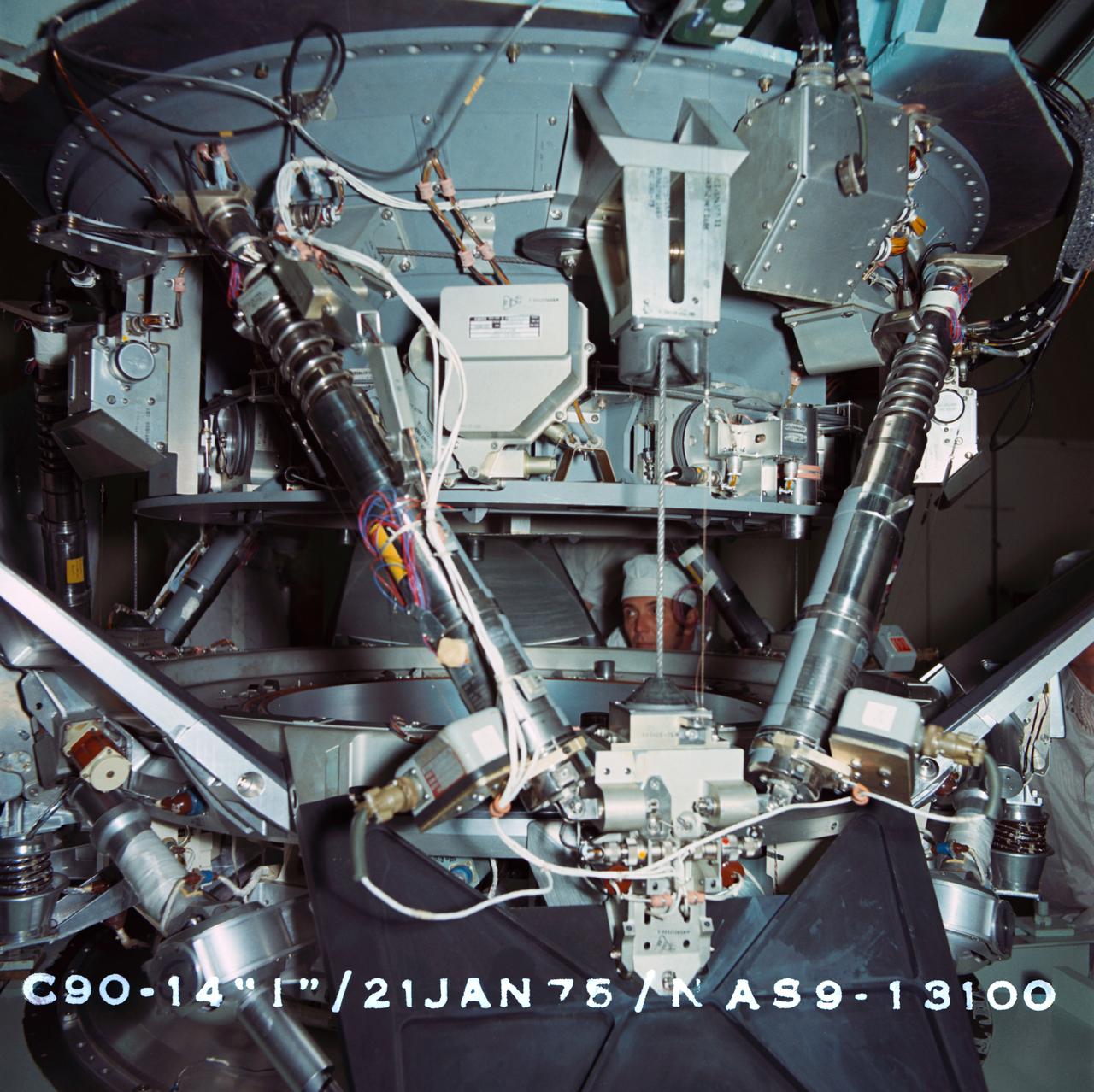
S95-02815 (21 Jan. 1975) --- Soviet junior researcher Y.G. Pobrov observes testing of the Apollo-Soyuz docking system at Rockwell International's plant in Downey, California. The United States' Docking System 3 (DS-3) here is being positioned onto the USSR's CA-4 system during a Pin and Socket Alignment Test. DS-5 has been designated as the prime flight article for the joint U.S.-USSR Apollo-Soyuz Test Project (ASTP) docking mission in Earth orbit, scheduled for July 1975.
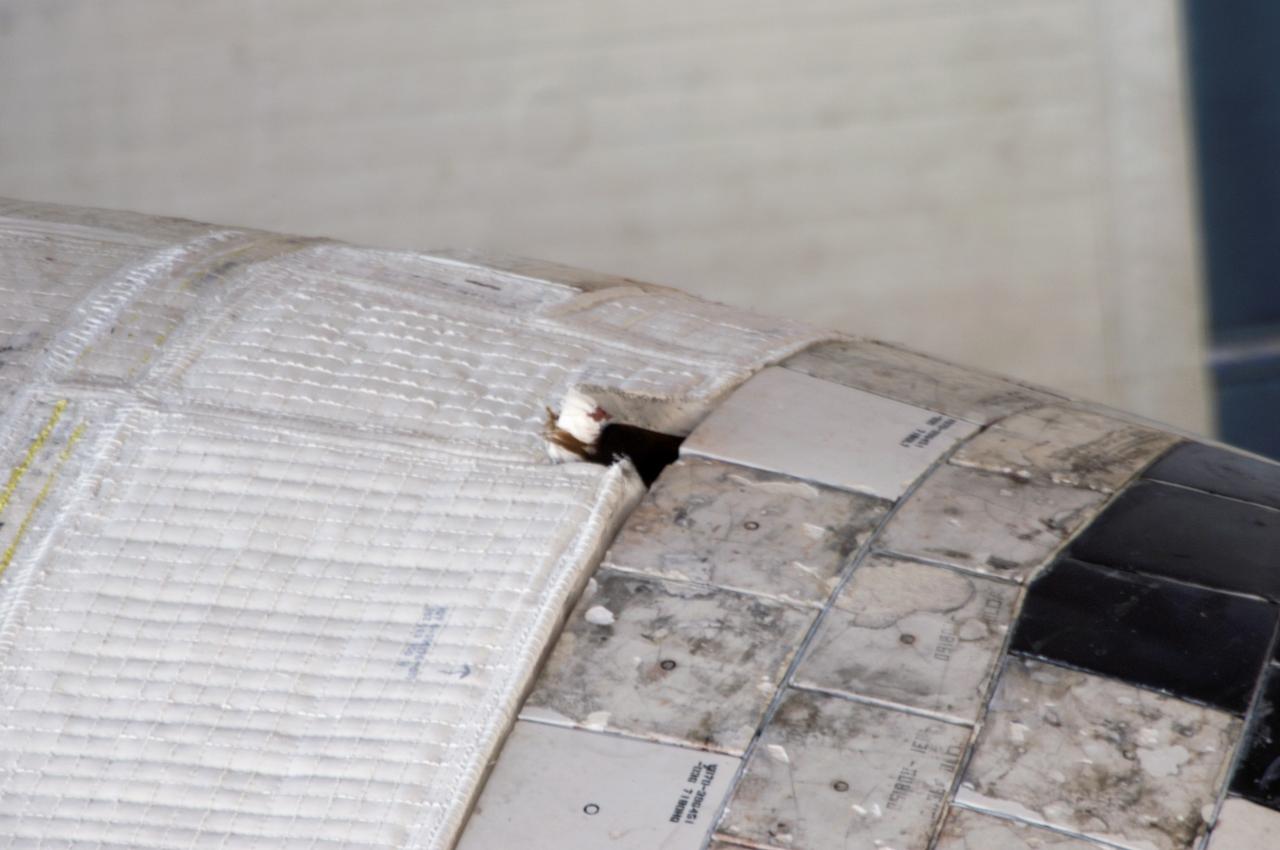
S117-E-08982 (15 June 2007) --- Medium close-up scene of Atlantis' port side orbital maneuvering system pod prior to repair work performed by astronaut John (Danny) Olivas, STS-117 mission specialist (out of frame). Olivas later spent two hours stapling and pinning down this piece of thermal blanket on the pod. The 4-by-6-inch corner of the blanket peeled up during the shuttle's launch last week.
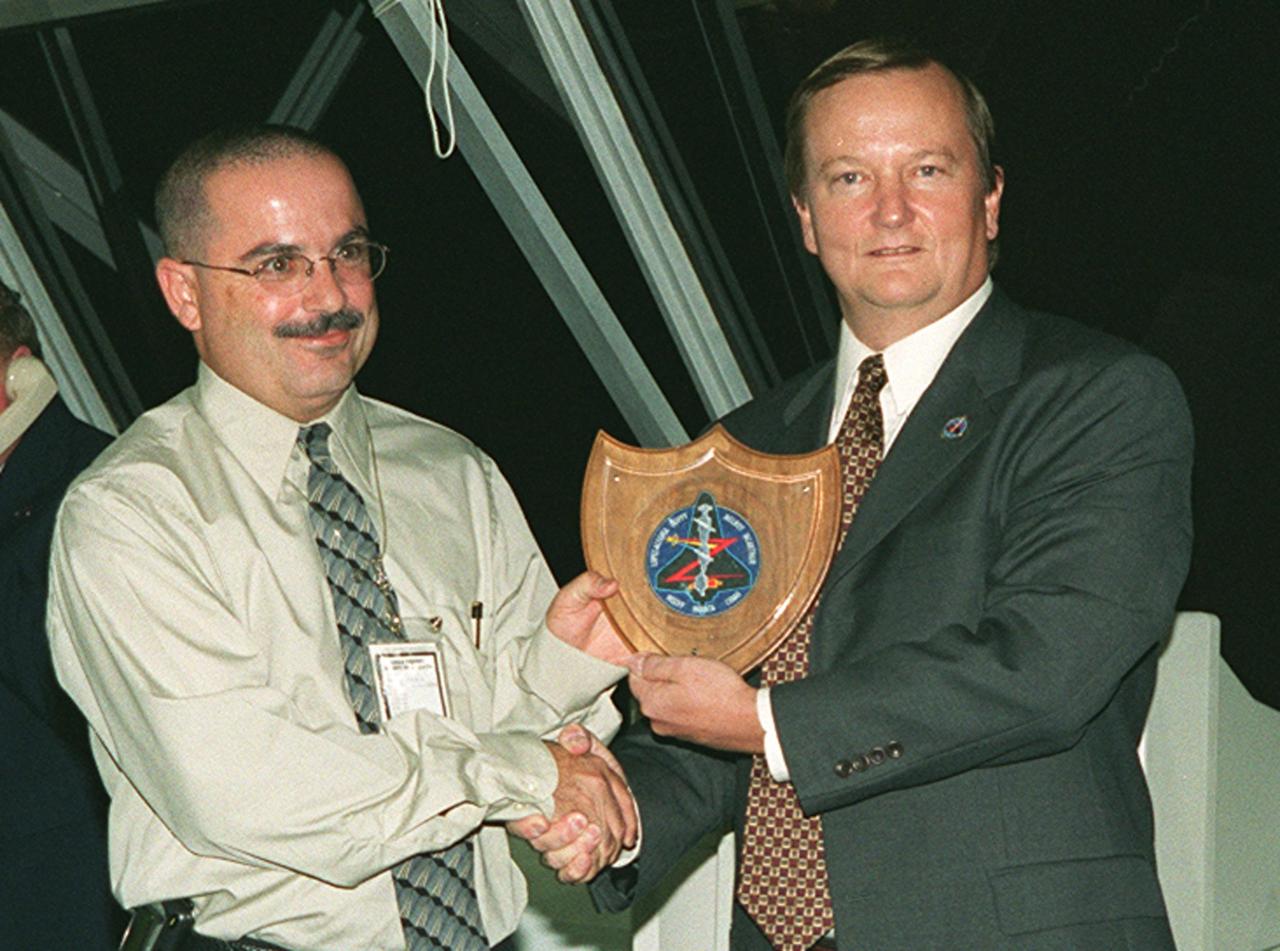
Jorge Rivera (center) receives a plaque and congratulations for his observatory powers from Shuttle Launch Director Mike Leinbach (right). A NASA external tank mechanical engineer, Rivera is the one who spotted the misplaced lock pin on Shuttle Discovery Oct. 10, shortly before the intended launch of mission STS-92, causing a scrub for safety reasons

Dr. David Korsmeyer, associate center director for research and technology at Ames, presents an Ames Research Center pin to President Joe Biden in front of Air Force One at Moffett Federal Airfield, near NASA’s Ames Research Center in California’s Silicon Valley, Thursday, Jan. 19, 2023. President Biden was en route to tour recent storm damage in the state.
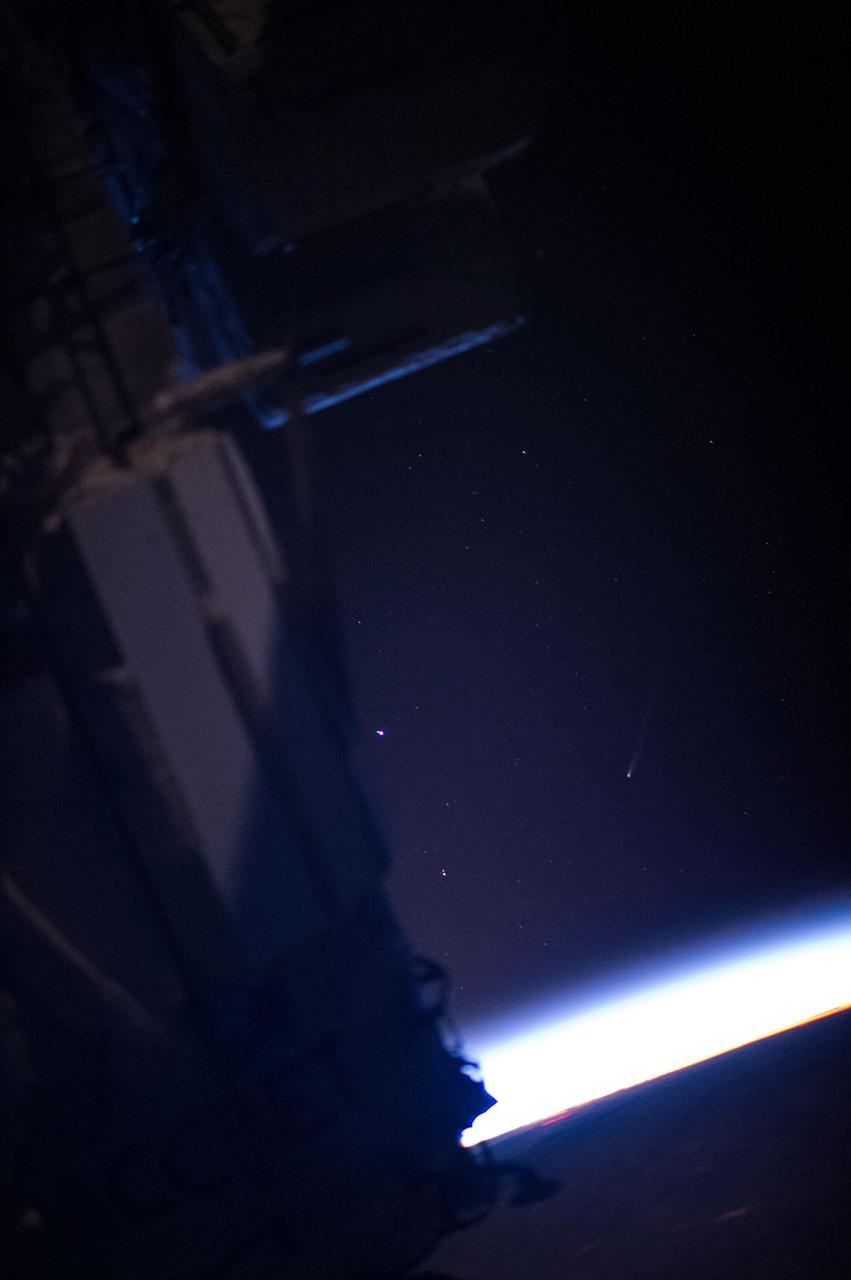
ISS038-E-007980 (23 Nov. 2013) --- A close inspection of this image, photographed by one of the Expedition 38 crew members aboard the International Space Station, reveals a pin-head sized view of an object which is actually the comet ISON, seen just to the right of center and a little below center in the frame. Hardware components of the orbital outpost and Earth's atmosphere above the horizon take up most of the image. Most of the other bright dots in the sky are heavenly bodies. The comet is distinguishable by its tail.
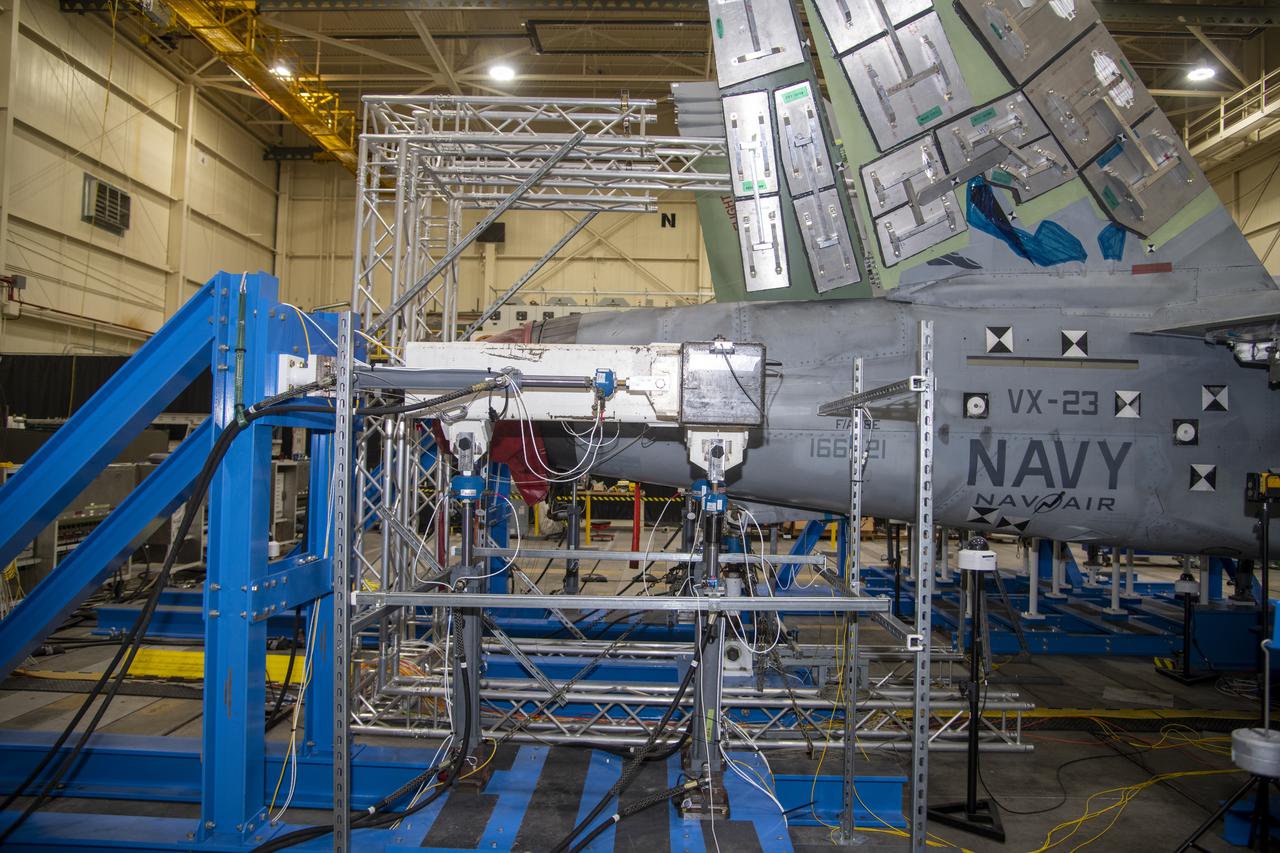
– Hydraulic actuators are pinned to horizontal tail test fixture for testing a F/A-18E from the Naval Air Systems Command (NAVAIR) in Patuxent River, Maryland. The aircraft is in NASA’s Armstrong Flight Research Center Flight Loads Laboratory in Edwards, California, for the center’s biggest load calibrations tests. This testing is needed before the aircraft can serve as a test vehicle for determining if it can safely manage maneuvers and proposed upgrades.
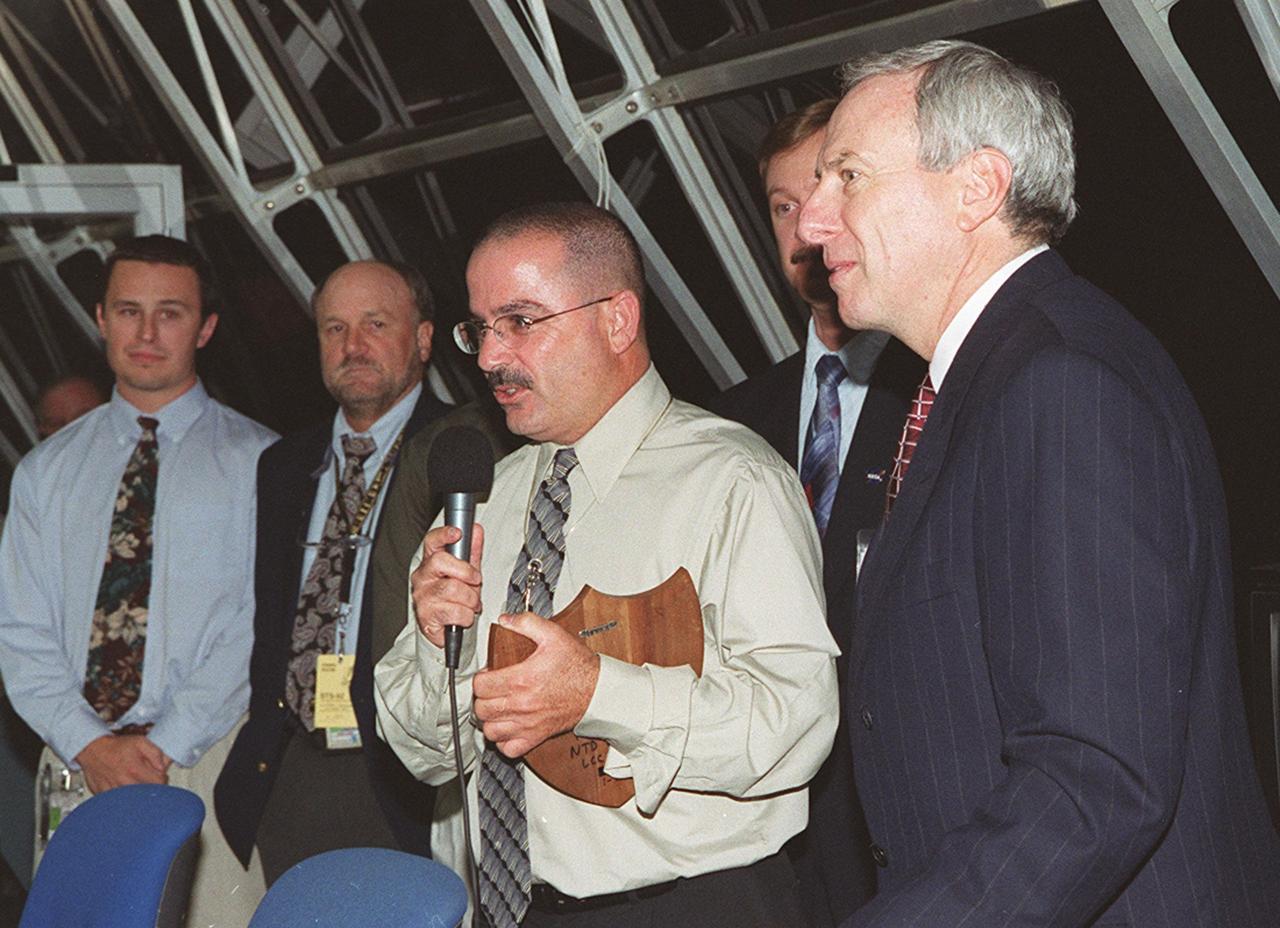
Jorge Rivera (with microphone) shares his thoughts after receiving congratulations for his observatory powers from NASA Administrator Dan Goldin (right). A NASA external tank mechanical engineer, Rivera is the one who spotted the misplaced lock pin on Shuttle Discovery Oct. 10, shortly before the intended launch of mission STS-92, causing a scrub for safety reasons
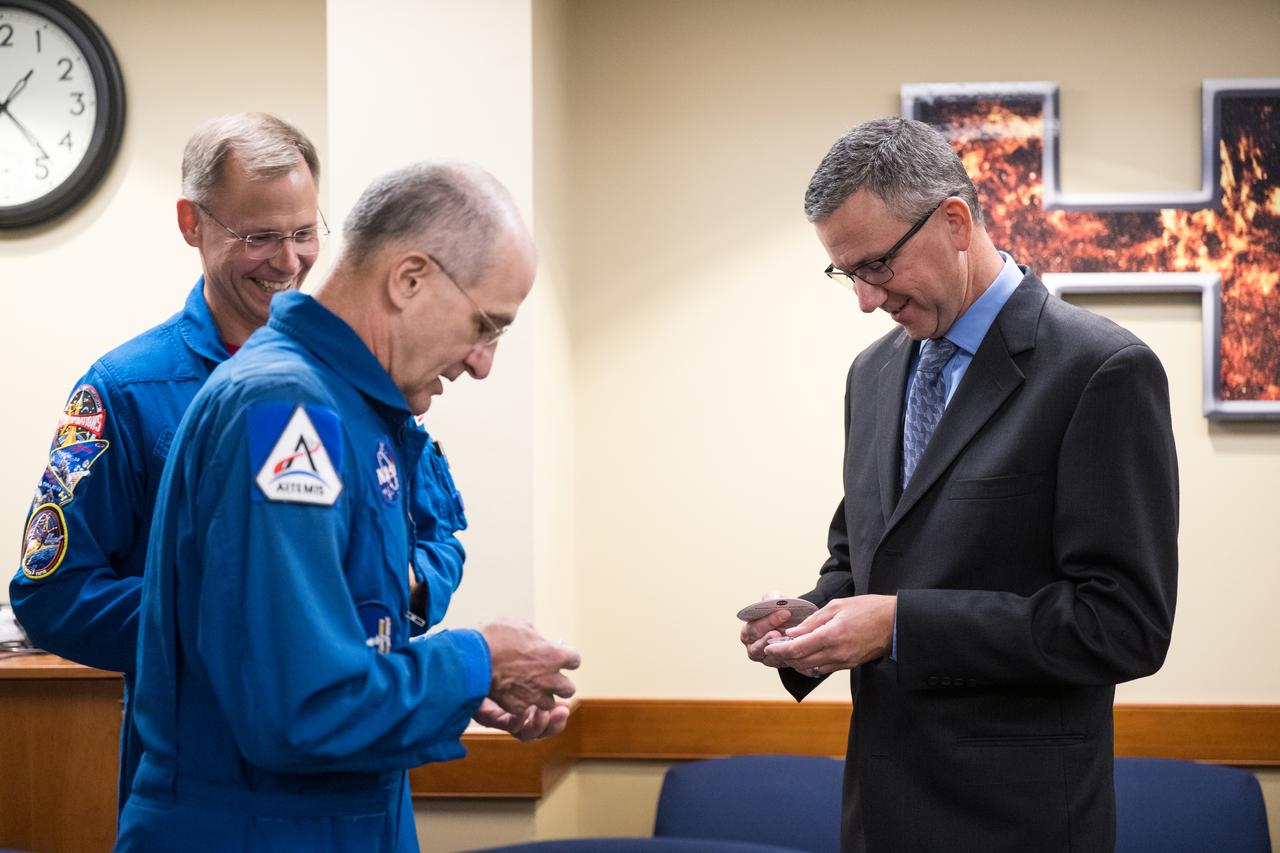
NASA astronauts Nick Hague and Don Pettit give NASA Range Operations Contract Engineer Manager at Wallops Flight Facility, Joseph Jimmerson, stickers and pins from their mission before a Silver Snoopy award presentation, Wednesday, Sept. 17, 2025, at NASA’s Goddard Space Flight Center in Greenbelt, Md. Pettit and Hague served as part of Expedition 72 onboard the International Space Station. Photo Credit: (NASA/Aubrey Gemignani)
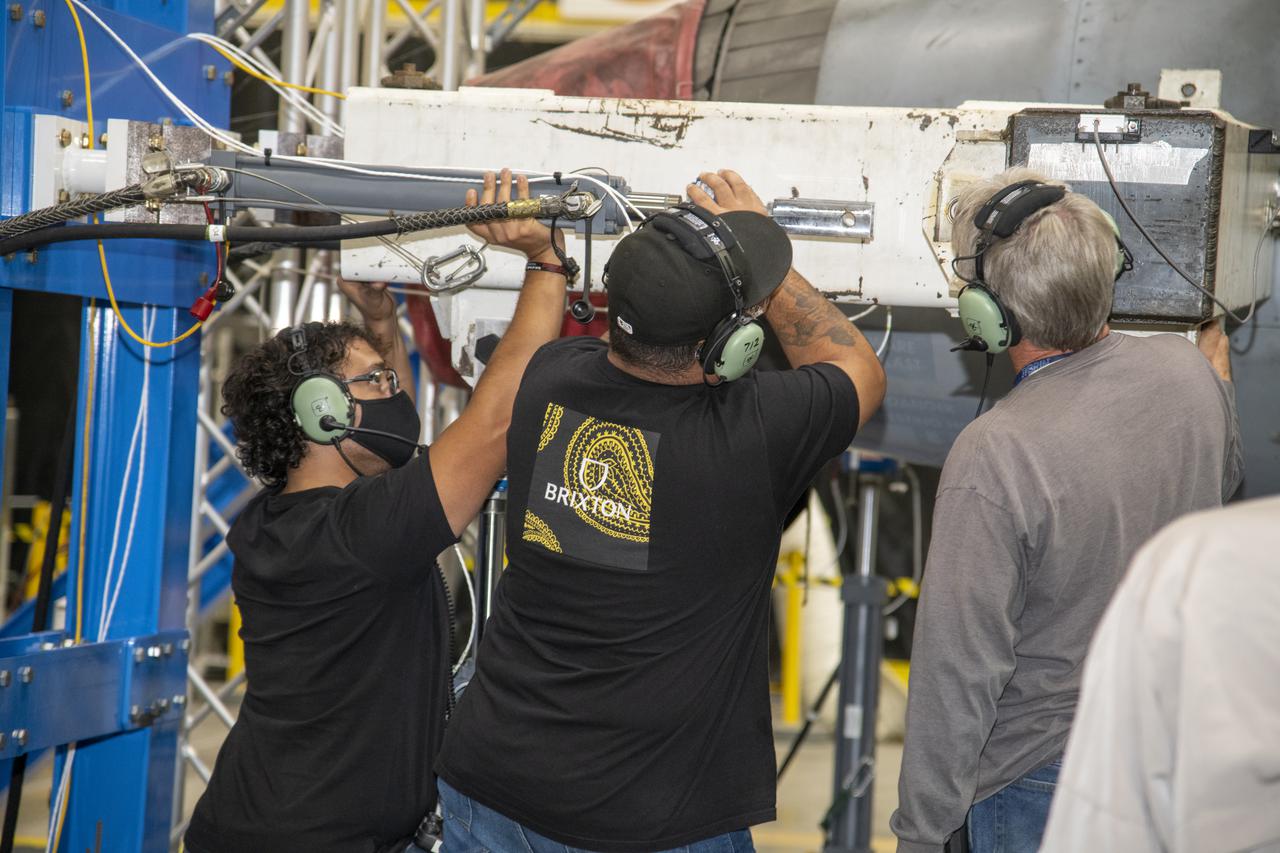
The actuator on the F/A-18E from the Naval Air Systems Command (NAVAIR) in Patuxent River, Maryland, is positioned for pinning to the horizontal tail load test fixture. The aircraft is in NASA’s Armstrong Flight Research Center Flight Loads Laboratory in Edwards, California, for the center’s biggest load calibrations tests. This testing is needed before the aircraft can serve as a test vehicle for determining if it can safely manage maneuvers and proposed upgrades.
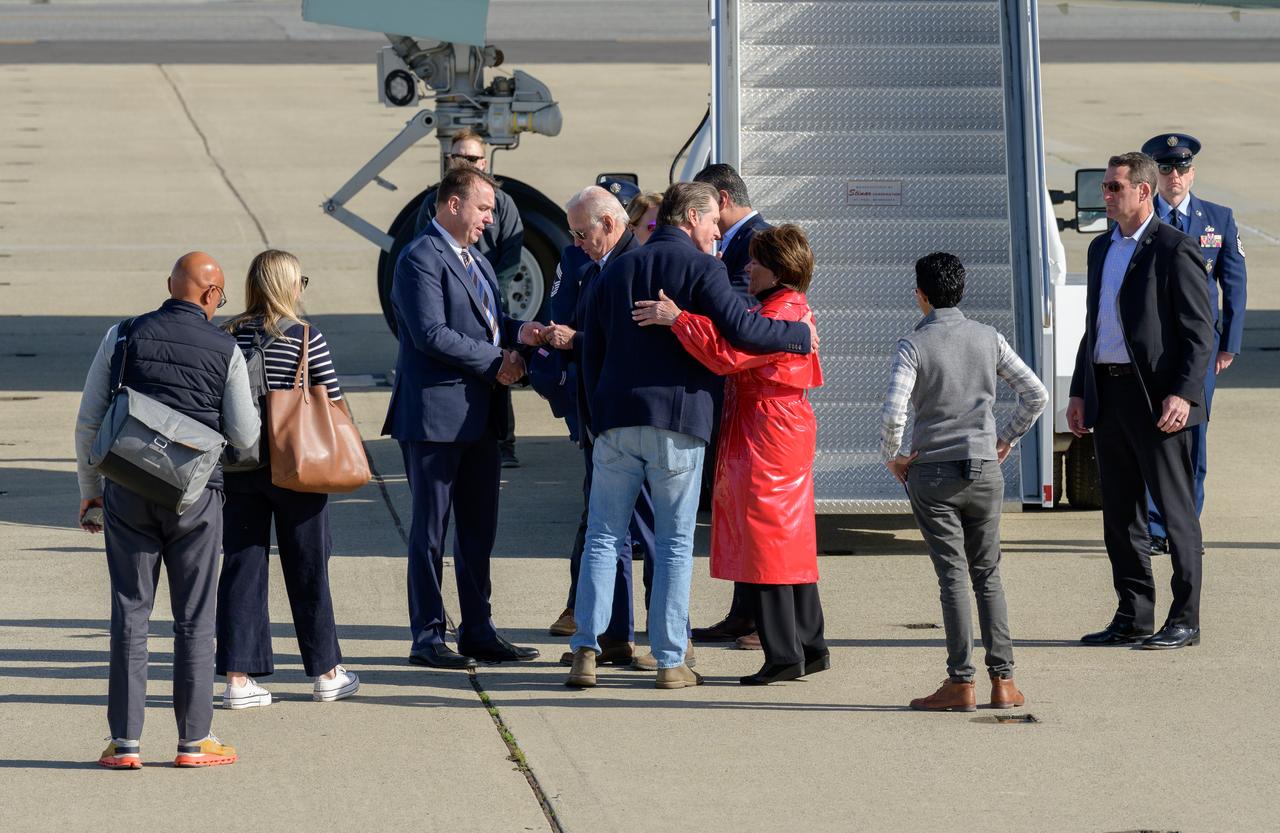
Dr. David Korsmeyer, associate center director for research and technology at Ames, presents an Ames Research Center pin to President Joe Biden in front of Air Force One at Moffett Federal Airfield, near NASA’s Ames Research Center in California’s Silicon Valley, Thursday, Jan. 19, 2023. President Biden was en route to tour recent storm damage in the state.
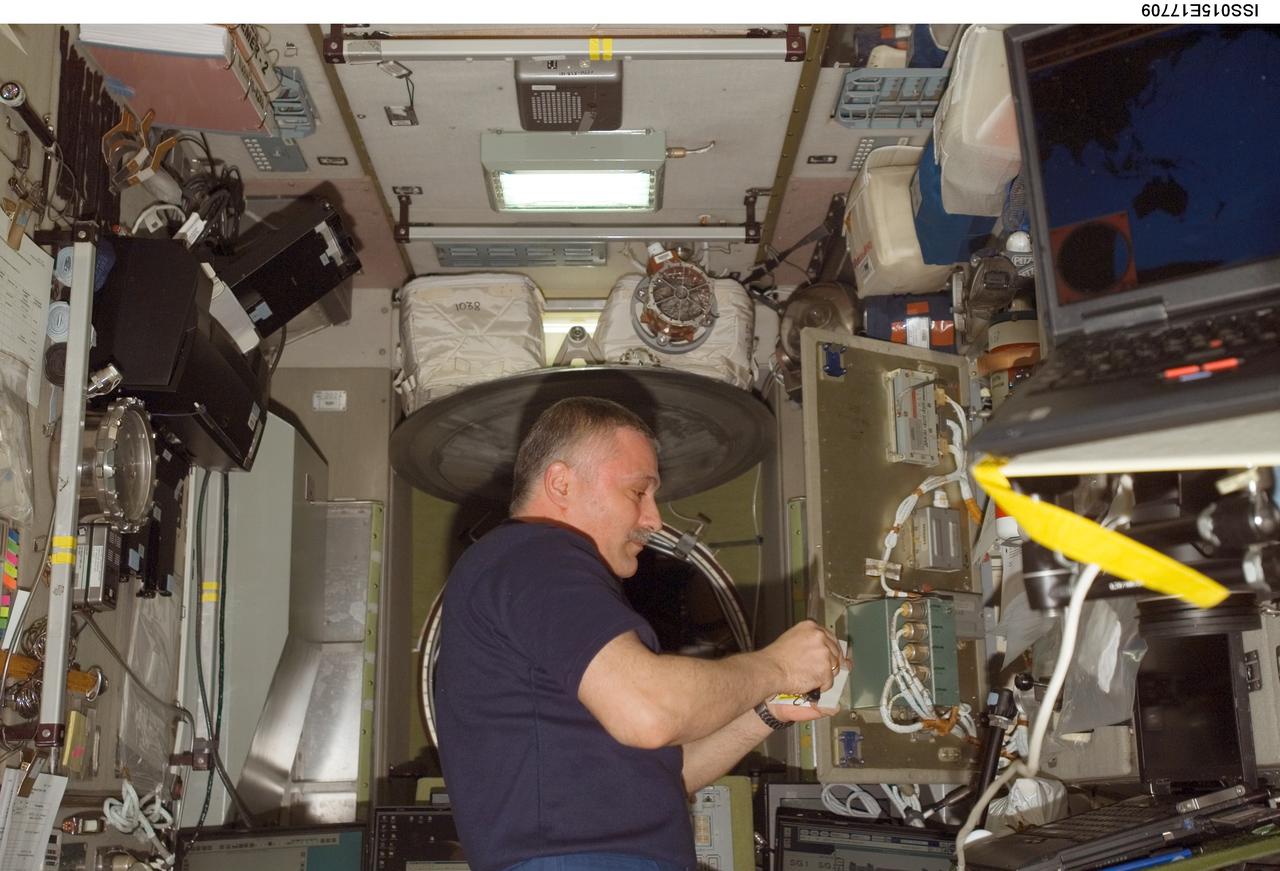
ISS015-E-17709 (6 July 2007) --- Cosmonaut Fyodor N. Yurchikhin, Expedition 15 commander representing Russia's Federal Space Agency, checks measurements of pin resistance on connectors de-mated from a command processing unit in the service module central computer-2 (SMCC-2) control circuit, which is located in the Zvezda Service Module of the International Space Station.
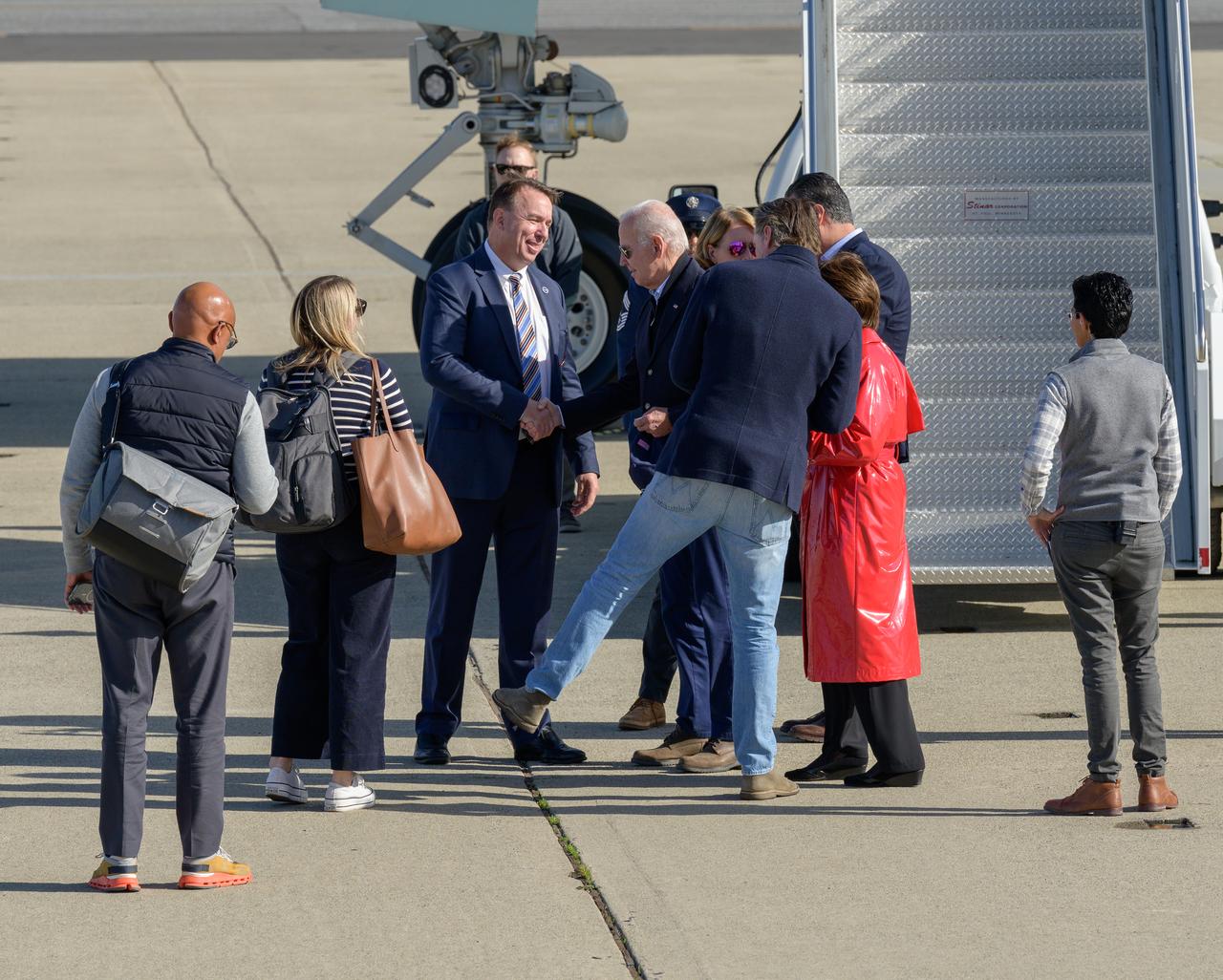
Dr. David Korsmeyer, associate center director for research and technology at Ames, presents an Ames Research Center pin to President Joe Biden in front of Air Force One at Moffett Federal Airfield, near NASA’s Ames Research Center in California’s Silicon Valley, Thursday, Jan. 19, 2023. President Biden was en route to tour recent storm damage in the state.
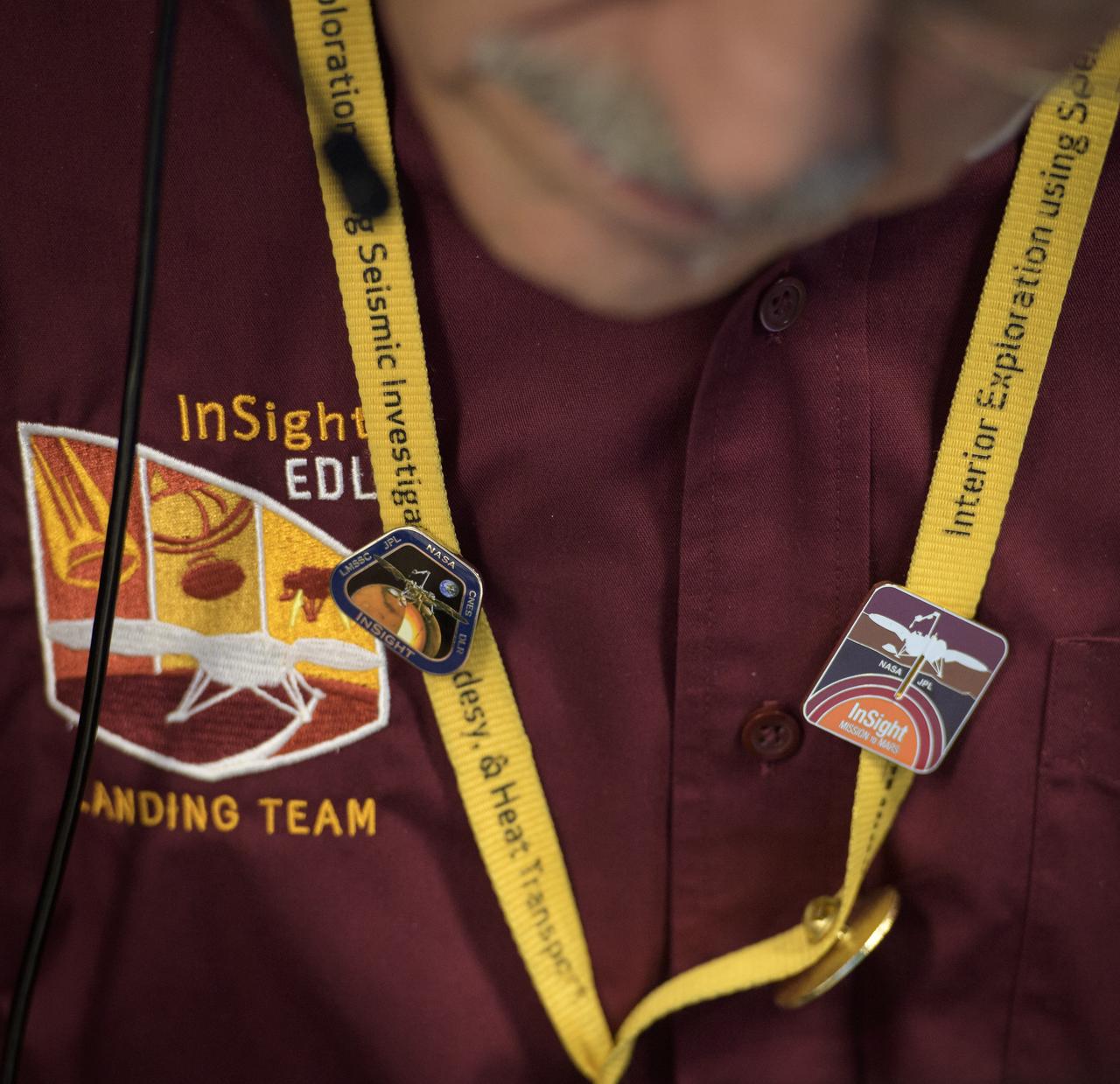
Shirt, lanyard, and mission pins are seen on a Mars InSight team member as they monitor the status of the lander prior to it touching down on Mars, Monday, Nov. 26, 2018 inside the Mission Support Area at NASA's Jet Propulsion Laboratory in Pasadena, California. InSight, short for Interior Exploration using Seismic Investigations, Geodesy and Heat Transport, is a Mars lander designed to study the "inner space" of Mars: its crust, mantle, and core. Photo Credit: (NASA/Bill Ingalls)
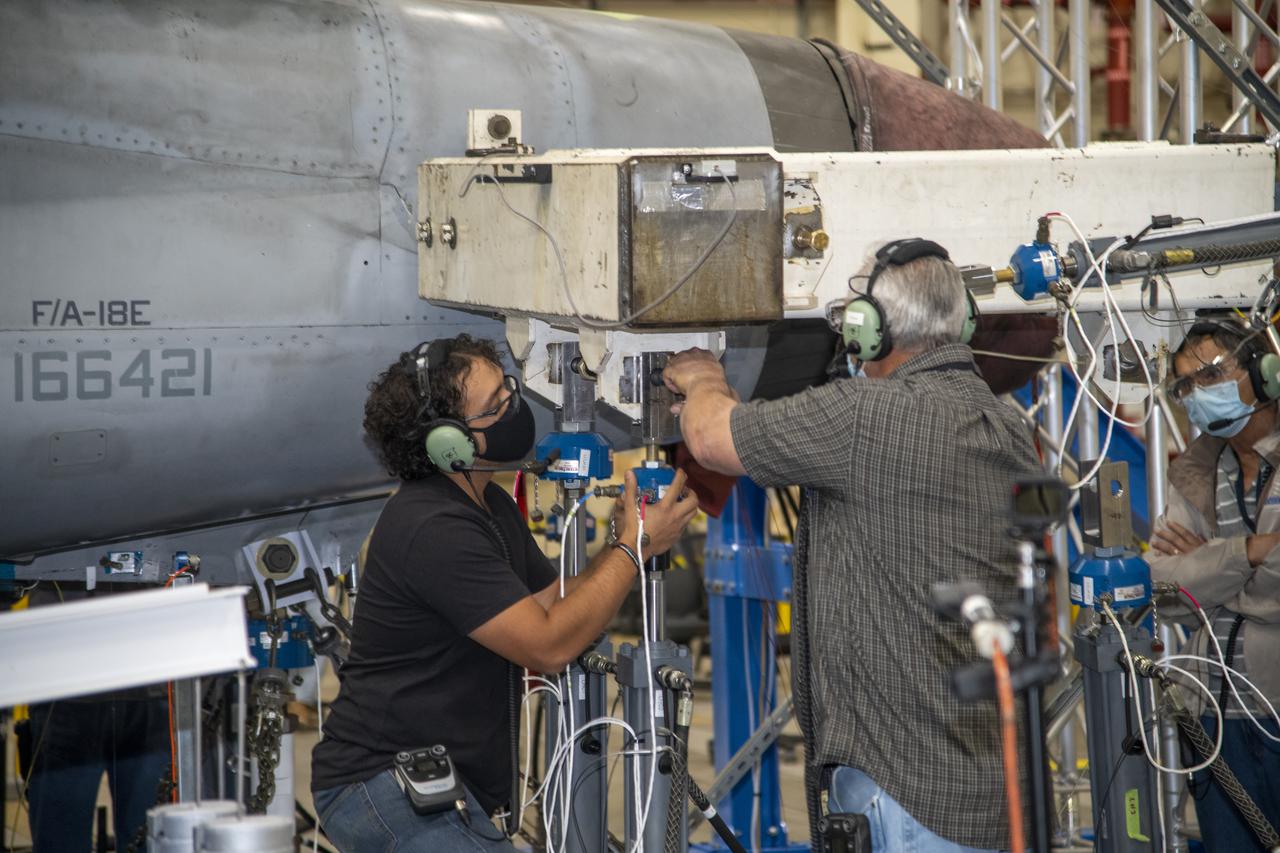
The actuator on the F/A-18E from the Naval Air Systems Command (NAVAIR) in Patuxent River, Maryland, is pinned to the horizontal tail load test fixture. The aircraft is in NASA’s Armstrong Flight Research Center Flight Loads Laboratory in Edwards, California, for the center’s biggest load calibrations tests. This testing is needed before the aircraft can serve as a test vehicle for determining if it can safely manage maneuvers and proposed upgrades.
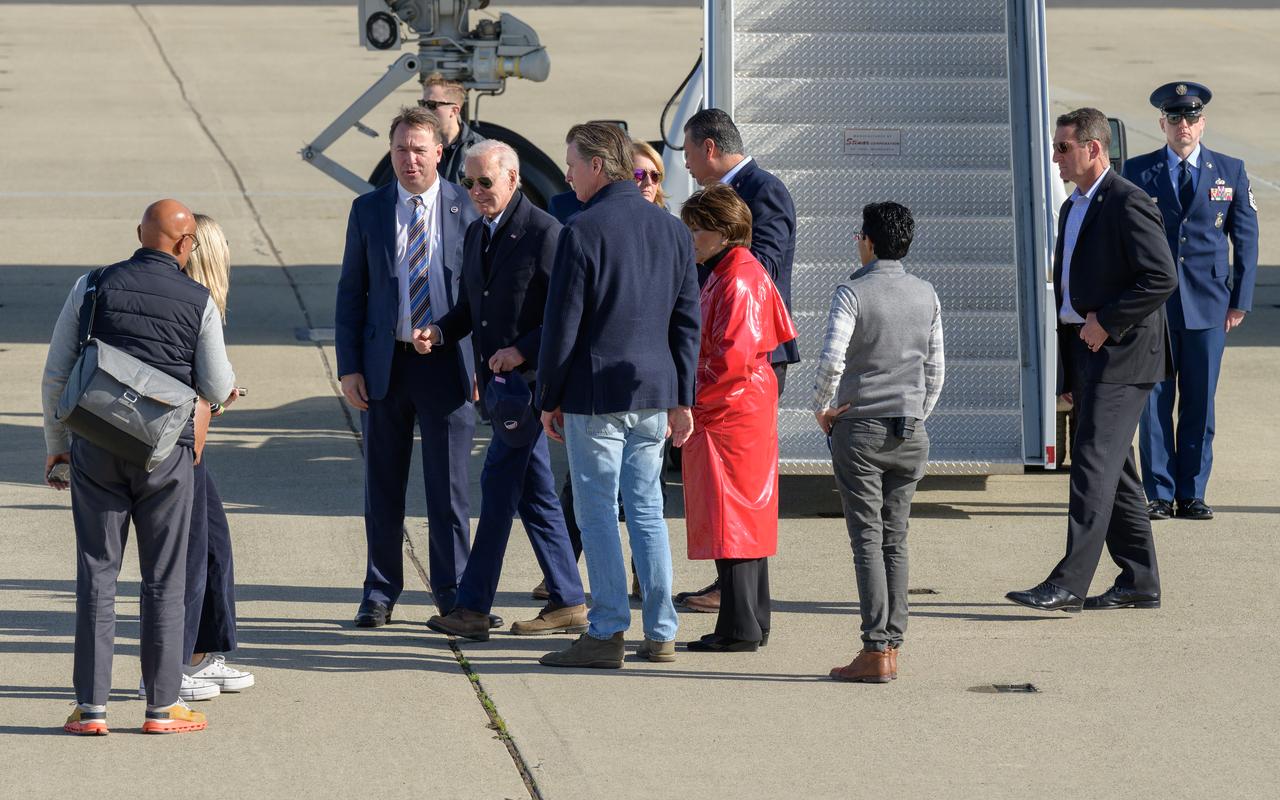
Dr. David Korsmeyer, associate center director for research and technology at Ames, presents an Ames Research Center pin to President Joe Biden in front of Air Force One at Moffett Federal Airfield, near NASA’s Ames Research Center in California’s Silicon Valley, Thursday, Jan. 19, 2023. President Biden was en route to tour recent storm damage in the state.
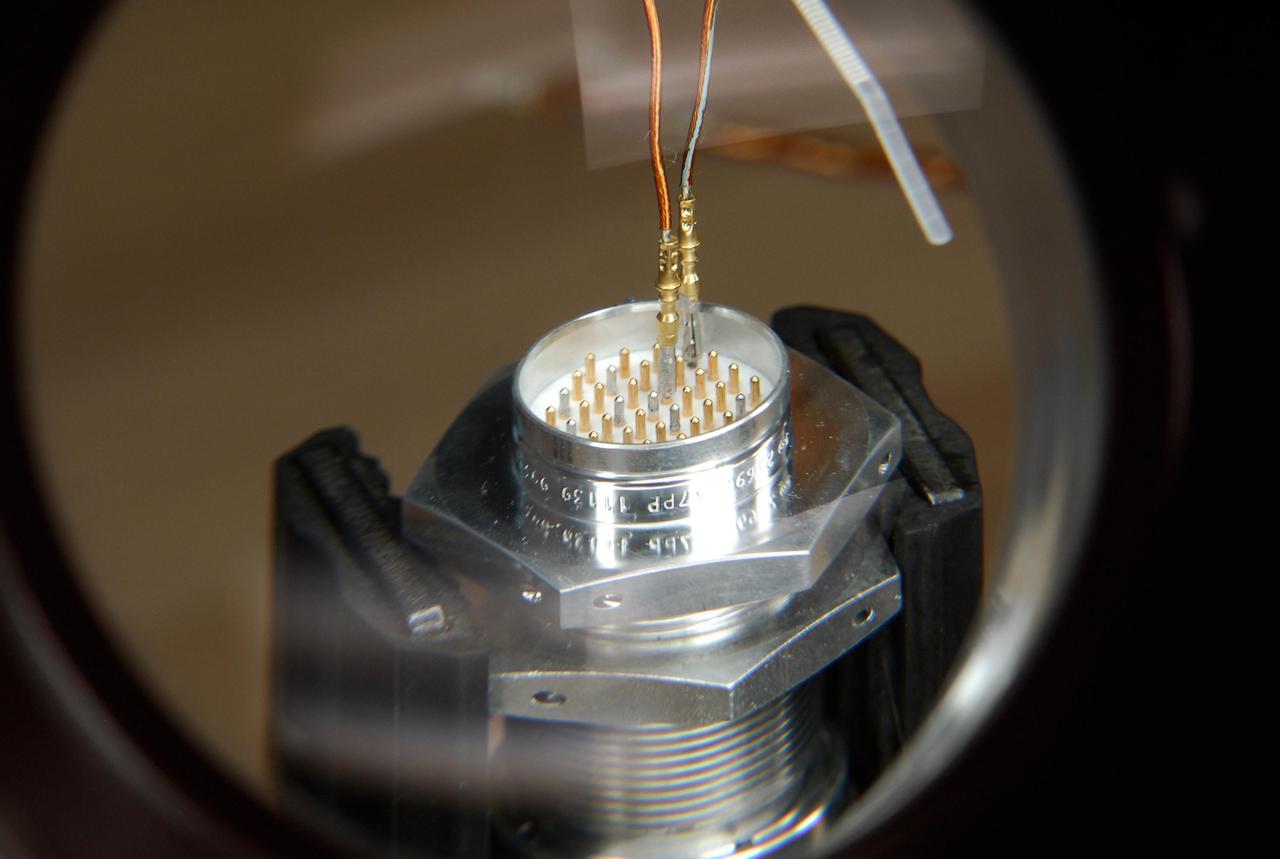
KENNEDY SPACE CENTER, FLA. -- At a lab at NASA's Kennedy Space Center, the first two of nine pins have been soldered to the socket of the replacement feed-through connector that will be installed in the external fuel tank for space shuttle Atlantis' STS-122 mission. Two United Launch Alliance technicians, who performed this exacting task on the Centaur upper stage for Atlas and Titan launches in 1994, will be doing the soldering. Soldering the connector pins and sockets together addresses the most likely cause of a problem in the engine cutoff sensor system, or ECO system. Some of the tank's ECO sensors failed during propellant tanking for launch attempts on Dec. 6 and Dec. 9. Results of a tanking test on Dec. 18 pointed to an open circuit in the feed-through connector wiring, which is located at the base of the tank. The feed-through connector passes the wires from the inside of the tank to the outside. After the soldering is completed and the connector is reinstalled, shuttle program managers will decide on how to proceed. The launch date for mission STS-122 is under review. Photo credit: NASA/Kim Shiflett
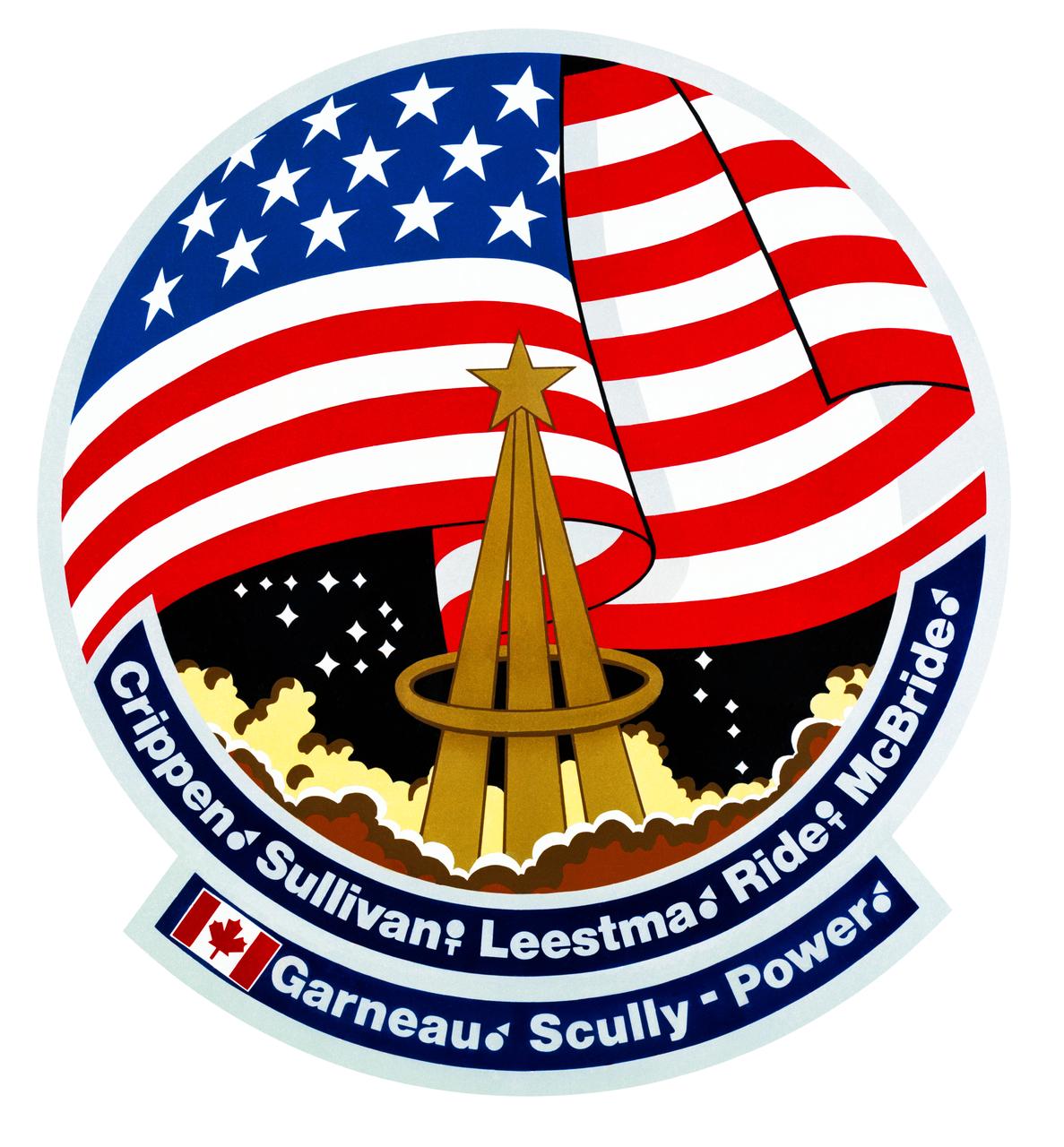
S84-36158 (June 1984) --- The STS-41G Challenger mission insignia focuses on its seven crew members (first to exceed six), the United States flag and the Unity symbol known as the astronaut pin. The pin design in center shows a trio of trajectories merging in infinite space, capped by a bright shining star and encircled by an elliptical wreath denoting orbital flight. Crew members for the (originally-scheduled 17th STS) mission include astronauts Robert L. Crippen and Jon A. McBride, commander and pilot, respectively, whose surnames flank those of the NASA mission specialists - astronauts Kathryn D. Sullivan, David C. Leestma and Sally K. Ride. Paul Scully-Power, a United States Navy oceanographer, and Marc Garneau, a Canadian, join the crew as payload specialists. The artwork was done for NASA by Patrick Rawlings. The NASA insignia design for space shuttle flights is reserved for use by the astronauts and for other official use as the NASA Administrator may authorize. Public availability has been approved only in the forms of illustrations by the various news media. When and if there is any change in this policy, which is not anticipated, the change will be publicly announced. Photo credit: NASA
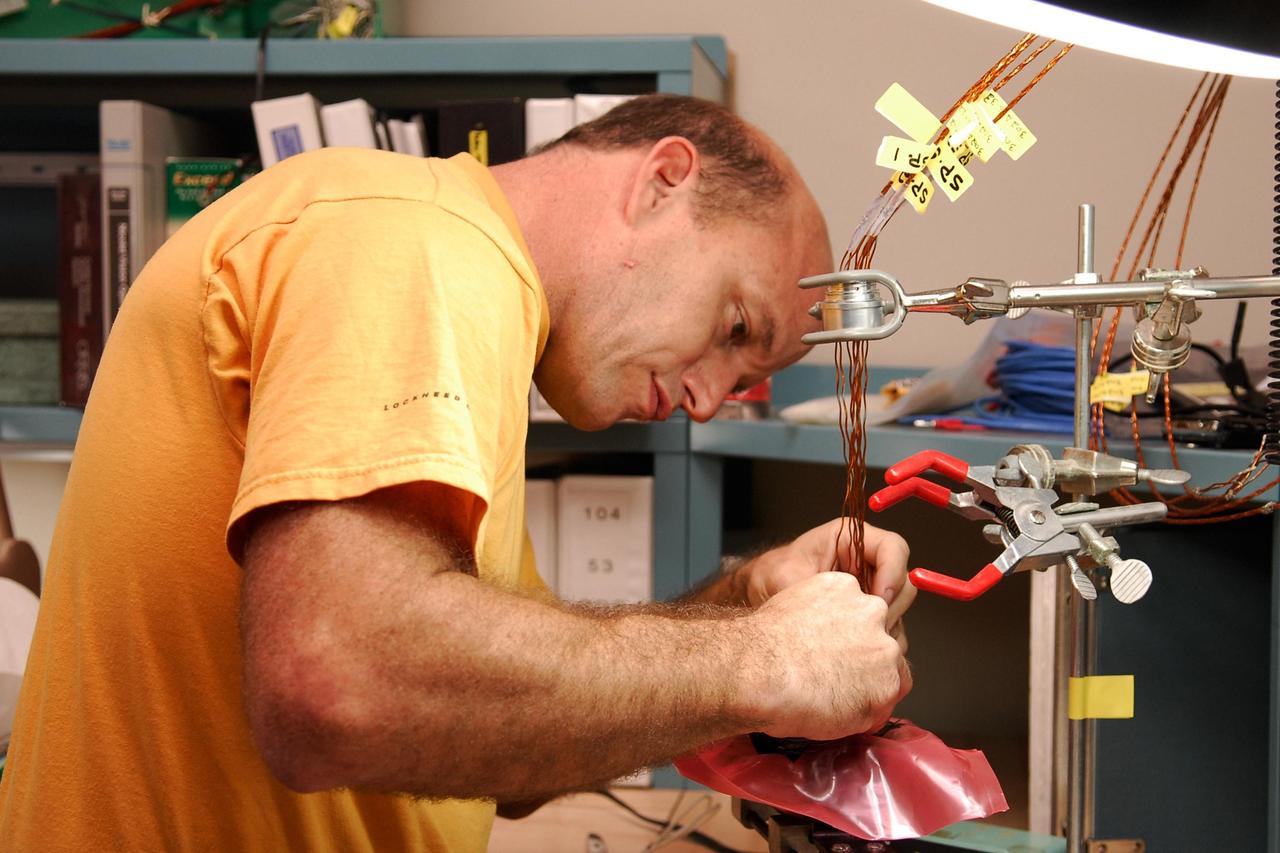
KENNEDY SPACE CENTER, FLA. -- At a lab at NASA's Kennedy Space Center, Kevin Wyckoff, an aerospace technician with the United Launch Alliance, inserts an electrical wiring harness into a replacement feed-through connector during preparations to solder the pins to the socket of the connector. The connector will later be installed in the external fuel tank for space shuttle Atlantis' STS-122 mission. The technician performed this exacting task on the Centaur upper stage for Atlas and Titan launches in 1994 and was specifically chosen for the task. Soldering the connector pins and sockets together addresses the most likely cause of a problem in the engine cutoff sensor system, or ECO system. Some of the tank's ECO sensors failed during propellant tanking for launch attempts on Dec. 6 and Dec. 9. Results of a tanking test on Dec. 18 pointed to an open circuit in the feed-through connector wiring, which is located at the base of the tank. The feed-through connector passes the wires from the inside of the tank to the outside. After the soldering is completed and the connector is reinstalled, shuttle program managers will decide on how to proceed. The launch date for mission STS-122 is under review. Photo credit: NASA/Kim Shiflett
KENNEDY SPACE CENTER, FLA. -- At a lab at NASA's Kennedy Space Center, Bob Arp, an aerospace technician with the United Launch Alliance, examinies the pins remaining to be soldered to the socket of the replacement feed-through connector that will be installed in the external fuel tank for space shuttle Atlantis' STS-122 mission. The technician performed this exacting task on the Centaur upper stage for Atlas and Titan launches in 1994 and was specifically chosen for the task. Soldering the connector pins and sockets together addresses the most likely cause of a problem in the engine cutoff sensor system, or ECO system. Some of the tank's ECO sensors failed during propellant tanking for launch attempts on Dec. 6 and Dec. 9. Results of a tanking test on Dec. 18 pointed to an open circuit in the feed-through connector wiring, which is located at the base of the tank. The feed-through connector passes the wires from the inside of the tank to the outside. After the soldering is completed and the connector is reinstalled, shuttle program managers will decide on how to proceed. The launch date for mission STS-122 is under review. Photo credit: NASA/Kim Shiflett
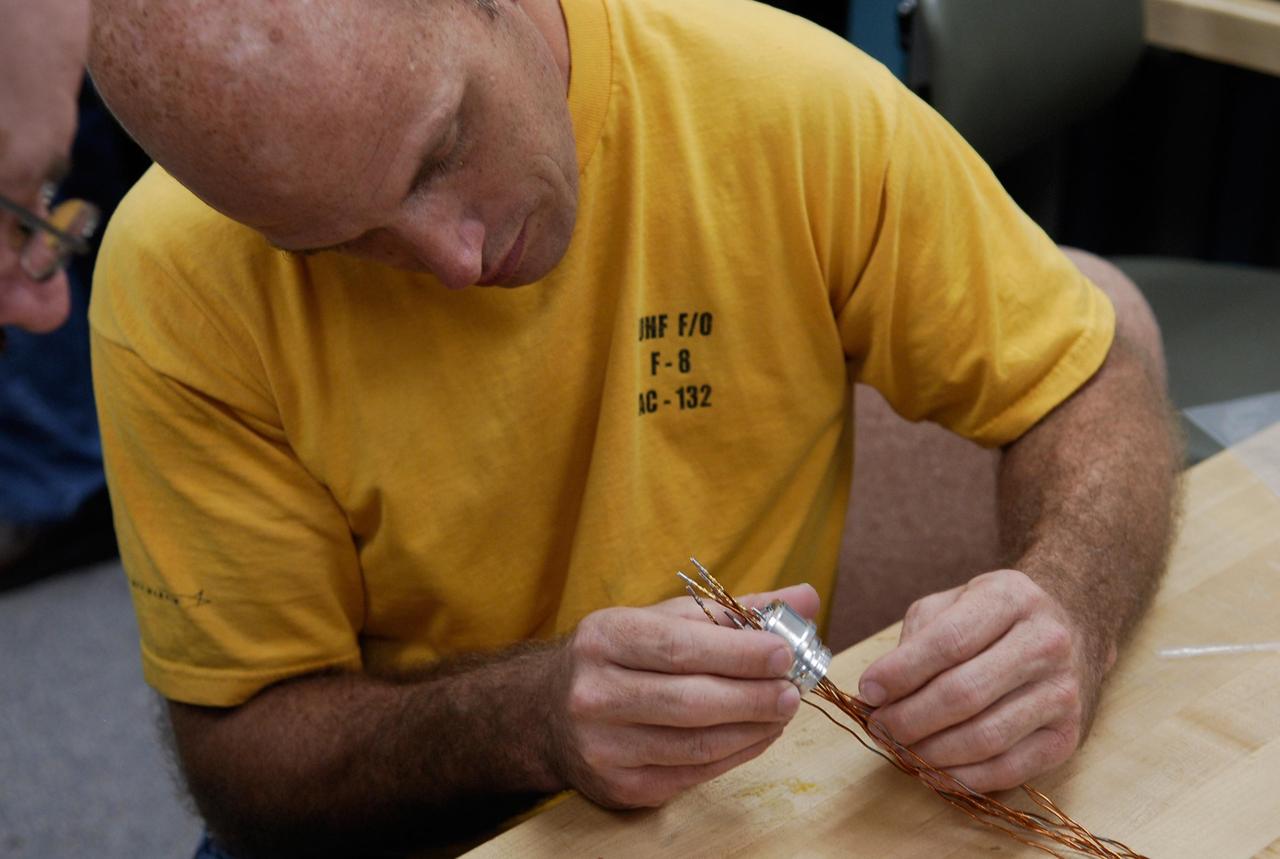
KENNEDY SPACE CENTER, FLA. -- At a lab at NASA's Kennedy Space Center, Kevin Wyckoff, an aerospace technician with the United Launch Alliance, examines an electrical wiring harness. The harness will be inserted into a replacement feed-through connector during preparations to solder the pins to the socket of the connector. The connector will later be installed in the external fuel tank for space shuttle Atlantis' STS-122 mission. The technician performed this exacting task on the Centaur upper stage for Atlas and Titan launches in 1994 and was specifically chosen for the task. Soldering the connector pins and sockets together addresses the most likely cause of a problem in the engine cutoff sensor system, or ECO system. Some of the tank's ECO sensors failed during propellant tanking for launch attempts on Dec. 6 and Dec. 9. Results of a tanking test on Dec. 18 pointed to an open circuit in the feed-through connector wiring, which is located at the base of the tank. The feed-through connector passes the wires from the inside of the tank to the outside. After the soldering is completed and the connector is reinstalled, shuttle program managers will decide on how to proceed. The launch date for mission STS-122 is under review. Photo credit: NASA/Kim Shiflett
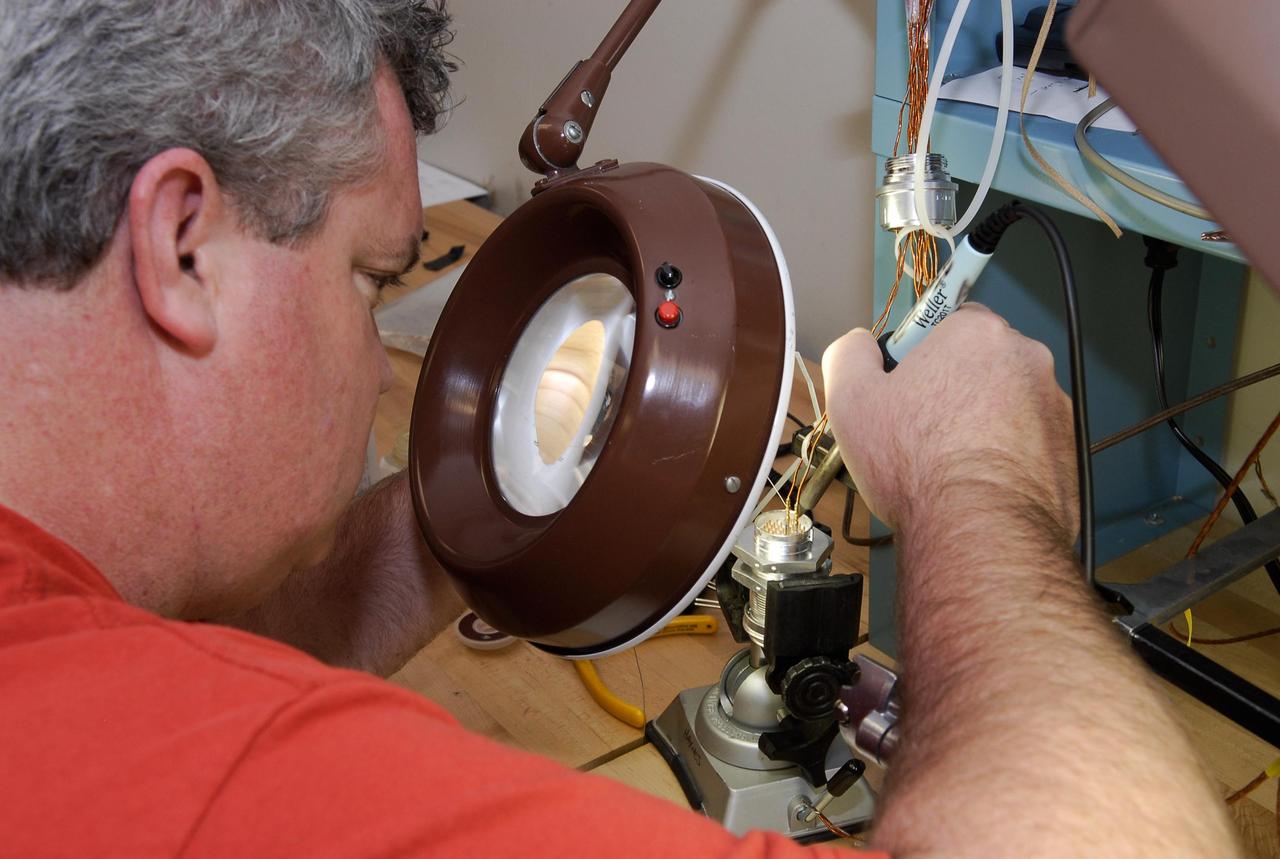
KENNEDY SPACE CENTER, FLA. -- At a lab at NASA's Kennedy Space Center, Bob Arp, an aerospace technician with the United Launch Alliance, solders a pin to the socket of the replacement feed-through connector that will be installed in the external fuel tank for space shuttle Atlantis' STS-122 mission. The technician performed this exacting task on the Centaur upper stage for Atlas and Titan launches in 1994 and was specifically chosen for the task. Soldering the connector pins and sockets together addresses the most likely cause of a problem in the engine cutoff sensor system, or ECO system. Some of the tank's ECO sensors failed during propellant tanking for launch attempts on Dec. 6 and Dec. 9. Results of a tanking test on Dec. 18 pointed to an open circuit in the feed-through connector wiring, which is located at the base of the tank. The feed-through connector passes the wires from the inside of the tank to the outside. After the soldering is completed and the connector is reinstalled, shuttle program managers will decide on how to proceed. The launch date for mission STS-122 is under review. Photo credit: NASA/Kim Shiflett

KENNEDY SPACE CENTER, FLA. -- At a lab at NASA's Kennedy Space Center, the first two of nine pins have been soldered to the socket of the replacement feed-through connector that will be installed in the external fuel tank for space shuttle Atlantis' STS-122 mission. Two United Launch Alliance technicians, who performed this exacting task on the Centaur upper stage for Atlas and Titan launches in 1994, will be doing the soldering. Soldering the connector pins and sockets together addresses the most likely cause of a problem in the engine cutoff sensor system, or ECO system. Some of the tank's ECO sensors failed during propellant tanking for launch attempts on Dec. 6 and Dec. 9. Results of a tanking test on Dec. 18 pointed to an open circuit in the feed-through connector wiring, which is located at the base of the tank. The feed-through connector passes the wires from the inside of the tank to the outside. After the soldering is completed and the connector is reinstalled, shuttle program managers will decide on how to proceed. The launch date for mission STS-122 is under review. Photo credit: NASA/Kim Shiflett

KENNEDY SPACE CENTER, FLA. -- At a lab at NASA's Kennedy Space Center, aerospace technicians with the United Launch Alliance inspect an electrical wiring harness that has been inserted into a replacement feed-through connector during preparations to solder the pins to the socket of the connector that will be installed in the external fuel tank for space shuttle Atlantis' STS-122 mission. The technicians performed this exacting task on the Centaur upper stage for Atlas and Titan launches in 1994 and were specifically chosen for the task. Soldering the connector pins and sockets together addresses the most likely cause of a problem in the engine cutoff sensor system, or ECO system. Some of the tank's ECO sensors failed during propellant tanking for launch attempts on Dec. 6 and Dec. 9. Results of a tanking test on Dec. 18 pointed to an open circuit in the feed-through connector wiring, which is located at the base of the tank. The feed-through connector passes the wires from the inside of the tank to the outside. After the soldering is completed and the connector is reinstalled, shuttle program managers will decide on how to proceed. The launch date for mission STS-122 is under review. Photo credit: NASA/Kim Shiflett
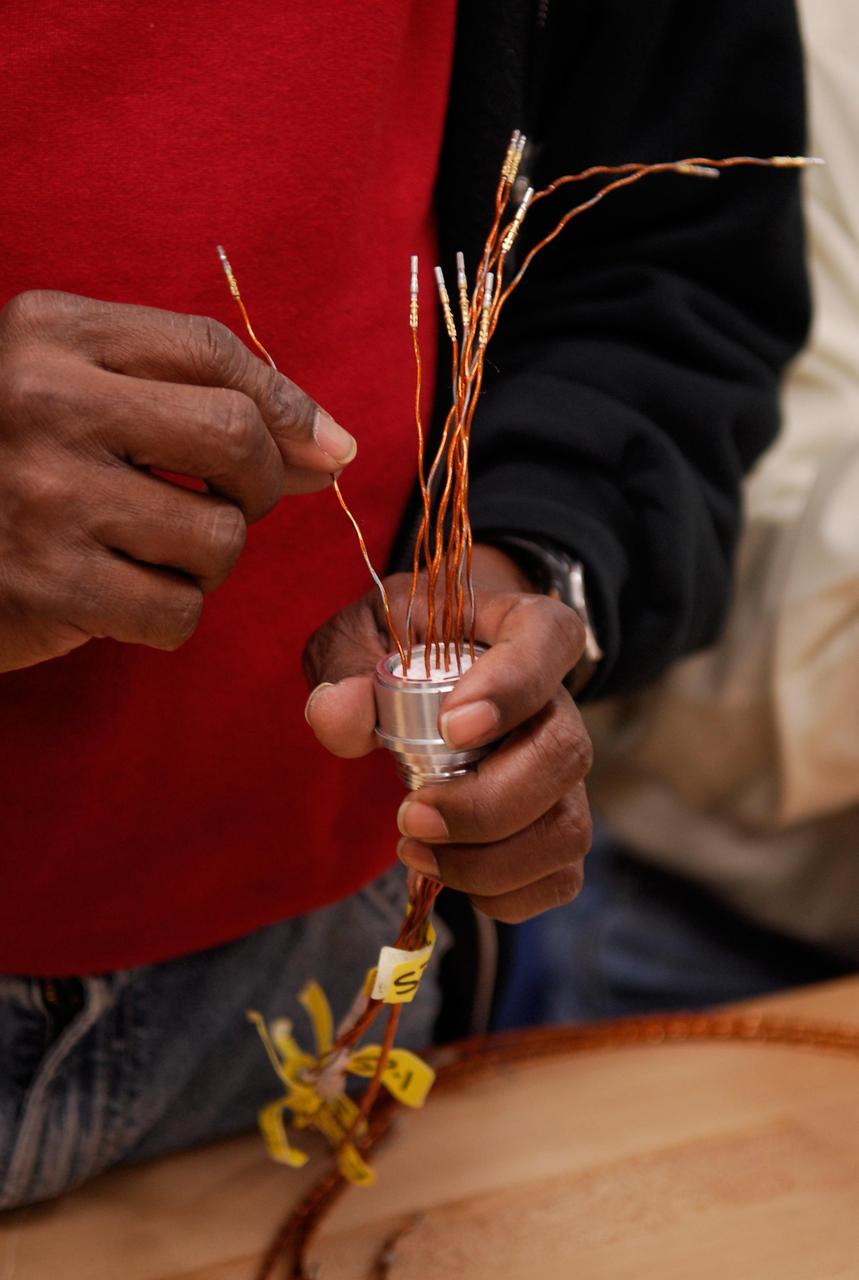
KENNEDY SPACE CENTER, FLA. -- At a lab at NASA's Kennedy Space Center, a Lockheed Martin technician prepares an electrical wiring harness during a procedure to solder the pins to the socket of the replacement feed-through connector that will be installed in the external fuel tank for space shuttle Atlantis' STS-122 mission. Two United Launch Alliance technicians, who performed this exacting task on the Centaur upper stage for Atlas and Titan launches in 1994, will be doing the soldering. Soldering the connector pins and sockets together addresses the most likely cause of a problem in the engine cutoff sensor system, or ECO system. Some of the tank's ECO sensors failed during propellant tanking for launch attempts on Dec. 6 and Dec. 9. Results of a tanking test on Dec. 18 pointed to an open circuit in the feed-through connector wiring, which is located at the base of the tank. The feed-through connector passes the wires from the inside of the tank to the outside. After the soldering is completed and the connector is reinstalled, shuttle program managers will decide on how to proceed. The launch date for mission STS-122 is under review. Photo credit: NASA/Kim Shiflett
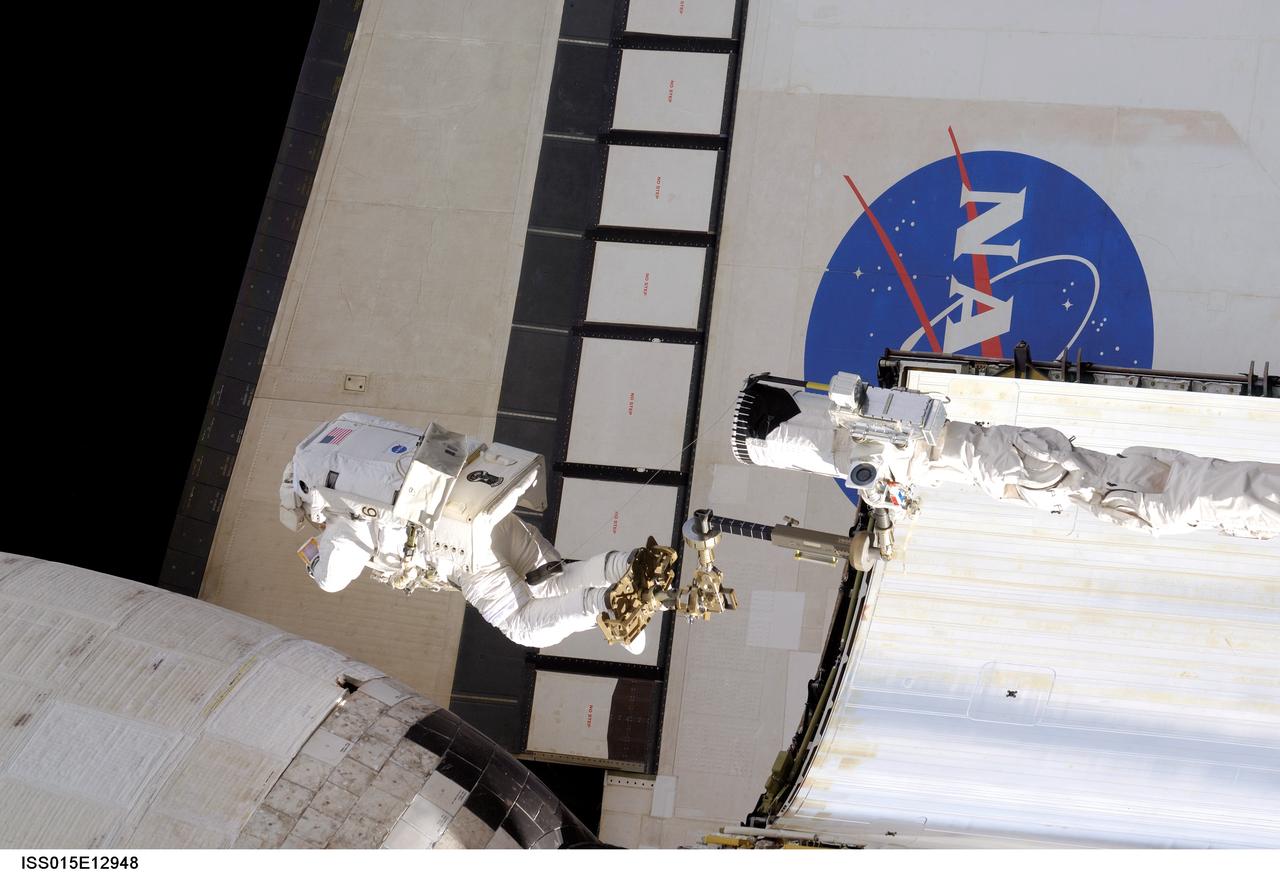
ISS015-E-12948 (15 June 2007) --- Anchored to a foot restraint on Space Shuttle Atlantis' remote manipulator system (RMS) robotic arm, astronaut John "Danny" Olivas, STS-117 mission specialist, moves toward Atlantis' port orbital maneuvering system (OMS) pod that was damaged during the shuttle's climb to orbit last week. During the repair, Olivas pushed the turned up portion of the thermal blanket back into position, used a medical stapler to secure the layers of the blanket, and pinned it in place against adjacent thermal tile.
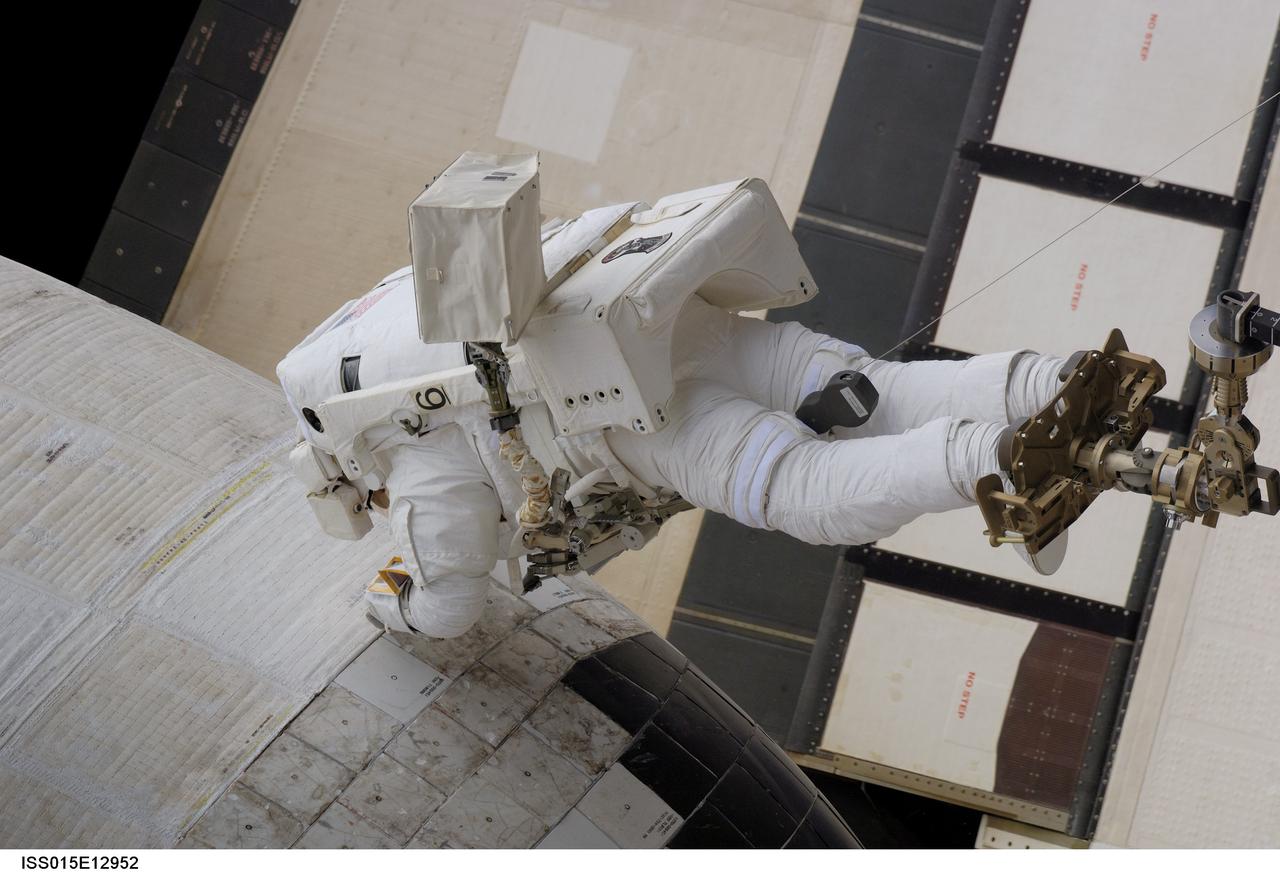
ISS015-E-12952 (15 June 2007) --- Anchored to a foot restraint on Space Shuttle Atlantis' remote manipulator system (RMS) robotic arm, astronaut John "Danny" Olivas, STS-117 mission specialist, repairs a 4-by-6-inch section of a thermal blanket on Atlantis' port orbital maneuvering system (OMS) pod that was damaged during the shuttle's climb to orbit last week. During the repair, Olivas pushed the turned up portion of the thermal blanket back into position, used a medical stapler to secure the layers of the blanket, and pinned it in place against adjacent thermal tile.
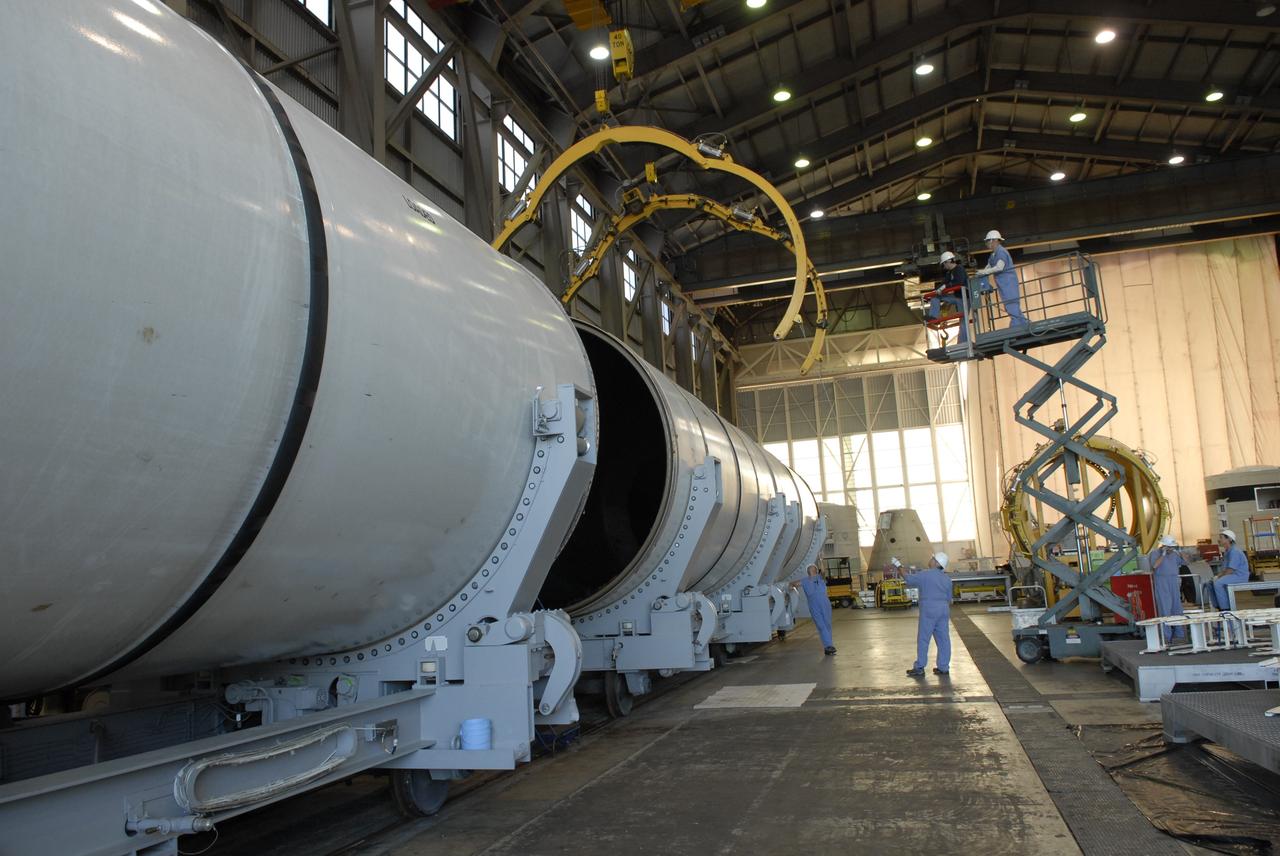
CAPE CANAVERAL, Fla. -- In Hangar AF at Cape Canaveral, Fla., separation rings are moved above two segments of one of the retrieved solid rocket boosters from the STS-126 launch. The rings will be lowered and locked around the segments. The pins attaching the segments to each other are removed at the start. Each separation ring has three joints that help mold the ring around the segment and an air motor is used to rotate the rings to separate the segments. After disassembly, the segments will be sent to ATK (Alliant Techsystems) in Utah for final processing and return to Kennedy for another shuttle launch. Photo credit: NASA/Jack Pfaller
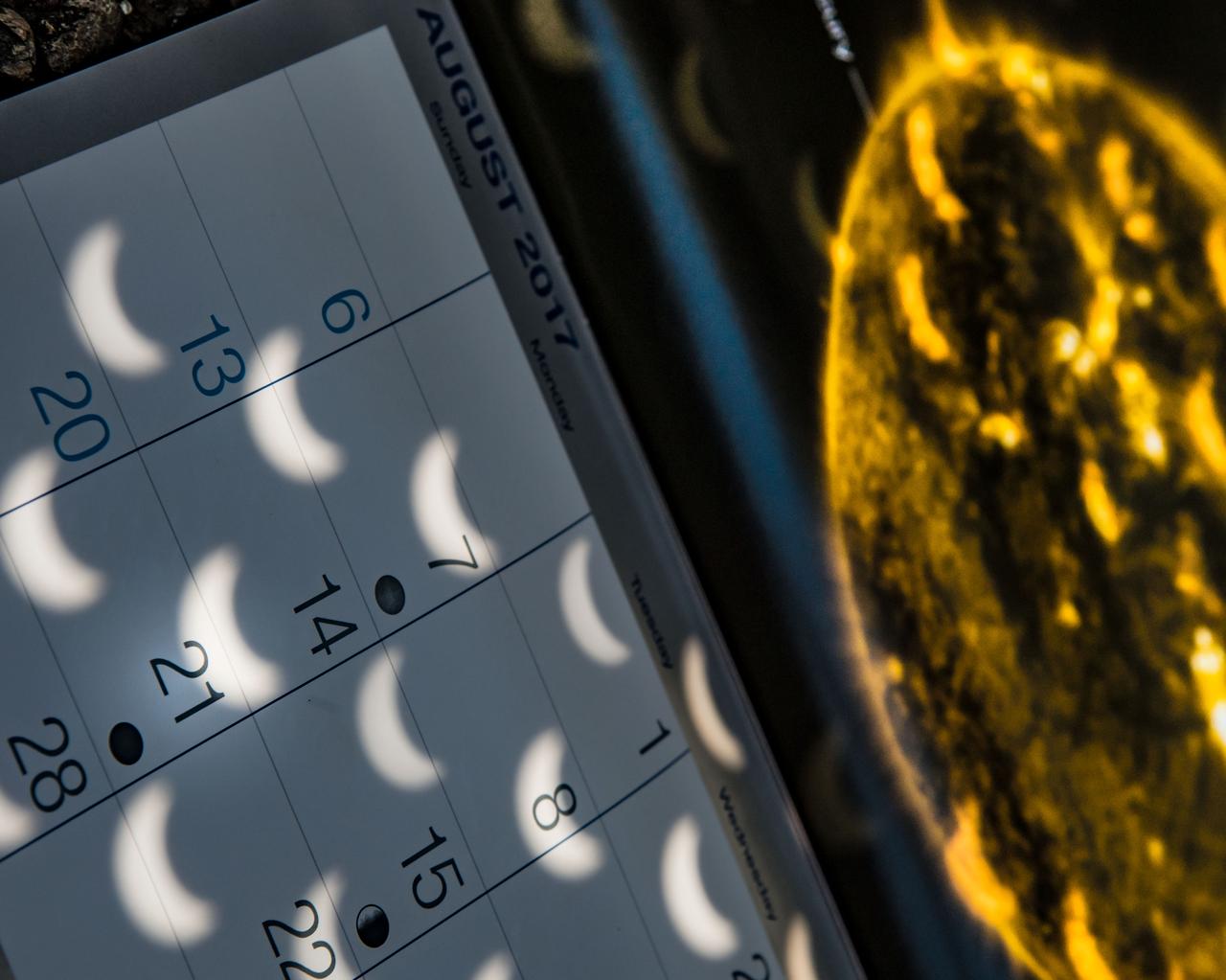
jsc2017e110803 (Aug. 21, 2017) --- Employees at NASA’s Johnson Space Center in Houston joined the rest of the country in experiencing the 2017 eclipse on Aug. 21, 2017. Many used protective eclipse glasses, and others made use of manufactured or pin-hole cameras of opportunity to view the eclipse. In Houston, the partial eclipse duration was 2 hours, 59 minutes, reaching its maximum level of 67 percent at 1:17 p.m. CDT. Some members of the team supporting the International Space Station in the Christopher C. Kraft Mission Control Center took advantage of a break in their duties to step outside the windowless building to witness what their colleagues in orbit also saw and documented with a variety of cameras.
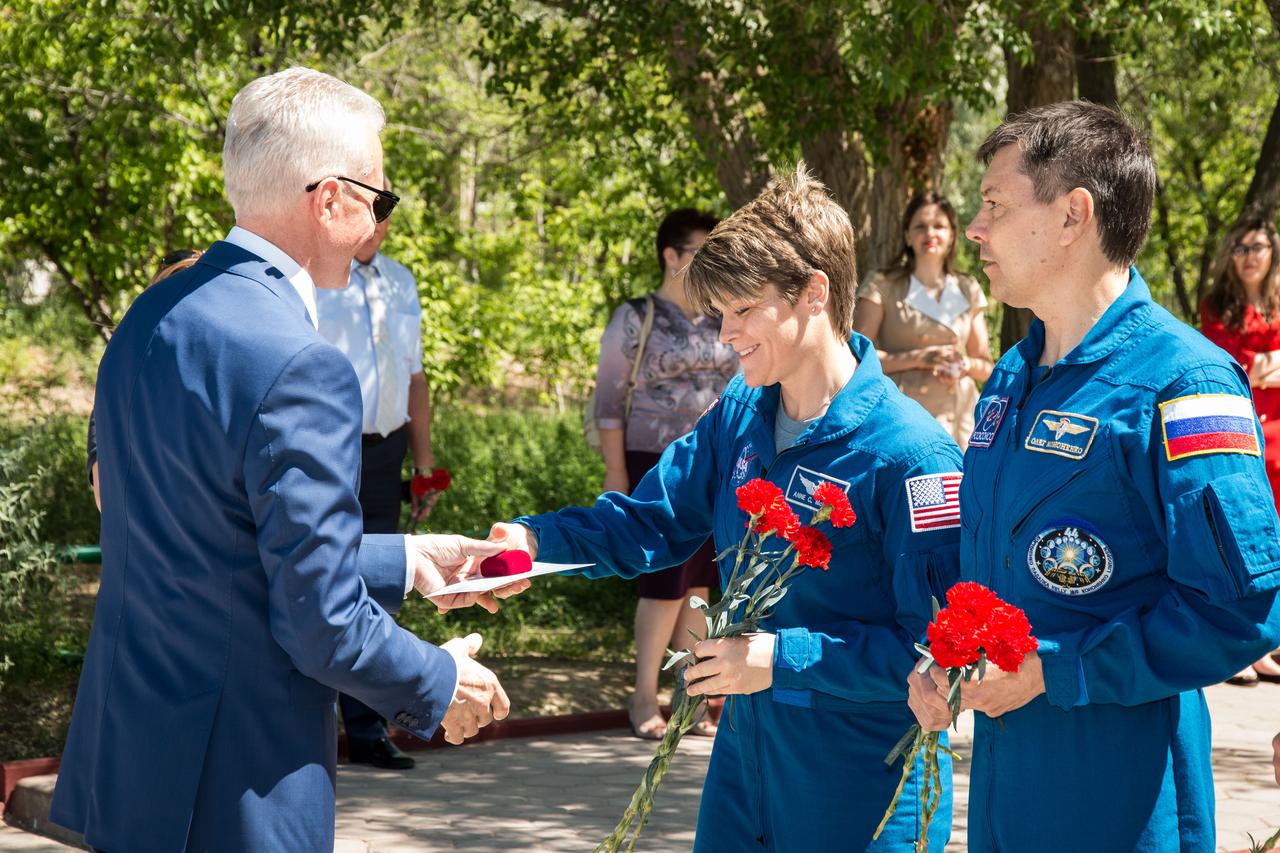
jsc2018e050015 - At the Cosmonaut Hotel crew quarters in Baikonur, Kazakhstan, Expedition 56 backup crewmember Anne McClain of NASA receives a silver pin bearing an emblem of the town from a local official as crewmate Oleg Kononenko of Roscosmos looks on. Along with David Saint-Jacques of the Canadian Space Agency, they are serving as backups to the prime crew, Serena Aunon-Chancellor of NASA, Sergey Prokopyev of Roscosmos and Alexander Gerst of the European Space Agency, who will launch June 6 on the Soyuz MS-09 spacecraft from Baikonur for a six-month mission on the International Space Station...NASA/Victor Zelentsov.

C-20A crew chief Isac Mata stows metal pins used to secure the landing gear, while Ian Elkin, operations engineer, boards the aircraft to prepare for takeoff from NASA’s Armstrong Flight Research Center in Edwards, California, on Wednesday, April 29, 2026. The aircraft conducted science flights over Central California carrying NASA’s UAVSAR (Uninhabited Aerial Vehicle Synthetic Aperture Radar), which collects detailed ground‑movement data to improve earthquake‑hazard models and support a new Earth‑observing satellite.
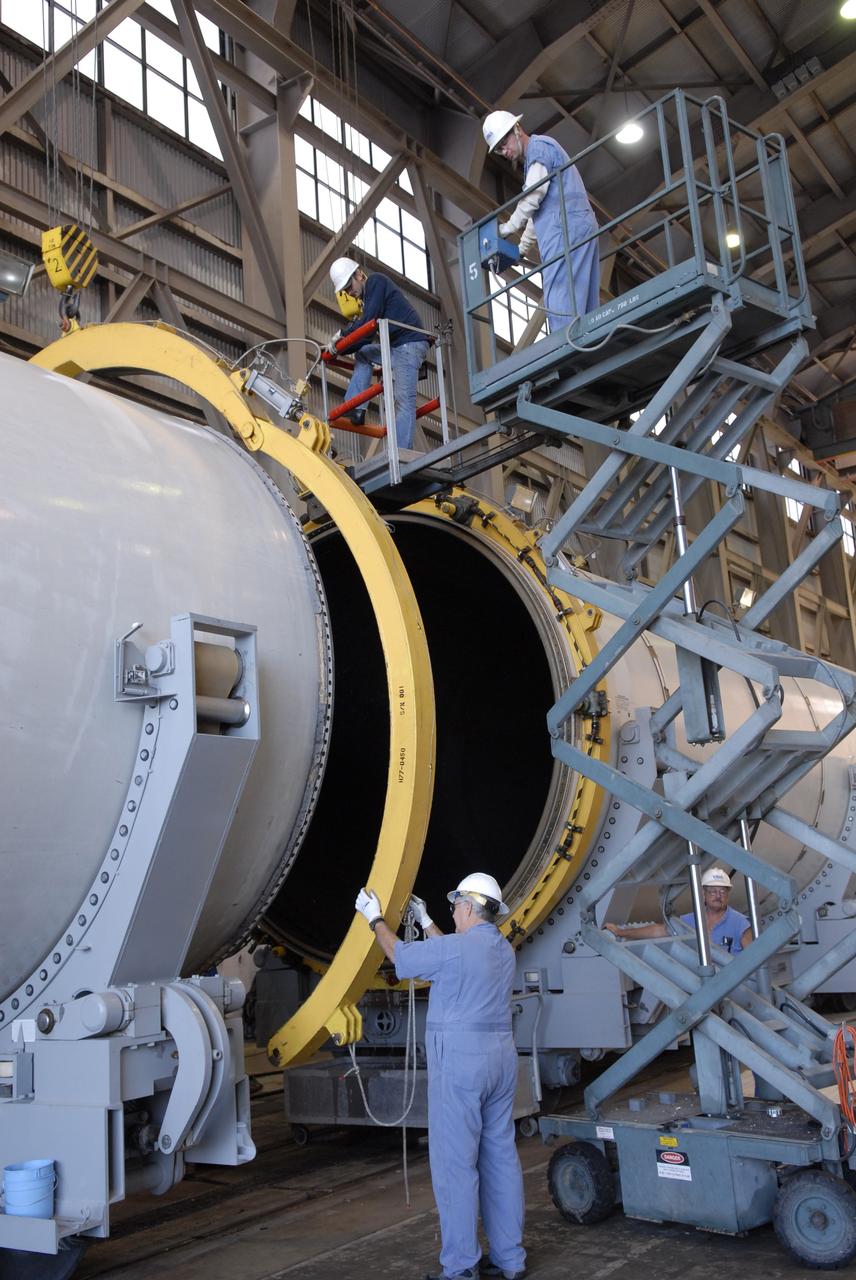
CAPE CANAVERAL, Fla. -- In Hangar AF at Cape Canaveral, Fla., workers again remove separation rings from around segments of one of the retrieved solid rocket boosters from the STS-126 launch. The pins attaching the segments to each other are removed at the start. Each separation ring has three joints that help mold the ring around the segment and an air motor is used to rotate the rings to separate the segments. After disassembly, the segments will be sent to ATK (Alliant Techsystems) in Utah for final processing and return to Kennedy for another shuttle launch. Photo credit: NASA/Jack Pfaller
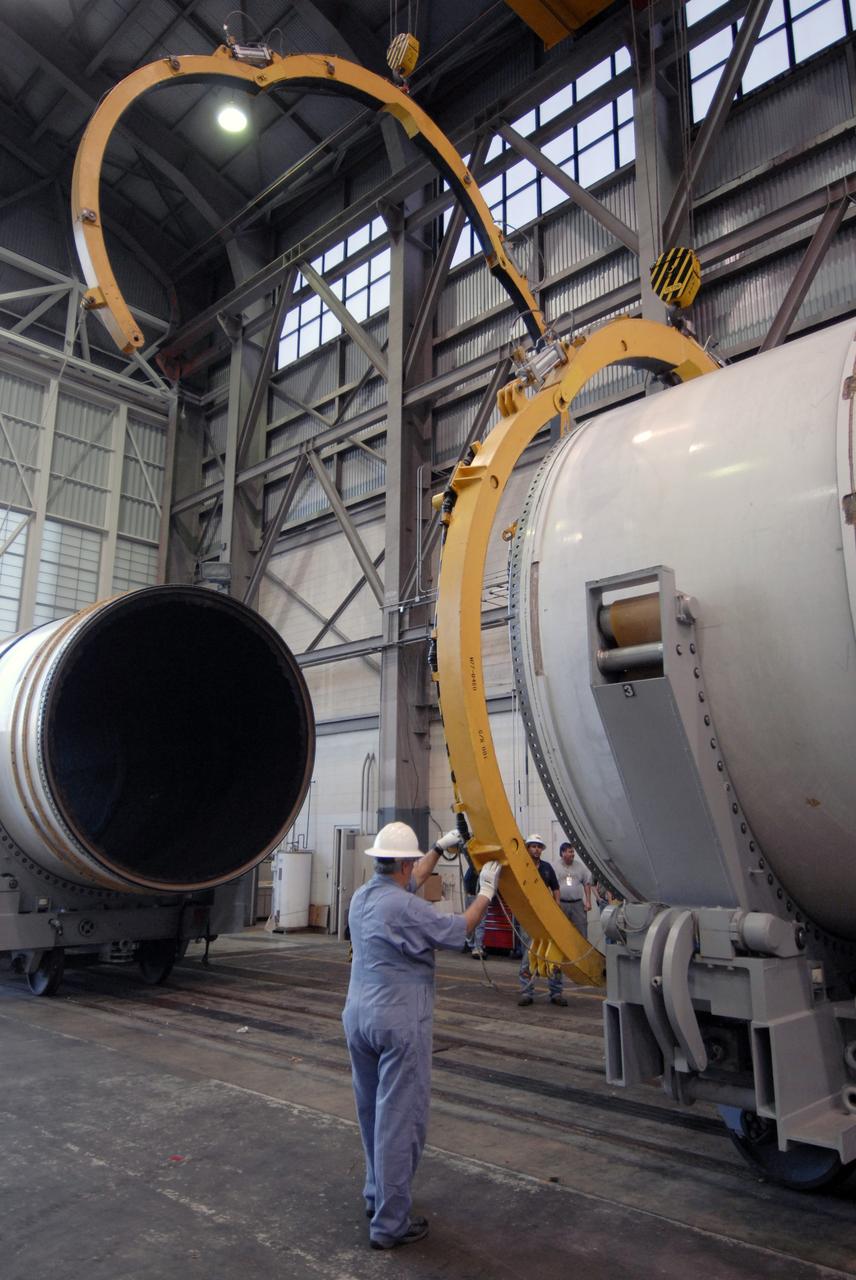
CAPE CANAVERAL, Fla. -- In Hangar AF at Cape Canaveral, Fla., workers remove the separation rings from around a segment of one of the retrieved solid rocket boosters from the STS-126 launch. The pins attaching the segments to each other are removed at the start. Each separation ring has three joints that help mold the ring around the segment and an air motor is used to rotate the rings to separate the segments. After disassembly, the segments will be sent to ATK (Alliant Techsystems) in Utah for final processing and return to Kennedy for another shuttle launch. Photo credit: NASA/Jack Pfaller
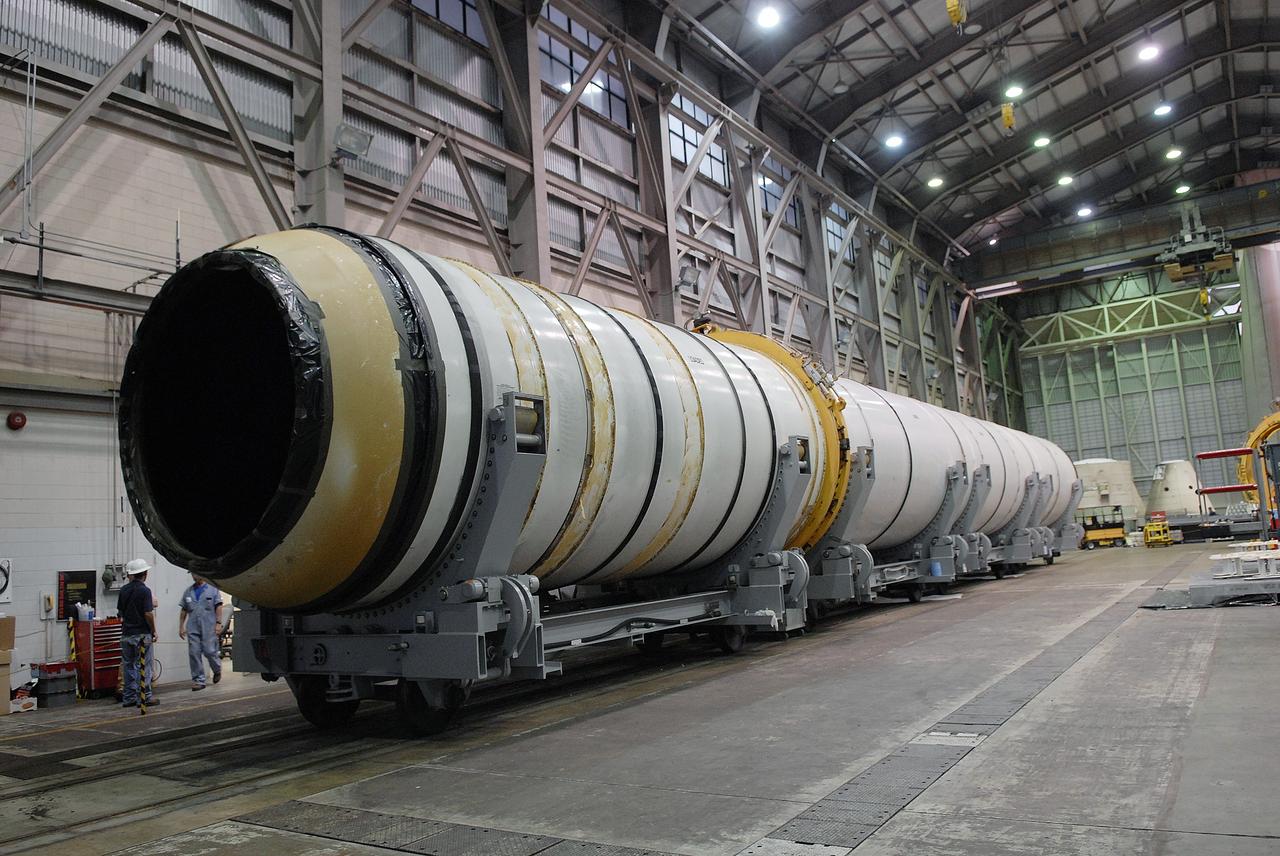
CAPE CANAVERAL, Fla. -- In Hangar AF at Cape Canaveral, Fla., one of the retrieved solid rocket boosters from the STS-126 launch is ready to be disassembled. Separation rings will be used to move the segments apart. The pins attaching the segments to each other are removed at the start. Each separation ring has three joints that help mold the ring around the seg¬ment and an air motor is used to rotate the rings to separate the segments. After disassembly, the segments will be sent to ATK (Alliant Techsystems) in Utah for final processing and return to Kennedy for another shuttle launch. Photo credit: NASA/Jack Pfaller

jsc2017e110808 (Aug. 21, 2017) --- Employees at NASA’s Johnson Space Center in Houston joined the rest of the country in experiencing the 2017 eclipse on Aug. 21, 2017. Many used protective eclipse glasses, and others made use of manufactured or pin-hole cameras of opportunity to view the eclipse. In Houston, the partial eclipse duration was 2 hours, 59 minutes, reaching its maximum level of 67 percent at 1:17 p.m. CDT. Some members of the team supporting the International Space Station in the Christopher C. Kraft Mission Control Center took advantage of a break in their duties to step outside the windowless building to witness what their colleagues in orbit also saw and documented with a variety of cameras.

CAPE CANAVERAL, Fla. -- In Hangar AF at Cape Canaveral, Fla., workers separate segments of one of the retrieved solid rocket boosters from the STS-126 launch. The pins attaching the segments to each other are removed at the start. Each separation ring has three joints that help mold the ring around the segment and an air motor is used to rotate the rings to separate the segments. After disassembly, the segments will be sent to ATK (Alliant Techsystems) in Utah for final processing and return to Kennedy for another shuttle launch. Photo credit: NASA/Jack Pfaller
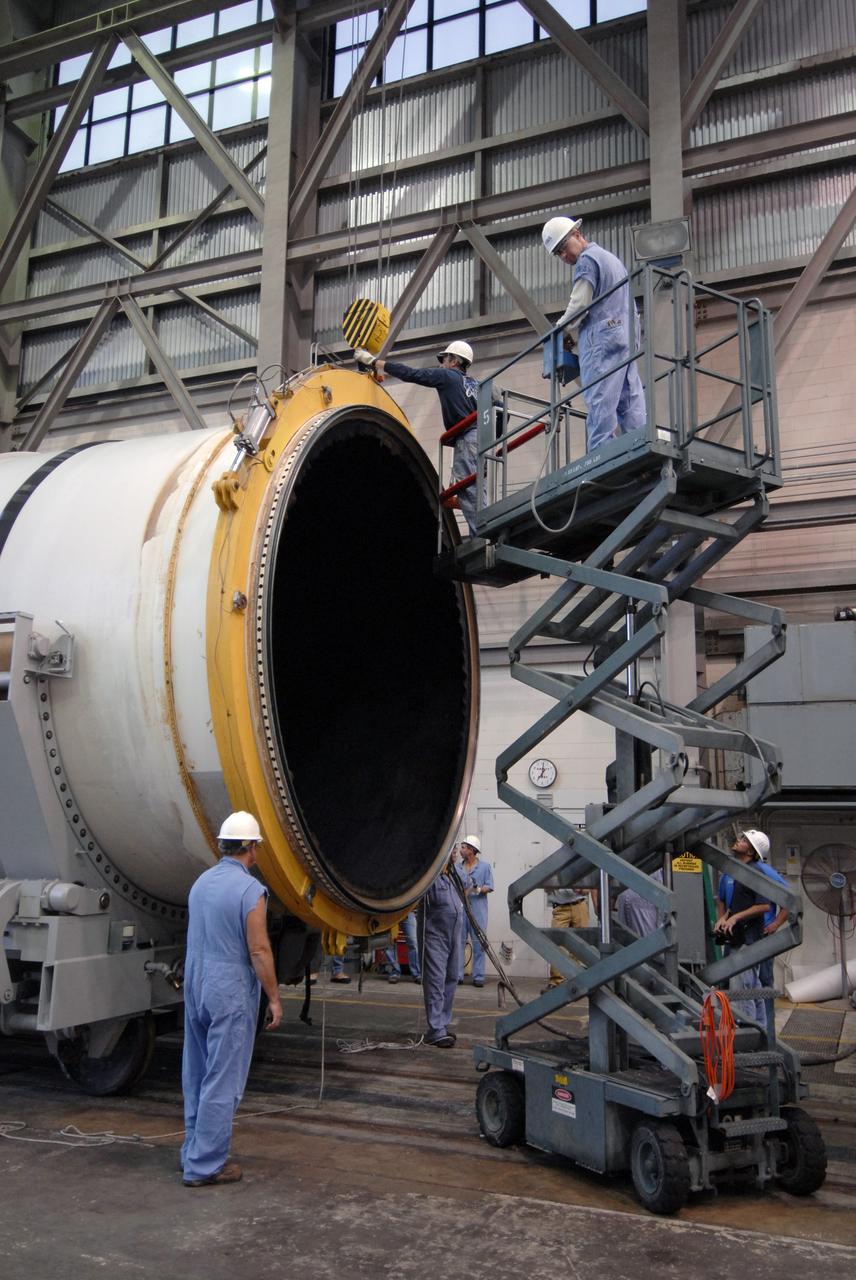
CAPE CANAVERAL, Fla. -- In Hangar AF at Cape Canaveral, Fla., workers get ready to remove one of the separation rings from around a segment of one of the retrieved solid rocket boosters from the STS-126 launch. The pins attaching the segments to each other are removed at the start. Each separation ring has three joints that help mold the ring around the segment and an air motor is used to rotate the rings to separate the segments. After disassembly, the segments will be sent to ATK (Alliant Techsystems) in Utah for final processing and return to Kennedy for another shuttle launch. Photo credit: NASA/Jack Pfaller
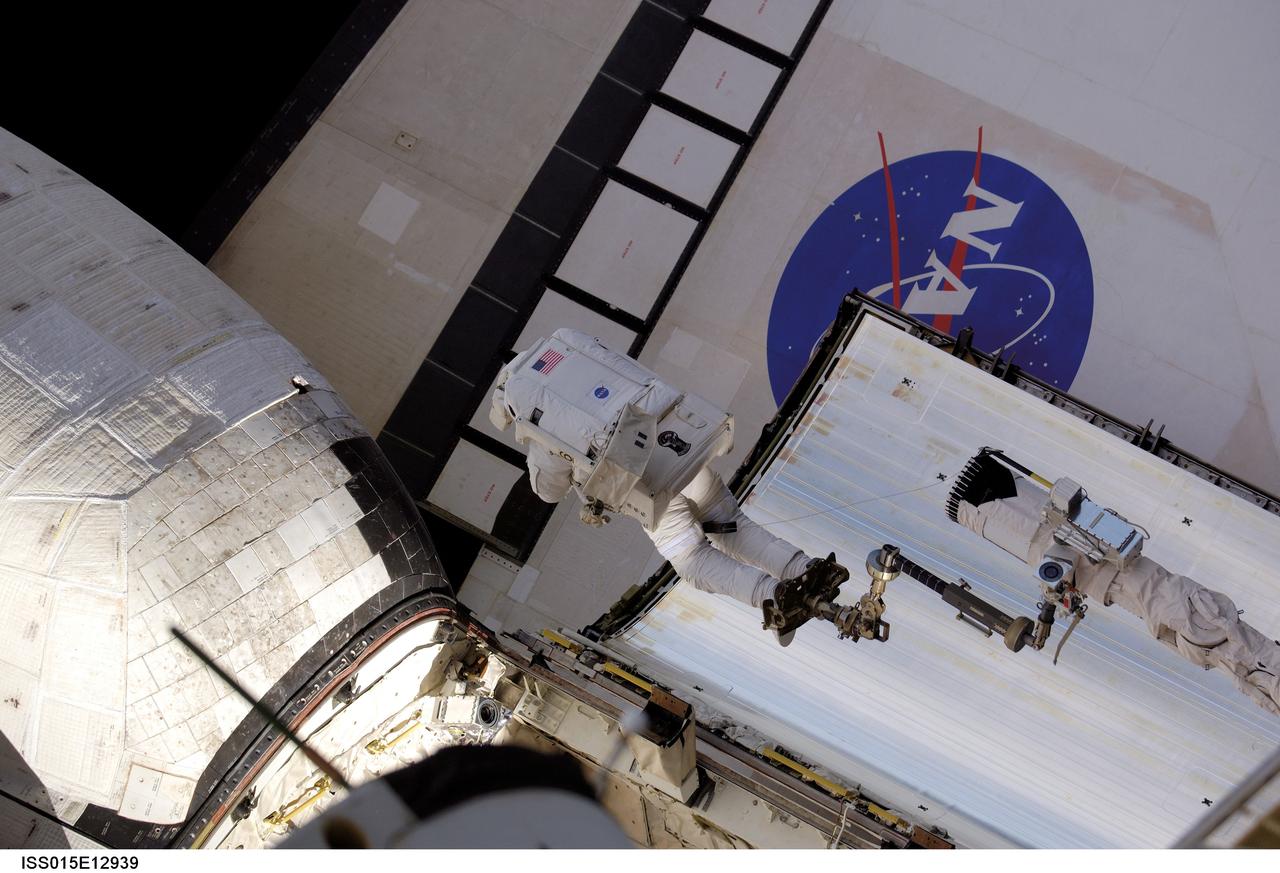
ISS015-E-12939 (15 June 2007) --- Anchored to a foot restraint on Space Shuttle Atlantis' remote manipulator system (RMS) robotic arm, astronaut John "Danny" Olivas, STS-117 mission specialist, moves toward Atlantis' port orbital maneuvering system (OMS) pod that was damaged during the shuttle's climb to orbit last week. During the repair, Olivas pushed the turned up portion of the thermal blanket back into position, used a medical stapler to secure the layers of the blanket, and pinned it in place against adjacent thermal tile.
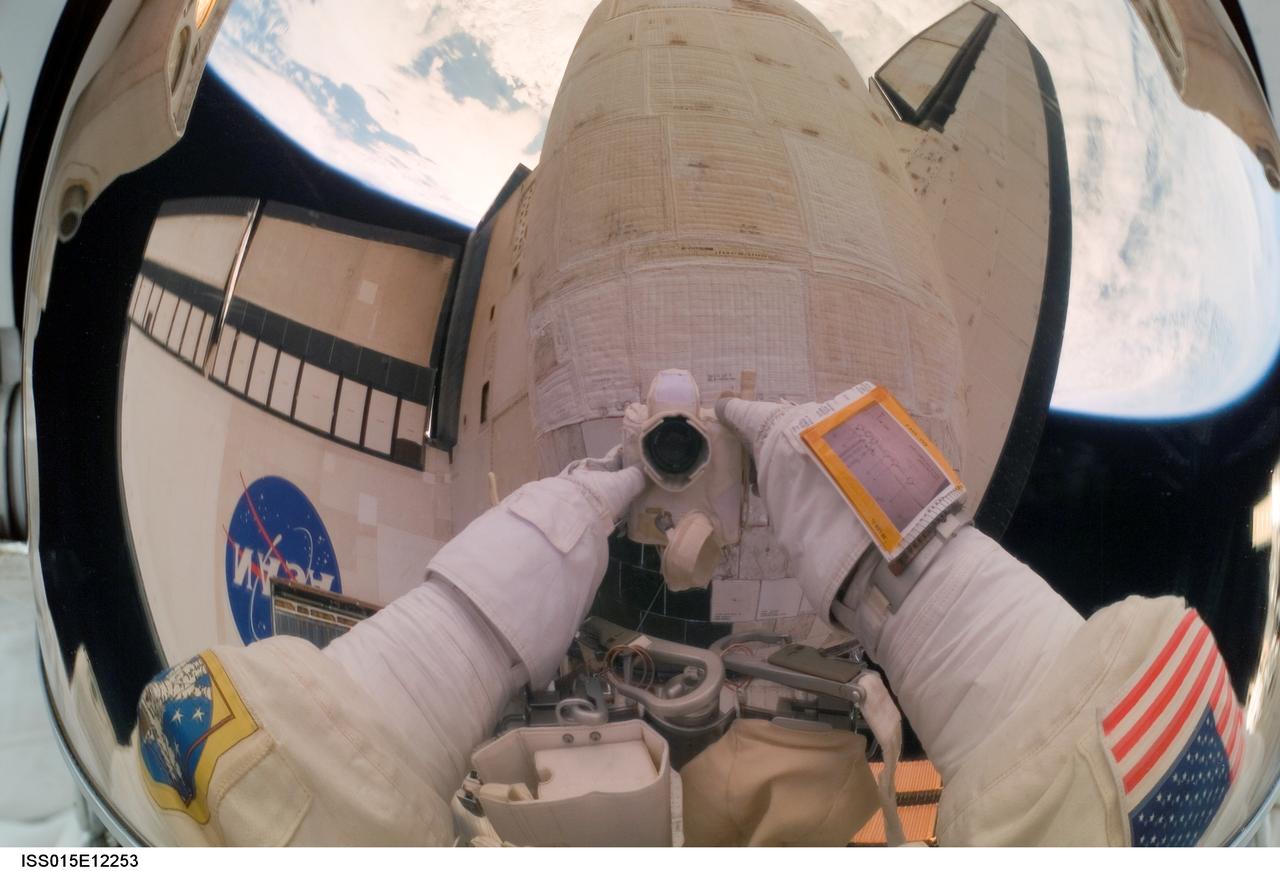
ISS015-E-12253 (15 June 2007) --- The helmet visor of astronaut John "Danny" Olivas, STS-117 mission specialist, serves as an easel of sorts as it reflects a pictorial account of a portion of a very busy session of extravehicular activity (EVA) on June 15. Olivas, who took the photo, spent two hours of an overall 7 hour, 58 minute spacewalk stapling and pinning down a piece of thermal blanket on one of Atlantis' orbital maneuvering system pods (reflected in his visor). The 4-by-6-inch corner of the blanket peeled up during the shuttle's launch last week.
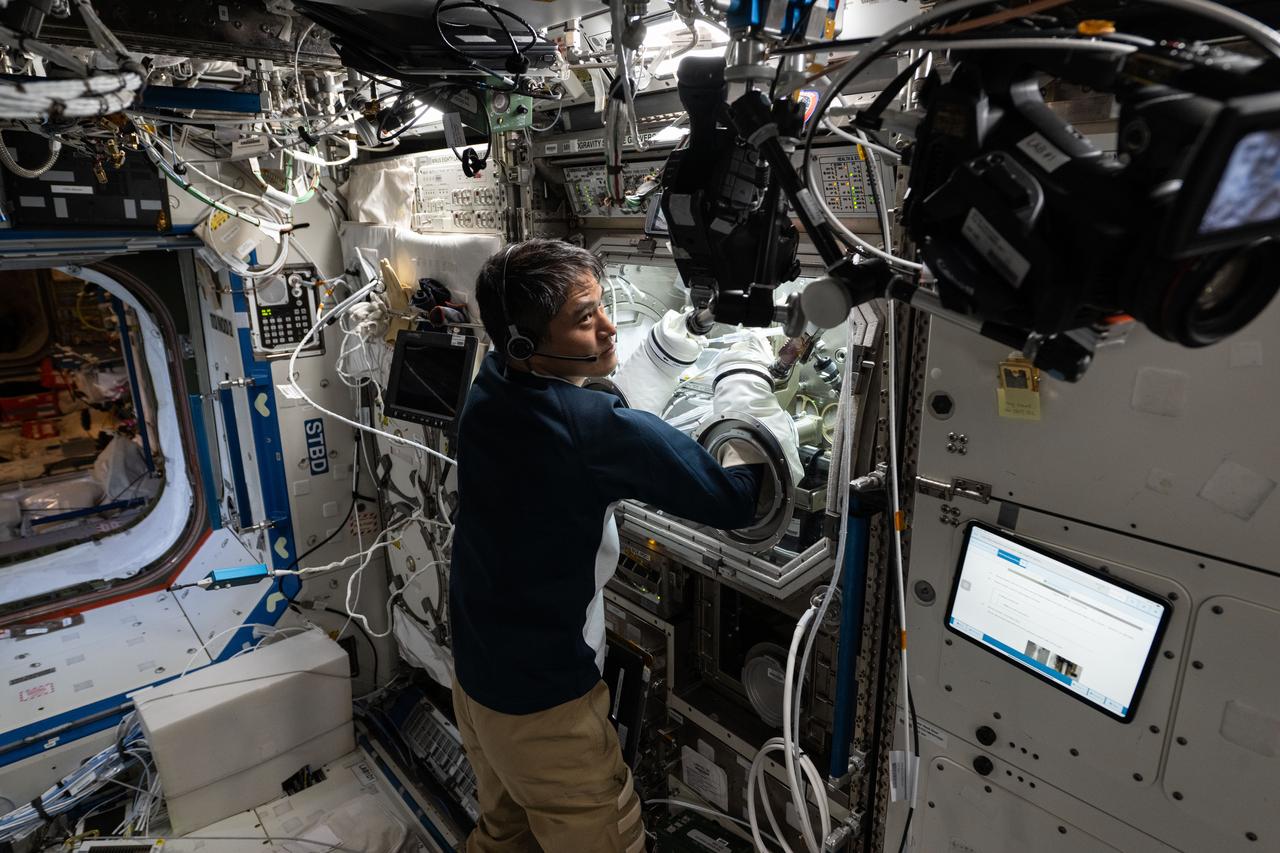
iss073e0177064 (6/11/2025) --- Scientists can study protein solutions without interference from container walls and gravity driven forces present on Earth using the space station’s Ring Sheared Drop module. The device pins a drop of liquid between two rings and holds it in place with surface tension. JAXA astronaut Takuya Onishi sets up for Ring Sheared Drop-IBP-2, a study of the behavior of protein fluids in microgravity. The investigation uses the module to test computer models to predict fluid behavior that could lead to improved processes for manufacturing pharmaceuticals, 3D printing, food processing, and microelectronics.
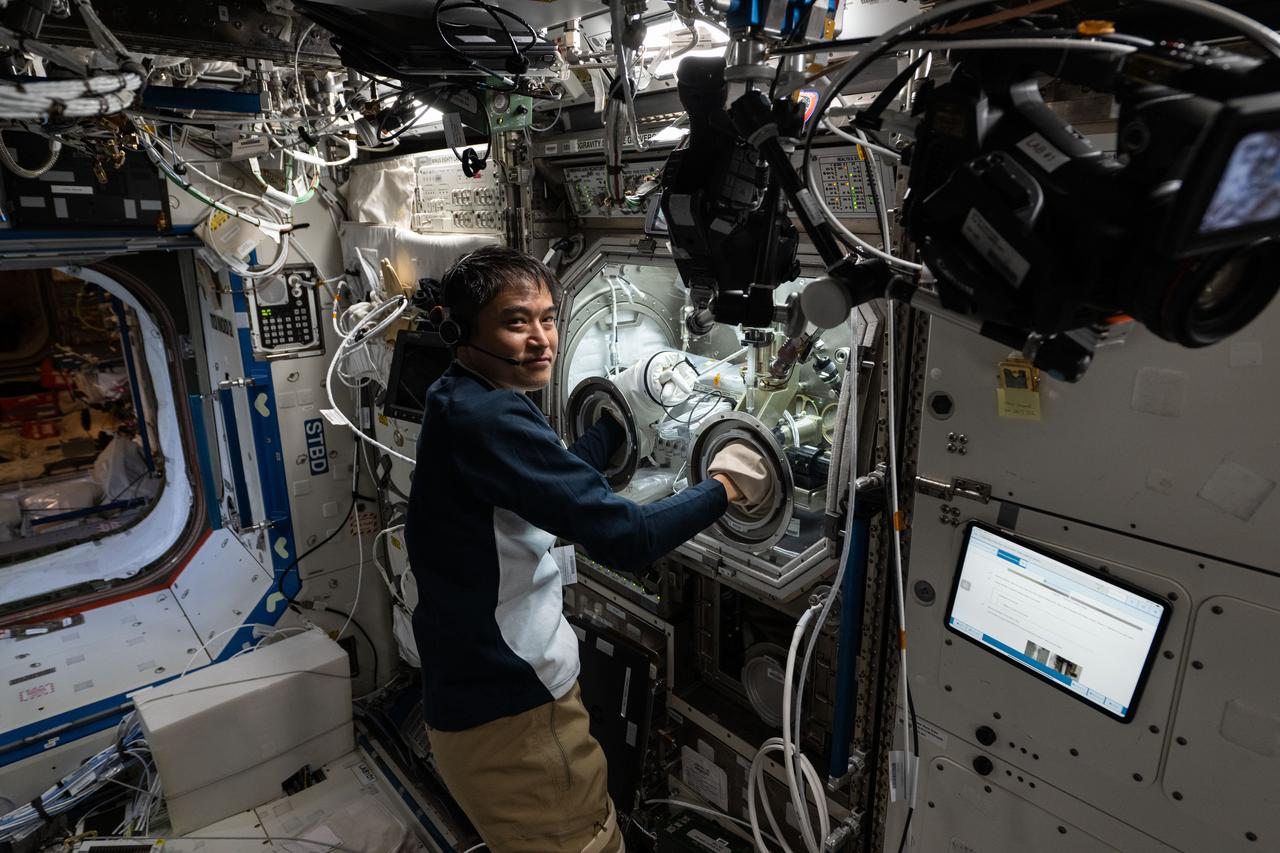
iss073e0177065 (6/11/2025) --- Scientists can study protein solutions without interference from container walls and gravity driven forces present on Earth using the space station’s Ring Sheared Drop module. The device pins a drop of liquid between two rings and holds it in place with surface tension. JAXA (Japan Aerospace Exploration Agency) astronaut and Expedition 73 Commander Takuya Onishi sets up for Ring Sheared Drop-IBP-2, a study of the behavior of protein fluids in microgravity. The investigation uses the module to test computer models to predict fluid behavior that could lead to improved processes for manufacturing pharmaceuticals, 3D printing, food processing, and microelectronics.
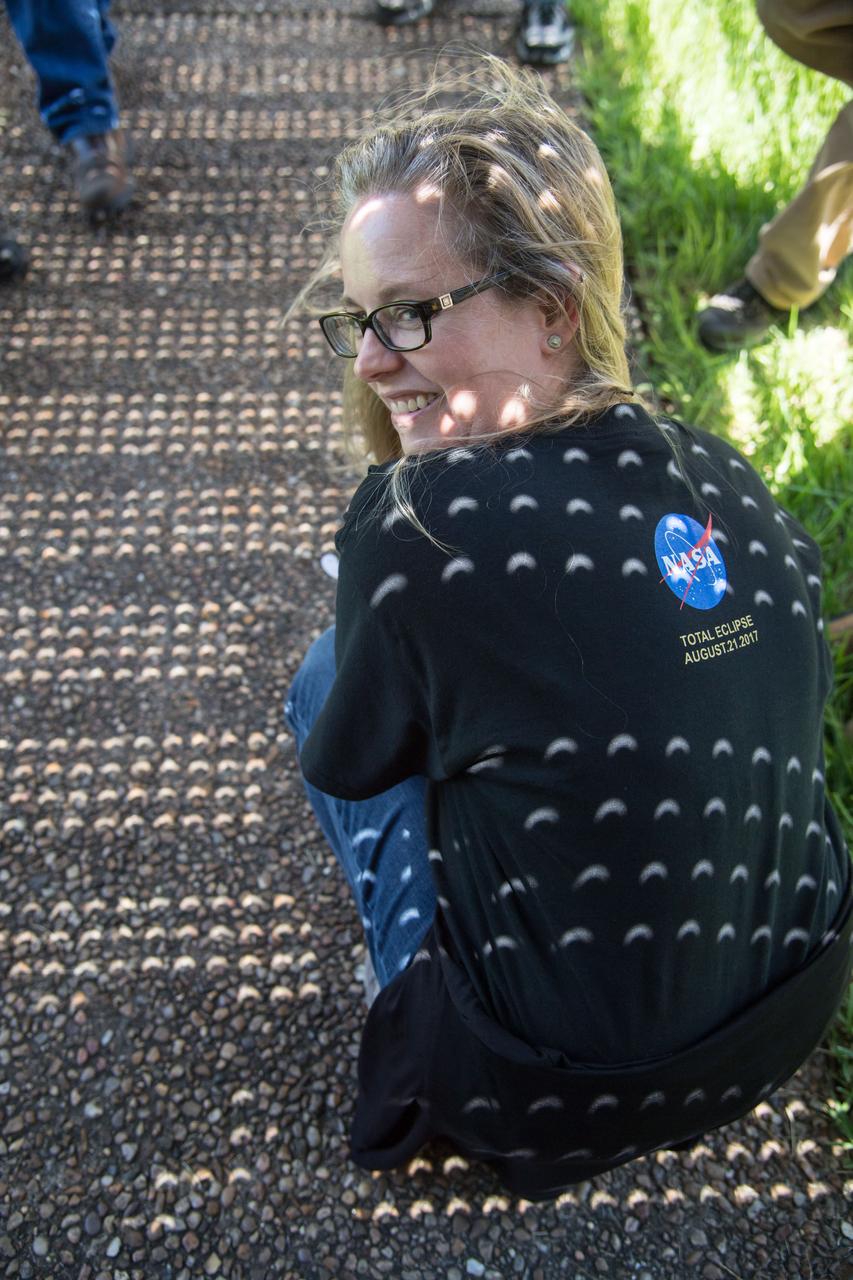
jsc2017e110791 (Aug. 21, 2017) --- Employees at NASA’s Johnson Space Center in Houston joined the rest of the country in experiencing the 2017 eclipse on Aug. 21, 2017. Many used protective eclipse glasses, and others made use of manufactured or pin-hole cameras of opportunity to view the eclipse. In Houston, the partial eclipse duration was 2 hours, 59 minutes, reaching its maximum level of 67 percent at 1:17 p.m. CDT. Some members of the team supporting the International Space Station in the Christopher C. Kraft Mission Control Center took advantage of a break in their duties to step outside the windowless building to witness what their colleagues in orbit also saw and documented with a variety of cameras.

jsc2017e110783 (Aug. 21, 2017) --- Employees at NASA’s Johnson Space Center in Houston joined the rest of the country in experiencing the 2017 eclipse on Aug. 21, 2017. Many used protective eclipse glasses, and others made use of manufactured or pin-hole cameras of opportunity to view the eclipse. In Houston, the partial eclipse duration was 2 hours, 59 minutes, reaching its maximum level of 67 percent at 1:17 p.m. CDT. Some members of the team supporting the International Space Station in the Christopher C. Kraft Mission Control Center took advantage of a break in their duties to step outside the windowless building to witness what their colleagues in orbit also saw and documented with a variety of cameras.
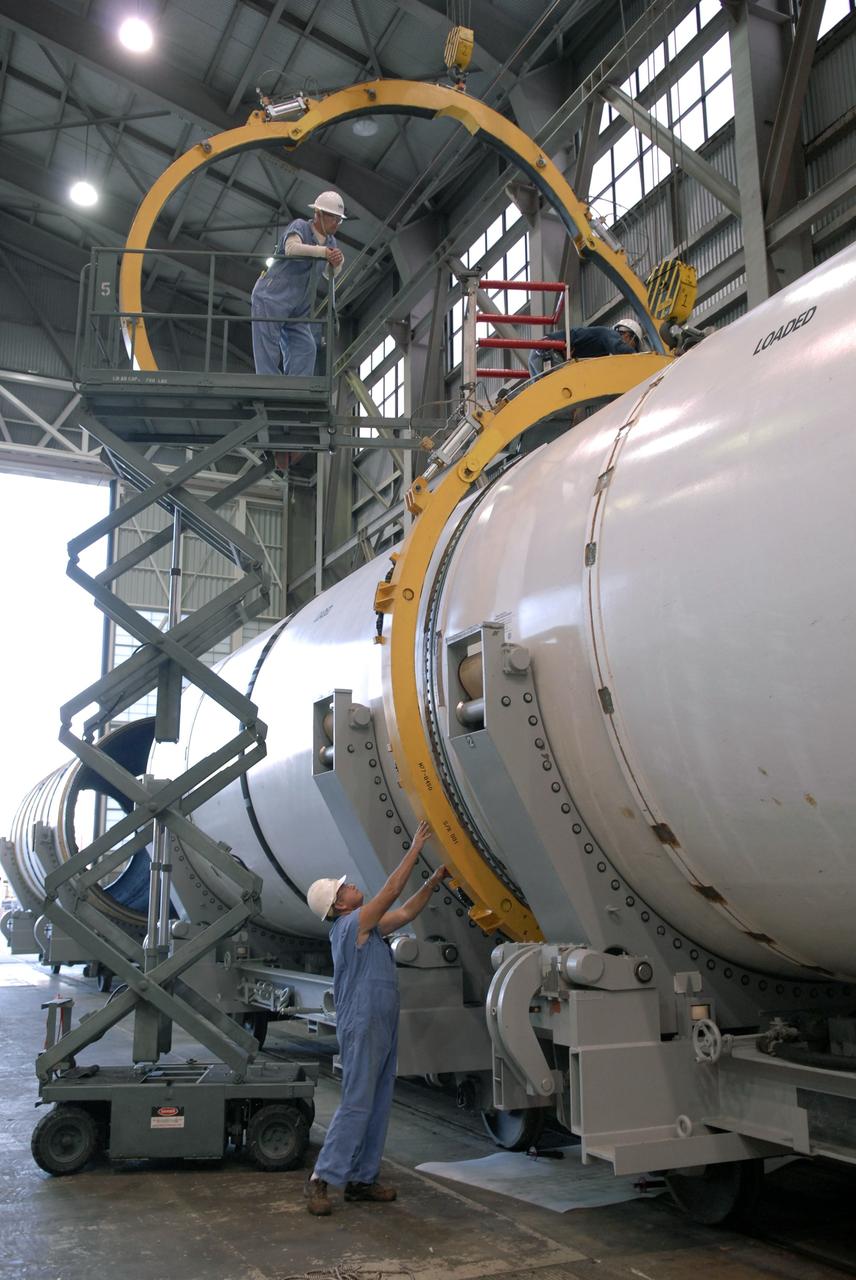
CAPE CANAVERAL, Fla. -- In Hangar AF at Cape Canaveral, Fla., workers put separation rings around segments of one of the retrieved solid rocket boosters from the STS-126 launch. The pins attaching the segments to each other are removed at the start. Each separation ring has three joints that help mold the ring around the segment and an air motor is used to rotate the rings to separate the segments. After disassembly, the segments will be sent to ATK (Alliant Techsystems) in Utah for final processing and return to Kennedy for another shuttle launch. Photo credit: NASA/Jack Pfaller
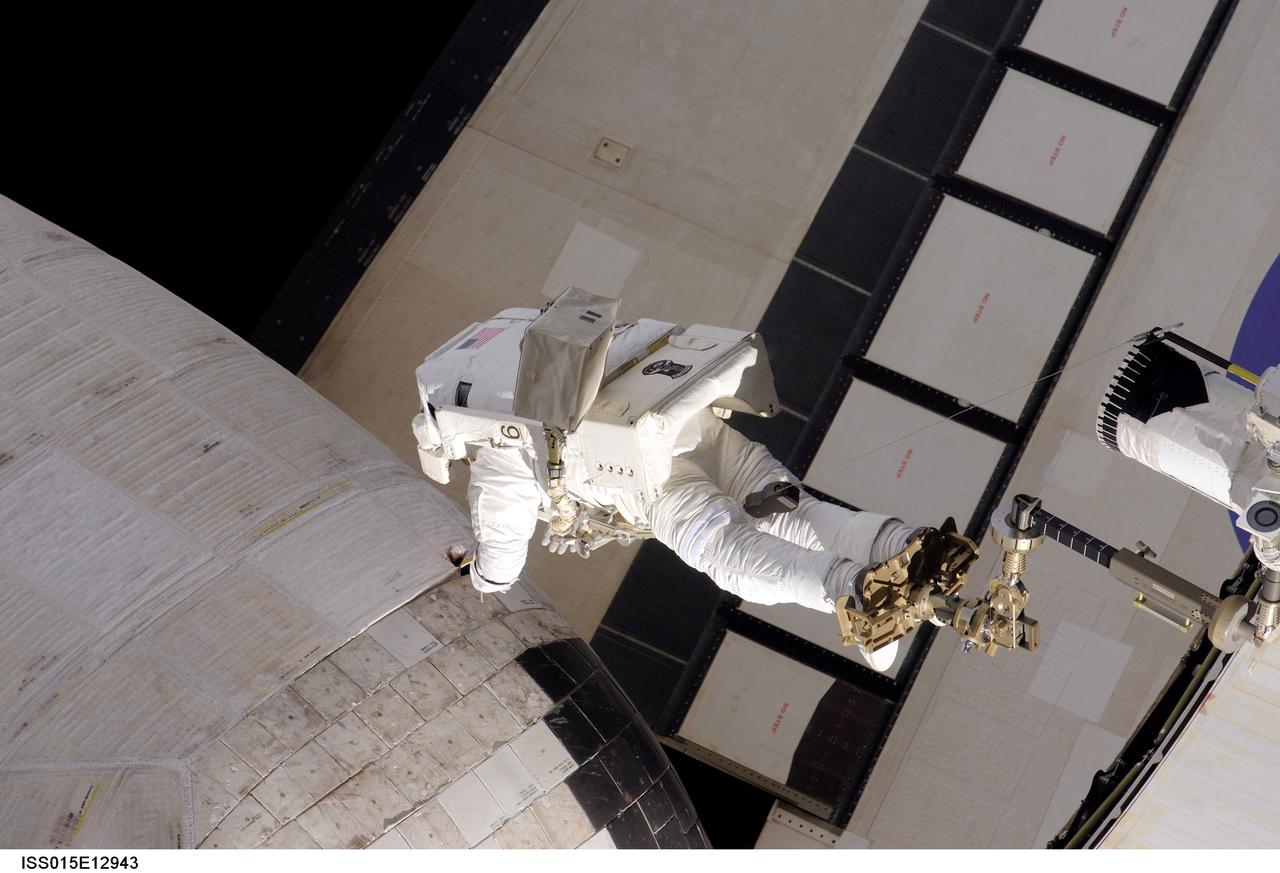
ISS015-E-12943 (15 June 2007) --- Anchored to a foot restraint on Space Shuttle Atlantis' remote manipulator system (RMS) robotic arm, astronaut John "Danny" Olivas, STS-117 mission specialist, repairs a 4-by-6-inch section of a thermal blanket on Atlantis' port orbital maneuvering system (OMS) pod that was damaged during the shuttle's climb to orbit last week. During the repair, Olivas pushed the turned up portion of the thermal blanket back into position, used a medical stapler to secure the layers of the blanket, and pinned it in place against adjacent thermal tile.
CAPE CANAVERAL, Fla. -- In Hangar AF at Cape Canaveral, Fla., with separation rings in place, workers begin to move apart segments of one of the retrieved solid rocket boosters from the STS-126 launch. The pins attaching the segments to each other are removed at the start. Each separation ring has three joints that help mold the ring around the segment and an air motor is used to rotate the rings to separate the segments. After disassembly, the segments will be sent to ATK (Alliant Techsystems) in Utah for final processing and return to Kennedy for another shuttle launch. Photo credit: NASA/Jack Pfaller