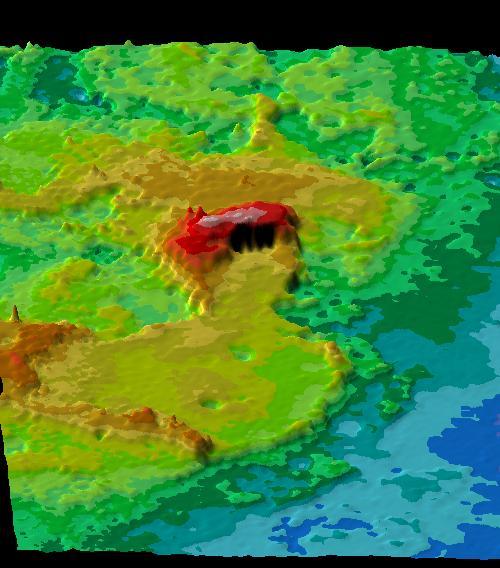
This perspective view of Ishtar Terra was derived from data obtained by NASA's Pioneer Venus spacecraft altimetry radar instrument. http://photojournal.jpl.nasa.gov/catalog/PIA00093

This global view of Venus, centered at 270 degrees east longitude, is a compilation of data from several sources. Magellan synthetic aperature radar mosaics from the first cycle of Magellan mapping are mapped onto a computer-simulated globe to create the image. Data gaps are filled with Pioneer-Venus orbiter data, or a constant mid-range value. Simulated color is used to enhance small-scale structure. The simulated hues are based on color images recorded by the Soviet Venera 13 and 14 spacecraft. The image was produced at the Jet Propulsion Laboratory (JPL) Multimission Image Processing Laboratory and is a single frame from a video released at the JPL news conference, 10-29-91. View provided by JPL with alternate number P-39225 MGN81.

This image covers part of the 150 kilometer (90 mile) wide, 1 to 1.5 kilometer (0.6 to 0.9 mile) deep valley, Devana Chasma. The image is a composite of the first two orbits recorded by NASA's Magellan spacecraft in August 1990 superimposed on Pioneer Venus topography. This image is located at the intersection of Devana Chasma and the Phoebe Regio upland. It covers a region approximately 525 by 525 kilometers (315 by 315 miles), centered 288 degrees east longitude on the equator. Devana Chasma consists of radar bright lineaments, interpreted to be fault scarps, oriented in a north-northeast direction. This part of the planet is thought to be an area where the crust is being stretched and pulled apart producing a rift valley, similar to the East African rift. http://photojournal.jpl.nasa.gov/catalog/PIA00464

Photograph by Pioneer Venus Venus image 0007
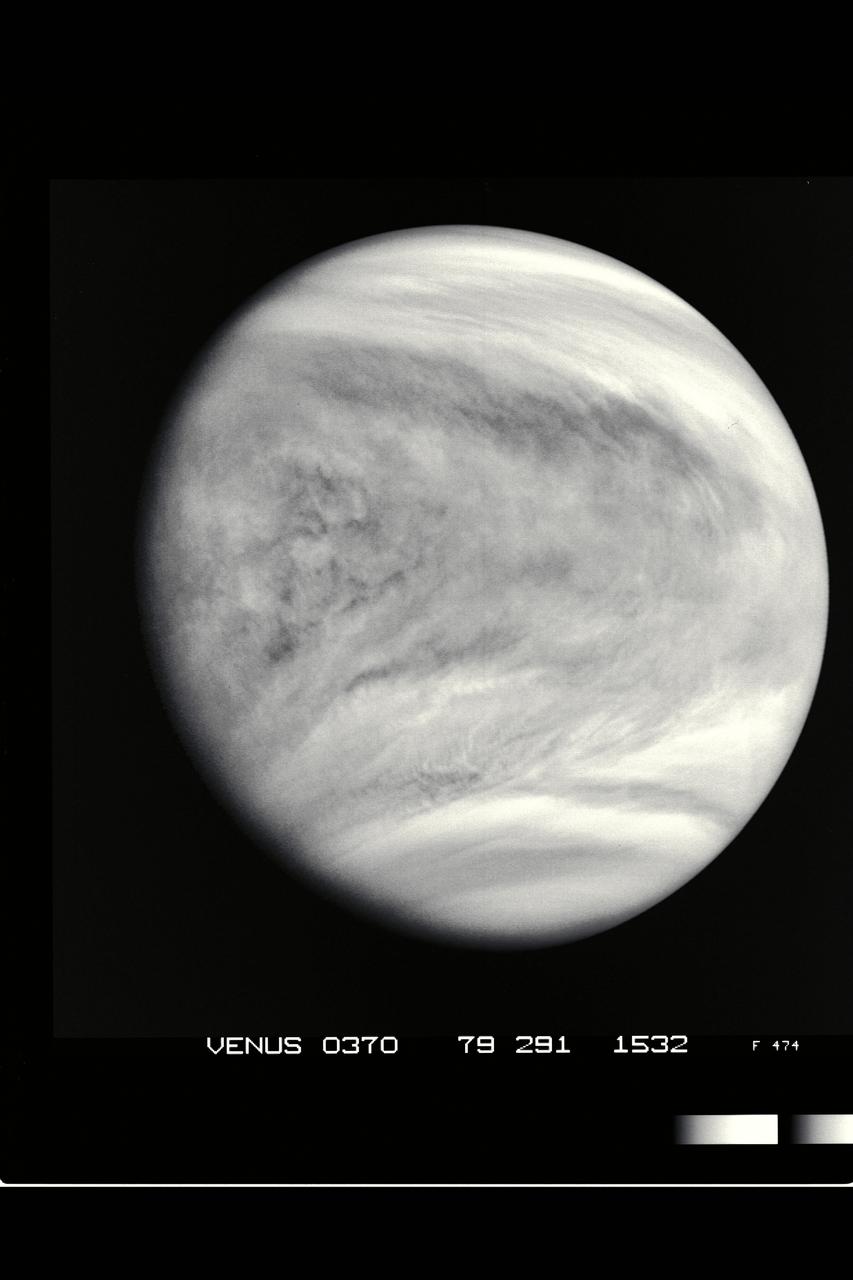
Pioneer-Venus Replica of Venus de Milo

Pioneer Venus Occp. Image 00199 Venus
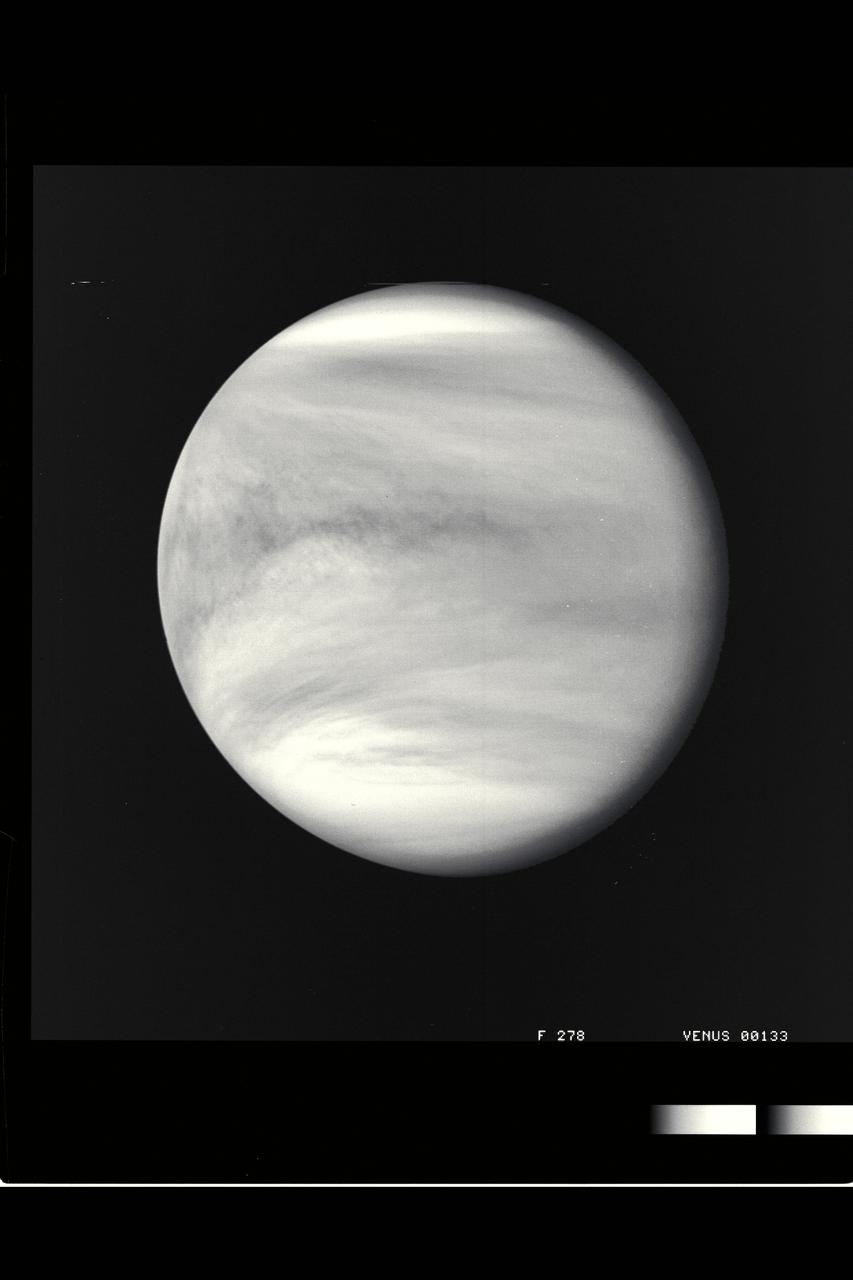
Pioneer Venus Occp. Image 00133 Venus

Photograph by Pioneer Venus Venus image 0694

Pioneer Venus Occp. Image 00118 Venus
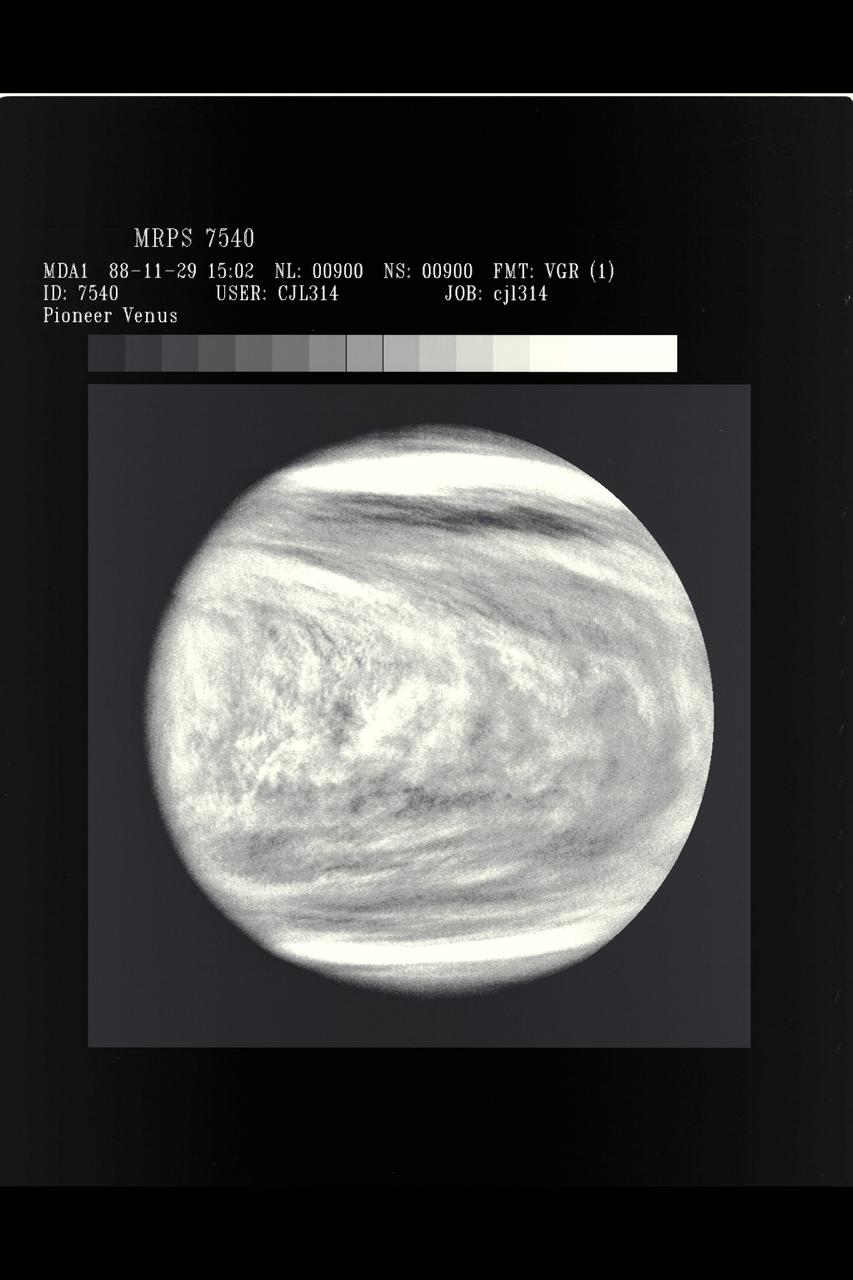
Photograph by Pioneer Venus Venus image 7540
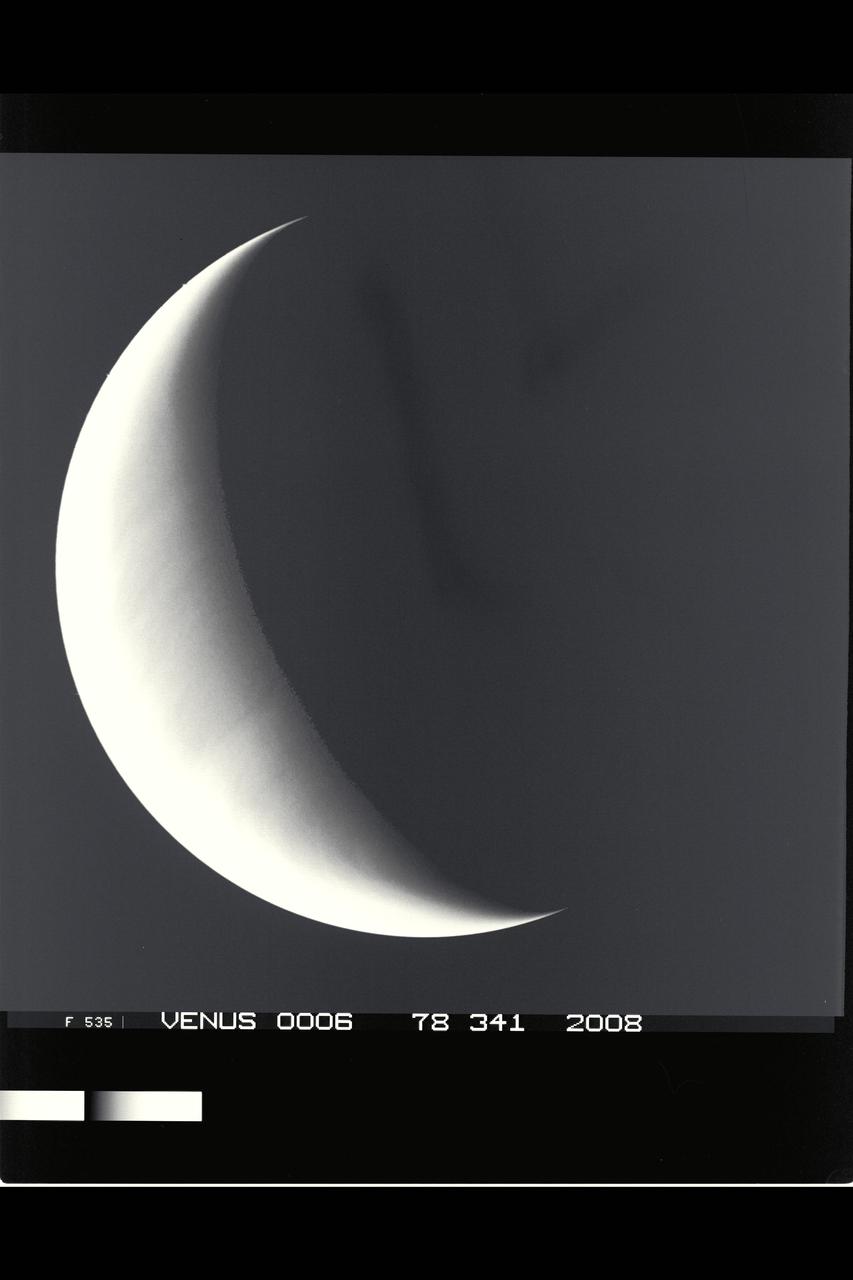
Photograph by Pioneer Venus Venus image 0006

Pioneer-Venus Ocpp. Image 00194 Venus
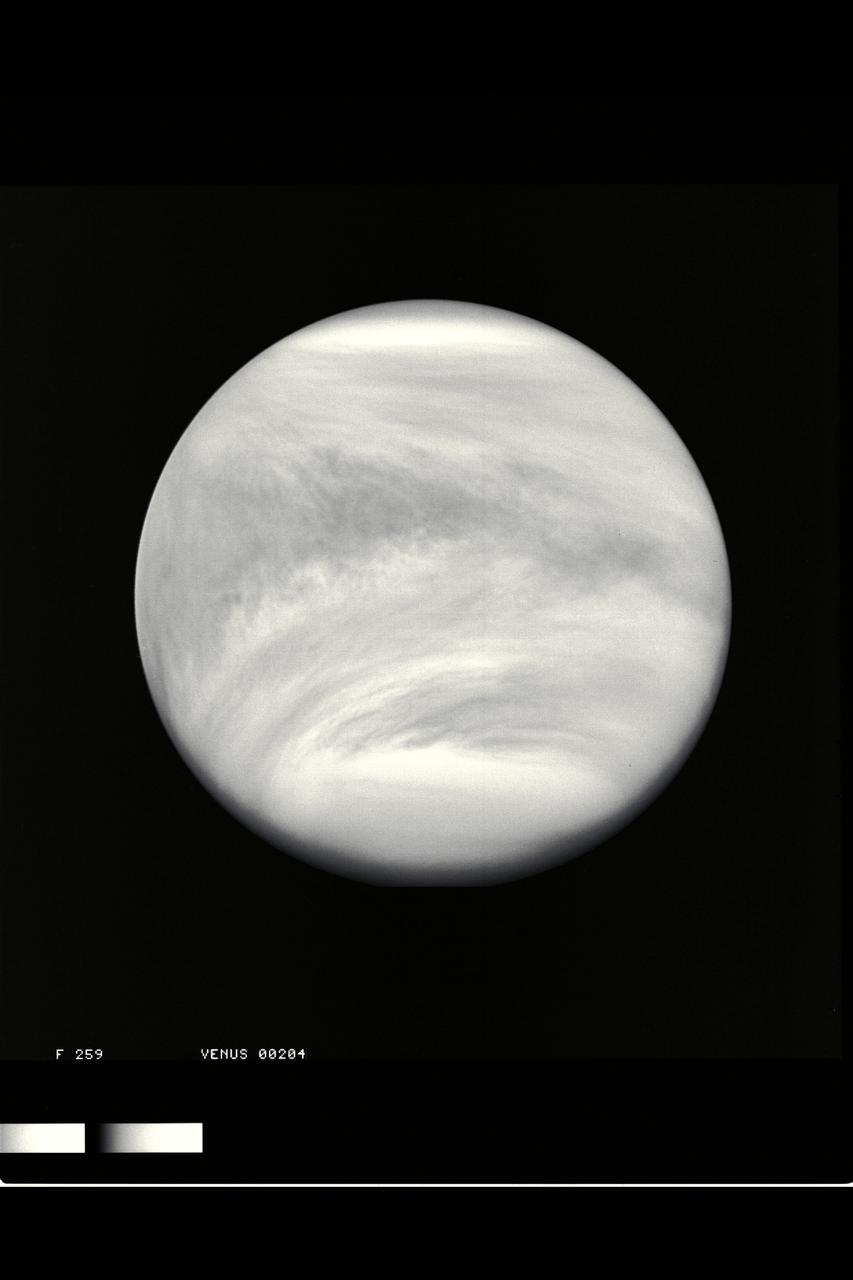
Pioneer Venus Occp. Image 00204 Venus
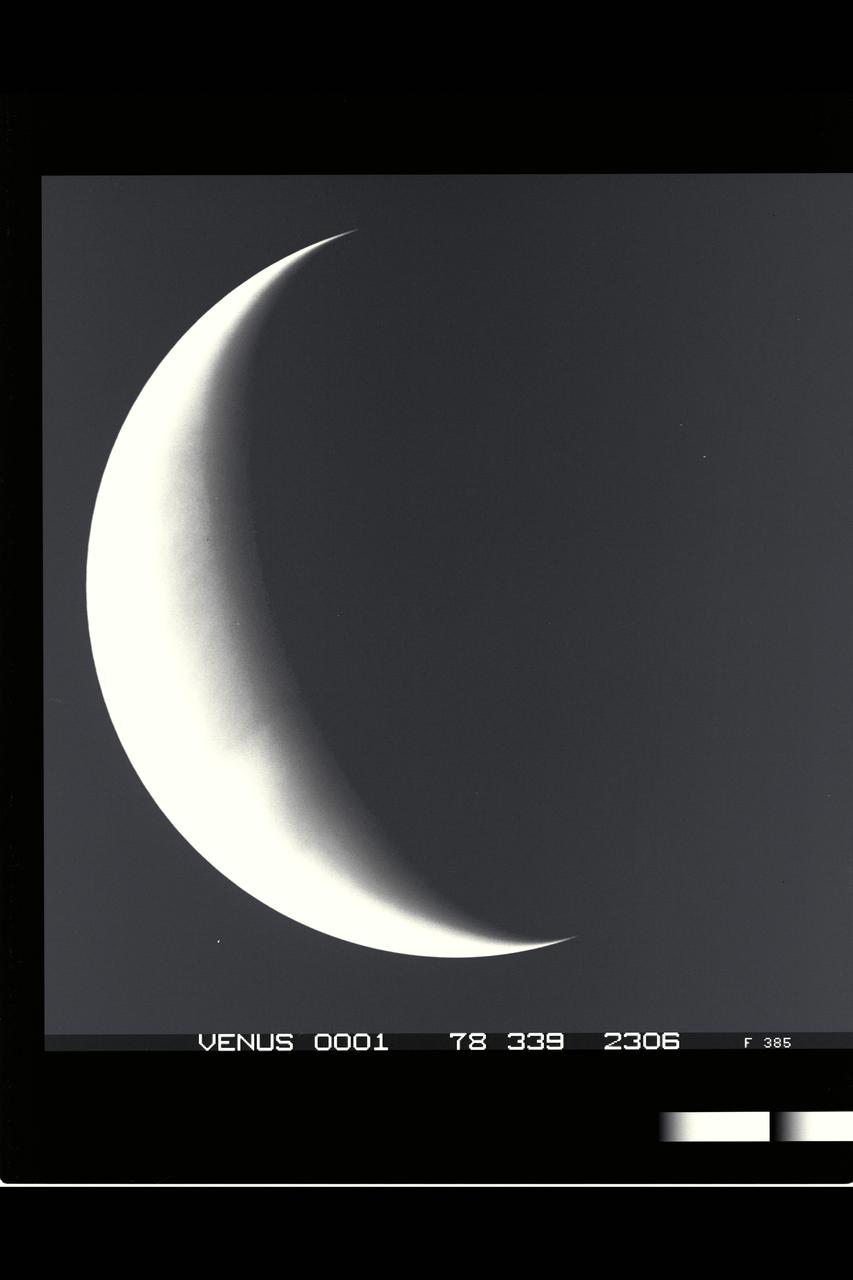
Photograph by Pioneer Venus Venus image 0001
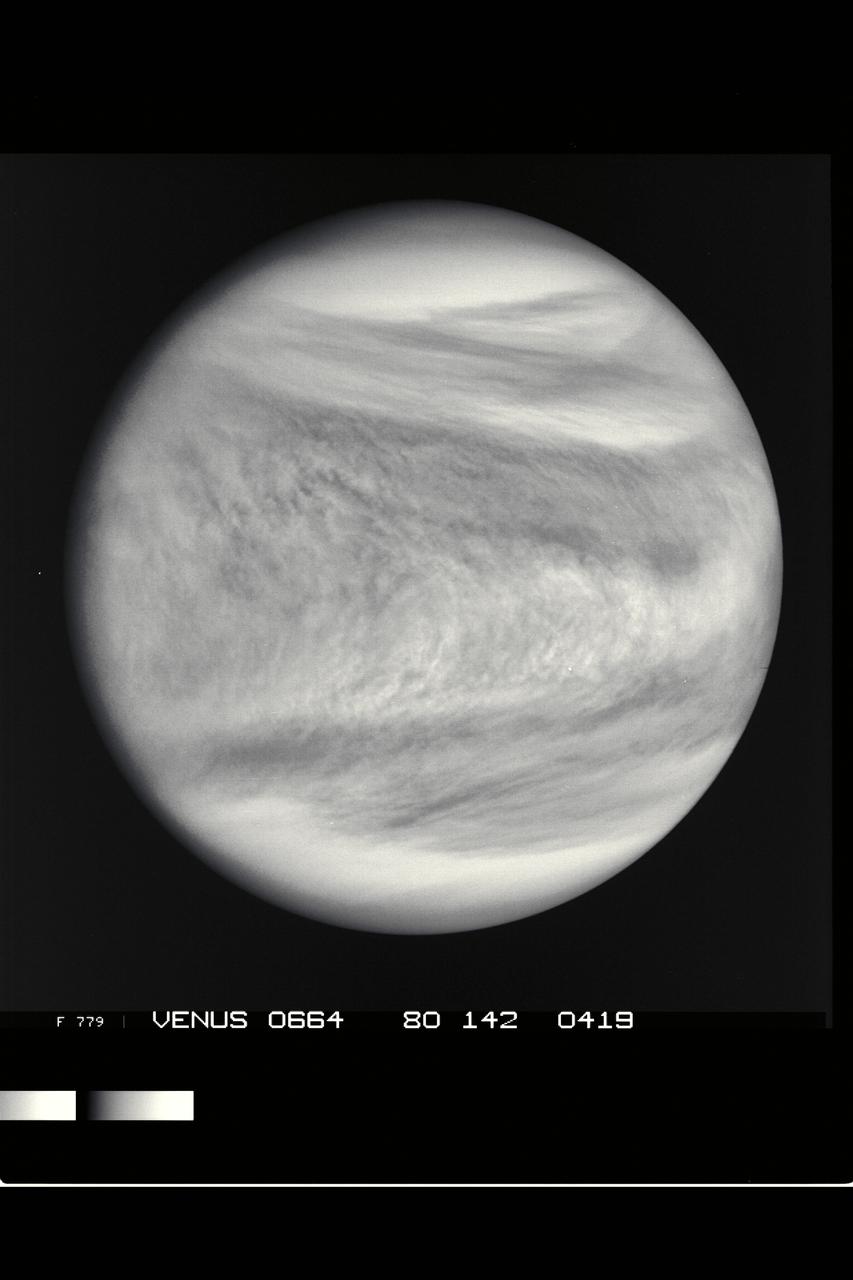
Photograph by Pioneer Venus Venus image 0664
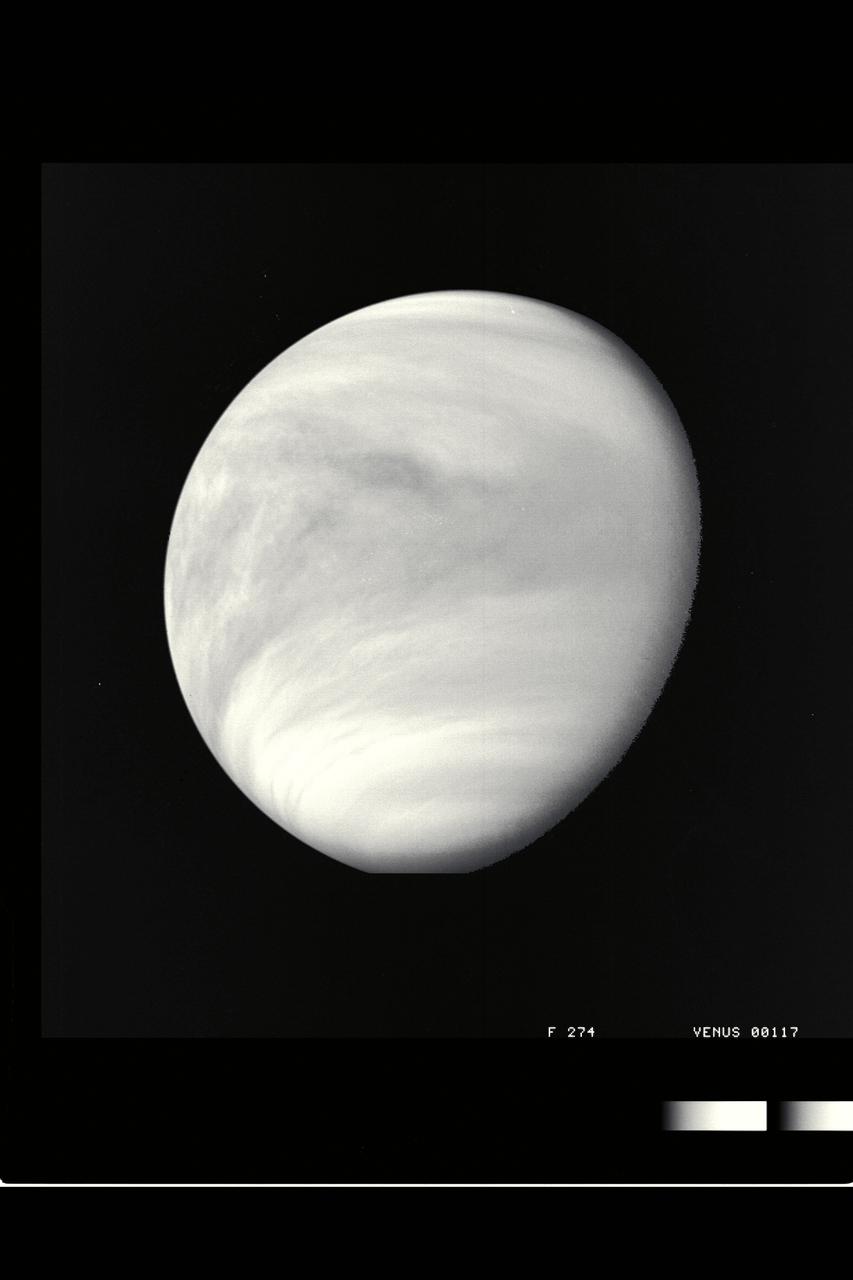
Pioneer Venus Occp. Image 00117 Venus
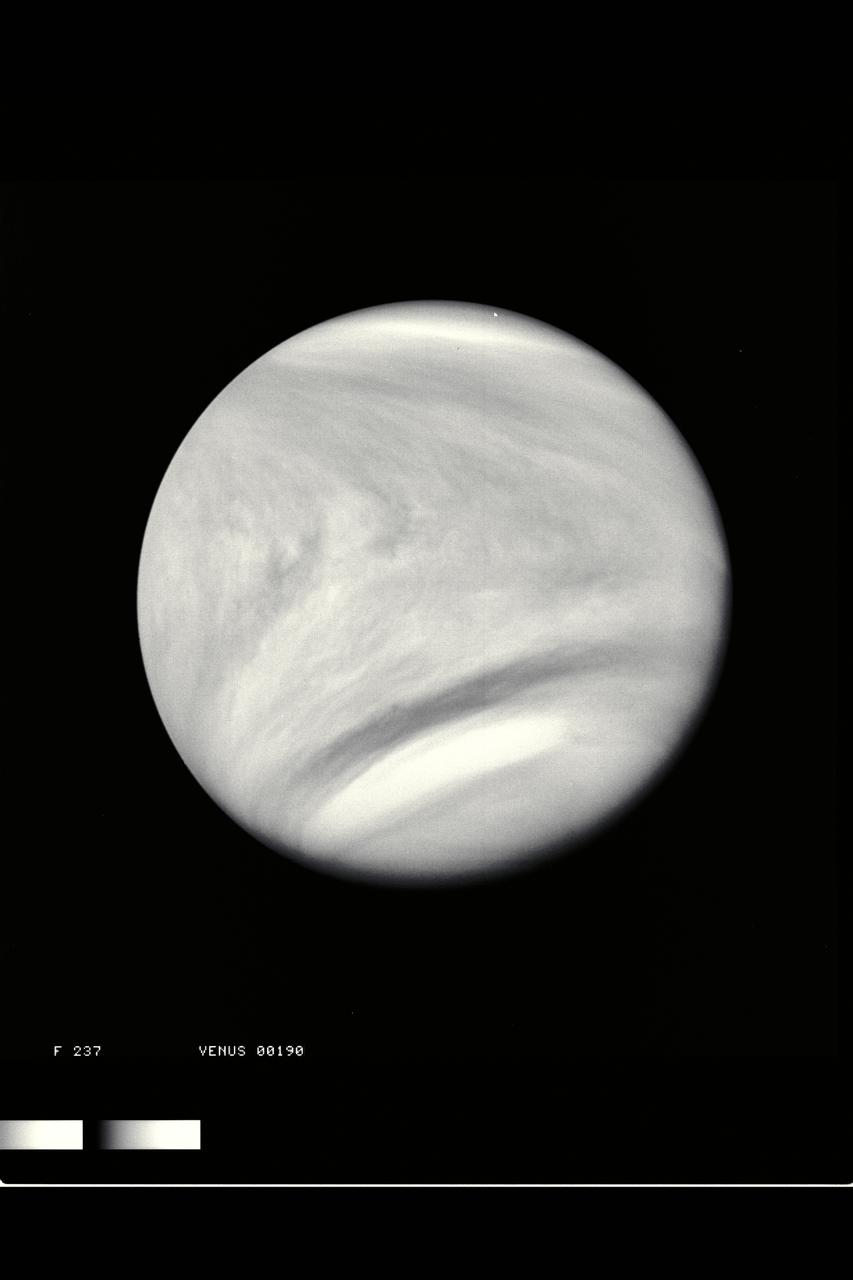
Pioneer Venus Ocpp. Image 00190 Venus

Pioneer Venus Occp. Image 00102 Venus

Photograph by Pioneer Venus Venus image 589

Photograph by Pioneer Venus Venus image 0010
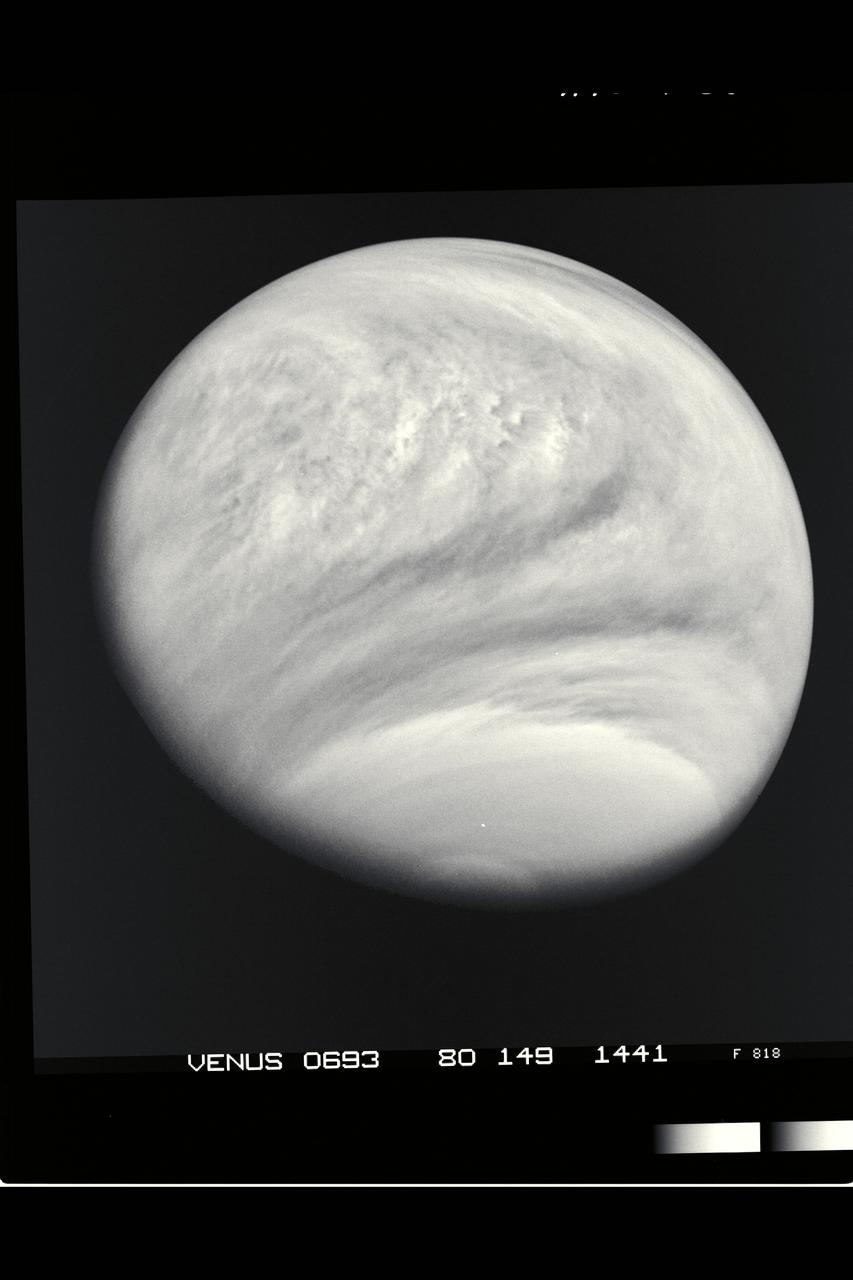
Photograph by Pioneer Venus Venus image 0693
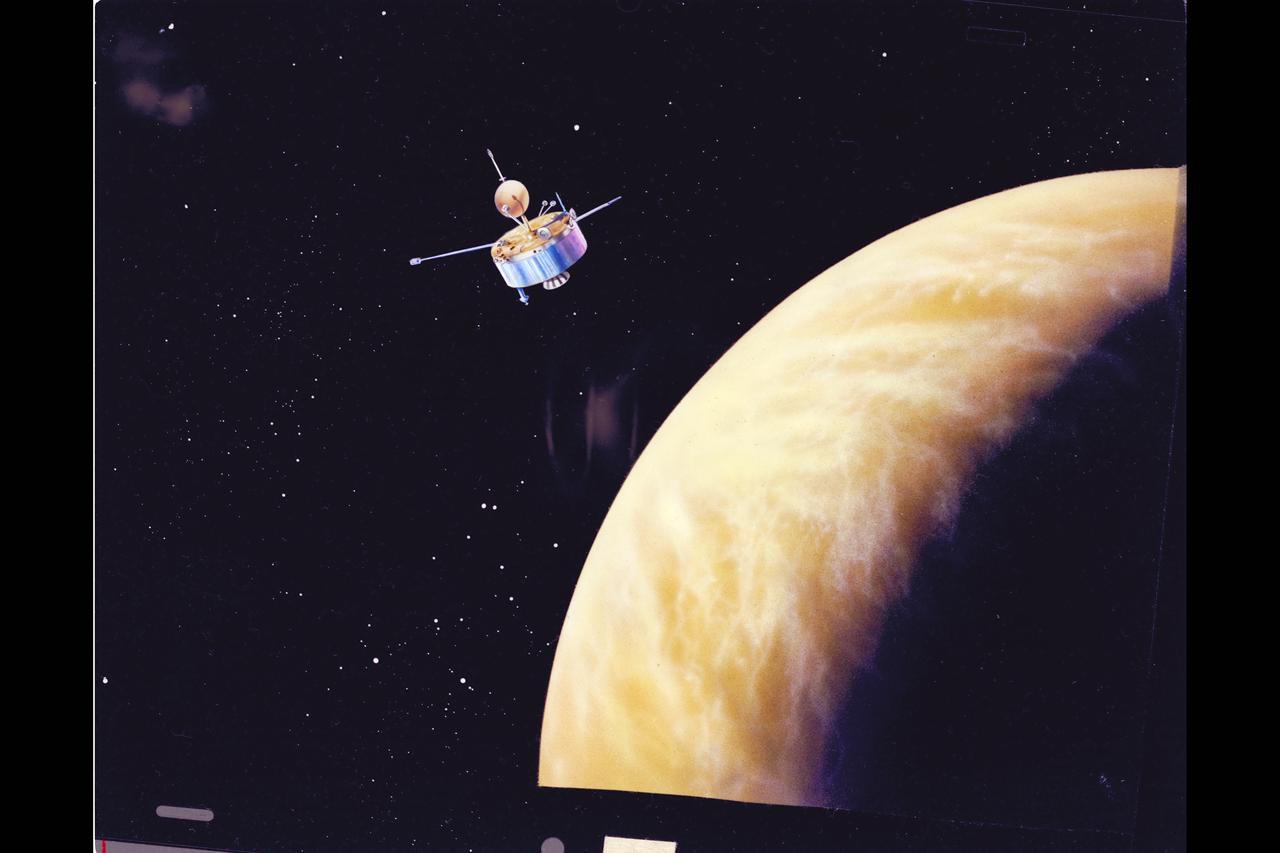
Art By Don Davis Pioneer Venus orbiter in orbit around Venus
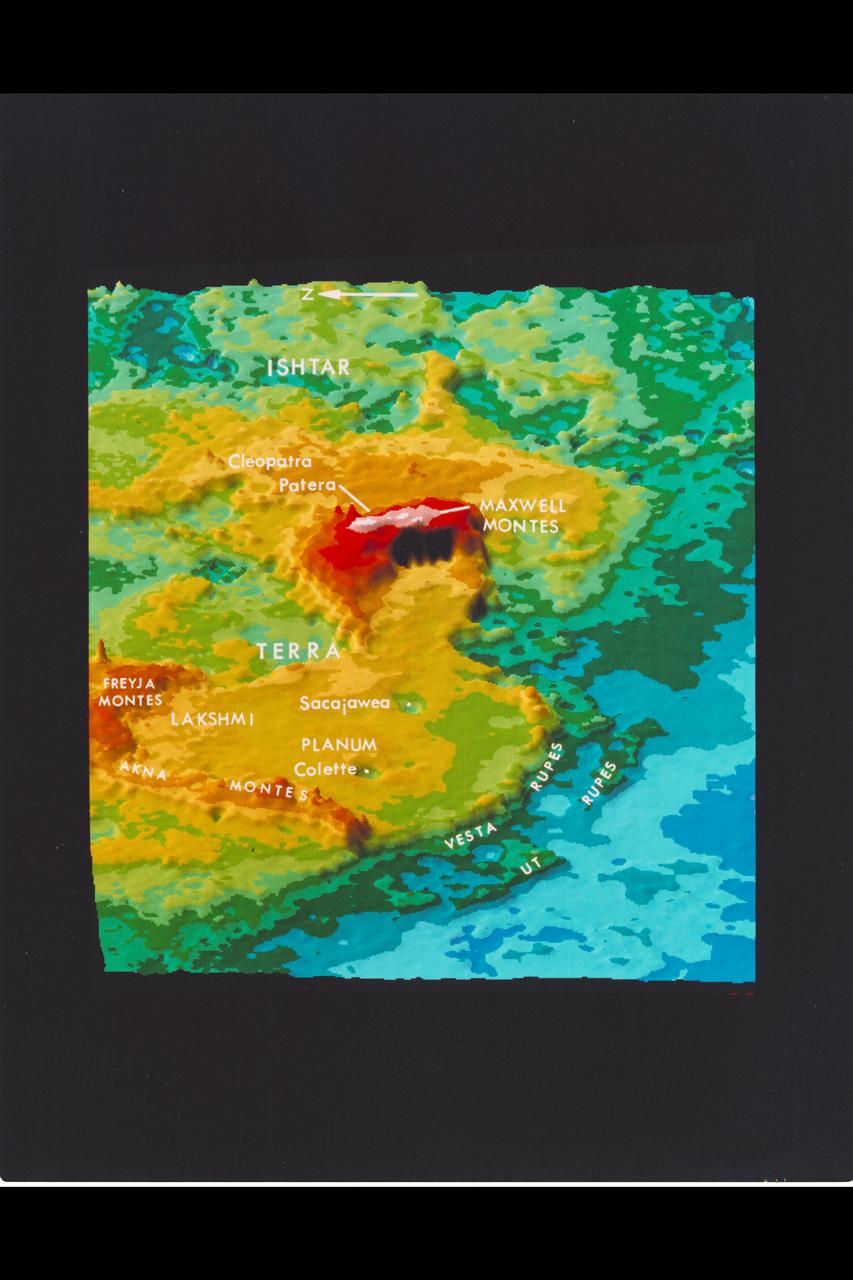
Photograph by Pioneer Venus Recent computer enchanced surface relief images of Venus.
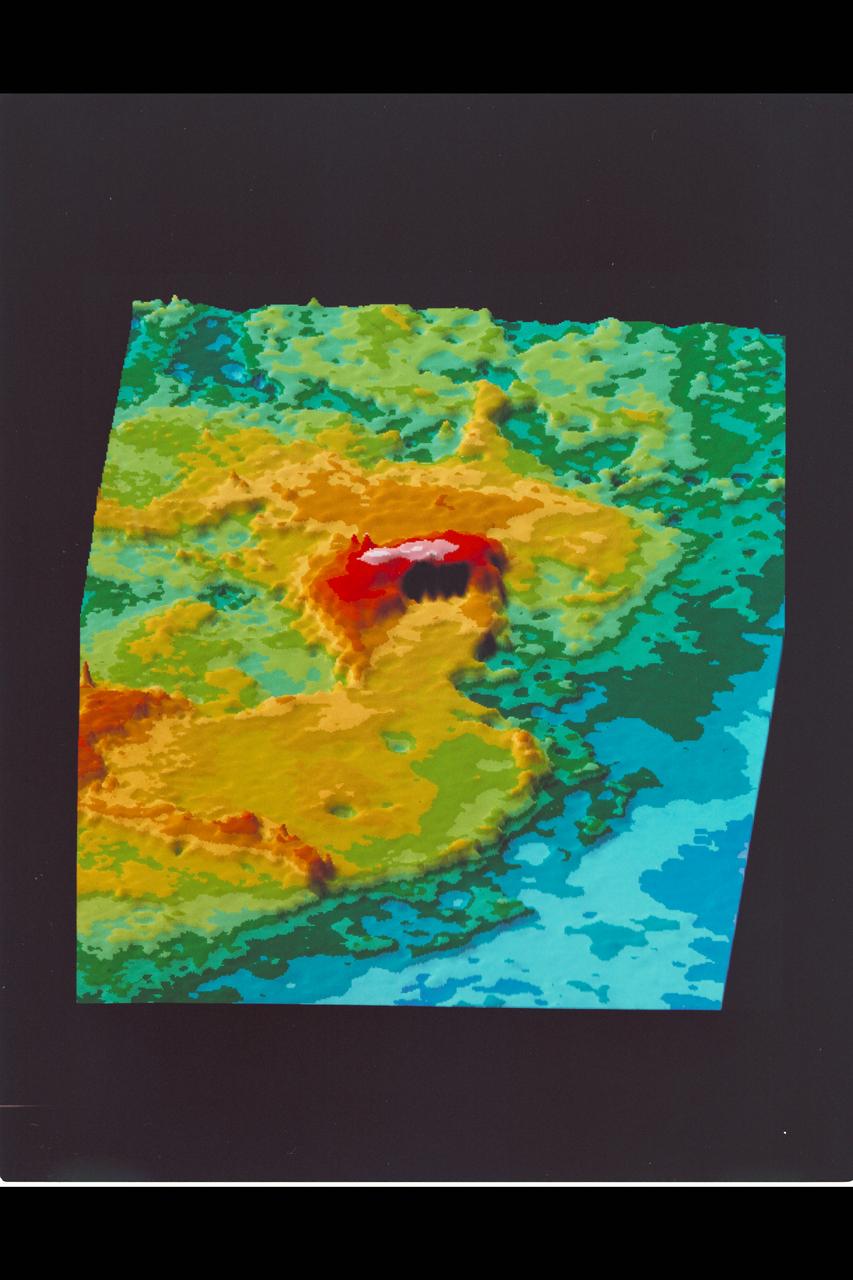
Photograph by Pioneer Venus Recent computer enchanced surface relief images of Venus.
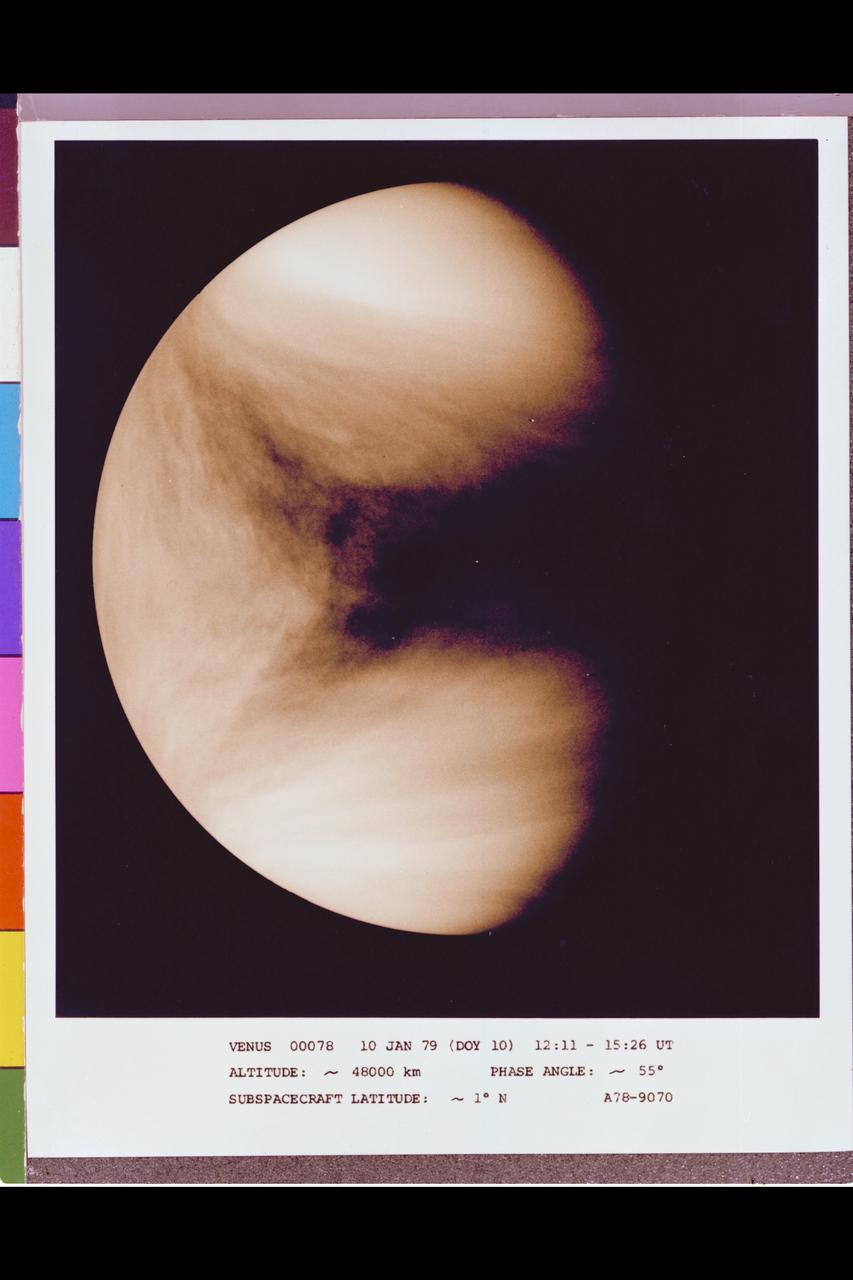
Pioneer-Venus Image 00078
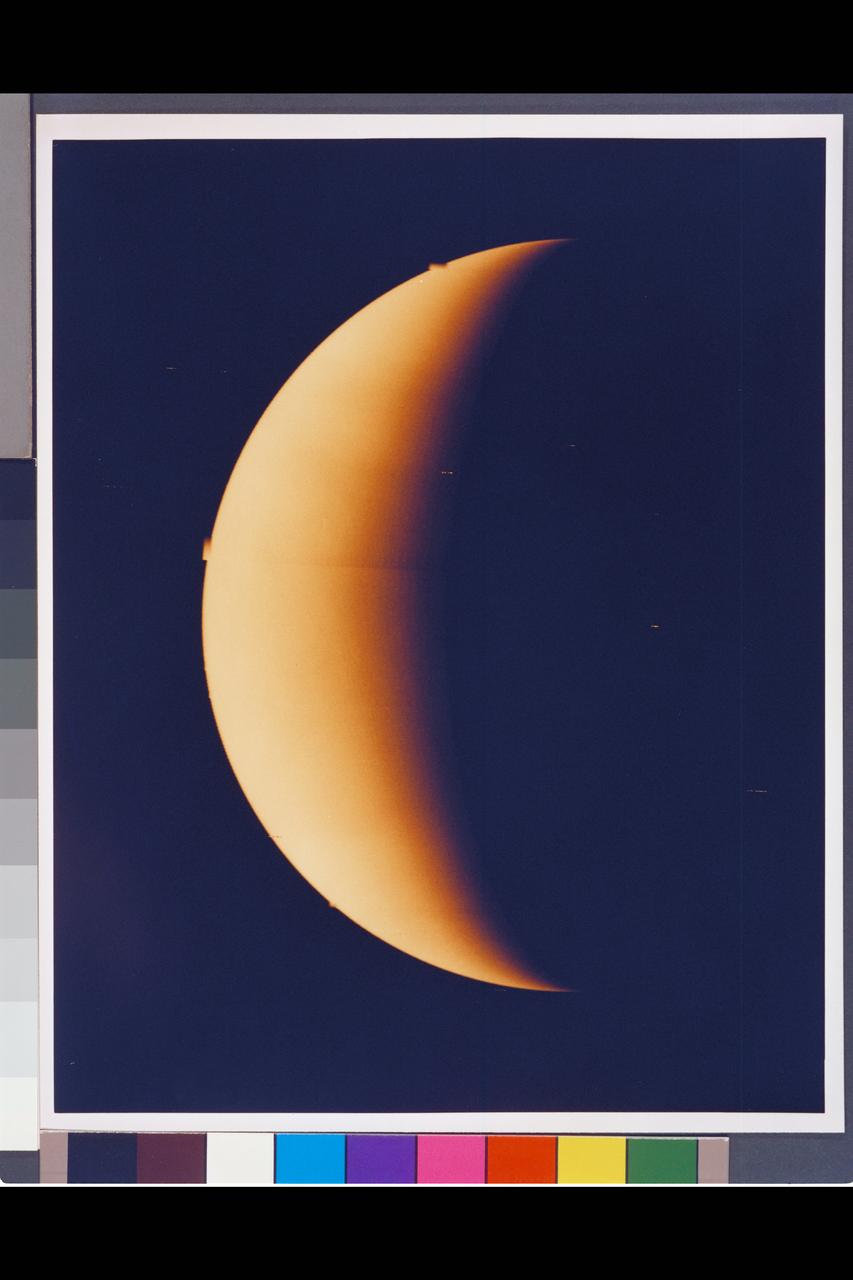
Pioneer-Venus Image (Crescent)
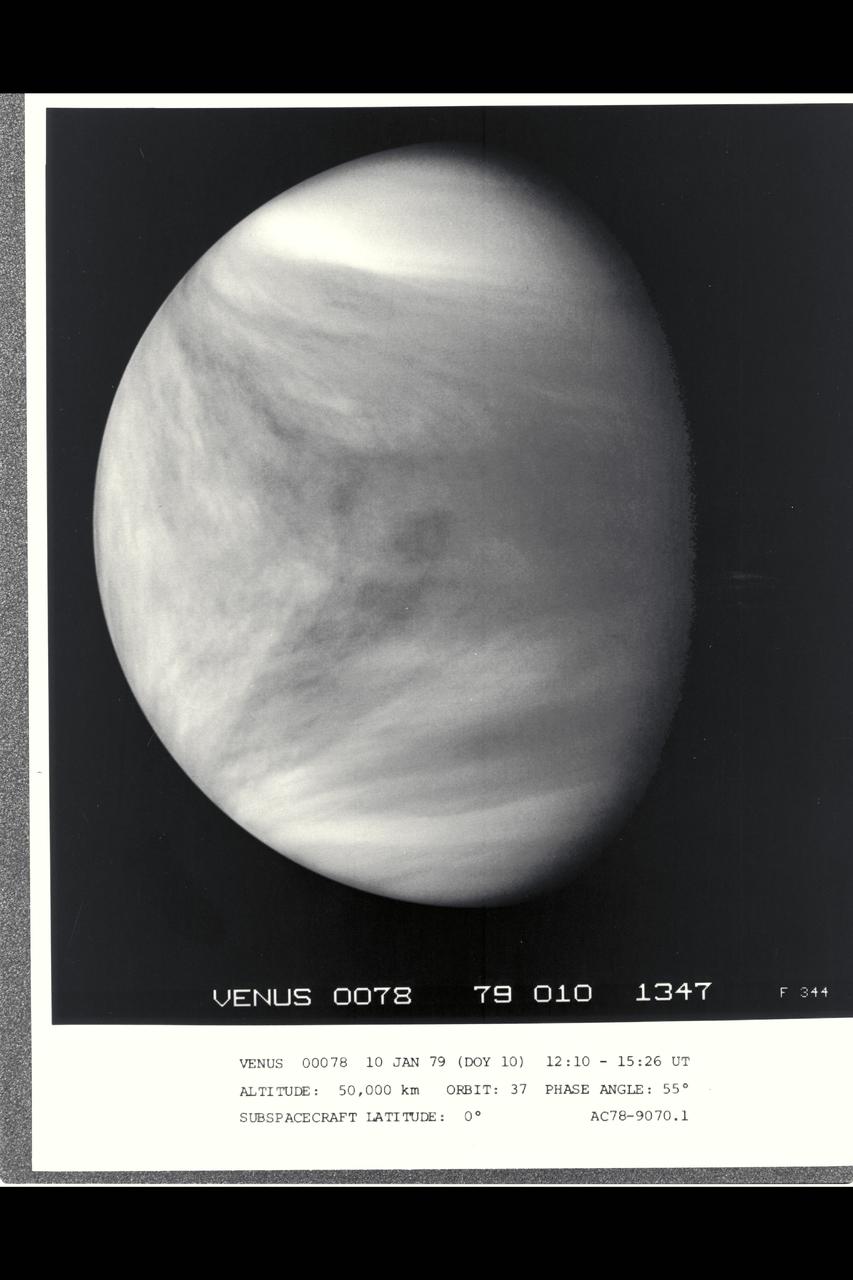
Pioneer-Venus Image 00078
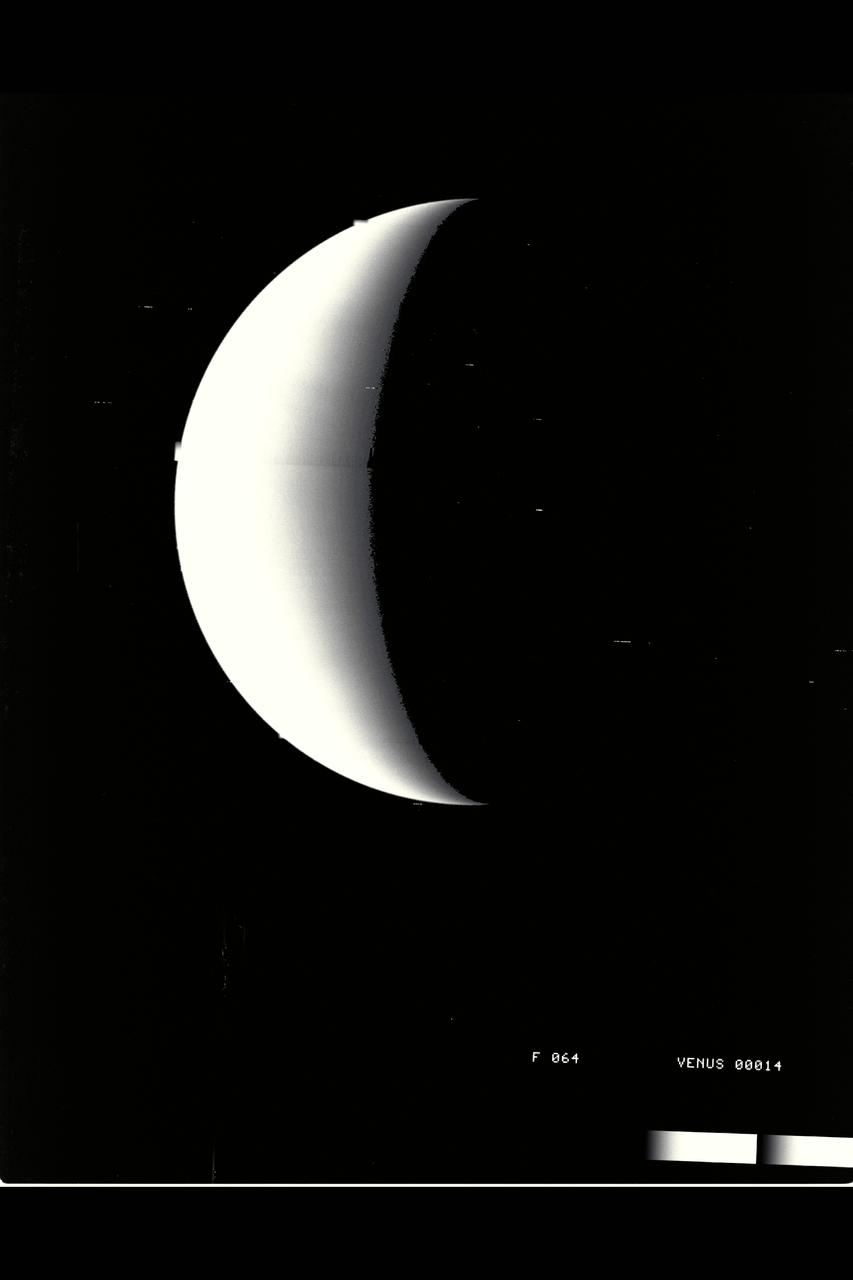
Pioneer-Venus Image (Crescent)
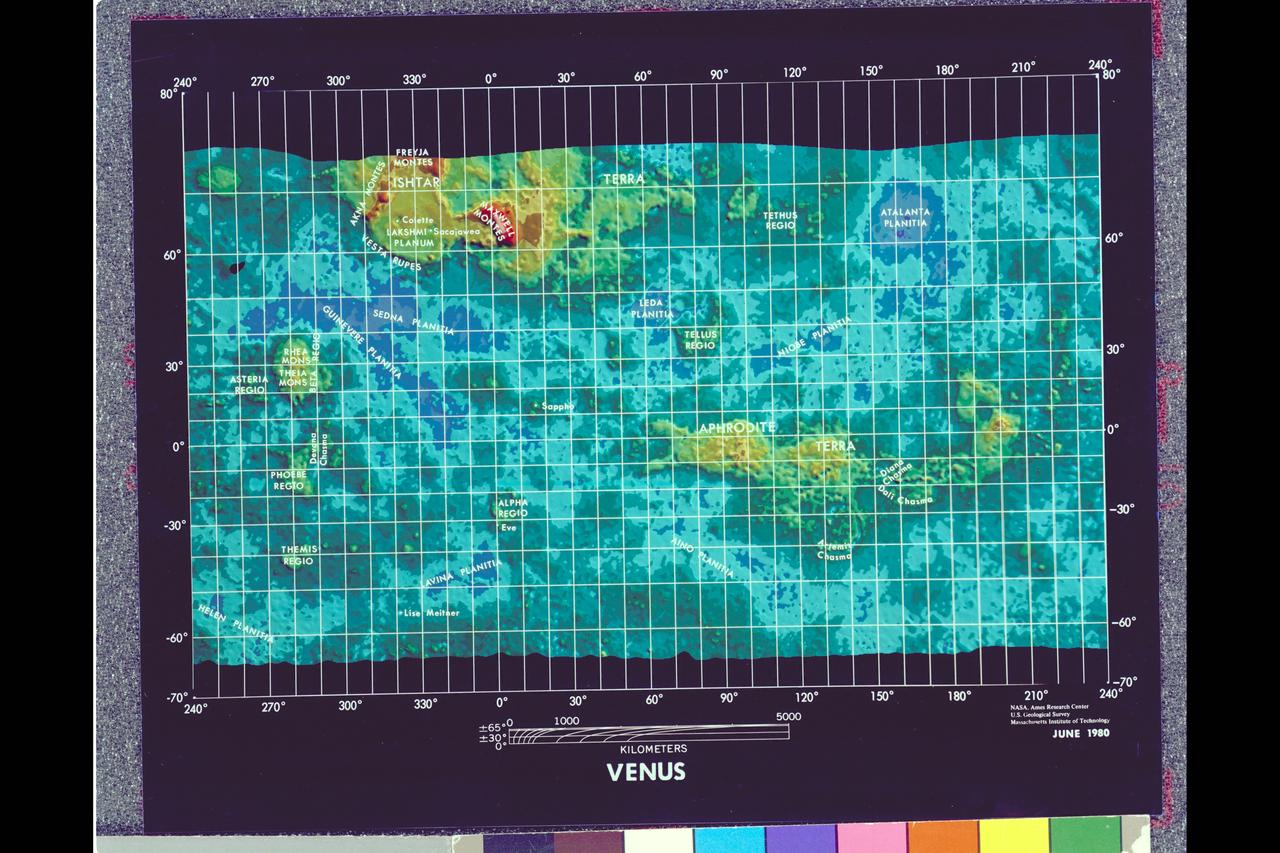
Pioneer Complete Venus Map
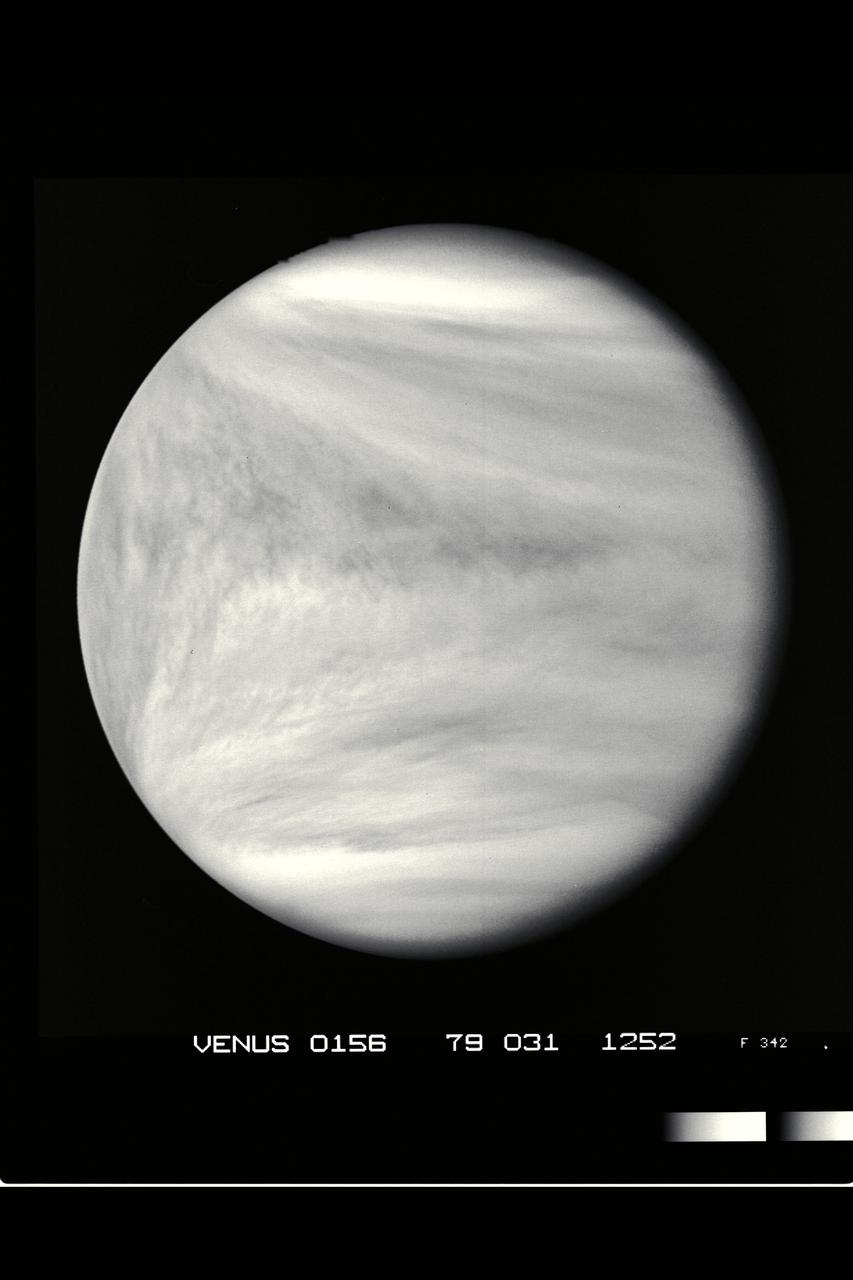
Pioneer Venus Occp. Image 00156

Photograph by Pioneer Venus OCPP imagery 0900 collected 5-14-88 10th anniversary release Venus image 7540
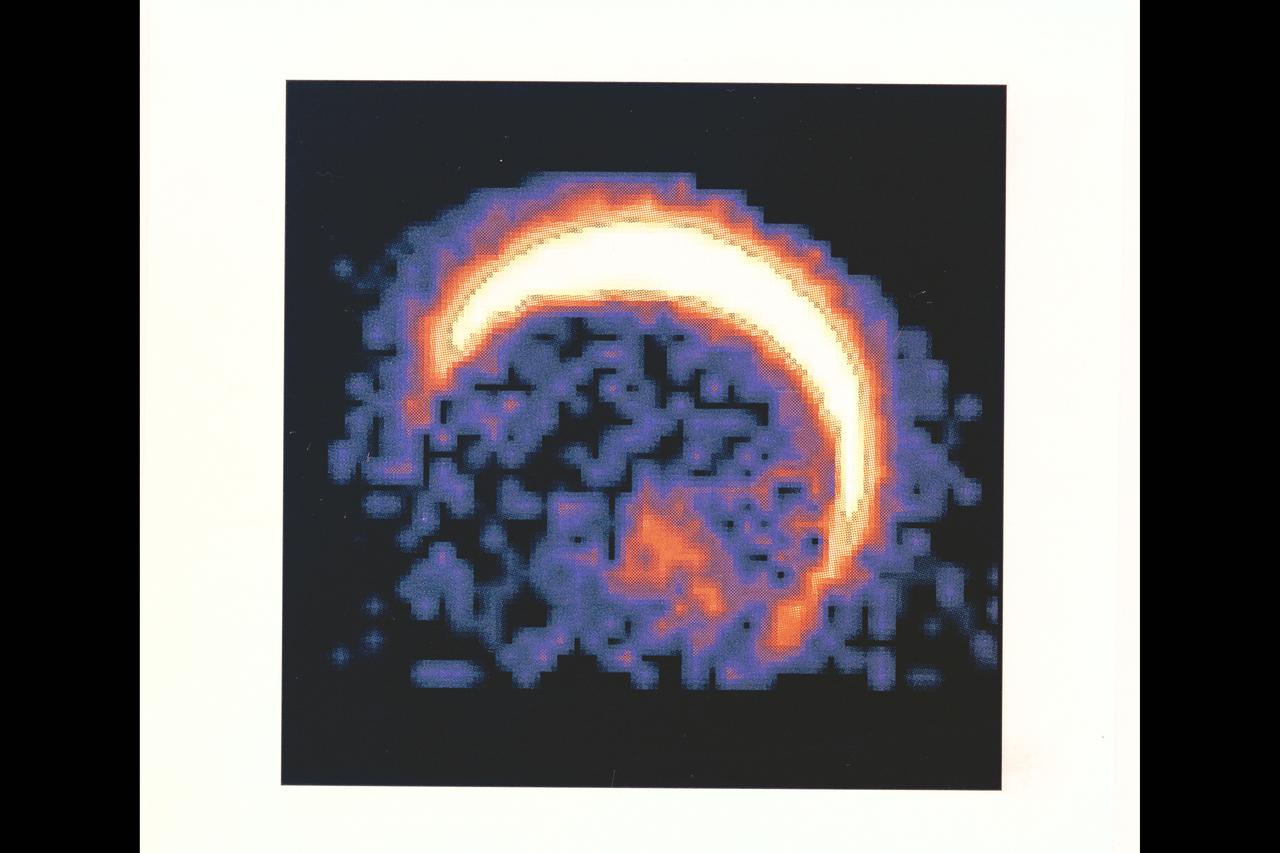
Photograph by Pioneer Venus Orbitor-Aurora and Airglow
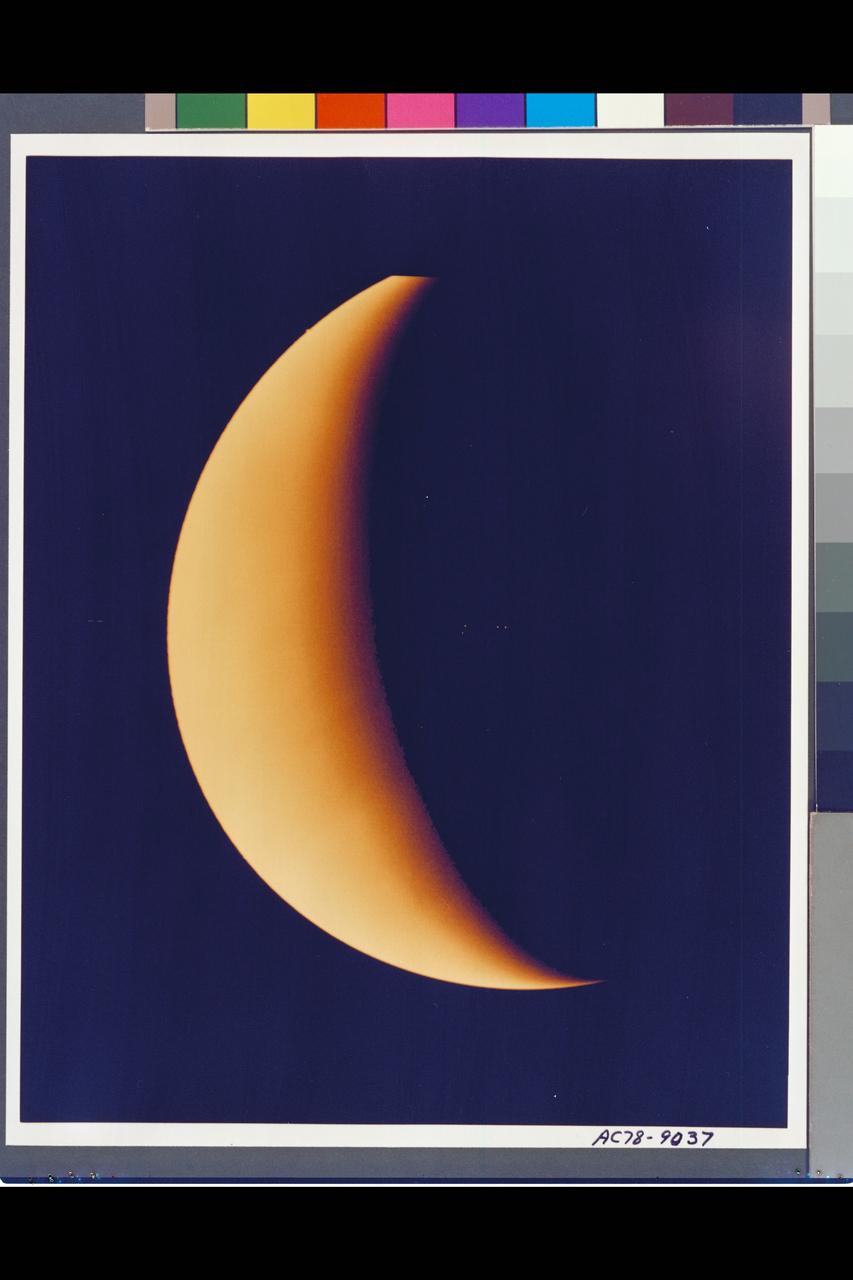
Pioneer-Venus Press Release (Ocpp. Image #2)
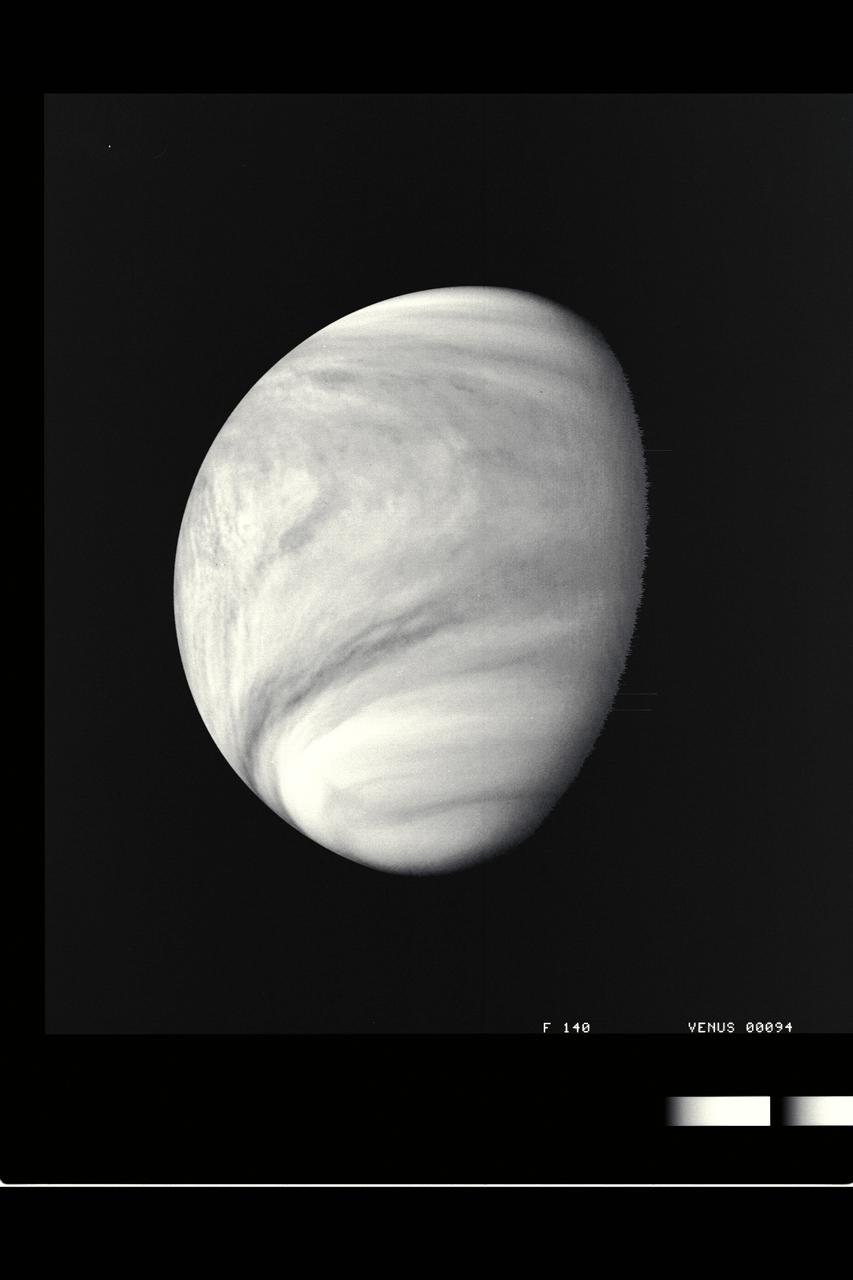
Pioneer-Venus Image Enhanced Ocpp. 00094
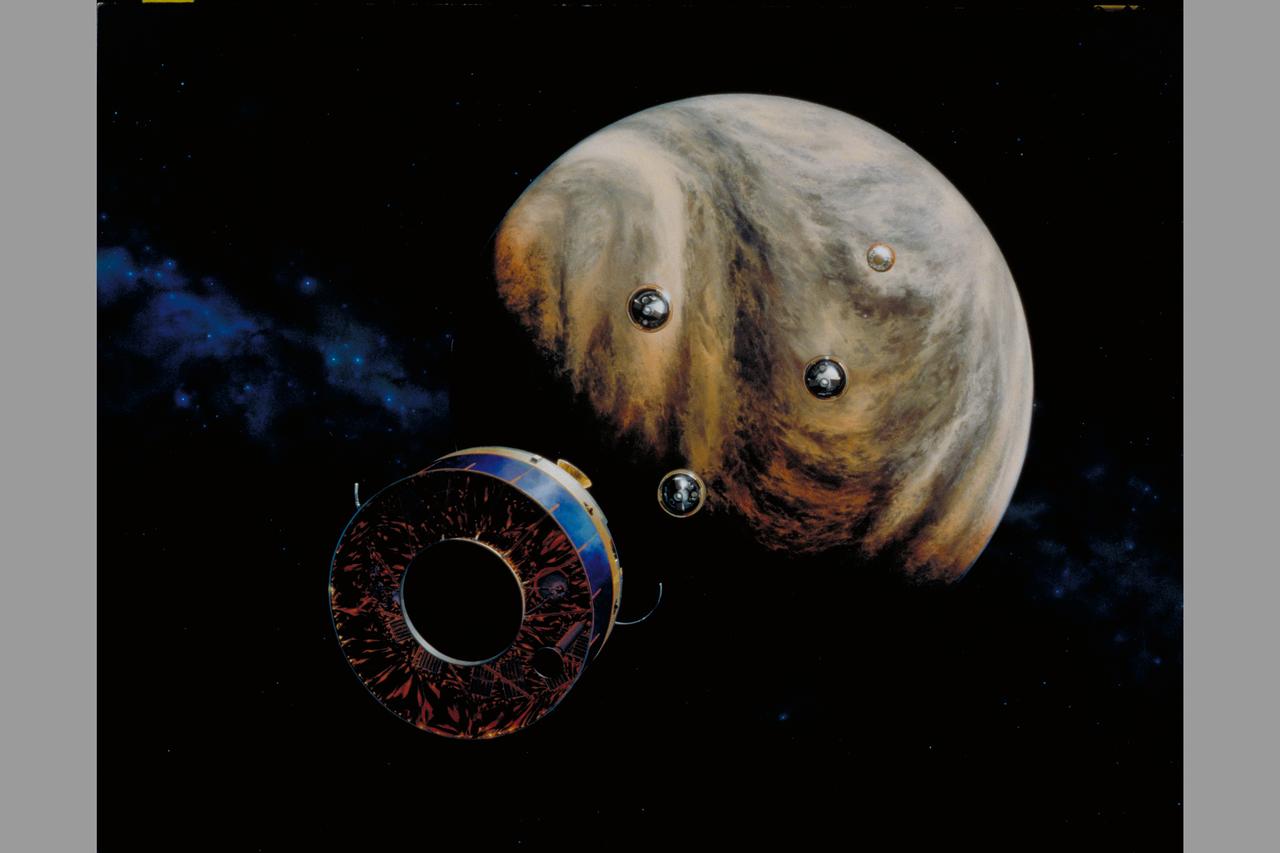
Art by Paul Hudson Pioneer Venus: Multiprobe Artwork

Pioneer-Venus Zerox Image (Greenhouse Effect)
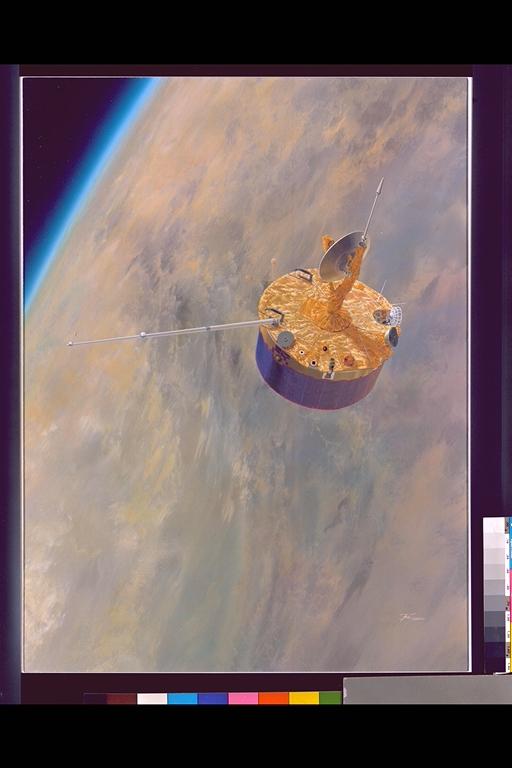
Artist: Paul Hudson Pioneer Venus Orbiter expected to orbit the planet from 1978 to 1992 when the spacecraft will enter and be destroyed in Venus' upper atmosphere
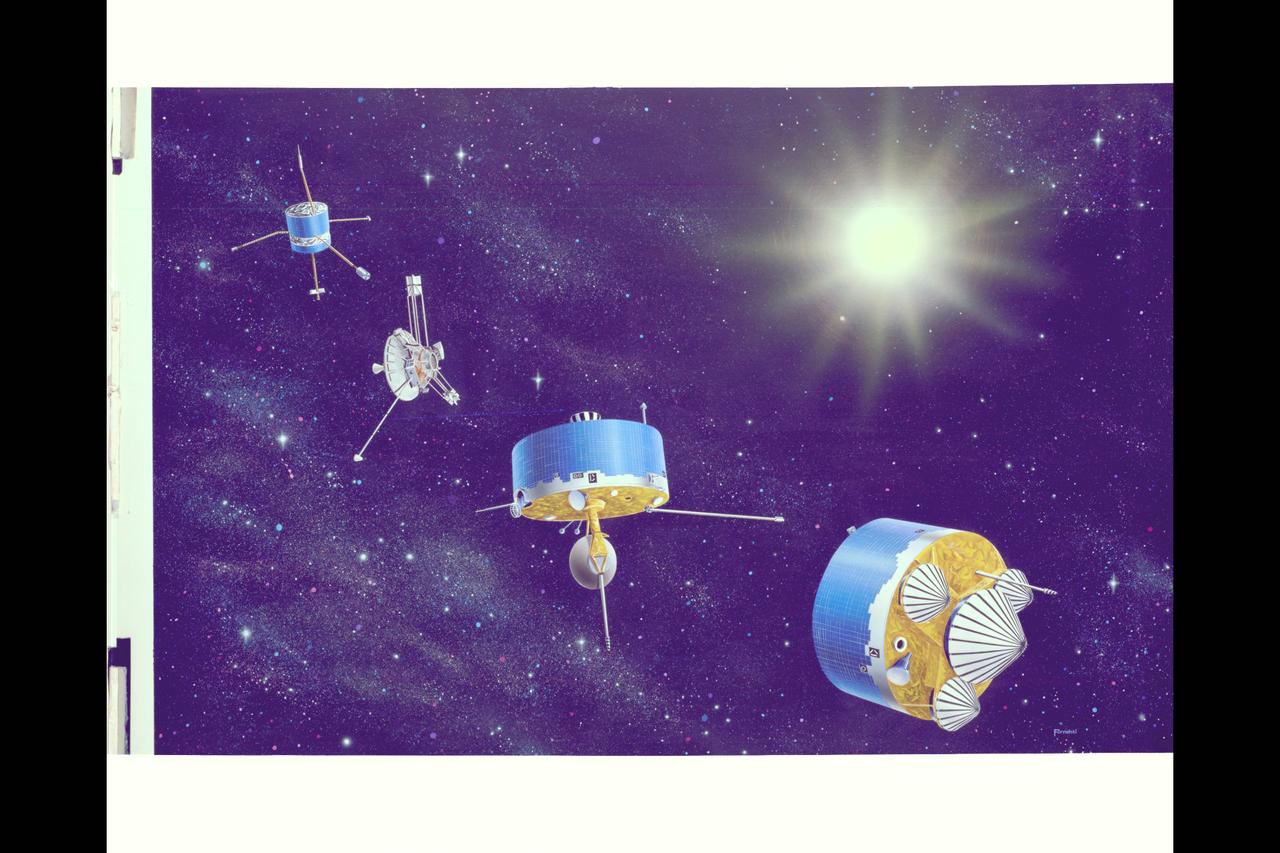
Artist: Fornalski Pioneer Spacecraft Composite 'The Pioneer Family' Probes 6-9, 10, 11 and Venus Orbiter and Multiprobe or Bus (12-13)
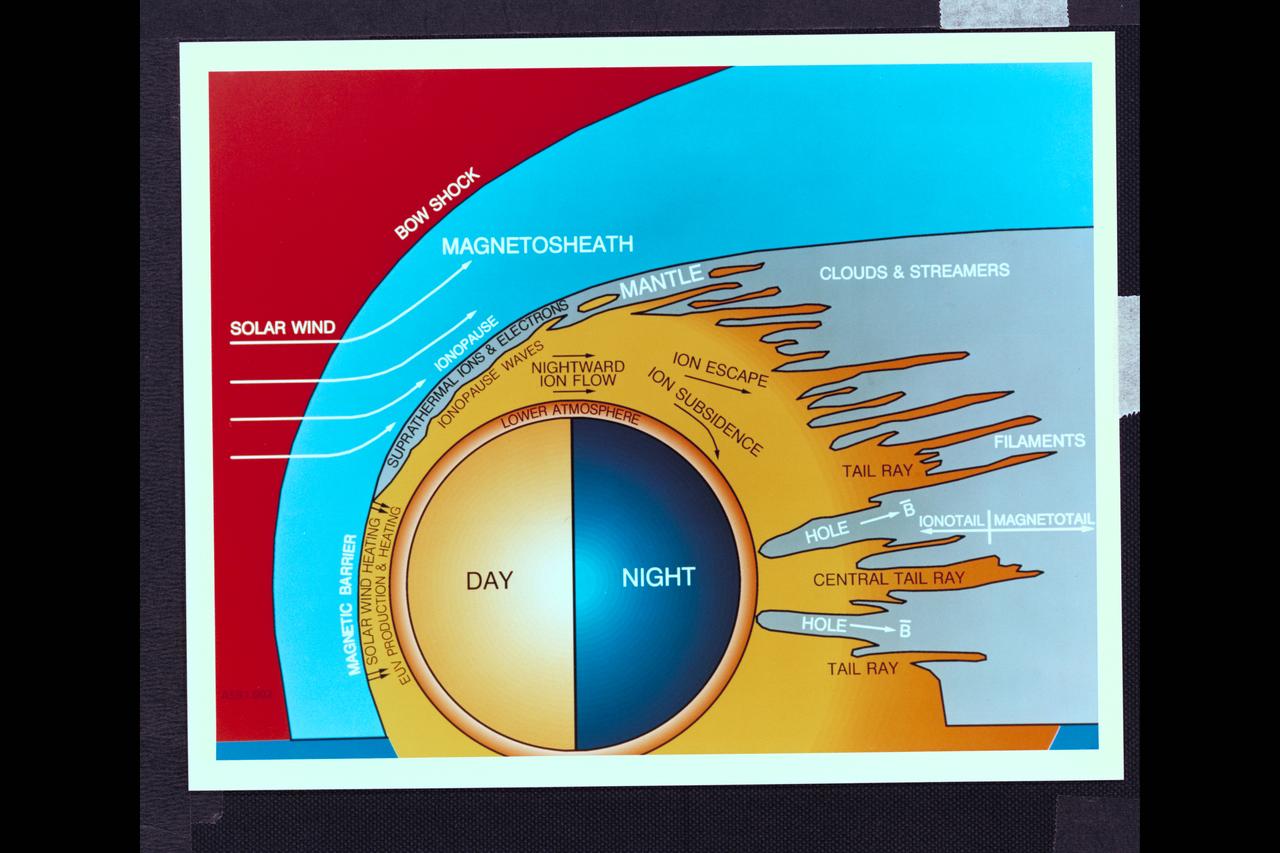
Graphic Art Venus - Day - Night drawing showing solar wind, bow shock, magnetosheath, clouds and streamers Pioneer Venus SP-461 fig 6-28 Interaction of the solar wind with the atmosphere of Venus as termined from Pioner Venus experiments and observations

Pioneer Venus Art: Atmosphere Flow Day/Night Homopause, Ionosphere, Thermosphere, and Cryosphere

Charlie Hall inspects the Pioneer Venus multiprobe at Hughes Aircraft Co. in Dec. 1976
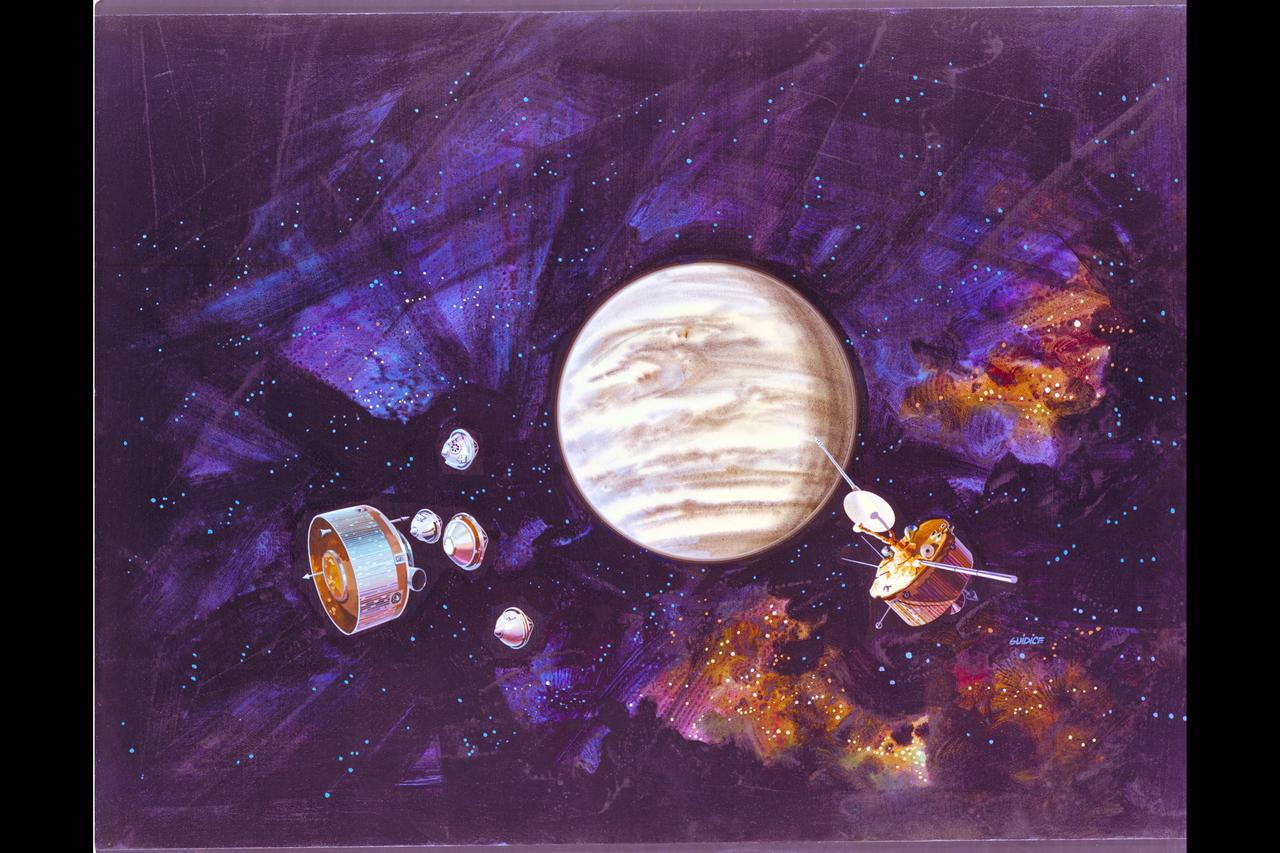
Artist: Rick Guidice Pioneer Venus Mission Artwork: An artist concept of the multiprobe approaching Venus is shown here shortly after the probes release - Top to bottom - night probe, day probe sounder probe, North probe, followed by the bus (Note: this original painting's orientation is upside- down)

Artist: Rick Guidice Pioneer Venus Mission Artwork: An artist concept of the orbiter and multiprobe approaching Venus are shown here shortly after probes release - Top to bottom - night probe, day probe sounder probe, North probe, followed by the bus (Note: this original painting's orientation is upside- down)
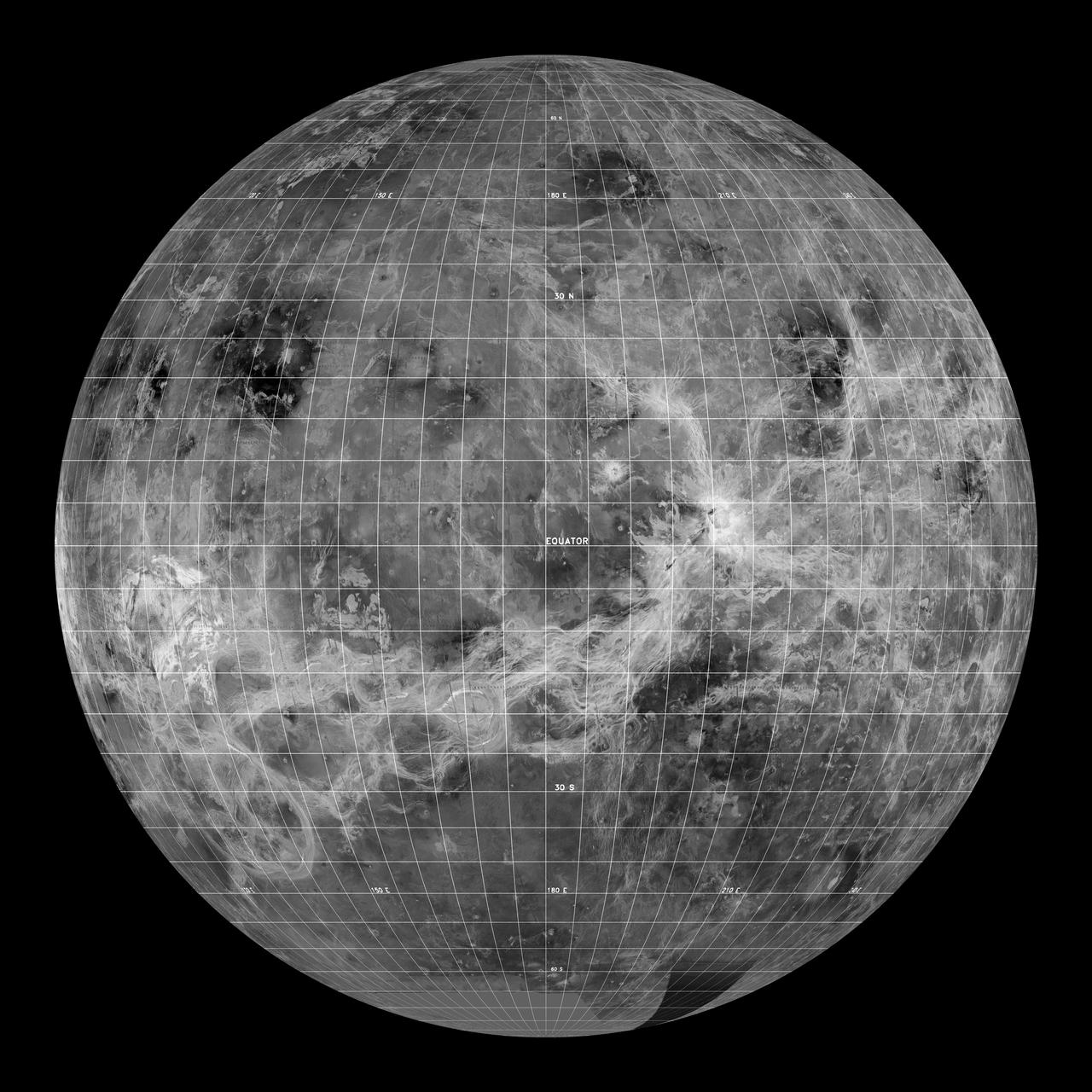
This global view of the surface of Venus is centered at 180 degrees east longitude. Magellan synthetic aperture radar mosaics from the first cycle of Magellan mapping, and a 5 degree latitude-longitude grid, are mapped onto a computer-simulated globe to create this image. Data gaps are filled with Pioneer-Venus Orbiter data, or a constant mid-range value. The image was produced by the Solar System Visualization project and the Magellan Science team at the JPL Multimission Image Processing Laboratory. http://photojournal.jpl.nasa.gov/catalog/PIA00478
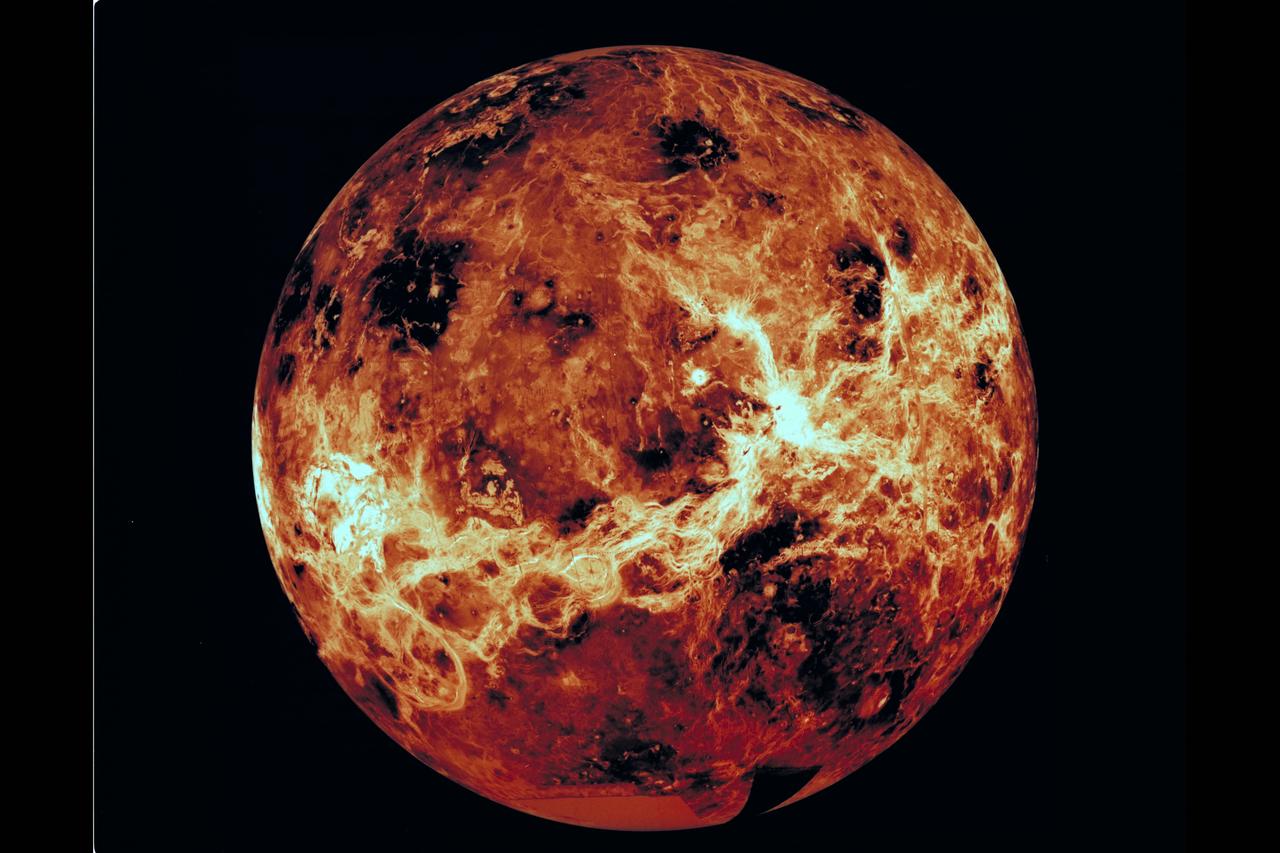
This global view of the surface of Venus is centered at 270 degrees east longitude. Magellan synthetic aperture radar mosaics from the first cycle of Magellan mapping are mapped onto a computer-simulated globe to create this image. Data gaps are filled with Pioneer-Venus orbiter data, or a constant mid-range value. Simulated color is used to inhance small-scale structure. The simulated hues are based on color images recorded by the Soviet Venera 13 and 14 spacecraft.
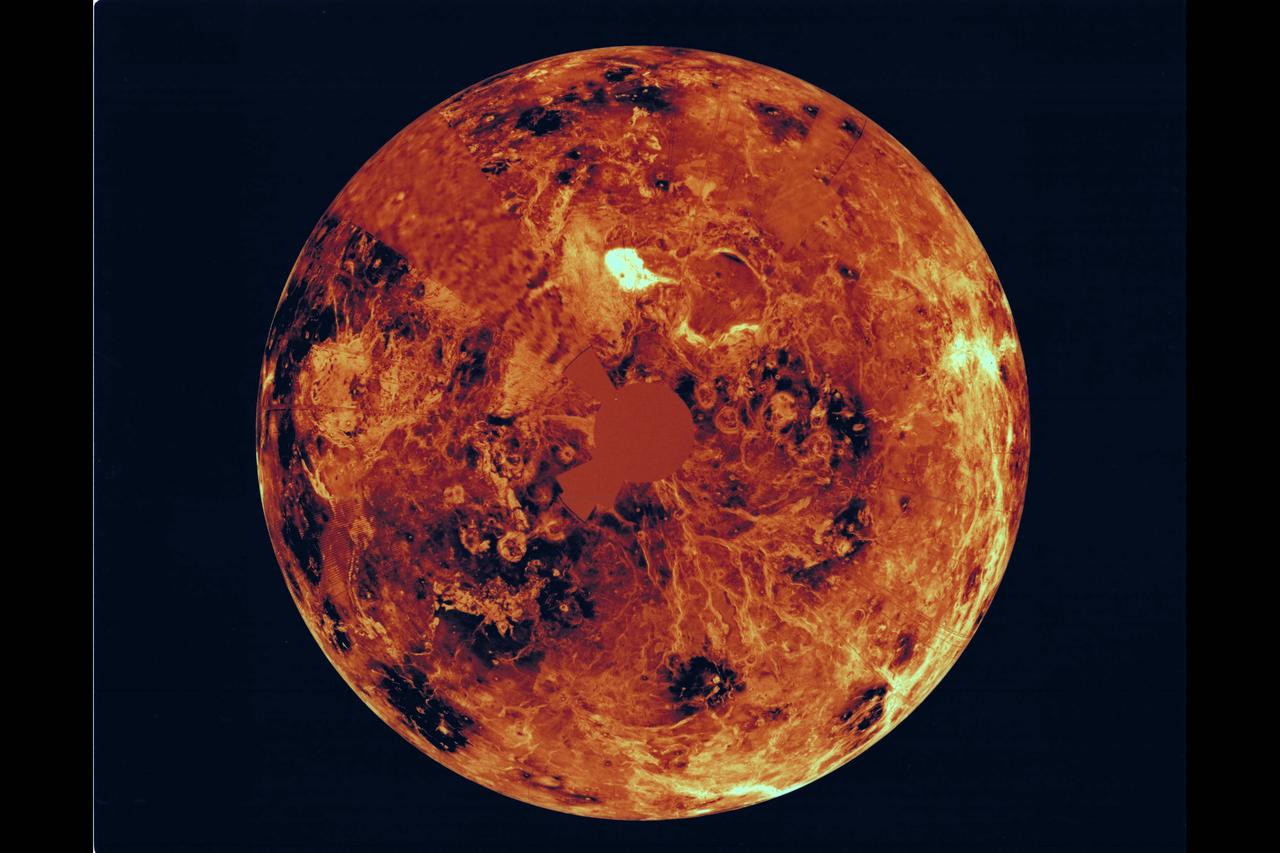
The northern hemisphere is displayed in this global view of the surface of Venus. The north pole is at the center of the image; with 0 degrees, 90 degrees , 180 degrees, 270 degrees east longitudes at 6, 3, 12 and 9 0'clock positions, repectively, of an imagery clock face. Magellan synthetic aperture radar mosaics from the first cycle of Magelolan mapping are mapped onto a computer-simulated globe to create this image. Data gaps are filled with Pioneere-Venus Orbiter data, or a constant mid-range value. Simulated color is used to enhance small-scale structure. The simulated hues are based on color images recorded by the Soviet Venera 13 & 14 spacecraft.
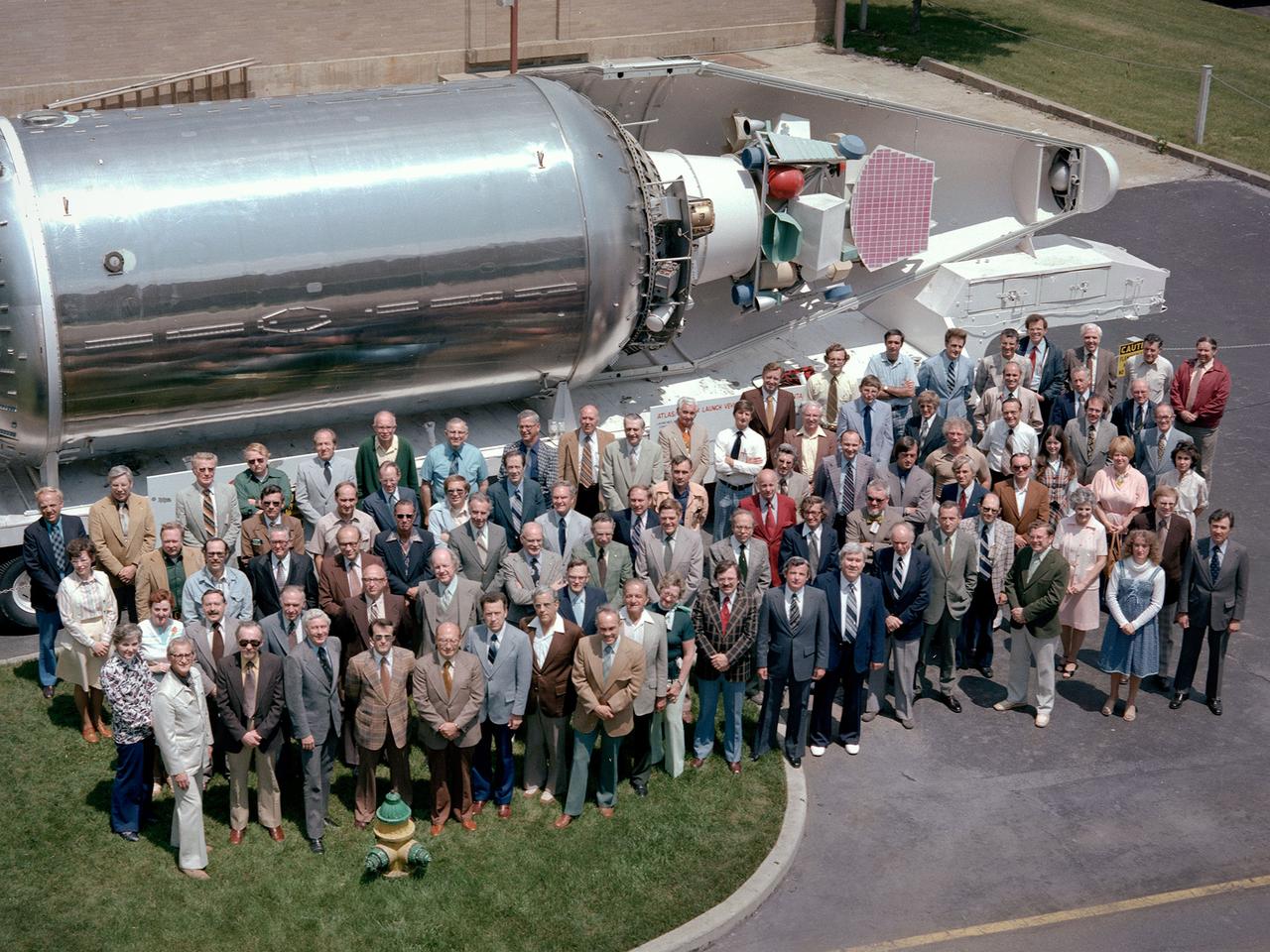
The National Aeronautics and Space Administration (NASA) Lewis Research Center’s Launch Vehicle Directorate in front of a full-scale model of the Centaur second-stage rocket. The photograph was taken to mark Centaur’s fiftieth launch. NASA Lewis managed the Centaur Program since 1962. At that time, the only prior launch attempt ended in failure. Lewis improved the spacecraft and tested it extensively throughout the early 1960s. In May 1966 an Atlas-Centaur sent the Surveyor spacecraft to the moon. It was the first successful soft landing on another planet. The Launch Vehicles Division was formed in 1969 to handle the increasing number of Centaur launches. The Lewis team became experts at integrating the payload with the Centaur and calculating proper trajectories for the missions. Centaur’s first 50 missions included Orbiting Astronomical Observatories, the Mariner 6 and 7 flybys of Mars, Mariner 9 which was the first spacecraft to orbit around another planet, the Pioneer 10 and 11 missions to the outer solar system, the Mariner 10 flyby of Venus and Mercury, the Viking 1 and 2 Mars landers, Voyagers 1 and 2 missions to Jupiter, Saturn, Uranus, and Neptune, and the Pioneer 12 and 13 flights to Venus.
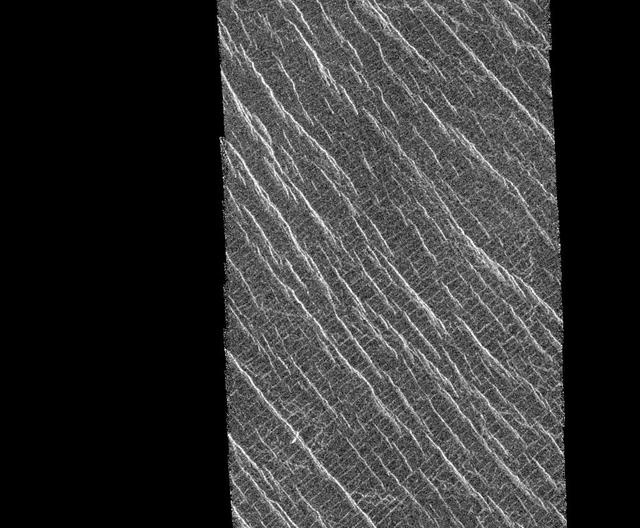
This mosaic shows an area of the Lakshmi region that is located 30 degrees north latitude and 333.3 degrees east longitude. (Longitude on Venus is measured from 0 degrees to 360 degrees east). The area shown measures about 37 kilometers (23 miles) wide and 80 kilometers (50 miles) long. Based on data from the Pioneer Venus Orbiter and the ground-based Arecibo Radar Observatory, it is known that this region is located on the low rise that separates Sedna Planitia and Guinevere Planitia, just to the west of Eistla Regio. Two sets of parallel lineations are seen intersecting almost at right angles. The fainter lineations are spaced at regular intervals of about one kilometer (0.6 mile) and extend beyond the boundary of the image. The width of the faint lineations is at the limit of resolution of the best Magellan images. The brighter, more dominant lineations are less regular and, in places, appear to begin and end where they intersect the fainter lineations. It is not clear whether the two sets of lineations are faults or fractures, but in other Magellan images, these bright lineations are associated with pit craters and volcanic features. This type of terrain has not been seen on Venus nor on other planets. North is at the top of the image. http://photojournal.jpl.nasa.gov/catalog/PIA00085
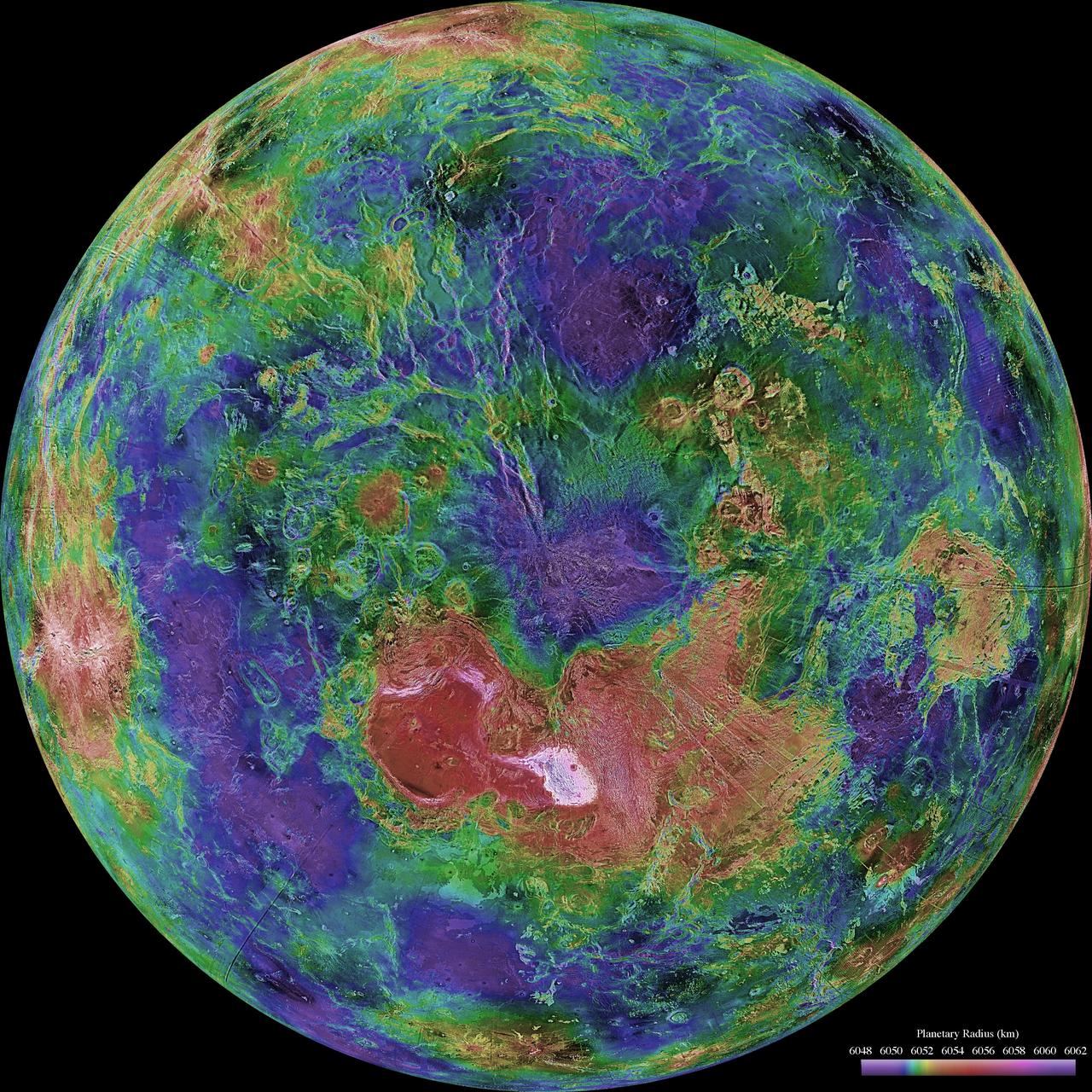
The hemispheric view of Venus, as revealed by more than a decade of radar investigations culminating in the 1990-1994 Magellan mission, is centered on the North Pole. The Magellan spacecraft imaged more than 98% of Venus at a resolution of about 100 meters; the effective resolution of this image is about 3 km. A mosaic of the Magellan images (most with illumination from the west) forms the image base. Gaps in the Magellan coverage were filled with images from the Earth-based Arecibo radar in a region centered roughly on 0 degree latitude and longitude, and with a neutral tone elsewhere (primarily near the south pole). The composite image was processed to improve contrast and to emphasize small features, and was color-coded to represent elevation. Gaps in the elevation data from the Magellan radar altimeter were filled with altimetry from the Venera spacecraft and the U.S. Pioneer Venus missions. An orthographic projection was used, simulating a distant view of one hemisphere of the planet. The Magellan mission was managed for NASA by Jet Propulsion Laboratory (JPL), Pasadena, CA. Data processed by JPL, the Massachusetts Institute of Technology, Cambridge, MA, and the U.S. Geological Survey, Flagstaff, AZ. http://photojournal.jpl.nasa.gov/catalog/PIA00007
KENNEDY SPACE CENTER, FLA. -- Smoke and dust rising from the ground of Space Launch Complex 36 on Cape Canaveral Air Force Station signifies the destruction of the 209-foot-tall mobile service tower on Pad 39-A. The tower is one of two that were identified for demolition. The old towers are being toppled as part of the ongoing project to demolish the historic site to prevent corrosion from becoming a safety concern. A majority of the steel will be recycled and the rest will be taken to the landfill at CCAFS. Complex 36 was the birthplace of NASA's planetary launch program. It was built for the Atlas/Centaur development program and was operated under NASA's sponsorship until the late 1980s. Complex 36 hosted many historic missions over the years including Surveyor that landed on the moon and Mariner that orbited Mars and included one to Mercury. Two of the most historic launches were the Pioneer 10 and 11 space probes that were launched to Jupiter and are now outside of the solar system in interstellar space. Also, the historic Pioneer Venus spacecraft included an orbiter and a set of probes that were dispatched to the surface. While Launch Complex 36 is gone, the Atlas/Centaur rocket continues to be launched as the Atlas V from Complex 41. Photo credit: NASA/Charisse Nahser
KENNEDY SPACE CENTER, FLA. -- At Space Launch Complex 36 on Cape Canaveral Air Force Station, the 209-foot-tall mobile service tower on Pad 36-B crashes to the ground. It is one of two that were identified for demolition. The old towers are being toppled as part of the ongoing project to demolish the historic site to prevent corrosion from becoming a safety concern. A majority of the steel will be recycled and the rest will be taken to the landfill at CCAFS. Complex 36 was the birthplace of NASA's planetary launch program. It was built for the Atlas/Centaur development program and was operated under NASA's sponsorship until the late 1980s. Complex 36 hosted many historic missions over the years including Surveyor that landed on the moon and Mariner that orbited Mars and included one to Mercury. Two of the most historic launches were the Pioneer 10 and 11 space probes that were launched to Jupiter and are now outside of the solar system in interstellar space. Also, the historic Pioneer Venus spacecraft included an orbiter and a set of probes that were dispatched to the surface. While Launch Complex 36 is gone, the Atlas/Centaur rocket continues to be launched as the Atlas V from Complex 41. Photo credit: NASA/Charisse Nahser
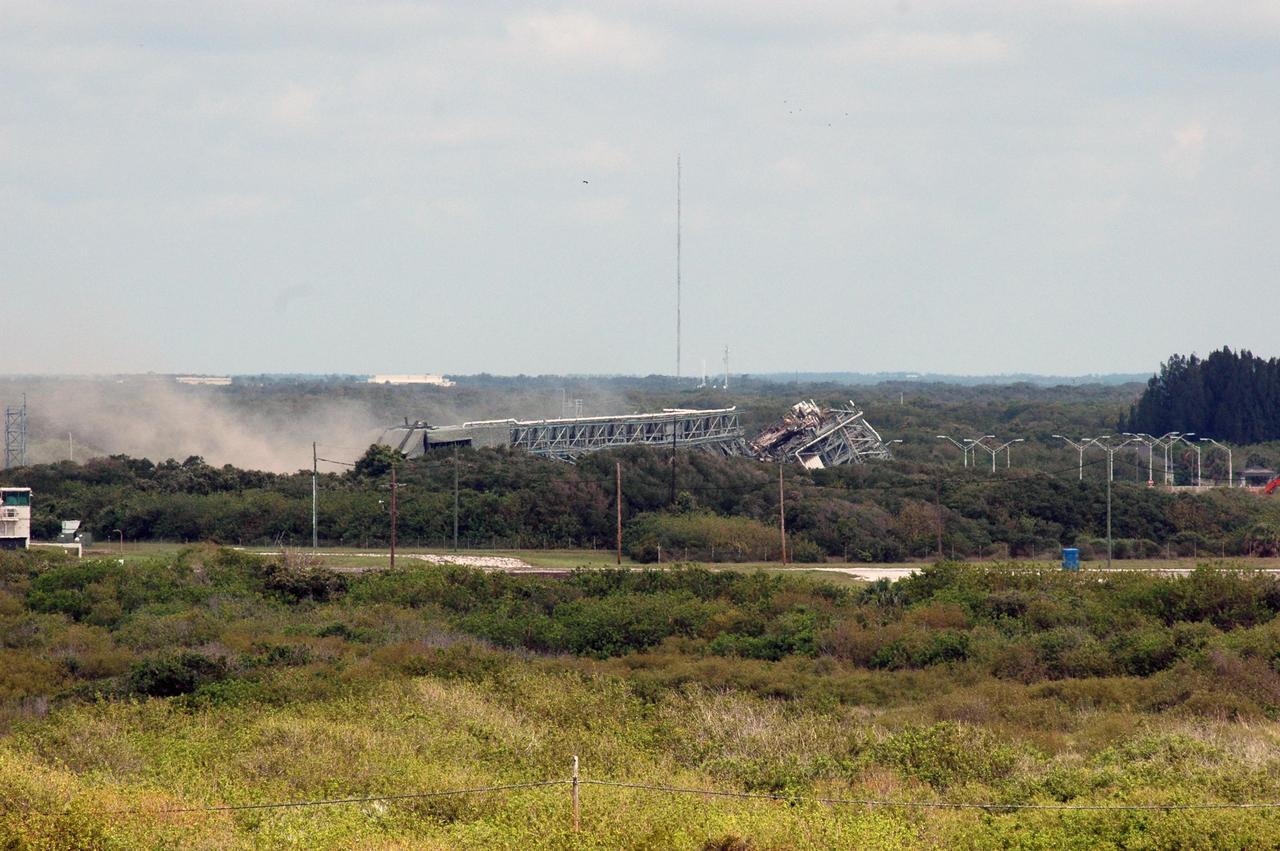
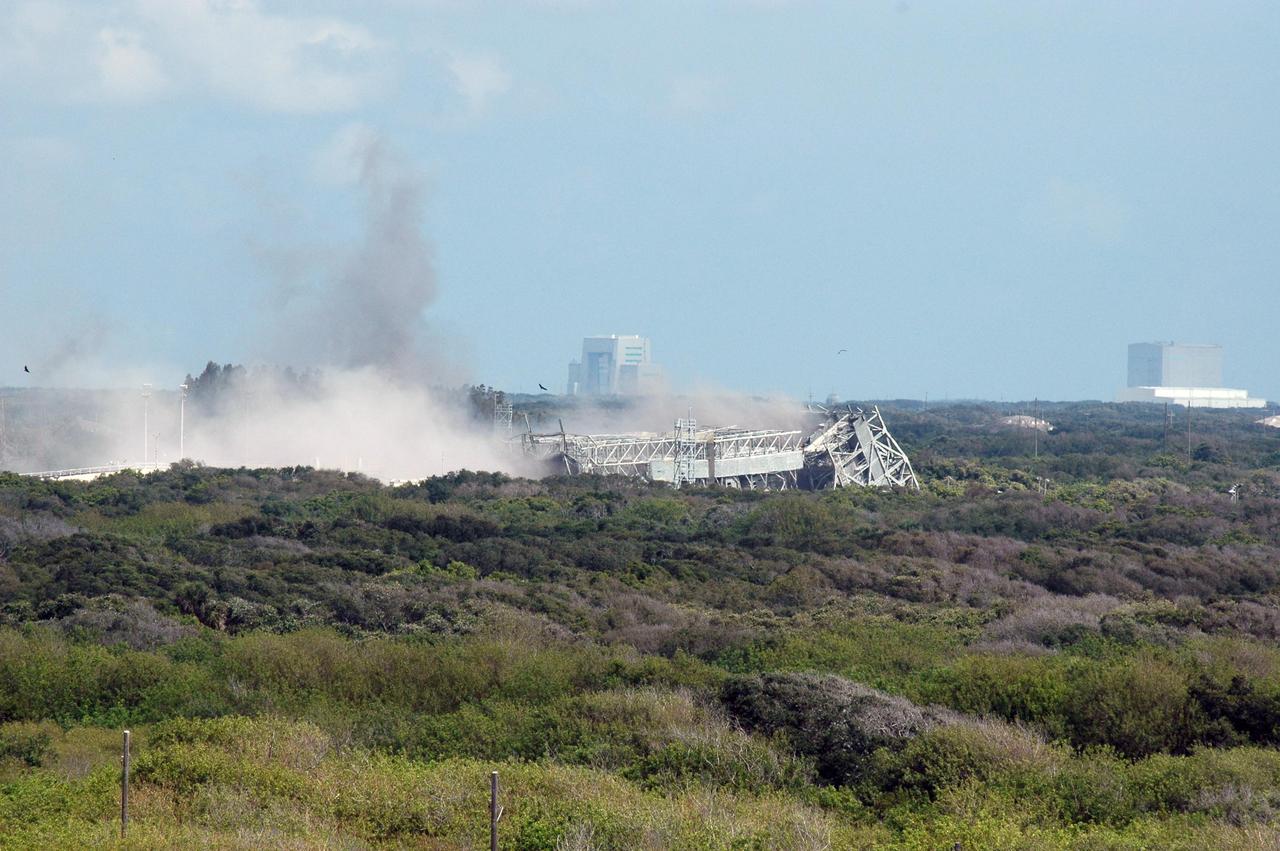
KENNEDY SPACE CENTER, FLA. -- After the dust settles at Space Launch Complex 36 on Cape Canaveral Air Force Station, the ruins of the 209-foot-tall mobile service tower on Pad 39-B are visible. The tower is one of two that were identified for demolition. The old towers are being toppled as part of the ongoing project to demolish the historic site to prevent corrosion from becoming a safety concern. A majority of the steel will be recycled and the rest will be taken to the landfill at CCAFS. Complex 36 was the birthplace of NASA's planetary launch program. It was built for the Atlas/Centaur development program and was operated under NASA's sponsorship until the late 1980s. Complex 36 hosted many historic missions over the years including Surveyor that landed on the moon and Mariner that orbited Mars and included one to Mercury. Two of the most historic launches were the Pioneer 10 and 11 space probes that were launched to Jupiter and are now outside of the solar system in interstellar space. Also, the historic Pioneer Venus spacecraft included an orbiter and a set of probes that were dispatched to the surface. While Launch Complex 36 is gone, the Atlas/Centaur rocket continues to be launched as the Atlas V from Complex 41. Photo credit: NASA/Charisse Nahser
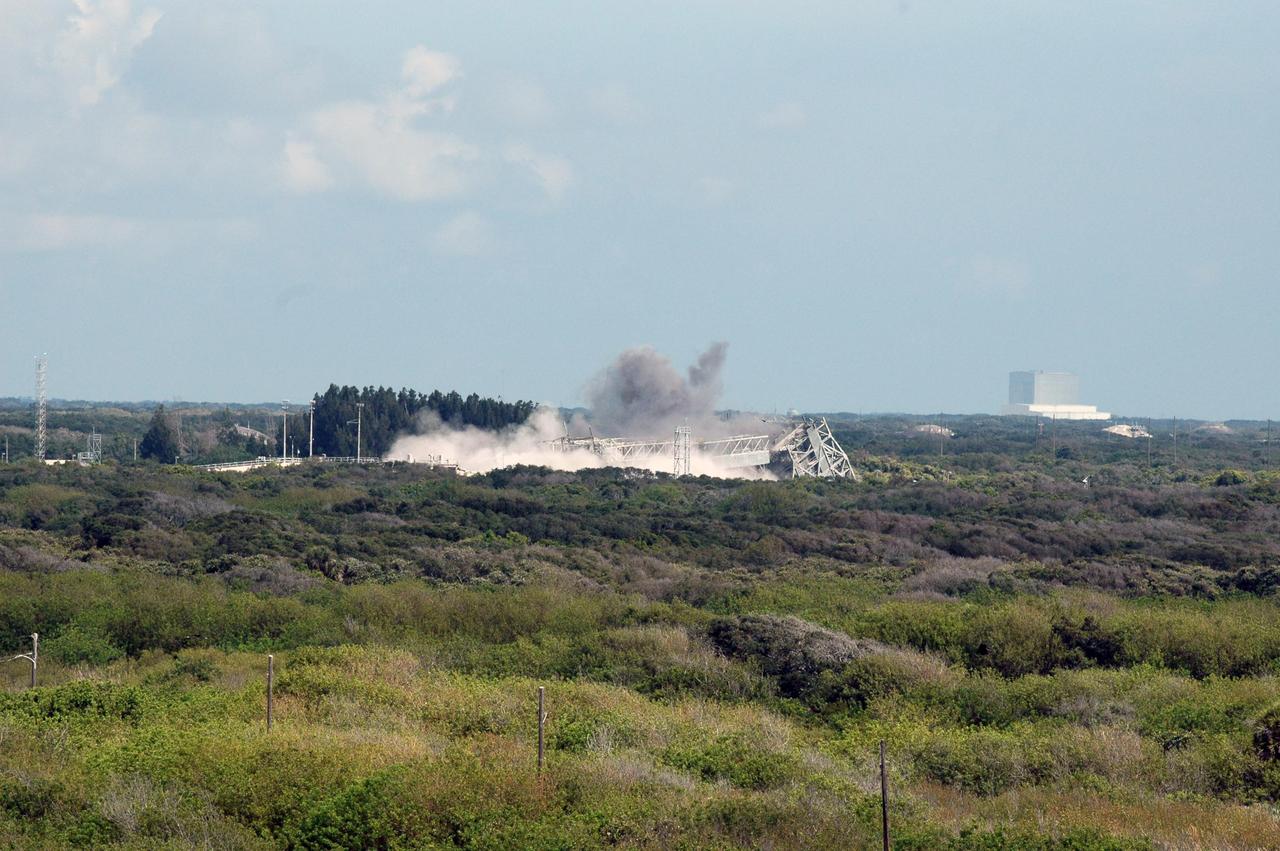
KENNEDY SPACE CENTER, FLA. -- Smoke and dust rising from the ground of Space Launch Complex 36 on Cape Canaveral Air Force Station signifies the destruction of the 209-foot-tall mobile service tower on Pad 39-A. The tower is one of two that were identified for demolition. The old towers are being toppled as part of the ongoing project to demolish the historic site to prevent corrosion from becoming a safety concern. A majority of the steel will be recycled and the rest will be taken to the landfill at CCAFS. Complex 36 was the birthplace of NASA's planetary launch program. It was built for the Atlas/Centaur development program and was operated under NASA's sponsorship until the late 1980s. Complex 36 hosted many historic missions over the years including Surveyor that landed on the moon and Mariner that orbited Mars and included one to Mercury. Two of the most historic launches were the Pioneer 10 and 11 space probes that were launched to Jupiter and are now outside of the solar system in interstellar space. Also, the historic Pioneer Venus spacecraft included an orbiter and a set of probes that were dispatched to the surface. While Launch Complex 36 is gone, the Atlas/Centaur rocket continues to be launched as the Atlas V from Complex 41. Photo credit: NASA/Charisse Nahser
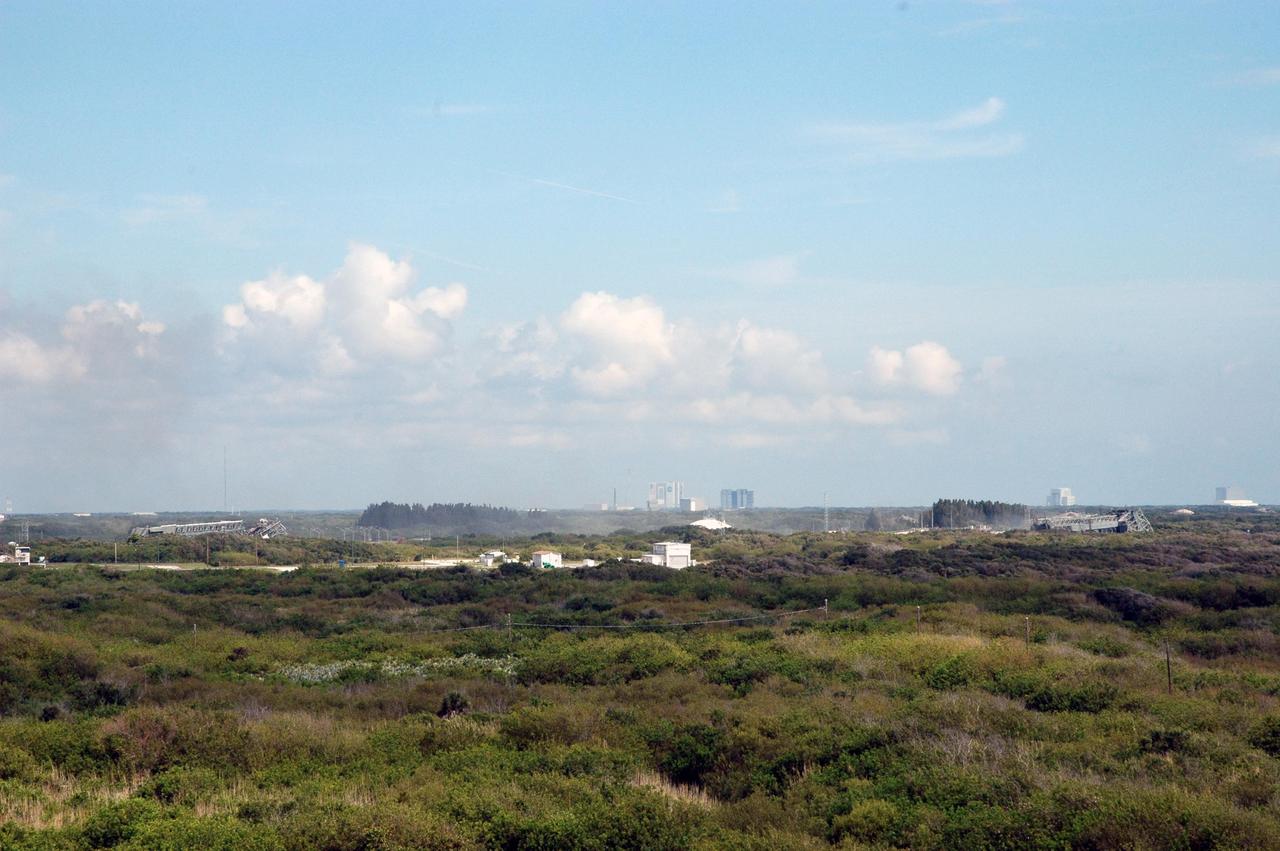
KENNEDY SPACE CENTER, FLA. -- This panoramic view of Space Launch Complex 36 on Cape Canaveral Air Force Station shows the two mobile service towers on the ground after their demolition. The old towers are being toppled as part of the ongoing project to demolish the historic site to prevent corrosion from becoming a safety concern. A majority of the steel will be recycled and the rest will be taken to the landfill at CCAFS. Complex 36 was the birthplace of NASA's planetary launch program. It was built for the Atlas/Centaur development program and was operated under NASA's sponsorship until the late 1980s. Complex 36 hosted many historic missions over the years including Surveyor that landed on the moon and Mariner that orbited Mars and included one to Mercury. Two of the most historic launches were the Pioneer 10 and 11 space probes that were launched to Jupiter and are now outside of the solar system in interstellar space. Also, the historic Pioneer Venus spacecraft included an orbiter and a set of probes that were dispatched to the surface. While Launch Complex 36 is gone, the Atlas/Centaur rocket continues to be launched as the Atlas V from Complex 41. Photo credit: NASA/Charisse Nahser
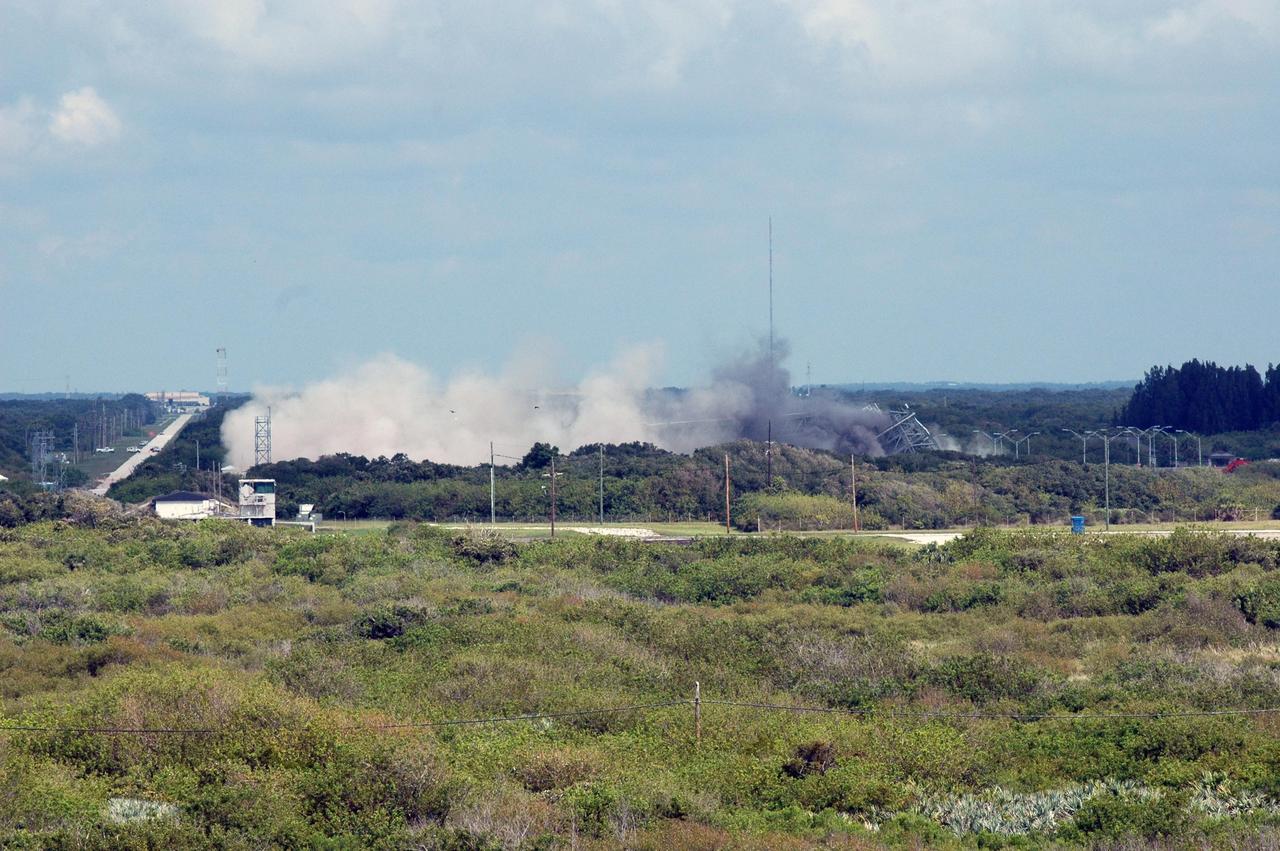
KENNEDY SPACE CENTER, FLA. -- The destruction of the 209-foot-tall mobile service tower on Pad 39-B at Space Launch Complex 36 on Cape Canaveral Air Force Station kicks up a wall of dust. The tower is one of two that were identified for demolition. The old towers are being toppled as part of the ongoing project to demolish the historic site to prevent corrosion from becoming a safety concern. A majority of the steel will be recycled and the rest will be taken to the landfill at CCAFS. Complex 36 was the birthplace of NASA's planetary launch program. It was built for the Atlas/Centaur development program and was operated under NASA's sponsorship until the late 1980s. Complex 36 hosted many historic missions over the years including Surveyor that landed on the moon and Mariner that orbited Mars and included one to Mercury. Two of the most historic launches were the Pioneer 10 and 11 space probes that were launched to Jupiter and are now outside of the solar system in interstellar space. Also, the historic Pioneer Venus spacecraft included an orbiter and a set of probes that were dispatched to the surface. While Launch Complex 36 is gone, the Atlas/Centaur rocket continues to be launched as the Atlas V from Complex 41. Photo credit: NASA/Charisse Nahser
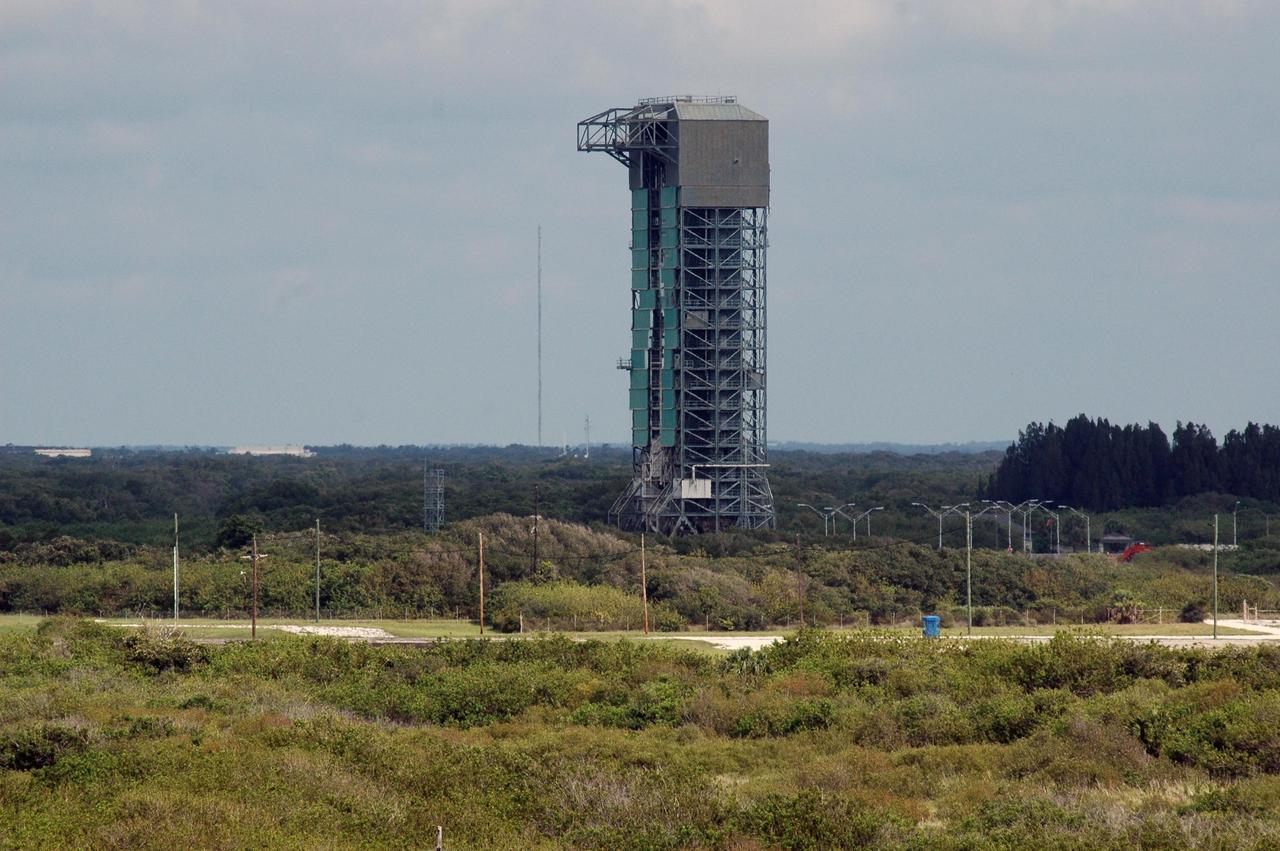
KENNEDY SPACE CENTER, FLA. -- At Space Launch Complex 36 on Cape Canaveral Air Force Station, the 209-foot-tall mobile service tower on Pad 36-B has been identified for demolition. The old towers are being toppled as part of the ongoing project to demolish the historic site to prevent corrosion from becoming a safety concern. A majority of the steel will be recycled and the rest will be taken to the landfill at CCAFS. Complex 36 was the birthplace of NASA's planetary launch program. It was built for the Atlas/Centaur development program and was operated under NASA's sponsorship until the late 1980s. Complex 36 hosted many historic missions over the years including Surveyor that landed on the moon and Mariner that orbited Mars and included one to Mercury. Two of the most historic launches were the Pioneer 10 and 11 space probes that were launched to Jupiter and are now outside of the solar system in interstellar space. Also, the historic Pioneer Venus spacecraft included an orbiter and a set of probes that were dispatched to the surface. While Launch Complex 36 is gone, the Atlas/Centaur rocket continues to be launched as the Atlas V from Complex 41. Photo credit: NASA/Charisse Nahser
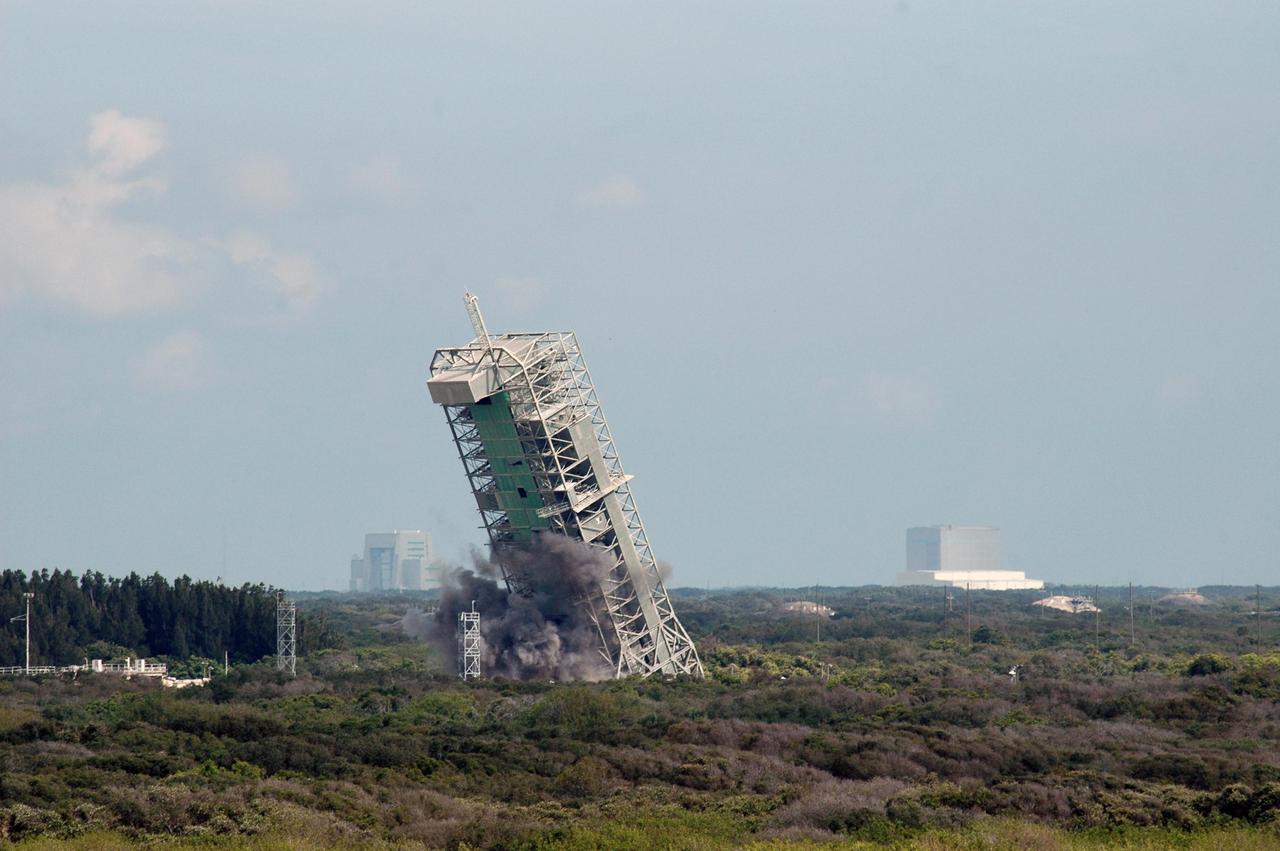
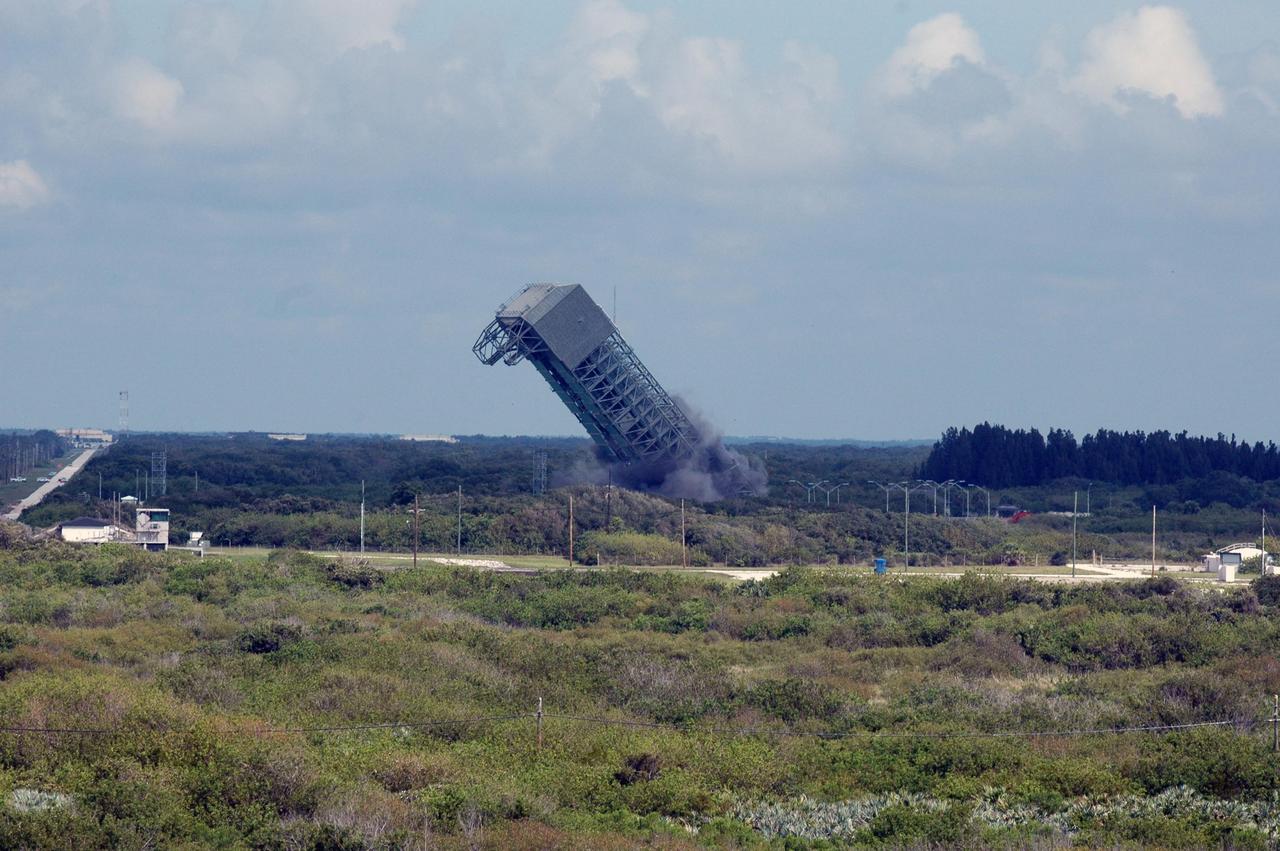
KENNEDY SPACE CENTER, FLA. -- The 209-foot-tall mobile service tower on Pad 39-A of Space Launch Complex 36 on Cape Canaveral Air Force Station careens to the left after 122 pounds of explosives eliminated the base. The tower is one of two that were identified for demolition. The old towers are being toppled as part of the ongoing project to demolish the historic site to prevent corrosion from becoming a safety concern. A majority of the steel will be recycled and the rest will be taken to the landfill at CCAFS. Complex 36 was the birthplace of NASA's planetary launch program. It was built for the Atlas/Centaur development program and was operated under NASA's sponsorship until the late 1980s. Complex 36 hosted many historic missions over the years including Surveyor that landed on the moon and Mariner that orbited Mars and included one to Mercury. Two of the most historic launches were the Pioneer 10 and 11 space probes that were launched to Jupiter and are now outside of the solar system in interstellar space. Also, the historic Pioneer Venus spacecraft included an orbiter and a set of probes that were dispatched to the surface. While Launch Complex 36 is gone, the Atlas/Centaur rocket continues to be launched as the Atlas V from Complex 41. Photo credit: NASA/Charisse Nahser
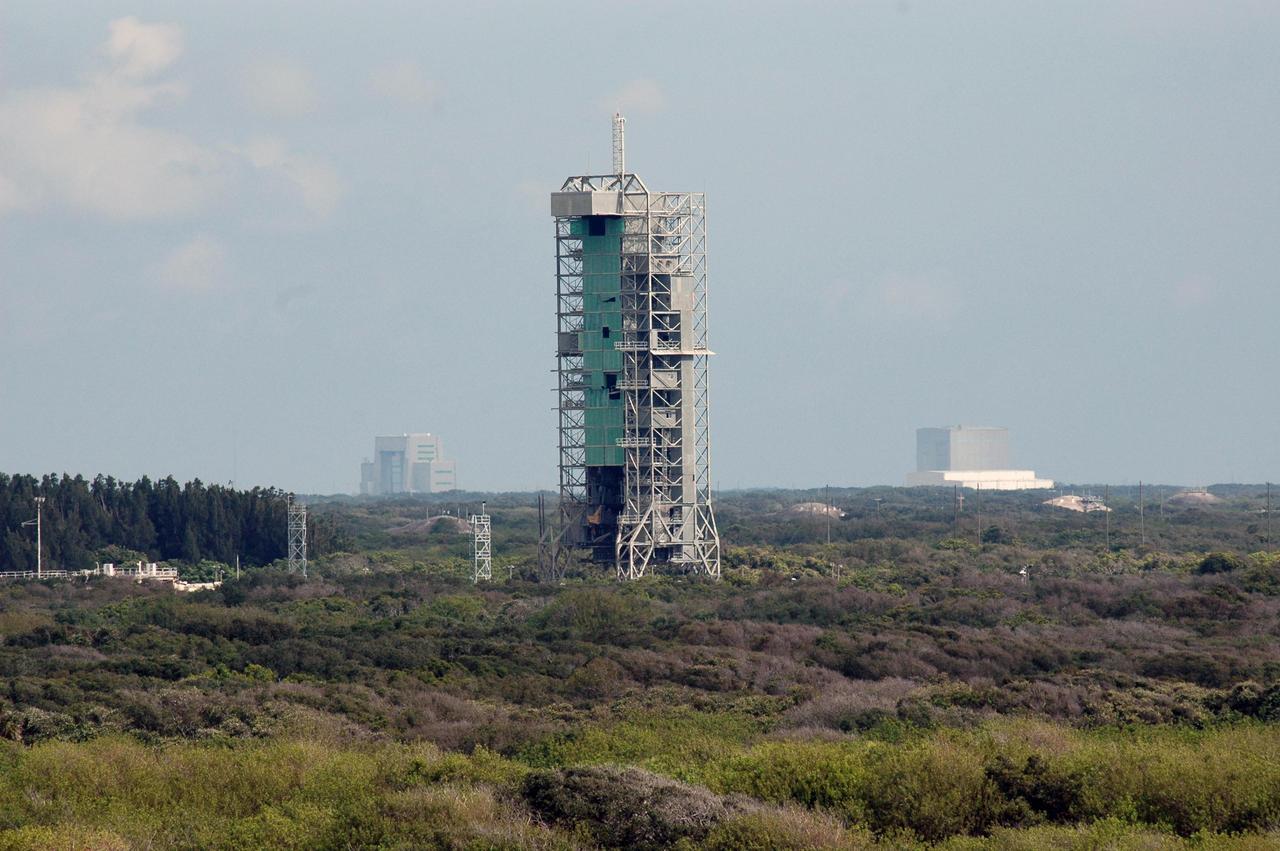
KENNEDY SPACE CENTER, FLA. -- Within sight of the KSC Vehicle Assembly Building (at left on the horizon), the 209-foot-tall mobile service tower on Pad 39-A of Space Launch Complex 36 on Cape Canaveral Air Force Station waits for its demise. The tower is one of two that were identified for demolition. The old towers are being toppled as part of the ongoing project to demolish the historic site to prevent corrosion from becoming a safety concern. A majority of the steel will be recycled and the rest will be taken to the landfill at CCAFS. Complex 36 was the birthplace of NASA's planetary launch program. It was built for the Atlas/Centaur development program and was operated under NASA's sponsorship until the late 1980s. Complex 36 hosted many historic missions over the years including Surveyor that landed on the moon and Mariner that orbited Mars and included one to Mercury. Two of the most historic launches were the Pioneer 10 and 11 space probes that were launched to Jupiter and are now outside of the solar system in interstellar space. Also, the historic Pioneer Venus spacecraft included an orbiter and a set of probes that were dispatched to the surface. While Launch Complex 36 is gone, the Atlas/Centaur rocket continues to be launched as the Atlas V from Complex 41. Photo credit: NASA/Charisse Nahser